Three days, eight estates, Chianti Classico

alessandro-your-grandfather-was-a-very-good-winemaker-luiluiano-chianticlassico-fattoriadiluiano-chianticlassicoriserva-1979-sangiovese-alessandropalombo-antoniopalombo-luiano

Alessandro, your grandfather was a very good winemaker @luiluiano @chianticlassico #fattoriadiluiano #chianticlassicoriserva #1979 #sangiovese #alessandropalombo #antoniopalombo #luiano

By the time I landed in Florence and had settled into the Kraft Hotel it was pushing 3:00 pm and I needed to be ready just a few hours later to meet my Chianti Classico hosts for dinner. It had been 21 years since I last wandered aimlessly, holistically and believe me, blissfully through the streets of Cosimo I de’ Medici’s Florence. Greater men than me had walked these narrow strade. Pietro Cimabue, Giotto di Bondone, Dante Alighieri, Arnolfo di Cambio, Desiderio da Settignano, Donatello, Lorenzo “The Magnificent” de’ Medici, Michelangelo Buonarotti, Botticelli, Lorenzo “The Magnificent” de’ Medici, Giovanni Boccacio, Raphael Sanzio, Vincenzo Danti, Leonardo Da Vinci, Francesco Furini and Filippo Brunelleschi. Twenty-one years should distort and disorient one’s sense of direction but I found myself at home, mapless, confident in finding my way from landmark to landmark. Ponte Vecchio, Piazza della Signoria, Santa Croce, Santa Maria Novella, Palazzo Pitti, Palazzo Vecchio and Il Duomo. Hours later, wide-eyed and energized, the dinner bell sounded and then forward, for three extensive immersion days, it was all Chianti Classico.

godello-and-brunelleschi-together-at-last-firenze-piazzadelduomo

Godello and #brunelleschi together at last #firenze #piazzadelduomo

I spent some time in Chianti Classico at the beginning of May. I had been to Toscana before, in 1986, 1989 and in 1995. With twenty years having passed, so much had changed and in some ways, nothing at all. What I learned this time around can’t be found in a book, online or in scattered, random tastings here in Toronto. I found people, I found place and I found progression. The wines of Chianti Classico have embarked upon an ascension into their contemporary golden age.

On September the 24th, 1716 the Black Rooster was born. A notice was given by the Grand Duke Cosimo III de ‘Medici who decided to demarcate the territories dedicated to the production of high quality wines. To protect and to safeguard this special place, found in the hills and valleys between Siena and Florence. Chianti Classico. Three hundred years later the Gallo Nero, quintessential symbol synonymous with the Chianti Classico DOCG, is celebrating its birth.
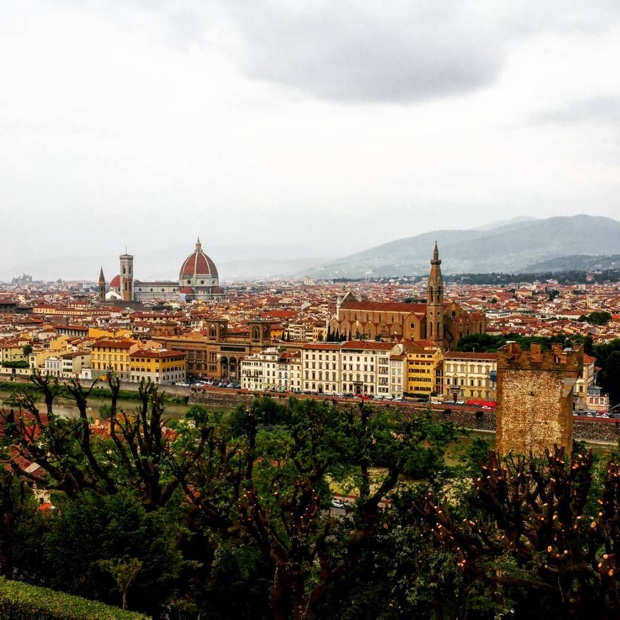
the-sheer-breadth-of-ilduomo-is-just-amazing-firenze-piazzamichelangelo-brunelleschi-toscana

The sheer breadth of #ilduomo is just amazing #firenze #piazzamichelangelo #brunelleschi #toscana

All who serve to ride shotgun as sentinels to the profound history and quality of Chianti Classico are very sensitive and protective of the term, so the use of the full name “Chianti Classico” is essential. In Tweets, Instagram and Facebook posts, as well as press releases, articles and conversation, the omission of “Classico” is akin to liking it to that other lesser wine that shall not be named, and could result in being taken outside and subjected to some dark arts. The two names, as a matter of fact, represent two DOCG with distinct and separate production territories, histories and consortia.
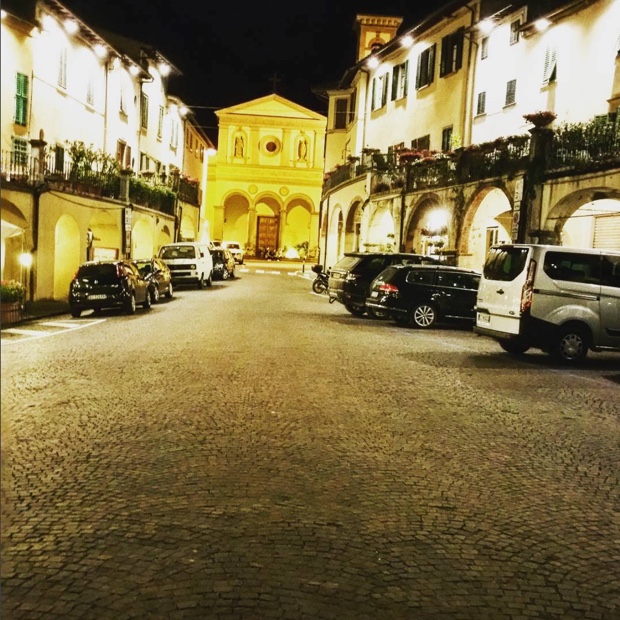
#tranquillo #greveinchianti #ChiantiClassico

#tranquillo #greveinchianti #ChiantiClassico

Chi-anti Classi-co. Two very important words. Classic Chianti. Classical Chianti. Take away the demonstrative qualifier and what do you have. You have Chianti. With no disrespect to some very honest, simple and pleasurable Chianti produced outside of the boundaries that define Chianti Classico, the difference between the two is night and day. When you travel through the verdant, rolling hills, in and out of wine estates and villages of the region, you can’t help but feel the sense of tranquillo. Calm. You are also hyper aware of the singularity, diversity and quality of the produce. This is Chianti Classico. You do not get lazy and say I am in Chianti or I have travelled through Chianti. Per favore, Chianti Classico. In fact, the moment you leave Chianti Classico and pass through the terra-cotta villages just south of Firenze the landscape changes immediately. It’s just not the same.
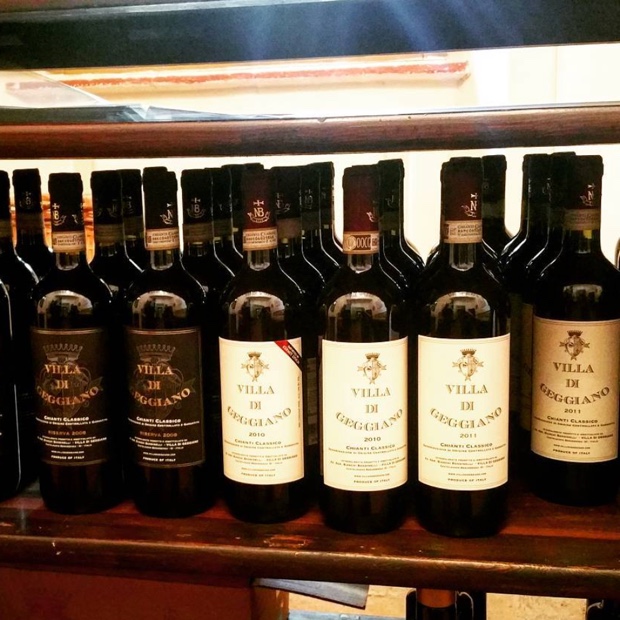
dropped-in-on-some-old-friends-today-villadigeggiano-barrelselect-bianchibandinelli-castelnuovoberardegna

Dropped in on some old friends today @VilladiGeggiano @BarrelSelect #bianchibandinelli #castelnuovoberardegna

Image, perception and finalmente, reality, these are the truths all who feel the soul of Chianti Classico are in search of today. Today and moving forward, explaining to the world that Chianti Classico is not what you thought or think it to be. In my three full days of exploring the region I visited eight wine estates, and no two were the same. Each have vines growing on different soils, each vinify with varying techniques and all eight treat l’élevage of their wines with surprisingly divergent approaches.

Related  – Chianti Classico’s Gran Selezione plan

My visits to these eight estates (plus one 21-year later reunion with Andrea Bianchi Bandinelli at Villa di Geggiano) was made possible and with thanks to the Consorzio di Vino Chianti Classico. In particular President Sergio Zingarelli, Director Giuseppe Liberatore, Christine Lechner and Silvia Fiorentini.  Last week I published links to 21 tasting notes on Chianti Classico Gran Selezione over at WineAlign. The full notes will go live on Godello next week. This week you can read 28 tasting notes on the non-Gran Selezione wines I tasted In Chianti Classico back in May.

Luiano

Luiano as from the Latin, “janus,” where all begins from Jaunary, with an eye to the past and forward to the future. Located in San Casciano in Val di Pesa, through Impruneta due south of Firenze. Passed down from grandfather Alberto, now Alessandro and father Antonio Palombo’s vineyards fan out to an amphitheatre with four distinct (cru) climats. The use of merlot and cabernet sauvignon is employed to achieve roundness with the tannic and tougher sangiovese, to avoid the classic, firm and historically at times infirm and instead go for the amenable. Representation in Ontario is with Tre Amici Wines.

alessandro-luiluiano-palumbo-announces-chianticlassico-quality-luiano-even-before-you-have-ascended-his-drive

Alessandro @luiluiano Palombo announces @chianticlassico quality #luiano even before you have ascended his drive

Luiano Chianti Classico 2014, Docg Tuscany, Italy (Agent, $24.50, WineAlign)

From a challenging vintage and winemaker Alessandro Palombo admits readily to much fruit purposefully languished on the vine. Field selection was the sine qua non, inexorable and moral imperative to seek this floral sangiovese from a less than homogeneous vintage. With a father’s wise voice resonating in his ear it was the inborn proclivity to resist temptation and not to over press and to focus on freshness. Some cabernet sauvignon and merlot urges the chamomile, jasmine, black tea and candied orange peel with some healthy contrariety by underbrush (mushroom and forest floor) and truffle shaved over black cherry. A bit iron rich though righteously clean, with no exaggerations, in avoidance of arbitration, greenness or pepper pyrazine. “It’s not the greatest Chianti Classico I’ve ever made but it’s one I’m very proud of.” 60,000 bottles made. Drink 2016-2021.  Tasted May 2016
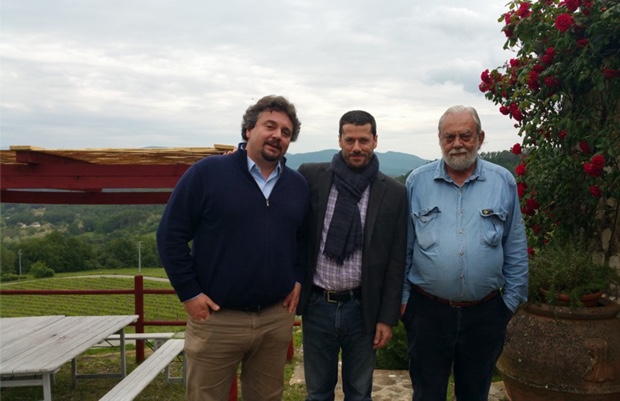
with-alessandro-and-antonio-palumbo

With Alessandro and Antonio Palombo

Luiano Chianti Classico Riserva 2013, Docg Tuscany, Italy (Agent, $39.95, WineAlign)

There was some rain and cold at the climax of maturation, so here the sangiovese is grittier, shivered with sweetmeat and somewhat bitter tannins, but otherwise a “normale” vintage. Here we have 100 per cent sangiovese of the best selections and the first vintage not in true French oak. It is in fact larger barriques (French but made in Italy). Still the forest floor and a hint of truffle, albeit slathered with a deeper richness, whiffing some leather and tobacco. The wood is present but respectful to the fruit, as is the verdant streak running through the tremendous San Casciano in Val di Pesa acidity. The bitter and drying tannins will require time to help soften the astringency and relent they will though not completely, but age will certainly help. 13,000 cases made from a vintage with no Grand Selezione. Drink 2017-2022.  Tasted May 2016

Luiano Chianti Classico 1979, Tuscany, Italy

Alessandro Palombo is skeptical at first, one eyebrow raised but with the look of possibility on his face. Takes me very little time to acknowledge that this ’79 is very much alive, fruit not predominant (and surely some prune) but neither cooked nor bruised. The brown nose (earth and spice) purports a full concentration of anthocyanins, acidity still full in, dried fraises de bois, black liquorice, dirty leather and worth repeating, still very good acidity. Truffle, forest floor and then black olive tapenade on the palate. This is 70-80 per cent sangiovese with colorino and canaiolo and for 1979 it’s quite incredible. It should not have lasted this long.  Antonio says that up to 10 per cent could have been malvasia blanca and trebbiano because at the time it was a field blend, co-planted with the sangiovese, which could explain some of the variegation in the colour. This is a Chianti Classico to lend credence to the idea of using multiple fruit, vegetal and animale descriptors when assessing an old wine. It’s also the reason why you put them away and open them with friends who’s eyes are wide open. Thank you Alessandro for the opportunity and for the connection to your grandfather Alberto. He was a very good winemaker. Drink 2016.  Tasted May 2016

Lornano

Fattoria Lornano had been a Napoleanic French property taken from the church and re-assigned.  Like many properties in Chianti Classico the 180 hectare estate was originally a church, in Lornano’s case a privilege of Pope Innocent III who was entrusted with the administration of other neighbouring churches and adjacent agricultural lands. The Taddei family-owned Lornano is located on the south west hills of Castellina in Chianti and Monteriggioni, five kilometres from Siena.

Nicolò Pozzoli’s great grandfather bought Lornano in 1904 after making a fortune in matches followed by owning a glass factory in Empoli. This from Nicolò’s mother’s side of the family and it was aunt Katerina who ran the winery, now in the hands of Pozzoli. In 1998 they re-planted six hectares and in 2013, replaced seven hectares of Chianti Classico on the upper hill. Today the team is led by General Director Pozzoli, Agronomist Silvio Campatelli and Enologists Franco and Matteo Bernabei. They are represented in Ontario by Frontier Wine Merchants.

structured-and-getable-chianticlassico-via-lornanochiantic-il-piacere-e-stato-mio-nicolopozzoli-silviocampatelli-montereggioni

Structured and getable @chianticlassico via @LornanoChiantiC Il piacere è stato mio #NicolòPozzoli #SilvioCampatelli #montereggioni

Lornano Chianti Classico 2012, Tuscany, Italy (211599, $17.95, WineAlign)

Lornano’s Chianti Classico benchmark endeavours from lock, stock and barrel sangiovese and is held back from market longer than most, to soften the 100 per cent edges and give the round, plumate feel. The vintage is nothing if not consistent with the Lornano house style, divaricated rich and dishing out some evolution. The fifty-fifty small and large barrel split and 12 months of aging following a 22-day fermentation at 25-28 degrees is more than just a jumpstart and a kicker. The integral technical play celebrates and elevates the elegant vintage of very pure fruit, almost biting, ricercato crack spice and finally, very silky tannins. A seven to 10 years Chianti Classico with significant poise for so little salvo. Drink 2017-2023.  Tasted May 2016

Lornano Le Bandite Chianti Classico Riserva 2011, Docg, Tuscany, Italy (230672, $19.95, WineAlign)

Le Bandite, “the banned,” is a cru special for its content of white sand. This is the place “where the hunters went hunting,” notes Direttore generale Nicolò Pozzoli, Monteriggioni territory in which, for public tender are prohibited hunting, fishing or grazing. So what is the significance with respect to Chianti Classico Riserva? Simple. The hunter’s loss is the wine consumer’s gain. Here a wine that spent 21 months in barrels, of wise character, evolved and integrated inherent, thanks to an extra year in bottle before release. Sangiovese from clay, of earthy density settled, on the palate, with three to five years left for prime drinking. When tasted alongside the 2009 Le Bandite, it shows more is less vitality and acidity than when that vintage was last tasted in November 2013. This 2011 will soon revive a pop and a feeling that brings leather and liquorice into the fray. Drink 2017-2024.  Tasted May 2016
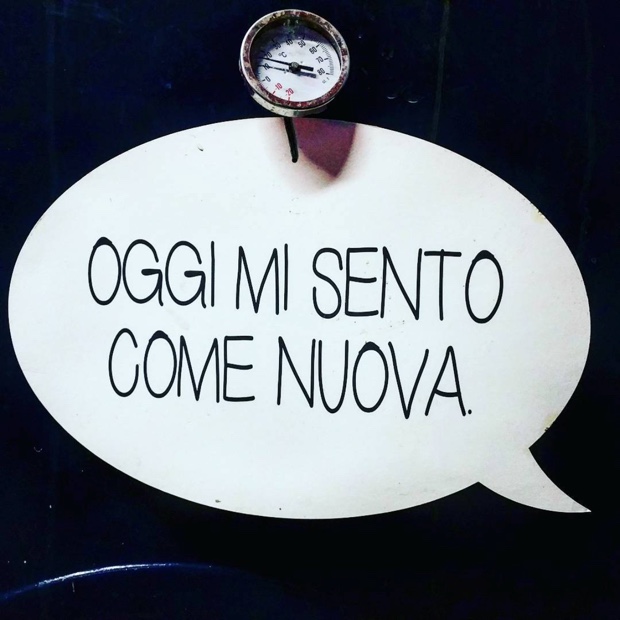
with-thanks-to-nicolo-pozzoli-e-silvio-campatelli-inowfeellikenew-lornanochiantic-chianticlassico-fattorialornano-castellinainchianti

With thanks to Nicolò Pozzoli e Silvio Campatelli #inowfeellikenew @LornanoChiantiC @chianticlassico #fattorialornano #castellinainchianti

Lornano Commendator Enrico 2011, Igt Toscana, Italy (211615, $29.95, WineAlign)

In reference to a time in Lornano’s history when the property was placed in trust as a commendam, “the temporary holding of an ecclesiastical benefice.” The Igt blend is sangiovese (50 per cent), merlot (25) and cabernet sauvignon (25) housed for 20 months in new barrels and large barriques. Nothing but rich and intense with the most spice and also the notion of liquid violets. As an aside to the Chianti Classicos there is here a new texture, the merlot giving dusty brushes, the cabernet blackberry, Cassis and with a savoury side. Drink 2016-2020.  Tasted May 2016

Lornano Vin Santo Del Chianti Classico 2008, Docg Tuscany, Italy (244947, 375ml, $29.95, WineAlign)

So very nutty, of almonds and hazelnuts and then marzipan. Succinctly apricot and ripe peach with acidity that hits during the initial shot of fresh fruit into frutta secca and then again at the back end. A dessert wine unique to its own character, perfectly clean and pure. From the oldest plantings of trebbiano and malvasia, one hectare of each, aged for up to six years. Picked in late October, brought in and hung up in a well-ventilated room with humidity and mildew control, then sorted before fermentation. Up to 30 per cent is lost or discarded. Drink 2016-2028.  Tasted May 2016

Villa Trasqua

Located north of Siena in Castellina in Chianti with Monteriggioni rising majestically above the estate, Villa Trasqua is built around the ancient and exceptional vineyard known as Nerento. The estate dates back to 1965 and cultivates its 120 hectares and 10 vineyards in the oldest part of Castellina in Chianti. Trasqua is owned by Swiss brothers Sven and Alan Hulsbergen. Organically farmed vines and the gravity fed winery built on several levels are overseen by oenologist Franco Bernabei and Director Armand Metalla. The estate is represented in Ontario by Frontier Wine Merchants.
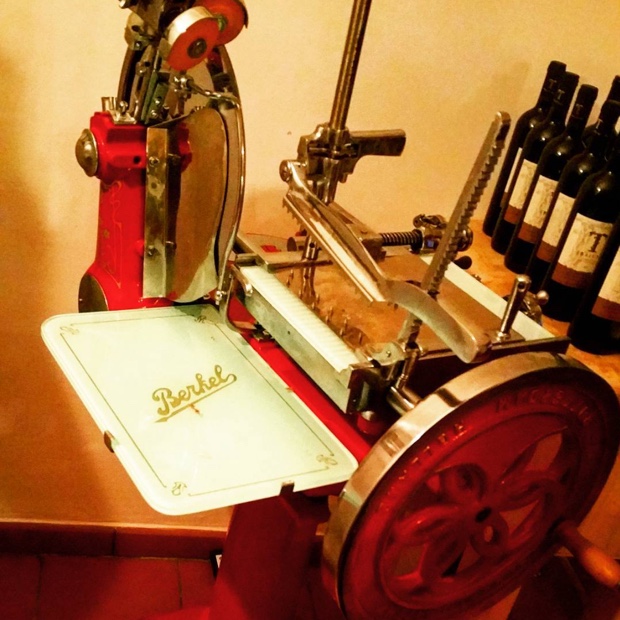
how-about-this-beauty-chefmolson-berkel-1912-slicingmachines

How about this beauty at Villa Trasqua? #berkel #1912 #slicingmachines

Villa Trasqua Trasquanello Rosé 2015, Docg Tuscany, Italy (Agent, $13.95, WineAlign)

A 100 per cent sangiovese designed out of a quick bleed for minor colour and the result is great elegance. Saline, savoury and with a bit of sweetness, sexy, easy going Rosé with oomph. Drink 2016-2017.  Tasted May 2016

Villa Trasqua Chianti Classico 2012, Docg Tuscany, Italy (Agent, $19.95, WineAlign)

From serene Castellina in Chianti wide open spaces vineyards and built upon sangiovese plus (five per cent) colorino and malvasia nera. Leaf savour of and with the tart sweetness of frutti di bosco. Spicy oak and depths plumbed but ultimately fresh elegance with acidity to lift, clean and place this in the new echelon of Chianti Classico. Drink 2016-2019.  Tasted May 2016

Losi Querciavalle

If any Chianti Classico estate speaks of family values, tradition and a deeply profound, contiguous lineage it is Losi Querciavalle. Located a stone’s throw across a few valleys southeast towards Siena in the Comune di Castelnuovo Berardenga, the Losi family are the custodians of the purest Albarese soils in the hills of Pontignano. The Albarese here is so pronounced and so defined from plot to plot and vine to vine that Pietro Losi is able to distinguish and differentiate specific vines for the purpose of choosing identified bunches of grapes for each of his wines. Pietro and daughter Valeria take the torch from Cavaliere Tranquillo Losi, mezzadro (cropper) and a man who pioneered farming and winemaking methods to make wines that purely and clearly define the region’s Chianti Classico. Tranquillo’s transference of indispensable Chianti Classico information came from his father Emilio Losi and from Brunello of Montalcino’s Tancredi Biondi Santi.

Pietro continues the work of his forefathers, along with Valeria and brother Riccardo. The Querciavalle farm, acquired in 1954 with the establishment of the company, covers 35 hectares of vineyards while Pontignanello farm, acquired in 1998, bordering on the Querciavalle farm, covers 15 hectares. The estate is represented in Ontario by Natural Vines.

Mirror to classicism, history and tradition. Purity from @valerialosi #querciavalle @chianticlassico #agricolalosi #sangiovese #granselezione #pontiganello

Mirror to classicism, history and tradition. Purity from @valerialosi #querciavalle @chianticlassico #agricolalosi #sangiovese #granselezione #pontiganello

Malvasia Nera 2015 (Barrel Sample)

Aged in tonneaux barriques, the blending grape on a possible solo mission gives green vegetal and floral aromatics, violets, like petit verdot in a way, with great acidity. Pietro Losi is considering producing a single-varietal wine, is cloning to try and plant more for such a purpose. Tannins are grainy but sweet, fine and delicate. Three words for you Pietro. Go for it.  Tasted May 2016

Losi Querciavalle Chianti Classico 2011, Docg Tuscany, Italy (Agent, $19.95, WineAlign)

The historical south-facing “Leccino” family vineyard is situated at 300-350 above sea level, from sandstone in the higher areas and from Galestro and Albarese, so typical from the lower areas of Chianti Classico. Sangiovese (90 per cent) and canaiolo see 18 months in 50 hectolitre barrels and in concrete. Here the natural world and the particular poetry of “old school” dialectical sangiovese speech is heard. It is certainly traditional and pure, clean, crisp, structured, taut and of that wise liqueur. The verbiage is all that plus what feels like dusty ancient mountain brush mixed with albarese soil minerality. In the end it is the canaiolo that brings the perfume. Drink 2016-2021.  Tasted May 2016

Losi Querciavalle Chianti Classico Riserva 2010, Docg Tuscany, Italy (Agent, $24.95, WineAlign)

With five per cent canaiolo instilling just enough potpourri into the fine-grained sangiovese, this could be easily pass for Gran Selezione from an inelastic vintage. The 30 months in 20hL barrels has crafted a structured, elegant, firm and classic Riserva. More than sixty vintages have gathered up the albarese and here, from Querciavalle’s “Vigna del Pino” vineyard. Forest floor, vanilla and berries cull the traditional, resting calm, balanced, noiseless and bitterless. The aftertaste comes out the habits of generations, with a sweet amaro finish, a smooth digestivo. Drink 2018-2026.  Tasted May 2016

Losi Querciavalle Vin Santo Del Chianti Classico 2000, Docg Tuscany, Italy (Agent, $95.00, WineAlign)

Every drop poured and considered from this ambrosial elixir solicits memories from and for a family’s history and tradition. From trebbiano and malvasia, the grapes picked on the 15th and dried from September to December. The pick has graduated to become earlier over the years, and the new, soft press to fermentation heads directly into the cartelli. Querciavalle’s patience exceeds the the five years (as required by the DOCG), usually waiting eight and making use of stainless steel to lower the natural sediment. “An immortal wine, already in paradise,” smiles Pietro Losi, knowingly, of dried fruit and of course almonds. There also challenges a depth and an aridity amongst this sugar, a depth of intensity through acidity that lines and then rounds without a moment of searing. This is true gran selezione calm, gorgeous and alone, warm and full of love. A dessert wine that takes minutes to finish, stays warm in the belly, helpful, coating and comforting. The best and correct story for Vin Santo is of the black plague when the monks believed it held the power to cure. What’s not to believe? Drink 2016-2040.  Tasted May 2016

Barone Ricasoli – Castello di Brolio

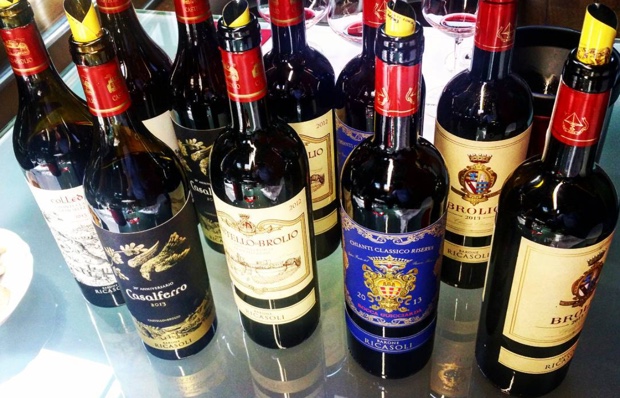
The history of Chianti Classico, Tuscany and for that matter, Italian wine can’t be discussed or put into perspective without mention of Barone Ricasoli. That name has been linked to wine since 1141, when Brolio Castle passed into the hands of the Ricasoli family. The first 700 years of Tuscany’s most famous castle and the family aside, it is the work of Baron Bettino Ricasoli, Prime Minister of Italy, researcher, innovator and first marketing expert for the regions wines.  Bettino is credited with having invented the Chianti formula in 1872. When I visited the Ricasoli family crypt in May I was struck by the fact that the Iron Baron passed away on my wife’s birthday. Then shivers travelled down my spine when I noticed a second Bettino Ricasoli shared a birthday with me.

Francesco Ricasoli, 32nd Baron of Brolio has been at the helm of the castle and the family business since 1993. In the past 20 years he has overseen the re-planting of vineyards, isolated exceptional soils, plots and exposures. The five types of soils found on the estate; sandstone, argilliti, montemorello, pliocene and fluvial deposits all play major rolls on vineyard demarcations and which blocks are used for which wines. This research with nearly 1000 years of experience in the current hands of Francesco Ricasoli has transformed an historic estate into a new golden age as one of Chianti Classico’s most important producers. Massimiliano Biagi is now head of winemaking and Commercial Director Stefano Capurso is responsible for bringing Ricasoli’s exceptional wines to the world. Churchill Cellars is the Ontario Agent.

delivering-purity-with-deep-respect-to-exceptional-vineyards-barone_ricasoli-chianticlassico-sangiovese-granselezione-merlot

Delivering purity with deep respect to exceptional vineyards @barone_ricasoli @chianticlassico #sangiovese #granselezione #merlot

Barone Ricasoli Brolio Chianti Classico 2013, Docg Tuscany, Italy (3962, $23.95, WineAlign)

When you consider that this Chianti Classcio enjoys a production of 8000,000 bottles, you might think it a huge salad of over determination. It’s not but instead gleefully full of coincidence and implausibility. Sangiovese (80 per cent) mingles with merlot and cabernet sauvignon for nine months in barrique and tonneau. The goal is freshness from fruit with Chianti Classico character. The exactitude of resolution is a full expression, of cherries, dusty character and a meeting point from and for all five terroirs across the estate. Carries its full fleshy fruit with some liquorice in a dichotomous combo of exceptional quality and high quantity, incorporating diversity, brought together with simple but highly technological vinification. This is now as much a vision of Toscana, even as it resonates as Chianti Classico, than what it used to be. That is to say internationally stylized, but isn’t this in effect true of all sangiovese, not especially of Chianti Classico? Drink 2016-2021.  Tasted May 2016

Barone Ricasoli Brolio-Bettino Chianti Classico 2013, Docg Tuscany, Italy (Agent, $34.95, WineAlign)

This ulterior Chianti Classico label is dedicated to Bettino Ricasoli who invented the formula for the production of Chianti in 1872. The Iron Baron must have been a hard-nosed, get things accomplished kind of Prime Minister-Researcher-Inventor-Marketer because the sangiovese (with a splash or two of colorino) is a gritty effort, firm and taut. Aged in refurbished old casks, this unfiltered and bullish Chianti Classico is built upon a full-frontal fun nation of black cherry fruit. There is a textile texture that is not quite the CC leather of old but something newer, modern, hand-crafted and woven, silky and gentile. This is the elegance of such a form ridable sangiovese, on the tongue, to the touch and the feel. Bettino’s ode is dark and brooding but it is so very sangiovese. Drink 2018-2022.  Tasted May 2016

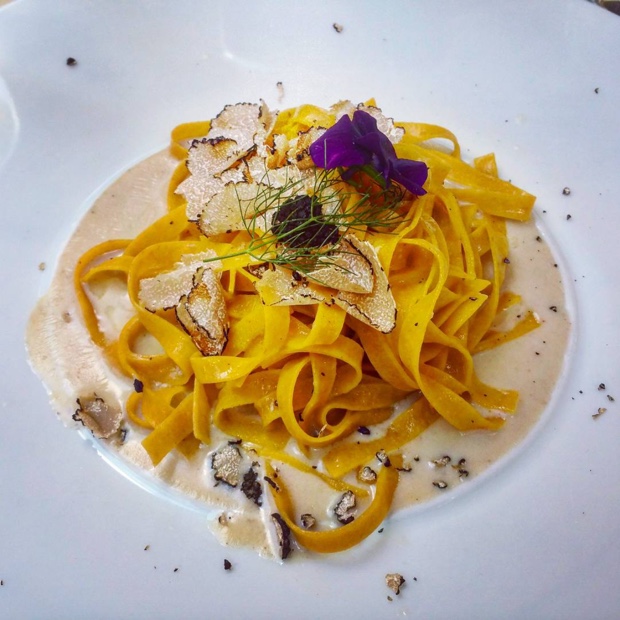
fettuccine-con-crema-di-tartufo-osteriadelcastello-barone_ricasoli-madonnaabrolio-gaioleinchianti

Fettuccine con #crema di #tartufo #osteriadelcastello @barone_ricasoli #madonnaabrolio #gaioleinchianti

Barone Ricasoli Rocca Guicciarda Chianti Classico Riserva 2013, Docg Tuscany, Italy (943613, $24.95, WineAlign)

The blend for the Riserva (first introduced out of the exceptional 1999 vintage) is very similar to the Brolio (beginning with 80 per cent sangiovese), but here the l’élevage sees time in large casks with some canaiolo in the mix. Carries the Brolio gene and the torch, takes the diversity of sangiovese from the cinque terroirs and distills it into a very fresh (especially for CCR) but certainly rich and velvety red. Firm, taut and finishing on its recurring entry note of round acidity and sweet tannin. Drink 2017-2022.  Tasted May 2016
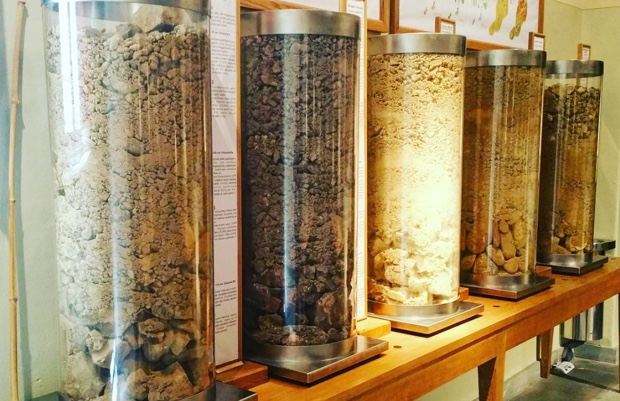
not-all-terroir-is-created-equal-cinque-cru-barone_ricasoli-granselezione-castellodibrolio-chianticlassico-massimilianobiagi-francescoricasoli-stefanocapurso

Not all #terroir is created equal. Cinque #cru @barone_ricasoli #granselezione #castellodibrolio #ChiantiClassico #massimilianobiagi #francescoricasoli #stefanocapurso

Barone Ricasoli Casalferro 2013, Docg Tuscany, Italy (122598, $51.95, WineAlign)

Casalferro is 100 per cent merlot wrought from a southeast exposure, single vineyard cru for a total of 27,000 bottles. New barriques for 18 months are filled from fruit picked in late september (after the rest) and eight or nine further months in bottle before release. Here despite the wood and the varietal, this is as much a study in Chianti Classico as it is merlot, chiantified so to speak, of pure sweet acidity and red cherry like no other Tuscan merlot will espouse to show. This is surely not Redigaffi, Galatrona, Masseto or L’Apparita. None of them. It may not be the richest or silkiest but it is very pure and it has a naturally cured, sandstone and schisty feel. At a modest 14 per cent alcohol it feels light and ethereal. A great vintage for Casalferro. Drink 2018-2022. Tasted May 2016

Il Molino Di Grace

Frank and Judy Grace purchased the vineyards in the mid 1990’s and restored an abandoned 19th century ruin into what is now the cantina of il Molino di Grace, named for the centuries-old historic water-mill. The first vintage out of the new winery was in 1999. MdG became a certified organic winery in 2013, something they and indeed the entire 20 viticultural Panzano-in-Chianti producers are extremely proud of, all together as one. It took 20 years to get this way, with no spraying and even the workers who work the roads will cut, but never spray.

Tim Grace runs Il Molino di Grace along with Director Iacopo Morganti. Their consulting oenologist is none other than Franco Bernabei. To say that Il Molino di Grace is an authentic producer of terroir-driven Chianti Classico would be an understatement. Their vineyards are set upon some of the finest Galèstro soil in all of Chianti Classico. The permeations and permutations from that soil have separated this estate from so many others with a portfolio of wines constructed with power, finesse and yes, grace.
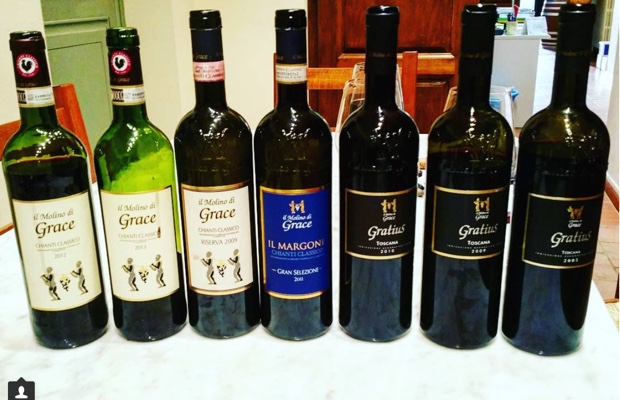
galestro-and-panzano-in-every-pour-with-iacopo-morganti-ilmolinodigrace-chianticlassico-toscana-organic-granselezione-ilmargone-gratius

Galèstro and #panzano in every pour. With Iacopo Morganti @IlMolinodiGrace @chianticlassico #toscana #organic #granselezione #ilmargone #gratius

Il Molino Di Grace Chianti Classico 2012, Docg Tuscany, Italy (85209, $19.95, WineAlign)

Sangiovese running 100 per cent solo, but from a vintage that surrendered 50 per cent of the crop in the spring to frost. The absence of quantity is quality’s coup for a mere 48,000 bottles of Molino di Grace’s normale. Aging happened in Botti (25 hL) for one year. There is a distinct opposition to the other house stylistics, here fresh and fruit massive meets a beautifully dusty, high quality, straight and taut line. Drink 2016-2020.  Tasted May 2016

Il Molino Di Grace Chianti Classico 2013, Docg Tuscany, Italy (85209, $19.95, WineAlign)

The 2013 point blank sangiovese Chianti Classico is a softer, rounder version of its normale self, with less spice and dust and as a matter of course, from double the output. A dreamy downy growing season saw to 100,000 bottles and each are so eminently drinkable. There is a soil in there that seeps through because of the vintage, that combination of marl and limestone known locally as galestro and so while the concentration is wontedly in measure to 2012, it is ultimately just a matter of differing result. One wine’s pale is another one’s edge. This ’13 will present for immediate pleasure while ’12 spends one more year coming into view. Drink 2016-2019.  Tasted May 2016

%22just-need-a-place-where-i-can-lay-my-head-%22-panzano-chianticlassico

“Just need a place where I can lay my head.” #panzano #ChiantiClassico

Il Molino Di Grace Chianti Classico Riserva 2009, Docg Tuscany, Italy (382945, $23.95, WineAlign)

From a hot vintage you can feel straight away on the nose, augmented corporeal and heavy hued. A perspicuous selection from the vineyard is kept in old tonneaux (2nd and 3rd fill), then tasted through those barrels to decide on the Riserva’s final blend. Another Il Molino di Grace 100 per cent sangiovese and the last vintage produced of the regular Riserva. Here again you note the house-style liqueur, the deep seep of cherry and the indubitable vineyard. The culmination of the calefactive vintage offer, from fruit to strength, inclusive with deep intent and a burrowing into the galestro. This the rooted riserva, firm and stretched to elegant. The spice and the tannin are late arriving, tied up in sapidity, graced by comfort. Still so very young, with chards nicking and drawing blood, in need of three years for the fragments of stone to peel away and dissolve into the liquid. Drink 2018-2023.  Tasted May 2016

Il Molino Di Grace Gratius 2010, Docg Tuscany, Italy (Agent, $49.95, WineAlign)

Gratius, meaning more pleasing, the author of a poem on hunting, opponent of the poet Archias and a contemporary of Ovid. The other sangiovese from Il Molino di Grace whose first vintage was 1999, of “a nose incredible,” says a wistful Iacopo Morganti and he is not wrong. From the Panzano-Greve in Chianti slopes of Montefili, at 500 meters, a 2.2 hectare single vineyard of old vines (70 years) co-planted with some colorino and canaiolo. So in that sense it’s a field blend but essentially sangiovese. Tuscan climat of rock and poor soil, where the wind blows and grapes whose fate is two weeks later maturation. Aromatics and elegance are in a calm struggle and like two brothers, rolling but not fighting. Such a wine of clean, pristine purity does not exist just anywhere. The inviting perfume solicits readiness and a willingness to be generous. No need to wait. Drink 2016-2022.  Tasted May 2016

Il Molino Di Grace Gratius 2009, Docg Tuscany, Italy (Agent, $49.95, WineAlign)

Darker, exuding more heat and vineyard funk with an emphatic oomph. You can’t help but notice it, the Galestro, screaming to be heard. This has that natural cure, that wisdom, the kind of feeling that the wine was always as it is now, borne this way. From the windy Montefili, 500m limestone and marl single-vineyard. Usually late maturing but warmer from 2009 and slightly obscuring but not smothering the Gratius “more pleasing” perfume. Very ready sangiovese field blend intensified in augmentation by canaiolo and colorino. Ready for drinking alongside the enchanting 2010. Drink 2016-2019.  Tasted May 2016

Il Molino Di Grace Gratius 2005, Docg Tuscany, Italy (Agent, $49.95, WineAlign)

The Gratius 2005 shares DNA with 2009 aromatically speaking but in texture and expression the litheness is pinot noir like, with a bit of bretty volatility as an impression that is vineyard funk derived. Just now beginning a drinking window in performance for the art of perfect timing but why not imagine the installation persisting for 10-12 more years? Here the Montefili Galestro vineyard is clearly iterated in a funk-soil-chalk-liquid rubies way. A brilliant peek back because the tart is just so right. Ask the question, “what was the old wine like?” The answer is “it was like old wine, that is to say, like all old wines.” Drink 2016-2022.  Tasted May 2016

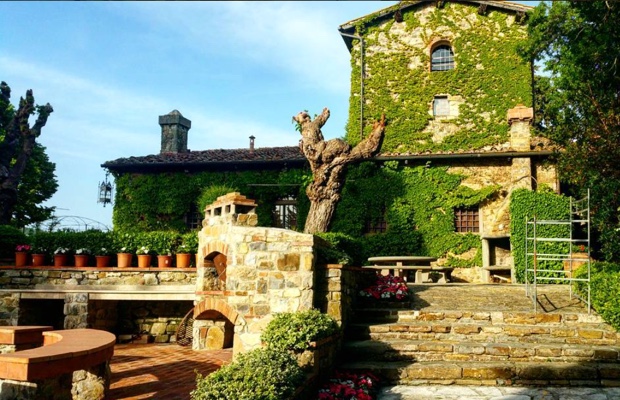
Colle Bereto

The Pinzauti family have transformed one of Chianti Classico’s most idyllic settings into an architectural and wine-producing estate of the highest elegance and excellence. Bernardo Bianchi is winemaker and the estate’s total production is 80,000 bottles per year. “The 60 hectares of the estate, of which 15 are devoted to grape growing, are skillfully arranged and tended to obtain excellent quality wines.” Sangiovese, the area’s “noble vine,” is used for Chianti Classico and Chianti Classico Riserva, while the Pinot Noir and Merlot grapes give their best in Il Cenno and Il Tocco, respectively.”

The approach is through a very careful selection in the vineyard, stems removed and the thickest skinned sangiovese selected for Riserva. The avoidance of green berries is exercised with extreme prejudice, they do no crushing and only work with gravity fed juice followed by the gentlest fermentation. The Ontario agent is Nokhrin wines.

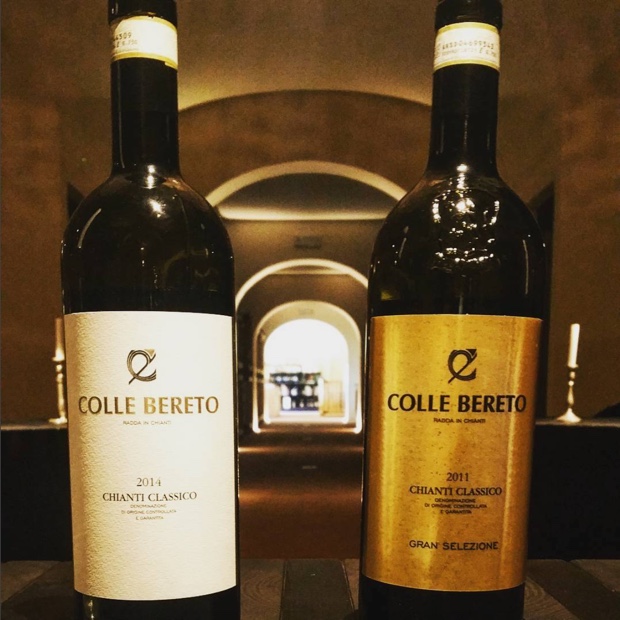
at-the-intersection-of-chianticlassico-and-singlevineyard-there-is-granselezione-collebereto

At the intersection of @chianticlassico and #singlevineyard there is #granselezione #collebereto

Colle Bereto Chianti Classico 2014, Docg Tuscany, Italy (Agent, $31.15, WineAlign)

From a vintage with no Riserva or Gran Selezione, so 50,000 bottles of sangiovese (97 per cent) and colorino (3) were produced. Fermented in botti, finished in stainless steel and bottled the first week of February. Includes fruit from the single-vineyard “la vigna del Convento” that lays beneath il convento di Radda in Chianti, now the restored home of the Consorzio del Vino Chianti Classico. The ’14 CC is possessive of the most liberal import and impart of local mineral. “We are very lucky, it is all Galestro,” says winemaker Bernardo Bianchi. This is Chianti Classico of tradition and progress defined, with the better and best grapes instilling structure, full of the kind of fruit that will last for 10 years. Who needs Riserva when you have this. Liquid concentrated must and dust, mineral and mouthfeel. Great round acidity and finally, blessed bitters. Drink 2018-2024.  Tasted May 2016

Castello di Gabbiano

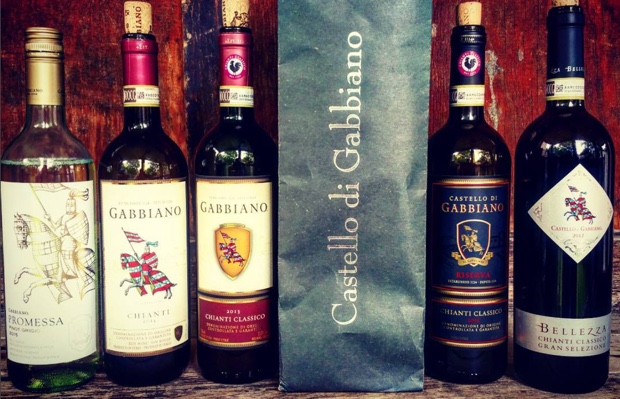
Castello di Gabbiano was built in the 12th century, just south of Florence in the heart of the Chianti Classico region. The estate has been protecting its estate-grown grapes since 1124. The castle remained in the possession of the Florentine banking family Bardi until the early part of the 15th century when it passed to the Soderini family, one of the most politically influential families in Florence. It was the Soderini who were responsible for the conversion of the turreted manor house of Gabbiano in Fattoria, already completed by the late 15th century.

Today the 147 hectare estate is in the hands of Treasury Wine Estates, one of the most progressive wine companies in the world. The vineyards are divided up into DOCG Chianti Classico (109 hectares), IGT (35) and Vin Santo. Winemaker Federico Cerelli has dedicated the best blocks of exceptional aspect and exposure upon the finest clay and limestone rock-filled soils for Gabbiano’s most important cuvées. Cerelli pays painful attention to both his agronomy and his winemaking. He is constantly analyzing the soils, carefully selecting the choice of rootstocks and clones, as well as pruning back in a careful, skillful handling of the vines. In the winery and in the cellars he exercises the balanced epitome of melding a natural approach to traditional methods and technical innovation to both large and small productions.

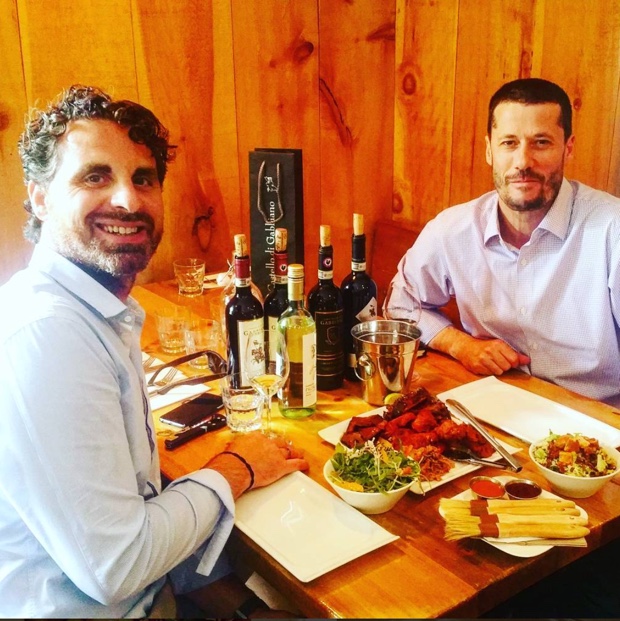
federico-cirelli-brought-the-castellogabbiano-barquebbq-supplied-the-sampler-treasurywineestates-greatmatch-chianticlassico-sangiovese-granselezione-bellezza-chianti-chianticlassicoriserva

Federico Cirelli brought the @CastelloGabbiano & @barquebbq supplied the sampler #treasurywineestates #greatmatch #chianticlassico #sangiovese #granselezione #bellezza #chianti #chianticlassicoriserva

Castello Di Gabbiano Chianti Classico 2013, Docg Tuscany, Italy (219808, $18.15, WineAlign)

Classic red sauce pasta appendage, for Monday and Tuesday, along with Wednesday, Thursday and Friday. Though the varietal and regional specificity floats in the Tuscan wind, the local tension, tang and tannin make for some robust Chianti Classico moments. Fashioned from 90 per cent sangiovese, the rest merlot with some colorino and canaiolo, moist from the fresh maker Branca vintage of deep, fertile soil. Partial carbonic fermentation after five days of cold (15c) maceration. Aging done in 70 per cent (five tonnes) cask and some 3-4 year old barrels plus 30 per cent in cement. The latter gives the exposure of freshness in fruit. Quite pure, clean and soil driven, earthy enough to soak up swimming pools of sugo all’arrabbiata or amatriciana. Drink 2016-2018.  Tasted February and May 2016

Castello Di Gabbiano Chianti Classico Riserva 2013, Docg Tuscany, Italy (216309, $22.95, WineAlign)

First and foremost it is the wood, or the lack of wood that stands out in the CCR 2013. It may be observed as a different kind of wood, less polished and more natural but what really wins out is the fruit. The cherries are surfeited by impressed tannin and linger with good tonic for a good length of time. Great restraint shown by winemaker Federico Cerelli. Drink 2018-2024.  Tasted June 2016

really-getting-to-know-these-guys-castellogabbiano-chianticlassico-chianti-granselezione-bellezza

Really getting to know these guys @CastelloGabbiano #chianticlassico #chianti #granselezione #bellezza

Castello Di Gabbiano Chianti Classico Riserva 2012, Docg Tuscany, Italy (216309, $22.95, WineAlign)

Winemaker Federico Cerelli’s 2012 Riserva goes at the ancient ideal with (95 per cent) sangiovese and (5) merlot, of which 70 per cent of all estate grapes are used to produce this wine. From the Mercatale Val di Pesa castle vineyards, the CCR is a work of time, energy and investment spent in the vineyard. The elevated tonality can’t help but be assessed as compared with the ‘normale,’ here fermented in small (10 tonne) tanks, of a wild ferment, a warmer maceration and 20-25 days of skin contact. The new and improved state of the art incarnation of this Gabbiano is a by-product of Cerelli’s major reduction in pump overs (like, zero), a bit extra delestage, sangiovese malolactic in cement and merlot in barrel. Then into wood (20 per cent new French) plus (80) in third and fourth fill. A minor amount sees large cask. The totality is 12 plus 12 months (wood and bottle). Such a smooth operator with spice accents, again that classic rolling hills red fruit, great length, remarkable breadth and quality for the price. It’s amenable to immediate consumption with some air but will benefit from two more years imagined aeration. Drink 2018-2023.  Tasted May 2016

Ambassadors of @chianticlassico to the world. 2013 #castellodigabbiano #granselezione (not pictured) will blow your mind #treasurywineestates #sancascianovaldipesa #ilbellezza #chianticlassicoriserva

Ambassadors of @chianticlassico to the world. 2013 #castellodigabbiano #granselezione (not pictured) will blow your mind #treasurywineestates #sancascianovaldipesa #ilbellezza #chianticlassicoriserva

Castello Di Gabbiano Alleanza 2011, Igt Toscana, Italy (Agent, $39.95, WineAlign)

A single block alliance between merlot and cabernet sauvignon, less than 10,000 bottles per year, from low lying vines on clay soil, consummated out of a late harvest. “I like to pick when the vine has lost their leaves,” notes winemaker Federico Cerelli, “that is the right time to pick. It’s not too hot so this is when the phenolics are ripe.” Just a few hectares of cabernet see a separate, mostly wild ferment, mostly in concrete and normally 40-45 days of skin contact. It then spends 14 months in (100 per cent) new French oak. So very, very vanilla, caky but not milk-shaken, urged am biliously forward by crazy acidity, (5.7 tA) and high pH (3.9). The nose wields blackberry and Cassis and then the palate seems to veer wholly Merlot, dusty, silky and sandalwood soft. Just a faint note of dill pickle and it’s quite cool and savoury, of some black olive and brine, no animale, clean, almost anti-super Tuscan. There is no beast here. There is tannin and an edgy level but no brood. There is drinkability and it uses its wood well. A real improvement for this bottle, with thanks to Federico. Drink 2016-2020.  Tasted May 2016

the-river-arno-beneath-a-florentine-night-westinflorence

The river #arno beneath a #florentine night @WestinFlorence

Good to go!

Twitter: @mgodello

Instagram: mgodello

WineAlign

Why you don’t know jack about B.C. wine

Culmina Family Estate Winery, Oliver, B.C.

Culmina Family Estate Winery, Oliver, B.C.

Some folks in Ontario know quite a lot about the B.C. wine industry but they are few and far between. Wine professionals with decades of experience and those who have travelled extensively to the Okanagan Valley and Vancouver Island have their fingers pointed in the right western direction. But most of us living and imbibing here in Ontario are clueless as to the breadth of B.C.’s wine culture. It’s not our fault. Our government is keeping us in the dark.

Ontario still refuses to agree that it should not be illegal to carry or ship wine for personal use across provincial borders. That issue is at the forefront of what keeps Canada’s wine regions isolated from one another. The Canadian Vintners Association (CVA) recently met for their annual AGM in Kelowna, B.C. The CVA is the industry’s governing board that deals with national regulatory issues, standards and policies. The idea of direct to consumer interprovincial shipping was again tabled and discussed with five MP’s from Ontario and B.C. in attendance. WineAlign’s David Lawrason was there.

“The politicians and CVA members were most vocal about getting Canadian wine moving freely and directly across all provincial boundaries in Canada. Alas, there was no breakthrough to announce in terms of more provinces dropping their opposition, but I was surprised by how loud, frequent and public the CVA and its members, as well as the politicians, have become – insisting that action be taken sooner rather than later. There was a mood in the room.” Still Ontario consumers continue to be ignorant about the wines of British Columbia. It remains to be seen if the recent CVA meeting will help constitute a step forward.

Related – B.C. wine: From Vancouver to your table

Back in June we took the WineAlign National Wine Awards of Canada on the road and hunkered down in Penticton, British Columbia to assess and pick winners from over 1,500 Canadian produced wines. And we did so much more. First we paid a visit with The Wines of British Columbia for the Judgement of B.C. The second annual cage match was hosted by the B.C. Wine Institute and took place on Tuesday, June 21, pitting 12 B.C. Wines against 12 acknowledged global benchmarks. Riesling and Pinot Noir squared off, curated by DJ Kearney and judged by a who’s who of Canadian wine writers, critics and educators, along with international WineAlign Awards judges Dr. Jamie Goode and Elaine Chukan Brown.

Showtime! #judgementBC @WineBCdotcom @djwines #BCWine @WineAlign #nwac16 #bcwineinstitute #bcvqa #bcdna

Showtime! #judgementBC @WineBCdotcom @djwines #BCWine @WineAlign #nwac16 #bcwineinstitute #bcvqa #bcdna

Max Ferd. Richter Graacher Himmelreich Riesling Kabinett 2013 from the Mosel Valley, Germany placed first in the Riesling category, followed by two B.C. entries, CedarCreek Platinum Block 3 Riesling 2014 BC VQA, Okanagan Valley, B.C. and Wild Goose Stoney Slope Riesling 2013 BC VQA, Okanagan Falls, B.C. Three international Pinot Noirs medalled, Bouchard Père Premier Cru Beaune Clos de la Mousse Monopole 2012, Burgundy, France, Bachelder Oregon Pinot Noir 2012, Willamette Valley AVA Oregon, USA and Felton Road Bannockburn Pinot Noir 2014, Central Otago, New Zealand. B.C. Pinot Noir took the fourth, fifth, sixth, seventh and (tied for) eighth spots. “What was really interesting when I tasted through those 12 wines blind, I couldn’t pick out the BC Wines which tells me they belong in their peer group which is a ringing endorsement for BC Wine that we’re on the right track,” noted Dr. Jamie Goode.

Faultless evening @OKCrushPad above reproach and the wines beyond #nwac16

Faultless evening @OKCrushPad above reproach and the wines beyond #nwac16

As the week progressed, the WineAlign judges paid visits to Okanagan Crush Pad Winery in Summerland, Culmina Family Estate Winery in Oliver, Tantalus Vineyards in Kelowna, Rustic Roots Winery with the Similkameen Wineries Association and Deep Roots Winery on the Naramata Bench. I tasted more than 100 wines over the course of the five days from the appellations of Okanagan Valley, Okanagan Falls, Oliver-Osoyoos, Golden Mile, Similkameen Valley and Naramata Bench. Whatever I thought I knew and understood about wines coming from B.C.’s diverse and variegated landscapes has been tossed out the window and diapason replaced with an entirely renewed subset of thought. It is even clearer to me now, from an Ontario perspective with limited access to B.C. wines and an even smaller vocabulary that here in this province we really don’t know shit about B.C. wines.

Exceptional eats @CulminaWinery in adroit by @Quintoquorto and @hooydonk_van

Exceptional eats @CulminaWinery in adroit by @Quintoquorto and @hooydonk_van

In talking and reflecting recently with Elaine Brown she told me how “Canada’s Provincial restrictions around wine have created what are essentially isolated sovereignties of wine. There is a lot of good wine made throughout Canada but speaking with wine lovers across the country I am impressed with how little access they have to wines from other provinces.” Brown hits the proverbial screwcap right on the head. In a country where distance makes community so difficult, the only way to seek unity is to tear down trade barriers and that is something our provincial government has outright refused to docket. As a result, the consumer in Ontario has little access to the diversity that the B.C. wine industry has to offer.

So much @WineBCdotcom amour in the @tantaluswine cellar last night #nwac16

So much @WineBCdotcom amour in the @tantaluswine cellar last night #nwac16

One of the great B.C. revelations on the June trip was all about riesling. In his recent WineAlign column, Rhys Pender wrote the following. “It feels to me that the last few years have seen a really strong focus towards quality in BC. Not that good wines weren’t made, but most of the riesling seemed to be aimed at being a low price, broad crowd pleaser. More and more wines are a little pricier but a lot more intense and quality focused. This was evident in the recent judging of the National Wine Awards of Canada. To be honest, Ontario riesling has pretty much always been superior to BC in these competitions and while there were still many great Ontario wines, this year things were different and many of the best rieslings I personally tasted in my flights were from BC. Less simple, fruity wines and more serious, intense and concentrated examples. Seven of the top ten riesling overall were from BC this year including the Gray Monk 2013 Riesling which won a Platinum medal. An impressive showing.”

Related – From coast to coast: Top 40 wines from the 2016 WineAlign National Wine Awards of Canada

Another adumbrate scoop came outlined in out-of-the-box white varietals, with very interesting results by albariño, grüner veltliner, muscat ottonel and trebbiano. The same quality of wines made from these grape varieties can’t be found in Ontario, nor can the success of red blends from the Similkameen Valley and from single varietal reds in the Okanagan Valley as a whole. When B.C. winemakers begin to dial back the oak and take full advantage of ripe, fresh fruit, the world won’t know what hit them. In his National Wine Awards of Canada report, David Lawrason noted that “two B.C. wineries, Moon Cursor and Stag’s Hollow, are worth watching for their medal winning experiments with grapes like tempranillo, grenache and petit verdot.” Another nod to experimentation.

I liken the Okanagan to South Africa, a varietal playground where just about anything can achieve phenolic ripeness in almost any given vintage. B.C. has one distinct advantage and that is a cooler climate. It should be exploited to the fullest, in the name of balance and quality. Though I tasted many more, in the name of 5,000 words or (slightly more) brevity, here are notes on 40 wines tasted and reviewed in June.

Sincerity @CulminaWinery from Elaine & Don Triggs and a superfluity of @WineBCdotcom pours #ohwhatanight #hospitality #nwac16

Bartier Bros. Cabernet Franc Cerqueira Vineyard 2013, Okanagan Valley, British Columbia (Winery, $30.00, WineAlign)

A rich, savoury mess of red fruits comes clean if surreptitiously divided by barrel on the nose on this gently intended cabernet franc from the gentle Cerqueira slope. More than a modicum of concentration of dusty raspberry and some new leather jacket. Silky smooth mouthfeel and the condensed tangy extraction really pops up on the finish. Another crunchy, chewy, smoky, serious cabernet franc turning bitter and tough with alcohol and bramble on the finish. More freshness would be ideal so let it rest for two years instead. Drink 2018-2022.  Tasted June 2016  @bartierbros

Semillom

Bench 1775 Semillon 2015, BC VQA Okanagan Valley, British Columbia (Winery, $19.90, WineAlign)

A virtually bone-dry, stainless steel raised semillon that is quintessentially fresh and varietally correct though even more attentive to the Okanagan Valley. There is an abundance of fruit in the green mango/citrus realm and a je ne sais quoi spirit. All in all quite amenable and no reason to seek a future dripping with honey. The sense of anti-austerity, fruit over mineral reaction means drink it young. Drink 2016-2019.  Tasted June 2016  @bench1775

Black Hills Viognier 2014, BC VQA, British Columbia (Winery, $25.00, WineAlign)

A very impressive viognier from a mother nature conspired vintage to make it shine. This is so very viognier as much as it is B.C. which is a great thing. White floral, viscous and split between honey suckle and white pepper-edged, green apple bite. Against all odds in a way and certainly a top example for the region. Drink 2016-2019.  Tasted June 2016  @BlackHillsWine

Nota Bene

Black Hills Nota Bene 2014, BC VQA, British Columbia (Winery, $52.09, WineAlign)

This Nota Bene can be espied as of the Okanagan Valley’s most ambitious reds filled with good notes, in winemaking conditioned real tones, as opposed to pure, simple acoustic ones. The Black Sage Bench blend of cabernet sauvignon (52 per cent), merlot (33) and cabernet franc (15) is pulled from two vineyards, Double Black and Sharp Rock. The proprietary junction is criss-crossed where rich chocolate takes up address at a certain genre of Napa ideology. Black Hills’ premium wine is big and full of brawn, backbone and guts. The three real tones played together express pronounced dissonances between many of their harmonics. Dissonance is related to (barrel developed) spice so I would think that a minimum of five years will be needed to connect and make seamless the overlapping harmonics. Drink 2019-2025.  Tasted June 2016

Bordertown

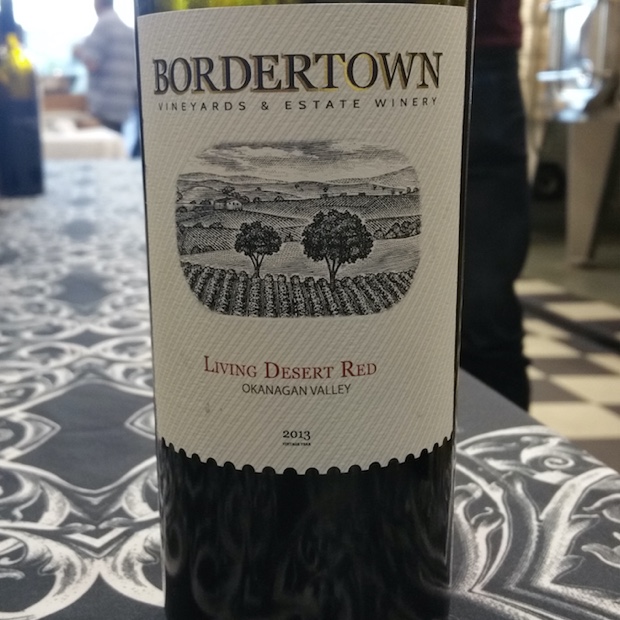
Bordertown Living Desert Red 2013, Okanagan Valley, British Columbia (Winery, $25.00, WineAlign)

The first vintage of Mohan Gill’s 600 case merlot and cabernet franc blend is one of the more curious and engaging Osoyoos reds that is really worth some study. The 18 months spent in all new French wood should ring the alarms but instead it seems a combination of vaguely engaged and greatly spectatorial. Reduction and volatility strike an accord with the wood and the result is a rich, meaty, full on expression from which fruit emerges virtually unscathed. “It’s the first vintage,” shrugs Gill, “what else could I do?” More of the same Mohan. Drink 2017-2020.  Tasted June 2016  @BordertownWine

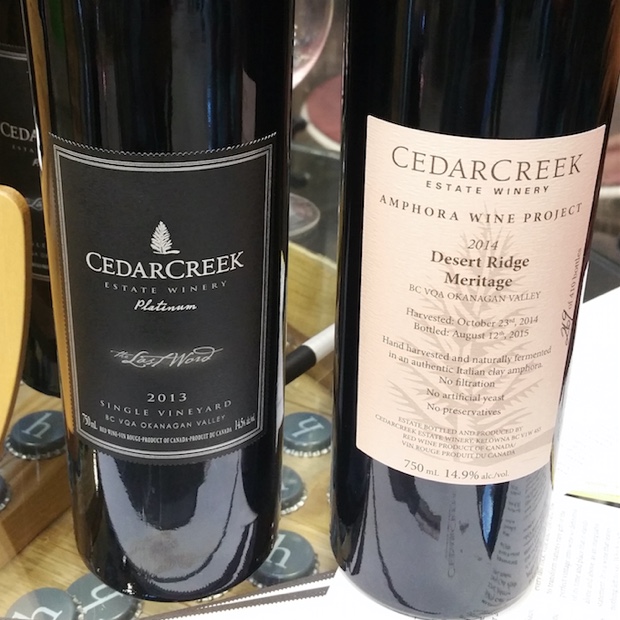
CedarCreek Amphora Wine Project Desert Ridge Meritage 2014, Okanagan Valley, British Columbia (Winery, $60.00, WineAlign)

Winemaker Alexis Moore inherited the (Chianti sourced) clay amphora from former winemaker Daryl Brooker and this (second vintage) meritage is her first kick at the urn. The co-fermented, all natural, don’t even think about peeking and sneaking a taste blend is cabernet sauvignon (54 per cent), cabernet franc (35) and malbec (11). The hallmark desert notes of rich, caky and dusty are necessarily present but it is the preservation of red earth savour that gives this formidable flagon of magic juice its inimitable personality. Mature rows of fruit are to blame and thank for the just desert reward. Transferred to amphora the fruit is preserved in such a way no B.C. reds have ever really seen and the new territory is not so simple for making quick, on the spot judgements. I have thought about this wine for quite some time and the conclusion is positive for two important reasons. Spice and tannin. Together they combine for an infinite finish. Here is the crux of the vessel’s power, to preserve fruit and slowly release its charms within the structure provided. Drink 2018-2024.  Tasted June 2016  @CedarCreekWine

CedarCreek

CedarCreek Platinum Series “The Last Word” 2013, Okanagan Valley, British Columbia (Winery, $77.99, WineAlign)

The “Last Word” is at the pinnacle of CedarCreek’s Platinum Series, single-vineyard wines and only made in “nature conspired,” exceptional vintages. The biggest and baddest red is a “wine that leaves nothing left to say,” thus the moniker. The blend is cabernet sauvignon (34 per cent), merlot (32), cabernet franc (24) and malbec (10) in true Meritage style. Talk about big reds, talk about the passion. Plan on getting extra hours of REM sleep after a glass, after the punch, the ripest fruit, tempered chocolate, grip and after the heavy hitting acidity. Every crevice is filled in with a jangle of notes and few winemakers can find balance with such a wealth of material. There is simply no way not to make a bold, tannic statement. “Not everyone can carry the weight of the world” but CedarCreek has managed to grin and bear it. Drink 2018-2026.  Tasted June 2016

Church

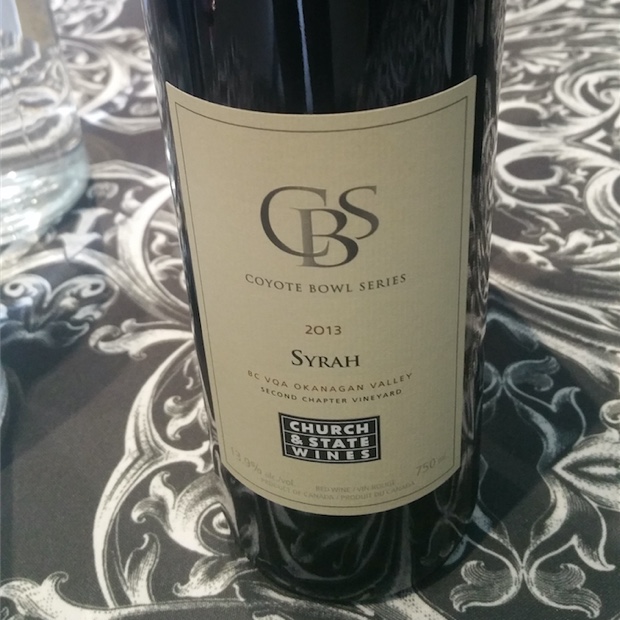
Church & State Coyote Bowl Series Syrah 2013, BC VQA Okanagan Valley, British Columbia (Winery, $35.00, WineAlign)

NWAC_Silver2016_web

Reductive, dark, stormy raging and off the charts spicy syrah but there is terrific ripe fruit and cool, cool savour. Edgy but tannic within range. After the violets come sweet purple palate fruit but it’s a feigning sweetness. Long drifts of acidity and tannin but again, like so many Okanagan peers the finish dusts with espresso and not the mocha. The spice lingers well after all else has resolved. Drink 2016-2020.  Tasted June 2016  @ChurchStateWine

Clos du Soleil

Clos Du Soleil Estate Reserve Red 2012, Similkameen Valley, British Columbia (Winery, $58.90, WineAlign)

The apropos named winery, the “Vineyard of the Sun,” describes British Columbia-Okanagan-Similkameen so well. That and what can happen when Bordeaux varietals are the recipients of proper sun-worshipping phenolic journeys is the crux to understanding and enjoying such a proper and righteous red. Tasting this Michael Clark characteristic fruit handling facture with Spencer Massie sheds enlightened light on the Clos du Soleil passion project and the red ability of the Similkameen Valley. Taken from the Estate Vineyard on the Upper Bench of the Similkameen Valley, the prettiest and most inviting nose pops up here, led by cabernet sauvignon and in usage of all five Bordeaux varietals. The best red fruit, the hint of mineral and sage, the aridity of the land, the restraint from wood. It’s all correct and truth be told. Solid red blend. Drink 2016-2022.  Tasted June 2016  @ClosduSoleil  @spencemassie

Corcelletes

Corcelettes Menhir 2014, Similkameen Valley, British Columbia (Winery, $31.90, WineAlign)

NWAC_Silver2016_web

It’s hard not be endeared into the red blend culture of the Similkemeen Valley and the variegation various positions occupy on the slopes of its benches. This ode in OZ style of cabernet Sauvignon (62 per cent) and syrah (38) is pulled from vines set on the rocky soils of the Corcelletes Middle Bench Vineyard. Though the herbal, savoury, currant and tobacco laced cabernet should dominate it does not with witness thanks to a more than peppery edge and black fruit ooze of the syrah. Only the Similkameen can bring such shared duality and find common ground like this in the overall B.C. genre. Like Beamsville in Ontario and with grace in wood usage, here the two varieties co-exist with copacetic simpatico. The ancient monolith believed to date back 2741-2488 BC on the Baessler family farm off the shores of Lac de Neuchatel, Switzerland gives this blend its name. This wine is no monolith, nor does it strike as ancient or antediluvian, but it does stand out as singular for the Similkameen and for B.C. Drink 2016-2021.  Tasted June 2016  @corcelettes

Culmina Dilemma 2014, VQA Okanagan Valley, British Columbia (Winery, $35.65, WineAlign)

The road taken for this chardonnay should have led to rich, buttery and fat because the approach mimics a throwback west coast style. Alcohol, pH, new barrel usage are all generous but so is acidity. So this could have emerged huge but it’s impossibly restrained. The cool-climate metal factor sings with austerity and the gemstone crunch folds with richness. The Margaret’s Bench land speaks and gives so all tolled Culmina’s signature chardonnay is a study in heutagogical learning because it teaches knowledge sharing. This is chardonnay and in many ways, this is Burgundy. Chances taken have landed reward, if a bit unexpected, but certainly appreciated. Drink 2016-2019.  Tasted June 2016  @CulminaWinery  @CulminaSara

Culmina Merlot 2013, VQA Okanagan Valley, British Columbia (Winery, $31.00, WineAlign)

Red over green merlot to substantiate a vintage called better on the Golden Mile (Arise) Bench. Here is bone-dry, full malolactic, high acidity merlot, so very vacuous, inward, implosive and wild. The wood blankets with purpose in lieu of reckless abandon and because the fruit is just ripe enough to defend itself the return is an effusive one. Would love to taste this merlot in a best vintage with 20-25 per cent less new oak and a number close to this healthy 6.4 g/L of acidity. Now we’re talking, in tones red over green. Drink 2017-2021.  Tasted June 2016

Unicus

Culmina Unicus 2014, VQA Okanagan Valley, British Columbia (Winery, $31.05, WineAlign)

B.C. is a playground for experimentation, a place not unlike South Africa where phenolic ripeness is almost always accomplished yet it has a distinct advantage. Cooler sites and the availability, if embraced, of equally ripe acidity. So grüner veltliner, along with trebbiano, muscat ottonel, auxerrois, sylvaner and others should be investigated. Culmina’s work with grüner is fought properly, in a combination of concrete amphora, egg and steel, allowing varietal to share equal ground with terroir. A sense of some white-ish rhubarb here is noted in the most complimentary vegetal sense, along with white flowers and a dash or two of white pepper. This is a gustatory and gastronomic grüner with intensity and vitality that good slope Marlborough sauvignon blanc will similarly give. The difference here is the absence of searing citrus which is a good thing, all things considered. Drink 2016-2018.  Tasted June 2016

Deep Roots Syrah

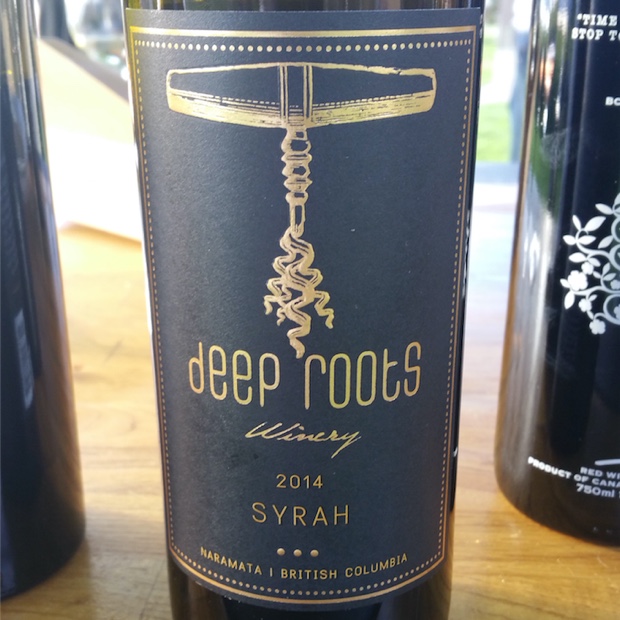
Deep Roots Syrah 2014, Naramata, British Columbia (Winery, $34.00, WineAlign)

NWAC_Silver2016_web

Tasted twice, first blind at #NWAC16 and then at the winery, this is syrah with a dual northern intent, more Naramata than Rhone though the bent is a soulful repent in the church of St. Joseph. Beautifully savoury and smoky, like a big meat and smoulder sandwich with great fruit and a silken texture. The peppery bite is a sure tell sign of well-made syrah. Drink 2016-2020.  Tasted June 2016  @DeepRootsWine

Gehringer Auxerrois 2015, BC VQA Okanagan Valley, British Columbia (Winery, $13.29, WineAlign)

Despite the off-dry (11 g/L RS) directive because that is what auxerrois always wants to do and though the vintage brings much warmth, this persists as a delicate and fresh wine. Auxerrois as a grape variety is set in an imprecise past, shaded by myth, carried forward and planted decades ago in B.C. These old vines could tell stories but today its fruit expresses itself simply, with richness and with plenitude. I wouldn’t tie a cellophane bag around one and leave it in the cellar to revisit in 30 years. I’d rather hook some trout, pan roast it and work in some acidity. The auxerrois will compliment such a move just fine. Drink 2016-2018.  Tasted June 2016  @GB_Wines

Haywire Chardonnay Canyonview Vineyard 2013, BC VQA Okanagan Valley, British Columbia (Winery, $22.90, WineAlign)

NWAC_Silver2016_web

From the Summerland vineyard, raised in concrete and emerged with a semi-unoaked feel. There is a certain sort of sweet condense as if a tank and a barrel had merged. Clearly managed in the slow, micro-oxygenated way, with notes of curd, cream and whey. A chardonnay smoothie with many beneficial enzymes running wild, the yeasts working and munching away. Still retains a cool-climate feel regardless of the vat influence with top notch acidity and tannin to lengthen the chain. Drink 2016-2019.  Tasted June 2016  @Haywirewine  @OKCrushPad  @brixandmortar

Haywire Pinot Noir 2014, BC VQA Okanagan Valley, British Columbia (Winery, $27.00, WineAlign)

NWAC_Silver2016_web

From the steep limestone and granite Waters & Banks Vineyard, this is a limber, lissome and rusty pinot noir, gently pressed, caressed and left to find its own singular way. Reminds me of the salinity graced Willamette Valley, set upright and alert on the bright side of life. Their is a musky lime aroma and a lithe tartness that belies its mineral gifting. Well done. Don’t envision this losing its charm any time soon. Drink 2016-2020.  Tasted June 2016

Trebbiano

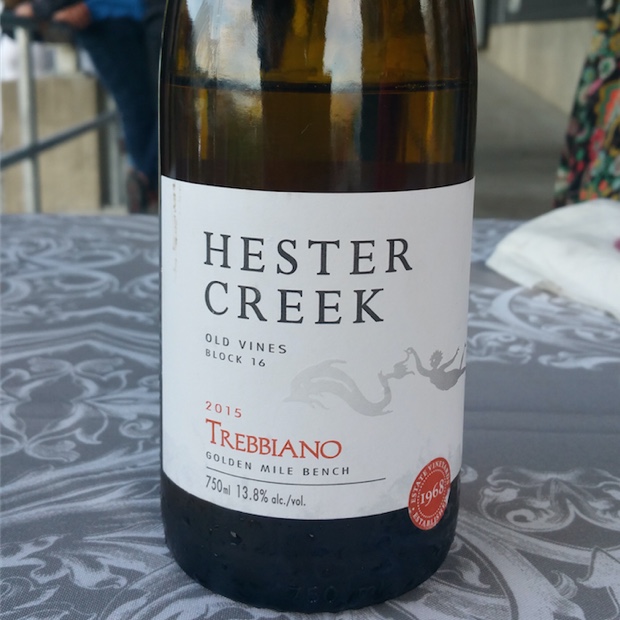
Hester Creek Trebbiano Old Vines Block 16 2015, BC VQA Okanagan Valley, British Columbia (Winery, $22.95, WineAlign)

From vines planted in 1968 which in itself is a wild and mind-blowing proposition. Trebbiano has well-adapted to the Okanagan Valley, or at least these two acres have and only fools would not try to get their hands on one of the 1100 cases produced. No it’s not Emidio Pepe nor is it your nonno’s trebbiano but it is a singular expression for B.C. Terrific acidity layers over rich and viscous stone-orchard fruit. Something creamy evolves, not like similar styled Okanagan viognier but in another realm. It’s a derivative sensation, like the way children look like their mothers, so the connection to Abruzzo is really there. This is a special proprietary moment and good on Hester Creek for brokering the proviso. I will agree to abide. Drink 2016-2020.  Tasted June 2016  @HesterCreek

Hillside

Hillside Muscat Ottonel 2015, BC VQA Okanagan Valley, British Columbia (Winery, $24.99, WineAlign)

NWAC_Silver2016_web

Floral, as expected, but in contrast to the globally spoken style, this does orange blossom and mineral mining with equal and opposing ease. Acidity rings round, not overtly meaningful but nonetheless wild. From 30-plus year-old vines (circa 1982), to not find fun, joy and pleasure would be to miss every pertinent point. Hillside presents a provincial comic flick of a muscat phrase and does so with lighthearted resourcefulness and ingenuity. Drink 2016-2018.   Tasted June 2016  @hillsidewines

Fortissimo

La Stella Fortissimo 2014, BC VQA Okanagan Valley, British Columbia (Winery, $35.00, WineAlign)

In 2014 Fortissimo is mostly merlot with sangiovese playing a vital role along with a splash of cabernet sauvignon. This is found to be softer, more amenable and structured with bungalow sprawl. Bright, maximum juiced red berry fruit resemblance is anti-savoury, friendly, and ready to roll but still with some smoky spice. The 21 per cent sangiovese is significant (up seven points from 2013) so the Classico factor runs high. This is the alternative world case of Fortissimo where in some years you make Chianti Classico and in others, Gran Selezione. Though she may not consider 2014 to be her most accomplished Fortissimo, winemaker Severine Pinte will have to accept that she has procured a very elegant red blend. A Classico. Drink 2016-2020.  Tasted June 2016  @LaStellaWinery

LFNG

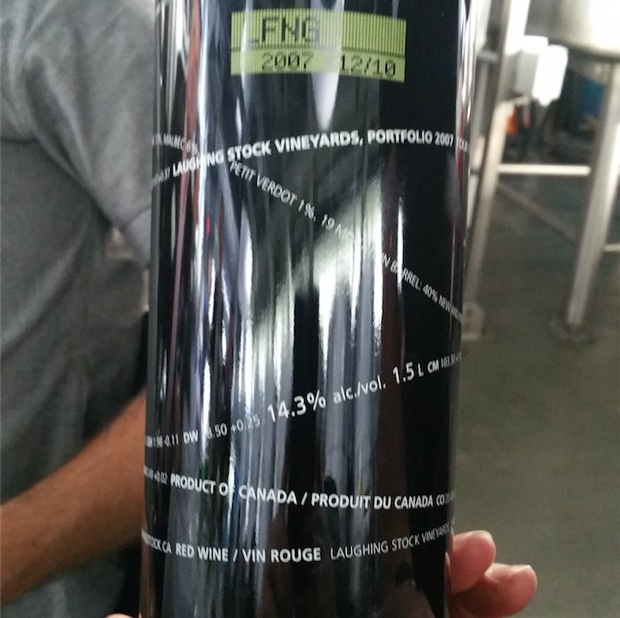
Laughing Stock Portfolio 2007, Naramata Bench, British Columbia (Winery, $52.95, WineAlign)

Poured from Magnum the LSV ’07 has resolved from cool vintage and micro-oxidation into cool-climate meets right bank stylistic personality. Soy, Chinese five-spice, cassia, balsamic, fig and a caramelization that lists to part vegetal and part demerara sugar. The palate is expressly vital still, carrying a torch that for a cabernet-merlot Okanagan blend is fun to reason with. Magnum is obviously a major plus for this nine-year advancement. Sweet with no noticeable heat finish. Drink 2016-2018.  Tasted June 2016  @lfngwine

Maverick

Maverick Syrah 2013, BC VQA Okanagan Valley, British Columbia (Winery, $35.00, WineAlign)

Winemaker Bertus Albertyn bottled a meagre 200 cases of this Golden Mile Bench sourced syrah after 18 months in three to four year-old French Oak. If you are a fan of fresh, well-spoken, confident and blessedly transparent syrah then look for the next vintage of this sold out beauty. So gauzy gossamer textured, peppery but of scant bite and driven by a northern, smoky beat. The cure and depth in its make-up nearly adds up to beefy but its form of athleticism is built upon the quiet politesse of its maker’s execution. The comparison must be made to septentrional Rhône and the lack of new oak is so appreciated. This is a wine to watch for. Drink 2016-2020.  Tasted June 2016  @MaverickWinery

Moraine Gewürztraminer 2015, Okanagan Valley, British Columbia (Winery, $17.90, WineAlign)

Classic Okanagan Valley gewürztraminer with a touch of mute reserve relative to more forward peers. The aromatics pause at traditional exoticism then veer to pear and apricot. The palate concentrates the off-dry varietal tendency with a furthered spin out of the seed orchard and into the pit. Not necessarily a gewürztraminer with extended play acidity but highly pleasurable nonetheless. Drink 2016-2018.  Tasted June 2016  @MoraineWinery

Moraine

Moraine Riesling 2015, Okanagan Valley, British Columbia (Winery, $19.90, WineAlign)

Slightly airy and hyper-opiated riesling up to here, of burgeoning talent, suggesting what is yet to come from Moraine with respect to the great varietal Okanagan potential. On the off-dry scale this falls somewhere in the middle, going at it with heavy Mosel fuel. Quite intense with acidity to match. Hip riesling, “addicted to approval, addicted to the air. It was see if you like it or see you up there.” Drink 2016-2020.  Tasted June 2016

Moraine Pinot Noir 2013, Okanagan Valley, British Columbia (Winery, $25.95, WineAlign)

Moraine’s Okanagan Falls pinot noir is lambent with great rust and conversely vapid in desert dust. The entire red fruit spectrum is seemingly sung and stung with range and breadth; cranberry-cherry-pomegranate-strawberry-raspberry, from tart all the way to sweet. Taut, tight and bracing. This will work with pairing pride for short to mid-term enjoyment. Drink 2016-2020.  Tasted June 2016

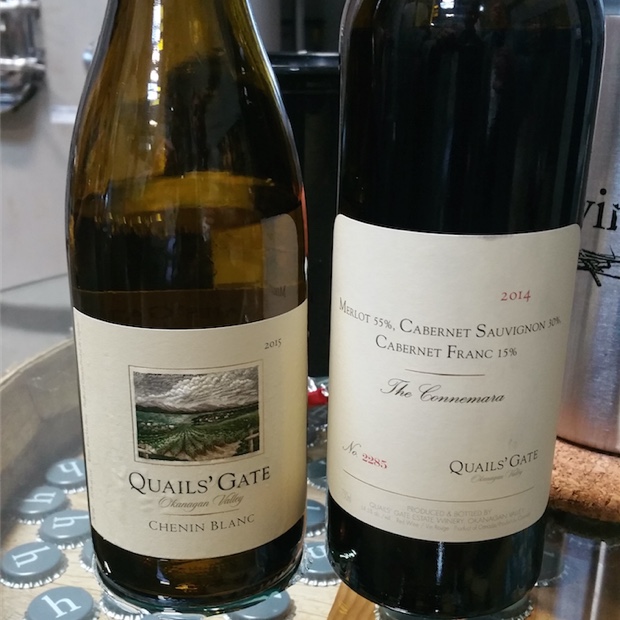
Quails’ Gate Chenin Blanc 2015, BC VQA Okanagan Valley (Winery, $18.95, WineAlign)

NWAC_Silver2016_web

The fruit hails from both Quails’ Gate Estate and Osoyoos vineyards. Tasted just three months after bottling, the sweet (whole bunch pressed) serenity of chenin blanc has already settled in with equal and opposing acidity in tact. An angle of bitters works the lush fruit (thickened by a small percentage of older wood) and weaves the two as one in this eager and enthusiastic young (albeit early sulphur persistent) white. A splash or two of sauvignon blanc helps in the ushering. Drink 2016-2020.  Tasted June 2016  @Quails_Gate  @  @hobbsandco

Quails' Gate

Quails’ Gate Connemara 2014, BC VQA Okanagan Valley (Winery, $64.00, WineAlign)

The inaugural vintage and first ever Quails’ Gate Bordeaux-style blend is winemaker Nikki Callaway’s ode to her stage/cellar hand/winemaking time spent in Bordeaux. The cumulative of merlot (55 per cent), cabernet sauvignon (30) and cabernet franc (15) is formidable in its perplexing youth, taut, rigid and so very tannic. The minor’s current approach is virtually unapproachable but look for something to grab for, like perfectly ripe fruit or structure. The beatitude is easily found in these two essential components. You’ll then think “if you were another pretender, oh I’d pass you by,” but in the case of the Connemara, put in the effort and the time. The reward will come later. Drink 2018-2028. Tasted August 2016

Quails’ Gate The Boswell Syrah 2014, Okanagan Valley, British Columbia (Winery, $61.05, WineAlign)

Named in ode to grandparents, The Boswell is a deep, brooding and extreme-bodied syrah that is actually quite floral. Smoky, meaty, chewy fruit mixes with tar and roses in a heightened, variegated state. Rich and piqued by peppery spice and then the chocolate warmth settles in on the finish. Sip again and note that every pass circles back to the beginning. Though it nods to the northern Rhône and wells up like Barossa, you can’t take the Okanagan out of the Boswell. It wins every time. Would prefer to see this again in three years. Drink 2019-2025.  Tasted June 2016

Stoneboat

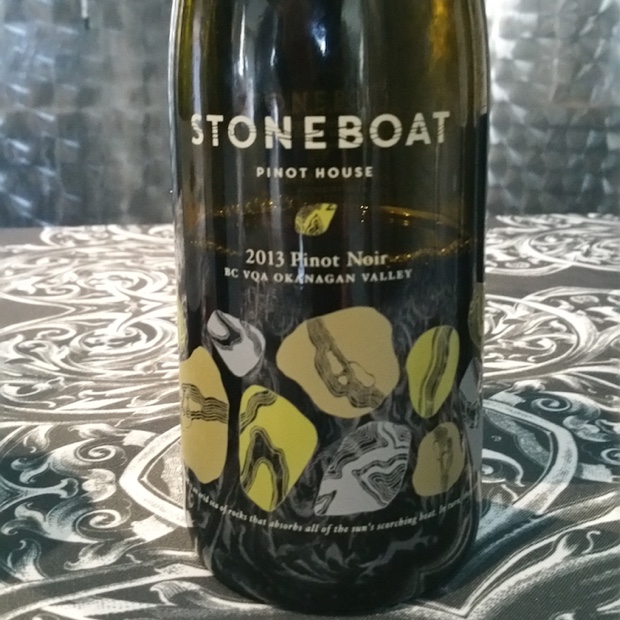
Stoneboat Vineyards Pinot Noir 2013, VQA Okanagan Valley, British Columbia (429332, $29.95, WineAlign)

I tasted this blind at #NWAC16 and with Larry Martiniuk that same week and both times was struck by the electric pinosity, density and beneficial volatility. The pre-integration period is apparent so I’d hazard a guess that 18 months more are needed to assimilate the 18 months spent in (20 per cent new) French oak. To whiff it’s like peat moss mixed with a cassia-cassis cocktail. Black cherry sweetish on the palate and quite spicy. This neon pinot is quite volatile and yet closed, but it carries a downy pilosity texture. Very west coast. Though I return to thinking it out of whack, still feeling the alcohol and wondering why it has to be so loud, the texture and the complexity always bring me back. The raindrops are alive. Drink 2018-2022.  Tasted June 2016  @stoneboat  @Noble_Estates

Synchromesh Riesling Storm Haven Vineyard 2015, BC VQA Okanagan Valley, British Columbia (Winery, $31.90, WineAlign)

If this riesling is sweet I couldn’t say. That is the first thought that comes to mind. From Alan Dickinson’s home property, this is his baby, an Okanagan Falls derived riesling that lives an entirely holistic existence. No spraying, none, nada, niente. Not ever. The wine could not get any cleaner. Purity is its cognomen. The vineyard is subject to the highest diurnal temperature swing than just about anywhere in the valley. That might explain the risk-reward probability factor. The technical specs are a triumvirate of implausibility; 46 g/L RS, 11.5 g/L TA and pH below three. What? This is the most impossible wine made in B.C. In its concentrated velocity it wheezes like something ancient. We could almost be drinking Greek debina or 20 year-old Alsatian auxerrois. Dickinson makes three passes over each of the two blocks so even if the hands are off, the meticulous picking breeds asepsis. Citrus such as found in the Storm Haven fruit does not happen very often, if rarely. It’s like citrus soma. Citrus unknowable out of determination unthinkable. Direct misunderstanding by indirect whimsy. And so the vintage offers good fun but not greatness. Imagine the possibilities. Drink 2018-2027.  Tasted June 2015  @SynchromeshWine

Synchromesh

Synchromesh Riesling For Shadows Vineyard 2015, BC VQA Naramata Bench , British Columbia (Winery, $23.00, WineAlign)

Like its brethren Storm Haven Vineyard, this Synchromesh draws blood from stone in holistic ways that few Canadian riesling seem to do. The Four Shadows is different in that it chooses wisdom over risk. A clear, clean and precise nose reveals lemon drop and a honey drip. Though the sugar is more noticeable than the SHV, the older world (Germanic) impression is filled with a sense of tradition. The vineyard is in fact of very high elevation on an extremely steep slope (think Mosel) of gravel and clay layered over fractured bedrock and granite. The sugar is also elevated (50.93 g/L) and the acidity lower (8.4 g/L) so what you get may seem to lower the impossibility factor. Don’t be fooled into thinking this a riesling of privilege and lassitude. It does not drip with sleep but rather rages with life. The stones seem to speak. And the riesling listens. Drink 2016-2022. Like its brethren Storm Haven Vineyard, this Synchromesh draws blood from stone in holistic ways that few Canadian riesling seem to do. The Four Shadows is different in that it chooses wisdom over risk. A clear, clean and precise nose reveals lemon drop and a honey drip. Though the sugar is more noticeable than the SHV, the older world (Germanic) impression is filled with a sense of tradition. The vineyard is in fact of very high elevation on an extremely steep slope (think Mosel) of gravel and clay layered over fractured bedrock and granite. The sugar is also elevated (50.93 g/L) and the acidity lower (8.4 g/L) so what you get may seem to lower the impossibility factor. Don’t be fooled into thinking this a riesling of privilege and lassitude. It does not drip with sleep but rather rages with life. The stones seem to speak. And the riesling listens. Drink 2016-2022. Tasted June 2016.Tasted June 2016

Tantalus Brut

Tantalus Blanc De Noir 2013, Okanagan Valley, British Columbia (Winery, $31.90, WineAlign)

NWAC_Silver2016_web

Winemaker David Paterson “squeezes it like Champagne” and lets it rest for six months in chardonnay barrels. Two years of triage and boom! Freaking elegant Blanc de Noir. Rusty, rosy, the absolute spot on ripe vernacular spoken, the right tart exposed. It’s curious and foreshadowed thinking to know that 100 cases have been set aside for a five to seven year disgorgement. D’ya think Paterson is high on the vintage? Tasted June 2016  @tantaluswine

A single block of Clone 93 pinot noir planted in 1985 is responsible for this breath of fresh Okanagan Valley Blanc de Noir. Fashioned with the omnipresent Tantalus acidity, this rages out with aridity, salinity and palpable tension. Only pinot noir can act like this, with layers of sous bois and fraises du bois. The age of the vines, the early-picked necessity and the allowance for needful and natural expression has resulted in a wine simply stressed as terroir and boîte. Carries the acidity and the tension across and through the palate. Finishes as dry as it started. Drink 2016-2020.  Tasted April 2016

Tantalus Pinot Noir 2013, Okanagan Valley, British Columbia (Winery, $29.90, WineAlign)

The vintage was not shy to gift dark, optimum-achievement in phenolic fruit and along with that ripeness comes even deeper tonal intent. Red hyperbole is elevated by striking acidity, setting this Pinot Noir up for really high expectations. The palate does not disappoint. Flavours range from black cherry to charred meat making for a highly gustatory experience. Chewy and enjoyable describes the time spent with this wine. It will offer great pleasure in the short term. Drink 2016-2018.  Tasted April and June 2016

Tantalus

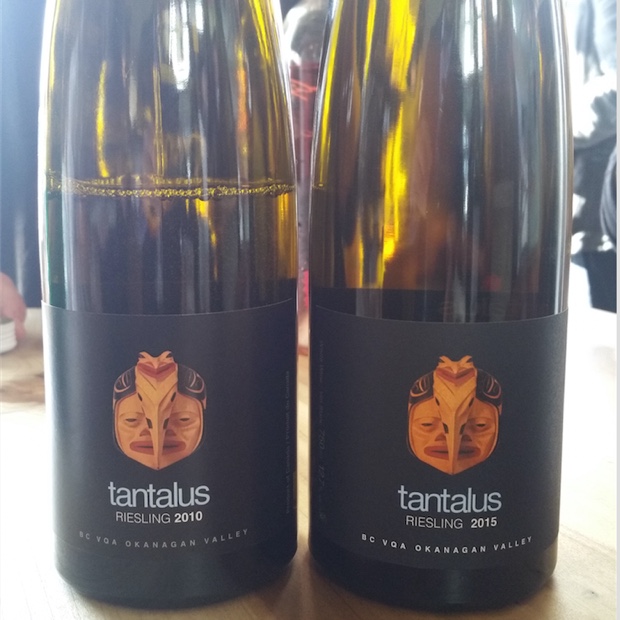
Tantalus Riesling 2015, Okanagan Valley, British Columbia (Winery, $23.00, WineAlign)

Two months later things have changed and yet not at all. There are more tricks and inducements (as compared to 2010) but don’t be fooled because with a difficult (sweltering) vintage the wine makes you think you can get close. But you can’t. You are further away than you think mostly due to incredible citrus and wild rhythms swimming through raging riesling waters. Change of plans. Drink 2018-2024.  Tasted June 2016

Well with the arena of aridity, salinity and sheer marketability, here is a showy Tantalus with super searing lemon flavours emerging out of great atmosphere and aromatic intensity. Some Riesling taketh away and some are mouth watering, like this. The stone fruit goodness attacks and sticks to the tongue like sap, then glides effortlessly down. Tantalus might make me think of things that are out of reach, “standing in water, but dying of thirst, this is my thanks and this is my curse.” Yet this early to market 2015 Riesling offers an antithetical view, ready, willing and able to please. Drink 2016-2019.  Tasted April 2016

https://www.youtube.com/watch?v=pWXdhkE1MLo

Tantalus Riesling 2010, Okanagan Valley, British Columbia (Winery, $22.90, WineAlign)

I’m thinking that no other B.C. riesling tries, trips and tricks with intense tribulation like the Tantalus, especially with a look back at this 2010 ripper. Though just now emerging from out of its saline crusted shell, the liquid stone injection will always render this a tantalizing wine so while it seems to open a door a part of it will always remain just out of reach. This 2010 can retrospectively be looked at as a genre defining riesling at the hands of an engaging young winemaker to be.  Tasted June 2016

Tinhorn Creek Oldfield Series 2bench Red 2012, BC VQA Okanagan Valley, British Columbia (Winery, $29.99, WineAlign)

Naturally south Okanagan crunchy, chewy, spicy and taut red blend. From two benches, the Golden Mile (Tinhorn Creek Vineyard) and the Black Sage Bench (Diamondback Vineyard). This is quite a ripper in that magical $30 middle ground with power to impress as much as many peers two times the price. That said it certainly retains its tangy, two-step, red fruit freshness, with cool savour, like two mints in one. Kind of reminds me of Coonawarra, especially the Penfolds Bin 169, so perhaps when brought together there is a Bench similarity with the Terra Rosso soil. Or perhaps just a stab at clouds. Either way this 2012 takes over from the vital 2011 and runs with the baton. Drink 2016-2021.  Tasted June 2016  @TinhornCreek @Andrew_Tinhorn  @SandraOldfield

Zweigelt

Upper Bench Zweigelt 2014, BC VQA Okanagan Valley, British Columbia (Winery, $25.00, WineAlign)

I’ve not had the opportunity to taste the go between 2013 but progression and evolution are found in the bright red fruit of this 2014 zweigelt from Upper Bench. The aromatics travel east and west, as if coast to coast and on a global trek. I get the foraged berries, baking scents and the felled evergreen mixed with fresh cocoa. I also sense garrigue, as well as jasmine in the early evening. Though the sugar is elevated (an insignificant 0.6 g/L up to 2.9) the wine was picked at lower brix (23.5 as opposed to 24.2) and so the acidity is given the chance to feign higher. The alcohol is hefty (14.4 per cent) but the overall balance is improved. Dialled back a bit but another notch or two would really do justice to the grape. Early consumption is still the order and fresher remains the promise. We’ll see what the warm 2015 vintage will bring. Drink 2016-2018.  Tasted June 2016  @upperbench

Wild Goose

Wild Goose Pinot Blanc Mystic River 2015, Okanagan Valley, British Columbia (Winery, $19.00, WineAlign)

A few clicks north of Oliver comes this maximum juice master of a pinot blanc, like a tart gooseberry cake with a warm, yeasty crust. It’s like autolytic sparkling wine without the bubble, foiled by a sauvignon blanc faux botrytis thing going on. The acidity is well suited to match the exuberant fruit. Roland Kruger points a finger to the vineyard (right along the south Okanagan River) to explain the aromatics. The addendum of 20 per cent barrel fermentation is the key that turns the textural screws. As far as pinot blanc goes, “it’s open mike, punk rock, (it’s natural), red, white and blue.” This Wild Goose. Drink 2016-2019.  Tasted June 2016  @wildgoosewines

Wild Goose Gewürztraminer Mystic River 2015, Okanagan Valley, British Columbia (Winery, $19.00, WineAlign)

Wild Goose is proving to be a gewürztraminer leader in the Okanagan Valley not just for its adherence to rose petal and lychee varietal correctness but also for aromatic elegance. Terrific texture marks the ’15’s territory (a trademark of Wild Goose whites) and here you get drying wax still pliable and malleable. The aura is distinct and the wine so very amenable. Really well made Mystic River output. Drink 2016-2020.  Tasted June 2016

Good night and many thanks @tantaluswine #kelowna #nwac16

Good night and many thanks @tantaluswine #kelowna #nwac16

Good to go!

Twitter: @mgodello

Instagram: mgodello

WineAlign

Italian wines of the week

Wines of the week

Wines of the week

Fear not dear reader. This is not a top ten list or a call to promote the best of the worst. It is not, most thankfully, a post on what wines are being released at the LCBO through VINTAGES. No, a one or two-day break is being granted, mercifully, to explore some wines over at the SAQ in Quebec and others available, by the case, in consignment by way of Ontario agents.

WineAlign is ever so surely becoming the tasting office of choice. It offers the opportunity to explore that critic’s dream realm of “so many wines and so little time.” The home office checks in a close second, with samples ready and carefully kept under temperature control.  I tasted and scribbled with much verve last week and over the weekend. There will be more to follow, but for now, the Italian notes.


Torraccia Di Presura Leneo 2013, Chianti, Tuscany, Italy (Ontario Agent, $18.95, WineAlign)

Leneo is 100 per cent Sangiovese, half of which is matured in small oak French barrels for approximately six months. From vineyards near Greve in Chianti, this is the epitome of fresh. The strawberry and raspberry aromas are so very height of summer, the tension having long left the ferment. Fruit and buoyant acidity remain to lift and cut spirit. A late flavour of rosemary and olive adds a nice Mediterranean touch.  Tasted March 2015  @TorracciaPresur  @TheVine_RobGroh

Capoverso Cortona Syrah 2013, Tuscany, Italy (Ontario Agent, $18.95, WineAlign)

There is noticeable volatility in this Syrah though it strikes a congenial balance between fruit and alcohol. The wine is not hot but is currently unsettled. That comes through in the sooty sinew and tree sap aromas. Black raspberry fruit abounds, as does liquorice and black tea. The overall accord works the parts but some time will be required for reconciliation. Sweet and sour is accented by a savoury, though moderately lengthened finish.  Tasted March 2015  @TheVine_RobGroh

Cantina Roccafiore Rosato 2014, Umbria, Italy (Ontario Agent, $20.95, WineAlign)

A Sangiovese blush made from organic grapes, arid as the Corso Vannucci is long, linear and direct as la strada centrale leads to the Fontana Maggiore. Has a savoury flex and a salinity that central Italian Rosé almost always displays, a pull from two seas not hard to reach heading either east or west. The glycerin texture and tangy, just this side shy of reductive aromas are a propriety of pure yet driven fruit. Has the slant of Sangiovese, even in the absence of its sour edge and devitalizing tannin. A very fine example of Umbrian Rosé.  Tasted March 2015  @roccafiorewines  @TheVine_RobGroh

Cantina Roccafiore Fiordaliso Grechetto 2014, Umbria, Italy (Ontario Agent, $20.95, WineAlign)

Fashioned from organic (and specialized clones of) Grechetto di Todi and Trebbiano Spoletino. The ordinary is abutted with prejudice in this Roccafiore take, in full mineral action out of Umbria. This one speaks to me, never mind the current reductive accent. The organic vines exude healthy fruit and this fleur-de-lis is regal, royal and full of life. Wet stones, not flinty but certainly crouching on the rocky forefront. The balance between orchard fruit, the rocks and the load carrying acidity is spot on. This is an expertly crafted, intelligent and gratifying white.  Tasted March 2015  @roccafiorewines  @TheVine_RobGroh

Cantina Roccafiore ‘Melograno’ 2013, IGT Umbria, Italy (Ontario Agent, $20.95, WineAlign)

Sangiovese and Montepulciano combine forces in this organic Umbrian, the punica granatum or pomegranate. Like the uniquely variegated, sour, sweet and highly mineral fruit, this red mimics the savoury pleasures. It’s dry, possessive of natural salts and fruity, but not in a sugary way. The acids are citrusy, much like pomegranate, but void of true citrus. Very pure, penitent, clean and crisp, with mild tannins and a ferric touch. Very Umbrian, regal, Franciscan, Friars Minor to bigger, bolder Sangiovese. Tasted March 2015  @roccafiorewines  @TheVine_RobGroh

Brancaia Il Bianco 2013, Tuscany, Italy (SAQ 11797174,$21.35, WineAlign)

Sauvignon Blanc stands soprattutto to Viognier, Gewürztraminer and Sémillon in this tannic white wine from Castellina in Chianti, in the far south-east corner of Chianti Classico. Five months on yeasts has not only built breadth but also compensated for no oak or malolactic. The repercussion is a curtailment and a feigning of qualitative casting, as if from sea stones and ancient feelings. Pretty pleasures are a supraliminal by-product of the effect, in a leavening of lime and rock. This reminds me of a young, petite Stratus White, in which a mélange of grape varieties combine and effectively cancel one another out, with nary a dominant, alpha varietal limelight steal. This Bianco would create even more buzz with a 10-20 per cent barrel influence.  Tasted March 2015  Brancaia

Capoverso Rosso Di Montepulciano 2012, Montepulciano, Tuscany, Italy (Ontario Agent, $22.95, WineAlign)

Here is Prugnolo Gentile with a swagger and quite the attitude. Don’t be fooled by the new adventist-adventurist, retro-romantic label. This Rosso has a mean streak. Funky aromas of the barn and the compost heap may be secondary to red fruit but they are definitely there. High iron content, less so in botany and rich like a long braise of dark veal shank ragu. Complexity is in, basics are out and there is much to dwell on in this Rosso, event if its intent is to induce simple pleasures. This needs salty protein, like the aforementioned idea of ragu.  Tasted March 2015   @TheVine_RobGroh

Argiano Non Confunditur 2012, IGT Toscana, Tuscany, Italy (Ontario Agent 72397, $24.95, WineAlign)

The Argiano NC-IGT must be awarded points and applause for the sheer felicity it affords the discerning drinker who knows when they have been pleased. This is juicy stuff from a terrific vintage. A latin lover of voluptuous body and luscious-laden lips. A flirtatious Tuscan ragazza, outgoing, friendly, hand-holding and demonstrative. Liquid freshness, with layers of red fruit and circulating acidity. Very modern, in an Aussie Rhône-blend way, with liquorice, cocktail beginnings and Tawny Port ends. Quite a swirl of flavours and pulsations. Drink now and for another two years.  Tasted March 2015  @Argianowinery  @TrialtoON

Fontanafredda Barolo 2010, Piedmont, Italy (Ontario Agent 20214, $30.00, WineAlign)

Traditional Nebbiolo that is neither austere nor of such a hard shell to crack. Roses and street cover in summer give sweet and fume aromas. Has an elemental scent, like a science lab but with experiments that broadcast harmony, synthesis and balance. Glycerin and tannin revolve around in the Nebbiolo oscillator. Some late funk creeps in, indicating some time (five years) needed to see a proper fruition. Represents very good value at $30.  Tasted March 2015  @Fontanafredda_  @Noble_Estates

Tolaini Al Passo 2011, Tuscany, Italy (Ontario Agent $37.99, SAQ 11794344, $28.40, Manitoba Banville and Jones $34.99, WineAlign)

This IGT from Castelnuovo Berardenga blends Merlot into Sangiovese, a push and pull varietal relationship if ever there was one. The Sangiovese is Mary while the Merlot whispers. The sacred and the profane. The ancient and the modern. “Uh-will the wind ever remember the (Tuscan wine) names it has blown in the past?” A red house of aromas, a gypsy’s soul and balance are found in this whirling, flavour-filled glass of noise. This is wild Tuscan magic, if a bit disjointed and occupied by strange, though harmonious bedfellows. Rippling red wine, tannic and in need of a few years to soften. “After all the jacks are in their boxes and the clowns have all gone to bed.”  Tasted March 2015  @TolainiWines  @BanvilleJones  @bwwines

Capoverso Vino Nobile Di Montepulciano 2011, Montepulciano, Tuscany, Italy (Ontario Agent, $39.95, WineAlign)

In antithesis to the angular ’12 Rosso, this ’11 Vino Nobile is Prugnolo Gentile at its liquor-like most. This is a painted Sangiovese, with impasto, with style that is strong of colour and meaning. With very plush, oak-managed Caciotti brush stroke and thick creamy flavours. Intensely glycerin, polished and agreeable, especially considering the often tannic and ferric side of Vino Nobile. This will not be a 20-year Tuscan as it already exhibits signs of age, in dried fruit, velutinous toffee and baking blackberry pie. Oh but it will go beautifully with a rare slice of roast and a side of truffled spuds. Tasted March 2015   @TheVine_RobGroh

Tolaini Valdisanti Tenuta S. Giovanni 2009, Tuscany, Italy (Ontario Agent 137786, $49.00, Manitoba Banville and Jones $54.99, WineAlign)

The opposite, the antithesis, the polar paradox of to egregious IGT Tuscan blending is here in this delightful blend of Cabernet Sauvignon, Sangiovese and Cabernet Franc. Oak plays a prominent, spicy and sandalwood barmy role, as does the (mere five per cent) CF, giving currant energy and savoury plug-in to the softer CS. The middle notes and flavours are all Sangiovese, which is a good thing and a wise winemaking decision. The request begs for more Cabernet Franc in Tuscan composites, please. The Castelnuovo Bereardenga and Tuscan climate as a whole agrees with the variety, fleshes it, embraces it, encourages it to support Sangiovese and the less animale Cabernet Sauvignon and Merlot. Here squares off a total package, in substance and in familiarity. Tasted March 2015  TolainiWines  @BanvilleJones  @bwwines

Good to Go!

http://www.winealign.com/profile/2058-mjg

Time to buy these great wines

PHOTO: DRAMARGAR/FOTOLIA.COM

as seen on canada.com

Smaller investments lead to bigger fortunes. This is the credo that works for me when it comes to wine. I practice what I preach and taste as many wines as possible, to determine the personality of my palate, to make informed, diagnostic and visceral decisions when it comes to purchasing for my cellar.

Related – More Current Release Wines

Admittedly, I am offered many opportunities to taste wine. They are out there for you too, whether you live in Ontario, Alberta, Nova Scotia or British Columbia. Wine events are happening almost daily, in event venues, in restaurants, in wine shops and at your local monopoly. Get out there and taste Canada. Put a little money and time into your wine future. Take a course. Taste often and always. Training and immersion is key. Taste!

In the meantime, one of my many jobs is to help with buying strategies. Some recent releases are out there for the taking. I have also discovered a remarkable (soon to arrive in Canada) New Zealand producer, thanks to the generosity of the Speck Family (Henry of Pelham, Ontario) and Family Wine Merchants.  Their Icons of Wine, The Inaugural Family Wine Merchants Portfolio Tasting in Toronto was held on April 15, 2013 at Arcadian Lofts. The Sauvignon Blanc, Pinot Gris and Pinot Noir from the Marlborough winery called Te Pā are a revelation. In anticipation of a spring concert of Prince Edward County wine events and new tastings, here is a terrific Pinot from the man himself, Norman Hardie. All in all, here are five new wines to look for, right now and in the near future.

From left: Santi Vigneti Di Monteforte Soave Classico 2011, Villa Cafaggio Chianti Classico 2009, Norman Hardie Unfiltered Pinot Noir 2011, Henry of Pelham Pinot Noir ‘Speck Family Reserve’ 2009, and Te Pā Winery Pinot Gris 2012

The grapes: Garganega and Trebbiano

The history: Produced in the Veneto region of northern Italy and owned by Lamberti S.P.A., an Italian chemical company

The lowdown: Really remarkable Soave at an entry-level price speaks for itself, despite the odd marriage between winery and massive chemical overlord

The food match: Cauliflower Soup with Coconut, Turmeric and Lime

Santi Vigneti Di Monteforte Soave Classico 2011 (316067, $14.95) is spangled of a mineral green and gold like lichen and moss on rocks long dripped on by a spraying waterfall. Fettered elegance, waxy like aged Semillon and positively exclusive of balm, oil, cloy or bitter peat. Smooth, direct, agreeable white.  88 @pmacanada

The grape: Sangiovese

The history: Property in Panzano (Greve) in Chianti that dates back hundreds of years, when it was called “Cahago”, which means “enclosed, cultivated field”

The lowdown: Open the dictionary and search “Chianti Classico.” CC defined

The food match: Spaghetti, 2012 harvest Roma tomato, basil sprouts, Parmigiano-Reggiano

Villa Cafaggio Chianti Classico 2009 (176776, $19.95, SAQ, 571539, $24.60) whispers come-hither, pour a glass of me. You will not be disappointed. Straddles the Chianti meridian, offering up the best of both worlds; a tough, tannic and gritty stalking wolf and an alluring, silky modern fox. Iron and saltpeter meets dark chocolate filled with raspberry liqueur. Blessed with a piacevole retrogusto. “There’s still time for the midnight wine. Life just as it happens going down the line.”  90  @VillaCafaggio  @VinexxCanada

The grape: Pinot Gris

The history: Long established Marlborough, New Zealand property with vineyards right by the waters of Cloudy Bay at the Wairau Bar, though they’ve only recently begun to bottle under their own label

The lowdown: If Te Pā can find a way to get their wines into VINTAGES stores, they could be priced as low as $18.95. If that happens I will buy them by the case and hand them out on Halloween as adult treats

The food match: Za’atar Spiced Rabbit Gözleme

Te Pā Winery Pinot Gris 2012 (coming soon, $31.95) from a single vineyard made up of three plots and only the best fruit is chosen for the final blend. Hurtles like a ballistic missile fueled by bombarding and bombastic pear fumes, not to mention pungent capsicum. Was “headed for the overload” when suddenly it spun around by way of a dramatic yet finessed, flinty mineral chord change, like a “D” dropped into a Keith Richards’ open “G”. Gets your rocks off. The Sauvignon Blanc popped my eyeballs straight from their sockets. This Pinot Gris is even finer.  92  @nzwine  @winemarlborough

The Splurges

The grape: Pinot Noir

The history: Norman Hardie needs little introduction. He is the reason Prince Edward County Pinot will secure a place on that grape’s world stage

The lowdown: The 2011 vintage will go down as a classic for PEC. The tens have mass appeal, the nines turned out to be stellar but it is the elevens that gather the best of both worlds; ripeness and acidity. Stock up

The food match: Capercaillie and coniferous forest from Fäviken

Norman Hardie Unfiltered Pinot Noir 2011 (125310, $35.00) paints the County red in layered and structured brushstrokes. Ripe, bright cherry tonality in super-heightened, mesmeric sensuality. Accented by weeping rock, black earth and that cherry. Would not figure this to be Norm’s most rugged or gregarious and yet it holds more heft than it looks. Currently in a great place and will live longer than any other.  92  @normhardie  @TastetheCounty

The grape: Pinot Noir

The history: Established in 1988, Henry of Pelham Estate Winery is run by the late Paul Speck Sr.’s three sons, Matthew, Daniel and Paul. H of P amalgamates iconic Niagara pedigree with forward thinking and familial kinship

The lowdown: While there is little doubt that winemaker Ron Giesbrecht’s greatest success is and has been cemented in his Cabernet-Merlot, Chardonnay and Riesling, his soft spot has got to be for this Speck Family Reserve Pinot

The food match: Tomato Dijon Tart

Henry of Pelham Pinot Noir ‘Speck Family Reserve’ 2009 (657874, $40) has arrived in its happy place. The escarpment abutting, protected position and sheltered warmth away from the lake makes the Short Hills Bench a valued Pinot site. Crushed red berries, exaggerated florals and less earth/funk than many peers lead to the SFR’s singular sagacity. Fine-grained chalky tannins befitting the vintage will see this linger with pleasure for another five years. Yet another fine example of ’09 Niagara Pinot clarity forged by skilled and experienced hands.  91  @SpeckBros

Good to go!

The wine diaries: Italian masters

Photograph by bartuchna, Fotolia.com

Importers Robert Tomé and Tony Macchione are serious about wine, especially of the Italian variety. Who wouldn’t be bound and determined to taste through a portfolio that includes Siro Pacenti, Valdicava, Collemattoni, Argiolas, Masciarelli and their most recent addition, Gaja.

as seen on canada.com

On Monday, October 1st I joined the throng of thrill seekers at the Shangri-La Hotel, Toronto, to engage in some grape stem cell therapy. Here are my notes on 20 wines from seven noble Italian producers at the Stem Wine Group 7th Annual Family of Wines Gala Tasting 2012.

Azienda Agricola Masciarelli, Abruzzo

Trebbiano D’Abruzzo 2011 ($14.99) resounds fruit forward and redolent as grape must, more treble than bass, a chiave di violino. The ‘G’ clef is music to my sense of smell, straightforward and honest to taste. A snapshot to winemaker Marina Cvetic on a Sunday afternoon, relaxed, on the terrace, with a view of the sea to the east.  87

Montepulciano D’Abruzzo 2011 ($14.99, $14.80 in Quebec) of aromatics pointing to volcanic ash, smoke, tar and lead feels like ancient wine yet goes vanilla cool and silky down the hatch. Made in the shadow of the Apennines, “even when mountains crumble to the sea,” there would still be Marina and me. Thank you Abruzzo.  88

Montepulciano D’Abruzzo ‘Marina Cvetic’ 2007 ($28.99, $27.35 in Quebec) shows more evolution since my previous tasting note, “long, harmonious expression of a much maligned grape. Jumping aromas as if an opened jar of raspberry jam on a winter’s morning. Great value from this winemaker mother of three’s (22, 13 and 3) namesake bottling.” Now in peak form, some splinters, nearing the plank.  90

Montepulciano D’Abruzzo ‘Villa Gemma’ 2005 ($74.99) of grace and flawless visage is, as I mentioned previously built of “major league fruit and ferocious grip but in danger of creeping over the edge. Time may be the factor but why wait. The MC is $40 cheaper and offers everything you could ask for in an MD’A.  91

Argiolas, Sardegna

Vermentino ‘Costamolino’ 2011 ($16.99, $21.99 in British Columbia) lives by the sea which makes Sardegna a bit like  “a land called Honah Lee.” There is tangy, tropical fruit and a puff of mineral salts, unquestionably typical of the Argiolas style. Pure Mediterranean white magic.  88

Cannonau “Is Solinas” 2009 ($24.95) from vines on the beach is still so young so “those seagulls are still out of reach.” The crystal salinity of the sea clings to the grape leaves, says Export Manager Beppe Pinna, imparting a minerality to the grapes unlike anywhere else. Made from 95% tough Carignano, the hipster Solinas needs time before it’s ready to face the crowd.  Should be a star.  89

Boroli, Alba, Piedmont

Barbera D’Alba 2008 ($15.99) is, as Mr. C. notes, so underrated, especially at this entry-level. A ripe bowl of cherries dusted with dry, ground cherry powder. Delivers the dry and dusty goods.  88

Barolo 2006 ($49.99) advances with rancorous grit and coarse determination. Tart red fruits prickle with feeling and analeptic assistance from their perch high up on a mountain of tannin. Expect nothing less than time from this gutsy effort.  88

Barolo ‘Cerequio’ 2004 ($87.99) from the prestigious Grand Cru single vineyard seems wise beyond its years. Dried cherries, flowers, orange peel and licorice salmagundi with a weedy dill overtone. The herbaceousness is not off-putting, as can be the case in some austere Nebbiolo or Brunello. Stately effort and not shy.  92

Collemattoni, Montalcino, Tuscany

Rosso Di Montalcino 2009 ($24.99) the teenage princess dai capelli scuri of shoulder length and silky red fruit is irresistible. Full on ripeness and glowing with genetically imprinted joy.  88

Brunello Di Montalcino 2006 ($52.99) is likewise approachable and sets forth to perfume the room with Pelargonium Zonale. But the ‘Mattoni is also bent on perpetuating a dogged determination befitting the dogmatic Sangiovese Grosso. A queen to the Rosso’s princess, confident of red fruit, built of solid brick befitting the house of its ancestry.  90

Siro Pacenti, Montalcino, Tuscany

Brunello Di Montalcino 2007 ($89.99, $87.25 in Quebec) is a closed wall of doom, aroma wise, save for a malinger of merda. Nothing a good swirl can’t aerate. A tactical deployment and early blending of north and south Montalcino grapes will help to harmonize this Brunello within a reasonable amount of time. While difficult to assess so young, speculation as to its future is not so obtuse a concept. Ripe cherries and plums are just a few years away from crawling out of the hoi polloi of leather and game. The wine will shine in 2015.   93

Valdicava, Montalcino, Tuscany

Rosso Di Montalcino 2009 ($33.99, $44.99 in British Columbia) extolls the winery’s virtue that cleanliness is next to godliness, echoing Tony’s story about WErproprietor Vincenzo Abbruzzese’s obsession with a clean cellar. Despite Valdicava’s omnipresent perfume of sheep off the vineyard floor, this Rosso is clean, pure and indicative of great Brunello.  90

Brunello Di Montalcino 2004 ($119.99) is the most benevolent and democratic of Valdicava’s Brunelli. Balanced design of smoky, red fruit, earth, spice, licorice and that unmistakable Valdicava perfume. Expertly crafted, impossible not to like. Like I wrote before, “softer, loaded with licorice, pureed sweet peppers and ruby minerality. Seductive, sensuous and really put together. “If she asks me, do i look alright? I say yes, you look wonderful tonight.”  93

Brunello Di Montalcino 2005 ($104.99) obliges the vineyard’s tenet with great intention and of a congenial nature. The red fruit, spice, panna and terra cotta notes are all in check but the vigor is buried in invisible circumstance. Basic for Valdicava but only because the other vintages are so extraordinary.  88
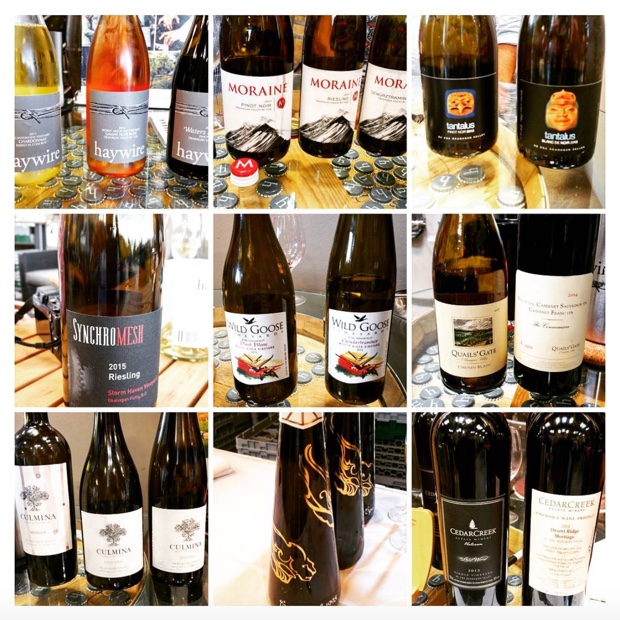
Brunello di Montalcino 2006 ($104.99, $137 in British Columbia), again, from an earlier note. “Initially softer in the mouth begins rolling furiously then is found going down hard stone lines. Finishes with gritty, chalky tannins. Crack one in ten years and it’s “gonna open up the throttle…bust another bottle.”  94

Brunello Di Montalcino 2007 ($139.99) is a romance of cheese and animale with its dueling scents of Pecorino di Pienza and pecora nera. Damp earth, wool and unwashed rind combine for the most unique set of Sangiovese smells. Sniff on past and note tobacco, licorice, black cherry and the mineral core beneath the hills.  Complexity of complexities.  95

Brunello Di Montalcino Riserva Madonna Del Piano 2005 ($134.99) is intensely concentrated, a dreamy and creamy correlated affair between fruit and oak. The sheep’s redolence returns and combines with the meracious, subterranean earth. The ubiquitous Valdicava perfume can only be brined to this level from the historic single vineyard set in the valley north of Montalcino.  Score is consistent with last year’s note. “Monstrous, hunts down the taste buds and renders them comfortably numb. Feeling down? This Madonna will, years from now, “ease your pain, get you on your feet again.”  95

Brunello Di Montalcino Riserva Madonna Del Piano 2006 ($169.99) is sacred Sangiovese, an inviolable reliquary of immaculacy deep beneath Montalcino’s altar. A vamp of essential Tuscan fruit. If you were to stand on a hill in Montalcino in winter time and listen carefully, you would hear a low sipping sound. That is the sound of the entire town drinking of the Madonna Del Piano.  97

Gaja, Barbaresco, Piedmont

Barbaresco 2008 ($218.95, $199 in British Columbia, $199 in Quebec) has not yet unfurled from earthly slumber. Subtle yet discernible greatness as previously noted. “Whiffs smoked beef tongue from the great merchant delicatessen in the sky. A maze of flavours complex like a Venetian neighborhood with interlocking canals and bridges set to and fro. Not your queen’s Barbaresco, nor Bardolino neither. More Shylock than Antonio. Currently a villain with its tongue lashing tannin. Fast forward 15 years to to act four when the integration of fruit causes the wine to become a victim of happy imbibers.”  94

Good to go!