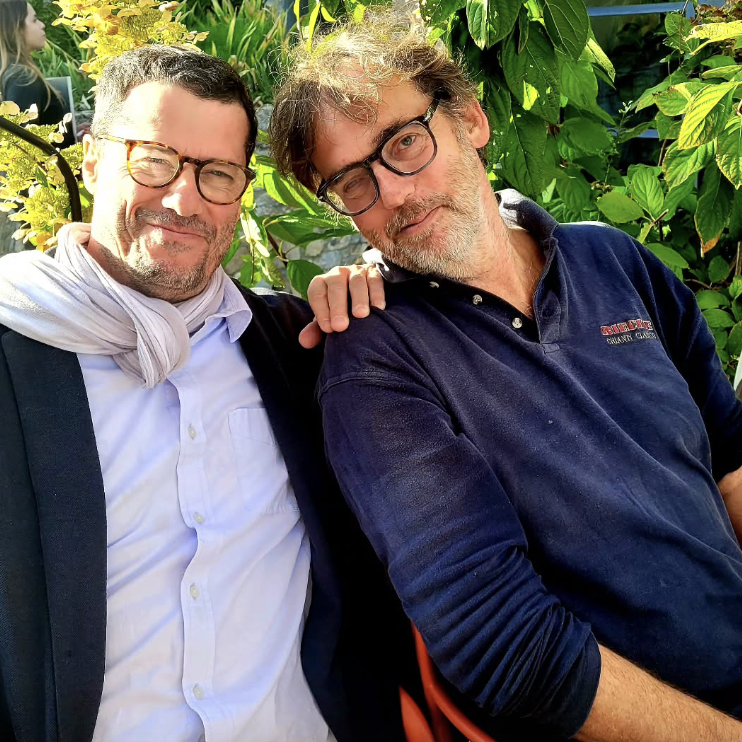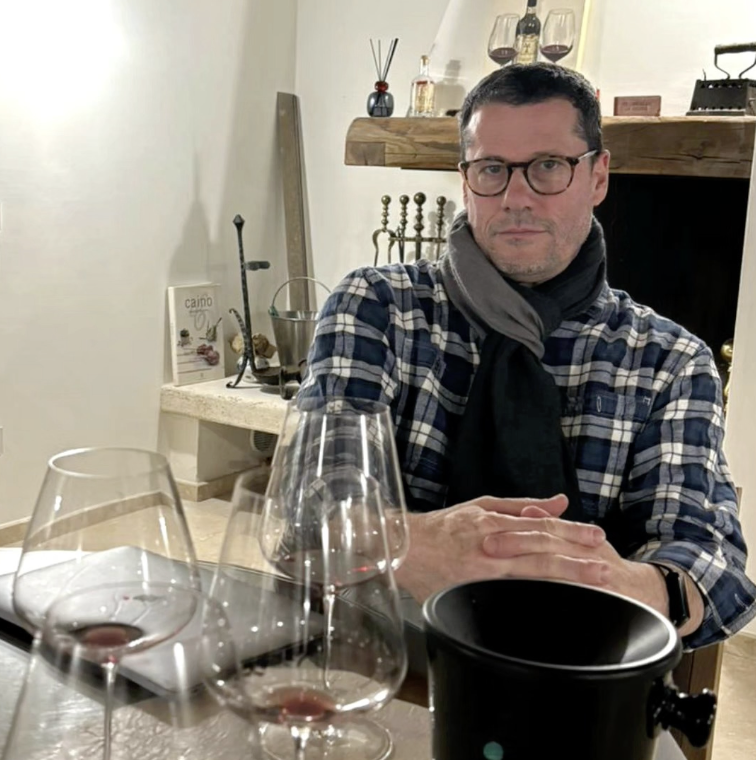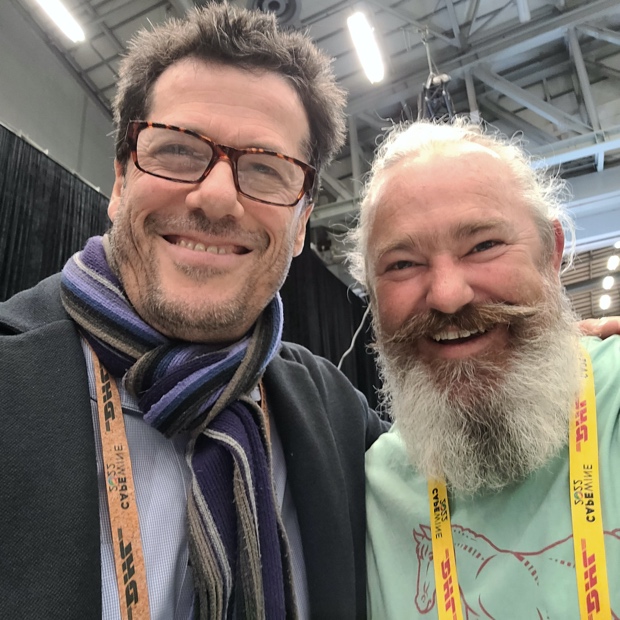
Sometimes I hang with Chris too. In April of 2023 Chris Mullineux was in town and so I was thrilled to welcome him into my home. It was such a pleasure to play the host for a change. Time was too short but we managed to cover in-depth discussions about Swartland sites, cool-climate Stellenbosch, heritage vines under the auspices of the Old Vines Project, oxidative chardonnay winemaking and winemaker Gynore Hendricks’ beautiful, sustainable and profitable project called Great Heart Wines.
Most of the wines he poured were those that I had recently tasted on his side of the pond in the Western Cape back in October of 2022. It was with winemaker (and Chris’ wife) Andrea that I did most of those tastings and so this new revisit offered a new perspective. The couple are remarkably synched up but have different ways of expressing the nature of their farming and resulting wines. Not to mention my own second look with six further months in bottle. Reviews on all these wines first tasted with Andrea are now updated. Meanwhile, talk to Nicholas Pearce Wines about sourcing these South African lekkers.
Chris Mullineux
Before getting to the wines I asked Chris about the most recent vintage and harvest. “Not crazy hot, but Swartland was really dry and we began picking really early – January 15th. We were done just after February. It started raining just as we began picking Leeu Passant. In Stellenbosch you need a week of sun to drive out after rain and winds do not have to happen, (nor is it necessarily) common. In 2023 it kept raining from March 20 onwards but Leeu (Passant) was mostly picked 90 per cent in. There was some dilution to the fruit. In other words complex from beginning to end of harvest. With cabernet sauvignon that means 13-13.5 percent alcohol. We are a sunny place so the terroir must give a sense of place and that means ripeness – therefore cinsault in warm locations needs to be up there.” Returning to this remarkable set of Mullineux-raised and quintessential Western Cape wines, here are my notes from that day.
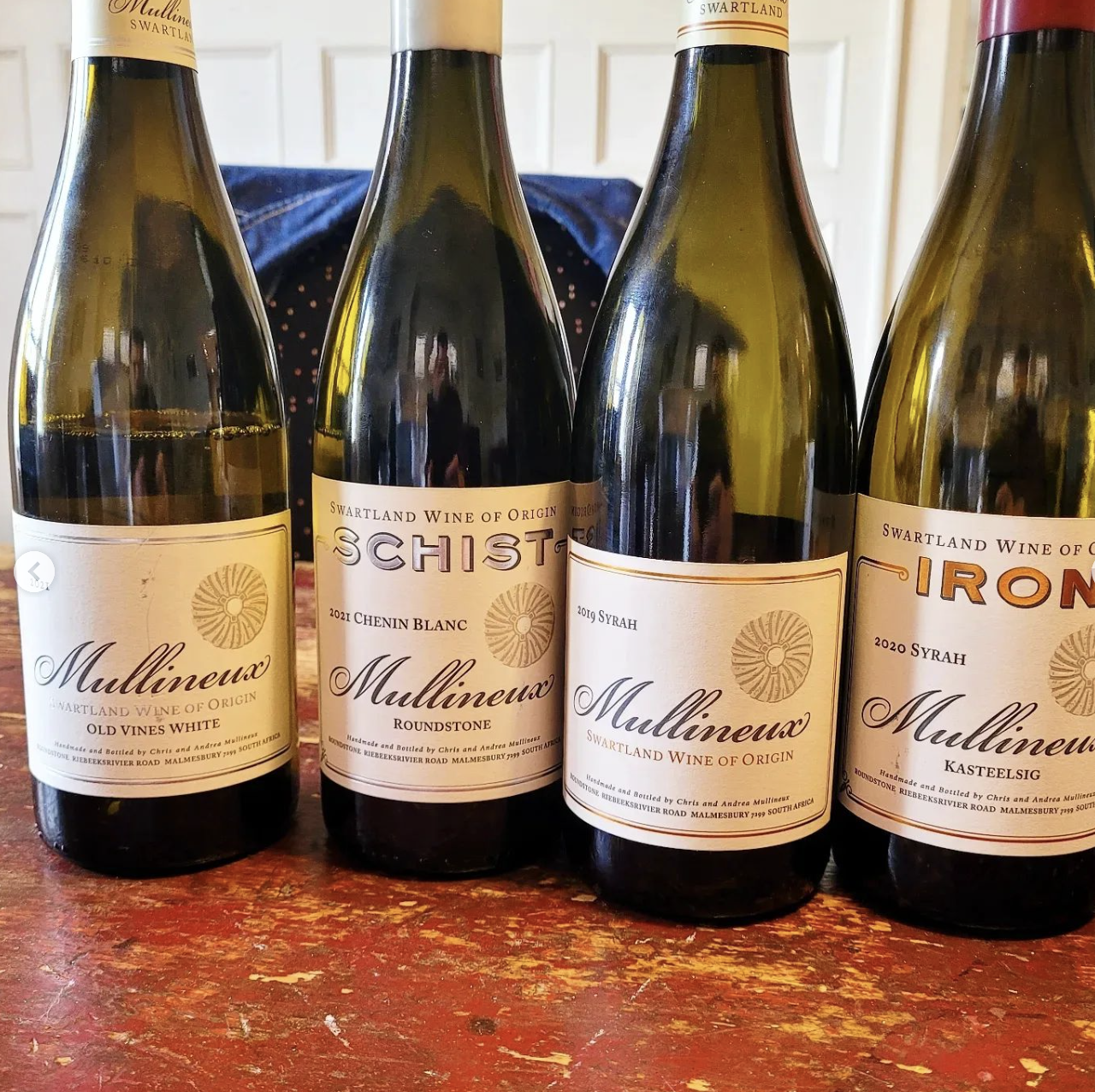
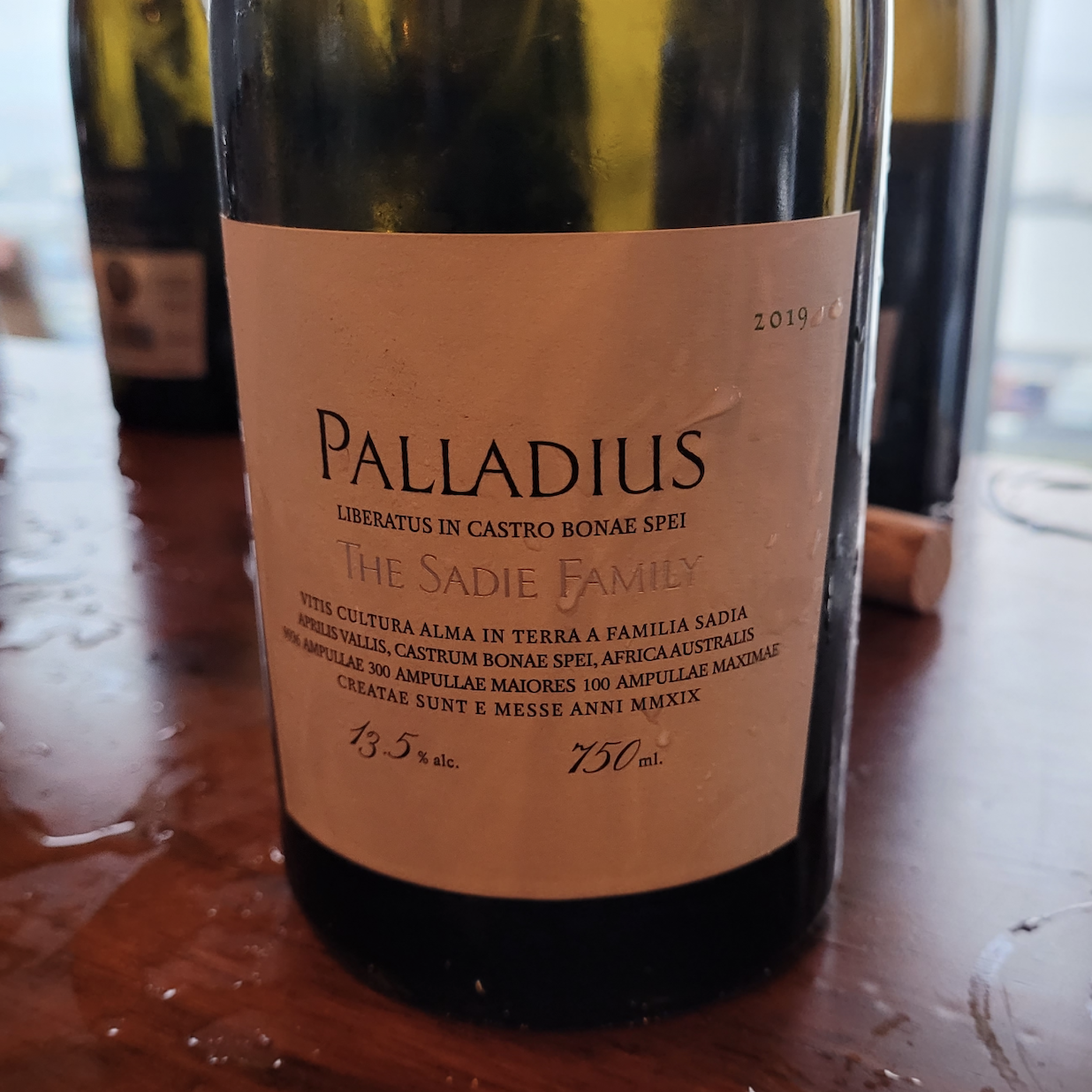
A style of South African white wine essentially started by Eben Sadie with Palladius back at the turn of the century. “Right away in 2001 when I first tasted it,” says Chris Mullineux, “it just made so much sense for the Swartland.” Adding some verdelho now, has only been the Swartland for 10 years but it’s really creeping in all over the Cape. It adds up to 14 percent alcohol, 9 TA and grippy phenolics to add force with some softer and generous white wines in the blend. This is vintage number 14 so if you like to think about things in lucky 7s then do the math and see this on the heels of what just must have been a most terrific 2014. The Granite and Schist ’14 Syrahs are pieces of Swartland heaven. Last tasted April 2023
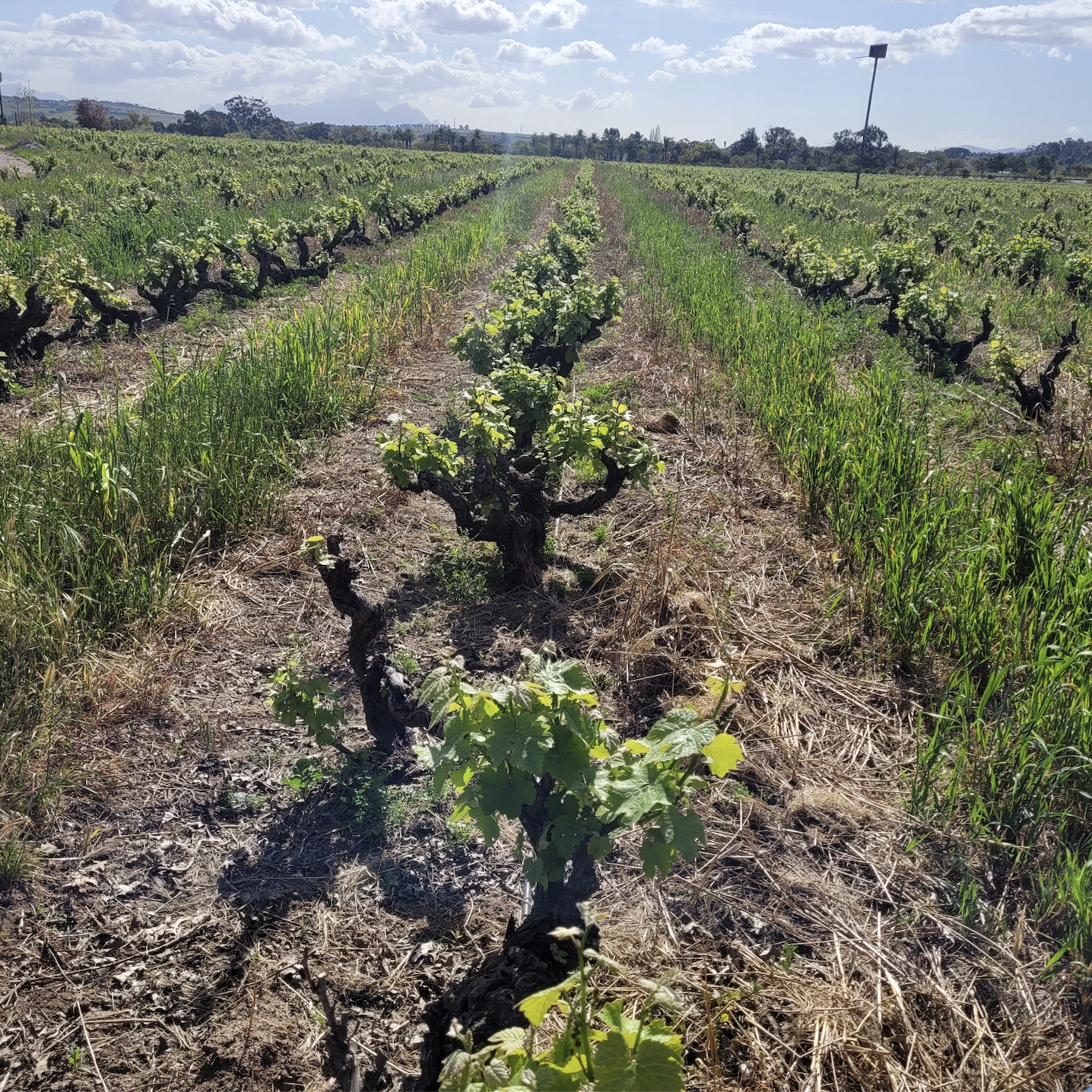
The chenin blanc involved is from vines up to 70 years old, two times into heritage status, refined in nature. here not a matter of more density but yes increased extract. Also contains viognier, clairette blanche, grenache blanc sémillon gris and verdelho. Crunchy as old whites come, especially this one, with just that righteous and ripping amount of alighted flintiness, lightning strike and claps of granite thunder. About two thirds are grown on the fine sandy, decomposed granite while schist, iron and quartz add grip, flesh and roundness. Full and layered composition of greatness. Drink 2023-2028. Tasted October 2022
Planted on the shallow rocky soils of the Kasteelberg. More sunshine on the tiny berries which doles out big but oh so beneficial concentration. The grapes are thick-skinned and so pay attention to the finish to note phenolic spiciness. So much fruit and that grip mix together, also with thanks to the dappled sun effect for an eventuation at what we mark as complexity. Great intensity and because the wine carries so much extract there is a pause, a four second pause before the phenols show there attitude, passing again, returning, in between creamy textural moments and fruit repeats. The wine has to be dry to show this way, to elevate Swartland’s specific acidity and natural Chenin blanc behaviour. Last tasted April 2023
Roundstone, aka “ronde steen or rondklip” in Afrikaans but the farm is known by its English name. Another Western Cape account for struggling grapes while here the matter involves smaller canopies, clusters and grapes. The vineyard begets and raises a child of the land’s stony “dakteëls,” roof tiles where everything slides and so the tannins accentuate to procure wines of a certain toughness. This child is street smart and battle ready, got into a few fights in the early days, now able stand up for itself no matter the attack or the scene. Aromatically speaking there is a cheese rind scent in the dry comports of extreme aridity, resulting in intensity and directivity. A slightly higher pH makes this the sapid one, sliding across the palate with its über fresh scathe. This will age with the best of them, more like structured reds but so very capable as chenin blanc. Drink 2024-2034. Tasted October 2022
If you think about the entirety of the Swartland as a painting this syrah would be representative of the entire landscape. Comes off of Paardeberg granite and also Kasteelberg slate, on average 80 percent whole cluster but no carbonic, to allow the perfumes of both to play their parts. The iron soils bring the tomato leaf and meatiness and the aromatics leap with or without challenged cause by the fourth and last year of the Western Cape’s drought. Before flowering half the crop was eliminated, knowing the end result would be a tiny production but freshness, concentration and ultimately no stress balance Back in ’16 the vines dropped their own fruit to compensate in full abort mission. So much was learned that in ’17 the policy of one bunch per shoot became drought year religion. To find more fullness in syrah with iron cladding and flitting fillings like this is nearly impossible but this is how Mullineux delivers a sense of place. Broad in terms of wide open Swartland but if you want a definition, here it reads like an open book. Drink 2023-2025. Tasted April 2023
All syrah and nothing but from a combination of iron, schist and granite soils. Made in “large” upright wooden vats, for the grandness and roundness of Cape syrah’s capability, followed by cool grip, converting what was into what needs. And wants, inclusive of evergreen, meat juices and mainly perfume. There is an amenable nature, a nurturing and a caring is sharing sensibility to syrah, expressly as what it means to be Mullineux, part Andrea and part Chris. Drink 2023-2027. Tasted October 2022
From the rolling hills around Malmsebury, in between the mountains, ancient soils, weathered, stable and red iron rich, even with some clay. Comes away at 12.6 per cent alcohol but the site brings power and natural intensity. Very focused and precise for the terroir in fact it screams sanguinity and tomatoes through leaves and paste. So South African in the most complimentary and can’t turn away kind of way. Acids run high though they are circulative on the palate and the wine carries some tar, char and the finish takes your breath away. So much character, personality and intensity. The right grape farmed properly in the right place can make this happen. Drink 2023-2035. Tasted April 2023
Three vineyards together on the False Bay side of Stellenbosch. This is a piece of regional diversity, near to Somerset West, picked ripe late in April, only finishing at 13.5 percent. Only a piece of Stellenbosch like this can extend a season for a wine like this, of fully south facing part way from the Helderberg, with rich clay-iron soils, against the ocean. The most elastic, stretchable, seamless and pliable cabernet sauvignon imaginable. Freshness and firmness coexist so that you can drink whenever you like and also lay some down for two decades. Last tasted April 2023
Inspired by the old sophisticated graphite model, here cabernet sauvignon is drawn from the mid slopes of the Helderberg. The 2020 resides where richness and structure meet at a point determined through optimum picking and acumen. Moves from first year 500L wood to large 2500L vat and this is truly an ode to what was once a fixture of style in the Western Cape, albeit with modern beauty, current sensibility and truths spoken. The vines are 40 years old (as of 2020) and really just beginning to take ownership of the old vine necessity, aka they now sit in their pre-LP, shorter EP state. Cassis and fynbos combine for true a genesis of Cape cabernet sauvignon authority, but also what simply has to be. The question is whether or not this wine will continue its course of wind and wuthering. Will it remain tied to tradition with progressive style or begin to play with pop structures. What we know is that this vintage allows us to spot the grape, place, match of the day, inside and out, and pigeons. Drink 2024-2029. Tasted October 2022
“For me this allows us to work with Chardonnay unlike anywhere else, from Chablis to other parts of the Western Cape,” explains Chris Mullineux. In a way there is an extreme saltiness, made through death and resurrection, of no sulphuring for the first 18 months. Anything in the wine can and is oxidizing so it’s perfectly stable and then cleaned up ahead of bottling, racked off the lees post malo, then sulphured which binds the aldehydes and any oxidative properties so that it comes away so clean, and tight. You can do this so long as the vineyard site is tops. Chardonnay that is bullet proof, without the bends. Can age as well as any on the planet. Last tasted April 2023
Chris and Andrea Mullineux started the project in 2013 with the help of viticulturist Rosa Kruger. “New” vineyards were unearthed and rehabilitated through four solid years of re-pruning, re-training and re-working of the soils. Then the wines could begin being made. A deconstruction and reconstruction, now seven years in and entering the opening gambit of true maturity stage for what is one of South Africa’s most unique heritage collections. Leeu means lions, a reference to a meandering walkabout, personified in these wines. They are made in the Franschhoek winery, certified organic, coming of age in their foray into regenerative agriculture, which says Andrea Mullineux, “in the southern hemisphere also means cultural and worker sustainability practices.” The 2020 is as fine a reductive but mainly lightning acidity charged chardonnay as a vineyard can determine. Located in the upper mid-slopes of the Helderberg facing the Strand with a clear view of False Bay. That said or perhaps out of necessity this is made in an oxidative way, which makes sure to keep the flinty and salty faith alive. The ’20 is possessive of fibres, threads, strings and wires braided to make a layered whole. Finesse and sophistication co-exist in a vacuum where waves crash upon one another in great open space, with no shore for to finish. If you would like to experience chardonnay in a way you’ve not likely done before than swim all the way out, well offshore, all in, all the way to this place. Turn around and off into the deep distance, gaze upon the strand. Drink 2022-2028. Tasted October 2022
Great Heart is the special project for Gynore Hendricks who is assistant winemaker at Mullineux and she is joined by 21 other employees who profit from this wine’s special success. Old and young vines fruit, similar winemaking to Mullineux but only aged in steel. Freshness and fruit intensity yet precise, crisp and steely. On the lees (unstirred) with Swartland’s natural creaminess. Last tasted April 2023
This a newer project from Chris and Andrea Mullineux whereby the profits from these Swartland wines go to the owners of the label, they being the employees at Mullineux and Leeu Family Wines. The South African Wingtail is the mascot, a selfless bird and a beautiful one at that. This is chenin blanc of richness and most apropos, also of great generosity. So much ripe fruit and philanthropy. Quintessentially chenin while so eager to please. Talk about great heart in South Africa. Here it shows in the most human of ways. Drink 2021-2023. Tasted September 2021
The syrah is from the Mullineux sites, the tinta barocca from Adi Badenhorst’s Jakaalsfontein farm and the cabernet sauvignon comes from granitic Paardeberg. Great energy, brightness and pure varietal intensity. A terrific red counterpoint to the Great Heart chenin blanc by winemaker Gynore Hendricks as the leader of a project befitting and benefitting nearly two dozen Mullineux employees. Drink 2023-2026. Tasted April 2023
Vines from next to the Heldeberg, south facing, cooler and like the Leeu Passant the season runs long, phenolics slowly develop and yet the young vines create a quicker to access freshness and energy compound. This has the bokser effect in red wine. Last tasted April 2023
As a Mullineux wine Great Heart cabernet sauvignon feels akin to the highly focused Leeu Passant Stellenbosch varietal wine (aka the Helderberg Mountain bottling). As a concept Great Heart is all about staff empowerment in wines made by owners with a piece of the business. This is cultural sustainability at its finest, seeing livelihood improvements for members of the winery and their families. Like the LP cabernet sauvignon this performs as an “ode to what was once a fixture of style in the Western Cape, albeit with modern beauty, current sensibility and truths spoken.” Cassis and fynbos, tradition and progressive spirit. Quality combinations in all respects, forever searching for great heart in South Africa. Drink 2023-2027. Tasted February 2023
After the drought, cool and late vintage, with plenty of kept acidity. Same chenin that goes in the wild vines wine, picked same day, then air-dried for three weeks. Pressed and ferments for nine months. Only three weeks because it’s done outside. The sugar is approximately 300 g/L and the alcohol 18.5, TA at 11. So pure, lemon brûlée, marmalade and balanced. Brilliant Straw wine. 6,000 bottles made. “We make more straw wine than anyone in the world,” says Chris Mullineux. “One acre equals one bottle of wine.” When asked why do you do it? “Because its great wine and it’s part of who we are.” Heritage and imperative. Drink 2023-2032. Tasted April 2023
Irresistible South Africa of exceptional quality at every price level, LCBO limited time offers and lingering memories of another unforgettable Cape Wine
This feature was commissioned by Wines from South Africa
Eight months have passed since my last great journey to the wine lands of South Africa’s Western Cape and memories nor great heart have faded even just one bit. The Cape’s beauty is everywhere, breathtaking beauty, at every turn, in vineyards, across estates and especially in people that give their all to craft some of the world’s most special wines. That is why the coming weeks present an opportunity by way of an increased presence and access because Wines of South Africa and the LCBO teem up once again. Prepare to be smitten by an offer of a set of Cape wines that collectively speak to both quality and value. Undervalued already, these limited time offers (LTOs) deliver a diverse set of varietal wines and appellative blends at prices 50 percent below what these wines are worth. To pass them by and not take advantage would be crazy. These are your summer wines, laid out like a shilling dinner and only a fool would scuffle past without purchase.
The LCBO’s Destination Collection includes the “Discover the Wines of South Africa” promotion headline that reads “with a 350-year winemaking tradition, South Africa blends high-quality production with eco-friendly practices, making it one of the most exciting and earth-friendly wine regions around.” Truth spoken. The LCBO’s Limited Time Offer (LTO) Program provides suppliers and stores with an opportunity to build excitement and awareness while offering a discount on selected products. Rates to the supplier or agent are charged based on the full reduction in retail for the number of units sold at the LTO price. Mandatory Pre-printed LTO (flat rate) signage costs are $1,500.00 per product, per Promotional Turn. To qualify for the program, a minimum discount of five percent or $1.00 per package (whichever is less) must be offered at retail. The maximum discount allowed is 20 percent off the regular retail price. Limited Time Offers start on the first Monday and end on the last Sunday of each Promotional Turn. The Wines of South Africa P4 offer is an opportunity for customers to spend a total of $30 on any South African wines to receive 40 APP (Aeroplan Points) and runs from Monday, June 19th through to Sunday, July 16th. See below for a WineAlign crü Buyers’ Guide to current LCBO and VINTAGES Essentials LTOs for South African wines.
Godello and Szabo in Hermanus
John Szabo MS and I were in the Cape together back in October of 2022 and over at WineAlign he has penned a piece he calls “Investment grade South African wines for the cellar.” It will be worth your time to open up a separate tab to read up on John’s outlook. As he explains here, “which, ounce for ounce, consistently overdeliver on sheer quality and pleasure for the price. Add in longevity and the capacity to develop and improve over many years, and you have the recipe for investment grade wine, especially if you consider it an investment in future pleasure and care less about re-selling the wines down the road for profit.”
Ernie Els Estate, Stellenbosch
Reminiscences are part of everyday life but anyone who has traveled through South Africa will find those particular recollections as strong and vivid as any. Back in February I penned my post-Cape Wine 2022 article Seeing Western Cape stars: A guide to Cape Wine 2022 with a recounting of regenerative and creative farming, old vines, new frontiers, 80 recommended current releases and the deliciously addictive South African snack known as braai brekkies. Despite that post’s lack of brevity there was simply no way to fully package 11 days of tasting, eating, conversing and trekking in the Western Cape. Not to mention how much time it truly takes to fully assimilate and gain a deep understanding of what was seen, heard and felt on that trip. I am no stranger to extensive travel but there is no wine producing country that gets under your skin and keeps you perpetually energized like South Africa. Fatigue and jet lag are non issues but being anxious about missing something or skipping moments where the incredible are guaranteed to happen – now these are real issues. So allow me some latitude to recall and expand on some quintessential Cape moments. After two unforgettable visits in 2015 and 2018, the third Cape Wine expedition is now cementing into the stuff of legend.
Celebrating Rosa Kruger in Cape Town
The certification system for of Old Vines
It begins, as it must, with South Africa’s cast of characters, the beloved Old Vines Project’s André Morgenthal, original concierge of Wines of South Africa and Rosa Kruger, progenitor of the OVP. As I previously noted, “Over the past 20 years viticulturist (Kruger) has focused on discovering, classifying, cataloguing and certifying heritage vineyards. It was a great pleasure to chat with Kruger at a Wines of South Africa ceremony and tasting at Cape Wine 2022, which celebrated her 2022 Decanter Hall of Fame Award. And also with the legend (Morgenthal), orchestrator of the tasting of old vines wines. It is remarkable to see how many estates and producers have come on board — to celebrate and show off the wines they are making from 35-year-old (and older) dry-farmed bush vines. Many vines are even pushing or exceeding the century mark.” With thanks to André and Rosa there was an evening’s opportunity to taste dozens of certified old vines examples, many of which were covered in my last report. Here are but a dozen more worth knowing.
Chenin Blanc Data
Signatory authority Chenin Blanc
As for chenin blanc, if you are a grower, producer or winemaker in the Western Cape, signing a contract for yourself with chenin blanc, well then you’re good to go. Sign away. Planting, resurrecting, reviving, perpetuating and extenuating chenin blanc vine circumstances to make varietal wines is like finding and selling gold. Since 2011, local chenin blanc sales have doubled, including an 11 percent increase between 2021 to 2022, while total exports (packaged and bulk) have nearly tripled in that 11-year span, also with an 8.5 percent gain from ’21 to ’22. These increases have occurred because the chameleon can play in any sandbox and become anything a consumer wishes it to be – this despite total planted hectarage having decreased 10 percent since 2011. Name a grape tied to a place’s success anywhere near equal to the symbiotic relationship between chenin and the Western Cape? Please don’t say malbec and Mendoza. The future will always be chenin blanc, worldwide and especially here in Canada. Canadians have embraced and fallen sick in love. If you are already one of them, or even if you are yet to have sipped the Kool-Aid, there is always a next level chenin blanc waiting for you.
Old Vines Chenin Blanc, Ken Forrester Vineyard
Zeroing in on sites in reds and whites
Soon enough it will be ten years since I first referred to growing anything and everything in the Western Cape as being akin to a viticultural “wild west.” The ancient geology split between decomposed granites, Malmesbury, Bokkeveld or Witteberg shales and Table Mountain sandstone make for the most diverse and paradoxically hospitable grounds where the varietal spectrum is encouraged. The morphology of my personal understanding grew to look at land and vine as something more focused and the map of varietal matched to place began to take shape. Writing here in 2023 brings white and red varietal wines, plus the coalescence into appellative blends into pinpointed accuracy where winemakers make their mark based on experiential decisions. Heritage vineyards are nearly always key, magical conversion rates create situations unparalleled, but the very presence of rampant sustainable and regenerative agriculture is what truly separates and indeed defines the wine production of South Africa. The Western Cape faces never-ending challenges because of isolation, climate extremes and internal political struggle but I have written this before. “The (wines) are too good to miss, not just a handful but hundreds of outstanding examples. Quality has risen exponentially, virtually across all places of origin, including new frontiers. The stars are out, and they are aligned.” I give you 30 further examples; varietal whites and reds, white and red blends, plus one dirty little secret.
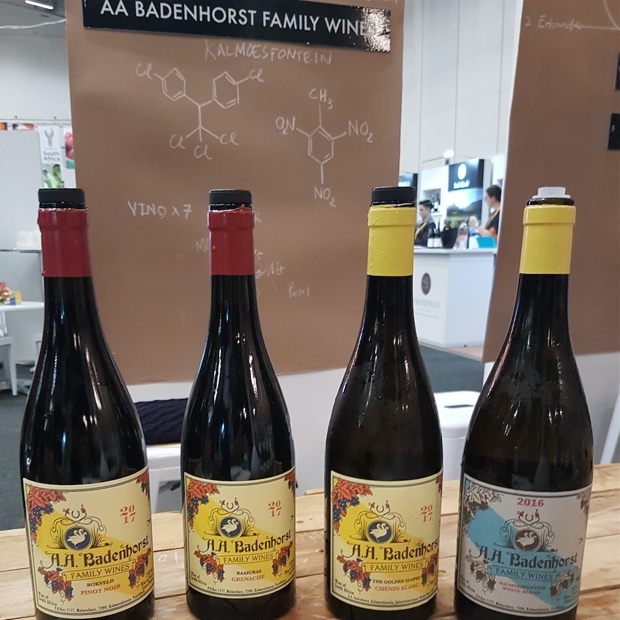
Bottled mid January and released in May. Single vineyard, quick ferments, high fructose content avoided, no sulphur needed until just before bottling. From plantings going back to 1968 and through the 1970s, the Golden Slopes had usually been aged in foudres but now so much more in concrete “to preserve that raciness as long as possible.” A true cracker scintillant of chenin to be sure yet with all the ripeness in phenols plus stone fruit texture possible. A capture of the 2021 Swartland chenin blanc vintage without repose. “This is really all about vineyard,” insists Adi Badenhorst “and the way we like to farm.” There is a dream, to sit on the Golden Slopes beneath the stars while sipping a glass of 2021. Preferably in 2025. Drink 2023-2029. Tasted October 2022
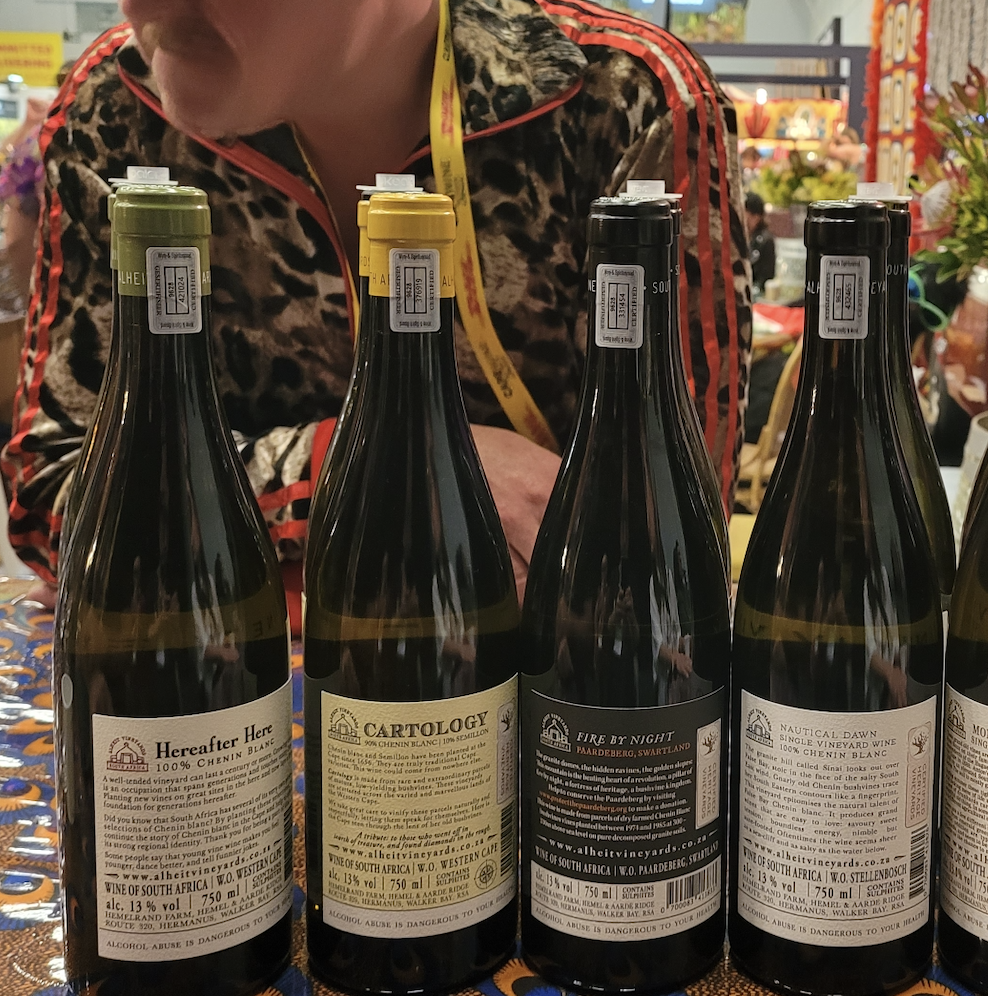
Nautical Dawn as a single vineyard chenin blanc is drawn from a Paardeberg Mountain site with a view to the seaside and breathes out a defining wind that consistently blows through. Gusts of sodium run through this wine like no other member of the chenin blanc/old vines/Alheit temple. This is clearly a well established portent as elemental pierce, rehearsed without pause and arbitrarily close to the true value of the established parameter, in vintage after vintage. Lends this wine its distinct and cracker personality in a manner that is tight, bracing and complexly wound. Nautical Dawn carries itself with attitude and is a chenin blanc more than sometimes expressed as a great notion. From 2021 the values of place, experience and process concur to express inclination and ultimately belief. In Chris and Suzaan Alhet’s words, but even more so by their actions. Drink 2024-2030. Tasted October 2022
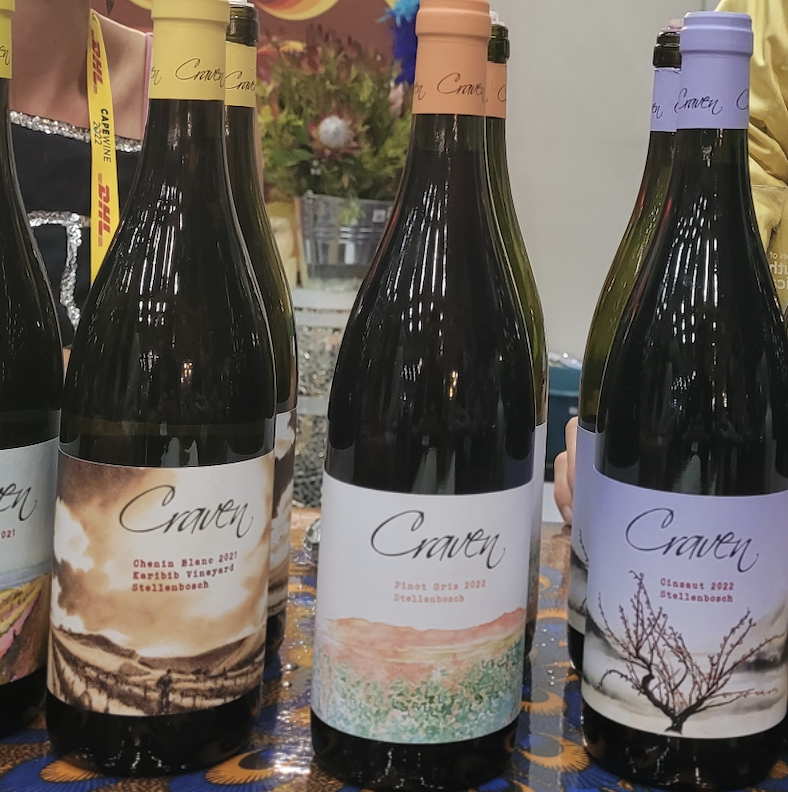
Jeanine and Mick Craven’s Stellenbosch pinot gris continues to thrive and evolve by way of its base soil, that being the Koffieclip complex which is more and more proving to be where this grape thrives. A bit of skin contact, maybe six or seven days, unchanged for several vintages now but this is anything but a white wine made like a red. This and aging in concrete are two of the great things about the method, but not the necessity of creating crazy fresh and crushable pinot gris. This is that but also something other, with sneaky structure and underlying mischief to make sure the years ahead will bring about new fascinations. This is a wine that has come a long way. Truly, as memory knows this to be true. Drink 2023-2027. Tasted October 2022
Five vineyards are contributors including three from the Hemel-en-Aarde-Ridge and older barrels nurture profound fruit for this the 15th vintage of a wine that first appeared in 2007. Perfectly staged, striped and reductive chardonnay, cracker piqued, peppery without any discernible overt pepper or capsicum. Wow, this hits the spot. Terrific “entry” chardonnay from Peter Allan and Andrew Finlayson. Drink 2022-2025. Tasted October 2022
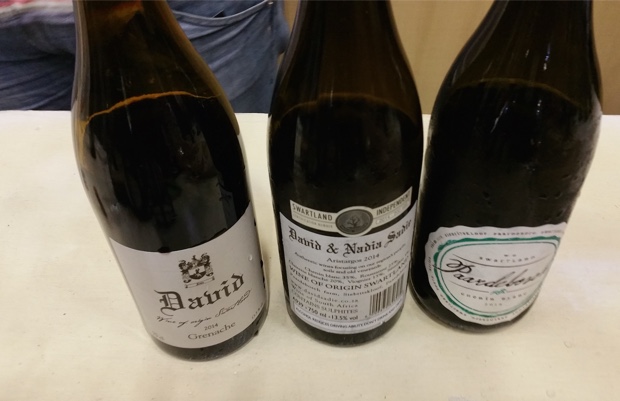
At a tasting where everything is Old Vines Project certified there must be something extraordinary about a wine to stand out from a crowd of greats. David and Nadia Sadie are in fact turning heritage vines chenin blanc (amongst other varietal explorations) into content born of context harboured though never paraded. They are rhythmic and scientific with just enough fantasy and romanticism, but never too much. Plat’Bos stands above Skaliekop and Hoë Steen because 2021 asks it to do so, not because it is better or more important, but it is surely chenin blanc profound. The 1981 Swartland planting is in the steady zone, shed of the mercurial and in ’21 so very linear yet salty of the earth in its sombre-sepulchral tone. There is reduction here because the poor soil nutrients demand that this chenin begins this way. The levels of tension and intensity are most elevated, sufficing to say as high as any from the Western Cape. Attention is paid unwavering to detail, sequencing is in order, purity incarnate, grape and place together pristinely kept. In Plat’Bos 2021 the palate is taken down to the whipping post by a wine built to endure. Given time there will be calm, healing and reward in the end. Drink 2024-2036. Tasted October 2022
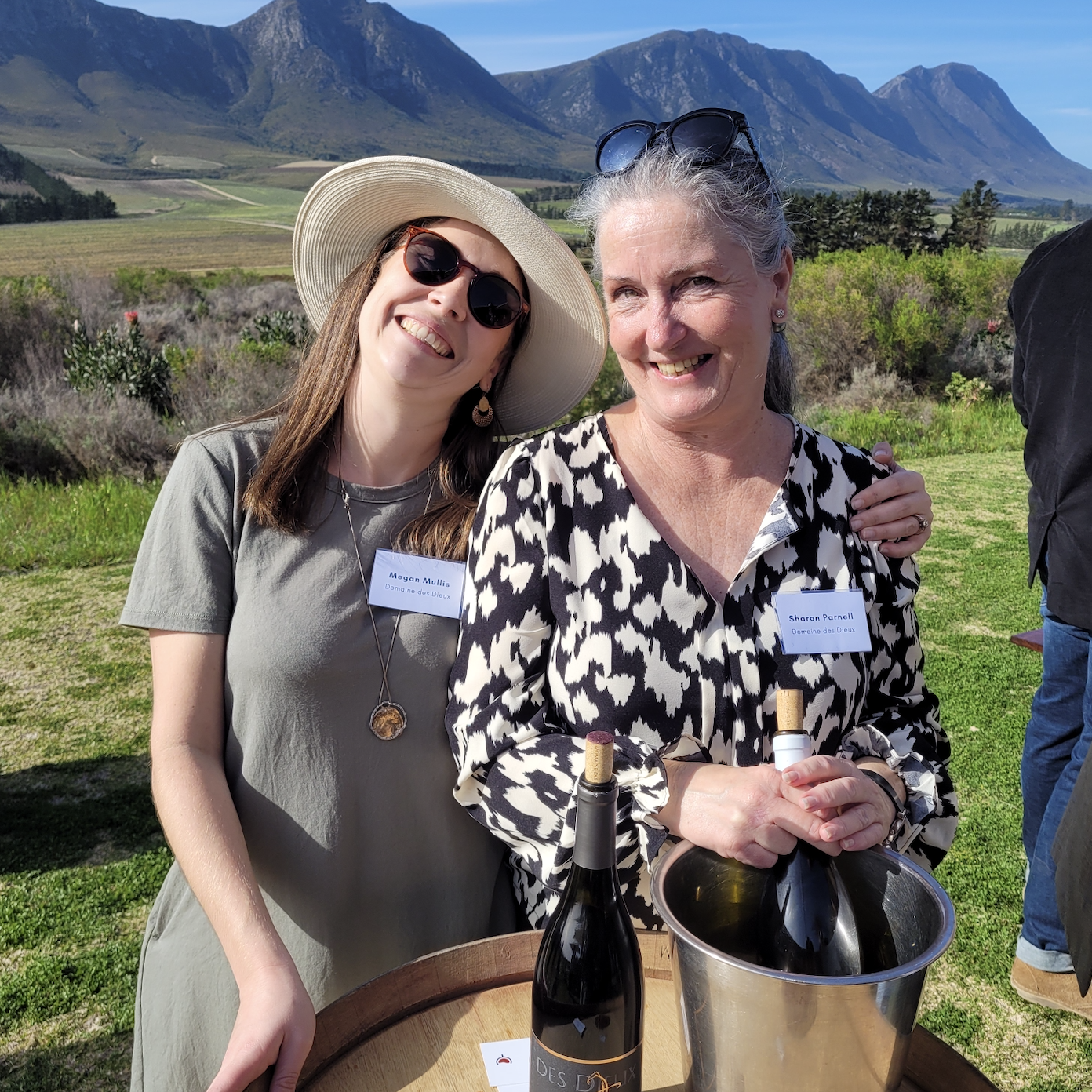
Megan Mullis and Sharon Parnell, Domaine des Dieux
From the start farming is opposite to chardonnay, exercised as Guyot pruning for a desire to increase yields as per what the variety will give and quality abides. Considered in unequivocal terms, this may just be the most, if perhaps the only Hemel-en-Aarde Ridge and in fact the whole of the Western Cape’s sauvignon blanc that truly intimates Pouilly-Fumé. The mix of macerated fruit cup juiciness and subtle if gentle smoulder delivers the mimicry, a wet rock struck kiss and kindest nurturing, finishing at lit paraffin. The winemaking lends reason to grow, raise and perpetuate sauvignon blanc right here on this ridge, in perpetuity. So long as the handling is as careful as it is here, to create varietal beauty incarnate. Drink 2022-2026. Tasted October 2022
John Szabo MS, Anthony and Olive Hamilton-Russell and Godello
The uncanny taste of indelible memory stamped South African chardonnay defines this wine though there is a candied aromatic feel in this iteration. Chewy texture, elastic and stretched, creamed centre, fluid and generous. All lemon and lime up front and then recoiling, returning and finishing the same way. Last tasted October 2022
A new return to a manageable vintage of warmth and generosity in which the beauty of Hemel-en-Aarde chardonnay comes across with sweeping charm, just as a vista will take in the scroll of hills, mountains and eventually fall, 100 kilometres away into the sea. The taut nature, tight control and expertly wound fruit behaviour follows a line of HR acidity like never before. The magnificence of the balance occupied by parts so known like home is what emanates from this chardonnay and the gracious people who make it. Can’t think of much better in South Africa. Drink 2023-2028. Tasted July 2022
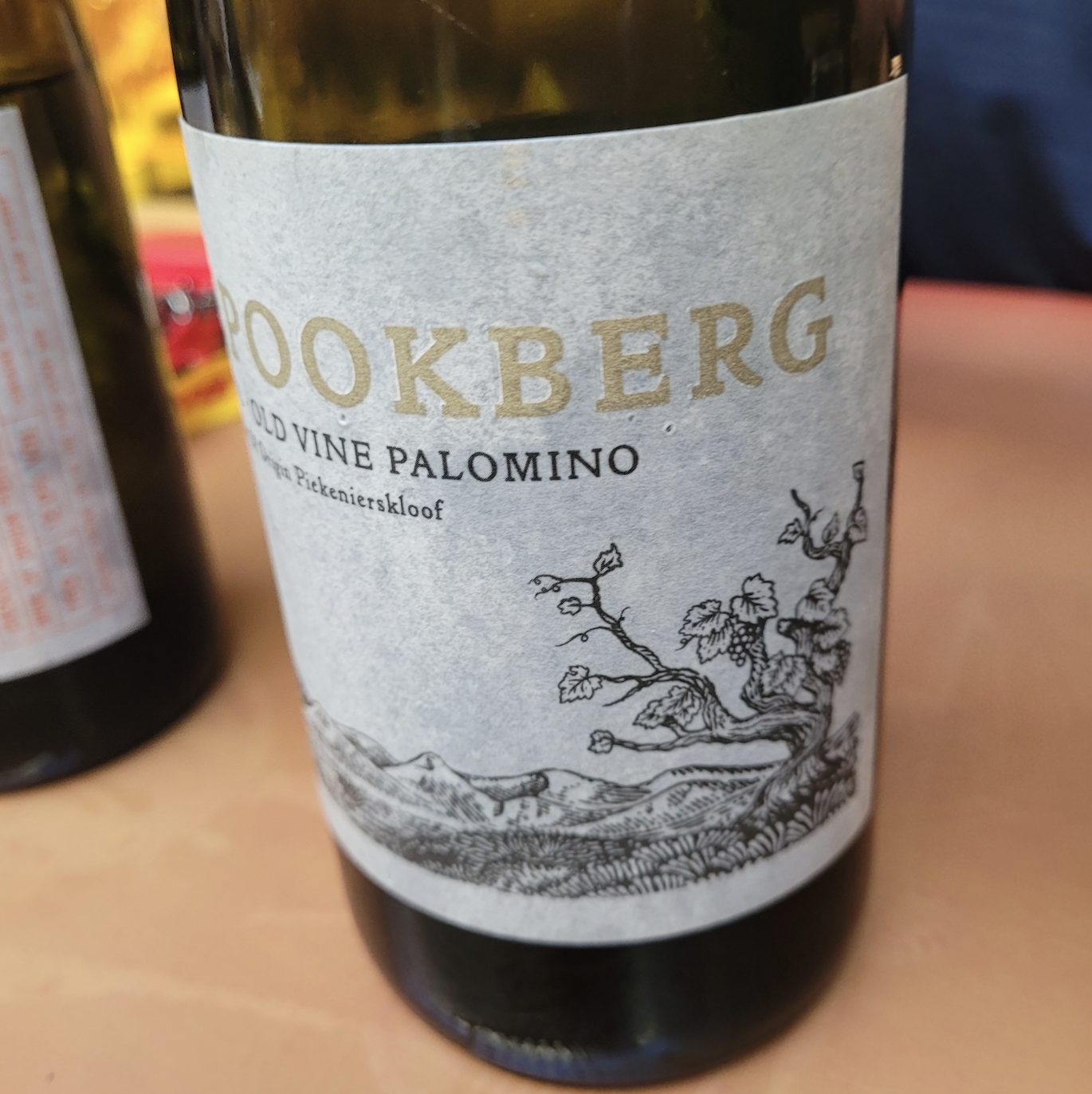
At harvest Christa von La Chevallerie is asked by the farmer “would you like three tonnes of palomino?” Who could say no to Spookberg, story of two wine lovers scouting the Swartland looking for the perfect old vines to tell stories the past? Know this about Christa von La Chevallerie. She is a Geisenheim-trained winemaker who checks her acid and pH numbers by sleeping in the vineyard, when others are on holiday. Christa knows the climate is changing and ever-menacing droughts are never the same twice. “Look at the sky and cry,” she says but fear not, for there is a way. The Spookberg recalls a castle and yes, ghosts as well and the parcel sits atop decomposed granite, direction Cederberg. Bloody great varietal wine because the fruit comes from this place, off of old vines and their destiny to Christa was all. The fino character is conditioned by both pH and acid in balanced conversion both mighty and releasing as sapid seriousness. No skin contact to mess things up, half de-stemmed, fermented in 400kg open bins. Wrapped, cooled and those whole bunches float on. They wait while the maker makes self-instructive demands. “Just have your hands on it and don’t be distracted by what you’re busy with. Keep the quality control.” These handsome old vines gift the best of both worlds; substantial South African fruit told as truth but also a quirk of idiosyncrasy because well, palomino. No interference, only a clear night’s signal and a varietal wine treated with respect.”They don’t like lava lamps.” Drink 2023-2028. Tasted October 2022
Winemaker William Wilkinson is responsible for amassing a healthy quantity of this Stellenbosch chardonnay which makes the quality all that more impressive. Much of the fruit gains cooling benefit from the shadow of the Klapmutskop (Klapmuts Hill) which serves to extend the ripening season. Hard to get more lemon curd, zest and freshness than this with an undercurrent of fynbos that will never be denied. Clarity is one thing, length on a $16 chardonnay another. Will arrive in VINTAGES December 16th. Buy it up. Drink 2023-2025. Tasted June 2023
Chris and Andrea Mullineux started the project in 2013 with the help of viticulturist Rosa Kruger. “New” vineyards were unearthed and rehabilitated through four solid years of re-pruning, re-training and re-working of the soils. Then the wines could begin being made. A deconstruction and reconstruction, now seven years in and entering the opening gambit of true maturity stage for what is one of South Africa’s most unique heritage collections. Leeu means lions, a reference to a meandering walkabout, personified in these wines. They are made in the Franschhoek winery, certified organic, coming of age in their foray into regenerative agriculture, which says Andrea Mullineux, “in the southern hemisphere also means cultural and worker sustainability practices.” The 2020 is as fine a reductive but mainly lightning acidity charged chardonnay as a vineyard can determine. Located in the upper mid-slopes of the Helderberg facing the Strand with a clear view of False Bay. That said or perhaps out of necessity this is made in an oxidative way, which makes sure to keep the flinty and salty faith alive. The ’20 is possessive of fibres, threads, strings and wires braided to make a layered whole. Finesse and sophistication co-exist in a vacuum where waves crash upon one another in great open space, with no shore for to finish. If you would like to experience chardonnay in a way you’ve not likely done before than swim all the way out, well offshore, all in, all the way to this place. Turn around and off into the deep distance, gaze upon the strand. Drink 2022-2028. Tasted October 2022
Voor Paardeberg and its decomposed granite make for a wonderland from which to pull grenache in blanc and also gris. The vineyard is but nine years old and sits peerless in South Africa but to no surprise it is Marlise Niemann who finds it and makes it her own. Seven days on skins to accentuate the already grey-pink hue but even more so the pull of red citrus and other fruit aromatics; strawberry, rhubarb, sumac, pomegranate, pink lady apple skin and then the savoury greens of nightshades, in mildly spicy capsicum and wandering inveterate tomato. Old wood for 10 months is the obvious and right choice to maintain, prolong and extend these scents and create the taciturn of Momento gestures so befitting Marlise’s wines. Salty, taut and fresh but likely only a few more months away from blooming. Still there is enough grip with intensity to hold its flush for two or three years. Oh my does this country need more grenache gris and though it is very slow to propagate in the nursery Marlise will plant more on her farm when it becomes ready. Drink 2023-2027. Tasted October 2022
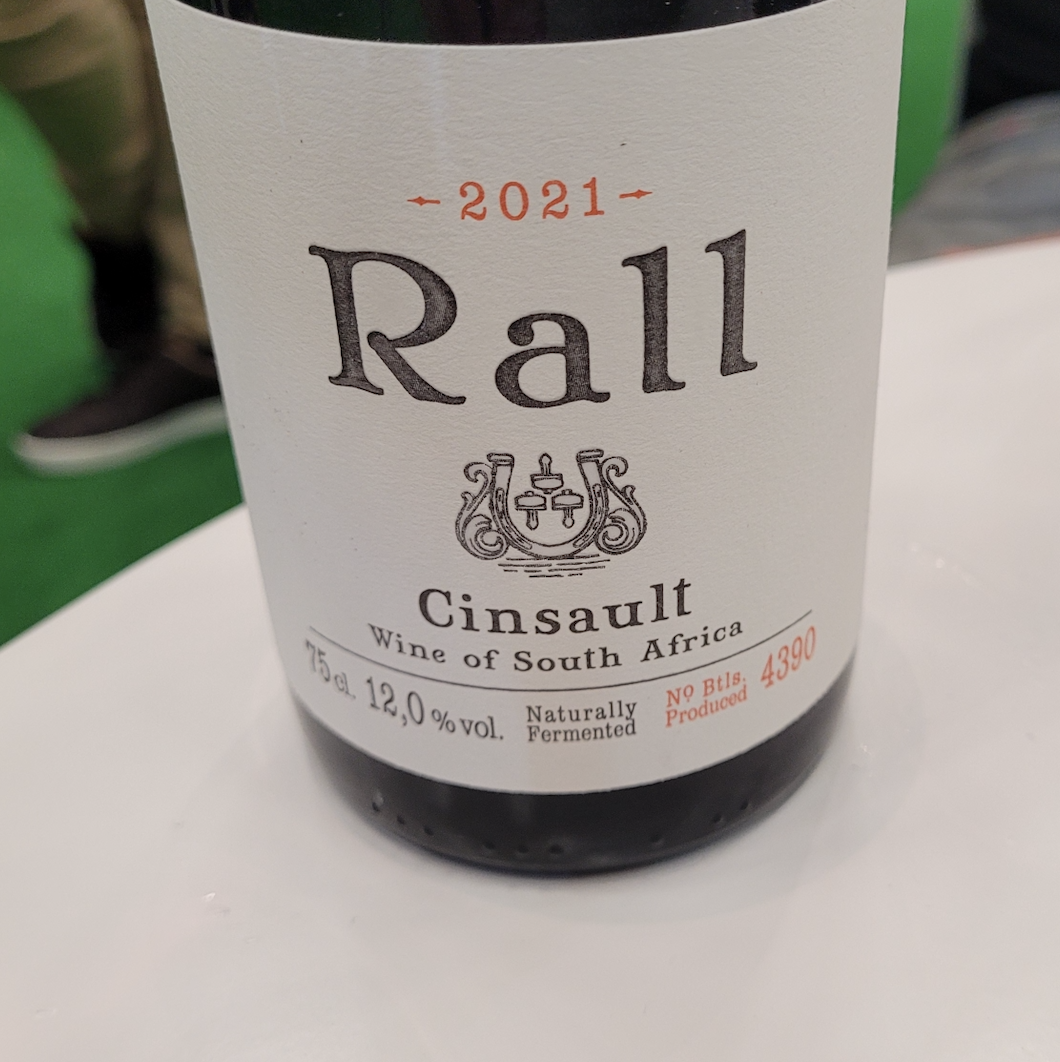
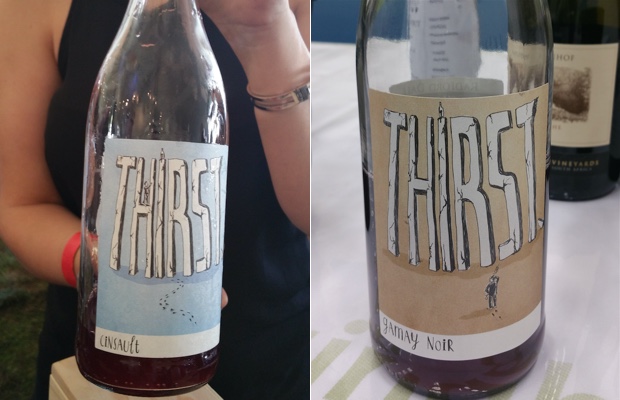
Fifth vintage, from a single 0.2 hectare vineyard and the first from a time when Donovan Rall just got the grapes for the first time. Here now 1,300 bottles, a “huge” quantity, all raised in amphora from Hout Bay, “a crazy potter,” tells Rall. Not as porous and a tighter, reductive environment. Delivers the benefit of true concrete but through the texture of clay. This wine is about heritage, manifested in texture and salinity. And of course the Swartland. “I’ve never worked with conversion rates this low,” says Donovan and this cinsault is a testament to the excellence and magic of the vintage. With no compromise to flavour, tannin, acidity and length.” The low alcohol at 11.8 is brilliant as no push to ripeness was needed to achieve these heights. Drink 2023-2027. Tasted October 2022
Huge surprise to happen upon albariño but here it is, planted in 2010 “because we had to,” explains Jeanette Bruwer, “after a trip to Uruguay where we tasted the coldest bottle of wine anywhere.” Allow me to translate that as refreshing and I believe only Springfield Estate and Newton-Johnson are raising the Minho variety. These Robertson vines are from Hemel-en-Aarde cuttings, now comprising 16 hectares. Clay and granite are the impetus to imagine this salty and quenching albariño that sees a cold maceration, free run, pulled away at day 14 and left at negative four degrees. Only tank for four months and reminiscent of making moscato d’Asti in that suspended gelid animation way – save for finishing much dried and at higher alcohol. Cleanest juice determines the refreshment and this may be the Cape understatement of the year. Amazing case study! Drink 2022-2024. Tasted October 2022
“There is a pinotage renaissance happening here and elsewhere,” are the words of Anthony Hamilton-Russell. He and winemaker Emul Ross make this example that is a one of a kind signature wine that’s just about as readily recognizable as any in South Africa. Wood is in the background, plum fruit and acid up front, structure present from start to finish. Comes in at just under 13 per cent alcohol out of a vintage where the yeast conversion rates were down across the Western Cape. Yields are 7.19 hL/L, ugly economics to be sure but this is the nature of quality pinotage to speak with great heart about the varietal matter. It’s the back end of this wine where the magic happens, but first a slow incline, then the plateauing before a subtle pause commits towards a long future ahead. Drink 2023-2029. Tasted October 2022
Quite ripe and heady grenache, chewy, clean and well extracted. Torque, as they say, a full 360 degree swing with balanced follow through. Hard not to note the Rhône influence and mimicry though in the end that Western Cape inimitability. Full grenache for your wishes and use of hard-earned cash. Meet the truth and real honour in this dedicated varietal wine. Drink 2023-2027. Tasted October 2022
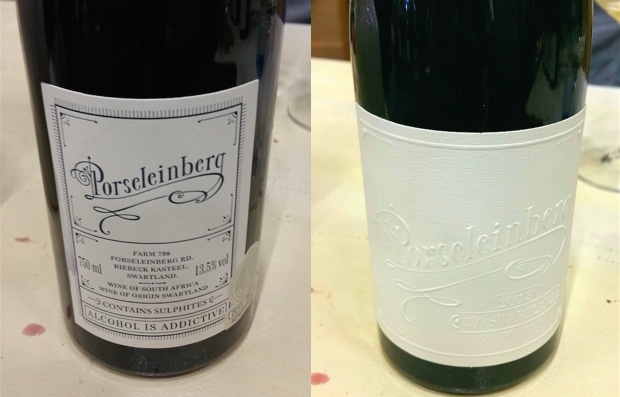
The large vineyard is situated in the SE corner of the Swartland, above the Berg River. The Porseleinberg is a bit older so there is some sandstone with the granite or schist below. It’s sedimentary metamorphic with weathered, worn away soils, and hard, harsh, poor growing conditions. There is this feeling that 2018 has begun evolving just a slight amount out of a vintage that is all about red, red fruit with a plethora of tannins and extract off the charts. This vintage was set up to be a beast of one, a perfect storm of climate interacting with the moonscape. Hard not to be in accord with Callie Louw – it will last 50 years. There’s no doubt. Small berries with the most intensity in the skins. Picked at 14.3, warm vintage but so implosive, from drought condition, rain in late October and November, totalling 221mm. The tannins are of the longest and most exquisite chain imaginable. A pulpy syrah with a magnesium mineral-salty finish. Drink 2024-2045. Tasted October 2022
Supremely, super-satisfyingly and aromatically saturated with all red fruits imaginable, of berries, stone and citrus. Blessed of high and layered tones, reaching a whole new level in terms of both composition and production. Layers pinot noir tracks upon tracks of perfume and flavour to create a richly symphonic sound. A wine of heightened awareness and a sensory grab to elicit awe by way of stunning melodies and lyrical themes. Sensory and musical, the Hemel-en-Aarde vinous equivalent of Pet Sounds, only instrumental, not wholly unexpected but surely fascinating and emotional. Something special indeed and likely RR’s best to date. A glass is such sweet happiness. Drink 2022-2028. Tasted October 2022
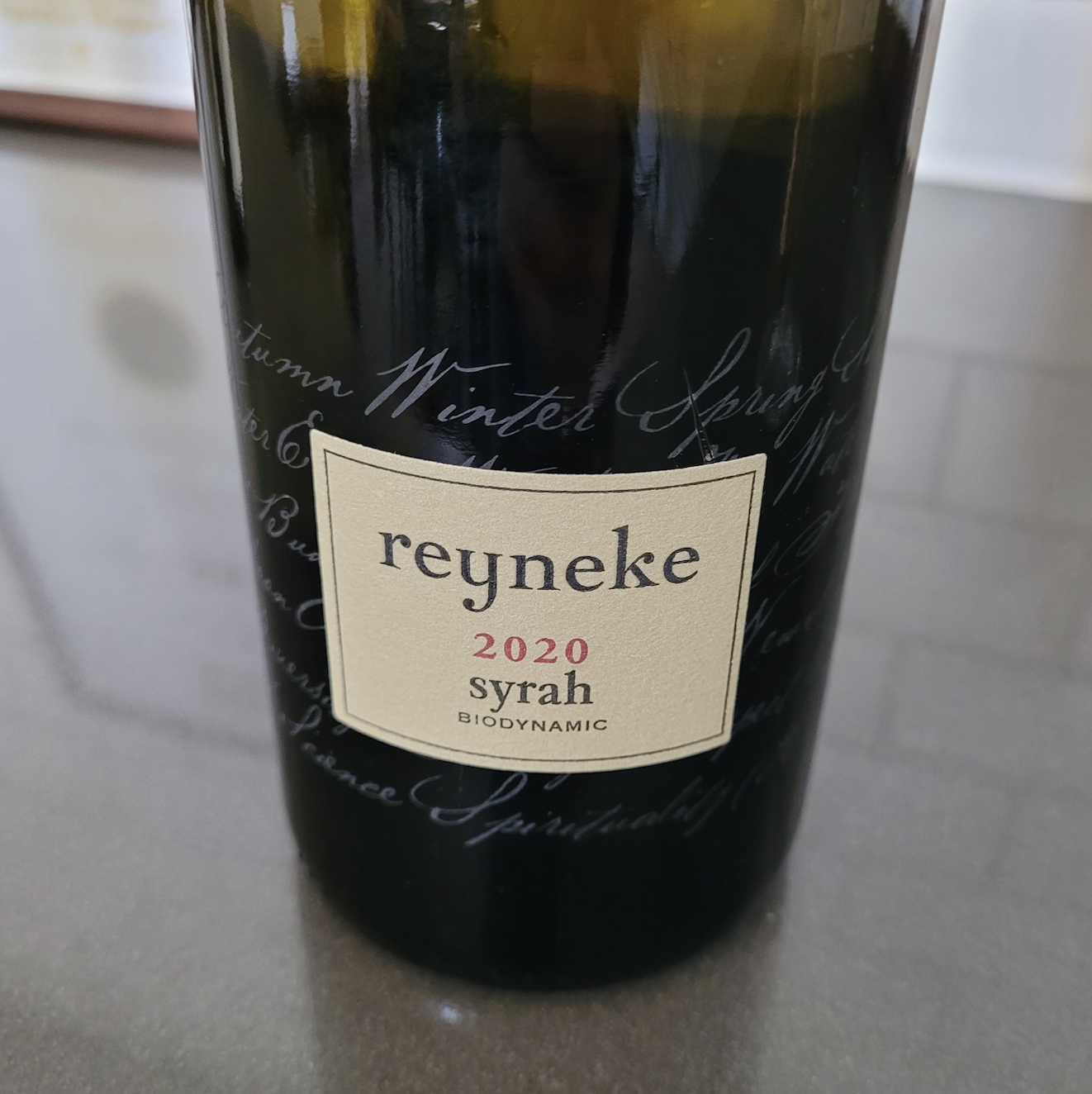
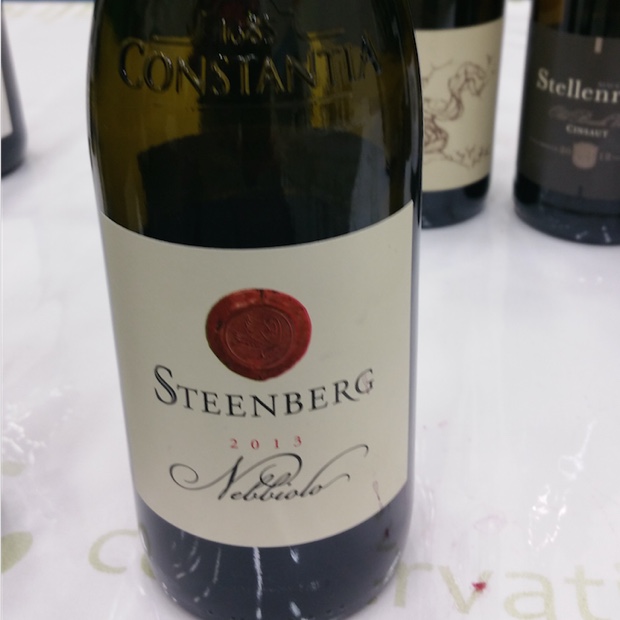
Biodynamic and therefore 100 per cent estate fruit, a child of a fully submerged cap, sans pumpovers to create soft extraction, minimalist breakdown of the must and in the end a most gentle elevation in hue, aromatic perfume and poignancy. The glycerin texture and utter silk texture recalls wines like (Piemonte’s) Vajra and (Chianti Classico’s) Val delle Corti. There’s just something in this syrah-nebbiolo-sangiovese triumvirate vein that healthy grapes and adherence to maceration by way of capello sommerso winemaking will shed. Thinking on this as meaty is too basic as there are feelings of roasted nightshades, black olive tapenade and garrigue brush that consider syrah’s motherland and more so this sector of Stellenbosch. Complex and sink one’s teeth into. Drink 2024-2027. Tasted October 2022
Jessica Saurwein’s profound (OM and NOM) pinot noir program is driven and focused, from two locations, the other being the Hemel-en-Aarde Ridge of Hermanus at Walker Bay. Here the site is the Kaaimansgat Vineyard in the Elandskloof Valley located at Villiersdorp. NOM, as in the ability to change from animal to plant, something the world cries for, needs and will have, eventually, out of necessity. But Saurwein is clearly both hopeful and nostalgic, “like an Adam and an Eve, waterfalls, the Garden of Eden.” Her talking pinot noir could very well be drawn from the heads of Sonoma Coast heights, from a place of warm days, fog and cold nights. Elandskloof is such a place, where phenolics are written in naked terms, like pictographs in ancient caves. The ripeness tells a detailed story of two and half hectares of fruit in recall of a varietal story, of plants given to a winemaker who knows and treats them well. What else could they ask for? Purity and beauty are everything and if Kaaimansgat is not quite the same ethereality as that from the valley they call heaven and earth, so be it. The mouthwatering acidity, fleeting and transparent condition of this pinot noir is perfect.”We used to microwave. Now we just eat nuts and berries. You got it, you got it.” Drink 2023-2026. Tasted October 2022
It was a happy accident that pinot noir was planted here upon the Hemel-en-Aarde Valley’s Bokkeveld Shale in a zone which shares great affinity with Bourgogne’s Côtes de Nuits. In addition to Storm the decision benefitted Hamilton Russell and Bouchard Finlayson, amongst others. The soil composition and specialized geography makes for a different style of pinot noir, from fine grains of soil layered with clay and decomposed granite. Just seems to liquify in varietal form replete with a ying-yang of natural sweet and savoury complements, but also inner silk threading and an outer layer of botanical sweat. Unique, fundamentally different, with ample tension and an impressive amount of potential. Drink 2023-2027. Tasted October 2022
White blend, driven by roussanne (30 per cent), with chardonnay, chenin blanc, viognier and sémillon. Round about 75 per cent whole bunch pressing, pressed off to old (500L) French barrels. Ages on the lees for 12 months. It’s about oxygen, texture and mouthfeel, with an orange wine out of clay amphora Georgian Qveri involvement, three months on skins and stalks, basket pressed and back into the clay. About 25 per cent. Adds another layer of texture, weight and minus all the the adjectives, connotations and negatives. Length without tonic, elasticity and spice without bitters. So well managed and executed. Drink 2023-2028. Tasted October 2022
A style of South African white wine essentially started by Eben Sadie with Palladius back at the turn of the century. “Right away in 2001 when I first tasted it,” says Chris Mullineux, “it just made so much sense for the Swartland.” Adding some verdelho now, has only been the Swartland for 10 years but it’s really creeping in all over the Cape. It adds up to 14 percent alcohol, 9 TA and grippy phenolics to add force with some softer and generous white wines in the blend. This is vintage number 14 so if you like to think about things in lucky 7s then do the math and see this on the heels of what just must have been a most terrific 2014. The Granite and Schist ’14 Syrahs are pieces of Swartland heaven. Last tasted April 2023
The chenin blanc involved is from vines up to 70 years old, two times into heritage status, refined in nature. here not a matter of more density but yes increased extract. Also contains viognier, clairette blanche, grenache blanc sémillon gris and verdelho. Crunchy as old whites come, especially this one, with just that righteous and ripping amount of alighted flintiness, lightning strike and claps of granite thunder. About two thirds are grown on the fine sandy, decomposed granite while schist, iron and quartz add grip, flesh and roundness. Full and layered composition of greatness. Drink 2023-2028. Tasted October 2022
Palladius, like Mev. Kirsten is a matter of the highest level of fruit concentration, extract and tannin but what separates is the flesh and the beauty noted so early on. Of chenin blanc, grenache blanc, viognier, roussanne and marsanne with palomino, sémillon gris, sémillon blanc, verdelho, clairette and colombard form 17 vineyards. Always the same 17 and it will become more once the experimental vines and blocks come to fruition. There are four co-plantations within and the wine is a mixed appellative and multifarious varietal bonanza of diversity and complexity. What a puzzle, maze and layering of so many different parts. How this works only Eben Sadie (and perhaps also his viticulturist, agriculturalist, winemaker, boys, electrician and plumber know). But does it matter? It finds you, grabs your palate, senses and shoulders, shakes your foundation and never relents. Drink 2024-2036. Tasted October 2022
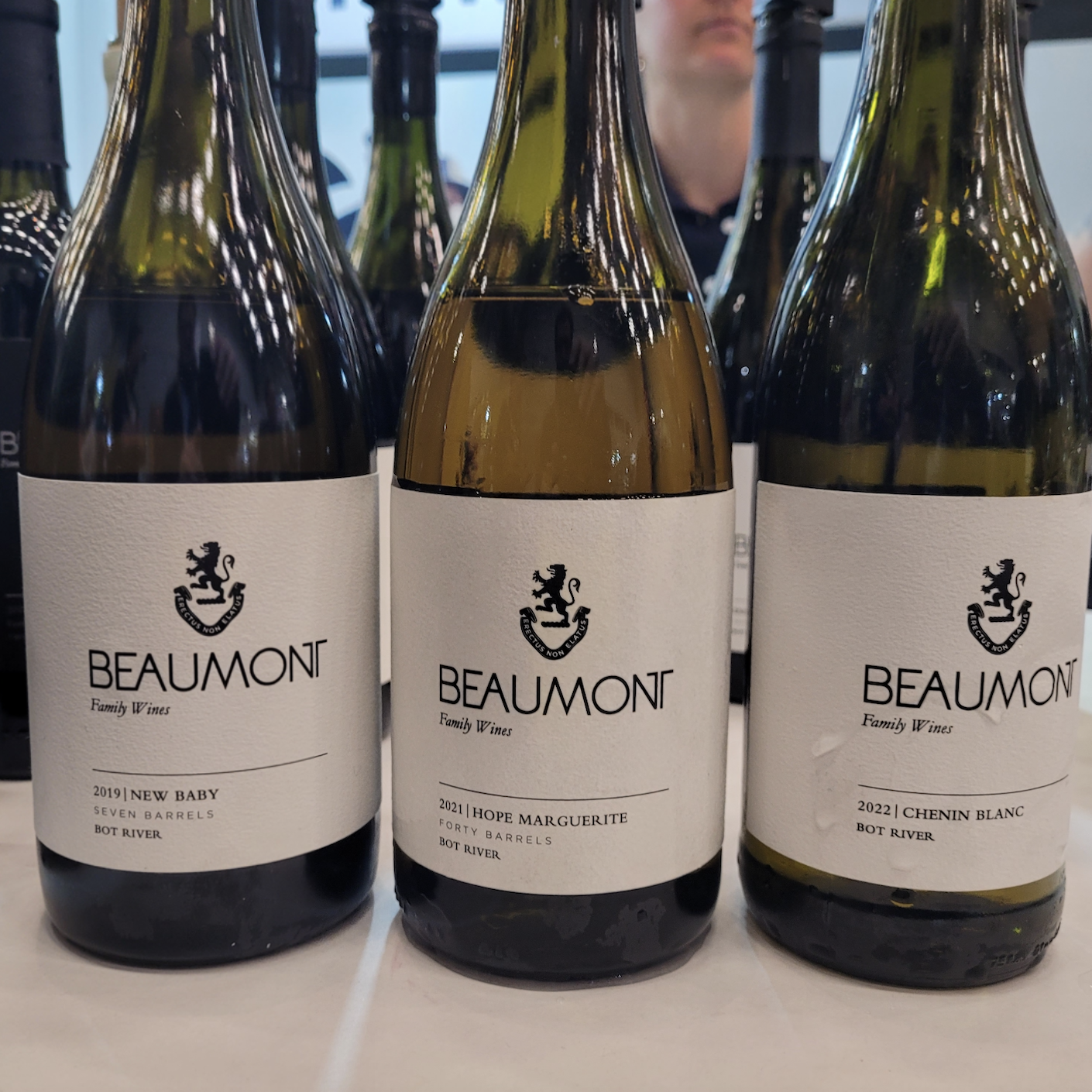
New Baby was released in June of this year and 2015 was the first vintage of a truly Cape conceptual wine. It was launched as a way to combine the idiosyncrasies and potentially complimentary personalities of different white grape varieties on the farm. In 2019 the lead is chenin blanc at 40 per cent with (30) sauvignon blanc plus smaller amounts of chardonnay, sémillon and colombard. They were all planted by Sebastian Beaumont’s father from 1974 onwards. The style and notion follow the line established by Hope Marguerite. “My mother said every vintage was like giving birth to a new child,” explains Beaumont. “Once you do something it’s hard to shake.” Yet another brilliant white appellative blend to define the Cape’s idiomatic meets wild west psyche and only in South Africa do the interpretations emerge like this. All in barrel and the vapour trail is palpable, especially in the flint and smoulder that come from the Bordeaux grapes. New Baby pops, piques, kindles and snaps, raises the senses and is just a perfect conceptual creation. Hard not to love this bloody wine. Drink 2023-2030. Tasted October 2022
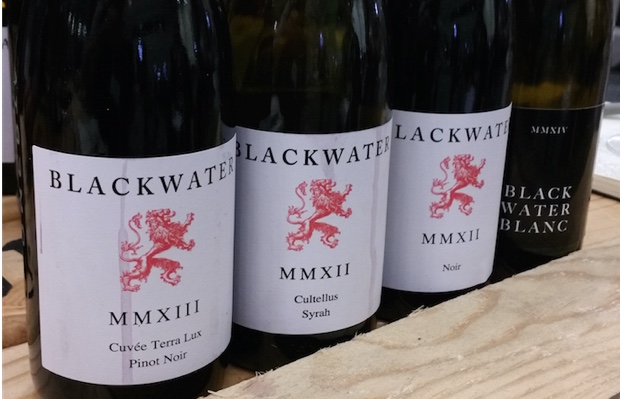
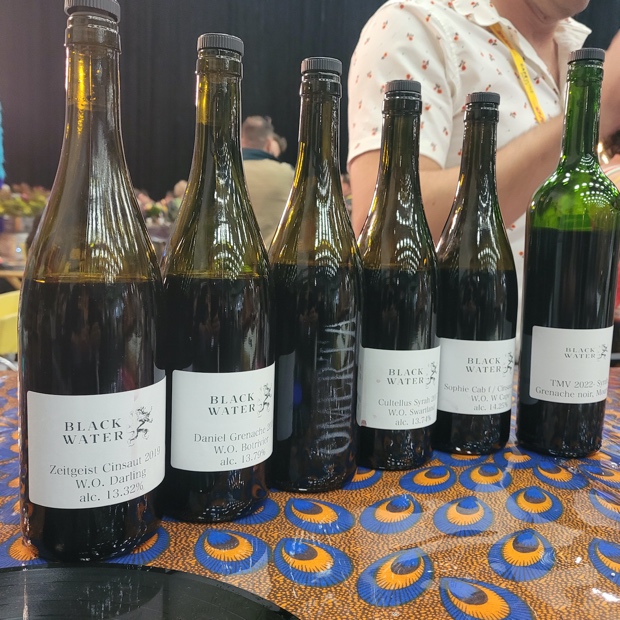
A new sku for Francois Haasbroek, inspired by old red Cape blends, not just a trend these days but a resurrection of style that is in fact new and improved fashion. Sophie is named after Francois’ daughter born in 2020, joining the Bot Rivier grenache named for her older brother Daniel. She is half and half Stellenbosch cabernet sauvignon plus Darling cinsault, affectionately reminiscent for a time when wines like these could be made and aged forever. “A classical blend,” tells Haasbroek though I’m not privy to any made in a 50-50 ratio with these two varieties. Nevertheless this maiden Blackwater voyage comes from three barrels of 30 per cent new wood. “Because it doesn’t get distracted by seeping up oak,” insists Francois and he is likely correct though we need to see where this travels. Long into the night it is suggested with fruit purity, strong facial features, good bone structure and an eye towards the future. Drink 2024-2029. Tasted October 2022
The name of Hanneli Rupert, owner of La Motte. A blend of 58 percent syrah, (32) grenache and (10) petite sirah, full, more rounded than the Pierneef syrah and showing more barrel as well. The syrah comes from Elim and Franschhoek, the grenache from Walker Bay and the petitye sirah also from Franschhoek. Though truthfully speaking there is fineness, grace and elegance in the context of a big and fruit-centric wine. Acids are sharp, with iodine and this kind of concentrated pomegranate flavours. In the end there are waves of chocolate, not entirely bittersweet, succulent notions and clearly next level. Drink 2024-2028. Tasted October 2022
Will admit to having a love-hate relationship with this wine which at times shows incredible beauty and at others goes straight over the top. The 2014 eight years forward is divine. A southern Rhône styled blend, composed of up to six varieties but does not have to every time out. Syrah often leads though not in this vintage because grenache showed the most promise for what needs to happen in this blend. Not the hottest of seasons and so in the context of South Africa there is red juiciness and a level of ethereal unlike itself, especially looking ahead to examples like ’17 and ’19. The carignan really surprises, but then again the vines are pushing 50 so their contribution is experientially significant. The ’14 has morphed, likely gone through dumb, swarthy and awkward stages but is now gentle and subtle in its testing meanderings. The fine and incrementally structured elements are clearly manyfold but now really coming together. A rager and a ranger, with some legs on it, still youthful and I will follow it anywhere. Drink 2023-2028. Tasted October 2022
Duncan Savage continues his relationship with these blocks of touriga nacional and syrah planted by David Trafford back in the early 2000s on sites where Sijnn Wines produce the most fantastic red blends. Driving to Malgas from Stellenbosch or Cape Town often elicits an “are we there yet” cry because there are stretches on dusty back roads that feel like a journey to the ends of the earth. The southern most point in Africa more like it and Savage makes use of a few percent here and there with regards to blending grapes that change a wine’s perspective from year to year. He concedes that 2021 was a big sun, big canopy one, yet also following the droughts to create something beautiful and beneficial. Control is exercised and the mix carefully contorted for a red of nimble elasticity and then a Tetris effect occurs. Time and attention paid to tasting and thinking about Are We There Yet begins to pattern our thoughts, mental images and dreams. We are hooked and will be on this line for quite some time. Drink 2024-2029. Tasted October 2022
Second vintage for Charla Bosman’s tenure at Sijnn and here her confidence shows in both the stunning aromatic profile and broad shouldered structure. The nurturing and comfort speak to a winemaker in the early subconscious stages of becoming a mother and a force of winemaking nature. Perfectly swarthy here and it’s really all about tannin management, controlling fermentation temperatures, whole bunch additions, punchdowns and easing extractions. “Channelling freshness but still staying true to the intensity that we have,” confirms Bosman. The quality of this red fruit with a touch of blue, acids of a natural nature and the suppleness of tannins makes this a wonder to behold. So many years of life still lay ahead. Drink 2022-2032. Tasted October 2022
Seeds were sown for an auspicious beginning in 2015 when the inquisitive winemaker Shawn Mathyse was looking, asking questions about and in serious consideration of natural wines. His skeleton in the vat is an assemblage of chenin blanc out of a single vineyard Piekenierskloof site planted in 1939. There is some clairette blanche mixed in though according to the regulations it qualifies as chenin blanc. Four or five vintages are amalgamated from this sandiest of sandy soil, non-irrigated bush vine site. This is the third iteration which includes the vintages of (2017 through 2020). Scents and tastes of old chenin, clover honeyed, waxy and flint struck. The definition of natural wine the Ken Forrester way. Drink 2022-2025. Tasted October 2022
Beauty in Hermanus
Buyers’ Guide to current LCBO and VINTAGES Essentials LTOs for South African wines
Rosé all day, an absence of whites, reds in Portuguese, French and Italian dress plus choosing South Africa like falling off a log
It has been nearly a year since I last visited South Africa and every time VINTAGES rolls out an easily managed thematic collection of wines from that great country the heart swells and memories flood back into the brain. The powers that be within the LCBO’s New World buyers’ department do their finest no sweat work and narrowing down when it comes to Western Cape collections, surely witnessed and proven by the duck soup choices made for both the July 20th and August 6th releases. But we can’t lay too much emphasis on their easily accomplished selections as being the be all, end all reason for the successes. Producers are fortunate to work with exceptional terroir that includes dozens or more old vine blocks in many Cape nooks and transversely the Ontario purchasing choices are so numerous it’s like shooting fish in a barrel. The winemakers adage of “just don’t mess it up” translates into kudos to the buyers for getting things right. The fact is South African wines are of such high quality across varietal, producer and regional lines they speak for themselves and do so with great heart.
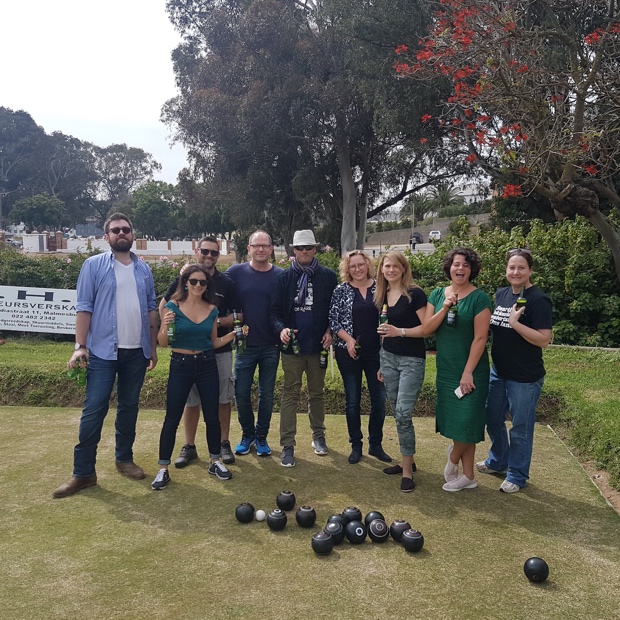
What do you do with the Swartland Swingers? Lawn bowls in Malmesbury of course
Which brings me to what struck so strong in September 2018, straight to the heart and without equivocation. Heritage and diversity are the country’s two greatest strengths. Sure as a circle will turn you around there is this third tangible and credible something that seems so unmissable about South Africa and South Africans. Resilience. Neither politics, nor conflicts between and in the oppression of peoples nor drought can deter the farmers, workers and producers of this nation. The human condition mimics its heritage vineyards planted to century-old varieties, to perpetuate and to persevere. This is the South African way. And it is the wines that are exceptional in ways that require great levels of explanation.
Over the last several centuries grape varieties were brought, expatriated and forced into the blending of exile. No peoples should ever be de-humanized nor taken for granted and neither should wines be quietly dismissed. With each passing varietal situation time has been sublimed and wines produced in South Africa teach us that they simply are not examples of minor beverages. It has taken place in the heart of agriculturalist and winemaking ability, to change small things and see greatness in ascension to that which is simple, authentic and refined. It’s a matter of having felt sensations introduced into the absurdity of our lives.
We begin with some wines tasted and assessed back in September 2018. These are a cross-section of what the country’s makers do best, some unknown, others better known and collectively they act as examples in performance at the highest level.
Fourteen South African producers and wines you need to know
A. A. Badenhorst Chenin Blanc The Golden Slopes 2017, WO Swartland (WineAlign)
The Golden Slopes is chenin blanc planted on granite hillsides, vines in the 80-ish years of age and this surely has much to do with the paradigm of success predicated by a focus on texture. Remarkable heritage vines on the Badenhorst for which Adi is able to seek, measure and play. Like the Secateurs it is indeed all about texture but here, this is something other. Conatus. The Golden Slopes are marked by intense and impressive warmth, lees and the effects of managing lost acidity. Adi finds a way for them to be kept by the moments gained in flesh and layers. Old vines do what the young and inexperienced do not. They achieve an innate inclination, in this case for chenin blanc to continue to exist and enhance itself. Drink 2019-2027. Tasted September 2018
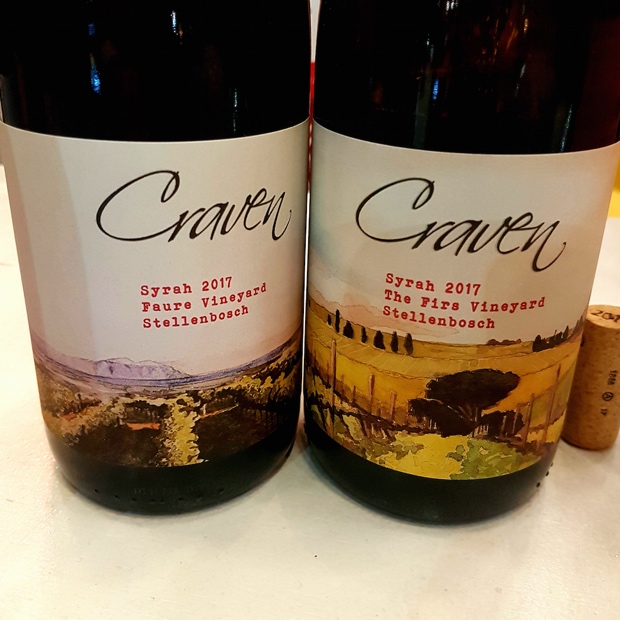
Craven Wines Syrah The Faure Vineyard 2017, WO Stellenbosch (WineAlign)
Like the sister Firs this Faure Vineyard site is also 21 years of age, east facing towards the Heldeberg, with rocks in the soils. The name is more than familiar to Jeanine Craven, who was a Faure before she merged with Mick. What really separates this place is the marine air, three kilometres from the sea, as far as the African Black Oystercatcher flies. Again the planning involves whole cluster pressing and on skins seven days, to make pure syrah. Separated by 15 kms the Faure is antithetical to the Firs, salted by the sea and of a furthered intensity in a different form. It’s near searing, linear, grippy and with acidity lifting everything. Really juicy, pushed by a wow factor, clean, no funk and so much spice. Drink 2019-2027. Tasted September 2018
David And Nadia Wines Chenin Blanc Hoë Steen 2017, WO Swartland (WineAlign)
One of two single vineyard explorations from the Sadie’s work is this 1968 steen planted in deep soils to the west, towards Darling. This fourth vintage is a demure of chenin blanc’s deepest, richest and most glycerin textured possibilities. Time and a warming in the glass causes this floral emergence in a spiced space time continuum usually reserved for white wines like Condrieu. But this is entrenched in heritage steen genetics, not viognier and the acidity is all local, parochial and fine. The complexities are circular by nature, in rotation and encompassing all that we hold sacred for Cape wines. Takes hold of your mind and controls your breathing with its life affirming energy, like an invisible blanket wrapping you up in the desert, at night, under stars. Total production is 45,000 bottles. Get some. Drink 2019-2028. Tasted September 2018
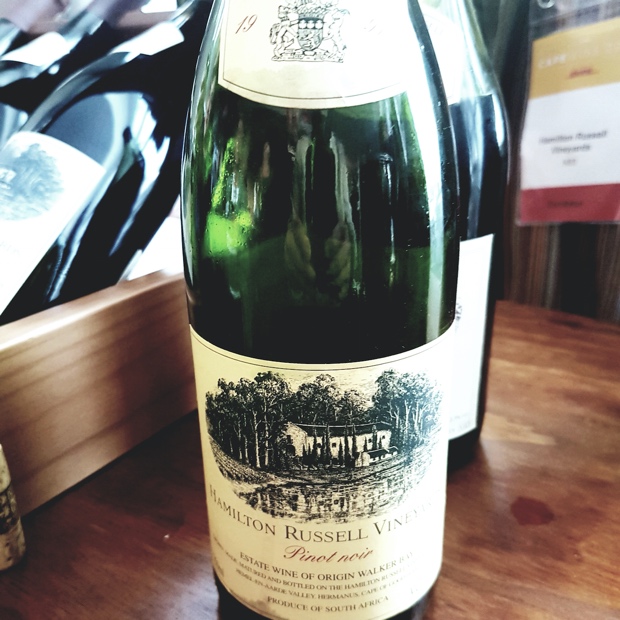
Hamilton Russell Vineyards Pinot Noir 1997, WO Hemel En Aarde Valley (WineAlign)
It was 1997, a point 10 years deep into the Hermanus pinot noir investigations and what Anthony Hamilton Russell called “the year the Dijon clones kicked in, or at least the use of them.” This is seemingly more evolved than that ’86 if only because the über ripe fruit may have baked a bit in the sun. Tastes so old school Beaune now with a cane sugar-cocoa-vanilla trilogy of development. Powerful pinot noir now in the throes of its soporific times. Drink 2018. Tasted September 2018
Huis Van Chevallerie The Hummingbird Colibri Kap Klassique 2017 (WineAlign)
The Hummingbird is composed of 70 percent viura with chenin blanc from Christa von la Chevallerie’s Nuwedam Farm in the Paardeberg. The first viura as far as we can tell in South Africa, a Spanish grape variety not very high in acidity picked up and elevated by the chenin. This first vintage kick at the sparkling can in a Cava style is mostly 2017 fruit, in bottle 12 months so very much adhering to a Cap Classique model. Christa thinks both outside the box and the varietal groove with this textural beauty and so its moniker naturally importunes as Kap Klassique. As a bottle of bubbles it offers a forward rush of life, crystallized in a brilliant jewel of a moment. Drink 2018-2022. Tasted September 2018
Ken Forrester Wines Chenin Blanc The FMC 2004, Stellenbosch (WineAlign)
FMC, as in Forrester (Ken), winemaker Martin Meinert and chenin blanc. Here looking back 14 years to a time when they and only a handful of others had the true understanding of foreshadowing as to what the signature grape variety could become for South Africa. That is why they set to making this highly specific and purposed example. From a single vineyard, then 34 years old (now pushing 50) and the eighth vintage, by 2004 fully commanded stylistically by its makers. Barrel fermented and bloody rich, still viscous, now so honeyed and lit like a candle in a cool cave. A true original, like the Ford Motor Company, a female main character kicking butt in an action film, FMC. Drink 2018-2021. Tasted September 2018
Lismore Chardonnay Estate 2017, WO Greyton (WineAlign)
From the Cape’s south coast and Samantha O’Keefe’s Greyton Farm down a dusty road. The Estate sees 500L barrels, 35 per cent new and is a best fruit selection cuvée. It’s also about the ferment “to keep a limey tension,” tells O’Keefe, so it’s really about the combination of the two. Like the “normale” the orchard fruit persists but here there are stone fruits joining the apples and now the grip takes hold. If the other needs a year in bottle this “Reserve” could entertain three. In quite an awe-inspiring way it travels to and fro on a Meursault-Marsannay line, of high construct and palpable intensity. I’d wait the three for the grace and beauty of its future. Drink 2020-2027. Tasted September 2018
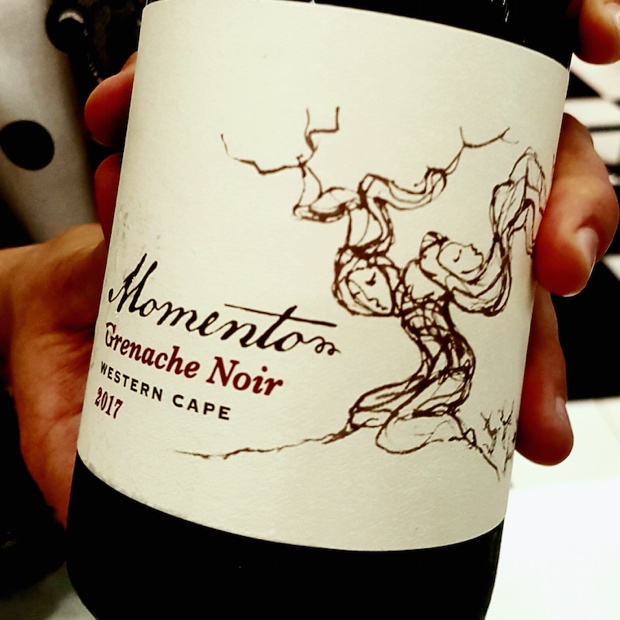
Momento Wines Grenache Noir 2017, WO Western Cape (WineAlign)
There are some South African winemakers who just seem to intuit what grenache is capable of realizing comme il faut from a Cape raising. Marelise Niemann is one of a select few who have mastered the art and science of grenache pulmonary resuscitation. Hers is 90 per cent Paardeberg and (10) Voor Paardeberg, so not labeled as such. “The most important red grape in South Africa,” she says with varietal diffidence and I will not be one to argue. Not with Marelise. These are bush vines, all itching to succeed off of decomposed granite. These vines scratch and claw their way out of the aridity and the adversity to gift a purity of fruit and very special tannins. Pretty and with a level of tension seen in its face, after some time on skins and a natural ferment crawled out of whole bunch pressings. Spiced and spicy, demurred, matured in old oak 16 months, wise, mature and nurturing. Drink 2019-2024. Tasted September 2018
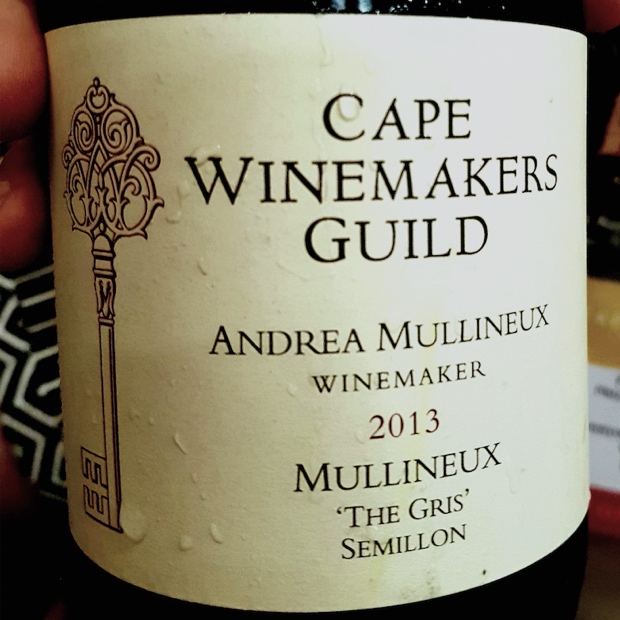
This was the year Andrea Mullineux began working with this rare and certified by the Old Vines Project sémillon gris from a 1960 planted (just 2 kms away from the chenin blanc), heritage dry-farmed plot grown on the granite soils of the Paardeberg in the Swartland. Only a few blocks exist anywhere and in 2014 some of this fruit began to augment the Mullineux Old Vines White. It is what Andrea calls “a project of the jumping gene.” It’s like a varietal ride on a pogo stick, in colour from pale like colombard to dark as cinsault. A citrus attack like no other and subjugated to the lush manifestations of skin contact. Still so flinty-smoky, lean and yet of a texture like an emollient of florals keeping the wine moist, fleshy and flexible. Though not the saltiest of vintages this gris is in complete control of its phenolic emotions. It’s also blessed of this unreal incandescence. Wholly unique in every respect. Drink 2018-2026. Tasted September 2018
Paul Cluver Pinot Noir Seven Flags 2015, WO Elgin (WineAlign)
The most floral vintage of the Seven Flags and the first with clones 115 and 667 brought into the blend. This to create new concepts and levels of complexity with vines old, new and next level involved. The intermixing leaves us with a sensation involving many layerings; fruit, acid and structural. The fruitiness and fresh flower gatherings presents an aperture of severe harmony and adds up to a bunch of aesthetic yeses. Give it a year or two to integrate. Drink 2020-2027. Tasted September 2018
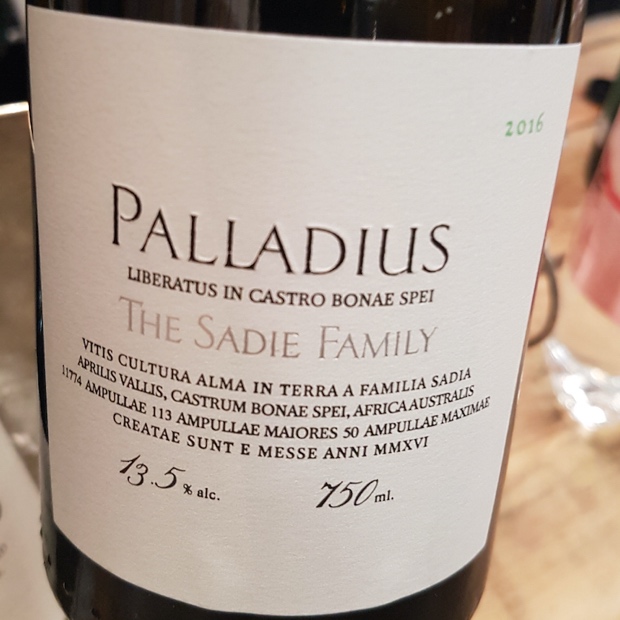
The Sadie Family Palladius 2016, WO Swartland (WineAlign)
Palladius is the quintessential spear brandishing South African appellative blend with more varietal diversity than an oenology department’s nursery. It holds chenin blanc, grenache blanc, marsanne, sémillon, sémillon gris, viognier, clairette blanche, roussanne, verdelho, colombard and palomino. No one does varietal interaction and trickery like Eben Sadie. No one. The ’16 is a wine of mixed tenses, the whole echelon and the black hole in the sun. Fruit comes from eleven different blocks all on granites, some from the Riebeek-Kasteel side. Ages in clay amphorae and concrete eggs, then racked into foudres, “to bring it all together.” Palladius holds a casual disregard for synchronizing fruit, acid and extract verb tenses in the way it uses a conditional interrogative without the proper structural order. It’s a wine of fine and unfair intensity, iconic, wise, learned and all for good reason. Imagine this to age well beyond its 15th birthday. Drink 2019-2032. Tasted September 2018
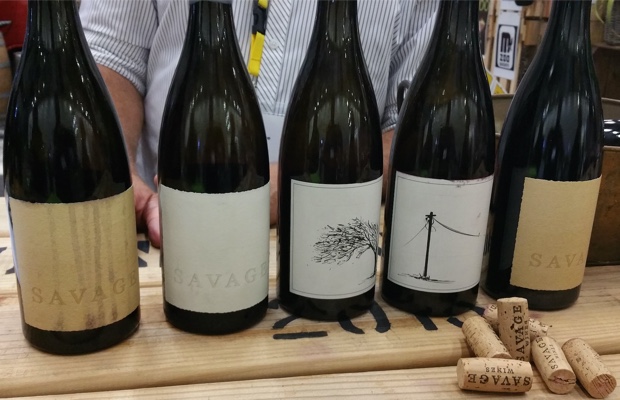
Savage Wines Syrah Girl Next Door 2017, WO Coastal Region (WineAlign)
Though the négoce roaming transverses the entirety of the Western Cape, sometimes you just go home again. This as small as it gets Girl Next Door resides and is raised out of a 0.38 hectare Noordhoek vineyard, “the weekend hobby vineyard,” as Duncan Savage would put it. A block of great clichés, “the home garden,” or at least close to home and certainly “a work in progress.” The developing plot is a mystery wrapped inside an enigma within a narrative that currently fashions a wine to speak of a long term vision. In these first chapters it is already doling dark and mysterious, rich and silky, highly meaningful fruit. How this can’t turn into one of the great epic novels of Western Cape lore is beyond you and me. Home is where the heart soothes then savage beast. Winemaker and syrah. Drink 2020-2026. Tasted September 2018
A single-vineyard is the source and a unique one at that for the Swartland because here is the spot where the decomposed granite of the Paardeberg begins to meet the northern slate. Paardeberg cinsault. If you are not yet familiar with this lovely beast it’s high time you got stoned on it. A varietal echelon rebirth eschews decades of French mistakes and enters into a revolution. As I noted from the ’14, it’s also a revival, a saving and a reformation. Having made itself a home in the Swartland now cinsault can create its own narrative, re-write the book and speak of the terroir. Transparency is truth and in a tightly wound, uniquely tannic way this curls tart and cured meaty filaments around a paradigmatic red fruit core. It’s bloody caesar delicious. Drink 2018-2022. Tasted September 2018
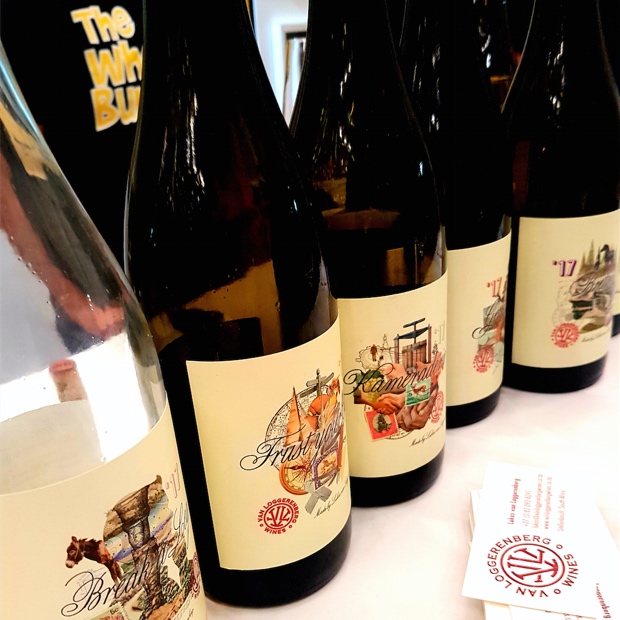
Van Loggerenberg Wines Kamaraderie 2017, WO Paarl (WineAlign)
Just the second vintage of Lukas van Loggerenberg’s Kamaraderie is a chenin blanc from a 1960s planted, two hectare single-vineyard in Paarl. Lukas picks the bottom of the slope first and the top many days later so there is this natural layering of fruit. Reeks with reminiscence, of fennel and pistachio, of fronds and gelid cream. Only 800 bottles make this one of South Africa’s rarest chenins raised for 10 months in old barrels, unstirred, shaken or allowed to visit with the malolactic king. There’s a dissolve of delicious citrus seamlessly streaked through fleshy fruit in what is just such an organized and structured chenin. Finishes with the brine, oh the brine. Drink 2019-2024. Tasted September 2018
Stellenbosch Braai
In VINTAGES
While the August 6th VINTAGES is chock full of stalwart South African wines it bears repeating that July 20th also gifted some worthy picks. The list below takes a page out of each book.
Michael Godel – Next level chenin blanc from the Cederburg appellative specialist, so very herbal, lime driven and smart like dry riesling in a Rheinhessen way. Terrific acids lift and elevate the lime and tonic flavours. Most excellent arid example with a dried herb finish.
Michael Godel – A pinotage that bridges the twain between old school and necessary modernity, with plenty of wood induced chocolate and some mocha but also quality varietal acidity and tannin. Rich, unctuous and spirited to the thriving point of attack.
Michael Godel – Lesca’s fruit is drawn from three vineyards in Robertson notable for their predominant soils of limestone and chalk. Great work from the De Wetshof bros who just allow this grape variety to shine on, be explicit and act of its very own accord.
Michael Godel – From the extraordinary Annandale Estate in Stellenbosh Spier’s is very peppery cabernet sauvignon with a distinct local touch of glare and flare. Steely exterior, massive fruit and and such a bloody lekker South African. Long and juicy. Who says you can never go back to old school.
Michael Godel – Rustenberg continues to prove that it qualifies for top varietal value specialist out of Stellenbosch by pumping out pop hit after hit and this chenin blanc is no exception. Fruit riper than many, mild spice meeting wafts of vanilla and more than its share of lees-effected texture. All around right and proper.
Michael Godel – Deep, dark, handsome and peppery shiraz here from Stellenbosch with a syrupy confection and plenty of energy on the flip side. Really drinks like a bigger, more expensive and chic wine.
Michael Godel – Canada knows Rosé but Malivoire really knows Rosé. Vivant may be there between entry-level and cru but it’s done up so right, light but too much so, gently expressed but enough that fruit gets through and shines bright as if picked just there. Salinity strikes through without splitting up that fruit, like a main vein bringing oxygen and essential nutrients like blood to the mind. Last tasted July 2019.
Michael Godel – Argento is from the owners of Uruguay’s Bodega Garzón, Chianti Classico’s Dievole and Montalcino’s Podere Brizio. A year past the freshest time in its life but cool, savoury and without too much barrel overtake (thanks to second and third passage wood). Well-worked and solid to be franc, true to place, now chewy and offering proper value.
Michael Godel – Ostensibly the driest and purest form of chenin blanc from Saumur with the Loire’s post-modern take on the Western Cape, in a way though without pungency, pepperiness or glucose inflected texture. This is dry as the desert, tart, tangy and intense. Needs some richness in food to make all ends meet.
Michael Godel – Welcome into the Ornellaia range by way of the second wine that has never shown even a modicum of compromise. Hot vintage but acidity is strong and true while fruit stays cool, seasoned and reasoned, There’s a real meatiness to this ’17 and a lovely sense of salumi cure. Once again an educational tool for Bolgheri and Toscana.
Michael Godel – Sangiovese needing the bottle is proven here. Now a year and a half later this swirls into a grosso sangiovese like liqueur with plums, cherries and spice. Really Riserva in style and now just 18 more months away from its guaranteed due elegance.
Michael Godel – Oenologist Emanuele Nardi draws his classic Brunello from the fluvial Cerralti parcel, a mix of jasper which is a type of opaque, granular quartz, along with shale and clay. Classic liqueur and modern texture give way to grippy acidity and more than necessary structure. This is one of those Brunello that speak with fruit early but with a knowing nod to longevity.
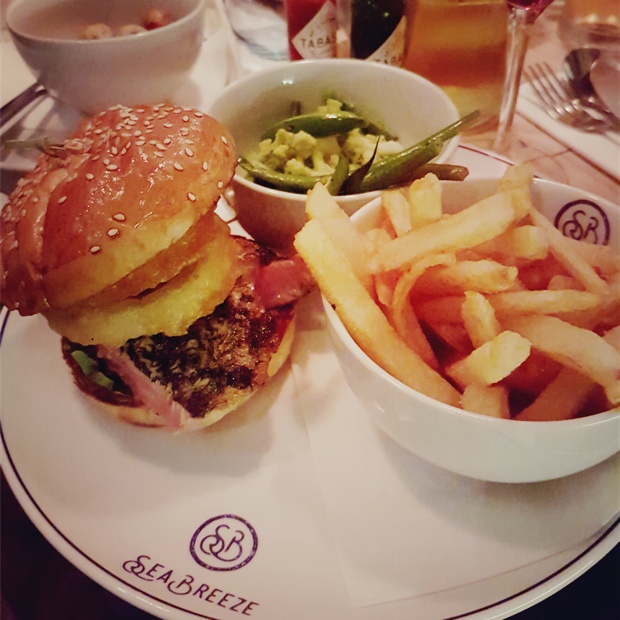
What goes best with chenin and cinsault? Tuna Burger at Sea Breeze in Cape Town
At last September’s Cape Wine 2018 Chris and Suzaan Alheit poured me nine unique wines of clear South African identity. Their old vines attitude moves well beyond keen and into the realm of earnest insistence. Says Chris, “Cape heritage wine must make use of old vineyards” and that is precisely where and how these wines gain their mannerisms and habits. Chenin Blanc is at the core but Alheit’s work is not confined or delimited by a single varietal play. Point of fact, at the behest of site specific markers detected by the chosen and the gainfully employed, truths are spoken in the litmus voice of dry bushland vines. These notes are the collective messenger for the nine.
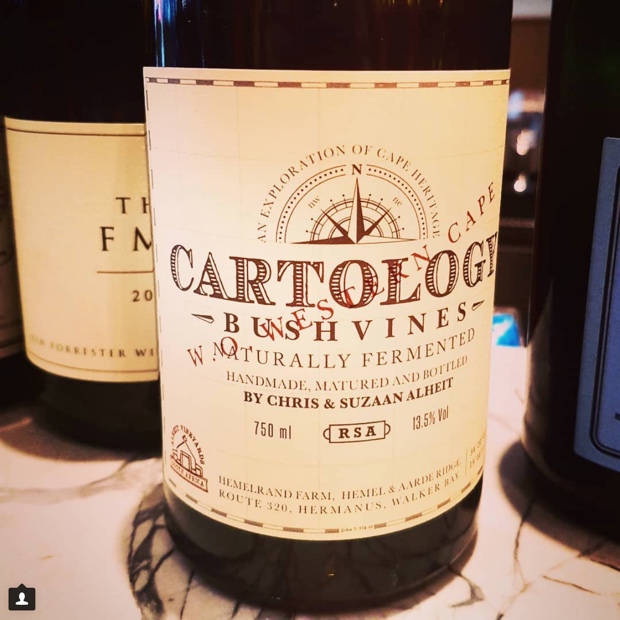
Varietal and single-vineyard wines are great but #cartology is forever ~ so pleased to get a chance at this today ~ another laser from @chrisalheit
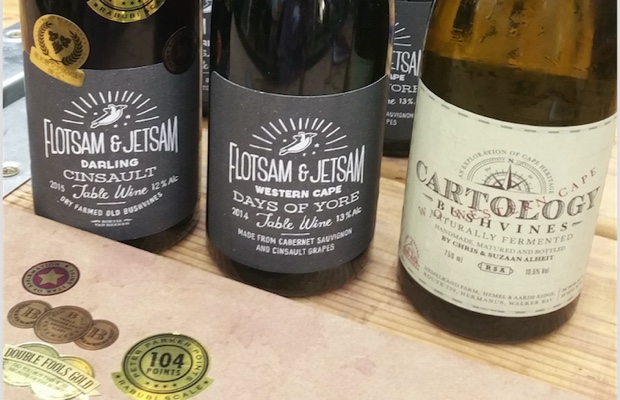
Alheit Vineyards Cartology Bush Vines 2017, WO Western Cape, South Africa (Agent, $49.95, WineAlign)
Cartology exists in a vacuum without peers, in part because it charted and mapped a course ahead of the curve. The 2017 refuses to rest on laurels and pushes the destination even further away so that the journey still remains the thing. Chris and Suzaan Alheit employ 11 dryland bush (30-80) year-old parcels and the whole addition proposes an adage of place and not idea. This is Cartology, a snapshot of time and place. The smaller amount of eighty year-old sémillon is from La Colline in Franschhoek, while the 30+ year old chenin blanc is grown in Skurfberg, Perdeberg, Bottelary Hills and Kasteelberg. If Cartology was this rich before I cannot say and only Chris, Suzaan and the Cape can make this wine. Only them and in these places. Best to date. Drink 2019-2027. Tasted September 2018 chrisalheitgsoleil123@ChrisAlheit@GroupeSoleilTOChris AlheitGroupe Soleil Fine Wines
Alheit Vineyards Chenin Blanc Radio Lazarus 2017, WO Western Cape, South Africa (Winery, WineAlign)
The site is Bottelary Hills where two of the highest and gnarliest hilltop shale vineyards were planted in 1978 and 1971, both at 450m. So very dry now through the years of drought, hopefully to be revived but it remains to be seen. Chris fermented this chenin blanc in large clay pots to auspicate more dry extract, calculated to ensure prosperity and good luck. There just seems to be this atypical, direct and massive accumulation of tannin that seems pissed off. Wait for it, even at this infant stage and even at this very moment in glass. Its convincing fruit will emerge, despite the introvert nature and retention tension because for one thing it resides on the salty side of life. The possibilities are endless as witnessed in the auguring of signs and portents. Drink 2019-2027. Tasted September 2018
Alheit Vineyards Chenin Blanc Nautical Dawn 2017, WO Stellenbosch, South Africa (Winery, WineAlign)
The reference cares to the very first light, with stars to navigate and light to get where you want to go. Nautical dawn marks the start of nautical twilight, which lasts until civil dawn. The fruit source is 1978 planted Granite Hill on False Bay, by the sea. An entirely new grape tannin, phenomenal really, likely caused by the granite shales, with yellow fruit, more sweet and sour, almost an underripe pineapple. Unctuous and different for Chris Alheit. Not a nautical disaster, “but only a fool would complain.” Drink 2018-2021. Tasted September 2018
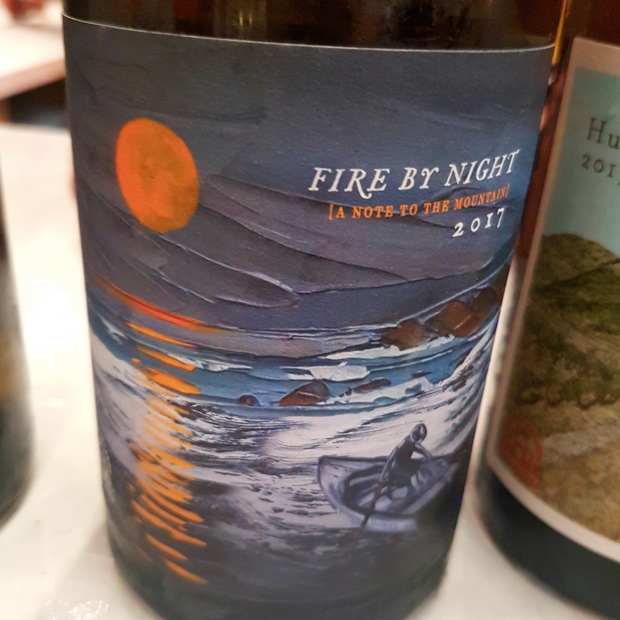
Alheit Vineyards Chenin Blanc Fire by Night 2017, WO Stellenbosch, South Africa (Winery, WineAlign)
The fruit source for the aptly named Fire by Night is the Paardeberg, a 1978 planting. The references could be many, first from Exodus 13:21-22 and the Pillar of Night. Or a Canadian connection, however it may be viewed 78 years later (or 118 to this point), at the site of that army’s aid in handing Britain its first significant victory in the South African War. As for chenin blanc this one by Chris and Suzaan Alheit is rocky pristine, with memories, tension and elements brought up from that soil, purity and silky smooth texture. That’s the Paardeberg right there, again for 100 per cent chenin though in a way you “eliminate the wine the grape and just look at the place.” This couple is very focused and their wines in turn are perfectly concise. Drink 2019-2025. Tasted September 2018
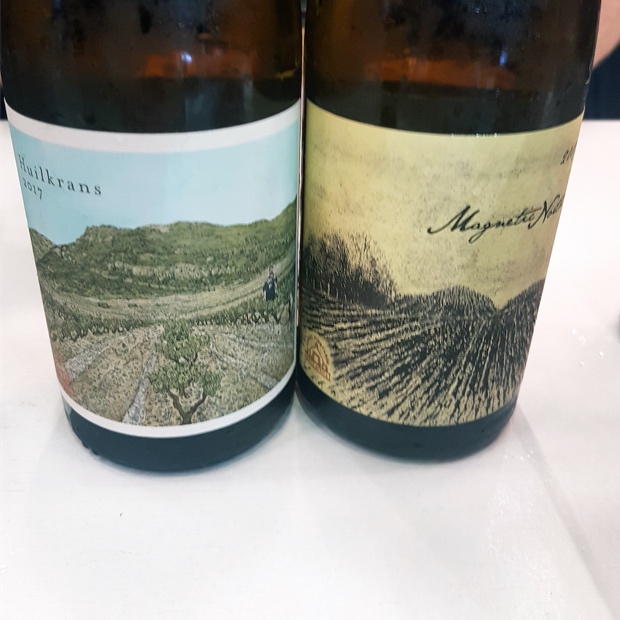
Alheit Vineyards Chenin Blanc Huilkrans 2017, WO Skurfberg, South Africa (Winery, WineAlign)
Into the Skurfberg we go, where at 450m deep red sand and red clay abound and from that we note how there is no chenin blanc tang like this one. From fruit grown by the Visser family on Oudam farm Chris and Suzaan pay tribute to Kallie Visser who passed last year, lekker and friend, now respectively immortalized on the label. The reference is to the name of a cliff on the farm that weeps when it rains. The diffidence of growing north and making better chenin blanc is the thing that defines the wonder of the Skurfberg, where serious power by natural acids do the yeoman work and carry the wine. And it was Kallie who played an essential role in raising this 2017 fruit. In that sense this wine will always be a one off and a legacy defining varietal Cape white but it will be carried on. Another deferential chenin blanc, so new yet integral for the Western lands with this transformative reality into new territory. Drink 2019-2024. Tasted September 2018
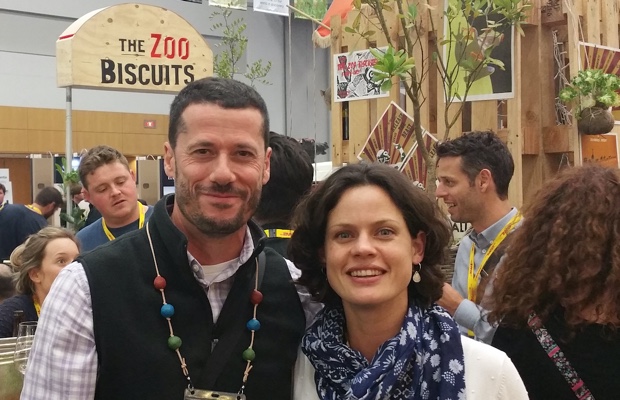
Chris and Suzaan Alheit
Alheit Vineyards Chenin Blanc Magnetic North 2017, WO Citrusdal Mountains, South Africa (Winery, WineAlign)
Also from the Citrusdal Mountains SAVA, a.k.a the viticultural area also known as the Skurfberg, a 10 minute drive away at 550m, again red sand and clay. The vines are ungrafted chenin blanc on its own roots but the soil here is an even deeper red, more so than Huilkrans and so now that white hematic thing is happening. Like red blood cells carrying elements, nutrients, ferrous unction and a pulse of power as opposed to the calm in the white of Huilkrans. This is the tenor to the baritone, rich in its crazy depth of fruit and always seared, marked and injected with trace elements. Does it all on its own. There is no winemaking going on here, only a moving target, of intensity and mystery. The vineyard lies a few degrees off true north from the Alheit cellar, poetically licensed as their “Magnetic North.” Drink 2019-2028. Tasted September 2018
Alheit Vineyards Sémillon La Colline Vineyard 2017, Franschhoek, Western Cape, South Africa (Winery, WineAlign)
“Qu’est-ce que c’est?” From a vineyard housing both light and dark skinned sémillon and if there are others in this world I am not privy to the information. The resulting wine is 85-90 per cent blanc and 10-15 gris. La Colline was planted in 1936 on the southern slope of Dassenberg and is now farmed by grandson Anton Roux, a direct descendant of the Huguenot refugee Paul Roux who arrived in Franschhoek in 1688. The vines stretch up the hill from 310-350m and it is the fruit from the middle slope that is best to leave for picking long after the chenin blanc. This is the indispensable fruit used in Alheit’s Cartology. Thick skins elevate the natural talking tendencies, from a super healthy pH for drupe of apposite attack and confusing like great whites you would not or should not compare it to. Chris Alheit’s invades your head’s consciousness with this amazing depth for sémillon, with no definable context, pretence or precedent. The impossibility is totally unique in the world and yet utterly South African. It’s both tense and nervous but somehow I can still relax. Psycho Killer sémillon. Drink 2020-2028. Tasted September 2018
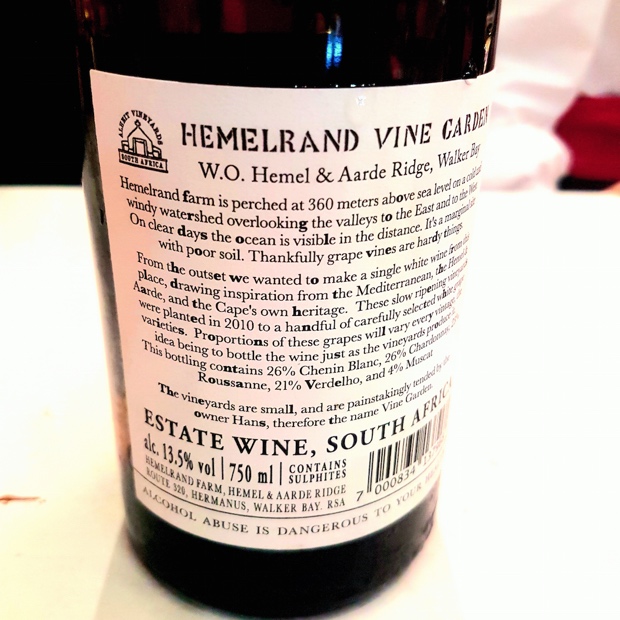
Alheit Vineyards Hemerland Vine Garden2017, WO Hemel & Aarde Ridge, Walker Bay, South Africa (Winery, WineAlign)
Neither one of five chenin blanc explorations nor the consistent and specific Cartology assemblage this is the Alheit five grape dream of fields blend. “As it grows in the field we pick it and blend it,” says Chris. It comes through the as it stands process with richness and intensity as a true Western Cape appellative blend, made in the fields. The five are chenin blanc, verdelho, roussanne, chardonnay and muscat, “a weird one, a cépage wine, a concept wine, a style wine.” The glebe is at 360m, a windy windswept place, stark and beautiful. The wine concurs. Drink 2019-2025. Tasted September 2018
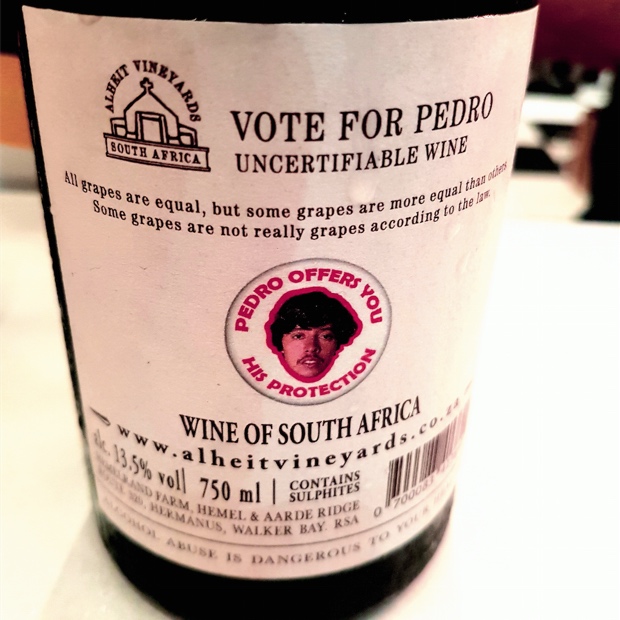
Alheit Vineyards Vote For Pedro 2017, Uncertfiable Wine, South Africa (Winery, WineAlign)
Not sure what to make of this. Either it’s a skit performed in the guise of a wine or it’s a protest vote, one way or another. Perhaps a write in ballot as comment on a 2016 election far away or maybe a wink-wink, nudge-nudge on the state of government here at home, both in the appellative Cape and the larger authority as a whole. Or maybe it’s just good plain fun. Franschhoek is the source but it can’t be labeled as such because the rare Portuguese-Galician grape galego dourado is not not recognized, i.e. not on the “list.” The planting is of a mere 100 vines at the bottom of La Colline Vineyard. The concoction it forms is rich and syrupy, though also dry and floral. This unusual varietal style what with its natural acidity could be a star, if it were more than just a quirky indie film. For now it’s just a bit of fun for whimsy and for the sake of the love of wine. “Mooi. Baie baie mooi.” Right Chris? Drink 2018-2020. Tasted September 2018
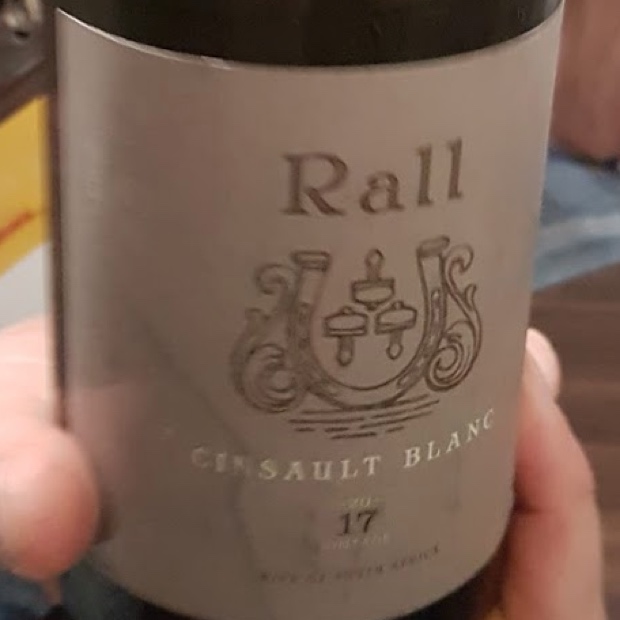
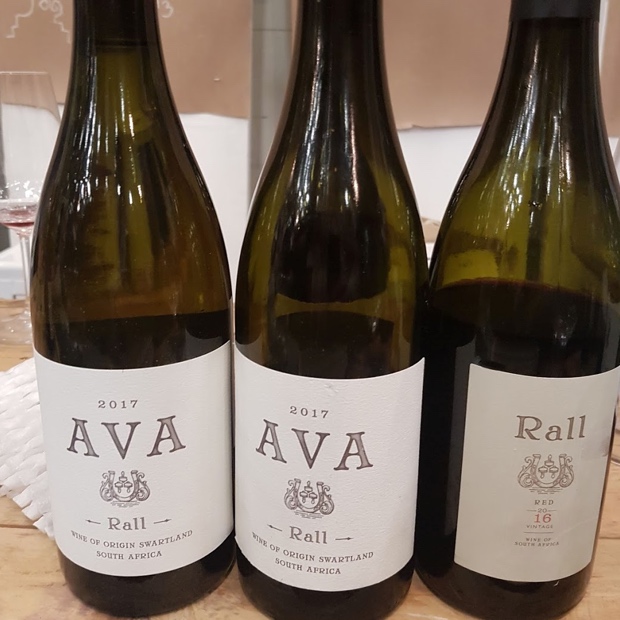
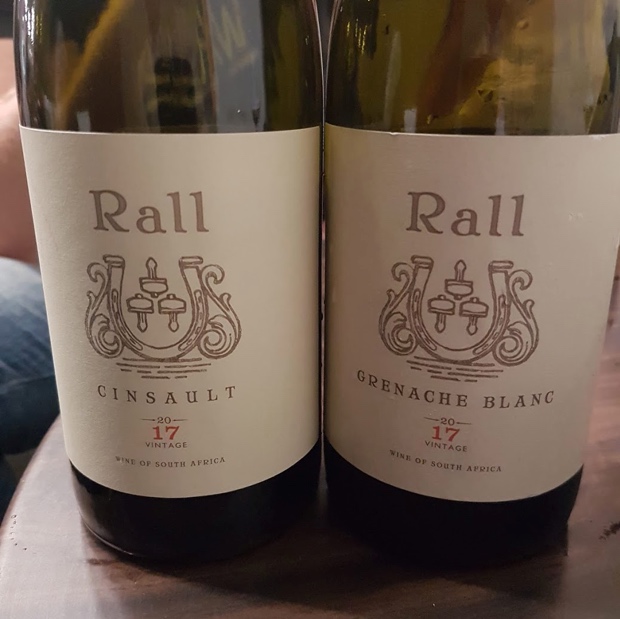
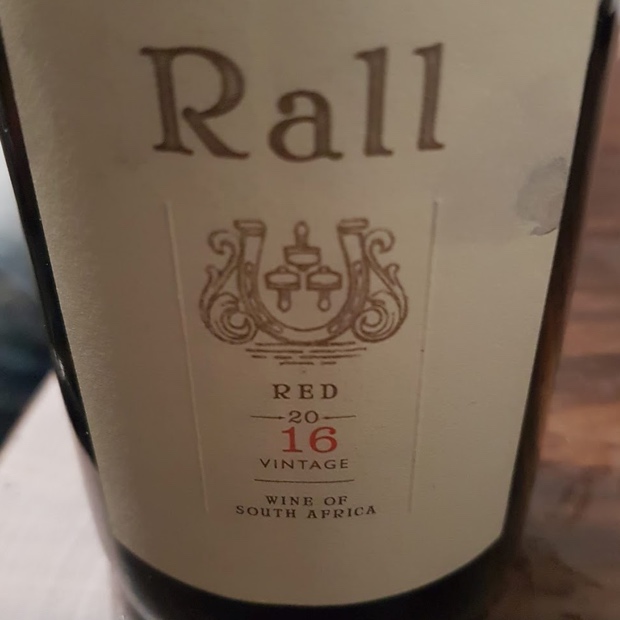
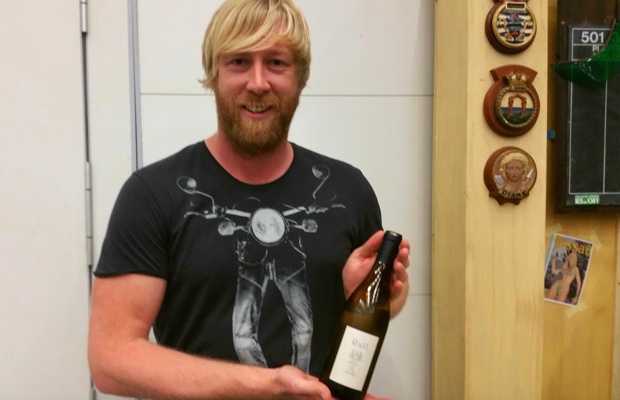
When I returned from South Africa two months ago people immediately began to ask. What’s it like? What’s new, what’s changed, what’s hot? I asked myself the same questions and the most obvious answers forthcoming were charged with the notions of quality and especially confidence. Case in point, fact and controlled emotion regarding the man, the winemaker and the wines of Donovan Rall.
Three years ago I had the opportunity to taste two of Rall’s wines at Cape Wine 2015. I was impressed with the quiet swagger of the Rall White and Rall Red. The former was from old Swartland (Paardeberg) and Stellenbosch (Bottelary and Helderberg) fruit I noted as “pure white stone groove.” The latter of Swartland schist to cure what troubles and saps. This sourcing, grabbing and snapping up grapes from vineyards, blocks and plots spread across the Western Cape is the humanistic phenomena of an independent South African winemaker’s condition. It’s what they do and yet Donovan Rall has taken the art form to a whole new level.
For one thing he has found the last Mohican of Wellington cinsault blanc and kept it alive for a very small portion of the world to enjoy. He’s mainly a Swartland guy but he also climbs high into the Piekenierskloof and dips into the depths of Darling cinsault. Mostly Donovan Rall is a Schistosier, a man of the Schist, El Schistorino, the Schister. He likes vines grown in the coarse-grained metamorphic rock, especially syrah and it is his latest varietal effort that blew my mind. It is truly one of South Africa’s most impressive varietal syrah.
Rall wines was established in 2008 after Donovan graduated with a Viticulture and Oenology degree from Stellenbosch University in 2005. He set out to travel and then returned to South Africa in 2007 for a Swartland vintage. Mediterranean varietals under his own label from scattered old Cape vineyards was the natural next step. Cape Wine 2018 marked the release of his 10th and 11th vintages in bottle, quite significant to mark the inaugural culmination of his early life’s work.
Donovan and I made eye contact at this most recent Cape Wine and I was flattered that he remembered tasting with me three years before. And so he went out of his way to pull seven bottles, disappear behind a partition and away from the mayhem of the Swartland booth and taste these seven South African beauties with me. The quantities are small but the hearts so very big. Here are my notes.
Rall Wines Cinsault Blanc 2017, Wellington, Western Cape, South Africa (Winery, WineAlign)
The fruit comes from a 32 year-old, tiny 0.2 hectares of certified vines and the only remaining vineyard planted to the varietal. Like red cinsault this thing drops acid as fast as anything else. What you will taste is only the grape, on the skins three days for phenolic pulling and then straight into the clay. Seven months only, not too far and so freshness is preserved. Not just spirit but mouthfeel with the lightest frame and 10.5 per cent alcohol, with nice dry tannins. It’s like a shout out louds very loud matter of “nothing is hard cause something always comes out.” Lemon like you’ve never experienced before, leaning lime, like clairette and grenache blanc, but then again no. It’s just this. Donovan Rall managed 1005 bottles. Drink 2018-2022. Tasted September 2018 #Rallwines#RallWines@RallWines
Rall Wines Grenache Blanc 2017, Piekenierskloof, Western Cape, South Africa (Winery, WineAlign)
It would be hard to argue with Donovan Rall that in the Western Cape grenache blanc needs to be made in the freshest, anti-oxidative, anti-leesy way. Zippy, salty, driven by minerals and acidity. In the Piekenierskloof, at 650m plus, done in concrete egg after early-picked fruit, but some skin-contact (like red wine, done in open top vessels constantly punched down) for texture because it’s approached with early-picked acidity preservation. Has the texture but no melon flavours. Love the unique epsom saltiness, low pH and generous spicing. Drink 2018-2021. Tasted September 2018
Rall Wines White 2015, Swartland, South Africa (Winery, WineAlign)
Leaving out the chardonnay component, the signature Rall White is now chenin blanc (60ish per cent), verdelho (30ish) and viognier. Mostly old oak, five years being the youngest, with various sizes. Other than the chard omission it’s the earlier picking that makes the difference to…lets say three years ago. That and the increase of the verdelho, which brings acidity. Whatever Donovan thought he might have been looking for and doing then, well he’s really doing it now. This shows how proper wine is being made out of necessity, not from a recipe, but most importantly out of adaptation. Great saltiness, bite, drive and instruction. Drink 2018-2024. Tasted September 2018
Rall Wines Chenin Blanc AVA 2017, Swartland, South Africa (Winery, WineAlign)
AVA is named after Donovan’s daughter. From an adjuvant site close to Riebeek-Kasteel off of 20 year-old vines that deliver great concentration by the impetus of decomposed shale, schist and quartz. There are two unique vineyards with rocks galore in the soil. Richly textured and so layered. The concentration delivered is ridiculous. It’s somehow stretched elastic and makes for this viscous, saline, briny and beautiful wine. Malo was done in a week, the pH low and then, nine months of beautiful fluidity and suppleness. While not exactly dry, the minor tough of sugar will help it go petrol, glück and oily over time. Drink 2019-2028. Tasted September 2018
Rall Wines Cinsault 2017, WO Coastal Region, South Africa (Winery, WineAlign)
From two vineyards, one in Swartland and one in Darling. A direct, lithe and purposed red looking for freshness and the Darling light transparency this varietal storm has created. Really pure berry fruit. Delightful, chalky, traversing the new South African ethos into a realm occupied by the ethereal. Drink 2019-2024. Tasted September 2018
Rall Wines Red 2016, Swartland, South Africa (Winery, WineAlign)
Four poster blend, Rhône-related, deeply rendered with great transparency but also major tannins. The syrah is 18 months in barrels, the cinsault and carignan are 15 per cent 2017 vintage, allowed under Swartland regulations. They bring back freshness and nervousness into the wine. It helps to manage that tannin and injects some life and spirit into their grainy weight. The red fruit also balances the purple profile of the syrah. Good glycerin and length. Drink 2019-2025. Tasted September 2018
Rall Wines AVA 2016, Swartland, South Africa (Winery, WineAlign)
The red blend carrying his daughter’s name is Donovan Rall’s 2.5 hectares sourcing from the schistose section of 18 year-old planted vines. This is consistent with with many of the vineyards he works with, from dry land conditions, cause he’s the Schist Man. It’s varietal syrah of 1000 bottles, a true cimmerian beast, from struggling vines, between 50-60 whole bunch (as opposed to 100 in the RED). Pure ferric initiative, real hematic following. The glycerin, candied flower and aged balsamico is almost IGT, of Cortona but really more so in a mind’s eye memory of Cornas. Freshness is preserved and structure is infinite. Great, great acidity. One of the Cape’s greatest achievements in syrah. Drink 2020-2032. Tasted September 2018
Take Godello to a place that’s far away and it will fill him with words. With memories still thick as Bredasdorp pea soup, it is hard to believe it has already been four months since travelling to South Africa in September for Cape Wine 2015. I think it wise for the reader to be offered fair warning. The following wayfaring log is not brief and while it may be broken up with images of food, bottle shots and scenery, there are five thousand plus words to wade through. Feel free to skim at your wine tasting note leisure.
For a comprehensive look at South Africa’s Capelands, read my report at WineAlign.
It has been four months since Cape Wine 2015 and many wines remain to be mentioned. My initial ramblings covered the three-day wine fair, varietal awakenings, Premium Independent Wineries of South Africa (PIWOSA), the Swartland Independents and the Zoo Biscuits.
Lemon butter poached crayfish tail, kale, parsnip puree and bisque, Open Door, Constantia
I tasted hundreds over three days at the bi-annual Cape Town event, along with dozens more in restaurants and at wineries in Stellenbosch, Swartland, Franschhoek and Constantia. One of the more memorable culinary experiences happened at Open Door Restaurant located at Uitsig Wine Estate in Constantia. The wine selection opened doors to new Cape perceptions and forward-thinking measures.
A visit to the Franschhoek Motor Museum at the Anthonij Rupert Wyne Estate rolled into a tasting of wines with Gareth Robertson, Sales and Marketing Manager at Anthonij Rupert Wines. Verticals were poured; Cape of Good Hope, Leopard’s Leap, La Motte and Optima L’Ormarins. Then the varietals of Anthonij Rupert Estate.
Hitching a ride on the Anthonij Rupert Estate
A full on Premium Independent Wineries of South Africa (PIWOSA) experience at the Car Wine Boot was nothing short of a wine-soaked, large object flinging hoedown throw down.
The act of intense immersion into any important wine-producing nation and its diverse regional expressions can only leave a lasting impression if the follow-up takes a long, cool sip of its meaning. Though just the beginning of what I hope to be a life-lasting fascination with South African wine, these 50 reviews prepare and pave the way.
Beaumont Family Wines Hope Marguerite 2013, Bot River-Walker Bay, South Africa (Winery, WineAlign)
Named after winemaker Sebastian Beaumont’s grandmother, Hope Marguerite Beaumont. Thirty-five (400L) barrels of Chenin Blanc from 1975 and 1978 plantings anointed by natural fermentation and maturation. Reductive, malo-avoidant and lees stirred for 10 months to dess effect. Acidity swallows and trumps sugar while bitters, well, these bitters don’t even realize they are bitters. Possessive of that torched orange peel, lime skin and hinting at something faintly tropical. Many shades of Chenin Blanc within one tight-knit bottle. A benchmark of species. Drink 2015-2022. Tasted September 2015 @Beauwine
Paul Cluver Riesling Dry Encounter 2013, Elgin, South Africa (Winery, $23.99, WineAlign)
Riesling from South Africa’s largest and nascent varietal growers, one of three Cluver bears and wholly antithetical to the “Close Encounter’ simply and primarily because of its omnipresent aridity in the face of 9.0 g/L of residual sugar. Based on fruit from a variegated 27 year-old block of ferricrete (surficial sand and gravel masses) layered over decomposed Bokkeveld Shale and/or light clay. From a basin, a true amphitheatre between the mountains. The dry one shows off the cooler climate charity, offering up the opportunity to make Riesling the way it needs to be. Floats boats of blossoms piled in apples, honey and native fynbos. Elevated in nervousness, tension and anxiety through the conduit of acidity. This guy is the tip of the spear that pierces the palate. Though dry to that pointed end it is the primitive passion of grape tannin that churns the combine. Drink 2015-2019. Tasted September 2015 @paulcluverwines@PIWOSA@paulcluver
Paul Cluver Gewürztraminer 2015, Elgin, South Africa (Winery)
If Riesling is a South African anomaly, the nine hectares planted to Gewürztraminer on the Cluver estate is at least preternatural if not verging on antediluvian. The throwback approach to varietal expression takes on the do anything in South Africa mandate and runs with it. A tightly wound white, like Riesling driven by acidity, inconsequential in sugar (10.2 g/L) and rushing with rivers of grape tannin. Lime is again the thing in a world where sweetness finds it hard to live. Anything but soapy, less than sticky and so very clean. Purity out of Elgin in Gewürztraminer. Drink 2015-2018. Tasted September 2015
Cape of Good Hope Riebeeksrivier White 2013, Swartland, South Africa (Winery)
From the stable of Anthonij Rupert Wines, a blend based on Chenin Blanc (65 per cent) with Rhône assistance from Marsanne, Roussanne and Viognier. Similar in a way to the old vines Chenin in its purest form in a clean amalgamation of weighty varietal relations. Naturally driven acidity and an increase in creamy texture is accompanied by lactic notes and a greener, sharp apple bite. A wow reversal of impression with an anise under current and a toasty, nutty omnipresence. Quite fine. Drink 2015-2020. Tasted September 2015 @AnthonijRupert
Rall Wines Red Coastal Region 2013, Swartland, South Africa (Winery)
Superior Syrah spine (85 per cent) with a 2014 Grenache (15 per cent) addendum. Healthy and happy in alcohol (14 per cent) from Swartland schist to cure what troubles and saps. Liquorice, easy tannin and illimitable fruit (for a two to five-year run) from the gifts of a terrific vintage. Open-knit, expressly serviceable with a not overly piquant, peppery finish. Tobacco moment is just a pinch between the cheek and gums. Easy on the extraction and 50 per cent stainless housing for nothing but Swartland fruit with some added stems for the perception os sheer freshness. Drink 2015-2018. Tasted September 2015 @SwartlandRev
David and Nadia Paardebosch Chenin Blanc 2014, Swartland, South Africa (Winery)
A blend of 1960’s, 1970’s and early 1980’s, mainly dry-farmed bush vine Chenin Blanc vineyards throughout the Swartland. Sweet textured Chenin with endemic herbiage and territorial tang. Varietal identity is never an issue for South Africa’s signature white but how does definition out of disparate plots come together? For the Sadies “the meaning always lies somewhere that’s right between the lines.” Connotation and significance in what’s left behind. Drink 2015-2020. Tasted September 2015 @DavidandNadia@SwartlandRev
David and Nadia Aristargos 2014, Swartland, South Africa (Winery)
David and Nadia Wines
A bush vines dominant, 12 vineyard, five-varietal interface of Chenin Blanc (35 per cent), Roussanne (25), Clairette Blanche (20), Viognier (15) and Sémillon (5). The latter (not inconsequential) addition is from a 1950’s planted vineyard. Round and round aromatics integrate Swartland harmonies in transition to palate promptitude of spry lemon and lime. Emits that fleshing four to five-year pursuit to honeyed possibility, in which the Sémillon is not lost on that ideal. We should all be willing to wait that long though not be greedy for anything more. Drink 2017-2019. Tasted September 2015
David and Nadia Grenache 2014, Swartland, South Africa (Winery)
A riveting (85 per cent) Grenache honed from two vineyards planted in granite mountain soils, mixed and matched with (15 per cent) fruit off of organic vines grown in deep iron rich soils. A scintillant of reductive freshness gets busy with chalk ou of ferric soil in romantic and heavy breathing passion. Though nearly carbonic, atomic and more exhalant than inhalant, the freshness is always halted by a weight in denouement. The obdurate cessation is helped along by 10 to 11 months in oak. Very thoughtful, engaging and consummated Grenache from the Sadies. Drink 2016-2020. Tasted September 2015
Godello and Billy Hughes at Cape Wine 2015
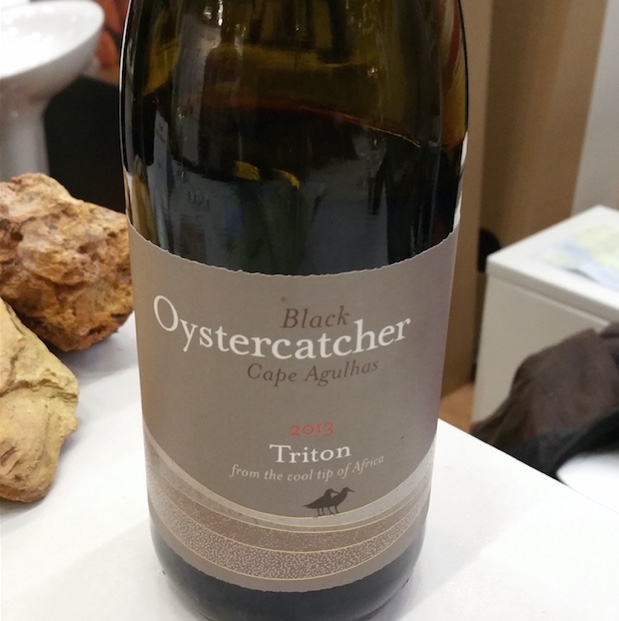
Hughes Family Wines Nativo White 2014, Swartland, South Africa (Winery)
Certified organic from the Kasteelsig Vineyards on the Hughes Family farm in Malmesbury. The blend is high in Viognier with Chenin Blanc, Roussanne and Grenache Blanc. Picked at three separate intervals, the bifurcate prongs of sugar, acidity and alcohol are remarkably streamlined towards an upwards push skyward. A very base and elemental white wine that hovers in the lower reaches of the stratosphere, wanting to rise but held secure by the heartstrings of older oak filaments. This is fresh and yet filled out by a density defined in Swartland ways. An appellative white blend with my thoughts of Cape Town’s Chef’s Warehouse crudo in mind. Drink 2015-2019. Tasted September 2015 @NativoWines
Crudo and Kimchi #tuna #kingclip #chefswarehouse #cape town
Hughes Family Wines Nativo Red 2009, Swartland, South Africa (Winery)
Certified organic from natural, dry-farmed estate Kasteelsig Vineyards on the Hughes Family farm in Malmesbury. The blend is Shiraz (56 per cent), Grenache (16), Merlot (13), Mourvedre (9) and Pinotage (6). Swartland’s local master of assemblage Billy Hughes (the J-L Groux of South Africa if you like) counselled separate and all natural fermentations, barrel malolactic, eight months in 225L barriques (none new) plus four more post blending. The core aroma to palate thematic is ingratiated by a grape in raisin initiation stage, habituating the right side of ripe. This is a soft-styled Swartland red having fully realized its progressive road to enrichment. Drink 2015-2017. Tasted September 2015
Hughes Family Wines Nativo Red 2010, Swartland, South Africa (Winery)
As in 2009, certified organic from natural, dry-farmed estate Kasteelsig Vineyards on the Hughes Family farm in Malmesbury. The blend is Syrah (52 per cent), Mourvedre (22), Grenache (13) and Pinotage (13). Fresher, lighter even than 2009, floral, feathery, feminine. Through the pretty dab of perfume there is the presence of clay, iron and a feeling of warm Cassis. The red fruit while anything but dark has a presence, an attitude, an unfailing condition. Will live longer than the previous vintage. Drink 2015-2019. Tasted September 2015
Wildehurst Velo White 2014, Swartland, South Africa (Winery)
Juicy Colombard, Chenin Blanc and Viognier in cohorts simply, basically and ostensibly about town for texture. Beautiful freshness, grace and grape tannin. The juice and nothing but the juice. Drink 2015-2017. Tasted September 2015 @WildehurstW@ShereeNothnagel@SwartlandRev
Wildehurst Velo Rosé 2014, Swartland, South Africa (Winery)
A multi-cultivar and double-hued blush by way of Grenache, Viognier, Mourvèdre, Colombard and Chenin Blanc. Really widens the fresh fruit spectrum, in manifold customary shades of red. From a hot vintage where sugars ran higher than 2013 yet still just about as dry as a skeleton way past tissue. Despite all attempts, the brine and herbiage outplay the salinity and aridity. Drink 2015-2017. Tasted September 2015
Wildehurst Chenin Blanc 2012, Swartland, South Africa (Winery)
The only straight up cultivar in Sheree Nothnagel’s portfolio from 30 year-old bush vines. Arranged low, natural and slow across a two month fermentation period in 3rd fill (225L) barrels towards a dry end. Matured on the lees for a further five months. Handy, prosaic and unostentatious Chenin Blanc of texture and mouthfeel. Drink 2015-2018. Tasted September 2015
Silwervis Cinsault 2014, Swartland, South Africa (Winery)
First introduced at the inaugural Swartland Revolution, winemaker Ryan Mostert is a key player in the South African Cinsault revival. His naturally exhibited (with only added sulphur) old-vine Swartland Cinsault was matured in one Nomblot concrete egg. His is the Allman Brothers, Creedence Clearwater Revival and Deerhunter rolled into one varietal ode “to the malleability and uniqueness of Swartland.”
One of hundreds of wines tasted over an eight-day period in requiem to exclaim, “I am saved, I am saved. And oh, would you believe it?” So fresh, salty, ultra-carbonic, russet roseate raspberry and orange peel. It really feels real, unlike anywhere else. The varietal and the reformation. “We’re in a revolution. Don’t you know we’re right. People can you feel it? Love is everywhere.” Drink 2015-2018. Tasted September 2015 @Silwervis@SwartlandRev@PascalSchildt
Silwervis winemaker Ryan Mostert is behind the new Terra Cura label with Samantha Suddons. From just outside of Malmesbury in the Western Cape. This cracker of a bottle is one hundred per cent Syrah from rolling hills rocking down to the sea. Ferric, burrowing into depths, rooted and heavy. Structured, chunky savoury, of wild sauvage, from a fierce and filthy athletic vintage. Reeks of potpourri, ambition and is yet remarkably ready to drink. A messenger to herald a land of opportunity, a revolution, the future. Drink 2015-2019. Tasted September 2015 @Terra_Cura
Johan Simons, Dragonridge Wines
Dragonridge Wines Supernova Ancestral 2014, Paardeberg, South Africa (Winery)
Chenin Blanc works with Sangiovese and with Pinotage to lead this ancestral method sparkling blend. From Joubertskloof’s Fynbos Estate, this fizz is really nothing like Méthode Cap Classique in that it adds nothing to the fermentation in the bottle, relying only on its own sugars and wild yeasts. When it does not explode it goes this way, so, so natural, all in. Winemaker Johan Simons happily sees it persist through the problem. “We do it because we can, and we want to.” From two blocks planted in 1964 and 1990 with a section going back to 1920. Picked on the 19th of January and from a ferment that finished two months early. These very old, unirrigated bush vines offer up lemon funky, low pH fruit. Goes straight to the roof of the mouth with rising, unassertive flavours. The question begs, is this an oasis of South African fizz or a desert where ancient longings go to die. The answer lies “caught beneath the landslide in a champagne supernova.” We’ll see about that. Drink 2015-2018. Tasted September 2015 @FynbosEstate
Dragonridge Wines Cabernet Sauvignon 2015, Paardeberg, South Africa (Winery)
No wood. From five barrels of naturally thick, free-run only juiced, patchy, basket pressed elixir. This is simply brilliant, drink the hell out of it until it’s gone Cabernet Sauvignon. Forget the barrel. Bring it on. Drink 2015-2016. Tasted September 2015
Elementis Skin Contact Chenin Blanc 2014
Intellego Wines Chenin Blanc ‘Elementis’ 2014, Swartland, South Africa (Winery)
A private label by Lammershoek’s Jürgen Gouws, from two 40 year-old bush vines parcels. A direct, right at you, citrus and dry-farmed tang Chenin simultaneously pretty and bitter. Three weeks of skin contact detour to grapefruit and guava with a level of great elegance in its laundry soaking up dirty water. Cloudy and slightly dangerous, Basque cider like and built by the bare necessities of salinity and trim, briny orange elements. As snake-driven a purposed accumulation as found anywhere in South Africa. Drink 2015-2017. Tasted September 2015 @jurgengouws
Intellego Wines Syrah Kolbroek 2013, Swartland, South Africa (Winery)
Same natural fermentation as the Chenin in this single-vineyard, 100 per cent Syrah. Comes up firing after time spent on its skins, soaking up and in its own tannic juices. Fresh if tight for elegance in Syrah. Refined bitters adhere to the supreme purpose which is an expression of spritely, red energy. Drink 2015-2018. Tasted September 2015
Black Oystercatcher Triton 2013
Black Oystercatcher Triton 2013, Elim, South Africa (Winery)
From owner & winemaker Dirk Human at Cape Agulhas, this is highly modern and refined Shiraz major (86 per cent) with minor Cabernet Sauvignon (12) and Cabernet Franc (2). Stylish without a whack of new oak, with independent varietal fermentation, maturation and ageing for 12 months. In a multiple choice Shiraz world of spicy, piquant, snappy and sharp the fill is all of the above. The present day South African cliché encompassing fresh, tight and elegant reds comes ’round again though here you can add cool-climate (southernmost tip of Africa) feel to the mix. What comes from the wood is in the finish, over charcoal and brushed by tar. Should show best in 2018. Drink 2015-2021. Tasted September 2015 @BOC_Wines
Francois Haasbroek, Blackwater Wines
Blackwater Wines Underdog Chenin Blanc (MMXIV) 2014, Stellenbosch, South Africa (Winery)
A mere 5500 bottles from winemaker Francois Haasbroek, a balanced tannin, alcohol (13.3 per cent), acidity (5.8 TA) and sugar Chenin, culled from high slope, (46 year) old bush vineyards of Bottelary Hills. Concrete tank housed ferments and aged on the fine lees for six months. Texture drives the green apple machine, fuelled by salinity and faux candy bursts. Drink 2016-2019. Tasted September 2015 @Blackwaterwine@ZooBiscuitsWine
Blackwater Wines Blanc (MMXIV) 2014, Western Cape, South Africa (Winery)
Chenin Blanc 80 (per cent), Sémillon (15) and Bourboulenc from vineyards in Durbanville and Ashton. The Chenin was skin fermented for 7 days and then blended with 2013 Sémillon (equipped with 12 months of texture gained on the lees) and what Haasbroek quips was a “smidge” of Bourboulenc. The 1200 bottle blend saw further time (16 months) in old (225L) barrels. Possessive of apples glazed in lemon polish, terrific, granitic grain in tannin and Deiss-esque Pinot d’Alsace surrealism. Drink 2016-2021. Tasted September 2015
Blackwater Wines Cultellus Syrah (MMXII) 2012, Swartland, South Africa (Winery)
Schist Syrah in its entirety, mineral warm and tempered, moderately spiked by its alcohol (13.7 per cent) and five-plus year controlled acidity (5.6 TA). Blackwater’s steep block of Riebeek Kasteel vineyards offers up fruit begging to left alone. Haasbroek consented to four weeks of contact on the skins, followed by nothing more indulgent then a drain & whole-bunch press into eight to ten year-old (600L) barrels. Twenty-six months later, sans filter, nary a fining and voila. Syrah in fancy-free finesse, smoky elegance, Swartland schist, sour cherry and more schisty ferric earth. Dynamic though never in danger of inflammation, inflammatory or flaming behaviour. In the end, the sweetness is impossible. Drink 2016-2022. Tasted September 2015
Blackwater Wines Noir (MMXII) 2012, Swartland, South Africa (Winery)
The largest output in the Blackwater portfolio with a whopping 6000 bottles. A multi-site Swartland Syrah (92 per cent), 10-15 per cent whole bunch fermented and then blended with Carignan and Grenache after a year of ageing. This follwed by an additional 12-14 months in old 500-600L barrels. Deep and meaty, but like modern Nebbiolo, of finesse in the clarity of its recesses. Marked by gnashing tannin and grippy structure. Drink 2016-2019. Tasted September 2015
Blackwater Wines Omerta (MMXIV) 2014, Swartland, South Africa (Winery)
It begins with a shush, this “code of silence,” although it has nothing to do with “criminal activity” and yet its aromatic sweetness should be illegal. Caring proposed in 100 per cent terms, off of 28 year-old Swartland bush vines, fully entrenched in the revolution and the revival, while in “refusal to give evidence to authorities.” The single vineyard, predominantly granite soils are the source of amazing purity and acidity as if by wrote. Healthy (30 per cent) whole bunch fermentation and a 25 day linger on the skins imparts more tannic by-product nectar. The older 500L barrels for 16 months makes for a dusty, carefully curated cure. When it comes to thinking about drinking this Omerta, “Old black water, keep on rollin’…I ain’t got no worries, ’cause I ain’t in no hurry at all.” Drink 2018-2022. Tasted September 2015
Savage Wines White 2014, Western Cape, South Africa (Winery)
In which Sauvignon Blanc (70 per cent) and Sémillon (30) keep good vibes, smile and celebrate a pure purée of progressive white tannin. This is the last of the straightforward Bordeaux Savage Mohicans with subsequent vintages adding more varietal diversification. Duncan Savage sees the future replete with appellative blends as per a Western Cape necessity, free from the posit tug of French heartstrings. This last kick at the Left Bank can is bright, pure and composed to reflect sunshine and stone. Drink 2015-2018. Tasted September 2015 @ZooBiscuitsWine
Savage Wines Red 2014, Western Cape, South Africa (Winery, WineAlign)
Essentially Western Cape fruit with a dab of Darling in a blend that emits polished Syrah (67 per cent) with naturally supportive Cinsault (12), Grenache (9) and Touriga Nacional (9). Duncan Savage procured 3500 bottles to market of this ranger, a red thinking cool Rhône thoughts and rooted firmly on the median line between his single-vineyard Syrah and the precocious Follow the Line. Will increase in complexity when Syrah gives away some floor time to the other grapes. Drink 2015-2018. Tasted September 2015
Savage Wines Syrah 2014, Western Cape, South Africa (Winery)
Perhaps the most personal of Duncan Savage’s wines, even more than the Farmhouse draw in his red blend Follow the Line. This SV Syrah is the home block, the place where he lives. His blends are a pure blur while this Syrah offers up a not too distant future filled with early life appreciation, graceful necessities and gifting niceties. It just hints at this now and subsequent wines will sing. Let this one and what’s left of the other 599 bottles produced sit for a year, to smooth out harsh bits and to integrate the Cape funk and Syrah cure. “Oh, it’s like an animal farm, but you’ll come to no harm in the country.” Drink 2016-2020. Tasted September 2015
Momento Wines Chenin Blanc-Verdelho 2014, Bot River, South Africa (Winery)
The Chenin Blanc (85 per cent) grows in old vineyards from Bot River and Darling and together with 11 year-old Bot River Verdelho (15) they reside in Bokkeveld shale, with portions of sand and clay. Five (400L old) French barrels carried natural Chenin ferments with some fine lees. Stainless tanks and older oak housed the riper Verdelho which joined the Chenin just before bottling. Winemaker Marelise Niemann was able to produce a healthy yet manageable quantity (200 cases) of a blend directed to deferential texture. This from a cloudy ferment once clarified turned to secondary, mineral flavours. The early pick and moderate (12.5 per cent) alcohol gained on bacteria and made for pure white fusion. The orchards are spoken for, from pit, through seed and back to pit. Drink 2015-2019. Tasted September 2015 @momentowines@ZooBiscuitsWine
Marelise Niemann, Momento Wines
Momento Wines Grenache 2014, Swartland, South Africa (Winery)
From porous, sandy soil, Grenache loving dryland (10 year-old) bush vines, for the time being at least, until the Bot River vines mature. A smaller (one half) production than the white raised in open fermenters, one-third punched down and only old barrels used. So opposite in feel to the Bokkeveld shale, regardless of the grape hue, bringing a foxy, natural cure to Grenache. Direct, tight and autotelic fresh, crunchy and popping. Unalloyed red fruit, hidden citrus and a racy finish. Drink 2015-2018. Tasted September 2015
Botanica Wines Chenin Blanc and Chenin Blanc Untitled #1 2014
Botanica Wines Chenin Blanc 2014, Citrusdal Mountain, South Africa (Winery)
Winemaker Ginny Povall draws fruit made on the Stellenbosch farm from 55 year-old vines set in a 1600m high dry-farmed vineyard. The location is the rugged Skurfberg slopes in the mountains of Clanwilliam, 40 kilometres from the sea. These vines are low yielding, producing a scant 2.5 tons per hectare and picked early. Half of the just on the lee side of ripe fruit is barrel fermented and matured in 400L French oak and spends nine months on the gross lees. Juicy, bright, full on citrus, striking and crackling Chenin. Wood adds some weight and oh, the Rooibos. Drink 2015-2019. Tasted September 2015 @ginnypovall
Botanica Wines Chenin Blanc Untitled #1 2014, Citrusdal Mountain, South Africa (Winery)
The approach is small batch, from lower Skurfberg altitude, chosen out of a specifically identified parcel and intentionally managed with 100 per cent (20 new) oak intervention. Lower alcohol, higher reduction and an ulterior, gemstone mineral manifestation. On one hand the Chardonnay like approach causes a perplexing feeling and on the other, a sense of wonder. The tropical abutment and real-time citrus symbiosis carries the weight and then the Rooibos, again. Occupies high ranks in the wooded Chenin outpost territory. Drink 2015-2022. Tasted September 2015
The Tea Leaf Chenin Blanc 2014, Piekenierskloof, South Africa (Winery)
Made by Donovan Rall for Boutinot in the anti-Western Cape unicorn region Piekenierskloof, from where Chenin Blanc seems to have risen to sudden and darling prominence. The 70 year-old vineyards are at 750m, which is not nothing and the fruit is cropped from 40 year-old vines. All natural fermentation is the modus in this fuller, deeper, mineral completed Chenin that runs the gamut from creamy to bitters. And unfermented redbush, Aspalathus linearis. Drink 2015-2019. Tasted September 2015 @BoutinotWines
Boekenhoutskloof Sémillon 2004,Franschhoek, South Africa (Winery, Agent, WineAlign)
If anything, Marc Kent’s decade and a year Sémillon has travelled down a long road to a very quiet place. That retirement home is filled with honey and dates, all gathered up nicely in tangy, gift wrapping acidity. The orchard fruits are gone and the truth no longer lies in the second half of the bottle. It speaks with early clarity. Time to drink up, sipping slowly, with the “sun going down, blood orange, behind the Simonsberg.” Drink 2015-2016. Tasted September 2015 @UNIVINS
Steenberg Nebbiolo 2013, Constantia, South Africa (Winery)
Another achievement in what can be cultivated, nurtured and brought to fruition with great success in South Africa. A ringer for Serralunga from Nebbiolo treated to 60 per cent second and 40 per cent third fill 225L French oak barrels for 14 months. Roses meet tar, tea, red citrus and bright, vital flavours. The life affirming and balanced qualities of Nebbiolo in the cooler, temperate and Mediterranean-mimicked Constantia climate will bring longevity to this wine. Should flesh out, settle and sing in three to five years. Drink 2018-2022. Tasted September 2015 @SteenbergWines@ConstantiaWines
Allesverloren Tinto Barocca 2013, Swartland, South Africa (Winery)
Dating back to 1704, Allesverloren is situated on the south-eastern slopes of the Kasteelberg near Riebeek West, is the oldest estate in the Swartland Wine of Origin district. “The Naked Winemaker” Danie Malan farms dryland, trellised vineyards, situated 140m above sea level and facing south-east, were planted between 1958 and 1996. Here exemplary bread basket viticulture with a perfectly habituated expatriate Portuguese grape, rich in warmth, tannin and texture after having been aged in second and third French oak for eight months. The hematic push is elevated, as per the Swartland soil give, so the brooding capitulation is both deep and vaulted. High pH mixed with upwards and capped acidity ensures brightness, to speak the correct dialect and fanciful expression. Finishes with style. Drink 2015-2019. Tasted September 2015 @AllesverlorenSA
Innemend teenage Cabernet @Uitkykwines
Uitkyk Cabernet Sauvignon 2000, Stellenbosch, South Africa (Winery)
From north-west facing vines planted in 1989 to 1993 in soils rich in decomposed granite at 300 meters above sea level. Aging was completed for 18 months in 300L French oak barrels of which 53 per cent were new, (35) second and (12) third fill. I begin with “Hello? Hello? Hello? Is there anybody in there? Just nod if you can hear me. Is there anyone at home?” The answer is very much yes. At 15 years of age the Uitkyk is a treat in the latter stages of a comfortably numb dream. Deep pink, raspberry dusty, funky of triturated earth and ground stone. Still much aridity and acidity hanging on for dear life. Seems to drone on with mostly rising breaths and strings in oscillation. A remarkable older drop. Drink 2015-2016. Tasted September 2015 @uitkykwinemaker
Grangehurst Cabernet Sauvignon Merlot 1995, Stellenbosch, South Africa (Winery)
Quite the treat to see this pouring at the older wines, help yourself tasting session at Cape Wine 2015. It was from what is widely considered Stellenbosch’s vintage of that decade and 20 years is not nothing for Paulliac let alone Stellenbosch. Grangehurst has made this wine in every vintage save for one, since 1992. What a remarkable old drop from winemaker Jeremy Walker, alive and kicking, as if by any means necessary. This from a guy who was quoted as saying “the more you surf during the harvest season, the better the wines.” His 1995 is replete with notes of cedar, thyme, coercing currants and really grand minerality. Has survived with acidity and tannin intact, stretching, yet persistent and working with what had to have been a harvest of such perfect fruit. Drink 2015-2017. Tasted September 2015 @grangehurst
Tamboerskloof Viognier 2015 and Shiraz Rosé Katharien 2015
Kleinood Farm Tamboerskloof Viognier 2015, Stellenbosch, South Africa (Winery, Agent, WineAlign)
From Tukulu and Kroonstad, augmented with nine or 10 percent Roussanne. Some barrel aging (nothing new, mostly 4th fill French 300L) plus a final 30-60 days in concrete eggs. Beautifully restrained, classically styled and tempered Viognier. The respectable alcohol (12.9 per cent), piqueing acid (6.0 g/l), low pH (3.22) and necessary residual sugar (4.4 g/l) are the specs of attentive and pinpoint winemaking. The result is remarkable freshness and purity with a bit of stuffing. Picked on the model of “flavour faith,” the softness “just dropped in to see what condition” the grip’s “condition was in. It was with cool fleshy fruit against a backdrop of warm, tropical flowers. Chic, first edition Viognier. Drink 2015-2018. Tasted September 2015 @Tamboerskloof
Kleinood Farm Tamboerskloof Shiraz 2011, Stellenbosch, South Africa (Winery, Agent, WineAlign)
The blocks are Tukulu/Kroonstad/Klapmuts/Witfontein and vines at 12 years of age. Five per cent Mourvèdre and a couple of points Viognier clean and lift the Shiraz while 10-12 days of skin contact roll out the red carpet of elixir vitae. Imagine the possibilities if Gunter Shultz had opted for 24-30. The engineering in l’élevage pays heed to 18-20 months in 300 and 500L French oak barrels, 15 per cent new, (20) second, (25) third, (20) fourth (20) fifth fill. A further 18 months in bottle delayed the patient and philosophic release. Shiraz rarely gains a compatibility like this. Big to elegant, brawn to finesse. The purity is only overshadowed by the youth. Five years are needed to reverse the ratios of cosanguinity. The Tamboersklook is a prime Stellenbosch example of thoughtful winemaking taking full advantage of technology and techniques firmly entrenched in the progressive and the forward thinking. Drink 2019-2026. Tasted September 2015
Big wines. Bigger, balanced finesse @Tamboerskloof @CapeWine2015 @WOSA_ZA #upperblaauwklippenvintners
Kleinood Farm Tamboerskloof Shiraz 2012, Stellenbosch, South Africa (Winery, Agent, WineAlign)
It’s quite amazing to see a wine made in virtually the exact same way as the forbearing 2011 turn out to be so different. The only noticeable adjustment is the few points increase in Shiraz but the approachability and accessibility factor is manifest tenfold. Lush fruit, plush texture and tannins sweeter yet still firmly structured lead this down a much friendlier road. For winemaker Gunter Shultz this could be the result of exceptional planning or just dumb luck. Does it matter? The fact that this can be enjoyed in just two years time while the 2011 broods and sulks means that four years on you could switch back and forth for maximum mini-horizontal enjoyment. Drink 2017-2027. Tasted September 2015
Kleinhood Farm Tamboerskloof Shiraz Rosé Katharien 2015, Stellenbosch, South Africa (Winery, Agent WineAlign)
Fundamentally bone-dry Rosé first picked at 20 brix and then at 24, so very lightly pressed and then finished at 13 per cent alcohol. Mostly stainless steel in ferment with some time in “odds and ends” of French oak barrels. A dry and dusty blush with Shiraz that goes straight to strawberry and candied fruits. The simple pleasures found. Drink 2015-2017. Tasted September 2015
Kleinood Farm Tamboerskloof Shiraz John Spicer 2010, Stellenbosch, South Africa (Winery, Agent, WineAlign)
Single-vineyard (Tukulu block), 100 per cent Shiraz from 20 months in 300L French oak, split between 25 per cent first, (20) second and the remainder third fill. As a comparison with the ’11 and ’12 (less than 100 per cent) Shiraz this is the one with the “devil’s grip, the iron fist.” Follow up to the maiden voyage, the motorhead 2010 broods under a moonless sky, a dark night and a wine with which you “walk in circle lose your track, can’t go on but you can’t go back.” Like the song, this is one of those wines you can actually lose weight while sipping. So hard to tame this ferric, oozing beast but the far eastern, temperate, somewhat fertile savour, from mint, eucalyptus and clove is nothing if not intriguing. Built from north facing, Clone SH470 Shiraz vines of cool acceptance, there also invades a Mediterranean brush of garrigue and délicasse. Enough finesse in its largesse causes pause for thought, that like any contemporary sound, smell or taste it often just takes getting used to. With time the immensity and reverberation settles and immunity sets in. A newer, larger expression will take centre stage and the old bark won’t seem so loud. John Spicer 2010 will seem like a ballad some day. Drink 2020-2030. Tasted September 2015
Alheit Vineyards Flotsam & Jetsam Cinsault 2015, Darling, South Africa (Winery)
Coined the Boetie Van Reenan Darling Cinsualt from dry-farmed fruit in a tertiary-carbonic, whole bunch stomped, gassed and left t0 reach one-third of the total ferment state. A short stay in old, left for naught oak barrels. The result is a wine the world knows not from or how. The resolution is where South Africa is heading, into fine, pure, fresh berry tonic territory. The clarity of the language is downright biblical. The elements are base and instructional, of carbon, hydrogen, oxygen, nitrogen, calcium, sulphur and a few other unnamed elements. Their accrued spirit is not one of sophistication but they succinctly prepare us for a path to civil and ceremonial wine consuming law. This my friends is a Monday to Friday breakfast wine. Drink 2015-2018. Tasted September 2015 @ChrisAlheit@ZooBiscuitsWine
Maps & Legends, from Cartology to Flotsam & Jetsam @ChrisAlheit @ZooBiscuitsWine #alheitvineyards #hermanus #capewine2015
Alheit Vineyards Cartology Chenin Blanc-Sémillon 2014, Western Cape, South Africa (Winery, Agent, WineAlign)
An exploratory cuvée of recherché to examine the diversity of mature dryland bushvines out of vineyards dotting the Western Cape. Eighty year-old Sémillon from Franschhoek is the catalyst to complement and ramble with heritage (30-40 year old) Chenin Blanc grown in Skurfberg, Perdeberg, Bottelary Hills and Kasteelberg. A natural fermentation is performed to imitate a cold night in the vineyard. The wine is a map with the compass to lead you back to the vineyards, to taste the grapes in their naked states. The South African version of atticism and rhythm in Cartology is utterly Western Cape and nothing else tastes just like this. It bleeds lime and stone with subterranean salinity trailing all the way. Criterion Chenin Blanc and paradigmatic Sémillon. Drink 2015-2022. Tasted September 2015
The wines of Diemersdal
Diemersdal Grüner Veltliner 2015, Durbanville, South Africa (Winery)
From a vineyard planted in 2009 of Scali and Hutton soil and South-West facing slopes. This third vintage of 12,000 bottles was 50 per cent fermented with “X5,” a Sauvignon Blanc-Riesling yeast and the balance with a traditional varietal strain from Austria, Oenoferm Veltliner. Sixmonths post fermentation lees are `stirred up to once a week. Classic mineral and fruit 50/50 GV style though equally and tangibly in poesy to regional Sauvignon Blanc; crisp with a touch of herbal spine. Vibrant, tightly wound acidity and a peppery bite on the back-end. The SB bent is written and exploited in the best possible way. Will be a great wine when the vineyard grows up just a bit. Drink 2015-2017. Tasted September 2015 @diemersdalwines
Diemersdal Sauvignon Blanc Eight Rows 2015, Durbanville Hills, South Africa (Winery)
When sixth generation winemaker Thys Louw wanted to make a block specific Sauvignon Blanc his father Tienie’s offer fell short. “Why get out of bed for three rows?” Eight it was. From soils of decomposed granite with high clay content off of vines nearly 30 years of age. The locale, pinpoint picking from carefully chosen contours and the attention to detail have come to a cleaner, finessed and wisely distinct Sauvignon Blanc expression. The ride is calmer than the reserve and the finish still replete with freshness. The citrus preserves, locks in and bottles acidity. The obvious grape variety avoids cliché and the obscurity of “stand by me…nobody knows the way it’s gonna be.” Instead the eight rows oasis produces a Sauvignon Blanc that understands where it comes from and knows what it wants to be. Knows where it’s going. Drink 2015-2019. Tasted September 2015
The Foundry Grenache Blanc 2014, Cape of Good Hope, South Africa (Winery)
From Meerlust’s cellar master, Chris Williams, in partnership with his Kumala brand manager, the Scot James Reid. Fruit sourced from growers across the Cape. The wines are produced at Meerlust in Stellenbosch. The Grenache Blanc comes from the Malmesbury shale and decomposed granite soils of the Voor-Paardeberg. A mineral streak runs through and this bears little resemblance to the Rhône, nor does it reminisce about Catalonia. This is futuristic Grenache Blanc, the kind only found in dreams because of its high level of sumptuousness despite the elevated stone count. Tack on scents of lead and/or graphite and the revelry ascends. Perhaps it should be looked at as a block of chilled rock as holding vessel for selling fruit. Longevity from 100 per cent Grenache Blanc is a rare, cool and beautiful thing. Drink 2015-2022. Tasted September 2015 @ChrisTheFoundry
The Blacksmith Vin Noir 2014, W.O. Coastal Region, South Africa (Winery)
A personal project of 600 bottles for Tremayne Smith, assistant winemaker at Mullineux & Leeu. A blend of 59 per cent Cinsault from Paarl and (41) Carignan from the Swartland. Neither Irish Planxty nor traditional folk Steeleye Span, the Vin Noir’s power chords and mineral metal imagines “uncrushable shields, power belts and magic rings.” A Falconer in Cinsault-Carignan clothing, smoky sweet, savoury emulsified, vaporous, beautifully murky. The Carignan is devilishly Rhône, built with spice, liquorice and dried sassafras. A slow release of red citrus Cinsault and a final, flinty feign of sweetness. A far cry from the old days of drinking South African tassies. Drink 2015-2017. Tasted September 2015 @tvsmith85
J H Meyer Cradock Peak Pinot Noir 2014, Outeniqua, South Africa (Winery, Agent, WineAlign)
From the Cape outpost of Outeniqua, of all deity forsaken places, in the mountains above George and named for the highest (1578m) peak. The montane fynbos terrain makes for Pinot Noir of wild depth, tannic breadth and a natural, unfined, unfiltered bush vine pressed sensation. Though so unknown, this southeast facing slope drives a point not just new but also important to the South Africa Pinot Noir discussion. This Cradock Peak is a pushy Pinot, plush and demanding. Drink 2016-2019. Tasted September 2015 @Nicholaspearce_@PublikWine
J H Meyer Cradock Peak Pinot Noir 2014, photo (c) Nicholas Pearce
Independents, rebels, rogues, zoo biscuits, risk takers, revolution. Buzz words, gathered sects and constituents of rebellion. Clusters of assemblage ruminating, circulating and percolating at the latest edition of organized wine in South Africa.
Who among us might have foretold in dramatic foreshadowing the story of September’s Cape Wine 2015? Who could have known that the southern hemisphere’s largest gathering of producers, marketers, buyers, sellers, sommeliers and journalists would do more to quell preconceived notions and stereotypes for any wine producing country than any trade show that has come before? Total, utter energy.
PIWOSA
Centuries ago, when the fishing and trading boats would return west to the Cape they would mistakenly enter the wrong basin. “There’s that confounded bay again,” they would curse. False Bay. During the week preceding and following Cape Wine we climbed aboard cars and vans headed out from Cape Town or Stellenbosch. En route to a farm, estate or winery, more often than not, out the window, there was False Bay, like a magnet, drawing attention, setting and re-setting the excursion compass. As we watched the bay ache into and fade out of view each jaunt-acquiesced day, it just seemed as though we were always heading north and gaining altitude. Not really.
Cape wine country meanderings exist in requiem well beyond points A to B. Directional challenges are inclusive of L-shapes, U-turns and rotations. Lines draw as much east, southeast and northeast as they do falsely north. Journeys always conclude in a valley, at the base of a mountain or in an amphitheatre bound by geological reality. The getting there is often hazy but the arrival always comfortable.
South African wine is not what we thought it was. This mantra can’t be repeated often enough. Ventures into the wine lands compounded the about-face turn of mind. Tastings, tours and zealous immersion into Stellenbosch, Franschhoek, Swartland and Hemel-En-Aarde saw to that. South Africa is not what you thought folks, but it just might be what you dare to dream. If you’ve not visited you can’t possibly know what revelations lurk.
The frontier is inhabited by cowboys and their multifarious varietal schemes. It’s surfeited by demi-century established Chenin Blanc bush vines, painted pell-mell with expatriate rootstock and cuttings outside the Bordeaux and Burgundy box; Nebbiolo, Barbera, Tinta Barocca, Albarino, Riesling, Gewürztraminer, Pinot Gris, Tempranillo and Tannat. Nothing is sacred and everything is fair game. Rhône blends are the current rage and Cinsault is going it alone with nothing short of remarkable results.
The Zoo Biscuits
Natural fermentation, skin contact and carbonic maceration have infiltrated the winemaker’s psyche. The eco-bio movement has challenged the fundamentalist incumbency and forced sweeping reforms. Fresh, natural, orange, caliginous and tenebrous have taken the Cape by storm. Praetorian makers are changing their ways. Pinotage has abandoned decades of Bordeaux wannabe style to once again don bell bottoms and retro suede. In 2015 South Africa, cats and dogs are living together.
Zoo Biscuits poster
Introduce me to a winemaker who is not in tune with his or her terroir and I’ll show you a winemaker who is either faking it or blindly towing a company line. That breed is few and far between. In South Africa I met exactly none of that ilk. So what? What’s so special about a nation of winemakers who work as one with their soil, their meso-climate and their geology? You’re supposed to intuit those abstracts to make great wine. “You’re supposed to take care of your kids!”
No, what separates South African vignerons from the rest of the world is the playground mentality and the execution in consummation of those ideals. The soils and the weather are nothing short of perfect in the vast growing region known as the Western Cape, or in the local vernacular, the Cape Winelands. Any varietal of choice can find its way to achieve perfect phenolic ripeness virtually anywhere the grapes are planted. The mitigating effect of Cape winds eradicates all disease. The place is a veritable garden of viticulture eden. Or, as in the case of the Hemel-En-Aarde Valley, a verdant, fertile valley known as “heaven on earth,” the adage takes on the paradisiacal guise of the sublime. South Africa is the wine collective equivalent of the wild west. In the Western Cape, anything goes.
I will expand, in due course, on all the wines tasted during the eight days I spent in South Africa. A list of top wines and a preponderant unfurling are sure to follow in the form of fifty odd tasting notes. For now I will concentrate, in the name of lede consistency, on the varietal and stylistic revolution taking place.
Swartland Independents
The following notes will unquestionably focus on three platoons, Premium Independent Wineries of South Africa (PIWOSA), the Swartland Independents and the Zoo Biscuits. The first is a collective of straight-shooting, accordant, premium, independent wine producers from across the diverse wine regions of South Africa’s Western Cape. The second comprises 25 (give or take) cricket playing, indigenous fermenting, Anglikaans-gabbing grape shepherds. The third may draw their name from beloved childhood memories of packaged iced silhouettes of animals on cookies when in actuality they are a gaggle of like-minded, boundary-pushing, fun-loving, serious winemakers.
Suzaan and Chris Alheit
Cape Wine 2015 may have seen 300 presenters toting thousands of South African bottles but the swagger of 40 young vignerons stole the proverbial show. They did it with passion, innocence, acumen beyond years and attention to history. They go it alone and with a pack mentality. They care about old vines, tradition and respect for the land but they also have chutzpah. They don’t really give a fuck what the establishment thinks about their winemaking.
Jamie Goode and Godello, CapeWine2015
Three days at the Cape Town International Convention Centre allowed for extensive coverage of the South African wine scene. It was a perfectly organized show. Credit begins with the vignerons. Their work is tireless, especially when all must be dropped to focus on all-in, three relentless days of pouring while offering elaborate dissertations about their wines and their place in the South African scene.
At the lead there is Wines of South Africa, headed by Michael Jordaan and Siobhan Thompson, chair and CEO, respectively. André Morgenthal and Laurel Keenan head up communications, marketing, events and PR for WOSA, in South Africa and in Canada. The show and the excursions around the Cape Winelands were made possible by their collective efforts. Their immense efforts and impeccable work can’t ever be overestimated.
Chenin Blanc
No discourse on new versus old in South Africa can be addressed without first looking at the modish dialectal of Chenin Blanc. The combination of bush and old vines, coupled with indigenous ferments and skin contact addresses has elevated the stalwart, signature grape to its current reality.
Mullineux & Leeu Family Wines Chenin Blanc Skin Contact 2013, Swartland, South Africa (Winery)
It begins with viticulturist Rosa Kruger and the cleanest fruit this side of Matroosberg Mountain. Vigneron and winemaker Chris and Andrea Mullineux use egg inversion to press and skin contact lasts for three months. This plus old barrels hyper-intensify umami; part bread dough, some pine forest, all wild yeast and a hint of Matsutake mushroom. The meld into acidity is a wild carpeted Chenin ride. Exhibits layers of Greekdom, in spice and complexity. The long inosinate to guanylate finish arrives and lingers in thanks to the scraped skins of many citrus fruits. They strip, stripe and spank the mouth. The spirited lashing and accumulated bejewelling is a sign of spiritual and plentiful life. Drink 2015-2021. Tasted September 2015 @MullineuxWines@MullineuxChris@SwartlandRev
A A Badenhorst Wines
A. A. Badenhorst Secateurs Chenin Blanc 2015, Swartland, South Africa (Winery, SAQ 12135092 $18.05, BC $23.00, WineAlign)
From Adi Badenhorst, old bushvines planted in the 1950’s and 1960’s and whole bunch handled with no crushing or de-stemming. Fruit is transferred to concrete and 500l old foudres. The simple, minimalist approach and lots of less stirring, leading to great texture, right up there with the most complex Chenin. Also possessive of the righteous level in bitters, intense citrus and bookworm herbology. Lucent, lambent, capable Chenin Blanc. Drink 2015-2020. Tasted September 2015 @AABadenhorst@SwartlandRev
Riesling
Not exactly household or predominant by any stretch of the imagination, Riesling does play a bit part in the white idiomatic presentation of South African wine. With the emergence of Elgin as a cool climate growing area capable of expertly ripening both aromatic and aerified varieties, the future will crystallize with more Riesling, Gewürztraminer and offshoot concepts.
Paul Cluver Riesling Close Encounter 2013, Elgin, South Africa (Winery, LCBO 500396, $23.00 WineAlign)
A more serious effort than the sibling ‘Dry Encounter’ because this Riesling knows what it wants to be. On its left may be Alsace and on its right the Mosel but in truth this speaks to a Kabinett reasoning, with Elgin layering. At nine per cent alcohol, 36 g/L RS and 8.2 g/L TA it knows the difference and speaks the truth about off-dry Riesling, with elevated and yet balancing acidity. It pretends to be nothing but what is of and for itself. Flint and an attainable stratosphere (between 300-500m above sea level) accept the airy drifts of oceans and the gathering returns to earth with the weight of wax and glade. If you think South African Riesling is “a real nowhere man, sitting in his nowhere land,” taste Elgin and think again. The skeptical Nowhere man is ignorant to the new frontier for Riesling and to him I say “please listen, you don’t know what you’re missing.” Drink 2015-2020. Tasted September 2015 @paulcluverwines@PIWOSA
White Blends
A category not to be taken lightly, what with so many varieties available to work together and with the idea of appellative blends not necessarily so far off or far-fetched. Chenin Blanc is most certainly the pillar and the rock with support ready, willing and applicable from Clairette Blanc, Verdelho, Chardonnay, Viognier, Gewürztraminer, Semillon, Roussane, Marsanne, Grenache Blanc and Colombard.
A contiguous king blend of Chenin Blanc with Verdelho, Chardonnay and Viognier from vineyards allowing for increased production year after year. Natural fermentations acquiesce varying degrees and species of spiced dipped flowers set upon expressions of lees. The Chenin is 41 year-old Swartland (Paardeberg) fruit with Stellenbosch (Bottelary and Helderberg) quartz soil Chardonnay and Verdelho. Anise, star anise and pure white stone groove me in a gather of complimentary and controvertible Chenin (and friends) complexity. “Uhh! Awww, sookie sookie now!” @SwartlandRev
Other White
What obscure or less heralded white grape variety would you like to play with? Ask the Cape winemaker that question and he or she might keep you awhile. The rules again need not apply. Spin the wheel and work your magic. Odds are at even that a handful of least employed Châteauneuf and/or Gemischter Satz varietal wines show up at a CapeWine Fair sometime soon.
Cederberg Bukettraube 2014, Cederberg Mountains, South Africa (Winery, Agent, WineAlign)
David Nieuwoudt’s Dwarsrivier rare take on the cultivar (less than 77 hectares of vines remain planted worldwide) is a wine with altitude and attitude. Cederberg is one of only three South African farms in kind of these vines in Glenrosa and sandstone soils on the escarpment atop the Cederberg Mountains. Natural sugar of 25 g/L from the arrested ferment is toothsome in a next to Spätlese way, though the citrus and herbal crasis separates this from Riesling. What brings it circling again is the formidable acidity, circulating and rounding up, culminating in a viscosity and a palate coating that ends with none word. Delicious. Drink 2015-2020. Tasted September 2015 @Cederseun@imbibersreport@PIWOSA
Cinsault
There was a time when all South African Rhône varietal wines needed to be compared to the mother land and many continue to encourage the adage “you can take the varieties out of the Rhône but you can’t take the Rhône out of the varieties.” The modern Cinsault maker has turned expatriate exploits on its axiomatic head. You’ve not likely had your way with these versions of Cinsault and like me, once you have, you may never go back.
Radford Dale ‘Thirst’ Cinsault and Gamay Noir
The Winery of Good Hope Radford Dale Cinsault ‘Thirst’ 2015, Stellenbosch, South Africa (Winery)
If the Thirst Gamay from vignerons Alex Dale and Jacques De Klerk is “a live rock concert rather than a manufactured, boyband studio album,” the carbonically macerated Cinsault is weekend long palooza replete with music, clowns, acrobats and roaming minstrels. The wonders of natural, nouveau Gamay are well known but the natural fermentation application on Cinsault goes funky, wild and complex in a whole other attitude. Chilled properly this Thirst adds a Mad max factor to the circus, tannins even and most certainly an explosive grit. If the Gamay is smashable, the Cinsault is obliterateable. Drink 2015-2017. Tasted September 2015 @Radforddale@WineryGoodHope@Noble_Estates@PIWOSA
Syrah
The globe trekking grape has been backed into a corner, with blood primarily spilled at the hands of big box Australian producers but some blame has also circulated South Africa’s way. Heavy petting, elevated heat and alcohol, street tar and vulcanized rubber have combined in resolute, culprit fashion to maim the great variety. As with Cinsault, but in an entirely more mainstream way, the fortunes of Syrah are wafting in the winds of change. Natural fermentations, some carbonic maceration and especially prudent picking from essential Syrah sites are turning the jammy heavy into the genteel and dignified wine it needs to be.
Journey’s End
Journey’s End Syrah ‘The Griffin’ 2012, Stellenbosch, South Africa (Winery, Agent, WineAlign)
The ’12 signifies a departure and a new style for the winery and for Syrah in the Cape. Some (three weeks) of carbonic maceration leads to a dichotomous passion play in which the middle romance is acted out in seven barrels for 18 months of (70 per cent American and 30 per cent French) oak. It’s as if the grapes are shocked into an awakening and then slowly brought down to calm. As if the fruit develops a protective shell, protected from and coerced by and with ushering along by slow motion micro-oxidation. This is Syrah void of cracked nut, pepper, veneer and big league chew. It’s a terribly beautiful experiment, the Syrah equivalent of similar function world’s away, done with Chardonnay, in Orange and all the while with natural yeast that sling the fruit to destinations previously unknown. At least around here. Drink 2016-2022. Tasted September 2015 @JourneysEndWine@colyntruter@vonterrabev@PIWOSA
Callie Louw’s smoker
Porseleinberg Syrah 2013, Swartland, South Africa (Winery)
They call Callie Louw a lekker ou. Having played on his side and under his tutelage for a bowl and a bat or two, I can concur. He is a nice guy. Having eaten his smoked pork shoulder, brisket and wings, I can tell you that he is a master smoker. Having tasted his ’13 Syrah twice, I can also say he is a great winemaker. Louw is proficient at many things, including cricket and smoking Swartland’s best BBQ. Making Syrah from the schist soils of Riebeek Kasteel is his true calling and with thanks to Marc Kent (of Boekenhoutskloof) he is able to work with some of South Africa’s best fruit out of one of its harshest climats. Picked fruit is left to its own devices, 40 per cent in concrete eggs and 60 in larger foudres. I’d hate to smack a natural sticker on this one because it resides outside the realm of labels, generalizations and uneventful stipulations. It has killer tannins and the legs to walk the earth. What else do you need to know? Drink 2017-2030. Tasted September 2015 @SwartlandRev
Porseleinberg Syrah 2013
Pinot Noir
The future for Pinot Noir is bright beyond the pale, with certain exceptional growing sites producing varietal fruit so pure and of ripe phenolics as profound as anywhere on the planet. A few producers have found their way. More will follow and when they do, South Africa will begin to tear away at the market share enjoyed by the likes of New Zealand and California.
Blackwater Wines
Blackwater Wines Pinot Noir Cuvée Terra Lux MMXI 2013 (Winery)
Winemaker Francois Haasbroek is not merely on to something. He has it figured out. The elegance of his wines (sourced from vineyards across the Western Cape) share a strong affinity with one another. In a consistently distinguished line-up this Pinot Noir may not be his most accomplished but it is his most definitive bottle. From three Elgin Vineyards this spent 18 months in older 225L barrels and help me if this does not purely express the humanity of Pinot Noir. Oh, the natural funk of Elgin, where Pinot Noir need be embraced and fostered. Not unlike Haasbroek’s Syrah, the sweetness is impossible, the imagined imaging haunting and asomatous. With time the true luxe will emerge, in the form of mushroom, truffle and candied cherry. Drink 2016-2021. Tasted September 2015 @Blackwaterwine@ZooBiscuitsWine
Pinotage
For so long we ignorant, pathetic and far away people knew not from Pinotage. We imagined its machinations through, by way of and expressed like espresso, forced and pressed with nothing but wood in mind. That the grape variety could have a personality bright and friendly was something we had no reference from which to begin. A visit to the Cape Winelands re-charts the compass and the rebirth is nothing short of born again oenophilia. The new Pinotage may be what it once was but it is also what it can never be again.
David and Nadia Pardelbosch Pinotage 2014
David and Nadia Paardebosch Pinotage 2014, Swartland, South Africa (Winery, WineAlign)
From parcels of the highest possible elevation and black rock that imparts swarthy tannin on a frame of alcohol sharpened at 12.5 per cent. Nothing short of stunning aromatics. Whole bunch fermentation, three weeks of skin contact and minimal punch downs are directed with pinpoint precision to what Pinotage should and simply must be. Fresh, lithe and promising. Good-bye Pinotage being Pinotage. Hello Pinotage in pure, honest perfume. Older oak barrels (4th, 5th and 6th fill) round out the texture, amplify the arroyo seco and excellence washes through, with simple acidity and riverine length. Drink 2015-2019. Tasted September 2015 @DavidandNadia@SwartlandRev
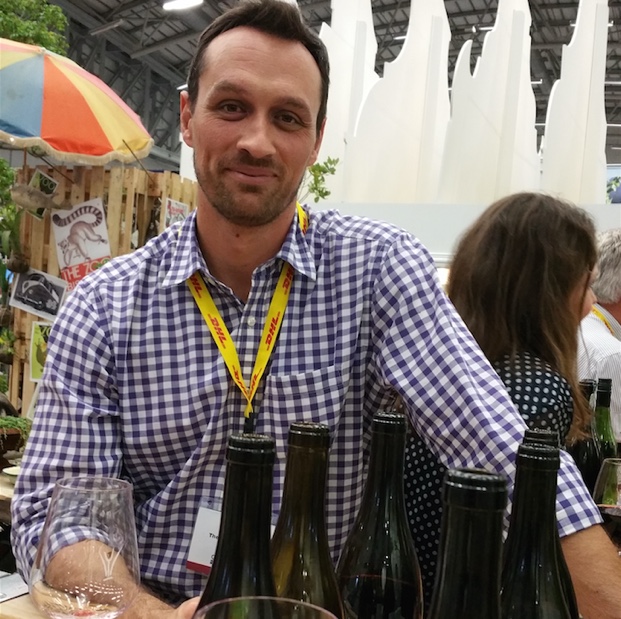
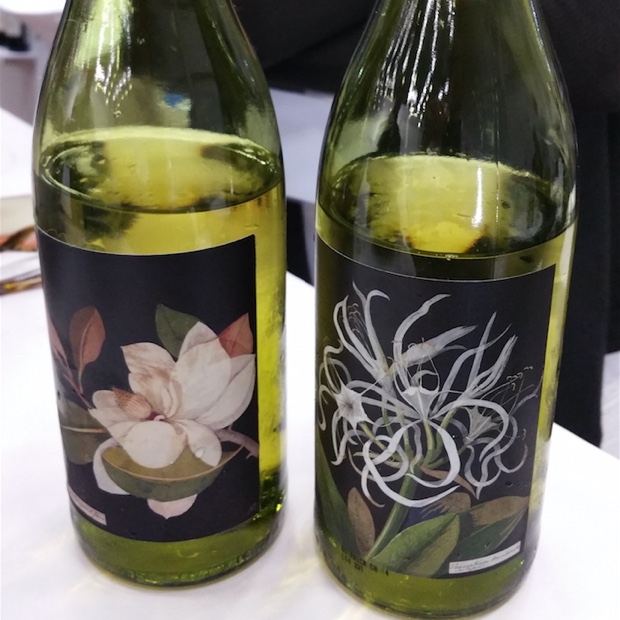
Red Blends
The sky is the limit for what can be attempted and achieved with the varietal kitchen sink of availability. In consideration that any red variety can scour the Cape Winelands in a journeyed search for phenolic ripeness, a prudent pick, ferment (or co-ferment) will certainly, invariably conjoin towards assemblage nirvana. Rhône styling is most often mimicked, from both north and south but OZ indicators and even California flower child prodigies are both seen and heard. There is no tried and true in this outpost of red democracy. In the case of Cape wine, anarchy rules and there is really nothing wrong with that.
Sheree Nothnagel, Wildnhurst Wines
Wilde hurst Red 2012, Swartland, South Africa (Winery)
Shiraz (62 per cent) co-fermented with Viognier (5) is joined in rank by Mourvèdre (33, though is some years it’s Cinsault) in an unembellished red that not only lies back but rises in free spirit. A red to express the personality of its maker, Sheree Nothnagel. Silk and lace, cure and mace, spice and so many things nice are the aspect ratios of a very natal wine, like a prevailing wind. A real stretch in tannin, sweet and smooth of grain leads to length, from Koringberg to the slopes of the Picketberg and Paardeberg mountains. Drink 2015-2020. Tasted September 2015 @WildehurstW@ShereeNothnagel@SwartlandRev
The Western Cape has likely never seen such polish and precocious affinity with its varied soils as it has or likely soon will when Duncan Savage is making wine. The blend of Cinsault (58 per cent), Grenache (21) and Syrah (21) is predominantly Darling grapes and shows a deeper, funkier understanding of Cape soil. Bright red cherry fruit supports life on this brooding planet and propagation is furthered with cinnamon-like spice and a purity for supplementary red fruit so direct and so very pure. The wine’s moniker comes from the farming expression “follow the line.” All rows lead to the farmhouse, eventually. All winemaking roads in the Cape will lead to the name Duncan Savage or at least involve him in the conversation. He is the farmhouse. Drink 2015-2020. Tasted September 2015 @ZooBiscuitsWine
Alheit Vineyards Flotsam & Jetsam and Cartology
Alheit Vineyards Flotsam & Jetsam Days of Yore 2014 (Winery, WineAlign)
Chris Alheit’s brand might allude to a chapter in J. R. R. Tolkien’s The Two Towers but Days of Yore must pay some homage to the 80’s thrash metal band and with great irony. This Cabernet Sauvignon and Cinsault blend is no Doomsday for the Receiver and certainly No Place for Disgrace. What it is instead is pure liquid brilliance. Old 1960 Cabernet Sauvignon bush vines are (even if unintentionally) farmed the way they used to be, back in the days of yore. Now cropped, tended and produced in pitch perfect cure, the resulting wine (when Cabernet is blended with Albeit’s dry-farmed, stomped and tonic-singular Cinsault) shows smoky depth and musicality. Sour-edged or tart can’t begin to describe the tang. It’s something other, unnameable, sapid, fluid and beautiful. It brings South Africa from out of the heart of its wayfinding darkness. Drink 2015-2025. Tasted September 2015 @ChrisAlheit@ZooBiscuitsWine
Other Red
Momento Wines
Momento Wines Tinta Barocca 2013, Bot River, South Africa (Winery)
From a south-facing, 40 year-old, one and a half hectare vineyard in Bot River that Marelise Niemann convinced the farmer not to rip out so that she may continue to produce some 2,000 bottles of a variety you can’t really find or are want to grow anywhere else. This has been a small love affair since 2007 with this block. “My child, my charity case,” she admits. I am not sure I tasted any other wine in South Africa with such fresh, pure, unspoiled innocence as this Tinta Barocca. “You have to have a connection to the vineyard. To guide it.” The underlay of perspicuity is a streak provided by Bokkeveld shale. The clarity of red fruit and deferential tannin is too sacred to spit, too beautiful to spill and too genteel to waste. Drink 2015-2018. Tasted September 2015 @ZooBiscuitsWine