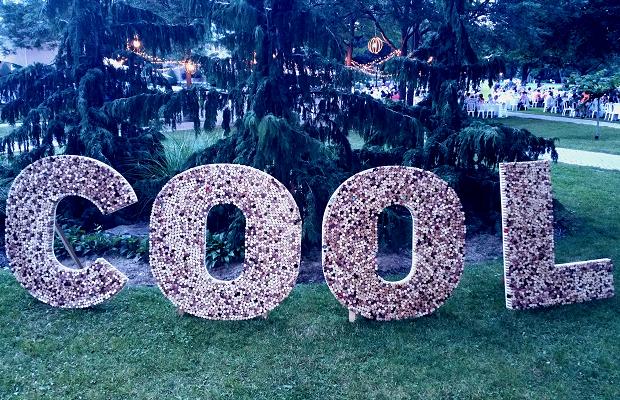
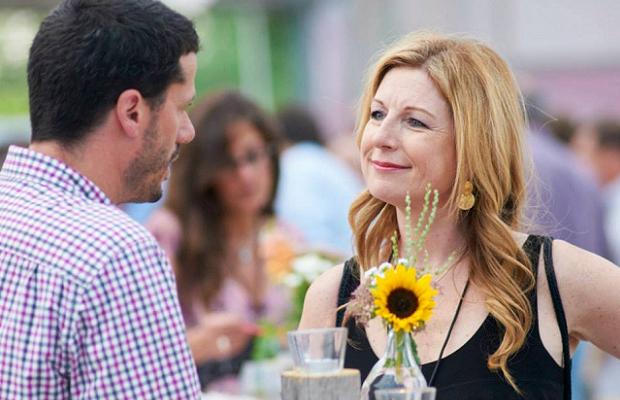
In the cool, cool, cool of the i4C

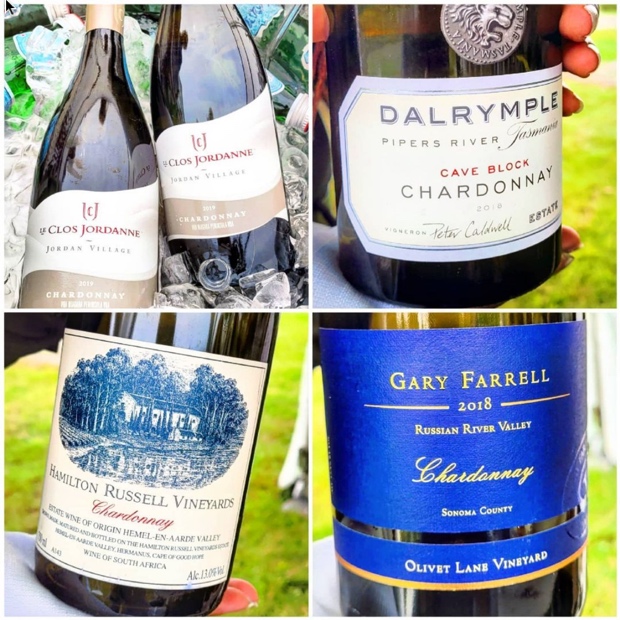
Cool Chardonnay on ice

In the cool cool cool of the evening
Tell ’em I’ll be there
In the cool cool cool of the evening
You better save a chair

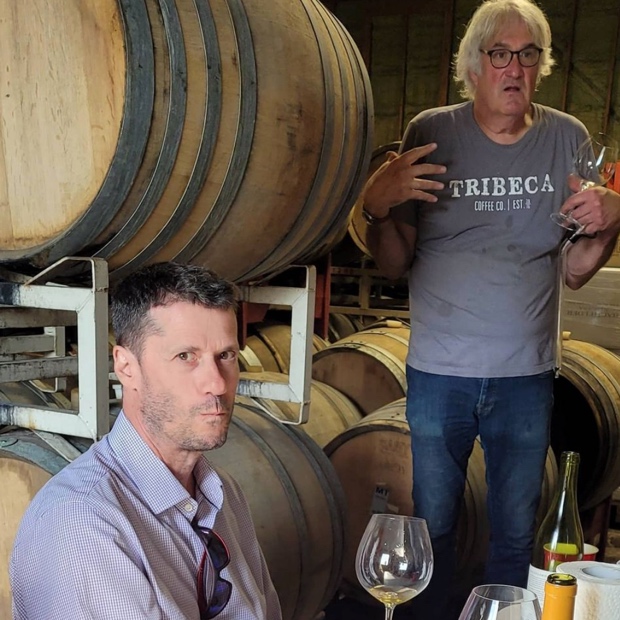
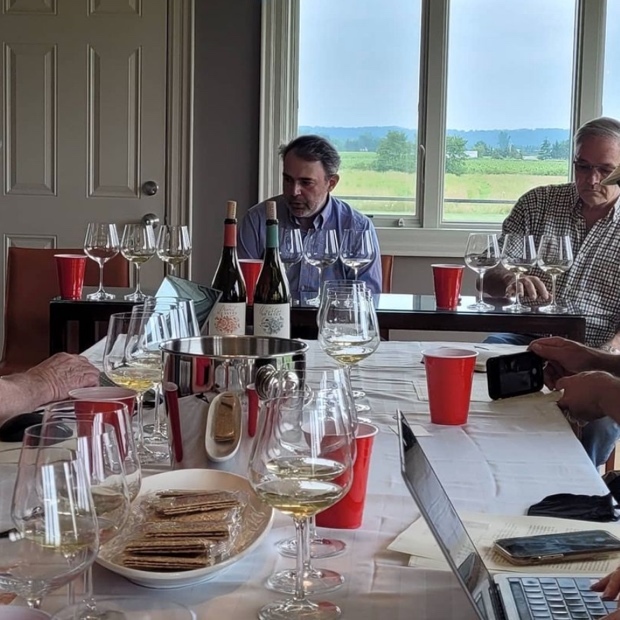
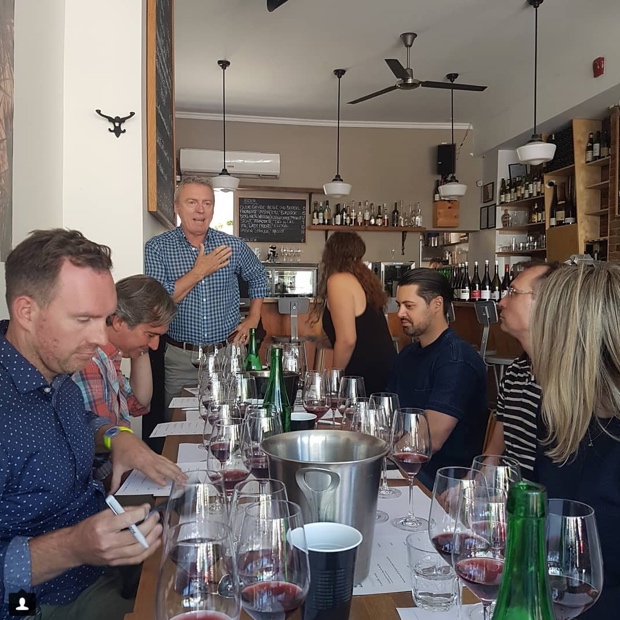
The 15th International Cool Climate Chardonnay Celebration took place just a few weeks ago and while every annual Niagara chardonnay experience is cool, this above the clouds 2025 edition was something other. Unexpectedly Godello was tasked with steering the educational component as emcee for the Thursday School of Cool at White Oaks Conference Resort and Spa. An honour and indeed a privilege it was, to share a stage with Canadian and international winemakers, winery representatives, distinguished minds and presenters. There was a palpable buzz in the room at this year’s School of Cool and also an uncommon level of expert conviction conferred by the moderators and panelists. The Canadian wine industry has assuredly come of age and chardonnay’s cool weekend was the perfect time to express the explorative, collaborative and measurable maturity of experience. Over those four days from July 17-20, the i4C was the coolest place to be.
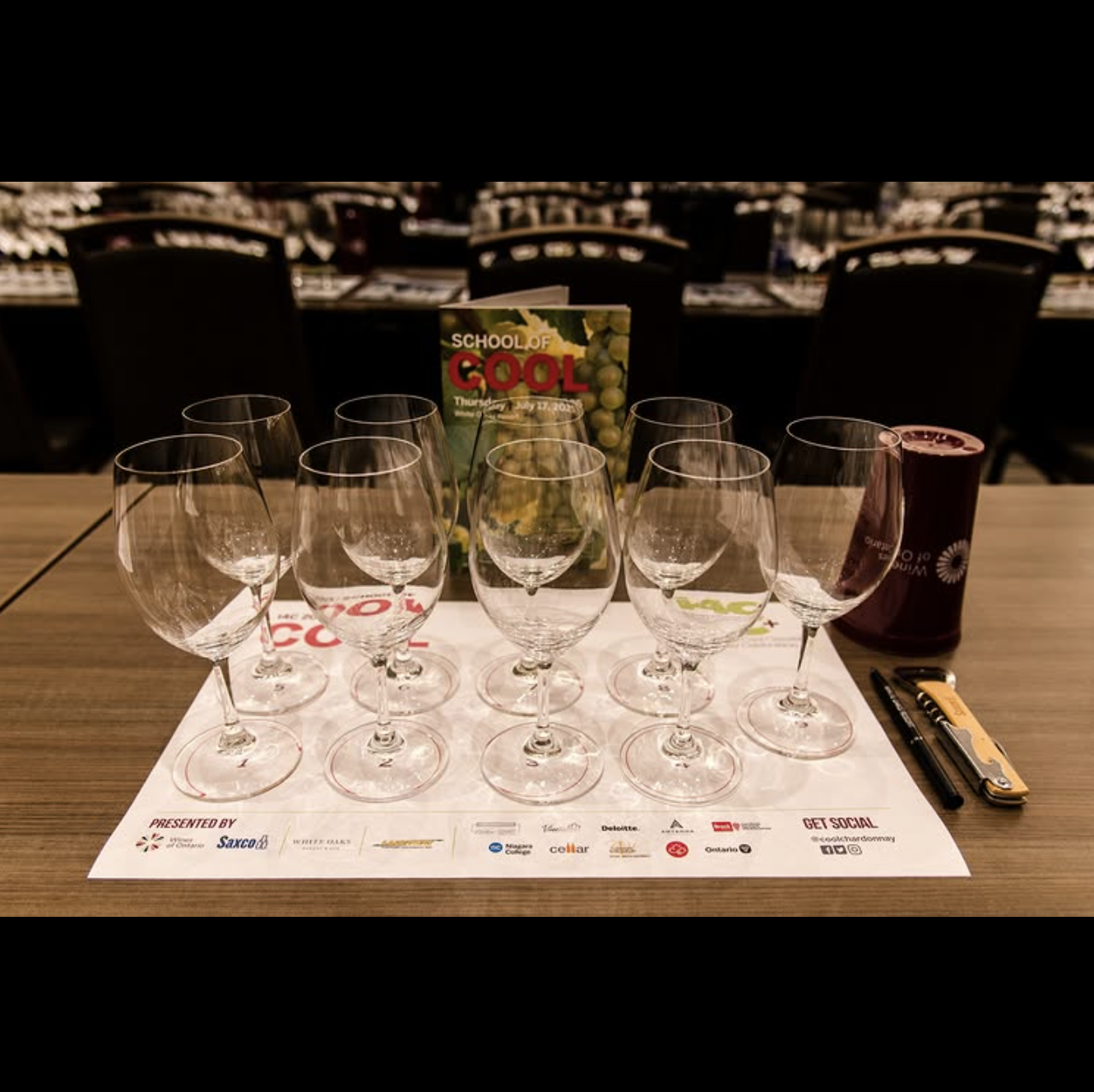
The School of Cool July 17, 2025 Edition
(c) Cool Chardonnay

Godello is pleased to share his words spoken to the audience that day.

“Good morning, and welcome to Day One of #i4c, the coolest conference in the world. My name is Michael Godel, a wine writer based in Toronto, sometimes in Italy and in my spare time I play both critic and partner at WineAlign. When I was asked to emcee this year’s School of Cool I thought hmmm, compared to those who have previously served this post, what can I contribute? I’m neither as funny or savvy as my colleague John Szabo, not as witty and sharp as Chris Waters, certainly less accomplished than both Magdalena and Suzanne. But I am good at surrounding myself with smart and talented people. I look forward to introducing many of them to you today.

We are thrilled to welcome all of you for the 15th year of the i4C! (Holds up applause sign). Every year winery representatives and people who adore chardonnay from around the world congregate here in the Niagara region to celebrate the variations, intricacies and philosophies behind making cool climate chardonnay. I once asked the question, How can i4c the future through cool chardonnay? Chardonnay is cool, then, and now. Don’t we always seem to foresee 4C a future filled with chardonnay?

This year at i4C we have 43 participating wineries, including 12 internationals from England, France, Tasmania, Argentina and two wineries from each British Columbia and Nova Scotia.

Today, we are meeting on Indigenous lands, over which Indigenous people still hold jurisdiction. In the Niagara Region, where 27 of our participating wineries operate, we are meeting on the shared lands of the Haudenosaunee, Anishinaabeg, Wendat, and Chonnonton nations. A key treaty governing this territory is the “Dish with One Spoon” agreement. This treaty between the Anishinaabe, Mississaugas and Haudenosaunee  binds them to share the territory and protect the land. Subsequent Indigenous nations and peoples, settlers, and all newcomers, have been invited into this treaty in the spirit of peace, friendship and respect. We all share the responsibility of ensuring the “Dish” is never empty, meaning that we must take care of the land and the creatures we share it with.

I would like to take a moment to acknowledge and thank our Educational Committee: Scott Wilkins, Rob Power, Elsa MacDonald, Dr. Jennifer Kelly of CCOVI at Brock University, Peter Rod of CCOVI and Niagara College and Trisha Molokach, our esteemed, tireless and incredible Event Director. Twelve years Trisha has poured heart and soul into this event. Thank you.

This weekend is made possible by the contributions of a dedicated group of volunteers who have spent countless hours preparing for this weekend. We have a wonderful team of folks pouring wine for you today, so if you happen to see someone in a colourful I4c t-shirt, make sure you take the opportunity to thank them for their time and efforts. None of this is possible without them.
We would love to see any photos or videos that you take today, so please be sure to tag us. Our Instagram handle and the i4C hashtag are both listed on the bottom of your name tag and on your tasting mat.

At the end of the first session I will get to more specific housekeeping details and we do have a full schedule ahead of us today. There will be three educational sessions and tastings, with coffee breaks and a lunch in between, followed by a walk-around tasting in the afternoon. Please refer to the booklet provided at your seat for more information on timing and session details.

Before I proceed I would like to take a moment to remember a great friend of the i4C. Just a few weeks ago we lost Nicolas Potel, a great winemaker, négoce, father and friend. We miss you Nico and all of us wish you were here. But believe me I can’t think of anyone who would want us to just go out and have a grand time. Nicolas Potel came from Bourgogne for the very first event and his winery Domaine de Bellene was present here at i4C eight times, including last year when his son Alphonse joined us for the weekend. We should all raise a glass of cool chardonnay to the great Nicolas Potel.”
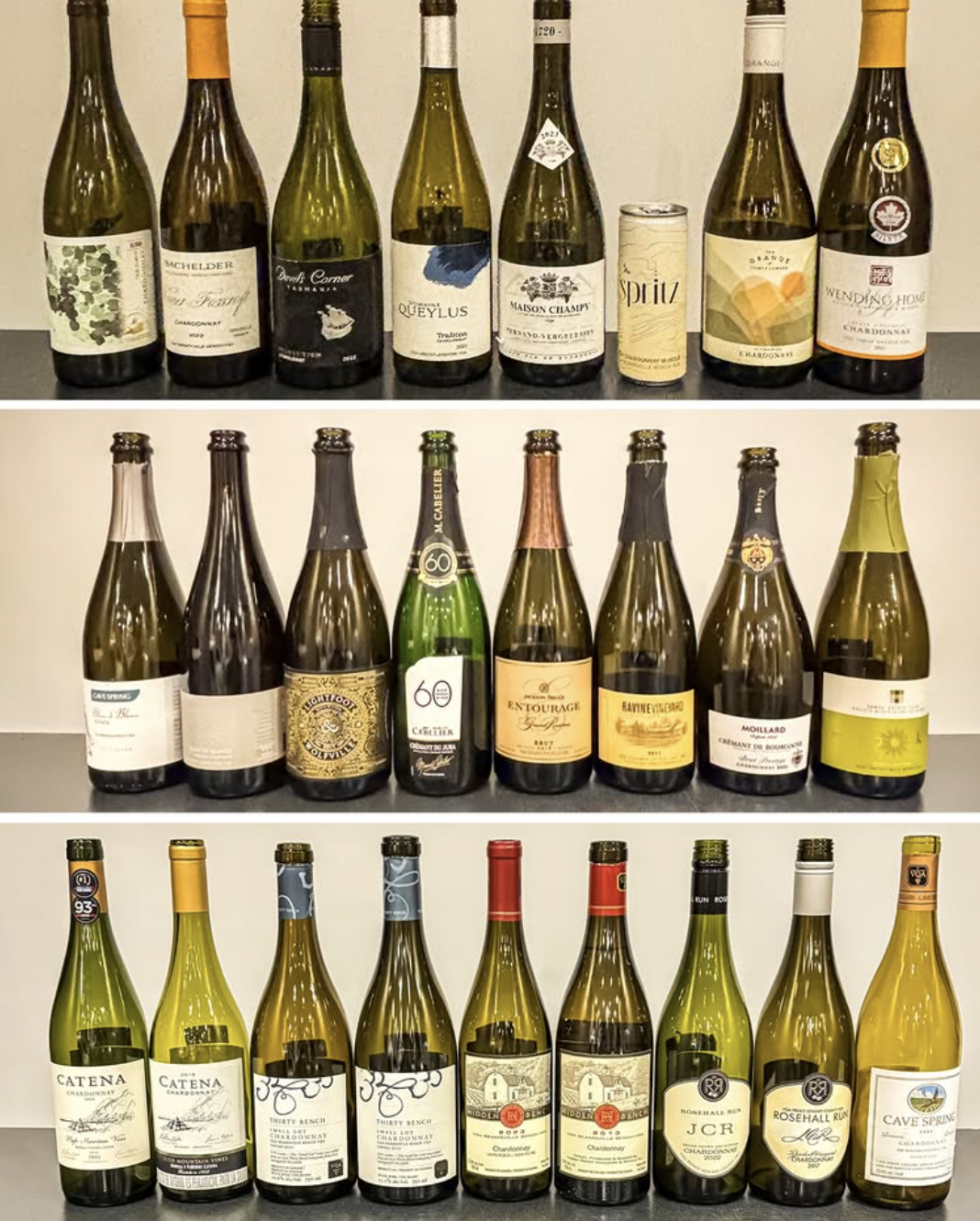
Coolest Chardonnay of The School of Cool (c) Cool Chardonnay

Session One

“Our keynote speaker for this year is Clive Pursehouse. Based in Seattle, Washington, Clive Pursehouse is Decanter’s US Editor and Regional Editor for the Pacific Northwest. He is the creator of the site Northwest Wine Anthem, Culture Editor at Peloton Magazine and the newly minted Fausto Magazine. This I gather makes him an avid cyclist. In fact I’m told he is a fan of Cyclocross, which is a unique, non-Olympic discipline of cycling that can be best described as a cross between road cycling, mountain biking and steeplechase. Wait, there’s more. Cyclocross takes place on technical outdoor courses of grass, dirt, mud, sand or sometimes snow. Snow. Still more – Pursehouse broke his pelvis cycling in the middle east and spent who knows how long in casts and wheelchairs. In other words and though I’ve just met him, not unlike a close friend I have known since nursery school who is an ultra-marathon runner, I would have to say that Clive is clearly nuts. And he’s from Pittsburgh (I like Pittsburgh!) but he does know a lot about wine, including chardonnay, especially those beauties from Washington and Oregon. I would say that his mix of intense exercise, the snow part and wine study make him ultra qualified for this role as our keynote speaker. When our Concierge asked if he had any allergies, Clive replied, “yah, tusk.” Tusk? Well Clive, this walk up song is for you. (Cue Tusk by Fleetwood Mac). Allow me to introduce Clive Pursehouse.”

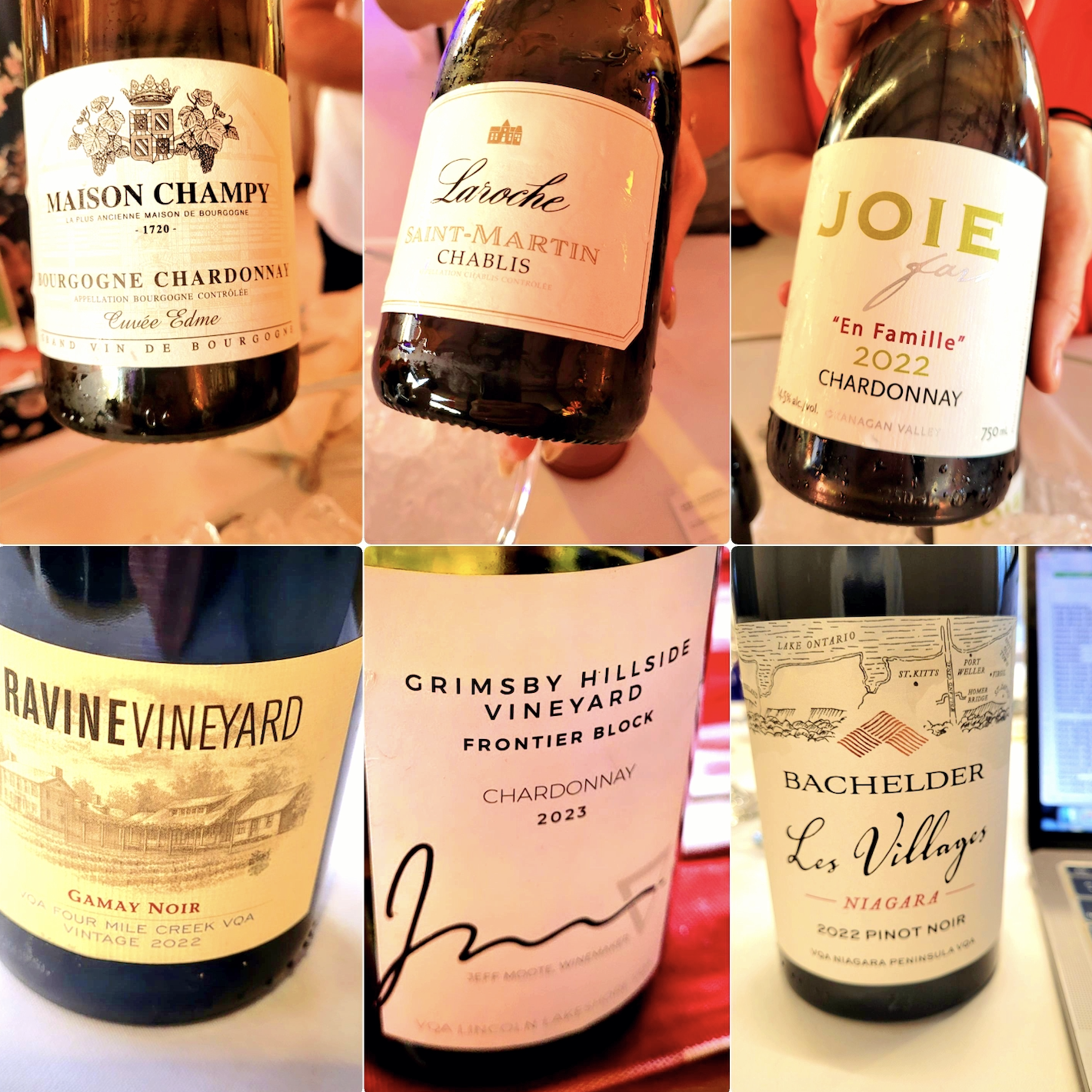
Pursehouse began by saying “cool” starts with Miles Davis. Then there was Camus. “Cool is aloof. It resides on the fringe.” Finally a description that applies to Kim Gordon of Sonic Youth. “Cool is aspirational – It has an elusive character we find attractive.” Then like André 3000, “wine needs cool voices and cool critics. Cool is coming and it can’t be stopped.” Lastly, The Who because “the kids are alright, meaning it’s time to partner with cool, young voices who will celebrate edginess, low alcohol, fresh fruit and minerality. “The loneliness epidemic is real,” reminded Pursehouse, “and wine can be the healer, can bring people together and make things better.”
Session Two

“Eugene Mlynczyk is national sales manager and fine wine ambassador for Principle Fine Wines, the luxury team within Arterra Wines, Canada. He attended Stanford University in the 1980s, majored in art and earned a Master of Fine Arts degree in Painting from Indiana University. Eugene earned the title of Master of Wine in 2015 and I will always remember a memorable trip spent with him at Mondavi in 2017. Session Two is titled Sparkling Chardonnay – No Occasion Required. Please welcome moderator and Master of Wine Eugene Mlynczyk.”

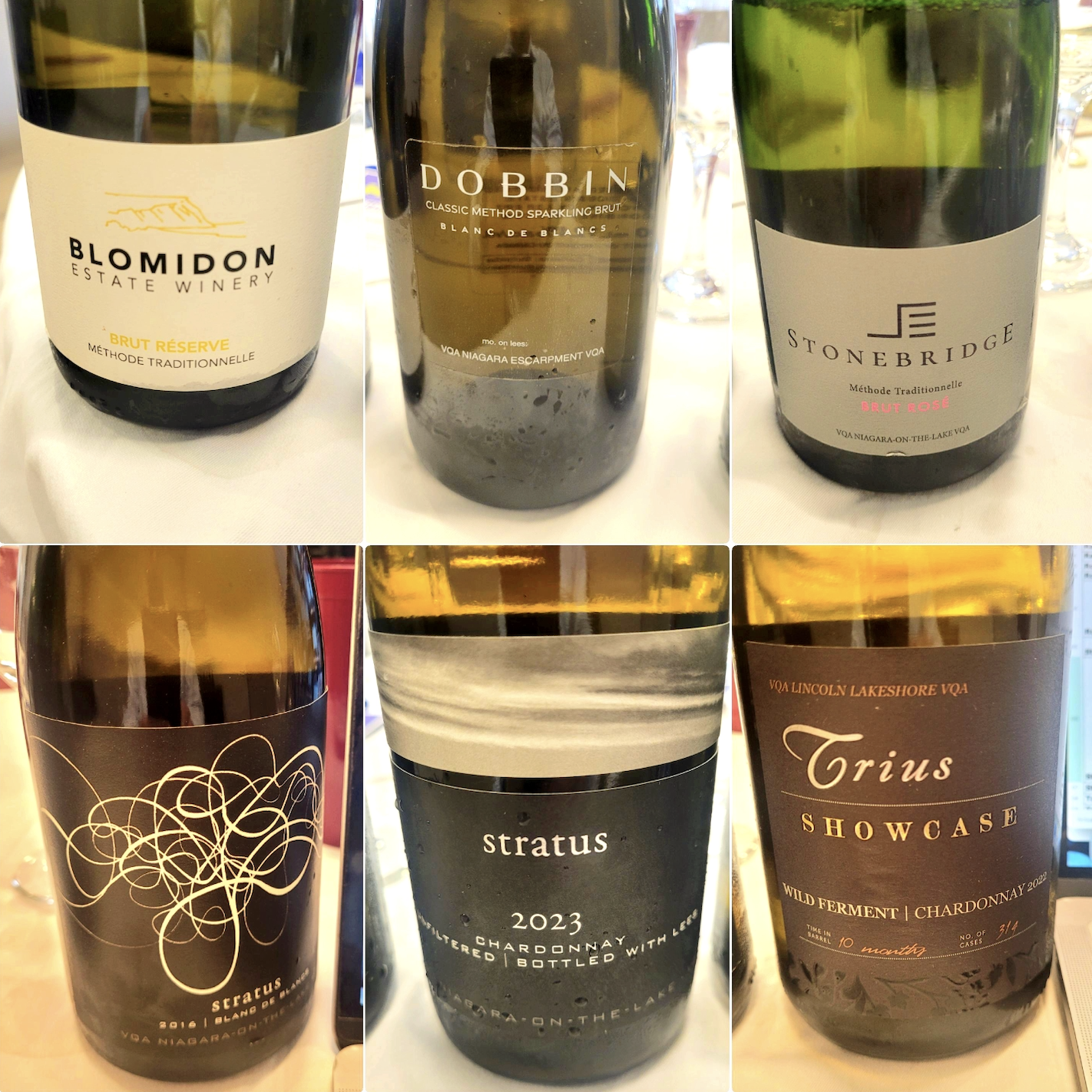
“The world can’t get enough bubbles and chardonnay is at the heart of the world’s finest sparkling wines.”
Session Three

“Dr. Jennifer Kelly PhD has been a Scientist in Oenology at Brock University’s Cool Climate Oenology and Viticulture Institute since May of 2023. I had the pleasure of sitting on the 2024 Experts’ Tasting Panel with Dr. Kelly who brought a much needed scientist’s perspective to assessing Niagara wines in a room with nine winemakers, one sommelier and one journalist. Hanging around Jen certainly helped me to trust the science. I think you will all be intrigued by Jennifer’s approach and moderation for session three called Chardonnay’s Coming of Age – A Retrospective. Please welcome Dr. Kelly.”
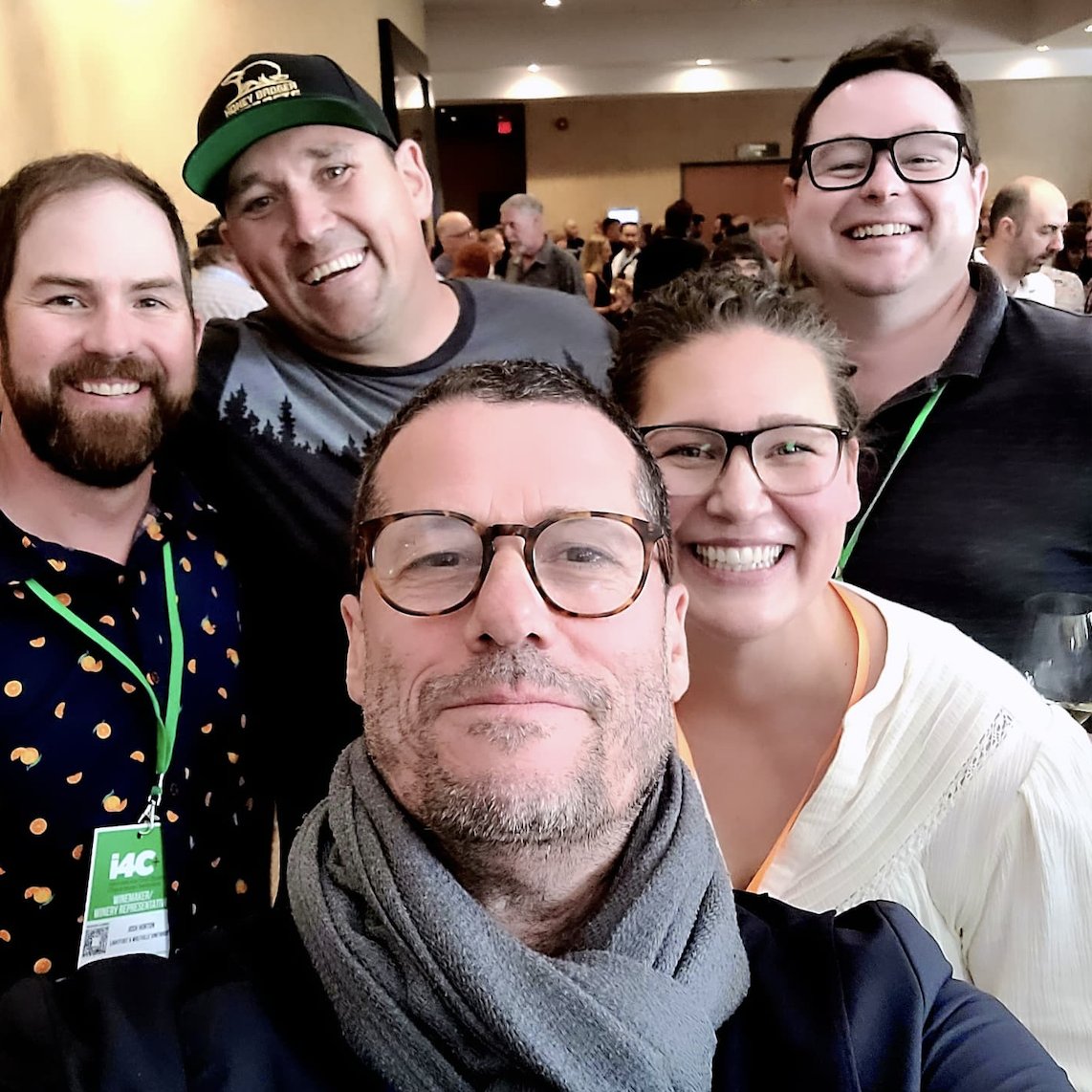
School of Cool squadra; Josh Horton (Lightfoot & Wolfville), Marty Werner (MW Wines), Ben Minaker (Andrew Peller) and Dr. Jennifer Kelly (CCOVI)

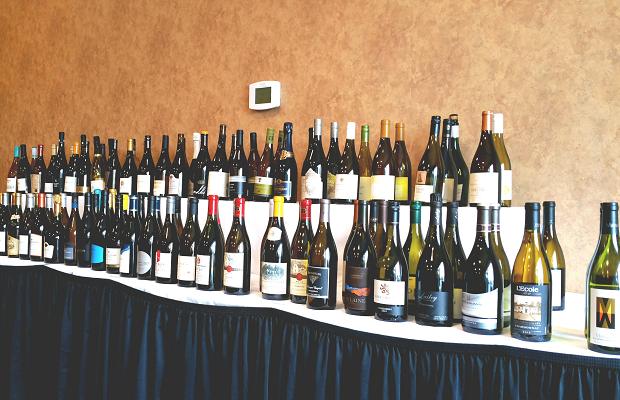
“This has been a true pleasure for me, to be a part of being a messenger for cool chardonnay. I am grateful for the opportunity. To the i4C committee, Trisha and her unbelievable team, our terrific AV guys and the White Oaks staff. Bravo. Thank you to Clive for leading us into cool territory with a refreshing approach. I loved the image of Kim Gordon but personally Clive I would have chosen Tina Weymouth or Kim Deal – but we can argue that out later. Kudos to our three session moderators, Clive, Eugene and Jennifer. Your time and attention is seriously appreciated. To all our panelists, your insights are what we come for and to learn anew each and every year at the School of Cool. And to all of you for being here, I hope there was something here for everyone and we’d love to see you back next year. Remember, Chardonnay is never too cool for school. Just outside the doors you will find all the chardonnay available at a walk around tasting which is scheduled to last until 6:15 pm. Happy tasting and thank you all for coming and see you again in 2026!”

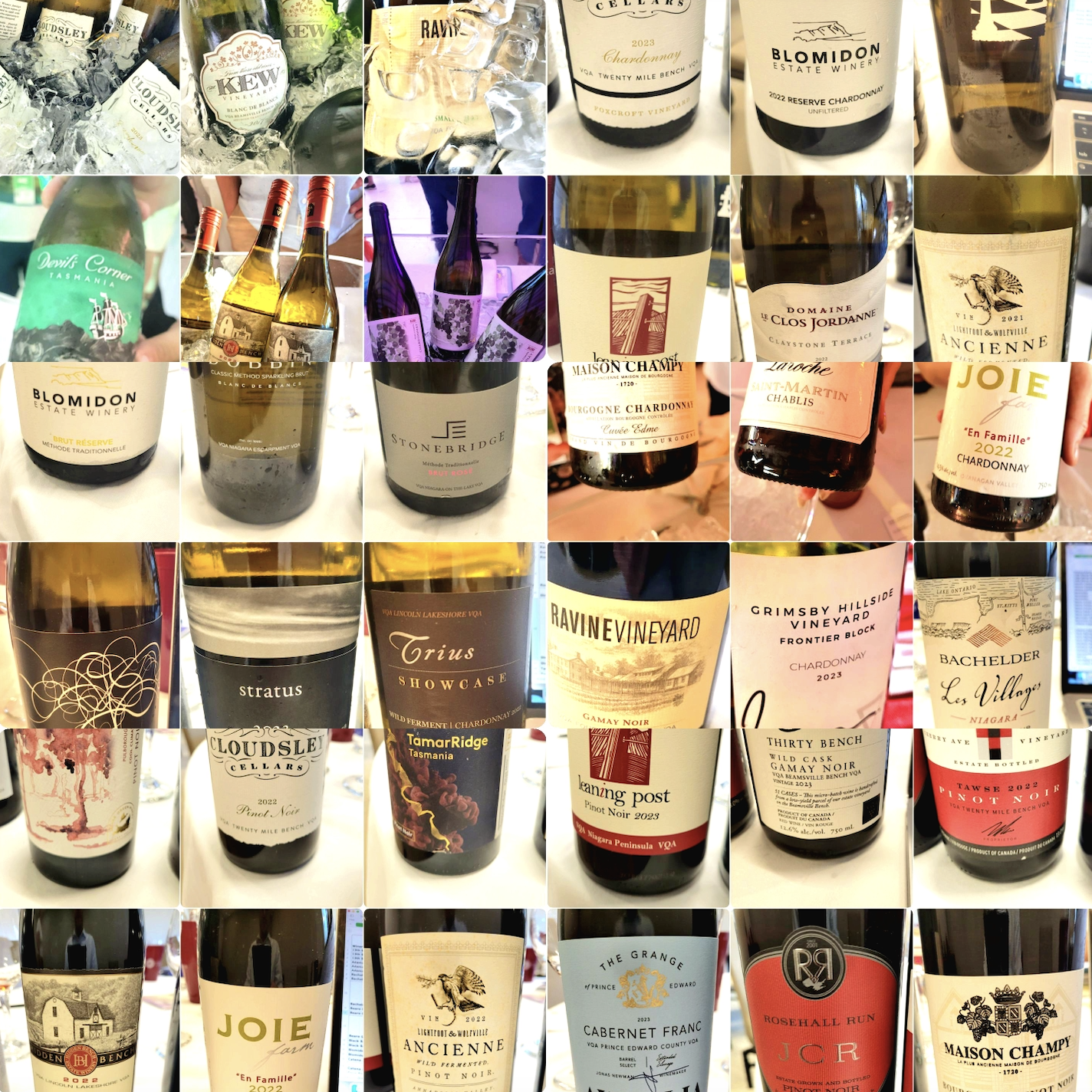
Godello tasted and has reviewed 80 wines during the four-day conference; At the School of Cool; In the White Oaks media room set up by the Wine Marketing Association of Ontario team led by Andrea Peters; At visits to Cave Spring with Gabriel Demarco and Malivoire with Shiraz Mottiar; An evening at Ravine Vineyard with Jeff Moote of Divergence Wines, Jonas Newman and Marlise Ponzo of The Grange of Prince Edward, Chris Thompson and Stephen Del Degan of Volta Estate Winery and Ron Giesbrecht from Wending Home Estate Vineyards & Winery; Lunch at Black Bank Hill with Taylor Emerson, Jonathan McLean and Meg McGrath; At the evening events held at Friday Night Flights, Niagara District Airport, Niagara-on-the-Lake and at Chardonnay in the Vineyard World Tour Tasting and Dinner at The Riverbend Inn, Niagara-on-the-Lake. Here are the notes.
The Sparkling

Blomidon Brut Réserve NV, Annapolis Valley, Nova Scotia

Next year and disgorgement, same five years on lees for Blomidon’s signature sparkling wine and now more depth. Once again time is the impetus (and requiem) to see results, both of which have manifested into a bubble of greater charge than so many peers. Mainly chardonnay from that strip of land running up from the Minas Basin and jutting through the Bay of Fundy. Depth yes and also a low rumble of botanicals that make this a most agreeable sapid sparkling wine from Nova Scotia, like a cool night that follows a warm day.  Last tasted at i4C, July 2025

Put to bottle in 2019 and so five years on lees ain’t nothing to develop complexities, eccentricities and potential variability. This pour comes out of sound and vision, disgorged in March of 2024, set to be released in the early Fall. Makes great use of 2016 and 2017 fruit, plus a small amount of the frost vintage 2018. Youthful, appropriately Blomidon Peninsula/Annapolis Valley tightly wound and in a way very chardonnay, though not glaringly so. “For us this is the future for non-vintage,” explains Simon Rafuse, “and to save the cooler vintages for Blanc de Blancs.” It’s a reverse engineering kind of approach. Simply put, in cooler vintages you can’t push wines through malolactic and so chardonnay is best purposed for sparkling when acids are high and pH levels are low.” Like 2011, but not 2010 and Rafuse adds that “the problem is you have to wait many years to see the results. But it’s worth it because they are really good.” True that. Drink 2024-2028.  Tasted at i4C, July 2024
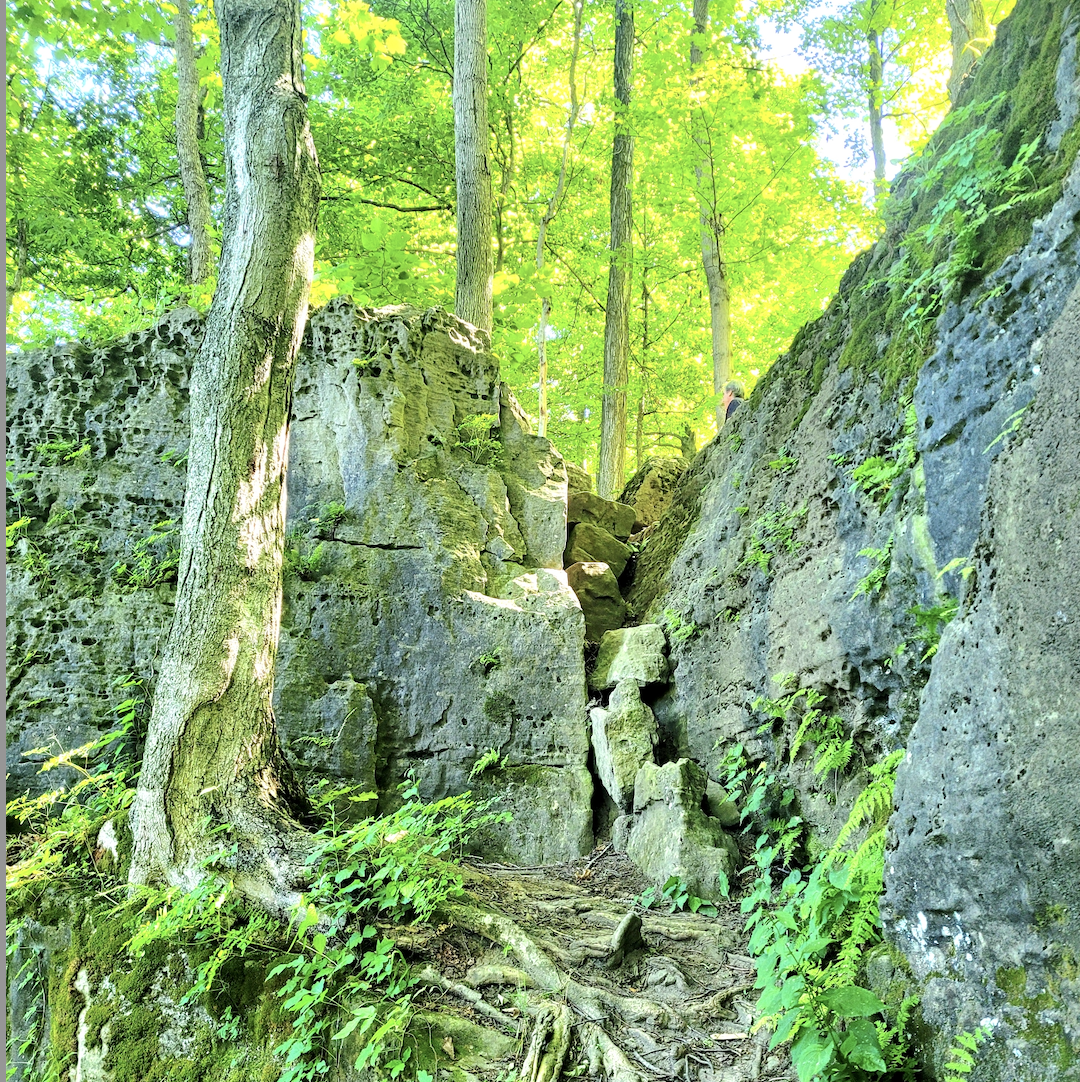
The Adam Steps, Niagara Escarpment

Cave Spring Estate Blanc De Blancs NV, VQA Beamsville Bench, Ontario

Over the course of tasting the non-vintage Blanc de Blancs over 13 years it is noted how the chardonnay bubbles have evolved yet stayed the course and ultimately improved. From strength to strength with a wine that now bears the stamp and waves the banner for cool climate sparkling wine made with its most essential grape. The team has struck balance for a wine to be used, enjoyed, employed and celebrated all the bloody time. Simply put “ripe fruit and acid structure” said by by winemaker Gabriel Demarco, “putting in accumulated knowledge to recognize a place.” Which by the way includes 50 percent clone 777 chardonnay musqué originally built into the program by OG winemaker Angelo Pavan. Drink 2025-2030.  Last tasted at i4C, July 2025

It matters not whether this Beamsville Bench Blanc de Blancs is p[riced at $24.95 or $32.95 because it still represents the finest Ontario value in chardonnay sparkling wine. Bar none. Why trust your hard-earned, looking to celebrate or drink bubbles on a Tuesday dollars on anything else. Last tasted November 2024. Classic, sharp, intense and ideal. A ripper, “and I love that” says Stephen Gash. Dry as the desert in such a playfully proverbial way. Scintillant extraordinaire.  Last tasted at i4C, July 2024 and November 2024

For the first time in quite some time the next look at the Cave Spring Estate Blanc De Blancs is bang on one year later and so yes, freshness is the thing. Crisp and crunchy, stylistically so consistent and really set up to act as the dictionary entry for chardonnay as sparkling wine out of Niagara. It’s just so spot on, high in energy and exacting for style, place and estate.  Tasted November 2023

Sees a minimum 30 months on lees ahead of disgorging and this chardonnay was likely sprung in the Spring of 2022 with a good dose of 2019 fruit layered within. In other words a true-blue varietal vintage to espouse the latest virtues and expound upon the great elevator in Niagara Blanc de Blancs sparkling wine. Never disappoints and continues to rise, surge ahead, power forward and capture necessary tension. The offset here is more botanical tonic and weight. A new complexity.  Tasted November 2022

It seems every three years is the interval for reviewing this arch-classic Ontario sparkling wine but be assured that the time in between actually drinking this fine Niagara wine is a much tighter and repetitive proposition. Terrific balance accorded and afforded from this latest cuvée with equal and opposing trips switched on by yeast and lemon, ginger and tea. Good toasty bubble for any and all toasts, plus innocuous glasses for drinking in between.  Tasted October 2020

Angelo Pavan and Cave Spring sure do love to fashion a toasty sparkling chardonnay. Still in the biscuity, flinty and textured Champagne vein though really far from the last B de B tasted back in May 2014. No longer a case of fruit from in and around the 2008 vintage it would have to be the cool as lightning 2011 by my calculations with likely some warm and rich 2012 fruit. The relationship delivers the best of all worlds; tart, bright acidity and linear functionality with creamy, rich orchard and stone fruit, generous and round. All together now.  Tasted September 2017

Today a fine misty Blancs, looking very much the coppery, crisp slice of apple it need be. Slate stone tone directive, grapefruit very much in play. A slice of tart key lime pie.  Tasted July 2014

From my earlier May 2014 note: The freshest style of the #ONfizz B de B flight. Fruit, escarpment bench stone layering, richesse, biscuits and toast are all in. Acidity meets complexity

From my earlier, December 2012 note: Sees no malolactic fermentation and sits at the top end of dry (12-14 dosage). Most of the fruit is 2008, despite the NV designation. A soda fountain of argon and nitrogen bunsens forth through clean lines and carries an entire cider house orchard of Spartan apple. This one certainly hints at Champagne-like characteristics, of brioche and toast. The apples never relent
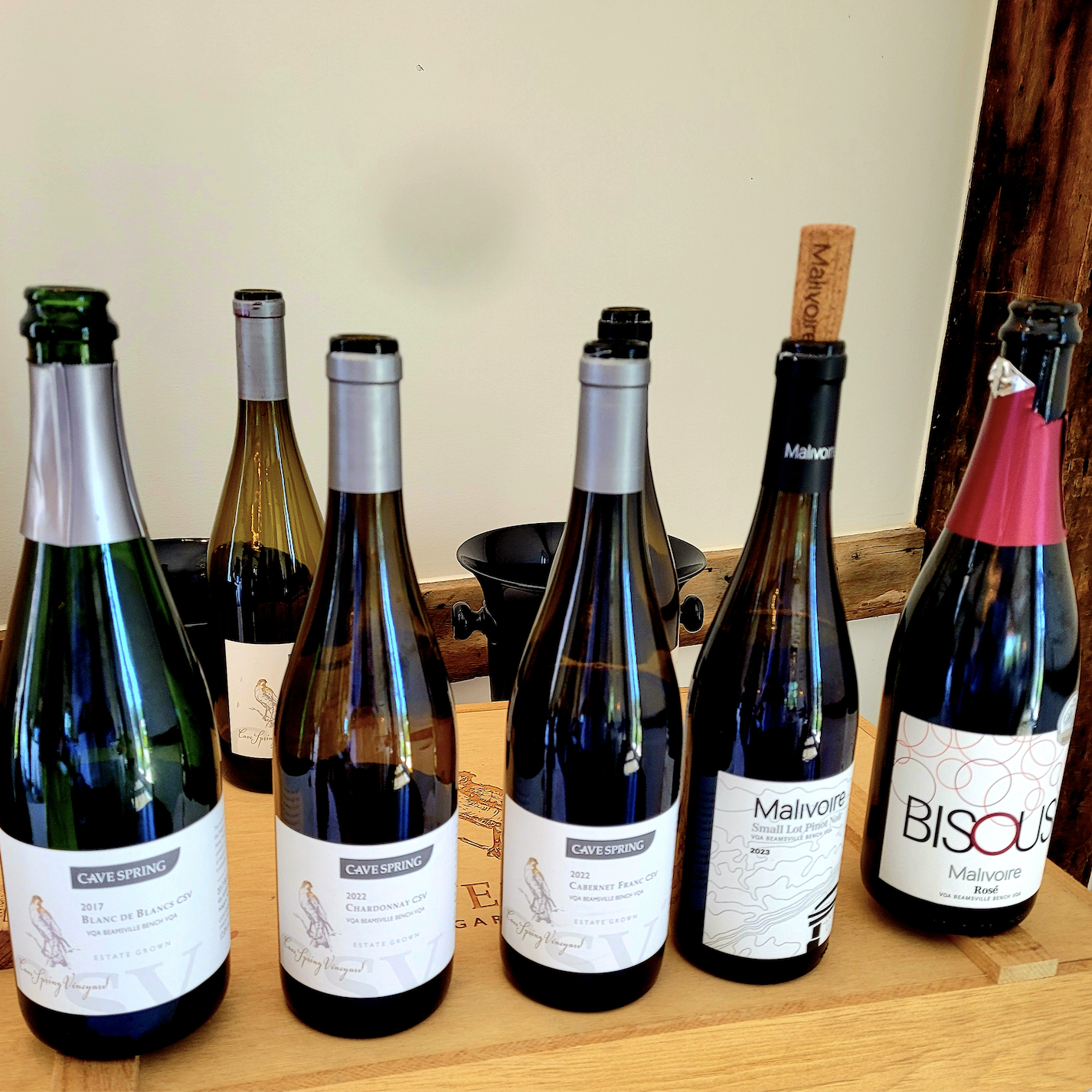
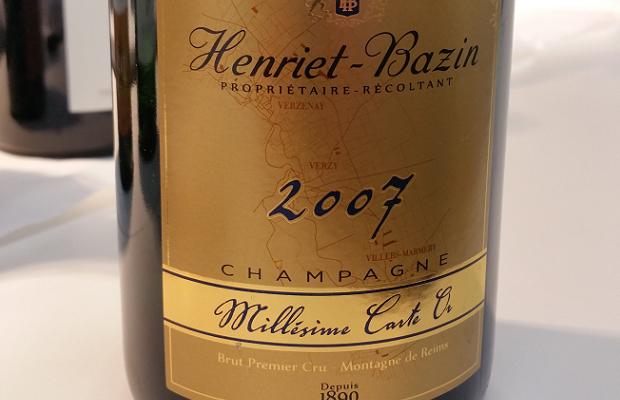
Cave Spring CSV Blanc De Blancs Natural Brut 2017, VQA Beamsville Bench, Ontario

The chardonnay scintillant for a toasty style of Blanc de Blancs in pointed appeal. Must be 80-plus months on the lees for this disgorgement and a bubble as fresh as the day it was conceived. Controlled or let’s say restrained excitement, vertical, a sparkling wine of backbone without hitch or bend, taut though generous of flavour. In a terrific place right here and now.  Last tasted at i4C, July 2025

Home (Cave Spring Vineyard) which means old chardonnay vines for Blanc de Blancs with added human experience to set up for top regional excellence. This from the upside down vintage which meant that chardonnay ripening was not the same as it ever was and so come here expecting something different. In fact the 2017 takes a turn for the toasty and excitable, into tart and scintillant territory for B de B of a singular style. Even for the most consistent sparkling wine house of them all but all things being equal this Beamsville Bench bubble creates a new fashion all its own. Drink 2024-2027.  Tasted November 2024

Divergence Blanc De Blancs Hughes Vineyard 2020, VQA Lincoln Lakeshore, Ontario

Made from a place “of big skies and lots of sunshine,” tells winemaker Jeff Moote and that is why he chose the double “L’ to make his inaugural sparkling wine. The clay-loam-till with a strain of limestone delivers richness for chardonnay and into sparkling wine. Eight months further, seemingly the same disgorgement (October 2024) and a slight exaggeration of the toasty-autolytic notes, but now with more of a soft creamed centre. Orange flavour now coming through, perhaps owing to that CLT terroir.  Last tasted at i4C, July 2025

Small production of less than 600 cases for a 100 percent chardonnay from the Lincoln Lakeshore sub-appellation’s Hughes Vineyard. A whole cluster pressed, cuvée juice only used and the base wine barrel fermented in neutral French wood where it is aged six months on lees. Follows with 42 months en tirage and just two g/L of sugar added. Essentially dry and in the scintillant style for Blanc de Blancs, screaming grape and acidity, accented by dried herbs and orchard fruit. In a serious vein, not what could be described as generous and conversely needing bottle time to settle into its parched and piqued skin. A bit severe and this from a warm vintage. Intensity is all in. Drink 2025-2029.  Tasted November 2024

Dobbin Estate Brut Blanc De Blancs, VQA Niagara Escarpment, Ontario

The newest and ambitious chardonnay in the Dobbin project is Blanc de Blancs, Brut in style and non-vintage. Perfumed and chock full of relatively ripe chardonnay flavours, accessible and immediately enjoyable. It should likely be surmised that subsequent releases will have seen longer lees aging time with this shedding the feel of 30-36 months. No doubt strikes an almost perfectly equanimous balance between sugars and acids in the 7-ish g/L range. Not yet developed into the ambient, enigmatic and complex sparkling wine it is detailed and destined to become – yet there is elegance, softness and charm in this (presumably first) issue. Smells, tastes and feels like celebration. Drink 2025-2027.  Tasted at i4C, July 2025

Jackson Triggs Niagara Entourage Grand Reserve Brut 2018, VQA Niagara Peninsula, Ontario

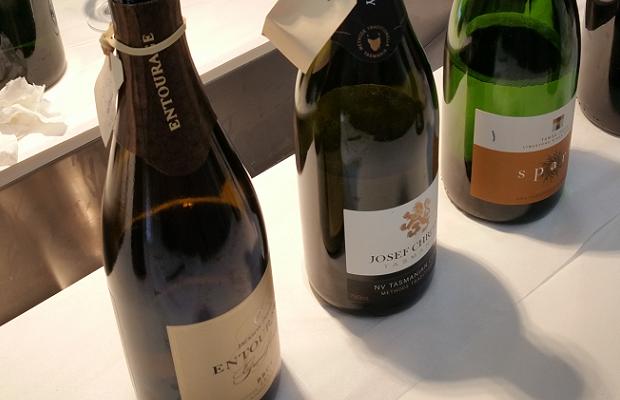
The 14th vintage of this silver medal winner at the 2025 WineAlign National Wine Awards of Canada and a unique Brut made in an ulterior intensified fruit style. An entourage of a bubble, a word that can translate as “surroundings” and the concentration of chardonnay emotions meeting flavours speaks to a grand place on the Niagara Peninsula. Entourage is half and half chardonnay plus pinot noir with two percent pinot meunier. Tastes like a mouthful of minerals with a dusting of sugar dosage and a shot of botany, a.k.a. tonic at the finish. Drink 2025-2028.  Tasted at i4C, July 2025

Lailey Stonebridge Méthode Traditionnelle Brut Rosé 2021, VQA Niagara-on-the Lake, Ontario

Classically composed and delineated Brut Rosé blessed by top quality fruit, a strawberries in cream softness transposed against a frothy bubble of vitality and airiness. Tons of flavour here, from the red berries through savoury elements inductive of leafy chicory greens and nettles. A beautiful bitterness juxtaposed against reliable dosage, harmonious while still expressive of individual parts. Trusted and effective, on the road to knowledge and future finer results.  Last tasted at i4C, July 2025

A chardonnay purposed grown and cropped then “pinkified” with just two or three percent Lailey zweigelt for what it truly an original look at Niagara sparkling wine. Picked on September 12th and 13th with just a bit left for still wine and perfectly ahead of the September rains. Recently disgorged (after approximately 20 months on lees) and of a season that reminds Ann Sperling of 2006. Very phenolic vintage of high caste character, just not the most intensity and power. Crunchy like the other ’21 Rosés, salty and as mentioned, quite phenolic. Not an autolytic fizz but definitely one that combines precision with pleasure. Just a tweak of tannin at the finish. There are 83 cases made and the wine will be released in a few months. Drink 2023-2025.  Tasted April 2023
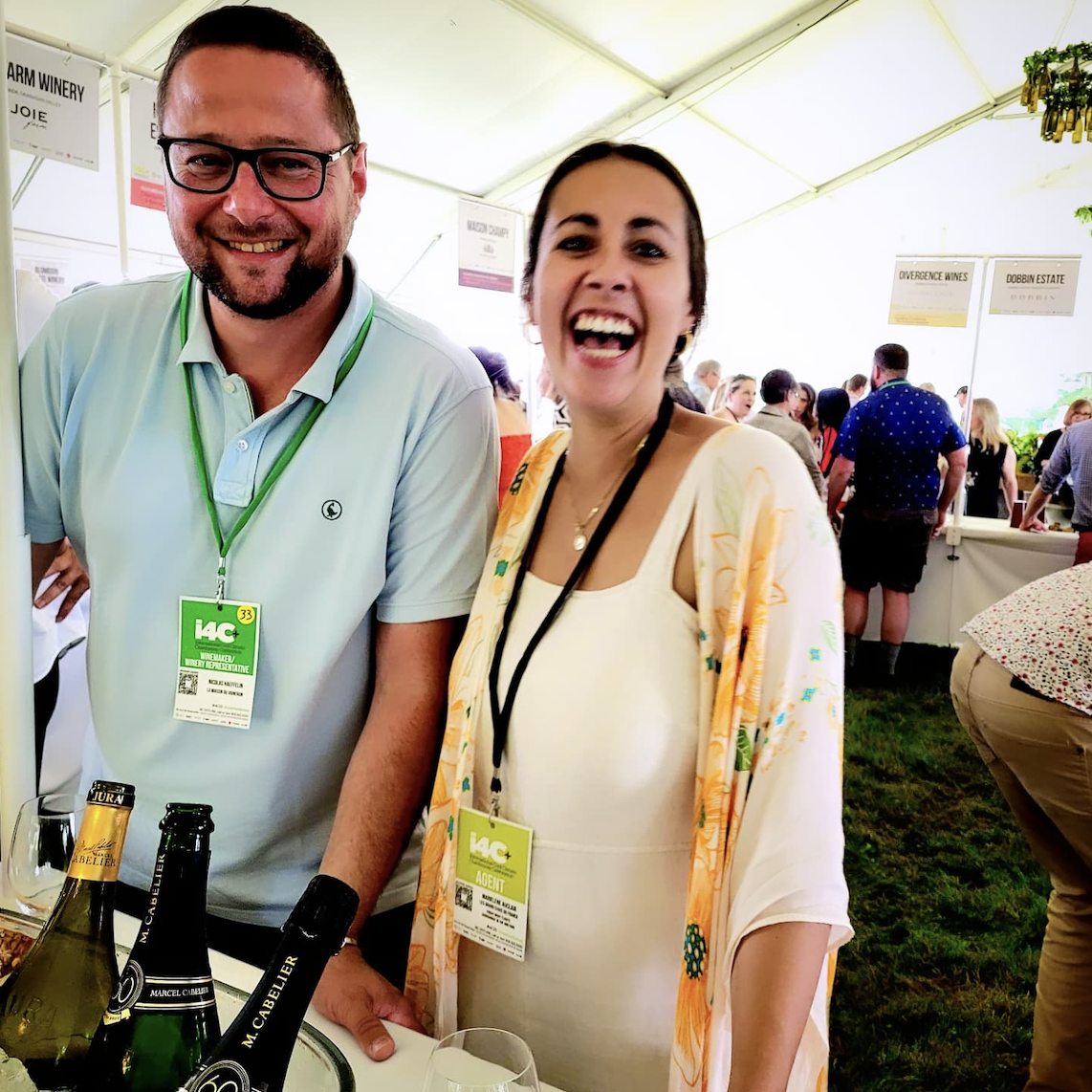
The team from Maison du Vigneron

La Maison Du Vigneron Crémant Du Jura Marcel Cabelier NV, Jura, France

Truly Jura, no matter whether the chardonnay is made into still or sparkling wine, with the unmistakable earthenware aspect speaking vividly to terroir. This may be non-vintage but there just feels to be a lot of sunshine accumulated into this fruit and so the orchard is well represented in the chardonnay bubble. Lower acidity (at 4.15 g/L) and the creamy palate is as generous as they come. Drink 2025-2026. Tasted at i4C, July 2025

Lightfoot & Wolfville Brut 2019, Nova Scotia

Surely more richness from the 2019 Brut and still the cool interpretation of the Annapolis Valley’s maritime climate. You must consider this amazement of success from a place that resides at the furthest edge of viticultural promise. “It’s challenging” says Josh Horton, “and we’re starting to see the odd hot vintage” which this wine somehow expresses. “Chardonnay checks all the boxes for us, acidity, structure, complexity and versatility, not mention walking right through a winter with a polar vortex.” Brut 2019 is fleshier and balanced, ripe and zesty. Yes, angularity can be beautiful. Drink 2025-2029. Tasted at i4C, July 2025

Malivoire Chardonnay Musqué Spritz (In Can) 2024, VQA Beamsville Bench, Ontario (250ml)

Perhaps the first Ontario chardonnay musqué packaged in a can, experimental, light, minimally frothy, also with sweetness and floral. A semi-sparkling wine of arrested fermentation at nine percent alcohol with 40 g/L of residual sugar. Easy drinking, like juice with some alcohol, almost moscato d’Asti stylistically speaking. Candied, of fuzzy peach and ginger for adults only. Fun stuff from winemaker Elisa Mazzi and quenching for what gets you hot.  Tasted at i4C, July 2025

Malivoire Bisous Brut 2012, VQA Beamsville Bench, Ontario

Tiraged in 2013, of 60 pinot noir and 30 chardonnay for what was at the time just winemaker shiraz mottiar’s third kick at the sparkling can. Fermented in older barrels and aged 10 years on the lees. Oxidative and gingered, full cupboard of exotic spices. Dynamic, pulsating, pretty dynamite experimental bubble. Only 20 bottles made. First release of Bisous was 2016. Make more of this shiraz. That’s an order. Drink 2025-2027.  Tasted at i4c, July 2025

Malivoire Bisous Brut NV, VQA Beamsville Bench, Ontario

Of 70-ish chardonnay with 30-ish pinot noir disgorged in May 2023 and so think about fruit from 2019 which means a top sparkling vintage because neither fruit nor acidity saw any compromise. Nearly dry with just 2 g/L of dosage, a negligible number that only helps to coax out the natural sweetness in the wine. Quintessential house bubble for anyone who seeks and can see the top value (along with Cave Spring) in a $30-35 traditional method Ontario sparkling wine. Drink 2025-2028.  Last tasted at i4C, July 2025

Having recently tasted Bisous just four months ago you might think there would be no change when in fact things have. Tension is now juxtaposed by a truly creamy feel on the palate and so next tasting is next level gained. Bisous is now a perfect foil for tortellini and crispy pancetta with a drizzle of basil infused oil and some aged pecorino. Please. Tasted November 2024

Not simple. Fine and mighty toast, a mix of autolysis and oxidative minutia, full-flavoured and complex, of orchard plus stone fruit and more than just chardonnay. Feels like some pinot noir mixed in and the blend creates a terrific variegate experience.  Tasted blind at i4C School of Cool July 2024

Good and simple if also plenty but very simple. Drink 2024-2026.  Tasted blind at #NWACS24, June 2024

Moillard Prestige Blanc De Blancs 2021, Crémant De Bourgogne AOC, France

Crémant de Bourgogne labeled as Blanc de Blancs, of fruit left to ripen a bit longer than many, in maintenance of acidity though furthest from the racy style. Richness incarnate for chardonnay in sparkling clothing. Nothing searing about this one and truly accessible. Spends 24 months on lees with 6 g/L of dosage. Drink 2025-2027.  Tasted at i4C, July 2025

Ravine Vineyard Brut NV, VQA Niagara-on-the Lake, Ontario

There is a real depth behind this Ravine Brut, packed with flavour and what now feels like deeper concentration than just over a year ago. A huge style, classically blended and true to its roots, but also an extension from what others have done as they came before.  Last tasted at i4C, July 2025

Quiet and demure sparkling wine made from a mix of 60 percent chardonnay and (40) pinot noir for a pretty and soft example. Feels like a relatively short to mid-term time on lees, Considered blanc de noirs despite its lean to the white side and while the custardy lemon-osity sprinkled by white pepper runs high it is the smooth softness that dictates the order of this wine. Drink 2024-2026.  Tasted blind at #NWACS24, June 2024

Charlotte Hickey and and Suzanne Janke, Stratus Vineyards

Stratus Blanc De Blancs 2016, VQA Niagara-on the Lake, Ontario

Eight months further on lees, now deeper meaning, more complex behaviour and a compounding of the autolytic meets mature flavours in full concentric abound. Quite savoury now, more herbal than botanical and like a scape pesto with cilantro, best with fish, boiled fingerling potato, or grilled flank steak.  Last tasted at i4C, July 2025

Still noting the grip and aromatic compaction due to high level phenolics, a trenchant autolytic intention and a level of seriousness in the realm of Blanc de Blancs. Hides some aspect of chardonnay fruit and also texture but the elemental quotidian is impressive to say the least. Not an elastic B de B, nor is it a scintillant per se but something other, something mature, developed and of the earth. Singular in that regard.  Tasted November 2024

Some phenolic grip on this blanc de blancs takes chardonnay into a metallic and distillate place. The base wines involved were likely pressed for success and as such have collectively adjudicated, settled and come to this place. If it seems at present to lack some tension there is clearly function and the shrouding of flavours righteously complex. Notably autolytic and may leave some wondering when the energy will revive. Which it will because the stuffing and cunning will most certainly raise the bar and encourage a realizing of potential. Drink 2024-2028.  Tasted blind at NWAC2023, June 2023
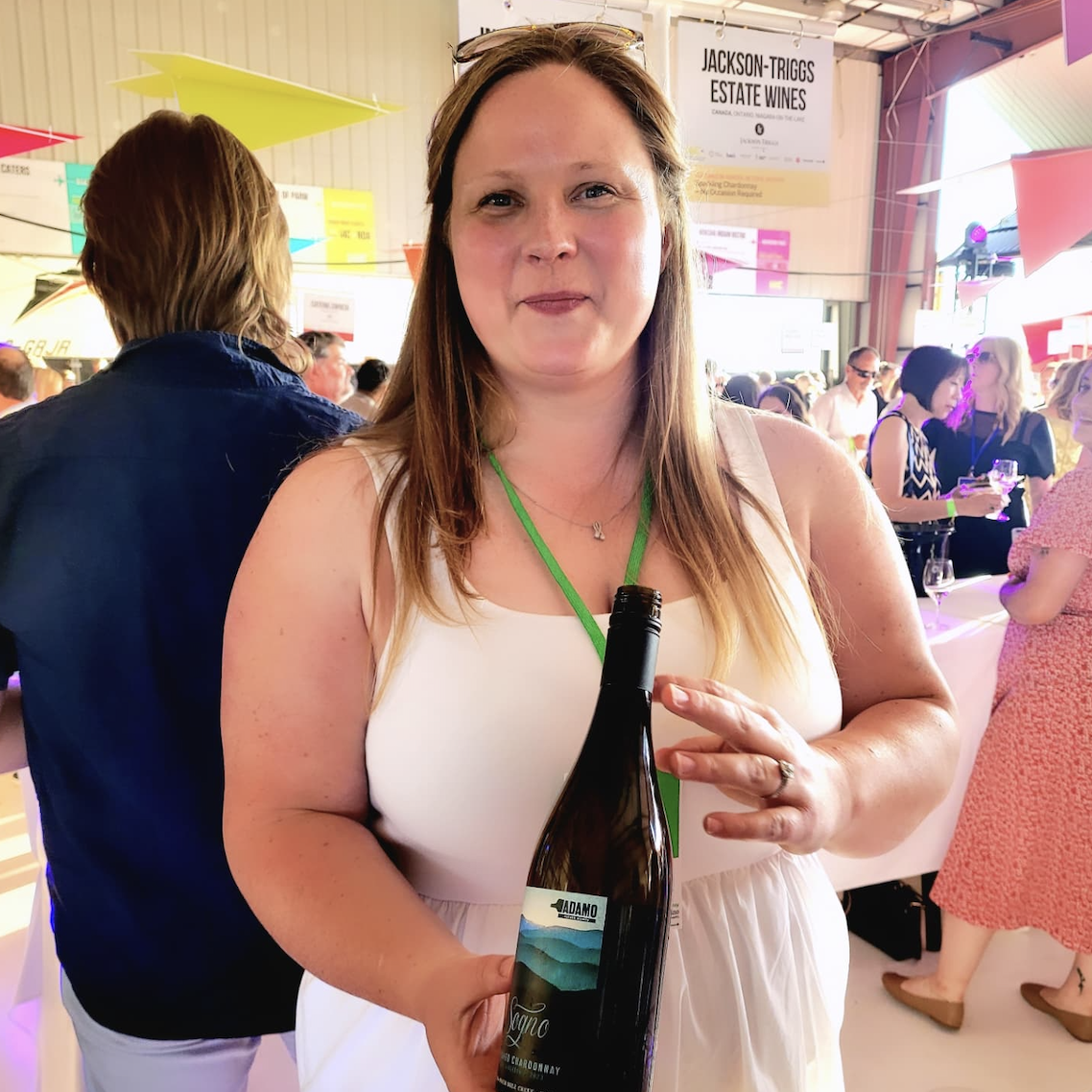
Vanessa McKean, Adamo Estate

Chardonnay

Adamo Sogno Chardonnay Unoaked Lore Vineyard 2023, VQA Four Mile Creek, Ontario

From the 1980s planted Four Mile Creek Lore Vineyard with some chardonnay musqué involved to consistently add a floral muskiness. No wood and now quite the experienced fresh and layered chardonnay in the hands of winemaker Vanessa McKean. A pyramid of activity because of a change by way of employing three ferments and three different yeast strains to see what complex results might result. Lees does the yeoman work without needing to blender pulse the fruit, but just to simply act as catalyst for the transference from vineyard to glass. Drink 2025-2027.  Tasted at 14C, July 2025

Bachelder Chardonnay Wismer-Foxcroft Parcelle Nord 2022, VQA Twenty Mile Bench, Ontario

Fascinating to get a nose into Wismer-Foxcroft not quite a year but easily eight or nine months later. A Toussaint forward moment for chardonnay still maintaining its touch with the flinty beginnings and the storied act of fleshing out is corroborated today. Late July is a terrific time to re-taste a November Bachelder release of the previous year. This showing drives the point and marks an important moment on the curve.  Last tasted at i4C, July 2025

Does not get more knowable or established for Bench chardonnay than the Foxcroft block in Wismer’s expansive vineyard and who but Thomas Bachelder knows this place as well as anyone. A similar story to Wismer Parke with pinot noir in that this vintage just somehow feels like the culmination of a decade-plus worth of experience. Wismer-Foxcroft 2022 is a truly mature and adult version of its reliable self, seamless, punctual and responsible. Substantial, harmonious and structured. All of the above. Drink 2024-2028.  Tasted November 2024

Beare Green Winery Chardonnay Clonal Blend 2023, Surrey, England

From Wine with Jimmy’s (jimmy Smith) and a project that started in 2022 with a real core aim to make “low intervention English wine.” A wine made beneath a “perennial dark cloud in a marginal maritime climate” tells Jimmy. A chardonnay of a short ripening season, an average of 700mm of rainfall (and 1,700 in 2024) for lean, edgy, on the edge of cool wine production. “I want English wines to have electric acidity,” says Smith. His chardonnay is lean yet charming, more than somehow because the wine is balanced in spite of its searing intensity. The intrigue is palpable and real. This chardonnay may age for a very long time. Drink 2025-2028.  Tasted at i4c, July 2025
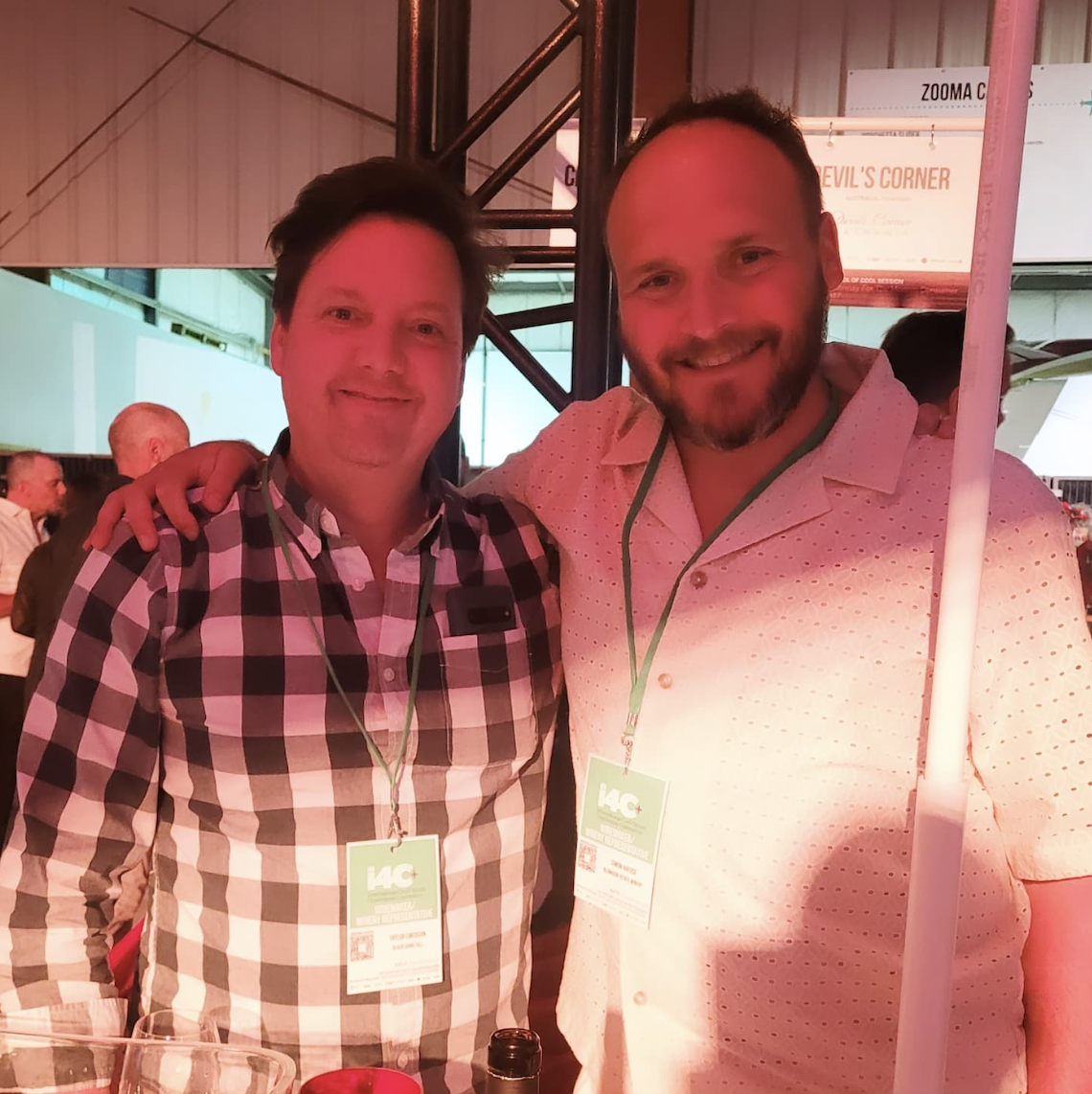
Taylor Emerson, Black Bank Hill and Simon Rafuse, Blomidon Winery

Black Bank Hill Chardonnay Runway 2023, VQA Lincoln Lakeshore, Ontario

A reminder that the name is an homage to service people and the part the property played in the First World War. All the land from here to the lake was an aerodrome and a runway ran right through the field along Sanna Rd. Now showing its lactic-citrus angle without any give or relent to high voltage acid backbone. Come to think of it there is just something Tantalus chardonnay about this ’23 chardonnay in how it rises vertical, controlled within its intensity and built to travel forward. There could very well be four to six years remaining in this singular high wattage way.  Last tasted at i4C, July 2025

Gotta be the first chardonnay out of the gates from the 2023 vintage and if this cracker example is any indication of what’s coming then hold on to your senses. Recently bottled and even with an early (September) pick this saw less than 10 months of aging, but the mix of indelible lees and high voltage (8.5 g/L) total acidity put this in scintillant, dare it be said Blanc de Blancs styled territory. So very different to the Runway White (blend) because of its intensity but also warmth at 13.8 alcohol, not quite torridity, but a white peppery scorch nonetheless. Wild and exciting shift from vintner Taylor Emerson and winemaker Jonathan McLean. Will be hard to wait and anticipate what the next level chardonnay turns out to be. Drink 2024-2026.  Tasted at i4C, July 2024

Black Bank Hill Chardonnay 2022, VQA Lincoln Lakeshore, Ontario

Warm vintage for Lincoln Lakeshore chardonnay fruit, layers more compressed, aromatics to flavours, resulting in a fullness of mouthfeel quite opposite to 2021 and apposite to the situation. Just the right mathematical problem is written should reduction keeps the freshness and vitality in motion. That said there is warmth and some development, already showing maturity yet time will graciously be kind, at least for a spell and behold a top tier pairing wine is born. Foie Gras with Membrillo and Sherry Vinegar anyone? Drink 2025-2029.  Tasted at i4C, July 2025

Black Bank Hill Chardonnay 2021, VQA Lincoln Lakeshore, Ontario

With Twenty Mile Bench fruit in the rear-view mirror Black Bank begins their estate journey with Lincoln Lakeshore fruit accepting and abiding by barrel aging with a precociousness that belies its youthful experience. This from a less than heat unit cumulate vintage and still the body of this 2021 is fleshy and impressive, its elastic length dutiful in helping fruit, acid and texture all come together as one. Should drink beautifully for a few more years. Drink 2025-2030.  Tasted at i4C, July 2025

Classic styling for chardonnay, from a winemaking perspective more so than the viognier and also the reds in the Black Bank portfolio. Neither reductive nor oxidative, reactive nor submissive, obsequious nor domineering. No risks taken, nor aversions neither. Buttery yet with good acids, natural sweetness and also wood spice. Right there in that space between, still a wine for its makers to continue figuring out, in terms of wishes and direction. For now a glass in hand is a good one. Drink 2024-2026.  Tasted May 2024
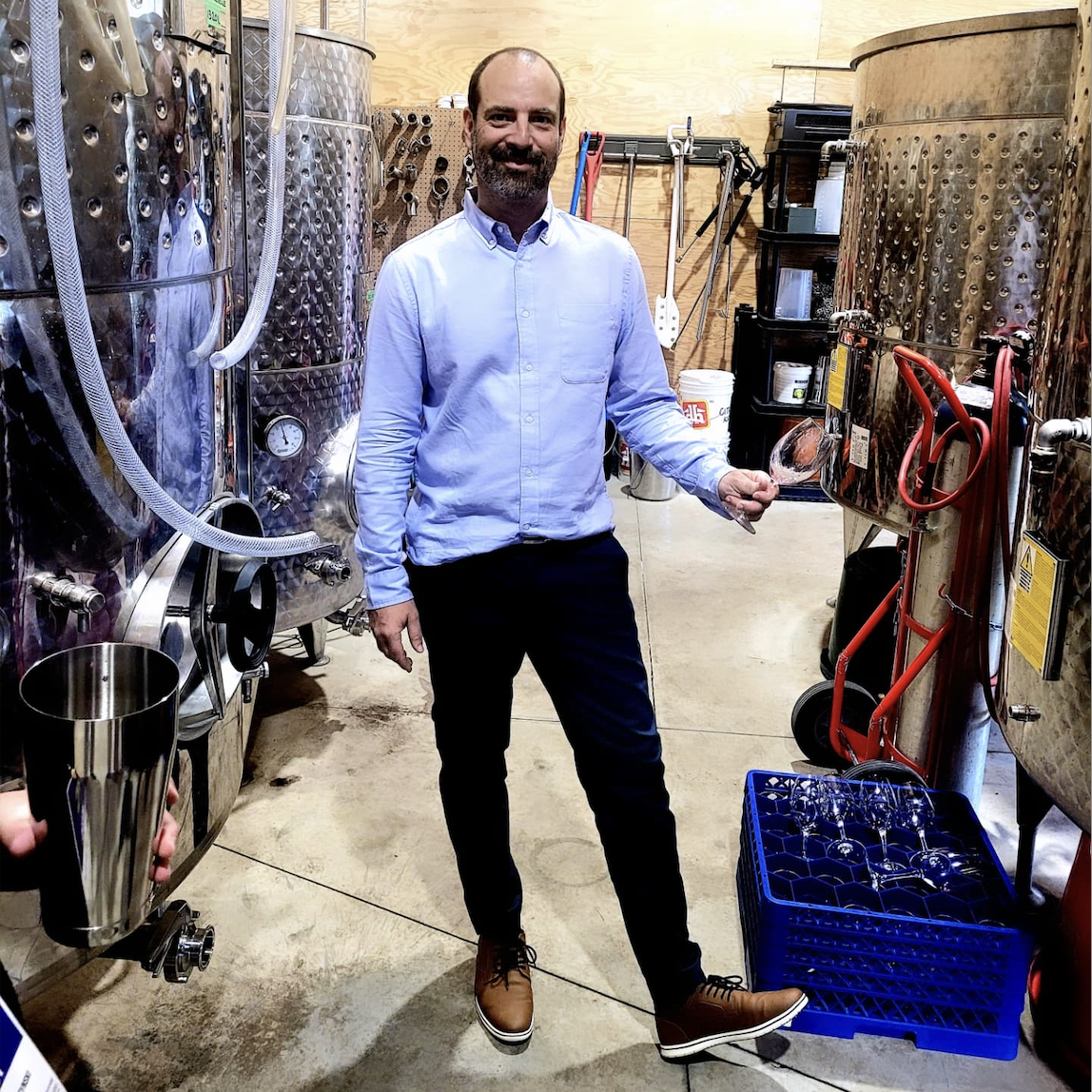
Winemaker Jonathan McLean, Black Bank Hill

Black Bank Hill Chardonnay Wingfield 2020, VQA Twenty Mile Bench, Ontario

Top end chardonnay for Black Bank Hill in the Wingfield section of the Wismer Vineyard, riper and of a concentration that celebrates a vintage, especially now that full integration has come about. The stylized and chic feel is fuller than 2018 and more than a shade less than 2019, with no imminent sign of maturity. But these are oranges as compared to apples even though they come from cousin plots within the larger vineyard. And so Wingfield brings everything to the table; concentration, backbone, linearity, energy and acids wrapping it all up in a fine sharp bow. Top tier chardonnay right here for lovers of the Okanagan, Sonoma, Napa and Ontario, not necessarily in that order. Drink 2025-2028.  Tasted at i4C, July 2025

Black Bank Hill Chardonnay Foxcroft 2019, VQA Twenty Mile Bench, Ontario

The 2019 Foxcroft has matured faster than the 2018 and now shows some caramel with more obvious vanilla by way of its conceptual French wood styling. Has done its time, run amok, gone lactic, now softened and finishing its run. Drink 2025.  Tasted at i4C, July 2025

Black Bank Hill Chardonnay Foxcroft 2018, VQA Twenty Mile Bench, Ontario

Fruit was sourced from Foxcroft within Wismer Vineyard for the first chardonnay made at the time Black Bank Hill was a virtual winery. The wines were made by Adam Lowry at Cloudsley Cellars and knowledge is power in knowing what a seriously good vintage it was for chardonnay. Age able as well with 2018 persistently fresh, piqued, energetic and thriving. Might have been reductive and tight to begin but time has been generous and kind for Foxcroft 2018 to arrive at this ideal moment in time. Drink 2025-2027.  Tasted at i4C, July 2025

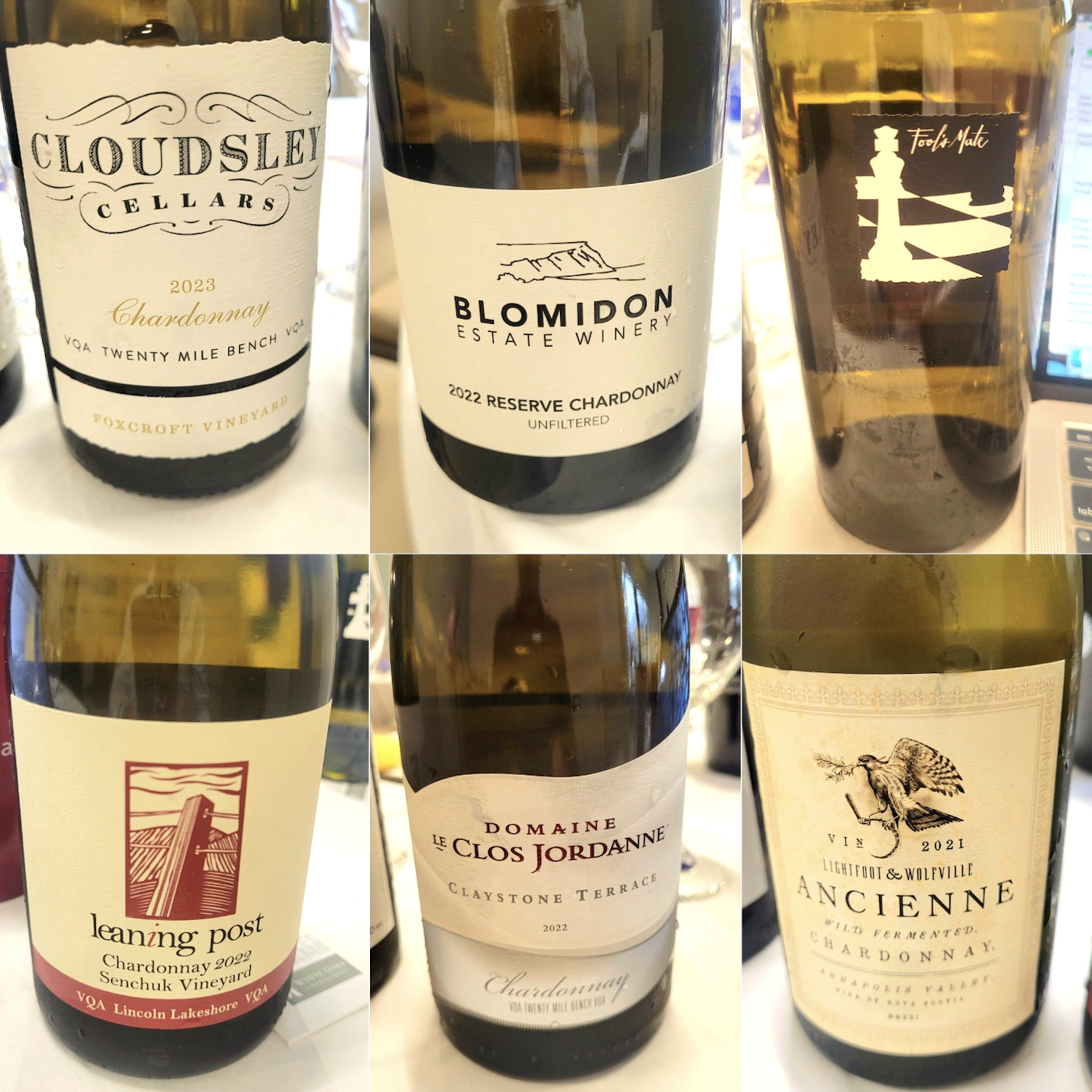
Blomidon Reserve Chardonnay 2022, Nova Scotia

Hard to find more chardonnay substance and texture than in Reserve 2022 from winemaker Simon Rafuse at Blomidon. Spiced piques, crunchy apple bites, barrel blanketing and fruit involved at all points for what define the character of this wine. More about flavour than aroma, not out of character for chardonnay but beyond fruit comes sea air and the crushed shells of fossils. There is a Bourgogne feeling gained but not an old school one. Close your eyes and imagine young, modern and inspired from the Motherland.  Last tasted at i4C, July 2025

A chardonnay that shows how in the context of a flight of eight wines just how different Canadian chardonnay will be from one to the next. Which also means from one province through to another. Juicy, orchard juiced fruity and simple, if a fine coolest climate expression from the grape to gift high energy character, belied by easy and accessible drinking. Drink 2025-2027.  Tasted blind at NWACs, June 2025

Catena Chardonnay High Mountain Vines, Sustainable 2023, Valle De Uco, Mendoza, Argentina

A chardonnay of four sites, Agrelo (950m), Villa Bastías (1,120), Gualtallary (1,450) and El Cepillo (1,090). Classic Catena, of respectfully farmed fruit to optimum ripenesses, phenolics included and ease of barrel blanketing to oxygenate and elevate. Partial (60 percent) malolactic because why compromise acidity when you’re making mountain chardonnay? A higher level of affordable chardonnay prepared and meant for all, of fullness in concentration and experience to get things balanced and just right. Another unmitigated success, delivered without surprise. Drink 2025-2027.  Tasted at i4C, July 2025

Catena Chardonnay 2019, Mendoza, Argentina

Well settled, buttery warmth and a nut butter oiliness having entered the arena of delicious and snackable. Drink up although there are two more years available in this state. Drink 2025-2026.  Tasted at i4C, July 2025

With every passing vintage the solar radiation affecting high altitude vines increases and dramatizes the gainful effect of Argentina’s darling value-priced chardonnay. It has come to this. A wine of great concentration, generous of fruit and equipped with the tightest spiral of complexity and then, unwind. That the winemakers have figured out how to dial in and expound upon an already well figured out scheme is nothing short of outstanding. Do not dismiss this as a regular, easy to knock back $20 white wine. The substance and the fanning out of notes and pleasures is just too much to simplify, no matter the quantity of output. Drink 2021-2025.  Tasted January 2021

Cave Spring Chardonnay Reserve 1995, VQA Niagara Peninsula

Made by Angelo Pavan and we are drinking the last drops of this wine. Picked at 22 Brix in 1995! And yes the wine is showing beautifully. Spiced and piquing with spiciness on the tip of the palate from a chardonnay that was so perfectly oxidative from the beginning with just the right amount of skin contact to see it age remarkably for 30 years. Magic.  Tasted at i4C, July 2025
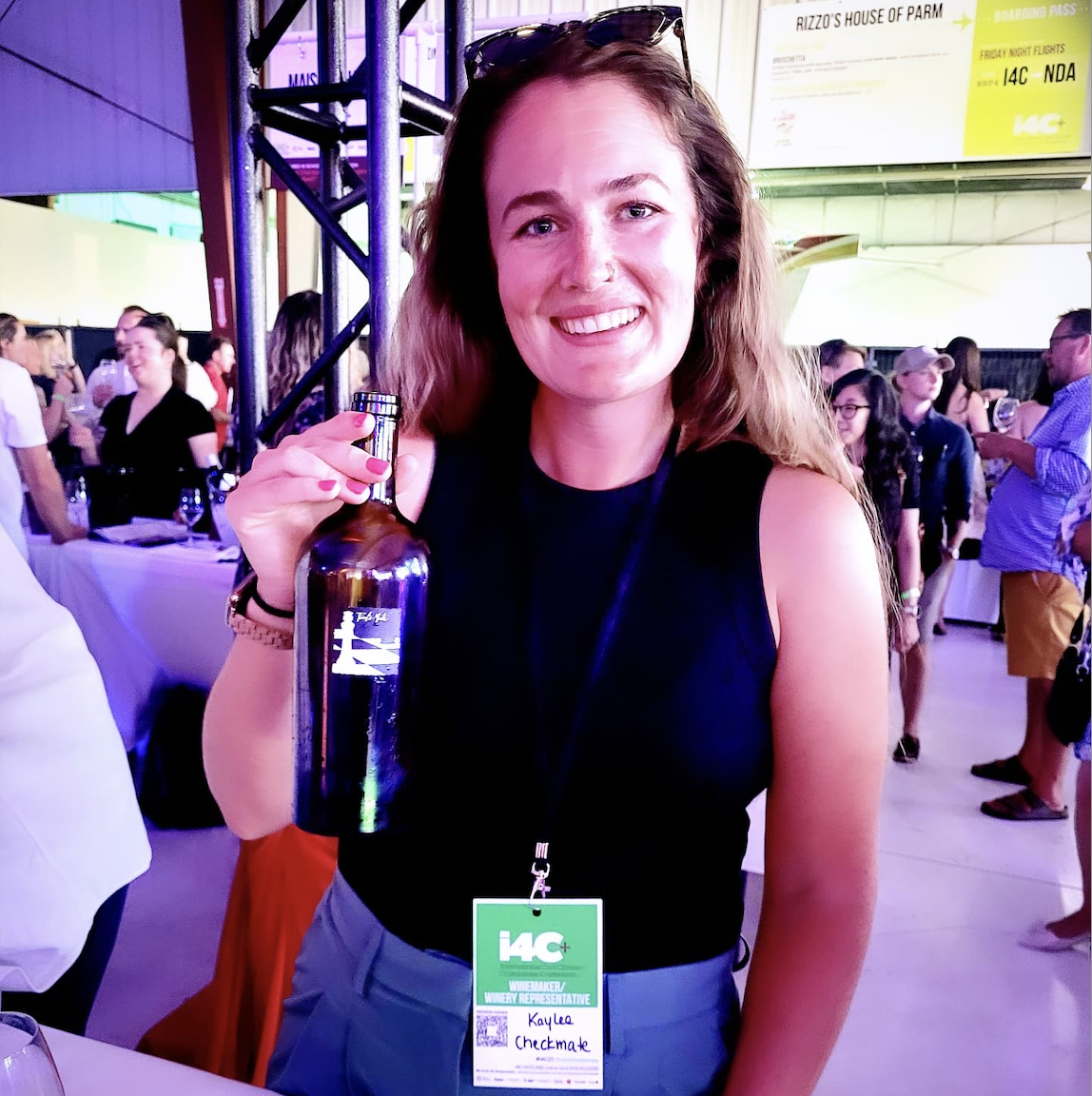
Kaylee Barss, Checkmate Winery

Checkmate Chardonnay Fool’s Mate 2020, VQA Okanagan Valley, British Columbia

Hard to find a fuller, more substantial and all in chardonnay than the Fool’s Mate, but also one with this much finesse, charm and grace. Ridiculously pleasing and dealing in immediate gratification, Checkmate’s 2020 has now settled into its skin to be the kind of wine that literally makes you sigh. So much textural fabric and Okanagan essence from a top-tier focused, sophisticated, considered and flawlessly executed chardonnay. Drink 2025-2029.  Tasted at i4C, July 2025

Cloudsley Cellars Chardonnay Foxcroft Vineyard 2023, Twenty Mile Bench, Niagara Peninsula, Ontario

For 2023 winemaker Matt Smith and proprietor Adam Lowry take their Foxcroft chardonnay to another level. The integration of sharply dressed orchard fruit in barrel clothing is a suave and handsome design, look and feel. This stands upright, expresses varietal linearity and is just about as fit and taut a Foxcroft as there has ever been. Essential Wismer Twenty Mile Bench chardonnay, focused and got so right. Raises the bar and ceiling for estate and vineyard. Drink 2026-2030.  Tasted at i4C, July 2025

Domaine Laroche Chablis Les Vaudevey Premier Cru 2022, AC Bourgogne, France

Terrifically balanced, harmonious and gracious Chablis for 2022 from Les Vaudevey. A Left Bank beauty with joyous acidity that lifts this Premier Cru up to a place where eager palates will find bliss in chardonnay. Truly a factor of kimmeridgian soil and soul, seamlessly integrated, layered and also elastic in mouthfeel. Spot on with persistent aging potential.  Last tasted at i4C, July 2025

The word precise is often used to describe Chablis and many other global chardonnays, sometimes gratuitously but here perfectly applies to the Laroche Vaudeyey. Les VdV ’22 is focused to a virtue with its equality, equanimity and equilibrium from start to finish. A lexical entry to figure out the crux and relationship between cru and village.  Tasted a second time, July 2024

Domaine Queylus Chardonnay Tradition 2023, VQA Lincoln Lakeshore, Ontario

“We’re growing the wine and not really making it in the cellar. It’s really challenging, you have to be proactive and also reactive on a vine by vine basis.” The words of winemaker Kelly Mason. From leaf thinning to green harvest and hopefully at the right time, all within the parameters of vintage variation. “Like being the pit crew and driver at the same time.” From the Lincoln Lakeshore vineyard for a ’23 Tradition leaner than some other years, a linear drive with a platinum gold hue and mineral feel. Less than 20 percent new wood, no stirring, “out to barrel and leave it to sit.” Ever so slightly acetic, well within reason and with a pinch of natural chardonnay sweetness. Drink 2025-2027.  Tasted at i4C, July 2025

Hidden Bench Chardonnay Béton 2023, VQA Beamsville Bench, Ontario

A unique Bench chardonnay because the fruit has all been taken from the 2009 planting in the Felseck Vineyard. The younger vines are perfectly suited to this Béton’s raising, as in the label’s meaning which is 10 months in concrete for briny and über fresh chardonnay with its own kind of bite. Also tension with no wood to attract attention from the sharp, pointed and direct display of chardonnay. The middle is creamy, that much is true and the juxtaposition makes for an open invitation to imbibe. Drink 2025-2028.  Tasted at i4C, July 2025

Hidden Bench Chardonnay Estate Organic 2023, VQA Beamsville Bench, Ontario

Youngest and freshest of Ontario’s 2023 chardonnay aged and then aged further in bottle for what should be this precise release point. Any earlier and it might have played hard to get, any later and freshness would not be this pitch perfect. Assemble a group of wine lovers without extensive cool climate experience or bring this on the road and serve it to consumers beyond these borders for what will be a cool chardonnay teaching moment at a time in history when these wines can turn even the most ardent disbeliever. Drink 2025-2029.  Tasted at i4C, July 2025

Hidden Bench Estate Chardonnay 2013, VQA Beamsville Bench, Ontario

Seduction from the word go, nose to glass and if surprise well this could be forgiven considering this is an 11-plus year-old chardonnay from the Beamsville Bench. Then again in 2013 winemaker Marlize Beyers, Hidden Bench and many Bench wineries were already keenly aware of how to make high quality and also structured chardonnay. This wine has drifted slowly and comfortably into its ripe maturity at an age with beauty and of respect. Special is the understatement. FYI for corks nerds out there the 2013 was bottled under Diam-10.  Last tasted at i4C, July 2025

A best of both worlds Chardonnay; indicative of the giving vintage (in quality, not quantity, prestige, not prosper) and an Estate, house style with some cosmetics to enhance the consequence. Really typifies and explains what a Marlize Beyers Chardonnay is. Elegant, stylish, with perfect skin, tones, understated beauty and the soft vernacular of few yet precise words. The texture and feel of this Chardonnay is downy, lacey and so very understated. You simply can’t take your eyes off its charms and your palate away from its soft feel. A wine of character and poise. Drink 2015-2020.  Tasted August 2015
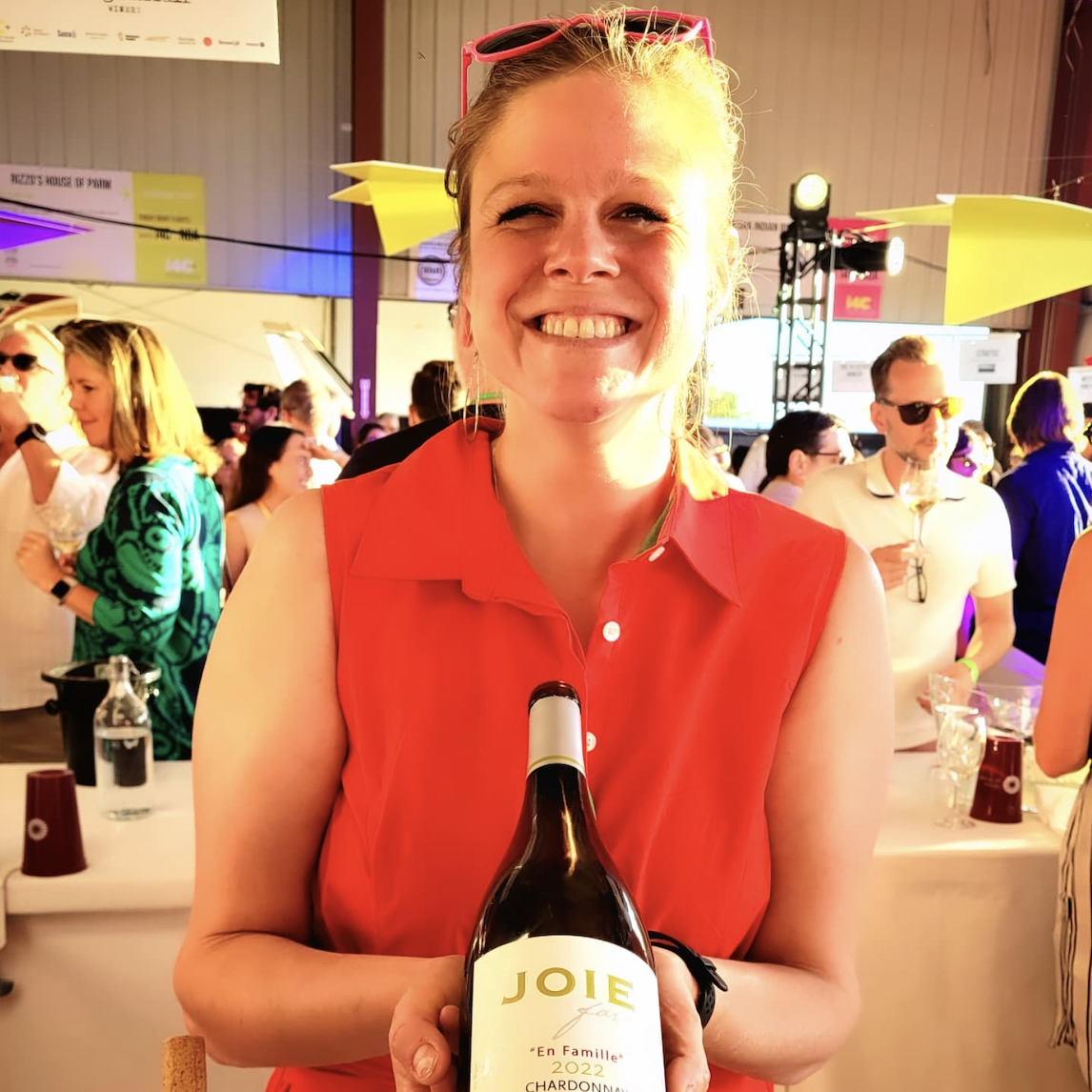
Jennifer Carter, JoieFarm

Joiefarm Chardonnay En Famille Reserve 2022, BC VQA Okanagan Valley, British Columbia

En Famille is the line of signature Joie wines that define, but also distinguish a family’s and team’s fulfillment for everything they’ve accomplished. All in the family celebrates a history and the present, here with chardonnay from a terrific vintage that takes every binate advantage given. Is this not the epitome of a Naramata season, to induce seduction, generosity and philanthropy. Gives and then gives some more, like ripe stone and orchard fruit at peak ripeness, the subtlety of barrel and fineness of acidity. The sweetest kind and thing that could be, natural, at hand to induce consequential pleasure and gratification. Drink 2025-2028.  Tasted at i4C, July 2025

Joiefarm Winery Chardonnay Con Vida Vineyard 2022, BC VQA Okanagan Valley, British Columbia

The pinnacle of En Famille for chardonnay drills deeper into place with Con Vida Vineyard, meaning “alive” or “with life,” a term of endearment to celebrate a piece within the greater good. Winemaker Richard Charnock takes chardonnay to the next level, particularly in amplitude and opulence for the kind of wine no mere mortal could resist, Or deny its succulence and generosity. Thankfully the sweetness and elasticity of acidity extends the character, fortune and play before giving way to warmth, a buttery brioche-ness and fluid forward motion extended well into the lingering minutes of a palate’s perception. Drink 2025-2029.  Tasted at i4C, July 2025

Leaning Post Chardonnay Senchuk Vineyard 2022, VQA Lincoln Lakeshore, Ontario

Sharp and pinpointed without equivocation in home base chardonnay of vines further matured into early adulthood. Now in delivery for fineness and a development into true realism in western Niagara chardonnay. In fact place does not get any more west and so we begin to believe that the west is indeed the best. The concept may express a subjective opinion and also convey a preference for a specific geographic region but who can deny what the Senchuks have accomplished with the clay based block behind the winery. The 2022 is in fact a warm chardonnay from a cool climate that shows just the existential where and when history of a wine like this. With depth of flavour, rise and length. Drink 2025-2032.  Tasted at i4C, July 2025

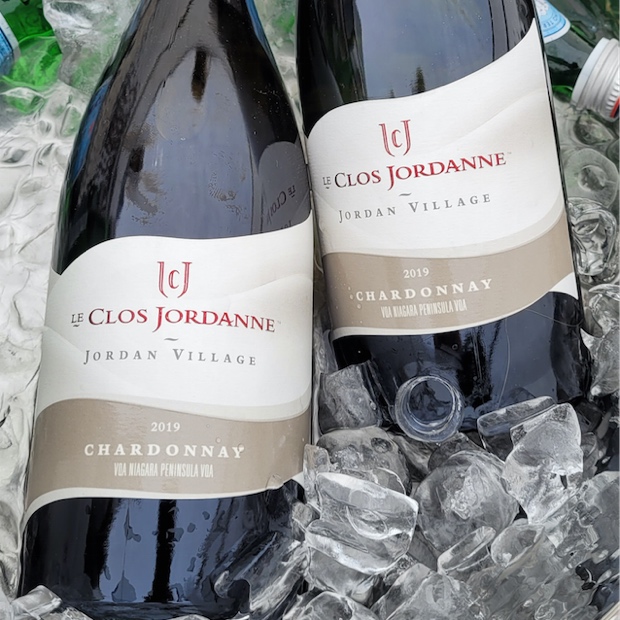
Le Clos Jordanne Chardonnay Claystone Terrace 2022, VQA Twenty Mile Bench, Ontario

Claystone for 2022 chardonnay notes reductive character in a restrained and fruit encapsulated manner. Separates itself from Jordan Village through more varietal and place specifics with higher aromatic pitch and pinpointed flavours to make you think and feel the sickle curved nook on a plateau aboard the Twenty Mile Bench. Terrace that is, where clay and decomposed stone are the impetus for chardonnay of an identified speciality, coaxed and brought to life by Bachelder and team. Sharp and focused with the earth of a vintage packing its pockets and fleshing out its fruit.  Last tasted at i4C, July 2025

If anyone were to ask, what does a chardonnay from Le Clos Jordanne taste like, the answer would be this. This 2022 Claystone is exactly it, a chardonnay of selection from a specific block, a development of fruit hung to optimize aromas, favours and intangibles, a wealth wrought of barrel choices made to accentuate all the fresh meeting mature nuances of Twenty Mile Bench chardonnay. Top stuff at eye level shelf for this sku in the hands of three skilled wine crafters that make Niagara proud. Phillip Brown, Kerri Crawford and the monk himself, Thomas Bachelder. Drink 2025-2028.  Tasted July 2025

Lightfoot & Wolfville Chardonnay Ancienne Wild Ferment 2021, Annapolis Valley, Nova Scotia

One nose into Ancienne 2021 and you know the change has come. The first epoch of evolution now paves the way for another, the last one having developed and experienced over the past eight years, now come to full fruition. The new and improved Ancienne will one day beget a decades old chardonnay that truly defines its ancient name, looks to its past and reflects on what has been accomplished. As we will do in kind, to have believed everything was possible and was meant to be. This ’21 owes its DNA to place and previous vintages but there is are new parameters of warmth, richness and ripeness, aspects now present in more vintages than not, no matter the climate extremes and obstacles that are want to diminish quantities. My goodness what great chardonnay is being made on such a consistent basis by a winemaker as present and confident as Josh Horton. The underlay of Fundy spray saltiness in the heart of juiced and zested lemon is an irresistible mix for chardonnay. They who take this wine’s subtleties and potential for granted are missing the point. Drink 2025-2029.  Tasted at i4C, July 2025
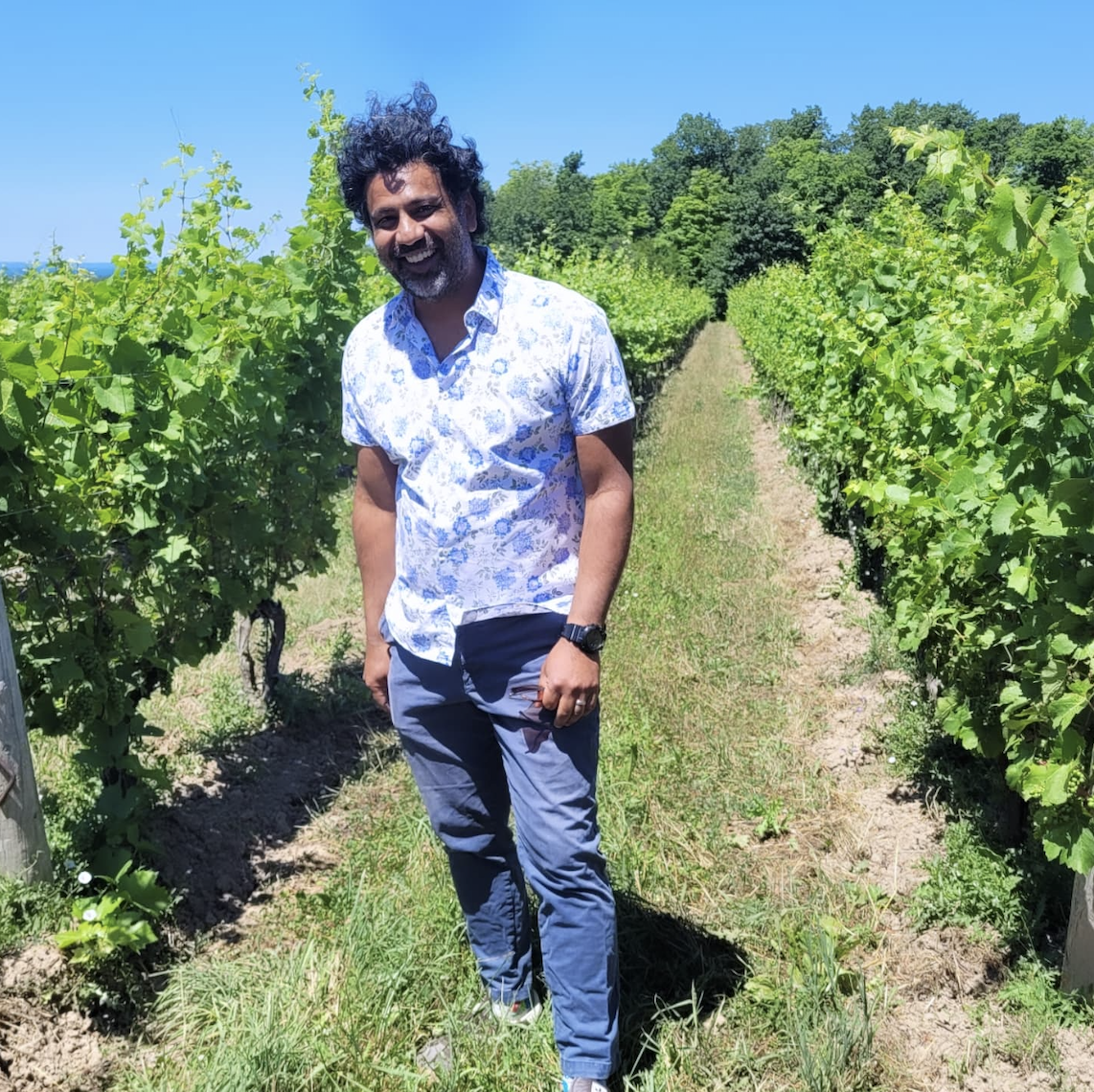
Shiraz Mottiar in his home vineyard

Malivoire Chardonnay Mottiar 2021, VQA Beamsville Bench, Ontario

From Shiraz Mottiar’s home vineyard and the wet vintage, moderately cool and one of those times that fruit dropping and rigorous sorting could and would lead to great chardonnay. That is this, taut and opening slowly, incrementally, in no hurry, nearly yet still not ready to go. Not the open flower yet and will be soon when fleshier times will fill the glass. A newfound yes to 2021.  Last tasted at i4C, July 2025

“A disaster (yet high volume, up 30 percent) vintage but I’m really happy what came from there,” admits winemaker Elisa Mazzi. No matter the rain and fog because there is flesh and substance in the ’21 from Shiraz Mottiar’s vineyard. Not a fully natural fermentation with some yeasts used but also not a full malolactic fermentation. Stopped halfway, winemaking on numbers instead of taste so to speak. Some wet concrete notes, washed hard cheese rind and surely different for a Malivoire chardonnay, leaner and linear but ready as ever to go out and please. Drink 2024-2026.  Tasted March 2024

Malivoire Chardonnay Mottiar 2018, VQA Beamsville Bench, Ontario

Pronounced flintiness from 2018, “it’s just vintage,” says Shiraz Mottiar and it lends a Beamsvile-ness to chardonnay, not unlike 2011 but ’18 was warmer. Translates to an added layer of richness with just the right amount of wood felt at this six-plus year stage.  Last tasted at i4C, July 2025

Intensely youthful chardonnay is a scent to behold, especially from a vineyard block picked on the high-low dichotomy of acid and pH then naturally fermented with bunches intact. I wonder if the barrel time was extended slightly because of the promise of 2018 and that may add to the taut nature of this Mottiar. That said there is no lack of freshness or shortage of cool climate bite. After all, this is chardonnay that speaks the vernacular of stoicism, structure and length. Drink 2022-2027.  Tasted October 2020
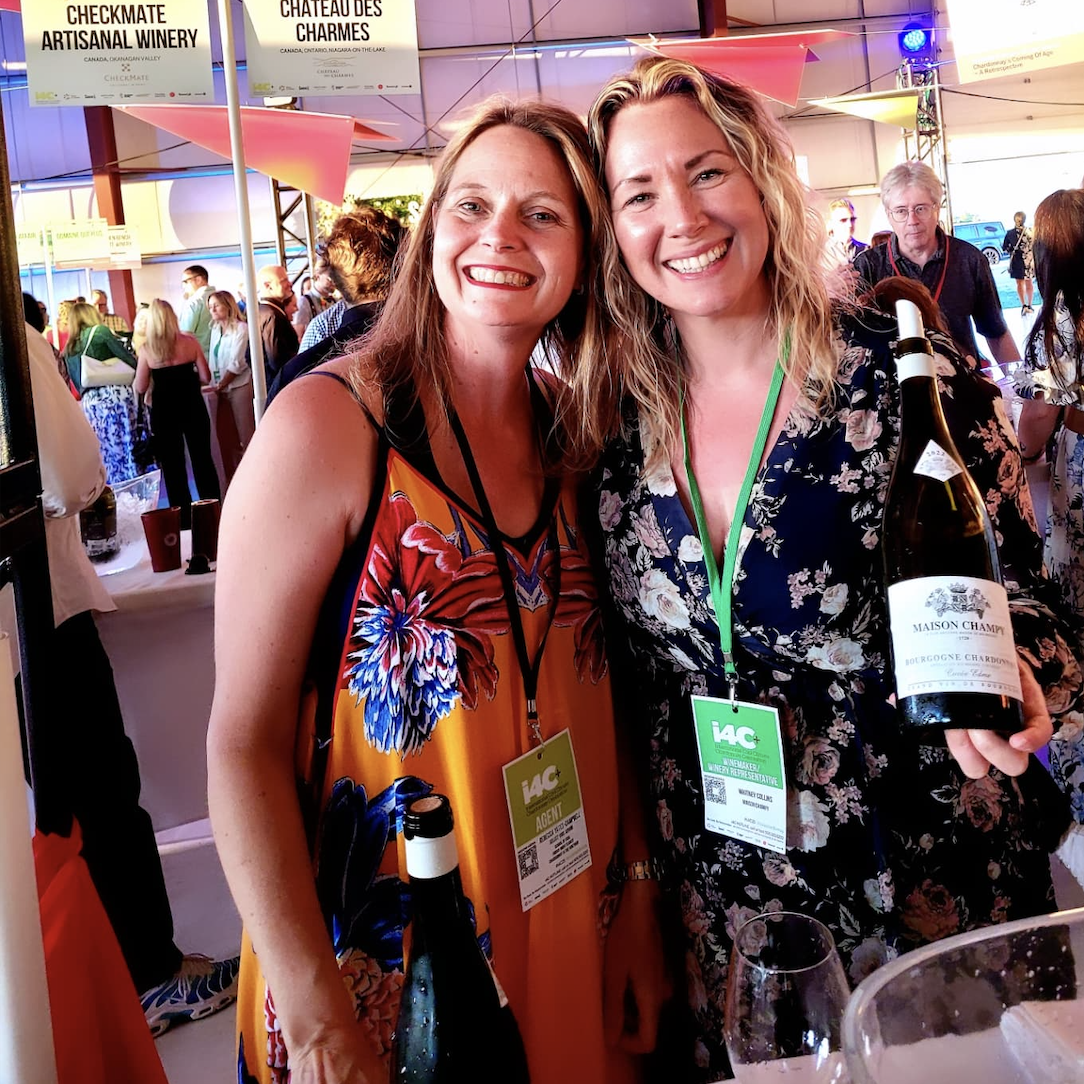
Rebecca Yates-Campbell and Whiney Collins, Advini (Maison Champy and Domaine Laroche)

Maison Champy Pernand Vergelesses Blanc 2023, Bourgogne AOC, France

The appellation and terroir must direct a classic movement in chardonnay and Champy ensures its orchestration finds what we are all looking for. That would be lighter, mineral-acid freshness from a large local landholder with more cards than many to mix, match and most importantly adapt. Organics and the essential ideal of sustainability translate into a chardonnay that is truly technically proficient to the edge of perfection. Translates terroir, talking points and acumen into great chardonnay. One of innovation for timelessness. Drink 2025-2029.  Tasted at i4C, July 2025

Organized Crime Chardonnay Limestone Block 2022, VQA Beamsville Bench, Ontario

Sharp value chardonnay cut from stone and to deliver top quality varietal goods from a fantastic Beamsville Bench terroir. Crisp as it gets for a 2022 Bench chardonnay, sweetly herbal, crispy and taut yet with no shortage of fluidity and flesh. Distinct and still recognizable for grape and place with wood the pique in spice at the tip and also back end of the palate. Acidity fills the voluminous space between. Drink 2025-2028.  Tasted at i4C, July 2025

Organized Crime Chardonnay Sacred Series Cuvée Krystyna 2021, VQA Beamsville Bench, Ontario

Higher end and inviting pinpointed cuvée from the cooler and wetter if humid vintage to determine ultra specific chardonnay. In a way surprisingly soft with a cream-centred mid-palate, pH elevated and acidity mild. The truth is this feels and drinks like a “Reserve” style of Ontario chardonnay with no questioning the quality of fruit ripeness, purity and wood. Comes together nicely and still drinks with purpose, though these immediately arriving years will see a waning of freshness. Drink 2025-2027.  Tasted at i4C, July 2025

Rosehall Run JCR Chardonnay Rosehall Vineyard 2017, VQA Prince Edward County, Ontario

Were you to say upfront that this was a Prince Edward County chardonnay from 2017 it would not be believed. Still cracker energy and freshness, crispy and crunchy character and blessed County beauty.  Last tasted at i4C, July 2025

As a follow-up to the warmth and phenolic heights of 2016 you’ll have to imagine a meandering through zig-zagging directions for ’17. Despite the ups, downs and ups again this chardonnay has indeed found its way, charming us with insights and how richness ensues. The surety of this fruit and this composure ensures and enriches the great sleeper County chardonnay that continues to explain the concept of cool climate viticulture done right. It’s not really all that reductive but it is protective and crafted with indefatigable structure in surround of high quality ingredients. Another winner from Dan Sullivan. Drink 2019-2023.  Tasted June 2019 and May 2020

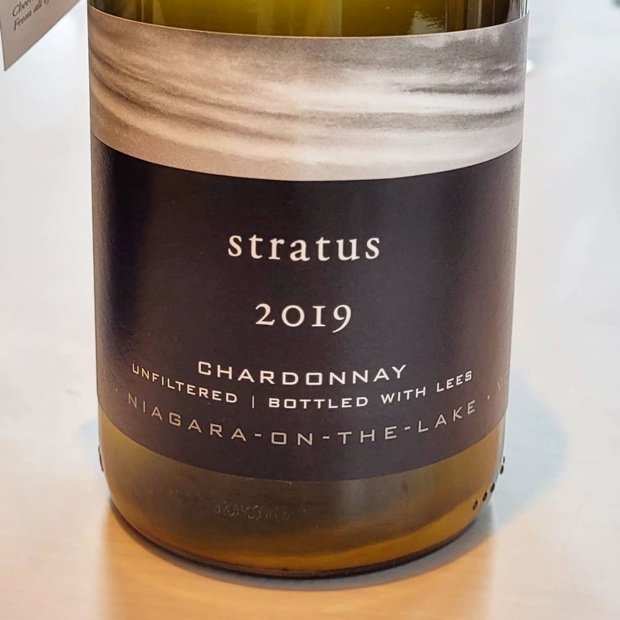
Stratus Chardonnay Unfiltered And Bottled With Lees 2023, VQA Niagara-on-the Lake, Ontario

The Stratus chardonnay lees program is simply fascinating. Options, possibilities and abilities learned have developed and been banked for hits that keep on coming, but what is most striking about the 2023 unfiltered is how perfectly clean it is. Like you would never know there were significant lees bottled and so here there feels like a return or in a sense a throwback to chardonnay from say 2012. Of a clarity, purity and acceptance of barrel in proper tones and with effortless ease. The agriculture is everything anyway, so to be sure a chardonnay like this will improve and be sure to bless a consumer with the last vintage produced being the best. Which means 2023. Drink 2025-2029.  Tasted at i4C, July 2025

Tamar Ridge Devil’s Corner Chardonnay Resolution 2022, Tasmania, Australia

Man does this smell like Tasmanian chardonnay, but what does that mean? Cool, for one thing, taut and tart with a Champagne profile minus the bubble. Also a chardonnay provided with a western rain shadow, a moderating body of water and north-facing sun capture for optimum ripening. Much of the fruit comes from the river that makes a moderating temperature effect horseshoed around the vineyard, that and 15 percent from the coastal vineyard. Like a bite into a strong green apple with satisfying juiciness and acidity. Drink 2025-2028.  Tasted at i4C, July 2025

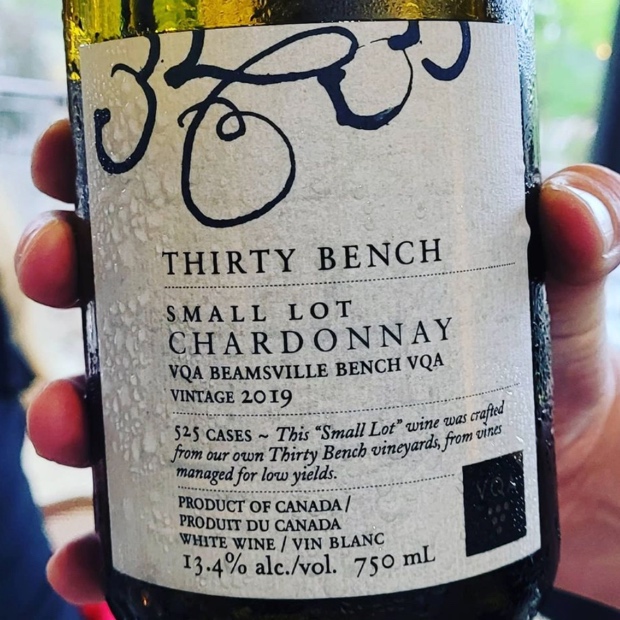
Thirty Bench Chardonnay Small Lot 2021, VQA Beamsville Bench, Ontario

In a ripe and settled place, fruit over acidity and barrel, fresh in its persistence and pulpy by texture. Green apple bite and spice more than many, exaggerated from a cooler vintage for excitability, gastronomy and complexity.  Last tasted at i4C, July 2025

True to Bench chardonnay sprit and energy, standing upright, demanding to be noticed and in turn we are paying notice. A harvest of demand forces the team to focus and pay extra attention, to do everything possible for greater returns. Picking and sorting strategies finds the best available fruit to create something cool, gelid, succulent and shockingly Chablis like. In fact at 12.6 percent (low) alcohol this acts in a stoic and matter of fact way, without airs and confidently what it needs to be. Will not overwhelm any palate, nor will it takes any breath away. That said it should age longer than first anticipated.  Last tasted twice in July 2024, including at at i4C

Small Lot just has to be the owner of the lowest of low alcohol number as it pertains to the Beamsville Bench and at 12.6 percent the conversion rate falls under the categorical auspices of magic. This is not a light chardonnay but it is a lithe, elastic and effusive one. Aromatically demure yet soft and almost caressing, without peppery (and sharp apple) bites or jolting in any way. The palate runs a similar course, gracing with soft and round flavours that are easy and stretched. Lovely and amenable 2021 here from Emma Garner and one to savour slowly, in a calm and tranquil setting. Drink 2023-2025.  Tasted July 2023

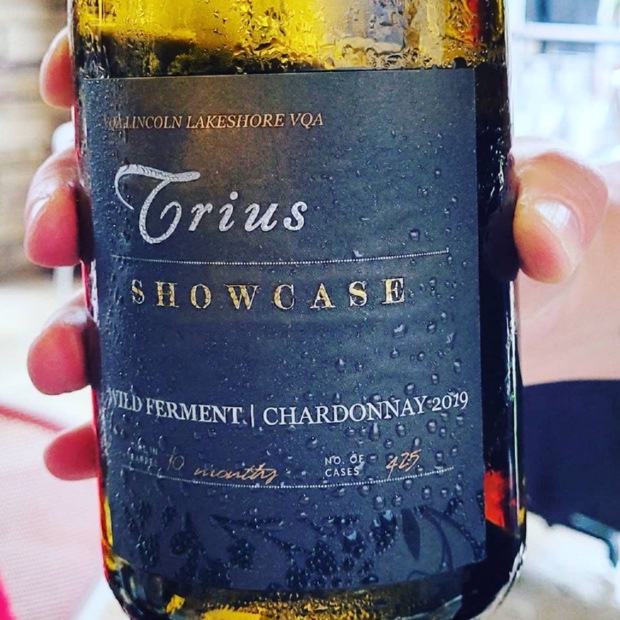
Trius Showcase Chardonnay Wild Ferment Watching Tree Vineyard 2022, VQA Lincoln Lakeshore, Ontario

Single vineyard, optimum fruit picked right at peak in a warm vintage and just the wild facts before barrel time rounds out the edges and corners. They still point and stand out with reductive style being the impetus for freshness and how this chardonnay will age, journey and thrive. There is a crunchy green apple quality, a flinty moment our two and fine lees as pure as ever.  Last tasted at i4C, July 2025

Volta Estate Winery Chardonnay Unoaked 2023, VQA Prince Edward County, Ontario

One of three Volta chardonnays, the second being barrel-aged and the third raised in (sandstone) amphora. Fruit comes from Hillier’s Ramirez Family Farm, at one time sourced by Lighthall Vineyards, a fun fact that indirectly forms a connection with new winemaker Chris Thompson who used to work at there. This steely chardonnay is stirred and closely mimics a Chablis perspective, youthful style that is with languid drift, elasticity, freshness and cool finishing spice. Acids are spot on for this ultra correct chardonnay. Drink 2025-2026.  Tasted at i4C, July 2025

Volta Estate Winery Chardonnay Amphora Ramirez Family Vineyard 2023, VQA Prince Edward County, Ontario

As with the first Volta chardonnay the source is Hillier’s Ramirez Farm but here the aging is done in French (sandstone) amphora-style vessels. A freshness does not merely drift but flies out in a way that rarely happens from these pots (when made with concrete or clay) and so the medium surely creates some sort of revolutionary housing. Purity incarnate and no salve drip or texture melted upon the palate makes this so bloody different. Highlights the fruit and not reduction while micro-oxygenation comes into effect in the neatest way. Drink 2025-2027.  Tasted at i4C, July 2025

Wending Home Chardonnay Estate Vineyards 2021, VQA Creek Shores, Ontario

First tasted 13 months ago and no shock to find this chardonnay right in the heart of its open window. The spice is melting and infiltrating every pore of this wine for pervasive seasoning and flavour. Just delicious at this stage.  Last tasted at i4C, July 2025

Bit of a cool banana smoothie here, extracted and sweet though naturally so with that tropical spectrum feel, especially like pineapple. Chewy for chardonnay and the wood is very much there, finishing with a buttery swath pasted across the palate. A bit heavy handed (though not overdone) in terms of bâtonnage to effect honeycomb and creaminess, however those who like the style will do very well with this example. Drink 2024-2026.  Tasted blind at #NWACS24, June 2024
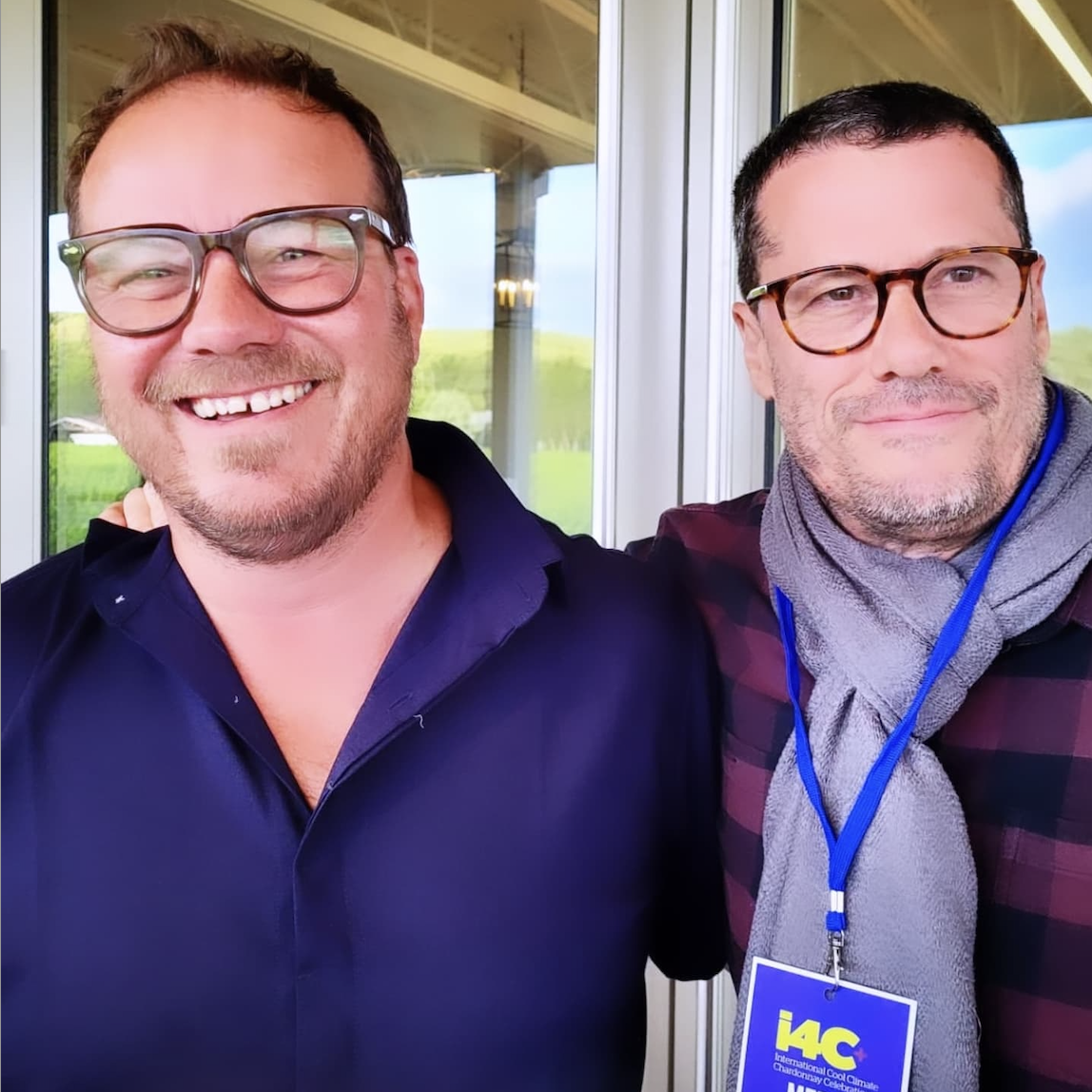
With Jonas Newman, The Grange of Prince Edward

Other Whites

Divergence Wines Sauvignon Blanc Creek Road Vineyard 2023, VQA Four Mile Creek, Ontario

In the past Jeff Moote sourced his sauvignon blanc from Hughes Vineyard in Beamsville and this is the first from Creek Road near Virgil in the Four Mile Creek sub-zone. The vineyard may be most famous for cabernet franc but this white grape cousin makes for a fine, ripe and complex wine. Saw 20 hours of skin contact, enough to effect colour and texture but not enough to adhere in any unwanted way aboard the palate. There are notes of green fig and yellow peach from what is ostensibly tight, vaguely tannic and corporeally solid white wine. Drink 2025-2027.  Tasted at 14C, July 2025

Grange Of Prince Edward Sauvignon Blanc Newfield Block 2024, VQA Prince Edward County, Ontario

From vines planted in 2003 though never really ever made into a dry sauvignon blanc. Now in the hands of winemaker Jonas Newman that changes with a stirred yet no wood version, although Newman feels that could come into play sometime soon. “To make a more complex and sophisticated sauvignon blanc,” but the quality of this feels like there will need to be two. This ’24 is joyous and eye-opening stuff. Drink 2025-2028.  Tasted at i4C, July 2025

Grange Of Prince Edward Pinot Gris Isabella Block + Northfield Block 2024, VQA Prince Edward County, Ontario

Truly ABG, anything but grigio in dry, salty, crisp and enticing pinot gris. Gris for gris’ sake, solid, purposed and drinking effortlessly. Drink 2025-2027.  Tasted at i4C, July 2025

Malivoire Pinot Gris 2024, VQA Beamsville Bench, Ontario

Aromatic for gris with flowers, part fresh and part desiccated. Vaguely turbid with an acetic moment that distract from the purity of intended local pinot gris flavours. A bit troubled by its youthful style and perhaps it will “clean itself” up with a few to more to six months in bottle. Drink 2025-2027.  Tasted at i4C, July 2025

Malivoire Melon 2024, VQA Beamsville Bench, Ontario

Fresh, ultra fruity and light style, decidedly void of long lees aging. Originally conceived and continues to be made for proprietor Martin Malivoire because this melon de bourgogne is exactly what he prefers for oysters. As will you because the 2024 delivers both substance and salinity, key ingredients in the pairing. Drink 2025-2028.  Tasted at i4C, July 2025

Malivoire Melon De Bourgogne Demo Series 2022, VQA Beamsville Bench, Ontario

The ulterior methodology and stylistic for melon de bourgogne, here aged 22 months on the lees. No we have not walked up from the river to Nantes, but there is some fantasy in that regard. Salty and the feeling of wet concrete, so proper for oysters but frankly an exciting melon on its own. Flinty and still youthful. Drink 2025-2029.  Tasted at i4C, July 2025
Jimmy Smith, Beare Green Winery and Wine with Jimmy

The Reds

Beare Green Winery Pinot Noir Pulborough Cool Climate Clone 777 2023, Surrey, England

The Surrey project of Wine with Jimmy (Smith) comes from Pulborough, a tiny village where the fringe of cool climate viticulture is practiced and planted to pinot noir clone 777. Beare Green’s is a natural varietal treat with acetic meanderings and like the chardonnay, leanness is belied by its charm. Yes it is in fact acid tart and sax jazzy while also crunchy and intensely cherry sour. A ton of clash but the prospects and possibilities feel like a high ceilinged future awaits. The intrigue is great with much looking forward to watching this passion project grow. London and the world are calling. “J-a-zee zee, J-a-zed zed, J-a-zed zed, Jimmy Jazz.” Satta Massagana Jimmy. Drink 2025-2027.  Tasted at i4C, July 2025
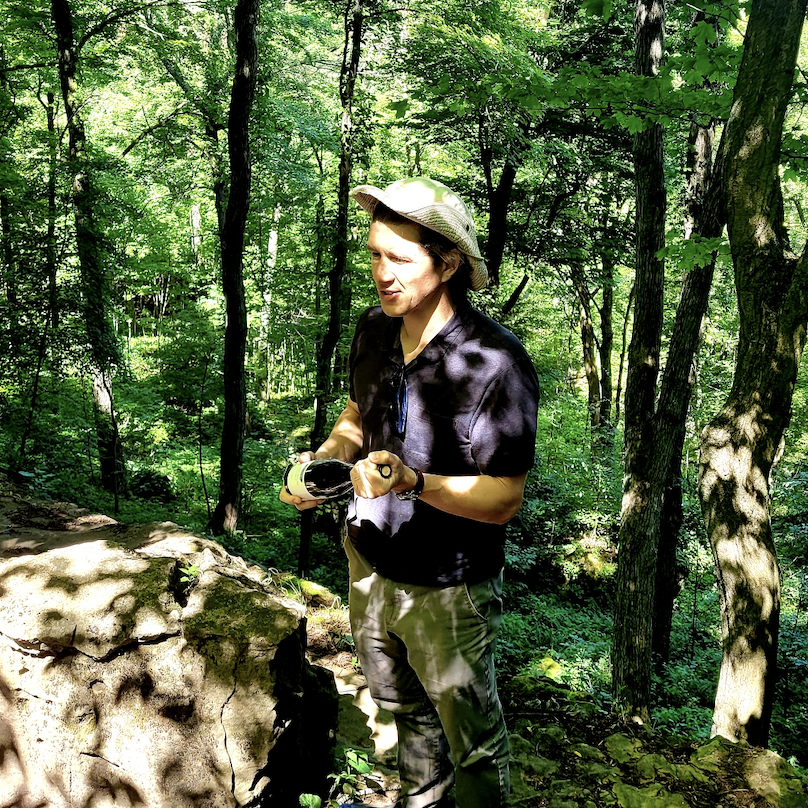
Cave Spring winemaker Gabe Demarco speaking at the Adam Steps

Cave Spring Cabernet Franc CSV Estate Grown 2022, Sustainable, VQA Beamsville Bench, Ontario

Warm vintage, a richness of fruit optimized from highest attention to farming and chosen right there in the field. In June no less because identifying blocks ahead of canopy management is key to drawing up the map for Cave Spring wines. CSV is the varietal meow, also with cabernet franc and while the ’22 carries deeper meaning there is no denying the sheer purity. Wood used generously is the requiem to elevate and extend the grip, spice, texture and potential of this wine.  Last tasted at i4C, July 2025

Juicy, unfettered in terms of exuberance and yet finely restrained as cabernet franc because it pulls no gratuity, nor punches for that matter. Only a kiss of the barrel is felt and the proper herbaceous greens are noted, as they rightly should. Speaks to the Cave Spring Vineyard and the important farming adjustments made over these last few years by Gabe Demarco and team. The fruit is singing because their host vines are well loved. It’s as simple as that. Drink 2024-2027.  Tasted September 2024

Cloudsley Cellars Pinot Noir 2022, VQA Twenty Mile Bench, Ontario

Adam Lowy’s Twenty Mile Bench pinot noir really is the mirror into a vintage with its mix of vineyard fruit, lithe transparency and aromatic spicing of a season. That’s the thing – His pinot noir does not go into bottle without proper, correct and frankly spot on salt & pepper seasoning in order to coax out the truth of fruit. Its decisive resource is concentration and depth without unnecessary over-extraction or heft. Would say to drink this early in its tenure and also pour it to those who question the viability and comparability of Ontario pinot noir. Drink 2025-2028.  Tasted at i4C, July 2025
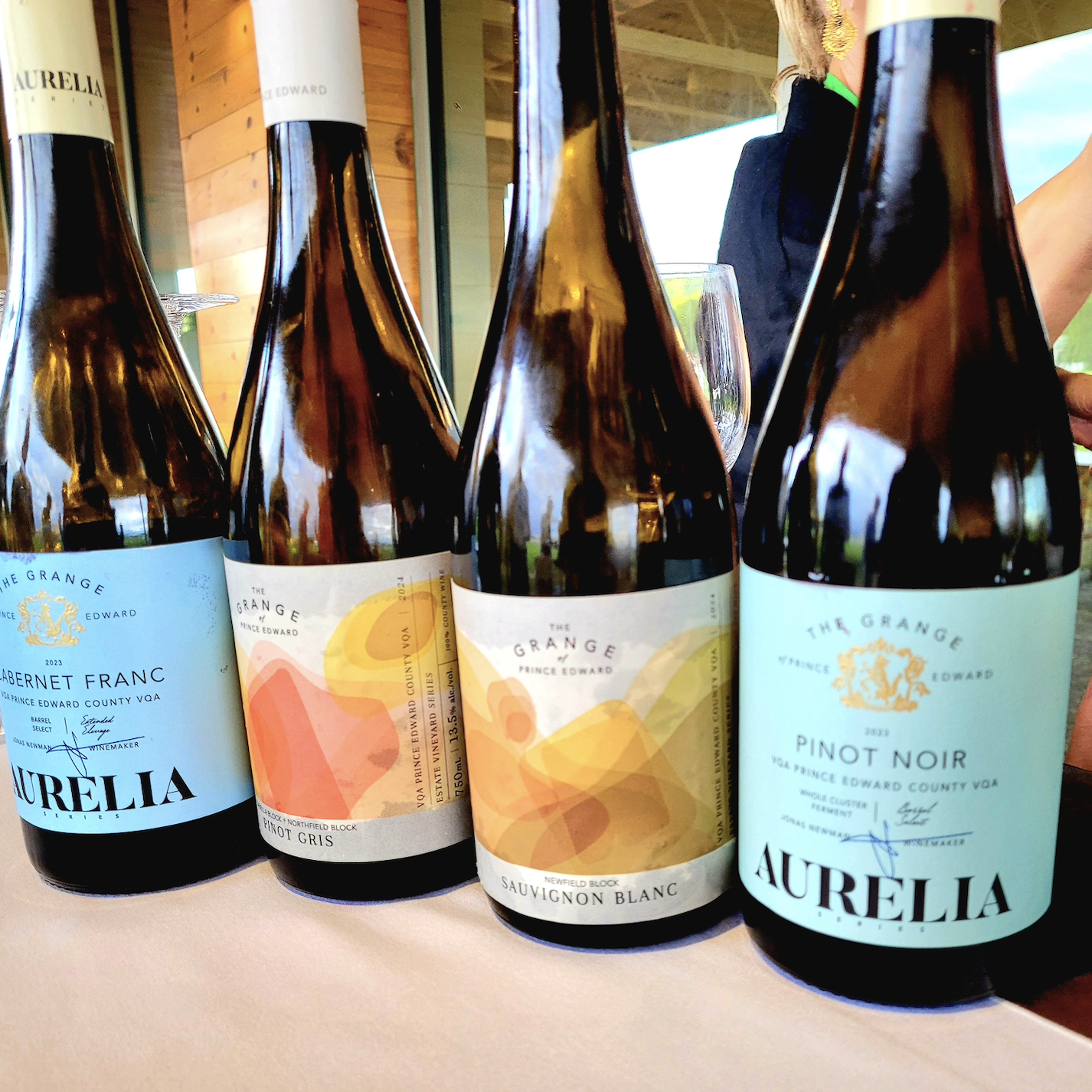
Grange Of Prince Edward Pinot Noir Aurelia 2023, VQA Prince Edward County, Ontario

Tart with an acetic edginess because of its raw energy and DIY ethic. Red fruit intensity, implosive, dangerous, rebellious and still workable. It is County pinot noir, the punk rock of Ontario’s varietal sound, purposefully shock chord driven and fast. Try to keep up.  Last tasted at i4C, July 2025

The golden one, Aurelia, from the Latin Aurelius and if you want to delve deeper, the name for Marcus Aurelius Antoninus, Roman emperor from 161 to 180. Even deeper still the character portrayed by Richard Harris in Gladiator. Also the top of the opus pinot noir at The Grange and what a golden one it surely is. Needs to be because it is bloody expensive but just 98 cases were made of a varietal harbinger that gets the full on spa treatment. Double sorted, first in the vineyard, then at the table. Whole cluster fermented, including carbonic for five days and then foot trodden. Ten days of délestage before being pressed off and blended to finish ferment in tank. Ages in the most expensive wood for 10 months, 33 percent new. Burgundy anyone? Yes this is the idea and the result is a pretty good approximation, all the while tended to by that County high life in acidity with a generous amount of volatile compound effect. Yet the fruit and that acidity are in cahoots, sweet, inviting and enlivening. At nearly $75 there is a whole lot of swagger, ambition and confidence but if money were no object I’d happily drink through a few bottles. Drink 2024-2027.  Tasted December 2024

Grange Of Prince Edward Cabernet Franc Aurelia Series 2023, VQA Prince Edward County, Ontario

What absolutely killer, beautiful and appropriate volatility in the sweetest and most elastic vein. There are Loire and Ontario cabernet franc and then comes along Aurelius at Prince Edward County’s Grange made by Jonas Newman – and the skies re-open. Feels like a cabernet franc epiphany sent after a storm with order restored post chaos and darkness. The wine’s opening salvo is something understood to be professional and artisanal rolling into the proverbial emergence from risk relatable to reward. Brightness and potential ensues. Near, near absolutely brilliant bottle of cabernet franc. The pinnacle is coming soon. Drink 2026-2031.  Tasted at i4C, July 2025

With Jennifer Carter, JoieFarm

Joiefarm Winery Pinot Noir En Famille 2022, BC VQA Okanagan Valley, British Columbia

A treat to taste a signature JoieFarm pinot noir from a most rewarding Okanagan Valley – Naramata Bench vintage, especially under the auspices of the En Famille autograph. A true “farm” wine, emphasizing a connection between Naramata and these varietal wines. The ’22 brings fullness and generosity in a most familial and joyous way. Ripeness is just right there and softness ensues to ensure the highest level of drinkability for always and whenever. Drink 2025-2028.  Tasted at i4C, July 2025

Leaning Post Pinot Noir 2023, VQA Niagara Peninsula, Ontario

The NP pinot noir falls into the Leaning Post line wedged somewhere on the line between The Fifty and the single vineyard labels of Senchuk, Hemeris, Lowery and Grimsby Hillside Vineyard. What’s right and charming about 2023 is how it settles into our varietal psyche for a vintage neither as warm or concentred, while returning to varietal basics. This feels like 2009 or 2009, wines ripe and structured enough that in Ilya Senchuk’s hands that are able to please early yet surely age gracefully forward several years. There is purity and potential magic from vintages like this with no exception for one labeled as an LP pinot noir. Less than epic, but they can’t all be and my how good ’23 will be for years to come. Drink 2025-2031.  Tasted at i4C, July 2025

Lightfoot & Wolfville Pinot Noir Ancienne Wild Ferment 2021, Annapolis Valley, Nova Scotia

Feels like only yesterday when pinot noir planted, nurtured and made into wine at Lightfoot & Wolfville was born, but here we find this special Annapolis Valley example come upon a decade into its tenure. Things have changed in terms of ripeness, knowledge and experience, but still this is Nova Scotia wine. Unequivocally and beautifully, with tension and this rise of high tonality up high into a Fundy-Minas Basin air. The 2021 still rises but also settles in term of its tannin structure. This says drink away and be keenly aware of how time will dramatically change this pinot noir across all of its character; volatility, emotional well-being and spirit. Drink 2025-2028.  Tasted at i4C, July 2025
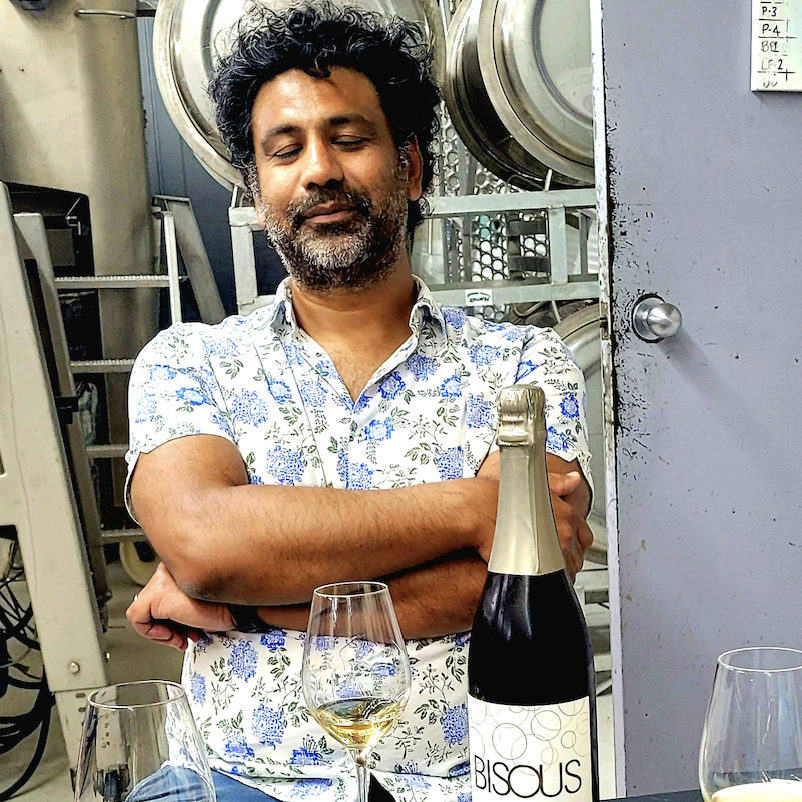
Shiraz Mottiar, Malivoire

Malivoire Gamay Small Lot 2023, VQA Niagara Escarpment, Ontario

Some carbonic from 30 percent whole cluster gamay. Pretty tight, spot on, clean and correct gamay with ample concentration stopped short of density and so no noted chalkiness. Aromatic spice and Villages stylistic captured to represent keen varietal aspiration bred from rooted Escarpment function. Drink 2025-2028.  Tasted at i4C, July 2025

Malivoire Gamay Le Coeur 2023, VQA Niagara Escarpment, Ontario

A hundred percent carbonic from same number whole cluster gamay and if there once was risk involved that anxiety is long gone. The all in number has been a factor since 2017 and one time trepidation is now a gamay that knows exactly what it is from makers who know exactly what they’ve got. Firm and with elastic tension for gamay that reaches out, snaps back and does it again. Repeats its processes on the palate with pulse and meter. Amazing.  Last tasted at i4c, July 2025

Punchy for gamay, so very Niagara style, likely Lincoln Lakeshore or the steppes of the Beamsville Bench. Fruit, leafiness and a mild earthiness (as in reduction) together with top level perfume of spring flowers (hibiscus), fresh dill and that induction of reductive aromas. and a Villages emotion that speaks volumes about a general sense of place. Less demanding in terms of tannin and a declension of flavours while not quite as fleshy or full as expected to follow what came at the first. Will this flesh out? Quite likely because it grows and grows on you. Tremendously solid varietal wine – if not so adept at aging. Drink 2024-2026.  Tasted blind at #NWACS24, June 2024

Malivoire Gamay Courtney 2022, VQA Beamsville Bench, Ontario

Courtney releases a year later than Small Lot and Le Coeur because it’s more traditional without any carbonic maceration. Warmer vintage, more depth and peppery quality in a pinot meets syrah sort of way. A unique and mature vineyard brings warmth and depth, the treatment in the cellar meant to add breadth and lengthen what is possible. That it does.  Last tasted at i4C, July 2025

Juicy and effusive gamay, such sweet perfume and candied goodness in that aromatic regard. Leafy and savoury infiltrates within and then a repeat on the palate that speaks to harmony within and also without. Maybe some RS sweetness but it is forgiven because all parts work well and together, Acidity over tannin and that’s perfectly fine. Just a bit sour at the finish. Drink 2024-2026.  Tasted blind at #NWACS24, June 2024
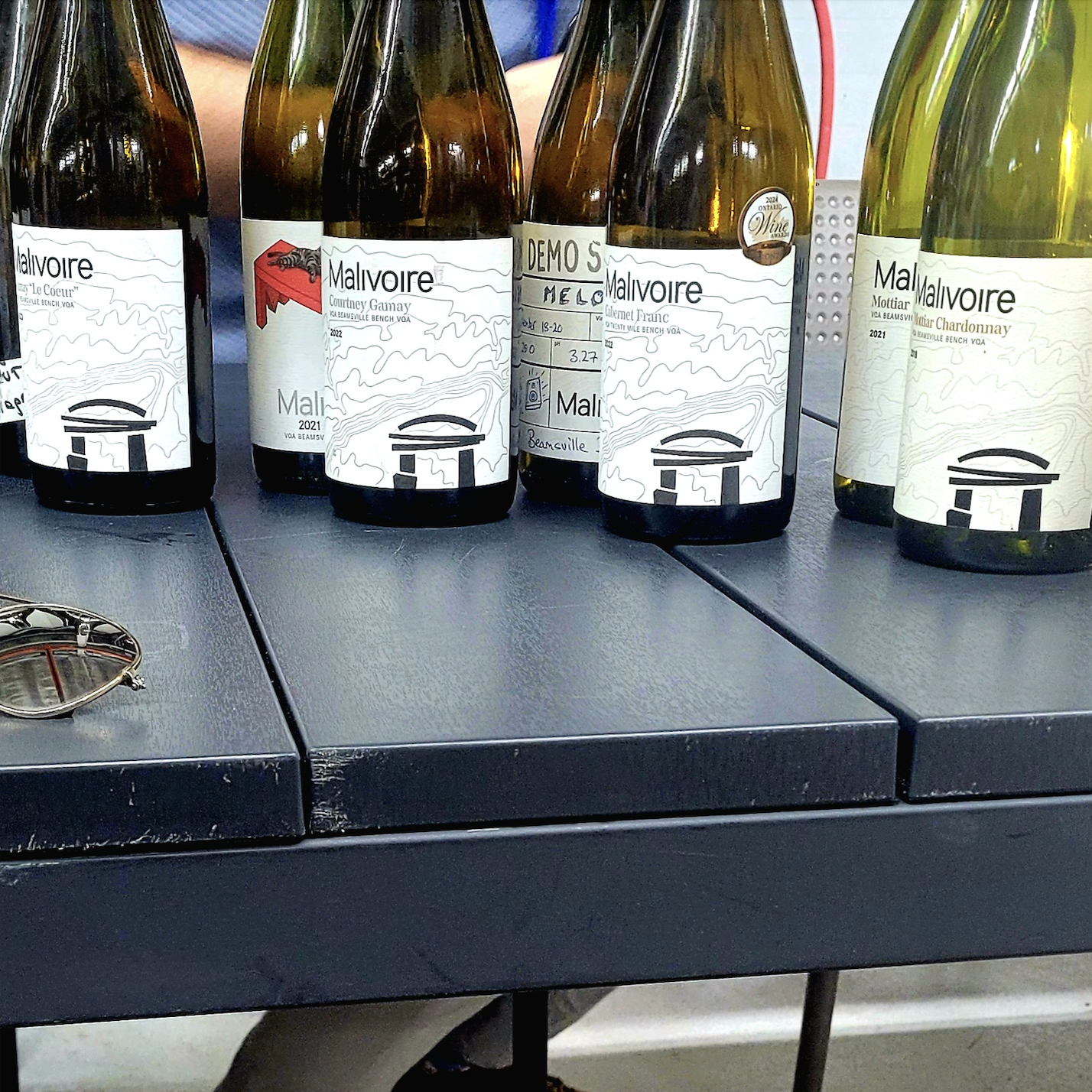
Malivoire Cat On The Bench Gamay 2021, VQA Beamsville Bench

Hard not to think comparatively but the musky funk of Cat on a Bench really does imagine Cru Beaujolais, specifically Morgan from a famous producer or two. “We got the funk, we got the funk!” Just one barrel makes 30 cases, first vintage was 2007 and who is the cat? Is it one of three or is it Martin? And which bench, the one next to the barn or The Bench? All adds up to fantasy, to Beaujolais and benches, to the impossibility of herding cats and the uniqueness of gamay from Moira vineyard. In any case this hits the proverbial off the beaten path spot.  Last tasted at i4C, July 2025

New gamay sku here for Malivoire, one of if not Niagara’s (and Canada’s for that matter) benchmark gamay houses. Martin Malivoire planted vines more than 25 years ago and at the time of bottling it was winemaker (now head of all things Malivoire) Shiraz Mottiar who had been running hither and thither with the varietal program. The iterations included Small Lot, Farmstead, Courtney, Le Coeur, Wismer-Foxcroft, Concrete and Genova. Mottiar has been playing with whole bunches, carbonic maceration, wood, concrete and things we may not fully be privy too. The Cat series includes three $50 chardonnays called Steel, Stave and Skin, while this looks to a new pinnacle for what the team surely saw as the finest estate fruit to date. “Cat on a Bench” may just be the mendicant four-legged feline on a hot tin roof because it’s survival depends on instinct and cunning, its energy nervous, hot, desirous and bothered. In a good way. Yes this is structured gamay, notably firm, sour, crunchy and somehow finds a way to reflect the realities of normal gamay life. And it is $60, surely unprecedented for Canadian gamay. Cru Beaujolais as well. A one off? We shall see. Drink 2024-2027 . Tasted August 2023

Malivoire Pinot Noir Small Lot 2023, VQA Beamsville Bench, Niagara Escarpment, Ontario

Brightest of the Malivoire pinot noir and a high acid, toned and intensity example with less concentration than the previous 2022. Classic cool climate correctness and standard bearer. Takes what it’s given and stays the varietal to place course. Drink 2025-2028.  Tasted at i4C, July 2025

Malivoire Pinot Noir Mottiar 2023, VQA Beamsville Bench, Ontario

Just a small amount of whole cluster, maybe 10 percent because of the variety’s penchant to elevate in volatile acidity. Still a little bit goes a long way and the wine just pops here from 2023. First there were the fiddlings of Shiraz Mottiar and now Elisa Mazzi, two winemakers who have confidently figured out how to master pinot noir from the small Mottiar vineyard. Do not fear “if you”can’t find the conductor who created the whole cluster” in this wine, but trust that their signature is there. As is the fruit and how it expresses this peekaboo of a block on the Beamsville Bench. If Val were pinot noir this would be her song and she would find her way off the train. It’s the theme of humankind and making pinot on the Bench. Drink 2026-2029.  Tasted at i4C, July 2025

Malivoire Pinot Noir Cat On The Bench 2022, VQA Beamsville Bench, Ontario

Malivoire’s Cat on the Bench in pinot noir is expressive of a similar whole cluster funk as noted with the Cat on the Bench gamay. Here however it combines with and is elevated in spice, but also increased depth and it all formulates as a serious pinot noir with a wildly invigorating result. COTB is a layered varietal wine that will take years to peel away and figure out what full possibilities await. The vintage is key to constructing and ultimately resolving the pressing and evolving questions. Hard to make a final decision on just how important the 2022 really is because tasting bottles along the way will surely re-write the script. Drink 2027-2031.  Tasted at i4C, July 2025

Malivoire Cabernet Franc 2022, VQA Twenty Mile Bench, Ontario

Crispy, crunchy and chalky cabernet franc, deep and sonorous, herbal with herbaceous piques, edgy and structured. Will still take a few years to figure itself out, push the fruit to the fore and find its core of balance.  Last tasted at i4C, July 2025

Very different vintage to the light and stretched ’21, now fleshier and fulsome, 18 months total wood time, the last eight of which were in older barrel. From a vineyard in the valley below Ball’s Falls, this being Cascade adjacent to the Wismer cabernet franc block. Classic varietal expression, truly classic, tasting like and from limestone, impressively forward enough considering it was bottled just two weeks ago. Crunchy currants and red pepper, tart and tannins still a bit austere. Drink 2025-2028.  Tasted March 2024

Rosehall Run Pinot Noir JCR Rosehall Vineyard 2022, VQA Prince Edward County, Ontario

Sweet floral aromatics for Rosehall’s JCR 2022, a pinot noir that scents like an open book after a warm season. The dictionary entry for effusive, a Prince Edward County welcome, of “approval in an unrestrained or heartfelt manner.” A far as pinot noir in JCR steading goes there is a drinkability factor quickly underscored and yet a few more sips come to regard a stealth and sneaky structure under the underscore. This is the way of a Rosehall Run drug, especially in pinot noir, waging war within itself and at times struggling to make itself understood. Like an ocean of pinot personality beneath the waves and remember, “it always gets so hard to see, right before the moon.” Drink 2026-2031.  Tasted at i4C, July 2025

Tamar Ridge Devil’s Corner Estate Pinot Noir 2023, Tasmania, Australia

Tamar Ridge’s Devil’s Corner is Tasmanian branding for four equal parts salty, sapid, sweet and sour pinot noir. In other words a four-poster balanced cuvée of vineyards’ fruit that draws lines to four corners within an a varietal enclosure and repeats the process ad infinitum. Stage presence and a profound personality stood up to be recognized, investigated and counted. Firm, grippy and impressive. Drink 2026-2030.  Tasted at i4C, July 2025
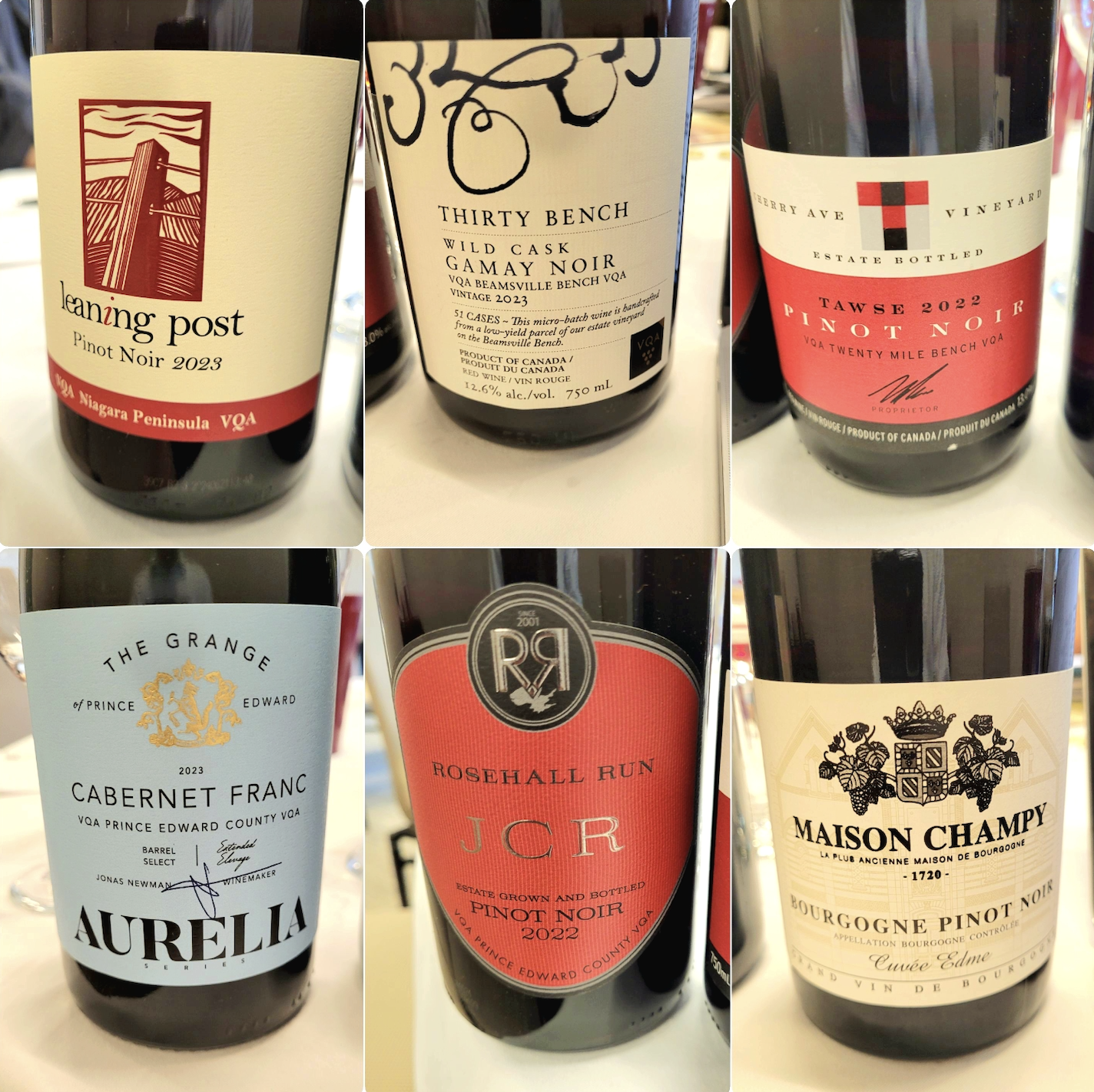
Tawse Pinot Noir Cherry Avenue 2021, VQA Twenty Mile Bench, Ontario

No shock to experience a young Cherry Ave pinot noir in a state of rigid and closed control because it defines restraint for the Twenty Mile Bench. Quiet and diffident though we do detect a half wink and wry smile as it teases aromatics if obtusely giving little of its charm away. Noting the classic red crayon and concrete stiffness, breathing diaphragmatically, fuller and longer of inhalation and exhalation, costal speaking. This means low and slow evolution, a few years yet before things begin to open up and a long life ahead. The child of a wet and often cool vintage, showing as it should, made in a style that expresses vintage and place with distinction. Even if these things are not yet known. Drink 2026-2030.  Tasted at i4C, July 2025

Thirty Bench Gamay Noir Wild Cask 2023, VQA Beamsville Bench, Ontario

Only 51 cases were made of this ultra unique Bench gamay noir which will appear as the lightest and leanest of them all. Do not be fooled by colour because there is varietal concentration, intensity, structural integrity and pent up power in Emma Garner’s wine. Not exactly puff up the chest and egocentric, but rather capability, probability, possibility and promise. Balanced, sweetly volatile and singular with wood spice and a white pepperiness that is unlike the rest. Should hazard a guess the kids will love this and in these times can afford it too. Drink 2025-2029.  Tasted at i4C, July 2025
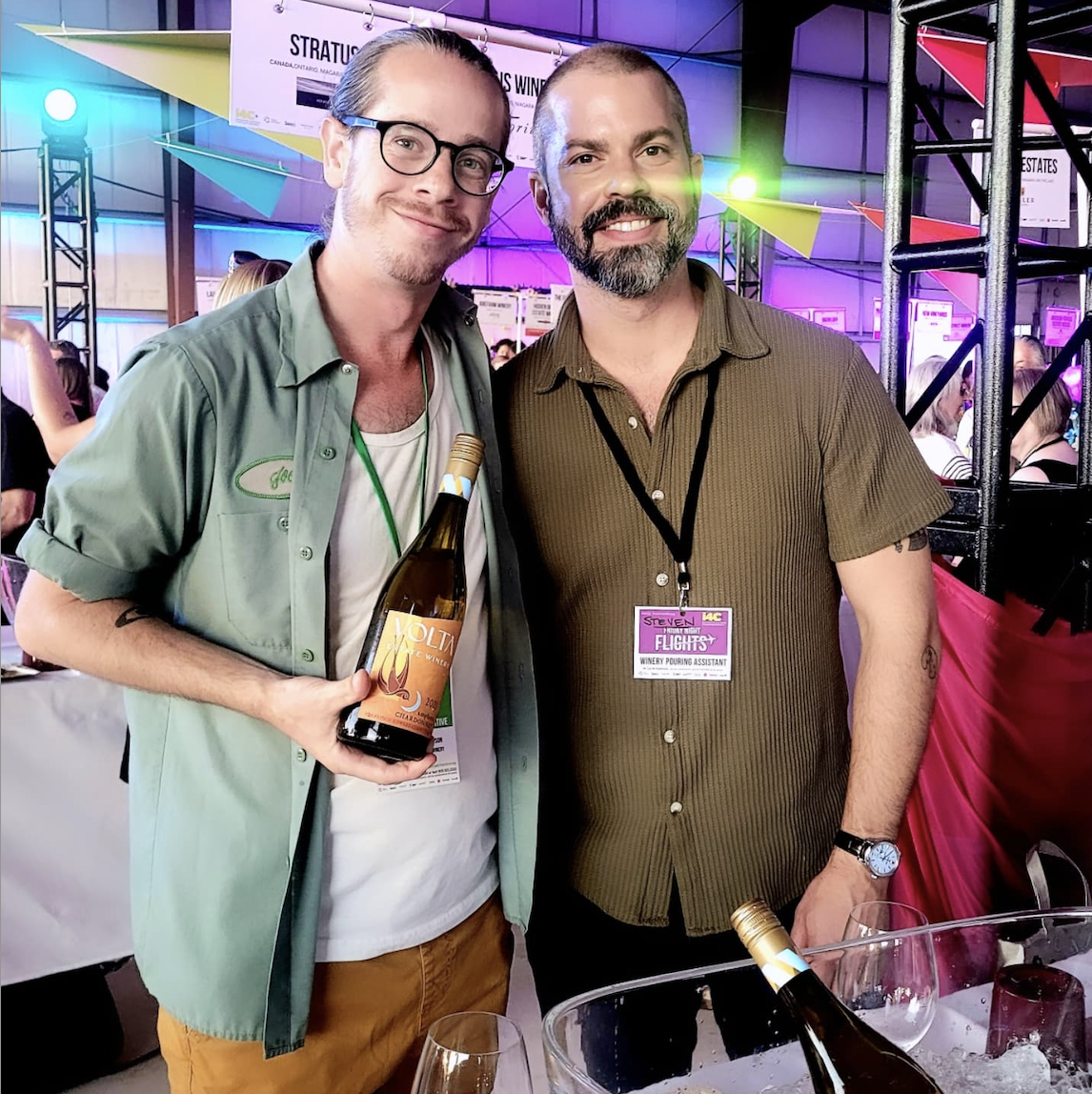
Chris Thompson and Stephen del Degan, Volta Estate

Volta Estate Winery Pinot Noir Knotty Vines Vineyard 2023, VQA Prince Edward County, Ontario

Welcome to the future. The Del Degan family are a new County player standing up to immediately be noticed and reckoned with. Just a short time ahead will be filled with elevated Prince Edward County importance to include Rosehall’s Volta Estate Wines under the guidance of winemaker Chris Thompson. Hard to fathom how quickly a wine like this 2023 rises to prominence for the region but here it is in all its ripeness and crucial balanced glory. A more precocious and richer start from the corner of Greer and 33 where 18-24 inches of topsoil separate 12 year-old plantings from solid limestone bedrock. This is simply a remarkable, yet surely well-reasoned and calculated beginning. Drink 2025-2027.  Tasted at i4C, July 2025

Good to go!

godello

Cool Chardonnay on ice

Instagram

Facebook

Niagara’s cool for chards


Niagara chardonnay, cornerstone of an industry, another one of nature’s mysterious constants, long-time member of both local and globally recognized greatness. A pandemic be damned the time had finally come to glide on down the QEW, inch by inch, to arrive in Niagara’s wine-lands and taste recently bottled vineyard bounty, plus some older surprises. At the behest, felicitations and facilitations of WMAO we the crü at WineAlign abided by the invitation. The visits included Le Clos Jordanne, On Seven Estate Winery, Stratus Vineyards, Trius Winery and Restaurant, Hidden Bench Estate Winery, Tawse Winery, Redstone Winery and Restaurant and the Bat Caves at Bachelder Wines. The next trip will take in at least seven more and after that, no less than seven again. And so on. Niagara is not conquered in a day, or a weekend.

And everybody tells me that it’s cool to be a cat
Cool for cats (cool for cats)

Related – A Chardonnay toast to Cool and the gang

The steamy and canicular July varietal sally coincided with the physical return, if only in part and to limited display, of the region’s annual i4c Cool Climate Chardonnay Celebration. Ontario’s most famous annual gathering inclusive of international winemaking stars is one that so many media, sommeliers, producers, importers, marketers and consumers have come to know, embrace and love. With a commitment for more arms to get jabbed and further progress towards community safety be made in these next 11 months, there should be every reason for optimism that i4c 2022 will return in full force next July.

Thomas Bachelder between Hanck East and West

Related – David Lawrason’s Canadian Wine Insider – Niagara’s Regeneration

In addition to chardonnay (that cool refreshing drink) there too were touring pours of sparkling wines, riesling, pinot gris, skin contact whites, rosé, pinot noir, cabernet franc and gamay. Those tasting notes are included in this report because quite frankly Niagara’s varietal diversity and inclusivity on full display should be duly noted. The festivities concluded on Sunday afternoon with not one but two Bat Cave barrel tastings with the stupefied, hyper-hypnotized and monkified winemaking tour de force himself, the other tall and thin white duke, Thomas Bachelder. No I did not make any formal notes on the dozens of chardonnay and gamay thieved from his barrels because frenetics and focus do not jive, not when Bachelder, barrels and argumentative discourse are involved. Bachelder began with some re-visits of finished “Villages” wines in the guise of Mineralité de Niagara and L’Ardoise, same same but for different markets (Ontario and Québec), both from the 2019 vintage. Then the surprise of the tasting emerged, two unmarked magnums, as of that very moment yet untasted and very special. “From the Heart Cuvée Number 1” is a project with fellow enlightened, philanthropic aiding and abetting abbot Steven Campbell. Their chardonnay crushes the concept with its dynamic and lush configuration. Why because of the very notion of being figuratively layered, blessed with a frictional vitality burnished into its collective heart and chardonnay soul. I had to stop after each sip to reassemble my nervous system and scrape my mind of the cosmos, not to mention the universe, galaxies and stars.

Crazy eyes in the throes of a four-hour Bachelder barrel tasting

The concept began as an annual Canadian Charity Wine Auction in support of the battle against climate change and then further developed into the Rescue the Grapes auction in NYC in partnership with Christie’s. Campbell and Bachelder convinced dozens of winemakers to donate small-ish lots of unfinished wines to be gathered and vinified as a single wine, an Ontario supergroup-cuvée if you will and finished by Thomas, acting as lead singer and songwriter. In Canada he and Steven are asking wineries to sponsor winemakers dinners in their home province and if they do host a dinner also support our auctions in the other two provinces. For the other province they donate a six pack of wine and will include  VIP “Passport” to the winery to promote interprovincial wine tourism. So far in Ontario Trail Estate, Malivoire, Southbrook, The Farm, Trius, Cave Spring, Pearl Morissette, Bachelder, Henry of Pehlam, Tawse and Rosehall run have all stepped up with a few more in the wings. In British Columbia Black Hills, Stag Hollow, Burrowing Owl, Okanagan Crush Pad, Tin Horn Creek, Tantalus, Quails Gate, Mission Hill and an Arterra winery are in with more to come.

The Bachelder Vineyard Map

The chardonnays were pulled from Willms Vineyard, Wismer-Wingfield est and ouest, Wismer-Foxcroft, Saunders Organic and Bio and Grimsby Hillside Escarpment Red Clay Barn Block. The gamay barrels tasted were Bator, Jackson-Bai “Bai Xu,” Wismer-Parke, Hanck est and ouest. Thomas did reveal the first ever bottle of Grimsby Hillside Chardonnay. The personal connection to that storied plot along the Lincoln Lakeshore in Winona will be investigated to the fullest extent of Godello law in a report coming soon.

Godello with Hidden Bench winemaker Jay Johnston

Has one really taken full advantage of a cool chardonnay weekend if one has not gone nose, palate, heart and mind deep into a seven year Hidden Bench Marlize Beyers to Jay Johnston Felseck Vineyard Chardonnay vertical? Methinks not. Not to mention a viticultural tour with J.J. and Joel Williams, Brut 2014, Rachis & Derma skin-contact and of course, Gamay. Thanks to proprietor Harald Thiel and congrats on being bestowed with the honour of “Champion Chardonnay of the year!” Couldn’t have happened to a more deserving and industry leading partner. 👏 👏 👏

Hidden Bench Winemaker Jay Johnston and Viticulturist Joel Williams

New to the Niagara Peninsula scene is On Seven Estate Winery, headed up by Vittorio de Stefano and with the charge in the hands of Canada’s most accomplished consulting winemaker Peter Gamble. Just as he has made giant viticultural and vinicultural strides with the likes of Stratus, Benjamin Bridge and Lightfoot & Wolfville, in typical, ambitious and big picture defining fashion it is Gamble who sees unlimited qualitative potential in the mineral-rich soils of OSEW’s Niagara-on-the-Lake soils. 

The sit-down at Stratus Vineyards titled “To lees or not to lees? That is the tasting” explained from the word go about the new direction concerns all things lees. To see two winemakers, they being J.L. Groux and Dean Stoyka existing on the same mad scientist solids page is something all Ontario wine pursuers should choose to follow. The pursuit is being played out in chardonnays and multifarious sparkling wines, in Blanc de Blancs, Brut Nature Zero Dosage and “Field Blend” Ancestral. For Ontario this means serious sparkling wine business.

Panko-Crusted Pork Rilette, poached plum & charred fennel salad, toasted hazelnuts, honey dressing, pickled mustard seeds – Executive Chef Steve Sperling, Tide and Vine Oyster House

“Lunch and Launch in Le Clos Jordanne Vineyard” moved us in many ways, first through distant Upper and immediate Lower Jordan Bench views, of Le Clos, Talon Ridge and Claystone Terrace. Tide and Vine Oyster House was responsible for feeding us to the breaking point, by oysters, yellow fin tuna tartar, cold smoked salmon, vichyssoise, pork rillete, surf & turf and olive oil cake. The chardonnay flowed, with Village and Grand Clos examples by hosts LCJ, but also international stars; Tasmania, Australia’s Dalrymple, Hemel-en-Aarde, South Africa’s Hamilton Russell and Russian River Valley, Sonoma County, California’s Gary Farrell. Here are my notes on those three wines.

Dalrymple Cave Block Chardonnay 2018, Tasmania, Australia ($70.95, Noble Estates)

A steely year with the vineyard’s hallmark acidity in a cracker Tazzy chardonnay with lip-smacking energy, intensity and drive. Soil, site and place in relentless pursuit of a focus at the head of body and game. Crunchy, crisp, indelibly fresh and piqued with the finest wisp of white peppery kicks. Nuts, complexity, bolts and length. All in. Drink 2021-2026.  Tasted July 2021

Hamilton Russel Vineyard Chardonnay 2018, Hemel-en-Aarde Valley, South Africa ($47.95, Noble Estates)

From the air-conditioned, cool breeze motivated vineyards (52 hectares) 100 miles from the ocean. Wet vintage, cool and long-hanging. Concentrated flavours in chardonnay that draws from all parcels which is more than just the Hamilton Russell way but in fact the only way. No fruit is wasted, all parts commit and contribute to the whole. A vintage like this is special, restrained, understated and one should not be misled by the shadowy depth and layering. Fruit is but a conduit for all else happening in this streamlined chardonnay. The alcohol and opulence are subtle, the pleasure calming, the capitulations promising. Methinks time will be long, slow and kind to HRV ’18. Drink 2021-2027.  Tasted July 2021

Garry Farrell Chardonnay Olivet Lane 2018, Russian River Valley, Sonoma County, California ($69.00, Noble Estates)

Pellegrini’s 1975 planted Olivet Lane Vineyard sits on 65 acres of sloping benchland in the Santa Rosa Plain, in between the warmer Westside Road region and the cooler Green Valley. If taking a step up from Gary Farrell’s estate label is even a possibility then yes Olivet Lane is just such an animal. Threefold (or ten times) more expressive, from jump started to flying ahead, in freshness, vitality and tightly wound intensity. Flesh and opulence submit to energy, motion and emotion. Captivated and caught up in a bold embrace. Forget bracing but surely feel the fineness and the purpose towards effecting satisfaction. Top, right, fine. Drink 2022-2027.  Tasted July 2021

Tres Cool Chardonnay

We’ve called on many estates over the last 10 years but truth is the visits were epic this time around, with thanks to the talent involved; Thomas Bachelder, Elsa MacDonald MW, Eugene Mlynczyk MW and the Arterra Wines Canada crew; Tide and Vine’s Mike Langley, Chef Steve Sperling and team; On Seven Estate Winery’s Vittorio de Stefano and Consulting Winemaker Peter Gamble; Stratus Vineyards Assistant Winemaker Dean Stoyka and Estate Director Suzanne Janke; Trius Winery and Restaurant’s Executive Chef Frank Dodd and team; Hidden Bench Estate Winery’s Winemaker Jay Johnston and Viticulturalist Joel Williams; Tawse Winery Winemakers Paul Pender and Jessica Otting; The Restaurant at Redstone Executive Chef Dave Sider and team; Thomas Bachelder and Mary Delaney. These are the 40 finished wines tasted over a near 30-hour period on July 24th and 25th, 2021.

Felseck Vertical

Hidden Bench Chardonnay Felseck Vineyard 2019, VQA Beamsville Bench ($42.20)

Tasted as part of an #14c21 seven year vertical Felseck Vineyard retrospective. No stirring, “I don’t like bâtonnage,” tells winemaker Jay Johnston, “unless I’m trying to get a wine to dry.” Never mind the lees aeration or the emulsification because texture in this ’19 is extraordinary to behold, gliding across the palate with Bench orchard fruit cleverness, penetrating perspicacity and juices running through unblemished flesh. Tighter and taut than ’18, while seemingly improbable but here yet unwound, far from the pinnacle at which point full expression will surely ache to be. The ’18 may be a beautiful thing but the ’19 is structured, manifold in destiny and ideal for those who know, or at least think they do. Drink 2023-2030.  Tasted July 2021

Hidden Bench Chardonnay Felseck Vineyard 2018, VQA Beamsville Bench

First a walk through the Felseck Vineyard and then a tasting with winemaker Jay Johnston and viticulturist Joel Williams as part of an #14c21 seven year vertical retrospective. Very warm season, much like 2016 though not quite as scorching and sun-filled. Would not call this stoic but would say that concentration, grace and all things stretched are in optimum balance this time around. Pretty quick turn around for Johnston to exact an ideal Felseck chardonnay just a year and a bit into his tenure at Hidden Bench. Just crunchy enough, more than ample and most importantly understated within the context of a great richness inherent in its varietal meets plantation DNA. There is no denying how enticing, invigorating and attractive this chardonnay is and will be to many who showed buyer’s foresight, but also those now lucky enough to come across its terroir-motivated beauty. Drink 2022-2028.  Tasted July 2021

Hidden Bench Chardonnay Felseck Vineyard 2017, VQA Beamsville Bench

Tasted as part of an #14c21 seven year vertical Felseck Vineyard retrospective. A vintage of survival, saved by a glorious September and into October. Looks like the richness made it with thanks to the fall weather and yet the elongation, length, elasticity and texture are all what matters to speak, walk, talk and tow the Felseck line. Solid, mid-weight, mid-acid and structure chardonnay that acts with perfectly middling emotion between the warm ’16 and ’18.  Last tasted July 2021

Felseck gifts what chardonnay needs with fruit equipped to start out subtle, gain traction and then commit to gliding into grace. That state of delicasse is now, with a natural orchard-stone-melon sweetness and an integration seamless, layered and eternal. Drinking this now makes great sense and the honey notes that may follow will only add to the mystique. The Ontario epitome of intelligent and refined chardonnay. Drink 2020-2025.  Tasted May 2020

Felseck Vineyard

Hidden Bench Chardonnay Felseck Vineyard 2016, VQA Beamsville Bench

Tasted as part of an #14c21 seven year vertical Felseck Vineyard retrospective. Smoking hot season, much like 2018. No other vintage will impress and woo a more general if elevated palate than this ’16 (save perhaps the high award winning ’18) because both concentration and grace reside in the arena of the beautiful, together, side by side. Not the tightest grain in the vertical retrospective Felseck ship. Can’t say this will live as long as the ’13 and ’14 but there is plenty of life in this gorgeous and not so alone 2016. Drink 2021-2026.  Tasted July 2021

Hidden Bench Chardonnay Felseck Vineyard 2015, VQA Beamsville Bench

Tasted as part of an #14c21 seven year vertical Felseck Vineyard retrospective. A short crop year, “we got slammed,” says winemaker Jay Johnstone, “but a wine of definite concentration.” Showing evolution and age in tones, developed richesse and caramelization well beyond both that of ’13 and ’14. No corn however, despite what the initial nose might have indicated. A faux creamed presentation that ended up more peach to apricot in drupe, not niblet. Nutty too, again idiosyncratic and a unique Felseck as such.  Last tasted July 2021

Sometimes I’m “walking down the street, minding my own business” when a taste of a chardonnay makes my eyes go wide. Like this lovely thing of really compelling and nuanced aromatics, diverting, bright and effusive. Intoxicating really, “must have been the sun beating down on me.” A soulful chardonnay, Darondo luscious, strutting at you, with golden fruit, layers of slaty under-vein, a bit of ancient bivalve fossil shell, piqued and long. Gets its texture from a pinpointed cru for sure and is very cool-climate Canadian, almost certainly Bench Niagara, more than likely in Beamsville. Drink 2019-2025.  Tasted blind at NWAC18, June 2018

Hidden Bench Chardonnay Felseck Vineyard 2014, VQA Beamsville Bench

Tasted as part of an #14c21 seven year vertical Felseck Vineyard retrospective. A short crop year but a solid year. Now expressive with croccante and cracker sensibility. Aromatically touched by croissant to brioche biscuit richness, with still pulsing acids and mouthfeel second to none. This is a next era Hidden Bench Felseck and the launch point from off of the work put in through the previous five or six vintages. Tasted blind four years previous to now was a completely different experience. Drink 2021-2026.  Last tasted July 2021

Unction and creaminess, lost in a chardonnay dream because to nose it’s a sweet, floral, demure thing. Lees apparent so you can smell the work in progress and feel the texture. But it’s wound loosely tight with just enough give to make it so readily available. Beautiful little wine though I can’t help but imagine there’s more single-focus structure than a blind taste wants to give. Hope to come across this hard to get beauty again someday soon.  Tasted blind at NWAC17, June 2017

Hidden Bench Chardonnay Felseck Vineyard 2013, VQA Beamsville Bench

Tasted with incumbent winemaker Jay Johnston as part of an #14c21 seven year vertical Felseck Vineyard retrospective. The vintage may very well be considered much like 2021 is shaping up to be, wet and humid, culminating in a late season. A short crop year but surely one of the Bench’s best dating back to 2009. Persistently flinty and aromatic, holding the citrus and stone fruit line, still quite tight and yet to evolve with any considerable haste. Not one to think on as a specific Bourguignons terroir per se but definitely Hidden Bench, amphitheatric Beamsville of origin, expression and conclusion. Drink 2021-2025.  Tasted July 2021

Le Clos Jordanne Jordan Village Chardonnay 2019, VQA Niagara Peninsula ($24.95)

The first attempt and rather obvious pronouncement towards creating a Bourguignons Villages wine is this over-delivering for the price chardonnay from Thomas Bachelder and the re-invented spirit of Le Clos Jordanne. Jordan Village as in grapes gathered from the lower and upper Jordan benches. When warmed in the glass and were it drawn from a warmer vintage there might be even more fleshy opulence but with 2019 and this collection of LCJ single vineyards there is fresh magnification and edgy dance moves, shimmer and glitter, not to mention of glimmer of what this commercially viable brand will ultimately bring to the collective entity that is cool climate Ontario chardonnay. Drink 2021-2024.  Tasted July 2021
Le Clos Jordanne Le Grand Clos Chardonnay 2018, VQA Twenty Mile Bench ($44.95)

Le Grand Clos signals the return of the lower Jordan Bench and “I’m very happen it’s back in the (Escarpment) lexicon,” says winemaker Thomas Bachelder for a chardonnay of origins truly different than the upper benches in Beamsville, Vineland and Jordan. A svelte vintage, not lean by any stretch but surely tight and what some might say restrained. That may or may not include fine white caramel, liqueur glazed fennel and a mild sense of grilling. A chardonnay from vines in a season that needed not shut down to either hydric nor heat stress. Funny how both 2018 in Niagara and Hermanus produced similar results. The big “E,” fine-tuning, chiseled features and sneaky structure.  Last tasted July 2021

Thomas Bachelder’s second vintage since the reprise of Le Clos Jordanne’s chardonnay and pinot noir is perhaps the most nurtured (and nurturing) because he and team treated this varietal fruit through all the early stages; newborn, infant, toddler and child. The attention to detail, from choosing cooperage, forests, barrels and in elévage design is both mathematical and surgical. After 22 months the result is just so imperfectly perfect. Unequivocally noted as a high acid vintage and rather then fatten up this fruit the monk chose the direction of vintage seasoning and identity. Drills down into the Clos and where it fits within the Twenty Mile Bench. The exiguity and heretical transparency makes this a great ’18 Le Clos because ambiguity is the enemy of accountability and also progress. As a forward thinking chardonnay it represents itself, the maker and proffers a sense of place. Perfectly easy to drink right now and imperfectly set up for aging, but that’s just not the point. Drink 2020-2025.  Tasted November 2020

On Seven Estate Winery The Pursuit On Seven Chardonnay 2018, VQA Niagara-on-the-Lake ($45.00)

Seven acres, thus the name, in the hands of Vittorio de Stefano, “and a project paramount to wanting something sustainable that can compete at the international level and standard.” The vineyard is five acres and the property now 15.5. Planted half each to chardonnay and pinot noir, all organic. Bourgogne is the impetus, Niagara the goal. The genesis of planting decisions dates back to 2009, high vigour rootball SO4 rootstocks and clones finally acquired in 2014. Now at seven years of age the vines are ready to rock. A place of science, with oenological consultant/winemaker Peter Gamble at the fore and wines of minimalist approach starting out in reductive tendency, then finishing with longevity defining acidity. Richness and intensity meet at a general Côte d’Or vortex but in the end Niagara lake-proximate flesh and tension are the true meeting point. There is a distinct flintiness (and unlike other flinty chardonnays) but also a caramelization of high delectability and flavour. Vim and vigour, vivid and 20 per cent new oak over three years to gain such favour. Exotic too, with wood contributing to the extract, but surely essential trace elements; manganese, iron and calcium of causation allowing the minerals to make themselves heard. Intriguing wine if only at the beginning of a long story yet to be told. Only 82 cases made. The goal as the vines mature will be 800. Drink 2021-2024.  Tasted July 2021

On Seven Estate Winery The Pursuit On Seven Chardonnay 2017, VQA Niagara-on-the-Lake ($45.00)

Perhaps not the highest of knowable excellence yet clearly the most intriguing chardonnay that may never be emulated any time soon, certainly not out of 2019 or 2020. Singular stylistic wine, reductive and opulent, more Pouilly-Fuissé (with thanks to 2017) and a warmth that creates such a textural buzz. More fat in spite of that 8 g/L acidity, but such energy and considering the age at this point it almost seems the wine is going a bit backwards. That said the vanilla and caramel comes in wafts and waves, the flavours and textures in layers, long, lingering, forever. Only 108 cases made.  Last tasted July 2021

The newest Peter Gamble consulting joint is this from upstart The Pursuit of Seven. The chardonnay fruit is Niagara-on-the-Lake and the concentration suggest established vines (of at least 15 years-old it would seem) and no holds barred in terms of extraction and wood support. The density and fruit bang for buck are impressive and there is some volatility in distraction. Ambitious to be sure and the acumen employed true to form, not to mention distinctly clear. Drink 2020-2023.  Tasted March 2020

Vittorio de Stefano of @onsevenwinery with consulting oenologist Peter Gamble

On Seven Estate Winery The Devotion On Seven Chardonnay 2018, VQA Niagara-on-the-Lake ($65.00)

Imagine the minerals from these Niagara-on-the-Lake soils (manganese, iron and calcium) and the highest intensity fruit getting together in a tiny lot chardonnay case load. Then consider going against the grain with harder (elevated) turbidity in the ferments for more skin feel and purposed pulp for upfront loaded flavour intensity. That’s the direction and hyperbole of pursuit in The Devotion on Seven, an (only) 31 cases made chardonnay. Doubles (or perhaps triples) down on reduction, fulsome flesh and yet the warner vintage has as much to say as the inherent processes involved. Also a tannic chardonnay, in dramatic sensory extract as compared to the Pursuit on Seven ’18, though it can’t help but express more of everything as compared to the Pursuit of Seven. The acidity number of 8 g/L might seem extraordinary when considering the warmth and the ripeness of the vintage, however, and this matters most, ultimately it is the terroir that drives both the texture and the acidity of this special, barrel selection wine. Drink 2021-2025.  Tasted July 2021

Peller Estates Signature Series Chardonnay Sur Lie 2019, VQA Niagara-on-the-Lake

Yet another cracker 2019 chardonnay with the coolest of vintages meeting varietal bones and a karst of energy to drive the lees machine. Spent 10 months sur lie to be exact in a fully malolactic confirmed textural tang that benefits from a certain restraint only such a season can affirm. That being particularly cool and elongated for a chardonnay just crunchy enough to support the promise and extend enjoyment for a good, long and fruitful spree. Expect a future filled with a soft and creamy centre, eventuating in some creamed Niagara corn. Drink 2021-2024.  Tasted July 2021

Stratus Chardonnay ‘Unfiltered’ & Bottled With Lees 2019, VQA Niagara-on-the-Lake ($49.20)

“It’s not that we’re trying to change something every year,” explains assistant winemaker Dean Stoyka, which means that the R and D projects are in constant motion and take four to five years to come to fruition. The October 18-26 stretch is the latest harvest in quite some time (since 2009), fermented in various clay vessels and French oak, 76 per cent in neutral barrels and (24) in stainless steel. Great naturally developed acidity and just enough ripeness to gain favour with the fully-completely accessed, utilized and kept in the bottle lees. So lemon, so balanced and very fine. There is a combinative effect of mad scientist acumen for a wine that needs to be explained to a consumer mixed with absolute pleasure and amenability. One of the finest chardonnay peaks conquered nut just in Ontario but anywhere cool varietal mountains are meant to be climbed.  Last tasted July 2021

Tight one this 2019 chardonnay, seductively reductive and unwilling to relent this early in life. Knowable richness is optimized by being associated with green orchard fruit bite. Though so youthful and shrink wrapped at this time there are some ways to pair with potential and eek out enough charm. Boy do you feel the lees but the freshness really shines. Prosciutto comes to mind, as does mortadella, especially if it’s from Faenza. Drink 2022-2027.  Tasted October 2020

Stratus Chardonnay ‘Unfiltered’ & Bottled With Lees 2017, VQA Niagara-on-the-Lake

Warm and ripe vintage if only because of a gorgeous September into October, more lees than ever before, no new wood and an extended elévage nearing a year in length. Alcohol has risen, as has the pH though neither are what you might call vivid. The palate is actually tightly strung, the texture fulfilling and a cloudiness so perfect for what the winemaking team had long wanted to achieve. Hard not to see 2017 as the teaching wine where lees usage is concerned, the (after the fact) ah-hah moment whereby knowing what to do and how deep to go was learned by how 2017 turned out. In this case fulsome of stone fruit, opaque clarity, an oxymoronic ying-yang of positives in apposite attractions. A Monet vintage, modernized and so very J-L Groux. A Stratus, unlike any other. Drink 2021-2025.  Tasted July 2021

Stratus Chardonnay 2015, VQA Niagara-on-the-Lake

The 2014 vintage was essentially the first year when barrel lees would be left in the bottle and my how conservative this ’15 really was as compared to an evolution that culminates (currently) with the full on lees filed chardonnay vintage. Quite the opulent vintage mixed with aromatics still morphing, developing lees, brash and blushing by 40 per cent new oak, complimented by generous acidity. Showing with controlled drama and though the yields were low (only 88 tonnes) there is something quite special about this emotionally charged, vivid, scarce and remarkable chardonnay.  Last tasted July 2021

Stratus Chardonnay 2012, VQA Niagara-on-the-Lake

Tasting with assistant winemaker Dean Stoyka as part of a vertical exercise in “to lees or not to lees.” Neither hue nor aromatics suggest much evolution though the low-ish acidity and tropical fruit tell an emerging secondary story. Creamy and centred, gregarious of flavour, nothing left unsaid, hidden or kept hidden away. Up front and talking vintage warmth, opulence and ripeness. Was housed in only 18 per cent new wood. For a good time, drink up.  Last tasted July 2021

As per the house promulgation, in chardonnay, “still an assemblage process,” insists Groux, “no matter what we do.” Some grapes grown for Sparkling were added back in, for acidity, complexity and ultimately balance. That and though notably barrel burdened (a good, hard burden to bare) leading to a bargain, “the best I ever had.” Major key of whose who of Niagara fruit, power acoustic chords and 12-string harmonics. Drink 2015-2022.  Tasted June 2015

A change in direction is duly noted with J-L Groux’s 2012 chardonnay, from fruit picked six weeks earlier than in 2010. The program is scaled back and the wine is more “typical” of the region, in weight, in barrel effect and in alcohol. Still quite defined by natural yeasts that “sometimes go a bit wild, but I’m getting better at it,” concedes the clinician of vinous letters. Those feisty microbes are difficult to work with, like dealing with a wine that lacks natural clarity. “You have to shut down the bacteria, teach the yeast to stop stealing the lees. In 2013 I really got it.” The ’12’s altered course is welcome and encouraged and the world should wait with bated breath for what ’13 will bring. Here the complexity of aromatics is matched only by the intensity of tropical fruit. Has balance and a soft, round feel. Again, more texture and aromatics than natural acidity. Classic J-L style. “It’s not about trying to imitate anyone. It’s about making the most interesting and most complex chardonnay in Niagara.”  Tasted March 2014

Tawse Chardonnay Quarry Road 2018, VQA Vinemount Ridge ($35.95)

Definitely a warm vintage, picked on the early side, bite still clamped down, a bit of pesto and far from reductive as noted in Quarry Roads of the recent past (i.e 2011 and 2013). Pine nut pronunciation, no malic residual transformations (there will never me) and just bloody good freshness. Last tasted July 2021

No shocker that Quarry Road always finds a way to morph and change gears, meaning every so often, a year and up to two years later there will be some significant movement in this wine. Something about the Vinemount Ridge and how its players are in constant flux, adjusting sentiments and character to keep things curious, interesting and alive. Still the unencumbered and free-flowing expression it set out to be, free to be Quarry Road and as for me, I am always enamoured by how it marries personality with age. Natural (not unlike the Natural version of itself), enigmatic and very personal. Let it be. Drink 2021-2026.  Tasted May 2021

Tawse winemakers Paul Pender and Jessica Otting

Tawse Quarry Road Chardonnay 2011, VQA Vinemount Ridge

Fantastic ten years after flinty reduction from arguably the most cracking vintage of the previous decade. As it is said, “you’ve got to feed the beauty, it doth not come cheap.” And that is what Paul Pender went for in 2011. At 10 Quarry is light on its feet, fresh, spirited jumping rope and spinning in concentric chardonnay circles. It simply reeks of beautiful Vinemount Ridge stone.  Last tasted July 2021

The pinpoint accuracy and gemstone capture of the Quarry is exaggerated in ’11, amplified and fully plugged in. From my earlier, October 2013 note: “Carries that classic Paul Pender perfume; rocks and stones, flaxen, refulgent toast and the verdure Vinemount terroir. A free flying, linear, atmospheric smear of thermal fortitude and backbone. A polemic Bowie Chardonnay to make you believe “the strangest things, loving the alien.”  Tasted May 2014

Resides on the mineral, slate and lime side of the tracks. The calcareous quality imparted by its eponymous SV terroir makes it the antithesis of David. Creamy, 24-karat fruit.  Tasted March 2012 (barrel sample)

Thirty Bench Small Lot Chardonnay 2019, VQA Beamsville Bench ($34.95)

Prick, punch and torque from the conceptual vintage get-go, a classic 2019 in the making, if by so many yet to be understood standards. A chardonnay so cool it causes a brain freeze while simultaneously moving the soul. In fact put on some vinyl Gaye, get in on, or even disco foreshadowing Temptations, echoing the chardonnay law of the land. Don’t sleep on the high level fruit, not quite fleshy but surely potent and dynamic to match the season’s verve in acidity. Fine lees, better texture and all-around vitality so essential to chardonnay. Will improve with six more months in bottle. Drink 2022-2026.  Tasted July 2021

Trius Showcase Chardonnay Wild Ferment 2019, VQA Lincoln Lakeshore ($36.75)

A single-vineyard chardonnay once labelled Oliveira and then watching Tree Vineyard but no longer, though the source remains the same. Embraces a cool 2019 vintage played out through rewards in the guise of reduction, toast, flint and drive. In cool climate varietal terms this ’19 reminds of 2011 though to be clear and certain there is more focus where by the quantity and quality of ripenesses meet at the essential points of acidity and tannin. Here is a vintage to end a decade in the most poised and poignant way. Spot on, striking and graceful chardonnay. Drink 2021-2026.  Tasted July 2021

Remarkable finesse, flavours and design @triuswines and Restaurant by Chef Frank Dodd with @coolchardonnay accompaniments.

Beyond Chardonnay

Hidden Bench Blanc De Blanc Zero Dosage 2014, VQA Beamsville Bench ($48.00)

Second vintage from a tightly contested and smaller crop, initiated by then winemaker Marlize Beyers and subsequently disgorged by Jay Johnston, following five years on the lees. Moves from the practice of poetics to the anticipatory embracing of tomorrow’s science. Full disclosure this was tasted while walking the Hidden Bench chardonnay vineyards with a traditional method sparkling wine in hand first disgorged in the summer of 2019, when the yeasts were removed and the bottle was topped with the same wine. This tasting featured a January 2021 disgorgement and the term “Brut Nature Zero Dosage used when no sugar is added to the finished wine, which provides the most authentic expression of (the Hidden Bench) terroir.” Truth and synchronicity, grace, striking engagement, pure citrus and pleasure. Who could not anticipate and wait on subsequent vintages of this wine? The best is yet to come. Drink 2021-2027.  Tasted July 2021

Stratus Brut Nature Zero Dosage 2013, VQA Niagara-on-the-Lake ($100.00)

Comes across a bit cloudy, at least as compared to the B de B with thanks to the natural, lees left intact style. The citrus component is so pronounced, as is the taut, direct, lean and intense manifold destiny of what is truly a singular Sparkling wine. That being a living, breathing, inhaling and exhaling wine, slowly releasing proteins, acids and realizing its B de B Nature dream. Just amazing what lees can do for sparkling wine.  Last tasted July 2021

Released side by each with the Stratus Blanc de Blanc 2013 and while vintage and grape are the same, the similarities almost seemingly, ostensibly and allegedly end there. Yes in fact this 100 per cent chardonnay is a child of the most excellent varietal vintage and like the B de B spent six years on the lees. Comparisons cast aside it is the very fact that because much of the lees were transferred to bottle by a minimalist’s disgorging that this cloudy bubble with a Canadian artist’s series set of labels can’t help but elicit another memory. The Lilies of Monet and their clouds represent neither the horizon, nor the top or the bottom. Nor does a bottle of this Zéro Dosage Brut. The elements of water, air, sky and earth become intertwined in a composition without perspective, or so it goes in this hazy, opaque and dry as the desert sparkling wine. So many layers of lemon can be peeled, juiced and scraped away. If a Stratus wine could be a a riddle, wrapped in a mystery, inside an enigma then here it is. The texture here is palpable and the intrigue factor surely high, so it should be imagined that longevity will be this wine’s calling card. It’s more austere than the Blanc de Blanc but I think in fact it will. Drink 2022-2029.  Tasted November 2020

Stratus Blanc De Blancs 2013, VQA Niagara-on-the-Lake ($75.00)

One gram of dosage, disgorged in January 2020. Nearly six years on the lees based on the first R & D trials done in 2006 and 2007. High level autolytic entity, a toasted affair and an idea long time coming for the Stratus team. Fine tonic and bitters. With 15 minutes of air the blooming happens, floral, expressive and complex. This wine has really developed more layers, emotions and complexity.  Last tasted July 2021

The first (commercial) J-L Groux foray into traditional method Sparkling wine has been six plus years in the making, or in this case, senescence as the lees fly and his Blanc de Blanc has finally arrived. A notable moment in the Stratus continuum as they too now own a program of development, time, investment, research and acumen. The nose on this bubble tells a pensive story, or as fantasy goes like dipping your face into a tale-spun pensieve as it takes you back in time. In 2013 chardonnay excelled on the Niagara Peninsula and still today in 2020 we are drinking vintage examples persistent in their freshness and durability of construct. That this reeks of varietal lore is a hallmark moment, that and a conscientious adherence to reverence for solids and the focus on rotational detail. Speaks a Blanc de Blanc vernacular as a chardonnay should, with a bite out of a sharp fall apple, a pesto of verdant aromatics and a crunch of texture before drifting saline, briny and fine. Pretty good work J-L. Kudos for getting from there to here with intelligence and humility. Drink 2020-2026.  Tasted November 2020
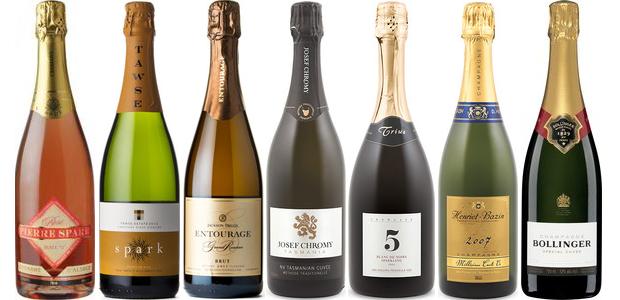
Stratus Vineyards “Field Blend” Ancestral 2020, VQA Niagara-on-the-Lake ($35.00)

The inaugural Stratus commercially labelled release is what winemaker Dean Stoyka refers to as “in the mindset of monks.” A field blend of sémillon, chardonnay, riesling and viognier. Pressed all together, fermented dry and then re-fermented in the bottle with no sugar added. Dry enough, or so it seems, non-disgorged, under crown cap and so very fruity. Floral, allspice and spiciness overtop apricot, pear and black walnuts conceptually turning into Vin de Noix or Nocino. A natural testament to assemblage and a great use of varieties without a home. 100 cases produced. Drink 2021-2024.  Tasted July 2021

Tawse Spark Laundry Vineyard Blanc De Noirs 2013, VQA Lincoln Lakeshore

Actually quite shocked I’ve never tasted this wine before, a Spark about which winemaker Paul Pender exults by saying “2013 is my favourite vintage for all our sparklings.” Traditional method, pinot noir from Heather Laundry’s double L vineyard and a fizz that fits and sparks. Gingered and toasty, crunchy, wave cresting and fulsome by six years on the lees. The dosage was five to six g/L, in that Pender sweet spot all around, just right, so well and good. A little romanticism goes a long way where science is concerned, especially in this medium and in Spark Blanc De Noirs 2013 one is simply good for the other. Drink 2021-2025.  Tasted July 2021

Tawse David’s Block Estate Vineyard Spark 2014, VQA Twenty Mile Bench

Tasted side by side with the 2013 Blanc de Noirs, making for a striking if surprisingly antithetical contrasting contract with this Blanc de Blancs. Aged three years on the lees and finished with the same 5-6 g/L of dosage yet here so upfront, centred and personal. More immediate richness than what pinot seems to do from Laundry Vineyard and so even in sparkling it is David’s Block and chardonnay that gift quicker satisfaction. Likely vintage driven (again, even in sparkling), very pear and shortbread, a savoury dessert of a sparkling wine. Like olive oil cake, all about the simple pleasures. Drink 2021-2023.  Tasted July 2021

Trius Showcase Brut Nature NV Méthode Traditionelle, VQA Niagara Peninsula ($55.00)

The dry as the desert Brut nature initiates with a yeasty faradism of excitement from what strikes as a minimum four to five years spent sitting on those fascinating lees. While the wine does not exactly smoulder with a toasty salutation that is no matter because textural acidity and blooming aromatics also arrive to an applause of immediate gratification. There is an exceptional level of “croccante” satisfaction that parlays that “texture” into a lasting display of bits and bites. The make up is 50 per cent chardonnay and (45) pinot noir with (5) pinot meunier and 2014 being the primary vintage source, though there is some 2013 involved. Zero dosage, top tier, notch and drop. Drink 2021-2027.  Tasted July 2021

Tawse Rosé Limestone Vineyard 2020, VQA Twenty Mile Bench ($27.95)

Tawse began crafting Rosé from (Vinemount Ridge) Quarry Road Vineyard fruit in 2017 and now here they come with Twenty Mile Bench pinot noir. From Limestone Vineyard this represents a heads and tails Rosé, meaning 40 per cent is used for Spark traditional method bubbles and the bookends is destined for this salty, straight-shooting and crisp-freckled single-vineyard blush. Double-redheaded wow! Grape, place and style all on side for so many good reasons. 1000 bottles made. Drink 2021-2023.  Tasted July 2021

Tawse Pinot Gris Lawrie Vineyard 2019, VQA Niagara-on-the-Lake ($27.15)

Not to be confused with the Lowrey Vineyard on St. David’s Bench and a best varietal vintage for Paul Pender. Far from being a “Miller-Lite or Corona” pinot gris, instead creamy, fulsome, well-versed and elastic. The furthest away from metallic and/or turbid, low on phenols, no bitters, nor tonics neither.  Last tasted July 2021

Fresh and while this young is full of its original fruit, which is the biggest plus for pinot gris because dry varietal wines have a hard time after enough time has passed on by. Sulphur is not really an issue so this delivers the varietal and stylistic goods with fruit at the lead. Good acids, persistence and balance. Drink 2020-2022.  Tasted October 2020

Tawse Winery Carly’s Block Riesling 2015, VQA Twenty Mile Bench

A sleeper vintage, not necessarily exacting out of the blocks, not heavy cropped, middle of the road in so many respects. If I tasted this before memory fails to draw any retrospective conclusions) but Carly’s ’15 has already turned towards the petrol sun, “let the shadows fall behind you, don’t look back, just carry on.” This perhaps began more than a year or two ago and today acts Rihanna outspokenly so. Lime and almost cordial by now, warm and friendly as a riesling liqueur. Quite stable, animated, holding its patterning, likely to do so for an additional three or fours years. Drink before it returns home. Drink 2021-2024.  Tasted July 2021

Tawse Limestone Ridge Riesling 2012, VQA Twenty Mile Bench

Unlike the Carly’s ’15 (tasted at the same time) this Limestone ’12 has not moved forward with any vehement haste. The lack of advancing towards petrol is curious but the softening is surely comforting. Still resplendent with a particular 2012 meets Twenty Mile Bench acidity, now oscillating while integrating with waning fruit. Drinking beautifully.  Last tasted July 2021

From the newest estate vineyard, the single-vineyard Limestone Ridge exteriorizes its name in a rubric of pressed rock, struck flint and chalky density. Paul Pender has coaxed a multiplicity oft linear character, with major notes of lime zest and juice, persistent from start to finish. A mid-pause of oozing, residual sinensis is the determinant towards the wine’s matrix of longevity. A longer, leaner, meaner and mightier Riesling charged by a different sort of power. Kinetic, frenetic and electric.  Tasted twice, April and May 2014

Hidden Bench Rachis & Derma Aromatiq! Skin Fermented White 2020, VQA Niagara Peninsula ($35.00)

Whole cluster sauvignon blanc, viognier and riesling, layered atop one another, full on hilt in spice, a hit of gingerbread, light in talc and salve. Good-natured and textured when well chilled, oxidative for sure, drinkable, pleasurable, done in one puncheon. Simple really. Drink 2021-2023.  Tasted July 2021

Hidden Bench Rachis & Derma Chardonnay Skin Fermented White 2020, VQA Niagara Peninsula ($35.00)

Whole cluster chardonnay, more spirited than the Aromatiq!, crunchy even, definitely with more spice and plenty of bite. More tannin too, structurally sound to allow more secondary character and time spent developing cooler, more energetic waves of spirit. Wild ride yet just sound and subtle enough to attract the right kind of attention. Drink 2021-2024.  Tasted July 2021

Hidden Bench Gamay Unfiltered 2019, VQA Lincoln Lakeshore ($29.95)

The inaugural gamay release from Hidden Bench is eight years in the planning and making, from 2013 through planting in 2017 and with third leaf fruit for this game changing 2019. That is because the grape and the maker were made for each other so the question begs, what took so long to take the plunge? No matter because such an auspicious start can never come too late. A wine of native yeasts, a properly prolonged, 24-day maceration, an eighth of new wood and the Lincoln Lakeshore being the ideal appellation for what wants and surely needs. More than impressive for such young vine fruit, of a light smoulder lending an essence of jasmine and by argan to red, red fruit, tightly winding acids and such gamay crunch, the likes of which are attributed to expectation, hopes and dreams. When the vineyard grows up there will be further anticipations, exegeses further afield to include cru and reserve concepts. That is a countable fact based on current evidence and credible speculation.  Drink 2021-2023. Tasted April and July 2021

Hidden Bench Rachis & Derma Gamay 2019, VQA Niagara Peninsula

Naturally refined, welcoming, open-knit and my oh my, juicy as a basket of Niagara plums and peaches blended into rooibos kombucha. Rachis, “main axis or shaft, a stem of a plant, bearing flower stalks at short intervals.” Derma, or Dermis, “the inner layer of the two main layers of the skin.” In R & D the inner workings of gamay are accessed at the natural axis between light to fruity and joyful to dark, before sous serious and after vide structured. Middle ground, believable and exhibiting intrinsic purity. Drink 2021-2024.  Tasted July 2021

Tawse Pinot Noir Tintern Vineyard 2013, VQA Vinemount Ridge ($50.15)

This July 2021 tasting is my first for Pinot Noir Tintern 2013 in bottle but I did run through two different barrels with Paul Pender back in March of 2014. The vines were only three years old at the time, on a site (next door to John Howard) Pender likens to “reclaiming the swamps,” or “the Golan Heights project.” From the Vosges medium toast the wine was already showing colour, freshness and drive. From the Vosges, medium plus toast it was a bit reductive, with more tannin and more sappy wood. This look back reveals not a vintage of varietal exhilaration but a malic one with credit due the high levels of potassium in the soil. A cherry generosity a la Central Otago by way of the Vinemount Ridge. Almost a volcanic presence, but not and yes a pinot from young vines come about as a result of winemaking. Up front, in motion, drinking really well. Drink 2021-2023.  Tasted July 2021

Redstone Restaurant

Tawse Pinot Noir Cherry Avenue Vineyard 2017, VQA Twenty Mile Bench ($49.15)

Another high-toned pinot noir from an inverted vintage, in cherry spirit, a hit of fennel and enough lingering energy while there is a meld and morph towards darker black fruit. Broad shouldered, now tannic, settling in as a pretty big wine.  Last tasted July 2021

As for Cherry Avenue the twain is met, somewhere between Tintern and Quarry, in the middle of vintage and classic Tawse styling. Both firm and bright, the fruit a cherry but a darkening black one and then the grip of place though well within vintage reason. Less structured than Quarry but not as hematic and brooding as Tintern. Solid pinot noir. Drink 2021-2025.  Tasted June 2020

Tawse Cabernet Franc Growers Blend 2010, VQA Niagara Peninsula

How remarkably fresh, inviting, enticing and that is just the aromatic front. Effusive, the greater good of burgeoning, smelling like Bourgeuil in uncanny resemblance. Nothing leafy here, just the smell of youth, post-adolescence and from a notably warm vintage. A freshness that just may be a foreshadowing of what’s to come from 2021. Heat and water, humidity and rain, yet no vine stress nor disease pressure neither. A product of great agriculture and an example of 2010’s longevity. “On the riper side but not overly ripe,” tells Paul Pender with a pragmatically raised brow. Indeed. Drink 2021-2024.  Tasted July 2021

Tawse David’s Block Cabernet Franc 2013, VQA Niagara Peninsula

Whole-souled, benevolent and keyed up though that’s the vineyard, persistent and in perpetuity. Red to charcoal fruit, quite firm and tannic for the Tawse-varietal relationship and in that sense mostly related to vintage. Was not picked until November 15th and stayed in barrel for 18 months. Not showy really, not the ripest vintage after all but surely one to promote variegation, fruit/acid layers and particularities. Wait long enough (as in seven-plus years) and these things become complexities. Drink 2021-2023.  Tasted July 2021

Good to go!

godello


Twitter: @mgodello

Instagram: mgodello

WineAlign

#AussieWine

#aussiewine

It was just last week when Mark Davidson and Wines of Australia rolled back into town, replete with the greatest glass entourage this side of Corning, as they are want to do at least twice a year. The winter trade tasting titled “Australian wine, made our way” came barreling in on the heels of a comprehensively designed education program “Australian wine discovered,” a FREE online set of tools, materials, resources and detailed guides you really need to use. Download the FREE program at www.australianwinediscovered.com.

#aussiewine time with @vintagemarkdavo and esteemed panel for @wineaustralia

Many of you know Mark Davidson, the man, the myth, the omnipresent legend who for more than 10 years has served as Education Manager/Market Development Manager, North America at Wine Australia. Two weeks ago I had the pleasure of judging with Mark at TexSom in Dallas, along with Laura Jewell MW, Wine Australia’s Head of Market EMEA/Regional Director, Europe. We were all invited to preside over 3,500 wine entries at this most exceptional competition at the invite of James Tidwell M.S. At the judging awards and Sommelier retreat Texsom unveiled the education program with this introduction. “Creating educational materials for the trade is an integral part of marketing for the beverage business. Oftentimes it is a labor intensive process to compile all the necessary information. It is almost unheard of for a region the likes of Wine Australia to create this for you, but they have.”

#beforeandafter #aussiewine @wineaustralia

Davidson, Jewell and Wine Australia sponsored lunch during the awards with another informative presentation by Mark plus an opportunity to taste some of that country’s most curious and erudite bottles. Some of the options on hand were Paxton Graciano 2017, Deliquente Screaming Betty 2018, Pewsey Vale Eden Valley Dry Riesling 2017, Mosswood Sauvignon Blanc/Sémillon Ribbon Vale Vineyard 2017, McW Pinot Noir Reserve 2017 and Leeuwin Estate Cabernet Sauvignon Prelude Vineyards 2014. Later that night we hit Pappa’s BBQ in Irving, Texas where Mark generously shared an old Tyrrells Vat 1 Sémillon and a 2015 Clonakilla Shiraz. Two archetypal and exceptional Australian wines.

Meanwhile back in Canada, Davidson led an esteemed panel (of three) through 12 Aussie wine stars chosen by the four of them with inspiration provided by way of a November 2018 journey down under. Christopher Sealy (Alo + Aloette), Joshua Corea (Archive Wine Bar) and Toni Weber (Giulietta) joined Mark for some of the best discourse any masterclass has provided in a very long time. Australia got into these sommeliers’ hearts and minds, as did the energy, structure and grace of this set of Aussie wine on display make their way into mine. The white choices alone lit up riesling, chenin blanc and chardonnay, invoking Gregory Alan Isakov, “to keep me clear and calm and straight.” More than 100 wines were then available to taste at the walk-around portion of the event. Here are my notes on the 12 seminar wines poured.

About yesterday. The energy, structure and grace of #aussiewine on display lights up riesling, chenin blanc and chardonnay, to keep me clear and calm and straight.

Shaw + Smith Riesling 2018, Adelaide Hills, South Australia, Australia (Agent, $45.00, WineAlign)

From cousins Martin Shaw and Michael Hill-Smith at higher altitude for Adelaide Hills. Cool, nearly minty and compelling. Impulsively tart in the most controlled environment and implosive, safely protected within its own hermetic bubble. Outwardly unaggressive and even gentle, like waves lapping up on a shore. Drink 2019-2022. Tasted February 2019  shawandsmith  liffordgram  @shawandsmith  @LiffordON  Shaw + Smith  Lifford Wine and Spirits

Pewsey Vale The Contours Old Vine Riesling 2004, Eden Valley, South Australia, Australia (Agent, WineAlign)

From 550m in a cold, exposed, almost harsh vineyard site. Originally planted in 1847 then re-planted in 1961. From the way ahead of the curve winery which began bottling under screwcap in the 70s, abandoned and resumed again, still ahead of the curve. Lemon waxy and paraffin lit but just now beginning the true centre of its secondary life. Honey is just a foreword entry beginning to gain momentum. Not the acidity of some other vintages in this vicinity and yet wise beyond its years. The interweb is of that acidity and tannin, together having grip and holding you tight. Drink 2019-2022.  Tasted February 2019  pewseyvalevineyard  breakthrubevcanada  @PewseyVale  @BreakthruBev Pewsey Vale Vineyard  Breakthru Beverage Canada

Brash Higgins Chenin Blanc CHN 2017, McLaren Vale, South Australia (Agent, $42.95, WineAlign)

The chenin blanc launched into the atmosphere by Brad Hickey is one fed by the critical mass of diurnal temperature fluctuations and a sandy site once a bank in a body of ancient water. Say hello to modern prankster guilt, ironic, maverick, waxy and skin-contacted tannic, of suffocating lemon and molecular pear. From Blewitt Springs and uniquely chenin blanc without any true heritage but rather creating a mythology about one from here on out. Trips easily, feels familiar and yet solicits a bout of narcotic psychedelia. Changes with every movement or whisper of air, agitation and successive sips. It’s not what you first thought think it might be. First impressions could very well ruin your experience, especially if you choose not to continue on. If you do, reward comes later, on repeat and in refrain. “Modern guilt won’t get me to bed. Say what you will,” but this chenin blanc gets inside my head. Drink 2019-2022.  Tasted February 2019  brashhiggins  thelivingvine   @BrashHiggins  @TheLivingVine  Brad Hickey  The Living Vine inc.  Mark Cuff

Giant Steps Chardonnay Wombat Creek Vineyard 2017, Yarra Valley, Victoria, Australia, (Agent, $42.95, WineAlign)

One giant step for aromatics, one giant step for flavour. Composed and collected chardonnay of calm demeanour and great confidence. Cool, clear, fresh and airy, like a perfectly blue sky. Crunchy from Redstone volcanic-ferrous loam soils and in a way it is the terroir that stops fruit and barrel from talking too loud. Gentle chardonnay in the slow, smoky Coltrane way. Whole bunch, eight months of lees and 20 per cent new oak are all but an asterisk on the most graceful chardonnay of exceptional class. Drink 2020-20727.  Tasted February 2019  giantstepswine  rogersandcompanywines   @giantstepswine @rogcowines  Giant Steps  Rogers & Company

Ten Minutes By Tractor Chardonnay Wallis 2016, Mornington Peninsula, Victoria, South Australia (Agent, $79.95, WineAlign)

Notably reductive chardonnay, toasty as any, yet to relent or to allow the shell to form cracks for access. Serious lemon opening, dead serious, from a low sea level site planted in 1992. Native grass chardonnay with a mild yeasty note and full creamy textured compliment. Really refined acidity to elevate the yellow flower/citrus nature. Gently churned with great control of energy. A return 30 minutes later realizes a particularly toasty finish. Drink 2019-2024.  Tasted February 2019  10xtractor  grape_brands  Ten Minutes by Tractor

Vasse Felix Chardonnay Heytesbury 2017, Margaret River, Western Australia (674648, $100.00, WineAlign)

The wine that receives Virginia Willcocks’ best fruit, by way of selection, first in the vineyards and then, out of the barrels. The soils are gravelly loam and the clone be told just because, is 100 per cent Gin Gin. Site is everything because it’s a place that tames ripeness and hedonism. There is an old soul character and a capturing, in reduction holding sulphides in the ways of the ancestors far away. Gemstone brilliance as a personality trait and singularly Vasse Felix. Weight matches the stick and texture supports the ripeness of fruit. Vintage and history conspire to churn and develop greatness. Around the corner that is, which happens to be around the bend. Another Heytesbury, unlike the last and also those that came before. Drink 2021-2029.  Tasted February 2019  vassefelixwines breakthrubevcanada  @vassefelix  @BreakthruBev  Vasse Felix  Breakthru Beverage Canada

Mac Forbes Pinot Noir Coldstream 2017, Yarra Valley, Australia (Agent, $61.95, WineAlign)

Acid may dominate the first moments but if you are not immediately struck by the confounding posit tug between early-picked yet wild-dry red berry fruit, you may not be paying very close attention. No cola, no Lola, no beets and plenty of beats. Eighteen year-old vines on grey loam over clay deliver adult maturity yet still naive enough and ready for anything. Good vintage, 12.5 per cent and from Forbes’ warmest site. It’s what he’s about. And the MV6 clone. Drink 2019-2025.  Tasted February 2019  mac_forbes_wines  gsoleil123  @MacForbesWines  @GroupeSoleilTO  Mac Forbes Wines  Groupe Soleil Fine Wines

Tolpuddle Vineyard Pinot Noir 2016, Tasmania, Australia (Agent, $75.00, WineAlign)

Here’s a whole other pinot noir exploration, burning two ends, lightning red fruit and beetroot earthiness. It’s a 50 acre site of light silica over sandstone planted in 1988. Refreshing and deeply welling. Priced “reassuringly expensive” and worth the paper on which the money is printed. A touch whole bunch chewy and ropey, tart and tannic. Incidentally the story goes that the Tolpuddle martyrs were exiled to Tasmania for having created an agrarian union back in the U.K. This ’16 needs a year or two for further, i.e. better integration. Very structured wine. Drink 2020-2026.  Tasted February 2019  tolpuddlevineyard  liffordgram  @TolpuddleVyd  @LiffordON  Tolpuddle Vineyard  Lifford Wine and Spirits

Henschke Giles Lenswood Pinot Noir 2016, Adelaide Hills, South Australia (Agent, $80.00, WineAlign)

Comparatively speaking this is the graceful and demure pinot noir in a flight of three. Also warmer, more curative and salumi led in terms of aromatics. Conversely riper and bigger of bones for structure. Lenswood at 550m is the site, of well-drained sandy loam over clay with shale. Others may flash acidity or tease singular fruit, perhaps even structure built on a quick-developed body politic. Then there is a wine from Stephen and Prue Henschke that builds it all, seamlessly in bond and perfectly all-knowing. It adds up to delicious. Drink 2019-2027.  Tasted February 2019  henschke  breakthrubevcanada @henschkewine  @BreakthruBev  @HenschkeWine  Breakthru Beverage Canada

Ochota Barrels Grenache Syrah The Green Room 2017, McLaren Vale, Australia (Agent, $46.95, WineAlign)

Few grenache-syrah joints begin like this, hover, linger, settle and then ask that you wait, re-visit and come back around again. Or just drink the shit out of it. Whatever floats your boat. Truth be told it’s 92 per cent grenache and marillion fruit will always win, in its many incarnations found in such a short time. Such a chewy, neo-progressive rock Rhôneish blend, alt-savoury, sneaky tannic and caught up in this wave of sweepingly seeping acidity. Very blood orange and the film negative version of it’s structured self. Three sites of red loamy clay with ironstone over deep limestone ask for whole bunch working and somewhere between six and 88 days on skins. PH at the top and under 12 per cent alcohol. “Unleash a stranger from a kiss, my friend. No incantations of remorse, my friend.” Assassing. Fugazi right? Drink 2021-2027.  Tasted February 2019  ochotabarrels  thelivingvine    @TheLivingVine  The Living Vine inc.  Mark Cuff

Yangarra Grenache High Sands 2015, McLaren Vale, South Australia (Agent, $155.00, WineAlign)

Full-bodied to say the least and there is no grenache of or in its ilk. There are also no tannins like these and the chewiness does its own singular thing. Really old and challenging vineyard with large bush vines that may as well be growing on a beach. At 200m on ancient sands with vines planted in 1946. This has it all and more, with fossilized bones rising up to the surface and length for days. Drink 2021-2032.  Tasted February 2019  yangarraestate  breakthrubevcanada  @Yangarra  @BreakthruBev  Yangarra Estate Vineyard  Breakthru Beverage Canada

Jamsheed Syrah Seville 2015, Yarra Valley, South Australia (Agent, $70.00, WineAlign)

From winemaker Gary Mills and vines set in grey loam over red volcanic soils. A syrah with an old soul personality, peppery without resorting to spice and a volatile-ness light on the sprinkling and plenty of macerated character. Picked on acid, led through some carbonic and then a long extension. Tasted blind it might tease Hermitage but at the end of the day not. It’s as umami-mineral-savoury laden as it is fruity and the interest level is curiosity-seeking high. Remarkable tannins. Drink 2021-2029.  Tasted February 2019  jamsheedwines  thelivingvine  @jamsheedwines  @TheLivingVine  The Living Vine inc.  Mark Cuff

Good to go!

godello

#aussiewine

Twitter: @mgodello

Instagram: mgodello

WineAlign


Why we’re always tasting Australia

Why is godello so pleased? #grenache @Wine_Australia @vintageMD and @Caplansky that’s why.

Mark Davidson, that’s why. We taste Australian wines with thanks to the intrepid Wine Australia ambassador, traveller and purveyor of everything you could ever want to know about that country’s wine scene. Davidson passes through our Toronto parts on manifold missions each calendar year and graces our collective wine writer-meets sommelier soul with non bottle-o Aussie bounty, not oft tasted before. In mutual abide our local agents are always willing to throw some gems into Mark’s mix and our finest restos lay out the food-matching compliments to accede the most excellent of wine tasting gatherings.

The last three sessions took place in June 2018, February 2018 and September 2017. For that September get together we convened at Caplansky’s Deli for a Smoked Meat and Grenache Lunch. “Pastrami to me smells like grenache,” says Davidson in candid equation. “Drink some and eat some meat.” In 2015 there were 1500 hectares of the varietal under vine, this compared to 44,000 of shiraz. On its agriculture in Australia he added “if you leave it untended it will go blowsy and slutty.” What about wood? “I don’t think new oak works with grenache. It dominates it.” These are my notes on the eight wines.

Yalumba Bush Vine Grenache 2015, Barossa Valley, South Australia (Agent, $19.95, WineAlign)

There is nothing here to raise an eyebrow’s moment of a suspicious mind. What you taste is what you get. Pure grenache. Tangy and spicy, fresh and walking with an easy stride. The youngest vineyard is from 1972 so that explains the confidence and yes, you can call this old vine, said with a wry smile. Really smart and teachable wine. When it comes to grenache, “we can’t build our dreams, on suspicious minds.” Drink 2017-2020.  Tasted September 2017  @yalumbawine  breakthrubevcanada  @yalumba  @BreakthruBev  yalumbawine  @BreakthruBeverageCanada

Alpha Box & Dice Grenache Tarot 2016, McLaren Vale, South Australia (Agent, $24.99, WineAlign)

Lighter style by way of a McLaren Vale mentality. Perhaps like somebody that I used to know the “death card” is a resurrective grenache to “chuck in the fridge and drink it,” as per the suggestion of Dylan Fairweather. But it’s really something else, comforting, helpful. Like Gotye, “a friendly face will bring you around and you’ll feel better.” This is a solidly pressed grenache with some cured, curative meaty notes, just where the varietal tendency should lead. “Better than before.” Drink 2017-2019. Tasted September 2017  alphaboxdice  awsmwest  @AlphaBoxDice  @AuthenticWineON  @alphaboxdice  @awsmon

d’Arenberg The Custodian Grenache 2013, McLaren Vale, South Australia (713040, $19.95, WineAlign)

This grenache may straight out remind “but what’s puzzling you is the nature of my game.” Place, name and grape all combine for notoriety, perhaps controversy but certainly greatness. The iconic house of d’Arenberg is the grenache custodian for McLaren Vale, the keeper of nearly one third of the region’s varietal vines. The process includes foot-treading, which does not make it old school as much as it presses the idea that human intervention is very much a part of the wine. The basket press adds to the beggar’s banquet gentility of the Custodian’s mystery, a deeply satisfying grenache of wealth and place. This is the juiciest of juicy grenache vintages, perfectly tart and sweet like candy for the soul. At four years of age the balance is struck and the evolution just right for current enjoyment. A rolling stone that will stand the test of time, one plus one bottle at a time. Drink 2017-2021. Tasted August and September 2017   darenbergwine  churchillcellars  @darenbergwine  @imbibersreport  @darenbergwine  @imbibersreport

Chapel Hill Bush Vine Grenache 2014, McLaren Vale, South Australia (Agent, $35.95, WineAlign)

Showing more than a major amount of fruit than most in a flight of eight grenache. Creamy, full of textured elements, tart and graced by a ying-yang of tenebrous-generous tannins. The ripeness is run through raised and chalky, like a mineral feel, searing at moments but mostly in a just so it happens or it happened way. Plenty of joy, curiosity and obfuscation. Give it a year or more to continue finding its course. Drink 2018-2021.  Tasted September 2017  chapelhillwine  chartonhobbs  @chapelhillwine  @ChartonHobbs  @ChapelHillWine

Kilikanoon Prodigal Grenache 2013, Clare Valley, South Australia (482547, $20.95, WineAlign)

From 80-90 hectares in the Clare. Kevin Mitchell’s bigger style is evident but not compared to 10 years earlier. Now in control of tangy grace and tempered volume. Needed six months to continue its settling and will only continue to improve.  Last tasted September 2017   kilikanoonwines  chartonhobbs  @kilikanoonwines  @ChartonHobbs  @KilikanoonWines

The fruit works well with the soil, sharing equal time in the sandbox and the acidity takes time to unfold but when it does, it comes smiling candid and sweet. A fine grenache and typically Clare Valley, perhaps more than what it offers in terms of varietal representation. Otherwise unexciting meaning easy to like and consume. Drink 2017-2019.  Tasted February 2017

Oldest #grenache vines in Australia is one thing, über religiously delicious @cirillo1850wine juice another #barossavalley #ancestorvines

Cirillo 1850s Grenache 2011, Barossa Valley, South Australia (Agent, $69.00, WineAlign)

Australia’s oldest grenache vines provide the setting, architecture and unfathomable bestowal for a singular standard of grenache. So what does it all mean? First there is the lighter, cooler vintage setting the stage for this queued up, cued slice of Barossa history. In most respects this is grenache prone to and prepared for drought vintages, preserving a guarantee of tannic structure. Sure, it may be seen as well beyond perhaps but six years forward offers more than enough information and explanation. This is simply beautiful, just and enlightening. Flowing, plum ripe, melting, liquorice, smack piquant, mellowing and so bloody cool. Drink 2017-2022.  Tasted September  2017 cirilloestatewines  bokkewines  @Cirillo1850wine  @bokkewines  Cirillo 1850 Estate  Marco Cirillo  @BokkeInc

Jauma Grenache Gramp Ant 2015, McLaren Vale, South Australia (Agent, $54.95, WineAlign)

This one’s for their kids’ grandfather, Grandpa Antony, a grenache sourced from the best corners of their McLaren Vale Foreman block and Blewitt Springs Genovese Vineyard. The James Erskine and Fiona Wood “keep me satisfied, please keep me calm, keep me pacified” grenache. Renders sulphur and volatility into must with magic and preservation. Old plantings (to the 1970s) offer the prospect of a whole cluster, 40 days on skins raising. It smells and tastes like the scrapings and peelings of plums, peaches, apples, cherry and cranberry. The concentration factor is spiked by anise and tonic bitters, working out the kinks and comfortably leaving an aftertaste of pure finessed liqueur. There is no question in my mind that of the two, Gramp Ant is not merely superior to Like Raindrops but is so much more fun to drink. From thirst to appetite. “Sitting by the riverside.” Drink 2019-2025. Tasted September 2017  jaumawines  thelivingvine  @JaumaWines  @TheLivingVine  James Danby Erskine  The Living Vine inc.

Ochota Barrels The Fugazi Vineyard Grenache 2014, Adelaide Hills, South Australia (Agent, $57.95, WineAlign)

A different look for Australian reds and connective with Tool’s James Maynard Keenan but if Post-Punk, Prog-Rock grenache is what you’re after than this Tolken Silmarillion Fugazi is the one for you. Its fruit spent 80 days on skins and the resulting whole bunch umami resides in an MDMA-Ecstasy-Fugazi realm. Clean, pure and of a transparency that speaks to the realism of the dream. It’s bloody juicy and anything but messed up beyond recognition. In fact it speaks to the opposite of the nomenclature. “Do you realize, this world is totally fugazi?” Great wines like these are the head, the voice and the heart. Maybe even the prophet, the visionary, the poet and the sentimental mercenary. Drink 2017-2022. Tasted September 2017  ochotabarrels  thelivingvine    @TheLivingVine @Ochota Barrels  The Living Vine inc.

In February 2018 Mark hosted a tasting of 12 (mostly) alternative varietals at George Brown College. It began with the Clare Valley, once a massive mountain range, now an extension of the loft mountain ranges and just shy of a great outback. It’s an amazing micro-climate with huge diurnal temperature changes, It can be 40 degrees during the day in peak growing season and five at night. “There is dew and there is this revival process that happens with riesling.” Here are the notes.

There are seminars and there are elucidative @vintageMD seminars. The oracle of @wine_australia has been illuminated

Grosset Polish Hill Riesling 2017, Clare Valley, South Australia (SAQ 10956022, $50.00, WineAlign)

Grosset’s riesling at Polish Hill Vineyard was planted in 1981, young for Australia, on limestone, shale and clay, underneath of which is 10,000,000 year-old blue slate. Austere when young, usually, it’s fleshier and more floral than limey but as always, it acquiesces the crisp, clear and cut brilliance Jeffrey Grosset expects and suspects Clare Valley riesling just is, or at least must be. So the choice is yours, enjoy it now because it can be, wait on its sneaky persistence or wait 20 years after you’ve tired of imagining the possibilities. Wait at least five for the screwcap to loosen and the riesling to abide as if. It’s pretty clear this is a forbearer clarified by a crystalline vintage. Drink 2021-2036.  Tasted February 2018  grossetwines  @GrossetWines  @GrossetWines

Pewsey Vale The Contours Old Vine Riesling 2012, Eden Valley, South Australia (Agent, $42.00, WineAlign)

Originally planted in 1847, passed through challenges, purchased by the Hill-Smith family and re-planted in 1961. This includes fruit from that original block, the “contoured site,” hence the name. Here five years on with some first developed character, with the airy, gassy (or Rose’s lime marmalade to an Australian ambassador), lemon-lime citrus spray ringing the inside of the glass. It’s a salty gas-powered riesling with innate Barossa ability to move forward with deceptive speed. This fin-slicing vapour trail of tonic and fine bitters is a personality I would gladly draught in for a bottle or more. One of the finest acidities of any wine on the planet. This is still the current release and that’s just perfect. Drink 2018-2027.  Last tasted February 2018

From vines originally planted in 1847, here is Riesling worthy of the longest run on sentence. Riesling of conventional wisdom from a cold, windy, chilly place, pricked with holes, atomized infiltrations, queued with basic intent, wise, driven, young, gaseous, of concentrated rage, bone dry and no, it does not feign sweetness, even if the texture makes nefarious attempts at confusing the palate. A decade on this will blow your mind, if you let it. Drink 2018-2024.  Tasted at the Langton’s Classification Seminar, February 2016  pewseyvalevineyard  breakthrubevcanada  @PewseyVale  @BreakthruBev  @pewseyvalevineyard  @pewseyvalevineyard  @BreakthruBeverageCanada

Ochota Barrels Chardonnay The Stint Vineyard 2016, Adelaide Hills, South Australia (Agent, $57.95, WineAlign)

Chardonnay out of the Stint Vineyard is from Lenswood in the hills in surround of Adelaide, up to elevations of almost 600 metres. It’s really about site exposure, and undulations, but to be honest it does little at first to tell me that is noses as chardonnay because there is a layer of impregnable wax and forest wall. Impenetrable because it’s so verdant, equally distributable and obscured by clouds. Picked on acid, as in profile, not elevation, cloudy because of no filtration. Likely 20 year-old fruit and if you consider this as funk you’ve not quite been listening to the right beats. The funk will only get better. Ochota Barrels repping the Basket Range Collective with a side of Rolling Stones. Drink 2019-2024.  Tasted February 2018  ochotabarrels  thelivingvine    @TheLivingVine  @Ochota Barrels  The Living Vine inc.

Murdoch Hill Artisan Sulky Blanc 2016, Adelaide Hills, South Australia (Winery, $62.95, WineAlign)

From winemaker Michael Downer the blend is riesling (50 per cent), sauvignon blanc (30) and pinot gris (20), left on skins, sent to barrel and also to tank. For an ambitious white it’s got remarkable entry-level gulpability. It’s an appellative blend built on acidity and so into the combinative texture. What you feel in the end is the alcohol, in a boozy warmth that hovers, broods and compresses climate like a rainforest village above the clouds. Drink 2018-2021.  Tasted February 2018   murdochhill_wines  @Murdoch_Hill  @murdochhillwine

Angove Family Vineyards Shiraz-Grenache Warboys Vineyard 2013, McLaren Vale, South Australia (537209, $46.00, WineAlign)

No matter where you are in the throes of this blend there is a maritime influence and in a way, a Mediterranean-like feeling, with plum, black olive and brine. It’s saltier and more ferric than a Rhône syrah-grenache (plus likely one with mourvèdre) and it feels more like shiraz than grenache because of the grip, vintage-driven or not. Drink 2018-2022.  Tasted February 2018   angovewine  churchillcellars  @AngoveWine  @imbibersreport  @AngoveWine  @imbibersreport

Henschke Henry’s Seven 2015, Barossa Valley, South Australia (685578, $42.95, WineAlign)

Shiraz is co-fermented with viognier, deciding the direction with holes and angles filled then lined by the grenache and the mataro. It’s floral, by flowers but also the leafiness that comes from raspberry and strawberry plants. Smells like fruit compost, sweet and savoury, Great acids and fine tannins. Really composed and grippy to delicious pile to be happy having consumed. Will be ideal in 18 months, give or take no time at all. Drink 2019-2026.  Tasted February 2018   henschke  breakthrubevcanada  @henschkewine  @BreakthruBev  @HenschkeWine  @BreakthruBeverageCanada

D’arenberg The Derelict Vineyard Grenache 2013, McLaren Vale, South Australia (Agent, $35.00, WineAlign)

If there is a juicier, riper or more gregarious nose on a grenache anywhere I’d like to know. Which is all the more surprising considering the level of grippy tannin that comes around to knock you upside the cerebral cortex. Fascinating wine, always and with perpetual craziness. The old derelict vineyard strikes again. Drink 2019-2024.  Tasted February 2018   darenbergwine  churchillcellars  @darenbergwine  @imbibersreport  @darenbergwine  @imbibersreport

John Duval Wines Grenache Annexus 2016, Barossa Valley, South Australia (Agent, $85.00, WineAlign)

There is certainly less immediacy and perhaps generosity but in its taut aromatic quietude there is this dusty, savoury fennel feeling going on. It is very much a grenache expressed in a vein like pinot noir, then again not really, but there is a skin-rubbed, umami quality about how it develops in the glass. It’s both forceful and virile. Duval does grenache in Barossa like Pommard in the Beaune. Warm climate and litheness get together at a grenache crossroads for firm if wonderful balance. Drink 2019-2024.  Tasted February 2018   johnduvalwines  breakthrubevcanada  @JohnDuvalWines  @BreakthruBev  @johnduvalwinesbarossa  @BreakthruBeverageCanada

Delinquente Wine Company Vermentino Screaming Betty 2017, Riverland, South Australia (Agent, $20.00, WineAlign)

It’s by now safe to call vermentino an “emerging variety” for South Australia, here from Riverland off some of the 120 total hectares planted. You just know it’s vermentino but you also know it’s not grown along the Ligurian coast. It’s so bloody big, aromatically fruity and full of dry extract, wants to be savoury, but it’s more of a light charcoal sensation. That and an essential oil distilled through cookie dough, with white chocolate and peach. It’s tannic without being grippy and in the end, dry as the desert. Drink 2018-2021.  Tasted February 2018   delinquentewineco  bespokewineandspirits  @BespokeWines  @delinquentewineco  Matt Wolman

Paxton Graciano 2016, McLaren Vale, South Australia (Agent, $26.99, WineAlign)

Rarely does an Australian red climb up to the tonal heights of this McLaren Vale graciano but there it is in the rare, aerified air, with red berries and their leaves. Steps into the Riverland, light, gives away this gulpable Kombucha in a flat out tart and quenching drink. Lovely at 11 per cent alcohol, high acidity and a pinch of residual sugar. Drink 2018-2020.  Tasted February 2018   paxtonwines  noble_estates  @paxtonwines  @Noble_Estates  @PaxtonWines  @NobleEstates

Brash Higgins Nero D’avola Amphora Project 2016, McLaren Vale, South Australia (Agent, $51.95, WineAlign)

Part of the amphoric project of Brad Hickey, raised in 200L amphorae, the volatility is but a whisper, way more calculated than careless. A full come about turn away from the previous Riverland Graciano this digs deep into the soil for a funky nero d’avola, far away from the caky Sicilian style and now under the auspices of perspiring glands. It’s not nearly as dense and intense you’d think it might be, nor is it so very varietally obvious, but it’s level of intrigue meeting with the need to get in my mouth is the stuff of lyrical innocence inspiration. Nero, nero on the wall, who’s the coolest Vale of all? Drink 2019-2026.  Tasted February 2018   brashhiggins  thelivingvine  @BrashHiggins  @TheLivingVine  @BrashHigginsWine  The Living Vine inc.

Alpha Box & Dice Dolcetto Dead Winemaker’s Society 2016, Adelaide Hills, South Australia (Agent, $21.95, WineAlign)

The name refers to an industry drinking session where you bring a wine made by a winemaker no longer alive and who was influential on you. From two vineyards (Paddock and Christmas Hill), southeast facing, 50-50 pick, fermented separately, all in old oak (as opposed to the 50 per cent in stainless from 2015). A much fresher vintage so thus the decision making. Such a ripe and joyful dolcetto should be every winemaker’s dream and it shows where the area first settled by Italians this variety and others like it would have been in the ground from the get go. Sour cherry and pomegranate, currants and all things citrus, red and ripping gather for great light possibilities. Surprisingly dry and tannic at the finish. Really just a joy. Drink 2018-2021.  Tasted February 2018   alphaboxdice  awsmwest  @AlphaBoxDice  @AuthenticWineON  @alphaboxdice  @awsmon

Vintage MD time ~ #pinotandporchetta @archive909 ~ welcome back Mark

In June of 2018 we connected with Mark once again, this time at Archive Wine Bar for pinot noir and porchetta. We travelled through eight from the 2015 and 2016 vintages.

Coldstream Hills Pinot Noir 2016, Yarra Valley, South Australia (Agent, $29.95, WineAlign)

A steeped black meets rooibos tea enters and opens before black cherry, orange and marmalade deliver the message of a three-fold schist-clay-volcanic earthiness. It’s a full combing in 2016, valley floor, lower and upper slope all contributing to character, structure and acidity. Bigger vintage than 2015 with a wealth of fruit and it will improve in a year. Drink 2019-2022.  Tasted June 2018   #coldstreamhills  markanthonyon    @MarkAnthonyWine  @coldstreamhillswinery  Mark Anthony Wine & Spirits

Montalto Pinot Noir Pennon Hill 2016, Mornington Peninsula, Australia (Winery, $30.00, WineAlign)

Lifted, higher and higher, sitting on a plateau built upon an acid structure squeezed from red currants and bled from stone. Also a slight cured salumi note mixed with wet concrete. Great palate presence and persistence, repeatable, replaying phenolics purely currant and with more electric current from leafy savour. Drink 2018-2023.  Tasted June 2018  montaltovineyardandolivegrove  @montaltowine  @montaltovineyard

Dalrymple Pinot Noir 2015, Tasmania, Australia (Agent, $49.95, WineAlign)

Tougher nut to crack with a bit of a muted nose. Dalrymple is a Yalumba property in cool Tasmania and when this airs it brings spice first and foremost. Add to that some garrigue, fresh tea leaf and salumi savour. Sweeter fruit to taste, of watermelon and red apple plus cherry fruit and a slight pith. Pretty intense, inward and impressionistic pinot noir. Drink 2019-2023. Tasted June 2018  dalrymplevineyards  breakthrubevcanada  @DalrympleWine @BreakthruBev  @DalrympleVineyards  @BreakthruBeverageCanada

Bindi Pinot Noir Dixon 2015, Macedon Ranges, Australia (Winery, $85.00, WineAlign)

The Bindi Dixon Pinot Noir is based upon declassified grapes from the Original Vineyard planted in 1988 and grapes from the new Block K, planted in 2001. Crazy horse nose in the way that other varieties of the world will do, or at least try and simulate when they want to be pinot noir. Especially Italian varieties, like nerello mascalese, dolcetto, perricone and montepulciano. This is a natural leader for grape wishes like those of the lesser known. Very wise from the start, from birth, from creation with more savour and salumi then so many wannabe realists. There is a beautiful raw pasta dough note and then an exotica by fruit that isn’t really nameable. If this is the de-class from Michael Dhillon I’d like to meet the classified. Drink 2020-2028.  Tasted June 2018  bindiwines  @Bindiwines  Michael Dhillon

Makers’ cool pinot noir warmth from regional @wineaustralia as explained by the man, @vintagemarkdavo

Wicks Estate Pinot Noir 2017, Adelaide Hills, South Australia (Agent, $25.95, WineAlign)

Lovely balance from the word yes by Wicks in a straightforward pinot noir expression with no agenda and no ulterior motive. It’s very forward, outwardly fruity and if basic, so be it because it really works. Some elevation (450-500m) makes a difference, bringing lift and cool tones to the ripe, sweeter and weighty warmth of magnanimous fruit. Drink 2018-2021. Tasted June 2018 wicksestate  azureau    @azureau  @wicksestate  @azureauwinesandspirits

Yering Station Village Pinot Noir 2015, Yarra Valley, Victoria, Australia (552166, $24.95, WineAlign)

Lifted into appropriate levels of volatility and ripe acidity the balance is struck by wide-ranging Yarra Valley fruit layering away and tempering the tonic coming from the tannin. Big bones and spirit for so little is quite the combination.  Last tasted May 2018

The Yarra Valley is pinot noir, for so many great reasons and Yering Station knows a thing or two about the connection. The brightness of acidity and tart cherry fruit meet with a sour edginess and sweet textural coverings to bring some sunshine to a dreary day. This is Victoria, cool and edgy in the grand scheme of Aussie reds but in the end, very true and correct for varietal and place. Drink 2018-2021.  Tasted June 2018  yeringstation  noble_estates  @yeringstn  @Noble_Estates  @YeringStation  @NobleEstates

Woodside Park Pinot Noir 2016, Adelaide Hills, South Australia (47828, $20.95, WineAlign)

A rush of the juiciest Adelaide Hills pinot noir red fruit plays from the Woodside Park, a wine of breeze and potentially, so many memories. There is an early note of understanding, like a riff that reminds of childhood and in a way how wine knows how it will come to eventually be, even when its still so young. It’s this rustic, old world sensibility, with dried fruit, leathery to cedar forest feelings and a rustic cure. Drink 2017-2020.  Tasted August 2017 and June 2018   #woodsidepark  nicholaspearcewines  @Nicholaspearce_   Nicholas Pearce

Ochota Barrels Pinot Noir Impeccable Disorder 2016, Piccadilly, South Australia (Agent, $99.95, WineAlign)

Impeccable disorder or as I like to call it conventional dysfunction. It’s a late picked pinot noir from one of winemaker Taras’ cooler sights, not so much a regional Piccadilly snapshot as much as realistic dystopian universality. Lifted volatility, pure orange juice and whole bunch pressing add up to wild rides through a flat earth. It’s like seeing things in 3D without glasses or drugs. It’s filmmaking in a glass and it tastes like pinot noir should, not as it does. Wrapped so tight, chewy, chalky and its own tonic-twisted, shaken and stirred cocktail in a glass. Drink 2020-2028.  Tasted June 2018   ochotabarrels  thelivingvine    @TheLivingVine  The Living Vine inc.

Good to go!

Godello

Twitter: @mgodello

Instagram: mgodello

WineAlign

On tasting blind and VINTAGES April 30th

"Every time I look at you I go blind." #timetotaste @WineAlign

“Every time I look at you I go blind.” #timetotaste @WineAlign

Saturday will bring forth yet another LCBO Ontario VINTAGES release. Every other Friday (and most Tuesdays) I taste through them, along with my colleagues at WineAlign (David Lawrason, John Szabo M.S. and Sara d’Amato), as well as a dozen or more multifarious and multi-motley wine writers. The wines and spirits are laid out with Warsaw Pact jibing intendment and we plod through, free as birds, privy with full disclosure for what we are assembled to inspect.

Related – Heading out for the west coast

At WineAlign David, John, Sara, Steve Thurlow and I spend quality time with LCBO and/or VINTAGES destined products but we do so with wine-apprisement obliquity. When we arrive at the office and sit down to taste we are met with bottles covered with aluminum foil. We taste blind. Not completely mind you. A spreadsheet tells us the varietal(s) and region/country of origin. I too wonder if this can be truly be considered tasting blind.

https://www.youtube.com/watch?v=fMZSSVt355I

The debate chases down critics and systems of evaluation with dogged persistence. Should wine be judged without any prior knowledge or preconceived notion about what’s in the glass? Must a tasting be conducted blind for a critic to objectively dispense an unbiased, unswayed and uninfluenced assessment of a wine?

The short answer is yes. Wine competitions are conducted blind, with only the varietal and perhaps place of origin as the sole bits of information with which to go on. The understanding is that if there are medals to be doled out, picking winners must be done with prejudice and favouritism set deliberately aside. But the wringer runs deeper. By definition, should any information be available at all?

Blinds

To blind or not to blind, that is the question

As for grapes, a Gamay should be judged against other Gamays and so a critic may as well know that the flight is filled with nothing but Gamay. Mixing varietals within a flight distorts the playing field and skews the results. Place of origin is more complicated. While it is helpful to know where a wine hails from so that it may get a fair shake against competitors or peers composed of the same grape, that seemingly insignificant bit of information adds bias to the process. At the WineAlign Wine Awards of Canada the region is not pre-disclosed, except that the judges know that all the wines come from Canada. In competitions involving wines from around the world the regions are also excluded. Only the grape and price range is mentioned. Shouldn’t we do the same for all blind tastings? In fact, the bias of price might also be avoided.

I don’t know what it is

Something in me just won’t give it a chance

I think it’s just that I feel more confused by the deal

The tougher question is whether we as critics should be tasting all wines blind, all the time, or at least whenever possible. That is to say, whenever investigations are being processed for the purpose of publishing tasting notes and perhaps more importantly, assigning scores or ratings. Who does not believe that wine must be tasted without any assistance from marketing, pedigree and prior experience? The devil’s advocate approach would declare it unfair to so many honest wines to not be given credit for many years of hard work and success. Why should a wine with a longstanding reputation for excellence have to begin again in every vintage just to prove itself? The rub I feel, is there.

I think it’s that because I have seen all the fuss

And it’s no big deal

The following 11 recommendations from the VINTAGES April 30th release were not tasted blind. They succeed because they are honest, well-made and accurate representations of varietal and place. I am confident they would all fare just as well had they been assessed without knowing what they were. Good wine has a habit of finding its way into a taster’s heart, blind, or not.

Mcguigan Bin 9000 Semillon 2015, Hunter Valley, New South Wales, Australia (444554, $14.95, WineAlign)

Distinguishes itself for the Hunter Valley oeuvre with impossibly pale yet rich and stark-dressed fruit. More fruity than most and so nearly, just on the cusp of getable at such a young age. A terrific example to gain entry into the valley’s great white varietal hope while waiting for the serious crew to open the doors to their longevity-accrued perceptions. Takes one for the team with bells ringing and whistles blowing. It will drink well for five years and just develop a bit of that aged Semillon character near the end of the fruit line. Drink 2016-2020.  Tasted April 2016  @mcguiganwines  @Wine_Australia  @ChartonHobbs

Featherstone Black Sheep Riesling 2015, VQA Niagara Peninsula, Ontario (80234, $16.95, WineAlign)

Impressively expressive early to market 2015 Riesling, off-dry, partially pungent and markedly concentrated. The Black Sheep always smells and tastes like this; fifty-fifty fruit to mineral, concentrated and sweet from ripe extract and tannin. Whether you are an expert or a newbie to Niagara Peninsula Riesling, the Black Sheep is guaranteed. Drink 2016-2020.  Tasted April 2016  @featherstonewne

El Maestro Sierra Pedro Ximénez Sherry, Do Jerez, Spain (451468, $17.95, WineAlign)

Now. We. Are. Talking. Vino dulce natural of quite reasonably low alcohol and extreme elevated unction. Nutty and full of dried apricots, sweeter than some but really well balanced. Dessert all by itself with just enough acidity. Tart and tight, nuts again, spice and marzipan. Really tricks the tongue and pricks the senses. Sweet. Drink 2016-2018.  Tasted April 2016  @MaestroSierra  @TFBrands

Montes Outer Limits Sauvignon Blanc Zapallar Vineyard 2015, Aconcagua Valley, Chile (389643, $19.95, WineAlign)

This is an exciting hyperbole of Chile, a Sauvignon Blanc from the coast with wild flavours and singing aromatics. An inwardly deliciousness SB filled from within by a lactic streak and an exceptionally reserved tartness. Great length. So different, so new, so exciting. If it’s a bit warm and perhaps higher than alcohol than it notes, so be it. It has real vitality. Job well done with this newly directed Montes. Drink 2016-2020.  Tasted April 2016  @MontesWines  @WinesofChile  @DrinkChile  @ProfileWineGrp

Wildass

Stratus Vineyards Wildass Red 2012, VQA Niagara On The Lake, Ontario (86363, $19.95, WineAlign)

It would be hard to figure any sub-$20 red Ontario blend showing a deeper sense of ripeness, wood intent, sinew, cure, triturate resin and dry barbecue rub – than this Stratus ’12. It’s a bit of a head scratching, game-changing meritage, altering the course for $20 red blends forever. At the risk of forming comparisons, it puts me in mind of other places, like Roussillon, Campania and Navarra. It has coal running through its arteries and tonic spewing out of its fountains. Wild my ass? Yes. Drink 2015-2019. Tasted September 2015  @StratusWines

13th Street Gamay Noir 2013, VQA Niagara Peninsula, Ontario (177824, $19.95, WineAlign)

Four months has upped the funk for ’13, with tar and bitters still and thick as summer air. Rich and ripe, notable for its black cherry aroma and that J.P. Colas natural truncation. Unique, as always and very Gamay. Drink 2015-2019.

From my earlier note of December 2014:

Fruit was sourced from both the Sandstone and Whitty Vineyards for 13th Street’s Gamay Noir, a focused and gritty adjunct in ode to the Cru Beaujolais approach. This ’13 raises the aromatic and texture bar and just may be the most striking from a 13th Street estate mix. All the important berries are there, as are the mineral quandaries. In a Gamay moment this will lead you to gulp and giggle with #GoGamayGo delight.

Last tasted April and Sepetember 2015, April 2016  @13thStreetWines  @Noble_Estates

Chianti

Tenuta Di Capraia Chianti Classico 2013, Docg Tuscany, Italy (135277, $21.95, WineAlign)

Extreme freshness, ripe red fruit and ripping acidity in such a young Chianti Classico. Possessive of an underlying mineral and dry tannic structure with such correct use of older oak and kept clean under the threshold of over-modernising alcohol. This reeks of some whole cluster work and tastes of the soil though never in any funky way. It’s extreme purity and cleanliness is second to none. This will last for longer than imagined. Drink 2016-2023.  Tasted April 2016    @chianticlassico  @ProfileWineGrp

Jeremy Dineen of Josef Chromy Wines, Tasmania

Jeremy Dineen of Josef Chromy Wines, Tasmania

Josef Chromy Chardonnay ‘Pepik’ 2014, Tasmania, Australia (378240, $22.95, WineAlign)

Combines beauty and bitters for a streak of natural selection through a field of texture. Heads for the cream risen to the top of rich, pulls over and steps aside to allow for a crunch of green apple. The bite is real, lit by match and cut with spice. Great length. Drink 2015-2020.  Tasted July 2015  @JosefChromy  @bwwines

Grendel

De Grendel Shiraz 2013, Wo Coastal Region, Durbanville, Coastal Region, South Africa (174557, $24.95, WineAlign)

Strapping, youthful, dark as night Cape of Good Hope Shiraz, full of rich beginnings, soil reduction and barrel imaging. Vivid off the charts, rich red fruit, mineral undercurrent, wreaths of floral tethering and a rip tide riding rolling waves of cape intensity. Quite wow. Crazy good value. Drink 2018-2025.  Tasted April 2016  @degrendelwines  @WOSA_ZA  @WOSACanada  @imbibersreport

Vincent Mothe Chablis 2014, Ac Burgundy, France (390468, $26.95, WineAlign)

Perfectly pretty little village Chablis, flinty, lemon piercing and pouring like crystal clear, tiny drops of rain. Chardonnay on needles and pins, a white scintillant with tart berries, tannin and extra layers of dry extract. Terrific for so many reasons and with every reason to pair and to believe. While others moan “I been meek and hard like an oak,” with a glass of the Mothe I am blessed with “buckets of moonbeams in my hand.” If this were $20 it would be right up there with best ever. Close enough. This is a perfect example of why everyone should drink Chablis. Drink 2016-2019.  Tasted April 2016    @BIVBChablis  @bourgognespress  @BourgogneWines

Crawford

Kim Crawford Small Parcels Corner 50 Vineyard Merlot/Cabernet 2013, Hawkes Bay, North Island, Marlborough, New Zealand (447433, $29.95, WineAlign)

Made from fruit grown in the Corner 50 vineyard located in the Bridge Pa Triangle wine district on the western side of the Heretaunga Plains of Hawke’s Bay. Diverse soils of Ngatarawa Gravels, Takapau Silty-loam (free draining red metal of mixed alluvial and volcanic origin) work towards a Bordeaux kind of varietal character and charm. Red recreational fruit and ripe, ropey acidity interact together in this very spirited North Island red. A Hawke’s Bay beauty with vivid and spirited energy. The oak is still very much in play but in no way on top. The cake factor is very low, the lushness happening in texture though not on the level of plush. Really good effort. Drink 2016-2018.  Tasted April 2016  @kimcrawfordwine @CBrandsCareers  @nzwine  @NZwineCanada

Norman Hardie Niagara Unfiltered Chardonnay 2014, VQA Niagara Peninsula, Ontario (184432, $39.00, WineAlign)

It’s hard not to compare Norman Hardie’s Niagara Chardonnay side by side with his County-grown and produced estate counterpart but also with other top end Niagara bottles. The fruit he sources from Duarte Oliveira’s Beamsville Bench farm offers the first leg up. The reductive and minimalist handling style is the second piece of the impossibility puzzle. Though not as closed as some in the past, freshness has never been so bright. The slow Hardie Chard evolution and painstaking road to malolactic could result in perdition but miraculously never does. The cumulative culled from out of patience leads to a reward in near perfect textural deference and defiance. The 12.2 per cent declaration of alcohol is exemplary though it could hardly cross the 11.5 threshold if it wanted to or tried. Chardonnay left alone, to find its way, fend for itself, unstirred, unassailed and deft above or beyond reproach. Enjoy a Hardie Niagara Chardonnay in its early youth. They are not meant to be stashed away forever. Drink 2017-2021.  Tasted April 2016  @normhardie

Trapiche Terroir Series Malbec Finca Ambrosia 2010, Single Vineyard, Mendoza, Argentina (402941, $39.95, WineAlign)

The pitchiest Malbec of dark black fruit, weight and substance. Really ambrosial, a thick swath of berry, wood and tannin. This Malbec can run with the players any day of the week. Structurally sound and massive, fully, completely accomplished and offering much reward. There is a resinous, cedar and briar note of amalgamation and complexity. It will take three or more years to bring all the exceptional components together. Drink 2019-2024.  Tasted April 2016  @TrapicheWines  @winesofarg  @ArgentinaWineCA

Good to go!

Twitter: @mgodello

Instagram: mgodello

WineAlign

Facebook

Seven snow day whites for VINTAGES February 20th

Scallop and Shrimp, avocado, grapefruit, tomato, cilantro, lime, lemon, garlic, olive oil

Scallop and Shrimp, avocado, grapefruit, tomato, cilantro, lime, lemon, garlic, olive oil

A confession. Herein these pages there might seem to be the appearance of astonishing disorder. With music as a muse and a foil to wine, I prefer to look at it as an enjambment, or, as James Woods might explain it, as “the desire to get more in, to challenge metrical closure.” No form, structure or cohesion you think, you mutter, you say? Oh, well.

Over at WineAlign I share my February 20th VINTAGES release picks in the Buyer’s Guide, along with colleagues John Szabo, Sara d’Amato and a travelling David Lawrason. Here at Godello the list expands. First here, with seven whites for snow days and well, just snow. Look for the reds on Saturday.

The white wines of VINTAGES February 20th, 2016

The white wines of VINTAGES February 20th, 2016

Hugel Gentil 2014, Ac Alsace, France (367284, $16.95, WineAlign)

A bottle blend soft and inviting, teasing tropical fruit but grounded in the continental orchard. Warmth on the nose and cool effervescence on the tongue add up to a waxy, airy finish. This opens up, rises and elevates on the back end. Terrific aperitif out of 2014 with some legs to last through the night. Drink 2016-2019.  Tasted February 2016  @FamilleHugel  @HalpernWine  @AlsaceWines  @drinkAlsace  @VinsAlsace

Creekside Estate Riesling Marianne Hill Vineyard 2014, Beamsville Bench, Ontario (443572, $19.95, WineAlign)

Like a gypsy boy, the idea of Riesling, winemaker Rob Power and Creekside Estates do not occupy overtly obvious territory so here, “come over to the window, my little darling. I’d like to try to read your palm.” In it the perfected Cohen lines of classic Bench Riesling, of stalwarts Thirty and Hidden Bench. Same stoic, non-gentrified possibilities unfollowed and new concepts surreptitiously proposed. Terrifically tart, dangerously darting and tasked for mouth watering righteousness. Such succinct lemon-lime continuous balance. Winemaker Rob Power may not have a storied history with Riesling but now that he has gone Marianne Hill he can’t go back. Drink 2016-2021.  Tasted February 2016  @CreeksideWine  @hobbsandco

Ilocki Podrumi Premium Grasevina 2013, Hrvatsko Podunavlje, Croatia (369421, $21.95, WineAlign)

Such potential from Croatia found, packaged and articulated in this bottle. Classic Furmint in Grasevina clothing, right along the wire where Pinot Gris looks over towards Chenin Blanc and says “let’s spend the night together.” Honeyed, unctuous, spicy and floral to the stones and back. For days when “I’m going red and my tongue’s gettin’ tied,” turning to white never tasted so good. You gotta try this. Drink 2016-2019.  Tasted February 2016  @WinesofCroatia  @RolandRussell

Greywacke (Kevin Judd) Sauvignon Blanc 2014, Marlborough, New Zealand (164228, $23.95, WineAlign)

From the town of bedrock, Kevin Judd’s Greywacke is a modern, stone-age Sauvignon Blanc. Grown out of vineyards in the Central Wairau and Southern Valleys in Marlborough, Judd’s exploratory to trailblazing SB announces its aromatic arrival like a pick struck on granite. Tannic from the get go and forged with precise angles and friezes, always tied by an indenture with texture. The vintage is a fruit first forward, neighbourly one and it takes a winemaker to keep things etched in stone. This one strikes me as one that could have got away but the reigning was accomplished in lope, guiding the fruit through a precise pattern of circles, spins, and stops. The success lies in the canter of acidity to extend the effect towards a turning and returning, again and again. Drink 2016-2022.  Tasted February 2016  @greywacker  @Greywacke  @oenophilia1

Trimbach Réserve Pinot Gris 2012, Ac Alsace, France (971762, $29.95, WineAlign)

Immediately reminds of 2008 and will go down a similar, slowly turning and evolving path. So purposed and direct though there is a slight elevation in residual sugar as compared to the four four beat four years ago. Pinot Gris of pears and operas, with some spice on the finish. This will aria into something lovely at the age of seven and beyond. Drink 2018-2022.  Tasted February 2016  @trimbach  @WoodmanWS  @AlsaceWines  @drinkAlsace  @VinsAlsace

Béjot Les Bouchots Montagny 1er Cru 2013, Ac Burgundy, France (438002, $27.95, WineAlign)

Tidy, tide and vine Chardonnay the way with oak it needs to be. Unobtrusive and just a sheet between fruit and acidity, enough for warmth and not too much to bring on the sweats. Snug, spruced, agitated, resplendent even. Drink 2016-2022.  Tasted February 2016  @HannaNealWines  @BeauneTourisme  @BourgogneWines

Josef Chromy Sparkling 2010, Tasmania, Australia (393629, $29.95, WineAlign)

If 2008 has just recently settled into its low heat unit skin then the consideration here can’t yet touch the thought. So much lees and so much time, so little evolution and so little mind. Jeremy Dineen must be grinning from ear to ear with the thought of where this fizz will go, carrying so much wisdom in its autolysis and Tazzy vernacular in its mousse. Great citrus benchmark OZ outpost where the bubbles work hard for their money and offer up nothing but charm. Drink 2016-2023.  Tasted February 2016  @JosefChromy  @bwwines  @Wine_Australia

Good to go!

Twitter: @mgodello

Instagram: mgodello

WineAlign: Michael Godel

Facebook


Twelve days of wine to get you through the holidays

Charcuterie and Appetizers @barquebutchers by the GSF

Charcuterie and Appetizers @barquebutchers by the GSF

More reasons are requested, given, offered, presented and needed for purchasing and consuming wine during the month of December than at any other time of the year. And so, 12 more suggestions, falling this time within the realm of mortal affordability yet special enough to gift and to make you feel like you’ve done something nice for yourself. Go ahead, indulge. All from the November 28th VINTAGES release.

Casas Del Bosque Reserva Sauvignon Blanc 2014

Casas Del Bosque Reserva Sauvignon Blanc 2014, Casablanca Valley, Chile (974717, $13.95, WineAlign)

Could not be anything but Casablanca Sauvignon Blanc, movie quotes and all. Tossed like a cayenne dart at a yellow plum tree board. Sweet and salty, like white taffy and sprigs of rosemary on a bacon-wrapped scallop. Odd combo and why not. On the edge of tomatillo and nettle? Perhaps, but also composed with an acerbic wit, as time goes by. “It’s still the same old story. A fight for love and glory.” Drink 2015-2018.  Tasted November 2015  @CasasdelBosque  @azureau  @DrinkChile

https://www.youtube.com/watch?v=zaAqze81y4Y

Delheim Family Chenin Blanc 2014

Delheim Family Chenin Blanc 2014, Wo Stellenbosch, South Africa (429720, $17.95, WineAlign)

Flinty, smoky, reductive Chenin, certainly produced with quantity and accessibility in mind. Typically, succinctly Stellenbosch, with a level of sweetness available and in balance with the stony fruit that is marked by a mineral mine. Has good acidity and even better length. Drink 2015-2019. Tasted September and November 2015  @Delheim  @Noble_Estates  @WOSACanada  @WOSA_ZA

Arnaldo Caprai Anima Umbra Rosso 2012, Igt Umbria, Italy

Arnaldo Caprai Anima Umbra Rosso 2012, Igt Umbria, Italy (434266, $19.95, WineAlign)

So unexpectedly and remarkably fresh Umbrian of red fruit and ripe acids without any overkill from wood or tannin. This is a pure breath of fresh air in a world dominated by barrel, heat, over-extraction and covert winemaking operations. The fruit may not be Caprai’s most prized but it works a basic stratagem of interpretative and integrated, integral magic. It must be lauded for its honesty. Drink 2015-2018.  Tasted November 2015  @Arnaldocaprai  @StemWineGroup

Josef Chromy Pepik Sekt

Josef Chromy Pepik Sekt, Tasmania, Australia, (429704, $26.95, WineAlign)

A whole whorl of aromas kick up the dust from this pearl of a Tazzy with an arid and saline sense of destiny. Density and weight are surprising features, along with orchard fruit and wild machinations. Jams and swaggers with so much personality, from lime lining the velodramatic slopes of its groove to fish jumping out of its waters. Calling it alive would be an understatement. “Yeah, yeah, yeah, yeah.” Drink 2015-2020.  Tasted November 2015  @JosefChromy  @bwwines

Jean Max Roger Cuvée G.C. Sancerre 2014

Jean Max Roger Cuvée G.C. Sancerre 2014, Loire Valley, France (189126, $28.95, WineAlign)

Sweet scenting and spicy wafting Sauvignon Blanc, with white pepper and cool herbiage (mint, savoury, tarragon and basil). Good solid Sancerre, always, organically developed and of a verbiage that is modern, proper and articulate. Always spot on. Drink 2015-2020. Tasted November 2015 @oenophilia1  @LoireValleyWine

Spy Valley Envoy Sauvignon Blanc 2013

Spy Valley Envoy Sauvignon Blanc 2013, Waihopai Valley, Marlborough, South Island, New Zealand (429308, $29.95, WineAlign)

Elevated, reductive, flinty tones, noticeably crash course modern and reactive for New Zealand. Capsicum and juicy fruit gum, matchstick and tropical fruit, then citrus on the palate with opiate numbing. This is Sauvignon Blanc like Semillon, as if the winemaker at Spy Valley, with the best fruit possible from Waihopai Valley, had the intention of making the most serious SB on the planet. With a bit of barrel effect, though that may be a stretch I’m looking at a 10 year development here, into honey, rocks and a blast of propellent. Uncharted territory. Will have its share of naysaying anti-stylistic poo-pooers. Drink 2016-2026.  Tasted November 2015  @spyvalleywine  @SpyValleyUK  @nzwine  @TrialtoON

Château Bernadotte 2005

Château Bernadotte 2005, Ac Haut Médoc, Bordeaux, France (431775, $32.95, WineAlign)

A really nice drop of Bordeaux that has fully resolved from the semi-heat of 2005. This is good to go, with both acidity and tannin gracefully interconnected while the fruit remains. A good leathery hide and a slight ferric bleed fills the nooks. Lovely semi-old Bordeaux. Drink 2015-2017.  Tasted November 2015

Majella Coonawarra Cabernet Sauvignon 2012

Majella Coonawarra Cabernet Sauvignon 2012, Coonawarra, South Australia (301531, $33.95, WineAlign)

A massive combination of fruit, tannin and wood whorl in a ferric, tough, gritty and ready for nothing in any particular hurry Cabernet. That said, it is silky smooth, spicy and velvety too. A really big mouthful of so much goodness to last 20 years or more. Out it aside for all the major players to get in tune and it will be music to your ears. And pleasure to your lips. Drink 2017-2032.  Tasted November 2015  @aussiewineguy  @HalpernWine  @CoonawarraWine

Faustino I Gran Reserva 2004

Faustino I Gran Reserva 2004, Doca Rioja, Spain (976662, $35.95, WineAlign)

Rioja of another era, of tradition, curated history and the famous rusty liqueur. Steeping cherries, elongated acidity, rifling ripples of leather, cedar, cypress and chestnut. The right kind of Rioja with just a hint of plum and plenty of naturally orchestrated enjoyment. Drink 2015-2024.  Tasted November 2015  @RiojaWine  @Select_Wines

Stags' Leap Winery Petite Sirah 2012

Stags’ Leap Winery Petite Sirah 2012, Napa Valley, California (590356, $39.95, WineAlign)

Dark, dusty and devilishly rich. Must be noted from the start that this is quite restrained for Petite Sirah, cautiously oaked and modest in alcohol. It’s no introvert mind you. A note of volatility keeps it on the edge and the flavours are steeped in tea, coffee and cocoa nib. The vintage agrees with the varietal transplantation and the burgeoning acidity makes for a relationship built on mutual respect. Good and plenty. The handshake is currently quite gripped so waiting another 18 months or so should and will soften the clasp. Drink 2016-2022.  Tasted November 2015  @stagsleapwines

Künstler Hochheimer Stielweg Old Vines Riesling Trocken 2013

Künstler Hochheimer Stielweg Old Vines Riesling Trocken 2013, Qualitätswein, Rheingau, Germany (425041, $42.95, WineAlign)

Along with Rudesheim and Johannisberg, Hochheim was anointed by Goethe as one of the magnates of the Rheingau. From a singular cone-shaped hill locale on the unshaded east-west aspect of the Rhine River. The mediterranean micro-climate makes for, simply stated, stupid good Riesling. Riesling of richness and minerality, strength and length, perfectly good bitters and even better health assisting tonics. Fruit density in the realm of peach and apricot lives in due part because of the Cyrena marl and its soil matrix of dark, alluvial loamy loess. Bounty buoyed by energy. Layers and layers of health, wealth and old vines wisdom. Drink 2018-2035.  Tasted May and November 2015  @Noble_Estates  @germanwineca  @WinesofGermany

Catena Alta Cabernet Sauvignon 2012

Catena Alta Cabernet Sauvignon 2012, Mendoza, Argentina (959965, $46.95, WineAlign)

A very pretty, floral and flirtatious Cabernet, supported by extremely ripe and ripping tannins currently caught in a veritable uproar. Elongating drivers are chalky but not grainy and while the sweetness of those conduits are astonishing, the immediate gratification tells me I won’t see this continuing to develop for the better after the ten year mark. Five to ten will be just right. Drink 2017-2022.  Tasted November 2015  @CatenaMalbec  @LauraCatena  @winesofarg  @ArgentinaWineCA  @TrialtoON

Good to go!

Twitter: @mgodello

Instagram: mgodello

WineAlign: Michael Godel

Facebook

Can Chardonnay get any cooler?

Cool Chardonnay at Ridley College

Cool Chardonnay at Ridley College

Five is a big number. Any annual convention that survives and thrives into a fifth caucus must be divined by some unseen force, a guiding hand perhaps, by avatar or prosopopoeia. And something other. The International Cool Climate Chardonnay Celebration has priceless equity on its side. Three aces in the hole. Canadian climate and geology, adroit farmers and winemakers, simpatico of communities.

West coast writer Alder Yarrow spent three days in Ontario and referred to The Brilliance of Canadian Chardonnay. Wine Spectator contributing editor Matt Kramer said that Ontario is possessive of a “luminosity of flavour” and that its Chardonnay offers up “the element of surprise.” In Modern Wine Myths he tells the world about the measure of Canadian wine.

What is it that draws foreign winemakers and journalists to Canada? If people will come, their work meets vacation migration must want for a cause and effect to be a part of something special. South Africa’s Anthony Hamilton Russell said that “a layered, complex wine has to have completed its phenolic journey.” Despite what the world might think and think they know, peregrination by wine grapes, from bud break, through fruit set, véraison and into ripening, is a beautiful reality in Canada.

We walked away from the fourth Cool Chardonnay Conference last year wondering, asking that ubiquitous question, the same one we ask at the Expert’s Tasting every year.

And where do we go from here?
Which is the way that’s clear

Who among us had not believed that the pinnacle of hype had been compassed? Had four years of gatherings not fully realized a conspiracy to inject more than enough cool Chardonnay into thousands of minds and veins? Had anyone not wholly submitted to a seemingly seized reality in apogee of conversions, of maximum, critical mass?

Godello in the media room, White Oaks Conference Resort and Spa

Godello in the media room, White Oaks Conference Resort and Spa

Yes, we thought these things and then year number five blew our minds. We had been wrong. We found out that the bar had yet been breached. Further was still out there, not yet claimed, hovering in the realm of the possible and still, going forward, yet remains plausible. Looking back on the weekend of July 17-19, 2015, at locations blanketed across the Niagara Peninsula, Chardonnay got even cooler.

Related – Eleven Chardonnays to the coolest show on earth

Eleven days in advance of the fifth International Cool Climate Chardonnay Celebration, known in hashtag locution as #i4c15, I tasted and wrote notes on eleven examples of Chardonnay and it was good. On a weekend built for beauty in Wine Country Ontario, at Jackson Triggs, White Oaks Conference Resort and Spa, 13th Street Winery, Westcott Vineyards, Ridley College and at Ravine Vineyard Estate Winery, I tasted upwards of 50 more. I will admit that previous Cool Chardonnay weekends laid a beating on my palate. Not in 2015. On July 20th I wished for more Chardonnay.

Godello and Magdalena Kaiser of Wine Country Ontario at Barrels and Bonfires, 13th Street Winery (c) Elena Galey-Pride, www.winestains.ca

Godello and Magdalena Kaiser of Wine Country Ontario at Barrels and Bonfires, 13th Street Winery
(c) Elena Galey-Pride, http://www.winestains.ca

Related – 50 cool Chardonnay in 5,000 words or more

With a cavalry in cavalcade of Chardonnay volunteers making it real and sealing the deal, the surfeited excellence of events crossed with happenings rolled on, from the School of Cool – Viticultural and Winemaking Sessions, through Barrels & Bonfires, past Cool Chardonnay World Tour Tasting & Dinner and into The Moveable Feast. There were maestri to applaud – Master Sommelier Bruce Wallner, Angie Jewell and MJ Macdonald – trumpeters of Chardonnay. Did you seek out and thank Dorian Anderson, Trisha Molokach, Magdalena Kaiser and Joanna Muratori? – concierge and purveyors of cool climate heaven. Had you a word or two with Del Rollo, Suzanne Janke and the vintners of the i4C? – gatekeepers of the plans and secrets, where Ontario schemes, greets, welcomes and celebrates frore, global brilliance.

The school of Cool, White Oaks Conference Resort and Spa

The school of Cool, White Oaks Conference Resort and Spa

The School of Cool presented by Wine Country Ontario and the Grape Growers of Ontario moved to White Oaks Conference Resort & Spa for the first time in 2015. Panel partners included the passer of the torch Cool Climate Oenology and Viticulture Institute at Brock University, VineTech Canada, Kerry Canada and Riedel Canada. Master Sommelier John Szabo once again moderated three sessions focused on international perspectives to viticulture and winemaking in cool climate regions, with a special feature on Sparkling Chardonnay. In 2011 Wine Spectator‘s Matt Kramer was the keynote speaker and he reprised that contribution in 2015.

Dr. Belinda Kemp, CCOVI Brock Univeristy and Godello at The School of Cool, White Oaks Conference Resort and Spa

Dr. Belinda Kemp, CCOVI Brock Univeristy and Godello at The School of Cool, White Oaks Conference Resort and Spa

Related – The meaning of Chardonnay: You’ve gotta be cool to be kind

The School of Cool 2015 sessions were controversial, heated and extremely effective. On them I will need to expand upon at another time, in another post. For now, the crux of the conversation concerned two intense Chardonnay algorithms. First, consequence versus cosmetics. Said Kramer, “Niagara has the ability and the opportunity to create Chardonnays of consequence.” Marlize Beyers of Hidden Bench allowed this. “I do believe Chardonnay needs a little bit of cosmetics. Mouthfeel is important.” Discuss.

The second and most managed thread of discussion concerned the idea of minerality. Is it real? Dr. Gary Pickering: “Who cares?” Dr Alex Maltman: “It’s a lovely idea, journalists love it, has marketing capability, but it doesn’t hold up.” Paul Pender: “It’s a great story. I’m not 100 per cent sure its true. It’s more complex than that.” Albrecht Seeger: “Minerality is part of the terroir.” Matt Kramer: “The scientists don’t know a goddamn thing about wine.” Discuss.

Barrels and Bonfires, 13th Street Winery

Barrels and Bonfires, 13th Street Winery

On Friday night at 13th Street the theme was “boots & blue jeans,” to compliment Chardonnay, with a smoke-inspired feast, live music and cozy bonfires set amongst the vines.

Jay Johnston of Flat Rock Vineyards and Godello at Barrels and Bonfires, 13th Street Winery

Jay Johnston of Flat Rock Vineyards and Godello at Barrels and Bonfires, 13th Street Winery

On Saturday Chardonistas blanketed the Niagara region.

Westcott Vineyards

Westcott Vineyards

I spent the afternoon with winemaker Arthur Harder, Grant, Carolyn and Victoria Westcott at their Vinemount Ridge Westcott Vineyards property.

Fresh Salmon hors d'oeuvre by Lorenzo Loseto of George Restaurant, at Westcott Vineyards

Fresh Salmon hors d’oeuvre by Lorenzo Loseto of George Restaurant, at Westcott Vineyards

George Restaurant Chef Lorenzo Loseto and Sommelier Christopher Sealy came to cook and pour. They went to town. Appetites were whetted, palates amused, bellies satiated, hearts skewered, minds hooked and time was lost to well spent.

Lunch at Westcott Vineyards

Lunch at Westcott Vineyards

The main event’s setting was St. Catharines’ Ridley College, at which Chef Paul Harber (Ravine Vineyard Restaurant) and Chef Craig Youdale (Canadian Food & Wine Institute) assembled a dream team of the region’s top Vineyard Chefs to present an Ontario-centric family-style feast. Beer and red wine, “oh my,” “gasp,” “what sacrilege,” followed dinner.

#ILiveChardonnay at the Cool Chardonnay World Tour Tasting and Dinner at Ridley College

#ILiveChardonnay at the Cool Chardonnay World Tour Tasting and Dinner at Ridley College

Related – ‘I4C’ a future filled with Chardonnay

On Sunday morning the final convene took place, as it always does, at Ravine Vineyard. More stellar bites, oysters from Tide and Vine, Niagara cured gold Pingue prosciutto from Niagara Food Specialties and ping-pong in the vineyard. In the end, the love was felt, for the community that celebrates Ontario wine, for all the cool climate folks who came thousands of miles to participate and for Chardonnay.

Related – ‘I4C’ a future filled with Chardonnay

The events provided opportunities to taste the Chardonnays on hand and with thanks to Wine Country Ontario, a media room was set up at White Oaks with full representation. Many of my tasting notes were formulated in that space. Here are twenty-five new Chardonnay reviews from the weekend at i4C15.

Cool Chardonnay in the media room at White Oaks Conference Resort and Spa

Cool Chardonnay in the media room at White Oaks Conference Resort and Spa

Calmel & Joseph Villa Blanche Chardonnay 2014, Languedoc-Roussillon, France (375071, $13.95, WineAlign)

Quite simple and surprisingly lush with more than ample acidity to keep vitality in the air. A balanced effort in a pretty plush Chardonnay. Drink 2015-2017.  Tasted July 2015

Malivoire Chardonnay 2013, VQA Niagara Peninsula, Ontario (573147, $17.95, WineAlign)

If you reside in Ontario or happen to be passing through before September 13, 2015, the perfect value storm of Chardonnay swirls in your corner. It may be the most excellent 2012 you will find on shelves but looking forward to this (2013) vintage you will encounter a varietal tempest, a house crafted dictionary entry and in retrospect, memories regarding that two dollar limited time offer price reduction that doled out 10 per cent more satisfaction. The essentia of fresh glade aroma, cream in your corn texture and a gaol of circulating acidity add up to one seriously fleshy ($20 and/or $18), cool-climate, hovering in and around the Beamsville Bench Chardonnay. The Malivoire base wine is one of no beginning and no end so in that sense it will always get inside you. Drink 2015-2018.  Tasted July 2015  @MalivoireWine  @ShirazMottiar

Toro De Piedra Grand Reserve Chardonnay 2014, Maule Valley, Chile (417493, $17.95, WineAlign)

Rich, toasty and nutty Maule Chardonnay, full on, out and in favour of ambitious, lofty heights. Has massive creamy meets chalky mouthfeel and tropical fruit with spice by wood in spikes, not to mention high toned acidity and alcohol. It’s an aggressive if clumsy expression. Drink 2015-2018. Tasted twice, June and July 2015  @VinaRequingua  @DrinkChile

Hillebrand Trius Barrel Fermented Chardonnay 2013, Niagara Peninsula, Ontario (46595, $19.95, WineAlign)

Sur-lie barrel fermented Chardonnay all in for texture and fabric with a taste of soft French cream. Very ripe, especially in consideration of the vintage. The late flavours recall lemon curd and a touch of rind. In the end an elemental tonic push carries this skyward, as opposed to downward in earthy dredge, so imagine forward to a petrolish driven future, the engine leaving a trail of disposed energy. Quite complex and certainly fixed with boards to add nuts to the melting, oozing bolts. I would recommend leaving this for two years for the tension to subside. Then the creamy centre will spill out from beneath the pastry crust. Drink 2017-2020. Tasted July 2015  @TriusWines

13th Street June’s Vineyard Chardonnay 2013, VQA Creek Shores, Niagara Peninsula, Ontario (Winery, $21.95, WineAlign)

The vineyard speaks louder and clearer with every passing vintage. In 2013 the level of atomic and aerified atmospheric pressure is unparalleled, from June and for any Chardonnay produced in the Creek Shores sub-appellation. At this early stage the ’13’s awkward, backward and racy character is uncomfortable but impossible to taste away from. This is Chardonnay on gym candy to be sure, rocking like a hurricane, dancing up a storm. The terpenes are titillating, the enzymes discharging. There is a bronze/patina/inside of a pipe metallic feel that adds to the texture improvisation. Nothing about this says drink now nor does it let you settle into a comfort zone. It’s just that all over the place. Will revisit in three years.  Tasted December 2014 and July 2015  @13thStreetWines  @Noble_Estates

Kirsten Searle, Matawhero Wines

Kirsten Searle, Matawhero Wines

Matawhero Chardonnay 2014, Gisborne, North Island, New Zealand (Agent, $21.95)

Unoaked but full malo crisp up this true blue, north island Chardonnay. A bob of fruit from the oldest (40 years) winery in the region and under current ownership for the past eight. You can tell after tasting with Kirsten Searle that the project has been a labour of love. Her words seem to say “heading out for the East Coast Lord knows I’ve paid some dues gettin’ through. Tangled up in blue.” Round and properly bitter, the world should not be demanded. East coast will do. Drink 2015-2018.  Tasted July 2015

https://vimeo.com/76422105

Quails’ Gate Chardonnay 2013, BC VQA Okanagan Valley, British Columbia (377770, $21.95, WineAlign)

A strength in aromatic temper initializes the confrontation and the relationship. Once hooked, lemon and a waxy texture usher the palate through the middle reaches, then a swirl, tongue on a swivel, off to glide with sweetness into a gin and tonic backside ride. Goes fat and caressing for a spell, through a toasty phase and yet the wood is hidden or at least negligible. Could very well pass for unoaked in a way, especially considering the tang and the persistence. A very solid wine at a very workable price. Drink 2015-2018.  Tasted twice, June and July 2015  @Quails_Gate  @hobbsandco

Josef Chromy Chardonnay ‘Pepik’ 2014, Tasmania, Australia (Agent, $22.95)

Combines beauty and bitters for a streak of natural selection through a field of texture. Heads for the cream risen to the top of rich, pulls over and steps aside to allow for a crunch of green apple. The bite is real, lit by match and cut with spice. Great length. Drink 2015-2020.  Tasted July 2015  @JosefChromy  @bwwines

Domaine Laroche Chablis Saint Martin 2013, Burgundy, France (289124, $24.95, WineAlign)

Climbs more than a rung or two up the reverent Chablis ladder to mingle with the Cru boys. Something about 2013 strikes as more serious, punctilious and free. This is benchmark Saint Martin, chalky and textured from soup to nuts, of spirits high and sky-scraping tang. The acidity is frank, the structure unwavering and the fruit to mineral dichotomy of a pure, mature and essential hookup. From verve to intensity and back again. Up and down, primary and natural. Drink 2015-2019.  Tasted July 2015  @DomaineLaroche  @Select_Wines  @BIVBChablis

Chamisal Stainless Chardonnay 2014, Central Coast, California (416065, $24.95, WineAlign)

Quite classically cooled and unplugged yet intensely sunshine tangy. Fun yet on a seesaw of play and a boat on a rough sea up and down in balance. That is not to say that acidity does not exist but the tang is like heavy salad dressing, emulsified and sultry. No malolactic equates to green apples and blanched nuts, or those hulled direct from the tree. Texture is the thing, a child of crisp, cool fermentation. Freshness could use just a bit more ventilation. Drink 2015-2017.  Tasted twice, June and July 2015  @ChamisalVyd  @LiffordON

Chamisal Estate Chardonnay 2013, Edna Valley, California (Agent, $24.95)

French oak (45 per cent) and (25 per cent) of it new mixed with (50 per cent) malo has created an herbal cream piqued by spice. It’s kind of a chewy Chardonnay, well-judged, blended and crafted with both stainless steel and wood ramifications in meld together mind. A true dichotomy of pleasures, green and red, old and new, yes and no. Drink 2015-2021.  Tasted July 2015  @ChamisalVyd  @LiffordON

Domaine Queylus Chardonnay ‘Tradition’ 2013, VQA Niagara Peninsula, Ontario (Agent, $24.95)

From vines planted by soil guru Alain Sutre, two km’s from the lake, close to Green Lane. If you make a comparison to Bench sites, this is an understated, hyper elegant version of a Chardonnay. It’s an underdog, plain and simple. Sixteen months of élevage has raised a beautiful, bitter green dignity, pith nicety and polite terpenes. A child in many ways who’s offspring will only serve to honour the family name. Drink 2015-2018.  Tasted June and July 2015  @QueylusVin  @LiffordON

Vasse Felix Filius Chardonnay 2013, Margaret River, Western Australia (Agent, $25)

At a third of the cost of the Heytsbury, expectations for the Filius need not exceed prediction. Screw cap has sealed in reduction, sulphur and acidity so that upon liberation the wave of anxiety is nearly overwhelming. The Filius transmits waves of complexity, layers of predilection and outright Margaret River coolness but decanting that character is not unthinkable. Smoulder, struck match and green apple fruit are massively intertwined. Bold Chardonnay. Drink 2016-2020.  Tasted July 2015  @vassefelix  @bwwines

Jean Bourdy Côtes De Jura White 2008, Ac Jura, France (Agent, $28.00, WineAlign)

Tasting his Jura whites with Jean Bourdy can’t help but funnel the exercise into a tunnel, a vacuum and a bilateral directive inward and centripetal. Tradition is everything and this ’09 is neither the exception nor the anti-establishment rebel to the rule. Herbal balm and oxidized character persist but nowhere in the world can so much implosive energy exist in wine such as a Bourdy Jura. This vintage does not reinvent the oueille but the four fermenting years in oak, as per the centuries-old Côtes du Jura method seems to improve with the cleanliness of the process. Another white to follow well into the third decade of this century. Drink 2015-2035. Tasted July 2015  @CAVESJEANBOURDY  @LiffordON

Westcott Vineyards Reserve Chardonnay 2013, VQA Vinemount Ridge, Ontario (Winery, $29.00, WineAlign)

The 2012 early picked Reserve Chardonnay was the raw player, the talented yet unproven one, all about foreplay. Here in ’13, from fruit picked on October 7th is a different rock ‘n roll animal, wiser to vintage, mature in acumen, confident, a Ziggy Stardust. This charismatic leader of the Vinemount Ridge Chardonnay band, “could lick ’em by smiling, he could leave ’em to hang, came on so loaded man, well hung and snow white tan.” Works opulence with prejudice and here acts, sings, dances and displays equipped with nothing short of immediate distinction. There is nothing held back, no remedial work in progress and wisdom oozes beyond its years, in and of learning. The right time and the right place for the winemaker, the accomplice, the peer and the confidence of the partners. Drink 2015-2021. Tasted July 2015  @WestcottWines  @VWestcott

Westcott Vineyards Reserve Chardonnay 2012, VQA Vinemount Ridge, Ontario (Winery, $29.00, WineAlign)

What should small Vinemount Ridge yields, collected solar units and wise, thinking ahead of the curve decision making combine to procure? Grace under pressure. This is what winemaker Arthur Harder, proprietors Grant and Carolyn Westcott and Chardonnay have conspired to achieve out of the warm and challenging 2012 vintage. They picked in very early September. They laid the fruit down for 12 months in (four) 1st, 2nd and 3rd fill barrels. They sat back and waited for amalgamation. If 2012 shows this level of restraint, respect and reserve, well, let’s not get ahead of ourselves. This is deserving of meritorious accolades at a very reasonable price. Drink 2015-2019.

From my earlier note of February 2014:

From vineyards planted in 2005, this new kid on the Jordan block spent 12 months in oak, half of it new. To a taster, you would never know it. In clone cousin to Le Clos Jordanne’s Chardonnay, this special project is the nephew of a set aside, four-barrel selection. Winemaker Arthur Harder (Calamus) has fashioned a head-turning clean, pure and most mineral-driven Chardonnay from impossibly young Vinemount Ridge vines. A quartz chord runs through it and with just two or three more years of vine age the fruit and adjoining texture will catch up to the rock. That integrated, subtle oak impart is of a Granny Smith apple kind, crisp and taut. Such a memorable inauguration with so much promise that lays ahead.

Last tasted July 2015

Cave Spring CSV Estate Bottled Chardonnay 2012, VQA Beamsville Bench, Niagara Peninsula, Ontario (529941, $29.95, WineAlign)

The omnipresent Escarpment stone etched, nicked and saturated into ferment from out of the Cave Spring Vineyard may never have extolled virtue any more so than out of the 2012 vintage. A tropical CSV and its accompanying mild, understated toast combs the faces for balance and bobs its keel in well-structured, puff pastry layering. A bitter sachet of schist on the back end steps into a really fine linger. CSV of real presence even in the midst of a summer swelter. Drink 2016-2020.  Tasted twice, June and July 2015  @CaveSpring  @TheVine_RobGro

Lailey Brickyard Chardonnay 2013, VQA Niagara River, Ontario (2908, $30.20, WineAlign)

There are many variations on the Lailey Chardonnay theme but none speaks as clear a Brother Derek Barnett vernacular as the Brickyard, a wine composed in clarity of Niagara River fruit. The former cherry tree and yes, brickyard site is blessed with a red clay soil and Niagara micro-climate that just circulates with enunciated vowels, consonants and graceful intonations. That this seminal vintage will be Barnett’s Lailey swan song is not lost on gist or preponderancy. The full intention, weight and breadth of fruit circles the wagons, prepares the last supper and the silence that follows knows this. This winemaker and this Chardonnay work harder than a great bulk of the competition and in the end, they together are a seamless, relentless and unflappable study in cool climate success. This wine must hold a rightful place in every wine country Ontario inamorato cellar. Drink 2016-2023.  Tasted July 2015  @LaileyWinery

Jeremy Dineen of Josef Chromy Wines, Tasmania

Jeremy Dineen of Josef Chromy Wines, Tasmania

Josef Chromy Chardonnay 2014, Tasmania, Australia (416339, $30.95, WineAlign)

Jeremy Dineen’s 2014 takes over the conversation at the precise moment the previous vintage left off, grabs attention and travels further along. With baton firmly in grasp, the ’14’s acidity dances in a filly’s realm, jittery, agitated, ready to jump out ahead of the pack. The citrus flavours are implosive, concentrated, in demand, distinctly Tasmanian. Though our time was short, to this Texas Tazzy I say, “we were together, I was blown away, just like paper from a fan.” If the ’13 was a creeping crooner, this ’14 is more a smoky-voiced songstress, trotting a longer track. It would be hard not to imagine seeing this Chardonnay as nearly unchanging in its first decade of life. Drink 2016-2025.  Tasted July 2015  @JosefChromy  @bwwines

Gérard Bertrand Domaine De L’aigle Chardonnay 2013, Limoux, Languedoc-Roussillon, France (Agent, $33.00, WineAlign)

A purposed effort from 2013 with even more direct precision, spice, freshness and linear strike flurry. A vital Limoux, of higher yield, lowered oak and acidity defined simply as the real deal. A tremendously exceptional and experiential vintage and one to help define the true identity of cool Chardonnay. Drink 2015-2022.  Tasted July 2015  @GBvins  @FwmWine  @LanguedocWines

Megan Clubb of L'ecole 41 Wines

Megan Clubb of L’ecole 41 Wines

L’ecole 41 Chardonnay 2013, Columbia Valley, Washington (416370, $34.95, WineAlign)

A co-composed 60 per cent Yakima Valley (planted in the 1970’s) and 40 per cent Evergreen (mineral slope) Chardonnay extensive and extended of orchard fruit with a penchant for texture. The house style reached for uniformity, employing mostly older barrels and laying out bed linens for a brief five-months slumber. Hear this though, the 41 is the sum of its parts and may sport a fat lip but it’s no “victim of your conformity.” Texture is the thing, a result of a warm vintage, cool Evergreen nights in the fall and rampant malolactic fermentation (despite attempts to block it). A Chardonnay “strollin’ to the party like (his) name is El ninio.” Arabesque weave and flavours that go punk and pop. Drink 2015-2020.  Tasted July 2015  @lecole41  @TrialtoON  @WineCommission

Trius Showcase Chardonnay Wild Ferment Oliveira Vineyard 2012, VQA Lincoln Lakeshore, Niagara Peninsula, Ontario (Winery, $36.20, WineAlign)

If the 2011 Wild Ferment spoke in treble clef, this ’12 pounds out a deeply resonating bass note, from instruments wooden and speaking on behalf of the vintage. Deeply smoky, layered and rich beyond yeasty belief, this is a massively structured wine for Niagara, specific to the Lincoln Lakeshore and its ability to ripen fruit of such density. The tang factor is set to 12, above and beyond what winemaker Craig McDonald has reached for before. This vintage, surmised with such yeast, takes ’10, layers it with ’11 and pops out the most plush to date. Missing is the exceptional acidity of 2011 though the overall anatomy and architecture can’t be denied. Drink 2016-2021.  Tasted July 2015

Hidden Bench Felseck Vineyard Chardonnay 2012, VQA Beamsville Bench, Niagara Peninsula, Ontario (381699, $38.00, WineAlign)

The 2012 Felseck is a wine dramatically and diametrically opposed to many other vintages from out of this fundamental Hidden Bench vineyard. Here oozes Chardonnay so very lees layered, emulsified, misty-eyed and far from reductive, having left the 44 per cent new, 14 months in barrel behind. From fruit culled off of east-west Felseck rows in a hot year that saw fundamental leaf plucking/canopy management. The wondrous emotion is condensed in taste and texture, with the bitters turned up a notch, though in their finale they use spice to conjure up ardor, for to melt into length. Unwavering Chardonnay. Drink 2016-2020.  Tasted July 2015  @HiddenBench  @BenchVigneron

Domaine Queylus Chardonnay ‘Reserve’ 2013, VQA Niagara Escarpment, Ontario (Agent, $39.95)

Winemaker Thomas Bachelder combed the blocks of the lowland “villages” sites and in slow-forward cohorts with the most subtle barrels, came up with the cuvée for the Reserve ’13. The same percentage of new oak fed the fruit with love, time, juncture and encouragement. A creamy lustre careens into honey, giving retrospective cue to suckle and accumulating richness. What fortune to work with 2013 for the purpose of announcing a Queylus take on tiers of Chardonnay to the world. Drink 2016-2021.  Tasted June and July 2015

Flowers Sonoma Coast Chardonnay 2013, Sonoma Coast, California (215210, $64.95, WineAlign)

If 2013 is turning out to be the first truly great Chardonnay vintage of the century out of Sonoma, the Flowers SC is categorically up front and centre in that discussion. The epic’s lead paragraph initializes here in a wine that is severely accurate, a blinding and gorgeous expression that brings the flowers in its game. A wield of pulchritude and balance by acidity spot on. Pure flavour extract expands and the components zing on the finish. Could there lurk a Meursault notion in its lace? You know what, forget that. Strike comparisons from the record. The Flowers is extraordinary of Chardonnay, by Chardonnay and for Chardonnay. Drink 2016-2025.  Tasted July 2015  @FlowersWinery  @rogcowines  @sonomavintners

Taittinger Comtes De Champagne Blanc De Blancs Vintage Brut Champagne 2005, Champagne, France (Agent, $225.00, WineAlign)

From a warm vintage out of the top Grand Cru terroir of the Comptes. Essential white flower essence, pure driven snow and liquid chalk. Even though at this 10 year mark this is essentially a gift to assess, the Comtes is entirely approachable in requiem for no further delay. Plenty of energy drives the flavours straight to the back of the buds and were they to linger longer than they prolong to do, the wine would be an utter stroke of genius. As it is, that bench is nearly marked. Drink 2015-2025.  Tasted July 2015  @Taittinger_FR  @TaittingerUSA  @FwmWine

Twenty-five previously reviewed Chardonnays poured at the 2015 Cool Chardonnay weekend:

Angels Gate Old Vines Chardonnay 2010, VQA Beamsville Bench, Niagara Peninsula, Ontario (116350, $23.95, WineAlign)  @angelsgatewines

Angels Gate Archangel Chardonnay 2011, Niagara Peninsula, Ontario (227009, $23.95, WineAlign)

Bachelder La Grande Châtelaine Côte De Beaune 2011, Ac Burgundy, France (332536, $37.95, WineAlign)  @Bachelder_wines  @liffordwine

Bachelder Niagara Chardonnay 2012, VQA Niagara Peninsula, Ontario (VINTAGES Essential 302083, $29.95, WineAlign)

Bachelder Niagara Chardonnay Wismer Vineyard 2012, VQA Niagara Peninsula, Ontario (345819, $44.95, WineAlign)

Bachelder Chardonnay Oregon 2012, Willamette Valley, Oregon, USA (273334, $29.95, WineAlign)

Bachelder Chardonnay Johnson Vineyard 2012, Willamette Valley, Oregon, USA (416644, $44.95, WineAlign)

Cave Spring Blanc De Blancs Brut, VQA Niagara Escarpment, Ontario (213983, $29.95, WineAlign)  @CaveSpring

Flat Rock Cellars Chardonnay 2012, VQA Twenty Mile Bench, Niagara Peninsula (681247, $18.95, WineAlign)  @Winemakersboots

Flat Rock The Rusty Shed Chardonnay 2012, VQA Twenty Mile Bench, Niagara Peninsula, Ontario (1552, $24.95, WineAlign)

Flat Rock Cellars Riddled Sparkling 2009, VQA Niagara Peninsula, Ontario (383315, $24.25, WineAlign)

Olive and Anthony Hamilton Russell at Ridley College

Olive and Anthony Hamilton Russell at Ridley College

Hamilton Russell Chardonnay 2013, Wo Hemel En Aarde Valley, Walker Bay, South Africa (931006, $37.95, WineAlign)  @OliveHR

Henry Of Pelham Estate Chardonnay 2013, VQA Short Hills Bench, Ontario (268342, $19.95, WineAlign)  @HenryofPelham  @SpeckBros

Henry Of Pelham Chardonnay Speck Family Reserve 2013, VQA Short Hills Bench, Ontario (Winery, $29.95, WineAlign)

Lailey Barrel Select Chardonnay 2013, VQA Niagara River, Ontario (Winery, $26.00, WineAlign)  @LaileyWinery

Le Clos Jordanne Claystone Terrace Chardonnay 2012, VQA Twenty Mile Bench, Ontario (Winery, $40.00, WineAlign)  @LeClosJordanne

Norman Hardie Chardonnay Niagara Unfiltered 2013, VQA Niagara Peninsula, Ontario (184432, $39.00, WineAlign)  @normhardie

Pearl Morissette Cuvée Dix Neuvieme Chardonnay 2012, VQA Twenty Mile Bench, Niagara Peninsula, Ontario (303602, $38.00, WineAlign)  @PearlMorissette

Pearl Morissette Cuvée Dix Neuvieme Chardonnay 2011, VQA Twenty Mile Bench, Niagara Peninsula, Ontario (303602, $38.00, WineAlign)

Stratus Chardonnay 2012, VQA Niagara On The Lake, Ontario  (Winery, $48.00, WineAlign)  @StratusWines

Tawse Quarry Road Chardonnay 2012, VQA Vinemount Ridge, Niagara Peninsula, Ontario (111989, $35.95, WineAlign)  @Tawse_Winery

Two Sisters Unoaked Chardonnay 2013, VQA Creek Shores, Ontario (Winery, $24.00, WineAlign)  @2SistersVine

Two Sisters Chardonnay 2013, VQA Creek Shores, Ontario (Winery, $32.00, WineAlign)

Westcott Vineyards Lillia’s Chardonnay 2013, VQA Vinemount Ridge, Ontario (Winery, $20.00, WineAlign)  @WestcottWines

Westcott Vineyards Estate Chardonnay 2013, VQA Vinemount Ridge, Ontario (Winery, $26.00, WineAlign)

Good to go!

http://www.winealign.com/profile/2058-mjg

This week bubbles, next week summer

Roast Pork Belly, red wine, soy, cassia, star anise, sichuan peppercorn, clove, ginger, garlic

Roast Pork Belly, red wine, soy, cassia, star anise, sichuan peppercorn, clove, ginger, garlic

The architecture behind the June 13th VINTAGES release is predicated on many a premise but the cover girl and centre of bubbling attention is Sparkling wine. For this I applaud with as much robust positivity in prejudice as I can afford. The ad nauseam used adage “Sparkling wine goes with everything” is actually ad hoc, meaning it is always the solution, no matter the situation.

That VINTAGES has chosen to put fizz in the spotlight at this juncture is nothing short of brilliant. Yes, brilliant. It’s inconspicuous and dubious (incommensurate to December) and so appropriate (unlike the dead of February winter). Think about it. Father’s Day, on the verge of summer, sitting on decks, patios and porches. Grilling sea-swimming creatures, eating snacks and tapas, enjoying the warmth of life. All these roads lead to bubbles.

The JC Penney VINTAGES catalogue will have you believe that Sparkling is a remarkable entity and that it goes with all these things; lunch, casual dinner, snacks, summer days and evenings, date night, week night, the cottage, weekend brunch and a formal evening. And that would be entirely correct. The catalogue rolls out 20 variations this weekend. I’ve tasted them all and here are the seven to pop, pour and elevate your game.

From left to right: Pierre Sparr Brut Rosé Crémant d’Alsace, Tawse Spark Limestone Ridge Riesling Sparkling 2013, Jackson Triggs Entourage Grand Reserve Brut 2011, Josef Chromy Tasmanian Cuvée, Méthode Traditionnelle, Trius Showcase 5 Blanc De Noirs 2009, D. Henriet Bazin Carte D'or 1er Cru Brut Champagne 2007 and Bollinger Special Cuvée Brut Champagne

From left to right: Pierre Sparr Brut Rosé Crémant d’Alsace, Tawse Spark Limestone Ridge Riesling Sparkling 2013, Jackson Triggs Entourage Grand Reserve Brut 2011, Josef Chromy Tasmanian Cuvée, Méthode Traditionnelle, Trius Showcase 5 Blanc De Noirs 2009, D. Henriet Bazin Carte D’or 1er Cru Brut Champagne 2007 and Bollinger Special Cuvée Brut Champagne

Pierre Sparr Brut Rosé Crémant d’Alsace, Méthode Traditionnelle, Ac Alsace, France (39016, $17.95, WineAlign)

Graceful and pink lithe, like cold smoked salmon, delightful Pinot Noir Rosé fizz. Nothing earth shattering, breath-taking or barrier breaking, just well made blush bubbles. The structure and balance are really spot on. Finishes strong and with confidence. Helps to define this genre of Crémant’s creamy texture, matched in contrast by its stony, flinty and mineral style.  Tasted November 2014  @ProfileWineGrp

Tawse Spark Limestone Ridge Riesling Sparkling 2013, Twenty Mile Bench, Ontario (370361, $19.95, WineAlign)

Only a year and in conjunction with an improved Sparkling wine vintage for Riesling, short work has elevated the young Spark’s game. A repeat lees performance initiates the conversation, of cheese melted overtop composite laminate, with yeast burgeoning about. In 2013 the concrete crispness is cemented deeper, etched into stone and thus completing the sub-$20 legacy. That winemaker Paul Pender can coax Riesling character, striking Sparkling wine resolve and yet hover in the air of litheness, well, this is the kneading. Silty, salty earth and soft transitions to citrus acidity are a requiem for success as per the Twenty Mile Bench/Limestone ridges vouchsafe common. Can even imagine a bit of time turning this into sparks and honey. Drink 2015-2019. Tasted May 2015  @Tawse_Winery  @Paul_Pender

Jackson Triggs Entourage Grand Reserve Brut 2011, Méthode Classique, VQA Niagara Peninsula, Ontario (234161, $22.95, WineAlign)

This is a very effective bottle of bubbles, consistently produced, vintage after vintage. Some reserve on the nose, notable in its pear and yeasty aromas. Crunchy feel for fizz with a replay in flavour much like prickly pear and the tropical esters of yeast. Really good length. Simply well made.  Tasted November 2014  @Jackson_Triggs

Jackson Triggs Entourage Grand Reserve Brut 2011, Josef Chromy Tasmanian Cuvée and Tawse Spark Limestone Ridge Riesling Sparkling 2013

Jackson Triggs Entourage Grand Reserve Brut 2011, Josef Chromy Tasmanian Cuvée and Tawse Spark Limestone Ridge Riesling Sparkling 2013

Josef Chromy Tasmanian Cuvée, Méthode Traditionnelle, Tasmania, Australia (409102, $28.95, WineAlign)

Obvious and exemplary cool-climate Sparkling wine, traditionally swayed out of Tasmania where bubbles are meant to be. Composed of northern Tasmanian (Relbia) Estate fruit, of Pinot Noir (67 per cent) and Chardonnay (33). Classic numbers (12.0 per cent alcohol, 7.2 g/l acidity and a pH of 2.91) with 18 months on the lees and triaged with no malolactic fermentation. The result is a stoic and aerified expression, to the upper reaches of the atmosphere, gently toasty and of an aridity that tricks, foils and emanates sweetness. Sharp, tacking and grooved in acidity grippy enough to firmly grasp the frozen, suspended finish. Drink 2015-2018.  Tasted May 2015   @JosefChromy  @bwwines

Trius Showcase 5 Blanc De Noirs 2009, VQA Niagara Peninsula, Ontario (420521, $55.00, WineAlign)

Auspicious opening for the top end, new Trius Sparkling wine, based on Pinot Noir (70 per cent) from Four-Mile Creek (Lawrie Vineyard), with support from Pinot Meunier (30). Five is the number of years slumbering on lees, a voyage into triage to transport this singular Niagaran into the stratosphere of the region’s pantheon. Arid, toasty and slightly oxidative as per the wild ferment, Craig McDonald style. The toast is spread with a tapenade of (more) lightly toasted nuts, tarragon, morel and earth. There is a feeling of berries, void of pigment, slightly tart and very fragrant. Also the not so pungent but forest emergence of basidiomycete fungus. Delicate, complex, creamy and simultaneously, so very dry. A wine to sip at a large gathering around an antique harvest table or deep into the next decade. Drink 2015-2028. Tasted May 2015  @TriusWines

Henriet Bazin Champagne 2007

Henriet Bazin Champagne 2007

D. Henriet Bazin Carte D’or 1er Cru Brut Champagne 2007, Ac, Champagne, France (415596, $57.95, WineAlign)

In the realm of Champagne theory, this vintage-dated fizz plays a role of the belletristic kind. The characteristic rhetoric of style; beauty, sublimity and propriety all contribute to the old-school way. Composed of 60 per cent Grand Cru Pinot Noir and 40 lieu-dit-esque Chardonnay, from an early bud break (beginning of March) and picked vintage (early September). Has body and depth of fruit, humanistic stratification, density and compression. Bitterly, properly oxidized and rampant in acidity, offering a dance on the back tongue, of paralysis, palaver and paradox. Concentrated and imposing, far from the delicate or easy-going modern Champagne. Has guts and determination, risk-rapport, esteem and respect for vintage dated bubbles. Drink 2015-2022.  Tasted May 2015

Bollinger Special Cuvée Brut Champagne, Champagne, France (384529, $73.95, WineAlign)

As direct, elegant and pinpoint accurate as ever. The ever so faint oxidative lean is uncompromising with a floating sachet of ginger, mace, absorbing toasted biscuit and caper brine. From phite to sweet crouton. Composed of 85 per cent Grand and 15 Premier Cru fruit from all over Champagne.

From my earlier note of October 2014:

A wine of social heredity, the Bollinger is tranquilized, entreated and centered by meditation. An arid, atomic and piercing Bollinger. Fine and misty, with ultra-classic subtlety, a living, breathing embodiment of a beloved house style. Exotic to a degree, these are bubbles in colourful pageantry, the Bollywood of Champagne, in grace, of flowing robes, hues in ochre and pastels, flowing like song and dance. There are beautiful bitter tonics on the finish. How can you not admire and be entranced by this style? What’s not to like?

Last tasted May 2015  @BollingerFrance  @andrewhanna

Good to go!

http://www.winealign.com/profile/2058-mjg

Godello’s guide to holiday effervescence

Over the past few years I’ve published some pieces on Sparkling wine, from technical to fluff and from focused horizontal tastings to scattered, random accumulations. The one aspect about bubbles I’ve not concentrated on, whether it be Champagne or from Ontario, is vintage.

Related – ”Ten Sparkling wines “to life!”

Vintage dated fizz is all the rage and I for one can’t really understand why. The most consistent Sparkling wine made anywhere and everywhere is the non-vintage produced stuff. Drawing the majority of juice from a single vintage and topping it up with a smaller amount from one or more previous (or even book-ending years) allows the winemaker to strike a seamless accord in continuity. It proliferates a house style. I had this to say in 2012: “The production of vintage-dated fizz in Ontario is certainly fashionable, as witnessed by more than 60% of the wines present, but for the purposes of consistency, local weather conditions should see the future trending a non-vintage path.”

Related – Lock, stock and sparkling wines

Vintage issued Sparkling wine has lost its luster. If the vintage is anything less than ideal, whether it be too cold or too warm, under ripe or over ripe grapes are hard to hide. Keep in mind that the grapes for bubbles are the first to be picked, no matter where you are, to preserve acidity. In funny climatic years modifications must be made. The blender will have to resort to either chapital or acid tricks of the trade. Another argument for non-dated fizz.

Related – New fizz on the Brock

Does the average, or even effervescence geek care about vintage bubbles? British wine journalist Jamie Goode doesn’t seem to think so. On vintage dated bubbles, Goode spoke (at the 2014 Brock University Technical Wine Symposium) from an unequivocal marketing perspective. “People don’t really care about vintage.” On the emerging Canadian and British sparkling wine industries. “Do English or Canadian wines need a special name?” No.

On the puffery side of the tracks I gave this: “Sparkling wine, fizz, bubbles, bubbly. Champagne. Mousseux, Crémant, Asti Spumante, Espumante, Cap Classique, Cava, Prosecco, Franciacorta, Oltrepò Pavese Metodo, Brachetto, Sekt. Méthode champenoise, charmat, méthode ancestrale. Chardonnay, Pinot Noir, Pinot Meunier, Chenin Blanc, Arbois, Riesling, Pinot Blanc, Pinot Gris, Auxerrois, Macabeu, Parellada, Xarel-Lo, Glera. It’s all just an amazing confluence of pressed juice, yeast, sugar and carbon dioxide. Nothing in the world screams “party!” like an effervescent bottle of fermented grapes. Who isn’t looking for a Sparkling wine to pop open this month? Should we put up our hands so we know who we are?”

A year later, back into the throes of the holiday season, a new batch of bubbles are on the scene. Here are 12 new picks, from $17 to $95, from Crémant d’Alsace to Champagne, to tolerate winter and ring in the new year.

From left to right: Pierre Sparr Brut Rosé Crémant d'Alsace, Freixenet Elyssia Gran Cuvée Brut Cava, Jackson Triggs Entourage Grand Reserve Brut 2011, Hinterland Ancestral 2014, Flat Rock Cellars Riddled Sparkling 2009, Josef Chromy Sparkling 2008

From left to right: Pierre Sparr Brut Rosé Crémant d’Alsace, Freixenet Elyssia Gran Cuvée Brut Cava, Jackson Triggs Entourage Grand Reserve Brut 2011, Hinterland Ancestral 2014, Flat Rock Cellars Riddled Sparkling 2009, Josef Chromy Sparkling 2008

Pierre Sparr Brut Rosé Crémant d’Alsace, Méthode Traditionnelle, Ac Alsace, France (39016, $17.95, WineAlign)

Graceful and pink lithe, like cold smoked salmon, delightful Pinot Noir Rosé fizz. Nothing earth shattering, breath-taking or barrier breaking, just well made blush bubbles. The structure and balance are really spot on. Finishes strong and with confidence. Helps to define this genre of Crémant’s creamy texture, matched in contrast by its stony, flinty and mineral style.  Tasted November 2014  @ProfileWineGrp

Freixenet Elyssia Gran Cuvée Brut Cava, Do Penedès, Spain (392548, $19.95, WineAlign)

A stonking Cava this one, or the Spanish (enervante) equivalent. Relishing in quite high acidity, which is necessary and useful, considering the residual sugar left behind. Good tang, verve and a with a push to succeed in elevating everything it seeks to uphold; aroma, flavour and tannic texture. As good an example of Cava as I’ve tasted in recent times.  Tasted November 2014  @freixenet  @DionysusWines

Jackson Triggs Entourage Grand Reserve Brut 2011, Méthode Classique, VQA Niagara Peninsula, Ontario (234161, $22.95, WineAlign)

This is a very effective bottle of bubbles, consistently produced, vintage after vintage. Some reserve on the nose, notable in its pear and yeasty aromas. Crunchy feel for fizz with a replay in flavour much like prickly pear and the tropical esters of yeast. Really good length. Simply well made.  Tasted November 2014  @Jackson_Triggs

Hinterland Ancestral 2014, Prince Edward County, Ontario (Winery, $25,00, WineAlign)

Just released today, the anterior sniff and first sip procure a sense of immediacy in declaration: This is Jonas Newman’s finest Ancestral to date. Amethyst methustos bled from Prince Edward County Gamay. If a continuing study on such sparkling wine were to be conducted in the méthode ancestrale diaspora, the anthropologist would lose time in the County. Say what you must about the method and the New World place, this elevates an old game, in fact it creates a new one. Strawberry is again at the helm with the sugar number high and balanced by three necessary portents of chemistry; low alcohol, savor and acidity. The finish is conspicuously dry, conditioning the palate to activate the phenotypic sensors. Hits all the right bells, traits, whistles and behaviour. Careful, it will make you want to go out and make babies.  Tasted November 2014  @hinterlandwine  on the card at @barquebbq

Flat Rock Cellars Riddled Sparkling 2009, VQA Niagara Peninsula, Ontario (187377, $29.95, WineAlign)

Skips the cork, avoids the taint and caps with a crown. A king’s bubble in here, a king of pop perhaps, with “a mind like a diamond.” Like a fine, flat rock that cuts through crap and “red tape fast, thorough, and sharp as a tack.” I want a fizz that gets me up early. I want a Sparkling wine that knows what’s right. I want bubbles with “uninterrupted prosperity and smooth liquidation.” I want a sparkler “with a short skirt and a long, long jacket.” I want bubbles with tang, tang, tang, apples, pears, ginger and cardamom. One that I can drink with cake. Yes, perhaps the Riddled ’09 is just a bit abrupt, at times monotone, awkward in chord changes, tempo switches and suffers from a twittering finish. But it’s twitchy and characterful along the way. Tasted November 2014  @Winemakersboots  @UnfilteredEd

Josef Chromy Sparkling 2008, Méthode Traditionnelle, Tasmania, Australia (393629, $29.95, WineAlign)

Love the balance and graceful point this has come to six years post much fine lees staging. So very elegant and demurred, like an actress on a silver screen imagined in a near-falsetto progressive rock singer’s croon. A strange but beautiful mismatch, given ambiance and vindication by a classical musician’s playing. Silent stardom take on cool climate bubbles to sip along with “early thirties gangster movies, set to spellbind population.” A friend to Mr. Cairo with a palate adding weight and a texture lustful in a creamy affair. Just a hair across the oxidized threshold, holding steady, acting very much like Champagne. Flies like a Mediterranean bird of prey, a Maltese falcon everyone is searching for. Always “shoots between the eyes.”  Tasted November 2014  @JosefChromy

From left to right: Benjamin Bridge Brut Methode Classique 2009, Delouvin Bagnost Brut NV, André Clouet Silver Brut Nature Champagne, Louis Roederer Brut Premier Champagne, Moët & Chandon Grand Vintage Brut Rosé Champagne 2004, Veuve Clicquot Ponsardin Brut Vintage Champagne 2004

From left to right: Benjamin Bridge Brut Methode Classique 2009, Delouvin Bagnost Brut NV, André Clouet Silver Brut Nature Champagne, Louis Roederer Brut Premier Champagne, Moët & Chandon Grand Vintage Brut Rosé Champagne 2004, Veuve Clicquot Ponsardin Brut Vintage Champagne 2004

Benjamin Bridge Brut Methode Classique 2009, Gaspereau Valley, Nova Scotia (381533, LCBO $47.95, 1018464, NSLC $44.99, 313106, B.C. $49.97, WineAlign)

L’Acadie used for a parochial teaching moment effect. Winemaker Jean Benoit Deslauriers embracing its Gaspereau ability, coaxing acidity within a context of optimum fruit attention. Brings a level of texture and structure rarely, if ever seen from the region, this contrived blend and the imagined attempt. The parts roll into and through one another seamlessly. This impresses from a point of expression, that being the BB vineyard. From my earlier, July 2014 note: “Essentially, or at least philosophically a Blanc de Blancs, the blend is 57 per cent L’Acadie Blanc, 25 Chardonnay and 18 Seyval Blanc. The acidity is key and certainly elevated (12.8 g/L), keeping line tabs on the stone ground, clean fruit in gingered mousse. A defined elegance and accumulated synergy of site comes from a lower-slope perceived sweetness, down by the river. By no means piercing, there is a length here that lays down the foundation for the high-end, Vinifera-driven Sparkling wine program. The Brut ’09 conveys the growing environment, in freshness and in ripeness. A wine with such a refreshing upside. ” Last tasted November 2014  @Benjamin_Bridge  @jbdeslauriers

Delouvin Bagnost Brut NV, Récoltant Manipulant, Ac Champagne, France (385369, $47.95, WineAlign)

The level of baking apples and yeasty aromas are overwhelming, at first, then settle down. Yeasty boy, screaming its oxidative angst. Big acidity, wild ginger tang, whipping and gesturing wildly as it raps in your mouth. Speaks its mind this one, breaks down stereotypes, wins the crowd.  Fans go wild. From my earlier, August 2014, WWAC 2014 (tasted blind) note: “Tends to a trend in sweet aromatic beginnings which is nothing but endearing. A leesy pear and ris de veau nose split by a bowie and filled with pearls of sugary syrup. To taste there is the metallic gaminess of uncooked other white meat. Sweet meat, sweet thing. The gathering sensation is an elemental display of ethereal, aerified climatic conditions. Though made in an oxidized style, the complexity of character is not to be denied.  “Runs to the center of things where the knowing one says, boys, boys, it’s a sweet thing.” In the end the burst of energy is invigorating and heart piercing.”  Last Tasted November 2014

André Clouet Silver Brut Nature Champagne, France (Agent, $57.95, WineAlign)

Zero dosage, 100 per cent Pinot Noir, grower produced and affordable. These are the attributes of Jean Francois Clouet’s Champagne. If any three are what you look for in righteous fizz, you have found what you need, for any occasion. The Clouet Silver (Blanc de Noir, Grand Cru from Bouzy) has that stark reality of aridity so necessary for Sparkling wine to knock you upside of the cerebral cortex. Sweetness is superfluous because the fruit is so exceptional. There are dried spices and ginger in many incantations; exotic, wild, dried and slowly dripping into every sip. The vacuous voids are filled with combustion, the lingering strands of texture elegance defined. This is exceptionally made Champagne, to the point and with confident, boyish presence.  Tasted November 2014  @GroupeSoleilTO

Louis Roederer Brut Premier Champagne, France (268771, $64.95, WineAlign)

A most expressive house style, crowd pleasing and one step further into complex territory than many of a similar ilk. Creeping aromas, big flavours, enveloping texture, noble bitter finish. Citrus pith and darkening honey. So well made. Score an extra point. From my previous, August 2014 note: “The house style in this Pinot Blanc (55 per cent), Chardonnay (30) and Pinot Meunier (15) is amped on yeast and baked brioche. The elevation is of a modern and ambitious producer with a wild, expansive and yeast-moussy feel in the mouth. Spiced and spicy accents really help to open up the wine. An exemplary rendition of Sparkling wine if not quite willing to last as long as others.”  Last tasted November 2014  @LouisRoederer_

Moët & Chandon Grand Vintage Brut Rosé Champagne 2004, Ac Champagne, France (69831, $91.95, WineAlign)

Sometimes Champagne is blessed with a dirty presence that is just beautiful. This Moët could go either way. Struts with a copper hue and metal cruelty in its every move. Like cheese melting on a pipe. Like bonito flaking off a rusty anchor. Earthy and really into the oxidative souse but on a tasting line-up day when everything seems oxidized. Bitter pith and grapefruit flavours with a hint of coriander and a texture so damn divine. Is that corpulence enough to rescue it from the depths of bitter disdain? If at first you are not so sure, Rosé up and try again. This ’04 will take advantage of your every insecurity and grow on your unconscious.  Tasted November 2014  @MoetUSA

Veuve Clicquot Ponsardin Brut Vintage Champagne 2004, Ac Champagne, France (508614, $93.95, WineAlign)

This Veuve 2004 just keeps coming, does it not? Fashioned in an evolved style, typical for the house, not so atomic and not so wild. Ginger beer and tropical fruit aromas give simple pleasure, followed by more ginger and green mango on the palate, drying and turning to a fine, pungent powder re-hydrated on a whippy, elastic finish. Better vintage than would have been expected.  Tasted November 2014  @VeuveClicquot  @ChartonHobbs

Good to go!