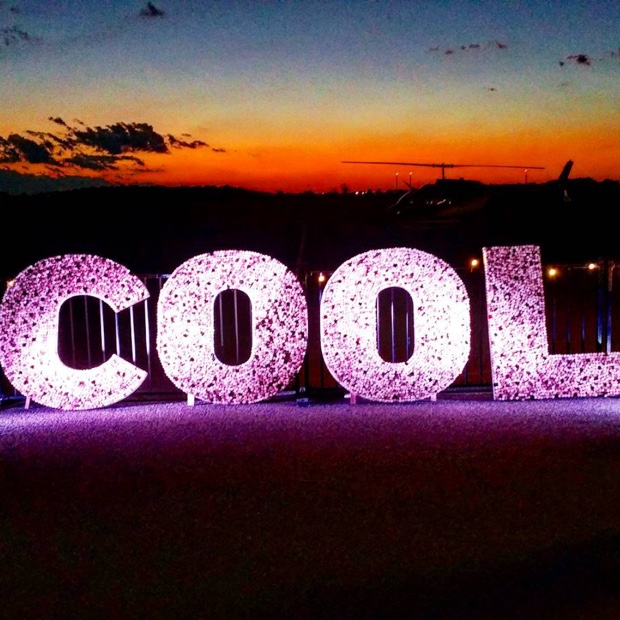
In the cool, cool, cool of the i4C

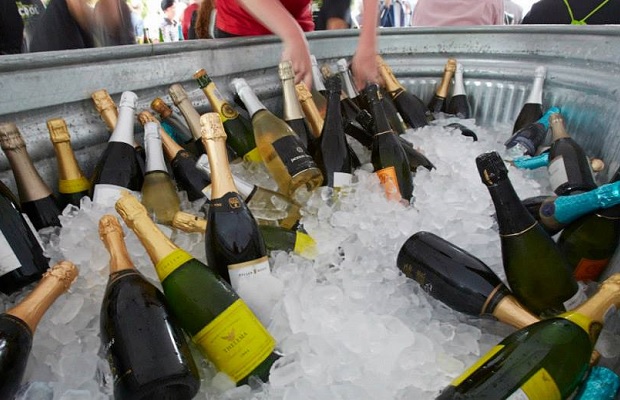
Cool Chardonnay on ice

In the cool cool cool of the evening
Tell ’em I’ll be there
In the cool cool cool of the evening
You better save a chair

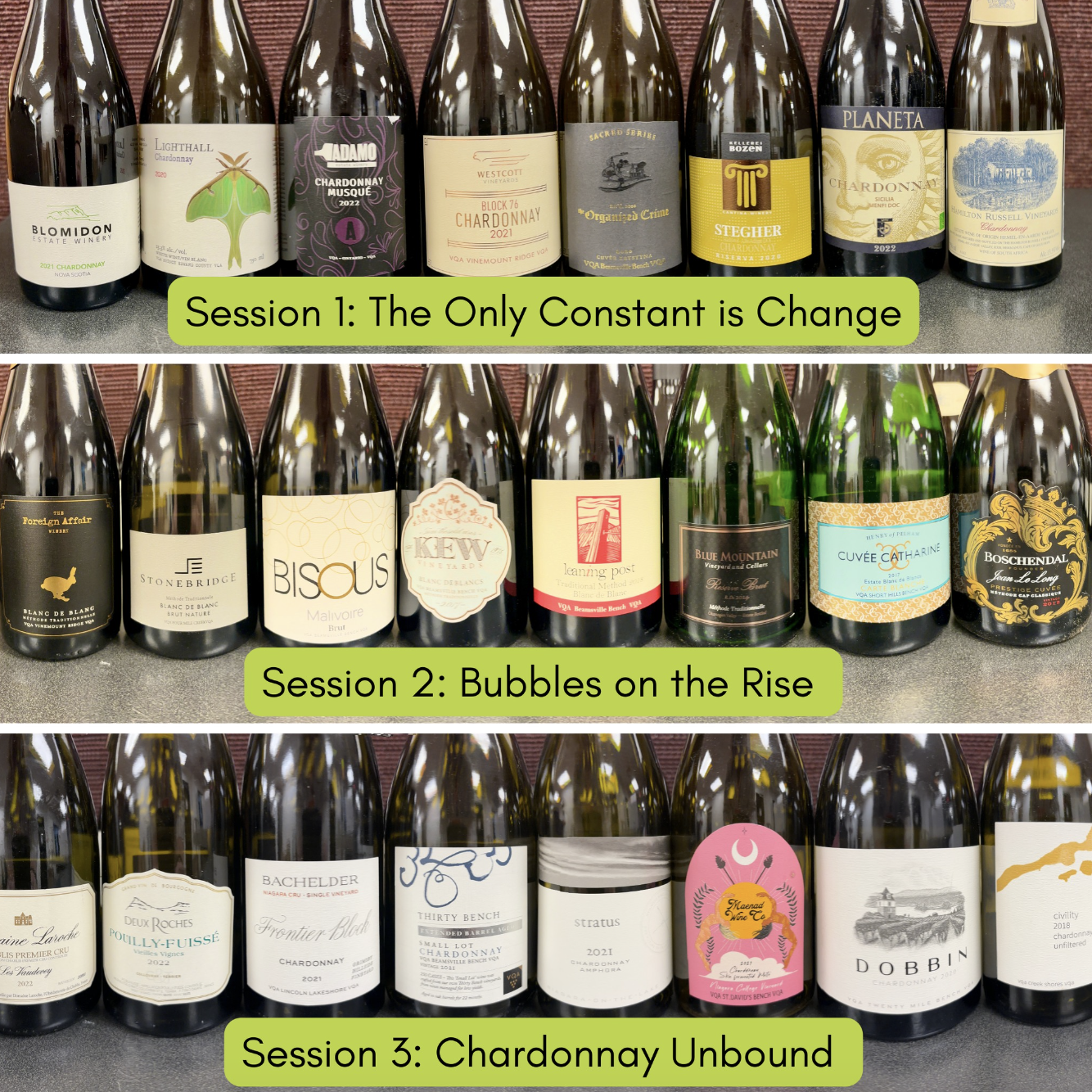
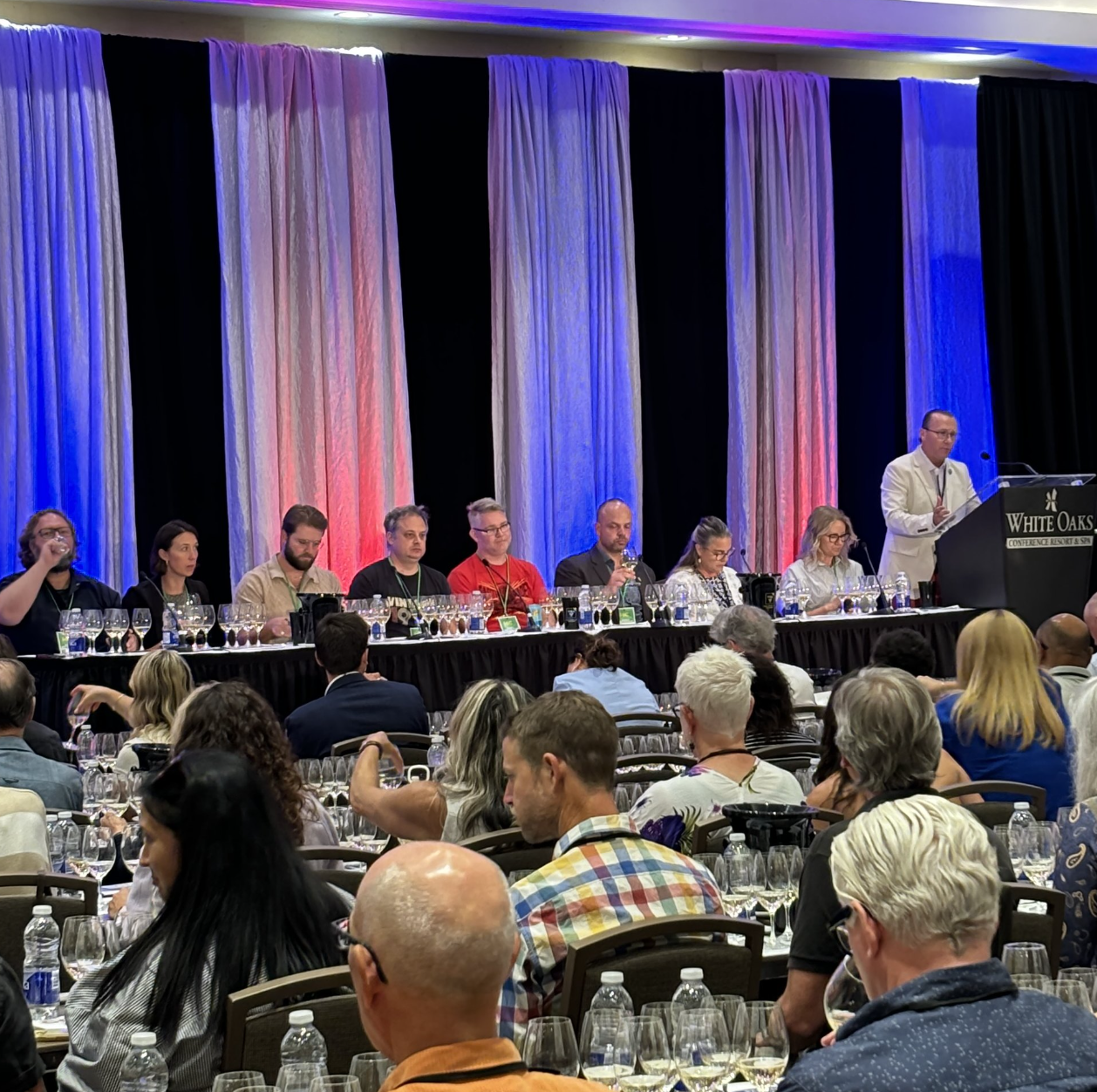
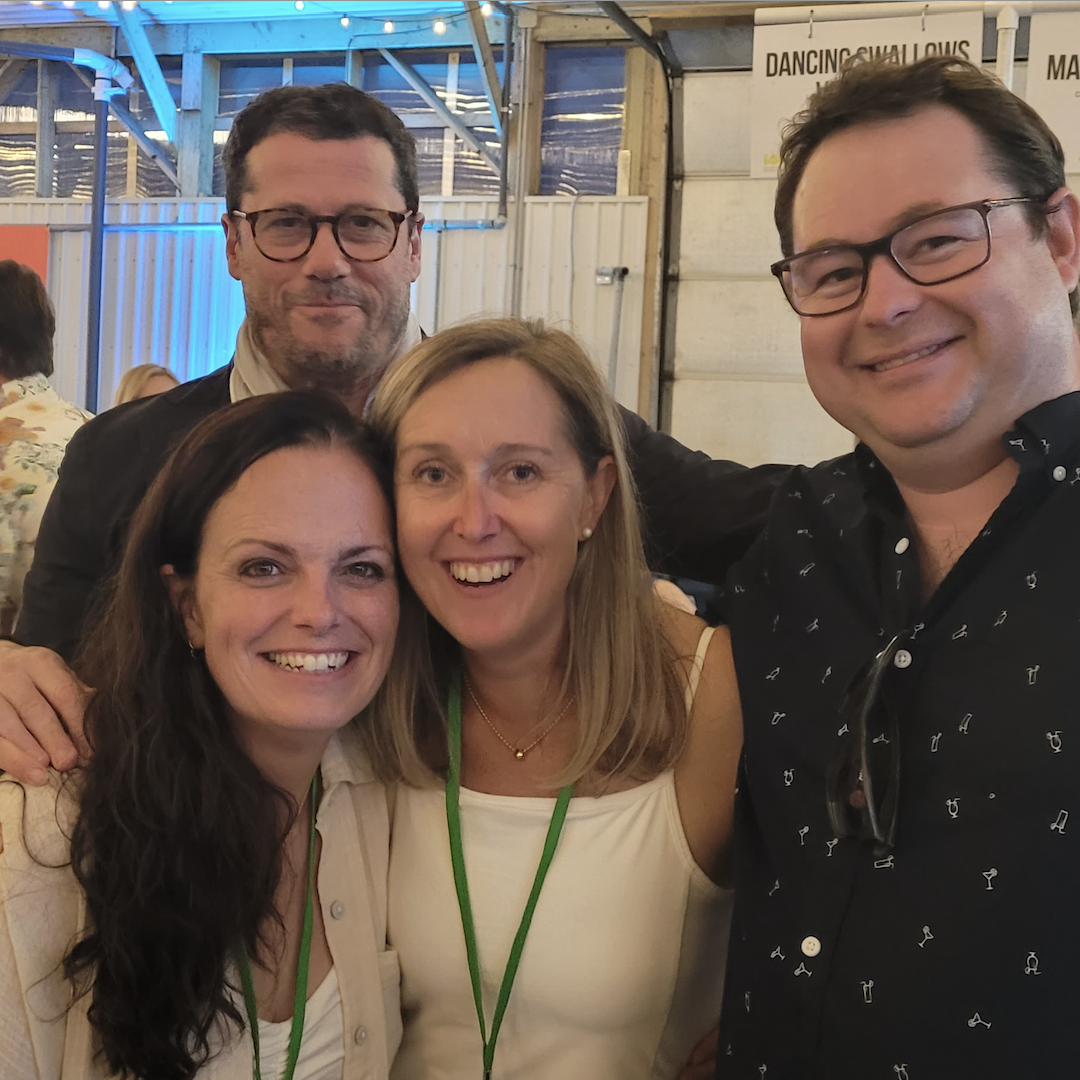
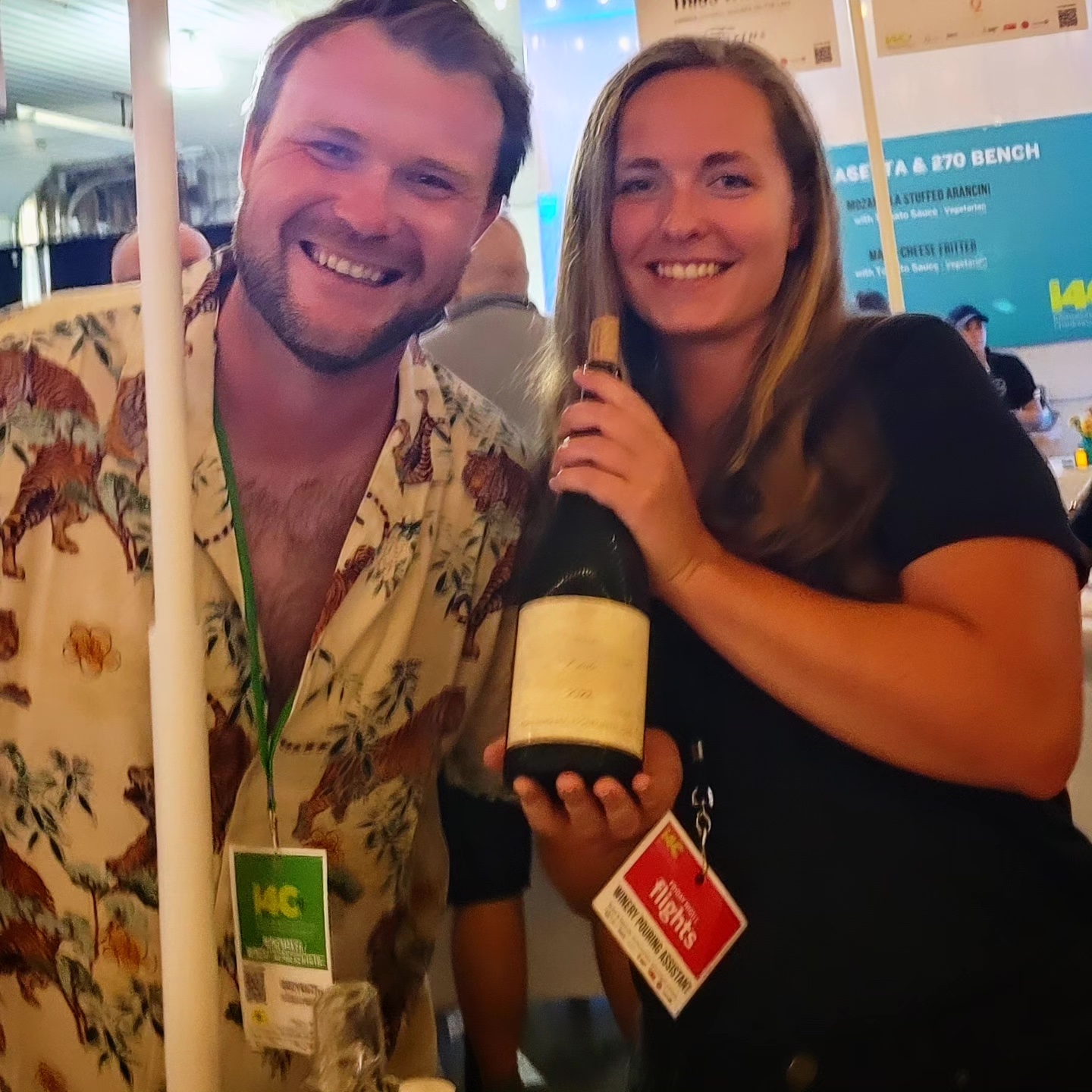
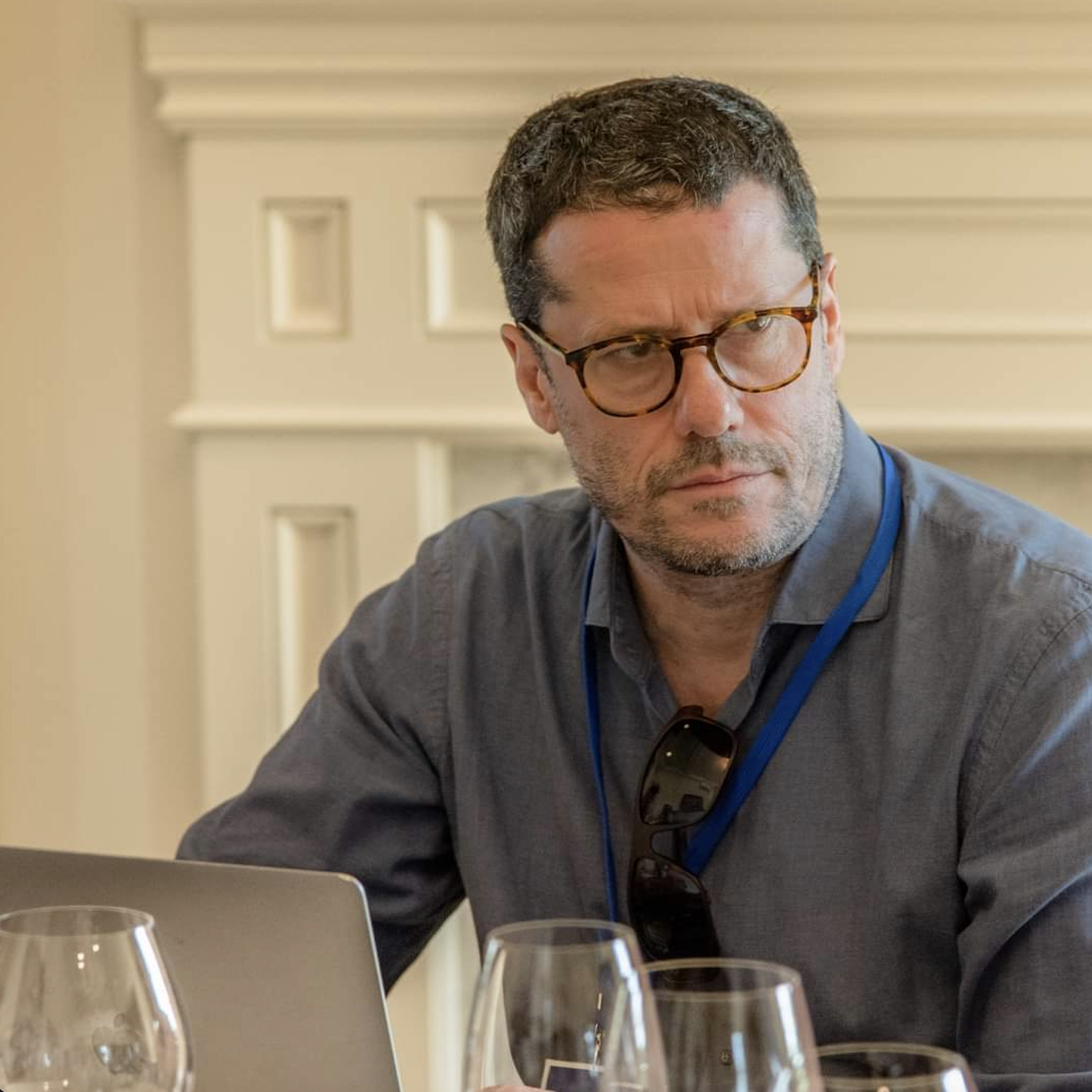
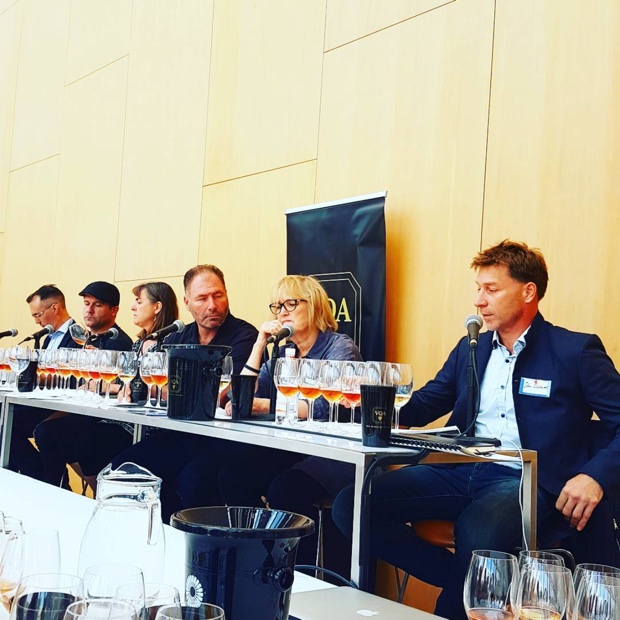
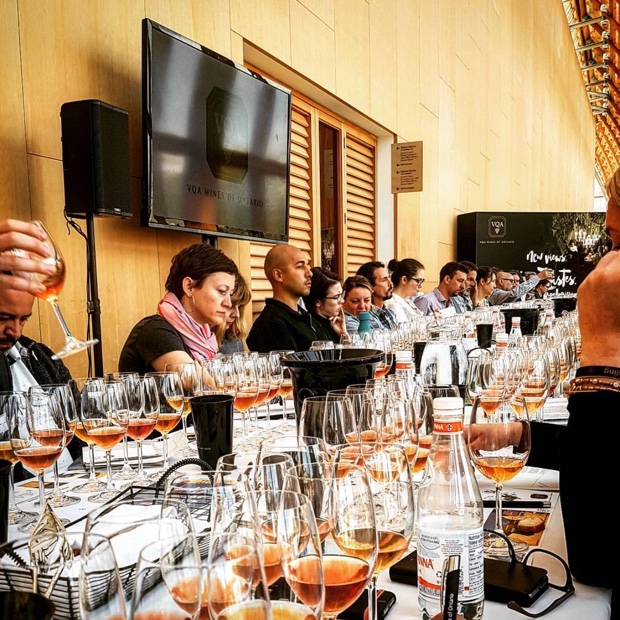
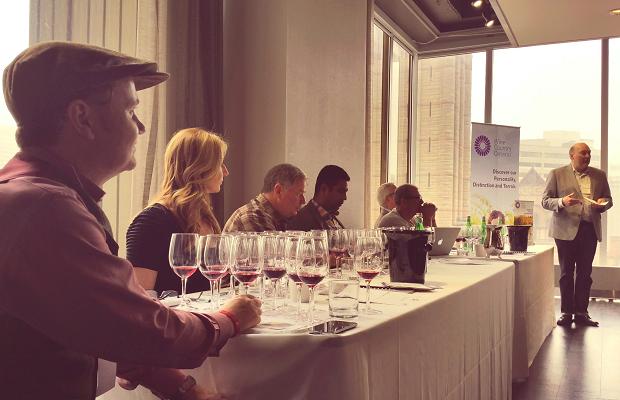
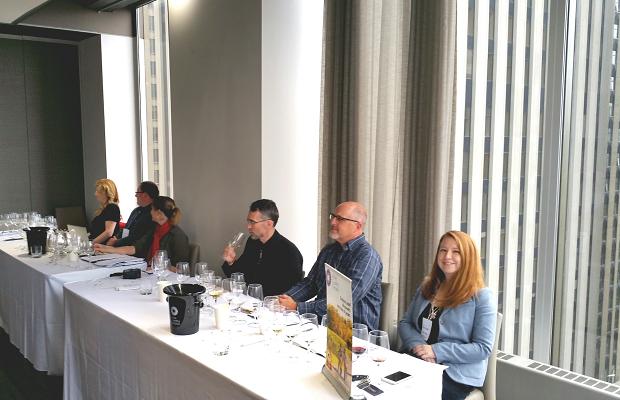
The 15th International Cool Climate Chardonnay Celebration took place just a few weeks ago and while every annual Niagara chardonnay experience is cool, this above the clouds 2025 edition was something other. Unexpectedly Godello was tasked with steering the educational component as emcee for the Thursday School of Cool at White Oaks Conference Resort and Spa. An honour and indeed a privilege it was, to share a stage with Canadian and international winemakers, winery representatives, distinguished minds and presenters. There was a palpable buzz in the room at this year’s School of Cool and also an uncommon level of expert conviction conferred by the moderators and panelists. The Canadian wine industry has assuredly come of age and chardonnay’s cool weekend was the perfect time to express the explorative, collaborative and measurable maturity of experience. Over those four days from July 17-20, the i4C was the coolest place to be.
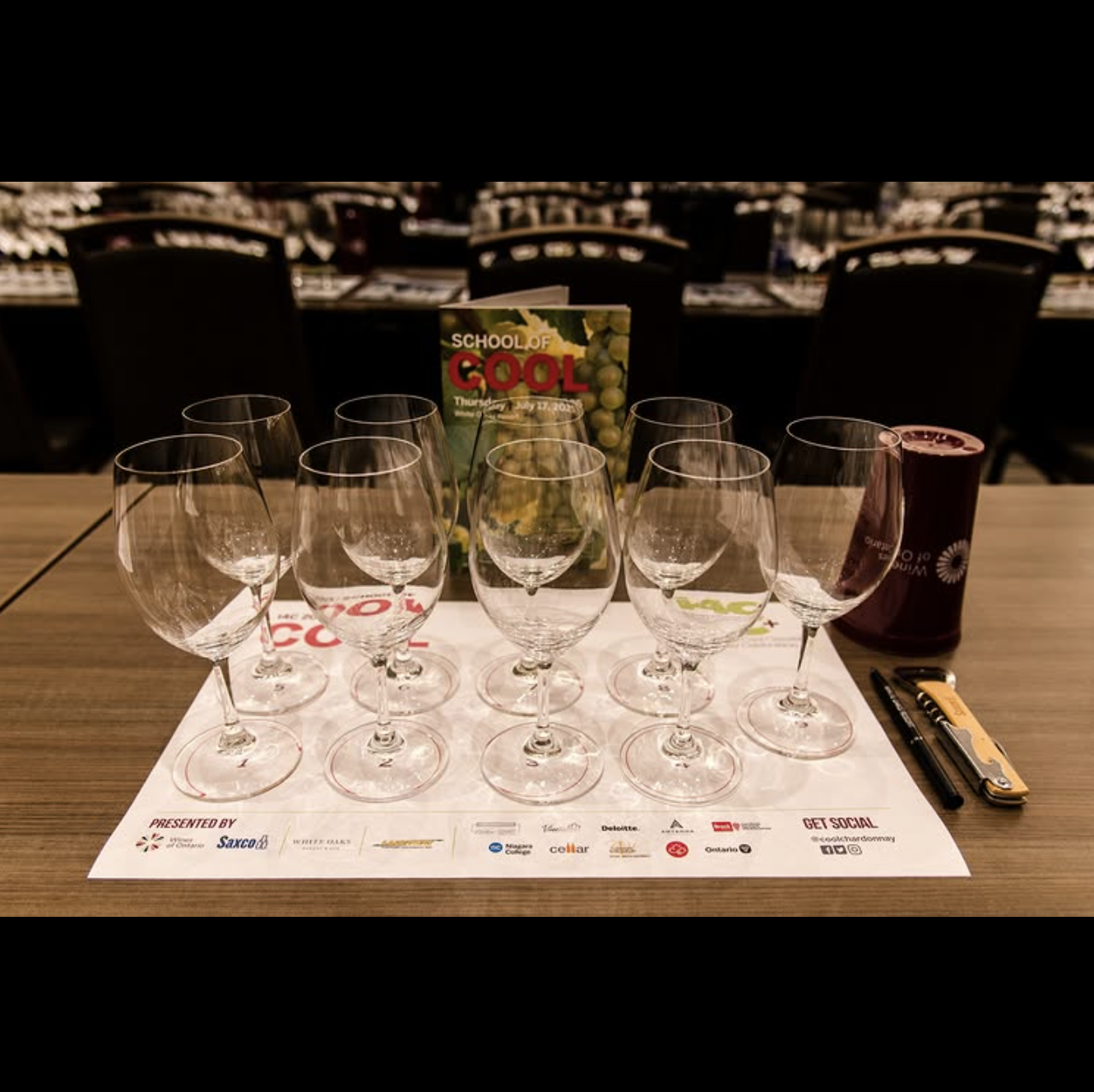
The School of Cool July 17, 2025 Edition
(c) Cool Chardonnay

Godello is pleased to share his words spoken to the audience that day.

“Good morning, and welcome to Day One of #i4c, the coolest conference in the world. My name is Michael Godel, a wine writer based in Toronto, sometimes in Italy and in my spare time I play both critic and partner at WineAlign. When I was asked to emcee this year’s School of Cool I thought hmmm, compared to those who have previously served this post, what can I contribute? I’m neither as funny or savvy as my colleague John Szabo, not as witty and sharp as Chris Waters, certainly less accomplished than both Magdalena and Suzanne. But I am good at surrounding myself with smart and talented people. I look forward to introducing many of them to you today.

We are thrilled to welcome all of you for the 15th year of the i4C! (Holds up applause sign). Every year winery representatives and people who adore chardonnay from around the world congregate here in the Niagara region to celebrate the variations, intricacies and philosophies behind making cool climate chardonnay. I once asked the question, How can i4c the future through cool chardonnay? Chardonnay is cool, then, and now. Don’t we always seem to foresee 4C a future filled with chardonnay?

This year at i4C we have 43 participating wineries, including 12 internationals from England, France, Tasmania, Argentina and two wineries from each British Columbia and Nova Scotia.

Today, we are meeting on Indigenous lands, over which Indigenous people still hold jurisdiction. In the Niagara Region, where 27 of our participating wineries operate, we are meeting on the shared lands of the Haudenosaunee, Anishinaabeg, Wendat, and Chonnonton nations. A key treaty governing this territory is the “Dish with One Spoon” agreement. This treaty between the Anishinaabe, Mississaugas and Haudenosaunee  binds them to share the territory and protect the land. Subsequent Indigenous nations and peoples, settlers, and all newcomers, have been invited into this treaty in the spirit of peace, friendship and respect. We all share the responsibility of ensuring the “Dish” is never empty, meaning that we must take care of the land and the creatures we share it with.

I would like to take a moment to acknowledge and thank our Educational Committee: Scott Wilkins, Rob Power, Elsa MacDonald, Dr. Jennifer Kelly of CCOVI at Brock University, Peter Rod of CCOVI and Niagara College and Trisha Molokach, our esteemed, tireless and incredible Event Director. Twelve years Trisha has poured heart and soul into this event. Thank you.

This weekend is made possible by the contributions of a dedicated group of volunteers who have spent countless hours preparing for this weekend. We have a wonderful team of folks pouring wine for you today, so if you happen to see someone in a colourful I4c t-shirt, make sure you take the opportunity to thank them for their time and efforts. None of this is possible without them.
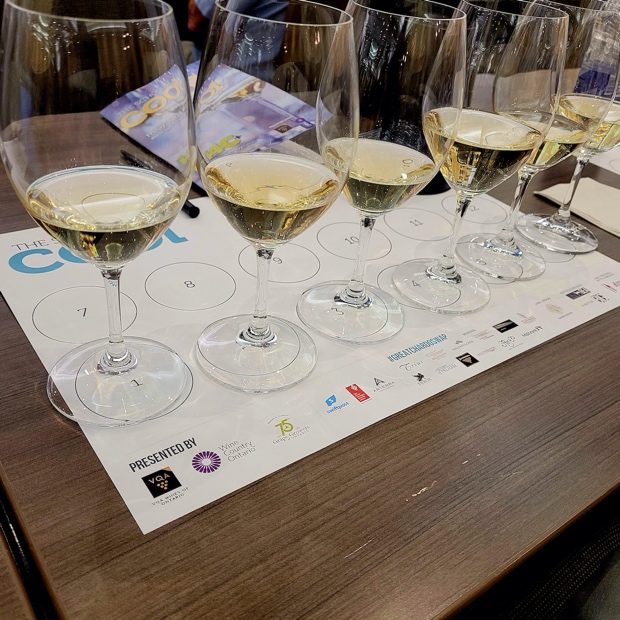
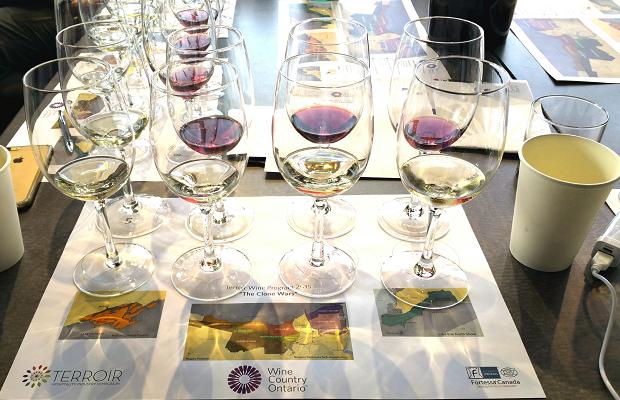
We would love to see any photos or videos that you take today, so please be sure to tag us. Our Instagram handle and the i4C hashtag are both listed on the bottom of your name tag and on your tasting mat.

At the end of the first session I will get to more specific housekeeping details and we do have a full schedule ahead of us today. There will be three educational sessions and tastings, with coffee breaks and a lunch in between, followed by a walk-around tasting in the afternoon. Please refer to the booklet provided at your seat for more information on timing and session details.

Before I proceed I would like to take a moment to remember a great friend of the i4C. Just a few weeks ago we lost Nicolas Potel, a great winemaker, négoce, father and friend. We miss you Nico and all of us wish you were here. But believe me I can’t think of anyone who would want us to just go out and have a grand time. Nicolas Potel came from Bourgogne for the very first event and his winery Domaine de Bellene was present here at i4C eight times, including last year when his son Alphonse joined us for the weekend. We should all raise a glass of cool chardonnay to the great Nicolas Potel.”
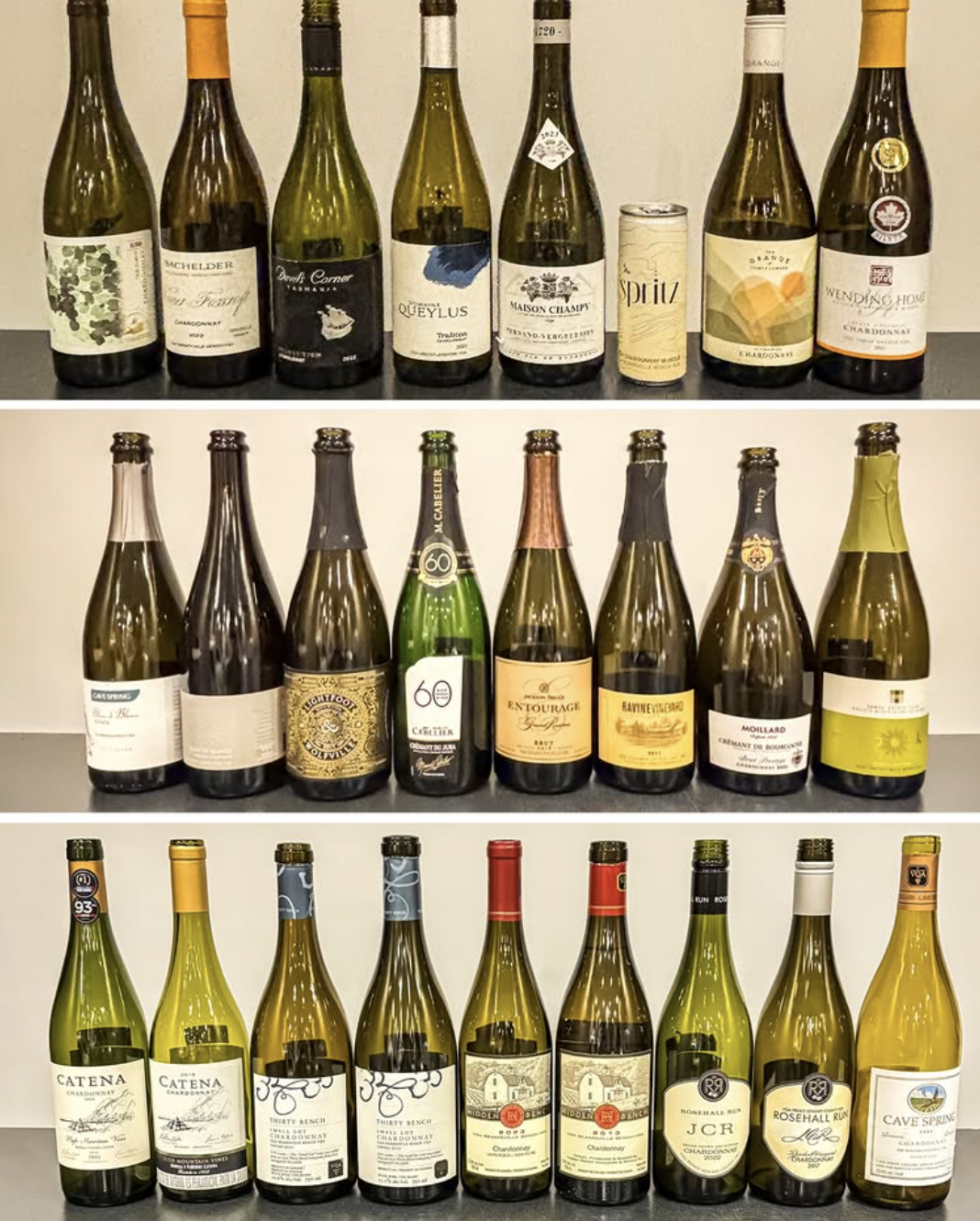
Coolest Chardonnay of The School of Cool (c) Cool Chardonnay

Session One

“Our keynote speaker for this year is Clive Pursehouse. Based in Seattle, Washington, Clive Pursehouse is Decanter’s US Editor and Regional Editor for the Pacific Northwest. He is the creator of the site Northwest Wine Anthem, Culture Editor at Peloton Magazine and the newly minted Fausto Magazine. This I gather makes him an avid cyclist. In fact I’m told he is a fan of Cyclocross, which is a unique, non-Olympic discipline of cycling that can be best described as a cross between road cycling, mountain biking and steeplechase. Wait, there’s more. Cyclocross takes place on technical outdoor courses of grass, dirt, mud, sand or sometimes snow. Snow. Still more – Pursehouse broke his pelvis cycling in the middle east and spent who knows how long in casts and wheelchairs. In other words and though I’ve just met him, not unlike a close friend I have known since nursery school who is an ultra-marathon runner, I would have to say that Clive is clearly nuts. And he’s from Pittsburgh (I like Pittsburgh!) but he does know a lot about wine, including chardonnay, especially those beauties from Washington and Oregon. I would say that his mix of intense exercise, the snow part and wine study make him ultra qualified for this role as our keynote speaker. When our Concierge asked if he had any allergies, Clive replied, “yah, tusk.” Tusk? Well Clive, this walk up song is for you. (Cue Tusk by Fleetwood Mac). Allow me to introduce Clive Pursehouse.”

Pursehouse began by saying “cool” starts with Miles Davis. Then there was Camus. “Cool is aloof. It resides on the fringe.” Finally a description that applies to Kim Gordon of Sonic Youth. “Cool is aspirational – It has an elusive character we find attractive.” Then like André 3000, “wine needs cool voices and cool critics. Cool is coming and it can’t be stopped.” Lastly, The Who because “the kids are alright, meaning it’s time to partner with cool, young voices who will celebrate edginess, low alcohol, fresh fruit and minerality. “The loneliness epidemic is real,” reminded Pursehouse, “and wine can be the healer, can bring people together and make things better.”
Session Two

“Eugene Mlynczyk is national sales manager and fine wine ambassador for Principle Fine Wines, the luxury team within Arterra Wines, Canada. He attended Stanford University in the 1980s, majored in art and earned a Master of Fine Arts degree in Painting from Indiana University. Eugene earned the title of Master of Wine in 2015 and I will always remember a memorable trip spent with him at Mondavi in 2017. Session Two is titled Sparkling Chardonnay – No Occasion Required. Please welcome moderator and Master of Wine Eugene Mlynczyk.”

“The world can’t get enough bubbles and chardonnay is at the heart of the world’s finest sparkling wines.”
Session Three

“Dr. Jennifer Kelly PhD has been a Scientist in Oenology at Brock University’s Cool Climate Oenology and Viticulture Institute since May of 2023. I had the pleasure of sitting on the 2024 Experts’ Tasting Panel with Dr. Kelly who brought a much needed scientist’s perspective to assessing Niagara wines in a room with nine winemakers, one sommelier and one journalist. Hanging around Jen certainly helped me to trust the science. I think you will all be intrigued by Jennifer’s approach and moderation for session three called Chardonnay’s Coming of Age – A Retrospective. Please welcome Dr. Kelly.”
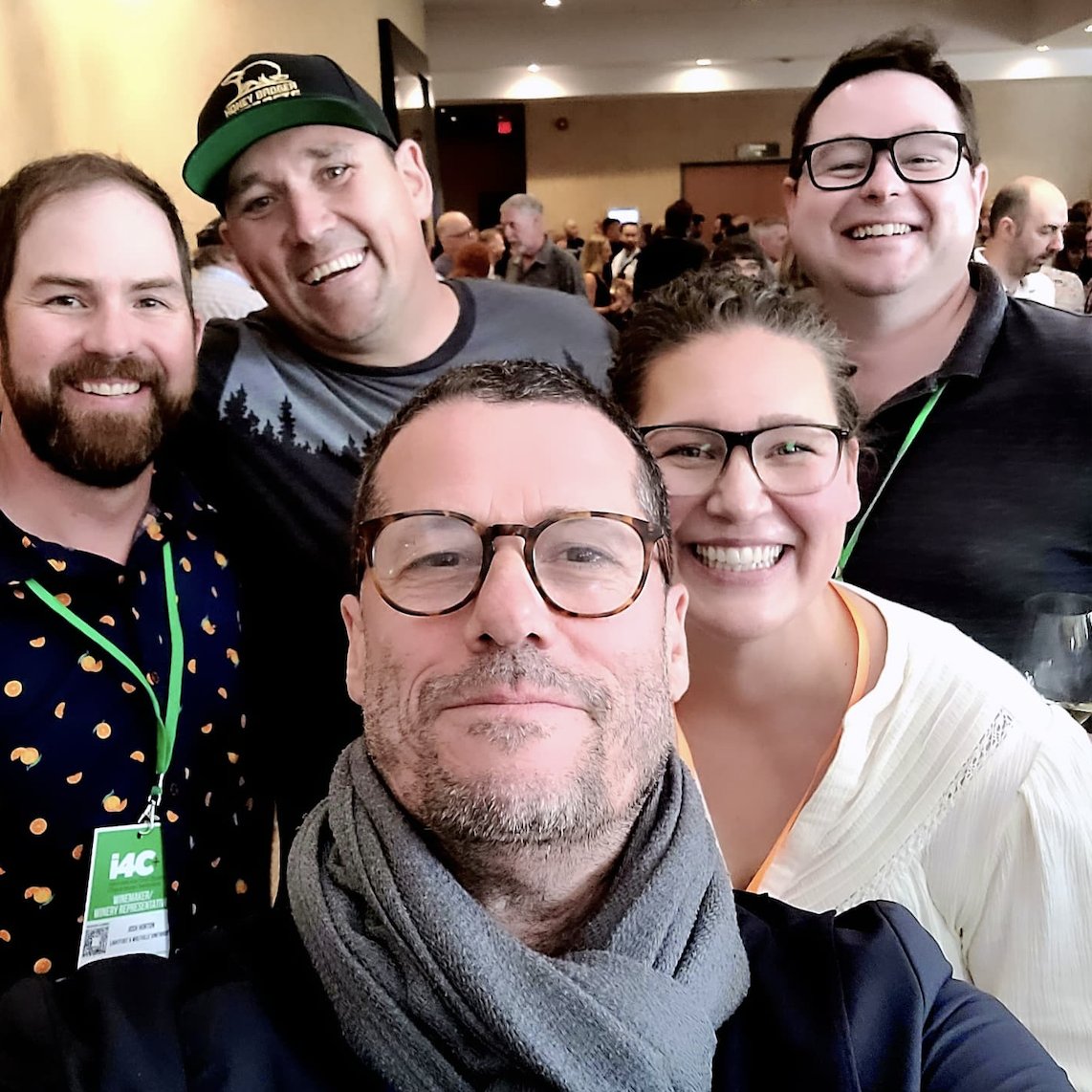
School of Cool squadra; Josh Horton (Lightfoot & Wolfville), Marty Werner (MW Wines), Ben Minaker (Andrew Peller) and Dr. Jennifer Kelly (CCOVI)

“This has been a true pleasure for me, to be a part of being a messenger for cool chardonnay. I am grateful for the opportunity. To the i4C committee, Trisha and her unbelievable team, our terrific AV guys and the White Oaks staff. Bravo. Thank you to Clive for leading us into cool territory with a refreshing approach. I loved the image of Kim Gordon but personally Clive I would have chosen Tina Weymouth or Kim Deal – but we can argue that out later. Kudos to our three session moderators, Clive, Eugene and Jennifer. Your time and attention is seriously appreciated. To all our panelists, your insights are what we come for and to learn anew each and every year at the School of Cool. And to all of you for being here, I hope there was something here for everyone and we’d love to see you back next year. Remember, Chardonnay is never too cool for school. Just outside the doors you will find all the chardonnay available at a walk around tasting which is scheduled to last until 6:15 pm. Happy tasting and thank you all for coming and see you again in 2026!”

Godello tasted and has reviewed 80 wines during the four-day conference; At the School of Cool; In the White Oaks media room set up by the Wine Marketing Association of Ontario team led by Andrea Peters; At visits to Cave Spring with Gabriel Demarco and Malivoire with Shiraz Mottiar; An evening at Ravine Vineyard with Jeff Moote of Divergence Wines, Jonas Newman and Marlise Ponzo of The Grange of Prince Edward, Chris Thompson and Stephen Del Degan of Volta Estate Winery and Ron Giesbrecht from Wending Home Estate Vineyards & Winery; Lunch at Black Bank Hill with Taylor Emerson, Jonathan McLean and Meg McGrath; At the evening events held at Friday Night Flights, Niagara District Airport, Niagara-on-the-Lake and at Chardonnay in the Vineyard World Tour Tasting and Dinner at The Riverbend Inn, Niagara-on-the-Lake. Here are the notes.
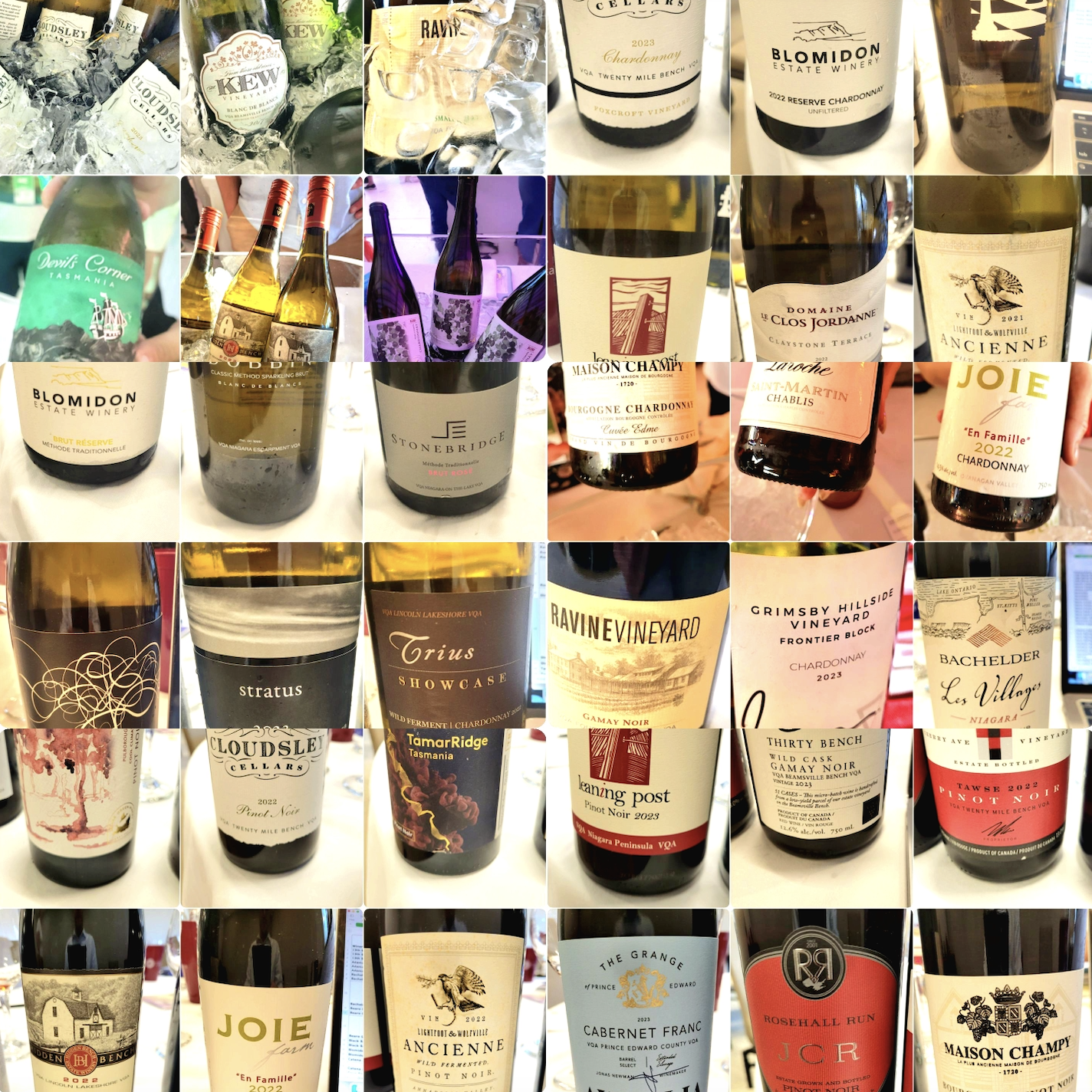
The Sparkling

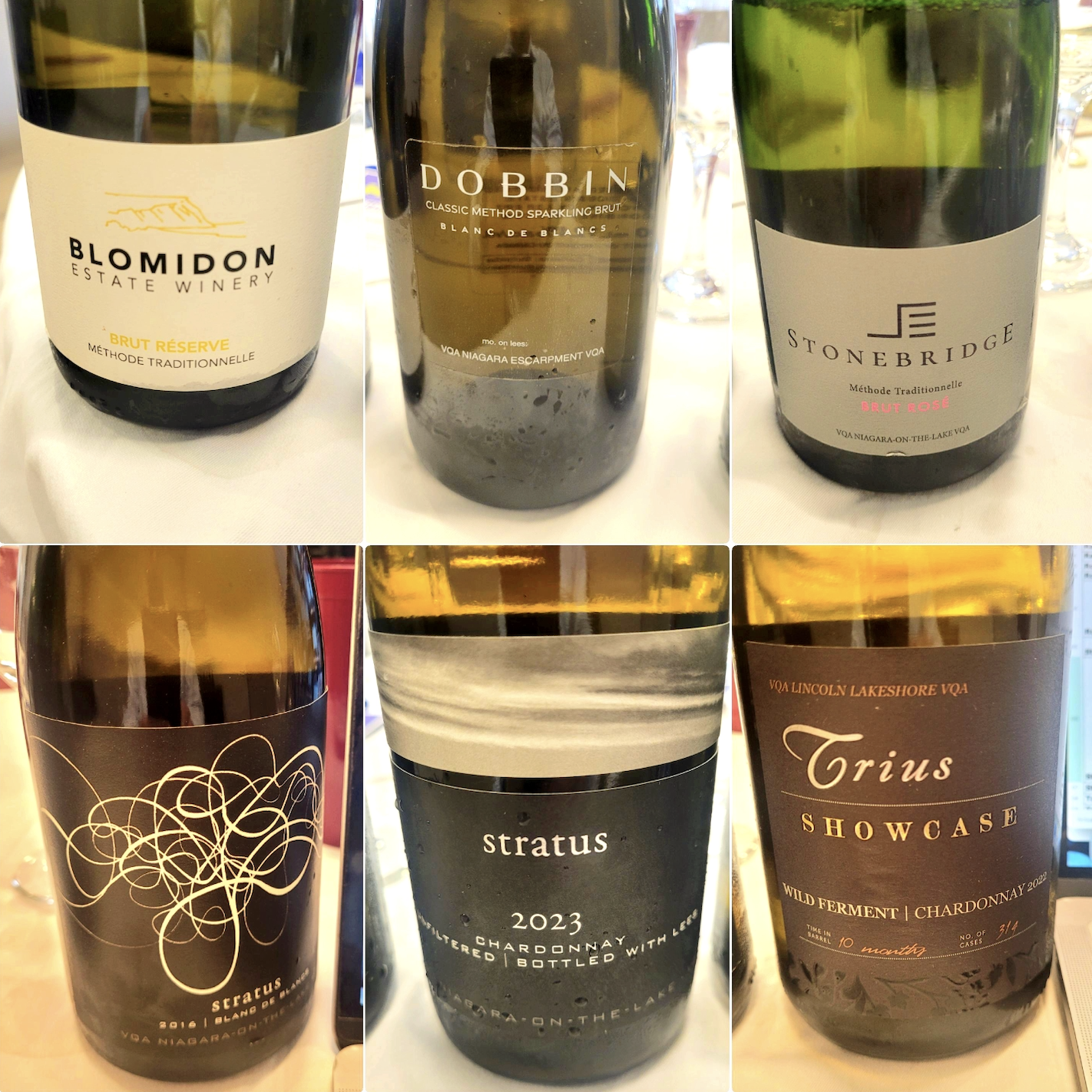
Blomidon Brut Réserve NV, Annapolis Valley, Nova Scotia

Next year and disgorgement, same five years on lees for Blomidon’s signature sparkling wine and now more depth. Once again time is the impetus (and requiem) to see results, both of which have manifested into a bubble of greater charge than so many peers. Mainly chardonnay from that strip of land running up from the Minas Basin and jutting through the Bay of Fundy. Depth yes and also a low rumble of botanicals that make this a most agreeable sapid sparkling wine from Nova Scotia, like a cool night that follows a warm day.  Last tasted at i4C, July 2025

Put to bottle in 2019 and so five years on lees ain’t nothing to develop complexities, eccentricities and potential variability. This pour comes out of sound and vision, disgorged in March of 2024, set to be released in the early Fall. Makes great use of 2016 and 2017 fruit, plus a small amount of the frost vintage 2018. Youthful, appropriately Blomidon Peninsula/Annapolis Valley tightly wound and in a way very chardonnay, though not glaringly so. “For us this is the future for non-vintage,” explains Simon Rafuse, “and to save the cooler vintages for Blanc de Blancs.” It’s a reverse engineering kind of approach. Simply put, in cooler vintages you can’t push wines through malolactic and so chardonnay is best purposed for sparkling when acids are high and pH levels are low.” Like 2011, but not 2010 and Rafuse adds that “the problem is you have to wait many years to see the results. But it’s worth it because they are really good.” True that. Drink 2024-2028.  Tasted at i4C, July 2024
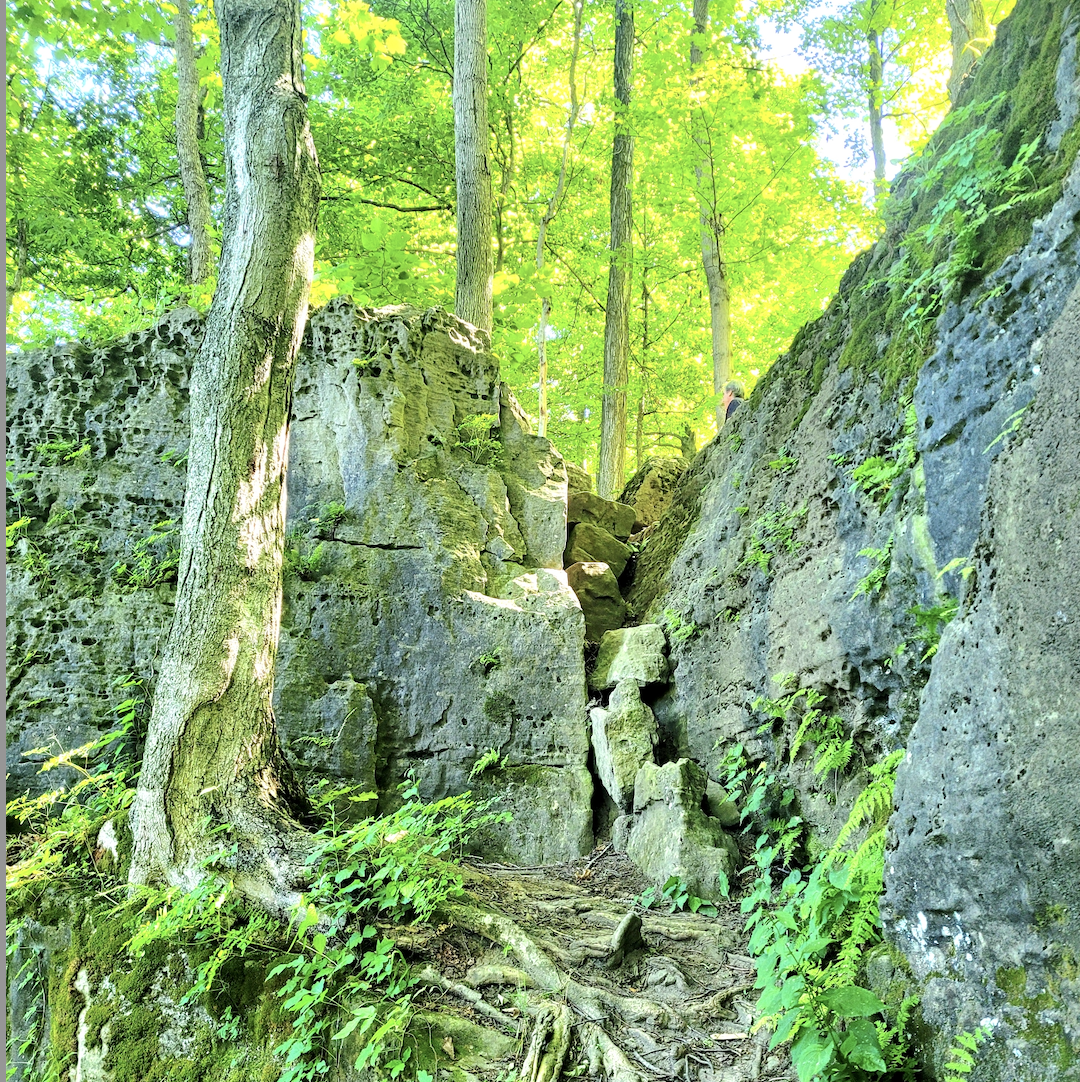
The Adam Steps, Niagara Escarpment

Cave Spring Estate Blanc De Blancs NV, VQA Beamsville Bench, Ontario

Over the course of tasting the non-vintage Blanc de Blancs over 13 years it is noted how the chardonnay bubbles have evolved yet stayed the course and ultimately improved. From strength to strength with a wine that now bears the stamp and waves the banner for cool climate sparkling wine made with its most essential grape. The team has struck balance for a wine to be used, enjoyed, employed and celebrated all the bloody time. Simply put “ripe fruit and acid structure” said by by winemaker Gabriel Demarco, “putting in accumulated knowledge to recognize a place.” Which by the way includes 50 percent clone 777 chardonnay musqué originally built into the program by OG winemaker Angelo Pavan. Drink 2025-2030.  Last tasted at i4C, July 2025

It matters not whether this Beamsville Bench Blanc de Blancs is p[riced at $24.95 or $32.95 because it still represents the finest Ontario value in chardonnay sparkling wine. Bar none. Why trust your hard-earned, looking to celebrate or drink bubbles on a Tuesday dollars on anything else. Last tasted November 2024. Classic, sharp, intense and ideal. A ripper, “and I love that” says Stephen Gash. Dry as the desert in such a playfully proverbial way. Scintillant extraordinaire.  Last tasted at i4C, July 2024 and November 2024

For the first time in quite some time the next look at the Cave Spring Estate Blanc De Blancs is bang on one year later and so yes, freshness is the thing. Crisp and crunchy, stylistically so consistent and really set up to act as the dictionary entry for chardonnay as sparkling wine out of Niagara. It’s just so spot on, high in energy and exacting for style, place and estate.  Tasted November 2023

Sees a minimum 30 months on lees ahead of disgorging and this chardonnay was likely sprung in the Spring of 2022 with a good dose of 2019 fruit layered within. In other words a true-blue varietal vintage to espouse the latest virtues and expound upon the great elevator in Niagara Blanc de Blancs sparkling wine. Never disappoints and continues to rise, surge ahead, power forward and capture necessary tension. The offset here is more botanical tonic and weight. A new complexity.  Tasted November 2022

It seems every three years is the interval for reviewing this arch-classic Ontario sparkling wine but be assured that the time in between actually drinking this fine Niagara wine is a much tighter and repetitive proposition. Terrific balance accorded and afforded from this latest cuvée with equal and opposing trips switched on by yeast and lemon, ginger and tea. Good toasty bubble for any and all toasts, plus innocuous glasses for drinking in between.  Tasted October 2020

Angelo Pavan and Cave Spring sure do love to fashion a toasty sparkling chardonnay. Still in the biscuity, flinty and textured Champagne vein though really far from the last B de B tasted back in May 2014. No longer a case of fruit from in and around the 2008 vintage it would have to be the cool as lightning 2011 by my calculations with likely some warm and rich 2012 fruit. The relationship delivers the best of all worlds; tart, bright acidity and linear functionality with creamy, rich orchard and stone fruit, generous and round. All together now.  Tasted September 2017

Today a fine misty Blancs, looking very much the coppery, crisp slice of apple it need be. Slate stone tone directive, grapefruit very much in play. A slice of tart key lime pie.  Tasted July 2014

From my earlier May 2014 note: The freshest style of the #ONfizz B de B flight. Fruit, escarpment bench stone layering, richesse, biscuits and toast are all in. Acidity meets complexity

From my earlier, December 2012 note: Sees no malolactic fermentation and sits at the top end of dry (12-14 dosage). Most of the fruit is 2008, despite the NV designation. A soda fountain of argon and nitrogen bunsens forth through clean lines and carries an entire cider house orchard of Spartan apple. This one certainly hints at Champagne-like characteristics, of brioche and toast. The apples never relent
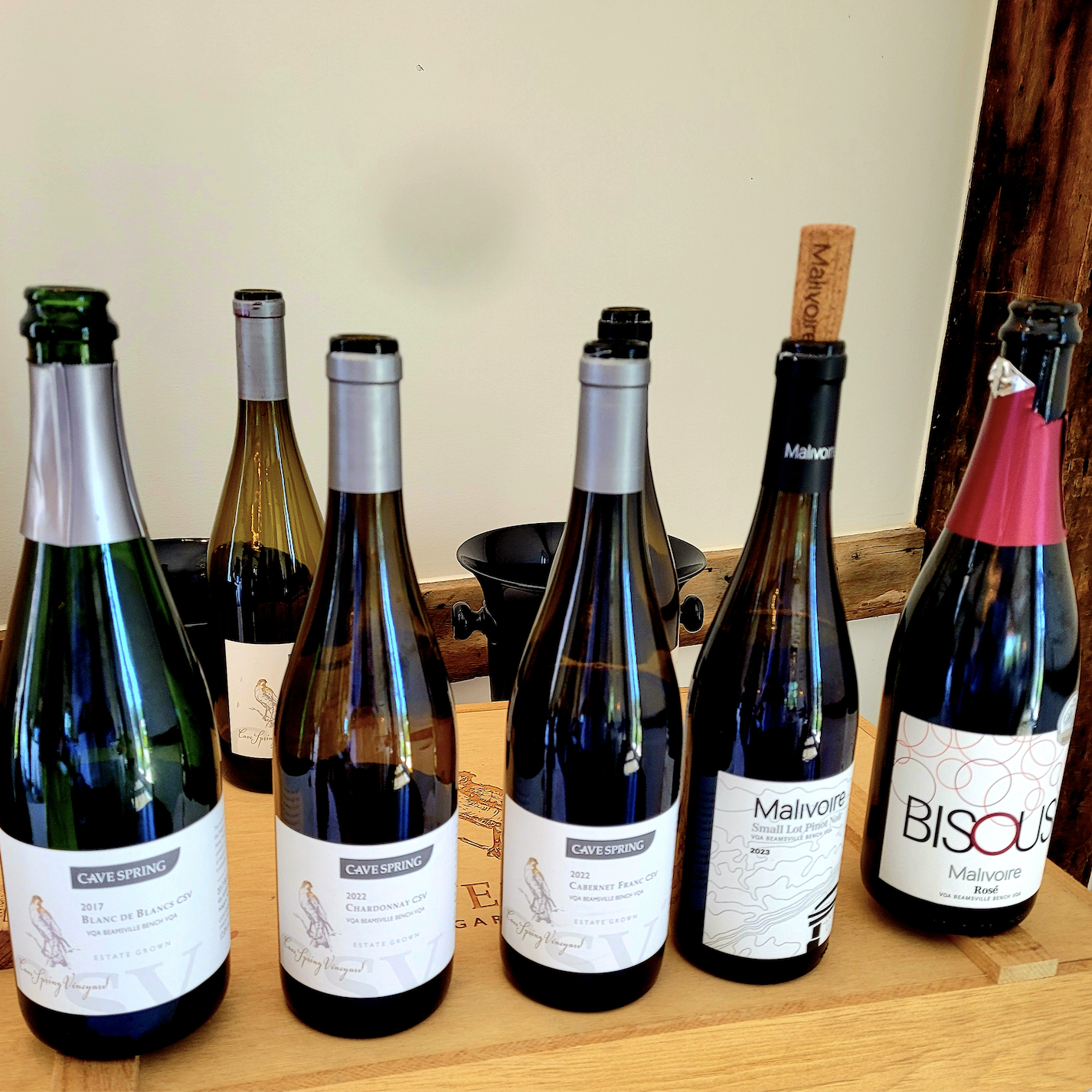
Cave Spring CSV Blanc De Blancs Natural Brut 2017, VQA Beamsville Bench, Ontario

The chardonnay scintillant for a toasty style of Blanc de Blancs in pointed appeal. Must be 80-plus months on the lees for this disgorgement and a bubble as fresh as the day it was conceived. Controlled or let’s say restrained excitement, vertical, a sparkling wine of backbone without hitch or bend, taut though generous of flavour. In a terrific place right here and now.  Last tasted at i4C, July 2025

Home (Cave Spring Vineyard) which means old chardonnay vines for Blanc de Blancs with added human experience to set up for top regional excellence. This from the upside down vintage which meant that chardonnay ripening was not the same as it ever was and so come here expecting something different. In fact the 2017 takes a turn for the toasty and excitable, into tart and scintillant territory for B de B of a singular style. Even for the most consistent sparkling wine house of them all but all things being equal this Beamsville Bench bubble creates a new fashion all its own. Drink 2024-2027.  Tasted November 2024

Divergence Blanc De Blancs Hughes Vineyard 2020, VQA Lincoln Lakeshore, Ontario

Made from a place “of big skies and lots of sunshine,” tells winemaker Jeff Moote and that is why he chose the double “L’ to make his inaugural sparkling wine. The clay-loam-till with a strain of limestone delivers richness for chardonnay and into sparkling wine. Eight months further, seemingly the same disgorgement (October 2024) and a slight exaggeration of the toasty-autolytic notes, but now with more of a soft creamed centre. Orange flavour now coming through, perhaps owing to that CLT terroir.  Last tasted at i4C, July 2025

Small production of less than 600 cases for a 100 percent chardonnay from the Lincoln Lakeshore sub-appellation’s Hughes Vineyard. A whole cluster pressed, cuvée juice only used and the base wine barrel fermented in neutral French wood where it is aged six months on lees. Follows with 42 months en tirage and just two g/L of sugar added. Essentially dry and in the scintillant style for Blanc de Blancs, screaming grape and acidity, accented by dried herbs and orchard fruit. In a serious vein, not what could be described as generous and conversely needing bottle time to settle into its parched and piqued skin. A bit severe and this from a warm vintage. Intensity is all in. Drink 2025-2029.  Tasted November 2024

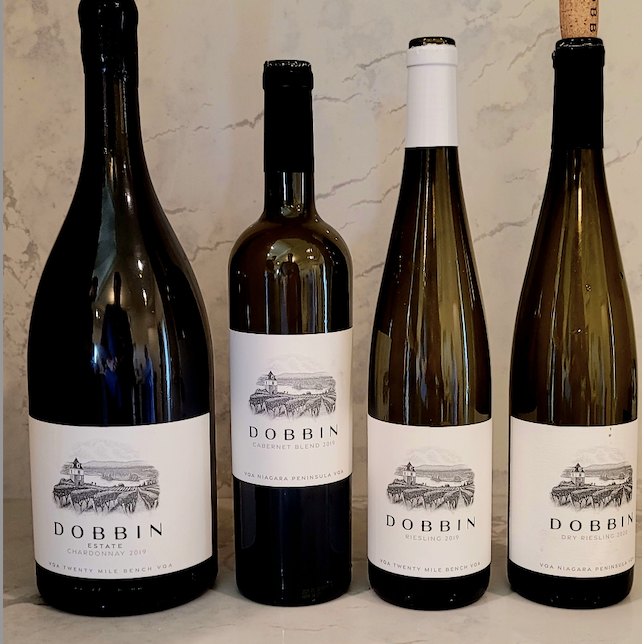
Dobbin Estate Brut Blanc De Blancs, VQA Niagara Escarpment, Ontario

The newest and ambitious chardonnay in the Dobbin project is Blanc de Blancs, Brut in style and non-vintage. Perfumed and chock full of relatively ripe chardonnay flavours, accessible and immediately enjoyable. It should likely be surmised that subsequent releases will have seen longer lees aging time with this shedding the feel of 30-36 months. No doubt strikes an almost perfectly equanimous balance between sugars and acids in the 7-ish g/L range. Not yet developed into the ambient, enigmatic and complex sparkling wine it is detailed and destined to become – yet there is elegance, softness and charm in this (presumably first) issue. Smells, tastes and feels like celebration. Drink 2025-2027.  Tasted at i4C, July 2025

Jackson Triggs Niagara Entourage Grand Reserve Brut 2018, VQA Niagara Peninsula, Ontario

The 14th vintage of this silver medal winner at the 2025 WineAlign National Wine Awards of Canada and a unique Brut made in an ulterior intensified fruit style. An entourage of a bubble, a word that can translate as “surroundings” and the concentration of chardonnay emotions meeting flavours speaks to a grand place on the Niagara Peninsula. Entourage is half and half chardonnay plus pinot noir with two percent pinot meunier. Tastes like a mouthful of minerals with a dusting of sugar dosage and a shot of botany, a.k.a. tonic at the finish. Drink 2025-2028.  Tasted at i4C, July 2025

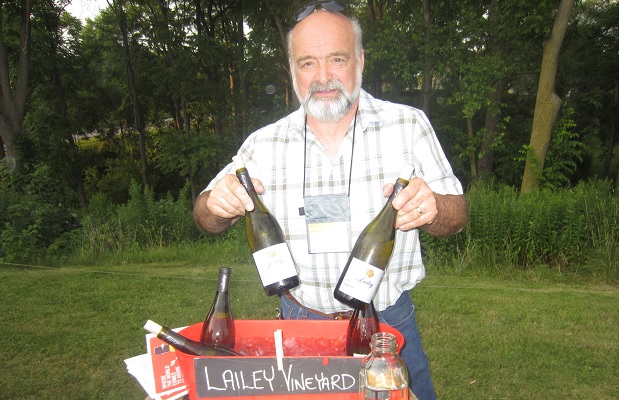
Lailey Stonebridge Méthode Traditionnelle Brut Rosé 2021, VQA Niagara-on-the Lake, Ontario

Classically composed and delineated Brut Rosé blessed by top quality fruit, a strawberries in cream softness transposed against a frothy bubble of vitality and airiness. Tons of flavour here, from the red berries through savoury elements inductive of leafy chicory greens and nettles. A beautiful bitterness juxtaposed against reliable dosage, harmonious while still expressive of individual parts. Trusted and effective, on the road to knowledge and future finer results.  Last tasted at i4C, July 2025

A chardonnay purposed grown and cropped then “pinkified” with just two or three percent Lailey zweigelt for what it truly an original look at Niagara sparkling wine. Picked on September 12th and 13th with just a bit left for still wine and perfectly ahead of the September rains. Recently disgorged (after approximately 20 months on lees) and of a season that reminds Ann Sperling of 2006. Very phenolic vintage of high caste character, just not the most intensity and power. Crunchy like the other ’21 Rosés, salty and as mentioned, quite phenolic. Not an autolytic fizz but definitely one that combines precision with pleasure. Just a tweak of tannin at the finish. There are 83 cases made and the wine will be released in a few months. Drink 2023-2025.  Tasted April 2023
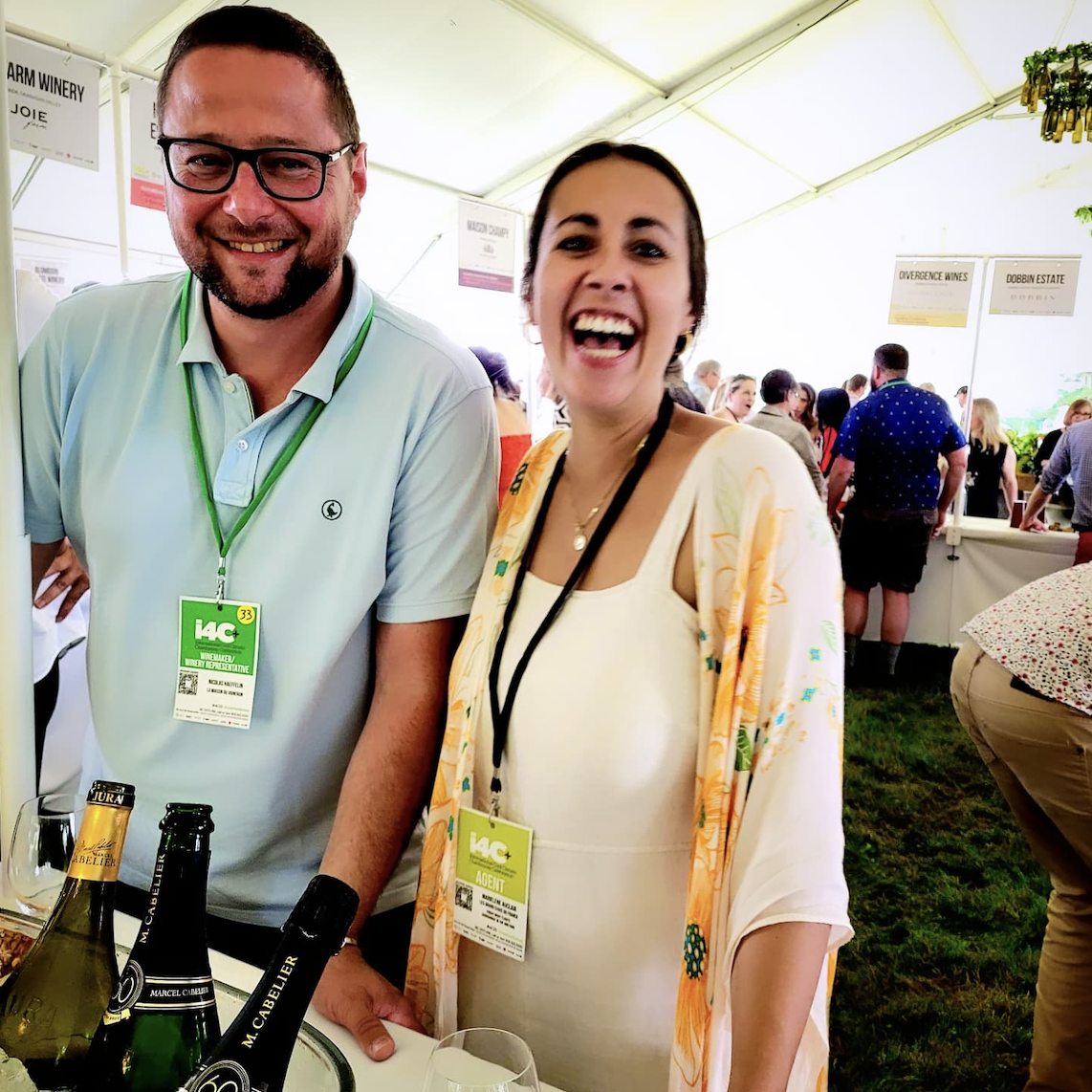
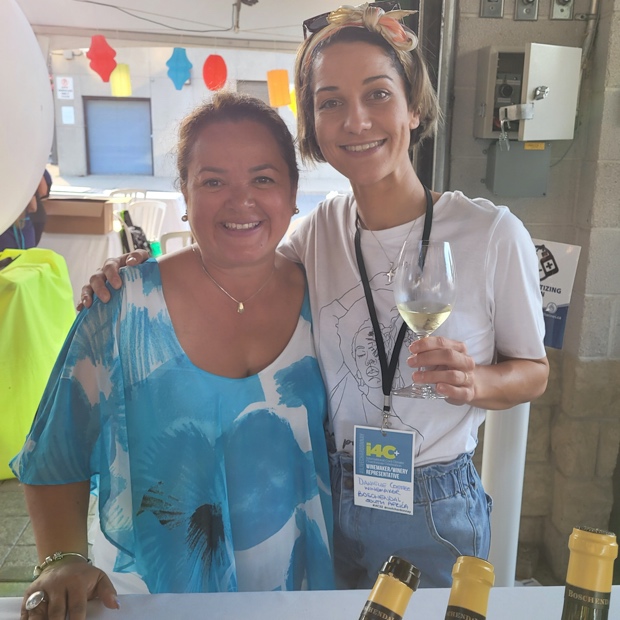
The team from Maison du Vigneron

La Maison Du Vigneron Crémant Du Jura Marcel Cabelier NV, Jura, France

Truly Jura, no matter whether the chardonnay is made into still or sparkling wine, with the unmistakable earthenware aspect speaking vividly to terroir. This may be non-vintage but there just feels to be a lot of sunshine accumulated into this fruit and so the orchard is well represented in the chardonnay bubble. Lower acidity (at 4.15 g/L) and the creamy palate is as generous as they come. Drink 2025-2026. Tasted at i4C, July 2025

Lightfoot & Wolfville Brut 2019, Nova Scotia

Surely more richness from the 2019 Brut and still the cool interpretation of the Annapolis Valley’s maritime climate. You must consider this amazement of success from a place that resides at the furthest edge of viticultural promise. “It’s challenging” says Josh Horton, “and we’re starting to see the odd hot vintage” which this wine somehow expresses. “Chardonnay checks all the boxes for us, acidity, structure, complexity and versatility, not mention walking right through a winter with a polar vortex.” Brut 2019 is fleshier and balanced, ripe and zesty. Yes, angularity can be beautiful. Drink 2025-2029. Tasted at i4C, July 2025

Malivoire Chardonnay Musqué Spritz (In Can) 2024, VQA Beamsville Bench, Ontario (250ml)

Perhaps the first Ontario chardonnay musqué packaged in a can, experimental, light, minimally frothy, also with sweetness and floral. A semi-sparkling wine of arrested fermentation at nine percent alcohol with 40 g/L of residual sugar. Easy drinking, like juice with some alcohol, almost moscato d’Asti stylistically speaking. Candied, of fuzzy peach and ginger for adults only. Fun stuff from winemaker Elisa Mazzi and quenching for what gets you hot.  Tasted at i4C, July 2025

Malivoire Bisous Brut 2012, VQA Beamsville Bench, Ontario

Tiraged in 2013, of 60 pinot noir and 30 chardonnay for what was at the time just winemaker shiraz mottiar’s third kick at the sparkling can. Fermented in older barrels and aged 10 years on the lees. Oxidative and gingered, full cupboard of exotic spices. Dynamic, pulsating, pretty dynamite experimental bubble. Only 20 bottles made. First release of Bisous was 2016. Make more of this shiraz. That’s an order. Drink 2025-2027.  Tasted at i4c, July 2025

Malivoire Bisous Brut NV, VQA Beamsville Bench, Ontario

Of 70-ish chardonnay with 30-ish pinot noir disgorged in May 2023 and so think about fruit from 2019 which means a top sparkling vintage because neither fruit nor acidity saw any compromise. Nearly dry with just 2 g/L of dosage, a negligible number that only helps to coax out the natural sweetness in the wine. Quintessential house bubble for anyone who seeks and can see the top value (along with Cave Spring) in a $30-35 traditional method Ontario sparkling wine. Drink 2025-2028.  Last tasted at i4C, July 2025

Having recently tasted Bisous just four months ago you might think there would be no change when in fact things have. Tension is now juxtaposed by a truly creamy feel on the palate and so next tasting is next level gained. Bisous is now a perfect foil for tortellini and crispy pancetta with a drizzle of basil infused oil and some aged pecorino. Please. Tasted November 2024

Not simple. Fine and mighty toast, a mix of autolysis and oxidative minutia, full-flavoured and complex, of orchard plus stone fruit and more than just chardonnay. Feels like some pinot noir mixed in and the blend creates a terrific variegate experience.  Tasted blind at i4C School of Cool July 2024

Good and simple if also plenty but very simple. Drink 2024-2026.  Tasted blind at #NWACS24, June 2024

Moillard Prestige Blanc De Blancs 2021, Crémant De Bourgogne AOC, France

Crémant de Bourgogne labeled as Blanc de Blancs, of fruit left to ripen a bit longer than many, in maintenance of acidity though furthest from the racy style. Richness incarnate for chardonnay in sparkling clothing. Nothing searing about this one and truly accessible. Spends 24 months on lees with 6 g/L of dosage. Drink 2025-2027.  Tasted at i4C, July 2025

Ravine Vineyard Brut NV, VQA Niagara-on-the Lake, Ontario

There is a real depth behind this Ravine Brut, packed with flavour and what now feels like deeper concentration than just over a year ago. A huge style, classically blended and true to its roots, but also an extension from what others have done as they came before.  Last tasted at i4C, July 2025

Quiet and demure sparkling wine made from a mix of 60 percent chardonnay and (40) pinot noir for a pretty and soft example. Feels like a relatively short to mid-term time on lees, Considered blanc de noirs despite its lean to the white side and while the custardy lemon-osity sprinkled by white pepper runs high it is the smooth softness that dictates the order of this wine. Drink 2024-2026.  Tasted blind at #NWACS24, June 2024

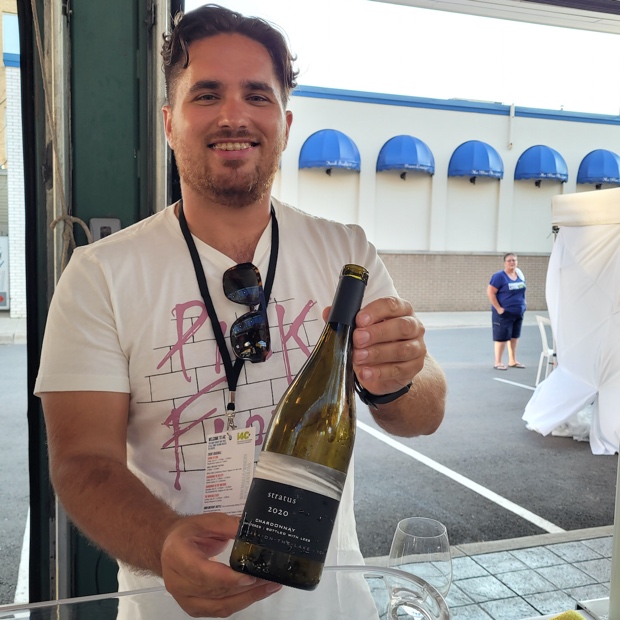
Charlotte Hickey and and Suzanne Janke, Stratus Vineyards

Stratus Blanc De Blancs 2016, VQA Niagara-on the Lake, Ontario

Eight months further on lees, now deeper meaning, more complex behaviour and a compounding of the autolytic meets mature flavours in full concentric abound. Quite savoury now, more herbal than botanical and like a scape pesto with cilantro, best with fish, boiled fingerling potato, or grilled flank steak.  Last tasted at i4C, July 2025

Still noting the grip and aromatic compaction due to high level phenolics, a trenchant autolytic intention and a level of seriousness in the realm of Blanc de Blancs. Hides some aspect of chardonnay fruit and also texture but the elemental quotidian is impressive to say the least. Not an elastic B de B, nor is it a scintillant per se but something other, something mature, developed and of the earth. Singular in that regard.  Tasted November 2024

Some phenolic grip on this blanc de blancs takes chardonnay into a metallic and distillate place. The base wines involved were likely pressed for success and as such have collectively adjudicated, settled and come to this place. If it seems at present to lack some tension there is clearly function and the shrouding of flavours righteously complex. Notably autolytic and may leave some wondering when the energy will revive. Which it will because the stuffing and cunning will most certainly raise the bar and encourage a realizing of potential. Drink 2024-2028.  Tasted blind at NWAC2023, June 2023
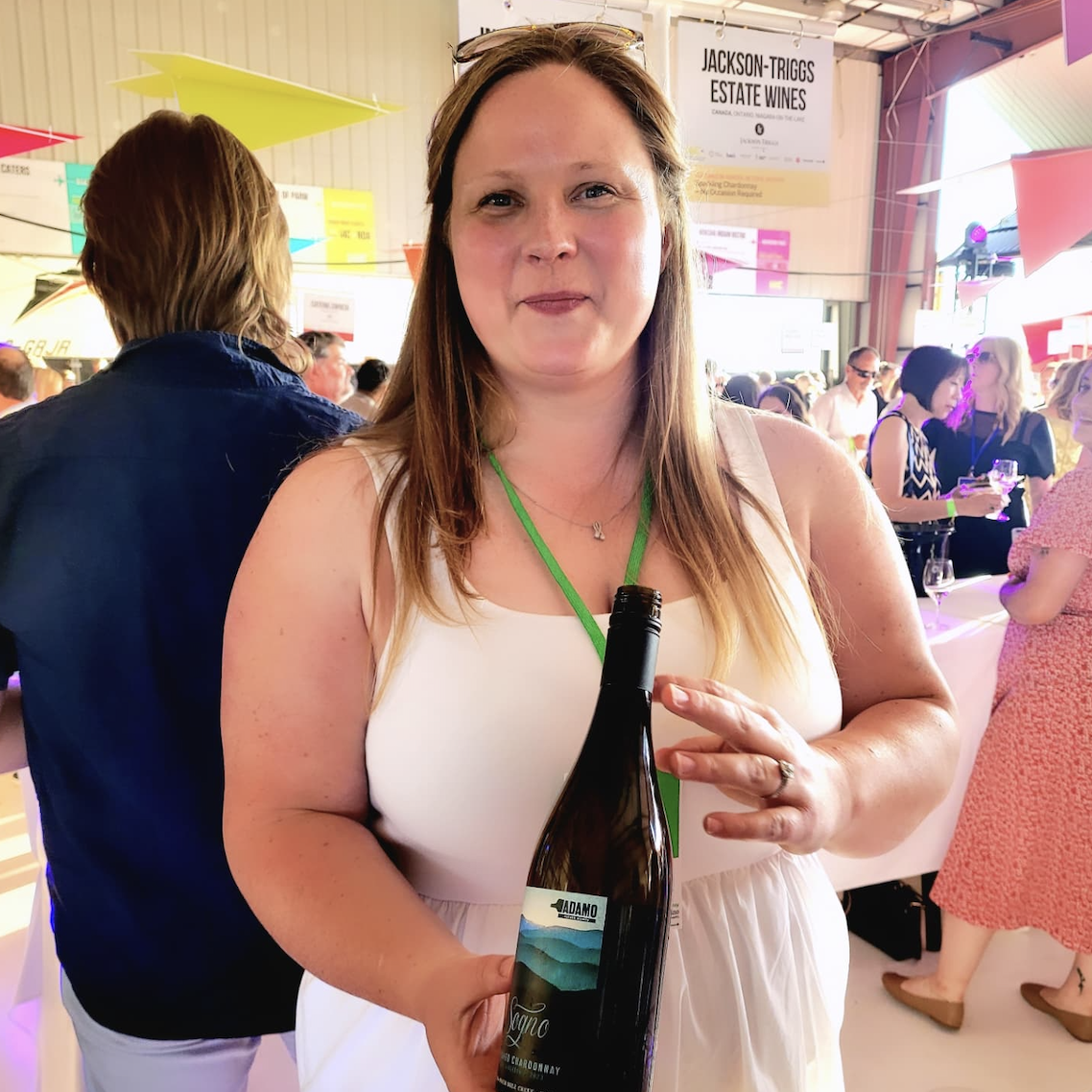
Vanessa McKean, Adamo Estate

Chardonnay

Adamo Sogno Chardonnay Unoaked Lore Vineyard 2023, VQA Four Mile Creek, Ontario

From the 1980s planted Four Mile Creek Lore Vineyard with some chardonnay musqué involved to consistently add a floral muskiness. No wood and now quite the experienced fresh and layered chardonnay in the hands of winemaker Vanessa McKean. A pyramid of activity because of a change by way of employing three ferments and three different yeast strains to see what complex results might result. Lees does the yeoman work without needing to blender pulse the fruit, but just to simply act as catalyst for the transference from vineyard to glass. Drink 2025-2027.  Tasted at 14C, July 2025

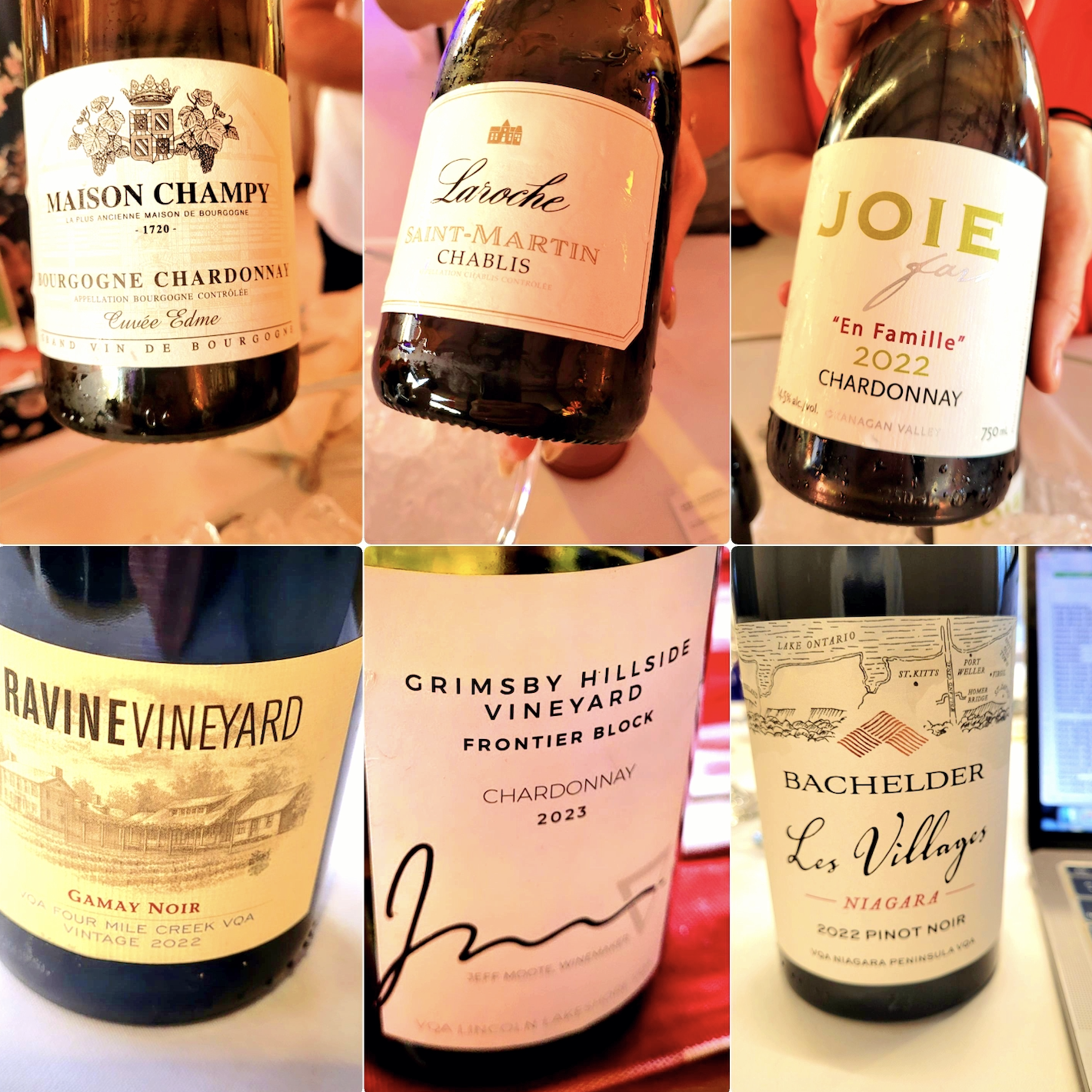
Bachelder Chardonnay Wismer-Foxcroft Parcelle Nord 2022, VQA Twenty Mile Bench, Ontario

Fascinating to get a nose into Wismer-Foxcroft not quite a year but easily eight or nine months later. A Toussaint forward moment for chardonnay still maintaining its touch with the flinty beginnings and the storied act of fleshing out is corroborated today. Late July is a terrific time to re-taste a November Bachelder release of the previous year. This showing drives the point and marks an important moment on the curve.  Last tasted at i4C, July 2025

Does not get more knowable or established for Bench chardonnay than the Foxcroft block in Wismer’s expansive vineyard and who but Thomas Bachelder knows this place as well as anyone. A similar story to Wismer Parke with pinot noir in that this vintage just somehow feels like the culmination of a decade-plus worth of experience. Wismer-Foxcroft 2022 is a truly mature and adult version of its reliable self, seamless, punctual and responsible. Substantial, harmonious and structured. All of the above. Drink 2024-2028.  Tasted November 2024

Beare Green Winery Chardonnay Clonal Blend 2023, Surrey, England

From Wine with Jimmy’s (jimmy Smith) and a project that started in 2022 with a real core aim to make “low intervention English wine.” A wine made beneath a “perennial dark cloud in a marginal maritime climate” tells Jimmy. A chardonnay of a short ripening season, an average of 700mm of rainfall (and 1,700 in 2024) for lean, edgy, on the edge of cool wine production. “I want English wines to have electric acidity,” says Smith. His chardonnay is lean yet charming, more than somehow because the wine is balanced in spite of its searing intensity. The intrigue is palpable and real. This chardonnay may age for a very long time. Drink 2025-2028.  Tasted at i4c, July 2025
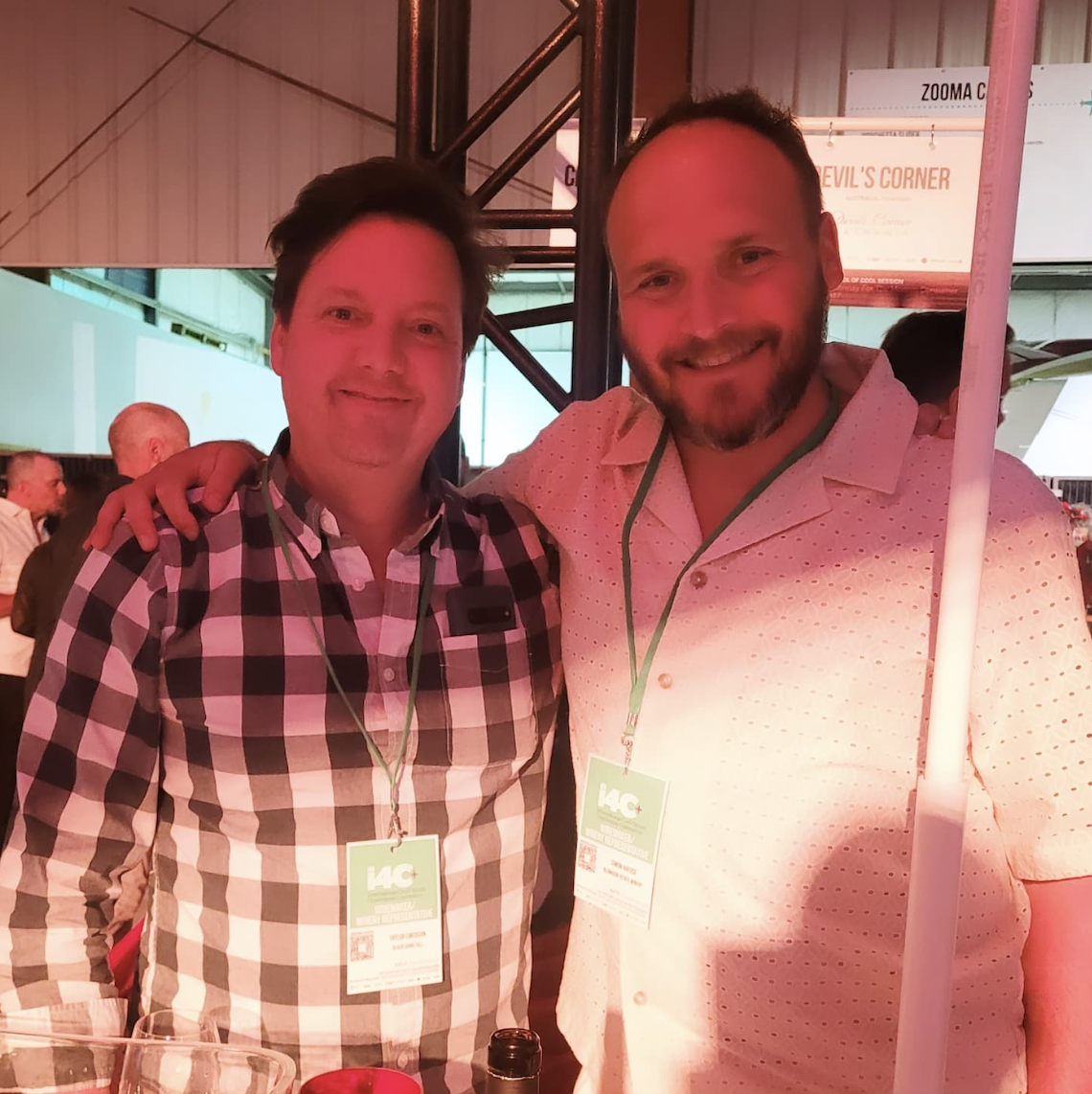
Taylor Emerson, Black Bank Hill and Simon Rafuse, Blomidon Winery

Black Bank Hill Chardonnay Runway 2023, VQA Lincoln Lakeshore, Ontario

A reminder that the name is an homage to service people and the part the property played in the First World War. All the land from here to the lake was an aerodrome and a runway ran right through the field along Sanna Rd. Now showing its lactic-citrus angle without any give or relent to high voltage acid backbone. Come to think of it there is just something Tantalus chardonnay about this ’23 chardonnay in how it rises vertical, controlled within its intensity and built to travel forward. There could very well be four to six years remaining in this singular high wattage way.  Last tasted at i4C, July 2025

Gotta be the first chardonnay out of the gates from the 2023 vintage and if this cracker example is any indication of what’s coming then hold on to your senses. Recently bottled and even with an early (September) pick this saw less than 10 months of aging, but the mix of indelible lees and high voltage (8.5 g/L) total acidity put this in scintillant, dare it be said Blanc de Blancs styled territory. So very different to the Runway White (blend) because of its intensity but also warmth at 13.8 alcohol, not quite torridity, but a white peppery scorch nonetheless. Wild and exciting shift from vintner Taylor Emerson and winemaker Jonathan McLean. Will be hard to wait and anticipate what the next level chardonnay turns out to be. Drink 2024-2026.  Tasted at i4C, July 2024

Black Bank Hill Chardonnay 2022, VQA Lincoln Lakeshore, Ontario

Warm vintage for Lincoln Lakeshore chardonnay fruit, layers more compressed, aromatics to flavours, resulting in a fullness of mouthfeel quite opposite to 2021 and apposite to the situation. Just the right mathematical problem is written should reduction keeps the freshness and vitality in motion. That said there is warmth and some development, already showing maturity yet time will graciously be kind, at least for a spell and behold a top tier pairing wine is born. Foie Gras with Membrillo and Sherry Vinegar anyone? Drink 2025-2029.  Tasted at i4C, July 2025

Black Bank Hill Chardonnay 2021, VQA Lincoln Lakeshore, Ontario

With Twenty Mile Bench fruit in the rear-view mirror Black Bank begins their estate journey with Lincoln Lakeshore fruit accepting and abiding by barrel aging with a precociousness that belies its youthful experience. This from a less than heat unit cumulate vintage and still the body of this 2021 is fleshy and impressive, its elastic length dutiful in helping fruit, acid and texture all come together as one. Should drink beautifully for a few more years. Drink 2025-2030.  Tasted at i4C, July 2025

Classic styling for chardonnay, from a winemaking perspective more so than the viognier and also the reds in the Black Bank portfolio. Neither reductive nor oxidative, reactive nor submissive, obsequious nor domineering. No risks taken, nor aversions neither. Buttery yet with good acids, natural sweetness and also wood spice. Right there in that space between, still a wine for its makers to continue figuring out, in terms of wishes and direction. For now a glass in hand is a good one. Drink 2024-2026.  Tasted May 2024
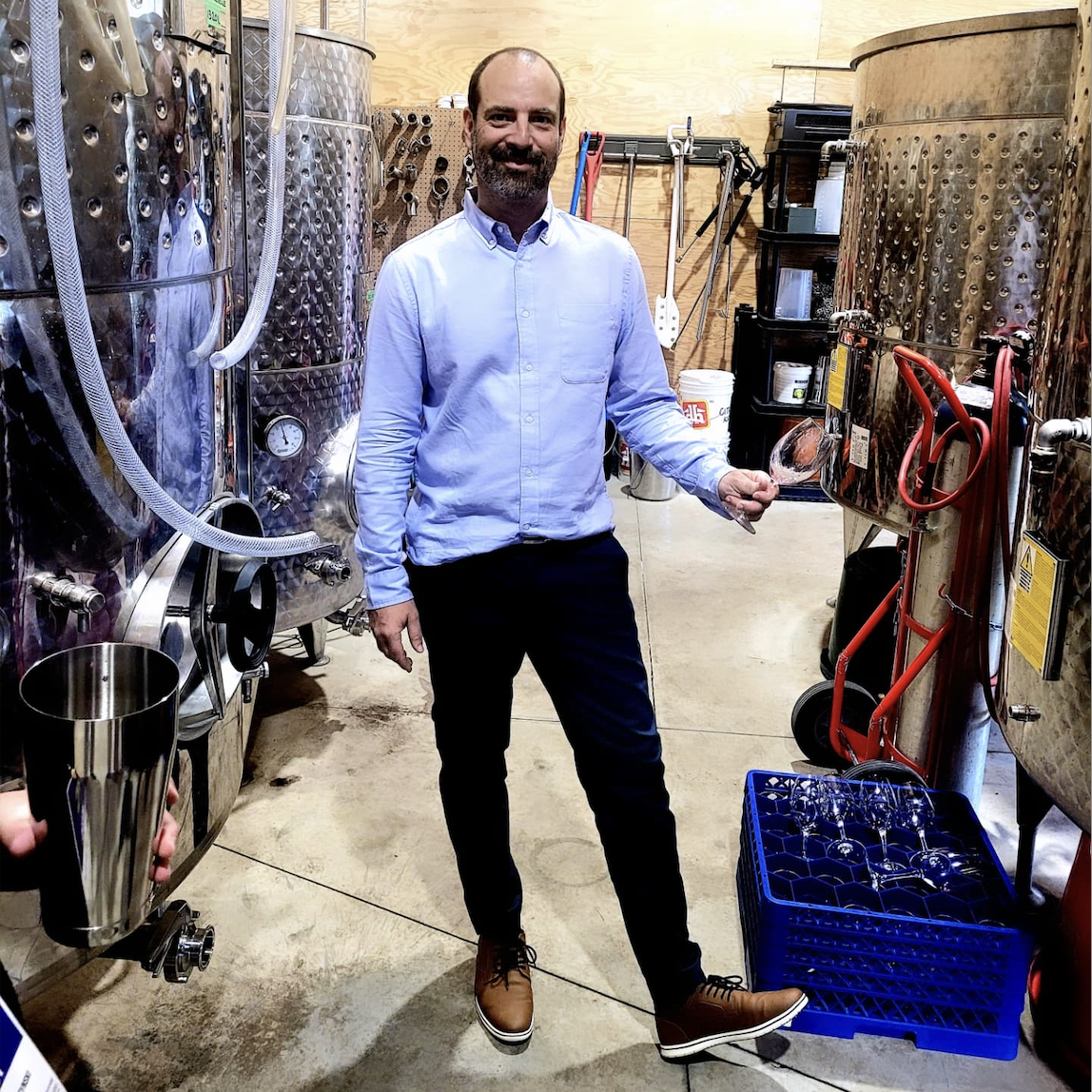
Winemaker Jonathan McLean, Black Bank Hill

Black Bank Hill Chardonnay Wingfield 2020, VQA Twenty Mile Bench, Ontario

Top end chardonnay for Black Bank Hill in the Wingfield section of the Wismer Vineyard, riper and of a concentration that celebrates a vintage, especially now that full integration has come about. The stylized and chic feel is fuller than 2018 and more than a shade less than 2019, with no imminent sign of maturity. But these are oranges as compared to apples even though they come from cousin plots within the larger vineyard. And so Wingfield brings everything to the table; concentration, backbone, linearity, energy and acids wrapping it all up in a fine sharp bow. Top tier chardonnay right here for lovers of the Okanagan, Sonoma, Napa and Ontario, not necessarily in that order. Drink 2025-2028.  Tasted at i4C, July 2025

Black Bank Hill Chardonnay Foxcroft 2019, VQA Twenty Mile Bench, Ontario

The 2019 Foxcroft has matured faster than the 2018 and now shows some caramel with more obvious vanilla by way of its conceptual French wood styling. Has done its time, run amok, gone lactic, now softened and finishing its run. Drink 2025.  Tasted at i4C, July 2025

Black Bank Hill Chardonnay Foxcroft 2018, VQA Twenty Mile Bench, Ontario

Fruit was sourced from Foxcroft within Wismer Vineyard for the first chardonnay made at the time Black Bank Hill was a virtual winery. The wines were made by Adam Lowry at Cloudsley Cellars and knowledge is power in knowing what a seriously good vintage it was for chardonnay. Age able as well with 2018 persistently fresh, piqued, energetic and thriving. Might have been reductive and tight to begin but time has been generous and kind for Foxcroft 2018 to arrive at this ideal moment in time. Drink 2025-2027.  Tasted at i4C, July 2025

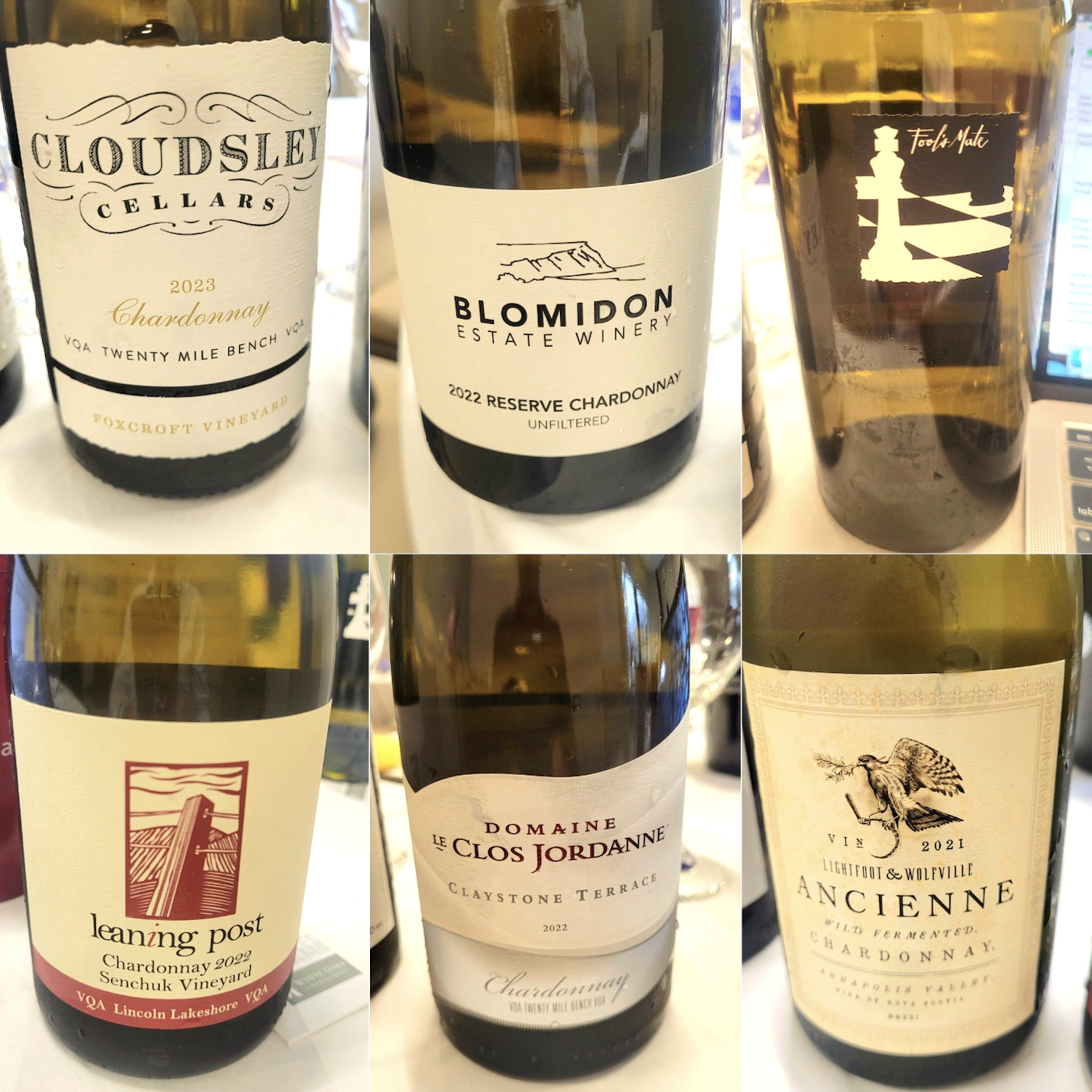
Blomidon Reserve Chardonnay 2022, Nova Scotia

Hard to find more chardonnay substance and texture than in Reserve 2022 from winemaker Simon Rafuse at Blomidon. Spiced piques, crunchy apple bites, barrel blanketing and fruit involved at all points for what define the character of this wine. More about flavour than aroma, not out of character for chardonnay but beyond fruit comes sea air and the crushed shells of fossils. There is a Bourgogne feeling gained but not an old school one. Close your eyes and imagine young, modern and inspired from the Motherland.  Last tasted at i4C, July 2025

A chardonnay that shows how in the context of a flight of eight wines just how different Canadian chardonnay will be from one to the next. Which also means from one province through to another. Juicy, orchard juiced fruity and simple, if a fine coolest climate expression from the grape to gift high energy character, belied by easy and accessible drinking. Drink 2025-2027.  Tasted blind at NWACs, June 2025

Catena Chardonnay High Mountain Vines, Sustainable 2023, Valle De Uco, Mendoza, Argentina

A chardonnay of four sites, Agrelo (950m), Villa Bastías (1,120), Gualtallary (1,450) and El Cepillo (1,090). Classic Catena, of respectfully farmed fruit to optimum ripenesses, phenolics included and ease of barrel blanketing to oxygenate and elevate. Partial (60 percent) malolactic because why compromise acidity when you’re making mountain chardonnay? A higher level of affordable chardonnay prepared and meant for all, of fullness in concentration and experience to get things balanced and just right. Another unmitigated success, delivered without surprise. Drink 2025-2027.  Tasted at i4C, July 2025

Catena Chardonnay 2019, Mendoza, Argentina

Well settled, buttery warmth and a nut butter oiliness having entered the arena of delicious and snackable. Drink up although there are two more years available in this state. Drink 2025-2026.  Tasted at i4C, July 2025

With every passing vintage the solar radiation affecting high altitude vines increases and dramatizes the gainful effect of Argentina’s darling value-priced chardonnay. It has come to this. A wine of great concentration, generous of fruit and equipped with the tightest spiral of complexity and then, unwind. That the winemakers have figured out how to dial in and expound upon an already well figured out scheme is nothing short of outstanding. Do not dismiss this as a regular, easy to knock back $20 white wine. The substance and the fanning out of notes and pleasures is just too much to simplify, no matter the quantity of output. Drink 2021-2025.  Tasted January 2021

Cave Spring Chardonnay Reserve 1995, VQA Niagara Peninsula

Made by Angelo Pavan and we are drinking the last drops of this wine. Picked at 22 Brix in 1995! And yes the wine is showing beautifully. Spiced and piquing with spiciness on the tip of the palate from a chardonnay that was so perfectly oxidative from the beginning with just the right amount of skin contact to see it age remarkably for 30 years. Magic.  Tasted at i4C, July 2025
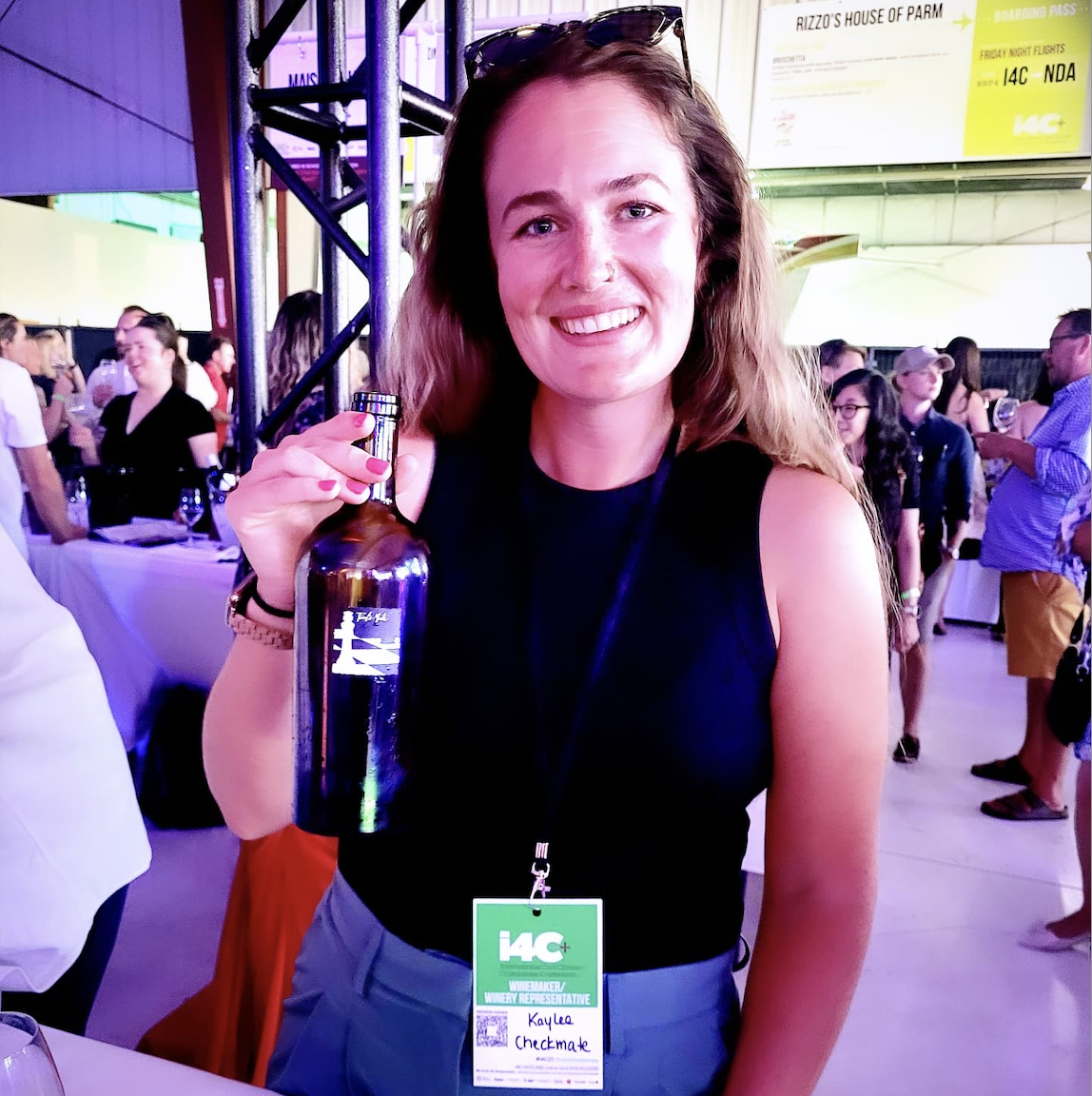
Kaylee Barss, Checkmate Winery

Checkmate Chardonnay Fool’s Mate 2020, VQA Okanagan Valley, British Columbia

Hard to find a fuller, more substantial and all in chardonnay than the Fool’s Mate, but also one with this much finesse, charm and grace. Ridiculously pleasing and dealing in immediate gratification, Checkmate’s 2020 has now settled into its skin to be the kind of wine that literally makes you sigh. So much textural fabric and Okanagan essence from a top-tier focused, sophisticated, considered and flawlessly executed chardonnay. Drink 2025-2029.  Tasted at i4C, July 2025

Cloudsley Cellars Chardonnay Foxcroft Vineyard 2023, Twenty Mile Bench, Niagara Peninsula, Ontario

For 2023 winemaker Matt Smith and proprietor Adam Lowry take their Foxcroft chardonnay to another level. The integration of sharply dressed orchard fruit in barrel clothing is a suave and handsome design, look and feel. This stands upright, expresses varietal linearity and is just about as fit and taut a Foxcroft as there has ever been. Essential Wismer Twenty Mile Bench chardonnay, focused and got so right. Raises the bar and ceiling for estate and vineyard. Drink 2026-2030.  Tasted at i4C, July 2025

Domaine Laroche Chablis Les Vaudevey Premier Cru 2022, AC Bourgogne, France

Terrifically balanced, harmonious and gracious Chablis for 2022 from Les Vaudevey. A Left Bank beauty with joyous acidity that lifts this Premier Cru up to a place where eager palates will find bliss in chardonnay. Truly a factor of kimmeridgian soil and soul, seamlessly integrated, layered and also elastic in mouthfeel. Spot on with persistent aging potential.  Last tasted at i4C, July 2025

The word precise is often used to describe Chablis and many other global chardonnays, sometimes gratuitously but here perfectly applies to the Laroche Vaudeyey. Les VdV ’22 is focused to a virtue with its equality, equanimity and equilibrium from start to finish. A lexical entry to figure out the crux and relationship between cru and village.  Tasted a second time, July 2024

Domaine Queylus Chardonnay Tradition 2023, VQA Lincoln Lakeshore, Ontario

“We’re growing the wine and not really making it in the cellar. It’s really challenging, you have to be proactive and also reactive on a vine by vine basis.” The words of winemaker Kelly Mason. From leaf thinning to green harvest and hopefully at the right time, all within the parameters of vintage variation. “Like being the pit crew and driver at the same time.” From the Lincoln Lakeshore vineyard for a ’23 Tradition leaner than some other years, a linear drive with a platinum gold hue and mineral feel. Less than 20 percent new wood, no stirring, “out to barrel and leave it to sit.” Ever so slightly acetic, well within reason and with a pinch of natural chardonnay sweetness. Drink 2025-2027.  Tasted at i4C, July 2025

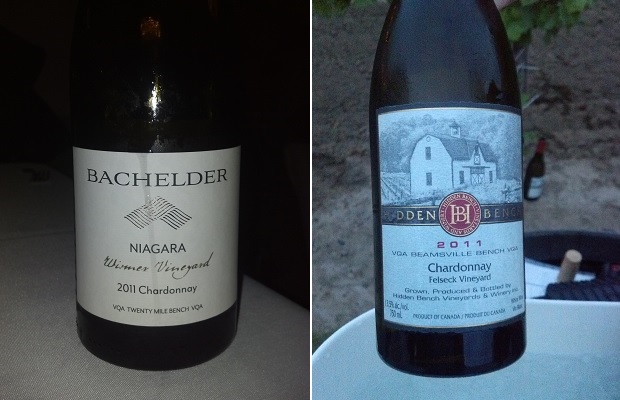
Hidden Bench Chardonnay Béton 2023, VQA Beamsville Bench, Ontario

A unique Bench chardonnay because the fruit has all been taken from the 2009 planting in the Felseck Vineyard. The younger vines are perfectly suited to this Béton’s raising, as in the label’s meaning which is 10 months in concrete for briny and über fresh chardonnay with its own kind of bite. Also tension with no wood to attract attention from the sharp, pointed and direct display of chardonnay. The middle is creamy, that much is true and the juxtaposition makes for an open invitation to imbibe. Drink 2025-2028.  Tasted at i4C, July 2025

Hidden Bench Chardonnay Estate Organic 2023, VQA Beamsville Bench, Ontario

Youngest and freshest of Ontario’s 2023 chardonnay aged and then aged further in bottle for what should be this precise release point. Any earlier and it might have played hard to get, any later and freshness would not be this pitch perfect. Assemble a group of wine lovers without extensive cool climate experience or bring this on the road and serve it to consumers beyond these borders for what will be a cool chardonnay teaching moment at a time in history when these wines can turn even the most ardent disbeliever. Drink 2025-2029.  Tasted at i4C, July 2025

Hidden Bench Estate Chardonnay 2013, VQA Beamsville Bench, Ontario

Seduction from the word go, nose to glass and if surprise well this could be forgiven considering this is an 11-plus year-old chardonnay from the Beamsville Bench. Then again in 2013 winemaker Marlize Beyers, Hidden Bench and many Bench wineries were already keenly aware of how to make high quality and also structured chardonnay. This wine has drifted slowly and comfortably into its ripe maturity at an age with beauty and of respect. Special is the understatement. FYI for corks nerds out there the 2013 was bottled under Diam-10.  Last tasted at i4C, July 2025

A best of both worlds Chardonnay; indicative of the giving vintage (in quality, not quantity, prestige, not prosper) and an Estate, house style with some cosmetics to enhance the consequence. Really typifies and explains what a Marlize Beyers Chardonnay is. Elegant, stylish, with perfect skin, tones, understated beauty and the soft vernacular of few yet precise words. The texture and feel of this Chardonnay is downy, lacey and so very understated. You simply can’t take your eyes off its charms and your palate away from its soft feel. A wine of character and poise. Drink 2015-2020.  Tasted August 2015
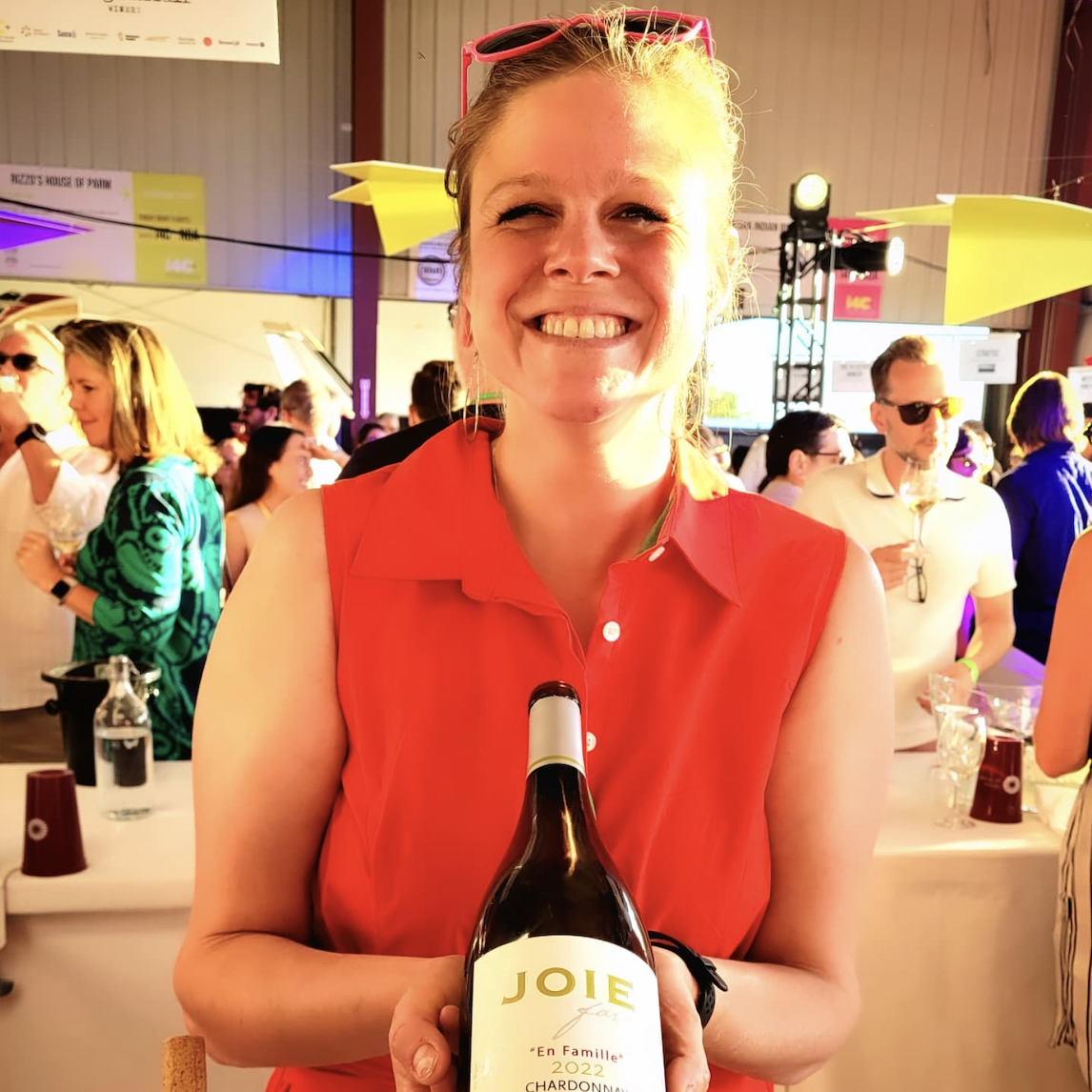
Jennifer Carter, JoieFarm

Joiefarm Chardonnay En Famille Reserve 2022, BC VQA Okanagan Valley, British Columbia

En Famille is the line of signature Joie wines that define, but also distinguish a family’s and team’s fulfillment for everything they’ve accomplished. All in the family celebrates a history and the present, here with chardonnay from a terrific vintage that takes every binate advantage given. Is this not the epitome of a Naramata season, to induce seduction, generosity and philanthropy. Gives and then gives some more, like ripe stone and orchard fruit at peak ripeness, the subtlety of barrel and fineness of acidity. The sweetest kind and thing that could be, natural, at hand to induce consequential pleasure and gratification. Drink 2025-2028.  Tasted at i4C, July 2025

Joiefarm Winery Chardonnay Con Vida Vineyard 2022, BC VQA Okanagan Valley, British Columbia

The pinnacle of En Famille for chardonnay drills deeper into place with Con Vida Vineyard, meaning “alive” or “with life,” a term of endearment to celebrate a piece within the greater good. Winemaker Richard Charnock takes chardonnay to the next level, particularly in amplitude and opulence for the kind of wine no mere mortal could resist, Or deny its succulence and generosity. Thankfully the sweetness and elasticity of acidity extends the character, fortune and play before giving way to warmth, a buttery brioche-ness and fluid forward motion extended well into the lingering minutes of a palate’s perception. Drink 2025-2029.  Tasted at i4C, July 2025

Leaning Post Chardonnay Senchuk Vineyard 2022, VQA Lincoln Lakeshore, Ontario

Sharp and pinpointed without equivocation in home base chardonnay of vines further matured into early adulthood. Now in delivery for fineness and a development into true realism in western Niagara chardonnay. In fact place does not get any more west and so we begin to believe that the west is indeed the best. The concept may express a subjective opinion and also convey a preference for a specific geographic region but who can deny what the Senchuks have accomplished with the clay based block behind the winery. The 2022 is in fact a warm chardonnay from a cool climate that shows just the existential where and when history of a wine like this. With depth of flavour, rise and length. Drink 2025-2032.  Tasted at i4C, July 2025

Le Clos Jordanne Chardonnay Claystone Terrace 2022, VQA Twenty Mile Bench, Ontario

Claystone for 2022 chardonnay notes reductive character in a restrained and fruit encapsulated manner. Separates itself from Jordan Village through more varietal and place specifics with higher aromatic pitch and pinpointed flavours to make you think and feel the sickle curved nook on a plateau aboard the Twenty Mile Bench. Terrace that is, where clay and decomposed stone are the impetus for chardonnay of an identified speciality, coaxed and brought to life by Bachelder and team. Sharp and focused with the earth of a vintage packing its pockets and fleshing out its fruit.  Last tasted at i4C, July 2025

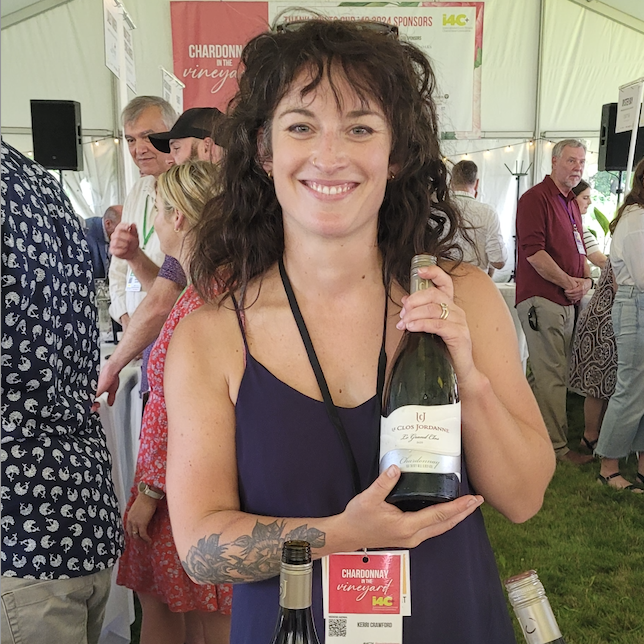
If anyone were to ask, what does a chardonnay from Le Clos Jordanne taste like, the answer would be this. This 2022 Claystone is exactly it, a chardonnay of selection from a specific block, a development of fruit hung to optimize aromas, favours and intangibles, a wealth wrought of barrel choices made to accentuate all the fresh meeting mature nuances of Twenty Mile Bench chardonnay. Top stuff at eye level shelf for this sku in the hands of three skilled wine crafters that make Niagara proud. Phillip Brown, Kerri Crawford and the monk himself, Thomas Bachelder. Drink 2025-2028.  Tasted July 2025

Lightfoot & Wolfville Chardonnay Ancienne Wild Ferment 2021, Annapolis Valley, Nova Scotia

One nose into Ancienne 2021 and you know the change has come. The first epoch of evolution now paves the way for another, the last one having developed and experienced over the past eight years, now come to full fruition. The new and improved Ancienne will one day beget a decades old chardonnay that truly defines its ancient name, looks to its past and reflects on what has been accomplished. As we will do in kind, to have believed everything was possible and was meant to be. This ’21 owes its DNA to place and previous vintages but there is are new parameters of warmth, richness and ripeness, aspects now present in more vintages than not, no matter the climate extremes and obstacles that are want to diminish quantities. My goodness what great chardonnay is being made on such a consistent basis by a winemaker as present and confident as Josh Horton. The underlay of Fundy spray saltiness in the heart of juiced and zested lemon is an irresistible mix for chardonnay. They who take this wine’s subtleties and potential for granted are missing the point. Drink 2025-2029.  Tasted at i4C, July 2025
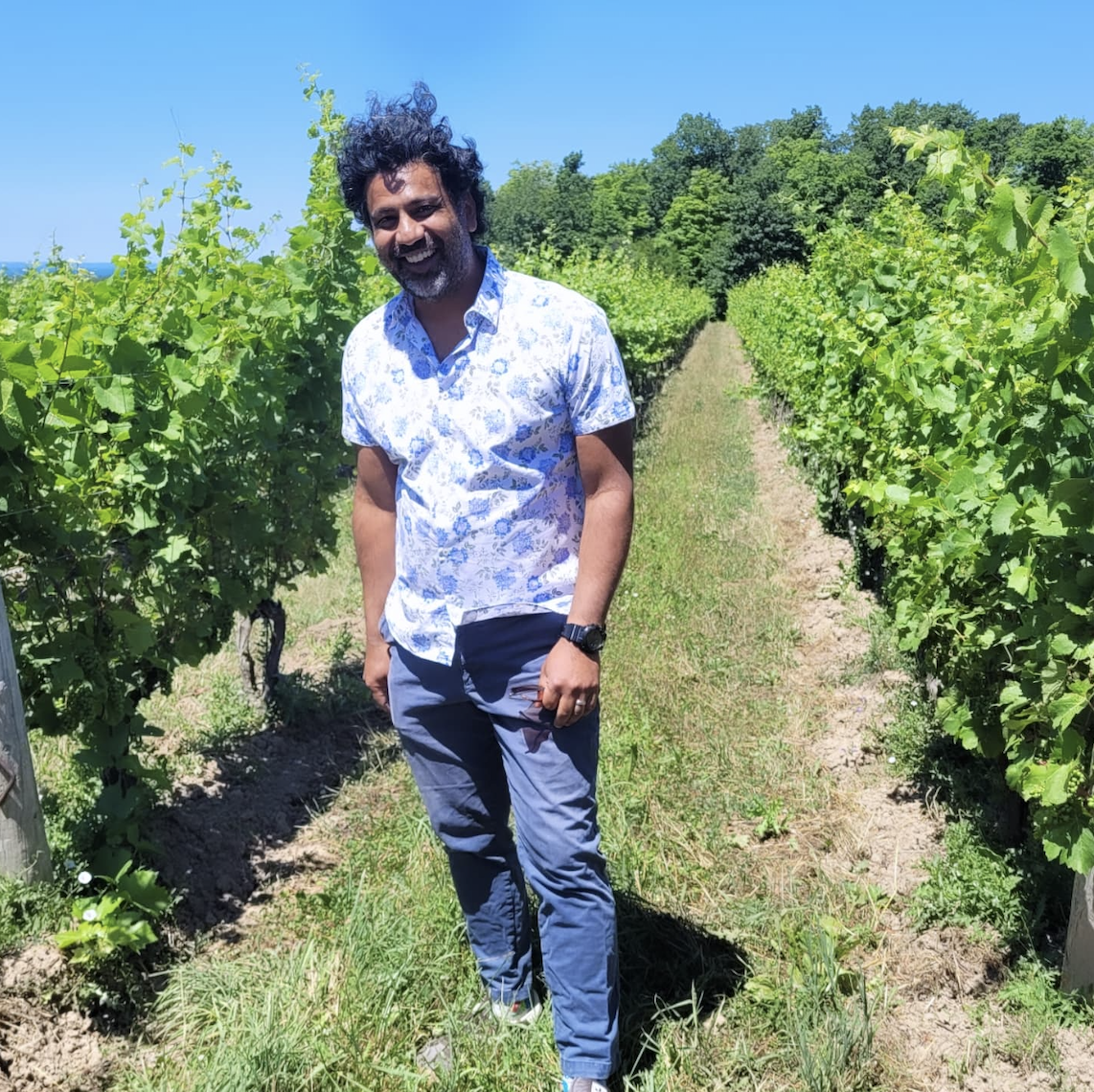
Shiraz Mottiar in his home vineyard

Malivoire Chardonnay Mottiar 2021, VQA Beamsville Bench, Ontario

From Shiraz Mottiar’s home vineyard and the wet vintage, moderately cool and one of those times that fruit dropping and rigorous sorting could and would lead to great chardonnay. That is this, taut and opening slowly, incrementally, in no hurry, nearly yet still not ready to go. Not the open flower yet and will be soon when fleshier times will fill the glass. A newfound yes to 2021.  Last tasted at i4C, July 2025

“A disaster (yet high volume, up 30 percent) vintage but I’m really happy what came from there,” admits winemaker Elisa Mazzi. No matter the rain and fog because there is flesh and substance in the ’21 from Shiraz Mottiar’s vineyard. Not a fully natural fermentation with some yeasts used but also not a full malolactic fermentation. Stopped halfway, winemaking on numbers instead of taste so to speak. Some wet concrete notes, washed hard cheese rind and surely different for a Malivoire chardonnay, leaner and linear but ready as ever to go out and please. Drink 2024-2026.  Tasted March 2024

Malivoire Chardonnay Mottiar 2018, VQA Beamsville Bench, Ontario

Pronounced flintiness from 2018, “it’s just vintage,” says Shiraz Mottiar and it lends a Beamsvile-ness to chardonnay, not unlike 2011 but ’18 was warmer. Translates to an added layer of richness with just the right amount of wood felt at this six-plus year stage.  Last tasted at i4C, July 2025

Intensely youthful chardonnay is a scent to behold, especially from a vineyard block picked on the high-low dichotomy of acid and pH then naturally fermented with bunches intact. I wonder if the barrel time was extended slightly because of the promise of 2018 and that may add to the taut nature of this Mottiar. That said there is no lack of freshness or shortage of cool climate bite. After all, this is chardonnay that speaks the vernacular of stoicism, structure and length. Drink 2022-2027.  Tasted October 2020
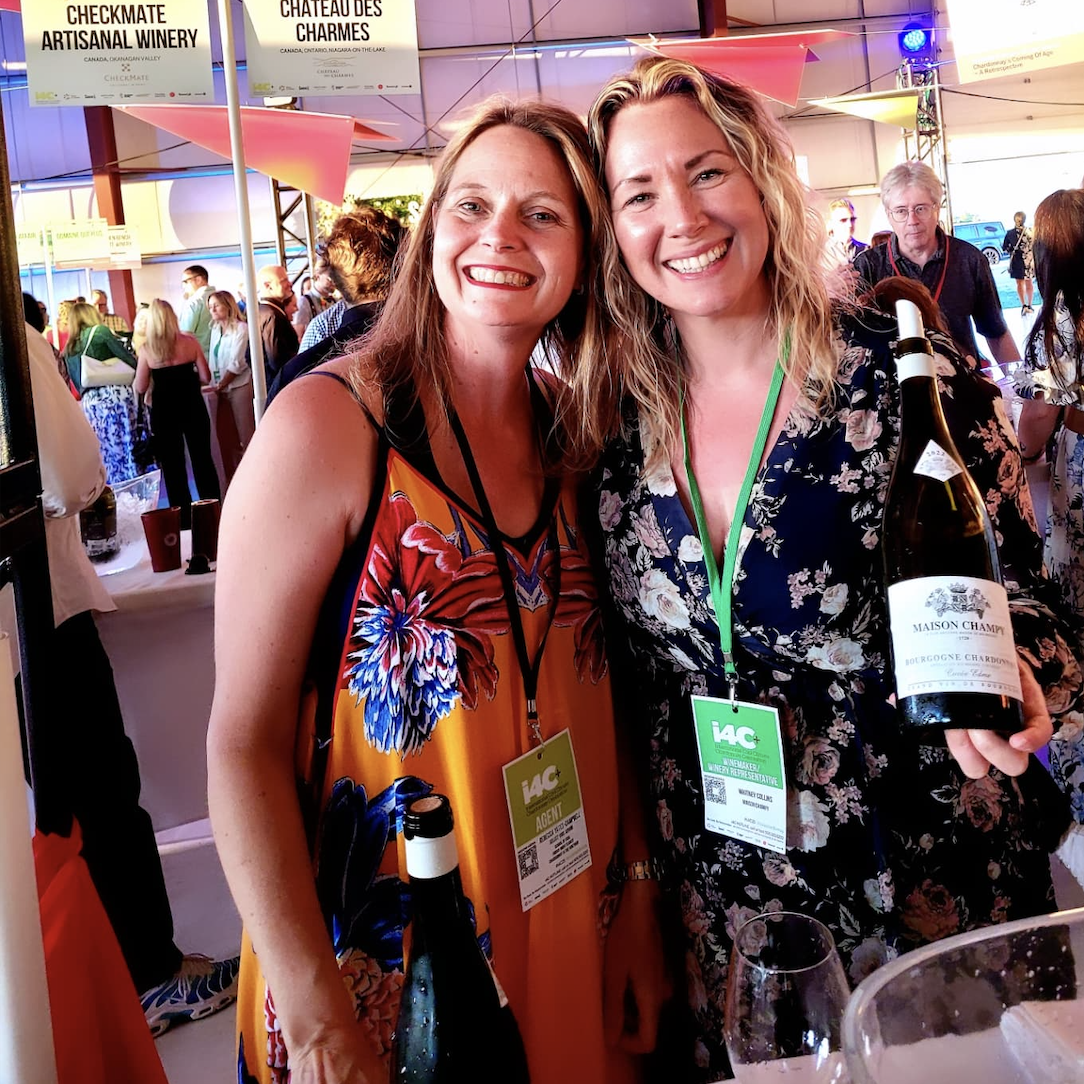
Rebecca Yates-Campbell and Whiney Collins, Advini (Maison Champy and Domaine Laroche)

Maison Champy Pernand Vergelesses Blanc 2023, Bourgogne AOC, France

The appellation and terroir must direct a classic movement in chardonnay and Champy ensures its orchestration finds what we are all looking for. That would be lighter, mineral-acid freshness from a large local landholder with more cards than many to mix, match and most importantly adapt. Organics and the essential ideal of sustainability translate into a chardonnay that is truly technically proficient to the edge of perfection. Translates terroir, talking points and acumen into great chardonnay. One of innovation for timelessness. Drink 2025-2029.  Tasted at i4C, July 2025

Organized Crime Chardonnay Limestone Block 2022, VQA Beamsville Bench, Ontario

Sharp value chardonnay cut from stone and to deliver top quality varietal goods from a fantastic Beamsville Bench terroir. Crisp as it gets for a 2022 Bench chardonnay, sweetly herbal, crispy and taut yet with no shortage of fluidity and flesh. Distinct and still recognizable for grape and place with wood the pique in spice at the tip and also back end of the palate. Acidity fills the voluminous space between. Drink 2025-2028.  Tasted at i4C, July 2025

Organized Crime Chardonnay Sacred Series Cuvée Krystyna 2021, VQA Beamsville Bench, Ontario

Higher end and inviting pinpointed cuvée from the cooler and wetter if humid vintage to determine ultra specific chardonnay. In a way surprisingly soft with a cream-centred mid-palate, pH elevated and acidity mild. The truth is this feels and drinks like a “Reserve” style of Ontario chardonnay with no questioning the quality of fruit ripeness, purity and wood. Comes together nicely and still drinks with purpose, though these immediately arriving years will see a waning of freshness. Drink 2025-2027.  Tasted at i4C, July 2025

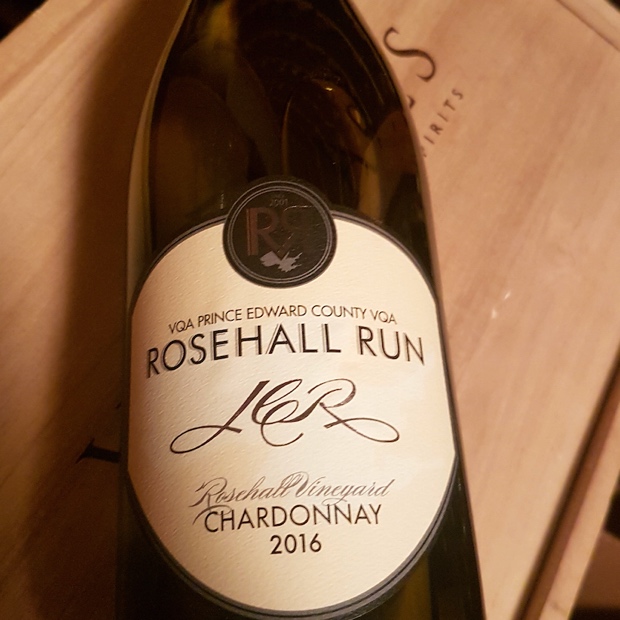
Rosehall Run JCR Chardonnay Rosehall Vineyard 2017, VQA Prince Edward County, Ontario

Were you to say upfront that this was a Prince Edward County chardonnay from 2017 it would not be believed. Still cracker energy and freshness, crispy and crunchy character and blessed County beauty.  Last tasted at i4C, July 2025

As a follow-up to the warmth and phenolic heights of 2016 you’ll have to imagine a meandering through zig-zagging directions for ’17. Despite the ups, downs and ups again this chardonnay has indeed found its way, charming us with insights and how richness ensues. The surety of this fruit and this composure ensures and enriches the great sleeper County chardonnay that continues to explain the concept of cool climate viticulture done right. It’s not really all that reductive but it is protective and crafted with indefatigable structure in surround of high quality ingredients. Another winner from Dan Sullivan. Drink 2019-2023.  Tasted June 2019 and May 2020

Stratus Chardonnay Unfiltered And Bottled With Lees 2023, VQA Niagara-on-the Lake, Ontario

The Stratus chardonnay lees program is simply fascinating. Options, possibilities and abilities learned have developed and been banked for hits that keep on coming, but what is most striking about the 2023 unfiltered is how perfectly clean it is. Like you would never know there were significant lees bottled and so here there feels like a return or in a sense a throwback to chardonnay from say 2012. Of a clarity, purity and acceptance of barrel in proper tones and with effortless ease. The agriculture is everything anyway, so to be sure a chardonnay like this will improve and be sure to bless a consumer with the last vintage produced being the best. Which means 2023. Drink 2025-2029.  Tasted at i4C, July 2025

Tamar Ridge Devil’s Corner Chardonnay Resolution 2022, Tasmania, Australia

Man does this smell like Tasmanian chardonnay, but what does that mean? Cool, for one thing, taut and tart with a Champagne profile minus the bubble. Also a chardonnay provided with a western rain shadow, a moderating body of water and north-facing sun capture for optimum ripening. Much of the fruit comes from the river that makes a moderating temperature effect horseshoed around the vineyard, that and 15 percent from the coastal vineyard. Like a bite into a strong green apple with satisfying juiciness and acidity. Drink 2025-2028.  Tasted at i4C, July 2025

Thirty Bench Chardonnay Small Lot 2021, VQA Beamsville Bench, Ontario

In a ripe and settled place, fruit over acidity and barrel, fresh in its persistence and pulpy by texture. Green apple bite and spice more than many, exaggerated from a cooler vintage for excitability, gastronomy and complexity.  Last tasted at i4C, July 2025

True to Bench chardonnay sprit and energy, standing upright, demanding to be noticed and in turn we are paying notice. A harvest of demand forces the team to focus and pay extra attention, to do everything possible for greater returns. Picking and sorting strategies finds the best available fruit to create something cool, gelid, succulent and shockingly Chablis like. In fact at 12.6 percent (low) alcohol this acts in a stoic and matter of fact way, without airs and confidently what it needs to be. Will not overwhelm any palate, nor will it takes any breath away. That said it should age longer than first anticipated.  Last tasted twice in July 2024, including at at i4C

Small Lot just has to be the owner of the lowest of low alcohol number as it pertains to the Beamsville Bench and at 12.6 percent the conversion rate falls under the categorical auspices of magic. This is not a light chardonnay but it is a lithe, elastic and effusive one. Aromatically demure yet soft and almost caressing, without peppery (and sharp apple) bites or jolting in any way. The palate runs a similar course, gracing with soft and round flavours that are easy and stretched. Lovely and amenable 2021 here from Emma Garner and one to savour slowly, in a calm and tranquil setting. Drink 2023-2025.  Tasted July 2023

Trius Showcase Chardonnay Wild Ferment Watching Tree Vineyard 2022, VQA Lincoln Lakeshore, Ontario

Single vineyard, optimum fruit picked right at peak in a warm vintage and just the wild facts before barrel time rounds out the edges and corners. They still point and stand out with reductive style being the impetus for freshness and how this chardonnay will age, journey and thrive. There is a crunchy green apple quality, a flinty moment our two and fine lees as pure as ever.  Last tasted at i4C, July 2025

Volta Estate Winery Chardonnay Unoaked 2023, VQA Prince Edward County, Ontario

One of three Volta chardonnays, the second being barrel-aged and the third raised in (sandstone) amphora. Fruit comes from Hillier’s Ramirez Family Farm, at one time sourced by Lighthall Vineyards, a fun fact that indirectly forms a connection with new winemaker Chris Thompson who used to work at there. This steely chardonnay is stirred and closely mimics a Chablis perspective, youthful style that is with languid drift, elasticity, freshness and cool finishing spice. Acids are spot on for this ultra correct chardonnay. Drink 2025-2026.  Tasted at i4C, July 2025

Volta Estate Winery Chardonnay Amphora Ramirez Family Vineyard 2023, VQA Prince Edward County, Ontario

As with the first Volta chardonnay the source is Hillier’s Ramirez Farm but here the aging is done in French (sandstone) amphora-style vessels. A freshness does not merely drift but flies out in a way that rarely happens from these pots (when made with concrete or clay) and so the medium surely creates some sort of revolutionary housing. Purity incarnate and no salve drip or texture melted upon the palate makes this so bloody different. Highlights the fruit and not reduction while micro-oxygenation comes into effect in the neatest way. Drink 2025-2027.  Tasted at i4C, July 2025

Wending Home Chardonnay Estate Vineyards 2021, VQA Creek Shores, Ontario

First tasted 13 months ago and no shock to find this chardonnay right in the heart of its open window. The spice is melting and infiltrating every pore of this wine for pervasive seasoning and flavour. Just delicious at this stage.  Last tasted at i4C, July 2025

Bit of a cool banana smoothie here, extracted and sweet though naturally so with that tropical spectrum feel, especially like pineapple. Chewy for chardonnay and the wood is very much there, finishing with a buttery swath pasted across the palate. A bit heavy handed (though not overdone) in terms of bâtonnage to effect honeycomb and creaminess, however those who like the style will do very well with this example. Drink 2024-2026.  Tasted blind at #NWACS24, June 2024
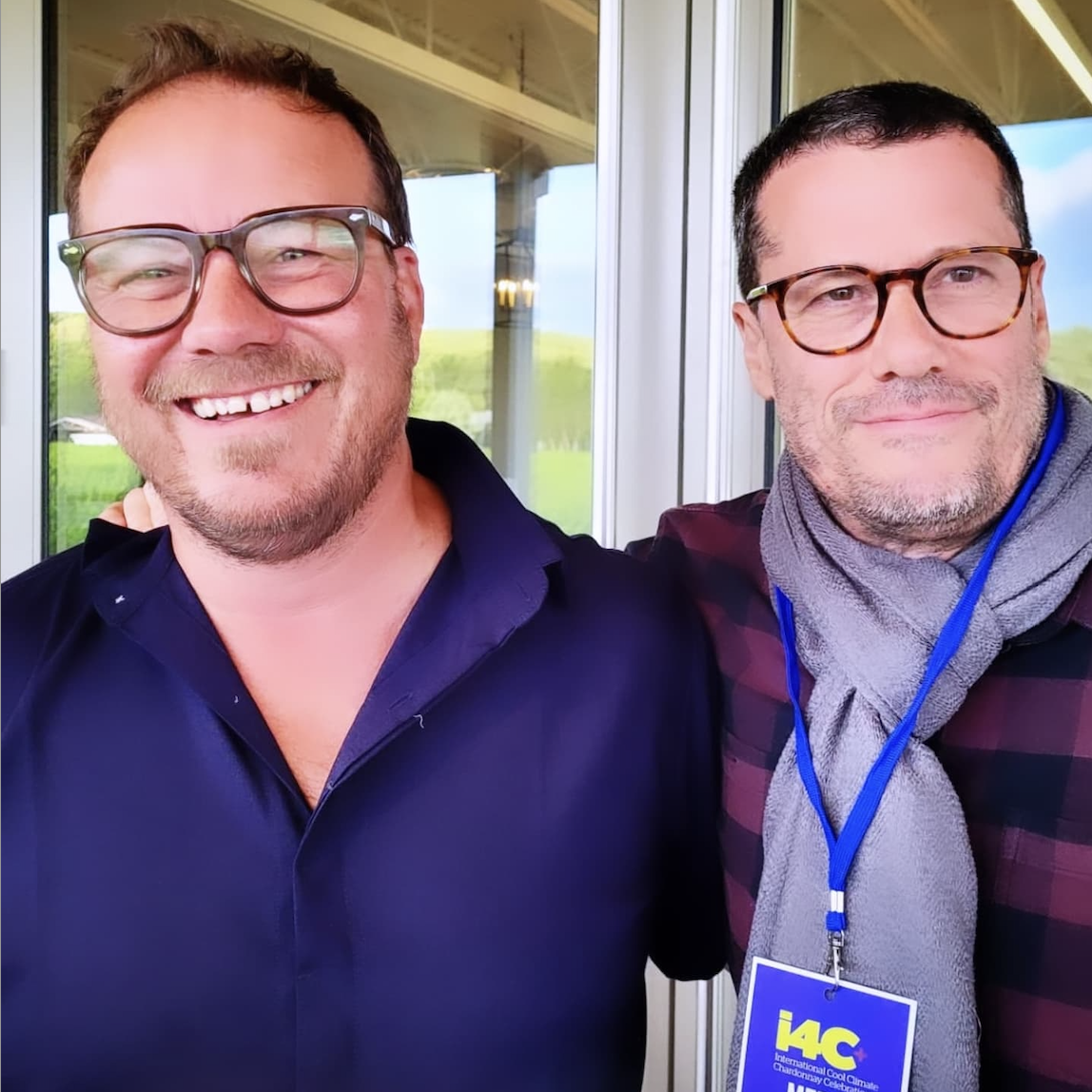
With Jonas Newman, The Grange of Prince Edward

Other Whites

Divergence Wines Sauvignon Blanc Creek Road Vineyard 2023, VQA Four Mile Creek, Ontario

In the past Jeff Moote sourced his sauvignon blanc from Hughes Vineyard in Beamsville and this is the first from Creek Road near Virgil in the Four Mile Creek sub-zone. The vineyard may be most famous for cabernet franc but this white grape cousin makes for a fine, ripe and complex wine. Saw 20 hours of skin contact, enough to effect colour and texture but not enough to adhere in any unwanted way aboard the palate. There are notes of green fig and yellow peach from what is ostensibly tight, vaguely tannic and corporeally solid white wine. Drink 2025-2027.  Tasted at 14C, July 2025

Grange Of Prince Edward Sauvignon Blanc Newfield Block 2024, VQA Prince Edward County, Ontario

From vines planted in 2003 though never really ever made into a dry sauvignon blanc. Now in the hands of winemaker Jonas Newman that changes with a stirred yet no wood version, although Newman feels that could come into play sometime soon. “To make a more complex and sophisticated sauvignon blanc,” but the quality of this feels like there will need to be two. This ’24 is joyous and eye-opening stuff. Drink 2025-2028.  Tasted at i4C, July 2025

Grange Of Prince Edward Pinot Gris Isabella Block + Northfield Block 2024, VQA Prince Edward County, Ontario

Truly ABG, anything but grigio in dry, salty, crisp and enticing pinot gris. Gris for gris’ sake, solid, purposed and drinking effortlessly. Drink 2025-2027.  Tasted at i4C, July 2025

Malivoire Pinot Gris 2024, VQA Beamsville Bench, Ontario

Aromatic for gris with flowers, part fresh and part desiccated. Vaguely turbid with an acetic moment that distract from the purity of intended local pinot gris flavours. A bit troubled by its youthful style and perhaps it will “clean itself” up with a few to more to six months in bottle. Drink 2025-2027.  Tasted at i4C, July 2025

Malivoire Melon 2024, VQA Beamsville Bench, Ontario

Fresh, ultra fruity and light style, decidedly void of long lees aging. Originally conceived and continues to be made for proprietor Martin Malivoire because this melon de bourgogne is exactly what he prefers for oysters. As will you because the 2024 delivers both substance and salinity, key ingredients in the pairing. Drink 2025-2028.  Tasted at i4C, July 2025

Malivoire Melon De Bourgogne Demo Series 2022, VQA Beamsville Bench, Ontario

The ulterior methodology and stylistic for melon de bourgogne, here aged 22 months on the lees. No we have not walked up from the river to Nantes, but there is some fantasy in that regard. Salty and the feeling of wet concrete, so proper for oysters but frankly an exciting melon on its own. Flinty and still youthful. Drink 2025-2029.  Tasted at i4C, July 2025
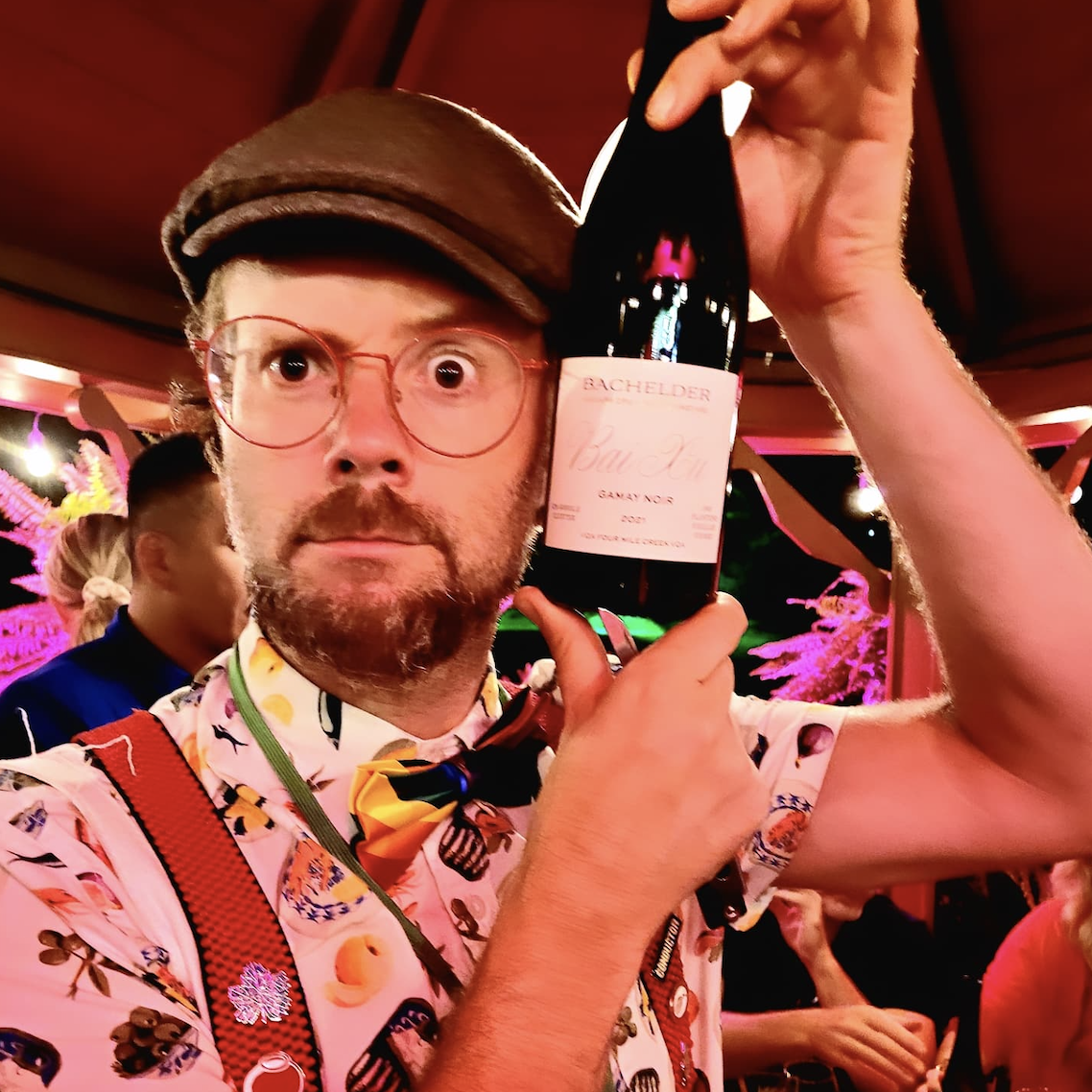
Jimmy Smith, Beare Green Winery and Wine with Jimmy

The Reds

Beare Green Winery Pinot Noir Pulborough Cool Climate Clone 777 2023, Surrey, England

The Surrey project of Wine with Jimmy (Smith) comes from Pulborough, a tiny village where the fringe of cool climate viticulture is practiced and planted to pinot noir clone 777. Beare Green’s is a natural varietal treat with acetic meanderings and like the chardonnay, leanness is belied by its charm. Yes it is in fact acid tart and sax jazzy while also crunchy and intensely cherry sour. A ton of clash but the prospects and possibilities feel like a high ceilinged future awaits. The intrigue is great with much looking forward to watching this passion project grow. London and the world are calling. “J-a-zee zee, J-a-zed zed, J-a-zed zed, Jimmy Jazz.” Satta Massagana Jimmy. Drink 2025-2027.  Tasted at i4C, July 2025
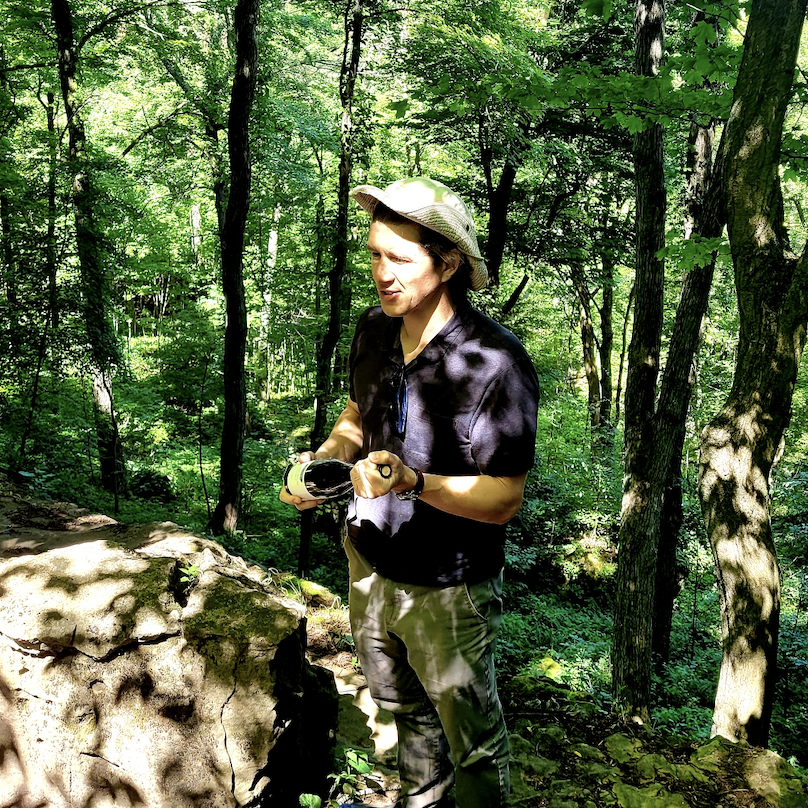
Cave Spring winemaker Gabe Demarco speaking at the Adam Steps

Cave Spring Cabernet Franc CSV Estate Grown 2022, Sustainable, VQA Beamsville Bench, Ontario

Warm vintage, a richness of fruit optimized from highest attention to farming and chosen right there in the field. In June no less because identifying blocks ahead of canopy management is key to drawing up the map for Cave Spring wines. CSV is the varietal meow, also with cabernet franc and while the ’22 carries deeper meaning there is no denying the sheer purity. Wood used generously is the requiem to elevate and extend the grip, spice, texture and potential of this wine.  Last tasted at i4C, July 2025

Juicy, unfettered in terms of exuberance and yet finely restrained as cabernet franc because it pulls no gratuity, nor punches for that matter. Only a kiss of the barrel is felt and the proper herbaceous greens are noted, as they rightly should. Speaks to the Cave Spring Vineyard and the important farming adjustments made over these last few years by Gabe Demarco and team. The fruit is singing because their host vines are well loved. It’s as simple as that. Drink 2024-2027.  Tasted September 2024

Cloudsley Cellars Pinot Noir 2022, VQA Twenty Mile Bench, Ontario

Adam Lowy’s Twenty Mile Bench pinot noir really is the mirror into a vintage with its mix of vineyard fruit, lithe transparency and aromatic spicing of a season. That’s the thing – His pinot noir does not go into bottle without proper, correct and frankly spot on salt & pepper seasoning in order to coax out the truth of fruit. Its decisive resource is concentration and depth without unnecessary over-extraction or heft. Would say to drink this early in its tenure and also pour it to those who question the viability and comparability of Ontario pinot noir. Drink 2025-2028.  Tasted at i4C, July 2025
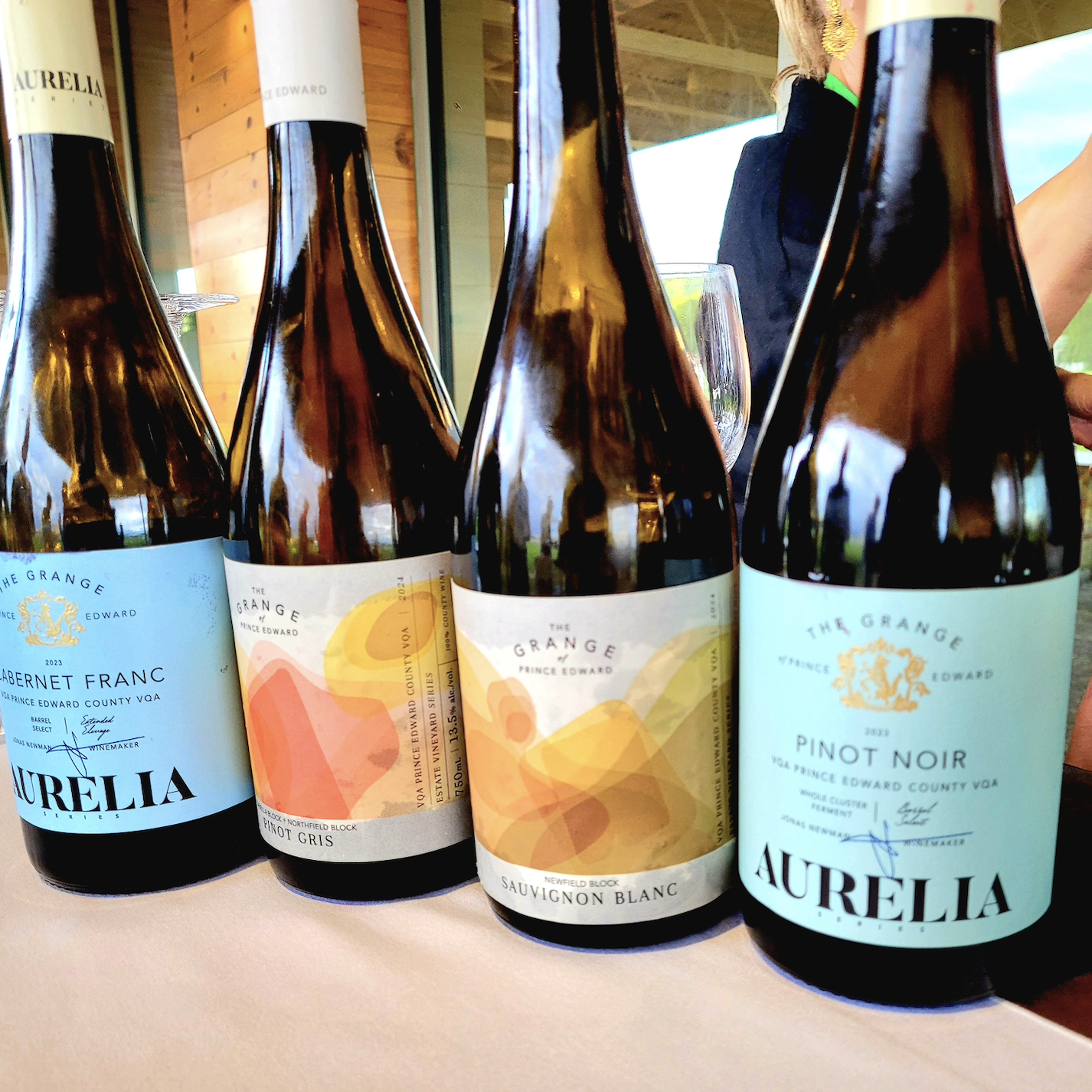
Grange Of Prince Edward Pinot Noir Aurelia 2023, VQA Prince Edward County, Ontario

Tart with an acetic edginess because of its raw energy and DIY ethic. Red fruit intensity, implosive, dangerous, rebellious and still workable. It is County pinot noir, the punk rock of Ontario’s varietal sound, purposefully shock chord driven and fast. Try to keep up.  Last tasted at i4C, July 2025

The golden one, Aurelia, from the Latin Aurelius and if you want to delve deeper, the name for Marcus Aurelius Antoninus, Roman emperor from 161 to 180. Even deeper still the character portrayed by Richard Harris in Gladiator. Also the top of the opus pinot noir at The Grange and what a golden one it surely is. Needs to be because it is bloody expensive but just 98 cases were made of a varietal harbinger that gets the full on spa treatment. Double sorted, first in the vineyard, then at the table. Whole cluster fermented, including carbonic for five days and then foot trodden. Ten days of délestage before being pressed off and blended to finish ferment in tank. Ages in the most expensive wood for 10 months, 33 percent new. Burgundy anyone? Yes this is the idea and the result is a pretty good approximation, all the while tended to by that County high life in acidity with a generous amount of volatile compound effect. Yet the fruit and that acidity are in cahoots, sweet, inviting and enlivening. At nearly $75 there is a whole lot of swagger, ambition and confidence but if money were no object I’d happily drink through a few bottles. Drink 2024-2027.  Tasted December 2024

Grange Of Prince Edward Cabernet Franc Aurelia Series 2023, VQA Prince Edward County, Ontario

What absolutely killer, beautiful and appropriate volatility in the sweetest and most elastic vein. There are Loire and Ontario cabernet franc and then comes along Aurelius at Prince Edward County’s Grange made by Jonas Newman – and the skies re-open. Feels like a cabernet franc epiphany sent after a storm with order restored post chaos and darkness. The wine’s opening salvo is something understood to be professional and artisanal rolling into the proverbial emergence from risk relatable to reward. Brightness and potential ensues. Near, near absolutely brilliant bottle of cabernet franc. The pinnacle is coming soon. Drink 2026-2031.  Tasted at i4C, July 2025

With Jennifer Carter, JoieFarm

Joiefarm Winery Pinot Noir En Famille 2022, BC VQA Okanagan Valley, British Columbia

A treat to taste a signature JoieFarm pinot noir from a most rewarding Okanagan Valley – Naramata Bench vintage, especially under the auspices of the En Famille autograph. A true “farm” wine, emphasizing a connection between Naramata and these varietal wines. The ’22 brings fullness and generosity in a most familial and joyous way. Ripeness is just right there and softness ensues to ensure the highest level of drinkability for always and whenever. Drink 2025-2028.  Tasted at i4C, July 2025

Leaning Post Pinot Noir 2023, VQA Niagara Peninsula, Ontario

The NP pinot noir falls into the Leaning Post line wedged somewhere on the line between The Fifty and the single vineyard labels of Senchuk, Hemeris, Lowery and Grimsby Hillside Vineyard. What’s right and charming about 2023 is how it settles into our varietal psyche for a vintage neither as warm or concentred, while returning to varietal basics. This feels like 2009 or 2009, wines ripe and structured enough that in Ilya Senchuk’s hands that are able to please early yet surely age gracefully forward several years. There is purity and potential magic from vintages like this with no exception for one labeled as an LP pinot noir. Less than epic, but they can’t all be and my how good ’23 will be for years to come. Drink 2025-2031.  Tasted at i4C, July 2025

Lightfoot & Wolfville Pinot Noir Ancienne Wild Ferment 2021, Annapolis Valley, Nova Scotia

Feels like only yesterday when pinot noir planted, nurtured and made into wine at Lightfoot & Wolfville was born, but here we find this special Annapolis Valley example come upon a decade into its tenure. Things have changed in terms of ripeness, knowledge and experience, but still this is Nova Scotia wine. Unequivocally and beautifully, with tension and this rise of high tonality up high into a Fundy-Minas Basin air. The 2021 still rises but also settles in term of its tannin structure. This says drink away and be keenly aware of how time will dramatically change this pinot noir across all of its character; volatility, emotional well-being and spirit. Drink 2025-2028.  Tasted at i4C, July 2025
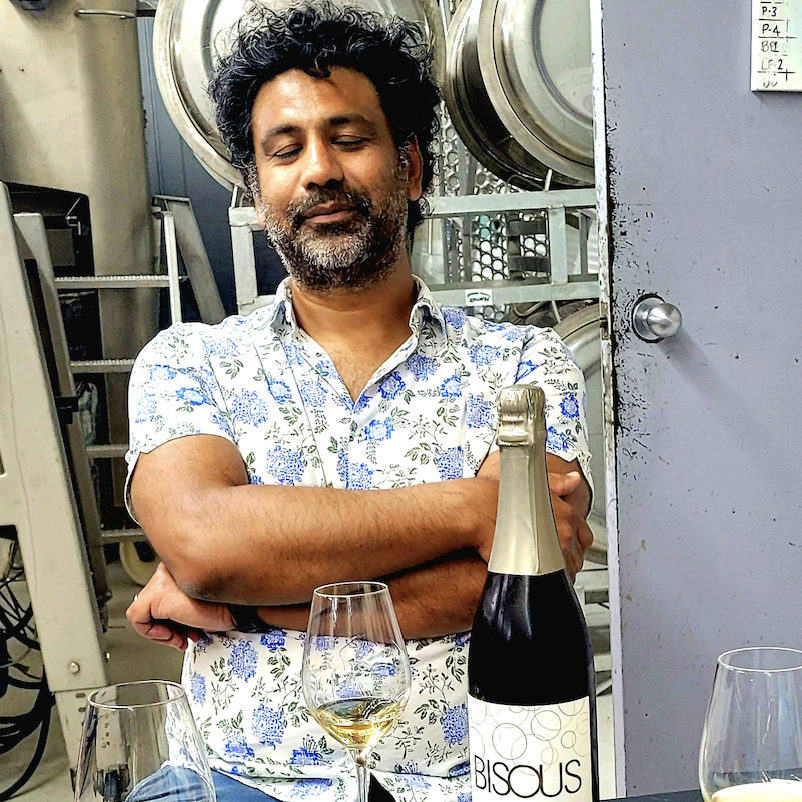
Shiraz Mottiar, Malivoire

Malivoire Gamay Small Lot 2023, VQA Niagara Escarpment, Ontario

Some carbonic from 30 percent whole cluster gamay. Pretty tight, spot on, clean and correct gamay with ample concentration stopped short of density and so no noted chalkiness. Aromatic spice and Villages stylistic captured to represent keen varietal aspiration bred from rooted Escarpment function. Drink 2025-2028.  Tasted at i4C, July 2025

Malivoire Gamay Le Coeur 2023, VQA Niagara Escarpment, Ontario

A hundred percent carbonic from same number whole cluster gamay and if there once was risk involved that anxiety is long gone. The all in number has been a factor since 2017 and one time trepidation is now a gamay that knows exactly what it is from makers who know exactly what they’ve got. Firm and with elastic tension for gamay that reaches out, snaps back and does it again. Repeats its processes on the palate with pulse and meter. Amazing.  Last tasted at i4c, July 2025

Punchy for gamay, so very Niagara style, likely Lincoln Lakeshore or the steppes of the Beamsville Bench. Fruit, leafiness and a mild earthiness (as in reduction) together with top level perfume of spring flowers (hibiscus), fresh dill and that induction of reductive aromas. and a Villages emotion that speaks volumes about a general sense of place. Less demanding in terms of tannin and a declension of flavours while not quite as fleshy or full as expected to follow what came at the first. Will this flesh out? Quite likely because it grows and grows on you. Tremendously solid varietal wine – if not so adept at aging. Drink 2024-2026.  Tasted blind at #NWACS24, June 2024

Malivoire Gamay Courtney 2022, VQA Beamsville Bench, Ontario

Courtney releases a year later than Small Lot and Le Coeur because it’s more traditional without any carbonic maceration. Warmer vintage, more depth and peppery quality in a pinot meets syrah sort of way. A unique and mature vineyard brings warmth and depth, the treatment in the cellar meant to add breadth and lengthen what is possible. That it does.  Last tasted at i4C, July 2025

Juicy and effusive gamay, such sweet perfume and candied goodness in that aromatic regard. Leafy and savoury infiltrates within and then a repeat on the palate that speaks to harmony within and also without. Maybe some RS sweetness but it is forgiven because all parts work well and together, Acidity over tannin and that’s perfectly fine. Just a bit sour at the finish. Drink 2024-2026.  Tasted blind at #NWACS24, June 2024
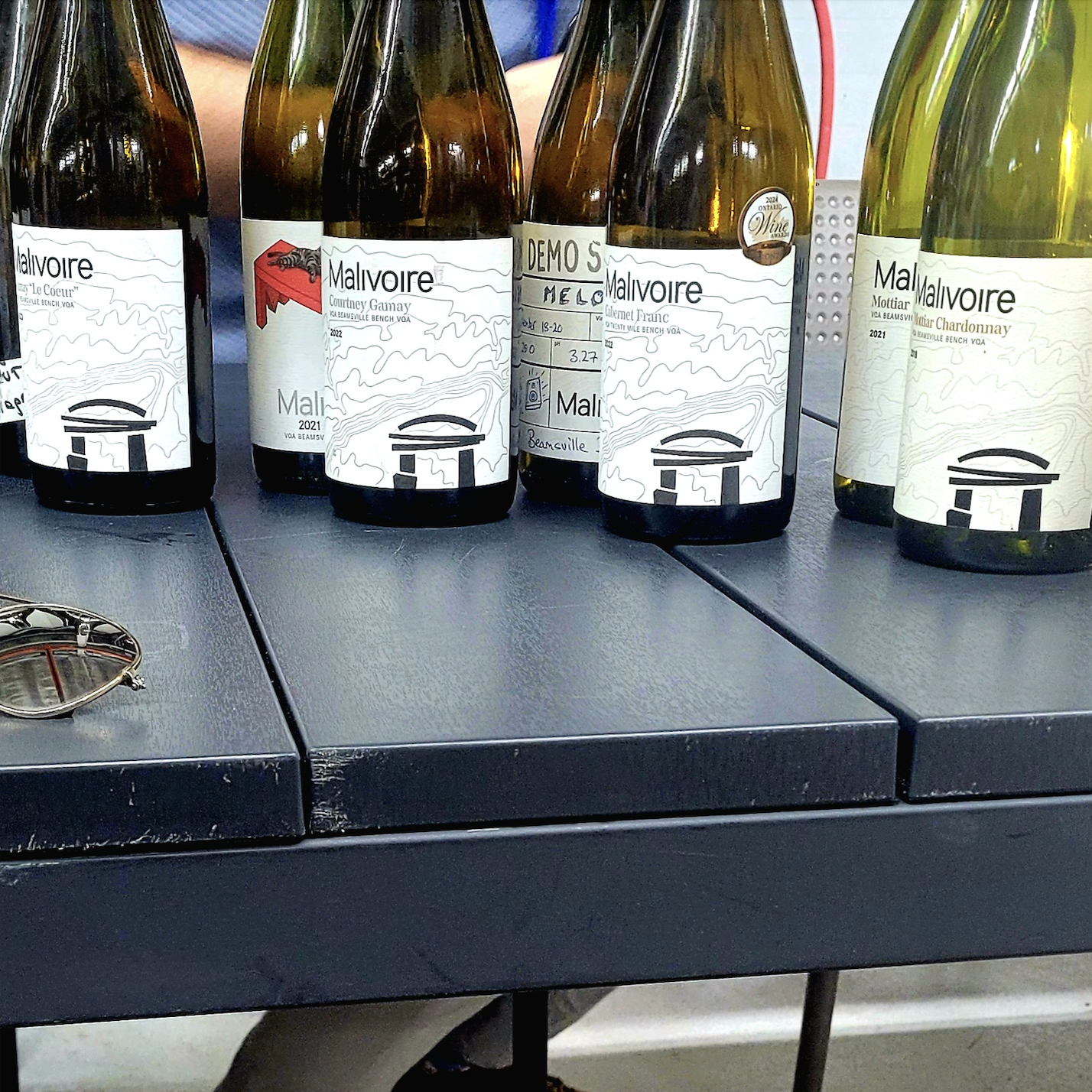
Malivoire Cat On The Bench Gamay 2021, VQA Beamsville Bench

Hard not to think comparatively but the musky funk of Cat on a Bench really does imagine Cru Beaujolais, specifically Morgan from a famous producer or two. “We got the funk, we got the funk!” Just one barrel makes 30 cases, first vintage was 2007 and who is the cat? Is it one of three or is it Martin? And which bench, the one next to the barn or The Bench? All adds up to fantasy, to Beaujolais and benches, to the impossibility of herding cats and the uniqueness of gamay from Moira vineyard. In any case this hits the proverbial off the beaten path spot.  Last tasted at i4C, July 2025

New gamay sku here for Malivoire, one of if not Niagara’s (and Canada’s for that matter) benchmark gamay houses. Martin Malivoire planted vines more than 25 years ago and at the time of bottling it was winemaker (now head of all things Malivoire) Shiraz Mottiar who had been running hither and thither with the varietal program. The iterations included Small Lot, Farmstead, Courtney, Le Coeur, Wismer-Foxcroft, Concrete and Genova. Mottiar has been playing with whole bunches, carbonic maceration, wood, concrete and things we may not fully be privy too. The Cat series includes three $50 chardonnays called Steel, Stave and Skin, while this looks to a new pinnacle for what the team surely saw as the finest estate fruit to date. “Cat on a Bench” may just be the mendicant four-legged feline on a hot tin roof because it’s survival depends on instinct and cunning, its energy nervous, hot, desirous and bothered. In a good way. Yes this is structured gamay, notably firm, sour, crunchy and somehow finds a way to reflect the realities of normal gamay life. And it is $60, surely unprecedented for Canadian gamay. Cru Beaujolais as well. A one off? We shall see. Drink 2024-2027 . Tasted August 2023

Malivoire Pinot Noir Small Lot 2023, VQA Beamsville Bench, Niagara Escarpment, Ontario

Brightest of the Malivoire pinot noir and a high acid, toned and intensity example with less concentration than the previous 2022. Classic cool climate correctness and standard bearer. Takes what it’s given and stays the varietal to place course. Drink 2025-2028.  Tasted at i4C, July 2025

Malivoire Pinot Noir Mottiar 2023, VQA Beamsville Bench, Ontario

Just a small amount of whole cluster, maybe 10 percent because of the variety’s penchant to elevate in volatile acidity. Still a little bit goes a long way and the wine just pops here from 2023. First there were the fiddlings of Shiraz Mottiar and now Elisa Mazzi, two winemakers who have confidently figured out how to master pinot noir from the small Mottiar vineyard. Do not fear “if you”can’t find the conductor who created the whole cluster” in this wine, but trust that their signature is there. As is the fruit and how it expresses this peekaboo of a block on the Beamsville Bench. If Val were pinot noir this would be her song and she would find her way off the train. It’s the theme of humankind and making pinot on the Bench. Drink 2026-2029.  Tasted at i4C, July 2025

Malivoire Pinot Noir Cat On The Bench 2022, VQA Beamsville Bench, Ontario

Malivoire’s Cat on the Bench in pinot noir is expressive of a similar whole cluster funk as noted with the Cat on the Bench gamay. Here however it combines with and is elevated in spice, but also increased depth and it all formulates as a serious pinot noir with a wildly invigorating result. COTB is a layered varietal wine that will take years to peel away and figure out what full possibilities await. The vintage is key to constructing and ultimately resolving the pressing and evolving questions. Hard to make a final decision on just how important the 2022 really is because tasting bottles along the way will surely re-write the script. Drink 2027-2031.  Tasted at i4C, July 2025

Malivoire Cabernet Franc 2022, VQA Twenty Mile Bench, Ontario

Crispy, crunchy and chalky cabernet franc, deep and sonorous, herbal with herbaceous piques, edgy and structured. Will still take a few years to figure itself out, push the fruit to the fore and find its core of balance.  Last tasted at i4C, July 2025

Very different vintage to the light and stretched ’21, now fleshier and fulsome, 18 months total wood time, the last eight of which were in older barrel. From a vineyard in the valley below Ball’s Falls, this being Cascade adjacent to the Wismer cabernet franc block. Classic varietal expression, truly classic, tasting like and from limestone, impressively forward enough considering it was bottled just two weeks ago. Crunchy currants and red pepper, tart and tannins still a bit austere. Drink 2025-2028.  Tasted March 2024

Rosehall Run Pinot Noir JCR Rosehall Vineyard 2022, VQA Prince Edward County, Ontario

Sweet floral aromatics for Rosehall’s JCR 2022, a pinot noir that scents like an open book after a warm season. The dictionary entry for effusive, a Prince Edward County welcome, of “approval in an unrestrained or heartfelt manner.” A far as pinot noir in JCR steading goes there is a drinkability factor quickly underscored and yet a few more sips come to regard a stealth and sneaky structure under the underscore. This is the way of a Rosehall Run drug, especially in pinot noir, waging war within itself and at times struggling to make itself understood. Like an ocean of pinot personality beneath the waves and remember, “it always gets so hard to see, right before the moon.” Drink 2026-2031.  Tasted at i4C, July 2025

Tamar Ridge Devil’s Corner Estate Pinot Noir 2023, Tasmania, Australia

Tamar Ridge’s Devil’s Corner is Tasmanian branding for four equal parts salty, sapid, sweet and sour pinot noir. In other words a four-poster balanced cuvée of vineyards’ fruit that draws lines to four corners within an a varietal enclosure and repeats the process ad infinitum. Stage presence and a profound personality stood up to be recognized, investigated and counted. Firm, grippy and impressive. Drink 2026-2030.  Tasted at i4C, July 2025
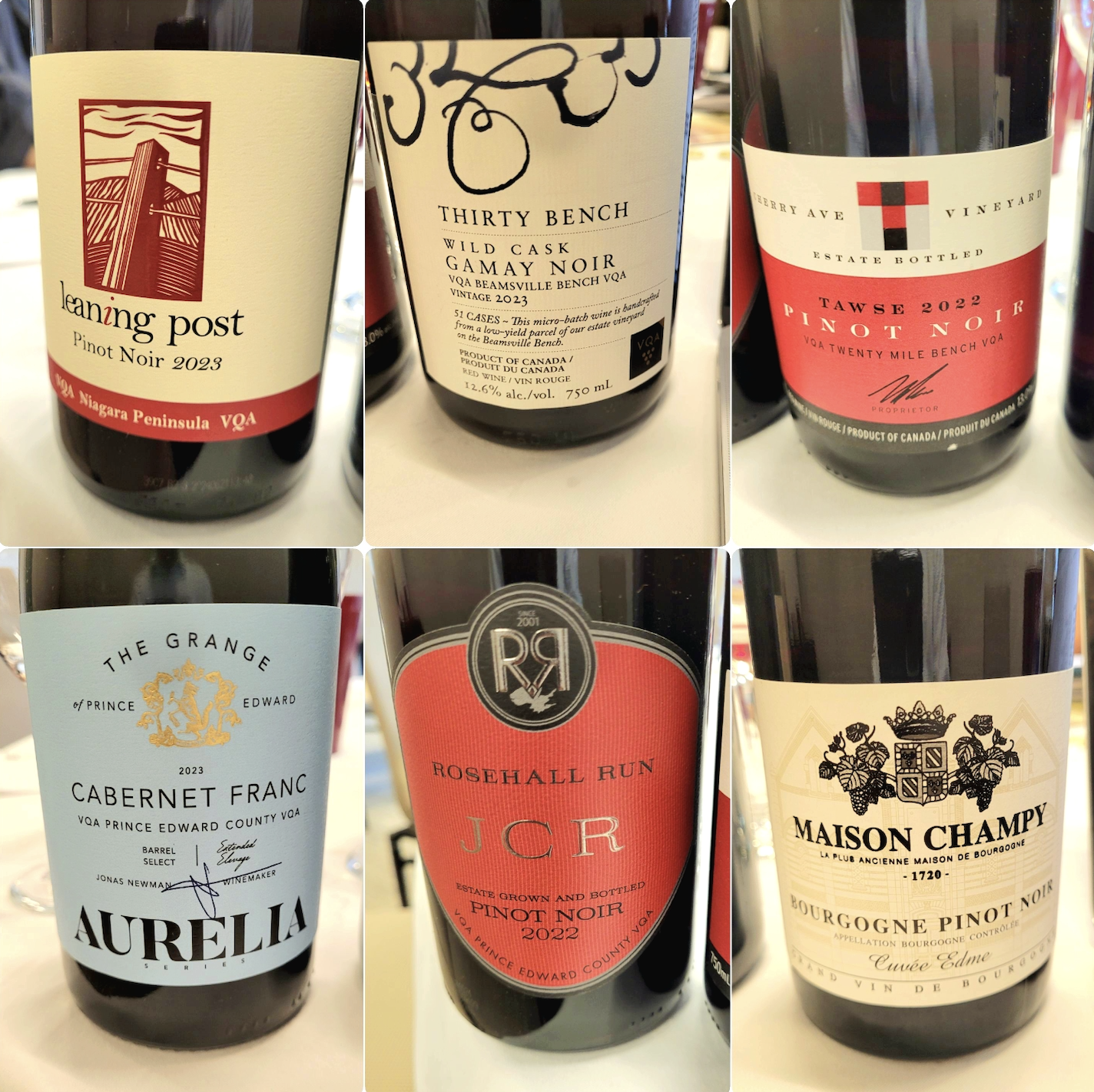
Tawse Pinot Noir Cherry Avenue 2021, VQA Twenty Mile Bench, Ontario

No shock to experience a young Cherry Ave pinot noir in a state of rigid and closed control because it defines restraint for the Twenty Mile Bench. Quiet and diffident though we do detect a half wink and wry smile as it teases aromatics if obtusely giving little of its charm away. Noting the classic red crayon and concrete stiffness, breathing diaphragmatically, fuller and longer of inhalation and exhalation, costal speaking. This means low and slow evolution, a few years yet before things begin to open up and a long life ahead. The child of a wet and often cool vintage, showing as it should, made in a style that expresses vintage and place with distinction. Even if these things are not yet known. Drink 2026-2030.  Tasted at i4C, July 2025

Thirty Bench Gamay Noir Wild Cask 2023, VQA Beamsville Bench, Ontario

Only 51 cases were made of this ultra unique Bench gamay noir which will appear as the lightest and leanest of them all. Do not be fooled by colour because there is varietal concentration, intensity, structural integrity and pent up power in Emma Garner’s wine. Not exactly puff up the chest and egocentric, but rather capability, probability, possibility and promise. Balanced, sweetly volatile and singular with wood spice and a white pepperiness that is unlike the rest. Should hazard a guess the kids will love this and in these times can afford it too. Drink 2025-2029.  Tasted at i4C, July 2025
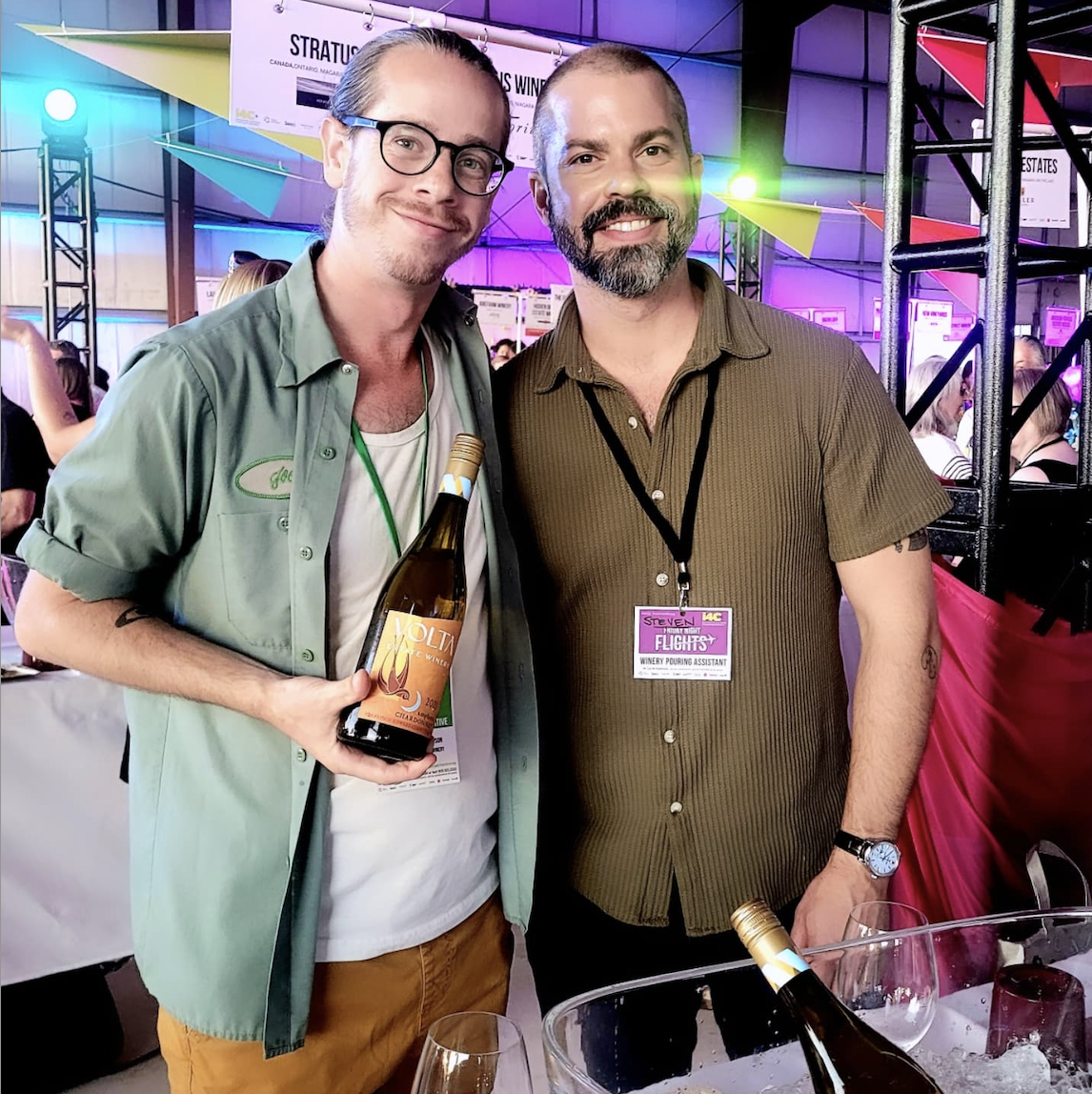
Chris Thompson and Stephen del Degan, Volta Estate

Volta Estate Winery Pinot Noir Knotty Vines Vineyard 2023, VQA Prince Edward County, Ontario

Welcome to the future. The Del Degan family are a new County player standing up to immediately be noticed and reckoned with. Just a short time ahead will be filled with elevated Prince Edward County importance to include Rosehall’s Volta Estate Wines under the guidance of winemaker Chris Thompson. Hard to fathom how quickly a wine like this 2023 rises to prominence for the region but here it is in all its ripeness and crucial balanced glory. A more precocious and richer start from the corner of Greer and 33 where 18-24 inches of topsoil separate 12 year-old plantings from solid limestone bedrock. This is simply a remarkable, yet surely well-reasoned and calculated beginning. Drink 2025-2027.  Tasted at i4C, July 2025

Good to go!

godello

Cool Chardonnay on ice

Instagram

Facebook

Chardonnay is never too cool for school

Flight #1 at the 2024 School of Cool
(c) i4C

Will fully admit to having seriously considered not using the word “cool” in the title for this latest exposé on i4C, Niagara’s annual International Cool Climate Chardonnay Conference. Then good conscience and reality set in because the original dub for Canada’s most important and successful wine congress will always be too good to dismiss. They coined it, built it and people have most certainly come. To foresee and then to consummate this collective pursuit of excellence inscribes Cool Chardonnay into the lexicon of wine forever. Hard to predict just how many more of these joyous to potentially annual profound (four-day) weekends there will be, but were this the last then hundreds upon hundreds of producers, winemakers, media, influencers and consumers over the years will have walked away happy, better for it and with memories to last a lifetime. The extraordinary 2024 edition of i4C went deeper still, to deliver the coolest quality and finest balance between information, socialization, revelry, society and of course, chardonnay. Cool as ever, gotta be cool, relax and never too cool for school.

Three panels of i4C School of Cool 2024

The School of Cool gets into sessions with wise and wily words from Past Chair Suzanne Janke, a lifer for the cool climate cause, public face of Stratus Vineyards and light of the room. Janke’s input, along with the i4C Board, Concierge Kim Auty and Event Director Trisha Molokach shows a highest level of intuition for what can only be judged as a cracker choice for keynote speaker at the 2024 School of Cool. That would be the affable character, next level intelligence and dry as the desert humour of Austrian-born, London-living Master of Wine Stefan Neumann. Mr. Neumann peeks out from behind his little boy grin to invoke the legend that is Laura Catena, to introduce his intentions as it pertains to cool climate chardonnay. “She slapped me on the brain and said there is no such thing as good warm climate chardonnay.” The wheels are turning, theories circulate and then from his own powers of reasoning Stefan announces, “I really think the world needs to know more about Canada and cool climate chardonnay, because it’s really important.” Not that he is late to the party, but the choir nods silently and knowingly, all smiling wryly. You can hear the collective internal dialogue working. “We like this guy.” Then he speaks to they who are not in the room. “Every cool chardonnay has a cool admirer out there,” he insists, “just as every pot has a lid.” The analogy might have got lost in translation from within the history of some ironic Viennese dialect. Note to self: Send Ernst Molden a note to ask for clarification. In any case Neumann comes from a place of hospitality. “As a guest you need someone who can help you,” he explains. “As a sommelier, if I’m going to explain cool climate chardonnay to a guest I’m not going to start with the Winkler classification.” Truer words never spoken.
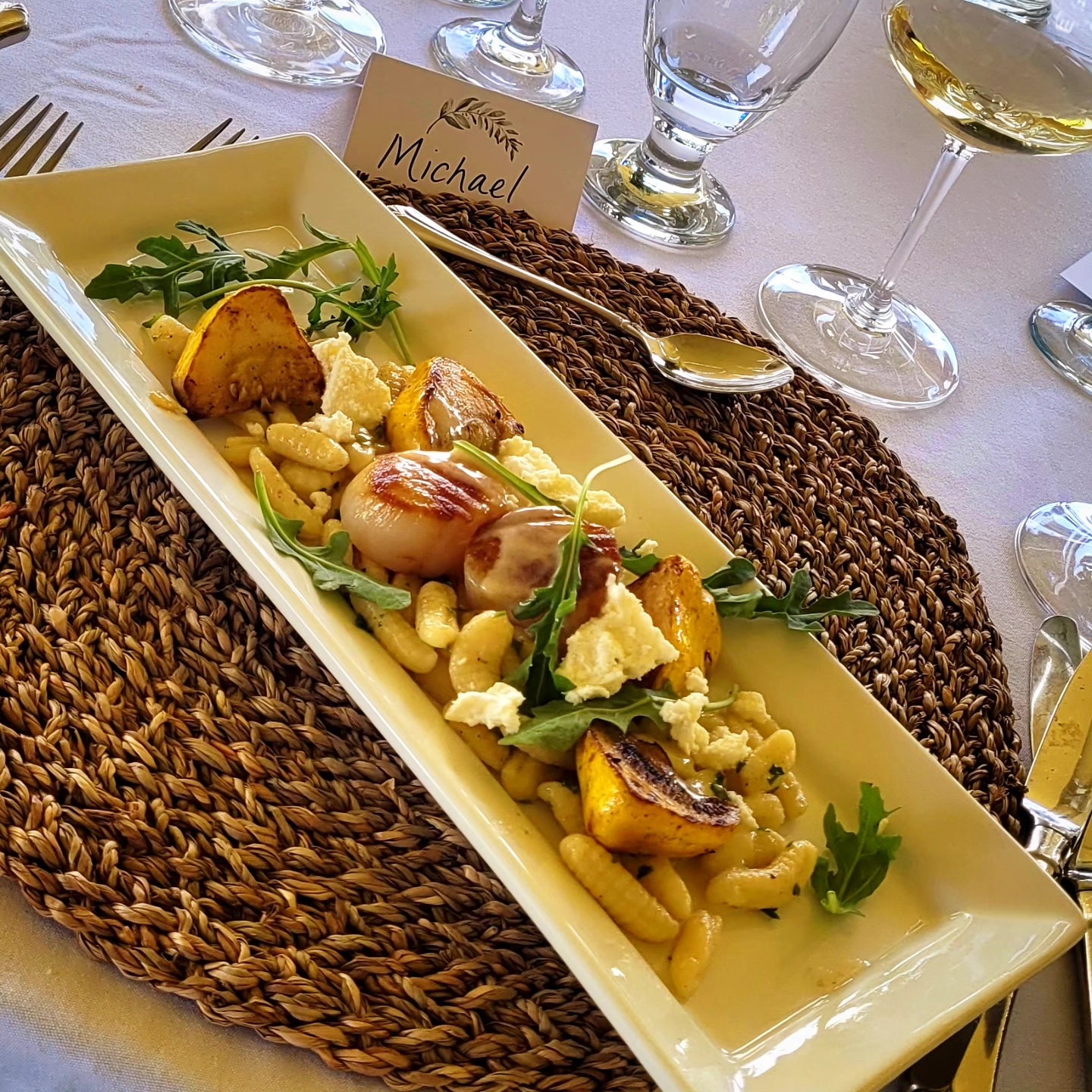
School of Cool
(c) i4C

South Africa’s Anthony Hamilton Russell leads the first session where things turn immediately laugh out loud funny, if simply because Hamilton Russell is an Afrikaans lekker of off-the-charts intellect, dry wit and a brand of self-deprecating meets sweet roasting and toasting humour that is by all accounts infectious. “The only constant is change,” he begins with an address that may or may not attempt to tackle climate change. “All the hard rains and frosts are just noise in the background and it’s about how we are going to deal with it.” Anthony wisely chooses to order the chardonnay tasting from north to south. His first notation is to explain “how important it is to precipitate proper dormancy in chardonnay.” Then he poses the question, “what is the worst climate problem?“ He is answered by (Nova Scotia’s) Blomidon Estate winemaker Simon Rafuse. “Depending on when you ask me, the answer will be about what just happened.” For Adamo’s Vanessa McKean “it’s a big catch up in the spring to get ahead of things, remove the (geo-thermal) blankets as late as possible before the weeds get out of hand and also late frosts compounded by the textiles still in surround of the vines.” Westcott’s Casey Kulczyk notes that bud break occurs earlier, growing seasons are warmer and ripening is quicker, while also more uneven. Are you sensing a (lack of) discernible Canadian patterning? Even in winemaking, from west to east Canada is comprised of many different vine-growing countries.

Sparkling Flight led by Peter Rod
(c) i4C

Session two is led by Peter Rod, he of chivalrous and consortable character, a prodigy and mentor for Niagara educator royalty and if the audience thinks Neumann’s humour is dry, they are then treated to Rod’s mix of dead-pan, amusement and bemusement. Fine decision to put Peter at the fore for the Sparkling wine flight because nowhere does that category receive more attention, research and investigation than that at his seat of higher learning. Peter Rod is surrounded by bubbles at Brock University’s CCOVI where fizz is considered on a daily basis. An effervescent panel delves deep into discourse for what Peter dubs as “Bubbles on the Rise.” Then the third set of eight pours, this time returning to still waters, holds title for “Chardonnay Unbound,” a varietal discovery with different faces, from different countries. Stefan Neumann returns and keeps the room engaged. Then Suzanne Janke is back at the podium and tells the audience her outfit blends seamlessly into the drapes, as if no one had noticed. Janke’s words are sing-song, showing the skills of a melodist with a sweeping sense of purpose. All she says focuses on the patrons, panelists and chardonnay, but never the I. Piano-woman, “quick with a joke or to light up your smoke….Oh, la, la-la, di-dee-da. La-la, di-dee-da, da-dum.”

With Katie Dickieson, Emma Garner and Ben Minaker – Andrew Peller Ltd.

In the end these are three memorable panel experiences at the 2024 i4C Cool Chardonnay School of Cool. Three expertly moderated sessions by Anthony Hamilton Russell, Peter Rod and keynote speaker Stefan Neumann MS. Intel of the highest order from 21 Chardonnay winemakers. In 12 years of attending this conference there has never been a better organized, finer seamless set of transitions or more to learn. Bravo to Concierge Kim Auty, Event Director Trisha Molokach, Past Chair Suzanne Janke, the producers and entire team of volunteers. Friday night we tasted Friday Night Flights with the producers at Cherry Lane Farms in Vineland. On Saturday night we returned for Chardonnay in the Vineyard World Tour Tasting and Dinner at The Riverbend Inn, Niagara-on-the-Lake. And there were visits orchestrated by the Wine Marketing Association of Ontario’s Andrea Peters. To Chef Ryan Crawford’s Bar Ruffino with J-L Groux, Dean Stokya and Suzanne Janke of Stratus Vineyards. To Dobbin Estate with Wade Dobbin, Peter Gamble and Ann Sperling. To Flat Rock Cellars with Ed Madronich. To Le Clos Jordanne with Thomas Bachelder, Phillip Brown, Kerri Crawford and tasty treats from Chef Crawford. Finally, an i4C lunch at Westcott Vineyards’ Butlers’ Grant Vineyard with Grant Westcott, Carolyn Hurst, Casey Kulczyk and magnificence from Chef Tim Mackiddie. Alas, here are 83 tasting notes, 63 for chardonnay and 20 others. 

Three panel blinds

Blomidon Estate Winery Chardonnay 2021, Nova Scotia

“We have been growing chardonnay since the 1990s,” tells winemaker Simon Rafuse. “We can definitely ripen and picking is weeks ahead of the past, but we have experienced more extreme climate events in the last decade, whether it be frost, flash flooding, polar vortexes, hurricanes and disease pressure.” His ’21 is made in a clean style, whole cluster pressed, on lees for 12 months. Sharp yet rich, intense while full, apropos, meaningful and direct. Top vintage without a shadow of a doubt. Drink 2024-2027. Tasted at i4C, July 2024

Adamo Estate Chardonnay Musqué 2022, VQA Ontario

From an emerging Ontario region – Hockley Valley. Does not quite feel like 100 percent chardonnay musqué but more like an interplanting or layering with some linear, vertical and incisive Burgundian chardonnay. Less fruit from this bottle replaced by mineral salts yet with no compromise to the flowers by musqué. Producers and consumers of fleshy to buttery chardonnay will find holes but the rest will relish in this outcome all the same. “We farm in an area not great for growing grapes” says winemaker Vanessa McKean. ”We don’t have a large body of water to mitigate extreme temperatures so we cover out our entire 18 acres with geo-textile blankets.” Air flow through the vineyard is essential and being at the top of the hill is helpful. Barrel fermented in neutral wood with the musqué portion delivering more floral notes than most Ontario chardonnay. There is a tinned orchard fruit character that invites more than it distracts and the sharpness of this palate journeying acidity is really quite special. Drink 2024-2026.  Tasted twice at i4C, July 2024
The winemakers are alright – Westcott Vineyards

Westcott Vineyards Chardonnay Block 76 2021, VQA Vinemount Ridge

From the home farm of 26 acres and the lowest elevation, teardrop block on shales and gravels, facing east. Earlier ripening, acid retentive and sees 10 months in barriques, followed by six months in puncheon filled with the previous vintages’ clean lees. Like connective tissue that links the past to the present to prepare the chardonnay for a longer future. Texture is mineral, set below tannin, in command of the palate from a chardonnay built to celebrate and also abide by it’s double-barrelled shotgun approach. Fires, attacks and conquers the palate from above and below so that there is no escape. Spirit of ’76 all the way with more vibrancy than ever. Impressive like few others. Will age really well. Made for seafood dishes poached, bathed and sautéed in butter. Drink 2024-2028.  Tasted at i4C, July 2024

Greg Yemen – The Organized Crime

The Organized Crime Winery Inc. Chardonnay Sacred Series Cuvée Krystyna 2020, VQA Beamsville Bench

As implosive and protected as any Niagara chardonnay to speak of a year older example that acts and feels as young as any on recent record. Terrific sweetness of fruit and a testament to a full and in this case also long ripening season. Crisp and biting, orchard fruit crunch and no sign of breaking down. Gambles with nature, shows off precision winemaking and confidence exudes from a chardonnay constantly reopening and one you can do so much with. There are savoury elements that suggest food pairing with be a most fun and rewarding exercise.  Last tasted twice at i4C, July 2024
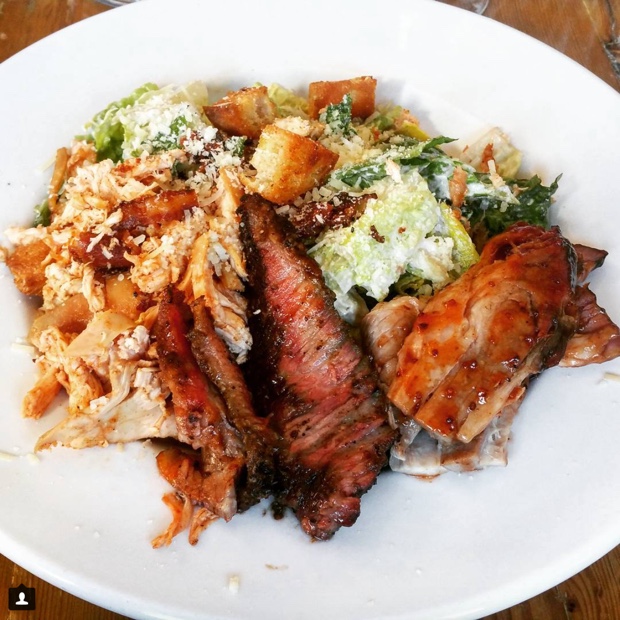
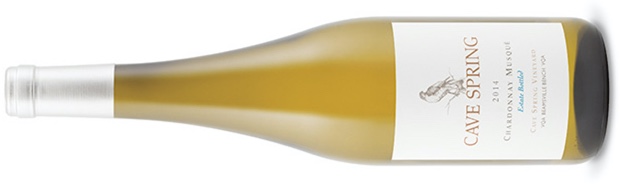
Powerful, reductive and in charge chardonnay, assuming the risk and in delivery of the reward. Platinum gold hue and attitude, serious, grippy and über conscious of its abilities. Top notch with vanilla and cereals that swirl into the full fruit complement of a chardonnay you just bloody want to drink. Consume away, with abandon because it asks this of you. Abide and oblige. Drink 2022-2026.  Tasted blind at NWAC2022, June 2022

Kellerei Bozen Chardonnay Riserva Stegher 2020, Alto Adige, Italy

From a vineyard at 650m with picking happening at least a week earlier than just 10 years ago and a dolomitic mountain air that breathes great life into this special sort of cool climate chardonnay. A yellow apple just short of ripe, with acidity sweeter than the drupe itself and a classic northerly sharpness that speaks to place as well as any European chardonnay. Drink 2024-2026.  Tasted at i4C, July 2024

Planeta Chardonnay 2022, Sicilia DOC 

Production began in 1995 while the vines are now nearly 45 years of age. In the southwest part of Sicily, in the Ulmo area around the village of Menfi where a corridor of wind, “our favourite friend,” tells Santi Planeta, blowing through between the lake and the sea. Through vines growing between 100 and 450m, breathing cool life, especially in the summer. The 2022 vintage saw plenty of rain though not concentrated at any particular time and so the constant events of moderation were something remarkable considering how often extreme climate events are increasingly more prevalent. The coming vintage of 2023 and 2024 will be affected by them, mostly because there was no rain. This chardonnay is impeccably balanced between fruit and acidity, acidity and texture, texture and tannin. The progression is seamless, the result precise and anyone who does not the recognize the experience and continued work put in may not be paying close attention. That’s fine but know just how special a (relatively) large production, semi-cool climate chardonnay this truly is. Planeta’s year-to-year consistency is truly impressive. Drink 2024-2028.  Tasted at i4C, July 2024

Hamilton Russell Vineyards Chardonnay 2023, WO Hemel En Aarde Valley, South Africa

The spirited intensity is unrelenting and speaks to how the HRV chardonnay tastes more profoundly serious than any other of its ilk. “Young and primary,” insists Anthony Hamilton Russell. “I like the complexity that our chardonnay develops with time in the bottle.” Well said but truth be told the wine already exhibits an electric variegate character and so what’s to come may just blow the mind.  Last tasted at i4C, July 2024

Freshness and abundance incarnate for Hemel-en-Aarde Valley chardonnay from the HR team that simply gets this grape from this place. A citrus vintage, less reductive than some whilst bursting with energy. Delight in lemon custard, all the zest, crunchy, mellifluously honeyed and never over-arching above and beyond the target. A scintillant of fruit through variety, to ache with love and to please, simply and unequivocally by design. Peak performance, summarily in the best of ways.  Drink 2024-2029. Tasted July 2024

The Foreign Affair Blanc de Blancs 2021, Methode Traditionelle VQA Vinemount Ridge

Light toast, easy goes, no long lees but a good signed lease to hang around for a few years time. True as chardonnay blanc de blanc, apples part terpene and part mashed. Smells like baked and cooled apple pie. Palate spirit yet agin those apples are all over, all consuming and all in. Some wood aging, Brut in style, somewhere between six and 10 g/L of dosage laid over 24 months leased lees aging. The second iteration of this sparkling wine.  Last tasted blind at i4C, July 2024

The bottle lists Vinemount Ridge as the fruit source though the website writes Lincoln Lakeshore so lets go with the bottle! Regardless we are looking at 100 percent chardonnay crafted in the dry, intense, citric, high energy style. This shows real energy and a couple of sips nearly take your breath away. The elucidations are green apple, piques of white pepper and the flavour profile slash texture much like sabayon extended by a few shots of limoncello. So much interest here. Drink 2023-2026.  Tasted November 2023

Stonebridge Blanc De Blanc Brut Nature 2020, VQA Four Mile Creek

More autolytic than some and even more than that, mellow, malolactified and softening quickly. Botanical flavours and fine bitters, creamy style, easy and ready. From chardonnay first made off of the estate in 2017 and looking forward to seeing what can be learned from the idylls of experience towards trying this first sparkling wine made at Stonebridge. Old puncheons and stainless steel combine for a punchiness that come out of several cuvées to try and abide by site, structure and ultimately consumer appeal. Richness of the site begets texture and in turn that appeal. The flavours persist though this is ready to drink sooner than many. Drink 2024-2025.  Tasted blind at i4C, July 2024

Kew Vineyards Blanc de Blanc 2017, VQA Beamsville Bench

Golden toast, truly brioche style, equipped with fruit a plenty marked by a note that reminds of good and plenty. Stage presence, persistence and length. A dosage of 5.9 g/L of residual sugar which may be the highest in a flight of eight but still very low for sparkling that is essentially dry. Made by Phillip Dowell with chardonnay that would have been planted on the property back in 1980. As concentrated as it gets for chardonnay sparkling wine but the vintage was acid driven and so the sugar extends the flesh.  Last tasted blind at i4C, July 2024

High energy, raging acidity, captivating and intense Blanc de Noirs right here. Eye-opening, olfactory shocking and palate enervating in every which way but loose. Taut, tight and demanding. Party wine. Drink 2020-2023.  Tasted October 2020

Leaning Post Traditional Method Sparkling Blanc de Blancs 2018, VQA Beamsville Bench

From Hemeris Vineyard on the Beamsville Bench, primary fermentation for six months in barrel, another six with lees and then the full lees aging of 36 months. An emotive sparkling wine that elicits and solicits emotion. Could this be a unicorn wine in its own special way? Evocative of what it makes you feel and what you would like a bubble to taste like? The long lees aging is clearly appropriate and leads the autolysis to a place of warmth, beauty and comfort. Oxidative and yet searing, a blanc be blancs no doubter that mans serious chardonnay business. Complex and curious, crafty and creative.The acidity here is special and in charge. An ideal mix of 9.2 g/L of total acidity and 3 g/L of residual sugar. “The vineyard was asking to become this kind of wine” explains Ilya Senchuk. “The purpose is a single vineyard expression.” Here’s to hoping the 2019 will add a few more months on lees to take that next step upwards.  Last tasted blind at i4C, July 2024

Single vineyard block called Hemeris (an old term for garden, or “something like that,” from the Greek). Of chardonnay, location between (Hidden Bench’s) Rosomel Vineyard and Cave Spring, picked late September and sometimes early October, for sparkling. Base wine is barrel fermented and aged in oak for six months. Spent 36 months on lees in bottle, finished at 2 g/L dosage (so essentially bone dry) and is now about to be released. This was the wine Nadia Senchuk pushed her husband for and this is the chardonnay tract that was needed to create it. Listen to the vineyard says Ilya, “because it’s basically growing bubbles.” Rich and exciting in the same breath, essential through autolytic response elicited and the breath stolen, literally taken away, every move made for the connection between I and it. An auspicious debut and were it not for the prophetic mind and ravishing palate of the winemaker’s better half, well then access to supply might not be so limited. Drink 2022-2026.  Tasted June 2022

Blue Mountain Vineyard and Cellars Brut Reserve R.D. 2014, VQA Okanagan Valley

Aromatic complexity, a chardonnay and pinot noir (55-45) sear of raging citrus but never lean because there is flesh all over the palate. The lemon segments are ripe and delicious, the red fruit character compliments with added spice, the persistence endless and the winemaking clearly coming from a place of experience and respect to place.  Last tasted blind at i4C, July 2024

Always pleased to welcome the BR R.D. into a glass and here is an old but a proverbial goody, that being 2014 and consumers must be reminded just how special this research and development is to determine the excellence of Blue Moutnain’s indagative sparkling wine. A blend of chardonnay and pinot noir, the first 10 percent more than the last with some of the most restrained, reserved and demure aromatics in the Okanagan Valley. All ways to say this is lovely, quietly generous and so settled to gift pleasure above all else. A most complex game of citrus and orchard fruit, distillate by nature, expertly seasoned with fine sea salt, white pepper and lemongrass powder. Such a gift nine years after vintage at a ridiculously reasonable price. Drink 2023-2027.  Tasted November 2023

Henry Of Pelham Cuvée Catharine Carte Blanche Estate Blanc De Blancs 2017, Traditional Method, VQA Short Hills Bench, Niagara Escarpment

Stoic, reserved, full scenting, flavoured and expressive. Tons of fruit here in what could only be 100 percent chardonnay. From a vineyard planted in the 1990s to Clone 95 chardonnay and a place of incredible consistency, “one of the most I’ve ever worked with,” tells winemaker Lawrence Buhler. Sees 54 months on its lees and while it may be difficult four to five years ahead to know what will happen – this is Ontario’s benchmark sparkling wine that always comes through. Not merely a matter of replication but more like intuition conjoined with persistence.  Last tasted blind at i4C, July 2024

Consistently crafted as a Blanc de Blancs that sees 60 months on the lees from estate grown chardonnay. From a varietal growing season so ideally destined for sparkling wine because a cool and wet spring plus summer emerged in late August to hot days and cool nights through October. In the middle of that spell is the chardonnay pick for sparkling and as good, complex and riveting as this arch-classic Ontario bubble may have been before – well bring on 2017 for next level complexities. Tasty, piquant and toothsome, of toasty brioche like never before and this swirl of creamy fruits and exotic seasonings. Feels like aged Growers’ Champagne and the fact that it is from Niagara makes it all that much more satisfying. Plenty of crunch, succulence and acid-driven energy from a meticulous bubble. The benchmark for local. Drink 2023-2027.  Tasted November 2023

Jacques Viljoen – Boschendal

Boschendal Cap Classique Jean Le Long Prestige Cuvée Blanc De Blancs 2012, WO Elgin

Presented by cellar master Jacques Viljoen for a sparkling wine coming from one of South Africa’s coolest climate area. The first vintage was 2007 and these are vines planted south-facing (i.e. cooler in the southern hemisphere) and facing the sea. A place where grapes can hang long and develop phenolic ripeness even while coming in at a brix number just above 19. Lower dosage now and so the autolytic notes (if not globally classic in their expression) and also excitement are increased. As much toast, autolytic and oxidative notes as any in a blind flight of eight. Pushes the envelope to see what can be done with sparkling wine, malolactic fermentation, wood aging, near dry dosage and lees aging. Not so much the classic brioche or baked bread representation but there are complex notions perceived from that aforementioned style clearly chosen, conceived, attempted and for the greater part, succeeded. Drink 2024-2027. Tasted blind at i4C, July 2024

Kyle Loney and Whitney Collins – Advini and Domaine Laroche

Domaine Laroche Chablis Les Vaudevey Premier Cru 2022, Bourgogne AOC, France

The word precise is often used to describe Chablis and many other global chardonnays, sometimes gratuitously but here perfectly applies to the Laroche Vaudeyey. Les VdV ’22 is focused to a virtue with its equality, equanimity and equilibrium from start to finish. A lexical entry to figure out the crux and relationship between cru and village.  Tasted a second time, July 2024

The immediate feeling perceived would be of a chardonnay bottled with lees, of a certain level of autolysis though neither by brioche or with respect to the sparkling kind. More like washed cheese rind, preserved lemon and that kind of texture that skin contact whites also deliver. The sort that settles on the tongue like a dissolving salve but here the subtlety suggest lees in the bottle more than light “orange.” In fact this is essential Chablis and does it not just feel like Ontario winemakers (in particular) are trying to emulate such a style by keeping lees in their bottles? Drink 2024-2028.  Tasted blind i4C, July 2024

Deux Roches Pouilly-Fuissé Vieilles Vignes Deux Roches 2022, Bourgogne AOC, France

Also a bottled with lees style of chardonnay with a level of richness so rightly and righteously older/traditional schooled, but so bloody clean and expertly made. Express and expert tang, layers of citrus, more grapefruit than many, fine tonics and also sweet bitters. There is some fat here but also acidity and verticality, in other words tension, more so than many of the appellation. Recommended by Export Manager Romain Bourgeois and also Stefan Neumann M.S. to pair with The Little Sparrow, a.k.a. La Vie En Rose, the one and only Édith Piaf. Drink 2024-2027.  Tasted blind at i4C, July 2024

Bachelder Chardonnay Grimsby Hillside Vineyard Frontier Block 2021, VQA Lincoln Lakeshore

So much to digest, first with knowledge of chardonnay in the hands of one monkified human that shall be named Bachelder and second of so much to take in and absorb from the label on the bottle. Niagara Cru (there are many), Single Vineyard (there are more), Grimsby Hillside Vineyard (current status Grand Cru, in progress) and Frontier Block (one of two within the great new frontier, inclusive of Red Clay Barn). Two-toned, of bites and textural chew, sexy chardonnay, clean and focused. Highest level aromatics at the peak of what is possible out of Ontario, positively spicy, white peppery even. Cleanest lees usage for a chardonnay of clarity and relatively speaking, also substance.  Last tasted blind at i4C, July 2024

Vintage number three from Grimsby Hillside Vineyard and now more specific by way of a split, with the Frontier Block as the plot within the larger plot, along with that of Red Clay Barn. Drilling down into this historical vineyard that has risen as fast as any New World terroir, just about anywhere these sorts of things are measured. Here named for the final frontier, that being the “last terroir” in Niagara and who knows, maybe it will soon be the first rolling off of everyone’s lips. GHV-FB 2021 is a force, that much is clear from the first look. Or nose, for what matters. Cool and stony style from a wide open space where limestone, shale and gravels conspire to create something new and with absolute potential. It’s already arrived thank you very much and while words like luxe and opulent do not come to the tip, others like succulent and scintillating do. Just something so real and right at your doorstep, vivid beyond chardonnay compare, a stealth fish swimming in clear waters. Truly complex for chardonnay and it must be noted, unlike any other in the world though at the same time feeling like something you’ve known your whole life. Make an exception to delve into this exception because when it comes to chardonnay, this is what we need. Remarkable clarity and distinction, precision extraordinaire and a wine to cast nets far and wide to secure as many bottles that could be found. Drink 2024-2032.  Tasted December 2023

Thirty Bench Chardonnay Small Lot Extended Lees Aging 2021, VQA Beamsville Bench

Spent 22 months in barrel, in other words space was not needed for new juice after 10, nor did Emma Garner feel the need to remove this lot and so 22 months it was. For good reason, great measure and bonafide success. You know the extra wood melt is there and integration is so complete. No compromise to fruit from a vintage aboard the Beamsville Bench that gave of itself selflessly to mingle in cahoots with the cohorts of those barrels and nuances at every turn. Acumen begets probability which in turn generates prospect. Conclusions drawn are expressed with silent nods, a twinkle and smile. This will age gracefully for 10 years.  Tasted a second time, July 2024

Maximum ripeness, warm vintage no doubt, captured and locked into what feels like a reserve style of chardonnay. Full and fine, fleshy and yet sturdy, chiseled musculature, riveting and attention so locked in. As is ours because we simply can’t turn away. Not an easy vintage tells Emma Garner because there was some rot, botrytis and less than desirable grapes. But there was also plenty of great fruit once the chaff was culled, the wheat came in and in turn a terrific chardonnay was made. The length is outstanding.   Tasted blind at i4C, July 2024

Stratus Vineyards Chardonnay Amphora 2021, VQA Niagara-on-the-Lake

Several factors are here at play, namely lees but also vessel so that the mineral aspect exhumed and manifested as texture makes us think about place. Spices run amok and that housing continues to occupy the impression that is distinctly Ontario chardonnay. Bottled with lees would be the reason behind the feeling and also the fact that it has been aged in amphora. First edition, fermented and aged in the clay vessels, influenced by Rene Barbier Jr. says winemaker Dean Stoyka. “It really respects the fruit and causes some restraint in the wine,” he explains. “Giving some salinity and richness on the mid palate.” A unique way to make chardonnay indeed.  Last tasted blind at i4C, July 2024

Along with cabernet franc this chardonnay was also tucked into and raised in amphora, no surprise because these have been two varieties suited up for experimental tests. Very late harvested (November 4th) from the 2021 vintage and specs are not very elevated for this wine. Moderate across the board and yet it is the clay that defines what we nose, taste and feel. Wet clay, a preserve with notable vegetal and savoury elements, banana esters, soft wool and ultimately a new set of varietal parameters imagined. One assumes this is bottled with a similar amount of lees as the R & D Stratus OG chardonnay but the clarity and transparency of the AC suggests something other, or wise. All in all a conundrum frankly, jury still out, much left to figure, pilot, trial, error and decide. Drink 2023-2025.  Tasted September 2023

Maenad Wine Company’s Yvonne Irvine

Maenad Wine Co. Chardonnay Skin Contact 2021, VQA St. David’s Bench

Orange chardonnay is a thing and this leads by example. Cloudy, hazy and yet much cleaner than the visuals might suggest. From Yvonne Irvine’s virtual wine project, made at Creekside and sold through the retail license at Marynissen Estates. Breaks down regular conventions like busy beavers taking apart wood and making their dens. To be honest skin contact wines don’t get much more delicious than this, especially from chardonnay, fruit having been “borrowed” from the vineyard owned and farmed at Niagara College. Full malolactic, lees stirring, older French wood for seven months. The richness, roundness and cozy-fuzzy feeling on the palate shows just how well this turned out. Should be so interesting to see how this ages – can’t hep but think it will go through the process with ease. Drink 2024-2027.  Tasted blind at i4C, July 2024

Stefan Neumann MS

Dobbin Estate Vineyard & Winery Chardonnay 2020, VQA Twenty Mile Bench

As full, rich and riveting a style of Niagara chardonnay as there has ever been. Ripeness at peak, wood in full glory, generously yet judiciously used and the overall effect is something usually reserved for what many will think of as a story written over centuries by Beaune chardonnay. There is delicacy here and if this chardonnay were a book it would be a page turner, which says this vintage in particular should likely appeal to a great and wide audience. Make no mistake though because a wine like this is comfortably affordable to the haves. That it turns out to be a Peter Gamble and Ann Sperling made chardonnay from a top warmth vintage comes as little surprise. Drink 2024-2027.  Tasted blind at i4C, July 2024

Morgan Juniper – 16 Mile Cellar

16 Mile Vineyard Chardonnay Civility 2018, VQA Beamsville Bench

Just carries and emits the feel of classic chardonnay winemaking, without hesitation or equivocation to result in something so knowably Niagara. The wood is on the weighty side and maturity has begun to see this wine acting its age. “I really think it’s important to honour the process of patience in winemaking,” says winemaker Morgan Juniper. The opportunity is not always available to do that but the ripeness here presented the proposition on a platter. “This wine is like waiting for a child to actualize their full potential,” she adds. “I wanted to push the boundaries to see this actualize at a later date.” As it has and the window is fully open with another year or two of enjoying this light lees-affected, barrel-aged and now of a chardonnay at this all in butterscotch stage. Drink 2024-2026.  Tasted blind at i4C, July 2024

Not labeled as such but essentially a Reserve wine taken from a single barrel housing all estate fruit. High level of concentration and richness in the face of a vintage considered cool and challenging, but when you take a smallest of small lot wines like this that just does not apply. Everything about this is classic, basket pressed, natural ferment, full natural malolactic, 22 months maximum for oak aging, Burgundian obviously and medium of toast. “We come to barrel turbid – we like density,” notes Peter Gamble. (Peter) and Ann Sperling really liked this one particular barrel and decided to put it to magnums only. From late September and early October picks, finished at 14.5 percent alcohol and ultimately mouthfeel that rivals some pretty warm wine growing regions. A chardonnay that moves beyond Bourgogne to offer up its very own definition of Niagara’s Twenty Mile Bench.  Last tasted July 2024

Friday, Saturday and Media room tastings

Trius Chardonnay Showcase Wild Ferment 2021, VQA Lincoln Lakeshore

A matter of factor decided by two essential aspects, the first being this chardonnay’s wild ferment and the second surely vintage. Turbidity endured and yeasty ebullition understood are how Wild Ferment ’21 co-opt and conjoin for aromas dedicated and unique to the Trius distinction. Scents of tropical fruit bathing in opaque waters cleansed by energy and movement to result in seriously complex chardonnay. Some spice tipping the tongue and tripping the palate fantastic for machinations of dreams and fantasy. Curious 2021, wild and woolly of texture with the confusion in delivery of a great part of the fun. The back label reminds that the fruit source continues to be Watching Tree Vineyard. Drink 2024-2027.  Tasted July 2024

Rosehall Run Chardonnay JCR Rosehall Vineyard 2021, VQA Prince Edward County

More of a restrained, stoic and while not reductive as chardonnay per se there is a wall erected between aromatics and early joy. A JCR dictated by its extract and structure, a compound butter in hard shell, surely not one in delivery of early returns. The crispiest, crunchiest, saltiest and most savoury of all the Dan Sullivan draws from the oh so important PEC Rosehall Vineyard. Try not to blink for many chardonnay that change straight away but with Rosehall that is far from the case. Twenty minutes in a glass and plus ça change, as they say. Immovably youthful chardonnay, stark and as a contrast, so sown, sworn, authoritative and stone cold of its own accord. There are 2021s from Ontario what will last comfortably in states of fickle freshness for 15-plus years. This could very well be one of them. Drink 2025-2031.  Tasted July 2024

Domaine Queylus Chardonnay Tradition 2022, VQA Niagara Peninsula

Warm and inviting, textural like silk, some glycerol and running soothingly smooth from start to finish shows a different look and separates itself from other vintages. Kelly Mason’s ability to change it up while still maintaining an always high level is a chardonnay testament to a team that ranks with the hardest working makers in Niagara Peninsula show business. There are clean yeasty notes, like sourdough in the proofing stage and subtle baking spice with texture truly divining the directive for high quality “classico” Niagara chardonnay. Never gives up or in, never too hot or cold, a great vintage in Mason’s estimation, but then again, “anything was better than ’21.” Drink 2024-2027.  Tasted July 2024

Taylor Emerson and Jonathan McLean – Black Bank Hill

Black Bank Hill Chardonnay Runway 2023, VQA Lincoln Lakeshore

Gotta be the first chardonnay out of the gates from the 2023 vintage and if this cracker example is any indication of what’s coming then hold on to your senses. Recently bottled and even with an early (September) pick this saw less than 10 months of aging, but the mix of indelible lees and high voltage (8.5 g/L) total acidity put this in scintillant, dare it be said Blanc de Blancs styled territory. So very different to the Runway White (blend) because of its intensity but also warmth at 13.8 alcohol, not quite torridity, but a white peppery scorch nonetheless. Wild and exciting shift from vintner Taylor Emerson and winemaker Jonathan McLean. Will be hard to wait and anticipate what the next level chardonnay turns out to be. Drink 2024-2026.  Tasted at i4C, July 2024

Alex Baines – Hidden Bench

Hidden Bench Chardonnay Unfiltered 2022, VQA Beamsville Bench

Say 10 months in French barrel, a warm vintage to coax out full concentration though “bunch weight and tonnage were actually lower than 2021,” tells winemaker Alex Baines. “More on the average” and yet this Estate level is all that 2022 could be and more, of fruit so silkily rendered, starred gastronomy plated and proffered as if by sous vide and reverse seared white meat, asparagus, salsify and yucca for one of HB’s most sweetly vegetal and succulently situated chardonnays. Gentle spice, firm grasp of the Beamsville Bench, extract accumulated at the peak of the proverbial chart and elastic tannin. All fine, refined and stylish.  Last tasted blind at i4C, July 2024

Full and wholly substantial chardonnay wth fruit juiciness, acidity and intensity. Never relents, takes a break or falls away. Keeps a straight line and follows the progression to a vanishing point. The perspective here is focused and linear. Top “Villages” example. Drink 2024-2027.  Tasted blind at NWACs24, June 2024

Dancing Swallows Chardonnay “Composite Number” Unfiltered 2019, VQA Ontario

Maturing, acetic and yet quite complex aromatics offer more than curious intrigue. Über cool climate, variegate ripenesses in the fruit and the acetone incites the proverbial shower curtain comment. All that said there is promise and even pleasure to be had.  Tasted July 2024

Hidden Bench Estate Winery Chardonnay Felseck Vineyard 2021, VQA Beamsville Bench

My goodness this is special chardonnay, coming as no surprise and if your thoughts and emotions for 2021 Niagara chardonnay need buoying than begin the bob right here. Precise aromas, immediate and echoing, more fruit than frankly necessity should expect as the mother of invention because mineral and saltness demand our utmost attention. Yet the fruit stands firm and even pulpy in the face of the crushed stone infiltrate from a vineyard stop on the grandest of Niagara cru tours. Exemplary to speak on behalf of a vintage that separates wheat from chaff, pinpointed location from just anywhere and adults from the gambling trials of youth. Drink 2024-2028.  Tasted July 2024

Kelly Mason and Brooke Husband – Domaine Queylus

Domaine Queylus Chardonnay Réserve du Domaine 2022, VQA Niagara Peninsula

Kelly Mason has hit the proverbial nail on the chardonnay head with her focused and balanced work with 2022 fruit to create what will forever exists as a quintessential Réserve du Domaine. The sort that will linger for years and be compared with when subsequent vintages are produced over the next 10-15 years. Remember the 2022 they will say. Ideal posit tug and a correct split between ripe fruit and stony goodness, also considered as mineral wealth to equip the wine with structure and subsequently longevity. All this despite a slight miss on acidity, which really turns out to be a thing of vintage. Brava team Mason. Sometimes there are misses when we taste blind.  Tasted July 2024

Oak all over, toasty notes in the orchard fruit aromas, mid-palate texture and no glissade but instead a settling on the palate. A bit heavy though just a year’s time will integrate the cloud. Lacks the right kind of acidity to really make it sing. Drink 2024-2026.  Tasted blind at #NWACS24, June 2024

With Alphonse Potel – Domaine de Bellene

Maison Roche De Bellene Vieilles Vignes Bourgogne Chardonnay 2022, AC Bourgogne

A vieilles vignes at Bourgogne AOC level that proves the ’22 point just how universal these wines should be admired and can be your friend. Bellene’s is luxe, focused and balanced.  Last tasted at i4C, July 2024

Sharp chardonnay from Nicolas Potel’s Maison Roche de Bellene out of 2022, lightly reductive, tightly wound and beaming with energetic light. Got a buzz and a vitality about it, with old vines concentration keeping pace and developing texture as we speak. This has been a good sku in the past but Potel has hit the proverbial varietal nail on the head this time around. Drink 2024-2026.  Tasted July 2024

Nadia and Ilya Senchuk – Leaning Post

Leaning Post The Fifty Chardonnay 2022, VQA Niagara Peninsula

What was once a true matter of 50-50 barrel to steel raising has morphed and is now another matter. A concrete matter for today’s 50, full of fruit and fuller after its cementing, a posit tug still, even though wood and steel no longer play the push-pull game. More about fruit versus lees, tension so tight the rope never seems to budge, but it sways and slings within inches of itself. A bloody poignant vintage in spite of warmth, contiguous from its wild ferment and winemaking truth. Drink 2024-2026.  Tasted at i4C, July 2024

Matthias Messner – Kellerei Bolzen

Kellerei Bozen Chardonnay Bolzano 2022, Südtirol Alto Adige DOC

Really hot year tells Matthias Messner for a steel only raised chardonnay on lees from vines at 550-600m of elevation. Close to the south of Balzano, “a windy area” with cooling temperatures at nigt. Straight as a marksman’s arrow, cracker sharp and the sort of chardonnay to pierce your heart. Quenching, satisfying and Südtirol perfumed. So drinkable.  Last tasted at i4C, July 2024

Has been three vintages since getting back to tasting this archetypal Südtirol-Alto Adige chardonnay from top quality and quantity cooperative producer Bolzano. Can’t go wrong with the style or the effect, of no oaks given and the most lemony sunshine one could arrive hoping to find. This is a terrific vintage for a chardonnay we could all afford to drink a boatload of. Drink 2024-2026.  Tasted July 2024

Boschendal Chardonnay Appellation Series 2021, WO Elgin

“It’s easy to make quality chardonnay,” says cellar master Jacques Viljoen, “but hard to make sellable quality. Also scaleable but Boschendal seems to have accomplished all three with their high level tiered Appellation Series Chardonnay. What could be called a 2021 of dramatic restraint, of tension but never nervous, of grip but no abuse of power. Brilliant chardonnay and Ontario consumers should be happy to know it will become available in the upcoming VINTAGES September Classics. Drink 2025-2028.  Tasted at i4C, July 2024

Lydia Tomek – Ravine Vineyard

Ravine Vineyard Chardonnay 2021, VQA Niagara-on-the Lake

All Niagara-on-the-Lake fruit, from three vineyards and with just a wee bit of musqué inclusion to give Ravine’s chardonnay that gentle spirit and floral lift. Just that subtle hint of jasmine flower, oxalic acid lemony scent of purslane and faint anise of chervil. Spends 18 months in a majority of old wood which does develop texture to find this somewhere comfortably between pillowy and elastic tension. You may not always have you’re best stuff but you can still contribute admirably to the team. Though 2021 is not the recent vintage to set Niagara chardonnay up for its greatest balance, “you take everything you’re given and make the best of it,” reassures winemaker Lydia Tomek. Which she clearly does to deliver a chardonnay to keep the dream alive and the streak unbroken. Drink 2024-2026.  Tasted at i4C, July 2024

Thirty Bench Small Lot Chardonnay 2021, VQA Beamsville Bench

True to Bench chardonnay sprit and energy, standing upright, demanding to be noticed and in turn we are paying attention. A harvest of demand forces the team to focus and pay extra attention, to do everything possible for greater returns. Picking and sorting strategies finds the best available fruit to create something cool, gelid, succulent and shockingly Chablis like. Should age longer than first anticipated.  Last tasted at i4C, July 2024

Small Lot just has to be the ownver of the lowest of low alcohol number as it pertains to the Beamsville Bench and at 12.6 percent the conversion rate falls under the categorical auspices of magic. This is not a light chardonnay but it is a lithe, elastic and effusive one. Aromatically demure yet soft and almost caressing, without peppery (and sharp apple) bites or jolting in any way. The palate runs a similar course, gracing with soft and round flavours that are easy and stretched. Lovely and amenable 2021 here from Emma Garner and one to savour slowly, in a calm and tranquil setting. Drink 2023-2025.  Tasted July 2023

Katie Dickieson – Peller Estates

Peller Estates Private Reserve Chardonnay 2022, VQA Niagara Peninsula

A factor of chardonnay and also musqué interplanting, unique for Niagara and smartly put to a 50-50 ferment between steel and oak. What follows is 12 months in barrel and mostly no malolactic fermentation though says Katie Dickieson, “some might happen.” Clear, clean, precise, pristine and from an ideal vintage to make this style of direct, ready to rock chardonnay. Beautiful. Drink 2024-2025.  Tasted at i4C, July 2024

Westcott Chardonnay Estate 2022, VQA Niagara Escarpment

Wild ferment and malolactic happenstance, “and if it occurs simultaneously,” says winemaker Casey Kulczyk, “it’s fine, I want this.” Barrel fermented, super turbid going in and also desired. Welcome to 2022, a vintage for which its maker forgets and leaves everything behind because adversity and challenges always puts one on their toes. Cold snap in winter, vine damage and a 60-plus percent loss of buds (on chardonnay). Great quality nonetheless, a new or different estate mix to result in a more linear, tight, bright and for Westcott, extreme iteration. Yet this arrives brilliantly, very young, not itinerantly fruity, but sharp and hyper real. Drink 2025-2029.  Tasted at i4C, July 2024

Tawse Chardonnay Quarry Road Vineyard 2021, VQA Vinemount Ridge

No shock or surprise that Quarry Road ’21 is a mineral bomb, coming away on that rocky side of the 50-50 fruit to stone compendium. Forget everything you’ve heard or read about this arch-cool Vinemount Ridge chardonnay, but also ignore all the noise about unmitigated disaster by vintage. Niagara winemakers should always make quality cool chardonnay these days and Tawse holds more water and responsibility than most. Jessica Otting is ten times equal to the task with a Quarry so precise and focused it may just make a tooth or two feel the mineral pain. A chardonnay chillingly representative of its vineyard yet, rewriting the jazz because of the shall not be named vintage. The naysayers can run away and hide in their holes because history will be kind to these wines, especially when they shine on in tastings ten years forward. No crutch or apology, sorry not sorry. Remember 2011 and 2013. Now forget them and only speak of 2021. Just great chardonnay. Drink 2025-2030.  Tasted at i4C, July 2024

Cave Spring Estate Blanc De Blancs, VQA Beamsville Bench

Classic, sharp, intense and ideal. A ripper, “and I love that” says Stephen Gash. Dry as the desert in such a plainfully proverbial way. Scintillant extraordinaire.  Last tasted at i4C, July 2024

For the first time in quite some time the next look at the Cave Spring Estate Blanc De Blancs is bang on one year later and so yes, freshness is the thing. Crisp and crunchy, stylistically so consistent and really set up to act as the dictionary entry for chardonnay as sparkling wine out of Niagara. It’s just so spot on, high in energy and exacting for style, place and estate.  Tasted November 2023

Domaine Des Deux Roches Saint Veran Vieilles Vignes 2022, Bourgogne AC

From the estate’s flagship old vines holdings in the village of Saint-Véran on the slopes set below the famous two rock faces (Deux Roches). They happen to be the largest holder of hectarage and as such this is one of six cuvées in the Véran. As crunchy as any in the Bourgogne Mâconnais, or will ever be, with crisp bites and never dissipating tension. Sharp, representative of great value with several Premier Cru coming to mind and a vintage quality to solidify and formalize the overall trenchant intention, consolidation and voice. Drink 2024-2028.  Tasted at i4C, July 2024

Violette Bachelder and Mary Delaney – Bachelder Vineyards

Bachelder Wismer Wingfield Chardonnay 2021, VQA Twenty Mile Bench

By this time Wismer-Wingfield is the standard Bachelder chardonnay, the one of great acumen and knowledge accrued, the most middle of the road of the Toussaint releases. This is said with greatest of compliment because there is no substitute for experience and Thomas has long since figured out how to make this most high level and consistent chardonnay. No lack for all this and more from 2021, of a wine where fruit and wood share equal space but both exist on the same footing. As always the presence of waxy, aerosol and resinous notes that chardonnay for Wismer-Wingfiled always displays. There is something to be said for the same old. Drink 2023-2026.  Tasted December 2023 and at i4C July 2024

Leaning Post Chardonnay Senchuk Vineyard 2021, VQA Lincoln Lakeshore

“I fought the grapes…and the grapes almost won,” quips Ilya Senchuk. We should note that the the temps are/were five to six degrees cooler in Grimsby/Senchuk Vineyard and so he and Nadia feel quite strong about their success for cool climate chardonnay out of the adversarial vintage. A “war of attrition” perhaps and some losses but in the end more wins, but you have to buy and taste these wines to find out. Ilya agrees that sometimes “you have to get out of the fruit zone,” and not just with respect to pinot noir. The mineral aptitude and stony goodness of this cracker ’21 Senchuk chardonnay will not be denied. Not to mention at 12.5 percent alcohol we need to look past lean and consider magical conversion rates. See for yourself. Drink 2025-2029.  Tasted July 2024

Cloudsley Chardonnay Twenty Mile Bench 2022, VQA Twenty Mile Bench

Always a mix of Wismer fruit, of Wingfield and Foxcroft, same bat fermentation and same bat channel. Wild ferment that is, followed by 18 months in French wood with one-quarter or so being new barrels. Balance of the old and new, the buttery and the grippy, the soft and the profound. A recurring fruit theme for 2022 with less tension and tightening as compared to say ’19 and ’21. Getable as chardonnay though persistent in its inherent cool climate origins. Still it will attract more and more consumers who hold preconceived notions about the idea of chardonnay. Drink 2024-2027.  Tasted July 2024

John Szabo M.S., Godello and Malivoire’s Shiraz Mottiar

Malivoire Chardonnay Mottiar 2020, VQA Beamsville Bench

In a state of grace resolve on course to deliver its best at every step of development. In the heart of the matter now, primary yet moving forward with finespun caramel right ahead. So well conceived and made to honour its origins.  Last tasted at i4C, July 2024

Sure there is a full and subtly opulent quality to the Mottiar 2020 but from the beginning there is confidence and balance. Always this way but ’20 is special in that regard, comfortable in its skin and so sure of what it brings to the chardonnay table. Beamsville Bench beauty and bounty, acidity so sweet and developed it feels like it has not yet acted just like this before. A hint of paraffin and beeswax, a lilt and a rise in beats here and there but most of all freshness and that aforementioned surety of conviction. Drink 2023-2027.  Tasted July 2023

Blomidon Brut Réserve NV, Annapolis Valley, Nova Scotia

Put to bottle in 2019 and so five years on lees ain’t nothing to develop complexities, eccentricities and potential variability. This pour comes out of sound and vision, disgorged in March of 2024, set to be released in the early Fall. Makes great use of 2016 and 2017 fruit, plus a small amount of the frost vintage 2018. Youthful, appropriately Blomidon Peninsula/Annapolis Valley tightly wound and in a way very chardonnay, though not glaringly so. “For us this is the future for non-vintage,” explains Simon Rafuse, “and to save the cooler vintages for Blanc de Blancs.” It’s a reverse engineering kind of approach. Simply put, in cooler vintages you can’t push wines through malolactic and so chardonnay is best purposed for sparkling when acids are high and pH levels are low.” Like 2011, but not 2010 and Rafuse adds that “the problem is you have to wait many years to see the results. But it’s worth it because they are really good.” True that. Drink 2024-2028.  Tasted at i4C, July 2024

Dean Stoyka and J-L Groux – Stratus Vineyards

And there were visits

Stratus Vineyards at Bar Ruffino

Stratus Brut Nature Zero Dosage 2013, VQA Niagara-on-the-Lake

J-L Groux explains that the main factor for making this kind of sparkling wine is PH, “because the aromatics will be built upon six to seven years of lees aging time.” J-L feels this ’13 is going to be the winner now, and for 20 years. Not far off it would seem because of the “partial disgorgement” method, well within VQA rules and thus you arrive at a toasty smoulder unlike any other sparkling wine. The lees are the thing, in fact they are everything. They prevent the aromas and the wine from oxidizing. Amazing.  Last tasted July 2024

Comes across a bit cloudy, at least as compared to the B de B with thanks to the natural, lees left intact style. The citrus component is so pronounced, as is the taut, direct, lean and intense manifold destiny of what is truly a singular Sparkling wine. That being a living, breathing, inhaling and exhaling wine, slowly releasing proteins, acids and realizing its B de B Nature dream. Just amazing what lees can do for sparkling wine.  Tasted July 2021

Released side by each with the Stratus Blanc de Blanc 2013 and while vintage and grape are the same, the similarities almost seemingly, ostensibly and allegedly end there. Yes in fact this 100 per cent chardonnay is a child of the most excellent varietal vintage and like the B de B spent six years on the lees. Comparisons cast aside it is the very fact that because much of the lees were transferred to bottle by a minimalist’s disgorging that this cloudy bubble with a Canadian artist’s series set of labels can’t help but elicit another memory. The Lilies of Monet and their clouds represent neither the horizon, nor the top or the bottom. Nor does a bottle of this Zéro Dosage Brut. The elements of water, air, sky and earth become intertwined in a composition without perspective, or so it goes in this hazy, opaque and dry as the desert sparkling wine. So many layers of lemon can be peeled, juiced and scraped away. If a Stratus wine could be a a riddle, wrapped in a mystery, inside an enigma then here it is. The texture here is palpable and the intrigue factor surely high, so it should be imagined that longevity will be this wine’s calling card. It’s more austere than the Blanc de Blanc but I think in fact it will. Drink 2022-2029.  Tasted November 2020

Stratus Chardonnay Reserve 2002, VQA Niagara-on-the-Lake

Harvested between October 4th and 6th which for J-L Groux was early, akin to harvesting in early September in the Stratus world of today. Barrel fermented for 350 days in a mix of new, second and third fill French wood. Low(ish) acid and high pH vintage from the vineyard purchased just two years prior. The team went about immediately reducing yields from eight to two tonnes per hectare, “direct to concentration,” says J-L, who at the time partnered with Peter Gamble to make this rare iteration labeled as a Reserve wine. They selected barrels for this premium chardonnay and truth can feel counterintuitive because many years after having tasted the (Non-Reserve) 2002 it is this ultra varietal bottle that shows impossible freshness. Persistent in reserve, laden with grapefruit and as much texture as wood is want to impart. Well, actually a bit less than expected but as a chardonnay expression with the same fruit the special barrels chosen have come about with such a different result. Less preserved lemon, wax, late bitters and oxidation. Therefore sharper and fruitier while in the end likely just what Peter and Jean-Laurent were looking for. Drink 2024-2026.  Tasted July 2024

Stratus Vineyards Retrospective at Bar Ruffino

Stratus Chardonnay 2009, VQA Niagara-on-the-Lake

Late pick (November 10th), high acid, smoky and smouldering chardonnay, connecting it to a course of action for those that are made today. A precursor and one that the winemakers surely look back at and draw upon for current preoccupations. Especially Dean Stoyka who stirred some lees and learned how to get his chardonnay through malo during his Niagara College educational days. Looking at 2009 helps to consider the sparkling wine program because the specs and style of this wine are clearly inspirational towards that end.  Last tasted July 2024

Comes off like a white blend, aka Stratus White but this is the outright, unchaste vintage talking. Winemaker J-L Groux crafted three wines with viticulturist Paul Hobbs. Here they split the project 50/50 with Hobbs including wild yeast fermentation and whole bunch pressing and J-L adding short skin contact, controlled yeasts and no whole bunch pressing. From extreme low yields, this one puts on a show after only 10 months in barrel. High on aroma, brazen in texture, ambient in flavour bites. Very Niagara if inexactly Chardonnay.  Tasted March 2014

Stratus Chardonnay Bottled with Lees 2015, VQA Niagara-on-the-Lake

Medium acid and low pH year, picked across September which is early (and necessary because acids would have waned) but what matters most are the lees kept in bottle. To develop aromas over time and ward off oxidation. So unlike the 2009 tasted side by each, here from a “winter damage year” tells Dean Stoyka. Small crop, somewhere between 88 and 91 tonnes (the number changes form time to time), average heat and precipitation. Serious chardonnay concentration, fruit persistent, in great shape and a better wine today than it showed as seven years ago.  Last tasted July 2024

The 2014 vintage was essentially the first year when barrel lees would be left in the bottle and my how conservative this ’15 really was as compared to an evolution that culminates (currently) with the full on lees filled chardonnay vintage. Quite the opulent vintage mixed with aromatics still morphing, developing lees, brash and blushing by 40 per cent new oak, complimented by generous acidity. Showing with controlled drama and though the yields were low (only 88 tonnes) there is something quite special about this emotionally charged, vivid, scarce and remarkable chardonnay.  Last tasted July 2021

Stratus Amphora Chardonnay 2022, VQA Niagara-on-the-Lake

“Slightly, maybe three times more oxidative than a barrel,” explains Dean Stoyka as it pertains to amphorae. Kind of surprising but then again there needs to be a good reason for choosing these tight-grained Tava Amphora baked at higher temperatures, especially as compared to Georgian Qvevri. More oxidation means more lees and more lees means kept freshness plus the ability for aromas to develop into complexities over time. As for a a second kick at the chardonnay in amphora can by Stratus well then assessment out of expectation also triples and the learning curve realized by Stoyka becomes three times the fun. Where is the reference point? Who cares because the nurturing of this fruit and palate caress conspire to create a feeling, as if you have known this wine your whole life. A matter of great positivity and understanding. Dios mio, man. Longevity should never be questioned and reasons why never argued. Keep at it, keep on keeping on. Drink 2024-2030.  Tasted July 2024

Hillebrand Trius Barrel Fermented Chardonnay 2000, VQA Niagara Peninsula

Nutty, flor oxidative and 24 years of age. From a very cool year and J-L Groux’s roots as a Niagara winemaker. Reluctantly fresh and honestly a good showing at this ripe old age easily into a time when the ideas and thoughts of mortality and finality can’t help but creep in. Though the wine would not shine to the dispassionate it does cause a stir of interest to a group of writers, influencers and sommeliers, all happy to drink one glass. Kudos to the Stratus team for offering up this cool piece of chardonnay history.  Tasted July 2024

Dobbin Estate Vineyard & Winery

Dobbin Estate Vineyard & Winery Chardonnay 2019, VQA Twenty Mile Bench

This may be just the first stages of Dobbin’s tenure making high end wines from the Twenty Mile Bench but auspicious does not begin to describe the level of sophistication marking these beginnings. The erudite oenological consulting team of Ann Sperling and Peter Gamble have taken chardonnay into territory they are quite familiar with but always keep in mind that top terroir, vineyard conditioning and uncompromising preparation are what collectively set this up for success. This 2019 is from a cool climate vintage out of a cool climate place and recent history tells us that these are chardonnay that live good, long and healthy varietal lives. Luxe yet still crunchy, high quality wood used generously if judiciously and in the end this kind of rocks the world. In a chardonnay way. Drink 2024-2028.  Tasted April 2024

The Tower at Dobbin Estate

Dobbin Estate Vineyard & Winery Cabernet Blend 2019, VQA Twenty Mile Bench

From a cool vintage, long one though and cabernets cropped at the lowest of the low – less than one tonne per acre. ”A drinkable style,” says Peter Gamble and “I like the ‘19s from Niagara for that reason.” Pretty much a 50-50 final blend, almost too easy if by design and immensely popular with those who know, but also those who do not necessarily know the how or why. This is not a Caymus drinker’s red but it will inform and in turn impress they who should do better than their muscle memory habits of consuming over ripened, elevated alcohol, sugary reds. The ’19 is not particularly structured as a cabernet squared though the modelo drinking window is a good one.  Last tasted July 2024

First release for the new, high-end estate found on the Twenty Mile Bench with this stylish, Right Bank in make-up cabernet franc (inclusive of 15 percent merlot) having been sourced from a mix of the Homefront along with Creek Shores and Four Mile Creek. Oenologists Ann Sperling and Peter Gamble have consulted from the beginning and this is what would be considered a “Peninsula” wine because the fruit is drawn from three very different micro-climates. Sure seems like single site iterations are the future once each have been trialled and understood but for now the mix makes for a treat of layering and integration. Chic, full, substantial and generously oaky in the classic Sperling-Gamble style for full-bodied but never over the top Bordeaux reds for Niagara. The wood lends sweetness, fine chocolate ganache and a smoothness that is a hallmark of their wines. They did not go for structured broke in this inaugural bottle but the result is dreamy and leaves an impression, without seemingly trying to be impressive. No doubt a Napa Valley feel here which is always a compliment as it pertains to Niagara reds. The only qualm is the lack of franc-ness but that feels somewhat intentional. Drink 2024-2026.  Tasted April 2024

Tasting at Dobbin Estate

Dobbin Estate Vineyard & Winery Riesling 2019, VQA Twenty Mile Bench

Classic and balanced, concentration meeting at the intersection where a righteous mix of sugars and acidities form layers from. Vineyard blocks are what define the intention and i turn the results of this riesling. Nothing overt, neither by salinity or sapidity, though their are hints, shadows and subtleties indicated by both. And so the requiem for this riesling’s success lies in its ability to please without speaking loud or acting with any sort of impunity or demand. This is why people who know nothing about riesling will gravitate to enjoying this as a glass of a special white wine. And those who get it will be hard pressed to label or pigeon-hole it as Ontario. The inclusion of some botrytized grapes has something to do with this. Drink 2024-2028.  Tasted July 2024

Dobbin Estate Vineyard & Winery Riesling 2020, VQA Twenty Mile Bench

A much warmer vintage for all of Niagara and with riesling the difference between 2019 and 2020 is truly the proverbial might and day. Almost an about face style with the ripest and juiciest ripe fruit, lower sugar and (less botrytis) but truth be told there is more richness and flesh in 2020. Intensity by implosion and higher sugar number (15-16 g/L) as compared top 10.5 fro 2019. Unrelenting flavours and a profile more Germanic than that more chiseled and muscular ’19. Drink 2024-2028.  Tasted July 2024

Ed Madronich holding court at Flat Rock Cellars

Flat Rock Cellars

Flat Rock Cellars Pinot Noir Foundation Series 2022, VQA Niagara Peninsula

The separation between Foundation and Gravity is essentially barrel selection with the winemaking being the same. So specific to this place, rusty and busy tart fruit, a mix of plum and cranberry, always curious, always complete. Gently and fluidly volatile, crunchy at its peaks and low rumbles in the valleys. A 5,000 case production (on average) as compared to 1,000 of Gravity. Never a question that this is and represents Flat Rock.  Last tasted at i4C, July 2024

No questioning the ripeness on all fronts, to the edge and precariously so with maturity and also a glycerol meets acetic set of circumstances. As such there is a raw cookie dough note, also potpourri and natural medicinals. A very specific tang carries the flavours and the sensation of style is duly noted. Gets chalky and the acidity takes over on the backside of this distinguishable pinot noir. Drink 2024-2025.  Tasted July 2024

Flat Rock Cellars Pinot Noir Gravity 2020, Twenty Mile Bench VQA

Warm vintage and about as high-toned that Gravity as pinot noir will ever be. A tight and to be frank also austere iteration that still remains and persists in this state of the unforgiven. If a Gravity has ever needed for time than this 2020 is certainly up for debate. Muscular, concentrated, broad shouldered, full of texture and buzz in its extremities. There is plenty of substance and so when the wine settles in it will do what intention asked it to do.  Last tasted July 2024

Jury’s still out on the season’s relationship between pinot noir, Niagara and especially the tattooed effect painted by the Escarpment’s benches. Gravity ’20 is still showing some early earthy, fermentative aromatic volatility by way of bread dough, tar, strawberry red fruit and coniferous-evergreen energy. Some stem inclusion surely, an early pick on acidity in a warm year, strength in maceration and equally pressed so that the Ontario greens also come through on the flexed rope of tannins. Like hastily hand-stretched pizza dough popping holes, or pulling liquorice too fast and causing cracks. Gravity is meant to fall softly downwards, gracefully and gently. The sour accents speak another language, a bit unfamiliar and yet the track record of this wine deserves respect and time. Jury will be hung and a new one will come back in two years for next assessment. Drink 2024-2027.  Tasted October 2022

Flat Rock Cellars Pinot Noir Gravity 2010, VQA Twenty Mile Bench

Really warm vintage, one of those in that time that ripened fruit to the max and so pinot noir went where it so boldly wished to go. One of those substantial examples that has surprisingly lasted deeper into its tenure than assessment of that vintage would have predicted. Good showing today and some duck prosciutto would work really well alongside.  Last tasted July 2024

Reels in Twenty Mile Bench fruit in a warm vintage as well if not better than any of its peers. Founder Ed Madronich is clearly slope and soil obsessed and this Pinot Noir is a study in topography and geology. To paraphrase Madronich, it’s ”more Pommard than Volnay, in a deeper and more masculine way than the Estate bottling.” Pinot barrels most representative of the Gravity style were chosen for the final blend, in this case noted by woodsy black cherry and spiced root vegetable. “Get a little savagery in your life.”  Tasted twice, April and December 2013

Flat Rock Cellars Chardonnay Foundation 2021, VQA Twenty Mile Bench

Middle road traveled, taken and projected for chardonnay definitive of a 25-year study by Flat Rock makers to arrive at this time. Lovely, juicy, prolific and in its Flat Rock way also a quintessential Twenty Mile Bench example of chardonnay What more needs to be said?  Last tasted July 2024

Foundation Series: Our Classics redefines the Flat Rock entry to market and gateway for their chardonnay. If you’ve been tasting these wines for a decade or more you’ll recognize these aromas from a 2021 that resonates of the house style. Inviting, somewhere between vanilla crème frâiche and lemon crème brûlée, soft and demure. Creamy palate texture, a swirl of butterscotch ripple curd and easy drinking all the way through. Many will find this soft but it’s best considered as a comfort food kind of chardonnay. Drink 2023-2024.  Tasted October 2023

Flat Rock Cellars Chardonnay The Rusty Shed 2021, VQA Twenty Mile Bench

If the Foundation delivers a quintessential Flat Rock chardonnay experience than The Rusty Shed takes it further. More substantial fruit and aromatic muskiness if less immediate joy and juiciness. No shock because RS is a wine that can and will age with this being one of those vintages that fit the bill. Reminds of 2011 or 2013, or maybe a combination of the two with the modern world of love and varietal development taking chardonnay from FR to new heights. Will hit the zone sometime later this year or early next. Drink 2024-2027.  Tasted July 2024

Flat Rock Cellars Chardonnay The Rusty Shed 2013, VQA Twenty Mile Bench

A more than appropriate vintage to pour side by each with 2021 because they share that Flat Rock Rusty Shed affinity of chardonnay needing some time to open up before delivering the juicy, gelid and fleshy character they will almost always eventually do. The ’21 will get to this place and few Niagara or Bench chards can go light years ahead into such a place of beauty. Just knew 2013 would get there and what a joy to be here with it.  Last tasted July 2024

It’s as if this label had bided all this time to be the benefactor of 2013 fruit. This Rusty Shed, this 20 miler with the track record to age, a wine that sheds baby fat over a 10 year mineral through echelon stratum, in ways few other peninsula to bench chardonnay can do. This Jay Johnston handled surfer of a wine, buoyant and balanced, centred and able to withstand turbulence, oscillation and tidal sway. Here with sumptuous and spiralled fruit gaged in lode intervals and a tartness held in lope and line by a membrane of extract and tannin. Best ever. Showing well, repeatedly and to forecasted repute. Impressing critics and consumers alike. Bravo. Drink 2016-2025.  Tasted June 2016

Flat Rock Cellars Riesling Nadja’s Vineyard 2021, VQA Twenty Mile Bench

A savoury, mineral and waxy Nadja as riesling, citrus as high and spritzed with energy as it will ever be. Not a vintage of concentration but rather one that is structured and so bloody specific to the vineyard higher up upon the estate’s step of the Niagara Escarpment. Flat Rock is perhaps the only estate with this level of elevation change, as much as a 10 story building from the this top vineyard to the (pinot noir) bottom. A place of air flow, equidistant to the lake and to the top of the Escarpment. Crisp, crunchy, tart and high level intensity, even for Najda. Need to wait a few years to see what next steps it will take. Drink 2025-2029.  Tasted July 2024

Flat Rock Cellars Riesling Nadja’s Vineyard 2006, VQA Twenty Mile Bench

Tough vintage but are they not the ones that find the magic of aging to deliver a wine like this? Phenolic and mineral as the saltiest of Nadja rieslings, ultra aromatic and a bit yeasty but the vintage had much to do with this. The rest is soil and location, up on the Twenty Mile bench on a second step up towards the crest of the Niagara Escarpment. Crunchy in every way, citrus as always but accentuated here (as it will repeat 15 years forward with 2021) and as Nadja, so very recognizable. Drink 2024-2026.  Tasted July 2024

Chey Ryan Crawford’s Fried Zucchini Blossoms

Le Clos Jordanne

Le Clos Jordanne Pinot Noir Villages 2021, VQA Niagara Peninsula

A few more red fleshed drops of fruit after only three months further in bottle. Fine impression gained from these Jordan Bench blocks acceding a seamless layering and all is right in this Villages world.  Last tasted July 2024

Off the top a more structured pinot noir vintage for Le Clos Jordanne and the aromatics are not shy to announce their swaggered arrival. Bigger bones and flesh hanging tightly, tannins very much apart of the mix, holding firm, lightly chalky in constitution and a notable wine meant for aging, surely be design. Very different to the 2019 and 2020 LCJ pinots which is both curious and effective. Drink 2025-2028.  Tasted April 2024

Le Clos Jordanne Pinot Noir Claystone Terrace 2021, VQA Twenty Mile Bench

This is a first kiss with and assessment of Claystone Terrace aboard the Twenty Mile Bench which Thomas Bachelder sets the record straight for how it is a contiguous tract connected with the terroir of the Jordan Bench. What it shares with Le Grand Clos Vineyard is a west to east gradation that moves from the structured to the blowsy. In other words every block acts differently but also incrementally and when their individual barrels are assembled they are done so to make the best and most balanced wine with nuts, bits, bolts and pieces drawn out of each gradation. From 2021 the softer aspects shine on because austerity and tension just don’t hold court as strong as they might in some cooler and also much warmer vintages. More middle road (for Claystone specifically) and the beneficiaries of such a pinot noir are all of us. Still another year will soften the last of the tannins and gripping tension. Drink 2025-2029.  Tasted July 2024

Le Clos Jordanne Pinot Noir Le Grand Clos 2021, VQA Twenty Mile Bench

As with Claystone Terrace the Grand Clos Vineyard blocks running from west to east move through this fruit gradation from structured and austere through to soft and amenable. For 2021 the middle ground is duly noted with a signature and arch classic Jordan/Twenty Mile Bench pinot noir that sings in youthful life as early as it ever has. The team (Thomas Bachelder, Kerri Crawford and Phillip Brown) have coaxed out the sweetest natural fruit. While it flows with ease it’s also equipped to slow down, reflect, and then re-emerge a few years thereafter, post pause and not atypical varietal dumb phase. Th3 2021 is found to be chic, suave and stylish as ever, fruit in a dark red cherry state and acidity meeting texture for mouthfeel of a most finessed kind. Drink 2025-2031.  Tasted July 2024

Chey Ryan Crawford’s Salmon Sack

Le Clos Jordanne Chardonnay Villages 2021, VQA Niagara Peninsula

Something about the Goldilocks vintage for chardonnay brings the three LCJ wines closer together. Villages may lack the complexities of Claystone Terrace and Le Grand Clos but its juiciness, open aromas, flavours and texture are all there. When you consider price there is no debate in how much value this offers and the gentle spice masala on all parts of the palate are really special. The attack of CT and le roi cru block LGC are there, albeit here less grippy and weighty, but Villages gives all that you want and need. Drink 2024-2026.  Tasted July 2024

Kerri Crawford – Le Clos Jordanne

Le Clos Jordanne Chardonnay Claystone Terrace 2021, VQA Niagara Peninsula

The Claystone Terrace attacks direct into vision, up the olfactory and drilling into the cerebral cortex, no holds barred, nor does it wait to express anything it needs to say. Like a blast of sunlight straight out of the west on a late July afternoon, not blinding but warm and inviting, though not what would be considered subtle. This speaks from the vineyard in a more substantial way than Villages and also Le Grand Clos, if not quite at the level of aromatic and textural complexity of the highest tier, signature chardonnay. CT scans your senses and takes hold of them. It is anything but tripping the light but it is quite fantastic. Captain Claystone fantastic. The bomb for 2021 as a Le Clos Jordanne chardonnay. Drink 2024-2027.  Tasted July 2024

Le Clos Jordanne Chardonnay Le Grand Clos 2021, VQA Niagara Peninsula

Feels like a bit more easterly block fruit from barrels chosen for the 2021 Le Grand Clos because there is a softness (though far from blowsiness) about the mouthfeel and mellow flavours. The Claystone exhibits more drama and while complexities are on par it is this LCJ that should actually be consumed sooner rather than later. Thinking however that more folks would love and appreciate this style from this vintage.  Last tasted July 2024.

A bit sweet it needs saying straight away from wood aging that mixes with fruit quite ripe though not seductively so. Surely cool climate and well judged but the barrels do lend some oily texture and weight to this otherwise fine chardonnay. Solid mid-weight example. Drink 2024-2026.  Tasted blind at #NWACS24, June 2024

Westcott Vineyards

Westcott Vineyards Chardonnay Reserve 2022, VQA Vinemount Ridge

Like Block 76, also from the home farm of 26 acres on the Vinemount Ridge. Warmer parameters for richer and well-developed chardonnay cut through with fine chiseling because of the limestone bedrock beneath the slim soils for what can be best described as Westcott salinity. Reverberations and consequences are a mix of quantifiable component and marbling, also with thanks to the mix of 95 and 96 clones. Reserve always comes from the same rows of two blocks and while it may have once been a barrel selection, over time it has come to abide by the strictest regimen of only those rows. A retro Reserve if you will with a return to fully celebrating specific fruit no matter the vintage or circumstances. What separates this chardonnay is more than concentration, but rather the underlying salinity that is more pronounced that that of the Block 76.  Drink 2024-2027. Tasted July 2024

Westcott Vineyards Chardonnay Estate 2016, VQA Vinemount Ridge

Amazing how age can be a graceful and beautiful thing and the ideal truly applies to Westcott’s Estate chardonnay. The ’16 was made by then winemaker Arthur Harder and subsequently blended and bottled by Casey Kulzyck. Now in a pretty good place, fine and refined, Still some linger of primary fruit.  Last tasted July 2024

This is one of the first near-premium chardonnays to hit the market from 2016 and so a decision needs to be quickly made if the style is more vintage or house in origin. There really isn’t any estate precedence for this superabundance of fruit on the “normale,” like Christmas coming early or Niagara peaches appearing in June. The ripeness goes beyond freestone fruit and into the tropical realms occupied by mango and pineapple. There is no denying the nectarous and appetizing nature so I’d like to think it’s really a seasonal somewhereness that drives the druthers. Drink this young and with some poached seafood. It will satisfy the pairing. Drink 2017-2019.  Tasted July 2017

Chef Tim Mackiddie’s Scallops, Cavatelli and Chardonnay – At Butlers’ Grant, Wetscott Vineyards

Westcott Vineyards Chardonnay Butlers’ Grant Old Vines 2022, VQA Twenty Mile Bench

Old Vines refers to the 1989 planting of Clone 76 on a 5.08 acre block on the northwest side of the 43 acre Vineland Bench property. The long and rectangular chardonnay block culminates on the southeastern side at Butlers’ Workshops and is paramount for a site that was a grower’s vineyard up until the Westcotts purchased the land that immediately abuts the Bruce Trail. So many c’s are apt descriptors for this chardonnay; copacetic, coalescing, conditioned and commendable. From a recalcitrant vintage in some ways, adversarial and short of crop but the chosen fruit seemed eager to please and access feels easy. Concentration is impressive and immediate gratification is on offer. Extract and tannin take this to another level and so the probabilities are positive for a chardonnay you may choose to age. Drink 2024-2028.  Tasted July 2024

Westcott Vineyards Pinot Noir Butler’s Grant Carolyn’s Block 2020, VQA Twenty Mile Bench

From the block closest to the house planted to the 667 clone. Youth still the understatement, vintage accessibility be recognized and quickly cast aside. A mix of flintiness and delicacy when rich and fat could have been this pinot noir’s everything. Not in this case.  Last tasted July 2024

From riesling to chardonnay and now pinot noir, all planted in 1988 under the name of Butler’s Grant and here the pinot is dedicated to Westcott proprietor Carolyn Hurst. A clone first iteration, or at least one owning as much as site itself because vinous, resinous and intense is what oozes from this Twenty Mile Bench wine. Hard to find this much varietal expression so reminiscent of some Beaune counterparts because austerity, intensity and implosive behaviour are all compounded with tough love, seriousness and respect. The vintage gives and is in turn captured for a wine that will command your undivided attention, in part because some suspected whole bunch fermentation just seemed like recssecity is the mother of invention. Need is the primary driving force behind Carolyn’s strong-willed pinot noir. Drink 2024-2028.  Tasted August 2023

Westcott Vineyards Pinot Noir Butler’s Grant Carolyn’s Block 2019, VQA Twenty Mile Bench

The 2020 Carolyn’s Block is something joyous but get a scent of (a now well-aged) 2019 and the aromatic world changes dramatically. A vintage advantage and clearly a pinot noir in need of time to set it aromas straight. From eccentricity to complexity, wildly spiced and now entrancing. An affinity with Cuesta the the south and Hanck to the north yet perfectly idiosyncratic in between. Some sweet seduction, ripe acidity and organza texture.  Tasted July 2024

Westcott Vineyards Pinot Noir Butlers’ Grant Old Vines 2019, Twenty Mile Bench

The 2020 Carolyn’s Block is something joyous but get a scent of (a now well-aged) 2019 and the aromatic world changes dramatically. A vintage advantage and clearly a pinot noir in need of time to set it aromas straight. From eccentricity to complexity, wildly spiced and now entrancing. An affinity with Cuesta the the south and Hanck to the north yet perfectly idiosyncratic in between. Some sweet seduction, ripe acidity and organza texture.  Last tasted July 2024

Funny aroma to begin, paint or something metallic but also tomato purée. Verdant as well, chalky and chewy, ready to rock and roll. Something amiss or at least distracting but there is this great palate presence and structural appeal. Silkiness and wood define the finish. Drink 2022-2025.  Tasted blind at NWAC2021, October 2021

Westcott Vineyards Pinot Noir Butlers’ Grant Old Vines 2020, VQA Twenty Mile Bench

Elevated concentration, of course, but an immediate burst of energy and immediacy really command attention. Spice and potpourri, full and up front, unabashed, without hesitation, standing vertical to be noticed. Clone is 828 planted in 1988 on the southwest corner of the Vineland Bench property. Explicit varietal assemblage curving to the substantial to decide the outcome for pinot noir designed to please. The gratification is underscored by a mineral underlay to say that tine is on side. Two more great years and two to for more with positive secondary characteristics.  Last tasted July 2024

Dark fruit, ambitious and tannic. Bold and structured pinot noir from a hot summer clime. Drink 2024-2026.  Tasted blind at #NWACS24, June 2024.

Westcott Vineyards Pinot Noir Butlers’ Grant Old Vines 2019, VQA Twenty Mile Bench

The second harvest of this block foreshadows what will be concluded as a dramatic difference between the ’20 and this ’19 residing in the arena of the vivid. A level of chalkiness and therefore structure now explain why tasting this early would have been confusing to deduce how clone and place will conspire for great pronouncement. This Twenty Mile (or Vineland) Bench geology directs the show and old vines concentration does the rest. Who knows, maybe Carolyn’s Block will act like this 28 years from now. For now Butlers’ Grant Old Vines is the one in command.  Last tasted July 2024

Funny aroma to begin, paint or something metallic but also tomato purée. Verdant as well, chalky and chewy, ready to rock and roll. Something amiss or at least distracting but there is this great palate presence and structural appeal. Silkiness and wood define the finish. Drink 2022-2025.  Tasted blind at NWAC2021, October 2021

Westcott Vineyards Brilliant Traditional Method Blanc De Blancs, VQA Vinemount Ridge

Winemaker Casey Kulczyk explains how chardonnay is always picked at a minimum 19 brix which not only influences but extends flavours and also exaggerates texture. Plenty of acidity mind you though the complex profile wins over all else. Sees 30 months on lees and makes every iota of their use to accentuate and autolyze for increased extensibility, plasticity and the aforementioned flavour. Yes this shows smoother texture and strengthened chains of mousse. Westcott’s sparkling processes are at the head of the game. Drink 2024-2027.  Tasted July 2024

Westcott Vineyards Brilliant Traditional Method Blanc De Noirs, VQA Vinemount Ridge

As with the Blanc de Blancs the pick is done at a minimum 19 brix and lees aging time is 30 months. The mix of chardonnay, pinot noir and meunier shows off ample freshness and sharp acidity, leading to boundless energy tethered with creamy flavours. Red fruit prominent but the truth lies in mellifluous textures ruling the day. Drink 2024-2026.  Tasted July 2024

Good to go!

godello

Flight #1 at the 2024 School of Cool
(c) i4C

Twitter: @mgodello

Instagram: mgodello

WineAlign

Get back to Cool Chardonnay

Chardonnay is one of the romantics. At the centre of cool belief are the fruits of isolated self-expression, of greatest importance and capable of discovering the highest truths. When chardonnay is treated with utmost respect it can commit to wines of sublime impulse that rearrange and execute the natural world in order to reflect its own preoccupations. Imagine chardonnay as a street scene, as a wine that might stumble into itself, of footsteps and flaring lights, of mystery beneath dreamy lamplight. It will always find the light. That’s what chardonnay does. Ontario is a place where people come to be intimate with the grape and while lovers of the cool stuff were unable to gather in July of 2020 or 2021 the movement has built momentum once again. In 2022 it was high time to get back to cool chardonnay.

School of Cool

Related – Niagara’s cool for chards

Yes, in 2021 visits are paid and wines are tasted, but there is no congress. In 2020, the writer leads a virtual thing. In July the School of Cool comes back to session at White Oaks Conference Resort where it belongs. The Wine Marketing Association of Ontario’s Magdalena Kaiser reunites the community and introduces the long-awaited keynote speaker, columnist at Decanter and World of Fine Wine Magazine. “Andrew Jefford writes about wine like no other. He is a poet and a legend.” She is spot on. The author of the recently published anthology called “Drinking with the Valkries” asks the audience to “imagine wine as music. It brings solace to our lives, sends us beyond ourselves, just like music. The potential grandeur of a wine is a factor of its milieu, but it’s silent without the human.” Jefford notes that because of a changing climate the instructions are changing. “The music of many places is beginning to slide out of tune…varieties are the litmus of the vineyard. The most useful and adaptable of instruments is the piano…and that variety is chardonnay. Ask for chardonnay and you’ll be played any old tune on the piano, all well and good, anodyne. Wines produced at higher elevations on stony soils tend to be more percussive. Quality of clay and aptitude of soil structure is just as important as limestone would be for chardonnay. It’s Proteus, if you will.”

Andrew Jefford advises, tacitly implores his audience to listen. Pay attention. Take nothing for granted and understand that the parameters, goal posts and reference points are always changing. Chardonnay is indeed on the move and we must move with it or risk losing our rhythm, our mojo, our music. Practice makes perfect but innovation, cooperation and collaboration are imperative. Varietally speaking chardonnay may be the piano but other instrumentation is the requiem for completeness, satisfaction and glory. Chardonnay can achieve grandeur and continue to be the spirit of the sea, exist as past, present, and future, assume all sorts of shapes. To be regarded as a symbol of the original matter from which the world of white wine created. Chardonnay must always be protean, must always be on the move.

Related – A Chardonnay toast to Cool and the gang

The Great Chardo Swap

Moderator Chris Waters takes control. He explains how the powers of Ontario minds devise a most devilish and transformative scheme. The “Chardo Swap” concerns chardonnay grape must from the 2017 and 2018 vintages. In reverse 300L from the west’s Montague Vineyard are sent to eastern Niagara winemakers and 300L of Thirty Bench chardonnay is conversely transferred to six winemakers in western Niagara. Until now the custodians of Montague fruit have only been the originals, like Karl Kaiser, Phillip Dowell and Bruce Nicholson. For continuity the juice provided is pre-settled. One of the wildcards is a matter of cross pollination, of sites and yeasts present on these grapes. So be it. Play and work with what you’ve got. The results are astonishing and compose a picture of subject matter as nature versus nurture. Which matters more? Read up on 12 wines made in reserve and decide for yourself.

Chardo Swap

Craig McDonald, Trius Winery – Thirty Bench Vineyard Chardonnay 2017

An ideal season to gift the rich and the restrained, right in the sweet spot between reduction and openly recognizable to getable purity. And yet it was “the summer we didn’t get,” tells Craig McDonald, a late season, cleaner, with more choices available, extended elévage in neutral wood. “I took the opportunity to push and stretch this into this kind of milieu.” Comes out more salty, stays clear of wild and woolly. Great approach and treatment of east side Bench fruit. Drink 2022-2025.  Tasted July 2022.

Gabriel DeMarco, Cave Spring Vineyard – Montague Vineyard Chardonnay 2017

Bottled with and making full use of its laissez faire if highly useful lees, acting on behalf of and representing every variety’s profound catalyst. Wound tighter than many vintages of Niagara chardonnay, even at this four to five year mark. Chalk it up to the “other” fruit but also the oxidative winemaking and creation of a “flor” to bring cloudiness and texture. A definite fino brininess and yet less barrel effect (only 10 months) and ultimately transforming Montague fruit into something it’s never been known to do before. Also apposite to a Cave Spring chardonnay so in the end all cards that were on a table were flipped over for all to begin again. Drink 2022-2024.Tasted July 2022

J-L Groux, Stratus Vineyards – Thirty Bench Vineyard Chardonnay 2017

A case of the most experienced winemaker experiencing a fermentation that caused nightmares, perhaps because of a first try with new fruit, a season turned on its head, or both. But it came around and eventually complexity, “because of the thick coat of fur,” says J-L Groux. Bottled with its lees like a Stratus chardonnay would be but as a chardonnay it could not have resulted further from the maker’s truth. Drink 2022-2024.Tasted July 2022

Casey Kulczyk, Westcott Vineyards – Montague Vineyard Chardonnay 2017

Four chardonnay into the great chardo swap and this one begins to emit or rather implode within itself due to untracked, no cracks reduction. No shock that a Burgundian sensation grabs our attention because barrels are key and with a few years got behind also melted into the background behind the fruit. This is perhaps the wine that acts as it would were it made by a western Niagara producer in that the richness of clay and loam raised chardonnay meets its wood host for a double whammy effect. You really notice and feel it all. Drink 2022-2023.  Tasted July 2022

Amélie Boury,  Château des Charmes – Montague Vineyard Chardonnay 2017

Formerly Oliveira Vineyard, in Amelie Boury’s hands a sense of crispness and restraint. Quite fresh and laden with apple-terpene juice. A chardonnay straight to the point, lemon and lime, a style of evolution and not necessarily what winemaking would have done with this juice ten or more years ago. Drink 2022.Tasted July 2022

Thomas Bachelder, Bachelder Wines – Montague Vineyard Chardonnay 2018

If Montague Vineyard fruit could actually speak it might ask “why has it taken so long for me to fall into the winemaking hands of Thomas Bachelder?” Good coopers, the right toast and the pragmatic meets ambitious elévage transforms Montague chardonnay into something other. Something vivid and lyrical but mostly something linguistic and long in the tooth. “Montague Vineyard looms large in my life,” looking back at OG Le Clos Jordanne times, “not just because of lions inthe industry, Karl Kaiser and Donald Ziraldo, but because Montague is a really good vineyard.” Golden in every way, platinum, gem-like, gilded and if intense, also round. Thomas has coaxed oyster shell and a kind of Muscadet sea spray from this tract, something that has been noted at least one time in past iterations but now coming to the surface. Drink 2022-2024.  Tasted July 2022

Chardo Swap Labels

Ann Sperling, Southbrook Organic Vineyards – Thirty Bench Vineyard Chardonnay 2017

Feels so much more ’18 than ’17, fresher and gilded, fruit and wood high, mighty and in synch. And yet the ’17 fruit has remained fresh with thanks to some early, slightly unsettled and oxidative juice used, opened then protected so that time would do little in these formative years. Fabulous western take on east chardonnay, balanced and expressed in a higher key of varietal life. Drink 2022-2025.  Tasted July 2022

Shiraz Mottiar, Malivore Wine – Montague Vineyard Chardonnay 2017

From a Niagara-on-the-Lake neophyte, Shiraz Mottiar, who had never worked with fruit from that source. “All I know is that I had to be really gentle with the fruit. And I am adverse to risk. I had no understanding of Montague, how it was growing, or how it should be pressed. So for me, most of the winemaking had already been done.” Demure, taut, reserved and restrained. Lean aromatically speaking, green apple snap, backed up on the palate in a streak of linear and purposed focus. Things get a bit warming going down, a glow of charcoal though the effect is hypnotic, energy raising and ultimately nurturing. This is winemaking that makes pale chardonnay, phenolics dropped out, clean all the way. Just feels like an expression of place. Drink 2022-2024.  Tasted July 2022

Nicholas Gizuk, Inniskillin Wines – Thirty Bench Vineyard Chardonnay 2017

Sap and resin, vanilla, wood all in, vinyl and tropical intentions. Tart pineapple, textural yet not creamy so finding its way with some poise after all. A chardonnay predicated of professionalism and flavour. Drink 2022-2023.  Tasted July 2022

Emma Garner, Thirty Bench Wine Makers – Montague Vineyard Chardonnay 2017

Feeling the angles, juts, zigs and zags of this chardonnay, not to mention the tightly wound intensity. Crisp though also mighty substantial, Bench fruit for certain and of a clarity, placed under and scrutinized by the magnifier. Reveals site above all else so yes, an example of a winemaker that heeded place and let it be, or used what was available to make that happen. Making magic and magnifique with Montague fruit. Drink 2022-2025.  Tasted July 2022

Fabian Reis, Ferox Estate Winery – Thirty Bench Vineyard Chardonnay 2017

So very caramel and vanilla, sweetly fruited and creamy, textural in the smoothest and fullest way. Spice cupboard for tartes, tatine and madeleine. Really quite reductive and almost a reserve, thickened, glycerol and what just feels like appassimento in addendum. Incredible richness gained from Montague fruit. Drink 2022-2023.  Tasted July 2022

Lawrence Buhler, Henry of Pelham Family Estate – Montague Vineyard Chardonnay 2017

Of the 12 chardonnays in the great chardo swap this is the most reductive in that there is a shell that contains the fruit, part candied and part metallic. It’s a curious combination and solicits a response plus a focus of attention. The aspects of malolactic, textural in mouth feel and length are all fully formed and made longer by extension. So much wine and so little time but give it away and you will regret having acted with such haste. Drink 2022-2024.  Tasted July 2022

14C Friday night

Redefining Cool

Redefining Cool is much ado and to do about climate change. Winemaking is the proverbial canary in the cage, from cool latitude, altitude and attitude, devising an intellectual journey through a discussion on how to redefine Cool Chardonnay in 2022. “We are creatures of the interglacial…but we are flipping into a greenhouse world.” What does this means for winegrowers? Simply stated once again, “cool is on the move.” Six winemakers share their wines to help address and extoll the problems, virtues and answers toward this concern. Danielle Coetsee, Boschendal (White Wine Maker), South Africa; Clémentine Baud, Owner, Domaine Baud, Jura; Joseph Ryan, Winemaker and Vineyard Manager, Ernest Vineyards, Sonoma Coast; Nikki Callaway, Winemaker, O’Rourke Family Estate, Okanagan Valley, Lake Country, B.C.; Patricia Tóth, Winemaker, Planeta Winery, Sicily; Alex Baines, Winemaker, Hidden Bench Estate Winery, Beamsville Bench, Ontario.

Trisha Molokach, Godello and Magdalena Kaiser

Please scroll through below for notes on the wines they poured. In total there were 67 chardonnay tasted that I have now reviewed from i4c2022, Niagara’s Cool Climate Chardonnay Celebration. It was great to be back, with thanks to the cool concierge team led by the intrepid and tireless Trisha Molokach, the i4c22 Board of Directors and Educational Committee; Mark Torrance, Anne Weis-Pennachetti, Suzanne Janke, Magdalena Kaiser, Rob Power, Elsa MacDonald, Mary Delaney-Bachelder, J.J. Syers, Scott Wilkins and Belinda Kemp. Gratitude to all the Ontario member wineries, VQA Wines of Ontario, Grape Growers of Ontario and visiting Ambassadors of Cool.

Tasting Chardonnay

Ontario Chardonnay

13th Street Chardonnay L. Viscek Vineyard 2020, VQA Creek Shores

L. Viscek Vineyard does not give a reductive chardonnay so much as the über fresh kind in which transparency and site honesty are gifted at a serious premium. This is the green apple snap, bite and crunch one comes to expect, followed by a lees filled donut of a middle, no holes and a real Chablisienne mentality. Perhaps with a side of Loire like chenin roundness. Drink 2022-2025.  Tasted July 2022

2027 Cellars Chardonnay Wismer Vineyard Foxcroft Block 2020, VQA Twenty Mile Bench

Still trying to figure out how a chardonnay from the Wismer Vineyard, Foxcroft Block can come to a consumer’s glass at $24.95 yet here we are and thankful for the gift. A rich and relatively buttery one, snap, crackle and green apple bite included, aromatic, flavourful and textured all the while. Caramel crunch as the skin of that apple and plenty of length to stay and drink a while. What’s not to be smitten by? Drink 2022-2024.  Tasted April and July 2022

Adamo Sogno Unoaked Chardonnay Lore Vineyard 2020, VQA Four Mile Creek

Crisp, clean, unadulterated fruit with a je ne sais quoi floral lift with thanks to some musqué clone vines interspersed in the chardonnay of the 1980s planted Lore Vineyard in the sub-appellation of Four Mile Creek. A vintage to recite from, act on behalf of and celebrate the execution of a no wood varietal purity extraction. Not so much a lees affectation but high in citrus and knowable as a chardonnay with a single vineyard attachment. Drink 2022-2024.  Tasted July 2022

Vanessa McKean and Renan Theilloux, Adamo Estate

Adamo Estate Chardonnay 2019, VQA Ontario

Adamo based in the Hockley Valley (Mono, Ontario) makes fine use of Niagara fruit for their ubiquitous chardonnay. Here a wine started by former OG winemaker Shauna White and finished by the dynamic incumbent duo of (winemaker) Renan Theilloux and (vineyard manager and winemaker) Vanessa McKean. Quite focused and tightly wound with notable lees sensations, though no overt wood make-up. Does slide into an invigorating sour edge and then warming, almost nurturing upon the finish. Drink 2022-2024.  Tasted July 2022

Youthful, fulsome, a slight tinge or rise to high tone. White caramel and a terrific zing to the palate. Lemon and lime in many ways; curd, zest and with the tell-tale green apple bite. Shows the focus of examples alight as if by a single block. Impressive and woven, warmth and yet wild of sprit. Great potential here. Drink 2022-2026.  Tasted blind at NWAC2021, October 2021

With Andrea Peters, Brock University

Bachelder Les Villages Bench Chardonnay 2020, VQA Niagara Escarpment

While Les Villages pinot noir draws from and abides by Niagara-on-the-Lake it is the dolomitic outcrops of the Niagara Escarpment for chardonnay where hope springs eternal out of this geological source. Micro-climate too, where a vacuum between the long, semi-steep slope at the edge of the plateau and the lake make for a wondrous place to grow chardonnay. The space between the two separated areas at different heights and the limey clay creates this two-part harmony of metal-elemental fruit and reductive, barrel spiced accents. Bachelder’s Burgundian conceptualization comes to fruition with abundance and the fabric of oblate making. Correct and unsparing, a good combination.  Last tasted June and July 2022

“Les Villages” seems to be all in, fruit picked on the late side, wood complimenting with a wink and 2020 showing no signs of being left behind. Welcome to village chic, Escarpment style, full, luxe and round by design. Methinks Mr. Bachelder wants you to drink and enjoy this now, imagine a circle drawn through and around bench lands, all part of a community and a plan. This is life on “Le Bench.” Drink 2022-2025.  Tasted April 2022

Bachelder Chardonnay Wismer Foxcroft “Nord” 2019, VQA Twenty Mile Bench

Nord is a cool firecracker of a chardonnay, crisp and sweetly volatile, white peppery sharp and given some air time, also luxe and suave across the palate. One of the fullest, most accomplished and complete wines in so many respects, fruit sources imagined as being picked from orchards of all shapes, ilk and sizes. Apples to peaches, nectarines to pears. Oh hail great fruit and how cool it breathes. Nord for Wismer-Foxcroft is clearly the shizzle, not merely the best or most popular but the source for Bench chardonnay that can handle the truths of reduction and flint struck realities. Drink 2022-2028.  Tasted December 2021 and July 2022

Thomas Pennacchetti and Gabriel Demarco, Cave Spring Vineyard

Cave Spring Estate Chardonnay 2019, VQA Beamsville Bench

Sharp and taut, an intense and fortified chardonnay. Precise and pure, exacting the Escarpment with focus like few others at this level and so indicative of a classic 2011-esque varietal Niagara vintage. Such performance in crunch and mystery with creative juices flowing, dreams realizing and a future filled with even greater potential. Drink 2022-2026.  Tasted July 2022

Cave Spring Chardonnay Musqué Estate 2020, VQA Beamsville Bench

A conversation with Thomas Pennacchetti and Gabriel Demarco wonders who has the most musqué planted in Ontario. No answer other than Cave Spring comes forth. Don’t sleep on both the intrigue and the significance of this chardonnay. Half the fruit is picked at 20/21 brix (early) and the other half in November. Acids and florals are each given their due. Skin contact time is 12-16 hours on both picks and so a “brownness” is pulled, “hard to get with musqué” tells Tom. A contract part terroir and part level of contact to achieve genuine character, but more so this candied orange peel aroma. In this warm vintage one could close their eyes and imagine friulano from Friuli, with thanks to the sticky wild yeasts leading to such an imagined result. Well also the bump in skin contact which also shows in the alcohol. As per the original statement: Intrigue and significance. This will age like old tokay. Drink 2022-2026.  Tasted July 2022

Chardonnay in the Vineyard, Riverbend Inn

Château Des Charmes Chardonnay Paul Bosc Estate 2020, VQA St. David’s Bench

Laden with dichotomously soft terpenes and the squeeze of orchard fruit juices. Just the chardonnay facts and nothing but, ultimately a spirited and focused chardonnay as lean as it is fleshy and saline with no barrel unction to distract from the main concern.  Last tasted July 2022

Takes no time at all to see this Paul Bosc Estate vintage of chardonnay by Château Des Charmes as a true crowd pleaser. It’s soft, delicate and supple on the palate. The oak is well integrated if sparsely adding any toast or nutty accents, with less than obvious salt and pepper seasoning. Even the vanilla is subtle, caramel too, the roundness just adding to the peaceful easy feeling. Hard to find more mildness and amenability in cool climate chardonnay. Drink 2022-2024.  Tasted May 2022

Closson Chase Chardonnay The Brock 2019, VQA Niagara River

As a general rule the Brock is built upon K.J. Watson Vineyard fruit (in the Niagara River sub-appellation) with half seeing barrel time. For some reason it seems to show its oak more than the CCV and South Clos chardonnays albeit as a comfortably worn sweater in 2019. The scents are late summer, bergamot and then gardenia to tuberose. The bite is beneficial from out of this linear vintage and though there is a reductive quality the general outlook is aromatics above texture. Brock is a fine entry level chardonnay representative of Closson Chase working with Niagara fruit. Drink 2021-2023.  Tasted October 2021 and July 2022

Closson Chase Chardonnay South Clos 2020, VQA Prince Edward County

More than 20 years of vine age, acumen and wisdom are the gain of a South Clos chardonnay and winemaker Keith Tyers is surely more than comfortable making it happen. Dry and warm vintage shows in the dried herbs, almost fennel to pollen dusting on the nose and a stoic presence in almost every respect. Would not go so far as to call this a taut and unforgiving chardonnay, nor is it particularly flinty or reductive. What it shows is utter purity and linearity, a platinum gemstone sheen and shine, controlled power and so much more packed away in reserve. The flavour bursts and energy spurts indicate just how long this will travel. Top, top. Drink 2023-2028.  Tasted July 2022

Cloudsley Chardonnay Twenty Mile Bench 2019, VQA Twenty Mile Bench

A mix of Wismer fruit, part Wingfield and part Foxcroft, indigenous ferment and 18 months though only 28 per cent in new wood. Solid pH and also acidity numbers, more fruit and flesh, less flint, tension and spin. The accessible chardonnay for all to gain insight into the Twenty Mile Bench and how it raises these beautiful blancs. Length is outstanding in 2019. Drink 2022-2025.  Tasted July 2022

Cloudsley Cellars Chardonnay Foxcroft Vineyard 2019, VQA Twenty Mile Bench

Winemaker Adam Lowy likes to get at it, especially with Foxcroft fruit out of the Wismer Vineyard. And so aging is for 18 months in 50 per cent new barrels for a truly flinty, flexed and tense chardonnay. Vines are 23 years of age at this harvest and their potency meeting potential for balance seems poised at the apex of excellence and understanding. So close to pay dirt now and yet for a Cloudsley chardonnay, perhaps so far away. Wait just a wee bit. Drink 2023-2027.  Tasted July 2022

Domaine Queylus Chardonnay Tradition 2020, VQA Lincoln Lakeshore

A wild ferment and approximately 20 per cent new wood. Textural vintage for the Tradition, viscous and really very fluid, brioche imagined as a sweet liquid and also a liquor of buttery spice and botanicals. Quite a rich and developed chardonnay, product of a warm vintage resulting in ripe returns. Drink 2022-2024.  Tasted July 2022

Domaine Queylus Chardonnay Réserve Du Domaine 2020, VQA Niagara Peninsula

Much more intensity and higher ceiling of promise comes from the next level Réserve du Domaine, rising away from softness and up to a more rigid, biting and cracked spice precipice. Sharp at its most vital moments and vintage rich at times when generosity is warranted. Does it all really, with style and warmth. Still there is more nature than nurture in a chardonnay allowed to simply make it happen. Drink 2022-2026.  Tasted July 2022

Ferox Estate Chardonnay “Vintages,” VQA Niagara Peninsula

Wholly unique aromatics, almost Icewine in favour, dense and intense with as much metallics as there are exotic fruits. A non vintage blend, also unusual but for reasons vintage related. And so this runs from 2016 to 2019, a blend of sites as well, warm moments and then turning cool, of yellow fruit from banana to pineapple and mango, then greens, in apple and herbals too. It’s pretty complex stuff if admittedly hard to wrap a brain about. Drink 2022-2024.  Tasted July 2022

Henry Of Pelham Cuvée Catharine Carte Blanche Estate Blanc De Blanc 2016, Traditional Method, VQA Short Hills Bench

Never gets old does it? It’s like Christmas every time a new vintage of the Cuvée Catherine is opened, always with great anticipation and wonderment for what the most recent disgorgement will bring. In this case intensity juxtaposed by harmony in ways only the Carte Blanche can and with Niagara’s greatest fizz consistency. That’s the thing really. The bar and the pressure was set high long ago and this sparkling wine meets it, failing nothing, equally so, year in and year out. The 2016 is no exception with perfectly equanimous apple fruit and fine structural fortification. Just a delight, sturdy, openly fragrant, delectable and succulent. Resounding yes, as per expectation and adjudication. Drink 2021-2026.  Tasted November 2021 and July 2022

Henry Of Pelham Estate Chardonnay 2020, VQA Short Hills Bench

Whole bunch pressed, barrel fermented with a cocktail of yeasts, one third new French oak and some further older usage ones as well. So perfectly middle of the road, proper and accessible, well managed by acids and really just the right and quick answer to what is Niagara and even more specifically Short Hills Bench chardonnay. Drink 2022-2024.  Tasted July 2022

Next generation Speck, Henry of Pelham Estate Winery

Henry Of Pelham Speck Family Reserve Chardonnay 2020, VQA Niagara Escarpment

Crisp and über clarity from the first nose and nary a moment of reduction, if any. Richness accumulates with aeration as the wood gains olfactory traction. Need to test the palate forces to know what goods and treasures lurk in this oh so young and impressionable chardonnay. Track record is more than a mere incendiary aspect of the Speck Family Reserve capability and knowing airtime and chronology are essential towards determining the future, well, you get the apple orchard and white caramelizing drift. So youthful and yet there is plenty of time. Drink 2022-2026.  Tasted November 2021 and July 2022

Hidden Bench Chardonnay Felseck Vineyard Unfiltered 2019, VQA Beamsville Bench

Felseck sits at 37.59 North, a latitude working in cohorts with an escarpment’s nook and the lake laying low below.  Last tasted July 2022.

Don’t be fooled in thinking this is merely a reductive and green glade example of cool climate chardonnay. Solid and expected? Perhaps and yet also crunchy with shots of lemon and lime. Nothing out of sorts, tight enough to at times act hard to get and even anti-complex. There are secrets inherent in a cool climate world where so many chardonnays are made this is as interesting and innovative as the first.  Last tasted blind at NWAC2022, June 2022

Tasted as part of an #14c21 seven year vertical Felseck Vineyard retrospective. No stirring, “I don’t like bâtonnage,” tells winemaker Jay Johnston, “unless I’m trying to get a wine to dry.” Never mind the lees aeration or the emulsification because texture in this ’19 is extraordinary to behold, gliding across the palate with Bench orchard fruit cleverness, penetrating perspicacity and juices running through unblemished flesh. Tighter and taut than ’18, while seemingly improbable but here yet unwound, far from the pinnacle at which point full expression will surely ache to be. The ’18 may be a beautiful thing but the ’19 is structured, manifold in destiny and ideal for those who know, or at least think they do. Drink 2023-2030.  Tasted July 2021

With Magdalena Kaiser, Chardonnay in the Vineyard

Icellars Chardonnay Icel Vineyard 2019, VQA Niagara-on-the Lake

Similar to 2017 at 13.5 per cent alcohol yet more phenolic and also in that sizeable frame of inclination that is captured in the full, ripe and potently efficacious 2018. This just feels like the best of both worlds in chardonnay, at once cream centred and then juxtaposed by just a bit of back bite. A lovely and somehow powerful wine of wine contrary forces in push and also pull, ying and yang, punches and then receives. Hard not to see everyone loving this chardonnay. Drink 2023-2026.  Tasted July 2022

Icellars Chardonnay Icel Vineyard 2018, VQA Niagara-on-the Lake

And then ’18, which was a warmer year in this sub-appellation and a chardonnay more reductive but also bolder, fulsome and phenolic, feeling a bit boozy (only 0.3 higher than ’17 and ’19) and definitely riper, even feeling sweeter. Was inoculated as the yeast cultures have not quite established in the cellar. Plenty of phenolics here, raising the bar all around. More age-ability to be sure.  Last tasted July 2022

Devilishly rich with full compliments of berries and barrel working side by each to create this tropical fruit split that reaches the heights of chardonnay decadence. Runs the gamut from pineapple to green apple and though it does not snap back there is a fine elasticity to how the texture stretches and then releases. For those who like to strike it rich. Drink 2020-2024.  Tasted October 2020

Icellars Chardonnay Icel Vineyard 2017, VQA Niagara-on-the Lake

Favourite wine of Adnan Icel’s wife Elif, a fan of Bourgogne and made by (12 rows) planted on the property in the beginning in 2012, followed by eight rows in 2014. Always hand-picked, whole cluster pressed. As for 2017, fermented 12 months in 500L French barrels. Malo in barrel, stirred and two years in French oak kept on lees with no racking. A multitude of flavours, now fully emerged, developed and gifting to the very maximum. Showing so well.  Last tasted July 2022

From Niagara-on-the-Lake and 2010 founder Adnan Icel, a rich throttled chardonnay barrel fermented in 500L French oak puncheons, lees stirred for six months, then aged 12 months more. Tells us to expect rich, opulent, creamy and highly flavourful chardonnay. That it is. Flint-struck if only momentarily, correctly reductive in the sense of fresh encouragement combined with the Niagrified creamed corn, again, if only during this persistently youthful state. Maybe causes a note of bewilderment for some but stay with this wine, give it a year’s time and all will be worth it. Will drink in optimum and designed fashion eight months from now and for two-plus years thereafter. Drink 2021-2024.  Tasted July 2022

Inniskillin Reserve Chardonnay 2020, VQA Niagara Peninsula

Hard to ignore the Niagara peach character of this fruit in chardonnay that’s all about this and not really how residual oak might want to linger within. There are old blocks of chardonnay available and this is from Block 210, planted in 1993 through 1996. The peach leads to harder fruit drugs, golden pineapple and guava, some lees feel, plenty of nutrients and that oak then becomes one of low and slow accumulation, neither a piqued nor toasted. Well made indeed. Drink 2022-2024.  Tasted July 2022

Jackson Triggs Entourage Grand Reserve Blanc De Blanc Limited Release 2017, VQA Niagara Peninsula

More than a moment of reduction requires agitation and then the apple/pear orchard fruit is released. More than lees affected blanc de blanc, ostensibly chardonnay and seemingly the first of its kind for J-T. More scintillant style than either the Brut or the sauvignon blanc, direct, linear and shedding a lovely lemon pith bitter set of flavours. Almost woolly for sparkling, like Loire or some Alsace and very long. Drink 2022-2025.  Tasted July 2022

Kin Vineyards Chardonnay Carp Ridge 2019, VQA Ontario

Kin close to Ottawa is a fascinating species of Ontario wine where pinot noir and this chardonnay grows atop glacial till, clay loam over grey limestone of the Hazeldean Fault. Low to moderate alcohol (12.5 per cent), dry as the desert and expressive of the coolest of cool climate acidities all add up to something arriving this way with intensity through integrity. Green apple bites are what they should imagined to be in chardonnay and rusticity is only a state of mind. Must be tasted more than once, to appreciate the credence and join the new frontier seance. Drink 2022-2025.  Tasted July 2022

Leaning Post The Fifty Chardonnay 2020, VQA Niagara Peninsula

I believe it was April of 2017 when I first tasted the inaugural (2015) vintage of Ilya Senchuk’s The Fifty, a chardonnay that ferments in barrel but then transfers to finish up on lees in stainless steel. Not much has changed in five years but the wine has tightened and like a rare shelf fungi it is at its freshest finest when the teeth-like hymenium pores are barely visible. Senchuk bottles at precisely this point and that is something he has gotten really good at over the years. This chardonnay is remarkably precise, takes nothing for granted and delivers a layered experience in which more than one vineyard and sub-appellation contribute to the greater good. Might very well be the best one made of the six to date. Drink 2022-2024.  Tasted June and July 2022

Leaning Post Chardonnay Senchuk Vineyard 2019, VQA Lincoln Lakeshore

Ilya and Nadia Senchuk’s home playground is a matter of grey clay in alluvial soil with river stone, that is in terms of the vineyard and the winery’s back (or maybe front, as if it were a lake) location. The Winona-Grimsby couple are just starting to really understand, forge sensorial connections but even more so make their terroir relatable to the world. Even more piques and white peppery jolts than Wismer and Grimsby Hillside Vineyard combined, intense emotion and a crisp freshness that’s both hard to explain and also impossible to look away. Textural chardonnay that on the surface is nothing at all like Foxcroft or GHV. Come back again and again for five to seven years. My what a beautiful chardonnay world this is. Drink 2023-2028.  Tasted June and July 2022

Le Clos Jordanne Chardonnay Jordan Village 2020, VQA Niagara Peninsula

The second iteration of the Village chardonnay is again a parcel amalgamation of Twenty Mile bench Le Clos and Claystone vineyards along with that of Talon Ridge in the Vinemount Ridge. If this is to be considered another standout vintage then the fact that early malolactic, sluggish ferments and moderate alcohol must all come together with a seamless whoosh. Another year in the triumvirate averaging of vine age puts less pressure on balance and more on concentration, here resulting in true LCJ favour. So much furthered collective warmth is 20’s call to body and then mind takes over with succulent bites and crafty control. Should settle by the spring of 2023. Drink 2023-2027.  Tasted July 2022

Glenn Symons and Chris Thompson, Lighthall Vineyards

Glenn Symons and Chris Thompson, Lighthall Vineyards

Lighthall Chardonnay 2019, VQA Prince Edward County

Unique even for Prince Edward County chardonnay in a stainless meets barrel ferment with the latter a combination of new and third use 500L vessels. Warmer and fleshier than 2018, higher in alcohol by what feels like at least a per cent. Defines crisp pear, washed Phillipston Road cheese rind and crunchy bits of oyster shell but also salted white-spun aureate for local chardonnay. Pairing paraphrases aside this is made for the cheese board, a dozen oysters and a really good pretzel. Drink 2022-2025.  Tasted July 2022

Lighthall Chardonnay 2018, VQA Prince Edward County

Mon dieu what a completely different animal than 2019, leaner, saltier and all about the oyster. No real orchard fruit flesh nor pith neither. Zest perhaps though the tight nature, lean disposition and more neutral flavours put this in wholly different regard, Alcohol is a mere 12.8 per cent (as compared to a minimum 13.5 in 2019). And so find some fattier fish (like halibut) and drink up. Drink 2022-2023.  Tasted July 2022

Malivoire Chardonnay Estate Grown 2020, VQA Beamsville Bench

“Estate” raises purposed and propping acids in 2020 with somewhat maintained if lessened pH (all as compared to Moira) if for no other reason than because (85 per cent) Moira fruit is accented by Mottiar and Estate. Comes away crisp, brisk and frisky, contagiously spiced by galangal and ginger, tastes like sweet lime without the sugar. Has been in bottle just under a year and while the quaff factor begin to run high it may be suggested that the best moments are still to come. Picking took place over three weeks in September and so the “stacked” cuvée makes for an omnipresent happening, variegated though contiguously seamless too. Drink 2022-2025.  Tasted July 2022

Malivoire Chardonnay Moira 2020, VQA Beamsville Bench

“Broad and tentative swipes” be done and so consistency thy name is Moira, or at least a vineyard’s persistence is manifest in a chardonnay that keeps the faith and the fluid movement of flavour alive. Lovely showing nine months on, window opening or at least now ajar to crawl through and feel the Beamsville love.  Last tasted July 2022.

Fun phantom power spirit on the aromatic front, perfumed to the hilt, creamy fruit and vanilla, well positioned and working as one. Quality if too youthful at present to fully appreciate. Causes a tragically hip perception of middle of the road but with an intention so great the future will change everything. “Don’t tell me what the poets are doing, on the street and the epitome of vague…Got to make it, that’ll make it by swimming” Drink 2022-2025.  Tasted blind at NWAC2021, October 2021

Shiraz Mottiar, Malivoire and Dan Sullivan, Rosehall Run

Malivoire Chardonnay Mottiar 2019, VQA Beamsville Bench

“I always hold my pH down below 3.2,” which is accomplished by understanding your vineyard, tells Shiraz Mottiar. “And you have to know (not only when but also) how to pick.” Which was October 5th in 2019 and so acidity remains high and persistent, fruit in a holding pattern and structure a real thing. More place resolved and revealed, vines clearly having well arrived into their state of balance and grace. As fine a chardonnay from the Beamsville Bench in this vintage as you are likely to find. So much more worthy than first considered.  Last tasted July 2022

Nicely, allegedly and properly reductive, especially as it pertains to chardonnay, a bit closed but nearly ready to spread its wings. Quite the fruit juicy tang, green apple bite and cool climate, sparked and piqued style. The sharpness of flavours works well with the wood and integration is just around the corner. Look for that moment in the Spring of 2022. Drink 2022-2026.  Tasted blind at NWAC2021, October 2021

On Seven The Pursuit Chardonnay 2018, VQA Niagara On The Lake

Seven acres, thus the name, in the hands of Vittorio de Stefano, “and a project paramount to wanting something sustainable that can compete at the international level and standard.” The vineyard is five acres and the property now 15.5. Planted half each to chardonnay and pinot noir, all organic. Bourgogne is the impetus, Niagara the goal. The genesis of planting decisions dates back to 2009, high vigour rootball SO4 rootstocks and clones finally acquired in 2014. Now at seven years of age the vines are ready to rock. A place of science, with oenological consultant/winemaker Peter Gamble at the fore and wines of minimalist approach starting out in reductive tendency, then finishing with longevity defining acidity. Richness and intensity meet at a general Côte d’Or vortex but in the end Niagara lake-proximate flesh and tension are the true meeting point. There is a distinct flintiness (and unlike other flinty chardonnays) but also a caramelization of high delectability and flavour. Vim and vigour, vivid and 20 per cent new oak over three years to gain such favour. Exotic too, with wood contributing to the extract, but surely essential trace elements; manganese, iron and calcium of causation allowing the minerals to make themselves heard. Intriguing wine if only at the beginning of a long story yet to be told. Only 82 cases made. The goal as the vines mature will be 800. Drink 2021-2024.  Tasted July 2021 and July 2022

Lydia Tomek, Ravine Vineyard

Ravine Vineyard Reserve Chardonnay 2019, VQA St. David’s Bench

Fully glazed, honeyed and barrel affected to an nth degree. Unctuous, caramel and pineapple, a huge chardonnay expression that means business and is surely priced accordingly. Matters not where it’s from because the wood is everything here. That said there is plenty of substance, namely fruit to carry the weight. For a specific crowd that will enjoy the experience, west coast style of certain recurring eras. Drink 2022-2024.  Tasted blind at NWAC2022, June 2022 and at i4C22, July 2022

Rosehall Run Ceremony Estate Grown And Bottled Blanc De Blancs 2017, VQA Prince Edward County

More than ample and credible chardonnay vintage, especially for sparkling with thanks to a longer season. There is some lees lounging in 500L puncheon which, coupled with the further 42 months post tirage adds up to complexities on charts and those not able to be found on charts. Really toasty bubble, invigorating and yet also of a calming or at least nurturing stance. Like biting into a fizzy apple and having it tingle in your mouth, followed by a jettison of herbal, citric and wild forest edible flavours. Even a fruity chanterelle. Devilish stuff once again from Dan Sullivan. Drink 2022-2026.  Tasted July 2022

Rosehall Run Chardonnay JCR Rosehall Vineyard 2019, VQA Prince Edward County

Yet another stellar chardonnay from Rosehall’s JCR Vineyard and coupled with a most excellent varietal vintage the stars, Strats and stats are clearly aligned. Behold an increasingly accomplished wine that reveals the breadth and depth of this vineyard. It has been and continues to be made in a genre to gender bending approach, fusing the alternative with the electronic and achieving a rare balance of critical and commercial success. Dan Sullivan’s JCR, like St. Vincent is one to sing “I do a dance to make the rain come. Smile to keep the sky from falling down down down down. Collect the love that I’ve been given.” Marry Me JCR? Drink 2022-2024.  Tasted April and July 2022

Southbrook Estate Grown Small Lot Wild Ferment Chardonnay 2020, VQA Four Mile Creek

As intense a grab of fruit, barrel and spice as ever in an Ann Sperling chardonnay. What with her classic handling whereby slightly unsettled juice receives some early oxidation, followed by an über protected elévage to bring it forward and into a now fruition. As a result drinks well right away but we known it will stall and little will change for the next few years. More chew than crunch, sweet and sour, encouraging and demanding at the same time. Drink 2022-2025.  Tasted July 2022

Estate chardonnay, six years on the lees, traditional method. Generally speaking an inconsequential one gram of dosage, disgorged in February 2021. The other OG for Stratus based on the team’s research and development trials first executed back in 2006 and 2007. Another elevated autolytic example, not as toasty as ’13 but more textural and lees-directed. Further down the road to complexity of flavour washes, swarths and swaths as well. A woollen one, leaves a salve as it graces the palate and lingers long after the fluid thrill is gone. Everything is here, everyone should want some. It’s the Devil and Mr. Jones. Lucifer on the sofa. “There’s juju raining down all around you, yeah. Makes you heavy mental. It makes you tense.” Spoon-feed it to me when I can no longer do it myself. Drink 2022-2026. Tasted July 2022

Dean Stoyka, Stratus Vineyards

Stratus Chardonnay Unfiltered Bottled With Lees 2020, VQA Niagara-on-the Lake

As with so many 2020s the virtuous exercise patience during a vintage of sluggish ferments. Ask winemaker Dean Stoyka and he’ll tell you “it’s all about canopy.” In a hot and arid season chardonnay is kept “beneath a sombrero effect,” to avoid sun scorching, to access dappling but avoid 10am to 3pm sun. This practice is not new to the team at Stratus but they are truly now in the “balanced zone.” Chardonnay is a matter of (60 per cent) wood, 30 white clay and 10 stainless steel. This and the lees make for a cloudy if ducky wine of downy texture and very refreshing feel. A whole lot of R & D for which the maker and the consumer are loving the results.  Last tasted July 2022

Next vintage up for this singular Niagara Lakeshore chardonnay meets expectation where fruit substance and quality lees get to making some magic from out of the auspices of an hermetically sealed environment. Love it when chardonnay acts reductive without being either obvious or blatant, instead going about its high quality business like the natural professional it knows it can be. Whispering caramel and subtle smoulder set the bar high and as chardonnay there is this perching upon a gilded golden wire, in regal, confident and self-secured style. Most excellent rhythms, beats and tones set this up for a promising run. Drink 2023-2027.  Tasted April 2022

Stratus Blanc De Blancs 2014, VQA Niagara-on-the-Lake

Estate chardonnay, six years on the lees, traditional method. Generally speaking an inconsequential one gram of dosage, disgorged in February 2021. The other OG for Stratus based on the team’s research and development trials first executed back in 2006 and 2007. Another elevated autolytic example, not as toasty as ’13 but more textural and lees-directed. Further down the road to complexity of flavour washes, swarths and swaths as well. A woollen one, leaves a salve as it graces the palate and lingers long after the fluid thrill is gone. Everything is here, everyone should want some. It’s the Devil and Mr. Jones. Lucifer on the sofa. “There’s juju raining down all around you, yeah. Makes you heavy mental. It makes you tense.” Spoon-feed it to me when I can no longer do it myself. Drink 2022-2026.  Tasted July 2022

Stratus Chardonnay Unfiltered Bottled With Lees 2017, VQA Niagara-on-the Lake

Same winemaking as the team put on the (Chardo swap) Thirty Bench Vineyards fruit and yet with these 30 year-old vines the result is night to the Bench’s day. Cloudier to a view, more advanced and developed, fully resolved citrus notes in juice, zest and pith entwine. Deeper and fuller intensity of flavours, fuller and dramatic. Conceptual.  Last tasted July 2022

Warm and ripe vintage if only because of a gorgeous September into October, more lees than ever before, no new wood and an extended elévage nearing a year in length. Alcohol has risen, as has the pH though neither are what you might call vivid. The palate is actually tightly strung, the texture fulfilling and a cloudiness so perfect for what the winemaking team had long wanted to achieve. Hard not to see 2017 as the teaching wine where lees usage is concerned, the (after the fact) ah-hah moment whereby knowing what to do and how deep to go was learned by how 2017 turned out. In this case fulsome of stone fruit, opaque clarity, an oxymoronic ying-yang of positives in apposite attractions. A Monet vintage, modernized and so very J-L Groux. A Stratus, unlike any other. Drink 2021-2025.  Tasted July 2021

Tawse Estate David’s Block Spark Blanc De Blancs 2009, VQA Twenty Mile Bench

Quite exciting to get a look at a new disgorgement nearly 10 years later for a chardonnay that sat on its lees like a Berlucchi Riserva Familia Ziliana Franciacorta DOCG. While the ceiling of complexity may have reached maximum plateau a year, two or even three years ago, it matters little because this level of acidity and sparkling wine vintage favour met the terms of easy regard thrown to the wind. Gone is the woolliness, now replaced by flint and a vapour trail of David’s design. This was meant to wait and thanks to Tawse today is the day. Bears little resemblance to the wine tasted back in 2012. Drink 2022-2025.  Tasted July 2022

Has thankfully shed its baby fat, the cheesy whey that sat atop all else last time I tasted. Today the epoisses is now mild Niagara Gold, or a creamy, Triple-Cream Brie. Still a wine of lees and leisure, with tangy green apple and sharp, piquant flavour.  Tasted December 2012

Jessica Otting, Tawse Estate Winery

Tawse Chardonnay Robyn’s Block 2020, VQA Twenty Mile Bench

While Robyn’s Block is always a unique chardonnay for the Twenty Mile Bench in 2020 it’s part of a community because of a slow, actually a very slow (as in sluggish) ferment. Didn’t actually finish until April, a remarkable happenstance because malolactic was completed back in November. As late as winemaker Jessica Otting has ever seen and it happened with all the chardonnays, save for Quarry Road. The whole cellar was like this and so what does it all mean? Perdition might be the answer but miracles happen and composure begets fortune, leading to a reward in most excellent textural deference. Alcohol and acidity are both exemplary and know this. Chardonnay left alone will find its way, unforced and uncompelled. We may be stupefied by the journey but we are most impressed by the result. Be patient with while offering up a little extra time and mind for these ’20 chards. As here with Robyn they are demure and they are at peace. Drink 2023-2026.  Tasted July 2022

Thirty Bench Chardonnay Small Lot 2020, VQA Beamsville Bench

Really quite primary, an undisclosed while pleasingly reticent chardonnay from Emma Garner of gratitude and grace. The first because it thanks the Beamsville terroir and the second because it does so with soft spoken respect. A mélange of different fermentation batches, each small and precise come together for the final sumptuous and restrained blend. The tenets of fruit, acid and what ties them together is just about as seamless and easily layered as any of a Bench ilk and idiom. Not a chardonnay of style but instead stylish, not chic but surely sung with notes held, seemingly forever. Drink 2023-2028.  Tasted July 2022

Mackenzie Brisbois, Trail Estate

Trail Estate Chardonnay Cold Creek Vineyard 2020, VQA Prince Edward County

From a vineyard on the Danforth Road in Hillier and young vines of chardonnay. A 50/50 neutral and second fill barrel aging for 10 months in yet another 2020 fermentation that took seemingly forever to complete. This is attributed to a hot and dry summer and also harvest, with excess humidity causing sluggish and possibly even dormant yeasts. That said this Cold Creek shows plenty of zip and zest, clocking in at 14 per cent off of 23 brix. “Early” numbers though the pH was normal (3.2). Crazy for chardonnay, at heart and for trying, with plenty of dichotomously extrapolated energy and PEC drive. Drink 2022-2025.  Tasted July 2022

Two Sisters Chardonnay 2019, VQA Beamsville Bench

Fruit is entirely taken from the 1959 planted Lenko Old Block, likely the first in Niagara. Twenty per cent new wood and no real sense of malo (up to a maximum 30 per cent) but says winemaker Adam Pearce, “we’re not looking for that route.” A brilliant chardonnay, cohesive and smart, taut and slowly revealing itself. The right and righteous stuff.  Last tasted July 2022

If unoaked takes full advantage of a terrific 2019 growing season then surely the oaked chardonnay will go after it with uninhibited abandon. Perhaps but just one sip and you see the cool demeanour, the artist restraint and the blessed balance afforded throughout the wine. Only hints of toast, smoulder and buttery biscuit wisp on through while the purity of warm terroir raised Niagara chardonnay shines, as it should. Most excellent work here from Adam Pearce and team. Drink 2021-2025.  Tasted September 2021

Guest Chardonnay

Boschendal Chardonnay 2019, WO Elgin

The Elgin blocks are 15 kms from the Indian Ocean with sites ranging from 200-500m above the sea level and surrounded by mountains. Grown at an average of 300-plus metres at a latitude of 31.15 South. A prime example of the Elgin style, citrus led, stony and flinty from weathered shale soils but there can be no dispute about the fruit richness and sumptuous tactility for how this settles upon the palate. Thankfully a feeling of sea breeze passes through and maintains the freshness. Drink 2022-2024.  Tasted July 2022

Ana Norris (Santillán) and Danielle Coetsee, Boschendal

Boschendal Cap Classique Jean Le Long Prestige Cuvée Blanc De Blancs 2009, WO Stellenbosch

Long on the lees (gotta be 120 months-plus) and as a 2009 well within a Cap Classique vernacular still with the “Méthode” verbiage at the lead. Long since developed its ceiling of complexity and although those last 12-18 months may have done little to advance, accelerate or diminish the returns, how can it even matter. Just consider the greatness here. Eloquently complex by nature and also design, all about fruit and earth, liquidity and dusty decomposition, delicasse and deconstruction. The level of acuity is commanding and beyond commendable for a comestible this long in reserve. A confession of wishing for just the slightest lessening of dosage, to avoid a softening and raise the energy bar. Otherwise this would be tops. As it stands it’s pretty special. Drink 2022-2025.  Tasted July 2022

Catena Chardonnay Appellation Tupungato 2020, Mendoza, Argentina

Only Tupungato will do for chardonnay as this “High Mountain Vines” will do, equipping what could be the roundest, softest, creamiest and most delicious fruit set with a blast of freshness and atmospheric drive. This is exactly what you can expect from Catena’s work in specific appellative chardonnay, drilling down into the dirt of a place within a place with the same conviction found in their more expensive wines. No compromise. Drink 2022-2025.  Tasted July 2022

Catena Alta Historic Rows Chardonnay 2019, Mendoza, Argentina

Kind of surprised how many years have passed since last seeing this über specialized Tupungato chardonnay in a VINTAGES release and thankful to see its auspicious return. The highest elevation and prized fruit from quantified rows put the specificity and trenchant expectation into a chardonnay of indelibly stamped, site explorative and barrel programmed richness. Truly fleshy but also elastic and stretched varietal wine of not only acumen and desire but also depth and understanding. The White Stones may be Catena’s chardonnay prize but do not sleep on this wine. It delivers all you could want from producer, place and grape. Drink 2022-2026.  Tasted twice, July 2022

Côteau Rougemont Chardonnay La Côte 2020, Québec

The Robert Family takes chardonnay to the next level with their south facing vines on slopes of soils dotted by pebble and schist. A blessed sun dripping vintage for Québec chardonnay that takes full advantage of more climate change heat units and good fortune for no 2020 frosts. Crisp and crunchy to the nth degree, just reductive enough to stand taut and ever so slowly releasing its charm. Next chapter and a win win all around. Drink 2022-2024.  Tasted July 2022

Domaine Baud Blanc De Blanc Brut, Crémant Du Jura

Varietal chardonnay that sees a year of lees aging with a dosage to reach the desired Brut. A richness and also dried herbal notes plus fennel that is offset by a creamy sweetness melting and melded through the pictorial texture of a wine so sharp and yet so soft. One imagines the Baud family being led by such humans and when a wine acts as an expression of they, well isn’t that the point in a wine like this? Drink 2022-2024.  Tasted July 2022.

Baud’s Crémant is made in true Blanc de Blancs style, from 100 per cent chardonnay and though faintly if beautifully oxidative, the cuvée pulses with great energy. The scents of fraying ginger batons, scraped orange skin and baking almond cookies are all a treat for the olfactory. Just enough but not too much sweetness fleshes the the body to get down to density in mouthfeel but never abandons its airy character. A terrific Champagne alternative that was disgorged in October of 2017. Drink 2018-2022.  Tasted April 2018

Clémentine Baud, Domaine Baud

Domaine Baud Cuvée Flor Côtes Du Jura 2020, Côtes Du Jura AOC

Clémentine Baud took over the family estate with her brother six years ago. The first father to daughter transition and with many to follow. The estate dates back to 1742, started by Jean-François. They farm 25 hectares, Clémentine’s father started with five and grew to 19 hectares when he retired. Picking for Sparkling now seems to happen in August, save for the difficult 2021 vintage. In 2017 70 per cent of the harvest was lost to the frosts, 50 in 2019 and 80 in 2021. “We have over 40 old varieties in the Jura, important for diversity, including those not allowed under the rules of the AOC,” tells Clém. The fruit for Cuvée Flor is grown at a latitude of 46.73 North and though very much a cool climate place for chardonnay the threats of warmer winters and seasonal frosts has wreaked havoc over the past 10 years. A chardonnay of remarkable lustre, concentration and purity, worked by way of oxidative aging, low alcohol expectation starting at 12 and finishing no higher than 14 to 14.5. A floral chardonnay, not one related to yeast and surely a pretty in Jura wine. From the younger vines, phenolic and hinting towards though remaining clear of emerging boozy. Filled with flavour, hazelnut and praline, peach and yellow plum. A world of its own. Drink 2022-2025.  Tasted July 2022

Domaine Des Deux Roches Altugnac “Terres Amoureuses” 2020, AOP Limoux

From land at the edge of the Languedoc, on the Pyrenean foothills, “where the vines flirt with the scrubland.” A chardonnay of amorous lands, a golden hue of fortune and really fine balance. Light on its feet, forming a small wake, chardonnay of prosperity, dreams, space and a garden of thought. Alluring and inviting, ease of wood, spice and bites throughout. Drink 2022-2024.  Tasted July 2022

Domaine Des Deux Roches Pouilly Fuissé Vieilles Vignes 2020, Bourgogne aoc, France

There can be no doubt that an old vines cuvée in the hands of Deux Roches gifts impeccable and earnest profundity coupled with culpable concentration. A touch reserved in restraint though again expectation dictates that energy will release as the wine opens and ages. All the orchards are on the nose, transitioning into flavours full, layered and built by a liquid textural weave. Expansive chardonnay. Drink 2022-2026.  Tasted July 2022

Joseph Ryan, Ernest Vineyards with Brooke Husband and Kelly Mason

Ernest Chardonnay Joyce Vineyard 2019, Sonoma Coast

Erin Brooks started the vineyard 10 years ago, as proximate to the ocean as much as any. West Sonoma Coast, now a new AVA with Brooks at the forefront of making that happen. Down at the bottom of the AVA, at 400ft of elevation, of marine bed, volcanic activity and metamorphic matter all present in one vineyard. Joseph Ryan is Winemaker and Vineyard Manager. Southeast facing at 38.44 North latitude on Goldridge soil, a sandy loam and a really mitigated diurnal shift of temperatures between 45 and 85 degrees (F). As such there is little cold or heat shock, plus what is gained by being so close to the ocean. Truth be told this is Sonoma Coast times 10 with a driven intensity of parts bloody captivating. Fruit and acids dancing intertwined and inseparable, unrelenting in a dizzying twirl of chardonnay wind and dust. “Oh, loving her was easy. The easiest thing in the world.” Hiss Golden Messenger. Drink 2022-2027.  Tasted July 2022

Andrea Barker and Grant Chisholm, Foxtrot Vineyards

Foxtrot Chardonnay 2020, BC VQA Okanagan Valley

Quite wooden and also lean, tart and speaking in the kind of chardonnay tones that say professional and successful. Apples of greens and yellows, tart and creamy at the same time, blessedly flavourful if simply one dimensional. Solid and classic for a warm weather season out of a cool climate location losing that plus with every passing year. Drink 2022-2024.  Tasted blind at NWAC2022, June 2022 and at 14C22, July 2022

Foxly Chardonnay 2020, BC VQA Okanagan Valley

Foxly is Foxtrot’s second label from Osoyoos and Similkameen fruit (as they only grown pinot noir on the Naramata Bench). This mix of northern and southern combines tension with roundness, two best worlds into one, hvac and evac. Fresh and taut with a downy cream centre.  Last tasted July 2022

Reductive to the point if just a bit stinky, not egregious mind you but the funk is in. These lees are in charge and upon the palate with a hit of true juicy fruit attacks, with beneficial fervour. In fact the lees do and are everything, living and dying with adamant behaviour to direct what will happen at every step along the way. Keep working with this chardonnay. It truly wants to offer up a just and pleasurable reward. Drink 2023-2027.  Tasted blind at NWAC2022, June 2022

With Olive and Anthony Hamilton Russell

Hamilton Russell Vineyard Chardonnay 2021, Hemel-en-Aarde, South Africa

A new return to a manageable vintage of warmth and generosity in which the beauty of Hemel-en-Aarde chardonnay comes across with sweeping charm, just as a vista will take in the scroll of hills, mountains and eventual fall, 100 kilometres away into the sea. The taut nature, tight control and expertly wound fruit behaviour follows a line of HR acidity like never before. The magnificence of the balance occupied by parts so known like home is what emanates from this chardonnay and the gracious people who make it. Can’t think of much better in South Africa. Drink 2023-2028.  Tasted July 2022

O’Rourke Family Estate Chardonnay Twisted Pine 2020, BC VQA Okanagan Valley

O’Rourke’s Family Tree brand from Lake Country in the northerly Okanagan just feels warm and nurturing, a 2020 Twisted Pine chardonnay in this glass with drawn butter, soft brioche and mulled spice. Lightly caramelized, with soft serve vanilla and ease of amenability. Oak is a true factor though it melts nicely into the background of the wine. This is chardonnay of a deeply calming presence. It is warm bread. It is dry shelter. Drink 2022-2025.  Tasted July 2022

O’Rourke Family Estate Chardonnay 2020, BC VQA Okanagan Valley

Lake Country is one of the newest geographical locations of eight or nine wineries in the Okanagan and really only minted a month ago. The furthest north in the Valley and ostensibly the coolest as a result. First chardonnay by O’Rourke Family Estate with winemaker Nikki Callaway (famed for her work at Quails’ Gate). A young at heart wine and project with vines just three to six years of age grown at a latitude of 50.05 North. A fruit salad because it comes from all the blocks and clones on the property, built above ancient glaciers and caves. All indigenous ferments, with great freshness in abundance. A sharper expression than the Twisted Pine, with more snap, crackle and bite, not to mention pop. Hints at a reductive flintiness though it’s really quite open and even generous. Really quite effusive and brings chardonnay fruit to the fore, celebrates its Okanagan fullness and is developed enough to be ready and willing for to please. Drink 2022-2024.  Tasted July 2022

Paddy Borthwick Chardonnay 2020, Wairarapa, New Zealand

An extension of 2019 to be clear, of flint and reduction as well, though less so in this vintage. Same sectarian or free thinking where herbs and lime get as much playing time as the stony qualities showing tight and tart in this 2020 wine. Caramel apple in the most seductive way, a bite through savoury spun sugar into the flesh of apples and or pears plucked straight from the tree. Flavours are ripe and seductive, at times verdant, other times spiced. No missing the barrel here. Drink 2022-2025.  Tasted July 2022

Planeta Chardonnay 2020, Sicilia DOC

From 43.25 North latitude. Chardonnay comes from two vineyards, Storico which is the large white rock at 270m above the Menfi lake and Marrocoli, where red grapes (cabernet franc, merlot and syrah) really thrive. Here chardonnay is given roundness to mix with the stoic-stony and intense directness of what it could have been. A place of vibrations and nerves and so Marrocoli is needed to tame and soften Storico’s blunt edginess. That it does, injecting peach fleshy sunshine into the linearity of the wine. Keep in mind that 200,000 bottles a year are made and that doesn’t even keep up with the demand. Arch classic Planeta bread and butter wine, also in style. One of the planet’s great chardonnays of double Q effect. Quantity and quality. Drink 2022-2025.  Tasted March and July 2022

Ronan Stewart, Quails’ Gate Estate Winery

Quails’ Gate Chardonnay 2020, BC VQA Okanagan Valley

Tasted with Rowan Stewart and in agreement that this is meant to be the freshest possible, a chardonnay of lemon zest and glaze, spicy piques and back bite. Acidity is the factor in a chardonnay lacking no moments of ripeness and can be round when needed. In other words it reacts and shapes to the palate’s needs, doing so simply and with no wasted movements. Drink 2022-2024.  Tasted July 2022

Quails’ Gate Chardonnay Stewart Family Reserve 2019, BC VQA Okanagan Valley

From vines growing on Mt. Boucherie, a volcanic steppe right above the winery. Whole cluster and barrel fermented, combination of new and used wood, malo, lees and regular stirring. All because the top chardonnay fruit in the Stewart household wants and can handle this level of elévage truth, seeks the richesse and desires uncompromising complexity. A chardonnay rising and swelling with fruit flavours, spices and then lingering long after the liquid is gone. My goodness length is truly a six letter word. Like bezazz, jazzbo, pazazz and pizazz. Drink 2023-2027.  Tasted July 2022

Vignoble Domaine Du Fleuve Chardonnay 2020, Québec

The drive for chardonnay to thrive in Québec vineyards is kept alive with this linear and driven example from de Fleuve. It is not good enough to just make chardonnay in the province and call out success. The variety must ripen well, find that sweet spot between phenolic and layered, in the zone where acids lift yet never lie. This does most things admirably well though there are some moments where sulphides and esters creep in. Drink 2022-2023.  Tasted July 2022

Good to go!

godello

Twitter: @mgodello

Instagram: mgodello

WineAlign

Stoked for Cool Chardonnay

This time next week I’ll be parked front and centre at White Oaks Resort in Niagara for the i4C 2018 School of Cool, presented by VQA Wines of Ontario, The Wine Marketing Association of Ontario, the Grape Growers of Ontario and Wines of Chablis.  You can to if you manage to grab one of the few remaining tickets.

Related – International Cool Climate Celebration

Session One, The Perception of Chardonnay will be moderated by Dr. Jamie Goode, Session Two, Desert Island Combo – Chardonnay and Cheese by Peter Rod and Session Three, Raising Chardonnay by John Szabo, MS. I’ll continue on to join in the cool festivities all weekend long. Friday evening’s Flights of Chardonnay event will be held once again at the Niagara District Airport and the Saturday night Cool Chardonnay World Tour Tasting & Dinner will take place at Ridley College, St. Catharines, Ontario. On Sunday morning Ravine Vineyard will play host to the Moveable Feast Brunch.

Related – Tasting Ontario Part Two: Chardonnay

This year, 63 winemakers from ten countries will be pouring 165 wines in Niagara from Friday, July 20th to Sunday July 22nd. Let’s get into the spirit and check out 11 of my most recently tasted chardonnays.

Westcott Chardonnay Lillias Unoaked 2017, VQA Vinemount Ridge, Niagara Peninsula, Ontario (425322, $12.25, WineAlign)

Lillias is petit chardonnay, unoaked, made in a decidedly Petit Chablis style, slightly lactic and fresh as picked calla lilies without too much scent. The texture and palate feel on Westcott’s 2017 is richer than it was before, with thanks to a hot September and so weight meets alcohol are up there with some barrel-aged cousins. Minus the vanilla and butterscotch of course. Easy drinking to be sure and just might lead to a good time. Drink 2018-2019.  Tasted July 2018  westcottvineyards  @WestcottWines  @westcottwines

Cave Spring Chardonnay Musqué Estate Bottled 2016, Cave Spring Vineyard, VQA Beamsville Bench, Niagara Peninsula, Ontario (246579, $17.95, WineAlign)

Very floral, of course, a potpourri that includes roses, orange peel, geranium and south asian fruit. It’s almost tropical like viognier or even gewürztraminer so you could wonder if this is 100 per cent musqué but really it’s just a matter of a warm year making for soft chardonnay. Drink 2018-2019.  Tasted July 2018  cavespringcellars  thevineagency  @CaveSpring  @TheVine_RobGroh  Cave Spring Cellars  The Vine

Malivoire Chardonnay 2016, VQA Beamsville Bench, Ontario (573147, $17.95, WineAlign)

It almost seems a guilty pleasure or even a shame to be this taken by Malivoire’s entry-level chardonnay because it seems as though it will steal the lime, spot and ultra-violet light away from the serious and essential Mottiar and Moira chardonnays. Winemaker Shiraz Mottiar has really taken the varietal by the horns but the thanks has to begin and be granted the excellence of viticulture in these Beamsville Bench vineyards. How at this price you can strike such a mutually beneficial accord between fruit and wood is beyond me, first with so many thoughts of apples, pears, peaches and nectarines, then the verdant sweetness of lime-caramel and spiced vanilla. It;s all very subtle but also generous. Regional level chardonnay in Ontario at its finest. Drink 2018-2020.  Tasted July 2018  malivoire  noble_estates  @MalivoireWine  @Noble_Estates  Malivoire Wine  Noble Estates Wine & Spirits

Cave Spring Chardonnay Estate Bottled 2016, Cave Spring Vineyard, VQA Beamsville Bench, Niagara Peninsula, Ontario (256552, $18.95, WineAlign)

High quality fruit with the creaminess of apple purée keeps its bite with thanks to proper barrel use though I can’t help but think this almost feels unoaked, relatively speaking. This might also be a result of the floral perfume, perhaps by musqué but also a vintage feel. The wood comes through late with a white peppery pique of spice. Drink 2019-2021.  Tasted May 2018  cavespringcellars  thevineagency  @CaveSpring  @TheVine_RobGroh  Cave Spring Cellars  The Vine

Thirty Bench Winemaker’s Blend Chardonnay 2016, VQA Niagara Peninsula, Ontario (547877, $19.95, WineAlign)

In many ways there is more richness and warmth from the Winemaker’s Blend, a multi-vineyard broad expression that could also be called “Signature,” as in typical of the estate style but not necessarily something that defines the winemaker. It’s a boozy chardonnay by regional standards, with full advantage taken from sun and wood. Notes of caramel, vanilla and spice form a malleable shell around creamy orchard fruit. Calls for whole grilled fish, sweet herbs and citrus. Drink 2018-2020.  Tasted May 2018  thirtybench  pellerwines  @ThirtyBench  @PellerVQA  @ThirtyBench  Andrew Peller(Andrew Peller Import)  Emma Garner

3XP Chardonnay 2016, VQA Niagara Peninsula, Ontario (Agent, $20.95, WineAlign)

 3XP is the triumvirate styling of Tawse winemaker Paul Pender, Ontario wine importer Nicholas Pearce and Sommelier Will Predhomme. It’s the latest song release in the epic Pearce-Predhomme négoce journey, a progressive-art-album rock venture replete with eleven-minute opus material, but this one is the hit with a recognizable and catchy hook. It’s Hungry Heart, I Will Get by and Lucky Man wrapped up into one three-minute chardonnay play. The sip-swirl-swallow trilogy is like verse-chorus-verse and repeat. It’s straightforward sharp, tart and flavourful chardonnay that only Paul Pender could make and it’s consume-ability factor is one of threefold manifest destiny. The number three is a very important number in biblical and mythological study. It “is the first number to which the meaning “all” was given. It is The Triad, being the number of the whole as it contains the beginning, a middle and an end. The power of three is universal and is the tripartide nature of the world as heaven, earth, and waters. It is human as body, soul and spirit.” As for this PPP chardonnay, just drink it up and enjoy. For the next three years. Drink 2018-2020.  Tasted July 2018  pearcepredhomme  nicholaspearcewines  tawsewinery  @PearcePredhomme  @Nicholaspearce  @Tawse_Winery  Nicholas Pearce  @tawsewines

Jackson Triggs Niagara Estate Grand Reserve Chardonnay 2016, VQA Niagara Peninsula, Ontario (Winery, $20.95, WineAlign)

A classic Marco Piccoli composition, optimum ripeness of orchard phenolics-developed fruit and plenty of generosity from aging in barrels. Yes chardonnay is different to everyone and Piccoli takes full advantage of the chameleon, even simplifying with that unblemished fruit and lots of wood. It’s like perfect apples in the top-end market from which you may not get that organic fuzzy feeling but you will get the perfectly modern and scientifically successful bite of life. Then take the fruit and make it richer, brown buttery and soft. All good if only there was less wishful thinking for more synchronicity and length. Drink 2018-2020. Tasted twice, first blind at NWAC18, June 2018 and then July 2018  jacksontriggsniagara  #ArterraWines  @Jackson_Triggs   @JacksonTriggs

Tawse Chardonnay Sketches 2014, VQA Niagara Peninsula, Ontario (89037, $21.95, WineAlign)

At this point in time Sketches represents terrific value in Ontario-bred chardonnay because with an extra year or two in the rear-view mirror it has settled into a lovely place where nuts, caramel and baked goods are all beginning to show. It was a lean chardonnay to begin with so don’t expect any overtly creamy textural notes, least of which might be creamed corn. Bigger oaked versions in vintages like 2014 might go to such a comfort zone but this Sketches stays the green apple and piqued spice course. There are some lingering notes of melon and flowers at dusk so just enough freshness persists to carry this through another year or so of open window drinking. Drink 2018-2020.  Tasted June 2018  tawsewinery  @Tawse_Winery  @tawsewines

Flat Rock Cellars Chardonnay The Rusty Shed 2016, VQA Twenty Mile Bench, Niagara Escarpment, Ontario (1552, $26.95, WineAlign)

The 2016 is less a matter of chardonnay spirit and more falling along rich, buttery and vanilla-caramel lines. Might be the most zaftig Rusty Shed tasted in quite some time. Go after this FRC chardonnay with immediate and desperate intentions. It will really satisfy for a year or two. Drink 2018-2020.  Tasted July 2018  flatrockcellars  @Winemakersboots  @FlatRockCellars

Rosehall Run Chardonnay JCR Rosehall Vineyard 2016, VQA Prince Edward County, Ontario (Winery, $29.95, WineAlign)

First and foremost there is so much charm here, from great fruit, mostly orchards of apple and citrus, then just a hint towards tropical. All impressive from a pottery vineyard coming of age into its later teens and capable of retaining soluble nutrients during stressed times. An elemental and kissed wet stone design runs through like veins carrying white blood cells to the fruit’s organs and extremities and so the drought vintage was no worthy adversary to the JCR. Dan Sullivan’s top chardonnay comes replete with high level, quality and pointed fineness of acidity. Drink 2019-2022.  Tasted twice, blind at NWAC18 and July 2018  rosehall_run  @Rosehall_Run  Rosehall Run Vineyards

Closson Chase Vineyard Chardonnay 2016, VQA Prince Edward County, Ontario (148866, $29.95, WineAlign)

A terrific vintage for the Closson Chase fruit, easily ripened and developed of phenolics all in and more glycerin than might ever be expected. It’s punchy and reductive chardonnay with a savoury candy shell protecting real, honest to goodness PEC fruit. There is a decided level of vanilla and caramel folded into fruit like great batter at the rippled stage just before its poured into the pan. Makes for wonderful expectation to see how it might taste once the baking is done. Drink 2019-2024.  Tasted July 2018  clossonchasevineyards  @ClossonChase  @ClossonChase

Good to go!

Godello

Twitter: @mgodello

Instagram: mgodello

WineAlign

Pop goes VQA

Having just spent a full experiential week crushing vendemmia 2017 sangiovese grapes between fingers and teeth in the heart of Chianti Classico it’s more than exciting to be home in Ontario in the throes of wine country Ontario’s own ’17 raccolto. Every grape harvest has its challenges, intricacies, twists and turns but the antithetical coming about that has happened in both regions is nothing short of a set of miracles.

In Chianti Classico one of the longest droughts in recorded history threatened to suffocate and desiccate what tiny berries there may have been but an early September deluge filled the sangiovese with hope and a recharge towards quality and even quantity. The opposite happened in Ontario. A full summer of rain and mild temperatures has given way to an unprecedented warm Septenmber and now into October, the continued spell of gorgeous weather means that all parties should be celebrating. A glorious September has done more than save a vintage, it has elevated the quality and stretched the quantity so that winemakers can and will process their grapes into a wide range of exciting 2017 wines.

At a time when wine promotions are happening around the province with great intent and public positivity, the VQA-LCBO pot is simultaneously stirred, a recurring theme it seems in the world we call Ontario wine. The provincial board recently announced that “Ontario wines take centre stage at the LCBO ahead of Thanksgiving. The LCBO celebrates and savours the taste of Ontario. Local favourites featured online and in-store.” The four wines featured are a drop in the bucket of what is both capable and impressive about Ontario wine production so it is the LCBO’s “Taste Local Pop-up Experience” that digs a little deeper.

From Friday September 22nd through Sunday October 15th you can drop by 600 King St. West in downtown Toronto for a joint LCBO-VQA pop-up with an ongoing discovery tasting bar, flight tastings, classes (including life-drawing and chocolate bark making) and tutored events led by sommeliers, product consultants and local winemakers. You can also shop for your favourite VQA wines in the LCBO’s retail and digital store. In fact it was last night only that the irreducible Peter Boyd could be found working the first floor of The Spoke Club with a talk on “how to order wine in restaurants.” VQA wine, that is.

Back in March of 2017 while reporting on the VQA wines Taste of Ontario event I remarked how “new assessments are so important to understanding and gaining new perspective on not just how our (Ontario) wines age but also how they are affected by early reductive environment shock and their ability to change (for the better) after a mere six to 12 months in bottle. The first snapshots are not always the clearest.” The same attitude might apply to what happens when wines are presented to a VQA tasting panel. Only the most experienced palates, best winemakers and a select few Ontario wine cognoscenti can forecast evolution and are therefore capable of making immediate, correct decisions. Left to less experienced hands there are sure to be feathers ruffled.

Related – Fifty ways to Taste Ontario

On the heels of a summer during which VQA Ontario wines were celebrated at the 7th annual Cool Chardonnay conference with unprecedented zeal something is amiss, once again, but this time for curious reasons. An article published in the National Post last week goes on the all frontal attack, in short to the LCBO and long against VQA, the Vintner’s Quality Alliance of Ontario. The story contends that the best wines produced in Ontario do not make it to LCBO shelves. It states “all wine made in Ontario needs to pass through the VQA’s tasting panel if it is to be sold at Wine Rack and the LCBO.” The blame is placed squarely on the VQA tasting panel. The equation is simple. Fail VQA and no LCBO for you. Sounds correct but it’s not that simple. The two problems are only connected for the sake of argumentative convenience. As an Ontario wine producer, even if your wine passes VQA it may never be purchased to be sold at the LCBO. Such an equation takes liberties without substantiation. And, as John Szabo M.S. correctly points out, “there’s no law preventing the LCBO or Wine Rack from selling non-VQA wines. In fact, many wines at Wine Rack are offshore blends.” But even this diverges from the point.

Related – How can i4c the future through cool chardonnay?

More important are the questions of taxation in the discrepancy between VQA and non-VQA approved wines and whether or not a wine industry can grow and flourish when many of its makers feel stymied, both economically and philosophically, by a regulatory board they contend tells them what styles of wine they can make. They argue against a panel that carries the authority to send them to the highest level of appeal before granting approval, all the while bottling, labelling and delivery schedules may be compromised along the way. The bureaucracy is hardest on the smallest fries. Some are vocal about wanting to do away with the VQA establishment, or at least the tasting panel and to ask that they just concentrate on regional policing and labelling. Still others would like to see the end of that arm as well. Australia has gone that route, so why not Ontario? There is much talk about this golden era in which foreign wine writers and sommeliers around the world are raving about and drinking wines from Ontario’s great fringe terroir. Ontario is hot and the fear is that if more is not done to discourage mediocre wines that pass with ease and instead encourage risk-taking styles the mojo will be lost and the region be passed up for the next cool climate producer. Is this a fear based in reality?

This story is as old as Ontario wines time immemorial. There isn’t a local writer worth his or her words in salt that has not touched on the subject of the LCBO and VQA. I’ve read the most eloquently rendered articles of sophistication by David Lawrason, John Szabo M.S., Rick VanSickle, Christopher Waters, Tony Aspler, Beppi Crosariol and countless other excellent scribes about what’s right, wrong, fine and inexplicably deplorable about our monopoly and regulatory provincial systems. Even Godello has touched, broached and breached the subjects. A recent, arguably superficial National Post article by a young writer has caused a minor stir in wine circles though not surprisingly has fallen on deaf consumers ears. There is no new revelation here but I really have to thank the NP writer for her take because for one thing she is a very good writer. She should not feel unwanted if the comments sections remain quiet, nor should the winemakers who feel their plight is falling on deaf ears. I’ve made a living off of being ignored. I’m also not a fan of attacking writers and their work. It takes a great deal of dedication, passion and hard determination to produce such a story. Editors on the other hand are not what they used to be. My editor while I was at Canada.com was an expert in the art of knowing what to print and how to make adjustments for the greater good of the story. The National Posts’s editor was flat-out lazy and yet while the writer’s tirade in crusade against VQA is rife with errors and fact checking inconsistencies (like contending that VQA pumps “inordinate sums of money into promoting Ontario wines”) the provocation has provided me personally with a quick period of genuflection and ultimately, an epiphany.

The average wine drinker in Ontario is not privy to the inner circle of goings on with respect to what is typical and acceptable and how the Vintner’s Quality Alliance of Ontario screens the wines submitted for approval, thus deciding the financial fate and economic viability of selling said wines. There was a minor trickle of comment chiming to the article. Ontario Wine Chat’s Shawn McCormick noted “there’s a few facts wrong in the article, but they hit the key point that unless you regularly visit Ontario wine regions, you have a very narrow view on Ontario wine.” Ottawa’s Dr. Janet Dorozynski, Canadian Wine, Beer and Spirits, Foreign Affairs and International Trade Canada noted, “pprovocative title and interesting perspective by a new-to-wine writer but as there are many factual errors NP editor would be wise to fact check before publication. And Ontario is not really so unknown anymore.”

André Proulx pulls no punches. Proulx writes “another lazy criticism of VQA. Cites 2 wineries issues failing to mention most wineries pass sans problem. Fault doesn’t make a wine daring…The VQA has its faults… but I’m sick of hearing the same two stories about Norm and PMs wines failing ” Hidden Bench winemakers states “this article makes it appear that the only artisanal wineries producing terroir driven wines are those who have had wines rejected by VQA.”

It is WineAlign’s John Szabo that really picks apart the article. On the idea that “many of the world’s greatest wines have naturally occurring faults, which are the result of the soils and wild fermentation processes,” he replies “ridiculous statement. Stay away from subjects you don’t understand.” In response to “in other words, some of France’s best wines would not pass VQA certification because their high reductive notes would be considered faulty,” he answers “more extrapolated nonsense.” Reacting to “many smaller Ontario wineries have begun experimenting with naturally occurring faults by fermenting their wines with wild yeast,” he says “you insult many smaller Ontario winemakers, and some yeasts, too. Nobody strives for faults.” And finally, when the story notes “adding conventional yeast to grape juice is a bit like buying insurance.… it can also stifle the terroir of a particular vintage,” he retorts, “countless top winemakers around the world disagree. Faulty tastes homogenize wine a helluva lot more than any yeast.”

One of our most esteemed and leading winemakers Norman Hardie had this to say. “It’s great someone has had the guts to take on the VQA…have great difficulty with the quote from the VQA claiming “one of our strengths of our model is our ability to flexible and responsive to be both winemaking and consumer trends”. .this couldn’t be further from the truth..it is a factual error given directly from.the VQA..says alot about our governing body.” I followed up by having a lengthy conversation with Norm. He contends that his statement is indeed one grounded in fact and I listened.

Winemakers feel they should not be told how to practice their craft or be penalized for pushing boundaries. Anyone who thinks this just isn’t so is not paying close enough attention and likely drinking boring wine. It is also a progressive imperative that winemakers seek ways to break from tradition, rules and etiquette, to challenge norms and traditions, but does a wine have to be a bad boy to be considered the most important expression of a local terror? And what fun or excitement is there is a governing board saying “yes “and “of course” in response to every submission? The financial ramifications can certainly be damaging but what’s so special about being accepted at every turn? Would William S. Burroughs, Andy Warhol, Frank Zappa, John Coltrane, Henry Miller, Robert Mapplethorpe and Jean-Michel Basquiat been half as interesting if their art did nothing to challenge or subvert? Immediate commercial acceptance comes at a price and much harder to those who choose to make a difference. Just as vines have to stress to produce exceptional grapes, so must a winemaker face adversity and suffer for his or her art. You can’t have it both ways. You can’t have your grapes and drink them too.

In 2011 David Leyonhjelm wrote in Business Spectator, “some believe that Australia’s policy of exporting fault-free but relatively bland wines has done more harm to Australia’s wine reputation than anything that might have been sold without Wine Australia’s approval…The market is a very efficient mechanism for sorting out these sorts of things. It is most definitely anti-entrepreneurial.” Hard to argue against this but a devil’s advocate position would say that undrinkable and or grossly faulted wines made by less than experienced producers can get lumped in with quality bottles in shared categories. What if the consumer was unable to remember one from the other or which was which? Would it not be better to rid the market of the shite before it makes it there in the first place?

After Wine Australia squashed their export vetting panel, wine journalist Max Allen wrote “anybody assessing whether a wine is ‘sound and merchantable’ need to be exposed to the incredible diversity of styles out there: from big, black, overoaked, over-alcholic shiraz to cloudy, orange, amphora-fermented sauvignon blanc, almost anything goes out there in the modern wine scene.” Indeed this is what we want to see, allow and encourage, though in Ontario, can it be done without some form of compromise? It must suck to make a great wine, have it applauded, reviewed with great scores and requested by international sommeliers, only to see it stalled before being accepted by a local tribunal. Something is obviously missing in such an equation but is the full-out scrapping of the tasting panel the solution? Doing so would mean eliminating an identity consumers have come to trust. Ontario wine not only needs VQA, it is VQA. In this part of the world you have to seek diplomacy.

The article in question notes “this is a situation unique to Ontario,” that wines must pass a tasting panel, when in point of fact most appellations make use tasting a panel. VQA continues to carry the function it was built for, just like its AOC, DOCG and VDP European equivalents, with a standard to protect for the greater good of the wine region it has been entrusted to promote. Is it perfect? Far from it. Has eliminating it helped Australia? Sure. Is the free for all system working in South Africa? You could say yes. But Ontario is not a form of the wild west. It’s diplomatically Canadian to a fault and inextricably linked in political and cultural fashions to Europe more than most would like to admit. Bureaucracy is part of the reason so many moving parts manage to get along. The system fails some and more often than not benefits the largest players even while it saves countless others from getting sick, though continued discussion and journalistic discourse will render said governance continuously relevant or perhaps moot, eventually in time.

If as a winemaker you want to forge your own path and make unusual, risk-taking, anti-establishment wines with character and personality you have to be prepared to suffer the financial casualty of making such products within the parameters of an organized and civilized society. VQA should seek a clearer picture so that wines either pass or fail, not string them along if they are just going to pass them in the end. Neither side benefits when good wines are held hostage. That said, when the system weeds out others which are neither curiously subversive nor special then the consumer will benefit. As for ground-breaking winemaking it can take years, sometimes a lifetime and in Bukowski-like cases, a posthumous party for great art to truly be recognized. The system can only change so fast. It’s not realistic, very frustrating and counterintuitive to creativity and productivity to think otherwise.

The VQA system is certainly flawed. So are the AOC and DOCGs in France and Italy. Even Ontario wine industry peeps who have to support VQA’s function and back its credibility could not argue against that statement. The panelists who decide the fate of submitted wines may not always be best equipped to deal with every fleeting snapshot placed in front of them. Even the best make mistakes. Only the most experienced referees and umpires get to work the NHL, NBA, NFL and MLB postseason. Same in World Cup, Champions League and Premier League Football. Why not in wine? At major wine competitions around the world only the most qualified judges get the nod. The same goes for the WineAlign National Wine Awards of Canada and Intervin and the latter includes some of Ontario’s finest winemakers as judges. Who’s better to make these decisions then they? Anyone who thinks that VQA’s processes don’t need any tweaking is hiding under a rock.

Illustrious panel @TerroirTalk ready to rock #orangewine @winecouncilont #vqaontario #vqa #skinfermentedwhite #faultsandall #terroir2017

So let’s talk a bit about progress and picking battles. Back in May of 2017 the annual Terroir Symposium was held and the first of three masterclass wine sessions focused on VQA’s new category of Skin-Contact Whites. That it took somewhere between 12 months and two years for VQA to get this far is not surprising nor should it be called out for taking so long. It’s a step. Italy would still be working on it. The hottest trend to grip the wine world in the last five years is indeed a style that has been the focus of winemakers in Europe for centuries but as a PDO (wines of protected origin) it is most certainly a relatively new ideal. You can’t just snap your fingers and expect everyone involved to know what’s going on.

The standards development committee has decided that 10 days is the minimum time needed on skins. Again, it’s a step and after review may soon be adjusted. This sub-committee of VQA made up of winemakers, educators, etc. arrived at “how long it would take to attract the typical characteristics of a skin fermented wine.” The number 10 was decided upon as a “good starting point, but it’s a living document and not carved in stone.” Vineland Estates winemaker Brian Schmidt added “the characteristics of orange wine require fermentation, as opposed to cold soak.”

As the distinction needs to be for skin-contact white wines, John Szabo asks and Brent Rowland of Pearl Morissette answers his question. “What is the fundamental core character? Fundamentally they are about complexity and structure, about the tactile components of wine’s phenolic compounds and tannins. Heat and alcohol rip out aggressive tannins, so whole berry fermentation improves texture and structure. A cold soak gives you the salty component but not the structure you get from fermentation.”

Writer Fionna Beckett adds, “Orange wine is not an in between wine, but skin-contact wine is just that, without texture and structure. You need the minimum 10 days to get to that point.” Or do you? But the argument agrees that the extended use of stems and seeds will lead you down that textured road. Just keeping it to stems and seeds you will be shortchanged in certain years because they may remain green, bitter and unpleasant. So more flexibility is needed. Are we just adding a category of trendy wine or are we adding a category of value?”

“A small but significant number of consumers are excited by it” admits Beckett. “As an outsider I say why not. It’s a white wine that behaves like a red. A wine made from white grapes but made like a red.” Are they always oxidative? She says they are “white wine but with more structure?” Kind of seems counterintuitive because many whites are laden with texture and structure. So, Szabo asks if skin-contact wine enhances or hinders distinct regional character and what wines would you like to see excluded from this category?” The answer is dominant traits that make wine one-dimensional; but we haven’t set those parameters yet. “We’re looking to weed out flaws, like excessive sulphur, just as with any wine,” says Schmidt and adds Rowland “when you skin ferment white wine they produce glutamate, a precursor to umami. And there is a predisposition to enjoying umami, or not.” Ay, there’s the rub. There is also a predisposition to passing wines through VQA, or not.

Here are my notes on the skin-contact white wines tasted at Terroir in May 2017. After all, what would a post by Godello be without some tasting notes. Let’s not take ourselves too seriously, after all.

Does skin-contact wine enhance or hinder distinct regional character? @terroirtalk #vqaontario #terroir2017

Norman Hardie “Tornado” 2016, VQA Ontario (WineryWineAlign)

Tasted blind this strikes with immediacy in that it presents as so very much like chardonnay of high acidity, not to mention tannin and a Savennières meets somewhere in Alsace like texture and tang. So as varietal pinot gris it does confound and yet this really fine calcareous notion can’t be denied, so there is knowledge in that it would be there regardless. Not technically orange with its (maximum, if even) 12 hours on skins but under the rules of the appellation it more than qualifies as a skin-contact white. With more pronounced and less oxidative fruit than most, without a doubt speaks of its place. Drink 2017-2019. Tasted May 2017  normanhardiewinery  @normhardie  @NormanHardieWinery

Southbrook Vineyards Vidal Skin Fermented White, Small Lot Natural Wine 2016, VQA Ontario (Winery, $29.95, WineAlign)

The first time I tasted this blind (at Terroir Symposium) I noted it to be “vidal-like,” a touch oxidative, of this elegant paste or salve, with notes of green plum and just a touch of grapefruit. The second pass confirms it to be a fine vidal orange wine, with more texture than should or would be expected. It delivers lemon and tannin, plus a calculated layering of ample and enough acidity to carry it along. A fine example. Really mouth coating and so tannic. Takes what was learned from 2014 and 2015 experiments and with VQA category approval in its back pocket, begins the true journey forward. Drink 2017-2020. Tasted blind at NWAC17, June 2017  southbrookvineyards  @SouthbrookWine  @SouthbrookWine

Sperling Vineyards Natural Amber Pinot Gris 2015, VQA Okanagan Valley, British Columbia (Winery, $30.00, WineAlign)

So much beeswax and honey wine attribution. Porcine, delicate and quite elegant for the statement. Plenty of acidity and even more relish. Why not give a little Grauburgunder love to the winemaker for giving the style a shot, and succeeding. Tasted blind at #NWAC16, June 2016  sperlingvineyards  @AnnSperling  @SperlingVyds  @SperlingVineyards

From my earlier note of January 2016:

Ann Sperling is not merely fussing about with natural ferments, skin-contact macerations and non-sulphured, self-preservations. She is learning about winemaking, opening doors to perception and interested in doing things in different ways. Her second go ’round with a natural Amber Pinot Gris furthers the non-plussed discussion and the understanding. While pouring the inaugural 2014 from keg on tap last year at Vancouver’s Belgard Kitchen, it was Sommelier David Stansfield who so succinctly noted “this wine is a raw expression of vineyard, grape, and time.” This gets right to the heart and the crux of the Orange matter, especially within the context of a North American account. Sperling has many supporters in her corner, including husband-winemaker-consultant Peter Gamble, the folks at the Casorso-Sperling Kelowna Farm and Bill Redelmeier at Southbrook Vineyards in Niagara. This 2015 is a veritable pink cloud, anti-orange, still so very musty, funky, tanky, with great Sperling acidity and pierce. There is so much exuviation to evanescence and back again flavour. There is feigned sweetness that purposes towards and with gearing second wind into length. How much pleasure is this from and for Pinot Gris? Drink 2016-2017

Cos Rami Sicilia 2014, Sicily, Italy (Agent, SAQ, 12461525, $31.50, WineAlign)

The ornate “orangeness” of the Raimi is patterned and woven across a flat and linear map, introducing itself in a way no other wine can or will be willing to do. Still equipped with this fine acidity but it is the flavours and the texture that cause and solicit so much more sensory approbation, first savoury, then sapid and finally umami. A melted salve of orange skin, bergamot-scented and hazelnut-essential oil secreted beeswax. You gotta get into it to get in to it. Drink 2017-2027.  Tasted May 2017  #cosvittoria  #aziendaagricolacos  thelivingvine     @TheLivingVine  @cosvittoria  The Living Vine inc.

Domaine Viret Dolia Paradis Ambré 2015, Vin De France (Agent, $65.95, WineAlign)

Philippe Viret’s orange wine resides in a cosmoculture world, class and category of its own. Cosmotelluric principles, magnetic fields, homeopathic applications, natural preparations and ancient architectural rules destine this so very naturally flat, rusty and rustic wine into a nether world. The coppery blend of muscat petit grain, bourboulenc, clairette rose, roussanne, vermentino and grenache blanc spent 60 days on the skins and with transparent clarity leaves nothing behind. It does leave much to the imagination and requires some metaphysical fortitude, especially because it lingers, long after it has left the glass and the room. As for amber wine it’s as close to paradise as you are going to find. Drink 2017-2025.  Tasted May 2017  #domaineviret  nicholaspearcewines  @CosmocultureFR  @Nicholaspearce_  @ledomaineviret  Philippe Viret (Domaine Viret)  Nicholas Pearce

Norman Hardie Pinot Gris “Ponton” 2016, VQA Ontario, Canada (Winery, $39.00, WineAlign)

Unlike the Tornado, Hardie’s Ponton is the most Rosé like in this newly created skin-contact category. It’s pink and rosey, of great acidity, salinity, regional limestone and even liquid dusty. In its quantifiable sapidity and wispy lime-zippy personality it could actually pass for riesling and having spent up to and only 10 days on skins this continues to state such a case. The number is actually nine days in cold soak and then it began fermenting, so really just one day of fermentation to confound the category, then put into barrel. The natural fermentation and zero adjustments add up to this, neither white nor red, but comfortably in the land settled between. A clear and focused SCW in the natural world. Drink 2017-2019.  Tasted May 2017

Pyramid Valley Vineyards Growers Collection Kerner Orange White 2015, New Zealand (Winery, WineAlign)

This Kiwi skin-contact blend almost smells like Icewine what with its tropical, exaggerated fruity nose but conversely and impossibly bone dry despite that aromatic sweetness. Kerner is the vineyard and its actually a one month on skins ferment of pinot gris, gewürztraminer and riesling. Tres cool. Drink 2017-2020. Tasted May 2017  pyramidvalleyvineyards  @pyramidvalleynz  @PyramidValleyVineyards

Pearl Morissette Cuvée Blu 2015, Niagara Peninsula, Ontario (Winery, $25.00, WineAlign)

The amphora (qveri) fermented Cuvée Blu makes use of 100 per cent whole cluster chardonnay in blend with pinot gris, riesling and (in 2016, sauvignon blanc). This singular, go it alone fantasy spent three and a half months on skins pressed and aged in foudres. It may just dance with the funkiest R & B gait of them all and to the semi-trained noggin can only be Pearl Morissette. The risk taken here is done without fear, into sheep’s milk, unwashed rind, saline, earth-crusted, stoned immaculate. The accumulation of glutamate-umami-polyphenolic-brettanomyces and volatile acidity takes it to great lengths and yet all this might disappear around the next aromatic corner. So much interest and so playfully dirty at the same time is this geekiest of them all, whole bunch, aged in 60 year-old (Alsatian) oak vats SCW. The numbers show 14 per cent abv, though it’s not yet in bottle. Drink 2017-2024.  Tasted May 2017  pearlmorissette  @PearlMorissette  Pearl Morissette

Vineland Estates Chardonnay Musqué Skin Fermented White 2016, VQA Twenty Mile Bench, Ontario (Winery, $30.00, WineAlign)

Though Brian Schmidt’s floral chardonnay “experiment” might be considered the simplest and easiest of Ontario’s “orange” wines that is only because it’s so bloody delicious to consume. The character is rusty and textured and in a way tastes just like warm iced tea and all the tannic variations that come from such a profile of flavour. This chardonnay musqué spent 55 days on skins and in turn developed its tannic backbone though it seems to have lost its intrinsic chardonnay character. That said it soaked up its Bench terroir so if something is lost much has been gained. Drink 2017-2019.  Tasted May 2017  vinelandestates  benchwineguy  @VinelandEstates  @benchwineguy  @winery.vinelandestates  Brian Schmidt

Good to go!

Godello

Twitter: @mgodello

Instagram: mgodello

WineAlign

Trail blazing in Prince Edward County

It was December of 2016 when I last sat down to taste with Mackenzie Brisbois of Trail Estate Winery. With the first year anniversary of her inaugaral wine release having recently passed and the 2017 (Prince Edward) County in the City tasting coming up this Thursday, it seems as good a time as ever to revisit and publish my tasting notes on her multifarious ’15s. I had previously tasted a 2015 group of skin-contact riesling and sauvignon blanc in April 2016.

Related – No County for old wines

Brisbois’ concentration bordering on infatuation incites a summons to contest with the fruit reaped out of two Niagara vineyards, one farmed by Ed Hughes on the Lincoln Lakeshore and the other by Craig Wismer from his Wismer Vineyards Foxtrot Block on the Twenty Mile Bench. While time develops Trail Estate’s plantings in Prince Edward County and the fruit that will eventually come, these iconic Niagara Peninsula plots more than suffice and for what Trail Estate needs to say today. In fact I don’t envision Mack Brisbois moving on from these two sites any time soon, what with her triumvirate expressions focused on skin contact, wild ferments and barrel aging. It seems that riesling, chardonnay and sauvignon blanc, these vineyards and the Brisbois experimental style were all made for one another.

Which elicits my response to the question you are chomping at the bit to ask. Come on I know it’s what you are thinking. Why are these wines so expensive? Why pay $25-$35 for Niagara fruit bottled in Prince Edward County? Why pay a premium for speculative and probationary wines from a small up and coming estate not yet on the commercial radar? For any Ontario wine for that matter? These are all good, valid and ignorant questions.

First of all, these wines are made in minuscule quantities by a small group of passionate, risk-taking, acumen-exceptional people. The fruit is expensive, whether it travels three hours east from Niagara or not. Great winemakers to be have to hone their craft on something while they wait for their own gardens to grow. A rock star in waiting will earn stripes by purchasing fruit and turning water in wine. Most important to remember is the honesty of what’s inside their bottles, how in spite of their experimental nature they are so f-in clean, pure and drinkable. It’s also amazing to note that Brisbois is fully cognizant (and readily forthright) about the mistakes she made (and allowed others to make) in growing, fermenting and finishing these wines and how she would correct them going forward. These wines represent just the tip of her proverbial winemaking iceberg, of what’s to come when she gets really, really good at this. Not that she isn’t already but risks, mistakes and epiphanies will all combine and conspire to lead her and her labels to greatness. Are you reading me?

Here are the six wines tasted with Brisbois on that early winter’s day.

Trail Estate Chardonnay Musqué Foxcroft Vineyard 2015, VQA Niagara Peninsula, Ontario (Winery, $32.00, WineAlign)

The sourcing is 100 per cent Niagara fruit that was previously allotted to the estate’s Vintner’s Weiss, here with six months extra wait time (in very old 500L barrels). Typically potpourri floral with lemon zest spritz in the air but also masculine musky. Not so strong like the passing herd of Ovibos moschatus but it’s there. The palate is all tight turns down tart alleys, fleshy and rippling. The textural breadth is key to keeping this Musqué from turning medicinal because a return to the aromatics finds expression in language often spoken by gewürztraminer or viognier. The talk of Muscat, or Musqué. There were 64 cases produced. Drink 2016-2018.  Tasted December 2016

Trail Estate Riesling Barrel Ferment Foxcroft Vineyard 2015, VQA Twenty Mile Bench, Ontario (Winery, $28.00, WineAlign)

Mackenzie Brisbois spins some old world order on her riesling from Niagara’s Foxcroft Vineyard. It begins like every other in stainless steel but is then transferred to old 500L and 225L barrels, travels over the full malolactic threshold and is finally bottled unfiltered. This is not exactly a rogue approach but it is certainly throwback experimental. Is it an atypical, mad scientist outtake? Perhaps. But it is less unusual than her previous skin-contact series, invisibly stitched and tart-pan curl rieslings. In 2015 there is an amalgamated, pretty little funk, and lemon like you’ve not nosed before. At once expectedly oaky (in an old way) but now settling down, beautifully arid, preparing the nest for a life of comfort. The stoic nature of riesling is acclimatized with a meagre 1.5 g/L of RS and indiscernible sulphur. Was bottled in November. Timbered Trocken at its finest. A total of 125 cases produced. Drink 2016-2022.  Tasted December 2016

Trail Estate Chardonnay Unfiltered 2015, VQA Niagara Peninsula, Ontario (Winery, $32.00, WineAlign)

A blend of vineyards, from Ed Hughes and (Wismer) Foxcroft, perhaps with some influence under the lingering auspices of the Norman Hardie school, here in the playful and progressive hands of Mack Brisbois. Mackenzie employs no sulphur at processing, allowing for chardonnay efficacious and liberally oxidized, settled, cold stabilized, non bentonite-affected, chilled and racked. Not lost is the ever-commented process of going at it with wild ferment, but also caution thrown to the wind via no temperature control (but yes on the Hughes fruit), with the final end game in search of and wanting a fruity Chablis side. Done up in half stainless plus 50 old 500L and two 225L barrels. The sulphur was added in October, the full malo achieved and then bottled in November. All of this technical mumbo-jumbo to say there is still quite a creamy, leesy, oaky feeling but like some others in Niagara (Robyn’s Block, Oliveira and Aberdeen) it totes great palate texture and a “fruitiness,” but it’s not fruity. It may not recreate the Chablis fruit to mineral purity but it is a righteous, proper and Niagara purity fashioned in PEC. There are 266 Cases. Drink 2016-2020.  Tasted December 2016

Trail Estate Riesling Wild Ferment Ed Hughes Vineyard 2015, VQA Lincoln Lakeshore, Ontario (Winery, $28.00, WineAlign)

This off-dry riesling was de-stemmed and steeped under 24 hours of skin contact, pressed and wikked by wild ferment. “Stopped on taste” notes winemaker Mackenzie Brisbois which turned out to be off-dry, at 19 g/L of RS. The skin contact confuses the perceived sugar levels “so if the mark was breached, so be it. I just realy liked where it was at.” Besides, the wine did it’s own thing, essentially, by and by and in presentation of itself. A very Mosel nose with no aromatic sweetness really and acidity to temper the sugar crawling across the palate. Carries a concrete feeling despite the stainless regimen and nary a tropical fruit or custardy cream moment intrudes. The orchard meets late August Niagara stone fruit is all that concerns. Darn delicious riesling. There were 120 cases made. Drink 2016-2020.  Tasted December 2016

Trail Estate Baco Nouveau 2016, Ontario (Winery, $25.00, WineAlign)

More than OK I must say about this baco noir of resolute and absolute crush ability. Whether against or not against her will I cannot say but Mackenzie Brisbois must be the first to commercialize the musky and foxy hybrid in such a way, with carbonic maceration plus yeasts for eight days and the sugar arrested at at 5 g/L. TE released this antithetical BN on on Nouveau day but there were only 30 cases made. It is without a doubt the prettiest of nouveau and of all the bacos ever. There is no fizz, no re-ferment and it is very drinkable. A stable, dark fruit vetted, better than many gamay, thirst-quenching drink. A South African Jurgen Gouws Intellego meets Jacques de Klerk Thirst by way of baco noir in Prince Edward County. Fun, juicy, easy. Well done. Drink 2016.  Tasted December 2016

Trail Estate Cabernet Franc Foxcroft Vineyard 2015, VQA Niagara Peninsula, Ontario (Barrel Sample)

Not bottled yet, this mason jar barrel sample is from a Wismer single-vineyard (Foxcroft). It will be pulled from (one new of six and the rest 13s and 14s) barrels this coming week but as of yet unsulphured it already has that slightly sulphured and coarse filtered feeling. Beautiful dark fruit has aromatically blossomed from being open a few days and this really speaks of of that rarely achieved Niagara cabernet franc imposiibility.  Soil-clay funky, so pure and precise. Carries that feign of sweetness, low alcohol, depth but so not heavy and plenty of spice. There will be 100-120 cases. $30ish.

This extrospective @TrailEstateWine #cabernetfranc ’15 by @MackBrisbois…wait for it.

Good to go!

Godello

Twitter: @mgodello

Instagram: mgodello

WineAlign

Six Canadians in VINTAGES February 6th

I call it the Godello. Caesar @barquebbq with smoked chicken, brisket and pulled pork.

I call it the Godello. Caesar @barquebbq with smoked chicken, brisket and pulled pork.

Next Saturday the VINTAGES widget scrolls out the February 6th release with yet another consistently same as two weeks before element of interaction. The familiarity breeds calm and contentedness with the comforting thought of “you know what to expect and you know what you’re going to get.”

What you will be gifted are six right proper Canadian releases, two from British Columbia and four from here in Ontario. Here they be.

Cave

Cave Spring Estate Bottled Chardonnay Musqué 2014, VQA Beamsville Bench, Niagara Peninsula, Ontario (246579, $16.95, WineAlign)

A good vintage for the unwooded, floral Musqué with a bit more lit wax than previous incantations. Lots of lemon here and good texture. Always trust Cave Spring to make hay from the singular and singled out Musqué. Good, spicy finish. Drink 2016-2018.  Tasted January 2016  @CaveSpring  @TheVine_RobGroh

Sue

Sue Ann Staff Loved By Lu Riesling 2014, VQA Niagara Peninsula, Ontario (322636, $16.95, WineAlign)

Classic, genre verbalizing and focused Niagara Peninsula Riesling that, despite and with purposefully fun kitsch in nomenclature, will love you. Know this. You will love it too. Just the slightest spritz and moscato-like florality is nothing but fun and light, in tenuity of being and in temperament. It stands to say if this lover does not make you sing “hit me with your (Riesling) stick, hit me, hit me,” I’m not sure what would. Drink 2016-2019.  Tasted January 2016  @SueAnnStaff

Mega

Megalomaniac Narcissist Riesling 2014, Edras Vineyard, VQA Niagara Peninsula, Ontario (67587, $17.95, WineAlign)

Past attempts out of Edra’s Vineyard have not struck a found balance between arid, tropical and bitter behaviour. In 2014 something changed. First, waves of delicacy and pierce. Second, aridity and copious, blessed, halcyon bitters. Third, a grant of grape tannin and gifts recalling the fruit of trees, their seeds and pits in full on ripe drupe. Would like to say “where did this come from,” what happened in 2014, but we know. Edra (Thompson’s) Vineyard and the finishing skills of new winemaker Sébastien Jacquey in his first blending work at Megalomaniac. The 2014 shows that this vineyard block at the back of the property is a haven, a bastion, a plot of regard to make such a complex Riesling specimen. Future releases may see it dropped from the label. Drink 2016-2019.  Tasted January 2016  @MegalomaniacJHC

Tin

Tinhorn Creek Gewürztraminer 2014, BC VQA Okanagan Valley, British Columbia (904185, $18.95, WineAlign)

Repeat ripe Okanagan Gewürztraminer from the Tinhorn Creek gang but in 2014 with a dirigible spotlight of consciousness elevated to heights where the air grows thin. Blessed by its own unparalleled funk 49 reflexology, with a twang like a bend on a good old fashioned 59 Esquire. Turns weighty and beautifully pungent when reflected upon by taste. The solo plays in semibreve, as does the long, slow, fading peace out. Gewürztraminer “out all night, sleep all day…what you try’n to hand me?” Drink 2016-2021.  Tasted January 2016  @TinhornCreek  @SandraOldfield

Red

Fielding Red Conception 2012, VQA Niagara Peninsula, Ontario (189183, $18.95, WineAlign)

Quite seamless for the amalgamation. A bid red machine if you will, not the shortstop alone but the whole squad. The varietal grand schematic is well integrated in ’12 and will be appreciated by those with wishes for equality between fruit, acidity and tannin. It’s that simple, isn’t it? Drink 2016-2018.   Tasted January 2016  @FieldingWinery  @RichieWine

Owl

Burrowing Owl Merlot 2012, BC VQA Okanagan Valley, British Columbia (585737, $39.95, WineAlign)

Though I can’t say for certain that this ’12 Merlot smells and exudes the Sonoran, northern, sage-brushed desert more than just about any B.C. wine to date, I’ll say it anyway and again, even if I have said it before. A dry heat and a whip-crack of pepper that just kills it for Merlot brings game and creates an air of excitement. There is fruit, copious fruit, glorious fruit. Some kind of dense sweetness permeates the palate and the finish goes all herbal on the backside. Full on west coast affair. A top B.C. Merlot. Drink 2017-2022.  Tasted January 2016  @BurrowingOwlBC  @LeSommelierWine

Good to Go!

Whites after Labour Day

September salad

September salad

What is the only way to tell the difference between a wine geek and a wine snob? A geek will not drink just anything but will taste everything. In the name of science, of course.

Silly high society rules, like not drinking whites after Labour Day are the wine equivalent of late 19th century fashion precepts and as ridiculous as they may seem, you just can’t make this shit up. Just ask Google.

The first VINTAGES release of the new year (on the Hebrew calendar) or depending on your angle, the last of the summer (preceding Labour Day), is rich with excellent whites. There are 15 choices from September 5th that I highly recommend. Get them while they and it, are hot.

From left to right: Old Vines In Young Hands White 201, Dr. L Dry Riesling 2014, Domaine La Haute Févrie Sur Lie Muscadet Sèvre & Maine 2014, Thelema Sutherland Sauvignon Blanc 2013, Cave Spring Estate Bottled Chardonnay Musqué 2013, Flat Rock Riesling 2014, Boutari Santorini Assyrtiko 2014 and Bailly Lapierre Saint Bris Sauvignon Blanc 2014

From left to right: Old Vines In Young Hands White 201, Dr. L Dry Riesling 2014, Domaine La Haute Févrie Sur Lie Muscadet Sèvre & Maine 2014, Thelema Sutherland Sauvignon Blanc 2013, Cave Spring Estate Bottled Chardonnay Musqué 2013, Flat Rock Riesling 2014, Boutari Santorini Assyrtiko 2014 and Bailly Lapierre Saint Bris Sauvignon Blanc 2014

Old Vines In Young Hands White 2013, Doc Douro, Portugal (424374, $12.95, WineAlign)

Young winemakers, a country’s support, a new vernacular, simplicity and imaging in ode to old ways. The packaging and the intent is spot on. The wine follows suit. Arid, saline, savoury and elemental, like QBA Riesling or Peloponnese Kidonitsa. I’m digging and buying the style, both in clean winemaking and in appeal to a whole new world. Drink 2015-2017.  Tasted August 2015  @MichaelAndBrand  @winesportugalCA

Dr. L Dry Riesling 2014, Qualitätswein, Mosel, Germany (409680, $13.95, WineAlign)

Another sock it to me Dr. L, straight up, spot on, exactly what it purports to be. General index of Riesling expression. Read it, use it as a reference, calibrate your palate to where you want to go. Drink 2015-2016. Tasted August 2015  @drloosenwines  @Select_Wines  

Domaine La Haute Févrie Sur Lie Muscadet Sèvre & Maine 2014, Ac Loire, France (390625, $13.95, WineAlign)

Perfectly, typically, ostensibly and decidedly Melon for what it’s worth. The sea, its salt, a briny shell and crisp acidity for what ails. Simple, slightly spritzy, a touch balmy and ultimately refined, when cooled, with a mess of sea creatures. Odelay, “of elevator bones and your whip-flash tones.” Where it’s at. At your beck and call Muscadet. Drink 2015-2018.  Tasted August 2015  @LoireValleyWine  @oenophilia1

Thelema Sutherland Sauvignon Blanc 2013, Wo Elgin, South Africa (203877, $14.95, WineAlign)

Striking Sauvignon Blanc, minted by a flinty beginning, with perhaps the highest discernible level of sweet gooseberry on the nose that has ever been measured by the olfactometer. Hard to imagine such an inexpensive Elgin white to be so dramatically forthright in smile and open arms. Grapefruit of the pinkest, ripest most juicy crunch burst into flame flavours well-defined, not overbearing, properly bitter and in reprise, like a bite into juicy citrus with just perfectly ripe acidity. A new benchmark for value Sauvignon Blanc in South Africa. Raises the bar folks. Look to Elgin. Ask the producers to plant more. Impossibly long SB finish. Drink 2015-2018.  Tasted August 2015  @ThelemaWines  @WOSACanada  @WOSA_ZA  @EpicW_S

Cave Spring Estate Bottled Chardonnay Musqué 2013, VQA Beamsville Bench, Niagara Peninsula, Ontario (246579, $15.95, WineAlign)

As good as 2013 is a vintage for Niagara Chardonnay, relatively speaking it may be an even bigger quality boon for the aromatic Musqué. The level of depth, breadth and weight in this Cave Spring is new and improved. The florals are heightened, as if bottled in eau de. The parfum is an intoxicant and the flavours compressed, like roll up, like a Musqué napolean, of peach, plum and pear. Who knew? A fall necessity. Better than before. Drink 2015-2017.  @CaveSpring  @TheVine_RobGroh

From my earlier note of May 2o15:

Produced from the 77 clone, the vintage has heightened the high herbal and feigned sweetness aromatic pastis. The palate is extraordinarily viscous, with Yellow Muscat and Gewürztraminer attributes, not so out of the ordinary considering Cave Spring’s older world execution. Drives from lemon to mandarin, through almond pit and into peach. Always solid Musqué.
Last tasted May 2015

Flat Rock Riesling 2014, VQA Twenty Mile Bench, Niagara Peninsula, Ontario (43281, $16.95, WineAlign)

Talk about bottled up compression. Twist the screwcap and thwop! The cap nearly popped like a Champagne cork. This baby has energy and drive. The vintage is compressed and pile-driven as nosed by the density opposed by reticulated 9.5 per cent alcohol. This has Mosel tattooed on its being, from neck to bottom. A dead ringer for fine Kabinett, the tropical fruit in apricot and dragon reaching back to join Ontario, in apple and pear. A good flinty stone and raging acidity combine forces to exaggerate a Riesling reticulum in what is not the missive’s greatest ever vintage. Will live five to seven easy and just go for soda. Go ahead and quaff the hell out of this one, from 2015-2020, from bottles one through twelve. Tasted March 2015  @Winemakersboots  @UnfilteredEd  @brightlighter1

Boutari Santorini Assyrtiko 2014, Pdo Santorini, Greece (47985, $18.95, WineAlign)

A weighty Assyrtiko of breadth and gumption. The varietal salinity found virtually nowhere else is omnipresent and yet different of fruit in the hands of Boutari. Opulence beyond the Santorini norm and yet held back as if to say, “not yet, not yet.” There is a cool, wet patina as if by ruins slowly grown over at the bottom of the sea. A white swath of scraped rock paints the middle palate and is not removable. Can’t go wrong with a chilled bottle and a gaggle of calamari on the grill. Drink 2015-2017.  Tasted August 2015  @boutari  @KolonakiGroup  @Santoriniwines

Bailly Lapierre Saint Bris Sauvignon Blanc 2014, Burgundy, France (424655, $19.95, WineAlign)

Flint meets reduction in a Saint Bris plugged in both ways, AC/DC. Sauvignon Blanc of dirty deeds done dirt cheap. Quite savoury, spicy and cool up the nose like mint and eucalyptus ointment. Serious and strong, like Aligoté but with more verve and natural musculature. No shrinker here and very long, juicy and crazy for acidity. Such expression is rare for the hallowed if needfully paid further attention appellation. Show up anytime at my place with a bottle of Saint Bris, “We’ll have ourselves a ball.” Drink 2015-2018. Tasted August 2015  @BourgogneWines  @VinexxCanada

From left to right: Henry Of Pelham Estate Chardonnay 2013, Studert Prüm Graacher Himmelreich Spätlese Riesling 2009, Redstone Limestone Vineyard Sauvignon Blanc 2013, Pierre Sparr Mambourg Pinot Gris 2011, Hidden Bench Chardonnay 2013, Domaine Laroche Les Vaudevey Chablis 1er Cru 2012 and Dom Pérignon Brut Vintage Champagne 2005

From left to right: Henry Of Pelham Estate Chardonnay 2013, Studert Prüm Graacher Himmelreich Spätlese Riesling 2009, Redstone Limestone Vineyard Sauvignon Blanc 2013, Pierre Sparr Mambourg Pinot Gris 2011, Hidden Bench Chardonnay 2013, Domaine Laroche Les Vaudevey Chablis 1er Cru 2012 and Dom Pérignon Brut Vintage Champagne 2005

Henry Of Pelham Estate Chardonnay 2013, VQA Short Hills Bench, Ontario (268342, $19.95, WineAlign)

Sunlight is the key to this ripe Chardonnay, snatched from vines that grow on the most easterly of the Niagara Escarpment’s sub-appellation. Here Henry of Pelham calmly puts its hegemony over Short Hills Bench Chardonnay on display. The fruit layering is very impressive, compressed even, with just a spiced spirit injection from the barrel. The Estate Chardonnay is in a mid-range class of its own, this gatherer of heat days, hoarder in spring water retention, cleanser in sand and gravel drainage. The vintage just seems perfect for this niche bottling, balanced, primed to finespun texture, stretched for length and good to age at least five years.  Last tasted March 2015  @HenryofPelham  @SpeckBros

Studert Prüm Graacher Himmelreich Spätlese Riesling 2009, Prädikatswein, Mosel, Germany (409680, $21.95, WineAlign)

Blue slate in deep soil and steep, southwest-facing slopes elucidate the Graacher Himmelreich enterprise, quite possibly the most personal vineyard in the Mosel. Autonomy, astronomy, autocratic assuage and elemental tyranny are not for the Riesling faint of benevolence. The Studert Prüm Spätlese from the GH vineyard in 2009 is so very stubborn, stark and austere like matches struck on rocks, rocketing flares as if in a sci-fi action scene. It is possessive of a full, sweet and medicinal palate and enough energy if not the most balancing of acidities ever paired with the flint and the petrol. Good bitters and exceptional length will lead to many years of marbling evolution. Drink 2016-2024.  Tasted August 2015  @StudertPruem  

Redstone Limestone Vineyard Sauvignon Blanc 2013, VQA Twenty Mile Bench, Ontario (424648, $22.95, WineAlign)

If a Niagara Sauvignon Blanc could be endeared with the term ‘calcaire,’ Rene Van Ede’s Limestone Vineyard would lead the shortlist, not only because of the eponymous vineyard but because it oozes of the rock’s chalky chafe. Plenty of orchard fruit belies the lime, in an unoaked Chardonnay way and the wine makes full use of limestone’s hematic shed. This is one of the most stylish Sauvignon Blancs made in Canada, even if the average consumer were not able to recognize it as such. A winemaker from Sancerre would know it immediately and intuitively. Here a crushed reef of limestone memory permeates the wine from beginning to end. One of the more outstanding Sauvignon Blancs made in Ontario to date.  Tasted January 2015   @RedstoneWines

Pierre Sparr Mambourg Pinot Gris 2011, Ac Alsace Grand Cru, France (686451, $24.95, WineAlign)

Arid and direct, quite an ascending Pinot Gris, with almost unfindable residual and yet not the most distinct Grand Cru you are ever going to ponder. Has more weight and sweetness on the palate which tends to lychee, pineapple, apricot and lemon pith. Proper old school Mambourg. Drink 2015-2020.  Tasted August 2015  @AlsaceWines  @VinsAlsace  @ProfileWineGrp

Hidden Bench Chardonnay 2013, VQA Beamsville Bench, Niagara Peninsula, Ontario (68817, $28.95, WineAlign)

A best of both worlds Chardonnay; indicative of the giving vintage (in quality, not quantity, prestige, not prosper) and an Estate, house style with some cosmetics to enhance the consequence. Really typifies and explains what a Marlize Beyers Chardonnay is. Elegant, stylish, with perfect skin, tones, understated beauty and the soft vernacular of few yet precise words. The texture and feel of this Chardonnay is downy, lacey and so very understated. You simply can’t take your eyes off its charms and your palate away from its soft feel. A wine of character and poise. Drink 2015-2020.  Tasted August 2015  @HiddenBench  @BenchVigneron  @LeSommelierWine

Domaine Laroche Les Vaudevey Chablis 1er Cru 2012, Ac Burgundy, France (416057, $38.95, WineAlign)

Prudently flinty Vau de Vey, full of rocks, stones, cragges, broken pieces and slices of pure limestone. Such struck sensation could go too far but here it rises and lingers, tickles, fancies and plays, never bothering or acting with distraction. Quite remarkable and gentle of handling. Softer on the palate but still the limestone beats, with bitters. Just not enough circulating acidity in the end. Drink 2015-2020. Tasted August 2015  @DomaineLaroche  @BIVBChablis  @Select_Wines

Dom Pérignon Brut Vintage Champagne 2005, With Gift Box, Ac Champagne, France (280461, $219.95, WineAlign)

Surprisingly waxing en route to the oxidative side yet suspended in crystal animation. Apperceive the level of concentration, finesse and poise, a trinity of DPVBC not to be tested. These are serious, brooding, executively organized and effected bubbles. They are the real deal and they are not for everyman, either by price or for pleasure. They do not effect change or progress but they do speak of what has been, has worked and will not soon see any arresting waver. Another what it is moment in iconic Champagne. Drink 2015-2025.  Tasted August 2015  @MoetUSA  @ChartonHobbs  @Champagne  @ChampagneBureau

Good to go!

http://www.winealign.com/profile/2058-mjg

Master classes of Terroir

A Gamay Masterclass, Terroir Hospitality Symposium, May 11, 2015, Arcadian Court

A Gamay Masterclass, Terroir Hospitality Symposium, May 11, 2015, Arcadian Court

The Terroir Hospitality Symposium took place on May 11, 2015 at Arcadian Court in downtown Toronto. The one day food and wine colloquium was a massive simmering feast set in sprawling fashion within an undersized, intricate urban labyrinth. Despite the frenzied and condensed action in the downtown venue, that congress merely offered a look at the tip of the proverbial Terroir iceberg. With upwards of 3o team members leading the charge, the movement left the big fat city address and trekked to set up shop at a local farm and out to the rock at the eastern outermost edge of the country. Terroir moves outwards, onwards and upwards, taking it to the fields and the oceans.

The Terroir Best Practice Culinary Mission went to St. John’s, Newfoundland from May 14th to 17th. The One Fish expedition travelled “to meet fishing industry experts, to explore and examine both the history and the current realities of an Atlantic community built on an economy of the fishing industry.” There was also “the feast that keeps on giving,” at which the Feast Ontario team was hosted at Grandview Farms in Thornbury, Ontario

Led by Founder & Chair Arlene Stein, Vice Chair & Awards Rebecca Leheup, Terroir Talk the dextrosinistral/sinistrodextral enterprise is an undertaking of the extreme variety.

A look at #Terroir2015 in images

Terroir is an event, a series of gatherings, a notion, a philosophy and a way of life. Its mandate is this: “Terroir Hospitality brings together innovative and creative influencers from the field of hospitality, including chefs, food and beverage experts, writers and business leaders.” It’s also not without detractors. There are some who feel it is a negative representation of the culinary and cultural scene in Toronto. That it’s “white, urban, Euro-centric. It ain’t Canada, or 2015. Not funny.”

If the list of participating speakers, chefs and winemakers had been correlated with shortsighted discrimination, ill-curated and preordained with exclusive, malice prepense, you would have been hard-pressed to get an interview with any guest who would have chosen to speak about the called-out lack of representation or narrow-minded decision-making. If the culture and the colour of the event needs to change it will do so with holistic bias and sympathy, with the right sort of urging from the global culinary and vinicultural community. If the pundits are correct, future sessions will reflect the will of the people. In 2015, the atmosphere was wholly copacetic.

The 2015 Terroir wine sessions were marshalled with “an effort to raise the academic standards of the wine side of our symposium,” in three assemblies, to educate and entertain. These Masterclass jams, Gamay, Terroir, and Clone Wars were coordinated by Good Food Revolution’s Jamie Drummond and Magdalena Kaiser with great support from Wine Country Ontario.

The connection between food and wine is an intrinsic one. They are like chicken and egg, contrary to reason in electing which comes first. Chefs and winemakers, purveyors of the land from which their produce grows, transmuted into cuisine and fermented into wine. Facilitators of terroir, harvesting at optimum ripeness and then initiating the transmogrification with immediate haste, in urgency, to capture, lock in and bottle aroma, flavour and texture, before any chance of deterioration or spoilage.

But what the fuck is terroir? The most used word in the language of wine is in fact, terroir. Nothing else compares, comes even remotely close, or causes as much debate. Except for minerality, but those who concern themselves in the matters of ridicule, dismissal and denial ignore the fact that the opposite of fruit is simply, unequivocally and finally, incontestably, mineral.

Were the notion of terroir to be a belief as simple as “what happens in the vineyard, through environment, by geology, geography and topology, from naturally occurring elements and microbes in the soil, by air and of climate. Were it just a matter concerning “the impossible creator of perfect storms, from out of riddle and enigma,” well, then, we could all just go home. It’s much more complicated than that and real.

Most winemakers will agree, in principle, to this. “The final goal is to make the finest wines that express terroir.” Organic and biodynamic are important. Terroir is more important. But winemakers are no fools. They know that “during the grape’s life cycle, genealogy and climate shape its development. But even after it is plucked from the vine it still carries no true identity, in so far as what it will become as a wine. This is the point where nature gives way to nurture. Environment now acts as the catalyst to shape the wine’s life. Wine does not evolve because of natural selection. It evolves at the hands of the winemaker.” Anti-terroir?

At this year’s Terroir Talk Symposium, Gamay was chosen as the first wine session’s go to grape variety, to investigate both the serious and not-so serious sides of its existential weightlessness. To revel in its lithe, brightness of being and to unearth its deep roots. That we have come to a time in history where both aspects can be studied in Burgundy and in Ontario is fortuitous indeed. As a Gamay groupie, I feel blessed to be born under a good sign, at the right time.

As a reminder, it’s always the right time to be with the Gamay you love. I have been urging Ontario farmers to plant, cultivate and nurture Gamay; for winemakers to make it more and more. I made “a proclamation in favour of a great grape and one that forges signature wines out of Canadian soils. I am an ardent supporter of and a willing rider on the Gamay bandwagon, in the name of connaitre and savoirkennen and wissen, recognition and understanding.”

Related – Go Gamay Go

It’s working. Rosewood Estates just planted it for the first time. Gamay is poured at the cellar door, at tasting events and in private gatherings all the time now. Bottom line is Gamay costs half of the price compared to Pinot Noir and Syrah and it thrives in Ontario. It can make serious Cru quality reds and even at the highest end, sell for less than $30. It has been, continues to be and will always be #GoGamayGo time in Ontario.

Related – It’s go Gamay go time

Moderator Chris Waters and the Gamay Masterclass panel: Jamie Drummond, Magdalena Kaiser, Martin Malivoire, Shiraz Mottiar, Bill Zacharkiw and Guillaume de Castelnau

Moderator Chris Waters and the Gamay Masterclass panel: Jamie Drummond, Magdalena Kaiser, Martin Malivoire, Shiraz Mottiar, Bill Zacharkiw and Guillaume de Castelnau

The first Masterclass: Gamay The Next Little Thing

“The intent of the first of the three wine sessions, was meant to investigate how it performs in Ontario and elsewhere in the world.”

The Panelists:

  • Winemaker Guillaume de Castelnau, Chief Winemaker/Director, Château des Jacques, Louis Jadot Beaujolais (Beaujolais, France)
  • Vigneron Martin Malivoire (Malivore, Beamsville Bench, Ontario, Canada)
  • Winemaker Shiraz Mottiar (Malivoire)
  • Wine writer/Sommelier Bill Zacharkiw (Montreal Gazette/Wine Align, Montreal, Quebec, Canada)

The Moderator: Wine writer Chris Waters (Vines Magazine/Intervin, Ontario, Canada)

To many, Gamay is a wonderful drug and though much maligned, its suitors and supporters can never tire of its freshness and its lightness of being. Moderator Chris Waters refers to Gamay as “a gateway grape, to transition drinkers from white to red wine.” In a world according to Guillaume de Castelnau, “Gamay is lazy, generous and fragile.” Bill Zacharkiw minces nothing, not words, nor feelings. “I love Beaujolais.” In the Terroir Master Class, there were 13 variations on Gamay, from semi-carbonic to old and baked, with many shades, hues, intensities and variations in between. Here are my notes.

Ontario Masterclass Gamay

Ontario Masterclass Gamay

Malivoire “Le Coeur” Gamay 2014, VQA Niagara Escarpment, Niagara Peninsula, Ontario (Winery)

Shiraz Mottiar refers to the young, Beaujolais impressionist as “Sammy Carbono,” a semi-carbonically macerated Gamay, with one foot in Nouveau and the other in a dusty, freshly spirited aromatic whirl. The tanky feel makes it accesibly gulpable. Like a leaping horse it is also twitchy, hopping in dressage, popping in the mouth. Fun if beside the point. Drink 2015.  Tasted May 2015

Malivoire M2 Small Lot Gamay 2013, VQA Niagara Escarpment, Niagara Peninsula, Ontario (Winery, $19.95, WineAlign)

A month later the pepper runs from white to black, by way of red. Terrific sour edged fruit. Strawberry and cranberry tied together by citrus. Will need two years minimum to fully integrate.
From my earlier note of April 2015:
The profundity of tart, keen, briny berries dilates in its own very useful layers of citrus, tannin and concentration, beyond even what was observed in 2012. The zesty, spritely argot resonates from the unfurling of floral essentia out of a Gamay in desperate need of time. The flavours and overlay are somewhat impenetrable and yet leave quite an impression. While patience might be the virtue and the reward, if #gogamaygo is the modus operandi, a swig from the bottle like gentlemen of the road is certainly not out of the question. Drink 2016-2021.

Last tasted May 2015

Leaning Post Gamay 2013, VQA Niagara Peninsula, Ontario (Winery, $25.00)

A year has clarified the must into a venerable, beneficial decay, like effulgent, liquid rust. The shine of antiquity and then a blast of cinnamon dominates for the first major swirl. So lithe and profound like wise Pinot Noir, minus the Niagara coat of arms and lacquered veneer. Whatever anxiety may have held down the brightness has eased to deliver this current, optimum drinking window. Drink 2015-2016.  Tasted May 2015
 
From my earlier (tank sample) note of May 2014:

Guiltless and virtuous straight out of stainless, the meaty side of Gamay game boldly goes where few from the Bench have gone before. Like a rare venison steak sitting in a silky pool of lavender-scented demi-glace. Floral like Fleurie and despite zero new oak, vanilla joins the gravy. A Senchuk steal of quality Wismer (McLeary…sort of) fruit sets this Gamay up for easy sell success.

Fielding Gamay 2013, Niagara Peninsula, Ontario (Winery, $19.95, WineAlign)

Time has been a friend to the ’13 Fielding Gamay, a wine who’s elevated tones of floral fruit and acidity have settled in the name of structure. Dusty ground nubbins and mint swirl with layered if yet rigid fruit. Low-cropped vines are on display, in single-vineyard like attention to specific detail, akin to Malivoire’s Courtney. This is in fact sourced from a single-vineyard up on the cool Vinemount Ridge sub-appellation. The site is a couple of kilometres south of Peninsula Ridge’s McNally Vineyard, the source of Ilya Senchuk’s terrific Leaning Post 2012 Pinot Noir. The Procyshyn family has been farming this plot (without fanfare) for decades in Beamsville. The pristine fruit that Theo and Shelley Procyshyn grow, along with their three sons, Nolan, Dalton and Brayden, yield as low as 1.5 tonnes and up to 3.5 tonnes per acre, depending on the year. The ’13 was around 3 t/a. Fielding has never labelled this Gamay ‘single vineyard’ because they have always hoped to bring in new Gamay blocks on as part of that wine, but that’s not yet worked out. The ’13 is very, very red raspberry, with a craggy, spiked point of liqueur, like a weeping peak upon that Vinemount Ridge in the afternoon sun. Has Beamsville’s upper reaches written all over its corporeal self. Drink 2015-2017.  Tasted May 2015

13th Street “Sandstone” Gamay 2013, VQA Four Mile Creek, Niagara Peninsula, Ontario (Winery, $19.95, WineAlign)

May just be the first Gamay with a simulacrum towards a style best described as appassimento, what with the overripe fruit, aromatic cure, baked and sun-dried flavours. Sniff the confluence of black raspberry, scorched earth and roasting game bones, its sinew crackling over humid old growth wood. Gets rich into the vanilla, reeking of late harvest lavender and then a mutton funk. Could easily pass for a wealthy, unforgiving style of Cru Beaujolais, like Chénas from Christophe Pacalet. Or it could just be acting older than its age, by seven or eight years. Most prepossessing and confounding Gamay. Drink 2015-2018. Tasted May 2015

Stratus Gamay 2012, VQA Niagara On The Lake, Ontario (Winery, $29.00, WineAlign)

Esteem elevated by structure, matched in poise and presence mottled in smears of darker, richer black cherry. If a slight absence of brightness is sensed due to the syrupy compression, like New World, west coast Pinot Noir, the gleaning from acidity and tannin times perfectly the effluent escape.

From my earlier note of April 2015:

It may not be the most idiosyncratic Gamay in Niagara but the Stratus 2012 is without a doubt the most advanced and complex. Gamay fusion is on display, at once a bottle of Niagara’s finest pulchritudinous veneer and then a charcuterie board laid ample with cured bovine parts and sun-dried grapes. Maximum ripeness and then even later picking, to no one’s surprise, have led to this. Two years of ageing in neutral oak barrels has brought about a humid roundness and yet the centre is controlled by Oz-like mint and eucalyptus notes. The jam is gelid, as opposed to temperate. Rarely does Gamay go to such depths, of blackberry, chalk and grain, with an overlord of tannin. Quite serious stuff. Drink 2017-2020.

Last tasted May 2015

Château-De-Jacques and Malivoire Courtney in the Gamay Masterclass

Château-De-Jacques and Malivoire Courtney in the Gamay Masterclass

Château-De-Jacques Morgon 2013, Ac Beaujolais, France (653584, $24.95, WineAlign)

The flushed scarlet animation is active and astir, like a soft serve swirl of dusty, cherry molasses, bathing in its own natural acidity. Has the presence of wine to integrate chalk, grain and Morgon tannin, in equal, opposite and variegated layers. Nothing shy about this gateway Cru Beaujolais. Drink 2015-2019.  Tasted May 2015

Château-De-Jacques Morgon Côte du Py 2013, Ac Beaujolais, France (Agent, $53.95)

In this rigid and stoic Morgon, the south-facing, blue volcanic slopes of the Côte du Py have provided a measure of firm fruit that will require a minimum two to three years to crack. The gears of the Gamay machinery may be grinding but the windows are yet open, the doors locked tight. This is the least forward, most inwardly introspective and least gregarious of the CdJ Beaujolais. Sharp sapidity, biting tang and piercing penetrating tannin deny immediate or even short-term access. Even the middle palate seems lifeless, devoid of cherry fruit and seamless layering, medicinal even. Judgement should be reserved, with knowledge of pedigree and how a bottle such as this will suddenly, effortlessly spring to life with time. Drink 2018-2022.  Tasted May 2015

Château-De-Jacques Moulin a Vent 2010, Ac Beaujolais, France (Agent, $36.95)

The undergraduate’s blend comes from the appellation’s Château des Jacques parcels; Carquelin, Rochegrès, Champ de Cour, Thorins and La Roche. Granite soils from each spice with symptomatic diversification and combine for a flippant funk that hitches straightforward out of the gate. Here Gamay leaves dusty behind with an urging away from humble and towards nobility. Richly aromatic, amplifying into palate. Such acidity and such grain. For this MaV the time is now, the arrival already announced. A late sense of veneer on the lengthy bitter finish indicates more good times ahead. Drink 2015-2020.  Tasted May 2015<

Château-De-Jacques Moulin a Vent Clos de Rochegres 2010, Ac Beaujolais, France (Agent, $44.95, WineAlign)

From the appellation’s highest parcel, the red sandstone soils of the Clos de Rochegrès are gently sloping and fed by underground streams. I always sense salinity and an effusive, stony energy in wines blessed with subterranean irrigation. The drinking window for this 2010 is wide open and the funk meets age introduction has been made. Already in display of a dried fruit shrivel, the ’10 acts like Sangiovese of a similar senescence, like CCR or Vino Nobile with three to five years of age. The liqueur of roses, the earth and the cherries are culpable and yet the varnish and the baking spice crusting ensure that no one conclusion can yet be made. This is highly seasoned and not quite unfurled Gamay. Two more years should complete its conditioning. Drink 2017-2020.  Tasted May 2015

Château-De-Jacques Moulin a Vent Clos de Rochegres 2007, Ac Beaujolais, France (Agent, $43.95, WineAlign)

Poured from a magnum, the 2007 Clos de Rochgeres is the portal in which to peer, to see what can happen with Gamay. Baked, caked, figgy, funky and oxidative, more than ample fruit was present and persists, with the savoury edges now integrated throughout. Strawberry rhubarb pie comes to mind, with eyes closed and sniffing senses heightened. A bit indelicate, the humidity in tomato leaf and garrigue add to the idea of age though the citric punch and lactic texture are reminders of Gamay’s fun side. There is no shortage of complexity and evolution here. That said, consumption time is now. Drink 2015-2016.  Tasted May 2015

Malivoire Gamay Courtney 2007, VQA Beamsville Bench, Ontario (Winery, $29.95, WineAlign)

The wow aromatics can’t be denied, fully explained nor perfunctorily taken for granted. Age has educated the fruit, stratified and fully saturated this Gamay. Strawberries have shot from an adrenaline cannon and structure has been fully realized with (non-Gamay) Old World confidence. A note of orange blossom, like an early evening Sevilla garden, is rousing. The natural evolve of such a Gamay, with wood, yeast and fruit in expert harmony, recalls the impossible acts of red wines like those made by Emidio Pepe. If the stretch is considered a conceit of poetic licence, so be it. The yet beating heart of raging acidity circling plenteous fruit and so much savour is nothing short of a Gamay miracle. Power and masculinity, by way of a conduit in oak, have been used to great advantage. This has life yet to live. Drink 2015-2020.  Tasted May 2015

Château-De-Jacques Morgon Côte du Py 2006, Ac Beaujolais, France (Agent, $53.95)

Seamless and eminently structured, developed low and slow. The blue volcanic soil has procured an evolutionary subsumption, a roasted, developed personality. The seeping liquor oozes, of earthy cherries, again like Sangiovese, but inelastic and close-grained, as per the Côte du Py idiom. This ’06 offers clarity and gives reason to forgive the brutal ’13, to abstain for commenting further. This wine is quite ferric and still tannic. The oak remains a factor. Through the walls the Gamay fruit does transude and so the master plan is coming into effect, perhaps not immediately but will be very soon. Just around the corner. Drink 2016-2020.  Tasted May 2015

Moderator Sara d'Amato and the Terroir Masterclass panel: Magdalena Kaiser, Dr. Jim Willwerth, Emma Garner, Stuart Piggott and Dr. Kevin Pogue

Moderator Sara d’Amato and the Terroir Masterclass panel: Magdalena Kaiser, Dr. Jim Willwerth, Emma Garner, Stuart Piggott and Dr. Kevin Pogue

The second Masterclass: A Different Look At Terroir: How Much Do Soils Actually Matter?

“In this seminar/tasting we ask what the term really means, and how much do its many different elements actually influence the character of the finished wine?”

The Panelists:

  • Dr. Kevin Pogue Phd. Geology, Whitman College, Walla Walla, Washington State, USA
  • Dr. Jim Willwerth Phd. Biological Sciences: Plant Sciences; Oenology and Viticulture (CCOVI, Brock University, Niagara, Canada)
  • Winemaker Emma Garner (Thirty Bench, Beamsville Bench, Ontario, Canada)
  • Winewriter Stuart Pigott (Author of Riesling: Best White Wine On Earth, Berlin, Germany)

The Moderator: Wine writer/Sommelier Sara d’Amato (Wine Align, Toronto, Canada)

Dr. Willwerth offered up his opinion on how minerality is achieved in Riesling. “If you don’t get maturity in the variety at the end of the growing season, you won’t get the full expression of minerality. Overripe will eliminate minerality.” In Ontario, “The Bench is home to a mineral wealth of local Riesling, singular in composition not only by way of a global comparison, but also from plot to plot, soil to soil and vineyard to vineyard.” That persuasion has spread, down to the shores of Lake Ontario, by Niagara-on-the-Lake and in Prince Edward County. “Riesling brokers the nescient consumer with the gift of grape enlightenment.”

Seven Ontario Rieslings were tasted in the Masterclass. The notes.

Riesling Masterclass

Riesling Masterclass

Cave Spring Riesling Dolomite 2013, VQA Niagara Escarpment, Ontario (Winery, $16.95, WineAlign)

This is Cave Spring’s bridge, offering safe passage from Estate to CSV Riesling. Vinified with consistency in a quasi-Kabinett style, its elevated though classic numbers steadfast in sugar (17.55 g/L) and acidity (7.2 g/L TA). The dolomite limestone of the Escarpment means business in this calm, fit, chiseled and consumer-lissome Riesling. Palate is really the thing, seamless to attraction, from fruit to stone. Orchards and citrus groves alight to rock. Phenolically ripe yet shy of the tropical planet. Is there transference here? Absolutely. Drink 2015-2018.  Tasted May 2015

Château Des Charmes Old Vines Riesling 2013, VQA Niagara On The Lake, Ontario (277228, $16.95, WineAlign)

The happy place effect by age in the Château Des Charmes’ vines coupled with location is usually enough to carry this Riesling through an obvious and readily identifiable tunnel but 2013 confounds. The elemental ratio, derived from multiplying reduction by altitude leans thoughts to the Vinemount Ridge or the Cave Spring Escarpment Vineyard. The compound aromatic waft, or more succinctly, the deconstructed stone, the breaking down of periodic Hollywood squares is a force to reckon. That this arrives from such close proximity to the lake is nothing short of amazing. It’s as if this Riesling is the product of stressed vines and the pierce is just so pinpointed. Less accessible than ’12 for sure, so drink up previous vintages going back at least three before even thinking about getting to know 2013. Drink 2018-2022.  Tasted May 2015

Norman Hardie Riesling 2014, Prince Edward County, Ontario (Tank Sample)

At this prepossessed stage the terpenic fruit might fail in competition but succeed in the marketplace. Easy access, smelling of perfumed must, juicy, with citrus and burgeoning acidity. Low alcohol and good length stretch out an endless lemon summer. The wine will reverse itself within a year and beat impossible odds. A Hardie always does.  Tasted May 2015

Thirty Bench Riesling Small Lot Triangle Vineyard 2009, VQA Beamsville Bench, Niagara Peninsula, Ontario (Winery, $30.00, WineAlign)
The brilliant hue slides through patina and heads for gold. Some fumes have emerged with age, part petrol, part pure mineral, but of what kind and more importantly how, or why? Viscous, near oily, waxy and the most Glück of the three Thirty Bench single-vineyard Rieslings. Tossed with spice, pepper, lemon and honey that is more molasses than clover. The mineral is a result of the lowest water retentive soil as compared to Steel Post and Wood Post. The transmission for (orchard or tropical) fruit is minimized, the vigour low. The result is mineral. Drink 2015-2020.  Tasted May 2015

Thirty Bench Riesling Small Lot Steel Post Vineyard 2009, VQA Beamsville Bench, Niagara Peninsula, Ontario (Winery, $30.00, WineAlign)

Balance is and therefore always was struck. The match percusses flint for a mere nano-second, with just a brush on cymbal, the rock bleeds but is quickly clotted because the fruit shines still, like around the clock light. The steely aspect is a posterior one, antithetical and yet purposed, from this vineyard. Youth tells common sense to think 2011. The Riesling behaviour seems to play that part, of a chalky, piercing acidity, so typical of that vintage and so distinctly Thirty Bench. That the wine is older is not a big surprise because 2009 is the bomb. It may just be the best Riesling vintage, from on that Bench, in the last 10. Drink 2015-2025.  Tasted May 2015

Thirty Bench Riesling Small Lot Wood Post Vineyard 2009, VQA Beamsville Bench, Niagara Peninsula, Ontario (Winery, $30.00, WineAlign)

Age is a factor but less so than its Bench sisters due to a fine sense of calm. Showing less evolution, less viscosity, less wax and honey. More than that, the periodic table has yet to fill in. The Wood Post exhibits more warmth, savour and balm. A taste offers a sapidity that combines toasted fennel and candied lemon. Poised and yet incomplete, the vineyard fetters this Riesling to breath slowly and take its (will get to) sweet time. Drink 2017-2027.  Tasted May 2015

Flat Rock Cellars Riesling Nadja’s Vineyard 2009, VQA Twenty Mile Bench, Niagara Peninsula, Ontario (578625, $19.95, WineAlign)

Going back a few years, this Flat Rock Weis 21 clone Riesling from atop the Niagara Escarpment was made by former winemaker Ross Wise. Six years has concentrated both aromas and flavours while concurrently reducing the cutting drill. The hyperbole is read by tablet, of etchings in stone, immortalizing the terroir (not so) long before it was truly known how this could happen. What sticks out the most is the bleeding limestone texture and the striking aridity. Later vintages of Nadja improve on the flesh. Drink 2015-2017. Tasted May 2015

Clone Wars Masterclass

Clone Wars Masterclass

The third Masterclass: “The Clone Wars”: What Do Different Clones Bring To The Glass & Why?

“Looks at Riesling, Cabernet Franc and Pinot Noir. The varying clones utilized are a point of pride for some winemakers, and yet not even mentioned by others. Over the course of this detailed seminar/tasting we hope to answer why this is the case.”

The Panelists:

  • Dr. Kevin Pogue Phd. Geology Whitman College, Walla Walla, Washington State, USA
  • Dr. Jim Willwerth Phd. Biological Sciences: Plant Sciences; Oenology and Viticulture (CCOVI, Brock University, Niagara, Canada)
  • Winemaker Angelo Pavan (Cave Spring, Jordan, Ontario, Canada)
  • Winemaker Jay Johnston (Flat Rock, Beamsville Bench, Ontario, Canada)

The Moderator: Sommelier Katy Moore (Langdon Hall, Cambridge, Ontario, Canada)

Dr. Jim Willwerth asserts that “clones are essential for viticulture, propagated asexually, through cuttings.” Angelo Pavan notes “clonal research to cold heartiness is very important for Niagara and also for yields.” Clones no doubt drive the industry, at least behind the scenes, but when it comes to making great wine, is it the be all, end all? “I still believe plot trumps clone,” says Jay Johnston. The defence rests. Here are the wines tasted in the final Masterclass.

Clone Wars Masterclass line-up

Clone Wars Masterclass line-up

Greenlane Riesling Old Vines 2011, VQA Lincoln Lakeshore, Niagara Peninsula, Ontario (351486, $21.95, WineAlign)

While aridity suggests Alsace Clone 49, this is actually Weiss 21, made saline and arid out of Lincoln Lakeshore soil. The herbal aspect has propagated to combine with Twenty Bench like distinction and with less citrus than Vinemount Ridge or Beamsville Bench. The Mosel density has developed with time in bottle. Drink 2015-2019.

From my earlier note of October 2013:

Cracks the mineral whip, froths lime into foam and atomizes stone fruit into sweet and sour heaven. Wants to be semi-dry but never quite goes there. Walks a fine line, a tightrope actually. Up there with Charles Baker and Thirty Bench for sheer madness.

Last tasted May 2015

Trius Winery At Hillebrand Showcase Riesling Ghost Creek Vineyard 2013, VQA Four Mile Creek, Ontario (Winery, $25.00, WineAlign)

The Ghost Creek Riesling comes from the shadow of a river bed vineyard planted to the Alsace clone 49. The fruit is much richer than most, coupled with the aridity and salinity that former stony wadi plots and this particular clone will conspire to effect. The citrus intensity is however tempered by a humidity that comes from seemingly sunburnt fruit, tanned and wet down by the revenant reservoir. Drink 2015-2017.  Tasted May 2015

Cave Spring Estate Bottled Chardonnay Musqué 2013, VQA Beamsville Bench, Niagara Peninsula, Ontario (246579, $15.95, WineAlign)

Produced from the 77 clone, the vintage has heightened the high herbal and feigned sweetness aromatic pastis. The palate is extraordinarily viscous, with Yellow Muscat and Gewürztraminer attributes, not so out of the ordinary considering Cave Spring’s older world execution. Drives from lemon to mandarin, through almond pit and into peach. Always solid Musqué. Drink 2015-2017.  Tasted May 2015

2027 Cellars Chardonnay Wismer Vineyard Fox Croft Block 2012, VQA Twenty Mile Bench, Ontario (Winery, $30.00, WineAlign)

In the hands of winemaker Kevin Panagapka, Craig Wismer’s fruit retains un underlay of power not recognized in other Foxcroft Chardonnays. Neither Thomas Bachelder nor Ross Wise (Keint-He) make anything near spirited as this 2027 take. Chardonnay loves the sun in the Foxcroft Block and Panagapka loves to see that sun hook up with the inside of a barrel. This ’12 makes a nice date for a wood wedding. A product of the Dijon 96 clone, the reduction in this Chardonnay drives its fresh, spritely if mettlesome nature, with a bark and a barrel bellow, but longevity will not suffer as a result. This could take 30 years to oxidize, it’s that audacious and also courageous. Let it and its buttered popcorn rest a while. Drink 2017-2025.  Tasted May 2015

Malivoire Chardonnay Moira 2011, VQA Niagara Peninsula, Beamsville Bench, Ontario (243113, $39.95, WineAlign)

When it comes to clones, winemaker Shiraz Mottiar distills the Moira Vineyard into the realm of “field selection.” Not to be confused with field blend though I suppose that’s what it is, of sorts. The ’13 is the dictionary entry for Moira, typically balanced, from pedigree, in warmth, amiability, gathered and distributed, from acumen and confidence, to customary placement. Fruit and acidity relax on a sofa of equilibrium, taking little in the way of risks, making no mistakes. Reduction isn’t even a twinkle in its fresh versus oxidative eye. The vintage and the handling purports to throw infantile, developed and matured into one big machine for a readout that grants immediate gratification. Exemplary take on cool-climate, Niagara Peninsula, slightly warmer Beamsville Bench Chardonnay proper. Not for the long-term. Drink 2015-2019.  Tasted May 2015

Flat Rock Pinot Noir Pond Block 2011, VQA Twenty Mile Bench, Ontario (Winery, $29.95, WineAlign)

Assessed blind it smells just like the Flat Rock’s Gravity Pinot Noir yet singled out in fractions. Here the mellifluent block, of sweet crooning fruit, careening and submissive to Siamese brother triplet Summit’s tension.

From my earlier note of October 2013:

Crosses the twain between Bruce and Summit. A cottony touch, most pronounced perfume and of the three, the lowest acidity. Mellow, easy, J.J. Cale peaceful, void of chalk, grain or angst. Speaks in a cherry voice, smells like cherry and returns that cherry to taste. Ripe and soft. “Sweet as a morning sunrise, fresh as a mountain dew.”

Last tasted May 2015

Flat Rock Pinot Noir Summit Block 2011, VQA Twenty Mile Bench, Ontario (Winery, $29.95, WineAlign)

The most perfumed and yes, Burgundian of the three blocks, the Pommard in the group. Still limestone chalky and gaining weight. This is a single-block wine to me made again.From my earlier note of October 2013:This block’s base is slightly deeper, spreading over dolomite limestone. Diminished average temperatures mean berries develop lower and slower, hang longer (up to three weeks) resulting in higher phenolic ripeness. Summit may be the caveman of the three, seemingly in dire straits, covered in leaves, snapped twigs, truffles and porcini mushroom but damn if impossible Burgundy does not come to mind. This is one to ask where do you think you’re going? It will surely reply, “if you ain’t with me girl, you’re gonna be without me.”Last tasted May 2015

Flat Rock Pinot Noir Bruce Block 2011, VQA Twenty Mile Bench, Ontario (Winery, $29.95, WineAlign)

The light and delicate place translates to hue, texture and ultimately elegance. Yet there persists an underlying anxiety, essential for gravity.

From my earlier note of October 2013:

From the northern most block, up at the Escarpment/Bruce trail. Thin, one foot deep soil meshes flaky limestone at this elevation. Smallish berries predominate and an earthly mote accents the flowers, cherries, strawberry and classic purity of this bonny Bruce. A Oregonian lightness of being, if you will. From one of the few south-facing slopes in Niagara (because of 20 Mile Creek), where the limestone chalk imparts fine-grained tannin so apparent to taste.

Last tasted May 2015

Good to go!

http://www.winealign.com/profile/2058-mjg

50 cool Chardonnay in 5,000 words or more

I arrived at Brock University for the Cool Chardonnay conference on Friday and we began tasting the first of 117 sometime around 11:00 am. On Friday night we convened under the stars st 13th Street Winery for the Barrels and Bonfires event. On Saturday I taxied up the Cave Spring Road runway for an afternoon in the Cave Spring vineyard with the Pennachettis and on Saturday bussed over to Vineland Research and Innovation Centre for the grand Cool Chardonnay dinner.

Related – The meaning of Chardonnay: You’ve gotta be cool to be kind

On Sunday we wrapped up at Ravine Vineyard. In between events, we tasted Chardonnay in the Media Room at White Oaks Resort and Spa. All of this not would not have been possible without the efforts of Wine Country Ontario.  I posted 20 or so tasting notes in Monday’s column, scribbles apropos to the events associated with the presented wines.

Here are 50 more tasting notes in 5,000 Godello words, add or subtract a few hundred. If you follow doctor’s orders and take one Chardonnay every hour for 50 hours, this is the result.

I've fallen and I can't get up. @mikedicaro channelling his inner MacGyver to save #i4c14

I’ve fallen and I can’t get up. @mikedicaro channelling his inner MacGyver to save #i4c14

Angels Gate Old Vines Chardonnay 2010, VQA Beamsville Bench, Niagara Peninsula, Ontario (116350, $23.95, WineAlign)

The long hanging fruit left to develop sugar and richness, the new oak, the eight months rest on the lees. These are all winemaker favourite things, stylistic choices that contribute to a viscous mess of a Chardonnay. A full take has been liberally advantaged from the hot vintage. The alcohol is listed at 13.5 per cent but the wine sweats higher, in a sun-caramelized toast, leaning to oxidative, even bruised and battered orchard fruit territory. As a consequence and in retreat, the acidity dot does follow. The new wood has melded well and good so in terms of texture, the old vines feel right.  Tasted July 2014

Angels Gate Mountainview Chardonnay 2010, VQA Beamsville Bench, Niagara Peninsula, Ontario (116384, $15.25, WineAlign)

The Mountainview, despite being a value offering as compared to the Old Vines just seems to be in better temper. There is more mineral on the palate, too. Angles here are less extreme, fruit not as languid or encumbered. The persistence in length seems greater, thanks in most part to freshness, even if the fruit is not quite as fleshy as the OV.  Tasted July 2014

Bachelder Wismer Vineyard Chardonnay 2011 and Hidden Bench Felseck Chardonnay 2011

Bachelder Wismer Vineyard Chardonnay 2011 and Hidden Bench Felseck Chardonnay 2011

Bachelder Wismer Vineyard Chardonnay 2011, VQA Twenty Mile Bench, Niagara Peninsula, Ontario (345819, $44.95, WineAlign)

Has Wismer found a cruising altitude? Has this Grand Cru vineyard from a most perplexing 2011 vintage entered the telephone booth in civilian clothes, only to soon emerge as a super hero? Will it sing, “I am, I am Superman and I can do anything?” Wismer has rounded out a bit, at present in a grounded form, but we know it will fly to greater heights and at faster speeds. From my earlier, February 2014 note: “Got game tonight, in auxiliary moxie, magisterial atmosphere and long strides up and down the ice.” Earlier notes: “Increased richesse and oomph and though I continue to hesitate to admit it, Saunders is the (Jackson Browne) elegant bottling in ’11. Wismer the (Warren Zevon) gregarious, mineral character werewolf of Niagara, what with it’s touch of anxiety, fuller texture and “bite down…draw blood!” From my earlier November 2013 note: “From the Wingfield Block within the 20 Mile Bench grand cru vineyard, ’11 Wismer is greener, in apple and sapid behaviour. The tension is palpable, quarryful, querulous, more calciferous. Fruit here is picked at an altitude as high as the lowest part of Flat Rock’s vineyard. Can a spot be pinpointed, anywhere on the peninsula that produces more piercing Chardonnay in 2011 as this Wismer micro-block?”  Last Tasted July 2014

Blue Mountain Chardonnay 2012, Okanagan Valley, British Columbia (350108, $23.95, WineAlign)

Juicy and immediately perceived as existing in unwavering balance. The juxtaposition of the stainless steel and (three year-old oak for seven months) barrel aging intertwines fresh and reductive aromas to a common meld. More orchard fruit than I remember, more linear acidity, more expression. Raises the bar and the score. From my earlier, April 2014 note: “Half barrel-aged, this Chardonnay has a silky mouth feel and as much nip as can be assimilated in a single mouthful. Green apple, blanched nuts and a metallic tickle give the sensation of chewing on crumbling stones. There is considerable girth and texture here, spicy folds and tangible tension. The alloy trumps the fruit so consider drinking up now and for another year or two.”  Last tasted July 2014

Blue Mountain Chardonnay 2011, Okanagan Valley, British Columbia (350108, $23.95, WineAlign)

A thick, rich and medicated goo this ’11 Blue Mountain Chardonnay. “Mother Nature just brewed it and there’s nothing really to it I know.” A traffic of oak waves in not so much woody but more so simply tannic. The palate is clenched, those tannins angular and ever so slightly bitter, intense and want to be bigger than the fruit would be willing to allow. This is Chardonnay with personality and ability, if just a bit big for its own head. Tasted July 2014

Cave Spring wines

Cave Spring wines

Cave Spring Blanc De Blancs Brut, VQA Niagara Escarpment, Ontario (213983, $29.95, WineAlign)

Today a fine misty Blancs, looking very much the coppery, crisp slice of apple it need be. Slate stone tone directive, grapefruit very much in play. A slice of tart key lime pie. From my earlier May 2014 note: “The freshest style of the #ONfizz B de B flight. Fruit, escarpment bench stone layering, richesse, biscuits and toast are all in. Acidity meets complexity.” From my earlier, December 2012 note: “Sees no malolactic fermentation and sits at the top end of dry (12-14 dosage). Most of the fruit is 2008, despite the NV designation. A soda fountain of argon and nitrogen bunsens forth through clean lines and carries an entire cider house orchard of Spartan apple. This one certainly hints at Champagne-like characteristics, of brioche and toast. The apples never relent.” Last tasted July 2014

Cave Spring Dolomite Chardonnay 2012, VQA Niagara Escarpment, Ontario (902610, $16.95)

The Dolomite is the eponymous CS Chardonnay via 86 per cent Beamsville Bench (Cave Spring Vineyard) and 14 per cent Lincoln Lakeshore . Driven to the licensee market, this is 25 years of winemaking in a nut (or limestone) shell. Made in a fresh, clean, juicy and oh so approachable style, the Dolomite finishes with a slight bitter pith, very obvious citrus zest slant. Remains clean and pure throughout, thanks in large part to the 26 percent more aromatic and very presentable portion of Chardonnay Musqué.  Tasted July 2014

Cave Spring Estate Bottled Chardonnay Musqué 2011, Cave Spring Vineyard, VQA Beamsville Bench, Niagara Peninsula, Ontario (246579, $15.95, WineAlign)

Musqué is slowly creeping into the Niagara consciousness and into the hearts of winemakers across the peninsula. The aptitude with which it accedes to perfumed heights and respectable complexity without needing excessive coercion makes it both necessary and inviting, especially when a vigneron like Cave Spring is attempting to produce so many levels of quality juice. Chardonnay made easy and without compromise, exemplified here, though the CS take heads straight to the mandarin-clementine stage. Dry, direct, linear, fine and knowing Musqué, not unlike basic yet effective Gruner Veltliner.  Tasted July 2014

Cave Spring Estate Chardonnay 2012, Cave Spring Vineyard, VQA Beamsville Bench, Niagara Peninsula, Ontario (256552, $18.95, WineAlign)

The vine age on the Estate runs between 18 and 35 years, a wisdom not to be ignored. Usage of older Hungarian oak lends spice to Chardonnay on-line and always climbing the right and proper varietal tower. From my earlier, May 2014 note: “Terrific balance to the warm and inviting fruit, certainly orchard driven and kissed by the Spring’s obvious mineral slate. Clean, open-knit, ready, willing and able.”  Last tasted July 2014

Cave Spring Csv Estate Bottled Chardonnay 2011, VQA Beamsville Bench, Niagara Peninsula, Ontario (529941, $29.95, WineAlign)

Though currently subtle and reserved, if the Csv were once in a wonky phase, the doors to a new perception are now open. Soaked orchard fruit, the underlay of stone and a surround sound of chalky tenderness leads to length, for time is what this Chardonnay has got. From my earlier, May 2014 note: “Here is a vibrant and wild at heart expression of Bench Grand Cru terroir, the Cave Spring Vineyard. While the first impression may be a warm one it seems (for the vintage) that is because it’s big, boisterous and a bit clumsy in wood right now. The acidity seems buried at times and at others on top. It is also a touch reductive so this will need more years to settle and to play nice. The aromas indicate green apple meets metal pipe, the flavours orchard and salinity by way of limestone minerality. The length is more than admiral and admirable.” Last tasted July 2014

Clois du Bois Calcaire Chardonnay 2011, Russian River Valley, California, USA (421941, $28, WineAlign)

Inserting the calcaire nomenclature into your RRV label is to announce that your Chardonnay is influenced by calcium carbonate and the ancient, long ago decomposed bones of coral and foraminifera. A heady designation for sure and Clos Du Bois backs it up with its sedimentary and chalky textured ’11. There is a fine stone-ground spice and floral lilt, not to mention a demurred wave, like an under water coral and vegetative scene in slow motion. Clean, pure, lively fruit, picked just in time and left to develop low and slow. I can see this Calcaire gaining complexity for 10 plus years and always living up to its name.   Tasted July 2014

Creation Chardonnay 2012, WO Walker Bay, South Africa (379297, $29, WineAlign)

A macadam drafts from the Creation drawn from what might provocatively be a pair of gravel pits at the base of the Hemel En Aarde Valley. A soul 2012 brother to the Sumaridge though grounded and layered by the lower slopes. That said it does the heavy lifting, offers up more green apple driven fruit and less tannic mineral activity. A bigger wine but by no means a serf to its wood liege. Another stellar ’12.  Tasted July 2014

Creation Chardonnay 2013, WO Walker Bay, South Africa (378554, $32, WineAlign)

Creation brightens in 2013, lifts up to more intense rose flower and potpourri aromas. The intensity follows on the very viscous palate, bringing an increased ocean breeze salinity and scraped rock sensibility. There is a granitic feel that reminds of Rangen Riesling in its own tannic way. In the end the elegance factor takes over and the wine perseveres for a spell.  Tasted July 2014

Decelle Villa Savigny Les Beaune Blanc 2012, Ac Burgundy, France (378208, $40.95, WineAlign)

From low-yielding (20 hL/l) vines, like all of Burgundy (wink, wink, nudge, nudge), as opposed to the 40-45 quotient that might be expected from much of ‘lighter’ Savigny Les Beaune, especially for Chardonnay. Aged for 12 months in two year-old, 500l barrels, there is an alluring and rich feel here, though the wine is fresh, inviting and immediately integrated. A more than approachable White Burgundy to relish now and for a quick tour of the village.  Tasted July 2014

Decelle Saint Aubin 2012

Decelle Saint Aubin 2012

Decelle Villa Saint Aubin 1er Cru Sur Gamay 2012, Saint Aubin, Burgundy, France (377713, $69, WineAlign)

From the partnership of Olivier Decelle, Pierre-Jean Villa and the confidence of winemaker Jean Lupatelli. The town is Gamay, the variety Chardonnay. Only five barrels (125 cases) were produced by a trio of men with zero interest in speculating over land, fruit or success. Barrel fermentation is key, natural yeast a must and a kinship with Puligny uncanny. Not surprising considering the famed locale is but three kilometres away. This cooler fruit spent 15 months in two year-old barrels and though only bottled five weeks prior to tasting there is nary a shocky note. Such a well-adjusted Gamay. Entrancing and engaging Chardonnay.  Tasted July 2014

Domaine Dublère Savigny-Lès-Beaune Aux Vergelesses 1er Cru 2011, AC Burgundy, France (376095, $58.95, WineAlign)

Unusual nose that begins with white candy floss, transforms to gun powder and finishes into the toasty mystic. Unexpectedly warm, buttery and tingling on the tongue, though that is just a faint and fleeting notion. A taste brings out apple-butter terpenes, though once again, that’s just for an instant. While looking for richness their instead ticks intelligence but everything is in foreign tongue shorthand. Balance is key and that it has but ultimately there lacks a certain level of depth.  Tasted July 2014

Domaine Dublère Les Terres Blanches Nuits-St.-Georges 1er Cru 2011, AC Burgundy, France (376079, $105, WineAlign)

Big, boisterous and highly terpenic, so steroidal in apples. MdC  “Donut wines…a hole in the middle.” A tang as well that just doesn’t sit right, a dog that bites. Bitter, tight, bracing, non repentant for its sins.  Don’t really get it.   Tasted July 2014

Gérard Bertrand Domaine De L’Aigle Limoux Chardonnay 2012, AC Midi, France (377671, $33.00, WineAlign)

Rich, honeyed and seemingly sweet, not from sugar (3 g/L) but rather the pressing, squeezing and juicing of stones. That limestone tannin is a trick only grape must and its parent vines know, wondrous and inexplicable. Great body and mouthfeel come from this baby Aigle, a Chardonnay with locally incomparable structure, if not quite the elastic length and girth of the Bertrand Royal. Exceptional quality from the Midi.  Tasted July 2014

Gérard Bertrand Aigle Royal Chardonnay 2012, AP Limoux, Midi, France (377689, $75.00)

Anxiety in high caste mineral, in ingot and in southern French platinum rock. Full textured beauty of attitude and high-slope altitude, with formidable weight, smouldering, perfumed toast and exceptional texture. Full in every way, taking every liberty in the name of equality, and quality. A who knew such bounds could be leaped by the warmth of the place.  Tasted July 2014

Godello and Harald Thiel of Hidden Bench Winery

Godello and Harald Thiel of Hidden Bench Winery

Hidden Bench Chardonnay 2012, VQA Beamsville Bench, Niagara Peninsula, Ontario (68817, $28.95, WineAlign)

Yet rigid in its youth, the wood is not yet settled. Bottled in September of 2012, the ’12 will need every day of its first year to be ready, willing and able to please upon release. From my earlier, May 2014 note: “Always aromatically embossed and texturally creamy, the Estate Chardonnay finds a way to elevate its game with each passing vintage. The uplifting elegance factor acquiesces the poise needed to battle the effects of ultra-ripe fruit out of a warm vintage. In ’12 the middle ground exchanges more pleasantries though the finale speaks in terse, toasted nut and piquant daikon terms. Not harshly or witchy, mind you, but effectively and within reason of the season. When you look in the window at Harald (proprietor Thiel) and Marlize’s (winemaker Beyers) Chardonnay, “you’ve got to pick up every stitch.”  Last tasted July 2014

Hidden Bench Felseck Vineyard Chardonnay 2011, VQA Beamsville Bench, Niagara Peninsula, Ontario (winery, $38, WineAlign)

Bottled in March of 2014, the Felseck draws fruit from vines planted in 1988. Proprietor Harald Thiel notes a three-pronged picking regimen, early, mid and late, vinified separately and brought together to bring layering and tapestry out of this extraordinary vineyard and into the finished wine. The many folds and clay-silt soil provide a tannic structure dichotomously “champlant” in style, pastoral even, subdued and ethereal. The nerve in this Chardonnay comes by way of the active limestone, highest in Felseck as compared to any other HB block. This may be the most direct Chardonnay in all of Niagara, the house of permanent cards, the as of yet not witnessed balance achieved. This is the check that affirms a stand and a step towards a legacy.  Tasted twice, July 2014

Godello and Jeremy Dineen of Josef Chromy Wines

Godello and Jeremy Dineen of Josef Chromy Wines

Josef Chromy Chardonnay ‘Pepik’ 2012, Tasmania, Australia (378240, $22)

Chardonnay of stainless steel from Chromy’s estate vineyard at Relbia in northern Tasmania, cool, savoury green, spirited and grinding in tight, sharp angles. From what winemaker Jeremy Dineen describes as “a pungent must,” the Pepik is entry-level and anything but. There is a gentle, stable and clarified zesty personality in ‘er, fragrant, snappy and poignant. Versatile for a walkabout with many a pre-dinner flavour.  Tasted July 2014

Josef Chromy Chardonnay 2013, Tasmania, Australia (378232, $32, WineAlign)

In a world where 30+ degrees celsius is a veritable anomaly and the maritime winds spray salt to and fro, there can be little argument against the celebration of (winemaker) Jeremy Dineen’s Chardonnay at a cool climate conference. Sulphured early and housed in one-third new French oak, his lees were stirred often and always. Highly textured, he is succinctly clean, cutting and crunchy with an underlying chalky rationale and smokey, tonic toast. The Chromy ’13 is a demanding croon that must creep up to get a hold of you. Though you tell him “you treat me badly, I love you madly,” there is a miracle in his non-malolactic ways.   Tasted July 2014

Kistler Les Noisetiers 2012, Sonoma Coast, California (251223, $80, WineAlign)

Long distance runner built for endurance, a cool customer able to withstand the heat from a season’s relentless, though moderate, gentle sun, from start to finish. No shortage of ripe fruit and certainly not wanting for the micro-oxygenated slow release of a prized barrel. This might be the two-bit Kistler bottling but it offers up exemplary Sonoma fruit with the temperament and conceit of high caste Burgundy. The style is culled from two poles and pulls in two directions.  At once sharp and piquant, then golden and in mirth. All in all it’s exactly what should be wanted for the buyer who wants what it has to give.  Tasted three times, July 2014

Kistler Stone Flat Vineyard 2012, Carneros, California (agent, $80, WineAlign)

The Carneros vineyard of Tuscan clay is filled with giant river stones. It consequently offers up more of a stone groove, but also an everglade humidity, a lemony spray and a rub of savoury, evergreen. The palate brings a crisp, cool, mountain morning, a rushing stream of fresh water and the cool mountain air. There is a piercing bite on the mid-palate, a peppery spice that lingers than releases for a full wash, a cleanse in mineral. Amazing balance in tightrope tension and length to a horizon out of sight.  Great wine. Finds its elegance and its cool without any effort, like the power lift of a ballet dancer.  Tasted three times, July 2014

Kistler Vine Hill Vineyard 2011, Sonoma Coast, California (agent, $89.95, WineAlign)

This is from the vineyard in surround of Kistler’s home base and from soil anything but flattering to the host vines. Sandy, deficient in nutrients, “like beach sand,” says Geoff Labitzke, MW, that seemingly has no bottom. Irrigational tubing is employed and perhaps some nitrogen in mid-summer but as per the Kistler stratagem, the VH is dry-farmed. This has the most golden sunshine of the three Chardonnays tasted at #i4C14. It’s brighter, with linear acidity and a very toasty, nutty feel. Sitting with it a while is necessary to appreciate its charm and gathering power.  Tasted July 2014

Derek Barnett, Lailey Vineyard at 13th Street Winery

Derek Barnett, Lailey Vineyard at 13th Street Winery

Lailey Brickyard Chardonnay 2012, VQA Niagara River, Ontario (2908, $30.20, WineAlign)

From a vineyard planted in 2004 on the east end of the Lailey property, right next to the river. The red clay soil, the cooler nights and the longer growing season produced just 70 cases of this highly singular and stupidly inexpensive Niagara Chardonnay. This is a vineyard transformed over 10 years from a brickyard and cherry tree farm, now rich yet elegant in simultaneous motion, not to mention seamless in transition, within and without. Brother Derek Barnett is generously giving this rare, small lot Chardonnay away, all the while “talking, about the space between us all…and life flows on,” along the Niagara River.  Tasted July 2014

Lailey Vineyard Chardonnay Old Vines 2012, VQA Niagara River, Niagara Peninsula (Winery, $40.20, WineAlign)

The old Vines were planted between 1974 and 1978, ancient by Niagara standards. Only gnarly old, gristle veteran dudes like these could handle the beastly burden of 16 months in 50 per cent new French oak, not to mention all the while sitting on top of the lees heap. It may ask you “am I hard enough, am I rough enough, am I rich enough?” You may tell it “you’re tropical, you’re subtle, you’re sweet yet cool in mouthfeel, you’re elegant and you’re “not too blind to see,” but you carry that oak with ease.  Tasted July 2014

Malivoire Chardonnay 2012, VQA Niagara Peninsula, Ontario (573147, $19.95, WineAlign)

Essentially bone-dry, kissed by a minor peck of new oak and consistently established, here from fruit out of Estate, Moira and (10 per cent) Vinemount Ridge vineyards. The latter adds flinty complexity by way of an intangible, aeriform note, magnified by the warmth of the vintage. The humidity is very minor, thanks to prudent early (September 1 to 12) picking of Beamsville Bench grapes in ever-present rooted stability. Here is hospitable Chardonnay gaining traction and interest with each passing vintage, showcasing the work of winemaker Shiraz Mottiar and as a portal to the investigations of Small Lot, Moira, Mottiar and Cat on the Bench. Tasted July 2014

Malivoire and Riedel, Image (c) Elena Galey-Pride

Malivoire and Riedel, Image (c) Elena Galey-Pride

Malivoire Chardonnay Mottiar 2011, VQA Beamsville Bench, Niagara Peninsula, Ontario (winery, $29.95, WineAlign)

In admiral control this summer, rich in stone-churned butter and in residence of a right honourable place. From my earlier, April 2014 note: “Gamay may be winemaker Shiraz Mottiar’s decisive resource but Chardonnay is his thing. The Moira’s ranks as one of Niagara’s best, vintage in, vintage out and this Mottiar, from the winemaker’s home vineyard is the trump card. This Malivoire special agent is set in 2 – 5 year old 300 L French oak hogsheads and aged on the lees in barrel for 10 months. The result? Texture. With the use, or lack thereof in new oak, Mottiar’s Chardonnay becomes a study in compages, with strong abilities and the accents of green orchard fruit and a faint sensation of blanched nut. Nothing toasty mind you because it’s all about density and girth; a Shiraz thing. I find his Chardonnay is all about texture.”  Last tasted July 2014

Manciat-Poncet Crémant de Bourgogne Brut NV, Burgundy, France (378653, $28)

A tragically gingered peach, a candied rhinestone, a ready to bake hip cake for the easy oven. Safe bubbles here, “pale as a light bulb hanging on a wire, sucking up to someone just to stoke the fire,” from a distance, with simplicity and caution. Like getting caught in New Orleans with a sinking feeling.  Tasted July 2014

Marie-Pierre Manciat Les Morizottes Mâcon 2012, Burgundy, France (376137, $27, WineAlign)

There are some unhinged and unusual aromas in this Mâcon, of carbon copies, a stainless tank and Musa. Pears too, pinballing and ready for poaching. Faux or perhaps near-mineral texture, slightly saline, with flint and slate. The complexities are boundless and confounding. Highly expressive but the expressions are not all created equal.   Tasted July 2014

Marie-Pierre Manciat Les Petites Bruyères Pouilly-Fuissé 2012, Burgundy, France (376129, $39, WineAlign)

There is a deep rust, faded jeans vine wisdom in the Pouilly-Fuissé. It steps out with more richness and tension than the Mâcon. Balanced energy and stretched length.  Tasted July 2014

Marimar Estate La Masía Don Miguel Vineyard Chardonnay 2010, Russian River Valley, Sonoma, (331918, $49, WineAlign)

First notes are high in the hills of the tropics, in pineapple, mango and papaya. A veritable smoothie of very ripe, creamy fruit and though it carries a 14 per cent mark in alcohol there rests a jury of acceptable behaviour. Finesse has won the argument, leaving bits of white pepper, reduction and vineyard funk behind. There is a persistence that belies the price on this judiciously-oaked Chardonnay, complete with its avocation of high-powered notations in an expensive suit.  Tasted July 2014

THe Chardonnay of #i4c14

The Chardonnay of #i4c14

Maycas Del Limarì Sumaq Chardonnay 2013, Limari Valley, Chile (Agent, $15.00, WineAlign)

This unoaked Chilean is fresh yet herbal, though mildly so and lime-accented, but certainly not spiked in any Tequila or other southern hemisphere distilled spirit from a large seeping plant kind of way. Fine and subtle actually, so not overtly cool or lifted by altitude influenced climatic acidity. Peacefully, Pacifically tempered Chardonnay.  Tasted July 2014

Maycas Del Limarí Reserva Especial Chardonnay 2010, Limarí Valley, Chile (162040, $20.00, WineAlign)

This unoaked Chilean is fresh yet herbal, though mildly so and lime-accented, but certainly not spiked in any Tequila or other southern hemisphere distilled spirit from a large seeping plant kind of way. Fine and subtle actually, so not overtly cool or lifted by altitude influenced climatic acidity. Peacefully, Pacifically tempered Chardonnay.  Tasted July 2014

Maycas Del Limarì Quebrada Seca Chardonnay 2011, Limari Valley, Chile

Known as the “dry cliff” this is from a southern parcel (Pinot Noir comes from the north), a calcium carbonate plot that leads to this stone-driven Chardonnay. Nearly 200 metres above sea level, the altitude brings more cool to this bottling, more ventilated salinity, an almost wet-air, asthmatic sense of breathing. Really defined by oyster shell, this has more fruit than the value-based offerings, increased density, more citrus, both dried and condensed. A lot going on here, quite unique and worth a good look.  Tasted July 2014

Niagara College Teaching Winery Balance Barrel Fermented Chardonnay Donald Ziraldo Vineyard 2011, VQA Niagara Peninsula, Ontario ($19.15, WineAlign)

From the St. David’s Bench, this avant-garde label saw 11 months in French and American barriques, along with regular lees stirring. Certainly hovering and circulating in wide-ranging textural graces. A whole lotta love and learning is in this bottle; it’s round and golden with a high-spirited tang. At once typical and contrived, it’s also reeking and soaking like a sponge. Many an orchard makes an aromatic class audit. A high-toned citrus exam demands attention and focus. The wood is obvious but it too will learn. All in all this is cool Chardonnay, well-made and ready for the world.  Tasted July 2014

Ravine Vineyard Chardonnay 2012, VQA Niagara Peninsula, Ontario (173377, $24.00, WineAlign)

Winemaker Martin Werner’s 2012 may just be the hardest working Chardonnay in showbiz and in Niagara. Winnowed from Estate (St. David’s Bench) and (Niagara) river fruit, there lurks within, a 20-30 percent perfumed compression of Chardonnay Musqué. The additive is a tonic fanned from the wine’s olfactic communicative nerve centre, adding tree fruit notes no more serious than should be gathered. Werner picked real early, like five weeks ahead (first of September) and the resulting noisome perfume makes for some funk. “It’s these little things, they can pull you under,” but they blow away and settle into a rich, viscous Chardonnay for the palate to collect, contain and command. “Oh, oh, but sweetness follows.” This Ravine works automatically, of the people, for the people.  Tasted July 2014

Ravine Vineyard Chardonnay Reserve 2011, VQA Niagara Peninsula, Ontario (381905, $40.00, WineAlign)

From 100 per cent hillside Estate fruit, a limestone and slate parcel in St. David’s on the Niagara Escarpment. This is fruit from low yields that spent 24 months of unabashed pleasure in French oak. Though highly concentrated and bent in an oxygenated stratosphere, the reduction is in elevated citrus aromas and piercing mineral flavours. Bigger than many, than your head, than a yottabyte. The complex notations are elevated in so many ways. Strung tighter than a leer kite, the heterocyclic aromatic organic compounds are years away from settling so put this Ravine away. Come back next decade to see where it’s at.  Tasted July 2014

Rex Hill Dijon Clone Chardonnay 2011, Willamette Valley, Oregon (378455, $46.00, WineAlign)

Palate cleansing Chardonnay, an attribute that can’t be stressed or praised enough when tasting 117 renditions in a span of 50 hours. The Rex Hill is lithe, crisp and pure, a wine with a sense of wisdom. He is a subtle act of wine generosity. He smells like clove-scented, fine-casted ingot and is full of health increasing salinity and minerality. A wine of direct discovery, simple professionalism, restraint and impeccable balance. There is a green apple flavour, gently pressed and juiced. There is a texture from quarry rocks, the creamed kind, slightly piquant, merely dusted. The Rex is a very fine, calm representative with a sure sense of place.  Tasted July 2014

Southbrook Vineyards Whimsy! “Richness” Chardonnay 2012, VQA Niagara On The Lake, Ontario (winery, $34.95, WineAlign)

This special, specific and idiosyncratic batch by winemaker Ann Sperling is a whirlwind of terpene, wood and lees, all in a whorl. Though all three demanding notions make a play to bully the fruit, this is no ordinary fruit and touched by no passive hands. Complex and textured like angelic cake, there is a distinct aroma coming from the righteous barrel, a high octane, tropical nuance, in smouldering pineapple, creamy mango and mangosteen. This Chardonnay spits the vintage heat out through the gap in its front teeth, goes all tense and nervous, does not relax. There is chalk and stone, like slate, like Calcaire Riesling, all in at 14.3 per cent abv. An all out intense effort, a wow bit of Niagara, but what exactly is this monster? The amazing thing is that there is just a ton of fruit so you can let this settle down for 10 years or more. As BMS notes, “it’s raw and unleashed.”  Tasted July 2014

Southbrook Vineyards Poetica Chardonnay 2011, VQA Niagara Peninsula, Ontario (366500, $50.00, WineAlign)

Has integrated nicely though certainly persists as a big, lush Chardonnay. If there were splinters or sinewy bits they have melted away.  From my earlier, May 2014 note: “The Poetica underwhelms at the present time, or perhaps hides in her youth. She’s a calm, buttery, mildly toasted, supportive softie and more accessible than her Sperling west coast sistren. Like a cool Chardonnay soffit hiding beneath a warm bench, the Poetica speaks not for the vintage but more for the current vineyard, a warm and hip spot in the Four Mile Creek appellation. The site remains (at least to me) understood but the unctuous aspect in texture and gathering sweetness with time in the glass will realize a richesse yet unseen. Poetica’s refrain is like “wind on the weathervane,” her tragically subdued fruit quiet, but able to travel long. Time will be the reveal, so be patient.”  Last tasted July 2014

Sumaridge Chardonnay 2012, Wo Upper Hemel En Aarde Valley, South Africa (378760, $35, WineAlign)

In direct antithesis to what was a more than commendable 2011, this follow-up takes the Sumaridge illustrious Cru torch and raises the Hemel En Arde bar to the most complex portion of the ridge. Proprietor Holly Bellingham notes the near perfect vintage, with rain falling gracefully and slowly throughout, unlike the heavy shelling just before the 2011 harvest. Here the seamless connections of ocean winds, granite give and beatific vines mean this ’12 is super bad. Sunshine intensity, cool godfather of soul moves and dancing nerve are all as one. This is like a mineral sponge, sopping up fresh fruit and the slightest notion of toasted nuts. “Gimme, gimme, gimme, gimme, gimme, gimme, gimme. Heeeeey, (scream). Uh, come on!” How will Sumaridge top this?  Tasted July 2014

Sumaridge Chardonnay 2011, Wo Upper Hemel En Aarde Valley, South Africa (378760, $35, WineAlign)

Though it lacks the elegance of the astonishing 2012, there is a freshness and a vigor that still defines the Valley. The aromatics create an expectation despite the heavy rains at harvest, a deluge that had a thinning effect on the fruit. The kick or punch in the pith caused neither dilution nor disease and this ’11 rebounded to carry the fire. From my earlier, May 2014 note: “Though it would be naïve to think every Chardonnay produced out of the Hemel En Aarde Valley is the stuff of grand cru, recent examples have done nothing but impress. Sumaridge joins Hamilton Russell and Creation on the Walker Bay dream team. Ocean breeze-cooled slopes and deprived soils of decomposed granite loam with quartzite manage rich fruit with cool ease. In this 2011 a most excellent trifecta of dryness (1.7 g/L), acidity (6.9 g/L) and PH (3.45) brings together texture and tannin. Though seemingly sweet it is anything but a cloying example. Buttery but mild in toast, quite piercing yet tempered by an herbal quality, not warm or balmy, but inexorably herbal. Schematically waxy, splashed by lemon and piqued by zest.”  Last tasted July 2014

Talley Vineyards Chardonnay 2012, Arroyo Grande Valley, California, USA  (agent, $41.95, WineAlign)

Tasted with proprietor Brian Talley at Cave Spring Vineyard in a setting to do justice for a wine with an irrigated gully of heart. Barrel fermented, using wild yeasts and aged for 10 months in French oak, 20 per cent of it new. Pours thick, rich and viscous into the glass with a reality that is pure, light and elegant. This is so much cooler in direction than could be perceived or believed. “I want to make wine that tastes like our grapes and not someone else’s barrels,” insists Talley. That philosophy equates to a pansophy of orange citrus and the misty spray of its scored skin, so aromatic, so in blossom, so floral. Not sure there has been nosed such succulence in restraint from Arroyo, from California or from anywhere Chardonnay grows in warm climes.  Tasted July 2014

Talley Vineyards Rincon Vineyard Chardonnay 2012, Arroyo Grande Valley, California, USA  (winery, $61.95, WineAlign)

The Rincon Block was planted in 1984, the “home” vineyard next to the winery. Tight, bracing, savoury and bound by a tannic, mineral extraction. Only 17 barrels (just under 500 cases) were produced of this 100 per cent (14 months in 20 per cent new oak) barrel fermented Chardonnay marked by wow intensity. “Jump back, what’s that sound, here she comes, full blast and top down.” Wailin’ Halen Chardonnay trampled underfoot, what can you say, like chanting “Panama ah-oh-oh-oh-oh.” Talley’s Rincon ’12 never relents, stays on the throttle, puts the pedal to the metal and speeds the van towards a persistent, consistent finish. Bring on the Digby, Nova Scotia scallops, from coast to coast.  Tasted July 2014

Tantalus Chardonnay 2012, VQA Okanagan Valley, British Columbia (VINTAGES 378821, $42, BC VQA, 114884, $29.90, WineAlign)

The immediacy of this Chardonnay is felt, in perfumed poise, in palate roundness, in a velvet wrap of texture. A finely balanced and over-achieving elegance from out of a single vineyard, specifically “block 6,” which sits above a gravel bed, on an eastern aspect in South East Kelowna. A mild toast, a blanch of nuts and creamy citrus coagulate to create a transcendent B.C. Chardonnay experience, one that seems like it could be eaten with a spoon. “It peels off and ties that bind me,” and after tasting I saw the light. Chardonnay with an unconscious redirection of feelings, a transference unique and welcome.  Tasted July 2014

Thelema Mountain Blanc de Blancs 1994, WO Stellenbosch, South Africa (376111, $28)

Méthode Cap Classique fine bubbles still motivated and in blender motion that if fading can be excused with a thousand pardons. With no more than 2 g/L of residual sugar it’s an Extra Brut style that has survived two decades. Far eastern spices and orange melon that remain cool, juicy and unfermented give it youthful aromas. One of those hard to believe 20 year-old success stories that will continue to give to 25. Wild yeast and grated wasabi square off the peg in this Stellenbosch ringer for vintage Champagne. Buy one now at VINTAGES Shop Online, bring it to a party, be the coolest Chardonnay cat around.  Tasted July 2014

A selection of international and Ontario sparkling wines on ice. Photo (c) Steven Elphick & Associates

A selection of international and Ontario sparkling wines on ice. Photo (c) Steven Elphick & Associates

Tinhorn Creek Chardonnay 2012, Okanagan Valley, British Columbia (20431, $23, WineAlign)

Fruit divides time and space from the (sandy, Black Sage) Diamondback Vineyard and the (sandy gravel, Golden Mile) Tinhorn Creek Vineyard. So what? So let’s dance to Andrew Moon and Sandra Oldfield’s fresh recognisance mission, to offer up a slight oak and stirred lees textural sui generis, but mostly the intent to keep things crisp and real. The sugar and PH are low, the acids medium to high. Overall there generates a cool orchard fruit blooming breeze and a south-west feeling of ease. Bring it on.  Tasted July 2014

Good to go!

https://twitter.com/mgodello