A steamy August in Washington

Hot red August sun in the Walla Walla Valley

In August of 2023 a small group of intrepid Canadians traipsed through the wilds of Washington’s wine country in search of the new but found so much more. A fine fettle of wine producers and estates fill up the eastern landscape, fully encapsulating the industry with the experienced, quaint, artful, zealous, time-tested, animated and cerebral. The trip was a hunt in persistence, finding it all, revelling in its mottled and striped splendour, sitting back to admire the people and the scenery. Smoke taint was on everyone’s mind but clear skies dominated imagination. The journey was winding, snaking contiguously like the Columbia, Yakima and Walla-Walla Rivers, working an itinerary through the Tri-Cities, Yakima Valley, Red Mountain, Walla Walla, Woodinville and finally to finish in Seattle. The weather ranged from 90 to 115 degrees Fahrenheit (32-46 Celsius for the rest of the metric world), fires burned far off in the distances near Spokane and widespread in British Columbia. The air was thick as pea soup though there was no fog and spirits remained high. Unwavering you might say, always ready for road-tripping, to reach further, for action and of course tasting.

The group convened in Richland, one of three city-siblings conjoined at the aggregate network of urban communities that include Pasco and Kennewick. On day one we took in the Yakima Valley and Red Mountain AVAs with J. Bookwalter Winery, Palencia Winery, Goose Ridge Estate Vineyard & Winery, Col Solare and Hedges. Day two down to the Walla Walla Valley AVA with SMAK Wines, Gramercy Cellars, Valdemar Estates, L’Ecole N° 41 and Woodward Canyon Winery. Morning of day three still about town in Walla Walla, at Seven Hills Winery, House of Smith and Vital Wines. Further south to The Rocks District of Milton-Freewater with Rotie Cellars and in the haze of the evening an oasis harvest party at Spring Valley Vineyard. Day four and onwards to the Yakima Valley AVA with Tirriddis, Sonder Wines, JB Neufeld and 14 Hands Winery. Day five more of the Yakima Valley AVA and then on to Woodinville, first with a blending experience and tasting at Chateau Ste Michelle, culminating at Airfield Estates. A long finale of a drive over the Cascade Mountains, a change in scenery and more profoundly weather ,with clear blue skies and sunshine in Seattle.

Lunar landscape in the Walla Walla Valley, akin to a Wes Anderson set of “parched gulch and arid plains.”

Grape cultivation in hostile climates

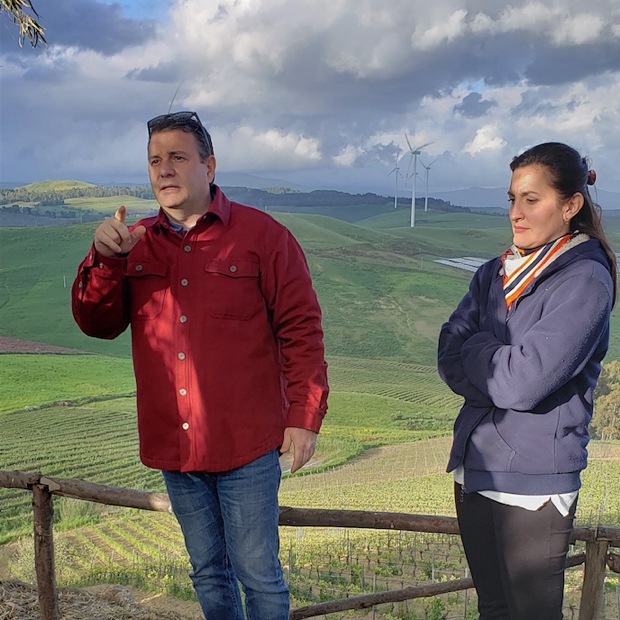
Cultivating wines in much of Washington is not a native exercise. Most of the southern part of the state is desert and nothing comes easy. There are many vistas akin akin to a Wes Anderson set of “parched gulch and arid plains.” This reminder comes by way of Christophe Hedges. “To plant a vineyard we just have to thin out a few sage bushes. Vine-growing is not a natural practice.” Yet Hedges also reminds that practicing biodynamics is not commonplace, but it is natural and so the Vineyard Manager reigns have fallen to 26 year-old Kayla Braich. Christophe insists she is the most knowledgable biodynamic expert in the Columbia Valley. “Hiring an old white guy to do biodynamics would not have worked.” At Hedges, Sarah Hedges Goedhart tells how Portuguese varieties are a focus, especially touriga nacional (but also tinta cáo and sezão) for their heat and drought resistant, terroir-driven qualities. They are late flowering and developing but also deal with the stress of extreme climate events better than the Bordeaux varieties. “Red Mountain is a small-knit community,” says Christophe. “We hope the way we are farming will be the direction of the future.”

Justin Neufeld talking Yakima, Rattlesname Hills and Red Mountain

“We’ve made wine in Spain for the past five generations, and we plan to make wine in Walla Walla for five generations to come.” — CEO Jesús Martínez Bujanda, 5th Generation at Valdemar Estates

Justin Neufeld finds the cabernet sauvignon from Red Mountain more granular and austere. Vibrant yet one-dimensional as compared to the (relatively) cooler climate sites of the Yakima Valley. There are different wind patterns here and the tannic profile becomes softer, chalkier and ultimately more elegant, with a true red fruit personality. Yakima lends to more “blended” cabernets, in particular as it pertains to structure, also more aromatic complexity and classic varietal style. Herbal, red fruits, herbaceous and vegetal character. More acid driven. Much of Yakima’s style is because of landscape orientation. Here the ridges run east to west where the cataclysmic glacial lake outburst Missoula Floods peaked at 1,200 feet. There is also the Stuart Range in the Enchantment Basin which hosts a granite soil profile while wrinkles in the central crust resulted in basaltic, south facing slopes. Meanhwile Neufeld is one of a few producers to discuss the fires and potential for smoke taint. He comments that 2023 reminds him of 2007 when there really was no issue on the grapes.

“My sisters and I grew up with the understanding you don’t farm for this generation, you farm for the next one” – Bill Monson, President, Goose Ridge Vineyards

Heritage Vineyards

Old vines are key to the tenets of quality and success for growing regions worldwide. There are parts of Europe and also grape varieties that suffer from increased disease pressure and low fruit vigour but there are also locations, especially in warmer and more southern climates that host century vines still in positive rotation. South America, Australia and South Africa especially celebrate the heritage and age of old vines that keep on giving. While there are some vines and wineries populating the wet, mild climate of western Washington, it is the greater fields of Washington State’s warm and predominately desert climate playing host to many special blocks, many of them planted in the 1970s and 1980s where the finest expressions of the region’s terroirs are produced. Still dozens of others are coming on strong and on their way to joining the heritage account. Not to be forgotten is the high quantity and profound importance of own (as opposed to grafted upon) rootstock in Washington’s vineyards.

  • Airfield, Arnaut Boushey, Canoe Ridge Estate, Cold Creek, Dubrul, Moxee, Olsen, Phil Church, Rainmaker, Red Willow, Rosa Hills, Rothrock, Two Blondes and Upland vineyards in the Yakima Valley
  • Hyatt, Outlook, Portteus, Morrison, Stonemark and Whisky Canyon in the Rattlesnake Hills
  • Bacchus, Dionysus, Double D, Evergreen, Galitzine, Klein, Lawrence, Lewis Estate, Phinny Hill, Sagemoor, Stoneridge, Sundance, Tapteil and Wallula Gap of the Columbia Valley
  • Andrews, Champoux, Discovery, Lake Wallula, Mach One, Palengat, Sorella and Zephyr Ridge in Horse Heaven Hills
  • Clifton Bluff, Desert Wind, Fox Estate, North Ridge, Riverbend, Rosebud, StoneTree and Weinbau in the Wahluke Slope
  • Beautiful Powerline, En Chamberlin, Ferguson, Forgotten Hills, Heather Hill, Hidden Northridge, Leonetti, Loess, Pepper Bridge, Powerline, Serra Pedace, Seven Hills, Spring Valley, Sur Echalas, Woodward Canyon and Yellow Bird in the Walla Walla Valley
  • Mill Creek and Upland in the “North Fork” (of the Walla Walla River)
  • Bel’Villa, Cara Mia, Ciel du Cheval, Grand Ciel, Hedges, Jolet, Kiona, Kingpin, Klipsun, Les Gosses, Magdalena, Quintessence, Shaw, Upchurch, Terra Blanca and Weather Eye on Red Mountain
  • Ancient Stones, Holy Roller, Lafore, (Freewater, River and Rotie) Rocks, SJR in The Rocks District of (of Milton-Freewater)

These are but a shortlist with many more qualified and soon to qualify vineyards coming into their own. Heritage means more than grapevines, succinctly iterated by Bill Monson, President of Goose Ridge Vineyards. “My sisters and I grew up with the understanding you don’t farm for this generation, you farm for the next one.” CEO Jesús Martínez Bujanda of Valdemar Estates may be newer to the Washington wine scene but he echoes the sentiment. “We’ve made wine in Spain for the past five generations, and we plan to make wine in Walla Walla for five generations to come.”

Canadians and Kate at Spring Valley Vineyard

Syrah and Rhône varieties rising

Washinton State’s reputation has above all else been built on Bordeaux varieties but the present and the future see syrah and other Rhône grape varieties taking up more airspace, vineyard acreage and mind. The reds in syrah, grenache, mourvèdre, cinsault, carignan and counoise; The whites in marsanne, roussane, viognier, grenache blanc, clairette blanche and picpoul. On this last trip the Rhônes and varietal syrah were poured, discussed at length, waxed rhapsodic upon and just plain celebrated at Airfield Estates, Hedges, Gramercy Cellars, Rôtie Cellars, SMAK, Sonder, Spring Valley Vineyards, Valdemar Estates and Vital Wines. The Rhônes are taking hold and growing exponentially in the Yakima Valley, on Red Mountain, upon the Royal Slope and throughout the Walla Walla Valley, especially at the Oregon border in the Rocks District of Milton-Freewater. Plantings began in the mid-1908s in the Red Willow Vineyard of Yakima Valley.

Team Canada at House of Smith

WAugust in Washington

This WAugust trip to Washington wine country was made possible by the erudite folks at the Washington State Wine Commission, both in that spectacular state and also here in Canada. Just two months earlier a full-on participatory Pacific Northwest Wine event took place in Toronto and some added notes can be found at the end of this lengthy report. Three great humans work tirelessly (amongst many others behind the scenes) on behalf of the state’s more than 1,000 wineries, large and small. Keep in mind that Washington is the second-largest wine producing state in the United States, with over 1,050 wineries making over 17 million cases of wine, contributing more than $8 billion in annual in-state economic impact. That is a profound breadth of ground to cover for the small WSWC team. Chris Stone is Deputy Director and Kate Salisbury is International Marketing Manager. Chaperones Salisbury and Claudie Lamoureux of Washington State Wine for Canada were charged with the on point, on time task for five fulfilling and over-achieving days. Hard to say which of their characters or abilities were tops – driving prowess or durability, kindness, patience or grace. All of the above and it is imagined that Godello’s fellow travellers would wholeheartedly agree; Alana Lapierre, Angela Aiello and Mandi Roberston. In any case there was everything to experience, much along the lines of the varied and diverse wineries, AVAs and personalities encountered. Of conglomerates and boutiques, generational families and new blood, the established and the start-ups, pedagogues and rock stars, boffins and balladeers. There was much wine poured and these are the 135 tasting notes.

J. Bookwalter

Columbia Valley AVA

J. Bookwalter

John Bookwalter was a graduate of UC Davis Vineyard Management program and farmed some of Washington’s most famous tracts, Sagemoor, Bacchus and Dionysus. In 1982 he started J. Bookwalter, making approximately 2,000 cases of white wines. In the 90s he started the reds program and 2023 marked the 40th harvest. Chance Cruzen is winemaker and happens to be a big fan of Iggy Pop.

With the boys of J. Bookwalter

J. Bookwalter 3rd Edition 2019, Columbia Valley AVA

Flagship white, Bordeaux idiom, based on sémillon (63 percent) with sauvignon blanc (20) and muscadelle (19). The sém is both anchor and driver, dominating the aromatics and that speaks to how well this has been managed and blended. They keep the faith, act as catalyst for integration of both the varietal trilogy and the wood. John Bookwalter was known to say “choose your wood like you would choose a picture frame.” Equally important is the creation of consequence between flowing grace and bracing tension. Good strong mid-palate, tight and focused, length is outstanding. Proper flagship appellative white blend. Drink 2023-2027.  Tasted August 2023

J. Bookwalter Merlot Readers 2020, Columbia Valley AVA

Mainly merlot but not exclusively, with small amounts of cabernet sauvignon, malbec and cabernet franc for good support, measure and spice. The oak is noticed, the tannins powdery yet silky enough to make this über sippable. Still a bit gangly to be honest with some white peppery piques on the aromatics and so another year will surely send this merlot to be in a place it was intended to be. A few grams of residual sugar plump it up and then chocolate, a next effect by barrel aging which only serves to make this a truly silken, creamy and yet acid retentive red wine. Produces up to 1,500 cases. Drink 2024-2027.  Tasted August 2023

J. Bookwalter Conflict 2020, Columbia Valley AVA

Conflict, aged on lees, bottled 18 months after harvest. A great vintage save for some smoke that drifted in from fires all over the west, though really less dramatic here in the Columbia Valley than many other places. Pretty taut red that has not yet released its true aromatic charm, in fact it could be another 18 months before that really begins. The Readers Merlot is a much earlier proposition and the more diverse varietal meets barrel make-up with style intendment to make this a more structured and powerfully restrained merlot-dominant proprietary blend. Good yields though and a juiciness here that says the type of acidity in Conflict is quite different to that of Readers. This shows real potential, luxe as it is and all parts are prepared thoughtfully, with blood sweat and tears, yet neither by pretence nor blind ambition. Drink 2025-2029.  Tasted August 2023

J. Bookwalter Cabernet Sauvignon Readers 2020, Columbia Valley AVA

Rounded out by five percent syrah and petit verdot, with thanks to a most important grower/vineyard, that being Dionysus. A richer, thicker and more unctuous red (as compared to merlot) but fruit concentration is on par. That said the warmer Dionysus site can’t help but deliver this kind of glycerin viscosity and so the blackberry-Cassis dominance will not be denied. Can’t miss the silky syrah and petit verdot depth that put this in the kind of red best defined as full and substantial. Refined and finessed enough, never overarching or reaching, best now and for a few to five years forward. Drink 2023-2027.  Tasted August 2023

J. Bookwalter Cabernet Sauvignon Protagonist 2020, Columbia Valley AVA

Change of pace, in a way, from Conflict to Protagonist because for the first time there is an Italian (think Bolgheri) like stylistic coming through. Dusty, chalky and powdery tannins are evident, even in the face of fulsome and concentrated fruit. Juicy to the nth degree, ridiculously delicious and then a chocolate plus espresso crema all over the back end. The cumulative effect by fruit, terroir, climate and barrel aging make this climb to a rich and creamy finale pretty much unavoidable. Some sweetness follows and after some REM sleep there will be a long, melodic and jangling future for this Columbia Valley red. Drink 2024-2028.  Tasted August 2023

Vic Palencia

Palencia

Victor (Vic) Palencia’s grandfather was a first generation immigrant from Spain (to Mexico) and he is first gen. American, so the symmetry, from Valencia to Palencia, is something to hang a northwest hat on. Vic started in Walla Walla in 2012 after taking a flyer and to realize a dream. As a first generation immigrant it cements the legally forming “sueno” even deeper. Thus the “Monarcha” brand, “earning my wings,” says Vic. “If you drink two bottles, cabernet and merlot side by side, you can fly.” A symbol for lifestyle, easy drinking wines and then the Palencia label, more serious, exulting Washington State’s diversity of grape varieties grown. The label depicts his father holding a shovel, “always working the land.” Palencia is located in Kennewick.

Godello foreground, background Vic Palencia

Palencia Sparkling Albariño

Charmat method, sweet and salty, like nuts and caramel corn but leaner and tighter as per the grace by variety. Simple stuff with good energy.  Tasted August 2023

Palencia Albariño 2022, Columbia Valley AVA

Says Columbia Valley but really should be called Ancient Lakes located in northwest Washington. But Columbia is more recognizable and so here we are. If it smells like albariño and tastes like albariño well, you know the rest but truthfully this is a less herbaceous and more mineral example. And so Ancient Lakes it is. The terroir is hardpan calcareous limestone, good for drainage and reduction of hydric stress with sandy loam of up to 19 inches above. Pretty good albariño for dessert lands so far from a coast – but the place is definitely the reason. Nice little CO2 buzz about it as well which is so varietally correct. Drink 2023-2025.  Tasted August 2023

Palencia Malbec Monarcha 2019, Columbia Valley AVA

From Vic Palencia and family in Kennewick with Columbia Valley fruit, 14 months in wood. Nice little char and smoulder on sweetly salty and sour-edged fruit. Higher acidity than many malbecs and also valley wines so this wants and needs food. Mojo bowl anyone? Drink 2023-2025.  Tasted August 2023

Palencia Cabernet Sauvignon Monarcha 2019, Columbia Valley AVA

From the Richland Hills in the Columbia Valley where thicker skins and high quality fruit translate to unction and developed tannin. Cassis and Ribena mix, tart and candy hearts sour, in a good place right here and right now. Some powder in those tannins but resolution is just about complete. Drink 2023-2025.  Tasted August 2023

Palencia Petit Verdot 2017, Wahluke Slope AVA

Part of the El Viñador line which is essentially Reserve style but the name is more specific and indicative of what it means to grow and make these kinds of varietal wines. From fruit grown on the Wahluke Slope AVA. Structure and mouthfeel justify the reasoning and the result, especially the tannic intensity and power at the yet to relent finish. Wood thickens, spices and sweetens the last third of this petit verdot which is really unlike any other, grown anywhere and produced as a solo artist. Drink 2024-2027.  Tasted August 2023

Palencia Syrah El Viñador 2019, Red Mountain AVA

Red Mountain fruit and signature varietal effort but also style that Palencia seems most comfortable with. This is because the balance, restraint and finesse are at their collective finest in this kind of handsome and sturdy wine. Still some chalky and powdery tannin but overall the harmony and seamlessness are pretty spot on. Ready to go and please. Drink 2023-2026.  Tasted August 2023

Top notch Paella at Palencia

Palencia Carmenère 2019, Red Mountain AVA

Sourced from the hottest region in Washington, that being Red Mountain and picked quite late. Nothing green about this carmenère, in fact it’s fruit and wood are thick as thieves, the tannins silken and the capsicum or jalapeño non-existent. Chewy like chocolate liquorice and very much a wine made for those who like it rich, luxe and thick. Drink 2023-2024.  Tasted August 2023

Palencia Albariño El Viñador 2022, Columbia Valley AVA

The founding vineyard for albariño at Palencia’s reserve line is as advertised more concentrated, focused and finessed. From various harvests each fermented separately for 30 days in Hungarian oak puncheons then blended together before bottling. Aiming for a Galician style though truth be told you can take the albariño out of Galicia but you can’t take the Columbia Valley out of this albariño. Warm, rich and unctuous, in the end. Drink 2023-2024.  Tasted August 2023

The Tirriddis Boys – Matthew Doutney, Gabriel Crowell and Andrew Gerow

Tirriddis

Tirage … Riddle … Disgorge. Tirriddis, acronym of sorts for three sparkling wine producing friends (Andrew Gerow, Gabriel Crowell, and Matthew Doutney) who celebrated the end of school with Gimonnet and Janz Champagne, fried chicken and chips. All attended Washington State University for viticulture and oenology. Their collective motto is “if we fail, we can always move back in with our parents. “Wine is a super architectural art form,” explains Gerow. “We’re really just trying to define Washington – defining typicality that really doesn’t exist yet.” First base wine were made in the Fall of 2020.

Tirriddis House Gris, Columbia Valley AVA

House tier is all about distribution, for restaurants and export in a fun and recognizable style. Here 100 per cent pinot gris, creamy aromatics, mousse as well, the sweetest of all the Tirridis wines at 11 g/L. Looks at reeling in a Prosecco crowd that can’t afford $50 sparkling wines. Sees 12 months on the lees and it is traditional method so expect some autolysis, mild oxidation and ultimately great energy. Drink 2023-2024.  Tasted August 2023

Tirriddis House Brut, Columbia Valley AVA

More than 50 percent of the base wine is original (from the fall of 2020) and is essentially chardonnay with a few percentage points of albariño. Tirridis for tirage-riddle-disgorge (clever) and the sugars are hidden behind the acidity. Raises a bar for the vital scintillant nature of grapes farmed for wines that transfer energy like sparks jumping from hydro pole to hydro pole. Similar creaminess and mousse to the pinot gris but the orchard fruit here is different than that peachy stone. Who would dare not pour this as a warm home welcome or by the licensee glass? Tastes like unbaked Washington with tight bubbles. Drink 2023-2024.  Tasted August 2023

Tirriddis House Rosé, Columbia Valley AVA

One-quarter each cabernet sauvignon, syrah, merlot and chardonnay, not unusual for Washington per se though no real frame of reference from the sparkling diaspora neither. Celebrates red fruit, from currants through plums and this surely comes across drier than it is, not quite the 12 g/L of pinot gris but this is pretty taut and wound for Rosé bubbles. Drink 2023-2025.  Tasted August 2023

Tirriddis Brut Rosé, Columbia Valley AVA

The second rendition of the Brut Rosé, three parts, in triage two years, of cabernet sauvignon, syrah and chardonnay. One-third each means less red fruit so more of a currant current and the yeasty feels step up sooner and for longer. Still a scintillant intensity of vitality and energy plus some bitters this time around. Anything but a soft, upturned Brut style and saying this is a tasting room profile is pretty much spot on. Just feels like the teaching moment and in turn signature for the boys’ intonement of style. Drink 2023-2026.  Tasted August 2023

Tirriddis Washington Blend, Columbia Valley AVA

Everything but the kitchen sink though in actuality it is anything but because it’s not the last lot to be put together each season. A blank slate concept that intends to represents the region in an unapologetic way. Fruity first, of merlot, riesling, pinot gris, cabernet sauvignon, chardonnay, viognier and syrah. Neither Blanc nor Rosé but a rainbow of multifariousness and truth be told this is seamless fizz, a Venn diagram of varietal and geography, of potential, diversity and exceptionality. Drink 2023-2025.  Tasted August 2023

Tirriddis Blanc De Gris, Columbia Valley AVA

Third rendition looking for pure honeycomb and the guys feel they nailed it on number three, or at least set themselves upon a path to get it right there when number four comes to fruition. Why more sparkling producers do not refer to a varietal sparkling pinot gris in these terms is beyond me. It just fits. Creamy yes, with botanicals and bitters but the pear coulis flavour is uncanny. This goes a bit to herbal and preserved lemon foamy (and acidity is a bit subdued) but it’s close, oh so close. Can’t wait for rendition number four. Drink 2023-2024.  Tasted August 2023

Tirriddis Blanc De Blanc Stonemark Single Vineyard 2020, Rattlesnake Hills AVA

First single vineyard sparkling wine, all chardonnay, small plantings in the Rattlesnake Hills AVA, 1,600 feet of elevation, of brushy savour and direct hits of more than one kind of citrus. The concept is a growers’ one – with obvious connotations. Elevation is clearly the driver because this is about acidity and high intensity, all pervasive and above all else in what this site wishes to give. Poured from Magnum, extended triage. Lemony, tight, zesty and just about zero dosage. Can see this living six or seven years. Drink 2023-2028.  Tasted August 2023

Riley Miller, Sonder

Sonder

Established in 2016 by Riley Miller. Low-Fi, non-intervention, but not natural wines. Inspired by his time in the McLaren Vale. The initial production in 2016 was 100 cases – today about 3,000 cases. A thinker, but not too hard, yet still a man of wonder. Likes to consult the Dictionary of Obscure Sorrows, from which the realization is concluded that everyone around you has a complex life, as much as your own – but we can’t comprehend half of it. “We are like monkeys flying on a rock through space.” Observe Miller conduct a wine tasting for visiting journalists and you can imagine the inner workings of a modern day winemaking production. Riley’s bottles are anything but some kind of toad swindle. They are made for all of us, including those who don’t know it yet.

Sonder Rosé Cinsault 2022, Columbia Valley AVA

Trying to capture a Provençal style, 24 hours of skin contact, gently extracted and truly crushable. Lightly tart, basic, simple, unadorned. Native ferment. Truly cinsault to be honest. Drink 2023-2024.  Tasted August 2023

Sonder Grenache Blanc 2022, Columbia Valley AVA

Big chunk of the fruit comes from Boucher Vineyards and a smaller portion out of the Rattlesnake Hills. Warm and mature though high elevations keep it fresh and again the naked nature of a Riley Miller wine make this immediately crushable. Unadulterated, no make up and local. Drink 2023-2024.  Tasted August 2023

Sonder Roussanne 2022, Columbia Valley AVA

True expression of grape, not necessarily “perfect” wines, nor is there any reason to want them to be but they are representative of site and Washington. Neutral oak, tropical notes, fresh papaya and pineapple syrup, tart and textural with thanks to some stirring. Drink 2023-2024.  Tasted August 2023

Sonder Field Blend 2022, Columbia Valley AVA

Orange, mostly viognier with some marsanne and roussanne, six weeks on skins, six months in neutral oak. Grapes that don’t really bring the orange but instead the partly cloudy pineapple juice hue. A wine that challenges why orange is the ubiquitous term because funk and melting salve are not the thing. Spice yes and litchi, also grapefruit and the most mild of bitters. Has that anesthetic feel on the palate. Third iteration of this wine. Drink 2023-2024.  Tasted August 2023

Sonder Co-Ferment 2022, Columbia Valley AVA

A co-ferment of grenache and picpoul, first time trying, served chilled, “a patio pounder.” Watermelon Jolly Rancher insists Riley Miller, 11.5 percent and as crushable as wine can possibly get. Juice. Water, pink, alcohol. Drink 2023-2024.  Tasted August 2023

Sonder Red Field Blend 2022, Columbia Valley AVA

Mostly counoise and grenache with some cinsault, viognier and roussanne. A couple of weeks on skins, co-fermented with some whole cluster and carbonic maceration. Simple, drinkable, low alcohol, currants and red berries, sweet acidity, a moment of balsamic and charred herbs. The grapes almost combine for a cabernet franc or even lightly smoky cannonau meets carmenère effect. Nothing else like it and better for that. Drink 2023-2024.  Tasted August 2023

Sonder Grenache 2022, Yakima Valley AVA

Rarely made grenache by method and style “as close to pinot as is humanly possible” says Riley Miller. Picked early, 20 percent whole cluster, Western Cape stylistic, light, low alcohol, fresh and shadowy, suggestively if sneaky tannic. Drink 2023-2024.  Tasted August 2023

The Orcas Project Nebbiolo Andrews Vineyard 2022, Horse Heaven Hills AVA

“The Orcas Project is a collaboration between some of the most talented winemakers in the Northwest and a collection of Orcas Island artists. The idea to combine these two groups of people was born on the island and continues to expand throughout the Northwest. Each winemaker that is part of The Orcas Project is paired with an artist and represented by a different label.” Riley Miller’s is pseudo carbonic for which 50 per cent whole cluster is added back on top – makes for a grippy if light and effusive style. Cherry, candy apple and onion skin. Picked early as if for Rosé and frankly reminds of Cerasuolo. Fine bitters, good balance and a bit of roasted nightshade char. Cinnamon heart finish. Drink 2023-2024.  Tasted August 2023

Kinnikinick Red

Chateau Ste Michelle

Chateau Ste. Michelle is Washington State’s oldest winery, and many of Washington’s most famed winemakers got their start with the Estate. Ste Michelle is also the largest producer of Riesling in the world, and has winemaking partnerships with two international vintners: Col Solare is an alliance with Tuscany’s Piero Antinori and Eroica Riesling is a partnership with the Mosel’s Ernst Loosen. As part of the visit, the Canadian team was treated to a Blending Experience.

Chateau Ste. Michelle & Dr. Loosen Riesling Eroica 2022, Columbia Valley

More than a hint of residual sugar yet the driest style for CSM and though the relationship is with Ernie Loosen this is not Mosel style. Fruit is sourced primarily from the Evergreen Vineyard to bring Eroica into its proverbial and ironic sweet spot. The “hero” is in ode to the winery’s varietal roots and a Beethoven reference. Bit of residual CO2, high acid and truly tart. Balanced vintage, vital and energy elevating. Will be one of Eroica’s better agers. Drink 2023-2027.  Tasted August 2023

Chateau Ste. Michelle Riesling Indian Wells 2022, Yakima Valley AVA

Much like Eroica there is a residual CO2 buzz and at least twice if not three times the number (here eat 30 g/L) of residual sugar. Quite rich, luxe and opulent with just a few sites left to create this round and sweet style. High Kabinett or low Spätlese in a sense but without the supporting acid. More Mosel here and yet also quite a lot more phenolics and tonic. For a consumer that likes sweet wines but can be drawn into riesling, followed by some less sweet varietal examples. Some wine producing and drinking habits never die. Drink 2023-2025.  Tasted August 2023

Chateau Ste. Michelle Chardonnay Canoe Ridge Estate 2019, Horse Heaven Hills AVA

Relatively rich and luxe chardonnay style, sweetly buttery, soft and creamy. No real bite but just easy, amenable and though considered a cooler spot with better acidity than some it’s still as round as chardonnay gets. Softens more and more as it slides down and feeds away. Drink 2023-2024.  Tasted August 2023

Chateau Ste. Michelle Cabernet Sauvignon Indian Wells 2020, Columbia Valley AVA

Reds are the main focus at Indian Wells and while the style is opulence, this cabernet sauvignon is surely designed to be consumed ASAP. Tannins are present yet sweetly soft and wood soaks up everything, then returns it with semi-sweet chocolate. A quarter is new American oak and 20 percent is French. Soft with some sweetness, macerated plums and that ever pervasive chocolate. Hugely consumer friendly. Drink 2023-2025.  Tasted August 2023

Chateau Ste. Michelle Merlot Canoe Ridge Estate 2018, Horse Heaven Hills AVA

A third new French and seven percent American wood truly sheathes, thickness and wraps merlot up in a nurturing flannel blanket for merlot that has softened into an almost ideal drinking state. The 2016 was much more tannic and though some omnipresent balsamic shows here it’s more reduced, sweeter and less high-toned. Lower acid here, at 4.8. Warm and caressing vintage for the palate and our emotions. Drink 2023-2025. Tasted August 2023

Chateau Ste. Michelle Cabernet Sauvignon Cold Creek Vineyard 2019, Columbia Valley AVA

Cold Creek Vineyard is a very successful vintage for cabernet sauvignon, more finely tannic and higher in acid than 2016. The energy is special, the harmony between fruit, acid, tannin and wood far superior to other seasons and also other growing sites. Yes there is luxe fruit, concentrated and substantial but the combination of harvest and winemaking makes for an exceptional combination out of 2019. Drink 2024-2028.  Tasted August 2023

Chateau Ste Michelle Syrah Limited Release Organic 2020, Horse Heaven Hills AVA

Deep purple, fruit sweetness from über ripeness and a clarity or cleansing feeling for naturally curated and orchestrated syrah. So profoundly bright new world in style and effect, delicious to the nth degree and openly gratifying. Drink up.  Tasted June 2023

14 Hands Winery

14 Hands

Chateau Ste Michelle property located in Prosser.

14 Hands Pinot Gris 2022, Columbia Valley AVA

Clean, fresh, soda feel that puts the style in gris though there’s not much separating it from grigio, either from the Columbia Valley or across the pond delle Venezie. Vague melon and honeyed flower blossoms but when all is said and done this easiest to get at pinot gris from the grand Columbia Valley is a simple glass of white ubiquity. Drink 2023-2024.  Tasted August 2023

14 Hands Roussanne Marsanne The Reserve 2022, Rattlesnake Hills AVA

Crisp Rhône white blend with a small percentage of wood to give it a wisp of smoulder that combines with some lees stirring for a creamy mid-palate. Higher in pH than some of this sort of Yakima ilk to result in elevated sapidity, a toothsome quality and finally piquant bite. Quite a bit of sulphur to work through but no worry because being structurally sound and very “reserve” in style the fruit and the composure will rise and win in the end. Give this some air, a swirl and agitation to coax out the charm. Just a 350 case production. Drink 20224-2027.  Tasted August 2023

14 Hands Stampede 2018, Columbia Valley AVA

Stampede is 14 Hands’ self-declared “bold red wine” and while the marketing sounds like something in the realm of BBQ sauce this is really impressive for the price. Essentially syrah with some petit verdot “to give it some shoulders” tells winemaker Keith Kenison who has been with the winery since its inception. French oak dominant translating as lavender, jasmine and vanilla, the latter a tincture that permeates much of the aromas and flavours. Yes it’s confected but also rich and unctuous for $15 (US). Drink 2023-2025.  Tasted August 2023

14 Hands Cabernet Sauvignon The Reserve 2019, Horse Heaven Hills AVA

Led by cabernet sauvignon and labeled as such though there are supports from both cabernet franc and merlot. A protein cabernet, meaning it drinks with strength and pairing it alongside entrée portion meats, preferably red will do it best justice. Carries that full barrel feeling in surround of a swell (mainly black) fruit and incredible richness, feeling like sweetness, but the wine is bone dry. Wood resin, syrups, up and into a whole other level of concentration. The most refined and luxurious of the 14 Hands reds (or whites) that competes with top Washington and also some heavier priced California examples. Drink 2024-2028.  Tasted August 2023

Goose Cap AVA at Goose Ridge Vineyards

Goose Gap AVA

Goose Ridge Vineyards

Goose Ridge in Richland and adjacent to Red Mountain is unique in that it is the owner of its own (Goose Gap) AVA, approved three years ago. The first planting of cabernet sauvignon was 25 years ago in 1998 and today there are a total of 2,500 acres of vines. The Monson family dates back to the early 1900s when M.L. Monson brought his family to the Yakima Valley. Taylor is the fourth generation, dad and two sisters (Bill, Molly and Valerie) are the third. The family is equally famous for cultivating Cosmic Crisp Apples (that don’t brown), developed with Washington State University and the first to grow them. The visit in the vines and through the facility culminated in a quick tasting of four wines though the setting was not conducive to formulating proper tasting notes.

Red Mountain

Col Solare

Located on Antinori Road in Benton City is the Château Ste Michelle Red Mountain partnership with Tuscany’s most famous family. A tour with Col Solare’s hospitality team reveals the bond with the mothership. “Antinori dictates what we do and the style of wines they want us to make.” There are no problems, only solutions and fixing issues like re-planting problematic cabernet sauvignon blocks is in the process of a three-year plan. “The only wine we make here that the Antinoris care about is cabernet sauvignon – so it has to be great.” The new winemaker is Stephanie Cohen, a Michigan graduate in Chemical Engineering. Cohen worked in New Zealand, Margaret River and Napa Valley, where she met Marcus Notaro, first winemaker at Col Solare. Stephanie went to Oregon, then Columbia Crest, then arrived at Col Solare three years ago. She was appointed head winemaker on July 1st, taking over from Darel Allwine. “Do we love what Stephanie is doing? Short answer is yes.”

The vintage brings about three major changes; label, style and price. The Col Solare had been in the $75-85 range going on 10 years but now it’s about Antinori wanting something “better.” In every respect ’19 is certainly darker and richer, of an impenetrable hue and structure. An Italian cabernet sauvignon, as close to Bolgheri Guado Al Tasso as Col Solare has ever been, but this holding pattern will almost surely be temporary. A Red Mountain interpretation from small (blueberry-sized) berries, raised with low vigour off of soils of sand and silt. Aged 22 months, not quite but pretty close to 100 percent new oak. Racked every three or four months, to eliminate slag and to refine, refine, refine. Aids in tannin transformation and eliminates the need for fining. A cabernet of great depth, of Cassis, mint and graphite. Luxe character, finesse, if not the level of fantasy wished for – but this new is the first of the new. By 2020 invention should meet vision for the next level of Col Solare quality. Drink 2025-2030.  Tasted August 2023

Col Solare Cabernet Sauvignon 2018, Red Mountain AVA

Essentially cabernet sauvignon with five percent franc while only 2015 and 2020 have been 100 percent. From the hottest wine-growing AVA in Washington state, with basalt below the soil surface, irrigated six to eight inches per year. Early picked and in 2023 this will likely start on or around the 20th of August, to finish off what has been “a really weird year.” There are 4,040 total acres in an AVA considered one of seriously high quality. Col Solare has been growing here since 2011 but not enough to meet production numbers and so six Red Mountain contract growers are involved. The average case number is 5,000 for a cabernet sauvignon as suave as it is rich though 2018 is the last of an era, because 2019 will mark changes to concentration, detail and price. Meanwhile the ’18 is equipped with the finest powdery tannins. Truth is there can be no denying the quality levels of fruit, wood and tannin. All relatable to uncompromising labour, time put in and attention to detail. It’s all too perfect. Drink 2024-2029.  Tasted August 2023

Col Solare Merlot 2019, Red Mountain AVA

Though 2019 was marked by an unusual Spring in a cooler and by extension leaner year it’s a relative thing and so Col Solare has still made a very substantial wine. This label falls under the auspices of the Component Collection, a “Tenuta” expression mainly intended for the Wine Club. All estate fruit, built on the premise of perfume ostensibly if allegedly a Washington state desert opportunity exaggerated on Red Mountain. Intense violets with blue fruits that merlot will express at these magnified levels when allowed to. Still tight as far as structure is concerned but thankfully three-plus years have allowed for some wood integration and tannic settling. A fruit emergence is underway and frankly encouraged, more so than the cabernet, if here in merlot not quite as polished as a wine. The finish shows the rusticity and austerity of the tannins while the quality of the chocolate is nothing if not impressive. Drink 2024-2029.  Tasted August 2023

With Sarah Hedges Goedhart and Christophe Hedges

Hedges

“Our driving force is for our wines to have a Red Mountain quality,” is basically the first sentence uttered by proprietor Christophe Hedges. “I don’t know if we’re trying to be authentic but we are following our mother’s lead, that if you are going to do something, do it correctly.” Anne-Marie Liégeois grew up in Ossey-les-Trois-Maisons, in Champagne, France. She married Tom Hedges from Richland, Washington in 1976. Their first wines were sold to Sweden in 1997. The first vineyards on Red Mountain in the Yakima Valley were planted in 1989 and 1990 and the winery-Chateau was built in 1995. Christophe returned in 2012 and is National Sales Director while sister Sarah Hedges Goedhart took over full-time winemaking in 2015. This coincides with the first certified label under the biodynamic program which began back in 2008. Goedhart says there’s no formula ever. “We’re just trying to be guided by what the grape’s want to be. Blending is the hardest part.”

Sarah Hedges Goedhart and Christope Hedges

Hedges Le Blanc Déscendants Liégeois Dupont 2021, Red Mountain AVA

A program that began in 2014, use of older barrels, some lees contact and bâttonage. A niche wine from Rhône grapes (namely marsanne with viognier), because whites at this level just don’t sell all that much. Even as brix levels rise the pH on this wine remains quite static and so as an aromatic white this remains pungently salty and avoids the starchy. Richer than expected and dutifully harmonious, clearly a wine of class, beauty and understatement. Lemon and orange peel, really nutty and slightly toasty, with only 400-500 cases made from just one hectare. It will change a lot and get brinier and brinier, becoming even better with stronger aged cheeses and many things cured. Drink 2023-2028.  Tasted August 2023

Hedges Family Wines CMS Made With Organic Grapes 2022, Columbia Valley AVA

The “American” version label, minimally sulphured and just bottled a week ago. A “farm” style wine, crunchy and sitting right there with a local sense of terroir, northwest, Columbia Valley, very different than what comes from Red Mountain. That said it has more Red Mountain fruit than Columbia Valley. The blend is 48 percent cabernet sauvignon, (44) merlot and (8) syrah, subjected to very, very little new wood. Fresh and clean with an iodine and wet concrete note, almost Western Cape in style. Spice and intensity speak about house style with a broad stroke on a painted picture. Drink 2023-2025.  Tasted August 2023

Hedges Family Estate Red Wine 2021, Red Mountain AVA

A blend off all the vineyards on Red Mountain (Hedges, Jolet, Bel’Villa, Magdalena and Les Gosses), berries about half the size of what comes from Columbia Valley. A higher pH place with less water conversion and more evaporation. Yields are smaller by half and extraction levels the opposite with thicker skins and when ripe, also crunchier seeds. The ’21 blend is 55 percent cabernet sauvignon, (26) merlot, (9) syrah, (6) cabernet franc, (3) malbec and (1) petit verdot. Aged in 62 percent American and (38) French wood. Rich, luxe, concentrated and fixated on its home, that being these five blocks on the Red and frankly the palate feels intoxicated or anesthetized by the command of attention and purpose dictated by place. A top vintage, without a doubt. Drink 2024-2032.  Tasted August 2023

Hedges Family Estate Le Haute Cuvée 2018, Red Mountain AVA

This is 99.77 percent cabernet sauvignon and the rest, well does it matter? A cuvée that goes back to 1987 and here a Hedges professed, native ferment instructed great vintage. Lots of different cabernet sauvignon components make up this prominent and confident biodynamic wine. Red to black fruit, a noted brininess, higher acidity, seemingly lower pH, saltiness and dusty Christmas spice. The potential here runs long and deep, without weight and still some iodine, balsamic and minty freshness. Shot of espresso conclusion that speaks to another level of tannic dust and combust. Drink 2024-2032.  Tasted August 2023

Hedges Family Estate Touriga Nacional 2018, Red Mountain AVA

Quite possibly the future of Red Mountain, at least for Hedges, having planted three Portuguese grapes some time ago. Their heat resistance and ability to adapt preps them for next level climate extreme to come. Aged in 100 percent neutral American barrels and coming away liquid chalky, dark and feigning vague sweetness. Drips and oozes with Red Mountain iron, iodine and though truly opaque, there is this transparency of pace and place that cannot be hidden. Drink 2023-2027.  Tasted August 2023

Déscendents Liégois Dupont Syrah Les Gosses Vineyard 2020, Red Mountain AVA

No mention of Hedges on the front label but instead Anne-Marie’s family name because you have to respect your history. And the vineyard is hers, planted in 2006 then certified biodynamic in 2019. A block that winemaker Sarah Goedhart runs through with several different picks, some falling on one side and some on the stylistic other, than blended back in together. Its richness is anything but gratuitous, the depth descendent and built upon the idea or concept of gravitas. Full, complete and a most satisfying mouthful. Drink 2025-2033.  Tasted August 2023

Déscendents Liégois Dupont Syrah Les Gosses Vineyard 2019, Red Mountain AVA

Rich, thick and finely layered syrah from the distinct entity that is Red Mountain with its not to be missed meaty, mineral, sanguine, ferric rich, red earth character. There is an underlying chalkiness here and one that will surely determine a long life ahead, as witnessed by the linger and hang around ability of of a syrah on a clear and present mission. Drink 2024-2029.  Tasted June 2023

Déscendents Liégois Dupont Le Rosé Les Gosses Vineyard 2022, Red Mountain AVA

A kitchen sink Rosé blend led by syrah (42 percent) with (21) mourvèdre, (18) cunoise and (14) grenache. Aromatic as much as syrah is want to go, for us and so the Rhône gang’s get together works so bloody well. There is a sanguine character with thanks to the mountain’s soil and the movement here is classical, strings reverberating, flowing, rising and falling, no real cresencedo but a softening and fade. Just lovely stuff. Drink 2023-2025.   Tasted August 2023

Hedges Family Estate Red Mountain Reserve 1999, Red Mountain AVA

The artist formerly known as Red Mountain Reserve became Le Haute Cuvée with the 2012 vintage. Hedges was both ahead of their time (because the word Reserve was already losing its wine world lustre) and respectful of family history by labelling in a Champagne or at least a French vernacular. Here is a nearly 24 year-old red blend that has aged remarkably well and though thinking miraculously was a momentary thought – there is no miracle but something more profound at play. The Mountain for one thing and a family at least a decade ahead of the curve. Early Washington organics, no reverse osmosis, no mechanical filtration and no lobotomizing a bottle of red wine. Yes the secondary notes are present and they are settled in a state of absolute proprietary grace. Very little trace of tannin, nor any barrel that is but a superfine mountain induction that makes for a silky feeling in the mouth. There is a chance this will live another 24 years but the fruit is already leaving and so 12 should be the maximum with half that the truest and most honest recommendation. Drink 2023-2027.  Tasted August 2023

Hedges Family Estate Syrah Bell Villa Vineyard 2012, Red Mountain AVA

Tasted from magnum (bottle 110 of 200 to be exact) and shocked (in a redacted moment) by how fresh and non-advanced this wine persists to be. This syrah is from a vineyard that was the second one planted on Red Mountain and what we are faced with is a 15 year-old block that was so far ahead of its time. Tasting this 10-plus years after vintage feels like fiercely re-reading an old Tom Robbins novel, celebrating the proper work of the past and predicting what will be essential in the future. The search back then begets syrah in hot climates now. Getting the sage brush but now, now the fungi have come about, though not the kind that grow in a western rainforest. More like that which emerges from a burn site. In any case the impression is syrah from a beautifully stark place. La belle de campagne. Drink 2023-2026.  Tasted August 2023


Walla Walla

SMAK Wines

SMAK Wines is the first Asian woman owned and operated winery in Walla Walla producing exclusively Rosé. “Rosé to me is more than just a beverage, it is a lifestyle. I wanted to bring this lifestyle here and so SMAK was born.”- Fiona Mak, Owner & Winemaker.

SMAK Sangiovese Spring 2022, Walla Walla Valley AVA

SMAK Wines is the work of Fiona (Sui Wah) Mak and sangiovese is made just like the pinot gris, save for how it exults the high acid and sharp nature of sangiovese. Still so light and rainwater clean, not quite petrichor but yes, a Rosé that drinks like water. Back up the truck for this glug-glug, glou-glou, grape witches fantasy of Rosé. Salty. Drink 2023-2025.  Tasted August 2023

SMAK Pinot Gris Summer 2022, Walla Walla Valley AVA

I mean not all that different than the sangiovese if lighter, lower in acid and well, summery. Light, bright, tender, carefree, unadorned and even saltier, to be honest. Just what you need, whether you know it or not and well before you even know your needs are needed. Salty magic as koan. Koan of Rosé. Drink 2023-2025.  Tasted August 2023

SMAK Syrah Autumn 2022, Walla Walla Valley AVA

Made with syrah and its autumnal personality, barrel fermented in neutral wood, some malolactic and so not the usual but rather a Rosé with some extra nuance, spice, texture and fantasy. No lewd or ambitious stylistic departure from Spring and Summer, just a bit more grounded, of blush gravitas, creaminess and something needed to be explained. Rosé smackdown without any undesired anxiety or tension. Drink 2023-2025.  Tasted August 2023

SMAK Syrah Bubbly Blend Winter 2022, Walla Walla Valley AVA

Fizz Rosé by syrah with some addendum by grenache and a few extra grams of residual sugar to keep the harmony and faith alive. Nice little bit of naturalization in the way the wine sits on the palate and melts like a caramel and lemongrass salve. Red currants and again, coming across dry and just tannic enough to keep things moving forward. Would like another half gram of acid for best energy and more length. Drink 2023-2024.  Tasted August 2023

SMAK Cabernet Franc Rosé Abstract #1 2022, Walla Walla Valley AVA

There is just something about cabernet franc that when it’s made into Rosé (and made well) the grape variety is more recognizable than almost any other. Fiona Mak has captured grape and what just has to be place with a level of calm and hypnotism that Rosé rarely sees. Drink a glass, get your Rosé buzz on, feel OK for the rest of the day. Drink 2023-2025.  Tasted August 2023

SMAK Pinot Noir Rosé Abstract #2 2022, Walla Walla Valley AVA

Gotta say this might be the best use of pinot noir in Washington, light, salty and without distraction to cause any overthinking. Closer to the sangiovese than any of the others and with an extra layer of volatility, sharpness and tang. Drink 2023-2025.  Tasted August 2023

With Brandon Moss, Production Winemaker – Gramercy Cellars

Gramercy Cellars

The story of Gramercy Cellars began with a Manhattan-based sommelier tasting and becoming inspired by Washington State wines. He sells everything to move across the country to make his own. Master Sommelier Greg Harrington and production winemaker Brandon Moss are the mad scientists, experimental music makers, open-minded and forward thinking team.  They are intuitive and paying attention to the extremities of climate events. Fully aware that 2020 was a brutal smoke year and so 25 percent was balked out after remediation. “Mourvèdre can handle it” tells Moss, but “cabernet franc and pinot noir simply can’t.” Elizabeth Tommasino at Oregon State is researching “columns” that neutralize smoke taint without stripping varietal from wines.

Gramercy Cellars Picpoul Pét Nat

Sparkling picpoul, low pH, high acidity, aromatically neutral and boom, Pét-Nat. Left on its lees for something like 10 months before being disgorged and so yeasty is the understatement. Graffiti labeled, an element of Gramercy Park, NYC ode. Smells like chèvre and preserved lemon, minutely funky and well, extremely French. Weirdly so and the yeasty-bready ready quality is more sourdough than anything else but also this dry-aged beef note that purists will really love. This is how you make wine without excess sulphur, cultured yeasts and for the purpose of re-fermentative ideals. Drink 2023-2025.  Tasted August 2023

Gramercy Cellars Picpoul 2022, Walla Walla Valley AVA

Not a whole helluva lot of picpoul made in the United States and especially in hot climates but it ripens late and the acidity can be maintained – that said you need a lot of heat to get it ripe. This may not be the Languedoc and the lean, salty, low pH style without lees weight or drive puts this in a league of its own. Vines were planted in 2013, clusters are loose and massive, the wine it makes is acid-driven, fresh and simple. Pencil lead, cinnamon heart and fennel pollen. More complex than you might think. All lemon and lime on the finish. Drink 2023-2025.  Tasted August 2023

Gramercy Cellars Viognier 2022, Columbia Valley AVA

Sourced from Lake Chelan for a cooler climate base and then the Gramercy vineyard called Forgotten Hills in the Walla Walla Valley. The WW fruit is all barrel fermented while the Lake fruit is only treated to forty percent. The complete opposite of the typically recent warm vintages and so don’t come looking for tropical fruit and fresh roses. Think orchards, of pear and then that douse of lime with a salty finish. Summertime temperatures in later September brought weight and closure to this ’22 viognier. Might still be a tad lean but phenolics are solid and balance is not to be questioned. This is viognier for those who don’t always love viognier. Thank you warm October. Drink 2023-2026.  Tasted August 2023

Gramercy Cellars Mourvèdre “L’Idiot Du Village” 2020, Columbia Valley AVA

Varietal, from Olson Vineyard west of Red Mountain up on the north ridge, back hill of Benton City. Hot for ripeness though not quite Red Mountain hot. Fermentation and aging in concrete with more barriques involved and then a racking back to concrete. Nearly 60 percent whole cluster because the vintage said so and biting into the stems directed such a decision. First vintage was 2009 and along with 2010 it was a GSM-C blend but over time (and as a result of a trip to Bandol) the weird blend was dropped in favour of making mourvèdre, a.k.a. the true Washington rock star. Peppery but no char, herbal though never herbaceous, red fruit strong without any unnecessary tension or power. Kind, soft and nurturing for the grape. Terrific use of whole bunch, proper and grape related. No bitterness, no smoke taint. Clean as it gets. Pretty much ready to pop and pour. Drink 2023-2026.  Tasted August 2023

Gramercy Cellars Syrah Forgotten Hills 2019, Walla Walla Valley AVA

On the Blue Mountain side of Walla Walla, picked early in most parts of the state but not until October in Forgotten Hills, set down below in an ancient riverbed in the valley. De-stemmed in 2019 because of some mild issues and very much a red fruit juicy, lighter character of syrah with peppery liquidity and little to no sharp bites of tang. Crunchy stuff, relatively low in Rotundun and made to respect the vintage which did not want the makers to keep the bunches whole. Nothing aggressive here, fruit always winning. A fifth of the tannic austerity that the (whole cluster component) brought to the 2017. Drink 2023-2026.  Tasted August 2023

Gramercy Cellars Syrah Forgotten Hills 2017, Walla Walla Valley AVA

Nothing wrong with a little bit of age on a syrah that has come into its own with thanks to the powers that be so that we can enjoy the fruits and the result of great labour. The present matters and yet there is a tension and even tannic austerity that asks for even moie time. Such a well crafted syrah, as meaty and coursing as it is fruity or getable, in fact there are few that can match the wound intensity, focus and restrained power as this by Gramercy denotes. Drink 2024-2032.  Tasted June 2023

Gramercy Cellars Syrah Lagniappe 2019, Yakima Valley AVA

From Red Willow Vineyard in the Yakima Valley near the town of Wapino. The first Washington syrah vineyard planted in the 1980s by David Lake, a Master of Wine, with Mike Sauer, in 1987. The old block is called Chapel Hill and this is 100 percent whole cluster syrah, completely apposite to Forgotten Hills even though it’s the same vintage. Aromatic concentration, full bodied nature and a naturally sweet meets savoury personality that is quite frankly intoxicating. Lagniappe as Frangipane, something wild and free, a crushed rock and berry entanglement and something profound. Really tight and precise. “Wait, did you hear that?” What’s the music playing? Somewhere down the Crazy River? Drink 2025-2032.  Tasted August 2023

Valdemar Estates

In 1889, Joaquin Martínez Bujanda began the family winemaking tradition in Oyón, a small town in Northern Spain. His son, Marcelino, and his grandson, Jesús, followed in his footsteps. Jesús’ son, Don Jesús Martínez Bujanda, created Bodegas Valdemar in the 1980s. His son, Jesús Martínez Bujanda (5th generation), is the current CEO of the family’s winemaking business, and his sister, Ana Martínez Bujanda, is the Cheif Operations Officer for Bodegas Valdemar. Jesús fell in love with the Walla Walla Valley while he was a student at the University of Washington. His passion for winemaking and for the valley led him to create Valdemar Estates.

Valdemar Estates Chardonnay 2021, Columbia Valley AVA

Clearly a top chardonnay site and the luxe character is evident, as is the acid, freshness and piqued intensity. The look here is texture, playful movements and interactions between parts so think down south but back to the motherland and south from there. Valdemar paired this with beets, mango and pistachio – my that does work. The finale on this chardonnay is warm and spiced, a harmony of seasoning after fruit and wood subside. Drink 2023-2026.  Tasted August 2023

Valdemar Estates Cabernet Sauvignon Entre Nosotros 2020, Columbia Valley AVA

“This is our entry level cabernet sauvignon (at $44),” tells Jesús Martínez Bujanda, “but it is the most important wine that we make at the winery. It has to over deliver.” And so the introduction (with some merlot and petit verdot) is the wine that acts as the entry drug and bridge to the top end wines that a Rioja producer thinks creates exceptional wines out of not only the Walla Walla Valley, but also the greater Columbia Valley. You can immediately feel and tell that a Rioja mentality infiltrates the place but how could it not? The chalkiness of the tannins are remarkably fine and the spicy character actually pricks and piques the palate. Purple fruit, creosote, graphite and wood that will take a few years to melt in. The fruit is equipped to handle it. Drink 2024-2028.  Tasted August 2023

Valdemar Estates Cabernet Sauvignon Klipsun Vineyard 2020, Red Mountain AVA

Immediately noticeable as a cabernet sauvignon from a warmer site, fruit rich and concentrated, doubly substantial and even further developed as richly tannic. Fully, completely substantial and laden with finest grains of tannins in chains every finer, braided as tight as is seemingly possible. Dusty but a thick, duff like matter, coating every minute part of the palate. There are no holes or moments of lag but only heavy set fruit, supportive acids and those massive tannins. Terrific work from winemaker Marie-Eve Gilla and not sure there is a better cabernet sauvignon made anywhere in Spain. Drink 2023-2029.  Tasted August 2023

Valdemar Estates Syrah 2020, Walla Walla Valley AVA

Here Syrah comes from the hottest districts in North America, known as The Rocks, an ancient riverbed on the Washington-Oregon border filled with basaltic cobbles. Valdemar owns a portion and this is arguably THE PLACE to grow syrah in the west. Floral with high level black pepper for classic syrah-Rotundun style. Meaty, with iodine and charcuterie but with no compromise to fruit concentration. A substantial wine in all respects, tannic and well extracted, again across all parts of regard. It can be imagined that the style will change over the next few years as finesses continues to hone in on just what the Rocks wants to give out of vintages ever diverse.  Last tasted August 2023

Full on pitchy dark fruit swells from Valdemar, layered, chewy and ropey, like liquorice of many splendored flavours. Full on ripeness and natural sweetness by way of expression without any compromise or conceit of structure. An earlier drinking example though also one that will do well for up to five years because the fruit is just that deep. Drink 2024-2027.  Tasted June 2023

L’Ecole No. 41

The old Frenchtown school operated until 1974 and was bought in 1977 with the idea of turning it into a winery. First harvest and official founding was in 1983. Marty Clubb is celebrating his 40th Anniversary. Jean and Baker Ferguson founded the winery in 1983, well before there was a wine industry in Washington. Third in Walla Walla, 20th in the state. Marty was winemaker from 1989 and today its Mark Trafanelli, since 2018. Now 50,000 cases, increasing by 1,000-1,500 every year since 1989. Cabernet is into its 50th leaf, merlot close, chenin blanc next and first sémillon was on Sagamore, also the Wahluke Slope. Not a lot off new plantings and so the overall amount is declining. They make upwards of 30 percent in the state and even more than that in chenin blanc. The school at 500 ft is in a cold frost belt so the older vineyards are planted at 800-900 ft and the new Ferguson Vineyard on basalt is at 1,500. Climate change has improved winter weather ability while diurnal temperature changes can add up to 40 degrees Fahrenheit.

With Marty Clubb, L’École 41

L’École No 41 Chenin Blanc 2022, Walla Walla Valley AVA

Older than 35 years of age and so like the Western Cape OVP the labelling is old vines. Akin to old bones but with experience, resistance to weather issues and creating high level concentration. Some of the fruit comes from the Newhouse family’s vineyard with century vines, sour rot dirty laundry and all. Clones probably came up from Dry Creek Valley in California and my if this does not strike a balanced accord between dry and sour, concentrated and tart. Just woollen enough to mimic the Loire and act nothing like California. Length is more than impressive. Drink 2023-2026.  Tasted August 2023

L’École No. 41 Sémillon 2022, Columbia Valley AVA

Comes across as having some sweetness but be fooled once because it’s glycerol that gives the impression, so truth be told the sensory give is astral and incidentally Van Morrison’s seminal track from the eponymous record is playing in the tasting room as the wine is poured. The 2022 shows some early flint and petrol, balanced by the texture developed as a result of extra lees time. Another push-pull example of a L’École No. 41 white off of vines with experience. Just the right amount of tonic and bitters pop at the finish.
“To be born again
In another world
In another world
In another time.”
Drink 2023-2028.  Tasted August 2023

L’École No. 41 Chardonnay 2022, Columbia Valley AVA

A good chunk of this fruit comes from the original block on a crested hill of the larger Evergreen Vineyard. Dear Mr. Fantasy, pour me some chardonnay, from ice age silt and sand, stones and minerals that when respected, treats a consumer to this kind of salty-sapid harmonic chardonnay. All barrel fermented, all French and 20 percent new. I mean it’s an amount and style truly Burgundian with some tropical fruit because it is 2022 and yet acidity is crisp with green apple bites to balance what is also creamy texture. Middle road compared to the chenin and sémillon but also so perfectly professional. Drink 2023-2026.  Tasted August 2023

L’École No. 41 Merlot Black Label 2020, Walla Walla Valley AVA

The original estate red, the only one made in the 1980s and still the one that delivers earthy and herbal tones. The 18 percent cabernet franc (plus drips of malbec and petit verdot) creates the verdant and forest floor notes. Good red to red-black fruit from 2020 with highest level phenols and a sweet, pretty persuasion. A couple of glasses and then the melatonin sets in, followed by a near guarantee of REM sleep. “It’s what I want, hurry and buy.” Drink 2023-2027.  Tasted August 2023

L’École No. 41 Cabernet Sauvignon Black Label 2020, Walla Walla Valley AVA

“We have a lot of old vine cab,” says Marty Clubb, which indeed drives the machine, but there no real reason to name that on the label. Minimum age is 30 with many over 50 for a 100 percent cabernet sauvignon, all picked in October. Rich, viscous, unctuous and most important – experienced. Chalky and the barrel brings both good dark chocolate and dusty espresso to the finish. Age this five years. Drink 2024-2027.  Tasted August 2023

L’École No. 41 Merlot White Label 2020, Walla Walla Valley AVA

The highest level for merlot has Bordeaux Right Bank in mind and here the mix of windblown loess topsoil and basalt takes the grape up to where great minds and ambition want to meet. Huge fruit vintage, thick as thieves with structure twice pointed and the overall result is a big and cellaring potential merlot. Drink 2025-2030.  Tasted August 2023

With La Leggenda, Ange Aiello

L’École No. 41 Cabernet Sauvignon White Label 2020, Walla Walla Valley AVA

Less than 2,000 cases are made of the three vineyard (Seven Hills, Pepper Bridge and Ferguson) sourced cabernet sauvignon. Here comes the Cassis and herbal-savoury note with dried fruit moments red to purple and finally an impressive set of varietal meets site(s) circumstances. Averages out at 35 percent new wood and yes the fruit receives the wood with open arms. Long and age-worthy, longer than the merlot. Drink 2025-2032.  Tasted August 2023

L’Ecole No. 41 Apogee Pepper Bridge Vineyard Proprietary Red 2020, Walla Walla Valley AVA

The 31st vintage of Apogee. From the central part of the valley where cool air seems to be blowing through at all times. Heat accumulation is lower, hang time longer and the site is picked in late October, just ahead of the first frost. Planted in what would a millennium ago have been wher there were ice age flows. This is 56 percent cabernet sauvignon, (28) merlot, (12) malbec and (4) cabernet franc. The site tends – to more leather-tobacco and here it is also horse saddle noted which is Bordeaux in mimicry. The soil derived from ice age flows is what we extend in belief as being the reason. Why not? Serious character and complexity, finest tannins of the estate’s Bordeaux reds and from 2020 likely a 15 year run to come. Maybe longer. Drink 2025-2035.  Tasted August 2023

L’École No. 41 Perigee Seven Hills Vineyard 2020, Walla Walla Valley AVA

A proprietary name imagined by Martin Clubb’s father-in-law to explain site which is at high elevation on the south side of the valley planted in 1980. The soil is 15 feet of wind-blown loess sitting atop another 15 feet of ice age flow. Extended maceration is the treatment for this proprietary blend which is composed of the free run portion of the juice because both the cabernet sauvignon and petit verdot showed hints of smoke taint. Perigee incidentally is the closest spot in the moon relative to the earth. A super moon in lay-person’s terms. The blend is 54 percent cabernet sauvignon, (24) merlot, (12) cabernet franc, (6) malbec and (4) petit verdot. Rich and smouldering, thick black currant almost syrupy but so high in glycerol and what impresses but also harmonizes this red is its sweet and bracing acidity. Makes the smoulder unimportant though it will always be there in the shadows. Drink 2025-2032.  Tasted August 2023

L’École No. 41 Ferguson Vineyard 2020, Walla Walla Valley AVA

The basalt vineyard with hardened-fractured, three-dimensional cube of rock that breaks or fragments to the touch. Also iron rich clay and this is the only place in Washington State with soil like this. The third of three estate proprietary reds that buds early and are picked late. Grapes are thick-skinned and the conversion rates mean rich fruit, high acidity and length. Blend here is 59 percent cabernet sauvignon, (24) merlot, (7) cabernet franc, (6) malbec and (4) petit verdot. Picks at an acidity level off the charts and then settles so that pH is low, but not crazy low. First vintage was 2011 and believe it or not Phylloxera was found in the vineyard. New plantings are helping to keep things moving swimmingly along. Rich berries of three colours, dusty meets chalky tannins and all the dark chocolate and espresso of great and fine ilk. Huge wine and that’s exactly what it wants and is surely touted to be. Drink 2025-2034.  Tasted August 2023

L’École No. 41 Syrah 2020, Walla Walla Valley AVA

“What’s the sense of changing horses in midstream” and so syrah is poured last, with 1+2 percent grenache and mourvèdre. Some stem addition (20 percent at the bottom of the totes) to make sure a bit of Mediterranean black olive and caper note slide on in. Black pepper necessity and more barrel than some but well integrated and no doubt also seasoning to add more of what skins and stems have already given to the fruit. A sanguine note, hematic streaks, blood on the tracks. Spicy and fulsome, a very substantial syrah that like the Bordeaux reds will also age quite well. Acumen and top vineyards ensure this will be. Syrah, you’re a big girl now. Drink 2024-2029.  Tasted August 2023

The Cellar at Woodward Canyon

Woodward Canyon Estate Vineyard

Family owned, by Rick and Darcey Small. Selena Kritsonis runs hospitality and husband Sager Small is vineyard manager. Kevin Mott is the winemaker. 8,000 cases in total

Woodward Canyon Estate Vineyard Chardonnay 2022, Washington State

First planted in 1978, barrel effect dialled back over the years, now 20 percent new wood and no malolactic whatsoever. All estate fruit with the newer (north facing, refreshening) block planted back in 2011. Pretty spot on classic ode to the motherland style that sees ripest fruit without freshness limitations meeting just enough wood for softness, creamy texture and overall Washington State high caste ubiquity. Truly proper and correct for sense of place and intendment. Vague impression of sweetness says quite a bit about fruit quality and style. The length is impressive. Drink 2023-2026.  Tasted August 2023

Woodward Canyon Estate Vineyard Merlot 2020, Walla Walla Valley AVA

Estate fruit at the western edge of the Walla Wally Valley, two blocks used, 25 year-old Clone 3 old vine and also the younger Clone 181. The most western vineyard in the AVA, drier and warmer, a climate as much akin to red Mountain as it is to the Blue Mountains area of the WWV. Warm and dry vintage, lower than average yields and nearly 50 percent new wood, French and Hungarian. Pushing 15 percent alcohol yet holding both that and the wood with esteem. Aromatically spicy, dusty fennel pollen, tannins as well. Fine acids and chalky like so many, especially from vineyards west of this valley. Two-toned in all these respects, cooler herbal Amaro notes meeting warm and developed richness. Lots of ganache on the back end of this wine. Drink 2024-2029.  Tasted August 2023

Woodward Canyon Estate Vineyard Cabernet Sauvignon Artist Series #29 2020, Washington State

Flagship wine from vines averaging 35 years with each label painted by a different West Coast artist. The vineyards are four-fold; Woodward Canyon Estate, Sagemoor, Weinbau and Wallula Gap. Nearly 40 per cent new wood, French and American, actually cab-dominant (76 percent) with other Bordeaux grapes involved. The rest are (12) petit verdot, (5) cabernet franc, (4) merlot and (3) syrah. Shows less wood than the merlot and more variegate red fruit. Also more espresso and less chocolate because the red berries really stand apart. Something candied comes late, like cinnamon hearts meeting reduced balsamic. Would match well with flank steak and chimichurri with slow roasted aubergines. Drink 2024-2028. Tasted August 2023

Woodward Canyon Estate Vineyard Cabernet Sauvignon Old Vines 2020, Washington State

Originally called “Dedication Series” and first made in 1981. Oldest cabernet blocks are chosen from three vineyards; Woodward Canyon Estate, Sagemoor and Weinbau. This sees 100 percent new French wood and just three percent each petit verdot and malbec bring grip and spice to the cabernet. So much wood to integrate, melt and assimilate before a wine of this luxe nature and fullest concentration can pour with any real charm and grace. Huge fruit and creaminess, The 1972 Sagemoor fruit (equivalent to Bacchus for other producers) is the experienced anchor and overall the wine does act out as a heritage passion play with age-worthiness at the highest level for the estate. It’s unctuous and thick, again in delivery of that vague impression of sweetness though that number is not listed on the technical sheets. Those who love the fullest of full cabernet sauvignon should keep this in their hearts along with any number off much higher prices iterations from Napa Valley. Drink 2025-2033.  Tasted August 2023

Seven Hills Winery

Casey McClelland is the founder, of Celtic roots (thus the logo). 1980 planted founding vineyard, established winery in 1988, was originally setup in Milton-Freewater (in Oregon). Moved into the Whitehouse Crawford Building in Walla Walla in 2000. #5 winery in WWV. Yvonne Davis is the tasting room manager. Purchased in 2016 by Crimson Wine Company. Winemaker Bobby Richards is the Washington Organization Winemaker (WOW), overseeing both Seven Hills and Double Canyon.

Yvonne Davis, Seven Hills Winery

Seven Hills Winery Sauvignon Blanc 2022, Walla Walla Valley AVA

A little bit of everything adds up to a complete and straightforward package of sauvignon blanc that’s as crisp and sapid as it is predicated on fruit. Clean and tidy, ideal as correct would be from and for a desert climate. Chill well is the operative phrase to make this stand out and satisfy. Drink 2023-2025.  Tasted August 2023

Seven Hills Winery Rosé 2022, Walla Walla Valley AVA

A Rosé of cabernet franc splashed by malbec and petit verdot for what is about as much clean flavour to come from the combined grapes and this valley as you are ever going to find. Currants and tart cherries, sweet Genovese basil and just a perfect crabapple. This is spot on Rosé with red citrus running through even vein and artery of a wine of pulchritude and toothsome bite. Drink 2023-2026.  Tasted August 2023

Seven Hills Winery Merlot 2020, Walla Walla Valley AVA

The word on merlot perpetuates because you know the mention in “that movie” and while many characters in Walla Walla make mention of it, well frankly merlot is terrific in this AVA. Especially when it’s made with the fruit-centric, spice cupboard and graceful restraint as it is by Seven Hills. Do you even notice the wood? Not nearly or so much and everything about the grape, including its smooth state of being and gracious personality are captured, in fact doubly so from the warm and dry vintage. Don’t drink f-in merlot you say? Drink this you ignorant perpetuator of stereotypes. Drink 2024-2028.  Tasted August 2023

Seven Hills Winery Merlot Seven Hills Founding Vineyard 2018, Walla Walla Valley AVA

Rock star vintage. Someone up above or below gave you great grapes and said don’t mess it up. Gotta say that the pedigree established by Casey McLelland down through all the winemakers and team at Seven Hills have figured out how to do much more than not screw up. Forget about the name of the variety for a while, close you eyes and taste this wine. Plush and ripe, all those dusty and chalky elements shaken, not stirred and emulsified like few other. Now concentrate and exult the name, say it aloud and tell the world. Seven Hills knows and does merlot. Really darn well. Bloody ‘ell this is delicious. Drink 2023-2027.  Tasted August 2023

Double Canyon Cabernet Sauvignon 2021, Columbia Valley AVA

Owned by the Crimson Wine Company, along with Seven Hills Winery, winemaking overseen by Bobby Richards. Blends fruit from two appellations, Red Mountain and Horse Heaven Hills for a truly two-toned cabernet sauvignon as fruity as it is sweetly herbal. Cassis and Amaro, balsamic and caramelized fennel, flavour compounds running amok, hither and thither. Nothing black fruit thickness and wood make-up about it here – just fruit, great acid, haute grip and medium bodied goodness. Drink 2024-2028.  Tasted August 2023

Double Canyon Cabernet Sauvignon 2018, Horse Heaven Hills AVA

Back in 2018 just two years after this brand became part of the Seven Hills world there was only HHH fruit from the hills where wild horses did once upon a time run free, including through the vineyards. Important and quintessential vintage for this part of the Columbia Valley’s reds, well pretty much anywhere in eastern Washington. Cassis still persists, as do sweet herbals and savoury elements, less brushy than Walla Walla, now silkened and smooth. Grip has dissipated and the cabernet might still show a bit of chalky tannin but it is drinking right in the heart of its window. Drink 2023-2026.  Tasted August 2023

Seven Hills Winery Pentad 2020, Walla Walla Valley AVA

For Seven Hills all rules and roads lead to Pentade, “the sum of five,” narrowed down from six, carmenère included in 2020, not cabernet franc. Always cabernet sauvignon dominant, label designed by Ian Boyden, paint made holistically from minerals, alloys and metals. Grace under pressure, richness without rush, no hesitation and confidence throughout. Important and audited acids, fruit auditioning for tannin that controls but like a parent for all the nurturing reasons. Noteworthy for its stage presence and deft abilities to impress without ego. Drink 2023-2032.  Tasted August 2023

Seven Hills Winery Cabernet Sauvignon Seven Hills Founding Vineyard 2020, Walla Walla Valley AVA

Signature varietal wine, for all it’s meant to be and for reasons that matter in every profound way. Not quite as rich and fortified as Pentad but equally grippy and of fine karst to bone structure, both by bright acids and trenchant tannins. Cassis reduced and herbs sweetened like no other wine in the portfolio. Top vintage for this wine. Truly. Drink 2024-2029.  Tasted August 2023

Seven Hills Winery Cabernet Sauvignon 2021, Walla Walla Valley AVA

The “distribution” cabernet sauvignon, as opposed to the high-end signature Seven Hills Founding Vineyard iteration, here a year younger and from a more challenging vineyard. Makes for high caste aromatics if neither the concentration, acumen or confidence of the SHFV. Teaching varietal wine, epitomizing vineyard fruit, health and estate style. Everything that cabernet sauvignon should and shall be for SHW and why decisions have been made for these positive consequences to follow. Proper and satisfying. Drink 2023-2026.  Tasted August 2023

House of Smith

Charles Smith grew up in Sacramento, one of 6 children. Went to Copenhagen with his girlfriend, booked and managed bands, most notably The Breeders of Denmark. Moved to Bainbridge Island, opened a bottle shop. Came to Walla Walla and he met the OG winemakers, borrowed equipment and was gifted some grapes. K Vintners K Syrah was born in 1999, 230 cases, was given a 250,000 loan form the bank, House wine with Costco was created and sold two years later to Precept wines. Then the came Charles Smith wines, five labels including Kung Fu Girl, 10 years went past, sold to Constellation Brands for 124 million dollars, name was changed to House of Smith and the rest is history.

Substance Sauvignon Blanc Sb 2021, Columbia Valley AVA

Just 10 per cent barrel fermented seems insignificant when you consider the amount of tropical fruit ripeness on this sauvignon blanc. Fresh and clean, zesty and though that fruit is healthy and luxe, the wine is also linear. The right stuff people. Drink 2023-2025.  Tasted August 2023

Substance Chardonnay Ch 2020, Columbia Valley AVA

Minor yet significant barrel addendum for what is again seriously ripe Columbia Valley fruit making for almost indiscriminately edible chardonnay you can’t help but ruminate and chew. Fulsome, light butterscotch and an unexpected salve dissolve upon then palate. Natural feel. What’s happening here? Drink 2023-2024.  Tasted August 2023

Sixto Chardonnay Moxee 2019, Washington State

Moxee is the name of the vineyard, a high elevation site in the Columbia, near to the Yakima Valley. the Charles Smith team is looking for acids and mineral, less butter and essentially a Burgundian feel. Nine months in concrete and nine more in 20 percent new wood. Barrel reduction as flint but also minor sulphide yet to integrate or blow off, some butterscotch but the elements and minerals do well to harmonize acids sweet enough to mimic and carry the fruit. Good intentions but 18 months of elévage can’t help but hide site more than it should. Drink 2023-2025.  Tasted August 2023

Sixto Chardonnay Frenchman Hills 2019, Washington State

Right next to Stoneridge Vineyard at 1,650 feet of elevation, cooler, frost free, nine months in concrete and a further nine months in 21 percent wood. Yes Sixto is a reference to Sixto Rodriguez who was lost to the world on August 8th. A story of renewal, second chances and regeneration, a.k.a. vines planted back in the 1970s by Château Ste. Michelle, abandoned and resurrected by Charles Smith. More than technically old vines, much higher acid than the Moxee, still rich of vintage fruit but this one bites, piques and attacks with white peppery jolts. This is an exciting wine to drink while watching Searching for Sugarman. Serious quality in old vines chardonnay. Drink 2023-2026.  Tasted August 2023

Sixto Chardonnay Rosa Hills 2019, Washington State

Sees the most French wood after nine months in concrete and so expect more butterscotch and golden pineapple, compounded as a result of lower elevation in the Yakima Valley. No doubt the most complete and developed of the three single site chards, no apologies and in Rosa’s case none necessary because varietal nirvana in the style is acceded. “In the sun, in the sun, Mary.” Driving chardonnay, rising slowly, incrementally, resinous and substantial. Weightier, bass drum and line, droning in the end. Drink 2023-2025.  Tasted August 2023

Substance Pinot Noir Pn 2021, Washington State

Of 200 acres planted nine years ago the intention was to make a single block pinot. Syrah makers were in charge and so the learning curve was heavy and long. Seven years later this entry level pinot noir brings ripeness, that much is clear but also vanilla-lavender ubiquity. The use of Evergreen Vineyard fruit does bring extra pop and oomph because syrupy savour and vinous character needs some infiltrate lift. Works fine if with noted make-up and overworking involved. Drink 2023-2024.  Tasted August 2023

CasaSmith Sangiovese Cinghiale 2021, Wahluke Slope AVA

In 2013 Charles Smith began working with North Ridge Vineyard in the Wahluke Slope AVA where barbera and primitivo are also planted and they too came with the contract. Rosebud Vineyard (88 percent), and (12) Wahluke Slope. Eight months of neutral oak, Vino de Tavola style and concept, fresh, crunchy, “scorreviole,” as it must be. Fine work, representative of northern exposure, glug-glug, really respectful and well made. Shocked that it comes away away at 15 percent alcohol. No heat, so bravo to the team. Drink 2023-2025.  Tasted August 2023

Substance Cabernet Sauvignon Cs 2021, Columbia Valley AVA

Pulled from nine different vineyards and this is House of Smith’s wine that keeps the light on. Hums and grooves like a 1970s vibe, Marc Boland’s T-Rex to be exact. Some sweetness and also volatility but both are the kind that make a consumer feel like they are tasting something complex and upscale when really what’s in the bottle is a $14 Costco wine. No matter because it’s Neo-varietal cabernet sauvignon that the masses should choose above critters and California reds with 24 grams of residual sugar. Drink 2023-2024.  Tasted August 2023

K Vintners The Creator 2019, Walla Walla Valley AVA

A three pound bottle. Why? “Charles wanted to make a statement.” He also wanted to make something new from the state of Washington, not that cabernet-syrah has never been done, “but not to the extent that this team set out to do. From Powerline Vineyard in the Walla Walla, cabernet sauvignon at 73 percent with (27) syrah and the fine thing about this blend of moderate (13.5 percent) alcohol is finesse and powerful restraint, a Killers wine that “doesn’t look a thing like Jesus.” There’s only one creator and Charles Smith is not they, but this wine so reminds of classic Western Cape Blends where the most ancient geology gifts this earthy, reductive and savoury character. This is a very good red blend in spite of the sustainably egregious heavy bottle. Drink 2024-2027.  Tasted August 2023

Vital Wines

Non-profit offering financial support for vineyard workers. Everything is donated, including the grapes. Ashley Trout is the founder, winemaker at Brook and Bull. All tasting room staff are volunteers so thank you to Renée and Thomas for donating their time and knowledge.

Vital Wines Rosé Valdemar Estate Seven Hills Vineyard 2022, Walla Walla Valley AVA

Made with grapes grown and also winemaking donated by Valdemar Estate, of 80 percent mourvèdre and (20) syrah. Lots of spice here, candied aromatics too, not a shock considering the dominant grape and the tart fruit gains your immediate and keeps attention. Tastes like Rioja Rosado, oddly enough. Drink 2023-2024.  Tasted August 2023

Vital Wines The Given 2019, Columbia Valley AVA

Four-part Rhône-ish blend, based on 60 percent syrah with (25) grenache, (13) mourvèdre and (2) cinsault. The blend changes every year and so the donations are also in flux. Major spice, a cupboard full dominates the aromas, namely cinnamon, clove, nutmeg, all dusty and soaking in balsamic. Sensing American oak as if Rioja in style though the grapes all harken the Rhône. Chock full of flavour and relatively easy drinking with fruit both dark and floral. Whatever tannins were involved have fallen away. Drink 2023-2025.  Tasted August 2023

Vital Wines Syrah 2020, Walla Walla Valley AVA

Fruit is donated from The Rocks District in the southern Walla Walla AVA, basaltic cobbles that do syrah like no other terroir on earth. It’s really true that only The Rocks scents syrah like this, meaty and Rotundun peppery but also a speciality of flowers that simply do not come from anywhere else. A varietal-place sensation like sangiovese from Lamole in Chianti Classico, a perfume that is the place. “What can I get you?” Syrah on the Rocks, please.” Drink 2024-2028.  Tasted August 2023

Vital Wines Cabernet Sauvignon 2019, Red Mountain AVA

Made with fruit donated out of the Red Mountain AVA and there is no real shock to feel the warmth, thickened stew consistency and shaken texture. Full, oaky and designed for those who like it big and unctuous with just a bit of sweetness in their cabernet sauvignon. Very much southern Washington in style, chock full of flavour if not the most finessed iteration off of Red Mountain. Drink 2023-2025.  Tasted August 2023

Vital Wines The Visionary 2019, Walla Walla Valley AVA

Bordeaux blend from grapes donated out of the Ciel du Cheval Vineyard farmed by Seven Hills Winery, among others. Led by 60 percent merlot, with (27) cabernet franc, (12) petit verdot and a splash of cabernet sauvignon. First vintage with the proceeds going toward eye exams and glasses for vineyard workers who are unable to afford them. Quite the aromatic and also classic Walla Walla blend, thick, viscous and buoyed by pretty impressive acidity. Coffee, dark berries, lavender, graphite, dustiness, balsamic and a merlot-ness that is truly AVA dictated. Well made considering the grapes donated are always in flux and most of the wines are a first kick at the can kind of experience. Drink 2024-2027.  Tasted August 2023

Rotie Rocks Vineyard

Rôtie Cellars

Sean Boyd moved here in 2003, started the Rotie Rocks Estate winery in 2007, with no distribution. Only selling from the cellar door and in Seattle. Originally a geologist working in oil and gas, from Tacoma. Was the winemaker at Waters, fell in love with the Rocks District in Milton-Freewater at the confluence of Washington and Oregon. Property had been devoted to red delicious apples which were subsequently ripped up and planted to Rhône varieties, modelled after Beaucastel. Six square (5.9) mile sub-AVA and essentially the only American AVA with just one soil type. Each year a new vintage of the Northern and Southern red and white blends are released, one a “rounded trifecta” of grenache, syrah, and mourvèdre, the other a play on that other threesome, viognier, marsanne and roussane.

The Rocks (District) at Milton-Freewater

Rôtie Cellars Southern White 2022, Walla Walla Valley AVA

Half viognier with (30) roussanne and (20) marsanne, more than estate vineyards with some Blue Mountain foothill area viognier and roussanne coming in form that cooler clime. Partially barrel-fermented, minty cool, green eggs and ham fantasy, essentially dry so if there is a gram, that sweetness does little to effect the blend. Sapid white, neither tropical nor searing but somewhere comfortably in between. The barrel ferment on the viognier does induce longan fruit with a douse of marsanne lime that extends the flavours over a good length of time. Drink 2023-2026.  Tasted August 2023

Rôtie Cellars Southern Blend 2022, Washington State

A take on southern Rhône G-S-M with acid addendum and zest from cinsault. Somewhere in the vicinity of 60 percent Rocks District fruit with the remainder coming from the gorge that separates Washington from Oregon. The vineyard is literally on the river’s edge. A good portion is put into concrete (large cube) fermentation for 25 days, followed by neutral wood. That grip just has to be The Rocks but also a rush or whoosh of flavour that seems so very Gorge relatable. Curious metal motion mineral country twang, somewhat of a Chris Stapleton meets Lucinda Williams punchy anxiety that can’t help but grip the palate. Meaty, charred nightshade finish. Drink 2024-2028.  Tasted August 2023

Rôtie Cellars Northern Blend Rotie Rocks Estate Vineyard 2022, The Rocks District of Milton-Freewater, Oregon

The Côte Rotie mimic with five percent Viognier co-fermented with two different clones of syrah. Sees 15 percent French oak and is really the only Rôtie wine that sees some new wood. Agriculturally speaking it is the method of goblet head-training that makes for more efficient use of sap flow while fruit at 24 inches above the ground concentrates power. Also with winter help by “stoning up” from the basalt is The Rocks’ version of burying canes. Here a cobblestone cause and effect, of iodine, potassium and uranium, three pillars of these rocks that deliver wet stone, struck flint and balsatic tapenade. That crusty black olive sensation doubles down on aromatics and then the palate with shocks to the system like jumping across power lines in fits of sparking light. Impressive work here. Drink 2024-2029.  Tasted August 2023

Rôtie Cellars Rosé 2022, Washington State

Namely syrah with (15 percent) mourvèdre but the free run can’t come from more than an hour of skin contact because this is pale as it gets Rosé for syrah. Nearly vin gris, salty as F and purposed grown but also that acidity with the mourvèdre coming from The Gorge. Another sku is made with grenache called Stonewall Rosé that supports LGBTQ programs. Whistle as you sip this back because it delivers a one-two coordinated cool savour-grip punch. You can age this. Drink 2023-2026.  Tasted August 2023

Rôtie Cellars Northern White 2022, Walla Walla Valley AVA

Apposite to the Rhône with 60 percent roussanne and (40) marsanne, all about yellow flowers and texture, lemongrass sabayon and basaltic saltiness. This speaks as much about Etna Bianco in terms of volcanic saltiness as it does Rhône varieties so c’mon – this is all about The Rocks, right? This is the launching point for the whites of this place, even while syrah, grenache and mourvèdre are the true signatures. Drink 2023-2027.  Tasted August 2023

Rôtie Cellars Big G Rotie Rocks Estate Vineyard 2020, The Rocks District of Milton-Freewater, Oregon

Just the second vintage of the grenache from the Olives Vineyard back away from the Rocks district, just recently planted in 2015 now coming into play, likely real soon to be what will be talked about as “into it’s own.” Concrete ferment and used puncheons, unadorned, red fruit high caste and naked as the day a grape is born. Crystal clear transparency, and while many would wonder what drives this crystalline wine, the fact is concentration and power, not to mention depth are all in play. Don’t be fooled, this is indeed a glass of raw meat and red flowers.  Drink 2024-2028. Tasted August 2023

Rôtie Cellars Dre 2020, Columbia Valley AVA

From the benches or “cliffs” of Wallula Vineyard, depending on who you talk to, of naturally formed terraces with elevation changes along and above the river’s gorge. The Boomerang Block produces mourvèdre and it is a seriously dramatic place. Doctor my eyes this Dre is somewhere between America’s premier (male) singer songwriter and the OG Hip Hop man, from both of which there are no artists not influenced by one or the other. Exaggerations are key to making sure people understand the uniqueness and potential of future iterations of a varietal wine that one day may just blow your mind. Drink 2024-2028.  Tasted August 2023

Rôtie Cellars Bubbly Rosé 2021, Washington State

Not from any particular AVA, “just for fun, don’t overthink it.” Traditional method has been done here but this is forced carbonation (as in Charmat) method, all about the peaches and herb. Peach iced tea and just bloody delicious juice. That’s all folks. Drink 2023-2024.  Tasted August 2023

Rôtie Cellars Grenache Blanc 2021, Washington State

From the Olson Vineyard owned by Prosser in the Yakima Valley, also pulled by Gramercy. Made in a sharp, high acid, zesty lemon and lime style. Fresh, extremely refreshing that turns a bit tropical with weight at the finish. Apricots and nectarines after that zesty citrus. Drink 2023-2025.  Tasted August 2023

Winemaker Kate Derby, Spring Valley Vineyard

Spring Valley Vineyard

Washington State is rife with winerys and locations as unique to one another as anywhere in the world but Springfield Valley Vineyard is a universe unto itself. It may be Walla Walla Valley but the drive in and out is akin to riding shotgun in the Rover tumbling over and through a lunar landscape. The winery and vineyards are an oasis on the bright side of the moon and a harvest party setting next to the massive weeping willow is something to experience. Winemaker Kate “Crushinit” Derby is the granddaughter of Spring Valley Vineyard owners Dean and Shari Corkrum Derby and great-great-granddaughter of Spring Valley founder Uriah Corkrum. In 1993, Shari and Dean Derby planted the first grapes at Spring Valley and their first vintage was 1999. Derby works closely with Serge Laville and Carlos, longtime ranch manager. In the summer of 2007, 66 acres of new vineyards were planted. Today, Spring Valley Vineyard consists of 111 acres of grapevines including merlot, cabernet sauvignon, syrah, cabernet franc, petit verdot, and malbec.

With Carlos and Kate at Spring Valley

Spring Valley Vineyard Viognier 2022, Walla Walla Valley AVA

A short stay in barrel lends a lees creaminess to what is ostensibly true mineral stage presence for a viognier essentially borne out of a veritable oasis in the midst of a grand desert. Healthy alcohol just under 14 percent that integrates and balances within the overall master plan filled with fruit, salinity, fresh flowers, sapidity, botanical tonic and gentle bitters. A subtly exotic beauty, understated and if viognier could be expressive of humility then this by Kate Derby and team is just that. A joy to be around. Drink 2023-2026.  Tasted August 2023

Spring Valley Vineyard Frederick Red Wine 2017, Walla Walla Valley AVA

Ode to Frederick Corkrum born in Spring Valley in 1900 to Katherine and Uriah. Classic Bordeaux blend and traditional (SVV) styling based on cabernet sauvignon with merlot and cabernet franc, aged for up to 30 months in barriques, stainless steel and neutral 500L puncheons. Notably warm growing season results in a mature, gently oxidative, well-seasoned and fully reasoned red as nurturing and easy to sip as it is polished, calming, non-plussed and refined. Always the tobacco and dry-brushy native plants mixed with dark fruit and a local savoir-faire that is unmistakable. Gentle giant of a red blend clearly made by this undulating corner of the Walla Walla Valley. Drink 2023-2025.  Tasted August 2023

Spring Valley Vineyard Katherine Corkrum 2017, Walla Walla Valley AVA

Varietal cabernet franc, 100 percent, named in honour of Katherine Corkrum, wife to Uriah, a native of Wales who immigrated to Walla Walla Territory in 1897. She and Uriah had four sons, including Frederick Corkrum. Current winemaker Kate Derby is current generation Katherine and there’s just this feeling that KD and CF share an affinity for one another. The silken quality of both the fruit and tannins align to keep this 2017 living, breathing and gifting no matter the maturity or advanced nature of its present state. Acidity was and still persists as a catalyst to lift and carry the notions of Walla Walla, but more importantly the varietal Spring Valley Vineyard site. This is cabernet franc that tells you to slow down, smell the roses and sip without any rush at all. Make this glass and that bottle last. Drink 2023-2025.   Tasted August 2023

Brooke and Justin Neufeld

Yakima Valley

JB Neufeld

J and B, Justin and Brooke, partners who produced their first vintage in 2008. The Yakima Valley is the state’s oldest AVA and says Justin, “in my opinion the most diverse terroir.” Especially for cabernet sauvignon and “by focusing on one variety is forces me to concentrate on the nuances of sites.” For Neufeld this means the Rattlesnake Hills and the upper valley.

JB Neufeld Sauvignon Blanc 2022, Horse Heaven Hills AVA

Straight away and without any doubt Justin Neufeld’s is bloody delicious sauvignon blanc. Aromatic enough, hopping on the palate, creamy mouthfeel yet sharp and clearly optimum of ripeness. Harmonic and long, fresh, clean and a finale with a lovely sweet herbal push. Impressive for grape and state. The 2020 was the first (at 250 cases) and 2022 is the third vintage, of 600 cases. Drink 2023-2026.  Tasted August 2023

JB Neufeld Cabernet Sauvignon 2021, Yakima Valley AVA

“I want the Yakima Valley cabernet sauvignon to be a gateway wine,” explains Justin Neufeld. “A solid introduction to our style and friendly to many palates.” Here he makes use of lots of upper valley fruit for a variegated aromatic representation of the entirety of the Yakima. Some merlot here to help soften the overall expression and temper cabernet’s inherent austerity. Getting roasted nightshades in eggplant and red pepper, a lighter or subtle Cassis aspect, richness without thickening and luxury though never density. Truly proper Yakima Valley and by extrapolate extension, Washington State cabernet. Drink 2024-2028.  Tasted August 2023

JB Neufeld Cabernet Sauvignon Ciel du Cheval 2020, Red Mountain AVA

A wine that is evolving into a blend with increased amounts of merlot and petit verdot because Red Mountain’s cabernet sauvignon is more austere and gritty than that of the upper Yakima Valley. Then again it’s all about Justin Neufeld’s “feel” in any given year. Classic Red Mountain and clearly JB’s biggest wine, especially on the palate where structure and specifically tannins come in thick waves, more balancing Kelvin than monster rogue. The chalkiness is indeed of an unctuous type and the approach here is spot on, maximizing fruit without barrel or aggressiveness getting in the way. No faults, nor VA nor Brett neither, no distraction or misguided orientation. Some native ferment involved but not in any early inducing secondary or tertiary potential. This is piloted cabernet sauvignon, make no mistake, insured and respectful, harmonic and solid. The backing vocals are very important, reminiscent of the Rolling Stones if more Bernard Fowler than Mary Clayton, which puts Ciel Du Cheval in less raw, more contemporary cabernet sauvignon times. Drink 2025-2033.  Tasted August 2023.

JB Neufeld Cabernet Sauvignon Two Blondes Vineyard 2021, Yakima Valley AVA

From Justin and Brooke Neufeld who first bottled their cabernet sauvignon in 2008. “In my opinion the Yakima is the state’s most diverse terroir,” explains Justin. “By focusing on one variety it forces me to concentrate on the nuances of the sites here in Rattlesnake Hills and the Upper Valley.” A cooler clime for a less granular if also reduced austerity as compared to what comes from Red Mountain. Here the ridges run east to west and Two Blondes is as cool a site as there is the Upper Valley where the cataclysmic glacial lake outburst Missoula Floods peaked at 1,200 feet. Early concrete raising for a cabernet of place above all else, conspicuously aromatic with a whole helluva lot of things (and love) going on. Famously and indelibly connected to the winemakers who created it. A cerebral cab that makes you perk up, ponader and pay attention. The wood factor is quite present, the wine is so young and this feeling of delicasse, grace and repose are on the indigo horizon. Should take about three years time to get to a point of heartsease and another three to gain serenity. Drink 2025-2033.  Tasted August 2023

JB Neufeld The Old Goat 2021, Yakima Valley AVA

Fruit taken entirely from Red Willow Vineyard located as far west as you can get in the Yakima Valley AVA, up against the Cascade Mountains. A true child of the rain shadow effect and compacted soils layered atop with volcanic ash originally spewed out by Mt. Saint Helens. In fact this is the only place in the state where this exists, in several layers, including material from the 1980 eruption. So much more than the (Mongolian) loess that has blown in to the east and through much of the Yakima. There is a charming aromatic set of tar, tobacco and ash notes, again those charred nightshades and here some balsamic reduction. The quality of the fruit has much to do with the combined acumen of OG grower Mike Sauer, his son Jonathan and the collaboration with MW David Lake. Their first vintage together was 1979, the year they met. This Old Goat is not “an elderly man who is disliked, especially for being mean to or disapproving of younger people,” but is in fact a big red, high in acid and of greater structure than the other Valley cabernets made by the Neufelds. The blend is 67 percent cabernet sauvignon with (33) merlot, just recently released. Drink 2025-2033.  Tasted August 2023

Airfield Estates

Fourth generation, all in the Yakima Valley, now with 130 acres of grapes, 20 different varieties grown, the agriculture dating back to 1907. In 1968 the family began growing grapes, one of the first pioneer commercial wineries and the first vintage was 1971. Was purchased back for $1by Lloyd Miller who was an aviator in WWII. Marcus Miller is current generation and winemaker (with Travis since 2017).

Airfield Estates Lone Birch Pinot Gris Estate Grown 2022, Yakima Valley AVA

Fresh and clean, baking soda nose, easy, herbal, pear and direct. Palate brings the stone fruit, yellow-green aromatics and pretty much essential Yakima Valley pinot gris. Drink 2023-2024.  Tasted August 2023

Airfield Estates Sauvignon Blanc 2022, Yakima Valley AVA

Really warm days with thankfully cool nights maintains freshness and knowable Washington acidity of a side palate up and down attack. Green herbs, gooseberry and a cut grass moment or two. Handsome, muscular yet not too taut and all in all very proper. A varietal workhorse exemplary for Yakima and Washington. Drink 2023-2026.  Tasted August 2023

Airfield Estates Rosé of Sangiovese 2022, Yakima Valley AVA

More than interesting use of sangiovese for a place where not too much Rosé is produced and quite aromatic at that. Red citrus, high acid cherry and pink grapefruit, some RS and plenty of fruit that indicates a full’s day run and a grape relationship with great red potential. Almost Cerasuolo in style – from elevation, cool nights and high level interest. Drink 2023-2025.  Tasted August 2023

Airfield Estates Merlot 2021, Yakima Valley

“A super interesting vintage and not in a good way,” tells Alexandra Lafontaine, “because it was cool in eastern Washington. But the grapes hung longer and escaped smoke-taint free.” True and yet there’s just that back palate char showing up, though the rest of the soft, nurtured and silky parts are highly credible and important to distinguish merlot for the Yakima Valley. Drink 2023-2025.  Tasted August 2023

Airfield Estates Lone Birch Syrah 2021, Yakima Valley AVA

Great meaty, iodine and crusted earth nose for a syrah cold soaked for 17 hours, on skins 13 days. Dual inoculation, 15 percent new wood, aged 11 months in assorted French vessels. Truly syrah with a minor amount of palate sweetness while the acids are solid and the balance well struck. Smoked meat finish with extinguished tobacco and roasted nightshade char. Drink 2023-2025.  Tasted August 2023

Airfield Estates Syrah 2020, Yakima Valley AVA

Clearly a step up from the Lone Birch on all fronts though not as noticeably meaty and earthy on the nose. Still a smokehouse smoulder but this falls into demure character without needing to be recognized as immediately one thing or the other. Fruit is deeper and feels more macerated though this is anything but a luxe and connected vintage. Wood also more in charge and yet not far away, meeting well with vineyard fruit (next to the famous Boucher block) and sometime next winter this will begin to drink at its best.  Last tasted August 2023

Extreme ripeness of syrah being, some meatiness and that kind of iodine meets sanguine quality but mostly fruit, more fruit and then that aforementioned notion, like rare roast beef. Delicious wine with a mineral streak, not overly complex but enough to bely a creeping towards and into jammy flavours.  Drink 2024-2026. Tasted June 2023

Airfield Estates Runway 2020, Yakima Valley AVA

Aviator ode red blend by way of a marketing perspective in 55 percent cabernet franc and (45) merlot though the blend will change from year to year with cabernet sauvignon often in the mix. Full on new wood at 85 percent but also a month of concrete to just elevate the freshness, if ever so slightly. Holds its wood quite well which is pleasantly surprising but it’s big, luxe and bold no doubt. Good buy – true Yakima Valley. Real discovery. Will be in November Classics, though only ten cases. Drink 2024-2027.  Tasted August 2023

Airfield Estates J. Lloyd Miller 2020, Yakima Valley AVA

Ode to the company’s founder in a blend of 60 percent cabernet sauvignon with (22) merlot, (16) cabernet franc and (2) petit verdot. Signature, small production wine of 250 cases. Despite the warm vintage and obvious luxe styling there is grace, charm and lovely harmony in this wine. Sees 22 months in all new French wood, integrated beautifully and just about ready to go. Some 1968 planted vines are party of the fruit source. Silky smooth and there is absolutely no austerity or heat. No ego. It deserves to be well-rated and will surely be seriously pleasing to a discerning Bordeaux blend loving consumer. The quality is high and the winemaking prowess impressive. Coming out in a Classics release in March 2024, though only five cases. Drink 2024-2028.  Tasted August 2023

Other wines tasted in Toronto, June 2023

Hilltop Wines Ltd. Terra Blanca Syrah Arch Terrace 2019, Red Mountain AVA

Estate Vineyard in syrah that leans mineral and ferric like few others – in fact the elemental surge from Red Mountain soil is felt in the most thorough of palpable ways. The intensity keeps a palate mindful of place and though fruit is no slouch or second fiddle played, one can’t help but feel the earth move beneath this syrah’s feet. So bloody and a mouthful of powdery rocks. Just wow. Drink 2023-2030.  Tasted June 2023

Hilltop Wines Ltd. Terra Blanca Syrah Signature Series Block 8 2018, Red Mountain AVA

Going back another season and into Block 8 for syrah with an ulterior example that delivers a blood orange and plum fruit combination, much more so than the Estate. Acids are sharp, tang is a major factor and this really hits the high notes. Great length as well though without the hematic and ferric swirls. Drink 2023-2027.  Tasted June 2023

Hilltop Wines Ltd. Va Piano Syrah 2019, Walla Walla Valley AVA

Serious syrah business, thick, ripe and liquid chalky. Some tart edging and also mineral intensity but fruit is explosive and seemingly unrelenting. Big-boned and structured for what should be a long life ahead with a fleshiness that will not be denied. Intensity is off the proverbial charts for a wine of this kind of stature and price. Quite impressive and nearly ready to boot. Drink 2024-2029.  Tasted June 2023

Good to go!

godello

Hot red August sun in the Walla Walla Valley

Twitter: @mgodello

Instagram: mgodello
WineAlign

Retrospective, alternative Argentina

One of my favourite all-time documentaries is the 1967 “Don’t Look Back,” D.A. Pennebaker’s backstage biopic of Bob Dylan on tour. Who can forget “Don’t look back, ooh, a new day is breakin’,” by the mysteriously, somehow and against all odds timeless band Boston. Crazy as “F” Van Morrison sang “Don’t look back, to the days of yesteryear. You cannot live on in the past. Don’t look back.” Finally, in his wistful 1980s Boys of Summer ode to better days Don Henley sang, “A little voice inside my head said don’t look back, you can never look back.” Yet here I am, doing just that, but in this case for good reason.

Gerardo Diaz

Related – Making tracks in Argentina

Related – High altitude heliophiles in Argentina 

Time allows for such things and when you remember unfinished business there is some truth to fulfilling a long ago made promise. A silent accord of salient requiem with passionate people who shared prized bottles and as a wine writer you are bound by the unwritten and unbinding contract. Things demand closure and so the August 2015 sit-down with Gerardo Diaz and David Neinstein at Barque Butcher Bar finally comes full circle. Gerardo’s then epiphany happened in Argentina and the alternative universe he discovered was spoken through a few cases of wine he paid 10 times in duties as compared to what he shelled out at the source. Later in April 2016 we sat down with Emily McLean and Josh Corea (I miss them all) at Archive 909 and tasted the lava. A volcanic time was had by all, naturally. Meanwhile, what does alternative Argentina even mean six years later? By the time I had visited Argentina in November of 2018 the idea of alternative varietals, new, innovative and alternative winemaking styles were already a part of the fabric. But in 2015 the examples were few and far between. Gerardo sniffed them out long before bottle shops lined with labels of the far, wacky and away were even a thing. These were the sixteen we shared and my notes were blessedly easy to transcribe, a testament to Gerardo, the wines and their rebel makers.

Bodega Cruzat Charmat Style Chardonnay, Uco Valley, Mendoza

Juan Carlos is the winemaker for tis fine lithe chardonnay of fine mousse with yeast induction. A yeast of gastronomy, already having passed through some development, long hanging, creamy, rich, full, well-made. Nettles, sharp, pointed, a new Charmat direction and idea. Decent length, peach fleshy flavours and then citrus, ripe and late. Drink 2015-2016.  Tasted August 2015

Bodega Cruzat Cuvée Nature Método Tradicional, Uco Valley, Mendoza

A blend of 60 per cent pinot noir and (40) chardonnay, full malo, 24 months on the lees. Full on dusty, leesy, funky fizz, on the platinum, concrete, oxidative side. A grower’s crust, and such righteous proper fromage making this something experiential. Ginger and endemic yeast, like red fife bread, with ferric tones. Goes new and old at the same time. It’s actually chewy! Drink 2015-2018.  Tasted August 2015

Domaine Alma Negra Brut Nature NV, Mendoza

A traditional method Rosé and while Josefina Alessio insists “we don’t confess on grape varieties,” this is in fact a pinot noir and malbec sparkler of eight to as much as 16 months on lees. The grapes comes from uncertified biodynamic vineyards in the production zones of Vistaflores, Tunuyán, Mendoza (3,608 feet) and Gualtallary, Tupungato, Mendoza (4,265 feet). An implosive bubble, all about energy and a side-step, two-step into texture. Raspberry is everywhere, as if it could be nerello mascalese sidling up to malbec. Low pH and just about dry adds up to red fruit, lime and overall zest. Drink 2018-2020.  Last tasted November 2018

Aged in 20 per cent new oak and 14 months on lees, unfiltered, smoky as a cranberry marsh brush fire, from Tupungato. Limestone, smoky, sharp and unctuous of candied peach, inciting the need to match this with the smell of an open charcoal grill. Such an amazing response to changing the face of making South American sparkling wine. Turns to cheese and stone on its slow decline which will be six, seven, maybe 10 years down the Uco road.  Tasted August 2015

Bodega La Azul Sauvignon Blanc 2014, Uco Valley, Mendoza

Steel to bottle for six months rest, 10,000 cases and ostensibly a $10 wine. Reductive, fresh, noting quinine, sparked, pinging and so saline. A briny capering of South America and there is nothing like this, though no capsicum or overt grassiness. Neutral, big mineral, sweet stones, a bit dilute on the palate but also no inspiration. Just La Azul. Drink 2015.  Tasted October 2015

Bodega Finca La Escarcha Viognier Entrelíneas 2011, Tupungato

Saw 10 months in French barriques, a rare Uco Valley sighting, read between the Viognier lines. Clearly about where it’s from, in bite and texture. Would be hard pressed to pick it out blind as viognier yet the oak gives cream and custard, also a bit reductive and yet chardonnay like. So wild, natural, divine. Great length, like the unfurling of a long strip of savoury, saline taffy, smooth and effortless in glide down as if over the sloping ups, downs and moguls of a water slide. Beautiful bitter citrus finish. Drink 2015-2019.  Tasted August 2015

Colonia Las Liebres Bonarda 2012, Luján De Cuyo, Mendoza

The grape of the people, what people care for and an integral part of the the future for Argentina. No matter how hot it gets, acidity remains. Dark current of currant juice running through a charcoal vein, spice in its drip, bursting of iron, VA and sprays of cooking oil flavour. Velvet tongue and much more spice than many. Drink 2015-2017.  Tasted August 2015

Alma 4 Sparkling Bonarda 2011, Santa Rosa, Mendoza

Alma 4 project was started in 1999 by Mauricio Castro, Agustín López, Marcela Manini and Sebastián Zuccardi. Avant-garde, on the radar ideal, 10 day maceration, natural fermentation, 36 months lease the lees, traditional method MASH. A grape Ne-Hi, slice of black cherry pie, yeasty oven aroma, then metal smoulder. Dry as the desert with more acidity than Lambrusco. Santa Rosa nary minerality, sanguine and wound very tight. Dramatic departure from still bonarda, hung for ripe fruit but vilified with zero dosage. Beautiful oxidation. Oh where this might go. Drink 2015-2021. Tasted August 2015

Alma 4 Sparkling Bonarda 2012, Santa Rosa, Mendoza

Lithe by comparison, still oxidative and more elastic, not as rigid and more purity, clean, playful and clear, a blue sky day versus a cloudy brood. Still the grape soda, the current and the ripeness but something softer and prettier here. Lingerer too and the finish is even more blessed with natural aridity. That said the 2011 was a whole helluva lot more fun. Drink 2015-2019.  Tasted August 2015

Cara Sur Bonarda 2014, Barreal, San Juan

Dry farmed, down a garagiste of a dirt road, small production, Zuccardi funded. Natural run-off water and yeast, 500-600 bottles, from north of Mendoza, “Valle de Calingasta.” The natural cure is off the charts, the Emidio Pepe of Argentina, Winemaking is really just perfect, smells like the scrape of the amphora, already holds the aromatics of years, the answers of age, the design of ancients. You could keep this in the glass for a week and it will hardly evolve, 40 year wine for sure. Purity incarnate. Drink 2015-2030.  Tasted August 2015

Cara Sur Criolla 2014, Barreal, San Juan

Not gamay, though could very well be, but criolla (cree-oh-jah). Dusty and so floral, earthy of sweet variegated beets, THE Cru of/for criolla, fresh and yet of terra firma. Still has the natural cure, expert finesse, allowance for reality glaring and expansive,. Heads to the atmosphere, hovers as if on magic carpet or broomstick. Pure roses distillate. Taste the novella in the glass, but not the frostbite. The natural sweetness is of a remarkable rusticity. Warmer on the finish than expected. Drink 2015-2018.  Tasted August 2015

Altos Las Hormigas Malbec Vista Flores Single Vineyard 2011, Mendoza

Organic and biodynamic, bruiser, big-boned, so much oak. Chocolate, ferric, sanguine, top-tier commercial malbec, were malbec to be made in Châteauneuf-du-Pâpe. Graphite, pencil lead, full on massive flavour, truly varietal, layered, chalky, full grain and big tannins. Huge bleeping wine yet somehow bleeds natural. Somehow. You really feel the alcohol in the late palate (14.8 per cent). Drink 2016-2021.  Tasted August 2015

Carmelo Patti Malbec 2006, Luján De Cuyo, Mendoza

The indigenous natural cure persists in malbec form, eccentric winemaking here, a contrarian Malbec, non-aggressive of fruit jam yet muscular, masculine, oak coffee-chocolate driven. But with Bretty, wood spice character, on the rubber reductive side. With the age of patience, the need for thinking, the lack of care for conventions and standards. Not a major concern for aggressive acidity. Best days are passed but so very flavourful and characterful. Drink 2015-2016.  Tasted August 2015

Mar E Pampas Sauvignon Blanc 2014, Patagonia

Young vines, terpenes in juicy waves, very tacky, concentrated, but not so very ripe . Piercing acidity, a grapefruit citrus, not grassy at all and very little spice. Quite in tune with cool climate sauvignon blanc or riesling. Direct, crisp crunch and bite. Drink 2015-2016.  Tasted August 2015

Mar & Pampa Gewürztraminer 2014, Patagonia

As fresh as gewürztraminer will ever be, like muscat from the flats of Patras and not nearly tropical. Pear for sure, from sea level flats, with salinity, crisp and delicate. First vintage, waxy and glade citrus, pretty amazing. A late night tang that will keep it from being as simple as say, gewürz nouveau. The most interesting gewürz emotion from bubble gum to bones. Producers in Patagonia be woke. Drink 2015-2017.  Tasted August 2015

Mar & Pampa Pinot Noir 2014, Patagonia

Has natural cure, funky socks, brightness of cranberry being. Just a terrific funk, a concrete feel from natural yeast. So pure, with porcine intent, spice, truffle, but again, so bright. Would never guess its origins. The terroir is correct for pinot noir. Has nuance in its litheness. Not exactly Burgundian, no surely Argentinian, clearly Patagonian. Drink 2015-2017.  Tasted August 2015

Good to go!

godello

Twitter: @mgodello

Instagram: mgodello
WineAlign

All the wines of Sicily

Temple ruins of Giunone, Parco Valle dei Templi Agrigento

People get ready and listen up. Back in May of 2019 I paid a visit to the great and ancient, melting and wondrous pot of multiculturalism that is the island of Sicily. Sicilia en Primeur, a.k.a Anteprima Siciliana is one of Italy’s finest. JustSicily founder Giusi Macchiarella and her staff on a mission to be great provided my companions and I with an Enotour designed to make tracks through green pastures and winding roads mostly covering the eastern and southeastern sectors of the island. Though it flew by in an instant there was plenty of time afforded intensive investigations over backroads of Catania and Agrigento, replete with return engagements at four near and dear properties; Feudo Montoni, Tenuta Regaleali, Baglio di Cristo Campobello and Feudo Principe di Butera.

Related – Notes from 2019 Sicilia en Primeur

A walk through #villaromanadelcasale to see the exorbitant 4th century splendour of Roman nobility

These visits reconnected me with some of Sicily’s smartest and greatest characters; Fabio Sireci, Melissa Muller, Alberto Tasca, Davide Bacchiega, Carmelo Bonetta, Rosario Ferro, Antonio Paolo Froio and Alessandra Zambonin. It also made cause to pause and be reminded of the important vineyards and wines for which these messengers are custodians; Vrucara, Barbietro, San Lucio, Campobello di Licata and Deliella. On this 2019 leg of the journey a new vineyard discovery called Diodonos told an old nero d’avola story for the Agrigento cooperative Canicattì beneath the temple ruins of Giunone. Perfect segue for a walk through Villa Romana del Casale to see the exorbitant 4th century splendour of Roman nobility.

A glorious finale in Ortigia at Castello Maniace with @siciliaenprimeur

After the 2018 Sicilia en Primeur I asked “have you ever felt so at home or been so comfortable travelling as you have been in Sicily? If you’ve not been then you might not understand what I mean. Sicily is Casa quantu stai e tirrinu quantu viri, “home for as long as you need to be and land as far as the eye can see.” I always assumed it would be the water to captivate me, but from endless seas of wheat to grapevines covering plains, hills and terraces, it would always be about the land.”

“You might also think this island in the southern Mediterranean would ripen grapes with the sort of ease akin to some of the world’s warmest climates, like South Australia or the Western Cape of South Africa. Oh that it were so simple. In Sicily they say, Austu e riustu capu i mmennu, “after August, winter starts.” Growing grapes is truly a matter of place. You need to be specific with your grape varieties and match them to your micro-climate, but also your soils. This is a Sicilian necessity.”

Calling it a day with the @siciliaenprimeur sommeliers @orteapalace

In Siracusa we tasted all the wines of Sicily over two glorious Ortigia days in the palace. I have split up my 136 tasting notes into 12 separate categories, five of which cover the winery visits. If you’d like to go straight to a particular section covered in this report, please feel free to skip forward and click the quick links for any of the following categories:

It’s on the way back home We’ll be there soon.

Sicily’s Viticultural Year: 2018

For those who keep such records, 2018 will go down as the fifth hottest year on the Mediterranean  Italian island since 1900. Sicilia en Primeur took place between May 6th and 10th, 2019 as Assovini Sicilia presented that peculiar vintage to 100 international wine journalists through three days of eno-wine tours and two more of anteprime in Siracusa. This sixteenth edition of Sicily en Primeur hosted 50 producers in the Ortea Palace Luxury Hotel of Ortigia, with more than 500 wines available to taste. The technical presentation was delivered by Mattia Filippi, winemaker and founder of Uva Sapiens. Five masterclasses were presented by five Masters of Wine; Vineyards with a sea view, Travelling through time, DOC Sicilia, Etna, a constantly evolving territory and Small Destinations, a great history.

#piazzadelduomo #ortigia #syracusa #sicilia

We learned three simple truths about the Sicilian wine industry because of the collective reaction to the heat brought forth by 2018. First, production numbers were consistent with 2017. Second, the other two wine production regions of Italy with similar horizontal exactitudes were Piedmont and Tuscany. Third, Sicily proved that staying true to core values, paying attention to quality and limiting yields in the name of productive balance puts the island’s denominations in a league with the country’s elite.

Related – Sicily in review

Sicily’s aromatic whites

In Sicily, the climate and especially the many micro-climates bless the island with levels of aromatic complexity that come straight off of the skins of the grapes, especially the whites. The winemaker attuned to and in tune with his or her terroir is not in search of fat wines because quite frankly, in Sicily they already have so much of everything. So the question begs, “why do they need more?” This fundamental approach is surely an existential one but also one that is highly practical and when followed always leads to some of the most truthful aromatic white wines on the planet. From catarratto, grillo and inzolia to carricante and zibbibo, Sicilian whites are simply killing it. Two prime examples are noted from May visits with Fabio Sireci at Feudo Montoni and Alberto Tasca at Tenuta Regaleali. Many others offered up thrilling discoveries, including those made by Planeta, Tornatore, Donnafugata and Rallo.

Fabio Sireci and Melissa Muller

Feudi Montoni

Feudi Montoni Catarratto Masso 2018, Sicilia DOC ($22.95)

Masso is the cru, “conglomerate stone,” from the soil. Fermented in cement, locked in for and with freshness, sapid and ultra fresh. In 2018 it rained every 10 days, including during harvest so the aromatics are an about face from 2017, a vintage that saw no rain from March to October. What was a relative tropical 2017 is now an herbal, verdant 2018, with aromatics filled by wild finnocchio, fava, honeysuckle, chick pea and lentil. So to speak. Great freshness and so linear, with more age potential. More lime in ’18 and sapidity but only having tasted ’17 will you heed to that belief. Drink 2019-2022.  Tasted May 2019.

Feudo Montoni Inzolia Dei Fornelli 2018, Sicilia DOC (539932, $22.95)

‘Tis a perfumed vintage for inzolia in Montoni’s world and while the length of time for its stay in stainless is not defined, it remains at service, ready when ready and different every year. If it’s floral so be it with thanks to the blooming heather or in this property’s case, the purple honeysuckle. Another indigenous wine extended from the pied de coup, wildly elegant and yet so simple. Will gain some honey and more flinty strike with a few years in bottle. “And we’ll all go together.” Drink 2019-2023.  Tasted May 2019

Feudo Montoni Grillo Timpa 2018, Sicilia DOC ($22.95)

Like the cattaratto and the inzolia the aromatics have turned 180 degrees in ’18 from the wet year, with linearity and direct to the senses notes. Still the fresh squeeze of lemon gets you quick, with smiling spirit. A wholly soulful grillo that will keep you woke and alive. Drink 2019-2022.  Tasted May 2019

Feudo Montoni Nerello Mascalese Rosé Di Adele 2018, Sicilia DOC ($22.95)

“For you Adele I will pull out all the thorns and put in roses.” This from Fabio Sereci’s father to his mother. Also symbolic for bringing a vineyard back to life. The only wine not named after a cru, but after mama, the mama, the only mama. The “roses of Adele.” The most sapid, herbal, linear and did I mention sapid Rosé in the these parts and any nearby and far away. Take nerello mascalese, grow it in the wilds of Feudo Montoni and this is the result, elegant, lengthy and certainly piu sale. Drink 2019-2021.  Tasted May 2019

Feudo Montoni Nero d’Avola Lagnusa 2018, Sicilia DOC (523738, $23.95)

The cru where the nero d’avola grows, the lazy one or better yet the smart one, intelligent one who is a late starter, but when he works he’s very good at what he does. Lagnusa. Also a grape gown in clay soils from which yields are low, once a negative now very positive in terms of quality. Some concrete aging and only a short contact with mostly (approximately 80 per cent) old barrels. Another factor of a vintage, herbal, dusty, so very fennel and aromatic enhancing legumes, non marmalata, far from dense, heavy or over the edge in any possible sense of reality. Just balanced in its slightly wild, feral, cured and elegant way. Drink 2019-2023.  Tasted May 2019

Feudo Montoni Nero d’Avola Vrucara 2015, Sicilia DOC ($58.00)

The en primeur nero d’avola, finished but so far from even hinting at a readiness. Wild strawberry and the dreams of aromatics to come; carob, liquorice, salumi and all the herbs. Grasses and magical things that grow in a Montoni natural world. Top quality acidity for 2015, reeling, supportive and wild. A truly structured wine and one that will resist growing old despite the passage of time. Drink 2020-2029.  Tasted May 2019

Feudo Montoni Nero d’Avola Vrucara 2010, IGT Sicilia

From Fabio Sireci’s pre-phylloxera vineyard in which some heritage nero d’avola with unparalleled root structures find water six to eight metres below the sand and clay layers. Some are as old as 120 years and still others have been raised by the Sireci method of propaginato, the bending of a heritage vine cane into the earth and then brought up as a new vine. The savoury here is fed by so many surrounding native plants, aromatic oils and how they share the terroir with the Vrucara vines. It’s a great wine, singular, mature and mellowing but done with such confidence and lessons learned. One of Sicily’s greatest wines of confidence and humility. Drink 2019-2025.  Tasted May 2019

Feudo Montoni Nero d’Avola Vrucara 2008, IGT Sicilia

Still just a baby, curative youthful, high acidity very much in charge with an uncanny at present aroma of wild strawberry. Impactful wild fennel and roses still in bloom. Just the first stages of secondary character are upon the aromatics but structure controls the rest, all of whom still lay in wait around the next decade. We visited the queen by pickup at night where she sits on her throne, as she has for 120 years, with her children born by propaginato, over the course of all that time. Like a cavallo indonato or, if you like, non manzito. Untrained, not wanting to be fenced in, needing time to civilize, habituate and domesticate. We’ll all be long gone.  Last tasted May 2019

The answers are so simple and yet unanswered because magic is involved. You can understand the old vines and the way their fruit turns into wines that begin with ancient wisdom but move so little in the first seven years. What happens at 10 is the turning outward, to express the place and speak the dialect of the cru. The acidity is still high but is now in lift, with fruit at the height and en anergy that flows, really flows, moving across your palate with grace, grab and attention. A contiguous wine from start to finish, with intensity, impression and precision. The structure is come cavallo domato, like a trained horse. Dramatic nd’A but with no drama at all. Tamed and in respect of ancient vine, where it grows and what it wants to give. Ma zitto, a wine to keep you silent. Drink 2018-2029.  Tasted May 2018

Feudo Montoni Perricone Core 2008, Sicilia DOC ($22.95)

The most interesting of grapes, known as guernaccia in this part of Sicily, “the grape of the farmer,” thick-skinned, disease resistant and perfect for making home made wine. Full phenolic perricone still has a green pit, picked late (in November), so Fabio cuts/crimps the vine very hard, blocking the flow of sap from the rootstock to the clusters, ostensibly creating an appassimento technique but in the vineyard, one week before harvest. Intriguing from bitter cocoa, through tobacco, carob, bokser and liquorice. You absolutely need lignification, brown stems, for whole bunch fermentation and add all this up, the grape, the techniques and the result is almost singular for any red wine in the world. Drink 2019-2025.  Tasted May 2019

Feudo Montoni Passito Rosso, IGT Terre Siciliane

From nero d’avola and perricone. Upwards of 200 g/L of RS. That nero liquorice and carob is magnified, hyperbolized and liquified. The acidity brings stability and re-introduces the varietal centrifuge and microcosmic sense of place to the wine. This is like the place itself, centre of some people’s necessary universe, where everything goes on and on.  Drink 2019-2029. Tasted May 2019

Feudo Montoni Passito Bianco, IGT Terre Siciliane
From grillo with some cattaratto to elevate and manage acidity in a passito that is upwards of 136 g/L of RS. So much fruit goings on; gelid orange, caramelized orange, burnt pineapple and apricot. Just faintly nutty, surely unctuous and fine. Drink 2019-2029.  Tasted May 2019

So good to be back @tenutaregaleali with @albertotasca

Tenuta Regaleali

Tenuta Regaleali Nozze d’Oro 2017, Sicilia DOC

A wine with a nod in ode to Alberto Tasca’s grandparents and their 30th anniversary, made from inzoilia off of the old (back to 1966) Barbieto Vineyard and blended with sauvignon blanc grown at the highest site on the estate. From a hot and quick vintage the two aromatic varieties layer to create something intense and the connection to Bordeaux Blanc in style is somewhat an uncanny one. A seamless and straightforward white wine with top quality sweet acidity and exceptional food pairing ability. Drink 2019-2024.  Tasted May 2019

Tenuta Regaleali Nozze d’Oro 2014, Sicilia DOC

A cooler vintage makes for a flintier, tighter and more snappy white blend, from Barbietro Vineyard grown inzolia and sauvignon blanc. If the hot 2017 was thought to be a Bordeaux ringer than this will double down on that idea, in fact this makes that vintage seem downright tropical. Crunchy, sapid and in the truest sense of the word, so bloody mineral. Lovely bit of grapefruit like bitters with a note on ginger on the finish. Drink 2019-2028.  Tasted May 2019

Alberto Tasca

Tenuta Regaleali Nozze d’Oro 2006, Sicilia DOC

A remarkable study in longevity for a Sicilian white blend but you have to delve deeper and into the microcosmic world of the Tenuta Regaleali Estate. Flinty like 2014 though of some more humidity and also residual, semi-tropical fruit substance still relative within the subtext of a cool vintage. It’s like lime dousing mango and gooseberry in cooling mode out of the stufa. Still very flinty and implosive, spirited and gaining speed, if traction even. Impressive look at a 13 year-old joint between inzolia and sauvignon blanc, acidity and structural elegance. Drink 2019-2020.  Tasted May 2019

Tenuta Regaleali Perricone Tasca d’Almerita Guarnaccio 2016, Sicilia DOC

The artist also known parochially as guarnaccio is the magical grape variety of endemic proportions that only Sicilia can claim. A wine that will open doors to perception and change the way you see Sicily, not just because it’s different but because it’s exciting. Like cabernet franc with sweet basil, liquorice and sweet peppery plum. Just an ideal vintage, liquid chalky, high acid, full fruit complement and ideal extract. Crunchy like a mouthful of berry rocks.  Last tasted May 2019

Endemic perricone is the grape that has always existed at Regaleali, since 1954, in the historical San Lucio vineyard. The massal selection allowed for extending the vineyard, because believing in perricone (always known as Guarnaccio at the Estate) means respecting the winemaking past of western Sicily, which was rich in this grape. Because brother Rosso del Conte was always offering an age able wine, it was decided to bottle this varietal wine for freshness and possibility. It sees 12 months in 2nd and 3rd use barrique. The first vintage was 2012 and there is a sweet nuttiness about this grape made in this way, like marzipan or nougat, with currant red fruit and in a way, like cabernet franc but without any pyrazine intrusion. A note of carob or bokser joins in, advantageous acidity for buoyancy and a calmness without any real demand by tannin. So much pleasure and confidence. Too early in its tenure to know about aging solo but how can confidence not speak to an avowal of yes? Drink 2019-2026.  Tasted May 2018

Tenuta Regaleali Rosso Del Conte Tasca d’Almerita 2014, Sicilia DOC

The famous blend of perricone and nero d’avola that does not tread into the danger zone of over ripeness and jam, keeping acidity and running with the devil, for the better part of 50 years. Extremely youthful wine, still reductive, still reeking of its multi-vegetal/floral scents of herbs, legumes, grasses and flowers that grow all around the infamous vineyard. The oak regime is still very much in charge of the fruit and so a vanilla-graphite film rests atop the syrah-like pepperiness of the endemic fruit blend. Should begin talking in a dialect that lends a sense of place in two or three more years time and will be a long-lived RdC. Drink 2021-2032.  Tasted May 2019

Tasca d’Almerita Rosso Del Conte 1998, DOC Monreale

The original Super Sicilian is a nero d’avola and perricone marriage though over the years they have swapped place in terms of which one leads. Still a secondary time and place, with fruit coming around again and again, especially at the finish. A perricone bulk head wonder with nero d’avola wings. Very much a creamy chocolate ending that while certainly a matter of oak it’s really quite dreamy and through a connection to earthiness it brings you back to the vineyard. Drink 2019-2021.  Tasted May 2019

Baglio Del Cristo Di Campobello

Baglio Del Cristo Di Campobello C’D’C Cristo Di Campobello Rosso 2018, Sicilia DOC

Proper Rosato, of chalk and a faint feign of sweetness, lithe in legerement, no more than two or three hours of free press run. An expression of nero d’avola, of currants and savoury but also sweet herbs. Perfectly salty and in salivation solicitation. That’s what you need and also because there is fruit, real nero d’avola fruit, inclusive of tiny wild strawberries. Only 8,000 bottles are made, out of an estate total of 300,000, in this the fifth year of blush production. Drink 2019-2021.  Tasted May 2019

Baglio Del Cristo Di Campobello Adènzia Bianco 2018, Sicilia DOC

The 50-50 grillo and inzolio blend that is the expression of white wine as a philosophy from the estate. A Sicilian dialect word that means “pay attention and take care, to the little details, to something or someone.” A soil enriched white blend with tang, silk, salt and richness. It reminds of some Western Cape chenin blanc with melon and sweet lime flavours filling up a frame built on white crumbling stone and aridity. Good persistence noted from a persistently wet year. Drink 2019-2021.  Tasted May 2019

Baglio Del Cristo Di Campobello Adènzia Bianco 2009, Sicilia DOC

Now a look at the 50-50 grillo-inzolio joint going back 10 years and a wine you might not expect to age this long. An estate credo for the dialectical expression that asks to “pay close attention, take care of the things and people you know and love.” Still carries some impressive energy mixed with some warmer fruit like banana and mango, dusted with dried herbs and fine chalky salt. The acidity persists cut with tonic. Better showing than than the 2008 poured here one year ago. Drink 2019-2020.  Tasted May 2019

Baglio Del Cristo Di Campobello Grillo Lalùci 2018, Sicilia DOC

And so grillo on its own from Campobello stands alone with a pulse and a stand up to be noticed personality that speaks to a relationship with the land. “A most representative white for us,” says Carmello, “a great variety with a great potential.” Literally translates to “the light,” in reference to times when economics and potential were in the dark. Also means “hope” in light at the end of the tunnel. Rich and sapid, implosive and saline, like peaches sprinkled with rock chalk and fresh basil. Very fresh, very young, at heart. It’s Papa Bonetta who says it best. “I’d like to make a toast with Lalùci, to think positive and see the light in every day of our life.” Drink 2019-2023.  Tasted May 2019

Baglio Del Cristo Di Campobello Grillo Lalùci 2013, Sicilia DOC

Two bottles are opened because one is just slightly deeper hued and showing an oxidative note. Each does to an extent which comes us no surprise for a six year-old white from grillo of micro-oxygenated life moments. It’s still reductive, smoky, flinty and like a Sicilian marriage between Bordeaux Blanc and Hunter Valley sémillon. The oxidative bottle is not nearly as smoky or expressive and while it’s not necessarily faulted the advancement must be a result effected by the quality of the cork. It’s actually quite flat in comparison with the sound bottle offering more richness meeting salinity and tension on the palate. More than curious, in fact this is a fascinating look at grillo. Drink 2019-2021.  Tasted May 2019

Baglio Del Cristo Di Campobello Laudàri Chardonnay 2017, Sicilia DOC

Tasted last year after only only week in bottle, now the reductive aspect and the equalizing barrel are front and centre in this youthful wine from a very warm and even more so, an extremely arid vintage. The chardonnay vines were planted back when no one wanted wines made from autochthonous grape varieties and here twenty some odd years later have become some important heritage vines for the estate. It’s chewy and structured chardonnay, will be improved in another year’s time and while may not live like some cooler vintage brethren, will still develop more interest. Drink 2020-2023.  Tasted May 2019

Baglio Del Cristo Di Campobello Adènzia Rosso 2017, Sicilia DOC

Silky red, fine, refined and thorough. The blend is 50-50 syrah and nero d’avola, raised in large 100hL barrels. Tini in Legno is the tradition, from tanks meeting barrel where the bottom and the top portions are stainless steel. This allow every aspect of the winemaking to be controlled and the technique combines the old and the new. No surprise this is as smooth as you might imagine. There’s a chalky terroir doubled down by the chalky grain of barrel running through the veins of this deep and warming red blend. Drink 2020-2023.  Tasted May 2019

Licata hospitality @cristodicampobello is always on point.

Baglio Del Cristo Di Campobello Lusirà Syrah 2016, Sicilia DOC

Lusirà is Syrah in dialectical Sicilian speak. From a micro-climate and a soil that can express syrah with elevated, aerified and intense aromatics. Fermentation in stainless steel and aging in French oak barriques, new, second, third and fourth passage. All blended back together and the result is rich, richer and richest. It’s a silken feeling, a peppery liquidity and good persistence. Highly modified and prepared syrah for pomp, pop and pleasure. Drink 2020-2025.  Tasted May 2019

Baglio Del Cristo Di Campobello Nero d’Avola Lu Patri 2016, Sicilia DOC

“The father” is the ultimate red wine expression from Campobello for which all things endemic and traditional are drawn upon for the crafted nero d’avola. The process is the same as Lusirà Syrah, stainless steel fermentation and aging in barriques from one through four years old. Rich as nero d’avola can be, of sweetly endowed fruit and plenty of swagger. This nDa knows exactly what it wants to be, sticks to its guns and tells the world. Look at me, I am nero and I am proud. Drink 2020-2026.  Tasted May 2019

Baglio Del Cristo Di Campobello Nero d’Avola Lu Patri 2009, Sicilia DOC

The father, as opposed to “my father,” so that it celebrates all fathers. That and the fact that nero d’avola is the father of Sicilian grape varieties. A patriarchal wine and three different samples are poured. A bit oxidative and musty with some raisining fruit. More freshness and spirit with good acidity in the second but still showing similar to the first. The third is most similar to the first. They are all past their best but all show what nero d’avola can do if treated with hands off kid gloves. The 2016 is an example of the trending direction en route to finding the strange, kind and fine magic. In the end it grows on you to make you think of things that matter.  Last tasted May 2019

We tasted two bottles of Lu Patri 2009, the first being a bit muted, not very evolved, a character that could be described as one of slow micro-oxygenation. In the second a minute advancement and I agree with Carmelo that this is preferable, because by now it is clear that all of his wines get better with age. They are not that much fun when stuck inertia-like in their undeveloped youth. The evolution at this stage has brought wild cherry, part fresh (Yes!) and part dried. The acidity is linear up and down the sides of the mouth and the length exceptional. First wine with true chocolate and espresso ahead of the balsamico. The last supper nero d’avola. Truly. Drink 2018-2022.  Tasted May 2018

Canicattì

Canicattì Catarratto Aquilae 2018, IGP Terre Siciliane

From the contrada of Aquilata, municipality of Canicattì and the “hinterland” of Agrigento off of limestone and silty soils. The quickest and fruitiest catarratto there just might be, with straight to the point starlight fruit after just a few months of fermentation/aging completion. Like value vermentino or greco, straightforward of recognizable orchard and tree fruit. The minor complexity is like Eledrflower and blanched almond. Simple, fresh, clean and dry. 4.35 euro ex-cellar price. Drink 2019-2020.  Tasted May 2019

Canicattì Grillo Fileno 2018, Sicilia DOC

From the municipality of Canicattì and the “hinterland” of Agrigento off of limestone and silty soils. With some higher altitudes at play (up to 600m) this child of zibbibo and catarratto is a spiced, herbal and wildflower grillo, fresh and direct though quite expressive. There’s a fruit tincture meets tin cup sweetness elevated by arranged acidity and garnished by mint. Solid and very drinkable with a minor lemon pith bitter note on the finish. Drink 2019-2020.  Tasted May 2019

Dining with the boys of @cvacanicatti at #restaurantecaico in #valleditempi #agrigento

Canicattì Grillo Acquilae Bio 2018, Sicilia DOC

From the contrada of Aquilata, municipality of Canicattì and the “hinterland” of Agrigento off of limestone and silty soils. The organic one and like father catarratto it’s a quick ferment and ageing for easy, fresh, sapid and instant access. What is lacks in complexity as compared to the Fileno it more than makes up for it in acidity, clarity and ubiquitous amenability. No over-thinking needed or involved. Fry some small fishes and exhale. Drink 2019-2020.  Tasted May 2019

Canicattì Rosato Delicio 2018, IGP Terre Siciliane

From the municipality of Canicattì and the “hinterland” of Agrigento off of limestone and silty soils. The Rosé is 50-50 nero d’avola and nerello mascalese taken from younger vineyards and aged for four months. More about fruit than acids, although the latter’s presence is noted quite prominently. Strawberries, red delicious apple and currants meet sweet herbs and this is ultimately really well made Rosé with nary a bitter moment. Drink 2019-2020.  Tasted May 2019

Canicattì Nero D’avola Centuno 2016, Sicilia DOC

From the municipality of Canicattì and the “hinterland” of Agrigento off of limestone and silty soils. Saw 12 months in barriques and the graphite-eucalyptus notes confirm the newness of the aging. That said it exhibits some notable varietal character albeit in a lush, modern, oxy and forward manner. Clearly a wine made with a specific idea and executed plan in mind. Drink 2019-2020.  Tasted May 2019

Canicattì Diodonos 2016, Sicilia DOC

Next vintage from the 2010-ish resurrected vineyard beneath the temple ruins of Giunone, off of sandy, alluvial soils at valley floor altitude. This is mostly nero d’Avola two months in tank and 10 in barrels, then six more before release. A sense of place truly comes through from this youthful 2016 with both sugar ripeness and phenolic ripeness walking hand in hand. The 10 per cent coming from nerello mascalese and cappuccio is nicely supportive for a wine that tastes like nero d’avola should. Balanced, bright, fruit full and structured. Drink 2021-2026.  Tasted May 2019

Canicattì Diodonos 2015, Sicilia DOC

From a once abandoned and now resurrected vineyard (around 2010) below the temple of Giunone, off of sandy, alluvial soils at valley floor altitude. Varietal nero d’Avola two months in tank and seven or eight in barrels, then six more before release. A sense of place is important because this carries more, albeit some dried fruit varietal character and in spite of 10 per cent coming from nerello mascalese and cappuccio. Chewy, fruit leather character and some finishing bitters. Goes all out for sugar ripeness, pressing and extraction with a minor green seeds astringent note. Drink 2020-2024.  Tasted May 2019

It is such a pleasure to travel across oceans, to talk, taste and learn with friends, colleagues and wine’s sharpest minds ~ at #siciliaenprimeur with @principidibutera @antoniopaolofroio and @alessandrazambonin

Feudo Principi Di Butera

Feudo Principi Di Butera Grillo 2018, Sicilia DOC

The child of zibbibo and cattaratto, a recent story actually, from an agronomists’ experiment. This is “A” type of grillo, also know as the “green one,” as opposed to the “B’ used in sweet Marsala production. The green association is a sauvignon blanc one. The verdant character may be present but plays second and third strings to the freshness and the acidity. Implosive grillo and salivating quite frankly. Drink 2019-2021.  Tasted May 2019

Feudo Principi Di Butera Inzoila 2018, Sicilia DOC

A new soil which is both a blessing and a curse, a pain and a joy to work with. Quality comes from lower yields and specific soils. Here inzolia grazes into hyper-metallic and mineral territory, protected from the heat of the sun, in avoidance of saturated copper, sunflower and gilded gold. Very short skin-contact and nurturing care turn inzolia into this, sapid and even salty, expressive of the calcareous soil and the sea breezes coming from a mere eight kilometres away. Drink 2019-2023.  Tasted May 2019

Feudo Principi Di Butera Inzoila Séro 2018, Sicilia DOC

Serò is inzolia that saw some time in old barrels and also extra time in bottle. It has maintained its vineyard and atmospheric character while also carrying an oxidative note in opposition to the reductive sibling. Takes the varietal out of vintage and into something structured, with tonic spirit and implosive tang. This is surely something new for inzolia, to be taken seriously into something from a winemaker’s (Paolo Antonio Froio) imagination and beyond. The finish adds toasted chestnut and brown butter, not atypical for wines that pass through Bourgogne barrels. Drink 2019-2025.  Tasted May 2019

Feudo Principi Di Butera Syrah 2017, Sicilia DOC

The first red to harvest in August at a time with less of a probability to face climate stress. It’s rich, spicy, liquid chalky, peppery and finishing with a minor note of creosote or mesquite. The vintage only accentuates the character, concentrating floral aromas and fine-grained structure without compromise or consequence to über-heightened flavour. A third is put to 350L tonneaux and it shows, in depth of accent and overall composition. Drink 2020-2026.  Tasted May 2019

Butera Pasta

Feudo Principi Di Butera Nero d’Avola 2016, Sicilia DOC ($18.95)

Find another nero d’avola that smells like this. I dare you. It’s wildly floral, feral and meaty but not really a matter of sauvage. The fruit optimization and concentration is simply unparalleled and while extraction is ambitious this never gets into over mature berries and cherries. Right now there is strawberry and the just ripe cherry but not so far away are balsamico, tobacco, truffle and all things leather. Only large botti and no tonneaux are used, in respect to the terroir.  Last tasted May 2019

Really complex perfume, jumping from the glass, fresh, vital, from large plantings that make up more than 50 per cent of the agriculture. It’s both dark red fruit expressive and also herbal, of fennel and then a territorial limestone impression running through the fruit. Quite chewy and expansive in the mouth, all a result of stainless fermentations followed by older, larger barrels, 30 and 50 hL. Gives a broad, soft, elasticized and stretched palate texture with no departure from varietal and place. Very focused, clean, modern interpretation with no excesses, attitude or conceit, nor ambition neither. Drink 2018-2021.  Tasted May 2018

The man, the thinker, the legend- Antonio Paolo Froio @principidibutera ~ calcaire soils, focused wines, ocean breezes, calming vistas and @zoninwines hospitality. A perfect Sicilian storm.

Feudo Principi Di Butera Nero d’Avola Deliella 2015, Sicilia DOC ($55.00)

Take everything you think you have come to know about a Butera nero d’avola and begin to multiply, extrapolate and exaggerate. High acidity and a mentholated accent work with the dark purple fruit. Did not think the “normale” was one dimensional but this makes that wine seem simple by comparison. Only the best berries are chosen and only those of the right size and dimension. Precision and focus define this structured wine first produced in 2000 and one that has the potential to age gracefully for up to 20 years.  Last tasted May 2019

Deliella is a selection in the vineyard, from edgy, prurient and analytical investigations in special vineyard blocks with maximum of five bunches per vine to find more concentration from each vine. It’s actually quite a taut and reserved nero d’avola with a slow release of aromatics and charm, dark liquid fruit chalky, structured and quite calm. Takes its time but the acidity carefully climbs up and down the sides of the mouth to stress its position in the overall architecture. Aged in 30 hL casks (and larger tonneaux) for 14 months. There will be some extended longevity here, not forever but likely five to seven years. Drink 2019-2024.  Tasted May 2018

Feudo Principi Di Butera Nero d’Avola Deliella 2013, Sicilia DOC ($55.00)

From a time before Antonio Paolo Froio took over the winemaking duties and yet you can’t help but notice the terroir in this single-vineyard nero d’avola. Blacker fruit than red and plenty of spice. Although the oak-aging is stronger than perhaps what needs the fruit persists, the acidity is vibrant and supportive and the concentration handles tannins with great ease. Love the way the caress in energy remains in charge and expressive over the palate. Still very youthful but if you’ve tasted more recent vintages it will then come as no surprise. Very capable wine. Drink 2019-2024.  Tasted May 2019

Sparkling Wines

Cantine Nicosia Sosta Tre Santi Carricante Brut Metodo Classico 2016, Sicilia DOC ($55.00)

Varietal carricante from Catania province carrying true green character, lime over lemon and dried herbs. Great grape spirit, high elevation airy tension and flavours promising orange zest, spry and finishing fine bitters. Make use of this ambitious, finely leesy and refreshing sparkling wine as a most excellent aperitif. Drink 2019-2023.  Tasted May 2019

Cantine Nicosia Sosta Tre Santi Brut Metodo Classico 2014, DOC Etna ($55.00)

The use of nerello mascalese is certainly intriguing for traditional method sparkling wine, here from volcanic soil on Etna. The varietal character is not without its obviousness in light berry meets currant aromas and then the citrus aspect of red fruit takes over on the palate. Tart in just the right way, balanced and driving steady right down the middle of the road. Drink 2019-2022.  Tasted May 2019

Firriato Gaudensius Blanc De Blancs, IGT Terre Siciliane

Labeled as B de B though a 50-50 carricante and chardonnay joint from Catania province with sulphur and citrus dominating the intensity on the nose. Leesy and creamy with some lemon pith for what adds up to a disparate and meandering sense of pleasure. Drink 2019-2021.  Tasted May 2019

Casa Vincola Fazio Grillo Spumante Brut, Sicilia DOC

Here grillo from Trapani delivers the basics, with some sugar residually noted and not entirely captured by quick acting fermentation and acidity. Very peachy as per the varietal, the technical guru’s instruction and the method. Drink 2019-2020.  Tasted May 2019

Sibliana Due Sorbi, Sicilia DOC

Trapani raised grillo supports a supple and fairly still bubble with concrete and lime aromas leading to a gain of ascension on a palate that comes as quite a pleasant and tension filled surprise. Goes herbal and tannic at the finish. A program with plenty of potential in need of more lees, more acidity and more time. Drink 2019-2021.  Tasted May 2019

Sibliana Grillante, Sicilia DOC

Grillo from Trapani in Grillante form is much more direct, dry, intense and ultimately refreshing. There’s a true lemon and lime spirit in this simple, effective and really well made, balanced and focused bubble. Drink 2019-2021.  Tasted May 2019

Tenuta Gorghi Tondi Palmarès Brut

Grillo of no specific production zone is a child of Trapani provincial heritage (Mazara del Vallo, south-western Sicily) and it’s one of the more leesy sparkling wines in Sicily. That and great acidity balance out the sweetness and the creamy consistency. Kind of goes for all out broke to layer and solicit pleasure, albeit with quite a whack of flavour packet concentration. Drink 2019-2021.  Tasted May 2019

Firriato Gaudensius Blanc De Noir, DOC Etna

Mount Etna, nerello mascalese and downright intensity are the triad of notation from a sparkling wine of great freshness and drive. The lime notes are there from start to finish and there’s a reductive and peppery green apple bite, with an amazing note of green nasturtium seed. This would pair so well with a salad augmented by salty chèvre or feta with nuts, seeds and fresh nasturtium. Like a Brut Zero from Franciacorta, in a way, with great length and potential right here. Drink 2019-2023.  Tasted May 2019

Feudo Principi Di Butera Nerlouce, DOC Sicilia

A 100 per cent Charmat method nero d’avola that was first produced in 2018 to initiate a sparkling wine program under the guide of winemaker Paolo Antonio Froio. The new traditional method program will launch in 2020 from the 2016 vintage and this “black light” is a careful play on words for a varietal wine made light, fresh, fruity and a touch sweet from the dark-hued red grape. It’s vibrancy is very useful for midday sipping under the Butera sun with a cool breeze and a view across the surrounding hills. It’s just the beginning of a long sparkling relationship ahead. Drink 2019-2021.  Tasted May 2019

Planeta Carricante Brut Metodo Classico, DOC Sicilia

The varietal classic method sparkling wine come from the same vineyard as the Eruzione, picked around the 20th of September. First bottles were made in 2009 and first commercial release was 2010. Today the vintage (2015) is defined but actually on the back label. Stoic and sharp, attention grabbing and if short of eruptive, still blowing ash, smoke and pumice. So to speak of course but there is true intention, pet up tension and after a sip, release. Drink 2019-2022.  Tasted May 2019

Gurvinder Bhatia

Whites from Etna

Cottanera Etna Bianco Contrada Calderara 2016, DOC Etna

Salty volcanic single cru Etna Bianco (at 750m) with a distinct lava-wild finocchio aroma that demands immediate attention. Also quite floral with as much of a sense of place in pocket as any carricante from anywhere on the volcano. Some tonic and ginger-orange bitters mark the back end in finale. Drink 2019-2024.  Tasted May 2019

Cusumano Alta Mora Etna Bianco 2018, DOC Etna

Herbal, rich and lightly salty carricante with yeoman acidity and good soil derived tang. Quickly on the lime and savoury herb angle without equivocation. Basic really and perfectly serviceable. Drink 2019-2020.  Tasted May 2019

Gulfi Carjcanti 2016, IGT Terre Siciliane

Highly curious and salty savoury carricante from Gulfi, apposite to Etna Bianco in more than simple denominational ways. It’s flinty reductive, white peppery and bloody spirited stuff, a Ragusa white of parochial and carefully if rebelliously constructed purpose. The tart aspect is angular to implosive and the length a matter of exceptional extract and tannin, if not necessarily acidity. It’s a different sort and so worth the visit. Will age really, really well. Drink 2019-2026.  Tasted May 2019

Pietradolce Sant’Andrea Bianco 2016, IGT Terre Siciliane

This Catania Bianco is quite evolved in its own idiosyncratic way, with a barrel influenced note that still indicates reduction in a wine that has clearly seen its share of oxygen. The paraffin and beeswax are just ahead of what soon will be honey and lemon curd entangled romantically for soft lighting and music. A natural, in the local demure of dimly lit carricante for those who need to get lost in their wine. Drink 2019-2022.  Tasted May 2019

Pietradolce Etna Bianco Archineri 2018, DOC Etna

The Archineri cru brings the most laser-like and saltiest intensity to carricate from Etna. It’s a syringe filled with concentrated lemon and grape spirt injected into the utmost varietal conjecture that can be captured from this volcanic moonscape. Such a crunchy mouthful of lava, basalt and love. Drink 2019-2025.  Tasted May 2019

Pietradolce Etna Bianco 2018, DOC Etna

The Etna Bianco normale from Pietradolce shoots less of a laser shot into carricante and while it may be seen as rounder and more amenable than the Archineri and it is a perfectly knowable introduction to Etna Bianco. You should and will not be fooled for its honesty. It shoots from the hip and means serious Etna business. A must have for licensees and those who just want to share the volcano with friends, enemies and colleagues. Drink 2019-2022.  Tasted May 2019

Vivera Salisire Contrada Martinella Etna Bianco 2015, DOC Etna

Salsire is by now well accumulated in character from time and evolution to bring a lovely sense of that secondary expressiveness only carricante can do with idiosyncratic oath. It’s round and full of lemons in many respects; juice, curd and zest. Has come to where volcanic Etna can and will. It just is, that’s all there is and it’s alright. Drink 2019-2021.  Tasted May 2019

Alessio Planeta

Planeta Etna Bianco 2018, DOC Etna

Planeta’s Etna Bianco is the poster child, smiling face and sharp as a tack example, also carrying a smirk and an all pervasive knowing of what do to. This fruit and the way it is handled go hand in hand with what you want, need and desire from carricante, volcanics and winemaking. There is substance, a serious basaltic injection and more fruit than most white grape varieties are capable of giving without gushing, cloying or tropically distracting your attention. Such an ideal vintage too. Drink 2019-2023.  Tasted May 2019

Planeta Eruzione 1614 Carricante 2017, Sicilia DOC ($42.99)

Eruzione lies in wait, impulsively structured, set marbled in state as an implosive carricante (with five per cent riesling) class of its very eruptive own. It is a mimic of its volcano, a wine spewing smoulder and gaseous aromatics surrounding a core of fruit so compact, connected, exacting and protected. Perhaps a misunderstood and even strange vintage advance but in a world’s away way the evolution will take time to unwind and reveal what lays behind. There is nothing like fantasy and musical sci-fi imagery in a wine of such mystery and we’re all better off to be caught up in the presence of this great unknown. We’ll find some things out when this casts in a future light so for now, just enjoy whatever laser light show and sonic beeps happen to come your way. Drink 2021-2029.  Tasted May 2019

Torre Mora Etna Bianco Scalunera 2018, DOC Etna

Scalunera is a new player steeped in Etna volcanic tradition from the house that Puccini built. The carricante fruit is highly augmented with complexities of almond pit, peach blossom and soft marzipan. It’s both herbal and fruity with these accents providing the salve greeting proviso to consumer pleasure. Can’t go wrong here. Drink 2019-2022.  Tasted May 2019

Firriato Le Sabbie Dell Etna Bianco 2018, DOC Etna

The blend of carricante and catarratto (60-40) from the sandy basalt on Mount Etna is a rounder and more herbal pesto expression with sweet verdant personality and very lime driven flavours. It’s the salsa verde of Etna with fine acidity and true salinity. Golden and purely pleasurable, if slightly metallic Bianco. Drink 2019-2021.  Tasted May 2019

Firriato Cavanera Ripa Di Scorciavacca 2016, DOC Etna

This Firriato carricante-catarratto blend (60-40) takes an about face turn away from the Sabbie sister and goes more linear, direct and intense. Still verdant but this time less herbal and more reductive, with green apple bite. A bigger and more focused and extracted Etna Bianco with more bones and further potential to develop beneficial bitters and secondary notes. Drink 2020-2024.  Tasted May 2019

Tornatore Etna Bianco Pietrarizzo 2017, DOC Etna ($34.00)

The cru Pietrarizzo concentrates fruit, style, cause and effect in a carricante (with 10 per cent catarratto) that really builds texture upon a core of stability. There’s a lemon layering as mille-feuille as any on the mountain from which mouthfeel and balance are well-afforded time, grace and place. This is the quintessentially responsible, responsive and remonstrative Etna Bianco. It’s giving, generous and free-spirited, taking cleanest fruit and bringing a Contrada’s specificity to light. Drink 2020-2027.  Tasted May 2019

Tenute Bosco Piano Dei Daini 2018, DOC Etna

If any other Etna Bianco were considered round and generous previous to now, this from Bosco re-writes the script. The fruit is quelling, welling and so up front, mostly citrus in orientation but aromatically speaking this bursts from the glass. Extreme freshness with heavy prejudice towards immediate gratification brings you in and keeps you fascinated. A gregarious wine with a solid core and a karst from bones that bodes very well for the future. Drink 2019-2026.  Tasted May 2019

Tenute Bosco Etna Bianco 2017, DOC Etna

A blend of the two contrade (Santo Spirito and Pian dei Daini) made with 90 per cent carricante blended into by catarratto and inzolia. A triad of clean clarity, salty aromatics and confident fruit unction. Meyer lemon to peach and a metal-mineral set of moments. Basalt tang and pure intensity with persistence to just an amount you would ask for and to manage the bites you are enjoying from various depths plucked out of the sea. Drink 2019-2024.  Tasted May 2019

Assorted Whites

Rallo Bianco 1860 2017, DOP Sicilia

No member of the Rallo family remains a part of the winery yet that need not distract us from a catarratto out of the terroir in Patti Piccolo ad Alcamo,with luminous acidity plus low and slow developed phenolics. The fruit has come full growing cycle circle so that the pith is truly a part of the lushness that flirts with the tropical. Organic, perfectly bitter and so drinkable. Nothing neutral or boring here. Should develop a sense of caramelization by way of flinty, smoky and smouldering ways. Drink 2019-2025.  Tasted May 2019

Assuli Donna Angelica 2017, DOC Sicilia

A sample somewhat metallic, oxidative and quite glycerin in texture, of catarratto, grillo and zibibbo in the production area of Mazara del Vallo. A completely different style of extraction, longer maceration and lots of richness. Certainly a style and one that will solicit a consumer who likes their fruit and their metals. Drink 2019-2021.  Tasted May 2019

Alessandro Di Camporeale Catarratto Vigna Di Mandranova 2017, DOC Sicilia

The parent of garganega (Soave and Gambelara) is a firm, giving and well endowed in acidity catarratto from this single vineyard in Agro di Camporeale. Some wood aging adds tonic and marzipan to what began as a smoky varietal wine. The concentration can handle the movement through wood so that basalt, fruit and elemental fineness all get on the same page. Quite complex and morbido (in two languages) at the finish. Drink 2019-2021.  Tasted May 2019

Centopassi Terre Rosse Di Giabbascio R14 2014, IGT Terre Siciliane

From a warm area in San Giuseppe Jato on the northwest part of the island and a cooperative on lands confiscated from the mafia. Long aging adding up to nearly four years in tank plus barrel make for a tannic, evolved, metallic and soft catarratto. Full development and extract of all phenolics available in a wine predicated on winemaking above all else. Drink 2019-2020.  Tasted May 2019

Feudo Arancio Bianco Riserva Dalila 2017, DOC Sicilia

The blend is grillo (80 per cent) and viognier from Contrada Portella Misilbesi in Sambuca di Sicilia. Very yellow orange, quite muscat like with sauvignon blanc lime, floridity and florality. It’s like how that grape can seem botrytis affected because of the peach sweetness and noble rot sensation. Nothing exciting but surely has its place. Drink 2019-2020.  Tasted May 2019

Le Casematte Peloro Siclia Bianco 2018, DOC Sicilia

A blend of grillo and carricante, more than 60 per cent is grillo and yet the carricante develops the good and plenty complexity from high toned aromatics. A flinty and striking scintillant with laser sharp flavours. Lovely wine, focused, mineral, salty and fine. Drink 2019-2024.  Tasted May 2019

Dei Principi Di Spadafora Catarratto 2018, IGP Terre Sicilane

Out of northwest Sicily, of land and respect for nature first. An organic vineyard, 100 hectares, 215,000 bottles produced annually. From sand and marl, essentially argiloso, so a very Good texture, some peach and almond pit notes that are gentle and influential. Lovely wine. Drink 2019-2022.  Tasted May 2019

Dei Principi Di Spadafora Don Pietro Bianco 2018, IGP Terre Sicilane

A 50-50 split of catarratto and grillo, named for Enrica’s grandfather who first made this wine in 1993 and named it as such in 1994. The grillo adds sunshine but this is in fact more amenable and understandable with a different sort of mineral, here in alloy conglomerate accumulation. A beautifully arranged appellative blend. Drink 2019-2021.  Tasted May 2019

Dei Principi Di Spadafora Grillo 2018, IGP Terre Sicilane

Grillo is held back two years, one in concrete tank and one in bottle, to mitigate the potentially obstructive freshness though more so, like riesling, a little extra time will bring more balance and delight. There needs to be middle ground between the old oxidative grillo and the new must drink in the first six months style. This is the compromise but even better the right way to accomplish what’s right, proper and necessary, And one to age as well. Drink 2020-2025.  Tasted May 2019

Planeta Allemanda, Sicilia Noto DOC

A dry moscato (de Noto) that ranks as one of most aromatic you are likely to come across. While it is dry there’s a sweet and savoury tug at once herbal and then metallic enough to pique your interest straight up into the atmosphere. Drink 2019-2021.  Tasted May 2019

Planeta Alastro 2018, Sicilia Menfi DOC

A varietal sauvignon blanc from the unheralded and exceptional outpost of Menfi which just may be Sicily’s version of the wild, wild, west. This is a searing, straight-shooter, powerful, elegant, direct and unintentionally ethereal. There’s a punchiness, a fruit punch lag and great mineral thoughtfulness. All terroir right here. Or if you could make riesling in Sancerre, when done well, this is what it might be. Drink 2019-2023.  Tasted May 2019

Planeta Cometa 2018, Sicilia Menfi DOC

Cometa has changed or rather in its youthful state of ultimate reductive freshness is so straight-laced, linear, tightrope walking along a razor sharp edge. There’s a tonic injection that helps to propel it forward and the envisioning projects two years ahead to see it develop some sweeter fruit notes, straight from the orchard’s hip. Watch for this special vintage of fiano, the ancient noble variety from Campania that Planeta’s braintrust took a well-advised flyer on in the 1990s. Drink 2020-2026.  Tasted May 2019

Planeta Didacus 2016, Sicilia Menfi DOC

The chardonnay dedicated to Diego Planeta, from the oldest Menfi vines, planted in 1985. The name Didacus is indeed Diego in Latin and the inherent plus inferred further meaning is as thought, a didactic one, which says something about many things. It speaks to the pioneer Mr. Planeta’s two-toned, ahead of its time work and to the way chardonnay takes Sicily into another realm and brings reductive freshness into buttery bites that ties two voices together. And they will speak as one. Soon. Drink 2021-2027.  Tasted May 2019

More dry #zibbibo please ~ tasting a diverse lot @siciliaenprimeur ~ terrific wines

Zibbibo

Donnafugata Lighea 2017, DOC Sicilia ($27.99)

Now into the lost art of grillo’s parent zibbibo, a once dominating Sicilian grape that can and will demand your attention when made this way. Like muscat with greater acidity and metal-magic ability, zibbibo carries fine lime and grapefruit bitters like the best of riesling and with a florality that intimates gewürztraminer. Just this example will tell you why some winemakers choose the skin-contact route with a grape that’s such a chameleon and able to maintain acidity plus structure without heading out to salve pasture. Prime example of that right here, finishing with a perfectly tart, just bit into green peach. Drink 2019-2023.  Tasted May 2019

Sibliana Eughenes Zibbibo 2018, DOC Sicilia

Another example of dry zibbibo here with less petrol and floral notes but so much citrus fruit. Along with the lemon and lime comes that grapefruit and zesty orange. It’s amazing how it’s expressive of all this plus the kind of bitters that really tie the zibbibo room together. Some will find it challenging but the linger and length are nothing short of remarkable. Drink 2019-2022.  Tasted May 2019

Tenuta Gorghi Tondi Rajàh 2018, DOC Sicilia

Yet again another sort of zibbibo and even within the dry spectrum we see the versatility and diversity of this disappearing variety. More verdancy, herbal pesto, honey dew melon and unction now, with the floral return in lily of the valley and then some drops of orange in a tincture of coriander, stem and hay. The grassiness here is more sauvignon blanc than riesling or muscat and yes, a new way to look at dry zibbibo. Drink 2019-2021.  Tasted May 2019

Rallo Al Qasar 2018, DOC Sicilia

The richest and sexiest of the five zibbibo tasted in this flight, of tropical, glycerin fruit and spicy white pepper. Surely less arid than the others, rounder and with added metallics. Drink 2019-2020.  Tasted May 2019

Fina Taif Zibibbo 2018, IGT Terre Siciliane

Taif is zibbibo from Trapani and once again it’s profile and style is unlike any of the other four tasted in this flight. Though linear, high in striking acidity and certainly lemon-lime focused it’s also an aromatic white of texture and mouthfeel. Brings the muscat nose and zibbibo palate capability together for balanced culpability. Just a terrific example of pleasure meeting structure for the next five years of tight and copacetic togetherness. Drink 2019-2023.  Tasted May 2019

Sunset over Siracusa

Rosato

Spadafora Dei Principi Rosato Don Pietro 2018, IGT Terre Siciliane

A wild strawberry and mildly earthy-funky Roasto without any bones about who he, she or they happen to be, which coincidentally is nero d’avola of the quickest press for just a hint of varietal inclination. Tart, tight, salty and direct, the brain with knowable and nodding understanding. Serious and who cares at the same time. Drink 2019-2021.  Tasted May 2019

Cottanera Etna Rosato 2018, IGT Terre Siciliane

Well, now this is really something in nerello mascalese Rosato. It seems at first so fruity, amenable and commercial. The masses will love its fruitiness and what seems like the right amount of sweetness. Then it turns, salty and fine, complexities woven through the extract of time, tannin and crushed rocks sprinkled with lime. It’s chameleon ability to now reel in the the intellect and the discerning one is something to behold. Smart, funny and so charming. Drink 2019-2023.  Tasted May 2019

Tenuta Gorghi Tondi Rosa Dei Venti 2018, IGT Terre Siciliane

A lovely dry and herbal Rosato with a distinct rose petal aroma that leads to saltiness and real Provençal styling on the palate. It’s the way nerello mascalese can imitate, intimate and walk the walk of such a stylistic. Really well made in that regard. Drink 2019-2021.  Tasted May 2019

Tenuta Bosco Rosato Piano Dei Daini 2018, DOC Etna

Daini’s is recognizable nerello mascalese in Rosato styling and clothing with its tart aridity and fruit of a cranberry, currant and pomegranate vein. If that makes sense to you then read on. There’s a red citrus notation that some Rosés just seem to acquiesce and I tend to find it polarizing for those who like Rose. In this instance it can be imagined to work really well for grilled meats. That much I know. Drink 2019-2021.  Tasted May 2019

Tenuta Bosco Etna Rosato 2018, DOC Etna

Rosato from only the pre-phylloxera vines found in Santo Spirito and yes, this is Rosato from those grapes, albeit at the lowest part of the vineyard. The saltiest (within perfect reason) and great fruit concentration rosato that makes you wish you could have the bottle all to yourself. A natural extract sweetness that Rosé so rarely gifts. Just ideal. Drink 2019-2024.  Tasted May 2019

Pietradolce Etna Rosato 2018, DOC Etna

Pietradloce does Rosé with certain weight, not in density or heaviness but in magically drawn dry extract and grape tannin. Though it’s lithe Rosato made like a white wine from local nerello mascalese it comes across as a red because the unspoken and hidden possibilities in that extractive process bring trace minerals, elements and earth that most don’t find the way to do. Curious, expressive and with some serious potential. Drink 2019-2021.  Tasted May 2019

Pietradolce Etna Rosato 2017, DOC Etna

Perhaps less expressive as ’17 but equally salé with a touch of pepe bianco, or if you concentrate the fruit like this and gift such clarity, the delicasse is more pepperosa. Lovely, fine, special and ideal. Celebrates the young vines growing in the pre-phylloxera Santa Spirito vineyard. Drink 2019-2024.  Tasted May 2019

Torre Mora Scalunera Etna Rosato 2018, DOC Etna

Here is truly fruity, amenable and aromatic Rosato from nerello mascalese that walks the textured line. The components are all raised up on the bar; fruit, acids and also sweetness. It’s ostensibly made dry by its balance but the market is meant to be pleased with this style. And it will be. And more because the sneaking factor suggestive of structure raises the ceiling of potential. Drink 2019-2021.  Tasted May 2019

Donnafugata Sul Vulcano 2018, DOC Etna

Here Donnafugata serves up a serious yet humorously chic Rosato of more seamlessness when you consider the gathering of fruit, texture and acidity. This just has a way of tying the varietal and purgatorial room together with some method in its magic madness and the result is quite hypnotizing. It’s both gratifying and mystifying from a hermaphroditic wine that crosses between the poles. So for Sul Vulcano there is no mystery. As for the rest of us, there is plenty. Erstwhile will watch to see where this goes. Drink 2019-2024.  Tasted May 2019

Assorted Reds

Castello Solicchiata Cabernet Franc 2013, IGT Terre Siciliane

If you are not fascinated by what can happen when cabernet franc takes to the diaspora streets than clearly you are not a golfer. It is unfortunate that this particular bottle is a bit oxidized, not as a matter of age but just the bottle. And yet the captured acidity is still more than intact but it can’t make up for fruit that is at the edge; hints at cooked, roasted, torched and drying. Drink 2019-2020.  Tasted May 2019

Castello Solicchiata Cabernet Franc 2012, IGT Terre Siciliane

While the bottle of 2013 is not so sound this 2012 resides in a place of much better condition. The fruit ripeness persists with a drizzle of reduced balsamico and a lingering that really drives the point. There’s a real sense of crunchiness now rendering into chewy leather and liquorice. Highly instructive wine that is a true rarity in these parts around Catania. Drink 2019-2022.  Tasted May 2019

Tenuta Gorghi Tondi Dumé 2018, DOC Sicilia

This frappato from Trapani is a fruit bomb in the lightest and most acid-driven expression of the word. The light, airy and unencumbered brilliance is buoyant and responsive. This is clearly on the sour side of frappato and in a wholly intense and gastronomic way. Drink 2019-2022.  Tasted May 2019

Valle Dell’acate Frappato Il Frappato 2018, DOC Sicilia

Here is a richer and riper frappato that has been pressed for success and squeezed for every last good and plenty drop it can give. There’s a sour candy apple tartness to the fruit and nearly negligible tannin. Ready to drink anytime you are ready. Drink 2019-2020.  Tasted May 2019

Centopassi Cimento Di Perricone 2017, IGT Terre Siciliane

Cimento is high glycerin and rich perricone in the garnacha realm, nearly into syrup and certainly at maximum fruit. Dark and blue blood fruit mysterious with pectic and fine-grained tannin. Really well made. Drink 2020-2024.  Tasted May 2019

Azienda Agricola Todaro Perricone Feotto 2016, DOC Sicilia

Rich, thick, unctuous and all pervasive glycerin perricone. Highly modern, extracted and wood modified red. Drink 2019-2021.  Tasted May 2019

Assuli Furioso Perricone 2016, DOC Sicilia

The longest living variety in Italy, kept alive by a couple dozen producers that was at a time (in the late 19th century) the most planted variety in Sicily. From Contrada Carcitella in Mazaro del Vallo, far western Sicily. A varietal play with rocks, crunchy texture and highly parochial flavours; amaro herbal, blue pulpy fruit and quite forthright. Juicy, juicy wine. Drink 2019-2021.  Tasted May 2019

Todoro Shadir 2017, DOC Sicilia

Varietal nero d’avola from Contrada Feotto in San Giuseppe Jato in western Sicily on the north coast. Clay soils at 450m bring dark, rich and warmth for fig, raisin and caramelized sunshine. Not very expressive aromatically though finely tannic and chalky. Acidity is quite supportive though the toasted fruit is not so interested in what it might improve upon were it so accede. Drink 2019-2021.  Tasted May 2019

Baglio Di Pianetto Viafrancia Rosso 2014, DOC Sicilia

Contrada Pianetto in Santa Cristina Gela is the source for merlot (70 per cent) and cabernet sauvignon raised in controspalliera (cordone) trellising. Carries all the hallmarks of international varieties grown in foreign lands where it may or may not have found its way. The acidity is searing while the fruit fades into acetic ways. Chalky and grainy but very tart. Drink 2019-2020.  Tasted May 2019

Feudo Maccari Maharis 2016, DOC Sicilia

From Contrado Maccari, in Noto with 100 per cent varietal syrah off of calcareous soils. Quite layered and expressive, peppery, high-toned and fruit liquorice leathery. Fragrant and crunchy at times too with savoury-sinewy, nearly resinous but just dialled back enough syrah style. The name comes from the watchtower built by the Arab inhabitants on this coast. Drink 2019-2022.  Tasted May 2019

Duca Di Salaparuta Duca Enrico 2009, IGT Sicilia

This is just a lovely older wine with perfectly intact albeit transmogrified cherry fruit, uncanny as cherries dried, leathery and still somehow deliciously fresh. That it is nero d’avola, allevato ad alberello in Tenuta di Suor Marchesa in Riesi may or not bring further surprise but the tertiary qualities are nothing short of remarkable. Acids are still supportive and though the syrupy palate is advancing into marbella-like territory that earthiness just adds to the overall charm. As does the sweet smoulder of tobacco that comes at you in waves. Drink 2019-2021.  Tasted May 2019

Duca Di Salaparuta Làvico 2015, IGT Terre Siciliane

Take a turn about face in such a nerello mascalese, not quite Etna and surely something other. There is a glycerin and wood structuring if mottled by a soothing coolness about this Rosso. It’s lavished with gilded texture and is very lengthy, like a dress on a mosaic depiction that runs the length of a 4th century Roman villa’s welcome hall. Another example of what a particular house in a particular place can do with nerello mascalese. Drink 2020-2029.  Tasted May 2019

Gulfi San Loré 2001, IGT Sicilia

Gulfi’s Vigna San Lorenzo is the source for this umami-marmite-vegemite-roasted vegetable-meat curative Alberello raised nero d’avola from Pachino/Eloro/Val di Noto. This is essentially Sicilian royalty winemaking from fruit concentration at its very optimum best. Twenty-four months in all the right vessels has extracted all the magical character in charm and possibility from and for the grape variety. The acidity is extraordinary and the balance just spot on. So much life and further potential lay ahead. Drink 2019-2026.  Tasted May 2019

Spadafora Nero d’Avola Selezione Limitada 2013, IGP Terre Siciliane

“We like to wait, we’re in no hurry. When the wine is ready we release it.” So says Enrica Spadafora. This ’13 is the current release, six years forward. The aging has been done for you and this one needed the time, in fact the tannins are still demanding and in charge. The dark fruit has not dissipated a moment or lost a step. Has 10 years left easy. Delightfully structured nero d’avola of tension, purpose and definitive direction. Drink 2020-2025.  Tasted May 2019

Spadafora Schietto Nero d’Avola 2009, IGT Sicilia

From Contrada Virzi in Monreale this is nero d’avola fuller and with more tart ability. While the aromatics are less curious or idiosyncratic there is a wet concrete character that suggest less oxygenation and freshness, though with it comes more unresolved tannin. From Sicily’s northwest with rich soil structure that translates into this nero d’avola heading towards the sunset. It’s really good though not necessarily magically complex. Drink 2019-2021.  Tasted May 2019

Leonardo di Bella and Enrica Spadafora

Spadafora Cabernet Sauvignon Selezione Limitada 2012, IGP Terre Siciliane

One of the few Sicilian wineries to not just bottle varietal cabernet sauvignon but to do so with such intention and to treat it with the same respect nero d’avola affords. From the island’s northwest and a small total output off of organic vineyards. So bloody smooth, of ribena and chocolate and one of the island’s great textural wines. Quite a Sicilian expatriate epiphany this one. Drink 2020-2025.  Tasted May 2019

Spadafora Syrah Sole dei Padri 2009, IGP Terre Siciliane

This 2009 is the current release, held back for the consumer as will all the reds. A 100 per cent syrah, 50 per cent seeing 25hL barrels, 25 per cent in barriques and 25 in stainless tank. High toned, of creosote, graphite and syrah’s distinct pepperiness. Travels far beyond nero d’avola and cabernet sauvignon in terms of reductive expressionism though without the dusty plum or black forest cake syrup glaze. The flavours here are singular and striking, needing even more time to integrate because the tannins are formidable. Drink 2021-2027.  Tasted May 2019

Donnafugata Mille E Una Notte 1996, DOC Contessa Entellina

An arch classic from Sicilia sud Occidentale and more specifically Tenuta Contessa Entellina. Of the oldest wines this is one of the highest tonality, not unlike older and older schooled nebbiolo from Barbaresco, in a queen’s throne sort of way. There is siply no way to argue that this wine did not deserve to be aged this way and to be waited on for such a moment of appreciation. Age worthy and load management indeed, with every resolution hoped for and expected. Brilliance and a benchmark, with a half decade of life still ahead. Drink 2019-2026.  Tasted May 2019

Le Casematte Faro 2017, DOC Sicilia

A four-poster blend of nerello mascalese (55 per cent), nerello cappuccio (25), nocera (10) and nero d’avola. Another wine from Gianfranco Vailati that smells and tastes like the sea, like the far northeastern corner on the strait of Messina to almost reach out and touch Calabria. Sea urchin again, great black fruit, acidity and fine tannin. Drink 2019-2027.  Tasted May 2019

Le Casematte Nanuci Nocera 2017, IGP Terre Sicilane

A salty and marine, “ricci di mare,” totally and utterly uncanny in how it smells like sea urchin or perhaps Sicilian mussels and this is a red wine to drink with such an animal and to gaze out over the sea. Dark fruit and massive tannin from the native grape variety. Sit on this thymus one, take deep breaths and take in the vastness of life. Drink 2021-2028.  Tasted May 2019

Planeta Santa Cecilia 2016, DOC Noto ($75.00)

The flagship 100 per cent nero d’avola must be poured last because of the power and the fact that it’s not something so easily understood. If you were to try and taste other wines after this it would be like Eric Clapton going on after Jimi Hendrix. There’s a deep olive, blood orange, tar and ribena profile that you just know will seek out truffle, porcini, tar and roses. Welcome to the world of aging Sicilian wines and in this very specific world, nero d’avola from Noto. Drink 2022-2034.  Tasted May 2019

Planeta Nero d’Avola Plumbago 2017, Sicilia DOC

Young and chalky, a nero of very blue fruit, very much a Menfi d’avola, led to believe and also to act like it must from the place. The acidity demands mouth attention, not just up and down but also all around. There’s a certainty and a need for time, a waiting period for those grains of tannins to turn liquid, fill in the cracks and solidify as stalagmites and stalactites. Balance is already confirmed so the result will do the same. Drink 2021-2027.  Tasted May 2019

The blend in 2017 is 60-40, nero d’avola and frappato and if there was ever so much power before I’m not sure I’ve been there alongside. The nero loves warm vintages and so really takes grippy control of lighter and more submissive frappato, but conjoined they form a formidable fruit team. Peppery plum and pomegranate plus a tarry note on fresh roses that speaks to an idea that reminds of modern nebbiolo. Big structure in the first of two CdV’s. So much teen grape spirit here. Smells like it. Drink 2021-2028.  Tasted May 2019

Planeta Cerasuolo Di Vittoria DOCG Dorilli 2016

The blend in 2016 is 70-30, nero d’avola and frappato with the addition of 12 months in old grandi botti, 25 and 36hL. If the CdV (non-classico) was considered to be firm, grippy and in charge then just get a load of the chalky, non-grainy tannins that mark the structure in this DOCG. The aromatics speak to time, as in what’s needed to settle the graphite, creosote and distilled extracts that well up in elemental tension. Great liquid smoke of peppery fruit permeates and percolates. This wine is alive, organically reverberating about while it tries to find itself and you.  Last tasted May 2019

Cerasuolo di Vittoria Classico is one thing, Dorilli 2016 is another matter altogether. The name of the estate marks the iconography of this Planeta blend, from a chosen vineyard carrying the dialectical tome of the river passing by. The old maps say Dirillo but through time this has changed, just like this Burgundian wine will draft through wake and evolve. There is a minor reduction here so it’s not as open as the normale though it’s offset by an extra year of aging for release 18 months after harvest. Blooming should happen some time in 2019 after the 70 per cent nero d’avola and (30) frappato begin to unfold out of itself for a full and layered Vittoria. Still there is the Cerasuolo fragrance from a guarantee by vintage and for texture. Drink 2019-2027.  Tasted May 2018

Planeta Nocera 2017, DOC Sicilia

This varietal rarity from Menfi is a tannic bruiser and while it often offers no respite at all, this vintage, warm as it was brings fruit nearly capable of standing up to the mother of all acidities and tannins. It’s like sangiovese, barbera and tannat all wrapped up in one big package; tart, tight, taut and of the most solid backbone. Black cherries and black olives through and through. Drink 2021-2026.  Tasted May 2019

Planeta Mamertino 2016, DOC Sicilia

From Capo Milazzo the blend is 60-40 nero d’avola and nocera, so apposite to what such a blend will be with frappato instead, out of Vittoria. Here from a dry and relatively cool vintage though the vegetation period was fortunate with water filling the table beneath the surface. Richness preserved, ripeness exceeded and fine tannins resolving, nearly, almost, maybe. Drink 2020-2025.  Tasted May 2019

Reds from Etna

Pietradolce Etna Rosso Contrada Santo Spirito 2016, DOC Etna

Santo Spirito seems like it doles fruit that wants to solicit immediate gratification when in fact it’s been structured to advance only to this point. It teases that luxe fruitiness and then lashes at you with repeated whips of acidity and tannin. Much bigger, bolder and grippier than the first attack provides and so it just keeps coming at you in waves. Not a wine of first impression so be sure to take your time or it may just overwhelm you. Drink 2020-2027.  Tasted May 2019

Pietradolce Etna Rosso Barbagalli 2016, DOC Etna

Barbagalli is not merely just a year older than Santo Spirito but it is a contrada to deliver the most fruit in the Piertradolce stable. There’s also an earthy underbelly impression, plus a richness and an unctuous stability that breeds sour edging over the sweetness of its fruit. Does not fool around in fact it’s structured to last a short lifetime, or 15 years at the very least.  Last tasted May 2019

The estate flagship Etna Rosso Barbagalli is taken from Contrada Rampante in the area that is known as “Barbagalli” in Solicchiata. This northern Etna 80 to 100 year-old pre-phylloxera vineyard delivers the most naturally earth-crusted, umami-laden expression in hyperbole, concentration and peak spiciness. There is a buzz about this nerello mascalese that the rest of the portfolio does not pulse with, neither outward through expressionistic energy nor inward, retracted and self-effacing by implosive feeling. The texture separates itself with multi-faceted tenor and a tremor of explosive potential that might strike at any time, anywhere, any place. This will turn into something ethereal, of that there can be little doubt. Drink 2022-2032.  Tasted May 2018

Tornatore Etna Rosso Pietrarizzo 2017, DOC Etna ($34.00)

Pietrarizzo comes with mentholated cool and savoury fruit that soothes the palate, this after having anaesthetized by way of the inhalant it provides. If you hang in there for 10 minutes or so it will exude lovely cherry and tisane notes before coming to grips with its firm constituent behaviour. The development over time shows the character of its building blocks for structure and longevity. Very fine wine indeed. Drink 2021-2028.  Tasted May 2019

Tornatore Etna Rosso Trimarchisa 2016, DOC Etna

Tornatore Trimarchisa in Rosso clothing is rich, luxe and luxurious nerello mascalese with darker fruit as compared to many,. The volcanic basalt is reductive and reduced like a lava demi-glacé for Etna Rosso of deep, dark and hematic-blood orange display. Impressive concentration and intensity with seven to 10 years of ideal Etna DOC exemplary drinking ahead. Drink 2020-2029.  Tasted May 2019

Tenute Rapitalà Etna Rosso 2016, DOC Etna

Here we climb right into the depths of the Etna Rosso glass in a structured nerello mascalese of hematic and ferrous red fruit. Plenty of depth, wood spice and high acidity, not to mention wound up, pent up and grippy tension. That’s the tannin speaking, fully extracted and presented to the fruit, which incidentally want no part of that anxiety at this time. The architecture is Roman and if not for an emperor, is at least at the level of nobility. Wait five years before returning to this place. Drink 2021-2028.  Tasted May 2019

Vivera Etna Rosso Martinella 2013, DOC Etna

At nearly six years of age it’s a wonder this Martinella cru nerello mascalese from Vivera is till tight and reductive. It’s quite the spool of tannin this fruit layered with fine acidity is wrapped around. Good fruit concentration brings sour berries and sweet pomegranate into a pool where pectin and acids swirl with the fishes. Fine wine here. Drink 2021-2029.  Tasted May 2019

Cittanera Zottorino Etna Rosso Riserva 2013, DOC Etna

Cool vintage, late pick, some rain at harvest for nerello mascalese in Contrada Zottorino, Castiglione di Sicilia. Fruit driven aromatics still quite persistent now coming into flowers and spices. Acidity and freshness plus structure in line with Etna’s possibilities plus an affinity with more famous or more established Italian kin like nebbiolo and sangiovese. Very much alive, less advanced to taste and eight in the window. Drink 2019-2022.  Tasted May 2019

Cantine Nicosia Etna Rosso Riserva 2012, DOC Etna

From Contrada Monte Gorna in Trecastagni. Impressively youthful, still pulsating with original fruit and magically or if you will, skeptically un-evolved. Transparent and clear as a late summer afternoon sky with nary a moment of distraction. If only a perfect bottle it matters little because the showing speaks volumes about vintage, luck and acumen. Fruit rom start to finish but also a searing tartness on a sour spectrum that talks the varietal talk. If you love Etna Rosso this is a perfectly vibrant and classic example. Drink 2019-2024.  Tasted May 2019

Benanti Etna Rosso Rovittello 2014, DOC Etna

Rovittello cru is a structure gifting one and that much is obvious from Benanti’s 2014, a wine at five years that has yet to move an inch. This from an estate known well for the elegance and understated nature of their nerello mascalese. Sometimes the volcanics in the soils give you pomegranates and at other time they give you demi-glacé. This is a long and winding structured road Etna Rosso travelled one. It winds in and out of fruit, acidity and tannin so where it will emerge remains to be seen. I would imagine the truth will lie somewhere between five years and not more than 20. Drink 2021-2032.  Tasted May 2019

Benanti Etna Rosso Serra Della Contessa 2011, DOC Etna

From Contrada Monte Serra I Viagrande on the southeast volcanic slope soils of Etna. More evolution, looser and well into secondary character. Acidity keeps it alive while the fruit has moved into dried, leathery and browning personality. Quite earthy, nearly stewed and further along by a long shot. It’s both a glass of pleasure and also one of puddle mud. That said it’s charming and even if it may seem at least five years older than it really is, there is still something to get onside with, especially with a plate that might sing along. Drink 2019.  Tasted May 2019

Torre Mora Etna Rosso Càuru 2016, DOC Etna

Torre Mora Etna Rosso Càura is the entry level blend of nerello mascalese (85 per cent) and nerello cappuccio (15), meaning hot in the local dialect, taken off of younger vines 7-10 years old. Nicely floral and also a bit salumi curative, tangy and freshly volcanic. Chewy and persistent, somewhat youthfully rustic in the precocious ways of nerreli bambini on Etna’s slopes. Bodes well for what’s more to come. Future vintages from more mature vines will bring next level expressiveness. Count on it. Drink 2019-2023.  Tasted May 2019

Torre Mora Etna Rosso Scalunera 2015, DOC Etna

From Imboscamento (inside Rovittello, or hiding in the bush within), the next level blend is not even what the top tier Contrada specific wine will be, either next year of the one after that. Tier two is older vines in the 15-20 year range, with savoury basaltic notes typical of the cooler clime and quite high-toned like Marsannay. An uncanny connection to cooler limestone raised Bourgogne, like the lighting red fruit pinot noir, here in nerelli clothing. Says that this Etna Rosso comes from a place, from a very specific terroir. Drink 2020-2025.  Tasted May 2019

Cottanera Etna Rosso Diciassettesalme 2017, DOC Etna

Youthful to say the least and so the operative here is reductive, tight and unforgiving. A swirl, some air and some time releases the essential oils of a nerello mascalese out of a historic contrada with a great history of aging the wines. The fruit concentration is markedly given to the obvious and the fineness of acidity may be equalled by the high level of glycerin available. That said it’s a balancing act performed by going to the edges of all these places and peeling back to try again. This will age gracefully and consistently so that subsequent trips and sips provide new and improved information all along the way. Drink 2021-2032.  Tasted May 2019

Tenute Bosco Etna Rosso 2016, DOC Etna

The Rosso’s fruit is in Contrada Piano dei Dani, with 90 per cent nerello mascalese and 10 cappuccio. It’s ripe, bright, knowable and the fruit concentration reaches an apex of optimization without tempting fate, going over or pressing any problematic buttons. There’s a succulence with thanks to level-headed and easy-handed oaking so that the overall expression goes hand in hand with your wishful senses. Drink 2019-2026.  Tasted May 2019

Tenute Bosco Etna Rosso Vigna Vico Pre-Phylloxera 2015, DOC Etna

The litheness of this nerello mascalese from Mount Etna off of 100-plus years of age pre-phylloxera vines cannot be over-stated or overstressed. The light, ethereal beauty of this wine may very well transport you to a place, to a vacuum within a bubble that is a hidden world inside a biodome. Few words are available when a wine speaks to you such as this Vico does to me at this time. This impossibility of such fruit concentration is also implausibly understated, as are the tannins and the acidity, yet all align and intertwine along a perfectly rendered line. You recognize the automatic brilliance, for the people and from the place. You just know it when you taste it. If you can find this wine, if you ever get the chance to purchase a bottle or two, you owe it to yourself to act, for you and for anyone you might happen to share it with. Drink 2019-2035. Tasted May 2019

Tenute Bosco Etna Rosso Vigna Vico Pre Phylloxera 2013, DOC Etna

Allora e adesso. And so we travel back another vintage to when Vico was in its first vintage and the word Vigna was still on the label. Nothing else on the mountain smells like Vico, is as delicate while having fruit concentration that is so mysteriously connected to transparency, grace and structure. Though the vintage was difficult this is Etna Rosso of heritage and love that only this house can procure, from Sofia Bosco, the men and women in her crew. Drink 2019-2029.  Tasted May 2019

Tasting @planetawinery with @plantdependent

Planeta Eruzione 1614 Nerello Mascalese 2016, DOC Sicilia ($42.99)

Mainly nerello mascalese but there is in fact nine per cent nerello cappuccio. Not so much an eruptive vintage but certainly a rumbling one, a low murmur, gardening at night. This is imagined to be the nerreli red that would work in the garden, at night, under an Etna moon, no clouds (as if) and absolute quiet. Fruit concentration is outstanding, liquid pepperiness calming and yet grappling for you attention. The grip is easy but wrapped tight and the next five years will see very little movement. A beautifully textured Etna red with everything to look forward too.  Last tasted May 2019

Like the yellow lorry carricante thriller it is Etna Rosso incarnate that is portrayed in this Eruzione red lorry nerello mascalese (with nine per cent nerello cappuccio) from up the mountain’s 890m vineyards of (Contrada) Sciaranuova, but with some fruit from lower altitude at 600m. The vine age is part 2008 and part 20 year-old vines and a small section going back 90 years but just a small spot. The higher you climb for nerello macalese the more finesse you acquire. This Eruzione is swimming through lava with it, smoothed by plenty of silky texture, raspberry and chalky liquid tannin. Nerello, “you ain’t nothing but a true embrace. You ain’t nothing but a hidden face.” Your Planeta edition gets neither more refined, elegant nor focused. You’ve been descried as the “alternative classic” or the new light pinot noir. Maybe frappato, but not you, nerello mascalese. Let’s leave you out of the discussion. Leave you alone. Talk about the weather. Drink 2019-2025.  Tasted May 2018

Good to go!

godello

Twitter: @mgodello

Instagram: mgodello
WineAlign

The republic of Feudo Montoni

Fabio Sireci and Melissa Muller

“The republic of Montoni” as it is called because the wines here come from and represent all the small surrounding villages, where unemployment can be 70-80 per cent. Towns where more and more of the population is aging as all the young go away. Montoni as custodian of heritage, 550 years of grape-growing tradition, located 80 kilometres southeast of Palermo in Contrada Montoni Vecchi, Cammarata, Agrigento.

So good to be back at #feudomontoni with @SicilyMelissaM and @FabioSireci ~ My naive melody ~ feet on the ground, head in the sky, it’s ok I know nothing’s wrong. ~ #thismustbetheplace

Related – Notes from 2019 Sicilia en Primeur

“Today there is nothing you can think of as six centuries ago,” is how Fabio Sireci begins a narration on the history of family and land. After the fall of the local aristocracy is when his grandfather took over this farm. Today the surrounding fields of durum wheat are gone and resemblance is but a thing of mythology and tales set to memory. “If you see some it’s as if they were genetically born in a laboratory.” Though Fabio Sireci has little interest in wheat, he does have a master plan for grapes.

Nero d’Avola vine and propaginato in the Vrucara Vineyard

Vrucara is Fabio’s pre-phylloxera plot perpetuated to nero d’avola vines, some as old as 120 years. There they sit in their sandy soils, fit, stoic and regal. Their youngest children are already mature at 40 years. The babies are not yet plants of true concern, children of propaginato, propogated by the bending down of older canes buried into the sand from parents on either side of a missing vine. They will carry the torch one day and keep this storied vineyard alive. Sicily’s future depends upon it.

The dogs of Montoni

A turning point in the Feudo Montoni timeline involved a meeting with the oenologist Giacomo Tachis. The legend of Italian winemaking was most famous for bringing Bordeaux to Tuscany but he was also instrumental in helping Sireci understand the purest relationship between varietal and place. There was a clear idea of needing to meet him even while affording the consultant costs was still in question. But Montoni’s vines were known going five to six centuries back in time and in fact it was agronomist Andrea Bacci’s 15th century book published in Chianti Classico’s San Casciano in Val di Pesa that mentions the vines of this Sicilian place. “Vines large enough that you could wrap your arms around the trunk,” he wrote. Old vines, noted Tachis, as opposed to those in vineyards where humans do all they can to keep the vines short. “They are almost never trees.” And so he convinced Fabio to do as his father and his grandfather did. Propaginato.

Fabio Sireci in the wild

“The most important thing that makes our wines different or better than others is the richness of heritage,” explains Sireci. Genetics and altitude plus “we have 350 days of light.” It can be extremely hot but with the prevailing winds the days may be warm but the nights are cool, even in August. “Questi elementi,” he continues, “they stop the fermentation process. In Sicily the pH can be as high as 3.8 to 4.0 but in our hills it’s more like 2.8, giving us higher acidity, freshness but also longevity.”

Montoni

Varietally speaking

The grapes catarratto, grillo and inzolia form the basis of the white Montoni masala. They are planted higher and grown with greater fervour. “Our catarratto is greener and fresher. The high acidity and saturation is felt on the palate,” with thanks to that low pH. “We are organic,” he admits but sometimes shies away from the discussion because “it has become a complicated word. I’m afraid of farms that look manicured and perfect.”

A walk through Fabio’s vineyards is all you need to know about organics. Perfectly groomed and tidy rows? Not so much. At Montoni the proper reaction to perfection is wild legumes, grasses, weeds, herbs and all the salad ingredients you could pick growing wild and free. Elegante e selvaggia. Fields blessed by the pazza luna, the crazy moon.

Feudo Montoni Catarratto Masso Sicilia DOC 2018, Sicily, Italy ($22.95)

Masso is the cru, “conglomerate stone,” from the soil. Fermented in cement, locked in for and with freshness, sapid and ultra fresh. In 2018 it rained every 10 days, including during harvest so the aromatics are an about face from 2017, a vintage that saw no rain from March to October. What was a relative tropical 2017 is now an herbal, verdant 2018, with aromatics filled by wild finnocchio, fava, honeysuckle, chick pea and lentil. So to speak. Great freshness and so linear, with more age potential. More lime in ’18 and sapidity but only having tasted ’17 will you heed to that belief. Drink 2019-2022.  Tasted May 2019.

Feudo Montoni Inzolia Dei Fornelli Sicilia DOC 2018, Sicily, Italy (539932, $22.95)

‘Tis a perfumed vintage for inzolia in Montoni’s world and while the length of time for its stay in stainless is not defined, it remains at service, ready when ready and different every year. If it’s floral so be it with thanks to the blooming heather or in this property’s case, the purple honeysuckle. Another indigenous wine extended from the pied de coup, wildly elegant and yet so simple. Will gain some honey and more flinty strike with a few years in bottle. “And we’ll all go together.” Drink 2019-2023.  Tasted May 2019

Feudo Montoni Grillo Timpa Sicilia DOC 2018, Sicily, Italy ($22.95)

Like the cattaratto and the inzolia the aromatics have turned 180 degrees in ’18 from the wet year, with linearity and direct to the senses notes. Still the fresh squeeze of lemon gets you quick, with smiling spirit. A wholly soulful grillo that will keep you woke and alive. Drink 2019-2022.  Tasted May 2019

Feudo Montoni Nerello Mascalese Rosé Di Adele Sicilia DOC 2018, Sicily, Italy ($22.95)

“For you Adele I will pull out all the thorns and put in roses.” This from Fabio Sereci’s father to his mother. Also symbolic for bringing a vineyard back to life. The only wine not named after a cru, but after mama, the mama, the only mama. The “roses of Adele.” The most sapid, herbal, linear and did I mention sapid Rosé in the these parts and any nearby and far away. Take nerello mascalese, grow it in the wilds of Feudo Montoni and this is the result, elegant, lengthy and certainly piu sale. Drink 2019-2021.  Tasted May 2019

Feudo Montoni Nero D’avola Sicilia DOC Lagnusa 2018, Sicily, Italy (523738, $23.95)

The cru where the nero d’avola grows, the lazy one or better yet the smart one, intelligent one who is a late starter, but when he works he’s very good at what he does. Lagnusa. Also a grape gown in clay soils from which yields are low, once a negative now very positive in terms of quality. Some concrete aging and only a short contact with mostly (approximately 80 per cent) old barrels. Another factor of a vintage, herbal, dusty, so very fennel and aromatic enhancing legumes, non marmalata, far from dense, heavy or over the edge in any possible sense of reality. Just balanced in its slightly wild, feral, cured and elegant way. Drink 2019-2023.  Tasted May 2019

Feudo Montoni Nero d’Avola Vrucara Sicilia DOC 2015, Sicily, Italy ($58.00)

The en primeur nero d’avola, finished but so far from even hinting at a readiness. Wild strawberry and the dreams of aromatics to come; carob, liquorice, salumi and all the herbs. Grasses and magical things that grow in a Montoni natural world. Top quality acidity for 2015, reeling, supportive and wild. A truly structured wine and one that will resist growing old despite the passage of time. Drink 2020-2029.  Tasted May 2019

Feudo Montoni Nero d’Avola Vrucara 2010, IGT Sicilia, Sicily, Italy

From Fabio Sireci’s pre-phylloxera vineyard in which some heritage nero d’avola with unparalleled root structures find water six to eight metres below the sand and clay layers. Some are as old as 120 years and still others have been raised by the Sireci method of propaginato, the bending of a heritage vine cane into the earth and then brought up as a new vine. The savoury here is fed by so many surrounding native plants, aromatic oils and how they share the terroir with the Vrucara vines. It’s a great wine, singular, mature and mellowing but done with such confidence and lessons learned. One of Sicily’s greatest wines of confidence and humility. Drink 2019-2025.  Tasted May 2019

Feudo Montoni Nero d’Avola Vrucara Sicilia DOC 2008, Sicily, Italy

Still just a baby, curative youthful, high acidity very much in charge with an uncanny at present aroma of wild strawberry. Impactful wild fennel and roses still in bloom. Just the first stages of secondary character are upon the aromatics but structure controls the rest, all of whom still lay in wait around the next decade. We visited the queen by pickup at night where she sits on her throne, as she has for 120 years, with her children born by propaginato, over the course of all that time. Like a cavallo indonato or, if you like, non manzito. Untrained, not wanting to be fenced in, needing time to civilize, habituate and domesticate. We’ll all be long gone.  Last tasted May 2019

The answers are so simple and yet unanswered because magic is involved. You can understand the old vines and the way their fruit turns into wines that begin with ancient wisdom but move so little in the first seven years. What happens at 10 is the turning outward, to express the place and speak the dialect of the cru. The acidity is still high but is now in lift, with fruit at the height and en anergy that flows, really flows, moving across your palate with grace, grab and attention. A contiguous wine from start to finish, with intensity, impression and precision. The structure is come cavallo domato, like a trained horse. Dramatic nd’A but with no drama at all. Tamed and in respect of ancient vine, where it grows and what it wants to give. Ma zitto, a wine to keep you silent. Drink 2018-2029.  Tasted May 2018

Feudo Montoni Perricone Sicilia DOC Core 2008, Sicily, Italy ($22.95)

The most interesting of grapes, known as guernaccia in this part of Sicily, “the grape of the farmer,” thick-skinned, disease resistant and perfect for making home made wine. Full phenolic perricone still has a green pit, picked late (in November), so Fabio cuts/crimps the vine very hard, blocking the flow of sap from the rootstock to the clusters, ostensibly creating an appassimento technique but in the vineyard, one week before harvest. Intriguing from bitter cocoa, through tobacco, carob, bokser and liquorice. You absolutely need lignification, brown stems, for whole bunch fermentation and add all this up, the grape, the techniques and the result is almost singular for any red wine in the world. Drink 2019-2025.  Tasted May 2019

Feudo Montoni Passito Rosso IGT Terre Siciliane, Sicily, Italy

From nero d’avola and perricone. Upwards of 200 g/L of RS. That nero liquorice and carob is magnified, hyperbolized and liquified. The acidity brings stability and re-introduces the varietal centrifuge and microcosmic sense of place to the wine. This is like the place itself, centre of some people’s necessary universe, where everything goes on and on.  Drink 2019-2029. Tasted May 2019

Feudo Montoni Passito Bianco IGT Terre Siciliane, Sicily, Italy
From grillo with some cattaratto to elevate and manage acidity in a passito that is upwards of 136 g/L of RS. So much fruit goings on; gelid orange, caramelized orange, burnt pineapple and apricot. Just faintly nutty, surely unctuous and fine. Drink 2019-2029.  Tasted May 2019

Good to go!

godello

Fabio Sireci and Melissa Muller

Twitter: @mgodello

Instagram: mgodello

WineAlign

Caro Carobbio

Peaceful afternoon in February light at #carrobio #chianticlassico #panzano

Few wanderlust statements sound better than “I returned to Tuscany” and with the greatest of fortune smiling upon me I am able to utter the phrase again. Not just Toscana mind you, but Chianti Classico, in and out of February Anteprime tastings, to a pin on the map south from Firenze along the Chiantigiana, sidestepping for the Florentine view from Impruneta, then through Greve and into Panzano. The reason for my return begins as it always does, to adduce a lifelong pursuit deep into the meaning of sangiovese. It also fosters a fixation dug into the variegated soils of Chianti Classico and even further still, to the nurturing, sub-appellative specificity of sangiovese’s intaglio secrets. With each return it also ingrains a feeling of coming home.

Related – Grace in Chianti Classico

The most recent visit brought me back to Panzano, first to Il Molino di Grace and then to Tenuta Carobbio. Panzano in Chianti lies at the heart of Chianti Classico and below the hilltop town sits the “golden basin” of the Conca d’Oro, once a prized wheat producing area interspersed with grape vineyards and olive groves. Carobbio is not so easy to find. The tight twisting road from Panzano climbs and descends before turning off-road for the descent into the valley where tucked away and recondite Carobbio lies. It is no stretch to call Carobbio a hidden gem.

Conca d’Oro

Forza e Passione

E la sua passione describes the vision of Carlo Novarese’s decision to create Tenuta Carobbio. The Como silk king was born into a family from Monferrato and the childhood memories of wine production at Sannazaro Castle conspired to transfer passion into the estate’s Panzano ways. At 60, Novarese handed over the family textile company to his son and returned to Tuscany. “A spontaneous return, perhaps atavistic, which marked a new beginning.” With a “desire was to return to his roots and begin living close to the soil.” During a magical evening in June 1986, in a moment frozen in time, Carlo Novarese felt the certainty of having found “un angolo di paradiso in Toscana, “a little corner of paradise.”

Capiteto

A little slice of Eden in Tuscany

The southern facing Carobbio set between 350 and 400 metres of elevation stretches over 50 hectares, mostly forested, 10 of which are specialized vineyards and two are dedicated to olive cultivation. The Panzano hill and its houses protect the southern Conca d’Oro valley from the cold Apennine winds. The peaks of Monte Domini, Poggio Convento, Monte San Michele and Monte Querciabella in the east shelter the vineyards of Carobbio from the winds and damp air from the Arno.

The soils are characterized by a significant proportion of deep clay, sandstone, siltstone strata, marl and Alberese, the latter two most typical of Chianti Classico. The land is simply and emphatically “un territorio che vive graze alla forza e passione delle persone,” a land that lives through the strength and passion of its people. The 150 year-old farmhouse, ‘Capiteto’ is a great symbol of the estate’s history, a home at the edge of the Conca d’Oro, with views stretching from Rignana in San Donato to Tavarnelle.

Silvia Fiorentini and Dario Faccin

After walking the estate I sat down with Carobbio’s Director of Winemaking Dario Faccin and the Consorzio di Vino Chianti Classico’s Silvia Fiorentini for a tasting of current vintages and indelible memory etching bottles from the past. Dear Carobbio, thank you for taking me in, for sustaining me and for introducing me to the mysteries of the Conca d’Oro. Here are my notes on the nine wines tasted, with thanks to Dario, including selections from 1997, 1995 and 1991.

Single-vineyard, 100 per cent sangiovese, so mineral-spiced you would think it came from barrel #notachance #carrobio #toscana #panzano #terrarossa #rosato #rosé

Tenuta Carobbio Rosato Terrarossa 2015, Igt Toscana, Tuscany, Italy (Agent, $32.95, WineAlign)

Carobbio’s is different, a rosato of its own accord from a hasty (24-28 hours) fermentation descried of 100 per cent sangiovese. After four to five months in stainless steel it asks to show the world what it has to offer from a specific, steep-terraced red clay soil vineyard, thus the moniker and only used for this wine. A mineral-saline aroma sears ahead of the fruit which is bright of light cherry and convincingly of an intent to celebrate sangiovese in a form not so often noted. Like a cross between Coonawarra of terra rossa for cabernet sauvignon and Swartland of schist for syrah but here with sangioivese, for Rosé. Much more fruit on the palate but still the light and lithe cherry. There is more colour from sangiovese, naturally, but not from pressing. A very distinguished and elegant Rosato. Drink 2017-2020.  Tasted February 2017  @Tenuta_Carobbio  @apparitionwines  @chianticlassico  @ChiantiClassUSA

Tenuta Carobbio Chianti Classico 2014, Tuscany, Italy (Agent, $37.95, WineAlign)

Chianti Classico 2014 is a Panzano in Chianti, Conca d’Oro sangiovese with five per cent merlot that takes just one whiff to gain an understanding of what’s going on with wine director Dario Faccin, Carobbio and where these wines are heading. From the start I would ask to leave vintage concern or controversy out of the equation and simply concentrate on the purity from a variegated sangiovese that is entirely specific to the vineyards here. The red to purple sangiovese, transversing a line from a classic to ultra modern without ever veering from what sangiovese must have been and quintessentially is, off of vines tendered into Carobbio’s soils. The only comparison thus far is the Radda in Chianti Colle Bereto from Bernardo Bianchi, here of course so different, but with perfect hue, avoidance of massive structure and bullish tannin, in a word or two, “molto elegante.” Precise. Drink 2017-2025.  Tasted February 2017

Tenuta Carobbio Chianti Classico Riserva 2013, Tuscany, Italy (Agent, $58.95, WineAlign)

For Chianti Classico Riserva the solo performance is 100 per cent sangiovese and just as 2013 must be this grabs you by the olfactory senses with elegant inhalant immediacy. You are immersed straight away into a wine without reserve in the way that the only the purest of Riserva can be. Philanthropic, generous and kind. Even more so and because it is Carobbio, there is no fence to jump over, hoop to hurl through or great wall to climb. Not in aroma and then what follows is palate texture and finally fine-grained tannin. Not even acidity will lash out but rather support, with more kindness. Everything is presented from the start with a wisdom that doesn’t rely on oxidative or cured character. Just elegance. Rich and affirming, for sangiovese and life. Humour this CCR ’13 and wait just one more year, per il rispetto. Drink 2018-2027.  Tasted February 2017.

Tenuta Carobbio Leone 2013, IGT Toscana, Italy (Agent, $119.95, WineAlign)

Leone is Chianti Classico incarnate, a single-vineyard sangiovese and perhaps the artist of the future known as Gran Selezione. The aromatics are a force from fruit raised in front of the river (Pesa) on the border between Florence and Siena, a high-density (5,000-5,500 plants per hectare) vineyard. In the first week of June Dario says “I take all the leaves off of the stems,” executed with risk-reward abandon but on second thought, as a factual matter of personal volition and intuition. Then two weeks later the smaller leaves begin to grow. This allows the early phenolic process to work on the young skins and increase the early offerings of photosynthesis. The skins carry a natural protection against the sun (in June) but not in August. Voila, wine begins in the vineyard. Leone is incredibly young and perfumed with so much restraint. It gets neither more precise, elegant or wise, or even more important, as a vineyard representative or as such a mindful and consistently right expression as this. The tannins are the finest of any you are likely to taste in sangiovese. The fruit is so perfect, red and purple, living and loving together, and you don’t need to name them. Dario insists on the simple and the obvious. That you taste the grapes every day at harvest and when the bottom of the skins do not attack you with aggressive tannin and the brown seeds crunch, you are ready to pick. “If you want to produce a great wine, you have to walk in the vineyard every day.” Leone’s got soul and only 4,000 bottles are produced. Drink 2020-2033.  Tasted February 2017

Tenuta Carobbio Pietraforte 2013, IGT Toscana, Italy (Agent, $119.95, WineAlign)

Pietraforte is the Carobbio diversion into 95 per cent cabernet sauvignon (plus five cabernet franc) out of a 30 year-old vineyard that generally yields 3,500 kg per hectare or what Dario Faccin deems “niente.” Only 2,000 bottles are produced and 2013 is still a bambino, with wood more apparent on the nose than the sangiovese, quite spiced and then even spicier on the palate. Nothing vegetal takes any place at this international varietal table but the franc lends its must give current, of currants and even a little espresso. This has cool red soil savour that the cabs will inherit from the wind and the earth. But I have to say and say it with conviction, this is more varietally correct and obvious than most. More cabernet than Toscana. Needs five years, minimum. 2022-2030.  Tasted February 2017

What are you tasting right now? #carrobio @chianticlassico #1991 #1997

Tenuta Carobbio Chianti Classico 1997, Tuscany, Italy (AgentWineAlign)

Chianti Classico 1997 was made by then oenologist Gabriella Tani, the first pupil of Vittorio Fiore. With 20 beautiful years of slow development now in the past this has drifted into the smoky, opaque and cloudy future, elegant and elongated though its best days have only recently receded out of view. Plums mingle with raisins while the original cherries are now dehydrating sweet and turning to leather. There is this delicate acidity and silky mouthfeel that reminds you of what Chianti Classico once was (and for some continue to make), that curative, always knew what it was going to be in disposition for two years even before it has taken its first steps. In glass 15 minutes it now changes and becomes even more like its original self, minus the tannin. The old funk is in, quietly slipping into the room, lingering and taking a seat at the table. It is most welcome. Drink 2017-2020.  Tasted February 2017

Tenuta Carobbio Chianti Classico Riserva 1991, Tuscany, Italy (AgentWineAlign)

Ranging back further to 1991, now this is something else, 26 year-old Chianti Classico (Riserva), but surely so like the normale, alive, singing and oh I bet it can tell some stories. From a Carobbio golden age, at a time when the wines were at one with grandfather’s pipe, when I and so many other children would sit on his lap and as the pipe-cleaner came out, we would take in a deep breath and this was the smell. He wasn’t Tuscan, never walked the Conca d’Oro, knew nothing of Panzano, but does it matter? Chianti Classico of no guru, no method, no teacher. Now the wine morphs into delicate, fine-spice, a moment’s travel on a magic carpet to somewhere exotic. Than back to sangiovese reality, with lavender, rosemary and wild cherry. The acidity in 1991 is kept, preserved alive so there will easily be five years left to repeatedly find this in a sound and gifting place. “We’ve got to go back. For the healing. Go on with the dreamers.” Drink 2017-2023.  Tasted February 2017

Tenuta Carobbio Leone 1995, IGT Toscana, Italy (Agent, $119.95, WineAlign)

Leone 1995 was made under the auspices of the Vittorio Fiore-Gabriella Tani oenology stylistic for Carlo Novarese. To say that this single-vineyard sangiovese is youthful would be the biggest IGT understatement of the century. From vines that at the time were 25 years-old, Leone is not just a survivor of a universally-declared incredible vintage, it is a singular expression from 1990’s Tuscany, in Chianti Classico and for Panzano. The violets, dried espresso and plum-amaretti semifreddo (savoury, not sweet) mixes with fennel frond, fresh rosemary and the 20-plus years lingering Carobbio tobacco. The acidity is fully intact, still travelling up and down the sides of the tongue, repeatedly and soliciting so much savour, sapidity, a desire for a mouthful of hematic, rare sear of Claudia’s beef filet and then more and more sipping. After 20 minutes the aromatics deliver a raspberry purée and even a black olive and mineral-saline, short of briny caper into the fray by stroke of some aromatic brush and bush in the light afternoon wind. That’s enough. I’m not sure my heart can take any more. Time for Vin Santo. Drink 2017-2029.  Tasted February 2017

A great honour to taste this 1995 #carobbio #leone and in memory of #carlonovarese Thank you Dario and Silvia. Would like the chance to do it again in 22 years #toscana #sangiovese

Tenuta Carobbio Vin Santo del Chianti Classico Occhio di Pernice 2010, Tuscany, Italy (Agent, $49.95, WineAlign)

Vin Santo del Chianti Classico Occhio di Pernice, “The eyes of the partridge,” called as such because it adheres to the credo of Vin Santo, made from at least 80 per cent sangiovese. Here the number is 90, with (five) trebbiano and (five) malvasia bianca, a completely different take, with so much more fruit, red fruit, away from the stone-peach/apricot vein and grounded, back down to the earth. Long, created by time in barrel spice, with the accent in cinnamon and there is this lemon peel and ripe crabapple aroma too. The palate is all cherry blossom liqueur, soft, creamy, downy, silky and nearly gelid. But it’s warm and comfortable. The gentlest and most ethereal Vin Santo in which acidity tempers sweetness, connecting with each other and neither bleeding ego or control. Drink 2017-2035.  Tasted February 2017

#vinsantophilia #carobbio #pannacotta

Good to go!

Godello

Twitter: @mgodello

Instagram: mgodello

WineAlign

Fifteen in VINTAGES July 23rd

#toast

#toast

While life is a blur there is always wine. In the past month the WineAlign National Wine Awards of Canada, Chablis and three VINTAGES releases have seen me taste through more than 800 glasses of wine. This is something I do often in a four-week stretch but this, this was something other. It was intense.

During the same stretch I completed my tasting notes on 50 Chianti Classico (including 18 Gran Selezione) and those ruminating thoughts will be published in the coming weeks. Tomorrow I head down to Niagara for the sixth annual International Cool Climate Chardonnay Celebration, or as it is affectionately hash-tagged, #i4c16. Just in case I didn’t have enough tasting notes to transcribe, edify, pop-culture aggrandize, indoctrinate and embellish, well, get ready for 100 more.

For now there is the upcoming July 23rd VINTAGES release and 15 wines I recommend with Godello certainty. Now if I could just get off this grid.

Sutherland Sauvignon Blanc 2014, Wo Elgin, South Africa (203877, $14.95, WineAlign)

A pungent, insistently perfumed cooler clime sauvignon blanc from a big, need to be picked quick crop. Spice, grapefruit, agave and yellow flowers and with more texture than its Thelema ’14 cousin. Fleshy, tropical, juicy, ripe and spirited. Classic Elgin cool savour running linear like a beam through the joist of structure. High quality fruit ready for all comers. Drink 2016-2018.  Tasted September 2015 and July 2016  @ThelemaWines  @WOSA_ZA  @WOSACanada

almansa

Castillo De Almansa Old Vines Selection 2010, Almansa, Spain (586719, $16.95, WineAlign)

Rich and concentrated, nicely balanced between roping fruit and ripping acidity. Has real firepower but enough sense to remain calm at the right moments. Plenty of verve, concentration and development from old vines and the stuffing to stand up to blessed char off the grill. Terrific summer BBQ red. Will also work for winter stew. Drink 2016-2020.  Tasted July 2016  @BodegasPiqueras  @almansaturismo  @DionysusWines

Vinedos Y Bodegas Pablo Menguante Garnacha Selección 2012, Cariñena, Spain (313833, $16.95, WineAlign)

Two years on and with more oak this is a very different animal than the subdued ’14, integrated but on the other side of the aromosphere. The oak is dominant, vanilla and cocoa are the great waft in what is ostensibly pitch perfect fruit, in bottle on the dark side of the moon. Coconut, vanilla extract and cinnamon. The wood brings layered and sheathed character. Very plush and notes Jorge, “if you come to Cariñena to experience Garnacha, this wine will allow you to discover the wonders of American oak.” The deep fruit and earth melded into and by the barrel makes for a very pleasurable drop. The ’08 released into the Ontario market in November 2014 lends credence to the ageability of this Garnacha. Drink 2015-2019.  Tasted October 2015 and July 2016  @GranViu  @VinosCarinena  @DoCarinena  @Vinexxperts

Quails’ Gate Gewürztraminer 2014, BC VQA Okanagan Valley, British Columbia (354480, $17.95, WineAlign)

The ripest Quail’s Gate gewürztraminer ever may be some kind of anomic desert hyperbole but wow is this fleshy, extracted and beautiful. Spicy too, with a minor citrus pith and almost into slight effervescence. Fun with gewürztraminer. Drink 2016-2018.  Tasted July 2016  @Quails_Gate  @hobbsandco  @AMH_hobbsandco

santa rita

Santa Rita Medalla Real Syrah 2012, Limarí Valley, Chile (443523, $17.95, WineAlign)

From the northerly clime of the Limari this is seductively floral syrah with an edge of peppery spice. It just feels balanced on the nose and silky sweet in mouthfeel. Pushes characterization towards incomplex tautology. Linger with it long enough and the fine tannins will rear and bring everything back to earth. Cue the value jingle. Drink 2016-2020.  Tasted July 2016  @SantaRitaEst  @WinesofChile  @DrinkChile  @ImportWineMAFWM  @MarkAnthonyWine

redstone

Redstone Limestone Vineyard South Riesling 2012, VQA Twenty Mile Bench, Ontario (381251, $19.20, WineAlign)

The lower bowl of this Tawse-Redstone plot is the shiny one, as in happy scintillant of riesling proportions. A year on the attitude persists, in lime and honey, acacia and beeswax. Terrific tartness and direct enjoyable deposit. Enough mineral to satisfy a calcaire lover’s soul.  @RedstoneWines  @Tawse_Winery  @DanielatTawse

From my earlier note of May 2015:

So much lime and liquid chalk make for desired and dreamy texture. The lime slides like a slick of oil into the full flavours, spiked by peach and white plum liqueur. Terrific 20 Mile value. Drink 2015-2019.

From my earlier note of May 2014:

This inaugural Riesling foray from atop the Twenty Mile Bench out of the Limestone Vineyard is a sister to the Tawse exploration from same. The comparisons end right there. Paul Pender’s take is kinetic, frenetic and electric. Redstone winemaker Rene Van Ede tends to and lends from a reconnaissance that heralds Mosel. His first, fixed take is off-dry (in obvious ubiquity) with circular acidity. The co-agitation is early picked at low brix, with realized high residual sugar (36.4 g/L) and low alcohol (10 per cent). Toothsome, with a ying/yang, lemon/lime, push/pull. The case load is formidable for a first go ’round (1000 plus) yet paddled through limestone acreage with effortless strokes.

Last tasted July 2016

allegrini

Corte Giara Ripasso Valpolicella 2013, Doc Veneto, Italy  (83964, $19.95, WineAlign)

Lovely Ripasso liqueur with pretty red fruit and compressed earthy accents. Resides on the correct side of tart and the exemplary aspect of sweet, fine-grained tannin. Accomplishes Ripasso intimacy by doing so at a mimetic remove. Lingers like a perfect pastille. Drink 2016-2019.  Tasted July 2016  @AllegriniWine  @C_Valpolicella  @RegioneVeneto

William Fèvre Champs Royaux Chablis 2014, Ac Burgundy, France (461640, $24.95, WineAlign)

The Champs Royaux is Chablis drawn from a selection of Fèvre’s better grower contracts and five to 10 per cent is aged in old oak, the rest in stainless steel. It is a generalized but oh too important expression from kimmeridgian soil, hedged and qualified from all over Chablis. Takes all the hills, valleys, les clos and slope/aspect dimensions into account. It is textbook Chablis, a guarantee of quality, especially out of the cracker 2014 vintage. The fruit is ripe and the acidity a study in Chablis exactitude. The balance may be the best this cuvée has ever shown. Drink 2016-2020.  Tasted July 2016      @BIVBChablis  @purechablis

sancerre

Roger & Didier Raimbault Sancerre 2014, Ac Loire Valley, France (82255, $26.95, WineAlign)

This white scintillant by Raimbault from Sancerre is laid out with clear instruction, like Rimbaud through Van Morrison, in precisely what sauvignon blanc needs to impress from the Loire. The beseeching immanent, insulated implosion of fruit, searing mineral and tannin multiplying within a bubble. This is tres fort fricative stuff, tart without any excess tang, notes all important and leading to a grand result. Pungency does not enter the vocabulary but the mouthful of stones is palpable and sonant. Raimbault’s 2014 offered up a sense of wonder, “showed me ways and means and motions. showed me what it’s like to be. Gave me days of deep devotions, showed me things I cannot see.” Essential sauvignon blanc with poise, precision and mandatory feel. Sincere Sancerre tore down a la Rimbaud. Drink 2016-2022.  Tasted July 2016

charmes

Château Des Charmes St. David’s Bench Vineyard Cabernet Franc 2012, VQA St. David’s Bench, Niagara On The Lake, Ontario (453415, $27.95, WineAlign)

I’d put my money down on a French woman to work magic from cabernet franc grown on the warm, generous and giving St. David’s Bench. Lo and behold here is Amélie Boury with such fruit of spot on varietal countenance, magnified by the exhort of 2012. The gifts of that vintage could have been clouded with oak smothers but that case is not presented nor was it predicted. Boury certainly makes use of the barrel but its presence is textural, with mellow spice and for la longeur. This will develop efficiently and with grace, from this current anglaise stage into something modern Loire Valley en croute. It will accrue its culture and its character over seven to 10 years. Drink 2018-2022.  Tasted July 2016  @MBosc

bachelder

Bachelder Hautes Côtes De Beaune 2013, Ac Burgundy, France (445247, $27.95, WineAlign)

My sweet Beaune from Thomas Bachelder, as in sweet on the spontaneous haute ideal, not the cloying of residual imbalance. From a winemaker who lets his wines narrate themselves. Exemplary by George (well, Thomas) of a Beaune perfume with an underlay of acidity and tannin. No bitters here, nor astringent behaviour, nor harassment, which is nice. My sweet Beaune. Hm, my Beaune. Hm, my Beaune. Though a touch firm at present, a year ahead will see it come closer to hallelujah harmony. Drink 2017-2020.  Tasted July 2016  @Bachelder_wines  @BourgogneWines @vinsdebourgogne  @LiffordON

https://youtu.be/0kNGnIKUdMI


querciabella

Querciabella Chianti Classico 2013, Docg Tuscany, Italy (728816, $37.95, WineAlign)

Remarkable sangiovese so fleshy and forthright, modern and of an extreme brightness of being. There is an underlying Greve truth be told in moderation, tradition and historical meets varietal significance but it’s a new oration. This means that the structure is both sound and hermetically sealed. The lightness of volatility is a reminder of the past but it treads so delicately you just know this is a shining star pointing the way to the future. A brilliant “normale” without the the new slang of Gran Selezione but in many respects it may as well be. Drink 2018-2025.  Tasted July 2016  @Querciabella  @chianticlassico  @rogcowines

Fisticuffs Cabernet Sauvignon 2012, Napa Valley, California (457507, $49.95, WineAlign)

From Pavi Wines comes this study in hedonistic Napa Valley balance from out of a top-notch vintage. Ripe fruit and oak spice dance a simple cabernet sauvignon language with rope-a-dope drupe, right-handed acidity and a solid tannic left. A peremptory wine but its message is an assertion rather than a persuasion. Not a heavyweight by any means but behold the high-strung, svelte and agile middleweight. Possessive of the stuffing and the stamina to go a full fifteen rounds. Drink 2018-2022.  Tasted July 2016

flowers

Flowers Sonoma Coast Chardonnay 2014, Sonoma Coast, California (215210, $68.95, WineAlign)

A near perfect vintage after a mild winter was presented to shape this ripe gathering of increased extraction. Though the previous years pale in comparison, there can be no mistaking the load of impression. The causation supplied by extreme coastal vineyards with dramatic altitude stretches and elongates the fruit and so it is hard to get to know the oak. The bite is toothsome into great green apple, perfectly ripened grapefruit and a far eastern note of Indonesian sasak (snake) fruit. The materials and the handling are as one, from purchased coastal fruit to winemaker Dave Keatley’s acquiescent dispensation. Delicate fortitude from Sonoma. Where else before but here can chardonnay sire and develop such a family? Drink 2016-2022. Tasted July 2016  @FlowersWinery  @rogcowines  @sonomavintners

Two Hands Samantha’s Garden Shiraz 2013, Clare Valley, South Australia, Australia (67355, $71.95, WineAlign)

This is simply gorgeous shiraz from the Clare Valley. A wine of balance, precision and focus. It seems the wood regimen has been relaxed in welcoming retreat. On a rare occasion when a garden of flowers can bloom through despite so much fruit and an equal tempering by wood, well that is a joyous thing. The texture is woven from pure silk and the quality of the ganache painted with the finest brush. This never over soaks, runs roughshod or lays down the hammer. It is a fine-tuned shiraz of the highest esteem. Drink 2018-2030.  Tasted July 2016  @twohandswine  @bwwines  @Wine_Australia

Good to go!

Twitter: @mgodello

Instagram: mgodello

WineAlign

Why it matters to taste wines again

Dumplings

Dumplings

It would be foolish to think that a single taste or a brief assessment can ascertain everything that a wine will bring to the table. So many factors play into that moment in time; how that bottle came to arrive at this place, how long it had been open, its current temperature and certainly the temperament and mood of the taster.

The only true and valid important bits of information that we can cull from a fleeting meeting with a bottle of wine is whether or not it is marred by a fault, or faults. Is the wine tainted with TCA (trichloroanisole)? Does it contain high levels of Brettanomyces? Is it raging with volatile acidity? It is oxidized or reductive? Has lady bug taint found its way into the bottle? And so on and so forth. Quality can be guessed at with high probability but time is so essential to knowledge. This is why tasting for a second and third time matters.

Wines should always be afforded the opportunity to be reconsidered, especially after some bottle settling time. The fascination with seeing evolution from organic ferments is real. Wine changes, often for the better, that much we know. Wines deserve second chances, re-dos and re-tastes.

Writing updated notes is the essential by-product of re-tasting and the catalyst that acts as the chaperone to get to know a particular bottle and by extension, a winemaker’s portfolio. Here are seven new releases, coming into VINTAGES on March 7th. They are actually re-releases, having been previously made public by the winery or through the LCBO. I tried them all once again and can say with confidence, by way of the tasting note, that all seven have confirmed their quality and improved with time. These are the seven new notes for seven March 7th VINTAGES re-releases.

From left to right: Tawse Sketches Of Niagara Riesling 2013, Keint He Voyageur Pinot Noir 2012, Gray Monk Pinot Gris 2013, 13th Street Gamay Noir 2012, Sterling Vineyards Pinot Noir 2012, Bachelder Wismer Vineyard-Wingfield Block Chardonnay 2011 and Bachelder Pernand Vergelesses Premier Cru Creux De La Net 2011

From left to right: Tawse Sketches Of Niagara Riesling 2013, Keint He Voyageur Pinot Noir 2012, Gray Monk Pinot Gris 2013, 13th Street Gamay Noir 2012, Sterling Vineyards Pinot Noir 2012, Bachelder Wismer Vineyard-Wingfield Block Chardonnay 2011 and Bachelder Pernand Vergelesses Premier Cru Creux De La Net 2011

Tawse Sketches Of Niagara Riesling 2013, VQA Niagara Peninsula, Ontario (89029, $17.95, WineAlign)

Juicy, spirited and eminently approachable. Citrus and peach fruit beg to be gulped by the key keg load.

From my earlier, June 2014 note: “The gateway of the Tawse Riesling portfolio and first to be released is an omnipresent beacon for what is to come from the single-vineyard sistren. Built fruit forward from an orange zest, stone rose and lemon glade guide, this is the Sketches most juicy sensation yet. Incredible vacuum of citrus acidity waterfalling into a great white hole. Though surrounded by so many a Riesling with site specific personality, “she’ll carry on through it all.” Intensity in dry Riesling.”

Last tasted March 2015  @Tawse_Winery

Keint He Voyageur Pinot Noir 2012, VQA Niagara Peninsula, Ontario (373407, $18.00, WineAlign)

Carries the weight of the Peninsula within the bright frame of clarity that is the PEC oeuvre. In ’12 the warmth and the weight can’t help but break down to burrow into earth. Fine, grainy tannins and an increased structure will give this three more years of development but do not hesitate to enjoy it now.

From my earlier April 2014 note: “Tasted a second time, the floral lift is clearer than before, as is the understated earthiness. Also showing more body and verve so it appears the Voyageur is starting to come into its own. From my earlier February 2014 note: “Fruit here comes from two Niagara vineyards, Queenston and Malivoire. An earthy Pinot that positions itself in isolation away from its suave and handsome Portage and Benway brethren with a waft of merde. Taste brightens as a sweet cranberry, chalky, root beer float. Kudos deserved as it’s clearly recognizable as Pinot with a medium finish and a pinch of horseradish salt on a lithe 12.5 per cent frame.”

Last tasted March 2015  @KeintheWinery

Gray Monk Pinot Gris 2013, BC VQA Okanagan Valley, British Columbia (118638, $19.95, WineAlign)

Brilliant hue, like a ceiling fresco of gold-scrolled tiers. Has that feel of lemon peel shrivelling to scent. Was a Category Champion at the 2014 World Wine Awards of Canada.

From my earlier September 2014 note: “Pinot Gris with pears and more pears. A no hold barred, straight up, bring it with orchard fruit example. A spoonful of sweet lemon curd indicates a just post ripe picking and now oxidation, if not necessarily the intention. Off-dry with acidity that joins but does not round the shining fruit into absolute form.”

Last Tasted March 2015  @GrayMonkWinery

13th Street Gamay Noir 2012, VQA Niagara Peninsula, Ontario (177824, $19.95, WineAlign)

This is spot on, both as 13th Street and as Niagara Peninsula Gamay. Very ripe, to the edge of extracted distraction and less funky than previous vintages. Really defines the genre, acts the act, walks the walk, executes the execution. Drives the point, carves the cliché, go Gamay go.

From my earlier note when tasted at Gold Medal Plates Toronto, November 2014: “Spice and rich fruit head straight to Gamay welkin derived direct from the soil’s core, of Sandstone, Schwenker and the winery’s home vineyard at Fourth Avenue. Swirl away the gathered must and moss to reveal more Cru fruit than you can shake a stirring rod at. Such verve, said grit, such persistence. The thing about Gamay is, “if you want inside of her, well boy you better make her a raspberry swirl.” 13th Street has certainly made the raspberry sing in the ’12 Gamay so “raspberry swirl, mmm let’s go.”

Last tasted March 2015  @13thStreetWines

Sterling Vineyards Pinot Noir 2012, Napa Valley, California (396150, $29.95, WineAlign)

There are so many reasons not to find a thrill in this regional blend of Pinot Noir fruit but none of them stick. Sweetness, simple syrup silky fruit, brown sugar, every red and purple berry in all varieties of fields (plus ripe plums) and warm to temperate alcohol (14.5 per cent declared) all combine for full California sunshine effect. All this and I just can’t turn away. With all the excess fruit, texture and multiplicity in good times, how can I? I ask this Pinot, “how come you, how come you dance so good?” The answer lies in the feel and the ability to turn a Noir trick or two. Not to mention a rolling of barrels and Napa Valley stones through its very core. Well done.  Tasted January 2015  @sterlingwines  @Diageo_News

Bachelder Wismer Vineyard-Wingfield Block Chardonnay 2011, VQA Twenty Mile Bench, Niagara Peninsula, Ontario (345819, $44.95, WineAlign)

A new release, mindful of micro-plot. From out of a Bachelder barrel, the great mystery of wood is not that it smoulders, but that it rests on water, or in this case, on grape juice. To label this Wismer as Wingfield is to give this Chardonnay a scientific specificity, a concentration of fruit so capable of inducing the ethereal, to hover as if in suspension. This is Wismer-Wingfield. The Chardonnay that floats, like hope.

From my earlier July 2014 note: ‘Has Wismer found a cruising altitude? Has this Grand Cru vineyard from a most perplexing 2011 vintage entered the telephone booth in civilian clothes, only to soon emerge as a super hero? Will it sing, “I am, I am Superman and I can do anything?” Wismer has rounded out a bit, at present in a grounded form, but we know it will fly to greater heights and at faster speeds. From my earlier, February 2014 note: “Got game tonight, in auxiliary moxie, magisterial atmosphere and long strides up and down the ice.” Earlier notes: “Increased richesse and oomph and though I continue to hesitate to admit it, Saunders is the (Jackson Browne) elegant bottling in ’11. Wismer the (Warren Zevon) gregarious, mineral character werewolf of Niagara, what with it’s touch of anxiety, fuller texture and “bite down…draw blood!” From my earlier November 2013 note: “From the Wingfield Block within the 20 Mile Bench grand cru vineyard, ’11 Wismer is greener, in apple and sapid behaviour. The tension is palpable, quarryful, querulous, more calciferous. Fruit here is picked at an altitude as high as the lowest part of Flat Rock’s vineyard. Can a spot be pinpointed, anywhere on the peninsula that produces more piercing Chardonnay in 2011 as this Wismer micro-block?”

Last Tasted March 2015  @Bachelder_wines

Bachelder Pernand Vergelesses 1er Cru ‘La Creux De La Net’ 2011, Burgundy, France (LCBO 403485, $47.95, SAQ 12089524, $38.50, WineAlign)

Purity abounds, florals leap and the heart fills with an arrow of red fruit. So linear, so direct. Wears the crux of Bachelder integrity on its sleeve. The pinpoint accuracy of plot, the ubiquity of gypsy soul, the bandwidth of frequency. Yet another Bachelder “ere the bonnie boat was won, as we sailed into the mystic.” Acidity rears and rails right through. Tannin trails like a burning star. Ten more years will see this to a moondance of quietude.

From my earlier February 2014 note: A metallurgical slant this time around and iodine, though sweet, like a geologist’s preferred cocktail. The palette is Rothko maroon and in cohorts with what is ascertained by the palate, scheme fruits and hearts both red and black.

From my earlier note of November 2013: Has the sense to be subtle, effortless and akin to Chambolle. Not so much openly ripe fruit but more the flowers that come before. Cherries dabbed by a citrus fragrance, or the spritz of squeezed zest and an unusually smoky musk. Insinuates new world (think Oregon) though it tells a rubble tale of its limestone slope climat.

Last tasted March 2015

Good to go!

http://www.winealign.com/profile/2058-mjg

Have wine forget winter

Plantain, strawberry and blueberry

Plantain, strawberry and blueberry

Now for a few argumentative words on logomachy, interpretive synergies and general rambling. Lets talk about wine and how it can make us forget about being chilled to the bone. Lets discuss the ways in which wine can bring forth a future being remembered with each passing sip.

Like stones as heavy, some winters are so stinging only silence helps you portage them, or soldier on through them. That and wine. When winter pisses and moans with a cold, cold heart, the purity and silence of wine can ease the pain. Fruit of the vine that remembers the eskers of the earth, minerals that have not forgotten magma, wine that gives an ancient, suspenseful feeling. Cold forgotten.

In July of 2012 the suggestion was to chill red wines for another hot weekend to ease the suffering in the throes of a sweltering, Ontario summer. A year on the thematic was pursued once again.

Related – A midsummer night’s chill red wine

“Just a slight frost mind you, like clipped diction, for warm, not hot weather.” Here we find ourselves in the opposite chasm, the anti-Hades, a seemingly endless void of polar hell. Perpetually stuck inside a frozen hadron collider. So history is the gradual intent. What to do? Drink wine.

February can be displaced with wine because the ferment has no beginning and no end. No sense of horizontal progression of time. Wine is set in a fractal globe, in which no facet of its character has a life of its own. Scale succumbs to intention.

Related – Feb. 21 wine and song salute

Tomorrow brings another VINTAGES release, a February 21st agglomeration with wines I suggest have discovered a remarkable balance achieved. Open them in a room and their blood will posit a similar temperature, one of warmth, so that soon, you will neither notice the alcohol or the heat, nor the deep freeze of winter. Here are eight more values to kick winter upside its proverbial ass.

From left to right: Gayda Viognier 2013, Esser Chardonnay 2012, Fowles Stone Dwellers Shiraz 2012, Domaine Des Huards Romo Cour Cheverny 2010, Jim Barry The Lodge Hill Dry Riesling 2012, Leasingham Winemakers Selection Bin 61 Shiraz 2012, Hedges Family Estate Three Vineyards Red 2011 and Domaine Du Grapillon D'or Gigondas 2012

From left to right: Gayda Viognier 2013, Esser Chardonnay 2012, Fowles Stone Dwellers Shiraz 2012, Domaine Des Huards Romo Cour Cheverny 2010, Jim Barry The Lodge Hill Dry Riesling 2012, Leasingham Winemakers Selection Bin 61 Shiraz 2012, Hedges Family Estate Three Vineyards Red 2011 and Domaine Du Grapillon D’or Gigondas 2012

Gayda Viognier 2013, Igp Pays D’oc, Languedoc-Roussillon, France (395129, $13.95, WineAlign)

Simple, proper, sturdy and in certain respects, essential Viognier. Three sites each purpose a layer; chalk from limestone La Livinière, grain by clay-limestone Côteaux du Languedoc and metal tang through slate Roussillon. Florals are southern French Viognier obvious and spice adds a global touch. Quite versatile, well-made and complex beyond its simple roots. A nutty note rounds out the lean with a touch of fat. Good length takes it beneath the surface.  Tasted February 2015  @DomaineGayda  @TandemSelection

Esser Chardonnay 2012, Monterey County, California (675017, $18.95, WineAlign)

The musky and musty aromas in this off-chance gem from cooler Monterey draws fruit from the Riverview and Viento Vineyards in the north of Salinas Valley. The bottled up compression is relieved shortly after the cap is unscrewed, melting into a creamy textured Chardonnay and into the wind gaps of tall redwoods and pines. Round, sweet unctuous, easy to consume sips are both tropical and anything but buttery, heavy mouthfuls. Quite cool-classic actually, persistent, whiffing Monterey cone and framed by mineral adjunct meaning. More than impressive for the cost involved.  Tasted February 2015  @EsserVineyards  @DionysusWines

Fowles Stone Dwellers Shiraz 2012, Strathbogie Ranges, Victoria, Australia (265967, $19.95, WineAlign)

In Victoria’s Strathbogie Ranges cooler temperatures and heads prevail in this savoury, meaty, cured, grounded and earthy Shiraz. Dried flowers, caper berry and a bitterish angst are the Mediterranean accents from a low-yielding vine proviso. Though the wine is quite concentrated as a result of the peanut produce, the fruit is anything but baked. It may be a dweller on the threshold but it has lift, a natural acidity that emphasizes the freshness. The stone turned, this has “the music of the spheres,” a gaining in gathering momentum, beautiful vision and a background of accompanying voices.  Tasted February 2015  @FowlesWine  @vonterrabev

Domaine Des Huards Romo Cour Cheverny 2010, Ac, Loire, France (401257, $21.95, WineAlign)

A wildly original, not quite Loire white made from 100 per cent Romorantin, of a brilliant golden yellow colour and great metallic expression. Like sweating rocks, all sorts of soft and precious metals, a cool medallion around the neck. A tang that gets beneath the surface, though oxidative, remains fixed, in suspended animation. The length cements the fixation, with white flowers, their petals strewn about. A most uncomfortable pungency might frighten some olfaction, though the reek is just a by-product of calcareous clay with a lime reaction, not necessarily chalky but more like a lick of Blaisois loam on metal. Nutty, drying out on the finish but with acids stringing along in ability and pride.  Tasted February 2015  @MarkCuff    @TheLivingVine

Jim Barry The Lodge Hill Dry Riesling 2012, Clare Valley, South Australia, Australia (262469, $25.95, WineAlign)

Clare Valley Riesling is one of those caché varietal in locale entities revered by so many. Fact is not all CVRs are sensational but when one is made like the 2012 Lodge Hill, the grape in place is nothing short of spectacular. A rather flinty meets petrol continuum vintage is massively forward and upward, getting right down to back of the skull business. Herbal yet stony, so arid, so much citrus and a tang of salinity bled from metal. Highly complex and blessedly dangerous length. But flack is cut because despite the anxiety the Lodge Hill “sang as if he knew me…singing clear and strong.” Riesling that soothes and delights, killing me softly with Riesling kindness and his song.  Tasted February 2015  @Jimbarrywines  @MikeAikins1  @ChartonHobbs  @Wine_Australia

Leasingham Winemakers Selection Bin 61 Shiraz 2012, Clare Valley, South Australia, Australia (448241, $25.95, WineAlign)

The history of the Bin 61 is a long, storied and reliable one to hang a perennial Shiraz hat on. In the late nineties and early 2000’s the fruit was darker, more extracted, the wines tannic and needing a dozen years to reach nirvana. Times have gradually shifted the fruit paradigm to red, fresh and vibrant. In 2012, immediate gratification increases, though the tempering vintage has not advanced the progression like in the most recent years. Here the stretched, busy and cake Leasingham persists, so five to seven years of justified evolution should be expected. Tightness grips with further sips so despite the current requiem for red fruit and acidity, this will need a brief taming. Not a Bin 61 for the ages but another winner to be sure.  Tasted February 2015  #Clarevalley

Hedges Family Estate Three Vineyards Red 2011, Red Mountain, Yakima Valley, Washington (1594, $32.95, WineAlign)

A year later this Yakima Valley red has concentrated further, like sweet cherry tree gum resin and sap. Desert climate and high pH loess in coarse flood debris, once entirely gritty in the blend, are now beginning to integrate. Acidity remains on high amid diplomatic balance. From my earlier, February 2014 note: “A most interesting Washington blend out of a vintage worth seeking out. Abstruse fruit package in five varieties, conjoined like a semi-sweet chocolate dessert of flourless proportions and marked by a grain and an exceptional, altitudinous presence that can’t be denied. Berries of all colours and levels of sweet/tart, evergreen verdigris, velvety texture, richesse, luxury magic mountain air. “Walk in the sun, up on Magic Mountain, Red mountain wine, everybody laughs.” This Hedges has that effect. A more than sensible price for all that’s going on and anything but a burden.  Last tasted February 2015  @hedgeswine

Domaine Du Grapillon D’or Gigondas 2012, Southern Rhône, France (981787, $32.95, WineAlign)

Grenache dominant Rhône such as this from the Chauvet family goes deep into the ripest territory, with gorgeous aromatics that burst of red fruit incarnate. The large ancient barrels bring a subtle oak spice and a funk du cave unique and necessary to the Gigondas application. Alcohol is checked at the mid-palate, stepping aside for the vermillion fruit layering while so many spice accents, so Rhône, old and new, spike the zesty orange skin. The leathery hide will see to a decade of age, at the very least.  Tasted February 2015  @grapillondor

Good to go!

http://www.winealign.com/profile/2058-mjg

Top 15 under-$25 wines of 2014

Barque Smokehouse Miami Ribs PHOTO: Kevin Hewitt and Jill Chen (http://www.freestylefarm.ca/)

Barque Smokehouse Miami Ribs
PHOTO: Kevin Hewitt and Jill Chen (http://www.freestylefarm.ca/)

The year-end list. Why? To “free the individual from the collective.” To ponder, speculate and formulate a narrative. To create the sociological, world of wine equivalent of splitting the atom. To celebrate the triumph of laic heterodoxy and the arrogance of modernity.  To seek purity from beneath the massacre caused by an avalanche of contrived wines. In anthropological terms, “to make a housecleaning of belief.”

For the great majority, $25 is the threshold rarely exceeded when shopping for a bottle of wine. If a solid, honest to good bottle can’t be had for less, grape dismissal rears its ugly head and the switch turns to beer, or worse, rail booze mixed with sugar and/or chemical bitters. Oh, the drab humanity of it all.

But a great wine can be had for less than $25 and once found should be exalted and purchased by the case. The category of reds and in less instances whites, need company. This is where Sparkling, Sherry and even Dessert wines seek the embrace of an open mind and a willing palate. Spread the wealth, into glasses filled, from methods and styles unknown.

You will note that this list is filled with such rare animals and not just from the calculations in ferment, but from places unexpected, far off, of gestalt, historical significance and of the ancients. Places like Naoussa and Santorini in Greece, Montilla Moriles from Spain and Alsace, France.

These 15 wines are (almost all) culled from VINTAGES releases. I tasted countless other terrific under-$25 examples in 2014; local, parochial, from beyond Ontario’s borders and abroad. For the purposes of what the Ontario consumer needs to know and for what serves them best, restricting the bulk of the list to what is available in LCBO stores (or in many cases, what was and will again, as a newer vintage, be released), these 15 wines are not hard to find.

So yes, this is an ode, a nod, shout out and props to our faithful and loyal provider, the LCBO and truer to the point, VINTAGES, the fine wine and spirits division of the Ontario monopoly. The supply chain for great wine is alive and well, despite the efforts required to sift through the chaff, to separate it from the proverbial wheat. The gems, though oft-times hidden, can be unearthed. The diamonds will time and again be scooped from the rough and the cream will also rise to the top. Cliché is a by-product of wine life in Ontario.

What stands out and above is the contribution made and presented by the winemakers and vintners in this province. Six out of my 15 choices are from Ontario. The attitude that Ontario wines are too expensive and do not offer good value as compared to similar wines from Chile, Argentina, Spain, Italy, France, Portugal, Germany, South Africa, Australia and New Zealand is rubbish. My decision to include six such beasts drives the point. Many excellent wines are available at the u-$25 price point.

Here are my wines of the year that came in under $25. Some are sold out, many are not. Find them before the year is out.

Toro Albalá Fino Del Lagar Electrico, Do Montilla Moriles, Spain (Agent, $14.95, 500ml, WineAlign) From Recently tasted here, there and everywhere, November 24, 2014

The winery was founded in 1844 and in 1970 Toro Albalá became the first commercial Montilla producer in the classic Solera method, from (estate-grown) Pedro Ximénez vines. This is unfortified Fino, at a naturally achieved alcohol of 15 per cent, from an average age of 10 years. It’s so dry, like a desert you could walk for astral weeks, as if it should be measured in negative residual sugar. Like pure almond extract paste, bones in the sand and the essence of pulverized, powdered nuts, void of moisture. The chalky-white Albariza soils of the Moriles Alto subzone are hardwired into its Akashic, astral Electrico plane. This Fino ventures in the slipstream, between viaducts of dreams, “where immobile steel rims crack.” Impossibly long finish.  Tasted November 2014  @toroalbala  @MontillaMoriles  @LeSommelierWine

Ken Forrester Reserve Chenin Blanc 2012, Stellenbosch, South Africa (231282, $17.95, WineAlign) From the VINTAGES June 21, 2014 Release

Always a diamond cut above its like-minded and similarly priced peers. Ken Forrester’s Chenin Blanc has the most wonderful smell of bleeding, oozing metal and the bitten into stones of many tree fruits, in bittering nobility. Not to mention the pith of citrus and the pits of tree nuts. Though currently in a sulphurous, reductive state, with age this will seek and find an earthen, honey bronzed gorgeousness, in say five to seven years and live in sweet CB infamy until 2025. For a wine that crosses oceans to arrive in your tasting glass, at $18 it represents the finest value in Chenin just about anywhere on the planet. Terrific length. Chenin meets Montrachet.  Tasted May 2014  @KFwines  @WOSACanada

Artichoke and Fiddleheads PHOTO: Michael Godel

Artichoke and Fiddleheads
PHOTO: Michael Godel

Boeckel Brandluft Riesling 2012, Alsace, France (392928, $17.95, WineAlign) From the VINTAGES November 8, 2014 Release, Big release, bigger wines, November 7, 2014

From a northern part of Alsace, southwest of Strasbourg comes this epitome of Dry Alsace Riesling, stone cold stoic and bereft. The impossibility of this style is what Alsace does with impunity and propriety; gaseous and aerified without petrol or vitriol. But it will condense and go there after five years time. The quality is excellent for the price, from a limestone and silica lieu-dit just this side short of Grand Cru. Citrus would be the wrong descriptor but it does act like an exuding of citric acid. So stark and beautiful. Such a mineral expression in every fighting sense of the argument. Like chewing on rock salts and dehydrated limestone, the second tablet then dropped into the glass. A famous wine merchant in London sells this for $25 CAN. In Ontario, this is a must purchase by the case.  Tasted October 2014  @HHDImports_Wine  @drinkAlsace

Dirty Ramps

Dirty Ramps

Rosewood Select Sémillon 2013, VQA Beamsville Bench, Ontario (winery, $18.00,WineAlign) From Taste Ontario’s polarity of personality, October 8, 2014

After tasting Rosewood’s ’12, I urged the region’s cultivation of the great white wolf variety. Then the winter of 2014 happened. Rosewood’s vines were wiped clean off the map, erased like a child of parents who never met. The ’13 Sem is the last Mohican and its 12.5 per cent alcohol (down two from ’12) is a fitting, subdued and graceful epitaph to an amazing Beamsville run. This final cut is lean, stark, raving mad. So very savoury, tannic and built to linger for longer than most. The Rosewood honey is in hiding,”far from flying high in clear blue skies,” but like all memorable vintages of this wine, it will emerge in time. This Sémillon asks, “and if I show you my dark side, will you still hold me tonight?” Yes is the answer, and not just because she is the last one. Terrific curtain call.  Tasted October 2014  @Rosewoodwine

Rockway Small Lot Block 12 150 Riesling 2012, VQA Twenty Mile Bench, Niagara Peninsula, Ontario, Canada (372441, $18.95, WineAlign) From the VINTAGES July 19, 2014 Release, Release the summer wine, July 17, 2014

Noticeably dry but also earthy/funky. Struck match and plowed earth. As it settles into its skin and your consciousness it develops body, depth and acidity. Grows and expands, reaches heights you thought it would not. The vintage works wonders for the Twenty Mile Bench and this block has expansive stuffing to take it long, not to mention the earthy complexity to see it change and evolve. It may go through a disturbing, unusual phase but be patient and set one aside for 15 years from now. You will be amazed what honey and deep geology it discovers and uncovers.  Tasted June 2014  @RockwayVineyard

Vineland Estates Elevation St. Urban Vineyard Riesling 2012, VQA Niagara Peninsula, Ontario (38117, $19.95, WineAlign) From the VINTAGES December 6, 2014 Release, The final 14 bargains of 2014, December 5, 2014

Who has not waited for Elevation to hit out of the 2012 vintage? Straight up it must be noted that this will rank over and above the best from the St. Urban Vineyard. The ’12 Elevation will not only find long-term success among the great values in Bench Riesling, it will go down as one of the best ever, at any price. The vintage impart is a natural for this wine. At the moment it is the most primary of all because of the layers that texture bring. The Elevation will go thirty years and climb higher and higher into the stratosphere, gaining flesh and personality. The already seamless gathering of fruit and mineral is palpable. And still a reminder, the price is $20. This is a Schmidt gift to Ontario, for anyone and everyone to be one of the lucky ones. To purchase in increments any less than a case may be considered a crime against Riesling.  Tasted November 2014  @VinelandEstates  @benchwineguy

Maine Lobsters

Maine Lobsters

Nugan King Valley Frasca’s Lane Chardonnay 2012, King Valley, Victoria, Australia (288191, $19.95, WineAlign) From the VINTAGES June 7, 2014 Release, Australian rules VINTAGES, June 4, 2014

The toast in this Victorian charmer comes across in a mild-mannered, spoken word way with a simmering, buttery bass line. The fruit is high but the rhythms are delicate and even-keeled. More white flowers than your average Australian Chardonnay, brighter, with more grace and more beauty. She’s a girl with a short skirt and a long jacket eating angel cake. Still firm towards the back-end with citrus zest and mouth-watering acidity, she’s “fast and thorough and sharp as a tack.” Finishes with a long and persistent held trumpeting line. “Na,na,na,na,na,na.”  Tasted May 2014  @PMA_int

Katogi & Strofilia Averoff Xinomavro 2008, Pdo Naoussa, Greece (249615, $19.95, WineAlign) From the VINTAGES October 11, 2014 Release, From VINTAGES for Thanksgiving, in wine and with song, October 10, 2014

It’s not that every Xinomavro is infallible but every Xinomavro is worth exploring. The Averoff is classic; smoky, rich plum meets cherry intensity, tannic and textured, layered, like old school Pinot Noir. Liqueur of Naoussa terra firma, rocks and sweet beets. Balance of earth, wind and fire, fun funky and moving. Shares the spice of life so “let this groove, light up your fuse, alright. Let this groove, set in your shoes.” Parts unknown gather to subvert the uninitiated and make them move to Greece.  Tasted October 2014  @katogistrofilia

Thymiopoulos Vineyards Yn Kai Oupavós Xinomavro 2010, Unfiltered, Naoussa, Greece (360750, $19.95, WineAlign) From the VINTAGES January 20, 2014 Release, From Super Bowl XLVIII wine odds, January 30, 2014

Magnificent Macedonian, built upon the unheralded yet stalwart variety Xinomavro. Pure, sweet-smelling gardenia and the refuse of ancient rolling stones express every bit of sun and wind-swept, low bush vines goodness. Purposefully and thankfully unfiltered, so that all the delicious sweet and sour cherry and great biting but sweet tannin are left in. Purity, good sugar/alcohol heights without oak corruption. Earth possessive of mythic undercurrent, sage, wealth of  knowledge, sweet anise and hyssop. Scents of game on the grill. Amazing complexity and length. While tasting this Xinomavro it made me “feel so hypnotized, can’t describe the scene.” Get your rocks off to the Greek Tasted January 2014  @thymiopoulosvin

Huff Estates South Bay Vineyards Unoaked Chardonnay 2012, VQA Prince Edward County, Ontario (Winery, $21.95, WineAlign) From Take them home, County wines, May 20, 2014

The Huff Chardonnay bent has seen a shift as strong as South Bay’s prevailing winds, away from the weight of barrel ferment to a clean, Chablis-like style. The ’10 might just have been the turning point and though they now make two versions, this ’12 is the cementing of the attitude. What is most amazing is that the texture, aromas and feel remain those of an oak-influenced wine. Huff manages the linear consistency without the need to encumber, toast or char the purity of its glade, glycerin and citrus fruit. Only Prince Edward County’s limestone soil can effect this kind of nine inch nails drive into Chardonnay without oak and only Huff can do it with this kind of elegance. A wine “less concerned about fitting into the world.” Do not miss this singular effort. @HuffEstatesWine

Estate Argyros Assyrtiko 2011, Santorini, Greece (366450, $22.95, SAQ 11901091, $24.50, WineAlign) From the VINTAGES March 29, 2014 Release, On a wine and a prayer, March 24, 2014

A 100 per cent Assyrtiko from a 150 year-old, Cycladic Phylloxera sanctuary vineyard. Separates itself from other Santorini adelphoi by ageing 20 per cent of the inoxydable, ancient-minded grapes in French barrels. An Assyrtiko that can’t help be anything but stony, atomic driven goodness. Volcano flow and spew, with more texture than most, its elevated price a necessary reflection of a tertiary expertise. Elevated aromatics, locked in tight by the barrel and matched by extreme flavours, so primary, raw, powerful, relentless and grippy. A remarkable white wine that impresses with a sensation of mouth rope burn full of complex, seafaring knots, this Assytiko will age for 15 years in the cellar and develop into something ethereal. Will melt away in dreamy waves when it settles together. Myth will beget legend, legend will beget truth.  Tasted March 2014 @KolonakiGroup

Roast Chicken, Potatoes, Swiss Chard Photo: Michael Godel

Roast Chicken, Potatoes, Swiss Chard
Photo: Michael Godel

Bordón Gran Reserva 2005, Doca Rioja, Spain (114454, $22.95, WineAlign) From the VINTAGES October 25, 2014 Release, Wine on company time, October 23, 2014

If it were so because of cryogenic preserved must or an accidental tipping and topping up into an unused barrel by recent vintage juice I would not be left hanging with mouth fully agape. Considering the amount of time this flat out delicious Gran Reserva saw in barrel, the mystery must somehow be explained, how it came to be so surprisingly modern and bright (for its age), especially at $23. But it has been seen many times before, with no greater example than the Montecillo 1991 GR that drank fortuitously well into the last years of the previous decade. This is the magic of Rioja. That said, there is some sinew and some raw character here as well – that’s the old school treatment and style talking. Red cherry fruit. Ripe fruit roasted, rested and now sliced, showing its perfectly cooked rare cut. Juicy and with sanguine notes still running through its grain. Wonderful old school yet bright Rioja. Riotous red wine with a calming aura of quietude.  Tasted October 2014  @RiojaBordon  @Eurovintage  @RiojaWine
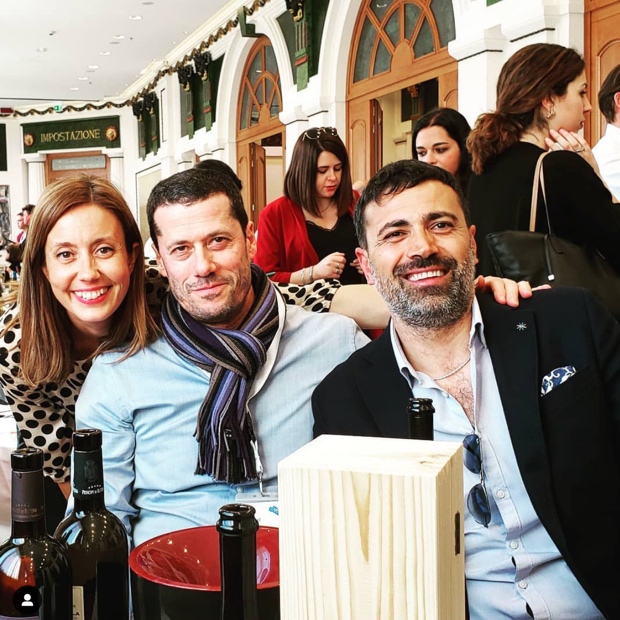
Il Molino Di Grace Chianti Classico Riserva 2006, Docg, Tuscany, Italy (382945, $23.95, WineAlign) From the VINTAGES December 6, 2014 Release, The final 14 bargains of 2014, December 5, 2014
An ’06 Chianti Classico Riserva you say, pre-aged, delivered to the Ontario market and presented here in 2014, all in for $24? You can’t fool us. We’ve been duped too many times before. This must fall into the “too good to be true” category. The answer depends on which style of Chianti you prefer. This walks all the halls, plies the trades and hits the marks of the CCR ancients. Comes from a remarkable vintage, holding on but in true advanced, oxidizing and fruit diminishing character. Mushrooms and truffles abound, as does game in the early roasting stage. A note of Brett is here too, not over the top but its presence can’t be denied. Acidity speaks, as does bitter chocolate. This is not for all but all should have a go.  Tasted November 2014  @Ilmolinodigrace  @chianticlassico

Riesling and The Lamb Lies Down on Broadway

Riesling and The Lamb Lies Down on Broadway

Pearl Morissette Riesling Cuvée Blackball Barrique 2012, Niagara Peninsula, Ontario ($25, WineAlign) From The pearls of Morisstte’s wisdom, May 26, 2014

When tasted in July of 2013 the ’12 Barrique had only been in bottle for three days so the musk was quite front and centre. Aged in foudres (neutral, old wood casks) it held much latitude at such a young age with notes of herbiage (mint, tarragon), nary a drop of residual sugar and a wholly unique type of dry acidity. “It will not always show this way,” commented Morissette. Tasted 10 months later I can say this. The ’12 Riesling Barrique avoids excessive malic and tartaric acid, not to mention any amount of volatile acidity. It is viable, vital and technically sound. “This is a wine that will take time,” pleads François . “I care about texture, not about varietal character.” Though perplexing and untamed, the wine has undeniable body and that noble bitterness in its unsung tang. It is the anti-Riesling hero, full of experiential conceit and needs to be revisited often, to see where it will go.  Tasted July 2013 and May 2014  @PearlMorissette

Hinterland Ancestral 2014, Prince Edward County, Ontario (Winery, $25,00, WineAlign) From Godello’s guide to holiday effervescence

Just released today, the anterior sniff and first sip procure a sense of immediacy in declaration: This is Jonas Newman’s finest Ancestral to date. Amethyst methustos bled from Prince Edward County Gamay. If a continuing study on such sparkling wine were to be conducted in the méthode ancestrale diaspora, the anthropologist would lose time in the County. Say what you must about the method and the New World place, this elevates an old game, in fact it creates a new one. Strawberry is again at the helm with the sugar number high and balanced by three necessary portents of chemistry; low alcohol, savor and acidity. The finish is conspicuously dry, conditioning the palate to activate the phenotypic sensors. Hits all the right bells, traits, whistles and behaviour. Careful, it will make you want to go out and make babies.  Tasted November 2014  @hinterlandwine  on the card at @barquebbq

Good to go!

Recently tasted here, there and everywhere

Wihr au Val, Alsace (c) Cassidy Havens, http://teuwen.com/

Wihr au Val, Alsace
(c) Cassidy Havens, http://teuwen.com/

During my week-long visit to Alsace in June I tasted more than 300 different wines. Over the course of the four months that followed that most amazing journey to the heart of a great wine region, I published more than 50 tasting notes. I also told stories about the winemakers, the Grand Crus and lieu-dits. I will continue to write and publish equal or more amounts about Alsace.

Related – Giving Grand Cru Pinot Noir d’Alsace its due

The British wine writer Jamie Goode recently published two articles on the subject of wine criticism versus wine journalism. His first, Whatever happened to wine journalism, appeared on the website run by Tim Atkin MW. The second, Wine critics and wine writers on his own blog, Wine Anorak. Goode is a man on the pulse of what it real and what needs to be said. He is correct in telling us that the most engaging wine writing comes from scribes who visit vineyards and tell their stories. There can be no disputing this to be true.

Jamie hopes that the future of wine writing is not fraught with short reviews and inflated scores. He sees the Utopian model in experiential travel, in meeting hard-working people, wandering over variegated soils and terroir, tasting at the source. Jamie fears that his wine writer self will go the way of the wine critic, tapping away on a computer while tasting wine in an air-conditioned office. His version of wine hell. Riesling specialist Stuart Martin Piggot agrees.

But Jamie is not entirely right either. At least in the context of the Ontario model (and those of other Canadian provinces), along with I would imagine, many wine markets in other countries. Much of what wine writers taste on globetrotting journeys is not to be found on shelves back home. While that may be pathetic and certainly a pity worthy of some kind of wine crime, it is the brass tacks of the global wine industry. I agree with Goode that we should do everything in our power to change it and we should publish stories, not just tasting notes and scores.

The problem for the reader is that most, if not 95-plus percent of the wines that are reviewed from a region like Alsace are not available for purchase in Ontario. While that is just a crying shame, it is a reality. If you purchase wine in Ontario and look for critical voices to help you separate the wheat from the chaff, you require notes on available wines. That is why writers must spend so much time tasting samples in the sterile LCBO laboratory, at our dining room tables, in restaurants and with the hard-working for not enough reward Ontario wine agents. And we must write-up the tasting notes and publish them on websites like WineAlign. This is the fact of Ontario wine importing, purchasing and consumer life. Would it be any different if there was no provincial monopoly? Yes, but it wouldn’t help in the telling of better vineyard stories.

I taste wines here, there and everywhere. Here are 16 recent samples that gave me cause to raise an eyebrow, pause, ruminate and formulate a response to the spoken sentiments of the ferment. All 16 are available for purchase in Ontario.

From left to right: Domaine Chiroulet Les Terres Blanches 2013, Toro Albalá Fino Del Lagar Electrico, Château des Charmes Sauvignon Blanc 2013, Ogier Héritages Côtes Du Rhône 2012, Bodegas Mengoba Brezo Grégory Pérez 2012

From left to right: Domaine Chiroulet Les Terres Blanches 2013, Toro Albalá Fino Del Lagar Electrico, Château des Charmes Sauvignon Blanc 2013, Ogier Héritages Côtes Du Rhône 2012, Bodegas Mengoba Brezo Grégory Pérez 2012

Domaine Chiroulet Les Terres Blanches 2013, Vins De Pays Côtes De Gascogne, France (Agent 223222, $13.95, WineAlign)

This is a Gros Manseng and Sauvignon Blanc that whistles boldly like a howling wind. While the nose is high-toned and full of herbal complexities, it’s also indiscreetly alarming. The aromas are quite massive; pine needles decomposing on a wet forest floor. Kefir, cloudy and enzymatic, curdling and churning into itself. Petrol spills on asphalt, baking in the midday sun. To taste it is tangy and juicy, but also very mineral, intensified by the outcroppings of retzine in the vineyard’s limestone. The overall composition punches way above its weight but the heightened sense of reality is also a bit hard to take. Terrific effort but comes with a warning sign.  Tasted November 2014  @CotesdeGascogne  @TrialtoON

Toro Albalá Fino Del Lagar Electrico, Do Montilla Moriles, Spain (Agent, $14.95, 500ml, WineAlign)

The winery was founded in 1844 and in 1970 Toro Albalá became the first commercial Montilla producer in the classic Solera method, from (estate-grown) Pedro Ximénez vines. This is unfortified Fino, at a naturally achieved alcohol of 15 per cent, from an average age of 10 years. It’s so dry, like a desert you could walk for astral weeks, as if it should be measured in negative residual sugar. Like pure almond extract paste, bones in the sand and the essence of pulverized, powdered nuts, void of moisture. The chalky-white Albariza soils of the Moriles Alto subzone are hardwired into its Akashic, astral Electrico plane. This Fino ventures in the slipstream, between viaducts of dreams, “where immobile steel rims crack.” Impossibly long finish.  Tasted November 2014  @toroalbala  @MontillaMoriles  @LeSommelierWine

Château des Charmes Sauvignon Blanc 2013, VQA St. David’s Bench, Niagara Peninsula, Ontario (391300, $14.95, WineAlign)

Sets a (St. David’s) benchmark for how to reign in and then release the charmes of Sauvignon Blanc from the Niagara Peninsula. Done in a decidedly fresh and lively style, this gathers up a bunches and conservative yield-managed vineyard’s warmest, ripe fruit for the purpose of bonhomie potation. Smells of vitality, of fresh herbs and citrus just cut, of a salt spring, of things zoetic. Cream elevates the texture, albeit pellucid and unobtrusive. The triad coming together of Sauvignon Blanc, St. David’s Bench and 2013 is the new CdC yardstick. The price only cements the offer.  Tasted November 2014  @MBosc

Ogier Héritages Côtes Du Rhône 2012, Rhône, France (535849, $15.95, WineAlign)

The Ogier self-professed traits of patience, savoir-faire, observation and intuition are on tidy display in this piquant, spiced-note, olive branch and indigo traditional Rhône blend. So very Mediterranean, warm and herbal by day, cool and minty by night. One stage short of lush, one notch comfortably above thin, this slots into all right moves; pleasant, value-driven and so effective for so many purposes. Stand alone or with classically prepared fare, this is all you need. Bring on the roast chicken.  Tasted November 2014  @MaisonOgier  @Select_Wines

Bodegas Mengoba Brezo Grégory Pérez 2012, Bierzo, Spain (Agent, $16.95)

Mencia as it once must have demanded of itself, iron clad, funky and gamey. This Bierzo is no antiseptic perfumed bottle of modern, manufactured violet Febreeze, though it’s so very vanilla and rich as a Porchetta sandwich with the porcine cure and fat driven right in to every nook and cranny. Or a taste sensation like bacon wrapped cherries. High toned with formidable tannins. A chew of sinew both in faux-wood and as the conceptual result of a roasted animal’s tension. Value gained vicariously through complexity.  Tasted April 2014  @TheLivingVine

Fita Preta 2013

Fita Preta 2013

Fita Preta White Reserve Alentejano 2013, Alentejo, Portugal (Agent, $16.95)

An endemic blend of Antão Vaz (40 per cent), Roupeiro (40) and Arinto (20) from infertile rocky schist soils in southern Portugal’s Alentejo region. Ostensibly a field blend, like the Alsace cépage a terroir of Marcel Deiss, the Fita Preta or “black tape” comes from an extreme and arid land. Portuguese winemaker António Maçanita and resident English viticulturist consultant David Booth usher out flint and mineral to capture a host of synapses from a wine region that had failed to fire in years. The landscape described  as “Portugal’s Australia” gives a white like a cross between simple, flinty Chablis and aged Hunter Valley Sémillon. The acidity is in abject anti-congruence to the region’s usual heavy-leaded output, mimicking cool-climate Chardonnay in tight and bracing stonker fashion.  Tasted November 2014  @fitapretavinhos    @LeSommelierWine

From left to right: E. Guigal Côtes Du Rhône 2011, Giacomo Mori Chianti 2011, Red Tractor Cabernet Franc 2012, Nigl Gartling Grüner Veltliner 2013, Dog Point Vineyard Sauvignon Blanc 2014

From left to right: E. Guigal Côtes Du Rhône 2011, Giacomo Mori Chianti 2011, Red Tractor Cabernet Franc 2012, Nigl Gartling Grüner Veltliner 2013, Dog Point Vineyard Sauvignon Blanc 2014

E. Guigal Côtes Du Rhône 2011, Southern Rhône, France 2011 (259721, $18.95, WineAlign)

In a world where anything is possible, the Guigal Côtes Du Rhône effect is predictable, trenchant and essential. The vintage specific focus in alacrity drives the savoury, rich black fruit to domesticated compliance, easy on the eyes, nose and palate. This just smells like a good meal; as if a game bird were roasting in the oven, surrounded by a rough and large kerf of mirepoix, of caramelizing root vegetables baptized by dried herbs and spices. Do not be fooled. This is a warm CdR with generous alcohol (14 per cent disclosed) and an even warmer, though not uncomfortably tannic or acidity riddled finish. It is a whack of Rhône grapes within grasp of a mere mortal’s budget. Drink now and for two years forward.  Tasted November 2014  @DOMAINEGUIGAL  @VinexxWine

Giacomo Mori Chianti 2011, Docg, Tuscany, Italy (68858, $19.95, WineAlign) From the VINTAGES November 8, 2014 release

A modern take on Sangiovese to be certain with a penchant for the authenticity extracted from the best parts of history. Siena red dirt dredged, cherry macerated, fined, filtered and spiked with a crush of Brandy soaked Amaretti cookies. Clean and with Spring plum blossom in the air. Il Palio dirt for appetizer, Fiore di Zucca pie for dinner and sweet, nutty Panforte for dessert. So modern but so proper. Makes no bones about its made-up face but has plenty of solid ossein in its body. Good piquancy and a rush of verve on the back palate. Oaky but not creamy, bitter yes, but not woody.  Tasted November 2014  @oenophilia1

Red Tractor Cabernet Franc 2012, VQA Creek Shores, Ontario (Winery, $19.99, WineAlign)

The savoury aspect of this Cabernet Franc steals the show out of what is just an ideal vintage. The fruit was sourced from the Dim Vineyard in the Creek Shores appellation, a piece of the Peninsula ideally suited to the sharp and earthy aspects of Cabernet Franc. Despite 20 months of seasoning in barrel, the Tractor has maintained its red fruit character, accented by currants, spice and a deep-rooted sense of licorice. There is enough grain in its texture to carry it for three or four more years but it will never be bigger than it is now, nor will its length grow any longer.  Tasted November 2014  @SideroadTwenty

Nigl Gartling Grüner Veltliner 2013, Kremstal, Austria (453281, $21.95, WineAlign)

The ever-present, front loaded, laser sharp attack may feign spritz amid hushed whispers of CO2, but not from any chemical alteration. It’s actually a post fermentation, double negative breath of residual covalent bonding. The fast action bottling captures pressure to act as catalyst for freshness, especially in such a lean, high acidity vintage. A sway of tall grasses and that gas smothers whatever residual sugar might try to weigh down this low (11.5 per cent) alcohol stunner. Very much alive though the depth is challenged by all that forward thinking expression. Still a very good showing for this classic Grüner.  Tasted November 2014  @AustrianWine  @LeSommelierWine

Dog Point Vineyard Sauvignon Blanc 2014, Marlborough, South Island, New Zealand (677450, $21.95, WineAlign) From the VINTAGES October 25, 2014 release

The prototypical Marlborough Sauvignon Blanc hitting all the classic numbers is right here in the Dog Point 2014. Low pH, high acidity, minuscule residual sugar and elevated aromatics. It’s ripe but ripped by citrus juice and zest. Like cubes of honeydew, bitter winter melon and dried lemongrass soaking in and flavouring a dish of briny scallop carpaccio with coarse sea salt and capers. The sapidity is palpable, the excesses vivid. I would avoid too much variegated gastronomy when sipping this wine. Opt for simpler fare because its talents would otherwise be mimicked and suppressed.  Tasted November 2014  @DogPointWines  @TrialtoON

From left to right: Rupert & Rothschild Classique 2011, Domaine De Bila Haut Occultum Lapidem 2012, Marcel Deiss Pinot d'Alsace 2012, Westcott Vineyards Pinot Noir Estate 2012, Closson Chase S. Kocsis Vineyard Chardonnay 2011

From left to right: Rupert & Rothschild Classique 2011, Domaine De Bila Haut Occultum Lapidem 2012, Marcel Deiss Pinot d’Alsace 2012, Westcott Vineyards Pinot Noir Estate 2012, Closson Chase S. Kocsis Vineyard Chardonnay 2011

Rupert & Rothschild Classique 2011, Wo Coastal Region, Western Cape, South Africa (Agent, $23.95, WineAlign)

Iconic Bordeaux partners with South Africa for a red that is a surprising saunter into fair Cabernet-Merlot territory. Ripeness, extraction and alcohol are all exercised with restraint. The South African gauze is wound but of a thin wrapping, thanks to the allowance for fruit to shine in bright, red cherry tones. Western Cape is a terrific place to express Bordeaux-styled reds, especially when done with such hands off ability. A bit sapid and even sour edged, this would be a fine example to share when partaking in a little R & R. Wait a year and drink up to 2018.  Tasted November 2014  @Dandurandwines  @WOSACanada

Domaine De Bila Haut Occultum Lapidem 2012, Ac Côtes De Roussillon Villages Latour De France (643239, $24.95, WineAlign)

From vineyards composed of Devonian Period gneiss and schist soils and Kimmeridgian period limestone. A blend of Syrah, Grenache and Carignan. The heft of this craggy, cultured terroir in a Côtes De Roussillon’s bottle is never in question, nor is the puritanical excellence of its harvested fruit. Some years just heat up to a point of no return, like this 2012. Chapoutier is fully cognizant of the warmth and savagery from the soils and the climate. Finding even temperament and balance is the challenge. This vintage comes across as over the scabrous edge, cooked by the sun and dredged in the particulate. Classic Mediterranean notes of brine, brush and lavender keep it grounded, not to mention graphite and grilled meat, but for the sappy and life-sapping heat, this would be a candidate for 10 years in the cellar. As it is, drink this with quality warm-blooded protein over the next year or two.  Tasted November 2014  @M_Chapoutier  @Dandurandwines

Marcel Deiss Pinot d’Alsace 2012, Alsace, France (Agent, $24.95, WineAlign)

This Pinot d’Alsace is what Jean-Michel Deiss refers to as “du cépage a terroir” or “tous les cépages.” Though there can be as many as 13 grape varieties in the field blend, most of the content comes from the Pinot family. Though likely in Blanc, Gris and Auxerrois predominance, this is a co-planted field blend so if Jean-Michel were to change his tune from talking terroir to varietal percentages, even he would not know the true make-up. Regardless, this is a (vintage) rich and balanced white blend, an avatar for the Alsace idiom. A wanderer in angles, an adventurer into corners and a wearer of many aromatic costumes; sweet, sour, citrus, flint and spice. Indicates orange, lemon and grapefruit but it’s never that straightforward. More like Jincheng, Lemongrass and Pomello. An exemplary introduction to Deiss, Alsace and the dry summation of many white parts. Tasted twice, June and November 2014  @marceldeiss  @AlsaceWines

Westcott Vineyards Pinot Noir Estate 2012, VQA Niagara Peninsula, Ontario (Winery, $30.00)

Carries and buffets an unmistakable aromatic conveyance that comes from a grouping to include Le Clos Jordanne, Bachelder, Queylus and The Farm. Where the cherry tree digs its roots into the earth, where the fruit rolls in the clay dust, where the tension in fruit meets tannin, intersecting at acidity. Just a touch of funk in a non-reductive, vineyard sense and the fruit does flirt with right of centre cherry, inching towards the black side. Chalk and tangy dust, and finally, tannin that holds court. This is quite big for Niagara Pinot Noir and it will age righteously for three to five years. Though it is not yet ready to lay claim to greatness, Westcott is a vineyard to keep a wide and watchful eye.  Tasted October 2014  @WestcottWines

Closson Chase S. Kocsis Vineyard Chardonnay 2011, VQA Beamsville Bench, Niagara Peninsula (Winery, $34.95, WineAlign)

The real deal in Bench gain from out of the most enigmatic and occult vintage, the primitive vineyard giving life and lesson to Chardonnay. Austerity in second and third fill barrels sends butter in search of toast, imagined through pendular churning. A reckoning follows, connecting round fruit to linear acidity in character, oomph and excellence. Aromas indicate spirited confiture choices at the breakfast table to garnish flaky pastry. Biting and demanding yet sweet as a cool summer’s night.  Tasted October 2014  @ClossonChase

Good to go!