Buy the case

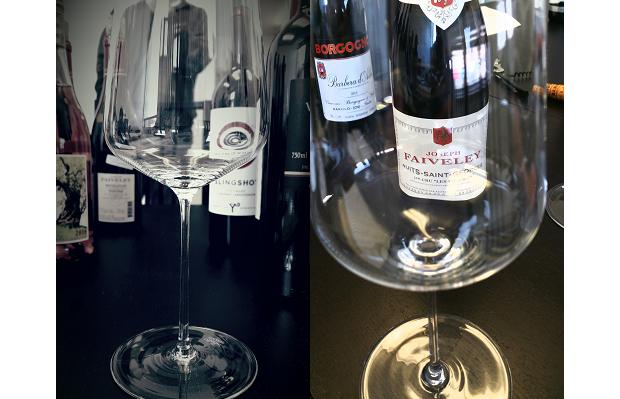
Trialto Group tasting at WineAlign with Zalto glasses

Trialto Group tasting at WineAlign with Zalto glasses

“What wines would you recommend that are not available at the LCBO?” has made its constitutive and bounden way to the top of the FAQ list. This applies to both consumers in search of quality and ease of acquisition, along with restaurateurs who want to build a diverse, anterior, ulterior and eclectic wine list. The answer is consignment. Working with Ontario wine importing agents opens up a world you never knew existed and they deliver direct to your door.

“But I don’t want to purchase by the case” is the most common response. “What if I don’t like the first bottle?” The answer is WineAlign. You already trust and put your dollars in the hands and palates of a critic or a group of critics whose judgements you trust. You order stuff online all the time, mainly because they are products you want to purchase but also because you love the home or office delivery aspect of the transaction. Wine? Yes, it’s possible. In cases of six or 12, of a wine you trust will do nothing but please, it just makes sense to order by the case.

As you know, I am a regular and increasingly active contributor at WineAlign, the most essential source for critical reviews of wines released in Ontario. Just like the coverage in this province, WineAlign tackles the scenes in Alberta and British Columbia as well. More and more samples of B.C. wine has have traipsed through the office doors so the opportunity to taste west coast output has become a regular duty and a pleasure. Still, the release gamut in Ontario remains the primary focus.

At WineAlign we have launched a new program called Buy The Case. To understand what the ‘Buy The Case’ program is really all about, click on the link to hear it from our most esteemed critic David Lawrason.

Buy The Case: Trialto Wine Group

I sat down with David and Sara d’Amato to taste through a cross-section of the Trialto Wine Group portfolio. Trialto has a great Canadian presence, in Alberta, Quebec, Ontario and British Columbia. The Ontario team has a group of highly knowledgeable wine professionals and their portfolio is chock full of gems, top values and products that will appeal to the most cerebral and fastidious of Sommeliers or discerning consumers.

The following list highlights the wines that I chose as most representative for the Buy The Case program, employing the top 10 good reasons as the guideline for making such decisions.

From left to right: Montresor Capitel Alto 2013, Giacomo Borgogno & Figli Barbera D'alba 2013, Joseph Faiveley Bourgogne 2012, Vietti Perbacco Langhe Nebbiolo 2012, Terras Gauda Abadia San Campio Albariño Rias Baixas, Montresor Castelliere Delle Guaite Primo Ripasso 2011 and 2014 Neal Cabernet Sauvignon 2009

From left to right: Montresor Capitel Alto 2013, Giacomo Borgogno & Figli Barbera D’alba 2013, Joseph Faiveley Bourgogne 2012, Vietti Perbacco Langhe Nebbiolo 2012, Terras Gauda Abadia San Campio Albariño Rias Baixas, Montresor Castelliere Delle Guaite Primo Ripasso 2011 and 2014 Neal Cabernet Sauvignon 2009

Curio Selections

Montresor Capitel Alto 2013, Soave Classico, Veneto, Italy (Agent, $16.95, WineAlign)

High floral tones are at the top end for Soave and here more than a step up from the Classico bottling. The primrose and aster give way to creamy chestnut folded into savoury custard. A smooth palate feel turns to nuts, stones, fine bitters and gentle tonics. Quite the salubrious Soave, purveyor of good feelings and with the words party pleaser inscribed across its Veronese face. Drink 2015-2018.  Tasted April 2015  @TurismoVeneto

Restaurant Pours by the Glass

Giacomo Borgogno & Figli Barbera D’alba 2013, Piedmont, Italy (Agent, $19.95, WineAlign)

Popping Barbera full of strapping substantial fruit, mind-meddling acidity and thankfully, playful rhythm and blues chords. Full of plums and cherries baked in the sun, rehydrated to syrup and filled with a whole lot of old-school, funky, soulful flavour. Once this Hozier Barbera finds its way through, past a “mid-youth crisis all said and done, it then needs “to be youthfully felt, cause God” it “never felt young.” Goes round and round, like vinyl on a well-used turntable. We could grow old with this and more vintages of Borgogno’s Barbera. Years in “we’ll name our children Jackie and Wilson, raise ’em on rhythm and blues.” Drink 2015-2020.  Tasted April 2015  @regionepiemonte

Joseph Faiveley Bourgogne 2012, Burgundy, France (Agent, $23.95, WineAlign)

Pinot Noir’s most base cumulative history has arrived here, in the second decade of the 21st century, in this commodious and convenient 2012, fashioned to the letter of entry-level Bourgogne law. Bright, animated, ripe, affable, under-currant earthy and wholly, purposefully, decidedly approachable. Strawberry and raspberry mixed with dried rose-dominated potpourri. The thrill of acidity flush with direct energy jigs to finis. What more might be petitioned from the fruit of les villages? Drink 2016-2019.  Tasted April 2015  @BourgogneWines

Function Wines

Vietti Perbacco Langhe Nebbiolo 2012, DOC Piedmont, Italy (Agent, $26.95, WineAlign)

Modern, ripe and pushing maximum extraction in Nebbiolo. A single-vineyard Langhe of full, flaunting expressive ideas and protein matching aspirations. The combination of Cassis, cedar, currants and berries link this, in aromatic tumescence, to Sonoma Cabernet. Yet its prevailing and concurrent Nebbiolo presence, of tar and roses, are really magnified and inextricably tied to its declassified Barolo vineyard. Quite sappy sentimental, with sinew to one side and dusty chocolate to the other. Quality acidity and tannin keep it brutally honest. Drink 2016-2010. Tasted April 2015  @vietti_vino  @vinidelpiemonte

Seasonal Wines

Terras Gauda Abadia San Campio Albariño Rias Baixas 2014Albariño/Alvarinho, Spain (Agent, $21.95, WineAlign)

From Bodegas Terras Gauda in Galicia this likens to white blend style, in complex varietal aromatics, as if a combing of Pinot Gris, Viognier, Chardonnay and Sauvignon Blanc were vying for and forming connections in conundrums. Has a slight Vinho Verde effervescence and plenty of bright, spirited character. A monk’s white, quietly serving in piety and in the presence of the unspoken. Lingers for longer than expected. Fine example of Albariño. Drink 2015-2029.  Tasted April 2015  @TerrasGauda @RiasBaixasWines

Cellaring Wine

Montresor Castelliere Delle Guaite Primo Ripasso 2011, Doc Valpolicella Superiore, Veneto, Spain (Agent, $24.95, WineAlign)

Fortified village of Venetian varietal strength, yelping with warm, extracted, dense and chewy Valpolicella fruit and stepping beyond the acid scrubbed boundaries of the typical gauge. Pitches braised beef and a full on drupe of berry, plum and fig fruit. While at present time the confluence of worked over flavours are an over abundance of riches, this will flesh and caramelize towards a mini-Quintarelli-like future, where the rust and antiquity of innate history turns liqueur into ethereal mocker. Buy a case, wait up to 10 years and drink it over the next 10. You’ll revel in telling everyone how much you paid in back in 2015. Drink 2020-2032.  Tasted April 2015  @RegioneVeneto

Neal Cabernet Sauvignon 2009, Napa Valley, California (Agent, $59.00, WineAlign)

Nothing but Cabernet Sauvignon from both mountain and valley floor fruit. Has that keen, innate sense of proprietary wisdom. A wine that seemingly has more age on it, as if it were already 15 plus years old, when the fact is it’s a mere toddler. Somehow you just yet know it will evolve in this exact state for another 10 before fading anywhere near towards a tequila sunset. Spirited, elated, elevated tones and full, fleshy fruit endow this Neal with long term capabilities. Sweet tannins and a soft, creamy oak blanketing contain the tension and a desire for hurried, premature development. Velveteen chocolate to be sure but one of really fine grain. Very good length. Drink 2017-2024.  Tasted April 2015  @NealVineyards  @NapaVintners

Good to go!

http://www.winealign.com/profile/2058-mjg

The natural wines of Emidio Pepe

Chiara and wines

Chiara De Lulis Pepe and the wines of Emidio Pepe at Barque Smokehouse, March 10, 2015

Emidio Pepe‘s granddaughter Chiara De Lulis Pepe says that in 5o years of winemaking nothing has changed. Nothing, save for a conglomerate-like expansion from 1.5 to 15 hectares of farming vines in Abruzzo. No seriously, do the math. Emidio Pepe remains and likely always will be a tiny, boutique, garagiste, artisan producer.

To say Emidio Pepe is unique and singular for Abruzzo and outwards into the natural winemaking diaspora is as gross an understatement as can be made. Consider the approach. Natural, healthy viticulture. No chemicals ever. Ever. Organic, biodynamic, only indigenous yeasts (more on that later), no fining or filtration. Red berries de-stemmed by hand. White grapes trod by foot. Fermentation in concrete. Bottling in early March and laid to rest. Then the bottles are decanted by hand, re-corked and released. The entire premise begins and ends with amazingly clean and pure fruit.

Pundits and critics will sit across a table and discuss. Point. “This is the essence of natural wine. No manipulation and zero handling.” Counterpoint. “There is no such thing. All wine is handled. All winemakers influence the outcome of their wines.” Point. “It’s all about the yeasts. They and their grapes are the heart and soul of natural wine.” Counterpoint. “To sell the wines, those yeasts and their grapes, once inside the bottle, must travel on planes, trains and automobiles. What is natural about that?”

The fact is Emidio Pepe‘s wines do not have to travel. They do not produce enough for that necessity but by heading out on tour they spread the gospel and bring a natural crush to the people. They are spokes-wines of history, health and possibility. They defy the naysayer’s argument because they are the godparents of natural wine.

If there is one single winemaker who defines natural, who lives, breathes and embodies the much maligned phrase “minimal intervention winemaking,” Emidio Pepe is the one. Not because of the techniques, practices and religious adherence to undomesticated viticulture, unadulterated and soulful viniculture. The reason Emidio Pepe is the benchmark and the region d’essere for natural wines to matter is because the wines are impossibly fantastic.

Chiara De Lulis Pepe and Emidio Pepe

Chiara De Lulis Pepe and Emidio Pepe © https://www.facebook.com/emidiopepewines?fref=ts

The vineyards are located 10 km from the Adriatic and 45 minutes from the Gran Sasso D’Italia mountains. The unique saddle and its clay-limestone soil encourage roots to burrow five to six metres downward, to a subterranean comfort zone, where the temperature is always constant.  Hand de-stemming is a tradition “but we believe it makes a superior product,” says Chiara. Concrete fermentation is done “to keep the integrity of the wine.”

For Emidio Pepe it begins and ends with the yeasts. Complexity and richness comes from “the family of yeasts that started the fermentation.” Chiara truly believes that yeasts will determine the flavours of the wine. “Selective yeasts make for simple wines,” she insists. “If you use them in different countries, 50-60 percent of the taste of those wines will be the same.” With indigenous yeasts, “the years will put a stamp on the personality of the wine.”

I sat down with Mark Cuff and Zinta Steprans of The Living Vine, John Szabo M.S., Will Predhomme and Peter Boyd to taste with Chiara De Lulis Pepe at Barque Smokehouse in March. Chiara brought some special wines to the table. Here are the notes.

The line-up from Emidio Pepe

The line-up from Emidio Pepe

Emidio Pepe Trebbiano d’Abruzzo 2007, DOC BIO Abruzzo, Italy (Agent, $154.95, WineAlign)

Skip straight past the naming and intimating of aromas and flavours. Here it is not the point. Trebbiano that is a product of having finished fermentation in bottle, with natural CO2, now virtually dissipated but persisting in echoes, to act as a natural preservative. The moniker natural does this little justice. The sweet sapidity and etching of acidity are so very grown-up, classically-styled, mature, precise. Trebbiano in which texture, above all else, stands out and firm. There is a dichotomous relationship, between viscosity and delicatezza. Natural respect, of a grace on a face, in twinkling wrinkles and gossamer flowers tucked impossibly into an aigrette of golden hair. In every facet to acting natural with a stupidly frank elegance to defy age, showing no signs of movement after eight years. The Robin Wright of white wine, expressive of tenderness but certainly not shy. Drink 2015-2025.  Tasted March 2015

Emidio Pepe Montepulciano d’Abruzzo 2003, DOC BIO Abruzzo, Italy (Agent, $94.95, WineAlign)

At the teenage (in wine years) number 12 this is showing less evolution than expected, especially in consideration of the European year that was 2003. Another divaricating Abruzzo, with a dried fruit component that pullulates in a very hydrated way. From a scorching season where anxiety was felt by both the vines and their keepers. Possessive of a bricking that gives of the cracked earth, of dusty, ambivalent rocks and warm, pulpy air. Through the humid tones and with thanks to pergola trellising, balance prevails with close encounters in acidity of the rampant kind. Tannins rage as well, strong and bullish above the earthy notes and peppery berry bites. The old vines and sleight of winemaking hand are ensconced to this vision, void of faults and yet advancing from the frame. Needs just a few more years to find the median point on the chonometer. Drink 2018-2023.  Tasted March 2015

Emidio Pepe Montepulciano d’Abruzzo 2001, DOC BIO Abruzzo, Italy (Agent, $169.95, WineAlign)

If the ’03 acts a bit like a hormonal, impulsive, testy, cavilling or petulant teenager, this 2001 is the adolescent. Full of boundless energy, willingly and excitably adventurous and ready to participate in the game. This from a terrific vintage with great aging potential, here Montepulciano manifests with gravity defying weight, like careful Nebbiolo or graceful Burgundy. Where this separates itself from other Grand Cru varietal infinity is in its yeast directive. Singular, remarkable, devoid in spice as if by wood. The structure is innate, indigenously calculated, developing in bottle, verbalizing flavour. Like a bone from the skin of the clay, piaculum by limestone, passed through and brought to light by the leavening catalyst. Drink 2020-2036.  Tasted March 2015

Emidio Pepe Montepulciano d’Abruzzo Riserva 1983, DOC BIO Abruzzo, Italy (Agent, $279.95, WineAlign)

Give Emidio Pepe’s reds thirty odd years to develop and the impossible happens. To postulate in a moment’s assessment without remembering the pious tradition with which this was made would be a crime against Pepe, Abruzzo, the natural world and the wonders of the universe. With this much passage the spice cupboard that emits is wow times a thousand. Clove, cinnamon, cardamon, orange peel, galangal and like golden raisins that pass through quarries to become rubies. This wine is perfect. It has not broken down an iota. It requires no decanting. It defies logic, perception and time. There is no sediment, only energy. Speaks from the glass as if it were a child of destiny and mythology. The 1983 Emidio Pepe Montepulciano d’Abruzzo Riserva arrives from along the same road taken but its transmogrification proves that the result, with thanks again to the endemic froth, is different every time. Drink 2015-2029.  Tasted March 2015

Good to go!
http://www.winealign.com/profile/2058-mjg

Top 10 May 2nd VINTAGES

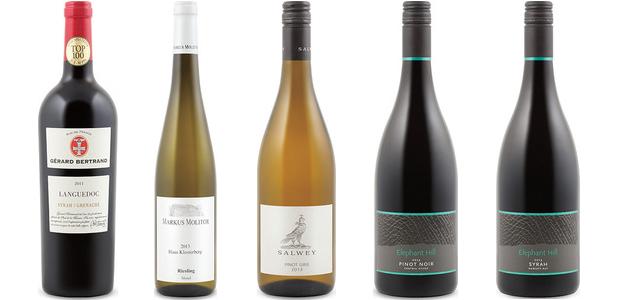
From left to right: Gérard Bertrand Languedoc Syrah/Grenache 2011, Markus Molitor Haus Klosterberg Riesling 2013, Salwey Pinot Gris 2013, Elephant Hill Pinot Noir 2013 and Elephant Hill Syrah 2012

From left to right: Gérard Bertrand Languedoc Syrah/Grenache 2011, Markus Molitor Haus Klosterberg Riesling 2013, Salwey Pinot Gris 2013, Elephant Hill Pinot Noir 2013 and Elephant Hill Syrah 2012

Top 10 best buys for VINTAGES, May 2nd release. Get out there folks.

Gérard Bertrand Languedoc Syrah/Grenache 2011, Ap Languedoc-Roussillon, France (413237, $17.00, WineAlign)

Admiration is afforded this tidy little Languedoc, where red fruit meets citrus, lavender and garrigue. Peppery and just the right amount of earthy warmth, spice, softness and yet durability. A pleasure of florality and a fine grain runs through, with no bake, no shake and no cake. Yeomans work in Grenache-Syrah symbiosis. Drink 2015-2019.  Tasted April 2015  @GBvins  @FwmWine  @LanguedocWines

Markus Molitor Haus Klosterberg Riesling 2013, Qualitätswein, Mosel, Germany (409698, $20.95, WineAlign)

Architecturally precise, of cleanly drawn lines, like the Mosel Vinothek acquired and restored by Molitor in 1984 and winner of the “Architekturpreis Wein 2013.” The Riesling mimics the juxtaposition of historical and modern, seemingly steeped in the past and transposed to the present by state-of-the-art winemaking. This has slate, steep steppes rising from subterreanean acquired salinity and ingrained aridity. There is no way to hide from the scree of the past, avoid the incline towards the future, nor can it exist without the run-off of mineral left behind. Brilliant hue, matched density, matchstick wisp and wild tang. Honeyed and suckling porcine in an early roasting stage, with terrific texture. The beautiful arid length is purposed and linear, with much oomph in its gait. Will linger for five to 10 years easy. Tasted February and April 2015     

Salwey Pinot Gris 2013, Qualitätswein, Baden, Germany (409912, $21.95, WineAlign)

This Baden Pinot Gris is neither fad nor fashion and not an acquired taste. In terms of modern European Gris to Grigio schematics, it is a step up in class, reaching to a chasm of intensity not oft achieved in Baden or other similarly priced Alsatians or Italians. For mineral streaks it reaches west across the Rhine to seek a Vosges mentality, found within a pure, dry and crisp interior. Quite concentrated and ripe like some stylistically-driven Friuli and yet it is the whole package, the sapidity and the good bitters that give it strength in totality. Drink 2015-2020.  Tasted April 2015 @TandemSelection  @WinesofGermany  @germanwineca

Elephant Hill Pinot Noir 2013, Central Otago, South Island, New Zealand (309583, $22.95, WineAlign)

At this price it might seem a Central Otago impossibility but Elephant Hill achieves proper inertia with this fresh, forward, crisp and pure style, so at the end of the day it’s quite a steal. In consideration of the mostly 1er Cru appellation, it would be hard to find a better deal in Pinot Noir, save for a combined tumescence hailing from Niagara, British Columbia and Bourgogne. Struts carbonic in the best way imaginable, desires little in the way of cerebral complexity and hands over the goods with a quick delivery. But it hits the marks of Pinot Noir, Otago and New Zealand. The earth derived rides with chalky grain and the mudslide slim back side is energetic, mineral laced and just this side of gritty. Pinot Noir to sip towards a blue horizon. “I just might move my feet, ’cause there’s nothing like the sound of sweet soul music.” Taylor-made Central Otago, with easy sipping and listening in mind. Drink 2015-2018.  Tasted April 2015  @ElephantHill  @COPinotNoirLtd  @HHDImports_Wine

Elephant Hill Syrah 2012, Hawke’s Bay, North Island, New Zealand (408633, $22.95, WineAlign)

Much like the Central Otago Pinot Noir by this Hawke’s Bay based outfit, the Syrah is neither shocking nor strikingly complex but it does send a noticeable tip of the hat to the northern Rhône, with a cure on the nose, a smoke meat smouldering in flavour and a cool, sloping bounce in its step. The aromas bring both charcuterie and a braise of spice studded belly to mind. The flavours call upon dark, red fruit, fresh-faced and fleshy, along with needful, percolating acidity. The avoidance of sweetness and jam-layered cake is appreciated while it stays the course of Syrah and Hawke’s Bay, criss-crossing hydrated grains of sand and salinity like a river running beneath and through it. The lengthy finish offers the promise of mid-term cellaring. Drink 2016-2020.  Tasted April 2015  @ElephantHill  @HawkesBay_NZ  @HHDImports_Wine

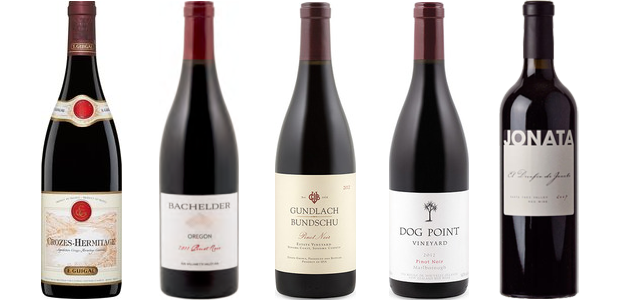
From left to right: E. Guigal Crozes Hermitage 2011, Bachelder Wines Pinot Noir Oregon 2012, Gundlach Bundschu Estate Pinot Noir 2012, Dog Point Pinot Noir 2012 and Jonata Tierra 2008

From left to right: E. Guigal Crozes Hermitage 2011, Bachelder Wines Pinot Noir Oregon 2012, Gundlach Bundschu Estate Pinot Noir 2012, Dog Point Pinot Noir 2012 and Jonata Tierra 2008

E. Guigal Crozes Hermitage 2011, Ac Rhône, France (704908, $28.95, WineAlign)

Syrah with character, personality and expression that stands up to be counted. High-toned, earthy and nearly over the threshold of palatable Bruce Banner-Betty Ross bunching. Hints at oxidation but is oh so sound, oozes liqueur like old-school Tempranillo and yet can be nothing but sloping Rhône. Kirsch, leather, roses, steeped cherries, orange tea, cinnamon, vanilla, charcuterie, bacon, game and acidity that is rapturous and encapsulating. Has it all going on, going strong, with forward motion and a nod to its past. Plays funky beats, swells in Paul Williams baritone and Melvin Franklin deep bass. The temptations of such a wine are hard to resist. In a world where manipulation and critters sell millions of bottles “stop worrying about your neighbors and the fancy things they got.” Focus on the real deal, like this CH from Guigal and “Don’t Let The Joneses Get You Down.” Drink 2016-2022.  Tasted April 2015  @DOMAINEGUIGAL  @VinexxCanada  @VINSRHONE

Bachelder Wines Pinot Noir Oregon 2012, Willamette Valley, Oregon, USA  (333278, $34.95, WineAlign)

Pinot Noir packing blankets, covered, hovering like fluffy clouds on a windless day. “Today is a lovely day to run, start up the car with the sun,” to taste a pure and idealistic Bachelder Oregon expression. Big (14.1 per cent) for the monk, ripe, warm and reeling.

From my earlier December 2014 note:

Primarily constructed from the fruit of Yamhill-Carlton vines, a third of which is Lazy River, an apropos moniker because by harvest time it hardly moves. The warm vintage adds a calm dimension to a Pinot Noir more Burgundian than the Bachelder’s Niagara and also more table friendly. Pure perfume and like life in layered, rosy hues, a vie en rose, from the land and the river’s subtle flows. The terra mobilis. The underlying dream in Thomas Bachelder’s Oregon movement is mineral, like salinity, not limestone but something ambiguous from the river’s pull and under the river. Elegance lived and relived. Here is a wine from a very available warm vintage, with a mess of fleshy fruit, yet Thomas does not obfuscate the terroir. In 2012 and needfully so, it is served from a light hand. Currently available at the SAQ in Quebec and coming to VINTAGES in Ontario, Spring 2015.  @Bachelder_wines  @LiffordON

Last tasted April 2015

Gundlach Bundschu Estate Pinot Noir 2012, Sonoma Coast, California (397513, $49.00, WineAlign)

From winemaker Keith Emerson a Pinot Noir strummed from top to bottom clay loam that is such a matter of controlled emotion and intensity. From out of the fog walks this Sonoman of searing clarity, unapologetic, warm but never hot, telling it like it is. The first chord is the thing, as is the Pinot voice, as sure as Sonoma always turns blue. Beyond that initial substantial impression it glides, even shows the semblance of age, in a beautifully creamy strawberry folded into caramel note. Then potpourri into demi-glace. If the plan is to purchase, pop, pour and saddle alongside duck breast or a veal chop, then giddy-up. “You see it’s all clear, you were meant to be here, from the beginning.” A trilogy of ready, willing and dutifully able. Drink 2015-2017.  Tasted April 2015  @gunbunwine  @LeSommelierWine  @sonomavintners

Dog Point Pinot Noir 2012, Marlborough, New Zealand (329672, $49.95, WineAlign)

Perfectly bright Pinot Noir while simultaneously deep, dark and recondite. Energetic in spirit, ripe and packed with barbed, piquant fruit sewed in threaded badges of spice. Perfumed as if by cinnamon and displacing rose petals. Like the scent of a crystal clear summer’s night, all warm, dry and of dried strawberry juice cracked paint. Grounded and fulfilling, of its own holes, in the mouth and finishes with a feminine touch. A thoroughbred, a filly, that trots on an on, long after it has crossed the finish line. Drink 2016-2021.  Tasted April 2015  @DogPointWines    @TrialtoON

Jonata Tierra 2008, Santa Ynez Valley, California (221150, $89.00, WineAlign)

Syrah and Cabernet may be the varietal strikers in winemaker Matt Dees’ arsenal but take one whiff of his ’08 Tierra, a Sangiovese aged a spell to seal the sell and boom! Striking defines the operative, go figure. Never before has the Tuscan expatriate created such a buzz in a California uniform and it has yet been seen to contest with such hot skill. Bounces around in the glass, not so much reductive as plugged in, electric, static and then kinetic, even frenetic. The heat (14.6 alcohol declared) is felt though it’s filtered and spread, tempered by the cooler vintage, blanketing all facets of the composition, albeit with rhythm and in balance. This is Sangiovese from the Santa Inez Valley manifested as flowers and the steep-like tea of modern Nebbiolo wrapped around the enigma of bi-polar Brunello. The ’08 is brined, of olives and a cure, in Syrah braised bacon and smoky tufts of garrigue. Nearly sadistic in its heady risks and chances but how to turn away from the alluring intoxicants? “Forging ahead with precision, now there is no turning back.” This is a wine you can’t walk away from. Has great bitters and lit charcoal on the finish. Tierra the Annihilator. It is most definitely all in. Drink 2015-2020.  Tasted April 2015  @WoodmanWS

Good to go!
https://twitter.com/mgodello

http://www.winealign.com/profile/2058-mjg

A new Greek morning

Smythe Park

Smythe Park

Every day brings a new morning when wine tasting in on the schedule. There are many tasters, writers, critics and Sommeliers who do not love working in such a way, tasting wine so early in the day. A table full of jammy Shiraz or warm vintage Bordeaux might scare me too but a Greek tasting? In. There. Any time, night or day. Bring it on.

If you have not recently acquainted or re-acquainted yourself with the new wines of Greece, which are actually the old ones save for advancing technologies, clean as whistle viti-viniculture and winemaking brilliance from masters to young apprentices, it’s Mt. Olympus time you did.

Can’t you hear that rooster crowing?
Rabbit running down across the road

From Assyrtiko to Retsina, Debina to Moschofilero, Agiorgitiko to Xinomavro, Amyndeon to Zitsa, Nemea to Thessaloniki, Naoussa to Santorini, Greek wine is diverse, complex and critical to wine blessedness. Don’t even get me started on volcanic. That opus shall be left to Master Sommelier John Szabo.

Me, I’ll concentrate on the divine mythology of Greek wine, of its place in the fractal world, how it can beautify and simplify, through recursion in dynamic systems, the bleak chaos of wine landscapes. Like the Morai, Greek wines are thread with motherly nurturing. For mere mortals, they direct fate from the birth of their drinking days to death. They are a highly independent bunch, unobstructed and driven by necessity.

The call to assembly of WineAlign critics last week for a table full of Greek whites, reds and one righteous Rosé meant that fate was on side, ready and willing to facilitate a tasting full of exemplary and impressive wines. For a full report on Greek wines, read John Szabo’s words of necessity at WineAlign: Confident wines from Original Vines: Reasons to Drink Greek.

In anticipation of next week’s Greek wine show at which 50 wineries will pour for media and trade in Toronto, I tasted through 25 samples on that new morning. An exceedingly promising number (more than half of what was presented) showed state-of-the-art antiquity and eternal modernity. I’ve chosen ten to highlight here, all worthy of your attention, time and palate. All under $25.

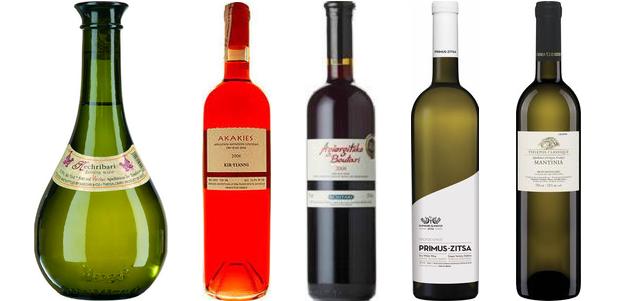
From left to right: Kechri Kechribari Retsina, Kir Yianni Akakies Rosé 2013, Boutari Agiorgitiko 2013, Domaine Glinavos Primus Zitsa 2013 and Tselepos Classique Mantinia Moschofilero 2013

From left to right: Kechri Kechribari Retsina, Kir Yianni Akakies Rosé 2013, Boutari Agiorgitiko 2013, Domaine Glinavos Primus Zitsa 2013 and Tselepos Classique Mantinia Moschofilero 2013

Kechri Kechribari Retsina, Greece (581942, 500ml $7.75, WineAlign)

The resin, the steam room herbal essential oil, the ancient feeling of tonics to heal a wounded soul. It’s all in this tidy little $7 package of wine mythology. That there still exists a market for wine made in this way, with this attention to wise, classic detail, is just amazing. Rosemary and here, even more so oregano are distilled, purely, effortlessly, with peat and macro-oxygenated matter of fact sensibility. Unctuous and viscous elixir, old school to the xyz degree and a pure form of abc ancient Greece. As JS nots, “everyone needs a flagon of Retsina.” Truer words may not be spoken. One must debate, with well into the night philosophy, drawing inspiration from Plato and Aristotle, whether the long, long finish is good, or evil. I’m not sure this will ever tire, or spoil. Drink 2015-2022.  Tasted April 2015

Kir Yianni Akakies Rosé 2013, Ao Amyndeon, Greece (71050, $9.95, WineAlign)

Xinomavro from the Amyndeon vineyards in northwestern Greece done in a funky lactic, savoury and mom’s feta way. Dry, rhubarb wafting, rosemary branch smouldering, lime and pink grapefruit tasting Rosé. This will and should have many fans, particularly those of Tavel on holiday in the ancient continent and needing salinity to match their suckling roast. Clear, concise Rosé. Proper. Drink 2015-2106. Tasted April 2015

Kechri Kechribari Retsina and Kir Yianni Akakies Rosé 2013

Kechri Kechribari Retsina and Kir Yianni Akakies Rosé 2013

Boutari Agiorgitiko 2013, Nemea, Greece (172148, $11.85, WineAlign)

Fun, exuberant, fresh, modern cherry explosion expression. Simple, direct, positive energy and ease of drinkability. Has just enough spice, floral lift and back end bite to afford it three years of service, with any sort of roast meat or salty cheese. Good stuff. Drink 2015-2017.  Tasted April 2015

Domaine Glinavos Primus Zitsa 2013, Zitsa, Greece (395962, $12.55, WineAlign)

From the Debina variety in Ioannina, it would be hard to find another Greek white that offers up as much orchard fruit, primarily from the apple and pear tree thicket. Accents of white peach and lemon make a quick entry and exit just as quick. This is a really crunchy green apple white, picked ripe and finishes with ripe white tannin. It’s not very long but I can think of many, many savoury dishes that would complement with symbiotic pleasure. Drink 2015-2017.  Tasted April 2015

Tselepos Classique Mantinia Moschofilero 2013, Mantinia, Greece (724583, $14.75, WineAlign)

An example for racing Moschofilero against Pinot Grigio and passing it on the stretch run from the outside lane. There are many reasons to go with this variety when narrow thinking leans PG, mostly because it has more depth, mineral grain and positive energy. This is a basic but prime entry into the category. Has the passage of time in its wheelhouse but also the verve to keep it afloat in a sea of sun drenched whites. Drink 2015-2016.

From my earlier November 2014 note: A textured, minutely oxidative and bronzing Moschofilero with a confident sense of itself. The orchard has ripened and spilled into this bottle with peaches, apricots and citrus Portokalia Lakonias. Great metal tang, world turning acidity and length as long as the Nestani’s walk to Demeter’s Temple.

Last tasted April 2015

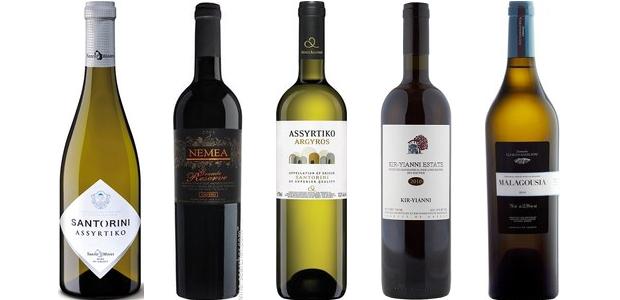
From left to right: Santo Assyrtiko 2014, Cavino Grande Reserve Nemea 2008, Argyros Assyrtiko 2014, Ktima Kir Yianni 2011, Domaine Gerovassiliou Malagousia Vieilles Vignes 2013

From left to right: Santo Assyrtiko 2014, Cavino Grande Reserve Nemea 2008, Argyros Assyrtiko 2014, Ktima Kir Yianni 2011, Domaine Gerovassiliou Malagousia Vieilles Vignes 2013

Santo Assyrtiko 2014, Pdo Santorini, Greece (Agent, $17.95, WineAlign)

Assyrtiko seemingly dredged in volcanic tuff erosion and tightly wound by straight-shooting citrus smack. A rocky cragg of funk leads to desire, for hearth roasted sea beauties and yet this is not even near the oxidized line. Such a white from Santorini needs at least three years to see where it might truly go. I know a sucker for acid driven volcanic wines that evoke the god Apollo. This is yet another fine example that will bring him sunshine and the moon. Drink 2017-2021.  Tasted April 2015

Cavino Grande Reserve Nemea 2008, Pdo Nemea, Greece (295618, $17.95, WineAlign)

St. George persists as a tremendous deal in Peloponnese red. Rustic charm and righteous liqueur fill the air from drift to waft. Prime Agiortiko acidity and fine grained tannin. This will live for 7-10 years. Drink 2015-2018.

From my earlier November 2014 note: Nemea strikes again. Dark rust, earth juiced on and of the rocks. Like Sangiovese with attitude, made by Romans, like Syrah the way it was made in mythological times, by Greeks. A classical garden. This is actually quite modern and expressive for Agiorgitiko. Acts as if it were a touch clay (or amphora) baked but it’s really just a Peleponnese take on oak aging (18 months) and further bottle rest (12 months). This is right in its window and will be friendly for three to five years more. What a steal.

Last tasted April 2015

Argyros Assyrtiko 2014, Santorini, Greece (387365, $19.95, WineAlign)

The most distinct, pure and crisp expression of Assyrtiko comes from this Argyros bottle, magnified with more platinum rock bonding in ’14 than even in the previous few vintages. Exotic evolution has arrived early in this stoic and timelessly chronic Assyrtiko with dramatic fleshing, a hint of hloro tiri and ashen black sand grit. A volcanic goddess in patina hued dress, very mineral, very direct, that drives straight for the lumbar zone. Saline, full of shells and mollusc brine. Anything grilled on charcoal, of white flesh, whether porcine, foul or sea sweet will shine alongside, as it always does. Drink 2015-2019.  Tasted April 2015

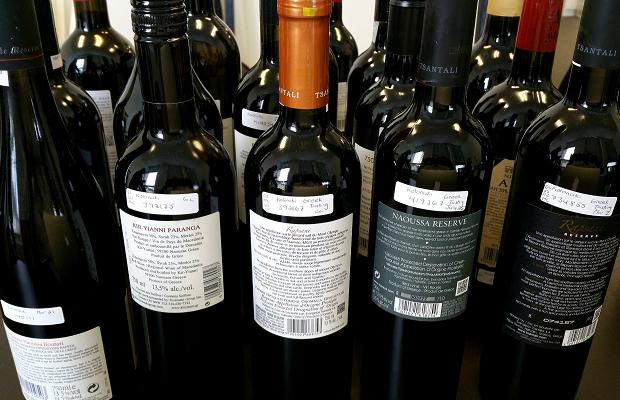
Greek back labels

Greek back labels

Ktima Kir Yianni 2011, PGI Imathia, Greece (419234, $19.95, WineAlign)

Xinomavro (40 per cent) submits to Merlot (60) in a rather weighty and warm Imathia out of Naoussa. Chewy to dense and yet floral dark fruit gives this eminent drinkability, especially with salty protein, though it would be hard to distinguish this from Tuscan Sangiovese or IGT. Very modern, really well made and certainly no stranger to oak. Drink 2015-2020.  Tasted April 2015

Domaine Gerovassiliou Malagousia Vieilles Vignes 2013, Thessaloniki, Greece (Agent, $24.95, WineAlign)

From old parcels planted to the indigenous variety Malagousia, resurrected like a Greek Jesus in the 1970’s by winemaker Vangelis Gerovassiliou. A classical composition with unexpectedly modern eccentricity. It would be hard not to fall for this Adonis of Greek whites; a strikingly beautiful Phoenician whose drops of liqueur turn to liquid alloy in a glass, of a striking green-gold patina, old barrel spirits and precious metals. This has layers of vine wisdom, fruit that holds its own against the mineral drubbing and ghosts of immortal gods in its aura. Rarely does a Greek white exude such ferocity of history and flesh to match. Calamari and octopus await, in whole roast over charcoal, not to mention great cheeses and roast pork. Fantastic. Will age dutifully. Drink 2016-2025.  Tasted April 2015

Good to go!
http://www.winealign.com/profile/2058-mjg

One on one with Gaia Gaja

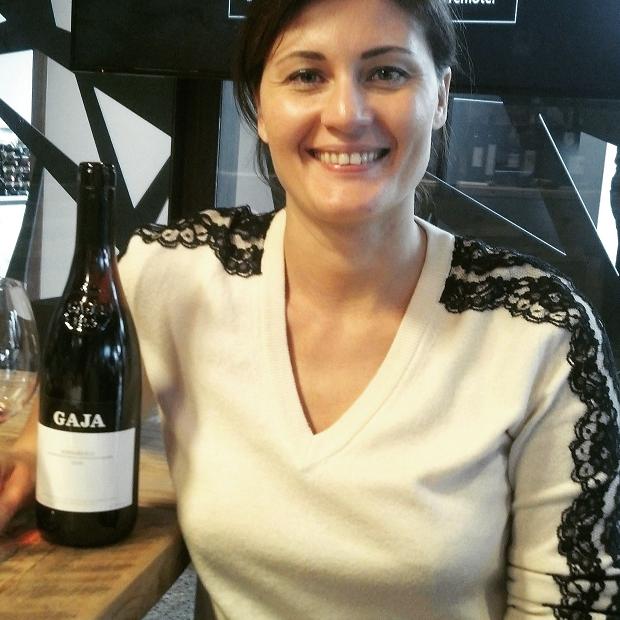
Gaia Gaja

Gaia Gaja

I had met Gaia Gaja twice before. The first time she was working the Gaja table at a tasting event swamped with what seemed like half the attendees in the room. Still she found a way to make a connection. The second time was with a small group at Bosk – Shangri-La Hotel

Related – Wine around the boot in 40 days

Gaja owns 250 acres of vineyards in Barbaresco and Barolo. In 1994 they acquired Pieve Santa Restituta in Montalcino, Tuscany and in 1996 they added Ca’Marcanda in Bolgheri, Tuscany on the coast. The significance of this acquisition lies in the Bordeaux varieties grown there; Merlot, Cabernet Sauvignon and especially Cabernet Franc. There will come a day, not so far away, when that Cabernet Franc will make some truly exceptional wine.

The Gaja brand, while nearly 155 years young, has recently climbed into a league of its own. To consider the wines, the estates and the aura that surrounds, you might think there was a marketing team of hundreds blanketing the earth.  On the contrary. There is Gaia Gaja.

The wines made famous and expensive by Angelo Gaja define much of what the world knows and thinks about Italy and yet Gaia can talk about nothing but antiquity, historical culture, economy and social structure. She is proud of the UNESCO heritage designation for Barolo, Barbareso and Langhe. Her nostalgic, her family’s connectivity with place and her knowledge of vines is astounding. Gaia Gaja knows everything about Piemonte.

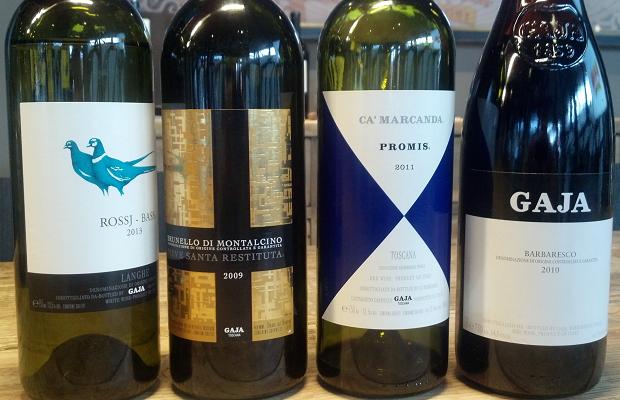
Gaja Line Up

Gaja Line Up

To Gaja, it is not simply a matter of vines, it is about the land with vines growing upon it. For the wines, lees contact is essential. “Four fingers of lees,” Gaia holds up her hand, “like red mayonnaise, after half the time they become dry and bitter. They are protectors and emulsifiers of the wine.”

Gaia speaks of biodiversity in the vineyard. She is responsible for experimentation, like seaweed treatments, essences and extracts, from garlic and rosemary. She believes in using grasses to suppress disease and mildew. These are the practices of an estate that commands designer prices for their labels. This is not a contradiction, it is a way of life.

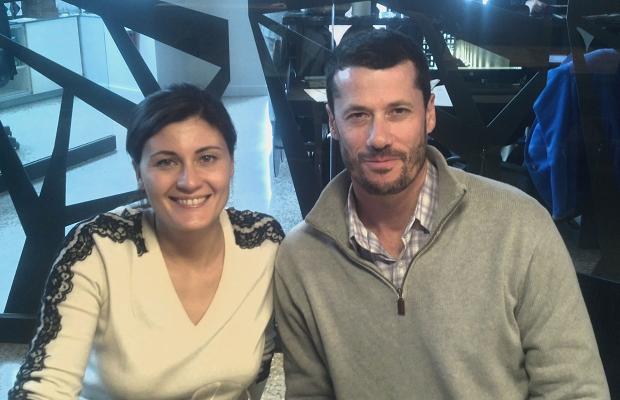
Gaia Gaja and Godello

Gaia Gaja and Godello

The vineyard management is what protected Gaja from the most challenging of vintages in 2014. August temperatures of 17 degrees celsius and so much water wreaked havoc. Swelled but not diluted berries remained pure, with clarity and surprisingly good tannic structure, not to mention decent yields. “It’s all about vineyard management,” reminds Gaia Gaja.

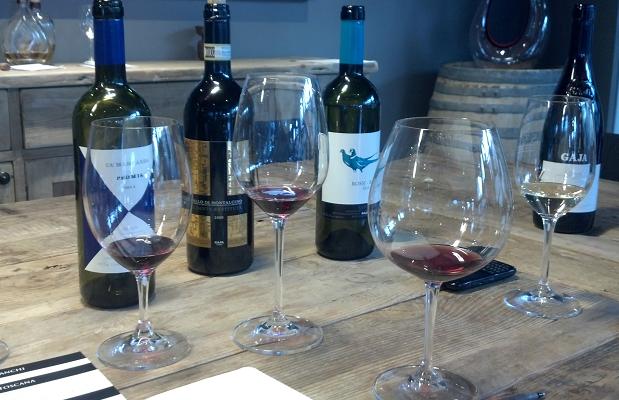
Thanks must be afforded Robert Tomé and Tony Macchione of Stem Wine Group for allowing me the one-on-one time with Gaia. It will always be one of those hours I’ll not want to give back. Here are the five wines we tasted together.

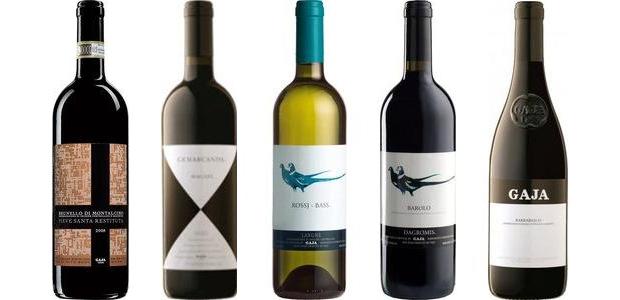
From left to right: Gaja Pieve Santa Restituta Brunello Di Montalcino 2009, Gaja Ca'marcanda Magari 2012, Gaja Rossj Bass 2013, Gaja Dagromis Barolo 2009 and Gaja Barbaresco 2010

From left to right: Gaja Pieve Santa Restituta Brunello Di Montalcino 2009, Gaja Ca’marcanda Magari 2012, Gaja Rossj Bass 2013, Gaja Dagromis Barolo 2009 and Gaja Barbaresco 2010

Gaja Pieve Santa Restituta Brunello Di Montalcino 2009, Tuscany, Italy (Agent, $68.99, WineAlign)

Beginning with the 2005 vintage, the Gaja family changed direction with the production of this coalesced Brunello, made from fruit grown at Sugarille and Rennina (Santo Pietro, Castagno, and Pian dei Cerri) and Torrenieri, in the northeastern subzone of the appellation. This fifth meld in stylistic vicissitude is more relucent than the monochromatic coquette that was 2007. More than fruit, this has spice, liqueur and fennel. So much aniseed a biscotti might pour from the bottle. Smoothly textured with a middle grain fostered by more spice, out of wood and into a promising slow-simmered future. That liqueur just needs to become an aperitif. Give it five years to do so. Drink 2019-2025.  Tasted October 2014

Gaja Ca’marcanda Magari 2012, Igt Toscana, Italy (Agent, $72.99, WineAlign)

A blend of Merlot (50 per cent), Cabernet Sauvignon (25) and Cabernet Franc (25) with a bright future, a modest, diffident and anything but arrogant Bolgheri. Loam and clay-rich terre brune strike mineral, goudron and tar for a distinct Tuscan, not Bordeaux expression. Displays more earthy funk than the other Ca’marcandas (Promis and Camarcanda) and a chalkier, grainer texture. In the middle realm there is cool mint and eucalyptus, followed by more yucca grain, so in that sense this Bolgheri is tropical and exotic. Gaja encourages this wine to follow a vinous Piemontese dialect and yet speak of Maremma, all the while without conceit. In that it succeeds. Drink 2018-2024.  Tasted October 2014

Gaja Rossj Bass 2013, Doc Langhe, Piedmont, Italy (Agent, $79.99, WineAlign)

The Chardonnay (85 per cent) comes from the Rossj and Bass vineyards in Barbaresco and much of the Sauvignon Blanc (15 per cent) from Alteni di Brassica in Serralunga. The latter’s “little walls of yellow springtime flowers” are more than just a thought. Along with tall wind-blown grasses, the stone mineral and honey-florals are a major part of this neoteric and iconic to be white from Piedmont. Must say that Chardonnay is not the first thing that comes to mind. In terms of flesh, full-flavour and intensity of excavation, the Rossj Bass is like white Châteauneuf-du-Pape, at least in aura and attitude. This will have a long life. That much is sure. Drink 2016-2022.  Tasted October 2014

Gaia Tasting at Stem Wine Group

Gaia Tasting at Stem Wine Group

Gaja Dagromis Barolo 2009, Piedmont, Italy (Agent, $84.99, WineAlign)

Nearly 15 years after Angelo Gaja acquired two old (Serralunga next to Sperss and La Morra to Conteisa) Gromis family vineyards, the 2009 vintage takes the Nebbiolo to a new modernity. Rich, bright and so very vivid, no longer controlled by the iron-rich, Tortonian-era clay and marl. Don’t misunderstand, this is still a meaty, smoky red with massive tannins that will take years to assimilate, but the texture is more like kaolin meets terra cotta, rigid but malleable. Has a taste of fennel and a smack of sultry savour. Serious Dagromis, albeit with softer features and hands. Drink 2018-2024.  Tasted October 2014

Gaja Barbaresco 2010, Piedmont, Italy (Agent, $239.99, WineAlign)

Typically sourced from 14 vineyards in and around the village of Barbaresco, the estate bottling may not be the kind of rare, single-confluence testimonies that are Sori San Lorenzo, Sori Tildin and Costa Russi but it is undoubtedly Gaja’s iconic rock. Made from 100 per cent Nebbiolo (others include a few points of Barbera), separate Barbaresco lots are aged for one year in barriques (approx. 20 per cent new, with a balance in one and two year old casks). The 14 lots are then blended and racked to large Slavonian oak casks ranging in age from five to fifteen years. The understated character, delicate perfume, kind acidity and red fruit floral flavours define the vintage. The previous year was not so kind, cooler and fuller in body. The bolstered acidity will elevate with more buoyancy than ’11 even and what makes Gaia Gaja smile is the thought that this ’10 “smells like Barbaresco in the spring.” The drifts are like stretching roots and tubers and shoots, in an ethereal way, unlike Barolo. At this juncture the wine is such a baby, contemplative, self-reflective. The Burgundy bottle with the Bordelaise neck houses a Gaja Barbaresco to stand the test of time with some of the estate’s greats; 1961, 1971, 1978, 1982, 1983, 1985, 1988, 1989, 1990, 1996, 1998 and 2005. It will be 2020 or later before the ’10 can be assessed in such terms. Drink 2020-2035.  Tasted October 2014

Good to go!
http://www.winealign.com/profile/2058-mjg

Rock this way

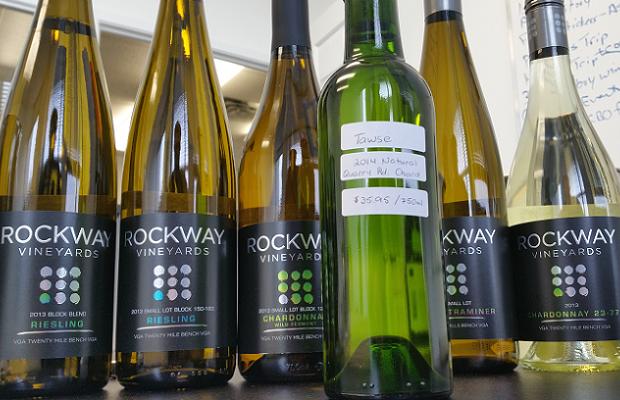
Rockway at WineAlign

Rockway at WineAlign

Last month, while working through a table of wines at WineAlign I tasted through five samples of Rockway Vineyards whites. All five were from the 2013 vintage. If it has not yet happened, these wines will usher the coming out party, to establish Rockway as a player in the new pantheon of Escarpment foothills whites.

The vines at Rockway Vineyards are located in the Twenty Mile Bench sub-appellation on the Niagara Peninsula. The winemaker is David Stasiuk, a veteran of heralded estates around the world, including Le Clos Jordanne, Australia’s Yarra Valley Moet Chandon and CedarCreek in the Okanagan. His wines are truly estate made; 99.9 per cent are grown, crafted and bottled at Rockway. I find the Riesling to fall into a niche straddled by Henry of Pelham and Flat Rock Cellars. Gewürztraminer is really in a class of its own, a trump card for Stasiuk and something I would encourage him to play with, into late harvest and beyond. Chardonnay is Twenty Mile Bench through and through, where place and barrel mark the twain and split the check. Here are the notes on the five tasted back in late March.

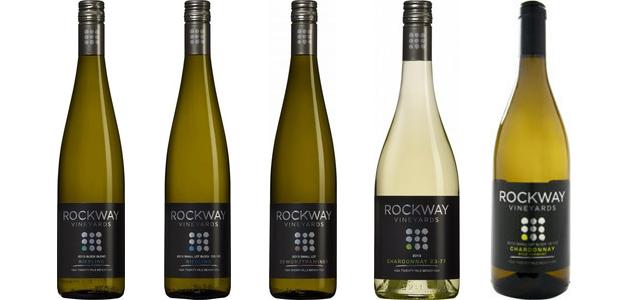
From left to right: Block Blend Riesling 2013, Small Lot Riesling Block 150 183 2013, Small Lot Gewürztraminer 2013, Chardonnay 23 77 2013 and Small Lot Block 12 110 Chardonnay Wild Ferment 2013

From left to right: Block Blend Riesling 2013, Small Lot Riesling Block 150 183 2013, Small Lot Gewürztraminer 2013, Chardonnay 23 77 2013 and Small Lot Block 12 110 Chardonnay Wild Ferment 2013

Rockway Vineyards Block Blend Riesling 2013, VQA Twenty Mile Bench, Ontario (Winery, $13.95, WineAlign)

Middle of the road in the temple of Rockway and Riesling, making an offer to appreciate and enjoy just about every tenet there might be to gain. Lessened but generous (10.5 per cent) alcohol, one shy step this side of off-dry. Flint and petrol but just a hint and grape tannin combustion, though only shrouded by a single, thin veil of skin. Provides smithy entry into metal working, aerodynamic Peninsula Riesling. By combining blocks this sheds light on the generational varietal world of the Twenty Mile Bench. As a life story it “started with a little kiss, like this.” A very successful amalgamation rocks this way in copacetic strut and finishes well, with lime. Drink 2015-2018.  Tasted March 2015

Rockway Vineyards Small Lot Riesling Block 150 183 2013, VQA Twenty Mile Bench, Ontario (Winery, $19.95, WineAlign)

The elemental surprises and flat-out rippling effect felt from this highly specialized geological, geographical and micro-climate trove stands to be taken with extreme notice. Savour and sous bois tonics provide for a deeper, richer and soil connected Riesling. The complexion and subtraction causes a cerebral dwell, investigation and a requiem for patience. This needs time to settle in, to shed the cumbersome and not entirely accessible volume. But there is simplicity in complexity, with acids lively, burgeoning and two-chord strumming. The overall canned or jarred feeling will open up once class lets out and this small parcel bottling will become a “rock, rock, rock, rock, rock ‘n’ roll” Riesling. It just wants to have fun and get some kicks so wait three years. A worthy if punkier follow-up to ’12. Drink 2018-2022.  Tasted March 2015

Rockway Vineyards Small Lot Gewürztraminer 2013, VQA Short Hills Bench, Ontario (Winery, $15.95, WineAlign)

Just 299 cases were made of this unique Short Hills Bench Gewürztraminer, a warm and fuzzy (read: peach) example that draws balm and sunshine from the underexposed Niagara sub-appellation. Winemaker David Stasiuk’s Rockway Riesling fortitude translates across a lieu-dit exegesis to an end that suggests the grape variety may just be his secret weapon. The horizontal expressiveness is matched by varietal typicity, in lychee, rose-water and spring verdancy. Fine, unctuous stuff, easily consumed, with nary a bitter edge and good citrus, lactic zest on the more than laudable finish. Reminds a bit of South African Steen. Gewürztraminer to “rock away these days, rock away these nights… something to last…’til the morning light.” Drink 2015-2018.  Tasted March 2015

Rockway Vineyards Chardonnay 23 77 2013, VQA Twenty Mile Bench, Ontario (Winery, $14.95, WineAlign)

For semantic intents and purposes this is really unbaked Chardonnay, built from (77 per cent) stainless steel and (23 per cent) neutral barrel ferments. Low in alcohol (12.7 per cent) and piqued in oak-less freshness, the light simply says go on the green. A slight screwcap compression causes early fizz, a locked in al fresco bite filled in by leesy, sweet and sour flavours and texture. Typically apple in origin, basic, old school Rockway fun. “Remember the songs used to make you rock away. Those were the days.” Classic Chardonnay jam. Beres Hammond style. Drink 2015-2016.  Tasted March 2015

Rockway Vineyards Small Lot Block 12 110 Chardonnay Wild Ferment 2013, Twenty Mile Bench, Ontario (Winery, $19.95, WineAlign)

Here is another David Stasiuk composition that cements the idea of 2013 as being the turning point for Rockway to become a major player in Niagara whites. Just 215 cases were produced of this idiosyncratic block meets yeast Chardonnay. Such a cool climate sprinter whose wild ferment action hero activity seems to still be in mode, given the aromatic, speeding bullet locomotion. “Quick as a cat, in the jungle.” Quite chalky on that nose, like dust trails flung by fast-moving parts, in super limestone distillation, rocky, wedged into flint. No dummy texture, with patent tannic grip and grit, pebbles popping, crashing, testing. Sweetness is there but yet unreal. Chardonnay that can only be Twenty Mile Bench, in ways that bring Sébastien Jacquey’s LCJ Claystone Terrace and Jay Johnston’s Rusty Shed to mind. In ways that are conveyed by terroir, by barrel, not as an afterthought but in how it adds cream, not sawdust. It also adds weight, not sap. It builds texture, block by block. Drink 2016-2020. Tasted March 2015

Good to go!
https://twitter.com/mgodello

http://www.winealign.com/profile/2058-mjg

Trimbach, rhythm and soul

Anne et Jean Trimbach, Maison Trimbach

Anne et Jean Trimbach, Maison Trimbach

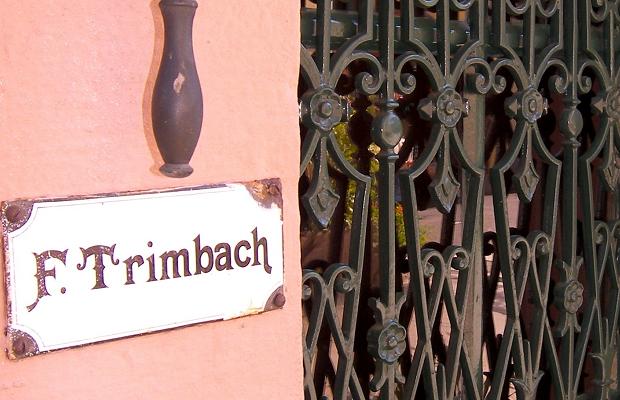
Maison Trimbach

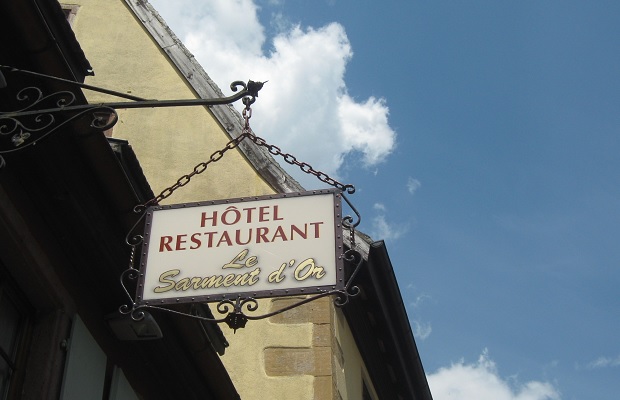
A visit to Alsace cannot be complete without a stop at Trimbach, the epicentre of rhythm in Ribeauvillé. If that excursion includes a jaunt over to Riquewihr and lunch at Le Sarment d’Or with Jean and Anne Trimbach and their soulful wines, the exercise can be surmised in one word: élan.

Le Sarment d'Or, Riquewihr

Le Sarment d’Or, Riquewihr

The Trimbach aura is triggered by joie de vivre, in pulse, metre and cadence. The wines reflect their makers and out there in the Alsace diaspora Trimbach is what I would refer to as an approachable, accessible and ever-so friendly icon. The wines are paradigmatic and emblematic of Alsatian acidity, from entry-level to preeminence. They are professional and represent the purest form of Alsatian confessional. The wines of Trimbach open up to the world, hide no skeletons, spin no agenda and simply ride out on a prosperous, musical mission to please. Here are notes on four wines tasted in Alsace, June 2014.

Fish Tartare, Le Sarment d'Or, Riquewihr

Fish Tartare, Le Sarment d’Or, Riquewihr

Réserve Pinot Gris 2011, Ac Alsace, France (971762, $23.95, WineAlign)

For Trimbach this is a top quality vintage to make an example for one of the domain’s signature value wines. This firm and straight shooting Pinot Gris comes from limestone-dominant parcels not so different from the PG taken out of the winery’s Osterberg Grand Cru, just above Ribeauvillé. That a Pinot Gris can bring a nearly (8 g/L) elevated level of residual sugar to the table and come across bone dry, like a walkabout in the outback, remains one of life’s great mysteries. Picked prudently early, or as Alsatians like to say, “right on time,” this Trimbach is eloquent, reeks of wet, cold stone and lies over an ocean tasting of salty minerals. Pour it with the freshest, uncooked fish and a light vegetable pickle.

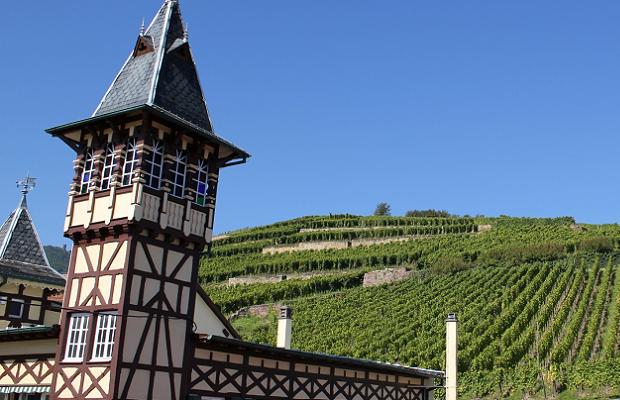
Trimbach Vineyards Ribeauvillé © http://www.trimbach.fr/en/

Trimbach Vineyards Ribeauvillé © http://www.trimbach.fr/en/

Pinot Gris Réserve Personelle 2008 (971762, $22.95, WineAlign)

Seductively Sauternes-like in its orange marmalade viscosity. An immense Gewurz-like PG. Off-dry tropical fruit, lanolin and a macadamia nut streak foils lemon, peppery orange and gold nasturtium. The edible florals are replayed in its sun-blazing technicolour. At 14 g/L of residual sugar and 14 per cent alcohol it marks the vintage but with incredible acidity. Jean Trimbach notes the balance is due to the efforts of his brother Pierre, in spirit, energy, texture and acidity. Drink 2015-2020. Tasted July 2012 and June 2015

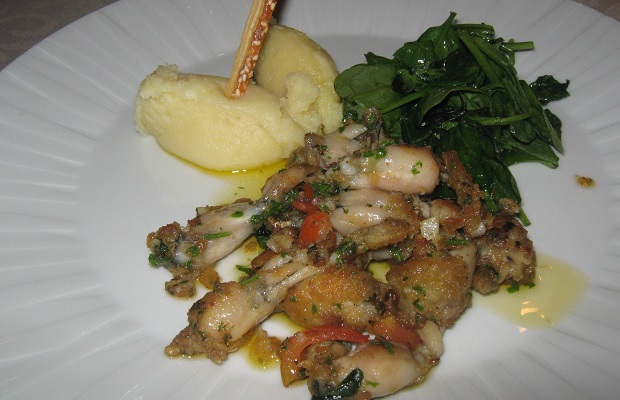
Cuisses de Grenouille, Le Sarment d'Or, Riquewihr

Cuisses de Grenouille, Le Sarment d’Or, Riquewihr

Trimbach Riesling Cuvée Frédéric Émile 1998, Alsace, France (2006 – 728535, $55.00, WineAlign)

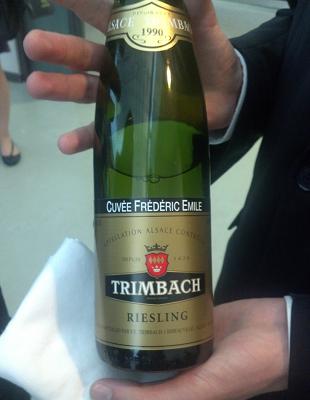
Talk begins, if only because of its arresting singularity and how it flashes like a beacon, with the 1998 Cuvée Frédéric Émile’s acidity. Vintage-bound and determined with an exceptional focus that is clear, crisp and precise. From marl-limestone-sandstone and fossil-flecked Muschelkalk out of the Ribeauvillé terroirs Geisberg and Osterberg. A bone dry Riesling with a microscopic number of botrytis in absolute control of its 16 year-old adolescent body and emotions. Decidedly masculine, strong, confident and of a musculature that is developed yet immature. Not quite reckless and not yet taking any unnecessary risks, this will go through a racy period over the next few years before maturing into an industrious and wise adult. In this 1998, with the vineyards in mind, a parallel is drawn from 1990. Drink 2018-2028.

On Monday, June 16th at the Millésimes Alsace, the professional trade fair for Alsace wines, older vintages were poured at the Master. Among them was one of Trimbach’s iconic Riesling.

Trimbach Emile 1990

Trimbach Riesling Cuvée Frédéric Émile 1990, Alsace, France (2006 – 728535, $55.00, WineAlign)

Introduced as a wine with “the capacity to air” by Sommelier Caroline Furstoss at the Millésimes Alsace Master Class. Riesling from a near-perfect and clean vintage (less than five per cent botrytis) that lays reclined in an evolution that has come to a balance in weightlessness. Frédéric Émile is a cuvée of beautifully impossible chemistry, a meld of dichotomous terroirs, of Geisberg and Osterberg, of stony clay geologically folded into both multicoloured sandstone and calcareous marl. The two plots may be hard to tell apart but this wine is so important because it innately knows how to make magic from the subtle differences and idiosyncratic intricacies of those soils. In 1990 the execution found results in the grandiose. There is no adipose tissue in this Riesling, no wasted notes, no moments of daydreaming. Laser clarity and still wagering its 25 year-old impetuous limestone acidity against the energy that might oppose it. “You can feel the granite soil in the body of the wine,” notes Furstoss. Aromatics call upon orange peel, ginger and a brulée imbued of a late, finishing noble bitterness. Amaranthine Alsace.

Maison Trimbach, © http://www.trimbach.fr/en/

Maison Trimbach, © http://www.trimbach.fr/en/

Good to go!
http://www.winealign.com/profile/2058-mjg

Arch classic Alsace at Domaine Weinbach

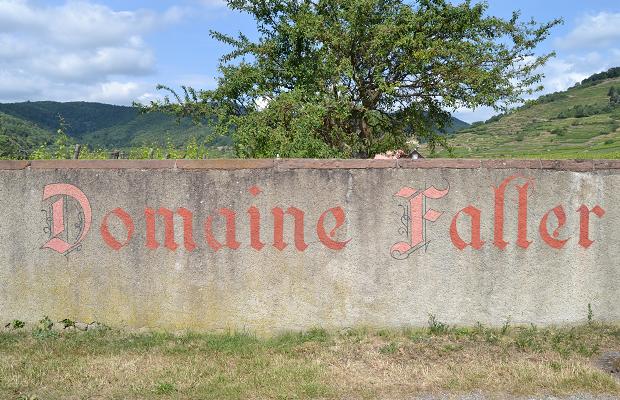
Domaine Weinbach, (c) Cassidy Havens, http://teuwen.com/

Domaine Weinbach, (c) Cassidy Havens, http://teuwen.com/

Domaine Weinbach

The great estates of the world do not endure for lifetimes, generations and centuries without an innate endowment to carry on, no matter the circumstances. Through tragedy there is always a prevail. There just has to be. I did not get the chance to meet Laurence Faller. I am sure that I would have loved to. Having tasted some of her wines at the domaine where she nurtured and finished them is at least a small concession. When I visited Weinbach last June, I did have the opportunity to meet her mother Colette Faller and I am lucky to have done so.

Catherine Faller, (c) Cassidy Havens, http://teuwen.com/

Catherine Faller, (c) Cassidy Havens, http://teuwen.com/

Related – In a Grand Cru state of mind

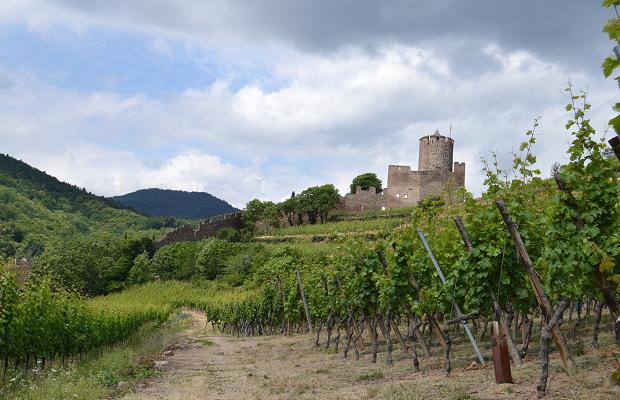
Thanks to Catherine Faller, who gave generously of her time and her family’s wines, the visit in the winery’s caves and up on the Schlossberg Grand Cru opened up the portal into Domaine Weinbach, Kayserberg and Alsace. Tradition and progress at Domaine Weinbach carries forward in the hands of winemaker Ghislain Berthiot, who worked with Laurence for 11 years. Here are the six wines tasted in June of 2014 and their notes.

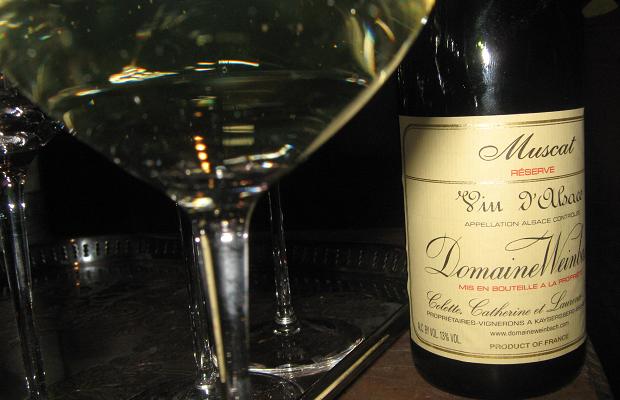
Domaine Weinbach Muscat Réserve 2013

Domaine Weinbach Muscat Réserve 2013

Muscat Réserve 2013, Alsace, France (SAQ 10273521 $45.00, WineAlign)

True belief denotes Muscat as the launching point for any Alsace tasting, but nowhere does the ontology mean more than at Domaine Weinbach. The vintage cements the doctrine. Darts straight back to the nadir of taste and smell, to the points of the tongue and inner nose unable to elude such an attack. From vines of the Clos des Capucins, soil composed by marno-calcaire at the foot of the Altenbourg Grand Cru. Low-yields (28 hl/L) drive acidity and fruit purity atop cut and cutting apricot crossed with the essentia of a grape. Here is an apéritif extraordinaire, cocktails and caviar, crunchy canapé and pure distillate. Opens the doors to Weinbach perception. Drink 2015-2025.

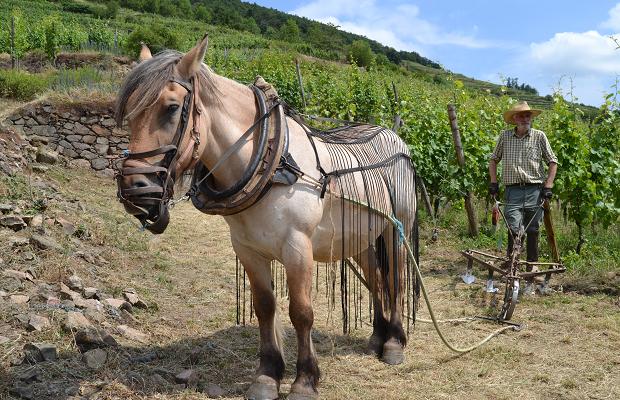
Schlossberg Horse, (c) Cassidy Havens, http://teuwen.com/

Schlossberg Horse, (c) Cassidy Havens, http://teuwen.com/

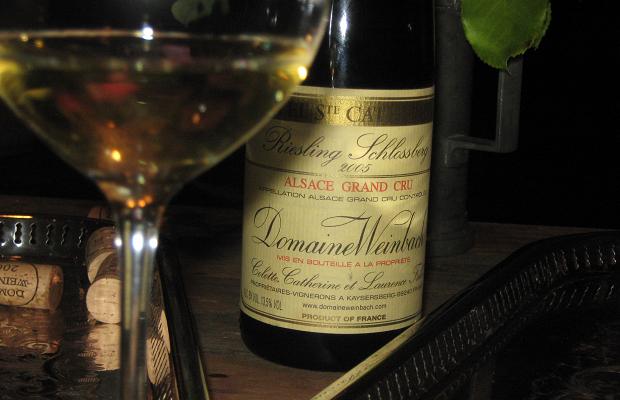
Riesling Grand Cru Schlossberg Cuvée Sainte Catherine 2013, Alsace, France (Agent, $66.00, WineAlign)

From a difficult vintage with rain at harvest. A large crew was needed in mid-October to get the pick done with haste. This ’13 is essentially being given away, so it’s a gift to the world, in a sense. The fruit comes from some of the oldest Riesling vines, situated half way up the granite Schlossberg slope. Tasting this in 2014 is 12-15 years premature. Such an infant this Schlossberg, so very primary, as if by tank, as if by womb. Assumes the role of the richest of Weinbach’s Riesling aridity, exercised by the most established finesse. Peaches are exorcized in attack and persistent. Currently mired in a micro-oxidative state. You can sense it working, churning, moving in animation.  If a taste of 2005 is any indication, it will be 2022 before this wine will begin the Cuvée Sainte Catherine reveal. Look for the open window to fall between 2025 and 2030.

Domaine Weinbach Riesling Grand Cru Schlossberg Cuvée Sainte Catherine 2005

Domaine Weinbach Riesling Grand Cru Schlossberg Cuvée Sainte Catherine 2005

Riesling Grand Cru Schlossberg Cuvée Sainte Catherine 2005, Alsace, France (Agent, $66.00, WineAlign)

Here the rich and panegyrical Riesling from the first biodynamically farmed vintage at Domaine Weinbach. The old vines from the Grand Cru’s mid-slope averaged 60 years in this ’05, a wine that managed the best southern exposure to great effect. “You can have a whole lot of fantasy when it comes to food” with this Riesling vintage says Catherine Faller. That’s because there is a magnified, munificent and magnificent toast in this ’05, like some older Burgundy. The spice notes are right on the tip of the tongue with all the necessary sapidity of youngish Alsace, wise and wistful. Now having just entered the secondary window, this wine is such a perfect portal for the gauging of aging, itself looking for ideal consumption between 2020 and 2025. Full reward offered to those with further patience.

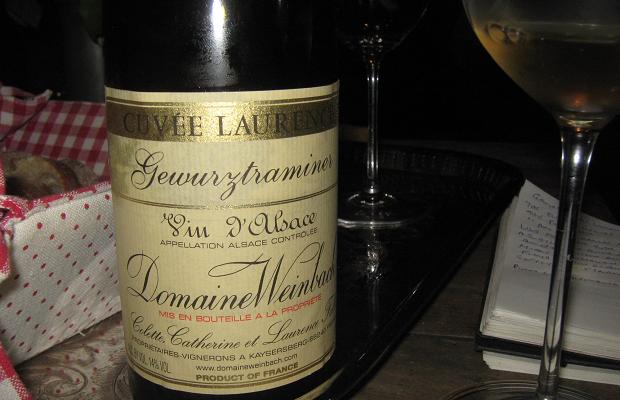
Domaine Weinbach Gewürztraminer Cuvée Laurence 2011

Domaine Weinbach Gewürztraminer Cuvée Laurence 2011

Gewürztraminer Cuvée Laurence 2011, Alsace, France (Agent, $68.00 (B.C.), WineAlign)

From an altitude of 225 to 250 metres and out of the marly limestone soil beneath the lieu-dit of Altenbourg, located at the base of the great Grand Cru Furstentum vineyard. In conjunction with the micro-specific sub-Mediterranean climate and the Indian Summer of the 2011 vintage, the results here are of the elegant kind. The total effect upon carefully judged fruit and in the late Laurence Faller’s Gewürztraminer magician’s hands, this “foie maker” is lifted, exotic and ethereal, like exceptional, fermented Yuzu. A subtle and quiet entry gives to a confident middle and a demanding, spicy finish. Lets go and slides softly into ethereal flavours. Catherine Faller’s eyes light up when she imagines a Cuvée Laurence pairing with “blood orange duck.”

Schlossberg Castle, (c) Cassidy Havens, http://teuwen.com/

Schlossberg Castle, (c) Cassidy Havens, http://teuwen.com/

Pinot Gris Altenbourg Quintessence De Grains Nobles Cuvée D’or 2010, Alsace, France (Agent, 375 mL $539.00, WineAlign)

Domaine Weinbach created the moniker “Quintessence” when it was coined to describe the 1983 cuvée. The nickname is apt for the rapt selection of rare pearls from the lieu-dit Altenbourg. The marl, limestone and sandstone Clos is a gentle slope between 225 and 250 metres high, just beneath the limit of the Grand Cru Furstentum. In a late harvest SGN like this one from the low yielding 2010 vintage, at a sky-high residual of 200 g/L you would think sweet to the back of the brain. You would be right but each time that intensity is carefully brought back from the brink by formidable, if unctuous Pinot Gris acidity, a bubble within a bubble, never bursting, always teasing. The concentration and purity here are magnificent, the flavours hanging in extract of endless, suspended animation. A wine to sip, to share and to save for senectitude.

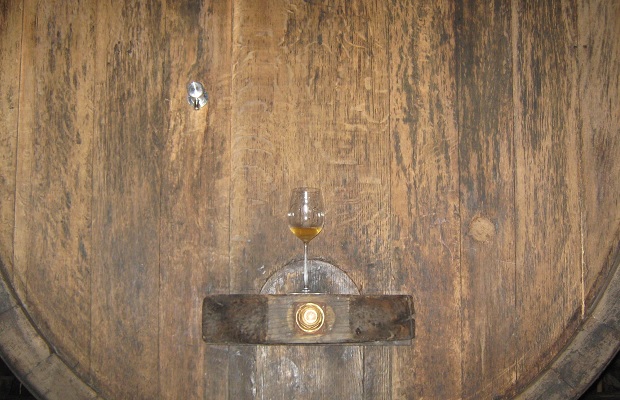
Large Foudres at Domaine Weinbach, (c) Cassidy Havens, http://teuwen.com/

Large Foudres at Domaine Weinbach, (c) Cassidy Havens, http://teuwen.com/

At the Millésimes Alsace, the professional trade fair for Alsace wines, one of Laurence Faller’s great legacy wines was poured.

Domaine Weinbach Gewürztraminer Furstentum Grand Cru Vendanges Tardives 1994

Domaine Weinbach Gewürztraminer Furstentum Grand Cru Vendanges Tardives 1994

Gewürztraminer Furstentum Grand Cru Vendanges Tardives 1994, Alsace, France (SAQ, 11521362 $132.00 (2012), WineAlign)

The wine was presented in Colmar by Sommelier Caroline Furstoss who began with the soulful tribute of “Laurence is felt in this wine.” Deduction, by salience and sobriety of grace, is considering the Faller’s ’94 a pure expression of the Furstentum terroir. Noted are the aromas of quince, apricot, their blooms and a grain of spices. Though already twenty years in, it remains conspicuously fresh. The richness and concentration are at such a high level. Flavour begins with a marmalade in defiance of confection and has no end. Though the vintage is decadent, warm and unctuous, there is always balance. Has a tannic impression and smells like flowers from warmer France. Furstoss reminded everyone that it is “an expression of a daughter.” Impeccable balance.

Kaysersberg, from the Grand Cru Schlossberg, (c) Cassidy Havens, http://teuwen.com/

Kaysersberg, from the Grand Cru Schlossberg, (c) Cassidy Havens, http://teuwen.com/

Good to go!

http://www.winealign.com/profile/2058-mjg

More red less green

Italian sausage and dumplings

Italian sausage and dumplings

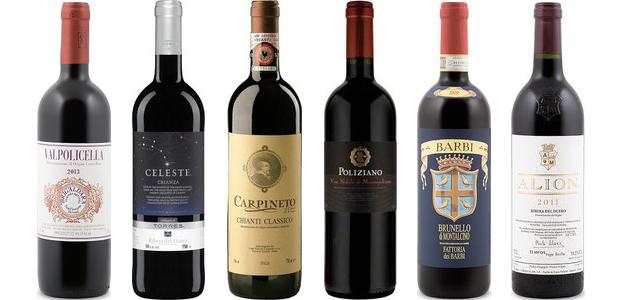
What matters most when choosing a bottle of wine? Is the top spot on the criteria scale occupied by a need for value, to spend as little as possible and get the most for the dollar? Are ripeness, extraction and full-bodied the distractions necessary to gain pleasure from bottle? Are location, plot and soil a part of the equation? When the question is posed, “do you believe in terroir?” the answers come from both sides. Cathy Corison wrote this on Saturday.

With yet another stretch of inclement and less than soul-warming weather upon us, red wine is back in fashion (does it ever fall from?) and thus the opportunity is afforded to throw a few more bottles into the “ever on the mind” search. More real possibilities offering up increased positives on the probability factor scale. Wines just released on Saturday via the perpetual wheel that is the VINTAGES program.

Italian wines at VINTAGES April 18th, 2015

Italian wines at VINTAGES April 18th, 2015

Wine buying can be as much about humouring the exercitation of the intellect as it can be about the derivation of simple pleasure. With today already having caused a reflection on how rain and water went dripping down the back of the neck on a long promenade from A to B, a craving for deep red has begun. Wines that cause an opine in spiritual meets historical allegory ideation, reds to yearn for in desperate immediacy. Spain and Italy occupy this narcissistic niche, what with their attention to mid-palate, to filling voids, holes, vacuums and structural chasms. On Saturday the following six reds were made available. They are all highly recommended.

From left to right: Brigaldara Valpolicella 2013, Torres Celeste Crianza 2011, Carpineto Chianti Classico 2012, Poliziano Vino Nobile Di Montepulciano 2011, Fattoria Dei Barbi Brunello Di Montalcino 2009 and Alión 2011

From left to right: Brigaldara Valpolicella 2013, Torres Celeste Crianza 2011, Carpineto Chianti Classico 2012, Poliziano Vino Nobile Di Montepulciano 2011, Fattoria Dei Barbi Brunello Di Montalcino 2009 and Alión 2011

Brigaldara Valpolicella 2013, Doc, Veneto, Italy (917864, $14.95, WineAlign)

Fresh, juicy, ripe, succulent and straightforward Valpolicella. Like Chianti to Classico, this is the star of the less heralded appellative group. Unencumbered fruit prosperity with just a touch of tension on the finish in the forms of earth and citrus. What more could you want and why pay more than this $15 from the Veneto? Elegance, diplomacy, delicatesse and time-honoured elucidation. Drink 2015-2018.  Tasted April 2015  @Brigaldarawines  @rogcowines  @TurismoVeneto  @RegioneVeneto

Torres Celeste Crianza 2011, Do Ribera Del Duero, Spain (210872, $20.95, WineAlign)

Tempranillo modernity arrives with 2011 in as much as Celeste has ever shown. Drunken fruit, big bones and high tones lay lashings on the olfactory senses. Full on drupe, tightly turned wires and sparking electrical tacks with a rhythm “that makes your fingers snap crackle pop pop fizz fizz.” Like a jayou, “to knock someone out, or render them unconscious or senseless.” Jurassic Tempranillo with retro hip hop chalky oak overlapping plum, strawberry and cherry. A super fruit group that strikes it rich and raps long. Drink 2015-2020.  Tasted April 2015  @TorresWines  @FwmWine  @DORibera

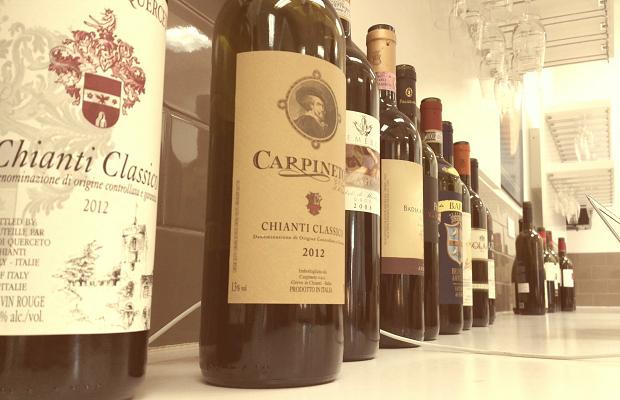
Carpineto Chianti Classico 2012, Tuscany, Italy (356048, $21.95, WineAlign)

For Chianti Classico, 2012 was a good year, not too warm yet ripening occurred early, with the quality set to high, but the quantities were low. A winemaker’s vintage. Carpineto’s CC comes from the northern aspect of the appellation, from a conca (amphitheater) seven km’s east of Greve, by the piccolo hamlet of Dudda. It’s cooler in this part of Chianti, with more rock imparting flavour and textured sensations into the reds. The ’12 is essentially 90 percent Sangiovese and 10 per cent Canaiolo, give or take 10 per cent. Aromas of roses and wet rocks, fresh ripe plums mashed into tomatoes, herbs and a spicy side note. Old school and precisely what CC should be, minus the funk (which it does not have or need). Ultimate pasta wine right here. Traditional style in an up to date way with temperature control and all the tools of a modern facility. No VA, no barnyard, but really natural. This explains the axiom of maintaining tradition. With so many story lines already spoken for in sectarian Chianti, maybe that is the only thing Carpineto has left to hang their Zuccotto on. David Lawrason hits the nail head on. A Chianti that “resets the compass.” Drink 2015-2020.  Tasted September 2014 and April 2015.  @CarpinetoWines  @chianticlassico  @TandemSelection

Carpineto

Carpineto

Poliziano Vino Nobile Di Montepulciano 2011, Docg Tuscany, Italy (988055, $29.95, WineAlign)

Consistently the most accessible and moreover well structured Vino Nobile in this market, never wavering or straying from its style. The 2011 perpetuates the credibility card, in avoidance of trends or fashion. The vintage offers the ever-present multitude of red and black fruits, baking spices and percolating, though never drenching, of wood. The fruit seeps, steeps and the familiarity breeds weeps, with bittersweet thanks to a wine that tastes like home.The 11’s warmth means less tension than some other, grittier years but as always, this is a stellar take on the local strain of Sangiovese known as Prugnolo Gentile. Still, this needs three to four years to come to the right place. Drink 2018-2022.  Tasted April 2015  @PolizianoAzAgr  @Noble_Estates  @consorzionobile

Fattoria Dei Barbi Brunello Di Montalcino 2009, Docg Tuscany, Italy (928028, $49.95, WineAlign)

As Fattoria dei Barbi continues to evolve and esteem its rustic self within the context of modern Brunello, the quality increases with each vintage, regardless it seems, of the weather. If 2008 was the true turning point, 2009 cements the current inclination, in that Barbi combines antique with state-of-the-art as well as any Montalcino house. This ’09 is as accessible as the classic norm of firm, sylvan Barbi can be. More so than even the forward ’07 and yet in many respects unlike any that have come before. Has savoury syrup and earthy concentration, seeped tea and a hint of sweet-scented game. Strawberry in the heat of an early July morning ripening on dewy wet pine straw. The evergreen notes are strong, like a vapour rub and the direct, tart, firm finish brings the wine back to the barometer’s median point. Really fine Brunello offering the best of two worlds. Drink 2018-2024.  Tasted April 2015  @FATTORIABARBI  @Noble_Estates  @ConsBrunello

Alión 2011, Do Ribera Del Duero, Spain (199331, $89.95, WineAlign)

Here in 2011, Ribera all in, with it all going on. The smoky, rich hue, replayed in aroma, with full-on red berries, massively extracted, warm, lush and luscious. Rhubarb, yet picked ripe and sunlit initiates the savoury intent, followed by spice arbor, in vanilla and lavender, clean, brackish, creamy, dense and of a pure sweetness. Acidity, power and tannin beset the back palate environs, laying dominion to a permanent 20-year placard. How can such a wine have it all? Should it be all of these things? How can such a sexy beast exist, strutting, sultry and yet so demanding and occupied with tension? The 2011 Alión is more than impressive, it’s a wine deserving to endure for a very long time. Drink 2018-2031.  Tasted April 2015  @DORibera  @HalpernWine

Good to go!
http://www.winealign.com/profile/2058-mjg

It’s all been red before

Flat Iron steak, blood orange, scallion and chile

Flat Iron steak, blood orange, scallion and chile

At a major Burgundy tasting yesterday I tasted 18 whites and just three reds. Gasp! With the weather and the heaviness of winter still stuck to the bones it just can’t be helped. White wine is working right now.

Related – Whites of passage

So today reds it is and reds it will be, as it has been before. Tomorrow I’ll likely return to white once again. That’s all I have to say about that. Just reviews today folks. Mostly from the VINTAGES April 18th release coming this Saturday.

From left to right: M. Chapoutier Les Vignes De Bila Haut Côtes Du Roussillon Villages 2013, Le Cirque Carignan/Mourvèdre/Syrah 2013, Falernia Reserva Syrah 2010, Ravenswood Old Vine Zinfandel 2012, Alpha Crucis Titan Shiraz 2012 and Quail's Gate Pinot Noir 2013

From left to right: M. Chapoutier Les Vignes De Bila Haut Côtes Du Roussillon Villages 2013, Le Cirque Carignan/Mourvèdre/Syrah 2013, Falernia Reserva Syrah 2010, Ravenswood Old Vine Zinfandel 2012, Alpha Crucis Titan Shiraz 2012 and Quail’s Gate Pinot Noir 2013

M. Chapoutier Les Vignes De Bila Haut Côtes Du Roussillon Villages 2013, Ac Languedoc-Roussillon, France (168716, $15.95, WineAlign)

From the VINTAGES April 18th release

Perennial stalwart, especially considering the big box price. There is just so much going on in this veritable melting pot of character and boundless potential, right from the word sniff. Certainly modern and ripe but also layered with brush, scrub, duff, roots and rocks. A touch of briny salinity merges to liquorice and then there are the tannins woven with acidity. The length is a given. Lots of earth, plenty of smoulder and priced to case joint after LCBO joint. Drink 2015-2020.  Tasted April 2015  @M_Chapoutier  @Dandurandwines  @LaRegionLR

Le Cirque Carignan/Mourvèdre/Syrah 2013, Vin De Pays Des Côtes Catalanes, Languedoc-Roussillon, France (277079, $16.95, WineAlign)

From the VINTAGES April 18th release

A depth into earth crusts the dark fruit from wise old vines. Fresh and spring run sappy, from heat to be sure but in classic waves and stretches emanating from a floral, aromatic beginning. The bumble berry traffic jam in the middle is not enough to render it done at that point, despite its inability to avoid working up a sweat towards a woven textured finish. The citrus accent adds enough grain to see it through four more good years. Easy to love, hard to miss and smart to give it a try. Drink 2016-2019.  Tasted April 2015  @GBvins  @LaRegionLR

Falernia Reserva Syrah 2010, Elquí Valley, Chile (208371, $16.95, WineAlign)

From the VINTAGES April 18th release

Meaty, smoked, cured, reduced, reactionary, reductive, brambly, sappy, syrupy and still warm after the kill. All of these elucidations and more. Coconut and flowers meld in creamy waves within the muscular girth, sinewy grit and confident gumption of this high altitude, cool-climate Syrah. A huge varietal expression, like Barossa in a sausage factory, masculine, testosterone-driven, with layers upon layers of fruit, earth, game, pork belly, pepper and tannin. Not to mention raging acidity. Drink 2016-2020.  Tasted April 2015  @FalerniaWine  @ProfileWineGrp @DrinkChile

Ravenswood Old Vine Zinfandel 2012, Lodi, California (942599, $20.95, WineAlign)

From the VINTAGES April 18th release

Nearly a quarter of Petite Sirah blends into this (mostly) Lodi wizened vines fruit sourced out of San Joaquin County. Old vines are Zinfandel’s caché thing. The gnarly, petrified plants reach deeper underground and when the interstices of terroir and climate are in accord, the texture imparted by tannin is key. The ’12 Old Vines is a product of a maker (Joel Peterson), plot (Lodi) and conditions (cool and exceptional for the variety). Here a bottle to help define and divine Lodi. Elegance in as much as is possible, juicy in fruit in as much as can be found through texture and balance in so far as can be sheltered. Fresh is ascertained further along (as opposed to dry) on the spectrum, chewy of flesh, but not bone, silky and seductive. High quality Zinfandel in every respect. Drink 2015-2020. Tasted March 2015  @RavenswoodWine  @CBrandsCareers  @TheZinfandelOrg

Alpha Crucis Titan Shiraz 2012, Mclaren Vale, South Australia (377069, $24.95, WineAlign)

From the VINTAGES April 18th release

Nothing about the source, treatment or specs on this Shiraz scream elegance or restraint but it’s “cool and slow with plenty of precision, with a back beat narrow and hard to master.” Four premium vineyards of mature vines between 20-40 years of age have laid a deeply drawn foundation. McLaren Vale sunshine has given it warmth (14.5 per cent alcohol). Individual lots spending 15 months in small French Oak barrels before being blended together has imparted creamy texture. Added up this might have forced the Titan through the doors to heavy burden. Not so. Dusty, rich, dried fruits and herbage merge seamlessly together. Smoke lodge and graphite, berries, back bite and beat fall into great structure. Big time McLaren Vale that does not sting like a wasp, nor is it a bully. Say what you will but “call it heavenly in it’s brilliance…soft drivin’, slow and mad, like some new language.” Drink 2016-2022.  Tasted March 2015    @southaustralia

Quails’ Gate Pinot Noir 2013, BC VQA Okanagan Valley, British Columbia (585760, $26.95, WineAlign)

From the VINTAGES April 18th release

In 2013 there is warmth all around; in vintage, fruit, alcohol, tannin and overall character. Much in the way of cherries, black liquorice, pepper and spice. Tilled earth but in no way bespattered or hazy. Fleshy and ripe, of a depth with bitter fathered tones that bite yet fall back in line with misty fun fruit times in Babylon. The upholstering is rewarding though it finishes with some brute stuffing. A warm reclining Pinot Noir for sure. The kind that makes me want to “smoke everything in sight with every girl I’ve ever loved.” Drink 2016-2020.  Tasted April 2015  @Quails_Gate  @hobbsandco  @AMH_hobbsandco  @winebcdotcom

From left to right: Domaine Des Roches Neuves 2013, Red Rooster Reserve Merlot 2012, Illahe Pinot Noir 2013, Greywacke Pinot Noir 2011, Louis Jadot Beaune Boucherottes 1er Cru 2009 and Concha Y Toro Don Melchor Cabernet Sauvignon 2010

From left to right: Domaine Des Roches Neuves 2013, Red Rooster Reserve Merlot 2012, Illahe Pinot Noir 2013, Greywacke Pinot Noir 2011, Louis Jadot Beaune Boucherottes 1er Cru 2009 and Concha Y Toro Don Melchor Cabernet Sauvignon 2010

Domaine Des Roches Neuves 2013, Loire, France (Agent, $27.95, WineAlign)

There is Cabernet Franc, there is Samur and then there is Thierry Germain. Though a more intense single-vineyard bottle might render this one pedestrian, does it matter when the discussion involves biodynamic, 108 year-old, un-grafted, pre-phylloxera vines? The wow aromas and dense, dripping, liquid chalky, if intimidating texture is managed by wild sage, ancillary and marbled currants and acidity through the gambrel. The 2013 yield must have come in wild-eyed because while seemingly circular, in finished form it is a linear composition in diagrams intertwined. Not out of focus and will admittedly confuse a consumer or ten but if you can keep up with the changing gears the experience will be rewarding. Drink 2015-2020. Tasted October 2014 and March 2015  @rochesneuves  @GroupeSoleilTO  @LoireValleyWine

Domaines Des Roches Neuves 2013

Domaine Des Roches Neuves 2013

Red Rooster Reserve Merlot 2012, BC VQA Okanagan Valley, British Columbia (408963, $29.95, WineAlign)

From the VINTAGES April 18th release

Remarkably ripe and to the point of extract distraction in Merlot. A vintage-driven, heat days harnessed expression, all about fruit, with kisses from extended maceration and oak. Chewy, dense, rib-sticking red that cries for same in gastronomy. An air dominating smoulder and plenty of basting are sticky upon the mid-palate, a comfort to hold onto in median possession. This density lingers and delays before submitting to the salty lick of bitter denouement. One shouldn’t miss this near-decadent beauty even if the style agitates or aggravates fears of thick brushstroke style. This has five extended years ahead, at the least. Drink 2016-2021.  Tasted April 2015  @PellerVQA  @winebcdotcom

Illahe Pinot Noir 2013, Willamette Valley, Oregon (403154, $31.95, WineAlign)

From the VINTAGES April 18th release

Chinook speak for “land, earth or soil,” that agglomeration is both calling card and impression left after a taste. When Pinot Noir from Oregon has that pointedly Willamette combination of super terram flora and subterranean salinity it speaks with clarity, however light and un-muscular it may be. One senses a drawn sapid tang from ancient burrowed riverbeds that crawl feel below the surface. Strawberry is the key fruit note but Burgundy is the desire. This reminds of yesterday’s Ponzi and Lemelson, but also today’s Johnson Vineyard, albeit on a frame less taut. The complexity may not equate but the subtlety exceeds those comparisons. It hits just the right piercing notes because it’s shrill is just so pretty. The grain running through is arid, zestful and saline. This has terrific citrus interwoven through texture and the 12.5 per cent alcohol is something to embrace. Were Lewis, Clark and Curtis in search of fine Pinot at the end of an expedition day, this would have been the one. Drink 2015-2019.  Tasted April 2015  @illahevineyards  @wvwine

Greywacke Pinot Noir 2011

Greywacke Pinot Noir 2011

Greywacke Pinot Noir 2011, Marlborough, New Zealand (402651, $49.00, WineAlign)

From the VINTAGES April 18th release

Wow does this exuberant Kevin Judd Pinot Noir ever excite. The intensity of juicy calibrations and echoes, like breathtaking mountain peaks mirrored in the reflections of ancient lakes. Glassy and refractive, replaying upon itself, like a whirlpool of ocean tide. Silky like bean thread, transparent and glossy. A tug posits between cherry and anti-cherry. Layers of dried flowers and savoury accents. Accessible and worthy of a place in the deep cellar. Long and entirely special. Drink 2015-2025.  Tasted March 2015  @Greywacke   @greywacker  @oenophilia1  @nzwine

Louis Jadot Beaune Boucherottes 1er Cru 2009, Ac Burgundy, France (121319, $52.95, WineAlign)

From the VINTAGES April 18th release

Interesting to see this 2009 released after the ’10, a vintage that had many swooning. This ’09 is charming and unbelievably accessible. It may strike some as bygone-evolved, ancient history even, but ripe fruit matched by silky tannins will dupe even the most experienced palate. Here the Beaune’s beauty is upfront, outgoing, warm, inviting and flirtatious. What a gorgeous layering of fresh berries and creamy, sweet redolence. Very feminine, fleshy and gregarious. The back end shows a little bit of tension, further proof that this Boucherottes has spine and time left in the till. Distinguished and wondrous as Jadot gets, ready to please and stuffed to last. Drink 2016-2024.  Tasted March 2015  @ljadot  @HalpernWine  @BourgogneWines

Concha Y Toro

Concha Y Toro Don Melchor Cabernet Sauvignon 2010, Maipo Valley, Chile (403980, $70.00, WineAlign)

VINTAGES Online Exclusive

The 2010 Don Melchor harkens backwards, to years like 2001 and 2003, rephrasing and rewriting the paradigmatic book. From seven contiguous, sub-divided blocks of Cabernet, the ’10 speaks most highly of Lot Two, emphasized by chocolate, menthol and mineral, in cohorts with Lot Four, in elegance and depth. Extended glom and time-lapse picking between April 22 and May 27 was the casualty turned blessing of a cooler growing season in the semi-arid Mediterranean-like scrub desert of Puente Alto. The alluvial motion hauteur of slow-ripened fruit can’t be overestimated. The frame by frame capture has resulted in aromatics wafting off the charts; violet, anise, roasting cocoa bean, garrigue, ferric filings, mortar on wet stone, Cassis and eucalyptus. There is no heat, rendering the 14.6 declared alcoholic irrelevant. Best of all, it smells like Chile as much as it does Cabernet. There is no need to discuss the (97 per cent) CS in terms of Bordeaux, that is until you taste. Then the tobacco angst and silky texture elicit Margaux. Black currants and fine chocolate melt on the finish, still with a mouthful of stones. For winemaker Enrique Tirado, this may be his “El opus.” It will age effortlessly for 12-15 years. For anyone who purchased this wine more than 10 vintages ago, comparing current cost can be a byproduct in natural preoccupation. Who would not want a return to the sub-$50 Don Melchor going back a decade or more? Yet while tasting the present decimus, $100 crosses the fiscal mind and seems completely apropos. At $70 the clarity and sonority of its value is the blazon of an epistle. Few Cabernet Sauvignon dominant wines from Bordeaux or Napa Valley can compare. Drink 2016-2025.  Tasted April 2015  @conchaytoro  @MikeAikins1  @DrinkChile

Good to go!
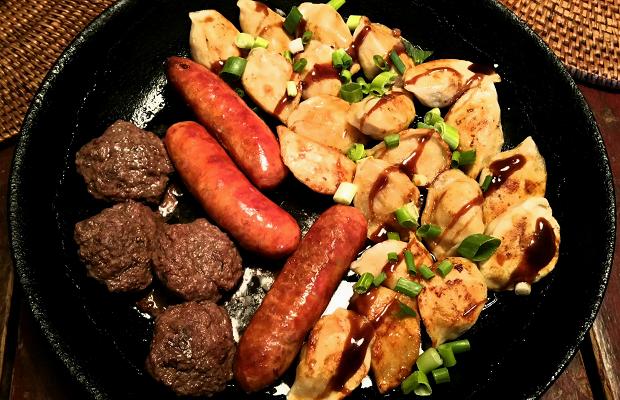
http://www.winealign.com/profile/2058-mjg