Seven inexpensive must try whites

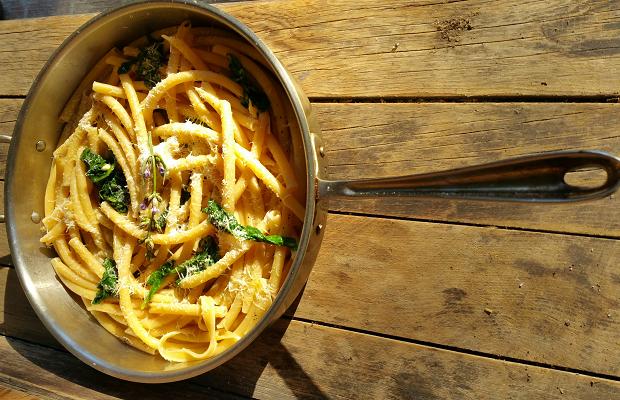
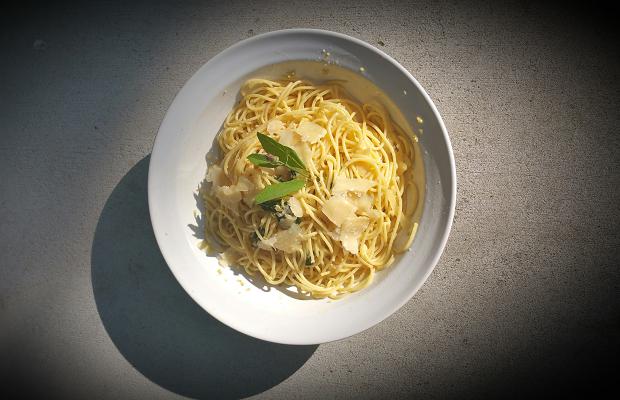
Linguine, garlic, olive oil, sage

Linguine, garlic, olive oil, sage

Aromatics, spice, flowers in distillate of petals, viscosity, texture and the dichotomous, symbiotic posit tug between fruit and mineral. Are these not the explorations acceded in the neverending search for estimable white wine? Here, from a deep pool agglomerated by the VINTAGES June 13th, 2015 release are those attributes found in varietal determination; in Traminer, Viognier, Pinot Bianco, Assyrtiko and Riesling.

Two Ontario stalwarts have recently been reviewed and heretofore positioned in this posting format. They both hail from the most righteous and excellent growing sub-appellation known as the Twenty Mile Bench. The Flat Rock Cellars Chardonnay 2012, VQA Twenty Mile Bench, Niagara Peninsula (681247, $18.95, WineAlign) flat-out rocks. The Jay Johnston Chardonnays “they dig a funky spiel, they’ll make some spiel.”

Rockway Vineyards Small Lot Riesling Block 150 183 2013, VQA Twenty Mile Bench, Ontario (Winery, $19.95, WineAlign) will become a “rock, rock, rock, rock, rock ‘n’ roll” Riesling. It just wants to have fun and get some kicks.

As for the following five old world superstars from Italy, France, Greece and Germany, well they just know a thing or two about antiquity, acumen, eccentrically distributed stresses and just doing it right. Enjoy the sunshine folks, get out there and pour some whites.

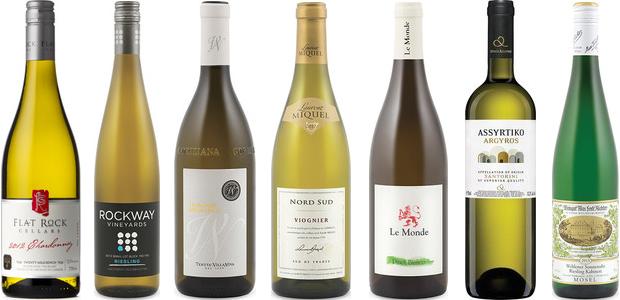
From left to right: Flat Rock Cellars Chardonnay 2012, Rockway Vineyards Small Lot Riesling Block 150 183 2013, Villanova Traminer Aromatico 2014, Laurent Miquel Nord Sud Viognier 2013, Le Monde Pinot Bianco 2013, Argyros Assyrtiko 2014 and Max Ferd. Richter Wehlener Sonnenuhr Riesling Kabinett 2013

From left to right: Flat Rock Cellars Chardonnay 2012, Rockway Vineyards Small Lot Riesling Block 150 183 2013, Villanova Traminer Aromatico 2014, Laurent Miquel Nord Sud Viognier 2013, Le Monde Pinot Bianco 2013, Argyros Assyrtiko 2014 and Max Ferd. Richter Wehlener Sonnenuhr Riesling Kabinett 2013

Villanova Traminer Aromatico 2014, Doc Friuli Isonzo, Italy (411314, $13.95, WineAlign)

“Just as the sand made everything round, just as the tar seeps up from the ground,” this Gewürztraminer ringer is a bitter dancer, ever turning, metallic and exotic. An orange grove of aromatics, longan, lychee, mango and guava in four-part harmony, like fleet foxes, overtly tropical and melodic. A waxy skin coats the palate and herbals too, so oily, nutty, very, very nutty. Much exuberance and personality while it holds its notes and then finishes on plain, quick and painless. Drink 2015-2017.  Tasted June 2015

Laurent Miquel Nord Sud Viognier 2013, Vin De Pays D’oc, France (673236, $14.95, WineAlign)

Another terrific value in Midi Viognier. Such a clash of energies and riotous expression. Floral, tangy and juicy with spice notes and quite a colossal yet composed mouthfeel. The spice recycles into the acidity and persists through a held finish. Has presence of mind and body to punch way above its weight and price. Cuts right through the crap. “The South is up but the North is down,” so here in the Midi, all is in balance. Drink 2015-2019.  Tasted June 2015  @LaurentMiquel  @LiffordON

Le Monde Pinot Bianco 2013, Doc Friuli Grave, Italy (372417, $16.95, WineAlign)

Really expressive Pinot Blanc that pins a direct impression and leaves behind a lingering floral elegance. While typically tangy-mettalic as per the Friuli mirror conspiracy, white wine predicament corporation, this one treks to new territory for the variety, “pour voir plus clair,” into orange blossom and lemon curd, to peach tree and crisp freshness. Viscous and juicy, piquant and on the wilder side of le monde varietal spectrum. Thievery from Friuli, of hearts and palates. Drink 2015-2018.  Tasted June 2015

Argyros Assyrtiko 2014, Santorini, Greece (387365, $19.95, WineAlign)

Every release of the Argyros Assyrtiko is like a new Greek morning. Sunspot aridity, citrus salinity and innate volcanic ability define the wine’s blinding brine and naturally occurring bitter ooze. One sip and ” can’t you hear that rooster crowing? Rabbit running down across the road.” Can you not imagine the stone crag, the whitewashed mineral cliff, the late afternoon sunshine gazing into the shimmering Aegean from an Oia perch?

From my earlier note of April 2015:

The most distinct, pure and crisp expression of Assyrtiko comes from this Argyros bottle, magnified with more platinum rock bonding in ’14 than even in the previous few vintages. Exotic evolution has arrived early in this stoic and timelessly chronic Assyrtiko with dramatic fleshing, a hint of hloro tiri and ashen black sand grit. A volcanic goddess in patina hued dress, very mineral, very direct, that drives straight for the lumbar zone. Saline, full of shells and mollusc brine. Anything grilled on charcoal, of white flesh, whether porcine, foul or sea sweet will shine alongside, as it always does. Drink 2015-2019.

Last tasted June 2015  @KolonakiGroup  @DrinkGreekWine

Max Ferd. Richter Wehlener Sonnenuhr Riesling Kabinett 2013, Mosel, Germany (998120, $21.95, WineAlign)

When a Mosel Riesling sings in a high tenor voice the impression is wheedling and the stoic, stony flint echoes from and for So2 is par for the commanding Wehlener Sonnenuhr course. The poured elemental strike causes wheezing and coughing when the wine is this young, also due to aridity and stones infiltrating every atomic pore. Yet the tropical, seemingly mature palate with blanketing creamy mango is a reminder of the impossibly, beautifully dichotomous relationship that, when gathered and surrounded by popping acidity, can only mean one thing. Classic Mosel Kabinett. This rocks and rips it up in every way, Riesling purported to “walk on out unto the sky.” Gains a little richer aspect with each pass. Never relents, taking neither breath nor break. Awesomeness from a great vineyard, with texture, a long and bitter finish. Drink 2017-2025.  Tasted June 2015    @HHDImports_Wine

Good to go!

https://twitter.com/mgodello

http://www.winealign.com/profile/2058-mjg

Master classes of Terroir

A Gamay Masterclass, Terroir Hospitality Symposium, May 11, 2015, Arcadian Court

A Gamay Masterclass, Terroir Hospitality Symposium, May 11, 2015, Arcadian Court

The Terroir Hospitality Symposium took place on May 11, 2015 at Arcadian Court in downtown Toronto. The one day food and wine colloquium was a massive simmering feast set in sprawling fashion within an undersized, intricate urban labyrinth. Despite the frenzied and condensed action in the downtown venue, that congress merely offered a look at the tip of the proverbial Terroir iceberg. With upwards of 3o team members leading the charge, the movement left the big fat city address and trekked to set up shop at a local farm and out to the rock at the eastern outermost edge of the country. Terroir moves outwards, onwards and upwards, taking it to the fields and the oceans.

The Terroir Best Practice Culinary Mission went to St. John’s, Newfoundland from May 14th to 17th. The One Fish expedition travelled “to meet fishing industry experts, to explore and examine both the history and the current realities of an Atlantic community built on an economy of the fishing industry.” There was also “the feast that keeps on giving,” at which the Feast Ontario team was hosted at Grandview Farms in Thornbury, Ontario

Led by Founder & Chair Arlene Stein, Vice Chair & Awards Rebecca Leheup, Terroir Talk the dextrosinistral/sinistrodextral enterprise is an undertaking of the extreme variety.

A look at #Terroir2015 in images

Terroir is an event, a series of gatherings, a notion, a philosophy and a way of life. Its mandate is this: “Terroir Hospitality brings together innovative and creative influencers from the field of hospitality, including chefs, food and beverage experts, writers and business leaders.” It’s also not without detractors. There are some who feel it is a negative representation of the culinary and cultural scene in Toronto. That it’s “white, urban, Euro-centric. It ain’t Canada, or 2015. Not funny.”

If the list of participating speakers, chefs and winemakers had been correlated with shortsighted discrimination, ill-curated and preordained with exclusive, malice prepense, you would have been hard-pressed to get an interview with any guest who would have chosen to speak about the called-out lack of representation or narrow-minded decision-making. If the culture and the colour of the event needs to change it will do so with holistic bias and sympathy, with the right sort of urging from the global culinary and vinicultural community. If the pundits are correct, future sessions will reflect the will of the people. In 2015, the atmosphere was wholly copacetic.

The 2015 Terroir wine sessions were marshalled with “an effort to raise the academic standards of the wine side of our symposium,” in three assemblies, to educate and entertain. These Masterclass jams, Gamay, Terroir, and Clone Wars were coordinated by Good Food Revolution’s Jamie Drummond and Magdalena Kaiser with great support from Wine Country Ontario.

The connection between food and wine is an intrinsic one. They are like chicken and egg, contrary to reason in electing which comes first. Chefs and winemakers, purveyors of the land from which their produce grows, transmuted into cuisine and fermented into wine. Facilitators of terroir, harvesting at optimum ripeness and then initiating the transmogrification with immediate haste, in urgency, to capture, lock in and bottle aroma, flavour and texture, before any chance of deterioration or spoilage.

But what the fuck is terroir? The most used word in the language of wine is in fact, terroir. Nothing else compares, comes even remotely close, or causes as much debate. Except for minerality, but those who concern themselves in the matters of ridicule, dismissal and denial ignore the fact that the opposite of fruit is simply, unequivocally and finally, incontestably, mineral.

Were the notion of terroir to be a belief as simple as “what happens in the vineyard, through environment, by geology, geography and topology, from naturally occurring elements and microbes in the soil, by air and of climate. Were it just a matter concerning “the impossible creator of perfect storms, from out of riddle and enigma,” well, then, we could all just go home. It’s much more complicated than that and real.

Most winemakers will agree, in principle, to this. “The final goal is to make the finest wines that express terroir.” Organic and biodynamic are important. Terroir is more important. But winemakers are no fools. They know that “during the grape’s life cycle, genealogy and climate shape its development. But even after it is plucked from the vine it still carries no true identity, in so far as what it will become as a wine. This is the point where nature gives way to nurture. Environment now acts as the catalyst to shape the wine’s life. Wine does not evolve because of natural selection. It evolves at the hands of the winemaker.” Anti-terroir?

At this year’s Terroir Talk Symposium, Gamay was chosen as the first wine session’s go to grape variety, to investigate both the serious and not-so serious sides of its existential weightlessness. To revel in its lithe, brightness of being and to unearth its deep roots. That we have come to a time in history where both aspects can be studied in Burgundy and in Ontario is fortuitous indeed. As a Gamay groupie, I feel blessed to be born under a good sign, at the right time.

As a reminder, it’s always the right time to be with the Gamay you love. I have been urging Ontario farmers to plant, cultivate and nurture Gamay; for winemakers to make it more and more. I made “a proclamation in favour of a great grape and one that forges signature wines out of Canadian soils. I am an ardent supporter of and a willing rider on the Gamay bandwagon, in the name of connaitre and savoirkennen and wissen, recognition and understanding.”

Related – Go Gamay Go

It’s working. Rosewood Estates just planted it for the first time. Gamay is poured at the cellar door, at tasting events and in private gatherings all the time now. Bottom line is Gamay costs half of the price compared to Pinot Noir and Syrah and it thrives in Ontario. It can make serious Cru quality reds and even at the highest end, sell for less than $30. It has been, continues to be and will always be #GoGamayGo time in Ontario.

Related – It’s go Gamay go time

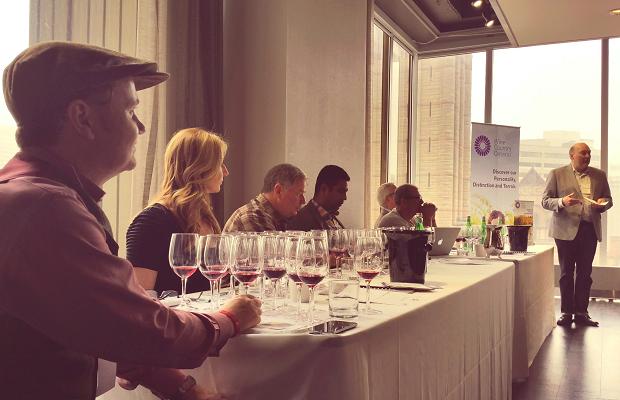
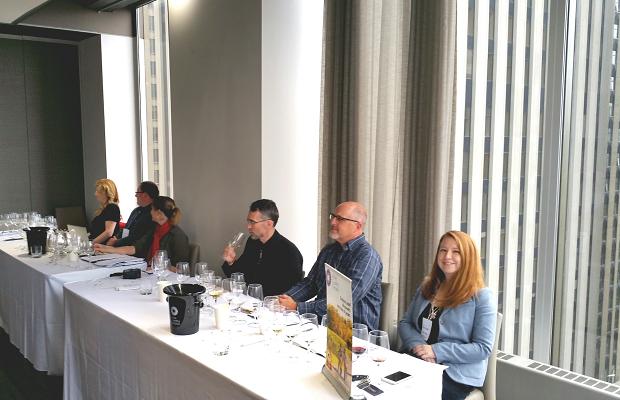
Moderator Chris Waters and the Gamay Masterclass panel: Jamie Drummond, Magdalena Kaiser, Martin Malivoire, Shiraz Mottiar, Bill Zacharkiw and Guillaume de Castelnau

Moderator Chris Waters and the Gamay Masterclass panel: Jamie Drummond, Magdalena Kaiser, Martin Malivoire, Shiraz Mottiar, Bill Zacharkiw and Guillaume de Castelnau

The first Masterclass: Gamay The Next Little Thing

“The intent of the first of the three wine sessions, was meant to investigate how it performs in Ontario and elsewhere in the world.”

The Panelists:

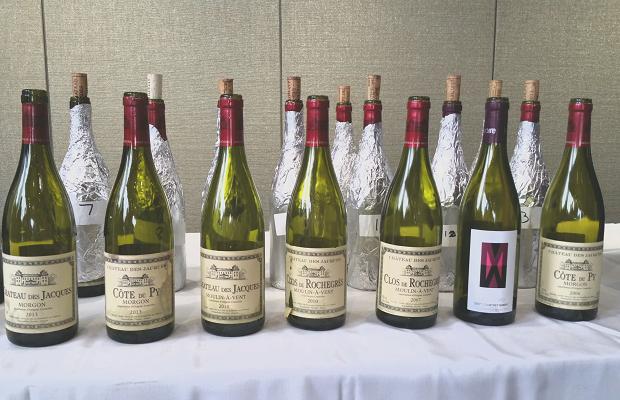
  • Winemaker Guillaume de Castelnau, Chief Winemaker/Director, Château des Jacques, Louis Jadot Beaujolais (Beaujolais, France)
  • Vigneron Martin Malivoire (Malivore, Beamsville Bench, Ontario, Canada)
  • Winemaker Shiraz Mottiar (Malivoire)
  • Wine writer/Sommelier Bill Zacharkiw (Montreal Gazette/Wine Align, Montreal, Quebec, Canada)

The Moderator: Wine writer Chris Waters (Vines Magazine/Intervin, Ontario, Canada)

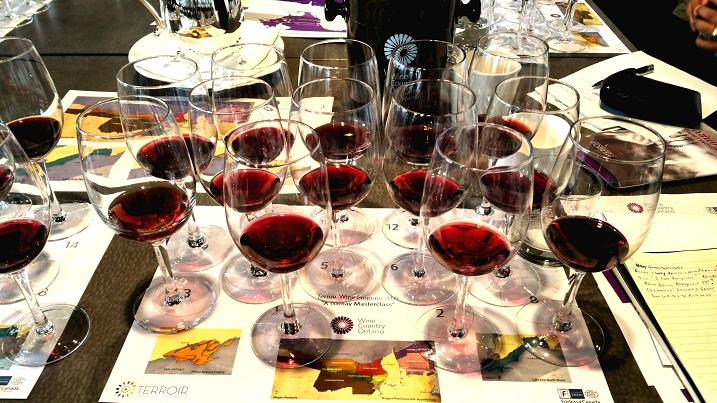
To many, Gamay is a wonderful drug and though much maligned, its suitors and supporters can never tire of its freshness and its lightness of being. Moderator Chris Waters refers to Gamay as “a gateway grape, to transition drinkers from white to red wine.” In a world according to Guillaume de Castelnau, “Gamay is lazy, generous and fragile.” Bill Zacharkiw minces nothing, not words, nor feelings. “I love Beaujolais.” In the Terroir Master Class, there were 13 variations on Gamay, from semi-carbonic to old and baked, with many shades, hues, intensities and variations in between. Here are my notes.

Ontario Masterclass Gamay

Ontario Masterclass Gamay

Malivoire “Le Coeur” Gamay 2014, VQA Niagara Escarpment, Niagara Peninsula, Ontario (Winery)

Shiraz Mottiar refers to the young, Beaujolais impressionist as “Sammy Carbono,” a semi-carbonically macerated Gamay, with one foot in Nouveau and the other in a dusty, freshly spirited aromatic whirl. The tanky feel makes it accesibly gulpable. Like a leaping horse it is also twitchy, hopping in dressage, popping in the mouth. Fun if beside the point. Drink 2015.  Tasted May 2015

Malivoire M2 Small Lot Gamay 2013, VQA Niagara Escarpment, Niagara Peninsula, Ontario (Winery, $19.95, WineAlign)

A month later the pepper runs from white to black, by way of red. Terrific sour edged fruit. Strawberry and cranberry tied together by citrus. Will need two years minimum to fully integrate.
From my earlier note of April 2015:
The profundity of tart, keen, briny berries dilates in its own very useful layers of citrus, tannin and concentration, beyond even what was observed in 2012. The zesty, spritely argot resonates from the unfurling of floral essentia out of a Gamay in desperate need of time. The flavours and overlay are somewhat impenetrable and yet leave quite an impression. While patience might be the virtue and the reward, if #gogamaygo is the modus operandi, a swig from the bottle like gentlemen of the road is certainly not out of the question. Drink 2016-2021.

Last tasted May 2015

Leaning Post Gamay 2013, VQA Niagara Peninsula, Ontario (Winery, $25.00)

A year has clarified the must into a venerable, beneficial decay, like effulgent, liquid rust. The shine of antiquity and then a blast of cinnamon dominates for the first major swirl. So lithe and profound like wise Pinot Noir, minus the Niagara coat of arms and lacquered veneer. Whatever anxiety may have held down the brightness has eased to deliver this current, optimum drinking window. Drink 2015-2016.  Tasted May 2015
 
From my earlier (tank sample) note of May 2014:

Guiltless and virtuous straight out of stainless, the meaty side of Gamay game boldly goes where few from the Bench have gone before. Like a rare venison steak sitting in a silky pool of lavender-scented demi-glace. Floral like Fleurie and despite zero new oak, vanilla joins the gravy. A Senchuk steal of quality Wismer (McLeary…sort of) fruit sets this Gamay up for easy sell success.

Fielding Gamay 2013, Niagara Peninsula, Ontario (Winery, $19.95, WineAlign)

Time has been a friend to the ’13 Fielding Gamay, a wine who’s elevated tones of floral fruit and acidity have settled in the name of structure. Dusty ground nubbins and mint swirl with layered if yet rigid fruit. Low-cropped vines are on display, in single-vineyard like attention to specific detail, akin to Malivoire’s Courtney. This is in fact sourced from a single-vineyard up on the cool Vinemount Ridge sub-appellation. The site is a couple of kilometres south of Peninsula Ridge’s McNally Vineyard, the source of Ilya Senchuk’s terrific Leaning Post 2012 Pinot Noir. The Procyshyn family has been farming this plot (without fanfare) for decades in Beamsville. The pristine fruit that Theo and Shelley Procyshyn grow, along with their three sons, Nolan, Dalton and Brayden, yield as low as 1.5 tonnes and up to 3.5 tonnes per acre, depending on the year. The ’13 was around 3 t/a. Fielding has never labelled this Gamay ‘single vineyard’ because they have always hoped to bring in new Gamay blocks on as part of that wine, but that’s not yet worked out. The ’13 is very, very red raspberry, with a craggy, spiked point of liqueur, like a weeping peak upon that Vinemount Ridge in the afternoon sun. Has Beamsville’s upper reaches written all over its corporeal self. Drink 2015-2017.  Tasted May 2015

13th Street “Sandstone” Gamay 2013, VQA Four Mile Creek, Niagara Peninsula, Ontario (Winery, $19.95, WineAlign)

May just be the first Gamay with a simulacrum towards a style best described as appassimento, what with the overripe fruit, aromatic cure, baked and sun-dried flavours. Sniff the confluence of black raspberry, scorched earth and roasting game bones, its sinew crackling over humid old growth wood. Gets rich into the vanilla, reeking of late harvest lavender and then a mutton funk. Could easily pass for a wealthy, unforgiving style of Cru Beaujolais, like Chénas from Christophe Pacalet. Or it could just be acting older than its age, by seven or eight years. Most prepossessing and confounding Gamay. Drink 2015-2018. Tasted May 2015

Stratus Gamay 2012, VQA Niagara On The Lake, Ontario (Winery, $29.00, WineAlign)

Esteem elevated by structure, matched in poise and presence mottled in smears of darker, richer black cherry. If a slight absence of brightness is sensed due to the syrupy compression, like New World, west coast Pinot Noir, the gleaning from acidity and tannin times perfectly the effluent escape.

From my earlier note of April 2015:

It may not be the most idiosyncratic Gamay in Niagara but the Stratus 2012 is without a doubt the most advanced and complex. Gamay fusion is on display, at once a bottle of Niagara’s finest pulchritudinous veneer and then a charcuterie board laid ample with cured bovine parts and sun-dried grapes. Maximum ripeness and then even later picking, to no one’s surprise, have led to this. Two years of ageing in neutral oak barrels has brought about a humid roundness and yet the centre is controlled by Oz-like mint and eucalyptus notes. The jam is gelid, as opposed to temperate. Rarely does Gamay go to such depths, of blackberry, chalk and grain, with an overlord of tannin. Quite serious stuff. Drink 2017-2020.

Last tasted May 2015

Château-De-Jacques and Malivoire Courtney in the Gamay Masterclass

Château-De-Jacques and Malivoire Courtney in the Gamay Masterclass

Château-De-Jacques Morgon 2013, Ac Beaujolais, France (653584, $24.95, WineAlign)

The flushed scarlet animation is active and astir, like a soft serve swirl of dusty, cherry molasses, bathing in its own natural acidity. Has the presence of wine to integrate chalk, grain and Morgon tannin, in equal, opposite and variegated layers. Nothing shy about this gateway Cru Beaujolais. Drink 2015-2019.  Tasted May 2015

Château-De-Jacques Morgon Côte du Py 2013, Ac Beaujolais, France (Agent, $53.95)

In this rigid and stoic Morgon, the south-facing, blue volcanic slopes of the Côte du Py have provided a measure of firm fruit that will require a minimum two to three years to crack. The gears of the Gamay machinery may be grinding but the windows are yet open, the doors locked tight. This is the least forward, most inwardly introspective and least gregarious of the CdJ Beaujolais. Sharp sapidity, biting tang and piercing penetrating tannin deny immediate or even short-term access. Even the middle palate seems lifeless, devoid of cherry fruit and seamless layering, medicinal even. Judgement should be reserved, with knowledge of pedigree and how a bottle such as this will suddenly, effortlessly spring to life with time. Drink 2018-2022.  Tasted May 2015

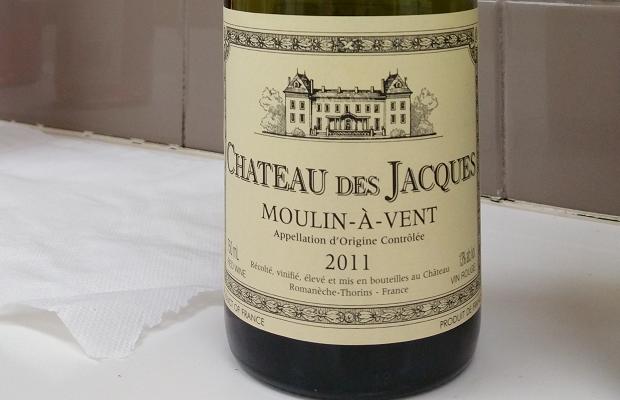
Château-De-Jacques Moulin a Vent 2010, Ac Beaujolais, France (Agent, $36.95)

The undergraduate’s blend comes from the appellation’s Château des Jacques parcels; Carquelin, Rochegrès, Champ de Cour, Thorins and La Roche. Granite soils from each spice with symptomatic diversification and combine for a flippant funk that hitches straightforward out of the gate. Here Gamay leaves dusty behind with an urging away from humble and towards nobility. Richly aromatic, amplifying into palate. Such acidity and such grain. For this MaV the time is now, the arrival already announced. A late sense of veneer on the lengthy bitter finish indicates more good times ahead. Drink 2015-2020.  Tasted May 2015<

Château-De-Jacques Moulin a Vent Clos de Rochegres 2010, Ac Beaujolais, France (Agent, $44.95, WineAlign)

From the appellation’s highest parcel, the red sandstone soils of the Clos de Rochegrès are gently sloping and fed by underground streams. I always sense salinity and an effusive, stony energy in wines blessed with subterranean irrigation. The drinking window for this 2010 is wide open and the funk meets age introduction has been made. Already in display of a dried fruit shrivel, the ’10 acts like Sangiovese of a similar senescence, like CCR or Vino Nobile with three to five years of age. The liqueur of roses, the earth and the cherries are culpable and yet the varnish and the baking spice crusting ensure that no one conclusion can yet be made. This is highly seasoned and not quite unfurled Gamay. Two more years should complete its conditioning. Drink 2017-2020.  Tasted May 2015

Château-De-Jacques Moulin a Vent Clos de Rochegres 2007, Ac Beaujolais, France (Agent, $43.95, WineAlign)

Poured from a magnum, the 2007 Clos de Rochgeres is the portal in which to peer, to see what can happen with Gamay. Baked, caked, figgy, funky and oxidative, more than ample fruit was present and persists, with the savoury edges now integrated throughout. Strawberry rhubarb pie comes to mind, with eyes closed and sniffing senses heightened. A bit indelicate, the humidity in tomato leaf and garrigue add to the idea of age though the citric punch and lactic texture are reminders of Gamay’s fun side. There is no shortage of complexity and evolution here. That said, consumption time is now. Drink 2015-2016.  Tasted May 2015

Malivoire Gamay Courtney 2007, VQA Beamsville Bench, Ontario (Winery, $29.95, WineAlign)

The wow aromatics can’t be denied, fully explained nor perfunctorily taken for granted. Age has educated the fruit, stratified and fully saturated this Gamay. Strawberries have shot from an adrenaline cannon and structure has been fully realized with (non-Gamay) Old World confidence. A note of orange blossom, like an early evening Sevilla garden, is rousing. The natural evolve of such a Gamay, with wood, yeast and fruit in expert harmony, recalls the impossible acts of red wines like those made by Emidio Pepe. If the stretch is considered a conceit of poetic licence, so be it. The yet beating heart of raging acidity circling plenteous fruit and so much savour is nothing short of a Gamay miracle. Power and masculinity, by way of a conduit in oak, have been used to great advantage. This has life yet to live. Drink 2015-2020.  Tasted May 2015

Château-De-Jacques Morgon Côte du Py 2006, Ac Beaujolais, France (Agent, $53.95)

Seamless and eminently structured, developed low and slow. The blue volcanic soil has procured an evolutionary subsumption, a roasted, developed personality. The seeping liquor oozes, of earthy cherries, again like Sangiovese, but inelastic and close-grained, as per the Côte du Py idiom. This ’06 offers clarity and gives reason to forgive the brutal ’13, to abstain for commenting further. This wine is quite ferric and still tannic. The oak remains a factor. Through the walls the Gamay fruit does transude and so the master plan is coming into effect, perhaps not immediately but will be very soon. Just around the corner. Drink 2016-2020.  Tasted May 2015
Moderator Sara d'Amato and the Terroir Masterclass panel: Magdalena Kaiser, Dr. Jim Willwerth, Emma Garner, Stuart Piggott and Dr. Kevin Pogue

Moderator Sara d’Amato and the Terroir Masterclass panel: Magdalena Kaiser, Dr. Jim Willwerth, Emma Garner, Stuart Piggott and Dr. Kevin Pogue

The second Masterclass: A Different Look At Terroir: How Much Do Soils Actually Matter?

“In this seminar/tasting we ask what the term really means, and how much do its many different elements actually influence the character of the finished wine?”

The Panelists:

  • Dr. Kevin Pogue Phd. Geology, Whitman College, Walla Walla, Washington State, USA
  • Dr. Jim Willwerth Phd. Biological Sciences: Plant Sciences; Oenology and Viticulture (CCOVI, Brock University, Niagara, Canada)
  • Winemaker Emma Garner (Thirty Bench, Beamsville Bench, Ontario, Canada)
  • Winewriter Stuart Pigott (Author of Riesling: Best White Wine On Earth, Berlin, Germany)

The Moderator: Wine writer/Sommelier Sara d’Amato (Wine Align, Toronto, Canada)

Dr. Willwerth offered up his opinion on how minerality is achieved in Riesling. “If you don’t get maturity in the variety at the end of the growing season, you won’t get the full expression of minerality. Overripe will eliminate minerality.” In Ontario, “The Bench is home to a mineral wealth of local Riesling, singular in composition not only by way of a global comparison, but also from plot to plot, soil to soil and vineyard to vineyard.” That persuasion has spread, down to the shores of Lake Ontario, by Niagara-on-the-Lake and in Prince Edward County. “Riesling brokers the nescient consumer with the gift of grape enlightenment.”

Seven Ontario Rieslings were tasted in the Masterclass. The notes.

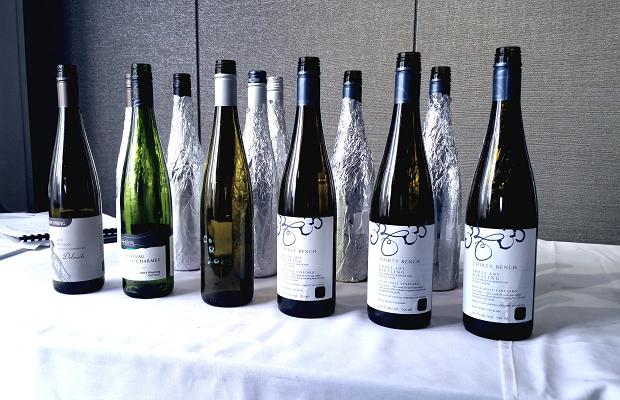
Riesling Masterclass

Riesling Masterclass

Cave Spring Riesling Dolomite 2013, VQA Niagara Escarpment, Ontario (Winery, $16.95, WineAlign)

This is Cave Spring’s bridge, offering safe passage from Estate to CSV Riesling. Vinified with consistency in a quasi-Kabinett style, its elevated though classic numbers steadfast in sugar (17.55 g/L) and acidity (7.2 g/L TA). The dolomite limestone of the Escarpment means business in this calm, fit, chiseled and consumer-lissome Riesling. Palate is really the thing, seamless to attraction, from fruit to stone. Orchards and citrus groves alight to rock. Phenolically ripe yet shy of the tropical planet. Is there transference here? Absolutely. Drink 2015-2018.  Tasted May 2015

Château Des Charmes Old Vines Riesling 2013, VQA Niagara On The Lake, Ontario (277228, $16.95, WineAlign)

The happy place effect by age in the Château Des Charmes’ vines coupled with location is usually enough to carry this Riesling through an obvious and readily identifiable tunnel but 2013 confounds. The elemental ratio, derived from multiplying reduction by altitude leans thoughts to the Vinemount Ridge or the Cave Spring Escarpment Vineyard. The compound aromatic waft, or more succinctly, the deconstructed stone, the breaking down of periodic Hollywood squares is a force to reckon. That this arrives from such close proximity to the lake is nothing short of amazing. It’s as if this Riesling is the product of stressed vines and the pierce is just so pinpointed. Less accessible than ’12 for sure, so drink up previous vintages going back at least three before even thinking about getting to know 2013. Drink 2018-2022.  Tasted May 2015

Norman Hardie Riesling 2014, Prince Edward County, Ontario (Tank Sample)

At this prepossessed stage the terpenic fruit might fail in competition but succeed in the marketplace. Easy access, smelling of perfumed must, juicy, with citrus and burgeoning acidity. Low alcohol and good length stretch out an endless lemon summer. The wine will reverse itself within a year and beat impossible odds. A Hardie always does.  Tasted May 2015

Thirty Bench Riesling Small Lot Triangle Vineyard 2009, VQA Beamsville Bench, Niagara Peninsula, Ontario (Winery, $30.00, WineAlign)
The brilliant hue slides through patina and heads for gold. Some fumes have emerged with age, part petrol, part pure mineral, but of what kind and more importantly how, or why? Viscous, near oily, waxy and the most Glück of the three Thirty Bench single-vineyard Rieslings. Tossed with spice, pepper, lemon and honey that is more molasses than clover. The mineral is a result of the lowest water retentive soil as compared to Steel Post and Wood Post. The transmission for (orchard or tropical) fruit is minimized, the vigour low. The result is mineral. Drink 2015-2020.  Tasted May 2015

Thirty Bench Riesling Small Lot Steel Post Vineyard 2009, VQA Beamsville Bench, Niagara Peninsula, Ontario (Winery, $30.00, WineAlign)

Balance is and therefore always was struck. The match percusses flint for a mere nano-second, with just a brush on cymbal, the rock bleeds but is quickly clotted because the fruit shines still, like around the clock light. The steely aspect is a posterior one, antithetical and yet purposed, from this vineyard. Youth tells common sense to think 2011. The Riesling behaviour seems to play that part, of a chalky, piercing acidity, so typical of that vintage and so distinctly Thirty Bench. That the wine is older is not a big surprise because 2009 is the bomb. It may just be the best Riesling vintage, from on that Bench, in the last 10. Drink 2015-2025.  Tasted May 2015

Thirty Bench Riesling Small Lot Wood Post Vineyard 2009, VQA Beamsville Bench, Niagara Peninsula, Ontario (Winery, $30.00, WineAlign)

Age is a factor but less so than its Bench sisters due to a fine sense of calm. Showing less evolution, less viscosity, less wax and honey. More than that, the periodic table has yet to fill in. The Wood Post exhibits more warmth, savour and balm. A taste offers a sapidity that combines toasted fennel and candied lemon. Poised and yet incomplete, the vineyard fetters this Riesling to breath slowly and take its (will get to) sweet time. Drink 2017-2027.  Tasted May 2015

Flat Rock Cellars Riesling Nadja’s Vineyard 2009, VQA Twenty Mile Bench, Niagara Peninsula, Ontario (578625, $19.95, WineAlign)

Going back a few years, this Flat Rock Weis 21 clone Riesling from atop the Niagara Escarpment was made by former winemaker Ross Wise. Six years has concentrated both aromas and flavours while concurrently reducing the cutting drill. The hyperbole is read by tablet, of etchings in stone, immortalizing the terroir (not so) long before it was truly known how this could happen. What sticks out the most is the bleeding limestone texture and the striking aridity. Later vintages of Nadja improve on the flesh. Drink 2015-2017. Tasted May 2015
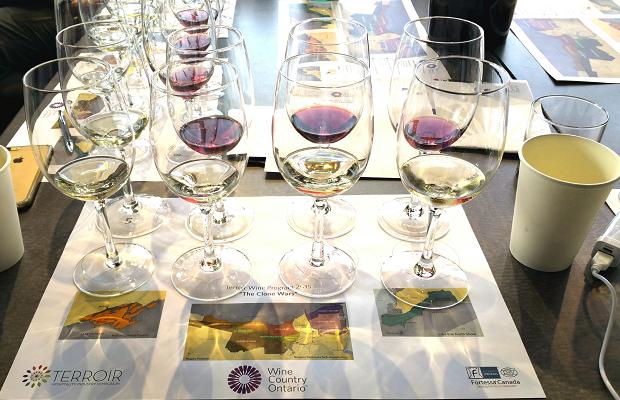
Clone Wars Masterclass

Clone Wars Masterclass

The third Masterclass: “The Clone Wars”: What Do Different Clones Bring To The Glass & Why?

“Looks at Riesling, Cabernet Franc and Pinot Noir. The varying clones utilized are a point of pride for some winemakers, and yet not even mentioned by others. Over the course of this detailed seminar/tasting we hope to answer why this is the case.”

The Panelists:

  • Dr. Kevin Pogue Phd. Geology Whitman College, Walla Walla, Washington State, USA
  • Dr. Jim Willwerth Phd. Biological Sciences: Plant Sciences; Oenology and Viticulture (CCOVI, Brock University, Niagara, Canada)
  • Winemaker Angelo Pavan (Cave Spring, Jordan, Ontario, Canada)
  • Winemaker Jay Johnston (Flat Rock, Beamsville Bench, Ontario, Canada)

The Moderator: Sommelier Katy Moore (Langdon Hall, Cambridge, Ontario, Canada)

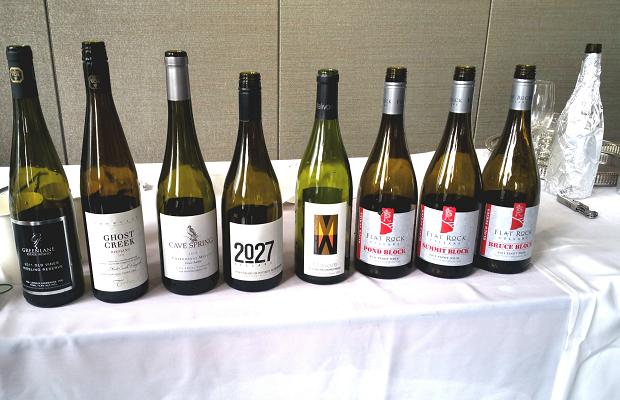
Dr. Jim Willwerth asserts that “clones are essential for viticulture, propagated asexually, through cuttings.” Angelo Pavan notes “clonal research to cold heartiness is very important for Niagara and also for yields.” Clones no doubt drive the industry, at least behind the scenes, but when it comes to making great wine, is it the be all, end all? “I still believe plot trumps clone,” says Jay Johnston. The defence rests. Here are the wines tasted in the final Masterclass.

Clone Wars Masterclass line-up

Clone Wars Masterclass line-up

Greenlane Riesling Old Vines 2011, VQA Lincoln Lakeshore, Niagara Peninsula, Ontario (351486, $21.95, WineAlign)

While aridity suggests Alsace Clone 49, this is actually Weiss 21, made saline and arid out of Lincoln Lakeshore soil. The herbal aspect has propagated to combine with Twenty Bench like distinction and with less citrus than Vinemount Ridge or Beamsville Bench. The Mosel density has developed with time in bottle. Drink 2015-2019.

From my earlier note of October 2013:

Cracks the mineral whip, froths lime into foam and atomizes stone fruit into sweet and sour heaven. Wants to be semi-dry but never quite goes there. Walks a fine line, a tightrope actually. Up there with Charles Baker and Thirty Bench for sheer madness.

Last tasted May 2015

Trius Winery At Hillebrand Showcase Riesling Ghost Creek Vineyard 2013, VQA Four Mile Creek, Ontario (Winery, $25.00, WineAlign)

The Ghost Creek Riesling comes from the shadow of a river bed vineyard planted to the Alsace clone 49. The fruit is much richer than most, coupled with the aridity and salinity that former stony wadi plots and this particular clone will conspire to effect. The citrus intensity is however tempered by a humidity that comes from seemingly sunburnt fruit, tanned and wet down by the revenant reservoir. Drink 2015-2017.  Tasted May 2015

Cave Spring Estate Bottled Chardonnay Musqué 2013, VQA Beamsville Bench, Niagara Peninsula, Ontario (246579, $15.95, WineAlign)

Produced from the 77 clone, the vintage has heightened the high herbal and feigned sweetness aromatic pastis. The palate is extraordinarily viscous, with Yellow Muscat and Gewürztraminer attributes, not so out of the ordinary considering Cave Spring’s older world execution. Drives from lemon to mandarin, through almond pit and into peach. Always solid Musqué. Drink 2015-2017.  Tasted May 2015

2027 Cellars Chardonnay Wismer Vineyard Fox Croft Block 2012, VQA Twenty Mile Bench, Ontario (Winery, $30.00, WineAlign)

In the hands of winemaker Kevin Panagapka, Craig Wismer’s fruit retains un underlay of power not recognized in other Foxcroft Chardonnays. Neither Thomas Bachelder nor Ross Wise (Keint-He) make anything near spirited as this 2027 take. Chardonnay loves the sun in the Foxcroft Block and Panagapka loves to see that sun hook up with the inside of a barrel. This ’12 makes a nice date for a wood wedding. A product of the Dijon 96 clone, the reduction in this Chardonnay drives its fresh, spritely if mettlesome nature, with a bark and a barrel bellow, but longevity will not suffer as a result. This could take 30 years to oxidize, it’s that audacious and also courageous. Let it and its buttered popcorn rest a while. Drink 2017-2025.  Tasted May 2015

Malivoire Chardonnay Moira 2011, VQA Niagara Peninsula, Beamsville Bench, Ontario (243113, $39.95, WineAlign)

When it comes to clones, winemaker Shiraz Mottiar distills the Moira Vineyard into the realm of “field selection.” Not to be confused with field blend though I suppose that’s what it is, of sorts. The ’13 is the dictionary entry for Moira, typically balanced, from pedigree, in warmth, amiability, gathered and distributed, from acumen and confidence, to customary placement. Fruit and acidity relax on a sofa of equilibrium, taking little in the way of risks, making no mistakes. Reduction isn’t even a twinkle in its fresh versus oxidative eye. The vintage and the handling purports to throw infantile, developed and matured into one big machine for a readout that grants immediate gratification. Exemplary take on cool-climate, Niagara Peninsula, slightly warmer Beamsville Bench Chardonnay proper. Not for the long-term. Drink 2015-2019.  Tasted May 2015

Flat Rock Pinot Noir Pond Block 2011, VQA Twenty Mile Bench, Ontario (Winery, $29.95, WineAlign)

Assessed blind it smells just like the Flat Rock’s Gravity Pinot Noir yet singled out in fractions. Here the mellifluent block, of sweet crooning fruit, careening and submissive to Siamese brother triplet Summit’s tension.

From my earlier note of October 2013:

Crosses the twain between Bruce and Summit. A cottony touch, most pronounced perfume and of the three, the lowest acidity. Mellow, easy, J.J. Cale peaceful, void of chalk, grain or angst. Speaks in a cherry voice, smells like cherry and returns that cherry to taste. Ripe and soft. “Sweet as a morning sunrise, fresh as a mountain dew.”

Last tasted May 2015

Flat Rock Pinot Noir Summit Block 2011, VQA Twenty Mile Bench, Ontario (Winery, $29.95, WineAlign)

The most perfumed and yes, Burgundian of the three blocks, the Pommard in the group. Still limestone chalky and gaining weight. This is a single-block wine to me made again.From my earlier note of October 2013:This block’s base is slightly deeper, spreading over dolomite limestone. Diminished average temperatures mean berries develop lower and slower, hang longer (up to three weeks) resulting in higher phenolic ripeness. Summit may be the caveman of the three, seemingly in dire straits, covered in leaves, snapped twigs, truffles and porcini mushroom but damn if impossible Burgundy does not come to mind. This is one to ask where do you think you’re going? It will surely reply, “if you ain’t with me girl, you’re gonna be without me.”Last tasted May 2015

Flat Rock Pinot Noir Bruce Block 2011, VQA Twenty Mile Bench, Ontario (Winery, $29.95, WineAlign)

The light and delicate place translates to hue, texture and ultimately elegance. Yet there persists an underlying anxiety, essential for gravity.

From my earlier note of October 2013:

From the northern most block, up at the Escarpment/Bruce trail. Thin, one foot deep soil meshes flaky limestone at this elevation. Smallish berries predominate and an earthly mote accents the flowers, cherries, strawberry and classic purity of this bonny Bruce. A Oregonian lightness of being, if you will. From one of the few south-facing slopes in Niagara (because of 20 Mile Creek), where the limestone chalk imparts fine-grained tannin so apparent to taste.

Last tasted May 2015

Good to go!

http://www.winealign.com/profile/2058-mjg

This week bubbles, next week summer

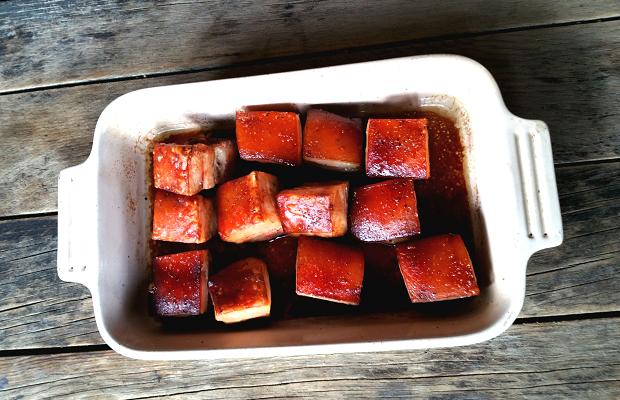
Roast Pork Belly, red wine, soy, cassia, star anise, sichuan peppercorn, clove, ginger, garlic

Roast Pork Belly, red wine, soy, cassia, star anise, sichuan peppercorn, clove, ginger, garlic

The architecture behind the June 13th VINTAGES release is predicated on many a premise but the cover girl and centre of bubbling attention is Sparkling wine. For this I applaud with as much robust positivity in prejudice as I can afford. The ad nauseam used adage “Sparkling wine goes with everything” is actually ad hoc, meaning it is always the solution, no matter the situation.

That VINTAGES has chosen to put fizz in the spotlight at this juncture is nothing short of brilliant. Yes, brilliant. It’s inconspicuous and dubious (incommensurate to December) and so appropriate (unlike the dead of February winter). Think about it. Father’s Day, on the verge of summer, sitting on decks, patios and porches. Grilling sea-swimming creatures, eating snacks and tapas, enjoying the warmth of life. All these roads lead to bubbles.

The JC Penney VINTAGES catalogue will have you believe that Sparkling is a remarkable entity and that it goes with all these things; lunch, casual dinner, snacks, summer days and evenings, date night, week night, the cottage, weekend brunch and a formal evening. And that would be entirely correct. The catalogue rolls out 20 variations this weekend. I’ve tasted them all and here are the seven to pop, pour and elevate your game.

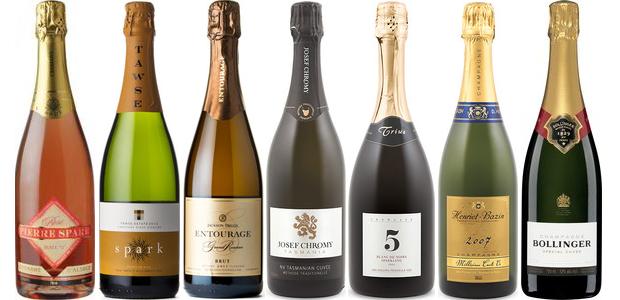
From left to right: Pierre Sparr Brut Rosé Crémant d’Alsace, Tawse Spark Limestone Ridge Riesling Sparkling 2013, Jackson Triggs Entourage Grand Reserve Brut 2011, Josef Chromy Tasmanian Cuvée, Méthode Traditionnelle, Trius Showcase 5 Blanc De Noirs 2009, D. Henriet Bazin Carte D'or 1er Cru Brut Champagne 2007 and Bollinger Special Cuvée Brut Champagne

From left to right: Pierre Sparr Brut Rosé Crémant d’Alsace, Tawse Spark Limestone Ridge Riesling Sparkling 2013, Jackson Triggs Entourage Grand Reserve Brut 2011, Josef Chromy Tasmanian Cuvée, Méthode Traditionnelle, Trius Showcase 5 Blanc De Noirs 2009, D. Henriet Bazin Carte D’or 1er Cru Brut Champagne 2007 and Bollinger Special Cuvée Brut Champagne

Pierre Sparr Brut Rosé Crémant d’Alsace, Méthode Traditionnelle, Ac Alsace, France (39016, $17.95, WineAlign)

Graceful and pink lithe, like cold smoked salmon, delightful Pinot Noir Rosé fizz. Nothing earth shattering, breath-taking or barrier breaking, just well made blush bubbles. The structure and balance are really spot on. Finishes strong and with confidence. Helps to define this genre of Crémant’s creamy texture, matched in contrast by its stony, flinty and mineral style.  Tasted November 2014  @ProfileWineGrp

Tawse Spark Limestone Ridge Riesling Sparkling 2013, Twenty Mile Bench, Ontario (370361, $19.95, WineAlign)

Only a year and in conjunction with an improved Sparkling wine vintage for Riesling, short work has elevated the young Spark’s game. A repeat lees performance initiates the conversation, of cheese melted overtop composite laminate, with yeast burgeoning about. In 2013 the concrete crispness is cemented deeper, etched into stone and thus completing the sub-$20 legacy. That winemaker Paul Pender can coax Riesling character, striking Sparkling wine resolve and yet hover in the air of litheness, well, this is the kneading. Silty, salty earth and soft transitions to citrus acidity are a requiem for success as per the Twenty Mile Bench/Limestone ridges vouchsafe common. Can even imagine a bit of time turning this into sparks and honey. Drink 2015-2019. Tasted May 2015  @Tawse_Winery  @Paul_Pender

Jackson Triggs Entourage Grand Reserve Brut 2011, Méthode Classique, VQA Niagara Peninsula, Ontario (234161, $22.95, WineAlign)

This is a very effective bottle of bubbles, consistently produced, vintage after vintage. Some reserve on the nose, notable in its pear and yeasty aromas. Crunchy feel for fizz with a replay in flavour much like prickly pear and the tropical esters of yeast. Really good length. Simply well made.  Tasted November 2014  @Jackson_Triggs

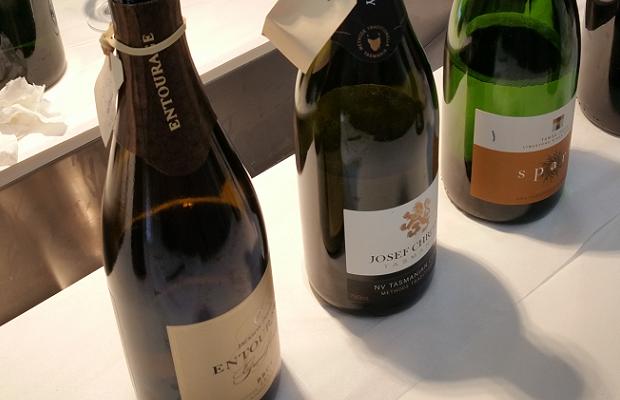
Jackson Triggs Entourage Grand Reserve Brut 2011, Josef Chromy Tasmanian Cuvée and Tawse Spark Limestone Ridge Riesling Sparkling 2013

Jackson Triggs Entourage Grand Reserve Brut 2011, Josef Chromy Tasmanian Cuvée and Tawse Spark Limestone Ridge Riesling Sparkling 2013

Josef Chromy Tasmanian Cuvée, Méthode Traditionnelle, Tasmania, Australia (409102, $28.95, WineAlign)

Obvious and exemplary cool-climate Sparkling wine, traditionally swayed out of Tasmania where bubbles are meant to be. Composed of northern Tasmanian (Relbia) Estate fruit, of Pinot Noir (67 per cent) and Chardonnay (33). Classic numbers (12.0 per cent alcohol, 7.2 g/l acidity and a pH of 2.91) with 18 months on the lees and triaged with no malolactic fermentation. The result is a stoic and aerified expression, to the upper reaches of the atmosphere, gently toasty and of an aridity that tricks, foils and emanates sweetness. Sharp, tacking and grooved in acidity grippy enough to firmly grasp the frozen, suspended finish. Drink 2015-2018.  Tasted May 2015   @JosefChromy  @bwwines

Trius Showcase 5 Blanc De Noirs 2009, VQA Niagara Peninsula, Ontario (420521, $55.00, WineAlign)

Auspicious opening for the top end, new Trius Sparkling wine, based on Pinot Noir (70 per cent) from Four-Mile Creek (Lawrie Vineyard), with support from Pinot Meunier (30). Five is the number of years slumbering on lees, a voyage into triage to transport this singular Niagaran into the stratosphere of the region’s pantheon. Arid, toasty and slightly oxidative as per the wild ferment, Craig McDonald style. The toast is spread with a tapenade of (more) lightly toasted nuts, tarragon, morel and earth. There is a feeling of berries, void of pigment, slightly tart and very fragrant. Also the not so pungent but forest emergence of basidiomycete fungus. Delicate, complex, creamy and simultaneously, so very dry. A wine to sip at a large gathering around an antique harvest table or deep into the next decade. Drink 2015-2028. Tasted May 2015  @TriusWines

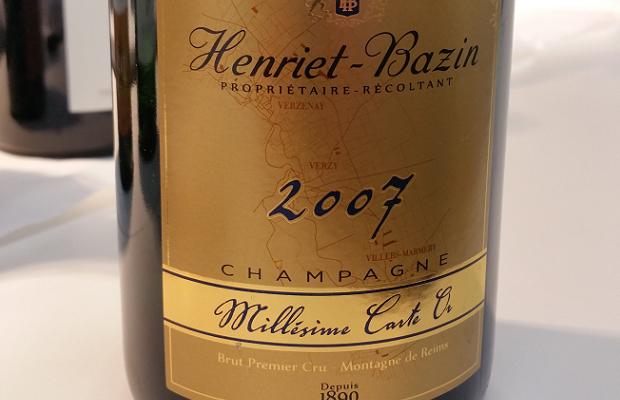
Henriet Bazin Champagne 2007

Henriet Bazin Champagne 2007

D. Henriet Bazin Carte D’or 1er Cru Brut Champagne 2007, Ac, Champagne, France (415596, $57.95, WineAlign)

In the realm of Champagne theory, this vintage-dated fizz plays a role of the belletristic kind. The characteristic rhetoric of style; beauty, sublimity and propriety all contribute to the old-school way. Composed of 60 per cent Grand Cru Pinot Noir and 40 lieu-dit-esque Chardonnay, from an early bud break (beginning of March) and picked vintage (early September). Has body and depth of fruit, humanistic stratification, density and compression. Bitterly, properly oxidized and rampant in acidity, offering a dance on the back tongue, of paralysis, palaver and paradox. Concentrated and imposing, far from the delicate or easy-going modern Champagne. Has guts and determination, risk-rapport, esteem and respect for vintage dated bubbles. Drink 2015-2022.  Tasted May 2015

Bollinger Special Cuvée Brut Champagne, Champagne, France (384529, $73.95, WineAlign)

As direct, elegant and pinpoint accurate as ever. The ever so faint oxidative lean is uncompromising with a floating sachet of ginger, mace, absorbing toasted biscuit and caper brine. From phite to sweet crouton. Composed of 85 per cent Grand and 15 Premier Cru fruit from all over Champagne.

From my earlier note of October 2014:

A wine of social heredity, the Bollinger is tranquilized, entreated and centered by meditation. An arid, atomic and piercing Bollinger. Fine and misty, with ultra-classic subtlety, a living, breathing embodiment of a beloved house style. Exotic to a degree, these are bubbles in colourful pageantry, the Bollywood of Champagne, in grace, of flowing robes, hues in ochre and pastels, flowing like song and dance. There are beautiful bitter tonics on the finish. How can you not admire and be entranced by this style? What’s not to like?

Last tasted May 2015  @BollingerFrance  @andrewhanna

Good to go!
http://www.winealign.com/profile/2058-mjg

Five old pines and one star

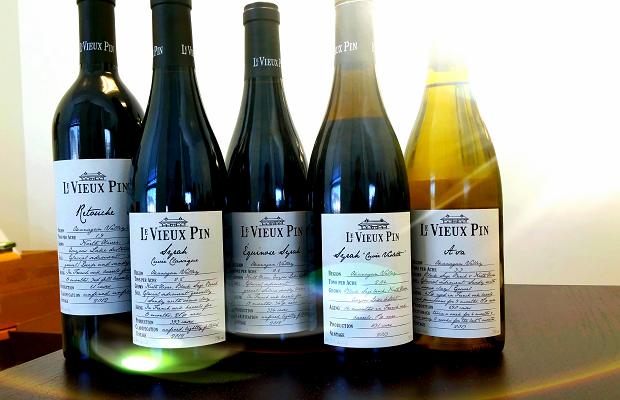
Le Vieux Pin

Le Vieux Pin

The pine tree stands alone. Le Vieux Pin. The old tree at British Columbia’s Black Sage Bench winery “speaks to the earth and rain and the clean clear air of the South Okanagan.” Le Vieux Pin makes wine with homage, loyalty and attention to French skill, acumen and personality. Their wines are decidedly full-bodied and age worthy.

The it moment for the principals at Le Vieux Pin may have been a Cabernet Franc one but it is Syrah that they have touched and turned into gold. The elegance, restraint and northern Rhône semi-ringer that is the Cuvée Violette is testament to what Viticulturist and Winemaker Severine Pinte can do with the grape variety. Her touch around that proverbial green is singular, not just for B.C. but for Canada and also the west coast. The mightier and more expensive Syrahs, the Cuvée Classique and Équinoxe will benefit in the future from what Pinte is doing with the Violette. It may be the entry-level of the three but it speaks the clearest and most understood vernacular.

LaStella is located at Osoyoos Lake in the South Okanagan valley. Their proprietary wines called Fortissimo, Allegretto, Vivace and Maestoso are named after Italian musical notes. I sat down with John Szabo M.S., Sara d’Amato and Steve Thurlow at WineAlign to taste five old pines and one star. Here are the notes.

Le Vieux Pin Syrah Cuvée Violette 2012, BC VQA Okanagan Valley, British Columbia (ON $39.99, B.C. $29.90, WineAlign)

Co-fermented with a couple of percentage points Roussane, this variation on the northern Rhône theme gets a different, if more valuable aromatic lift. Draws fruit from sites on the Black Sage Bench, North Oliver and the Oyosoos Lake District. Elegant and elongated, refined and buoyant. Feathery and untethered. The aroma of violets gathered and condensed, then flooded as if on a large canvas, in lithe diffusion, followed by multifarious perfumes. Chewy and circulating upon the palate, with sweet pinnings. Warm at 14.2 per cent alcohol with holes filled and acidity pins stuck. Drink 2015-2020.  Tasted May 2015

Le Vieux Pin Syrah Cuvée Classique 2012, BC VQA Okanagan Valley, British Columbia (B.C. $49.90, WineAlign)

From plots of major glacial till, gravel, sandy silt and minor clay, in North Oliver and the Black Sage Bench. Five extra months in barrel (than the Violette), 21 per cent of it being new adds spice and texture to the gravity defying aromatic rise. More pepper and a hang of old world cure infiltrate the violets and the hyacinth. The lure of Umeboshi, grainy bean paste ice cream and leathery tang whiffs suppress the sweet, lingering florals and prepare the palate for what massive follows. Sweetness enters the fray, not as sugar, but as a thickening agent to balance the severe tannic grit. This needs five years minimum to settle and ten more to fully soften. Drink 2020-2030.  Tasted May 2015

Le Vieux Pin Syrah Équinoxe Syrah 2012, BC VQA Okanagan Valley, British Columbia (B.C. $89.90, WineAlign)

From North Oliver and Oyosoos Lake District vineyards of glacial sediment, gravel, silica and sandy loam, a veritable geological potpurri gives this low yielding (26 tonnes per acre) and minimal case load (324) of a Syrah a measure of immeasurable complexity. The barrel count is again (like the Cuvée Clasique) 19 months, with the new aspect increased to 34 per cent. The aromatics of violets, hyacinth and pepper are on magnified display. Add in sage and tobacco. Has grape tannin and wood spice in waves. The coarse salt, liqueur grain and pool of tension require much patience and respect. If Classique needs five, Équinoxe needs ten, or perhaps until the next solar eclipse on the vernal equinox. That will be in 2034. Here’s to hoping this hematic pugilist will be ready to drink by then.  Drink 2022-2034

Le Vieux Pin Retouche 2012, BC VQA Okanagan Valley, British Columbia (B.C. $60.00, WineAlign)

A Bordeaux blend with a minor yet obvious fortification of Le Vieux Pin’s gold grape variety, Syrah. Has that mammoth richness falling somewhere between modern Brunello and Tuscan IGT. From fruit in Oyosoos Lake District and North Oliver. A small (61 case) production that was housed in third fill barrels for the house-style 19 months. Big, brawny, hematic, sanguine and bloody massive. The darkest of fruit. The deepest roots. The snake in the grass. The shark beneath the waves. Many bites, from pepper and far eastern spice, coffee and more coffee. Tannin out the wazoo and the gills. Huge, modern-effected Bordeaux, like Château de Pez or La Croix De Gay. At 14.8 per cent alcohol its warmth needs a settling period to be sure, but during the period in which the fruit lasts, it will always act this way. Drink 2020-2025.  Tasted May 2015

Le Vieux Pin Ava 2013, BC VQA Okanagan Valley (ON $39.99, B.C. $34.90, WineAlign)

The Viognier, Marsanne and Roussane amalgamation is lifted by the latter’s floral give. The texture is bolstered by Viognier’s play, from entry through presence and forward. At that point the ownership is transferred to Marsanne’s camp, where it remains dry, stoic and lingering on the palate. Has all parts moving in synchronicity, for unity, precision and together to celebrate a distinct Rhône intent. Has great herbiage, grain and elongation. The length walks a ridge, in tune as long as the Black Sage Road. Drink 2015-2019.  Tasted May 2015

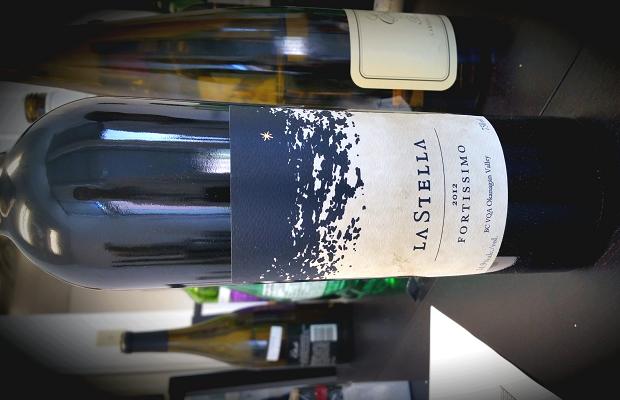
La Stella Fortissimo 2012

La Stella Fortissimo 2012

La Stella Fortissimo 2012, BC VQA Okanagan Valley (ON $39.99, B.C. $34.90, WineAlign)

The blend is Merlot (39 per cent), Cabernet Franc (38), Cabernet Sauvignon (17) and Sangiovese (6), a stew of Right Bank Bordeaux varietal intention with Memphis soul. Unashamedly rich, viscous, earthy deep, chalky and endowed with unctuous, chocolatey Osoyoos texture. The palate gives plum, dark red berries and more chocolate chew with a graphite and oozing Cassis centre. Then arrives the dusty Mulberry, bruised, hematic and pulsating with energy. The acidity follows with wow factor spirit. Has got Billy Preston finger roll and Stax tang, plus horn squeals and endless staccato fitful layering. It’s 14.9 per cent alcohol is curt yet remarkably not that hot. Put this king Okanagan away for five years minimum and listen to it linger for 10 or more. Drink 2020-2030.  Tasted May 2015

Good to go!

http://www.winealign.com/profile/2058-mjg

Top ten imports at VINTAGES from May 30th

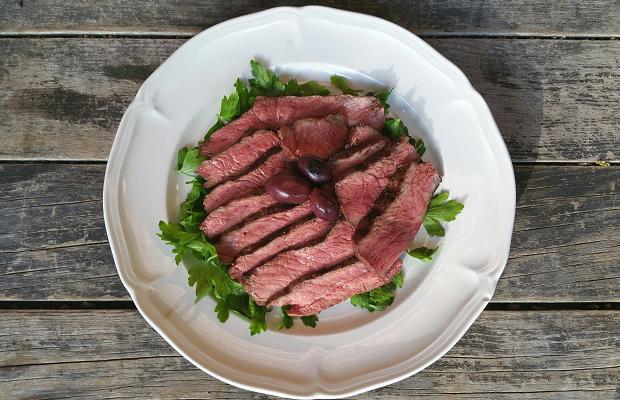
Organic Sirloin, parsley, black olive

Organic Sirloin, parsley, black olive

Should you be counting and despite the number of wines you will read about below, I have to tell you honestly that I was a highly competent mathematics student through high school. Distractions including but not restricted to cooking, music, words, pop culture, sports and ancient works of antiquity paved new roads but I can still count to ten. This list goes up to eleven because I could not in good conscience leave Thomas Bachelder’s pulchritudinous NSG out in the first day of June cold.

Related – Du bon Bachelder: Burgundy, Oregon, Niagara

So I tasted again and have updated my note on La Petite Charmotte 2011, a beneficient Bourgogne that hit LCBO shelves this past weekend. The Bachelder project turns water into wine in three countries. By now you know all about the trinité-terroir schematic as I’ve written about Thomas and Mary many times. The fact that VINTAGES happens to now be releasing the 2011 LPC, predecessor to the already tasted and reviewed 2012, the “single-vineyard NSG hugged up on a northern slope,” is of consequence because it’s a memorable, cellar-worthy wine from a really stunning vintage.

Related – Eight Ontarians to be released on May 30th

The other top 10 all happen to be reds, save for one exiguous white Burgundy. France and Italy (a.k.a. Old World) dominate the remainder, except for a lone, paradigmatic Chilean Cabernet Sauvignon and a refreshing McLaren Vale Shiraz. Get out there folks, spoken one more time in guiltless refrain. Here are your tasting notes.

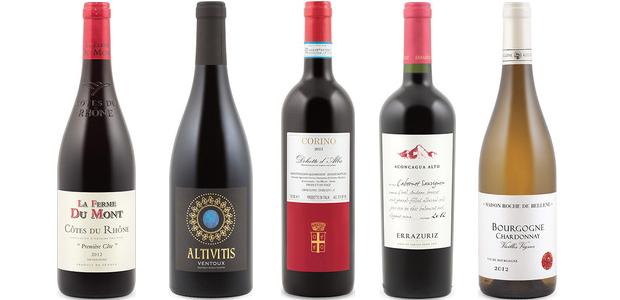
From left to right: La Ferme Du Mont Première Côte Côtes Du Rhône 2012, Altivitis Ventoux 2011, Corino Dolcetto d'Alba 2013, Errazuriz Aconcagua Alto Cabernet Sauvignon 2012 and Maison Roche De Bellene Vieilles Vignes Bourgogne Chardonnay 2012

From left to right: La Ferme Du Mont Première Côte Côtes Du Rhône 2012, Altivitis Ventoux 2011, Corino Dolcetto d’Alba 2013, Errazuriz Aconcagua Alto Cabernet Sauvignon 2012 and Maison Roche De Bellene Vieilles Vignes Bourgogne Chardonnay 2012

La Ferme Du Mont Première Côte Côtes Du Rhône 2012, Ac Rhône, France (251645, $14.95, WineAlign)

A different sort of CdR works from this unfiltered red, on the side of winemaking that summons modern Rosso Sangiovese Grosso. That’s caused by the concentration of cherry liqueur, dried roses and a greater aromatic feeling of potpourri. Yet there is also fresh raspberry and at the other end of the spectrum, cured meat. With a touch of Brett it recalls Grosso in deeper, more expensive terms. The middle palate is a touch hollow, but at $15 beggars need not be choosers and so much pepper marks the austere finish. Add it up and the two words that come to mind are simply complexity and value. Drink 2015-2019.  Tasted May 2015  @Eurovintage  @VINSRHONE

Altivitis Ventoux 2011, Ac Rhône, France (414359, $17.95, WineAlign)

Prodigious Ventoux for a pittance considering the stuffing and the Mencia-esque (think Pittacum) deep, dark, black cherry and purple berry dressing. Rich and actually structured with equal and opposing tannins. That said, it never sheds its high-toned, carbonic youthfulness and the aromas are peppered by five spice, mandarin and hoisin. Something about this also reminds of Cru Beaujolais, but like an immature, yet volatile tank sample of Brouilly. But it’s more new world than that, so I wouldn’t construe all this as complexity, or balance for that matter, but instead, distraction. It’s certainly worth a look, with near, value-driven greatness due to righteous acidity, in a modern, semi-distinct representation of the region. If you like to keep it dark and sorcerer powerful, go gothic with this Ventoux. Drink 2015-2018.  Tasted May 2015  @AOCVentoux

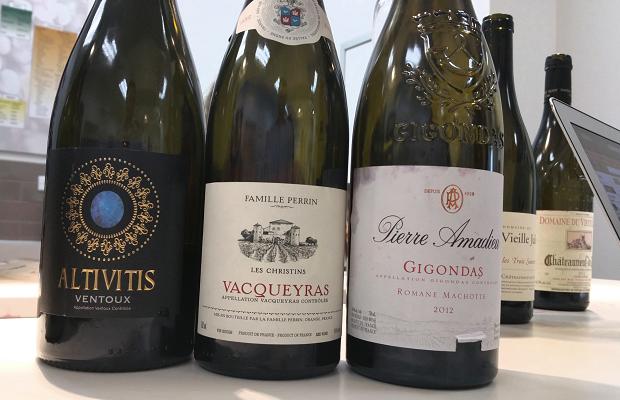
Three from the Rhône Valley at VINTAGES May 30, 2015

Three from the Rhône Valley at VINTAGES May 30, 2015

Corino Dolcetto d’Alba 2013, Doc Piedmont, Italy (412353, $18.95WineAlign)

Three district aromas emanate; fresh carbon-stoned fruit, cheese and earth. Plums and liquorice on the palate. More cheese. High acidity with gramercy to punctuality, dimension and peak performance prickling. A minutiae of tannin ekes out an ageing component. Could go both ways bitter finish. Better than most Dolcetto. Drink 2015-2017.  Tasted May 2015  @danieliwines  @vinidelpiemonte

Errazuriz Aconcagua Alto Cabernet Sauvignon 2012, Aconcagua Valley, Chile (203364, $19.95, WineAlign)

Presence and exceptional poise define the role played by this Cabernet Sauvignon. The character portraiture is so very Chilean. Florals oscillate in waves of vanilla, along with currants and tobacco. Dig in some Aconcagua earth and bell pepper, melded into and lost in an ol’ tenebrous, cimmerian buttermilk sky. Lush, rich and piqued by cracked pepper, anise and the dusty redundancy of liquorice root. Legitimately oaky but that is entirely OK. Drink 2015-2020.  Tasted May 2015  @errazurizwines  @Dandurandwines  @DrinkChile

Maison Roche De Bellene Vieilles Vignes Bourgogne Chardonnay 2012, Burgundy, France (299867, $20.95, WineAlign)

So stylish for entry-level Burgundy, ascertained and finessed by a light yet steady approach. Creamy texture stands out, above freshness and the under subtle tone of buttery oak. I don’t find it at all toasty but more of a slow, low temperature, moisture deprivation in the whirl of a dehydrator. Enter the forest through the gates of this Bourgogne on the route to Meursault. Drink 2015-2018.  Tasted May 2015  @RochedeBellene  @Nicholaspearce_

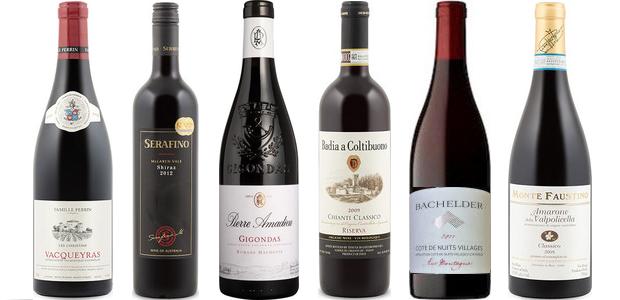
From left to right: Famille Perrin Les Christins Vacqueyras 2012, Serafino Shiraz 2012, Pierre Amadieu Romane Machotte Gigondas 2012, Badia A Coltibuono Chianti Classico Riserva 2009, Bachelder La Petite Charmotte Nuits Saint Georges 2011 and Monte Faustino Amarone Della Valpolicella Classico 2008

From left to right: Famille Perrin Les Christins Vacqueyras 2012, Serafino Shiraz 2012, Pierre Amadieu Romane Machotte Gigondas 2012, Badia A Coltibuono Chianti Classico Riserva 2009, Bachelder La Petite Charmotte Nuits Saint Georges 2011 and Monte Faustino Amarone Della Valpolicella Classico 2008

Famille Perrin Les Christins Vacqueyras 2012, Ac Rhône, France (973453, $23.95, WineAlign)

I tasted this Vacqueyras back in the fall of 2014 but did not write a formal tasting note. Six months in bottle has done it some serious, generous justice, in the aromatic simulacrum of balance. Settling has tempered what heat there may have been in extreme youth, humouring and buttressing the lamina of red fruit to stand alone, in avoidance of an impasse in jam. This has class in all months, seasons and at every level of education. It is both student and T.A., dug in to study and to mentor younger Vacqueyras in search of such structure and wisdom. Spice and smoke throw signals of added coil, only to relent to the drupe and resolve for involution. Times also allow for pretty florals beholden to garrigue. Chalk and grain give the tannin elasticity. Exemplary and necessary Vac with an inconsequential asking price. Drink 2016-2022.  Tasted May 2015  @Beaucastel  @ChartonHobbs  @VINSRHONE

Serafino Shiraz 2012, McLaren Vale, South Australia, Australia (407718, $28.95, WineAlign)

A richly textured, solidly structured and surprisingly believable, relatively tame, low alcohol (14 per cent) McLaren Vale Shiraz. The flowers are strewn across the aromatic entry, relenting to cedar and ripe berries. What a sincere inhalation of beautiful. Classic bones to carry a sense of place, constructed with heady serenity and savour faire. Shiraz of a tall order, to please many camps, from finesse to power, for instant pleasure and in attraction of the cellar junky. Drink 2016-2022.  Tasted May 2015  @SerafinoVino  @mclaren_vale

Pierre Amadieu Romane Machotte Gigondas 2012, Rhône Valley, France (973453, $27.95, WineAlign)

Show me an off vintage of the Romane Machotte Gigondas and I’ll throw in the proverbial tasting towel. This Amadieu can never disappoint. The ’12 offers spicy, smoky, piquant accents over top big red fruit. Much reduced yet non-reductive freshness abounds, set upon a valance of liquorice and dried flowers. The stuffing is packed and brimming, the herbs and verdancy sacrosanct with just the right kind of sting. Has savour but I would stop short of calling it savoury. It’s raspy but not rapacious. The Grenache-Syrah blend bides and lingers, long as the road that links Romane and Machotte. Drink 2016-2022.  Tasted May 2015  @Amadieu_G

Badia A Coltibuono Chianti Classico Riserva 2009, Docg Tuscany, Italy (683474, $38.95WineAlign)

This is a very understated, creeping, impossibly concentrated Chianti Classico Riserva. Positively vital, as classic as classic gets while not once reverting to the kind of rusticity that refuses adaptation, ignores permutation or refutes progress. The cleanest fruit is scented by the dulcet appraisal of truffle and porcini. The pitch is just about perfect, the acidity ideal and the balance struck between fruit, barrel and age. Earth grounds the entire ordeal, rendering it peaceful and pleasurable, the possibilities playing out enjoyable and endless. The organic ’09 can be poured right now and the legs will take this down roads as long as the SP408 to Traversa and Gaiole in Chianti. Drink 2015-2029.  Tasted May 2015   @coltibuono  @HalpernWine  @chianticlassico

Bachelder La Petite Charmotte Nuits Saint Georges 2011, Ac Burgundy, France (357228, $49.95, WineAlign)

The spice notes reign in May, 2015. A smoulder stick of limestone wicks through the red, earthy fruit. Petite only in grace and largesse, in longevity this stretches from Nuits-Saint-Georges to roads leading in all directions. Careful, delicate and yet profoundly, powerfully restrained, not to be ignored Pinot Noir. Drink 2018-2025.

From my earlier note of November 2013:

Is so floral, mineral, intense and hypnotic it might be dubbed the Serpent Charmer. Iron and wine indeed, the iron of Nuits, the perfume of Beaune. This provocative bottling represents the third year of production, is conspicuous in Anis de Flavigny and an underlying gate. If montagnes is the harming one, this is the charming one. These are all from the same barrels, so what really affects the wines the most? Land and hand.

Last tasted May 2015  @Bachelder_wines

Monte Faustino Amarone Della Valpolicella Classico 2008, Doc Veneto, Italy (327122, $56.95, WineAlign)

You know it’s big, hot and full-bodied. But oh if this isn’t the epitome of how Amarone can woo, thrill and hypnotize. The fig-date-palm-dried fruit feeling proliferates within an anise liqueur base. The caked, cracking and arid earth flakes, chips and cuts with a mustard of spices. The smooth and velvety mouthfeel has variegated chalk and grain. Such a promiscuous Valpolicella that fleshes and swells as it swirls. Intense, rich and yet neither overpowers nor climbs over the top. Drink 2018-2028.  Tasted May 2015  @RegioneVeneto

Good to go!
http://www.winealign.com/profile/2058-mjg

Eight Ontarians to be released on May 30th

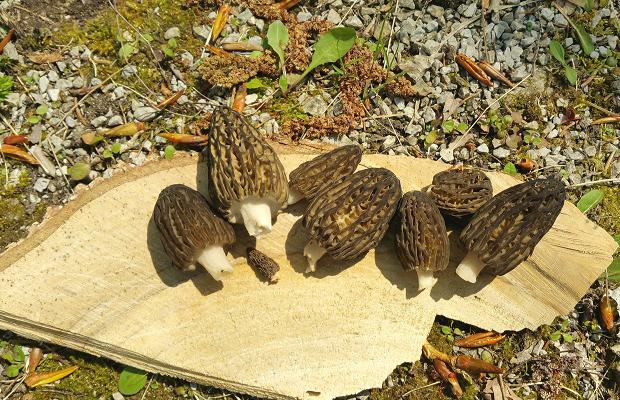
Innisfil Black Morels

Innisfil Black Morels

For those keeping score at home, that’s tomorrow, the next stop on the perpetual and seemingly infinite VINTAGES release calendar. The usual varietal suspects dominate the scene; Chardonnay, Pinot Noir and Riesling, along with one well-made and even better priced Cabernet duo.

The eight wines available are of the mortar in bricks variety, further examples of the cement that binds and fortifies the overall depth and ubiquitous quality of Ontario wine. Forget about bad winters, spring frosts and storm clouds raging from LENS, through Niagara and east to PEC. The industry accepts the challenge for a constant and progressive study, from synoptic, to panoptic and into omnoptic surveillance.

The future’s so bright I’ve got to wear shades. This weekend I’ll start the rest of my Ontario wine journey with these eight VINTAGES releases. My notes are here and as always, with scores in tow, published over at WineAlign.

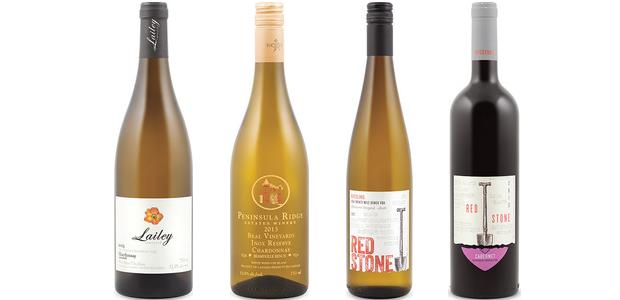
From left to right: Lailey Unoaked Chardonnay 2013, Peninsula Ridge Beal Vineyards Inox Reserve Chardonnay 2013, Redstone Limestone Vineyard South Riesling 2012 and Redstone Cabernet 2012

From left to right: Lailey Unoaked Chardonnay 2013, Peninsula Ridge Beal Vineyards Inox Reserve Chardonnay 2013, Redstone Limestone Vineyard South Riesling 2012 and Redstone Cabernet 2012

Lailey Unoaked Chardonnay 2013, VQA Niagara Peninsula, Ontario (299776, $14.95, WineAlign)

Derek Barnett’s 2013 unplugged delivers wattage and punch, from freshness and fruit. Epitomizes what oak-less Chardonnay must be, exemplifying the entire side by each association, orchard fruit claim, from apples to white peach. This is fashioned from the highest, cleanest quality fruit, that much is obvious. A river runs rushing through it, pumping even more energy, carrying mineral silt and at the tail, a soluble nori finish. Drink 2015-2017.  Tasted May 2015  @laileywinemakr

Peninsula Ridge Beal Vineyards Inox Reserve Chardonnay 2013, VQA Beamsville Bench, Niagara Peninsula, Ontario (7328, $18.95, WineAlign)

The Beal Vineyard and Peninsula Ridge team up to offer Ontario yet another stellar oak-less, acier inoxydable, stainless steel INOX Chardonnay. The vintage and the treatment conjoin in a symbiotic palooza to judiciously and generously woo the unoaked Chardonnay convert. For the warm weather, butter happy friend in search of fresh Bench fruit, look no further, deeper or inside the toasty staves of the barrel. This delivers on the promise of fresh, crisp white wine, as a stand in for what used to be and is no more. The consistency of quality and the life affirming energy of the vineyard are wrapped up in a no cover blanket. This just reeks of pure, unadulterated Chardonnay. Of peaches and their flesh, the pit and Ontario pears to boot. It’s a veritable, layered fruit Napolean. Drink 2015-2016.  Tasted May 2015  @PeninsulaRidge

Redstone Limestone Vineyard South Riesling 2012, VQA Twenty Mile Bench, Niagara Peninsula, VQA Twenty Mile Bench, Ontario (381251, $18.95, WineAlign)

So much lime and liquid chalk make for desired and dreamy texture. The lime slides like a slick of oil into the full flavours, spiked by peach and white plum liqueur. Terrific 20 Mile value. Drink 2015-2019.  @Tawse_Winery  @DanielatTawse

From my earlier note of May 2014:

This inaugural Riesling foray from atop the Twenty Mile Bench out of the Limestone Vineyard is a sister to the Tawse exploration from same. The comparisons end right there. Paul Pender’s take is kinetic, frenetic and electric. Redstone winemaker Rene Van Ede tends to and lends from a reconnaissance that heralds Mosel. His first, fixed take is off-dry (in obvious ubiquity) with circular acidity. The co-agitation is early picked at low brix, with realized high residual sugar (36.4 g/L) and low alcohol (10 per cent). Toothsome, with a ying/yang, lemon/lime, push/pull. The case load is formidable for a first go ’round (1000 plus) yet paddled through limestone acreage with effortless strokes.

Last tasted May 2015

Redstone Cabernet 2012, VQA Niagara Peninsula, Ontario (Winery, $19.95, WineAlign)

Part Cabernet Franc and parcel Cabernet Sauvingon, this Redstone spent 16 months in French oak. Having melded wood into savour, the plum fruit is more than up front ample, with a pepper over and a chocolate under. A fair shake of spice and insistent tannin makes for quite a bracing red mouthful, indicating needed air and age time. Like the Tawse Bordeaux-styled reds that have come before, here is yet another slice of red fruit meets the iron life.  Tasted January 2015  @RedstoneWines

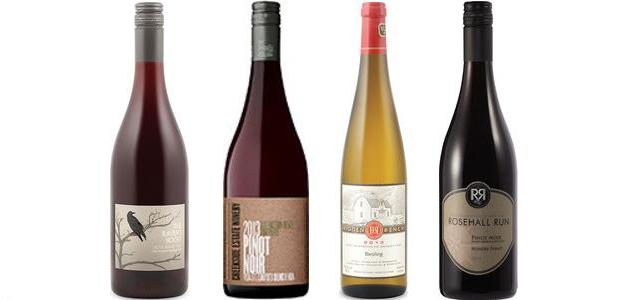
From left to right: Raven's Roost Pinot Noir 2013, Creekside Estate Winery Pinot Noir Queenston Road Vineyard 2013, Hidden Bench Estate Riesling 2013 and Rosehall Run Hungry Point Pinot Noir 2013

From left to right: Raven’s Roost Pinot Noir 2013, Creekside Estate Winery Pinot Noir Queenston Road Vineyard 2013, Hidden Bench Estate Riesling 2013 and Rosehall Run Hungry Point Pinot Noir 2013

Raven’s Roost Pinot Noir 2013, VQA Niagara Peninsula, Ontario (415828, $22.95, WineAlign)

Intrinsically Coyote’s Run as per the winemaking style from vineyards tabling edgy, twitching, spirited fruit. What the house refers to as a little side-project wine, the double R is anything but wee. It seems to express just beyond the pale of ripe and hung to soak up the humidity of a wood closet. Holds high aspirations, breathing heavily, in moisture deprivation, paratrophic and then waiting, patiently, calm and with bated breath. A striking and vivid Pinot Noir, demanding, with good bitters and rusty, red astride black earth. The middle offers mint and the length is more than good. A wholly unique style like a Niagara counterpoint to Keint-He’s Portage in Prince Edward County. Drink 2015-2018.  Tasted April 2015  @coyotesrun

Creekside Estate Winery Pinot Noir Queenston Road Vineyard 2013, VQA Niagara Peninsula, Ontario (415877, $18.95, WineAlign)

Presence, gentility, perfume. Come on, this is so correct, sterling and laudable. Drink 2015-2019.  @CreeksideWine  @CellarMonkey  @Matt_Loney

From my earlier note of March 2015:

Still the Kama Sutra Pinot Noir of inviting behaviour. Positions in aroma, taste and texture are all elastic and of an aphorism held together in intimacy. Virtuous and gracious Pinot Noir for the purpose of interaction and pleasure.

From my earlier note of January 2015:

The first made since the 2008 because of a new directional decision to hold onto and no longer forsake these exceptional Queenston Road Vineyard grapes. A wine that folds back the skyline skin of time and reveals a cloning from intimate belongings. Pinot blessed of a Dylan-esque drawl, from a comfortable and crooning time in its life. Penetrates into the QRV earth and draws out subtleties, slow food assuagement and makes no BS about its ease. Though posolutely whiffing and tasting of black cherry, it balances itself with an acerbic wit. This is what winemaker Rob Power refers to as a lay lady lay style. Partners in crime Yvonne Irving and Matt Loney concur. One sip and your partner may just lay across your “big brass bed.” You can always go back to Nashville.

Last tasted May 2015

Hidden Bench Estate Riesling 2013, VQA Beamsville Bench, Niagara Peninsula, Ontario (183491, $23.95, WineAlign)

Hidden Bench’s ’13 Riesling is a pure, soft-spoken and balanced reflection of her maker, winemaker Marlize Beyers. Only a month or two of lees and no stirring has brought her Riesling into this current corporeal state. Crunchy Mutsu apple, its acidity vacuuming moisture. The citrus is all flesh, void of pith and with energy that has already incorporated, disguised and covered the zest. If any Hidden Bench Riesling suggest tropical fruit, here it is and yet again, not. Can imagine it fleshing to petrol and honey in five to seven years. Drink 2015-2020.  @HiddenBench

From my earlier note of September 2014:

The Estate Riesling is as vigneron-defining as any wine on the Niagara Escarpment. Hidden Bench is a 100 per cent estate-fruit operation so this Riesling is spokesperson, prolocutor, mouthpiece, champion, campaigner and advocate for the concept. The estate ’13 reaches deeper for nutrient pot sweetening, into shale and in conceit of its varied, positively cultivated terroirs. Compact and jelled, this is several steps up from most other entry-level Niagara Riesling and in fact, is really anything but. The transparency here is patent. This is Riesling that simply knows what it is; pure Bench, unequivocally real and forthright. Knows what it wants to be.

Last tasted twice in April 2015

Rosehall Run Hungry Point Pinot Noir 2013, VQA Prince Edward County, Ontario (422519, $24.95, WineAlign)

A whole lot of scenting going on in this PEC Pinot Noir, from espresso and paint to lavender, chalk and stone. The feathery shed of volatility is a welcome whiff for those who like a touch of VA. The Hungry, hungry Pinot is clear, pure and precise. It tosses a dart into the Pinot heart. More like a beef heart within its potency and virility. Only PEC makes Pinot like this and Dan Sullivan has captured the style without voracious or rapacious compromise. Nothing greedy about the treatment, just a minor covet of high-toned excellence. Drink 2016-2019.  Tasted May 2015  @Rosehall_Run  @sullywine

Good to go!
http://www.winealign.com/profile/2058-mjg

I’m a little bit County

Keint-He Vineyards

Keint-He Vineyards

Aren’t we all? In the wake of recent frosts, a compounding ass-kicking at the hands of Mother Nature in the wake of two harsh winters, the farmers of Prince Edward County now have to work that much harder to make viable an already arduous road to growing Vinifera. I’m not so much the type to report on bad news so I leave it to my revered colleague Rick VanSickle to hand you the news. Rick does it with empathy, grace, subtlety and truth. Here is what he is telling us about vine damage in PEC.

UPDATED: Prince Edward County vineyards hit hard by brutal frost, Niagara assessing damage, Lake Erie North Shore spared wide-spread damage

If I was not before, with thoughts constantly streaming east to the north shores of Lake Ontario, where precarious soils sit like Buddha astride one very massive and far-stretching bed of limestone rock, at present I am a little bit County. Therefore today is the day to put some notes out on the Prince Edward County wines I tasted last month at Airship 37 in the Distillery district. The County came to town for their annual fair.

County in the City at Airship 37

County in the City at Airship 37

WineAlign primo scrittore David Lawrason presented his PEC state of the union address via the company website last week. David touched on some integral points for growers and winemakers in the County, including the rise of Riesling and a case for increasing plantings of varieties like Chenin Blanc. The story mentions new wineries and untrodden varietal production yet when all is said and done, the best wines on his recommended list are almost exclusively produced from Chardonnay and Pinot Noir. Those Burgundian soils don’t really lie, do they?

Related – Take them home, County wines

What strikes me most in this retrospective look at the 40 or so wines that I tasted last month is how varieties perform once the vines have matured and their profiles becoming increasingly County in character. Maturity, wisdom and acumen are developing a condensing of Prince Edward County hyperbole. The wines are serially developing a house style and regional disposition. With each successive vintage the wines of Norman Hardie, Dan Sullivan, Jonas Newman, Frédéric Picard, Glen Symons, Bryan Rogers, Paul Battilana, Gerry Spinosa, Colin Stanners, Caroline Granger, Bruno Francois, Bill Turnbull, Dan Tweyman, Deborah Paskus (to Keith Tyers) and the late Richard Karlo (with torch passed to Milan Vujnic) leave the Burgundy comparison behind to speak a strictly PEC vernacular.

Maggie Granger with The Grange of Prince Edward County Gamay Select 2009

Maggie Granger with The Grange of Prince Edward County Gamay Select 2009

The voice and the news is a very good thing. The clarity of the County is glaring and vivid, leading to what David Lawrason calls “great highs to significant lows,” but yes, Lawrason is correct in saying “overall the playing field is evening out.” Prince Edward County is coming into its own, growing comfortably into its cool skin and if mother nature has any balancing to offer, the future will be bright.

Related – You can lead a county to the city

Keint He Chardonnay Voyageur 2013, VQA Niagara Peninsula, Ontario (389544, $16.00, WineAlign)

A quiet, somewhat demurred aromatic hone succeeds in drawing rather than distancing curiosity. Deeper inhalation gets to the toasty, nutty crux of the cool fruit and the conclusion is valour, chivalry and generosity. Picks right up where ’12 left off if just a bit more gelid by nature. Niagara fruit (Foxcroft, Queenston and Malivoire) provide ample combined cream and lactic limestone tack with palate driving citrus bent. Takes up several lanes of breadth on the texture trek to become a distinct PEC composed Chardonnay. Drink 2015-2018.  Tasted April 2015

Keint He Chardonnay Portage 2013, VQA Prince Edward County, Ontario (Winery, $25.00, WineAlign)

The PEC derived Portage Chardonnay goes deeper than the Niagara Voyageur, no doubt in part to roots from maturing vines that work and dig for limestone. That raison d’être is the constant yet in ’13 the expression is rounder, fleshier, enigmatic, akin or at least prompts the idea of June’s Vineyard in Niagara. Shows its oak with increased weight, fuller favour and more beneficial bitters. The minor decrease in acidity stalls the Prince Edward County mechanism and solicits earlier term consumption. Drink 2015-2017.  Tasted April 2015

Keint He Chardonnay Foxcroft 2012, VQA Twenty Mile Bench, Ontario (Winery, $25.00, WineAlign)

A year on the wilder times have settled for the early aromatics. The progression pauses at the juste milieu and gracefully glides across the palate to a similar nimble finish. Has reached the optimum condition of cool climate Chardonnay to remain in that state of pliancy for another year or two. Drink 2015-2017.

From my earlier note of February 2014:

Fruit sourced from a single Niagara block. Despite having made the yeomans voyageur trek out to the County for vinification, integrity of the Foxcroft vibe has been maintained. Freshly cored Kenyan pineapple juice poured atop oat grain in a limestone molcajete. Bottled on Sept. 15th, like all the ‘12’s. Fullish, bullish extraction and at 13.5 percent abv, this Foxcroft has been handled with Wise acumen, with more rich texture than the others. A chew of nutty, non-acidic hard pineapple comes later and this finishes with a mild-mannered, even keel feel to it, like the winemaker and the estate’s keeper.

Last tasted April 2015

Keint He Gamay Noir Voyageur 2013, VQA Beamsville Bench, Ontario (Winery, $25.00, WineAlign)
From fruit sourced at Malivoire on the Beamsville Bench and from a vineyard that was lost to the ice storm of 2014. Really too bad considering the outright fresh and bright Gamay that has come forth out of this ’13. Black raspberry, at just the optimum brix fills in this shining though simple example. It has just the correct balance of tart and twinge of carbonic meets late spice. Its simplicity lies in the structure where one component concedes to the next, as opposed to layering upon one another. Very linear and immediate Gamay. Drink 2015-2016.  Tasted April 2015

Keint He Pinot Noir Voyageur 2013, VQA Niagara Peninsula, Ontario (Winery, $19.00, WineAlign)

Quite a pretty vintage for the PEC Pinot traveller by way of Malivoire and Queenston Road in Niagara. With a spray of cola and an inside edge of liquorice root in its gait, the Peninsula Pinot has already ignited its development. The 18 months in bottle have finished designing the invitation to solicit partake in reward for prompt gratification. The world is a charming one, replete with interchangeable aromatics and flavours, replayed, rewound and woven within the fabrics. Very efficient and studious Pinot Noir. Very Pinot Noir. Drink 2015-20178.  Tasted April 2015

Keint He Pinot Noir Portage 2013, VQA Prince Edward County, Ontario (Winery, $20.00, WineAlign)

Depth of character despite the light hue and frame, a dichotomy expressed in Pinot Noir, in this vintage most akin to entry-level Bourgogne and less like its County self. Goes directly subterranean, away from fruit, if only for a spell, to a bound and binding rock cavern. Returns later, is showered by peppers and bitters, ground by tannin and grinds back down to earth. Missing are the cherries and the chocolate, replaced by wacke and substrata. Perhaps give it a year or two to settle, refine and make another call for that hermetical fruit. Drink 2017-2020.  Tasted April 2015

Keint He Pinot Noir Queenston Road 2013, VQA Niagara Peninsula, Ontario (Winery, $30.00, WineAlign)

Keint He’s take on a single-structured Pinot Noir from the Queenston Road is highly aromatic, warmer than (by comparison, Creekside Estate’s) and yet not obscured or veiled by any discernible layer of veneer. The cool, savoury centre is the oasis offering respite from the full environmental gamut on display at the hands of sweet, sour, salty and lardy. Quite characterful, bold and cool-climate kitschy with a kinesthetic, corporeal feel. When Bryan Rogers and Ross Wise gain another level of Queenston understanding, it will not be hard to imagine a churning of something special in 2013. I’d put my money on it. Drink 2016-2020.  Tasted April 2015

The Grange of Prince Edward County Gamay Select 2009, VQA Prince Edward County, Ontario (Winery, $15.95, WineAlign)

Daughter (Maggie) convinced mother (Caroline) to let her hold back 15 cases of this County Gamay, a variety that has some difficulty sharing the sandbox with limestone. The additional five years in bottle has brought the downy fruit back from acidity’s precarious cliff edge, from the brink of piercing danger and disaster. The current state is one of conciliation and quiescence. There remains a major key of funk mind you, parliamentary even, but sniff past and the plot thickens, as does the texture. Chalky, gritty and persistently grainy, this ’09 Gamay is very much alive, like a scaling bass line supported by a rising horn section. A real fun look at the past with an eye to drive the future. Drink 2015-2018.  Tasted April 2015

The wines of Norman Hardie

The wines of Norman Hardie

Norman Hardie County Unfiltered Pinot Noir 2013, VQA Prince Edward County, Ontario (125310, $39.00, WineAlign)

Procuring depth in County Pinot Noir is a tough task within the constraints of resisting a temptation to reach for sugars, alcohol and dark berry fruit. Norm Hardie’s 2013 unfiltered (at 10.9 per cent) and lambent exegesis succeeds because it offers the best of all available worlds. Roots for vines that burrow to limestone develop a structure that while may have at one time been inconsistent, have crossed the threshold in ’13 to establish a guarantee. A Hardie PEC Pinot Noir can be bright and accessible. It can also be tough, tart and tannic, as it is here, again, but not without its foil. The work is now innate, the transitions seamless, the crossroads left in the dust. This wine will please two camps; those who can afford and demand immediate gratification and those who are willing to wait for secondary (two to three years) and tertiary (four to seven) character development. Drink 2017-2022.  Tasted April 2015

Norman Hardie County Unfiltered Pinot Noir 2011, VQA Prince Edward County, Ontario (125310, $39.00, WineAlign)

The anxiety of the vintage has not left the bottle while the raging fruit and acidity battle for supremacy. The space-time-chaos continuum will perdure in this Pinot Noir of unpaired anatomical structure. Wait a further three years minimum for the azygous to drain. The heft will subside. Drink 2018-2022.

From my earlier note of March 2013:

Norman Hardie needs little introduction. He is the reason Prince Edward County Pinot will secure a place on that grape’s world stage. The 2011 vintage will go down as a classic for PEC. The tens have mass appeal, the nines turned out to be stellar but it is the elevens that gather the best of both worlds; ripeness and acidity. Stock up. Paints the County red in layered and structured brushstrokes. Ripe, bright cherry tonality in super-heightened, mesmeric sensuality. Accented by weeping rock, black earth and that cherry. Would not figure this to be Norm’s most rugged or gregarious and yet it holds more heft than it looks. Currently in a great place and will live longer than any other.

Last tasted April 2015

Norman Hardie Niagara Unfiltered Chardonnay 2012, VQA Niagara Peninsula, Ontario (184432, $39.00, WineAlign)

The ’12 Niagara has swapped spontaneity for coherence, licentiousness for logic. Has entered the stage of non-reductive peel, where skin is discarded, flesh is exposed and juices run free. If you like your Chardonnay settled and yet vitally fresh, now is the time to enjoy the Hardie 2012 Niagara Chardonnay. Drink 2015-2022.

From my earlier more of May 2014:

Norm’s Niagara is such a different animal to the County 2012. The warm summer and dry fall means more humidity and even more reduction. Currently cothurnal so less like Burgundy but only because there elevates the high-tones and percipience from Niagara. Texture is key but this Hardie needs time. It’s not angular but it is steroidal, injected, like a wild thing, as if the yeast were still in control, munching away even though there is no more sugar to be had. Undomesticated ’12, at heart, in spirit, out of mind. Hard to imagine there could be this much anxiety from the even-tempered vintage, but when you pick real early and keep the oak to a bare minimum, Hardie happens. Norm picked ripe fruit between September 7 and 10, six weeks ahead as compared to some years. He said the fruit had a “golden tan, ready to go.” The use of smallish 500L barrels works wonders for texture and though 40 per cent was new wood, you would never know it. Malolactic fermentation didn’t happen until late August, nearly a full year on so no sulphuring was required until that time. This is Hardie’s freshest Niagara fruit ever, from Duarte Oliveira’s farm between Victoria and Ontario Street, the same spot as Hillebrand’s Chardonnay Reserve. Terrific Beamsville Bench Chardonnay.

Last tasted April 2015

Casa Dea Gamay 2013, Huff Estates Chardonnay South Bay Vineyards 2012 and Karlo Estates Pinot Grigio 2013

Casa Dea Gamay 2013, Huff Estates Chardonnay South Bay Vineyards 2012 and Karlo Estates Pinot Grigio 2013

Karlo Estates Pinot Grigio 2013, VQA Prince Edward County, Ontario (Winery, $21.00, WineAlign)

The adage is so very true; a good Pinot Grigio is hard to find, just like a man. The take here is decidedly and strikingly Pinot Grigio, a flash of Friuli and a Bessie to be reckoned with. This just has that positive, smithy oxidative side, the kind that rocks and stones mixed with winemaking cause an exchange of electrons between reactants. The fruit is big, lucidly piqued by pear, but also leaning mango and jack. Quite fleshy, with schematic, scenic, natural acidity and panoramic minerality. This is about as mnemonic as it gets for Gris, or in this case Grigio, in Prince Edward County, especially considering who the buyers will be. One can only hope they intuit the condition and here’s to planning for that consumer base to expand. “Lord, a good (Pinot Grigio) is hard to find, you always get another kind.” Drink 2015-2020.  Tasted April 2015

Lighthall Sparkling Rosé ‘The Fence’ 2014, VQA Ontario (Winery, $25.00, WineAlign)

This is Glen Symon’s first Sparkling Rosé, a 100 per cent Pinot Noir from estate vineyards, refermented using the Charmat method. Intensely fizzy, in toto fruity and actually gives off a Pinot Noir vibe. Something racy, spicy and wild runs rampant, rendering this blush bubble in an Ontario class of its own. It’s like 1980’s alt-dance fizz, with a New Order or B-52 thing going on. It just seems to do the “she-ga-loo, shy tuna, camel walk, hip-o-crit, coo-ca-choo, aqua velva, dirty dog and escalator.” Has the direct beat, retro and futuristic at the same time. Dance this mess around, in sweet and savoury tones, warm, day-glo, slow and gyrating. Drink 2015-2016.  Tasted April 2015

Lighthall Pinot Noir 2013, VQA Prince Edward County, Ontario (Winery, $30.00, WineAlign)

This may not be the first Pinot Noir made by Glen Symons but it marks a categorical paradigm shift for the Lighthall oeuvre. Elicits a “well, well, what have we here” response. Unfiltered, reflexive and flexing, not so much in weight as in protein. This is an entirely different sort of Prince Edward County Pinot Noir, neither dark as black cherry nor bright as sour cherry. It’s aromas and flavours recall both. I can’t say for sure that any Ontario Pinot has crossed into such territory. Offers a shade of calignosity for those who believe that genuine Pinot Noir only thrives in the dark. Yet the clarity is conversely illuminating. It’s pure, crisp and forking over real gastronomic delicacy. Intimates aspects of Sonoma and Otago with PEC intimacy. Really well-defined and culminating with a positive bitter finish. Drink 2015-2019.  Tasted April 2015

Huff Estates Chardonnay South Bay Vineyards 2012, Lighthall Pinot Noir 2013 and Sparkling Rosé 'The Fence' 2014

Huff Estates Chardonnay South Bay Vineyards 2012, Lighthall Pinot Noir 2013 and Sparkling Rosé ‘The Fence’ 2014

Huff Estates Chardonnay South Bay Vineyards 2012, VQA Prince Edward County, Ontario (Winery, $29.95, WineAlign)

Reductive but not to excess. If you can appreciate a Norm Hardie Chardonnay then Huff’s style is a walk in the park. A few swirls brings the rest of the players to the fore stage and the party. This is big band Chardonnay, with a feminine and demonstrative lead vocalist. Richly textured, from PEC plots at South Bay that are the Niagara equivalent of Wismer Vineyards, lending warmth, soil fixation and unconscious aid. There is a level of supposition that leads to breeding a sensation of succulence that is not found anywhere else in the County. Barrel is important, mostly unobtrusive and so this gathers up layers, separates, divides and then meshes. The wood is employed towards a west coast groove but it works with the best, best fruit. The corpulence is not built on butter but rather demi-glace, or perhaps perfect beurre-blanc. A very long and driven Chardonnay. Drink 2016-2022.  Tasted April 2015

Rosehall Run Riesling The Righteous Dude 2014

Rosehall Run Riesling The Righteous Dude 2014

Rosehall Run Riesling The Righteous Dude 2014, VQA Twenty Mile Bench, Niagara Peninsula, Ontario (Winery, $19.95, WineAlign)

Thank you Dan Sullivan for the fodder, to go on more tangents than should be allowed in a tasting note. And thank you for fixing a righteous Riesling, exemplary to Twenty Mile Bench and in a vein that represents the Double R. Has Mosel meets 20 Mile in verse. Feigned sweetness is managed by thriving acidity, much as others have similarly done in the area; Jay Johnston with Nadja and Paul Pender with Limestone Vineyard. Here lies Niagara Riesling you can really sink your teeth into, made by PEC-minded folk, really tying the Ontario room together. A hooked rug of Niagara and PEC in the hands of Sullivan, with really fine lines and good length. Drink 2015-2020.  Tasted April 2015

Casa Dea Gamay 2013, Prince Edward County, Ontario (Winery, $15.95, WineAlign)

Fine work in 2013, for Gamay, by winemaker Paul Batillana. Gamay is so very welcome when the fruity matter matters most, as witnessed by this Casa Dea. Some depth from soil and an ever so slight scorch of earth add complexity to hang a #GoGamayGo hat upon. Has the bends in a way, going just a bit too deep but rescues itself with a fresh radio frequency and a changeling face to red orchard fruit. This has real cru class, good funky bass and a driving sound to regeneration. Will evolve nicely for five years. Drink 2015-2019.  Tasted April 2015

Good to go!
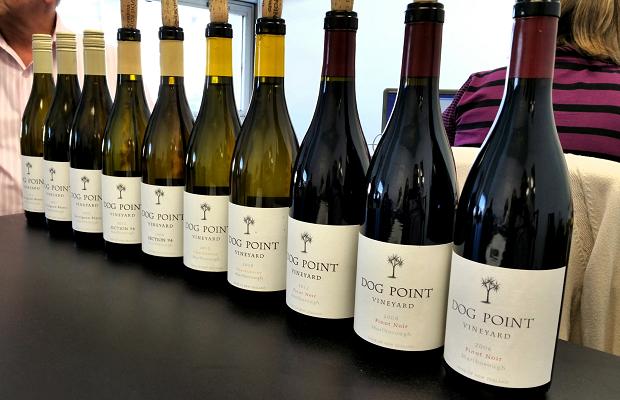
http://www.winealign.com/profile/2058-mjg

Point, Dog Point

The wines of Dog Point Vineyard

The wines of Dog Point Vineyard

Dog Point Vineyard sits at the confluence of the Brancott and Omaka Valleys in Marlborough, New Zealand. Owned and operated by Ivan and Margaret Sutherland and James and Wendy Healy, the Wairau Valley vintners farm clay-loam soils sustainably and with organic, viticultural practices.

Sutherland and Healy are the men responsible for the success of the first iconic New Zealand brand, Cloudy Bay and together they left to form Dog Point in 2004. The name is in reference to the earliest European settlement of Marlborough, the sheep, their herders and the marauding dogs who prowled the scrub-covered hill overlooking the Wairau Plains. The early settlers called it Dog Point.

James Healy

James Healy

Dog Point produces Sauvignon Blanc which ranks amongst, if not tops the long list of New Zealand’s output, for quality, ubiquity and consistency.  The single-vineyard Section 94 Sauvignon Blanc takes the varietal intensity to another, barrel-influenced level. Chardonnay and Pinot Noir are made in a uniquely Dog Point style, neither emulating nor simulating Burgundy. This is the essence of the winery’s modus vivendi.

James Healy and viticulturist Nigel Sowman brought Dog Point’s wines to Toronto last week, to celebrate their 10th anniversary. I sat down with them at WineAlign, along with Trialto Group’s Richard Dittmar and fellow WineAligners Sara d’Amato and Steve Thurlow. Here are the notes on the 10 wines poured.

Nigel Sowman and James Healy

Nigel Sowman and James Healy

Dog Point Sauvignon Blanc 2014, Marlborough, South Island, New Zealand (677450, $24.95, WineAlign)

What James Healy calls “the generic Marlborough style,” with flint and ever-present though much faded reduction, grapefruit and lime. The vintage (2014) was not cold at all so it lacks the verdure. There is subtle, gentle clementine and palate viscosity. The acidity is all about bringing balance. So fresh, spritely, lime-juicy and always essential.

From my earlier note of March 2015:

So orderly and aligned, from ripe picked fruit with fervent acidity and all proportions in perfect working order. Four months settling in bottle has only worked to reinforce positive opinions. Grassless and flinty but no discernible elemental vagary, certainly no sulphur. This Sauvignon Blanc may just be the most consistent in every vintage, not only stylistically but also for the hedging of probability bets for guaranteed Marlborough quality. This is a superb vintage for the pied-à-terre phraseology. Like school in fall, winter and spring, the Dog Point is all class.

From my earlier note of November 2014:

The prototypical Marlborough Sauvignon Blanc hitting all the classic numbers is right here in the Dog Point 2014. Low pH, high acidity, minuscule residual sugar and elevated aromatics. It’s ripe but ripped by citrus juice and zest. Like cubes of honeydew, bitter winter melon and dried lemongrass soaking in and flavouring a dish of briny scallop carpaccio with coarse sea salt and capers. The sapidity is palpable, the excesses vivid. I would avoid too much variegated gastronomy when sipping this wine. Opt for simpler fare because its talents would otherwise be mimicked and suppressed.

Last tasted May 2015

Dog Point Sauvignon Blanc 2011, Marlborough, South Island, New Zealand (677450, $23.95, WineAlign)

Certainly showing some secondary characteristics in evolution and yet the composition is as close as a first cousin to the current 2014, with more than just thanks in part to identical yeasts. This has lees, “a feature of the 2011 wines,” notes James Healy. Time has magnified the flint but it has also stretched and elasticized it. The struck aromatic glint has passed and will continue to bob in slow motion. Dog Point in presentation of how and why Sauvignon Blanc can be enjoyed with age, over time.”Ain’t no reason to go up, ain’t no reason to go down. Ain’t no reason to go anywhere.” The late palate is lime, as per usual, but also lemon, in ’11, with a paraffin coating. “Time passes slowly and fades away.” Three to four more years for this SB. Drink 2015-2019.  Tasted May 2015

Dog Point Sauvignon Blanc 2008, Marlborough, South Island, New Zealand (677450, $23.95, WineAlign)

It must be said straight out that a wine such as this wins hearts and points for its longevity, if nothing else. The kudos is warranted tenfold especially because it’s a Sauvignon Blanc and one that has emerged unscathed and even star bright. From a warmer year and extended growing season. Bigger bunches resulted, like in 2014 and this has evolved with considerable spice, as if, but not by wood, yet less developed than the petrol and lanolin slinging ’11. This is a wine that unequivocally proves that Sauvignon Blanc can age, gracefully and properly. Has an almost indiscernible flinty reduction, which means it never really had it in any concerning level in the first place. A vintage-specific white, with Chenin-like feigned sweetness and lactic feel. Marvellous to note that the final taste can be nothing but Sauvignon Blanc so in the end, the flavour profile wins out. Drink 2015-2017.  Tasted May 2015

Dog Point Sauvignon Blanc Section 94 2012, Marlborough, South Island, New Zealand (325977, $42.95, WineAlign)

The Section 94 is, in the estimation of James Healy, “a particularly good Sauvignon Blanc block.” Planted in the 1990’s, the now wise old plot is churning out exceptional fruit with cold, cold acidity. Says Healy, with respect to the vintage,” we didn’t want to muck around with malolactic,” so the fruit notches naturally in barrel, with indigenous yeasts. “They won’t stop prickling for over a year,” adds Healy. Bottled at about 18 months, this is a wine given the full solids treatment and is more than obviously a major step up in Sauvignon Blanc complexity. Offers a feel like pebbles bobbing and popping around in the clot of the wine. Wood spice and so much grapefruit are the grumous layers, along with lactic, citric acidity. Time has thus far been very kind, the matchstick reduction now really subsiding in this subsidized white. Drink 2015-2019.  Tasted May 2015

Dog Point Sauvignon Blanc Section 94 2008, Marlborough, South Island, New Zealand (325977, $42.95, WineAlign)

It is interesting to note that 2012, from a cold vintage, has evolved with a lactic palate and yet this ’08 seems so very fresh. Petrol and developed, thickened honey in wax are the bees knees in here. While a touch lactic in its own right, the tapestry weaves into second, third and fourth layers. A Sauvignon Blanc that really offers the best of all worlds. The leesy, lactic-secondary and flint-tertiary feel is round and in surround. This is the most Bordeaux white of all in the DP-SB continuum, with presence, savoury herbiage and pointed, sumptuous flavours. Grapefruit and bitter, beautiful tonic orbiculates the finish. The unanimous conclusion is of a wine that is very much like Champagne, without the bubbles. Drink 2015-2020.  Tasted May 2015

Dog Point Chardonnay

Dog Point Chardonnay 2010 and 2012

Dog Point Chardonnay 2012, Marlborough, South Island, New Zealand (238568, $39.95, WineAlign)

The barrel, in and out of reduction, defines the yet early life stage of the ’12 Chardonnay. The count is 15 per cent new with heavy toast “because we just like that heavy toast flavour, just not too much of it,” notes James Healy. Fully malolactic, but a very late one, this slow-cooked Chardonnay, with matching matchstick acidity. In expression it is of a very cool-climate style with tons of lime and emulsified to a gemstone melt, green goddess consistency. A wine that could be a cousin to, share spirit with Paul Pender’s Vinemount Ridge Quarry Road, of “emerald shine, the gemstone tannic scrape.” The Dog Point etymology is two-thirds Mendoza clone and one-third Dijon 95, the former needing sugar to get ripe, but it provides the citrus and the acidity for the palate. Drink 2017-2020.  Tasted May 2015

Dog Point Chardonnay 2010, Marlborough, South Island, New Zealand (238568, $39.95, WineAlign)

Remarkably similar to the later 2012, tasted side by side, here with toast, nuts and grapefruit. It may be just a touch warmer, with more fruit yet still cool by nature. The ’10 is not as green, not as salient in polished stone feel, with less weight and girth. The sugars and bitters are increasingly integrated and push more direct, unbiased pleasure. Just a strike of flint ties it to the sibling Sauvignon Blanc. “Statues made of matchsticks, crumble into one another.” Marlborough Chardonnay is better than you think, love minus zero, no limit. It’s true if it’s been said. “She doesn’t have to say she’s faithful, yet she’s true like ice, like fire.” The Dog Point ’10 persists, bobs, rhymes, talk in and out of line. It finishes strong, in grapefruit, without sophistry or equivocation. Drink 2015-2018.  Tasted May 2015

Dog Point Pinot Noir 2012, Marlborough, South Island, New Zealand (329672, $49.95, WineAlign)

From vines now coming of age (12-13 years old) and an increase in stem inclusion (20 per cent). Ripeness consistency was achieved with the aid of shoot cutting/thinning. All this to arrive at the Dog Point Pinot’s place in its necessary evolution. A wine of black cherry and roses, dark, dusty, ripe, in depth of earth, concentric circles of fruit and acidity. Great length.

From my earlier note of April 2015:

Perfectly bright Pinot Noir while simultaneously deep, dark and recondite. Energetic in spirit, ripe and packed with barbed, piquant fruit sewed in threaded badges of spice. Perfumed as if by cinnamon and displacing rose petals. Like the scent of a crystal clear summer’s night, all warm, dry and of dried strawberry juice cracked paint. Grounded and fulfilling, of its own holes, in the mouth and finishes with a feminine touch. A thoroughbred, a filly, that trots on an on, long after it has crossed the finish line. Drink 2016-2021.

Lasted tasted May 2015

Dog Point Pinot Noir

Dog Point Pinot Noir 2008 and 2006

Dog Point Pinot Noir 2008, Marlborough, South Island, New Zealand (329672, $49.95, WineAlign)

Just a small amount of stem inclusion, a practice that will increase in subsequent vintages, helps to define structure and to a lesser extent, aromatics and taste. Yet the effect is has on tempering and mitigating sweetness is overt and protrusive. “That whole ripe stem thing…it’s a dog’s breakfast, ” says James Healy. Both he and vineyard manager Nigel Sowman have accepted and embraced the necessity of stem inclusion but as Sowman notes, “is there such a thing as a ripe stem, because you’re after sap, not astringency.” The stems here have balanced out the really ripe, jammy fruit. This ’08 is all about florals, of many flowers that offer invitation to then investigate the Pinot Noir morphology. This has turned to liqueur yet still cracks, pops and finishes with bitter, tangy and swelling cranberry. Drink 2015-2018.  Tasted May 2015

Dog Point Pinot Noir 2006, Marlborough, South Island, New Zealand (329672, $49.95, WineAlign)

In 2006 stems were not yet part of the practicum and though the wine remains very much alive it has lost a modicum of structure and a minor key of balance. The highest degree (though certainly not over the top) of paint, varnish and veneer emanates from the edges of the jammy fruit. This youngest and lower on the amicable scale for a Dog Point Pinot Noir is both sweet and sour. The depth (mostly due to very young vines) pales in comparison with even ’08 and the flavours are disparate but what is there is fun and so very Pinot Noir. Can be nothing but and is really the most Burgundian of the three (’06, ’08 and ’12) tasted. That said, it’s not necessarily a good thing because Dog Point does and should try to avoid emulation. The final assessment and most poignant note concerns how barely evolved this nine year-old Pinot sits. Tasted blind you would be hard pressed to guess closely at its age. “If we had an ’06 vintage today we would make better wines,” admits James Healy. A touch of cola and a grapefruit note hit the finish. A Dog Point thing. Drink 2015-2020.  Tasted May 2015

Good to go!
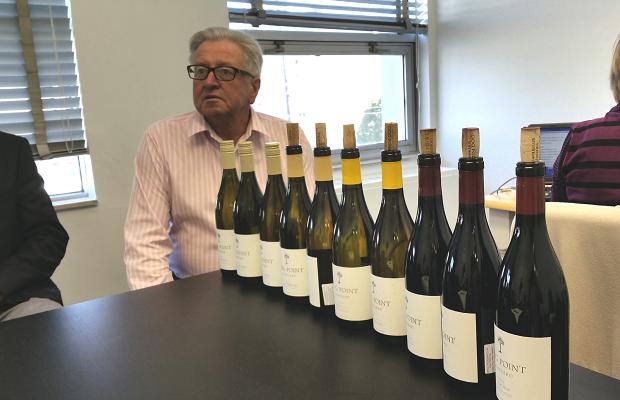
http://www.winealign.com/profile/2058-mjg

Shades of South Africa

From left to right: Vinum Africa Chenin Blanc 2012, Ken Forrester Reserve Chenin Blanc 2013, De Morgenzon Reserve Chenin Blanc 2011, Boschendal 1685 Shiraz/Mourvèdre 2013, Graham Beck The Game Reserve Shiraz 2012 and Kanonkop Pinotage 2012

From left to right: Vinum Africa Chenin Blanc 2012, Ken Forrester Reserve Chenin Blanc 2013, De Morgenzon Reserve Chenin Blanc 2011, Boschendal 1685 Shiraz/Mourvèdre 2013, Graham Beck The Game Reserve Shiraz 2012 and Kanonkop Pinotage 2012

A sit down at Montecito Restaurant last month engaged three flights of South African wines, introduced by master of presentation ceremonies Will Predhomme, who declared a federal truth politic. “This is meant for sommeliers but you journalists will get what you need out of it.” Mr. affable’s public service announcement held great meaning. Pour 15 wines from South Africa to a group of somms, journos and consumers to discover there will be something for everyone.

When execution and style is so varied from within one very large wine region, things can turn into dramaturgy verging on the absurd. At any sort of political theatre tasting comprising a range of disparate wines, three things need to go right. First the presenter must have a keen sense of the rug that ties it all together. Second, the support needs to be in place from the larger powers that be and third, the wines must be good. Three for three, first in the care of Jimson Bienenstock and the kitchen at Montecito, then with thanks to Wines of South Africa Canada and finally by way of succinct explanation via Mr. Predhomme.

Lunch at Montecito

Lunch at Montecito

A tasting like this, explained Predhomme, “is about expressing what South Africa is but with wines that are available in our market.” South Africa’s wine history, or at least how it exists in relation to the modern world, is quite young yet has advanced with incredible speed. Imagine that Chardonnay did not arrive until 1983 and had to be smuggled in. Some of the world’s finest Chardonnay is now made on South African soils.

Nelson Mandela’s release from prison and the country’s strive for democracy had a profound effect on the revolution, evolution and expedient rush to embrace modernity. Twenty one years later “South Africa as a whole is really starting to see where it fits,” says Predhomme, “though it will still take at least another generation to really figure it out.”

Home to 600 producers, the country exported 22 million litres in 1992 and 417 million in 2012. The U.K. is the number one buyer, followed by Holland and then Canada, who ranks number seven. “You can’t maintain this type of growth,” notes Predhomme, “but you can shape it.” This is why WOSA has set up shop in nearly a dozen countries.

Winegrowing regions of South Africa

Winegrowing regions of South Africa

South Africa is a geographical and geological land of wonder, of ancient soils and picturesque intrusions. Extreme examples include the shale and schist of Swartland that turns into dust and the granite domes of Paarl, which are 30 million years old. “Beginning of time stuff, but how does it impart into wine?” Taste fifteen wines and you will get a sense.

South Africa is barely older than Ontario in terms of the modern era of winemaking and yet it produces some 18,000 hectares of Chenin Blanc, double the amount in the Loire Valley. In Swartland the betide is nothing short of a Rhône revolution, with producers doing “whatever they want.” There are hot climate wines from dry-farmed table lands with bush vines similar to Mendoza, minus the Andes. A huge diurnal shift is taking place. Wines are coming from high elevations, where it’s hot but the nights are cool. New upcoming areas in cool, coastal areas, in places like Elgin, Bot River and Walker Bay’s Hemel-en-Aarde Valley have Sonoma like conditions, with maritime influences and fog. All of this adds to the diversity of the South African palette.

Montecito

Montecito

Whites Flight

Villiera Sauvignon Blanc 2014, Stellenbosch-Elgin, Western Cape, South Africa (Agent, $17.95, WineAlign)

Western Cape in the hands of winemaker Jeff Grier is all about varietal fruit, here Stellenbosch helped into blending-like ambition by young, spritely Elgin berries. A kitchen sink varietal nose gathers gooseberry and fig fruit, incorporates earthly elements (3.46 pH), medicines, sugars and tonics. The Sauvignon Blanc aspect is riper than most. Where the discombabulation comes is from atmospheric pressures, rescued in part by a candied (3.7 g/L RS) Granny Smith apple, pyrazine palate. The MOR alcohol (12.9 per cent) and final act of tart (6.3 g/L) acidity is the calling card to remember, acting as the twist, the tie and the rock. Drink 2015-2017.  Tasted April 2015  @villiera  @AbconWine

Vinum Africa Chenin Blanc 2012, Wo Stellenbosch, South Africa (739995, $15.95, WineAlign)

Robust, high-strung, wrapped tight Chenin Blanc that acutely pushes the limits of excitable fruit. The aromatic tonality causes salivation and the eyes to water, as the nose drifts upwards, like the feeling of looking straight into the sun set high against a perfect blue sky. Then the palate lifts to off-dry, sending tingling sensations rippling through, with a cool-climate Chardonnay like prickling. Some oak and crunchy mineral add a smack of Stellenbosch in this rangy white from Alex Dale from the Winery of Good Hope. Drink 2015-2018.  Tasted April 2015  @WineryGoodHope  @Noble_Estates

Ken Forrester Reserve Chenin Blanc 2013, Stellenbosch, South Africa (231282, $17.95, WineAlign)

The 2013 Forrester OV Chenin has less early, obvious and striking appeal but that does not take away from its persistent and indubitable quality. This is a most fine and elegant vintage, with a faint yet obvious quiver of honey. Yellow fruit and their flowers mingle with the fleeting sweetness, in the name of balance and purity. A slide from one moment effortlessly into another, through a waft, from a swirl. Though the fruit is harder to find, it’s a cause of placing the origin; something south Asian but not quite tropical sweet. Like Salak or Kumquat or Jack. So much mineral, tightly wound on a spindle, wound to unwind, unwinding to rewind. Drink 2016-2022.  Tasted April 2015  @KFwines  @Noble_Estates

De Morgenzon Reserve Chenin Blanc 2011, Stellenbosch, South Africa (339762, $29.95, WineAlign)

Even at four years of age, the wood aspect of this Chenin Blanc exaggerates rather then amalgamates. At the time, winemaker Carl van der Merwe held nothing back to fashion a white with considerable heft and weight. Alcohol (14.1 per cent) persists in linking with the barrel for a humid, toasty and sultry affair, cosigned by matching (7.7 g/L) sugar and acid tones. This is a prime example of a love/hate Chenin Blanc relationship. If you are on the varietal fence then the magnifications will drive you away. If Chenin Blanc and barrel fermentation are your splintered cup of tea then this will woo you with passion. The hyperbole of rocks, medicines, tonics, peats, elements (including iodine and heterocyclic aromatic organic compounds) are all here. It’s a veritable CB feast. Drink 2016-2020.  Tasted April 2015  @DeMorgenzonWine  @TandemSelection

Glenelly Cellars Grand Vin Chardonnay 2012, Wo Coastal Region, Stellenbosch, South Africa (382200, $19.95, WineAlign)

From out of Stellenbosch in the Idas Valley, on the southern slopes of the Simonsberg Mountain, opened in 2010 by May de Lencquesaing. State-of-the-art facilities give range and class to this whole cluster pressed Chardonnay, aged for 10 months in new and second fill 500L barrels and left for nine months on the lees. The intensity of chalk, remedy, tang and tart fruit volleys and assails in many ways. It hangs on the edge and teases. You can take the Chardonnay out of the Coastal Region but you can’t remove the ancient geology granite and schist, reinforced iodine aroma from the Chardonnay. Drink 2015-2018.  Tasted April 2015  @GlenellyWines  @HHDImports_Wine

Chenin Blanc

Chenin Blanc

Bordeaux Cultivars

Raats Family Cabernet Franc 2010, Stellenbosch, South Africa (Agent, $39.95, WineAlign)

From decomposed Dolomite granite soils and vines in that vigorous young adulthood range of 18 to 25 years. A Cabernet Franc of ripeness, extraction, warmth, picked at fully realized sugar potential and vinified nearly bone dry. No stranger to wood, it spent 18 months in French Vicard and Mercury oak barrels (25% new, 25% second, 25% third fill and 25% fourth fill). Was neither fined nor filtered. All tolled it is quite steroidal, highly ferric and plugged in. Transmits currants by frenetic current, by bush smoulder and melts with macerated cherries. What minor holes in the oak blanket that show through are patched with a thin veneer of pungent compound, decomposed stone and the effects of dry farming. The lack of irrigation trumps the iron gait and grit, limiting the solvent to minute drips and drops. This is a big, arid red with few tears and many years ahead. Drink 2017-2024.  Tasted April 2015  @RaatsWines  @TandemSelection

Kanonkop Cabernet Sauvignon 2010, Wo Simonsberg-Stellenbosch, South Africa (403964, $48.00, WineAlign)

A mouthful to be sure, this Simonsberg is a cup runneth over “red wine bowl” of a Cabernet. Such a ripe, rich, rapturous and varietally obvious wine, overflowing with red fruit (berries and plums) and gilded enough to beat the ferrous inference into submission. Just a dusty rub of greenery, a sage and charcoal aggregate residue that dissolves into the sappy juice and the rush of late acidity. Quite a clout of sauvage and garrigue in this modern red with a loyal, rustic swell. Drink 2016-2022.  Tasted April 2015  @KanonkopEstate  @Noble_Estates

Constantia Glen Three Cape Peninsula 2010, Constantia Valley, South Africa (Agent, $21.95, WineAlign)

A stone’s throw from of Cape Town comes this maritime red as close to cool-climate as you are likely to find in those environs. Two Cabs and a Merlot legato conjoin to continue the bent to modernist winemaking, with a twist of old world funk and soul. Smoky jazz beats darken the room filled with bright, ripe, con brio waves of concentrated fruit. Though this has the gauze and the grippy, firm, gritty B key blow of tenor sax, the cool middle tinkling keyboard bars temper the tension and the nerves. Bordeaux blend with a wall of sound and value to boot. Drink 2015-2020.  Tasted April 2015   @ConstantiaGlen  @TandemSelection  @constantia1685

Hartenberg Estate Cabernet Sauvignon 2011, Stellenbosch, South Africa (Agent, $35.00, WineAlign)

A healthy swath of oak (18 months in 60 per cent new and 40 in second fill French) buoys and blankets this deep, cimmerian Cabernet. The nose is quite candied and while floral too, those edibles are dipped in a frosty coating. There are separations between the lines of intention, at once all forest floor, truffle and mushroom and again sugary, sappy and like a stew. Lustrous and silky of texture, with a grain running on tension and a drying out on the finish. Big, brawny, toothsome and hot. Drink 2015-2019.  Tasted April 2015  @HartenbergWine  @hobbsandco

Villiera Cabernet Sauvignon 2012, Stellenbosch, South Africa (Agent, $18.95, WineAlign)

The nose is quite unusually pretty and floral. So much strawberry, of fruit and leaves. A cool and polished red with a late push of varietal ferrous on the back of the tongue. This has layer upon layer, wave over wave, a veritable cake and vegetable garden, a terrace of nightshades and beets. May not be everyone’s cup of multi-varietal Napolean but it is complex. Drink 2015-2020.  Tasted April 2015

Rhône/Blend/Indigenous

Boschendal 1685 S & M Shiraz/Mourvèdre 2013, Wo Coastal Region, South Africa (403667, $19.95, WineAlign)

From the hands of winemaker Bertho van der Westhuizen, this puts 70 per cent Shiraz from vineyards in the Faure area of Stellenbosch, Helderberg and Bottelary hills sites together with 30 per cent Mourvèdre from the Paardeberg area. Goes directly to a happy place so not quite the S & M you might have expected. The playful reverse psychology and complex fermentation regimen spins the world right around (80 per cent of the wine went into 300L oak barrels, a quarter each in 1st, 2nd, 3rd and 4th fill, while the remainder was left unoaked). The S & M spits out with a remarkable impression of weightlessness, of hovering inches above the ground. Like the gentle, almost awkward and swerving of a bouncing rubber ball, playful and innocent, into comfortable Rhône territory. Smoked berries, fine cherry and very persistent, in memory, forward and onwards. Drink 2015-2019.  Tasted April 2015  @BoschendalWines  @LiffordON

Boekenhoutskloof Syrah 2011, Wellington, South Africa (Agent, $69.95, WineAlign)

A ripe, plush, super annotated, developed and slowly developed aromatic layering that defies even South African logic. A smoky, slow-roasted Syrah seemingly only winemaker Marc Kent could procure, like a combined 24-hour brisket and an entire porcine roast in a pit of sand on Brendan Beach. And yet tell me this does not somehow smell like Curry? Like a full-on, whole spice ground, stratified Masala, of cardamom, dalchini, jaiphal and kalonji. This is Syrah of intense concentration, ripe hauteur, serious breadth and a sense to be Rhône without the bacon cure. Won’t be going anywhere, anytime soon. Drink 2018-2025.  Tasted April 2015  @TheWolftrapWine  @TandemSelection  @PorcupineWines

Graham Beck The Game Reserve Shiraz 2012, Wo Stellenbosch, South Africa (383570, $18.95, WineAlign)

The game is in The Game with musky scents from just charred roast venison and wild boar hide. Also modern, reminiscent of internationally-styled blends from Terra Alta or Montsant. The game works in smothering partnership with heavy, fully ripe and extracted fruit. This is a strong, big willed and boned $18 South African red that should help to alleviate old prejudices and is really quite seamless at the price. Almost tastes volcanic. Wood is used and used well, without pretence or obnoxious behaviour. Drink 2015-2020.  Tasted April 2015  @GrahamBeckWines  @VinexxCanada

Kanonkop Pinotage 2012, Wo Simonsberg-Stellenbosch, South Africa (Agent, $44.95, WineAlign)

Estate, pedigree and price raise all the bars of expectation for the grape with a modern crush on and for espresso and mochaccino. OK Pinotage, what have you got at $45? A deep red wine in demand to draw plenty of attention, to pluck strings with pizzicato and reverberation? The answer is yes and my attention is indeed captured. Light on chocolate, mocha, creme and nary a lissom or bouncing tone, but instead this Pinotage sings straight lines of red fruit. A stone temple of Pinotage, a pilot of its own fruitful flight. The Pinotage flavour, of tar in summer comes late, is more obvious, notable and grounded as the wine dries to its finish. This is one of the better, even great renditions to date. Bravo. Drink 2017-2022.  Tasted April 2015  @KanonkopEstate  @Noble_Estates

Bouchard Finlayson Hannibal 2012, Hemel-En-Aarde, Walker Bay, South Africa (Agent, $47.99, WineAlign)

The varietal potpourri is an Italian-French polygamous matrimony, a cross-section of colour, aroma and flavour that somehow comes righteously together. Call it a lavandino della cucina or évier de cuisine but either way you translate this mix is one of gastronomy and oenology, crafted, blended, sautéed and vinified. Hanibal is barrel matured for sixteen months after fermenting the different grapes separately, comprised of Sangiovese, Pinot Noir, Shiraz and Mouvedre, with Nebbiolo and Barbera. The culmination revolves on an axis bold as love, of Brett, funk and circumstance. A wildly natural wine, very 1960’s, smoky and with wafts so thick you need a fork to eat and goggles to see through the haze. A wicked blend of heaven and earth. Meaty, cured, sanguine and charred. Super-charged and running hot. Drink 2016-2022.  Tasted April 2015  @BouchFinlayson  @LiffordON

Good to go!
http://www.winealign.com/profile/2058-mjg

Searching for Somewhereness

The wines of Norman Hardie

The wines of Norman Hardie

Somewhereness is not really a word. It’s hokum. Gibberish. Nonsense. Look it up in Merriam-Webster or Oxford. Not there. Its conceived convenience is recorded in Wiktionary, Your Dictionary and other online glossaries though, because there is always an online presence ready and willing to immortalize anything and everything.

The definition of Somewhereness, according to the online “dictionaries.”

  1. The state or quality of being in, occurring in, or belonging to a specific place.
  2. The state or quality of existing in a place that is unknown or cannot be pinpointed.
  3. The unique characteristics imparted on a wine by the conditions of the place in which it was grown.

Somewhereness lies the truth?

Somewhereness is not a state of mind, of being, of knowing something is intrinsically right within the parameters or context of here, there, anywhere or everywhere. Somewhereness is not merely a function of good decision-making, of exercising the ideal to expand on terroir, to create something to talk about. Yet that third so-called definition is on the right track. Belief says terroir is what happens in the vineyard, through environment, by geology, geography and topology, from naturally occurring elements and microbes in the soil, by air and of climate. Terroir is the great one. The impossible creator of perfect storms, from out of riddle and enigma. Somewhereness, by extension, is the next one.

Somewhereness exists, albeit with just as much abstruse behaviour and paradox, inside the finished bottle. That’s all you really need to know. Terroir happens before. Somewhereness happens after. The line is drawn when wine enters its final resting place. It evolves, develops and finds its somewhereness inside the bottle. In the case of Champagne (and the wines of Emidio Pepe), the first bottling is merely a temporary shelter and somewhereness knows to wait for the final call. In those cases there are the stages of terroir, disgorgement and finally, somewhereness.

In Ontario, somewhereness has been found (as opposed to “was founded”) by Norman Hardie, Jonas Newman, Vicky Samaras, Bill Redelmeier, Ann Sperling, J-L Groux, Charles Baker, Doug Witty, J.P. Colas, Ed Madronich, Jay Johnston, Tom and Len Pennachetti, Angelo Pavan, Moray Tawse, Paul Pender, Harald Thiel, Marlize Beyers, Mary Bachelder-Delaney, Thomas Bachelder, Martin Malivoire and Shiraz Mottiar.

Somewhereness may have been born to these Ontario parents but it has and will not remain exclusive to the 12 who discovered it. Somewhereness belongs to all wine with true and truthful origins in terroir. The great wines of the world share in the expression and the mystery, even if the gold inside their bottles has never been affixed with such a label. Somewhereness is found inside a bottle of Dujac Bonnes Mares. You will taste it in an Egon Müller Scharzhofberg. It can’t be missed from out of a Margaux pour by the hands of Paul Pontallier. Wines of manic manipulation will never find it. They either do or they don’t, will or they won’t. Somewhereness just happens. Don’t ask me to explain. I’m just the messenger.

Over the past few years, much godello.ca white space has been set aside for glossing in written word and the ever-evolving rumination on the spiritual effect of somewhereness.

Konrad Ejbich holding court in front of De La Terre's breads

Konrad Ejbich holding court in front of De La Terre’s breads

Related, From February, 2013 – Somewhereness over the Canadian wine rainbow

“For a comprehensive look at our province, make sure you read A Pocket Guide to Ontario Wines, Wineries, Vineyards, & Vines by Konrad Ejbich. The discourse concerning somewhereness in Ontario is in full swing. In October of 2012 I wrote, “character and quality has never been better. Riesling continues to impress and let us not ignore the high level of ever-evolving Chardonnay vines. Reds have made great strides, especially Pinot Noir, Gamay and Cabernet Franc. The future looks very bright for Ontario [wines].”

Related, From April, 2013 – Come together, over wine

“Abeyance be gone, these next few years have the potential to cement an industry’s power. Only a minority has even the slightest clue that liquid gold is mined out of the peninsula’s glacial clay and limestone. The time is ripe to tell the world the story of somewhereness. The embryo is about to grow in a major way. Financial reward is within reach. So how to alert the world?”

Related, From April 2014 – The group of twelve

“History may one day remember them as the group of twelve, or perhaps, “The Ontario School.” They are the 12 wineries who have banded together to ensconce a strange but beautiful word on the tongue, in the dictionary and out in the world. Somewhereness. They are purveyors of the land from which their grapes grow and ferment into wine. Facilitators of terroir, working a canvas forged by millions of years of geological and climatic evolution. Their assembly is based on both exigency and on Moira; destiny, share, fate. Like that other famous group, “collectively they agree.” Ontario’s cool-climate wine regions need to qualify and certify a distinctive winemaking style. In juxtaposition to old world, European tradition, the intensity of somewhereness needs to reflect an increasingly Ontario-centric partiality.”

Related, From April 2014 – Why taste Ontario?

“The Ontario wine industry is the best kept secret in the world. It has grown, accelerated and advanced with more success than might have been imagined as recently as five years ago. In November I wrote, “Ontario winemakers have figured it out. The “world-class” comparative humanities of aging and longevity aside, the comprehensive and widespread phenomenon of excellence, regardless of vintage, is now an Ontario reality.”

Wine Country Ontario's Magdalena Kaiser

Wine Country Ontario’s Magdalena Kaiser

All wonderful hyperbole, to be sure. But for years I missed the point. Somewhereness is not about agreeing, in principle, on how to make wine from a particular place so that it can collectively result in a thing. It is something other. It’s in the bottle. It has always been there but the key lies in Ontario’s industry having matured to a point where we can now taste it, again and again, inside the bottle. The work made it happen. It is well-deserved.

Thomas Bachelder and Mary Delaney-Bachelder

Thomas Bachelder and Mary Delaney-Bachelder

So with the assistance of Trisha Molokach, Dorian Anderson and the vintners who came to realize what happens when terroir is used to bottle divine pleasure, another Somewhereness (the event) happened, at St. James Cathedral in Toronto, on April 20, 2015. Food partners completed the stellar event; Best Baa Dairy, Monforte Dairy, Upper Canada Chees Company, Fat Chance Hand Sliced Cold Smoked Salmon Co., Chef Ryan Crawford & Beverly Hotchkiss of Backhouse, De La Terre Kitchen and Bakery and Schott Zwiesel. Hinterland was not present in 2015 and I skipped two tables, due to quite recent full portfolio tastings, at Bachelder and at Southbrook. Here are some other notes.

Norman Hardie Riesling 2013, VQA Ontario (Winery, $21.00, WineAlign)

With less residual sugar than in 2012 and slightly higher alcohol (the bottle says 10.1 per cent but it’s actually 9.8), the house style persists, if only as a refrain that adjusts and adheres to the vintage. A hint of oyster shell is more than significant, in working alongside Hardie’s Calcaire, effected out of lees fermentation. The minute loss of high-toned aromatics is pitched in favour of fruit, if only from one exploited tank, within the context of producing 1000 cases. The ’13 (70 Niagara/30 PEC) is like very modern Alsace, akin to Schoffit, what with its texture fitted through a tiny hole. Drink 2015-2018.  Tasted April 2015

Norman Hardie Calcaire 2013, VQA Ontario (Winery, $23.00, WineAlign)

The field blend of Marcel Deiss is the starting point. Lees imparts texture and the proverbial minerality is rounder than the Riesling, though the acidity just as linear. The breakdown is Chardonnay (40 per cent), Riesling (40), Melon de Bourgogne (10) and Pinot Gris (10). It should be noted that the mid-palate is caressed by a silky cheese curd, sour milk atonement. Drink 2015-2019.

From my earlier note of August 2014:

If any wine growing and producing region not called Alsace has the right to label a wine Calcaire, Prince Edward County is that place. The irony squared of Norman Hardie’s choice of nomenclature is not lost. Olivier Humbrecht makes use of the term because some of his single-varietal wines can no longer (under the local AOC rules) be labeled with the name of the wine-growing village. Marcel Deiss produces ‘field blends’ composed of several varieties grown on Grand Cru soil but he can’t (under other regional rules) label them Grand Cru. Hardie takes Niagara and PEC Grand Cru grapes, fashions an Ontario white blend, not unlike J-L Groux and calls it Calcaire, in ode to the limestone underlay of the County. Are you following me here? This may be new, innovative, yet understood and an early impression, but this cuvée initiates the PEC march to white blend supremacy, much like Stratus White has done over the course of 10 vintages in Niagara. Norm’s Calcaire is a Chardonnay, Pinot Gris, Riesling and Melon de Bourgogne mélange, co-fermented on the lees, striking, all in limestone, full out mineral consequence. There is purified pear and white melon fruit in distillation. There is a house in Wellington, “they call the Rising Sun.” That this animal succeeds so early in its tenure shows the Norm conceit and the swagger. That it will define white blends for a millennium is an arrogance of traditional song and of scripture. So be it.

Last tasted April 2015

Norman Hardie Niagara Unfiltered Chardonnay 2012, VQA Niagara Peninsula, Ontario (184432, $39.00, WineAlign)

The ’12 Niagara has swapped spontaneity for coherence, licentiousness for logic. Has entered the stage of non-reductive peel, where skin is discarded, flesh is exposed and juices run free. If you like your Chardonnay settled and yet vitally fresh, now is the time to enjoy the Hardie 2012 Niagara Chardonnay. Drink 2015-2022.

From my earlier more of May 2014:

Norm’s Niagara is such a different animal to the County 2012. The warm summer and dry fall means more humidity and even more reduction. Currently cothurnal so less like Burgundy but only because there elevates the high-tones and percipience from Niagara. Texture is key but this Hardie needs time. It’s not angular but it is steroidal, injected, like a wild thing, as if the yeast were still in control, munching away even though there is no more sugar to be had. Undomesticated ’12, at heart, in spirit, out of mind. Hard to imagine there could be this much anxiety from the even-tempered vintage, but when you pick real early and keep the oak to a bare minimum, Hardie happens. Norm picked ripe fruit between September 7 and 10, six weeks ahead as compared to some years. He said the fruit had a “golden tan, ready to go.” The use of smallish 500L barrels works wonders for texture and though 40 per cent was new wood, you would never know it. Malolactic fermentation didn’t happen until late August, nearly a full year on so no sulphuring was required until that time. This is Hardie’s freshest Niagara fruit ever, from Duarte Oliveira’s farm between Victoria and Ontario Street, the same spot as Hillebrand’s Chardonnay Reserve. Terrific Beamsville Bench Chardonnay.

Last tasted April 2015

The wines of Hidden Bench

The wines of Hidden Bench

Hidden Bench Estate Riesling 2013, VQA Beamsville Bench, Niagara Peninsula, Ontario (183491, $23.95, WineAlign)

Hidden Bench’s ’13 Riesling is a pure, soft-spoken and balanced reflection of her maker, winemaker Marlize Beyers. Only a month or two of lees and no stirring has brought her Riesling into this current corporeal state. The citrus is all flesh, void of pith and with acidity that has already incorporated, disguised and covered the zest. If any Hidden Bench Riesling suggest tropical fruit, here it is and yet again, not. Drink 2015-2020.

From my earlier note of September 2014:

The Estate Riesling is as vigneron-defining as any wine on the Niagara Escarpment. Hidden Bench is a 100 per cent estate-fruit operation so this Riesling is spokesperson, prolocutor, mouthpiece, champion, campaigner and advocate for the concept. The estate ’13 reaches deeper for nutrient pot sweetening, into shale and in conceit of its varied, positively cultivated terroirs. Compact and jelled, this is several steps up from most other entry-level Niagara Riesling and in fact, is really anything but. The transparency here is patent. This is Riesling that simply knows what it is; pure Bench, unequivocally real and forthright. Knows what it wants to be.

Last tasted April 2015

Hidden Bench Bistro Riesling 2013, VQA Beamsville Bench, Niagara Peninsula, Ontario (Winery, $19.95)

Produced exclusively for licensee, the Bistro follows a very similar profile to the Estate Riesling, with exactitude in weight and alcohol 911 per cent). The flesh is less, the zest increased and overall you can sense more youth. The Bistro juice comes from Roman Block cuttings planted in Felseck Vineyard in 2008. The simmer here is a simpler, more straightforward pot of sustenance, entirely capable of acting as spokes-Riesling for the Hidden Bench house druthers. The vines will grow up and the juice will move on but other, newer, youthful cuttings will take up residence and the Bistro line will endure. Drink 2015-2017.  Tasted April 2015

Hidden Bench Nuit Blanche Rosomel Vineyard 2012, Beamsville Bench, Niagara Peninsula, Ontario (278812, $40.00, WineAlign)

The (five to) six percent Sémillon speaks at present, in a waxy, bitter gourd winter melon and smoky flint tightness. In this wound moment, it is perceived that another year will be needed for the next unwind. Now vacuous, spinning and whirling as if in a processor’s bowl, an amphitheatre of expression. Drink 2016-2022.

From my earlier notes of September and (at Gold Medal Plates Toronto) November 2014:

Less than six weeks after my first introduction to the NB ’12 complexity shines anew. Such a delicate and elegant take on the Bordeaux white axiom. Void of all the gangly G’s; grasses, gooseberry and green vegetable. Leans to custards and curds with a savoury accent and a limestone tang. Willing to be paired with a multitude of gastronomy. Long finish. From my earlier, September 2014 note: “Taking what the vintage gives, Rosomel’s Sauvignon Blanc was king in 2012, dominating at a 95 per cent share of the Bordeaux-styled blend with Sémillon. Barrels were stirred weekly during fermentation and the creamy texture thanks that regimen, as does the tannic fullness of the round back-end. It rocks out bracing, formidable and nobly bitter, in pear and its pith, in lemon, of rind and in curd. The SB lounges in tall grasses but avoids goose feathers and blanching veg. So very savoury, in gorse tension, thistle and nettle. These notes all cut through the roundness and are finally tied together by the flinty rock of Rosomel.”

Last tasted April 2015

Hidden Bench Rosé Locust Lane Vineyard 2013, Beamsville Bench, Niagara Peninsula, Ontario (Winery, $19.95, WineAlign)

A meandering young blend of Pinot Noir, Malbec and Viognier that is super dry (3.2 g/L of residual sugar), “hey, hey, my, my.” The aromas suggest a succession from strawberry to green and red onion but “there’s more to the picture, than meets the eye.” The medley, interrupted by ballads and road stories is like a subtle, sweet, sour and savoury gastronomical pickle, ramps in brine, scopes in sweet alkali. Can there be a drier, more windswept crag, neal to a southern French style made anywhere on the Peninsula than from the Escarpment coliseum up on Locust Lane? Drink 2015-2018.  Tasted April 2015

Hidden Bench Bistro Rosé 2013, VQA Beamsville Bench, Niagara Peninsula, Ontario (Winery, $19.95)

While persistent in aridity as a disciple to the Locust Lane, this Bordeaux blend Rosé packs a fruitier punch. Elevated residual sugar (as compared to the Double L) mans a higher rate of variability and accessibility, not to mention more chance of Ontario patio success. This licensee bottling will work for summer, across the province. Drink 2015-2016.  Tasted May 2015

Meg McGrath and and Marlize Beyers of Hidden bench

Meg McGrath and and Marlize Beyers of Hidden bench

Hidden Bench Locust Lane Vineyard Pinot Noir 2011, VQA Beamsville Bench, Niagara Peninsula, Ontario (Winery, $48.00, WineAlign)

Still tightly wound with the tannic grain criss-crossing at interstices of fruit (pomegranate/cranberry/strawberry) and acidity (sharp/pointed/direct). A fine, pointillist’s rendering; Locust as Seurat, nobly bitter, to the end. Drink 2016-2022.

From my earlier note of April 2014:

The Locust Lane Vineyard, originally planted in 1998, was Hidden Bench’s first acquisition, in 2003. It has a unique perpendicular cross-slope effect, undulating in all four directions, gathering sun hours in its own special way. The vineyard produces the richest and warmest Pinot Noir with fruit flavours more akin to ripe plum and black cherry than almost anywhere on the Beamsville Bench, certainly as any from the Hidden Bench stable. While the ’11 is not the biggest beast nor the Bordeaux bully of the Terroir Caché, it is surprisingly tannic and strong. It’s anything but hot, though it attacks with fervor. Big berry fruit, macerated strawberry, rich pie notes and spice. A great Locust vintage.

Last tasted April 2015

Hidden Bench Terroir Caché Meritage 2011, VQA Beamsville Bench, Niagara Peninsula, Ontario (505610, $38.20, WineAlign)

There is so much floral presence in 2011, a showy perfume that parades the relative elegance of Niagara’s Bordeaux reds in the vintage. Structure is comparable to 2010, not in beast mode but rather with a delicacy derived from less burning, high-toned fruit. Still here lays a wine so young, of social encumbrance that might be passed off as a mark of impertinence. This faintly embarrassing condition can be suppressed in a dark cellar, in which the foundation can be laid for the beginning of a cure. The Terroir Caché 2011 will show its best between 2017 and 2020, then develop, slow down, suspend animation and age further, effortlessly and exceptionally. Drink 2017-2024.  Tasted April 2015

Tawse Quarry Road Chardonnay 2012, VQA Vinemount Ridge, Niagara Peninsula, Ontario (Winery, $35.95, WineAlign)

Oh, the accessibility of Quarry Road in 2012. Still totes the emerald shine, the gemstone tannic scrape and yet the flesh is rendered rich, ripe, ratcheted and riled up. This has tonality like never before, layered and strudel buttery. At this point the vines for Quarry are 17 years of age, sophic and erudite, compounded by the organic, biodynamic and prudent pruning practices that have cemented its vigour. The clay-limestone, fresh-mineral, push-pull is a veritable careening of expression. Though its longevity may not pile towards a compressed future like that of ’09 or ’11, the earlier and often response will act both as Chardonnay charming and Quarry Road magnetizing. For the next five years it will be very hard to turn away. Drink 2017-2020.  Tasted April 2015

Tawse Laundry Vineyard Cabernet Franc 2011, VQA Lincoln Lakeshore, Niagara Peninsula, Ontario (130997, $34.95, WineAlign)

A year had added rich note to this ’11, furthering the inflammatory vibrations and purposefulness of Bordeaux (as opposed to Loire) red makings from the vintage. The depth of cherry merging to smoked currants is cool, collected and shaded by brushy, briny strokes. Hints at brambly, even. This is so very Cabernet Franc and even more so, Lincoln Lakeshore. Drink 2015-2019.

From my earlier note of April 2014:

A lean Laundry with as much finesse as winemaker Paul Pender has ever shown in his poignant Cabernet Franc realm. When a vintage deals you calm and scale you sit back and relax. The Lincoln Lakeshore advancing in years vines bring yet unseen front end red berry, licorice and red currant softness in 2011. There is elegance but also a refusal to yield its back end bite. A level of enveloping grain and chalk is unique to this bottle and should be seen as a very good effort with the possibility ahead

Last tasted April 2015

Cave Spring Cellars

Cave Spring Cellars

Cave Spring Extra Dry Sparkling Riesling 2010, VQA Niagara Escarpment, Niagara Peninsula, Ontario (Winery, $24.95, WineAlign)

From the clay-limestone bench lands abutting the Escarpment, specifically one block of 11 year-old vines at the Beamsville Bench Cave Spring Vineyard. Traditional method fizz accessed of low brix (early picked, 19.3 degrees) and mortar (2.97 pH) numbers, then elevated under microscope magnified sugar (15.5 RS g/L) and acidity (8.4 g/L). So what? So this is a pure CS expression of Riesling, cured and curated in the house style, led to textile weave from 14 months on the lees and finalized just that side of Brut. Functions like a Blanc de Blancs suitably this side of acidity rage and with corresponding remarkable, if close to impossible aridity. Less fat than might be expected and with a swath of sauvage. There sweats ginger and the cuttings of foraged wild things. The extension on the finish is protracted even after the liquid has left the building. Finishes with dry stones, nuts and a rightful oxidative thrust. Drink 2015-2020.  Tasted April 2015

Cave Spring Csv Riesling 2013, Cave Spring Vineyard, VQA Beamsville Bench, Niagara Peninsula, Ontario (566026, $29.95, WineAlign)

That flesh, that Kabinett flesh, fills the CSV in every crevice. In 2013 the residual sugar number lies between 15 and 16 g/L, and though the crop was bigger, it was still picked later than in 2012. The result is formidable corporeal concentration, consistency of house style and perhaps the only ’13 Niagara Riesling to imitate, perpetuate and extrapolate on the vintage that came before. This Cave Spring concentrates fruit and Escarpment into a powerful Riesling, streaming like charged particles through changing expressions. A lingering ascension hovers as it rises, until it slowly fades into the welkin, like a balloon that languidly gets lost into the blinding blue of a midday sky. Drink 2017-2025.  Tasted April 2015

Cave Spring Riesling ‘The Adam’s Steps’ 2013, VQA Beamsville Bench, Niagara Peninsula, Ontario (26372, $24.95, WineAlign)

At present there are sweets, bitters and rich Adam fruit. Only the shadows of a limestone outcrop near the crest of the Niagara Escarpment know why the Adam is so juicy. A chew like no other. Drink 2015-2020.

From my earlier note of October 2014:

A classic Adam, amplified in 2013, riper and not as piercing as previously noted vintages. Still the layering is omnipresent but there is more juicy fruit and texture then ever before. This is a consumer friendly Adam, gregarious, outgoing, off-dry as never before. New slang for the bottling.

From my earlier note of July 2014:

According to Cave Spring’s website this newer Riesling from older (18 to 35 year-old plantings) is from “a single block of vines in the shadows of a limestone outcrop near the crest of the Niagara Escarpment, known as ‘The Adam Steps’. Really apropos, for this Riesling is the cantilever, the one with the outstretched arm. At 10.5 per cent alcohol and with an unmistakably stony, sweet and sour whiff the wine speaks of its off-dryness. The juiciest of all the Cave Spring Rieslings, with rounder acidity and good persistence. This is the all-around good guy, the one with an open invitation, the bridge from Estate to Dolomite to Csv. The well-adjusted one steps up its game to help win one for the team, especially out of the convivial 2013 vintage.

Last tasted April 2015

Cave Spring Cabernet Franc 2012, VQA Beamsville Bench, Niagara Peninsula, Ontario (391995, $19.95, WineAlign)

The 2012 Cabernet Franc needed six further months for the high-toned fruit to settle just enough for the spiced richness to shine. Though Dolomite-designated, this sheds Beamsville light purity, along with a grain variegated by (pomegranate) citrus and chalk. The cool centre is elongated and expansive though it seems to inuit the correct time for retraction. The aerial fruit stresses condense and accept the angles prepared by coriander and eucalyptus. Drink 2015-2018.  Tasted April 2015

Flat Rock Cellars Chardonnay 2012, VQA Twenty Mile Bench, Niagara Peninsula (681247, $16.95, WineAlign)

The Twenty Mile Bench in Jay Johnston’s hands flat out rocks. The Chardonnays “they dig a funky spiel, they’ll make some spiel.” The ’12 Estate has crossed into pretty territory, not shy to wear its thin lamina of oak make-up and not too proud to say drink me now. Drink me here, there and everywhere. Drink 2015-2017.

From my earlier note of March 2014:

Has spent some quality time and knows its way around a barrel but its attitude is young, fresh and alive. From 12 and 13 year-old estate vines and kissed by only 15 per cent new oak. “But here’s a funky fact that I know is real.” Flat Rock’s Chardonnays are red hot and this fresh-faced ’12 has “baby appeal.” Blatant, colorable value on the Twenty.

Last tasted April 2015

Flat Rock Cellars Nadja’s Vineyard Riesling 2014, VQA Twenty Mile Bench, Niagara Peninsula  (578625, $19.95, WineAlign)

Always expressive of such manifest certitude, the 2014 can’t be anything but Nadja though there adds a fleshy dimension that pins it to the broader spectrum of Twenty Mile Bench, in as much as what the vineyard culls from its capacious diagrammatic. That broader outlook provides understanding into Nadja’s decrease of stentorian language in the fractionally stagnant vintage. There is a variegation within the sweetness lining the tunnel of aridity. Fourteen is nothing overly special and Nadja suffers as a result. It’s still a very, very good Riesling, just not one for the ages. Drink 2015-2019.  Tasted April 2015

Flat Rock Cellars Pinot Noir 2012, VQA Niagara Peninsula (1545, $18.95, WineAlign)

The vintage acts as a launch point for Flat Rock Pinot Noir and prepares a palate for the 20 Mile Bench by coating it with utmost approachability. Violets and Nebbiolo-like roses are raised in warmth, albeit beneath the safety net of cloud cover. You’ll find no burn, rust spots and yet you will acquire comfort, in and out of sips. Drink 2015-2018.

From my earlier note of April 2014:

As with Flat Rock’s Chardonnays, here is a vintage and an evolutionary coming of age that becomes a matter of scaling back oak. The quotient here is less than 40 per cent new, leaving the wizened vines and maker’s acumen to coax maximum character, brilliant sheen and recognizable aroma. The 2012 Pinot teases black cherry but never really goes there.

From my earlier note of February 2014:

Nearly 4000 cases will be available of this nearly-unfiltered, very established and always well-thought out Pinot Noir. A consideration of the plots and barrels micro-management that determine the crasis of this Estate wine demands an extrapolation in full-on assessment. The medium-coarse Chinois filtering lends to a tannic chain of texture thick in grain and chalk. A heavier Estate because when the weather gives you heat you make a climate appropriate wine. This monkey is not a product of arctic air and it “got too deep, but how deep is too deep?” Thermal vintage melt, ritzy ripe cherry stuff in 2012. From the Ritz to the Rubble, if you like, or the Flat Rock.

Last tasted April 2015

13th Street Pinot Gris 2012, VQA Creek Shores, Niagara Peninsula, Ontario (Winery, $19.95, WineAlign)

From two blocks on one farm in the centre of Creek Shores, one picked earlier to avoid botrytis. No malo, stainless steel tank fermentation leads to pure, crisp and clean Pinot Gris. The soil-driven funk meets faux-sulphur is typically J.P. Colas, a specificity in undertone that culminates in a dry, variegated finish. Drink 2015-2017.

From my earlier note of April 2014.

Here you have an honest, 100 per cent stainless steel treated Pinot Gris from an estate vineyard located adjacent the market on Fourth Avenue in the Creek Shores appellation. So very dry and really fine fruit, crisp, neoteric, rising and falling in waves of tempered acidity. Made in a comfortable, country-twanged, folk-rock style, like a Cowboy Junkie. Juicy, mouth watering work and very easy to fall for. An angel mine, this 13th Street, “and I know that your skin is as warm and as real as that smile in your eyes.” This effort by Jean-Pierre Colas is as good as it gets, a tally for Creek Shores and its kinship with the variety.

Last tasted April 2015

13th Street Gamay Noir 2013, VQA Niagara Peninsula, Ontario (177824, $19.95, WineAlign)

Four months has upped the funk in for ’13, with tar and bitters still and thick as summer air. Rich and ripe, notable for its black cherry aroma and that J.P. Colas natural truncation. Unique, as always and very Gamay. Drink 2015-2019.

From my earlier note of December 2014:

Fruit was sourced from both the Sandstone and Whitty Vineyards for 13th Street’s Gamay Noir, a focused and gritty adjunct in ode to the Cru Beaujolais approach. This ’13 raises the aromatic and texture bar and just may be the most striking from a 13th Street estate mix. All the important berries are there, as are the mineral quandaries. In a Gamay moment this will lead you to gulp and giggle with #GoGamayGo delight.

Last tasted April 2015

13th Street Syrah ‘Essence’ 2012, VQA Niagara Peninsula, Ontario (177824, $44.95, WineAlign)

Fruit was sourced mainly from Wismer Vineyard (Vineland) and a smaller proportion from AJ Lepp (Niagara-on-the-Lake) for this dry as the desert Syrah of deep extract, warmth and density of fruit. All set upon a highly tannic frame, with every indication that longevity will be its best friend, as much as any red has ever been produced in Ontario. A formidable vulcanization marks the entry, a not so inappropriate entreaty to beg for time and lots of it. The current pavane of fruit is exhibitive of excruciating physical reticence though behind the wall there is more than enough indicators to stand the test of time. No new oak (though the Essence saw an extended slumber in three to four year old barrels) has allowed the tapestry of intertwined layers to set up shop and dig in for the long haul. If big-boned Syrah and Niagara are in your cellar plans, this 13th Street 2012 has to have a prominent place. Drink 2020-2027.  Tasted April 2015

Malivoire

Malivoire

Malivoire Rosé Moira 2013, VQA Beamsville Bench, Niagara Peninsula, Ontario (Winery, $19.95)

A dual block blush, from two clones in the Moira Vineyard. Made from 100 per cent Pinot Noir, this second vintage is pale as can be, dry, saline and reeking of fresh peaches and strawberries. The level of purity and intensity is nothing short of amazing. This will rise quickly into the ranks of the Peninsula’s finest Rosés. Drink 2015-2017.  Tasted April 2015

Malivoire Pinot Gris 2014, VQA Beamsville Bench, Niagara Peninsula, Ontario (Winery, $19.95, WineAlign)

The purity and fine-lines of Pinot Gris are defined, delineated and deftly prepared by Shiraz Mottiar and team in 2014. This is a calm rendition, void of tremors, certainly not taking any risks but also not a white of unfulfilled promises. Herbs, lemon, mint and fine PG tannin draws salt from stone. A perfectly dry finish is in play, as with all malivoire whites, to cement the deal. Drink 2015-2018.  Tasted April 2015.

Malivoire Stouck Meritage 2011, VQA Lincoln Lakeshore, Niagara Peninsula, Ontario (Winery, $29.95, WineAlign)

It’s hard to recall memories of so much syrup, liqueur and high tonality as coming from Stouck, from any Meritage for that matter and yet the 2011 Bordeaux varietal wines out of Niagara continue to astound. If excess or vivid character is a negative, just look away. The combination of rich extraction and explicit oak generosity dope out fruit from a dry September into wonders of dried timbre and inflection. The drupe is enriched, as is the tannin and a Beamsville buttressing that warps and wraps like never before. At this four-year juncture, the Niagara ’11 varietal compendium is officially a thing, witnessed in example through this Stouck. More than just dramatic Shiraz Mottiar foreshadowing here, but further into thoughts of what vintages co do for red wine as a Peninsula whole. The ’11 Stouck Meritage stands upright at the mirror and its reflection looks right back. Drink 2017-2021.  Tasted April 2015

Malivoire M2 Small Lot Gamay 2013, VQA Niagara Escarpment, Niagara Peninsula, Ontario (Winery, $19.95, WineAlign)

The profundity of tart, keen, briny berries dilates in its own very useful layers of citrus, tannin and concentration, beyond even what was observed in 2012. The zesty, spritely argot resonates from the unfurling of floral essentia out of a Gamay in desperate need of time. The flavours and overlay are somewhat impenetrable and yet leave quite an impression. While patience might be the virtue and the reward, if #gogamaygo is the modus operandi, a swig from the bottle like gentlemen of the road is certainly not out of the question. Drink 2016-2021.  Tasted April 2015

Charles Baker Riesling Ivan Vineyard 2014, VQA Niagara Escarpment, Niagara Peninsula, Ontario (Winery, $27.00, WineAlign)

From the rich limestone and sandstone beneath the clay, 1.1 acre Misek vineyard, a southerly ledge up from Highway 8 and an easterly hill down from Cherry Avenue. A very linear Ivan combs the catacombs of the Escarpment’s underpinning. A retaining wall of vintage attenuated rocks and stones, a vineyard’s low yields and the voices in Charles’ head have produced a striking Riesling. In 2014 adolescence has entered adulthood. Now before us is a grown up Ivan, mature Ivan, maybe even wise Ivan. Texture is in manifest control in this loyal, stay at home Baker, not yet running wild like free-spirited Picone. Ivan has presence, sometimes a great notion and is Baker’s longest bit of prose to date. The next great Riesling vintage will make it iconic. Drink 2016-2020.  Tasted April 2015

Charles Baker Riesling Picone Vineyard 2008, VQA Vinemount Ridge, Niagara Peninsula, Ontario (126433, $35.20, WineAlign)

The petrol and mighty bee’s sting have taken over, with the honey again not far behind. A lemon prepares to spill its juices as it warms above a bunsen flame. At present it is almost too elemental to define. Will change course again when midnight strikes in 2016. Then it will come into its own. Drink 2016-2020.

From my earlier note of April 2014:

Tasted at Somewhereness 2014 as part of a vertical retrospective going back to 2007. The Vinemount Ridge’s now famous Picone Vineyard is set within a 10-acre estate on the Niagara Escarpment. Planted to the Weis 21 clone, the Riesling grown here digs in for complexity from sectional moieties of clay and sandy soil atop a unique base of limestone bedrock. Charles Baker began working with these grapes in 2005 and it is this 2008 where the learning curve took a turn for the Riesling stratosphere. The ’06 found luck in the stars but this vintage lays the framework and foundation for a master plan. At this stage in the ’08 evolution there is a prodigious and viscous honeyed textured. Ripening tree fruit juices run like maple sap in spring and the run off is beginning to think syrup. A cutting ridge of acidity arrests the sugaring, allowing citrus and flinty rock to recall the wine’s first, fresh steps. Baker’s Riesling time travels in circles with no real beginning and no real end. From my earlier, September 2012 note: ““Whoo-ahhh” Mojito, green apple skin scent of a Riesling. Seductive to sip, a bodacious body of influence, then back-end bite. A wolf pack in sheep’s clothing.”

Last tasted April 2015

Stratus Vineyards

Stratus Vineyards

Stratus Wildass Rosé 2014, VQA Niagara Peninsula, Ontario (71712, $17.95, WineAlign)

A blend of Cabernet Franc and Merlot with some Sauvignon Blanc and Riesling added for lift and what J-L Groux admits is rendered “for the consumer.” This essentially marks the twain between sweet and dry, if not quite halfway then pretty darn close. Plenty of herbs and citrus nail the aromas on the proverbial head with more than a grapefruit or two on the half circle. A highly approachable, end-user friendly blush. Drink 2015-2016.  Tasted April 2015

Stratus White 2012, VQA Niagara On The Lake, Ontario (660704, $44.20, WineAlign)

In 2012 the blend is Chardonnay, Sauvignon Blanc and Riesling. Viognier was left out because according to winemaker J-L Groux “it did not work in blending trials.” The vintage has laid the foundation for the most density, and unctuous fruit for the Stratus White in what must be, ever. At the high aromatic end there is peppery beeswax, reverberating and echoing in scales and arpeggios. Like an open string singing warmly, the vintage, extraction and residuum combine for texture in mottled unction. Sapid lemon, more beeswax and lanolin mark the palate and then the White drifts into spaces occupied by smoky, back beats and bites. This has great pitch with a knowledge of the path to pleasure. Drink 2017-2025.  Tasted April 2015

Stratus Gamay 2012, VQA Niagara On The Lake, Ontario (Winery, $29.00, WineAlign)

t may not be the most idiosyncratic Gamay in Niagara but the Stratus 2012 is without a doubt the most advanced and complex. Gamay fusion is on display, at once a bottle of Niagara’s finest pulchritudinous veneer and then a charcuterie board laid ample with cured bovine parts and sun-dried grapes. Maximum ripeness and then even later picking, to no one’s surprise, have led to this. Two years of ageing in neutral oak barrels has brought about a humid roundness and yet the centre is controlled by Oz-like mint and eucalyptus notes. The jam is gelid, as opposed to temperate. Rarely does Gamay go to such depths, of blackberry, chalk and grain, with an overlord of tannin. Quite serious stuff. Drink 2017-2020.  Tasted April 2015

Stratus Red 2012, VQA Niagara On The Lake, Ontario (131037, $44.20, WineAlign)

The Stratus Red 2012 resides both in a virtuoso’s hollow and in a pantheon inhabited by some of Niagara’s great reds. The fact that such ripe phenology can anticipate and foretell to balance and freedom in the byplace of the blending process is nothing short of amazing. Sinuous and exact, of berries so indefatigable, layering raspberry over blackberry atop strawberry. Cedar and red citrus compound, without jamming the fluidity, but certainly accentuating the Fragaria vesca. Confident and fluid in movement, the ’12 neither shakes nor stirs and its acidity is flat out terrific. At this early point in its evolution it is showing as well as could be expected, or hoped for. Its core of fraises du bois will always be there. Time will be kind, gentle and patient. Drink 2015-2024.   Tasted April 2015

Good to go!
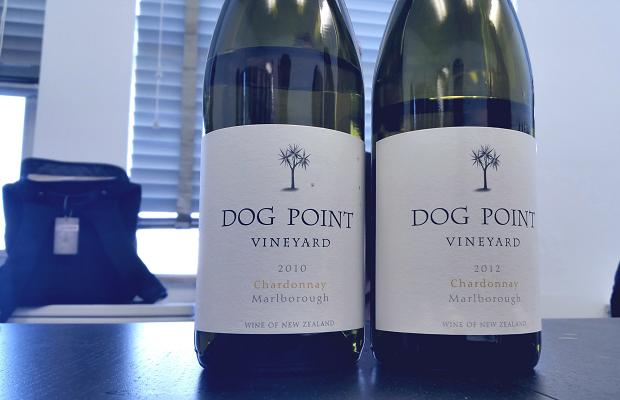
http://www.winealign.com/profile/2058-mjg