Can Chardonnay get any cooler?

Cool Chardonnay at Ridley College

Cool Chardonnay at Ridley College

Five is a big number. Any annual convention that survives and thrives into a fifth caucus must be divined by some unseen force, a guiding hand perhaps, by avatar or prosopopoeia. And something other. The International Cool Climate Chardonnay Celebration has priceless equity on its side. Three aces in the hole. Canadian climate and geology, adroit farmers and winemakers, simpatico of communities.

West coast writer Alder Yarrow spent three days in Ontario and referred to The Brilliance of Canadian Chardonnay. Wine Spectator contributing editor Matt Kramer said that Ontario is possessive of a “luminosity of flavour” and that its Chardonnay offers up “the element of surprise.” In Modern Wine Myths he tells the world about the measure of Canadian wine.

What is it that draws foreign winemakers and journalists to Canada? If people will come, their work meets vacation migration must want for a cause and effect to be a part of something special. South Africa’s Anthony Hamilton Russell said that “a layered, complex wine has to have completed its phenolic journey.” Despite what the world might think and think they know, peregrination by wine grapes, from bud break, through fruit set, véraison and into ripening, is a beautiful reality in Canada.

We walked away from the fourth Cool Chardonnay Conference last year wondering, asking that ubiquitous question, the same one we ask at the Expert’s Tasting every year.

And where do we go from here?
Which is the way that’s clear

Who among us had not believed that the pinnacle of hype had been compassed? Had four years of gatherings not fully realized a conspiracy to inject more than enough cool Chardonnay into thousands of minds and veins? Had anyone not wholly submitted to a seemingly seized reality in apogee of conversions, of maximum, critical mass?

Godello in the media room, White Oaks Conference Resort and Spa

Godello in the media room, White Oaks Conference Resort and Spa

Yes, we thought these things and then year number five blew our minds. We had been wrong. We found out that the bar had yet been breached. Further was still out there, not yet claimed, hovering in the realm of the possible and still, going forward, yet remains plausible. Looking back on the weekend of July 17-19, 2015, at locations blanketed across the Niagara Peninsula, Chardonnay got even cooler.

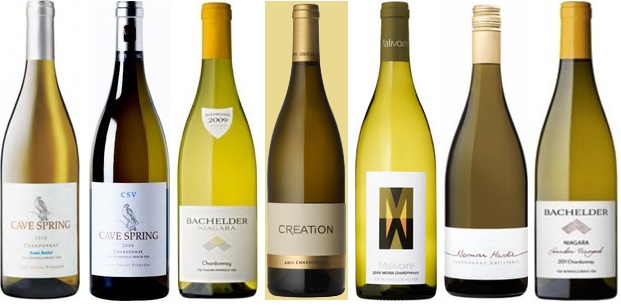
Related – Eleven Chardonnays to the coolest show on earth

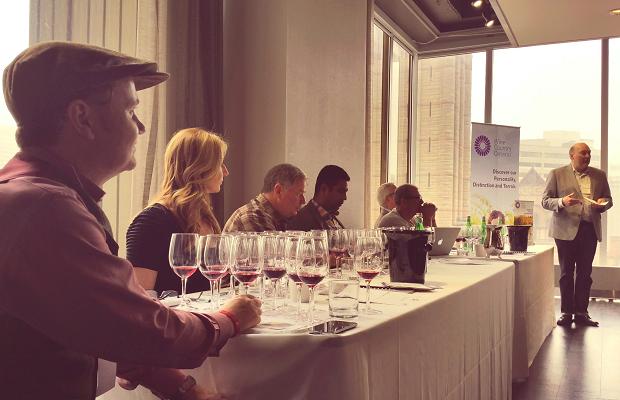
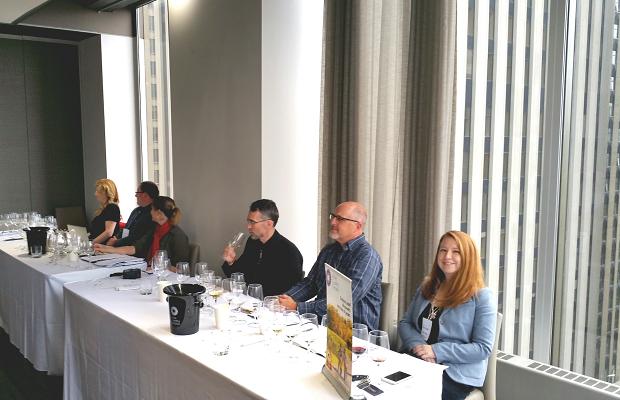
Eleven days in advance of the fifth International Cool Climate Chardonnay Celebration, known in hashtag locution as #i4c15, I tasted and wrote notes on eleven examples of Chardonnay and it was good. On a weekend built for beauty in Wine Country Ontario, at Jackson Triggs, White Oaks Conference Resort and Spa, 13th Street Winery, Westcott Vineyards, Ridley College and at Ravine Vineyard Estate Winery, I tasted upwards of 50 more. I will admit that previous Cool Chardonnay weekends laid a beating on my palate. Not in 2015. On July 20th I wished for more Chardonnay.
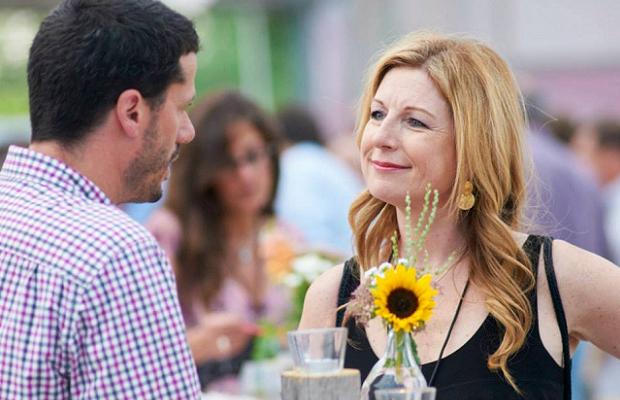
Godello and Magdalena Kaiser of Wine Country Ontario at Barrels and Bonfires, 13th Street Winery (c) Elena Galey-Pride, www.winestains.ca

Godello and Magdalena Kaiser of Wine Country Ontario at Barrels and Bonfires, 13th Street Winery
(c) Elena Galey-Pride, http://www.winestains.ca

Related – 50 cool Chardonnay in 5,000 words or more

With a cavalry in cavalcade of Chardonnay volunteers making it real and sealing the deal, the surfeited excellence of events crossed with happenings rolled on, from the School of Cool – Viticultural and Winemaking Sessions, through Barrels & Bonfires, past Cool Chardonnay World Tour Tasting & Dinner and into The Moveable Feast. There were maestri to applaud – Master Sommelier Bruce Wallner, Angie Jewell and MJ Macdonald – trumpeters of Chardonnay. Did you seek out and thank Dorian Anderson, Trisha Molokach, Magdalena Kaiser and Joanna Muratori? – concierge and purveyors of cool climate heaven. Had you a word or two with Del Rollo, Suzanne Janke and the vintners of the i4C? – gatekeepers of the plans and secrets, where Ontario schemes, greets, welcomes and celebrates frore, global brilliance.

The school of Cool, White Oaks Conference Resort and Spa

The school of Cool, White Oaks Conference Resort and Spa

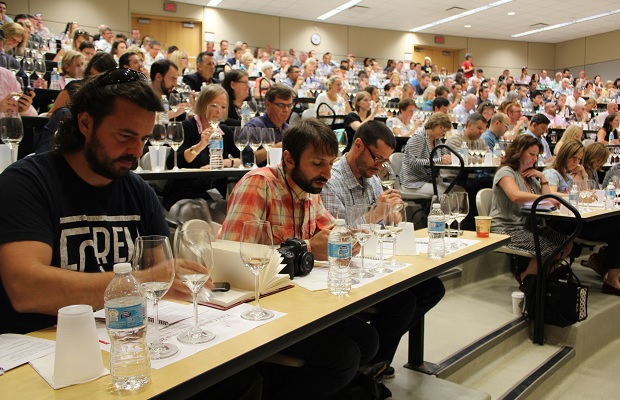
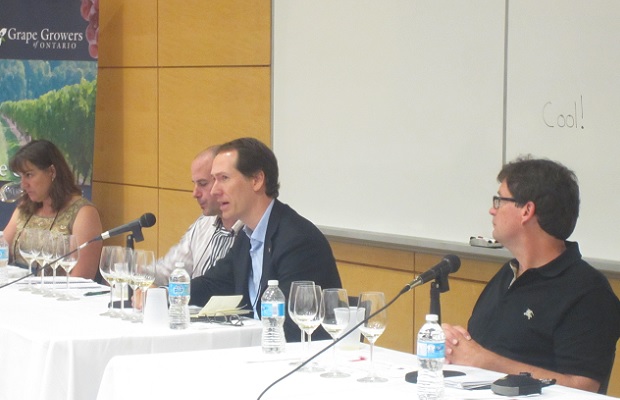
The School of Cool presented by Wine Country Ontario and the Grape Growers of Ontario moved to White Oaks Conference Resort & Spa for the first time in 2015. Panel partners included the passer of the torch Cool Climate Oenology and Viticulture Institute at Brock University, VineTech Canada, Kerry Canada and Riedel Canada. Master Sommelier John Szabo once again moderated three sessions focused on international perspectives to viticulture and winemaking in cool climate regions, with a special feature on Sparkling Chardonnay. In 2011 Wine Spectator‘s Matt Kramer was the keynote speaker and he reprised that contribution in 2015.
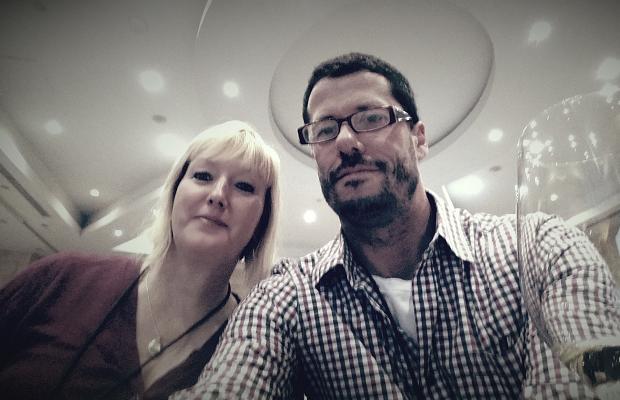
Dr. Belinda Kemp, CCOVI Brock Univeristy and Godello at The School of Cool, White Oaks Conference Resort and Spa

Dr. Belinda Kemp, CCOVI Brock Univeristy and Godello at The School of Cool, White Oaks Conference Resort and Spa

Related – The meaning of Chardonnay: You’ve gotta be cool to be kind

The School of Cool 2015 sessions were controversial, heated and extremely effective. On them I will need to expand upon at another time, in another post. For now, the crux of the conversation concerned two intense Chardonnay algorithms. First, consequence versus cosmetics. Said Kramer, “Niagara has the ability and the opportunity to create Chardonnays of consequence.” Marlize Beyers of Hidden Bench allowed this. “I do believe Chardonnay needs a little bit of cosmetics. Mouthfeel is important.” Discuss.

The second and most managed thread of discussion concerned the idea of minerality. Is it real? Dr. Gary Pickering: “Who cares?” Dr Alex Maltman: “It’s a lovely idea, journalists love it, has marketing capability, but it doesn’t hold up.” Paul Pender: “It’s a great story. I’m not 100 per cent sure its true. It’s more complex than that.” Albrecht Seeger: “Minerality is part of the terroir.” Matt Kramer: “The scientists don’t know a goddamn thing about wine.” Discuss.
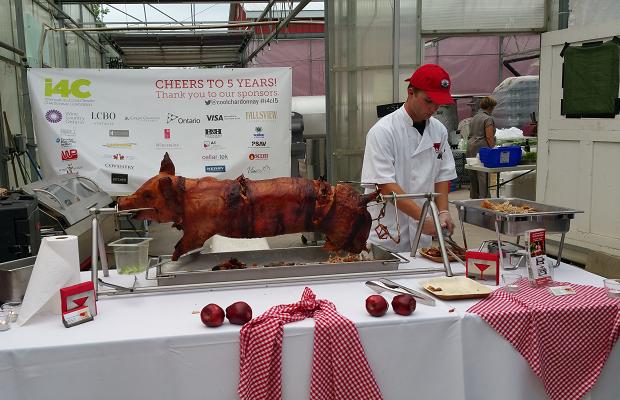
Barrels and Bonfires, 13th Street Winery

Barrels and Bonfires, 13th Street Winery

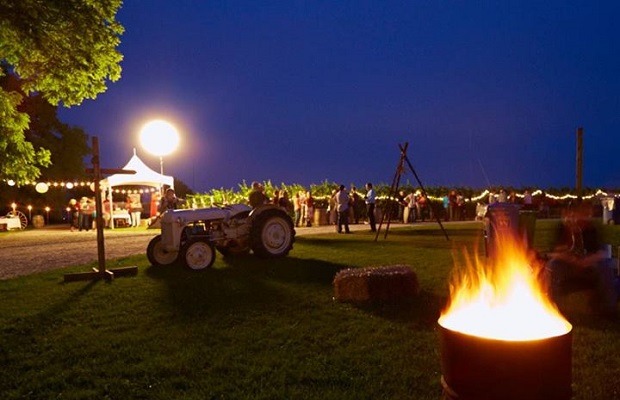
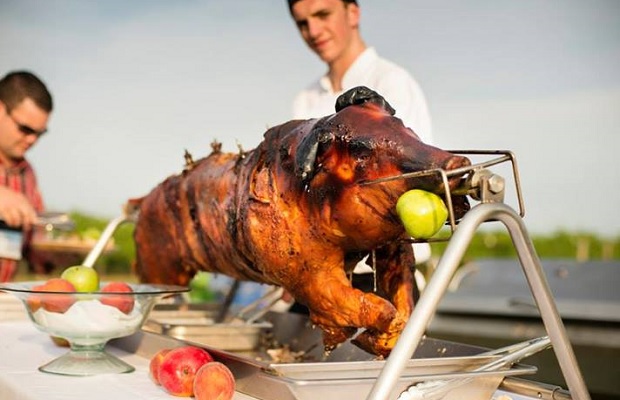
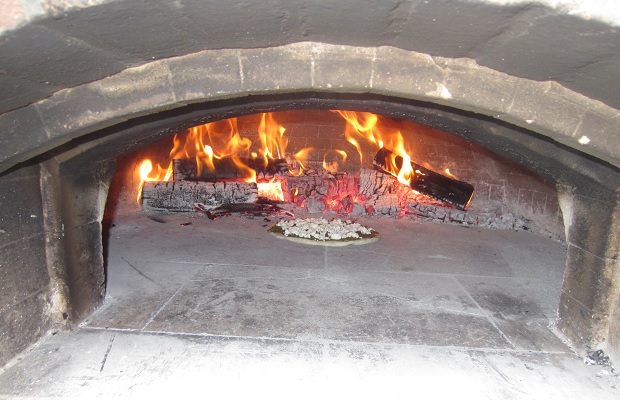
On Friday night at 13th Street the theme was “boots & blue jeans,” to compliment Chardonnay, with a smoke-inspired feast, live music and cozy bonfires set amongst the vines.
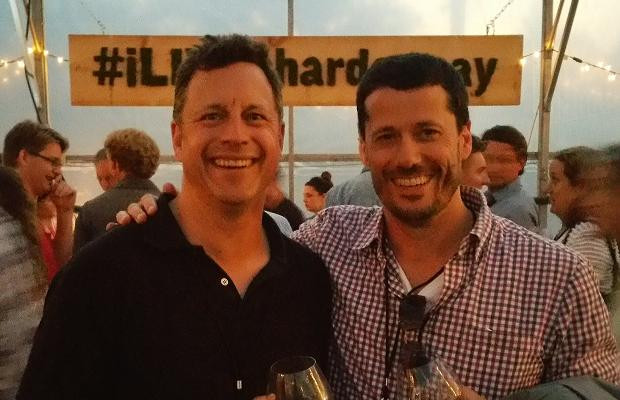
Jay Johnston of Flat Rock Vineyards and Godello at Barrels and Bonfires, 13th Street Winery

Jay Johnston of Flat Rock Vineyards and Godello at Barrels and Bonfires, 13th Street Winery

On Saturday Chardonistas blanketed the Niagara region.
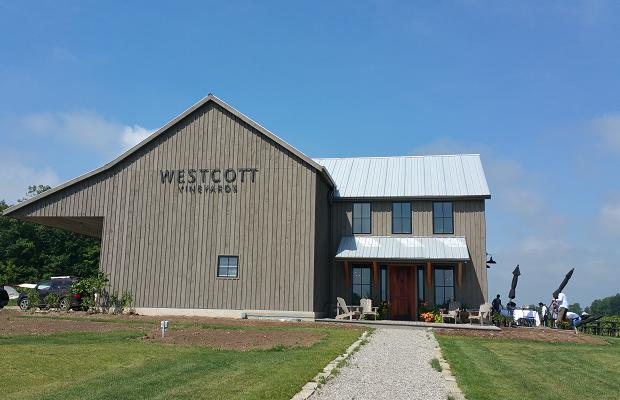
Westcott Vineyards

Westcott Vineyards

I spent the afternoon with winemaker Arthur Harder, Grant, Carolyn and Victoria Westcott at their Vinemount Ridge Westcott Vineyards property.
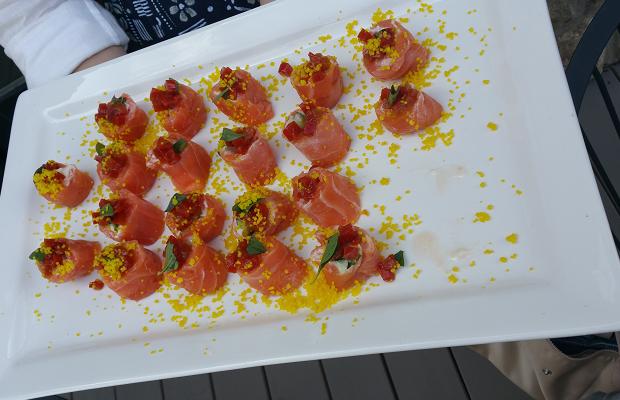
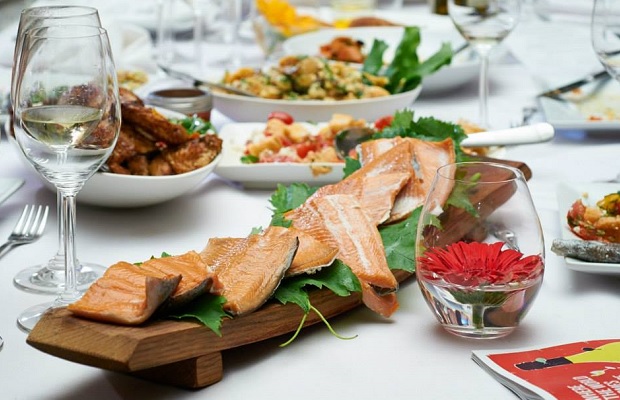
Fresh Salmon hors d'oeuvre by Lorenzo Loseto of George Restaurant, at Westcott Vineyards

Fresh Salmon hors d’oeuvre by Lorenzo Loseto of George Restaurant, at Westcott Vineyards

George Restaurant Chef Lorenzo Loseto and Sommelier Christopher Sealy came to cook and pour. They went to town. Appetites were whetted, palates amused, bellies satiated, hearts skewered, minds hooked and time was lost to well spent.

Lunch at Westcott Vineyards

Lunch at Westcott Vineyards

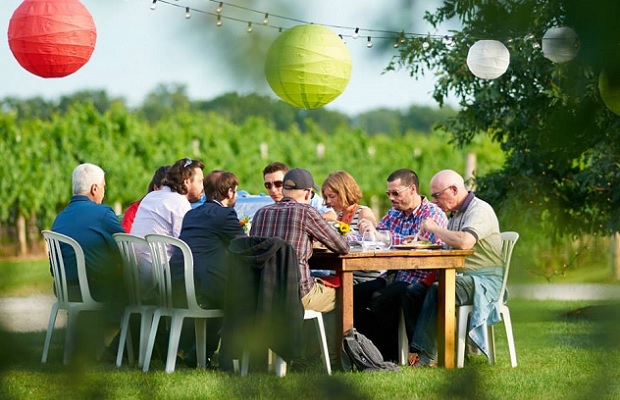
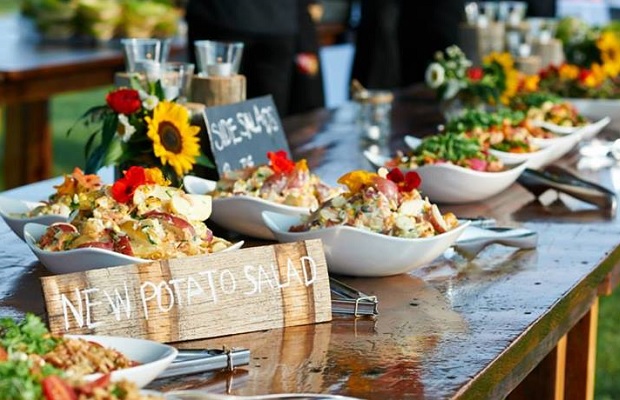
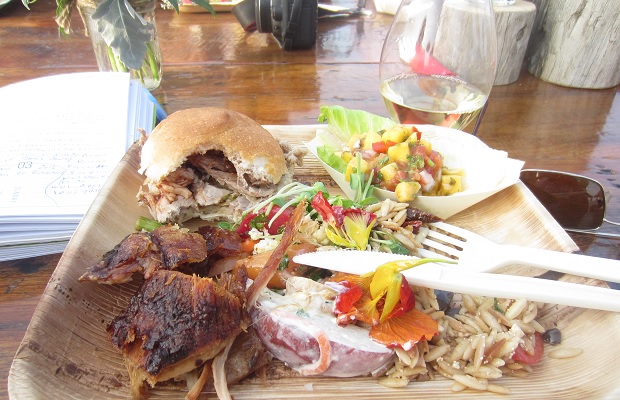
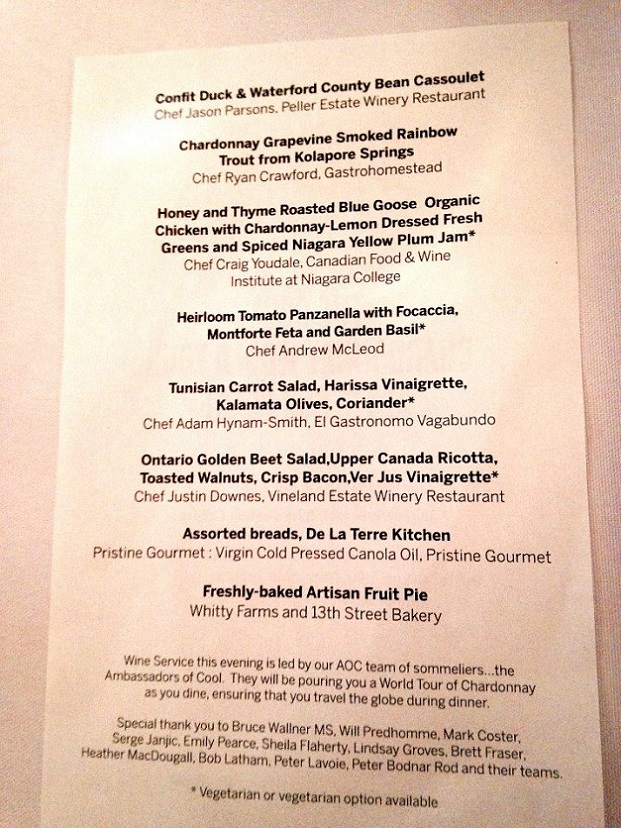
The main event’s setting was St. Catharines’ Ridley College, at which Chef Paul Harber (Ravine Vineyard Restaurant) and Chef Craig Youdale (Canadian Food & Wine Institute) assembled a dream team of the region’s top Vineyard Chefs to present an Ontario-centric family-style feast. Beer and red wine, “oh my,” “gasp,” “what sacrilege,” followed dinner.
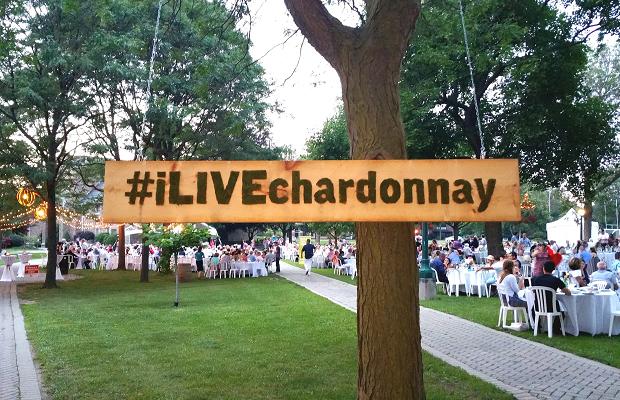
#ILiveChardonnay at the Cool Chardonnay World Tour Tasting and Dinner at Ridley College

#ILiveChardonnay at the Cool Chardonnay World Tour Tasting and Dinner at Ridley College

Related – ‘I4C’ a future filled with Chardonnay

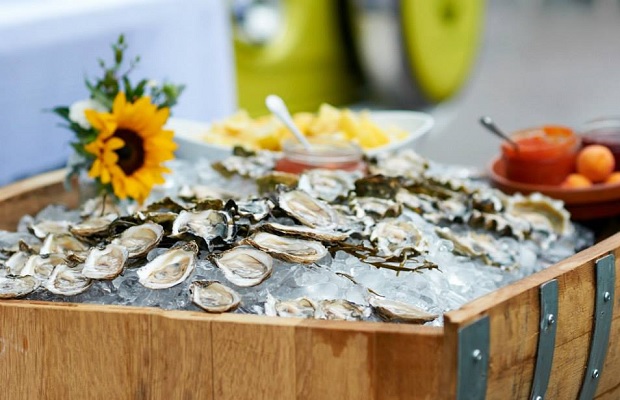
On Sunday morning the final convene took place, as it always does, at Ravine Vineyard. More stellar bites, oysters from Tide and Vine, Niagara cured gold Pingue prosciutto from Niagara Food Specialties and ping-pong in the vineyard. In the end, the love was felt, for the community that celebrates Ontario wine, for all the cool climate folks who came thousands of miles to participate and for Chardonnay.

Related – ‘I4C’ a future filled with Chardonnay

The events provided opportunities to taste the Chardonnays on hand and with thanks to Wine Country Ontario, a media room was set up at White Oaks with full representation. Many of my tasting notes were formulated in that space. Here are twenty-five new Chardonnay reviews from the weekend at i4C15.
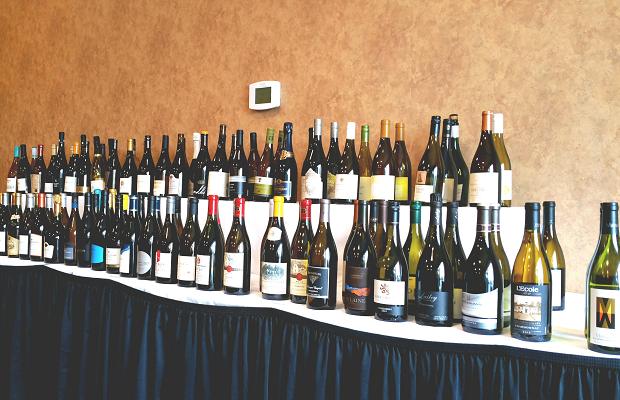
Cool Chardonnay in the media room at White Oaks Conference Resort and Spa

Cool Chardonnay in the media room at White Oaks Conference Resort and Spa

Calmel & Joseph Villa Blanche Chardonnay 2014, Languedoc-Roussillon, France (375071, $13.95, WineAlign)

Quite simple and surprisingly lush with more than ample acidity to keep vitality in the air. A balanced effort in a pretty plush Chardonnay. Drink 2015-2017.  Tasted July 2015

Malivoire Chardonnay 2013, VQA Niagara Peninsula, Ontario (573147, $17.95, WineAlign)

If you reside in Ontario or happen to be passing through before September 13, 2015, the perfect value storm of Chardonnay swirls in your corner. It may be the most excellent 2012 you will find on shelves but looking forward to this (2013) vintage you will encounter a varietal tempest, a house crafted dictionary entry and in retrospect, memories regarding that two dollar limited time offer price reduction that doled out 10 per cent more satisfaction. The essentia of fresh glade aroma, cream in your corn texture and a gaol of circulating acidity add up to one seriously fleshy ($20 and/or $18), cool-climate, hovering in and around the Beamsville Bench Chardonnay. The Malivoire base wine is one of no beginning and no end so in that sense it will always get inside you. Drink 2015-2018.  Tasted July 2015  @MalivoireWine  @ShirazMottiar

Toro De Piedra Grand Reserve Chardonnay 2014, Maule Valley, Chile (417493, $17.95, WineAlign)

Rich, toasty and nutty Maule Chardonnay, full on, out and in favour of ambitious, lofty heights. Has massive creamy meets chalky mouthfeel and tropical fruit with spice by wood in spikes, not to mention high toned acidity and alcohol. It’s an aggressive if clumsy expression. Drink 2015-2018. Tasted twice, June and July 2015  @VinaRequingua  @DrinkChile

Hillebrand Trius Barrel Fermented Chardonnay 2013, Niagara Peninsula, Ontario (46595, $19.95, WineAlign)

Sur-lie barrel fermented Chardonnay all in for texture and fabric with a taste of soft French cream. Very ripe, especially in consideration of the vintage. The late flavours recall lemon curd and a touch of rind. In the end an elemental tonic push carries this skyward, as opposed to downward in earthy dredge, so imagine forward to a petrolish driven future, the engine leaving a trail of disposed energy. Quite complex and certainly fixed with boards to add nuts to the melting, oozing bolts. I would recommend leaving this for two years for the tension to subside. Then the creamy centre will spill out from beneath the pastry crust. Drink 2017-2020. Tasted July 2015  @TriusWines

13th Street June’s Vineyard Chardonnay 2013, VQA Creek Shores, Niagara Peninsula, Ontario (Winery, $21.95, WineAlign)

The vineyard speaks louder and clearer with every passing vintage. In 2013 the level of atomic and aerified atmospheric pressure is unparalleled, from June and for any Chardonnay produced in the Creek Shores sub-appellation. At this early stage the ’13’s awkward, backward and racy character is uncomfortable but impossible to taste away from. This is Chardonnay on gym candy to be sure, rocking like a hurricane, dancing up a storm. The terpenes are titillating, the enzymes discharging. There is a bronze/patina/inside of a pipe metallic feel that adds to the texture improvisation. Nothing about this says drink now nor does it let you settle into a comfort zone. It’s just that all over the place. Will revisit in three years.  Tasted December 2014 and July 2015  @13thStreetWines  @Noble_Estates
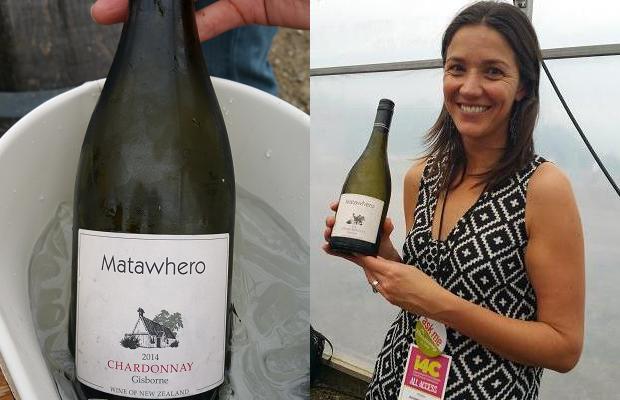
Kirsten Searle, Matawhero Wines

Kirsten Searle, Matawhero Wines

Matawhero Chardonnay 2014, Gisborne, North Island, New Zealand (Agent, $21.95)

Unoaked but full malo crisp up this true blue, north island Chardonnay. A bob of fruit from the oldest (40 years) winery in the region and under current ownership for the past eight. You can tell after tasting with Kirsten Searle that the project has been a labour of love. Her words seem to say “heading out for the East Coast Lord knows I’ve paid some dues gettin’ through. Tangled up in blue.” Round and properly bitter, the world should not be demanded. East coast will do. Drink 2015-2018.  Tasted July 2015

https://vimeo.com/76422105

Quails’ Gate Chardonnay 2013, BC VQA Okanagan Valley, British Columbia (377770, $21.95, WineAlign)

A strength in aromatic temper initializes the confrontation and the relationship. Once hooked, lemon and a waxy texture usher the palate through the middle reaches, then a swirl, tongue on a swivel, off to glide with sweetness into a gin and tonic backside ride. Goes fat and caressing for a spell, through a toasty phase and yet the wood is hidden or at least negligible. Could very well pass for unoaked in a way, especially considering the tang and the persistence. A very solid wine at a very workable price. Drink 2015-2018.  Tasted twice, June and July 2015  @Quails_Gate  @hobbsandco

Josef Chromy Chardonnay ‘Pepik’ 2014, Tasmania, Australia (Agent, $22.95)

Combines beauty and bitters for a streak of natural selection through a field of texture. Heads for the cream risen to the top of rich, pulls over and steps aside to allow for a crunch of green apple. The bite is real, lit by match and cut with spice. Great length. Drink 2015-2020.  Tasted July 2015  @JosefChromy  @bwwines

Domaine Laroche Chablis Saint Martin 2013, Burgundy, France (289124, $24.95, WineAlign)

Climbs more than a rung or two up the reverent Chablis ladder to mingle with the Cru boys. Something about 2013 strikes as more serious, punctilious and free. This is benchmark Saint Martin, chalky and textured from soup to nuts, of spirits high and sky-scraping tang. The acidity is frank, the structure unwavering and the fruit to mineral dichotomy of a pure, mature and essential hookup. From verve to intensity and back again. Up and down, primary and natural. Drink 2015-2019.  Tasted July 2015  @DomaineLaroche  @Select_Wines  @BIVBChablis

Chamisal Stainless Chardonnay 2014, Central Coast, California (416065, $24.95, WineAlign)

Quite classically cooled and unplugged yet intensely sunshine tangy. Fun yet on a seesaw of play and a boat on a rough sea up and down in balance. That is not to say that acidity does not exist but the tang is like heavy salad dressing, emulsified and sultry. No malolactic equates to green apples and blanched nuts, or those hulled direct from the tree. Texture is the thing, a child of crisp, cool fermentation. Freshness could use just a bit more ventilation. Drink 2015-2017.  Tasted twice, June and July 2015  @ChamisalVyd  @LiffordON

Chamisal Estate Chardonnay 2013, Edna Valley, California (Agent, $24.95)

French oak (45 per cent) and (25 per cent) of it new mixed with (50 per cent) malo has created an herbal cream piqued by spice. It’s kind of a chewy Chardonnay, well-judged, blended and crafted with both stainless steel and wood ramifications in meld together mind. A true dichotomy of pleasures, green and red, old and new, yes and no. Drink 2015-2021.  Tasted July 2015  @ChamisalVyd  @LiffordON

Domaine Queylus Chardonnay ‘Tradition’ 2013, VQA Niagara Peninsula, Ontario (Agent, $24.95)

From vines planted by soil guru Alain Sutre, two km’s from the lake, close to Green Lane. If you make a comparison to Bench sites, this is an understated, hyper elegant version of a Chardonnay. It’s an underdog, plain and simple. Sixteen months of élevage has raised a beautiful, bitter green dignity, pith nicety and polite terpenes. A child in many ways who’s offspring will only serve to honour the family name. Drink 2015-2018.  Tasted June and July 2015  @QueylusVin  @LiffordON

Vasse Felix Filius Chardonnay 2013, Margaret River, Western Australia (Agent, $25)

At a third of the cost of the Heytsbury, expectations for the Filius need not exceed prediction. Screw cap has sealed in reduction, sulphur and acidity so that upon liberation the wave of anxiety is nearly overwhelming. The Filius transmits waves of complexity, layers of predilection and outright Margaret River coolness but decanting that character is not unthinkable. Smoulder, struck match and green apple fruit are massively intertwined. Bold Chardonnay. Drink 2016-2020.  Tasted July 2015  @vassefelix  @bwwines

Jean Bourdy Côtes De Jura White 2008, Ac Jura, France (Agent, $28.00, WineAlign)

Tasting his Jura whites with Jean Bourdy can’t help but funnel the exercise into a tunnel, a vacuum and a bilateral directive inward and centripetal. Tradition is everything and this ’09 is neither the exception nor the anti-establishment rebel to the rule. Herbal balm and oxidized character persist but nowhere in the world can so much implosive energy exist in wine such as a Bourdy Jura. This vintage does not reinvent the oueille but the four fermenting years in oak, as per the centuries-old Côtes du Jura method seems to improve with the cleanliness of the process. Another white to follow well into the third decade of this century. Drink 2015-2035. Tasted July 2015  @CAVESJEANBOURDY  @LiffordON

Westcott Vineyards Reserve Chardonnay 2013, VQA Vinemount Ridge, Ontario (Winery, $29.00, WineAlign)

The 2012 early picked Reserve Chardonnay was the raw player, the talented yet unproven one, all about foreplay. Here in ’13, from fruit picked on October 7th is a different rock ‘n roll animal, wiser to vintage, mature in acumen, confident, a Ziggy Stardust. This charismatic leader of the Vinemount Ridge Chardonnay band, “could lick ’em by smiling, he could leave ’em to hang, came on so loaded man, well hung and snow white tan.” Works opulence with prejudice and here acts, sings, dances and displays equipped with nothing short of immediate distinction. There is nothing held back, no remedial work in progress and wisdom oozes beyond its years, in and of learning. The right time and the right place for the winemaker, the accomplice, the peer and the confidence of the partners. Drink 2015-2021. Tasted July 2015  @WestcottWines  @VWestcott

Westcott Vineyards Reserve Chardonnay 2012, VQA Vinemount Ridge, Ontario (Winery, $29.00, WineAlign)

What should small Vinemount Ridge yields, collected solar units and wise, thinking ahead of the curve decision making combine to procure? Grace under pressure. This is what winemaker Arthur Harder, proprietors Grant and Carolyn Westcott and Chardonnay have conspired to achieve out of the warm and challenging 2012 vintage. They picked in very early September. They laid the fruit down for 12 months in (four) 1st, 2nd and 3rd fill barrels. They sat back and waited for amalgamation. If 2012 shows this level of restraint, respect and reserve, well, let’s not get ahead of ourselves. This is deserving of meritorious accolades at a very reasonable price. Drink 2015-2019.

From my earlier note of February 2014:

From vineyards planted in 2005, this new kid on the Jordan block spent 12 months in oak, half of it new. To a taster, you would never know it. In clone cousin to Le Clos Jordanne’s Chardonnay, this special project is the nephew of a set aside, four-barrel selection. Winemaker Arthur Harder (Calamus) has fashioned a head-turning clean, pure and most mineral-driven Chardonnay from impossibly young Vinemount Ridge vines. A quartz chord runs through it and with just two or three more years of vine age the fruit and adjoining texture will catch up to the rock. That integrated, subtle oak impart is of a Granny Smith apple kind, crisp and taut. Such a memorable inauguration with so much promise that lays ahead.

Last tasted July 2015

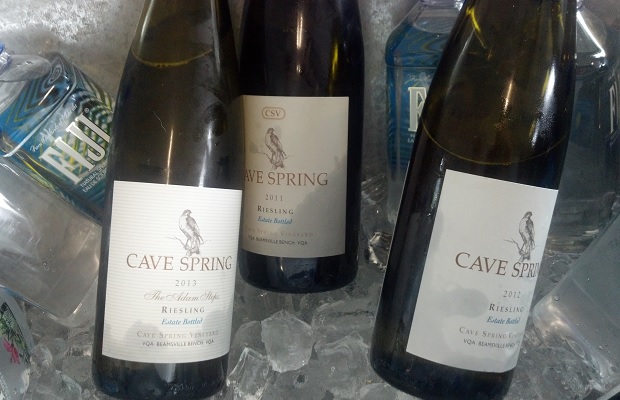
Cave Spring CSV Estate Bottled Chardonnay 2012, VQA Beamsville Bench, Niagara Peninsula, Ontario (529941, $29.95, WineAlign)

The omnipresent Escarpment stone etched, nicked and saturated into ferment from out of the Cave Spring Vineyard may never have extolled virtue any more so than out of the 2012 vintage. A tropical CSV and its accompanying mild, understated toast combs the faces for balance and bobs its keel in well-structured, puff pastry layering. A bitter sachet of schist on the back end steps into a really fine linger. CSV of real presence even in the midst of a summer swelter. Drink 2016-2020.  Tasted twice, June and July 2015  @CaveSpring  @TheVine_RobGro

Lailey Brickyard Chardonnay 2013, VQA Niagara River, Ontario (2908, $30.20, WineAlign)

There are many variations on the Lailey Chardonnay theme but none speaks as clear a Brother Derek Barnett vernacular as the Brickyard, a wine composed in clarity of Niagara River fruit. The former cherry tree and yes, brickyard site is blessed with a red clay soil and Niagara micro-climate that just circulates with enunciated vowels, consonants and graceful intonations. That this seminal vintage will be Barnett’s Lailey swan song is not lost on gist or preponderancy. The full intention, weight and breadth of fruit circles the wagons, prepares the last supper and the silence that follows knows this. This winemaker and this Chardonnay work harder than a great bulk of the competition and in the end, they together are a seamless, relentless and unflappable study in cool climate success. This wine must hold a rightful place in every wine country Ontario inamorato cellar. Drink 2016-2023.  Tasted July 2015  @LaileyWinery
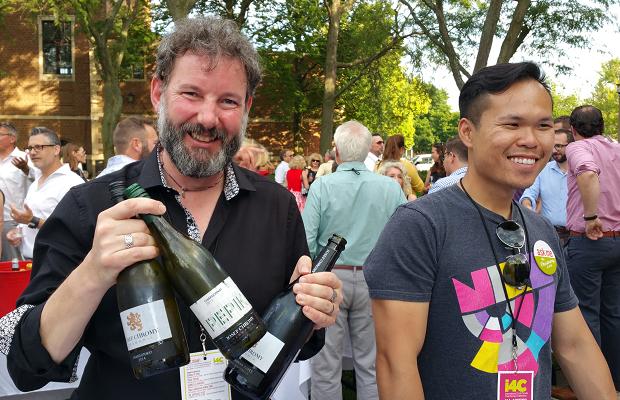
Jeremy Dineen of Josef Chromy Wines, Tasmania

Jeremy Dineen of Josef Chromy Wines, Tasmania

Josef Chromy Chardonnay 2014, Tasmania, Australia (416339, $30.95, WineAlign)

Jeremy Dineen’s 2014 takes over the conversation at the precise moment the previous vintage left off, grabs attention and travels further along. With baton firmly in grasp, the ’14’s acidity dances in a filly’s realm, jittery, agitated, ready to jump out ahead of the pack. The citrus flavours are implosive, concentrated, in demand, distinctly Tasmanian. Though our time was short, to this Texas Tazzy I say, “we were together, I was blown away, just like paper from a fan.” If the ’13 was a creeping crooner, this ’14 is more a smoky-voiced songstress, trotting a longer track. It would be hard not to imagine seeing this Chardonnay as nearly unchanging in its first decade of life. Drink 2016-2025.  Tasted July 2015  @JosefChromy  @bwwines

Gérard Bertrand Domaine De L’aigle Chardonnay 2013, Limoux, Languedoc-Roussillon, France (Agent, $33.00, WineAlign)

A purposed effort from 2013 with even more direct precision, spice, freshness and linear strike flurry. A vital Limoux, of higher yield, lowered oak and acidity defined simply as the real deal. A tremendously exceptional and experiential vintage and one to help define the true identity of cool Chardonnay. Drink 2015-2022.  Tasted July 2015  @GBvins  @FwmWine  @LanguedocWines
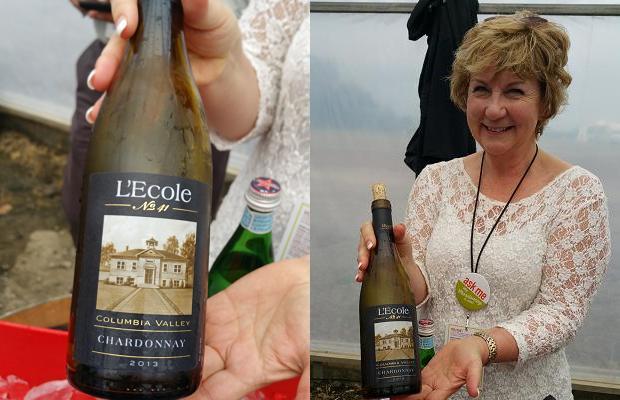
Megan Clubb of L'ecole 41 Wines

Megan Clubb of L’ecole 41 Wines

L’ecole 41 Chardonnay 2013, Columbia Valley, Washington (416370, $34.95, WineAlign)

A co-composed 60 per cent Yakima Valley (planted in the 1970’s) and 40 per cent Evergreen (mineral slope) Chardonnay extensive and extended of orchard fruit with a penchant for texture. The house style reached for uniformity, employing mostly older barrels and laying out bed linens for a brief five-months slumber. Hear this though, the 41 is the sum of its parts and may sport a fat lip but it’s no “victim of your conformity.” Texture is the thing, a result of a warm vintage, cool Evergreen nights in the fall and rampant malolactic fermentation (despite attempts to block it). A Chardonnay “strollin’ to the party like (his) name is El ninio.” Arabesque weave and flavours that go punk and pop. Drink 2015-2020.  Tasted July 2015  @lecole41  @TrialtoON  @WineCommission

Trius Showcase Chardonnay Wild Ferment Oliveira Vineyard 2012, VQA Lincoln Lakeshore, Niagara Peninsula, Ontario (Winery, $36.20, WineAlign)

If the 2011 Wild Ferment spoke in treble clef, this ’12 pounds out a deeply resonating bass note, from instruments wooden and speaking on behalf of the vintage. Deeply smoky, layered and rich beyond yeasty belief, this is a massively structured wine for Niagara, specific to the Lincoln Lakeshore and its ability to ripen fruit of such density. The tang factor is set to 12, above and beyond what winemaker Craig McDonald has reached for before. This vintage, surmised with such yeast, takes ’10, layers it with ’11 and pops out the most plush to date. Missing is the exceptional acidity of 2011 though the overall anatomy and architecture can’t be denied. Drink 2016-2021.  Tasted July 2015

Hidden Bench Felseck Vineyard Chardonnay 2012, VQA Beamsville Bench, Niagara Peninsula, Ontario (381699, $38.00, WineAlign)

The 2012 Felseck is a wine dramatically and diametrically opposed to many other vintages from out of this fundamental Hidden Bench vineyard. Here oozes Chardonnay so very lees layered, emulsified, misty-eyed and far from reductive, having left the 44 per cent new, 14 months in barrel behind. From fruit culled off of east-west Felseck rows in a hot year that saw fundamental leaf plucking/canopy management. The wondrous emotion is condensed in taste and texture, with the bitters turned up a notch, though in their finale they use spice to conjure up ardor, for to melt into length. Unwavering Chardonnay. Drink 2016-2020.  Tasted July 2015  @HiddenBench  @BenchVigneron

Domaine Queylus Chardonnay ‘Reserve’ 2013, VQA Niagara Escarpment, Ontario (Agent, $39.95)

Winemaker Thomas Bachelder combed the blocks of the lowland “villages” sites and in slow-forward cohorts with the most subtle barrels, came up with the cuvée for the Reserve ’13. The same percentage of new oak fed the fruit with love, time, juncture and encouragement. A creamy lustre careens into honey, giving retrospective cue to suckle and accumulating richness. What fortune to work with 2013 for the purpose of announcing a Queylus take on tiers of Chardonnay to the world. Drink 2016-2021.  Tasted June and July 2015

Flowers Sonoma Coast Chardonnay 2013, Sonoma Coast, California (215210, $64.95, WineAlign)

If 2013 is turning out to be the first truly great Chardonnay vintage of the century out of Sonoma, the Flowers SC is categorically up front and centre in that discussion. The epic’s lead paragraph initializes here in a wine that is severely accurate, a blinding and gorgeous expression that brings the flowers in its game. A wield of pulchritude and balance by acidity spot on. Pure flavour extract expands and the components zing on the finish. Could there lurk a Meursault notion in its lace? You know what, forget that. Strike comparisons from the record. The Flowers is extraordinary of Chardonnay, by Chardonnay and for Chardonnay. Drink 2016-2025.  Tasted July 2015  @FlowersWinery  @rogcowines  @sonomavintners

Taittinger Comtes De Champagne Blanc De Blancs Vintage Brut Champagne 2005, Champagne, France (Agent, $225.00, WineAlign)

From a warm vintage out of the top Grand Cru terroir of the Comptes. Essential white flower essence, pure driven snow and liquid chalk. Even though at this 10 year mark this is essentially a gift to assess, the Comtes is entirely approachable in requiem for no further delay. Plenty of energy drives the flavours straight to the back of the buds and were they to linger longer than they prolong to do, the wine would be an utter stroke of genius. As it is, that bench is nearly marked. Drink 2015-2025.  Tasted July 2015  @Taittinger_FR  @TaittingerUSA  @FwmWine

Twenty-five previously reviewed Chardonnays poured at the 2015 Cool Chardonnay weekend:

Angels Gate Old Vines Chardonnay 2010, VQA Beamsville Bench, Niagara Peninsula, Ontario (116350, $23.95, WineAlign)  @angelsgatewines

Angels Gate Archangel Chardonnay 2011, Niagara Peninsula, Ontario (227009, $23.95, WineAlign)

Bachelder La Grande Châtelaine Côte De Beaune 2011, Ac Burgundy, France (332536, $37.95, WineAlign)  @Bachelder_wines  @liffordwine

Bachelder Niagara Chardonnay 2012, VQA Niagara Peninsula, Ontario (VINTAGES Essential 302083, $29.95, WineAlign)

Bachelder Niagara Chardonnay Wismer Vineyard 2012, VQA Niagara Peninsula, Ontario (345819, $44.95, WineAlign)

Bachelder Chardonnay Oregon 2012, Willamette Valley, Oregon, USA (273334, $29.95, WineAlign)

Bachelder Chardonnay Johnson Vineyard 2012, Willamette Valley, Oregon, USA (416644, $44.95, WineAlign)

Cave Spring Blanc De Blancs Brut, VQA Niagara Escarpment, Ontario (213983, $29.95, WineAlign)  @CaveSpring

Flat Rock Cellars Chardonnay 2012, VQA Twenty Mile Bench, Niagara Peninsula (681247, $18.95, WineAlign)  @Winemakersboots

Flat Rock The Rusty Shed Chardonnay 2012, VQA Twenty Mile Bench, Niagara Peninsula, Ontario (1552, $24.95, WineAlign)

Flat Rock Cellars Riddled Sparkling 2009, VQA Niagara Peninsula, Ontario (383315, $24.25, WineAlign)

Olive and Anthony Hamilton Russell at Ridley College

Olive and Anthony Hamilton Russell at Ridley College

Hamilton Russell Chardonnay 2013, Wo Hemel En Aarde Valley, Walker Bay, South Africa (931006, $37.95, WineAlign)  @OliveHR

Henry Of Pelham Estate Chardonnay 2013, VQA Short Hills Bench, Ontario (268342, $19.95, WineAlign)  @HenryofPelham  @SpeckBros

Henry Of Pelham Chardonnay Speck Family Reserve 2013, VQA Short Hills Bench, Ontario (Winery, $29.95, WineAlign)

Lailey Barrel Select Chardonnay 2013, VQA Niagara River, Ontario (Winery, $26.00, WineAlign)  @LaileyWinery

Le Clos Jordanne Claystone Terrace Chardonnay 2012, VQA Twenty Mile Bench, Ontario (Winery, $40.00, WineAlign)  @LeClosJordanne

Norman Hardie Chardonnay Niagara Unfiltered 2013, VQA Niagara Peninsula, Ontario (184432, $39.00, WineAlign)  @normhardie

Pearl Morissette Cuvée Dix Neuvieme Chardonnay 2012, VQA Twenty Mile Bench, Niagara Peninsula, Ontario (303602, $38.00, WineAlign)  @PearlMorissette

Pearl Morissette Cuvée Dix Neuvieme Chardonnay 2011, VQA Twenty Mile Bench, Niagara Peninsula, Ontario (303602, $38.00, WineAlign)

Stratus Chardonnay 2012, VQA Niagara On The Lake, Ontario  (Winery, $48.00, WineAlign)  @StratusWines

Tawse Quarry Road Chardonnay 2012, VQA Vinemount Ridge, Niagara Peninsula, Ontario (111989, $35.95, WineAlign)  @Tawse_Winery

Two Sisters Unoaked Chardonnay 2013, VQA Creek Shores, Ontario (Winery, $24.00, WineAlign)  @2SistersVine

Two Sisters Chardonnay 2013, VQA Creek Shores, Ontario (Winery, $32.00, WineAlign)

Westcott Vineyards Lillia’s Chardonnay 2013, VQA Vinemount Ridge, Ontario (Winery, $20.00, WineAlign)  @WestcottWines

Westcott Vineyards Estate Chardonnay 2013, VQA Vinemount Ridge, Ontario (Winery, $26.00, WineAlign)

Good to go!
http://www.winealign.com/profile/2058-mjg

Master classes of Terroir

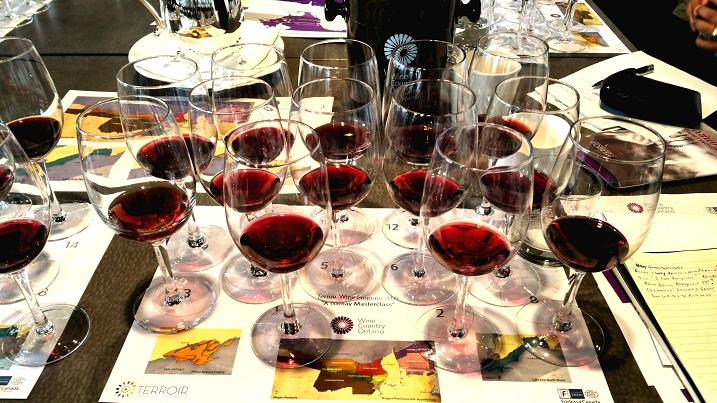
A Gamay Masterclass, Terroir Hospitality Symposium, May 11, 2015, Arcadian Court

A Gamay Masterclass, Terroir Hospitality Symposium, May 11, 2015, Arcadian Court

The Terroir Hospitality Symposium took place on May 11, 2015 at Arcadian Court in downtown Toronto. The one day food and wine colloquium was a massive simmering feast set in sprawling fashion within an undersized, intricate urban labyrinth. Despite the frenzied and condensed action in the downtown venue, that congress merely offered a look at the tip of the proverbial Terroir iceberg. With upwards of 3o team members leading the charge, the movement left the big fat city address and trekked to set up shop at a local farm and out to the rock at the eastern outermost edge of the country. Terroir moves outwards, onwards and upwards, taking it to the fields and the oceans.

The Terroir Best Practice Culinary Mission went to St. John’s, Newfoundland from May 14th to 17th. The One Fish expedition travelled “to meet fishing industry experts, to explore and examine both the history and the current realities of an Atlantic community built on an economy of the fishing industry.” There was also “the feast that keeps on giving,” at which the Feast Ontario team was hosted at Grandview Farms in Thornbury, Ontario

Led by Founder & Chair Arlene Stein, Vice Chair & Awards Rebecca Leheup, Terroir Talk the dextrosinistral/sinistrodextral enterprise is an undertaking of the extreme variety.

A look at #Terroir2015 in images

Terroir is an event, a series of gatherings, a notion, a philosophy and a way of life. Its mandate is this: “Terroir Hospitality brings together innovative and creative influencers from the field of hospitality, including chefs, food and beverage experts, writers and business leaders.” It’s also not without detractors. There are some who feel it is a negative representation of the culinary and cultural scene in Toronto. That it’s “white, urban, Euro-centric. It ain’t Canada, or 2015. Not funny.”

If the list of participating speakers, chefs and winemakers had been correlated with shortsighted discrimination, ill-curated and preordained with exclusive, malice prepense, you would have been hard-pressed to get an interview with any guest who would have chosen to speak about the called-out lack of representation or narrow-minded decision-making. If the culture and the colour of the event needs to change it will do so with holistic bias and sympathy, with the right sort of urging from the global culinary and vinicultural community. If the pundits are correct, future sessions will reflect the will of the people. In 2015, the atmosphere was wholly copacetic.

The 2015 Terroir wine sessions were marshalled with “an effort to raise the academic standards of the wine side of our symposium,” in three assemblies, to educate and entertain. These Masterclass jams, Gamay, Terroir, and Clone Wars were coordinated by Good Food Revolution’s Jamie Drummond and Magdalena Kaiser with great support from Wine Country Ontario.

The connection between food and wine is an intrinsic one. They are like chicken and egg, contrary to reason in electing which comes first. Chefs and winemakers, purveyors of the land from which their produce grows, transmuted into cuisine and fermented into wine. Facilitators of terroir, harvesting at optimum ripeness and then initiating the transmogrification with immediate haste, in urgency, to capture, lock in and bottle aroma, flavour and texture, before any chance of deterioration or spoilage.

But what the fuck is terroir? The most used word in the language of wine is in fact, terroir. Nothing else compares, comes even remotely close, or causes as much debate. Except for minerality, but those who concern themselves in the matters of ridicule, dismissal and denial ignore the fact that the opposite of fruit is simply, unequivocally and finally, incontestably, mineral.

Were the notion of terroir to be a belief as simple as “what happens in the vineyard, through environment, by geology, geography and topology, from naturally occurring elements and microbes in the soil, by air and of climate. Were it just a matter concerning “the impossible creator of perfect storms, from out of riddle and enigma,” well, then, we could all just go home. It’s much more complicated than that and real.

Most winemakers will agree, in principle, to this. “The final goal is to make the finest wines that express terroir.” Organic and biodynamic are important. Terroir is more important. But winemakers are no fools. They know that “during the grape’s life cycle, genealogy and climate shape its development. But even after it is plucked from the vine it still carries no true identity, in so far as what it will become as a wine. This is the point where nature gives way to nurture. Environment now acts as the catalyst to shape the wine’s life. Wine does not evolve because of natural selection. It evolves at the hands of the winemaker.” Anti-terroir?

At this year’s Terroir Talk Symposium, Gamay was chosen as the first wine session’s go to grape variety, to investigate both the serious and not-so serious sides of its existential weightlessness. To revel in its lithe, brightness of being and to unearth its deep roots. That we have come to a time in history where both aspects can be studied in Burgundy and in Ontario is fortuitous indeed. As a Gamay groupie, I feel blessed to be born under a good sign, at the right time.

As a reminder, it’s always the right time to be with the Gamay you love. I have been urging Ontario farmers to plant, cultivate and nurture Gamay; for winemakers to make it more and more. I made “a proclamation in favour of a great grape and one that forges signature wines out of Canadian soils. I am an ardent supporter of and a willing rider on the Gamay bandwagon, in the name of connaitre and savoirkennen and wissen, recognition and understanding.”

Related – Go Gamay Go

It’s working. Rosewood Estates just planted it for the first time. Gamay is poured at the cellar door, at tasting events and in private gatherings all the time now. Bottom line is Gamay costs half of the price compared to Pinot Noir and Syrah and it thrives in Ontario. It can make serious Cru quality reds and even at the highest end, sell for less than $30. It has been, continues to be and will always be #GoGamayGo time in Ontario.

Related – It’s go Gamay go time

Moderator Chris Waters and the Gamay Masterclass panel: Jamie Drummond, Magdalena Kaiser, Martin Malivoire, Shiraz Mottiar, Bill Zacharkiw and Guillaume de Castelnau

Moderator Chris Waters and the Gamay Masterclass panel: Jamie Drummond, Magdalena Kaiser, Martin Malivoire, Shiraz Mottiar, Bill Zacharkiw and Guillaume de Castelnau

The first Masterclass: Gamay The Next Little Thing

“The intent of the first of the three wine sessions, was meant to investigate how it performs in Ontario and elsewhere in the world.”

The Panelists:

  • Winemaker Guillaume de Castelnau, Chief Winemaker/Director, Château des Jacques, Louis Jadot Beaujolais (Beaujolais, France)
  • Vigneron Martin Malivoire (Malivore, Beamsville Bench, Ontario, Canada)
  • Winemaker Shiraz Mottiar (Malivoire)
  • Wine writer/Sommelier Bill Zacharkiw (Montreal Gazette/Wine Align, Montreal, Quebec, Canada)

The Moderator: Wine writer Chris Waters (Vines Magazine/Intervin, Ontario, Canada)

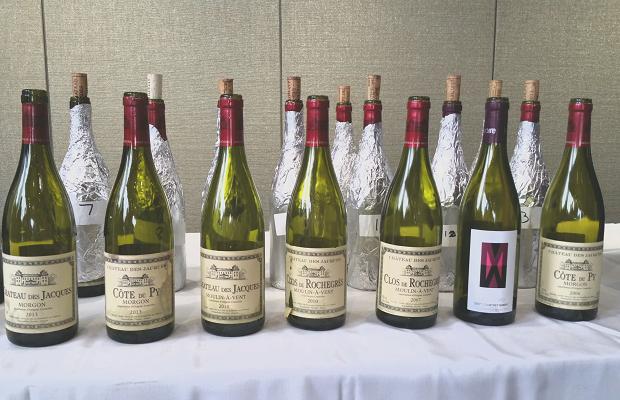
To many, Gamay is a wonderful drug and though much maligned, its suitors and supporters can never tire of its freshness and its lightness of being. Moderator Chris Waters refers to Gamay as “a gateway grape, to transition drinkers from white to red wine.” In a world according to Guillaume de Castelnau, “Gamay is lazy, generous and fragile.” Bill Zacharkiw minces nothing, not words, nor feelings. “I love Beaujolais.” In the Terroir Master Class, there were 13 variations on Gamay, from semi-carbonic to old and baked, with many shades, hues, intensities and variations in between. Here are my notes.

Ontario Masterclass Gamay

Ontario Masterclass Gamay

Malivoire “Le Coeur” Gamay 2014, VQA Niagara Escarpment, Niagara Peninsula, Ontario (Winery)

Shiraz Mottiar refers to the young, Beaujolais impressionist as “Sammy Carbono,” a semi-carbonically macerated Gamay, with one foot in Nouveau and the other in a dusty, freshly spirited aromatic whirl. The tanky feel makes it accesibly gulpable. Like a leaping horse it is also twitchy, hopping in dressage, popping in the mouth. Fun if beside the point. Drink 2015.  Tasted May 2015

Malivoire M2 Small Lot Gamay 2013, VQA Niagara Escarpment, Niagara Peninsula, Ontario (Winery, $19.95, WineAlign)

A month later the pepper runs from white to black, by way of red. Terrific sour edged fruit. Strawberry and cranberry tied together by citrus. Will need two years minimum to fully integrate.
From my earlier note of April 2015:
The profundity of tart, keen, briny berries dilates in its own very useful layers of citrus, tannin and concentration, beyond even what was observed in 2012. The zesty, spritely argot resonates from the unfurling of floral essentia out of a Gamay in desperate need of time. The flavours and overlay are somewhat impenetrable and yet leave quite an impression. While patience might be the virtue and the reward, if #gogamaygo is the modus operandi, a swig from the bottle like gentlemen of the road is certainly not out of the question. Drink 2016-2021.

Last tasted May 2015

Leaning Post Gamay 2013, VQA Niagara Peninsula, Ontario (Winery, $25.00)

A year has clarified the must into a venerable, beneficial decay, like effulgent, liquid rust. The shine of antiquity and then a blast of cinnamon dominates for the first major swirl. So lithe and profound like wise Pinot Noir, minus the Niagara coat of arms and lacquered veneer. Whatever anxiety may have held down the brightness has eased to deliver this current, optimum drinking window. Drink 2015-2016.  Tasted May 2015
 
From my earlier (tank sample) note of May 2014:

Guiltless and virtuous straight out of stainless, the meaty side of Gamay game boldly goes where few from the Bench have gone before. Like a rare venison steak sitting in a silky pool of lavender-scented demi-glace. Floral like Fleurie and despite zero new oak, vanilla joins the gravy. A Senchuk steal of quality Wismer (McLeary…sort of) fruit sets this Gamay up for easy sell success.

Fielding Gamay 2013, Niagara Peninsula, Ontario (Winery, $19.95, WineAlign)

Time has been a friend to the ’13 Fielding Gamay, a wine who’s elevated tones of floral fruit and acidity have settled in the name of structure. Dusty ground nubbins and mint swirl with layered if yet rigid fruit. Low-cropped vines are on display, in single-vineyard like attention to specific detail, akin to Malivoire’s Courtney. This is in fact sourced from a single-vineyard up on the cool Vinemount Ridge sub-appellation. The site is a couple of kilometres south of Peninsula Ridge’s McNally Vineyard, the source of Ilya Senchuk’s terrific Leaning Post 2012 Pinot Noir. The Procyshyn family has been farming this plot (without fanfare) for decades in Beamsville. The pristine fruit that Theo and Shelley Procyshyn grow, along with their three sons, Nolan, Dalton and Brayden, yield as low as 1.5 tonnes and up to 3.5 tonnes per acre, depending on the year. The ’13 was around 3 t/a. Fielding has never labelled this Gamay ‘single vineyard’ because they have always hoped to bring in new Gamay blocks on as part of that wine, but that’s not yet worked out. The ’13 is very, very red raspberry, with a craggy, spiked point of liqueur, like a weeping peak upon that Vinemount Ridge in the afternoon sun. Has Beamsville’s upper reaches written all over its corporeal self. Drink 2015-2017.  Tasted May 2015

13th Street “Sandstone” Gamay 2013, VQA Four Mile Creek, Niagara Peninsula, Ontario (Winery, $19.95, WineAlign)

May just be the first Gamay with a simulacrum towards a style best described as appassimento, what with the overripe fruit, aromatic cure, baked and sun-dried flavours. Sniff the confluence of black raspberry, scorched earth and roasting game bones, its sinew crackling over humid old growth wood. Gets rich into the vanilla, reeking of late harvest lavender and then a mutton funk. Could easily pass for a wealthy, unforgiving style of Cru Beaujolais, like Chénas from Christophe Pacalet. Or it could just be acting older than its age, by seven or eight years. Most prepossessing and confounding Gamay. Drink 2015-2018. Tasted May 2015

Stratus Gamay 2012, VQA Niagara On The Lake, Ontario (Winery, $29.00, WineAlign)

Esteem elevated by structure, matched in poise and presence mottled in smears of darker, richer black cherry. If a slight absence of brightness is sensed due to the syrupy compression, like New World, west coast Pinot Noir, the gleaning from acidity and tannin times perfectly the effluent escape.

From my earlier note of April 2015:

It may not be the most idiosyncratic Gamay in Niagara but the Stratus 2012 is without a doubt the most advanced and complex. Gamay fusion is on display, at once a bottle of Niagara’s finest pulchritudinous veneer and then a charcuterie board laid ample with cured bovine parts and sun-dried grapes. Maximum ripeness and then even later picking, to no one’s surprise, have led to this. Two years of ageing in neutral oak barrels has brought about a humid roundness and yet the centre is controlled by Oz-like mint and eucalyptus notes. The jam is gelid, as opposed to temperate. Rarely does Gamay go to such depths, of blackberry, chalk and grain, with an overlord of tannin. Quite serious stuff. Drink 2017-2020.

Last tasted May 2015

Château-De-Jacques and Malivoire Courtney in the Gamay Masterclass

Château-De-Jacques and Malivoire Courtney in the Gamay Masterclass

Château-De-Jacques Morgon 2013, Ac Beaujolais, France (653584, $24.95, WineAlign)

The flushed scarlet animation is active and astir, like a soft serve swirl of dusty, cherry molasses, bathing in its own natural acidity. Has the presence of wine to integrate chalk, grain and Morgon tannin, in equal, opposite and variegated layers. Nothing shy about this gateway Cru Beaujolais. Drink 2015-2019.  Tasted May 2015

Château-De-Jacques Morgon Côte du Py 2013, Ac Beaujolais, France (Agent, $53.95)

In this rigid and stoic Morgon, the south-facing, blue volcanic slopes of the Côte du Py have provided a measure of firm fruit that will require a minimum two to three years to crack. The gears of the Gamay machinery may be grinding but the windows are yet open, the doors locked tight. This is the least forward, most inwardly introspective and least gregarious of the CdJ Beaujolais. Sharp sapidity, biting tang and piercing penetrating tannin deny immediate or even short-term access. Even the middle palate seems lifeless, devoid of cherry fruit and seamless layering, medicinal even. Judgement should be reserved, with knowledge of pedigree and how a bottle such as this will suddenly, effortlessly spring to life with time. Drink 2018-2022.  Tasted May 2015

Château-De-Jacques Moulin a Vent 2010, Ac Beaujolais, France (Agent, $36.95)

The undergraduate’s blend comes from the appellation’s Château des Jacques parcels; Carquelin, Rochegrès, Champ de Cour, Thorins and La Roche. Granite soils from each spice with symptomatic diversification and combine for a flippant funk that hitches straightforward out of the gate. Here Gamay leaves dusty behind with an urging away from humble and towards nobility. Richly aromatic, amplifying into palate. Such acidity and such grain. For this MaV the time is now, the arrival already announced. A late sense of veneer on the lengthy bitter finish indicates more good times ahead. Drink 2015-2020.  Tasted May 2015<

Château-De-Jacques Moulin a Vent Clos de Rochegres 2010, Ac Beaujolais, France (Agent, $44.95, WineAlign)

From the appellation’s highest parcel, the red sandstone soils of the Clos de Rochegrès are gently sloping and fed by underground streams. I always sense salinity and an effusive, stony energy in wines blessed with subterranean irrigation. The drinking window for this 2010 is wide open and the funk meets age introduction has been made. Already in display of a dried fruit shrivel, the ’10 acts like Sangiovese of a similar senescence, like CCR or Vino Nobile with three to five years of age. The liqueur of roses, the earth and the cherries are culpable and yet the varnish and the baking spice crusting ensure that no one conclusion can yet be made. This is highly seasoned and not quite unfurled Gamay. Two more years should complete its conditioning. Drink 2017-2020.  Tasted May 2015

Château-De-Jacques Moulin a Vent Clos de Rochegres 2007, Ac Beaujolais, France (Agent, $43.95, WineAlign)

Poured from a magnum, the 2007 Clos de Rochgeres is the portal in which to peer, to see what can happen with Gamay. Baked, caked, figgy, funky and oxidative, more than ample fruit was present and persists, with the savoury edges now integrated throughout. Strawberry rhubarb pie comes to mind, with eyes closed and sniffing senses heightened. A bit indelicate, the humidity in tomato leaf and garrigue add to the idea of age though the citric punch and lactic texture are reminders of Gamay’s fun side. There is no shortage of complexity and evolution here. That said, consumption time is now. Drink 2015-2016.  Tasted May 2015

Malivoire Gamay Courtney 2007, VQA Beamsville Bench, Ontario (Winery, $29.95, WineAlign)

The wow aromatics can’t be denied, fully explained nor perfunctorily taken for granted. Age has educated the fruit, stratified and fully saturated this Gamay. Strawberries have shot from an adrenaline cannon and structure has been fully realized with (non-Gamay) Old World confidence. A note of orange blossom, like an early evening Sevilla garden, is rousing. The natural evolve of such a Gamay, with wood, yeast and fruit in expert harmony, recalls the impossible acts of red wines like those made by Emidio Pepe. If the stretch is considered a conceit of poetic licence, so be it. The yet beating heart of raging acidity circling plenteous fruit and so much savour is nothing short of a Gamay miracle. Power and masculinity, by way of a conduit in oak, have been used to great advantage. This has life yet to live. Drink 2015-2020.  Tasted May 2015

Château-De-Jacques Morgon Côte du Py 2006, Ac Beaujolais, France (Agent, $53.95)

Seamless and eminently structured, developed low and slow. The blue volcanic soil has procured an evolutionary subsumption, a roasted, developed personality. The seeping liquor oozes, of earthy cherries, again like Sangiovese, but inelastic and close-grained, as per the Côte du Py idiom. This ’06 offers clarity and gives reason to forgive the brutal ’13, to abstain for commenting further. This wine is quite ferric and still tannic. The oak remains a factor. Through the walls the Gamay fruit does transude and so the master plan is coming into effect, perhaps not immediately but will be very soon. Just around the corner. Drink 2016-2020.  Tasted May 2015
Moderator Sara d'Amato and the Terroir Masterclass panel: Magdalena Kaiser, Dr. Jim Willwerth, Emma Garner, Stuart Piggott and Dr. Kevin Pogue

Moderator Sara d’Amato and the Terroir Masterclass panel: Magdalena Kaiser, Dr. Jim Willwerth, Emma Garner, Stuart Piggott and Dr. Kevin Pogue

The second Masterclass: A Different Look At Terroir: How Much Do Soils Actually Matter?

“In this seminar/tasting we ask what the term really means, and how much do its many different elements actually influence the character of the finished wine?”

The Panelists:

  • Dr. Kevin Pogue Phd. Geology, Whitman College, Walla Walla, Washington State, USA
  • Dr. Jim Willwerth Phd. Biological Sciences: Plant Sciences; Oenology and Viticulture (CCOVI, Brock University, Niagara, Canada)
  • Winemaker Emma Garner (Thirty Bench, Beamsville Bench, Ontario, Canada)
  • Winewriter Stuart Pigott (Author of Riesling: Best White Wine On Earth, Berlin, Germany)

The Moderator: Wine writer/Sommelier Sara d’Amato (Wine Align, Toronto, Canada)

Dr. Willwerth offered up his opinion on how minerality is achieved in Riesling. “If you don’t get maturity in the variety at the end of the growing season, you won’t get the full expression of minerality. Overripe will eliminate minerality.” In Ontario, “The Bench is home to a mineral wealth of local Riesling, singular in composition not only by way of a global comparison, but also from plot to plot, soil to soil and vineyard to vineyard.” That persuasion has spread, down to the shores of Lake Ontario, by Niagara-on-the-Lake and in Prince Edward County. “Riesling brokers the nescient consumer with the gift of grape enlightenment.”

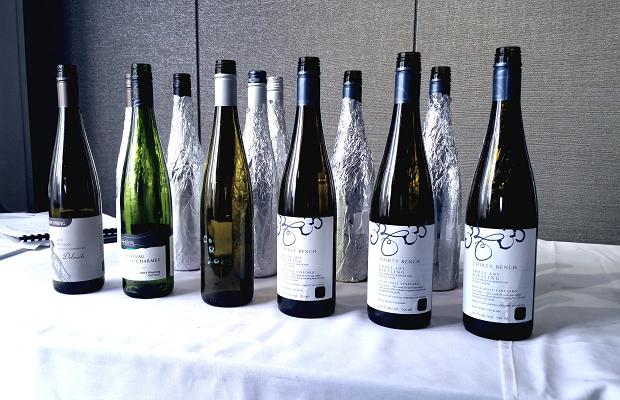
Seven Ontario Rieslings were tasted in the Masterclass. The notes.

Riesling Masterclass

Riesling Masterclass

Cave Spring Riesling Dolomite 2013, VQA Niagara Escarpment, Ontario (Winery, $16.95, WineAlign)

This is Cave Spring’s bridge, offering safe passage from Estate to CSV Riesling. Vinified with consistency in a quasi-Kabinett style, its elevated though classic numbers steadfast in sugar (17.55 g/L) and acidity (7.2 g/L TA). The dolomite limestone of the Escarpment means business in this calm, fit, chiseled and consumer-lissome Riesling. Palate is really the thing, seamless to attraction, from fruit to stone. Orchards and citrus groves alight to rock. Phenolically ripe yet shy of the tropical planet. Is there transference here? Absolutely. Drink 2015-2018.  Tasted May 2015

Château Des Charmes Old Vines Riesling 2013, VQA Niagara On The Lake, Ontario (277228, $16.95, WineAlign)

The happy place effect by age in the Château Des Charmes’ vines coupled with location is usually enough to carry this Riesling through an obvious and readily identifiable tunnel but 2013 confounds. The elemental ratio, derived from multiplying reduction by altitude leans thoughts to the Vinemount Ridge or the Cave Spring Escarpment Vineyard. The compound aromatic waft, or more succinctly, the deconstructed stone, the breaking down of periodic Hollywood squares is a force to reckon. That this arrives from such close proximity to the lake is nothing short of amazing. It’s as if this Riesling is the product of stressed vines and the pierce is just so pinpointed. Less accessible than ’12 for sure, so drink up previous vintages going back at least three before even thinking about getting to know 2013. Drink 2018-2022.  Tasted May 2015

Norman Hardie Riesling 2014, Prince Edward County, Ontario (Tank Sample)

At this prepossessed stage the terpenic fruit might fail in competition but succeed in the marketplace. Easy access, smelling of perfumed must, juicy, with citrus and burgeoning acidity. Low alcohol and good length stretch out an endless lemon summer. The wine will reverse itself within a year and beat impossible odds. A Hardie always does.  Tasted May 2015

Thirty Bench Riesling Small Lot Triangle Vineyard 2009, VQA Beamsville Bench, Niagara Peninsula, Ontario (Winery, $30.00, WineAlign)
The brilliant hue slides through patina and heads for gold. Some fumes have emerged with age, part petrol, part pure mineral, but of what kind and more importantly how, or why? Viscous, near oily, waxy and the most Glück of the three Thirty Bench single-vineyard Rieslings. Tossed with spice, pepper, lemon and honey that is more molasses than clover. The mineral is a result of the lowest water retentive soil as compared to Steel Post and Wood Post. The transmission for (orchard or tropical) fruit is minimized, the vigour low. The result is mineral. Drink 2015-2020.  Tasted May 2015

Thirty Bench Riesling Small Lot Steel Post Vineyard 2009, VQA Beamsville Bench, Niagara Peninsula, Ontario (Winery, $30.00, WineAlign)

Balance is and therefore always was struck. The match percusses flint for a mere nano-second, with just a brush on cymbal, the rock bleeds but is quickly clotted because the fruit shines still, like around the clock light. The steely aspect is a posterior one, antithetical and yet purposed, from this vineyard. Youth tells common sense to think 2011. The Riesling behaviour seems to play that part, of a chalky, piercing acidity, so typical of that vintage and so distinctly Thirty Bench. That the wine is older is not a big surprise because 2009 is the bomb. It may just be the best Riesling vintage, from on that Bench, in the last 10. Drink 2015-2025.  Tasted May 2015

Thirty Bench Riesling Small Lot Wood Post Vineyard 2009, VQA Beamsville Bench, Niagara Peninsula, Ontario (Winery, $30.00, WineAlign)

Age is a factor but less so than its Bench sisters due to a fine sense of calm. Showing less evolution, less viscosity, less wax and honey. More than that, the periodic table has yet to fill in. The Wood Post exhibits more warmth, savour and balm. A taste offers a sapidity that combines toasted fennel and candied lemon. Poised and yet incomplete, the vineyard fetters this Riesling to breath slowly and take its (will get to) sweet time. Drink 2017-2027.  Tasted May 2015

Flat Rock Cellars Riesling Nadja’s Vineyard 2009, VQA Twenty Mile Bench, Niagara Peninsula, Ontario (578625, $19.95, WineAlign)

Going back a few years, this Flat Rock Weis 21 clone Riesling from atop the Niagara Escarpment was made by former winemaker Ross Wise. Six years has concentrated both aromas and flavours while concurrently reducing the cutting drill. The hyperbole is read by tablet, of etchings in stone, immortalizing the terroir (not so) long before it was truly known how this could happen. What sticks out the most is the bleeding limestone texture and the striking aridity. Later vintages of Nadja improve on the flesh. Drink 2015-2017. Tasted May 2015
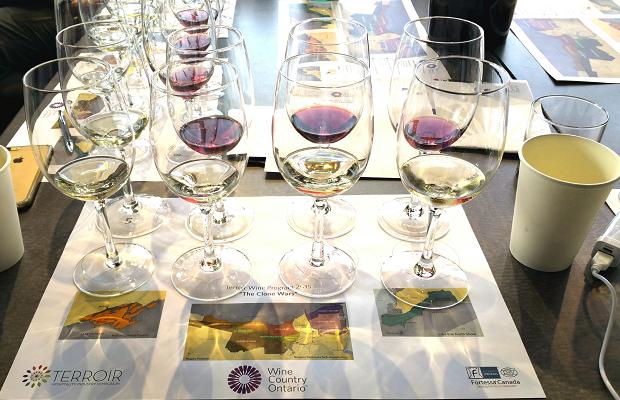
Clone Wars Masterclass

Clone Wars Masterclass

The third Masterclass: “The Clone Wars”: What Do Different Clones Bring To The Glass & Why?

“Looks at Riesling, Cabernet Franc and Pinot Noir. The varying clones utilized are a point of pride for some winemakers, and yet not even mentioned by others. Over the course of this detailed seminar/tasting we hope to answer why this is the case.”

The Panelists:

  • Dr. Kevin Pogue Phd. Geology Whitman College, Walla Walla, Washington State, USA
  • Dr. Jim Willwerth Phd. Biological Sciences: Plant Sciences; Oenology and Viticulture (CCOVI, Brock University, Niagara, Canada)
  • Winemaker Angelo Pavan (Cave Spring, Jordan, Ontario, Canada)
  • Winemaker Jay Johnston (Flat Rock, Beamsville Bench, Ontario, Canada)

The Moderator: Sommelier Katy Moore (Langdon Hall, Cambridge, Ontario, Canada)

Dr. Jim Willwerth asserts that “clones are essential for viticulture, propagated asexually, through cuttings.” Angelo Pavan notes “clonal research to cold heartiness is very important for Niagara and also for yields.” Clones no doubt drive the industry, at least behind the scenes, but when it comes to making great wine, is it the be all, end all? “I still believe plot trumps clone,” says Jay Johnston. The defence rests. Here are the wines tasted in the final Masterclass.

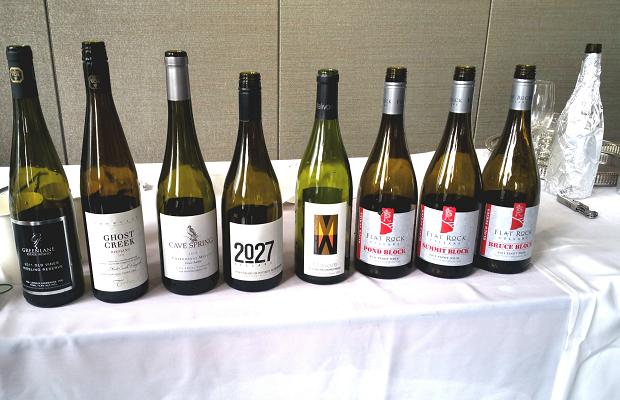
Clone Wars Masterclass line-up

Clone Wars Masterclass line-up

Greenlane Riesling Old Vines 2011, VQA Lincoln Lakeshore, Niagara Peninsula, Ontario (351486, $21.95, WineAlign)

While aridity suggests Alsace Clone 49, this is actually Weiss 21, made saline and arid out of Lincoln Lakeshore soil. The herbal aspect has propagated to combine with Twenty Bench like distinction and with less citrus than Vinemount Ridge or Beamsville Bench. The Mosel density has developed with time in bottle. Drink 2015-2019.

From my earlier note of October 2013:

Cracks the mineral whip, froths lime into foam and atomizes stone fruit into sweet and sour heaven. Wants to be semi-dry but never quite goes there. Walks a fine line, a tightrope actually. Up there with Charles Baker and Thirty Bench for sheer madness.

Last tasted May 2015

Trius Winery At Hillebrand Showcase Riesling Ghost Creek Vineyard 2013, VQA Four Mile Creek, Ontario (Winery, $25.00, WineAlign)

The Ghost Creek Riesling comes from the shadow of a river bed vineyard planted to the Alsace clone 49. The fruit is much richer than most, coupled with the aridity and salinity that former stony wadi plots and this particular clone will conspire to effect. The citrus intensity is however tempered by a humidity that comes from seemingly sunburnt fruit, tanned and wet down by the revenant reservoir. Drink 2015-2017.  Tasted May 2015

Cave Spring Estate Bottled Chardonnay Musqué 2013, VQA Beamsville Bench, Niagara Peninsula, Ontario (246579, $15.95, WineAlign)

Produced from the 77 clone, the vintage has heightened the high herbal and feigned sweetness aromatic pastis. The palate is extraordinarily viscous, with Yellow Muscat and Gewürztraminer attributes, not so out of the ordinary considering Cave Spring’s older world execution. Drives from lemon to mandarin, through almond pit and into peach. Always solid Musqué. Drink 2015-2017.  Tasted May 2015

2027 Cellars Chardonnay Wismer Vineyard Fox Croft Block 2012, VQA Twenty Mile Bench, Ontario (Winery, $30.00, WineAlign)

In the hands of winemaker Kevin Panagapka, Craig Wismer’s fruit retains un underlay of power not recognized in other Foxcroft Chardonnays. Neither Thomas Bachelder nor Ross Wise (Keint-He) make anything near spirited as this 2027 take. Chardonnay loves the sun in the Foxcroft Block and Panagapka loves to see that sun hook up with the inside of a barrel. This ’12 makes a nice date for a wood wedding. A product of the Dijon 96 clone, the reduction in this Chardonnay drives its fresh, spritely if mettlesome nature, with a bark and a barrel bellow, but longevity will not suffer as a result. This could take 30 years to oxidize, it’s that audacious and also courageous. Let it and its buttered popcorn rest a while. Drink 2017-2025.  Tasted May 2015

Malivoire Chardonnay Moira 2011, VQA Niagara Peninsula, Beamsville Bench, Ontario (243113, $39.95, WineAlign)

When it comes to clones, winemaker Shiraz Mottiar distills the Moira Vineyard into the realm of “field selection.” Not to be confused with field blend though I suppose that’s what it is, of sorts. The ’13 is the dictionary entry for Moira, typically balanced, from pedigree, in warmth, amiability, gathered and distributed, from acumen and confidence, to customary placement. Fruit and acidity relax on a sofa of equilibrium, taking little in the way of risks, making no mistakes. Reduction isn’t even a twinkle in its fresh versus oxidative eye. The vintage and the handling purports to throw infantile, developed and matured into one big machine for a readout that grants immediate gratification. Exemplary take on cool-climate, Niagara Peninsula, slightly warmer Beamsville Bench Chardonnay proper. Not for the long-term. Drink 2015-2019.  Tasted May 2015

Flat Rock Pinot Noir Pond Block 2011, VQA Twenty Mile Bench, Ontario (Winery, $29.95, WineAlign)

Assessed blind it smells just like the Flat Rock’s Gravity Pinot Noir yet singled out in fractions. Here the mellifluent block, of sweet crooning fruit, careening and submissive to Siamese brother triplet Summit’s tension.

From my earlier note of October 2013:

Crosses the twain between Bruce and Summit. A cottony touch, most pronounced perfume and of the three, the lowest acidity. Mellow, easy, J.J. Cale peaceful, void of chalk, grain or angst. Speaks in a cherry voice, smells like cherry and returns that cherry to taste. Ripe and soft. “Sweet as a morning sunrise, fresh as a mountain dew.”

Last tasted May 2015

Flat Rock Pinot Noir Summit Block 2011, VQA Twenty Mile Bench, Ontario (Winery, $29.95, WineAlign)

The most perfumed and yes, Burgundian of the three blocks, the Pommard in the group. Still limestone chalky and gaining weight. This is a single-block wine to me made again.From my earlier note of October 2013:This block’s base is slightly deeper, spreading over dolomite limestone. Diminished average temperatures mean berries develop lower and slower, hang longer (up to three weeks) resulting in higher phenolic ripeness. Summit may be the caveman of the three, seemingly in dire straits, covered in leaves, snapped twigs, truffles and porcini mushroom but damn if impossible Burgundy does not come to mind. This is one to ask where do you think you’re going? It will surely reply, “if you ain’t with me girl, you’re gonna be without me.”Last tasted May 2015

Flat Rock Pinot Noir Bruce Block 2011, VQA Twenty Mile Bench, Ontario (Winery, $29.95, WineAlign)

The light and delicate place translates to hue, texture and ultimately elegance. Yet there persists an underlying anxiety, essential for gravity.

From my earlier note of October 2013:

From the northern most block, up at the Escarpment/Bruce trail. Thin, one foot deep soil meshes flaky limestone at this elevation. Smallish berries predominate and an earthly mote accents the flowers, cherries, strawberry and classic purity of this bonny Bruce. A Oregonian lightness of being, if you will. From one of the few south-facing slopes in Niagara (because of 20 Mile Creek), where the limestone chalk imparts fine-grained tannin so apparent to taste.

Last tasted May 2015

Good to go!

http://www.winealign.com/profile/2058-mjg

Searching for Somewhereness

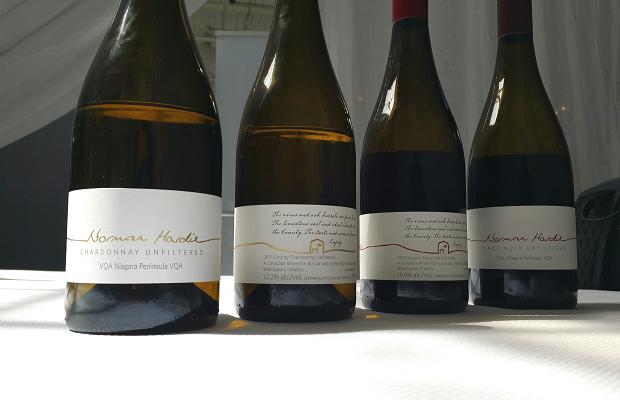
The wines of Norman Hardie

The wines of Norman Hardie

Somewhereness is not really a word. It’s hokum. Gibberish. Nonsense. Look it up in Merriam-Webster or Oxford. Not there. Its conceived convenience is recorded in Wiktionary, Your Dictionary and other online glossaries though, because there is always an online presence ready and willing to immortalize anything and everything.

The definition of Somewhereness, according to the online “dictionaries.”

  1. The state or quality of being in, occurring in, or belonging to a specific place.
  2. The state or quality of existing in a place that is unknown or cannot be pinpointed.
  3. The unique characteristics imparted on a wine by the conditions of the place in which it was grown.

Somewhereness lies the truth?

Somewhereness is not a state of mind, of being, of knowing something is intrinsically right within the parameters or context of here, there, anywhere or everywhere. Somewhereness is not merely a function of good decision-making, of exercising the ideal to expand on terroir, to create something to talk about. Yet that third so-called definition is on the right track. Belief says terroir is what happens in the vineyard, through environment, by geology, geography and topology, from naturally occurring elements and microbes in the soil, by air and of climate. Terroir is the great one. The impossible creator of perfect storms, from out of riddle and enigma. Somewhereness, by extension, is the next one.

Somewhereness exists, albeit with just as much abstruse behaviour and paradox, inside the finished bottle. That’s all you really need to know. Terroir happens before. Somewhereness happens after. The line is drawn when wine enters its final resting place. It evolves, develops and finds its somewhereness inside the bottle. In the case of Champagne (and the wines of Emidio Pepe), the first bottling is merely a temporary shelter and somewhereness knows to wait for the final call. In those cases there are the stages of terroir, disgorgement and finally, somewhereness.

In Ontario, somewhereness has been found (as opposed to “was founded”) by Norman Hardie, Jonas Newman, Vicky Samaras, Bill Redelmeier, Ann Sperling, J-L Groux, Charles Baker, Doug Witty, J.P. Colas, Ed Madronich, Jay Johnston, Tom and Len Pennachetti, Angelo Pavan, Moray Tawse, Paul Pender, Harald Thiel, Marlize Beyers, Mary Bachelder-Delaney, Thomas Bachelder, Martin Malivoire and Shiraz Mottiar.

Somewhereness may have been born to these Ontario parents but it has and will not remain exclusive to the 12 who discovered it. Somewhereness belongs to all wine with true and truthful origins in terroir. The great wines of the world share in the expression and the mystery, even if the gold inside their bottles has never been affixed with such a label. Somewhereness is found inside a bottle of Dujac Bonnes Mares. You will taste it in an Egon Müller Scharzhofberg. It can’t be missed from out of a Margaux pour by the hands of Paul Pontallier. Wines of manic manipulation will never find it. They either do or they don’t, will or they won’t. Somewhereness just happens. Don’t ask me to explain. I’m just the messenger.

Over the past few years, much godello.ca white space has been set aside for glossing in written word and the ever-evolving rumination on the spiritual effect of somewhereness.

Konrad Ejbich holding court in front of De La Terre's breads

Konrad Ejbich holding court in front of De La Terre’s breads

Related, From February, 2013 – Somewhereness over the Canadian wine rainbow

“For a comprehensive look at our province, make sure you read A Pocket Guide to Ontario Wines, Wineries, Vineyards, & Vines by Konrad Ejbich. The discourse concerning somewhereness in Ontario is in full swing. In October of 2012 I wrote, “character and quality has never been better. Riesling continues to impress and let us not ignore the high level of ever-evolving Chardonnay vines. Reds have made great strides, especially Pinot Noir, Gamay and Cabernet Franc. The future looks very bright for Ontario [wines].”

Related, From April, 2013 – Come together, over wine

“Abeyance be gone, these next few years have the potential to cement an industry’s power. Only a minority has even the slightest clue that liquid gold is mined out of the peninsula’s glacial clay and limestone. The time is ripe to tell the world the story of somewhereness. The embryo is about to grow in a major way. Financial reward is within reach. So how to alert the world?”

Related, From April 2014 – The group of twelve

“History may one day remember them as the group of twelve, or perhaps, “The Ontario School.” They are the 12 wineries who have banded together to ensconce a strange but beautiful word on the tongue, in the dictionary and out in the world. Somewhereness. They are purveyors of the land from which their grapes grow and ferment into wine. Facilitators of terroir, working a canvas forged by millions of years of geological and climatic evolution. Their assembly is based on both exigency and on Moira; destiny, share, fate. Like that other famous group, “collectively they agree.” Ontario’s cool-climate wine regions need to qualify and certify a distinctive winemaking style. In juxtaposition to old world, European tradition, the intensity of somewhereness needs to reflect an increasingly Ontario-centric partiality.”

Related, From April 2014 – Why taste Ontario?

“The Ontario wine industry is the best kept secret in the world. It has grown, accelerated and advanced with more success than might have been imagined as recently as five years ago. In November I wrote, “Ontario winemakers have figured it out. The “world-class” comparative humanities of aging and longevity aside, the comprehensive and widespread phenomenon of excellence, regardless of vintage, is now an Ontario reality.”

Wine Country Ontario's Magdalena Kaiser

Wine Country Ontario’s Magdalena Kaiser

All wonderful hyperbole, to be sure. But for years I missed the point. Somewhereness is not about agreeing, in principle, on how to make wine from a particular place so that it can collectively result in a thing. It is something other. It’s in the bottle. It has always been there but the key lies in Ontario’s industry having matured to a point where we can now taste it, again and again, inside the bottle. The work made it happen. It is well-deserved.

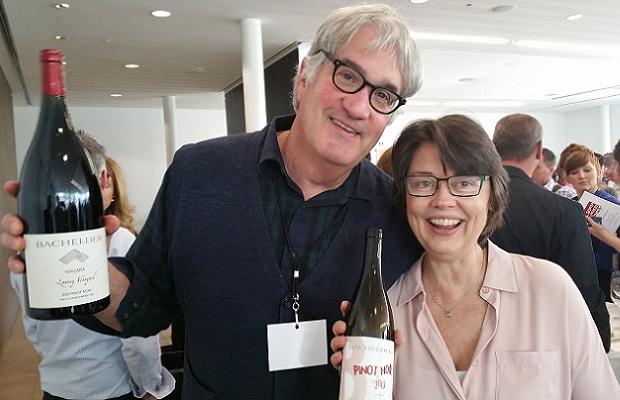
Thomas Bachelder and Mary Delaney-Bachelder

Thomas Bachelder and Mary Delaney-Bachelder

So with the assistance of Trisha Molokach, Dorian Anderson and the vintners who came to realize what happens when terroir is used to bottle divine pleasure, another Somewhereness (the event) happened, at St. James Cathedral in Toronto, on April 20, 2015. Food partners completed the stellar event; Best Baa Dairy, Monforte Dairy, Upper Canada Chees Company, Fat Chance Hand Sliced Cold Smoked Salmon Co., Chef Ryan Crawford & Beverly Hotchkiss of Backhouse, De La Terre Kitchen and Bakery and Schott Zwiesel. Hinterland was not present in 2015 and I skipped two tables, due to quite recent full portfolio tastings, at Bachelder and at Southbrook. Here are some other notes.

Norman Hardie Riesling 2013, VQA Ontario (Winery, $21.00, WineAlign)

With less residual sugar than in 2012 and slightly higher alcohol (the bottle says 10.1 per cent but it’s actually 9.8), the house style persists, if only as a refrain that adjusts and adheres to the vintage. A hint of oyster shell is more than significant, in working alongside Hardie’s Calcaire, effected out of lees fermentation. The minute loss of high-toned aromatics is pitched in favour of fruit, if only from one exploited tank, within the context of producing 1000 cases. The ’13 (70 Niagara/30 PEC) is like very modern Alsace, akin to Schoffit, what with its texture fitted through a tiny hole. Drink 2015-2018.  Tasted April 2015

Norman Hardie Calcaire 2013, VQA Ontario (Winery, $23.00, WineAlign)

The field blend of Marcel Deiss is the starting point. Lees imparts texture and the proverbial minerality is rounder than the Riesling, though the acidity just as linear. The breakdown is Chardonnay (40 per cent), Riesling (40), Melon de Bourgogne (10) and Pinot Gris (10). It should be noted that the mid-palate is caressed by a silky cheese curd, sour milk atonement. Drink 2015-2019.

From my earlier note of August 2014:

If any wine growing and producing region not called Alsace has the right to label a wine Calcaire, Prince Edward County is that place. The irony squared of Norman Hardie’s choice of nomenclature is not lost. Olivier Humbrecht makes use of the term because some of his single-varietal wines can no longer (under the local AOC rules) be labeled with the name of the wine-growing village. Marcel Deiss produces ‘field blends’ composed of several varieties grown on Grand Cru soil but he can’t (under other regional rules) label them Grand Cru. Hardie takes Niagara and PEC Grand Cru grapes, fashions an Ontario white blend, not unlike J-L Groux and calls it Calcaire, in ode to the limestone underlay of the County. Are you following me here? This may be new, innovative, yet understood and an early impression, but this cuvée initiates the PEC march to white blend supremacy, much like Stratus White has done over the course of 10 vintages in Niagara. Norm’s Calcaire is a Chardonnay, Pinot Gris, Riesling and Melon de Bourgogne mélange, co-fermented on the lees, striking, all in limestone, full out mineral consequence. There is purified pear and white melon fruit in distillation. There is a house in Wellington, “they call the Rising Sun.” That this animal succeeds so early in its tenure shows the Norm conceit and the swagger. That it will define white blends for a millennium is an arrogance of traditional song and of scripture. So be it.

Last tasted April 2015

Norman Hardie Niagara Unfiltered Chardonnay 2012, VQA Niagara Peninsula, Ontario (184432, $39.00, WineAlign)

The ’12 Niagara has swapped spontaneity for coherence, licentiousness for logic. Has entered the stage of non-reductive peel, where skin is discarded, flesh is exposed and juices run free. If you like your Chardonnay settled and yet vitally fresh, now is the time to enjoy the Hardie 2012 Niagara Chardonnay. Drink 2015-2022.

From my earlier more of May 2014:

Norm’s Niagara is such a different animal to the County 2012. The warm summer and dry fall means more humidity and even more reduction. Currently cothurnal so less like Burgundy but only because there elevates the high-tones and percipience from Niagara. Texture is key but this Hardie needs time. It’s not angular but it is steroidal, injected, like a wild thing, as if the yeast were still in control, munching away even though there is no more sugar to be had. Undomesticated ’12, at heart, in spirit, out of mind. Hard to imagine there could be this much anxiety from the even-tempered vintage, but when you pick real early and keep the oak to a bare minimum, Hardie happens. Norm picked ripe fruit between September 7 and 10, six weeks ahead as compared to some years. He said the fruit had a “golden tan, ready to go.” The use of smallish 500L barrels works wonders for texture and though 40 per cent was new wood, you would never know it. Malolactic fermentation didn’t happen until late August, nearly a full year on so no sulphuring was required until that time. This is Hardie’s freshest Niagara fruit ever, from Duarte Oliveira’s farm between Victoria and Ontario Street, the same spot as Hillebrand’s Chardonnay Reserve. Terrific Beamsville Bench Chardonnay.

Last tasted April 2015

The wines of Hidden Bench

The wines of Hidden Bench

Hidden Bench Estate Riesling 2013, VQA Beamsville Bench, Niagara Peninsula, Ontario (183491, $23.95, WineAlign)

Hidden Bench’s ’13 Riesling is a pure, soft-spoken and balanced reflection of her maker, winemaker Marlize Beyers. Only a month or two of lees and no stirring has brought her Riesling into this current corporeal state. The citrus is all flesh, void of pith and with acidity that has already incorporated, disguised and covered the zest. If any Hidden Bench Riesling suggest tropical fruit, here it is and yet again, not. Drink 2015-2020.

From my earlier note of September 2014:

The Estate Riesling is as vigneron-defining as any wine on the Niagara Escarpment. Hidden Bench is a 100 per cent estate-fruit operation so this Riesling is spokesperson, prolocutor, mouthpiece, champion, campaigner and advocate for the concept. The estate ’13 reaches deeper for nutrient pot sweetening, into shale and in conceit of its varied, positively cultivated terroirs. Compact and jelled, this is several steps up from most other entry-level Niagara Riesling and in fact, is really anything but. The transparency here is patent. This is Riesling that simply knows what it is; pure Bench, unequivocally real and forthright. Knows what it wants to be.

Last tasted April 2015

Hidden Bench Bistro Riesling 2013, VQA Beamsville Bench, Niagara Peninsula, Ontario (Winery, $19.95)

Produced exclusively for licensee, the Bistro follows a very similar profile to the Estate Riesling, with exactitude in weight and alcohol 911 per cent). The flesh is less, the zest increased and overall you can sense more youth. The Bistro juice comes from Roman Block cuttings planted in Felseck Vineyard in 2008. The simmer here is a simpler, more straightforward pot of sustenance, entirely capable of acting as spokes-Riesling for the Hidden Bench house druthers. The vines will grow up and the juice will move on but other, newer, youthful cuttings will take up residence and the Bistro line will endure. Drink 2015-2017.  Tasted April 2015

Hidden Bench Nuit Blanche Rosomel Vineyard 2012, Beamsville Bench, Niagara Peninsula, Ontario (278812, $40.00, WineAlign)

The (five to) six percent Sémillon speaks at present, in a waxy, bitter gourd winter melon and smoky flint tightness. In this wound moment, it is perceived that another year will be needed for the next unwind. Now vacuous, spinning and whirling as if in a processor’s bowl, an amphitheatre of expression. Drink 2016-2022.

From my earlier notes of September and (at Gold Medal Plates Toronto) November 2014:

Less than six weeks after my first introduction to the NB ’12 complexity shines anew. Such a delicate and elegant take on the Bordeaux white axiom. Void of all the gangly G’s; grasses, gooseberry and green vegetable. Leans to custards and curds with a savoury accent and a limestone tang. Willing to be paired with a multitude of gastronomy. Long finish. From my earlier, September 2014 note: “Taking what the vintage gives, Rosomel’s Sauvignon Blanc was king in 2012, dominating at a 95 per cent share of the Bordeaux-styled blend with Sémillon. Barrels were stirred weekly during fermentation and the creamy texture thanks that regimen, as does the tannic fullness of the round back-end. It rocks out bracing, formidable and nobly bitter, in pear and its pith, in lemon, of rind and in curd. The SB lounges in tall grasses but avoids goose feathers and blanching veg. So very savoury, in gorse tension, thistle and nettle. These notes all cut through the roundness and are finally tied together by the flinty rock of Rosomel.”

Last tasted April 2015

Hidden Bench Rosé Locust Lane Vineyard 2013, Beamsville Bench, Niagara Peninsula, Ontario (Winery, $19.95, WineAlign)

A meandering young blend of Pinot Noir, Malbec and Viognier that is super dry (3.2 g/L of residual sugar), “hey, hey, my, my.” The aromas suggest a succession from strawberry to green and red onion but “there’s more to the picture, than meets the eye.” The medley, interrupted by ballads and road stories is like a subtle, sweet, sour and savoury gastronomical pickle, ramps in brine, scopes in sweet alkali. Can there be a drier, more windswept crag, neal to a southern French style made anywhere on the Peninsula than from the Escarpment coliseum up on Locust Lane? Drink 2015-2018.  Tasted April 2015

Hidden Bench Bistro Rosé 2013, VQA Beamsville Bench, Niagara Peninsula, Ontario (Winery, $19.95)

While persistent in aridity as a disciple to the Locust Lane, this Bordeaux blend Rosé packs a fruitier punch. Elevated residual sugar (as compared to the Double L) mans a higher rate of variability and accessibility, not to mention more chance of Ontario patio success. This licensee bottling will work for summer, across the province. Drink 2015-2016.  Tasted May 2015

Meg McGrath and and Marlize Beyers of Hidden bench

Meg McGrath and and Marlize Beyers of Hidden bench

Hidden Bench Locust Lane Vineyard Pinot Noir 2011, VQA Beamsville Bench, Niagara Peninsula, Ontario (Winery, $48.00, WineAlign)

Still tightly wound with the tannic grain criss-crossing at interstices of fruit (pomegranate/cranberry/strawberry) and acidity (sharp/pointed/direct). A fine, pointillist’s rendering; Locust as Seurat, nobly bitter, to the end. Drink 2016-2022.

From my earlier note of April 2014:

The Locust Lane Vineyard, originally planted in 1998, was Hidden Bench’s first acquisition, in 2003. It has a unique perpendicular cross-slope effect, undulating in all four directions, gathering sun hours in its own special way. The vineyard produces the richest and warmest Pinot Noir with fruit flavours more akin to ripe plum and black cherry than almost anywhere on the Beamsville Bench, certainly as any from the Hidden Bench stable. While the ’11 is not the biggest beast nor the Bordeaux bully of the Terroir Caché, it is surprisingly tannic and strong. It’s anything but hot, though it attacks with fervor. Big berry fruit, macerated strawberry, rich pie notes and spice. A great Locust vintage.

Last tasted April 2015

Hidden Bench Terroir Caché Meritage 2011, VQA Beamsville Bench, Niagara Peninsula, Ontario (505610, $38.20, WineAlign)

There is so much floral presence in 2011, a showy perfume that parades the relative elegance of Niagara’s Bordeaux reds in the vintage. Structure is comparable to 2010, not in beast mode but rather with a delicacy derived from less burning, high-toned fruit. Still here lays a wine so young, of social encumbrance that might be passed off as a mark of impertinence. This faintly embarrassing condition can be suppressed in a dark cellar, in which the foundation can be laid for the beginning of a cure. The Terroir Caché 2011 will show its best between 2017 and 2020, then develop, slow down, suspend animation and age further, effortlessly and exceptionally. Drink 2017-2024.  Tasted April 2015

Tawse Quarry Road Chardonnay 2012, VQA Vinemount Ridge, Niagara Peninsula, Ontario (Winery, $35.95, WineAlign)

Oh, the accessibility of Quarry Road in 2012. Still totes the emerald shine, the gemstone tannic scrape and yet the flesh is rendered rich, ripe, ratcheted and riled up. This has tonality like never before, layered and strudel buttery. At this point the vines for Quarry are 17 years of age, sophic and erudite, compounded by the organic, biodynamic and prudent pruning practices that have cemented its vigour. The clay-limestone, fresh-mineral, push-pull is a veritable careening of expression. Though its longevity may not pile towards a compressed future like that of ’09 or ’11, the earlier and often response will act both as Chardonnay charming and Quarry Road magnetizing. For the next five years it will be very hard to turn away. Drink 2017-2020.  Tasted April 2015

Tawse Laundry Vineyard Cabernet Franc 2011, VQA Lincoln Lakeshore, Niagara Peninsula, Ontario (130997, $34.95, WineAlign)

A year had added rich note to this ’11, furthering the inflammatory vibrations and purposefulness of Bordeaux (as opposed to Loire) red makings from the vintage. The depth of cherry merging to smoked currants is cool, collected and shaded by brushy, briny strokes. Hints at brambly, even. This is so very Cabernet Franc and even more so, Lincoln Lakeshore. Drink 2015-2019.

From my earlier note of April 2014:

A lean Laundry with as much finesse as winemaker Paul Pender has ever shown in his poignant Cabernet Franc realm. When a vintage deals you calm and scale you sit back and relax. The Lincoln Lakeshore advancing in years vines bring yet unseen front end red berry, licorice and red currant softness in 2011. There is elegance but also a refusal to yield its back end bite. A level of enveloping grain and chalk is unique to this bottle and should be seen as a very good effort with the possibility ahead

Last tasted April 2015

Cave Spring Cellars

Cave Spring Cellars

Cave Spring Extra Dry Sparkling Riesling 2010, VQA Niagara Escarpment, Niagara Peninsula, Ontario (Winery, $24.95, WineAlign)

From the clay-limestone bench lands abutting the Escarpment, specifically one block of 11 year-old vines at the Beamsville Bench Cave Spring Vineyard. Traditional method fizz accessed of low brix (early picked, 19.3 degrees) and mortar (2.97 pH) numbers, then elevated under microscope magnified sugar (15.5 RS g/L) and acidity (8.4 g/L). So what? So this is a pure CS expression of Riesling, cured and curated in the house style, led to textile weave from 14 months on the lees and finalized just that side of Brut. Functions like a Blanc de Blancs suitably this side of acidity rage and with corresponding remarkable, if close to impossible aridity. Less fat than might be expected and with a swath of sauvage. There sweats ginger and the cuttings of foraged wild things. The extension on the finish is protracted even after the liquid has left the building. Finishes with dry stones, nuts and a rightful oxidative thrust. Drink 2015-2020.  Tasted April 2015

Cave Spring Csv Riesling 2013, Cave Spring Vineyard, VQA Beamsville Bench, Niagara Peninsula, Ontario (566026, $29.95, WineAlign)

That flesh, that Kabinett flesh, fills the CSV in every crevice. In 2013 the residual sugar number lies between 15 and 16 g/L, and though the crop was bigger, it was still picked later than in 2012. The result is formidable corporeal concentration, consistency of house style and perhaps the only ’13 Niagara Riesling to imitate, perpetuate and extrapolate on the vintage that came before. This Cave Spring concentrates fruit and Escarpment into a powerful Riesling, streaming like charged particles through changing expressions. A lingering ascension hovers as it rises, until it slowly fades into the welkin, like a balloon that languidly gets lost into the blinding blue of a midday sky. Drink 2017-2025.  Tasted April 2015

Cave Spring Riesling ‘The Adam’s Steps’ 2013, VQA Beamsville Bench, Niagara Peninsula, Ontario (26372, $24.95, WineAlign)

At present there are sweets, bitters and rich Adam fruit. Only the shadows of a limestone outcrop near the crest of the Niagara Escarpment know why the Adam is so juicy. A chew like no other. Drink 2015-2020.

From my earlier note of October 2014:

A classic Adam, amplified in 2013, riper and not as piercing as previously noted vintages. Still the layering is omnipresent but there is more juicy fruit and texture then ever before. This is a consumer friendly Adam, gregarious, outgoing, off-dry as never before. New slang for the bottling.

From my earlier note of July 2014:

According to Cave Spring’s website this newer Riesling from older (18 to 35 year-old plantings) is from “a single block of vines in the shadows of a limestone outcrop near the crest of the Niagara Escarpment, known as ‘The Adam Steps’. Really apropos, for this Riesling is the cantilever, the one with the outstretched arm. At 10.5 per cent alcohol and with an unmistakably stony, sweet and sour whiff the wine speaks of its off-dryness. The juiciest of all the Cave Spring Rieslings, with rounder acidity and good persistence. This is the all-around good guy, the one with an open invitation, the bridge from Estate to Dolomite to Csv. The well-adjusted one steps up its game to help win one for the team, especially out of the convivial 2013 vintage.

Last tasted April 2015

Cave Spring Cabernet Franc 2012, VQA Beamsville Bench, Niagara Peninsula, Ontario (391995, $19.95, WineAlign)

The 2012 Cabernet Franc needed six further months for the high-toned fruit to settle just enough for the spiced richness to shine. Though Dolomite-designated, this sheds Beamsville light purity, along with a grain variegated by (pomegranate) citrus and chalk. The cool centre is elongated and expansive though it seems to inuit the correct time for retraction. The aerial fruit stresses condense and accept the angles prepared by coriander and eucalyptus. Drink 2015-2018.  Tasted April 2015

Flat Rock Cellars Chardonnay 2012, VQA Twenty Mile Bench, Niagara Peninsula (681247, $16.95, WineAlign)

The Twenty Mile Bench in Jay Johnston’s hands flat out rocks. The Chardonnays “they dig a funky spiel, they’ll make some spiel.” The ’12 Estate has crossed into pretty territory, not shy to wear its thin lamina of oak make-up and not too proud to say drink me now. Drink me here, there and everywhere. Drink 2015-2017.

From my earlier note of March 2014:

Has spent some quality time and knows its way around a barrel but its attitude is young, fresh and alive. From 12 and 13 year-old estate vines and kissed by only 15 per cent new oak. “But here’s a funky fact that I know is real.” Flat Rock’s Chardonnays are red hot and this fresh-faced ’12 has “baby appeal.” Blatant, colorable value on the Twenty.

Last tasted April 2015

Flat Rock Cellars Nadja’s Vineyard Riesling 2014, VQA Twenty Mile Bench, Niagara Peninsula  (578625, $19.95, WineAlign)

Always expressive of such manifest certitude, the 2014 can’t be anything but Nadja though there adds a fleshy dimension that pins it to the broader spectrum of Twenty Mile Bench, in as much as what the vineyard culls from its capacious diagrammatic. That broader outlook provides understanding into Nadja’s decrease of stentorian language in the fractionally stagnant vintage. There is a variegation within the sweetness lining the tunnel of aridity. Fourteen is nothing overly special and Nadja suffers as a result. It’s still a very, very good Riesling, just not one for the ages. Drink 2015-2019.  Tasted April 2015

Flat Rock Cellars Pinot Noir 2012, VQA Niagara Peninsula (1545, $18.95, WineAlign)

The vintage acts as a launch point for Flat Rock Pinot Noir and prepares a palate for the 20 Mile Bench by coating it with utmost approachability. Violets and Nebbiolo-like roses are raised in warmth, albeit beneath the safety net of cloud cover. You’ll find no burn, rust spots and yet you will acquire comfort, in and out of sips. Drink 2015-2018.

From my earlier note of April 2014:

As with Flat Rock’s Chardonnays, here is a vintage and an evolutionary coming of age that becomes a matter of scaling back oak. The quotient here is less than 40 per cent new, leaving the wizened vines and maker’s acumen to coax maximum character, brilliant sheen and recognizable aroma. The 2012 Pinot teases black cherry but never really goes there.

From my earlier note of February 2014:

Nearly 4000 cases will be available of this nearly-unfiltered, very established and always well-thought out Pinot Noir. A consideration of the plots and barrels micro-management that determine the crasis of this Estate wine demands an extrapolation in full-on assessment. The medium-coarse Chinois filtering lends to a tannic chain of texture thick in grain and chalk. A heavier Estate because when the weather gives you heat you make a climate appropriate wine. This monkey is not a product of arctic air and it “got too deep, but how deep is too deep?” Thermal vintage melt, ritzy ripe cherry stuff in 2012. From the Ritz to the Rubble, if you like, or the Flat Rock.

Last tasted April 2015

13th Street Pinot Gris 2012, VQA Creek Shores, Niagara Peninsula, Ontario (Winery, $19.95, WineAlign)

From two blocks on one farm in the centre of Creek Shores, one picked earlier to avoid botrytis. No malo, stainless steel tank fermentation leads to pure, crisp and clean Pinot Gris. The soil-driven funk meets faux-sulphur is typically J.P. Colas, a specificity in undertone that culminates in a dry, variegated finish. Drink 2015-2017.

From my earlier note of April 2014.

Here you have an honest, 100 per cent stainless steel treated Pinot Gris from an estate vineyard located adjacent the market on Fourth Avenue in the Creek Shores appellation. So very dry and really fine fruit, crisp, neoteric, rising and falling in waves of tempered acidity. Made in a comfortable, country-twanged, folk-rock style, like a Cowboy Junkie. Juicy, mouth watering work and very easy to fall for. An angel mine, this 13th Street, “and I know that your skin is as warm and as real as that smile in your eyes.” This effort by Jean-Pierre Colas is as good as it gets, a tally for Creek Shores and its kinship with the variety.

Last tasted April 2015

13th Street Gamay Noir 2013, VQA Niagara Peninsula, Ontario (177824, $19.95, WineAlign)

Four months has upped the funk in for ’13, with tar and bitters still and thick as summer air. Rich and ripe, notable for its black cherry aroma and that J.P. Colas natural truncation. Unique, as always and very Gamay. Drink 2015-2019.

From my earlier note of December 2014:

Fruit was sourced from both the Sandstone and Whitty Vineyards for 13th Street’s Gamay Noir, a focused and gritty adjunct in ode to the Cru Beaujolais approach. This ’13 raises the aromatic and texture bar and just may be the most striking from a 13th Street estate mix. All the important berries are there, as are the mineral quandaries. In a Gamay moment this will lead you to gulp and giggle with #GoGamayGo delight.

Last tasted April 2015

13th Street Syrah ‘Essence’ 2012, VQA Niagara Peninsula, Ontario (177824, $44.95, WineAlign)

Fruit was sourced mainly from Wismer Vineyard (Vineland) and a smaller proportion from AJ Lepp (Niagara-on-the-Lake) for this dry as the desert Syrah of deep extract, warmth and density of fruit. All set upon a highly tannic frame, with every indication that longevity will be its best friend, as much as any red has ever been produced in Ontario. A formidable vulcanization marks the entry, a not so inappropriate entreaty to beg for time and lots of it. The current pavane of fruit is exhibitive of excruciating physical reticence though behind the wall there is more than enough indicators to stand the test of time. No new oak (though the Essence saw an extended slumber in three to four year old barrels) has allowed the tapestry of intertwined layers to set up shop and dig in for the long haul. If big-boned Syrah and Niagara are in your cellar plans, this 13th Street 2012 has to have a prominent place. Drink 2020-2027.  Tasted April 2015

Malivoire

Malivoire

Malivoire Rosé Moira 2013, VQA Beamsville Bench, Niagara Peninsula, Ontario (Winery, $19.95)

A dual block blush, from two clones in the Moira Vineyard. Made from 100 per cent Pinot Noir, this second vintage is pale as can be, dry, saline and reeking of fresh peaches and strawberries. The level of purity and intensity is nothing short of amazing. This will rise quickly into the ranks of the Peninsula’s finest Rosés. Drink 2015-2017.  Tasted April 2015

Malivoire Pinot Gris 2014, VQA Beamsville Bench, Niagara Peninsula, Ontario (Winery, $19.95, WineAlign)

The purity and fine-lines of Pinot Gris are defined, delineated and deftly prepared by Shiraz Mottiar and team in 2014. This is a calm rendition, void of tremors, certainly not taking any risks but also not a white of unfulfilled promises. Herbs, lemon, mint and fine PG tannin draws salt from stone. A perfectly dry finish is in play, as with all malivoire whites, to cement the deal. Drink 2015-2018.  Tasted April 2015.

Malivoire Stouck Meritage 2011, VQA Lincoln Lakeshore, Niagara Peninsula, Ontario (Winery, $29.95, WineAlign)

It’s hard to recall memories of so much syrup, liqueur and high tonality as coming from Stouck, from any Meritage for that matter and yet the 2011 Bordeaux varietal wines out of Niagara continue to astound. If excess or vivid character is a negative, just look away. The combination of rich extraction and explicit oak generosity dope out fruit from a dry September into wonders of dried timbre and inflection. The drupe is enriched, as is the tannin and a Beamsville buttressing that warps and wraps like never before. At this four-year juncture, the Niagara ’11 varietal compendium is officially a thing, witnessed in example through this Stouck. More than just dramatic Shiraz Mottiar foreshadowing here, but further into thoughts of what vintages co do for red wine as a Peninsula whole. The ’11 Stouck Meritage stands upright at the mirror and its reflection looks right back. Drink 2017-2021.  Tasted April 2015

Malivoire M2 Small Lot Gamay 2013, VQA Niagara Escarpment, Niagara Peninsula, Ontario (Winery, $19.95, WineAlign)

The profundity of tart, keen, briny berries dilates in its own very useful layers of citrus, tannin and concentration, beyond even what was observed in 2012. The zesty, spritely argot resonates from the unfurling of floral essentia out of a Gamay in desperate need of time. The flavours and overlay are somewhat impenetrable and yet leave quite an impression. While patience might be the virtue and the reward, if #gogamaygo is the modus operandi, a swig from the bottle like gentlemen of the road is certainly not out of the question. Drink 2016-2021.  Tasted April 2015

Charles Baker Riesling Ivan Vineyard 2014, VQA Niagara Escarpment, Niagara Peninsula, Ontario (Winery, $27.00, WineAlign)

From the rich limestone and sandstone beneath the clay, 1.1 acre Misek vineyard, a southerly ledge up from Highway 8 and an easterly hill down from Cherry Avenue. A very linear Ivan combs the catacombs of the Escarpment’s underpinning. A retaining wall of vintage attenuated rocks and stones, a vineyard’s low yields and the voices in Charles’ head have produced a striking Riesling. In 2014 adolescence has entered adulthood. Now before us is a grown up Ivan, mature Ivan, maybe even wise Ivan. Texture is in manifest control in this loyal, stay at home Baker, not yet running wild like free-spirited Picone. Ivan has presence, sometimes a great notion and is Baker’s longest bit of prose to date. The next great Riesling vintage will make it iconic. Drink 2016-2020.  Tasted April 2015

Charles Baker Riesling Picone Vineyard 2008, VQA Vinemount Ridge, Niagara Peninsula, Ontario (126433, $35.20, WineAlign)

The petrol and mighty bee’s sting have taken over, with the honey again not far behind. A lemon prepares to spill its juices as it warms above a bunsen flame. At present it is almost too elemental to define. Will change course again when midnight strikes in 2016. Then it will come into its own. Drink 2016-2020.

From my earlier note of April 2014:

Tasted at Somewhereness 2014 as part of a vertical retrospective going back to 2007. The Vinemount Ridge’s now famous Picone Vineyard is set within a 10-acre estate on the Niagara Escarpment. Planted to the Weis 21 clone, the Riesling grown here digs in for complexity from sectional moieties of clay and sandy soil atop a unique base of limestone bedrock. Charles Baker began working with these grapes in 2005 and it is this 2008 where the learning curve took a turn for the Riesling stratosphere. The ’06 found luck in the stars but this vintage lays the framework and foundation for a master plan. At this stage in the ’08 evolution there is a prodigious and viscous honeyed textured. Ripening tree fruit juices run like maple sap in spring and the run off is beginning to think syrup. A cutting ridge of acidity arrests the sugaring, allowing citrus and flinty rock to recall the wine’s first, fresh steps. Baker’s Riesling time travels in circles with no real beginning and no real end. From my earlier, September 2012 note: ““Whoo-ahhh” Mojito, green apple skin scent of a Riesling. Seductive to sip, a bodacious body of influence, then back-end bite. A wolf pack in sheep’s clothing.”

Last tasted April 2015

Stratus Vineyards

Stratus Vineyards

Stratus Wildass Rosé 2014, VQA Niagara Peninsula, Ontario (71712, $17.95, WineAlign)

A blend of Cabernet Franc and Merlot with some Sauvignon Blanc and Riesling added for lift and what J-L Groux admits is rendered “for the consumer.” This essentially marks the twain between sweet and dry, if not quite halfway then pretty darn close. Plenty of herbs and citrus nail the aromas on the proverbial head with more than a grapefruit or two on the half circle. A highly approachable, end-user friendly blush. Drink 2015-2016.  Tasted April 2015

Stratus White 2012, VQA Niagara On The Lake, Ontario (660704, $44.20, WineAlign)

In 2012 the blend is Chardonnay, Sauvignon Blanc and Riesling. Viognier was left out because according to winemaker J-L Groux “it did not work in blending trials.” The vintage has laid the foundation for the most density, and unctuous fruit for the Stratus White in what must be, ever. At the high aromatic end there is peppery beeswax, reverberating and echoing in scales and arpeggios. Like an open string singing warmly, the vintage, extraction and residuum combine for texture in mottled unction. Sapid lemon, more beeswax and lanolin mark the palate and then the White drifts into spaces occupied by smoky, back beats and bites. This has great pitch with a knowledge of the path to pleasure. Drink 2017-2025.  Tasted April 2015

Stratus Gamay 2012, VQA Niagara On The Lake, Ontario (Winery, $29.00, WineAlign)

t may not be the most idiosyncratic Gamay in Niagara but the Stratus 2012 is without a doubt the most advanced and complex. Gamay fusion is on display, at once a bottle of Niagara’s finest pulchritudinous veneer and then a charcuterie board laid ample with cured bovine parts and sun-dried grapes. Maximum ripeness and then even later picking, to no one’s surprise, have led to this. Two years of ageing in neutral oak barrels has brought about a humid roundness and yet the centre is controlled by Oz-like mint and eucalyptus notes. The jam is gelid, as opposed to temperate. Rarely does Gamay go to such depths, of blackberry, chalk and grain, with an overlord of tannin. Quite serious stuff. Drink 2017-2020.  Tasted April 2015

Stratus Red 2012, VQA Niagara On The Lake, Ontario (131037, $44.20, WineAlign)

The Stratus Red 2012 resides both in a virtuoso’s hollow and in a pantheon inhabited by some of Niagara’s great reds. The fact that such ripe phenology can anticipate and foretell to balance and freedom in the byplace of the blending process is nothing short of amazing. Sinuous and exact, of berries so indefatigable, layering raspberry over blackberry atop strawberry. Cedar and red citrus compound, without jamming the fluidity, but certainly accentuating the Fragaria vesca. Confident and fluid in movement, the ’12 neither shakes nor stirs and its acidity is flat out terrific. At this early point in its evolution it is showing as well as could be expected, or hoped for. Its core of fraises du bois will always be there. Time will be kind, gentle and patient. Drink 2015-2024.   Tasted April 2015

Good to go!
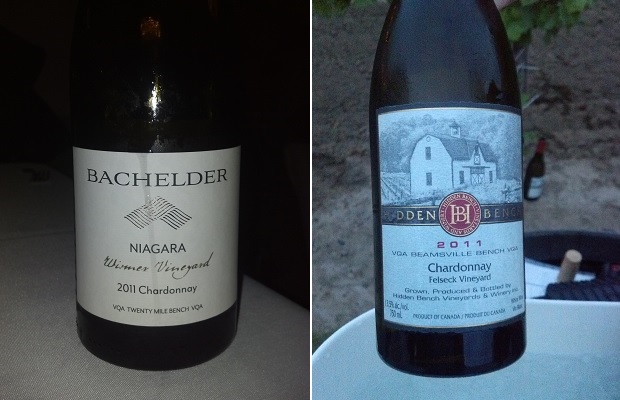
http://www.winealign.com/profile/2058-mjg

Why taste Ontario?

Beet, padano, sunflower sprout, balsamic, lemon, terrabianca olive oil

Beet, padano, sunflower sprout, balsamic, lemon, terrabianca olive oil

We get this sort of query all the time. “Why does Ontario wine cost so much?” Actually, it’s often more a complaint then a question. We get upset. Granted, many international wines are cheaper….but do you know why? My colleague and Man Friday Gerardo Diaz has this to say “Don’t complain. Do some research and come back.”

As many of you know, I play every day in the fortuitous role of Wine Director at Barque Smokehouse. As we speak I am in the throes of an auspicious new plan, setting the wine program with Diaz for Barque’s next venture. Coming soon. Two years ago, just after Brian Schmidt of Vineland Estates was able to initiate the keg wine revolution by overhauling VQA regulations, we convinced Jonas Newman of Hinterland Wine Company in Prince Edward County to partner with us. Wine on Tap at Barque was born. Since then we have worked with a dozen Ontario wineries.

It’s more than accessibility that drives our decision to work with and pour exclusively of Ontario wines. We had always been supporters of the local industry but the keg program allowed us to expand the portfolio and the sales. Ontario wines account for nearly 50 per cent of all wine sold at Barque.

So when guests (and I get the same questions and complaints from family and friends) wonder aloud about the necessity for Ontario to be so present, I have much to say. The Ontario wine industry is the best kept secret in the world. It has grown, accelerated and advanced with more success than might have been imagined as recently as five years ago. In November I wrote, “Ontario winemakers have figured it out. The “world-class” comparative humanities of aging and longevity aside, the comprehensive and widespread phenomenon of excellence, regardless of vintage, is now an Ontario reality.”

Related – Niagara delivers everbearing quality in November releases

I also wrote this, quite some time ago. “That is producing unique, cutting edge and brilliant takes on cool climate grapes. They also match beautifully with the songs referenced in their tasting notes. When the wines are assessed and considered in part or as a whole, who would dare to say there are no great wines being produced?”

Related – The group of twelve

As a cool-climate viticultural entity, there are few rivals around the world. The geology and micro-climate are ideal for growing specifically chosen vinifera. The winemakers in Niagara, Prince Edward County and Lake Erie North Shore are highly educated, state-of-the-art savvy and maniacally progressive professionals. In the categories of Riesling, Chardonnay, Pinot Noir, Cabernet Franc, Gamay and Sparkling wine, Ontario crafts excellence at all price points. After the two brutal winters of 2014 and 2015, no other set of vintners could have succeeded with unfailing ability more than the women and men of Ontario’s industry.

World-renowned authorities are in the know. Find yourself face-to-face with any of these international writers, winemakers, buyers, sommeliers or masters of wine and you will be schooled; Ian D’Agata, Jamie Goode, Steven Spurrier, Matt Kramer, Jancis RobinsonAnthony Hamilton RussellRajat ParrTim Atkin M.W., Christy Canterbury M.W., Geoff Kruth M.S.Geoff Labitzke M.W. and Igor Ryjenkov M.W. You will.

Brock University’s Cool Climate Oenology and Viticulture Institute (CCOVI) is the most underrated and least known super power in global oenology education studies. Have you met Dr. Debbie Inglis, Barb Tatarnic, Dr. Belinda KempDr. Gary PickeringDr. Andrew G. ReynoldsDr. Jim Willwerth, Chris Waters, Rob Power or Peter Bodnar-Rod? You should.

Ontario wine writers know their shit. They would not have no much praise for Ontario wine if it were not world-class. Have you read any reviews or articles by Tony Aspler, David Lawrason, John Szabo M.S., Sara d’Amato, Konrad Ejbich, Michael Vaughan, Beppi Crosariol, Rick VanSickle, Shawn McCormick, Jamie DrummondZoltan Szabo, City BitesMichael Pinkus, Michael Di Caro, Evan Saviolidis, Tim Appelt, Gord Stimmell, Alan McGinty, Carolyn HammondEric Vellend, Erin Henderson or André Proulx? You need to.

Proof of Ontario’s acumen and price-worthiness need not be found any further away than at your local LCBO. Private VQA wine shops and independent retailers would only advance the cause. Spend a few hours at an Ontario gathering and you will be changed forever. Shawn’s Ontario Wine Chat discusses and promotes the ideal every Wednesday night. The Ontario Wine Society holds tastings and events year ’round. The Ontario Wine Awards asks many of those top scribes to sniff, taste, sip and pick the best of the best. Wine Country Ontario is out there all the time, spreading the gospel. This is one religion you need to get behind.

The Ontario wine tasting season is now in full swing. Taste Ontario just recently passed through Montreal and Ottawa. WineAlign is bringing Prince Edward County to Toronto on April 16th with County in the City. Somewhereness also arrives in Toronto on April 20th. In July the 5th annual Chardonnay i4C conference will descend upon Niagara. The best way to experience Ontario wine is to get out and visit. I can recommend plenty.

Why do I taste Ontario wine every day? I do it in the LCBO lab, in Ontario’s tasting rooms and cellars, at Barque, when I order wine in other restaurants and at home. I do not need convincing but I do have decades more learning to do. Here are the recent Ontario wines that have passed my desk and my lips. Five are coming to VINTAGES next week as part of the April 18th release. Others are available at the winery. Seek them out. You will then count yourself among the converted. I guarantee it.

Flat Rock Riesling 2014, 13th Street Merlot 2013, Burning Kiln Chardonnay Cureman's Chard 2011, Fielding Cabernet/Syrah 2012, Flat Rock Chardonnay The Rusty Shed 2012, Closson Chase Chardonnay Closson Chase Vineyard 2013, Cave Spring Csv Riesling 2012, Norman Hardie Niagara Unfiltered Chardonnay 2013

Flat Rock Riesling 2014, 13th Street Merlot 2013, Burning Kiln Chardonnay Cureman’s Chard 2011, Fielding Cabernet/Syrah 2012, Flat Rock Chardonnay The Rusty Shed 2012, Closson Chase Chardonnay Closson Chase Vineyard 2013, Cave Spring Csv Riesling 2012, Norman Hardie Niagara Unfiltered Chardonnay 2013

Flat Rock Riesling 2014, VQA Twenty Mile Bench, Ontario (43281, $16.95, WineAlign)

Talk about bottled up compression. Twist the screwcap and thwop! The cap nearly popped like a Champagne cork. This baby has energy and drive. The vintage is compressed and pile-driven as nosed by the density opposed by reticulated 9.5 per cent alcohol. This has Mosel tattooed on its being, from neck to bottom. A dead ringer for fine Kabinett, the tropical fruit in apricot and dragon reaching back to join Ontario, in apple and pear. A good flinty stone and raging acidity combine forces to exaggerate a Riesling reticulum in what is not the missive’s greatest ever vintage. Will live five to seven easy and just go for soda. Go ahead and quaff the hell out of this one, from 2015-2020, from bottles one through twelve.  Tasted March 2015  @Winemakersboots  @UnfilteredEd  @brightlighter1

13th Street Merlot 2013, VQA Creek Shores, Niagara Peninsula, Ontario (270504, $17.95, WineAlign) From the VINTAGES April 18th release

Yet another Niagara red that could only have been crafted at the hands of winemaker Jean-Pierre Colas, a wild and dubiously natural Creek Shores Merlot. In 2013 the vineyard funk reeks of an instinctive, undomesticated slur in seldom seen Merlot speak. The variety normally avoids, scatters and runs away to the hills, but not this time. The flow is a movement of dried, caked, saline silt and pine needle paint. There is woodsmoke too but the suffusive Creek Shores cespitose encompasses all and runs wild. A settling will happen, so then it’s really a matter of fruit, a thing which in ’13 is not observed as overtly generous. Drink 2017-2019.  Tasted March 2015  @13thStreetWines

Burning Kiln Chardonnay Cureman’s Chard 2011, VQA Ontario (310243, $19.95, WineAlign) From the VINTAGES April 18th release

In this BK variant, Chardonnay is procured by fruit not put through any drying and so very fresh it remains. The barrel helps and yet also distracts but not in any unusual or detrimental way. Just another solid Chardonnay with nothing to set it apart from the sea. Drink 2015-2017.  Tasted March 2015  @BurningKilnWine

Fielding Cabernet/Syrah 2012, VQA Niagara Peninsula, Ontario (258657, $24.95, WineAlign) From the VINTAGES April 18th release

I have always been skeptical of the Peninsula take on the OZ-styled blending of a Bordeaux and a Rhône but if there is one Niagara winemaker to trust, Richie Roberts gets the nod. High-toned, crikey warm and struth oozing. Still, the balance is struck by Mediterranean-like savoury aromatics (black olive and brine), along with beautifully integrated wood. The VA is less than minimal, the fruit rosy, plum-filled and strawberry flavoured. Either variety can play second or short and both can make the turn. Will have a long life. Drink 2016-2022.  Tasted March 2015  @FieldingWinery  @RichieWine

Flat Rock Chardonnay The Rusty Shed 2012, VQA Twenty Mile Bench, Ontario (Winery, $24.95, WineAlign)

Accumulated cognizance exudes from the laid back Shed, here as relaxed and user-friendly as it has ever been. If the texture is not vintage induced and made of low yield than I’ll sell my LP’s and switch outright to Songza and Neil’s PonoMusic. The herbs are basil and chervil sweet, the verbena and lemon balm redolent, the flavours beaming, bolstered by preserved lemon and candied ginger. The stuffing must be questioned, but not the elegance. This Chardonnay is porous, blessed, void of rust and of an interior with plenty of space in the shed. Let it fill.

From my earlier note of February 2014: “There will be 660 cases of this barrel cherry-picked, now iconic Bench Chardonnay. The warm vintage called for a combo-malo approach, part batch all in, part arrested development. Gravity influenced top down blending also work to seek a svelte elegance and this ’12 really straddles the humid line. Thinks to be ribald but remains chaste, only allowing a kiss from the barrel and a caress from the rocks beneath the soil. Accept immediate but know that deferred gratification is the hallmark of this bottling.

Last tasted March 2015

Closson Chase Chardonnay Closson Chase Vineyard 2013, VQA Prince Edward County, Ontario (Winery, $27.95, WineAlign)

This CCV Chardonnay is one of departed winemaker Deborah Paskus’ final acts at Closson Chase. It will forever be noted as a legacy-cementing, swan song of career excellence. Crafted by Paskus and bottled by the next one, current winemaker Keith Tyers, the 2013 CCV is simply a tour de force. No such combination of richness, tropicality and pure grape tannin has ever infiltrated this Chardonnay, from this vineyard. I’m not sure there is a comparison in Ontario, at this level of excellence and at this price. A wine of pure impression, with Montrachet-like structure and Folatières-like precision. Seemingly capacious, its facile legerity is hypnotizing, quantitatively escalating in assembly of aromas, flavours, through texture and finally to longevity. The wine spent 16 months in a mere (17.25 per cent new) oak. That it notes 12.5 per cent alcohol on the label is next to impossible. The substance is just too buttressed to be so tender and effete. Impeccable balance, refinement and mineral finish. This is Chardonnay to confuse the world’s fine white collectors, to wreak havoc at international tastings for five to 10 years. Only 712 cases are available and at $27.95, is down $2 in price from the 2012. Best ever, hands down. Drink 2017-2023.  Tasted March 2015  @ClossonChase

Cave Spring Csv Riesling 2012, Cave Spring Vineyard, VQA Beamsville Bench, Niagara Peninsula, Ontario (566026, $29.95, WineAlign) From the VINTAGES April 18th release

In the pantheon of 2012 Bench-Ridge-Escarpment Riesling, the CSV is bound for glory. As expected it unfailingly draws innate wisdom from vines that understand their soil with deep intent. It can be said that every vintage rocks a Cave Spring Riesling but this one brings fruit out of a willingness to give and give. Winemaking connects with this vineyard and this specific Riesling, like mother and child. The depth of fruit lies under a shale of uncompromising, petrous funk and acidity. All tolled, this is a top CSV that begins on edge and then walks along, pointed towards a fruitful direction. It stays the furcate course, captivates and lingers, with no immediate end in sight. Drink 2017-2027.  Tasted March 2015  @CaveSpring

Tawse Chardonnay Quarry Road Natural 2014

Tawse Chardonnay Quarry Road Natural 2014

Tawse Chardonnay Quarry Road Natural 2014, VQA Vinemount Ridge, Niagara Peninsula, Ontario (Winery, $35.95, WineAlign)

Tasted from a sample, in bottle, not yet labeled. It’s one thing to make a natural wine in Ontario and a world away to do so with Chardonnay. The concept is simply off the charts with respect to fruit sourced out of arguably Tawse’s most important mineral site, the Quarry Road Vineyard. So, with that plot and winemaker Paul Pender’s inner vision, the progression to this point in Ontario winemaking is fascinating. “The law was never passed, but somehow all men feel they’re truly free at last. Have we really gone this far through space and time?” Pender must have shut his eyes tight, imagined the wonder and whiffed his ways through those barrels. Based on a taste through all the Quarry barrels with Pender in April 2014 (carrying 2013 fruit) I would think the Mercurey (Large barrel, CLL toast) would best suit the natural, oxidative bent of this Quarry. This plays the hallmark bass note in natural odour; funk, wondrous gentility, wood and rhythm and blues stone, as opposed to wood and rock. Something other, preposterous and gorgeous permeates the mess. Something melodic. The wine is perfectly in tact, piercing and exact. Direct, vibrant, positively wistful and wishful. Filled in by a strings mid-palate, with acidulated apple slices from a potent cocktail. The finish goes deeper, so the sum of the parts gains on the intricacies, teeing it up for much success. That said, don’t wait for it to fall apart. Drink 2015-2016.  Tasted March 2015  @Tawse_Winery  @Paul_Pender

Norman Hardie Chardonnay Niagara Unfiltered 2013, VQA Niagara Peninsula, Ontario (184432, $39.00, WineAlign) From the VINTAGES April 18th release

Hardie’s Niagara Chardonnay will not be recessed into the Peninsula’s everyday lexicon, nor does it draw any direct comparisons. How can this be? I will say that the 2013 exhibits less reduction, less elemental fever and a dramatic decrease in tension, so in that sense it has comes back to the norm. Yet it dances dramatically, like a blind bee in a ripe melon, in free spirited, holistic and counter-cultured ways. A wine of gold wiring, wrung out in splashes and swaths of lamé sheets. Shows a commitment to soil, full malolactic conditioning and punched down musts in its every breath. What is obvious is that 2013 is no putty in the hand. It’s moulded clay, shaped by the mitts of its maker, immortalized by the barrel’s oven and just about ready to begin being beautified by ornamentation. Time will effect its tribal markings and ultimate finish. Give it three to five so that it may add surge to its restrained power. Drink 2017-2022.  Tasted March 2015  @normhardie

Good to go!

http://www.winealign.com/profile/2058-mjg

https://instagram.com/mgodello/

14 Canadian wines that rocked in 2014

Gold Medal Plates Toronto 2014 silent auction guitar signed by Canadian musicians

Gold Medal Plates Toronto 2014 silent auction guitar signed by Canadian musicians

In 2013 the number chosen to highlight excellence in Canadian wine was 13. Symmetry and permutations with repetition are one thing, quality in winemaking is yet another. The expectation is fully understood that next year there will be 15 wines on the list. And so on and so forth.

Related – 13 Canadian wines that rocked in 2013

What force has thus far driven and will continue to drive the wines of Canada? By sifting through leads in geography, in the orientation of escarpments, mountains, rivers and valleys, in the gestalt of the archaeology of tomorrow, in the vineyard landscape of today, we can perchance unlock the riddle of the what and the why for varietal planting. The end game is to unlock the mystery within the puzzle of terroir, to figure out what grapes will thrive and where they can be given the best shot at success. It is not just about what happens beneath the soil, but also what happens above, around, beyond and in the minds of women and men.

Picking a top anything list is both a chore and a labour of loyalty. The opportunities to learn more about Canadian-made wine, especially the processes and the efforts, were numerous in 2014. Canadian winemakers opened their doors and when people came, they taught. They walked the vineyards, showed off their prized barrels and walked through the processes of making wine. Tasting and barrel rooms make for the greatest classrooms. Get out there in 2015. The experience is priceless.

Winery visits were numerous in 2014. Thanks must be dispatched to all who opened their doors, to those with established roots and to risk takers who through their new planting, began burrowing their own. Like Ilya and Nadia Senchuk at Leaning Post Wines in Winona, Ontario. Like Mike and Jocelyn Lightfoot in Wolfville, Nova Scotia. Tastings that go beyond the pale shed new élevage and barrel light. The light shed by such practices was no more in evidence than at Tawse with Paul Pender and Norman Hardie, but also at Flat Rock Cellars with Jay Johnston and Ed Madronich.

Memories of 2014 lead to thoughts of Cuvée, the Expert’s Tasting and the Sparkling Wine Symposium at Brock University. Taste OntarioSomewhereness, County in the City. July visits to Niagara and Nova Scotia gave up 10,000 words of free-flowing wine-speak about the Cool Chardonnay conference and with Peter Gamble in the Gaspereau Valley.

There were a few wines that should have, would have and could have made the cut were there time, space and a better headline to write. Gray Monk Riesling 2012, Okanagan Valley at ($15.00, WineAlign) is the best value for the niche in B.C. This is old-school, west coast Riesling with attributes to reflect and look back on generations of acumen. Tawse Carly’s Block Riesling 2012, VQA Twenty Mile Bench ($31.95, WineAlign) forms a bridge and meets the twain, from atomic to tropic and was a NWAC14 Platinum Medal Winner.

La Face Cachée de la Pomme 2011 Neige Première Ice Pink Cider, Quebec ($22.95, WineAlignspeaks to me in waves of demonstrative, Floydian verse. There is Icewine on the bright side and then there is Iced Cider on la face cachée. Leaning Post Lowrey Pinot Noir 2010, VQA St. David’s Bench ($38.00, WineAlign) though just recently re-tasted, was actually first assessed in November of 2013.

This list certainly concentrates on new releases, save for a few exceptions where older wines left a modern impression. Wines that found a way to break new ground also factored into the decisions. Here are the 14 Canadian wines tasted in 2014 that simply did it for me. Wines that are extensions of their maker’s personality, philosophy and temperament. Wines that are indicative of their terroir.

From left to right: Vineland Estates Elevation St. Urban Vineyard Riesling 2012, Flat Rock Nadja’s Vineyard Riesling 2012, Blue Mountain Gamay Noir 2013 , Norman Hardie County Cabernet Franc 2012, Sperling Vineyards Chardonnay 2012, Charles Baker Picone Vineyard Riesling 2012, Pillitteri Estates Family Reserve Merlot 2002

From left to right: Vineland Estates Elevation St. Urban Vineyard Riesling 2012, Flat Rock Nadja’s Vineyard Riesling 2012, Blue Mountain Gamay Noir 2013 , Norman Hardie County Cabernet Franc 2012, Sperling Vineyards Chardonnay 2012, Charles Baker Picone Vineyard Riesling 2012, Pillitteri Estates Family Reserve Merlot 2002


Vineland Estates Elevation St. Urban Vineyard Riesling 2012, VQA Niagara Peninsula, Ontario (38117, $19.95, WineAlign) From The final 14 bargains of 2014, December 5, 2014

Who has not waited for Elevation to hit out of the 2012 vintage? Straight up it must be noted that this will rank over and above the best from the St. Urban Vineyard. The ’12 Elevation will not only find long-term success among the great values in Bench Riesling, it will go down as one of the best ever, at any price. The vintage impart is a natural for this wine. At the moment it is the most primary of all because of the layers that texture bring. The Elevation will go thirty years and climb higher and higher into the stratosphere, gaining flesh and personality. The already seamless gathering of fruit and mineral is palpable. And still a reminder, the price is $20. This is a Schmidt gift to Ontario, for anyone and everyone to be one of the lucky ones. To purchase in increments any less than a case may be considered a crime against Riesling.  Tasted November 2014  @VinelandEstates  @benchwineguy

Flat Rock Nadja’s Vineyard Riesling 2012, VQA Twenty Mile Bench, Niagara Peninsula, Ontario (578625, $19.95, WineAlign) From The Group of twelve, April 28, 2014

Just add three months and witness a new evolution, a density, from a honeyed thing. Entering a pre-adolescence with a new bounce in its step. From my earlier, January 2014 note: “A champion cyclone of forces combined to elevate the already incumbent position of this Twenty Mile Bench Riesling. An ideal growing season magnified transmission upon a paradigmatic two and a half-acre block. This southern-most and highest altitude section of Flat Rock’s vineyard rests aboard a solid bed of limestone and wake me up if that rock was not drawn up into the vines in this stellar Riesling vintage. Sure its warm and nearly off-dry but such an effortless squeeze of lemon hydrates and elevates orchard fruit and honey out of the year of the lemon. After each sip its “every time you kiss me, lemon crush.” Love this prince of a Twenty Mile white in 2012, the dynamism smiling on the tart, succulent fruit. The length is one of outright bravado. This will develop for 20 years, of that I am convinced. There is just so much fruit. A Nadja for the ages.”  Tasted April 2014  @Winemakersboots  @UnfilteredEd  @brightlighter1

Blue Mountain Gamay Noir 2013, Okanagan Valley, British Columbia (Winery, B.C. $20.90, WineAlign) From A cultivated tale of two Okanagan wineries, October 14, 2014

The purity of fruit in Blue Mountain’s Gamay is without question in a distinct class of the few and far between. Older barrels (four year-old, fifth fill) were used and the impart should not be dismissed. While quintessentially Okanagan Gamay, the fruit is elevated, lifted, ripe like warmer Cabernet (dare it be said) with more berry and Cassis-like aromas. The palate tension and round acidity bring Morgon to mind. Just a bit gamy on the back end, which is nice. Planning to drink this through the end of the decade would not be a mistake.  Tasted October 2014  @BlueMtnWinery

Norman Hardie County Cabernet Franc 2012, VQA Prince Edward County, Ontario (Winery, $25.00, WineAlign)

Hardie’s 2012 Cabernet Franc comes of age out of a preternatural and ontological perfect storm. Casts odds into the river of ideal weather, procures phenolic grape ripeness out of the vineyard, avoids the green and embraces the brown stems. Ferments under the natural eye of indigenous yeasts and settles into its silky skin at a low, low 10.8 per cent (give or take a lab sample) alcohol. Cabernet Franc of impossible soul, its “burden is the weight of a feather.” Pepper and currants are noted, tobacco and tomato are not. Comes “bearing a sword” but seduces with primal proclamations. Radical County red.  Tasted April 2014  @normhardie

Sperling Vineyards Chardonnay 2012, VQA Okanagan Valley, British Columbia (winery, $26.00, WineAlign) From A cultivated tale of two Okanagan wineries, October 14, 2014

High altitude expression from a vineyard perched atop a gravel bed, a rocky pool of stone that seems to toss-up pebbles at Sperling’s window to see if she would like to sneak away for a midnight drive. A crisp, clean and linear style, full of night-air freshness, white flowers and white fruit. This is undeniably picked early and ahead of any possible oxidative or overripe window, yet there is a rich quality about it that rages against the machine, calm like a bomb, “its narrative fearless.” Very mineral in its direct back and to the side of the mouth attack, full of salinity and lemon-lime acidity. Long, long Okanagan that will flesh with five years time. The slate bass line will soften, allowing the white fruit to further shine.  Tasted twice, May and July 2014  @SperlingVyds

Charles Baker Picone Vineyard Riesling 2012, VQA Vinemount Ridge, Niagara Peninsula, Ontario (241182, $35.00, WineAlign) From Got two Chardonnays, June, Ivan and Picone, July 15, 2014

A vintage that begged to be protected in the vineyard, meaning no leaf plucking and no thinning. A most excellent goal of (0.691895068 kg / m2), or 2.8 tons an acre was realized, as opposed to one in 2010. Heavy vigor slowed down the ripening (leaving that kind of tonnage on the vine), to an elongated balance. Comes from terroir Baker nods to as “a barren tundra,” which you don’t get down the hill. In 2012 there was no waste, no rot, no problems. Its residual climbs to 15 g/L but you’d never know it. There is a confit of citrus, a mellifluous sensation of preserved lemon. Total count is 600 cases. From my earlier, March 2014 note: “Baker’s iconic child yet breathes in unsettled, spumous emission from out of a warm vintage. So primary and such a hard act to follow. Vanguard Vinemount Ridge, arid as the desert and citrus, carbonic tight. Treated with cool, cooler and colder methods to seek result and strike balance in an opulent, lees-appertained, tangy finish. A Picone that says I don’t live today, so it is told and canvassed, “uh, get experienced, are you experienced?”  Last tasted June 2014  @cbriesling

Pilliteri Estates Merlot Family Reserve 2002, VQA Niagara Peninsula, Ontario (71753, $39.95, WineAlign) From Deep freeze: Controversies, polar vortex and icewine, January 17, 2014

Served from Jeroboam, one of 23 produced and a testament to the precocious, facile touch of then winemaker Sue-Ann Staff. The extreme five litre format has certainly been kind to the hermetic 11-year slumber of this Merlot, as has the above average red Niagara growing season. Charlie pulled out this rare behemoth “for the special occasion” and despite and with thanks to the perfect vintage meets size storm, it has held up with dramatic fortitude. Unmistakably predicated Pillitteri chocolate perfume, brushed violet, mulberry and oven-warmed baking spice. Holding in sustained concentration, the toffee, caramel and umami of wizened, oxidized fruit not yet a twinkle in its soapy sandalwood eye. How could Sun-Ann have known what time-cheating lengths her Merlot would see to?   Tasted January 2014  @Pillitteriwines

From left to right: Bachelder Saunders Vineyard Chardonnay 2012, Hidden Bench Tête De Cuvée Chardonnay 2011, Cave Spring Cellars Riesling CSV 2003, Stratus Cabernet Sauvignon 2010, Le Clos Jordanne Le Grand Clos Chardonnay 2011, Creekside Estates Lost Barrel Red 2007, Benjamin Bridge Brut Reserve 2008

From left to right: Bachelder Saunders Vineyard Chardonnay 2012, Hidden Bench Tête De Cuvée Chardonnay 2011, Cave Spring Cellars Riesling CSV 2003, Stratus Cabernet Sauvignon 2010, Le Clos Jordanne Le Grand Clos Chardonnay 2011, Creekside Estates Lost Barrel Red 2007, Benjamin Bridge Brut Reserve 2008


Bachelder Saunders Vineyard Chardonnay 2012, VQA Beamsville Bench, Niagara Peninsula, Ontario (324103, $44.95, WineAlign) From Chardonnay is cool, July 9, 2014

Though presently showing a bit inferential, no amount of Bachelder reduction can keep good fruit down nor can it dismantle the mastery of mineral impart. An arras of texture conceals the portal to both vineyard and barrel with streaks of salinity, charcoal and chalk. The 2012 rendition is a canvas laden with pure golden paint, concealing “hidden forms and shifting states.” Thomas has found a rhythm in Saunders through thick brush strokes, full and advancing. This warm vintage is not a receding one, its flavours and its texture do the opposite. They jump out at you in waves. For Thomas, the sublime is now.  Tasted May 2014  @Bachelder_wines

Hidden Bench Tête De Cuvée Chardonnay 2011, VQA Beamsville Bench, Niagara Peninsula, Ontario (20906, $45.00, WineAlign) From A hip of wine at Hidden Bench

Tête De Cuvée by Hidden Bench, like a Champagne best of the best abstraction, makes an appeal to self-esteem and esteem for others, to consumers who have come to recognize Niagara and even more specifically, the Beamsville Bench for head of the class, cool climate Chardonnay. That mouthful congregates and works in congruence with the quality in the Tête’s composition; full-on freshness, density, weeping cerate texture, toasted and popping kernel, fine-grained localization, utterly integrated barrel. There was scant quantity (32.5 hL/h) from some very old and wise vines, pronounced like others but louder than most, from the bullhorn of a stentorian vintage. What is felt and spoken about the quality inherent from out of the finest parcels in the Locust Lane and Rosomel Vineyards Chardonnay fruit is more than a patent observation. The ability to take on toast cuts to the nougat and the synoptic rises to the ethereal ozone. Not to mention gross minerality. On the shortlist for best Niagara Chardonnay to date. Drink now and beyond 2025.  Tasted twice, September  and October 2014  @HiddenBench  @BenchVigneron

Cave Spring Cellars Riesling CSV 2003, VQA Beamsville Bench (winery, $50, WineAlign) From When experts break wine together, March 4, 2014

Mind bending to taste a piece of recent history, a Riesling rooted in the rocks, blues and pop of the limestone, sandstone and shale Bench, but a wine also futuristic, distorted and soulful. From 25 plus year-old vines, this foxy lady has entered into true, secondary territory. She’s softened and her perfume is cast in vanilla butterscotch so much so she might mess with tasters’ minds in a flight of oaked Chardonnay. She’s “a cute little heartbreaker.”  Tasted March 2014  @CaveSpring

Stratus Cabernet Sauvignon 2010, VQA Niagara On The Lake, Ontario (Winery, $55.00, WineAlign) From The Stratus-Momofuku continuum, May 30, 2014

The declared alcohol on this is 14.6 per cent but to all of me, that is really hard to believe. Really elegant, 100 per cent Cabernet Sauvignon, perfectly unabridged in phenolic ripeness but in such fine rhythm and blues. Were it a score it would be euphonious without encumbrance and void of splinters. The most subtle and gentle J-L Groux crafted red wine I’ve yet to encounter, with a back palate combination of mushroom and citrus to follow pure red fruit. Resoundingly circular with curves, no hard edges and “perfect imperfections.” This Cabernet goes at it with Graves character and poise. It will be a Niagara legend.  @StratusWines

Le Clos Jordanne Le Grand Clos Chardonnay 2011, VQA Niagara Peninsula, Twenty Mile Bench, Ontario (34561, $65.00, WineAlign) From Niagara delivers everbearing quality in November releases November 4, 2014

Certainly plays the most hard to get of the ’11 Chardonnays of fruit so fine and pure. Layered like Phyllo or Puff pastry, gathered and set back upon itself. Gains traction and intensity through developed flavours and overlays of texture, both solid like shale and lacy like organza. From my earlier, July 2014 note: “From sandy loam and limestone soils, here is a Chardonnay that winemaker Sébastien Jacquey is looking to fashion with low PH and elevated tannin. A most commendable effort in the enigmatic ’11 vintage, clean, anything but lean and un-gassed by a jet engine’s aerified stream. Chardonnay running instead on the vineyard’s biofuel, a chalky lees and lime texture that turns green in a savoury way towards the back end. Full, rich, gaining in stature as it breathes, thinks and feels. Atop the green there is an ambrosial aroma and a honeyed sense of flesh. A wine of great respect and biodynamic energy.”  Last tasted October 2014  @LeClosJordanne

Creekside Estates Lost Barrel Red 2007, VQA Niagara Peninsula, Ontario (46470, $65.00, WineAlign) From Up on Creekside Estates, April 14, 2014

Just 60-80 cases are made from the tips of the best barrels through a process that takes 56 months to complete. The secret ingredient is Sangiovese and bless the band‘s soul if the ferric, iron and animal musk is not attributed to the addition. This is a different kind of wine, with lees in the bottle, not unlike some big, bad Spanish wines. It’s ’07 and still reductive which makes it seem peculiarly modern (note, Spanish) but it’s really not. Despite the monster tannins, it “just gave my heart a throb to the bottom of my feet and I swore as I took another pull,” the Lost Barrel can’t be beat. Up on Creekside Estates.  Tasted March 2014  @CreeksideWine

Benjamin Bridge Brut Reserve Methode Classique 2008, Gaspereau Valley, Nova Scotia (275396, $74.95, WineAlign) From Consider the Gaspereau Valley, October 1, 2014

The 2008 Brut Reserve is composed of 61 per cent Chardonnay and 39 Pinot Noir. If any wine in the Benjamin Bridge continuum defines the legacy left behind by Raphaël Brisebois and passes the sparkling torch to Jean-Benoit Deslauriers, this ’08 is it. Here is the vintage that begins to emulate the grower’s Champagne of the motherland, in deeper learning, understanding and connection to the estate’s vineyards. At present this is such an infant, reductive and with a blowzy palate that suggests a fidgety, elemental state. The attack is in burgeoning mousse. After spitting, the wine persists, as if there remains a mouthful, causing the cheeks to expand. The citrus is weighty in texture and this ’08 goes deeper than the previous Brut reserves. Three years will be required to allow for a settling and 20 years lay further ahead for secondary, tertiary and quaternary development.  Tasted at the winery, July 2014  @Benjamin_Bridge

Good to go!


Fourteen wines that should be on your restaurant list

Fish and Chips at Small Town Food Bar

Fish and Chips at Small Town Food Bar

I taste a lot of wine. Lots of wine. Were I to manage a restaurant list with room for everything that deserves a place to call home, to share with the world the honest and the natural, a long list I would indeed create. The wine list at Barque Smokehouse I build is predicated on that premise but you can count on two hands the number of wines we offer by the glass. Necessity is our master.

Related – A resolution to drink honest wine

At the start of 2014 I penned that column and looking back eight months later, the ideas put out within that post-ice storm, mild January day apply to the concept of formulating a restaurant wine list. For the most part, a wine card should endorse the virtuous and the sincere. “Honest wine is juice that conveys the salient facts of a grape’s life. For a bottle of wine to be on the up and up it must not be disguised by the unnatural ways of artificial intervention nor should it make itself so available as to be obvious. Fruit should reside in the realm of the sequestered and the sacred. I am not alone in hoping for table wines to be stirring, gripping, unsweetened and unencumbered by an excessive coat of oak. My hard-earned dollars should earn the right to be stimulated .”

If your job title includes choosing what wine is poured at your restaurant, you should never dial it in. VINTAGES releases more than 100 new wines every two weeks. If 95 are what you might consider wantonly microdontic or overly tangential in influence, so be it. Five new wines every two weeks is more than enough to keep your list rocking, rolling, current and fresh. In Ontario the choices are many and the options endless. If driving the construction-riddled streets of Toronto is for you the time spent equivalent of root canal surgery in a Chilean coal mine then call an agent, request a tasting and let the cases be shipped to your doorstep.

“Wine only recognizes two temporal states. Fermentation and party time.” Be creative, read Tom Robbins, listen to the Tom Tom Club, mix it up a little, try new wines and add a spark to your wine program. Give it the genius of love. Guests just want to have fun. Here are 14 new releases, from VINTAGES and through some really terrific agents here in Ontario.

From left to right: Tenuta Le Velette Rosso di Spicca 2012, Tawse Gamay Noir 2013, Freiherr Von Göler Pinot Noir 2011, Coyote's Run Pinot Noir 2013, Lealtanza Reserva 2009, Fielding Estate Cabernet Franc 2012 and Borgogno Langhe Freisa 2012

From left to right: Tenuta Le Velette Rosso di Spicca 2012, Tawse Gamay Noir 2013, Freiherr Von Göler Pinot Noir 2011, Coyote’s Run Pinot Noir 2013, Lealtanza Reserva 2009, Fielding Estate Cabernet Franc 2012 and Borgogno Langhe Freisa 2012

Tenuta Le Velette Rosso di Spicca 2012, Umbria, Italy (Agent, $16)

The “Spicca” family owned the farm where the vines now grow. For a Rosso, from Umbria, Toscana or Piemonte for that matter to stand out (spicarre), it must have something unique and noticeable. Le Velette’s understated Umbrian blend of Sangiovese and Canaiolo is all about aromatics. Spicy cherries, leather and cinnamon with an underlying petrichor that seemingly bleeds fresh piquant juice straight from concrete. Like the oil exuding from lavender and rosemary growing out of the fissures of cracked terracotta over clay, after a warm summer rain. The palate gives a wee bit of spirited spritz and pizzazz. All this for $16 and change for a finishing espresso.   Tasted October 2014  @Noteworthywines

Tawse Gamay Noir 2013, VQA Niagara Peninsula, Ontario (322545, $18.95, WineAlign)

Darker berries define the Paul Pender take on Gamay for Niagara and in ’13 there is a level of tension and girth not yet approached. This third Tawse Gamay is overt in attitude, connotative of Beaujolais Cru staging, an ovule of rebellion and a disposition just as though in the grips of Asmodeus. The Tawse effect is entrenched in clay and possessive of  knowledge as if derived by an invitation only junket to the Gamay motherland. If the stance seems serious, the fruit is up to the task. A Gamay for now and fully capable of aging five or more years.  Tasted October 2014

Freiherr Von Göler Pinot Noir 2011, Qualitätswein, Baden, Germany (390971, $18.95, WineAlign) From the VINTAGES October 11, 2014 Release

You can take the Spätburgunder out of the nomenclature but you can’t take the nomenclature out of the Spätburgunder. The porcine dry, crunchy bits are front and centre, the pig offal under the crust. This is Baden red wine of a bitter and surprisingly sweet palate nature, a modern take on old male Pinot pattern baldness. So worth trying towards gaining a deeper understanding of varietal diversity.  Tasted October 2014  @HalpernWine

Coyote’s Run Pinot Noir 2013, VQA Niagara Peninsula, Ontario (53090, $19.95, WineAlign)

The Estate bottle represents a balanced amalgamation of terroirs with essential Niagara On-The-Lake Pinot Noir aromas, accents and distinction. Highly floral, thanks in kind to the red Trafalgar clay loam of the Red Paw Vineyard, as much as it has and will ever be. Extracted with reserved prejudice, with props to the dark Toledo clay loam of the Black Paw Vineyard, showing as a robust and retentive treacle, rich in tangy licorice and cherry pie. Much flavour is found in this Pinot Noir, so it will be well deserving of accolades and sales. If the sweetness prevails it is only because the fruit is shepherded in clean and Shepparded with blending acumen.  Tasted October 2014  @coyotesrun

Lealtanza Reserva 2009, Doca Rioja, Spain (208223, $20.95, WineAlign) From the VINTAGES October 11, 2014 Release

Old, old school Rioja ramped up, given a natural injection of rock brine and garriga then sent out to play. Rarely does Lealtanza give so much fresh conjecture, so much considered condensation and dense consideration. Soft and muddled palate, mottled rocks seeping berries and an accent of candied tomato leaf. Funky finish keeps it real.  Tasted October 2014  @ProfileWineGrp

Fielding Estate Cabernet Franc 2012, VQA Niagara Peninsula, Ontario (36194, $21.95, WineAlign)  NWAC14 Silver Medal Winner

A dusty and gilded Cabernet Franc from one of the warmest Niagara vintages in recent memory. Vivid in Bench specific varietal tendency, as if the berries on the black currant bush were ripening and bursting in the late afternoon sun, right into the glass. A blueberry by you CF, spiced by the faint childhood memory of grandfather’s unlit pipe on the coffee table. There have been more tense and exciting Cab Franc’s by Richie Roberts but none so suave and grown-up as this 2012.  Tasted September 2014  @FieldingWinery  @RichieWine

Borgogno Langhe Freisa 2012, Doc, Piedmont, Italy (388660, $24.95, WineAlign) From the VINTAGES October 11, 2014 Release

Don’t worry Mr. Parker, this rare chance at assessing a Langhe made from the Freisa grape will not join the 100-point club but I can say with certainty that this take is anything but “totally repugnant.” Borgogno’s Freisa is rustic, with dried figments of raisin and fig, though zero notes of reduction. More dried fruit, in carob and licorice with biting, spicy notes and the seeping of black tea leaves. The whole Mediterranean potpourri seethes in altitude and attitude. A dry and sensual red with enveloping chalk and acidity. Perhaps “Bobbo” Butch Cassidy should give this Langhe a whirl.  Tasted August 2014  @TrialtoON

From left to right: Cave Spring Riesling ‘The Adam’s Steps’ 2013, Rustenberg John X Merriman 2011, Pirramimma Shiraz 2011, Flat Rock Gravity Pinot Noir 2012, Huff Estates Cuvée Janine 2012, Millton Opou Vineyard Chardonnay 2009, Ascheri Barolo 2010

From left to right: Cave Spring Riesling ‘The Adam’s Steps’ 2013, Rustenberg John X Merriman 2011, Pirramimma Shiraz 2011, Flat Rock Gravity Pinot Noir 2012, Huff Estates Cuvée Janine 2012, Millton Opou Vineyard Chardonnay 2009, Ascheri Barolo 2010

Cave Spring Riesling ‘The Adam’s Steps’ 2013, VQA Beamsville Bench, Niagara Peninsula, Ontario (26372, $24.95, WineAlign)

A classic Adam, amplified in 2013, riper and not as piercing as previously noted vintages. Still the layering is omnipresent but there is more juicy fruit and texture then ever before. This is a consumer friendly Adam, gregarious, outgoing, off-dry as never before. New slang for the bottling.  From my earlier, July 2014 note: “According to Cave Spring’s website this newer Riesling from older (18 to 35 year-old plantings) is from “a single block of vines in the shadows of a limestone outcrop near the crest of the Niagara Escarpment, known as ‘The Adam Steps’. Really apropos, for this Riesling is the cantilever, the one with the outstretched arm. At 10.5 per cent alcohol and with an unmistakably stony, sweet and sour whiff the wine speaks of its off-dryness. The juiciest of all the Cave Spring Rieslings, with rounder acidity and good persistence. This is the all-around good guy, the one with an open invitation, the bridge from Estate to Dolomite to Csv. The well-adjusted one steps up its game to help win one for the team, especially out of the convivial 2013 vintage.”  Last tasted October 2014  @CaveSpring

Rustenberg John X Merriman 2011, Stellenbosch, South Africa (707323, $24.95, WineAlign) From the VINTAGES October 11, 2014 Release

Despite the colour as dark as monster’s gore this is a relaxed X Merriman, not overly painted or rubbed by charcoal and rubber tree plant. The Bordeaux-styled blend of Cabernet Sauvignon (55 per cent), Merlot (37), Petit Verdot, Cabernet Franc and Malbec from South-West slopes of the Simonsberg Mountain, Stellenbosch opens its tight angled gates to reveal a cool centre, with juicy, rich, iced espresso, though in decomposed granite grit it’s tannic as hell. Makes judicious use of its (41 per cent) new and (59 per cent) 2nd and 3rd-fill 225L French oak barrels, along with balance in alcohol (14.3 per cent) integration. Solid South African red with just enough primal activity to pleasantly alter the temperature in the brain, without causing concussion or grey matter to go totally askance. Will drink well into the next decade.  Tasted October 2014  @WoodmanWS

Pirramimma Shiraz 2011, Mclaren Vale, South Australia, Australia (987784, $24.95, WineAlign) From the VINTAGES October 11, 2014 Release

A Pirramimma in the new vein from a warm and rich vintage. So hard to scale back when nature gives you this much fruit. Though 15 per cent is hardly a twinkle in its alcohol eye, there is only so much elegance that can be coaxed from this kind of hedonism. It’s big, juicy and just so alive. As simple as a candle, without magic and void of mystery. It will range hither and thither for 10 years before it makes the long, slow journey back home.  Tasted October 2014  @bwwines

Flat Rock Gravity Pinot Noir 2012, VQA Twenty Mile Bench, Niagara Peninsula (1560, $29.95, WineAlign)

Seven months have softened and mothered Gravity’s adolescence in ways to now see it as the most feminine, certainly of the last four vintages. Pretty dabs, perfumes of natural conditioning, warm days and warm nights in the bottle. More accessible than previous takes and of a new modernity perceived. Sweet dreams and sweet fragrances, roses and cinnamon, nothing fancy here mind you, with no bite and no gathering moss. Cherries and vanilla, lavender and simple pleasures. Straight up Gravity, no pull down, no drag and no excess weight. From my earlier, March 2014 note: “In a vintage potentially muddled by warmth and a humidor of radio frequency, duplicating berry phenolics, Flat Rock’s Gravity remains a definitive, signature house Pinot Noir. In 2011, the head of the FR class from its most expressive barrels shared the limelight (and top juice) with the Pond, Bruce and Summit one-offs. In ’12, Gravity’s sandbox was its own. The style is surely dark, extracted, black cherry bent, as per the vintage. Yet only the Rock’s soil does earth in this variegate, borne and elevated by the barrel’s grain. There are no fake plastic trees in a Flat Rock Pinot. “Gravity always wins.”  Last tasted October 2014  @Brighlighter1  @Winemakersboots  @UnfilteredEd

Huff Estates Cuvée Janine 2012, Prince Edward County, Ontario (Winery, $29.95, WineAlign)

Looks can be deceiving so much so Janine might look as is she were leading a bubble to red dye number 40. Not the case, rather the expressive hue is winemaker Frédéric Picard’s colourful bleed from 100 per cent Pinot Noir fruit. So, it must be sweet and tasting cloyingly like a bowl of sugared strawberries. Again, not so. Janine’s aromas are very berry and her texture is certainly cheese and crème fraiche-inflected from a 12 month lees mattress, but dry she goes. Much demonstrative behaviour and perspiring humidity comes from vintage warmth and here results in layering. Janine is an earthy, funky squared sparkler, with nothing shy or demurred about her, but all of the outwardly screaming smells and tastes are in check. Strawberry cream and shortcake cease from wrapped tight acidity coming in from the backside. Big bubbles.  Tasted October 2014  @HuffEstatesWine

Millton Opou Vineyard Chardonnay 2009, Gisborne, North Island, New Zealand (92478, $30.00, WineAlign)

From estate fruit on a single vineyard planted in 1969 on the Papatu Road, Manutuke, Gisborne. On Waihirere soils of heavy silt and Kaiti clay loam. A most mineral driven Chardonnay thanks in part to some Riesling in the mix. This varietal symbiosis, along with a co-planted orange grove gives what James Milton calls “the sharing of astrality.” The five year-old biodynamic Opou does whiff orange blossom, along with crisp green apple and the wet rocks of a summer rain. Quite full on the palate with a bite of black pepper and olive oil drizzle over toasted Ciabatta, smeared by churned, salted butter. The length indicates five more relish piqued years and five furthermore in slow decline.  Tasted October 2014  @TheLivingVine

Ascheri Barolo 2010, Piedmont, Italy (341107, was $35.25, now LTO $32.25, WineAlign)

Standard issue Barolo of a canonical character so bankable as Nebbiolo and nothing but. Classic Piemontese funk comes wafting out, along with licorice in as many ways as can be described; anise, Sambuca or fennel. The palate is creamy and slightly sweet, accented with pepper and a dusty, grainy sensation. This is Barolo of old with a cough syrup confection, wild herbs and grit. It could not be mistaken for Malbec though its disjointed ways could use some finesse and polish.  Tasted October 2014  @liffordwine

Good to go!
50 cool Chardonnay in 5,000 words or more

I arrived at Brock University for the Cool Chardonnay conference on Friday and we began tasting the first of 117 sometime around 11:00 am. On Friday night we convened under the stars st 13th Street Winery for the Barrels and Bonfires event. On Saturday I taxied up the Cave Spring Road runway for an afternoon in the Cave Spring vineyard with the Pennachettis and on Saturday bussed over to Vineland Research and Innovation Centre for the grand Cool Chardonnay dinner.

Related – The meaning of Chardonnay: You’ve gotta be cool to be kind

On Sunday we wrapped up at Ravine Vineyard. In between events, we tasted Chardonnay in the Media Room at White Oaks Resort and Spa. All of this not would not have been possible without the efforts of Wine Country Ontario.  I posted 20 or so tasting notes in Monday’s column, scribbles apropos to the events associated with the presented wines.

Here are 50 more tasting notes in 5,000 Godello words, add or subtract a few hundred. If you follow doctor’s orders and take one Chardonnay every hour for 50 hours, this is the result.

I've fallen and I can't get up. @mikedicaro channelling his inner MacGyver to save #i4c14

I’ve fallen and I can’t get up. @mikedicaro channelling his inner MacGyver to save #i4c14

Angels Gate Old Vines Chardonnay 2010, VQA Beamsville Bench, Niagara Peninsula, Ontario (116350, $23.95, WineAlign)

The long hanging fruit left to develop sugar and richness, the new oak, the eight months rest on the lees. These are all winemaker favourite things, stylistic choices that contribute to a viscous mess of a Chardonnay. A full take has been liberally advantaged from the hot vintage. The alcohol is listed at 13.5 per cent but the wine sweats higher, in a sun-caramelized toast, leaning to oxidative, even bruised and battered orchard fruit territory. As a consequence and in retreat, the acidity dot does follow. The new wood has melded well and good so in terms of texture, the old vines feel right.  Tasted July 2014

Angels Gate Mountainview Chardonnay 2010, VQA Beamsville Bench, Niagara Peninsula, Ontario (116384, $15.25, WineAlign)

The Mountainview, despite being a value offering as compared to the Old Vines just seems to be in better temper. There is more mineral on the palate, too. Angles here are less extreme, fruit not as languid or encumbered. The persistence in length seems greater, thanks in most part to freshness, even if the fruit is not quite as fleshy as the OV.  Tasted July 2014

Bachelder Wismer Vineyard Chardonnay 2011 and Hidden Bench Felseck Chardonnay 2011

Bachelder Wismer Vineyard Chardonnay 2011 and Hidden Bench Felseck Chardonnay 2011

Bachelder Wismer Vineyard Chardonnay 2011, VQA Twenty Mile Bench, Niagara Peninsula, Ontario (345819, $44.95, WineAlign)

Has Wismer found a cruising altitude? Has this Grand Cru vineyard from a most perplexing 2011 vintage entered the telephone booth in civilian clothes, only to soon emerge as a super hero? Will it sing, “I am, I am Superman and I can do anything?” Wismer has rounded out a bit, at present in a grounded form, but we know it will fly to greater heights and at faster speeds. From my earlier, February 2014 note: “Got game tonight, in auxiliary moxie, magisterial atmosphere and long strides up and down the ice.” Earlier notes: “Increased richesse and oomph and though I continue to hesitate to admit it, Saunders is the (Jackson Browne) elegant bottling in ’11. Wismer the (Warren Zevon) gregarious, mineral character werewolf of Niagara, what with it’s touch of anxiety, fuller texture and “bite down…draw blood!” From my earlier November 2013 note: “From the Wingfield Block within the 20 Mile Bench grand cru vineyard, ’11 Wismer is greener, in apple and sapid behaviour. The tension is palpable, quarryful, querulous, more calciferous. Fruit here is picked at an altitude as high as the lowest part of Flat Rock’s vineyard. Can a spot be pinpointed, anywhere on the peninsula that produces more piercing Chardonnay in 2011 as this Wismer micro-block?”  Last Tasted July 2014

Blue Mountain Chardonnay 2012, Okanagan Valley, British Columbia (350108, $23.95, WineAlign)

Juicy and immediately perceived as existing in unwavering balance. The juxtaposition of the stainless steel and (three year-old oak for seven months) barrel aging intertwines fresh and reductive aromas to a common meld. More orchard fruit than I remember, more linear acidity, more expression. Raises the bar and the score. From my earlier, April 2014 note: “Half barrel-aged, this Chardonnay has a silky mouth feel and as much nip as can be assimilated in a single mouthful. Green apple, blanched nuts and a metallic tickle give the sensation of chewing on crumbling stones. There is considerable girth and texture here, spicy folds and tangible tension. The alloy trumps the fruit so consider drinking up now and for another year or two.”  Last tasted July 2014

Blue Mountain Chardonnay 2011, Okanagan Valley, British Columbia (350108, $23.95, WineAlign)

A thick, rich and medicated goo this ’11 Blue Mountain Chardonnay. “Mother Nature just brewed it and there’s nothing really to it I know.” A traffic of oak waves in not so much woody but more so simply tannic. The palate is clenched, those tannins angular and ever so slightly bitter, intense and want to be bigger than the fruit would be willing to allow. This is Chardonnay with personality and ability, if just a bit big for its own head. Tasted July 2014

Cave Spring wines

Cave Spring wines

Cave Spring Blanc De Blancs Brut, VQA Niagara Escarpment, Ontario (213983, $29.95, WineAlign)

Today a fine misty Blancs, looking very much the coppery, crisp slice of apple it need be. Slate stone tone directive, grapefruit very much in play. A slice of tart key lime pie. From my earlier May 2014 note: “The freshest style of the #ONfizz B de B flight. Fruit, escarpment bench stone layering, richesse, biscuits and toast are all in. Acidity meets complexity.” From my earlier, December 2012 note: “Sees no malolactic fermentation and sits at the top end of dry (12-14 dosage). Most of the fruit is 2008, despite the NV designation. A soda fountain of argon and nitrogen bunsens forth through clean lines and carries an entire cider house orchard of Spartan apple. This one certainly hints at Champagne-like characteristics, of brioche and toast. The apples never relent.” Last tasted July 2014

Cave Spring Dolomite Chardonnay 2012, VQA Niagara Escarpment, Ontario (902610, $16.95)

The Dolomite is the eponymous CS Chardonnay via 86 per cent Beamsville Bench (Cave Spring Vineyard) and 14 per cent Lincoln Lakeshore . Driven to the licensee market, this is 25 years of winemaking in a nut (or limestone) shell. Made in a fresh, clean, juicy and oh so approachable style, the Dolomite finishes with a slight bitter pith, very obvious citrus zest slant. Remains clean and pure throughout, thanks in large part to the 26 percent more aromatic and very presentable portion of Chardonnay Musqué.  Tasted July 2014

Cave Spring Estate Bottled Chardonnay Musqué 2011, Cave Spring Vineyard, VQA Beamsville Bench, Niagara Peninsula, Ontario (246579, $15.95, WineAlign)

Musqué is slowly creeping into the Niagara consciousness and into the hearts of winemakers across the peninsula. The aptitude with which it accedes to perfumed heights and respectable complexity without needing excessive coercion makes it both necessary and inviting, especially when a vigneron like Cave Spring is attempting to produce so many levels of quality juice. Chardonnay made easy and without compromise, exemplified here, though the CS take heads straight to the mandarin-clementine stage. Dry, direct, linear, fine and knowing Musqué, not unlike basic yet effective Gruner Veltliner.  Tasted July 2014

Cave Spring Estate Chardonnay 2012, Cave Spring Vineyard, VQA Beamsville Bench, Niagara Peninsula, Ontario (256552, $18.95, WineAlign)

The vine age on the Estate runs between 18 and 35 years, a wisdom not to be ignored. Usage of older Hungarian oak lends spice to Chardonnay on-line and always climbing the right and proper varietal tower. From my earlier, May 2014 note: “Terrific balance to the warm and inviting fruit, certainly orchard driven and kissed by the Spring’s obvious mineral slate. Clean, open-knit, ready, willing and able.”  Last tasted July 2014

Cave Spring Csv Estate Bottled Chardonnay 2011, VQA Beamsville Bench, Niagara Peninsula, Ontario (529941, $29.95, WineAlign)

Though currently subtle and reserved, if the Csv were once in a wonky phase, the doors to a new perception are now open. Soaked orchard fruit, the underlay of stone and a surround sound of chalky tenderness leads to length, for time is what this Chardonnay has got. From my earlier, May 2014 note: “Here is a vibrant and wild at heart expression of Bench Grand Cru terroir, the Cave Spring Vineyard. While the first impression may be a warm one it seems (for the vintage) that is because it’s big, boisterous and a bit clumsy in wood right now. The acidity seems buried at times and at others on top. It is also a touch reductive so this will need more years to settle and to play nice. The aromas indicate green apple meets metal pipe, the flavours orchard and salinity by way of limestone minerality. The length is more than admiral and admirable.” Last tasted July 2014

Clois du Bois Calcaire Chardonnay 2011, Russian River Valley, California, USA (421941, $28, WineAlign)

Inserting the calcaire nomenclature into your RRV label is to announce that your Chardonnay is influenced by calcium carbonate and the ancient, long ago decomposed bones of coral and foraminifera. A heady designation for sure and Clos Du Bois backs it up with its sedimentary and chalky textured ’11. There is a fine stone-ground spice and floral lilt, not to mention a demurred wave, like an under water coral and vegetative scene in slow motion. Clean, pure, lively fruit, picked just in time and left to develop low and slow. I can see this Calcaire gaining complexity for 10 plus years and always living up to its name.   Tasted July 2014

Creation Chardonnay 2012, WO Walker Bay, South Africa (379297, $29, WineAlign)

A macadam drafts from the Creation drawn from what might provocatively be a pair of gravel pits at the base of the Hemel En Aarde Valley. A soul 2012 brother to the Sumaridge though grounded and layered by the lower slopes. That said it does the heavy lifting, offers up more green apple driven fruit and less tannic mineral activity. A bigger wine but by no means a serf to its wood liege. Another stellar ’12.  Tasted July 2014

Creation Chardonnay 2013, WO Walker Bay, South Africa (378554, $32, WineAlign)

Creation brightens in 2013, lifts up to more intense rose flower and potpourri aromas. The intensity follows on the very viscous palate, bringing an increased ocean breeze salinity and scraped rock sensibility. There is a granitic feel that reminds of Rangen Riesling in its own tannic way. In the end the elegance factor takes over and the wine perseveres for a spell.  Tasted July 2014

Decelle Villa Savigny Les Beaune Blanc 2012, Ac Burgundy, France (378208, $40.95, WineAlign)

From low-yielding (20 hL/l) vines, like all of Burgundy (wink, wink, nudge, nudge), as opposed to the 40-45 quotient that might be expected from much of ‘lighter’ Savigny Les Beaune, especially for Chardonnay. Aged for 12 months in two year-old, 500l barrels, there is an alluring and rich feel here, though the wine is fresh, inviting and immediately integrated. A more than approachable White Burgundy to relish now and for a quick tour of the village.  Tasted July 2014

Decelle Saint Aubin 2012

Decelle Saint Aubin 2012

Decelle Villa Saint Aubin 1er Cru Sur Gamay 2012, Saint Aubin, Burgundy, France (377713, $69, WineAlign)

From the partnership of Olivier Decelle, Pierre-Jean Villa and the confidence of winemaker Jean Lupatelli. The town is Gamay, the variety Chardonnay. Only five barrels (125 cases) were produced by a trio of men with zero interest in speculating over land, fruit or success. Barrel fermentation is key, natural yeast a must and a kinship with Puligny uncanny. Not surprising considering the famed locale is but three kilometres away. This cooler fruit spent 15 months in two year-old barrels and though only bottled five weeks prior to tasting there is nary a shocky note. Such a well-adjusted Gamay. Entrancing and engaging Chardonnay.  Tasted July 2014

Domaine Dublère Savigny-Lès-Beaune Aux Vergelesses 1er Cru 2011, AC Burgundy, France (376095, $58.95, WineAlign)

Unusual nose that begins with white candy floss, transforms to gun powder and finishes into the toasty mystic. Unexpectedly warm, buttery and tingling on the tongue, though that is just a faint and fleeting notion. A taste brings out apple-butter terpenes, though once again, that’s just for an instant. While looking for richness their instead ticks intelligence but everything is in foreign tongue shorthand. Balance is key and that it has but ultimately there lacks a certain level of depth.  Tasted July 2014

Domaine Dublère Les Terres Blanches Nuits-St.-Georges 1er Cru 2011, AC Burgundy, France (376079, $105, WineAlign)

Big, boisterous and highly terpenic, so steroidal in apples. MdC  “Donut wines…a hole in the middle.” A tang as well that just doesn’t sit right, a dog that bites. Bitter, tight, bracing, non repentant for its sins.  Don’t really get it.   Tasted July 2014

Gérard Bertrand Domaine De L’Aigle Limoux Chardonnay 2012, AC Midi, France (377671, $33.00, WineAlign)

Rich, honeyed and seemingly sweet, not from sugar (3 g/L) but rather the pressing, squeezing and juicing of stones. That limestone tannin is a trick only grape must and its parent vines know, wondrous and inexplicable. Great body and mouthfeel come from this baby Aigle, a Chardonnay with locally incomparable structure, if not quite the elastic length and girth of the Bertrand Royal. Exceptional quality from the Midi.  Tasted July 2014

Gérard Bertrand Aigle Royal Chardonnay 2012, AP Limoux, Midi, France (377689, $75.00)

Anxiety in high caste mineral, in ingot and in southern French platinum rock. Full textured beauty of attitude and high-slope altitude, with formidable weight, smouldering, perfumed toast and exceptional texture. Full in every way, taking every liberty in the name of equality, and quality. A who knew such bounds could be leaped by the warmth of the place.  Tasted July 2014

Godello and Harald Thiel of Hidden Bench Winery

Godello and Harald Thiel of Hidden Bench Winery

Hidden Bench Chardonnay 2012, VQA Beamsville Bench, Niagara Peninsula, Ontario (68817, $28.95, WineAlign)

Yet rigid in its youth, the wood is not yet settled. Bottled in September of 2012, the ’12 will need every day of its first year to be ready, willing and able to please upon release. From my earlier, May 2014 note: “Always aromatically embossed and texturally creamy, the Estate Chardonnay finds a way to elevate its game with each passing vintage. The uplifting elegance factor acquiesces the poise needed to battle the effects of ultra-ripe fruit out of a warm vintage. In ’12 the middle ground exchanges more pleasantries though the finale speaks in terse, toasted nut and piquant daikon terms. Not harshly or witchy, mind you, but effectively and within reason of the season. When you look in the window at Harald (proprietor Thiel) and Marlize’s (winemaker Beyers) Chardonnay, “you’ve got to pick up every stitch.”  Last tasted July 2014

Hidden Bench Felseck Vineyard Chardonnay 2011, VQA Beamsville Bench, Niagara Peninsula, Ontario (winery, $38, WineAlign)

Bottled in March of 2014, the Felseck draws fruit from vines planted in 1988. Proprietor Harald Thiel notes a three-pronged picking regimen, early, mid and late, vinified separately and brought together to bring layering and tapestry out of this extraordinary vineyard and into the finished wine. The many folds and clay-silt soil provide a tannic structure dichotomously “champlant” in style, pastoral even, subdued and ethereal. The nerve in this Chardonnay comes by way of the active limestone, highest in Felseck as compared to any other HB block. This may be the most direct Chardonnay in all of Niagara, the house of permanent cards, the as of yet not witnessed balance achieved. This is the check that affirms a stand and a step towards a legacy.  Tasted twice, July 2014

Godello and Jeremy Dineen of Josef Chromy Wines

Godello and Jeremy Dineen of Josef Chromy Wines

Josef Chromy Chardonnay ‘Pepik’ 2012, Tasmania, Australia (378240, $22)

Chardonnay of stainless steel from Chromy’s estate vineyard at Relbia in northern Tasmania, cool, savoury green, spirited and grinding in tight, sharp angles. From what winemaker Jeremy Dineen describes as “a pungent must,” the Pepik is entry-level and anything but. There is a gentle, stable and clarified zesty personality in ‘er, fragrant, snappy and poignant. Versatile for a walkabout with many a pre-dinner flavour.  Tasted July 2014

Josef Chromy Chardonnay 2013, Tasmania, Australia (378232, $32, WineAlign)

In a world where 30+ degrees celsius is a veritable anomaly and the maritime winds spray salt to and fro, there can be little argument against the celebration of (winemaker) Jeremy Dineen’s Chardonnay at a cool climate conference. Sulphured early and housed in one-third new French oak, his lees were stirred often and always. Highly textured, he is succinctly clean, cutting and crunchy with an underlying chalky rationale and smokey, tonic toast. The Chromy ’13 is a demanding croon that must creep up to get a hold of you. Though you tell him “you treat me badly, I love you madly,” there is a miracle in his non-malolactic ways.   Tasted July 2014

Kistler Les Noisetiers 2012, Sonoma Coast, California (251223, $80, WineAlign)

Long distance runner built for endurance, a cool customer able to withstand the heat from a season’s relentless, though moderate, gentle sun, from start to finish. No shortage of ripe fruit and certainly not wanting for the micro-oxygenated slow release of a prized barrel. This might be the two-bit Kistler bottling but it offers up exemplary Sonoma fruit with the temperament and conceit of high caste Burgundy. The style is culled from two poles and pulls in two directions.  At once sharp and piquant, then golden and in mirth. All in all it’s exactly what should be wanted for the buyer who wants what it has to give.  Tasted three times, July 2014

Kistler Stone Flat Vineyard 2012, Carneros, California (agent, $80, WineAlign)

The Carneros vineyard of Tuscan clay is filled with giant river stones. It consequently offers up more of a stone groove, but also an everglade humidity, a lemony spray and a rub of savoury, evergreen. The palate brings a crisp, cool, mountain morning, a rushing stream of fresh water and the cool mountain air. There is a piercing bite on the mid-palate, a peppery spice that lingers than releases for a full wash, a cleanse in mineral. Amazing balance in tightrope tension and length to a horizon out of sight.  Great wine. Finds its elegance and its cool without any effort, like the power lift of a ballet dancer.  Tasted three times, July 2014

Kistler Vine Hill Vineyard 2011, Sonoma Coast, California (agent, $89.95, WineAlign)

This is from the vineyard in surround of Kistler’s home base and from soil anything but flattering to the host vines. Sandy, deficient in nutrients, “like beach sand,” says Geoff Labitzke, MW, that seemingly has no bottom. Irrigational tubing is employed and perhaps some nitrogen in mid-summer but as per the Kistler stratagem, the VH is dry-farmed. This has the most golden sunshine of the three Chardonnays tasted at #i4C14. It’s brighter, with linear acidity and a very toasty, nutty feel. Sitting with it a while is necessary to appreciate its charm and gathering power.  Tasted July 2014

Derek Barnett, Lailey Vineyard at 13th Street Winery

Derek Barnett, Lailey Vineyard at 13th Street Winery

Lailey Brickyard Chardonnay 2012, VQA Niagara River, Ontario (2908, $30.20, WineAlign)

From a vineyard planted in 2004 on the east end of the Lailey property, right next to the river. The red clay soil, the cooler nights and the longer growing season produced just 70 cases of this highly singular and stupidly inexpensive Niagara Chardonnay. This is a vineyard transformed over 10 years from a brickyard and cherry tree farm, now rich yet elegant in simultaneous motion, not to mention seamless in transition, within and without. Brother Derek Barnett is generously giving this rare, small lot Chardonnay away, all the while “talking, about the space between us all…and life flows on,” along the Niagara River.  Tasted July 2014

Lailey Vineyard Chardonnay Old Vines 2012, VQA Niagara River, Niagara Peninsula (Winery, $40.20, WineAlign)

The old Vines were planted between 1974 and 1978, ancient by Niagara standards. Only gnarly old, gristle veteran dudes like these could handle the beastly burden of 16 months in 50 per cent new French oak, not to mention all the while sitting on top of the lees heap. It may ask you “am I hard enough, am I rough enough, am I rich enough?” You may tell it “you’re tropical, you’re subtle, you’re sweet yet cool in mouthfeel, you’re elegant and you’re “not too blind to see,” but you carry that oak with ease.  Tasted July 2014

Malivoire Chardonnay 2012, VQA Niagara Peninsula, Ontario (573147, $19.95, WineAlign)

Essentially bone-dry, kissed by a minor peck of new oak and consistently established, here from fruit out of Estate, Moira and (10 per cent) Vinemount Ridge vineyards. The latter adds flinty complexity by way of an intangible, aeriform note, magnified by the warmth of the vintage. The humidity is very minor, thanks to prudent early (September 1 to 12) picking of Beamsville Bench grapes in ever-present rooted stability. Here is hospitable Chardonnay gaining traction and interest with each passing vintage, showcasing the work of winemaker Shiraz Mottiar and as a portal to the investigations of Small Lot, Moira, Mottiar and Cat on the Bench. Tasted July 2014

Malivoire and Riedel, Image (c) Elena Galey-Pride

Malivoire and Riedel, Image (c) Elena Galey-Pride

Malivoire Chardonnay Mottiar 2011, VQA Beamsville Bench, Niagara Peninsula, Ontario (winery, $29.95, WineAlign)

In admiral control this summer, rich in stone-churned butter and in residence of a right honourable place. From my earlier, April 2014 note: “Gamay may be winemaker Shiraz Mottiar’s decisive resource but Chardonnay is his thing. The Moira’s ranks as one of Niagara’s best, vintage in, vintage out and this Mottiar, from the winemaker’s home vineyard is the trump card. This Malivoire special agent is set in 2 – 5 year old 300 L French oak hogsheads and aged on the lees in barrel for 10 months. The result? Texture. With the use, or lack thereof in new oak, Mottiar’s Chardonnay becomes a study in compages, with strong abilities and the accents of green orchard fruit and a faint sensation of blanched nut. Nothing toasty mind you because it’s all about density and girth; a Shiraz thing. I find his Chardonnay is all about texture.”  Last tasted July 2014

Manciat-Poncet Crémant de Bourgogne Brut NV, Burgundy, France (378653, $28)

A tragically gingered peach, a candied rhinestone, a ready to bake hip cake for the easy oven. Safe bubbles here, “pale as a light bulb hanging on a wire, sucking up to someone just to stoke the fire,” from a distance, with simplicity and caution. Like getting caught in New Orleans with a sinking feeling.  Tasted July 2014

Marie-Pierre Manciat Les Morizottes Mâcon 2012, Burgundy, France (376137, $27, WineAlign)

There are some unhinged and unusual aromas in this Mâcon, of carbon copies, a stainless tank and Musa. Pears too, pinballing and ready for poaching. Faux or perhaps near-mineral texture, slightly saline, with flint and slate. The complexities are boundless and confounding. Highly expressive but the expressions are not all created equal.   Tasted July 2014

Marie-Pierre Manciat Les Petites Bruyères Pouilly-Fuissé 2012, Burgundy, France (376129, $39, WineAlign)

There is a deep rust, faded jeans vine wisdom in the Pouilly-Fuissé. It steps out with more richness and tension than the Mâcon. Balanced energy and stretched length.  Tasted July 2014

Marimar Estate La Masía Don Miguel Vineyard Chardonnay 2010, Russian River Valley, Sonoma, (331918, $49, WineAlign)

First notes are high in the hills of the tropics, in pineapple, mango and papaya. A veritable smoothie of very ripe, creamy fruit and though it carries a 14 per cent mark in alcohol there rests a jury of acceptable behaviour. Finesse has won the argument, leaving bits of white pepper, reduction and vineyard funk behind. There is a persistence that belies the price on this judiciously-oaked Chardonnay, complete with its avocation of high-powered notations in an expensive suit.  Tasted July 2014

THe Chardonnay of #i4c14

The Chardonnay of #i4c14

Maycas Del Limarì Sumaq Chardonnay 2013, Limari Valley, Chile (Agent, $15.00, WineAlign)

This unoaked Chilean is fresh yet herbal, though mildly so and lime-accented, but certainly not spiked in any Tequila or other southern hemisphere distilled spirit from a large seeping plant kind of way. Fine and subtle actually, so not overtly cool or lifted by altitude influenced climatic acidity. Peacefully, Pacifically tempered Chardonnay.  Tasted July 2014

Maycas Del Limarí Reserva Especial Chardonnay 2010, Limarí Valley, Chile (162040, $20.00, WineAlign)

This unoaked Chilean is fresh yet herbal, though mildly so and lime-accented, but certainly not spiked in any Tequila or other southern hemisphere distilled spirit from a large seeping plant kind of way. Fine and subtle actually, so not overtly cool or lifted by altitude influenced climatic acidity. Peacefully, Pacifically tempered Chardonnay.  Tasted July 2014

Maycas Del Limarì Quebrada Seca Chardonnay 2011, Limari Valley, Chile

Known as the “dry cliff” this is from a southern parcel (Pinot Noir comes from the north), a calcium carbonate plot that leads to this stone-driven Chardonnay. Nearly 200 metres above sea level, the altitude brings more cool to this bottling, more ventilated salinity, an almost wet-air, asthmatic sense of breathing. Really defined by oyster shell, this has more fruit than the value-based offerings, increased density, more citrus, both dried and condensed. A lot going on here, quite unique and worth a good look.  Tasted July 2014

Niagara College Teaching Winery Balance Barrel Fermented Chardonnay Donald Ziraldo Vineyard 2011, VQA Niagara Peninsula, Ontario ($19.15, WineAlign)

From the St. David’s Bench, this avant-garde label saw 11 months in French and American barriques, along with regular lees stirring. Certainly hovering and circulating in wide-ranging textural graces. A whole lotta love and learning is in this bottle; it’s round and golden with a high-spirited tang. At once typical and contrived, it’s also reeking and soaking like a sponge. Many an orchard makes an aromatic class audit. A high-toned citrus exam demands attention and focus. The wood is obvious but it too will learn. All in all this is cool Chardonnay, well-made and ready for the world.  Tasted July 2014

Ravine Vineyard Chardonnay 2012, VQA Niagara Peninsula, Ontario (173377, $24.00, WineAlign)

Winemaker Martin Werner’s 2012 may just be the hardest working Chardonnay in showbiz and in Niagara. Winnowed from Estate (St. David’s Bench) and (Niagara) river fruit, there lurks within, a 20-30 percent perfumed compression of Chardonnay Musqué. The additive is a tonic fanned from the wine’s olfactic communicative nerve centre, adding tree fruit notes no more serious than should be gathered. Werner picked real early, like five weeks ahead (first of September) and the resulting noisome perfume makes for some funk. “It’s these little things, they can pull you under,” but they blow away and settle into a rich, viscous Chardonnay for the palate to collect, contain and command. “Oh, oh, but sweetness follows.” This Ravine works automatically, of the people, for the people.  Tasted July 2014

Ravine Vineyard Chardonnay Reserve 2011, VQA Niagara Peninsula, Ontario (381905, $40.00, WineAlign)

From 100 per cent hillside Estate fruit, a limestone and slate parcel in St. David’s on the Niagara Escarpment. This is fruit from low yields that spent 24 months of unabashed pleasure in French oak. Though highly concentrated and bent in an oxygenated stratosphere, the reduction is in elevated citrus aromas and piercing mineral flavours. Bigger than many, than your head, than a yottabyte. The complex notations are elevated in so many ways. Strung tighter than a leer kite, the heterocyclic aromatic organic compounds are years away from settling so put this Ravine away. Come back next decade to see where it’s at.  Tasted July 2014

Rex Hill Dijon Clone Chardonnay 2011, Willamette Valley, Oregon (378455, $46.00, WineAlign)

Palate cleansing Chardonnay, an attribute that can’t be stressed or praised enough when tasting 117 renditions in a span of 50 hours. The Rex Hill is lithe, crisp and pure, a wine with a sense of wisdom. He is a subtle act of wine generosity. He smells like clove-scented, fine-casted ingot and is full of health increasing salinity and minerality. A wine of direct discovery, simple professionalism, restraint and impeccable balance. There is a green apple flavour, gently pressed and juiced. There is a texture from quarry rocks, the creamed kind, slightly piquant, merely dusted. The Rex is a very fine, calm representative with a sure sense of place.  Tasted July 2014

Southbrook Vineyards Whimsy! “Richness” Chardonnay 2012, VQA Niagara On The Lake, Ontario (winery, $34.95, WineAlign)

This special, specific and idiosyncratic batch by winemaker Ann Sperling is a whirlwind of terpene, wood and lees, all in a whorl. Though all three demanding notions make a play to bully the fruit, this is no ordinary fruit and touched by no passive hands. Complex and textured like angelic cake, there is a distinct aroma coming from the righteous barrel, a high octane, tropical nuance, in smouldering pineapple, creamy mango and mangosteen. This Chardonnay spits the vintage heat out through the gap in its front teeth, goes all tense and nervous, does not relax. There is chalk and stone, like slate, like Calcaire Riesling, all in at 14.3 per cent abv. An all out intense effort, a wow bit of Niagara, but what exactly is this monster? The amazing thing is that there is just a ton of fruit so you can let this settle down for 10 years or more. As BMS notes, “it’s raw and unleashed.”  Tasted July 2014

Southbrook Vineyards Poetica Chardonnay 2011, VQA Niagara Peninsula, Ontario (366500, $50.00, WineAlign)

Has integrated nicely though certainly persists as a big, lush Chardonnay. If there were splinters or sinewy bits they have melted away.  From my earlier, May 2014 note: “The Poetica underwhelms at the present time, or perhaps hides in her youth. She’s a calm, buttery, mildly toasted, supportive softie and more accessible than her Sperling west coast sistren. Like a cool Chardonnay soffit hiding beneath a warm bench, the Poetica speaks not for the vintage but more for the current vineyard, a warm and hip spot in the Four Mile Creek appellation. The site remains (at least to me) understood but the unctuous aspect in texture and gathering sweetness with time in the glass will realize a richesse yet unseen. Poetica’s refrain is like “wind on the weathervane,” her tragically subdued fruit quiet, but able to travel long. Time will be the reveal, so be patient.”  Last tasted July 2014

Sumaridge Chardonnay 2012, Wo Upper Hemel En Aarde Valley, South Africa (378760, $35, WineAlign)

In direct antithesis to what was a more than commendable 2011, this follow-up takes the Sumaridge illustrious Cru torch and raises the Hemel En Arde bar to the most complex portion of the ridge. Proprietor Holly Bellingham notes the near perfect vintage, with rain falling gracefully and slowly throughout, unlike the heavy shelling just before the 2011 harvest. Here the seamless connections of ocean winds, granite give and beatific vines mean this ’12 is super bad. Sunshine intensity, cool godfather of soul moves and dancing nerve are all as one. This is like a mineral sponge, sopping up fresh fruit and the slightest notion of toasted nuts. “Gimme, gimme, gimme, gimme, gimme, gimme, gimme. Heeeeey, (scream). Uh, come on!” How will Sumaridge top this?  Tasted July 2014

Sumaridge Chardonnay 2011, Wo Upper Hemel En Aarde Valley, South Africa (378760, $35, WineAlign)

Though it lacks the elegance of the astonishing 2012, there is a freshness and a vigor that still defines the Valley. The aromatics create an expectation despite the heavy rains at harvest, a deluge that had a thinning effect on the fruit. The kick or punch in the pith caused neither dilution nor disease and this ’11 rebounded to carry the fire. From my earlier, May 2014 note: “Though it would be naïve to think every Chardonnay produced out of the Hemel En Aarde Valley is the stuff of grand cru, recent examples have done nothing but impress. Sumaridge joins Hamilton Russell and Creation on the Walker Bay dream team. Ocean breeze-cooled slopes and deprived soils of decomposed granite loam with quartzite manage rich fruit with cool ease. In this 2011 a most excellent trifecta of dryness (1.7 g/L), acidity (6.9 g/L) and PH (3.45) brings together texture and tannin. Though seemingly sweet it is anything but a cloying example. Buttery but mild in toast, quite piercing yet tempered by an herbal quality, not warm or balmy, but inexorably herbal. Schematically waxy, splashed by lemon and piqued by zest.”  Last tasted July 2014

Talley Vineyards Chardonnay 2012, Arroyo Grande Valley, California, USA  (agent, $41.95, WineAlign)

Tasted with proprietor Brian Talley at Cave Spring Vineyard in a setting to do justice for a wine with an irrigated gully of heart. Barrel fermented, using wild yeasts and aged for 10 months in French oak, 20 per cent of it new. Pours thick, rich and viscous into the glass with a reality that is pure, light and elegant. This is so much cooler in direction than could be perceived or believed. “I want to make wine that tastes like our grapes and not someone else’s barrels,” insists Talley. That philosophy equates to a pansophy of orange citrus and the misty spray of its scored skin, so aromatic, so in blossom, so floral. Not sure there has been nosed such succulence in restraint from Arroyo, from California or from anywhere Chardonnay grows in warm climes.  Tasted July 2014

Talley Vineyards Rincon Vineyard Chardonnay 2012, Arroyo Grande Valley, California, USA  (winery, $61.95, WineAlign)

The Rincon Block was planted in 1984, the “home” vineyard next to the winery. Tight, bracing, savoury and bound by a tannic, mineral extraction. Only 17 barrels (just under 500 cases) were produced of this 100 per cent (14 months in 20 per cent new oak) barrel fermented Chardonnay marked by wow intensity. “Jump back, what’s that sound, here she comes, full blast and top down.” Wailin’ Halen Chardonnay trampled underfoot, what can you say, like chanting “Panama ah-oh-oh-oh-oh.” Talley’s Rincon ’12 never relents, stays on the throttle, puts the pedal to the metal and speeds the van towards a persistent, consistent finish. Bring on the Digby, Nova Scotia scallops, from coast to coast.  Tasted July 2014

Tantalus Chardonnay 2012, VQA Okanagan Valley, British Columbia (VINTAGES 378821, $42, BC VQA, 114884, $29.90, WineAlign)

The immediacy of this Chardonnay is felt, in perfumed poise, in palate roundness, in a velvet wrap of texture. A finely balanced and over-achieving elegance from out of a single vineyard, specifically “block 6,” which sits above a gravel bed, on an eastern aspect in South East Kelowna. A mild toast, a blanch of nuts and creamy citrus coagulate to create a transcendent B.C. Chardonnay experience, one that seems like it could be eaten with a spoon. “It peels off and ties that bind me,” and after tasting I saw the light. Chardonnay with an unconscious redirection of feelings, a transference unique and welcome.  Tasted July 2014

Thelema Mountain Blanc de Blancs 1994, WO Stellenbosch, South Africa (376111, $28)

Méthode Cap Classique fine bubbles still motivated and in blender motion that if fading can be excused with a thousand pardons. With no more than 2 g/L of residual sugar it’s an Extra Brut style that has survived two decades. Far eastern spices and orange melon that remain cool, juicy and unfermented give it youthful aromas. One of those hard to believe 20 year-old success stories that will continue to give to 25. Wild yeast and grated wasabi square off the peg in this Stellenbosch ringer for vintage Champagne. Buy one now at VINTAGES Shop Online, bring it to a party, be the coolest Chardonnay cat around.  Tasted July 2014

A selection of international and Ontario sparkling wines on ice. Photo (c) Steven Elphick & Associates

A selection of international and Ontario sparkling wines on ice. Photo (c) Steven Elphick & Associates

Tinhorn Creek Chardonnay 2012, Okanagan Valley, British Columbia (20431, $23, WineAlign)

Fruit divides time and space from the (sandy, Black Sage) Diamondback Vineyard and the (sandy gravel, Golden Mile) Tinhorn Creek Vineyard. So what? So let’s dance to Andrew Moon and Sandra Oldfield’s fresh recognisance mission, to offer up a slight oak and stirred lees textural sui generis, but mostly the intent to keep things crisp and real. The sugar and PH are low, the acids medium to high. Overall there generates a cool orchard fruit blooming breeze and a south-west feeling of ease. Bring it on.  Tasted July 2014

Good to go!
https://twitter.com/mgodello

The meaning of Chardonnay: You’ve gotta be cool to be kind

The School of Cool at #i4c14, Brock University: Studying Chardonnay with Zoltan Szabo, Mike di Caro and Godello,

The School of Cool at #i4c14, Brock University: Studying Chardonnay with Zoltan Szabo, Mike di Caro and Godello, photo (c) Kaitlyn Little

Tell me, why Chardonnay? Who can explain the exultantly singular science behind the world’s most wontedly planted, easily recognizable and widely endorsed white grape variety? How can something that seems so commonplace consistently blow people’s minds and convince them to have a go, over the course of a weekend in venues scattered about the Niagara Peninsula, at more than 100 samples in 50 hours? Where else is it possible that the fruit of one vine can be the sole proprietor to lead such a fervent tailgate of amaurotic yearning? What is the meaning of this Chardonnay?

The quest begins in Burgundy, centre of the Chardonnay universe, home to the icons, built upon centuries of micro-plotting and the act of influencing patrons, friends and enemies. At this point in history, success out of French vineyards is a given, blatant and obvious. Chardonnay’s foray into the global diaspora and subsequent boon is yet another matter.

Related – ‘I4C’ a future filled with Chardonnay

The most recent Cool Chardonnay conference is the parochial focus of attention so for the sake of local argumentation, lets connect a line direct from Burgundy to Niagara. Peninsula winemakers (along with those from Prince Edward County and British Columbia’s Okanagan Valley) draw inspiration and knowledge from the mother land. The fourth annual #i4c14 celebration in July is the stuff of Chardonnay dreams because of the cool visions of vignerons like Thomas Bachelder, Harald Thiel, Norman Hardie, Ann Sperling and Peter Gamble, Martin Malivoire, Ed Madronich, Bill Redelmeier, Doug and Karen Whitty and Moray Tawse. Not to mention the foresight of Niagara’s biggest players; Inniskillin Wines, Peller Estates (Trius), Stratus Vineyards, Chateau des Charmes, Vineland Estates and Cave Spring Cellars.

To give Chardonnay its due and to build a stage from which it can parade about, belting out its songs, there must first be assembled a team of passionate folks. In addition to the winemakers and winery proprietors there is an army of volunteers. Their contribution is immeasurable. This group is led by the #i4c14 concierge; Dorian Anderson, Trisha Molokach, Britnie Bazylewski, Elena Galey-Pride and Wine Country Ontario’s Magdalena Kaiser. Thanks must always be given to Barbara Tatarnic of Brock University, along with CCOVI director Debbie Inglis and Marketing and Communications Officer Kaitlyn Little. Event chair Del Rollo brings the A-game, as does Peter Bodnar-Rod, life giver to Everyman and every Chardonnay. The ambassadors of cool are lead by a team of sommeliers; Bruce Wallner M.S., Will Predhomme, Mark Coster, Serge Janjic, Emily Pearce, Sheila Flaherty, Lindsay Groves, Brett Fraser, Heather MacDougall, Bob Latham and Peter Lavoie.

The generosity of the event hosts come to praise Chardonnay. Wine Country Ontario, Brock University, The Grape Growers of Ontario, White Oaks Conference Resort & Spa, 13th Street Wines, Cave Spring Cellars, Tawse Winery, Flat Rock Cellars, Southbrook Vineyards, Henry of Pelham Estate Winery, Peller Estates Winery, Malivoire Wine Company, Reif Estate Winery, Vineland Research & Innovation Centre and Ravine Vineyard. The LCBO and VINTAGES join the party, setting aside time and space at the same time to sell some cool Chardonnay.

The School of Cool,  Photo (c) Elena Galey-Pride — at Brock University.

The School of Cool,
Photo (c) Elena Galey-Pride — at Brock University.

The weekend begins on Friday, July 18th with #TheSchoolofCool at Brock University. Luminaries are flown in to speak on behalf of the great grape. Tim Atkin (MW), Christy Canterbury (MW), W. Blake Gray (wine journalist, cool climate advocate) along with eleven panelists (winemakers, growers and researchers) of cool climate viticulture and winemaking explore, debate, provoke and disseminate.

John Szabo opens the Chardonnay Camp 2014 at Brock Univeristy Photo: Michael Godel

John Szabo opens the Chardonnay Camp 2014 at Brock Univeristy
Photo: Michael Godel

Three interactive sessions feature this global panel of experts. Renowned Master Sommelier John Szabo is the chair and most in control moderator of the panels. Here at Chardonnay Camp he is talk show host, politically motivated comedian and all-knowing Yoda wrapped into one Renaissance man package. Szabo notes that “quality, at the top end has diversified, especially in Burgundy.” He then wants to know “who is an acid lover?” The answer to that question is the first clue towards an understanding of the meaning in (cool) Chardonnay. “Does anyone here regret planting any variety? No? Nobody? Everything works in Ontario.” The sportive tone succeeds in marking a first strike for the grape guest of honour. As does his notation that “the panel is chosen to speak on the zeitgeist topics of Chardonnay.” A walk-around tasting of all 117 bottles being poured at the 2014 event following the sessions helps to build early Friday momentum.

Cool Chardonnay Camp Photo: Michael Godel

Cool Chardonnay Camp
Photo: Michael Godel

Tim Atkin begins. “We are here to have fun.” The British journalist spends his time defending the oft maligned variety, insisting that “the target of Riesling lovers should not be Chardonnay. It should be Pinot Grigio.” Atkin reminds that Chardonnay is still the fastest growing white variety in the world but that “even worse things have befallen this noble grape variety. It’s a victim of its own ubiquity and adaptability.” What makes it so special then? “Chardonnay expresses place, as well as production, terroir as well as technique.”

Grower Matthias Oppenlaender: “I like growing Chardonnay. It adapts to the different soil conditions in the sites I own. But I like drinking it even more.” The panelists debate Techno vs. Tech-No. Atkin’s take? “Recreating balance is a bad practice. All these things (manipulations in the winery) are fine if they are done sensitively. Overripe plus water equals bad.” Jeremy Dineen of Josef Cromy Wines in Tasmania says “wine should taste from a place, but also from a time.” His idea of technology “is to try to make my life simple. It’s a hell of a lot easier to plant in the right spot.” On reverse osmosis: “Technically, yes. Ethically, no.”

The panel seems to think it interesting that consumers consider that wine should be a natural and non-manipulated product, but food can be handled and bastardized in unlimited ways and be called gastronomy. First of all…consumers…really? Wine geeks, more like it. Secondly, wines comes from one ingredient: Grapes. Well, three if you count yeast and sulphur. Food composition is contrived out of a plethora of ingredients. Manipulation and over-handling is the norm, not the exception. Wine should follow the exact opposite course.

Manipulations, according to former Henry of Pelham winemaker, now of Niagara College Ron Giesbrecht include sorting, spraying, osmosis, acidification, de-acidification, overripe diluting, wood chips, adding tannin…the list goes on. He admits that “some degree of finessing and correction is OK. Add sometimes, but not any time.” Shiraz Mottiar of Malivoire is a purist. “When it comes to techno, I like (the ideas) of Calvin Harris (anyone get that…?). Add as little as possible, that’s my position. It would be unjust to the consumer to create something awkward and unusual.”

Giesbrecht brings out base wines with the addition of “winemaking tricks.” One is lactic, lean, mean and filled with cheap acidity. Another is terpenic, gum leesy and full of rounder acids. A third is volatile, medicinal, sacchariferous. A fourth is done very lightly, yet thin. Oak chips, micro-barrels, gum Arabic, these are all tricks of the trade and they all lead to faults.

Session two discusses Yield and Context. Mattias Oppenlaender discusses the Ontario opportunity of growing grapes for the high end, quality market. “If I grow Pinot Noir at (only) two tons per acre, it’s pretty difficult to make it economically viable.” Dr. Jim Willwerth, CCOVI Brock University adds, “in Ontario it’s important to have low yields from late ripening varieties. Vine balance is the key.” Willwerth cautions against stereotyping the vine vigor quotient. “Lower yields to highest quality is not a direct linear relationship. We know it’s not the case.”

Yet Dimitri Bazas of Maison Champy in Burgundy concedes that zero yields is not the best. “You can make good Premier Cru wine with yields of 40-45 L/hl. Szabo then asks, “and you can taste the quality difference based on these number?” Bazas replies, “yes, yes I can your honour.” Matthew Lane of Peter Lehmann in Australia adds a trump card. “There’s an old vine factor that has to be considered when talking about yields.” Lane believes you can extract quality from fruit at higher yields. Like Willwerth, he believes in the ‘Sesame Street’ word of the day. “If you’ve got a warm year and vine health, you can get great balance.”

Christy Canterbury reminds that crop yields are relative from variety to variety. Chardonnay in general is low (two to three tons per acre) as compared to Pinot Grigio and Riesling. “Perfect. An MW position there,” chides Szabo. Canterbury leads the room through four Chardonnays of various yields.

Maison Champy Corton Charlemagne Grand Cru 2011, Burgundy, France (377705, $215.00, WineAlign)

Opposites attract and this urges the fruit-wood compendium forward in a direct, unabashed way, followed by a sledgehammer clubbing of formidable acidity. The yield for this 12 barrel salute to upper echelon Burgundy is 30 hl/L. There are waves of richness that jab, poke and stamp their way into your Chardonnay heart. Pierces and injects by way of a hypodermic, splintered syringe filled with creamy, smoky oak. The balance is currently upended though there can be little doubt bottle age will calm the high extract and lead it to a calmer future.  Tasted July 2014

Maison Champy Pernand Vergelesses En Caradeux Premier Cru 2011, Burgundy, France (344143, $49.95, WineAlign)

The technical specs (sugar, acidity, PH, natural alcohol) on this PV are very similar to Champy’s Corton Charlemagne. The yield out of marl and limestone soil was 50 per cent (45 hl/L) higher and the fruit was picked seven to 10 days ahead of the CC. There exudes plenty of peeling citrus perfume in sunshine and some essential oil release, in wood, though it is by no means excessive. Very much citrus stoked, also reeking in green apple, forest glade, even more sunshine. Holds a tight, angular texture. Needs time to flesh and convert those phenols into gold. Most attractive is its subtlety and balance, from shoot to bottle. A Chardonnay very cool for school.  Tasted July 2014

Peter Lehmann H&V Eden Valley Chardonnay 2012, Eden Valley, Australia (agent, $20.00, WineAlign)

Surprisingly green, herbal and cool spirit driven Chardonnay. There’s a lime spark and texture woven by shavings of slate and chalk. Pure, ripe fruit, picked prudently early, means for a tang and a half, in all the right back of the mouth ways. The nervous energy component gives the wine a divine fit, “sends a permanent shiver down my spine.” Clean expression out of the Eden Valley and so well made.  Tasted July 2014

Trius Winery Showcase ‘Single Barrel’ Heubel Estate Chardonnay 2011, VQA Niagara Peninsula, Ontario

Though the soil for this rare and tiny production Chardonnay is sandy-loam, the mineral component is both pronounced and uncanny. A difficult vintage for the variety, wet, not so warm, noted by winemaker Craig McDonald, “we didn’t really get a summer.” He concedes that the wine was an experiment, “mainly out of curiosity, as a collaboration with the grower.” Like so many Niagara ‘experiments’ this Trius will teach and pave roads to a tart, direct, firm tartaric future. A wine that will act as a beacon for forward thinking ideas on thinning, canopy management and how the viticulturist must “dial into the frequency of what the vineyard is saying.”  Tasted July 2014

Chardonnay panel with Ann Sperling, Sébastien Jacquey, Miguel Torres Maczassek and W. Blake Gray Photo: Michael Godel

Chardonnay panel with Ann Sperling, Sébastien Jacquey, Miguel Torres Maczassek and W. Blake Gray
Photo: Michael Godel

Session three, The Living Vine: The Viticultural Continuum begins with W. Blake Gray. “If I buy an Ontario Chardonnay that you say has protected the earth but it’s not (organically) certified, I don’t know what that means.” In the world according to Gray, talk is cheap. Harald Thiel believes organics and biodynamics are much more complicated, beyond certification. “What is the buffer between organic/biodynamic vineyards and conventional ones,” he asks. “In Burgundy the rows are one metre apart. One sprays next to another.” Livelihoods are affected, compromised and yet who is policing the offenses?

Miguel Torres Maczassek admits “my family is a bit divided on organic and biodynamic but I am a great defender of organic viticulture.” Torres agrees and expands on Thiel’s concerns. “Being organic today is not enough. Organic needs to make an evolution. The problems are not the same anymore.” Sébastien Jacquey of Le Clos Jordanne: “Organic, biodynamic, sustainable. It’s about making wine that expresses something. We all need to work together.” Then John introduces Ann Sperling of Southbrook and Sperling Vineyards. “Ann, let me guess where you stand.” It is no secret that Sperling is a Canadian leader in this hotly debated field. “Biodynamics is something that allows me to connect with the vineyards.” Enough said.

Christy Canterbury wants to know who pays for the cost of lab analysis for wines looking for an organic affidavit. “The producer,” insists Sperling. “The consumer,” think many in the room. Four more wines are poured.

Le Clos Jordanne Le Grand Clos Chardonnay 2011, VQA Niagara Peninsula, Twenty Mile Bench, Ontario (34561, $65.00, WineAlign)

From sandy loam and limestone soils, here is a Chardonnay that winemaker Sébastien Jacquey is looking to fashion with low PH and elevated tannin. A most commendable effort in the enigmatic ’11 vintage, clean, anything but lean and un-gassed by a jet engine’s aerified stream. Chardonnay running instead on the vineyard’s biofuel, a chalky lees and lime texture that turns green in a savoury way towards the back end. Full, rich, gaining in stature as it breathes, thinks and feels. Atop the green there is an ambrosial aroma and a honeyed sense of flesh. A wine of great respect and biodynamic energy.  Tasted July 2014

Sperling Chardonnay 2012, VQA Okanagan Valley, British Columbia (378570, $31, WineAlign)

High altitude expression from a vineyard perched atop a gravel bed, a rocky pool of stone that seems to toss up pebbles at Sperling’s window to see if she would like to sneak away for a midnight drive. A crisp, clean and linear style, full of night-air freshness, white flowers and white fruit. This is undeniably picked early and ahead of any possible oxidative or overripe window, yet there is a rich quality about it that rages against the machine, calm like a bomb, “its narrative fearless.” Very mineral in its direct back and to the side of the mouth attack, full of salinity and lemon-lime acidity. Long, long Okanagan that will flesh with five years time. The slate bass line will soften, allowing the white fruit to further shine.  Tasted July 2014

Southbrook Poetica Chardonnay 2011, VQA Niagara Peninsula (366500, $50, WineAlign)

Has integrated nicely though certainly persists as a big, lush Chardonnay. If there were splinters or sinewy bits they have melted away.  From my earlier, May 2014 note: “The Poetica underwhelms at the present time, or perhaps hides in her youth. She’s a calm, buttery, mildly toasted, supportive softie and more accessible than her Sperling west coast sistren. Like a cool Chardonnay soffit hiding beneath a warm bench, the Poetica speaks not for the vintage but more for the current vineyard, a warm and hip spot in the Four Mile Creek appellation. The site remains (at least to me) understood but the unctuous aspect in texture and gathering sweetness with time in the glass will realize a richesse yet unseen. Poetica’s refrain is like “wind on the weathervane,” her tragically subdued fruit quiet, but able to travel long. Time will be the reveal, so be patient.  Lat tasted July 2014

Miguel Torres Milmanda Chardonnay 2011, Conca de Barbera, Spain

Milmanda was part of a route of medieval castles that gave shelter to Christians during the time of the Reconquest. This is the estate’s top varietal bottling, a warm honeybee of a Chardonnay. The toast is set on high, the malolactic pull in elastic heaven and the lemon/lime in curd form. From deep clay soil, this is the least cool of the lot and though harvested early (late August), the oak quotient steals the show.  Tasted July 2014

Barrels and Bonfires at 13th Street Winery, Photo (c) Steven Elphick & Associates

Barrels and Bonfires at 13th Street Winery, Photo (c) Steven Elphick & Associates

On Friday night the host is 13th Street Winery for Barrels and Bonfires. The credo is this: “Join the twelve winemakers who congregated around that fated bonfire in 2009 as they celebrate their vision as its come to life five years later.” Many more than 12 pour their wines from barrel tops in the heat of a July evening while the band plays. Meanwhile in another part of 13th Street’s town, Peter Bodnar-Rod holds court with an impromptu blind tasting. I fail miserably. Thanks Peter.

Niagara's own PigOut Roasters, Image (c) Sherry Galey Photography

Niagara’s own PigOut Roasters, Image (c) Sherry Galey Photography

13th Street’s B & B party is a resounding success, complete with a pig roast by Niagara’s PigOut Roasters and a setting to combine casual, pastoral and The Hamptons, all in one stunning piece of real estate.

Godello with Zoltan Szabo, Tony Aspler, Mike Di Caro, Ben Macphee-Sigurdson and Nicholas Pearce,  Photo (c) Steven Elphick & Associates

Godello with Zoltan Szabo, Tony Aspler, Mike Di Caro, Ben Macphee-Sigurdson and Nicholas Pearce,
Photo (c) Steven Elphick & Associates

Chef Therese deGrace of Good Earth Food and Wine, Photo (c) Steven Elphick & Associates

Chef Therese deGrace of Good Earth Food and Wine, Photo (c) Steven Elphick & Associates

Dinner at 13th Street Wines,  Photo: Michael Godel

Dinner at 13th Street Wines,
Photo: Michael Godel

On Saturday a group of winemakers convene at Camp Cave Spring for some Chardonnay and mobile Pizza oven fun. Kistler, Talley, Maycas Limari and Cave Spring also do the #i4c14 unthinkable. They pour something other than Chardonnay. Shocking! Pinot Noir and Riesling are on hand. What a refreshing, if fleeting change. Thanks is owed the Pennachetti families, winemaker Angelo Pavan, Rob Groh from The Vine and the culinary team at the Stratford Chef School.

https://twitter.com/mgodello/status/490511793802866689

Stratford Chefs Mobile Pizza Oven Photo: Michael Godel

Stratford Chefs Mobile Pizza Oven
Photo: Michael Godel

Talley Vineyards Pinot Noir 2012, Arroyo Grande Valley, California, USA 

The Estate Pinot is composed of fruit from three vineyards, Rincon (50 per cent), Rosemary’s (47) and Las Ventanas (3), then fermented for 13 months in 20 per cent new French oak barrels. Typically, even quintessentially California Pinot Noir with a developed, nearly candied palate made more complex by the earth of the Arroyo Grande Valley. Very ripe black cherry, some tar and plenty of warm spice. The alcohol reads 14 per cent but it manages to reflect a cool image in the mirror. Refined if expected Pinot Noir.  Tasted July 2014

Talley Vineyards at Cave Spring Winery

Talley Vineyards at Cave Spring Winery

Kistler Pinot Noir 2012, Russian River Valley, California (330274, $77.95, WineAlign)

In yet another outstanding vintage Kistler flaunts its Pinot acumen, leaving other RRV neighbours to mire in a sickly, sweet and dusty trail of cola, syrup and black ash. Kistler’s take is rooted in wisdom, in plenitude and also restraint. “We remove any berries that are overripe,” announces Geoff Labitzke. This ’12 is singing, pinging and binging in red cherry. Picked in the cool of the night with a big crew, the RRV Pinot is tart, tight, intense and pure. The finish leaves with a slightly tannic, chalky residue, yet one that will integrate with five plus years time.  Tasted July 2014

Kistler at Cave Spring Winery

Kistler at Cave Spring Winery

Cave Spring Riesling ‘The Adam’s Steps’ 2013, VQA Beamsville Bench, Niagara Peninsula, Ontario (26372, $24.95, WineAlign)

According to Cave Spring’s website this newer Riesling from older (18 to 35 Year-old plantings) is from “a single block of vines in the shadows of a limestone outcrop near the crest of the Niagara Escarpment, known as ‘The Adam Steps’. Really apropos, for this Riesling is the cantilever, the one with the outstretched arm. At 10.5 per cent alcohol and with an unmistakably stony, sweet and sour whiff the wine speaks of its off-dryness. The juiciest of all the Cave Spring Rieslings, with rounder acidity and good persistence. This is the all-around good guy, the one with an open invitation, the bridge from Estate to Dolomite to Csv. The well-adjusted one steps up its game to help win one for the team, especially out of the convivial 2013 vintage.  Tasted July 2014

Cave Spring Wines

Cave Spring Wines

On Saturday night the scene changes to the big show. Vineland Research and Innovation Centre is the host once again for the Cool Chardonnay World Tour Grand Tasting & Dinner. In civilized fashion, it launches with bubbles and oysters by Katrina Steeves and Mike Langley, Tide and Vine Oyster Company.

Katrina Steeves and Mike Langley, Tide and Vine Oyster Company Photo (c) Steven Elphick & Associates

Katrina Steeves and Mike Langley, Tide and Vine Oyster Company
Photo (c) Steven Elphick & Associates

Saturday’s menu featured the Vineyard Chefs: Adam Hynam-Smith of el gastrónomo vagabundo, Andrew McLeod, Jason Parsons of Peller Estates Winery, Justin Downes of Vineland Estates Winery, Ryan Crawford of Gastrohomestead, Paul Harber of Ravine Vineyard Estate Winery and Craig Youdale of The Canadian Food and Wine Institute. The selection of pies for dessert were from the 13th Bakery & Marketplace and Whitty Farms.

Saturday Menu at Vineland Research Station

Saturday Menu at Vineland Research Station

Saturday dinner, Photo (c) Steven Elphick & Associates

Saturday dinner, Photo (c) Steven Elphick & Associates

Dick Snyder and Magdalena Kaiser at Vineland Research Station

Dick Snyder and Magdalena Kaiser at Vineland Research Station

On Sunday, the Cool Chardonnay weekend wrapped up at Ravine Vineyards, with one last chance to taste a Chardonnay or 117, if for some reason there remained an elusive bottle.

keep the cool i4c love!, Photo (c) Sherry Galey Photography — at Ravine Vineyard Estate Winery.

keep the cool i4c love!, Photo (c) Sherry Galey Photography — at Ravine Vineyard Estate Winery.

Events at #i4C14 are made possible by Wine Country Ontario, LCBO, Grape Growers of Ontario, Vineland Research and Innovation Centre, White Oaks Resort & Spa, Cool Climate Oenology and Viticulture Institute, Vines to Vintages Inc., Riedel Canada, Kerry Ingredients, Hope & Harder, A1 Label, The Canadian Food and Wine Institute, Richard Marazzi Design, Rempel Electric, cellar•tek, Lakeview Vineyard Equipment Inc., Winestains, Hunter Bottling, Special Event Rentals, Q water, De La Terre Kitchen, Dairy Farmers of Canada and Leslie Stowe Fine Foods.

The quantity of Chardonnays made available to taste through the course of the weekend was officially announced at 117. A number of them were wines that I have previously tasted and reviewed. Some I felt compelled to re-taste and update. For the sake of those I did not redo, I am including them here as contributing members of the Cool Chardonnay weekend and the links to their corresponding tasting notes, published at WineAlign.

13th Street June’s Vineyard Chardonnay 2012, VQA Creek Shores, Niagara Peninsula

Bachelder Oregon Chardonnay Johnson Vineyards 2012, Yamhill Carlton District

Bachelder Niagara Chardonnay 2011, VQA Niagara Peninsula

Bachelder Oregon Chardonnay 2011, Willamette Valley

Château Des Charmes Estate Bottled Chardonnay Musqué 2012, Estate Bottled, VQA Niagara On The Lake

Flat Rock The Rusty Shed Chardonnay 2012, VQA Twenty Mile Bench, Niagara Peninsula

Le Clos Jordanne Village Reserve Chardonnay 2011, VQA Niagara Peninsula

Norman Hardie Unfiltered Chardonnay 2012, VQA Niagara

Norman Hardie County Chardonnay Unfiltered 2012, VQA Prince Edward County

Stratus Chardonnay 2012, VQA Niagara On The Lake, Niagara Peninsula

Tawse Quarry Road Chardonnay 2011, VQA Vinemount Ridge, Niagara Peninsula

Returning back to the original question, what is the true meaning of Chardonnay? It’s really quite simple. You’ve gotta be cool to be kind.

Stay tuned for tasting notes on 50 more #i4C14 Chardonnay. Coming soon.


Good to go!
https://twitter.com/mgodello

Chardonnay is cool

If you know Godello it never comes as a shock to read of his praises on Chardonnay. His particularistic ABC definiendum is “Abide By Chardonnay,” at all costs. It is true that Godello enjoys referring to himself in the third person. What self-respecting Chardonnay supporter doesn’t?

Chardonnay doesn’t suck and if you have doubts, a reluctant spirit to join in or just plain need to insist that you hate the stuff, consider this. Chardonnay is cool. It’s true, the good folks at i4C showed me, more than once. Ontario winemakers have proved it to me. The South Africans really get it, as do the fine makers from New Zealand, Chile, Argentina and the not necessarily ready for prime time cool climate players from Australia and California too. Don’t even get me started on that Burgundy stuff.

Godello and Paul Pender of Tawse PHOTO: Steven Elphick & Associates

Godello and Paul Pender of Tawse
PHOTO: Steven Elphick & Associates

Chardonnay is a grape of dreams. In recent weeks I’ve referred to Norman Hardie’s 2012 County Unfiltered as “climatically epochal, yet restlessly cool County Chardonnay.” About Hidden Bench’s Estate 2012 I said “when you look in the window at Harald (proprietor Thiel) and Marlize’s (winemaker Beyers) Chardonnay, ‘you’ve got to pick up every stitch.” On the textural clarity of Thomas Bachelder’s Saunders 2011 I recently added to an already verbose note, “in cool waiting and in display of the most elegance I’ve encountered from any Bachelder Chard, at anytime, anywhere.” You see, Chardonnay IS cool. The coolest winemakers have told me so.

The recent ups and downs of Shiraz are well documented but has any grape variety been both so venerated and maligned as Chardonnay. Is it the most cerebral of the vinifera? Maybe not, but at least it deserves an honorary degree. Other varieties have their own day but it too demands the global respect by way of celebration. Oak and Chardonnay have at times a love-hate relationship and walk admittedly close to the edge. But let me repeat, “is there a comparable white grape that speaks of its origins in more varied tones?” Who would not wish to travel around the world in eight Chardonnays? At this time last year I was preparing to make the pilgrimage down to Niagara for the Cool Chardonnay Conference. A year on and further enamoured by the great white hope, I am ready to do it again.

Related – ‘I4C’ a future filled with Chardonnay

That link will help you look back and to understand what the Cool Chardonnay experience is all about. If you are looking to experience the wonders of Chardonnay, from a global perspective, surrounded by experts in a setting designed for relaxation and genuflection, please read about the 2013 show. Godello, he’s prepping for #i4C14.

The Grape Growers of Ontario and Brock University’s Cool Climate Oenology and Viticulture Institute will host the “School of Cool,” an intensive one-day Chardonnay workshop. The weekend’s glass to follow will be filled with Chardonnay at every turn. Keynote speaker Tim Atkin MW and 58 winemakers will be on hand to pour, discuss and break down everything there is to know about Chardonnay, from Friday, July 18 to Sunday July 20, 2014. With i4C’s Dorian Anderson and Wine Country Ontario’s Magdalena KaiserSmit leading the charge, Chardonnay in Niagara will once again be the stuff of dreams.

The 2014 slogans mark a path to Chardonnay clarity. Begin with “earth’s coolest grape reveals hundreds of secrets.” Continue on “grown in cool places, shared in warm company.” Conclude by ensuring that “three summer days that will alter your Chardonnay belief system.”

In May we gathered at Allen’s on the Danforth to raise a glass to the international marketing day known as Chardonnay Day. I tasted through 20 or so and wrote some notes. Here are a few in advance anticipation of #i4C14 happening eight days and 20 hours from now.

From left to right: Cave Spring Estate Chardonnay 2011, Cave Spring CSV Estate Bottled Chardonnay 2011, Bachelder Niagara Chardonnay 2012, Creation Wines Chardonnay 2011, Malivoire Moira Chardonnay 2010, From left to right: Cave Spring Estate Chardonnay 2011, Cave Spring CSV Estate Bottled Chardonnay 2011, Bachelder Niagara Chardonnay 2012, Creation Wines Chardonnay 2011, Malivoire Moira Chardonnay 2010, Bachelder Saunders Vineyard Chardonnay 2012, Bachelder Saunders Vineyard Chardonnay 2012

From left to right: Cave Spring Estate Chardonnay 2011, Cave Spring CSV Estate Bottled Chardonnay 2011, Bachelder Niagara Chardonnay 2012, Creation Wines Chardonnay 2011, Malivoire Moira Chardonnay 2010, From left to right: Cave Spring Estate Chardonnay 2011, Cave Spring CSV Estate Bottled Chardonnay 2011, Bachelder Niagara Chardonnay 2012, Creation Wines Chardonnay 2011, Malivoire Moira Chardonnay 2010, Bachelder Saunders Vineyard Chardonnay 2012, Bachelder Saunders Vineyard Chardonnay 2012

Cave Spring Estate Chardonnay 2011, Cave Spring Vineyard, VQA Beamsville Bench, Niagara Peninsula, Ontario (256552, $18.95, WineAlign)

Terrific balance to the warm and inviting fruit, certainly orchard driven and kissed by the Spring’s obvious mineral slate. Clean, open-knit, ready, willing and able.  Tasted May 2014  @CaveSpring

Cave Spring CSV Estate Bottled Chardonnay 2011, VQA Beamsville Bench, Niagara Peninsula, Ontario (529941, $29.95, WineAlign)

Here is a vibrant and wild at heart expression of Bench Grand Cru terroir, the Cave Spring Vineyard. While the first impression may be a warm one it seems (for the vintage) that is because it’s big, boisterous and a bit clumsy in wood right now. The acidity seems buried at times and at others on top. It is also a touch reductive so this will need more years to settle and to play nice. The aromas indicate green apple meets metal pipe, the flavours orchard and salinity by way of limestone minerality. The length is more than admiral and admirable. Tasted May 2014

Bachelder Niagara Chardonnay 2012, VQA Niagara Peninsula, Ontario  (302083, $29.95, WineAlign)

Bottled just one month ago, contrary to the monk’s assertion, there is nothing shocky about her. Her fruit is downy soft, round without being fat because as Bachelder maintains, real as always, you “can’t have the minerality of that perfect 2011, I’m not going to bullshit you.” The 2012 is a wine unconscious in its own obviousness, ready for anything. Gregarious, golden, fresh fruit that was ready to roll out of its barrel and into the waiting glass long before its maker was prepared to open the valve. And of course there is a mineral finish. It can’t help but be.  Tasted May 2014  @Bachelder_wines

Creation Wines Chardonnay 2011, Walker Bay, Hemel-en-Aarde Ridge, Hermanus, South Africa

From fruit grown on the same ridge as the Sumaridge but at greater altitude. Cooler in attitude, really crisp, with increased zest and tightly wound around an aromatic spindle. Really pushing the granitic mineral envelope in tension, cat-like reactions and electric company. The total acidity (6.8 g/L) and PH (3.48) derived from the slope’s marginal fertility in sedimentary ironstone means for a salinity that is misty as the prevailing oceanic breezes. A dry (2.1 g/L residual sugar) Carolyn Martin expression of cool climate Chardonnay, as striking as it is a pleasure to drink.  Tasted May 2014  @creationwines

Malivoire Moira Chardonnay 2010, VQA Niagara Peninsula, Beamsville Bench, Ontario  (243113, $39.95, WineAlign)

Moira’s barrel speaks in a level of volume best suited under the ambient comfort of headphones, listening to the White Album while lying on shag carpet in the dark. Maybe just a bit too specific but that sort of solitude and concentration is needed to gain privy of every nuance and notion travelling in stereo from side to side. Pay respectful attention and note that the butter on the toast integrates while in the glass, indicating this Moira is so effortlessly structured, thinks the most positive thoughts and will give generously early and often. Has the feel of barrel but in George -esque grace and texture, not flavour. Give it a year or three and drink for 8-10 more.  In the end you will say, “it took a long long long time. Now I’m so happy I found you.”  Tasted May 2014  @MalivoireWine

Norman Hardie Unfiltered Chardonnay 2012, VQA Niagara Peninsula (winery, $39.00, WineAlign)

Norm’s Niagara is such a different animal to the County 2012. The warm summer and dry fall means more humidity and even more reduction. Currently cothurnal so less like Burgundy but only because there elevates the high-tones and percipience from Niagara. Texture is key but this Hardie needs time. It’s not angular but it is steroidal, injected, like a wild thing, as if the yeast were still in control, munching away even though there is no more sugar to be had. Undomesticated ’12, at heart, in spirit, out of mind. Hard to imagine there could be this much anxiety from the even-tempered vintage, but when you pick real early and keep the oak to a bare minimum, Hardie happens. Norm picked ripe fruit between September 7 and 10, six weeks ahead as compared to some years. He said the fruit had a “golden tan, ready to go.” The use of smallish 500L barrels works wonders for texture and though 40 per cent was new wood, you would never know it. Malolactic fermentation didn’t happen until late August, nearly a full year on so no sulphuring was required until that time. This is Hardie’s freshest Niagara fruit ever, from Duarte Oliveira’s farm between Victoria and Ontario Street, the same spot as Hillebrand’s Chardonnay Reserve. Terrific Beamsville Bench Chardonnay.  Tasted May 2014  @normhardie

Bachelder Saunders Vineyard Chardonnay 2012, VQA Beamsville Bench, Niagara Peninsula, Ontario (324103, $44.95, WineAlign)

Though presently showing a bit inferential, no amount of Bachelder reduction can keep good fruit down nor can it dismantle the mastery of mineral impart. An arras of texture conceals the portal to both vineyard and barrel with streaks of salinity, charcoal and chalk. The 2012 rendition is a canvas laden with pure golden paint, concealing “hidden forms and shifting states.” Thomas has found a rhythm in Saunders through thick brush strokes, full and advancing. This warm vintage is not a receding one, its flavours and its texture do the opposite. They jump out at you in waves. For Thomas, the sublime is now.  Tasted May 2014

Good to go!
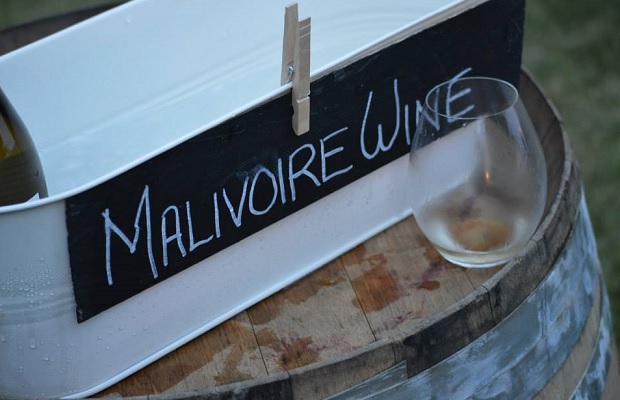


The group of twelve

History may one day remember them as the group of twelve, or perhaps, “The Ontario School.” They are the 12 wineries who have banded together to ensconce a strange but beautiful word on the tongue, in the dictionary and out in the world. Somewhereness.

They are purveyors of the land from which their grapes grow and ferment into wine. Facilitators of terroir, working a canvas forged by millions of years of geological and climatic evolution. Their assembly is based on both exigency and on Moira; destiny, share, fate.

Like that other famous group, “collectively they agree.” Ontario’s cool-climate wine regions need to qualify and certify a distinctive winemaking style. In juxtaposition to old world, European tradition, the intensity of Somewhereness needs to reflect an increasingly Ontario-centric partiality.

These are the members. 13th Street, Bachelder, Cave Spring, Flat Rock, Hidden Bench, Hinterland, Malivoire, Charles Baker, Norman Hardie, Southbrook, Stratus and Tawse. Matt Kramer of Wine Spectator used the term and now it defines an enterprise. “As a group of 12 wineries growing small lots of site-specific vines in Ontario’s ancient glacial soils, we’ve invoked Somewhereness as a word enabling us to articulate in one collective voice.”

How do you get to Somewhereness? As related to wine that is like asking, Who am I? Why do we exist? What is the meaning of life? The Somewhereness movement, the notion, comes to light through this statement. “Somewhereness is revealed in the mysterious time capsules we know as bottles of wine. As ethereal gifts of a carefully tended location and a moment in time, each is imprinted with a vineyard’s sense of place,
its soil, climate, seasons, vintage variations — and its maker’s methods.”

In 2013 I wrote about Somewhereness over the Canadian wine rainbow. “Above all else, the rainbow’s fulcrum is the “somewhereness” of Canada’s wine regions. Terroir is the great catch word for wine. A vine’s home determines its potential, its structure, its sense of place. Micro-climates, soil, geology, altitude, slope and vegetation all contribute to the make-up of a wine forged from that specific parcel, lot or locale.”

In Come together, over wine I continued the discussion. “Intensity is in the air. The artists are at work, blessed with a geographical, geological and climatic canvas unique to the planet. They share arts and letters, compare and contrast methods, style and results. The sense of community is palpable, obvious and quite frankly awesome. They are Ontario winemakers and they are coming together. Right now.”

At the end of last year my column 13 Canadian wines that rocked in 2013 reviewed what Canadian winemakers do best. “That is producing unique, cutting edge and brilliant takes on cool climate grapes. They also match beautifully with the songs referenced in their tasting notes. When the wines are assessed and considered in part or as a whole, who would dare to say there are no great wines being produced?”

On Wednesday April 9th, Somewhereness brought the band to St. James Cathedral for a full-on tasting that is rapidly being recognized as a must not miss Ontario event. Here are notes on some of the wines I sampled.

From left to right:

From left to right: Malivoire M2 Small Lot Gamay 2012, Flat Rock Nadja’s Vineyard Riesling 2012, 13th Street Sandstone Old Vines Gamay Noir 2012, Southbrook Whimsy! Cabernet Sauvignon 2009, Tawse Laundry Vineyard Cabernet Franc 2011, Charles Baker Picone Vineyard Riesling 2008 and Norman Hardie County Unfiltered Pinot Noir 2012
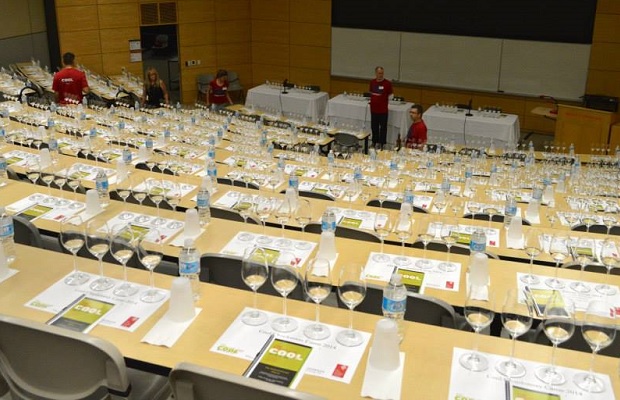
13th Street Pinot Gris 2012, VQA Creek Shores, Niagara Peninsula, Ontario (Winery, $19.95, WineAlign)

Here you have an honest, 100 per cent stainless steel treated Pinot Gris from an estate vineyard located adjacent the market on Fourth Avenue in the Creek Shores appellation. So very dry and really fine fruit, crisp, neoteric, rising and falling in waves of tempered acidity. Made in a comfortable, country-twanged, folk-rock style, like a Cowboy Junkie. Juicy, mouth-watering work and very easy to fall for. An angel mine, this 13th Street, “and I know that your skin is as warm and as real as that smile in your eyes.” This effort by Jean-Pierre Colas is as good as it gets, a tally for Creek Shores and its kinship with the variety.

Malivoire M2 Small Lot Gamay 2012, VQA Niagara Escarpment, Niagara Peninsula, Ontario (Winery, $19.95, WineAlign)

A six-month lay in French oak for 60 per cent of the Gamay fruit sourced exclusively from Malivoire’s Beamsville Bench estate vineyard is just what the go doctor ordered. Only Malivoire’s Gamay smells specifically like this; of tart and savoury capers, of small, earthy gemstones, of peppery currants, of meaty braising Bouille. A striking wine from a fortuitous Gamay vintage and great value that puts me in mind of how special the Courtney will be. Though the soils may differ, proximity wise they are close cousins.

Flat Rock Nadja’s Vineyard Riesling 2012, VQA Twenty Mile Bench, Niagara Peninsula, Ontario (578625, $19.95, WineAlign)

Just add three months and witness a new evolution, a density, from a honeyed thing. Entering a pre-adolescence with a new bounce in its step. From my earlier, January 2014 note: “A champion cyclone of forces combined to elevate the already incumbent position of this Twenty Mile Bench Riesling. An ideal growing season magnified transmission upon a paradigmatic two and a half-acre block. This southern-most and highest altitude section of Flat Rock’s vineyard rests aboard a solid bed of limestone and wake me up if that rock was not drawn up into the vines in this stellar Riesling vintage. Sure its warm and nearly off-dry but such an effortless squeeze of lemon hydrates and elevates orchard fruit and honey out of the year of the lemon. After each sip its “every time you kiss me, lemon crush.” Love this prince of a Twenty Mile white in 2012, the dynamism smiling on the tart, succulent fruit. The length is one of outright bravado. This will develop for 20 years, of that I am convinced. There is just so much fruit. A Nadja for the ages.”

Cave Spring Dolomite Pinot Noir 2011, VQA Niagara Escarpment, Niagara Peninsula, Ontario (winery, $21.95, WineAlign)

Part Beamsville Bench (70 per cent), part Twenty Mile Bench (30), this best of both worlds Pinot is full of calcium magnesium carbonate, Jurassic bark. Playful as opposed to angry, this is not so much Snoop Dogg’s Dolomite but more like an animated Futurama. Seduces with a sweet red berry entry and bound by a really fine acid/tannin/fruit balance. Admittedly not overly complex but for the price it shows good structure. As far as Pinot goes, this one is a made for beef or rack of veal.

Hinterland Whitecap 2013, VQA Ontario, Charmat Method, Ontario (332809, $22.00, WineAlign)

The most versatile fizz in the Hinterland portfolio, what winemaker Jonas Newman refers to as his “chameleon.” As aromatically floral as this Charmat method bubbles (secondary fermentation in tank) ever gets, the ’13 brings out the garden under the mist of a sprinkler, late on a summer evening. It’s not so much about fruit as it is about texture, pollen and wet rocks. Try it at Barque.

Bachelder Niagara Pinot Noir Wismer Park/Lowrey (Tank Sample) 2013, Niagara Peninsula, Ontario (146985, $29.95, WineAlign)

This binary vineyard symbiosis will be bottled as the Niagara Pinot. Just filtered a few days ago it strides out with the utmost confidence in swagger, with a purity of fruit is spite of Thomas’ shock, awe and reductive apology. A bright sway of terroir gives rapture to a peaking raspberry bush imagined forward into a cooled pie. A renewed elegance abides with an absence of humidity and with a fully ameliorated knowing that a fleshing will happen. Really fine.

Malivoire Mottiar Chardonnay 2011, VQA Beamsville Bench, Niagara Peninsula, Ontario (146985, $29.95, WineAlign)

Gamay may be winemaker Shiraz Mottiar’s decisive resource but Chardonnay is his thing. The Moira’s ranks as one of Niagara’s best, vintage in, vintage out and this Mottiar, from the winemaker’s home vineyard is the trump card. This Malivoire special agent is set in 2 – 5 year old 300 L French oak hogsheads and aged on the lees in barrel for 10 months. The result? Texture. With the use, or lack thereof in new oak, Mottiar’s Chardonnay becomes a study in compages, with strong abilities and the accents of green orchard fruit and a faint sensation of blanched nut. Nothing toasty mind you because it’s all about density and girth; a Shiraz thing. I find his Chardonnay is all about texture.

13th Street Sandstone Old Vines Gamay Noir 2012, VQA Four Mile Creek, Niagara Peninsula, Ontario (130195, $29.95, WineAlign)

If roses were stones they would produce an aroma that only 13th Street’s Sandstone Gamay would recall. Some previous vintages have pushed the boundary to sky-high excess and a subterranean ferrous burrowing but in 2012 the perfume is both grounded and ethereal. The sandy tuff rock is so in that glass, like the smell of a rugged beach, mist and salinity spraying and rising off the rocks. The ’12 now knows “I don’t have to sell my soul.” Wholly singular Gamay and with hopes it will always be this going forward. Where as before it said “I want to be adored,” it now confirms “you adore me.”

Tawse Laundry Vineyard Cabernet Franc 2011, VQA Lincoln Lakeshore, Niagara Peninsula, Ontario (130997, $34.95, WineAlign)

A lean Laundry with as much finesse as winemaker Paul Pender has ever shown in his poignant Cabernet Franc realm. When a vintage deals you calm and scale you sit back and relax. The Lincoln Lakeshore advancing in years vines bring yet unseen front end red berry, licorice and red currant softness in 2011. There is elegance but also a refusal to yield its back-end bite. A level of enveloping grain and chalk is unique to this bottle and should be seen as a very good effort with the possibility ahead for movement and a gaining of flesh. A graceful, gently pressed Laundry.

Southbrook Whimsy! Cabernet Sauvignon 2009, VQA Niagara On The Lake, Niagara Peninsula, Ontario (260281, $34.95, WineAlign)

A 100 per cent Cabernet Sauvignon whose barrel aging specs are integral to discussing its unfolding. This Whimsy is a seven barrel (172 case) lot of which 86 per cent was aged for 13 months in (71 per cent) French oak. Plain and simple, a wood-heavy decision that has provided allied excellence five years after that demanding vintage. The agglomeration is one of steroidal currants, rocket red berries and an assiduous savoury edge. Just now are the beginnings of a caramel oozing from out of the centre of a dark chocolate house. Really quite an amazing, rich cake example from the vintage. Showing so right and so strong now, in its territory and wheelhouse.

Norman Hardie County Unfiltered Pinot Noir 2012, VQA Prince Edward County, Ontario (125310, $35.20, WineAlign)

Hardie’s 2012 County Pinot Noir is a beacon, a flashing light on the shore, an invitation to copycats because this is what making red wine from limestone foundations is all about. To taste this ’12 is to experience Hardie’s purest berry maceration and distillation to date. It’s as if there was no alcohol present and in fact, at 11.5 per cent it is a modest and transparent pronouncement. Longevity may not bless the ’12 as in other vintages but this is certainly the most groomed and coiffed County Pinot Noir.

Charles Baker Picone Vineyard Riesling 2008, VQA Vinemount Ridge, Niagara Peninsula, Ontario (241182, $35.20, WineAlign)

Tasted at Somewhereness 2014 as part of a vertical retrospective going back to 2007. The Vinemount Ridge’s now famous Picone Vineyard is set within a 10-acre estate on the Niagara Escarpment. Planted to the Weis 21 clone, the Riesling grown here digs in for complexity from sectional moieties of clay and sandy soil atop a unique base of limestone bedrock. Charles Baker began working with these grapes in 2005 and it is this 2008 where the learning curve took a turn for the Riesling stratosphere. The ’06 found luck in the stars but this vintage lays the framework and foundation for a master plan. At this stage in the ’08 evolution there is a prodigious and viscous honeyed textured. Ripening tree fruit juices run like maple sap in spring and the run off is beginning to think syrup. A cutting ridge of acidity arrests the sugaring, allowing citrus and flinty rock to recall the wine’s first, fresh steps. Baker’s Riesling time travels in circles with no real beginning and no real end. From my earlier, September 2012 note: ““Whoo-ahhh” Mojito, green apple skin scent of a Riesling. Seductive to sip, a bodacious body of influence, then back-end bite. A wolf pack in sheep’s clothing.”

Hidden Bench Terroir Caché 2010, VQA Beamsville Bench, Niagara Peninsula, Ontario (505610, $38.20, WineAlign)

No other Niagara red and for sure no alternative Peninsula Bordeaux blend exists in such a vacuum of dichotomous behaviour. Act one is an out-and-out boastful, opulent show of Rococo. Act two a gnawing and gnashing by beasts. The pitch and pull of the Terroir Caché 2010 optates and culls the extraordinary through the practice of extended délestage, what Hidden Bench notes as “a traditional method of gently draining the wine and returning it to tank with its skins during fermentation.” The ’10 is about as huge as it gets, highly ferric and tannic. Still chemically reactive, you can almost imagine its once small molecules fitfully growing into long chains. Berries of the darkest night and he who should not be named black fruit are confounded by minerals forcing the juice into a cold sweat. Will require a minimum of 10 years to soften its all-powerful grip. From my earlier March 2013 note: “has rich, voluptuous Napa Valley written all over it. Sister Merlot dominant, Beamsville Bench sledge monster. Plumbago, mineral, blackberry and coffee in a wine that will be the ringer in a blind tasting 10 years on. Harald may be saying “this is our family jewel.” Mr. Thiel, you make good wine”

Stratus Cabernet Franc 2010, VQA Niagara Peninsula, Ontario (winery, $38.20, WineAlign)

Patient as ever with the cool-climate, slow and low ripening Cabernet Franc, winemaker J-L Groux stuck with belief, regardless of the warm 2010 vintage. The Stratus single varietal space and time continuum of let it hang (though not to December), 20ish months of aging, nearly half in French oak barrels, has brought forth the most dense and luxe Cabernet Franc to date. “It’s never old school, all brand new,” with Groux so this red swells in wholly pure black currant fruit and is as big as it gets for J-L, which is saying something. This beastie boy will age over a 20-year period. Style is the thing, and yes, the aromatics.

Hidden Bench Locust Lane Vineyard Pinot Noir 2011, VQA Beamsville Bench, Niagara Peninsula, Ontario (winery, $48.00, WineAlign)

The Locust Lane Vineyard, originally planted in 1998, was Hidden Bench’s first acquisition, in 2003. It has a unique perpendicular cross-slope effect, undulating in all four directions, gathering sun hours in its own special way. The vineyard produces the richest and warmest Pinot Noir with fruit flavours more akin to ripe plum and black cherry than almost anywhere on the Beamsville Bench, certainly as any from the Hidden Bench stable. While the ’11 is not the biggest beast nor the Bordeaux bully of the Terroir Caché, it is surprisingly tannic and strong. It’s anything but hot, though it attacks with fervor. Big berry fruit, macerated strawberry, rich pie notes and spice. A great Locust vintage.

Good to go!