Whites of passage

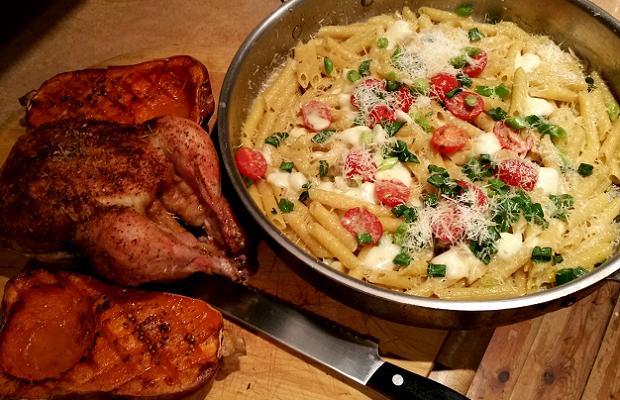
Slightly Barque dry-rubbed Roast Chicken, scored butternut squash with butter, agave and backyard coriander seed and penne with grape tomato, padano and scallion

Slightly Barque dry-rubbed roast chicken, scored butternut squash with butter, agave and backyard coriander seed and penne with grape tomato, bocconcini, padano and scallion

Spring has finally sprung. The air and the psyche have found collective exosmosis, leaving the colder, thicker air of winter behind, to begin passage through the membrane into lower pressure. With the exhale and lighter sense of being comes the same in wine. We egress to ferments of lower concentration. In reds we will welcome Gamay, Pinot Noir, Zweigelt, Blaufränkisch and Cabernet Franc.

White wine has more potential in legerity and litheness of being. While Riesling, Pinot Gris and Pinot Blanc are most certainly apropos choices for spring, there are others, variations on the theme, not technically “white” per se, but fitting the bill nonetheless. Like Sparkling wine, and Sake.

Tastings of late have focused on the white stuff and there are many that have already left an indelible mark during this period of emergence, this recent transudation through conduit, out of too many months mired in ice and snow. The parameters of white wine blurred a bit, this group of twelve wines will do you no harm. In fact, any or all will help restore that healthy attitude so desperately needed in this time of rejuvenation. Spring.

From left to right: Château De La Bretesche Muscadet Sèvre Et Maine Sur Lie 2013, Emiliana Adobe Reserva Sauvignon Blanc 2014, La Joya Viognier Reserve 2014, Charles & Charles Chardonnay 2013, Hugel Gentil 2013 and Tokaj Kereskedoház Grand Selection Semi Dry Tokaji Furmint 2012

From left to right: Château De La Bretesche Muscadet Sèvre Et Maine Sur Lie 2013, Emiliana Adobe Reserva Sauvignon Blanc 2014, La Joya Viognier Reserve 2014, Charles & Charles Chardonnay 2013, Hugel Gentil 2013 and Tokaj Kereskedoház Grand Selection Semi Dry Tokaji Furmint 2012

Château De La Bretesche Muscadet Sèvre Et Maine Sur Lie 2013, Ac Loire, France (412163, $12.95, WineAlign)

From the VINTAGES April 18, 2015 release

From the stable of Domaine de la Chauvinière, the Château De La Bretesche is a gneiss Melon de Bourgogne, crafted at the hands of Muscadet master Jérémie Huchet. Melon of lightness, finesse, ripe restraint, elasticity and breadth beyond the norm. Karpos of many herbs and briny berries. Capable of nurturing and buttressing intensity. Though the scent here is subtle, when it comes to Muscadet, the fresh sea and shell of Pholas dactyls is necessary. In conjunction with its length and a price of $13, in this section of the Loire, the littoral zone and the peak are reached. Drink 2015-2020.  Tasted March 2015  @MyLoireValley  @LoireValleyWine

Emiliana Adobe Reserva Sauvignon Blanc 2014, Casablanca Valley, Chile (266049, $13.05, WineAlign)

It would be hard to imagine Sauvignon Blanc with wilder eyes, as much pop and nearly the zesty fortitude as the Emiliana Adobe. The clarity of organic/biodynamic health in vine and by extension fruit is on blinking display. Fresh and popping, the zest of ripe citrus circulates naturally, as acidity, in juicy squeezes and with nothing but tireless pep. This is an example of exemplary SB for Chile and one can only imagine the depths that might come from older vines and/or a wild yeast meets barrel ferment trial. Drink 2015-2016.  Tasted April 2015  @VinosEmiliana

La Joya Viognier Reserve 2014, Colchagua Valley, Chile (168542, $15.95, WineAlign)

From the VINTAGES April 18, 2015 release

As impressive as this very New World take on Viognier was in 2013, the follow-up furthers the absorption. The accented matters of alcohol, residual, mineral, bright fruit and soil continue the train of thought with forward ’14 thinking. This is nothing but a feel good, “why don’t you touch me now” Viognier, a gem-filled musical box of herbs, blanched nuts, flowers and spices. It’s a round and melodic nursery rhyme that’s fun to sniff, taste and listen for its mysterious ministrations and magical charms. Drink 2015-2018.  Tasted March 2015  @VBisquertt  @DrinkChile  @vonTeichman  @vonterrabev

Charles & Charles Chardonnay 2013, Columbia Valley, Washington (394734, $15.95, WineAlign)

I would liken this Columbia Valley Chardonnay to the Fourth of July. It’s got tiny moving parts, all in motion, trying to put it all together. Cool orchard fruit, a minor kiss of barrel, a raft of lees, some sweet tropical flavours and round acidity. Needs some time. If it succeeds “it will be like fireworks blowing up in the air like a Fourth of July night sky.” For now it’s a reserved, quietly efficient and harmless Chardonnay. But it does show signs of building momentum. Drink 2016-2020.  Tasted March 2015  @KVintners  @Dandurandwines

Hugel Gentil 2013, Ac Alsace, France (367284, $15.95, WineAlign)

From the VINTAGES April 18, 2015 release

The five grape blend works confidently and vehemently strives with more love and sympathy than the austerely commandeered Riesling. Sylvaner and Pinot Blanc matter here, helping to negate the dominant aromatic push of the Gewürztraminer and Pinot Gris. Quite dry (3.9 g/L RS), with twitching (5.86 g/L) though steady acidity. This has ingratiating integration and unswerving tannic grain. A coherently textured Riquewihr conflation that is more than well-made. Drink 2015-2020.  Tasted March 2015  @Hugelwine  @HalpernWine  @VinsAlsace

Tokaj Kereskedoház Grand Selection Semi Dry Tokaji Furmint 2012, Pdo Tokaj Hegyalja, Hungary (396366, $16.95, WineAlign)

From the VINTAGES April 18, 2015 release

Hungary and more succinctly Hegyalja is on a terrific role of late. I would put many marbles into the probability basket and roll straight to the quality bank on the backs of so many Tokaji examples. This Furmint is not on the lighter, fresher side, but more so the seasoned and effluvious strand. “Regardless of the balance life has become” this Furmint is lush and conversely piercing, an acquired density, thick and profoundly cumbersome. Though it rallies and rails in many ways, “too heavy too light, too black or too white, too wrong or too right, today or tonight,” it’s also honeyed and a riot to drink. Would like to give this seven Mary three years to settle down. Drink 2017-2020.  Tasted March 2015  @TokajCE  @WineofHungary

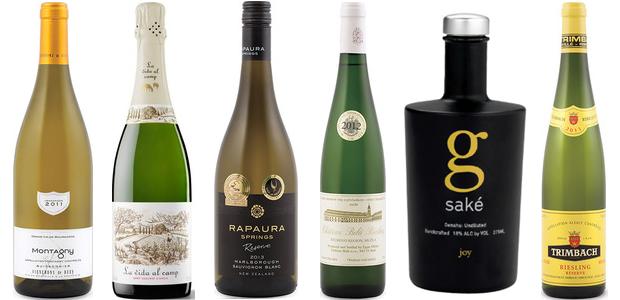
From left to right: Vignerons De Buxy Buissonnier Montagny 2011, La Vida Al Camp Cava Brut, Château Belá Riesling 2012, Rapaura Springs Reserve Sauvignon Blanc 2013, Momokawa G Joy Junmai Ginjo Genshu and Trimbach Réserve Riesling 2011

From left to right: Vignerons De Buxy Buissonnier Montagny 2011, La Vida Al Camp Cava Brut, Château Belá Riesling 2012, Rapaura Springs Reserve Sauvignon Blanc 2013, Momokawa G Joy Junmai Ginjo Genshu and Trimbach Réserve Riesling 2011

Vignerons De Buxy Buissonnier Montagny 2011, Ac Burgundy, France (382879, $19.95, WineAlign)

From the VINTAGES April 18, 2015 release

Another VINTAGES (2011) shipment of this great value in Côte Chalonnaise Chardonnay from the most southerly portion of the Côte d’Or is fortuitous because eight months has only helped to extricate the fruit from its Marly soil, variegated with White Burgundy-loving limestone shell. This is Montagny with intensity and in language of Burgundy’s essential tenets. Aromas scheme as white fruit punch and fruit that packs a punch. Might be thought of as heavy, syrupy even, in terms of Chardonnay, but the meeting of equal and opposing tannin terms balance. The clay-crusted pebbles in the marl have crawled inside the bottle. Suck on them long enough and they will reveal their inner stone. I dare you to spit them out. Drink 2015-2020.  Tasted March 2015  @VinexxWine

La Vida Al Camp Cava Brut, Penedès, Spain (Agent, $19.95, WineAlign)

This blend of Macabeu, Xarel-Lo and Parellada is not only distinguished for Cava, it should be highly regarded in the pantheon of all Sparkling wine. Swelling with personality and urging in demonstrative energy that fizzes and suspends with fervent animation. The activity is one of quick reactions and accumulation. From sweet yeast in lees, from an on the line oxidative cold front and through the warmth of tropical spice. Cava like clouds combing stormy skies from equal and opposing directions and densities. Though marked by a leathery aromatic rind, it’s creamier and less lactic than outright citrus. These are fine bubbles, of twinkling titillations and striking flavours. Drink 2015-2018.  Tasted March 2015  @lavidaalcamp  @TheVine_RobGroh

Château Belá Riesling 2012, Muzla, Slovakia (410951, $19.95, WineAlign)

From the VINTAGES April 18, 2015 release

For something completely different and yet not, look to Slovakian Riesling at the hands of a German icon. Here from Muzla, a most elemental, atmospheric and petrol driven wine, out of Loess, with blessings beyond Riesling character. A bit reductive, funky and porcine like Baden Grauburgunder, frankly. Heads to an off-dry intersection on the palate, in Spätlese-like headiness. Returns to Trocken in angles of mineral tang and a late, ferocious bite down. Stays this way for nearly a minute. A challenging and compelling respite away from the Mosel. Drink 2016-2022.  Tasted March 2015  @ChateauBela  @WinesOfSlovakia

Rapaura Springs Reserve Sauvignon Blanc 2013, Marlborough, South Island, New Zealand (388421, $21.95, WineAlign)

From the VINTAGES April 18, 2015 release

Blame it on the midnight, the rain or the Wairau River, but the flow past a rocky aquifer and into the vineyard weaves through this Sauvignon Blanc to achieve an uncanny Marlborough balance. The accord is struck between high tones and mineral undertones. Between tropical lushness and direct citrus connectivity. Between herbal grounding and stratospheric elevation. Really flavourful and structured by texture. In a saturated world it is noted “everywhere is all around, comfort in the crowd,” through a sea of Sauvignon Blanc. Shame on the moon but the Rapaura Springs Reserve stands out for its gentle, meandering and crooning ways. It is highly recommended. It is possessive of an ability to braid, reticulate and evolve. Drink 2015-2020.  Tasted March 2015  @Rapaurasprings  @nzwine  @VinexxWine

Momokawa G Joy Junmai Ginjo Genshu, Oregon (239426, $26.95, WineAlign)

From the VINTAGES April 18, 2015 release

Made from pure, Sacramento Valley Calrose rice polished to 60 per cent and undiluted. The short trek to Oregon is made for the G, a Saké with a foot in two worlds. The Koji-kin and yeast strains are from Japan and the water from Oregon. The American-Japanese arrangement will succeed in pleasing palates east and west. Sacramento soil is in here, enriching the rice with savoury tall grasses and expanding spice. Oregon water draws subterranean salinity and combined with the Japanese elements, comes out like toasted nori. This is lovely and floral, rich and finishes with a feeling of wet stones.  Tasted March 2015  @SakeOne  @MetroWineSake

Trimbach Réserve Riesling 2011, Ac Alsace, France (995316, $29.95, WineAlign)

From the VINTAGES April 18, 2015 release

Some old vines and a strict selection of grapes from Ribeauvillé and vicinity compose the Trimbach Réserve, another storied chapter of sharpness and focus. Builds upon the similar 2010 and with greater depth. At this price on the Riesling plain this will be a star for the vintage, even it it takes five more years to reach adjudication. With this portal to the finest fruit and handling in mind, it can only be imagined what the same vintage will convey from the terroirs of Geisberg and Osterberg for Cuvée Frédéric Émile. The standard Réserve is rich and propelled to compounding causatum. Aromas go through lemon glade and glaze, then turn the key to lime. The texture is a crackling bite of corral with salinity drawn from oceans far away. The stone cold austerity is a frozen moment of time, a long pause in which there is nothing to do but swallow and forget. Small price to pay for such a thing. Drink 2016-2022.  Tasted March 2015  @trimbach  @WoodmanWS  @AlsaceWines

Good to go!

http://www.winealign.com/profile/2058-mjg

https://instagram.com/mgodello/

Value the first wine of spring

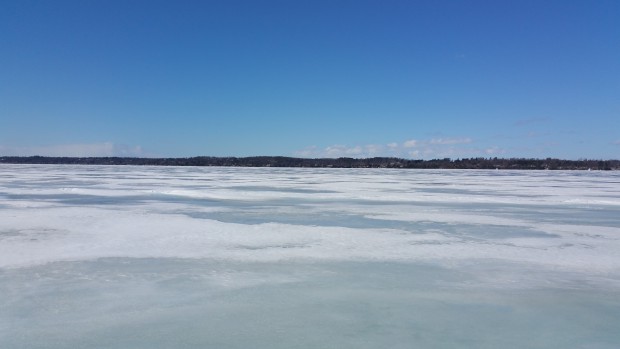
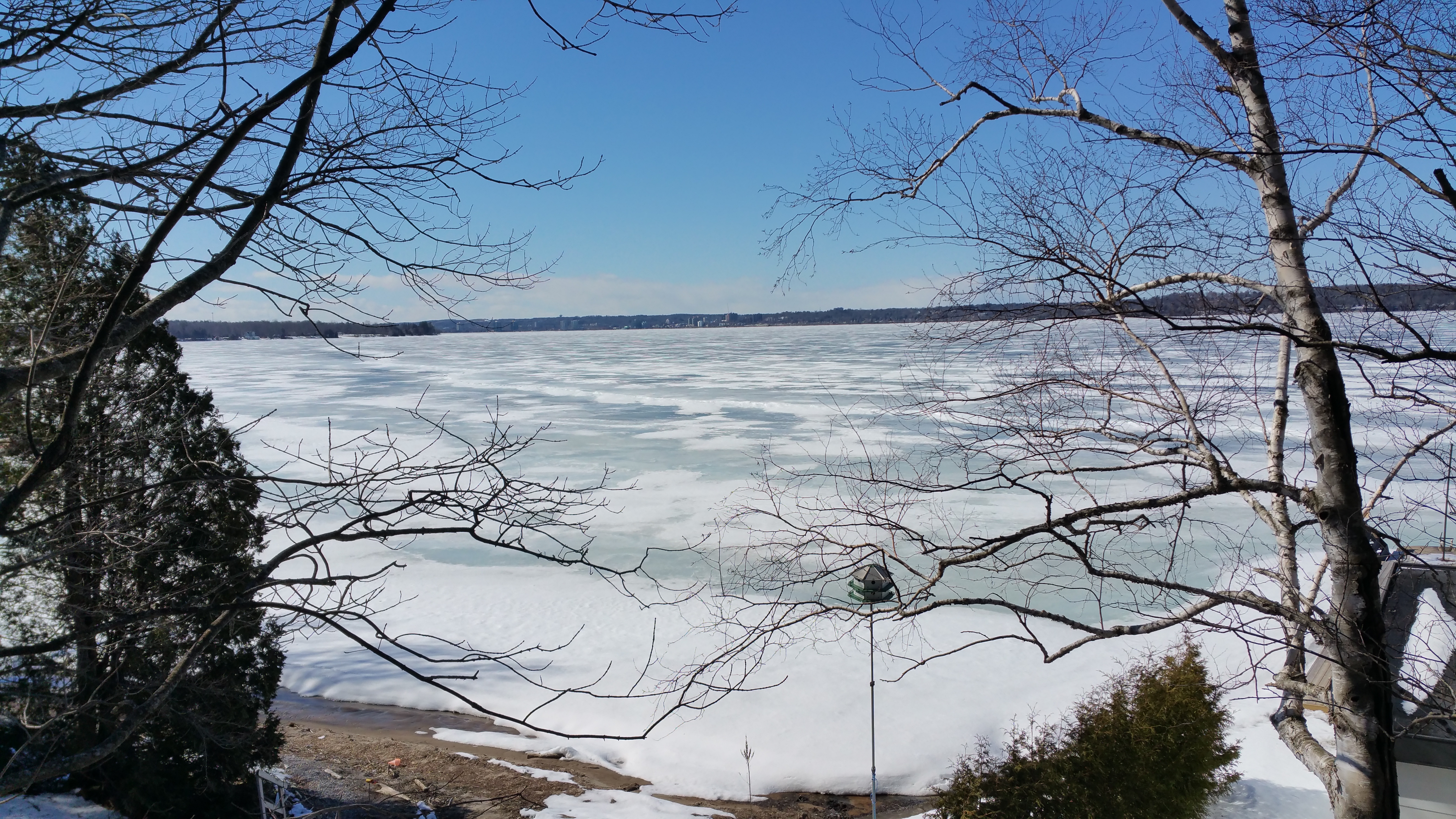
Lake yet frozen, March 18, 2015

Lake not yet defrosted, March 18, 2015

The lake remains frozen though stepping foot upon its precarious ice flow would not be recommended. By this time next week the waves will concuss the gelid islands and slowly deliquesce them down into the frigid water. As of this Saturday spring will have officially come to southern Ontario and with it a whole new outlook on life.

If you ask my colleague Rick VanSickle, the spring of 2015 will mean the boot up to overhaul the future of wine and craft beer sales in Ontario. According to VanSickle, “there is a brave new world coming for the retailing beer and wine in Ontario. These are heady times. Behind closed doors a lot of discussion is happening, a lot of debate and planning is going on in advance of the day Wynne’s Liberal government utters those words many of us have  longed to hear for so long: An end to the LCBO and Beer Store monopolies on wine and beer in Ontario.”

For Rick’s full report on his site WinesInNiagara, please click here:

Brave New World: How the new model for beer and wine retailing in Ontario could look

I read Rick VanSickle’s work on a regular basis and I know him to be as pragmatic and as skeptical as they come. I doubt very much that Rick would get ahead of himself on an issue with so much on the line. Using his ins to gain sagacity from insiders who possess relevant information, VanSickle writes with confidence that Kathleen Wynne has given Ed Clark and his privatization panel carte blanche to effect real change. The consequences of what Rick is predicting are enormous. For consumers, for industry professionals and for writers. We would all have to reconsider and recalibrate the way we approach wine and beer in Ontario.

That is why I remain ever the conspiracy theorist. I remain unconvinced. I see the smoke and mirrors of the entire charade. Even when new licenses are granted, I imagine grocery retailers only selling the largest and most heavily marketed brands. I don’t see VQA wine stores and specialty shops tailored to the demographics of neighbourhoods. I see the LCBO and the Beer Store continuing to exercise their powers of monopoly and controlling how all the changes are implemented. I just do not see the revolution as being imminent and around the corner.

My apologies to you Rick. Your report is thorough and covers everything we need to know. Were these great advances to happen we would all be the beneficiaries but your words sound more like wishes than predictions. Ontario is not Alberta. It never has been and isn’t likely to happen any time soon. I hope I am dead wrong. I will owe you a sit down over a craft beer and a never before seen in Ontario stores bottle of wine if I am. If the revolution is upon us, I will happily count my blessings over one with you.

So, back to the business of reporting on the VINTAGES releases at the LCBO. With spring coming this Saturday so too does an entire new set of wines on shelves. Last week I talked up Riesling and iconic wines.

Related – I shall be Riesling

Related – March 21 big guns

20150317_151442

Almost spring out on the lake

The rest of the March 21st release is expressed in value, in wines that offer serious compensation for what you spend. Wines in generosity of backbone, psyche and enthusiasm. Wines that are simply good, regardless of their cost. Here are notes on nine.

Marqués De Cáceres Antea 2013

Marqués De Cáceres Antea 2013, Barrel Fermented, Doca Rioja, Spain (518985, $15.95, WineAlign)

Here barrel fermented Rioja brings a buffet of culinary impressions to the aromatic and gustatory table. Soft scrambled egg and cream in Tortilla Española, Serrano ham, buttery puff pastry, natillas. All would pair well with the hickory stick barrel spice and the slightly volatile tang. Accents of orange juice and rind work the angles, along with the calcified acidity. This Rioja is not shy but it represents good complexity and value for the price.  Tasted March 2015  @Marques_Caceres  @RiojaWine  @DionysusWines

Castello Di Ama Chianti Classico Riserva 2009

Castello Di Ama Chianti Classico Riserva 2009, Docg (375ml), Tuscany, Italy (403824, $16.95, WineAlign)

Kudos must be afforded Castello di Ama for putting CCR in half-bottles. It’s like listening to Green River on vinyl. The layers of texture, nuance, and groove are amplified. The expedited evolution and compact formula make cause for a bottled up compression, a concentration, not a reduction. More winemakers should bottle in the 375 mL container. There are so many reasons for it. Space, quality, half the cost and best of all, nothing left at the end of the night, just the empty bottle. This 2009 has seen its fair share of evolution, with notes of forest floor, truffle, mushroom and compost tea but in certain respects the aromas are old-school Brunello. The antiquity of the composition is nothing but endearing, a romantic comfort zone to give this Ama a sense of place. The wood, bite into sinew and gristle tannins add to the archaic mystique. Most modern imbibers would like more fruit but at this paltry price the complexity is more than enough reward. “Well, take me back down where cool water flow, yeh. Let me remember things I love.” Drink now.  Tasted March 2015  @CastellodiAma  @chianticlassico  @HalpernWine


Boutari Grande Reserve 2008

Boutari Grande Reserve Naoussa 2008, Naoussa, Greece (140111, $17.95, WineAlign)

In this Xinomavro there is beauty and bog consistence, like wild calla palustris. Imagine a wine thick as consonants, dense and defined by solid rock bubbling like stew, from out of a marsh. Wood adds intricate layers and a mothering of leather hiding and protecting dried cherries. Game, spice, liquorice, funk and things that heal flavour the wine’s liqueur. Silky smooth with a run of grain and the salinity of ancient longing. Racy acidity intrudes, puts in a charge and takes care to see six to eight years more life will be a guarantee. Easily and possibly 10 will pass before it sheds the chalky loops. Terrific vintage with impressive depth and range of flavour.  Tasted February 2015  @boutari  @KolonakiGroup  @DrinkGreekWine  @winesofnaoussa

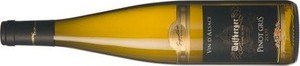
Wolfberger Signature Pinot Gris 2013

Wolfberger Signature Pinot Gris 2013, Ac Alsace, France (398172, $18.95, WineAlign)

The resident oenologist at Wolfberger is Bertrand Praz, in charge of the cooperative located in Eguisheim, south of Colmar. As far as a ‘basic’ union Pinot Gris is concerned, this one hits the right marks and preserves proper tradition. It’s both saline and full of pith, with lemon is scrapes and ladles, yet it could very well be thought of as Riesling were it tasted blind. Good ripeness, nothing serious and quite righteous with an intent to carry an Alsace torch of dry, finely crafted Pinot Gris. What’s most important is the statement it makes for what will follow out of the 2013 vintage.  Tasted March 2015  @wolfberger_fr  @Smarent

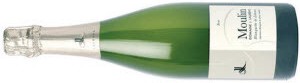
Domaine J. Laurens Le Moulin Brut Blanquette De Limoux

Domaine J. Laurens Le Moulin Brut Blanquette De Limoux, Méthode Traditionnelle, Ac, France (180323, $18.95, WineAlign)

The pause of oxidation. The evidence concrete and stratified, the bite pure and hollow petrified, like into bone and the interval below the organic soil. Crisp cut above the normal. Mouth-filling and expansive. Perfectly bitter. Much lemon, ginger and further spice. Length too.

From my earlier note of April 2014: A southern French (Pyrenean foothills, just south of Carcassonne) blend dominated by the traditional grape variety of Limoux, Mauzac (90 per cent), with support from Chardonnay. The lees is very direct and in your face on this Limoux, the baking aromas strong and the texture quite dense. Citrus and white grapefruit crawl up the middle and aridity mixed with horseradish salt comes through on the finish. Claims territory in viridity of complexity, an acumen for dewiness and is blessed with a marked appeal to hipster fizzters.  @DneJLaurens  @LanguedocWines  @oenophilia1

Last tasted March 2015

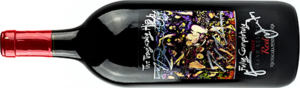
The Tragically Hip Fully Completely Grand Reserve Red 2012

The Tragically Hip Fully Completely Grand Reserve Red 2012, VQA Niagara Peninsula, Ontario (411595, $24.95, WineAlign)

Twenty three years ago this October the Hip’s third record changed the course of Canadian Pop and Rock music. While this Jeff Hundertmark, Kingston-bred band and Bordeaux blend will not have a similar effect on the Ontario wine industry, it’s certainly not a tragically vinified red. It’s looking for a place to happen, has the wherewithal to age with some grace and the courage to represent Stoney Ridge with power. The wall of sound, smell and taste is achieved through forest compost, bruised berries, melted liquorice, plum flavour and glycerin texture. Hung “long out in the sun,” the pencil graphite and hard acidity is a scratch and a flaw but also a calling card to see this age in the classic Niagara red style. “Either it’ll move me or it’ll move right through me; fully, completely.”  Tasted March 2015  @stoneyridgewine  @WeirRidgeYnmakr  @thehipdotcom  @ImportWineMAFWM

Domaine Queylus Tradition Pinot Noir 2011

Domaine Queylus Tradition Pinot Noir 2011, VQA Niagara Peninsula, Ontario (392738, $29.95, WineAlign)

The passion from the Thomas Bachelder Niagara project has shifted into Domaine Queylus. With no disrespect to Thomas’ eponymous bottling from vineyards so nearby, the quality time has now been granted the Tradition. Here lies Mountainview and Le Petite Colline earth, here crushes Niagara cherries in hand, juice running down a clay caked forearm. Fresh and bright yet streaked by chalk and enveloping brushstroke. Sour? For a flash but in neither malic nor astringent form. This is a must buy.

From my earlier June 2014 note: Reverberates with the unmistakable calling card character of the storied Neudorf family La Petite vineyard with equal and opposite amounts of attraction and new life breathed in by the Lincoln Lakeshore fruit. Ethereally sifted earth of old meets cherries of new. Enriching Pinot Noir, a bit gangling like a primitive young giraffe but near to finding its legs. Hard working red, insistent, confident and having already paid some dirty fingernail dues. Excellent length.

Last tasted August 2014  @QueylusVin  @Bachelder_wines

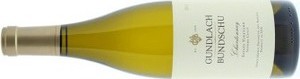
Gundlach Bundschu Estate Vineyard Chardonnay 2012

Gundlach Bundschu Estate Vineyard Chardonnay 2012, Sonoma Coast, California (400051, $34.95, WineAlign)

An intimately affordable Chardonnay from Sonoma Coast fashioned by a family in its 157th year of production is a rarity. Even more so from a cool-climate region oft-marred by the misperception that its Chardonnay are fat, buttery, over-oaked fruit bombs. From fruit grown on the Rhinefarm Estate Vineyard on southwest slopes of the Mayacamas Mountains, eight miles north of San Pablo Bay. Consider the antonymous solecism of zero per cent malolactic fermentation and you will see where this (20 per cent new) barrel fermented Chardonnay has come from and where it is going. Weekly battonage compresses and stirs up texture. Fog plays its part on the cool slopes of Huichica clay loam soils mixed in with gravel deposits. Acidity is preserved, hitting a classic number on top of healthy (14 plus per cent) alcohol. This is not a small Chardonnay. It stretches its legs and walks like a giant but not in 80’s or 90’s acid washed jeans or big hair ways. This is Chardonnay that leads in style and confidence of a most modern vernacular and fashion. It’s also a steal.  Tasted October 2014  @gunbunwine  @LeSommelierWine

Good to go!

http://www.winealign.com/profile/2058-mjg

Take a bottle, leave a bottle

Wines of the week

Wines of the week

Lately I’ve noticed a whole bunch of take a book, leave a book mini libraries popping up on front lawns in many Toronto neighbourhoods. The concept is right on so many levels and it occurs to me that the same could be done with wine. Open a few bottles and have a taste of each then exchange them with a friend or colleague so that each of you can sample new wines the following night without having to open anything new.

Last week the practice was put to good use and it allowed me to taste upwards of 40 wines without the benefit of a trade or media tasting. I traded wines with friends and colleagues over the course of three days and two nights. Yes, you can trust your friends to keep the provenance of a bottle so that your experience is just as fulfilling as theirs. Yesterday’s post covered the notes on 12 wines from the boot.

Related – Italian wines of the week

Here are nine more tasting notes from a wider global range, with a focus on Victoria, McLaren Vale and Langhorne Creek in Australia along with samples from the Mosel, Penedès, the Columbia Valley and the southern Rhône.


Urban Riesling 2014

Urban Riesling 2014, Mosel, Germany (Agent, $15.95, WineAlign)

Grapes from neighbouring vineyards in the Mosel are brought to St. Urbans Hof Winery and vinified in the Nik Weis way. This stresses the Weis notion where “cool climate vines develop flavours, not simply sugars.” Though straightforward and quite traditional, the Urban is clean and shy on flint but there is a slate’s medicinal bleed and piercing acidity. Lime and more lime. Quite dry and in moderate (9.5 per cent) alcohol. This represents quintessential entry-level Qualitätswein.  Tasted March 2015  @TheVine_RobGroh  @WinesofGermany

Taltarni 't' Series Shiraz 2013
Taltarni ‘T’ Series Shiraz 2013
, Pyrenees, Victoria, Australia (Agent, $16.95, WineAlign)

A warm, highly perfumed entry with a hot stone streak runs forward and uphill through waves of lush berries. A wrinkle of vim is but a moment of abstruse behaviour. The macerated fruit careens in sweetness above the subtleties of savour but the spice directed oak takes over, along with a scaleable wall of tannin. This woven textile of a Shiraz needs a few years to soften. Drink 2017-2020. Tasted March 2015  @Taltarni  @TheVine_RobGroh

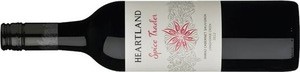
Heartland Spice Trader Shiraz Cabernet Sauvignon 2013

Heartland Spice Trader Shiraz Cabernet Sauvignon 2013, Langhorne Creek, Australia (Agent, $16.95, WineAlign)

Langhorne Creek is the source for winemaker Ben Glaetzer’s blend, an Australian curated combination that has secured its rightful ownership within the assemblage vernacular. The star anise on the label is apropos considering the red braised pork belly and Phở tái aromatic suggestiveness. That and red plums, poached and in a sweet bun’s paste. Add to them the steam from hot rocks and warm raspberry compote. Certainly on the syrupy side of texture but the palate is equally savoury as it is sweet. Lots of character here and a finish with extension.  Tasted March 2015  @heartlandwines  @langhornecreek  @TheVine_RobGroh

OLYMPUS DIGITAL CAMERA

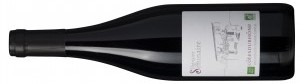
Domaine du Séminaire Côtes du Rhône 2013, Rhône Valley, France (Agent, $14.95)

A rustic must is the truth serum here, the corollary of proper old school CdR winemaking. An affinity is sensed to both an Albert Mann Pinot Noir and a Baden Spätburgunder with porcine aromatics and an antediluvian aridity. Very cherry, dusty and plainspoken like a trending linear regression. Such a welcome step up from so many over the top sunshine dramatized Rhônes of excessive residual and alcohol. Though this clocks in at 14 per cent you would never know to read it on the spirit hydrometer. Direct energy and pulse would make this a very keg worthy red.  Tasted March 2015  @VINSRHONE  @RhoneWine  @HospiceduRhone  @TheLivingVine

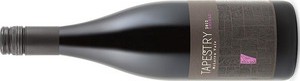
Tapestry Bg & V Shiraz 2012

Tapestry Bg & V Shiraz 2012, McLaren Vale, South Australia (247155, $19.95, WineAlign) From the VINTAGES March 7, 2015 release

A regional vigneron’s blend from two vineyards, BG and V: The Baker’s Gully (old Lloyd Light Vineyards) at the base of the Southern Mt. Lofty Ranges and Oliver’s Road (the continuation of Field Street) near to the Vale Township. Really elegant and refined in spite of a big, bold and juicy character. Ripe, sunny and warmer categorical climate expression. Quite tightly wound with a metallic iron post or fist in your face, layered and initializing the baking effect. Needs three or four years to fully integrate at which time the pie will be ready.  Tasted March 2015  @mclaren_vale

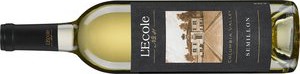
L'école No 41 Semillon 2013

L’école No 41 Semillon 2013, Columbia Valley, Washington (SAQ 10707077, $22.25, WineAlign)

Sauvignon Blanc (13 per cent) adds buoyancy to the main attraction in this vanguard and reputable Columbia Valley pioneer. Quite toasty and marked by early nose-hair splitting and splintering barrel notes. Dare say reductive but not in a rubber sap run way. More like Sémillon-dominated Bordeaux, of big bones, cut through soluble rock, created a sinkhole that swallows up flavours, only to release them in geyser like fashion in later years. So with patience and age-time in mind, this Sem will have better years ahead, when the heavy (14.5 per cent) alcohol integrates and the lemon drop-butterscotch flavours mellow. Generous pH (3.2) and high Brix (24.2) were the product of a very warm vintage. Rounded by concentric circles of acidity and bitter pith tannin, this is very tropical, like Gewürztraminer, but more in mango than lychee. Needs five years minimum because the oak is overdone. Tasted March 2015  @lecole41  @WINESofWA

La Vida Al Camp Cava Brut Rose

La Vida Al Camp Cava Brut Rosé, Penedès, Spain (Agent, $25.95, WineAlign)

Blush Cava blend of Macabeu, Xarel-Lo and Trepat. Aromas scale the neck of the bottle with immediate desperation even before the cork has fully disengaged. The wine just looks savoury with its bronzing salmon patina. Possessive of an ultra-fine mousse, aridity in immediate initialization and very much the sum total of base elements. Sweeter than expected to taste, seemingly oxymoronic to the nose and in conjunction with a low to moderate 11.5 per cent alcohol. The overall package is one of those beautifully impossible pH/rS/aBV agglomerations. Flavours lean to strawberry and ginger. The Trepat gives it a Costers del Segre angle of anxiety. This has moments of Pinot Noir-esque kinship with some finer Crémant d’Alsace Rosé (like Louis Sipp) in such a refined way.   Tasted March 2015  @lavidaalcamp  @TheVine_RobGroh

Taltarni Pyrenees Estate Cabernet Sauvignon 2010

Taltarni Pyrenees Estate Cabernet Sauvignon 2010, Pyrenees, Victoria, Australia (Agent, $27.95, WineAlign)

Bottled in 2012, this Taltarni is showing some age, in a positive way, in dried fruit and Cassis less sweet. Baking fruit and warm spice are grounded by earth and a chalky, citrus, lactic underlay. Has fully integrated components that some time ago included a grit of acidity and tannin, at this juncture no longer in control, but fully primed for peak time. In fact this Victorian has reached the secondary stage of its life. The raisining of fruit means drink it now and for another year.  Tasted March 2015  @Taltarni  @TheVine_RobGroh

Jamsheed Harem La Syrah 2013

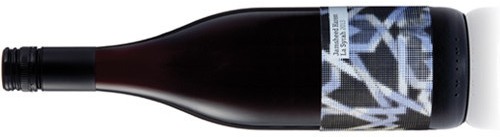
Jamsheed Harem La Syrah 2013, Yarra Valley and Pyrenees, Victoria, Australia (Agent,$29.95)

Only 900 cases were made of this blend of Upper Goulurn (80 per cent) and Yarra Valley (20) fruit. Indigenous yeasts were used and 80 per cent was fermented as whole bunches then aged in new and older 500L puncheons. So very fresh, the Harem (Harum…) was bottled with out fining or filtering eight months after picking. “Amidst a sea of wheat,” in a world of jammy Shiraz, say hello to this 13.2 per cent alcohol Victorian Syrah. This is fully exposed and in exposition of its naked beauty. Were more of Victoria produced in this progressive rock, singer/songwriter style, the throngs would applaud. Pure, smokey, opaque and sultry, not exceedingly complex but built on whole bunch bravery. Lyrical, harmonious and eminently listenable. Quite rightly so, shines on brightly, a good album side.  Tasted March 2015

Good to go!
http://www.winealign.com/profile/2058-mjg

Tasting with Power

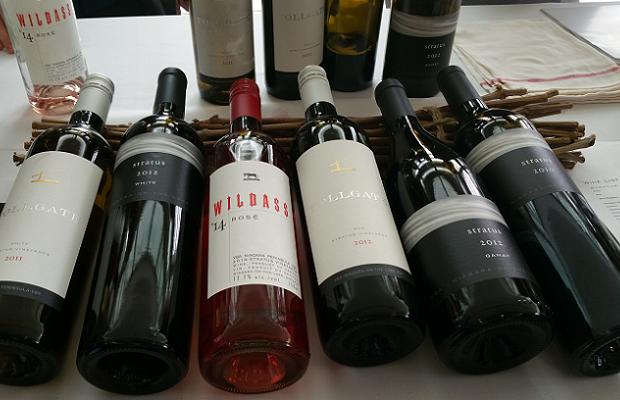
The wines of Creekside Estates at Barque Smokehouse, March 2015

The wines of Creekside Estates at Barque Smokehouse, March 2015

Power, Rob Power. Niagara man of mystery, winemaker, barrel blender, junkie of dangerous varietal liaisons, license to chill. Power has been making the wines at Creekside Estate Winery for more than a decade. He is both the face and the enigma. Creekside is not a Peninsula vintner that rests on winemaking or marketing laurels. They change with and for the times.

Related – Up on Creekside Estates

I sat down with Rob Power and Rich Gaskin of Hobbs and Company last week at Barque Smokehouse to re-visit some wines tasted in the winter and fall of 2014, along with a couple of new issues. Here the notes, some updated and others in first time put to paper.

Creekside Estates The Trad Reserve 2011, VQA St. David’s Bench, Niagara Peninsula, Ontario (390336, $28.95, WineAlign)

From a taste five months further along in bottle and just shy of the 36 months on lees (37.5 to be precise) 2nd bottling about to be disgorged. Has chill thickened and fattened in the middle with a texture and a truffled funk like foie gras, heading backwards and upwards, like a video shot in reverse. Rises from an ocean of spume up to a slivered taste of a grapefruit moon. “Transmission’s on and up we go.” Cool and angular on the beautifully licensed, bitter finish.

From my earlier note of October 2014: The Trad ’11 has a classic toast and yeast aromatic waft and so it goes that everything that follows is embraced with curiosity and an open mind. Ginger, citrus, bronze and the sweet scents of the inside of a candy machine, its candy long gone. Creekside’s winemaker Rob Power will never be accused of dialing this sparkler in. Tasting trials help determine the necessary, final blend. The single, Queenston Road Vineyard puts 56 per cent Pinot Noir and (44) Chardonnay, aged 2 years in bottle, together for a highly effective, expansive but not explosive fizz. At 8.7 g/L of residual its dry but not quite falling off the bone. The sweetness is tempered by elevated (9.98 g/L) acidity and tension. Spent 24 months on the lees and was bottled back in February. There is balance and pleasure and a good, stretchy finish. No band-aid. Clean, precise, fizz of the day.

Last tasted March 2015

Sauvignon Blanc ‘Iconoclast’ 2013, VQA Niagara Peninsula, Ontario (Winery, $17.95, WineAlign)

The licensee SB jimmies from fruit out of a good (right at the winery) site, caught red-handed at peak ripeness on a very specific picking date and crushed immediately to coax maximum freshness. Readily identifiable as Sauvignon Blanc, perhaps more so than any other from the Niagara Peninsula. The fruit was oxidized a hair to the left, flipping this more Loire than New Zealand. A dichotomous activity from large juice tray oxygenation meeting reduction under screwcap causes initial confusion but when the hounds of Blanc are released the wine buffets into clear, crisp feelings. This is not “mean, green and pristine,” just simply clean. This one’s got “a license to chill and I believe I will.”  Tasted March 2015

Laura’s White 2012, VQA Niagara Peninsula, Ontario (121764, $18.95, WineAlign)

Winemaker Rob Power corrects previously provided information and tells me Laura’s composition is 55 per cent Sauvignon Blanc and that there is some Viognier in here, an inclusion that justifies the back-end bite (in conjunction with Gewürztraminer) of noble bitterness. They and the rest of the varieties combine to imitate Sémillon because Power is “going for white Bordeaux” in this pole to pole, here ’till Sunday blend. This has the grab, tempered by the warmth of the vintage, so look for ’13 to nail it with a hook.

From my earlier, May 2014 note: With a tilt of the head to 90 degrees the bottle is assessed and the glass contemplated. She’s a flirt, a gregarious girl this Laura, so orchard driven and with a perfumed attraction.

From my earlier, February 2014 note: Laura’s White combines Sauvignon Blanc, Pinot Gris, Chardonnay, Riesling and Gewürztraminer in a kitchen sink blend that sees a bit of oak. What’s notable about the ’12 is the omission of two highly aromatic components, the previously employed stalwarts Viognier and Chardonnay Musqué. The adage is justified in that you take what the vintage gives you. If it gives you lemons, (shift tangents) you let the busy aromatics of more flavourful grapes (like Chardonnay) do the floral work. Laura’s ’12 will be a standout for the concept, a revivalist blend to help bring back some religion to the region’s renditions. Coming to VINTAGES in June.

Last Tasted March 2015

Viognier Estate Reserve 2012, VQA Niagara Peninsula, Ontario (22058, $29.95, WineAlign)

Here free run juice gets just a little help from the press. Consistent with a very recent taste, with a density in concoction and blessed tonic on the finish.

From my earlier note of January 2015: Creekside’s small production Viognier (maximum 80 cases) from the warmer micro-climate of the Queenston Road Vineyard heads back to near-boozy and a bit hot in the sudorific vintage. Oh the viscous humanity of it all, especially when the (all French, two year-old, nine months time) ferment was performed on 100 per cent of the six barrel juice. While it may not flirt with the dangers of say, a dirty peach martini, there is plenty of seasoning, rich, spicy and opulent fruit to at least declare a cocktail of some shaken kind. The ’12 Viognier drips and sweats of a humidity as much as any cool climate rendition can (at least in the context of the Niagara Peninsula). It may not be the ideal vintage but it just may be the one with the most excess.

Last tasted March 2015

Cabernet-Merlot 2013, VQA Niagara Peninsula, Ontario (Tank Sample)

The blend is (very approximate) 35 per cent of each Cabernet (Sauvignon and Franc) with 20 per cent Merlot. “Basically a baby Laura,” says Power. Currently smelling very tanky but fresh and bullish. Sniffing past the must is not so hard to do, especially with the waft of spices coming through with thanks to the good barrel. The Franc here comes from Virgil, “no man’s land,” from Frank Serluka’s vineyard. The lack of any discernible volatile acidity speaks volumes about the clean winemaking and the gregarious personality of that Four Mile Creek Cabernet Franc fruit. This will excel out of keg in late Spring.  Tasted March 2015

Creekside Estate Winery Pinot Noir Queenston Road Vineyard 2013, VQA Niagara Peninsula, Ontario (Winery, $22.95, WineAlign)

Still the Kama Sutra Pinot Noir of inviting behaviour. Positions in aroma, taste and texture are all elastic and of an aphorism held together in intimacy. Virtuous and gracious Pinot Noir for the purpose of interaction and pleasure.

From my earlier note of January 2015: “The first made since the 2008 because of a new directional decision to hold onto and no longer forsake these exceptional Queenston Road Vineyard grapes. A wine that folds back the skyline skin of time and reveals a cloning from intimate belongings. Pinot blessed of a Dylan-esque drawl, from a comfortable and crooning time in its life. Penetrates into the QRV earth and draws out subtleties, slow food assuagement and makes no BS about its ease. Though posolutely whiffing and tasting of black cherry, it balances itself with an acerbic wit. This is what winemaker Rob Power refers to as a lay lady lay style. Partners in crime Yvonne Irving and Matt Loney concur. One sip and your partner may just lay across your “big brass bed.” You can always go back to Nashville.

Last tasted March 2015

Laura’s Red 2011, Queenston Road Vineyard, VQA St. David’s Bench, Niagara Peninsula, Ontario (117906, $19.95, WineAlign)

A combination of young and older Queenston Road Vineyard vine fruit meshes to creamy raspberry, spoken most upfront, in the absence of Franc, by the Sauvignon. Waiting for this to improve would be a calculated error so drink up by the end of the year.

From my earlier note of September 2014: The most dead red Laura to date, juicy and earthy, like a licorice, plum and pomegranate demi-glace. Really expressive of earth and fruit.  Traditional house blend of Cabernet Sauvignon, Merlot, Syrah, Malbec and Petit Verdot. A no coat unfastened Niagara, consumer-friendly but also swelling with stuffing. “The light is red. The camera’s on,” the strokes are rich in energy though the tannins dry out a touch. Drink now and for two more years.

Last tasted March 2015

Creekside Estates Broken Press Syrah Queenston Road Vineyard 2011, VQA St. David’s Bench, Niagara Peninsula (202127, $39.00, WineAlign)

At its spiciest best, alkaline and lifted by Viognier, though as the tannins mellow, the Viognier will slowly disappear. Continues the Rhône-ish tradition laid before by 2004, 2006, 2008 and 2010, yet in ’12, for the first time, in addition to the Broken Press, there will be one made from seven rows of the same block Syrah, picked about a week later, a 100 per cent Unbroken Press. From vintage to vintage, a Viognier lifted BP is the correct application but in ’12, to Power and his team, both made perfect sense.

From my earlier note of October 2014: Only Creekside Syrah smells like this, like bending down to smell black raspberries on the shores of a briny capsicum lake in the middle of a pine forest. The 2011 Syrah has fruit residing on the edge of impossibly ripe, factored inside a pipeline, while piping lavender and plum pastry cream float atop rare duck breasts. If Syrah were to ooze or drip without sticking to surfaces along the way, this would be it. If Syrah came forth from the maw of the beast it would speak in these demanding tones. Creekside’s BP talks the tense, nervous and twitching talk. It’s smeared with a coat of epoxy spread over fine grain in wood. It sweats an air of metallic cordiality. If given five years to come together it will vape and realize togetherness.

Last tasted March 2015

Good to go!

http://www.winealign.com/profile/2058-mjg

Snow whites and the seven reds

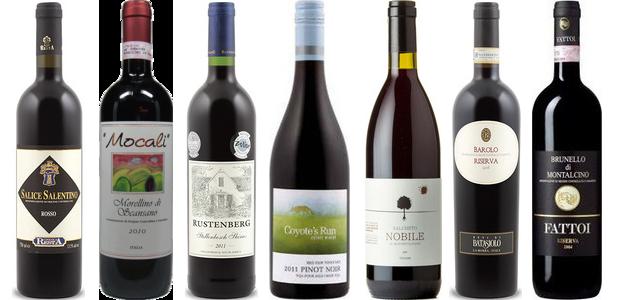
The seven reds from left to right: Resta Salice Salentino 2011, Mocali Morellino Di Scansano 2012, Rustenberg Shiraz 2011, Coyote's Run Red Paw Vineyard Pinot Noir 2012, Salcheto Vino Nobile Di Montepulciano 2011, Beni Di Batasiolo Riserva Barolo 2006, Fattoi Brunello Di Montalcino 2009

The seven reds from left to right: Resta Salice Salentino 2011, Mocali Morellino Di Scansano 2012, Rustenberg Shiraz 2011, Coyote’s Run Red Paw Vineyard Pinot Noir 2012, Salcheto Vino Nobile Di Montepulciano 2011, Beni Di Batasiolo Riserva Barolo 2006, Fattoi Brunello Di Montalcino 2009

Just as a child will willfully accept the naive and basic truth in a fairy tale, most of us will search for wines deeply buried within their simplicity. Then we have a sip. When we begin to think about that sip we delve deeper into the story and the mythology of the wine. This is where things begin to get complicated.

Maybe we invent comparative mythologies from tales and into wine just to play with the unconscious expressions of ourselves, or perhaps we just need to have some fun. Wine is not our yesteryear’s religion, nor is it something, once consumed, that can be held onto. It is fleeting and ever-changing. It is conceivable to think that wine drinkers of past eras were more childlike and held wine in more fairy-tale like hands. Today we act as though modern wines speak religiously, as if they each belong to one sect or another. Strange, but true.

On Saturday VINTAGES will roll out another lengthy tale of new releases, with a major focus on Italian reds. Like the analysis of the most famous of fairy tales, meaning is derived, not unlike an assessment of Italians and their wines, imagined as a desperate need to rule their own kingdom. The ferric, mineral and tannic nature of the group require that their rage be danced away with time, to re-gain control of their beauty and their lives.

For more recommendations from the VINTAGES February 7th, 2015 release:

Related – Is writing making a mess of wine

Here are the winter snow whites and seven Italian reds to look for, in stores now.

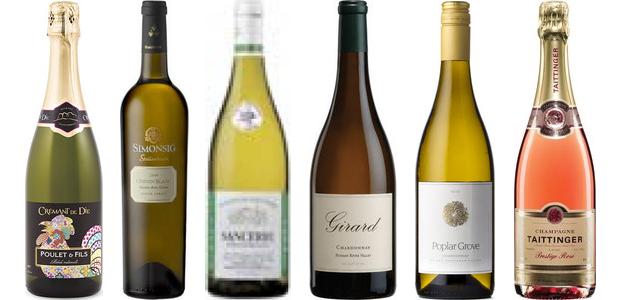
The snow whites from left to right: Poulet Et Fils Brut Crémant De Die, Simonsig Chenin Avec Chêne Chenin Blanc 2012, Domaine De Saint Pierre Sancerre 2013, Girard Chardonnay 2012, Poplar Grove Chardonnay 2012, Taittinger Prestige Brut Rosé Champagne

The snow whites from left to right: Poulet Et Fils Brut Crémant De Die, Simonsig Chenin Avec Chêne Chenin Blanc 2012, Domaine De Saint Pierre Sancerre 2013, Girard Chardonnay 2012, Poplar Grove Chardonnay 2012, Taittinger Prestige Brut Rosé Champagne

Resta Salice Salentino 2011, Doc Puglia, Italy (324731, $15.95, WineAlign)

Negroamaro (80 per cent) and Malvasia Nero combine for a mess of tar, composted earth, density in chewy dates, figs and ground funk drawn from dark, dank places. A Salice suspended, after the bruise of fermentation, like a charcoal tracing, like shadow with just an osculant of faint light. A cheesy note hangs, of a salinity out of cultures and wet vats. This may not be everyman’s cup of spume, peat and sedge, with its rough tannin too, but its value lies in complexity and value under $16.  Tasted January 2015  @winesofpuglia  @puglia

Mocali Morellino Di Scansano 2012, Docg Tuscany, Italy (317115, $16.95, WineAlign)

Morellino that is briery, earthy and with a soaked, cedar chip overlay on dark fruit. Brambly, purple pitchy and almost but not quite flamboyant. Slow as geology seeping, tile weeping, liqueur steeping then turning gritty with drying tannins. Good persistence and a bitter finish. Good value.  Tasted January 2015  @InfoMorellino  @liffordwine

Poulet Et Fils Brut Crémant De Die, Rhône, France (392555, $17.95, WineAlign)

The unique sparklers from the Die, made from (mostly) Clairette are somewhat of a rarity in Ontario waters. The bitter pith nose, ranging tangy palate and slightly oxidative style is a bit touchy but the length is nearly exceptional for the Euro. In the realm of Crémants, this Rhône dips pear slices past cracker nasturtium pods bobbing in a bowl of beneficial bitters. With a Mediterranean climate and altitude-influenced elemental aroma as if burnished pewter, the bird is anything but fowl. The case is made for these bubbles.  Tasted January 2015  @VINSRHONE  @WineandFood_RA  @TheCaseForWine

Rustenberg Shiraz 2011, Wo Stellenbosch, South Africa (399246, $19.95, WineAlign)

As per the Stellenbosch Shiraz stratagem, this may lean to sweetness but it’s all about rich, ripe fruit running wild and free. Savoury support comes from green tea, smoking branches and fulminating esters. Neither heavy nor burning, the ’11 is warm, clean and highly accessible. Impressive density and at 14.5 degrees alcohol, really quite soft, unwavering in its ability to suppress the demands of the octane push. Drink in the near term.  Tasted January 2015  @RustenbergWines  @StellWineRoute

Coyote’s Run Red Paw Vineyard Pinot Noir 2012, VQA Four Mile Creek, Niagara Peninsula, Ontario (79228, $24.95, WineAlign)

This is an intense and vexing vintage for the Red Paw, a Pinot Noir of delicacy in constant search for the right dancing partner. In 2012 the soil seems to have been magnetized with a gravity of ferric density, causing juicy and spontaneous fits of revelry and a painting of the Paw red. Cherries, stones and figs are in, along with ether, earth and peat. The longevity quotient comes into question as the tenure already seems quite evolved but in its current state it is quite fun to drink.  Tasted January 2015  @coyotesrun

Simonsig Chenin Avec Chêne Chenin Blanc 2012, Wo Stellenbosch, South Africa (282772, $25.95, WineAlign)

This barrel-aged Chenin Blanc is toasty, reductive and stratified, scaling heights few whites reach for, to seek other worldly atmospheres. I don’t find anything remotely tropical about it, on the contrary, it’s way out of the equatorial zone and into the upper reaches of the ozone. This has the Loire imprint of longing and distance. It will need time to come back down to earth, what with its hyper fruit meet mineral nuances. When it does it will walk through rain forests and dry flood plains with those extreme noisome notes in tow, to settle amongst the stones by the river. For some, this will be a rare find.  Tasted January 2015  @Simonsig_Estate  @WOSACanada  @WoSA_USA  @StellWineRoute

Domaine De Saint Pierre Sancerre 2013, Loire Valley, France (170258, $26.95, WineAlign)

A most promising and textured Sauvignon Blanc, full of chalky fruit and a lamina of minerality, like a strudel of stone fruit spread between layers of Phyllo pastry greased by pulverulant butter. Though this Sancerre does not and will not travel the longest route for the Loire, it is a seamless wine and one that is well-designed. Has a modernity about it while yet keeping a finger on and an ear to the radiocarbon chronometer.  Tasted January 2015  @LoireValleyWine

Girard Chardonnay 2012, Russian River Valley, Sonoma County, California (338434, $26.95, WineAlign)

Quite a different sort of California Chardonnay, cooler and in avoidance of the sub-equatorial fruit of the tropics. With a wisp of woodsmoke and a toothpick poke or two of smokey spice, this RRV bottling puts foggy Sonoma first in line, ahead of warm Cali sunshine. The one warm aspect is a vanilla overlay on creamy mango, a texture that is present but not over the top. The ripeness gathers moss and little stones, gets going, gains steam and fleshes out across a length that steers forward towards a future of nice value.  Tasted January 2015  @GirardWinery  @imbibersrepotr  @sonomavintners

Salcheto Vino Nobile Di Montepulciano 2011, Docg, Tuscany, Italy (685180, $29.95, WineAlign)

Here a most modern Vino Nobile from Salcheto, through its forward and public fruit to its fine designed label. Retains a sensible and loyal texture, wearing its coat of arms in reverence of its past. Argumentative tannin and acidity speak loud, over the voices of tar, ferrous vernacular, black and blue bruises and rolling stones. Like rusty blood seeping into the cracked earth of a water-starved forest, this Sangiovese gets inside and under the skin. “Come si chiama, what’s your game?” She will answer, Vino Nobile, that’s my name.  Tasted January 2015  @SalchetoWinery  @AMH_hobbsandco

Poplar Grove Chardonnay 2012, VQA Okanagan Valley, British Columbia (276675, $29.95, WineAlign)

The vintage does not strike so much a new direction for the Poplar Grove Chardonnay as much as a blip on the cool climate radar. Before extrapolating on that comment it must be said that this is a well-made wine. It’s riper, with more gregarious character, an increase in topicality and into a nearly candied buttercup feel. Rich in glück and circumstance. Where in ’11 there were many notes in ripe coconut and green tones, they are a merely a suggestion in ’12, not a composition. A brûlée of lemon and ginger with a sprinkle of cinnamon finds the palate in think mode moving forwards in slurry strides towards a cemented and fixed positional finish. This is for the here and now.  Tasted January 2015  @poplargrovewine

Beni Di Batasiolo Riserva Barolo 2006, Doc Piedmont, Italy (330704, $39.95, WineAlign)

Time yet remains on the diminishing side of this Barolo of necessity, regaling and expressive of tea, tannin and flowers, dried and crumbled over fine earth. A modern and high-toned La Morra that is representative of very good value. The tannins persist in clenched chops and will need up to five years to resolve. The BdB Riserva ’06 may not be the Nebbiolo to mortgage the cellar on, but it does have the ability to be a wine to arouse the longing of one who waits.  Tasted January 2015  @ChartonHobbs  @MikeAikins1

Fattoi Brunello Di Montalcino 2009, Tuscany, Italy (33498, $39.95, WineAlign)

The porcine cure of a Fattoi Brunello is a thing of mesmerism, here alongside a gamey note of soft, braised heart of beef. In ’09 the aromatics are a bit closed at present, atypical for the vintage but likely more a product of the curated, house style. Leather and some judicious oak spice offer up characteristic Grosso sentiments, dug into sweet earth and a feign of candied fruits and flowers. Sumptuous and terrific stuff. Here Brunello that effects the blinding potency of vines screaming of their fruit.  Tasted January 2015  @BrunelloImports  @ConsBrunello

Taittinger Prestige Brut Rosé Champagne, Ac Champagne, France (993113, $67.95, WineAlign)

A sweeping scopic range of bitters, soft tonics and savoury Polygonaceae circulate in the vacuum of this point beleaguering Champagne. She plies a rough trade, with a flinty, smouldering gun effect that simulates a toasted barrel blowing smoke upwards a riotous Rosé’s crystal glass. With citrus acidity off the charts, a pampered and churned pamplemousse ever expanding, the Taittinger excites and jointly strikes the heart with elegance and beauty. Her style is both chic and confidential, “she’s a combination Anita Eckberg, Mamie van Doren.” A Champagne that avoids freud and “drives a candy pink Cadillac,” that will “make you want to give up high school.”  For immediate pleasure and years of future memories.  Tasted January 2015  @Taittinger_News  @TaittingerUSA

Good to go!

http://www.winealign.com/profile/2058-mjg

If it’s value you want, it’s South Africa you need

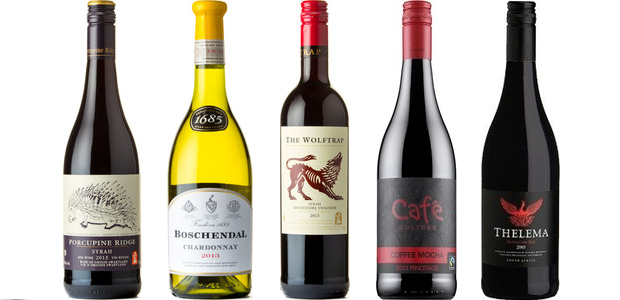
From left to right: Porcupine Ridge Syrah 2013, Boschendal 1685 Chardonnay 2013, The Wolftrap Syrah Mourvedre Viognier 2013, Café Culture Coffee Mocha Pinotage 2014, Thelema Mountain Red 2012

From left to right: Porcupine Ridge Syrah 2013, Boschendal 1685 Chardonnay 2013, The Wolftrap Syrah Mourvedre Viognier 2013, Café Culture Coffee Mocha Pinotage 2014, Thelema Mountain Red 2012

I sat down a few weeks back to taste 20 South African wines, all value-based, consumer-friendly and market-driven. With WineAlign colleagues David Lawrason, John Szabo M.S., Margaret Swaine, Steve Thurlow and Sara d’Amato on hand, the general consensus at the tasting was positive and only worked to re-enforce how competitive South African wines can be in the sub-$15 market.

While certainly not immune to flaws, some South African reds and whites can sometimes get right in your face and yet others show remarkable elegance and complexity at entry-level prices. When I taste wines such as these I imagine the catastrophe of grace. They are wines that move through history with the fluency of a spirit. Some make a house cleaning of belief, others are solid senders. The South African tasting was more than just a group of cheap wines with something to say, more than a pleasant surprise, it was in fact, a pleasure.

Porcupine Ridge Syrah 2013, Swartland, South Africa (595280, $14.95, WineAlign)

Deep dish Syrah, with meaty and cured toppings and the mordant pitch of Swartland. Tarry, olivine rampant and filled with the late summer, sorrowful berries; blackberry and black raspberry. Naturally sweet, viscous, grainy and tannic mess of texture overlaying fruit. Tons of wine for the buck and a very promising vintage to lay down. Aridity takes over on the briery finish. Wow.  Tasted January 2015  @PorcupineWines

Boschendal 1685 Chardonnay 2013, Western Cape, South Africa (367698, $14.85, WineAlign)

Here is a buttery and toasty Western Cape Chardonnay, slightly dirty and reductive. Confused, seemingly high residual avoirdupois restricts the opening notes, though they surely begin to play. The aromatics are heavy with the soaking skins of pear, apple and quince in crumbled amaretto cookie and flaky pastry boozy waters. Give this three plus years to shed its nerdy phase and integrate its tangy persistence.  Tasted January 2015  @BoschendalWines  @liffordwine

The Wolftrap Syrah Mourvedre Viognier 2013, Western Cape, South Africa (292557, $13.95, WineAlign)

Referring to Marc Kent’s blend as traditionally Rhône may seem at odds in consideration of the north-south, modish chaos, the price and the locale, but folky it is. The blend is unvarying Boekenhoutskloof, grounded by Syrah with support from Mourvèdre and Viognier. The latter, aromatic white grape variety lifts and brightens the brooding load. This is quite sweet and sour, of high-toned red and black fruits meeting a reduction of Champagne vinegar. A tannic and mineral streak divides, circles and conquers all. This will drink better in a year and for a few more after that.  Tasted January 2015  

Café Culture Coffee Mocha Pinotage 2014, Western Cape, South Africa (292466, $12.95, WineAlign)

From the KWV stable, the triad of outwardly and rhetorically spoken culture is right there on the label, in all its java glory. Café, Coffee, Mocha. The charm here is that perhaps in 2014 it has actually been scaled back a touch, the wood suffusion, to at least reveal a modicum of red fruits. Nonetheless it is the notes of smoke, tar, rubber and of course coffee that dominate. “Cause it’s the new Mother Nature takin’ over.” There are also at least two spoonfuls too many of sugar. Like the annoying Guess Who song, this can only be taken in very small doses. “Find a corner where I can hide.”  Tasted January 2015  @TheCafeCult  @Diageo_News

Thelema Mountain Red 2012, Western Cape, South Africa (222570, $12.95, WineAlign)

From fruit up on the slopes of the Simonsig Mountains, this has real, natural cherry brightness, not to mention a kitchen sink of varietal interplay. Shiraz (37 per cent), Petit Verdot (25), Cabernet Sauvignon (23), Merlot (10), Grenache (4) and Cabernet Franc (1) are coalesced by a lighter hand and the effect is less frightening than might be expected. Like similar California action (save for Zinfandel and/or Petite Sirah), this comes together nicely, even coherently, with just a few wrinkles. Represents very good value for a multitude of purposes; BBQ and barbecue being two of them.  Tasted January 2015  @ThelemaWines  @EpicW_S

From left to right: Cape Heritage Inception Deep Layered Red 2012, Cape Heights Cabernet Sauvignon 2013, Flat Roof Manor Pinot Grigio 2014, Flat Roof Manor Merlot 2013, Boschendal The Pavillion Chenin Blanc 2014

From left to right: Cape Heritage Inception Deep Layered Red 2012, Cape Heights Cabernet Sauvignon 2013, Flat Roof Manor Pinot Grigio 2014, Flat Roof Manor Merlot 2013, Boschendal The Pavillion Chenin Blanc 2014

Cape Heritage Inception Deep Layered Red 2012, Western Cape, South Africa (369967, $12.95, WineAlign)

If 2011 was sweet, this next vintage is like Carabao mango, Luohan duo and Deglet noor dates all cooked down together into a mawkish, sappy jam. Or maybe it’s much simpler than that; just deeply layered refined sugar and red dye number 40. There is almost no aromatic discernment beyond the crystalline layers. No fruit, no soil, no acidity, no tannin. Just sweetness.  Tasted January 2015

Cape Heights Cabernet Sauvignon 2013, Western Cape, South Africa (129874, $11.30, WineAlign)

The simple drawn label indicates honest design and intent. The alcohol (14.5 per cent) seems spot on and in sweetness, honestly declared. Stones of fruit, full on Cassis, vanilla and wood spice are in the glass and obviously so. Scales greater heights than most generic California counterparts and comes across as Cabernet Sauvignon, with savoury Western Cape scents closer to Sonoma than say, Central Coast. Some coal and tar come in play with a good, persistent finish.  Tasted January 2015  @liffordretail

Flat Roof Manor Pinot Grigio 2014, Western Cape, South Africa (27128, $11.25, WineAlign)

With the simple aroma of vanilla drops on cut pears and refined sugar, this is clean, crystalline and simple Pinot Grigio. Inoffensive, for a large gathering it will not hurt any feelings. The production is mindlessly prepared and contrived, until a warm cookie dough nuance takes it to another level. Nothing shocking here.  Tasted January 2015  @FlatRoofManor

Flat Roof Manor Merlot 2013, Stellenbosch, South Africa (27128, $11.25, WineAlign)

A taut and toned Merlot, varietally correct and though the label reads 13.5 per cent alcohol, shows considerable heat. Very Merlot, dusty, mulberry scented, syrupy and familiar as a Cape red. Fully garnished, varnished and a rubber stamp this side of tarnished, the thick smoke does distort the clarity. Somewhat seamless in its heavy charms and structured, if quick to finish. Tasted January 2015  @FlatRoofManor

Boschendal The Pavillion Chenin Blanc 2014, Western Cape, South Africa (365353, $10.95, WineAlign)

Though the label has forsaken the partnership with (15 per cent) Viognier, the aromatic floral lilt persists, lifts and buoys the stoic and stark Chenin to impossible heights in a sub-$11 wine. The Chenin’s sharp reserve is inwardly atomic and the relationship with the 15 percenter strictly platonic. Together they create honeyed matter, walk hand in hand and handsomely forward. The residual sugar drip may be a touch heavy-handed but laying a bottle or two down for a few years is entirely possible and save for the price, even longer than that. The acidity circulates to the end, framed by a fine tannic texture.  Tasted January 2015  @BoschendalWines  @liffordwine

From left to right: Goats Do Roam White 2013, Flagstone Poetry Cabernet Sauvignon 2012, Durbanville Hills Sauvignon Blanc 2014, Two Oceans Sauvignon Blanc Extra Dry Sparkling Wine 2013, Bellingham Big Oak Red 2013

From left to right: Goats Do Roam White 2013, Flagstone Poetry Cabernet Sauvignon 2012, Durbanville Hills Sauvignon Blanc 2014, Two Oceans Sauvignon Blanc Extra Dry Sparkling Wine 2013, Bellingham Big Oak Red 2013

Goats Do Roam White 2013, Coastal Region, South Africa (237313, $10.95, WineAlign)

The popular and successful Rhône-ish north-south blend in 2013 is Viognier (67 per cent), Roussane (19) and Grenache Blanc (14). In memory, mimic and polar fellowship of the mother land, the GdR is spic and span clean if slightly saccharine and sentimental. I find this to be a typically commercial and derivative South African white wine, with an aromatic and palate profile of sugary, viscous appliqué and rubber tree sap. Has that awkward, gummy resin sensation, along with tropical notes. It’s the pineapple expression that saves the day and makes it more fun to drink.  Tasted January 2015  @DonGoatti  @FairviewWine

Flagstone Poetry Cabernet Sauvignon 2012, Western Cape, South Africa (358754, $10.95, WineAlign)

Like flavoured, warmed to dripping chocolate, with splinters. Like overripe blackberries seeping in warm rainwater. There is some formidable tannin and acidity which could use some air time to resolve. Quite unique and fun for an inexpensive South African red with only a minute level of rubbery, volatile acidity. Some earth and plenty of spice, much of it from wood. Quite bright actually and well made.  Tasted January 2015  @flagstonewines  @CBrandsCareers

Durbanville Hills Sauvignon Blanc 2014, Durbanville, South Africa (22251, $10.95, WineAlign)

Extreme savour and notes for green vegetables are sprinkled with capsicum and dried caper dust in this piquant Sauvignon Blanc. Windswept tops of or cliff edges can be conjured at a sip, along with he dust of desert brush and spots of European gorse. Ocean mists join the notes of Ulex, contributing further green aromas and salty-based flavours. Acidity brings it all in focus. There is complexity in this SB’s drive.  Tasted January 2015  @dhillswine

Two Oceans Sauvignon Blanc Extra Dry Sparkling Wine 2013, Western Cape, South Africa (281311, $10.95, WineAlign)

Quite oxidized and based on the saccharine sugar aspect, “Extra-Dry” must be a translation from the local winemaker’s dialect. While it has some fining aridity on the back end, the early palate is coated with not so unpleasant sweetness. The capsicum captures the effectualness of the varietal, as do green vegetables and grasses. Intensity comes through in lemon curd and the finish is quite bitter.  Tasted January 2015

Bellingham Big Oak Red 2013, Western Cape, South Africa (350595, $10.80, WineAlign)

A Shiraz-Cabernet blend that’s all about the tree, the barrel and a winemaker’s loud and clear pronouncement of the way jammy Western Cape fruit should be treated. Tire tread and sappy tensor bandage smother along with all kinds of chocolate. Plenty of red fruit, grainy tannin and condensed acidity, straight out of the can. Big wine for so little.  Tasted January 2015  @DionysusWines

From left to right: Frisky Zebras From left to right: Nederburg Winemaster's Reserve Shiraz 2013, Douglas Green Sauvignon Blanc 2014, K W V Contemporary Collection Chenin Blanc 2014, Obikwa Sauvignon Blanc 2014, Frisky Zebras Sensuous Sauvignon Blanc Sauvignon Blanc

From left to right: Nederburg Winemaster’s Reserve Shiraz 2013, Douglas Green Sauvignon Blanc 2014, K W V Contemporary Collection Chenin Blanc 2014, Obikwa Sauvignon Blanc 2014, Frisky Zebras Sensuous Sauvignon Blanc

Nederburg Winemaster’s Reserve Shiraz 2013, Western Cape, South Africa (527457, $9.95, WineAlign)

Have always had a soft spot for this hard-nosed, high-alcohol (pushing the 15 per cent limit, despite the declared 14.5 on the bottle) heavy lead and plush red berry Shiraz. Especially at under $10. Graphite and mephitic barks, ferrous bits and cool bites keep it dancing under ground. It’s sweet and sour, with soy and balsamic swirls. Covers a wide ranging set of Western Cape parameters. Runs the flavour gamut and represents more than solid value. It’s the style, love it or not.  Tasted January 2015  @Nederburg  @ImportWineMAFWM

Douglas Green Sauvignon Blanc 2014, Western Cape, South Africa (367821, $9.80, WineAlign)

Mr. Green Jr. has fashioned the goods, following in the footsteps of his father. This is a cheeky little Sauvignon Blanc. Slightly oxidized, certainly pumped up by a touch of effervescent CO2 and tempered by Western Cape sentiments. Has hallmark South African flaw-ish white wine tendencies but also plenty of back-end bite meets verve. Like Scatterlings in a bottle, “in their hearts a burning hunger, beneath the copper sun,” this SB has tons of tropical flavour. Also possesses a green apple crunch and a Cleggy, cool, minty middle. Most excellent and affordable juice.  Tasted January 2015  @DionysusWines

K W V Contemporary Collection Chenin Blanc 2014, Western Cape, South Africa (18689, $9.45, WineAlign)

Despite the obvious base, elemental and flinty suggestions, it would take some yoga like stretching to pull a Chenin Blanc muscle out of the overall aromatics in a blind tasting. Yet somehow it screams Western Cape and South Africa. Reeks of gauze, sacchariferous density and homeopathic remedy. Saps moisture with anti-vivid aridity. Must overs are in vegetative tones. And, it’s all in.  Tasted January 2015  @KWVwines  @DiamondEstates

Obikwa Sauvignon Blanc 2014, Western Cape, South Africa (527465, $9.45, WineAlign)

Struts slowly out, the aromatic neck in craning position, the rotund body slightly awkward and stuck in one dimension. The sweet perfume is animal musky, in a medicinal way. The big bird is a perfectly planar white that is just and only that, hardly recognizable as Sauvignon Blanc, with no ties to any defined terroir. The ostrich abides for simple and ordinary quaffing.  Tasted January 2015  @ObikwaWines  @ImportWineMAFWM

Frisky Zebras Sensuous Sauvignon Blanc NV, Western Cape, South Africa (237685, $8.95, WineAlign)

From purchased fair-trade fruit, this non-vintage white wine is nondescript. Here brews honeydew in a bottle. Tinny, oxidized and briny, bronzing smells are also sunburnt. The mouth is the recipient of a greasy, reductive, effervescent and prickling salve. Non-Maleficence in Sauvignon Blanc.  Tasted January 2015

Good to go!
We the Icewine

Xerox

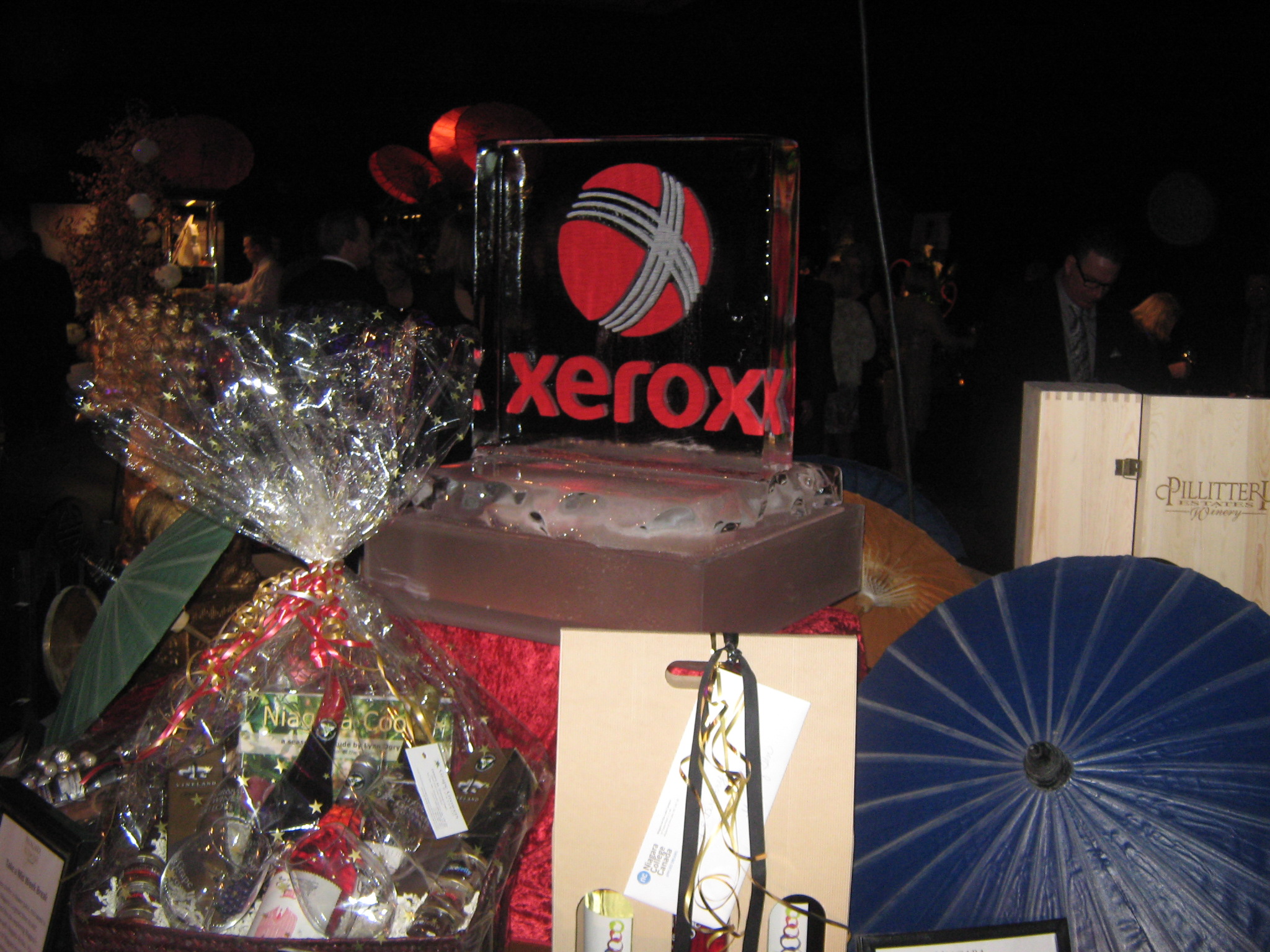
Xerox Icewine Gala, Fallsview Casino Resort

Something has shifted in me, somewhere closer to the realm of sweet nirvana. It could be empathy, a delayed reaction in sensitive thought to what the winemakers and hard-working Niagara wine country folks had to endure in the winter of 2014. Maybe it’s a premature anticipation of the greatness that will come from sweet wines crafted from out of that polar vortex attenuated vintage. Could it just be that Icewine has grown on me, that the elixirs of Peninsula life have violated and occupied my parochial psyche?

For two weeks in January, Niagara Wine Festivals and Wine Country Ontario lay out the nectarous red carpet and everything comes up Icewine. If fans of the Toronto basketball franchise can ignore all the basic tenets and principals of modern English grammar, who’s to say the followers of Ontario’s world-class elixirs can’t do the same. Thus I give you, “We the Icewine.”

Admittedly the phrase does not resonate with equal credibility in comparison with what works in the realm of base, shallow and primitive sport. It does not matter to me. I’m still going with it. Niagara is the epicentre of the Icewine world, in the (near, near) north and we own the market and its successes. We the Icewine.

20 Years

20 Years of Icewine

A recap of Icewine 101. Simply put, made from grapes that have been left to freeze naturally on the vine. Ontario’s production laws insist that Icewine must be made from approved grape varieties; the most popular are Vidal Blanc, Riesling and Cabernet Franc. Some small lots include Gewürztraminer, Chardonnay and Cabernet Sauvignon.  Grapes are left on the vine until a sustained temperature of -8°C or lower is reached and then picked from those vines encapsulated in nets to protect them from birds possessive of a sweet tooth.

Related – Deep freeze: Controversies, polar vortex and icewine 

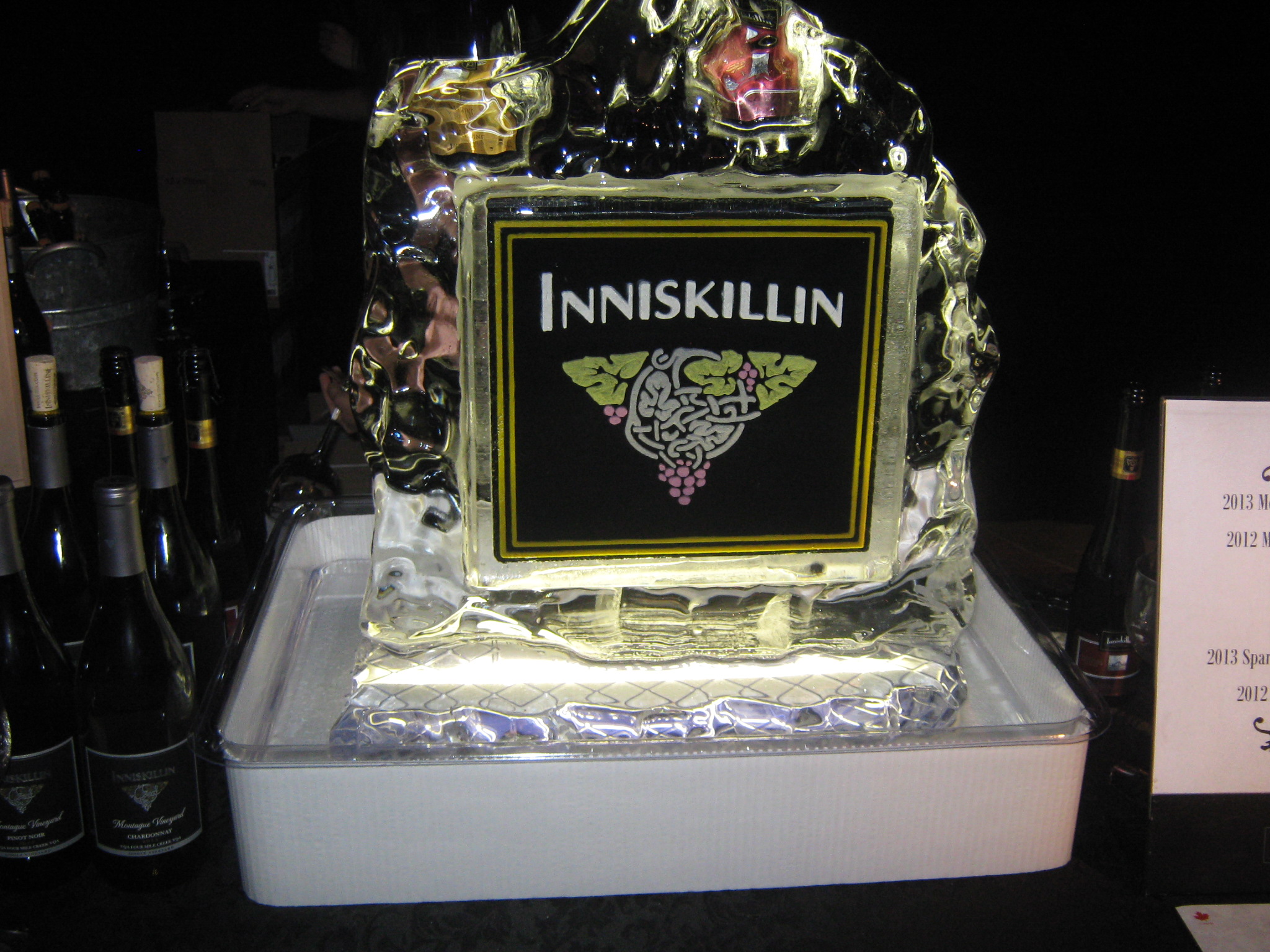
The wineries of Niagara-on-the-Lake are the backbone of the Icewine phenomenon in Ontario. Picking for the Icewine harvest in 2015 has stretched over a period exceeding 30 days, not necessarily out of the ordinary but it should make for a wide range of styles and quality in the vintage. Inniskillin Niagara Estate Winery began its thirty-first Icewine harvest on January 5th.

The Niagara Icewine Festival has wrapped up for another year but there are still many weekends left to get a taste of what took place throughout the month of January. There were street festivals in Twenty Valley‘s Jordan Village from January 9th – 11th, Niagara-on-the-Lake from January 16th – 18th and new this year, events in Niagara Falls. Winter continues along with the buzz across the Niagara Peninsula.

Visitors made use of the Discovery Pass, a passport to 35 wineries and culinary experiences along the Wine Route. Along with a variety of Icewines, visitors were offered the opportunity to taste sparkling and VQA red and white wines.

Gala

Icewine Gala decor

For all things Icewine here is a link to the festival site withy more information here. With kind thanks to Magdalena Kaiser and Wine Country Ontario on Friday, January 10th, 2014 I attended another Xerox Icewine Gala at the Fallsview Casino Resort. The following day I attended the Twenty Valley street festival in Jordan, Ontario.

With Icewine firmly on the brain I decided to make a go at as many samples that can safely be sampled in one night. Not to leave out the still and Sparkling in the room, I made sure to taste the generous and in some cases, pleasant surprises being poured by Niagara’s finest winemakers. Here are notes on twenty wines tasted over the weekend.

And don’t forget the anagram: A wet vial is fine nice agar.

Vineland Estates St. Urban Riesling 2008, VQA Niagara Escarpment, Ontario (38117, $19.95, WineAlign)

If this Riesling could go through a glück stage, now would be the time. There is a plump and resinous feel about it in 2015, quite possibly signalling the end of its first seven years en route to a minimum 14 more in its life. At this juncture it’s like hot stones washed down with salt water. Look for it to cool again as the year passes. From my earlier, April 2013 note: “Poured as a youthful and “hello” pleasant surprise though it’s just beginning to display secondary character. Has shed its tingling ferment skin without compromising the inherent citrus zest. Nectar lit by just emerging perky propellant and the ubiquitous, underlying ullage of St. Urban’s stones all combine forces to a life of amarita. All this to make believe 2028 will be just another year in its evolution.  Last tasted January 2015  @benchwineguy  @VinelandEstates
Pinot QRV

Creekside Estates Pinot Noir QRV 2013

Creekside Estate Winery Pinot Noir Queenston Road Vineyard 2013, VQA Niagara Peninsula, Ontario (Winery, $22.95, WineAlign)

The first made since the 2008 because of a new directional decision to hold onto and no longer forsake these exceptional Queenston Road Vineyard grapes. A wine that folds back the skyline skin of time and reveals a cloning from intimate belongings. Pinot blessed of a Dylan-esque drawl, from a comfortable and crooning time in its life. Penetrates into the QRV earth and draws out subtleties, slow food assuagement and makes no BS about its ease. Though posolutely whiffing and tasting of black cherry, it balances itself with an acerbic wit. This is what winemaker Rob Power refers to as a lay lady lay style. Partners in crime Yvonne Irving and Matt Loney concur. One sip and your partner may just lay across your “big brass bed.” You can always go back to Nashville.  Tasted January 2015  @CreeksideWine  @CellarMonkey  @Matt_Loney

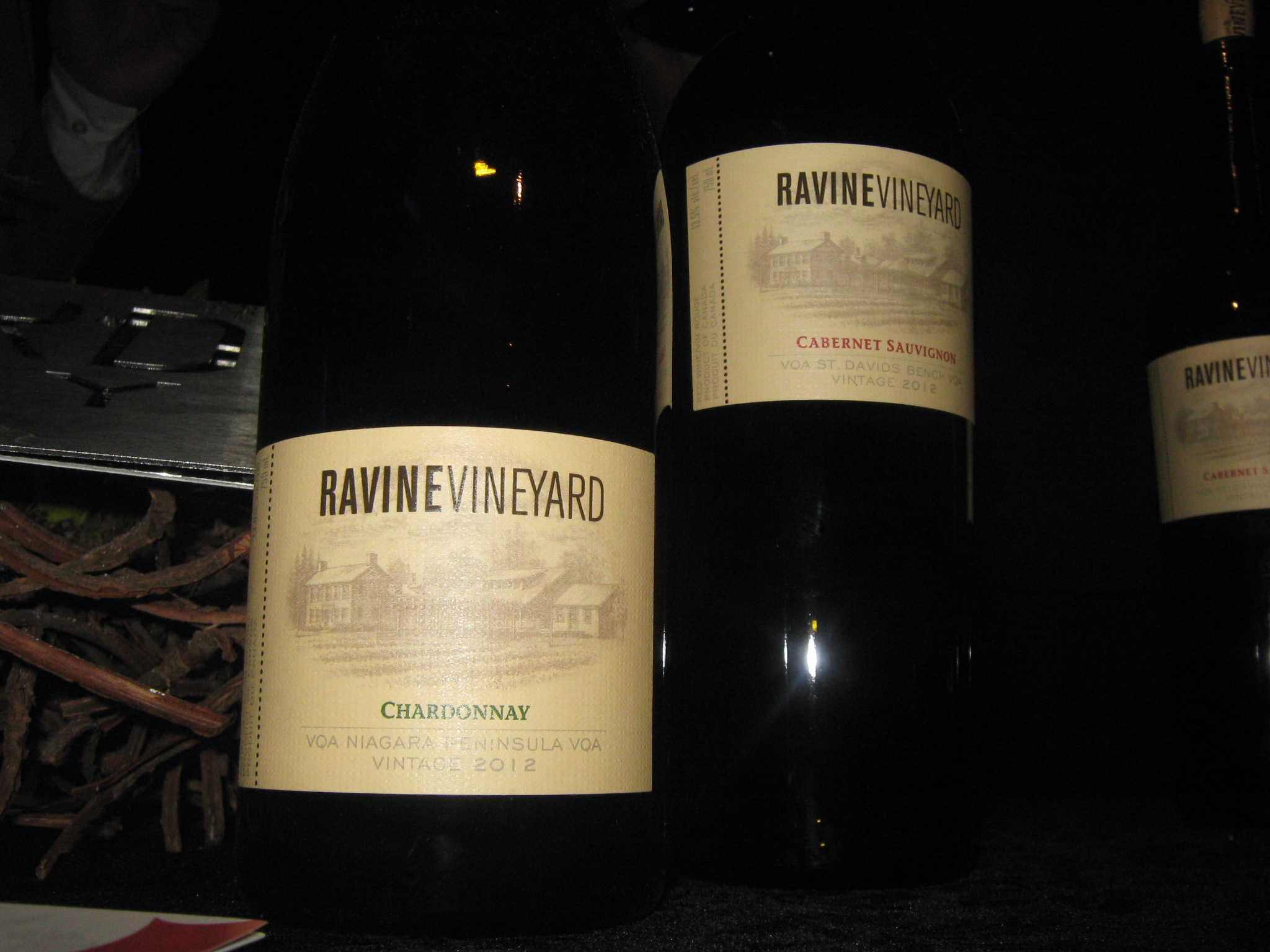
Ravine Vineyard Chardonnay 2012, VQA Niagara Peninsula, Ontario (306902, $24.00, WineAlign)

Spice notes are the current rage, from out of the barrel and now into a next level of amalgamation with tree orchard fruit. Has lengthened somewhat since last summer. From my earlier, July 2014 note: “Winemaker Martin Werner’s 2012 may just be the hardest working Chardonnay in showbiz and in Niagara. Winnowed from Estate (St. David’s Bench) and (Niagara) River fruit, there lurks within, a 20-30 percent perfumed compression of Chardonnay Musqué. The additive is a tonic fanned from the wine’s olfactic communicative nerve centre, adding tree fruit notes no more serious than should be gathered. Werner picked real early, like five weeks ahead (first of September) and the resulting noisome perfume makes for some funk. “It’s these little things, they can pull you under,” but they blow away and settle into a rich, viscous Chardonnay for the palate to collect, contain and command. “Oh, oh, but sweetness follows.” This Ravine works automatically, of the people, for the people.” Last tasted January 2015  @RavineVineyard  @marty_werner

Inniskillin Winemaker’s Series Montague Vineyard Chardonnay 2012, VQA Four Mile Creek, Niagara Peninsula, Ontario (586347, $24.95, WineAlign)

The warm clay of Montague plugs in and along with the barrel, layers toast, buttered toast and more toast upon the body of the 2012 Chardonnay. In many ways this is a serious bottling for the Peninsula; it’s all in and wants it all. A strong-willed, big-boned wine with much ado about varietal expressiveness. Paired with a plate of many elements and anchored by rich protein drawn from a salty ocean, this forward and weighty Chardonnay can do no wrong. With all its upfront personality it may not do the same with more than a few years age but there’s really nothing wrong with that. Enjoy it now and to 2017.  Tasted January 2015  @InniskillinWine

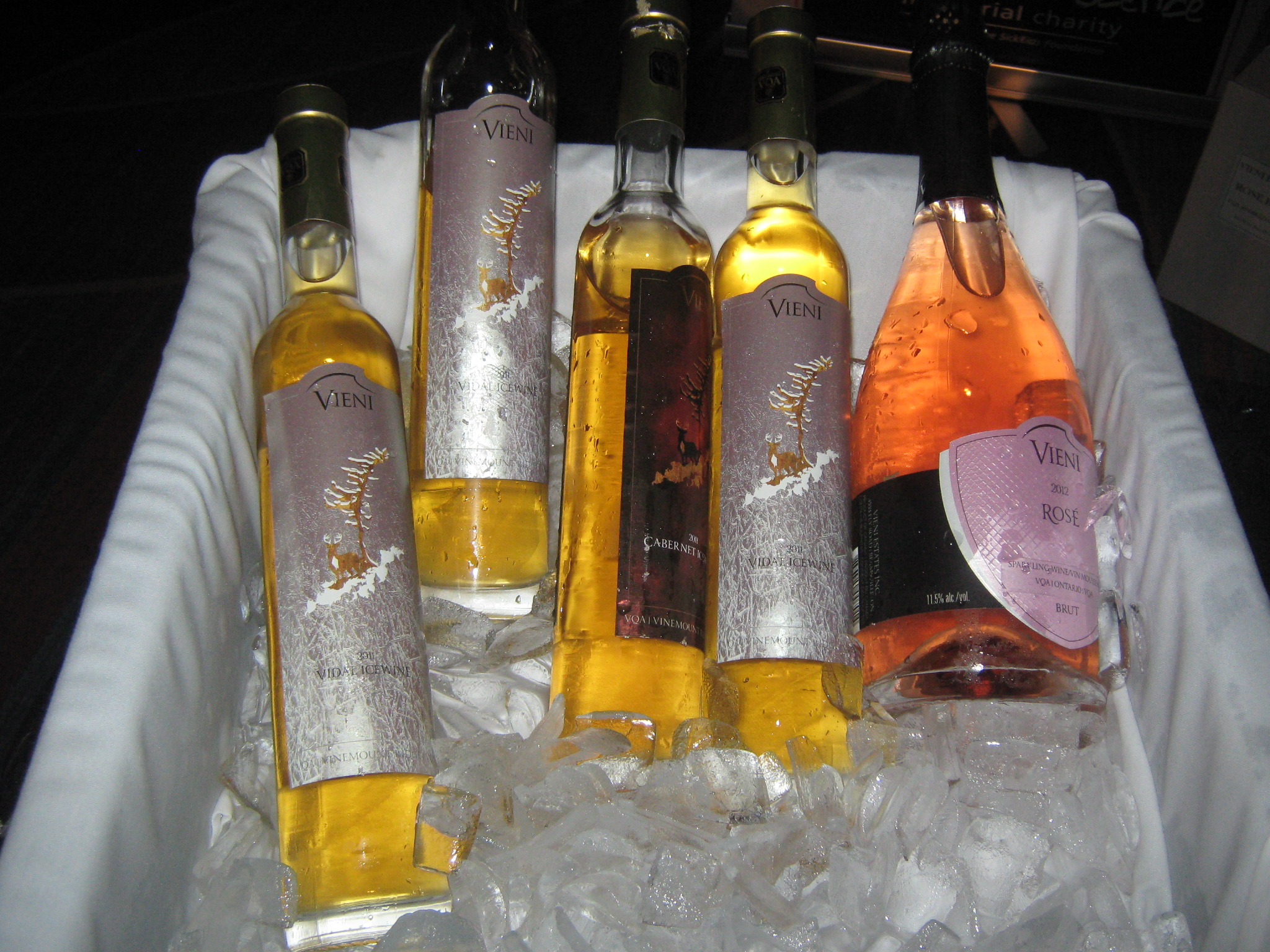
Vieni Estate wines

Vieni Estate wines

Vieni Estate Sparkling Brut Rosé 2012, VQA Vinemount Ridge, Ontario (Winery, $29.95)

Made from a blend of Chardonnay, Pinot Noir, Pinot Meunier, and Riesling, the Charmat method Rosé Sparkling is weighty at 13 per cent alcohol and so very savoury. Winemaker Mauro Salvador is finding new places for investigation in fizz-forming for Ontario. The ’12 Brut Rosé champions aridity and noble bitters. The aromas conjure up a botany and a herbalism that would make Pliny proud.  Think stinging nettles, rapini, arugula, strawberry leaf and the energy of carboniferous ponds. Though the acidity is mild as compared to Salvador’s Vidal/Pinot Gris ‘Momenti,’ it manages just enough balance in this blush sparkler.  Tasted January 2015  @VieniEstatesInc

Creekside Estate Winery Reserve Viognier 2012, VQA Niagara Peninsula, Ontario (Winery, $29.95, WineAlign)

Creekside’s small production Viognier (maximum 80 cases) from the warmer micro-climate of the Queenston Road Vineyard heads back to near-boozy and a bit hot in the sudorific vintage. Oh the viscous humanity of it all, especially when the (all French, two year-old, nine months time) ferment was performed on 100 per cent of the six barrel juice. While it may not flirt with the dangers of say, a dirty peach martini, there is plenty of seasoning, rich, spicy and opulent fruit to at least declare a cocktail of some shaken kind. The ’12 Viognier drips and sweats of a humidity as much as any cool climate rendition can (at least in the context of the Niagara Peninsula). It may not be the ideal vintage but it just may be the one with the most excess.  Tasted January 2015  @CreeksideWine

Inniskillin Niagara Estate Single Vineyard Series Montague Pinot Noir 2012, VQA Niagara On The Lake, Ontario (997353, $29.95, WineAlign)

A crescendo of sorts has been struck in 2012 with the Montague Pinot Noir perpetuity, giving credence to the vineyard as a resource to be exploited. What the site does for Pinot, particularly in warm vintages like 2012, reminds of the Pfersigberg in Alsace, a plot which provides fruit for the Sainte-Claires bottling by Domaine Albert Mann. A site where water-retention is less than average, where soil colour and low humidity attract the radiance of intense heat, which leads to early ripening of the grapes. The richness of Montague’s clay is amplified in the vintage, providing elevated heat units for this red cherry, beet, cinnamon and toasted red of equally exceptional flavours. Fine, linear acidity takes it to depths and will lead it down long, paved roads.  Tasted January 2015

Château Des Charmes Equuleus 2010, VQA St. David’s Bench, Paul Bosc Estate Vineyard, Ontario (319525, $30.00, WineAlign)

Not quite halfway to the five year prediction, the filly is showing the first sign of slowing down. While time certainly remains on her side, the obvious maturation and calming down is nosed in the onset of a slow caramelizing aroma. While the gait may be in trot mode, the five year mark (2018) remains the signpost to look towards on the long track of her life. At that point, with an hour decant, Equuleus ’10 will be good to go. From my earlier, May 2013 note: “From the Paul Bosc Estate Vineyard is a classically styled blend of 50% Cabernet Sauvignon, 25% Cabernet Franc and 25% Merlot, only made in exceptional years. Apropos choice from 25-year old vines (in 2010) from the warmer St. David’s Bench for Cuvée’s 25th show. Poised, balanced and regal yet this mare is temporarily a head-shy, sensitive equine red. Will trot out furlongs of tobacco and meaty aromas from now and through maturity in five plus years. A saddle of round, red fruit will age gracefully.”  Last tasted January 2015  @MBosc

Colaneri Estates Coraggioso Cabernet Sauvignon 2012, VQA Niagara Peninsula, Ontario (Winery, $32.95, WineAlign)

Crafted in the appassimento style, the 2012 Coraggioso is made from 80 per cent dried fruit. Intended to mimic its maker (Michele “Mike” Colaneri), the wine is a bullish, strong silent type, protector of the family, or in this case, the dried grape, passed over style of the Veneto. The specs are bold and impossible; alcohol fortified at 15.3 per cent, residual sugar duplicitous at 7.8 g/L and acidity nearly non-existent at 0.97 g/L. The composition yet works, with help from natural fermentation (no cultured yeasts), six months in new barrels and an additional 13 more in used ones. The happy and old school aspect ratio is turned up by its dried bulb, root and packed earth aromatics; fennel, liquorice and just set concrete. The balance is paradoxical, nearly apocryphal, certainly Coraggioso (courageous). The dried fruit sensations continue right to the end, in lieu of acidity and tannin so the ability to age is there, even in the absence of traditional agents. Really unique and dare it be said, elegant Bordeaux-esque appasimento.  Tasted January 2015  @ColaneriWinery

Southbrook

Southbrook Vineyards

Southbrook Whimsy! “Damy” Chardonnay 2011, VQA Niagara Peninsula, Ontario (Winery, $34.95, WineAlign)

As a Whimsy sister to the XY Sirgue, XX Damy is a barrel blend that spent 10 months on lees in 100 percent French oak (25 new, 25 one year-old and 50 neutral). While undoutedly the more feminine of the two, she is also feistier and the Chardonnay possessive of a bigger personality. Damy exaggerates suppositions synthesized from both the 2011 micro-vintage and the macro-cool climate for Niagara Chardonnay. At present she seems stressed, with so much citrus anxiety, a sting in herbage and a medicinal lactic seeping. All need to come together, find the calm, common ground and spoon beside one another. This will happen, given a couple of years time and Damy will express herself more freely come then. Drink brother Sirgue first, the simpler and softer sibling.  Tasted January 2015  @SouthbrookWine

Creekside Reserve Queenston Road Vineyard Cabernet Sauvignon 2010, VQA St. David’s Bench, Niagara Peninsula, Ontario (Winery, $34.95, WineAlign)

A 21-month stay in an all French oak hotel has now reached integration in this Queenston Road Vineyard beauty. The fullness of its qualities are on display, running a circuitous aromatic and flavour gamut from dark chocolate to savoury black olive cake. From my earlier, February 2014 note: “Impeccable correctness in terms of the variety from a year where the heat giveth and the heat taketh away. Works Cabernet properties properly, embracing and minimizing oak without pretending it’s not there. This red is expressly lush and oak driven, as it should be, it being Cabernet and all. Leaves its appendages out for a Mediterranean pedicure, a glaze of Cassis, black olive and black cherry dug in a chair entrenched in the warm confines of the St. David’s Bench.”  Last tasted January 2015  @CreeksideWine

Southbrook Poetica Cabernet Merlot 2007, VQA Niagara Peninsula, Ontario (Winery, $54.95, WineAlign)

The Poetica Red is very warm, extracted and quite stylish. She did not miss much from the heat day quotient of the 2007 vintage in Niagara. “She’s well acquainted with the touch of the velvet hand like a lizard on a window pane.” Anise and pencil graphite are shot straight from the wood-soaked barrel of a dark chocolate gun, leaving behind a pool of orange bitters with a slick of acidity. The (rounded up) one-half Cabernet Sauvignon, one-third Cabernet Franc and one-quarter Merlot, while bigger than its head, is so integral towards the future success of learning to reign in the power of this formidable Southbrook blend. Happiness is a warm Poetica.  Tasted January 2015  @SouthbrookWine

The Icewines

Château Des Charmes Estate Bottled Vidal Icewine 2013, VQA Niagara On The Lake, Ontario (565861, 200 ml $25.95, WineAlign)

All the diamonds in this world seem to concentrate in fruit form within CdC’s Vidal ’13, “conjured up by wind and sunlight, sparkling on the sea.” The pang of smells opens with the prickly sting of memory, of childhood fruit cocktail, Turkish delight and the Big Turk. “Like a pearl in a sea of liquid jade.” The intensity of piercing acidity and hyper-cloying stone tree fruit is a searing and blinding crush on the eyes, teeth and mouth. So very tight and concentrated, this is a wow Vidal, an ‘o baby’ Icewine and all the while over the top. It may be a tad hard to handle but it offers crazy bang for the buck. Perhaps a few years will settle its crazies.  Tasted January 2015  @MBosc

Southbrook Vidal Icewine 2010, VQA Niagara On The Lake, Ontario (Winery, 200 ml $26.95, WineAlign)

A naturally sweet monster from a vintage where ideal conditions allowed for early picking, especially for Vidal. That 150 g/L of sugar could be realized from a December baby is what strikes this condensed tropical fruit bomb into the lore of the genre. Indigenous fermentation using yeast lees from Southbrook’s 2010 Chardonnay barrels and some bacterial connectivity has resulted in early evolutionary notes, notably bitter burnt orange and oxidized mango. Highly complex for the Vidal sempiternity, the 2010 Vidal Icewine is no imminent retiring rose though its decline will hasten sooner rather than later.  Tasted January 2015  @SouthbrookWine

Inniskllin

Inniskllin

Inniskillin Vidal Sparkling Icewine 2012, VQA Niagara On The Lake, Ontario (560367, 375 ml $31.95, WineAlign)

The sweetness is highly elevated straight from the central core of this (200+ g/L RS) Charmat-method Sparkling Icewine. It’s more than interesting, I’ll grant it at least that and though the alcohol remains at or just below the (10 degrees) threshold, it acts quite hot. This is due to so much accenting spice, which seems to be a ropey-wooden-sappy injection, though the wine sees no barrel. Big, big tangy fruit flavours are smothered in the ubiquitous spice. Complexity is gained though elegance is lost. At least the ride is wild when in consideration of the price.  Tasted January 2015  @InniskillinWine

Peller Estates Signature Series Ice Cuvée, VQA Niagara Peninsula, Ontario (284547, $31.95, WineAlign)

From a base wine that is Chardonnay (70 per cent) and Pinot Noir (30), the aridity is markedly up front despite the sweet Vidal dosage style. Comes streaking across on the barking citrus palate. It’s broad, expansive, with a minute bit of oxidation. It builds upon itself and really develops the mouthfeel. A most excellent use of Vidal. So very long and solidifies the earlier anti-oppugning exceeds expectations declaration. From my earlier, January 2014 note: “This is Peller’s most versatile fizz, a blend of traditional method Chardonnay and Pinot Noir sweetened by a dosage of Vidal icewine post disgorgement of its lees. The lees has been left to linger in the bottle, in spirit. Sapid, savoury bubbles tingle the senses to the bone and will offer the most comforting and proper pleasures to those discriminating and otherwise. Appealing to a large common denominator, this Peller Sparkling can really do no wrong.” Last tasted January 2015  @PellerVQA

Ravine

Ravine Vineyards

Ravine Vineyard Cabernet Franc Icewine 2012, VQA Niagara Peninsula, Ontario (Winery, $50.00, WineAlign)

Less than 50 cases were produced of a wine sourced from fruit grown on the Lepp farm. Crafted from 100 per cent Cabernet Franc, the grapes were picked quite late (in January) in a vintage that saw thaw, freeze and thaw again before temperatures dropped to allow for the Icewine harvest. The fruit lost some freshness and the fluctuations also resulted in less syrupy viscosity. There are dried fruit notes, a calming mustiness and even some herbiage, in dill, anise and salinity crusted sea peas and vetches. The complexities continue into a palate that goes at it in more traditional ways, with apricot, orange peel and lemon rind. Add in liquorice and bokser. Acidity keeps it very much alive. The conclusion? Nature’s accords cannot be guessed at.  Tasted January 2015  @RavineVineyard  @marty_werner

Trius Winery At Hillebrand Showcase Vidal Icewine 2012, VQA Niagara Peninsula, Ontario, (Winery, 375 ml $60.00, WineAlign)

What strikes most upfront about the Trius Vidal ’12 is the anomalous and dichotomous reserve on the nose. Its very concentration is chained to the aromatics but they lurk in the background. This is no floozy of an Icewine. There is spice and very rich fruit but it does not flirt or give itself up with abandonment. Apricot is most noticeable, along with accents that indicate the roots and barks of South Asian trees. Acidity is downright proper. A solid and gallant Vidal.  Tasted January 2015  @TriusWines

Reif Estate Grand Reserve Riesling Icewine 2011, VQA Niagara River, Ontario (Winery, 375 ml $74.90, WineAlign)

A slow ripening season with warm, never hot and at times quite cool temperatures made for one seriously gelid cat of a Riesling Icewine. This 2011 makes the mouth go ooohh with an array of frosty aromatics and flavours. A veritable study in wine’s sweet and sour science, there is mint, eucalyptus, citrus and a host of sweet fruits; yellow peach, clementine, juicy lime and crunchy apple. Spice notes pierce and prick in every hole. Though not as striking in its early stages, the coolness factor is refreshing and the understated style a harbinger for many years of slow development. It would be hard not to imagine the Grand Riesling ’11 as not being a 20-25 year wine.  Tasted January 2015  @Reifwinery

Reif Estate Grand Reserve Cabernet Franc Icewine 2013, VQA Niagara Peninsula, Ontario (Winery, 375 ml $94.95, WineAlign)

A glaringly vivid icebox Icewine from Reif in 2013, throwing the grocery gamut all in. From the top shelf come layers of sweetness; gelées, juices, purées and coulis in (at least) raspberry, Cassis and strawberry. From the middle swaths in thick brushstrokes, of rhubarb and caramelized Kabocha squash. From the bottom rises roasted nightshades and alium confit, in capsicum and red onion marmalade. A moderate alcohol (10.5 per cent) out of solid brix (38.8) in ’13 has arrived at this sugary mess of produce yet without the zip and zest required to really tie the Grütze together. The overall composition is certainly graphic and in exaggeration of its parts. That said, this just may be the best pairing for good quality chocolate ever composed in the Icewine category.  Tasted January 2015  @Reifwinery

Good to go!

Varietal Spanish wine

Meat Me in the Junction http://meatmeinthejunction.com

Meat Me in the Junction
http://meatmeinthejunction.com

In which camp do you take up permanent and loyal residence? Do you listen to, build your cellar around and taste exclusively of the singer-songwriter, the solo artist, the grape that goes it alone? Who are you? Varietal or blend?

Many a quarrel has landed on the subject of pitting meritage versus the single-varietal. The purist will argue that no combination of grapes can combine to make for the greatest of wines (save for Champagne). They will insist the skilled and important winemaker is one whose favourite medium is difficulty. That only the ones who are possessive of the cabalistic code can truly unlock the inner secrets of their art. That it can only done through the secret concentration and religious attention paid solely to one partner.

Pinot Noir and Chardonnay perpetuate in globally made, 100 per cent single solutions, not to mention the behemoths of Shiraz, Malbec, Tempranillo, Sauvignon Blanc and Riesling. To a lesser extent there are great vats composed of Cabernet Sauvignon, Sangiovese, Cabernet Franc, Merlot, Nebbiolo, Gamay, Chenin Blanc, Pinot Gris and Gewürztraminer.

The viticultural right of assemblage is one of the perks in modern winemaking, propped up by and standing on the shoulders of Bordeaux giants. The blending of grapes in summations to argue that the whole is the proper gross of fractions is a celebration of the 21st century avant garde.

Related – Off the beaten Italian path

Yet times evolve, change and tesselate. Old becomes new again. In November I travelled off the beaten Italian varietal path in an investigation of the B-sides, the ones that no one else knows about. I met the awakening of the Italian grape vernacular, engineered for companionless a cappella troubadours, from Albana to Ribolla Gialla, endemic (or indigenous, if the nomenclature suits you) and ancient varieties that have entered a time of new dawn. A similar renaissance is happening in Spain.

In October, at the invite of the downright honourable good Dr. Barry Brown of the Spanish Wine Society, I had the opportunity to taste through a wide selection of the wines of Navarra. The region lies between Pamplona in the north and the Ebro River plain to the south. Non-native varieties like Chardonnay, Cabernet Sauvignon and Merlot were introduced in the eighties, but it is the native Viura, Tempranillo and Garnacha that drive the Navarran machine.

The Rosado of Navarra were exceptional and the best examples were composed from 100 per cent Garnacha. The single-varietal compositions in Garnacha and Tempranillo by Bodegas Principe de Viana drove the companionless point. The exception to the rule was found in the wines of Bodegas Tandem. The small winery in Tierra Estella (Yerri Valley) is fashioning blends using Tempranillo with Cabernet Sauvignon and Merlot in a combination of concrete vats and French oak. The slow ripening, meticulous handling and extended aging in wines crafted by José María Fraile is nothing short of exceptional. After all, they are called grape varieties and variety is the spice of life. Why shouldn’t blends have more fun?

In November I continued my Spanish odyssey with the wines of Garnacha. It was there that the solo records, in red and white really began to play in my varietal head. Garnacha (also known as Grenache) is one of the world’s oldest and most widely planted grapes. Its ability to assimilate the double-pronged effect of a Mediterranean climate and an Atlantic suffusion make it ideal for the Iberian Peninsula.

From left to right: Bodegas Tandem Ars Nova 2011, Bodegas Principe de Viana Garnacha Vinas Viejas 2013, Viñas del Vero La Miranda de Secastilla 2012, Lafou Els Amelers 2013, Edetària Selecció Blanc 2012, Bodegas Pirineos Garnacha 2013 and Grandes Vinos y Viñedos El Anayón Selección Garnacha 2011

From left to right: Bodegas Tandem Ars Nova 2011, Bodegas Principe de Viana Garnacha Vinas Viejas 2013, Viñas del Vero La Miranda de Secastilla 2012, Lafou Els Amelers 2013, Edetària Selecció Blanc 2012, Bodegas Pirineos Garnacha 2013 and Grandes Vinos y Viñedos El Anayón Selección Garnacha 2011

As the most notorious grape variety with the ability to go ying or yang, Ac or Dc, red or white, Garnacha makes for a fascinating study. Three examples expressive of Blanca’s western European white vinous supremacy opened my eyes to its capabilities. Viñas del Vero La Miranda de Secastilla 2012 (Agent, $16.00) from Somontano made use of four months in two year-old oak barrels to help develop texture in as good a value Garnacha Blanca as could hope to find. The Lafou Els Amelers 2013 (Agent, $28.95) from Terra Alta is a gorgeous wine of salinity, calcium, white flowers, fine lines and elegance. The Edetària Selecció Blanc 2012 (Agent, $39.95) also from Terra Alta is the pure distilled embodiment of Garnacha Blanca with its own unique and distinct aroma.

The Toronto Garnacha tasting ushered by Sopexa Canada brought into focus the grape’s diverse spectrum spread liberally around Spanish wine regions. When Garnacha goes it alone the results are extremely varied, from simple syrup, inexpensive drops to seriously structured compositions. As a varietal wine it is extremely accessible and offers exploratory song lines for all walks of wine consumer life.

From Somontano there is the Bodegas Pirineos Garnacha 2013 (Agent, $17.00), a prime starter’s example all about structure, with rock, chalk and lime-like citrus accents. This is a red Garnacha for the white wine drinker. Grandes Vinos y Viñedos El Anayón Selección Garnacha 2011 (Agent, $30.00) hails from Cariñena. Reeking ethereal and attenuated in American Oak, the high toast, citrus tone, vanilla and Rhône-esque garrigue is palpable. Crazy sweet tannins will carry this big fruit Garnacha to the next decade with pleasing clarity.

So with thanks to Macabeo, Prieto Picudo, Mazuelo, Graciano, Garnacha and the people who brought them to us, the individual is freed from the collective. In a twist of Descartian philosophy, of mind and mechanism, varietal wine is handled with the treatment of oxymoronic social sciences. The result is a triumph of secular materialism, the conceit of modernity and the reduction of the world to a single, simple mechanism. Varietal atom splitting is a resource to be exploited in blind interaction with the living planet.

In the end there is only one vine, one grape, concentrating, developing, existing one at a time. Here are six full tasting notes on varietal wines, each allowed to shine without intrusion and on their own line.

From left to right: Torre Oria Reserva Brut Cava, Dominio Dostares Estay Prieto Picudo 2011, Señorío De Sarría Viñedo No.8 Mazuelo Crianza 2009, Finca Los Alijares Graciano 2009, Baron De Ley Varietales Graciano 2010 and Viñas del Vero Secastilla 2009

From left to right: Torre Oria Reserva Brut Cava, Dominio Dostares Estay Prieto Picudo 2011, Señorío De Sarría Viñedo No.8 Mazuelo Crianza 2009, Finca Los Alijares Graciano 2009, Baron De Ley Varietales Graciano 2010 and Viñas del Vero Secastilla 2009

Torre Oria Reserva Brut Cava, Método Tradicional, Do Valencia, Spain (402255, $15.95, WineAlign)

Made from 100 per cent Macabeo, this is from a winery that is the first to produce Cava from outside of the Penedes DO. Here, from Valencia, up front there is dust, must and concrete, evidence of a lees-induced oxdative lean and wish upon a star aridity. There comes a time when dry fizz does not have to be the way to go, especially when trying to please many palates in too tight a space. So up steps this formidable Cava (with 9-10 g/L RS), in quality, with a crush of gala apple, a weight and a texture like a shag rug. Sure, it may be a bit disco but it’s also so very retro hip. Like Gorillaz and Clint Eastwood with “the essence, the basics,” and its “got sunshine, in a bag.” On the oxidative side? Yes and “the future is coming on.” Drink up.  Tasted January 2015  @cavaswine  @DO_Cava

Dominio Dostares Estay Prieto Picudo 2011, Vino De La Tierra De Castilla Y León, Spain (393140, $15.95, WineAlign)

A rare sighting of Prieto Picudo, one of the more idiosyncratic of grape varieties. This is the entry-level offering from Dominio Dostares (they make more precious best plot selection versions). Vines as ancient as 90 years old contribute briery cedar and leathery veins but this is quite modern, straightforward and aiming to please. Though a bit hot and heavy, the aridity (2 g/L RS) and the mineral streak keep it real. A harmonious if gangly red (from high acid soils), keeping warm and huddled within its hermetic, endemic environment. Short and simple, sweet and tart. Represents striking value in something other. Tasted January 2015  @oenophilia1  @_Cast_y_Leon

Señorío De Sarría Viñedo No.8 Mazuelo Crianza 2009, Do Navarra, Spain (391656, $17.95, WineAlign)

The release of relief in the activity of opportunity to taste something other, like 100 per cent Mazuelo, is just excellent. Compounded with the breath of fresh Spanish DO brought to the table by the current wave of Navarran wines, the experience is made that much more enjoyable. The wine is neither modest nor is it a mouse. Its body travels “on a road shaped like a figure eight.” It builds more than nothing out of something. The traced aromas are filled with pots of fresh flowers and the space is occupied by plenty of stuffing. No. 8 has a seamless, put together structure from the start. Silky and so very juicy with a streak of reminiscing rusticity. Great proper acidity and very stretched length. A very pretty if grounded and ode to history made wine.  Tasted January 2015  @navarrawine

Finca Los Alijares Graciano 2009, Vino De La Tierra De Castilla, DO La Mancha, Spain (392522, $17.95, WineAlign)

Not unlike Rioja, the wines of Tierra De Castilla in the heart of Spain are blessed with a Mediterranean climate augmented by an Atlantic influence. This organic winery is located beneath the Gredos Mountains in the Province of Toledo. The vineyards are protected from the northern winds by the mountain ranges. Though oft considered lower in quality, the Vino de la Tierra de Castilla designation is emerging from out of the Castilla-La Mancha shell. Tasting this 100 per cent Graciano just after a few months in oak and a bunch more in bottle before release would have shown more bright fruit and verve. Now four plus years later there is still much to admire in the high notes and brightness of the nose. Hard not to notice the strikingly and hauntingly beautiful aromatics. Also some dried fruit, like prune and turkish apricot. Akin to some Dão and some Rhône, without ever flirting with being baked or stewed flavours. Aridty juiced from rocks, acidity that follows suit and to nudge it forward in longer strides.  Tasted January 2015

Baron De Ley Varietales Graciano 2010, Doca Rioja, Spain (397166, $21.95, WineAlign)

Such a unique and life reaffirming, giving back red Riojan. The singular, singled out Graciano comeback revolution is upon us and we are all the beneficiaries. Here there exhibits a different sort of profile. A veritable profiterole of anise, cured chorizo, dried flowers and some spices (violets and the wafting aromas of Patatas a la Riojana). Not to be left off the redolent list is a funk, one that is not merde, but rather an old school, skinned hide. At the price and best of all is that the Graciano is so very, very long, like the Camino Frances, from the Pyrenees, through Roncesvalles and to Rioja.  Tasted January 2015  @RiojaWine

Viñas del Vero Secastilla 2009, DO Somontano, Spain (Agent, $32.00)

Took a sip and “the breeze blew back my hair.” Made from 100 per cent Garnacha, the elevated liqueur on the nose is invigorating and initially, somehow disturbing.  The combined forces of macerated, steeping cherries, melting liquorice and bubbling tar is extraordinary. Enveloped by a tinging, pinging acidity, the wine is structured in chalk, grain and gravelly tannin. The barrel influence is ingrained and the wine is most certainly huge but the overall composition is fresh, red and viscid. What to do after being hit in the face with a wine such as this? “How can I measure up to anyone new, after such a love as this?” Who are you Secastilla? Be patient, let it ride for years, let it soften. The comeback tour will be fun.  Tasted November 2014  @VinasdelVero  @WoodmanWS

Good to go!
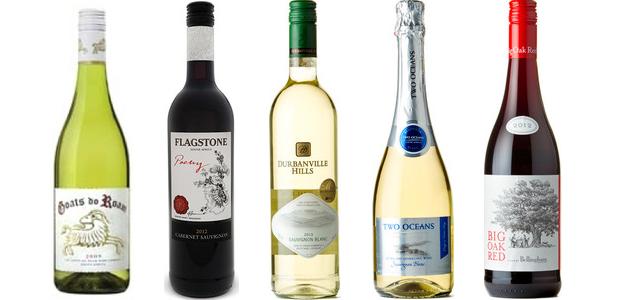
Eleven 11th hour holiday bubbles

Betella Franciacorta

Betella Franciacorta

Two weeks ago I laid bare the bubbles I’d buy were I faced with the welcoming necessity of a holiday shopping day. With those bottles long ago secured I followed up with more Sparkling wine tastings. Naturally.

Related – Godello’s guide to holiday effervescence

The idiomatic phrase has infiltrated all kinds of desperation, from settling political disputes, to diffusing bombs, to shopping. Its origins are Matthew 20:6. “And about the eleventh hour he went out, and found others standing idle, and saith unto them, Why stand ye here all the day idle?” If it’s Sparkling you want or Champagne you need, stand up and be counted. The choices are all around you.

First a disclaimer. I have no intention of making this a Champagne-free holiday. Some wine writers and perhaps even a consumer or two will be joining Jim Budd, a.k.a Jim’s Loire, in a Champagne boycott. This in response to what Budd calls the governing board’s (CIVC) “ludicrous, extremely heavy-handed and ruthless attempt to crush Jayne Powell (aka Champagne Jayne).” The powers that be that are Champagne are attempting to out Powell in court for allegedly attempting to capitalize on the name in illegal marketing ways. They claim she is misleading Twitter followers for monetary gain.

The trial is both ridiculous and smells of a witch hunt but the prosecution weighs of the big houses, not the small grower. One reader commented that the small producers should speak out. Speak out? Why would a French farmer jeopardize his business and the food he puts on his family’s table to protect “a respected international media commentator, independent reviewer and expert in champagne.” Why join the complaint department with something you neither endorse nor renounce? Why chime in on something further from your radar than Sparkling Outback Shiraz?

Perhaps Jim Budd’s request to boycott will do for the Champagne strong-arm dialectic what the Leonardo DiCaprio narrated 11th Hour did for the earth’s environmental discourse. That is, “push the debate further down the road.” Maybe it will assist, as the film may have, as the “montage rolls inexorably forward, pitched somewhere between Koyaanisqatsi and An Inconvenient Truth.”

Sparkling wine aims to please in so many ways and yes, there are a multitude of Champagne alternatives. A recent one day affair with Lombardian Franciacorta left me weak in the knees, despite all attempts to figure out where the two samples found at WineAlign came from? If anyone has the answer, please let me know. I want more for Christmas. Most exciting was a second tasting in as many weeks with Stephen Cohen from Groupe Soleil. Stephen’s portfolio of Grand Cru, Grower’s Champagne is nothing short of brilliant. Treats to the nth degree.

Here are 11 more Sparkling wines to seek out over the holidays, through the LCBO and at the import of Ontario agents. Bubbles are worth buying by the case.

Betella Franciacorta Brut Blanc De Blanc, Lombardy, Italy (WineAlign)

This 100 per cent Chardonnay is so direct, so grounded, so black and white. Just a hint of funky earth and a swath of painted lees but otherwise fruit entrenched in traction and fermentation in beautiful suspended animation. Defines modernity in Franciacorta, a still frame of concentrated, dry bubbles, life affirming and void of any extraneous conditioning. No add-ons, just straight up sock it to me Sparkling wine. Tight, bracing and built for serious fun, without ceremony or pageantry. So effective and so well constructed.  Tasted December 2014  @Franciacorta

Betella Lovera Di Franciacorta Rose Ardi, Lombardy, Italy (WineAlign)

Like the Betella Blanc de Blanc, this is quite direct, but in a much different way. It’s funky reductive and yet super, hyper transparent and understood. Wound tight with racy acidity and spumes of an aridity that steals saliva and is nearly heart-stopping. These blush bubbles are savoury in a way the Chardonnay just can’t seem to herbalize and bracing in a way that does not fully compute. Exciting and tart if noticeably out of balance. Tasted December 2014

From left to right: Wolf Blass Yellow Label Sparkling Brut, Mionetto M O Prosecco, Foss Marai Extra Dry Prosecco,13th Street Cuvée 13 Sparkling Brut Rosé,Sumac Ridge Steller's Jay Brut Sparkling Wine 2009

From left to right: Wolf Blass Yellow Label Sparkling Brut, Mionetto M O Prosecco, Foss Marai Extra Dry Prosecco,13th Street Cuvée 13 Sparkling Brut Rosé,Sumac Ridge Steller’s Jay Brut Sparkling Wine 2009


Wolf Blass Yellow Label Sparkling Brut, Australia (649996, $17.95, WineAlign)

Smells like strawberries covered in crème fraîche with a sprinkling of brown sugar. Slightly if negatively overripe and even oxidized, limping to bruised. The mouthfeel is nothing if not luxurious, in an expansive way Crémant d’Alsace fills spaces. The bruising is joined by a bronzing, in apples stuck to cold metal. Terpenes wind the fruit in elastic release. The persistence is quite good on a light (11 per cent) alcohol frame.  Tasted December 2014  @WolfBlassWines

Mionetto M O Prosecco, Treviso, Veneto, Italy (266023, $17.95, WineAlign)

Paradigmatic, stoic, poised and essential Prosecco of ultra-utilitarianism and yet spirited in ascent. Like the combined discourse of soft, acidulated, creamy granny smith apples and bosc pears in baking anticipation. A hero seltzer for aperitif goings on. Celebrates the reformed religion of Treviso fizz. Our Prosecco of inclusive ascension.  Tasted December 2014  @Select_Wines

Foss Marai Extra Dry Prosecco, Veneto, Italy (729392, $19.95, WineAlign)

Light, lithe and indiscernible from an alcohol perspective. Candy factory meet concrete truck aromas to form a strange, but effective union. Like yellow-banana salt water taffy rolled in coarse aggregate and portland cement. The filling brings sweetness and nondescript bitters. Finishes bold yet abrupt. From my earlier note: “Funky and advanced character. Aromas of green vegetables, celery stalks and oddly like botrytis, or an anti-botrytis. Has a platinum, minerality like no other in its Prosecco gang. Fun to think on and to work with.”  Last tasted December 2014  @FossMarai

13th Street Cuvée 13 Sparkling Brut Rosé, Traditional Method, VQA Niagara Peninsula, Ontario (147504, $24.95, WineAlign)

The intensity of strawberries is palpable, with the woodsy and earthy leaves on the ground soiling the oozing juices. Only Jean Pierre Colas can coax mushroom and truffles from Pinot Noir and Chardonnay destined for blush bubbles, grown in Niagara clay soils. Starts out sweet, turns dry and finishes with a concrete stamp of evidence. Not everyone’s cup of steeped, developed and all over the map tea. From my earlier note of April 2013: “Autolytic, Brut-finished, traditional method sparkling that has that something in her style. Pinot Noir and Chardonnay emitting so much strawberry energy you might find yourself lost in the fields forever. But there is more than that, “something in the way she woos me,” maybe the rhubarb replay, or the tarragon, or the faint tang of cheese. You gotta like the Jean Pierre Colas style and to like her, you need to like her style.”  Last tasted December 2014  @13thStreetWines

Sumac Ridge Steller’s Jay Brut Sparkling Wine 2009, VQA Okanagan Valley, British Columbia (264879, $25.95, WineAlign)

A worthy if warmer and fuller follow-up to the wise and evolving ’08. Presents more yeasty opulence and sweet cream, not to mention density and conceit in alcohol (13 per cent). A slightly oxidized false front reveals a gregarious personality, with aromas of clementine rind, spritz and a concentration of enzymatic lees. This has to be imagined as an absolute, unequivocal take on Okanagan Brut, with a glide from gravel and slate to citrus all around. Gives length like it should and it will say, “like I knew I would.” Thing is, these bubbles are good.  Tasted December 2014  @SumacRidgeWine

From left to right: Deutz Brut Classic Champagne, André Clouet Brut Rosé Champagne, Diebolt Vallois Prestige Brut Blanc De Blancs Champagne, Champagne Agrapart De Blanc Grand Cru Champagne

From left to right: Deutz Brut Classic Champagne, André Clouet Brut Rosé Champagne, Diebolt Vallois Prestige Brut Blanc De Blancs Champagne, Champagne Agrapart De Blanc Grand Cru Champagne

Deutz Brut Classic Champagne, France (Agent, $54.95, WineAlign)

The Deutz has every right to call itself classic Champagne; full of charm and chaste caste, of ingot, pleasure in bottle and a calm, slow play. An armoury of bronze, gold and platinum set yet malleable, ready to mold with all that comes its way. A sipper extraordinaire, a meal companion and a celebratory tipple. Works its metals with every facet of its mettle and being. Bread yeasty, non-violent citrus aromatics and very, very linear acidity. Elasticity in forward stretch, rebound rewind and cast forth again. Quite remarkable in such a simple way. Most excellent value.  Tasted December 2014  @TandemSelection

André Clouet Brut Rosé Champagne, France (Agent, $62.95, WineAlign)

Clouet does Rosé in a unique and special way. With the slightest early whiff in miasma it bleeds residual in sanguine, plasma vitality. Disgorged in April 2014, the base wine is 100 per cent Pinot Noir from the 2010 vintage, with (20 per cent) support from 2008 and 2009. Its 6 g/L of dosage saturates the plasmic flow, just at the edge of sweetness without any elevated or heightened sense of being there. A tease of concept and precept; citrus, wild sage savour and berry fruits. Very fine, natural and pronounced, in a calm and precise way. Tasted  December 2014  @GroupeSoleilTO

Diebolt Vallois Prestige Brut Blanc De Blancs Champagne, France (Agent, $68.00, WineAlign)

From the tiny town of Cramant, this B de B could never be confused with the lithe and lively Alsatian unequivalent. The Prestige bottling is exactly that; a bubbly of searing intensity from a Blanc de Blancs operative with an ever so slight bent to oxidation. The oxymoronic activity that is simultaneously weighty and aerified will only improve with some age. Disgorged in March 2014 at 9 g/L it eschews a Brut mentality for extreme pleasure. Savour the savour in this grower’s Champagne. The lemon-lime-grapefruit flavours pierce and inject along with organic sourdough fury and a density of just over the top toasty goodness. This is sword fighting, swashbuckling Champagne, bottled Tybalt of honour, terroir and incredible length.  Tasted December 2014

Champagne Agrapart Terroir Blanc De Blanc Extra Brut Grand Cru Champagne, France (Agent, $72.00, WineAlign)

Disgorged in February 2014 at 3.5 g/L, this is the Extra Brut Agrapart, as amplified a grower’s Champagne expression you are ever hopeful to come across. The base wine is from the 2009 vintage, with bits of 2008 and 2007 added in. There is an increased green feeling, in herbs and savour, nettle and apple. The citrus component is from lime, acting as the key to elevation and weightless simulation. Here the Grand Cru terroir for a GC strikes an immolate dagger into the hearts of basic, big name, monotone Champagne. Their are bitter roots as underlay and the aridity is simply nuts, peanuts even, the citrus condense of pith and putty. The flavours at times are at odds but thoughts always return to soil and blocks. This has specificity and idiosyncratic relevance written all over its fierce face. Most interesting specimen.  Tasted December 2014

Good to go!

Bouillabaisse, paella and 32 wines

Chiado's Bouillabaisse

Chiado’s Bouillabaisse

No words. No tasting notes. Just the wines. What happens at WineAlign‘s #waxmas14 stays at Waxmas14. I will say this. There was music.

Waxmas Whites

Domaine Long-Depaquit Chablis Grand Cru La Moutonne 1996, Burgundy, France

Vergelegen G.V.B. White 2012, Stellenbosch, South Africa

René Muré Riesling Clos Saint-Landelin 2008, Alsace, France

R. López de Heredia Viña Tondoni Reserva 1999, Rioja, Spain

Waxmas Whites

Waxmas Whites

Four More Whites

Domaine de Beaurenard Châteauneuf-du-Pape Blanc 2009, Rhône Valley, France

Mendel Sémillon 2013, Mendoza, Argentina

Quinta de Soalheiro Alvarinho 2012, Vinho Verde, Portugal

Pelle Pince Szt. Tamás Furmint 2012, Hungary

Four More Whites

Four More Whites

Eclectic Blancs

Exultet Estates The Blessed 2009, VQA Prince Edward County, Ontario

Le Clos Jordanne Le Clos Jordanne Vineyard 2003, VQA Niagara Peninsula, Ontario

Pierre Frick Pinot Blanc de Noir 2006, Alsace, France

Hedesheimer Hof Weingut Beck Grauer Burgunder Kabinett Trocken 2012, Prädikatswein, Germany

Eclectic Blancs

Eclectic Blancs

The Stealth Reds

Domaine Alary, Cairanne L’Exclus d’Alary 2012, Cairanne, Rhône Valley, France

Bodega Chacra Pinot Noir Cincuenta y Cinco 2012, Patagonia, Argentina

Bodegas Poesia 2010, Mendoza, Argentina

Thibault Liger-Belair Moulin a Vent, Vieilles Vignes 2011, Beaujolais, Burgundy, France

The Stealth Reds

The Stealth Reds

Big Red Movements

Colinas De São Lourenço Principal Reserva 2007, Bairrada, Portugal

Brodie Estate Pinot Noir 2010, Martinborough, New Zealand

Re Manfredi Aglianico Del Vulture 2000, Campania, Italy

Domaine Jean Foillard Morgon Côte de Py 2011, Beaujolais, Burgundy, France

Big Red Movements

Big Red Movements

Seriously Red

Azienda Agricola Cos Cerasuolo Di Vittorio Classico 2008, DOCG Sicily, Italy

Penfolds Cabernet Shiraz Bin 389 1995, South Australia, Australia

Clos Pegase Cabernet Sauvignon 1997, Napa Valley, California

Argiano Brunello Di Montalcino 2004, Tuscany, Italy

Seriously Red

Seriously Red

The Grace of Transition

Domaine Baud Crémant du Jura Brut Sauvage, Jura, France

Vidonia Listan Blanco Vinas Viejas 2012, Valle de la Orotava, Spain

Pazo Pondal Albariño 2012, D.O. Rias Baixas, Spain

Hidden Bench Pinot Noir Felseck Vineyard 2011, VQA Beamsville Bench, Ontario

The Grace of Transition

The Grace of Transition

Chef Michael Pataran’s Paella

Chef Michael Pataran's Paella

Chef Michael Pataran’s Paella

And in the End

Domaine Hatzidakis Assyrtiko de Mylos Vieilles Vignes 2011, Santorini, Greece

Cave de Tain l’Hermitage Hermitage Gambert de Loche 1998, Northern Rhône, France

Suertes del Marques El Esquilon 2012, Valle de la Orotava, Spain

Azienda Agricola Brezza Giacomo & Figli Cannubi 1989, Piedmont, Italy

And in the End

The love you take is equal to the love you make.”

Good to go!