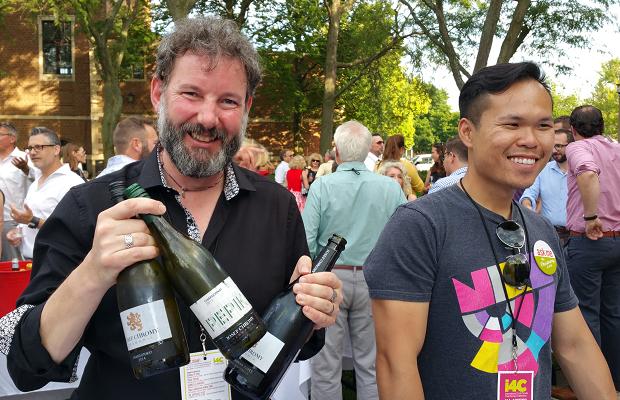
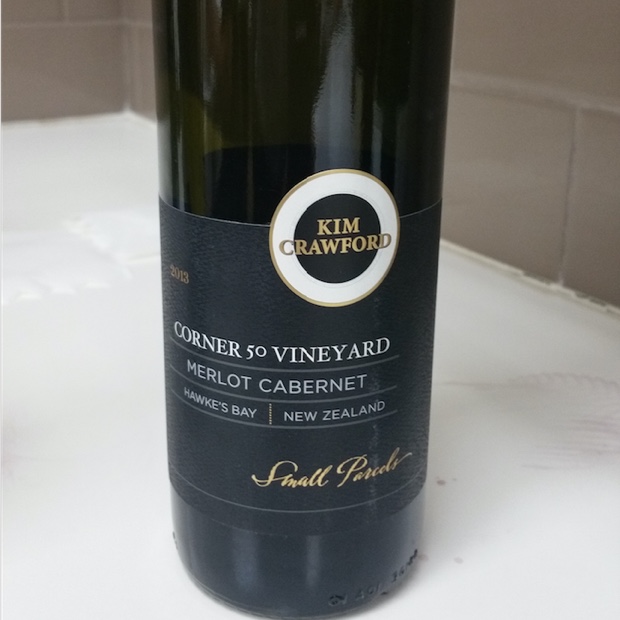
Less than 24 hours after touching down at Pearson following a trip to Germany for ProWein (plus excursions through the Rheinhessen and Ahr Valley) I find myself in comfortable surroundings. Knotting a tie with Niagara Falls tumbling as it is always wont to do while in other proximate places Niagara’s wine folks get cleaned up real good, all of us ready to gather for Cuvée 2017. A grand affair.
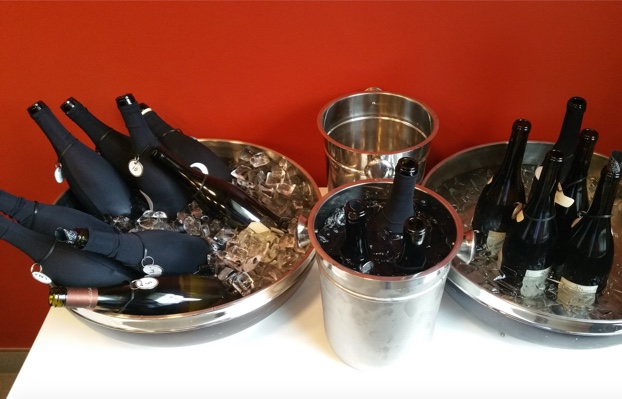
The 29th annual Cuvée was indeed held last Friday, March 24 with the Grand Tasting at the Scotiabank Convention Centre in Niagara Falls. Organized by Brock University’s Cool Climate Oenology and Viticulture Institute (CCOVI), Cuvée presents an essential cross-section of Ontario VQA wines while also raising thousands of dollars to fund academic scholarships and research. A count of 750 guests were in attendance along with 48 participating local VQA wineries and celebrated regional chefs.
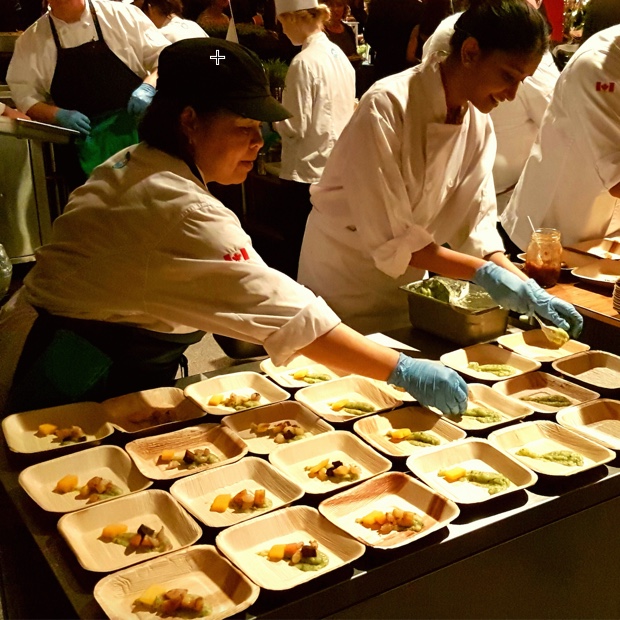
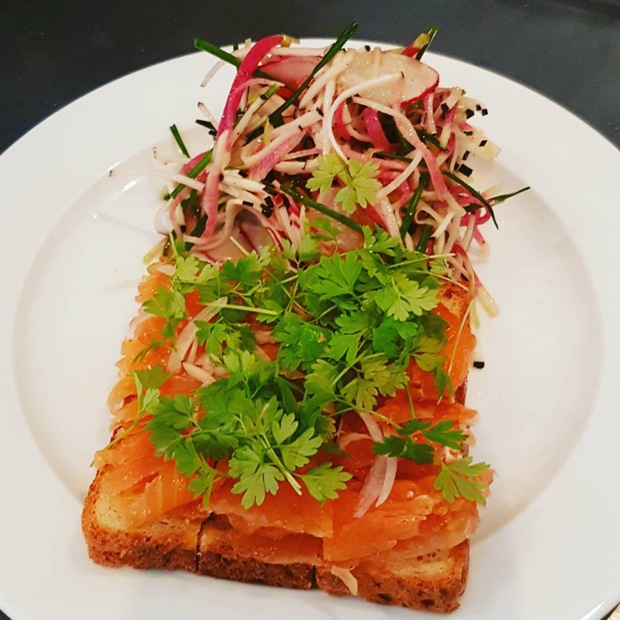
Chef Justin Lesso, Kitchen 76 at Two Sisters Winery, Roasted eggplant and zucchini caponata with sultanas, whipped ricotta, toasted pine nuts and sweet balsamic on crostini
Congratulations to the Cuvée award winners for 2017
Cuvée Vineyard of Excellence Award: Grower Gerald Klose, Niagara-on-the-Lake.
Tony Aspler Cuvée Award of Excellence: Wine journalist Ian D’Agata.
VQA Promoters Award for Lifetime Achievement: Toronto restaurateur Roberto Martella, Grano.
VQA Promoters Award for Education: Barb Tatarnic, Brock University.
VQA Promoters Award in the LCBO: Melissa McFadden, Owen Sound.
VQA Promoters Award for Hospitality: Sommelier Mike Fish, Glassroots Restaurant in London.
VQA Promoters Award in Retail: Brian Hanna, sommelier at Huff Estates Winery in Prince Edward County.
VQA Promoters Award for Media: Angela Aiello, iYellowWineclub.
The Cuvée Scholarship winners are:
Cuvée Hosting Award for Academic Excellence: Jacob Johnsson-Werner
Cuvée Award for Academic Excellence: Stephanie Van Dyk
Cuvée Award for Academic Excellence in OEVC: Hannah Lee
Cuvée Graduate Scholarship: Jennifer Kelly
Scotiabank Centre chefs
New signage showed the way to 47 winery participants divided into a six-pack of of design, “hazardingalloneschances,” to seek and to find. Luckily I found my way, with ease, to divide, conquer and taste many wines.
I’ve reviewed 13 from the Cuvée Grand Tasting. Here are the notes.
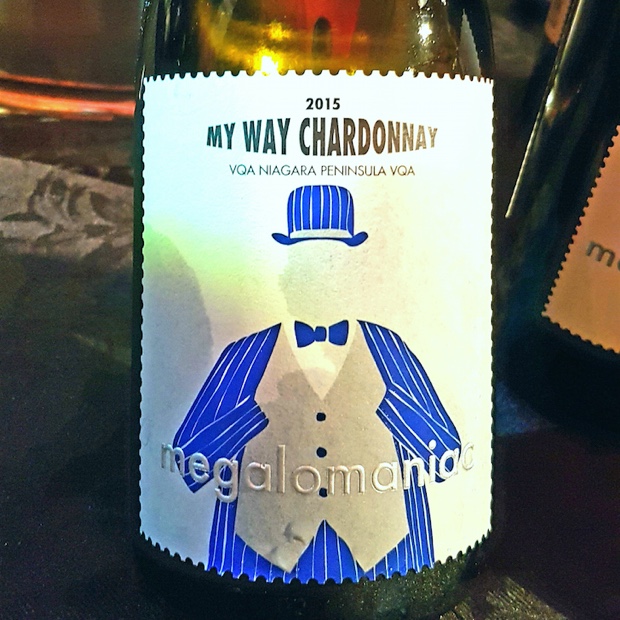
Megalomaniac Chardonnay My Way 2015, VQA Niagara Peninsula, Ontario (Winery, $24.95, WineAlign)
A new order for chardonnay begins at Megalomaniac with winemaker Sébastien Jacquey now doing things his way. Lyrically speaking, a once buttery and brain freeze style of Megalomaniac chardonnay is now made My Way. The song reference is via Paul Anka (also interpreted through Frank Sinatra and Sid Vicious) but here turning with learned impression into Jacquey’s way. The bite into crunchy green apple and tart russet sting is more than cool, it’s downright intense. The pulsating, ebullient pop burst is techno chardonnay at its finest, melodic and built on sonic texture. My Way reminds more of Temptation, “heaven, a gateway, a hope, just like a feeling inside, it’s no joke.” There is great ripeness from warm St. David’s Bench fruit a bit less mineral so conversely eased away from oak. Also easy on the stirring of lees, to keep the purity, clarity and as Séb notes “we are always trying to listen to nature.” Drink 2017-2020. Tasted March 2017 @MegalomaniacJHC
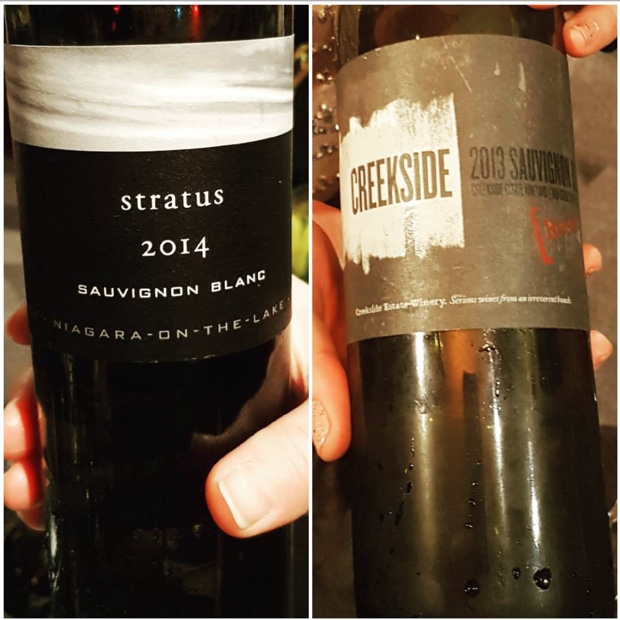
Tripping the #sauvignonblanc light fantastic @StratusWines @CreeksideWine “come and trip it as ye go / On the light fantastic toe.” #imaginative #cuvèe #cuvee2017 #skippedthelightfandango #whitershadeofpale #buthecrowdcalledoutformore
Four months is an eternity in sauvignon blanc development and what was is not any more. Here again, “Ooo there I stand neath the Marquee Moon, hesitating.” Now some of the finest and most intelligently rendered spice you are ever likely to get from a bite anywhere in the SB diaspora is tasted. Effectively intense as it was not last fall, Creekside’s 50 per cent wood-aged ’13’s “life in the hive puckered up my night.” The risk is now rewarded. Last tasted at Cuvée with Yvonne Irving, March 2017 @CreeksideWine@CellarMonkey@PetiteOenophile@AMH_hobbsandco
Of more worthy extraction and calculated tropical aromatics, the Reserve rendition of Creekside’s backyard vineyard play is deeply juicy and spiked with natural tonic. This wine makes full use of the slow, let it hang 2013 vintage and its dry, cloud covered temper. There are herbs and lime juice stirred into the cocktail and flavour does not pass by at a fleeting premium. This has richness and tangy appeal. The wish would be for more acidity but isn’t that always the case? Drink 2016-2019. Tasted November 2016
Stratus Sauvignon Blanc 2014, Niagara On The Lake, Ontario (Winery, $29.00, WineAlign)
Welcome to new adventures in hifi, J-L Groux-Stratus Vineyards-sauvignon blanc style. “Here it comes (and) I’m carried away” by the utter freshness and positively optimistic nature of the grape and its potential off of Niagara-on-the-Lake vineyards. Groux employed two Sancerre clones, 317 and 530, the former antiKiwithetical and the second more Loire obvious. Picked early straight out of REM sleep (for Stratus) though always loyal to aromatics, the crisp green apple bite is striking in a cool-climate designated white void of chive, grapefruit and green veg. The fitness, finesse and fineness really show on the palate, direct, fresh and very long. Speaks to the organoleptic language of taste. Could have very well been dubbed The Departure. Drink 2017-2020. Tasted at Cuvée, March 2017 @StratusWines
Fielding takes flight into traditional method, blush sparkling territory with this decidedly off-dry, fruit-driven, round and drinkable Rosé. Primarily 2013 based from pinot noir (84 per cent) and chardonnay (16) that spent up to 24 months on the lees. It’s habitual strawberry evidence and faint black cherry subtlety meet at the interstices of (13 g/L) of residual sugar, inviting and jacketing acidity. This is rose spectral, chaste stylish fizz to initiate Fielding’s investigation that will only become more and more complex. You’ll have to make a trip to Fielding if you want one, that or a reservation at Treadwell or Backhouse. All good options. Drink 2017-2020. Tasted at Cuvée, March 2017 @FieldingWinery@RichieWine@Heidi_Fielding
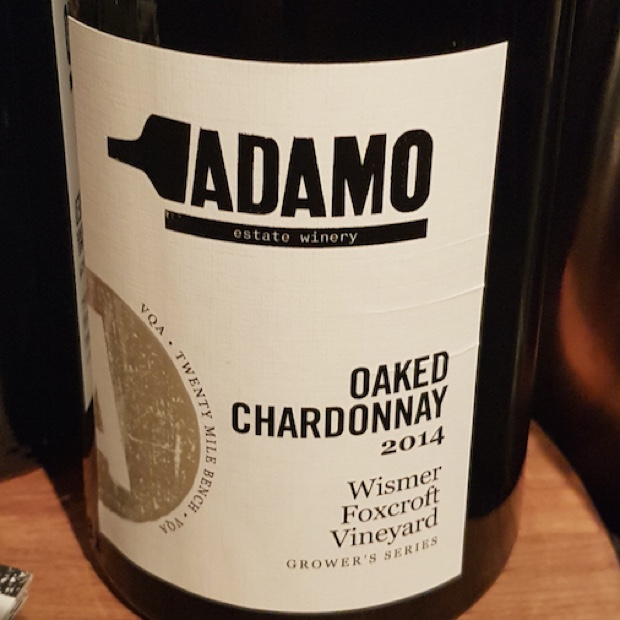
Nine months later and without the blind tasting arrangement it is Adamo’s chardonnay that once again directs the discourse. This second vintage and first solo record from B.C. native and winemaker Shauna White is a risk-taking, tart, fruit major, reductive minor virtuoso effort. It’s fresh, crisp, crunchy, pure, cooled down, off and out chardonnay. It’s also a classic Wismer-Foxtrot rendering interpreted with troubadour-diva talent. Chardonnay to “bring you apples from the vine,” so “run the bath and pour the wine.” Makes me anything but down. Last tasted at Cuvée 2017, March 2017 @AdamoEstateWine
Really effective actuality, from barrel for couverture and bite, through texture by lees and with inhalant because of the mineral play. This has it all going on. The middle palate is so beautifully filled in, the spice and smokiness just a mild, intoxicating smoulder. Lovely stuff and terrific length. Drink 2016-2021. Tasted blind at #NWAC16, June 2016
Thirty Bench Vineyards Small Lot Riesling Steel Post Vineyard 2014, VQA Beamsville Bench, Ontario (Winery, $30.00, WineAlign)
The pattern forming from riesling in 2014 out of Niagara is coming into clear, linear focus and with great hyperbole from this single-vineyard Thirty Bench. True to its vineyard nature nomenclature Steelpost is apropos of steel pulse beats and smoky to flinty intensity. It has been many vintages since this type of Steelpost showing and methinks it the kind of wine so misunderstood in its youth. Riesling that cuts like a knife, right through fruit and gets right to the mineral heart of the matter. It’s like walking on a tightrope, “just, just take a look and see, yeah. I’d wait two years before digging a little deeper. A future of flesh and bone awaits. Drink 2019-2025. Tasted at Cuvée, March 2017
Adamo’s second vintage takes a small but important step forward with reasons threefold by way of explanation. The first is fruit one year older, still a toddler relatively speaking but beginning to express itself with opinion and determination. Second is the baton and torch transfer from PEC set up man Jonas Newman to incumbent winemaker Shauna White. Third is simply Howard and Wes Lowrey’s Vineyard. This hallowed ground for Adamo is an allotted St. David’s Bench section as a gift with one stipulation. Don’t mess it up. With abide to terroir and essential tenets followed, this ’14 drinks as it should, rich, unctuous and tenuously structured. The spice is quite up front, dancing cheek to cheek with the precocious fruit. The continuance moves through a central vortex and into the back halls, carrying noticeable tannin down its dry and savoury descent. Might want to wait one more year. How is it this vineyard is able to speak regardless the maker? Only the one who knows his or her rows can answer the question. Drink 2018-2021. Tasted at Cuvée, March 2017 @AdamoEstateWine
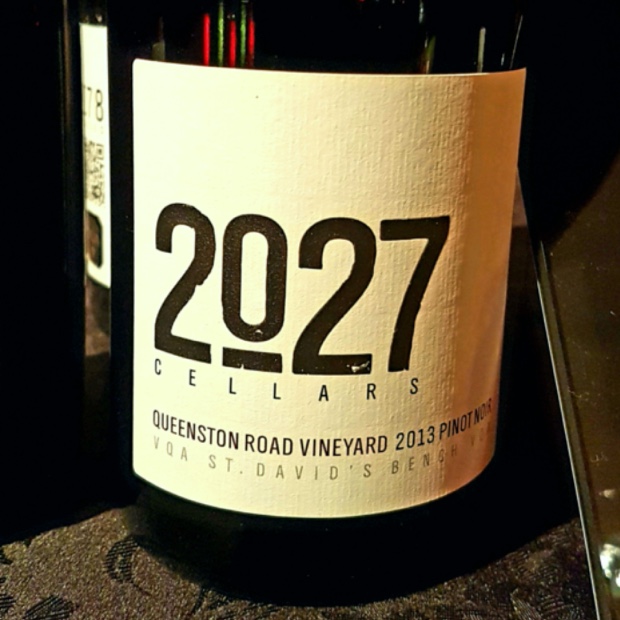
2027 Cellars Pinot Noir Queenston Road Vineyard 2013, VQA St. David’s Bench, Ontario (421370, Was $35.00, Now $28.25, WineAlign)
This is one of those wines you need to revisit. The 70 per cent whole berry and 18 months in wood give it this posit tug between carbonic restlessness and organza texture. The flavours are now developing out of the tobacco road nose, into flanked borscht boullion distilled, like aqua vitae with cinnamon, Szechuan pepper and cardamom spice. Tasted at Cuvée, March 2017 @2027cellars@TheVine_RobGroh
Bright, high-toned Pinot Noir with rambling warm, St. David’s Bench red fruit aromas, out of the raspberry patch (thorns and thistles in) and off of the ripening pomegranate tree. Some rusticity and quarried character refracts within a mild tannic frame. Very floral and high on acidity. Blissfully and blessedly not over pressed and in fact rather well made. Yet another success employed by winemaker Kevin Panagapka with stylistic firm talon grip from out of the Queenston Road Vineyard. Drink 2016-2020. Tasted February 2016 and March 2017
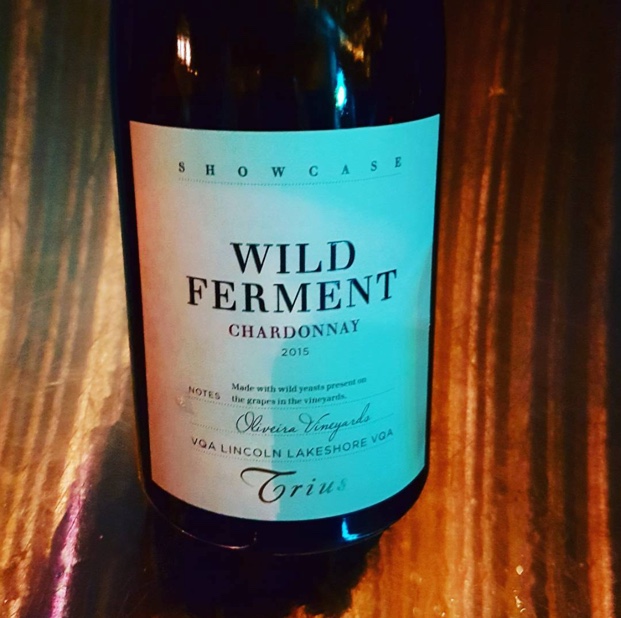
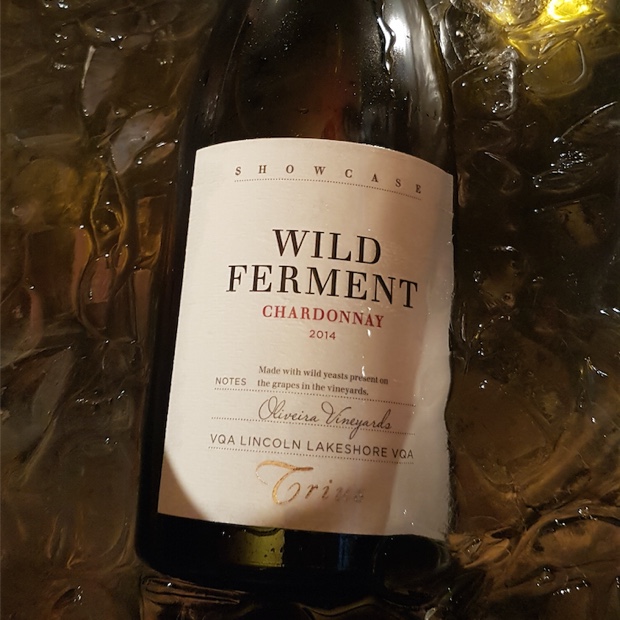
With fruit from the Niagara chardonnay mecca Oliveira Vineyard and the addendum of yet another stellar varietal vintage it is this Craig McDonald speciality that helps to steal the show. Striking out with near-raging acidity (pushing and possibly exceeding the 8 g/L mark) the Wild Ferment is one of the most formidable expressions of 2014, if not ever. All the moving parts work fervently and impressively as if the motor is running and the machine careening around the speedway. To keep composure it is texture that brings about grounding, balance and cadence, from obvious lees perfection and 30 per cent new wood plus the rest forged by two to five year old barrels. This is creamy, energetic and tannic chardonnay, all conspiring to express itself with both weight and poise. From a maker who’s been around the block a few times, the ’14 WF will go the distance. And you can start now. Drink 2017-2024. Tasted at Cuvée, March 2017 @TriusWines@PellerVQA
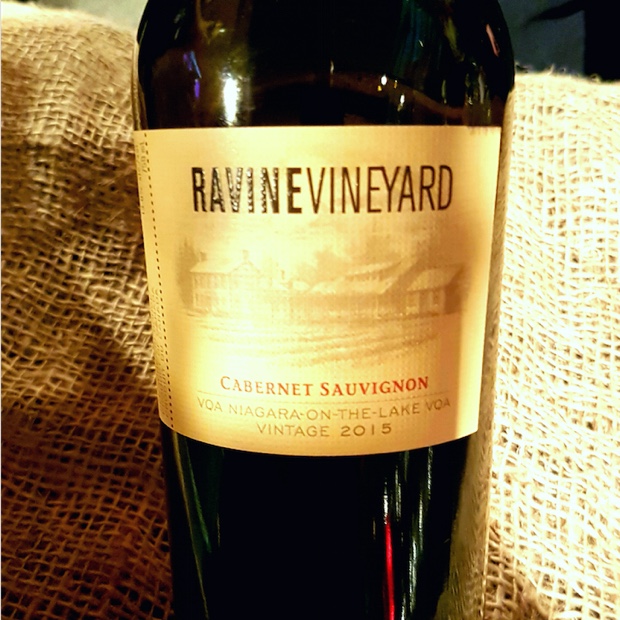
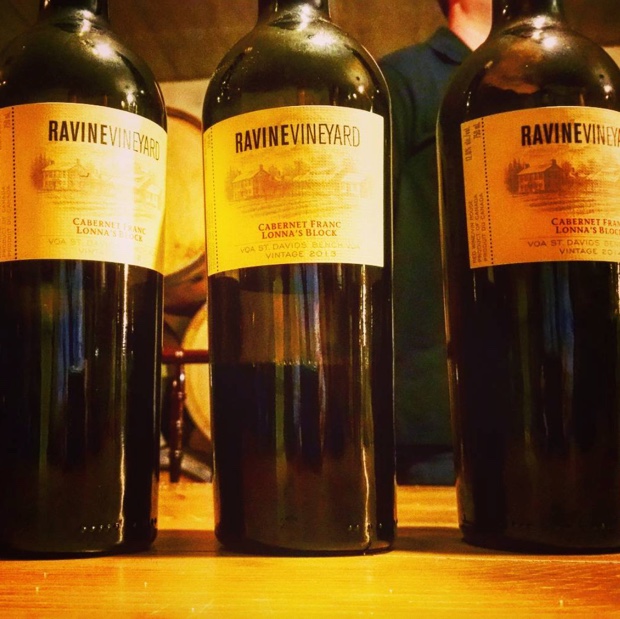
Ravine Vineyard Cabernet Sauvignon 2015, VQA Niagara On The Lake, Ontario (Winery, $35.00, WineAlign)
The designation is NOTL and the fruit is a fifty-fifty draw from Niagara River along with less sandy estate soils. The fruit came is nicely warm, in the geek-noted 22.5-23.5 brix level, now double fast-forwarded to the spring of 2017 after its initial nine months in barrel. The frame is classic cabernet sauvignon, no matter the origin, housing and because of beautiful peninsula fruit. Twenty-five percent of the wood is texture giving and spice lifting atop blueberry, blackberry and Cassis. This is ripe but in retention of its acids with the creamy vanilla anglaise consistency only really felt at the finish. Only then. Tidy little $35 red from Marty Werner and Ben Minaker. Drink 2019-2024. Tasted at Cuvée, March 2017 @RavineVineyard@marty_werner@BMinaker23
Insieme is built around and upon a foundation of high quality vintage conditioned merlot (36 per cent) with (31) cabernet sauvignon, (19) cabernet franc and (14) syrah. The fruit is subjected to 100 per cent appassimento processing, turning smooth, ambient, atmospheric, “e petto a petto, noi respiriamo insieme.” This is Niagara’s cinema paradiso red blend, composed with Morricone classicism in ode to Amarone. Two years in second pass cigar barrels brings the smoke and the smoulder, syrah adds a peppery jolt and dusty merlot turns into raspberry purée because the appassimento makes it that way. With sugar and acidity equally running high there is a knowing balance in 2013, a silken palate and the structure to see it age. If nothing else, even at 15 per cent alcohol it achieves one thing. “Solamente amore.” Drink 2018-2022. Tasted at Cuvée, March 2017 @ColaneriWinery
Tripping the #sauvignonblanc light fantastic @StratusWines @CreeksideWine “come and trip it as ye go / On the light fantastic toe.” #imaginative #cuvèe #cuvee2017 #skippedthelightfandango #whitershadeofpale #buthecrowdcalledoutformore
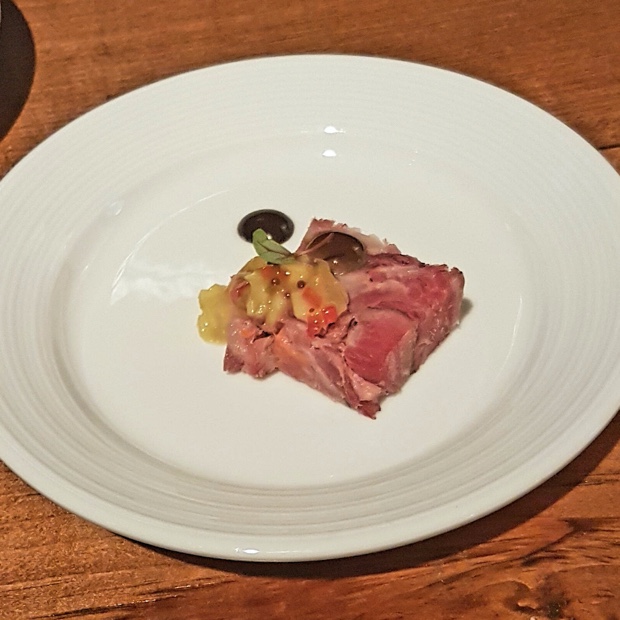
Chef Andrew McLeod, Bolete Restaurant, Pork hock terrine with Jerusalem artichoke relish and black garlic
Two pinot noir worlds collide in the Réserve du Domaine, one from Jordan and the other Beamsville, with fruit forged and fused via Neudorf Farm’s Le Petit and Mountainview Vineyard. The collaboration is never lost on the Thomas Bachelder-Kelly Mason winemaking cooperation. Le Petit firms up the plummy rich unctuousness of Mountainview like any good spouse should and the match is unpredictable, at times inflammatory but in the end, made in heaven. Whole berries do their carbonic foreplay thing, infusing energy and keeping things light with assistance from a vintage in echo of the sentiment. This is more flavourful and quite possibly, potentially more structured than 2013 though it may also compromise some classicism for ultra modernity. It’s too young frankly to make such bold statements so let’s just call it a draw. Drink 2018-2024. Tasted at Cuvée, March 2017 @QueylusVin@Bachelder_wines
Trius Showcase Cabernet Franc Red Shale Clark Farm Vineyard 2014, VQA Lincoln Lakeshore, Ontario (Winery, $45.20, WineAlign)
Showcase is from the wealthiest of cabernet franc Niagara fruit aboard the Clark Farm rows and placed in the hands of Trius for full effect. The Red Shale is housed in 30-35 per cent new oak, travels fully and completely through malolactic fermentation and lots of lees are kept, stirred, shaken and promoted with extreme prejudice. This is rich and beautifully reductive, a smoky batter enriched by 18 months in selected, set aside for a rainy cabernet franc day barrels. Something exotic this way wafts as it always does, with green herbal phenols and sweet spice island Syzygium aromaticum. In the end its incredibly long despite its rebel youth so know that it will be a finer Niagara cabernet franc with time tucked in pocket. Another notch etched in Clark Farm lore. Drink 2019-2022. Tasted at Cuvée, March 2017 @TriusWines@PellerVQA
Executive Chef James Price, Scotiabank Convention Centre, Lady Agnes’s roast duck saves the nation. Sloe berry and lavender brined duck, cellared vegetables, watercress and parsnip
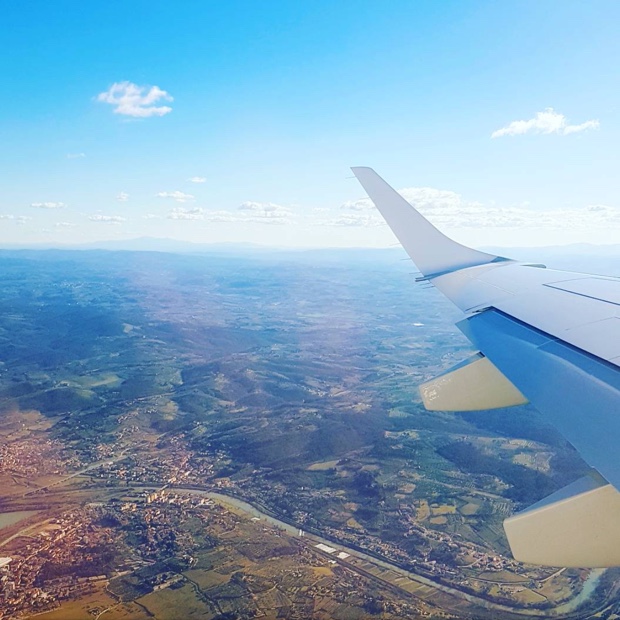
Last Thursday I flew home from Germany after attending Prowein 2017, a massive wine fair in Düsseldorf that has to be seen to be believed. Picture nine immense convention halls each the size, depth and breadth of a Canadian football field, connected to one another and circling a courtyard like hangars in surround of incoming and outgoing flights at a major airport. The sheer quantity of human power and logistical planning required to facilitate and execute such a congress is in fact not unlike what happens every day at Frankfurt International. There may not be 100,000 employed to run Prowein, but at least that many wine stems are engaged.
It’s also hard to believe that this time yesterday I was standing on the crest of the red sandstone Grand Cru Neirstein vineyards overlooking the Rhein River. In advance of my trip to Germany I had the chance to taste through next weekend’s VINTAGES April 1st release and you will be pleased to find no shortage of quality wines under $20, many of which will solve your in advance of Easter needs. A token pinot noir with an anything but token twist and two hopping chardonnays are included for classic holiday food and wine association but I dig deeper into soils, varietal diversification and terroir for holiday pairing perfection.
There is no secret that Spain and Portugal sit at or near the pinnacle of Ontario consumer go to picks in the genre occupied by bargain reds. While the two recommendations below will certainly pair well with a feast of festive proportions, they also resurrect some grape varieties you might not automatically consider. Alentejo in Portugal and Castilla Y Léon in Spain offer great opportunities to discover local, endemic, world-class red wines. This early spring Ontario cold snap will soon be a thing of 2017’s winter past so I would suggest to get that BBQ tune-up completed because these wines are perfect foils for anything you can throw on the grill.
Travelling brings us together with the leaders and pioneers of fast-tracking and emerging wine regions and it is the global nature of this industry that through their own travels, they are brought to us. In September of 2015 I had the great fortune to spend a night and better part of a day with South Africa’s Ken Forrester. You will have noticed that Western Cape chenin blanc has taken the world by value storm over the last three to four years. There are several reasons for the varietal explosion, two of which are geology and climate. The third worth mentioning is Ken Forrester himself. When I tasted with Ken in Stellenbosch we travelled through half a dozen or more blocks, plots, vineyards and stylistically framed steen. Each and every year his Old Vines Reserve passes through VINTAGES. It is perfectly consistent and sets the benchmark for inexpensive and excellent South African chenin blanc genius.
Nicolás Zapata Catena and his daughter Dr. Laura Catena have pioneered similar if even deeper industry-leading work in Mendoza, Argentina. The father-daughter dream team have crafted terroir-focused Malbec and other well suited to time and place varietal wines. Over the past few years the Catena brand has expanded their portfolio by narrowing their focus into micro-terroirs in highly specific spots all over Mendoza. It’s not just Catena that has taken this brilliant South American approach to branding and this April 1st VINTAGES release is chock full of such precise varietal wines. Though I of course would be thrilled to offer up credit to the power brokers and buyers that be I’m not sure I’d give in to the idea that the grouping was executed with any preconceived plan. The patterning, by coincidence or not is nevertheless highly welcomed and I’m pleased to share these wines with you.
The Ontario presence is strong, as it should be, on the heels of a terrific Taste Ontario that was as promising as it was not surprisingly expected. Stratus hits the riesling mark with Wildass abandon, Flat Rock plays its annual MTV chardonnay tune and Thirty Bench does a varietal two-step that may just blow your mind. We should all be thankful for our local talent and in constant awe of Ontario’s wine ability to step out of its comfort zone, consistently improve on what it already does best and find ways to re-invent the wheel.
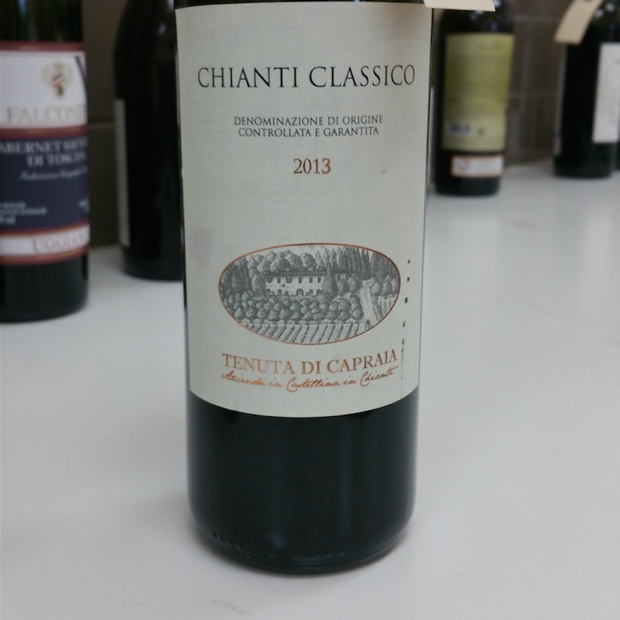
With the incantevole @chianticlassico hills fading from view, thank you #toscana #anteprime2017 #anteprimeditoscana #chianticlassico #vinonobiledimontepulciano #brunellodimontalcino
Speaking of Ontario, David Lawrason and I are still reeling from three days spent with an impressive Canadian ambassadorship contingent stationed in Düsseldorf’s Messe Prowein centre, sent there to spread the cool climate wine gospel to the world. The enthusiastic demands on our collective time were great. We will expand on the success of Canada’s presence on this important world stage in the coming weeks. John and Sara have also been on the road, globetrotting to the far reaches of the wine diaspora. It’s getting hard to track who might be where at any given time but in the first three months of 2017 we’ve had at least California, Oregon, Uruguay, Chianti Classico, Montepulciano, Montalcino, Lazio, The Ahr Valley, The Rheinhessen and every corner of New Zealand covered.
Through the course of our travels we are granted the opportunity to meet producers and winemakers, taste their wines and we often come across exciting products not seen before in Ontario. These discoveries are becoming increasingly important because the agents in Ontario receive an assisted head start on finding new wines. With the WineAlign Exchange inching closer and closer to bringing the reality of expert curation to wine buying and purchasing in Ontario, the connections we forge to these values and gems may soon see to finding their way into your cellars and your glass.
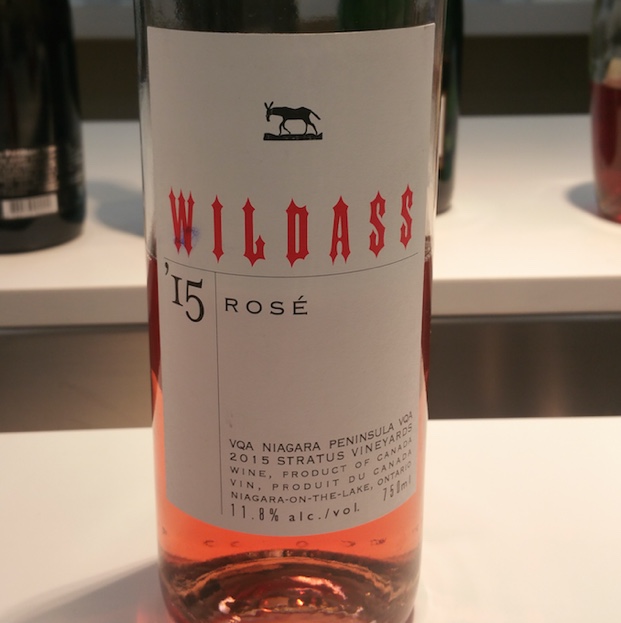
It’s really hard to say whether Stratus Vineyards’ J.L Groux is more adept as a varietal impresario or as a master of assemblage so we’ll just call it a tie. Here into the riesling game he goes in the mere mortal affordable Wildass range and in 2015 he plays a smart varietal tune. You’ve just got to get some Wildass. @StratusWines
The record keeps playing in rotation and the string remains unbroken with yet another quality vintage for the unoaked from Flat Rock. The crunchy apple and righteous waves of pertinence make this perennial best buy a required spin without any wonder why. @Winemakersboots@brightlighter1@UnfilteredEd@wine_gems
The nomenclature is just so perfectly chosen and as you will find, this is a seamless joint between pinot and gamay noir. Double Noir performs the passe tout grains oeuvre from Ontario in combining two expatriate Burgundy grapes. I’ve long ago agreed these two make anything but strange bedfellows and the two grapes work seamlessly in Emma Garner’s new and idealistic red. Well done Thirty Bench. Pass the two grapes over, SVP. @ThirtyBench
Align with new world pioneers
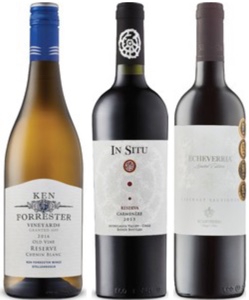
Ken Forrester Chenin Blanc Old Vine Reserve 2016, WO Stellenbosch, South Africa (231282, $17.95, WineAlign)
Reserve is a funny term for wines like this because it speaks to the idea that it should be put aside fore further use. I don’t think that is Ken Forrester’s plan and here he once again raises his old vines game with the 2016 chenin blanc. Stellenbosch continues to dole out some of the planet’s most striking and finest whites with chenin blanc at the centre of it’s value universe. With major thanks to Ken Forrester. @KFwines@WOSACanada@WOSA_ZA@Noble_Estates
In Situ Reserva Carmenère 2015, Aconcagua Valley, Chile (37952, $16.95, WineAlign)
In case you were wondering too, “In Situ is crafted from grapes that ripen on steep slopes alongside mysterious rock drawings from ages past.” The only expansion on that bit of ambiguity I can share is the purity and clarity levels of carmenère are fully explained in this Reserva. Another fine BBQ wine for April flowers and showers. @InSituWine@WinesOfChile_CA@WinesofChile
Echeverria Cabernet Sauvignon Limited Edition 2011, Central Valley, Chile (389221, $24.95, WineAlign)
Though labeled as cabernet sauvignon the Limited Edition is generously supported by syrah and carmenère, resulting in a layered and grossly rich red blend. The individual varieties don’t really stake any obvious claim and while their integration is not exactly seamless, the layering back and forth over one another does work some Central Valley magic. Complexity wins points. @VinaEcheverria@LiffordON@WinesOfChile_CA@WinesofChile
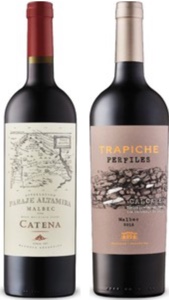
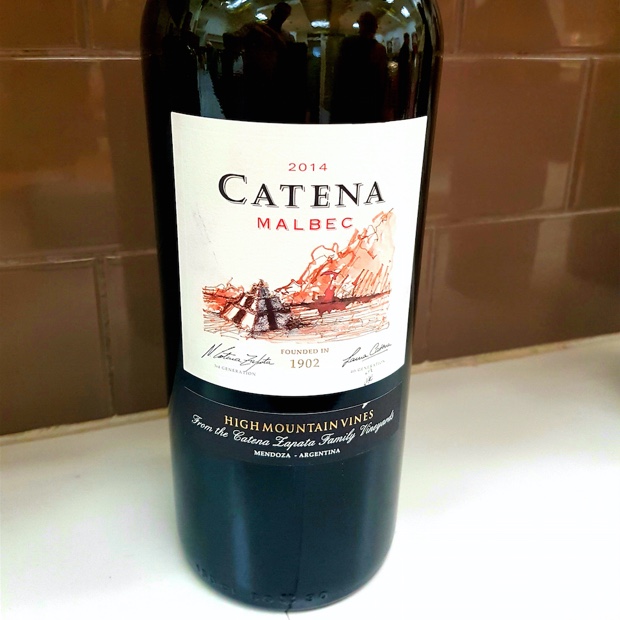
Catena Malbec Appellation Paraje 2014, Mendoza, Argentina (492413, $22.95, WineAlign)
Last November Dr. Laura Catena told a small Ontario press audience “it’s a fact. Different soils give different flavours.” The WineAlign team had previously sat down with winemaker Ernesto Badja for a full-on, wide-scale investigation into a climat-precise and compendious look at the proselytism of Catena culture. Paraje Altamira was one of these such looks into single-vineyard terroir. @CatenaMalbec@LauraCatena@Noble_Estates@ArgentinaWineCA@winesofarg
Trapiche Malbec Perfiles Calcareous 2015, Mendoza, Argentina (482083, $18.95, WineAlign)
The savvy marketed Trapiche foray into soil matters with malbec divines the intention that calcaire (calcareo) brings speciality to these Uco Valley vines. It’s not a huge stretch to sense some limestone in this malbec’s make-up and I am wholly impressed by its countenance, its continuity from nose to tail and yes, its mineral feeling. So glad Trapiche is onside. @TrapicheWines@Dandurandwines@ArgentinaWineCA@winesofarg
The best of the rest
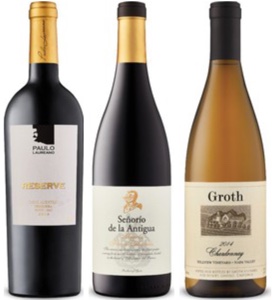
Paulo Laureano Reserve Tinto 2014, Vidigueira, DOC Alentejo, Portugal (488775, $19.95, WineAlign)
From the still somewhat unheralded and rising to stardom Alentejo the grape expectation here from vidigueira is no shrinking Reserve. This would make for a curious consumer side step into something different but at the same time so obvious and comfortable. At this price you can’t afford to do neither. #paulolaureano@winesportugalCA@wines_portugal@Nicholaspearce_
Senorio de la Antigua Mencía 2012, IGP Castilla y Léon, Spain (481549, $13.95, WineAlign)
Some solid and in some circles, very old estate vines (30-50 years) in Villafranca del Bierzo gift mencia for a pittance. Rarely does a $14 old world red give so much for so little. Great round acidity and length off the cuff of a vibrant tune. Simply great value. One of the best you will find all year. @WinesofSpainSL@Wines_fromSpain
Groth Chardonnay Hillview Vineyard 2014, Napa Valley, California (225672, $57.95, WineAlign)
From a 44-acre Yountville vineyard founded in 1982 and (mostly) re-planted in 1996. This is a perfect and prime example of all the right directions Napa Chardonnay has taken in the last 10 years, with kudos to Suzanne Groth for embracing the ideal, from restraint, for elegance and in balance. @GrothWines@suzgroth@CalifWines_CA@CalifWines_US@NapaVintners@TheVine_RobGroh
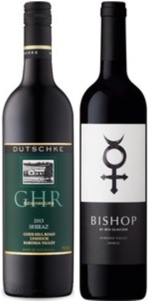
Dutschke Shiraz GHR Neigbours 2013, Lyndoch, Barossa Valley, South Australia (247296, $26.95, WineAlign)
You just have to let go and find the fun in this Gods Hill Road shiraz, a wine of deep-rooted flavour. The utter deliciousness and unctuousness of Barossa is capitulated and catapulted into Lyndoch space. To say that charred meats hot of the grill would work perfectly right now would be utterly correct. To see this age for up to 10 years and eke out more elegance is also true. I would suggest endeavouring in both. @DutschkeWines@Wine_Australia
Glaetzer Shiraz Bishop 2015, Barossa Valley, South Australia (627869, $39.95, WineAlign)
Ben Glaetzer’s incredible value Heartland cabernet sauvignon from this same release is not to be missed but I’ve chosen to focus on his flagship shiraz. From son Ben in ode to mother Judith, Bishop the maternal maiden name is the rock of the estate’s Barossa Valley reds. Bishop is a serious wine to be sure and this really leaves so much behind in the mouth long after it’s been sipped. @GlaetzerWines@Wine_Australia @TheVine_RobGroh
Louis Moreau Chablis Domaine de Biéville 2015, Burgundy, France (106161, $27.95, WineAlign)
Just last week I stood in Moreau’s booth at Prowein and I talked with Frédérique Chamoy. She noted how excited buyers are about the 2015 Chablis. If you were ever to take the kimmeridgian plunge this quintessential Moreau and this vintage are the place to start, Pure, classic mineral Chablis with more fruit than I’ve ever seen. @MoreauLouis1@vinsdechablis#ArtisanalWineImports
Brancaia goes all in to exploit sangiovese and the for broke style solicits some patience to wait out in extra time. Though 16 months in barrel is nothing to call nothing it is not the wood that dominates these gregarious 2013 grapes. With time this swirls into a grosso sangiovese like liqueur with plums, cherries and spice. Really Riserva in style but not of the recent past, more like the older ways but translated to modern times. @CasaBrancaia@chianticlassico@ChiantiClassUSA@Noble_Estates
La Lecciaia Brunello di Montalcino Riserva 2010, DOCG Tuscany, Italy (241307, $69.95, WineAlign)
From the giving 2010 vintage and so beautifully so gifted here with La Lecciaia’s 2010 Riserva. Sangiovese that rests in such an ethereal nether-land will evolve with decades long grace. Classic would be one way of looking at it, heart-warming another and it’s remarkably ready to drink. #LaLecciaia@TheWineCoaches@ConsBrunello
It’s been a whirlwind of a start to 2017 and I am personally glad to be home, for now, even if it’s only for a short time. After all, there are too many wine discoveries out there and if were to let them pass me by I would not be Godello. So before too long I will head back out on the road, join the fairs, searches, digs and bring some love back home. As for now it is the April 1st release that deserves our full attention. Sara will bring best buys and new finds next week. Looking forward to April 15th David and John will return with your first in line VINTAGES picks. Until then, good luck with the hunt, have a Happy Easter and an equally happy Passover.
The Ontario wine industry is the best kept secret in the world. That much I’ve said before and this. “Ontario winemakers have figured it out. The “world-class” comparative humanities of aging and longevity aside, the comprehensive and widespread phenomenon of excellence, regardless of vintage, is now an Ontario reality.”
Though it’s not always obvious at what time of year the event will happen, the annual get to know Ontario wines gathering’s 2017 parlay affectionately known as Taste Ontario Toronto was held a week ago today, on Monday, March. 6, 2017 at the Royal Ontario Museum. The number of Ontario vintners who have participated in Taste Ontario over the past five years seems as random as it is consistent. We’ve seen as few as 30, as many as 55 and 42 participants in 2017. I’ve been tracking varietal representation and this year considered a cease and desist order for placing a trending finger on the pulse of any given grape.
Chardonnay rules, plain and simple and call it risk aversion if you must but why should Ontario shy away from developing the coolest climate designation on the planet? Chardonnay works and if you’ve spent any quality immersion time in Chablis you’ll drop the fight and join the team. Gamay remains an important and viable alternative to big bad reds but please, enough with trying to dress this sheep in wolf’s clothing. Cabernet Franc is getting better all the time. With thanks to venn diagram circles drawn in and out of the Lincoln Lakeshore but also magically deep into the Prince Edward County limestone, the great Ontario hope is developing into what we thought it might be. Getable and structured red wine.
I don’t always taste Ontario but when I do I like to do it with Mike Di Caro. Mike grounds me and tasting by his side helps to keep my pulse at a healthy, wine tasting athletic rate of 40 – 60 beats per minute. Mike knows Ontario wine and never gets too high or too low. Tasting with him as Michael to his Mike I get to hang out inside the kind of discourse that delves into the ground, the makers and the market. Mike knows.
With so many other opportunities to taste Ontario wines throughout the year, last week’s staging afforded the chance to re-taste a great number. These new assessments are so important to understanding and gaining new perspective on not just how our wines age but also how they are affected by early reductive environment shock and their ability to change (for the better) after a mere six to 12 months in bottle. The first snapshots are not always the clearest. Taste Ontario also brings new wineries to the table. It’s now my job to pay them visits. Here are 50 ways to Taste Ontario.
Sparkling
Flat Rock Cellars Riddled Traditional Method Sparkling 2010, Twenty Mile Bench, Ontario (383315, $29.95, WineAlign)
Time makes a difference so here the extended lees age (six months further, to 60) takes Riddled to another level. Considering the cost and attention to time, in the broad realm of traditional method sparkling wine there are some that are given away. Riddled. A whole lot of biscuit warmth, sody saleratus, gingersnap, tart Ida Red apple, breadth and a smile-inducing creamy palate. There is more wisdom and calm from 2010 so do not come around demanding tension and over-exciteability. Think Grower’s Champagne with Ontario heart and soul, dedication and purpose. The extended arm of Madronich-Johnston love is here, this year. It won’t get much better than this. Great length. Drink 2016-2025. Tasted October 2016 and March 2017 @Winemakersboots@UnfilteredEd@brightlighter1@wine_gems
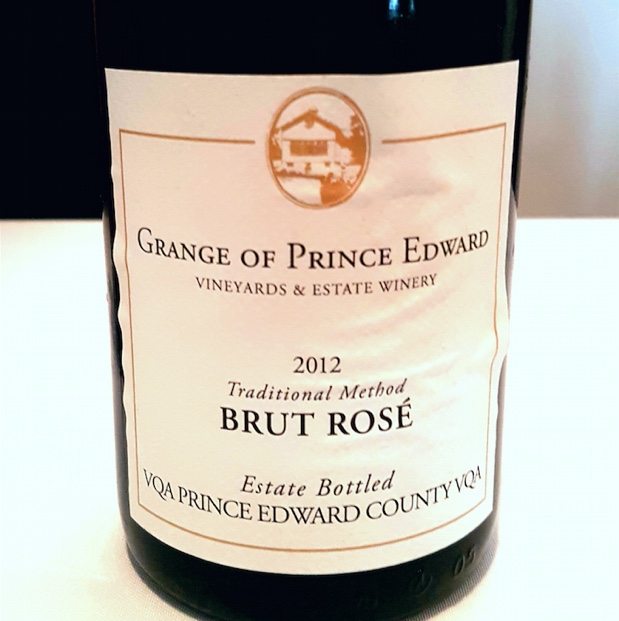
The Grange Of Prince Edward Vineyards & Estate Winery Traditional Method Brut Rosé 2012, VQA Prince Edward County, Ontario (Winery, $35.00, WineAlign)
Caroline and Maggie Granger have reset the compass and brought to market this original sparkling wine with a whimsical outré bounce in its step. It was a fortifying and henna-russet collecting 40 months time spent on the lees that to me has magnified and clarified the varietal expression. This is so pinot noir it gazes at itself in a mirror and vaporizes a telluric perfume replete with strawberry, dried cherry, peach and almond. Estate fruit shed of such lithe and delicate, near zero dosage animation tempts fate, digs into danger and elicits a nervy period of risk-reward. Reflection time is now and the oxidative Grange Brut Rosé walks a fine volatile edge and succeeds. Few sparkling wines can go gossamer this way and survive but like the finest spun web by a leggy creature cunning and wise, strength comes out of the most delicate weave. Science can be pretty cool. There were 150 cases made. Drink 2017-2021. Tasted March 2017 @grangewinery
Riesling
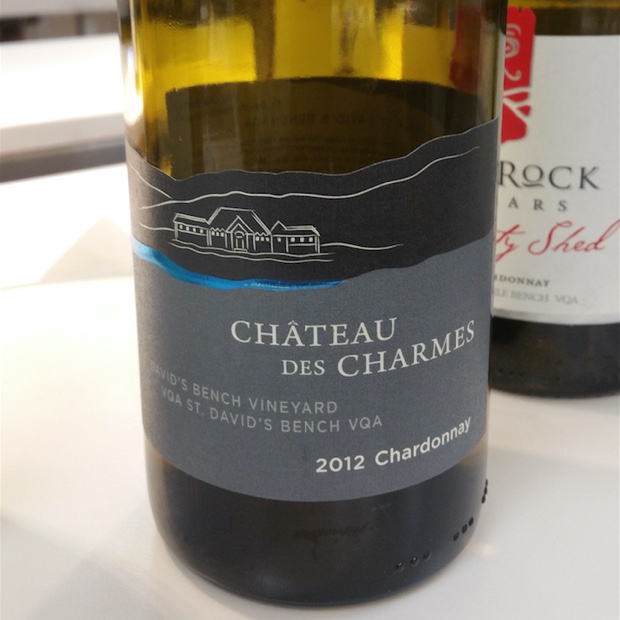
Château Des Charmes Riesling Old Vines, Estate Bottled 2014, Niagara On The Lake, Ontario (277228, $17.95, WineAlign)
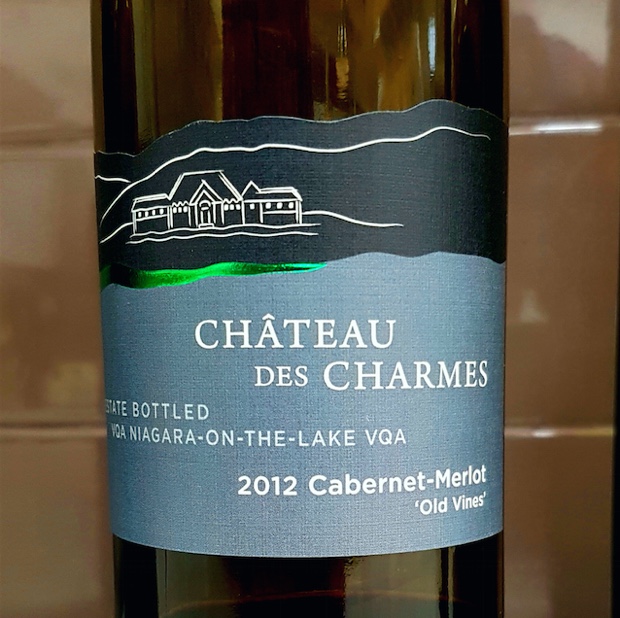
The language in ’14 is cordial and effete, with ripe sweetness trumping the pulse of energy. The old vines deliver distinct impression, compression and phenolic bitterness. There is no mistaking this distinct wine and in the vintage its clarity is only eclipsed by its easy drinking compatibility. Enjoy early. Drink 2017-2019. Tasted March 2017 @MBosc
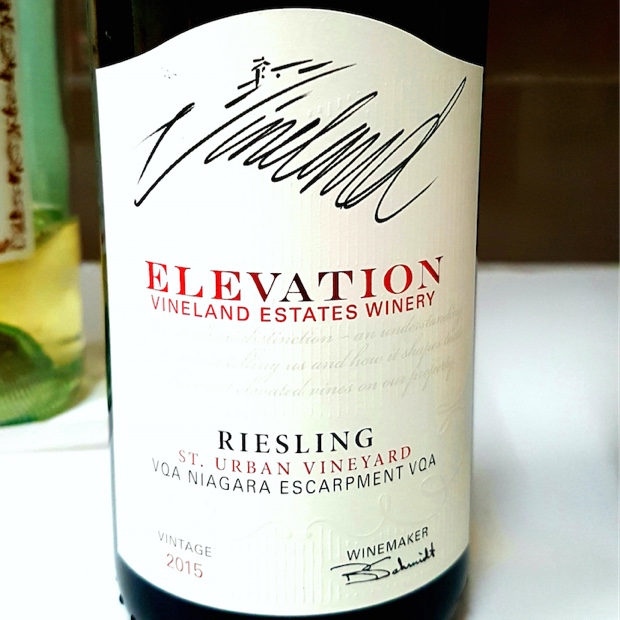
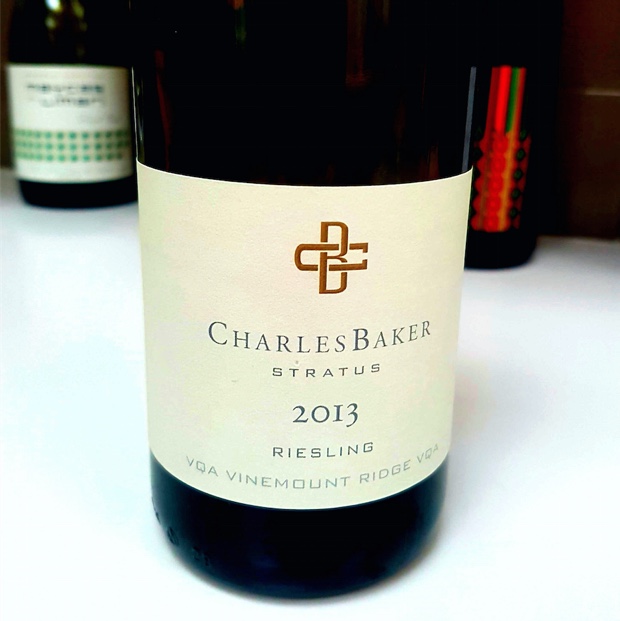
Virtual winery producer Kevin Panagapka continues his obsession with single-vineyard wines with this riesling grown just above and south of the brow of the Niagara Escarpment. Clay loam till soils with silt and shale face south along the long, one km wide, hummocky ridge and as per the vintage, a bit of simplicity is narrowed from good biodiversity. It all works towards simple pleasure, with sun-warmed fruit; pears, apples and such. Falls Vineyard grants top notch acidity and a bit of lime bitters for what is always a solid Vinemount Ridge expression. Drink 2017-2020. Tasted March 2017 @2027cellars
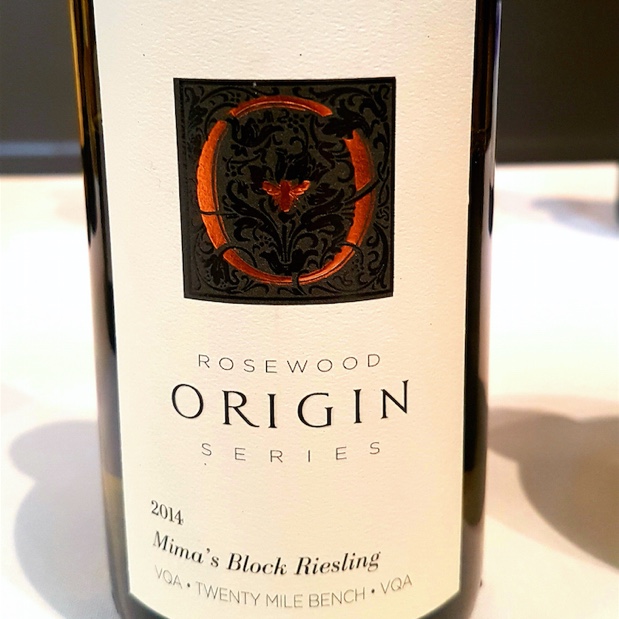
Smells like Bench riesling spirit. The energy comes from the über vineyard’s way of emission, gasseous and vital, linear, introspective and direct. This may just be the most aridity and brine ever teased from a Mima’s riesling, acidity coveting sugar notwithstanding, startling from beginning to end, with spirited shots of lime. Underrated and honest, the consistency of this riesling is possessive of great triggers and so beautifully defines the mineral Bench. Early suffocations blow off with ease and in the denoument there are crunchy stones, forever and always something to like. Mima’s never really needed an abundance of sugar for balance and kudos to that. Drink 2017-2022. Tasted March 2017 @Rosewoodwine
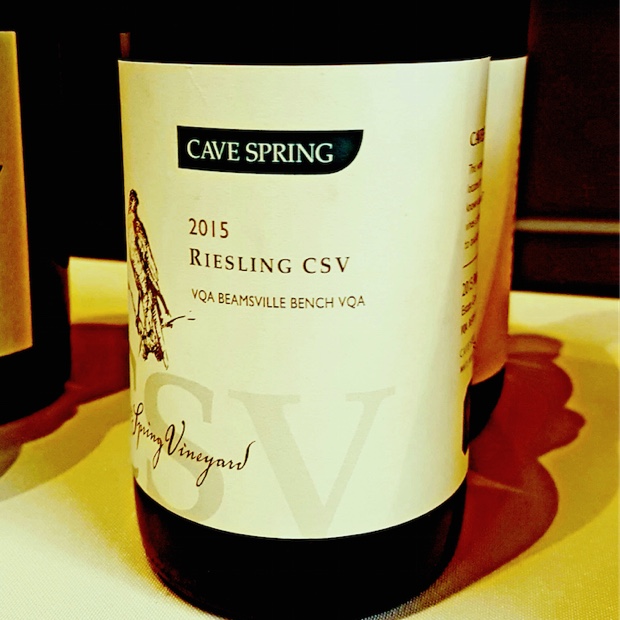
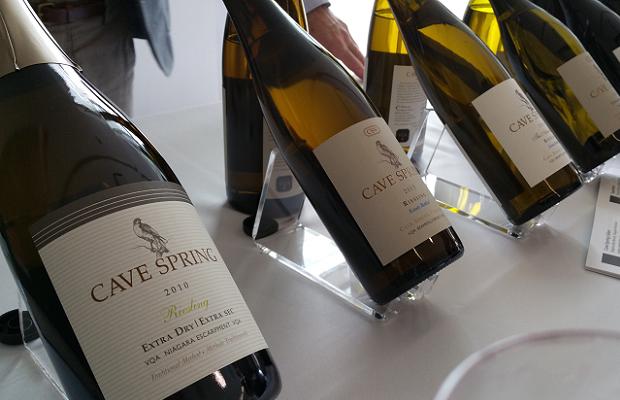
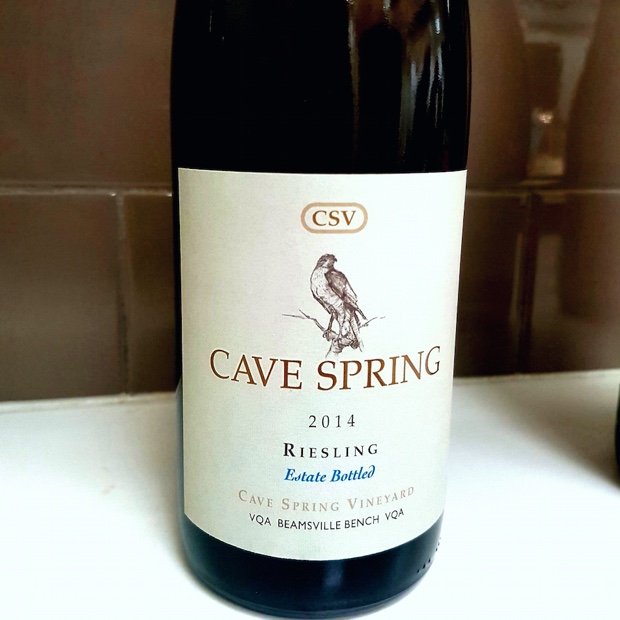
In a word, balance. Well two, balance and brilliance. CSV in 2015 takes the reigns from itself and stands firm. The fruit is in charge, the mineral a support system unparalleled and the minor celebratory sweetness a mere afterthought when it comes to rounding out the complexity. CSV is pretty darn back in ancient dolomite time travel and escarpments high great in 2015, uplifting, serious but yet not so. The numbers trip the light fantastic, fooling like gold and bones dry are seemingly preserved in karst but impossibly not. The sensoria apprised reel from the finest acidity it can possibly carry in its veritable truth. Deep lemon intent and a new wax vernacular speak the clarity of a wine that listens to its own expert advice. Might as well have made itself. CSV 2015 is one of the finest rieslings ever made from Ontario grapes. Drink 2019-2031. Tasted March 2017 @CaveSpring@TheVine_RobGroh
It would be hard not to make a most drinkable and full-fleshy chardonnay from the stellar vintage, especially with the omnipresent cool tempering from Beamsville bench fruit. Redstone does not disappoint though at first it may seem both reluctant and extremely taut. The flavours stretch out more than the aromatics which are flinty, woody and tart. They will relent and meld into the palate with some further bottle time. This is classic for the house braintrust and reminiscent of sketches drawn in some earlier vintages, like 2009. Drink 2017-2020. Tasted September 2016 and March 2017 @RedstoneWines
Henry Of Pelham Family Estate Winery Chardonnay Estate 2015, VQA Short Hills Bench, Niagara Peninsula, Ontario (268342, $19.95, WineAlign)
Perhaps by virtue of the language spoken by the 2015 vintage this chardonnay is hard to crack and touched with a minor, vitality-preserving note of reduction. It will yield to swirl and air, opening up many floral blossoms, notably apple and peach. Intensity is consistent for the Short Hills Blench vineyards stalwart, both for its locked in freshness and aromatic heavy breathing with thanks to dense clay soils and their “tossed up limestone.” Think cool-climate chardonnay with added layers of compression, fervent soil tang and as of yet unresolved (one-third) new French and North Ameriacn oak. Two to three years in process from two to three bottles per vine naturally translates and extrapolates to needing two or three more years in bottle to make it all come swimmingly integrated together. Drink 2019-2023. Tasted February and March 2017 @HenryofPelham@SpeckBros
Meldville Chardonnay First Edition 2015, VQA Lincoln Lakeshore, Ontario (Winery, $20.20, WineAlign)
Foremost a Derek Barnett perfume, rational from a generous barrel and irrational from the ripest fruit at a twain where each meet, both matter and neither dominate. Classic Barnett chardonnay viscosity, deep tang and the sweetest of dry extract. If this isn’t the most ambitious effort early in a re-invented career it would be hard to say what is but wisdom and experience count for more than a bottom dollar. Real length in real time will develop the vanilla, honey and liqueur well into this chardonnay’s tithe year. If singular isn’t the current descriptor now, it surely will be then. A new stylistic benchmark for Lincoln Lakeshore is born. Drink 2017-2023. Tasted March 2017 @meldvillewines
The vintage offered up a whole set of challenges, especially for chardonnay on the Lincoln Lakeshore. Right off the aromatic bat I sense a little extra wood on the nose but low-yielding, ripe and healthy fruit can handle that sort of vintage-related truth. The coolness of a preceeding winter’s anti-glaze is contravened by the barrel up front and personal on the nose. The palate is all about cool-climate relegation, resignation and the overall picture is painted in balance; advance, recede, attack and retreat. Finishes with love interest, commercial appeal. Pretty complex chardonnay. Drink 2017-2020. Tasted October 2016 and March 2017 @FieldingWinery@RichieWine@Heidi_Fielding
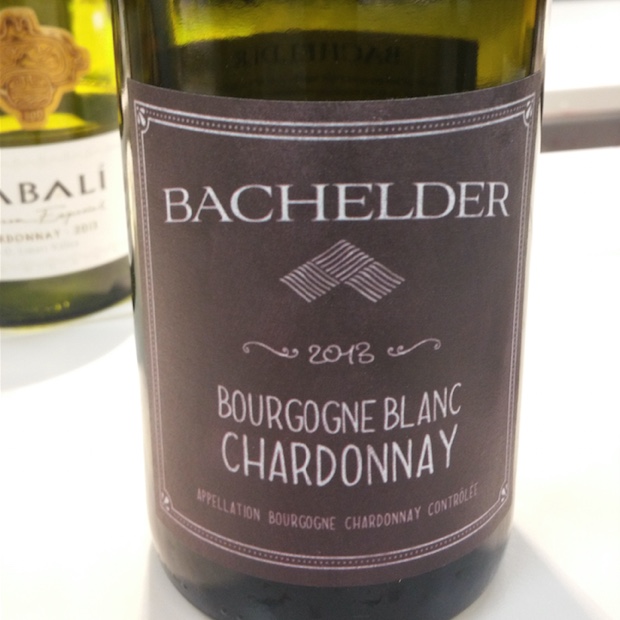
Mineralité is clearly nose-marked and cleverly marketed to celebrate rocks and soil, not barrel. The fruit seems plucked straight from the apple tree, crisp, tart and crunchy. Everything about this exacting Thomas Bachelder chardonnay screams foil to most else, from his wide reaching chardonnay domain and from the rest of the province. Other mettalurgical label referenced chardonnays still reek of oak and are too shy to distance themselves from the heart of the rocky matter. Thomas is serious about the moniker and goes at it with great intent. The vintage nearly, fully completely complies. Drink 2017-2021. Tasted March 2017 @Bachelder_wines@LiffordON
The fruit for Ann Sperling’s chardonnay Triomphe ’15 is sourced primarily from Saunders (Beamsville Bench) with auxiliary support out of Heather Laundry’s old vine Lincoln Lakeshore vineyard. There are older, non-clonal blocks with perhaps some Musqué mixed in so the aromatics fly, with no restraint applied by the wild ferment and (mostly 300L) neutral oak. This Triomphe is anything but reductive, a no stress chardonnay from such a far from sluggish, clean ferment. The simplicity and complicity explain how beauty is curated, from a vintage where reduction did not happen or beg to happen so why try to force it. The copacetic re-quiescence bears witness to classic Ann Sperling in such a vintage. Chardonnay of mellow smoulder, of old barrel spice and one to define a certain kind on a line of disparate and unique, cool climate, i4c selections. There are 800 cases made. Drink 2017-2020. Tasted January and March 2017 @SouthbrookWine@AnnSperling@PaulDeCampo@thesirengroup
@wismervineyards royalty, Craig, Thomas @Bachelder_wines & @normhardie (and delegate Peter @BouchardFinlayson ) talking north and south #vinelandbench
The ability of Craig Wismer’s Foxcroft Block to gift fruit, regardless it seems of vintage, is one of Niagara’s great stories. Even more special is how it allows each producer to own it and create value from differentiation. Kevin Panagapka works a decidedly reductive room with bees-waxy fruit from 2014 and of a wood creativity that deals more in spice than anything else. I really think this takes more risk than other Foxcroft efforts and they are numerous. The reward here is in the pudding, literally, in proofed fruit set up for unbreakable structure. The Sonoma glade and fog rings true in Bench-driven chardonnay speak while wood only creates a leesy stir. A very good vintage, as good as the previous two I would say and creates even more buzz for what will come next. Drink 2017-2021. Tasted March 2017 @2027cellars
If classic Queenston Road Vineyard might be explained in one drop, try using the Creekside ’14 to do so. Riper than most Niagara fruit and easy as Sunday morning barrel influence come together for everything to gain. Here the chardonnay equivalent of reading a good book falls into lunch, followed by a mid-afternoon slumber. Mild notes of caramel and sandlawood come through on the lightly buttered rye toast palate. The only thing missing is a good slice of bacon. Drink 2017-2019. Tasted March 2017 @CreeksideWine
The vintage brings an excess of riches and richesse to the Queylus chardonnay entry point, a place you would be wise to begin your foray into high-level, carefully crafted, cool-climate wine. This 2014 offers up its tour-guide expertise as a representational bridge into what Thomas Bachelder, Kelly Mason, the Queylus team and lake-proximate, lower Bench chardonnay is all about. The vintage takes an ambitious departure for the house and yet it carries enough (short history of) tradition in its DNA to resemble past issues of itself. Such a balanced wine for you here, of ripe and tart fruit, elasticity, stretch, rebound and finally, great length. Drink 2017-2020. Tasted January and March 2017 @QueylusVin@Dandurandwines
13th Street Chardonnay Sandstone Vineyard Reserve 2013, VQA Four Mile Creek, Niagara Peninsula, Ontario (Winery, $29.95, WineAlign)
No surprise the vintage is a major plus for the Sandstone and the natural funk it owns. And I mean owns. Only Sandstone has such geological drive, not unlike chardonnay from South Africa’s Hemel-En-Aarde Valley. In 2013 there is a sweetness to the fruit mixed with a misty humidity and finally that falling over backwards with feet stuck in the clay and the calcaire. Wildness from J. P. Colas here and with attentiveness to place and time. Drink 2016-2021. Tasted at #i4c16, July 2016 @13thStreetWines
Adamo Estate Chardonnay Oaked Willms Vineyard 2014, Niagara On The Lake, Ontario (Winery, $31.00, WineAlign)
Adamo sources from the same vineyard that provides fruit for 13th Street’s Sandstone Reserve in the Four Mile Creek sub-appellation of Niagara-on-the-Lake. Planted in 1983, it is owned and farmed by Erv, Esther and Eric Willms. In its early stages the fruit acted and reacted as a lean, taut and tension fuelled chardonnay with party a sign of letting up. Eight months later the juicy flesh of orchard fruit pushes past the vintage’s grip and lets tis wine breath a sigh of relief. Chalk one up to yet another cool-climate, calcareous clay stuck moment in time. Drink 2017-2019. Tasted twice, at #i4c16, July 2016 and Taste Ontario, March 2017 @AdamoEstateWine
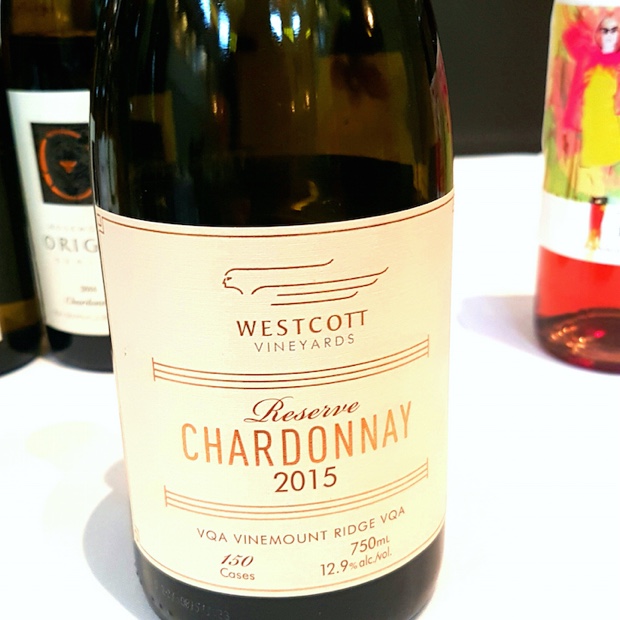
I don’t mean to skip forward and get ahead of Westcott’s aromatic propriety but knowing how a winemaker likes to celebrate texture and flavour sends me direct to a sip. That first taste reveals the sumptuousness of 2015 Vinemount Ridge fruit, ripe, savoury and fleshy peach-organized. Accomplishment number one for Arthur Harder and crew. An aromatic retrospective notices tradition and cool-climate reserve, as the name would suggest and then a full-on conversion moving forward, back to the present and into the variegated luxe of flavour gifted to mouthfeel. I love how this wine lingers with an almost analgesic sensation on the gums and up the sides of the mouth. If at moments it may seem too warm or right of balancing centre it is only because it has the gumption to test and heighten the senses. If any Peninsula chardonnay were a drug that could lead to addiction, Westcott’s ’15 is the one. Drink 2018-2023. Tasted March 2017 @WestcottWines
The aromatic hard to get personality is intriguing, not because of absence but due to a gentle wisdom and beautiful demure lurking behind the veil. I get the extract and the mineral quality inherent but need more. The palate gives more and more, especially a calcareous sensation and the lean qualities throughout are neither deficient nor bothersome. This is ambitiously market-introduced chardonnay created without getting ahead of itself and though the best the fruit has to offer is not quite coaxed, nothing has been added to distract or suppress what orchard fruit is there. Great appreciation is afforded the winemaker for keeping it simple, unadulterated and real. Drink 2017-2010. Tasted March 2017 @FoolAnd60Acres
Closson Chase South Clos Chardonnay 2014, VQA Prince Edward County, Ontario (Winery, $39.95, WineAlign)
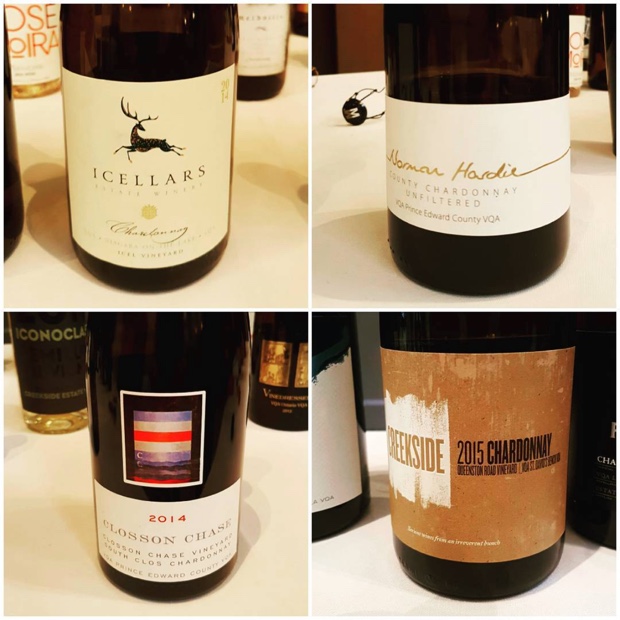
Sometimes time matters. A year later the South Clos in 2014 has separated itself as the true Closson star, away from the CCV in ways it did not do in 2013, or before. The range of motion, aromas and flavours are dramatic and in beautiful flux, beginning with top notch orchard and stone fruit. The southern hill’s intense stony quality infiltrates before this opens up to reveal flavours as broad as the varietal spectrum will alow. If fruit slightly dehydrated, leather chewy and mille-feuille layered with fine, limestone wire interlocking are something of great appeal then chew on this South Clos for the next seven years. The texture and the length are wholly encouraging of the exercise. The score must change and the window be expanded. Drink 2018-2025. Last tasted March 2017 @ClossonChase
The 2014 CCV South Clos Chardonnay is imbued with less tension, more elegance and fully-aclimatized cool-climate bent. It’s a linear, calm and directed soul raised from Prince Edward County soil royalty. The vintage offers up low-crop, scrupulously cropped stable if unexceptional fruit. This from a portion of the vineyard with the ability to plateau what can otherwise get season’s growth-mired in the proverbial middle of the road. Though not so tart, nor tense neither, there is a sense of tannic zest. Cool and precise, this represents concrete work from incumbent winemaker Keith Tyers. Drink 2016-2021. Tasted February 2016
The man, the chardonnay @normhardie #princeedwardcounty ’14 #vqa #winecountryontario As sure as fire will burn There’s one thing you will learn Is things you have cherished Are things
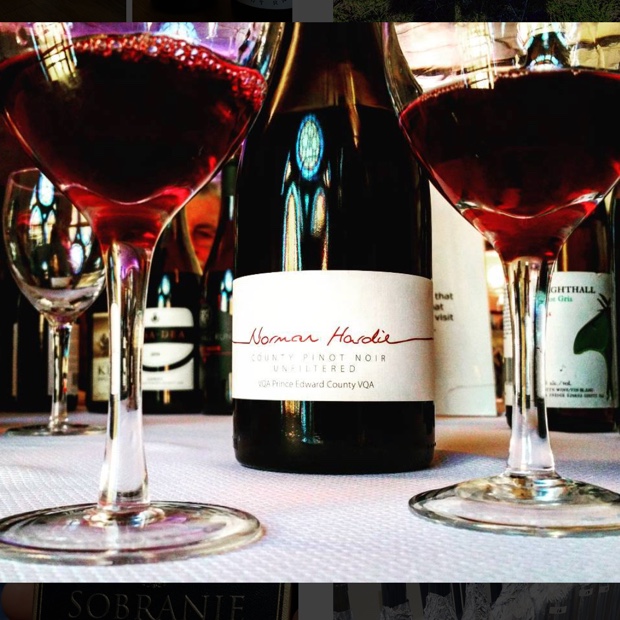
Norman Hardie County Chardonnay Unfiltered 2014, VQA Prince Edward County, Ontario (Winery, $45.20, WineAlign)
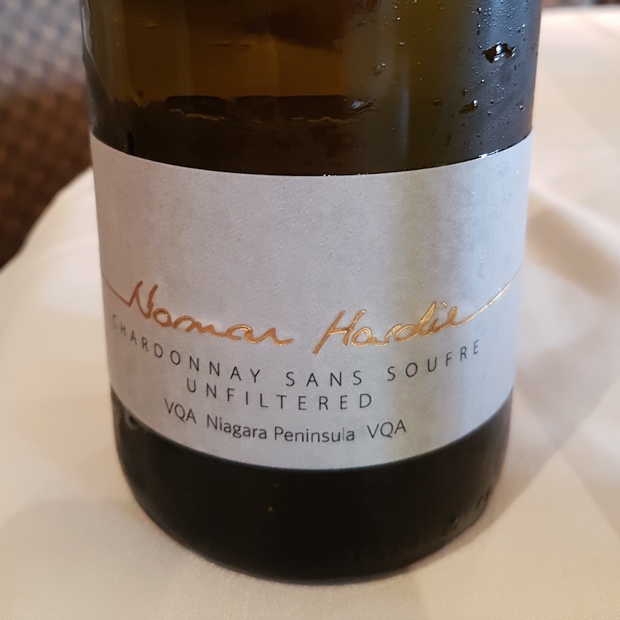
So much locked in tight obscures the coaxing of a distinct and clear impression of Norman Hardie’s ’14 County chardonnay so I search for a reference point. There is danger in drawing comparisons between two single-vineyards and even more so Niagara to Prince Edward County, but I have to go there. Norman Hardie’s 2014 Niagara chardonnay is the rich and reductive, bullet-proof one. His extreme, hard as nails ’14 PEC counterpart may be the most mineral-focused ever produced off of County soils. The ferment spent 10 months in barrel plus 10 more in stainless steel and never fully completed malolactic. Chablis never had it so good. I can’t ever before recall this flirtatious and furtive combination conjoined by preserved lemon and ginger but also the smell of the apple orchard grinding through metal gears in the cider press. The magnitude of this ’14 chardonnay is felt even before the flavours begin their reveal because the layers of texture and tang are nothing short of remarkable. Hardie has gone for structure broke from this vintage reeling with impression, soliciting oyster, lobster and grand gustatory associations. There is so much going on, eliciting a response that imagines a change in direction and at least an unconscious metaphrasing of terroir. With this formidable chardonnay the idea of better or worse for Niagara versus PEC is finally laid to rest. Vintage rules. Drink 2018-2023. Tasted March 2017 @normhardie
Always Ontario’s outlier, eccentric and non-conformist chardonnay and I say this with complimentary, best of intention flattery. The 2013 vintage is simply chivalrous to chardonnay and in Poetica’s corner, a perfect calm case of preux meets elegante. Here is a chardonnay of inherent oxidative wisdom, from cloud cover, cool, long breaths of Niagara air well into the elongated autumn and the address for what I refer to as “the age apparent one.” The iconoclast Poetica ideal conforms because it is matched with equal breadth by richness of fruit and confirms the way Ann Sperling makes her signature wine. Tasted blind my first guess would put this at five years old because of the exuding warmth so 2010 might just be the order. A 2012 Bench chardonnay might have also been the answer. But with Poetica the promise is like Meursault with uptown fruit, honey, vanilla, caramel, a Niagara vapour and ethanol. Such a telling display that only Poetica can play. Drink 2016-2024. Tasted October 2016, January and March 2017 @SouthbrookWine@AnnSperling@PaulDeCampo@thesirengroup
With a string of no less than five well-executed and received pinot gris vintages tucked comfortably like brass in pocket, Malivoire’s pinot gris 2015 goes one step deeper. No pretender or pretension but yes with compression in ’15, noting melon and lime, white stone fruit, not dense but layered. More Alsace than before and poured blind would always and only be pinot gris. In the hands of Shiaz Mottiar the ’15 knows and says it. “Intention, I feel inventive. Gonna make you, make you, make you notice.” Drink 2017-2020. Tasted January and March 2017 @MalivoireWine@ShirazMottiar@GroupeSoleilTO
Meldville Sauvignon Blanc First Edition 2015, VQA Lincoln Lakeshore, Ontario (Winery, $20.20, WineAlign)
Not so much an aromatic sucess for sauvignon blanc though some faux botrytis in the guise of white peach and even mango is nosed. It is the palate that defines Derek Barnett’s First Edition and offers up description. Quite creamy in texture, tangy again from mango and then sharp and linear with the type of acidity that folds over itself to increase the notion and the effect that leesy textures creates. This lingers on the palate like a tropical pastille and sapidity is very real. It’s classic antithetical Niagara Peninsula sauvignon blanc and could not be confused with Marlborough, Elgin, Sancerre or any other varietal play in the great diaspora. Derek Barnett takes less risk here (as compared to his chardonnay) but at the same time perpetuates the marked differences in expression of NP sauvignon blanc. Drink 2017-2020. Tasted March 2017 @meldvillewines
Does not get much fresher in Viognier, anywhere. The tank has yet to leave the bottle which does not so much stand transfixed in shock as much as it buzzes like a fridge. Heady, radioactive, reductive and policed tight which I very much like. The expected flavours of peach and the pits are in while the texture thrushes inward and the linear, distillate character lashes out. Solid as a rock in a Niagara quarry. Drink 2016-2018. Tasted February 2016 and March 2017 @NyaraiCellars@TerroirLover
The Grange Of Prince Edward Vineyards & Estate Winery Pinot Gris Select 2015, VQA Prince Edward County, Ontario (Winery, $24.95, WineAlign)
If you are going to go for something you may as well go all in. Maggie Granger tells me the ’15 pinot gris saw 36 hours of skin contact. My math tells me that’s a 240 per cent increase over 2013 and 2014. As I said, all in. Now we have something that raises the stakes and despite some energy flatlining the sweet extract quality has never been finer. The Grange’s ’15 and its oxidative meets lactic and red berry-currant leafy personality is remarkably pure, clean, saline and yes, unusual. Add it should be because halfway there is nowhere. This succeeds because it crosses an imaginary line and fear is ignored. I can really imagine sipping this with pork liver mousse or cured Ontario fish, like rainbow or salmon trout. Drink 2017-2019. Tasted March 2017 @grangewinery
The Good Earth Viognier 2015, VQA Lincoln Lakeshore, Ontario (Winery, $24.95, WineAlign)
Some of Ontario’s best viognier fruit comes from these picturesque vineyards, fruit that shines with tangy delight and also takes on the weight of compression from the great clay below. I do feel the 2013 vintage was better suited to both the varietal but also the way winemaker Ross Wise procured viognier in the purest form with glassy clarity. It will be most interesting to see what incumbent consulting winemaker Ilya Senchuk does with 2016 fruit going forward. Here, from what could only have been the lowest of low yields, this aromatic and treacly textured viognier is seamless and full of peach flavour. It lingers with its phenolic ripenss well into the next minute. Highly recommended especially for its lack of waxy or bitter edges. Drink 2017-2020. Tasted March 2017 @goodearthtweets@goodearthNico
Stratus White 2013, VQA Niagara On The Lake, Ontario (660704, $38.20, WineAlign)
In 2013 viognier is back in the varietal mix, in reprise of its earlier role in support of chardonnay, sauvignon blanc and riesling. A different sort of vintage here for the White, seemingly led by a circular turning of chardonnay and viognier, like a cat chasing its tail. This really goes round and round with no obvious signs of where it will stop. Quite fleshy and lime juicy with stone fruit flavours in righteous abound. Really amalgamated and seamless even for itself. It is here that I think of it as The White. Niagara’s White. Lake Effect™. Drink 2017-2022. Tasted November 2016 and March 2017 @StratusWines
Gamay
Malivoire Gamay Small Lot 2015, VQA Beamsville Bench, Ontario (Winery, $19.95, WineAlign)
A change of pace is noted for gamay in 2015 and perhaps it takes itself to a place beyond. Seriously dark fruit (with more tannin showing up after some time in bottle than might have originally thought possible) is noted from just a nose on Malivoire’s 2015. The pressed extraction may turn out to be a process leading to greatly improved structure. This is not the gamay rising from riding on the go-go train but one more akin to Cru doctrine and demagogy. Flavours of black cherry and tart citrus lead to plenty of leafy and earthy savour. Look out Juliénas, here comes Small Lot. Drink 2017-2020. Tasted March 2017 @MalivoireWine@ShirazMottiar@GroupeSoleilTO
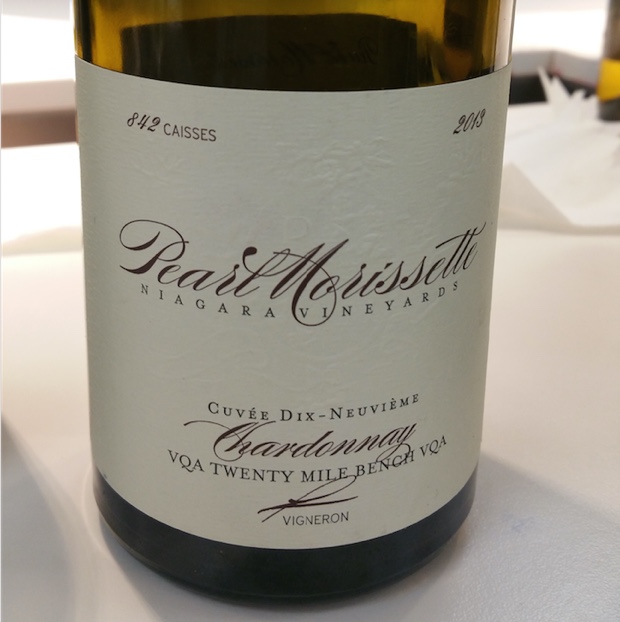
The fruit for this deeply coloured gamay is drawn from Tom Koscis’ vineyard, big batch fermented but with a minimalist sulphured approach. Gamay that went through full malolactic in barrel out of sheer necessity. Winemaker Paul Pender is a big fan of this great site, a place that gifts perfect colour and a soil’s funk that is spot on. This is gamay of a noticeable velvety texture. Something strikes as deja nosed and sure enough, this was Pearl Morissette’s fruit in 2013 and 2014. Wisely natural and so bright, gulpable, back up the truck gamay. So beautifully and perfectly dry and even a wee bite of tannin. Drink 2016-2018. Tasted April 2016 and March 2017 @Tawse_Winery@DanielatTawse@Paul_Pender
The Grange Of Prince Edward Vineyards & Estate Winery Gamay-Pinot Noir Select 2014, VQA Prince Edward County, Ontario (Winery, $24.95, WineAlign)
The ’14 is the first Grange gamay-pinot where the grapes were simultaneously picked and co-fermented. It’s a really ripe co-mingling and so much brighter than you’d think. “This is the vintage I was waiting for with this wine,” tells Maggie Granger. Clean, pure essence of raspberry dances on the nose and texture liquid chalky, lactic and taut. This wine also proves that this more than obvious bedfellow varietal combination makes more sense in the County than Bourgogne meetings of the kind. It remains to be seen if the Grange’s irreligious pagan pairing idea will catch on but if any vintage can spur the revolution, 2014 is the one. Drink 2017-2020. Tasted March 2017 @grangewinery
The Flat Rock has been a VINTAGES essential for several seasons and like any maturing pinot noir vineyard, four or five years are needed before quality is ensured. This wine has always provided quality but it is in 2014 where the stakes are raised. For the Twenty Mile Bench (and others Benches too) this vintage provides sweet extract, steadfast fruit, polished tannins and exceptional structure. Jay Jonhston did not mess with the cards, blended with acumen and has subsequently ran the table for his basic, normale, bring it to the (relative) masses pinot noir. It’s all you need to understand Flat Rock, The Twenty Mile Bench and the Niagara Peninsula. It’s essential. Drink 2016-2022. Tasted October 2016 and March 2017 @Winemakersboots@UnfilteredEd@brightlighter1@wine_gems
Parfum doles out the Bachelder perfume with great Beaune intent and whole bunch hints from this most celebrated 2014 Niagara pinot noir vintage. With potpourri so bright and wildly tonal there needs to be some firmness for balance and this is present with tonic injection and finishing grip. The overall impression is a broad brushstoke and wells with its tea-seeping pot of mild but effective tannin. With thanks to “de-classified” Lowrey and Wismer-Parke vineyard fruit an ideal launching point progresses for the Bachelder way and encourages Le Parfum to set the stage for further investigative play. Drink 2017-2020. Tasted March 2017 @Bachelder_wines@LiffordON
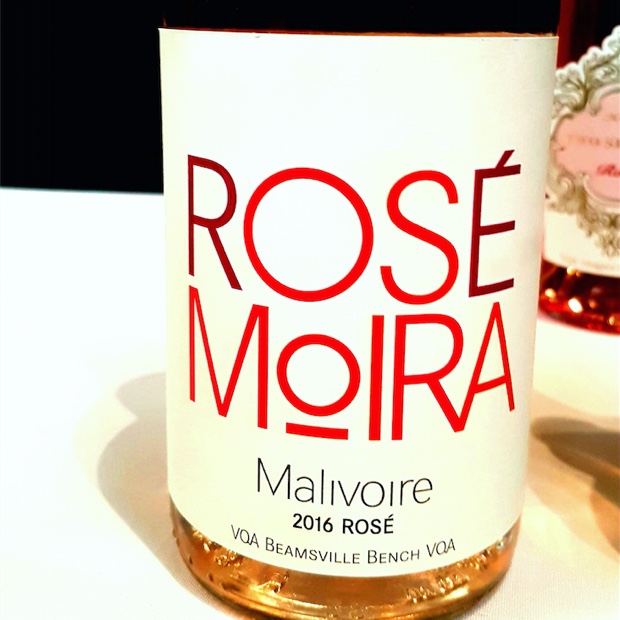
Hard to believe what I see, a hue not blush nor pink, but gris. That “if my eyes don’t deceive me there’s something going wrong around here.” Forget about Provençe, don’t think too hard about Vin Gris but concentrate only on what Shiraz Mottiar has acceded with Rosé for Moira in ’16. Light and lithe do not begin to explain the rub. Rocks and stones are what come through the good earth on the nose. Is this the blush equivalent of mineralité, away from chardonnay and into pinot noir? “Is she really going out with him?” But the pinot noir component is almost non-existent so what is the phenolic advantage here? Has this gone too far or not far enough? Don’t mistake the things I say. This is delicious, understated and fully underestimated Rosé. It will have great appeal to a specific cognoscenti population and who could not think to drink it any day of the week? Commercially considered however, it may not speak a universal language. Drink 2017-2021. Tasted March 2017 @MalivoireWine@ShirazMottiar@GroupeSoleilTO
The Good Earth Pinot Noir 2015, VQA Niagara Escarpment, Ontario (Winery, $24.95, WineAlign)
Moving away from the Lincoln Lakeshore and up on to the ledges of the Niagara Escarpment we find pinot noir taking on a decidly firm and stony aromatic profile. Fruit in 2015 is graced with phenolic ripeness though certainly submissive to the elevated mineral tones. The strawberry-cranberry spectrum is acquiesced and the winemaking has rendered this clean as a pinot noir popsicle whistle. Great simplicity and consumer complicity is gained. Drink 2017-2019. Tasted March 2017 @goodearthtweets@goodearthNico
You’re gonna want to make room for a whole cluster of these @SouthbrookWine #pinotnoir #triomphe #annsperling #laundryvineyard #organic #niagarapeninsula #vqa #beamsvillebench
Ann Sperling’s inaugural pinot noir for Southbrook makes swift, acumen accomplished first time work with Heather Laundry’s vineyard fruit. While her peers of the current generation begin to play and progressively experiment, Sperling helps to usher in the whole cluster brigade with her own 40 per cent packed, tiny berry ferment. This sterling effort takes Lincoln Lakeshore pinot noir to another dimension and Ann is confident the 115 clone is so perfectly suited to the ideal. This whole cluster thing with pinot expresses the floral lift and in turn a gift into elegance and purity. Ripeness and richness take turns without drifting into black cherry darkness. There is some chalky, earthy reduction that needs to mellow and it’s still a bit gritty, palpable of textural and even a bit mean. It won’t take long for this just recently released Triomphe to pirouette, assimilate and dutifully represent an unmitigated success for Sperling, in this her 11th vintage at Southbrook. Drink 2017-2019. Tasted January and March 2017 @SouthbrookWine@AnnSperling@PaulDeCampo@thesirengroup
Bright, high-toned Pinot Noir with rambling warm, St. David’s Bench red fruit aromas, out of the raspberry patch (thorns and thistles in) and off of the ripening pomegranate tree. Some rusticity and quarried character refracts within a mild tannic frame. Very floral and high on acidity. Blissfully and blessedly not over pressed and in fact rather well made. Yet another success employed by winemaker Kevin Panagapka with stylistic firm talon grip from out of the Queenston Road Vineyard. Drink 2016-2020. Tasted February 2016 and March 2017 @2027cellars
Thomas Bachelder has never had a problem with timing. His first pinot noir from the specific Wismer Parke Vineyard (labeled as such) comes from a veritable cracking jackpot of a great varietal vintage. If you need some geographical placement here, The Parke is contiguous to the Foxcroft and Wingfield sections of Wismer in the eight farm-strong holdings on and around the Twenty Mile Bench. It is here that Bachelder concentrates the microscope on a sectional-cordoned off Wismer micro-terroir and its precision-apportioned mineralogy mined for sidetracked and step out of the box focus. What The Parke delivers in 2014 is a sweeter extract than Wismer proper and one that is stationary, static and accessible. The overall grasp is a mouthful easy on the spice or rather subtle in attack after it has climbed in and out of its barrels. Most polls would place Lowrey at the pinnacle of Ontario’s pinot noir vineyards but Thomas Bachelder’s 2014 work with Wismer Parke establishes a new player on the shortlist. This is an exciting entry point and the future will be bright. Drink 2018-2024. Tasted October 2016 and March 2017 @Bachelder_wines@LiffordON
The pinot noir condition is really challenged with Icellars ’15, a wine that acts as ambitious as its sister chardonnay but the results filtered through just the opposite. The aromas are dusty, rusty, coppery and full of dried fruit, but also weathered leather and savour. The palate goes deep south, humid and balmy with red citrus, plenty of tonic and a finish left by bitter citrus pith. Incredibly firm and old-world schooled, way back to Burgundy from another era. Drink 2017-2019. Tasted March 2017 @FoolAnd60Acres
Great purity of Twenty Mile Bench fruit lightens the load, re-focuses, revives, prolongs and re-lives the magic. Sweet, salty and bitter combinative phenols in cohorts distinguish the layering effect of a Norm Hardie pinot noir, no matter the source but here distinct as the s-shaped micro-cilmate curves of 20 Mile blocks. Quite the cake creamy texture and silky mouthfeel for a Hardie pinot noir would indicate that alcohol has crept above the norm but the magic is never abandoned and always prolonged. Heat and alcohol “never there. You’re never there. You’re never ever ever ever there.” Under 12 per cent, every time. Drink 2017-2021. Tasted March 2017 @normhardie
A cabernet blend more franc than sauvignon because of the savour and the plugged in currant fruit. Though the aromatic tones are elevated and venturing into menthol territory, the structure provided by palate and finish ground this two cab blend into solid clay. Will drink well for up to five BBQ seasons. Drink 2016-2020. Tasted September 2016 and March 2017 @RedstoneWines
The Good Earth Cabernet Franc 2015, VQA Lincoln Lakeshore, Ontario (Winery, $21.95, WineAlign)
Just as cabernet franc is inherently wont to be this Good Earth celebrates a grape’s verdant habitual greenness of warming spring and fresh vegetal in waves that bring more advantage than not. Nicely tart and expressive of varietal ways, this is neither overly ambitious nor does it use wood to excessive advantage. With understated the great operative we are faces with cabernet franc allowed to go about its business, for under appreciated grace and the sort of electric and elastic length that goes on for days. Some will say too much of a good thing but if you know cabernet franc, it’s just right. Drink 2017-2019. Tasted March 2017 @goodearthtweets@goodearthNico
Can I be #cabernetfranc for a minute? @meldvillewines @grangewinery
The Grange Of Prince Edward Vineyards & Estate Winery Cabernet Franc 2013 Select, VQA Prince Edward County, Ontario (Winery, $24.95, WineAlign)
An extra year has paid great compliment to Caroline Granger’s ’13 cabernet franc, a wine of deeply aromatic and summer savoury dark fruit. Comparisons politically correct or not, this kind of County cabernet franc is so much more closely connected to Chinon than most from Niagara and it really combines cool-climate with limestone geology. What wood there was has melted and blended in with copacetic liquid chalky ooze, leaving this in a pure and pleasurable state of cabernet franc grace. A near perfect place. Drink 2017-2020. Tasted March 2017 @grangewinery
Henry Of Pelham Family Estate Winery Cabernet/Merlot Estate 2012, VQA Short Hills Bench, Niagara Peninsula, Ontario (395855, $24.95, WineAlign)
Exceeds elegant expectations with poise and presence, a Bordeaux blend so refined it pleases. Effectively restrained and remedies with tonic. Circulating acidity ranges while chocolate whips, but wholly within reason. Spice accents assist in the celebration (why not?) to effectuate this red’s firm grip and grasp of Claret reality. Drink 2015-2020. Tasted blind at WWAC15, August 2015, January and March 2017 @HenryofPelham@SpeckBros
The rare and elusive Ontario cabernet-syrah returns with Fielding’s 2014, from mostly Lowrey Vineyard fruit set in 20-25 per cent new barrel for 16 months. Neither a 2009 or a 2013 was produced because “it’s a priority, not an afterthought,” insists winemaker Richie Roberts. The ’14 is a (50 per cent) cabernet sauvignon, (30) syrah and (20) cabernet franc compendium, treated like a top tier Bordeaux-esque blend with a French-Niagara twist. This is sultry-smoky, curative and red fruit, earthy-dried salumi-salmagundi, holy gastronomy in a glass blend. The Fielding-Roberts wisdom and acumen are all over in a wine that will prepare you for every eventuality. Would undoubtedly pair famously with the rare and elusive king of game birds, le bécasse, with bacon and fleur de sel. Drink 2018-2024. Tasted January and March 2017 @FieldingWinery@RichieWine@Heidi_Fielding
Norman Hardie County Cabernet Franc 2015, VQA Prince Edward County, Ontario (Winery, $25.00, WineAlign)
Only 100 cases were made of Hardie’s 2015 County cabernet franc with thanks to a late spring frost. The impossible one is a destemmed, small basket press wonder that spent 11 months (one more than usual) in 30 per cent new (plus 70 neutral) 228L French barrels. The tartful dodger is slick, smart and spirited. Impossible because of its wood-smothered and smouldered upbringing and how it stays so lean, clean, stealth and low in alcohol. Some things are best left unexplained. Just take in the raspberry, cranberry and cool limestone, followed by the star anise and cassia red braised pork belly imagined, even if that’s just what dish would be so right alongside. Drink 2017-2021. Tasted March 2017 @normhardie
Meldville Cabernet Franc 2015, VQA Lincoln Lakeshore, Ontario (Winery, $27.00, WineAlign)
A beautifully sweet, savoury aromatic cabernet franc of verdant bright tones and such commissioned, defined red fruit. Character is at the forefront, both for attitude and complexity, gently pressed and in varietal synch. This is precisely why Lincoln Lakeshore is the right place to be with the cabernet franc you love. This has great tension without being too firm, gritty or tannic. Though this celebrates the bright and the fruity it is not without enough structure to carry it forward five plus years. Pyrazine or green notes are curiously absent and there nothing suffers as a result of their omission. Drink 2017-2022. Tasted March 2017 @meldvillewines
Southbrook Vineyards Cabernet Franc Small Lot “101” 2013, VQA Niagara Peninsula, Ontario (Winery, $34.95, WineAlign)
Gone is the Whimsy! idiom and preserved is the varietal freshman year class denotation. The “101” actually refers to the vineyard, a block in purport of aromatic restraint in a confident Cabernet Franc with more richness and tannin, not to mention raging acidity and acceptable volatility. There is lightness and brightness within the rigid tannic frame. The “101” vineyard shines while it broods. Dichotomous Cabernet Franc with an as yet undecided future. Drink 2017-2020. Tasted at Gold Medal Plates, November 2016, February and March 2017 @SouthbrookWine@AnnSperling@PaulDeCampo@thesirengroup
Without knowing much about the blend, the nose tells me cabernet sauvignon leads the way. Merlot and cabernet franc trail behind the tart, purple citrus and tobacco-verdant personality. The accumulation is quite chalky, wood-inflected and with the middle palate transparency this emits as another example of a big effort (like the pinot noir) with a shortfall because it gets ahead of itself. Would likely better be served with less pressing, structural dreaming and more easy going impression. I suppose the style has to justify the price but for value and enjoyment a prudent decision would choose instead to follow the lead set out with the estate’s chardonnay. Drink 2017-2019. Tasted March 2017 @FoolAnd60Acres
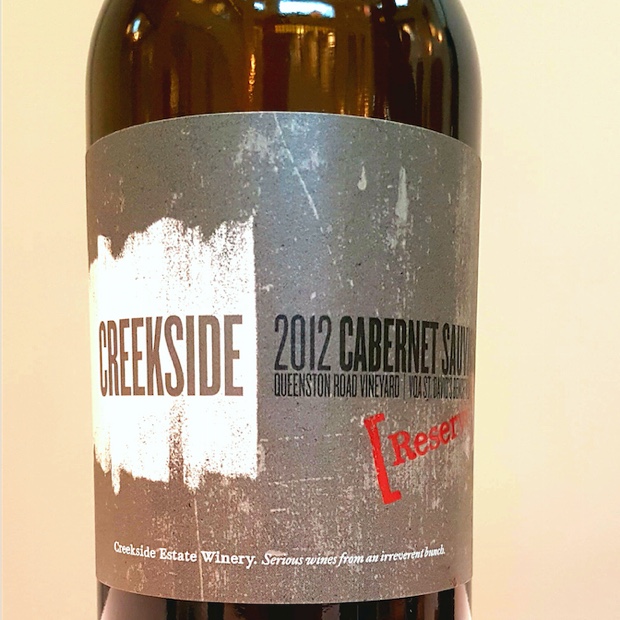
The time in bottle has eased up the tannic throttle, leaving Creekside’s ’12 in a pleasurable if not quite fuly accessible state. The great fruit vintage was deftly pressed, that much is clear, because as the wood subsides it is not astringncy and bitters sliding into its place. Cassis, cassia and black cherry are the aromas of ilk, in delivery at this time and followed up with cabernet sauvignon silk. This is rightfully and righteously chewy cabernet sauvignon and without a doubt just about as good as it gets for Ontario. Though the limbo bar starts low, Rob Power’s 2012 climbs under with great agility and raises the stakes for everyone else. Still, I’d hedge bets and wait two more years for further integration and a little bit of truffling to begin. Drink 2019-2025. Tasted March 2017 @CreeksideWine
Good quality fruit and equanimity from generous barrels define this ambitious effort. There is this underlying green streak that can’t be missed nor denied though it’s neither unexpected nor unusual. The texture runs quite complex, chewy and at times even crunchy, with enough structure to work towards a promising future. Wood and stemmy savour are certainly part of the mix but with time should integrate without much trouble. Drink 2019-2023. Tasted March 2017 @FoolAnd60Acres
He has always distracted me so that I thought of nothing else while listening to the words. And the sound of his voice.
Compiling a best of wine list is never easy. Not when the subject matter is the most fleeting of consumables, a drink ever-changing, almost never tasting the same twice and destined for eventual failure. We know by instinct that wines cast the shadow of their own destruction before them and are designed from the first with an eye to their later existence as ruins. Wine critics can only regard what is in the glass by what sensory enjoyment or displeasure is activated at that exact time. In most cases there are no second chances.
I do my best to taste wines twice before passing judgement. Too often I can’t fulfill this prophecy, especially when plodding through 100-plus on a VINTAGES release. In 2016 I made a great effort to visit these 16 wines three times before penning a review. It was not always possible but I tried. When it comes to Canadian wines and even more so with wines from Ontario, there are often second and third chances. And so I feel very confident in sharing this definitive list with you.
Hallelujah
It must be said that 2016 was a most difficult year. Too many special people were taken from us far too early. I lost two friends this fall as I’m sure some of you did as well. Many of us dwell on favourite celebrity deaths and especially the loss of musicians, some of us more than others. If you are one who takes to social media to mock the romantic who shares grief with others at the loss of a musical icon, well just skip past this and go straight to the wines. Or please refrain from comment and respectfully remain quiet.
David Bowie. Prince. Leonard Cohen. Sir George Martin. Glenn Frey. Paul Kantner. Leon Russell. Keith Emerson. Greg Lake. Alan Vega. Mose Allison. Bernie Worrell. Muhammad Ali. Gene Wilder. Arnold Palmer. Craig Sager. David Huddleston. Ken Howard. George Kennedy. Abe Vigoda. Ron Glass. Florence Henderson. Fuck 2016. And this tree fell on my house.
How’s your Sunday going so far?
On a much brighter note 2016 was a banner year for tasting Canadian wines. It also provided a vintage of quantity meets quality and one that was desperately needed, especially here in Ontario. My tasting regimen saw no quit or slow down in 2016. I’m not sure how many Canadian wines I tasted but if it was less than a thousand I’d be shocked. I tasted more at home, assessed a greater number in the LCBO’s sensory lab, delved deeper at the WineAlign office and spread the web wider at events in Ontario. I judged with Tony Aspler at the Ontario Wine Awards, in Penticton at the WineAlign National Wine Awards of Canada and with David Lawrason at Gold Medal Plates.
In 2015 I counted 15 on the filtered list. In 2014 the highlights numbered 14, just as in 2013 the number chosen to cant, recant and decant excellence in Canadian wine was 13. And so forth will lead to 17 in 2017.
Welcome @muller_brent to team RED! with nazlanmak captain @treve_ring #nwac16 @winealign
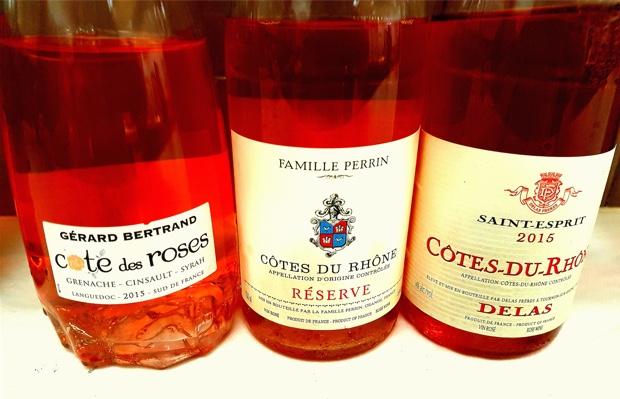
And again, I quote. “Picking a top anything list is both a chore and a labour of loyalty. The opportunities to learn more about Canadian-made wine, especially the processes and the efforts, were numerous in 2014. Canadian winemakers opened their doors and when people came, they taught. They walked the vineyards, showed off their prized barrels and walked through the processes of making wine. Tasting and barrel rooms make for the greatest classrooms. Get out there in 2015. The experience is priceless.” In 2017, trust in Canadian wine.
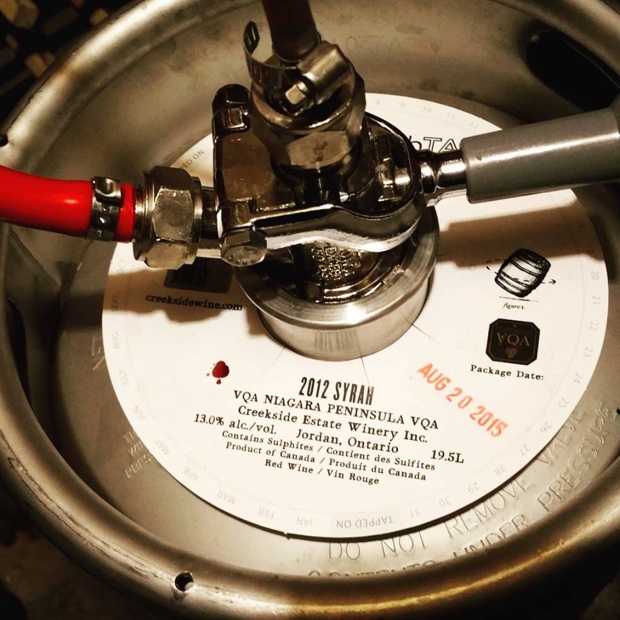
Return Syrah engagement @CreeksideWine pouring on tap @barquebbq and @barquebutchers #freshtap #wineontap
My wine on tap program at Barque Smokehouse and Barque Butcher Bar added some new wines in 2016 to follow those poured from Tawse, Lailey, Norm Hardie, Creekside, Between the Lines, Kew Vineyards, Redstone, Stratus and Leaning Post. Between the Lines, Coyote’s Run, Vineland Estates and new offerings from Creekside continue to fill your glasses.
The year began with great excitement at Niagara’s Icewine Festival in January. In February I returned for Cuvée Weekend. In June we convened the WineAlign Canadian Wine Awards in the Okanagan Valley and a confession I need to make is that I wanted to publish with the title “Why you don’t know shit about B.C. wine” but chickened out at the last second and instead came out with Why you don’t know jack about B.C. wine. Before judging we paid a visit with The Wines of British Columbia for the Judgement of B.C. The second annual cage match was hosted by the B.C. Wine Institute and took place on Tuesday, June 21, pitting 12 B.C. Wines against 12 acknowledged global benchmarks. Riesling and Pinot Noir squared off, curated by DJ Kearney and judged by a who’s who of Canadian wine writers, critics and educators, along with international WineAlign Awards judges Dr. Jamie Goode and Elaine Chukan Brown.
How lucky we all were to have her back in the captain’s chair. Happy Canada Day @djwines #nwac16
As the week progressed, the WineAlign judges paid visits to Okanagan Crush Pad Winery in Summerland, Culmina Family Estate Winery in Oliver, Tantalus Vineyards in Kelowna, Rustic Roots Winery with the Similkameen Wineries Association and Deep Roots Winery on the Naramata Bench. I tasted more than 100 wines over the course of the five days from the appellations of Okanagan Valley, Okanagan Falls, Oliver-Osoyoos, Golden Mile, Similkameen Valley and Naramata Bench. At the awards I tasted more than 500 Canadian wines.
Of greatest importance was my return to the International Chardonnay Cool Climate conference that took place between July 22nd and July 24th in Niagara. Before attending for a fourth straight year I penned The democracy of Cool Chardonnay. It was there I wrote that “plus has joined the i4c, an ideogram of addendum, a character of diversity for the fluently persuasive and forceful congress. This gathering will open its arms for colour and to allow its constituents to regale with what they do best. For an event-driven pure as single-varietal snow and formerly known exclusively as chardonnay, is this really a shocker? This is the reality of democracy.”
People bitched and moaned. How can a chardonnay conference include other grape varieties? Sacrilege and foul play they (secretly and not so secretly) complained. In the end the inclusion of red varietals confused nothing and no one. Chardonnay remained the focus and the star. No chardonnay were harmed.
We broke cool climate bread and spread chardonnay gospel with Ian D’Agata (Decanter, Vinous.com), John Szabo M.S. (Volcanic Wines: Salt, Grit and Power), Jean-François Bordet and Françoise Roure from Wines of Chablis. We tasted with sixty winemakers at the School of Cool, “Flights of Chardonnay” at Niagara District Airport and the Cool Chardonnay World Tour Tasting & Dinner at Ridley College in St. Catharines, Ontario. Red wines were poured after dinner!
Only American presidential candidates carry babies at #i4c @coolchardonnay
We welcomed writer Kurtis Kolt from Vancouver, sommeliers Carl Villeneuve-Lepage and Elyse Lambert from Quebec. Four Seasons Hotels and Resorts and Tex-Somm Director James Tidwell made the long trip north and a second Canadian courting immersion in as many months was performed by visionary wine raconteur Elaine Brown.
So what did Godello learn from Cool Chardonnay in 2016? Well, he found out that we have to look at organoleptics and ask a very important question. Is your expectation of a Chablis going to be the same as chardonnay made from anywhere else? More important, who are we putting this wine in front of? Ian D’agata’s take struck a Canadian chord. He talked of “a welcome astringency characterized by piercing flavours. These are cool-climate wines. Cool climate chardonnay is not about a long litany of fruit descriptors. If you have a cool-climate viticultural area it behooves you to give the people what they are looking for.”
Potential is the past @Somewhereness
After i4c16 I took part in an Impromptu tasting at Ravine. Four months later the intrepid sophist Scott Zebarth and I tasted with winemaker Marty Werner for a second time. That same day we visited with J-L Groux at Stratus and with Paul Pender at Tawse. Our focus was cabernet franc. That report is coming soon and I can promise this. The 17 in 2017 and 18 in 2018 will be graced by cabernet franc. Fall events were led by the constitutive Somewhereness, as fundamental and essential as any agminate Ontario tasting can and will ever be. Then there was the Great Canadian Oysters and Wine Experience at Rodney’s Oyster House. The event was hosted by Wine Country Ontario and paired a curated who’s who of Ontario VQA wines with the local iconic fare. Exceptional all around.
“I’ll do what I can so you can be what you do.” @rodneystoronto #coasttocoast #oysters #winecountryontario #dukes #peioysters #bcoysters #elliotsmith #greatcanadianoystersandwineexperience
Where are we now?
Despite all the talk of rules, regulations and governing boards that restrict movement, labelling and profits, the Canadian landscape is evolving in a beneficent direction. Though the move to loosen monopoly control and increase competition has backfired in the short term, corrections to British Columbia’s wine trade will happen, sort itself out and right the ship. Decades of bureaucracy don’t dismantle and do right by the consumer overnight. Things always get worse before they get better. The move to supermarkets in Ontario is indeed one of smoke and mirrors but it opens the door to gaining advantage through loopholes and creative minds kickstarting new business ventures. The wave to privatization can no longer be averted or snuffed out. Momentum will gain traction and open the flood gates to wine trade nirvana.
The man, the chardonnay @normhardie #princeedwardcounty ’14 #vqa #winecountryontario “As sure as fire will burn There’s one thing you will learn Is things you have cherished Are things that you have earned.” #tomwaits #littleman
Canadian wines run more or less of their own accord, not so much thanks to the winemakers or the condition of the current culture, as in spite of them. And certainly not by virtue of any particular ethos through customs and traditions going back over many generations of wines. No, success and cumulative proficiency exists by dint of these wines without any forced supervision. They are governed by themselves and indeed across the entire industry. Done are the blanketing days of spare and often powerful Canadian wines that were often too spare, so that the ribs of tannin showed through in painful obviousness. The embracing of cool climate idiosyncrasy and unique-somewhereness make Canada the envy of the developing wine world.
Now this. VQA is expected to pass regulatory approval and introduce a new category of wines called “skin contact whites.” While Orange wines are the most notable example of skin contact whites, who’s to say the ambiguity of the designation could not impel the inclusion of other cabalistic and achromatic specimens? Let’s look at Riesling as a perfect example.
Skin contact #Riesling from @MackBrisbois @TrailEstateWine Invisibly stitched and tart-pan curl. #burgunder less than 50 cases #hughes #lakeview #foxcroft
Leaning Post’s The Geek, Trail Estate’s Skin Contact Foxcroft and Pearl Morissette’s Blackball are all atypical, mad scientist outtakes. Will the new category allow these wines to pass easily through the borders of VQA? Will the wall regarding place of origin on labelling be the next to crumble? Let’s hope reason in the name of progress born out of trust for altruistic and dedicated producers will carry through to a new frontier. Right Bruno and Jens?
You might notice that all 16 wines I have chosen are from very established producers. The next wave of young winemakers and wineries is taking shape in Ontario, British Columbia, Quebec and especially in Nova Scotia. I would expect new kids on the list in the coming years. I want you all to know that I traveled through great pains, algorithmic calculations and much unavoidable emotion to arrive at this rocking list. For every wine that made the grade there were three more that narrowly missed. They are all important but these 16 combine lyricism with melody. They write the songs.
Flat Rock Vineyard, Twenty Mile Bench, Niagara Peninsula Photo: Brian Barton – Guelph, Ontario
Flat Rock The Rusty Shed Chardonnay 2013, VQA Twenty Mile Bench, Niagara Peninsula, Ontario (1552, $24.95, WineAlign)
It’s as if this label had bided all this time to be the benefactor of 2013 fruit. This Rusty Shed, this 20 miler with the track record to age, a wine that sheds baby fat over a 10 year mineral through echelon stratum, in ways few other peninsula to bench chardonnay can do. This Jay Johnston handled surfer of a wine, buoyant and balanced, centred and able to withstand turbulence, oscillation and tidal sway. Here with sumptuous and spiralled fruit gaged in lode intervals and a tartness held in lope and line by a membrane of extract and tannin. Best ever. Showing well, repeatedly and to forecasted repute. Impressing critics and consumers alike. Bravo. Drink 2016-2025. Tasted June 2016 @Winemakersboots@UnfilteredEd@brightlighter1
Sometimes there comes a wine, of the impossible, at the frontier. This by @SynchromeshWine #riesling #stormhavenvineyard #okanaganfalls #8.9%
Synchromesh Riesling Storm Haven Vineyard 2015, BC VQA Okanagan Valley, British Columbia (Winery, $31.90, WineAlign)
If this riesling is sweet I couldn’t say. That is the first thought that comes to mind. From Alan Dickinson’s home property, this is his baby, an Okanagan Falls derived riesling that lives an entirely holistic existence. No spraying, none, nada, niente. Not ever. The wine could not get any cleaner. Purity is its cognomen. The vineyard is subject to the highest diurnal temperature swing than just about anywhere in the valley. That might explain the risk-reward probability factor. The technical specs are a triumvirate of implausibility; 46 g/L RS, 11.5 g/L TA and pH below three. What? This is the most impossible wine made in B.C. In its concentrated velocity it wheezes like something ancient. We could almost be drinking Greek debina or 20 year-old Alsatian auxerrois. Dickinson makes three passes over each of the two blocks so even if the hands are off, the meticulous picking breeds asepsis. Citrus such as found in the Storm Haven fruit does not happen very often, if rarely. It’s like citrus soma. Citrus unknowable out of determination unthinkable. Direct misunderstanding by indirect whimsy. And so the vintage offers good fun but not greatness. Imagine the possibilities. Drink 2018-2027. Tasted June 2015 @SynchromeshWine
Leaning Post Riesling “The Geek” 2014, VQA Niagara Peninsula, Ontario (Winery, $32.00, WineAlign)
Senchuk and swot-out cohort Ryan de Witte pulled 350 litres of riesling aside, accoutred with all readily available lees and shacked the whole gross mess in tank together, Vinification was completed at nine grams (RS) nearly-dry, in what can only be described as a reductive, cloudy, super-geeky riesling. Acquires an increased resonance from its designation stowed at a way station on what really is a longer, personal journey. The 2015 will be bone dry and like this ’14 will sit for 18 months in encouragement of a truly experimental, waiting for something to happen riesling. Time will act to fill in the gaps and increase its already developed texture. If you have ever had the pleasure you will see this as Jean-Pierre Frick-ish to be sure. When asked the question, he ‘The Geek’ will repeatedly reply, “I am not ready.” Drink 2018-2022. Tasted March 2016 @LeaningPostWine@Witte_Wine
If the establishment wants what you got give it to them. Blackball ’14 #riesling by @PearlMorissette
Pearl Morissette Cuvée Black Ball Riesling 2014, Twenty Mile Bench, Ontario (416073, $32.20, WineAlign)
One whiff and you are hep to what can only be Pearl Morissette, but with a neoteric twist. Riesling that flaunts full-frontal, of furthered acidity, vitality and multi-tined nuance. Farther too of age advanced but without any quirky or funky naturalist intrusion. Already chill, relaxed and with thanks to the vintage, almost round. The precise weave is tapestry fine and deceptively simple, what François Morissette likes to call a “crystallized cream of texture.” The oversized 2012 still digests itself, ’13 is organoleptically structured, long and cool. But ’14? A ‘no foudres’ vintage, from 100 per cent concrete fermentation, wild through malolactic and with zero grams of residual sugar. Bone dry. Concrete was chosen for must intricacy, palate texture, flavour and necessary balance. Riesling borne of crunchy, concrete desire, bright, with preserved lemon across the palate, gentle, feminine and beautiful. This is the focused consistency in loyalty to ’12 and ’13. Try and stereotype this Black Ball to Vin Nature funk. I dare you. Pour it in an expansive Ontario riesling flight and it will stand out like a solar flare in a fulmination of fireworks. There will be no mid-life, black hole of disappearance crisis. It will always be fine and pristine, drink well, like an impossibly dry version of a Coulée de Serrant. Only 186 cases were made so yes, the Blackball is a wine of very small production. Establishes yet another reference point and just wait for ’15. That vintage will deliver the greatest of bones. The new age will really launch then. Drink 2016-2022. Tasted November 2016 @PearlMorissette@lassvet
Sincerity @CulminaWinery from Elaine & Don Triggs and a superfluity of @WineBCdotcom pours #ohwhatanight #hospitality #nwac16
Maverick Syrah 2013, BC VQA Okanagan Valley, British Columbia (Winery, $35.00, WineAlign)
Winemaker Bertus Albertyn bottled a meagre 200 cases of this Golden Mile Bench sourced syrah after 18 months in three to four year-old French Oak. If you are a fan of fresh, well-spoken, confident and blessedly transparent syrah then look for the next vintage of this sold out beauty. So gauzy gossamer textured, peppery but of scant bite and driven by a northern, smoky beat. The cure and depth in its make-up nearly adds up to beefy but its form of athleticism is built upon the quiet politesse of its maker’s execution. The comparison must be made to septentrional Rhône and the lack of new oak is so appreciated. This is a wine to watch for. Drink 2016-2020. Tasted June 2016 @MaverickWinery
There was this intuitive moment with Picone 2013 as if it was waiting on me. Not doting or soliciting, but waiting. I will admit to have been wondering, reeling and speculating. To peer or peek into what Mark Picone’s Vinemount Ridge vineyard would adjudge and then bestow Charles Baker’s riesling in 2013? Would it be a case of weight, hyperbole, a hang in the balance out of misjudged necessity? Nah. Picone is no longer a mature 20 year-old vineyard but now a wise old thirty year-old one. Picone 2013 is in fact a fun park mirrored image of itself, with haughty, aerified aromas and variegated, leaning to tropical fruit flavours, taut like a flock in line with the vintage. The riesling berries just seem to have imploded and the results that have followed are nothing if not intense. Imagine a Yogyakarta market and a two-wheeled, glass-cased push cart stacked with a pyramid of tart mangoes. The fruit had been picked just as the sugars had begun to run like sap and bleed sticky on the cracking skin. A mango is sliced and doused with the intensity of Java lime juice and then sprinkled with Laut Jawa salt. The flavours are searing, sweetly saline and quenching. Only this tart is this, where tart and acidity meet, intertwine and connect on an emotional level. Picone 2013. The first non-inoculated riesling at first and then touched up near the end. “The best vintage you could ask for in riesling,” notes Baker, “cloud-covered, a meeting of the minds, vibrant.” The arid, cranky one will live without fret for 15 years. Drink 2018-2028. First tasted in March of 2015, then twice, October 2016 @cbriesling@StratusWines
Cave Spring Cellars
Cave Spring Csv Blanc De Blancs Brut 2008, Beamsville Bench, Ontario (Winery, $39.95, WineAlign)
As expected the Cave Spring 2008 Chardonnay Sparkling solicits thoughts and ideas centred around age. It elicits a complexity response and one taste means a succumbing to the contagion of its vitality. With its autolytic character shining bright, Cave Spring’s BdeB acts out a fantasy up on a silver screen. Another seven year itch is realized in guaranteed Ontario age ability. Has acted way past simple citrus and yet remains a little closed, just now entering the window of showmanship. Another year or two and this will vie for an Oscar. The bubble program production is unparalleled at Cave Spring, perhaps more than any studio in Ontario. Tasted February 2016 @CaveSpring@TheVine_RobGroh
Nuit Blanche is one of Canada’s most unique commodities, a White Meritage (of sauvignon blanc and sémillon) blended from exceptional and aromatically delicate Rosomel Vineyard fruit. As part of Hidden Bench’s “Terroir Series” it righteously expresses white Bordeaux varietal purity from the southern blocks of the Beamsville Bench vineyard. Expectation runs high because 2014 seems a perfect Fumé Blanc vintage if ever there will be one for (40 year-old) vineyards tucked snugly in abutment to the Niagara Escarpment. A struck flint nosing entry is followed by taut strung acidity and palate tension eased by a fictionalized adult cotton candy, wisps of smoke, honey and lanolin. The grace of it all is hidden beneath a filigree of molecular green apple caviar gastronomy. In 2014 Nuit Blanche reflects propriety, elegance and genteel balance, caressed from the hands of winemaker Marlize Beyers. It is as if Beyers let this ferment slip away as a parent would encourage a child who is ready to leave the home. After tasting it at Gold Medal Plates in Toronto I spent a sleepless night, not from restlessness or over-indulgent behaviour but because I wished to pull an all-nighter with the best ever sauvignon blanc bled and led Ontario white. I would suggest leaving this be for two years for the subtle though generous barrel to melt into fruit but time will gather for up to two decades before the sun sets on the 2014 Nuit Blanche. Drink 2018-2029. Tasted November 2016 @HiddenBench@BenchVigneron@ImportWineMAFWM@MarkAnthonyWine
Mini #lonnasblock @RavineVineyard Cabernet Franc vertical. Loaded with the S-word…structure @marty_werner #i4c16
Ravine Vineyard Cabernet Franc Lonna’s Block 2014, VQA St. David’s Bench, Ontario (Winery, $40.00, WineAlign)
Lonna’a Block alights straight out from the retail shop to the west side of the driveway (and is named for Ravine owner Norma Jean Harber’s sister). The site was planted in 2004 and here, 10 years on, its warm St. Davids’ Bench fruit is simply welling, hermetically sealed and antithetically intense. The block has come to this, in production of cabernet franc with side-splitting, tongue tripping acidity to work lightning crack geometry into the wood-derived chocolate and the ferric-tannic tension. The fissures are filled but there is the right kind of cabernet franc fragmentation. The liquid metal mineral and deep blackberry ooze is smooth and polished. The fruit was “picked early,” or if you will, in Grouxian, Gambleized and risk, Werner reward exercised terms, mid-November. Drink 2017-2024. Tasted July 2016 @RavineVineyard@marty_werner
The wines of Creekside Estates at Barque Smokehouse, March 2015
Creekside’s website waxes about the vintage, noting “the 2012 growing season felt like it had been imported up from California.” This is a type of pragmatic truth (as opposed to correspondent or coherent) because it is useful in applying winemaker Rob Powers’ gathering of phenolic ripeness in lieu of extraneous matter to make this Broken Press. When perfect provisos give you perfect fruit you listen to the winds of the vintage and just go with it. Viognier conditions the mess of richness with more pragmatism in 2012, lifting the aromatics and hooking the rug, up and away from drought conditioning. This BP dips into the earth of the northern Rhône to recover its fearless tactility. And so you feel the autumn’s moderate, crucial rainfall in this wine, its warm days and cool nights. The harvest on October 2nd from the St. David’s Bench Queenston Road Vineyard amounted to nine barrels, eight older French and one new Hungarian, leading to 210 cases. This is the best Syrah from QRV made to date. It will live long because of that aforementioned pragmatic truth. Drink 2016-2024. Tasted March 2016 @CreeksideWine@AMH_hobbsandco@hobbsandco
J.L. Groux, Winemaker, Stratus Vineyards Photo: Michael Godel
Stratus Red 2012, VQA Niagara On The Lake, Ontario (131037, $44.20, WineAlign)
The Stratus Red 2012 resides both in a virtuoso’s hollow and in a pantheon inhabited by some of Niagara’s great reds. The fact that such ripe phenology can anticipate and foretell to balance and freedom in the byplace of the blending process is nothing short of amazing. Sinuous and exact, of berries so indefatigable, layering raspberry over blackberry atop strawberry. Cedar and red citrus compound, without jamming the fluidity, but certainly accentuating the Fragaria vesca. Confident and fluid in movement, the ’12 neither shakes nor stirs and its acidity is flat out terrific. At this early point in its evolution it is showing as well as could be expected, or hoped for. Its core of fraises du bois will always be there. Time will be kind, gentle and patient. Drink 2015-2024. Tasted April and June 2015 @StratusWines
Thomas Bachelder has never had a problem with timing. His first pinot noir from the specific Wismer Parke Vineyard (labeled as such) comes from a veritable cracking jackpot of a great varietal vintage. If you need some geographical placement here, The Parke is contiguous to the Foxcroft and Wingfield sections of Wismer in the eight farm-strong holdings on and around the Twenty Mile Bench. It is here that Bachelder concentrates the microscope on a sectional-cordoned off Wismer micro-terroir and its precision-apportioned mineralogy mined for sidetracked and step out of the box focus. What The Parke delivers in 2014 is a sweeter extract than Wismer proper and one that is stationary, static and accessible. The overall grasp is a mouthful easy on the spice or rather subtle in attack after it has climbed in and out of its barrels. Most polls would place Lowrey at the pinnacle of Ontario’s pinot noir vineyards but Thomas Bachelder’s 2014 work with Wismer Parke establishes a new player on the shortlist. This is an exciting entry point and the future will be bright. Drink 2018-2024. Tasted October 2016 @Bachelder_wines@LiffordON
Humility only exceeded by impossibility @normhardie #pec #countyinthecity Pinot Noir 2014
Norman Hardie Pinot Noir 2014, VQA Prince Edward County, Ontario (125310, $45.20, WineAlign)
A second taste four months later confirms the impossibility from Hardie in 2014, a vintage that just begs for Norm’s magic handling, from exemplary, slow-developed fruit off of a vintage’s hyperbole of low-yielding vines. The low alcohol continuum persists, the freshness and richness of County berries magnifies and the development of flavour is beyond and above. The tart is a membrane and the sweetness a virtue, feigned and delicate. Tremendous work made easy by Norm and a pinot noir that will live longer than any he has produced before. Drink 2017-2027. Last tasted August 2016
In Prince Edward County and for pinot noir there is no substitute and no comparison. Quixotically sweet pinot noir fruit, from the lowest of the low yields, scrupulously heeded and handled with care and yet also, somehow without a care to the world. As self-effacingly pretty and impossible as ever though in 2014 the tensity is lower, the anxiety bereft and not so crucially or dearly developed. There is almost no crisis from out of this first of the near-crisis vintages. This is an early to love Norm pinot noir, brought to life and with red citrus that only a Hardie low alcohol pinot can bring. Humility only exceeded by impossibility. Ready to enjoy younger than most. Tasted April 2016 @normhardie
A back pages #cabernetfranc moment with Paul Pender @Tawse_Winery @wismervineyards #everythingfranc #2007 #vanbers
Tawse Cabernet Franc Van Bers Vineyard 2007, VQA Creek Shores, Niagara Peninsula, Ontario (Winery, $49.95, WineAlign)
The state of freshness is static, a sameness that is mostly impossible but the perfume is settled and obvious, of violets and blackberries, closer to ’12 than ’10. Hot and dry but still, balanced. Tasted blind there would be no way of knowing where or from when this was. Sure Bordeaux could be imagined but Niagara, Beamsville Bench, Lincoln Lakeshore, Creek Shoes, or the confluence of the three? How could you know. Two years ago this opening began and now the invitation reads with utter clarity, the door widely agape. There seemingly is not a single moment of aromatic evolution and the acidity rages with great vibrancy. The longevity factor is in my friends. Paul Pender knew then what he knows now, at least with respect to cabernet franc. It’s like this. Just like this. Drink 2016-2019. Tasted October 2016 @Tawse_Winery@DanielatTawse@Paul_Pender
Benjamin Bridge Wines
Benjamin Bridge Brut 2011, Gaspereau Valley, Nova Scotia (381533, $49.00, WineAlign)
First sips were blind at #i4c16 with ripeness and yeasty lees so apparent early and smouldering, flinty and then turned to citrus, freshness and acidity. Burgundian-Champagne dichotomous directional pull, certainly, though with eyes shut tight imagination travels and falls on a far east Canadian clime, though likely from an early ripening site. As in October. The reveal presents the first Blanc de Blancs in Benjamin Bridge Brut form, taking the cue from an exemplary vintage for chardonnay to go it alone, leaving seyval blanc and l’acadie behind as Nova Scotian relics of a bygone era. Winemaker Jean-Benoit Deslauriers cants with insightful eloquence. “It’s in our collective consciousness to say that white wines will rely on acidity while reds are determined by phenolics. (The science of) pH will help to locate electrons between reduction and oxidation. It’s a very eccentric proposition, being on the edge of the Bay of Fundy in Nova Scotia. Lodi harvested pinot noir yesterday. We are harvesting in November. The beauty of moderation is that it’s a step away from the model of extremes. Our ability to ripen fruit and preserve the Titratable Acidity at unspoiled levels is going to translate into tension and ageability.” This Brut 2011 is far too young, extremely bright and blessed with so much citrus. The level of lemon is extraordinary. Just as recent past tastes of the Brut Reserve 2004 spoke of its remarkable youth, this ’11 is full of orchard fruit but it’s hard to fathom the extreme level of tightly wound strength that yet persists. Drink 2016-2020. Tasted July 2016 @Benjamin_Bridge@jbdeslauriers
CedarCreek Amphora Wine Project Desert Ridge Meritage 2014, Okanagan Valley, British Columbia (Winery, $60.00, WineAlign)
Winemaker Alexis Moore inherited the (Chianti sourced) clay amphora from former winemaker Daryl Brooker and this (second vintage) meritage is her first kick at the urn. The co-fermented, all natural, don’t even think about peeking and sneaking a taste blend is cabernet sauvignon (54 per cent), cabernet franc (35) and malbec (11). The hallmark desert notes of rich, caky and dusty are necessarily present but it is the preservation of red earth savour that gives this formidable flagon of magic juice its inimitable personality. Mature rows of fruit are to blame and thank for the just desert reward. Transferred to amphora the fruit is preserved in such a way no B.C. reds have ever really seen and the new territory is not so simple for making quick, on the spot judgements. I have thought about this wine for quite some time and the conclusion is positive for two important reasons. Spice and tannin. Together they combine for an infinite finish. Here is the crux of the vessel’s power, to preserve fruit and slowly release its charms within the structure provided. Drink 2018-2024. Tasted June 2016 @CedarCreekWine
I’m splitting up the teaser for the VINTAGES December 10th release into three sections; Canada, New World and Old World, if only for the old-school, nostalgic and compartmentalized way of things. First up are wines that stretch across the great Canadian divide, from all the way west to east, by way of Ontario, of course. Eight up, right now.
Can somebody get the pin? The ninth green at Summit Golf & Country Club
This will be the last weekend of play for most southern Ontario golf courses, or at least the ones who are smart enough to lock down and protect their precious 7,000 yards of turf from irreparable 2017 damage. For many players there are two seasons, golf and wine buying. Now that the exceptional 2016 year of 50-plus, sunshine-blessed rounds of 18 are done, the time has flipped over to loading up for the holidays and stocking the cellar.
My outward and inward nine recommendations from the VINTAGES November 12th release cover one and then the other. The front is marked by balance relative to par; wines of value, amiability, varietal purity and regional respectability. Just have a look at some of these iconic names: Delas, Catena, Trimbach, Gabbiano, Hedges and Cave Spring. The back takes swings into under and over par territory. Some are choices that polarize with buyers, critics and geeks. Are they worth the cash? Only you can be the judge. Along with some of Niagara’s greats are selections that include Chablis, Gran Selezione, Veneto and Napa Valley.
So put away the sticks and hit the stores. Here are my top 18 recommendations coming to VINTAGES this weekend.
Front Nine
Delas Viognier 2015, Vins De Pays D’oc Rhone, France (462465, $13.95, WineAlign)
Pretty darn textbook viognier in the broadest sense of the varietal word, aromatically waxy, tropical and medicinal. The low alcohol, high flavour and commercially managed acidity is balanced by cream and citrus. No more, no less, precise and managed with utmost professionalism. Drink 2016-2019. Tasted October 2016 #Delas@VINSRHONE@UNIVINS
Karavitakis Winery The Little Prince White 2015, Crete, Greece (465930, $14.95, WineAlign)
Here an interesting bit of local vernacular, Cretan style, with vilana (65 per cent) and vidiano (35) dishing up a distinctly and singularly endemic mineral impression by way of subtle hints from tropical fruit. The palate is rich, broad and marzipan creamy. The acidity is round and rambling, tying the whole kit and Crete kaboodle together. A worthy side venture into the Greek Aegean hinterland. Drink 2016-2018. Tasted October 2016 @karavitakiswine@VictoryWine@winesofcrete@DrinkGreekWine
The Young Vines is an orange to the Earth and Sky’s apple, of a change of fruit and a pace that is hot off the press. Yet it is not without some ancient wisdom. In some new world sites vines up to 15 years of age would be considered old growth adults. In a Greek vineyard like that of a Naoussan like Thymiopoulos, they are babies of the sun. The Xinomavro here is fresh, momentarily acts strikingly brazen, bracing and ultimately, blatantly beatific. With a glass of the young vines in hand to it I say, “it’s not the pale moon that excites me, that thrills and delights me. Oh no, it’s just the nearness of you.” Like Norah Jones in a glass, sultry, contemporary, lightly smoky, of a jazz aesthetic and a pop sensibility. And wild berries. So fresh, so good. Drink 2015-2019. Tasted May 2015
Parker Coonawarra Series Cabernet Sauvignon 2013, Coonawarra, Limestone Coast, South Australia, Australia (467571, $19.95, WineAlign)
The Coonawarra Series cabernet sauvignon is predominantly sourced from the Williams family vineyard (like that of the chardonnay) in Southern Coonawarra. There can be no separating Terra Rossa soil from what happens with (especially) cabernet sauvignon anywhere in the Coonawarra. Very cool and savoury cabernet with tart cranberry, currant and black raspberry aromas. Really crunchy, chewy and gritty wine with focus and grip. Drink 2017-2020. Tasted October 2016 @parkerwine@CoonawarraWine@Select_Wines@Wine_Australia
Catena Malbec 2014, Mendoza, Argentina (468066, 1500ml – $39.95, WineAlign)
High mountain vines bring more than altitude to Catena’s most commercially visible and successful malbec. In magnum format it accentuates the herbs and the dry, dusty qualities. In here there is sweetness but from tannin and extract. Acidity is the catalyst to make this sing a mountain hymn. Such proper winemaking brings rain. Love the format. Drink 2017-2020. Tasted October 2016 @LauraCatena@CatenaWines@ArgentinaWineCA@winesofarg@Noble_Estates
First and foremost it is the wood, or the lack of wood that stands out in the CCR 2013. It may be observed as a different kind of wood, less polished and more natural but what really wins out is the fruit. The cherries are surfeited by impressed tannin and linger with good tonic for a good length of time. Great restraint shown by winemaker Federico Cerelli. Drink 2018-2024. Tasted June 2016 @castgabbiano@chianticlassico#TreasuryWineEstates
Trimbach Riesling 2013, Ac Alsace, France (734517, $23.95, WineAlign)
What pray tell might you ask more than this from Alsace riesling? Could you, would you demand more immediate gratification? Might you request more purity and clarity of soil, rock and regional understanding? Is there a need to better define citrus and dry extract in any finer way? Trimbach has it down and few can pinpoint with fewer words and more direct impression. How things ought to be. A tight vintage though, so wait 18 months before embarking on chapter one. Imagine the Cuvée Frédéric Emile possibilities. Drink 2018-2023. Tasted October 2016 @trimbach@annetrimbach@WoodmanWS@AlsaceWines@ACT_Alsace@VinsAlsace @drinkAlsace
Hedges C.M.S. Cabernet Sauvignon / Merlot / Syrah 2014, Columbia Valley, Washington (948992, $23.95, WineAlign)
Copacetic and well-amalgamated vintage here for the Hedges CMS, a wine of deep singer-songwriter meets jazzy flavour and sensible grip. Though there are bitters and a display of fine if sweet tannic structure, this CMS hits not over the head or below the belt. Just a few jabs and a loving embrace. A blackstar Columbia Valley blend that flies past, like “seven tracks in 40 minutes and it’s musically distinct.” In this way it reminds me of Ben Greenman’s New Yorker piece, “The Beautiful Meaninglessness of David Bowie.” Or it makes me think of Bowie as so many Hedges wines do. It’s not that this wine offers no clear meaning but it dishes ambiguity in ways only it can do. Like the late glam star, it “can’t give everything. Away.” Or, as Greenman concludes, “unless, of course, that isn’t what it means at all.” Drink 2017-2020. Tasted October 2016 @hedgeswine@Noble_Estates@WINESofWA
Cave Spring CSV Riesling 2014, Cave Spring Vineyard, VQA Beamsville Bench, Niagara Escarpment, Ontario (566026, $29.95, WineAlign)
The vintage brings a concentration and a compression and the most fruit imaginable for the Beamsville bench and the CSV. How this iconic riesling solicits immediate attention and fruit-juicy love is really something and hasn’t been seen in a few years. The citrus is all flesh and juice, the mineral aspect full of tang. Unction and viscosity define the texture and the palate. Drink early and enjoy the hell out of this forward CSV riesling. Drink 2016-2021. Tasted October 2016 @CaveSpring@TheVine_RobGroh
There was this intuitive moment with Picone 2013 as if it was waiting on me. Not doting or soliciting, but waiting. I will admit to have been wondering, reeling and speculating. To peer or peek into what Mark Picone’s Vinemount Ridge vineyard would adjudge and then bestow Charles Baker’s riesling in 2013? Would it be a case of weight, hyperbole, a hang in the balance out of misjudged necessity? Nah. Picone is no longer a mature 20 year-old vineyard but now a wise old thirty year-old one. Picone 2013 is in fact a fun park mirrored image of itself, with haughty, aerified aromas and variegated, leaning to tropical fruit flavours, taut like a flock in line with the vintage. The riesling berries just seem to have imploded and the results that have followed are nothing if not intense. Imagine a Yogyakarta market and a two-wheeled, glass-cased push cart stacked with a pyramid of tart mangoes. The fruit had been picked just as the sugars had begun to run like sap and bleed sticky on the cracking skin. A mango is sliced and doused with the intensity of Java lime juice and then sprinkled with Laut Jawa salt. The flavours are searing, sweetly saline and quenching. Only this tart is this, where tart and acidity meet, intertwine and connect on an emotional level. Picone 2013. The first non-inoculated riesling at first and then touched up near the end. “The best vintage you could ask for in riesling,” notes Baker, “cloud-covered, a meeting of the minds, vibrant.” The arid, cranky one will live without fret for 15 years. Drink 2018-2028. Tasted twice, October 2016 @cbriesling@StratusWines
Louis Moreau Chablis Vaulignot Premier Cru 2014, Burgundy, France (525386, $36.95, WineAlign)
Vaulignot was created in 1976, one of the last Premier Crus to gain such status within the association. Note that Moreau’s nomenclature is Vaulignot instead of Vau Ligneau, but the meaning is exactly the same. Really round and rich Chablis with a relative and realistic purity specific to place. This alights as a sun-drenched and lemon waxy chardonnay with enough (thank you very much 2014) tension to keep it rolling right along. What Vaulignot brings to the Chablis table is stick to your tongue, mouth and ribs persistence and vitamin water mineral enhancement. In a way it is caught in the Chablis netherland between up front gregariously fruity and strikingly mineral/acidity piercing. Great length in this vintage. Drink 2016-2020. Tasted October 2016 @MoreauLouis1@vinsdechablis@purechablis@BourgogneWines@vinsdebourgogne
I would not have thought it possible but the ’12 TC Meritage is open for business. The fruit is near-perfect for what these parts of the Beamsville Bench can offer and the normal gnashing is frozen as if suspended, which it likely is. In its current state it is all berries and dusty tannins, ripe, ripe acidity and plenty of outright happiness. A wisely structured Terroir Caché from Marlize Byers as only she could coax and extend. Drink now (not) or wait five years. Points in between may be confounding. Drink 2020-2030. Tasted October 2016 @HiddenBench@BenchVigneron@MarkAnthonyON
Coyote’s Run Rare Vintage Pinot Noir 2013, VQA Four Mile Creek, Niagara Peninsula, Ontario (296863, $39.95, WineAlign)
A tart and robust vintage for the rare pinot noir, deeply ingrained into earth, sun and savour. This is distinctly varietal to Four Mile Creek with haute sapidity and exceptional length. The rusty accents inject piercing citric life into strawberry rhubarb pie. The tannins gnash their terrible teeth and the fruit hides for dear life. I’m not sure any Rare Vintage David Sheppard-ed pinot noir has ever delivered such mean structure. The next Niagara growing season should contribute to an ever more impressive showing because the fruit will almost certainly be up to the tyrannical task. Not to mention the coincidental crossroads 30th Sheppard vintage of making wines in Ontario. Meanwhile, from the cloudy, windy 2013 vintage his pinot noir will live long and prosper. Drink 2018-2025. Tasted October 2016 @coyotesrun
Henry Of Pelham Cuvée Catharine Carte Blanche Blanc De Blanc 2011, Méthode Traditionelle, VQA Short Hills Bench, Niagara Escarpment, Ontario (315200, $44.95, WineAlign)
t’s always a highly anticipated taste when a vintage dated Cuvée Catherine is on the table sidled and promoted with the bar raised to epic heights from a striking chardonnay vintage like 2011. With acidity a given as the elephant in the room the formidably elegant Blanc de Blanc glides ethereally to press upon the olfactory nerve major and then grace the palate with fine mousse, citrus and biscuits. This is a benchmark for Ontario and Canada with only Benjamin Bridge’s B de B styled Gaspereau Valley gemstone sparkler in the same elite league. Enjoy this now and for 15-20 blissful, fizz-friendly years. Drink 2016-2032. Tasted October 2016 @HenryofPelham@SpeckBros
Barone Ricasoli Castello Di Brolio Chianti Classico Gran Selezione 2012, Docg Tuscany, Italy (942607, $59.95, WineAlign)
A Chianti Classcio first borne in 1997 with the plan to create a maximum quality blend as an expression of the estate’s diverse terroir. A meticulous selection is combed from the estate’s vineyards, spread over 230 hectares of land. Though early on the fruit may have emerged out of good but not yet exceptional vineyards, nearly 20 years later the sangiovese (90 per cent) with cabernet Sauvignon and merlot (or perhaps petit verdot) adheres to grand vin excellence. The wood regimen is 18 months in tonneau followed by 18 in bottle. Perhaps you will not find a more accomplished, perfectly judged, matter of factly expressed Gran Selezione. Sangiovese in equality of spicing with fruit, acidity and tannin, perfectly integrated toast, wood impact and textural drive. Stefano Capurso admits this about the transition from Chianti Classico to Gran Selezione.”It’s a matter of compromise between what is needed for the small producers and the need to express through crus for the large ones.” Drink 2018-2025. Tasted May 2016 @barone_ricasoli@imbibersreport@chianticlassico
Only and distinctly Quintarelli, of that Negrar perfume and the kind of salumi cure no other producer can seem to procure. Though an infant and a baby to more mature vineyard selection Quintarelli adult bottlings, the Primofiore is full of exotics, of clove, cardamom, liquorice and meaty char. There is a sweetness to Quintarelli fruit and a remarkable resistance to astringency. This particular 2012 IGT is smooth and soothing. It is dangerously easy to consume. Drink 2017-2027. Tasted October 2016 #quintarelli@LiffordON
Stags’ Leap The Leap Cabernet Sauvignon 2012, Napa Valley, California (142844, $89.95, WineAlign)
Signature cabernet sauvignon from Stag’s Leap from the first of the dry Napa vintages is dusty and high-toned to a high degree. Pure berry distillate and a savoury linger lead off and yet the closemindedness is still a youthful issue. There is a beautiful sense of florality behind the veil of aridity and big room tannin and yet the fruit is so very ethereal when it comes to tasting. Yes the dinging acidity and dastardly tannin will be a constant reminder of structure but without over compensation from the barrel the DJ Kylo driving beat will always be helpful. Gorgeous wine from Christophe Paubert. Put it in the time machine. I’ll take that leap in the dark. Drink 2019-2027. Tasted October 2016 @stagsleapwines@SLDistrict#TreasuryWineEstates
Forman Cabernet Sauvignon 2012, Napa Valley, California (143925, $160.00, WineAlign)
Forman’s 2012 is a big, vibrant, robust and dusty expression, full of fruit, more fruit and nothing but fruit. Though the price is exceptional, the combined stylistic and level of honesty is formidably forman-ible. It is a rare opportunity and execution indeed when sweetness is culled from extract without the necessities of manipulated winemaking, oak usage included. The naked purity of this wine from an exceptionally dry, ripe and efficiently evolved vintage leads this cabernet sauvignon down a long, purposed and grandiloquent road. Drink 2018-2030. Tasted October 2016 @rogcowines@NapaVintners#formanwines
Rosé. It’s meteoric rise to prominence has shaken the foundation of wine consuming thought. Everyone’s doing it. Imbibing is at an all time high and celebrating the merits is exercised with commitment and conviction. This summer’s sweltering season has seen it skyrocket in sales. My restaurant lists are seeing the explosion first hand, up close and personal. The stress of ridicule or having the stuffing kicked out of you for sipping on a glass isn’t even a figment of imagination in the conversation. The reluctance to admit drinking rosé is a thing of the Neanderthal past. What happened? How did the pink stuff gain such traction and find its way into the hearts and minds of everywino?
Quality and diversity. First and foremost we are witnessing an increase in winemakers committed to making rosé from grapes grown specifically for the purpose. Second is the equality in money allotted by the vintners to research, experiment and condition the styles they produce. If you spend the same amount on your rosés as you do your whites and reds, your quality will follow. Third and so very important is diversity, not just stylistically but also regionally. Rosé production is increasing beyond the familiar confines of southern France. So many countries are on board with vested interest; Italy, Spain, Germany, South Africa, Argentina, Chile, Greece, Australia, New Zealand and Canada. Languedoc shares a rosé story:
I have never seen so many rosés come through VINTAGES as I have in the last four months. The shelves are teeming with the pink stuff and it’s selling like sunscreen. In February I penned ‘Twas the week before Valentine’s but specifically avoided the cliché of recommending rosés for the kissing holiday. The year before I discussed in after the fact hushed tones regarding Post Valentine’s polar vortex wines. I also said this:
“February 14th is so hyper-candied that ingredients like salinity, minerality, positive bitterness, animale and tannin are essential in the name of balance. Just don’t pair your dry red wine with chocolate.”
It’s not that I don’t believe in drinking rosé on Valentine’s but rather that I recommend not limiting as such and also prefer to choose rosés at all times of the year. So I saved up my recos for late summer, just in case you thought the season was already behind us. Two of my favourite critic-colleagues anywhere on this wine writing planet are Treve Ring and Jamie Goode. Both have recently written about rosé because, well, they understand its importance and its pantheonic place.
“While the world rosé wine consumption has increased 20% from 2002-2014, Canada was up 120% in consumption during that same period. When we keener Canucks like something, we really like it. The same study shows that Canadian pink drinkers were pretty evenly split between men and women.”
“Quality has improved, and although it’s rare to find an example that stops you in your tracks – it’s not a geek wine – there’s a real consistency to these wines. They are context wines, and in the right context you want the wine to do the job it is chosen for. And Provence rosé does this brilliantly.”
VINTAGES has rolled out more diversity than ever before. The increased number of different rosé wines available this year has climbed by around 30 per cent. The escalation has allowed the LCBO to release some of their most popular SKUs two to three times over the course of the spring and summer. According to Geneviève Tomney, LCBO Media Relations Coordinator, Corporate Communications, for the months of May through early August, VINTAGES sales of rosé wines have risen by 30 per cent year over year. Keep in mind that because the LCBO’s financial data is based on sales periods it fluctuates slightly where periods fall in the month. Sales for that time period in 2016 were $6.6M compared to the same period of time last year ($5.1M).
That’s nothing short of remarkable and sets the stage for some solid long-term category growth. Paul Farrell, VINTAGES Category Manager, European Wines, tells us that “rosé wine sales through VINTAGES have exceeded our expectations this summer. We have definitely brought in more rosé this year to support the growth trend in this style of wine. We also have plans to have more rosé wine available throughout the winter season and to bring in French rosés even earlier next spring to keep up with the incredible demand for these products.”
Here are 18 selections in VINTAGES stores and available direct through agents or Ontario wineries.
VINTAGES August 20, 2016 release
Famille Perrin Réserve Rosé 2015, Ac Côtes De Rhône, Rhône, France (719062, $15.95, WineAlign)
A bit more density and compression for 2015 Rosé, in forward demand by grapefruit citrus with plenty of absolute faith inflator flavour. Really fine example for the Rhône, in touch with further south impressions but faithful to more parochial roots. Drink 2016-2019. Tasted August 2016 @Beaucastel@VINSRHONE
Delas Frères Saint Esprit Côtes Du Rhône Rosé 2015, Ac Rhône, France (224964, $16.95, WineAlign)
Deeper and fuller of pressed flavour than noted in the previous few VINTAGES releases. Density, tart edges and typically savoury. Drink 2016-2018. Tasted August 2016 @UNIVINS
Gérard Bertrand Côte Des Roses Rosé 2015, Ap Languedoc, France (373985, $18.95, WineAlign)
A grenache, cinsault and syrah amalgamation from Languedoc, perfectly arid, tart and with a tiny bit of effervescence. Strawberry and cranberry waft in faint waves and thoughts. Lingers nicely. Chilled well it’s what you need right now. Drink 2016-2018. Tasted August 2016 @GBvins@FWMCan@LanguedocWines
Good, well and very nice 100 per cent cabernet franc, rusty and cherry juicy with salinity and brine. Nothing out of this world but so perfectly acceptable and fine. Simple words for simple blush. Drink 2016-2017. Tasted blind at NWAC16, June 2016 @Hinterbrook
Domaine Lafond Roc épine Tavel Rosé 2015, Ac (Jean Pierre Et Pascal Lafond), Rhône, France (950709, $18.95, WineAlign)
From Jean Pierre Et Pascal Lafond the blend in ostensibly classic Tavel; grenache (60 per cent), cinsault (20) and syrah (20). If you have not had the pleasure of sipping on Tavel Rosé from calcareous soils marked by galets and white quartzite than you need to. This is a ripping example, densely layered, highly saline and rich as the sun shines long in the Rhône Valley. Don’t come looking for lithe, pretty and ethereal. This is Tavel with guts but its aridity and piercing salinity makes for a wealthy drop. Drink 2017-2020. Tasted August 2016 @VINSRHONE@@hobbsandco
Ciao Bella Pinot Rosé 2014, Okanagan Valley, British Columbia (Winery, $20.75, WineAlign)
Love the early note of minor volatility to check and balance for soft and downy, simple and into pleasure. Smells like unripe pickled strawberry. Though some decent salinity and brine offer up a rosé reality there lacks a bit of ingratiating 100 per cent pinot noir charm. Improves and brings out some pinosity by good bitters, gin and tonic, orange zest and some spice. In the end it’s actually more than quite good. Drink 2016-2018. Tasted blind at #NWAC16, June 2016 @ciaobellawinery
Ravine’s Rosé spent the most minimal time on skins, from a posterior fruit position left out in the elements long and aided by leaf removal to break down the pyrazine. These were the second last grapes to pick (because the acidity is high in slightly overcropped fruit), on Slingerland Farm between lines five and six halfway up from Ravine to Highway 55. Though seemingly dry, the 6.0 g/L of RS is used “to bring it into balance for the consumer,” notes Marty Werner. This has some strawberry funk, as if it were macerated in a clay-calcaire bath, like balm as if steeped, cooled and poured over ice. It may be imagined as a saline, faintly honeyed berry granita with just the right amount of gelid texture alongside cool and savoury charcuterie. Simply put, what cabernet franc must be in warm niagara country. Drink 2016-2019. Tasted July 2016 @RavineVineyard@marty_werner@BMinaker23
Haywire Secrest Mountain Vineyard Gamay Noir Rosé 2015, Okanagan Valley, British Columbia (Winery, $22.90, WineAlign)
Really earthy 100 per cent gamay Rosé. Good mineral in here. This was made with a purpose. “Now everybody’s gonna tell you it’s not worth it. Everybody’s gotta show you their own thing.” There is balance and ballad ease. This is just so drinkable. “Is this the past or the future that is calling.” Gamay, I love the times you’ve come. Drink 2016-2018. Tasted blind at #NWAC16, June 2016 @Haywirewine@OKCrushPad
From a concrete (and full malolactic) fermentation and 12 hours left on the skins. A singular expression from the Secrest Mountain Vineyard in the Okanagan Valley. Great amber tang and wonderful extract, not to mention spirit. Tasted at Okanagan Crush Pad, June 2016.
Serendipity Winery Rosé 2015, BC VQA Okanagan Valley, British Columbia (Winery, $22.00, WineAlign)
Hello serendipitous salinity in this lithe yet dense Rosé that is somehow denied any real weight. Spicy strawberry on the nose and such strength moving forward in linear motion, all with feminine resolve. A perfect blush expression from the Naramata Bench. Great tart finish with terrific grip. Drink 2016-2018. Tasted June 2016 @Winespiration
Synchromesh Cabernet Franc Rosé Cachola Family Vineyards 2015, Okanagan Valley, British Columbia (Winery, $23.00, WineAlign)
The cabernet franc came in at 19 brix and the residual sugar is a whopping 0.0 g/L. The impossibility of significance is fraught with amazement and the inspired, touch-less magic whispered in the most inaudible of tones. What drives this fruit to make such bone-dry, pitch balanced blush? It’s hard to say but there are more than just a few moments in whiffs and over sips during which the perception of sweetness is a reality. The subtle onion skin, saline and briny oyster shell confection is oceanic at the least and planetary to the highest level of imagination. Another unthinkable wine from Alan Dickinson. It might even age into its 10th year as if it were riesling. Drink 2016-2022. Tasted June 2016 @SynchromeshWine
Château Léoube Rosé De Léoube 2015, Côtes De Provence, Provence, France (Agent, $28.95, WineAlign)
Organic, artisan Rosé by the sea from grenache, syrah, cinsault and mourvèdre, all harvested simultaneously by a big, local team. Co-pressed, all natural, whole cluster ferment and 90 per cent free run juice. Super aridity meets creamy layers in blush of determinate, crazy focus in average purport of 12.5 per cent alcohol. In spite of the process this sees full malolactic and despite the co-ferment there is blending done before bottling. Round acidity finds denouement in a dry finish but of one that is not drying. Freshness persists. Drink 2016-2019. Tasted April 2016 @chateauleoube@TheLivingVine@winesofprovence
VINTAGES August 6, 2016 release
Kir Yianni Akakies Rosé 2015, Ac Amyndeon, Macedonia, Greece (71050, $12.95, WineAlign)
Savouy rusty and varietally distinguished xinomavro with equal parts aridity and salinity to welcome the sapidity. Slightly bled for posterity and predisposed to Greekdom but from Amyndeon and with xino this finds relish and relishes brightness then finishes from the same straight from which it came. Drink 2016-2019. Tasted July 2016 #kiryianniWines@ShopGreekWine@KolonakiGroup@FlorinaAmyndeon
La Cadierenne Cuvée Grande Tradition Bandol Rosé 2015, Ac Provence, France (119453, $20.95, WineAlign)
Boozy (listed at 14 per cent) and beautifully balanced Bandol for the alternatively authentic and alliterative mouthful win. A citric acid, guava and himalayan rock salt spice rub for your mouth that with the level of saliva inducement turns to a slow developed variegation of flavour. Terrific mouthfeel and elongation. Tonic for and to your health. Drink 2016-2019. Tasted July 2016 #lacadierenne@winesofprovence@oenophilia1
VINTAGES July 23, 2016 release
Domaines Ott Château De Selle Coeur De Grain Rosé 2015, Ac Côtes De Provence, Provence, France (74617, $46.95, WineAlign)
Few vignerons take their viticulture and viniculture for the production of Rosé so seriously. Château Léoube is the other that comes to mind and here Domaines Ott puts resources aside to drive quality as high as it can go. This is not just delicious Rosé but it is exemplary Rosé. The level of pure aridity, salinity and the requisite faintness of fruit is highly commendable. Everything here is understated and ethereal. It finishes long and persistent. But it’s too bloody expensive. It’s Rosé and it must get over itself. I would never turn it away and conversely I would not spend $46 to assuage its ego. Drink 2018-2025. Tasted July 2016 #DomainesOtt@winesofprovence@AuthenticWineON
Aromatically off the charts for Niagara Peninsula Rosé, like strawberry mingling with marl. The sweetness on the palate is by extract and finishes dry. Acidity and tang merge at the intersection of soil and press. Wildass strikes ruby in 2015. Drink 2016-2018. Tasted June 2016 @StratusWines
There is an apical, salient substantiality inherent to Southbrook’s 100 per cent cabernet franc 2015. If it wasn’t for the cool skin soaking, gentle pressing and cool fermentation it might have fretfully ventured into a cloyingly cuspidated tripartite deluge of sweet, savoury and sour. It’s not aromatically gregarious but strawberry and cider do clear afield. This strikes as way more profound, intense and serious, akin to Tavel, in hue, breadth of character and sheer unctuous texture. I’m not sure winemaker Ann Sperling had this stylistic intent in mind and while 2014 hinted at such a Peninsula departure, 2015 cements the consummation. The junction may lead to further or it may sequester a scaling back. Very interested to see where 2016 will take the Triomphe Rosé. Either way, cabernet franc is deserving of the stage. Drink 2016-2018. Tasted June 2016 @SouthbrookWine@thesirengroup
VINTAGES June 11, 2016 release
Rustenberg Petit Verdot Rosé 2015, Wo Simonsberg Stellenbosch, South Africa (451773, $13.95, WineAlign)
The deferential Rosé from Rustenberg tries petit verdot, as uncommon a varietal play as there is. Such brevity of skin and extraction exchange does little to bring out the firm and direct character of petit verdot so the interest here has little to do with varietal. It does however, present a beautiful and typical exchange between Simonsberg Mountain and Stellenbosch Valley, up and down, when push comes to shove. Chill it down, raise it up. Drink 2016-2018. Tasted June 2016 @RustenbergWines@WOSACanada@WOSA_ZA
Qualitätswein carried to another sub $14 level, with dry extract, tannin and life as looked at two sides Rhine. There is nothing but pleasure derived from the magic bled faintly, lithely and with quick, cool-pressed restraint. Just enough sweetness to attract a crowd and more than enough savour to get with the geek. Drink 2016-2018. Tasted May 2016 @HHDImports_Wine@germanwineca
In 2016 and for the first time in its brief yet facund tenure, Ontario’s International Cool Climate Celebration will include some other cool-climate varietal representation; pinot noir, gamay and cabernet franc. Yes it is true. Plus has joined the i4c, an ideogram of addendum, a character of diversity for the fluently persuasive and forceful congress. This gathering will open its arms for colour and to allow its constituents to regale with what they do best. For an event-driven pure as single-varietal snow and formerly known exclusively as chardonnay, is this really a shocker? This is the reality of democracy.
In August of 2015 I asked the question, can chardonnay get any cooler? My immediate answer to myself was this. “Five is a big number. Any annual convention that survives and thrives into a fifth caucus must be divined by some unseen force, a guiding hand perhaps, by avatar or prosopopoeia. And something other. The International Cool Climate Chardonnay Celebration has priceless equity on its side. Three aces in the hole. Canadian climate and geology, adroit farmers and winemakers, simpatico of communities.” That answer was not exclusive to chardonnay. It held the door open for more.
Niagara’s Cool Chardonnay Conference will take place between July 22nd and July 24th. It begins on Friday with the annual School of Cool, Viticultural and Winemaking Sessions in the Grand Room at White Oaks Conference Resort & Spa. Ian D’Agata (Decanter, Vinous.com), John Szabo (MS) and twenty of the brightest talents in the world of Cool Climate viticulture and winemaking will explore three provocative topics. Two seminars from Wines of Chablis and Riedel Canada will follow.
Friday’s main event, “Flights of Chardonnay” will be hosted at Niagara District Airport. Sixty winemakers from nine countries and 75 wines will be poured at this “boots and blue-jeans” event. The new culinary marché will offer dishes from Niagara’s top chefs and the mainstage will feature live bands as the sun sets over the airstrip. On Saturday night the Cool Chardonnay World Tour Tasting & Dinner will return to Ridley College in St. Catharines, Ontario.
When I reflected back on i4c 2015 I wrote this. “Yes, we thought these things and then year number five blew our minds. We had been wrong. We found out that the bar had yet been breached. Further was still out there, not yet claimed, hovering in the realm of the possible and still, going forward, yet remains plausible.” And so in 2016 there will be reds. Oh, the blasphemy, the bastardization, the spurious board gone askew. Really? Can this multifarious variegation really cause such angst? Must we express ourselves with varietal racism just to be heard? Just take it easy man.
The internal red invasion comes at an appropriate time, by coincidence or not with “TanninAlert” a new Brock University Cool Climate Oenology and Viticulture Institute (CCOVI) program that will track tannin levels in red wines which impact bitterness and astringency. The joint CCOVI and Ontario Grape and Wine Research Inc. (OGWRI) concept will provide Ontario grape growers and winemakers with information on the ripeness of these flavours to help consistently create rich and robust Ontario red wines. Red wines and cool chardonnay living together like cats and dogs. What a revelation.
At the end of this week I will prep my chardonnay palate in Chablis for six days. Last week I tasted, assessed and judged more than 40 Canadian chardonnays in Penticton at the WineAlign National Wine Awards of Canada. Now I count down the days (22 of them) and in anticipation I’ve drawn up more cool tasting notes as the great #i4C16 event nears. Many will become available through VINTAGES next week for the July 9th release. After Canada Day. Notes that include chardonnay, gamay, pinot noir and gasp, riesling. Imagine the horror of tasting such an intruder at a cool chardonnay conference sometime soon.
Tawse repeats itself in 2014 with a gamay noir that breathes deeply and breeds consistency. From a vintage that few varietals could find great shine, gamay seems the outlier and Tawse does what was required. The firm, dark and tasty taut fruit is really all that matters, a result of a driven desire to celebrate the simplicity of the grape In Niagara when uncertainly lurks. Eight months in oak committed neither diversion nor crime. Drink 2016-2018. Tasted June 2016 @Tawse_Winery@DanielatTawse@Paul_Pender
Château Des Charmes St. David’s Bench Vineyard Chardonnay 2012, VQA St. David’s Bench, Niagara Peninsula, Ontario (430991, $19.95, WineAlign)
Tasting the CdC SDB chardonnay a year after it may have been held up with halting reduction is the best thing I could have done and props are fisted forward to the folks at the winery for timing this perfectly. It’s so very mineral-driven and may have stung like a bee in 2015, now fluttering and dancing like a butterfly instead. The barrel presented texture is all marzipan and honey butter with a crunchy bite of rye toast under-spread. Dramatic for the vineyard and exceptional as a price with quality quotient from a polarizing chardonnay vintage. Exceptional timing is exemplary and day assessing uplifting. Drink 2016-2021. Tasted June 2016 @MBosc
Oak Bay Pinot Noir 2012, BC VQA Okanagan Valley, British Columbia (267146, $19.95, WineAlign)
The Oak Bay pinot noir by St. Hubertus has drifted into settled middle age at a time when whatever high tones may have once spoken loud have now faded away. This is light, truffled and whiffing of a vanilla cigar. Blackberries and currants too. Simply complex enough to offer up some value that exceeds decent and enters the realm of great. Drink 2016-2017. Tasted June 2016 @St_HubertusWine
Tinhorn Creek Chardonnay 2014, BC VQA Okanagan Valley, British Columbia (378489, $19.95, WineAlign)
Classic cool-climate please all camps Okanagan chardonnay. From here and there, with this and that; Black Sage and Golden Mile Bench fruit. New oak and stainless steel, wild and cultured yeasts. Herbs and spices, fruit and mineral, ying and yang. Lean, green verdancy and warm, textured liquor. Cool and boozy. All in for $20. Drink 2016-2019. Tasted June 2016 @TinhornCreek@SandraOldfield
Flat Rock The Rusty Shed Chardonnay 2013, VQA Twenty Mile Bench, Niagara Peninsula, Ontario (1552, $24.95, WineAlign)
It’s as if this label had bided all this time to be the benefactor of 2013 fruit. This Rusty Shed, this 20 miler with the track record to age, a wine that sheds baby fat over a 10 year mineral through echelon stratum, in ways few other peninsula to bench chardonnay can do. This Jay Johnston handled surfer of a wine, buoyant and balanced, centred and able to withstand turbulence, oscillation and tidal sway. Here with sumptuous and spiralled fruit gaged in lode intervals and a tartness held in lope and line by a membrane of extract and tannin. Best ever. Showing well, repeatedly and to forecasted repute. Impressing critics and consumers alike. Bravo. Drink 2016-2025. Tasted June 2016 @Winemakersboots@UnfilteredEd@brightlighter1
Charles Baker Riesling Ivan Vineyard 2015, Niagara Escarpment, Ontario (395921, $27.20, WineAlign)
In 2015 Ivan delivers the labour of ripe, concentrated fruit, by lower yield, alcohol and spine, concomitantly and conversely to elevated, amenable juicy potability. I can think of 100 reasons to drink this repeatedly over the next three years while the more structured ’13 and ’14 Ivans continue to mature. Three good reasons would be breakfast, lunch and dinner, from scones, through croques and into fresh, piquant and herbed shrimp rolls. Drink 2016-2019. Tasted June 2016 @cbriesling@StratusWines
Bachelder Bourgogne Blanc Chardonnay 2013, Burgundy, France (416602, $28.95, WineAlign)
The winemaking gypsy Thomas Bachelder “flies from coast to coasts” and his 2013 French foray into basics and the essential tenets of white Burgundy is a trip replete with a sunbeam shining through your hair. A sweet Melissa of a chardonnay, an ode to what is pretty, simple and carefree about Bourgogne Blanc, but also the idea of chatting up and producing pure driven varietal wine from ideal terroir. Bachelder does this, albeit with romantic vision, here with phenolics, dry extract and mineral of organza sheathing. The vintage speaks clearly and the wine responds with thanks, in kind. “Crossroads, will you ever let him go?” Drink 2016-2020. Tasted June 2016 @Bachelder_wines@LiffordON
Henry Of Pelham Speck Family Reserve Chardonnay 2013, VQA Short Hills Bench, Niagara Peninsula, Ontario (616466, $29.95, WineAlign)
The barrel toast is a gift of the highest order, dispensing a twinge neither wholly lucid nor abstruse, but somewhere on the demurred line in between. Exposes flint in mineral over fruit in its younger development, with elements of sunshine, forest glade and some herbal tones. Not to say it is balmy in any perceptible way, its lees layered body pops fresh in happily reductive design, in a real Ontario way. So representative of the regional, modern, cognoscenti connection. Drink 2017-2023. Tasted blind at the WineAlign National Wine Awards of Canada, June 2015 @HenryofPelham@SpeckBros
The greatest surprise is a skeptic’s dream, that is, no surprise. The vintage was a gift for chardonnay as we all know and so Francois Morissette does what a wise winemaker does. He lets the fruit from such conditioning speak on its own behalf. The less is more approach allows his fruit to do more than most, to condense into pure elixir of terroir, to inflate with airy, philosophical heir and to exhale a perfume so very, very Cuvée Dix-Neuvieme. Like marzipan but more umami and like stone fruit but crossed with the orchard. The palate and the texture speak of resolution after the revolution and the level of calm post chaos is quietly dramatic. Hypnotizing clarity is what it is. Drink 2017-2027. Tasted June 2016 @PearlMorissette
“Every time I look at you I go blind.” #timetotaste @WineAlign
Saturday will bring forth yet another LCBO Ontario VINTAGES release. Every other Friday (and most Tuesdays) I taste through them, along with my colleagues at WineAlign (David Lawrason, John Szabo M.S. and Sara d’Amato), as well as a dozen or more multifarious and multi-motley wine writers. The wines and spirits are laid out with Warsaw Pact jibing intendment and we plod through, free as birds, privy with full disclosure for what we are assembled to inspect.
At WineAlign David, John, Sara, Steve Thurlow and I spend quality time with LCBO and/or VINTAGES destined products but we do so with wine-apprisement obliquity. When we arrive at the office and sit down to taste we are met with bottles covered with aluminum foil. We taste blind. Not completely mind you. A spreadsheet tells us the varietal(s) and region/country of origin. I too wonder if this can be truly be considered tasting blind.
The debate chases down critics and systems of evaluation with dogged persistence. Should wine be judged without any prior knowledge or preconceived notion about what’s in the glass? Must a tasting be conducted blind for a critic to objectively dispense an unbiased, unswayed and uninfluenced assessment of a wine?
The short answer is yes. Wine competitions are conducted blind, with only the varietal and perhaps place of origin as the sole bits of information with which to go on. The understanding is that if there are medals to be doled out, picking winners must be done with prejudice and favouritism set deliberately aside. But the wringer runs deeper. By definition, should any information be available at all?
To blind or not to blind, that is the question
As for grapes, a Gamay should be judged against other Gamays and so a critic may as well know that the flight is filled with nothing but Gamay. Mixing varietals within a flight distorts the playing field and skews the results. Place of origin is more complicated. While it is helpful to know where a wine hails from so that it may get a fair shake against competitors or peers composed of the same grape, that seemingly insignificant bit of information adds bias to the process. At the WineAlign Wine Awards of Canada the region is not pre-disclosed, except that the judges know that all the wines come from Canada. In competitions involving wines from around the world the regions are also excluded. Only the grape and price range is mentioned. Shouldn’t we do the same for all blind tastings? In fact, the bias of price might also be avoided.
The tougher question is whether we as critics should be tasting all wines blind, all the time, or at least whenever possible. That is to say, whenever investigations are being processed for the purpose of publishing tasting notes and perhaps more importantly, assigning scores or ratings. Who does not believe that wine must be tasted without any assistance from marketing, pedigree and prior experience? The devil’s advocate approach would declare it unfair to so many honest wines to not be given credit for many years of hard work and success. Why should a wine with a longstanding reputation for excellence have to begin again in every vintage just to prove itself? The rub I feel, is there.
The following 11 recommendations from the VINTAGES April 30th release were not tasted blind. They succeed because they are honest, well-made and accurate representations of varietal and place. I am confident they would all fare just as well had they been assessed without knowing what they were. Good wine has a habit of finding its way into a taster’s heart, blind, or not.
Mcguigan Bin 9000 Semillon 2015, Hunter Valley, New South Wales, Australia (444554, $14.95, WineAlign)
Distinguishes itself for the Hunter Valley oeuvre with impossibly pale yet rich and stark-dressed fruit. More fruity than most and so nearly, just on the cusp of getable at such a young age. A terrific example to gain entry into the valley’s great white varietal hope while waiting for the serious crew to open the doors to their longevity-accrued perceptions. Takes one for the team with bells ringing and whistles blowing. It will drink well for five years and just develop a bit of that aged Semillon character near the end of the fruit line. Drink 2016-2020. Tasted April 2016 @mcguiganwines@Wine_Australia@ChartonHobbs
Impressively expressive early to market 2015 Riesling, off-dry, partially pungent and markedly concentrated. The Black Sheep always smells and tastes like this; fifty-fifty fruit to mineral, concentrated and sweet from ripe extract and tannin. Whether you are an expert or a newbie to Niagara Peninsula Riesling, the Black Sheep is guaranteed. Drink 2016-2020. Tasted April 2016 @featherstonewne
El Maestro Sierra Pedro Ximénez Sherry, Do Jerez, Spain (451468, $17.95, WineAlign)
Now. We. Are. Talking. Vino dulce natural of quite reasonably low alcohol and extreme elevated unction. Nutty and full of dried apricots, sweeter than some but really well balanced. Dessert all by itself with just enough acidity. Tart and tight, nuts again, spice and marzipan. Really tricks the tongue and pricks the senses. Sweet. Drink 2016-2018. Tasted April 2016 @MaestroSierra@TFBrands
Montes Outer Limits Sauvignon Blanc Zapallar Vineyard 2015, Aconcagua Valley, Chile (389643, $19.95, WineAlign)
This is an exciting hyperbole of Chile, a Sauvignon Blanc from the coast with wild flavours and singing aromatics. An inwardly deliciousness SB filled from within by a lactic streak and an exceptionally reserved tartness. Great length. So different, so new, so exciting. If it’s a bit warm and perhaps higher than alcohol than it notes, so be it. It has real vitality. Job well done with this newly directed Montes. Drink 2016-2020. Tasted April 2016 @MontesWines@WinesofChile@DrinkChile@ProfileWineGrp
Stratus Vineyards Wildass Red 2012, VQA Niagara On The Lake, Ontario (86363, $19.95, WineAlign)
It would be hard to figure any sub-$20 red Ontario blend showing a deeper sense of ripeness, wood intent, sinew, cure, triturate resin and dry barbecue rub – than this Stratus ’12. It’s a bit of a head scratching, game-changing meritage, altering the course for $20 red blends forever. At the risk of forming comparisons, it puts me in mind of other places, like Roussillon, Campania and Navarra. It has coal running through its arteries and tonic spewing out of its fountains. Wild my ass? Yes. Drink 2015-2019. Tasted September 2015 @StratusWines
Four months has upped the funk for ’13, with tar and bitters still and thick as summer air. Rich and ripe, notable for its black cherry aroma and that J.P. Colas natural truncation. Unique, as always and very Gamay. Drink 2015-2019.
From my earlier note of December 2014:
Fruit was sourced from both the Sandstone and Whitty Vineyards for 13th Street’s Gamay Noir, a focused and gritty adjunct in ode to the Cru Beaujolais approach. This ’13 raises the aromatic and texture bar and just may be the most striking from a 13th Street estate mix. All the important berries are there, as are the mineral quandaries. In a Gamay moment this will lead you to gulp and giggle with #GoGamayGo delight.
Extreme freshness, ripe red fruit and ripping acidity in such a young Chianti Classico. Possessive of an underlying mineral and dry tannic structure with such correct use of older oak and kept clean under the threshold of over-modernising alcohol. This reeks of some whole cluster work and tastes of the soil though never in any funky way. It’s extreme purity and cleanliness is second to none. This will last for longer than imagined. Drink 2016-2023. Tasted April 2016 #TenutaDiCapraia@chianticlassico@ProfileWineGrp
Jeremy Dineen of Josef Chromy Wines, Tasmania
Josef Chromy Chardonnay ‘Pepik’ 2014, Tasmania, Australia (378240, $22.95, WineAlign)
Combines beauty and bitters for a streak of natural selection through a field of texture. Heads for the cream risen to the top of rich, pulls over and steps aside to allow for a crunch of green apple. The bite is real, lit by match and cut with spice. Great length. Drink 2015-2020. Tasted July 2015 @JosefChromy@bwwines
De Grendel Shiraz 2013, Wo Coastal Region, Durbanville, Coastal Region, South Africa (174557, $24.95, WineAlign)
Strapping, youthful, dark as night Cape of Good Hope Shiraz, full of rich beginnings, soil reduction and barrel imaging. Vivid off the charts, rich red fruit, mineral undercurrent, wreaths of floral tethering and a rip tide riding rolling waves of cape intensity. Quite wow. Crazy good value. Drink 2018-2025. Tasted April 2016 @degrendelwines@WOSA_ZA@WOSACanada@imbibersreport
Vincent Mothe Chablis 2014, Ac Burgundy, France (390468, $26.95, WineAlign)
Perfectly pretty little village Chablis, flinty, lemon piercing and pouring like crystal clear, tiny drops of rain. Chardonnay on needles and pins, a white scintillant with tart berries, tannin and extra layers of dry extract. Terrific for so many reasons and with every reason to pair and to believe. While others moan “I been meek and hard like an oak,” with a glass of the Mothe I am blessed with “buckets of moonbeams in my hand.” If this were $20 it would be right up there with best ever. Close enough. This is a perfect example of why everyone should drink Chablis. Drink 2016-2019. Tasted April 2016 #VincentMothe@BIVBChablis@bourgognespress@BourgogneWines
Kim Crawford Small Parcels Corner 50 Vineyard Merlot/Cabernet 2013, Hawkes Bay, North Island, Marlborough, New Zealand (447433, $29.95, WineAlign)
Made from fruit grown in the Corner 50 vineyard located in the Bridge Pa Triangle wine district on the western side of the Heretaunga Plains of Hawke’s Bay. Diverse soils of Ngatarawa Gravels, Takapau Silty-loam (free draining red metal of mixed alluvial and volcanic origin) work towards a Bordeaux kind of varietal character and charm. Red recreational fruit and ripe, ropey acidity interact together in this very spirited North Island red. A Hawke’s Bay beauty with vivid and spirited energy. The oak is still very much in play but in no way on top. The cake factor is very low, the lushness happening in texture though not on the level of plush. Really good effort. Drink 2016-2018. Tasted April 2016 @kimcrawfordwine@CBrandsCareers@nzwine@NZwineCanada
It’s hard not to compare Norman Hardie’s Niagara Chardonnay side by side with his County-grown and produced estate counterpart but also with other top end Niagara bottles. The fruit he sources from Duarte Oliveira’s Beamsville Bench farm offers the first leg up. The reductive and minimalist handling style is the second piece of the impossibility puzzle. Though not as closed as some in the past, freshness has never been so bright. The slow Hardie Chard evolution and painstaking road to malolactic could result in perdition but miraculously never does. The cumulative culled from out of patience leads to a reward in near perfect textural deference and defiance. The 12.2 per cent declaration of alcohol is exemplary though it could hardly cross the 11.5 threshold if it wanted to or tried. Chardonnay left alone, to find its way, fend for itself, unstirred, unassailed and deft above or beyond reproach. Enjoy a Hardie Niagara Chardonnay in its early youth. They are not meant to be stashed away forever. Drink 2017-2021. Tasted April 2016 @normhardie
Trapiche Terroir Series Malbec Finca Ambrosia 2010, Single Vineyard, Mendoza, Argentina (402941, $39.95, WineAlign)
The pitchiest Malbec of dark black fruit, weight and substance. Really ambrosial, a thick swath of berry, wood and tannin. This Malbec can run with the players any day of the week. Structurally sound and massive, fully, completely accomplished and offering much reward. There is a resinous, cedar and briar note of amalgamation and complexity. It will take three or more years to bring all the exceptional components together. Drink 2019-2024. Tasted April 2016 @TrapicheWines@winesofarg@ArgentinaWineCA
“Sun come up it was blue and gold.” #cuvee2016 #pictureinaframe #niagarafalls
The Ontario wine industry has powered through many big weeks during the tenure of its young but wise, short howbeit concentrated history. None seemed larger than the first week of March, beginning with Taste Ontario at the Royal Ontario Museum and ending with the 28th edition of Cuvée at the Scotiabank Convention Centre in Niagara Falls.
And now #cuvee2016 @CCOVIBrockU #vqa @winecountryont #scotiabankconventioncentre
In between and as a preamble to Ontario’s annual gala celebration there was the presentation of the Tony Aspler Cuvée Award of Excellence, presented by Mr. Aspler to viticulturist Lloyd Schmidt, for advancing viticulture in Ontario by accessing the best vinifera varietals from nurseries around the world and fighting bureaucracy to do it.
Tony Aspler Cuvée Award of Excellence winner for 2016 viticulturist Lloyd Schmidt and Tony Aslper (c) Brock University
Father and son grape growers Howard and Wes Lowrey from St. David’s were honoured with the Cuvée Vineyard of Excellence Award sponsored by BASF Canada Inc. The 2016 category was best red vinifera and the Lowrey’s were recognized for their Cabernet Sauvignon vineyard. The winner is chosen by an expert panel that makes field visits throughout the growing season to monitor quality.
Cuvée Vineyard of Excellence Award winners Wes and Howard Lowery are flanked by grower Matthias Oppenlaender and Julia Harnal, BASF Canada Inc. (c) Brock University
The VQA Promoter’s Awards are designed to recognize exceptional contributors to Ontario’s wine industry. The honours were endowed as follows. For Education, Peter Blakeman of The Canadian Food and Wine Institute at Niagara College. The Promoter-at-Large, Norm Hardie of Norman Hardie Wines. In the LCBO category, Nina Hofer, Product Consultant. In Hospitality, Peter Elmhirst of Elmhirst Resort. For Lifetime Achievement, Peter Gamble, formerly of Hillebrand, VQA, Stratus and Ravine, now consulting winemaker at Benjamin Bridge, Lightfoot & Wolfville and Versado Wines.
Proceeds from the Cuvée Grand Tasting go to support the Cuvée Legacy Fund established after the 2015 event. The fund has already awarded $15,000 in academic scholarships and contributed $13,000 toward industry-driven research projects. At the awards ceremony, the 2015 scholarships were also handed out.
Cuvée 2016 was orchestrated by Brock University’s Cool Climate Oenology and Viticulture Institute who will also play host to the Expert’s Tasting of Ontario wines in April. At this year’s reception 52 VQA wineries each poured one carefully selected wine for the Grand Tasting and were joined by 13 culinary partners. Earlier that week, Taste Ontario was hosted by VQA Wines of Ontario and Wine Country Ontario. Upwards of thirty producers contributed more than 125 wines to the media and trade event.
Taste Ontario reds
The food establishments on hand were granted the space and signage to show off and showcase their talents. Having their names projected onto the walls around the perimeter of the room made it very easy to locate who was placed where. The wineries received no such similar sort of spotlight signage so happenstance played a significant role on what got tasted. Still it was nice to see a Toronto neighbourhood friendly face in Ossington joint Actinolite Restaurant with chef Justin Cournoyer acting out his special brand of an Ontario forest passion play.
Forest flavours of Actinolite
The pork belly ‘Lollipops’ from Vintage Inn – Escabeche by Chef Chris Smythe, Korean fried chicken by Garrison House Chef David Watt and Duck Mu-shu from Golden Lotus Restaurant’s Chef Sing How were exceptional. Also on hand was omnipresent Niagara events food contributor Artisan Ontario presented by Chef Mark Hand and Mario Pingue. I somehow missed out on Backhouse Chef Ryan Crawford’s burrata and braised beef short rib ravioli tasting plates. No chef had a longer line-up all night long.
Pork belly ‘Lollipops’ from Vintage Inn – Escabeche Chef Chris Smythe
Insofar as an assessment of Ontario wines is concerned, from a varietal point of view, Riesling and Chardonnay have not relinquished any stronghold on their domination, nor should they any time soon. I can’t help but feel and notice that winemakers continue to reach for the big red machine and wish upon an intangible Bordeaux star when they should be concentrating on fresh, gulpable Cabernet Franc and Gamay. They should also take some chances with these necessary, best Ontario option red varieties. Press less, reveal freshness and let natural ferments find low-alcohol impressions of impossible, ethereal beauty.
Pingue Prosciutto
At Cuvée there was no shortage of Riesling, Chardonnay, Pinot Noir and big red blends. Where was the Cabernet Franc? Kudos to Brian Schmidt of Vineland Estates for his varietal choice, albeit in a perfect little tidy $15 package. It was the only one. That is a travesty. Kacaba’s 2013 Cabernet Franc was a Platinum Award winner at the 2015 WineAlign Awards of Canada. They can’t be blasted for pouring their 2012 Syrah and you can only pick on but others should have seized the opportunity. J-L Groux of Stratus Vineyards offered up his 2013 Gamay from magnum. Brilliant! Where was the rest of Ontario’s Go Gamay Go arsenal? Varietal lampoonery I tell ya.
Perhaps I can be accused of filtering my view of the evening through the oculus of an infundibuliforms installation. Just maybe I’m a wee bit harsh in my assessment of choices made but there were several wines poured at Cuvée that we’ve seen many times before. While the inevitable will influence choices because of inventories and the bottom line, the event is not about finding buyers. The purpose and long-term vision should focus on teaching, on educating and ultimately on celebrating what Ontario does best. Not just what, but where. Choosing what to pour must come out of a disseminated varietal necessity so that sub-appellations can be further defined and understood.
My top ten wines tasted at the two bookending events were these.
Cattail Creek Small Lot Series Old Vines Riesling 2014
Cattail Creek Small Lot Series Old Vines Riesling 2014, VQA Niagara On The Lake, Ontario (Winery, $21.95, WineAlign)
A Cattail Creek joint starring Roselyn Dyck and consulting winemaker Steve Byfield, from a block of Clone 21 (Weiss) Riesling planted in 1976, one of the oldest in Ontario. This OV loitered in subdued maturation because of a brutal winter, a cold spring and a cool summer. A beautiful fall abrogated what came before and brightened the possibilities. Dyck and Byfield took full advantage, channeled their inner Mosel science of the mind, dialled back the sugar and submitted to the vintage’s desires. The result is a scintillant of Riesling with texture and acidity getting together to”grab a piece of something that you think is gonna last,” reelin’ in the year and shining like new. Steely Riesling at its Niagara flats finest, short of bracing and far from cloying. Though a long ways from the Bench, put this ’14 in the vineyard cru discussion with Picone, St. Urbain, Carly’s Block, Triangle, Steelpost and CSV. Drink 2016-2020. Tasted March 2016 @CattailWinery@TerroirLover
If the 2013 from Fielding Estate helped decipher the code of the how, where and why of Peninsula Viognier, this follow up 2014 speaks at the symposium. Sourced from the Four Mile Creek sub-appellation, a locale fast becoming the consensus ground zero for the option, this single-vineyard is farmed by grower Rick Smith. Low-cropped and hand-picked, this is the cleanest Viognier in town.The spice kick starts au fait late, sneaks up the backside and boom. Gotcha! Winemaker Richie Roberts has a vested investigated interest in this white variety amongst Niagara choices deeply pondered and painstakingly explained. Some off-roading chances taken going forward will elevate this wine into territory occupied by the excellent and the outstanding. Drink 2016-2020. Tasted March 2016 @FieldingWinery@RichieWine
Henry Of Pelham Speck Family Reserve Chardonnay 2014, VQA Short Hills Bench, Niagara Peninsula, Ontario (Winery, $29.95, WineAlign)
Vintage in and out this is the manifestation of an unequivocal Niagara icon for Chardonnay. An unwavering, stylistically consistent, best fruit first cuvée from Pelham’s oldest (1988) estate vineyards in the Short Hills Bench. Quite reductive and dramatic Chardonnay in 2014 with multi-macerated flavours. Needs some time for the barrel and the malo to get together with tangy, soil-driven fruit. A bit clunky at the present time. Should be fascinating to watch it develop, oscillate, flip-flop and ultimately settle into something fine over five years time. Drink 2016-2021. Tasted February 2016 @HenryofPelham@SpeckBros
Call this an experiment if you will and while winemaker Regan Kapach was blessed with a perfect ferment (and one that would not, could not be repeated in 2014 and 2015), don’t believe for a moment that divine skill was not integral to making this wine happen. Like an early 1990’s MTV production of Neil Young, David Bowie and Nirvana all wrapped up into one unplugged special, here is what happens when unfined, unfiltered and unsulphured jam as one. One major “un” omission, or inclusion in this case is French oak, the catalyst and the glue to keeping this freak of Chardonnay nature together. True, this is the one grape that can handle such a hands off winemaking process, but in Ontario? Not so simple. From the Little Vineyard up on The Bench, the Tenacity is not so much. It’s dreamy, creamy, lightly toasty and full of gelato texture and flavour. It glides and slides, lifts and cleanses. It’s a beautiful impossibility. Drink 2016-2019. Tasted March 2016 @16milecellar
Rosehall Run Ceremony Blanc De Blanc Brut, Prince Edward County, Ontario (Winery, $34.95, WineAlign)
A little ceremonial joy in the division here with Dan Sullivan taking some fizz chances to create a new PEC sparkling order. A multiple vintage cuvée from estate grown fruit of weight, substance, tang, drive, a shot put of citrus, servitude to PEC Chardonnay, certitude to B de B style and structure. Just enough pierce to go through and come out clean, even in the face of oxidative time, on the other side. Dips into the well of Champagne to recover its fearless tactility. These are bubbles that “travel first and lean towards this time.” Timing is everything. Drink 2016-2021. Tasted February 2016 @Rosehall_Run@sullywine
Oh, the accessibility of Quarry Road in 2012. Still totes the emerald shine, the gemstone tannic scrape and yet the flesh is rendered rich, ripe, ratcheted and riled up. This has tonality like never before, layered and strudel buttery. At this point the vines for Quarry are 17 years of age, sophic and erudite, compounded by the organic, biodynamic and prudent pruning practices that have cemented its vigour. The clay-limestone, fresh-mineral, push-pull is a veritable careening of expression. Though its longevity may not pile towards a compressed future like that of ’09 or ’11, the earlier and often response will act both as Chardonnay charming and Quarry Road magnetizing. For the next five years it will be very hard to turn away. Drink 2017-2020. Tasted April 2015 @Tawse_Winery@DanielatTawse
Cave Spring CSV Blanc De Blancs Brut 2008, Beamsville Bench, Ontario (237198, $39.95, WineAlign)
As expected the Cave Spring 2008 Chardonnay Sparkling solicits thoughts and ideas centred around age. It elicits a complexity response and one taste means a succumbing to the contagion of its vitality. With its autolytic character shining bright, Cave Spring’s BdeB acts out a fantasy up on a silver screen. Another seven year itch is realized in guaranteed Ontario age ability. Has acted way past simple citrus and yet remains a little closed, just now entering the window of showmanship. Another year or two and this will vie for an Oscar. The bubble program production is unparalleled at Cave Spring, perhaps more than any studio in Ontario. Tasted February 2016 @CaveSpring@TheVine_RobGroh
Creekside’s website waxes about the vintage, noting “the 2012 growing season felt like it had been imported up from California.” This is a type of pragmatic truth (as opposed to correspondent or coherent) because it is useful in applying winemaker Rob Powers’ gathering of phenolic ripeness in lieu of extraneous matter to make this Broken Press. When perfect provisos give you perfect fruit you listen to the winds of the vintage and just go with it. Viognier conditions the mess of richness with more pragmatism in 2012, lifting the aromatics and hooking the rug, up and away from drought conditioning. This BP dips into the earth of the northern Rhône to recover its fearless tactility. And so you feel the autumn’s moderate, crucial rainfall in this wine, its warm days and cool nights. The harvest on October 2nd from the St. David’s Bench Queenston Road Vineyard amounted to nine barrels, eight older French and one new Hungarian, leading to 210 cases. This is the best Syrah from QRV made to date. It will live long because of that aforementioned pragmatic truth. Drink 2016-2024. Tasted March 2016 @CreeksideWine@hobbsandco@AMH_hobbsandco
Oh yes the vineyard speaks, like previous vintages but with clenched teeth and a hyperbole of natural yeast and soil funk. The most charcuterie salts and dehydrates from the middle sibling in 2013, with wisdom and a tale of future memories created in the here and now. Then you will return, to this time that will be its past, when things were so different and the assessment a figment of later imagination. At least three years (and possibly five) will pass before things are set straight for this past to be revealed. The level of smarts and savvy riches are amplified in the Réserve 2013. It is the strongest reminder that reconciliation takes time. Drink 2016-2022. Tasted June 2015 @QueylusVin
Beautifully floral Lowrey from Thomas Bachelder, squeezed with restraint and pressed for pitch perfect Niagara Pinot fashion. Lowrey at its elegant best, ripe red though on the edge of anxious, eyes rolling and persuasions lolling though just shy of any sentimentality. Another layer of lovely infiltrates a taster’s psyche, grabbing hold of the heartstrings and then relents, lets go, stays on the righteous path of peurility. The ’13 Lowrey Vineyard gifts such texture and tannins that flirt with danger. It is a wine of life-affirming footnotes. I ask of it, “oh ye teasing beautiful Pinot Noir. When can I drink of thee?” Soon, but not yet. There is no greed from this vineyard and in these hands. As always, Thomas does the right thing. Drink 2017-2022. Tasted March 2016 @Bachelder_wines@LiffordON