Is Kosher wine being passed over?

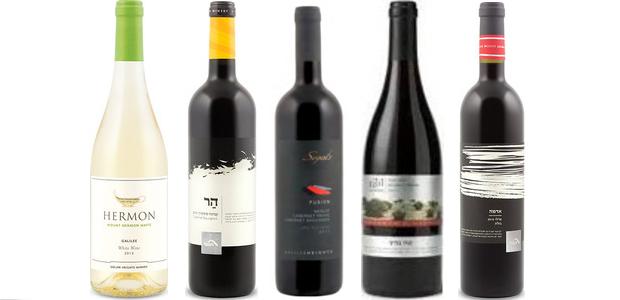
From left to right: Hermon Mount Hermon White Kp 2013, Tabor Galil Cabernet Sauvignon Kp 2013, Segal's Merlot/Cabernet Franc/Cabernet Sauvignon Kp M 2011, Galil Mountain Pinot Noir Kp 2012 and Tabor Adama Merlot Kp 2010

From left to right: Hermon Mount Hermon White Kp 2013, Tabor Galil Cabernet Sauvignon Kp 2013, Segal’s Merlot/Cabernet Franc/Cabernet Sauvignon Kp M 2011, Galil Mountain Pinot Noir Kp 2012 and Tabor Adama Merlot Kp 2010

Passover is the hardest working holiday in Jew business. Trust me, I know. Having spent 20 years cooking professionally for the eight-day week commemorating the Exodus from Egypt, I know the trials, tribulations and strict adherence that must be followed to satisfy the Jewish soul. I have also followed the Kosher for Passover wine evolution for equally as long. I have spent time deliberating about the feast without yeast. It’s a fascinating study.

In 2012 I noted that “recommending wines that are Kosher for Passover used to be similarly daunting, (a science and an art unto itself), but the field has certainly improved.

Related – KP Duty – Kosher For Passover Wines

In 2013, optimism increased and I wrote, “a Jew’s worst, ’11th plague’ wine nightmare, the nights of suffering through cooked and stewed dry table wines, is (mostly) a thing of the past. I’m not suggesting that the golden age is upon us, but you may want to don the shades. The future is bright for Passover Kosher wine.”

The rules for Passover wines begin with the basic tenets. “All wines labelled “Kosher for Passover” are Kosher, but not all Kosher wines are Kosher for Passover. Kosher for Passover wine must be handled by Sabbath-observant Orthodox Jews and the wine can never come into contact with any leavening (grain, dough, bread) products, including yeast.” For the full story, read on.

Related – New wave under $20 wines go kosher for Passover

In 2014 I spent more time taking about the individual’s choice on how they go about observing the laws of Passover. Passover wine is particularly specific to a Jew’s level of Kosher. From Reform, to Conservative, to Orthodox, all Jews have different variances of belief. A Reform Jew will likely drink any wine on Passover and then again, may not. But, he or she will almost certainly not require the bottle to be Mevushal. A Conservative may only drink Mevushal but in more cases than not, Kosher is good enough. An Orthodox Jew goes it only one way, or the highway. Strictly Mevushal KFP, do not pass go, do not collect Afikoman (the broken Matzah) money.” In last year’s post I discussed the recent trend towards bigger and bolder Passover reds, so read on.

Related – Passover that big glass of red

In the 2013 column I made five recommendations for the Passover table from a longer list laid out for tasting by the LCBO. At least eight were offered (and I seem to remember more, spread across more than one VINTAGES release). At that time the press release made mention “of the 33 seasonal products being released through the LCBO and VINTAGES in time for Passover, 26 are new listings, featuring traditional kosher wines, fortified wines, dessert wines and sparkling wines.” Thirty-three? Impressive number.

In 2014, the LCBO release said this. “In time for Passover, which begins on April 14, the LCBO is adding 27 seasonal releases to an already diverse selection of kosher products. In addition to the approximately 40 kosher products available throughout the year, a mixture of new listings and familiar favorites is being released through the LCBO and VINTAGES to coincide with Passover.” The number presented in the tasting lab for media and product consultants was down from 2013, but still a solid set of wines to try. Things were looking up again.

The eve of Passover and first Seder night is only a week away and yet the 2015 press release from the LCBO came out just yesterday. Preparing for the Passover festival, dinner and eight days of transforming homes into Kosher safe houses takes weeks of forethought. That includes buying wine. I can think of no reason why the press release could not have been prepared a week earlier. It would have been helpful to many.

For those who need to know, varied quantities of Kosher products are available in more than 500 LCBO stores across the province, with the largest selection available at three GTA stores: 180 Promenade Circle (Promenade Mall) in Thornhill, 1838 Avenue Road (south of Wilson Avenue) and 675 Wilson Avenue in North York.

There are 42 wines labeled Kosher for Passover on the current inventory list from the LCBO’s website. Some are older releases and so low in stock that they don’t really count at all. The true number is more like 30. The March 26th press release notes that 43 products are available year round and that “a mixture of new listings and familiar favorites is being released through LCBO and VINTAGES to coincide with Passover.” The marketing department is not hiding anything. Transparency is not the issue. That only five wines were purchased and presented to product consultants and media in time for in store consumer consultation, as well as print and online Passover promotion, is curious to say the least. All five offerings are from the Galilee. What about the Judean Hills, Samson, the Negev and Shomron? Azureau Wine Agency has at least four or five quality wines available for Passover not currently in the LCBO coffers and yet they are all wines that had been purchased in the past. Why the snub?

Why has the pursuit of quality and quantity in Passover wine decreased instead of the opposite? Despite the growth worldwide and the dramatic increases in global quality and Passover wine sales, might it be that the LCBO has decided to drop the ball? Perhaps the feeling is that Passover wine was a trend whose time has come and gone.

So I asked some questions and the LCBO was very gracious to send me a list of all the Kosher products that were purchased and subsequently released in the past two months, in preparation for Passover. Seeing the list certainly shows that more credit is deserved for the support for the niche but three questions persisted to nag at me. I pointed out to the representative in charge of Kosher wines how the list notes products released on various dates which coincided with VINTAGES releases. Then I asked if there was there a reason why only the March 21st Israeli release items were presented to media and PC’s and also and how was the public informed of these releases?

It was explained that “the Kosher program is more akin to LCBO categories.  It’s not really part of the VINTAGES brand. Some of theses (Kosher) auxiliary purchases are only 30 to 40 cases with direct distribution to locations with major kosher kiosks. Customers who shop the kosher section in stores like Promenade in Thornhill or the Wilson and Dufferin location basically discover new products among the regulars while shopping in-store.” The idea is that only the five Israeli Kosher wines are marketed because they are “for wine lovers whether they keep kosher or not.” I have heard that point of view before. It’s wishful thinking. Show me a wine lover who buys Kosher wine at the LCBO but does not keep Kosher and I’ll show you a wine lover who eats nothing but stew. If higher quality wines were on offer, the philosophy might strike a more believable accord.

The end result of my interaction with the LCBO rep. was a suggestion that they might consider organizing a media tasting for more of the Kosher portfolio. Despite the extreme niche market that is KFP wines, the idea makes sense considering the size of Ontario’s (and especially Toronto’s) Jewish community and the amount of those types of wines that are purchased every year. A tasting would make even more sense if it involved any of the hundreds of high quality Kosher wines that are never seen in this market but are so prevalent in a place like New York State.

I spoke yesterday with a former Ontario agent who at one time was a leading importer of Israeli wines. Many of the wineries represented through his portfolio are no longer on LCBO shelves. Why is that I asked him? The answer is that the wines were too expensive for the LCBO and they gave up wanting to take the risk of trying to sell them. After Passover comes and goes, left over stock means for product that won’t move.

Selling quality KFP wines is now left to a handful of sacramental agents like Mazel Wines and Simcha Wines. Though they are required to sell by the case (like every other Ontario importer), the other eye is turned at the practice of selling single bottles. Why? Because they pose no threat to LCBO sales. Their customers are walking away with product the LCBO has no interest in selling. The wines in question are those the LCBO would rather not touch. They have washed their hands of the $40+ Kosher market and never had a true vested interest in Kedem and Manischewitz in the first place.

It is understood that buyers change and also that Israeli stubbornness translates to no offer of discounts, even to the world’s largest wine buyer. Quality wines from Eretz are no longer coming to Ontario and no one seems to really care. If there is no mandate to buy them, no one will. It’s quite simple. Yet in recent years it seemed as though the LCBO cared more about a certain level of quality in the KFP niche. In 2015, these wines are out of sight and out of mind.

Maybe part of the problem is the lack of Kosher wine production in Canada. If wineries and consumers across the country are not interested, why should anyone else bother?

There have been some informative Kosher wine investigations in Canada, though certainly few and far between. Brock University hosted Rabbi Nachum Rabinowitz, a Rabbinic Coordinator with the Kashruth Division of the Orthodox Union for his presentation, “Demystifying Kosher Winemaking” on Monday, Dec. 12, 2012.

This time last year Mark Mietkiewicz of the Canadian Jewish News discussed the “eclectic tour of kosher wineries.” Mietkiewicz noted that sadly, (if not entirely accurate), the only true Kosher winery across Canada is located in Newfoundland. “You’ll have to travel about hour west of St. John’s until you reach Rodrigues Winery of Markland, Nfld. There, you’ll find its certified kosher blueberry, plum, cranberry and other fruit wines, liqueurs and brandies.” Rodrigues is represented in Ontario by Amethyst Wines Agency.

The best source for Canadian Kosher wines can be found on the Wines of Canada website. Two wineries in Ontario had joined Rodriguez in Kosher wine production, albeit with fruit and honey. They are Rush Creek and Munro Meadery. Rush Creek has changed ownership, however, and it seems that Kosher is no longer on the table. Munro continues with their COR certification. In Quebec, Domaine Pinnacle produces a Kosher Iced Cider. In British Columbia, Summerhill Pyramid Winery, while not Kosher, does produce a Kosher wine. It’s an uncooked $100 Tiferet.

Here are the five wines presented for evaluation by the LCBO. None really qualify as exceptional but all will work with distinction at the Seder table.

Hermon Mount Hermon White Kp 2013, Galilee, Israel (611327, $20.95, WineAlign) Kosher For Passover, Non Mevushal

While this pseudonymous John Doe white varietal blend may not quite effect the idea of “puttin’ your hand in the hand of the man from-a Galilee,” it does offer an ocean of somewhat descriptive aromas to elicit a sip. Quite lactic, creamy and nondescript in terms of flavours. Well-made, though the guess at varietal make-up (Sauvignon Blanc, Riesling, Viognier…) doesn’t really matter. There is a capsicum bite and a grassy chew. So when all is said and done, it’s got “enough of what it takes to get you through.” Drink 2015-2017  Tasted March 2015

Tabor Galil Cabernet Sauvignon Kp 2013, Galilee, Israel (283838, $20.95, WineAlign) Kosher For Passover, Non Mevushal

Not to be confused with Oregon’s volcanic cinder cone, the city park on the volcano, and the neighborhood of Southeast Portland. This “small drum” (from the Latin), in consideration of its proximity to the cradle of civilization should constitute it being the original Mount Tabor. Tabor the mountain is situated on the border of Zebulun and Issachar, south-west of the Sea of Galilee (Joshua 19:22). There is no Hebrew word for the name Tabor but the likely etymology is from the verb ברר (barar), meaning to purge, purify or clean. So, what about the Cabernet Sauvignon? Another extreme and extracted expression from red fruit, with leather and rich blackberries atop Ugah Kushit. Some may count rubber reduction while others will simply feel the heat. The tannin and overall structure remind of Graves in a hot vintage. A funky green streak, like tea mixed with tobacco are part of the complexity, then more tobacco and more than decent length. This is a good choice for the shank and the rack. Drink 2015-2018.  @TaborWinery  @azureau

Segal’s Merlot/Cabernet Franc/Cabernet Sauvignon Kp M 2011, Galilee Heights,  Israel (157206, $22.95, WineAlign) Kosher For Passover, Non Mevushal

Red gelid fruits are floating with viscous separation in simple syrup and oozing to the perimeter. That outer circle is bricking to caramel. Hanging on, but just barely.

From my earlier note of March 2013: Though muted is quite pleasant, aromatically speaking. Baking spice, woodsmoke, cherry and plum, like satellite St. Emilion. Scarlet colour, as if derived from Tola’At Shani. Dusty and down-grain, no cooked sensation, well-structured.

Last tasted March 2015.

Galil Mountain Pinot Noir Kp 2012, Galilee, Israel (121228, $22.95, WineAlign) Kosher For Passover, Non Mevushal

Levity afforded for the sheer reason of ripe fruit. High octane Pinot is never a wise proposition but when the barrel lends spice and not a sheath of layer cake, that’s a positive. A warm west coast California style to be sure, with more than enough lavender cream to grease a squeaky canoli and then the rise of gaseous puddles blown by pipe smoke. Then there are the battling Epping Forests; of cedar and pine. Rich, spicy, smoky and forceful. Very ripe. Overripe and over extracted. Ready for prime time and with tannins that mean business. Just having entered its window of genesis, perhaps it would fare best next year when supper is ready in Jerusalem, “or, today is the day when they sort it out, sort it out.” Call it a draw. “So the Blackcap Barons toss a coin to settle the score.” Good enough. Drink 2015-2016.  Tasted March 2015  @azureau

Tabor Adama Merlot Kp 2010, Galilee, Israel (400820, $26.95, WineAlign) Kosher For Passover, Non Mevushal

He’s a wild one this Merlot and has come of age though he’s a bit licentious, carrying a load of liqueur and chewing on liquorice. Ferric and sugary red to black fruit melds with tubers grainy and cooked in a muddy cake with scorched earth buttercream icing. Prunes, figs and raisins are chopped into a mire poix and stuck in the frosting. Caramel time is here. Will work for Brisket. Drink as soon as possible. Drink now.  Tasted March 2015  @TaborWinery

Good to go!

http://www.winealign.com/profile/2058-mjg

WineAlign guide to VINTAGES April 4th and Easter recipes

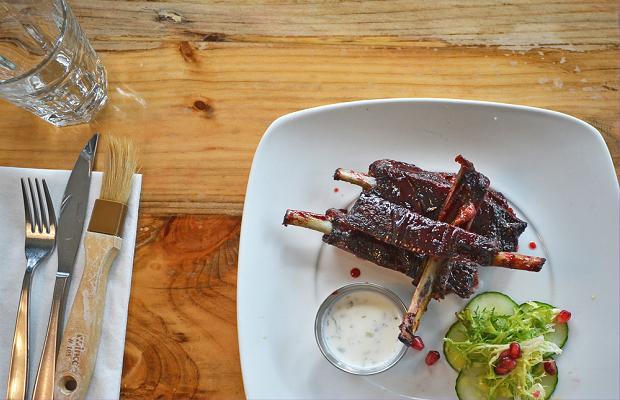
Lamb Ribs by Barque Smokehouse

Lamb Ribs by Barque Smokehouse

On January 18, 2013 I began adding wine reviews to WineAlign. Review ground zero was Mallory & Benjamin Talmard Mâcon Uchizy 2010, an inauspicious little Burgundy described in “the coat of white.” A Genesis of great #ffffff value.” Beginnings, Genesis, ground zero. The Godello thing.

Two plus years and 2,023 reviews later much has changed. The wisest of wine scribes David Lawrason and WineAlign head wineaux Bryan McCaw asked if I would like to become a part of the April 4th, VINTAGES release newsletter and buyer’s guide. With renaissance banzai and Master Sommelier John Szabo leading the charge, along with most generous guidance and help from cake baker and palate extraordinaire Sara d’Amato, I have joined the fray.

Buyers’ Guide to VINTAGES April 4th – Part One

This week’s guide leads WineAlign subscribers to Easter Lamb and red wine, plus pre-dinner whites and a glass for dessert. The three recipes cover everything  you could possibly want at your table on the resurrection weekend. The recipes are for Traditional Easter lamb by John, Moroccan lamb loin chops by Chef Michael Pataran and Barque‘s smoked lamb ribs.

Here is what John wrote in his introduction of me. “If at first you don’t understand Michael’s reviews, just drop a couple of hits of acid, smoke a joint or put on some classic 70s tunes and they’ll all make more sense. Maybe.” The irony is that amongst the seven wines I contributed to the newsletter I made only one musical reference. Oh, and one to the Grand Budapest. So, maybe you will understand them. Maybe.

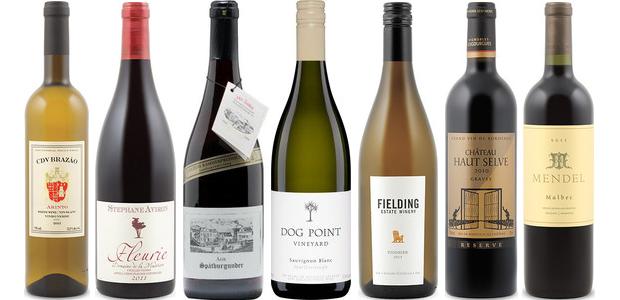
From left to right: Cdv Brazão Colheita Seleccionada Arinto 2013, Stéphane Aviron Domaine de la Madrière Vieilles Vignes Fleurie 2011, Mayschoss 140 Jahre Jubiläumswein Trocken Pinot Noir 2013, Dog Point Sauvignon Blanc 2014, Fielding Estate Viognier 2013, Château Haut Selve Réserve 2010 and Mendel Malbec 2011

From left to right: Cdv Brazão Colheita Seleccionada Arinto 2013, Stéphane Aviron Domaine de la Madrière Vieilles Vignes Fleurie 2011, Mayschoss 140 Jahre Jubiläumswein Trocken Pinot Noir 2013, Dog Point Sauvignon Blanc 2014, Fielding Estate Viognier 2013, Château Haut Selve Réserve 2010 and Mendel Malbec 2011

Cdv Brazão Colheita Seleccionada Arinto 2013, DOC Vinho Verde, Portugal (405217, $16.95, WineAlign)

A highly unique Vinho Verde that works as a sipper and as a solid, pair me with just about anything table wine. Savoury and blessed with a Bica de Queijo cheese aroma, you’ll be glad you gave it a swirl and a whiff. There is nothing shinking or violaceous about this. It’s medicinal like Moscato, toasty like Pouilly-Fumé and gangly like Garganega. Citrus juice and flesh add body and beautify its inherent male pattern baldness. Perhaps a bit of a river fish of a Vinho Verde but very fresh and a great catch. This Arinto will tie appetizers together and buy time until the bird, hock or shank is on the table with the feast’s big reds. Drink from 2015-2017.  Tasted March 2015  @vinhosverdes  @exCellarsWines

Stéphane Aviron Domaine de la Madrière Vieilles Vignes Fleurie 2011, AC Beaujolais, Burgundy, France (405779, $21.95, WineAlign)

Old vines and Fleurie scream holiday dinner wine in my books. Here struts out where it’s at Gamay from a terrific Cru, of maturity, chutzpah and depth. Bang on 13 per cent alcohol, most mature and munificent, so very forward and yet of a depth, richness and layering in fruit meeting acids. Black cherry with an accent of mint, sour citrus drop and blueberry. A minor chalky grain, just enough to evoke oak tenderness, but not enough to be cut by splinters. Very Burgundian, where it’s at and even better length. Talk about a red wine that could equally double down for the Easter and Passover table. Gamay that swings both ways, AC/DC, “it’s got two turntables and a microphone.” Drink 2015-2022.  Tasted March 2015  @DiscoverBojo  @warren_walden

Mayschoss 140 Jahre Jubiläumswein Trocken Pinot Noir 2013, Ahr, Germany (409649, $21.95, WineAlign)

Ahr Pinot Noir (as opposed to those from Germany’s Baden region) are just that much more accessible and wider table friendly. That’s because of volcanic soil and older vines like you find in this Qualitätswein. The fruit is richer, the cure more refined, the flavours full and the wine structurally sound. Give this some air and the roast swine will make an entry, with intoxicating aromas, balanced by earthy notes, ripe plums and berries. Structurally sound, the ripeness continues into a fleshy cure of wurst with good bite. The citrus tang is round and barkless. No matter the colour of your braise or roast, this Pinot Noir will compliment the hue. Drink 2015-2021.  Tasted March 2015  @LeSommelierWine  @WinesofGermany

Dog Point Sauvignon Blanc 2014, Marlborough, South Island, New Zealand (677450, $24.95, WineAlign)

So orderly and aligned, from ripe picked fruit with fervent acidity and all proportions in perfect working order. Four months in bottle has settled only worked to reinforce positive opinions. Grassless and flinty but no discernible elemental vagary, certainly no sulphur. This Sauvignon Blanc may just be the most consistent in every vintage, not only stylistically but also for the hedging of probability bets for guaranteed Marlborough quality. This is a superb vintage for the pied-à-terre phraseology. Like school in fall, winter and spring, the Dog Point is all class. Drink from 2015-2024.

From my earlier note of November 2014:

The prototypical Marlborough Sauvignon Blanc hitting all the classic numbers is right here in the Dog Point 2014. Low pH, high acidity, minuscule residual sugar and elevated aromatics. It’s ripe but ripped by citrus juice and zest. Like cubes of honeydew, bitter winter melon and dried lemongrass soaking in and flavouring a dish of briny scallop carpaccio with coarse sea salt and capers. The sapidity is palpable, the excesses vivid. I would avoid too much variegated gastronomy when sipping this wine. Opt for simpler fare because its talents would otherwise be mimicked and suppressed.

Last tasted March 2015  @DogPointWines  @TrialtoON  @nzwine

Barque Smokehouse Lamb Ribs - Spring 2014

Barque Smokehouse Lamb Ribs – Spring 2014

Fielding Estate Viognier 2013, VQA Niagara Peninsula, Ontario (142323, $25.95, WineAlign)

Winemaker Richie Roberts has worked tirelessly with Viognier to find out where it fits into the lexicon and ambience of Niagara Peninsula white grape varieties. The 2013 vintage marks a turning point in his and by extension, all of our understanding. The tropical fruit is now reigned in and the tension on the back bite a perfect foil to that well-judged, rich fruit. Trumps the layered ’12 with a new, aerified floraility that gives it more prototypal Viognier style. Short of leaving fruit to hang into late harvest (not recommended for the variety) this is like being wrapped in banana leaf along side young bamboo. Sip it joyously on its own or bring on the Easter Rijsttafel and a strolling procession down the cuisine of Kho San Road.  Drink 2015-2020.  Tasted March 2015  @FieldingWinery  @RichieWine  @Heidi_Fielding

Château Haut Selve Réserve 2010, Ac Graves, Bordeaux, France (235424, $27.95, WineAlign)

Who wouldn’t want to find a well-priced and expertly made Bordeaux to accompany an Easter feast? The abstraction is not as easy as it may have once been but once in a Paschal full moon a wine comes along and affords the opportunity. Stately structured, mid-range Graves that is so very much a combination of Cabernets. It reeks of currants, cool mint, Cassis, caramel and chocolatey oak. Kept shy in alcohol (13 per cent) and heat, the tannins are mildly grainy and though just a touch oxidative, it is a a most serviceable, generous and honest Bordeaux. From a workingman’s vintage of the century. This Graves will seal the Easter deal with its cool savour and chocolate hops. Drink 2015-2019.  Tasted March 2015  @BordeauxWines  @ProfileWineGrp

Mendel Malbec 2011, Mendoza, Argentina (108225, $27.95, WineAlign)

On the rare occasion when a Mendoza Malbec exhibits restraint, balance and all around congenial behaviour, it is imperative to sit up and take notice. This is finely fashioned juice, albeit rich, smokey red fruit swathed in good quality chocolate and a late kick of spice. Suppose there’s nothing really wrong with that. The Mendel will seduce, hypnotize and cause general swooning. Like a Grand Budapest Hotel box of treats, it will sooth even the savage beast. Ripe tannins will make this drinkable now to 2020. Tasted March 2015  @MendelWines  @TrialtoON  @winesofarg

Good to go!
http://www.winealign.com/profile/2058-mjg

Value the first wine of spring

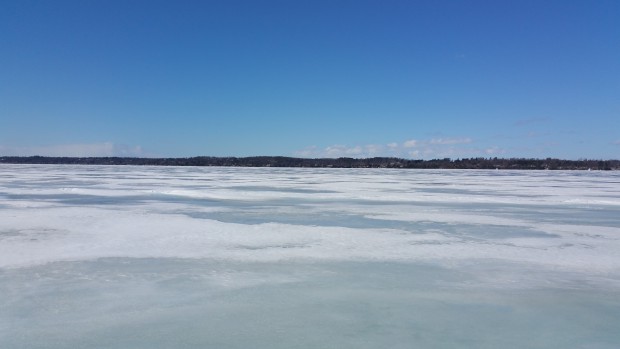
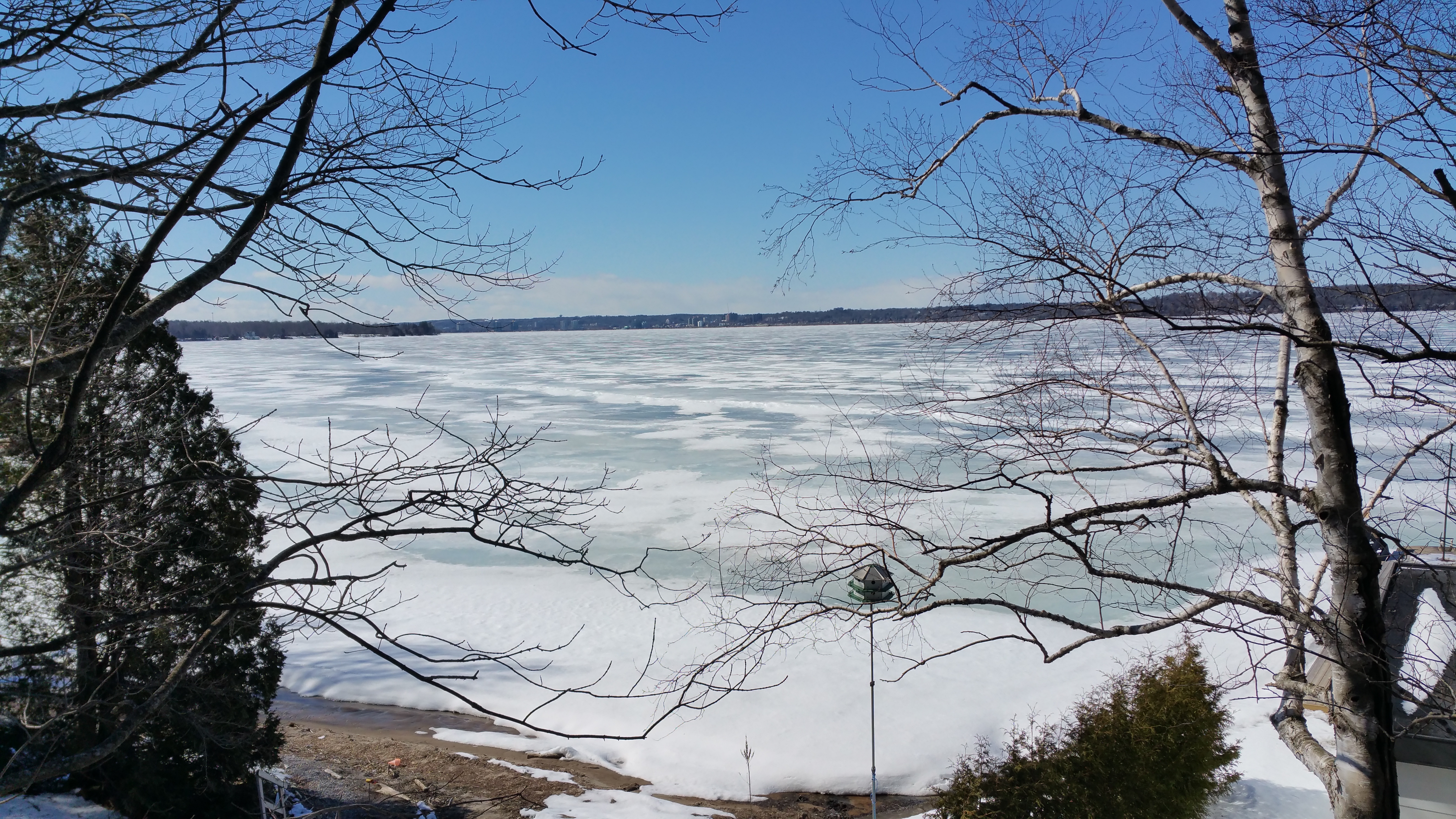
Lake yet frozen, March 18, 2015

Lake not yet defrosted, March 18, 2015

The lake remains frozen though stepping foot upon its precarious ice flow would not be recommended. By this time next week the waves will concuss the gelid islands and slowly deliquesce them down into the frigid water. As of this Saturday spring will have officially come to southern Ontario and with it a whole new outlook on life.

If you ask my colleague Rick VanSickle, the spring of 2015 will mean the boot up to overhaul the future of wine and craft beer sales in Ontario. According to VanSickle, “there is a brave new world coming for the retailing beer and wine in Ontario. These are heady times. Behind closed doors a lot of discussion is happening, a lot of debate and planning is going on in advance of the day Wynne’s Liberal government utters those words many of us have  longed to hear for so long: An end to the LCBO and Beer Store monopolies on wine and beer in Ontario.”

For Rick’s full report on his site WinesInNiagara, please click here:

Brave New World: How the new model for beer and wine retailing in Ontario could look

I read Rick VanSickle’s work on a regular basis and I know him to be as pragmatic and as skeptical as they come. I doubt very much that Rick would get ahead of himself on an issue with so much on the line. Using his ins to gain sagacity from insiders who possess relevant information, VanSickle writes with confidence that Kathleen Wynne has given Ed Clark and his privatization panel carte blanche to effect real change. The consequences of what Rick is predicting are enormous. For consumers, for industry professionals and for writers. We would all have to reconsider and recalibrate the way we approach wine and beer in Ontario.

That is why I remain ever the conspiracy theorist. I remain unconvinced. I see the smoke and mirrors of the entire charade. Even when new licenses are granted, I imagine grocery retailers only selling the largest and most heavily marketed brands. I don’t see VQA wine stores and specialty shops tailored to the demographics of neighbourhoods. I see the LCBO and the Beer Store continuing to exercise their powers of monopoly and controlling how all the changes are implemented. I just do not see the revolution as being imminent and around the corner.

My apologies to you Rick. Your report is thorough and covers everything we need to know. Were these great advances to happen we would all be the beneficiaries but your words sound more like wishes than predictions. Ontario is not Alberta. It never has been and isn’t likely to happen any time soon. I hope I am dead wrong. I will owe you a sit down over a craft beer and a never before seen in Ontario stores bottle of wine if I am. If the revolution is upon us, I will happily count my blessings over one with you.

So, back to the business of reporting on the VINTAGES releases at the LCBO. With spring coming this Saturday so too does an entire new set of wines on shelves. Last week I talked up Riesling and iconic wines.

Related – I shall be Riesling

Related – March 21 big guns

20150317_151442

Almost spring out on the lake

The rest of the March 21st release is expressed in value, in wines that offer serious compensation for what you spend. Wines in generosity of backbone, psyche and enthusiasm. Wines that are simply good, regardless of their cost. Here are notes on nine.

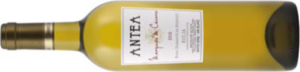
Marqués De Cáceres Antea 2013

Marqués De Cáceres Antea 2013, Barrel Fermented, Doca Rioja, Spain (518985, $15.95, WineAlign)

Here barrel fermented Rioja brings a buffet of culinary impressions to the aromatic and gustatory table. Soft scrambled egg and cream in Tortilla Española, Serrano ham, buttery puff pastry, natillas. All would pair well with the hickory stick barrel spice and the slightly volatile tang. Accents of orange juice and rind work the angles, along with the calcified acidity. This Rioja is not shy but it represents good complexity and value for the price.  Tasted March 2015  @Marques_Caceres  @RiojaWine  @DionysusWines

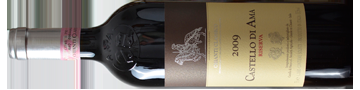
Castello Di Ama Chianti Classico Riserva 2009

Castello Di Ama Chianti Classico Riserva 2009, Docg (375ml), Tuscany, Italy (403824, $16.95, WineAlign)

Kudos must be afforded Castello di Ama for putting CCR in half-bottles. It’s like listening to Green River on vinyl. The layers of texture, nuance, and groove are amplified. The expedited evolution and compact formula make cause for a bottled up compression, a concentration, not a reduction. More winemakers should bottle in the 375 mL container. There are so many reasons for it. Space, quality, half the cost and best of all, nothing left at the end of the night, just the empty bottle. This 2009 has seen its fair share of evolution, with notes of forest floor, truffle, mushroom and compost tea but in certain respects the aromas are old-school Brunello. The antiquity of the composition is nothing but endearing, a romantic comfort zone to give this Ama a sense of place. The wood, bite into sinew and gristle tannins add to the archaic mystique. Most modern imbibers would like more fruit but at this paltry price the complexity is more than enough reward. “Well, take me back down where cool water flow, yeh. Let me remember things I love.” Drink now.  Tasted March 2015  @CastellodiAma  @chianticlassico  @HalpernWine


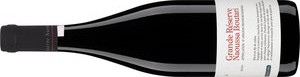
Boutari Grande Reserve 2008

Boutari Grande Reserve Naoussa 2008, Naoussa, Greece (140111, $17.95, WineAlign)

In this Xinomavro there is beauty and bog consistence, like wild calla palustris. Imagine a wine thick as consonants, dense and defined by solid rock bubbling like stew, from out of a marsh. Wood adds intricate layers and a mothering of leather hiding and protecting dried cherries. Game, spice, liquorice, funk and things that heal flavour the wine’s liqueur. Silky smooth with a run of grain and the salinity of ancient longing. Racy acidity intrudes, puts in a charge and takes care to see six to eight years more life will be a guarantee. Easily and possibly 10 will pass before it sheds the chalky loops. Terrific vintage with impressive depth and range of flavour.  Tasted February 2015  @boutari  @KolonakiGroup  @DrinkGreekWine  @winesofnaoussa

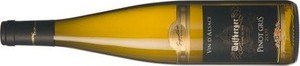
Wolfberger Signature Pinot Gris 2013

Wolfberger Signature Pinot Gris 2013, Ac Alsace, France (398172, $18.95, WineAlign)

The resident oenologist at Wolfberger is Bertrand Praz, in charge of the cooperative located in Eguisheim, south of Colmar. As far as a ‘basic’ union Pinot Gris is concerned, this one hits the right marks and preserves proper tradition. It’s both saline and full of pith, with lemon is scrapes and ladles, yet it could very well be thought of as Riesling were it tasted blind. Good ripeness, nothing serious and quite righteous with an intent to carry an Alsace torch of dry, finely crafted Pinot Gris. What’s most important is the statement it makes for what will follow out of the 2013 vintage.  Tasted March 2015  @wolfberger_fr  @Smarent

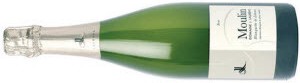
Domaine J. Laurens Le Moulin Brut Blanquette De Limoux

Domaine J. Laurens Le Moulin Brut Blanquette De Limoux, Méthode Traditionnelle, Ac, France (180323, $18.95, WineAlign)

The pause of oxidation. The evidence concrete and stratified, the bite pure and hollow petrified, like into bone and the interval below the organic soil. Crisp cut above the normal. Mouth-filling and expansive. Perfectly bitter. Much lemon, ginger and further spice. Length too.

From my earlier note of April 2014: A southern French (Pyrenean foothills, just south of Carcassonne) blend dominated by the traditional grape variety of Limoux, Mauzac (90 per cent), with support from Chardonnay. The lees is very direct and in your face on this Limoux, the baking aromas strong and the texture quite dense. Citrus and white grapefruit crawl up the middle and aridity mixed with horseradish salt comes through on the finish. Claims territory in viridity of complexity, an acumen for dewiness and is blessed with a marked appeal to hipster fizzters.  @DneJLaurens  @LanguedocWines  @oenophilia1

Last tasted March 2015

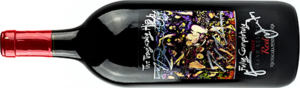
The Tragically Hip Fully Completely Grand Reserve Red 2012

The Tragically Hip Fully Completely Grand Reserve Red 2012, VQA Niagara Peninsula, Ontario (411595, $24.95, WineAlign)

Twenty three years ago this October the Hip’s third record changed the course of Canadian Pop and Rock music. While this Jeff Hundertmark, Kingston-bred band and Bordeaux blend will not have a similar effect on the Ontario wine industry, it’s certainly not a tragically vinified red. It’s looking for a place to happen, has the wherewithal to age with some grace and the courage to represent Stoney Ridge with power. The wall of sound, smell and taste is achieved through forest compost, bruised berries, melted liquorice, plum flavour and glycerin texture. Hung “long out in the sun,” the pencil graphite and hard acidity is a scratch and a flaw but also a calling card to see this age in the classic Niagara red style. “Either it’ll move me or it’ll move right through me; fully, completely.”  Tasted March 2015  @stoneyridgewine  @WeirRidgeYnmakr  @thehipdotcom  @ImportWineMAFWM

Domaine Queylus Tradition Pinot Noir 2011

Domaine Queylus Tradition Pinot Noir 2011, VQA Niagara Peninsula, Ontario (392738, $29.95, WineAlign)

The passion from the Thomas Bachelder Niagara project has shifted into Domaine Queylus. With no disrespect to Thomas’ eponymous bottling from vineyards so nearby, the quality time has now been granted the Tradition. Here lies Mountainview and Le Petite Colline earth, here crushes Niagara cherries in hand, juice running down a clay caked forearm. Fresh and bright yet streaked by chalk and enveloping brushstroke. Sour? For a flash but in neither malic nor astringent form. This is a must buy.

From my earlier June 2014 note: Reverberates with the unmistakable calling card character of the storied Neudorf family La Petite vineyard with equal and opposite amounts of attraction and new life breathed in by the Lincoln Lakeshore fruit. Ethereally sifted earth of old meets cherries of new. Enriching Pinot Noir, a bit gangling like a primitive young giraffe but near to finding its legs. Hard working red, insistent, confident and having already paid some dirty fingernail dues. Excellent length.

Last tasted August 2014  @QueylusVin  @Bachelder_wines

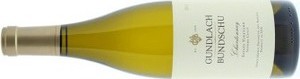
Gundlach Bundschu Estate Vineyard Chardonnay 2012

Gundlach Bundschu Estate Vineyard Chardonnay 2012, Sonoma Coast, California (400051, $34.95, WineAlign)

An intimately affordable Chardonnay from Sonoma Coast fashioned by a family in its 157th year of production is a rarity. Even more so from a cool-climate region oft-marred by the misperception that its Chardonnay are fat, buttery, over-oaked fruit bombs. From fruit grown on the Rhinefarm Estate Vineyard on southwest slopes of the Mayacamas Mountains, eight miles north of San Pablo Bay. Consider the antonymous solecism of zero per cent malolactic fermentation and you will see where this (20 per cent new) barrel fermented Chardonnay has come from and where it is going. Weekly battonage compresses and stirs up texture. Fog plays its part on the cool slopes of Huichica clay loam soils mixed in with gravel deposits. Acidity is preserved, hitting a classic number on top of healthy (14 plus per cent) alcohol. This is not a small Chardonnay. It stretches its legs and walks like a giant but not in 80’s or 90’s acid washed jeans or big hair ways. This is Chardonnay that leads in style and confidence of a most modern vernacular and fashion. It’s also a steal.  Tasted October 2014  @gunbunwine  @LeSommelierWine

Good to go!
http://www.winealign.com/profile/2058-mjg

Take a bottle, leave a bottle

Wines of the week

Wines of the week

Lately I’ve noticed a whole bunch of take a book, leave a book mini libraries popping up on front lawns in many Toronto neighbourhoods. The concept is right on so many levels and it occurs to me that the same could be done with wine. Open a few bottles and have a taste of each then exchange them with a friend or colleague so that each of you can sample new wines the following night without having to open anything new.

Last week the practice was put to good use and it allowed me to taste upwards of 40 wines without the benefit of a trade or media tasting. I traded wines with friends and colleagues over the course of three days and two nights. Yes, you can trust your friends to keep the provenance of a bottle so that your experience is just as fulfilling as theirs. Yesterday’s post covered the notes on 12 wines from the boot.

Related – Italian wines of the week

Here are nine more tasting notes from a wider global range, with a focus on Victoria, McLaren Vale and Langhorne Creek in Australia along with samples from the Mosel, Penedès, the Columbia Valley and the southern Rhône.


Urban Riesling 2014

Urban Riesling 2014, Mosel, Germany (Agent, $15.95, WineAlign)

Grapes from neighbouring vineyards in the Mosel are brought to St. Urbans Hof Winery and vinified in the Nik Weis way. This stresses the Weis notion where “cool climate vines develop flavours, not simply sugars.” Though straightforward and quite traditional, the Urban is clean and shy on flint but there is a slate’s medicinal bleed and piercing acidity. Lime and more lime. Quite dry and in moderate (9.5 per cent) alcohol. This represents quintessential entry-level Qualitätswein.  Tasted March 2015  @TheVine_RobGroh  @WinesofGermany

Taltarni 't' Series Shiraz 2013
Taltarni ‘T’ Series Shiraz 2013
, Pyrenees, Victoria, Australia (Agent, $16.95, WineAlign)

A warm, highly perfumed entry with a hot stone streak runs forward and uphill through waves of lush berries. A wrinkle of vim is but a moment of abstruse behaviour. The macerated fruit careens in sweetness above the subtleties of savour but the spice directed oak takes over, along with a scaleable wall of tannin. This woven textile of a Shiraz needs a few years to soften. Drink 2017-2020. Tasted March 2015  @Taltarni  @TheVine_RobGroh

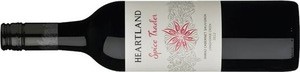
Heartland Spice Trader Shiraz Cabernet Sauvignon 2013

Heartland Spice Trader Shiraz Cabernet Sauvignon 2013, Langhorne Creek, Australia (Agent, $16.95, WineAlign)

Langhorne Creek is the source for winemaker Ben Glaetzer’s blend, an Australian curated combination that has secured its rightful ownership within the assemblage vernacular. The star anise on the label is apropos considering the red braised pork belly and Phở tái aromatic suggestiveness. That and red plums, poached and in a sweet bun’s paste. Add to them the steam from hot rocks and warm raspberry compote. Certainly on the syrupy side of texture but the palate is equally savoury as it is sweet. Lots of character here and a finish with extension.  Tasted March 2015  @heartlandwines  @langhornecreek  @TheVine_RobGroh

OLYMPUS DIGITAL CAMERA

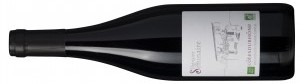
Domaine du Séminaire Côtes du Rhône 2013, Rhône Valley, France (Agent, $14.95)

A rustic must is the truth serum here, the corollary of proper old school CdR winemaking. An affinity is sensed to both an Albert Mann Pinot Noir and a Baden Spätburgunder with porcine aromatics and an antediluvian aridity. Very cherry, dusty and plainspoken like a trending linear regression. Such a welcome step up from so many over the top sunshine dramatized Rhônes of excessive residual and alcohol. Though this clocks in at 14 per cent you would never know to read it on the spirit hydrometer. Direct energy and pulse would make this a very keg worthy red.  Tasted March 2015  @VINSRHONE  @RhoneWine  @HospiceduRhone  @TheLivingVine

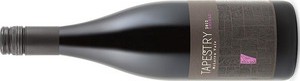
Tapestry Bg & V Shiraz 2012

Tapestry Bg & V Shiraz 2012, McLaren Vale, South Australia (247155, $19.95, WineAlign) From the VINTAGES March 7, 2015 release

A regional vigneron’s blend from two vineyards, BG and V: The Baker’s Gully (old Lloyd Light Vineyards) at the base of the Southern Mt. Lofty Ranges and Oliver’s Road (the continuation of Field Street) near to the Vale Township. Really elegant and refined in spite of a big, bold and juicy character. Ripe, sunny and warmer categorical climate expression. Quite tightly wound with a metallic iron post or fist in your face, layered and initializing the baking effect. Needs three or four years to fully integrate at which time the pie will be ready.  Tasted March 2015  @mclaren_vale

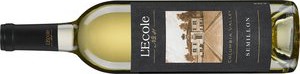
L'école No 41 Semillon 2013

L’école No 41 Semillon 2013, Columbia Valley, Washington (SAQ 10707077, $22.25, WineAlign)

Sauvignon Blanc (13 per cent) adds buoyancy to the main attraction in this vanguard and reputable Columbia Valley pioneer. Quite toasty and marked by early nose-hair splitting and splintering barrel notes. Dare say reductive but not in a rubber sap run way. More like Sémillon-dominated Bordeaux, of big bones, cut through soluble rock, created a sinkhole that swallows up flavours, only to release them in geyser like fashion in later years. So with patience and age-time in mind, this Sem will have better years ahead, when the heavy (14.5 per cent) alcohol integrates and the lemon drop-butterscotch flavours mellow. Generous pH (3.2) and high Brix (24.2) were the product of a very warm vintage. Rounded by concentric circles of acidity and bitter pith tannin, this is very tropical, like Gewürztraminer, but more in mango than lychee. Needs five years minimum because the oak is overdone. Tasted March 2015  @lecole41  @WINESofWA

La Vida Al Camp Cava Brut Rose

La Vida Al Camp Cava Brut Rosé, Penedès, Spain (Agent, $25.95, WineAlign)

Blush Cava blend of Macabeu, Xarel-Lo and Trepat. Aromas scale the neck of the bottle with immediate desperation even before the cork has fully disengaged. The wine just looks savoury with its bronzing salmon patina. Possessive of an ultra-fine mousse, aridity in immediate initialization and very much the sum total of base elements. Sweeter than expected to taste, seemingly oxymoronic to the nose and in conjunction with a low to moderate 11.5 per cent alcohol. The overall package is one of those beautifully impossible pH/rS/aBV agglomerations. Flavours lean to strawberry and ginger. The Trepat gives it a Costers del Segre angle of anxiety. This has moments of Pinot Noir-esque kinship with some finer Crémant d’Alsace Rosé (like Louis Sipp) in such a refined way.   Tasted March 2015  @lavidaalcamp  @TheVine_RobGroh

Taltarni Pyrenees Estate Cabernet Sauvignon 2010

Taltarni Pyrenees Estate Cabernet Sauvignon 2010, Pyrenees, Victoria, Australia (Agent, $27.95, WineAlign)

Bottled in 2012, this Taltarni is showing some age, in a positive way, in dried fruit and Cassis less sweet. Baking fruit and warm spice are grounded by earth and a chalky, citrus, lactic underlay. Has fully integrated components that some time ago included a grit of acidity and tannin, at this juncture no longer in control, but fully primed for peak time. In fact this Victorian has reached the secondary stage of its life. The raisining of fruit means drink it now and for another year.  Tasted March 2015  @Taltarni  @TheVine_RobGroh

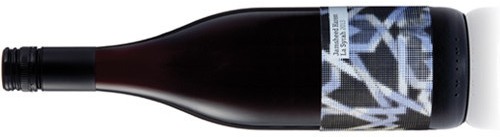
Jamsheed Harem La Syrah 2013

Jamsheed Harem La Syrah 2013, Yarra Valley and Pyrenees, Victoria, Australia (Agent,$29.95)

Only 900 cases were made of this blend of Upper Goulurn (80 per cent) and Yarra Valley (20) fruit. Indigenous yeasts were used and 80 per cent was fermented as whole bunches then aged in new and older 500L puncheons. So very fresh, the Harem (Harum…) was bottled with out fining or filtering eight months after picking. “Amidst a sea of wheat,” in a world of jammy Shiraz, say hello to this 13.2 per cent alcohol Victorian Syrah. This is fully exposed and in exposition of its naked beauty. Were more of Victoria produced in this progressive rock, singer/songwriter style, the throngs would applaud. Pure, smokey, opaque and sultry, not exceedingly complex but built on whole bunch bravery. Lyrical, harmonious and eminently listenable. Quite rightly so, shines on brightly, a good album side.  Tasted March 2015

Good to go!
http://www.winealign.com/profile/2058-mjg

Italian wines of the week

Wines of the week

Wines of the week

Fear not dear reader. This is not a top ten list or a call to promote the best of the worst. It is not, most thankfully, a post on what wines are being released at the LCBO through VINTAGES. No, a one or two-day break is being granted, mercifully, to explore some wines over at the SAQ in Quebec and others available, by the case, in consignment by way of Ontario agents.

WineAlign is ever so surely becoming the tasting office of choice. It offers the opportunity to explore that critic’s dream realm of “so many wines and so little time.” The home office checks in a close second, with samples ready and carefully kept under temperature control.  I tasted and scribbled with much verve last week and over the weekend. There will be more to follow, but for now, the Italian notes.


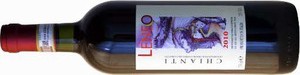
Torraccia Di Presura Leneo 2013, Chianti, Tuscany, Italy (Ontario Agent, $18.95, WineAlign)

Leneo is 100 per cent Sangiovese, half of which is matured in small oak French barrels for approximately six months. From vineyards near Greve in Chianti, this is the epitome of fresh. The strawberry and raspberry aromas are so very height of summer, the tension having long left the ferment. Fruit and buoyant acidity remain to lift and cut spirit. A late flavour of rosemary and olive adds a nice Mediterranean touch.  Tasted March 2015  @TorracciaPresur  @TheVine_RobGroh

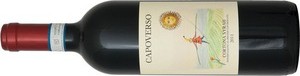
Capoverso Cortona Syrah 2013, Tuscany, Italy (Ontario Agent, $18.95, WineAlign)

There is noticeable volatility in this Syrah though it strikes a congenial balance between fruit and alcohol. The wine is not hot but is currently unsettled. That comes through in the sooty sinew and tree sap aromas. Black raspberry fruit abounds, as does liquorice and black tea. The overall accord works the parts but some time will be required for reconciliation. Sweet and sour is accented by a savoury, though moderately lengthened finish.  Tasted March 2015  @TheVine_RobGroh

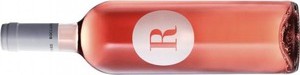
Cantina Roccafiore Rosato 2014, Umbria, Italy (Ontario Agent, $20.95, WineAlign)

A Sangiovese blush made from organic grapes, arid as the Corso Vannucci is long, linear and direct as la strada centrale leads to the Fontana Maggiore. Has a savoury flex and a salinity that central Italian Rosé almost always displays, a pull from two seas not hard to reach heading either east or west. The glycerin texture and tangy, just this side shy of reductive aromas are a propriety of pure yet driven fruit. Has the slant of Sangiovese, even in the absence of its sour edge and devitalizing tannin. A very fine example of Umbrian Rosé.  Tasted March 2015  @roccafiorewines  @TheVine_RobGroh

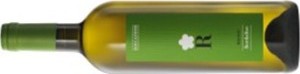
Cantina Roccafiore Fiordaliso Grechetto 2014, Umbria, Italy (Ontario Agent, $20.95, WineAlign)

Fashioned from organic (and specialized clones of) Grechetto di Todi and Trebbiano Spoletino. The ordinary is abutted with prejudice in this Roccafiore take, in full mineral action out of Umbria. This one speaks to me, never mind the current reductive accent. The organic vines exude healthy fruit and this fleur-de-lis is regal, royal and full of life. Wet stones, not flinty but certainly crouching on the rocky forefront. The balance between orchard fruit, the rocks and the load carrying acidity is spot on. This is an expertly crafted, intelligent and gratifying white.  Tasted March 2015  @roccafiorewines  @TheVine_RobGroh

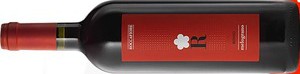
Cantina Roccafiore ‘Melograno’ 2013, IGT Umbria, Italy (Ontario Agent, $20.95, WineAlign)

Sangiovese and Montepulciano combine forces in this organic Umbrian, the punica granatum or pomegranate. Like the uniquely variegated, sour, sweet and highly mineral fruit, this red mimics the savoury pleasures. It’s dry, possessive of natural salts and fruity, but not in a sugary way. The acids are citrusy, much like pomegranate, but void of true citrus. Very pure, penitent, clean and crisp, with mild tannins and a ferric touch. Very Umbrian, regal, Franciscan, Friars Minor to bigger, bolder Sangiovese. Tasted March 2015  @roccafiorewines  @TheVine_RobGroh

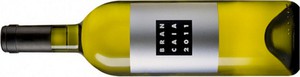
Brancaia Il Bianco 2013, Tuscany, Italy (SAQ 11797174,$21.35, WineAlign)

Sauvignon Blanc stands soprattutto to Viognier, Gewürztraminer and Sémillon in this tannic white wine from Castellina in Chianti, in the far south-east corner of Chianti Classico. Five months on yeasts has not only built breadth but also compensated for no oak or malolactic. The repercussion is a curtailment and a feigning of qualitative casting, as if from sea stones and ancient feelings. Pretty pleasures are a supraliminal by-product of the effect, in a leavening of lime and rock. This reminds me of a young, petite Stratus White, in which a mélange of grape varieties combine and effectively cancel one another out, with nary a dominant, alpha varietal limelight steal. This Bianco would create even more buzz with a 10-20 per cent barrel influence.  Tasted March 2015  Brancaia

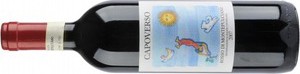
Capoverso Rosso Di Montepulciano 2012, Montepulciano, Tuscany, Italy (Ontario Agent, $22.95, WineAlign)

Here is Prugnolo Gentile with a swagger and quite the attitude. Don’t be fooled by the new adventist-adventurist, retro-romantic label. This Rosso has a mean streak. Funky aromas of the barn and the compost heap may be secondary to red fruit but they are definitely there. High iron content, less so in botany and rich like a long braise of dark veal shank ragu. Complexity is in, basics are out and there is much to dwell on in this Rosso, event if its intent is to induce simple pleasures. This needs salty protein, like the aforementioned idea of ragu.  Tasted March 2015   @TheVine_RobGroh

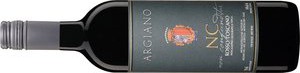
Argiano Non Confunditur 2012, IGT Toscana, Tuscany, Italy (Ontario Agent 72397, $24.95, WineAlign)

The Argiano NC-IGT must be awarded points and applause for the sheer felicity it affords the discerning drinker who knows when they have been pleased. This is juicy stuff from a terrific vintage. A latin lover of voluptuous body and luscious-laden lips. A flirtatious Tuscan ragazza, outgoing, friendly, hand-holding and demonstrative. Liquid freshness, with layers of red fruit and circulating acidity. Very modern, in an Aussie Rhône-blend way, with liquorice, cocktail beginnings and Tawny Port ends. Quite a swirl of flavours and pulsations. Drink now and for another two years.  Tasted March 2015  @Argianowinery  @TrialtoON

Fontanafredda Barolo 2010, Piedmont, Italy (Ontario Agent 20214, $30.00, WineAlign)

Traditional Nebbiolo that is neither austere nor of such a hard shell to crack. Roses and street cover in summer give sweet and fume aromas. Has an elemental scent, like a science lab but with experiments that broadcast harmony, synthesis and balance. Glycerin and tannin revolve around in the Nebbiolo oscillator. Some late funk creeps in, indicating some time (five years) needed to see a proper fruition. Represents very good value at $30.  Tasted March 2015  @Fontanafredda_  @Noble_Estates

Tolaini Al Passo 2011, Tuscany, Italy (Ontario Agent $37.99, SAQ 11794344, $28.40, Manitoba Banville and Jones $34.99, WineAlign)

This IGT from Castelnuovo Berardenga blends Merlot into Sangiovese, a push and pull varietal relationship if ever there was one. The Sangiovese is Mary while the Merlot whispers. The sacred and the profane. The ancient and the modern. “Uh-will the wind ever remember the (Tuscan wine) names it has blown in the past?” A red house of aromas, a gypsy’s soul and balance are found in this whirling, flavour-filled glass of noise. This is wild Tuscan magic, if a bit disjointed and occupied by strange, though harmonious bedfellows. Rippling red wine, tannic and in need of a few years to soften. “After all the jacks are in their boxes and the clowns have all gone to bed.”  Tasted March 2015  @TolainiWines  @BanvilleJones  @bwwines

Capoverso Vino Nobile Di Montepulciano 2011, Montepulciano, Tuscany, Italy (Ontario Agent, $39.95, WineAlign)

In antithesis to the angular ’12 Rosso, this ’11 Vino Nobile is Prugnolo Gentile at its liquor-like most. This is a painted Sangiovese, with impasto, with style that is strong of colour and meaning. With very plush, oak-managed Caciotti brush stroke and thick creamy flavours. Intensely glycerin, polished and agreeable, especially considering the often tannic and ferric side of Vino Nobile. This will not be a 20-year Tuscan as it already exhibits signs of age, in dried fruit, velutinous toffee and baking blackberry pie. Oh but it will go beautifully with a rare slice of roast and a side of truffled spuds. Tasted March 2015   @TheVine_RobGroh

Tolaini Valdisanti Tenuta S. Giovanni 2009, Tuscany, Italy (Ontario Agent 137786, $49.00, Manitoba Banville and Jones $54.99, WineAlign)

The opposite, the antithesis, the polar paradox of to egregious IGT Tuscan blending is here in this delightful blend of Cabernet Sauvignon, Sangiovese and Cabernet Franc. Oak plays a prominent, spicy and sandalwood barmy role, as does the (mere five per cent) CF, giving currant energy and savoury plug-in to the softer CS. The middle notes and flavours are all Sangiovese, which is a good thing and a wise winemaking decision. The request begs for more Cabernet Franc in Tuscan composites, please. The Castelnuovo Bereardenga and Tuscan climate as a whole agrees with the variety, fleshes it, embraces it, encourages it to support Sangiovese and the less animale Cabernet Sauvignon and Merlot. Here squares off a total package, in substance and in familiarity. Tasted March 2015  TolainiWines  @BanvilleJones  @bwwines

Good to Go!

http://www.winealign.com/profile/2058-mjg

March 21 big guns

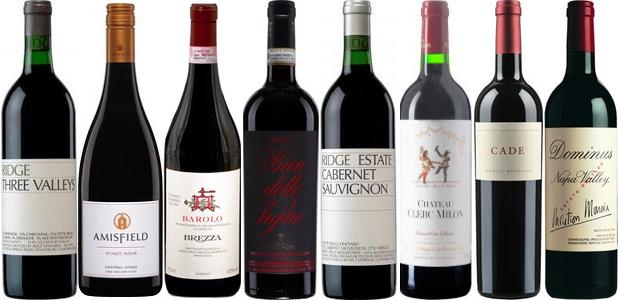
From left to right: Ridge Three Valleys 2012, Amisfield Pinot Noir 2011, Brezza Barolo 2010, Antinori Pian Delle Vigne Brunello Di Montalcino 2009, Ridge Estate Cabernet Sauvignon 2011, Château Clerc Milon 2011, Cade Cabernet Sauvignon 2011 and Dominus 2011

From left to right: Ridge Three Valleys 2012, Amisfield Pinot Noir 2011, Brezza Barolo 2010, Antinori Pian Delle Vigne Brunello Di Montalcino 2009, Ridge Estate Cabernet Sauvignon 2011, Château Clerc Milon 2011, Cade Cabernet Sauvignon 2011 and Dominus 2011

The first day of spring strikes me as a strange time to roll out a VINTAGES release full of big guns, from Cabernet Sauvignon passing by Pinot Noir to Zinfandel and from Nebbiolo to Sangiovese Grosso. A bold group in large numbers is usually reserved for the November and December offers leading up to wallet emptying Christmas shopping days. If the March 21st release is any indication, the powers that be at the LCBO must feel pretty good about the current state of Ontario’s economy.

Related – I shall be Riesling

How else to explain the laying out of the fine red wine carpet in purchasing timeline purgatory? The other alibi in justification is a concern of surplus and overcrowded warehouse shelving, caused by a back log of unsold Bordeaux futures and a consumer shift to less vivid, decreased drama and all around #GoGamayGo sentiment.

For all my reviews from the March 21, 2015 VINTAGES release, see them @WineAlign

I tasted through most of the bad boys on this release and while many are more overpriced than a $20 bucket of bullfrogs in an Algonquin Park bog, these six wines stood tall and shook their value obvious money-maker amongst a slouching and gouging crowd. Forceful wines, all meant to spend at least some slumbering time in the cellar.

Ridge Three Valleys 2012, Sonoma County, California (652875, $35.95, WineAlign)

This Sonoma County Zinfandel melting pot was first produced in 2001 and the 12th vintage contains grapes from seven different Sonoma vineyards. Many of Ridge’s wines bull the intent of single-vineyard, terroir-driven expression. The TV is more about bear assemblage, the search for differential balance and winemaking. Zinfandel (79 per cent) is joined by Carignane (12), Petite Sirah (8) and Alicante Bouchet. Approximately one fifth of the American oak is new, with the wood waft leaning to spices directed by clove, cocoa kernel and faint coconut that infiltrates the Draper perfume. The rich red fruits combine for a brawny voice, bold, peppery and so very ripe. Though not hesitant or introverted, this Zinfandel avoids excessive character and exemplifies the fine art of blending.  Tasted March 2015  @RidgeVineyards  @rogcowines

Amisfield Pinot Noir 2011, Central Otago, South Island, New Zealand (179754, $41.95, WineAlign)

The agglomeration of Central Otago wild vegetative conglomerate is in this Pinot Noir. Strawberries and their leaves, dug up clay, saturated syrup with dark cherries and braising meat make for big aromatics. This is a very meaty, terrifically cimmerian Pinot, with a replay in flavour of loamy and corpulent stock, like a reduction of mire poix and beef bones. Finishes with dried fruits, marigold, a kick of cinnamon spice and pine needles. A bit of wow from the hinterland of Central Otago.  Tasted March 2015  @Amisfield  @COPinotNoirLtd  @CentralOtago_NZ  @HalpernWine

Brezza Barolo 2010, Piedmont, Italy (711788, $46.95, WineAlign)

The gusto and earnestness of antiquity is right upfront in this Nebbiolo, the silliness of modernity left to the practices of more fickle and irresolute houses. A faint and impertinent percussion of volatility beats the near term olfaction into temporary submission, but the wine is bright and the acidity chants with proper diction. The tannic grain is sweet and savoury, well-structured and you can certainly smell the roses. The taste of Nebbiolo is succinct and the overall design is a seven to year plan, with nothing but pleasure on the next decade’s horizon.  Tasted March 2015  @NaturalVines  @jcmeli

Antinori Pian Delle Vigne Brunello Di Montalcino 2009, Docg, Tuscany, Italy (651141, $59.95, WineAlign)

Here flatters definitions of Sangiovese Grosso, of rusty and rustic pasts, big, bold beginnings and distant, slowly etched futures. A faint tease of soy in feign of premature corrosion is the product of the terroir’s liquor. This is so far from its secondary times. It’s as though it teases with an aroma and flavour of melted caramel but the mirage is tantalizing and unreal. The lack of sweetness confirms the notion and instead this Brunello offers dried flowers in dreams and fresh ones placed in vessels not yet tangible, nor yet set upon the table. Wild sauvage, sage and garriga are transubstantiated into liquorice, game and distilled amari. This is perhaps the finest Pian Delle Vigne of the (post 1990) modern age. Very exciting wine. Drink 2019 – 2029.  Tasted March 2015  @AntinoriFamily  @HalpernWine  @ConsBrunello

Ridge Estate Cabernet Sauvignon 2011, Monte Bello Vineyard, Santa Cruz Mountains, California (89284, $61.95, WineAlign)

A perennial three plus one quarter blend of Cabernet Sauvignon and Merlot, give or take a few points, that always punches well above its weight and cost. Not just in relation to similarly priced Cabernets but when looked at alone and on its own merit. There is a searing red intensity in 2011, with steroidal currants and a whiff of lodge smoke, plenty of creamy vanilla and lavender. An injection of liquid chalk, circulating acidity and in the end, some bold coffee notes. No bell pepper. None. Well made, of course and despite the cold and the wet, the omnipresent Draper perfume and very good length. My only cavil would be a degree of over-employed new oak in a vintage where less would ironically be more.  Tasted March 2015  @RidgeVineyards  @rogcowines

Château Clerc Milon 2011, Ac Pauillac, 5e Cru, Bordeaux, France (301119, $89.95, WineAlign)

The principals at Clerc Milon consider 2011 “to be ranked among the finer, or perhaps even the finest” of Bordeaux vintages. The better news is that despite that declaration the price on this classic, structured and flat-out enjoyable Médoc is relatively affordable, especially considering the astronomy of pricing since 2000. This early picked (finished by September 28th) blend of Cabernet Sauvignon (54 per cent), Merlot (37), Cabernet Franc (7), Petit Verdot and Carmenère has vintage steal written all over its painted berry face. Terrific wood spice, more fruit from plum and rapturous acidity travel great lengths to pleasure. The coffee component is in but with just a light alcohol spike. This is really fine Paulliac, elegant, refined and not outrageously priced.  Tasted March 2015  @Noble_Estates

Cade Cabernet Sauvignon 2011, Napa Valley, California (325027, $112.95, WineAlign) LCBO Inventory

Though prepped by notions of a cooler and later ripening vintage, there is even more savoury, tobacco and cool clime (altitude) aromatics than might have been imagined. This Cade is so very bright in a cherry-plum-pomegranate continuum yet in contrast to a (negatively impacting) sweet-sour-tang drupe. Tends to angles more akin to Tuscan summer savour, like lavender, rosemary, sage, and vanilla. The overall impression to palate is that of a chew of the toffee that might be made by the aromatic combination, or a pull of syrupy tea. In the end there is nothing simple about this thoughtfully crafted Cade.  Tasted October 2014  @CADEWinery  @TheVine_RobGroh

Dominus 2011, Napa Valley, California (212381, $176.95, WineAlign)

In 2011 the breakdown is Cabernet Sauvignon (86 per cent), Petit Verdot (9) and Cabernet Franc (5). From an antithetical Napa growing season, wet, cold and in requiem of acumen to deal with what the winemaker in Bordeaux faces in every vintage not hailed as best of the century. The ’11 Dominus has been in the market for just a shade under a year, just the right amount of time for a poured glass to reveal its charms. The new barrel count is approximately 40 percent, a substantial but not egregious number. We want to know what fruit the vintage gives, regardless of the conditions and in ’11 that drupe is savoury, more sage than nettle, and saliferous. That minerality is cute and key because the expression remains huge, so the cure helps to leave an indelible mark. The attributes of massive fruit, (no small feat considering the weather), smoke and phite makes for a mess of aromatic intensity. The flavours are accessible and the texture quite full. Though not the thickest Dominus to date (due to the oak not overwhelming the fruit) this will offer up seven to 10 staid years of development, followed by another five to 10 of minor decline.  Tasted March 2015  @rogcowines

Good to go!
http://www.winealign.com/profile/2058-mjg

I shall be Riesling

13th Street June's Vineyard Riesling 2013 - VINTAGES March 21, 2015 release

13th Street June’s Vineyard Riesling 2013 – VINTAGES March 21, 2015 release

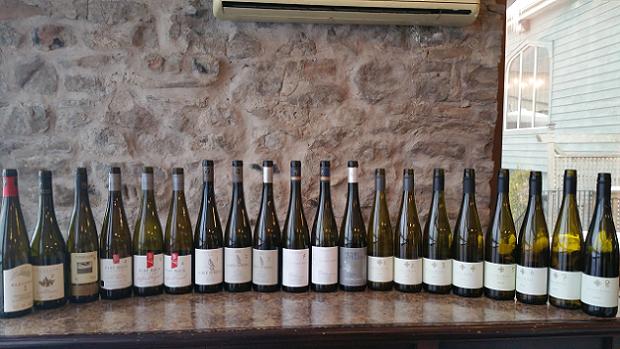
Last weekend, in a packed Carriage House at Vineland Estates Winery I tasted through 19 Rieslings from the Escarpment, Vinemount Ridge and Twenty Mile Bench sub-appellations of the Niagara Peninsula. It got me thinking, again. Thinking about Riesling. Thinking about drinking more Riesling. Thinking about how my life is not complete, without Riesling.

Riesling at the Carriage House, Vineland Estates Winery - March 7, 2015

Riesling at the Carriage House, Vineland Estates Winery – March 7, 2015

More about that #CAPSCAN15 and Wine Country Ontario tasting at a later date. For now the delve need be into the history of Riesling and how it has had a profound effect on the world of fine wine. I have written about Riesling as much or more than on any other grape variety. In March of 2013 my column, 100 kilometre wine for spring stated firmly “can there be a more versatile white grape? From natural, mineral spring, bone-dry to concentrated, candied sweet, this grape runs the diversity gamut like no other.” In Niagara, “‘The Bench’ is home to a mineral wealth of local Riesling, singular in composition not only by way of a global comparison, but also from plot to plot, soil to soil and vineyard to vineyard.”

I see my light come shining
From the west unto the east.
Any day now, any day now,
I shall be released.

In June of 2013 Are you wine experienced? was a post written about the Brock University Cool Climate Oenology and Viticulture Institute’s Riesling Experience 2013, an international celebration of style, structure and purity. At that time Mike Di Caro and I talked about Ontario Riesling and we agreed that sugar levels are both arbitrary and unpredictable so Niagara’s best is and should be of the dry variety.

In June of 2014 I wrote about Germany in Talkin’ ’bout my Generation Riesling. The theme of the show was the ever elusive Trocken Riesling and how “the new German wine label no longer feels the need to inform the consumer of every aspect contained within the wine’s birth certificate.” In August of that same year I penned Walking an Alsace mile in their Riesling shoes, a full-on summary of a June visit to Alsace with 31 tasting notes on, wait for it, Riesling.

So, with the VINTAGES March 21st, 2015 release just over a week away, I shall be Riesling.

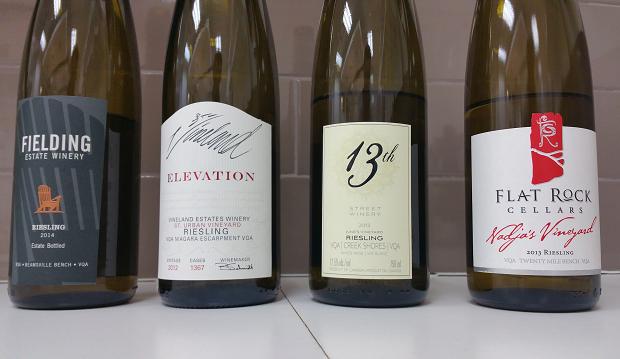
From left to right: Dr. Hermann Erdener Treppchen Riesling Kabinett 2010, Fielding Estate Riesling 2014, Flat Rock Cellars Nadja’s Vineyard Riesling 2013, 13th Street June's Vineyard Riesling 2013, Vineland Estates Elevation St. Urban Vineyard Riesling 2012 and Trimbach Riesling 2012

From left to right: Dr. Hermann Erdener Treppchen Riesling Kabinett 2010, Fielding Estate Riesling 2014, Flat Rock Cellars Nadja’s Vineyard Riesling 2013, 13th Street June’s Vineyard Riesling 2013, Vineland Estates Elevation St. Urban Vineyard Riesling 2012 and Trimbach Riesling 2012

Dr. Hermann Erdener Treppchen Riesling Kabinett 2010, Pradikätswein, Mosel, Germany (402420, $17.95, WineAlign)

Here the wild, out there, cosmic side of Mosel Riesling is on display, amplifying peach and lemon notes through aromatic grunge filters, like a medicative tonic. The palate is sweet and spritzy, even oxidative and this is textured with heavy, monumental levels of pure Riesling noise. The acidity is marked by citrus in every incantation. Though this may be the kind of Mosel you’ve “just never tried, it’s still the place.” Not so much a dinosaur but a junior, a wild Kabinett for very little cost and from an increasingly endearing vintage. Tasted March 2015  @WinesofGermany

Fielding Estate Riesling 2014, Estate Bottled, VQA Beamsville Bench, Niagara Peninsula, Ontario (251439, $18.95, WineAlign)

The Richie Roberts take on Riesling brings Beamsville to the populace, combining the natural acidity of the variety with the micro-saddle-plot-climat ipseity that the sub-appellation provides. This early to market ’14 is quite tropical, offering an en primeur portal into what invariably will follow. Fresh, juicy, accessible and in near-perfect balance. Slate, calcareous bleed and fruit generosity make for one tidy, markedly gratifying Riesling.  Tasted March 2015  @FieldingWinery  @RichieWine

Niagara Riesling Royalty at the LCBO Lab - March 6, 2015

Niagara Riesling Royalty at the LCBO Lab – March 6, 2015

Flat Rock Cellars Nadja’s Vineyard Riesling 2013, VQA Twenty Mile Bench, Niagara Peninsula  (578625, $19.95, WineAlign)

A year has turned a once frantic Nadja into a yet excited but in control Twenty Mile bencher. Acidity has circled the flock of juices; the sweet and the stony, to graze together. While ’12 expressed a texture to see it grace ages, here the up front verve makes for a more direct impression. There is no immediate hurry but the ginger on the lime indicates can earlier finality.

From my earlier note of February 2014: From a sample just pulled from the tank. Jay Johnston’s concept for Nadja is to create many fermentations together, using 2000L tanks and some barrels. The ferments are arrested when they achieve balance and then blended. Nadja still has her young fizz on and she’s exaggerated in Metallica meets a wondrous kind of sour. Already showing an unfurling of (mostly citrus) fruit but also spice and hurried depth. Frantic Riesling, will she “stop to warm at karmas burning, or look ahead, but keep on turning?”

Lasted tasted March 2015  @Winemakersboots  @UnfilteredEd  @brightlighter1

13th Street June’s Vineyard Riesling 2013, VQA Creek Shores, Niagara Peninsula, Ontario (147512, $19.95, WineAlign)

Continues to throw its weight about and has now engaged a phase of typical J-P Colas redolence and pungency. Strict adherence to Creek Shores citrus minerality injects the June for future time-lapse release, an internal ooze that will take years to push its way upwards to the surface.

From my earlier note of December 2014: 2013 was a perfect follow-up for Niagara Riesling, after a vintage where so many exceptional wines were made. The ’12 June’s by Jean-Pierre Colas was his best and with this repeat performance in ’13, the consistency of June’s vineyard is further cemented. Once again, the citrus injection is a Creek Shores thing, a vehemence not matched by other sub appellations. Where ’13 differs is its weight. There is a textural density improved upon and at the same time dragging on the freshness of the fruit. The trade-off will mean less immediate gratification in lieu of more flesh and bone for a longer period of aging. Given at least five years rest, the 2013 June’s Riesling will discover a Ribeauvillé like future.  @13thStreetWines

Last tasted March 2015

Vineland Estates Elevation St. Urban Vineyard Riesling 2012, VQA Niagara Peninsula, Ontario (38117, $19.95, WineAlign)

The layering is nothing short of remarkable, like the rings that tell the history of a tree. In its youth the upper vertex where effluvium and concentration meet is painfully obvious but when it comes to Riesling, breath is meant to be taken away. The prose is already written, running on adrenaline, unparalleled, if not yet understood.

From my earlier note of November 2014: Who has not waited for Elevation to hit out of the 2012 vintage? Straight up it must be noted that this will rank over and above the best from the St. Urban Vineyard. The ’12 Elevation will not only find long-term success among the great values in Bench Riesling, it will go down as one of the best ever, at any price. The vintage impart is a natural for this wine. At the moment it is the most primary of all because of the layers that texture bring. The Elevation will go thirty years and climb higher and higher into the stratosphere, gaining flesh and personality. The already seamless gathering of fruit and mineral is palpable. And still a reminder, the price is $20. This is a Schmidt gift to Ontario, for anyone and everyone to be one of the lucky ones. To purchase in increments any less than a case may be considered a crime against Riesling.  @VinelandEstates  @benchwineguy

Last tasted March 2015

Trimbach Riesling 2012, Ac Alsace, France (734517, $21.95, WineAlign)

To Jean and Anne Trimbach and most Alsatians, this Riesling from their ‘Classic’ range may represent the best that basic can be but when it travels oversees it gains a stature well beyond its humble roots. Here is another one of the those dictionary entry wines meant to depict and define. Quite simply emblematic Alsace. Built with acidity to envelop sweetness, marked by herbiage that is alive and fresh. Weight and density draw from Ribeauvillé rocks. Parity is realized in osmosis by fruit and mineral. As always, there is the tannic underlay, the length and the purposed bitter finish.  Tasted March 2015  @trimbach  @WoodmanWS

Good to Go!

http://www.winealign.com/profile/2058-mjg

March 7th seven blazon party

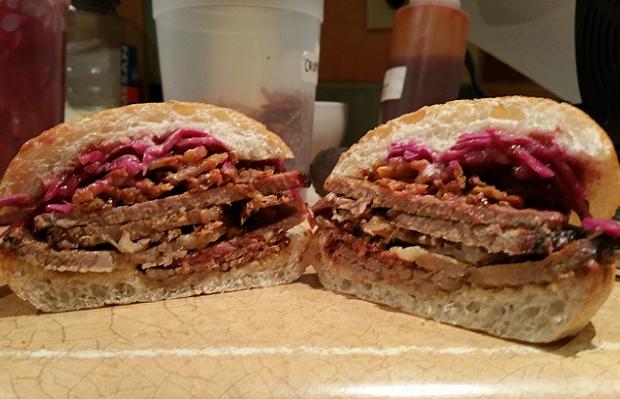
Home spun Barque Smokehouse brisket sandwich

Home spun Barque Smokehouse brisket sandwich

As VINTAGES rolls out another army of bottles in proclamations of blatant multiplicity and, as I mentioned yesterday, in duplicity, it is time to settle into the recommendations encampment. Trudging through the trenches of Sparkling, White, Red and Dessert the divisions are laid, dispatches ordered and strategies finalized. Staffers go here, front liners there and commanders bring up the rear.

Related – Why it matters to taste wines again

A little bit of everything, as always, defines the March 7th release. Tidy little sippers work the hardest and make sacrifices for the rest. In this release Kosher wines prepare to tackle Passover but that we will save for next week, or perhaps the week after. Italy is the focus, bellowing commands from the bull horn, making decrees like colosseum commentators at Hunger Games. “We have wines that are just too goddamn vivid!” “We have wines with language that is fairly formal and sometimes flowery!” “Occasionally we stop to smell the adjectives!”

Tuscan wines always seem to possess what has heretofore been referred to as collectively having “a firm jaw and an air of tragic nobility.” As a group they are confident, steeped in tradition and now, as much as any wine-producing region, captured within the heart of the state of the art. The sea is murky because the obvious separations between varietal and blend are hard to discern but one aspect is not under dispute. Overall quality has never been higher. Tuscan wines are just plain fun to drink.

The seven blazon party from March 7th attacks with Chardonnay, Yellow Muscat, Cabernet Franc, Sauvignon Blanc, Zinfandel and two rounds of Sangiovese. The notes, here, now.

From left to right: Fielding Unoaked Chardonnay 2013, Puklus Pincészet Tokaji Yellow Muscat 2013, The Good Earth Cabernet Franc 2012, Castelli del Grevepesa Panzano Chianti Classico 2008, Rocca Di Castagnoli Poggio A'frati Riserva Chianti Classico 2010, Château De Cruzeau Blanc 2009, Chateau Montelena Estate Zinafandel 2012

From left to right: Fielding Unoaked Chardonnay 2013, Puklus Pincészet Tokaji Yellow Muscat 2013, The Good Earth Cabernet Franc 2012, Castelli del Grevepesa Panzano Chianti Classico 2008, Rocca Di Castagnoli Poggio A’frati Riserva Chianti Classico 2010, Château De Cruzeau Blanc 2009, Chateau Montelena Estate Zinafandel 2012

Fielding Unoaked Chardonnay 2013, VQA Niagara Peninsula, Ontario (164491$14.95, WineAlign)

One of the best deals going in oak-less Chardonnay, a glug, glug, line up at the jug kind of guiltless white. Pure, cool-climate variegate, with the cool of the Peninsula overridden by the vacuous warmth in the saddle abutting the Escarpment. Very pear, all in slate, exit to daylight acidity for a Chardonnay that hit the switch. Spot on in 2013 with an even keel of personality, warm but never far from cool.  Tasted March 2015  @FieldingWinery  @RichieWine

Puklus Pincészet Tokaji Yellow Muscat 2013, Tokaj Hegyalja, Hungary (46508$15.95, WineAlign)

From Tokaj Hegyalja in Bodrogkeresztúr found tucked into the northeastern corner of Hungary. One could imagine the air thick as sweet cool soup in summer, perfumed by basil and lemon verbena. Designated “semi-sweet” the varietal is so much more than pedestrian when handled with this kind of poise and concern. Highly aromatic, viscous and wildflower floral. Honey and honeysuckle, fresh lemon, beeswax and citrus pith. Sweetness begins, abides, subsides and melts in the mouth. Buckley‘s medicinal to a fundamental degree but not to a fault. Delicate and delightful. Muscat of a grace that makes you feel and wish, “my kingdom for a kiss upon her shoulder.”  Tasted March 2015  @WineofHungary

The Good Earth Cabernet Franc 2012, VQA Lincoln Lakeshore, Niagara Peninsula, Ontario (164491$20.95, WineAlign)

While wood plays a prominent role it does not saturate to distraction. The barrel extract adds warmth and spice in contribution to balance. A high-toned syrup on the nose gives way to an evenly weighted palate. A scraped bean flavoured creamy toddy texture is topped with chocolate shavings, a dry of bell pepper and tobacco smoulder from out of the chamber. Nicely judged fruit, acidity and texture with admirable length. A necessary example of $20 Lincoln Lakeshore Cabernet Franc offering up every reason to drink it and demand that more me made.  Tasted March 2015  @goodearthtweets  @EpicW_S

Castelli del Grevepesa Panzano Chianti Classico 2008, Docg, Tuscany, Italy (972695$23.95, WineAlign)

A very honest take on Sangiovese and Chianti Classico. When it appeared from the 2006 vintage it had been a while since this Panzano came to market, having been a stalwart presence in late 1990’s vintages. Modern now, very much a child of 21st century winemaking but in retention of loyalties to red, sour cherry and dusty 90’s Sangiovese. Remains slightly austere, angular and tension-filled, as if a scraping noise could be heard as the fruit, acidity and tannins fight for purchase on the floor. Chalky lactic and really juicy. Drink now and for three to five further on.  Tasted March 2015  @chianticlassico  @ProfileWineGrp  Castelli del Grevepesa

Rocca Di Castagnoli Poggio A’frati Riserva Chianti Classico 2010, Docg, Tuscany, Italy (350751$29.95, WineAlign)

Very expressive aromatics in dried flowers, earthy red perfumed fruits, orange peel, clove and a full crumble of cinnamon fill the air. Rampant but not relegating (at this early, five-year juncture) acidity drives the engine, running on vineyard funk, a hint of game and fruit ripened to optimum clarity. This is faultless Sangiovese of guts and guile, really well-made, classic yet modern CCR. Dances like Sangiovese should, “well, you wiggle to the left, you wiggle to the right, you do the ooby dooby with all your might.” No factory made CCR here, nor from out of the cosmos. Just simply down to earth. Were $30 all that I had to spend and a Chianti Classico Riserva the only choice, this would have to make the shortlist. Tasted March 2015  @chianticlassico  @ProfileWineGrp

Château De Cruzeau Blanc 2009, Ac Pessac Léognan, Bordeaux, France (966010$31.95, WineAlign)

That VINTAGES was able to secure another sku of this Bordeaux Blanc is both fortuitous and a gift. For the cost of an I-Tunes song you can have a peak into the generosity of the 2009 Bordeaux vintage through the senses of a top-value producer. From Les Vignobles André Lurton comes this white beauty. Though slightly musty upon entry this shows immediate yet perfectly evolved poise. Ready to strike with much persistent verve and density in 100 per cent Sauvignon Blanc singularity. Wood is very involved (10 months in 35 per cent new oak barrels on full lees with bâtonnage) by adding precious layers of necessity. Very layered indeed, honeyed, anti-hackneyed, buttressed, really fine and generous. Most excellent work by oenologists Denis Dubourdieu and Valérie Lavigne.  Tasted March 2015  @AndreLurton  @KirkwoodDiamond

Château Montelena Estate Zinfandel 2012, Calistoga, Napa Valley, California (69633$49.95, WineAlign)

A rare, in the neighbourhood of elegant and exquisitely refined Zinfandel gives all red fruit with just a faint raise of raisining. Quite pure, with heaps of liquorice, smouldering cedar bough, brushed and bushy, big but shy of the peak. The English punk of Zinfandel but with melody and charm. Says to the world we have “our own raison d’etre we can’t see?” The quality is in, raising the Zin bar to a level not oft seen, with restraint and complexity. Never mind the bullocks, Montelena offers a buzzcock of a Zinfandel. Here lies a Zinaison d’être.  Tasted March 2015  @ChMontelena  @rogcowines

Good to go!
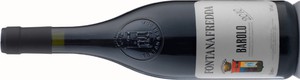
http://www.winealign.com/profile/2058-mjg

Why it matters to taste wines again

Dumplings

Dumplings

It would be foolish to think that a single taste or a brief assessment can ascertain everything that a wine will bring to the table. So many factors play into that moment in time; how that bottle came to arrive at this place, how long it had been open, its current temperature and certainly the temperament and mood of the taster.

The only true and valid important bits of information that we can cull from a fleeting meeting with a bottle of wine is whether or not it is marred by a fault, or faults. Is the wine tainted with TCA (trichloroanisole)? Does it contain high levels of Brettanomyces? Is it raging with volatile acidity? It is oxidized or reductive? Has lady bug taint found its way into the bottle? And so on and so forth. Quality can be guessed at with high probability but time is so essential to knowledge. This is why tasting for a second and third time matters.

Wines should always be afforded the opportunity to be reconsidered, especially after some bottle settling time. The fascination with seeing evolution from organic ferments is real. Wine changes, often for the better, that much we know. Wines deserve second chances, re-dos and re-tastes.

Writing updated notes is the essential by-product of re-tasting and the catalyst that acts as the chaperone to get to know a particular bottle and by extension, a winemaker’s portfolio. Here are seven new releases, coming into VINTAGES on March 7th. They are actually re-releases, having been previously made public by the winery or through the LCBO. I tried them all once again and can say with confidence, by way of the tasting note, that all seven have confirmed their quality and improved with time. These are the seven new notes for seven March 7th VINTAGES re-releases.

From left to right: Tawse Sketches Of Niagara Riesling 2013, Keint He Voyageur Pinot Noir 2012, Gray Monk Pinot Gris 2013, 13th Street Gamay Noir 2012, Sterling Vineyards Pinot Noir 2012, Bachelder Wismer Vineyard-Wingfield Block Chardonnay 2011 and Bachelder Pernand Vergelesses Premier Cru Creux De La Net 2011

From left to right: Tawse Sketches Of Niagara Riesling 2013, Keint He Voyageur Pinot Noir 2012, Gray Monk Pinot Gris 2013, 13th Street Gamay Noir 2012, Sterling Vineyards Pinot Noir 2012, Bachelder Wismer Vineyard-Wingfield Block Chardonnay 2011 and Bachelder Pernand Vergelesses Premier Cru Creux De La Net 2011

Tawse Sketches Of Niagara Riesling 2013, VQA Niagara Peninsula, Ontario (89029, $17.95, WineAlign)

Juicy, spirited and eminently approachable. Citrus and peach fruit beg to be gulped by the key keg load.

From my earlier, June 2014 note: “The gateway of the Tawse Riesling portfolio and first to be released is an omnipresent beacon for what is to come from the single-vineyard sistren. Built fruit forward from an orange zest, stone rose and lemon glade guide, this is the Sketches most juicy sensation yet. Incredible vacuum of citrus acidity waterfalling into a great white hole. Though surrounded by so many a Riesling with site specific personality, “she’ll carry on through it all.” Intensity in dry Riesling.”

Last tasted March 2015  @Tawse_Winery

Keint He Voyageur Pinot Noir 2012, VQA Niagara Peninsula, Ontario (373407, $18.00, WineAlign)

Carries the weight of the Peninsula within the bright frame of clarity that is the PEC oeuvre. In ’12 the warmth and the weight can’t help but break down to burrow into earth. Fine, grainy tannins and an increased structure will give this three more years of development but do not hesitate to enjoy it now.

From my earlier April 2014 note: “Tasted a second time, the floral lift is clearer than before, as is the understated earthiness. Also showing more body and verve so it appears the Voyageur is starting to come into its own. From my earlier February 2014 note: “Fruit here comes from two Niagara vineyards, Queenston and Malivoire. An earthy Pinot that positions itself in isolation away from its suave and handsome Portage and Benway brethren with a waft of merde. Taste brightens as a sweet cranberry, chalky, root beer float. Kudos deserved as it’s clearly recognizable as Pinot with a medium finish and a pinch of horseradish salt on a lithe 12.5 per cent frame.”

Last tasted March 2015  @KeintheWinery

Gray Monk Pinot Gris 2013, BC VQA Okanagan Valley, British Columbia (118638, $19.95, WineAlign)

Brilliant hue, like a ceiling fresco of gold-scrolled tiers. Has that feel of lemon peel shrivelling to scent. Was a Category Champion at the 2014 World Wine Awards of Canada.

From my earlier September 2014 note: “Pinot Gris with pears and more pears. A no hold barred, straight up, bring it with orchard fruit example. A spoonful of sweet lemon curd indicates a just post ripe picking and now oxidation, if not necessarily the intention. Off-dry with acidity that joins but does not round the shining fruit into absolute form.”

Last Tasted March 2015  @GrayMonkWinery

13th Street Gamay Noir 2012, VQA Niagara Peninsula, Ontario (177824, $19.95, WineAlign)

This is spot on, both as 13th Street and as Niagara Peninsula Gamay. Very ripe, to the edge of extracted distraction and less funky than previous vintages. Really defines the genre, acts the act, walks the walk, executes the execution. Drives the point, carves the cliché, go Gamay go.

From my earlier note when tasted at Gold Medal Plates Toronto, November 2014: “Spice and rich fruit head straight to Gamay welkin derived direct from the soil’s core, of Sandstone, Schwenker and the winery’s home vineyard at Fourth Avenue. Swirl away the gathered must and moss to reveal more Cru fruit than you can shake a stirring rod at. Such verve, said grit, such persistence. The thing about Gamay is, “if you want inside of her, well boy you better make her a raspberry swirl.” 13th Street has certainly made the raspberry sing in the ’12 Gamay so “raspberry swirl, mmm let’s go.”

Last tasted March 2015  @13thStreetWines

Sterling Vineyards Pinot Noir 2012, Napa Valley, California (396150, $29.95, WineAlign)

There are so many reasons not to find a thrill in this regional blend of Pinot Noir fruit but none of them stick. Sweetness, simple syrup silky fruit, brown sugar, every red and purple berry in all varieties of fields (plus ripe plums) and warm to temperate alcohol (14.5 per cent declared) all combine for full California sunshine effect. All this and I just can’t turn away. With all the excess fruit, texture and multiplicity in good times, how can I? I ask this Pinot, “how come you, how come you dance so good?” The answer lies in the feel and the ability to turn a Noir trick or two. Not to mention a rolling of barrels and Napa Valley stones through its very core. Well done.  Tasted January 2015  @sterlingwines  @Diageo_News

Bachelder Wismer Vineyard-Wingfield Block Chardonnay 2011, VQA Twenty Mile Bench, Niagara Peninsula, Ontario (345819, $44.95, WineAlign)

A new release, mindful of micro-plot. From out of a Bachelder barrel, the great mystery of wood is not that it smoulders, but that it rests on water, or in this case, on grape juice. To label this Wismer as Wingfield is to give this Chardonnay a scientific specificity, a concentration of fruit so capable of inducing the ethereal, to hover as if in suspension. This is Wismer-Wingfield. The Chardonnay that floats, like hope.

From my earlier July 2014 note: ‘Has Wismer found a cruising altitude? Has this Grand Cru vineyard from a most perplexing 2011 vintage entered the telephone booth in civilian clothes, only to soon emerge as a super hero? Will it sing, “I am, I am Superman and I can do anything?” Wismer has rounded out a bit, at present in a grounded form, but we know it will fly to greater heights and at faster speeds. From my earlier, February 2014 note: “Got game tonight, in auxiliary moxie, magisterial atmosphere and long strides up and down the ice.” Earlier notes: “Increased richesse and oomph and though I continue to hesitate to admit it, Saunders is the (Jackson Browne) elegant bottling in ’11. Wismer the (Warren Zevon) gregarious, mineral character werewolf of Niagara, what with it’s touch of anxiety, fuller texture and “bite down…draw blood!” From my earlier November 2013 note: “From the Wingfield Block within the 20 Mile Bench grand cru vineyard, ’11 Wismer is greener, in apple and sapid behaviour. The tension is palpable, quarryful, querulous, more calciferous. Fruit here is picked at an altitude as high as the lowest part of Flat Rock’s vineyard. Can a spot be pinpointed, anywhere on the peninsula that produces more piercing Chardonnay in 2011 as this Wismer micro-block?”

Last Tasted March 2015  @Bachelder_wines

Bachelder Pernand Vergelesses 1er Cru ‘La Creux De La Net’ 2011, Burgundy, France (LCBO 403485, $47.95, SAQ 12089524, $38.50, WineAlign)

Purity abounds, florals leap and the heart fills with an arrow of red fruit. So linear, so direct. Wears the crux of Bachelder integrity on its sleeve. The pinpoint accuracy of plot, the ubiquity of gypsy soul, the bandwidth of frequency. Yet another Bachelder “ere the bonnie boat was won, as we sailed into the mystic.” Acidity rears and rails right through. Tannin trails like a burning star. Ten more years will see this to a moondance of quietude.

From my earlier February 2014 note: A metallurgical slant this time around and iodine, though sweet, like a geologist’s preferred cocktail. The palette is Rothko maroon and in cohorts with what is ascertained by the palate, scheme fruits and hearts both red and black.

From my earlier note of November 2013: Has the sense to be subtle, effortless and akin to Chambolle. Not so much openly ripe fruit but more the flowers that come before. Cherries dabbed by a citrus fragrance, or the spritz of squeezed zest and an unusually smoky musk. Insinuates new world (think Oregon) though it tells a rubble tale of its limestone slope climat.

Last tasted March 2015

Good to go!
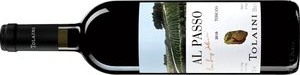
http://www.winealign.com/profile/2058-mjg

Pirates on a picnic

Salmon Amuse Bouche

Chef Victor Barry’s Salmon Amuse

The privacy, intimacy and relaxed atmosphere of a subterranean hashery is something we should all experience at least once in a gustatory lifetime. We should also be afforded the opportunity of a salubrious 12-course tasting menu designed by a reluctant superstar. Why ought we not be handled with extreme Sommelier care by the caress of a total professional? Give me a reason to not spend three hours locked in a room with eight others, all of generous wine and spirit?

The location was Splendido‘s downstairs dining room. The chef was Victor Barry. The Sommelier was Ellen Jakobsmeier. The company a group of friends and friends of friends with a common goal. Eat, drink and be merry. Maybe trash talk a little. Trade a few thousand e-mails ahead of time to fire the vinous juices. Get down to business. Taste fourteen wines blind, poured from paper bags, discuss and be humbled by knowing everything and yet nothing at all.

Chef Barry’s selections and his staff’s execution were beyond flawless, culled from trial, error and perfection, bobbing up into the ethereal. Ms. Jakobsmeier had less than 20 minutes to receive, prepare and pour in order, with timely precision, the agglomerated and cumulative progression of the wines. Like Euro rail time. Not a hair out-of-place. Big props Ellen.

One dinner companion said this. “Thank you so much for inviting me to join your Pirate festivities! The food was incredible, thanks for hosting us Victor. The wines were exciting, generous and delicious! Thanks to all of you for sharing the gems from your cellars. And thank you Ellen for doing such a great job pairing all the wines. A feast worthy of Pirates!”
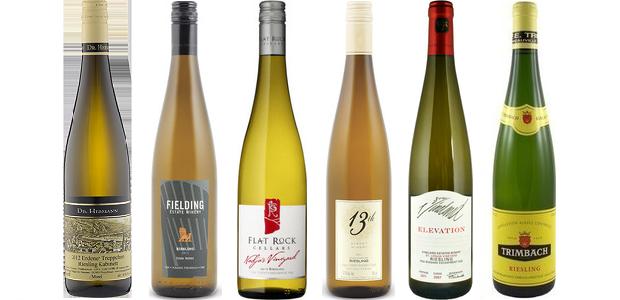
Victor added his own words. “Thanks everyone. I had a blast. I really enjoyed sitting down stairs it made it much more enjoyable for me. Looking forward to the next event. PS that Tokai was fucking delicious. And the Premier Cru from that “Niagara appellation.”

I wrote this to the group. “Laid in bed last night thinking about every course. Too many details to comprehend. And then it was morning and my kids wanted their lunches packed. Good thing there was this pumpkin in my wine sleeve…generosity in wine just amazing. All thoughtful and just fucking generous. Fortunate to have met new faces. Looking forward to this again, and again. Great work JB and Victor, stars all around.”

And to you JB, you sure do know how to throw a party.

Champagne begins the pirates on a picnic dinner in the downstairs private dining space at Splendido Toronto

Champagne begins the pirates on a picnic dinner in the downstairs private dining vineyard at Splendido Toronto

Champagne Larmandier-Bernier Rosé de Saignée Premier Cru NV, Champagne, France

Just a wee coppery this rusty blush, savoury to solecism and uprooted by a tremendous fault that forces metamorphic salinity, no check that, bleeds from rock into the bottle. If Champagne could commandeer the senses to stop and take note, this LB is the one. Stoic, purposed, frank and blushing like a winter Olympic athlete after a gruelling race. This Rosé is as confident and masculine as can be for the genre. It opens the eyes, pores and heart for a long haul ahead of pulls, in corks, sips and gulps.  @LarmandierB

Larmandier-Bernier Champagne Rosé de Saignée Premier Cru NV and Domaine Dauvissat Chablis Premier Cru "Séchet" 2009

Larmandier-Bernier Champagne Rosé de Saignée Premier Cru NV and Domaine Dauvissat Chablis Premier Cru “Séchet” 2009

Vincent Dauvissat Chablis Premier Cru “Séchet” 2009, Burgundy, France

To be blinded by rocks is to taste such a wine without knowing what it is, slicing like Silex, cutting with a jagged edge of mineral take, yet gripping of aridity that must come from singular Chablis. Something whips like paraffin but again, the missing wood, the fennel talc, the absolute purity just says Chardonnay. With levity requested, gotta borrow from Burghound on this one because he was spot on, “way beyond the shadow of a doubt, yeah.” After 30 minutes the Sechet left the quarry to enter a sweat lodge of smoke and toast with an eventual pause at the charred Shishito capsicum station. The coarse wail is the young Dauvissat crooning but with fear set aside, the wine will soften in time, like the fashion poet, the prince of thieves. This Séchet, mythological in name, is Chablis brightly lit and accepts another sung substitute for yes. “Oh it cuts like a knife , yeah but it feels so right.”  @BIVBChablis

Oysters, popcorn, scallop dust

Oysters, popcorn, scallop dust

Popcorn dusted with dehydrated scallop dust? Damn straight.

Trout roe, maple, ice cream cone

Trout roe, maple, ice cream cone

Salmon, skin, consommé

Salmon, skin, consommé

Nikolaihof Im Weingebirge Grüner Veltliner Smaragd 2007, Wachau, Austria (AgentWineAlign)

Something grand is brewing, of that there is no doubt, despite the skinny, indehiscent first moments. A petrol that comes with age, a suckling piggy with melifluous honeycomb in its mouth roasting away, tinned fruit cup of a jellied, agar-agar mandarin orange type; these are the bold scents of what must be Austria, possibly Riesling, certainly Wachau. Tannin and stone drip Alsace Grand Cru, of Riesling again, like Rangen, but the reveal of Grüner Veltliner makes so much sense. Crazy, mind-blowing example, as good as it gets, a bench and high-water mark from which a free fall off the high springboard makes a perfect splash into the glass. Ninety minutes later only a word is needed to stem the waves of petulant emotion. Unbelievable.  @TheLivingVine  @AustrianWine

Nikolaihof Im Weingebirge Grüner Veltliner Smaragd 2007 and Henry of Pelham Reserve Chardonnay 2007

Nikolaihof Im Weingebirge Grüner Veltliner Smaragd 2007 and Henry of Pelham Reserve Chardonnay 2007

Henry of Pelham Reserve Chardonnay 2007, VQA Niagara Peninsula (2013 268342WineAlign)

French oak kicks at the door, feeling young, dirty and fine though synchronicity is absent in most respects. This is certainly not Chassagne, definitely not Meursault, not even St. Aubin. Yet it is delicate and delectable despite its unkempt ways, selfless and if left to be, might settle into a relationship. To discover it’s the hot vintage of 2007 version of today’s Estate Chardonnay is nothing short of astounding and at the same time, disappointing, at odds, disassembled. After 20 minutes it falls apart, “in little pieces on the floor, too wild to keep together.” The wine’s inclusion was necessary, gave perspective and bent to receive the Uni, “and now the end has come.” The 2012 and 2013 will offer much more pleasure.  @HenryofPelham  @SpeckBros

Sea urchin, toast, squid ink, lobster

Sea urchin, toast, squid ink, lobster

Domaine Valette Pouilly-Fuissé ‘Clos de Monsieur Noly’ 2002, Mâconnais, Burgundy, France

May as well be Josko Gravner Ribollo Gialla, or Ann Sperling’s Whimsy! Orange and yet in contempt of the oxidized and underripe cantaloupe be damned, Jura should be the call. But then there is the question of messing with the man acidity and a trippy delicacy as per the cook’s butcher. It is certainly not faulty, nor should it be faulted for developing au natural, on top of the sheets, on the bare side of the beach. OK, so really old Chenin Blanc and a very natural Outback white blend would make for good conversation, or not. Like mushrooms for toffee. Like mulled apples for cider done wrong. Dirty in the most righteous 12 year-old Sherry way. Love it with Lobster on a rock, octopus and some kind of sea cucumber.

Domaine Valette Pouilly-Fuissé 'Clos de Monsieur Noly' 2002 and Louis Latour Corton-Charlemagne Grand Cru 2009

Domaine Valette Pouilly-Fuissé ‘Clos de Monsieur Noly’ 2002 and Louis Latour Corton-Charlemagne Grand Cru 2009

Louis Latour Corton-Charlemagne Grand Cru 2009, Côte de Beaune, France (AgentWineAlign)

Can anything really be known from a fleeting moment spent with this? Classic, viscous, rich Burgundy and nothing but, with more mineral than should be gained from just a pass. The maker had the unconscious intent of remembering generations. When told that hey, it’s a Latour, in Beaune, of Corton Charlemagne, by Grand Cru, it’s hard to gather your inner we’re not worthy but focus and intent need be the outward act. You can really taste the limestone, imagine walking the Corton hillside, feeling the maximum exposure of the sun. When you know what it is you know to take a slice of humble pie and remember the soil, the soil, the soil. In Burgundy since 1797.  @LouisLatour1797  @LouisLatourInc

Equipo Navazos La Bota de Manzanilla Pasada 2011 nº 30 Capataz Rivas

Equipo Navazos La Bota de Manzanilla Pasada 2011 nº 30 Capataz Rivas

Equipo Navazos La Bota de Manzanilla Pasada 2011, nº 30 Capataz Rivas, D.O. Manzanilla Sanlúcar de Barrameda, Spain

Tasted blind this pours as a glass of briny capers, sea peas, vetches and liquid basalt. It speaks a language that contains the ancient loneliness of ruins. Thoughts easily lean Manzanilla or Old Fino. Great nuts, bitters, horseradish, dry tang, daikon and like a dirty martini. Not to mention orange rind and lime rind, zest and akin to a Vin Doux. It’s origins are at the hands of capataz master Rafael Rivas, from juice originally preserved to add kick to more commercial releases but the decision instead was made to “touch” the 15 solera butts with “testimonial sacas” of only four or five arrobas (roughly 5 x 16 = 80 litres), to make a wine such as this. This is old school Manzanilla, the third saca, with a reductive flor, uniquely oxidative and an average age of around 15 years.  @EquipoNavazos  @SherryWines  @JerezXrsSherry

Pop can seafood

Pop can seafood

Intermezzo of smoked oyster and foam…

Carrot

Splendido’s Five-hour carrot

“Friends – ridiculous dinner last night, in the best way. Great wines with great friends is my favourite way to spend a night. Already looking forward to the next one – at which I will bring more than one wine.”
Hamachi collar, black bean paste

Hamachi collar, black bean paste

Podere Rocche dei Manzoni Barolo Vigna Cappella Santo Stefano 1997, Piedmont, Italy

Here the soprano sings, in bold, rich, deep tones, with a sense of entitlement and a swagger. It’s a royal, goodfella, masculine depth. The notes are sung, even danced in bourrée, crescendo, sostenuto and ritardando. The luscious bing cherry richesse gives it youth, intimating Sangiovese but true hematic Toscana can’t be this dark. The modernity of Nebbiolo it must be. Seamless, tireless and impossibly rose petal delicate with the omnipresent tar. Would be willing to go back to 1999 but for the black forest layering, though to find out it’s ’97 shatters myths, confidence and legend. Still dusty and tannic, with more years needed to shed the grains of sand chain. After 20 minutes it goes to candied flowers, oranges and Alba truffles. Bring on the soft scrambled eggs.

Podere Rocche dei Manzoni Barolo Vigna Cappella Santo Stefano 1997 and Marchesi di Barolo Sarmassa 1997

Podere Rocche dei Manzoni Barolo Vigna Cappella Santo Stefano 1997 and Marchesi di Barolo Sarmassa 1997

Marchesi di Barolo Sarmassa 1997, Piedmont, Italy

Smells like spirited, youthful, though decidedly modern Nebbiolo. Rich, chalky, dense, viscous, unctuous and yet the opposite of the Manzoni grit. More feminine, of more voices, in fugue, at times in tarantella, then into arpeggio. The notes play from a radio in my head. “In the deepest ocean, the bottom of the sea, your eyes, they turn me.” That it’s my contribution, this weird fish of a Nebbiolo, makes me amazed at the complex world of Piemonte and the absurdity of knowledge. Sensory appreciation rocks, spoken through this Sarmassa, like a chant from an ancient tribe, sitting cross-legged upon the clays of Lugagnano. It seems there may be 20 years left on the Marchesi’s Nebbiolo. I can’t believe how well it showed.


Venison loin, heart, mushroom, beet, pig's blood chocolate sauce

Venison loin, heart, mushroom, beet, pig’s blood chocolate sauce

“Amazing night! Everything was spot on, from the food to the wines to the company. Thanks to all, looking forward to the next one.”
Tenuta San Guido Sassicaia 1977

Tenuta San Guido Sassicaia 1977

Tenuta San Guido Sassicaia 1977, Doc Bolgheri, Tuscany, Italy (2011 480533, WineAlign)

Though the vintage was reported to be less than exceptional, the chance to taste this 37 years in/on and the longevity it displays combines for full, blow me away effect. The first vintage of Sassicaia was 1968 and this 10th try hits the mark of experience. A blend of Cabernet Sauvignon (85 per cent) and (15) Cabernet Franc, the fruit came from vines over top soils of clay and limestone. The wine spent 20 months in Yugoslavian oak barrels (half of it being new, and half used once or twice before), while for the remaining 60 per cent, French oak was used (2/3 new and 1/3 used once or twice before. Tasted blind, the swirling and searching thoughts of Genesis retrospection assimilate aromas of truffle and mushroom, but at first there is no reply at all. Landing on a plot of excellence somewhere between Bordeaux and Piedmont, Tuscany rises from its hills. A silent conversation ask the Sassicaia “I get the feelin’ you’re tryin’ to tell me; Is there somethin’ that I should know?” Its condition is near perfect, its body full, its nature pristine and finally, so obviously in balance. After 30 minutes it begins to slide, to no surprise, but you can’t believe the expression it gives and the impression it leaves. And so, it is confirmed. 1977 was a fine vintage for Sassicaia.  @Smarent


Pumpkin in a pumpkin

Pumpkin in a pumpkin

Marchesi Antinori Solaia Toscana IGT 2003, Tuscany, Italy (2010 987586WineAlign)

The crowd leans modern, young, New World Cabernet Franc or Bordeaux blend. Can’t help but concur. Turns out to be a blend, of Cabernet Sauvignon (75 per cent), Sangiovese (20) and Cabernet Franc (5). First produced in 1978, the Sangiovese was only introduced to Solaia in 1980. In 2003, the weather could be described with a single word. Hot. Limited rainfall and a record total of 2400° in daytime heat summation has brought this Solaia to its full on gain, 12 years in evolution. The vintage caused a full draw from stony calcareous soil of marl and friable albarese rock. The collective soul can appreciate its charms but the heavy aspect ratio can’t be denied. We sipped and “the punches came fast and hard.” Warm smacks to the face, rushes of heat and an ensanguined rush of chocolate fruit through the system. For now there is no caramel, no brûlée, no denoument. In the present there are caverns of tannin, the ‘sunny one’ playing the crowd, on a sunset strip. Soon and in the end, times fades away.  @AntinoriFamily  @HalpernWine

Marchesi Antinori Solaia Toscana IGT 2003 and Royal Tokaji Aszú 5 Puttonyos 1993

Marchesi Antinori Solaia Toscana IGT 2003 and Royal Tokaji Aszú 5 Puttonyos 1993

Royal Tokaji Aszú 5 Puttonyos 1993, Tokaj-Hegyalja, Hungary (2008 972836,, WineAlign)

Here the caramel unctuousness and apricot in chains of liquid gold is the work of a legendary purveyor, the Royal Tokaji company. With sweetness upwards of 150 g/L and acidity pushing the 10 g/L mark, this is no shrinking violet of a dessert wine. With 12 years of road under its belt, the blend of predominantly Furmint and Hárslevelú grape varieties (with a small percentage of Muscat) is firing on all cylinders. Racy and intense, this captures the essence of the 1st growth Nyulászó vineyard and brings it to the world. Bullies the desserts a bit, but all is forgiven considering the range of flavours within and complimented from without.  @Royal_Tokaji  @HHDImports_Wine

Then one more dessert course…”Milk and Cereal,” chamomile and maple tea gel, buttermilk quenelle, flaxseed granola.
Final treats

Final treats