Nebbiolo Previews: Barbaresco DOCG 2020 and Barbaresco Riserva DOCG 2018

Nebbiolo Prima 2023

What’s in a vintage? If we are talking about 2020 Barbaresco there is so much to say because these are a group of nebbiolo that meet at the crossroads of variability, complexity, multiplicity and whimsy. At their finest the ’20s are a textural bunch, suave and sensorial because of high levels of glycerol and unctuousness. If there is density it’s of an elastic, chewy, often leathery and pliable kind. Many examples reach levels that heighten awareness and elicit deeper understanding of what it means to be Barbaresco. The best are the sort that exhibit experience, acumen, stage presence and when appropriate, also ambition. Top end Barbaresco are varietal distillate expressions of cru, soil, vintage and maker. Wines that finish with dignified tannins, often sweet ones that carry forward from nearly identical vintage acidities. Anyone will tell you that nebbiolo of this world are marked from the get-out, before they are bottled. Not all the 2020 Barbaresco can be credited as being exceptional but there are many worthy of kind and even reverential praise.

Related – Nebbiolo Prima Previews: Barolo DOCG 2019, Barolo Riserva DOCG 2017 and Retrospectives

While it is said that as a rule the wines of Barbaresco drink earlier than those of Barolo, the fact of the matter is they are bottled earlier and a more recent vintage is presented at each anteprima. It must also be explained that Barolo’s tannins are never sneaky, more like in your face but those from Barbaresco can lurk beneath the surface, pounce when you least expect them and in some cases create nebbiolo of longevity that rival Barolo. This is one of the fascinations about Barbaresco, especially when tasted blind and young, because a taster is made to concentrate, focus and try to determine if there may just be wily structure laid in hiding inside the fortifications of a wine. Barbaresco is so often a crafty and cunning example of nebbiolo worthy of decades of time in the cellar.

Related – Barbaresco DOCG previews and retrospectives: 2017, Riserva 2015, 2007 and 2005

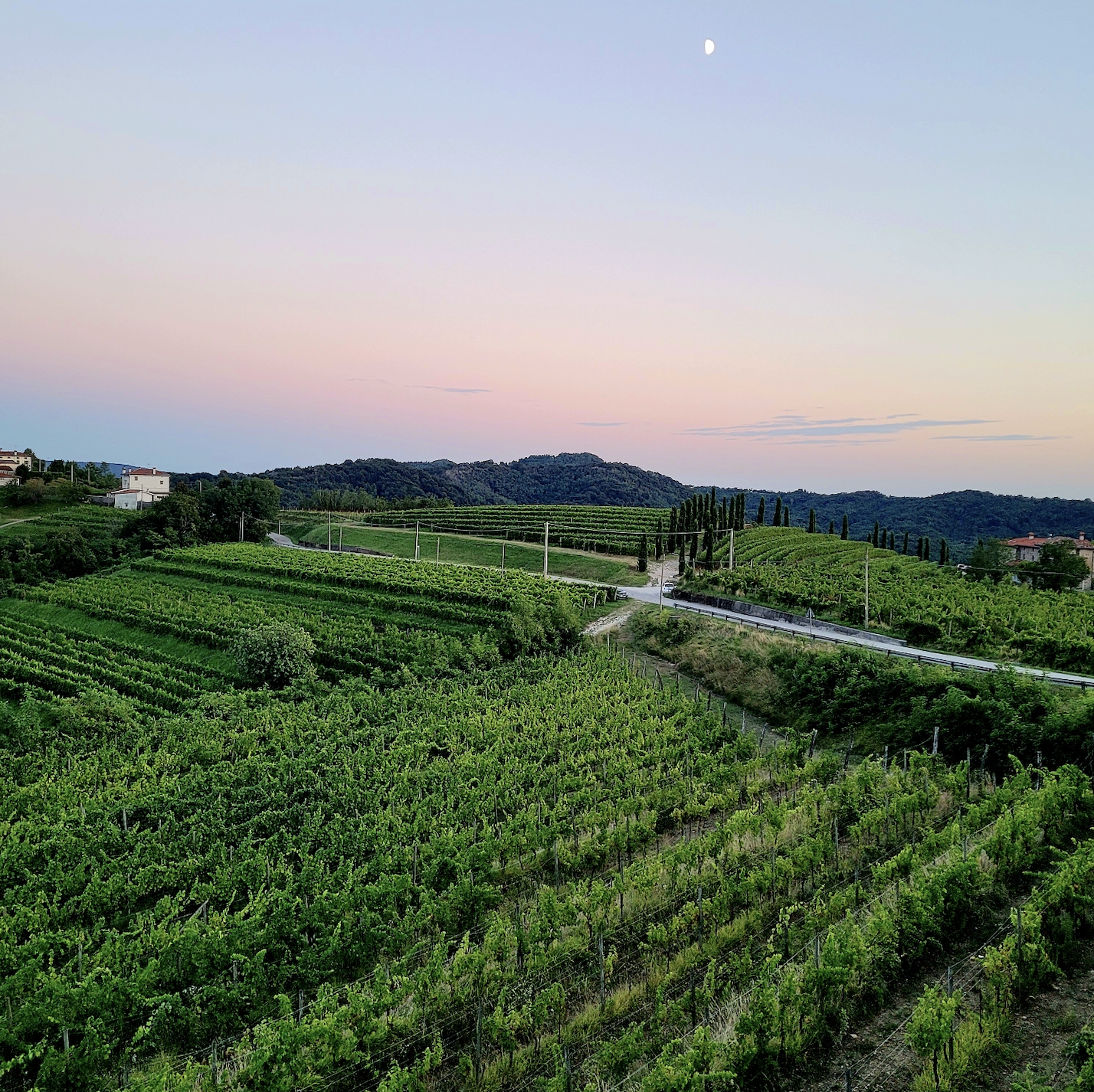
Barbaresco is so many things. A village, commune and also a set of wines made from nebbiolo grown on the right bank of the Tanaro River, southeast of Alba. The eponymous village is joined by three others, they being Neive and Treiso, plus San Rocco Seno d’Elvio, an outlying district of Alba. In geological terms, the Barbaresco wine growing area is approximately 23 to 5.3 million years old, belonging to the Miocene Epoch of the Tertiary Period. A drone’s view might say the area resembles a horse’s head, or more appropriately a cluster of nebbiolo grapes. In 2020 vine space increased to 783 hectares and for the first time production exceeded five million bottles (5,128,920).

If seeking Barbaresco cru from 2020 with a plan to hold and then drink well five through 15 years forward is the intended search, well then this Grand Crus like Asili, Rabajà and Martinenga will fulfil those hopes and dreams

There can often be depth to nebbiolo of no particular cru affiliation, a.k.a nessuna menzione but also those composed of fruit taken off of several vineyard sources, or what are called più comuni. The communes of Neive, Barbaresco, Treiso and San Rocco Seno d’Elvio each produce different styles of nebbiolo but one thing is certain. Barbaresco wines as a whole are more identifiable than those from Barolo, mainly because the hectarage and diversity of soils are much smaller by comparison. Barbaresco are not younger siblings and while they are cousins they are the cool, hip, intriguing ones full of interest, fantasy and meaning. As for the crus (referred to in the Langhe as menzione), yes there are in fact those considered Grand. The ridge that includes Asili, Rabajà and Martinenga receive the greatest respect. These sites along with Neive’s Santo Stefano and Treiso’s Pajorè are considered the finest vineyards anywhere in the the entirety of the Barbaresco DOCG. For Barbaresco commune the top menzioni have been classified as Pajè, Pora, Asili, Martinenga, Montefico, Montestefano, Muncagota, Rabajà, Rio Sordo, Roncagliette and Secondine. Then there are Albesani, Basarin, Currá, Cottá, Gallina, Santo Stefano and Serraboella from Neive. Out of Treiso the higher mentions have been Bernardot, Bricco di Treiso, Pajorè, Rombone and Vallegrande. For San Rocco Seno d’Elvio; Meruzzano, Montersino, Rizzi (all these are shared with Treiso) and Rocche Massalupo.

Barbaresco and the Langhe

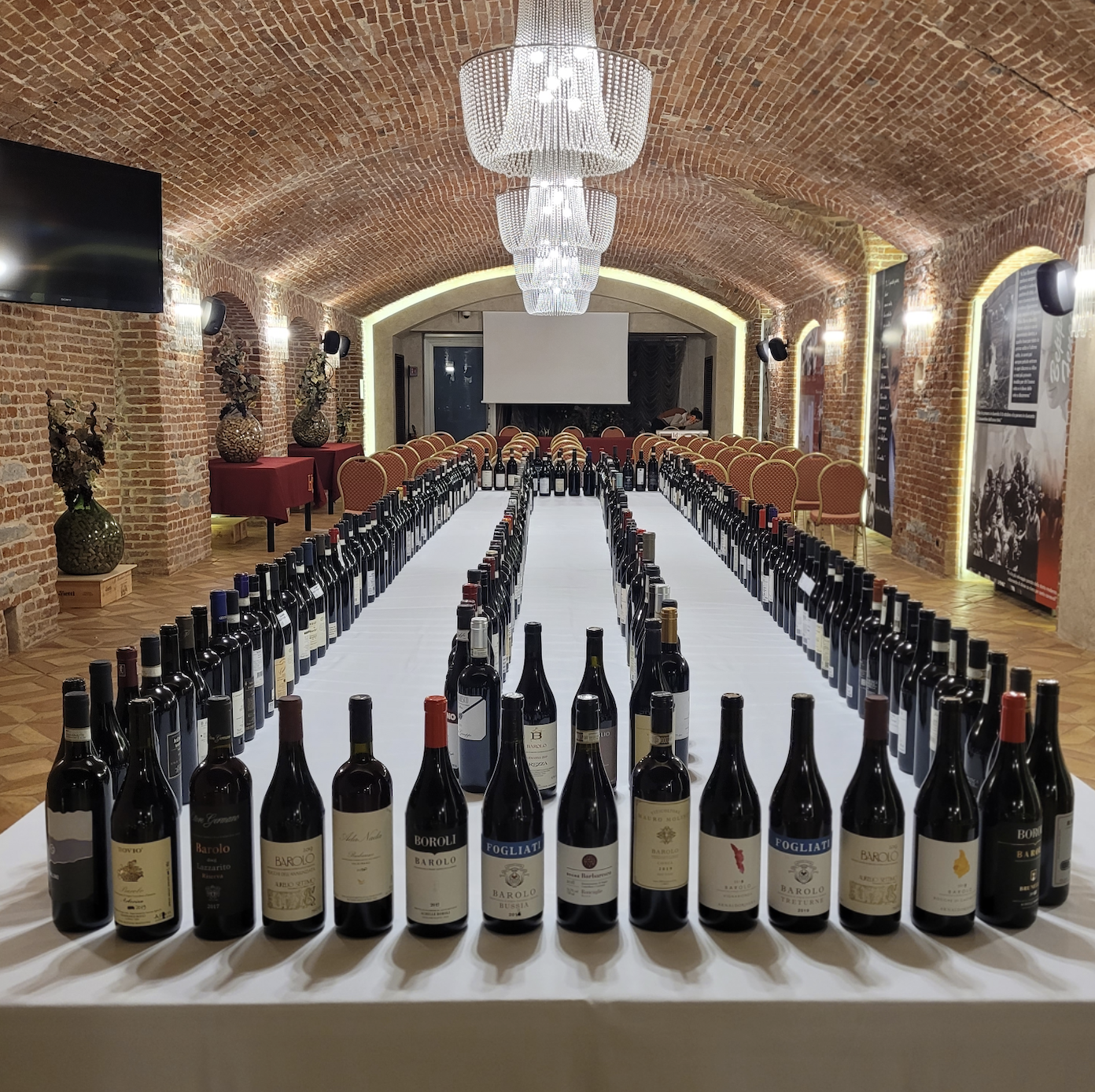
This 27th edition of Nebbiolo Prima took place in Alba back in January of 2023, with thanks to Albeisa and the organization’s President Marina Marcarino, along with Anna Barbon and Linda Foltran of AB Comunicazione. These 2020 Barbarescos are now showing up in the Canadian market and will continue to do so through the early months of 2024. Once again a reminder that not all producers participate in Nebbiolo Prima, for a myriad of reasons and so consider this report as a relevant snapshot of those that did. These 77 tasting notes, which include some older vintages poured that week, tell a vintage story, or at least Godello’s interpretation of it.

Barbaresco DOCG 2020

Alba

Masseria Di Delmonte Pierina Barbaresco DOCG Montersino 2020

Surely top of the pops and tip of the pips ripe fruit, some dry to leathery plum and cedar noes, a mature perfume all in all. Rescued by quality acids and a silky texture. Easy access all the way through with dignified tannins. Early drinking 2020 is the call, perhaps a factor of Montesino’s particular Alba exposure. Drink 2023-2025.  Tasted January 2023

Adriano Marco E Vittorio Sanadaive Barbaresco DOCG 2020

Reticent, compact, a bit hard to get. Also some proper nebbiolo volatility straight away. Surprising considering the villages-level cuvée though there is a good chance the fruit source is primarily from one block in a cru. A bit boozy feeling as well and then a repeat on the palate of what the aromas originally dictated. That being taut, weighty and non-disclosed agreements. There is depth to this nebbiolo of nessuna menzione and a year or so will likely release what’s base, right and necessary. Drink 2024-2026.  Barrel sample tasted January 2023

Manera Fratelli Barbaresco DOCG Rizzi 2020

Good brightness and specificity of place through quick-ish reveal, that being Rizzi from the commune of Alba and a nebbiolo that scents as one would 100 per cent expect. Rose petals, sweetly perfumed, almost candied and expressive, surprisingly early it should be noted. Full and generous palate, tons of fruit without fail or need of hasty retreat, therefore lingering and satisfying. Tannins are sweet as well, acids too. Fine wine though not for long term aging. Drink 2023-2027.  Barrel sample tasted January 2023

Barbaresco

Giordano Luigi Giuseppe Barbaresco DOCG Asili 2020

A bit more seriousness here from nebbiolo out of the Asili cru in the commune of Barbaresco. Far from draughty in fact this is a closed, hermetic and locked in environment where the perfumes and volatile compounds swirl in centrifuge. A wine of equally formidable and important structure, tannins persistent, semi-austere and very much in charge of the show. If seeking Barbaresco cru from 2020 with a plan to hold and then drink well five through 15 years forward is the intended search, well then this Asili will fulfil those hopes and dreams. Drink 2026-2034.  Tasted January 2023

Giordano Luigi Giuseppe Barbaresco Cavanna 2020

From Cavanna in the commune of Barbaresco and a lithe nebbiolo, quite tisane styled aromas, from Ceylon to Rooibos, in other words also equipped with the kind of tannins that feel seeped as opposed to buffering. An easy and rustic example to be fair, traditional yet accessible, one that won’t solicit suffering and ready as early as you choose. Drink 2023-2025.  Tasted January 2023

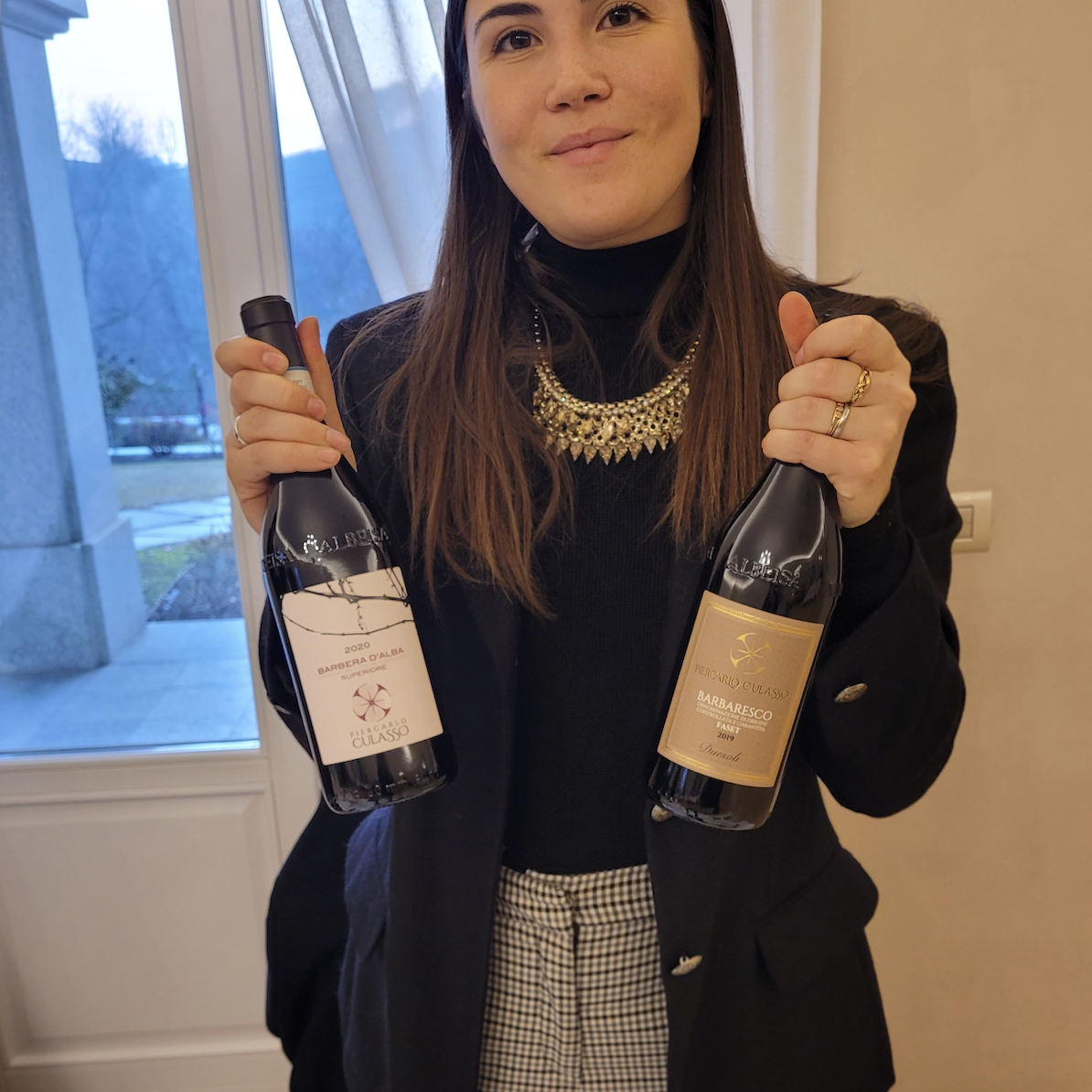
Culasso Piercarlo Barbaresco DOCG Faset 2020

Faset delivers a higher tonality, not necessarily a brighter iteration but instead the kind of aromatic profile that heightens awareness and also sensation. Move quickly into the textural and structural parts and there is more of the same elevated feels, of unctuousness and glycerol, silky liquidity and organza layering. Here drinks a fine, moving and vintage appropriate nebbiolo, finely tannic, never dense or weighty, always on the upswing. Would wait a couple of years to see the grains melt further and really tie the room together. Drink 2025-2032.  Tasted January 2023

Culasso Piercarlo Barbaresco DOCG Faset Duesoli 2020

Different sort of aromatic profile here from Faset in Barbaresco, an almost gummy to plum-stick profile from start to finish. There is this disparate feeling ascertained, from sweet aromatics through to grainy tannins and a tacky profile in between. Nothing totally wrong and yet nothing quite right. Dries out at the finish and those tannins are all that remain. Drink 2024-2026.  Tasted January 2023

Chiarlo Michele Barbaresco DOCG Faset 2020

Strong mocker aromas straight off the dense top of this Faset Barbaresco, fulsome, cumbersome and like a heavy cloud looming overhead. Quite a macerated plum note, not sweetly cloying but rather savoury, heady and weighty. Serious wine fully pressed, extracted and pulled from itself, dragging all the weight of the world while it carries this magnitude of fruit and tannin. Seems to seek the modern but can’t help bring all the rusticity and traditional ways along for the ride. Drink 2024-2028.  Tasted January 2023

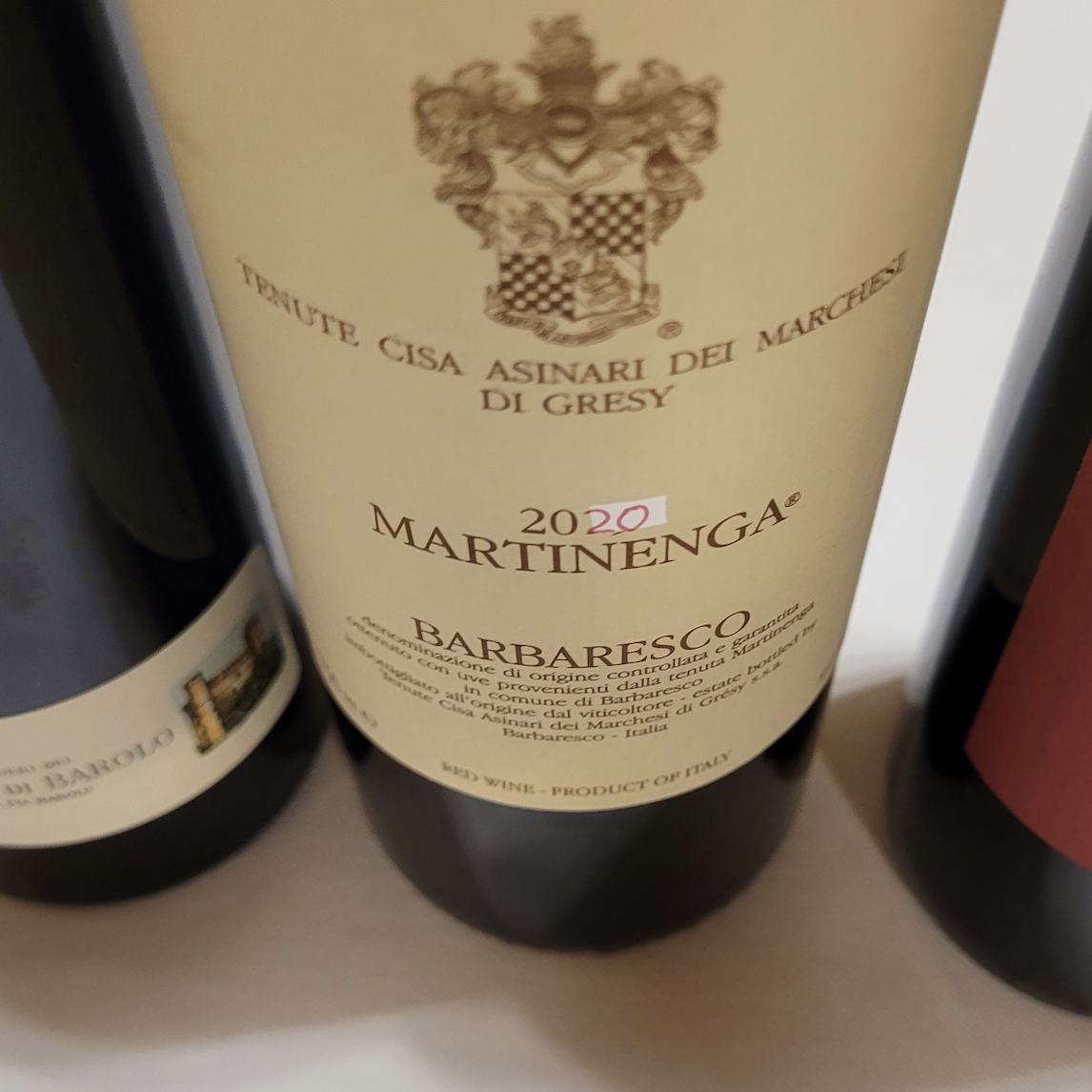
Tenute Cisa Asinari Dei Marchesi Di Gresy Barbaresco DOCG Martinenga 2020

Perfectly, beautifully and candidly simple but lithe, ripe, really elegant nebbiolo. Perfumes are intoxicants. Well-rounded and surprisingly easy to access. Drink 2024-2029.  Barrel sample tasted January 2023

Cascina Morassino Di Bianco Roberto Barbaresco DOCG 2020

Reductive as can be with seriously austere tannins and and nearly inaccessible as any Barbaresco 2020 you are likely to encounter. Just a wall of tannin with angular and angry notes, clearly built to age but even the micro-oxygenation of time in bottle under cork won’t happen fast enough. Not before what little fruit there is dies off well ahead of intended schedule. Drink 2025-2027.  Tasted January 2023

Giacosa Carlo Di Giacosa Mariagrazia Barbaresco DOCG 2020

Classic and traditional, sweetly rustic and old-school nebbiolo with no real invitation to specificity of place. A cuvée that speaks to a half century of making Barbaresco from these hills by combing fruit from several blocks to speak in a broad local vernacular. Austerity and demand of tannins are just what to expect and a long life where dried herbs, green notes and waning fruit will always be the way.  Drink 2024-2028. Tasted January 2023

Giacosa Carlo Di Giacosa Mariagrazia Barbaresco DOCG Montefico 2020

Full attack from a well-grounded cuvée that speaks in modern terms though not without well-pressed fruit dragging all the acids, tannins, elements and minerals along for the ride. A serious chemical compound of complexities await in a nebbiolo of no particularly focused origin. At one crunchy, like trying to bite through stones and then chewy, leathery textures, of liquorice and animal hides. Tannins build and build. Drink 2024-2030.  Tasted January 2023

Moccagatta Barbaresco DOCG Bric Balin 2020

Über cherry nebbiolo, suave yet tannic, inviting but admittedly intense. High tonality with some swarthiness though not overt and full fruit glycerin slide across the palate. A Barbaresco of density if the kind that is elastic, snapping back without too much recoil by force. Solid wine, mid to longer aging potential and a truly good example of the vintage. Drink 2024-2028.  Tasted January 2023

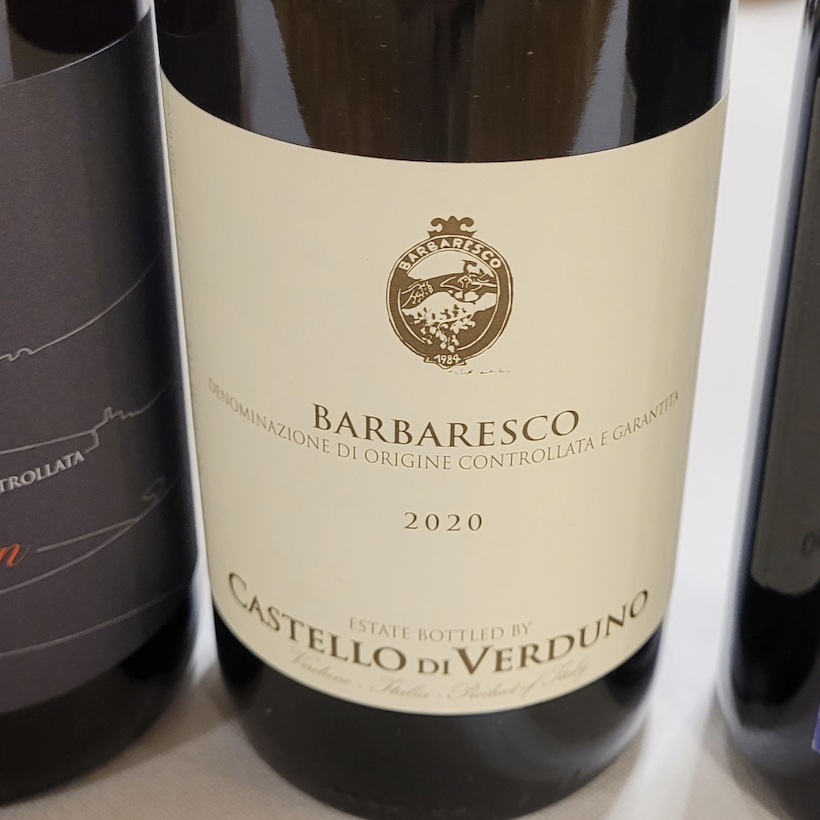
Castello di Verduno Barbaresco DOCG 2020

Gone for broke, ripe to the nth degree nebbiolo, pressed and excited to show what it’s got. A Barbaresco villages appellative wine, almost a syrupy swirl of perfume, of plums and black cherries, evergreen and mint. Some varnish as well so you can really feel the skin-contact macerate juices swelling and then come the tannins, marching in, connected on a chain, one by one. Barbaresco of command, on the move, attack mode, restless and ruthless. Drink 2025-2030.  Tasted January 2023

Cascina Morassino di Bianco Roberto Barbaresco DOCG Ovello 2020

A pinpointed Barbaresco with fruit selected from the Ovello cru, taut and closed nose, of strong grip and while this youthful it is yet to relent. One taste and you know this is a serious glass of nebbiolo because the integration or rather the seamlessness of fruit and structure is so readily apparent. Strong tannic presence yet one that lifts, supports and holds up the whole so that it may walk a fine linear path and that should last for a decade or more. Impressive wine, far too youthful to fully appreciate but the beauty lays ahead. Drink 2025-2032.  Tasted January 2023

Musso di Musso Emanuele Barbaresco DOCG 2020

Fine Nebbiolo swirl of perfumed floral fruit here from the Pora MGA, surely indicative of vintage from which attempting less will ultimately add to more. Hard not to imagine 2020 as sharing some affinity with 2000, misunderstood in youth and then exhibiting greatness 10-plus years into its tenure. This just strikes as one of those wines, chewy enough of texture while perfectly taut and elastic, bending but never breaking. Would really like to see this wine in 10 years time. Drink 2025-2035.  Tasted January 2023

Cascina Luisin Barbaresco DOCG 2020

Really light and effusive 2020 Nebbiolo, fine floral scents, white roses in a way and a mildly tart push of raspberry. Pretty and elegant wine at first but their is a silkiness to the mouthfeel, albeit once again on the faint and lithe side of Barbaresco. There are tannins however and a notable cask component. It’s a tricky wine, sneaky even and may flesh out to bigger surprises down the road. Drink 2025-2030.  Tasted January 2023

Musso di Musso Emanuele Barbaresco DOCG 2020

Curious if enticing nose of nebbiolo, spiced to the nines with the wood playing an integral part of development. From the Rio Sordo cru in Barbaresco commune and the more you nose this 2020 the more you will receive. Plenty off fleshy berry to plum fruit and more spice, if also spiciness that really directs the way this drinks. A modern wine with more than ample tannins. Drink 2025-2033.  Tasted January 2023

Poderi Colla Barbaresco DOCG 2020

A fulsome nebbiolo is all respects from Roncaglie in Barbaresco, open and ready to be expressive of a vintage that may be on the lighter side but shows no lack of typically deduced tradition. Would never go so far as to call this a modern nebbiolo but it surely would like to announce its arrival in the olfactory and also on your palate. So much to go on with a nebbiolo of this ilk and structurally speaking the first four to six years will be the best. Drink 2024-2028.  Tasted January 2023

Albino Rocca Barbaresco DOCG 2020

Full attack if somewhat closed and unforgiving in Barbaresco indicative of the Ronchi cru. An aromatic front of more breadth than most out of 2020 with well-pressed and macerated fruit, a gentle swarthiness and then more acidity and tannin above all else aboard the weighty palate. The fruit is a party in the front while the tannins are long-haired and wispy in the back. Out of fashion nebbiolo, earthy and rustic despite all that up front fruit. Drink 2024-2026.  Tasted January 2023

Neive

Antichi Poderi dei Gallina di Francone Marco Barbaresco DOCG Albesani 2020

Darker than most as far as 2020 nebbiolo go, a concern of place which is Albesani cru in Neive and the decision to press form success. Boozy nose it feels, yet elemental too, like smelling metal filaments, magnesium and iron mainly. Perhaps a ferric soil, redder earth than some other hills and so the wine is an expression of place after all. Quality Barbaresco in any case, balanced and truthful, exacting as needs to be from the location it was born. Kudos for that and with tannins in effect though never overbearing in any shape or form. Drink 2024-2027.  Tasted January 2023

Castello di Neive Barbaresco DOCG Vigna Santo Stefano Albesani 2020

The second of two Albesani cru nebbioli is nearly an exact copy of the first, dark of fruit though here in black cherry that is really quite an obvious aromatic fruit expression. Smoother and silkier than its counterpart yet with much higher acidity and not quite as suave tannin. More energy and drive this time while less elegance defining the character of the wine. Drink 2024-2026.  Tasted January 2023

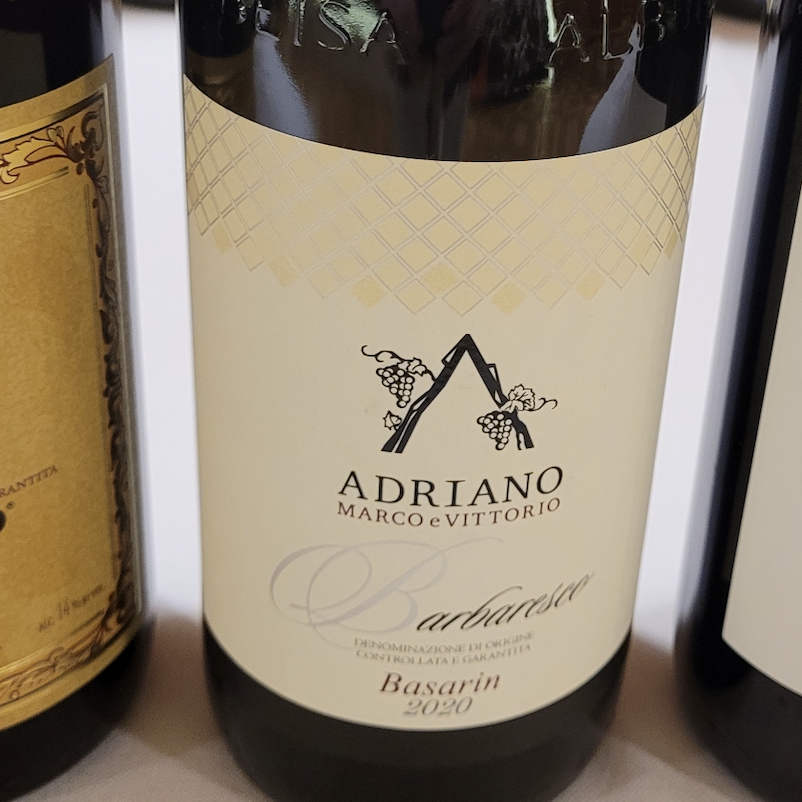
Adriano Marco e Vittorio Barbaresco DOCG Basarin 2020

Wealth of constituent parts emit with haste, gregariousness and also attentive demand from this Basarin. ’Tis a wine that stands and opens up to be heard but also paid immediate attention. Carries some volatility in its voice and while there is fruit but also tension there may be no getting rid of that high and mighty tonality. Plenty of herbal earthiness, strong bones and drying at the finish. Drink 2025-2028.  Barrel sample tasted January 2023

Cascina Luisin Barbaresco DOCG Vecchie Viti Basarin 2020

Lighter style or perhaps a hands-off, naturally leaning, let it ride approach by a winemaker wishing to seek purity, honesty and cru definability. This from Basarin is beautifully elegant and proper nebbiolo that should never be referred to as “light.” The aromatics are equally handsome while the wine flexes muscles and is yet nimble, agile and sleek. A fine specimen in all regards with a knowable and confident glide. Complex and characterful without needing to attract attention. Lovely wine. Drink 2025-2032.  Tasted January 2023

Fontanabianca Barbaresco DOCG Bordini 2020

Nebbiolo from Bordini cru is hard and brittle, tannins that is with simple fruit that will never keep up with the demand. Already drying out as we taste and speak about the prospects. Drink 2023-2024. Tasted January 2023.

Cascina Vano di Rivetti Bruno Barbaresco DOCG 2020 Canova

Intensity of acidity and tannin supersede the fruit in this Canova cru nebbiolo. Earthy and dry though there is some charm. Tart and really compact so give it three to four years. Perhaps it will open like a flower. Perhaps not. Drink 2026-2028.  Tasted January 2023

Cascina Saria Di Abbruzzo Francesco Barbaresco DOCG Colle Del Gelso Canova 2020

Early earthy, volatile and syrupy from the aromatics all glycerin inflected with soy, wood and baking spice. Hard tannins and a wave off vanilla mark this wine of barrel and more barrel. Drink 2024-2026.  Barrel sample tasted January 2023

Albino Rocca Barbaresco DOCG Cotta’ 2020

The cru Cottà delivers a fine and typical Nebbiolo from 2020 with fruity aromas and good vocal acidity. Chewy red fruit in tart raspberry meets somewhat dusty plum make this getable yet not overly excitable. A crunchy mineral example that is notably tannic but five years should solve all issues and see this drink with Barbaresco excellence. Drink 2026-2033.  Tasted January 2023

Taverna Roberto Barbaresco DOCG Senteùndes Cotta’ 2020

Quite up front, gone for it nebbiolo, fruit spent before it’s even entered the glass and tannins hard, brittle, not so very inviting. Notable presence of Brettanomyces. Aromas and flavours are all wood.  Tasted January 2023

Roberto Sarotto di Cavallotto Aurora Barbaresco DOCG Gaia Principe 2020

So much of everything off the top, fruit, glycerin and tannin coming from all directions. This is a nebiolo predicated on elévage that much is abundantly clear with a wave of vanilla that speaks louder than varietal words or the Gaia Principe location. Needs time and there is some fleshy-pulpy substance to see this Neive commune nebbiolo gain some status. Drink 2026-2029.  Tasted January 2023

Negro Giuseppe di Negro Piergiorgio Barbaresco DOCG Gallina 2020

Fine lines define this linear and upright Gallina cru nebbiolo of all parts registered to play a significant role through a long life of development. Plenty of fruit substance will hold well while the structure abates and abides as it manages a pact with the aforementioned fruit. Really solid Neive Barbaresco that will gain traction slowly and surely over ten years time. Drink 2025-2034.  Tasted January 2023

Poderi e Cantine Oddero Barbaresco DOCG Gallina 2020

Some formaggi on the nose of this nebbiolo and a strong tannic presence for a Gallina that’s not showing much love in these beginning stages. Lots of acidity and intensity but really quite rustic and this will not change. Time is the matter and there may just be some beauty behind the brawn Drink 2025-2029.  Tasted January 2023

Pelissero Pasquale Barbaresco DOCG Cascina Crosa 2020

Fruity, elegant and simple though as always there is a string of strong tannins matched by a tonic and bitter presence. Dusty and earthy nebbiolo, nothing truly specified in terms of cru or location and carrying the overall feel of a traditional wine. Drink 2025-2028.  Tasted January 2023

Bera Barbaresco DOCG Serraboella 2020

High-toned, of red fruit and notable tang, somewhat sour gummy and though it looks to be light there is a strong presence of barrel on this nebbiolo. Tannins creep up quite quickly and though they are demanding there is an accord struck in a composite to complimentary village level way. Quite a solid Neive example. Drink 2024-2028.  Barrel sample tasted January 2023

Cordara Ornella Barbaresco DOCG Tufo Blù 2020

Reductive and also acetic, with capers and dill, wood spice and hopeful red berry fruit. Liquid chalky and tannic but the minor faults add up to major distraction. Drink 2024-2025.  Tasted January 2023

Taverna Roberto Barbaresco DOCG Duicrü 2020

Major amount of shoe polish and strange varnish notes indicate a problematic wine. Hopefully just this bottle but there is not much recourse in a blind tasting. Drink 2024.  Tasted January 2023

Pietro Rinaldi Barbaresco DOCG San Cristoforo 2020

Acetic and reductive off the top, not egregiously so but these elements are there. More of the latter so giving this nebbiolo a fair agitate swirl to reveal some quality fruit behind the swarthy veil. Dark black cherry and the stone, a definite mineral presence and hard tannins come up the rear for this cru example out of Neive’s San Cristoforo. Tough and gritty wine needing time, a whole lot of precious time. Drink 2026-2030.  Tasted January 2023

Pelissero Pasquale Barbaresco DOCG Bricco San Giuliano 2020

From San Giuliano in Neive and a nebbiolo of darker red fruit though quite effusive to nose. Good aromatic profile from which violets and also blue fruits join the mix. These are quality tannins as well as acidity which is well matched to the overall profile. Will benefit from a year or so in bottle to soften the edges, integrate the oxygenating cask workings and bring all the parts together. Drink 2026-2032.  Tasted January 2023

Fontanabianca Barbaresco DOCG Serraboella 2020

More than enticing Serraboella aromatics emit and grab attention for a nebbiolo that’s worth knowing. Glycerin all the way through though never drifting into sap, resin or syrup. All three in faint hints are fine and their mentions are in this Neive’s character but yes, subtlety is the name of the game. A fine floral addendum and then proper mouthfeel while tannins are stronger than might have been anticipated. A most commanding wine with stage presence and a great idea of what it desires but also choose to become. Drink 2025-2033.  Tasted January 2023

Paitin di Pasquero-Elia Barbaresco DOCG Serraboella 2020

Some reductive and stemmy behaviour. Lively and lovely Serraboella aromatics fly out of the glass from this nebbiolo to create great anticipation for what else is to come. Seems and feels like a wine of experience, acumen and proper ambition. Just what the doctor orders in healthy, clean living by fruit that’s been raised in all the right ways. Pure varietal distillate that expresses cru, soil, vintage and maker with equal, four part-symbiotic stability and equal footing for all. Top, top Barbaresco for the vintage. Drink 2025-2036.  Tasted January 2023

Collina Serragrilli Barbaresco DOCG Starderi 2020

Quite classic, rustic earthy and yet vintage fruity so in the end we’d expect this to land somewhere in between. Tart red fruit and fine acidity – a lighting strike kind of nebbiolo that should indicate lighter white or grey clay and fine sandy quality of soil. High in mineral as well. Starderi? Really tight and compact wine, far from generous and some might see it as tenebrous. Seems proper and honest from this point of view. Drink 2025-2028.  Tasted January 2023

Treiso

Cantina del Nebbiolo Barbaresco DOCG 2020

Stems and a volatility define the first impression for a Barbaresco that draws fruit from at least two communes. Somewhat simple and rounded with the least demanding tannins around. Think of nebbiolo and while it qualifies as Barbaresco the wine should be consumed in its first two years. Drink 2023-2025.  Tasted January 2023

Masseria di Delmonte Pierina Barbaresco DOCG Mon Sertù 2020

From a few commune’s fruit and a well rounded nebbiolo at that with stuffing in a most generous sort of way. Some sap and glycerin though not overt and all is manageable for quality consumption. Does well to speak on behalf of Barbaresco with distinction if not a pinpointed sense of a particular block or cru. Which is fine when a wine does everything well. Represents as a great intro to the appellation and the vintage. Drink 2024-2027.  Tasted January 2023

Socré Barbaresco DOCG 2020

Slightly jammy and also acetic notes, some reduction as well in a broadly accumulated, rendered and interpreted nebbiolo for Barbaresco. Tart and full of tang, drying out already and needing some air. Hard tannins make this somewhat problematic. Drink 2024-2026.  Tasted January 2023

Molino Barbaresco DOCG Ausario 2020

Ausario as a cru seems to be a place of solar accumulation as noted by the massive fruit substance emanating from this full on nebbiolo. So much up front but also a liquid chalkiness and definite vanilla swirl by wood with the intention to create a structure wine. A bit too much of these things I’m afraid yet time will see good integration and when the wine settles in it will drink well indeed. Drink 2024-2027.  Tasted January 2023

Nada Giuseppe Barbaresco DOCG Casot 2020

Casot delivers fine goods in 2020 from its Treiso cru with a nebbiolo in fine form and especially fashion. The trilogy and trinity of fruit, acid and tannin get on the same page, linear of design, one following the other and then returning back to begin the process over again. Seems to do this on repeat several times before retiring so not only are the parts full of character but their familiarity with one another breeds consistency and length. Fine Casot from a Casot vintage indeed. Drink 2025-2033.  Tasted January 2023

Cascina Alberta Barbaresco DOCG Giacone 2020

An upfront, centred and look at me Giacone full of fruit and more fruit. Carries on with Treiso familiarity and quality to deliver a Barbaresco of the times, heady and high-toned. Lots to go on here and tannins quite grippy but there is always some brightness and airiness to this nebbiolo. Crafty if older schooled but that luminosity is quite something. Hard to believe considering the structure of the wine. Drink 2025-2030.  Tasted January 2023

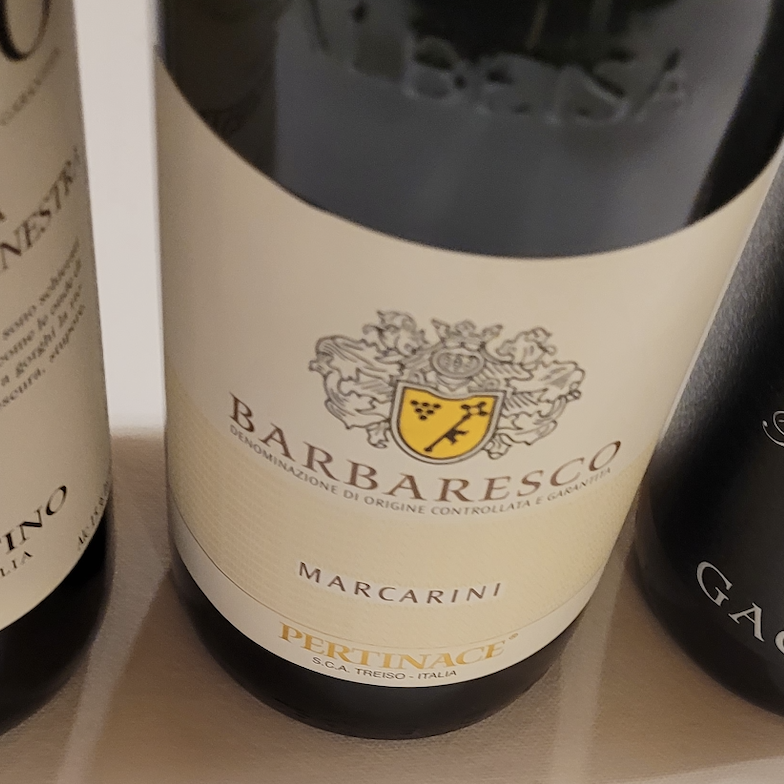
Cantina Vignaioli Elvio Pertinace Barbaresco DOCG Marcarini 2020

Marcarini cru brings some baritone to nebbiolo for 2020 and this example expresses the depths of its varietal fruit. Chewy liquorice is indicative of the tannins involved but the fruit keeps pace. Nothing limpid or softy about this one at all in fact it’s grip is both admired and feared. Chewy and it would be hard not to see the great probability for longevity out of this formidable Nebbiolo. Drink 2025-2034.  Tasted January 2023

Nada Giuseppe Barbaresco DOCG Marcarini 2020

The second of two Marcarini shares some affinities with the first but they are far from the same wine. This time the combination of swarthiness and swaying texture are at the fore. Definitely not the formidable brood of its counterpart though it does share in the other’s chewy fruit thickened on the palate. Drink 2024-2028.  Tasted January 2023

Cantina Vignaioli Elvio Pertinace Barbaresco DOCG Nervo 2020

Nervo delivers a lighter style of nebbiolo for Treiso out of a variable 2020 vintage. That is aromatically speaking and yet the palate is very much a matter of glycerol fruit. Thickens with pectin and therefore both sweetens and fleshes as it airs to receive equally sweet acids and then tannin in the end. There is a bit of vanilla and wood derived elements that distract but overall the quality inherent in this Nervo is impressive. Drink 2025-2030.  Tasted January 2023

Molino Barbaresco DOCG Teorema 2020

Basic Treiso nebbiolo without cru affiliation brings accessibility and what we call drink-ability without strings attached. Sweet fruit, raspberry and cherry, good quality tannins and brightness of acidity. A Barbaresco to drink soon and in a the most amenable of ways for three to five years. Drink 2024-2027.  Tasted January 2023

Lodali Walter Barbaresco DOCG Rocche Dei 7 Fratelli 2020

Somewhat reductive and so a bit unclear as to where this will go though some beauty is noted on this nebbiolo’s immediate horizon. That and notably grippy tannins so as far as Barbaresco is concerned there must be food involved to truly enjoy this wine. Drink 2024-2026.  Tasted January 2023

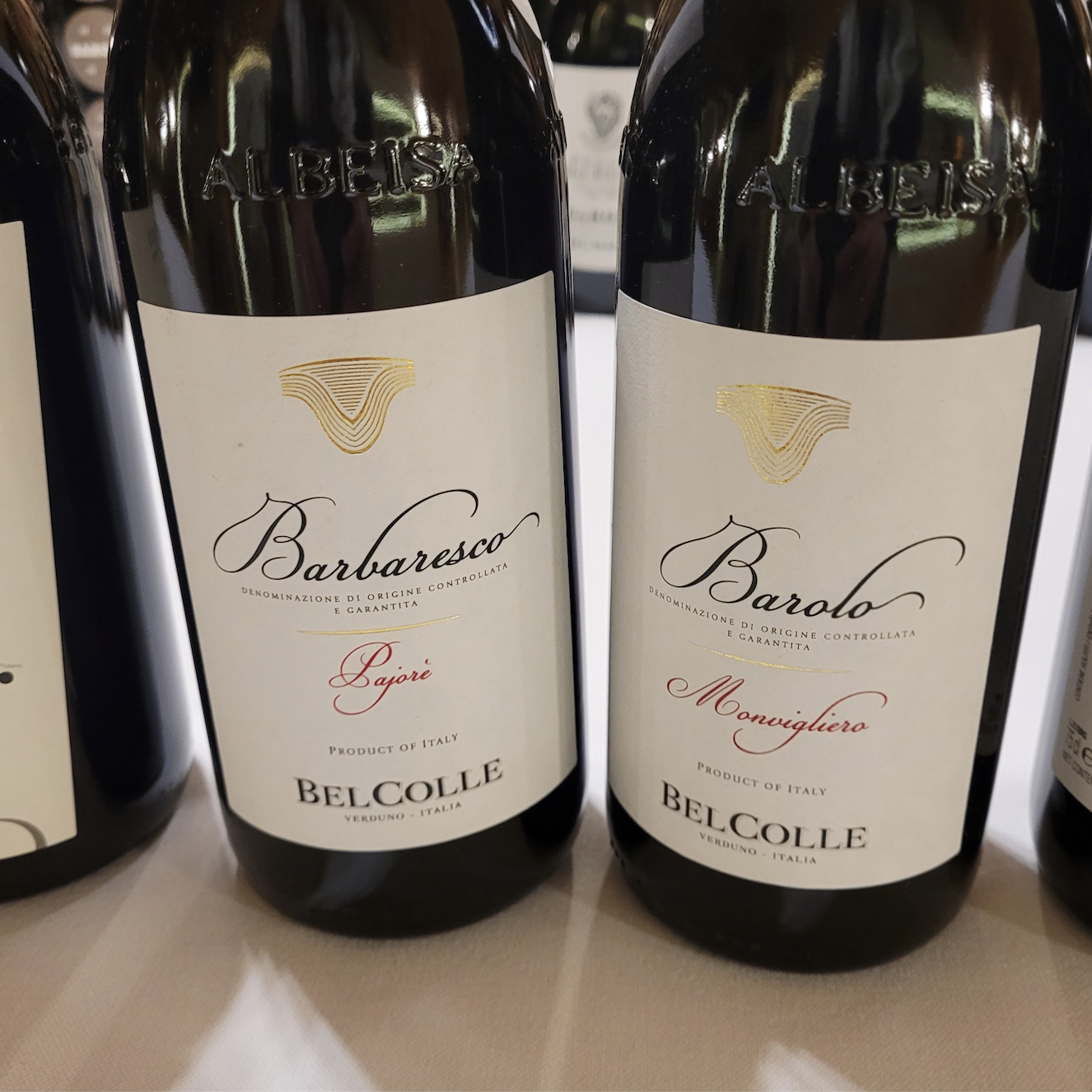
Bosio Family Estates Belcolle Barbaresco DOCG Pajorè 2020

Light and effusive Pajorè with plenty of pre-introduced oxygenation to make this an open, airy and knowable nebbiolo that surely does well to represent the vintage. A Treiso Barbaresco of quality raised by acumen and on promises for a long and prosperous life. Fine liquidity and stage presence, confidence and what is necessary for grape and place. Tannins are quite fine as well to equip this wine with what in needed, wanted and expected. Drink 2025-2032.  Tasted January 2023

Piazzo comm. Armando di Piazzo Marina Barbaresco DOCG Pajorè 2020

Consistently Pajorè in that the upront fruit is the sort of purity and existential lightness though this iteration is a bit more pressed and of a depth as compared to some counterparts. Results in moCascina Vano di Rivetti re flesh and substantial palate presence but also an increase in tannic pressure. More ambition here with cask aging and spices running amok distracts from the purity though the wine is still really quite impressive. Drink 2024-2027.  Tasted January 2023

Ada Nada Barbaresco DOCG Elisa Rombone 2020

The first of two from Rombone cru is somewhat reductive and though there is some acetic presence it’s far from over the top. Tart and intense nebbiolo for sure, cool of mint and evergreen. Savoury wine which speaks to the acetic nature though it feels like a coming together will happen and lower the glare. Time will be this nebbiolo’s friend. Drink 2025-2028.  Tasted January 2023

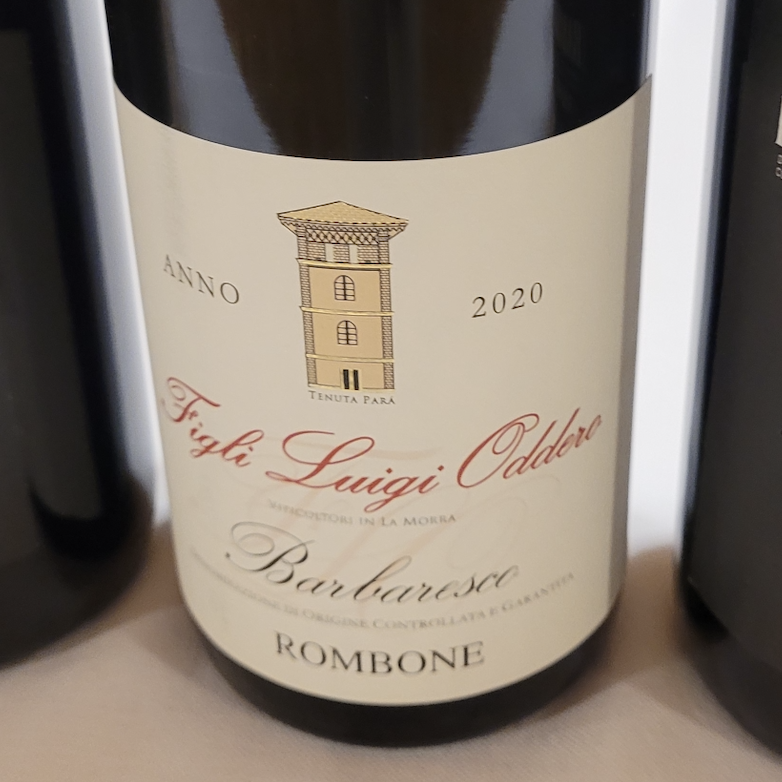
Vigneti Luigi Oddero e Figli Barbaresco DOCG Rombone 2020

The second of two from Rombone is the lighter and less aggressive with higher and airy tonality which speaks to this Treiso cru’s DNA. While the other is expressed in a slight acetic way this does not and in fact a settling already seems to have occurred. Liking the parochial nature and the way it just seems so comfortable in its own skin. No lack of intensity here and longevity will surely be probable. Drink 2024-2031.  Tasted January 2023

Ada Nada Barbaresco DOCG Valeriano 2020

Soupy or stewed character while also a bit thin and dilute. Quite a simple nebbiolo. Tasted January 2023

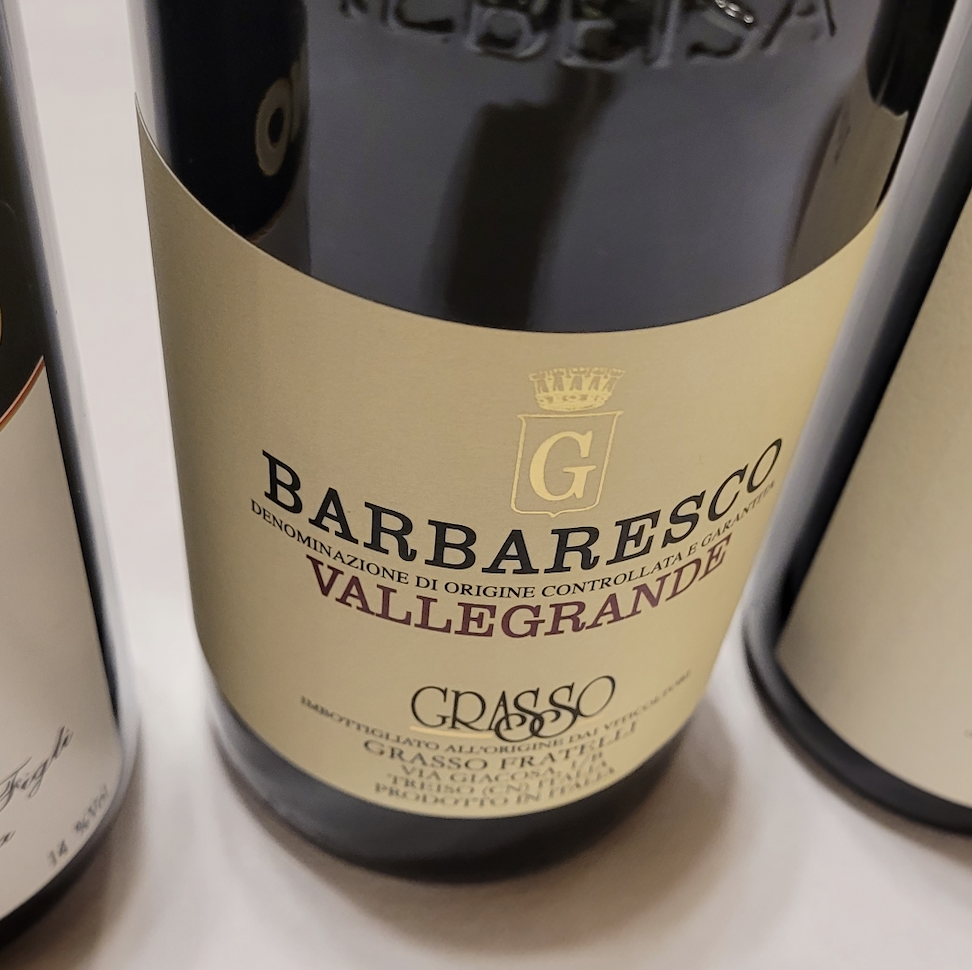
Grasso Fratelli Barbaresco DOCG Vallegrande 2020

Fine nebbiolo here from Villagrande with all the fruit and structure up front and no real skeletal backbone to hold up for long. Enjoy this early while so many others take there time to flesh and settle. Drink 2023-2026.  Tasted January 2023

Ca’ Del Baio di Grasso Giulio Barbaresco DOCG Vallegrande 2020

As for this second of two Vallegrande there is more compaction and tannin mixed with fruit from the very beginning. Also a thickening and a pectin influence to give a strawberry and raspberry confection though one with plenty of savour in the mix. Chalky as well, a lactic feeling and then those tannins of great grip and drying force. This nebbiolo needs years of time to resolve. Drink 2026-2032.  Tasted January 2023

Barbaresco Riserva DOCG 2018

Manera Fratelli Barbaresco Riserva DOCG Rizzi 2018

Indicative of vintage, hot and steamy, a now drying nebbiolo of Rizzi origin so very intense on the nose. Quite mature and evolving with great haste. Sappy and to say this offers effusive enjoyment would be the opposite of what’s really going on. Hard times. Drink 2023-2024.  Tasted January 2023

Tenute Cisa Asinari dei Marchesi di Gresy Barbaresco Riserva DOCG Martinenga 2018

Fine nebbiolo aromatics from ’18 Riserva with thanks to Martinegra and a wine that was shown some restraint throughout its early voracious appetitive exercise. Strong tannic presence no doubt while the fruit source turns into ever-fleshing substance. Chewy on the palate and really persistent so ultimately this represents a fine Riserva and likely one of the finer examples to come out of 2018. Drink 2024-2032.  Tasted January 2023

Socré Barbaresco Riserva DOCG Roncaglie 2018

From the cru of Roncaglie and a nebbiolo as Barbaresco, from Barbaresco with as many issues as it displays beauty because the lactic tang is equal to the fulsome fruit. A thick and swarthy example that’s both traditional (well, actually antediluvian) and naturally avant-garde at the same time. My goodness what a mess and clash of personalities. Drink 2024-2028.  Tasted January 2023

Castello di Neive Barbaresco Riserva DOCG Albesani 2018

High fruit concentration and substantial nebbiolo so apposite to the other ’18 Riservas in this flight and clearly happy to be this way. Carries enough weight and tannin to not only impress but allow the wine to drink well over the coming five too eight years time. Drink 2023-2029.  Tasted January 2023

Giacosa Fratelli Barbaresco Riserva DOCG Basarin Vigna Gianmate’ 2018

Still a touch reductive and restrained with unyielding tannin in a nebbiolo that will require another two or three years to drink as it was surely intended to do. Plenty of flesh hangs on these bones so expect Basarin to win in the end. Serious wine, surely a matter of heat by vintage but there will be comfort before too long. Drink 2025-2033.  Tasted January 2023

Punset di Marcarino Marina & C. Barbaresco Riserva DOCG San Cristoforo Campo Quadro 2018

Lightest, most transparent and glaringly beautiful of the Barbaresco Riserva with a maturing quality at this stage. Sweetly lactic note, fruit of the brighest reds while settling in because tannins are drying yet of nary a moment that might be considered austere or abrasive. Seriously well made, vintage indicative and in the end, drink up. Drink 2023-2025.   Tasted January 2023

Bera Barbaresco DOCG Serraboella 2019

The western cru close to Neive village, exposition to the west, from the lower section at 350m. Planted 15 years ago with the intention to make classic “Villages” Barbaresco but the fruit from 2016 changed the family’s perspective. That vintage was the first cru label and here from the fourth consecutive the refinement time is 24 months in grandi botti, part Slovenian and part Austrian oak. Tannic to be sure yet not quite what you’d call austere. Greatly structured wine and still far from readiness. “That’s the young baby we’re talking about,” says Riccardo. “It’s the cru that surprises me.” Great aromatic presence and fine chalky liquidity running through. Drink 2025-2032.  Tasted January 2023

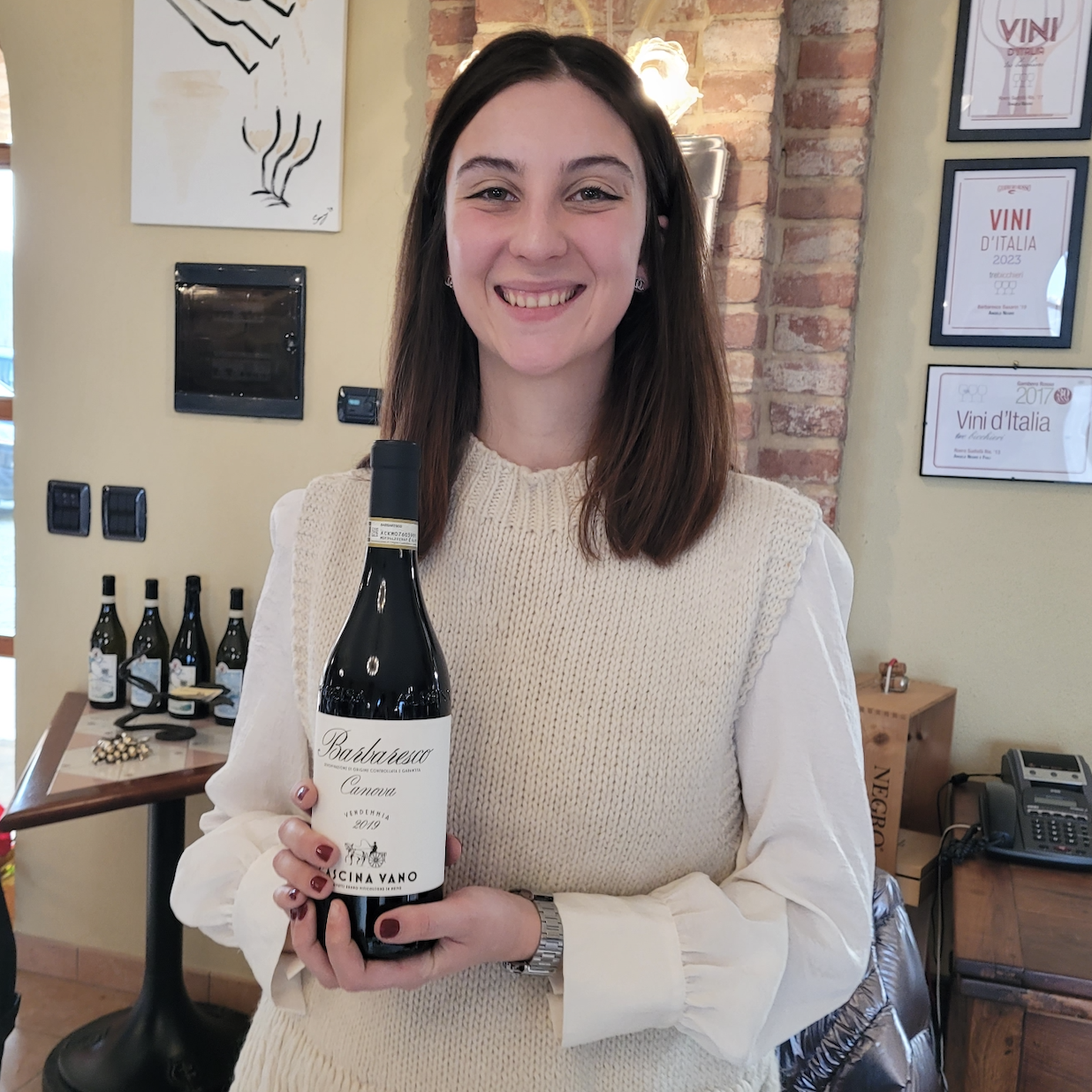
Cascina Vano di Rivetti Bruno Barbaresco DOCG 2019 Canova

“Traditional” vinification for this Neive nebbiolo and put to Grandi Botti (300L size) for two years. Very traditional Barbaresco, quietly aromatic of pretty perfume and in 2019 a lovely, elegant wine. Proof that Vano’s needs an extra year to settle its harder parts and while ’19 remains or persists as tannic they are strong and elastic ones that will continue to effect a positive stance on this Canova. Drink 2023-2026.  Tasted January 2023

Culasso Piercarlo Barbaresco DOCG Faset Duesoli 2019

Warmer of Faset’s two parcels on its western flank, southeast exposure at the hill’s base. Top notch red fruit with a unique game swarthiness and so much personality swelling into complexity. Nothing shy or demure here and clearly a vintage that sweats out the eccentricities of Duesoli. Drink 2024-2028.  Tasted January 2023

Cerrino is found in Trezzo Tinella close to Treiso which is the commune for this nebbiolo’s fruit. More specifically Meruzzano though the vru won’t show up on the label until the 2021 vintage. From 450m of elevation for a Barbaresdco of somewhat stewed black cherry and stone, balsamic edginess, quality acid and tannin. Drink 2023-2025.  Tasted January 2023

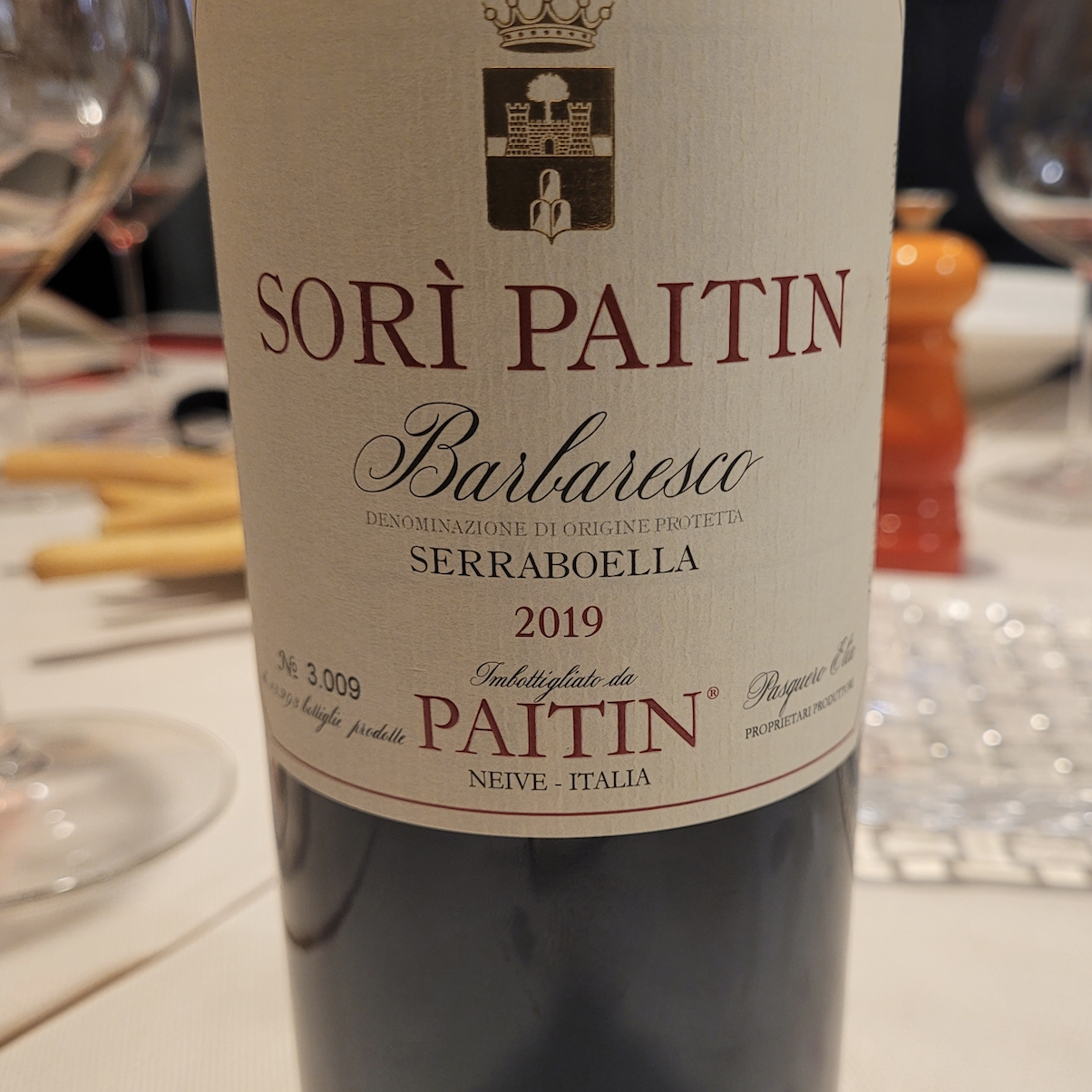
Paitin Barbaresco DOCG Sorì Paitin Serraboella 2019

A Barbaresco of soft extraction at 24-26 degrees celsius, some cappello sommerso submerged cap workings, “when we feel we can,” says Luca Pasquero Elia. Aways scarico, meaning the unwanted elements are always left behind to result in a transparent nebbiolo without intensity of colour. “We want to keep the integrity of the skins, as much as possible,” to restrict oxygenation and racking is done only when necessary. Goes to bottle “after the second phase of closure.” Paitin in Barbaresco is a matter of objective over style. Serraboella is most always wanting to be expressive but this 2019 actually is, at least aromatically, of bright red fruit but be reminded how converse this is against the quality of tension in the tannins. Not a nebbiolo of glycerin despite the cappello sommerso‘s effects, because of the combination of two things. Reasonable alcohol and wild yeast strains that don’t induce such texture. The elasticity and balance in this ’19 Serraboella are just exemplary and the elegant notes play early, which is kind of unprecedented. Drink 2024-2032.  Tasted January 2023

Cerrino Barbaresco DOCG 2018

From Treiso and what will eventually become a cru (Merazzano) labeled Barbaresco. For now it is a super correct and fine example for nebbiolo and the vintage, 25 day fermentation to coax out a gentility. The season was cooler than 2019 and the resulting wine more balanced, elegant and lovely in its held persistence. Right in the vintage window as we speak. Drink 2023-2026.  Tasted January 2023

Cantina Del Pino Barbaresco DOCG Ovello 2017

The 2017 is part of a life’s work and now legacy defining Barbaresco by Renatto Vacca of Cantina del Pino who three years ago was lost to the nebbiolo, Barbaresco, Piedmontese and Italian world, but most of all to his adoring family. For now and wishfully forever there is Aldo Vacca of Produttori del Barbaresco who will not just transition but consult in perpetuity to this great estate. In the meantime Renatto’s 2017 Ovello from the Grand Cru vineyard overlooking the Tanaro River is sumptuous, silken textured, fruit maximized and elegance incarnate. Easy to be romantic in this situation but also wistful and somber – yet the wine speaks so clearly and emphatically it’s all that matters at this very moment. These are complete, distinct and forward carrying tannins to take Ovello ’19 deep into this and well further through the next decade. Solo cose belle Cantina del Pino. Drink 2025-2034.  Tasted January 2023

Cascina Vano Di Rivetti Bruno Barbaresco Riserva DOCG Pilone Nei Rivetti 2016

From heavy clay soil abutting the hill of Serraboella. Big shouldered nebbiolo, broad and muscular, ancient warrior of Barbaresco. Still expressly tannic after all this time, having spent three years in Botti and another in bottle. Traditional though quite fine and needing two more years to integrate. Drink 2025-2031.  Tasted January 2023

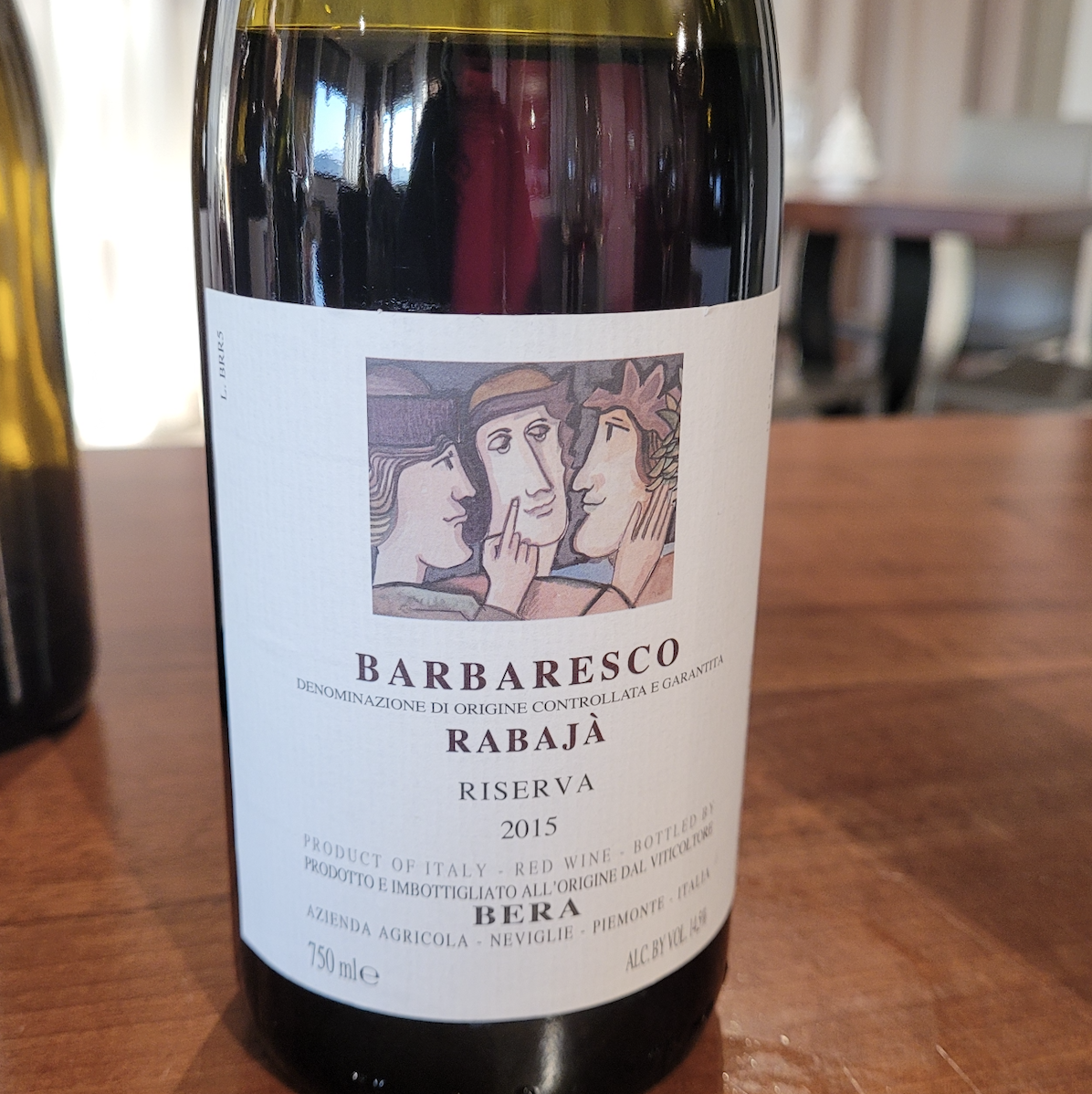
Bera Barbaresco Riserva DOCG Rabajà 2015

Rabajà faces southwest and this fruit comes right from the heart, only bottled as Riserva. Vines in and around 40 years of age and three years spent in Grandi Botti. Aromatically you intuit glycerin and as a Barbaresco there is clearly more acumen and experience from plants that first gave this wine life out of the 2011 vintage. Tannins are even more compact than Seraboella, trying to expand but they just keep weighing down and won’t fully relent. Layering of red fruit and they are beautiful layers but each one carries tannin of ilk upon ilk. This is Barbaresco of sapidity as a quotient of acids and pH working in cohorts. The palate attack is quite fantastical. Give this another year. Drink 2024-2033.  Tasted January 2023

Paitin Barbaresco DOCG Sorì Paitin Serraboella 2013

Plenty of breezes blow through this vineyard that is easier to farm with far less disease pressure than many. Also one of the first to ripen in the whole of Barbaresco. Allows for more maneuverability to create verticality and the winemaking can encourage some of this style – though form and objective are always the most important matters. The 2013 still shows as a linear nebbiolo with tension unabated while the once austere elements are finally subsiding. Yet it is still a baby, a 14 percent Barbaresco built for longe range aging from fruit drawn off of the steepest part on the long ridge of the Serraboella hill. Sandy soils on the southeastern slope with surrounding woods all conspire to create this slow-evolving, cru-designate wine with ample fruit, structure and trenchant abilities. A marker for Neive. Drink 2023-2028.  Tasted January 2023

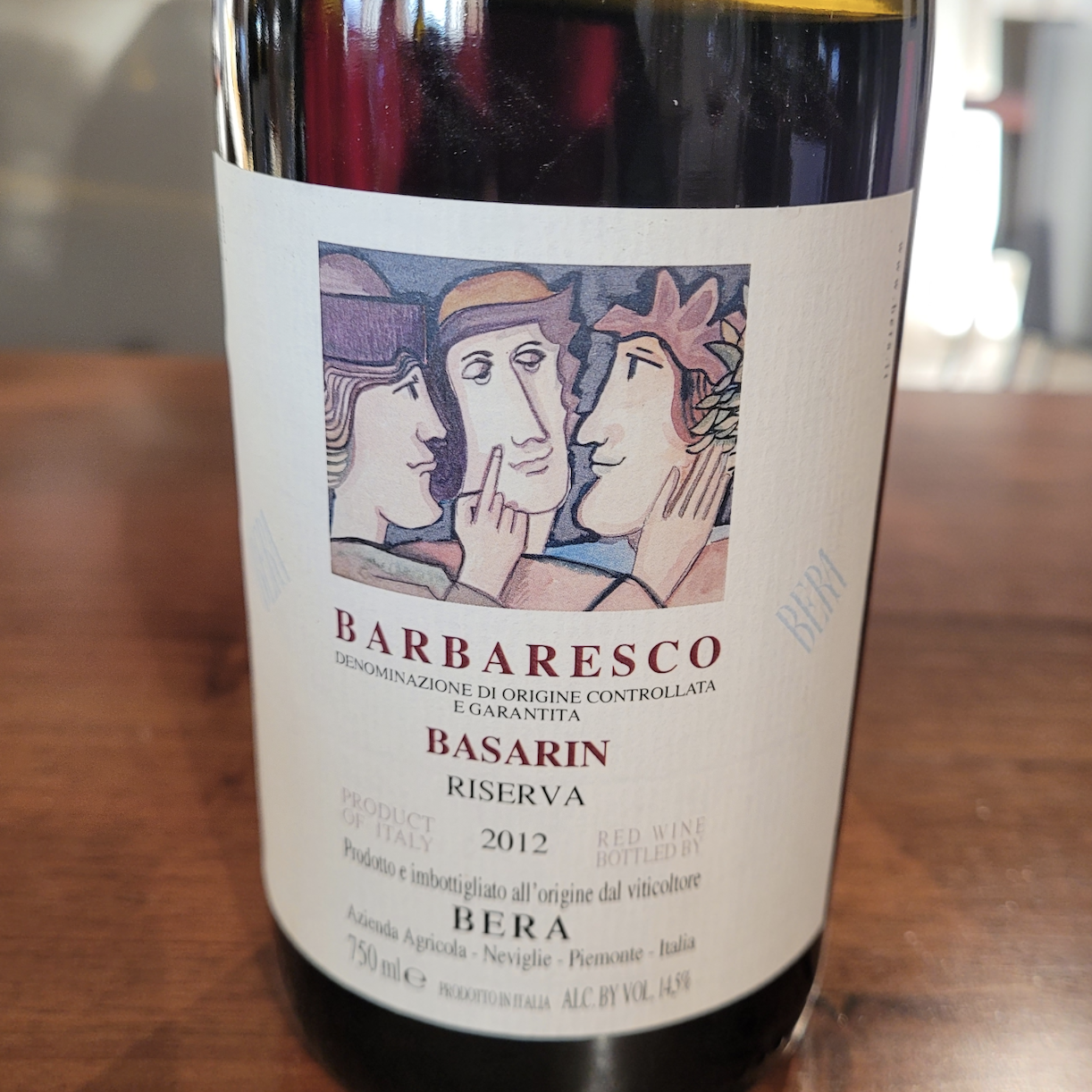
Bera Barbaresco Riserva DOCG Basarin 2012

Basarin is home to much older vines, upwards of 65 years-old and is one of the steepest vineyards in Barbaresco. A snake of a vineyard and very challenging to work. South exposure, warm for sure and a soil composition higher in chalk than clay but not too dissimilar to Rabajà. Herbaceous notes come from Basarin and “when I was young, every time I went to the tank I had this feeling,” tells Riccardo Bera. The first vintage out of which the tannins are nearly resolved and yet the fruit persists in near whole and perfect freshness. A nebbiolo in wonderful condition and while the vintage was hot there might have been a different result. This is almost, not quite but nearly ready, as far as optimum or perfect windows are concerned. Liquorice here, a touch of tar and well, “most of this job for us is to start with the best grapes you can. The quality is in the vineyard. A good winemaker can keep the 10. A five you cannot fix.” Ten it is. Drink 2023-2032.  Tasted January 2023

Good to go!

godello

Nebbiolo Prima 2023

Twitter: @mgodello

Instagram: mgodello

WineAlign

Revisiting Mullineux’s latest releases with the visiting Chris Mullineux

With Chris Mullineux

Sometimes I hang with Chris too. In April of 2023 Chris Mullineux was in town and so I was thrilled to welcome him into my home. It was such a pleasure to play the host for a change. Time was too short but we managed to cover in-depth discussions about Swartland sites, cool-climate Stellenbosch, heritage vines under the auspices of the Old Vines Project, oxidative chardonnay winemaking and winemaker Gynore Hendricks’ beautiful, sustainable and profitable project called Great Heart Wines.

Most of the wines he poured were those that I had recently tasted on his side of the pond in the Western Cape back in October of 2022. It was with winemaker (and Chris’ wife) Andrea that I did most of those tastings and so this new revisit offered a new perspective. The couple are remarkably synched up but have different ways of expressing the nature of their farming and resulting wines. Not to mention my own second look with six further months in bottle. Reviews on all these wines first tasted with Andrea are now updated.  Meanwhile, talk to Nicholas Pearce Wines about sourcing these South African lekkers.

Chris Mullineux

Before getting to the wines I asked Chris about the most recent vintage and harvest. “Not crazy hot, but Swartland was really dry and we began picking really early – January 15th. We were done just after February. It started raining just as we began picking Leeu Passant. In Stellenbosch you need a week of sun to drive out after rain and winds do not have to happen, (nor is it necessarily) common. In 2023 it kept raining from March 20 onwards but Leeu (Passant) was mostly picked 90 per cent in. There was some dilution to the fruit. In other words complex from beginning to end of harvest. With cabernet sauvignon that means 13-13.5 percent alcohol. We are a sunny place so the terroir must give a sense of place and that means ripeness – therefore cinsault in warm locations needs to be up there.” Returning to this remarkable set of Mullineux-raised and quintessential Western Cape wines, here are my notes from that day.

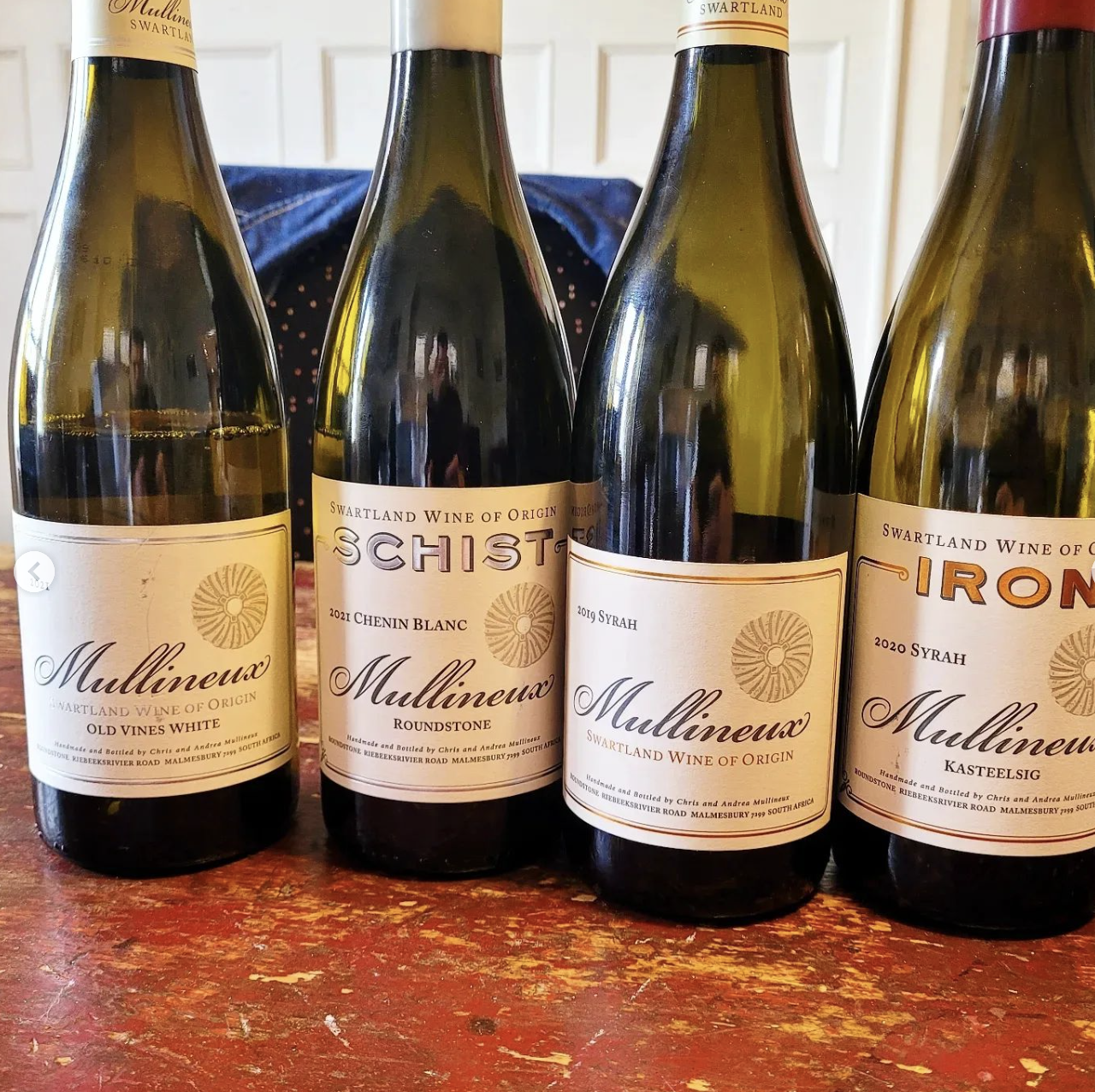
Mullineux Old Vines White 2021, WO Swartland

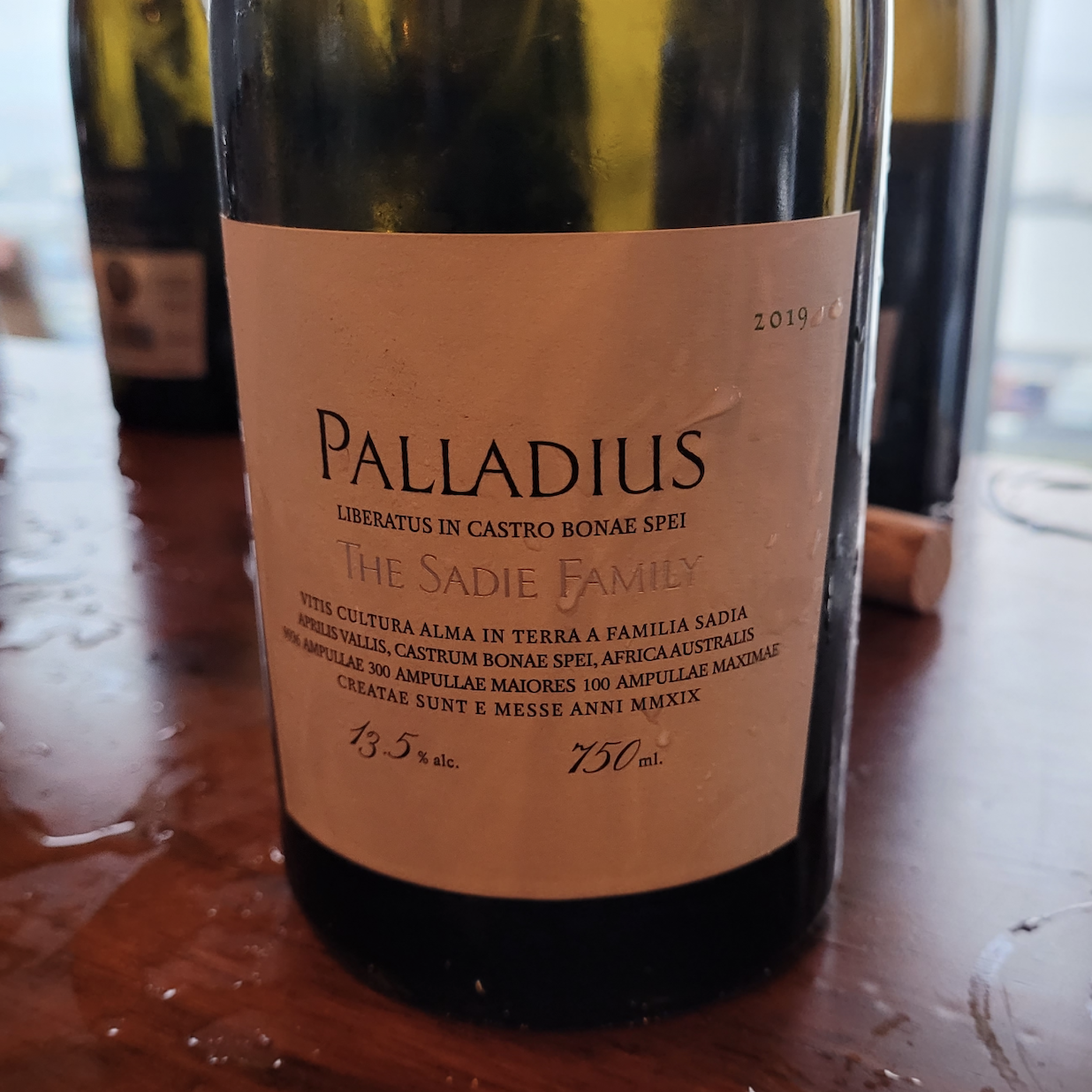
A style of South African white wine essentially started by Eben Sadie with Palladius back at the turn of the century. “Right away in 2001 when I first tasted it,” says Chris Mullineux, “it just made so much sense for the Swartland.” Adding some verdelho now, has only been the Swartland for 10 years but it’s really creeping in all over the Cape. It adds up to 14 percent alcohol, 9 TA and grippy phenolics to add force with some softer and generous white wines in the blend. This is vintage number 14 so if you like to think about things in lucky 7s then do the math and see this on the heels of what just must have been a most terrific 2014. The Granite and Schist ’14 Syrahs are pieces of Swartland heaven.  Last tasted April 2023

The chenin blanc involved is from vines up to 70 years old, two times into heritage status, refined in nature. here not a matter of more density but yes increased extract. Also contains viognier, clairette blanche, grenache blanc sémillon gris and verdelho. Crunchy as old whites come, especially this one, with just that righteous and ripping amount of alighted flintiness, lightning strike and claps of granite thunder. About two thirds are grown on the fine sandy, decomposed granite while schist, iron and quartz add grip, flesh and roundness. Full and layered composition of greatness. Drink 2023-2028.  Tasted October 2022

Mullineux Chenin Blanc Schist Roundstone 2021, WO Swartland

Planted on the shallow rocky soils of the Kasteelberg. More sunshine on the tiny berries which doles out big but oh so beneficial concentration. The grapes are thick-skinned and so pay attention to the finish to note phenolic spiciness. So much fruit and that grip mix together, also with thanks to the dappled sun effect for an eventuation at what we mark as complexity. Great intensity and because the wine carries so much extract there is a pause, a four second pause before the phenols show there attitude, passing again, returning, in between creamy textural moments and fruit repeats. The wine has to be dry to show this way, to elevate Swartland’s specific acidity and natural Chenin blanc behaviour. Last tasted April 2023

Roundstone, aka “ronde steen or rondklip” in Afrikaans but the farm is known by its English name. Another Western Cape account for struggling grapes while here the matter involves smaller canopies, clusters and grapes. The vineyard begets and raises a child of the land’s stony “dakteëls,” roof tiles where everything slides and so the tannins accentuate to procure wines of a certain toughness. This child is street smart and battle ready, got into a few fights in the early days, now able stand up for itself no matter the attack or the scene. Aromatically speaking there is a cheese rind scent in the dry comports of extreme aridity, resulting in intensity and directivity. A slightly higher pH makes this the sapid one, sliding across the palate with its über fresh scathe. This will age with the best of them, more like structured reds but so very capable as chenin blanc. Drink 2024-2034. Tasted October 2022

Mullineux Syrah 2019, WO Swartland

If you think about the entirety of the Swartland as a painting this syrah would be representative of the entire landscape. Comes off of Paardeberg granite and also Kasteelberg slate, on average 80 percent whole cluster but no carbonic, to allow the perfumes of both to play their parts. The iron soils bring the tomato leaf and meatiness and the aromatics leap with or without challenged cause by the fourth and last year of the Western Cape’s drought. Before flowering half the crop was eliminated, knowing the end result would be a tiny production but freshness, concentration and ultimately no stress balance Back in ’16 the vines dropped their own fruit to compensate in full abort mission. So much was learned that in ’17 the policy of one bunch per shoot became drought year religion. To find more fullness in syrah with iron cladding and flitting fillings like this is nearly impossible but this is how Mullineux delivers a sense of place. Broad in terms of wide open Swartland but if you want a definition, here it reads like an open book. Drink 2023-2025.  Tasted April 2023

All syrah and nothing but from a combination of iron, schist and granite soils. Made in “large” upright wooden vats, for the grandness and roundness of Cape syrah’s capability, followed by cool grip, converting what was into what needs. And wants, inclusive of evergreen, meat juices and mainly perfume. There is an amenable nature, a nurturing and a caring is sharing sensibility to syrah, expressly as what it means to be Mullineux, part Andrea and part Chris. Drink 2023-2027.  Tasted October 2022

Mullineux Syrah Iron 2020, WO Swartland

From the rolling hills around Malmsebury, in between the mountains, ancient soils, weathered, stable and red iron rich, even with some clay. Comes away at 12.6 per cent alcohol but the site brings power and natural intensity. Very focused and precise for the terroir in fact it screams sanguinity and tomatoes through leaves and paste. So South African in the most complimentary and can’t turn away kind of way. Acids run high though they are circulative on the palate and the wine carries some tar, char and the finish takes your breath away. So much character, personality and intensity. The right grape farmed properly in the right place can make this happen. Drink 2023-2035.  Tasted April 2023

Leeu Passant Cabernet Sauvignon 2020, WO Stellenbosch

Three vineyards together on the False Bay side of Stellenbosch. This is a piece of regional diversity, near to Somerset West, picked ripe late in April, only finishing at 13.5 percent. Only a piece of Stellenbosch like this can extend a season for a wine like this, of fully south facing part way from the Helderberg, with rich clay-iron soils, against the ocean. The most elastic, stretchable, seamless and pliable cabernet sauvignon imaginable. Freshness and firmness coexist so that you can drink whenever you like and also lay some down for two decades.  Last tasted April 2023

Inspired by the old sophisticated graphite model, here cabernet sauvignon is drawn from the mid slopes of the Helderberg. The 2020 resides where richness and structure meet at a point determined through optimum picking and acumen. Moves from first year 500L wood to large 2500L vat and this is truly an ode to what was once a fixture of style in the Western Cape, albeit with modern beauty, current sensibility and truths spoken. The vines are 40 years old (as of 2020) and really just beginning to take ownership of the old vine necessity, aka they now sit in their pre-LP, shorter EP state. Cassis and fynbos combine for true a genesis of Cape cabernet sauvignon authority, but also what simply has to be. The question is whether or not this wine will continue its course of wind and wuthering. Will it remain tied to tradition with progressive style or begin to play with pop structures. What we know is that this vintage allows us to spot the grape, place, match of the day, inside and out, and pigeons. Drink 2024-2029.  Tasted October 2022

Leeu Passant Chardonnay 2020, WO Stellenbosch

“For me this allows us to work with Chardonnay unlike anywhere else, from Chablis to other parts of the Western Cape,” explains Chris Mullineux. In a way there is an extreme saltiness, made through death and resurrection, of no sulphuring for the first 18 months. Anything in the wine can and is oxidizing so it’s perfectly stable and then cleaned up ahead of bottling, racked off the lees post malo, then sulphured which binds the aldehydes and any oxidative properties so that it comes away so clean, and tight. You can do this so long as the vineyard site is tops. Chardonnay that is bullet proof, without the bends. Can age as well as any on the planet.  Last tasted April 2023

Chris and Andrea Mullineux started the project in 2013 with the help of viticulturist Rosa Kruger. “New” vineyards were unearthed and rehabilitated through four solid years of re-pruning, re-training and re-working of the soils. Then the wines could begin being made. A deconstruction and reconstruction, now seven years in and entering the opening gambit of true maturity stage for what is one of South Africa’s most unique heritage collections. Leeu means lions, a reference to a meandering walkabout, personified in these wines. They are made in the Franschhoek winery, certified organic, coming of age in their foray into regenerative agriculture, which says Andrea Mullineux, “in the southern hemisphere also means cultural and worker sustainability practices.” The 2020 is as fine a reductive but mainly lightning acidity charged chardonnay as a vineyard can determine. Located in the upper mid-slopes of the Helderberg facing the Strand with a clear view of False Bay. That said or perhaps out of necessity this is made in an oxidative way, which makes sure to keep the flinty and salty faith alive. The ’20 is possessive of fibres, threads, strings and wires braided to make a layered whole. Finesse and sophistication co-exist in a vacuum where waves crash upon one another in great open space, with no shore for to finish. If you would like to experience chardonnay in a way you’ve not likely done before than swim all the way out, well offshore, all in, all the way to this place. Turn around and off into the deep distance, gaze upon the strand. Drink 2022-2028.  Tasted October 2022

Mullineux Great Heart Chenin Blanc 2021, WO Swartland

Great Heart is the special project for Gynore Hendricks who is assistant winemaker at Mullineux and she is joined by 21 other employees who profit from this wine’s special success. Old and young vines fruit, similar winemaking to Mullineux but only aged in steel. Freshness and fruit intensity yet precise, crisp and steely. On the lees (unstirred) with Swartland’s natural creaminess. Last tasted April 2023

This a newer project from Chris and Andrea Mullineux whereby the profits from these Swartland wines go to the owners of the label, they being the employees at Mullineux and Leeu Family Wines. The South African Wingtail is the mascot, a selfless bird and a beautiful one at that. This is chenin blanc of richness and most apropos, also of great generosity. So much ripe fruit and philanthropy. Quintessentially chenin while so eager to please. Talk about great heart in South Africa. Here it shows in the most human of ways. Drink 2021-2023.  Tasted September 2021

Mullineux Great Heart Red Blend 2021, WO Swartland

The syrah is from the Mullineux sites, the tinta barocca from Adi Badenhorst’s Jakaalsfontein farm and the cabernet sauvignon comes from granitic Paardeberg. Great energy, brightness and pure varietal intensity. A terrific red counterpoint to the Great Heart chenin blanc by winemaker Gynore Hendricks as the leader of a project befitting and benefitting nearly two dozen Mullineux employees. Drink 2023-2026.  Tasted April 2023

Mullineux Great Heart Cabernet Sauvignon 2021, WO Swartland

Vines from next to the Heldeberg, south facing, cooler and like the Leeu Passant the season runs long, phenolics slowly develop and yet the young vines create a quicker to access freshness and energy compound. This has the bokser effect in red wine.  Last tasted April 2023

As a Mullineux wine Great Heart cabernet sauvignon feels akin to the highly focused Leeu Passant Stellenbosch varietal wine (aka the Helderberg Mountain bottling). As a concept Great Heart is all about staff empowerment in wines made by owners with a piece of the business. This is cultural sustainability at its finest, seeing livelihood improvements for members of the winery and their families. Like the LP cabernet sauvignon this performs as an “ode to what was once a fixture of style in the Western Cape, albeit with modern beauty, current sensibility and truths spoken.” Cassis and fynbos, tradition and progressive spirit. Quality combinations in all respects, forever searching for great heart in South Africa. Drink 2023-2027.  Tasted February 2023

Mullinuex Olerasay Straw Wine 2021, WO Swartland

After the drought, cool and late vintage, with plenty of kept acidity. Same chenin that goes in the wild vines wine, picked same day, then air-dried for three weeks. Pressed and ferments for nine months. Only three weeks because it’s done outside. The sugar is approximately 300 g/L and the alcohol 18.5, TA at 11. So pure, lemon brûlée, marmalade and balanced. Brilliant Straw wine. 6,000 bottles made. “We make more straw wine than anyone in the world,” says Chris Mullineux. “One acre equals one bottle of wine.” When asked why do you do it? “Because its great wine and it’s part of who we are.” Heritage and imperative. Drink 2023-2032.  Tasted April 2023

Good to go!

godello

With Chris Mullineux

Twitter: @mgodello

Instagram: mgodello

WineAlign

Four producers showcase Santorini’s best

Master Sommelier and WineAlign critic John Szabo presents Wines of Santorini

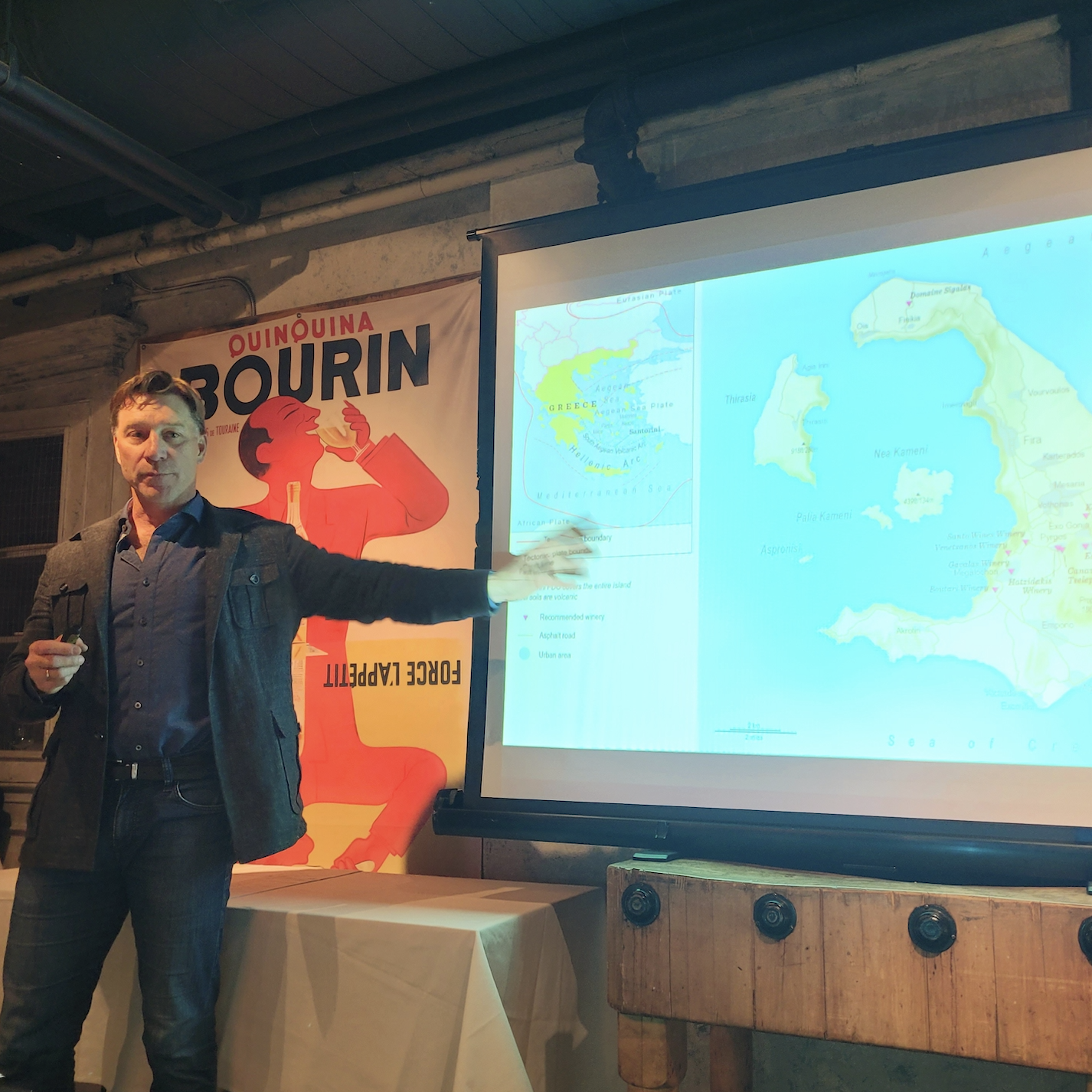
I have not made a volcanic pilgrimage to Greece in some time and so happy times abound when the basaltic magma terroir of Santorini comes to town. A George Restaurant welcome to four archetypal producers stamped a guarantee for a great tasting day back in May, first and foremost through a masterful masterclass as an in depth look at PDO Santorini. This was followed by a meet and greet with more of that volcanic island’s wines, their collective bar raised by Chef Lorenzo Loreto’s always creative snacks. All the thank-yous go out to Sofia Perpera of Wines of Greece, my colleague John Szabo M.S., the importing agents here in Ontario and of course the visiting producers. There were 11 PDO Santorini wines poured for the class and these are my notes.

Santo Wines Assyrtiko Organic 2022

Should likely be immovable when this young in an assyrtiko prominently phenolic as it is defined by its dry extract. The vines are 60-80 years old from Pyrgos, Eco Gonia, Faros Akrotiriou and Imerovigli. Alcohol generous but not exaggerated at 13.2 while both acidity (6.1 g/L) and pH (2.91) are on the low end of the assyrtiko spectrum. Solid and exemplary cooperative wine, representative of 50 per cent of the entire production of the island. As much a matter of tang as it is volcanic originated salinity. In the end this is preparing for readiness to drink well ahead of most of the island’s varietal wines. Drink 2023-2025.  Tasted April 2023

Domaine Sigalas Assyrtiko 2022

Vines are 60-plus years of age and the assyrtiko juice ages three months in only stainless steel with “occasional” bâtonnage. Alcohol is a reflection of a prolific vintage and acidity is on the low side while conversely pH sits higher, above three. Makes for a sapid assyrtiko which of course can also be salty but this is surely more a matter of texture by a wine that wholly, fully and completely covers the entirety of the palate. Drink 2023-2026. Tasted May 2023

Gaia Wines Thalassitis 2022

Seventy to 80 year-old vines, stratospheric acidity and bold alcohol make for a dichotomous assyrtiko that also expresses clean, grapefruit and white peppery reduction. Strictly stainless steel aged accompanied by necessary lees addendum and this was handled so properly to ride the new wave stylistic. The mouthfeel is extraordinary, the wine is predicated on texture, just now getting ready to roll but also capable of aging well. Drink 2023-2027.  Tasted May 2023

Argyros Estate Assyrtiko 2021

The Estate by Argyros, largest of the private producers on Santorini is the most generous and substantial of them all. Everything is elevated in this gregarious wine coming from 100-120 year-old untrained bush vines. Big alcohol towards 14 and a half percent, leading towards high acidity but also grander of pH. These are not white wines subjected to vintage variation so this is indeed the norm for assyrtiko and Santorini. This is quite honestly the centre of the Santorini universe and no other wine represents with more estate esteem than this teachable one. Drink 2024-2029.  Tasted May 2023

Argyros Estate Cuvée Monsignori 2020

Do not adjust your set but yes this is assyrtiko from 200-plus year-old vines growing in the central-south area of Episkopi. Specs are actually quite similar to the Estate but the dry extract level is just about 25 which is extraordinary for white wines anywhere. Longer lees aging of 11 months between harvest is necessary to keep up with the concentration and intensity of this unicorn assyrtiko. Salinity and volcanic interpretation are off the charts. Easily one of the top white values on the planet. Drink 2025-2034.  Tasted May 2023

Gaia Assyrtiko Wild Ferment 2021

Assyrtiko through and through, vines 70-80 years of age with three century root systems. Big, high acid and also relatively elevated with pH above three. Wild ferment and wood three ways; French, Acacia and American, all 225 size barriques. Flinty, barrel effected now but enough subtlety to tell us that integration will be done and without complication. This assyrtiko really settles upon and melds with the palate, like a dissolving salve of light caramel, fennel pollen and fiddlehead dust. Herbal and then lemon all over the back end, with a taste of just faintly caramelized meringue. Drink 2025-2031.  Tasted May 2023

Santo Wines 1911 Santorini Nykteri 2021

Nykteri is 85 percent assyrtiko (the minimum for the Santorini PDO) with (10) athiri and (5) aidani. Vines are 50 years of age from the “other” growing area, that being Oia. Really rich, viscous and fulsome white blend, more phenolic and softer than the 100 percent assyrtiko. Different and curious, certainly a matter of vintage in terms of sappy and resinous qualities. Drink 2023-2026.  Tasted May 2023

Domaine Sigalas Barrel 2021

Only assyrtiko, 60 year-old vines, high alcohol and relatively higher pH at 3.11. A naked example in 10 percent new, 90 percent used wood. Beautifully integrated already and a wine that’s more ruminative than most others but also expressly sapid, crunchy and as the Italians would call scorrevole. Warm up to this wine and its generous if also nurturing style. Drink 2024-2028.  Tasted May 2023

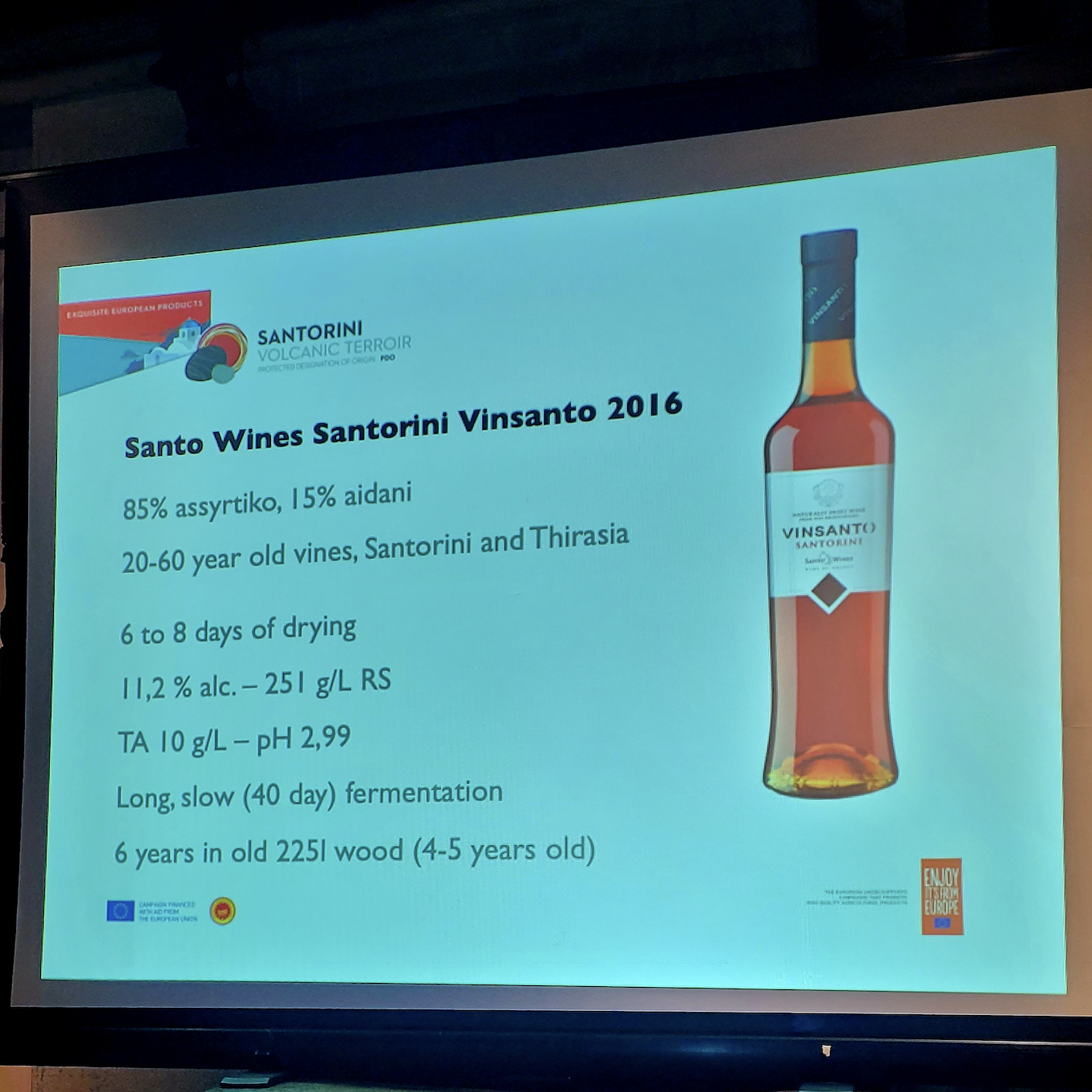
Santo Wines Vinsanto 2016

Vinsanto, wine of Santorini in its original form though not likely aged in ancient clay pots. Grapes are dried six to ten days and aged two years in barrel. Alcohol is quite low at just above 11 while the residual sugar runs high, at 251 g/L/. Spent six years in 225L barrels for a wine of caramel delight with other concentrated parts, especially acids, running at 10 g/L. Salty, not surprising, so yes a taste of salted caramel though and the feeling of a sunset landing into the sea behind whitewashed Oia. To great applause. Drink 2023-2033.  Tasted May 2023

Gaia Vinsanto 2012

Now going back to 2012 it is Gaia’s aged 10 years in the same one-year old barrels the wine was fermented in. The vines are 70-90 years of age for a 10 percent combination of athiri and aidani compliment to assyrtiko. Just under 11 alcohol with great acid and also pH. These grapes are half sun and half shade dried for two weeks. Incredible concentration, intensity of all parts layered but with a tempering of the structural zones that mitigate any chance of cloy by overpowering sugars. Also some bitter phenols which suggests that chocolate would be a good match, so long as it’s a bit bitter and perhaps the same idea from espresso. Hard cheeses as well so a desert wine here that can cycle through savoury connections. Drink 2023-2036.  Tasted May 2023

Argyros Estate Vinsanto Late Release 2002, PDO Santorini

First wild aspect of note is the 324 count in dry extract, more than 10 times the number of the most austere Barolo ever made and then the 290 g/L of residual sugar – while acidity is relatively lower and pH really elevated. If a Vinsanto could ever be considered and called sapid this would be the one, This assyrtiko with 10 percent each athiri and aidani comes from Argyros’ 200-plus year-old vines located in Episkopi. This is a Vinsanto that should and must be tipped alongside savoury courses and there could never be a mistake in that course being centred by salty cheese. The wine finishes with that metallic taste of iron that lingers on the palate for minutes on end. Drink 2023-2027.  Tasted May 2023

Good to go!

godello

Twitter: @mgodello

Instagram: mgodello

WineAlign

Irresistible South Africa

Fynbos, Vergelegen Estate

Irresistible South Africa of exceptional quality at every price level, LCBO limited time offers and lingering memories of another unforgettable Cape Wine

as seen on WineAlign

This feature was commissioned by Wines from South Africa

Eight months have passed since my last great journey to the wine lands of South Africa’s Western Cape and memories nor great heart have faded even just one bit. The Cape’s beauty is everywhere, breathtaking beauty, at every turn, in vineyards, across estates and especially in people that give their all to craft some of the world’s most special wines. That is why the coming weeks present an opportunity by way of an increased presence and access because Wines of South Africa and the LCBO teem up once again. Prepare to be smitten by an offer of a set of Cape wines that collectively speak to both quality and value. Undervalued already, these limited time offers (LTOs) deliver a diverse set of varietal wines and appellative blends at prices 50 percent below what these wines are worth. To pass them by and not take advantage would be crazy. These are your summer wines, laid out like a shilling dinner and only a fool would scuffle past without purchase.

The LCBO’s Destination Collection includes the “Discover the Wines of South Africa” promotion headline that reads “with a 350-year winemaking tradition, South Africa blends high-quality production with eco-friendly practices, making it one of the most exciting and earth-friendly wine regions around.” Truth spoken. The LCBO’s Limited Time Offer (LTO) Program provides suppliers and stores with an opportunity to build excitement and awareness while offering a discount on selected products. Rates to the supplier or agent are charged based on the full reduction in retail for the number of units sold at the LTO price. Mandatory Pre-printed LTO (flat rate) signage costs are $1,500.00 per product, per Promotional Turn. To qualify for the program, a minimum discount of five percent or $1.00 per package (whichever is less) must be offered at retail. The maximum discount allowed is 20 percent off the regular retail price. Limited Time Offers start on the first Monday and end on the last Sunday of each Promotional Turn. The Wines of South Africa P4 offer is an opportunity for customers to spend a total of $30 on any South African wines to receive 40 APP (Aeroplan Points) and runs from Monday, June 19th through to Sunday, July 16th. See below for a WineAlign crü Buyers’ Guide to current LCBO and VINTAGES Essentials LTOs for South African wines.

Godello and Szabo in Hermanus

John Szabo MS and I were in the Cape together back in October of 2022 and over at WineAlign he has penned a piece he calls “Investment grade South African wines for the cellar.” It will be worth your time to open up a separate tab to read up on John’s outlook. As he explains here, “which, ounce for ounce, consistently overdeliver on sheer quality and pleasure for the price. Add in longevity and the capacity to develop and improve over many years, and you have the recipe for investment grade wine, especially if you consider it an investment in future pleasure and care less about re-selling the wines down the road for profit.”

Ernie Els Estate, Stellenbosch

Reminiscences are part of everyday life but anyone who has traveled through South Africa will find those particular recollections as strong and vivid as any. Back in February I penned my post-Cape Wine 2022 article Seeing Western Cape stars: A guide to Cape Wine 2022 with a recounting of regenerative and creative farming, old vines, new frontiers, 80 recommended current releases and the deliciously addictive South African snack known as braai brekkies. Despite that post’s lack of brevity there was simply no way to fully package 11 days of tasting, eating, conversing and trekking in the Western Cape. Not to mention how much time it truly takes to fully assimilate and gain a deep understanding of what was seen, heard and felt on that trip. I am no stranger to extensive travel but there is no wine producing country that gets under your skin and keeps you perpetually energized like South Africa. Fatigue and jet lag are non issues but being anxious about missing something or skipping moments where the incredible are guaranteed to happen – now these are real issues. So allow me some latitude to recall and expand on some quintessential Cape moments. After two unforgettable visits in 2015 and 2018, the third Cape Wine expedition is now cementing into the stuff of legend.

Celebrating Rosa Kruger in Cape Town

The certification system for of Old Vines

It begins, as it must, with South Africa’s cast of characters, the beloved Old Vines Project’s André Morgenthal, original concierge of Wines of South Africa and Rosa Kruger, progenitor of the OVP. As I previously noted, “Over the past 20 years viticulturist (Kruger) has focused on discovering, classifying, cataloguing and certifying heritage vineyards. It was a great pleasure to chat with Kruger at a Wines of South Africa ceremony and tasting at Cape Wine 2022, which celebrated her 2022 Decanter Hall of Fame Award. And also with the legend (Morgenthal), orchestrator of the tasting of old vines wines. It is remarkable to see how many estates and producers have come on board — to celebrate and show off the wines they are making from 35-year-old (and older) dry-farmed bush vines. Many vines are even pushing or exceeding the century mark.” With thanks to André and Rosa there was an evening’s opportunity to taste dozens of certified old vines examples, many of which were covered in my last report. Here are but a dozen more worth knowing.

Chenin Blanc Data

Signatory authority Chenin Blanc

As for chenin blanc, if you are a grower, producer or winemaker in the Western Cape, signing a contract for yourself with chenin blanc, well then you’re good to go. Sign away. Planting, resurrecting, reviving, perpetuating and extenuating chenin blanc vine circumstances  to make varietal wines is like finding and selling gold. Since 2011, local chenin blanc sales have doubled, including an 11 percent increase between 2021 to 2022, while total exports (packaged and bulk) have nearly tripled in that 11-year span, also with an 8.5 percent gain from ’21 to ’22. These increases have occurred because the chameleon can play in any sandbox and become anything a consumer wishes it to be – this despite total planted hectarage having decreased 10 percent since 2011. Name a grape tied to a place’s success anywhere near equal to the symbiotic relationship between chenin and the Western Cape? Please don’t say malbec and Mendoza. The future will always be chenin blanc, worldwide and especially here in Canada. Canadians have embraced and fallen sick in love. If you are already one of them, or even if you are yet to have sipped the Kool-Aid, there is always a next level chenin blanc waiting for you.

Old Vines Chenin Blanc, Ken Forrester Vineyard

Zeroing in on sites in reds and whites

Soon enough it will be ten years since I first referred to growing anything and everything in the Western Cape as being akin to a viticultural “wild west.” The ancient geology split between decomposed granites, Malmesbury, Bokkeveld or Witteberg shales and Table Mountain sandstone make for the most diverse and paradoxically hospitable grounds where the varietal spectrum is encouraged. The morphology of my personal understanding grew to look at land and vine as something more focused and the map of varietal matched to place began to take shape. Writing here in 2023 brings white and red varietal wines, plus the coalescence into appellative blends into pinpointed accuracy where winemakers make their mark based on experiential decisions. Heritage vineyards are nearly always key, magical conversion rates create situations unparalleled, but the very presence of rampant sustainable and regenerative agriculture is what truly separates and indeed defines the wine production of South Africa. The Western Cape faces never-ending challenges because of isolation, climate extremes and internal political struggle but I have written this before. “The (wines) are too good to miss, not just a handful but hundreds of outstanding examples. Quality has risen exponentially, virtually across all places of origin, including new frontiers. The stars are out, and they are aligned.” I give you 30 further examples; varietal whites and reds, white and red blends, plus one dirty little secret.

With Adi Badenhorst

Varietal Whites

A.A. Badenhorst Chenin Blanc The Golden Slopes 2021, WO Swartland

Bottled mid January and released in May. Single vineyard, quick ferments, high fructose content avoided, no sulphur needed until just before bottling. From plantings going back to 1968 and through the 1970s, the Golden Slopes had usually been aged in foudres but now so much more in concrete “to preserve that raciness as long as possible.” A true cracker scintillant of chenin to be sure yet with all the ripeness in phenols plus stone fruit texture possible. A capture of the 2021 Swartland chenin blanc vintage without repose. “This is really all about vineyard,” insists Adi Badenhorst “and the way we like to farm.” There is a dream, to sit on the Golden Slopes beneath the stars while sipping a glass of 2021. Preferably in 2025. Drink 2023-2029.  Tasted October 2022

Alheit Vineyards Chenin Blanc Nautical Dawn 2021, WO Stellenbosch

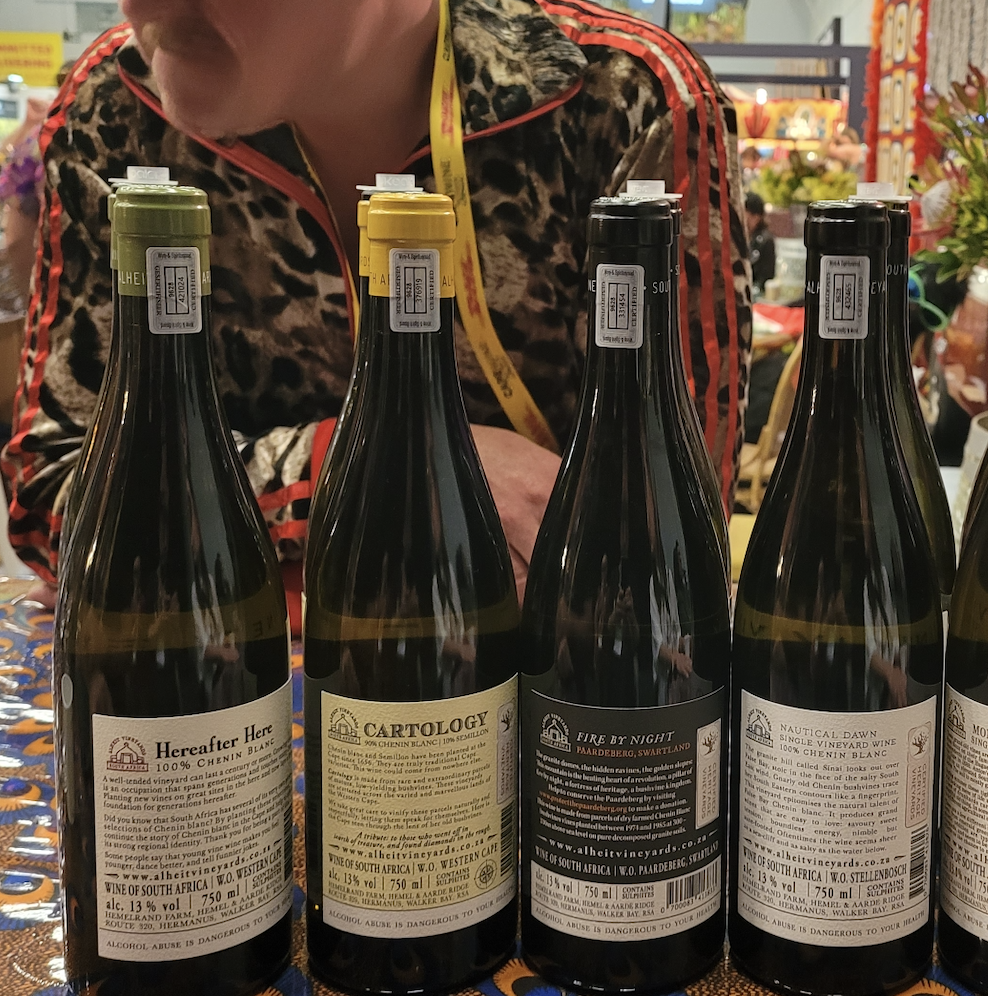
Nautical Dawn as a single vineyard chenin blanc is drawn from a Paardeberg Mountain site with a view to the seaside and breathes out a defining wind that consistently blows through. Gusts of sodium run through this wine like no other member of the chenin blanc/old vines/Alheit temple. This is clearly a well established portent as elemental pierce, rehearsed without pause and arbitrarily close to the true value of the established parameter, in vintage after vintage. Lends this wine its distinct and cracker personality in a manner that is tight, bracing and complexly wound. Nautical Dawn carries itself with attitude and is a chenin blanc more than sometimes expressed as a great notion. From 2021 the values of place, experience and process concur to express inclination and ultimately belief. In Chris and Suzaan Alhet’s words, but even more so by their actions. Drink 2024-2030.  Tasted October 2022

Craven Wines Pinot Gris 2022, WO Stellenbosch

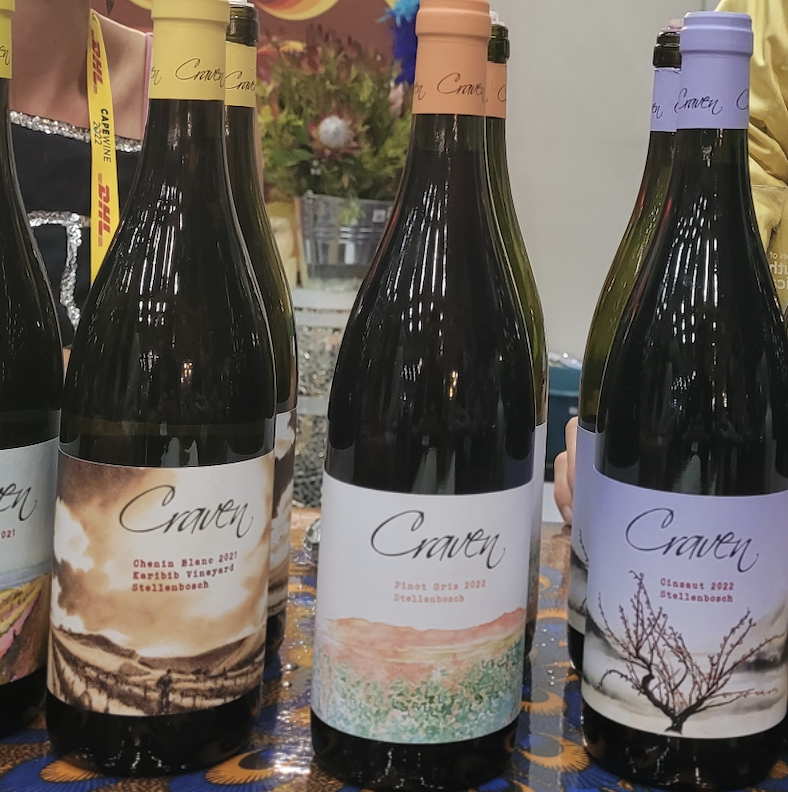
Jeanine and Mick Craven’s Stellenbosch pinot gris continues to thrive and evolve by way of its base soil, that being the Koffieclip complex which is more and more proving to be where this grape thrives. A bit of skin contact, maybe six or seven days, unchanged for several vintages now but this is anything but a white wine made like a red. This and aging in concrete are two of the great things about the method, but not the necessity of creating crazy fresh and crushable pinot gris. This is that but also something other, with sneaky structure and underlying mischief to make sure the years ahead will bring about new fascinations. This is a wine that has come a long way. Truly, as memory knows this to be true. Drink 2023-2027.  Tasted October 2022

Crystallum Chardonnay The Agnes 2021, WO Western Cape

Five vineyards are contributors including three from the Hemel-en-Aarde-Ridge and older barrels nurture profound fruit for this the 15th vintage of a wine that first appeared in 2007. Perfectly staged, striped and reductive chardonnay, cracker piqued, peppery without any discernible overt pepper or capsicum. Wow, this hits the spot. Terrific “entry” chardonnay from Peter Allan and Andrew Finlayson. Drink 2022-2025.  Tasted October 2022

David And Nadia Sadie Wines Plat’bos Chenin Blanc 2021, WO Swartland

At a tasting where everything is Old Vines Project certified there must be something extraordinary about a wine to stand out from a crowd of greats. David and Nadia Sadie are in fact turning heritage vines chenin blanc (amongst other varietal explorations) into content born of context harboured though never paraded. They are rhythmic and scientific with just enough fantasy and romanticism, but never too much. Plat’Bos stands above Skaliekop and Hoë Steen because 2021 asks it to do so, not because it is better or more important, but it is surely chenin blanc profound. The 1981 Swartland planting is in the steady zone, shed of the mercurial and in ’21 so very linear yet salty of the earth in its sombre-sepulchral tone. There is reduction here because the poor soil nutrients demand that this chenin begins this way. The levels of tension and intensity are most elevated, sufficing to say as high as any from the Western Cape. Attention is paid unwavering to detail, sequencing is in order, purity incarnate, grape and place together pristinely kept. In Plat’Bos 2021 the palate is taken down to the whipping post by a wine built to endure. Given time there will be calm, healing and reward in the end. Drink 2024-2036.  Tasted October 2022

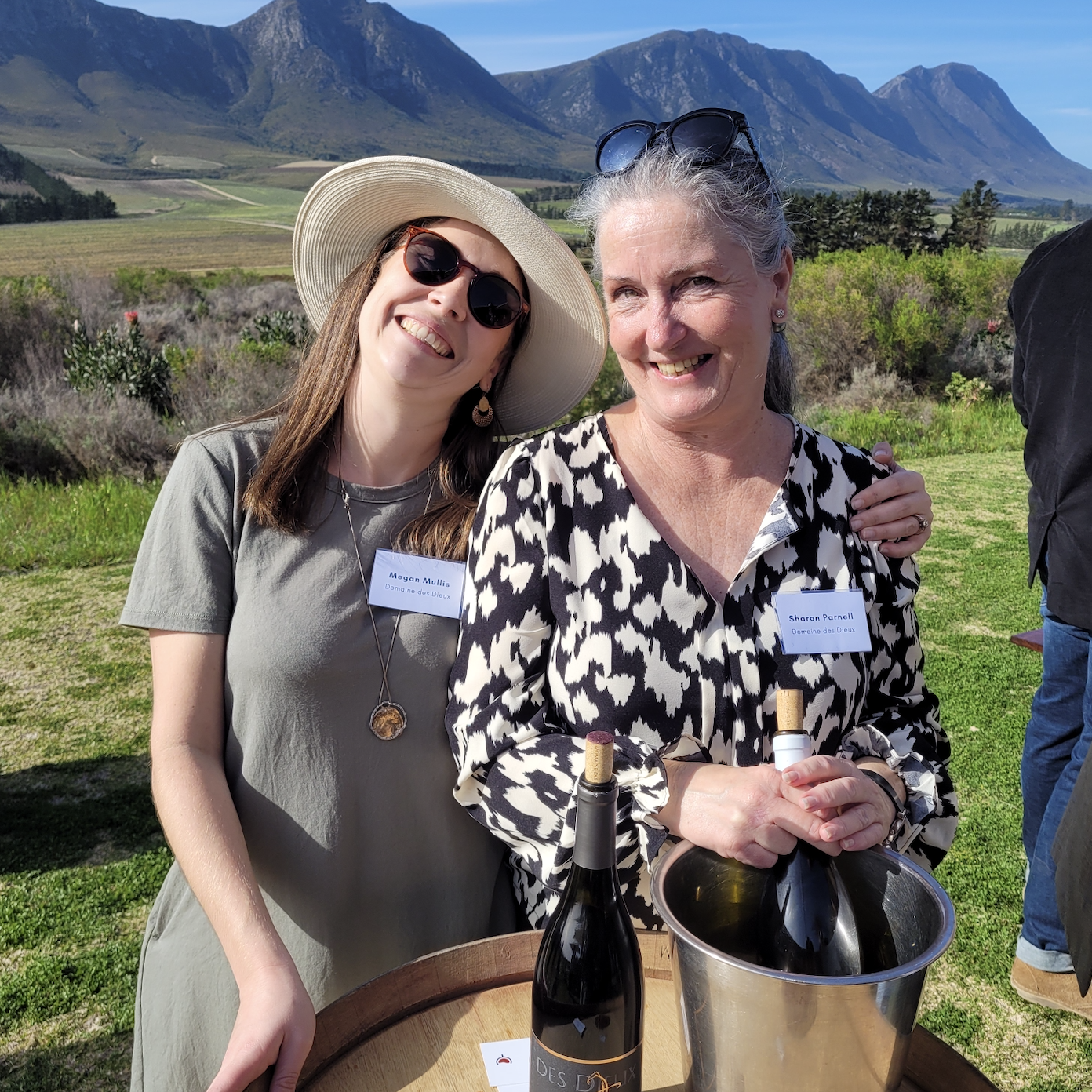
Megan Mullis and Sharon Parnell, Domaine des Dieux

Domaine Des Dieux Sauvignon Blanc Reserve 2018, WO Hemel-en-Aarde Ridge

From the start farming is opposite to chardonnay, exercised as Guyot pruning for a desire to increase yields as per what the variety will give and quality abides. Considered in unequivocal terms, this may just be the most, if perhaps the only Hemel-en-Aarde Ridge and in fact the whole of the Western Cape’s sauvignon blanc that truly intimates Pouilly-Fumé. The mix of macerated fruit cup juiciness and subtle if gentle smoulder delivers the mimicry, a wet rock struck kiss and kindest nurturing, finishing at lit paraffin. The winemaking lends reason to grow, raise and perpetuate sauvignon blanc right here on this ridge, in perpetuity. So long as the handling is as careful as it is here, to create varietal beauty incarnate. Drink 2022-2026.  Tasted October 2022

John Szabo MS, Anthony and Olive Hamilton-Russell and Godello

Hamilton Russell Vineyard Chardonnay 2021, WO Hemel-en-Aarde Valley

The uncanny taste of indelible memory stamped South African chardonnay defines this wine though there is a candied aromatic feel in this iteration. Chewy texture, elastic and stretched, creamed centre, fluid and generous. All lemon and lime up front and then recoiling, returning and finishing the same way.  Last tasted October 2022

A new return to a manageable vintage of warmth and generosity in which the beauty of Hemel-en-Aarde chardonnay comes across with sweeping charm, just as a vista will take in the scroll of hills, mountains and eventually fall, 100 kilometres away into the sea. The taut nature, tight control and expertly wound fruit behaviour follows a line of HR acidity like never before. The magnificence of the balance occupied by parts so known like home is what emanates from this chardonnay and the gracious people who make it. Can’t think of much better in South Africa. Drink 2023-2028.  Tasted July 2022

Huis Van Chevallerie Palomino Old Vines Spookberg 2021, WO Piekenierskloof

At harvest Christa von La Chevallerie is asked by the farmer “would you like three tonnes of palomino?” Who could say no to Spookberg, story of two wine lovers scouting the Swartland looking for the perfect old vines to tell stories the past? Know this about Christa von La Chevallerie. She is a Geisenheim-trained winemaker who checks her acid and pH numbers by sleeping in the vineyard, when others are on holiday. Christa knows the climate is changing and ever-menacing droughts are never the same twice. “Look at the sky and cry,” she says but fear not, for there is a way. The Spookberg recalls a castle and yes, ghosts as well and the parcel sits atop decomposed granite, direction Cederberg. Bloody great varietal wine because the fruit comes from this place, off of old vines and their destiny to Christa was all. The fino character is conditioned by both pH and acid in balanced conversion both mighty and releasing as sapid seriousness. No skin contact to mess things up, half de-stemmed, fermented in 400kg open bins. Wrapped, cooled and those whole bunches float on. They wait while the maker makes self-instructive demands. “Just have your hands on it and don’t be distracted by what you’re busy with. Keep the quality control.” These handsome old vines gift the best of both worlds; substantial South African fruit told as truth but also a quirk of idiosyncrasy because well, palomino. No interference, only a clear night’s signal and a varietal wine treated with respect.”They don’t like lava lamps.” Drink 2023-2028.  Tasted October 2022

Le Bonheur Chardonnay 2022, WO Stellenbosch

Winemaker William Wilkinson is responsible for amassing a healthy quantity of this Stellenbosch chardonnay which makes the quality all that more impressive. Much of the fruit gains cooling benefit from the shadow of the Klapmutskop (Klapmuts Hill) which serves to extend the ripening season. Hard to get more lemon curd, zest and freshness than this with an undercurrent of fynbos that will never be denied. Clarity is one thing, length on a $16 chardonnay another. Will arrive in VINTAGES December 16th. Buy it up. Drink 2023-2025.  Tasted June 2023

Leeu Passant Chardonnay 2020, WO Stellenbosch

Chris and Andrea Mullineux started the project in 2013 with the help of viticulturist Rosa Kruger. “New” vineyards were unearthed and rehabilitated through four solid years of re-pruning, re-training and re-working of the soils. Then the wines could begin being made. A deconstruction and reconstruction, now seven years in and entering the opening gambit of true maturity stage for what is one of South Africa’s most unique heritage collections. Leeu means lions, a reference to a meandering walkabout, personified in these wines. They are made in the Franschhoek winery, certified organic, coming of age in their foray into regenerative agriculture, which says Andrea Mullineux, “in the southern hemisphere also means cultural and worker sustainability practices.” The 2020 is as fine a reductive but mainly lightning acidity charged chardonnay as a vineyard can determine. Located in the upper mid-slopes of the Helderberg facing the Strand with a clear view of False Bay. That said or perhaps out of necessity this is made in an oxidative way, which makes sure to keep the flinty and salty faith alive. The ’20 is possessive of fibres, threads, strings and wires braided to make a layered whole. Finesse and sophistication co-exist in a vacuum where waves crash upon one another in great open space, with no shore for to finish. If you would like to experience chardonnay in a way you’ve not likely done before than swim all the way out, well offshore, all in, all the way to this place. Turn around and off into the deep distance, gaze upon the strand. Drink 2022-2028.  Tasted October 2022

Momento Wines Grenache Gris 2021, WO Voor Paardeberg

Voor Paardeberg and its decomposed granite make for a wonderland from which to pull grenache in blanc and also gris. The vineyard is but nine years old and sits peerless in South Africa but to no surprise it is Marlise Niemann who finds it and makes it her own. Seven days on skins to accentuate the already grey-pink hue but even more so the pull of red citrus and other fruit aromatics; strawberry, rhubarb, sumac, pomegranate, pink lady apple skin and then the savoury greens of nightshades, in mildly spicy capsicum and wandering inveterate tomato. Old wood for 10 months is the obvious and right choice to maintain, prolong and extend these scents and create the taciturn of Momento gestures so befitting Marlise’s wines. Salty, taut and fresh but likely only a few more months away from blooming. Still there is enough grip with intensity to hold its flush for two or three years. Oh my does this country need more grenache gris and though it is very slow to propagate in the nursery Marlise will plant more on her farm when it becomes ready. Drink 2023-2027.  Tasted October 2022

Rall Wines Cinsault Blanc 2021, WO Swartland

Fifth vintage, from a single 0.2 hectare vineyard and the first from a time when Donovan Rall just got the grapes for the first time. Here now 1,300 bottles, a “huge” quantity, all raised in amphora from Hout Bay, “a crazy potter,” tells Rall. Not as porous and a tighter, reductive environment. Delivers the benefit of true concrete but through the texture of clay. This wine is about heritage, manifested in texture and salinity. And of course the Swartland. “I’ve never worked with conversion rates this low,” says Donovan and this cinsault is a testament to the excellence and magic of the vintage. With no compromise to flavour, tannin, acidity and length.” The low alcohol at 11.8 is brilliant as no push to ripeness was needed to achieve these heights. Drink 2023-2027.  Tasted October 2022

Jeanine Bruwer, Springfield Estate

Springfield Estate Albariño 2020, WO Robertson

Huge surprise to happen upon albariño but here it is, planted in 2010 “because we had to,” explains Jeanette Bruwer, “after a trip to Uruguay where we tasted the coldest bottle of wine anywhere.” Allow me to translate that as refreshing and I believe only Springfield Estate and Newton-Johnson are raising the Minho variety. These Robertson vines are from Hemel-en-Aarde cuttings, now comprising 16 hectares. Clay and granite are the impetus to imagine this salty and quenching albariño that sees a cold maceration, free run, pulled away at day 14 and left at negative four degrees. Only tank for four months and reminiscent of making moscato d’Asti in that suspended gelid animation way – save for finishing much dried and at higher alcohol. Cleanest juice determines the refreshment and this may be the Cape understatement of the year. Amazing case study! Drink 2022-2024.  Tasted October 2022

Varietal Reds

Hamilton Russell Ashbourne Pinotage 2020, WO Hemel-en-Aarde Valley

“There is a pinotage renaissance happening here and elsewhere,” are the words of Anthony Hamilton-Russell. He and winemaker Emul Ross make this example that is a one of a kind signature wine that’s just about as readily recognizable as any in South Africa. Wood is in the background, plum fruit and acid up front, structure present from start to finish. Comes in at just under 13 per cent alcohol out of a vintage where the yeast conversion rates were down across the Western Cape. Yields are 7.19 hL/L, ugly economics to be sure but this is the nature of quality pinotage to speak with great heart about the varietal matter. It’s the back end of this wine where the magic happens, but first a slow incline, then the plateauing before a subtle pause commits towards a long future ahead. Drink 2023-2029.  Tasted October 2022

Kleine Zalze Grenache Vineyard Selection 2021, WO Stellenbosch

Quite ripe and heady grenache, chewy, clean and well extracted. Torque, as they say, a full 360 degree swing with balanced follow through. Hard not to note the Rhône influence and mimicry though in the end that Western Cape inimitability. Full grenache for your wishes and use of hard-earned cash. Meet the truth and real honour in this dedicated varietal wine. Drink 2023-2027.  Tasted October 2022

Porseleinberg Syrah 2018, WO Swartland

The large vineyard is situated in the SE corner of the Swartland, above the Berg River. The Porseleinberg is a bit older so there is some sandstone with the granite or schist below. It’s sedimentary metamorphic with weathered, worn away soils, and hard, harsh, poor growing conditions. There is this feeling that 2018 has begun evolving just a slight amount out of a vintage that is all about red, red fruit with a plethora of tannins and extract off the charts. This vintage was set up to be a beast of one, a perfect storm of climate interacting with the moonscape. Hard not to be in accord with Callie Louw – it will last 50 years. There’s no doubt. Small berries with the most intensity in the skins. Picked at 14.3, warm vintage but so implosive, from drought condition, rain in late October and November, totalling 221mm. The tannins are of the longest and most exquisite chain imaginable. A pulpy syrah with a magnesium mineral-salty finish. Drink 2024-2045.  Tasted October 2022

Craig Wessels, Restless River

Restless River Pinot Noir Le Luc 2021, WO Hemel-en-Aarde

Supremely, super-satisfyingly and aromatically saturated with all red fruits imaginable, of berries, stone and citrus. Blessed of high and layered tones, reaching a whole new level in terms of both composition and production. Layers pinot noir tracks upon tracks of perfume and flavour to create a richly symphonic sound. A wine of heightened awareness and a sensory grab to elicit awe by way of stunning melodies and lyrical themes. Sensory and musical, the Hemel-en-Aarde vinous equivalent of Pet Sounds, only instrumental, not wholly unexpected but surely fascinating and emotional. Something special indeed and likely RR’s best to date. A glass is such sweet happiness. Drink 2022-2028.  Tasted October 2022

Reyneke Syrah Biodynamic 2020, WO Stellenbosch

Biodynamic and therefore 100 per cent estate fruit, a child of a fully submerged cap, sans pumpovers to create soft extraction, minimalist breakdown of the must and in the end a most gentle elevation in hue, aromatic perfume and poignancy. The glycerin texture and utter silk texture recalls wines like (Piemonte’s) Vajra and (Chianti Classico’s) Val delle Corti. There’s just something in this syrah-nebbiolo-sangiovese triumvirate vein that healthy grapes and adherence to maceration by way of capello sommerso winemaking will shed. Thinking on this as meaty is too basic as there are feelings of roasted nightshades, black olive tapenade and garrigue brush that consider syrah’s motherland and more so this sector of Stellenbosch. Complex and sink one’s teeth into. Drink 2024-2027.  Tasted October 2022

Saurwein Pinot Noir NOM 2021, WO Elandskloof

Jessica Saurwein’s profound (OM and NOM) pinot noir program is driven and focused, from two locations, the other being the Hemel-en-Aarde Ridge of Hermanus at Walker Bay. Here the site is the Kaaimansgat Vineyard in the Elandskloof Valley located at Villiersdorp. NOM, as in the ability to change from animal to plant, something the world cries for, needs and will have, eventually, out of necessity. But Saurwein is clearly both hopeful and nostalgic, “like an Adam and an Eve, waterfalls, the Garden of Eden.” Her talking pinot noir could very well be drawn from the heads of Sonoma Coast heights, from a place of warm days, fog and cold nights. Elandskloof is such a place, where phenolics are written in naked terms, like pictographs in ancient caves. The ripeness tells a detailed story of two and half hectares of fruit in recall of a varietal story, of plants given to a winemaker who knows and treats them well. What else could they ask for? Purity and beauty are everything and if Kaaimansgat is not quite the same ethereality as that from the valley they call heaven and earth, so be it. The mouthwatering acidity, fleeting and transparent condition of this pinot noir is perfect.”We used to microwave. Now we just eat nuts and berries. You got it, you got it.” Drink 2023-2026.  Tasted October 2022

Storm Wines Pinot Noir 2020, WO Hemel-en-Aarde Valley

It was a happy accident that pinot noir was planted here upon the Hemel-en-Aarde Valley’s Bokkeveld Shale in a zone which shares great affinity with Bourgogne’s Côtes de Nuits. In addition to Storm the decision benefitted Hamilton Russell and Bouchard Finlayson, amongst others. The soil composition and specialized geography makes for a different style of pinot noir, from fine grains of soil layered with clay and decomposed granite. Just seems to liquify in varietal form replete with a ying-yang of natural sweet and savoury complements, but also inner silk threading and an outer layer of botanical sweat. Unique, fundamentally different, with ample tension and an impressive amount of potential. Drink 2023-2027.  Tasted October 2022

White Blends

Avondale Cyclus 2019, WO Paarl

White blend, driven by roussanne (30 per cent), with chardonnay, chenin blanc, viognier and sémillon. Round about 75 per cent whole bunch pressing, pressed off to old (500L) French barrels. Ages on the lees for 12 months. It’s about oxygen, texture and mouthfeel, with an orange wine out of clay amphora Georgian Qveri involvement, three months on skins and stalks, basket pressed and back into the clay. About 25 per cent. Adds another layer of texture, weight and minus all the the adjectives, connotations and negatives. Length without tonic, elasticity and spice without bitters. So well managed and executed. Drink 2023-2028.  Tasted October 2022

Mullineux Old Vines White 2021, WO Swartland

A style of South African white wine essentially started by Eben Sadie with Palladius back at the turn of the century. “Right away in 2001 when I first tasted it,” says Chris Mullineux, “it just made so much sense for the Swartland.” Adding some verdelho now, has only been the Swartland for 10 years but it’s really creeping in all over the Cape. It adds up to 14 percent alcohol, 9 TA and grippy phenolics to add force with some softer and generous white wines in the blend. This is vintage number 14 so if you like to think about things in lucky 7s then do the math and see this on the heels of what just must have been a most terrific 2014. The Granite and Schist ’14 Syrahs are pieces of Swartland heaven.  Last tasted April 2023

The chenin blanc involved is from vines up to 70 years old, two times into heritage status, refined in nature. here not a matter of more density but yes increased extract. Also contains viognier, clairette blanche, grenache blanc sémillon gris and verdelho. Crunchy as old whites come, especially this one, with just that righteous and ripping amount of alighted flintiness, lightning strike and claps of granite thunder. About two thirds are grown on the fine sandy, decomposed granite while schist, iron and quartz add grip, flesh and roundness. Full and layered composition of greatness. Drink 2023-2028.  Tasted October 2022

Sadie Family Palladius Liberatus In Castro Bonae Spei 2020, WO Swartland

Palladius, like Mev. Kirsten is a matter of the highest level of fruit concentration, extract and tannin but what separates is the flesh and the beauty noted so early on. Of chenin blanc, grenache blanc, viognier, roussanne and marsanne with palomino, sémillon gris, sémillon blanc, verdelho, clairette and colombard form 17 vineyards. Always the same 17 and it will become more once the experimental vines and blocks come to fruition. There are four co-plantations within and the wine is a mixed appellative and multifarious varietal bonanza of diversity and complexity. What a puzzle, maze and layering of so many different parts. How this works only Eben Sadie (and perhaps also his viticulturist, agriculturalist, winemaker, boys, electrician and plumber know). But does it matter? It finds you, grabs your palate, senses and shoulders, shakes your foundation and never relents. Drink 2024-2036.  Tasted October 2022

Red Blends

Beaumont Wines New Baby 2019, WO Bot Rivier

New Baby was released in June of this year and 2015 was the first vintage of a truly Cape conceptual wine. It was launched as a way to combine the idiosyncrasies and potentially complimentary personalities of different white grape varieties on the farm. In 2019 the lead is chenin blanc at 40 per cent with (30) sauvignon blanc plus smaller amounts of chardonnay, sémillon and colombard. They were all planted by Sebastian Beaumont’s father from 1974 onwards. The style and notion follow the line established by Hope Marguerite. “My mother said every vintage was like giving birth to a new child,” explains Beaumont. “Once you do something it’s hard to shake.” Yet another brilliant white appellative blend to define the Cape’s idiomatic meets wild west psyche and only in South Africa do the interpretations emerge like this. All in barrel and the vapour trail is palpable, especially in the flint and smoulder that come from the Bordeaux grapes. New Baby pops, piques, kindles and snaps, raises the senses and is just a perfect conceptual creation. Hard not to love this bloody wine. Drink 2023-2030.  Tasted October 2022

Blackwater Wines Sophie MMXX 2020, WO Western Cape

A new sku for Francois Haasbroek, inspired by old red Cape blends, not just a trend these days but a resurrection of style that is in fact new and improved fashion. Sophie is named after Francois’ daughter born in 2020, joining the Bot Rivier grenache named for her older brother Daniel. She is half and half Stellenbosch cabernet sauvignon plus Darling cinsault, affectionately reminiscent for a time when wines like these could be made and aged forever. “A classical blend,” tells Haasbroek though I’m not privy to any made in a 50-50 ratio with these two varieties. Nevertheless this maiden Blackwater voyage comes from three barrels of 30 per cent new wood. “Because it doesn’t get distracted by seeping up oak,” insists Francois and he is likely correct though we need to see where this travels. Long into the night it is suggested with fruit purity, strong facial features, good bone structure and an eye towards the future. Drink 2024-2029.  Tasted October 2022

La Motte Hanneli R 2015, WO Western Cape

The name of Hanneli Rupert, owner of La Motte. A blend of 58 percent syrah, (32) grenache and (10) petite sirah, full, more rounded than the Pierneef syrah and showing more barrel as well. The syrah comes from Elim and Franschhoek, the grenache from Walker Bay and the petitye sirah also from Franschhoek. Though truthfully speaking there is fineness, grace and elegance in the context of a big and fruit-centric wine. Acids are sharp, with iodine and this kind of concentrated pomegranate flavours. In the end there are waves of chocolate, not entirely bittersweet, succulent notions and clearly next level. Drink 2024-2028.  Tasted October 2022

Radford Dale Black Rock 2014, WO Swartland

Will admit to having a love-hate relationship with this wine which at times shows incredible beauty and at others goes straight over the top. The 2014 eight years forward is divine. A southern Rhône styled blend, composed of up to six varieties but does not have to every time out. Syrah often leads though not in this vintage because grenache showed the most promise for what needs to happen in this blend. Not the hottest of seasons and so in the context of South Africa there is red juiciness and a level of ethereal unlike itself, especially looking ahead to examples like ’17 and ’19. The carignan really surprises, but then again the vines are pushing 50 so their contribution is experientially significant. The ’14 has morphed, likely gone through dumb, swarthy and awkward stages but is now gentle and subtle in its testing meanderings. The fine and incrementally structured elements are clearly manyfold but now really coming together. A rager and a ranger, with some legs on it, still youthful and I will follow it anywhere. Drink 2023-2028.  Tasted October 2022

Savage Wines Are We There Yet 2021, WO Malgas

Duncan Savage continues his relationship with these blocks of touriga nacional and syrah planted by David Trafford back in the early 2000s on sites where Sijnn Wines produce the most fantastic red blends. Driving to Malgas from Stellenbosch or Cape Town often elicits an “are we there yet” cry because there are stretches on dusty back roads that feel like a journey to the ends of the earth. The southern most point in Africa more like it and Savage makes use of a few percent here and there with regards to blending grapes that change a wine’s perspective from year to year. He concedes that 2021 was a big sun, big canopy one, yet also following the droughts to create something beautiful and beneficial. Control is exercised and the mix carefully contorted for a red of nimble elasticity and then a Tetris effect occurs. Time and attention paid to tasting and thinking about Are We There Yet begins to pattern our thoughts, mental images and dreams. We are hooked and will be on this line for quite some time. Drink 2024-2029.  Tasted October 2022

Sijnn Red 2016, WO Malgas

Second vintage for Charla Bosman’s tenure at Sijnn and here her confidence shows in both the stunning aromatic profile and broad shouldered structure. The nurturing and comfort speak to a winemaker in the early subconscious stages of becoming a mother and a force of winemaking nature. Perfectly swarthy here and it’s really all about tannin management, controlling fermentation temperatures, whole bunch additions, punchdowns and easing extractions. “Channelling freshness but still staying true to the intensity that we have,” confirms Bosman. The quality of this red fruit with a touch of blue, acids of a natural nature and the suppleness of tannins makes this a wonder to behold. So many years of life still lay ahead. Drink 2022-2032.  Tasted October 2022

Something Other

Ken Forrester Dirty Little Secret Vin Blanc #3, WO Piekenierskloof

Seeds were sown for an auspicious beginning in 2015 when the inquisitive winemaker Shawn Mathyse was looking, asking questions about and in serious consideration of natural wines. His skeleton in the vat is an assemblage of chenin blanc out of a single vineyard Piekenierskloof site planted in 1939. There is some clairette blanche mixed in though according to the regulations it qualifies as chenin blanc. Four or five vintages are amalgamated from this sandiest of sandy soil, non-irrigated bush vine site. This is the third iteration which includes the vintages of (2017 through 2020). Scents and tastes of old chenin, clover honeyed, waxy and flint struck. The definition of natural wine the Ken Forrester way. Drink 2022-2025.  Tasted October 2022

Beauty in Hermanus

Buyers’ Guide to current LCBO and VINTAGES Essentials LTOs for South African wines

Whites

K W V The Vinecrafter Chenin Blanc 2022, WO Western Cape
Boschendal The Pavillion Chenin Blanc 2022, WO Western Cape
Spier Bay View Chardonnay 2022, WO Western Cape
Nederburg Sauvignon Blanc The Winemaster’s Reserve 2022, WO Western Cape
The Wolftrap White Blend 2022, WO Western Cape
With Love From The Cape Chenin Blanc 2022, WO Western Cape
Boschendal 1685 Chardonnay 2021, WO Coastal Region
Ken Forrester Old Vine Reserve Chenin Blanc 2021, WO Stellenbosch

Stellenbosch

Reds

Boschendal The Pavillion Shiraz Cabernet Sauvignon 2019, Pays d’Oc, Languedoc, France
Fairview Goats Do Roam Red 2021, WO Western Cape
The Wolftrap Syrah Mourvedre Viognier 2021, WO Western Cape
Porcupine Ridge Syrah 2022, WO Swartland

Good to go!

godello

Fynbos, Vergelegen Estate

Twitter: @mgodello

Instagram: mgodello

WineAlign

Chianti Classico’s future is a three-letter word: UGA

Chianti Classico Collection 2023 – Stazione Leopolda, Firenze


Deconstructing Unità Geografiche Aggiuntive, getting around with Masnaghetti, what about 2021? and 245 tasting notes from the 2023 Chianti Classico Collection

When the Consorzio Vino Chianti Classico officially announced the launch of their UGA project in June of 2021 a profound new journey had begun. Making that right choice at the right time has paid quick and decisive dividends because the producers, media and yes, consumer have all been quick to embrace these 11 precisely defined sectors. History will show how original and profound an idea this really was. Unità Geografiche Aggiuntive offers an opportunity to officially tell the world about location, sense of place and how estates fit into the complex puzzle of the greater territory. In Chianti Classico this fundamental approach looks at sangiovese and its Gallo Nero progenitor as fastened individuals in a community, no two exactly the same and consumers deserve to know what separates but also unites one to another. The insistence that a general public does not care is both a disservice and an insult to their ever increasing wine intelligence. Each of the 11 Chianti Classico UGAs is possessive of a set of defining characteristics and though opinion is surely varied on pinning down those exact annotations, it gives us something to work towards. What is the defining feature of Castelnuovo Berardenga? Why does Castellina express the most classic red fruit? From where does Gaiole get those specific savoury notes? Who are the sangiovese of Greve? How do we describe the perfume of Lamole? Where do the specificities of Montefioralle originate? What is the impetus for Panzano’s silky textures? What makes Radda so fresh? Why is San Casciano so unique? How is it the wines of San Donato in Poggio so often remind of red citrus? What is the definition of a Vagliagli sangiovese? The answers to these questions are as complex as the whole of Chianti Classico is beautifully mysterious. Chianti Classico’s future is a three-letter word: UGA.

Related – Chianti Classico goes to eleven

On the surface UGA as a concept or construct may not seem an original idea but consider the other famous instigators. In Bourgogne the wines are organized by burg with every Premier and Grand Cru connected by association to their Villages. In recent times additional geographical mentions have been conceived though they too fall under the auspices of the distinction. In Barolo, Barbaresco and Roero the single most important identifiable feature of those wines are what the Langhe regions refer to as MGA (Menzione Geografica Aggiuntive). The key initial is the first, that being menzione, translated to English as “mention,” a word that refers to adjunctive label notations and by extension how wines are deliberated in conversation. Cru is the real operative and in numerous cases upwards of 10 or more producers will make nebbiolo indicated by a single menzione. The UGA system is dramatically different because it is neither restricted to cru or to village. While it may incorporate aspects of both what it really does is draw geographical lines, 11 of them to be precise, that delineate and organize sets of wines that share a studied, consciously calculated and common connective tissue or traits. For the first time in the history of Chianti Classico there is now a system to charter wines produced from out of a specific geographical area to now be appraised in similar light. Looking at it deeper there can also be groupings imagined, of like-minded producers and in turn shared viticultural plus winemaking practices, in other words, wines that have something in common by virtue of extension from their pinpointed places of origin. In the beginning the aggiuntive was “Classico” and now that the next Chiantishire box has officially been opened – there is no turning back.

Chianti Classico UGA

As a reminder, the recent (June, 2021) sub-dividing of the territory will allow producers to list their sub-zone of origin on the front label of their Chianti Classico wines. In addition to the UGA, going forward the new regulations for the Gran Selezione category at the top of the Chianti Classico pyramid will be (a minimum) 90 per cent sangiovese with support by only native grapes. Current rules for Chianti Classico in all three appellative levels; Vintage (Annata), Riserva and Gran Selezione draw on the same ampelographic base: 80-100 per cent sangiovese and up to a maximum of 20 per cent of authorized native and/or international red grapes. According to the Consorzio “the exclusive use of native local grape varieties has been approved as complementary to sangiovese, since they are more expressive and representative of the production zone and of traditional Chianti wine-growing. The decisions are based on such criteria as oenological recognizability, historical authenticity, renown and significance in terms of volumes produced. The intent of the UGA to represent the excellence of the territory, thus competing, in a more incisive way, with the greatest wines in the world.”
With Alessandro Masnaghetti

Related – Forever in Chianti Classico

Much of the UGA studies and findings were completed with the priceless help of cartographer and Chianti Classico scholar Alessandro Masnaghetti. Masnagthetti’s recent publication of his volume titled  L’Atlante dei Vigneti e delle UGA (The Complete Atlas of the UGA Vineyards) is the first true opus dedicated to the Chianti Classico. His dedication to the territory is felt in the most palpable of ways, in fact he begins by dedicating the volume in a most philanhropic way. A chi ha sempre ceduto nel Chianti Classico e a chi in futuro ci crederà. “To those who have always believed in Chianti Classico and to those who will believe in it in the future.” I have written and spoke this many times before, that Chianti Classico is the future and what this region, its people and their wines have instilled in me is a passion for study, education and forward thinking not committed to any other Italian denomination, nor anywhere outside of Italy for that matter. Like Masnaghetti I always look and think ahead, to what is coming next and Chianti Classico always abides. No other place in Italy continues to grow, expand its horizons and evolve like this territory.
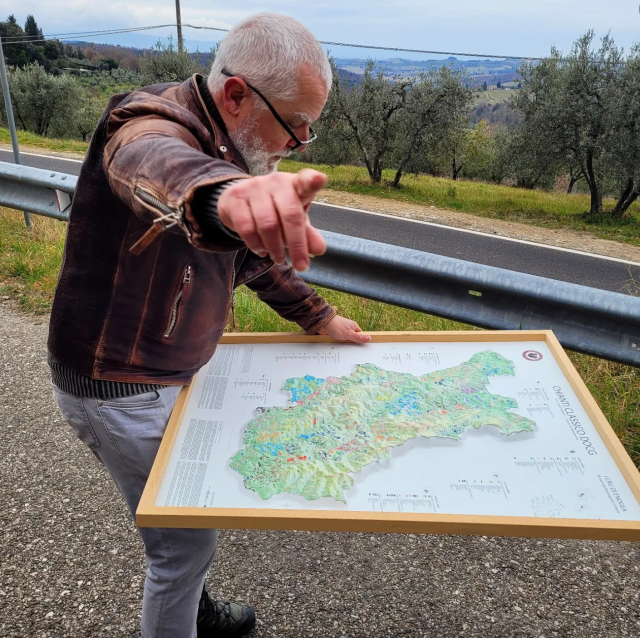
‘Cuz he’s the Map Man, yeah, he’s the Mapman

Related – When frost strikes, Chianti Classico responds

What about 2021?

Telling it like it is, 2021 is a vintage for the ages when we speak of Chianti Classico wines. There have been terrific years in the last 10 or so and each for different reasons but I for one have never witnessed these kind of tannins, this peculiar excitement of tension, the clarity of vernacular of post-modern structure.  As a community the wines are suggestive of culture, natural selection and suitability, sustainability and the cumulative movement towards organics. The ’21 Chianti Classico Annata make use of traditional materials and resources and more than any recent vintage open a window into what kind of Riserva and Gran Selezione will arrive when the Chianti Classico Collection 2024 is shown. It just feels like we know how special those wines will be. It is true that a good deal of Classico level 2021s will be released to the markets this year but it has been a while since the adage “sangiovese needs time in bottle” has been as more important as it is from this particular vintage. On the surface these sangiovese can be understood by anyone but there are layers to peel away, nuances and graces to uncover, but most of all they are the sort to seek secondary character and will amaze when that stage is reached. At the collection and in the weeks since I have spoken with many producers and asked for their vintage assessment.

Alessandra Casini Bindi Sergardi – Bindi Sergardi, Vagliagli

Alessandra Casini Bindi Sergardi – Bindi Sergardi, Vagliagli: “A colder than normal Spring quarter, characterized by late April frosts, was followed by a hot summer and autumn, with the exception of October, which had typical temperatures. The most significant anomaly was observed in February, with a deviation of +2.1 °C compared to the average climate. Precipitation patterns also deviated from the norm: January and December were unusually rainy, while March, the summer quarter, and the September-October period experienced dryness. In 2021, the climate pattern was more consistent, with slightly lower temperatures and a bit more rainfall during the spring. This allowed for a longer and extended growing season. As a result, the grapes had more time to fully ripen, leading to wines with greater complexity and improved preservation of freshness. These wines exhibit a balanced acidity and, at the same time, a pronounced structure and a complex, well-defined fruit profile.

Principe Duccio Corsini – Villa Le Corti, San Casciano

Duccio Corsini – Principe Corsini – Villa Le Corti, San Casciano: “Just drank some Le Corti Chianti Classico 2021. The wine is very good, may be the best made at Le Corti in the Annata category. Very much terroir of San Casciano. In one word Goloso or “digest.”

With Federica Mascheroni

Federica Mascheroni – Volpaia, Radda: “The winter was not too cold and without much rain. In April we had a very cold few days and a small frost hit us. As you know usually the frost hit more of the lower altitude vineyards, but in that moment the much higher vineyards, because of the high temperature of the previous weeks, and the plants were much farther in growing compared to the one on the bottom of the hill. Anyhow the damage was not to high maybe around a two percent. In the last few years the season are quite dry and the rain come down in a crazy way :-(, because of this (and the high temperature) we keep the vineyard with grass: Cover crop (erba medica, inerbimenti vari) and we try to don’t take out the leaf from the plant and we do smaller number of cimature. We had very strong and extreme temperature, we reached 38° C.”

Volpaia Precipitation 2021


Chianti Classico Rainfall 2021

Chianti Classico Harvests 2018-2021

“Luckily we were able to have a long harvest to reach a good level of sugar and acidity, it was a little bit longer compared to the normality around 10 days, a nice rain helped us to have a good product in the cellar :-). The last vintage has been quite different compared to the others. It is difficult to make a comparison with a past vintage.”

Giovanni Manetti – Fontodi, Panzano

Giovanni Manetti – Fontodi, Panzano: “2021 was amazing in Panzano – a really great vintage. A good amount of rain between the winter and the Spring perfect to build a reserve of water in the soil. Quite cold in the week after Easter after the budding out that caused a delay in the growing the vegetation. Beautiful weather in June and July with mild temperatures and very sunny and warm in August but never too hot. A thunderstorm on August 28 provided a good rehydration and cooler temperatures during the night after that. Zero pressure of fungus during the growing and ripening season. The harvest for sangiovese started after Sept. 20th starting from younger vines and the best grapes have been picked between Sept. 25th and Oct. 10th. The wines are rich, complex , well structured with high quality tannins and a good acidity. All my wines are still maturing in oak and they taste wonderful.
With Iacopo Morganti – Il Molino di Grace, Panzano

Iacopo Morganti – Il Molino di Grace, Panzano: “I have my note about the climate and from this you can understand the vintage (I think) ! The winter 2021 was not too cold, but rainy until the end of March. Regular budding perhaps a little anticipated, the vines then slowed down the vegetative cycle due to a rather dry and cold April. In fact, on April 13th and 14th the temperatures dropped drastically, after an Easter with mild temperatures of 22/25 gradi celsius, and winter temperatures of -4 to -6 gradi celsius with difficult consequences for those who do our job, losing 50% of the production annual! Cazzo! (call it natural selection). The months of May and June were regular and not too hot or too cold with some rains which allowed good flowering. The summer as always very hot and dry especially July and August, but this is normal, Excellent ripening of the grapes in September and October thanks to some rains at the end of August beginning of September and also to an ideal climate with cooler temperatures at night, ventilation and sunshine during the day. All this has allowed an excellent harvest which for us began in early October, all very nice except for the quantity and for the Covid season.  From my phone I would like to send you some fire made at 4 AM from my self and the pictures of the consequence of the frost after two days. Believe me it was hard but the result is incredibly elegant quasi signorile I can’t translate. We still have all wines in oak, small production means incredible quality different from 2020 specially from the color (less) and the elegance and finesse. 2020 is more fruity and fresh more dark colour my be more easy to drink young.2021 will be a great vintage, again for me.”

Laura Bianchi – Castello di Monsanto, San Donato in Poggio

Laura Bianchi – Castello di Monsanto, San Donato in Poggio: “The summer was dry with only some sporadic rain in August, but the water reserves accumulated in the spring made it possible to avoid the stress of the plant. As for temperatures, the trend of the summer months was fairly regular without excessive heat waves. Furthermore, starting from the end of August the temperatures, while remaining quite high during the day, dropped considerably at night. This important thermal excursion has, in general, allowed an optimal completion of the ripening of the grapes. The harvest ended late on Oct. 18th.  Wines with very important structure and complex aromas, rich tannins and evident acidity, another vintage that will be able to age very well. Similar to 2019.”
Winemaker Manfred Ing – Querciabella, Greve

Manfred Ing – Querciabella, Greve: “2021 was a game of two halves. Abundant rainfall in winter was followed by ridiculously “unseasonably” warm weather in February and March, which got the vines excited and woke them up a little bit earlier than “normal”… whatever “normal” means ;). I remember clearly our first post Covid trade visitors were Canadians who came over for the early date of Chianti Classico Collection (which was moved to a later one) and they were nearly all in short sleeves after leaving Canada at minus 15C or whatever and coming over to 15C+ of gorgeous sunshine at Ruffoli. This warmth was followed by an icy cold week in April where temperatures dropped to well below zero in some parts of the valley below us. This all at a time when unfortunately some of the early ripening varieties had already burst. At the time it looked like the Chardonnay may have received a “tickle up” but it recovered well. Our reds were saved due to their higher altitudes but we did have significant losses on the coast in the Maremma. Spring was then followed by a warm, dry summer and this warmth resulted in smaller bunches and lower yields, something we have all come to get used to in these parts. Over the years of experience with these conditions we have learnt to manage our canopies and soils well to achieve perfect ripening. A small blessing from the season was the fact the vines were a little bit behind in development so there was no rush to start picking… A trap many fall into in a warm vintage! We were very fortunate as we were able to wait and wait and be patient and start to pick the Chardonnay only on the 13th of September, the latest we have ever started picking the Chardonnay at Querciabella! We got all the whites in within a week but again patience and experience told us to wait for the reds. We were then blessed with amazing rainfall at the end of September. Again, we still we waited for the Sangiovese! The biggest indicator for me was on the first of October there was still no water in the rivers and still nobody was out in the forests picking mushrooms, so we knew there was zero disease pressure and our Sangiovese would be perfectly healthy out there. So we continued to wait further, tasting regularly to get the picking dates just perfect. We started picking Sangiovese in that first week of October! It was incredible! With precision picking we made our way through the different villages from Greve, Radda, back to Greve, then back to Radda, then over to Gaiole, finishing off in our high altitude Casole terraces in Lamole on the 20th of October- so again incredibly late but with exceptional quality.”

Michael Schmelzer – Monte Bernardi, Panzano

Michael Schmelzer – Monte Bernardi, Panzano: “It was a great vintage, love the fruit aromas and the quality of the tannins plus the overall balance. I also think 2021 was also a perfect illustration of a vintage of the difference between perceived climate change problems versus poor choices in viticulture. In Panzano we had 800-plus mm of rain from January to May, nearly twice our annual rainfall (~450mm). After May, very to little rain until harvest.  If it wasn’t for a frost in five of our hectares we would have had a near record crop in 2021. We still had an abundant crop despite these five hectares bringing our average down. We had beautiful fresh aromas and quality tannins because our vines did not go under extreme stress, our viticultural choices made the difference, keeping the important leaves over our bunches, preventing them from being over exposed or burned, preserving important acidity.”
Monia Piccini – Il Palagio di Panzano

Monia Piccini – Il Palagio di Panzano, Panzano: “In winter it rained a lot, almost double the average. In terms of temperatures, the winter was slightly warmer than average. Spring 2021 as a whole recorded thermal values below average and rainfall 20 percent below average. There were extraordinarily high temperatures such as on March 31st with values close to 30°C and at the same time very low temperatures around March 20th and April 6th-10th with a strong frost. In the low hills below 250m there was severe frost damage, while in Panzano the damage was very much less than in the valley floor. Temperatures continued throughout April and May below the average by about 2°C, causing a strong delay in the vegetative restart after the frosts. At the beginning of June the vineyards had a strong vegetative delay, with flowering starting about 10-12 days later than usual. In June, temperatures recovered immediately with two small heat waves while July was only slightly warmer than average. The real heat wave of the summer occurred between 10 and 16 August, with temperatures close to 40° with sporadic burns on the leaves and uncovered bunches. The summer continued very dry, the third driest since 1955 with a rainfall deficit of over 60%. Under these conditions, the plants soon made up for most of the initial delay, but soon went into water stress as early as mid-August. The maturation went very slowly due to the lack of rain and only towards the end of September some storms allowed the plants to reach an acceptable maturity. The climatic trend favoured the production of healthy grapes. The production in our case was lower than the average for the years by a good 20 percent, in any case higher than in 2020, but in the lower hilly areas there were drops of 60-70 percent. The harvest was delayed compared to previous years in the hope to have a better maturation while waiting for rains, but the lowering of temperatures and the state of the plants prompted us not to postpone the harvest too much to avoid drying of the grapes and sugar levels that were too high. At the harvest the grapes were perfectly healthy, with high sugar values, higher acidity than usual but with good skin ripening thanks to the lower grape load compared to previous years. The new wines have very clean aromas, very ripe fruit, very high colour intensity, remarkable almost concentrated structures, dense but not dry tannins (thanks to a different vinification protocol) and marked acidity, high alcohol content.”

Sebastiano Capponi – Villa Calcinaia, Montefioralle

Sebastiano Capponi – Villa Calcinaia, Montefioralle: “The weather pattern in Chianti for 2021 was characterized by a rather cold and rainy January and February but at the same time by a very dry March with temperatures decidedly above the seasonal average, especially in the last decade, which favoured the start of budding of the vines. Unfortunately, this early spring was followed by a very cold beginning of April characterized by two-night frosts, on 7 and 8 April, which drastically reduced the number of productive buds on the plant. The thermal shock suffered by the vines and the climatic trend of the months of April and May, particularly cold and rainy, led to a delay in flowering which took place after the first ten days of June. The vegetative explosion due to the sudden increase in temperatures in June caused many difficulties in the management of the canopy but the rather dry climate in the summer months and the timeliness of the interventions did not allow the downy mildew to develop. On the other hand, the fight against powdery mildew was more problematic, also due to rather frequent ventilation which, in addition to conveying the spores of the fungus, contributed together with the absence of rain to dry out the soil. Temperatures in the summer months have always remained average with a good excursion between day and night until the days around August 15th when the African subtropical anticyclone, called Lucifer, arrived and caused severe damage to the grapes of the younger vines, which normally have a less developed canopy and a root system more sensitive to drought, especially those planted on plots with western and southern exposure where the afternoon sun has hit the most. Due to the combination of the frost in April, the sunstroke in August and the summer drought, the production was very small in quantity and the harvesting time went back to ancient times when Sangiovese was rarely picked before the month of October.  The lack of water in the soil, which certainly led to a physiological slowdown of the vine, in certain vineyards the veraison of Sangiovese was completed in early September, and the persistent absence of rain in September and October in the Val di Greve combined though with an optimal thermal excursion between day and night favored a rather balanced maturation even if slowed down by the drought. Our harvest began on 23 August with the harvest of Sangiovese grapes to produce our sparkling Mauvais Chapon and ended for the red grapes on 6 October with the last Sangiovese vineyard and on 26 October for the white grapes with the Tor Solis vineyard located at 720 meters above sea level. Thanks to a meticulous and painstaking selection in the vineyard we were able to eliminate almost all the grapes dried out by the August sun. Musts, in fact, are generally characterized by a fairly high sugar content, but lower than those of 2017, and by a nice freshness, a non-trivial element to obtain and maintain in a vintage like this.”

Related – Chianti Classico is the future

The highlight of the Chianti Classico Collection took place at the for the premier screening of La Leggenda del Gallo Nero, “The legend of the Black Rooster.” Al canto del gallo, corri veloce cavaliere. Domani la guerra sarà finita e il vino abbonderà nei calici. Avete già visto il nostro film sulla storia del Gallo Nero? Vi sveliamo la leggenda! “At the crowing of the rooster, run fast knight. Tomorrow the war will be over and the wine will abound in the glasses” Have you already seen our film on the history of the Black Rooster? We reveal the legend to you!”

Click on the link to watch the film “La Leggenda del Gallo Nero” then scroll down for 245 tasting notes for wines tasted in February 2023 at the Chianti Classico Collection and visits with estates.

Godello’s 25 top wines from the Chianti Classico Collection

Annata

Castell’in Villa Chianti Classico DOCG 2019, Castelnuovo Berardenga

Leave to Castell’in Villa to do not just the right thing but carry the weight of necessity and hold back Annata to a point where it can be tasted and assessed with the respect it so richly deserves. Though this Castelnuovo Berardenga estate and their historic vineyards are equipped to create magic in the most challenging of vintages, well when a season like 2019 is gifted then the magic turns to the supernatural. Fruit is everything, as it must be and the aspects of climate, fermentation, maturation and all the accruements of seasoning add up to a speciality as no other Chianti Classico will create. This is a very special vintage of Castell’in Villa and one to rival any Riserva or Gran Selezione made in this vintage. Will live in infamy. Drink 2025-2038.  Tasted February 2023

Castello Monterinaldi Chianti Classico DOCG Vigneto Boscone 2019, Radda

The single vineyard sangiovese never touches wood, only concrete, in fermentation and also aging. It is the highest expression of Monterinaldi and so it will always be a cru Classico. If a Gran Selezione were to be made in the future it would be a different or rather a new label. This is not yet in bottle though it is a finished wine, so despite its anteprima positioning the wine can be assessed, for the most part at least. Thirty-one year old block at this stage, heavy in Alberese, 3.5 tonnes per hectare in yield, intensity and tension at the fore of what this wine just is. That said the 40 days of skin contact makes for beauty up front no matter the structure afforded. “Cimento” aging means captured freshness and there is truly no thought of either tannin or spice not arriving to set this sangiovese up for a long life ahead. This will be special. Drink 2025-2034.  Tasted February 2023
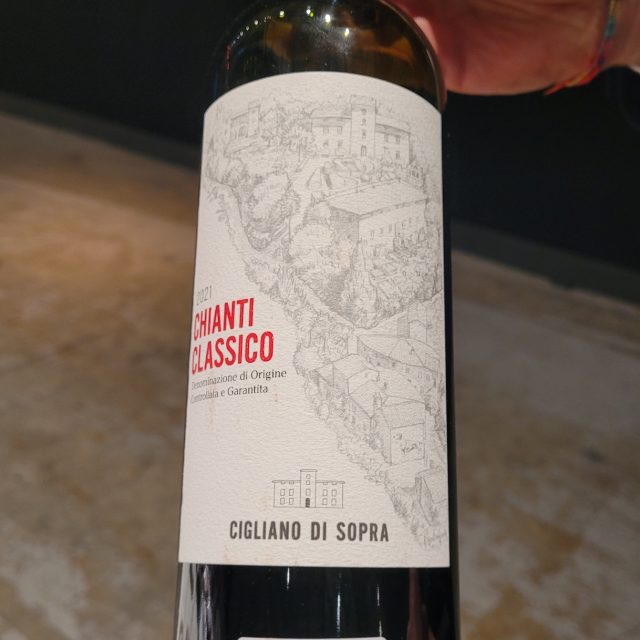
Fattoria Cigliano Di Sopra Chianti Classico DOCG 2021, San Casciano

Behold yet another precocious and shockingly generous Annata from the team of Matteo and Maddalena at Cigliano di Sopra. That and an intensity of things intangible despite the very tangible, credible and knowable parts of this wine. So very singular and stand alone for San Casciano and yet a style but more so a way of being that just feels like the future. Too young to really know but it seems like this duo has learned how to keep their ferments from flying away and also from getting away. The professionals are in the house. Drink 2024-2029.  Tasted February 2023
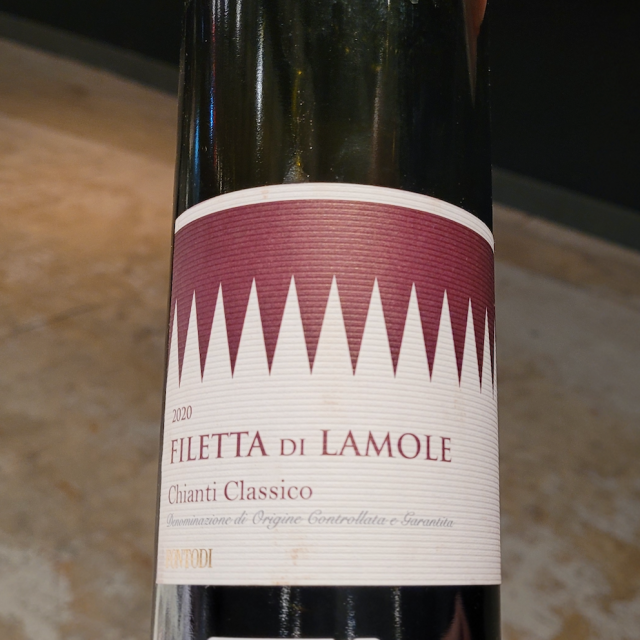
Fontodi Chianti Classico DOCG Filetta Di Lamole 2020, Lamole

Filetta di Lamole does not hold back or skimp on the perfume and is at once a consistent wine connected to the vintages that have come before. Would not express 2020 as a sangiovese that stands up too be counted but more so one that speaks in calmer, gentler and more hushed tones. Yet the fine swarthiness is always present and it works to characterize Filetta in ways that Panzano from Fontodi does not seem to do. More low and slow personality from 2020 and longevity will likely become its middle name. Drink 2024-2031.  Tasted February 2023
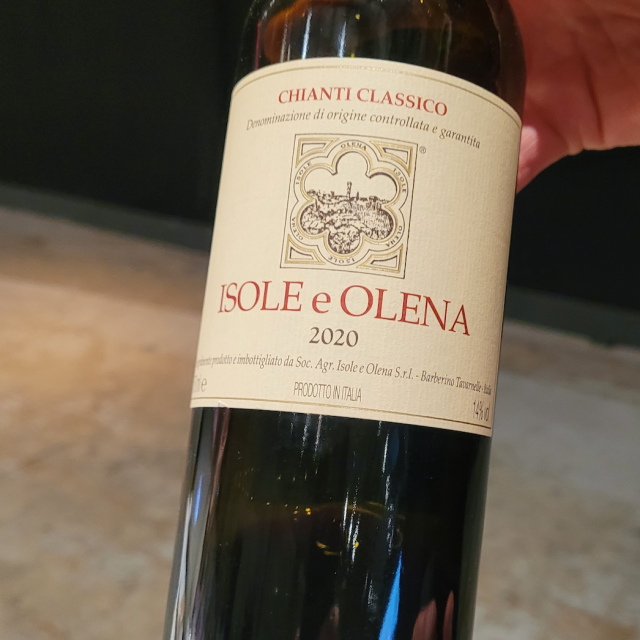
Isole E Olena Chianti Classico DOCG 2020, San Donato In Poggio

All the schist-bled, favourable exposure gratified and experiential positioning has conspired to raise spirits for the season from Isole e Olena’s standard bearing and load carrying Annata. Hard to find a more exacting example for the cuvée style in which a few varieties in higher percentages than the increasing norm are gathered for what a Chianti Classico can and to be frank, should be. The most sapidity is expressed by way of a Paolo de Marchi Classico and few roll off the tongue like an Isole. As good as it gets for 2020. Drink 2024-2032.  Tasted February 2023
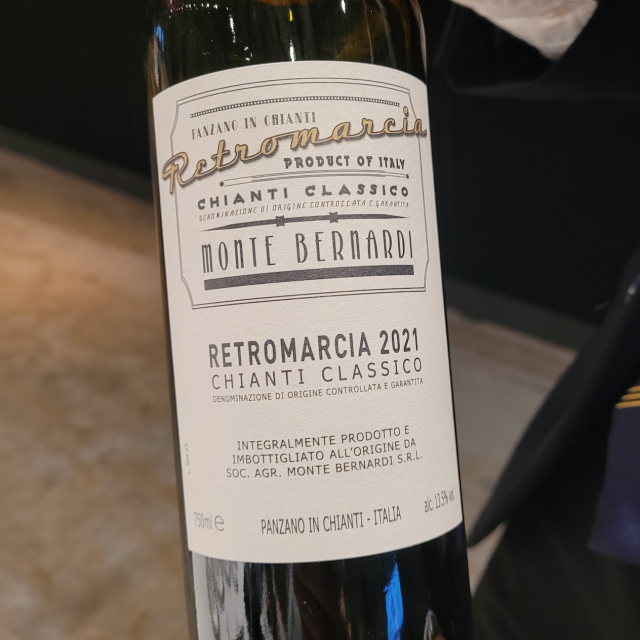
Monte Bernardi Chianti Classico DOCG Retromarcia 2021, Panzano

Retromarcia from Michael Schmelzer is as pure and unadulterated a sangiovese as he has ever made, in fact it resides at the top of the heap in terms of such clarity for any in the territory. That includes his smack dab in the middle of Panzano location and my if he did not figure it all out with this 2021. Well, relatively speaking of course as compared to what came before and things surely changed again the next time he laid his winemaking hands on that recent 2022 fruit. This sheds the trials and tribulations of statism, but more importantly the experiments and errors of stalky, chalky and swarthy. Avoids the potential for cumbersome 2021 by expressing the simplicity of beautifully clean and stay at home fruit. Drink away. Grande Michele! Drink 2023-2029.  Tasted February 2023
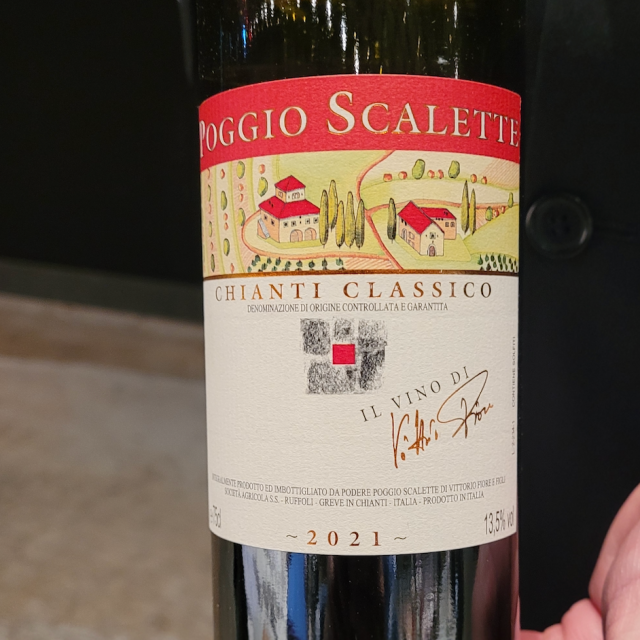
Podere Poggio Scalette Chianti Classico DOCG 2021, Greve

It takes but a second to recognize the Chianti Classico excellence in this 2021 from Jurji Fiore and his Poggio Scalette from Greve’s Ruffoli hill. The levels are all high, mighty and intense in a wine with acids and fruit so inclining but you will not find a finer example of white limestone soil scintillant than what is wildly expressed from this wine. An Annata of major importance, educational and something from which to understand what happens in specific places of this complex territory. My, oh my. Drink 2025-2034.  Tasted February 2023

San Giusto A Rentennano Chianti Classico DOCG 2021, Gaiole

Extreme youth for a Fattoria San Giusto a Rentennano Annata and while this is a barrel sample truth is Luca Martini di Cigala’s offers up more fodder for assessment than many. This will be a most important vintage for two reasons. The first is quality and the second a matter of education, a view to master interpreter taking water (of Gaiole) and transforming it into wine. Not just Gaiole but a little peninsula between the arms of Vagiagli and Castelnuovo Berardenga on a promontory specific to San Giusto. Fine lines, angles and waves continually sweeping make this a most impressive Annata and one to savour for the next 15 years. Drink 2025-2035.  Tasted February 2023

Villa Di Geggiano Chianti Classico DOCG 2019, Castelnuovo Berardenga

Geggiano must have time in a bottle, “ticking the moments that make up a dull day,” to come away later on, expressive of the Alberese soil (mainly) and deliver what has to be this place. Castelnuovo Berardenga that is and yet this valley with its ridges to the east and west is like no other place because winds, rain, sun and air flow differently, acting upon pure sangiovese to create wines like this. What this is exactly can’t be precisely said but this 2019 is the irrepressible essence indivisible to the history of the past. Also the present, right here in this glass, prescient, pure, persistent and built to last. Sangiovese from Geggiano is the future. Drink 2025-2033.  Tasted February 2023

Mocenni, Bindi Sergardi, Vagliagli

Riserva

Bindi Sergardi Chianti Classico Riserva Calidonia DOCG 2019, Vagliagli

Calidonia, Calidnoia, my what a beautiful wine you have become, with three-plus years got behind your acids are softening and tannins fleshing, above and beyond their original anhydrous moments. Calidonia from the Casini/Bindi-Sergardi clan is purely Vagliagli and a 100 per cent sangiovese expressive of vineyards where Galestro and Alberese each impact upon vines. This is Riserva my dear readers. This is Riserva, from Vagliagli’s Craigie Dhu, a.k.a. Mocenni. “Oh, but let me tell you that I love you. That I think about you all the time, (Caledonia) you’re calling me and now I’m going home.” Drink 2023-2033.  Tasted February 2023
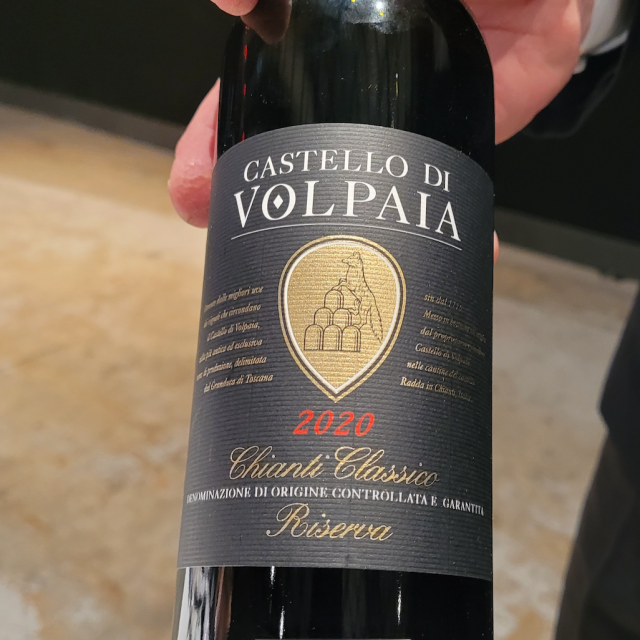
Castello Di Volpaia Chianti Classico Riserva DOCG 2020, Radda

Here the textbook is written on producing Riserva from 100 per cent sangiovese out of vintage as humid as they will come. Done so by making the most of vineyards at elevation in a cool location, that being Radda and selecting top level phenolic berries worthy of this place on the Chianti Classic pyramid. A sangiovese that slides and glides both across the palate and through the stages of its presentation. Seamless and teachable. Learn Riserva 101 right here. Drink 2024-2029.  Tasted February 2023
Gagliole Chianti Classico Riserva DOCG 2019, Panzano

Like the Classico this is all sangiovese but in Riserva the fruit is only Panzano and the selection is the second choice of the ripest and tops of the harvest, but also the quality of tannins involved. Mainly from the vineyard beyond the terraces and a couple of blocks purchased from Le Cincole. This is pietraforte territory along the ridge above the Conca d’Oro that falls to the southeast, finishing at the vineyard where Fontodi’s Flaccianello is made. Harvested late, into October and the soil makes a requiem for Riserva quite square in style, with high acidity and lower pH. Savoury as well but in an herbal liqueur way, like a steep of sage, fennel and rosemary, anti-amaro if you will and structured though not the kind of sangiovese that jolts or rocks your palate. The sub-structure, positioning and stature are all impressive.  Last tasted February 2023

Nothing scents like a Gagliole and nowhere in Chianti Classico does this sense of fruit compaction, timed and tidy acidity and then fineness of sweet, evolved and intelligent tannins co-exist. Herbal yet delicately so, dripping and oozing of terroir, spice infiltrate of every zone, pocket and pore. Not sure there can be recalled a Riserva with this much personality and oomph but here it is in all glory. Also not sure there has been an example that needs as much aging time as this generously structure ’19. Don’t touch and return five years forward. Drink 2026-2033.  Tasted March 2022

I Fabbri Chianti Classico Riserva DOCG 2019, Lamole

Riserva from Susanna Grassi’s I Fabbri reaches the phenolic height of heights from a vintage of few peers. While 2015 and 2016 were surely apex seasons there may be an argument made in seeing 2019 as exceeding the ripeness of those very good years. The Lamole herbology in perfume will not be denied and yet there are berries and red stone fruit not nosed before, to mix with the citrus and sweet roasted nightshades. This is next level Riserva, all senses piqued and finding moments from which sweet, sour, salty and umami all manage to coalesce. Will be somewhat past prime and yet I am looking forward to tasting this is 2035. Drink 2024-2032.  Tasted February 2023

Istine Chianti Classico Riserva DOCG Levigne 2019

Levigne is Angela Fronti’s way of conjoining Radda and Gaiole, of stacking the variegate fruit of Istine, Casanova dell’Aia and Cavarchione, to create a Riserva layering, circuitous and in beautiful swirl. Swagger too, some attitude and grip that speaks to Alberese, Raddese acidity, Gaiole savour and the exuberance of La Fronti. How can you know, intuit and also feel the emotion of the vineyards, the passion of the maker and the near perfect pitch off the various gatherings of fruit? You can because they are as one. Not Gran Selezione because it’s a selection from several places but for all intents and purposes, not to mention quality, it may as well be. Drink 2024-2033.  Tasted February 2023

La Montanina Chianti Classico Riserva DOCG 2020, Gaiole

My what a lovely Riserva! Fruit succulent and sweet and swirled so effortlessly into equally mouthwatering acidity of pitch perfect tone. Yes there is Gaiole savour and it’s presence is as a seasoning, with chef’s ability, emotion and touch. As for 2020 well this from La Montanina delves into passion and the aforementioned emozione as well and as much as any Riserva in the Classico area. Brava, Oretta Leonini. Grande Gaiole! Drink 2024-2032.  Tasted February 2023

Fattoria Pomona Chianti Classico Riserva DOCG Bandini 2019, Castellina

Bandini are bandits and yet some might define the Italian word as “the quality of being impenetrable, maculation or imperviousness.” Monica Raspi’s 2019 is anything but and its tannins do nothing of the sort but they are proper. Riserva is possessive of the most clarity and precision, not to mention grace in the cleanest sangiovese of them all, reeling in and through the years. Lovely swirl of berries and essential oils, elements and vitamins, bled from stone, beauty everywhere. “People can you feel it, love is everywhere.” Drink 2023-2030.  Tasted February 2023

Gran Selezione

Carpineta Fontalpino is located in Castelnuovo Berardenga but their Dofana cru is a matter of Vagliagli, sibling UGA within the two-winged commune. Vigna Dofana, special place for the Cresti family, deliverer of Vagliagli as only this place can within the most complex and also yet fully understood UGA. Dofana now graduated or better said migrated to Gran Selezione as a subtle, shadowy sangiovese, like chiaroscuro where fruit and acid are light and also dark, yet with time one will become the other. The constant is Dofana and yet now the label speaks in territorial terms, appellative as Gran Selezione, something new and accepted by Cresti siblings Gioia and Filippo. Benvenuto ragazzi. We look forward to discussing this 10-15 years down the road. Drink 2024-2032.  Tasted February 2023

Castello Di Monsanto Chianti Classico Gran Selezione DOCG Vigneto Il Poggio 2018, San Donato in Poggio

There can be little doubt that Gran Selezione is the wine to explain style from a place within a place, that being Monsanto’s Il Poggio Vineyard inside the UGA of San Donato In Poggio. Il Poggio is four things; famous, respected, stunning and structured to design formidably age-worthy sangiovese. Stylistically speaking this Gran Selezione is so very different than Riserva because older-school austerity and unrelenting tannic structure keep fruit locked in tight while also interpreting place with pinpoint precision. But 2018 is a warm and accumulating vintage and so all things being equal there are strong determining factors for the fate of this place. Highly aromatic, tripping with light, energy and the science of the soils, of Galestro and schisty fragments that must be a part of the make up, from stones through vines and vines to fruit. This Monsanto Selezione smells like the place’s dust kicked up by heels and hands dragged through the dirt. With 2018 in bottle there could be an argument that San Donato in Poggio’s are some of the richest of all the UGAs, but this is Monsanto where destiny is all. Drink 2025-2037.  Tasted February 2023

Conti Capponi/Villa Calcinaia Chianti Classico Gran Selezione DOCG La Fornace 2019, Montefioralle

Incredibly youthful for a Gran Selezione and “the furnace” will surely always ensure to wrap a sangiovese tight, keep it from gregariously expressing itself when this young. The tannins are lined up in a long and unbreakable chain, the fruit set in a well below, textural juice not yet scooped and heaped upon the palate. This structure like karst from bedrock plus acids in skein formation hold flesh not yet put meat on these bones. These parts are all there above sangiovese lying patiently and resting in waiting. La Fornace is recited in refrain after verse after refrain with so many stanzas to come, chanted in canto over time and across decades ahead. Drink 2026-2037.  Tasted February 2023
Il Molino Di Grace Chianti Classico Gran Selezione DOCG Il Margone 2019, Panzano

Comparisons and contrast are considered side by side with 2020 and so as with Riserva there is a marked difference with 2019 Il Margone. That said I find more consistency with the following 2020 then was noted between the two vintages at both the Classico and Riserva levels. Here a darker and more concentrated fruit set stays true to the Gran Selezione appellation but also with respect to elevated acidity and fineness of tannin. Yes 2019 is a more “elegant” vintage but at this level the intensity, polish and game are all set to impressive levels. The structure is finer and less rustic in 2020 and so one vintage’s loss is another’s gain, and vice versa. Choosing one over the other is splitting hairs, like picking a favourite child. Can’t go there. Drink 2025-2031.  Tasted February 2023
Il Poggiolino Chianti Classico Gran Selezione DOCG Le Balze 2019, San Donato In Poggio

Le Balze (formerly Toscana IGT) is a finely composed and structured Gran Selezione from San Donato in Poggio yet is apposite to so many from the UGA, stylistically speaking. More of a blue to even purple fruit profile, nearly blueberry and what strikes so poignant about this 100 percent sangiovese is its level of calm, poise and even restraint. It never crashes in waves, nor makes any threatening tannic demands, but does its work in subtleties, through seamless transitions and ultimately with precision and focus. Very impressive. Drink 2025-2036.  Tasted February 2023
Isole Delle Falcole Chianti Classico Gran Selezione DOCG 2019, Panzano

The project of Emanuele Greatz, exporter of Roberto Voerzio, Il Molino di Grace, San Fillipo (Roberto Gianelli) and Barbaresco’s Russo. This is the early fruition of Emanuele’s dream, renting Panzano land in 2016 to eventually purchase and a first vintage in 2017. The land is officially Emanuele’s now. The name of the Conca or amphitheatre actually shares an affinity with the Conca d’oro, in shape, orientation and yet there is much more forest and also higher elevation. Total of four hectares planted, 1.2 up on the hill facing south at 420m and roughly two below the house, both set in Montefioralle. The final 0.8 for the Gran Selezione is in Panzano right next to Montefili and so Graetz calls it Montefili – internally.” It will be called Il Falcole. Gran Selezione 2019 is solo sangiovese sent to 30 months in big barrel combination of French and Slavonian. Purely Panzano through a Selezione of a pinpointed place and to be honest the fruit is a bit deeper and darker than many Panzano ‘19s. That said there are layers and layers to unfold, unfurl and open with high acidity from the high elevation vineyard up at 520m. Where else is Panzano (other than Montefili and Cenattoio) will express this elevation in this wild-eyed and excitable way? A harbinger of the future and initialization of the realization of Emanuele’s dream is in this glass, from this bottle. Wait three years to understand just a bit more and figure things out for 10 more thereafter. Drink 2026-2034.  Tasted February 2023

Le Fonti Di Panzano Chianti Classico Gran Selezione DOCG 2019, Panzano

As always at this appellative level Le Fonti’s is 100 percent sangioivese and as with Annata but also Riserva the house style chooses fruit over wood and seasoning over toast. The warm vintage finished with late season daytime highs juxtaposed against nighttime lows and this Gran Selezione emerged with glaring clarity, instrumental precision and parts on point. From fruit through structure round fits into round and square into square, nothing awkward, sharp or out of place. An aromatic sangiovese while the palate is an experience and a half. Selezione ’18 is a prepared one, to withstand oxidation and develop supplementary character so that it may age well into the next decade. Drink 2024-2032.  Tasted February 2023

Rocca Di Montegrossi Chianti Classico Gran Selezione DOCG Vigneto San Marcellino 2018, Gaiole

The next San Marcellino Gran Selezione is a big one, strong willed and big-boned, laced with trace schisty-marl-Galestro elements and minerals from a vineyard capable of structuring wines like no other. This is Monti in Chianti, of all the red, blue and black fruits, coming away violet purple and speaking about a season. A warm one, all the way through to October and the phenolic ripeness here is off the proverbial charts. Wow. Drink 2025-2037.  Tasted February 2023

The AIS Sommeliers of the Chianti Classico Collection

Acquadiaccia Chianti Classico Riserva DOCG 2019, Panzano

A blend of 90 percent sangiovese and (10) canaiolo of a purity that is Panzano incarnate, straight away. Glycerin in stride, chalky tannin liquified and just the faintest hit of green astringency. So close to acceding the beauty of idealism yet still a really lovely wine in almost all regards. Drink 2023-2027.  Tasted February 2023

Antinori Gran Selezione Chianti Classico DOCG Badia A Passignano 2020, San Donato in Poggio

Classic dried herbs and brushy Badia a Paassignano style, here with the accessibility of 2020 though the fruit is pure red cherry with almost no darkening moments. Cool, almost minted with a creosote and cooling coals warmth through the chill of the air. This Gran Selezione is imagined as a perfect meditation in late fall, in a cabin in the woods, by a fire, dimly lit room and silence. Drink 2024-2028.  Tasted February 2023

Marchese Antinori Chianti Classico Riserva DOCG Marchese Antinori 2020, San Donato In Poggio

Precisely what must be expected and frankly demanded from Antinori’s San Donato in Poggio Riserva and that would be a perfectly executed cuvée of sangiovese complimented by varieties that speak to exactly that. Glycerol and viscosity in a silken thread sewing fruit with the kind of acidity and tannin of the utmost professional kind. Nothing out of place and the window has officially opened. Drink 2023-2027.  Tasted February 2023

Arillo In Terrabianca Chianti Classico DOCG Sacello 2021, Radda

Intense sangiovese while also drying and tannic with potential to travel far and yet this is certainly not the early beauty of what came from 2020. More so a sangiovese of classicism that must have some time in the bottle before we know what will come. Great length here so there will be a future, that much is guaranteed. Drink 2025-2029.  Tasted February 2023

Badia A Coltibuono Chianti Classico DOCG 2020, Gaiole

As per the Stucchi-Prinetti plan (which arguably dates back to 1846), the Classico is consistent through the vintages and what feels like epochs as well. There is this swell of sangiovese fruit made complex and curious by what Badia a Coltibuono marks as 10 percent other grape varieties, each making a statement in multifarious manifesto. Searing Annata, part strike and part pierce through the red chalky-cherry originality of these Gaiole hills. There is more going on here than most and year after year this represents benchmark material for the UGA. Drink 2024-2028.  Tasted February 2023

Badia A Coltibuono Chianti Classico Riserva DOCG 2018, Gaiole

A Riserva from Badia a Colibuono is pretty much a Selezione matter and yet, not so much. The emotion is there if not the pack mentality and so Riserva is just Coltibuono. Almost startling to begin with but that is simply the acidity of place talking, distracting and exacting its power over a field blend-like gathering of varieties led by sangiovese. Riserva acts on behalf of and in the ways of the abbey and surrounding vineyards, were they personified would surely speak. Like the paintings along the cloister corridors and the ocupants whose truths, history and tradition are what you need to hear. Drink 2024-2030.  Tasted February 2023

Bertinga Chianti Classico DOCG La Porta Di Vertine 2020, Gaiole

As expected, lithe and here from Gaiole also verdant, influenced by UGA, commune and forest. A tart and also taut while pure sangiovese with some Alberese chalkiness in the tannins. Quite well made and supremely indicative of where it comes from. Drink 2024-2027.  Tasted February 2023

Bibbiano Chianti Classico DOCG 2020, Castellina

Still firm, grippy and liquid peppery, not in a reductive sense but the tannins (while sweet) are dusty as well. Classic Bibbiano, of two sides by soil and micro-climate, layered continuously upon and with one another, to create an always stylish and focused Annata. Really pure Sangiovese, as always, clean as it gets, tidy, orderly and succinct. Drink 2024-2028.  Tasted February 2023

Bibbiano’s is at the forefront of youthfulness in that there is a closed aromatic launch and some reduction needing to blow off before the hounds of charm can be released. Head straight to the palate to be graced with the interspersions of texture and structure, first liquid Castellina chalky, then wound around the body of this wine. Sangiovese needs the bottle and with eyes closed those words of Tommaso Marrocchesi Marzi play in refrain over and over again. Be patient and kind to his wine and in turn you will be kindly rewarded. Drink 2024-2028.  Tasted March 2022

Bindi Sergardi Chianti Classico DOCG La Ghirlanda 2020, Vagliagli

Everything about La Ghirlanda is Bindi Sergardi in Vagliagli as it always must be, natural fruit red and pure, transparent and through the looking glass of precision for family and location. Curious how there is some tannin here, fine grained structure and while the wine is very accessible there is no doubt it will live longer than many of its ilk. This is a very, very good Annata, luck and fortune all in. Drink 2024-2029.  Tasted February 2023

Cantine Bonacchi Chianti Classico DOCG 2021, Vagliagli

Basic and vintage relatable as 100 per cent sangiovese in rustic Vagliagli style. Not the most freshness in fruit, some salumi and certainly a way that is older schooled and recognizable. Tradition dies hard. Truly. Drink 2024-2026.  Tasted February 2023

Borgo La Stella Chianti Classico DOCG 2020, Radda

Fine example of combining place (Radda) with vintage and appellative level. This is an exacting 2020 as Annata with fine acidity and food-matching capability. Grippy as needs though never vivid, herbal yet not herbaceous. Well-balanced and ideal for three-plus years ahead. Drink 2024-2027.  Tasted February 2023

Borgo Salcetino Chianti Classico DOCG 2020, Radda

Quite cool, minty, brushy and herbal to represent Radda in the most clear and knowable way. The level of tannin here is notable, markedly elevated for 2020 Chianti Classico and it is apparent that Radda at heights did not ripen at a level much above seven or 7.5 on the scale of these things. Quite a searing example for the season. Drink 2024-2026.  Tasted February 2023

Borgo Scopeto Chianti Classico DOCG 2020, Vagliagli

Perfectly round and normal, dictionary entry sangiovese with softness and intensity of hue, by colouring and merlot as a friend of sangiovese. Tart and just tight enough to hold on for a few years but for the most part this is meant to be consumed in the first two. Drink 2023-2025.  Tasted February 2023

Brancaia Chianti Classico Gran Selezione DOCG 2020, Castellina

The Brancaia from Radda is expressly three things. First and foremost a matter of 2020, secondly Castellina of temperament and more than anything a Gran Selezione to speak of the current epoch of Brancaia. As far as vintages are concerned these 2020s are a thing of great beauty and accessibility, with respect to UGA the acidity and cool mentality are at the height of heights and finally, the transparency and see through honesty is exemplary of the current Brancaia world order. Fine, fine Selezione, drinkable and cellar-able. Do as you please. Drink 2025-2032.  Tasted February 2023

Brancaia Riserva Chianti Classico DOCG 2020, Radda

A Riserva from Brancaia is Riserva in a nutshell, of startling professionalism and also emotion. The acidity of place begins in dissertation, leading sangiovese with 20 per cent merlot in the ways of vineyards translated through high execution to personify just what it means to be, act like and exist as Brancaia. Silky smooth, liquid chalky, finely chiseled and structured, able to age long. Drink 2024-2029.  Tasted February 2023

Buondonno Chianti Classico DOCG Podere Casavecchia Alla Piazza 2021, Castellina

High glycerin, notable alcohol and structure as well. A big wine as always for Gabriele Buondonno for several reasons, namely elevation and solar radiation but also the intangible of conversion rates and things just being natural, the way they simply have to be. Some vintages are bigger and greater than others and for sangiovese in varietal purity this out of 2021 will equivocate with superior strength, balance and trenchant intensity. Count on it. Drink 2025-2031.  Tasted February 2023

Buondonno Chianti Classico Riserva DOCG Casavecchia Alla Piazza 2020, Castellina

To taste and think upon Buondonno as Riserva from as recent a vintage as 2020 is to engage in an almost fruitless exercise. This because the level of fruit, acid and tannin in cohorts is so immovable that without time in the bottle it’s hard to gain any real traction. This from 2020 carries more weight and energy than so many, especially from this triad of a location where Castellina, Panzano and San Donato in Poggio nearly converge. Gabriele Buondonno’s is like a stacked ferment of grapes, place and vintage needing three years to flesh and release some charm. Three more to be in the zone. Drink 2025-2031.  Tasted February 2023

Villa Cafaggio Chianti Classico Riserva DOCG 2019, Panzano

Always important for a sangiovese to act and project as Riserva when choices are made for fruit to be this way. Cafaggio’s is exactly that and this 2019 resides at the top of the echelon for Riserva made by this Panzano producer. The fruit is exceptional and the structure a fine matter of acid and tannin intertwine. Still some grippy matter to resolve so expect this to drink at peak in another 12-18 months. Aerate now for positive results. Drink 2025-2028.  Tasted February 2023

Cantalici Chianti Classico DOCG Baruffo 2020, Gaiole

A surprisingly tannic and overtly structured Annata from Cantalici out of 2020. From Gaiole and seems to bring more grip and drying herbal feels than most UGAs from this vintage. Not the quietest or most amenable sangiovese but one needing time and that speaks for place more anything else. Barrel as well which also needs more time in bottle to melt and settle. Drink 2024-2027.  Tasted February 2023

Cantina Tuscania Chianti Classico Riserva DOCG Effige Nera 2018, San Donato In Poggio

Unequivocal and unmistakable as being a sangiovese from San Donato in Poggio for one reason alone and that is the blood orange perfume so bloody (pun intended) typical of this westerly UGA. Here as Riserva and from 2018 with its purity of red fruit so citrus is origin, fine grained though now liquefying tannin and from a vintage picked in late September yet balanced in alcohol, and ripeness ahead of a strange 48-hour spell cast by temperatures running daytime high and nighttime low. Really fine Riserva in the window at this very moment but will stay this way for three to four years easy. Drink 2023-2027.  Tasted February 2023
At Caparsa with Paolo Cianferone, John Szabo MS and Mona Haugen-Kind

Caparsa Chianti Classico DOCG 2019, Radda

Different fermentations are involved, tank and especially concrete, very much a matter of Raddese acidity, fruit sharp and über cherry in linear sangiovese. Needs another year to soften just that much more though these are quite nurturing tannins and the wine does really choose to please. Drink 2024-2028.  Tasted February 2023

Caparsa Chianti Classico Riserva DOCG Caparsino 2019, Radda

Aged in the big barrels, determined by a selection of higher quality berries and the cask size. How does Paolo know which are the best bunches? “I just know,” he says. “For more than 20 years I know where the best grapes live.” Might be where the cinghiale eat, where the clay is wet or not, in dry weather. More of a Riserva vintage for Caparso, added richness a bonus and without any wood distraction this glides and glistens, slices and dices across the palate. Solid sangiovese with a cerebral twist. Drink 2024-2027.  Tasted February 2023

Caparsa Chianti Classico Riserva DOCG Caparsino 2018, Radda

Mature aromatics, chewy red fruit, all the leathery plum and liquorice that can be packed into a Chianti Classico Riserva. Developed to the drinking stage, earlier as a vintage than many, hot one mind you and showing that right now, and more. Some mineral and chalk to the structure but pretty much good to go. Drink 2023-2026.   Tasted February 2023

Caparsa Chianti Classico Riserva DOCG Caparsino 2017, Radda

A vintage with no Doccio Matteo made because the grape quality and also quantity was not up to Radda par. “The wine is a mirror of the land, the people and the weather, like a dog.” The grapes here are from both Riserva selections and so quality reaches above par as only one of two, our two in one were produced. Severe at its moments and yet there is much concentration and compact elements, especially chalk and tension in this grippy 2017. Wait on it – the acids are also there to act as the fruition reaching catalyst. Drink 2024-2029.  Tasted February 2023

Caparsa Chianti Classico Riserva DOCG Caparsino 2010, Radda

Just 2,600 bottles were produced and only eight, well now seven remain of the vintage. “Some wines get you down, some make you talk a lot and some make you drunk. I want a wine that will make you think,“ explains Paolo Cianferoni. “In 2010 I lost 75 per cent of my production and I don’t know why but when I have a glass it makes me think. Maybe what was left on the vine received the love that was left.” A sip and left to think about things because not only is this sangiovese perfectly aged but it is right in the balanced zone. Also the mystery zone and places we’ve never been. Drink 2023-2027.  Tasted February 2023

Caparsa Chianti Classico Riserva DOCG Doccio A Matteo 2019, Radda

Single vineyard sangiovese with just two percent of colorino raised in 1000L botti, 12-14 months, just like the Classico. Doccio Matteo is the name of an old spring in one of the oldest vineyards, highest in elevation (450m) where the winds blow hardest. “Doccio” is a shower in Italian and Matteo refers to San Matteo. More tannin and tension here, especially as compared to Riserva (Caparsino) and needing an extra year to integrate. Drink 2025-2030.  Tasted February 2023

Caparsa Chianti Classico Riserva DOCG Doccio A Matteo 2018, Radda

Single vineyard sangiovese with just two percent of colorino raised in 1000L botti, 12-14 months, just like the Classico. Doccio Matteo is the name of an old spring in one of the oldest vineyards, highest in elevation (450m) where the winds blow hardest. “Doccio” is a shower in Italian and Matteo refers to San Matteo. Just as tannic and full of tension as per 2019 Doccio Matteo but also Chianti Classics Riserva and yet the ’18 Caparsino DOCG is beginning to fade. Not this former IGT with the potential to become Gran Selezione and which rages with energy plus drive. Let it ride. Come back in two years. Drink 2025-2030.  Tasted February 2023
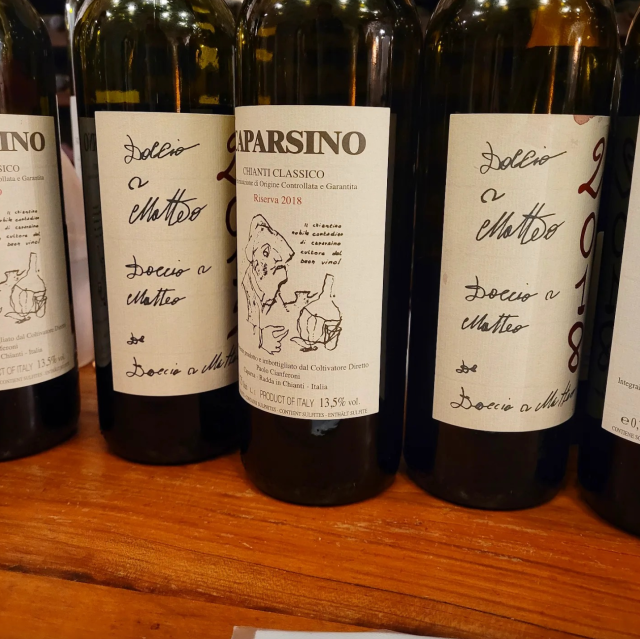
Caparsa Chianti Classico Riserva DOCG Doccio A Matteo 2016, Radda

The 2016 Doccio a Matteo is the first sangiovese (in this line-up) from Paolo Cianferoni that’s actually ready to drink, in fact it’s very much there with some drying tannin mixed with dried fruit happening. Full and caky wine, rich and substantial. Must have salty protein to show best and for the win.  Last tasted February 2023

A single-vineyard Riserva from the plot above the smaller second house called Caparsino and filled with all the soils; argile, Galestro and Alberese. Surely an absolute about face expression with higher volatility and a high, near and nigh potential for advancing porcini notes. A deeper and darker black cherry. Characterful and mature in such a different way, The acidity is uncompromising even while the wine acts oxidative with more wood than the other Riserva. Drink 2021-2026.  Tasted February 2020

Caparsa Chianti Classico Riserva DOCG Doccio A Matteo 2015, Radda

A fresher and more spirited sangiovese as compared to 2016, energy still running full and yet you can drink this with the right amount of air. Chewy liquorice, some tar, iodine and soy. Chocolate, lots of the dark stuff. The wines showed more wood back in these vintages. Drink 2023-2027.  Tasted February 2023

Caparsa Chianti Classico Riserva DOCG Doccio A Matteo 2012, Radda

Eleven years old, a vintage of high quantity which also means that the wine is a fatter and softer one. Fully resolved now and drinking with lovely grace and elegance.  Last tasted February 2023

Lovely bit of development from a vintage of great fortitude and possibility though seemingly only recently softened. Now smooth tannin and yet so, so very sangiovese. The red fruit carries a liquorice note not noted in later wines and here the complexities are blooming, changing and renewing their vows. Lovely look back and easy on the volatility scale. Drink 2020-2025. Tasted February 2020

Carpineta Fontalpino Chianti Classico DOCG 2021, Castelnuovo Berardenga

Wow the energy from 2021 Carpineta Fontalpino is off the charts, ergo there is this wide open sensation from Castelnuovo Berardenga that will not be denied. Fruit swells and impresses with its gingered-crimson beauty and the advances of egress by structural demand. While too youthful and awkward for all parts to hook up they will, in time, for all the right reasons and with zero regret. Drink 2025-2032.  Tasted February 2023

Carpineta Fontalpino Chianti Classico Gran Selezione DOCG Vigna Montaperto 2018, Castelnuovo Berardenga

Apposite to Dofana for Vagliagli is Montaperto of Castelnuovo Berardenga, the grippy, forceful and tannic one. The immovable and unbreakable sangiovese so very linear, gripped by strength, of skeletal structure and needing time. Give it. Drink 2024-2029.  Tasted February 2023

Carpineto Chianti Classico DOCG 2021, Greve

Perfectly reasoned, seasoned and fine dusted Annata here from Carpineto, consistently contrived from year to year with 2021 being no exception to the rule. Good fruit and loins, strong bones, robust and trim. Drink 2024-2027.  Tasted February 2023

Carpineto Chianti Classico Gran Selezione DOCG 2020, Greve

There is nothing about this Gran Selezione that is not Carpineto and so kudos to the Greve estate for unyielding consistency, no matter the time or place. In fact this also represents a look through the mirror of a vintage, never overbearing or overpowering and just a snapshot of cool, herbal and brushy, like taking a long walk though a dry forest, air crisp with fresh air. The 2020 GS has matured some already so drink this while some others work through their issues. Drink 2023-2027.  Tasted February 2023

Casa Di Monte Chianti Classico DOCG Le Capitozze 2019, San Casciano

There will never be denying the savoury elements and earthy nature of a sangiovese from San Casciano and Le Capitozze by Casa di Monte is not the exception. The acids in this 2019 Annata are quite incredible and there is plenty of fruit, red and ropey fruit to stand with the tart and tight wind that constitutes true style. Crunchy Annata with spirit and energy, a charcoal, tar and candied rose compliment, seasoning and all that can make a Chianti Classico thrive. Drink 2024-2030.  Tasted February 2023

Casa Di Monte Chianti Classico Riserva DOCG Le Capitozze 2017, San Casciano

A few years have seen this Riserva travel forward and the source is a hot, dry and exceptional vintage. And still a great freshness persists even if the sangiovese is ready to be enjoyed. The tannins are more than half resolved and their work in progress is just what the fruit requests but also deserves. This is nothing if not a lovely and joyous swell of Riserva, aged with ideal practice and wood execution, nearly come to fruition, always in maintenance of balance. Drink 2023-2027.  Tasted February 2023

Casa Emma Chianti Classico DOCG 2021, San Donato In Poggio

The 2021s are being shown because many will indeed soon be released yet examples like this from Casa Emma are way too young and unresolved to really speak the language of its ancestry. But my what hides behind the curtain is so real, vivid to the point of acting out a passion play of psychological sangiovese thriller. An Annata with canaiolo and malvasia that twists and winds, sidles and turns through the sangiovese to aerate and intensify. All this said there are years needed to coordinate and allow Casa Emma to become the wine it wants to be. Even at Annata level. Always at Annata level. Drink 2025-2030.  Tasted February 2023

Casa Emma Chianti Classico Riserva DOCG Vignalparco 2019, San Donato In Poggio

Great depth noted straight away but then back to reality because perfume rising draws the aromatics and extends them stratospheric. This is exceptionally gifted as it pertains to perfume, violets nearly and most certainly roses. A sangiovese that might make a sort of taster to think nebbiolo were this tasted blind, though one so modern as to make a heart ache. Then a natural sweetness, wood abided and elasticized with texture and then spice. Much gastronomy here and with a few years melt the ooze will become amenable to match with complex preparations. Seeing this on a restaurant list. Drink 2024-2028.  Tasted February 2023

Chianti Classico Collection Design

Casale Dello Sparviero Chianti Classico DOCG 2020, Castellina

One of the few (of maybe a dozen) producers using pugnitello to augment sangiovese and here the five percent matters for the Annata from Casale dello Sparviero. Helps to distract from the barrel but then it seems the overall sentiment is wood and seasoning because the aridity is truly felt at all points on the palate. Needs time and yet the fruit will struggle to survive. Drink 2024-2026.  Tasted February 2023

Casaloste Chianti Classico DOCG 2019, Panzano

A little bit (10 per cent) of merlot goes along way to soften and textualize sangiovese with 2019 as the main catalyst for a high quality Annata by Casaloste. Big wine to be sure, fruit driven, structured with great demand and acids sweeter than many. There is quite a wealth of character happening in this wine just getting started on its long journey ahead. Has markedly improved in the past year.  Last tasted February 2023

Notable ripe fruit and also a verdant austerity makes for a wine of two positions, angles and disparate emotions. A sangiovese of floral and also avian display while in delivery of liquorice and bitter herbs. Almost Riserva in style, glycerol and concentration at the fore, the rest waiting in the wings. Needs time. Drink 2023-2027.  Tasted February 2022

Casina di Cornia Chianti Classico DOCG 2019, Castellina

Plain and simple this is Castellina in Chianti yet one climbing the tight and structured hill though not the ripest of sangiovese ever developed. That said this is 2019 fruit and it’s about as phenolic driven as there has ever been. Really drying, brushy and most intense. Glaring and demanding. Drink 2023-2025.   Tasted February 2023

Castagnoli Chianti Classico DOCG 2021, Castellina

High octane red fruit with a decidedly higher acid drive puts this sangiovese in fine speed with trailing vaporous emission. Very young and this vintage of 2021 seems to need more time than most any looking back just about a decade of time. Yes a good deal will be released to the markets this year but it has been a while since needing time in bottle is more important than this particular vintage. Great length here on Castagnoli’s 2021 to speak of greater things yet to come. Drink 2025-2030.  Tasted February 2023

Castellare Di Castellina Chianti Classico DOCG 2021, Castellina

A wealth of cherry red fruit in the classic idiom and quite frankly a Chianti Classico 2021 Annata more forward than most from the structured vintage. Solid bones though fruit is most up front and herbals season the wine with sweetness, Different set of circumstances for the wood in how it’s noted to be drying out at the finish. Solid effort for this Castellina house. Drink 2023-2025.  Tasted February 2023

Castelli Del Grevepesa Castelgreve Chianti Classico DOCG 2021, San Casciano

Clearly too young to fully know the ultimate direction but there is some blood orange set against a dried herb backdrop in an Annata of clear and present San Casciano character. This is in fact the cooperative of Castelli del Grevepesa’s less sizeable cuvée and one with more singular character and sense of place. Very well made that shows the potential of 2021. Drink 2024-2027.  Tasted February 2023

Castelli Del Grevepesa Chianti Classico Riserva DOCG Clemente VII 2019, San Casciano

Firm and grippy Riserva for 2019 and a Clemente VII speciality from sources drawn, blended and made whole. Professional sangiovese to a great degree, silky smooth and ready for food. Acids are just as sweet and tannins just a bit brittle. Ever so slightly and yet the wine finishes with an upwards lilt and twirl. Drink 2023-2026.  Tasted February 2023

Podere Castellinuzza Chianti Classico DOCG 2020, Lamole

A firm and herbal sangiovese with splashes of canaiolo and malvasia nera for extra seasoning, texture and most of all sapidity. This is Lamole in a nutshell, of those herbs with cereals, nuts and a textural feeling in lieu of acidity or rather in compliment to what structure demands. Lovely 2020, accessible yet grippy enough to mean business.  Last tasted February 2023

Big but not dense and for Lamole a heady sangiovese from the not so magnanimous Chianti Classico vintage. More than anything it is essential and encouraged to concentrate on the floral aspects of this wine, perfumed to the hilt with that Lamole commodity. Like all the bushy herbs in bloom, of purples and pinks, scenting the air at dusk even if one fails to brush on by. Lovely texture in 2020, mildly glycerol and giving the impression of almost gelid but surely sweet sangiovese fruit. Drink 2023-2027.  Tasted March 2022

Castellinuzza E Piuca Di Coccia Giuliano Chianti Classico DOCG 2020, Lamole

At five per cent it is canaiolo that lowers the Lamole acidity just enough to introduce sapidity and make this 2020 Annata drink with some proper scorrevole. Challenging vintage for this label, tight and racy even, definitely Lamole of origin and heeded in design. Will develop porcini and tartufo when it hits next age business three or four years on. Drink 2024-2027. Tasted February 2023

Castello Della Paneretta Chianti Classico DOCG 2020, San Donato In Poggio

How could we not intuit this as being a sangiovese from San Donato in Poggio? The signs are obvious from the start, blood orange and tart acidity but also a canaiolo influenced sapidity that aids in weights and balances for a 2020 Annata that benefits from such cuvée styling. The colouring too, for tradition and classicism. A touch of weight at the finish and a slight botanical tonic to add complexity if also minute astringency. Drink 2024-2026.  Tasted February 2023

Castello Di Albola Chianti Classico Riserva DOCG 2021, Radda

Quite a pure red cherry fruit and simply structured Albola with early accessibility from a vintage much restricted in such matters. This is clearly designed to be purchased and cracked with haste to seek immediate gratification. Simple and proud. Well made. Drink 2023-2025.  Tasted February 2023

Castello Di Ama Ama Chianti Classico DOCG 2021, Gaiole

Ama by (Castello di) Ama is a richly textured and high glycerol Annata with all the wealth and generosity from the vintage captured, pressed and patented for a stamp of quality and guarantee of success. Crunchy red fruit and limestone strike, not quite high-toned but rising and ethereal as far as Classico is concerned. So well made and a harbinger for Gaiole within the greater territory for 2021. Drink 2025-2030.  Tasted February 2023

Castello Di Ama Chianti Classico Riserva DOCG Montebuoni 2019, Gaiole

Quite the aromatic lift and high-toned entry for a 2019 Riserva that must be pushing generosity of ripeness and also alcohol. Warm and floral, viscous and layered. High octane flavour profile, generous of juicy red berry fruit and also barrel. Quite classic in a modern vernacular for a sangiovese (with five per cent merlot) that has come to pass and be recognized for more than two-plus decades now.  Last tasted February 2023

“Direct descendant of Castello di Ama Riserva in a return to the appellation with this being the second such vintage. Falling somewhere between the Ama Annata and San Lorenzo Gran Selezione, Ama’s Montebuomi is so very Calcari, regardless of the level of appellation, intensely woven, idealized and structured. Such mineral virtuosity at the Riserva level captured however, linear, vertical and compact. A compression exists by dint of those vineyard soils and also the living and breathing Gaiole terroir. Drying for now, fleshing to come, settling in later. Drink 2024-2029.  Tasted March 2022

Castello di Ama Chianti Classico DOCG Vigneto San Lorenzo 1990, Gaiole

A grand old sangiovese from Ama, likely made by Lorenza Sebasti’s father and predating the winemaking work of Marco Pallanti. A wine twenty years before it would become one of the territory’s first Gran Selezione and an original Chianti Classico cru. Feels like some merlot mixed into this 33 year-old, or not but softness is a virtue. More truffle than porcini, creamy and holding well. Acids are indelibly stamped while tannins have all but disappeared. Beautiful old soul with a chocolate finish to reminisce about the wood involved. Good showing. Drink 2023-2024.  Tasted February 2023

Castello Di Bossi Chianti Classico DOCG C. Berardenga 2020, Castelnuovo Berardenga

Amazing purity of naturally sweet fruit and surely the priority in Bossi’s Annata 2020. If beautiful and amenable sangiovese straight out of the shoot is what you wish to drink then Bossi’s of clear and present Castelnuovo Berardenga account is just perfect. Drink 2023-2026.  Tasted February 2023

Castello Di Bossi Berardo Chianti Classico Riserva DOCG 2019, Castelnuovo Berardenga

Pure, clear and transparent purity of sangiovese, exquisite by fruit and in construction, well structured to hold back the years and make us understand the best is yet to come. Crisp, fresh and crunchy now, surely to become chewy later, with braised fennel and liquorice, tar and roses. The professionalism and intent are noted with palpable concern, the wine clearly destined to show well five-plus years down the line. Drink 2024-2029.  Tasted February 2023

Castello di Cacchiano Chianti Classico Riserva DOCG 2019, Gaiole

Castello di Cacchiano’s wines are made by Federico Cerelli, he of Gabbiano and Poggio di Guardia (of amongst other estates of reputation) and this Riserva speaks to a Monti in Chianti (within Gaiole) location. A pure example indeed, viscous and high in acid retention but also a blue to grey Galestro soil. A tad dusty yet plenty juicy and very much a traditional style of Riserva in stylishly retro clothing. Not old school, just classic. Drink 2024-2027.  Tasted February 2023

Castello di Fonterutoli Chianti Classico Gran Selezione DOCG 2020, Castellina

Castello di Fonterutoli’s 2020 is Gran Selezione like looking in the Castellina mirror because the purity of red, red, red fruit is the crux and at the core of what this wine wants to say. Hyper indicative of the vintage, clear and transparent, never too weighty or adamant and Fonterutoli puts everything in its rightful place. Drink 2024-2027.  Tasted February 2023

Castello Di Gabbiano Chianti Classico DOCG Cavaliere d’Oro 2020, San Casciano

Big production and from 2020 a sizeable wine for Gabbiano’s San Casciano Annata though do not be afraid to aerate and get at it in this calendar year. The fruit is up front even while some wood seasoning persists and assists in creating a classic sangiovese effect. Concrete helps to keep the freshness. Good linger so this 2020 will drink well for a few years to come. Drink 2023-2026.  Tasted February 2023

Castello Di Gabbiano Chianti Classico Riserva DOCG 2019, San Casciano

High glycerol, as per the vintage no doubt and a bleed from chalky Galestro with a nod to Pietraforte for Riserva of suave style and chic demeanour. The professionalism and faux fructose-pectin texture is like pure berry cream, without lactic or milky feels. Modern and so stylish. Drink 2023-2026.  Tasted February 2023

Castello Di Meleto Chianti Classico DOCG 2021, Gaiole

Very curious 2021 from Castello di Meleto, almost a sticky effect, like a savoury hard candy dissolving on the palate to reveal new character with each melting moment. Textural sangiovese with five percent merlot, one that works through aeration and on the palate then instigates the mind to imagine many developing possibilities. Sweet acids and tannins too, wanting to integrate but the wine is far too young to involve such foolery. Be patient, it’s sangiovese. Drink 2024-2027.  Tasted February 2023
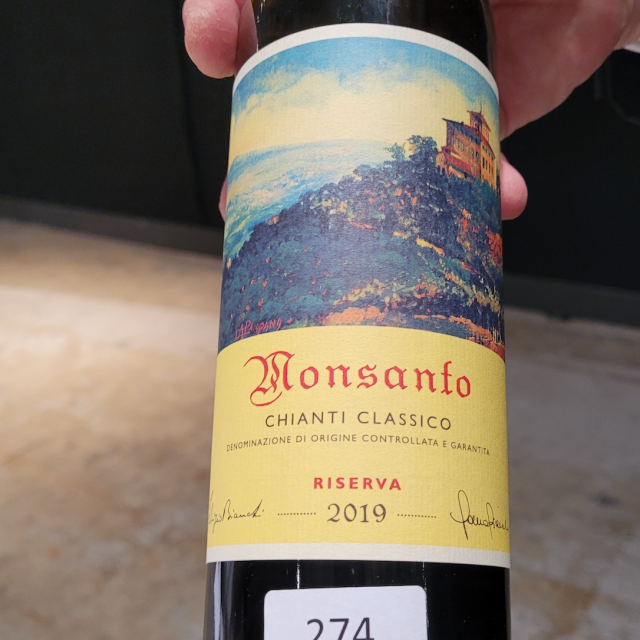
Castello Di Monsanto Chianti Classico Riserva DOCG 2019, San Donato In Poggio

One of the more famous, unwaveringly consistent and highest of quality to quantity ratios just has to be this from Monsanto in San Donato in Poggio. Five per cent each canaiolo and colorino complete the endemic local blend, in sapid swings and also hue, also in good humour with just enough tension involved to keep things so very real. Despite the generosity this is a pretty tightly wound Riserva from Laura Bianchi and one to cellar with the best of a long, winding and storied history of producing some of the territory’s most structured wines. Drink 2024-2032.  Tasted February 2023

Castello Di Monsanto Chianti Classico Riserva Il Poggio DOCG 1970, San Donato In Poggio

Talk about an OG. One of the few Classico (Riserva) truly deserving of a place in that category as it pertains to cru identified vineyards. From 1970 there is perhaps less lingering fantasy and age-worthy decades long penetration but truth is only Monsanto and a handful of others can make a wine drink with status (and also grace) 52 years into its tenure. The ’68 and ’69 tasted in 2018 and 2022 respectively were better representations of the storied block and this ’70 emits a nutty and sharp pecorino cheese note, but also fennel and caramel for an overall umami arrangement. San Donato in Poggio umami of another era, sweetly savoury, inviting and subtly sour. Truly fascinating sangiogsee.  Tasted February 2023

Castello Monterinaldi Chianti Classico DOCG 2020, Radda

The 2020 Classico is currently on the market while the soon to be bottled ’21 shows as an anteprima though that vintage, as firm and grippy as it may be will entice and delight sooner than most. In fact the 2020 is in nearly the same kind of place and so this tells us that. Monterinaldi’s position in Radda and microclimate produce wines like no other. Their wines move like the turtle, aging low and slow, even if they showed up ready and willing from the start. For Monterinaldi there was no hydric stress and the growing season delivered a consistent and constant five month phenolic development. This was a 35-40 day skin-contract maturation without worrying about extracting green tannins. Only six to seven months of aging in wood and this all adds up to doing things differently than many neighbours and other UGA positioned estates.  Last tasted February 2023

No other 2020 seems to scent like this from Monterinaldi and so it is more than worth commenting on the sense of place that is their southwestern Radda location. Herbal and dried flower potpourri but also something unknowable, intangible, even mysterious. Yes there is some early reduction but it can’t suppress the open-air meets underbrush perfume. Equanimity between maceration and fermentation makes this a candidate for top mid-term aging Annata, in other words begin drinking soon and make great use for three to four years thereafter. Drink 2023-2026.  Tasted March 2022

Castello Monterinaldi Chianti Classico DOCG Vigneto Boscone 2019, Radda

The single vineyard sangiovese never touches wood, only concrete, in fermentation and also aging. It is the highest expression of Monterinaldi and so it will always be a cru Classico. If a Gran Selezione were to be made in the future it would be a different or rather a new label. This is not yet in bottle though it is a finished wine, so despite its anteprima positioning the wine can be assessed, for the most part at least. Thirty-one year old block at this stage, heavy in Alberese, 3.5 tonnes per hectare in yield, intensity and tension at the fore of what this wine just is. That said the 40 days of skin contact makes for beauty up front no matter the structure afforded. Cimento aging means captured freshness and there is truly no thought of either tannin or spice not arriving to set this sangiovese up for a long life ahead. This will be special. Drink 2025-2034.  Tasted February 2023

Castello Monterinaldi Chianti Classico DOCG Vigneto Boscone 2018, Radda

The 1988 planted vineyard at more than 450m on most excellent Alberese soils is the signature, Classico or whatever other appellate label you would wish to put upon it. Boscone knows what it must be and a long maceration (40 some odd days) plus only cement fermentation/aging makes sure to create a sangiovese of finesse and zero distraction. Nothing external, no wood to cake on any make-up, a wine as naked as the grapes were hanging on the vines. Higher acidity, yet another apposite occurrence in spite of the hot vintage because this place cools when necessary to gift saltiness and also sapidity, equal and opposite, also with thanks to the age of the vines. Drink 2024-2029.  Tasted February 2023

Castello Di Monterinaldi Chianti Classico Riserva DOCG 2020, Radda

For Monterinaldi Riserva resides between Classico and Classico Vigneto Boscone and picking happens between the two, though Boscone is an entity all on its own. This fruit usually comes from middle elevation. Riserva sees Botti and it’s just so obvious because there is more texture and compaction, not necessarily concentration but certainly tight grained layering because of the use of wood. So curious that even with wood this feels less barrel affected than most so Riserva. Monterinaldi’s is still a fresh and sapid sangioivese. Crunchiest Riserva in the territory, bar none. Drink 2025-2029.  Tasted February 2023

Castello Di Monterinaldi Chianti Classico Riserva DOCG 2019, Radda

The time in 30 hL French cask is approximately 30 months and it must be said again that Riserva by Monterinaldi is the crunchiest of the area, far and wide, crisp and fresh, so clear and finessed. There is more concentration form 2019 to be sure and also fair because the purity but also longevity is just a perfect guarantee. As good as 2020 is as Riserva there can be no denying the next level success that this prime vintage brings to the table. And yet cooler vintages are usually long-lived ones – but at Monterinaldi they all are. Drink 2025-2032.  Tasted February 2023

As far as 2021s are concerned there is great youth and an unrelenting wall of structure in this sangiovse (with eight percent canaiolo) from Dudda Valley in northeast Greve. Too much wood noticed at this early stage and so the tart, tight and sapid red fruit is held in tight, closed and yet to sweeten, flesh out or fatten for that matter. Wait at least 18 months more. Drink 2024-2027.  Tasted February 2023

Castello Di Querceto Chianti Classico Riserva DOCG 2019, Greve

Mainly sangiovese with eight per cent canaiolo to keep a proper level of pH and therefore sapidity with no rapid or hasteful maturation from 2020 Dudda Valley. Moderate alcohol, scents of salumi skin and roasted nightshades, viscous mouthfeel in a generous wine from Greve without gratuity and surely never taken for granted. Quantity is high for the vintage and appellation for a very promising wine. Drink 2023-2027.  Tasted February 2023

Castello Di Radda Chianti Classico Gran Selezione Il Corno DOCG 2017, Radda

Though six years old there is still a wall of structure for Castello di Radda and a single vineyard Gran Selezione that’s far from showing its best and releasing the charm. Dries at the finish but when the wood and tannin subside that sensation should release. Two more years it would seem. Drink 2025-2029.  Tasted February 2023

Castello Di Selvole Chianti Classico DOCG 2019, Vagliagli

Quite resinous, herbal, tart, tannic and full of tension. A challenging wine that should have softened by now. Wait another year and see what happens. Drink 2024-2026.  Tasted February 2023

At Castello di Verrazzano, Greve with Maria-Sole and Luigi Cappellini, Michaela Morris and Caterina Mori

Castello Di Verrazzano Chianti Classico DOCG 2020, Greve

Oh, ah, the perfume of Verrazzano. Not just aromas from a wine producing estate but the complex aromatic weave of a veritable and traditional fattoria, of olive trees, gardens and forest. Not an Annata of structural potency but more so one of evident spezzatura, of superior phenolics and balance. The first half of the wine is sapid, the second turns and finishes salty. In that sense indicative of bordering Montefioralle and yet the mix of strong red fruit plus savour is purely Verrazzano. Returns full circle to strength of perfume. Drink 2024-2028.  Tasted February 2023

Castello Di Verrazzano Chianti Classico DOCG 2017, Greve

Tasted from a gravity-filled system without pumping by machine to see what then effect on the wine might have, if any. Well if the exercise has any real consequence it would be on the energy and vitality of this Annata. The wine is full of pulse and life while structurally immovable and in no rush to mature. There is more precision on the nose and the palate as well. I’d say a good choice for bottling if not the most efficient way to produce your wines.  Last tasted February 2023

Such a unique aromatic expression here from Castello di Verrazzano and the pattern is becoming a thing of great consistent beauty. The judgement is sound if nearly spot on from a challenge and so the structure supporting makes for a resounding drink of sangiovese speciality. Very impressive for the year. Drink 2021-2027.  Tasted February 2020

View of the Greve Valley from Verrazzano

Castello Di Verrazzano Chianti Classico Riserva DOCG 2018, Greve

For Luigi Cappellini some similarities are noted with what will come forward from 2020 (Annata) in that the fruit is of a similar ilk if also a compatible level of spezzatura. The ’18 Riserva used this warm vintage with mitigated assistance from the elevation of this northwestern part of Greve. Vineyards ranging from 250 to 480m quantify a keen effect on slower phenolic development. There is fruit maturity here and this won’t live as long as some other top structured vintages but as Riserva the savoury elements are heightened, the Grandi Botti effect on texture guaranteed and the Verrazzano perfume pops with every swirl. Drink 2023-2026.  Tasted February 2023

Castello Di Verrazzano Chianti Classico Riserva DOCG 2004, Greve

There is much power and strength to 2004 in a Riserva more than holding the fort and the castle without showing any kinks in the armour or signs of decline. Even after 18 or 19 years there is very little development in this ’04 and I for one must applaud not just how slow it has evolved but also how little the Botti show up on the palate. A wine of fruit, spezzatura and savour more than chocolate or balsamic, start to finish. Drink 2023-2028.  Tasted February 2023

Castello Di Verrazzano Chianti Classico Gran Selezione DOCG Sassello 2017, Greve

Sassello comes from the vineyard on the hill behind the Borgo at the highest elevation and while ripeness development will be slower there can be no doubt that 2017 was better here than most warmer and lower locations in Chianti Classico. The Sassello of this vintage is still stuck in first stage youth, quiet, dense and volumetric. The wine has moved but barely an inch, it speaks in fulsome texture and while yet to flesh out there is a roundness that will see it drink so well for years to come. The best of which will be two looking ahead and ten after that. Drink 2025-2035.  Tasted February 2023

Castello Di Verrazzano Chianti Classico Gran Selezione DOCG Sassello 2013, Greve

The nose on 2013 is remarkably fresh but also open and generous, as fruity as it is filled with knowable Verrazzano perfume. There is a sanguine aspect to this ’13 but also a tar and roses section to put it in a place of its very own. Maybe even a sweetly herbal moment, middle plane minty with more than average structure still very much in charge. One of the bigger 2013s in the region, holding strong and going everywhere with all the time in the world. Drink 2023-2027.  Tasted February 2023

Castello Di Verrazzano Chianti Classico Gran Selezione DOCG Valdonica 2017, Greve

Valdonica is both lighter and more linear as compared to Sassello with more classic speazztura and Verrazzano aromatics. Also a chalkiness and barrel induced texture but without the volume in Sassello. Valdonica is more straightforward, not as intense in terms of substantial fruit and also more available at this early stage. Saltier finish as well, more in line with Annata while Sassello seems akin to Riserva. Notable balsamico in Valdonica. Drink 2024-2029.  Tasted February 2023

Castello Di Verrazzano Chianti Classico Gran Selezione DOCG San Bartolo 2017, Greve

A single block Gran Selezione with the idea to make a more precise sangiovese (with some merlot) that expresses itself with great tension. Well first and foremost San Bartolo is a wine of fruit, big fruit and very generously so. The tension arrives halfway through the tasting experience as you realize a vice grip of tannin of intense expression has taken hold of the senses. The nervous nature of sangiovese combined with a single vineyard of elevation near 480m puts this Gran Selezione is a very specific place. These things supersede the dry and hot vintage in fact they lead at every stage. More chocolate by the Botti on the finish here than the other two Gran Selezione. Drink 2024-2031.  Tasted February 2023

Castello Di Volpaia Chianti Classico DOCG 2021, Radda

Of all the 2021s to taste and assess there is no shock that Volpaia’s is just about as young and immovable as any. This is not major news for a vintage of great structure matched by upbringing for classic Classico. These are children of manners and respect, knowing their place in history, they being sangiovese, reticently expressive, necessarily patient, with this Volpaia as experienced and abiding as any. The substance is that of a layered and complex weave with five per cent merlot involved to soften but also pull verdancy from a very tannic example. Bigger than recent vintages, weightier and potentially far more profound. Time will tell. Drink 2025-2032.  Tasted February 2023
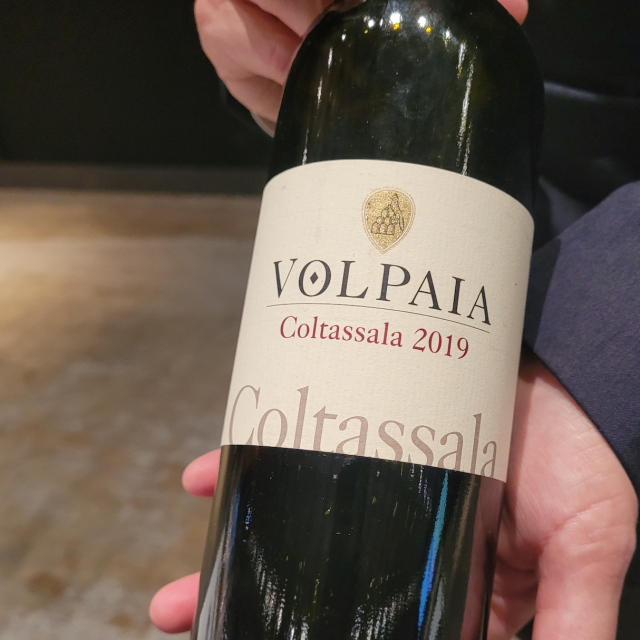
Castello di Volpaia Chianti Classico Gran Selezione DOCG Coltassala 2019, Radda

Full and expressive Coltassala with smoulder and sneaky tannins behind a wealth of dark cherry red fruit. Seasoned yet the wood is gentle, beautifully integrated and while this is not the biggest, boldest or baddest of the Gran Selezione, by Volapia’s standards it is a munificent one. Shows off Radda’s acidity, especially at elevation and coupled with high level ripeness the chance to enjoy a bottle will come sooner than the average. Drink 2024-2030.  Tasted February 2023

Castello Di Vicchiomaggio Chianti Classico DOCG Guado Alto 2021, Greve

Guado Alto is the name assigned to Castello Vicchiomaggio’s Annata and solo sangiovese is the game. The fruit is about as honest and also forthright as it gets for the vintage and yet this smaller production (just 20,000 bottles) is the more focused of the estate’s wine at this appellative level. Really getable and manageable at this time which is something so many 2021s are yet to do. At the price this usually comes in at there can be only a few wines from this vintage offering equal and rarely better early drinking value. Drink 2023-2025.  Tasted February 2023

Castello Vicchiomaggio Chianti Classico Riserva DOCG Agostino Petri 2020, Greve

Talk about the passion, and the classics, in Riserva from Castello Vicchiomaggio the wonder is always present, accounted for and delivered through the name of Agostino Petri. No absence of these ideals from 2020, despite the challenge and the idea that this vintage is a Riserva vintage continues to be conceived. These things take time, wines especially built on sangiovese while here softened and made fruitier by ripe cabernet sauvignon. Spot on, generous and giving. Drink 2023-2026.  Tasted February 2023

Cecchi Chianti Classico Gran Selezione DOCG Valore di Famiglia 2018, Castellina

Solid, weighty, tense and taut sangiovese here from Cecchi in the highest level on the appellative pyramid. Wound tight and will take five years to unwind, just as it has already been nearly five to wind up into this intense present character. Might dry out a bit and the seasoning will be peppery strong as the fruit subsides. The next few years will see the best moments for this Gran Selezione. Drink 2024-2027.  Tasted February 2023
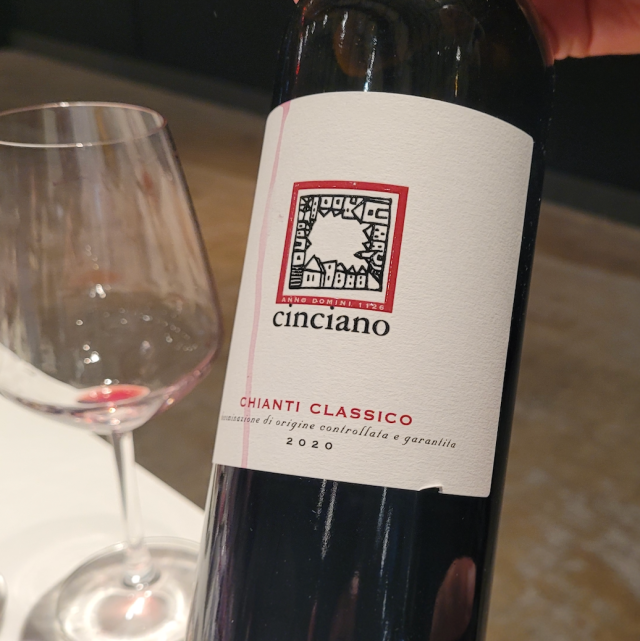
Cinciano Chianti Classico DOCG 2020, San Donato In Poggio

Lovely 2020 from Cinciano, to no surprise with fruit and more fruit at the fore while support is effortlessly provided by both acid and tannin, equally, unequivocally and with hand held outstretched. Some more tension than quite a lot of 2020s but again the fruit does well to stay in line and for the ultimate purpose of balance. Another year will improve the situation. Drink 2024-2028.  Tasted February 2023

Colle Bereto Chianti Classico DOCG 2020, Radda

The most exotic perfume emits from Colle Bereto’s Annata in 2020 and there are none like it. Like cinnamon and coriander, pine and cedar, the forest and the spice cupboard fully involved. A truly structured and formidable wine, especially for 2020 and needing several years to resolve. That said the purity and quality are unwavering. Drink 2024-2027.  Tasted February 2023

Colle Bereto Chianti Classico Riserva DOCG 2019, Radda

Big and brawny wine from Colle Bereto for Riserva and 2019 though of a concern with fruit cast in balance against structure lined up for low, slow and carefully curated development. And maturity with pure sangiovese raised and never braised, surely to be exulted and ultimately praised. Loving the acids within that structure and the chalkiness in smart ratio these vineyards seem to procure. Bravo Bernardo. Certamente. Drink 2025-2032.  Tasted February 2023

Colombaio Di Cencio Chianti Classico DOCG Monticello 2020

The fruit is quite dark here and this has occurred in isolated frazione but more so pinpointed vineyard locations here and there from 2020 in the territory. Parts of Panzano and Radda but also here from Gaiole and yet the wine is soft, mature and accessible. More about sweet acids in structural terms so don’t think too much nor wait too long to drink this palatable wine.  Last tasted February 2023

Colombaio di Cencio presents a Gaiole herbology that’s always indicative and distinctive, sometimes by way of faintly sweet Amaro liqueur. That’s the first and then recurring feeling coming from this 2020, chalky and with acids that slide along with the red fruit speckled with fresh and also dried herbs. The tannins follow the latter with some pretty austere aridity. This will drink well in a few years, that much is certain, but unfortunately the bottle will not get any lighter. Drink 2024-2028.  Tasted March 2022
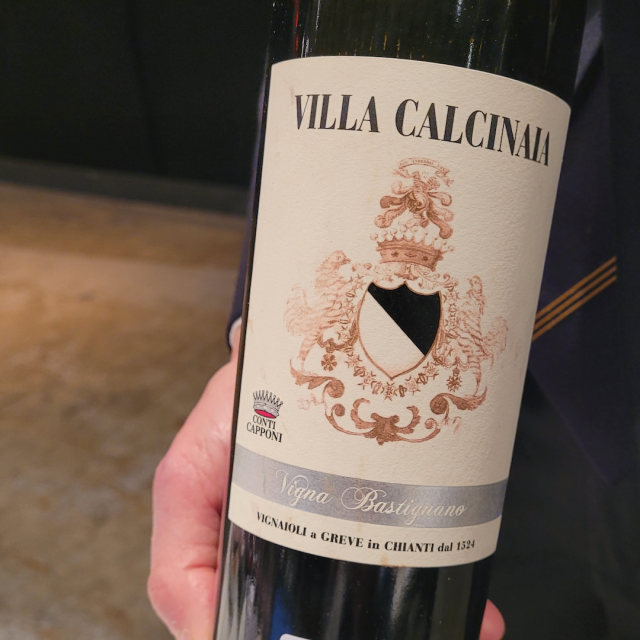
Conte Capponi/Villa Calcinaia Chianti Classico Gran Selezione DOCG Vigna Bastignano 2019, Montefioralle

More than promising vintage for this single vineyard Gran Selezione from Sebastiano Capponi and that is the operative word because Vigna Bastignano is beholden to time. From 2019 the one that suffices is such a structured sangiovese with broad shoulders with most substantial Montefioralle fruit to go the distance. More than suffices. Basti dire che. Drink 2025-2033.  Tasted February 2023

Dievole Chianti Classico DOCG Petrignano 2020, Vagliagli

Petrignano is a newer label for Dievole and in Annata form it’s a most forward thinking and drinking example from the Vagliagli estate. This from 2020 doubles down on the ideal with fruit sweet like candy, naturally and without any undue stress or tension in the glass. Easy, clean and getable. Drink 2023-2025.  Tasted February 2023

Dievole Chianti Classico Riserva DOCG 2020, Vagliagli

Here comes yet another bit of professional brilliance from Dievole at the Riserva appellative level, mainly with sangiovese plus two or three points of supportive and original territory DNA by canaiolo and colorino. Fruit swells straight away, up front and centre, equidistant from all parts connectable, structural and conceptual. Fruit is an apex predator that feeds on acid and tannin for survival. Dievole owns all the tools and gets it correct. Drink 2024-2029.  Tasted February 2023

Fattoria Della Aiola Chianti Classico DOCG 2020, Vagliagli

Aiola’s 2020 Annata is place and vintage driven raised in big casks and on promises, ready and willing to please when spring arrives, just around the corner. It’s really that close to having settled in and deliver the grace and charm expected. Quite a lovely, lithe and red citrus vintage right here of great specificity. Drink 2023-2026.  Tasted February 2023

Fattoria Di Lamole Paolo Socci Chianti Classico DOCG Castello Di Lamole 2016, Lamole

Tart and volatile, a truly swarthy and natural sangiovese from Lamole. Both chewy and with some formaggi, a wine so very Lamole but more so this label within the UGA. Extremely parochial and idiosyncratic behaviour. Drink 2024-2026.  Tasted February 2023

Fattoria Di Valiano Chianti Classico DOCG 2020, Vagliagli

Sizeable case production and a sangiovese with some softening merlot out of the southerly Vagliagli UGA. Straightforward, of peppery plum and red citrus, currants and a dustiness about the overall feel. Drink 2023-2025.  Tasted February 2023

Fattoria Le Fonti Chianti Classico DOCG 2019, San Donato In Poggio

Juicy, fruity, glycerin, simple and needing to be consumed. Drink 2023. Tasted February 2023

Fattoria Le Masse Chianti Classico DOCG 2019, San Donato In Poggio

Pure and ready, amenable and readable Annata here from Le Masse’s San Donato in Poggio vines, treated with utmost respect and for all the right reasons. This is textural sangiovese and quantities are so low you should count yourself lucky to secure just a bottle or two. Grace, understatement and charm are what this feels like are the things that comprise its beauty.  Last tasted February 2023

“To me, one of the best years for grapes,” tells winemaker Claudio Gozzi and the wood tank used for fermentation and now aging makes this noticeably a year wiser (than 2018) and so much more suitable to making this 100 per cent sangiovese. Even without tasting you can tell there’s a refinement, a calm and a settling that 2018 does not have. Cleaner, much more precision and seamless behaviour. Perfect volatility, sweet acidity and long, fine chains of tannin. Pure and honest, exacting, readier and will be just ideal with another year or so of time. Approximately 7,500 bottles produced. Drink 2022-2028.  Tasted October 2021

Fattoria Di Montecchio Chianti Classico DOCG 2019, San Donato In Poggio

Purely San Donato in Poggio, red fruit of red citrus as gelid texture with a coolness and a fineness that speaks directly to 2019. The tannins are quite resolved and yet the wine has much to give and life yet to live. Look ahead five plus years and imagine the changes to come, but best to drink in the freshness for now.  Last tasted February 2023

The Annata of Montecchio always express a deeper San Donato in Poggio, classically citrus and red fruit meeting salumi cure, but there is always more. To the story and the point, Annata from 2019 gives earth, juice bled through stone and clay. If other UGAs are akin to Santenay than this Barberino Tavarnelle could be compared to say, Volnay. In sangiovese of course and Montecchio accedes to a Villages level, here in their suitably hyperbolic Annata. Drink 2023-2027.  Tasted February 2022

Fattoria Montecchio Chianti Classico DOCG Primum 2018, San Donato In Poggio

From Montecchio’s Premium Line in the squat half magnum bottle and from warm 2018 a mainly sangiovese with five percent cabernet sauvignon that smooths the angles and curves all the lines. Rounded, well-rounded at that, with really mature fruit, as if in a slow-cooked stew, braising liquid fine and viscous. Drink 2023-2025.  Tasted February 2023

Felciano Chianti Classico DOCG 2019, Panzano

Dusty and herbal, quite the savoury expression, especially for Panzano and a wine of place above all else. Full and not lacking for fruit from a palate that does so much more in terms of impression and what this wine is capable of becoming. Still quite youthful so return in two years to see what will become.  Last tasted February 2023
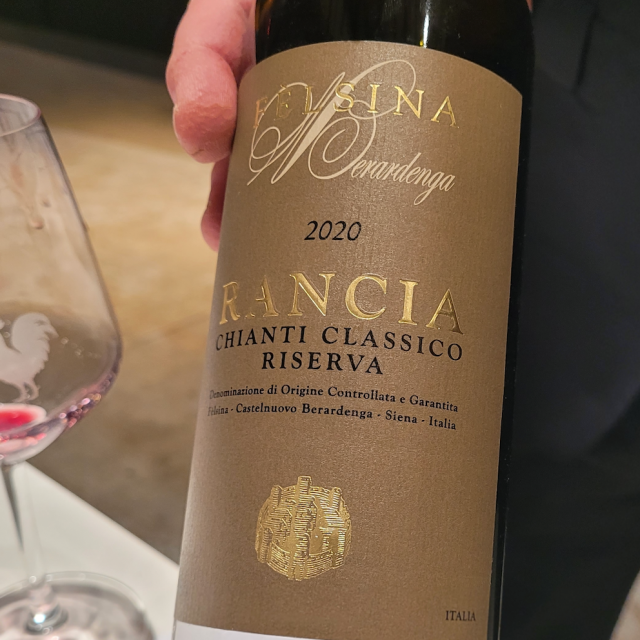
Fèlsina Berardenga Chianti Classico DOCG 2021, Castelnuovo Berardenga

Panzano and 100 per cent sangiovese, without a shadow of a doubt on either front, chewy and fulsome fruit, lots of sun and ripeness, chalky Galestro and perhaps even Pietraforte-induced structure. Acids are quite high for 2019 but then again it’s all sangiovese so why be surprised. Drink 2023-2026.  Tasted March 2022

Firm yet fair Annata from Fèlsina and one off the harbingers not only for Castelnuovo Berardenga but surely Chianti Classico as a whole. The 2021s are a formidable group, like 2019 Barolo in certain structural and yet immovable respect. Though this entry is but an indicator, instigator and liquidator it does so with all possibilities and probabilities intact. Classic Fèlsina of a broad spectrum to speak on behalf of a wide breadth of fruit sourced out their many vineyard blocks. Drink 2024-2027.  Tasted February 2023

Fèlsina Berardenga Rancia Chianti Classico Riserva DOCG 2020, Castelnuovo Berardenga

There is a perfume, a scent of the earth and also Castelnuovo sky that creates au aura about Rancia for Riserva. The vineyard looms over the land and the fruit always marries with the earth to give away its character as it defies logic and does just this for the vintage. Each and every one actually, yet 2020 is warm and full, with pine and spice at the apex of Fèlsina’s usually aromatic display. A liqueur of macerating cherries season while more spice wakes and covers the palate, lingering and leaving memories behind. I will remember this Rancia, forever and always. Drink 2024-2028.  Tasted February 2023

Fietri Chianti Classico DOCG 2020, Gaiole

Express Gaiole savour, a verdancy unlike any other Chianti Classico commune or UGA. Crunchy red fruit like crusted cherries and of an intensity that has yet to dissipate, nor has this pure sangiovese softened in any way. There are layers to peel away and although the ripeness is not like 2019 it really doesn’t need to be. Speaks for the vintage and for Gaiole in correct ways, without apology and for longevity. Upper echelon 2020 Classico. Drink 2024-2028.  Tasted February 2023

Fontodi Chianti Classico DOCG 2020, Panzano

Definitely richer and also more overt structure from Panzano when you look at Fontodi’s Annata side by side with (Filetta di Lamole) and yet the vintage kinship is organized like cousins with familial ties. Finding high acid from 2020 and so all together there are many parts to put this vintage in the arena of long age-ability. Apt and ample viscosity makes for a mouthful of sangiovese and the variety always remains at the heart of a Classico by Fontodi. Drink 2024-2029.  Tasted February 2023

Gagliole Chianti Classico DOCG Rubiolo 2021

Rubiolo is 100 per cent Sangiovese and Panzano fruit from 400-plus meters of elevation above and to the west side of the Conca d’Oro. Expressive of the two factions of Panzano character, texture and savour. Silky smooth liquidity and more accessible than what might have been pre-conceived though there is surely no lack of grip emanating through the cool ooze of this wine. Really quite fine. Drink 2024-2028.   Tasted February 2023

Gagliole Chianti Classico DOCG Rubiolo 2020

All sangiovese from Castellina (40 per cent), Panzano (45) and a small amount from Badia a Passignano (in San Casciano). “A regular season, warm but not like 2022,” explains agronomist Giulio Carmassi and so ”maturation was corchato (shorter)” and harvest was compressed in to five or six days. Rains came late in September, causing a nervous and quick pick. A good vintage though not considered top and yet the purity of red fruit is present. Saw a 20-22 day maceration time in stainless with aging for eight months, half in old barriques. Sent to concrete and blended. A firmness and still some moments of tension about this Classico with a push-pull posit tug between freshness and maturity expressed as salumi, skins too and two-toned fruit; dried currants and fresh pomegranate. For early drinking in any case, starting six months from now. Drink 2023-2026.  Tasted February 2023

Gagliole, Panzano

Gagliole Chianti Classico Riserva DOCG 2020, Panzano

Fulsome and chewy Riserva for Gagliole with 100 percent Panzano sangiovese part beautiful and part structured, by Galestro and Pietraforte soils. This fruit comes from the heart and epicentre of Chianti Classico Pietraforte with a warm 2020 delivering waves of fruit and mineral, alternating, integrating and soon to be evolving. This 2020 feels like a Riserva quite close to reaching its peak, likely in two years but the wealth of fruit means the door will open sooner rather than later. Drink 2024-2028. Tasted February 2023.

I Fabbri Chianti Classico DOCG Lamole Olinto Grassie E Figlio 2020, Lamole

A fine and lithe Annata from Susanna Grassi out of 2020 and yet without a doubt equipped with the fineness and beauty of eternal Lamole perfume. In a wonderful place right now, ease of fruit sliding on a corrente e snello scale, fine liquidity with a streak Of salinity. So apropos for Lamole and the varietal sangiovese it breathes. Spot on and restrained. Drink 2024-2027.  Tasted February 2023

Il Molino Di Grace Chianti Classico DOCG 2020, Panzano

“I don’t know why, but you will never see wines as dark as the 2020s,” tells Iacopo Morganti. Though truth is Il Molino Di Grace has never made less quantity and so concentration is as high as ever. Aside for hue this is “a nice Chianti Classico to drink now – my prelim is I don’t have enough,” says Morganti. Indelibly floral and stamped with quality approval, heady and yet elegant, forceful and elastic. Fine Galestro chalk of tannin and grip by Pietraforte. A different vintage and why shouldn’t it be? Happened during a pandemic and did its very own thing, without interruption and for all the right reasons. Magdalena Vineyard plays a big part in this level of appellative wine. These are simply grapes made into wine after all. Pure and real IMDG though with lower acidity and though big it’s easy to drink. Hyper real. Drink 2023-2027.  Tasted February 2023

Molino Riserva

Il Molino Di Grace Chianti Classico Riserva DOCG 2020, Panzano

In line with the Classico yet with better quality material chosen there is higher acidity and that matters greatly. Tannins are finer as well, yet that same darkness of pitchy and perfumed fruit is consistent with tighter and stronger grip. Must be granted another year in bottle to settle the strongholds and the score. The barrel has much to say right how, noted in grains running through the veins of the sangiovese. Older vines including Il Bosco are Riserva bound. The linger and length on this is infinite, at least in Riserva terms. Drink 2024-2028.  Tasted February 2023
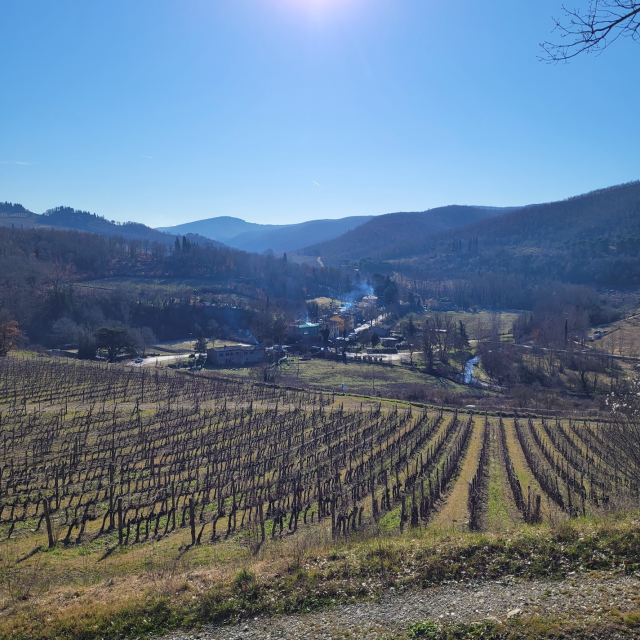
Il Molino di Grace, Panzano

Il Molino Di Grace Chianti Classico Riserva DOCG 2019, Panzano

Not just because of the extra year in bottle but also the kind of year, fruit more in red tones, effusive spoken language and elegance are what 2019 surely is. Acidity runs higher than 2020 and the wine while settling is still working through youthful energy. Still there are some bursts, fits and spurts from such a wine of vitality. Linear, less elastic but neither stringent nor too intense. Never vivid or glaring because it knows itself and what it wants to be. This will live long, that much is clear. Well, everything is very clear. Drink 2024-2029.  Tasted February 2023
Il Molino

Il Molino Di Grace Chianti Classico Gran Selezione DOCG Il Margone 2020, Panzano

Fine tannic presence from Gran Selezione for 2020, several steps up from Riserva with less pitch and grab but still overt dark fruit. More diversity and complexity in perfume, notable violets and rose but really what stands out here is how the tannins allow the fruit to stay up front. There are no perceived grains or sand-papery textures involved, neither is Il Margone soft or fluffy. There may only be 8,000 or so bottles available at this quality and so a rare and must have wine it most certainly will be. Iacopo Morganti explains it well. “It’s not easy too make three different levels of Chianti Classico. You need to understand the vintage and the differences, especially when you have less quantity.” Drink 2025-2032.  Tasted February 2023

Il Palagio Di Panzano Chianti Classico DOCG 2020, Panzano

As far as 2020 and Panzano are concerned there is a great deal of concentration and substance coming three ways from Il Palagio di Panzano’s Annata. Fruit, acid and tannin, all set to high intensity, each sucked and layered upon one another. A Classico in the great sense of the word and the appellation, pure and remarkable, not a sangiovese of any stringent notes despite how much has been pulled from these grapes. Juicy, no dustiness whatsoever and liquid running in soft waves. Drink 2024-2029.  Tasted February 2023

Il Palagio Di Panzano Chianti Classico Riserva DOCG 2019, Panzano

Panzano Riserva in glycerin and unction, substantial fruit and long cask aging, macerate juices swirling and compounding in complex flavours. Some verdant notes that are earthy-savoury driven, pine tree and needle, fern and allium. Complex weave of saline and sapid elements with a toasty oak component yet having fully settled in. Drink 2024-2027.  Tasted February 2023

Isole Delle Falcole Chianti Classico Gran Selezione DOCG 2018, Panzano

Only sangiovese and from a vintage where the final days of September saw crazy spikes in heat with nights at freezing. So the fruit was picked on the 28th and here the first Gran Selezione of Emanuele Graetz’s young tenure. Chewy sangiovese with so much palate feel, mouthfeel and texture. Again a Chianti Classico that you will not have ever tasted before. Leathery and fruit-centric with fine tannins though not the kind that will see this age the way the 2019 surely will. The flavours here however are complex and their linger is seemingly never-ending. A remarkable wealth of precociousness and purity, almost as innocent as a wine can be, lucky and wholly professional all at once. Drink 2023-2029.  Tasted February 2023

Istine Chianti Classico DOCG 2021, Radda and Gaiole

Angela Fronti’s Annata is an expression of several vineyards, where rocks are such an important matter, in soils of Galestro plus Alberese, but also elevation and slope. The Classico’s grapes come mostly from Radda vineyards (Istine and Casanova dell’Aia) but also Gaiole (Cavarchione, Tibuca and Le Noci). Though a child of cool, calculated and mysterious ’21 there is quite a rouse of joy and untamed energy coming straight out of this pure sangiovese. Fronti has done well to coax pleasure with little tension or pain and as such you could very much have a glass as soon as you wish. Barrel sample or not and so when it does find its wine into bottle this 2021 will drink well from the start.  Tasted February 2023

La Sala Chianti Classico DOCG 2020, San Casciano

With the oenological help of Stefano di Blasi it is this sangiovese from La Sala del Torriano that speaks in clear tones and terms. In San Casciano vernacular that translates as herbals and savour of the silkiest and sweetest kind. Like a dry Amaro, a chew of Australian liquorice and a lick of fine Maldon salt. Maybe some chocolate by the barrel at the finish. Drink 2023-2027.  Tasted February 2023

La Vigna Di San Martino Ad Argiano Chianti Classico Riserva DOCG 2020, San Casciano

Tiny production of Riserva here from La Vigna di San Martino ad Argiano in San Casciano and a curious example at that. Good ripeness and glycerol yet spiced, capsicum spicy and chalky within the context of pretty darn chewy fruit. All sangiovese and a wine certainly worth investigating to potentially really getting to know. Would like to put a few aside and see where they go. Drink 2025-2030.  Tasted February 2023

Le Cinciole Chianti Classico DOCG 2020, Panzano

Spiced aromatics, biscotti to ginger cookies, an eastern Panzano original, fresh and dusky, like the Frazione’s evening air. Tight and focused sangiovese, even more so Panzano on the palate, lightly glycerol and just so perfectly tart. Though a two-plus year old Annata this is really just about as fresh as it gets. Elevation contributes to the ideal, at 450m and near to the wines from Casole. Drink 2024-2027.  Tasted February 2023

Le Cinciole Chianti Classico DOCG 2019, Panzano

Aromas will remain consistent in 2020, first of a baked amaretti or ginger cookie, a lovely toasted cereal but with an extra year in bottle this Annata expresses more brushy savour, a dried fennel character and yet plenty of freshness persists. The dusty quality is consistent from vintage to vintage and speaks to sangiovese needing time in the bottle to unwind and express its true to Panzano fruit. This is sangiovese of silky tannin but the same thing cannot be said of the mouthfeel. There is more savoury grip involved. Time will continue to help. Track record shows this possibility will become probability.  Last tasted February 2023

The Panzano work of Valeria Viganò and Luca Orsini travels from strength to strength and while this ’19 Annata was only bottled one month ago it shows the best freshness and right kind of crunchiness here at the Chianti Classico Collection. Indelibly stamped with Le Cinciole and Panzano terroir, a combination of earth and fruit showing as well as any these days. Can’t help but relish the level of tart and eye-popping flavours with an immediacy of early drinking possibility. Terrific Annata in every respect. Drink 2022-2025.  Tasted March 2022

Le Cinciole Chianti Classico Gran Selezione DOCG Aluigi Campo Ai Peri 2018, Panzano

Aluigi’s fruit is darker than the Annata, its tannins are just as silky and as for mouthfeel there is more smooth consistency and character than in the other Le Cinciole wines. A much bigger wine from a bigger vintage in part because it was hot and also when the last two days of September produced high level degrees of temperature by day but also low to near zero by night. This means a big Aluigi with high level acidity captured and kept to be a catalyst for dark fruit to shine and age. Age well this will though it will always be a wine of depth and heft. Drink 2025-2032.  Tasted February 2023

Vicky Schmitt Vitali – Le Fonti di Panzano

Le Fonti Di Panzano Chianti Classico DOCG 2019, Panzano

Classic Le Fonti and I mean what else but classic, as expected from fruit and producer so intrinsically connected it’s as though there is no separation between people and land. At this stage a maturity post reduction and locked in full freshness without steps taken towards the secondary. Spot on salt and pepper seasoning and a truly gastronomical sangiovese with soft merlot roundness plus hue-instigative colorino. Well blended and enjoyable in every respect. Drink 2023-2028.  Tasted February 2023

Le Fonti Di Panzano Chianti Classico Riserva DOCG 2019, Panzano

From 2018 there is the most crystalline clarity, purity and natural fruit sweetness from Le Fonti’s Riserva, this in spite of high level accumulated warmth and alcohol conversion rates. The merlot helps to smooth and silken the texture so that a seamless transition confirms the goal of invitation, to ideal phenolics and maximum pleasure. What this means for Vicky Schmitt-Vitali and Guido Vitali is a Riserva that speaks in their particular heart of Panzano language with a sangiovese so honest and direct, in every respect. Beautiful wine. Drink 2023-2028.  Tasted February 2023

Le Fonti Di Panzano Chianti Classico Riserva DOCG 2018, Panzano

Bigger wine in 2018, even more so than ’19, not because of stylistic choice or bigger dreams but simply because this part of Panzano experienced late season heat. Also cold nights and so Riserva’s acidity drives stride for stride with fruit, alcohol and tannin. Picking late ensured multi-toned ripeness and fully realized sangiovese dreams. An extreme vintage but one so well managed at Le Fonti because these custodians of Panzano are pragmatic survivors who can do nothing but fashion the most hospitable and nurturing Chianti Classico. It is the proprietors’ heritage, imperative and humanity. This is a wine of intensity and concentration, perhaps less fresh than 2019 but one that just may outlast that vintage in its own special way. Drink 2023-2028.  Tasted February 2023

Le Miccine Chianti Classico Riserva DOCG 2020, Gaiole

Barrel sample. Very taut, acids still running amok and wood very much in control. Blue to black fruit with a stop at purple, Gaiole savour and a whole mess of everything happening at once. Needs a minimum two years to settle in but there is plenty of stuffing to see brightness ahead. More than a bit early to make any lasting assessment.  Tasted February 2023

Le Palaie Chianti Classico DOCG 2019, Montefioralle

A new look at Montefioralle and a tiny production for Chianti Classico of perfectly timed maturity. Though there is a simplicity about the character of this 2019 it is nothing if not a lovely glass of wine. The 20 percent mixing in of merlot and cabernet sauvignon just pushes the point further to understand that this is about here and now. Drink up CC lovers. This is a basic gateway drug. Drink 2023-2024.   Tasted February 2023

Diego Finnochi and Elisa Arretini – L’Erta di Radda

L’Erta Di Radda Chianti Classico Riserva DOCG 2020, Radda

Barrel sample. Only Diego Finocchi presents sangiovese in Riserva this way. With grace and fluidity, liquid sapidity and Raddese acidity. No canaiolo in 2020, solo sangiovese and the balance shows, the major grape able to create the push-pull of posit salty to mineral tug without problem. There is tension mind you, but no issues to report on. There never are. Still it’s simply too early for full disclosure or assessment.  Tasted February 2023

Lornano Chianti Classico DOCG 2020, Castellina

Tasting and assessing Lornano from 2020 at such an early stage feels unprecedented yet here we are and try we will to see the forest for the trees. Some tart angles and more than ample tannin yet clear and sweet they are in surround of fruit we just know will become fleshy and expansive. Again, this is sangiovese and time is of the matter. Patience for Lornano and their corner of Castellina. Drink 2025-2029.  Tasted February 2023

Losi Querciavalle Chianti Classico DOCG 2020, Castellina

As with some other well known Chianti Classico producers that hold back Annata longer than most this feels strange to be tasting a 2020 from la Famiglia Losi. A most glycerol Castelnuovo Berardenga and one of impressive fruit though wood is very much a factor, imparting a floral and vanilla waft through the bones of the wine. That and what Alberese will instigate makes us understand that this sangiovese with sapidity catalyst canaiolo is not yet done what maturing it needs to do. Drink 2025-2030.  Tasted February 2023

Fattoria Di Luiano Chianti Classico DOCG 2021, San Casciano

More than markedly youthful Annata by Alessandro Palombo from a 2021 vintage we are still years away from figuring out. Reductive and coiled tight with acids proper wrapped around substantial fruit. Neither pepper nor rubber but simply fruit, structure and youth. Need to revisit a year from now to see what it’s all about. Judgement is a tad reserved. Drink 2025-2029.  Tasted February 2023

Fattoria Di Luiano Chianti Classico Gran Selezione DOCG Ottontuno 2019, San Casciano

Not simply stuck in a black hole of structure but this 2019 San Casciano Gran Selezione is of an immovable infrastructure that defines positioning and appellate category. Big boned and more of an impression left as opposed to expressiveness, at least now and likely for five more years. Needing the toasty wood and dense tannins to dissipate, things that will take quite a bit of time. Drink 2025-2031.  Tasted February 2023

Marchesi Frescobaldi Tenuta Perano Chianti Classico DOCG 2020, Gaiole

You can always feel the white soil of Tenuta Perano and nowhere more so than from Annata level Chianti Classico. More than sangiovese with 10 percent merlot and (5) cabernet sauvignon for a silky smooth 2020 that wants to share its impression as early as it can. Cool and sappy, easy to understand and professional as they come. Drink 2023-2025.  Tasted February 2023

Marchesi Frescobaldi Tenuta Perano Chianti Classico Riserva DOCG 2019, Gaiole

Perano glides as Riserva, smooth and suave, sangiovese ripe as necessary and just a few splashes of merlot tossed in for the good measure of sweet seasoning. Quite an easy drinking Riserva of 2019 generosity, the least amount of savoury elements possible as it pertains to Gaiole and these white calcareous soils of the Tenuta. Drink 2023-2027.  Tasted February 2023
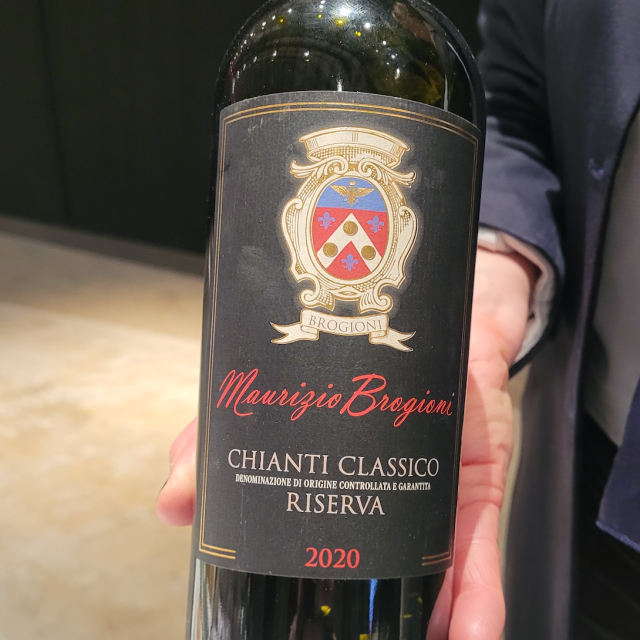
Maurizio Brogioni Chianti Classico DOCG H’Amorosa 2021, Montefioralle

Barrel sample. A smallest of small production for Annata determines the effort and fate of this Montefioralle 2021. Just a touch of verdant behaviour touches the back end but this is poignant and proper for 2021 of classic and traditional Annata style.  Tasted February 2023

Maurizio Brogioni Chianti Classico Riserva DOCG 2020, Montefioralle

A small lot and still peppery reductive sangiovese as Riserva from 2020. Quite toasty, smoky even and lots of green running around. Needs time and yet it will be hard to imagine these roasted and smouldering notes ever fully falling away, or melting in. Drink 2024-2026.  Tasted February 2023

Monte Bernardi Chianti Classico DOCG Sangió 2021, Panzano

From a property purchased in September 2018 above the village of Panzano, direction Volpaia. One of 10 hectares planted to the MB33 clone with this being the third vintage and first time shown at an Anteprima. There was 800mm of rain ahead of the growing season and the vineyard’s elevation attracts high solar radiation juxtaposed against cooler night time temperatures. Also less rot than at Monte Bernardi with similar soils of Galestro and Pietraforte. Michael Schmelzer refers to hedge trimming as the way to maintain composure. From a viticultural standpoint 2018 is a vintage that separates the wheat from the chaff, with no rain during the season. “If you have different clones, say 420A and/or do not hedge trim, you can’t complain about irrigation,” says Schmelzer. “You’re throwing away water.” Not Michael and the early results of his new frontier vineyard determine a sangiovese bright-eyed, bushy-tailed, enthusiastic, happy and full of energy. What else can you say? MB33 is part of the fabric of Chianti Classico’s future. Drink 2024-2031.  Tasted February 2023

Monte Bernardi Chianti Classico Riserva DOCG 2020, Panzano

Unexpectedly tannic vintage and also for what it means to be a Monte Bernardi Riserva. Less showy and forward than 2018 though the immediacy gained is again from a long 45 day post-fermentative maceration with higher than many stem inclusion. Higher than 2019 and 2021 in that regard. “I’ve reasons for what I do,” explains Michael Schmelzer. “My decisions are like my cooking instinct. I don’t follow the hard rules of a laboratory. I work on fundamentals, not relying on numbers.” Riserva is a matter of knack and intuition, salt and pepper seasoning, a Monte Bernardi style and best case scenario. Though grippy as a vintage there is haute and high caste toothsome piquancy in this 2020 and it may just fool us all by outliving the rest. Drink 2025-2032.  Tasted February 2023
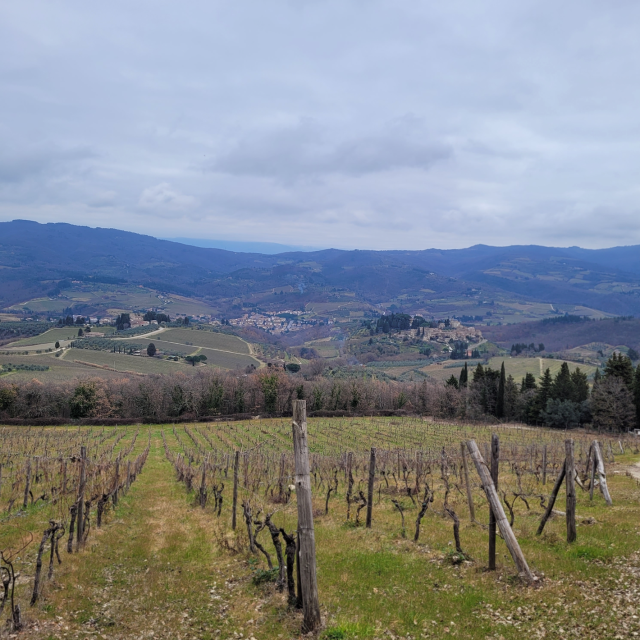
Greve from Montefioralle

Montecalvi Chianti Classico DOCG 2020, Greve

Barrel sample. Showing every minute not yet gained as a sangiovese with a few percentage points of various complimentary grapes (3) canaiolo plus (2) altri vitigni creating a push pull of saline-sapid notations. A bit swarthy and volatility needs to settle but a little bit of sulphur at bottling will do the trick.  Tasted February 2023

Montefioralle Chianti Classico DOCG 2020, Montefioralle

Lorenzo Sieni’s 2020 Annata is just perfectly Montefioralle, succulent through savoury and back again, acidity running up the sides of the palate and fruit round throughout. Never tries too hard nor demands too much, of itself or us, the willing and abiding tasters. Lovely Annata and perfectly expressive of time and place. Drink 2023-2027.  Tasted February 2023

Alessandra Deiana and Michele Braganti, Monteraponi, Radda

Monteraponi Chianti Classico DOCG 2021, Radda

Ripe red fruit to the nth degree and a most natural feeling emitting from Michele Braganti’s 2021 Annata with a readiness ahead of many. A sweetness in the plums and citrus expressed as pure sapid tang with perfect help made to slide across the palate. This is a restrained and fine acid example with sneaky structure laying low, much like Beaune pinot noir, albeit in Chianti Classico. “You just have to wait,” shrugs Braganti. Drink 2024-2028.  Tasted February 2023

Monterotondo Chianti Classico DOCG Vigna Vaggiolata 2020, Gaiole

Good and plenty fruit with a twist in that additions of canaiolo and malvasia nera bring seasoning and spice. Travels well beyond salinity into aromatics and flavours from the spice rack and sapid sensations accrued. A crisp and crunchy Annata for 2020, spoken as Gaiole through the name Vaggliolata. Settling in nicely at this point and drinking really well. Savoury without overt greenness or toast. Drink 2023-2026.  Tasted February 2023

Azienda Agricola Mori Concetta Chianti Classico DOCG Morino 2021, San Casciano

Quite a compliment of other endemic grapes not only aid and abet but work so properly too create cohesion and define this special Classico from San Casciano. The breakdown of 80 percent sangiovese, (10) canaiolo, (5 each) pugnitello and colorino is essential and creates a balanced 2021, of less tension than some but also pure without greens or greys mired in the void. A very successful and textured wine of silk and chalkiness for seven to ten years ahead. Drink 2024-2029.  Tasted February 2023

Azienda Agricola Mori Concetta Chianti Classico DOCG Morino 2020, San Casciano

A singular Chianti Classico and also San Casciano expression with an almost San Donato in Poggio-like blood orange of red citrus expressiveness. Also textural, of glycerol and the savoury elements that while present are less what we think of when we consider San Casciano. Plenty of machinations in this 2020, of 80 per cent sangiovese, (10) canaiolo, plus (5 each) pugnitello and colorino. Stands apart from the pack. Drink 2024-2028.  Tasted February 2023

Nardi Viticoltori Chianti Classico DOCG 2020, Castellina

Traditional in so many respects and also a sangiovese plus five percent each endemic canaiolo and colorino for a doubling down of abiding respect to Castellina and all of Chianti Classico. Expertly tart and liquid chalky, a year away from integrating structure through the wine, to be followed by three to five years of fine drinking. Drink 2024-2027.  Tasted February 2023

Piemaggio Chianti Classico DOCG Le Fioraie 2019, Castellina

Most curious aromatic 2019 from Piemaggio with Chinese five spice all over the waft. That and preserved strawberry, tar and roses. Quite nebbiolo like in some respects with different tannins of course. Cool and savoury, notable evergreen and mint, finely designed and amply structured. Good example of red Castellina while setting its own course of style. Drink 2024-2027.  Tasted February 2023

Podere Capaccia Chianti Classico DOCG 2020, Radda

The fineness of red fruit in layers and made to express breathes of fresh air in fine sprit by elevation in Radda sets this Podere Capaccia up for great success. Charming, graceful and yet grippy enough to stand up, defend its territory and survive for quite a stretch of time. Fine work from Alyson Morgan and team. Drink 2024-2027.  Tasted February 2023

Podere La Cappella Chianti Classico DOCG 2020, San Donato In Poggio

Graceful and charming sangiovese with smoothness and texture added poignancy by 10 per cent merlot puts this 2020 in great vintage standing. Yes it is so very San Donato in Poggio but it’s also Podere La Cappella in a nutshell. The Rossini wines always express and taste this way, like bleeds from white limestone and a ripeness befitting this place. Also freshness by winds from the sea running through as a relish and a vim that keeps your hold of the palate. Drink 2024-2029.  Tasted February 2023

Podere La Cappella Chianti Classico Riserva DOCG Querciolo 2018, San Donato In Poggio

Very pretty 2018 Riserva, reddest of red fruit with that omnipresent streak of white Colombino limestone running through. Great and substantial fruit, high level acidity and my what fine tannins. A perfectly reasoned and seasoned Riserva for drinking 10 years. Easy. Drink 2024-2032.  Tasted February 2023

In Riserva form Podere La Cappella really sees a long developed through late picking sangiovese come to full fruition. Beautiful flesh and texture, fulsome fruit and sweetening acidity. Very fortifying with that blood orange to limestone bleed in great hyperbole. Drink 2025-2029.  Tasted February 2022

Fattoria Poggerino Chianti Classico DOCG Nuovo 2021, Radda

One thing you can count on is for Piero Lanza’s sangiovese to come out ripe as any in the territory and 2021 would surely not be an exception to the rule. The fruit is remarkable and the structural parts equally formative and formidable so I’m not sure Lanza has made such a wine in quite some time. Years are needed to settle the pieces, parts and puzzles of this magnanimous affair. Don’t care that Annata is the appellation. Drink 2025-2032.  Tasted February 2023

Fattoria Poggerino Chianti Classico DOCG Nuovo 2020, Radda

Once again why should there be any surprise to find Piero Lanza’s sangiovese from Radda in this state of heightened grace and exactly and correctly what it’s interpreted to be?Where else would a wine so big seem so balanced? How else to explain conversion rates at this level so ideally suited to vineyards that ripen to a point and then begin again? It’s a matter of listening to wind, grains of wood and sand, essence of minerals and elements, spoken through stone. This is Poggerino, anew and reborn, year after year. Nuovo.  Last tasted February 2023

Piero Lanza’s 2020 is a bright, effusive and luminescent version of itself in that there seems to be a lightness of being and avoidance of rich density. Quite the aromatic lift this early and time around, floral, like roses, hibiscus and fresh tar, not unlike some Tortonian raised nebbiolo. As sangiovese there is sneaky structure in quantifiably knowable admonition and that is said in the most complimentary of ways. Radda chalk, sand and whole bunch verdancy bring complexities and the struggle is real. Disregard the appellative concept of Annata in part, because this should go long. Drink 2024-2029.  Tasted March 2022

Poggio Al Sole Chianti Classico DOCG 2020, San Donato In Poggio

Lovely 2020 Annata from San Donato in Poggio though quite mature and resolved at this early juncture. Acids are still hopping and popping while the wood has done little melting into the overall feel of the wine. Seems like two parts are involved and integration may never fully happen. Drink 2024-2026.  Tasted February 2023

Fattoria Pomona Chianti Classico DOCG 2020, Castellina

Monica Raspi’s Pomona Annata is simply a beautiful expression of 2020 Castellina. Spiced and seasoned, just such correct tart and tang, crisp and pure with a swath of beautiful and natural swarthiness through the finish. When this finishes its journey the pieces will all have fallen into place and nothing will distract from pleasure. Kudos to Raspi for exulting the vintage to rise above the rest. Drink 2024-2029.  Tasted February 2023

Principe Corsini Villa Le Corti Chianti Classico DOCG 2021, San Casciano

Firm and apropos of maker and location, reddest of red San Casciano fruit developed with purpose in vineyards graced by river stones of vines in the path of beneficial marine winds. You can feel the breathability and even a shade of saltiness streaking through the red berry aromas. Crisp, crunchy and then chewy as the wine fleshes across the palate. Duccio Corisini gets better and better at making wines of clarity and profundity. Grande Principe! Drink 2025-2033.  Tasted February 2023

Querceto Di Castellina Chianti Classico DOCG L’Aura 2021, Castellina

Proper and well raised sangiovese but also conceived as Annata with trenchant purpose is the state of Jacopo di Battista’s most correct L’Aura. There is a sweetness of fruit and acidity rolling as one without much structural distraction though there is some underlying strength in subtlety to see this open with furthered aromatic style. A direction is taken and these are wines to try. If you have not yet joined the watch the time is now. Drink 2024-2027.  Tasted February 2023

Quercia Al Poggio Chianti Classico DOCG 2021, San Donato In Poggio

Purely, allegedly and unequivocally San Donato in Poggio here from Quercia al Poggio and an estate that writes the book on frazione definition. Sweetly natural red fruit from plum and citrus, tight and tart acidity but also warmth if kept fresh by breezes blown through. Another quality sangiovese from Vittorio and Paola with spicy bits and accents contributed by four supporting indigenous varieties. Drink 2024-2028.  Tasted February 2023

Querciabella Chianti Classico DOCG 2020, Greve

New directions, adjustments and mediations take Querciabella’s Annata into ever developing progressions and investigative accessing of new territory. Here from 2020 winemaker Manfred Ing finds new texture or next level mouthfeel for an Annata increasingly becoming and speaking on behalf of Greve and especially the Ruffoli hill. This vintage is not asked to over deliver and the statement made is one of drink-ability but also impression over expression. Top examples don’t try to impress – they simply do what’s necessary and so a deep impression is ultimately made. Drink 2024-2028.  Tasted February 2023

Renzo Marinai Chianti Classico DOCG 2019, Panzano

Just a beautifully silky, suave and smooth Annata from Renzo Marinai in 2019, expertly blended and having now matured into a great place at this stage of its evolution. Red fruit captured to what just has to be the most ripeness in phenolic terms, with tannins so sweet they melt at first contact with the palate. Gentle in every respect including woolliness, liquid pepper and verdant finishing notes. That’s where the 10 percent cabernet sauvignon makes its appearance. Drink 2024-2027.  Tasted February 2023

Renzo Marinai Chianti Classico Riserva DOCG 2019, Panzano

A fine and suave Riserva from the Panzano selection of Renzo Marinai, as much a Gran Selezione as many peers, open and fragrant, liquid swirl of sangiovese liqueur but also Cassis by 10 per cent cabernet sauvignon. Amenable and beautiful, handsome and sleek. Fine, fine wine. Drink 2023-2030.  Tasted February 2023

Ricasoli Brolio Chianti Classico DOCG 2021, Gaiole

A clear and purposed Ricasoli Annata, standing on edge, pointed and direct to tell a story of tradition and five soils across many hectares of expertly managed vineyards. Grippy and firm, needing six months to a year in bottle, fine and expressive being the actions of the future. Hoping to see this released in the fall of 2023 in Ontario. That would be the right time to begin enjoying this wine. Impressive interpretation of Gaiole considering 600,000 bottles are made. Drink 2023-2027.  Tasted February 2023

Rocca Delle Macìe Famiglia Zingarelli Chianti Classico Riserva DOCG 2020, Castellina

Dark fruit as per very specific locations in Chianti Classico and a Riserva of depth to be sure. The well is full of macerating cherries, fresh leather and wood spice for tradition kept but modernity acceded to install confidence in what today’s Riserva in many instances has become. Fulsome wine from Rocca delle Macìe, to no surprise. Drink 2024-2027.  Tasted February 2023

Rocca Delle Macìe Gran Selezione Chianti Classico DOCG Tenuta Di Fizzano 2020, Castellina

The classicism of a Famiglia Zingarelli Gran Selezione from a single estate and a much smaller sku than most would expect. Just 26,000 bottles made and a top pyramid expression at a most affordable price for very specific markets, including Ontario which should be thankful for the gift. Crunchy and conversely chewy, wood a factor in vanilla plus chocolate, acids sharp and on point. Will live gracefully for a few years yet. Drink 2023-2027.  Tasted February 2023

Rocca Delle Macìe Chianti Classico Gran Selezione DOCG Sergio Zingarelli 2019, Castellina

It just feels as though a Famiglia Zingarelli sangiovese will always act, emit and taste this way, that were this wine poured blind we would know the origin and the appellation. That being Gran Selezione and with 2019 the glare and obvious beautiful red mess of Castellina fruit is right there. The tops for substantial fruit as far as this GS is concerned and possessive an aging potential long and great. Should become one of Zingarelli’s finest. Drink 2025-2033.  Tasted February 2023

Rocca Di Castagnoli Chianti Classico DOCG 2021, Gaiole

It seems that only Rocca di Castagnoli unearths this very specific kind of red fruit in Gaiole and it must be attributed to location but also elevation. Less herbal and savoury than almost all the rest of Gaiole but surely startling and vital in its very own way. This from 2021 is firm yet fair, chalky tannic but seemingly not a fortress unbreakable or formidable to gain access. A well characterized and nurtured Chianti Classico that will give back. Drink 2024-2027.  Tasted February 2023

Rocca Di Montegrossi Chianti Classico DOCG 2021, Gaiole

Surprising grip and structure here from Rocca di Montegrossi’s 2021 Annata, well not exactly shocking but this is a vintage wine quite far from readying towards release. Tannins are fine chained, grained, unbreakable and of a saltiness really connecting the mineral dots of this wine. Some canaiolo and colorino bring added seasoning and so sapidity is a thing. Crunchy for Gaiole and less herbaceous than most. Should begin to open in 18 months or so. Drink 2024-2029.  Tasted February 2023

Ruffino Chianti Classico Gran Selezione DOCG Riserva Ducale Oro 2018, Castellina

Suave and smooth, nary a tannic moment, easy drinking Gran Selezione. Not the most structured 2018 and very little tension but you can enjoy the wealth of fruit, wood and savour for three to four years while you wait for others vintages to settle in and open their doors. Drink 2023-2027.  Tasted February 2023
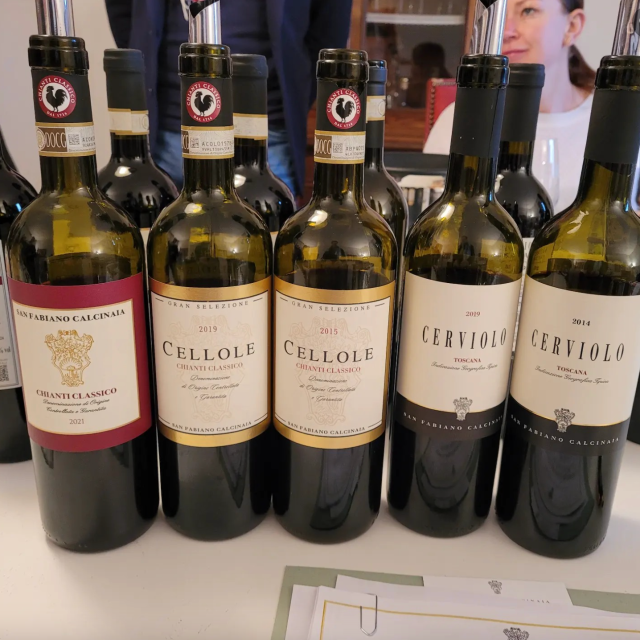
San Fabiano Calcinaia Chianti Classico DOCG 2021, Castellina

Sangiovese with 10 percent canaiolo and colorino from the warm vintage down in quantity due to the April frosts, a year-plus spent in tonneaux followed by six months in bottle before release. That quantity was two-thirds of a normal production and concentration is surely above the norm in this 2021. Great acidity, highest level of the stuff and the fruit is ever-bearing ripe on the nose while tannins are overtly grippy and the wine needs another year in bottle to truly show its stuff. That said this will surely be the finest Annata from San Fabiano Calcinaia. Drink 2025-2031.  Tasted February 2023

San Fabiano Calcinaia Chianti Classico Gran Selezione DOCG Cellole 2019, Castellina

Mainly Sangiovese with some colorino and a few splashes of merlot “that speaks Chiantigiana.” Also a 500m elevation for most of these grapes, the sangiovese planted in the 80s and converted to organic in the 90s. A stony Galestro soil opposite to the sandy clay and calcari, i.e Calcinaia around the borgo and winery. Only Cellole delivers this cool, liquid peppery swarthiness that the Classico does not show and also a combination of verdant but also distinct minerals notes. Tannins are exceptionally taut with at least two to three years remaining before they begin to truly integrate. Drink 2025-2033.  Tasted February 2023

San Fabiano Calcinaia Chianti Classico Gran Selezione DOCG Cellole 2015, Castellina

Unequivocal Cellole profile, woollen and natural, earthen and full-bodied. The more this 2015 ages the more it smells and tastes like Cellole, the place. It simply exaggerates and hyperbolizes with each drop in tannin, each integrate connection between maturing fruit and those once über grippy tannins. Classic Calcinaia acidity bar none.  Last tasted February 2023

Cellole is San Fabiano Calcinaia’s top tier Chianti Classico from Guido Serio out of Castellina in Chianti. There is always a curious and distinguishable aromatic profile in all their sangiovese but especially from the Gran Selezione. Part hematic and part natural in origin that is split between land and cellar. As for the vintage the sweetness of fruit and the thick texture it bleeds is the plasma and the oxygen that gives it breath. Expressly Castellina in deep red fruit and with a particular San Fabiano chalky twist. Opens and breathes some more with air and time. Well-framed and positioned at the price point for a good seven or eight year run. Drink 2020-2027.  Tasted May 2020

San Fabiano Calcinaia Chianti Classico Gran Selezione DOCG Cellole 2010, Castellina

The third to last bottle of said vintage is opened for this tasting and what a treat to have a moment with this inaugural vintage of the Cellole as Gran Selezione. Showing its age in aromas to be sure and yet the palate is vibrant while oak flavours and spice are intrinsically pronounced. The swell is filled with soya, iodine, black cherry and a sanguine flood throughout. Tannins persist in a chalkiness as well but what is most fascinating is this gastronomy of a Gran Selezione. It just tastes like Tuscan cuisine and though a finger can’t be put on exactly what that is, well there is a gaminess, from dry-aged bistecca to picciona that makes this wine taste like it does. Then arrives the porcini, tartufo and orange zest. Complexities abound and all are pleased.  Last tasted February 2023

San Fabiano Calcinaia Vin Santo Del Chianti Classico DOCG 2006, Castellina

A small amount of sangiovese joins trebbiano and malvasia bianco for Vin Santo from what is considered a top appellative vintage. Clocks in at 15 per cent after more than 10 years in caratelli, emerging as nutty and finely golden toasty as any in the biz. Hazelnut namely but also this gelid lemon and gingered orange crème brûlée flavour that lingers forever. As savoury as it is sweet so don’t confine this to dessert wine times. Begin the night with an ounce or two alongside the antipasti, preferably of a pâté, parfait or rillettes kind. Drink 2023-2036.  Tasted February 2023

San Felice Chianti Classico DOCG 2021, Castelnuovo Berardenga

Annata or anything else by San Felice can only act like a child and a rebellious one at that when tasted so early in its tenure. Barrel and tannin are far from ready to relent and allow their wine its due. There is a fortress door to open and the substance behind the gates lies in waiting to be free. Two years methinks before that becomes reality. Drink 2025-2029.  Tasted February 2023

San Giusto A Rentennano Chianti Classico Riserva DOCG Le Baròncole 2020, Gaiole

Barrel sample and the youth of this San Giusto wine is something too behold. A fortification equal to both Siena and Firenze combined. Le Baròncole is serious, stone-faced and impressive. My goodness. Score and full assessment reserved to a much later date.  Tasted February 2023

Tenuta Carobbio Chianti Classico DOCG 2018, Panzano

Then comes along Carobbio with a wine older than almost any other Annata in the collection and yet even from 2018 this sangiovese has yet to hit its stride. Dark fruit of baritone voice and depth puts this in unique territory and it would seem the grapes were mainly picked later, after the two day heat spike at September’s culmination. That said low nighttime temps kept the acidity and so 2018 from Carobbio should age as well as any Riserva and many Gran Selezione from the vintage. Drink 2024-2032.  Tasted February 2023

Tenuta Casenuove Chianti Classico DOCG 2019, Panzano

Fruit quite mature of 90 percent sangiovese with five each merlot and cabernet sauvignon, a focused expression and very much the warmest of (western) Panzano style. You can taste the Bordeaux grapes in here, with a Cassis for sure but also some desiccation of small berries. Minty and a cherry stone bitterness on the palate with drying tannins. Give an hour of air and drink over the next three years. Drink 2023-2026.  Tasted February 2023

Tenuta Casenuove Chianti Classico DOCG 2018, Panzano

Fruit quite fresh for 2018 and in a way more so than the following 2019, here again from a consistent blend of 90 percent sangiovese with five each merlot and cabernet sauvignon. Juicy Panzano expression, ready and willing to please, tannins softening now and acidity captured with truth. Raspberry and blueberry, fruit captured at peak and here an Annata with silky tannins, everything in line and ready to roll.  Last tasted February 2023

Crunchy Panzano Annata here from Tenuta Casenuove, peppered as opposed to peppery, as if with freckles or micro-sized bits of earth. Plenty of salt and pepper seasoning but again nothing sharp or spicy about it and fruit so very berry red.  Tasted March 2022

From the southwest corner of Greve in Chianti, southwest of Montefioralle and close to Panzano. Modish and modern for 21st century sangiovese is just this, stylish, chic and highly motivated. Quite fully developed and felt red fruit of glycerin, pectin and mouthfeel but you want more and more. Impressive magnitude in bringing so much fruit into the mix. Not overtly high in acid or tannin so use this early and often. Drink 2020-2022.  Tasted twice, February 2020

Purple shales where the three UGAs of Montefioralle, Panzano and Greveconverge

Tenuta Casenuove Chianti Classico Riserva DOCG 2019, Panzano

Riserva is 100 per cent sangiovese, a bit dusty and reserved, acids and tannins very much in charge. Crisp and crunchy for Riserva with notable fennel and balsamic notes with a nuttiness that is a palate extension from palate sweetness. A factor of new and used barriques with baking spice that in conjunction with full on ripeness to the edge creates a feeling of sleepiness. Enervating sangiovese. Drink 2023-2025.  Tasted February 2023

Tenuta Casenuove Chianti Classico Riserva DOCG 2018, Panzano

A Riserva quite consistent with the ’18 Annata, than the 19s, fruit captured at a more harmonious induced state and ultimately juicier as a result. Tannins silky with plenty of glycerol in a Riserva of dark western Panzano caramelization. Would not wait to drink this 100 percent sangiovese because maturity is fully happening already. Drink 2023-2025.  Tasted February 2023

Tenuta Di Arceno Chianti Classico DOCG 2021, Castelnuovo Berardenga

A vintage for which merlot at 15 per cent does wonders to install calm and roundness into San Gusmé sangiovese of dusty, drifty and instigative tannin. There is a swirl of red to purple berry liqueur in this high glycerol content of an Annata to take Castelnuovo Berardenga into another stylistic and one not often reached. Modernized, renovated and refurbished. Drink 2024-2027.  Tasted February 2023

Tenuta Di Carleone Chianti Classico DOCG 2020, Radda

All in with sangiovese from Radda and the term in purezza rings true on so many levels. First by grape variety, second by commune/UGA from which acidity is expressly Raddese and finally for an Annata of superior clarity. Quality too, guaranteed and obvious as witnessed by a wine both getable now yet structured for longer than most would postulate and mistakenly choose the under to pontificate. The lines and ascension are perfectly incremental and Tenuta di Carleone will rise with the finest of the 2020s. Drink 2024-2032.  Tasted February 2023

Tenuta Di Lilliano Chianti Classico DOCG 2021, Castellina

There are many, not all mind you but a great number of 2021 Chianti Classico in delivery of this silken, glycerol and so very modern character. That and a firm grip with high level acidity captured. A big wine this time from Lilliano, stylish, chic and strutting. Fruit set and connectivity are well aggregated though this won’t be one to age indefinitely. Drink in the near term. Drink 2023-2026.  Tasted February 2023

Tenuta San Vincenti Chianti Classico DOCG 2020, Gaiole

Soft, getable, smooth and silken sangiovese, made more so in this way by 20 percent merlot for a drink as soon as possible example for the vintage. A 2020 of fine style, simple, functional and professional. Relatively speaking this is a small lot Annata (at 20,000 bottles) and worthy of your attention. Drink 2023-2025.  Tasted February 2023

Massimo and Cosimo Bojola – Squarcialupi, Castellina

Tenute Squarcialupi La Castellina Chianti Classico DOCG Cosimo Bojola 2021, Castellina

Squarcialupi farms 33 Castellina hectares plus 10 in Maremma. Massimo Bojola’s is the only cellar in the village of Castellina. His father in law purchased the land, building, enoteca, restaurant and aging cellar in 1980. From 2020 all the wines are organic. Aged in amphora for 11 months, all sangiovese on skins, the label hand drawn by Cosimo himself. The only Chianti Classico DOCG for which 100 percent comes out of amphora and Cosimo’s is anything but light and yes it’s a different style but there is nothing idiosyncratic about this wine whatsoever. Blood orange, tar and roses, just sticky enough to solicit palate attention and really just a pure expression of sangiovese. A melt of sweet clay, very Galestro mineral. Drink 2023-2027.  Tasted February 2023

Tenute Squarcialupi La Castellina Chianti Classico DOCG Squarcialupi 2020, Castellina

The label is a of a painter in the Squarcialupi Palace, drawn by Cosimo Bojola. Just over a year in medium sized cask, same vintage as the Amphora Chianti Classico yet darker of fruit which seems counterintuitive to this not remaining on skins for 11 months – as with the Cosimo Bojola. It’s the colorino, even at five percent doing the hue-mans work. Rich and unctuous, high acid tang, intense and a bit vivid. Stays its course all the way through, never wavering or being led to distraction, neither by overly aggressive tannins or astringencies. Drink 2023-2026.  Tasted February 2023

Tenute Squarcialupi La Castellina Chianti Classico Riserva DOCG 2018, Castellina

All sangiovese, subjected to a prolonged capello sommerso maceration for up to two months. Spends two years in smaller wood, 10 and 14 hL sizes and going forward there will be at least some amphora aging for this wine. Much meatier and marbled than both Annata with Cinta Senese muskiness and peppery finocchiona spice. Complex Riserva in so many respects, plenty of fruit substance with minerals popping in and out at every turn. Drink 2023-2027.  Tasted February 2023

Tenute Squarcialupi Chianti Classico Gran Selezione DOCG 2016, Castellina

A 100 percent sangiovese made from the sace vineyard as Riserva, of same prolonged maceration a la Capello sommerso. Aging in small Tuscan barrels made near Rufina, barriques and tonneaux of size. Adds a tougher and grippier feel to sangiovese, unlike the softness of French barriques. This Selezione has settled well and the fruit is remarkably fresh. All parts of this ’16 are in order, in symbiosis repeated and layered, folding back upon itself again and again. Ready to drink, wholly enjoyable, now and for a few more winters. Drink 2023-2026.  Tasted February 2023

Terra Di Seta Chianti Classico DOCG 2021, Vagliagli

Dense and fulsome, as always with generous barrels exaggerating the macerate pool in which thick and viscous sangiovese with five percent cabernet sauvignon swims. An intense example, especially at Annata level and though the tannins are a bit hard and drying there is ample to substantial fruit to handle the realities of this wine. Wait two years. Drink 2025-2029.  Tasted February 2023
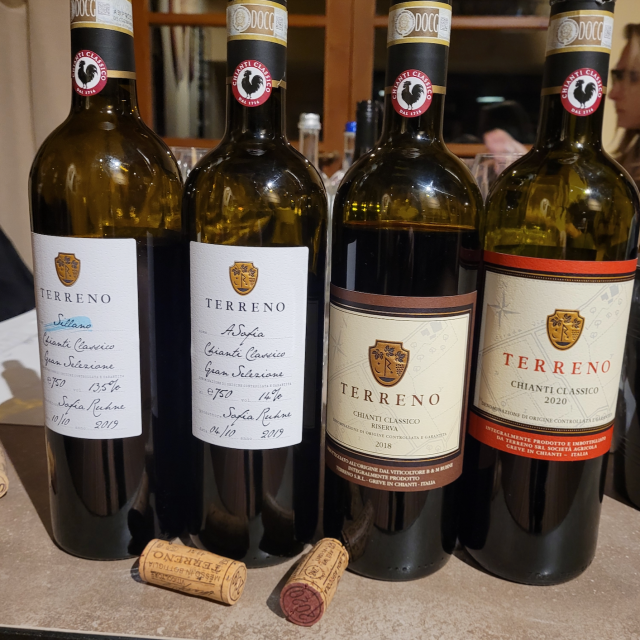
Terreno Chianti Classico DOCG 2020, Greve

Mainly stainless steel fermentation plus some open top fermenters, followed by 16 months in large (30 hL) botti. A mix of the younger plantings from all three vineyard sites; Terreno, Montefioralle and in some vintages also Sillano across the valley from Terreno up against the Monti del Chianti. Makes up approximately 35-40 percent of the total (80,000 bottle) production. The 2019 is the Annata on the market and this will likely be released later in the Spring. Approachable like many 2020s of darker fruit and a roundness making this ready as soon as anyone would wish to drink it. Already at this stage the freshness and generosity meet at a point of open amenability. Good flesh on the bone and also like biting into red stone fruit. Clarity and purity. Drink 2023-2026.  Tasted February 2023

Terreno Chianti Classico Riserva DOCG 2018, Greve

Sangiovese plus 10 percent cabernet sauvignon, (5) colorino and mainly Bonnille Vineyard across the valley from Terreno, of eight hectares on Alberese soil purchased in the 90s to add to the existing seven at Terreno. Similar altitude upwards of 350m and a warm vintage leading to 14.5 percent alcohol. Open top fermenters called Mastella are used for the fermentation, introducing oxygen and yet keeping a cap above for a wet journey through to the transfer for aging in big barrels. A Riserva of sanguinity and also animale, a lovely salumi and also raw meat muskiness that speaks to making an appellative wine from a very specific place. Good structure here as well, showing signs of life to live until the end of the decade. Really good work here from the vintage. Drink 2024-2028.  Tasted February 2023
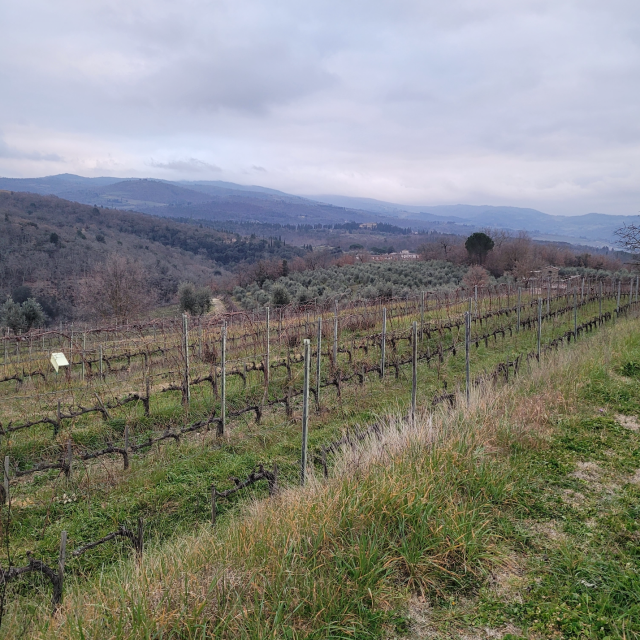
Terreno, Greve

Terreno Chianti Classico Gran Selezione DOCG Asofia 2019, Greve

Asofia is only from the oldest vines planted in 1980 and 2019 i the first vintage labeled as Gran Selezione. Previous it was a single-vineyard slash cru-designate, 100 percent Chianti Classico. A much more pinpointed and focused wine as compared to the Classico, aromatically charged with Alberese and clay as the soil source abutting the Chianti Mountains. A maturity and concentration of fruit as per the old vines that lend experience and fullness. Picked on the 4th of October and it shows in the phenolic quality, upwards of let’s say 8.5, pushing nine out of 10 on that hypothetic scale. Brush and cooler climate from the surrounding woods lends a savoury element to this wine and in Greve terms there is an almost Lamole at elevation and perfumed aspect of this hyper specific sangiovese. Drink 2023-2028.  Tasted February 2023

Terreno Chianti Classico Gran Selezione DOCG Sillano 2019, Montefioralle

One of two Gran Selezione and harvested almost a week later on October 10th, referring to the place and little church near the village of Montefioralle. From 500m on calcareous soils (Essentially Alberese), not Formazione di Sillano as might have once been supposed because of the name of the place. No barriques or tonneaux, aged 24 months in 12 and 24 hL oak, finishing at 13.5 percent, much apposite to 2018 that finished at 15 percent. This is purely Montefioralle, exquisitely so, cool and fresh, elegant and if this isn’t an ideal vintage for the UGA then I for one will have no idea what is. Purity of parochial red fruit and a temperate state of being, calm and relaxed. The tension lies hidden in the shadows of this wine, non-explicit and as a result the sangiovese seems non-plussed. The tannins are upright, timely yet taut. All this to say that Sillano will be ready just a bit later than Asofia and will also live just that much longer. Drink 2024-2030.  Tasted February 2023

Tolaini Chianti Classico DOCG Vallenuova 2021, Castelnuovo Berardenga

Lovely aromatic swirl emanates from the Vallenuova 2021 and the capture is pure Castelnuovo Berardenga, regardless of how ubiquitous that may sound, or seem. This is the sangiovese of great and wide open space, of crisp air and therefore freshness but also dusty qualities that speak to grape and place. Wait a year and drink for three to four thereafter. Drink 2024-2027.  Tasted February 2023

Tolaini Chianti Classico Gran Selezione DOCG Vigna Montebello Sette 2019, Castelnuovo Berardenga

Hard to pick a better vintage from which to create a Montebello for the ages. Here a pure Castelnuovo sangiovese that sings, in warm weather and were it to rain, happily anyway, structured and built to last a lifetime. This is Tolaini’s success, their benchmark at the top appellative level, so right, correct and true. Bravo. Drink 2024-2033.  Tasted February 2023

Vallone Di Cecione Chianti Classico DOCG 2020, Panzano

It just feels like a wine from Vallone di Cecione and the amazing thing is you only need to taste one or two wines, three or four years running to recognize the gentle breeze of sapidity running through the subtle swarthiness of their sangiovese. With canaiolo too, for that sapid streak cutting into acidity, extending the character of complexity and yet the unction of Panzano is the final call. This 2020 is exacting for VdeC. Drink 2024-2028.  Tasted February 2023

Villa Trasqua Chianti Classico DOCG 2019, Castellina

Classic Trasqua lightning, purity of red fruit for Castellina incarnate, well matured being from the ideal 2019 vintage. Yet as with the tradition of Trasqua time is the essence to define how this sangiovese (with four other grapes mixed in), they being five percent each merlot, cabernet sauvignon, cabernet franc and (3) alicante bouschet. Together all will travel, take it easy and in another year culminate at peak. Not sure this producer has crafted a better Annata in recent times, or ever for that matter. Drink 2024-2028.  Tasted February 2023

Viticcio Chianti Classico DOCG 2020, Montefioralle

Well matured and by now ready to rock and roll sangiovese with just a few splashes of merlot to deliver an herbal dissolve through black cherry fruit and high acidity. A fine vintage for the Montefioralle estate, silken and cool, almost tarragon-minty and as stylish as it comes for the UGA. Drink 2023-2026.  Tasted February 2023
Pruning at Il Molino di Grace, Panzano

Il Molino Di Grace Gratius 2019, IGT Toscana

Choosing not to compare Gratius to Chianti Classico at any level, let alone Gran Selezione, is wise and for several reasons. For one thing the blending in of canaiolo and colorino changes dynamics by setting and settling acidity, elevating pH and stabilizing colour. For more reasons check out the manual but here are the Coles notes. Gratius delivers two-toned liquorice, more direct solar radiated brightness, finer and yet less immediately understood structure and a chewiness that sets it apart. What matters is here is that Gratius is the representative for the single San Francesco vineyard and so it is a profound IGT ready, willing and able to become a wine graced with the Gallo Nero and labeled as Panzano. Two new Austrian casks will conceive 3,900 bottles going forward and the future is all about DOCG quality at the highest appellative level. Drink 2024-2030.  Tasted February 2023

Il Molino Di Grace Gratius 2018, IGT Toscana

Feels like 2018 Gratius is in a bit of a dumb phase, like what can happen with pinot noir, especially from Bourgogne. This is not Iacopo Morganti’s favourite vintage of Il Gratius but this is the misunderstood child and it will bloom late, or again. While it feels a bit sleepy now (some would say old) it should be looked at in the light of mature and experienced. A prime sample of a single vineyard made in low quantities for what the land needs to say.  Last tasted February 2023

Bottled just before the Chianti Classico 2019, so just three weeks ago. A blend of sangiovese with canaiolo and colorino, as it’s its nature and privilege. The sangiovese is taken from the vineyard on top of San Francesco’s hill, adjacent the canaiolo and colorino vineyards. A limited (3-5,000 bottle) production, a wine that’s all about selection (from two vineyards) and elevating craft to the highest of Il Molino di Grace levels. Still sees some barriques but going forward the plan should be to age only in large casks. The chewiest and most textural of the wines, with sapidity and colour matching salinity, acidity and savour. Drama but one in complete control, that is Gratius. Drink 2023-2030.  Tasted February 2022
With Giulio Carmassi and Cosimo Soderi at Gagliole, Panzano

Gagliole 2019, IGT Colli Della Toscana Centrale

Could be labeled as a Gran Selezione but it began in 1993 as a Vino da Tavola with 10 percent cabernet sauvignon mixed into the Castellina sangiovese, changing in 2013 to only Panzano and as of 2018 it has been 100 per cent sangiovese. Comes from the Pietraforte soils but also some Galestro involved and in turn the balance comes about in a sangiovese round and at other moments squared. Accessible and conversely agreeable, more well rounded ultimately speaking and less about tension or grip. The kind of structure that is both sneaky and stretched so that time can only improve the experience. Two more years will really see it all come together. Drink 2025-2032.  Tasted February 2023

Gagliole Pecchia 2016, IGT Colli Della Toscana Centrale

Called Pecchia since 1999, from a Castellina vineyard of the same name and a second block (closer to Fonterutoli’s Siepi). The name remains the same and yet since 2013 the sourcing is all estate grown Panzano, from a block at the top of the property on pure Pietraforte soil. Here from a most beneficial 2016 for a sangiovese that has matured quite a bit and yet the acidity is intense, the tannins solid as the hard rock of the vineyard and the ability to keep changing will surely be a thing of many more years to come. The mix of tension and resolution is quite there. An IGT of wisdom and also potential, stiff and solid yet singing with feeling based on experience and years under oath. Most intriguing wine that will become a Gran Selezione as of 2018. Drink 2024-2029.  Tasted February 2023
Isole Delle Falcole Vecchia Vigna 2020, Toscana IGT

An apposite vintage to 2018 for this unparalleled field blend of sangiovese, colorino, canaiolo, ciliegiolo, malvasia bianca and trebbiano though since 1948 much has changed and more sangiovese planted means less interruption or intrusion from the gaggle of other grapes. Just as juicy and gregarious while also vertical and filled with old school tension but also charm. Mid-weight and also alcohol, approximately 14 percent but this is a valley of elevation and woods so freshness just fills the air. This is very special. The 2018 was just a bit loose by comparison. Tannin on the back end suggest waiting two years. Drink 2026-2033.  Tasted February 2023

Isole Delle Falcole Vecchia Vigna 2018, Toscana IGT

The plot was originally planted in 1948 to sangiovese, colorino, canaiolo, ciliegiolo, malvasia bianca and trebbiano. Hard to find a field blend like this anywhere. Twenty plus percent is original vines and the rest planted, but also restored in 1982. Emanuele Graetz re-planted 1,000 (sangiovese) plants in 2022. Spends 18 months in older wood and yes, this is what you would expect, though how could you possibly know what to expect? Produces only 6,000 bottles from nearly two hectares and the purity is so real, with verticality, some leathery maturity but much more so a juiciness that determines the true spirit of the wine. Is this ready? No, not quite but man you want to drink it. Clean, honesty and remarkably focused despite the potential for tohu vavohu. Picked on the 24th of September. Drink 2024-2028.  Tasted February 2023

Isole delle Falcole Merlot 2020, Toscana IGT

Will be called Auré which stands For Maurizio and Loretta, owners of the property who have sold to Emanuele and are responsible for planting the merlot in 1978. Just six rows making 1,200 bottles maximum and one of the few old vines examples gone solo in the Classico area. I mean you have to taste this merlot to believe. Plenty of fruit but red with no tar, char or smokiness. Instead all perfume, picked a week ahead of sangiovese, nothing drying or leathery but just the sweetest textures, aromas and tannins. A great site and yes merlot is special for where it comes. Drink 2025-2030.  Tasted February 2023

Castello Di Monsanto Sangioveto 2017, Toscana IGT

As a reminder Sangioveto’s vineyard is called Scanni, sangiovese planted in 1968 by Laura Bianchi’s father Fabrizio and first harvested in 1974. Not sure these adept and adroit grapes have ever experienced a vintage like 2017 and yet Sangioveto defies the vintage’s absurd levels of aridity and heat by expressing freshness and exceptional acidity. Hard to believe how the essence of Monsanto’s San Donato in Poggio could be secured but ’17 succeeds with core clarity and tolerance. There is some caramel in the flavours but that’s only after the uncanny scent of prosciutto, salty and sweet, peppery and herbal. The vintage delivers purity and layers of fascination for the palate to absorb. High gastronomy Sangioveto indeed. Drink 2024-2029.  Tasted February 2023
Castello Di Monsanto Sangioveto 1990, Toscana IGT

When you reflect upon Sangioveto 1990 as a sangiovese 22 years post original planting and 16 after first vintage then you understand it was already an experienced sku. Consider 1990 as a great vintage in the Chianti Classico territory and now this original standard bearer of San Donato in Poggio quality becomes something deserving of your highest attention. Laura Bianchi’s father Fabrizio foresaw the best of the best from this block and to follow both 1988 and 1989 meant serious business. This particular bottle is nominally advanced, with earthy tones while affirmed of Sangioveto’s haute acidity and formidable structure. Tart fruit, citrus included, persistent intensity and salumi musk are all there. Though this bottle is not fully indicative of 1990’s quality it’s parts are brilliant, even if they don’t add up to the expected whole.  Tasted February 2023

San Fabiano Calcinaia Cerviolo 2020, Toscana Bianco IGT

A blend of 50-50 chardonnay and trebbiano, honeyed in hue both by some days of skin contact and some advanced maturation at nearly three years of age. Only sees stainless steel. Can’t miss the terpenes and orange pekoe tea while acidity is quite prominent in delivery of lemon and orange through promiscuous flavours. An absolutely unique take on Toscano Bianco that startles with its freshness and how expectation turns to incredulousness. Drink 2023-2026.  Tasted February 2023

San Fabiano Calcinaia Cerviolo 2019, Toscana IGT

Cerviolo Rosso is composed from cabernet sauvignon, merlot and petit verdot, an ironic name for a wine considering how many grapes these little deer will consume in any given given vintage. Raised only in tonneaux and one of the few IGTs with no sangiovese though before 2012 there was some in the mix. The idea was to separate from Gran Selezione when that appellate category became part of the portfolio. This dates back to 1986 and here from 2019 the tannins are fierce, the fruit black and the connection thick as thieves. Man does this need years to resolve though the ripeness is light years ahead of the recent past and the style is all Calcinaia. Drink 2025-2031.  Tasted February 2023

San Fabiano Calcinaia Cerviolo 2014, Toscana IGT

Same blend (as seen going forward to 2019) of cabernet sauvignon, merlot and petit verdot just a few years after sangiovese was removed from the mix. This from what was seen at the time as a disastrous vintage and yet time has been kind because first the lowest of low quantities due to stringent selection meant that only top berries were used. Second, time has helped in ways it just can’t effect after the warmest of seasons. This is settling in nicely with a recent relent of tannin but the swarthiness is purely Calcinaia and so with age there is a most obvious connection noted between this Bordeaux blend and the Cellole Gran Selezione. Drink 2024-2027.  Tasted February 2023

Tentute Squarcialupi Galaverna Metodo Classico Dosaggio Zero

The name refers to the ice that forms on the leaves of trees in winter. First sparkling wine for Squarcialupi made from malvasia bianca, two months on the fine lees in tank followed by 18 more in bottle. No dosage ”an experiment 100 percent because you don’t find sparkling wine made from malvasia in Chianti,” says Cosimo. Dry and delicious, of great fruit matched by equal and opposing acidity. Picked a month ahead of when it would be were it used in table wine with a potential alcohol of 10.5, translating to approximately 12 percent (minimum) at the end. Straight citrus, linear and richer than might be imagined. Impressive first effort leaving lime and tonic at the finish. Drink 2023-2025.  Tasted February 2023

Tenute Squarcialupi Chardonnay Rugiada 2021, Toscana Bianco IGT

From a vineyard at 600m, the highest of Squarcialupi’s 33 hectares, made with two different selected yeasts. First a non-Saccharomyces strain, then after there days a Saccharomyces is added. Goes through malolactic and then stays on lees for three months, in tank. Snappy, green apple style chardonnay, grippy, linear and of a fine citrus line, namely lime. You really feel the calcari at the finish. A difficult place to cultivate because of the Alberese but more so the Colombino, less yellow and much harder ock predominating a limestone soil. Fantastic length. Drink 2023-2026.  Tasted February 2023

Tenute Squarcialupi Dama d’Ambra Vinificazione in Amphora 2021, Toscana Bianco IGT

A varietal malvasia aged in amphora, normally picked in the second half of October, less fresh and spirited as compared to chardonnay. Fermentation happens after de-stemming and crushing, in amphora with skins for six months. White balsamic, lemon curd and “for us it’s a white wine not just for fish but antipasti and pasta with white ragù,” tells Cosimo. “It’s a light red wine.” This is the third vintage, no longer just an experiment but now a going concern. Fine bitters, savoury botanicals, dry tonic, fino, green olives and a perfectly pleasant balance. Very well made. Drink 2023-2025.  Tasted February 2023

Caparsa Rosato Di Caparso 2020, Toscana IGT

A selection of 100 per cent sangiovese, 48 hours on skins, no saignée, only run-off juice. Feels so pure and natural, sour tart, candied rose to sweet basil with a pause at pink grapefruit. Far from your dry and pale Provençal style but arid and intense in its own special way. Drink 2023-2024.  Tasted February 2023

Caparsa Rosato Di Caparso NV, Toscana IGT

The most basic of Paolo’s sangiovese, non-vintage here but in reality it is mostly 2019. Some years there is more blending involved, especially if a cold vintage is at the centre. Seasoned and a little bit spicy, simpler drinkable and finishing at herbs, both fresh and dried. Drink 2023-2024.  Tasted February 2023

Caparsa Amphora Di Caparsa 2022, Toscana Bianco IGT

Direct from amphora, trebbiano and malvasia, fermented and rested together for five month to six months, unfiltered, bottled with sediment. A tisane of lemon grapefruit and pekoe, so very tannic and of a salve texture though slippery, sliding away and not leaving its paste trailing and sticky behind. Still so young and not really in any real charming stage. Promising. Drink 2024-2027.  Tasted February 2023

Caparsa Amphora Di Caparsa 2021, Toscana Bianco IGT

A Bianco from amphora, made with trebbiano and malvasia, fermented, aged together for up to six months, unfiltered, bottled with sediment. Always a tisane, now a year in bottle showing as a honeyed lemon and orange lozenge, decreasingly tannic, settled and ready. A finer vintage as compared to 2022, seamless, graceful, silkier and alluring. There is fantasy and emotion in 2021. Perhaps 2022 will develop a similar personality with a year in bottle. Drink 2023-2025.  Tasted February 2023

Caparsa Bianco Di Caparsa 2019, Toscana IGT

A mix of trebbiano and malvasia but just fermented on skins for a few hours, pre-dating the amphora methodology. Apple and lemon jelly, simple, fresh somehow still and far less interesting than the amphora whites that will follow. Drink 2023.  Tasted February 2023

Mimma 2019, Toscana IGT

Mimma could have been Chianti Classico, it could be Gran Selezione, dedicated to “all the girls of the area,” says Paolo in all earnest seriousness, hand-picked grapes by Paolo’s wife Gianna and daughter Fiamma. This is the flagship, small production less than 2,000 bottles, grapes from all over the vineyards, picked in the middle of harvest, during the second pass. There is a restrained intensity in this sangiovese and it does indeed make you think. That’s important, It means Gianna and Fiamma get it. Drink 2024-2028.  Tasted February 2023

Filippo Bianco Frizzante Metodo Classico

Made by Paolo Cianfiero’s son Filippo of 100 percent sangiovese, oxidative, energetic, citrusy and pretty fucking delicious. Drink 2023-2027.  Tasted February 2023

Castello Di Verrazzano Sassello 2000, Toscana IGT

Like the 2004 Riserva there has been less evolution in 2000 Sassello, the sangiovese that will eventually become the first of two Gran Selezione for Verrazzano. There is certainly more concentration and compaction but the freshness is astounding and the generosity so appreciated 22-plus years forward from vintage. Top quality acidity season bar none. How can we not envision up to five more similar and ten full years of good drinking from this Sassello? Drink 2023-2028.  Tasted February 2023

Terreno Professore (Screw Cap) 2020, Toscana Bianca IGT

Made with petit manseng and roussanne (90 percent), plus (10) malvasia bianca and trebbiano, harvested mid-September and aged in wood for 11 months. An experiment to look at screw cap versus cork that Sofia and Giacomo are hoping will answers some questions. Well – what can you say because the wine under screw cap is tainted while the wine under cork is singing. Filtration issue? Cap liner problems? Bottled at the same time however so it’s a mystery.  Tasted February 2023

Terreno Professore (Cork) 2020, Toscana Bianca IGT

Made with petit manseng and roussanne (90 percent), plus (10) malvasia bianca and trebbiano, harvested mid-September and aged in wood for 11 months. An experiment to look at screw cap versus cork that Sofia and Giacomo are hoping will answers questions. Well – what can you say because the wine under screw cap is corked while the wine under cork is singing. Filtration issue? Cap problems? Bottled at the same time however so the issue must be with the cap somehow. In any case this is a most curious and frankly delicious white blend, rich and viscous with just a hint of barrel induced flintiness. White flowers and honeysuckle with a glycerol aspect to make it seem richer than it is in terms of residual sugar, so let’s say 2.5-3 g\L. Lovely mineral-metallic finish with lime and tonic. Drink 2023-2025.  Tasted February 2023

Good to go!

godello

Twitter: @mgodello

Instagram: mgodello

WineAlign
To Icewine and beyond

The Tunnel at Niagara Parks Power Station

Icewine. A Niagara wine-growing region speciality, long-suited to place, world renowned and in a way a curse because mistakenly global perception thinks only this kind of wine can be made great out of this coldest of cool viticultural climates. For quite some time Icewine has been Canada’s infinity, a national star and success story that have been the Ontario wine industry’s burden to bear, it being the ONLY wine capable of excellence in the minds of consumers and also many wine industry peeps worldwide. This is finally changing, in no small part thanks to ambassadors like The Wine Marketing Association of Ontario’s Magdalena Kaiser and Canadian Trade Commissioner Dr. Janet Dorozynski PhD. They, along with dozens of Canadians producers and winemakers have presented many years of Canadian wine tastings in London, at Germany’s Prowein Trade Fair and most recently through masterclasses in Copenhagen and Berlin. Their efforts and an exponential leap in collective quality have helped to raise the profile of the great breadth of Canadian wines.

The Wine Marketing Association of Ontario’s Magdalena Kaiser

Is it not finally time to prove two 21st century facts? First that wine consumers from Timmins to Torino are actually privy to a vinous Canadiana scene that includes but is no longer confined to the gelid, glycerin and bracing late harvest elixir. Second, Icewine and other forms of fermented grapes are evermore intrinsically connected, bonded by their growers and makers whose climate change evolving portfolios are now the sort that are chock full of inclusivity. Is it not possible to celebrate Icewine without sacrificing the progresses made by other styles of wine? Of course it is and our Ontario (and also British Columbia, Nova Scotia, New Brunswick and Québec) includes all walks of appellative, varietal and stylistic life.

The Horseshoe Falls lit up in Pride colours

The time has come to reflect upon Icewine as an entity the likes of say VinSanto or Sauternes, sweet labours of love perpetuated because of tradition and climates that continue to encourage their production. Icewine in Ontario are intrinsically connected to a winery’s portfolio; to the consumer-friendly, classic and small lot wines. European wine producing regions were once sweet-centric too and Ontario is at long last maturing into a new epoch where Icewine the founder is begetting table wines, the current board of directors. They and all Canadian wines are prepared and experienced to travel far, well outside the Icewine universe. Their destination looks past infinity, to the beyond.

The Savoury – From Chef Tim Mackiddie’s “Savoury, Spicy and Sweet” Icewine pairing preparations

Back in January the WineAlign crü shuffled off to Niagara Falls for the 2023 iteration of Niagara’s Icewine Festival. It was inside the renovated event space halls of the Niagara Parks Power Station where the gala event was held. If you’ve not been the time has come to make a visit because the installations are spectacular. Then there is the inspiring experience that is a 600m walk through the early 1900s tunnel construction that empties beneath the Horseshoe Falls. Many Icewine and other Ontario wine samples were tasted that evening, this following a truly special Icewine Masterclass given by WMAO’s Kaiser at the tasting room of The Hare Wine Company. Kaiser put together an 18-strong Icewine line-up in conjunction with Chef’ Tim Mackiddie’s “Savoury, Spicy and Sweet” pairing menu, all to fascinating results. “Icewine is the strongest post pandemic recovery for a Niagara wine category,“ informed Kaiser. “Younger males lead the resurgence.” She noted an increased use in cocktails, making use of Icewine instead of simple syrup because the traditional dessert wine is such a high quality ingredient, with natural sweetness. At the gala it was Kaiser’s son Maximilian Smit, creator of the Niagara Icewine Sour, who mixed up two unique and bloody delicious Icewine cocktails for hundreds of guests. The masterclass and the cocktails demonstrated how Icewine is no longer just about dessert. 

The Spicy – From Chef Tim Mackiddie’s “Savoury, Spicy and Sweet” Icewine pairing preparations

On Sunday after the Icewine fète the group paid two visits, to Queenston Mile Vineyard and Henry of Pelham Family Estate. The following 30 tasting notes cover Magdalena’s Masterclass and the wines tasted at the two Sunday morning stops.

Cave Spring Riesling Icewine 2019, VQA Niagara Peninsula

Stars and acids through the proverbial roof with thanks to a November 14th harvest, earliest on record by what has to be a long-shot. Specs come in at 245 g\L RS, 15.3 TA, and 9 percent abv. Full aromatic wealth and viscosity, apricot and golden pineapple, acids coming through on the nose to set up everything wanted and needed on the palate. As unctuous and fell-throttle expressive an Icewine from riesling that could ever be. Kudos to the vintage and to the makers for capturing all parts at peak. Top performer without a doubt. Drink 2023-2029.  Tasted January 2023

Henry Of Pelham Riesling Icewine 2019, VQA Short Hills Bench

Part scintillant and part fruit bomb with high active acidity in great categorical respect. Lemon, apricot and pineapple all in, gelid and cool, high in balancing acid from one of the earliest picks by one of the earlier pickers so certainly in the first two weeks of November. Also as much a petrol and airy aromatic propulsion signalling near equal to any indicators the fruit might elicit for Icewine temptation. With sugar plus acid so high and meshing together there are no spikes, searing moments or overt richness, though in the end there is a white peppery warmth. Lemon and tea, heavy sweetener and naturally tannic. Unique Icewine when you get down to the brass tacks. Registers as 9.5 percent alcohol and what’s also special is a saline streak running through. Sweet lemon desserts only serve to accentuate the sweetness and the lemon. Drink 2023-2027.  Tasted January 2023

The WineAlign Crü with Magdalena Kaiser

Magnotta Riesling Icewine Niagara Peninsula Limited Edition 2019, VQA Niagara Peninsula

A nose of ulterior style leading to different sort of reactions though the palate is much more classic, standard and expected. Reserved and limited and then exuberant, forceful, heavy steel reinforced. Really attacks the sides of the mouth upwards to the upper wisdom corners and pineapple is everywhere. Old school, white fleshed and high acid. 194 g\L of RS and 10 percent abv.  Last tasted January 2023

The lemon iced tea in Icewine makes riesling go its own direction and run with the ideal. This has energy and pizzazz, style that makes one want to know more and more. Great tension and acidity puts this in a place of its own. Drink 2024-2030.  Tasted blind at NWAC2022, June 2022

Riverview Cellars Estate Winery Riesling Icewine 2019, VQA Niagara-on-the Lake

Exotic scents in riesling out of 2019 running the mango to pineapple, papaya to litchi gamut of ripe, tart, rich and creamy. Extreme sweetness and delectable flavour profile. Chewy stuff, heavy concentrate of the tropical doused by heavy yellow citrus. Lacks a bit of balance. 189 g\L of RS, 11 abv. Drink 2023-2025.  Tasted January 2023

Byland Riesling Icewine 2019, VQA Niagara-on-the Lake

Some understatement here, aromatically speaking at the very least and the first in a comprehensive Icewine tasting to feel herbal, stem-scented and evergreen savoury. Mint and fennel, sweetness never overloading the palate or making any demands. Almost a tonic or cocktail bitters note near the finish, though persistently subtle and agreeable. Unique Icewine is every which way but loose. 192 g\L RS, 11 abv. Drink 2023-2026.  Last tasted January 2023

Byland Estate Winery is a newer Niagara-on-the-Lake, 13-acre vineyard owned by Jackson Bai since 2015. It was acquired from Frank Di Paola and his three decades of grape growing experience. The vineyard has been providing grapes for Magnotta Winery for 25 years. Their riesling Icewine is high-toned, aggressively tart and intensely implosive. Lemon and also lemongrass nose, orange crème brûlée and lime flavours with some bitterness inherent in all that layered citrus. Good length here.  Tasted November 2020

Peller Estates Andrew Peller Signature Series Riesling Icewine 2019, VQA Niagara Peninsula 

Densely concentrated and from the beginning an impressive balance in accord between sugars and acids so that the two move swimmingly along from the start through to a long lingering finish. One sip and the Icewine becomes one with your palate, hangs on, repeats upon itself and as far as that kind of attraction is concerned you welcome the linger. Special dedication and technique here to be sure. 179 gL RS and 10.5 percent abv.  Last tasted January 2023

Stratus Riesling Icewine 2020, VQA Niagara Lakeshore

Perhaps the most aromatic, palate density and intense character of any in a long Icewine flight but also a lovely swarthiness to take things to an entirely new level. Of promise and age-worthiness, to imagine a wine equipped with structure and fortitude, to change with incremental tempo (and opposite of haste), to spend a couple of decades evolving. Impressive and intoxicating in every way while sweetness is lowest in importance. 142 g\L RS, 9.3 tA, 14 abv. Drink 2023-2033.  Tasted January 2023

Densely concentrated, heavy fuel and sweetness overload Icewine that delivers all the expectations in that dessert wine category. Classic example, not overtly exotic but full of stone fruit in the peach, nectarine and yellow plum spectrum. Not the longest yet of a more than ample lingering finish. 235 g\L RS, 8 tA, 10 abv. Drink 2023-2026.  Tasted January 2023

Lakeview Cellars Gewürztraminer Icewine 2019, VQA Niagara Peninsula

Über sweet Icewine, oily of viscosity, a chewy mouthful of stone fruit fleshiness. Pulpy in textural feel, a mouthful all the way through. Yeoman acidity work and moderate length in a correct to highly proper example. Expressly gewürztraminer so it’s got that going for it, which is nice. 188 g\L RS, 9 TA, 9 abv. Drink 2023-2026.  Tasted January 2023

Vineland Estates Vidal Icewine 2017, VQA Niagara Peninsula

Wildly aromatic Icewine, unique and savoury, almost smells like charcuterie with pork rillette and a mix of pickles. Does not act so overtly sweet as compared to so many others and is remarkably characterful. But just look at the numbers. Residual sugar of 271 g\L, 8.2 TA, 9 abv. Onion skin and the musky cured skin of pork salumi. So bloody interesting. Would age this a year or two. 271 g\L, 8.2 tA, 9 abvDrink 2025-2033.  Tasted January 2023

Sue Ann Staff Howard’s Vidal Icewine 2017, VQA Niagara Peninsula

Desperately sweet and intensely concentrated Icewine, as fortified and full as they come. Not a tropical one but certainly the kind that makes one think of ripe stone fruit after a different sort of Ontario summer that turned into a hot September. Good capture of a season that was turned on its head that delivered something new. 209 g\L RS, 11 abv. Drink 2023-2027.  Tasted January 2023

Chateau Des Charmes Vidal Icewine 2018, VQA Niagara Peninsula

Concentrated of fruit times more fruit sweetness to define the style and quality of this vidal in Icemen clothing. Pineapple and apricot namely, lemon drop and a tisane finish. Quite tannic, unexpectedly so. Drink 2023-2026.  Last tasted January 2023

Lithe and charming use of vidal in Icewine from Château des Charmes, of such proper middle ground concentration and intensity. Sweet pear and caramel apple, mango purée and maple syrup on snow. Simple and oh so very effective.  Drink 2020-2023

The Sweet – From Chef Tim Mackiddie’s “Savoury, Spicy and Sweet” Icewine pairing preparations

Hare Wine Frontier Collection Vidal Icewine 2019, VQA Niagara-on-the-Lake

Impressive concentration meets a savoury edginess, white peppery dusted and full on character of an Icewine made with vidal. Classic preparation and presentation, no side-steps or derivations but simple, capable and proud. Really well made. 171 g\L RS, 10.3 abv. Drink 2023-2026.  Tasted January 2023

Reif Estate Grand Reserve Vidal Icewine 2018, VQA Niagara Peninsula

Indelibly stamped and incredible density from an Icewine that delivers maximum fruit substance from maximum effort. Here the work and the patience is justified because this is what the wine has to be. Acids do well to keep up with some much sweetness and fruit character. The crème brûlée of vidal all the way. 270 g\L RS, 10.5 tA, 9.5 abv. Drink 2023-2028.  Tasted January 2023

Ferox By Fabian Reis Dornfelder Icewine 2017, VQA Niagara Peninsula

Pungent in so many ways with serious wood elements that manifest as soy, carob, dill, tar and chocolate. In a way tastes like Cherry Blossom in childhood memory recall but its clearly more complex that that. Pot of Gold perhaps, the finest Laura Secord mixed box and so much more. Chocolate and red jam persist long after the wine has been swallowed. As much like Port as it is representative of Icewine. Picked at -10 degrees Celsius and fermented for six weeks. 90 percent stainless steel and (10) neutral French oak. 250 g\L RS, 6.4 tA, 10 abv. Drink 2023-2026.  Tasted January 2023

Pelee Island Winery Cabernet Franc Icewine 2017, VQA South Islands

Truly savoury, wholly identifiable as cabernet franc and ultimately a varietal wine that stands tall. Lacks concentration to be sure but ultimately this does the yeoman work. 187 g\L RS, 11 abv. Drink 2023-2025.  Tasted January 2023

Really does taste like cabernet sauvignon but what really stands out is the candied red apple skin character above all else. A petrol note as well however subtle and always that truth in red fruit, of currant, pomegranate and cherry character. Quality Icewine from less than classic varietal origins. 224.5 g\L RS, 10.3 tA, 9.5 abv.  Last tasted January 2023

This is a well-priced Icewine made from cabernet franc with tell-tale varietal signs. Smells like red currants, roasted peppers, strawberry or cherry pie and Ju Jubes, a Canadian Candy classic or wait, Swedish Berries. Nicely concentrated with mid-weight Icewine feel and really good length. Quality, not over the top and a pique of relish make this a highly plausible dessert wine for red wine drinkers. Drink 2020-2024.  Tasted November 2020

Queenston Mile Vineyard Blanc De Noirs Brut 2018, VQA St. David’s Bench

Two-hour cold soak for colour and spends 38 months on lees for one of Niagara’s most fully developed and also bodied Blanc de Noirs, bar none. Fruit comes from The Mile’s original 25 year-old plantings, totalling 33 acres. A light toasty and generously expressive traditional method sparkling wine not so much pink as platinum gold shaded subtly of pink salmon. High acid above 9 g\L of tA and just a few pinches (in and around) 4 g/L of residual sugar. Taut and residing somewhere between bracing and embracing in a balanced pinot noir off of these deep and heavy clay St. David’s Bench soils, to suit up sparkling from pinot noir ready, willing and able to abide. Dry and focused, precise, proper and balanced. Just a few more than 300 cases are produced. Drink 2023-2026.  Tasted January 2023

Queenston Mile Vineyard Grand Mile 2017, VQA St. David’s Bench

Just about half the production of the Blanc de Noirs (at 155 cases total) and a traditional method example with 11.2 g/L of tA and higher sugar than the B de N, upwards of 9 g/L. Aged 39 months on the lees, fuller and though the acid is so high there’s actually some creamy and mouth filling expansiveness to this pinot noir based sparkling wine. The matching sugar walks hand in hand along with the pierce of intensity so expect nervous energy and tension from this antonym to the straight pinot noir. Needs more time to integrate, seek and accede its intended balance.  Last tasted January 2023

Odd climatic vintage and while chardonnay had little trouble staying the course the same could not be said for pinot noir. It was late and it was all strawberry in 2017 so at 40 per cent of the classic mix it just can’t be denied. White strawberry in sparkling that is, leafy and savoury, unique beyond. Nearly 40 months on lees puts this is a justice league where Niagara sparklers congregate and debate with philosophical force. Grand Mile is a contemplative one, its tension suppressed yet ready to rise anytime. The moment has not yet arrived but when it does sometime in 2023 this fizz will stand up to be noticed. Such are the important matters of sparkling wine programs like these in Ontario. Drink 2023-2026.  Tasted November 2022

Queenston Mile Viognier Pét-Nat 2021, VQA St. David’s Bench

There have been still viogniers and pinot noir Pét-Nats but methinks this to be the first ancestral method viognier for The Mile. Cloudy and aromatically tart, a 100 per cent, estate fruit viognier that acts as much like a yeasty sour beer as much as it might seem to fit into the sparkling wine system. Pretty clean to be honest and there is certainly a mashed banana, creamed mango and puréed pineapple feel from this pèttilant speaking directly to hipster fashion. It’s the bacon for vegans and the air-conditioner for fans of fans. Drink 2023-2024.  Tasted January 2023

Queenston Mile Vineyard Pinot Noir Pét-Nat Sparkling Rosé 2020, VQA St. David’s Bench

Strawberries in a glass, through and through, the brain trust, child and wild thing amour of winemaker Yvonne Irving and if asked, I would imagine winemaker partner Rob Power saying, “I love all my children and I want them to discover themselves.” Which is what this pink P-N is want to do but more so allow a curious crowd the ability to get with trends, ancient method resurgences and wild thing vibes. Much drier than expected with a bin full of play dough, rye bread in the proofing stage and stewing strawberry/rhubarb. There is an unusual and au naturel, dancing in the dark profile to be sure but this kind of enzymatic presence is something to behold. Mon dieu Cellar Monkey! Well, remember this. “You can’t start a fire without a spark.” Drink 2023-2025.  Tasted January 2023

Queenston Mile Mile High NV, VQA St. David’s Bench

A Charmat method sparkling wine in a heavy fruit matched by sour lactic yogurt meets lime doused mango kind of profile. More than ample to impressive complexity for an Italian method sparkling wine though without the traditional lees aging there is a brief exchange of values and shorter finish. No surprise and because much is happening both on the nose and the palate this services the intellect although the story ends in an abrupt way. Drink 2023-2024.  Tasted January 2023

Queenston Mile Vineyard Chardonnay 2020, VQA St. David’s Bench

From the estate Queenston Mile Vineyard and spends a year in neutral barriques plus undergoes partial malolactic fermentation. Flinty and really quite yeasty for chardonnay, a raw bread dough note which seems to be something that happens in many of the QM still and especially sparkling wines. Fine bitters too, the kind you wish for in your cocktail with that kiss of oak you cherish and are so pleased it’s that and no more. Some capsicum and sweet basil come later, integrating and making for a complex and quality chardonnay. Drink 2023-2025.  Tasted January 2023

Queenston Mile Pinot Noir Unoaked 2021, VQA St. Davids Bench

As advertised there is no wood employed to ink or embellish this neutral St. David’s Bench pinot noir and the natural result is just that. Maybe not a first but writing “unoaked” on a pinot noir label is certainly not the norm and here we are with Queenston Mile’s fresh 2021. Would like to say this is all about fruit but my there are so many more goings on. Likely a healthy stem inclusion because the notes from nightshade and other sundry vegetables are swirling in the checkered and mottled aromatic profile. Some resin to varnish scents, gentle swarthiness manifesting the rusticity but naked is naked and this wine wears clarity on its sleeve. Smells like a September tomato canning day and tastes like a strawberry-rhubarb fruit roll up, though much more of saline piquant-tang than that of any level of sweetness within. Crunchy as well with a good long finish. Imagine the excitement and vinous intensity were there a higher level of whole bunch and carbonic maceration methodology involved. Drink 2023-2025.  Tasted twice, January 2023

Queenston Mile Proud Pour Pinot Noir For Bees 2020, VQA St. David’s Bench

A wine that exults the idea of “Cheers to Change” as five per cent of profits gives back to 20 non-profit organizations. Sees eight months in wood to put it in the middle tier of the three QM pinots. Gains a sweetness and a cream-centred textural verging towards Turkish Delight in a pinot not that is eminently and imminently drinkable from the day it’s bottled. No tension or sharp angles here, just roundness and amenability. Drink 2023-2024.  Tasted January 2023

Queenston Mile Vineyard Pinot Noir 2017, VQA St. David’s Bench

Nearly three years have passed and things have really changed, as they should have and now the whole bunch retreats from its original attack, fruit flanks running short in residual terms. The verdancy of stem inclusion makes this feel almost reductive but mostly it is the toasted and roasted notes that remain. The flavours are most important at this stage and so food pairing is truly key. Duck confit and crispy potatoes but also a sweetened fruit demi-glacé would elevate the wine and leave the savoury exaggerations behind.  Last tasted January 2023

The ’17 is even dustier than ’16, in fact it’s sitting compressed and pressed in a bowl inside a bin. Roasted, toasted and intense, particularly string, grippy and potent. The warmth of St. David’s and the heat of September really speaks but curiously noted and question asked is where is the strawberry jam? Lost in the foil provided by whole bunches it would seem. Drink 2021-2025.  Tasted March 2019

Queenston Mile Vineyard Cabernet Franc Icewine 2017, VQA Niagara Peninsula

Once again a wine from a vintage turned upside down with cool summer weather resolving into the hottest September and early October on record. For cabernet franc the harvest date was January 2, 2018 and yet for 2017 that would have been a vintage where acidity was easily maintained to that date. Clocks in above 9 g\L to match the 204 g\L of residual sugar with esteem and balance for Icewine of proper red fruit character, part raspberry and part red currant. Nice level of tart here but there is a roundness to what could have been sharp edges. Well made to be sure. Drink 2023-2027.  Tasted January 2023

Henry Of Pelham Cuvée Catharine Carte Blanche Estate Blanc De Blanc 2015, Traditional Method, VQA Short Hills Bench

From a specially identified block of chardonnay vines. Best of the best are destined for this top Niagara sparkling and it was Matthew of the Speck Bros. that determined the direction of this Ontario essential. One quarter barrel aged and 60 months on lees, as gently toasted and smooth sailing as a Blanc de Blancs can be – in the context of fizz that is always a scintillant without repose. Some warmth now emitting from 2015 matched by intensity and so very long.  Last tasted January 2023 

As always 100 per cent chardonnay and 2015 is perhaps the vintage of the most golden toast, as if made by agemono, with the most lemon and lees ever assembled in a Cuvée Catharine, vintage-dated Sparkling wine. An intensity of aromas swirl around in citrus centrifuge into which the gross cells don’t seem to want to go. On the palate is where they rest, layered and leesy, textured with a sense of weightlessness and wonder. Henry of Pelham channelling an inner Japanese cooking technique. Feels like some time is warranted to pull all this together. Drink 2021-2025.  Tasted October 2020

Henry Of Pelham Speck Family Reserve Riesling 2020, VQA Short Hills Bench

When winemaker Lawrence Buehler came on board in 2017 he quite soon thereafter introduced 3000L foudres to age riesling. For Henry of Pelham it continues to evolve as a game changer. Tames acidity to an extent while in certain years the truth spoken by this varietal wine in the SFR line is truly indicative of Henry of Pelham’s raison d’Être. Not merely a matter of high intensity (though there is plenty of that in high regard) but the warm 2020 season concentrates the fluid to gelid texture up the middle of this balanced wine. Youthfulness supersedes what secondary notes might choose to emerge but there is a sense of early emission, namely petrol or the equivalent aching to emerge just around the bend. Drink 2023-2027.  Tasted January 2023

Henry Of Pelham Speck Family Reserve Pinot Noir 2019, Sustainable, VQA Short Hills Bench

Vines upwards of 30 years of age provide the drupe and great Scott (or Speck) fruit it is indeed for what is almost Willamette sweet in correspondence and style. That strawberry purée and raspberry coulis effect comes pure, unadulterated and about as natural as one might imagine a varietal wine of this level of quality could come to be. Some sugar involved, maximizing around 7 g\L. Not a year of major tension but they can’t all be so drink this young, for four to five years after harvest, for best results.  Last tasted January 2023

Not so crazy young anymore in fact the perfume has become an intoxicant, spellbinding, hypnotic even. But also because the oak vanillin swirls through and is further imagined as sweetness on the palate. In the zone, as they say, all parts melted and melded together. These next six months will mark the height of this SFR Reserve with the succeeding two years being the slowly descending denouement.  Last tasted November 2022

Crazy young but somehow lovely aromatic potpourri to the SFR ’19 and a benchmark as such for the Short Hill sub-appellation. What you want to nose from the are that borders, ties and links all surrounding pinot noir lands together, especially Twenty Mile and St. David’s Bench. This just fits right in and into itself with snug togetherness. Juicy fruit, fine acids and tightly coiled tannin. Just the right kind of sour tang. Real varietal gastronomy and ideal for three to four years, some salty protein and even a side of pickle. Drink 2020-2024.  Tasted November 2020

Henry Of Pelham Baco Noir Speck Family Reserve 2020, VQA Ontario

The top seller of all of its Pelham wines and just about as promising a vintage there could possibly be for this scientifically orchestrated varietal wine. High yielding season, absence of stress, plenty of ripe fruit for a hybrid variety and ultimately the best there can really be. Picking time is crucial to ward off incoming and oncoming funk which this fruit-centric wine does not show. No barnyard, earthiness nor swarthy character neither. No – it’s so very blackberry and dark cherry, void of the feral and so well assimilated of its American oak. Pure honest tang and even though the residual sugar pushes 12 g\L it’s not the most prominent aspect of the wine. Tannins are also sweet, plush and positive. It just works, like it or not. Drink 2023-2026.  Tasted January 2023

Good to go!

godello

Twitter: @mgodello

Instagram: mgodello

WineAlign
Wines of Austria: The tension of opposites

Sunset over Niederösterreich

Life is a series of movements, from pillar to post and decision making often culminates in negative results. Every day there are deliberations, shuttles and bargaining for positivity, all inherently matters of the human condition, experienced through the tension of opposites, simply because choices made more often than not feel diametrically opposed to one another in some unavoidable way. This is one of Carl Jung’s foundational precepts and while it is often a source of frustration and confusion, for grapes and the wines they create it can be the source of greatest joy. A vine planted in poor soils and subjected to the tensity of elements may succeed but it must find a way to suffer through the strain and pressure. Jung noted that in fact it can be a necessary pre-condition (in the case of people) for real transformation to occur. Antithetically speaking grapevines are not human and nature is exceedingly if also impressively resourceful. Roots dig deeper in search of nutrients, the plant stretches and adapts, learns to embrace the tension of opposites and in turn grows stronger. Wine lovers know the feeling, of tasting that which was raised on terroirs where the vine struggle is real, survival is the necessity and the wine results are pure glory.

Godello in Wagram

Which brings us directly to Austria, where incidentally I visited, albeit briefly, back in late November of 2022. It was there that this theory was brought to light. Extreme climate, gradience and geology can lead and convince a vine to beat the odds, case in point examples from near and far. Places such as the Côtes d’Or, Rangen de Thann, Radda in Chianti, The Mosel, Salta, Lanzarote, Camargue, Bekka Valley, Santorini, Aosta Valley, Patagonia, Ahr Valley, Prince Edward County, Hunter Valley, Annapolis Valley, Lamole and Limarí Valley. Just to name a large handful! Let us add Austria to the list, Lower Austria that is (Niederösterreich) and more specifically the Wagram and the Traisental. Three aspects determine the viability for these two growing areas to qualify as those where the experience concerns the tension of opposites. Cool climate, poor soils and windswept ridges. Stand atop any one of these spots in late November, feel the chill drill straight down into your bones and know just what a vine must do to not only survive, but also thrive.

The Loess of Clemens Strobl

Wagram

In the Wagram the vineyards are divided between two distinct zones. The first is north of the Danube, directly to the east of the Kamptal where a vast terrace of land stretches eastwards for approximately 30 kilometres. The second zone runs south of the Danube, home to the small wine villages of the Tulln Basin, as well as the historic wine-growing town of Klosterneuburg which is just a stone’s throw away from Vienna. There are 250 wineries in the wagram, 2,459 hectares under vine and the three principal grape varieties are grüner veltliner, riesling and roter veltliner. The main viticultural villages are Feuersbrunn, Fels, Grossriedenthal, Gösing, Kirchberg, Großweikersdorf and Klosterneuburg.

Kirchberg am Wagram

It’s really all about rich, aromatic wines. The name Wagram is derived from the word Wogenrain, roughly translated as “surfside.” This is because the substratum of alluvial gravels and sedimentary marine deposits is covered by loess,  blown in during the ice ages and has since played a significant role in shaping the landscape. From the 2021 vintage onwards, regionally typical wines can be labelled as Wagram DAC. The top tier of the pyramid is represented by the region’s Riedenwein (single-vineyard wines) and here is where grüner veltliner, riesling and roter veltliner truly shine. Moving down from the Ried there are the Ortsweine or Villages wines that can also include chardonnay, weißburgunder, blauburgunder, and zweigelt. Finally there are the Gebietsweine, monovarietal, as a cuvée blend or Gemischter Satz (field blend)). The above mentiioned grape varieties are joined by frühroter veltliner, grauer burgunder, gelber muskateller, sauvignon blanc and traminer.

Schnitzel in Langenlois

Traisental

The Traisental is the youngest wine-growing region in Austria, only dating back to 1995 in the way we know it today with their corresponding DACs having been cemented in 2006. Of all the Austrian DACs it is one of the smallest with a shade over 800 hectares under vine. Nowhere does grüner veltliner lead as it does in Traisental, relatively speaking, where nearly two-thirds of all vineyards are planted to the signature Austrian white grape variety. Also riesling which holds great importance and perhaps increasingly so. The growing areas are tied to the villages and their signature taverns where these wines flow and also revered. Two such places are Traismauer and Herzogenburg, towns with windows into the past. Smallest of terraces are where vines grow on gravelly and often calcareous soils. Weather can be extreme, especially winds, of Pannonian influences along with cold air from the foothills of the Alps. The nearby Danube River balances temperature and day/night fluctuations. Wine culture dates back to the Romans and modern times place most importance on grüner veltliner and riesling thoughb there are smatterings of other varieties in white and red, namely pinot blanc and noir.

Godello and Traisental Geology

Ten million years ago the Traisen river ran through what is now the Traisental Valley, a growing area so apropos to talk about tension of opposites. The limestone conglomerate and poor soils south of the Danube house a mere 25 producers plus growers and their focus on grüner veltliner and riesling is all about making magic where vines suffer before begetting incredible fruit. The vineyards are planted up to 380m and what was once a four to five kilometre wide river is now just 100-150 metres across at its widest. The build up from 10,000 years of hummus is such that now if you screw up your soil it can takes decades to build it back up again. And so growers like Markus Huber have certified organic but are not content with just the rules, but concern themselves with always being one step ahead. Producers have to be open for things available on the markets, especially preparations, like Trichoderma and other microorganisms used against downy mildew. Huber remarks how herb extracts applied over the last five years have led to very good results.

The Art of Wine – Down to Earth

This two-part expression are but two ways to look at Austrian wine. From Styria, the Burgenland and Vienna in Lower Austria there are 17 DACs from a bit less than 45,000 hectares of planted vineyard. They speak collectively in a typically Austrian vernacular and with a connectivity as real and transparent as any wine producing nation in Europe. Draw a line through the village of Saint Pölten from the Traisental to the Wagram and a most specific association is forged, by geography, geology and climatic patterns. There are recurring characteristics in the grüner veltliner and riesling throughout these two DAC wines and in turn their relatedness to Niederösterreich as a whole is forged through the lands on either side of the Danube.

John Szabo M.S. receives the Bacchus Award from Chris Yorke, Wines of Austria

In November of 2022 our small group of four spent two and a half days wandering these two Lower Austrian wine regions with the chaperone assistance of Matthias and Wines of Austria. We also spent two evenings in Vienna, one at dinner with Zahel’s Alex Zahel and another at the Wiener Rathaus as our colleague John Szabo M.S. received Wines of Austria’s most prestigious International Bacchus Award for his two decades of commitment in writing about and educating on behalf of Austrian wines. Our visits in Wagram and Traisental took us to Domaine Ott, Weinmanufaktur Clemens Strobl, Dockner Tom, Jurtschitsch, Markus Huber, Matthias Warnung and Weinkultur Preiß. Just before flying to Europe John and Roman Horvath MW had delivered a November 9th masterclass in Toronto on Austrian wines and those notes are also included in this report. In total I share 90 tasting notes with you.

Domaine Ott – Feuersbrunn, Wagram

Bernhard Ott is a fourth generation winemaker, at the helm since 1993 for an estate dating back to 1889. Ott farms and bottles from 32 different plots, including three prized premium sites, one in Kamptal (Engabrunner Stein) and two in Wagram (Feuersbrunner Spiegel and Rosenberg). Bernhard’s initial goal was to make use of stainless steel though in 2018 he began working with varying sizes of Stockinger fuders. These traditional Mosel casks literally translate to a “wagonload, cartload; A unit of measure for wine equal to roughly 1000 litres.” In total there are 55 hectares and it was after tasting a 1933 Rosenberg GV that Ott decided to go back to his roots, to what his grandfather would have been doing and moved to basket press. The first to do so with white wine. In the early 2000s Bernhard began composting, with organic cow manure, became certified organic in 2006 and later visited the biodynamic property of Domaine La Romanée Conti in Vosne with Hans Reisetbauer. This was the impetus towards committing to biodynamic viticulture. He formed Respekt in 2007 with Johannes Hirsch, Fred Loimer and a group of like-minded producers, Respekt was formed. The oldest vines in the Rosenberg were planted in 1954 in very deep loess soil. Stein is Gföhler gneiss at the bottom, with red and white sands, a layer of chalk and a little loess on top. At Spiegel the soils are a mix of deep, chalky loess and red gravel, part Rosenberg and part Stein. Most of the production is grüner veltliner with 10 percent riesling.

Bernhard Ott Grüner Veltliner Am Berg 2021, Lower Austria

Frankly as direct and rounded as grüner veltliner will ever get, three parts gathered together, estate fruit, biodynamic growers’ and two hectares from agronomist Hans Reisetbauer’s father’s GV. The dictionary entry, easy to access, wisps of smoke and white pepper, finishing with a tincture’s drops of fine tonic and bitters. Drink 2022-2025.  Tasted November 2022

Bernhard Ott Grüner Veltliner Fass 4 2021, Wagram

The fourth barrel, named for Bernhard Ott’s father, a big brand poured in wine bars all over Europe. All estate fruit (which separates it from the Am Berg) and all the vines used are a minimum 12 years of age. More aromatic presence, fruit substantiality, single-vineyard edginess and concentration. Now some smoulder and layered vim, even into volupté territory. Drink 2022-2027.  Tasted November 2022

Bernhard Ott Grüner Veltliner Ried Spiegel Feuersbrunn 1ÖTW 2020, Wagram

Seriously smouldering out of the glass, so much so you are surprised to not see some smoke rising. From Ott’s six hectare portion, high in loess, gravel and (15-20 per cent) chalk. A very windy spot, seemingly always, a very exposed place. Almost the highest part of Hengstberg, a cool and understated wine, shy in its early stage yet blessed with grand cru vineyard DNA, beauty and tangible length. Drink 2023-2029.  Tasted November 2022

Bernhard Ott Grüner Veltliner Ried Stein Engabrunn 1ÖTW 2020, Kamptal

All Kamptal fruit, from a vineyard mentioned in 1427, loess with granite, firestone, gravel and a “fruity” hummus in the top few centimetres of the soil. Bigger fruit expression as compared to Spiegel, also in slide over to Kamptal there is more generosity and up front openness. No paraffin wax or lightning strikes though the back palate is alive, layered and kicking. Though consistently at 13 per cent alcohol like the rest it is felt with more oomph in Stein, thanks to the bigger amount of flesh on the palate. Drink 2023-2027.  Tasted November 2022

Bernhard Ott Gruner Veltliner Ried Rosenberg Feuersbrunn 1ÖTW 2020, Wagram

Ott took over this vineyard from his father in 1993 and decided at this time to focus on the white wines, trading the planted red vineyards for this Rosenberg, planted in 1956. Roots go down 30 metres in pure loess soil with 30-33 per cent free (or active) chalk. Man does this taste like chalk incarnate but with salty, smoky and elemental veins cut through carrying the lifeblood of the soil beneath. Luxe enough to imagine a wine going on with great flesh over a long period of time and more because the chalk will morph, transmigrate and develop a whole new level of smoulder, always connected to that chalk. Drink 2024-2035.  Tasted November 2022

Bernhard Ott Grüner Veltliner Ried Kirchtal 2020, Wagram

On the east shoulder of Hengstberg with mainly loess but also gravel and some heavy clay. The nose delivers Rhône like or more specifically Châteauneuf-du-Pâpe heady aromas in flowers like roses in oil and a density or booziness. The vineyard was planted in 2010 and 2014 was the first vintage. Seems like a big and gorgeous wine that’s a bit funny on its feet, like a breed still as a puppy with big feet and not having yet grown into itself. Clumsy yet amazing, juicy and excitable, not as focused as the grand crus, nor finessed neither. Look for iterations from 2025 onwards to get there. Drink 2023-2027.  Tasted November 2022

Bernhard Ott Grüner Veltliner Der Ott 2021, Wagram

Combines three Erste Lage (Grand Crus) in one wine. One hundred per cent basket pressed and large cask aged. Approximately 45 percent Spiegel with equal parts Stein and Rosenberg. These pressings are separated from the single-vineyard wines, picked separately (essentially from younger vines). Exciting levels of grand cru, layers and layers to stack, unfold and peel away, perhaps not as linear, focused and precise but worthy of the ideal. Bloody delicious at a high level for the short term and offering a window into all three crus after they age well into the future. Drink 2023-2027.  Tasted November 2022

Bernhard Ott Grüner Veltliner Ried Gmirk 2021, Wagram

Gmirk, from the German, only 500L of juice available, from 30 year-old vineyards demarcating the border to a village (Gösing) that deserves to be on its own as a high level wine. The concentration is rather remarkable, the smokiness thick like fog and the texture palpable. A delicious grüner veltliner that satisfies as much as it impresses. Drink 2023-2027.  Tasted November 2022

Bernhard Ott Grüner Veltliner Ried Brenner 2021, Wagram

Only 1000L of juice available, from a few rows in Spiegel that deserve to be bottled on their own. The intensity is palpable, a chiseled grüner veltliner of finesse, focus and linearity. Also power and drive, horsepower really, full speed ahead that can run both the sprint and the marathon. Drink 2024-2035.  Tasted November 2022

Bernhard Ott Riesling Ried Kirchthal 2021, Wagram

Youthful, stoic and reticent, not really giving away much at this very early stage. Layers of typical riesling necessity, intensity and sprit, needing time, slowly unfolding towards the greatness that awaits, Not quite what is available, possible and probable with grüner veltliner but impressively profound just the same. Drink 2024-2028.  Tasted November 2022

Bernhard Ott Riesling Kabin(O)TT 2021, Lower Austria

Made with some more residual sugar, Kabinett style (obviously) as a wink and a nod towards the Mosel. Green mango and peach, flowers as well, top quality acids and overall a proper if professional balance. Drink away though careful of how easy it disappears. Drink 2022-2024.  Tasted November 2022

Lukas Strobl and John Szabo MS

Weinmanufaktur Clemens Strobl – Kirchberg am Wagram

Clemens Strobl is a second generation family-owned winery started in 2008, led by Clemens and son Lukas. They started with one hectare, “wanting to know what is behind winemaking.” Today there are 15 hectares, mostly terraced above the winery. The 2012 vintage was the first to make use of native yeasts and the beginning of a conversation towards organics. They are self-professed “unbound to tradition” and so there are no appellations on the wines. Experimentation is key, yet also with winemaking ideas in the skin-contact, unfined, unfiltered and minimal sulphuring realm. They may be uncomfortable to be tagged as makers of natural wine but their actions speak for themsleves. For Clemens and Strobl wine is directly connected to soil and this means loess. Metres of loam and loess, tertiary gravel dating back millions of years. Their’s is “the region of the future.” Burgundian conditions, of loess and limestones, expressly Wagram.

Clemens Strobl Donauschotter Grüner Veltliner 2021

Clemens Strobl purchased the property in 2016, renovated the vineyards, built the winery over three years and opened the doors in 2019. The soils are rich loess to create a cuvée of grüner veltliner from grapes excluded from the single block labels. Natural ferment, malolactic as well, stable, round and offering easy access. Bottled in May and always sold out within six months – as in now. There are 20-25k bottles produced of this GV licked by flinty smoulder, flavours imagining a dry lime cordial, salty, light-hearted and with that classic white pepper. Über correct. Drink 2022-2025.  Tasted November 2022

Clemens Strobl Grüner Veltliner Schrek 2019

From the Schrekenberg, abutting the Kamptal, surrounded by forest, filled with wildlife. Vineyards face more east than south, a cooler spot that’s increasingly warming and this being one of those really warm years. Fermented in 100L oak vats. More concentration exaggerated in this 2019, but also that flinty smoulder and malolactic induced mouthfeel. Not a wine concerned with primary flavours and more about impression, in a way that reminds of some aged Domaine Paul Blanck, albeit in grüner veltliner clothing. The clarity is admirable, focus and purity as well. Drink 2022-2026.  Tasted November 2022

Clemens Strobl Lössling Grüner Veltliner 2019

From Weissbrün on heavy Loess soils, “one of our warmest vineyards, especially for grüner veltliner, now quite challenging with warming temperatures and yet we don’t lose acidity.” The warmth is so up front and immediately nurturing, soft and creamier than Schrek from a vintage in requiem of a quicker maceration, less than six hours, working on brown juice, unconcerned with primary fruit flavours. Keeps the pH lower and acids higher, maintaining flow and mouthfeel. The roundness and barrel effect are felt here in that Bourgogne chardonnay way. Apposite to Schrek. Drink 2023-2027.  Tasted November 2022

Lust By Lukas Strobl Lust & Laune 2021, Wagram

“Not a big fan of the term but it is natural wine,” tells Lukas Strobl, son of Clemens. His skin contact blend combines grüner veltliner with chardonnay, unfined, unfiltered and sulphured minimally at bottling. From Clemens Strobl estate fruit and as noted in his and his father’s wines you can expect this subtly orange example to be as clean and crisp as possible. This first vintage is 2,600 bottles. Orange and lemon skin, persimmon and no off-putting funk, just the Mark Ronson and Pharrell Williams kind. Just a dream. Drink 2022-2025.  Tasted November 2022

Clemens Strobl Donauschotter Riesling 2021

The Loess soils are heavy, aka Danube gravel and they can produce overly rich and fruity riesling so this is made in the driest possible style,. High in lime, acids in and around 7 g/L, a bit of boosted alcohol and more than anything a feeling of fullness in the mouth. Tart yellow plum, white peach and lemony finish. Classic dry riesling. Drink 2022-2024.  Tasted November 2022

Clemens Strobl Rosen Riesling 2019

From the Rosenberg, one of the highest (380m) in terms of elevation which is at the height of the Wagram. A place of sunny and warm days through summer plus really cold winter nights. Also one of the rockiest/stoniest vineyards, worked botrytis free, passed through several times during harvest. Again in the arena of dry though clearly elevated in viscous mouthfeel, noticeable alcohol matched by some residual sugar though far less than many counterparts. Elegant and refined, age-able to a mid-term degree. Drink 2022-2025.  Tasted November 2022

Clemens Strobl Riesling Pfaff 2019, Kremstal

From a 40-45 year-old vineyard, having been taken over in 2015, a stony, east facing block almost on a cliff. Drier, more intensity, precision and finesse. This is not about primary fruit at all and more concerned with drive, freshness and the kind of character that can accept great changes over time through the canals of elemental, mineral and gaseous shifts. Has begun and will accede to the secondary before too long. Drink 2022-2027.  Tasted November 2022

Clemens Strobl Donauschotter Rosé 2021

From pinot noir and st. laurent aged in 25 different vessels, including clay amphora. The effect felt here is as much orange as it is Rosé but also a style that is dry, pale, elegantly tart and of a tang that’s also just faintly there. Would not refer to it as serious but certainly refined, akin to the agreeable whites and of a clear, focused and distinct advantageous style. Can really see this alongside braised pork, either belly or guanciale in pasta. Drink 2022-2024.  Tasted November 2022

Clemens Strobl Pinot Noir Hengst 2019, Wagram

Not THAT Hengst but a single vineyard in the Wagram and 2011 being the first vintage. Spends nearly three years in wood and the style is one that wants flinty-smoky reduction from the natural yeasts, clearly spoken from 2019 though the warm vintage speaks right up. While it seems that this is not the past personality exhibited by this deliciously creamy pinot noir it also seems that this will be a big part of its future. Drink 2023-2027.  Tasted November 2022

Lust Lukas Strobl Etretat 2020

Of sauvignon blanc, unfined, unfiltered and nowhere near the vicinity of grassy, green nor blowsy styles. That said there is more fruit than any of the Clemems Strobl wines, and also the orange. There is an immense wealth of fruit, layering character and possibility in this singular sauvignon blanc. It’s bloody delicious. Drink 2022-2026. Tasted November 2022

Lust Lukas Strobl Elafonisi 2020

Made from grüner veltliner, eight days on the skins, 30 per cent whole bunch, approaching orange but not quite at that territory. Natural in any case, by nature of the unfined, unfiltered and minimal sulphuring (at bottling) treatment. Captures the flinty-smoky smoulder though with more viscosity and palate density. Comes away with great stage presence, here as a the second try just after working harvest in the Mosel at Clemens Busch. Drink 2023-2027.  Tasted November 2022

Lust Lukas Strobl Ureki 2019

Only 300L produced from one of the oldest cabernet sauvignon parcels in the Wagram, purchased in 2009 and becoming easier and easier to ripen the grapes. Much better adapted to this climate than it surely was when planted in the 1980s. OK so it’s still cool climate cabernet but this is the warmest of vintages from which ripeness is just about as close to phenolic fruition as it will get for the place. Just carries the feel of the Wagram, in spite of the variety, with a kind of evergreen and as with the whites, a smoky-flinty mineral feel, always present. From land and also winemaking, wanted and relished. Super refined and elegant tannins. Drink 2023-2027.  Tasted November 2022

Ground Control to Dockner Tom

Dockner Tom – Thayern

The winery dates back to 1912 while the house is 580 years old. Dockner is a producer with a large and well-rounded portfolio, bottling regional, village, single-vineyard and 1ÖTW premium vineyard classified wines. The Dockner family have been vintners in Theyern for four generations and Tom credits his father for teaching him a great deal. His pursuit of quality and sustainable cultivation is integral to the family’s estate. Ried Theyerner Berg, Pletzengraben and Hochschopf are the most important sites, especially for grüner veltliner while riesling also thrives at Parapluiberg Mountain.

Dockner Tom Grüner Veltliner Tom 2021, Traisental DAC

Quite a golden rich grüner veltliner of elevated ripeness and sapidity over salinity, über freshness and a drinkable nature that most people can really understand. A high-level entry wine with a top fruit core and no complications. Nor distractions and tangents neither. Drink 2022-2023.  Tasted November 2022

Dockner Tom Grüner Veltliner Nussdorf 2021, Traisental DAC

A village wine from Nussdorf off of loess soils and always a bit creamy yet persistently fresh. Carries the classic white pepper and here with that light buzz, not effervescence but a definite hum. Tart and sapid again, almost blanched nut but not fully and all the while equally salty, direct and again, an easy wine to understand. Clean, crisp and really well made. Drink 2022-2024.  Tasted November 2022

Dockner Tom Grüner Veltliner Ried Theyerner Berg 2021, Traisental DAC

From very chalky soil, a cool climate location, intensely taut and so very affected by the soil. Clearly, unequivocally and directly with more salinity than the regional or village examples to be frank and sure. Not an elastic texture or length but so very linear, upright and long. Drink 2023-2028.  Tasted November 2022

Dockner Tom Grüner Veltliner Ried Pletzengraben 1ÖTW 2021, Traisental DAC

The Pletzengraben is place abutting a forest and blessed by cool, fresh winds. Here a knowable tonic and cordial character, lime and botanicals, quite taut but still with some give. Work with the wine to allow the chalkiness to come through and the wine carries just a hint of residual sugar. Arrests on its own at 3.5 g/L of RS. Drink 2022-2027.  Tasted November 2022

Dockner Tom Grüner Veltliner Ried Hochschopf 1ÖTW 2021, Traisental DAC

East facing hill on terraces, very chalky, with loess and stones. Fermented in large oak casks, just like the past and the result is a creamy, softly textured and downy wine with white chalky salinity though not really intense. An billowy example that drinks with ease. Drier than the Pletzengraben. Drink 2022-2025.  Tasted November 2022

Dockner Tom Grüner Veltliner Ried Hochschopf 1ÖTW 2013, Traisental DAC

East facing hill on terraces, very chalky, with loess and stones. Fermented in large oak casks, just like the past. An older example and there is some terpene here, like apple juice, the fruit having been originally a bit bruised. Lemon preserve and decent acidity for sure so not a hot year but just some fruit that likely should have been sorted out. Drink 2022.  Tasted November 2022

Dockner Tom Grüner Veltliner Ried Hochschopf 1ÖTW 2010, Traisental DAC

East facing hill on terraces, very chalky, with loess and stones. Fermented in large oak casks, just like the past. An older example (tasted blind) from what feels like a much cooler vintage and the fruit is again apple though tart, green and with a white peppery bite. Good acid crunch here, lovely energy, so very grüner. Turns out to be 2010 and so the coolest vintage of the last 15 where picking lasted all the way into mid-November. Drink 2022-2024.  Tasted November 2022

Dockner Tom Riesling Ried Parapluiberg 2021, Traisental DAC

Parapluiberg as in the hill with the umbrella and a fresh, saline and acid led riesling. Really high acidity manages the 6-7 g/L of RS in a very Germanic style, more Rheinhessen than anything else, lime sharp, juiced and zesty. Good fruit here, vibrancy and really tart. Drink 2022-2025.  Tasted November 2022

Dockner Tom Riesling Ried Pletzengraben 1ÖTW 2021, Traisental DAC

Quite a rich and concentrated riesling, not quite the lime cordial of the Pletzengraben grüner veltliner but there is still this rich viscosity and texture that is very mouth filling. Quite an aromatic beauty and a wine that integrates its parts very well. Drink 2022-2027.  Tasted November 2022

Dockner Tom Riesling Ried Pletzengraben 1ÖTW 2017, Traisental DAC

Again, tasted blind this reminds of an older grüner veltliner, like that green apple, white pepper and sharp 2010. This one snaps and bites, with searing acids and an intensity off the proverbial charts. Drink 2022-2025.  Tasted November 2022

Dockner Tom Riesling Ried Pletzengraben 1ÖTW 2016, Traisental DAC

Really interesting vintage tasted blind, very much in line with the grüner veltliner of 2013, fruit a bit bruised and here in riesling there is saffron, banana and pineapple. Acids are good though the fruit was obviously very ripe. Secondary stage showing petrol and botanicals. Drink 2022-2023.  Tasted November 2022

Dockner Tom Traminer Konglomerat 2021, Traisental DAC

Off-dry gelber muskateller and gewürztraminer, high in sgars but also acids for balance, from a rich vintage with highly tropical fruit like guava and pineapple. Actually a matter of 12 g/L of RS but only 6.5 of acidity, high for traminer. Drink 2022-2027.  Tasted November 2022

Dockner Tom Traminer Konglomerat 20007, Traisental DAC

Off-dry gelber muskateller and gewürztraminer, much older vintage but also one of extreme ripeness because the litchi is full on, as are the roses and blanched nuts. Not quite the richness of the warmest vintage but surely sharp and older at the same time. Drink 2022-2023.  Tasted November 2022

Dockner Tom Gelber Traminer Natur 2021

A natural white from gelber muskateller meets gewürztraminer 10 months on skins. Lemon and quite sweet fruit meets acids in a lovely wine, of no salve or distraction, very clean and fresh. Drink 2022-2025.  Tasted November 2022

Dockner Tom Pinot Noir Konglomerat 2019

Sees 300L barrels for 30 months after a long skin maceration. Light and creamy, tart and with enough tension to match the soft palate. Of a cool climate style where fruit hangs long, develops good phenolics and eerily like Nova Scotia actually. Could be a Lightfoot & Wolfville Ancienne, ostensibly if truly in the way it presents itself. Drink 2022-2025.  Tasted November 2022

Dockner Tom Pinot Noir Konglomerat 2008

Older vintage tasted blind, showing plenty of age, caramel and bitters, warm vintage, a bit astringent. Quite volatile. Drink 2022.  Tasted November 2022

Alwin Jurtschitsch

Jurtschitsch – Langenlois

Alwin Jurtschitsch and Stephanie Hasselbach (formerly of Gunderloch in the Rheinhessen) have been working the vineyards since 2006 and immediately began transforming to organic back then. Their wines are a combination of old style classics and the new natural, loyal to grandparents while simultaneously focused on a new generation of wine drinkers. There are Pét-Nats and bottles made by skin-contact, unfined, unsulphured and unfiltered. There are also 1ÖTW premium site grüner veltliner and riesling in the tradition of modern day Wagram. Some wines are labeled Jurtschitsch while others carry the name of Alwin und Stefanie Jurtschitsch or Weingut Fuchs Und Hase.

Weingut Fuchs Und Hase Pet Nat Vol 3

Simply allowing sugar and yeast to make a second fermentation in the bottle but with high level and quality grüner veltliner. More than a different Pét-Nat but one that is more connected to grape variety and vineyard. How? You can just feel it. Leathery orange, candied fennel and root vegetables, toasty and sweet. Natural as far as the saying and the ideal goes. Far, far away from funkier and all the better for it. Drink 2022-2024.  Tasted November 2022

Jurtschitsch Grüner Veltliner Ried Lamm 1ÖTW 2020, Kamptal

No doubt a reductive style of Kamptal winemaking and after tasting through a half dozen barrels of 2021 and 2022s the stylistic is fully confirmed. A two weeks partial stem maceration gives this Erste Lage so much texture, a wine you can chew, for a while and on from which you can extract all the juice, flavour and tannin. Orange, a tisane, sugar cane, lemon thyme and great length in a fine, thoughtful and uplifting wine. Drink 2022-2026.  Tasted November 2022

Jurtschitsch Grüner Veltliner Ried Kaferberg 1ÖTW 2020, Kamptal

Less reduction than the Lamm though even more extract and tannin, viscosity, unctuousness and a mineral-boozy feeling. Still it is linear, focused and upright. This reduction is linked to lees only, not sulphur, it’s not stinky and in fact completely a matter of fruit. A Burgundian one if you will and very practical for freshness and also longevity. From a southeastern parcel of the Kaferberg where the old vines grow. More filigranite and not just loess, a place of pyre rock. Makes for a most amazing expression of grüner veltliner, on the lee side where prevailing winds cool and instigate this very specific type of smoulder. Drink 2022-2027.  Tasted November 2022

Jurtschitsch Grüner Veltliner Ried Loisenberg 1ÖTW 2021, Kamptal

Loisenberg is the only single-vineyard erste lage bottled ahead of the harvest simply because it had done its work, unlike the Kaferberg and Lamm which were not. In fact the Lamm had not net even gone dry. Another reductive grüner but we’re lessening as we go through the range. Herbals, sweet ones that is, tonics and Limoncello. Searing, sharp, serious tang and the most citrus of any of the grand cru. Drink 2022-2025.  Tasted November 2022

Jurtschitsch Grüner Veltliner Amour Fou Natural Wine Trocken 2020, Kamptal

Full on Ried Loisenberg fruit under Alwin and Stephanie Jurtschitsch’s natural range, skin-contact, unfined, unsulphured and unfiltered. Skin maceration was quick, sent straight to barrel from press. Clearly Kamptal, not an amphora or orange stylistic, just something to distill the place into a transparent example. Nothing crazy about it, knowable, tannins at the top, extract in line, no funk, nor salve on the palate or earthiness at all. So clean and yes like looking in a Kamptal mirror. Drink 2022-2025.  Tasted November 2022

Jurtschitsch Riesling Heligenstein 1ÖTW Alte Reben 2020, Kamptal

Alte Reben, aka old vines, and some say Heligenstein is the most unique reddish, desert sandstone soil not found anywhere else. Just this little hillside, also a very historical place. A great terroir, but not an easy one. Requires compost and hummus and if you get it right there is an entirely new kind of mineral and elemental push run through the vines and into the wines. Truly, that and a botanical density, a viscous herbology and lime intensity. My how this will develop and morph into something new, time after time. Completely dry, a result of vintage and barrel, not cru. Drink 2022-2027.  Tasted November 2022

Jurtschitsch Riesling Quelle 2019

Made from a unique spot aboard the hill that is the Heligenstein where a natural spring exists in one of the driest places in Austria. Bottled natural and unfiltered, no enzymes, yeast and certainly no botrytis. Still buzzing with a minor amount of what feels like CO2 but really just sexy energy. Super juicy, orange distillate, tisane and zest. Crunchy, salty and fine. Drink 2022-2027.  Tasted November 2022

Markus Huber – Reichersdorf, Traisental

The vineyards are cultivated according to organic guidelines and the entire winery is certified according to the “Sustainable Austria” criteria. Markus Huber tries to improve biodiversity by sowing plants that are favourable to vines, keeping bushes, trees and hedges around the vineyards and by using animals and beneficial organisms. All these measures come together to result in better soil quality and increased vine health – and, ultimately, in expressive and authentic wines typical of the region.  The vines are mainly planted on terraces – some of them quite minuscule – comprised of dry and very limy gravel soils. The Traisental valley is the only wine producing region of lower Austria where a most important limestone soil type can be found. Huber is the spearhead for the Österreichischen Traditionsweingüter, and organization of vintners from the Danube areas in Kremstal and Kamptal with the intention to identify and understand the diverse soils, the microclimate of the different vineyards and the impact of these factors on the varieties. The question posed was how do these conditions support quality and character in the wine? Thus in 2010 an attempt was made to classify the classic vineyards objectively. The awareness that great wines only thrive in great vineyards is inherent in this philosophy. The terms Klassifizierte Lage, Erste Lage and Große Erste Lage were thus defined.

Markus Huber

Markus Huber Grüner Veltliner Terassen 2021, Traisental, Niederösterreich, Austria

Esssentially the “estate” grüner veltliner, of 15 parcels from north to south separated by 10 kms harvested between 10 days and two weeks in the Traisental. As precise as it gets for grüner with a little bit of skin contact, zero botrytis, bone dry (with help from a cultured yeast). Big licensee pour so it has to be dry and consistent. White liquid peppery, taut yet not tight and notably sapid, surely an agglomerated grab of conglomerate rock from around the region. Drink 2022-2024.  Tasted November 2022

Markus Huber Grüner Veltliner Nussdorfer Obere Steigen 2021, Traisental, Niederösterreich, Austria

Essentially the “villages” grüner veltliner, from Nussdorfer, of six vineyards, vines in and around 25 years and picked on average 10 days later than the Terrassen. More weight, physiological ripeness and complexity than the Terrassen. Focus and precision as well though still an averaged out or at least layered expression to speak of a more confined sense of Traisental space. Saltier as well though hard not to notice the sapidity too. This just has that balanced posit tug between the two. Drink 2022-2025.  Tasted November 2022

Markus Huber Grùner Veltliner Ried Alte Setzen 1ÖTW 2021, Traisental, Niederösterreich, Austria

Single vineyard from the pressed rock of the name that combines limestone with sand and clay formed by the retreating Traisen River formed 10 million years ago. the soils here are very shallow and roots dig very deep to find nutrients in the water table below. Saltier, slightly lower in pH and conversely not as sapid as the Zwirch. Fermented in large traditional oak casks and the result here speaks to limestone in the most direct, fresh and high spirited way. Chiseled for grüner veltliner. Drink 2023-2028.  Tasted November 2022

Markus Huber Grùner Veltliner Ried Zwirch 1ÖTW 2021, Traisental, Niederösterreich, Austria

Single vineyard from the conglomerate rock of the name that combines limestone with small stones and clay formed by the retreating Traisen River form 10 million years ago. Fermented in large traditional chestnut casks from the 1960s of 10 years minimum for micro-oxidation. Old vines as well, some 70 years of age for a truly sapid expression of grüner veltliner with thanks to this specialized geology that is very high in pH. Power in this wine though the clarity and determinative focus is estimable. The winemaking too. Drink 2023-2027.  Tasted November 2022

Markus Huber Grüner Veltliner Ried Berg 1ÖTW 2021, Traisental, Niederösterreich, Austria

Highest and coolest vineyard of the Traisental Erste Lage because by three or four pm the forest casts shade over the vineyard. Limestone based soil as well, upwards of 380m and the only portion that has iron rich red elements in the earth. Actually finding a richness in this, surely vintage related and that is unexpected but it’s also the most savoury, minty cool, eucalyptus accented, or the like. Curious by comparison to Alte Zetsen and Zwirch, in what is assessed as almost dark, smoky, spicy volcanic-simulate stuff. Brings whole and utter meaning to grüner veltliner at the Grand Cru level. Drink 2023-2028.  Tasted November 2022

Markus Huber Grüner Veltliner Ried Berg 1ÖTW 2016, Traisental, Niederösterreich, Austria

Berg is so bloody apposite to Rotenberg even though they both come from the same geology but here the block is the highest and coolest vineyard of the Erste Lage because by three or four pm the forest casts shade over the vineyard. A cool vintage when quite a bit of selection was necessary where some unusually present botrytis did occur. Definitely moving into a savoury secondary stage though the great factor is the emerging petrol, great for grüner, the white pepper now so liquified and the texture really quite layered yet compressed. Advancing and will drink with lovely sway for another two or three years. Drink 2022-2025.  Tasted November 2022

Markus Huber Grüner Veltliner Ried Berg 1ÖTW 2017, Traisental, Niederösterreich, Austria

A warm summer and cool fall, considered as a very strong vintage, doused in lime, no real petrol and this was in fact the first year where the vines sat under the hail nets so that they received dappled light instead of direct sun. The Berg is a top site and makes grand jour, grand cru wines. This is cracker riesling. Top, top. Drink 2022-2027. Tasted November 2022

Markus Huber Riesling Ried Berg 1ÖTW 2021, Traisental, Niederösterreich, Austria

Berg is so bloody apposite to Rothenberg even though they both come from the same geology but here the block is the highest and coolest vineyard of the Erste Lage because by three or four pm the forest casts shade over the vineyard. And so the focus here is intense, the herbology present and the sapid savour almost flying off the charts. Incredible determination and what has to be as good a vintage for this Grand Cru as there as ever been. Drink 2023-2023.  Tasted November 2022

Markus Huber Getzersdorfer Riesling Engelsberg 2021, Traisental, Niederösterreich, Austria

A villages wine, from Getzersdorf, of vineyards that stretch over two crus, and an example of dry wine with all the varietal characteristics of the area. Like white flowers as opposed to peach and the limestone tightens the palate. Provides the sapidity though the wine is balanced in equanimous behaviour by salinity. Drink 2023-2027.  Tasted November 2022

Markus Huber Riesling Rotenberg 1ÖTW 2021, Traisental, Niederösterreich, Austria

From Dolomite limestone soil, as with the sister riesling Berg, and it is pretty obvious that south facing slopes make for a richer, luxe, viscous and textured style. No skin contact (as opposed to the grüners) but whole bunch pneumatic pressed. The phenols are in fact not eliminated but the precursive petrol notes are encouraged and phenols are pulled from the whole bunch breakdown. Most important the berries are protected from ultra violet light under hail nets and so dappled light improves the aromatics in the grapes while still on the vines. Yet another example of capturing what you want in the vineyard and not in the winemaking. Salty number, taut, finessed, yes rich but also so focused. Drink 2023-2028.  Tasted November 2022

Markus Huber Weissburgunder Rosenweg 2021, Traisental, Niederösterreich, Austria

From a single vineyard Hochschopf which is a grand cru for grüner veltliner and riesling only, a place to deliver high ripeness and the winemaking is a blend of the grüner veltliner and riesling in that the fermentation is done in Acacia barrels after receiving a long skin-contact maceration (69 hours). Definite phenolic presence, grip and circumstance, no botrytis or malo, cool, silky textured and yet crunchy enough to keep our attention. A really smooth drinking weissburgunder. Drink 2022-2024.  Tasted November 2022

Markus Huber Metamorphosis 2021, Traisental, Niederösterreich, Austria

A natural wine made since 2017, always changing, thus the name. Varietal grüner veltliner picked earlier to lessen alcohol, ferments for four months in concrete egg, racked off, sent back in without sulphur for six more months on the gross lees and only sulphured minimally (20 bbm) at bottling. Preserved lemon is the crux and the focus, that being how textured it presents as a varietal wine in the natural vein. Even the tisane and the poached or blanched flavours are yellow citrus with creamed pine nuts or hummus in the mix. Drink 2022-2025.  Tasted November 2022

Markus Huber Pinot Noir Rosenweg 2021, Traisental, Niederösterreich, Austria

Grown on blocks where the grüner veltliner and riesling don’t and yet this is from an Erste Lage site. Harvested on the 30th of October so the phenolic vernacular is one from a long growing season. A mix of 30 percent whole bunch and 70 from separated grapes for a minor carbonic maceration. Maximum two weeks for the whole process and racked off into 500L Bourgogne barrels, left on lees for 10 months. Vines were planted in 2004, 777 (Bourgogne) and one German clone. Waited 10 years before bottling as pinot noir. Quite round and creamy, unfiltered and low by intervention. Finishes with just a fraction of extending tension to keep interest and see the wine age just a few years. Drink 2022-2024.  Tasted November 2022

Matthias Warnung

Matthias Warnung – Kamptal

Welcome to the low intervention winemaking world of Matthias Warnung. Warnung farms 10 hectares in the Kamptal after taking over the winery from his father in 2010. Matthias has worked with other winemakers, including Craig Hawkins, the South African natural winemaker behind the brand Testalonga. He also worked alongside Tom Lubbe of Matassa in the Roussillon. Organically raised grüner veltliner and riesling rest in large old casks for several years, always after wild ferments, extended skin contact and minimal sulphuring.

Matthias Warnung Grüner Veltliner Potato Land 2021

“It is Kartoffelland around here” smiles Matthias Warnung. Potatoes are everywhere and the jest is real though Warnung is anything but a tongue and cheek comic. No, he is a dead serious vine-grower and winemaker, young, precocious and deeply rooted in the tradition of the Ernst Warnung estate. Just calling a spud a spud and this grüner veltliner is an agriculturalists’ way of keeping in touch with 10-plus hectares of vines surrounded by the Kartofel. Perhaps there is a wink-wink suggestion here from a producer who sometimes makes wines unconnected to appellation but in any case the minor skin-contact and playful nature offers plenty of good fun. A joyous and textural grüner, herbal, dry and expertly spoken in layers of loess, clay and chalk. A terrific and affordable cuvée, knowable and yet just a bit different. Cheeky even. Drink 2022-2024.  Tasted November 2022

Matthias Warnung Grüner Veltliner Espere 2020

This step up in grüner veltliner character and texture puts this minimal intervention example into a “Villages” level of expression, first from higher quality and older vines’ fruit but also with thanks to two years spend in large older casks. Tightly wound whilst in that balanced middle zone, above a regional roundness yet still shy of a rich and not quite opened single-vineyard style. In fact it seems that only this level delivers a truly authentic grüner veltliner experience, at least so far as it registers under the guidance of Matthias Warnung. Overall this smoulders lightly and finishes wholly and unequivocally sharp. Drink 2022-2026.  Tasted November 2022

Matthias Warnung Grüner Veltliner Lossling Single Vineyard (Barrel Sample) 2017

Younngest vineyards are bottled after one year. Village wines are two years. The single vineyards minimum five. Aging is done in a cold and humid cellar, barrels cleaned of the nitrates every ten odd years. The grüner veltliner is whole bunch pressed, of a wild ferment and straight to 300L barrel in the 350 year-old cellar. Will be bottled in December after five years, sulphured 15-25 mg at the end. The Jean-Pierre Frick of the Kamptal but this is incredibly clean and pure, far less oxidative and nervous. Now honeyed, paraffin waxy, of lemon preserve with great tension and energy. Acids run the show and texture is lovely. Carefully considered, slowly developed, a process and structured to last. Drink 2022-2030.  Tasted November 2022

Matthias Warnung Riesling Single Vineyard (Barrel Sample) 2017

The oldest part of the grüner veltliner vineyard houses riesling, vines around 40 years of age, made in the same way as the Lossling grüner veltliner. Whole bunch pressed, wild ferment and straight to 300L barrel in the 350 year-old cellar. Will be bottled in December after five years, sulphured 15-25 mg at the end. Noses more like older riesling than the grüner does for that variety but the tension here is greater, the fruit skin scents muskier and more intense. Some evergreen here, pencil shaving and more skin-contact feeling in a Gravner meets Fino kind of way. Green olive, almond skin and lime. Complex and fascinating.  Drink 2022-2029.  Tasted November 2022

Klaus and Viktoria, Weinkultur Preiß

Weinkultur Preiß – Thayern

Fifth generation winemaker Viktoria Preiss and partner Klaus are most concerned with nurturing balanced and healthy soils, healthy vines and grapes. It is what they call “close-to-nature cultivation, certified organic by Austria Bio Garantie and from the 2025 vintage forward they will be officially certified organic. They employ self-produced compost and most importantly diverse cover crops for the purpose of increasing biodiversity, control erosion, provide nutrition, work against soil compaction and produce humus for long term gains. To combat the grape vine moth they use pheromones instead of insecticides. Of great interest has been the decision to use the pruning method of Simonit & Sirch, to increase the overall balance of their vines and to make them more resistant against viral diseases.

Weinkultur Preiß Grüner Veltliner Kammerling 2021, Traisental DAC

From fifth generation winemaker Viktoria Preiss and partner Klaus on a Thayern farm working towards and converting to organic agriculture. A grüner veltliner right up the middle for a regional agglomeration of fruitiness, mineral and acidity – all the proverbial bests. Tart, medium-bodied, middle of the road taken, well made. Sharp value. Drink 2022-2024.  Tasted November 2022

Weinkultur Preiß Grüner Veltliner Ried Rosengarten 2021, Traisental DAC

Moving to the most northern vineyard in the valley with a grüner veltliner of notable vintage richness, warmth and clear late harvest concentration. An elevated pH for high sapidity and while the acidity is perfectly fine it is certainly not high or up front, nor centre stage. Classic ripe to ripest tonic finish. Drink 2022-2024.  Tasted November 2022

Weinkultur Preiß Grüner Veltliner Ried Rosengarten 2019, Traisental DAC

Retreating back two years and again from the most northern vineyard in the valley with here another warm, if quite a bit warmer vintage. Already showing some secondary character, petrol and saffron, likely due to a touch of botrytis in this vintage. Drink 2022.  Tasted November 2022

Weinkultur Preiß Grüner Veltliner Reserve Ried Brunndoppel 2021, Traisental DAC

Moving from the most northern vineyard (Rosengarten) to further south where the bedrock of limestone makes it difficult for the vines to burrow down in search of nutrients. Brunndoppel refers to two water sources beneath the vineyard and is a monopole under the framing of the Preiß famly, high in elevation and approximately three hectares total. Still the richness and ripeness but this is very youthful and sharp, working through its edges, tight and stretching. Drier than the previous 2020 and 2017, more focused and well made out of a very good vintage. Drink 2022-2025.  Tasted November 2022

Weinkultur Preiß Grüner Veltliner Reserve Ried Brunndoppel 2020, Traisental DAC

Southern reaches of the Traisental, where limestone bedrock is hard and vines must burrow to seek nutrients below. The name Brunndoppel makes reference to two water sources beneath the soil, a monopole farmed only by the family Preiß – their three hectare Grüner Veltliner grand cru if you will. Works to converse positivity, here from a very cool vintage. Lovely movement and a good balance between ripeness and tension, fruit and rock, all wrapped up in sweet acidity. Well made here. Drink 2022-2025.  Tasted November 2022

Weinkultur Preiß Grüner Veltliner Reserve Ried Brunndoppel 2017, Traisental DAC

Showing age and a warmer vintage to create this warm, fuzzy, soft and creamy wine. What grüner veltliner was and still can be, likely some botrytis involved, certainly some residual sugar and tastes like traditional Alsace pinot gris or blanc. Drink 2022.  Tasted November 2022

Weinkultur Preiß Grüner Veltliner Reserve Ried Berg 2021, Traisental DAC

Highest and coolest vineyard of the Cru because by three or four pm the forest casts shade over the vineyard. Limestone based soil as well, upwards of 380m and the only portion that has iron rich red in the earth. Vines are young, just about 10 years of age at this point and chardonnay was planted here before. With her third vintage in pocket is shows that Viktoria Preiß has this innate understanding of the vineyard better then the others she works with. This grüner veltliner shows more precision and finesse, clarity too. Then again this is Berg. It’s exceptionality is consistent, so long as its custodians don’t mess it up. The connection between richness and tension is justly executed. Drink 2022-2027.  Tasted November 2022

Weinkultur Preiß Grüner Veltliner Reserve Ried Berg 2020, Traisental DAC

Highest and coolest vineyard of the Cru because by three or four pm the forest casts shade over the vineyard. Limestone based soil as well, upwards of 380m and the only portion that has iron rich red in the earth. Vines are young, just about 10 years of age at this point and chardonnay was planted here before. Again Berg shows its stripes and produces a fine grüner veltliner though really at the maximum ripeness here with some, but not too much residual sugar. Luxe and soft, already moving forward. The winemaking is spot on, that much is clear. Drink 2022-2023.  Tasted November 2022

Weinkultur Preiß Riesling Kammerling 2021, Traisental DAC

Floral riesling, smelling like white roses, lilacs and white peach. Flavour profile is quite similar though with a pretty distinct orange juicing. Like fresh squeezed, a wet stony note and the name Kammer comes from chamber, as in the holes in conglomerate chalky limestone rocks where fossils fit in. Lovely wine, sugars a bit heavier than acids can withstand, but a lovely wine. Drink 2022-2024.  Tasted November 2022

Weinkultur Preiß Riesling Pletzengraben 2021, Traisental DAC

In Viktoria Preiß’s estimation her part of the Pletzengraben is close to the woods and so it benefits from the cooling effect but also from some wind coming down from the alps. That said it’s not a windy block and so hard work has to be done in the vineyard. Her harvest last four weeks, often stretching into the first week of November. Truly sapid riesling, apposite to salty, so mineral either way. Not as much tension as some of the other crus but a really fine wine. Drink 2022-2025.  Tasted November 2022

Weinkultur Preiß Riesling Pletzengraben 2020, Traisental DAC

Relatively soft fruit, mashed peaches and guava, much richer than 2021. Bright and enough freshness maintained though again almost traditionally older-schooled Alsatian, with more residual sugar and elasticity. That said the acidity is also noticed a bit higher in this particular 2020. Drink 2022-2023.  Tasted November 2022

Top, top seminar for @austrianwine with our @winealign own @johnszaboms and Roman Horvath MW of @domanewachau

Toronto Austria Tasting, Nov. 11th, 2022

Zull Grüner Veltliner 2021, Weinviertel DAC

From the first DAC, created in 2002, here made in a classic, 12.5 per cent abv style. The traditional bottle and label indicate classic birthright and heritage housing a grüner veltliner that dutifully follows the line. The grind of white pepper is right there, that influence of Rotundone unavoidable and correct. Fruit of actionability and purpose with the tonic and bitter hints consistently pushed on the palate and back end of the wine. Fennel and green herbs, crisp and fresh. It will be some time before this begins to show any maturity though it does feel as though it has already eased in to a place soft and settled. Yet the good energy persists and the wine sparks in fits and spurts, leaving behind that white pepper fuelled vapour trail. Look back at the final peak of performance in 2025 and likely say still crunchy after all these years. Drink 2023-2025.  Tasted November 2022 and January 2023

Domäne Baumgartner Grüner Veltliner Reserve Kti By Katharina Baumgartner 2021, Weinvertel DAC

In Reserve style the ripeness and by consequence the alcohol raises a point up to 13.5 per cent abv and in this Weinvertel from a winemaker who plays cellar music to her wines in tank and barrel, that being Katharina Baumgartner. The dry factor keeps this clean, fresh and precise and though the alcohol is upwards to generosity this is grüner that stays fine, focused and in balance. No wood but yes some malolactic and an elastic to ever so slightly creamy mouthfeel. Think lime cordial but one dry and satisfying. Drink 2022-2025.  Tasted November 2022

Winzer Krems Grüner Veltliner Reserve Ried Kremser Wachtberg 2021, Kremstal DAC

In Reserve the alcohol will always rise and here with just a point or point and a half of extra residual sugar the result finishes at 14 per cent abv. That said the vintage is very positive and so winemakers could play here and there, as this Krems shows. Feels a touch boozy, like a spirit and a dry mixer, botanical, herbal, green pepper to a degree and a hyperbole of white pepper, yet liquid as opposed to powdery. Quite a punch and pungent single vineyard example. Makes its presence known. Drink 2022-2025.  Tasted November 2022

Jurtschitsch Grüner Veltliner “Belle Naturelle” 2021, Österreich

Newer style, well-known producer and from their natural wine range. Some skin contract and in actuality two full weeks because you’d not really guess that. Dry as the Styrian desert (sic) and seriously taut though not a wine of texture or salve dissolve. Edgy with sound roundness at its edges, middle of the road in natural wine terms. Clean expression, in a post or neo-alternative way. Drink 2022-2024.  Tasted November 2022

Sonnemulde Riesling “Organic” 2021, Burgenland

From Burgenland where there really isn’t much planting of riesling but here from stony sites in the Danube the result is lean, simple and just lovely. Easy of residual sugar (5.3 g/L) and really well balanced, charming even, matched by (6.6) of acidity. Gains flesh and stature with time and offers peach, lime and moderate intensity. Drink 2022-2025.  Tasted November 2022

Rabl Riesling Ried Langenloiser Steinhaus “Rote Erde” 2020, Kamptal DAC Reserve

A bit more alcohol and technically a “dry” wine because under 9 g/L of residual sugar (and here just below that number) the balance is struck with even more total acidity. This is cool climate riesling and so no shock or problem with this elevated stylistic conditioning. There is no lack of tension but the stone fruit generosity is even stronger in a true nectarine meets lime doused green mango flavour profile. Fresh and full which is a really good combination. Drink 2022-2026.  Tasted November 2022

Deim Gerhard Riesling Ried Irbling 2019, Dac Kamptal

Another top site for riesling in Austria, here the intensity is matched by fruit flesh because of a warm vintage and fuller if quicker ripening. Tart in the most readily available implosive way and though there is some noted residual sugar there is also classic acid balancing and finishing tonic. Incredibly well made wine. Drink 2022-2027.  Tasted November 2022

Domäne Wachau Riesling Smaragd Ried Achleiten 2021, Wachau

One of the top sites for riesling in Austria and with the great if dry vintage on record there is a magnificent presence but also balance accorded this riesling. Certainly more phenolic with thanks to a combination of cool fermentation and also extended skin contact while aromatics are at peak because of this pitch-perfect capture. The length is just amazing. Controlled power and grace run throughout. Drink 2022-2027.  Tasted November 2022

Ziniel NV Weinland Muskatteler “Muskat”

Fun with muscat, lively, juicy, 11 per cent low, no musk or funk, just summertime beauty. Imagine certain modern beers or ciders that are just dry enough and sparked for glory. Made from the yellow muscat variety and simply glou-glou. Essentially natural but not the matter at the end of the day when you just want a quench of thirst. Drink 2022-2023.  Tasted November 2022

Zahel Wiener Gemischter Satz Grosslage Nussberg 2021, Vienna

From the category where something like 27 grape varieties are permitted and in a field blend drawn out of beneficial ecosystems, regenerative agriculture and maybe most importantly – bio-diversity. A truly flesh-centric and stone fruit notable GS, just ever so slightly sweet and a ripe example from Vienna vineyards on the north side of the city. Drink 2022-2027.  Tasted November 2022

Muster Gamlitz Sauvignon Blanc Ried Grubthal 2021, Südsteiermark DAC

Not only a dry, stoic and pragmatic example of sauvignon blanc but an intense one in the most expressive way possible. But not only this. The impression left on one’s mind and palate is both profound and imagination will go to the crazy steep Syrian slopes in this part of Austria. Hard not to notice this wine that was almost certainly a challenge to produce. Needs time to digest the 28 months of lees aging in wood. There is gravitas, density and texture in ways others would appreciate like those from Graves. Drink 2023-2026.  Tasted November 2022

George Toifl Weissburgunder Ried Seeleiten “Ge.Org” 2021, Niederösterreich

Quite amazing how pinot blanc will always express as itself, regardless of place. This could be from Alsace, southern Germany, the Okanagan Valley and also here from Austria. The fruit is all stone orchard, the texture almost glycerin, the nut notes both sweet and fleshy. Aged in new large casks which is almost incredible to believe because the assimilation is just ideal. Drink 2022-2024.  Tasted November 2022

Taferner Zweigelt Ried Bärnreiser 1ÖTW 2019, Carnuntum DAC

From a predominantly red wine area though in Carnuntum there are only 900 hectares (in total) planted. Exuberant fruitiness, soft and sweet tannins, quite Burgundian in a regional to good Villages example kind of way. Light, fresh and really elegant with good extraction, some oak influence and as you work with it the flesh from maceration becomes apparent. Dry, of healthy alcohol, ripe and ultimately serious. Drink 2022-2025.  Tasted November 2022

Johanneshof Reinisch St. Laurent Thermenregion 2019

Quite a heavy example of st. laurent from a highly emblematic producer and their look at a variety related to pinot noir. The connection feels relatable to that cooler part of Bourgogne near Vézelay where some wild, rustic, reductive and musky animale is both distinctive and knowable. Chewy, leathery and for those who don’t know or haven’t had the pleasure, surely an acquired taste. Needs a year (or preferably two) to settle and integrate. Drink 2023-2027.  Tasted November 2022

Groszer Wein Blaufränkisch “Tiroler” Österreich 2020

Clear example of a grape variety that knows how to express terroir and here from the Burgenland the case is open and shut. Chalky from clay and schist, hematic, less fruity in style, heavy but not dense, textural, just beginning to begin the slow dissolve. Leathery and savoury, a varietal soul stew of blue and red fruit with impressive structure. A hit of bretty volatility comes late and explains the need to lay this down for two years plus. Drink 2024-2028.  Tasted November 2022

MAD Blaufränkisch Ried Marienthal 2018, Leithaberg DAC

A lighter and fruitier style yet that is relative because there is also some peppery reduction, tension and structure in this blaufränkisch. Botanicals and earthy scrub plus foliage mix with the damson plum, red to black currants and really textural, wood influenced in an almost creamy palate way. Really long and less reductive but also volatile as time works wonders on the wine. Drink 2023-2027.  Tasted November 2022

Good to go!

godello

Twitter: @mgodello

Instagram: mgodello

WineAlign
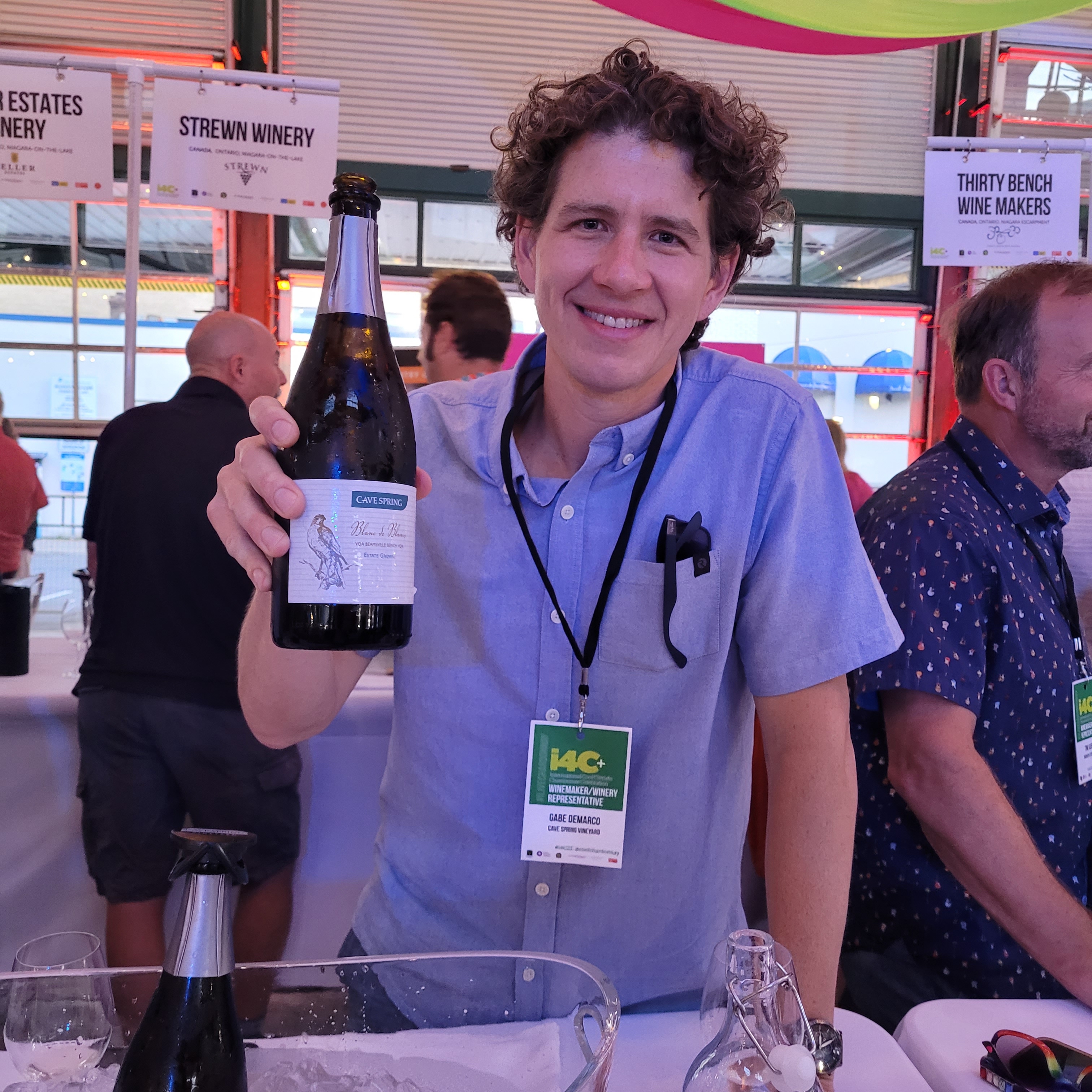
Brunello di Montalcino DOCG Previews: Annata, Etichetta and Vigna 2018, Riserva 2017, plus back vintages

Benvenuto Brunello 2022

Drawing 2018 vintage connections between breezy Annata and resolute Cru, overall less “Mediterranean as a vintage,” high acid 2017 Riserva plus retrospectives with Col d’Orcia and Biondi-Santi

Montalcino sunset

In November of 2022 the latest edition of Benvenuto Brunello was held in Montalcino. As an Anteprima the main purpose and focus was to present the latest vintage of Brunello di Montalcino DOCG wines. As a journalist the goal was to taste as many iterations as time permits in just over two days time. Looking back now the 2018 vintage for the sangiovese of Montalcino are a unique set, apropos of colour which is ironic considering this anteprima fell on the heels of the region’s first Rosso di Montalcino event held last June. “Red Montalcino” showcased the 2020 Rosso vintage and hue was the operative word, for style and just how we think about these appellative DOC wines. Fast forward to November 2022 and journalists from around the world were seeing red once again, yet this time the syndicate of sangiovese concerned the similarly tailored Brunello. I have been covering Montalcino vintages for more than a decade (and buying/drinking them for two-plus) but don’t recall such a crystal-clear, joyous and immediately gratifying set of wines. There are of course several variables involved and many 2018s are structured to age but we must always be reminded that sangiovese are like snowflakes. No two are exactly alike and yet there is a thread that binds a 2018 Brunello to its peers. Never before has tasting nearly 200 Brunello provided such a pleasing experience.

Related – Simply Red: Rosso di Montalcino

Looking north from Montalcino

The list of adjectives this report alone will use to describe the 2018 coterie of Brunello di Montalcino is long, winding and synonymic. There will be tasting notes referring to these sangiovese as accessible, amenable, beautiful, breathable, bright, crushable, drinkable, effusive, fluid, halcyon, handsome, lithe, open-knit, traditional and transparent. The vernacular goes on and on to describe this vintage. Many ’18s are fit for early consumption because of producers abiding by the fruit available to design wines reflective of the climatic conditions of the season. Yet there are some pockets of Montalcino where a more serious and structured Brunello could be made and those who took advantage of this opportunity were able to make wines that will endure amongst the best of the best. The areas of Canalicchio and Tavernelle are frazioni where nature and climate conspired symbiotically but we must also look at pockets to Montalcino village’s immediate north by northeast, as well as west by northwest. Southerly vineyards showed remarkable consistency for sangiovese because of less hydraulic and overall stress. There are also other valleys and rifts here and there from which top wines were produced. For the vineyards around the northerly Montosoli hill the 2018 season may have been less of a hyped one – but these are consistently wines in the regions’s upper echelon because that promontory of a cru has been holding such a distinct advantage in recent times.

Related – Montalcino Previews: 2020 and 2019 Rosso, 2017 Brunello Annata, Vigna and 2016 Riserva DOCG

La Fortezza di Montalcino

My discussions in Montalcino with four prominent and experienced yet precocious producers points to a vintage summation that supports if also adjusts the aforementioned general theorem. First up is Caprili’s Giacomo Bartolommei. “The weather was the complete opposite of 2017. Cooler temperatures and some winter snow, even in the southern part of Montalcino,” he tells me. “Also good rainfall during the year with lower average temperatures.” Bartolommei sees the 2018 Brunelli as “lighter wines but with good potential for aging, much like 2013. Those are showing beautifully today.” Giacomo is quite convinced the ’18s will do the same. Adds Katia Nussbaum from San Polino. “I don’t yet have the 2018s under my skin and you need that. We only just bottled this past September. We’ll see.” There are always two sides to every story.

With Tommaso Cortonesi and Francesco Rippacioli

Tommaso Cortonesi contemplates the thought. “A vintage where you can recognize the link between the producer and the terroir,” he begins. “Because it wasn’t one of the warmer (recent) vintages and 2018 does not show its potential in the first two years in bottle. The wines of 2007 were like this.” So interesting to see different producers trying to make connections with the past. “But 2018 has a deep link with the terroir. I taste the real Galestro soil from the southeast of Montalcino, the soil of Poggiarelli.” Cortonesi explains that it is the northern sector that usually speaks with the greatest clarity but in 2018 others zones did this, and in balance.

As for Canalicchio di Sopra’s Francesco Ripaccioli, his first harvest pick was on September 10th – a green one. The last rain took place on September 16th and then the Tramontana wind arrived, right on time, to dry the grapes. The later or second pick was on September 20th and at a time when Ripaccioli was looking for “dimension” in the grapes. Concentration of sugars and acidity also occurred but the vintage was not one of chronologically developed phenolic maturity. So at harvest Francesco considered this ripeness factor to be a 7.5 or an 8 on a scale of 10. Three passes of selection were made, to achieve the best possible outcome. “Remember,” explains Ripaccioli, “ten doesn’t exist and I don’t want to reach it. The pH would be too high. Maybe 8.5 is a number to reach.” In any case without the winds Francesco admits the vintage would have been a disaster.

There is no one I would rather taste Italian wine alongside other than La Miha. If you know of her grace, intelligence and palate then, well you know.

My trip to Montalcino this past November was one of the shorter, quicker and fastidious ones with less time afforded to paying estate visits. My arrival was late in the evening ahead of the two-day Benvenuto Brunello sommelier tasting held in the Chiostro Museo Montalcino. Flight delays were the root cause and were it not for the hand of an angel (that being Chiara and if you know here then you know what I mean), well, I might still be waiting in Firenze. At the conclusion of each of the two tasting days there were visits paid to Biondi-Santi and Col d’Orcia. Each involved memorable retrospective seminars, discussions and tastings. The first at Biondi-Santi was with CEO Giampiero Bertolini and oenologist Federico Radi. We looked at Tenuta Greppo 2016 Annata, Riserva and the 1999. The next day was with Conte Francesco Marone Cinzano, his son Santiago Marone Cinzano and Filippo Bartolotta. Father and son gave a most poignant retrospective look at the history of Montalcino before pouring six Rosso and Brunello on the ‘8s dating back to 1968. The breakdown for Godello’s 2022 Brunello di Montalcino DOCG Previews are as follows: 96 Annata, 28 Etichetta and 22 Vigna 2018, 20 Riserva 2017, plus 14 back vintages. That adds up to 180 wines tasted and reviewed across two and a half days in November.

Brunello di Montalcino DOCG 2018

Agostina Pieri Brunello Di Montalcino DOCG 2018

Perfumed ’18, roses and bright red fruit and that early scent of structure. Surprisingly glycerin and full in mouthfeel which makes for an impressive and impressionable transition. Doesn’t seem to finish which is a sign of positive portents to come. Should live a long life with slow developments and the prolonged of ever so gently descending decline. Drink 2023-2028.  Tasted November 2022

Albatreti Brunello Di Montalcino DOCG 2018

Deep clay depth, like Santenay, in a way. Sangiovese of darkening fruit yet serious, of salumi cure, a touch skin musky and if not quite brooding then at least contemplative. No lack of extraction which also brings and extra layer of herbaceous ness and earthy-savoury elements. Meaningful. Drink 2023-2026.  Tasted November 2022

Altesino Brunello Di Montalcino DOCG 2018

Chic, modern, silky and suave. Full, rich, layered, tightly compact in that regard and of all the sweetest things. You too will love the generosity and ease of such a beautiful and amenable Brunello. Not to mention the scent and flavours that come along with markedly obvious oak aging. Barrique special. Early drinking example. Drink 2022-2024.  Tasted November 2022

Argiano Brunello Di Montalcino DOCG 2018

Perhaps considering the vintage there would be expectation for an easy, fluid and liquid Argiano 2018 but think again. The notion is immediately about tradition and structure, most definitely as noted in the serious, finely chalky and deft set of tannins. The fruit is more than there in fact there is a 10 foot swell of the stuff cresting and waiting to crash over the palate, surely on repeat. Yet Argiano is built for a long haul, like many that have come before. Drink 2024-2032.  Tasted November 2022

Much ado about everything in a Brunello 2018 that swells with fruit, brings the extraction and the extract, doles resolved tannins and pushes immediacy like few others. Yet there is an underbelly or underbrush of herbs, earth and cured prosciutto to see complexity and layers still to unwind. A true now wine that will drink well for five to seven years. Drink 2022-2027.  Tasted November 2022
Easy, immediate and wholly gratifying access to 2018 Brunello Annata in the great accumulation of fruit and persistent sweetness of unlimted structural components imaginable. A sangiovese to discover right now for those who know, wish to know and don’t really know where else to begin. For the people. Drink 2022-2024.  Tasted November 2022

Sommeliers at BB 2022

Beatesca Brunello Di Montalcino DOCG 2018

Wood off the top, vanilla swirl with white chocolate, white pepper as well. Good fruit on the mid palate keeps this sangiovese moving forward and the structure is no doubt a part of the equation. Some green tannin however so don’t keep this for too long. Drink 2023-2026. Tasted November 2022.

As expected or better said anything but unusual is the full compliment and intensity of fruit to define Bellaria’s 2018 Annata. That and a most generous amount of wood in how vanilla and also chocolate and graphite dole in aroma and then texture. Thick and unctuous though also blessed with important and elasticizing tannins. The bones and flesh are there so this will live long, eventually morphing into a Brunello of fungi and tartufo. Drink 2023-2028.  Tasted November 2022
Camigliano surely got things right, correct and proper in 2018, all three important messages, redundant and on repeat. These are sangiovese tannins exclusive to the variety because they comes from skins and to a much, much lesser extent the casks. The wood is noted yet secondary and the wine will drink well after just another season has come and gone. So long as winter actually comes go Montalcino. Drink 2023-2027.  Tasted November 2022

Campogiovanni Brunello Di Montalcino DOCG 2018

Great fruit and wood swirl from Campogiovanni’s 2018 in ways correct, expected and forecasted for how a specific wine will become and we know just how it will get to its vanishing point. In low, slow and expressive exfoliation, inhalation and exhalation until all settles into a calm and tranquil state. Drink 2023-2028.  Tasted November 2022
How can one not see and feel how this as an Annata from Francesco Ripaccioli and family just stands out as a most mature and experienced Brunello meeting expectation beyond the years of its collective experience? What comes from aging is purely spice and texture. The true style, body politic and beautiful mind of the wine is delineated by the purity and agricultural capture of fruit in an emotive state of phenolic fruition. This is a real deal in Brunello di Montalcino. Bank on it. Drink 2024-2033.  Tasted November 2022

Capanne Ricci – Tenimenti Ricci Brunello Di Montalcino DOCG 2018

Resides on the firm and tart side of the vintage with some Ribena showiness in the potpourri floral tendency of the high-toned aromas. Surely less indicative of the vintage as compared to dozens upon dozens of 18s. Crunchy and just a bit too volatile. Drink 2022-2023.  Tasted November 2022

Beautifully sweet scented in red berry and flower perfume which can’t help but tell us about this hallmark and potentially halcyon style that is the 2018 vintage. No drama here and nary a moment of trying to be something its not but my how the creativity and charm of sangiovese emerges and emits in Brunello Annata form. So much to love and embrace. Drink 2023-2027.  Tasted November 2022
Some wines carry with confidentiality all they need and you can tell from the get go how they move and show what form they’re made of. This from Caprili is a mature beyond its years example of 2018 Brunello di Montalcino. Fruit so full and confidently suave yet never of ego. Working diplomatically with father figure like tannins that encourage yet never demand, neither attention nor success. They only wish the best for their children, in health and happiness. Drink 2023-2029.  Tasted November 2022
Lovely high-toned sangiovese from elevation in south Montalcino yet of fruit so light and bright. That said do not sleep on how much wood this is currently working through and the kind of underlying structure that will assist in merging the parts over a good long period of time. Here the vanilla, cherries and brush are nearly together and will likely get there in two years time. Drink 2023-2026.  Tasted November 2022

Brunello dinner at Capanna

Casanova delle Cerbaie Brunello Di Montalcino DOCG 2018

Bright, fresh and frazione indicative Annata here in purity plus vintage honesty from Casanova delle Cerbaie. Good attack of fruit and especially acidity from the vintage that while not a heavy one it is also not necessarily high acid either. Crunch from that fruit, pop from the acids and grippy yet suave tannins down below. Strange but true affinity with quality nebbiolo. Drink 2023-2026.  Tasted November 2022

And now for something next level in ways that must be experienced to understand. The generosity of fruit, sweetness of floral meets savoury perfume and most supple of tannins makes for a complete 2018 Annata package. The quality and acumen involved are special, singular and preeminent. Permanence is observed in a Brunello that will live infamously in longevity. Drink 2023-2032.  Tasted November 2022

Casanova Di Neri Brunello Di Montalcino DOCG 2018

So very Casanova di Neri and truthfully how could it not be yet something understated is spoken in such a handsome sangiovese. The fruit is classic Neri gather, from the plots and blocks that layer and compliment, get together on one single page. There is nothing out of place or wavering in this Annata and one exuding major confidence. So professional, firmly entrenched in 2022 style out of stoked 2018 desire and clearly spoken vernacular. The style is Neri’s and it is owned. Drink 2023-2029.  Tasted November 2022

The Annata 2018 from Casisano is a Brunello of two parts because there is the feeling of sweet fruit access now but also a next level structure to imagine ulterior drinking moments later. Very much a textural and glycerol example, gloriously liquid and soothing as it moves across the palate. Refined through and through with the ability to improve. Drink 2023-2026.  Tasted November 2022
Castello Romitorio is so bloody on point from out of the 2018 vintage and the profundity of this assessment matters in personal ways because this was the great wine resting in casks when a first meeting with Filippo Chia opened the doors to his, his father’s and their estate’s perception. My what a matter of meaning is culled and concentrated upon from an Annata in extension of olive branch, a working team’s dedication and just plain formidable bones to see this forward 15-20 years. The 2018s can deliver greatness and yet not all are looking for decades of aging. Romitorio’s is in another league. Drink 2024-2032.  Tasted November 2022
Maturity and acumen increase, improve and travel forward from vintage to vintage for a Montalcino producer that is surely on the cusp of something special. The work put in and humility expressed will only keep the train on the track for sangiovese to occupy the minds and hearts of all who know. Within the framework of a peppery reductive 2018 the fruit here expands and oscillates in swells on repeat though each and every wave stops short of crashing upon a tannic shore. For the first time after tasting 30 Annata the sweetness of acidity really stands above and without tart edginess. Grande. Drink 2023-2029.  Tasted November 2022

Castiglion Del Bosco Brunello Di Montalcino DOCG 2018

Suave is the obvious operative, stylish too and yet there is a feeling of extraction and weight in the 2018 Annata. Neither taut nor tight, surely smothered by what texture and tannic sweetness the barrel has provided. A vintage wine that chooses to go for it without projecting or thinking too far into the future. Drink 2022-2024.  Tasted November 2022

Montalcino, November 2022

Lovely and traditional or rather lovely in its rustic attention to experience in a Brunello 2018 that captures heart above mind. Full extraction and wood compliment, vanilla sweetness and an approach to speak of a highly specific style. Drink 2022-2024.  Tasted November 2022

Cerbaia Brunello Di Montalcino DOCG 2018

Cerbaia, classic and specific to a place where sangiovese comes to be this and only this. A fine swirl of fruit and beautifully volatile compounds that bring a lyrical lilt in high-toned notes in the wine. Everything points toward grace and charm in expression, even in the face of some edginess and musky behaviour. There is no matter, only parts yet to be integrated and needing time to settle in. Drink 2024-2028.  Tasted November 2022

Col d’Orcia Brunello Di Montalcino DOCG 2018

Classic and I mean classic Col d’Orcia, the kind of Annata that wears heart on sleeve and puts cards on table while imagination runs wild. Pedigree and experience tells the story of foreshadowing, knowing full well that dreams do come true in a future where a 2018 Annata is poured and its full glory is revealed. Could be 2028, ’38 or ’48. One never knows from Count Francesco Marone Cinzano’s wines but this structure over fruit dominant ’18 might just own that kind of stuffing. The next ten years will be the best but bet on more, more and more. Drink 2023-2033.  Tasted November 2022

Oh my what a lovely swirl of sangiovese, cask and time for Brunello in real harmony as only the place that gave it life would wish to do. The cherry tree gave it up to fulfill wishes, dreams and imagination but not to worry not a berry was harmed in the process. The fullness of this wine, its grace and its charm is obvious and celebrated. Yes the wood has much to say and express but like so many sangiovese of this ilk there must be time granted. If not the story becomes one of haste and respect would so sorely lacking. Be kind, exercise patience and wait for a just, but most of all loving reward. Drink 2024-2030.  Tasted November 2022
Quite amazing how one instant moment of a nose into a glass can pull perfume to cause a mind to recall the producer. What a talent that is for estate to emit with such precision and consistency. Here a sangiovese so silky smooth and studded with spice but most of all a sliding scale of necessary structure. Collemattoni has this Annata thing down to an artful craft with a minor in science to make the most well-rounded Brunello that simply marches to a wholly created and owned beat. Pure, honest, wood managed and integrated. Really fine. Drink 2023-2029.  Tasted November 2022

Collosorbo Brunello Di Montalcino DOCG 2018

Both rustic (at least from the tannins) and elevated in volatility (by the acids). Fruit is lithe and transparent, surely not atypical and the mid pacing of this Annata is steady and lovely. Keeps composure through the back end and a there’s driven finish. Those early issues dissipate and this can be seen aging quite well. Drink 2023-2028.  Tasted November 2022

Corte Dei Venti Brunello Di Montalcino 2018

Always steeped in tradition and clearly knows where it comes from with a distinct connection to the past. This experience and attention to a history of successes but also failures equips Corte dei Venti with the goods to power forward with a structural Brunello of fine but also austere tannins. Longevity is the name for a wine of this style and ilk. Need to wait for grace and charm. They lay waiting around a few corners. Drink 2024-2029.  Tasted November 2022

Cortonesi La Mannella Brunello Di Montalcino DOCG 2018

More exuberance and high toned beauty in the Mannella 2018 and it would seem that Tommaso Cortonesi chose a longer maceration for his high quality vintage fruit. The levels of extract and approaching glycerin texture are elevated and yet the underlying issue involves a tannic chain that means some purposed business. Drink this in and feel the layers, imagine the possibilities and count on what great next steps are en route. Great savoury finish. Drink 2023-2029.  Tasted November 2022

Donatella Cinelli Colombini Brunello Di Montalcino DOCG 2018

A vintage we’ve been waiting for from this northerly Montalcino estate because after a few formidable ones there will surely be forthcoming the greatest measure of grace. The reality is just this in exactitude, warmth and exceptional liquidity. Everything works and works beautifully, expressive in so many ways, perfumed, gathered, integrated and if there is wood (and there is) there is no sign of its work. All play and done with truth, gentility and honesty in mind. The clarity is astounding. The tannins so incredibly fine. Drink 2024-2032.  Tasted November 2022

Elia Palazzesi Brunello Di Montalcino DOCG 2018

One of the more hard to get, stoic and structured 2018 Annata in this Palazzesi glass with no great hurry to come out and please. Fine intoxicant of perfume without that rush and were more people wearing this sort of aromatic delicacy than rooms would be scented without excess. And so the wine is one you want to get closer to, snuggle in and take in the scent, allow imagination to swim and thoughts to ruminate. The palate shows more wood and even more held back character. Quite the mysterious Brunello, intriguing and filled with quiet wonder. Drink 2023-2027.  Tasted November 2022

Fanti Brunello Di Montalcino DOCG 2018

So real and proper Annata from Fanti once again, apposite to all previous vintages and yet so consistently procured to define a vintage. That being one of ripe and tart fruit, easy if spirited acidity followed by mild, sweet and cruising tannins. Terrific palate presence to be sure, of secure barrel couverture that accomplishes its work into succulence. Feels ready and yet five-plus years will open so many new doors. Drink 2023-2028.  Tasted November 2022

Fattoi Brunello Di Montalcino DOCG 2018

Fattoi brings the joy and the wealth of healthy ripe fruit to the Annata vintage fore. A fine chalkiness mixes with the tart and the tang though not all parts are exactly together this early in the game. That is coming soon, around a corner and when it happens there will be great times to be had by all. Drink 2023-2028.  Tasted November 2022

Fattoria Dei Barbi Brunello Di Montalcino DOCG 2018

Barbi’s is a Brunello interpretation of yet another diplomatic and democratic vintage, structured much like 2016 and yet more openly getable like 2015. There seems little connection to 2017 but only because that vintage was such an outlier. In fact the lineage is in tact and as it is well known, a Barbi wine is tethered to history and tradition as almost no Montalcino other. The real, direct, honest, correct and purposed deal. Every time out. Drink 2023-2028.  Tasted November 2022

Fossacolle Brunello Di Montalcino DOCG 2018

Fossacolle is most definitely parochial in style and without hesitation it is said that the sense of place is exactly what expresses from this glass. A tar and roses kind of ideal, tart and spirited, fresh as it gets and so, so very sangiovese. Liking the portents and intent, the trenchant view of a vintage and a wine that abides by the season. Truth spoken without excess, certainly not in extraction and therefore also tannin. Drink 2022-2025.  Tasted November 2022

Franco Pacenti Brunello Di Montalcino DOCG 2018

It takes but a nano second to recognize the two-part harmony in the Franco Pacenti 2018 Annata because fruit so high tethered to tannins so low are of an unbreakable and seamless symbiotic kind. This sangiovese sits in the mouth with trenchant purpose and in layers so powerful yet also in this amazing state of grace. This is the real red fruit sangiovese and an example that speaks to the east and slightly veer to the north of Montalcino as being a location to see the best out of 2018. Drink 2024-2030.  Tasted November 2022

Gianni Brunelli Brunello Di Montalcino DOCG Le Chiuse di Sotto 2018

Terrific presence from the Gianni Brunelli 2018, both on the vintage stage and also in how it performs, especially on the palate. There is some wood to resolve as the doubling down of tannins keep the performance from remaining light and ethereal but time will do what in necessary. For now just enjoy aromatics that come from the land and flavours crusted by those persistently agitated tannins. Drink 2023-2027.  Tasted November 2022

Giodo Brunello Di Montalcino DOCG 2018

Giodo’s is fine, a vintage snapshot captured but with fruit run through, including the mid-palate reached where 2018 sometimes fails to access. This full and substantial capture makes for a drink early Annata which in this kind of case makes sense and really works well. Lovely and retable wine. Drink 2022-2025.  Tasted November 2022

Gorelli Brunello Di Montalcino DOCG 2018

Serious aromatic concentration yet in a most elastic and expressive way there arrives the immediacy of Gorelli’s Annata. The reality continues on the palate for a quantifiably gregarious and rich sangiovese of layers upon layers of fruit and structure. Not a matter of acidity so much as a wine in which that integration is both gracious and invisible. What a beautiful 2018 Annata. Drink 2023-2029.  Tasted November 2022

Il Palazzone Brunello Di Montalcino DOCG 2018

Notable for earthy-savoury elements and grip in a righteously composed Annata of purpose and structure. Grabs attention, delivers that fennel-rosemary-garriga and cereal grain that Brunello can be, especially when location is considered. The herbaceousness and evergreen feeling persists for minutes on end. Curious and singular in every respect. Drink 2023-2026.  Tasted November 2022

Il Poggione Brunello Di Montalcino DOCG 2018

The well is full of red fruited sangiovese Il Poggione way in a get at it straight away example of pretty much exactly what defines the 2018 vintage. More aromatic waves then some and also as compared to previous estate iterations so expectation is exceeded in this Brunello of early, often and dreamy style. Big wine that impresses quickly for any and all fêtes taking place in 2022, 2023 and 2024. Drink 2022-2025.  Tasted November 2022

Innocenti Brunello di Montalcino DOCG

For this vintage one of the darker and pressed examples of Brunello Annata though not without its very own set of charms. A bit wood rich and chocolatey though again there is some peaceful easy drinking in that regard. A style not light and bright but instead smooth and deep. Drink 2022-2024.  Tasted November 2022

La Casaccia di Franceschi Brunello Di Montalcino DOCG 2018

A combination of high acid and pretty clear higher level phenolic ripeness put this is top categorical vintage idiom though it will be prudent to offer time in exchange for reward. Plenty of barrel notes as well though this mediates structure without adding unwanted tannin or spiciness. Lilting here, floral and gracious. Drink 2023-2029.  Tasted November 2022

La Colombina Brunello Di Montalcino DOCG 2018

Here the salumi and the nebbiolo like tar and roses gather for a heady and grippy initialization of sangiovese fruit, acidity and tannin. A chewy wine in the face of that edgy and firm style where extract and wood spices gather. A few parts feels disparate here and perhaps time will be the instigator and also the catalyst to clarify what this wants to be. Drink 2023-2026.  Tasted November 2022

La Fiorita Brunello Di Montalcino DOCG 2018

Extreme measure of perfume and transformative possibility to full scale capability comes from the aromatics of La Fiorita’s 2018. The mouthfeel is über intense with a sort of nut and spice cocktail that includes cumin, cardamom, cocoa and fennel. The finish is all cocoa turning into beautifully bitter chocolate. Extraordinary example of 2018 Brunello Annata. Drink 2023-2027.  Tasted November 2022

La Fornace Brunello Di Montalcino DOCG 2018

If a vintage example can be considered and refereed to as classic while tasting during an Anteprima than La Fornace’s just might be the one. So expressive of that effusive, open and transparent red fruit that 2018 is filled with all over the territory. Definitely some wood felt on the palate in the form of a gentle creaminess that plays well and smooths out the wine. Drink 2022-2026.  Tasted November 2022

Montalcino sommeliers

La Fortuna Brunello Di Montalcino DOCG 2018

If a 2018 Annata can act with a sort of glycerin feel on the nose than La Fortuna’s would be the kind to do so in this pale red fruit vintage. Not that the palate does not follow suit with that type of silky liquidity because it does and the transition from one aspect to the next is really quite seamless. A pretty Brunello, for now and a few easy years ahead. Drink 2022-2025.  Tasted November 2022

La Lecciaia Brunello Di Montalcino DOCG 2018

Rich and mouth-filling Brunello here from La Lecciaia, deeper of fruit as compared to many light and transparent examples out of the 2018 vintage. The tendency here is to exult the virtues of Brunello that invites all to the table, for consumers representative to a broad range of stylistic preferences. Fine work for 2018 though not one to cellar, at least not for a long and doting time. Drink 2022-2025.  Tasted November 2022

Vineyards at La Magia

La Màgia Brunello Di Montalcino DOCG 2018

A Brunello that clearly separates itself from the pack namely because of the place, at elevation 400-500m in the south-central part of Montalcino surrounded by so much forest, with few neighbours and a wind gap that draws in the right breezes. These are quality tannins, powdery and yet somewhat demanding of the fruit that must work to keep up. It does without suffering, showing more fortitude and punch than many to most. Will live as long as any, in part because of it swarthy swagger. Drink 2024-2032.  Tasted November 2022

Lambardi Brunello Di Montalcino DOCG 2018

Traditional, rustico, old Montalcinese world, both in earthy savour and emotion. The kind of sangiovese known, expected and gifted. Done the right way for the exact vintage as a 2018 gone as far as it can and must. Tart and lithe, so direct, abided by in every loyal respect. How can there not be great love for such an example? Drink 2023-2028.  Tasted November 2022

La Rasina Brunello Di Montalcino DOCG 2018

Soft and conversely high-toned, barrel vanilla, tannic spice and quite peppery though no sign of reduction. Good quality red fruit, sweet acids and admirable length. Fine and representative if on the timorous side of things. Drink 2022-2024.  Tasted November 2022

Le Chiuse Brunello Di Montalcino DOCG 2018

Those medium-sized, assessed and picked mid-harvest berries qualify and quantify for Lorenzo Magnelli’s Annata in the exact way he would want them to, for his Brunello to emerge with all its possibilities intact. This is the wine from Le Chiuse shrouded in the most mystery even if it appears right now with an open door policy. There are many choices yet to be made as it concerns how we feel and more to the point regarding the future of such an intriguing sangiovese. Both Rosso and Riserva calculate their place and we in turn know just where they strand. Annata is more fluid and is the chameleon that will change soon, again in a year or two, after a few more and for many years in and out of its multiple rhythms. Le Chiuse’s may act so very 2018 but the hidden or yet to be determined acts of character are more the verity of the matter. Time will enact the reveal and truth be told there are none that imitate. Le Chiuse is a wolf, solo, roaming and silently stalking prey. Drink 2024-2036.  Tasted November 2022

Le Ragnaie Brunello Di Montalcino DOCG 2018

Ahh freshness, the first 2018 in my glass and no offence to 2017 but after tasting 150 ‘17s over four days this is surely a breath of new air. Bright and almost a marine wind blowing through while at the same time showing some substance and bones. Fleshy but elastically so and these tannins are not sharp, nor austere, but forgiving and even generous. Left the barrel after the minimum amount of regulatory time to keep the wine from being tired by the wood. Drink 2023-2028.  Tasted November 2021

Lisini Brunello Di Montalcino DOCG 2018

So very 2018 vintage as a Brunello with bright red berry fruit and perhaps one of the most up front, amenable, accessible and drinkable examples anywhere. Tannins are soft, supple, sweet and integrated. Almost as if they are not present at all, but this is sangiovese in Brunello ilk so we know they truly are. At least for the time being. Drink 2022-2025.  Tasted November 2022

Maddalena Cordella Brunello Di Montalcino DOCG 2018

Lovely perfume and ulterior aromatics on this from Cordella, a wine I’ve not encountered before. Great berry and floral swirl, glycerin texture, high tonality and a real Montalcinese saltiness. That can be a rarity but certain frazione just do this and some see it as mineral but frankly salinity is what it is. Tart yet quenching and really satisfying for an Annata out of this particular vintage. Drink 2023-2026.  Tasted November 2022

Madonna Nera Brunello Di Montalcino DOCG 2018

Generously wooded Brunello to a fuller degree than much of the 2018 class, laden with smaller barrel aromas like vanilla and lavender. Tastes like 2017 in a strange way though less forceful and the tannins lag, even get a bit brittle and fall away. No real power or structure here and yet the wine will drink well for a few years. Drink 2022-2024.  Tasted November 2022

Martoccia di Brunelli Brunello Di Montalcino DOCG 2018

Can’t miss the orange zest and spray in this high-toned and fruit variegate Brunello 2018 with just the faintest moment of saffron in the air. Tart, tight, compact and stealthily structured with plenty of wood spice, creamy chestnut nuttiness and a long finish. That minor botrytis note will pronounce with time so the best window will be two to four years from now. Drink 2024-2026.  Tasted November 2022

Mastrojanni Brunello Di Montalcino DOCG 2018

Mastrojanni’s is one of the firmest and driest tannic 2018s of any and all tried during these Benvenuto days. From a vintage such as this lighter and brighter one there would need to be substantial fruit to march along with this type of grippy austerity and this by Mastrojanni is set up to the task. The length is outstanding with nary a bitter moment and in delivery of nimble elasticity that will surely persist for serious long-term success. Drink 2024-2031.  Tasted November 2022

Maté Brunello Di Montalcino DOCG 2018

Seems like a constant refrain but a good one for a transparent vintage that has produced so many wines of this bright style. Maté’s joins the ranks and falls right into place with their beautifully paced, silky if at its heights, racy Annata. There is some excitement here to go along with the lithe beauty so give some credit where due for a sangiovese that finds its own way. Drink 2023-2027.  Tasted November 2022

Mocali Brunello Di Montalcino DOCG 2018

A relay of really quite classic Mocali as Brunello, light to mid weight and yes just in line with the vintage though here as consistent with what has come before in terms of this estate’s sangiovese. Tannins are present and drying, mid-stream as well, alongside and in tandem with the flesh of the wine. Still traditional after all these years. Drink 2023-2026.  Tasted November 2022

Patrizia Cenconi Brunello Di Montalcino DOCG 2018

Certainly a deeper aromatic expression of 2018 Brunello and of that viscous-glycerol kind but in this instance the condition replays on the palate in just the same way. Unctuosity like few others and for those who live an breathe Montalcino by mouthfeel this is truly the one for you. Still in the lithe vintage style but silky smooth, rich and satisfyingly so. Drink 2023-2028.  Tasted November 2022

Montalcino, direction southeast

Pian delle Querci Brunello Di Montalcino DOCG 2018

Querci is the appropriate adage for a Brunello so steeped in oak tea it’s just swamped by what the wood brings. Sweet vanilla, clove, cinnamon heart and a mix of tannin that is part austerity and part masala astringency. Drink 2023-2025.  Tasted November 2022

Pian delle Vigne Brunello Di Montalcino DOCG 2018

No real surprise that Pian delle Vigne expresses some of the darkest fruit from and for the vintage. That and thick consistency, suave tannins, chalky yet liquid. There is a hint of classic rusticity for good savoury measure but most of all there is über forward modernity and great professional appeal. Drink 2023-2026.  Tasted November 2022

Piancornello Brunello Di Montalcino DOCG 2018

What a special wine from Piancornello out of 2018, standing clear from the vintage because of concentration and seriously impressive tannins. No it may not be über typical of the open-knit, lithe and forward vintage but sometimes there arrives a wine and I’m referring to a wine that will takes steps, little by little, as is its meaning, to arrive at where it is intended to go. Stick with it and stay for the journey. Drink 2023-2029.  Tasted November 2022

Pietroso Brunello Di Montalcino DOCG 2018

Pietroso incites a smile with their 2018 Annata because it’s beautiful, composed and expressed just so right. Captures the vintage as a perfect snapshot, lit from behind, casting a glow upon fruit and giving meaning to what that can become. The wine is like a wave of sangiovese, slowly rising and cresting then gently tumbling down, all the while sliding sideways urged on by fine acidity and supple tannins that permeate yet groove with the fruit. This is so wise and quite frankly delicious now. I would not hesitate to cellar it for up to 15 years. Drink 2023-2033.  Tasted November 2022

Pinino Brunello Di Montalcino DOCG 2018

Right there amongst the dictionary entry for a vintage that wants to be enjoyed as soon as possible. A year from which the producer who understood did nothing to mess with the lithe beauty and ease of attack. No tension here, sweet acids, red fruit and ease of play. Good chewy texture through the finish. Drink 2022-2025.  Tasted November 2022

Bonacchi’s is more traditional, chalky tannic and savoury sangiovese with real bones and an intensity of intent. Taut and a bit tart at present but you can imagine with charged forecast what will become of this structured wine. For now it must rest and allow the austerity to melt away into the background. Drink 2024-2027.  Tasted November 2022

Podere Brizio Brunello Di Montalcino DOCG 2018

Chewy wine here in 2018 from Brizio, leathery with a cedar earthiness, savoury of more evergreen and a distinct high toned Montalcino style. A bit antithetical to many of the ‘18s yet comfortable in its skin. Acids are pronounced and tannins effective if not overpowering, nor lingering dry and too long. Drink 2023-2026.  Tasted November 2022

Poggio Antico Brunello Di Montalcino DOCG 2018

Good quality fruit no doubt and so the rich compliment of wood is both agreeable and understood. This is the Poggio Antico style, modern and fulsome yet even they have abided by the litheness and bright luminosity of the vintage. Perfectly reasoned and seasoned mid-term Annata for the next three or four winter seasons. Drink 2022-2025.  Tasted November 2022

Poggio dell’Aquila Brunello Di Montalcino DOCG 2018

Perfumed and of a harmonious composition, if notably creamy and spiced by the full cupboard as supplied by the aging in wood. Plenty of savour and more so flavour, a rich swirl of vanilla, three-toned berries and tell-tale graphite. Surely some barriques are involved. Drink 2023-2025.  Tasted November 2022

Poggio di Sotto Brunello Di Montalcino DOCG 2018

If on the lighter side of Brunello there can be no denying the cause, purpose and effect of a Poggio di Sotto sangiovese and how it’s just all Brunello di Montalcino can be cracked up to be. Break this down into parts and you will note the concentration, the effect of tannins from the beginning and the way the power and the charm build as the wine fleshes in the glass. Of course there are more “impressive” and also structured vintages but the guarantee here is in the consistency of farming and winemaking teams, both with an equally, substantiated and dedicated set of values. Drink 2023-2029.  Tasted November 2022

Paradiso di Cacuci Brunello Di Montalcino DOCG 2018

Spot on Annata of values in evaluation of both aromatic and textural unctuousness that settles, persists and remains long after the scents and flavours have drifted on. More than sneaky tannins as felt on the drying at the finish yet for the most part these acts of structure work well as part of the team. Drink 2023-2027.  Tasted November 2022

Poggio Landi Brunello Di Montalcino DOCG 2018

Quite the aromatic Annata and yet also one of the first to act just a touch peppery reductive. Quite tannic as well, herbal and of sweet acidity. A most unique and curious 2018 with its own special set of circumstantial style, at times bracing and at others fluid. Needs some time to come together. Drink 2023-2026.  Tasted November 2022

Poggio Lucina Brunello Di Montalcino DOCG 2018

Enticing and inviting nose, classic for vintage and località, roses and dried nasturtium. The right kind of push-pull tug between the posit tenets of fresh and dried, middle weight in which wood neither interferes or tries to fill in holes. Classic Galestro earthy-savoury and true tension towards edginess. Should fall in to place sometime after two plus years. Drink 2023-2028.  Tasted November 2022

Ridolfi Brunello Di Montalcino DOCG 2018

Very impressive stature and a bit of attitude are hallmarks of and the consistency explained from Ridolfi’s 2018 Brunello Annata. A sangiovese of grip and backbone, fleshy fruit hanging taut, especially considering the lighter overall view of this vintage. Really crusted and earthy yet sweetly perfumed and acids as high to fine as they come. Not the most elegant but definitely chivalrous, handsome and charming. Drink 2023-2028. Tasted November 2022

Roberto Cipresso Brunello Di Montalcino DOCG 2018

High extract and concentration brings viscosity and unctuousness to Cipresso’s 2018 in ways not so many Annata were able to deliver. This is true textural ascension more than anything else for a wine of grip and anti-vintage circumstance. Speaks quite a bit about location for a Brunello to turn out this way. Drink 2023-2027.  Tasted November 2022

Greppone Mazzi

Ruffino Greppone Mazzi Brunello Di Montalcino DOCG 2018

This bottle shows some TCA but seeing past this limitation this would bee a fine vintage example of Brunello with ample wood creaminess, a blanched nut sense and a creamy cheese note. Most interesting in all regards, complex and a bit different to the 2018 norm. The redeeming qualities are in the details for a sangiovese that will drink well a year forward and for three top five after that. No rating, however.  Tasted November 2022

Salvioni Brunello Di Montalcino DOCG 2018

A Brunello for the ages that opens its story and gambit with more intensity and thought then most with a vineyard load of fruit also like no other. What comes out of this glass is aromatic concentration in a way that is more than what the air can handle. Good thing the backbone holds onto flesh that will not fall so the years will be kind to a wine so far away from changing into new clothing. There are so many levels involved you wonder just how long a life lays ahead. Likely two plus decades. Drink 2025-2034.  Tasted November 2022

San Polino Brunello Di Montalcino DOCG 2018

Surprisingly heady, grippy and hearty wine here from San Polino in 2018, well perhaps not a shock but this stands up to be immediately counted. No shrinking violet and firm, upright, juicy yet really floral. Spices everywhere and quite frankly also spicy, of cinnamon and capsicum, a full onslaught of power and flavour. In a league of its own. Drink 2023-2028.  Tasted November 2022

San Lorenzo Brunello Di Montalcino DOCG 2018

Firm yet fair Annata, fruit exuberance and also good quality tannins, built on sandy clay and notable Galestro for a truly variegated sangiovese that really acts as a dictionary entry for what 2018 is wont to be. Cruising and will slowly unwind over a seven to 10 year period of time. Drink 2023-2029.  Tasted November 2022

San Carlo Brunello Di Montalcino DOCG 2018

All in Brunello Annata with a swell of red fruit that shows some black cherry intonation. Good quality tannins carry the weight primarily for some early access yet the construction will do well for mid-term Annata. Drink 2023-2026.  Tasted November 2022

Scopetone Brunello Di Montalcino DOCG 2018

A bright sangiovese from Scopetone so the vintage feels immediately represented and yet one can’t help feel some underlay of seriousness. Not the most glycerin 2018 but it’s there in emotive viscosity. Nice levels of tart and intense, reasonable, very seasoned and apropos in so many ways. Drink 2023-2027.  Tasted November 2022

Scopone Brunello Di Montalcino DOCG 2018

Noticeably high-toned, edging up to volatility with a minor though not egregious presence of Brettanomyces. Dry and brittle tannins sum up the fighting issues of this wine. Would be beneficial to try a second bottle.  Tasted November 2022

Sesti Brunello Di Montalcino DOCG 2018

Quite a mouthful of fruit breadth and structural candidacy in a sangiovese of large cask nurturing and so much texture you feel like you’re running out of time and space. Clearly one of the longer steps paced, spiced and architecturally drawn wines of the vintage, not to mention the layers of design that drape over the pencilled sketch. There is a lot to assimilate here. Drink 2023-2029.  Tasted November 2022

Talenti Brunello Di Montalcino DOCG 2018

One of the finer perfumes of any and all from a 2018 Annata by way of Talenti as sangiovese that draws you in with fineness from the start. That said there are aromatic and even more flavour profile notes so singular and unlike just about any other wine. Like pine and porcini, for the first time, freshly plucked needles and fungi pulled direct from the earth. Kind of wild and earthy in that regard with beauty occupying the mind. Bravo Riccardo for this snapshot of your collected vineyards in a wine so silky and of humble design. Drink 2023-2029.  Tasted November 2022

Tenuta Buon Tempo Brunello Di Montalcino DOCG 2018

Fine and upstanding collection of qualities are the assemblage in cuvée of Tenuta Buon Tempo’s 2018 Annata and though the fruit is of a deep tone for the vintage it also offers so much seasonal and seasoned breadth. This is indeed a mouthful of sangiovese with an almost equal amount of supple tannin yet the weight and spice really take over the room. Consistent throughout, persistent and inviting, one of those mid-term vintage wines that will do so many things right in its first 10 years post vintage. Drink 2023-2028.  Tasted November 2022

Tenuta Corte Pavone – Loacker Wine Estates Brunello Di Montalcino DOCG 2018

Rich and stylish, an Annata that pulls fruit of high solar radiation at elevation and makes for a beautiful result. Full monty of parts, dancing on the palate, ripe, red and rosy. So much going on and to go on, likely for up to a decade of time. Drink 2023-2029.  Tasted November 2022

Tenuta Poggio il Castellare Brunello Di Montalcino DOCG 2018

Curious example of 2018, not only glycerin on the palate but the nose leads as well, straight into how the wine feels in the mouth. Lots of wood, vanilla and coconut, peanut shell and baked potato. Drying and hard tannins. Drink 2022-2023.  Tasted November 2022

Tenuta San Giorgio Ugolforte Brunello Di Montalcino DOCG 2018

Each and every year these vines in kinship with Poggio di Sotto mature a little bit more so that they are just about in line with the mothership. This is found to be quite typical for Ugolforte in that toasty or roasted meat quality to go along with the calcareous-sandy lightning and bright red fruit tones. A bit more depth and structure from 2018 and well managed in that regard. Drink 2023-2027.  Tasted November 2022

Tenute Silvio Nardi Brunello Di Montalcino DOCG 2018

Classic Silvio Nardi, mid-weight, fruit and cask exchange, interchange and play. Sweetness of silky acids at work with glycerin red fruit and soft tannins. That’s the vintage talking and the winemaking has surely abided by what was at stake. Good work and better result. Drink 2023-2026.  Tasted November 2022

Terre Nere Brunello Di Montalcino DOCG 2018

High extraction, full on press and maceration, gone for broke 2018 in Annata clothing. Done well in the style, no real astringency and perhaps necessary to reflect a sense of location. Some mildly hard tannin and wood liquidity more glück in feel than nut toasty. Drink 2023-2025.  Tasted November 2022

Ucceliera Brunello Di Montalcino DOCG 2018

One of the most grippy and also finest structural Annata of the vintage, fruit variegated and true, an honest snapshot of what the farm produced matched by the firmness of both acidity and tannin. Rises and rises, never falling into valleys and constantly climbing, on rocks, in octaves and for constructive means. Wow. Drink 2024-2032.  Tasted November 2022

Val di Suga Brunello Di Montalcino DOCG 2018

Purposed, fruitful, substantial, a touch reductive and also volatile. In a good way however because there is a natural, breathable feel. Chewy and crunchy alternatively, first of leathery fruit and then by acids that support but also drive. Drying tannic finish that is quite long. Drink 2023-2027.  Tasted November 2022

Ventolaio Brunello Di Montalcino DOCG 2018

Super proper 2018 concentration from also reddest of the red fruit Ventolaio. In fact the contiguous content is so consistent from vintage to vintage so as to be admirable. Tart and playful, crisp, fresh and crunchy but just enough liquorice chew to balance out the lightning and intensity of red citrus. Early drinking for certain yet sneaky enough to evolve over five to seven years. Drink 2022-2027.  Tasted November 2022

Voliero Brunello Di Montalcino DOCG 2018

Slightly less grippy and prettier version of the Ucceliera, two wines made by Andrea Cortonesi. Here an absolute snapshot of the vintage yet on the sharp and tannic side of the idiom. The quality of grapes is undeniable, the purpose serious and the drink-ability factor high. Drink 2023-2026.  Tasted November 2022

Brunello di Montalcino DOCG Etichetta 2018

Camigliano Brunello Di Montalcino DOCG Paessagio Inatesso 2018

Camigliano’s Etichetta labeled 2018 is a tweener which in most cases works very well for the vintage. As it does for Paessagio Inatteso. Plenty of substantial fruit, higher acidity than some and chalky, liquified tannins are primarily interested in one another though perhaps some time would help them find further peace and accord. Drink 2024-2029.  Tasted November 2022

Castello Di Banfi Brunello Di Montalcino DOCG Poggio Alle Mura 2018

Yes there is more than ample concentration in the Banfi Etichetta Brunello but also a transparency that speaks to vintage. This is a great positive to say that Banfi has paid close attention to what is needed, to exult this freshness of the 2018s. Crisp and piqued by peppery pops, pings and jolts. Tons of energy and life here, so far from the days of ‘97s, ‘99s, ‘01s, ‘03s and the like where extraction, concentration and ambition ruled the local scene. Yes this is a very different vintage but hey, even Banfi can change, find balance and play in the sand. Drink 2024-2029.  Tasted November 2022

Castiglion Del Bosco Brunello Di Montalcino DOCG Campo Del Drago 2018

As expected 2018 is predicated on bright red fruit and tension though mostly a cause of acidity rather than tannin. Castiglion del Bosco has listened to the vintage wind and made an Etichetta sangiovese trying as hard as it should so that the feeling of this northwestern Montalcino place is elevated and looked at directly in the mirror. Mild to elastic tannins and just a secondary level of texture will help see this forward a few years. That said it sure feels like the Annata pulled away some important fruit from this block of a wine. Drink 2023-2026.  Tasted November 2022

Cava d’Onice Brunello Di Montalcino DOCG Colombaio 2018

Colombaio is a five times Annata concentrate of sangiovese blood, juice and chalky texture. The unresolved tannins in this Vigna ’18 are grippy and even considered formidable. Quite a powerful single-vineyard set of circumstances bring punch and pomp to a wine that must be laid down fro quite some time. Drink 2024-2029.  Tasted November 2022

Celestino Pecci Brunello Di Montalcino DOCG Poggio al Carro 2018

Plenty of purposed concentration defines the whole package that is Poggio al Carro, a specific 2018 Brunello under the labelling umbrella “Etichetta,” as opposed to Vigna. The beauty lies in the quality of the fruit which is decidedly rich, luxe and lush, swirling in its own macerated juices. Chalky underlay suggest quality tannins though there is a green note beneath, neither herbal nor savoury, a verdancy that shows just a fraction of less than optimum phenolic matter. A portion that would have been best sorted out because the pressing has resulted in a minor note of green tannin. Drink 2023-2026.  Tasted November 2022

Donatella Cinelli Colombini Brunello Di Montalcino DOCG Progetto Prime Donne 2018

Ah the perfume of Casato Prime Donne, like taking a bucket of its friable soil, stirring the crushed duff into the wizard’s pot and hovering over while the sweet scents of the earth waft out. With the optimum if gracefully restrained drip of pure berry aroma, all swirled together as if the tones are so intrinsically layered there can be no separating one from another. The Progetto’s clarity increases year after year, the pure essence of the life it has been given evolving with the kind of maturity to speak deeper and deeper into this project’s sense of place. This is a wine that used to flirt with volatility and now the control is both commanding and effortless. It can be argued that 2018 is the launching point for the next epoch and the future. Drink 2025-2036.  Tasted November 2022

La Fiorita Brunello Di Montalcino DOCG NO 2018

La Fiorita NO is just what the wine should be from 2018 in that it takes what’s given and makes beauty happen. There are florals and fruit variegation mixed together, a wild berry and rose swirl that’s really quite the aromatic intoxicant. Though a small dip occurs in the mid-palate of the wine that is completely normal and inconsequential because all other aspects fall into line with the season. Tannins are suave and supportive, the length quite outstanding. Drink 2024-2030.  Tasted November 2022

La Fornace Brunello Di Montalcino DOCG Origini 2018

Very pretty aromas from Origini, all the reds, of roses and pomegranate, poppies and berries. Oranges too, cacchi (persimmon) and the zest from navels, all encrusted into and with earth to give this bright Etichetta Brunello its true sense of origin. Apropos it should be and so with the place confirmed there is beauty and there are brave new worlds to explore. These are grippy yet fair tannins so look for the wine to sing in five years, drifting and descending for 10 more. Drink 2024-2032.  Tasted November 2022

La Lecciaia Brunello Di Montalcino DOCG Manapetra 2018

Manapetra is a swirl of aromatic compounds and liquid elements that show great potential for the evolutionary process of an Etichetta-designate wine. Plenty of cask strength aging as well and to be sure so the ambition and the traditional explanations run through most aspects of this 2018. On the largesse side of the vintage spectrum, needing two years and will drink well for five after that. Drink 2024-2028.  Tasted November 2022

La Màgia Brunello Di Montalcino DOCG Ciliegio 2018

Mostly Basso fruit, meaning the lower part of the old vine, most important vineyard. Quite a large part of new barrel is used, upwards of 80 per cent and the integration is nothing short of remarkable. Fabian is a different sort of winemaker for Montalcino, following his own regime, working by feel and with confidence. Fruit purity is elevated and exulted by the wood and while the barrels simply can’t be hidden there is an impressive display in this age-worthy wine. Drink 2023-2029.  Tasted November 2022

La Rasina Brunello Di Montalcino DOCG Persante 2018

Persante is an Etichetta-designate Annata that attempts to heighten sangiovese and vintage awareness. That is does in hyper real, sensitive and emotive behaviour. This Brunello is both viscous and woody, supercharged and of a flavour profile like chalky raspberries in syrup. A bit of a tannic challenge and caught between appellative levels in that each foot seems stuck in opposite stylistics. The disjointedness is noted and time can only help so much. Drink 2023-2027.  Tasted November 2022

Le Ragnaie Brunello Di Montalcino DOCG Vigna Vecchia 2018

Vigna Vecchia as it always does makes sure to remind how this vineyard delivers the most compact tannins in the Brunello portfolio of Le Ragnaie. Mix this omnipresent austerity with the fresh breath of 2018 vintage air and the combination could only be a most excellent and rewarding one. In fact there is less early aggression, either because of the freshness or simply because the vineyard speaks this way in this year, but also because the wine spent less time in wood than other vintages. Sweet meanderings of acidity zig, swirl, zag and twirl to lift and elevate all the parts. Not exactly integrated fully but also not that far away. So much pleasure will come from this wine when that happens. Magnifico. Drink 2025-2033.  Tasted November 2021

Lisini Brunello Di Montalcino DOCG Ugolaia 2017

A beautiful specialized wine here from Lisini in 2017 to elevate Ugolaia above and beyond what possibility and probability might the Annata be able to express. There is a deep well of maceration felt in this ’17 and it’s so full of fruit so that time will bring about integration but also an extension of the freshness found today. Good quality parts result in age-ability and a blessed future. Drink 2023-2029.  Tasted November 2022

Mocali Brunello Di Montalcino DOCG La Raunate 2018

Richer than the Annata normale for sure and yet not such a dramatic drifty away from that vintage wine. Another example of splitting quality fruit between the first label and the second etichetta label when some greater amount of promising fruit would have better served this label. No matter because the vintage is abided and the wine speaks in clear tones. Should age a year or two longer. Drink 2023-2028.  Tasted November 2022

Patrizia Cenconi Brunello Di Montalcino DOCG Ofelio 2018

Liquorice straight away, earth and savour, chalky tannin and intensity of both acidity and how that drift works with the brooding aspect of the wine. A powerful example with that high acidity and plenty of grainy texture. Drink 2024-2028.  Tasted November 2022

Podere Bonacchi Brunello Di Montalcino DOCG Molino di Suga 2018

One of the more reductive and liquid peppery piqued Brunelli to be sure and needing air to open ip. The first bottle showed some TCA but this second one opened is sound and tight. There is some charm laying behind the wall. Plenty of cask sheathing as well coming through in vanilla, lavender, toasted nuts, graphite and finally bitter chocolate. Drink 2024-2028.  Tasted November 2022

Ridolfi Brunello Di Montalcino DOCG Donna Rebecca 2018

Donna Rebecca the Vigna Brunello for Ridolfi in 2018 picks up right where Annata leaves off or perhaps the reverse should be stated because it begins, as it must, with her. Donna Rebecca is a sangiovese of purity and beauty, chalky and youthful, of freshness but also layers of fruit, earth and in this instance, much savour. The peeling will take a decade easy. Drink 2024-2029.  Tasted November 2022

Rodolfo Cosimi Brunello Di Montalcino DOCG Bramante Cosimi 2018

Rodolfo Cosimi’s Etichetta Brunello is a firm one, made rich and textural by extra time in cask and finishing with more chocolate than many from the vintage. There is ambition in this wine and it surely wants to be a long aging wine. Improves and opens with air to release more character and charm so it is conformed that a few years will bring benefits and reap reward. Drink 2024-2029.  Tasted November 2022

Salicutti Brunello Di Montalcino DOCG Piaggione 2018

Prepare yourself, open your mind and heart to embrace what Piaggione will gift if your priorities and intentions are set to correct. Welcome Salicutti and their passionate team to a Benveunto Brunello and be so very pleased they are now in the consiglieri. These vineyards are a place of magic and the way this sangiovese is made exacts, translates, transmogrifies and most of all explains the place. The smoothest and seamless flight with transitions invisible extend in a Brunello that has no end. No beginning as well because by the time you have reached what you thought was the finale the wine continues, begins again and marches on. Incredible tannins. The finest for ilk, idiom and as mentioned, place. Drink 2024-2035.  Tasted November 2022

San Polo Brunello Di Montalcino DOCG Podernovi 2018

Seriously rich expression from the seriously important vineyard in 2018 of great depth and potential. Not quite harmonious but surely an example of sangiovese requiring time in bottle to find its equilibrium and ultimately the charm. Big wine from the vintage, welling with flavours, earth and chalky tannin for what will also emerge as sweet perfume. Because it’s estimably already there. Drink 2024-2032.  Tasted November 2022

Talenti Brunello Di Montalcino DOCG Piero 2018

Quite obviously a rich and beautiful 2018 Piero from Riccardo Talenti, so deserving of its name and ode to a grandfather. Fully resolved, here from the vintage following the heat but really it’s something other, or ulterior yet still exhibitive of intense concentration. Piero is a matter of ultimate respect to the finest and best selected berries. The ’18 is marked or indelibly stamped with Riserva quality tannins, slow developed and only ready well, when they will be ready. Hard to exercise and discover more incremental construction of structural identity than what Piero administers. Drink 2023-2032.  Tasted November 2022

Tassi Di Franci Franca Brunello Di Montalcino DOCG Tassi Franci 2018

Tassi walks the fine line between restraint and volume to arrive at a twain where fruit succulence and chalky liquidity pool for one of the vintage’s coolest etichetta-designate wines. By cool the definition is minty savour from a type of sangiovese concentration that causes a whistle and cooling of the taste tract. It’s uncanny how this acts and leaves you feeling refreshed, awake and in good spirit. Turns on the lights, ups the volume and heightens awareness. A remarkable thing considering there is some density in this 2018, especially from the tannins. Drink 2024-2031.  Tasted November 2022

Tenuta Corte Pavone – Loacker Wine Estates Brunello Di Montalcino DOCG Fiore del Vento 2018

The first of three Etichetta labeled Corte Pavone wines called Fiore del Vento is a matter of florals and airiness, flowers and wind. Describes the swept plots aboard 500m of elevation at Montalcino’s western ridge. F del V breathes that air, delivers one of the saltier expressions but also climbs the tannic ladder. Most unique dichotomy for 2018 to drink tomorrow and beyond. Drink 2023-2029.  Tasted November 2022

Tenuta Corte Pavone – Loacker Wine Estates Brunello Di Montalcino DOCG Fior di Mellioto 2018

A few tannic forward steps puts a palate on notice when tasting the second of two Corte Pavone Etichetta wines, here called Fior di Mellioto. Still the air and the salinity though less showy and billowy as compared to Fiore del Vento. Serious chalkiness and density in fact, a wealth of textural layers that will take a long time to resolve along with the mounded and bonded structure. When the eventuality comes to pass the fruit may not be fully equal to the task. Drink 2025-2032.  Tasted November 2022

Tenuta Corte Pavone – Loacker Wine Estates Brunello Di Montalcino DOCG Campo Marzo 2018

The third Etichetta Brunello from Corte Pavone shows the most glycerin and especially spice aboard the more substantial fruit of the three separated expressions. Plenty of tart acidity and chalky tang, tannins present though not nearly as formidable as Fior di Mellioto and even Fiore del Vento. Here from Campo Marzo there is more harmony, less tension and demand. That said it too needs time to work out any issues the parts may have with one another. Drink 2024-2029.  Tasted November 2022

Val di Suga Brunello Di Montalcino DOCG Poggio al Granchio 2018

Crunchy oh my this Poggio al Grancho is a wine to sink your teeth into and in fact that is how you must attack a 2018 already in such a mode. A sangiovese of grip, grit, pomp and circumstance. This is a mouthful and a half, no less impressive and trenchantly important than many of its peers, in idiom and of ilk. Factual to the nth degree, ambitious and full. Needs so much time. Drink 2025-2032.  Tasted November 2022

Ventolaio Brunello Di Montalcino DOCG Campo dei Colti 2018

Campo dei Colti is clearly an express extension of the Annata and one wonders just how different the source plus selection is for these two wines. Just as lovely, adhering to the consistency through several different vintages, similarly tart, playful and crisp. Freshness even greater, pomegranate and red currant leading to blood orange and candied roses. The greatest difference is the wood noted on the finish, of vanilla and clay chalkiness. Drink 2023-2027.  Tasted November 2022

Villa Poggio Salvi Brunello Di Montalcino DOCG Pomona 2018

In Pomona there is an obviousness or rather an expected consistency of style that permeates and then drives the Villa Poggio Salvi machine. What comes before continues so that the tang and glycerol combo of red fruit swells throughout, if perhaps just going a bit hollow sounding in the middle. The palate is so very Aperol it’s uncanny and if unusual it matters very little. Not Campari but actually Aperol, combining bitters, orange sweetness and subtle volatility. So curious! Drink 2023-2026.  Tasted November 2022


Brunello di Montalcino DOCG Vigna 2018

Altesino Brunello Di Montalcino Montosoli DOCG 2018

A Montosoli vintage for the cru and its petite hillock on the north shores down below the Montalcino hill. That is because the understatement and restraint heeded attention will do for this special set of parcels as it seems both nature and also farmer intended it to be. Could there be a finer season to consider Montalcinese “Climat?” Methinks not and from an educational point of view it is Altesino that sets the readable benchmark for such a consideration. The hopefulness and harmony are readily apparent, the grace, fluid concentration and charm appear in clear view. A sangiovese as a window, hyper real of place, altruistic and realistic, for now and to see what will be a decade plus-plus onwards. Drink 2024-2035.  Tasted November 2022

Banfi Brunello Di Montalcino DOCG Poggio Alle Mura Vigna Marrucheto 2018

Hard not see and intuit with great immediacy the absolute glaring difference between the Banfi Annata and this single-vineyard expression. The chalky and fine-grained tannic rush right on through is what drives and defines this sangiovese and yet the fruit is strong enough to defend itself. How it will hold its own and carry on forward will be the true raison d’être of a Vigna ’18 that shows so much possibility. Not to mention purpose. Banfi got this so right. Drink 2023-2029.  Tasted November 2022

Bellaria Brunello Di Montalcino DOCG Assunto 2018

As per the Bellaria style the hyperbole of fruit and wood swirl in this Assunto is nothing short of incredible. Not exactly a clarity or transparency as shown by so many wines from the 2018 vintage and in fact quite the opposite. Big extraction and so that fruit is thick as thieves with the barrel and as a result the doubling down of tannins is heavy and something needing to be worked out. That will take some time and rest assured there will be fungi and tartufo in the deep distance of Assunto. Drink 2025-2030.  Tasted November 2022

Canalicchio Di Sopra Brunello Di Montalcino DOCG Vigna La Casaccia 2018

Great anticipation to taste La Casaccia and Montosoli side by each from a vintage carrying no option but to act out the passion play through the glaring clarity of a sense of place. There are facts involved and there is no hiding the truth formed by these plots of sangiovese in this vintage. By now it is understood how 2018 exists on its own accord at one with nature though Francesco Ripaccioli will tell you there are similarities with 2013, if only because that vintage was greatly ignored and is drinking well at this time. La Casaccia in the località of Canalicchio is the wildcard of Montalcino and tasting several wines from the frazione reveals a collective affinity supplied by the year’s gifts. Nothing was portioned or taken away from the ’18 Annata and yet this Vigna sings with even more range and depth than that wine. The acids are simply out of this proverbial world, the linear aspects drawn with precise architectural or even, in Old English speak, a Cutter’s line. Remarkable reserve in concentration and forward slicing finesse. Forever long. Forever young. Drink 2025-2038.  Tasted November 2022

Canalicchio Di Sopra Brunello Di Montalcino DOCG Vigna Montosoli 2018

No this is not La Casaccia, nor should this sangiovese be that fine Vigna from Canalicchio. No, this is glaring and hyper real factual Montosoli, a cru-designate 2018 that speaks in the clearest ways, drinks with firm and confident grip, cools and cools some more. If getting to know Montosoli is something you find yourself needing to do then sure, please come along and taste Francesco Ripaccioli’s essential ’18 but wait and pause just a moment. Montosoli’s frank and purposed charms are hidden behind a pretty serious wall of structure, in fact there are few Montalcino examples more skeletal and Doric than this right here. Three years are needed to open even the first knowable doors to perception. Drink 2025-2040.  Tasted November 2022

Caparzo Brunello Di Montalcino DOCG Vigna La Casa 2018

On and on it goes with these treasures of place and vintage in Montalcino. Vigna la Casa may not be labeled as such but it shares every bit of affinity in kinship with Altesino Vigna Montosoli. The geology may alter ever so slightly in Galestro hue and schist content but the clay-lime attributes gift similarly and for 2018 the hype is real. La Casa is found to be more macerated, silky, generous and glycerin. The texture acts out with more passion and controls the manifest destiny of this wine. Acids carry some weight and tannins are semi-formidable but in the end it is still mouthfeel that shows who’s boss. Drink 2024-2031.  Tasted November 2022

Castello Romitorio Brunello Di Montalcino DOCG Filo Di Seta 2018

How incredible is it to see the likes of Filo di Seta at a Brunello tasting in the Chiostro of Montalcino? Has been some time and the glory of Filippo Chia’s 2018 is a great place and space for the return. Fruit so fine in upbringing, aging and design. There can be little doubt as to the intention of Filo, to use highest of high elevation fruit in conjunction with thoughtfully integrated cask so that first an oxidation and then a compression set up the wine for longest of life dreams. What follows is the grand parade of life affirming qualities, salty and soulful exhalations, salutations and finally, liberations. In a few years this wine will be set free and we will all be free. Drink 2025-2035.  Tasted November 2022

Cortonesi Brunello Di Montalcino DOCG I Poggiarelli 2018

When we talk about Tommaso Cortonesi’s I Poggiarelli we first talk about place. No discussion otherwise. Even if the cloudy picture of 2017 (in a year of glaring sun) might have been an aberration to cause some sense of località confusion there is no questioning the effect of 2018. This is the land and the vines, of grapes seen through, of a wine unable to hide both beauty and imperfections. The character is guaranteed, the complexities in abundance and the truth unequivocally spoken. Are there finer tannins then these from this sector of Montalcino? Couldn’t say and yet the quantifiable intensity, elongation and succulence suspend thought. That’s what there is to say about that. Drink 2025-2037.  Tasted November 2022

Fattoria dei Barbi Brunello Di Montalcino DOCG Vigna del Fiore 2018

Not sure whether to say that Vigna del Fiore exists as an icon or flies under the radar as a Vigna Brunello in Montalcino? Feels like both because it is not always spoken of and yet never wavers, delivers Barbi’s great quality and ages as well as any in the territory. As for 2018? A resounding yes in terms of sweet fruit, fine acids and quality tannins. Adds up to That’s All Right classicism, a trait for which Barbi wrote and continues to write the book. Everyday, everyday. The 1956 Elvis and 1983 Costello of Montalcino wines. Drink 2024-2033.  Tasted November 2022

Il Poggiolo Brunello Di Montalcino DOCG Terra Rosa 2018

Il Poggiolo’s 2018 is a lovely example of Vigna Brunello for the most part because of the glycol and mixed berry swirl that permeates every facet of the wine. Quite pure, silky to satiny and easier to access than most Vigna declared wines in this most transparent vintage. Terra Rosa obviously alludes to soil, where some iron oxide content runs through the sand and clay. The story is told by a hematic wave here and there but also ever so slightly green pops of tannin. No matter because the fruit is glorious. Drink 2023-2029.  Tasted November 2022

Le Gode Brunello Di Montalcino DOCG Montosoli 2018

Le Gode is situated right there at the Montosoli hill on Montalcino’s northern orientation and this work in progress is on the cusp. The winemaker is Carlotta Ripaccioli who is working with her cousin (Canalaicchio di Sopra’s) Francesco Ripaccioli to gain control and set a course for re-purposing and focusing both her cellar and her wines. This 2018 sees great improvement and the feeling of finding its northern Montalcino legs. Though tis vintage and that time are still in that Bretty zone. Initiates a swarthy sensation that can’t be denied nor eliminated, at least not at this time. The bones and blood of sangiovese are clearly high level and the tension remarkable, not to mention the benefit of a Montosoli location. Really looking forward to seeing this wine improve and march towards greatness in future vintages. Drink 2023-2025.  Tasted November 2022

Le Ragnaie Brunello Di Montalcino DOCG Casanovina Montosoli 2018

As for Casanovina from Montosoli there is everything one could hope for in fresh, sapid, saline, mineral expressiveness giving in to amenability as it pertains to enjoying, or projecting the enjoyment of Brunello Vigna looking a few years ahead. There is more depth and reserve in 2018 from Montosoli and if the previous vintage did not tell us just how special this northern fruit can be then better attention need be paid. Here we experience the prescience and extension to continued futures of Montalcino. A fruit to acid continuum of fresh sweetness and singular expressiveness. Also a backbone but not one rigid and compact, rather linear and stretching northward. Crisp and with terrific crunch, upward movement and great potential. Drink 2025-2035.  Tasted November 2021

Le Ragnaie Brunello Di Montalcino DOCG Paso Del Lume Spento 2018

As with the Brunello Annata and in fact all of his ‘18s, Riccardo Campinoti decided to take this out of wood at the discipline number of months to stave off any chance of tiring and oxidation. As with the Annata there is of course great freshness but here magnified with even greater clarity, blue sky brightness and what a palate cleanser it is. Thanks to the 621m of altitude the wine maintains a level of acidity at the top of the tops but it is neither spicy nor piqued, no sign of peppery grinds nor sharpness neither. Cool, gelid, sandstone salt licked and a sangiovese that will never blind a traveller nor turn out the lights. Drink 2023-2029.  Tasted November 2021

Mastrojanni Brunello Di Montalcino DOCG Vigno Loreto 2018

After tasting the Annata there is great expectation in assessment of Mastrojanni’s Vigna which is by now one of the archetypal such wines of Montalcino. Vigno Loreto brings power and also confidence, that much is clear. Yet there is a gentle parent’s patience and touch as well, a nurturing if you will and as a result this sangiovese will slowly mature over a very long period of time. Loreto is equipped with succulence and grip, from acids through tannins and these are some of the finer set of both, to be found anywhere in the land. Fine work, unsurprising and deserving of praise. Drink 2025-20234.  Tasted November 2022

Poggio Landi Brunello Di Montalcino DOCG Chiuso del Lupo 2018

Not the literal translation “the closed of the wolf” but like the French “clos,” meaning an enclosure or walled in place. Perhaps a wolf likes to roam this vineyard and thus the name. Poggio Landi’s Vigna is a singular one, a well full of red citrus fruit in the pomegranate, blood orange and tart plum range. The layering is full of love and affection, the liquidity of the chalky tannins right in line. Great 2018 acidity, especially for the style and the vintage. Could drink this all day! Less structure than many, nary a moment of green and just a delight. Makes me hungry like the wolf. Drink 2023-2030.  Tasted November 2022

San Polino Brunello Di Montalcino DOCG Helichrysum 2018

Helichrysum will do, as only this Vigna wine or more to the greater point only this estate’s sangiovese will scent. That being something high-toned, other worldly, like coniferous trees would emit at their tips in the wind. The aromatics are wild hyperbole, savoury and from some specific place never visited, on the bucket list, far, far away. That and these crazy ranging tannins, scaling up and down, this way and that, tohu vavohu. Chalky, heavy tang, tart and intense. settle. Please wait for the settling. Drink 2025-2033.  Tasted November 2022

San Polo Brunello Di Montalcino DOCG Vignavecchia 2018

Deep well of savoury and highly characterful flavours make this old vines San Polo Vigna Brunello well with liquid density. Or volume more like it as this is truly one of the more voluminous Vigna wines for the season, especially considering the type of vintage 2018 has come to be. That said we really don’t yet know the sum total so as a rule time is the operative and the necessity to answer all the questions. Meanwhile you will note the linearity and tension involved so exercise a greater amount of patience than the average requiem. Sangiovese awaits. Drink 2025-2034.  Tasted November 2022

Tassi Di Franci Franca Brunello Di Montalcino DOCG Vigna Colombaiolo 2018

Molto profumato as it is said from a Tassi Vigna designate Brunello that exudes the clarity of 2018. From a vintage where if the entire process, from farm to bottle needed to express the greatest sense of place possible. Tassi has done exactly that for a season of no shroud. There are times when minor technical difficulties can be shrouded in wood (especially) and from this ’18 there is an ever so subtle feeling of Bretty volatility and yet it helps characterize and lend expressiveness to fruit so honest and pure. No one should find fault because there is just too much beauty to ignore. And drink this relatively early because the level of tension is well below the difficult. Drink 2023-2028.  Tasted November 2022

Tenuta Buon Tempo Brunello Di Montalcino DOCG P. 56 Oliveto 2018

Oliveto is a sangiovese animal unto itself, a thing of moveable feast and yet immoveable tension. The very fact that so much vintage fruit substance wells into the pool of liquid chalk and spice masala tells us that wood is a factor but there is plenty of flesh to hang around for as long is necessary. This wine gets better and better all the time. I will admit. Not sure 2018 fits the temper and personality as well as it does for some other top Vigna wines but the maturity and what will surely come from 2019 will surely alter towards another course altogether. Drink 2023-2028.  Tasted November 2022

Tenuta Silvio Nardi Brunello Di Montalcino DOCG Manachiara 2018

Manachiara is a deep dive into 2018, a deeper plunge into the 2018 pool than many actually and an ambitious take on the vintage by Nardi. Really voluminous and chalky, so very chalky. Tannins are impressive and yet also dense, chewy, complimentary to this mix of liquorice and fennel. There is some animale as well, a musky prosciutto or cinghiale so the gastronomical point now comes into view. Still there needs to be time got between this wine and your glass. Drink 2025-2030.  Tasted November 2022

Tiezzi Vigna Brunello Di Montalcino DOCG Soccorso 2018

Vigna Soccorso hits with a fruit bomb thump then lands upon the palate with great volume and weight. Aromatically speaking the emission is liquorice, toasted nuts, braised fennel and cavolo nero. But the mouthfeel is challenging with its heaviness and drying tannin. Afraid there is some cooked fruit here that has turned vegetal while mixed into brittle tannin. Drink 2022-2024.  Tasted November 2022

Val di Suga Brunello Di Montalcino DOCG Vigna del Lago 2018

Nice subtle toasty note draws first aroma from the vineyard by the lake as if chestnuts are roasting over an open wood fire. There is some lovely fruit in this Vigna Brunello, much like the Annata but more barrel in the form of texture and also spice. Feels very masala seasoned, of cinnamon mostly but also a few shakes of nutmeg and pepperoncini. Characterful wine, not too hard and not too soft. Neither heavy nor light and finding that zone in between. Drink 2023-2028.  Tasted November 2022

Ravioli at Capanna

Brunello di Montalcino Riserva DOCG 2017

Banfi Brunello Di Montalcino Riserva DOCG Poggio alle Mura 2017

Take an about turn away from Poggio alle Mura (Etichetta) 2018 and note the very Mediterranean, markedly concentrated and notably warm Riserva from the previous season. Day turns to night as the calendar flips back to 2017 where small berries, low yields and so much glycerol fills the mid palate, especially at this appellative level. Impressive stuff here, expressive of vintage, less so place and with pretty suave tannins for the year. Drinking well already and will do so for a while yet. Drink 2022-2027.  Tasted November 2022

Caparzo Brunello Di Montalcino Riserva DOCG 2017

No surprise that Caparzo in Riserva form is the full deal and real monty of Montalcino sangiovese taken from finest fruit subjected to the whole spa treatment. All the aspects of Riserva are captured, aged and bottled. Luxe richness, full fruit set exulted and personified as the layered and textured filaments of fineness so worthy of the appellative credo. While preference for Vigna la Casa is not unusual it can’t be helped to see Riserva as something exceptional. That it is. Drink 2024-2036.  Tasted November 2022

Carpineto Brunello Di Montalcino Riserva DOCG 2017

Deep well of 2017 here from Carpineto and considering the vintage challenges the levels of freshness and bright acids are really quite special. Just what one might expect from Riserva, the vintage and that combination of warmth and elevation by Carpineto. Should develop some tartufo with five more years of age. Drink 2024-2028.  Tasted November 2022

Casanuova Delle Cerbaie Brunello Di Montalcino Riserva DOCG Vigna Montosoli 2017

More than surprisingly wow – A Brunello Riserva of dichotomies. Warm vintage versus fruit from a cooler site. Riserva aging style cast against one of Montalcino’s most sought after cru. Concentration after extraction and maceration against a backdrop of fine acidity and tannin. All of the above pursue excellence and this from oenologist Paolo Vagaggini succeeds because it embraces the two-sided approach. Montosoli and 2017 are a match made in Montalcino heaven. Drink 2024-2032.  Tasted November 2022

Celestico Pecci Brunello Di Montalcino Riserva DOCG 2017

Plenty of energy here and in terms of 2017 that’s an important way of approaching Riserva. Spicy Riserva, buzzing and piquing, unrelenting and clearly driven by acidity. Chalky tannic, full on swagger and tension, a determined Riserva for the vintage. Should live really long. Drink 2024-2030.  Tasted November 2022

Fattoi Brunello Di Montalcino Riserva DOCG 2017

Like many Fattoi sangiovese the wine is taut and immediately explains that quite a bit of extra time is required before any softening will occur. This is the traditional sense of Montalcino and in Riserva terms the idea is magnified to a great degree. Yet there is beauty and generosity which in Riserva means a mirrored image of itself. Rich and exemplary of time and place, so well made for an accomplished wine that will drink beautifully, if likely best at the eight to ten year mark going forward. Drink 2025-2030.  Tasted November 2022

Fattoria dei Barbi Brunello Di Montalcino Riserva DOCG 2017

Well done Barbi. Well judged Riserva from 2017, more tannic than many, fruit substance so very close to being perfectly equipped to handle the task. Drying sensations occur, here and there, with bursts of freshness and piques of spice in between. A massive attack at once, then slower machinations when that kind of temperance is required. Barbi moves in and out of action and slumber, raciness and controlled movements. It knows what we need and also what is must own. Those who taste this wine must be left with an impression, of vineyards coalesced and centuries of experience distilled. Barbi’s is the kind of Riserva to tell a story, not just of a vintage wine aged longer but also where its fits with what came before and what is still to come. This 2017 will help to explain the democracy of 2016 and transparency as succinctly as any in the territory. It is a sangiovese predicated on acids, of fruit picked and connected in a most pragmatic way, the result ready and yet willing to travel deep into the future. In Bourgogne there are wines that go through dumb phases and rise up to freshen and excite again. Could this be how Barbi Riserva ’17 travels through its life? Definitive. Drink 2024-2033.  Tasted November 2022

La Cassacia Di Franceschi Brunello Di Montalcino Riserva DOCG 2017

Deeper aromatic rise and red fruit in the well as compared to so many 2017 kin by a sangiovese that acts powerful and heady at this stage. Clearly Riserva in style, attitude and acts that way because it must and will. More crunch than chew, elevated acids, chalkiness and even swarthy behaviour. An exciting and inviting wine from 2017, clearly, allegedly and fittingly. Must try. Drink 2024-2030.  Tasted November 2022

Le Chiuse Brunello Di Montalcino Riserva DOCG Diecianni 2017

There is no doubt that Le Chiuse’s Riserva delivers the heights and the depths, of fruit and structure, in freshness rising in and out of the tannic river below. There is everything in this and to no surprise, as its aging abides by the chosen ones, they being the gift of grapes small and selected for their great potential. All the depth and ten times the quality, not to mention this calm, tranquil, layered and nurturing expression. For Lorenzo Magnelli this is the pinnacle of his work and for those unaware, Riserva from his farm is precisely what he wants it to be. Because he just knows. Drink 2025-2041.  Tasted November 2022

Mocali Brunello Di Montalcino Riserva DOCG 2017

More reductive than many Riserva, rubber and cracked pepper, wood spice, liquid chalky texture and intensity. So many things happening here in a sangiovese of great complexity if needing quite a bit of time to settle. The peppery piques and the heat need to dissipate. Hopefully the fruit will hang around. Drink 2024-2027.  Tasted November 2022

Paradiso Di Cacuci Brunello Di Montalcino Riserva DOCG 2017

Sappy, wood wholly in charge, resinous and bristly tannic. Vanilla, liquid smoke and jarring. Drink 2023-2025. Tasted November 2022

Patrizia Cencioni Brunello Di Montalcino Riserva DOCG 2017

Classic Riserva flesh, bones and drive here from Patrizia Cenconi in a wine to explain a vintage with as great a sense of reality as you are likely to find. That is because the warmth is here but so is the extra time, from barrel of course but also what came before meaning fruit hung just long enough to extend the phenols and balance the original sugars. This just got the timing so right, in all respects, including tannin and texture. Most definitely a Riserva vintage for Patrizia. Drink 2023-2029.  Tasted November 2022

Pian Delle Querci Brunello Di Montalcino Riserva DOCG 2017

Really chewy Riserva from Pian delle Querci, full of appellative emotions, spice and textures. A Riserva that captures all that is available and layers those aspects for one of the richer you will find in the vintage. Plenty of wood still working its way in this sangiovese but also tannins from really musky skins and strong willed bunches. Needs time still. Drink 2024-2029.  Tasted November 2022

Poggio Antico Brunello Di Montalcino Riserva DOCG 2017

Only Poggio Antico noses in Riserva like this. A gregarious mix of ripe fruit, wood in and out of every pore, resins, saps and essential oils. A veritable stew and rich tisane that oozes from pores, spills through the aromatic profile and then repeats everything across the palate. No shortage of tannin and the future is long if filled with developing maturity by way of mushroom and truffle. Drink 2023-2029.  Tasted November 2022

Poggio dell’Aquila Brunello Di Montalcino Riserva DOCG 2017

Reductive and smoky, a mess of fruit, roasted nuts, stewed meats and balsamic. Salumi cure as well with some Brettanomyces though the biggest issue is not that. More a cause of wood and the type of seasoning it imparts. There are some wines from other parts of the world where this effect is created. South Africa and Chile come to mind. Not Montalcino. Drink 2022. Tasted November 2022

Roberto Cipresso Brunello Di Montalcino Riserva DOCG 2017

Great aromatic hyperbole, a five times vintage sangiovese expression so very steeped as a tea made complex by evergreen, herbs, pepperoncini and something exotic, like rooibos. Plenty of cask here, perhaps some tonneaux involved, maybe even barriques. The vanilla and creamy nuttiness, like chestnut purée or almond in marzipan form all combine to tell the barrel story. Then the texture following suit while the wine lingers on. Lots of parts involved here. Drink 2023-2026.  Tasted November 2022

Salicutti Brunello Di Montalcino Riserva DOCG Teatro 2017

Teatro is no Piaggione but it is so bloody Salicutti. This is purity incarnate, not just of sangiovese but the exacting kind that grows in this storied, re-planted in 1994 vineyard. This is also honesty in its most explicit form, open, glaring and hyper to über transparent. The balance in the vineyard translates to the bottle and into each and every one of our glasses. Salicutti as Teatro is extraordinary, a capture of angles, aspects, slope and soil agglomeration all distilled into the fineness of sangiovese blood. My goodness the qualitative accountability runs high to a vanishing point almost beyond comprehension. A rarity or a 2017 to be a wine for the ages but behold Teatro. Drink 2024-2039.  Tasted November 2022

San Polino Brunello Di Montalcino Riserva DOCG 2017

Plenty of sweet fruit defines and fills up the San Polino cup while compounds inject tinctures, distillates and tonics into the veins of the wine. Here sangiovese takes on a decidedly swarthy and savoury character but the volatility oscillates, sometimes standing out and more often than not melting into the background of the wine. It’s perfectly on the edge in a Riserva that drips with red fruit flavour. Feels so very natural, unhurried and unadulterated, a fermentation left to its own devices that’s not quite there but feeling its own special way. Drink 2024-2032. Tasted November 2022

Sesti Brunello Di Montalcino Riserva DOCG Phenomena 2017

Super intense Riserva from Sesti, a phenomenon of 2017 and how Sesti is so able to make a vintage once occupied, then owned as a translation from the vineyard. The spice and herb component is astounding, emitting as a prescient permeate of cinnamon, sage, sumac and annatto, citrusy and nutty. So much intrigue and layers to unfold, so many undiscovered treats to pluck from the pool of scents and flavours. Surely one of the outstanding Riservas for 2017, edgy, tense, nervous and fresh. Drink 2024-2033.  Tasted November 2022

Tommasi Casisano Brunello Di Montalcino Riserva DOCG Colombaiolo 2017

This is 2017 in a nutshell, not only for vintage but also for Pier-Luigi Tommasi’s Colombaiolo as Casisano. Reminds of 2010 in more ways than one and if comparing anything to 2017 is a stretch or wrong to some, well so be it. I find the fruit to be bold in the face of powerful structure and the result is this ropey and elastic sensation that always return unto itself in balance. Great effort here and worthy of laying Riserva down when many thought it either impractical or impossible. Drink 2023-2027.  Tasted November 2022

Tenuta Il Greppo

Brunello di Montalcino Riserva DOCG (Older Vintages)

Capanna Di Cencioni Brunello Di Montalcino DOCG Nicco 2017

Nicco was Patrizio Cencioni’s great-grandfather and the patriarch for a lineage that includes one of Montalcino’s 25 founding members Giuseppe, Benito, Franco and now Amedeo, Patrizio’s son and representative of the fourth generation, who supervises the oenological and agronomic parts of the cellar. Nicco’s fruit comes from a block nearly facing Canalicchio di Sopra and their Casaccia vineyard. The wine is oak fermented for 11 months and then spends 30 months in Slavonian casks. Nicco’s Montalcino work dates back to Fattoria dei Barbi and this homage to his memory recalls his passing when Capanna was purchased. This 2017 is one of extreme punctuation, elaborating on the Annata and the hot climate/high acid ways of 2017. There is ample concentration squared, high level perfume and warmth in spite of the northerly location. Clocks in at 15 per cent alcohol, handles it well but this is a big sangiovese. It will age well. Drink 2024-2030.  Tasted November 2022

La Magia Brunello Di Montalcino DOCG 2017

Slowing just a bit but what’s coming won’t hasten maturity. A Brunello from a much bigger vintage and one to see living longer than many. Great fruit quality and even greater tannic structure. Drink 2023-2029.  Tasted November 2022

Always a most interesting and ulterior aromatic profile, brushy and herbal while shifting gears to juicier and quite frankly fruitier positions. Has its moments here, there and everywhere, drinks with gratification but also reminds of vintage variation. Timing and winemaking are high end here so expect a wine of composure and length. Drink 2023-2027.  Tasted November 2021

La Magia Brunello Di Montalcino DOCG Ciliegio 2017

Much like the Annata ’17 this Etichetta Brunello is also at the apex and just beginning to descend but evolution is a long and winding road. Bears repeating that this is the child of a magnanimous if low quantity vintage with striking acids and sneaky structure. Hyperbole of all great fruit quality, even greater tannic structure and more. “Don’t keep me waiting here. Lead me to your door. Yeah, yeah, yeah, yeah.”  Last tasted November 2022

A Massive attack of fruit and power comes at you fast and furious in Ciliegio from La Magia. Not just a wine of concentration and substance but some of 2017’s grippiest set of surrounding parameters. Big bones, barrel impart and really impressive facial structure. Chiseled and upright, linear and near formidable. A bruiser now that will bring so much umami later. Imagine the porcini possibilities. Drink 2024-2031.  Tasted November 2021

Biondi-Santi Brunello Di Montalcino Riserva DOCG 2016

Riserva 2016 is the 42nd such vintage since 1888 from estate vineyards and the oldest parcels therein. Meanwhile olive trees and other compatible local species grow in those places and there always seems to be lower pH and higher bright acidity coming off the grapes. The Federico Radi team seeks to broaden biodiversity with unlimited scope and more vineyards would benefit by following such a plan. When Biondi-Santi gets to their next position we can expect even more refined and higher quality wines. Meanwhile the harmony and extant abilities in this ’16 Riserva are almost impossible to believe. A Riserva of fruit termed as the locus of the points drawn at an equidistant from the centre. Sangiovese of no stops and starts existing on a special kind of ellipse in which the eccentricity is zero and the two foci are coincident. Simple descriptors like crunch, chew or crust are not in the lexicon nor do service to speak about the texture of this remarkable sangiovese. Subtlety and strength, a dappling of early morning light, patterning and shimmering as if on water. The phenolics are spot on, coherent and the connection with both palate and tannins perform as an unbreakable bond. A canvas flooded with colour and while there is a level of transparency there are no white spots. Everything is filled in. Clocks in at 14 per cent abv. Drink 2025-2040.  Tasted November 2022

Federico Radi and Giampiero Bertolini, Biondi-Santi

Biondi-Santi Brunello Di Montalcino DOCG Tenuta “Greppo” 2016

The stoic, demure and understated Brunello in Annata garb, still quiet and yet to assume what formidable character it is surely destined towards. Aromas exist by dint of DNA and yet its custodians will call it “a really nice vintage at Il Greppo. We feel the energy as being a true estate vintage. A normal season, warmth without heat, rain here and there, winds blowing through for freshness.” Indeed there is palate voltage, fruit is substantial and approaching its apex. Crisp as sangiovese yet chewable, ripe with a voice predicated on acids and a flavour profile of varietal truth, but also reason.  Last tasted November 2022

As with Rosso 2018 there is magic in 2016 and for Federico Radi it was just a matter of blending, having inherited the wines already waiting in cask. Magic because a tempered in control level of alcohol and purity of satin-glycerol consistency is purely and expressly Biondi-Santi. Bottled seven months ago and will be released in March of 2022. The notion of optimum balance will likely set in two or three months from now with a lingering peppery pique and kick still in tow. Also a freshness of summer making for a minor balsamico but one that is far from concentrated in dark syrup. The alcohol is at 14 which for the vintage and current day Montalcino is relatively low, or at least modest. And yet the wine captures your immediate attention, partly because the fruit is fortified but more so by dramatic acidity and a lingering austerity. Also the reddest of citrus notes, almost pomegranate. The acidity number is actually 0.5 per cent higher than (Riserva) ’15, with notes of orange skin, violet and subtle underbrush. More Paco de Lucia than Slash. The latter will fall away in two, better still three years. The Brunello will likely remain in that next state for 10 years and then begin to evolve, slowly, incrementally towards and through a few to several decades life. Drink 2024-2041.  Tasted November 2021

Col d’Orcia on the 8s

Col d’Orcia Brunello Di Montalcino DOCG Poggio Al Vento 2008

The windy hill or ridge in the heart of the estate guarded by a 300 year-old grand oak tree and the first vintage planted by the family in Montalcino. The first Poggio al Vento single-vineyard came out of 1982, eight years after the vines were put in by Francesco’s father (and Santiago’s grandfather). The vineyard is the sandiest, with the lowest hydrological retention but it makes for a Piedmontese approach, thinner of backbone and upwards of elegance. The acidity is one of the highest for Col d’Orcia, but also one with the most extract. Saline sangiovese, of iron and spice, balsamic and all the minerals that might be found in a Brunello from this place. Showing well, secondary timing in full effect, plenty of life left.  Last tasted November 2022

Only 8,000 bottles were made of Col D’Orcia’s always formidable and classically structured Brunello. Elegance offers a glimpse of hopeful emergence even while its firmness is still fully intact. The added determination and epic struggles of the vintage translate to a singular Sangiovese type of funk from a vineyard, like so many other south facing Montalcino slopes, of what may just be the greatest physical involuntariness in the world. The fruit and texture are delicate, of a veritable Tuscan gastronomy, pure vernacular and of a leathery lightness of brogan being. The youth in this Brunello is palpable, nearly awkward but certainly not backward. It is progressing as it should, lentamente, lentamente. Three more years minimum is needed to coax it out of its coriaceous hide. Drink 2019-2028.  Tasted March 2016

Biondi-Santi Brunello Di Montalcino Riserva DOCG 1999

“It started as a revolution,” explains Giampiero Bertolini, CEO of Biondi-Santi. “Tancredi was called in by the Italian government to draft the Brunello production rules. He was the Dottore.” Then in 1994 Franco organized a tasting of Brunello 1888-1988 to show that the wines could stand the test of time. This 1999 Riserva takes the same approach and survives in much the same way. It was sandwiched between the hot and hyped 1997 and beautiful 2001, not to mention cool if nurturing 1998 plus the wildly unpredictable 2000. And so welcome to a vintage that in retrospect is in a league of its own but also a teammate of the forward thinking, slow releasing, yet to be fully imagined 2016. From the 1999 vintage the Riserva was produced with Biondi-Santi’s proprietary clone known as BBS11 (Brunello Biondi-Santi 11) that was identified at Tenuta Greppo in the 1970s. Vine age in here exceeds 25 years and my what a fine streak of salinity running through this Riserva’s veins. All this to say that 1999 is developing and maturing slow and steady, fruit freshness persistent, acids are a factor of vintage and time will continue to be kind. Lots of evergreen in the ’99 and an austerity in the tannin that must have been formidable once upon a time. You can feel what would have been generosity that has now split into three parts; roundness, creaminess and so much spice. Fleshy and rare meat juicy with resolved tannins, supple and consistently persistent. Really flexible Brunello, long ago come into balance and energy still to burn. The 1999 is very special, a reluctant revolutionary, end of an epoch sangiovese with the charge to help usher in the next. Lovely sweet porcini note at the finish. Drink 2022-2029.  Tasted November 2022

Col d’Orcia Brunello Di Montalcino DOCG Poggio Al Vento 1998

If not thought upon this way at the outset there is now an understanding that 1998 is a truly age-able vintage. The original defect was the idea that it came between 1997 and 1999. Today those who know, know better. The depth is important, not at the top of how this is quantified but the linearity and forward fresh survivalist attitude is absolutely fascinating. There certainly is some darkness here in the context of a big nighttime sky too immense to imagine but the wine feels like it continues to move forward. Acids are lovely and sweet though not the crux of the situation while tannins are melted and soft at this point. Drink 2023-2029.  Tasted November 2022

Col d’Orcia Brunello Di Montalcino Riserva DOCG Poggio Al Vento 1988

One whiff of the eaux de parfums verity by 1988 and suddenly the idea of what to expect next from the following 8s comes clearer into view. This vintage has by now shed quite a good amount of the notions it long held onto; volatility, balsamico, herbaceous accents and spice. The epoch into equation can be now be witnessed as elegance and beauty at this 34 year point where Orcia Valley derived shiny cool savour is now in charge. A happy place, fruit in its sweetest phase (aside from infancy) here in 2022, very much alive and kicking, structural parts stepping aside. And here a wine of maturity moving through a period of transition but the fruit just seems sweet, naturally and without adjustment. Aromatically the earth and age are in charge but there is the great dichotomy to be noticed and appraised. Unsurprising considering the times they were and are again now. Drink 2022-2025.  Tasted November 2022

Filippo Bartolotta, Conte Francesco Marone Cinzano and Santiago Marone Cinzano

Col d’Orcia Brunello Di Montalcino Riserva DOC 1978

A most intriguing old Brunello, of salinity and orange pekoe tea, orange zest and more so the juice of an orange. Plenty of energy though there is something different here, especially aromatically speaking. Muddy to some but it’s really quite amazing as a sangiovese of clarity, with oak accents really there, of vanilla and caramel. The length is nothing short of incredible on this wine. Drink 2023-2029.  Tasted November 2022

Col d’Orcia Brunello Di Montalcino Riserva DOC 1968

A most unusual set of aromatics, hard to define, put a finger on, gather thoughts about what is there. Acts like black fig and liquid cocoa, balsamic and sweet tart. Lots of perfume from a bottle re-corked two years ago, sulphites adjusted and same vintage used to top up. Also the first vintage bottled by Francesco’s father in 1974, from barrels found in the cellar. Brighter acidity, orange citrus, light caramel, feeling like there are other grapes in this wine, perhaps ciliegiolo and even trebbiano. Not likely canaiolo because the pH here is as low as it gets and that grape would bring it up. Drink 2022-2023.  Tasted November 2022

Fabian Schwarz, La Màgia

La Magia Rosso Di Montalcino DOC 2021

All the 15 hectares of vineyards are Brunello classified and so Rosso is a vintage decision, based on quality, challenges and potential. Clearly wanting just to be consumed as witnessed by an amazing fruit quality, so substantial but there is tannin involved. A whole lot of precious tannin so do not sleep on keeping a few bottles for a few years. Drink 2023-2026.  Tasted November 2022

With Federico Radi, Biondi-Santi

From the last of the “regular” vintages, cold spring with late rains, drying early summer months, some harder climate change induced rains but no mildew or disease pressure. Good summer temperatures, no heat spikes, fluctuations from day to night and picking beginning mid-September. Most of the fruit comes from the lower southeastern parts of the estate vineyard below Tenuta Greppo, in predominately clay soils close to Lorenzo Magnelli’s Le Chiuse. Also Ribusoli just below and Pievecchia north of the village. Ripeness is a virtue in Rosso, never too ripe while right there with present yet softly persistent tannins towards what is quite the mouthful of rich and age-worthy Rosso. There just always seems to be a savoury-mineral quality to Biondi-Santi’s Rosso, especially on the finish in residual sensation remaining on the palate. Perhaps less so out of the fruit wealth and beauty by 2019, but make no mistake it is surely there. Structured for Rosso and yet at the end of the day a 2019 B-S RDM is there to drink, any day or night of the week. Even at the cost it has arrived to, “free to those that can afford it, very expensive to those that can’t.” If you find yourself thinking “we want the finest wines available to humanity. And we want them here, and we want them now!” well, this would be a pretty perfect place to start. Drink 2023-2031.  Tasted November 2022

Col d’Orcia Rosso Di Montalcino DOC 2018

Rainfall in winter (within average), snowfall in February and 600m between April and September and then a substantial hail at the end of July. Required labour intensive work in the vineyard to remove damage, to control odium and mildew. Thinking that a Rosso di Montalcino from a leaner or “smaller” vintage would not have the fortitude to age but think again. Fruit freshness persists, no doubt. Even for Rosso the selection of healthy bunches was key to this Rosso’s success. Understated grip will see it through a few years and Col d’Orcia has proven the possibility can be ten. Drink 2022-2025.  Tasted November 2022

Good to go!

godello

Benvenuto Brunello 2022

Twitter: @mgodello

Instagram: mgodello

WineAlign

Seeing Western Cape stars: A guide to Cape Wine 2022

Hemel-en-Aarde

Regenerative and creative farming, old vines, new frontiers, 80 recommended current releases and braai brekkies

The phenomenon known as “seeing stars” is a common description for disturbances of vision, in seeing bands of light, prisms, sparks or flashing lights. The scientific name is photopsia, a fleeting state most often caused when temporary pressure is placed on the eye, like what happens when you sneeze or bump your head. Seeing stars has also become a symbol of positivity, happiness or renewal. A recent trip to South Africa’s Cape Wine 2022 brought about the literal meaning of the saying as it pertains to celebrity. Wine celebrity that is — and while most Cape personalities carry themselves in complete opposite character to that of an Afrikaans bekende persoon (famous person), their wines on the other hand might bring on that condition called photopsiaThe individual flashes of light called phosphenes may cause dreaminess, giddiness and being weak in the knees. Spend nearly two weeks in South Africa for the Cape Wine fair and you are more than likely to find yourself seeing Western Cape stars.

Related – What comes next for the wines of South Africa?

Old Vines FMC Vineyard, Stellenbosch

The Old Vine Project

In today’s Western Cape, discussions must begin with the entity known as The Old Vine Project. Over the past 20 years viticulturalist Rosa Kruger has focused on discovering, classifying, cataloguing and certifying heritage vineyards. It was a great pleasure to chat with Kruger at a Wines of South Africa ceremony and tasting at Cape Wine 2022, which celebrated her 2022 Decanter Hall of Fame Award. And also with the legend André Morgenthal, orchestrator of the tasting of old vines wines. It is remarkable to see how many estates and producers have come on board — to celebrate and show off the wines they are making from 35-year-old (and older) dry-farmed bush vines. Many vines are even pushing or exceeding the century mark.

He is in fact larger than life – André Morgenthal, The Old Vines Project

“The old method is always the best, because…how did it get so old?” The words of La Motte’s Edmund Terblanche — and yet South Africa is really all about balancing the past with the present. This is why the PIWOSA group — Premium Independent Wines of South Africa — chose the thematic “something old and something new” for their event at Klein Constantia. Old will always be new again, reiterates Andrea Mullineux when she describes the Leeu Passant Old Vine Cinsault Lötter as “a national monument — that must be ripened. Either that or it’s sauvignon blanc and apricots.” Or worse — just apricots.

Preservation is key to the South African wine industry and heritage sites are the assets and the advantage. Chris Alheit is adamant about protecting heritage sites. “I mean, how can you not see this as a Cape treasure? As an ancestral site?” Thus, Alheit’s sémillon, once called La Colline, is also worthy of “monument” status — and though it may not seem to represent the literal definition of a “memorial stone or a building erected,” it does pay homage “in remembrance of a person or event.” In this case, the farmer — and every season of sémillon attempting to seek its fruition for the past 85 or more. Francois Haasbroek of Blackwater uses the term zeitgeist and, yes, the definition is equivocated through the idea of Western Cape single-vineyard wines from off the beaten path, small-parcel sites.

John Szabo MS, Roas Kruger, Godello and the photo bomber

So why are old vines important? Simply put, they are valued for acumen and complexity. They have moved past the imbalance and gawky stage, having achieved life experience, and now possessing profound things to say. Ten years ago, the Old Vine Project considered one per cent of planted vineyards as old, but the truth is 50 percent of old vineyards can be rejuvenated. Most are set into decomposed granite soils, in some instances colluvial as well. These tracts are really old and weathered, predating microbial life. The vineyards dot a landscape occupied by granite plumes exposed above the surface; where below the surface magma cooled ever so slowly and so there is now much more diversity in the life and texture of the rock. Some will wonder how the wines grow on the granite. Physically, the decomposed granite is very friable, and the soils are sandy, two to three meters deep. Roots can dig down, resulting in a bigger canopy — and under that dappled light (as opposed to daytime/nighttime sun), the grapes are able to retain acidity.

Related – Searching for great heart in South Africa

Chenin Blanc

Chenin Blanc and decomposed granite soils

The artist formerly known as Steen, now simply “chenin,” is as complex as chardonnay, with acidity like sauvignon blanc but never searing. For a passionate winemaker like Andrea Mullineux, the grape holds nostalgic qualities. In the Western Cape there are 17,000 hectares planted, more than double that of the Loire. From the 1960s to the ’80s, Lieberstein (a mass market, kitsch wine that launched a sort of South African renaissance) was the most successful wine brand. So much so the government put out a call to plant more chenin in the 1990s.

“When you have old bush vines, you’re going to get chenin blanc that harnesses sunlight, a thickening of the skins and an accumulation of full phenolic character — a taste of sunshine,” says Mullineux with that wry and sly smile. “Granite is the only soil that can give you this super reductive style with great energy,” explains Donovan Rall, who picks his chenin blanc early. “What we learned through the drought years is you don’t have to pick things as you were traditionally taught.”

Andrea and Chris Mullineux

As for recent vintages, 2019 had warm days and cool nights, allowing vines to relax and recover acidity. Then 2020 was very temperate with little diurnal temperature fluctuation, leading to quick yet relatively even ripening. In 2021 the season was cool but dry, though not with drought-like conditions seen in 2018. Veraison only finished in the second week of — quite opposed to previous years when picking was completed by the second or third weekend of that month. Yet 2021 allowed for more precision picking and quite a relaxed harvest.

In 2021 and 2022, vineyards in the Swartland achieved that elusive ideal of full phenolic ripeness. “We say phenolic ripeness, but we call it psychological ripeness,” notes Mullineux. “At least with respect to basing on numbers.” The ripening schedule follows a path starting in Roberston (which is inland), followed by Paarl, Franschhoek and the Swartland, then the coastal regions with Stellenbosch being one of the last, just ahead of Elgin, Wellington, Hermanus and Hemel-en-Aarde.

As for the Hemel-en-Aarde and chardonnay, Chris Albrecht from Bouchard Finlayson indicates that elevation on their side of the valley where fog and humidity settle at the lower levels play a direct role in viticulture and especially the ripening seasoning. Shallow shale soils overlaid with heavy clay is also a factor in determining grape maturity. The Valley has a plateau with an underbelly delivering unique sets of tannin, structure and acidity that, when mixed with sandstone and clay soils, makes for this aspect of how chardonnay sets up for individualistic display.

Related – Memories of South Africa in 60 notes

Fynbos, Vergelegen, Stellenbosch

The venn diagram of organic, biodynamic, sustainable and regenerative farming

Soils in South Africa are ancient and varied. There are three main types along with derivatives:

  • Decomposed granites (oakleaf, tukulu, hutton and clovelly)
  • Malmesbury, bokkeveld or witteberg shale (glenrosa, swartland, klapmuts and estcourt)
  • Table Mountain sandstone (fernwood, longlands, westleigh and dundee)

Still other soils are major contributors to farming styles and the wines they beget. Alluvial, koffieklip, silica quartz, kaolinite clay, river gravels, klipheuwel conglomerates and shales, limestone and malmesbury clay are but a few. Then there are the plutons, dome-like intrusions of igneous magma into the earth’s crust which occurred at great depths and consequently cooled slowly, resulting in a coarse crystalline (granitoid) texture. These plutons have subsequently been exposed by erosion, resulting in mountains or hills such as those in Paarl and Perdeberg and the hills in Darling. In some cases, the exposed domes have been flat-topped by erosion and then covered with sandstone deposits, and have then again been eroded, resulting in sandstone on a granitic base, such as can be found in the Table and Simonsberg mountains. We must also point out the incredible Breede River Region’s characteristic calcareous loam soils and their association with bokkeveld and witteberg shales, dwyka tillite and enon conglomerate. In this part of the Cape it is Malgas that is the only South African wine area with significant alkaline soils.

Johan Reyneke, Stellenbosch

Between the 1970s and ’90s, many of the old vineyards in the fancy regions like Stellenbosch and Costantia were ripped out to plant cabernet, merlot and pinot noir. This was not the case in the “sleepy” Swartland where many old vines, especially of the bush variety, remained untouched. Today a less obtrusive pruning method is employed on “goblet,” which means smaller canopies, lower yields and less water requirements. This method reduces susceptibility to wood rot and also Esca, one of the complex of “trunk diseases” (along with Botryosphaeria dieback, Eutypa dieback, and Phomopsis dieback) caused by wood-infecting fungi.

“We’re figuring this out and it’s getting fun now,” says Callie Louw. But Louw is the anti-hero, the man who focuses on one large entity. “Working with all these little bits of grapes here and there is not sustainable,” he says, and so 90 hectares produces 850 tonnes of grapes with 85 per cent going into (Boekenhoutskloof) Chocolate Block. “We don’t need to offset climate change with varietal adaptation. We just need to farm better. The problem doesn’t go away. Cover cropping, activate your place, get things growing, the whole profile is run in the top four inches. Below is the bank, the reservoir, the thing that makes the money is on top. Stop tilling! Leave that stuff on the top of soil. It just burns. Keep the active things alive. Increase the carbon in your soil by one per cent and the water will increase by 50.”

With Callie Louw, Porseleinberg

At Vergelegen Wine Estate in Somerset West it is environmental manager Eben Olderwagen who shows how abrasive yellow vine trunk wraps are employed to repel geckos and slugs in lieu of spaying. This sustainability action is part of Vergelegen’s track record as a wine estate renowned for its biodiversity and commitment to environmental sustainability. (Vergelegen is owned by mining company Anglo American.) The recent completion of an extensive programme to rehabilitate eroded watercourses is now the stuff of Western Cape legend. Five sites saw the removal of invasive alien species like Blue Gum trees (between 2004 and 2018) and the replanting of some 15,000 indigenous plants that were housed temporarily while the programme was underway. The 12 million Rand project has saved rehabilitated wetlands and Lourensford Alluvium Fynbos vegetation, which could have been badly affected by sediment washing onto the area. In addition, it has halted sediment contamination of the Lourens River, part of which runs through the estate. Rare vegetation discovered by botanists on the property thought to be extinct has been preserved within the hills and valleys of the 2,000-hectare nature preserve. In 2009 a major fore swept through and burned much of the vegetation, but this is actually beneficial to the fynbos which needs a good burn every 12-15 years for proper rejuvenation. No municipal water is used on the property as water from the Helderberg Mountain is captured in two damns. Vergelegen lays claim to now being the most leaf-roll virus free in the Western Cape.

Johan Reyneke

“Land caring, land sharing and making quality wine” is Reyneke’s tripartite platform and both story and also that of the cows is like a tree with different branches. The animals graze in high density, moving throughout the year from block to block. They graze and return microbes back into the soil, through their waste and create humus. Vines are fed by this regenerative activity. Dandelions are planted to attract pests so they will leave the vines and roots alone. Downy mold is managed with metabolic enzymes of copper, not always successful on its own but fighting alongside the humus offers a much better chance of control. Not to mention brix levels are raised because of this type of farming. Land sparing essentially means that if you have ecologically endangered endemic plant species you must leave them to live in conjunction with your vines. Don’t reduce them. And for goodness sakes don’t till.

Chenin Blanc, Reyneke

Thankfully by this point roughly 90 percent of farmers in the Western Cape have converted to no-tillage systems to improve the efficiency of crop production. Reyneke also plants new vineyards on contoured angles to control winter water flow but also erosion so that the flow will reach the property’s two dams. There are the fynbos “corridors,” between the blocks to allow wild animals a chance to remain in nature. This all adds up to creative farming mixed with regeneration and sustainability. The first seven years of this policy have all been about renewing the soils and each year the goal is to plant between five and seven new hectares, with 30 on schedule to go in over the next five years. “It begins with organics (which is sustainable), then graduate to biodynamics (which is self-sufficiency) but there is a constant struggle between caring and common sense.”

In other words decisions have to be made, economic ones, to support family, workers and the farm. “People have different tools during different epochs to deal with reality. Science is not about being certain and sometimes it’s about being doubtful. I’m never sure 100 per cent.”

These are the words of Jolandie Fouché of Wolf and Woman Wines: “As shared custodians of the lands that house these vineyards, we also ensure that we partner with growers who farm sustainably in order to produce top-quality grapes without compromising the environment, and the vineyards themselves, in the long run.” And there is Marlise Niemann who recreates the taciturn through gestures so befitting her Momento wines. They like so many of the Western Cape endure for their balance between place and adventure, as well as remaining grounded through their maker’s independence and relationship with the tracts they choose to interpret.

Related – Around the Cape in 50 wines

Agulhas

Appellative blends in red and white

There are reasons why many Western Cape winemakers increasingly turn to accounts spoken in stacked varieties through appellative blends. Not because it can be a French thing to do in the ways of Châteauneuf-du-Pâpe but because it makes for wines possessive of immense character.

“We need these wines and to pay a lip service to them is essential,” says Adi Badenhorst. “As a winemaker or in any homestead job you are always influenced by where you grew up and who you worked with. In the Swartland these are the varieties that were there.” Badenhorst’s ideas are echoed and expanded upon by Duncan Savage. “All the wines are directly connected to their sites,” he says. “That shouldn’t change too often. The farms are big here so you can’t afford to own 50 hectares.” Thus, a winemaker and producer like Savage picks their plots and develops their relationships with their fruit over long periods of time.

After the Cape Wine trade fair, we rode over dirt and dust to what felt like The Western Cape’s version of the outback, to arrive near Malgas up above the Breede River just 15 kilometres in from the Indian Ocean at South Africa’s most southern tip. This is the remote and “insane” home of Sijnn Wines (pronounced “sane”) where visionary David Trafford saw the future a few hours away from Arniston and Cape Agulhas. The beautifully shaped and hued river stones (aka, puddings) and Bokkeveld Shale are perhaps the world’s greatest impetus for developing Rhône varieties à la Châteauneuf-du-Pâpe.

Yet this is South Africa and so chenin blanc, verdelho, touriga nacional, trincadeira and cabernet sauvignon also thrive despite the poorest of soils. Winemaking in the hands of Charla Bosman sees a prodigy and savant at one with the land so that the progression from 2015 vintage through wines resting in barrel today may as well be a decades long discovery.

Related – Welcome to South Africa’s Capelands

With Charla Bosman

Why South African producers must sell their wines abroad

There can be no begrudging people who might imagine South Africa as a growing area of sunshine, heat, and potentially high-alcohol red wines. That is why they must be shows how so many phenolically ripe red wines lock in at a low, low 11.5 to 12.5 percent alcohol that seemingly only the Western Cape can affect for grape varieties like cinsault and grenache.

“I’ve never worked with conversion rates this low,” says Donovan Rall, and his cinsault is a testament to the excellence and magic of vintage. “With no compromise to flavour, tannin, acidity and length.” The low alcohol at 11.8 is brilliant, as no push to ripeness was needed to achieve these heights. Mick and Jeanine Craven manage to create this impossibility with cabernet sauvignon, while still delivering ripeness, generosity, and peace of mind. Another bit of voodoo magic from a place and a maker that knows what’s what.

Cape Town

The need to export, to reach as many new customers in as many countries as possible is the challenge for South Africa’s producers. The Cape Winelands are oceans and continents away from most markets and that remains a serious obstacle, not to mention being situated at the southern-most tip of Africa. The isolation was devastating during Covid, compounded by governmental decisions rooted in prohibition, isolationism, and fear. But the world has re-opened to South Africa and seeking representation beyond Europe is necessary, including finding markets in Canada.

Says Eben Sadie: “There is now a healthy competition between producers. There are vineyards that I planted 10 and 15 years ago that I can now say great things about. It’s in the glass. It’s kind of our time now. We have 3,000 people in this country buying fine wine. Guys who are willing to pay $50 to $60 a bottle for wine. We are all selling locally to the same group of guys. The local market is brutal.”

Related – Once upon a time in the Western Cape

How the Western Cape was won

Cape Wine 2022 was my third trip to South Africa’s winelands between 2015 and 2022. That first congress in 2015 opened my eyes to the possibilities of a wild west experience where the planet’s most ancient soils and geography were able to host grape varieties from all over the world. It seemed like anything could ripen anywhere agriculturalists chose and winemakers wished for. Three years later it was understood that what and where you plant was the key to producing great wines of a sort being made nowhere else in this world. This last journey changed everything again and now it is the coalescence of heritage vineyards, magical conversion rates, sustainable and regenerative agriculture that separates South Africa from all the rest. The Western Cape may be an isolated wine industry and exporting the most challenging of any wine producing nation, but these wines must make it onto our shores. They are too good to miss, not just a handful but hundreds of outstanding examples. Quality has risen exponentially, virtually across all places of origin, including new frontiers. The stars are out, and they are aligned.

Braai Brekkies, Franschhoek

Godello’s 80 recommended current releases

Cap Classique

Anthonij Rupert L’Ormarins Cap Classique Blanc De Blancs 2017, WO Western Cape

Drought vintage no matter nor adversity for this 100 per cent chardonnay aged four and a half years on the lees. Palate presence and texture synthesis but also a really sharp bubble of aromatics in lemon zest, ginger and spice. Elegant and sensory, of sips drift worthy for daydreaming and calm. A blanc de blancs of sanguine personality, extroverted, social and active so that you don’t have to be. Good times when a Cap Classique can do it all, leaving you to enjoy, relieve stress and relax. Seventh iteration heaven from a program that began back in 2017. Drink 2022-2026.  Tasted October 2022

With Johnathan Grieve, Avondale Wines

Avondale Armilla Blanc De Blanc 2015, WO Paarl

From the tradition of Méthode Cap Classique Armilla is a Blanc de Blancs in 100 percent chardonnay, seven years total on the lees, 90 percent in stainless steel, (10) in big French for one year in barrel. Two of the years on the coarse lees were in tank and all is natural. First vintage was 2003. The only thing that has really changed is the extended lees aging but not the moorish acidity extending the freshness and eliciting a keen sense of brioche. The 3 g/L dosage is negligible and so from start to finish Armilla retains its aridity, is never stark but always balanced. More sugar would make it big and fat and see it lacking brightness which frankly is this B de B’s calling card. Resides at the upper echelon for Cap Classique. Cracker stuff. Drink 2022-2029.  Tasted October 2022

Jordan Wines Blanc De Blancs Special Cuvée 2017, WO Stellenbosch

A brilliant all in chardonnay Cap Classique from 22 year-old vines growing on Glenrosa and Hutton soils abutting the Stellenbosch Kloof. A Mediterranean climate here, only 24 kms from the ocean at False Bay. Breezes channel in from the West Coast’s Benguela current and it’s not just a repeated adage to say that the Atlantic winds translate into crazy open-air freshness in Jordan’s scintillant of a white sparkling wine. Spends a nurturing 54 months on lees and this bottle is from the second disgorgement, just now in October of this year. First vintage was 2015 and this is just the second for a B de B bubble that will join the ranks from MCC through to CC’s finest. Sharp yet delicate, intensely focused, precise, with citrus squalls and in the end a treat and a dream. Drink 2022-2027.  Tasted October 2022

Le Lude Brut Reserve Cap Classique NV, WO Franschhoek

I mean, just classic. Citrus juiced and a ripeness in this particular cuvée, always ahead of the curve and also the Rosé. Nothing taking for granted, sharp and superlative acids causing the chardonnay to flourish, intensity heightened as far as one could wish. Even keeled, never expressing highs to high or lows to low.  Last tasted October 2022

The blend is with pinot noir but in this sister cuvée to the Brut Rosé it’s really about what chardonnay is going to bring to the MCC table. The dosage is just slightly higher than the Rosé, here at 6.5 g/L and 24 months on its lees. Here the shift is towards more richness, almost counterintuitive when you think about blanc vs. rose but Paul Gerber is on to something big. There is a plum compote luxe note stirred into the citrus and so both ends of the fruit spectrum are involved and incredible. “You must taste the sun in the fruit,” insists Gerber, sparkling wine or not and so with verve, intensity and balance this travels to terrific and back. Drink 2018-2022.  Tasted September 2018

The Drift Estate Penelope Cap Classique 2017, WO Overberg Highlands

Penelope by Bruce Jack is 100 percent touriga nacional, first ever in existence as sparkling wine, likely not just in South Africa but anywhere in the world. Also a single vineyard Cap Classique and as crazy a perfect storm of variety and methodology as there has ever been, almost outdone by Jack’s ice bucket and Penelope story when the earth stopped. Go to the website for more details. This CC is raging though the specs are not exceptional and so some sort of Cape voodoo is happening here. The farm is too cold to really get a ripeness converting above 11.5 percent alcohol so sparkling it is and the 20 year-old vines deliver the necessary fodder for top notch sparkling Rosé. Goes all currants and ginger, rooibos and fynbos. As it must. Drink 2022-2025.  Tasted October 2022

Old Vines

Alheit Vineyards Sémillon Monument 2021, WO Franschhoek

The artist formerly known as “La Colline” received a name re-branding in the previous vintage yet the source and the song remain the same. That being the 1936 planted (and registered) heritage sémillion vineyard but the farmer passed away in 1938 so the block could actually be as much as two decades older. “Diversity is a matter of having the genetic material to do it,” explains Chris Alheit “and though there may be drifts away from the original DNA, there will always be that connection.” Oldest indeed within the quadrangle composed of Paarl, Wellington, Franschhoek and Stellenbosch. “I mean how can you not see this as a Cape treasure? As an ancestral site?” Thus the new moniker and though it may not seem to represent the true definition of a “memorial stone or a building erected” it does in fact pay homage “in remembrance of a person or event.” They being the farmer and every season of sémillon attempting to seek its fruition for the past 85+ seasons. As for 2021 the imprint just feels like a culmination, of fruit speaking in historical terms and bound to structure, of acid, tannin and extract all constructed as confidentially as ever there has been afforded the opportunity. The 2021 Monument is a rock as profound and important as any sémillon anywhere. “Yeah, people don’t you listen now? Sing along, Oh. You don’t know what you’re missing, now.” Drink 2024-2035.  Tasted October 2022

Bellevue Estate 1953 Pinotage 2017, WO Stellenbosch

A remarkable wine to have the opportunity to taste from vines aged 64 at the time of this vintage and interpreted by winemaker Wilhelm Kritzinger. Bush vines, their yields less than one tonne per hectare (in drought years, of which there are many), upwards of 1.75 in the best of times. The location is Bottelary in Stellenbosch and Bellevue seeks gradual extraction, not quite a full on délestage but the whole lot is transferred from vessel to vessel. The normal press time is seven days and this rare pinotage is always fermented fully dry. Sees 23 months in well versed and rehearsed wood for what is tops in terms of experienced and developed pinotage. Secure in character, prepped and purposed in personality, in delivery of the bloody and the iodide, part soil and part ocean water. A metabolic wonder, converter of energy, meticulously made. Total pro with a whole lotta good dark salted chocolate upon the finish. Drink 2023-2027.  Tasted October 2022

Penny Noire, Cape Town

Boekenhoutskloof Sémillon 2019, WO Franschhoek

Tasted with Lynton Kaiser of Boekenhoutskloof and this three vineyard sémillon blend out of this vintage elicits the kind of looks and gestures requiring no words. The 1936 Franschhoek planted La Colline provides half the fruit (with a good portion having mutated into sémillon gris) and the other 50 percent coming from a 1942 site set into the ancient Franschhoek Riverbed, but also including a few points of muscat out of a block planted in 1902. Concrete eggs house 30 per cent of the ferment and neutral barrels do the yeoman work to keep this cuvée in a primary state for what will likely be a minimum eight to 10 years. The bones are hard and unbreakable to indicate structural propriety and so seeing a decade pass is a near guarantee before next level complexities and brilliant complications will appear. For now there is intrigue, the promise of lemon curd, beeswax, toasted lemongrass and the sort of exotic herbs you’d tear into a bowl of aromatically charged southeast Asian broth. Top and benchmark in so many ways, easily deserving of its reputation. Drink 2026-2035.  Tasted October 2022


David And Nadia Wines Chenin Blanc Hoë Steen 2021, WO Swartland

Hoë-Steen is one of four single vineyard chenin blanc from a terroir in the “which one of these things is not like the rest” set of propositions. Planted in 1968 to see it recently cross the half century mark and soils are unique, especially as it pertains to chenin blanc. They are red iron oxide clay, rich and deep, location west of Malmesbury direction Darling. The label reads chenin but truth is a few other surviving vines here and there are in the yard, including discoveries of riesling (crouchen blanc), false pedro, palomino, sémillon and clairette blanche. And who does not appreciate the heritage and concept of a field blend? They’ll call them zinfandel in Sonoma but many are layered of a similar ilk, with the likes of grenache, alicante bouschet, petite sirah, mataro and others playing in the band. Hoë-Steen’s adept water retention and cool temps below the surface put this dry-farmed SV in a place of slower phenolic development and longer growing seasons. The effect on chenin is enchanting, divinatory even and never what you fully expect. Round is not the thought because the trinity of fruit, acid and tannin touch all points, in sequence and exact intervals. The wine can keep time and also plays in fills between the lines. It is symphonic, the whole package, in synch. Drink 2023-2034.  Tasted October 2022

Nicole Kilian, Keermont Wines

Nicole Kilian, Keermont Wines

Keermont Chenin Blanc Riverside 2019, WO Stellenbosch

Keermont is the Stellenbosch farm of Mark and Monica Wraith with their four children. Alex Starey takes care of the vineyards and is the winemaker. This 2019 Riverside was tasted at the Old Vines Project evening with Nicole Kilian who happens to be an American married to a Canadian and their work is purely South African. The 1971 planted single vineyard is the third oldest chenin plot in Stellenbosch. The ’19 was barrel fermented and spent a year in well seasoned oak. The result is purity incarnate, from old vine chenin that has endured nearly 50 years and it just seems like this is the kind of wine that makes itself. The barrels add subtle smoulder and bright luminescence but nothing in terms of density or maturity. A beautiful thing when chenin glides like this and one that will surely sail slowly towards the sunset. Drink 2022-2027.  Tasted October 2022

Ken Forrester

Ken Forrester The FMC Chenin Blanc 2021, WO Stellenbosch

Really different vintage as compared to 2019, here the FMC is a matter of something definably sapid which would indicate the pH being slightly higher while the acidity is just a bit levelled. The wood elicits density and as a result there is a depth to 2021 that stands apart. Fruit concentration while special is not the solo driver because pH, natural fruit sweetness and texture are what make ’21 shine. The youthfulness will confuse the situation and it would seem that eight to 10 years will be needed to settle this score, like Kabinett riesling, Hunter Valley sémillon or any number of Cape old vines chenin blanc. Drink 2024-2031.  Tasted October 2022

Cinsault is the grape planted after phylloxera, which started its devastation around 1900. The idea was essentially to replant all that was lost. The Franschhoek vineyard went in back in 1932, placed upon the mid-slopes, close to but not quite on the valley floor. The Mullineuxs started leasing the block in 2014 and are committed through 2034. This is higher up in these foothills facing west and produces some of the darker cinsaults in the Western Cape, relatively speaking, but especially in contrast to the Wellington (Basson) vineyard. Ethereal and elegant in spite of the shade, more fruit substance and also textural elements. Lötter is the one in this regard, effusive and generous, a wine of soul, soil, history and heritage. A cinsault in the prime time of its epic journey as Andrea Mullineux describes its host as “a national monument that must be ripened. Either that or it’s sauvignon blanc and apricots.” There are two hectares of really healthy and hardy plants, once nearly lost to the sands of time. Drink 2022-2028.  Tasted October 2022

Old Road Wine Company Sémillon Grand Mère 2020, WO Franschhoek

From the vineyard known as La Colline, a high density Franschhoek plot planted back in 1936. Chis Alheit also uses some of this sémillon and now calls his old vines “Monument.” The Old Road Company chooses the name “Grand Mère” which is precisely what the incredible heritage block is for vineyards that have stood the test of time. Crops at a mere three tones per hectare and delivers the most steely and flinty sémillon on the planet. La Colline is southeast facing at 350m, housing unirrigated bush vines and experienced to the effect that a winemaker must not try to dictate its direction. Grapes are left on the skins overnight and 30 percent are allowed to run through a wild ferment. Barrel maturation in mostly older French oak on the primary lees with regular stirring induces a coagulation of creamy texture to offset the striking metal sensation in the wine. On the boozy side but the vintage and the vineyard truly dictate the course. Will age really well, likely well into the next decade. Drink 2023-2032.  Tasted October 2022

Ferdie and Elizma Visser

Olifantsberg Chenin Blanc Old Vine 2022, WO Breedekloof

From Ferdie and (winemaker) Elizma Visser in the Western Cape Breedlekloof (part of the Breede River Valley) at 450m above sea level. The soils are sansdstone and shale with rich alluvials and river rocks for a complex earth from which 1982 planted (certified) old bush vines deliver this exceptional chenin blanc. Olifantsberg was established in 2003 and in just two short decades this producer has connected with their surroundings so tactfully as witnessed in this varietal wine. Now here is something you need to know about, of purity by chenin and a s much rich texture you will ever encounter. Comes equipped with all the minerals and elements of this diverse terroir darting and dodging flesh to preserve and heighten freshness. So Chablisienne in chenin blanc terms, at Premier Cru level and rising. Wow. Drink 2023-2029. Tasted October 2022

Roodekrantz Chenin Blanc Old Bush Vine 2021, WO Paarl

The 1974 vineyard is dry-land, bush vine on deep decomposed Malmesbury shale with more rocky parts than clay-based underlay. “One of the more sought after blocks,” says Marius Burger. “A fight for just a few rows.” He and winemaker Danie Morkel have been interpreting this chenin blanc fruit since 2017, to make this 2021 number five. The vineyard inclines with quite the ungraded slope so it’s hard to pick it right. “Parts of the vineyard have creaky bones in the mornings but we’ve man aged to get it right by now.” This is chenin of a brilliant tenor, bass note placed just below the treble, finding equalization. The fruit shows tempo, mixing with texture to share likeminded frequencies with rhythm and pitch. Just a focused chenin blanc handled by the drogaman wholly respectful of a vineyard’s 47 years of experience. Drink 2024-2029.  Tasted October 2022

The Sadie Family Die Ouwingerdreeks Mev. Kirsten Wyn Van Oorsprong Stellenbosch Die Sadie Familie Wyne 2021, WO Swartland

The vines that supply Mev. Kirsten Wyn are the oldest chenin blanc in the country, out of Stellenbosch and planted in 1905. In 1947 every second row was pulled out to make room for tractors and the configuration still exists this way. “If South Africa has a true apex white Grand Cru vineyard then this is it” insists Eben Sadie. Facts are facts are you just can’t accede these levels of power, concentration, extract and tannin anywhere else. The nose communicates as an intoxicant of sublime forces and these grapes bestow chenin blanc 2021 are those that transcend fruit, deliver ethereality and a heightened sense of awareness. An awakening from necessary tension, crisis and personal freedoms, existential off the charts, poetic and epic. One hundred and sixteen stanzas recorded, in the books and the finest verse written right here in the most recent vintage. If enlightenment is to be gained from chenin blanc in the Western Cape, Mev. Kirsten would provide the fodder. “The grail. End of fucking story” concludes Sadie. All hail. Long live the queen. Drink 2025-2040.  Tasted October 2022

Chenin Blanc

David And Nadia Sadie Wines Plat’Bos Chenin Blanc 2021, WO Swartland

At a tasting where everything is Old Vines Project certified there must be something extraordinary about a wine to stand out from a crowd of greats. David and Nadia Sadie are in fact turning heritage vines chenin blanc (amongst other varietal explorations) into content born of context harboured though never paraded. They are rhythmic and scientific with just enough fantasy and romanticism, but never too much. Plat’Bos stands above Skaliekop and Hoë Steen because 2021 asks it to do so, not because it is better or more important, but it is surely chenin blanc profound. The 1981 Swartland planting is in the steady zone, shed of the mercurial and in ’21 so very linear yet salty of the earth in its sombre-sepulchral tone. There is reduction here because the poor soil nutrients demand that this chenin begins this way. The levels of tension and intensity are most elevated, sufficing to say as high as any from the Western Cape. Attention is paid unwavering to detail, sequencing is in order, purity incarnate, grape and place together pristinely kept. In Plat’Bos 2021 the palate is taken down to the whipping post by a wine built to endure. Given time there will be calm, healing and reward in the end. Drink 2024-2036.  Tasted October 2022

Rascallion The Devonian 2021, WO Swartland

A small production of 100 percent Swartland chenin blanc from old vines planted between 1968 and 1982 and at this price ($32 CDN) it solicits an “are you kidding me?” reaction. Bloody rich and concentrated yet so balanced without any slide into metallic or boozy character. Expertly managed with all connective tissue tied to the decomposed granites of the Swartland, blessed of true expressive nature, pulsating and alive. The energy is buzzing and its impressive in the way it grabs, demands and keeps attention. So hard to turn away or think about anything else. Drink 2022-2026.  Tasted October 2022

Theunis Kruger

Fram Chenin Blanc 2020, WO Piekenierskloof

Theunis Kruger’s natural chenin blanc from a 1987 or 1988 planted vineyard comes away in one pick and is put to large (15 year) old foudres of 300-400L. He and we agree that this represents the most important grape (Theunis uses the word “best”) and yet they are not all created equal, including this coming from Citrusdal Mountain. Cracks the whip and works the palate like it means business, knows what wants and also what needs. The race of acidity will carry forward for quite some time. Drink 2022-2027.  Tasted October 2022

Holden Manz Chenin Blanc Reserve 2019, WO Stellenbosch

Spent nine months on lees, fruit from 43 year-old vineyard on the Simonsberg side of the Helderberg Mountain. A bit further up the valley en route to Franschhoek. Made since 2010 (by Gerard Manz) with a rich and viscous meets metallic chenin. High level of concentration in a high-caste style. No lack of barrel accentuation and well made. Drink 2023-2027.  Tasted October 2022

Kleine Zalze, Stellenbosch

Kleine Zalze Chenin Blanc Vineyard Selection 2021, WO Stellenbosch

Wouldn’t call this ulterior but there is something curiously upticking, visceral and unique as it pertains to Stellenbosch chenin blanc. Not simply a matter of richness but a varietal wine that elicits a rise of emotion, especially out of flavours and textures with barrel fermentation acting as the catalyst. Buzz of energy yes but also a buttery syrup sensation derived and you could just pour this over your morning pancakes. Not because of sweetness but instead complexity, stylish personality and as they say, deliciousness. Also looking for some fatty protein so pulled duck leg and blueberry on those flapjacks and a glass of chenin blanc will do nicely thank you very much. If you want a chardonnay alternative with less apples and brioche this is the way to go. Drink 2022-2026.  Tasted October 2022

L’Avenir Estate Chenin Blanc Single Block 2021, WO Stellenbosch

Notably concentrated by naturally sweet chenin blanc fruit inclusive of the 1971 planted Stellenbosch vineyard. As a comparison to the Far and Near chenin it’s as if everything accentuates and comes into clearer view. Feels a touch advanced and mature beyond its short time after harvest and my if this just speaks the varietal language of Stellenbosch. If you like the normal then you will come to appreciate the reserve, aka the Single Block. Drink 2022-2025.  Tasted October 2022

Miles Mossop

Miles Mossop Wines Chenin Blanc Chapter Two 2021, WO Swartland

From deep Paardeberg granite soils and a series of wines from Miles Mossop predicated as chapters; three being chenin blanc and four with sauvignon blanc, both out of Stellenbosch. This Swartland chenin is the signature for Mossop, from a 1971 planted vineyard, top section of the block, bordering and abutting the fynbos. A chenin of outspoken freshness, high yet taciturn acidity, old vine intensity, concentration and know-how. Experience quantified generates specificities quantized to beget excitement. Chapter Two is an experiential success simply because it is based on top chenin fruit from heritage vines done right. Drink 2023-2027.  Tasted October 2022

Mullineux Chenin Blanc Schist Roundstone 2021, WO Swartland

Roundstone, aka “ronde steen or rondklip” in Afrikaans but the farm is known by its English name. Another Western Cape account for struggling grapes while here the matter involves smaller canopies, clusters and grapes. The vineyard begets and raises a child of the land’s stony “dakteëls,” roof tiles where everything slides and so the tannins accentuate to procure wines of a certain toughness. This child is street smart and battle ready, got into a few fights in the early days, now able stand up for itself no matter the attack or the scene. Aromatically speaking there is a cheese rind scent in the dry comports of extreme aridity, resulting in intensity and directivity. A slightly higher pH makes this the sapid one, sliding across the palate with its über fresh scathe. This will age with the best of them, more like structured reds but so very capable as chenin blanc. Drink 2024-2034.  Tasted October 2022

Donovan Rall

Rall Wines Noa 2021, WO Swartland

The first, named after Donovan Rall’s daughter born during the pandemic. From 2.1 hectares of chenin blanc planted in the Paardeberg in the 1960s on the finest decomposed sandy granite soil. “Granite is the only soil that can give you this super reductive style with great energy,” tells Rall and he cropped to yield at three tonnes per hectare. Picked super early at high acid and low pH (3.28 in 2021, after malo) at the high point of the vitality vortex. Moving away from texture and into the business of lightning and mouth-watering succulence from a chenin so electrically plugged in. All this for only 12.0 per cent. “What we learned through the drought years is you don’t have to pick things as you were traditionally taught.” The decision made was at least two weeks as compared to 15 years ago, climate change aside. Truth. Drink 2022-2029.  Tasted October 2022

Reyneke Chenin Blanc Biodymnamic 2021, WO Stellenbosch

Biodynamic, estate farmed, from vines planted in 1974 and 1976, part of the certified Old Vines Project. Surely it is old vines at the source coupled with the principled biodynamic exercises to make for an enlightened and heightened precision in a chenin blanc of purity and trenchant estate desire. Concentration, varietal hyperbole and a reflection of what the farm wants to share are the drivers and we the passengers abide. There is no doubt that this Reyneke exists (with distinction) within the vacuum of what is working and creating haute quality chenin blanc. Success is measured by dint of hard work and respect for all things natural, including humans, animals and plants. This paints a picture and sculpts a figure of fine granite. Drink 2022-2028.  Tasted October 2022

With Adi Badenhorst

White Blends

A.A. Badenhorst Kalmoesfontein White Blend 2021, WO Swartland

There are reasons why many Western Cape winemakers increasingly turn to accounts spoken in stacked varieties through appellative white blends. Not because it can be a French thing to do in the ways of Châteauneuf-du-Pâpe but because it makes for wines possessive of immense character. Adi Badenhorst makes use of at least 10 different grapes and you’ll need to read the bottle to know what they are. But seriously chenin blanc is joined by grenache gris, grenache blanc, marsanne, clairette, verdelho, roussanne, sémillon, viognier and palomino, Stacked, layered, integrated and in a vintage as rich as ’21 also acidified just ever so slightly. Says Adi. “We need this wine and to pay a lip service to them is essential.” White Blends they are the walrus. “I am he as you are he as you are me and we are all together.” Sees one year in foudres and one in concrete. Only in South Africa and as here so very noteworthy from the Kalmoesfontein Farm at the base of the Paardeberg do these extract and alcohol conversion rates create magic. Decomposed stone infused, citrus and DNA of granite manifested as a swirl of orange, lemon and lime, tea and cordial fulfillment. Swartland grape varieties combining for brilliance in genius, epically so. Drink 2023-2030.  Tasted October 2022

Alheit Vineyards Cartology Bush Vines 2021, WO Western Cape

The question is posed to Chris Alheit but he says the lighter and lighter (including alcohol) wines are not a matter of intentional design nor aesthetic choice. Farming and the use of grand-sized blending tanks in the mid four to six months increases stability, mobility and consistency well ahead of bottling. Clarity is ensured, true clarity and more purity plus “the guarantee to present the best version of that vintage.” In the end the chenin blanc plus (20 per cent sémillon) Cartology 2021 seems to be the most effusive, sharp and translucent to date, this despite a group of on repeat parcels varying in output from vintage to vintage and quite significantly so. This is primed and ready if perhaps ready to begin peaking as early as next Spring. Drink 2023-2027.  Tasted October 2022

B Vintners Vine Exploration Company “B” Haarlem To Hope 2021, WO Stellenbosch

Cousins Bruwer Raats and Gavin Bruwer Slabbert created Bruwer Vintners Vine Exploration Company in 2014 to celebrate family and Cape heritage through a joint venture. Haarlem To Hope 2021, from the motherland to the Cape of Good Hope, a blend of nearly 70 per cent chenin blanc with just about (30) sémillon plus bits of muscat blanc and muscat d’Alexandrie. All from Polkadraai Hills where Raats’ extraordinary Eden chenin is from. All four blocks of vines are old and Bruwer had to convince a neighbour not to rip them out. The chenin is barrel fermented, the sémillon harvested early and the blend is laden with this amazing glück, a textural component indescribable using any other word. “B” is for everyone involved; Bruwer, Gavin’s mother’s maiden name and the history of the Bruwer Huguenots. Impressed by how this never drifts into oiliness or liquid metals but finds balance between all parts. The texture could be called sumptuous but in any case the two plus two varietal get together walks up and down both sides of a two-way street. Drink 2022-2026.  Tasted October 2022

With Sebastian Beaumont

Beaumont Wines New Baby 2019, WO Bot Rivier

New Baby was released in June of this year and 2015 was the first vintage of a truly Cape conceptual wine. It was launched as a way to combine the idiosyncrasies and potentially complimentary personalities of different white grape varieties on the farm. In 2019 the lead is chenin blanc at 40 per cent with (30) sauvignon blanc plus smaller amounts of chardonnay, sémillon and colombard. They were all planted by Sebastian Beaumont’s father from 1974 onwards. The style and notion follow the line established by Hope Marguerite. “My mother said every vintage was like giving birth to a new child,” explains Beaumont. “Once you do something it’s hard to shake.” Yet another brilliant white appellative blend to define the Cape’s idiomatic meets wild west psyche and only in South Africa do the interpretations emerge like this. All in barrel and the vapour trail is palpable, especially in the flint and smoulder that come from the Bordeaux grapes. New Baby pops, piques, kindles and snaps, raises the senses and is just a perfect conceptual creation. Hard not to love this bloody wine. Drink 2023-2030.  Tasted October 2022

Christa Von La Chevallerie

Huis Van Chevallerie Springhaas Vin Blanc 2019, WO Coastal Region

Springhaas is the South African hare, a medium-sized terrestrial and burrowing rodent. Despite the name, it is not a hare. Springhaas the white appellative blend is from Voor-Paardeberg, of 40 percent chenin blanc, (33) viura and (27) verdelho. Many winemakers get their “specs” from these vineyards, including Thorne & Daughters. This is Christa Von La Chevallerie’s concept wine but also a signature of who she is. The viura is also used for her Hummingbird sparkling. “It’s from the mountain and people know it,” she says and what she means is this is bloody good juice. “It’s my six dollar version of something fun. Others can play on top of it.” Well it jumps and hops so there’s that, also fine bitters, lime, a fino moment and a sweet brininess that makes you want more. What a fantastic finish, drink enough of it and it goes all refreshing and satisfying. But you’re upset when it’s gone and it makes you realize that you’re also hungry. The chenin from decomposed granite releases the acidity and is the impetus for excitement. Just enough takes the lead to establish balance. Springhaas will have you realize with relief that this is not an invitation to small Pedetidae murder but an alliterative description of an appellative deliveroo. “Here, hare, here.” Drink 2022-2026.  Tasted October 2022

Franco Lourens

Lourens Family Wines Lindi Carien 2021, WO Western Cape

The influence on and reasons are numerous for Franco Lourens to make this white appellative blend. It begins working alongside Chris Alheit and a little wine called Cartology, develops out of a need to pay for an engagement ring, solicits the assistance of old vine chenin, old for South Africa verdelho plus wisened teens named colombard, grenache blanc and palomino. Finally, it’s success and payout get the ring, marries the girl and the wine remembers it all, named after Franco’s bride, Lindi Carien Lourens. The Stellenbosch verdelho (35 per cent), Swartland chenin blanc (21) and colombard (19), Piekenierskloof grenache blanc (18) and 1972 planted palomino (7) are all expertly judged and delineated in 2021. Five days of skin-contact on the GB does just enough to solidify and texturize the entirety but otherwise it’s “lazy winemaking” says Franco for a wine first made in 2016. Oak is old while the package is just as tight and seamless as a WAB can be, especially in the WC. The layers of components really do like one another, that much is obvious and yes, “all my wines have come a long way,” says Lourens. “I try to tighten the bolts and the screws every year.” These are snug in 2021. Indeed. Drink 2022-2027.  Tasted October 2022

With André Morgenthal and Charla Bosman

Sijnn White 2020, WO Malgas

This 2020 is the first vintage to bring verdelho into the mix with chenin blanc (the OG variety planting in 2004) and roussanne. The Iberian grape takes this intrepid White to a side-stepping, new era level. The first of its ilk and a bit clumsy whilst this young and impressionable but my how this will change perception and forward thinking with respect to Malgas blending. The White iterations from 2017-2019 are stellar wines and represent peak performance for their time. But change and growth are good and necessary, otherwise things get stale, even in this crazy outpost of a wine-growing place. There is much to learn from the 2020 first kick at this new can and there can be no doubt winemaker Charla Bosman will take little time to morph this new identity into something mind-blowing. Drink 2024-2028.  Tasted October 2022

Vergelegen G.V.B. White 2021, WO Stellenbosch

A Bordeaux blend of 78 percent sémillon with (22) sauvignon blanc and likely the most dominant blend in this regard anywhere in the Western Cape. The sém portion is usually 50-60 and here from 2021 the standing firm, upright and out is on fully skeletal display. There can be no mistaking the fynbos and on a grander scale the estate farm in this wine. Peaches and cream dictate the fruit aromatics before the sémillon kicks into pedal to metal overdrive, ushering in resins, essential plant oils and strength of character acidity. This was bottled at the end of 2021 and just recently released. Subsequent vintages will be under the reigns of new winemaker Luke O’Cuinneagain whose track record includes stints at Château Fieuzal, Cave Dietrich, Château Angelus, Screaming Eagle, Rustenberg and Glenelly. Drink 2022-2026.  Tasted October 2022

Red Blends

A.A. Badenhorst Kalmoesfontein Red Blend 2021, WO Swartland

Five grape varieties and as Badenhorst is wont to do they are all co-fermented. As a winemaker or in any homestead job you are always influenced by where you grew up and who you worked with. Tells Adi, “in the Swartland these are the varieties that were there.” And so this is Saint-Éstephe meets Cornas, rustic yet pure, ripe and ripped. No make up and it preaches the Badenhorst philosophy. The elévage is 80 percent in concrete with (20) new casks. Turned out to be a pretty tannic vintage, maybe even as a surprise to Adi. “There’s oxygen here.” The most structured of all these wines and clearly one that can age, with thanks to amazing vineyards. Drink 2024-2032.  Tasted October 2022

Glenelly Estate Reserve Red Blend 2016, WO Stellenbosch

Based on Bordeaux varieties and the fruit is almost second wine styled as if Lady May the Glenelly grand vin is Paulliac and this Reserve Red is La Croix Ducru Beaucaillou. Or something along those lines. Here we receive top ecehlon Cape cabernet sauvignon with merlot and petit verdot but the side-swiping catalyst is the generous and liquid peppery splash of syrah, the energizer and impetus to really make this Meritage go. Rich and chocolaty, financed and very clever, warm and woollen. Yes it reminds of Bordeaux in Western Cape earth but that syrah changes everything. Or adds actually, activates notions and sentiments only Stellenbosch and environs are want to do. Creates a new yet old-hearted heritage. Drink 2023-2027.  Tasted October 2022

Kanonkop Paul Sauer 2019, WO Stellenbosch

Abrie Beeslaar is the winemaker of this Cape icon of a Bordeaux blend in 2019 composed of 75 percent cabernet sauvignon, (14) cabernet franc and (11) merlot. Beeslaar notes that the carry over of drought is still felt through this ’19 pulled from dryland vines aged 30 years on average and growing in decomposed granite, Hutton and Clovelly. Obviously youthful as to the point of immovable but in a modern world Paul Sauer speaks clearly and the vernacular is as understood as it has likely ever been. Tasted alongside the ’91, ’97, ’09 and ’14 you can see a shift in style over the course of nearly three decades or rather an adjustment to keep up with wants and needs. Change does indeed match the times and while this blend is about as structured as any in the Western Cape there are more handsome qualities and even a moment or two of immediacy. Not exactly gratification because the tannins are a force but things seem measurable. The middle palate is full and flavourful, giving off this cool sensation. Many years of excellence lay ahead. Drink 2025-2035.  Tasted October 2022

Meerlust Rubicon 2017, WO Stellenbosch

From a drought vintage yet there can be little doubt that in farming these Bordeaux varietal vineyards almost every bunch, however small they may have been, came out fresh and healthy. Rubicon 2017 is all perfume, of violets and berries, currants and Cassis as a by-product of distilling these varieties down. Still youthful and feeling a bit boozy though the complexities and acidities have yet to arrange, layer and align. The intensities are a bit haphazard and there are so many programming features running on overdrive. A look deep back for a comparison might be 1991 and if there is truly a connection then the future for this vintage is so very bright. Drink 2023-2033.  Tasted October 2022

Duncan Savage

Savage Wines Red 2020, WO Stellenbosch

Still called “Red” but since 2017 this artist formerly known to blend with grenache, cinsault and touriga nacional no longer seeks that meritage effect. For good reason because the syrah fruit is tops and under this command it transforms into magic. The idea of cuvée persists but the concept is that of mono-layering, single varietal stacking, syrah on syrah upon syrah. The progression come to this makes perfect sense for a signature wine to define what Savage wines is and needs to explain. This wine is unreal, fully formed and seamless, of a structural indemnity that shifts risk from one party to another, from one layer of syrah to another so that the whole is always protected. Might seem or feel like an impossibility but when one part has the back of the rest and the engineering covers the whole, then the architecture is solid. A beautifully tough and grippy syrah is the result, never gritty or swarthy but so very fine-tuned. Drink 2025-2030.  Tasted October 2022

Springfield Estate The Work Of Time 2016, WO Robertson

Based on the concept that “time is the lost element in today’s winemaking, can be so precious – yet it is free.” Time for a 1992 planted vineyard to reach a level of maturity to make a great wine and so the first vintage is 2001. Time in barrel and bottle, two plus four, then released with the work having already been done. Ready to drink? Not so fast. Time is not of the essence but for the patient. The grapes are cabernet sauvignon, cabernet franc, petit verdot and merlot for a truth be told in woollen, swarthy and sauvage personality, needing two more years to begin breathing and exhaling the true character of their gathering. Bonded together they will be one flesh and fleshy they will be, fruit and animal, of a vibrancy to speak of cape heritage through red blends. Chalky tannins and high acidity also need to cooperate but in the end this will surely become something really special. Drink 2024-2030.  Tasted October 2022

With Eben Sadie and John Szabo MS

The Sadie Family Die Ouwingerdreeks Columella Liberatus In Castro Bonae Spei Vindemia 2020, WO Swartland

Less syrah (40 per cent as opposed to what used to be 80), with grenache and mourvèdre plus more tinta barocca now in Columella. Results in an even firmer, linear, direct in your face and on the palate kind of red blend. Tannic to the bone, a karst now painted on, slowly to weather and be stripped away, eventually to dry as a charcuterie board of salumi, savoury jam and tart pickle. Eben Sadie feels this stylistic cuvée in his bones, down to his core and know this. Big extraction and heavy oak treatment is not part of the program. For the highest degree of complexity accumulated it would be best to hide this ’20 away and return in 10 years. At the very least. Check in after four or five and there will be great reward if not the kind of next level, millennia or epoch. Drink 2026-2037.  Tasted October 2022

Agulhas

Varietal Whites

Ataraxia Chardonnay Earthborn 2020, WO Hemel-En-Aarde Ridge

Snap, crackle, dried green apple skin dusted and pop with white pepper bite. Savoury-herbal by a typically endemic site where terroir is clearly the driver for this particular chardonnay. Vineyards of fruit counteracted by salinity. Drink 2022-2025.  Tasted October 2022

Bosman Family Vineyards Chardonnay 2021, WO Upper Hemel-en-Aarde

Persistently reductive, brown butter nutty and softly aromatic. The notable (13.9 per cent) alcohol accentuates the 15 per cent settled juice aged in Burgundy barrels for six months to make this feel generously wooded. Richer palate and furthered intensity. Tasted as part of a 15 chardonnay flight in perspective at L’Avenir. Drink 2022-2024.  Tasted October 2022

Bouchard Finlayson Chardonnay Missionvale 2021, WO Hemel-en-Aarde Valley

Pure citrus entry, all parts involved, juice, zest and pith. Well lees aged during its tenure with sweet fruit scents, flavours and naturally occurring caramelization. Old school, less cool and yet herbal minty through the mid stage, then ranging quite long and far. One of the more complex chards with depth and warmth provided by the valley floor. Drink 2022-2025.  Tasted October 2022

Braai Brekkies in Arniston

Cap Maritime Chardonnay 2020, WO Upper Hemel-en-Aarde

Cap Maritime is the Upper Hemel En Aarde chardonnay work of Boekenhoutskloof’s Marc Kent. A classic cool climate chardonnay, whether by place or vintage, or perhaps a combination of the two. This jumps out as one made in the most wholesome and also dedicated way, smooth and consistent, surely a factor of an estate’s terroir. Perfectly seasoned and reasoned for great effect. Cool all the way. Drink 2022-2024.  Tasted October 2022

Creation Chardonnay 2020, WO Hemel-en-Aarde Ridge

Quite buttery and rich, fully formed, styled and developed as chardonnay in a cool yet at times foggy and humid climate. A fine mix of toast and texture, energy and appeal. Drink 2022-2024.  Tasted October 2022

Zoo Crü – Cape Wine 2022

Crystallum Chardonnay Clay Shales 2021, WO Hemel-En-Aarde Ridge

Clay Shales is what Bourgogne not called Grand Cru strives for. That would be stage presence, which is a character trait that less than one per cent of the world’s chardonnay can say it displays. Andrew and Peter Allan Finlayson have mined platinum with this 2021 of a what’s in a name codex for Bokkeveld Shale meets clay soil. Single vineyard chardonnay of one hectare producing only 2,000 bottles is deserved of cru status when it takes a producer’s profound to an entirely new level. Hilltop site, windy as fuck and you can sense the breeze blowing through to mitigate and balance an unreal level of richness and concentration. Not just this but an equality by a tautness that commands respect but also relaxes to let the fruit exhale and express. Clay Shales is an important matter of a single Hemel-en-Aarde ward, a ridge supreme upwards and its makers standing two metres tall, upright and looking over the pack. Chardonnay at the pinnacle for Crystallum’s studio work, conveying much without overstatement. It is almost impossible to imagine any Western Cape chardonnay discussion without it. Drink 2024-2030.  Tasted October 2022

Megan Mullis and Sharon Parnell, Domaine des Dieux

Domaine Des Dieux Chardonnay 2019, WO Hemel-En-Aarde Ridge

The mansion of the gods and can’t help but think of a childhood cartoon memory (Asterix) but there is nothing childish or cartoonish about this splendid chardonnay. By a long shot the most reductive of the 12 thus far in this blind tasting flight. Holding back the years and tears, a chardonnay of deem, deed and demand, explaining little, not interested in giving in, clearly designed for longevity. Impressive and of secrets we wish to know. “Hoping for the arms of mater, get to me the sooner or later, oh.” Drink 2023-2027.   Tasted October 2022

Godello in Hemel-en-Aarde

Hasher Family Wines Chardonnay Marimist 2020, WO Upper Hemel-En-Aarde

Richly aromatic, emitting the perfume of fresh yellow flowers like few in a 15 strong chardonnay flight from the Hemel-en-Aarde. No let down on the palate in fact texturally this lays it all out, with more fruit and wood interaction than most in an evolved, developed and symbiotic way. Fulsome wine, ready, willing and able. Drink 2022-2024.  Tasted October 2022

Braai at La Motte

La Motte Sauvignon Blanc Pierneef 2021, WO South Coast

Pierneef, a reference to the well-known painter. Includes 10 per cent sémillon and the earliest vineyards were planted in the 90s. Pinpointed sharpness in sauvignon blanc and although there is a sense of pungency the urgency of freshness and spirit are the shit. Comes from Agulhas in the Cape’s South Coast which is the most southern vineyard in Africa, perhaps the coolest there is in the Western Cape. There is indeed a Sancerre sentiment here but stands apart, alone, of its own accord. From a growing contract of 25 years, rented, a management contract paid and grapes taken. Drink 2022-2025.  Tasted October 2022

Christo Kotzé, L’Apogée

La Vierge Chardonnay Apogée 2018, WO Upper Hemel-En-Aarde

Though a 2018 the primary notes prevail in this chardonnay from a cool marine climate. Young vines (eight years of age) on the plateau’s argillaceous Bokkeveld Shale and sea breezes are at the tops of influence. Closed, taut, yes reductive but more so a case of youth, unforgiving and ungiving while in that state. A mildly warming and nutty white caramel indicate change is coming as they carry on and over into a chardonnay expressive of great length. High caste and style though the climax or pinnacle of potential is far from realized. Drink 2022-2025.  Tasted October 2022

Natasha Williams, Bosman and Lelie Von Saron

Lelie Van Saron Chardonnay 2021, WO Upper Hemel-en-Aarde

Exceptional and artistically precocious work here at the hands of Natasha Williams, cool and linear, of less barrel than most. A bit taut and tightly wound. Piqued, liquid white peppery, no caramelization, brown butter nuttiness or toast in any shape, style or form. Not the longest finish though also never sharp – nor abrupt neither. Solid construction, plenty of citrus, proper and distinct. Drink 2022-2024.  Tasted October 2022

Lomond Wines Sémillon Seven Rows 2019, WO Cap Agulhas

Must be nice to farm and produce in a climate where you can consistently grow and then gift straight sémillon and this from Lomond is about as credible as they come. Obvious richness mixes with herbology in sweetness but most of all the effect comes from barrel fermentation in 500L tonneaux. Lean is not the operative though mineral and elemental surely are, not merely salty but marine influenced at the southern most point on the African continent. It’s something so much more, notorious even, unique, curious and all in. Intensely woven as sémillon will ever get and the real interest is to see how this ages. Great intrigue. Drink 2022-2026.  Tasted October 2022

Hemel-en-Aarde

Newton Johnson Family Vineyards Chardonnay 2021, WO Upper Hemel-En-Aarde

Newton Johnson’s is self-professed vibrant chardonnay to rival Bourgogne as well as anywhere in South Africa. Their 2021 raised in the ward of the Upper Hemel-En-Aarde shows so much more than taut mineral activity and is yet so far from anything remotely tropical. Rather it resides on the barrel fermented side of things where fruit richesse and oak fuelled beauty get together in a whirl and swirl of lees and acid, forming a cone of chardonnay in centrifuge, oily and silky at the same time. There are some juicy terpene moments upon tasting and so a disparate moment or two will happen before the warmth of this chardonnay nurtures as it trickles down upon the finish. Feels preserved in great balance and of citrus in oxygenated motion. Drink 2022-2026.  Tasted October 2022

Craig Wessels

Restless River Chardonnay Ava Marie 2020, WO Upper Hemel-En-Aarde

To meet and taste with Craig Wessels is to know him because he wears his wines on his sleeve and allows them to do the talking. They in turn speak on behalf of a breeze swept place aboard the plateau of the Upper Hemel-En-Aarde. There is a wee bit of (Tuscan) amphora addition and yet its effect is only sensed in the shadows of this understated chardonnay. Named for Wessels’ daughter with fruit hermetically contained and protected the minute it left the small, profound and single two hectare vineyard. A bit demure, pretty and classic, less ambition and need for immediate recognition but clearly confident without attitude or overt display. Almost convinces of the simple, amenable and how remarkably easy it is to get with, but that is indeed the beauty and subtlety of this wine. Fine wine. Made that much more indelible after tasting a 2015 from Magnum with Wessels over lunch at Hamilton Russell. Drink 2023-2028.  Tasted October 2022

Jessica Saurwein

Saurwein Riesling Chi 2022, WO Elgin

CHI is the riesling work of Jessica Saurwein, German-South African, naturalist and champion of both riesling (Elgin) and pinot noir (Hemel-en-Aarde Ridge). The word carries two meanings, translated as “life force” and also the first three letters of CHIUTA, an African rain god. These are spiritual connections that reflect the individualism of the producer and also her wines in the how, where and why they are of a magic produced by the garden. Saurwein’s 2022 is a beautifully balanced riesling of invisible pulse that feels akin to how mushrooms might communicate with one another using electrical impulses. You could imagine attaching a soundboard and speaker through electrodes to the vines to measure spikes in signal activity. Just as a scientist would connect to hyphae and hear them talk. But I digress and in this glass this mix of 11.5 per cent alcohol, 11.5 g/L RS, 7.5 g\L TA and less than 3.0 PH equates to a rich yet linear riesling of full flesh and healthy bones. A riesling aching to explain itself, how it is grounded while also soulful, hovering in weightlessness and ethereal. This may seem like a quiet, standalone organism of a wine but is in fact a complex weave of language transmitting soil, geology and place. It’s really quite special and Jessica Saurwein seems poised to be the Cape winemaker who will translate substrate behaviour with clarity through the language of wine. Drink 2023-2029.  Tasted October 2022

Southern Right Sauvignon Blanc 2022, WO Cape Coast

The fruit origins are threefold, as are the soil types. Walker Bay (47 percent), Hemel-en-Aarde (43) and Elgin (10) and a sauvignon blanc layering by way of clay-rich shale, decomposed granite and Table Mountain sandstone. Dry, medium to elevated acidity, low pH and moderate alcohol adds up to marine air freshness and what proprietors Anthony and Olive Hamilton Russell will say is “tensile character and a marked, saline minerality.” The Hemel-en-Aarde Valley contributes as much as any fruit source in terms of having a say, not dominant per se but leading in its confident way. A track record as solid as any of its ilk to deliver an intensity of flavour and that freshness overload, together thick as thieves, drinking at peak, right now. With four-plus years in bottle a next level flinty magic and fruiting genius will occur, like tooth fungi from mycelium when conditions run ideal. The vintage guarantees such a transition into secondary character will happen. Drink 2022-2027.  Tasted October 2022

Hemel-en-Aarde

Storm Wines Chardonnay Storm Vrede 2021, WO Hemel-en-Aarde Valley

Vrede is literally “peace,” as chardonnay so named and raised on clay-rich Bokkeveld shale soil in the valley where fog and humidity settle at the lower levels to play a direct role in viticulture and especially the ripening seasoning. The soils are shallow overlaid heavy clay and who could dispute this geology acting vehemently as a factor? Rich and golden, reductive yet apple fleshy yellow and cream textured. Protected beneath a savoury-candied shell then later accented by herbaceous rhizome spice. Continues with ever consistent persistence, unrelenting, direct, linear and perhaps while this youthful also just a bit woolly and wild. Must check this out on repeat for the first three-plus years. Tiny production of just 125 cases (of 12). Drink 2023-2026.  Tasted October 2022

Tesselaarsdal Chardonnay 2021, WO Hemel-en-Aarde Ridge

The juice is up front, the wine opening for immediate gratification, ready and willing to please. Charged though here in a first dimension without any knowable access to further ones available. Quite tart and spirited though on a one way street with a finite finish. Super high acid, early picked and a touch green. Drink 2022-2024.  Tasted October 2022

Whalehaven Chardonnay Conservation Coast 2020, WO Upper Hemel-en-Aarde

Slow to reveal, unwind and prepare itself for the great revelation, in tact and a chardonnay of firmness and useful tactility. The kind of tact is so apposite to wines that tack or are in fact tacky as this is anything but. The lees are a bit sticky and so there are some thicker glück moments. Drink 2022-2024.  Tasted October 2022

Varietal Reds

Beeslaar Wines Pinotage 2020, WO Stellenbosch

Abrie Beeslaar came from Kanonkop so the acumen with respect to pinotage is more than obvious. Beeslaar works with vines planted at the grape’s origins on the north side of Stellenbosch. There are few if any with this type of natural sweetness in the fruit, with thanks to the pinpointed location on the line of decomposed shale that runs up to Stellenbosch mountain. Passes through this pinotage with peaking fruit power and stone intensity. Despite 40 per cent new oak (and you feel the wood) there is a lovely peeking swarthiness about this pretty wine. Drink 2023-2027.  Tasted October 2022

Blackwater Wines Cinsault Zeitgeist 2019, WO Darling

Francois Haasbroek makes use of the same Darling block of fruit as Duncan Savage in his cinsault called “Follow the Line.” This used to be called “Hinterland” but Haasbroek has changed the name to “Zeitgeist” and yes, the definition is equivocated through the idea of Western Cape single-vineyard wines from off the beaten path, small-parcel sites. Recall that “the defining spirit or mood of a particular period of history as shown by the ideas and beliefs of the time” is exactly what winemakers consider and exact from these varietal blocks. Francois goes at it with 60 per cent whole cluster and 100 percent concrete fermentation. Results in notable up front fruit with age-prepared softness and a marbling nearly unrivalled in Cape cinsault. Like protein of perfect ratio turning to butter the moment it hits the heat of the pan, this is the effect that transpires when the wine slides across the palate. Cinsualt of bandwidth from dry-farmed bush vines growing on Table Mountain sandstone for indelible grace. Drink 2023-2028.  Tasted October 2022

Boschendal Pinot Noir Appellation Series 2020, WO Elgin

Taken from vines growing at 500m on a what’s what of soil types; Heavy red clays, Table Mountain sandstone, Bokkeveld shale, Tukulu and Silica quartz with underlying Kaoline clay. An extreme slope and a place where baboons take what they want and wine is made from the remainder. Serious solar radiation juxtaposed against the coolness of what lays beneath the surface to result in dichotomous pinot noir, blessed of purely Elgin-styled red fruit, richness and tension fighting for supremacy. Earthy enough, element driven, aged in mostly 500L wood, to augment and not infiltrate. Could benefit from another six months of settling. Drink 2023-2026.  Tasted October 2022

Jeanine and Mick Craven

Craven Wines Cabernet Sauvignon 2021, WO Stellenbosch

Mick and Jeanine Craven’s cabernet sauvignon grows right next to the chenin blanc site on mainly granite with some clay underneath. Fermentation includes 70 per cent whole cluster; why…why not…wait…with cabernet sauvignon? Mick shoots that mischievous look and that explains the choice because he gets it. He understands his fruit from Karibib Vineyard site planted in 1999 on these Polkadraai decomposed granites. The whole bunch number was far less in 2020 so maybe if he knew then what he knows now it would have been higher. Maybe not. Notable stem savour but one so piquant, toothsome and then a woolliness but one subtle enough to speak in just a whisper. There feels a syrah comparison but deliciousness in this cabernet comes without iron and closed fisted punches. Kind of Loire franc in its verdant character but again, there really is no reference, nor sauvignon connections neither. Clocks in at a low, low 12.5 per cent alcohol that only the Western Cape can effect for this grape variety while still delivering ripeness, generosity and peace of mind. Another bit of voodoo magic from a place and a maker that knows what’s what. The conclusion? Finesse. Drink 2023-2029.  Tasted October 2022

Gabriëlskloof Syrah Whole Bunch 2021, WO Bot Rivier

Now in the hands of Hemel-en-Aarde’s Peter Allan Finlayson of Crystallum and the third vintage of treating Bot Rivier syrah to all in, whole bunch fermentation. All the perfumes that can be pulled might just fill up a small room to do for syrah what only this place can in fact do. The carbonic maceration lasted for ten days before being pressed, taken off the lees and aged in steel tanks for eight months. Clarity, purity and aromatics flown off the charts. You can decide what they are to you but know their omnipotence will draw full attention. Creates a magically sweet, succulent and serious elixir, pretty and poetry in motion, serving up the Bot with sultry sensations. Quite something really. Drink 2023-2026.  Tasted October 2022

With Anthony Hamilton Russell and Johan Reyneke

Hamilton Russell Pinot Noir 2021, WO Hemel-En-Aarde Valley

It has come to the point where we want to distinguish stylistic differences between Ridge, Valley and Upper in the Hemel-en-Aarde and if any pinot noir is capable of creating some kind of definition than Hamilton Russell’s would be the one. From 2021 this feels like a light and ethereal kind, tight and restrained but not backward, which can always be a possibility. Valley pinot is less obvious, slower to reveal, incrementally opposite to the Ridge and apposite to the Upper, both of which are showier, less complex and quick to speak. Anthony talks about less solids being left in the tank (since the mid to late 2000s) to result in a greater ability to diversify in barrel. The great solids epiphany came in 2020, 10 years after the “malo epiphany.” When the Ridge pinots show more persistent tannic structure it can create wines of disparate character while the Upper will usually offer the most perfumed intensity. This is more aromatic than most from HR, gorgeous even, as “Burgundian” as ever there has been. Yet Hamilton Russell from the Valley seeks equanimity and slow maturation, never peaking too early or looking to deliver immediate gratification. Patience is the request, even in a “lighter” vintage. This from ’21 is no exception. Drink 2024-2029.  Tasted October 2022


Iona Pinot Noir Kloof Monopole 2019, WO Elgin

Andrew Gunn’s Kloof single-vineyard is the only one on the mountain and he alone makes this Elgin pinot noir from that fruit, thus the Burgundian monopole terminology. There are 12 blocks planted in 1998 and 2010 overlooking the Atlantic Ocean so the wind effect is more than imagined to create the taut tightest, finessed and saltiest on the local (and very parochial) scene. When pinot acts this alive it opens your eyes, nose and palate to a vitality capable of inducing invigoration. A fine example at elevation no doubt with great promise and eventually elegance with thanks to Iona’s focused attention and listening to the winds. Drink 2022-2026.  Tasted October 2022

Niels Verburg

Niels Verburg

Luddite Shiraz 2019, WO Bot Rivier

This is the 20th vintage for Niels Verburg’s Luddite shiraz and what he calls “a survivor.” Each time it arrives there is this newfound, newly generated freshness in revival, no matter the season. The 2019 is the last of the drought vintages from which only 5,800 bottles were made for a sku that can be as high as 30,000. Garrigue aka Fynbos, iodine, Velddrif salts, Imphepho and Nasturtium. Lively and jumps right out of the glass. “Quintessential vintage,” smiles Verburg, released a bit early “but this ’19 is really good.” Producers who do it right work this way and this one reels you in though is surely also age worthy. Drink 2023-2032.  Tasted October 2022

Kaapzicht Pinotage 2021, WO Stellenbosch

Known for a more traditional style, heavy and round, self-professed by winemaker Danie Steytler. Jokes aside this from Bottelary Road is indeed a dense and thickly consummate pinotage, liquid chalky and structured for a long, slow-cooked and extended warranty. Not that Steytler is trying to coax, extract and demand too much but place and climate do conspire anyway. The endgame is far away, for now embittered in black liquorice and taut intensity. Drink 2024-2029.  Tasted October 2022

Restaurant at Kleine Zalze

L’Avenir Wine Estate Pinotage Single Block 2020, WO Stellenbosch

From winemaker Dirk Coetzee, from a registered single vineyard planted in 1994. Smooth, refined and swelling with ample tannin. The more “Bordeaux” within the pinotage pantheon, of graphite and Ribena, a righteous greenness, modern perhaps yet earthy, already showing some soy, balsamic, fungi and truffle. Drink 2022-2025.  Tasted October 2022

With Marlise Niemann

Momento Wines Grenache Noir 2020 WO Swartland

This grenache noir is Momento’s OG because Marlise Niemann worked in Spain and in 2010 decided to put her faith in this grape. As always low yielding bush-vines in the Swartland grown on its ancient decomposed granite soil are the source and there are few Western Cape examples as beautiful as this. Any origin for that matter because Niemann and the Paardeberg have become soulmates and her choice of one-third whole bunch pressing is spot on. Creates a crust or barque on top of the ferment that carries through to the wine. Cold soak of four days and punchdowns exaggerate the sweetest fruit of sing-song temperament, a varietal Carole King, woven tapestry of longing and love. If you need a restart of your joie de vivre than this is the wine to pour. Aside from its undeniable winemaking genius, the grenache noir endures for its balance between place and adventure, as well as remaining grounded through its maker’s independence and relationship with the Swartland. Drink 2023-2028.  Tasted October 2022

Mullineux Syrah Granite Jakkalsfontein 2020, WO Swartland

Jakkalsfontein, “where the dogs spring,” perhaps eternal because granite soils are a gazillion years old and the Mullineuxs have been working with the vineyard since 2014. Whole cluster to the max, open top large vats allowing release and punchdowns keeping that elusive concept of stems working in the success side of trial and error. After that it’s all about tannin polymerization and then refinement. Grandstanding tannins indeed, a vintage of manyfold layers, of warm days and cool nights especially towards harvest, where acid will improve upon tannin . Will be most interesting to watch this one age. Should be a grand granite year. These are true Swartland tannins. Drink 2025-2033.  Tasted October 2022

With Alex Milner

Natte Valleij Cinsault 2021, WO Stellenbosch

In 2018 I tasted four different cinsault from Alex Milner and at the time the Darling stood apart. Feels like four years later he has grown to fully appreciate this 1972 Stellenbosch vineyard with deeper understanding and cinsault intuition. This site with its views of Table Mountain and False Bay is picked the latest and in 2021 finished at a mere 11.5 percent alcohol. It is the litheness of glycerol and grace in texture over the palate that makes this far from conventional cinsault tick. That is where the magic happens with thanks to concrete “barrel” aging and guaranteed freshness captured. Tannins are whispers, sweet nothings that melt in the mouth upon contact though they will linger for a few years yet. As soft spoken a cinsault as there is, even by Western Cape standards. Drink 2022-2026.  Tasted October 2022

Paul Cluver Pinot Noir Seven Flags 2015, WO Elgin

Increasingly considered a great vintage in Elgin, backed up by this showing at seven years of age. The 115 grows on shale with Koffieklip and in ’15 the whole bunch number was 50 percent. Settled now and in a most ideal drinking way, with nearly five years remaining for more expressive things to say.  Last tasted October 2022

The most floral vintage of the Seven Flags and the first with clones 115 and 667 brought into the blend. This to create new concepts and levels of complexity with vines old, new and next level involved. The intermixing leaves us with a sensation involving many layerings; fruit, acid and structural. The fruitiness and fresh flower gatherings presents an aperture of severe harmony and adds up to a bunch of aesthetic yeses. Give it a year or two to integrate. Drink 2020-2027.  Tasted September 2018

Porseleinberg Syrah 2020, WO Swartland

It begins with a right proper rant from farmer, BBQ smoker and winemaker Callie Louw. “We don’t need to offset climate change with varietal adaptation. We just need to farm better. The problem doesn’t go away. Cover cropping, activate your place, get things growing, the whole profile is run in the top four inches. Below is the bank, the reservoir. The thing that makes the money is on top. Stop tilling. Leave that stuff on the top of soil. it just burns. Keep the active things alive. Increase the carbon in your soil by one per cent and the water will increase by 50.” Then to the current release at hand. Porseleinberg syrah 2020 is aged in 90 percent foudre and (10) concrete egg. “A nice vintage,” says Louw, “still stuck in a drought but the first year with average rainfall, just about 400mm.” Healthy canopies, just right there, picking without stress. From 2020 about 70 per cent is from one site and while the soils are consistent, the aspects, gradients and all else bring minor variegation, seasoning and spice.“The success of this is a complete fluke. I literally do nothing with the grapes. I realize I do fuck all.” And yet the consistency of the process prevails; of working with syrah like this, whole bunch, no pump-overs and just a belief in the farming. Not sure many 2020s are the shit but this folks and my friends is. South African wine is not all the same. Drink 2020 sooner, the delicious factor will ride. Drink 2024-2032.  Tasted October 2022

Bruwer Raats

Raats Family Wines Pinotage Liberte 2020, WO Stellenbosch

From Polkadraai, picked early to help establish a deeply South African sentiment or even manifesto that allows pinotage to separate itself and announce its uniqueness as a wine unlike anywhere else in the world. These are the thoughts of Gavin Bruwer Slabbert. If you attempt to compare this to a Raats cabernet franc there are so few similarities and in fact here pinotage gains stature, swagger and momentum in ways the Bordeaux family of varieties can only wish for. At what cost you ask and that is a worthy query. Traditional beauty perhaps but even pinotage’s lies in the eyes of the beholder. Thick skins and fleshiness abound to announce their estimable arrival. Drink 2023-2028.  Tasted October 2022

Radford Dale Freedom Pinot Noir 2021, WO Elgin

Proprietor Alex Dale takes inspiration from Nelson Mandela’s memoir “A Long Walk to Freedom” as he sees his adopted South Africa as the place where agriculture and winemaking have given him his. The first organic pinot noir from this Elgin outpost for Stellenbosch producer Radford Dale and what winemaker Jacques de Klerk calls “a transitory vintage.” Meaning Elgin Ridge was the original owner and the farming is now fully under RD’s command. This ’21 is glaring and striking in primary freshness, so youthful it feels like bottling happened only yesterday. Chalky tannic, of a formidable density but stone cold salty, like Sonoma Coast and a wedge of Délice de Bourgogne. This is, in the parlance of our times endearingly referred to as “C’est bon, fuck!” Drink 2024-2028.  Tasted October 2022

Testalonga El Bandito Mourvedre Monkey Gone To Heaven 2021, WO Swartland

Craig and Carla Hawkins make many skus, almost all small lot from the Swartland and it feels like there is no true rhyme or reason to the portfolio. That is why Monkey Gone to Heaven is the poster for their work, a Pixies song reference Black Francis (Frank Black) has said was named because it “just sounds neat” and also “it wasn’t like we thought we’d get played on the radio.” Perhaps Craig (aka El Bandito) approaches his work in a similar way. Hawkins goes at is as natural as anyone out there but believe it when he insists he’s simply making wine from grapes. What do people think? Whatever. Are the wines niche, raw or mainstream? Don’t really know. Making a statement on environmental concerns? Probably not. We do know this varietal mourvèdre is 100 per cent whole bunch fermented for nine days in open tanks, pressed and aged in 500L foudres. Wild and full on ambient malolactic fermentation. The winking winemaking equivalent of “If man is five…Then the devil is six…Then God is seven.” Actually less intense and grippy than the Queen of Spades Tinta Amarela and also surprisingly perfumed. Even a bit pretty, of different aromatic and volatile lift, apposite in structure, soliciting an arousal of trenchant imagination. What is this? Sarcasm, Kaballah and good grapes. Drink 2023-2026.  Tasted October 2022

Waterkloof Wine Estate Pinotage Last Of The First 2021, WO Stellenbosch

“We like to make wine we like to drink,” tells Nadia Barnard-Langenegger, based in Somerset West. The block for this wine is part of the first commercial one planted in South Africa, on a cool, east-facing bush vine block planted in 1994 to clay and some decomposed granite. In conversion to organic. “I want to taste what I taste in the vineyard, stones and freshness.” The name is Last of the First because there are no others planted on the Skurfberg. Another terrific example of the new pinotage of flesh, savour, lithely bitter liquorice and high acidity. Definite quality once again. Drink 2024-2027.  Tasted October 2022

Wolf And Woman Wines Pinotage 2021, WO Swartland

From Jolandie Fouché and old vines planted in 1973 on truly sandy (meaning zero clay) Paardeberg soils. Fouché’s journey has run the gamut, from matriculating to earning her stripes in the South African industry. And one of her dogs is named cinsault. “Sometimes I’m more wolf than woman and I need to stop apologizing for my ways.” Hers is a most perfumed pinotage, thanks to bush vines with big canopies whereby the vine is mostly in the shade, that and more than ample whole bunch fermentation in a carbonic vein. Less oxygen and no new wood lengthen, extend and create a drift that so few wines of this idiom are able to achieve. WAWW is pinotage of elegance incarnate, not without inherent tannin, yet silken no doubt. Drink 2024-2028.  Tasted October 2022

Good to go!

godello

Hemel-en-Aarde

Twitter: @mgodello

Instagram: mgodello

WineAlign

Twenty-two Canadian wines that rocked in 2022

Godello taking in the spirit of Grimsby Hillside Vineyard

I am a forager. I forage in the natural world, for plants in their season, pulled from the soil, from earth to pan, for medicinal teas, to preserve by drying or pickling, whatever the most appropriate case may be. Wild herbs, allium and beneficial greens are prized but mostly I use my mycological senses by looking for signs beneath my feet as to where the mycelium below will choose to fruit as fungi above. I look for the saprobic and the decomposer but also the mushroom that works through symbiosis, to aid and abet other species while receiving something beneficial in return.

Laetiporus Sulphureus, aka Chicken of the Woods

I am a forager of wines as well, perhaps not in the same spiritual or personal way, but as I do with the forest I try my best to listen and become one with the vine, to imagine what it will beget, that being quality grapes and eventually honest wine. Vinifera success in Canadian vineyards is a recent phenomenon and there are plants more suited and native to our land but we should and will continue to pursue both realities.  This is not a manifesto about natural wine, no far from it, but it is a confession. I love great wine, well made wine, wine in balance. I am open to all wines and like the fungi I choose to eat or to ignore, I can’t be sickened by something I choose not to taste. I taste what I trust and drink what I must. Most often it take years of research and seeing the same fruiting body appear in the same location with consistent markings to make the decision to eat that mushroom. That is why wines of history, pedigree and consistency are the greatest and most exciting. They have earned the recognition. Others gain reputation much quicker and they too deserve the kudos but the choice comes down to the individual. I just want the wines I choose to rock. Canadian wines, yeah they rock.

Hypomyces Lactifluorum, the Lobster Mushroom

Nova Scotia wines at Obladee Wine Bar in Halifax

Related – Twenty-one Canadian wines that rocked in 2021

The full scale return to not only tasting but rallying around Canadian wine began in earnest back in June of 2022. In a span of less than 30 days there were judges’ panel assessments and events during the WineAlign National Wine Awards of Canada, To July and 10 days spent in Nova Scotia wine country followed by a glorious weekend in Niagara for the i4c Canadian Cool Climate Celebration. Get back to Cool Chardonnay was the impetus and the reminder how much we Canadian wine folk respect one another and truly enjoy each other’s company. How great was it to interact once again, to taste with and experience the verities of vignerons and winemakers? To gather Insights, illuminations and incidentals from illustrious voices. To enter discourse with thought provocateurs who question sense of place, who consider vines and their relationship with the land. To reconnect with old friends forging new directions, seek flights of fancy and return to places always familiar, like coming home. The road ahead may still be uncertain but onward we will go.

Godello and Pender

Related – Twenty Canadian wines that rocked in 2020

Devastating news and especially the loss of a friend takes time to process. At the time I did not know what to do but suddenly the words poured forth, in one take and so in February I penned The Walrus is Paul. I miss Paul Pender. He was not my closest bud nor was I his but there will always be a hole in our lives without him. The thing about sadness is that it never goes away, but the trick is to remember the people we loved in a way that helps us through another day. “Paul Pender humanized everything in his life and all that he touched. He never expressed any dismay at comments I may have made about wines not being perfect, nor did he exalt in high scores or praise for wines about which I may have gushed or waxed rhapsodic. He was always zen, even-keeled, grounded and humble. Paul was the personification of gravitational constant, THE universal gravitational constant, a constant of gravitation. His presence and being related force to mass and distance, and he lived his life within the law of gravitation. I hope he taught everyone to be this way and that we can all go forward with his wise, sage and calm demeanour, safely tucked into our own lives. Thank you Paul. I love you, man. You are the walrus.”

Seafood by Godello, Kejimkujik National Park, Nova Scotia

Related – Nineteen Canadian wines that rocked in 2019

This might just be the 10th annual list and another spot is in fact added each year but the process just keeps getting tougher to complete. According to WineAlign I reviewed more than 3,000 wines in 2022, which means I tasted at least 3,500, if not more. The number of Canadian wines is likely one third, say 1,500 examples tasted this past year, in great part because at least one-third of that number is tasted at the Nationals. The process of nailing down this summary comes out of a shortlist of 100-plus that were what would be considered exciting. The exercise must be one that filters, fines and refines again and again so that every wine is reviewed and re-considered on repeat. I find it near impossible to make final decisions these days and yet somehow feel compelled to continue the discipline.  Thank you to all; associates, colleagues, wine professionals and especially friends who poured, for every sip and taste, with heartfelt thanks. Especially to the WineAlign Crü; David Lawrason, John Szabo M.S., Sara d’Amato, Steve Thurlow, Megha Jandhyala, Bryan McCaw, Sarah Goddard, Miho Yamamoto, Carol-Ann Jessiman and Heather Riley. Godello gives you 22 Canadian wines that rocked in 2022.
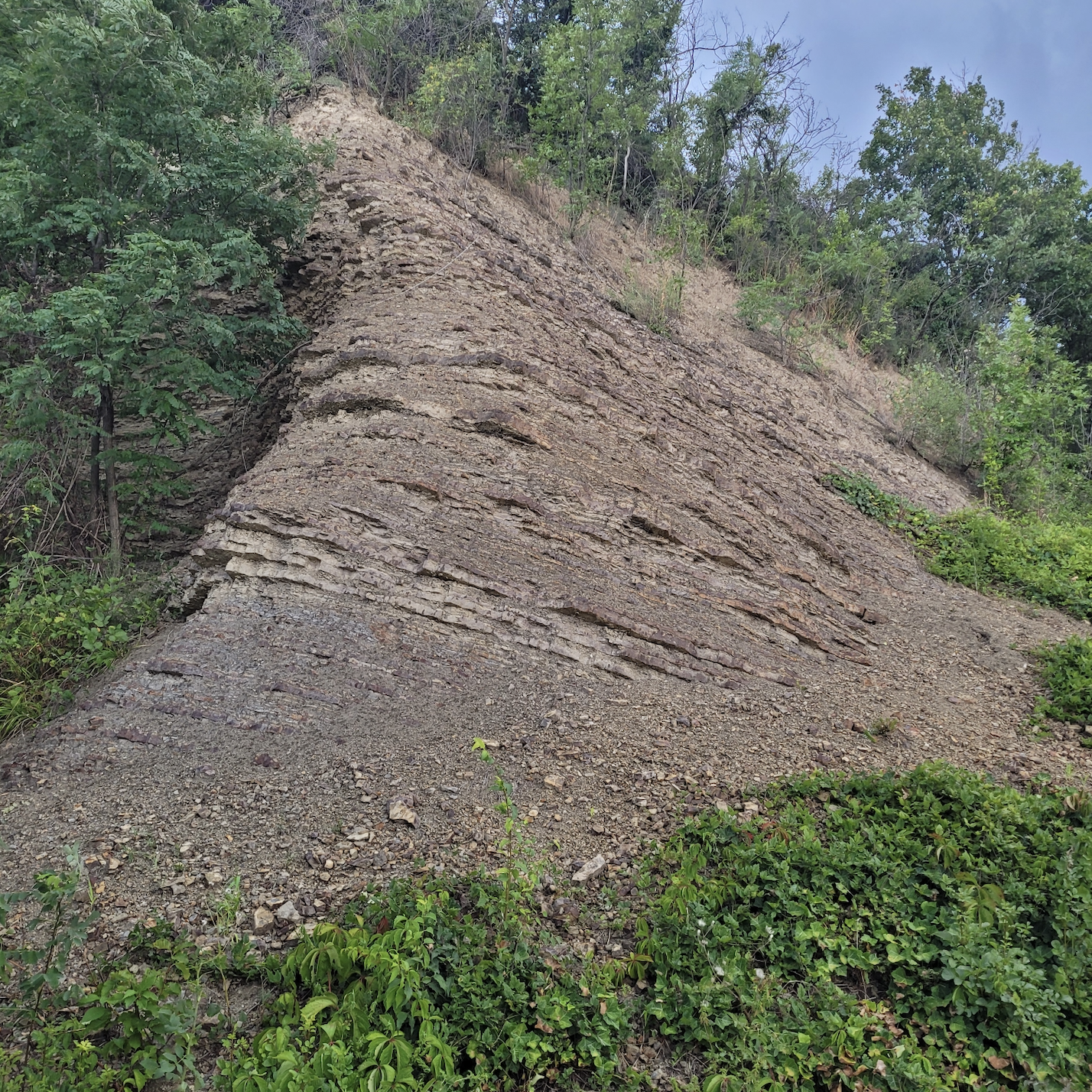
With The Thinker, Jean-Benoit Déslauriers, Benjamin Bridge Vineyards

Benjamin Bridge Glooscap First Nation X Rosé 2021, Nova Scotia

Benjamin Bridge Glooscap First Nation X Rosé is first a wine. A lithe, 10 percent alcohol and bone-dry vision in pale pink hue, described by thinker Jean-Benoit Déslauriers as blessed “with a softness from within.” My family and I taste along and become privy to why this project means so much more. The Rosé marks a turning point for Benjamin Bridge and is crafted neither for reconciliation nor to undue the past. Instead the path leads forward, for mutualism, cooperation and respect. A harbinger towards a more balanced future. Meaning is gleaned for the team after a decade-plus of grape growing now widened to include 13,000 years of sustainable and synergetic preservation of an ecosystem. Twenty years ago the BB understanding was of vineyards producing grapes exclusively focused on the sensory profile of wines, how they reflected the terroir and stacked up against Europe. Yet the Mi’kmaq have lived in balance within this unique ecosystem for millennium and the goal is to return to this symbiosis. It may take another 13,000 years and while subsequent generations will not be obligated to complete the work, neither are they free to desist from it. This Rosé establishes a “Ni’tap,” a relationship as ally-ship and friendship between Benjamin Bridge’s McConnell-Gordon family and Glooscap First Nation; Elder Lorraine Whitman, President of the Native Women’s Association of Canada and Advocate for the rights of Indigenous women, girls & gender-diverse people; her daughter Zabrina Whitman and Chief Sidney Peters. Glooscap First Nation X Rosé is a direct product of climate change with no need to soften the sear of acidity by backsliding into residual sugar. Do not forget the effect created by the air pump that is the Bay of Fundy that allows the vines to always take their time and manage a slowly gained phenolic development. The Bay means Rosé can indeed be forged this way. Dry and bright, aligning ortega, gamay and riesling in such a pointed and profound aromatic Sikunme’katik (Gaspereau) Valley way. The connection to Nova Scotia is real but very much a singular notion. The fact that modern agriculture has erased what really happened in this valley, as it pertains to vines and this terroir it is the kind of commentary that is “by definition profoundly inaccurate.” This is the charge of Déslauriers and all who take this path forward. Indigenous plants were in fact replaced with European plants so BB makes a clear point. How can it be said that these wines capture the essence of this terroir? The argument is compelling and will eventually change again, after 13 or 13,000 more years, or perhaps somewhere in between. In any case the wine is grand and the prospects even greater. Bravo all around. Drink 2022-2025.  Tasted July 2022

Mackenzie Brisbois, Trail Estate

Trail Estate ‘Oh Julius’ Skin Fermented White 2021, VQA Ontario

A plus or minus 10 days skin contact for 59 per cent riesling, (35) gewürztraminer and (5) muscat that drinks with full submission, symbiotically speaking. The wine gives and our palates lay down, receive this effortless elixir and allow it to pass on through, no questions asked, no wondering why. Something like 550 cases are made of this wild-fermented, Benchlands (Wismer) fruit-sourced quencher, aka refreshing drink. Easy enough in the tart citrus vein, no lacking for energy and in turn, our interest. Weird? No not really. Cool? Ticks all the boxes for what the kids are all making these days, but this is more a case of being made by and for kids at heart who are adults with kids of their own. At 10.4 per cent alcohol, no acetic meanderings nor cider-y complications neither. Well that just about wraps it up in a big natural bow and guarantees a good time. Drink 2022-2023.  Tasted June 2022

Canoe Trip cooking

Blue Mountain Blanc De Blancs R.D. 2013, VQA Okanagan Valley, British Columbia

The research tells us chardonnay and time conspire for beauty while development reminds how years upon years upon lees directs a Blue Mountain R.D. into sublimity and profundity. A vintage to recall, reflect upon and surely celebrate, to mull over its integrated and subtle spices, controlled energy and slow time release of responsibility. A sparkling wine of nature that has become one of nurture, now a perfectly posit tug between edginess and oxidation, tension and generosity. They call this the sweet spot. Raise a glass to recently disgorged. Drink 2022-2026.  Tasted November 2022

WineAlign judges at Stratus Vineyards

Stratus X Trials Blanc De Blancs 2012, VQA Niagara-on-the-Lake, Niagara Peninsula, Ontario

Looking back two years the bar was set so very high as noted when we first began tasting the culmination of years put in towards this Sparkling program. Far be it for Stratus to regress or work in reverse but they are now grooving further back in lees cumulative time and out there comes a chardonnay spent what must be nearly 10 years on those lovely yeasts. Trials they were and fruition they have become. It’s not so much the toasty and beautifully oxidative-fino nutty character. The impression digs deeper than green olives in brine and sweet pear compote, it grabs us by the emotive heartstrings and holds us close. In fact it’s not unusual for B de Bs ’12 X Trials to be loved by anyone. There’s just something about the subtleties and the open invitation, to love and be loved. “Whoa oh, oh whoa, oh oh, oh oh!” Drink 2022-2026.  Tasted November 2022

Sunset over The Twenty Mile and Beamsville Bench

Flat Rock Cellars Nadja’s Vineyard Riesling 2020, VQA Twenty Mile Bench, Niagara Peninsula, Ontario

Distinct mineral and petrol aromatic riesling rising, up into the stratosphere. in no hurry to come back down. Cracker citrus and acidity, tart and fuelled by intensity with no boundaries nor atmospheric pressures or deadlines neither. Sugars and structure are one in the same, seamlessness is the result and everything falls into its right place. The poster child, educator and pioneer. Drink 2023-2027.  Tasted blind at NWAC2022, June 2022

Felseck Vineyard

Hidden Bench Riesling Felseck Vineyard 2017, VQA Beamsville Bench

Not quite but just about 20 year-old vines as of this stellar 2017 vintage and a benchmark Bench riesling of all that has been developed, given, remains and jazz. A stoic propellant and scintillant of fineness, fruit in ample preserve, acids convergent and power releasing ever so slowly in perfect pace. Pitch is spot on, balance ideal and direction effortlessly forward. The Mario Lemieux of riesling. Drink 2023-2032.  Tasted February 2022

The family with Josh Horton and Rachel Lightfoot, Wolfville, Nova Scotia

Lightfoot & Wolfville Chardonnay Small Lots Oak Knoll Vineyard Stainless Steel 2020, Nova Scotia, Canada

“People have always said we need to make a stainless steel version,” says winemaker Josh Horton, to lighten the room and the mood. This being the first go at it, protocol kept very similar to the oaked (Ancienne), by wild ferment, aka “brown” maceration. Gone to bottle quicker (eight months after pick) and this will be slowed down in the future. Absolute tightness and freshness, purity of chardonnay as expressed in a juiced lemon and almost no reduction. A chardonnay of isolated terroir, specificity and one helluva beautiful experiment. Drink 2022-2024.  Tasted July 2022

Thirty Bench Small Lot Chardonnay 2020, VQA Beamsville Bench, Niagara Peninsula, Ontario

Really quite primary, an undisclosed while pleasingly reticent chardonnay from Emma Garner of gratitude and grace. The first because it thanks the Beamsville terroir and the second because it does so with soft spoken respect. A mélange of different fermentation batches, each small and precise come together for the final sumptuous and restrained blend. The tenets of fruit, acid and what ties them together is just about as seamless and easily layered as any of a Bench ilk and idiom. Not a chardonnay of style but instead stylish, not chic but surely sung with notes held, seemingly forever. Drink 2023-2028.  Tasted July 2022

Grimsby Hillside Vineyard

Ilya and Nadia Senchuk, Leaning Post Wines

Leaning Post Chardonnay Grimsby Hillside Vineyard 2019, VQA Lincoln Lakeshore, Niagara Peninsula, Ontario

Delicate, bright and efficacious wine from a north facing nook of the Escarpment vineyard in the narrowest spit of land between the rock face and the lake. Once the viticultural labrusca home of Parkdale Wines and now owned by the Franciosa family. A special wine occupying a place in my family’s history and heart. Apposite to Wismer in that there are more piques and peaks in and out, up and down, hither and thither in this singularly focused chardonnay. Pay attention to nuance, to barrel as well as it speaks in extra density because the terroir encourages the ambition. Remarkable structure despite how short a relationship there has been between maker and farm. The instant brilliance creates an effective and then profound buzz, a desired effect and the future is WIDE open. Drink 2022-2027.  Tasted June 2022

Melissa Marotta-Paolicelli, winemaker Adam Pearce and Angela Marotta

Two Sisters Chardonnay 2020, VQA Beamsville Bench, Niagara Peninsula, Ontario

With part in part thanks and a nod to the experimental minds and vineyard management acumen at (then) Parkdale Wines, back in 1959 Bill Lenko took a flyer on vinifera in the form of chardonnay. Today Two Sisters is the primary beneficiary of Niagara’s oldest chardonnay vines and this primo vintage extolls the virtues of those wise plants and their concentrated fruit. Still showing balance and tenderness, never mind the barrel beauty, bullocks or beast, in fact it all comes together in seamless fashion because the fruit is indefatigably remarkable. Winemaker Adam Pearce heeds the directive, does nothing to get in the way and what is delivered comes away with such a sheen and energetic burst it just may blow your mind. This is the finest result to date, a lightly reductive, subtly lees inflected, full fruit captured chardonnay. All of its lines run parallel, incline up the same slope, coextend in collateral company and with time will eventually relent for the great transversal. The fruit will cross over both acidity and backbone, resulting in the ultimate complex equation. Drink 2023-2028.  Tasted August 2022

The fishy work of Ryan Crawford (Ruffino’s and Bar Bea), Raoul Duke of Chefs


Bachelder Hill Of Wingfield Chardonnay 2020, VQA Twenty Mile Bench, Niagara Peninsula, Ontario

Hill of Wingfield, as opposed to the flatter portions of the large chardonnay expanse and one can’t help but conjure up vineyard monikers like “Hill of” Corton, or even Grace. Ancient and modern tracts can be descried by farmers and writers so with Thomas Bachelder as the guide we too can play this game, by extension and in a most semi-serious way. Everything is derivative and by association anyway so Hill of Wingfield it is. Same lush, luxe and top of the pops richness as Wismer-Wingfield yet here with some reduction and an almost candied shell of protection. Nearly impossible and yet every reason to believe that vintage, grape, block and maker can combine to execute such a phenomenon of chardonnay. No understatement or restraint here, nor were any grapes harmed in the due process. My goodness what gumption, ambition and monkified execution. You gotta believe in the truth! Drink 2023-2028.  Tasted December 2022

With Shiraz Mottiar and the uni, I mean photo bomber Anthony Gismondi

Malivoire Gamay Courtney 2020, VQA Beamsville Bench, Niagara Peninsula, Ontario

Youthful is the understatement when coming at this 2020 Courtney but my how juicy, meaty and pinpointed a gamay it truly is. There have been serious and fully formed Courtneys before but never have the assets in fruit, mouthfeel and acid-tannin structural interplay grabbed attention like this young and in charge ’20. Adds up to big, boisterous, ripe to the hilt, of zero austerity and so much possibility. Drink 2023-2027.  Tasted April 2022

Meyer Pinot Noir McLean Creek Road Vineyard Old Block 2020, BC VQA Okanagan Falls, British Columbia

Plenty of substance fills the aromatic glass in this immortality jam of substance, acid and textural intensity. Good red fruit if turning to act youthfully grainy in its unresolved structural demand, especially as it lands on and then scrapes over the palate. Dutifully solid wine, nothing to some and to others a pearl needing time. High arcing, a factor of indefinite continuation for pinot noir existence and “he who forgets will be destined to remember.” For such a delicate (aromatic) and working (palate) pinot noir it carries more than ample finishing strength, energy and power. “And I wish to hold on, too, but saw the trapdoor in the sun.” Drink 2023-2028.  Tasted blind at NWAC2022, June 2022

Closson Chase Pinot Noir South Clos 2020, VQA Prince Edward County, Ontario

As a reminder the South Clos Vineyard is six hectares of Prince Edward County Hillier clay loam and shallow crumbled limestone overlying fractured limestone. A top site (within the limit of vinifera capability) where chardonnay and pinot noir present as viable as any combo in Canada. Bring on a warm gift of a vintage like 2020 and the possibilities suddenly become endless. The site is always a place of high pH and allowable root penetration but 2020 just tops the show. The intensities are boundless in a most youthful and exuberant South Clos pinot noir that clearly act as the embodiment of one for the ages. Never before have acids tasted so sweet and tannins wept such tears of joy. South Clos is the culmination of decades put in, torches passed, hard work and experimentation. A victory for the 2020 season and perhaps the beginning of a Keith Tyers’ led dynasty. Drink 2024-2032.  Tasted November 2022

With Chef Michael Olson

Bachelder Pinot Noir Wismer Parke “Wild West End” 2020, VQA Twenty Mile Bench, Niagara Peninsula, Ontario

Wismer-Parke’s western section on Victoria Avenue just up from Highway 8 is planted to what Thomas Bachelder refers to as a mystery clone of pinot noir “whose identity is lost to the mists of time.” Twenty-one years to be exact at the meter of this vintage yet in nostalgic ways that kind of statement feels like something dating back to the 1950s or ’60s. Either way it’s long enough to make one wonder and wonder why. There’s a whole lot of “duh duh dun dun dun dah,” and “bah ah bah ah dun dun dun bah” then “beh do beh do,” followed by “bah doo doo bah,” and finally “wop, wop, wop, wop, wop” in this pinot noir. Why? Because this beast of the east is so strong-willed, immoveable and timeless with unparalleled layering and nuance. Doo Wop tannins in total control, winning out over dark fruit in black olive, fennel and tarry tones playing second fiddle. Why is there more oomph and grip to this savoury flavoured pinot noir of scrub and scorrevole across the palate?” The answer my friend is blowing in those mists and in the time you must give to see this wine come to its fruition. Wismer-Parke Wild West End may not necessarily save your soul, but it will make your soul worth saving! Drink 2024-2029.  Tasted December 2022

PEC wines

Rosehall Run Pinot Noir St. Cindy Unfiltered 2020, VQA Prince Edward County, Ontario

In 2004 and 2005 the first County Rosehall Run vineyards pinot noir fruit were given the name Cindy but between ’06 and ’19 the name JCR defined the estate’s best fruit. With a vintage as great as 2020 in vessel Cindy was anointed once again as saint of the top pinot noir. The ripeness and extract here are in fact the finest ever from these PEC lands so the choice was and remains perfectly clear. What the JCR misses in terms of tension is here fully trenchant and oblique, angles run in slants, musculature neither parallel nor perpendicular to the long axis of structure or bones. This is fascinating wine geometry and anatomy, clearly regimented yet offset and in the end, simply wondrous. Drink 2024-2030.  Tasted October 2022

Le Vieux Pin Syrah Cuvée Violette 2015, BC VQA Okanagan Valley

Five years after first tasting Cuvée Violette blind the opportunity arises for an up front and centre moment with bottle, label and glass. Though this syrah would have been more than satisfying before it must be said that its peak performance is in fact NOW. Takes an aromatic leap of faith and suspends at that Black Sage Bench/Dead Man Lake syrah apex where violets and pepper drip their eau de parfum down upon dark varietal fruit. There are many a more expensive Okanagan syrah but there are none as benchmark to combine age-worthiness with price as this Severine Pinte stunner. I for one am thankful to taste this vintage again and at its best.  Last tasted December 2022

Let’s put up our hands so we know who we are, we who expect three P’s in syrah; perfume, pepper and pulchritude. This syrah is possessive of all three. It’s quite the dark purple beauty but also savoury, reeking of black olive and brushy garrigue. The wood is exercised with admirable restraint and then there is this fineness of tannin. A very pretty, seamless and structured syrah of great length. Drink 2018-2023.  Tasted blind at #NWAC17, June 2017

Creekside Broken Press Syrah Reserve Queenston Road Vineyard 2016, VQA St. David’s Bench, Niagara Peninsula, Ontario

Good years have got behind this syrah with a touch of viognier so that five-plus in there’s an open window through which to find the heart of this wine. A democratic vintage, fruit at peak, elongated and built to last, last longer than anyone who knows not what capability is in store for this wine. The tannins are just beginning to wane and with great acumen they have melted into the karst of what is truly a special BP vintage. A minimum five years remains and quite possibly 10. Drink 2022-2028.  Tasted April 2022

CedarCreek Winemaker Taylor Whelan

CedarCreek Syrah Platinum Jagged Rock 2020, BC VQA Okanagan Valley, British Columbia

Inky and cimmerian, full syrah extraction, maceration, skin contact fermentation and finally, thankfully and for the win, concentration. All adds up to as big as it gets, with iodine, soy and yet this amazing floral indemnity that tells the whole story, but also one that celebrates a truly special site. Yes the tannins are omnipresent but they are reasonable, metered, mattering and real. So very polished. Drink 2025-2029.  Tasted blind at NWAC2022, June 2022

Vines in the Similkameen

Corcelettes Talus 2020, BC VQA Similkameen Valley, British Columbia

Talus makes balanced work of all fine main Bordeaux varieties, led by merlot (40 per cent) and cabernet franc (35), with (20) cabernet sauvignon, (3) malbec and (2) petit verdot. The names refers to the Talus “slides” that accentuate each mountainous side of the Similkameen Valley and the wine slides across the palate in equal, opposing and proportionate waves. Mostly a precise ripeness of fruit but also some passionate acids and truly purposed tannins. The merlot does seem to stand out with its verdant, creamy and downy character as it pertains to soaking up some barrel. There is a notable amount of quality dark chocolate here and still all parts just seem to synch up. Proper Meritage indeed. Drink 2024-2028.  Tasted September 2022

Black Hills Nota Bene 2020, BC VQA Okanagan Valley, British Columbia

The blend for the Black Hills flagship red in 2020 is 42 percent cabernet franc, (33) cabernet sauvignon, 24 (merlot) and (1) petit verdot. Merlot fared very well in 2020 and yet the team chose franc as the anchor, why, well it seems for structure over beauty and longevity over immediacy. This vintage is quite a remarkable example because all of these aspects show up, repeat, shuffle, reorganize and collectively speak a Black Sage Bench truth. Hard to imagine a more seamless set of red blend circumstances or astrological linearity. The stars do in fact align for this bright constellation of an Okanagan wine. Drink 2024-2030.  Tasted November 2022
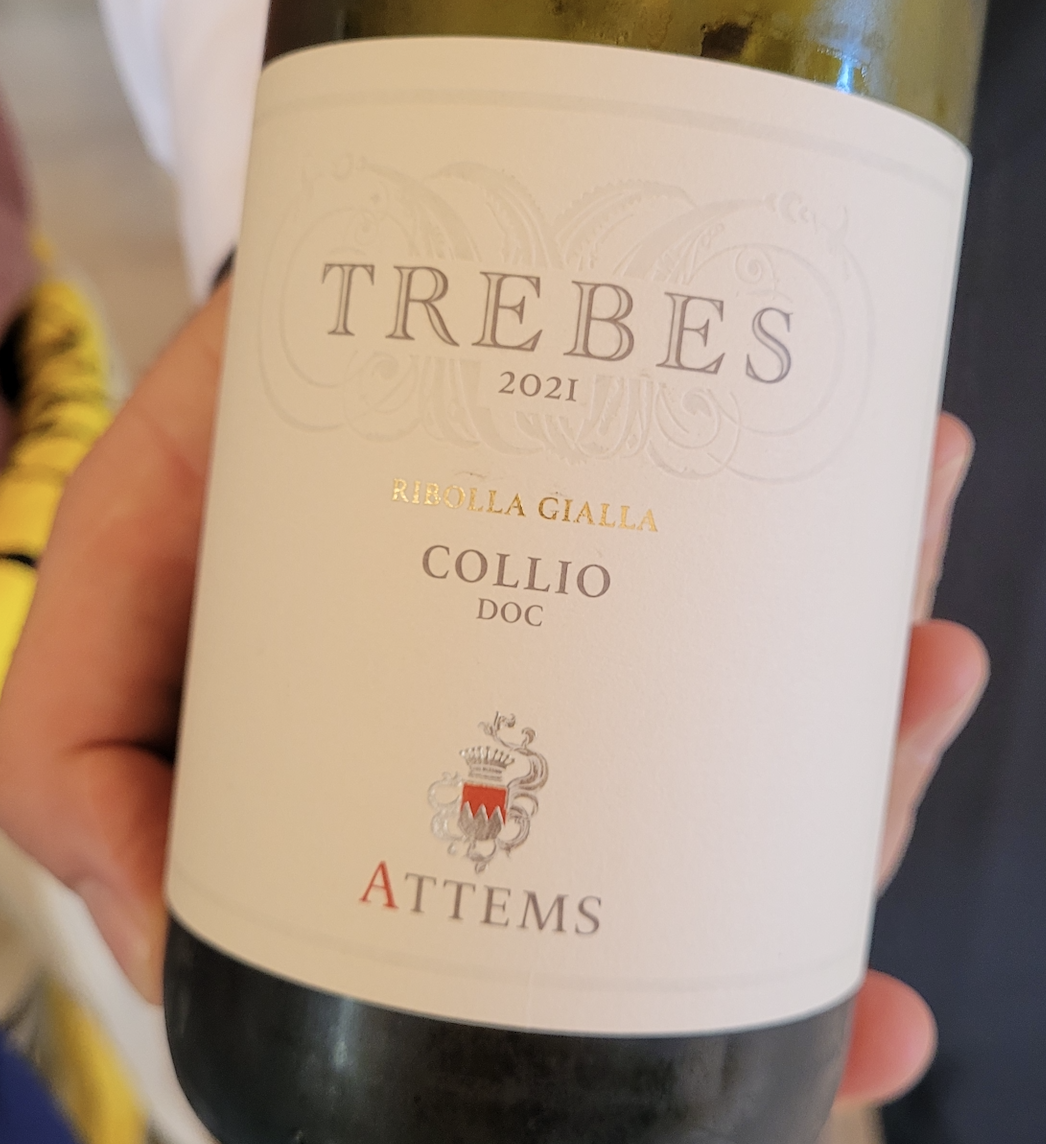
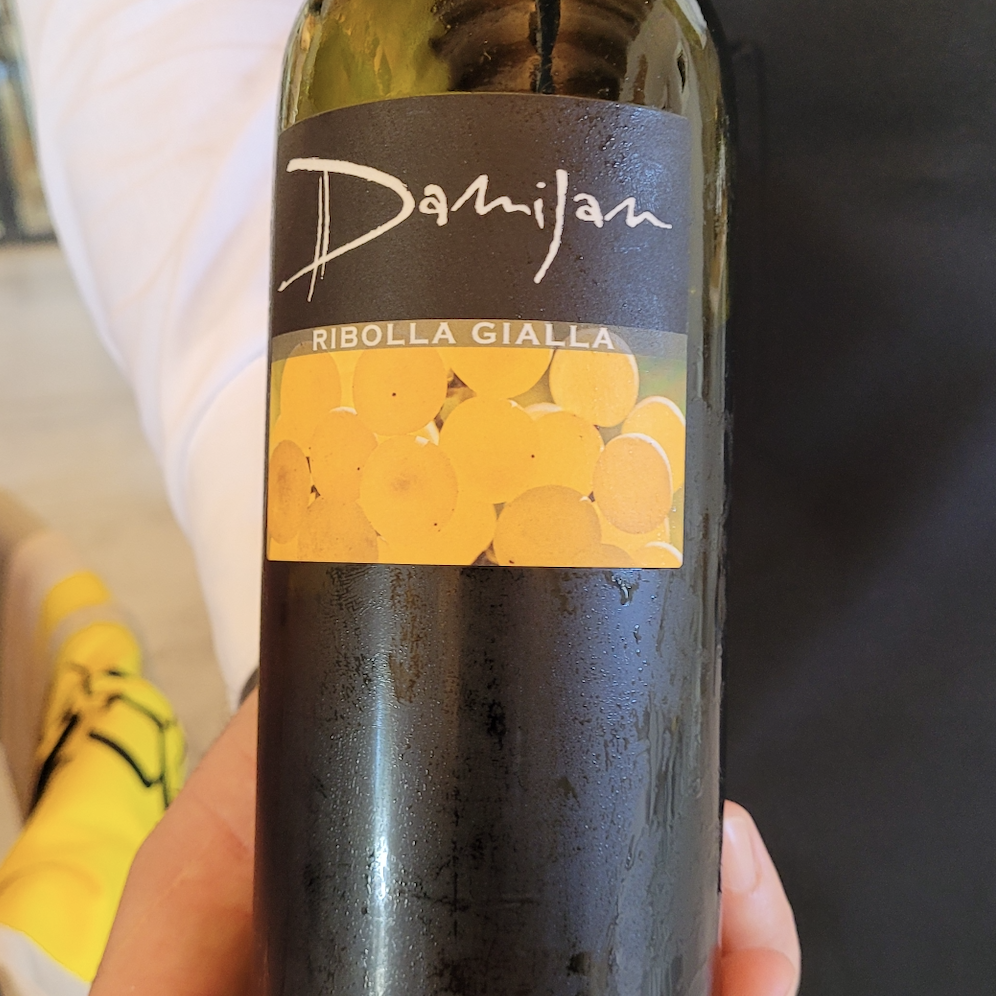
Phantom Creek Phantom Creek Vineyard Cuvée #24 2019, BC VQA Okanagan Valley, British Columbia

At the top of the heap and pops for Phantom Creek is the red blend cuvée from the homestead vineyard and a wine denied absolutely nothing. The finest of the best is grown, nurtured and gathered with equally prized vessels providing the nurturing environment. There are some silky, suave and stylish red wines in this portfolio but nothing compares to the desire in Cuvée #24. These are the richest fruit sets, sweetest acids and silkiest tannins, none more important than the other and all working towards a common goal. That being beauty and longevity which the wine surely boasts. The only question is cost and a decision to be made to decide if the extra $60-100 dollars buys more wine and age-ability. The answer is yes, it surely does but is this “perfect” style the kind you like, want, need or deserve. Only you can be the judge of these things. Drink 2024-2035.  Tasted November 2022

Good to go!

godello

Godello surveys Grimsby Hillside Vineyard

Twitter: @mgodello

Instagram: mgodello

WineAlign