Etna Days are here to stay

Versante Nord, L’Etna

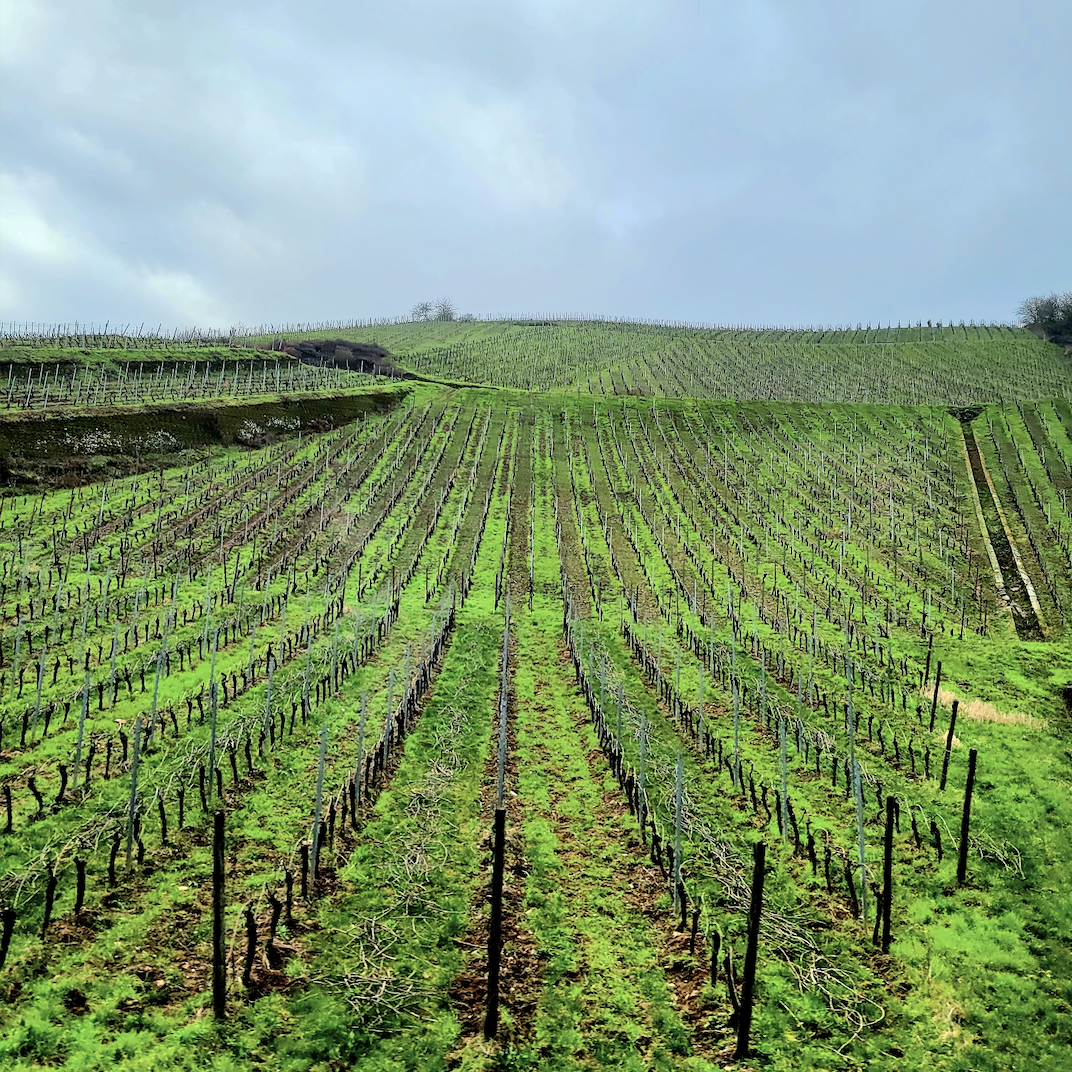
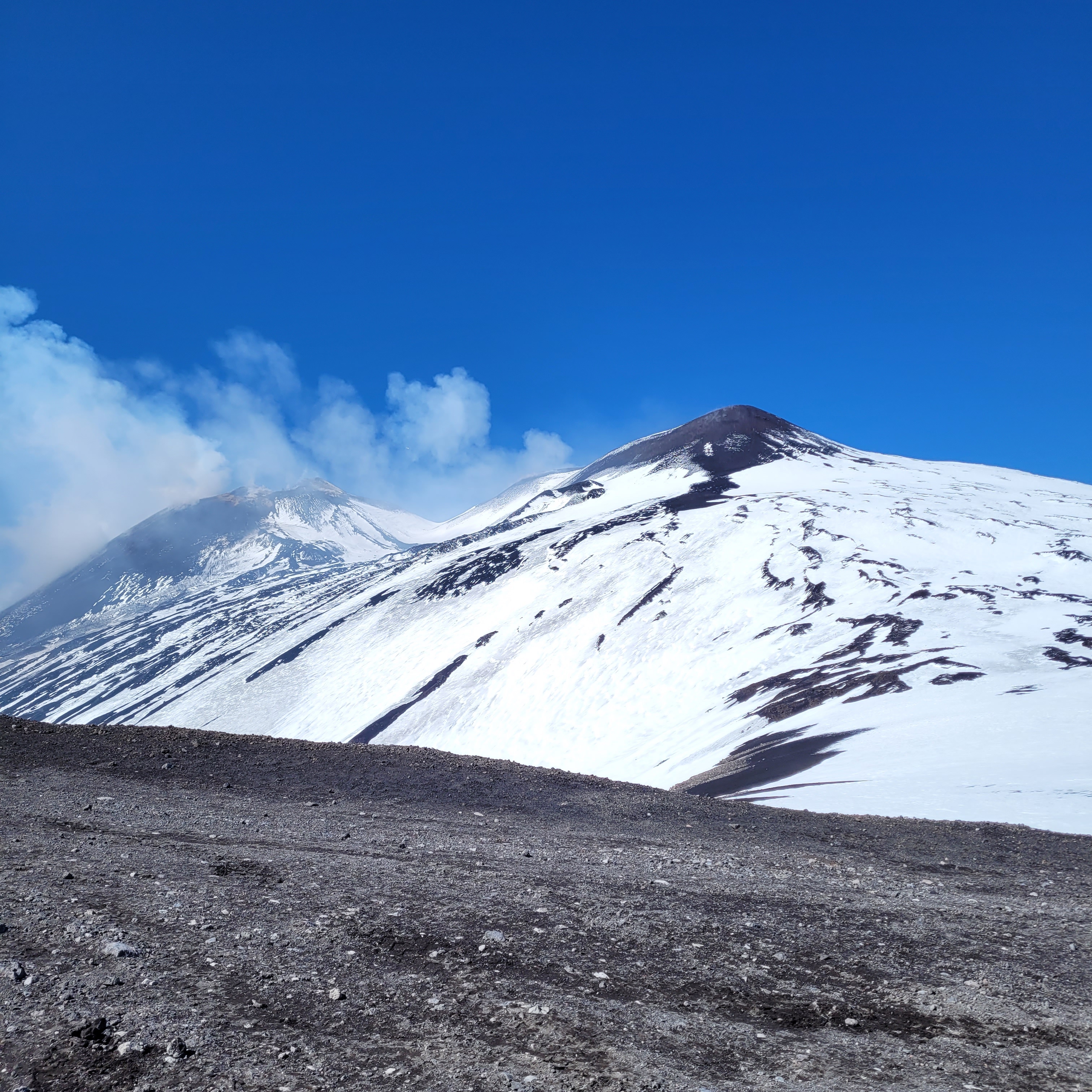
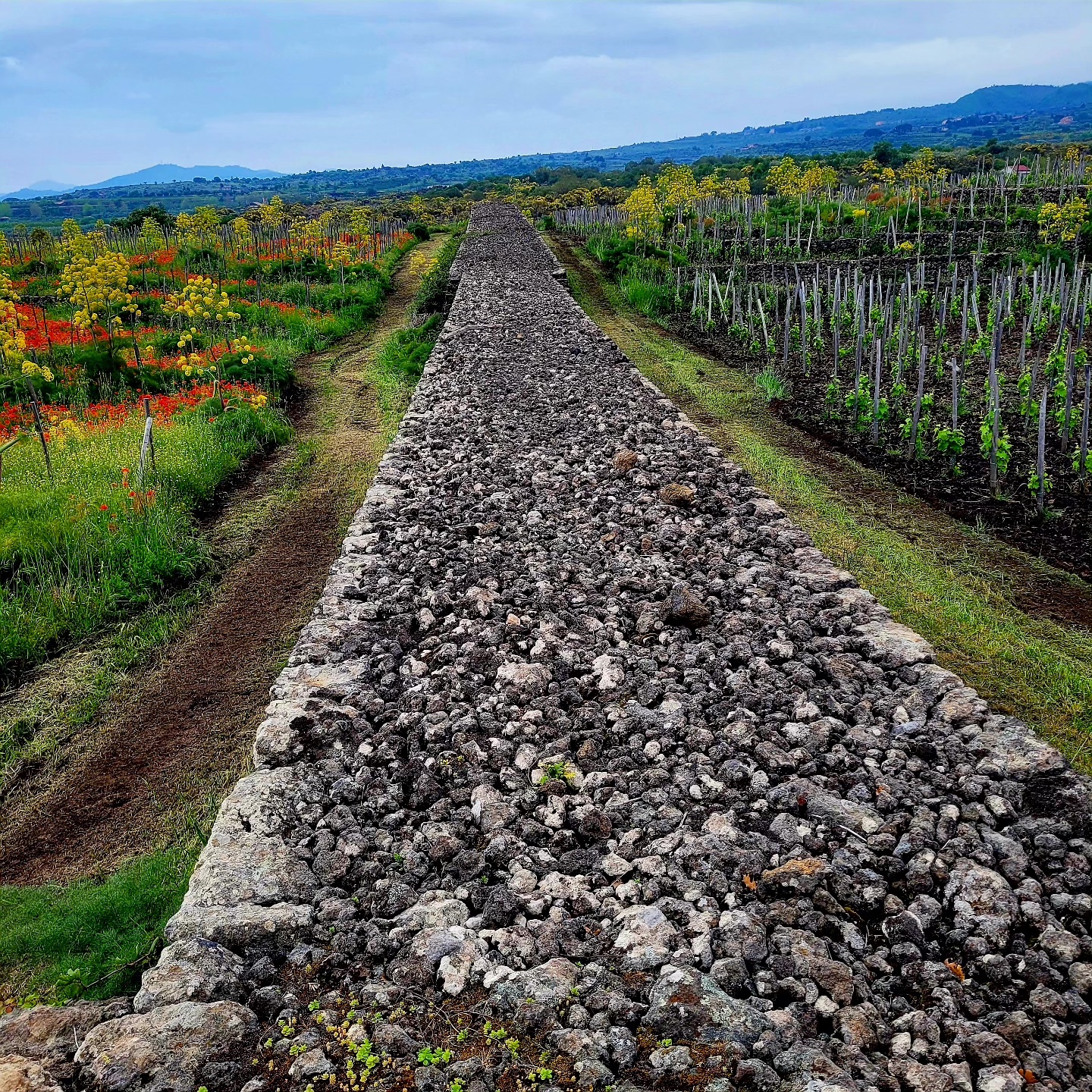
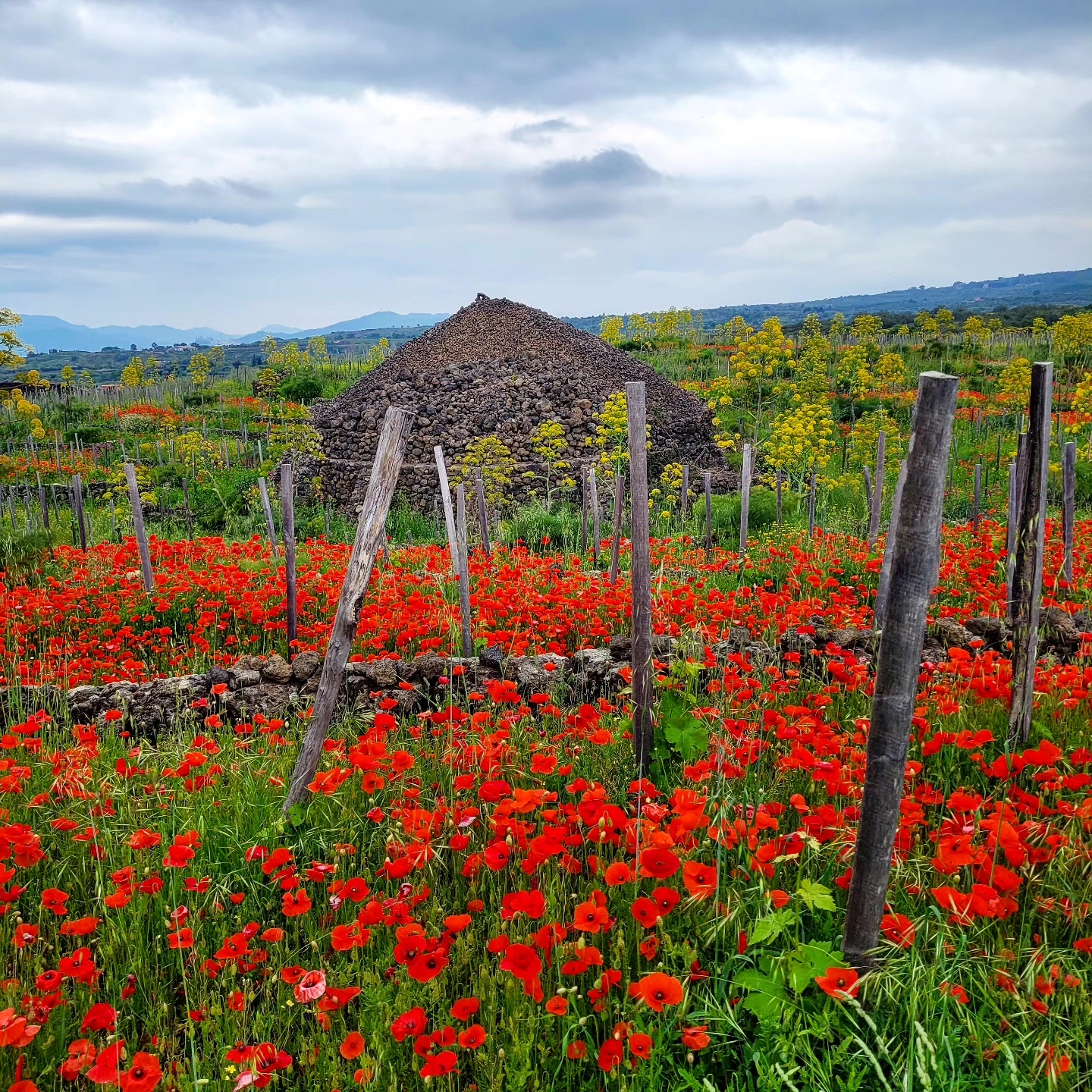
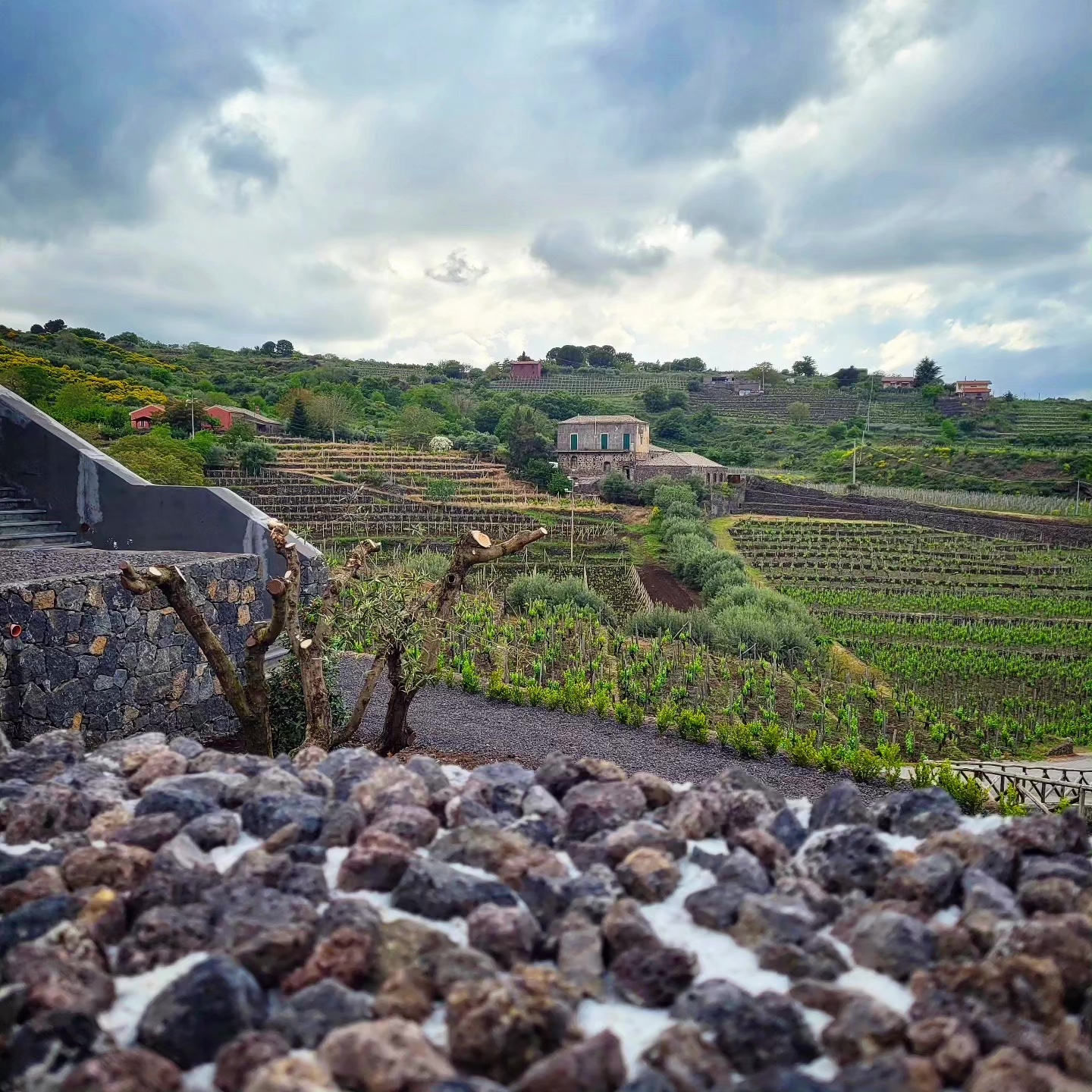
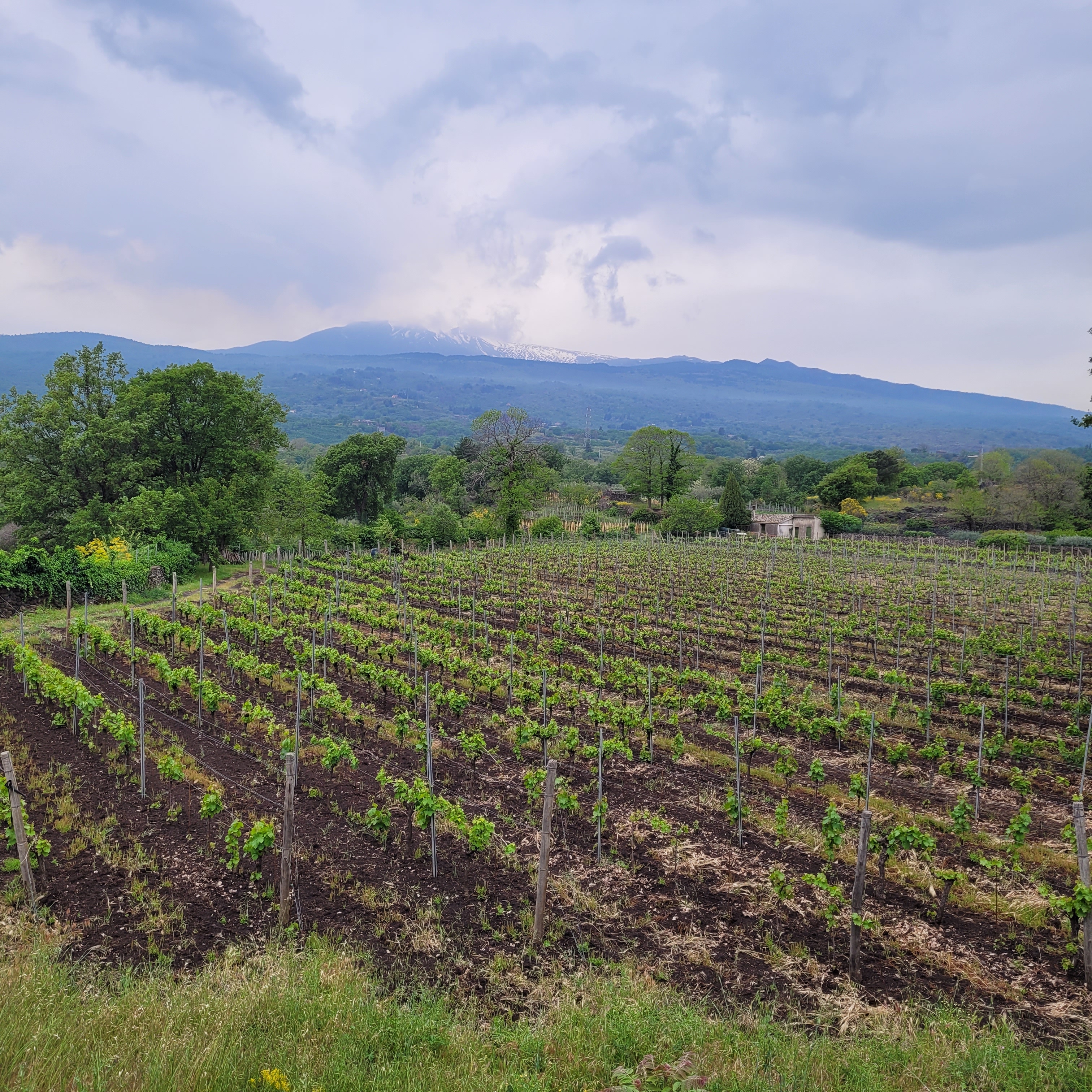
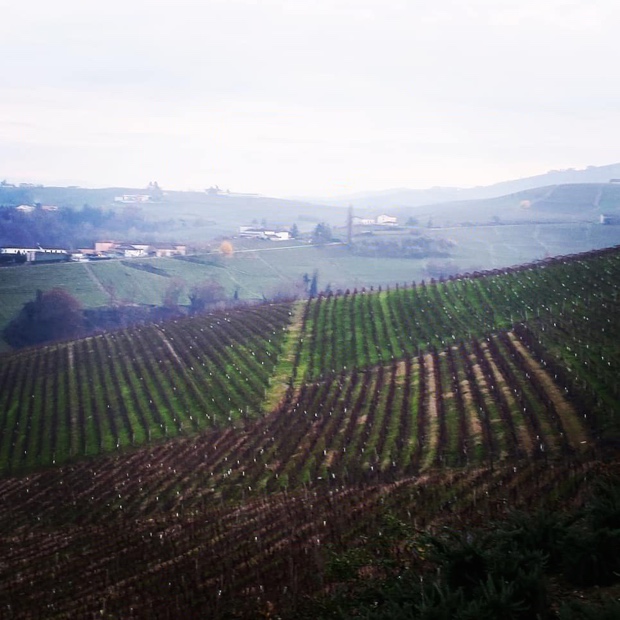
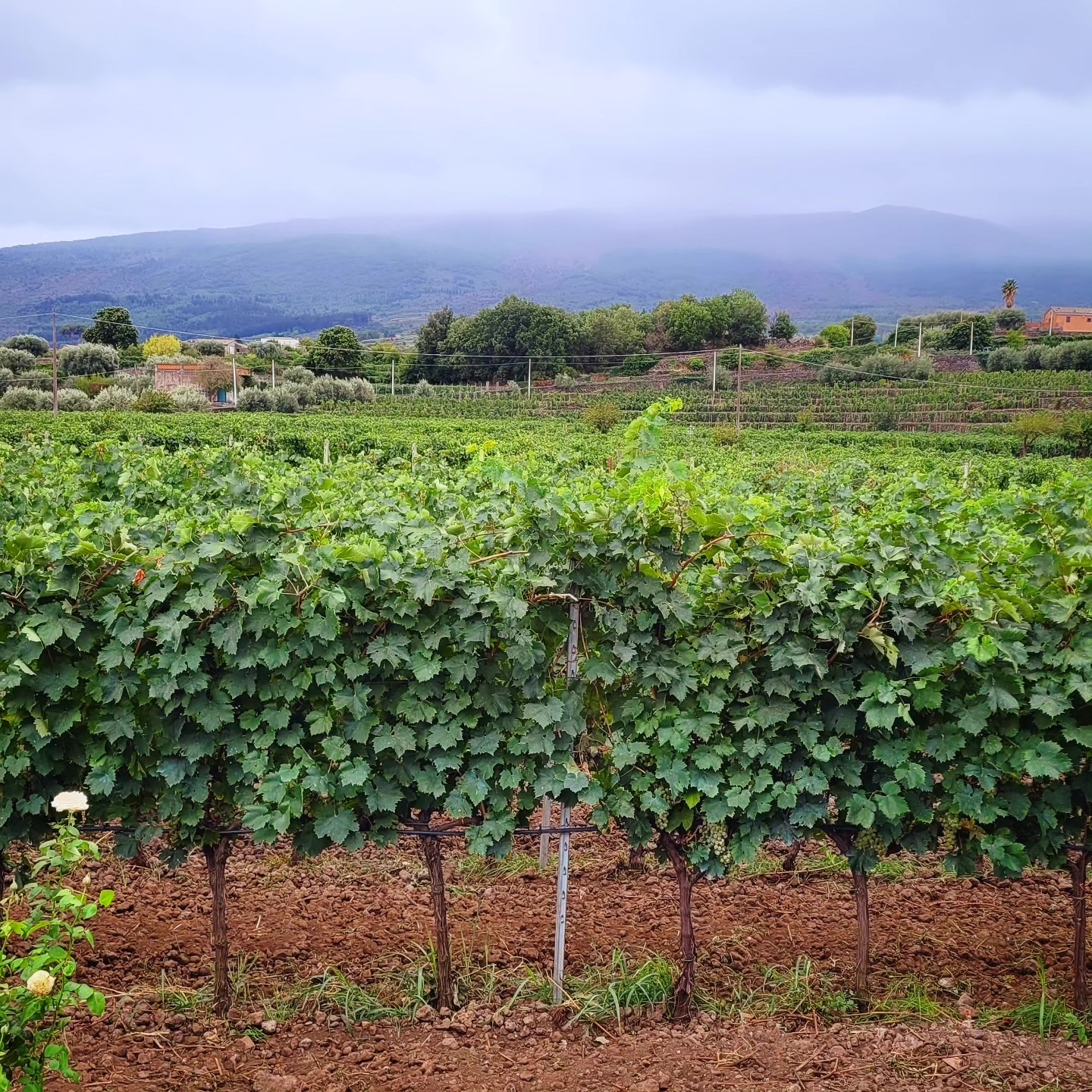
As an event Etna Days may only be four years in the making, but it is a great one. That it falls in the second week of September is a thing of brilliance, with weather warm and nurturing, grapes continuing to hang on the vines, the harvest on producers’ minds and yet still far enough away. The setting is spectacular, with ancient lava flows all-around, signs of new ones spewing from craters above 3,000 metres, vineyards marked by stone terraces and walls, century vines thriving here, there and everywhere. No two blocks look the same with each producing a unique Etna Bianco or Rosso. Confidence and morale feel to be at an all time high.

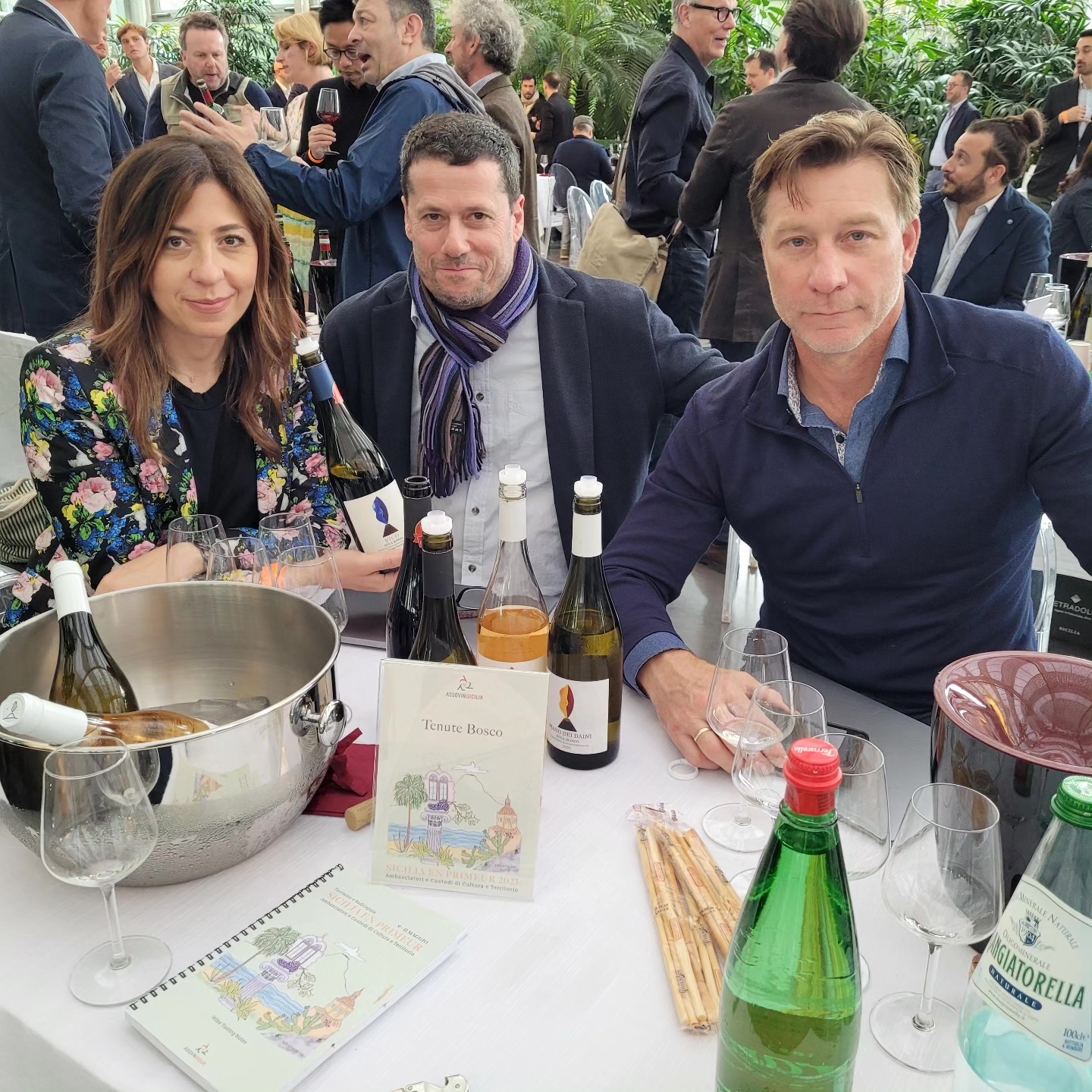
Related – The contempo pull of Sicilia en Primeur

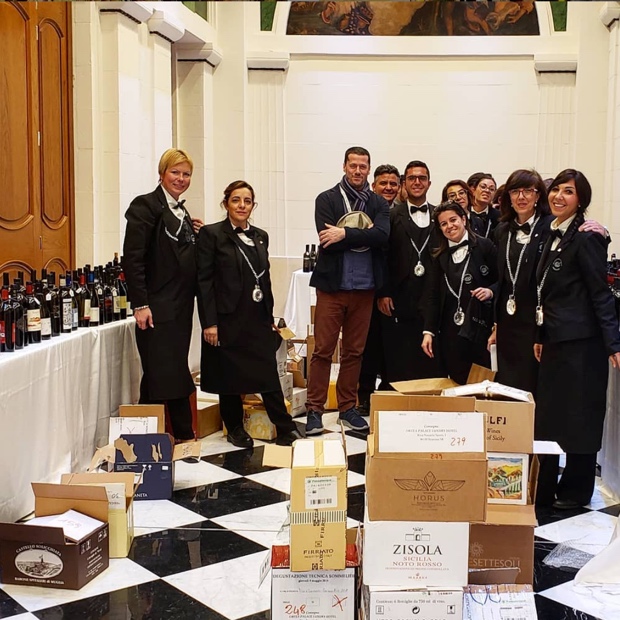
The Sommeliers of Etna Days

Never mind the challenges of 2023, including a May 3rd hailstorm, some but far from devastating presence of the Perenospera (mildew) virus and lower vine yields. What will follow the lower quantity and high quality of 2023 will by now have been the promise of a brilliant 2024 harvest. The Etna DOC Consortium suggests that the latest rains after the hot and dry summer have slowed down the ripening process, thereby helping to enhance phenolic and aromatic components. Slower and more gradual maturation proved to be decisive in terms of improvements in quantity and quality. The Consortium estimates a harvest of around 80,000 quintals (about 35/40% white grapes and the remainder red) and a likely production potential of more than 55,000 hectolitres. In terms of volume, the harvest is expected to be up by around 60 percent compared to 2023.

Related – Sicilia en Primeur 2023 Part One: L’Etna

La Gelsomina Di Colombo

There is no understanding of modern Etna without a proper historical base and that begins with the ancient, but also more recent visualization of the Palmento. In some cases outdoor stone remains can be seen, including that of the 1300 year-old Palmento at Rupestre in Pietramarina, Castiglione di Sicilia. It was excavated out of one rock, a vasca carved from the sandstone, a lagares for treading on grapes used by the Sicel peoples, early settlers in eastern Sicily. The island is littered with archeological sites that prove the existence of winemaking going back three thousand years but on L’Etna it is the presence of restored stone buildings where, with the use of gravity, grapes would have been collected and fermented into wine. At Palmento Costanzo the buildings that housed the original wine making were restored in 2015 and finished in 2019. The technology is new but the gravity fed Palmento abides by the old ways. 

Related – Sicilia en Primeur Part Two: Icons and Archetypes
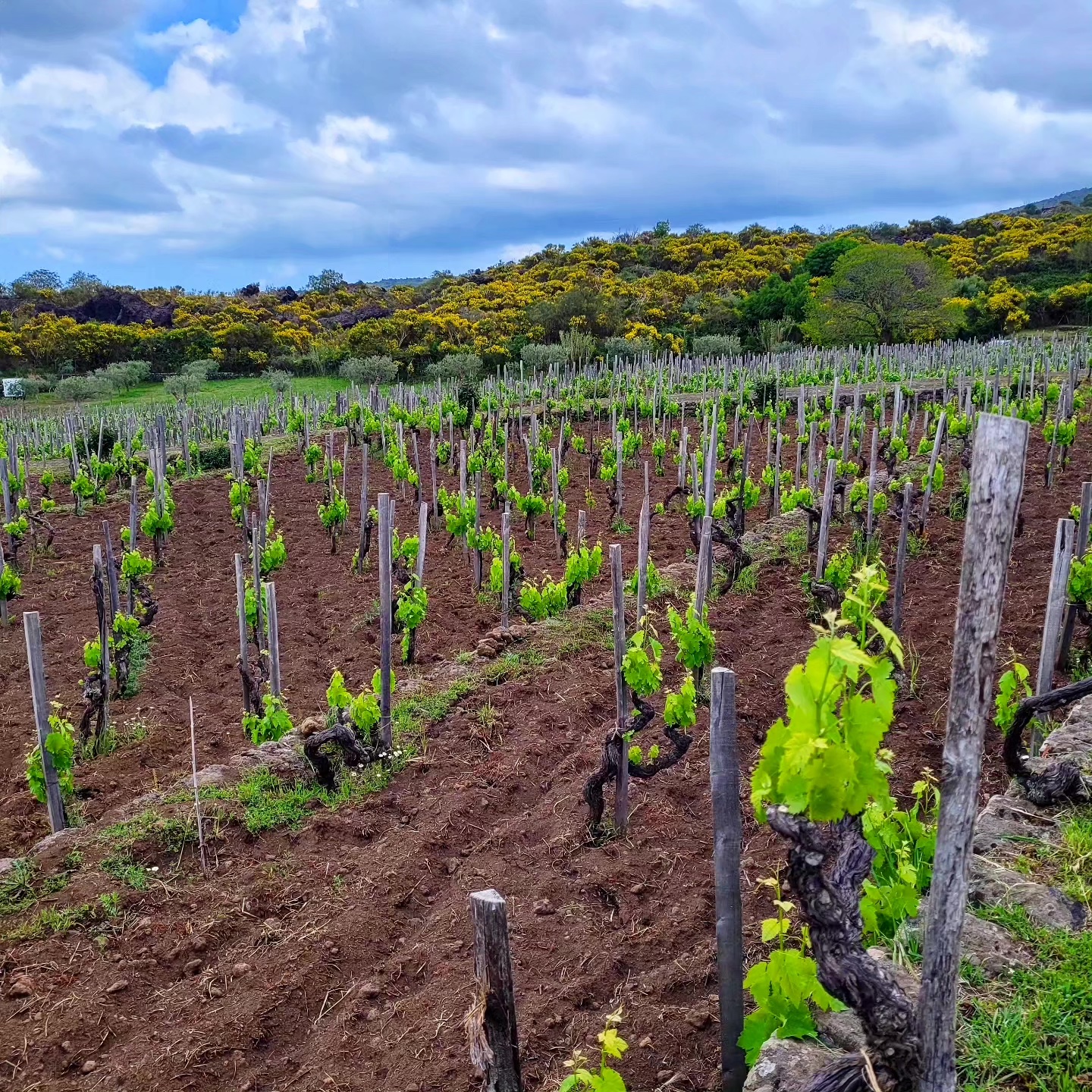
Alberello planted in pentangles, five per grouping all facing a central axis at Palmento Costanzo, Contrada Santa Spririto

For centuries I Catanesi would have come up the mountain to purchase in bulk where necessitous viticulture was born in harmony but also with respect to the landscape. In the 19th century approximately 100 million litres of wine was produced on Mount Etna, all from the various Palmenti. Wine born of a place with an active volcano rising above vineyards at 3,300m of elevation, a climate unlike anywhere else on Sicily and a terroir aboard geology conceived from hundreds of various lava flows throughout the course of its history. The differences in biodiversity from block to block, contrada to contrada and village to village are evident in the multifarious plant life growing on the extant slopes of the volcano. 
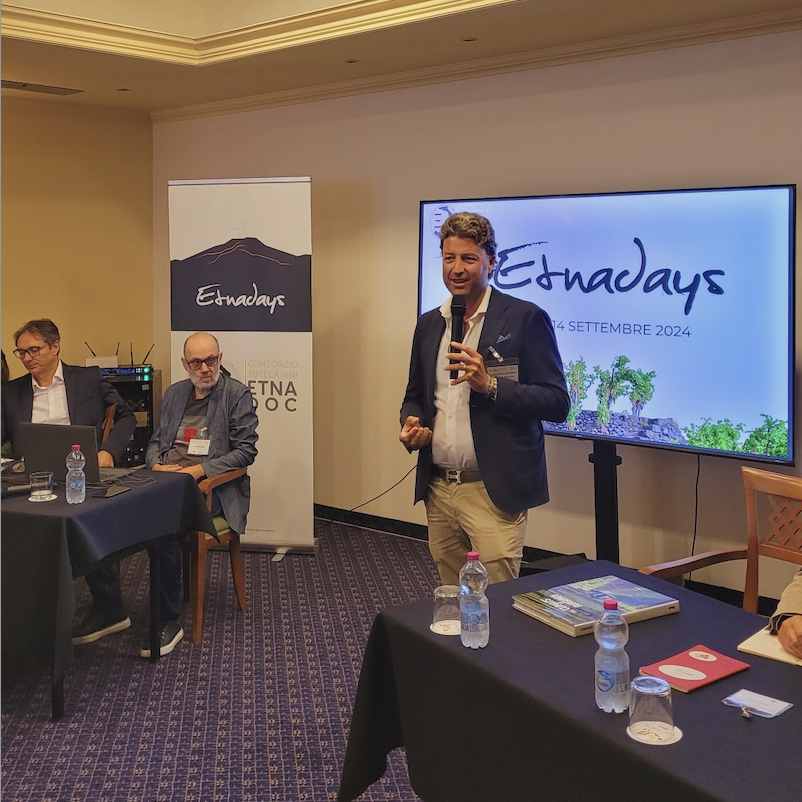
Consorzio President Francesco Cambria

The various lava flows, each with a unique set of stone in chronological stages of degradation, from the hardest lava rock through gravels and into sand are all characterized by a distinct set of weathered minerals and elements contained within. How each corridor and at what elevation affects the endemic grape varieties is a great mystery and so many of us will spend a lifetime trying to make some sense of the how and why. The Etnaese carricante, white and red minnella, nerello mascalese and nerello cappuccio are children raised and nurtured by the slope, elevation and geological make-up that is their home on the mountain.

Related – Notes from 2019 Sicilia en Primeur
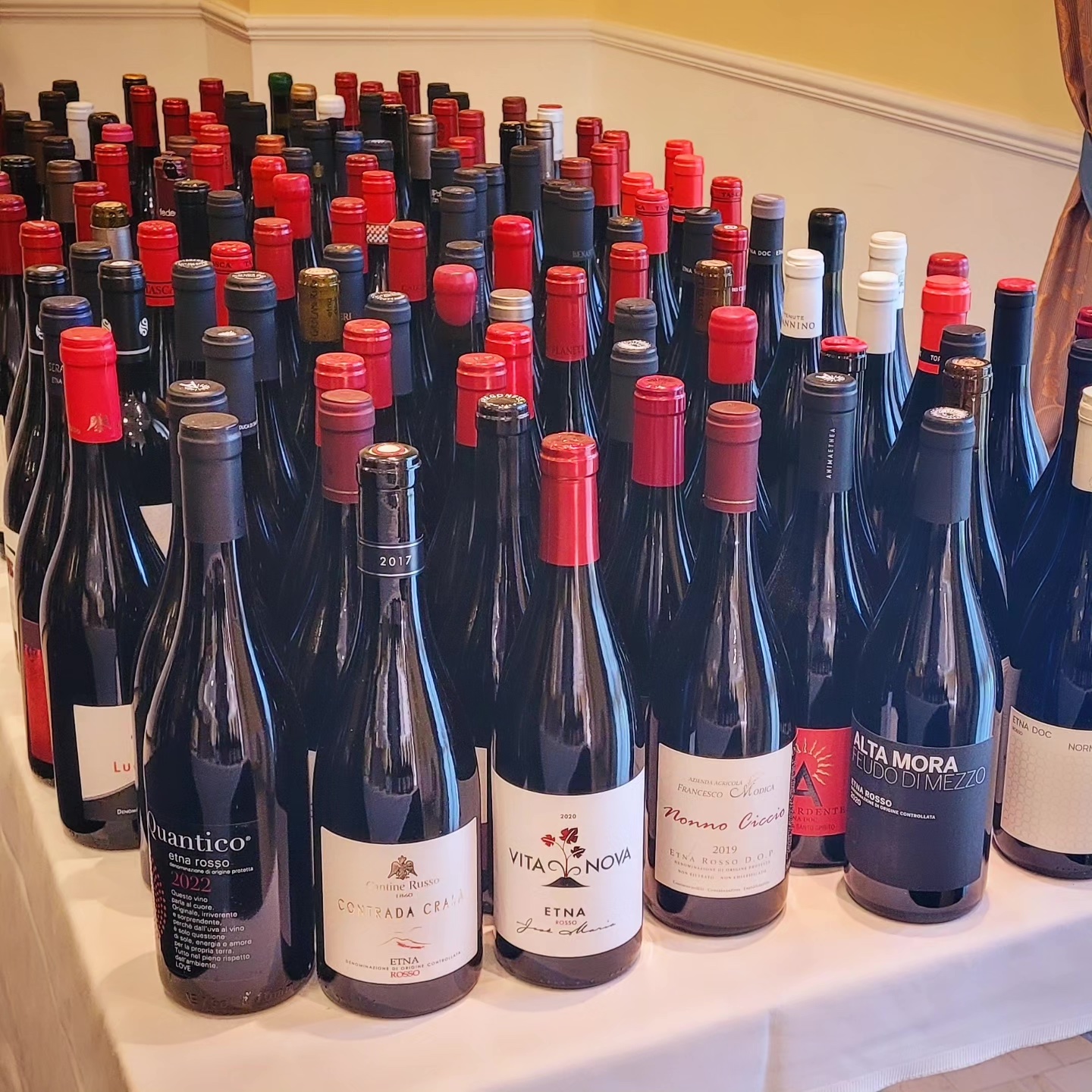
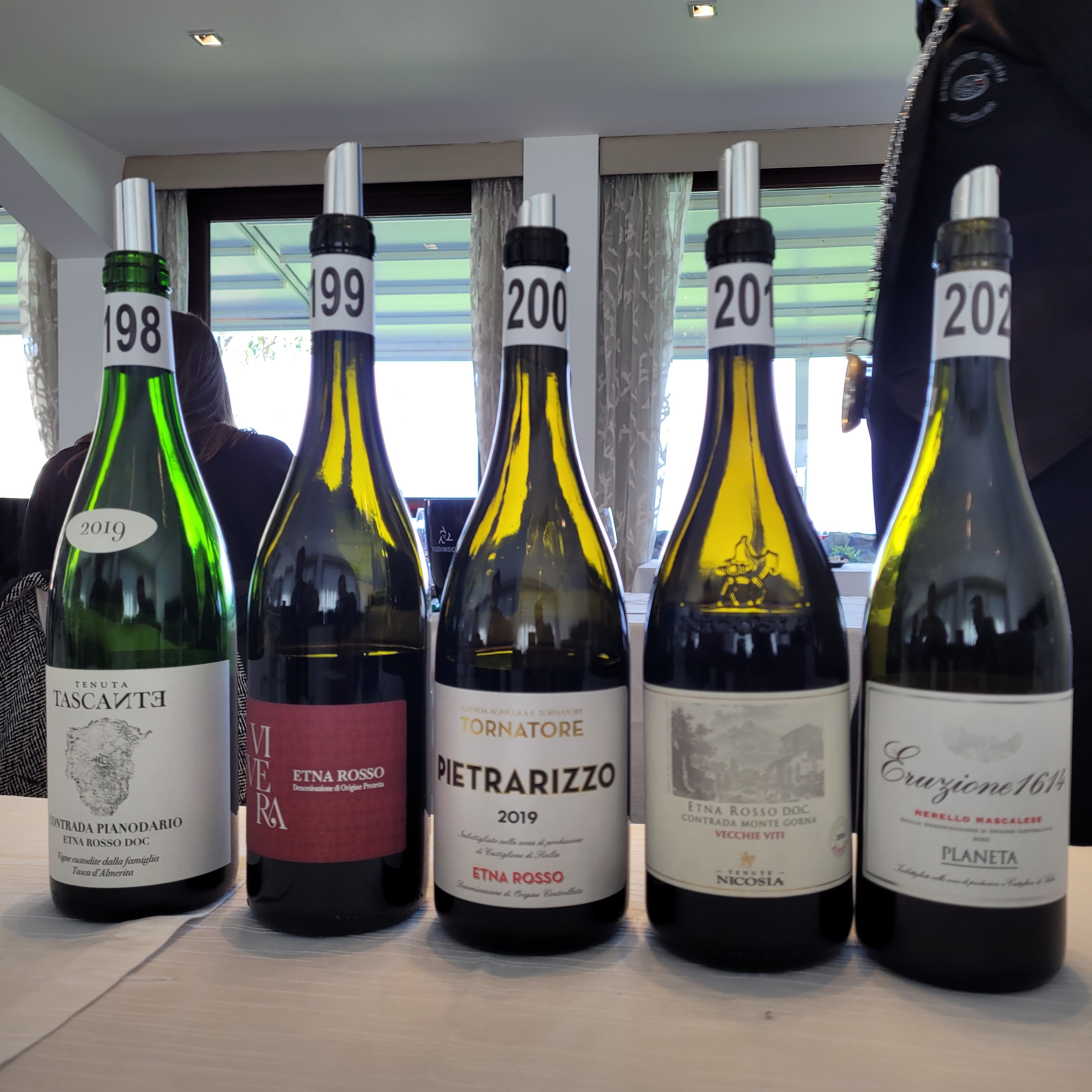
Etna Days Rosso

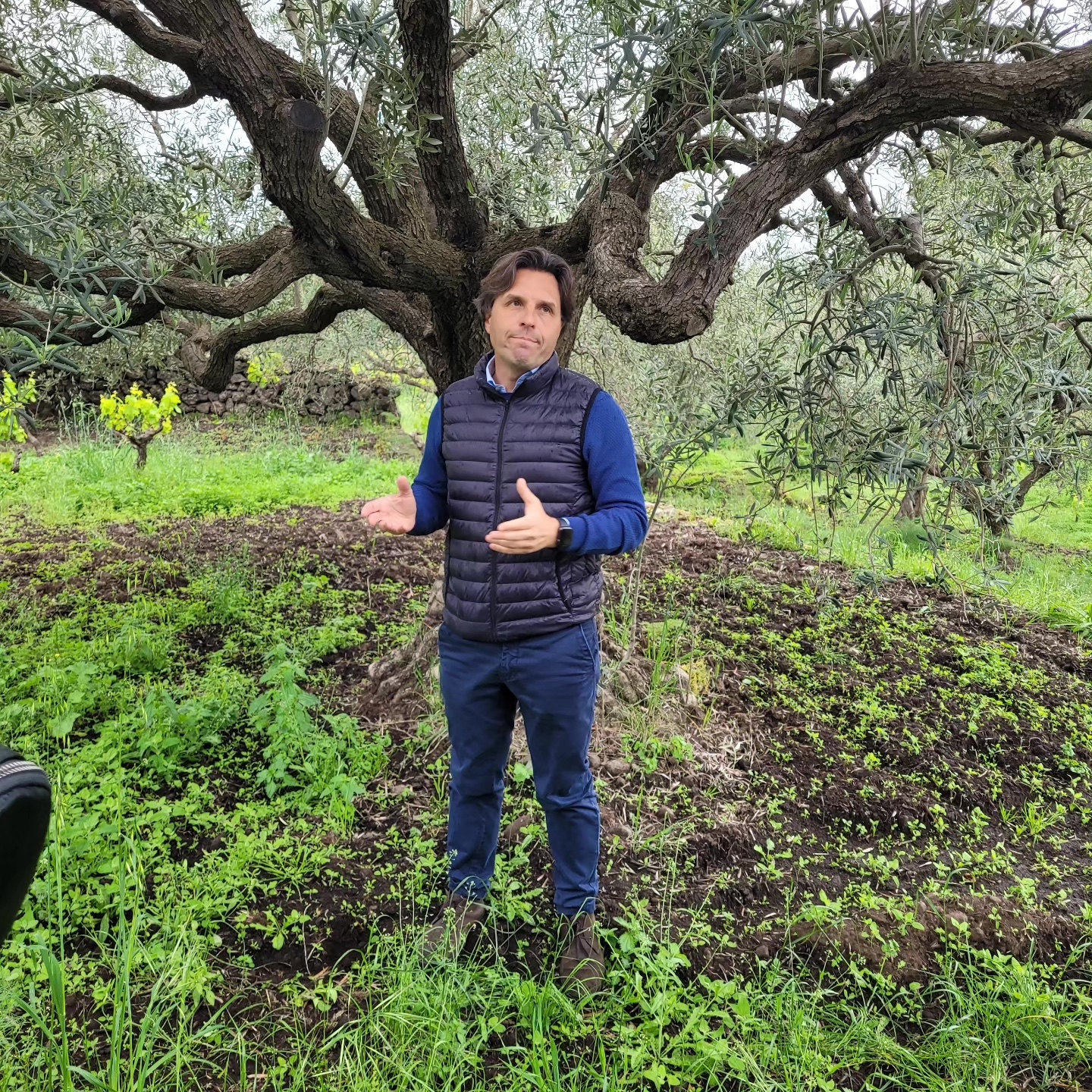
Whether by Alberello or modern day Guyot or Cordone Speronato training it is the age and disintegration of soil that seems to be the greatest influencer on their outcomes. Serena Costanzo talks of the innovative pruning method of Simon & Sirsch, of which “the principle rule is ramification – build a chronology of live wood; first year, second year, third year and so on” with a method that does not interrupt the lymphatic system. They remind that “a vine is not a tree, but a liana” and that “pruning, which is and remains a mutilating technical act for the plant, causes consequences within the plant…a rethinking of pruning, so that it was more respectful of the physiology of the plant.” There are ramifications, the necessity of continuance for sap flow, to make small cuts and hold a respect for the wood. They have observed “how the application of a dynamic and physiological pruning of the plant promote an increase in living wood over the years, with a consequent intact and efficient lymphatic system.” Their most essential reminder is that “there is no good or bad pruner but there is a trained and an untrained pruner. The Simon & Sirsch system “is a way to combat climate change,” says Serena, “especially during periods of extreme heat.” Nerello Mascalese trained by Alberello and planted in pentangles, five per grouping all facing a central axis works opposite to traditional rows and is Palmento Costanzo’s way of maximizing root structure and efficiency. 

Related – L’Etna and Parco Statella saved my Sicilian quarantine
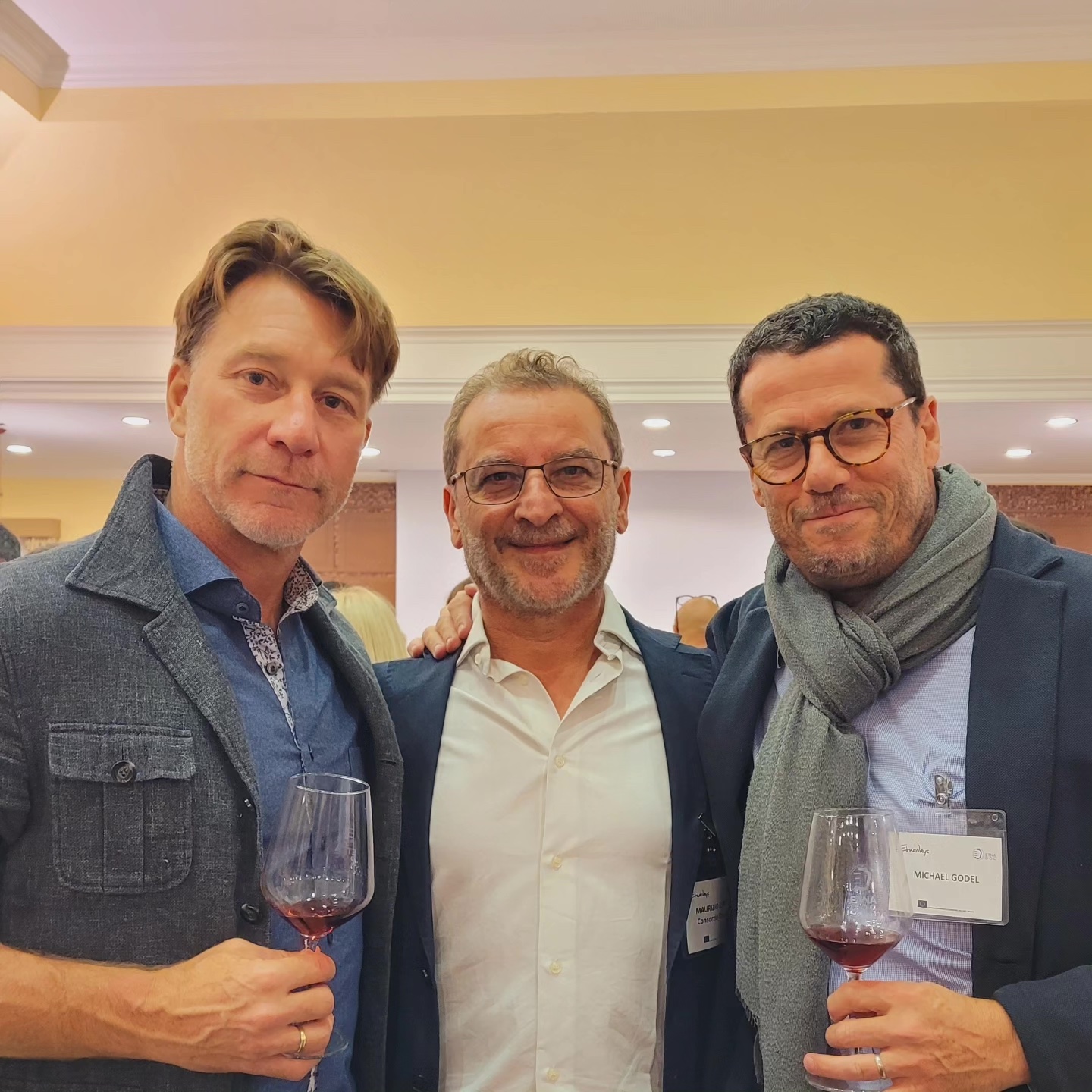
With John Szabo M.S. and Consorzio Director Maurizio Lunetta

It bears reminding that L’Etna is a an active volcano and so what spews out and forth from its craters will constantly affect viticulture. The new settling of wind-carried ashes and lapilli are perpetually adding new layers to old soils which in turn induces innate revisions and so from vintage to vintage Etna’s wines are always in flux, forever subjugated to constant change. One only needs to have tasted the last few vintages of the Etna Bianco Superiore from the village of Milo to intuit just how significant an effect these wind-blown fragments have had on the wines. They have never been more intriguing, exciting and frankly better. Studies of these eastern Etna soils in a cooler micro-zone show significant levels of silica, iron, magnesium and potassium in the soils, combining to gift the Bianco with much to digest.

Related – All the wines of Sicily
That is the past and from the start of the First World War through to the 1970s and 1980s the wine business aboard L’Etna fell away to pieces. It’s resurrection is but 30 years in the making and the transformation of the past 10-plus years is nothing short of remarkable. The oenologist, farmer and cellar dweller will say that the use of Palmenti and the Alberello are key to restoring dignity, faith in humanity and the true essence of what it means to produce Etna wines. Consorzio President Francesco Cambria will say that the most important project is to see the passage of the denomination transform from the Italian DOC to DOCG. These are all matters to consider and get behind, for some it’s about the heart and for others the reality of business and therefore life.

Carlo Flamini, Maurizio Lunetta, Luigi Moio, Bertrand Gauvrit and Francesco Cambria

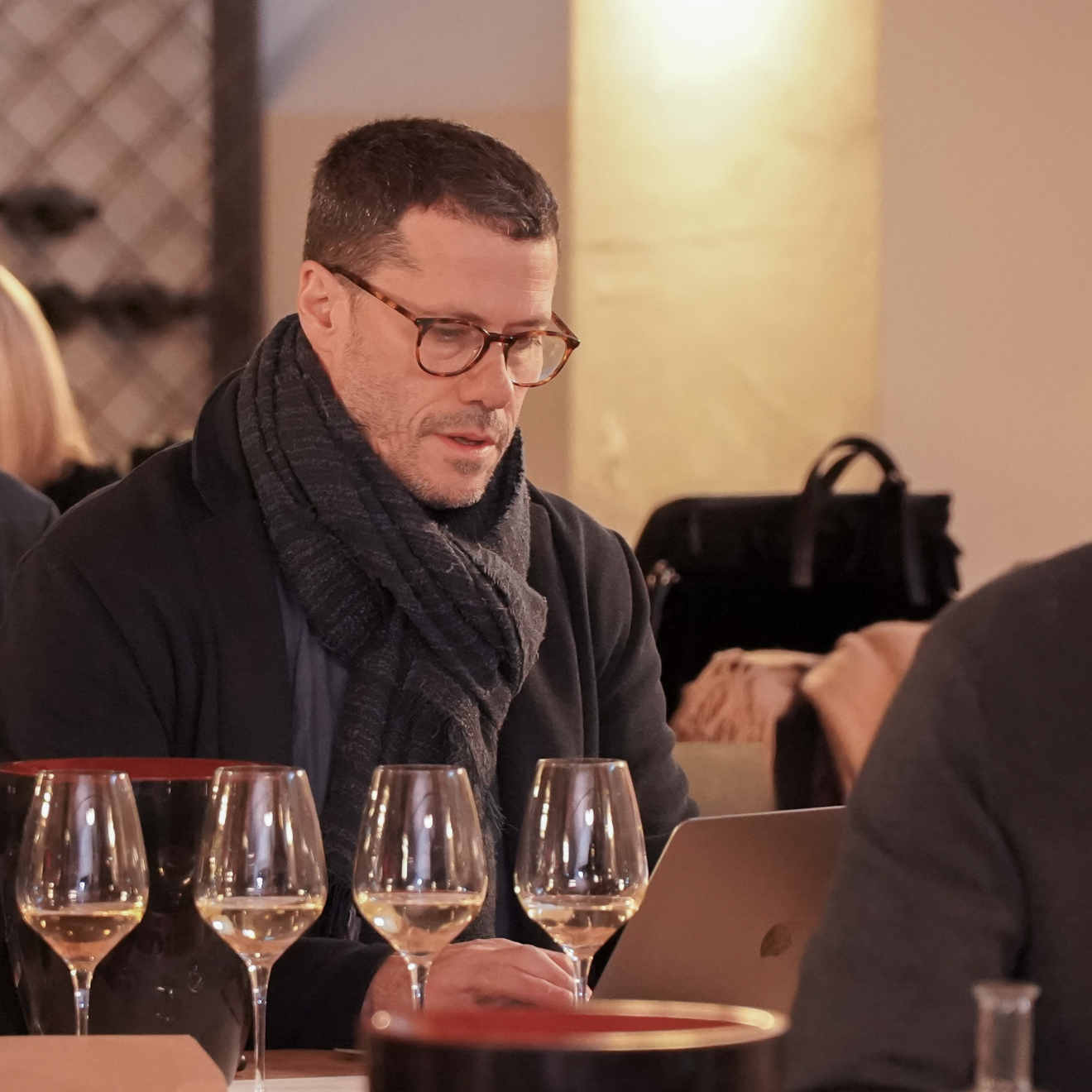
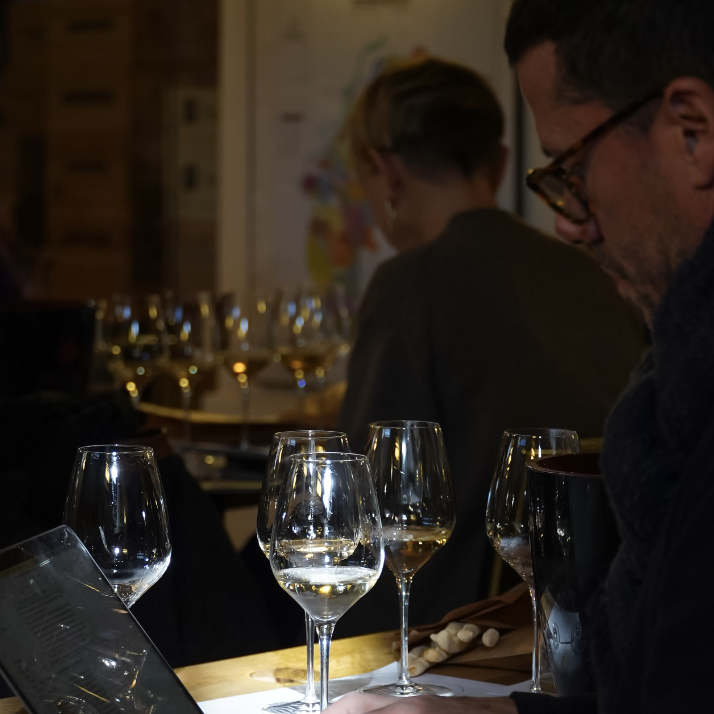
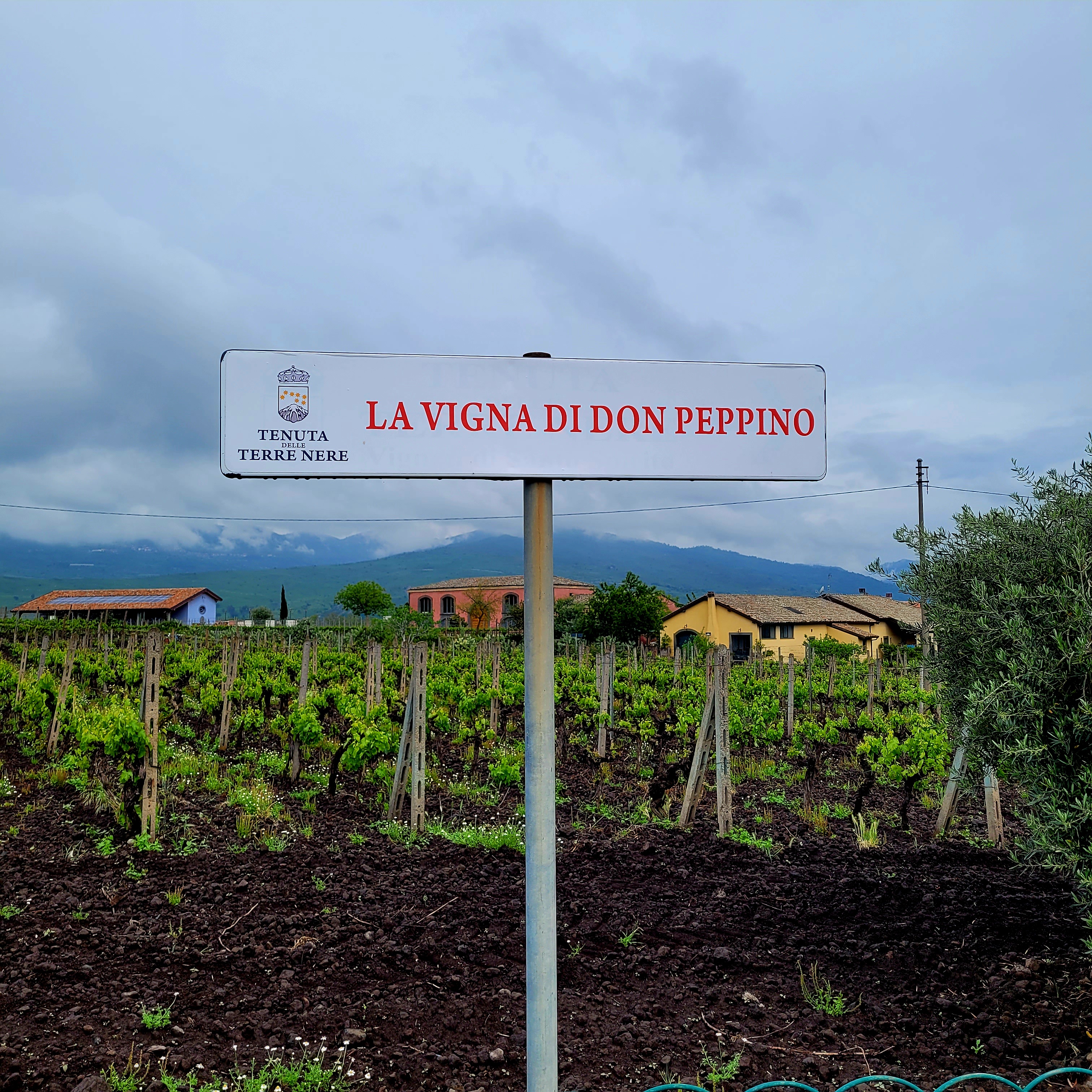
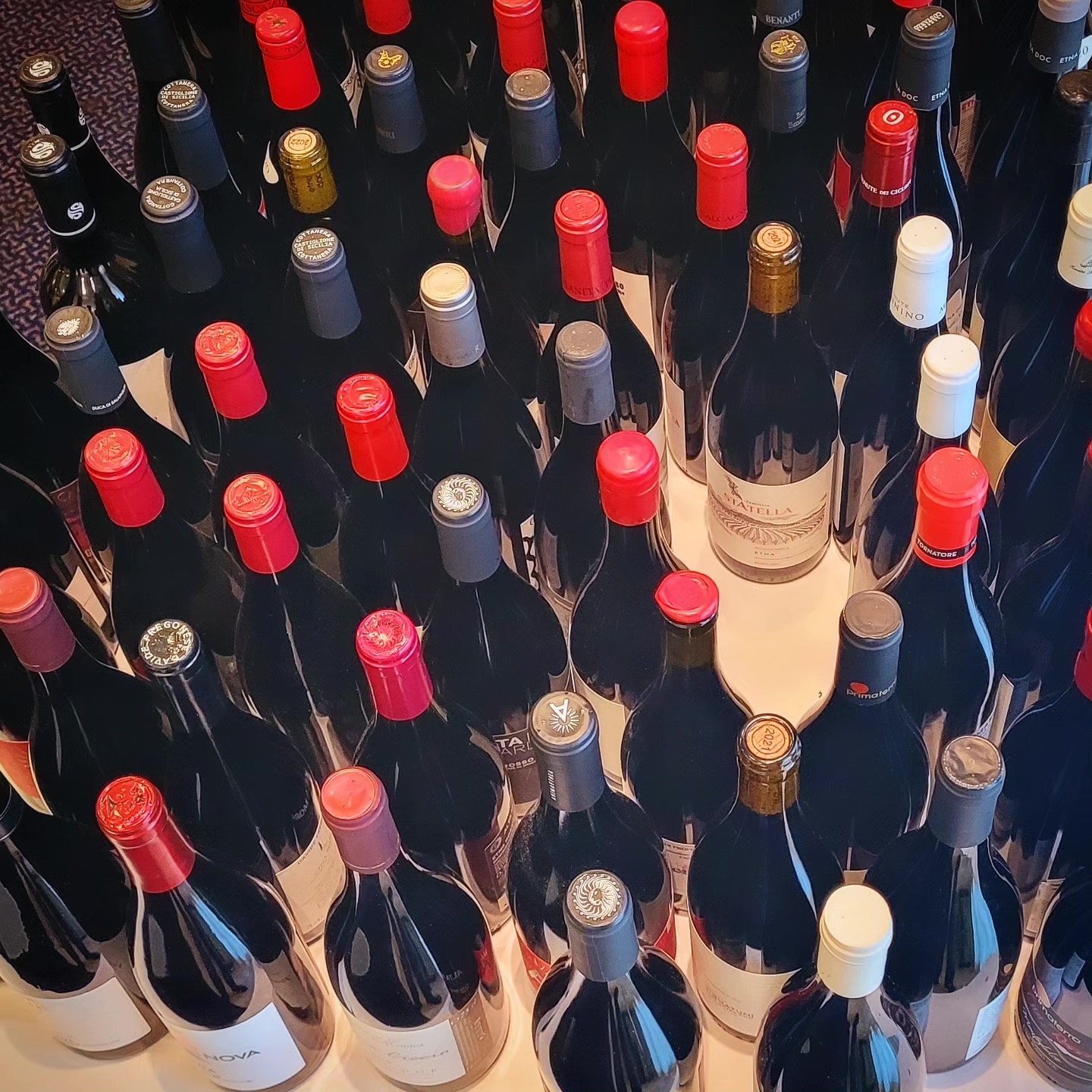
Etna Days is an exceptionally well run and seamlessly orchestrated event with thanks to the teams involved. Consorzio Etna DOC’s Presidente Francesco Cambria, Direttore Maurizio Lunetta and Segreteria di Direzione Sarolta Stella Osvath. The team at Ispropress with Angiolino Lonardi, Bernardetta Lonardi, Simone Velasco, Sara Faroni, Marina Catenacci, Marta De Carli and Eleonora Alberti Cermison. The third edition of the 2024 Etna Days congress assembled for the first morning’s welcome with expanded perspectives and analyses of international dimension. Cambria and Lunetta hosted speeches by Carlo Flamini (Head of the Italian Wine Union Observatory), Bertrand Gauvrit (General Director of the Association des Climats du Vignoble de Bourgogne) and Luigi Moio (President of the International Organization of Vine and Wine). Sommelier assisted technical tastings, walk around chats with the producers and touring visits at estates all combined to deliver a profound sense of modern day Etna. High-level discussions were had on location with Tenuta delle Terre Nere’s Marc de Grazia, Benanti’s Salvino Benanti, Papa Maria Cuore Di Marchesa’s Pietro Giovanni, Rupestre and Terre Darrigo’s Rosario Raciti, Palmento Costanzo’s Valeria and Serena Costanzo, Quantico’s Giovanni Raiti, Tascante’s Michele Brusaferri and Vittoria Cerniglia and Planeta’s Patricia Tóth. For his part Godello made tasting notes on 150-plus wines. These are his reviews.
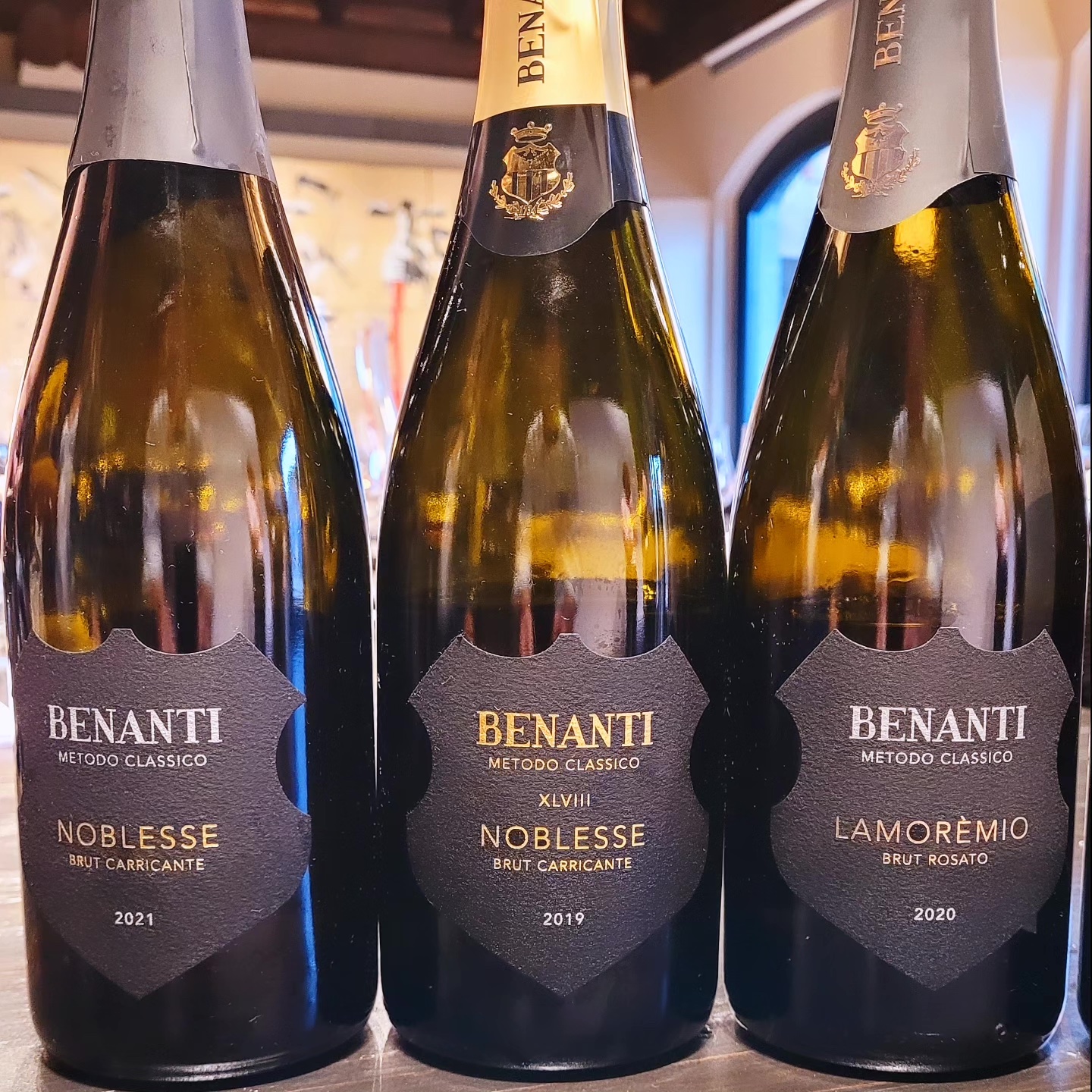
Etna Spumante DOC and Terre Siciliane IGT

Benanti Viticoltori Noblesse Brut Carricante Método Classico 2021, Terre Siciliane IGT

Twenty years into the (traditional method) sparkling wine program with help from a northern (Suditrol) sparkling wine company, 24 months on lees. Brut which here means 4-5 g/L of residual sugar, more than relatively dry with carricante. Reductive, high energy, tight and immovably youthful. Dried herbs, fennel, brushy and dusty savour. Acidity is quite fine, balance is struck and the lees aging time spot on for this widely appealing yet serious sparkling wine. Drink 2024-2027.  Tasted September 2024

Benanti Viticoltori Noblesse XLVIII Brut Carricante Método Classico 2019, Terre Siciliane IGT

The Noblesse was named because Giuseppe Benanti saw himself as identifying with high level French sparkling wines and this next tier rise sees the wine remain on lees for 48 months. Similar RS (below 5 g/L) but the extra time brings quite a factor of autolysis as a by-product of time. Yeast-bready in just the correct way, harmony struck between the autolytic notes and acidity yet with a higher pH and lower acid profile. Quite a different expression of carricante as sparkling while co-existing within the same Benanti family. Both wines feel like they really carry a purpose, including for what sector of the market they are looking to make their appeal. Drink 2024-2028.  Tasted September 2024

Benanti Viticoltori Lamorèmio Brut Rosé Método Classico 2020, Terre Siciliane IGT

Like the Noblesse Brut this sees 24 months on the lees with nerello mascalese as a Rosato which comes away feigning sweetness more than the carricante, even though the sugar (at 5-ish g/L) is just about the same. Acid structure carries the sweetness and the weight, length is good and this is surely the more all-around style taht offers wide ranging appeal. Drink 2024-2026.  Tasted September 2024

Fischetti Etna Spumante DOC Método Classico Brut Librato 2020

Made with just a small part of nerello mascalese from Contrada Muscamento for a total blanc de noir production of 500 bottles. Livrato is poetry, in ode to Michaela Luca’s mother who was an avid reader. Base wines are kept on lees with bâttonage and the wine also spends 30 months on the gross lees. High energy, sharp, pointed and full on tang, enough freshness but also some weight to be sure. Citrus makes a statement and without any dosage there should be a piercing effect but that’s simply not the case. Quite impressive sparkling for L’Etna. Drink 2024-2026.  Tasted September 2024
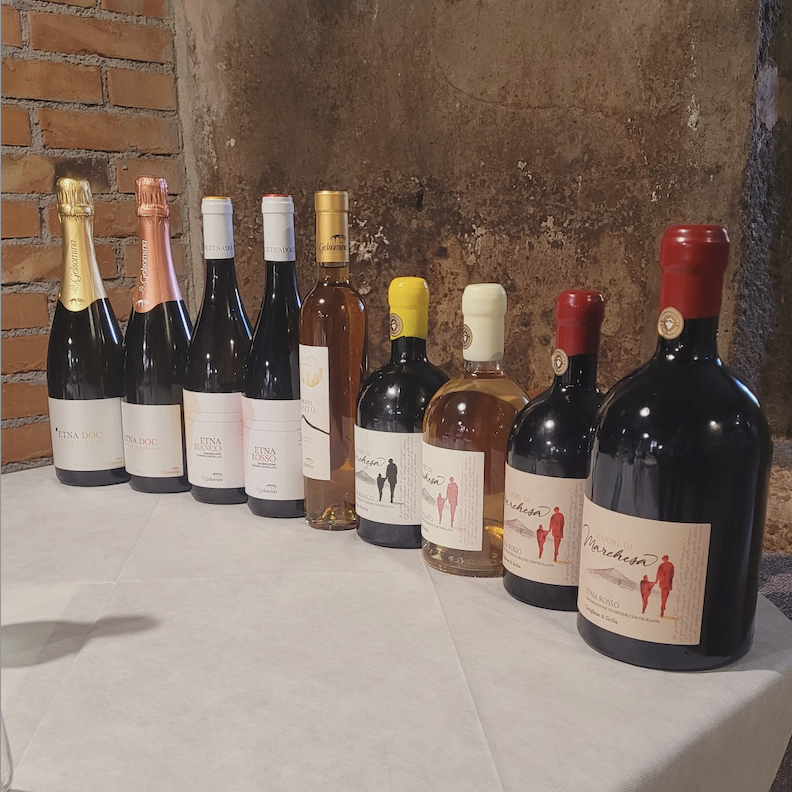
La Gelsomina Di Colombo Maria Adalgisa Etna Spumante DOC Brut Rosé Método Classico 2021

Lightest Rosato hue, in part because the Gelsomina style is all about clarity and freshness, as far away as possible from oxidation and especially autolysis. No brioche or yeast derivative aromas, just red fruit, primary and juicy. The lees aging time is minimum 36 months but the winemaking does everything possible to stay reductive and with minimum contacts or stagnancies. Rosato is a step more complex than Blanc de Noir if not quite as energetic. Drink 2024-2026.  Tasted September 2024

La Gelsomina Di Colombo Maria Adalgisa Etna Spumante DOC Brut Blanc de Noir Método Classico 2021

When Etna DOC added Spumante to the disciplinare 10 years ago Gelsomina (partner of Tenute Orestiadi) was ready and was amongst the first to bottle under the allowable labelling. The blend is 80 percent nerello mascalese and (20) nerello cappuccio, minimum 36 months on the lees. Brut at six g/L of residual sugar. Good thing the acidity is captured and kept because there is no shortage of flesh, fruit ripeness and creamy texture. Clean, fresh, accessible and well made. The choice is clear, to avoid autolytic notes and so the yeasty and bready style is for someone else. A Gelsomina is the exact opposite. Drink 2024-2026.  Tasted September 2024

Palmento Costanzo Etna Spumante DOC Método Classico Brut

A 24 months on lees traditional method sparkling wine, disgorged in February 2024, Brut style. Feeling like 5-6 g/L of residual sugar, tart and ably if typically carricante. Fine bubble, tight and sure with a botanical component. Clean and just feels right with a cheese plate. Drink 2024-2026.  Tasted September 2024
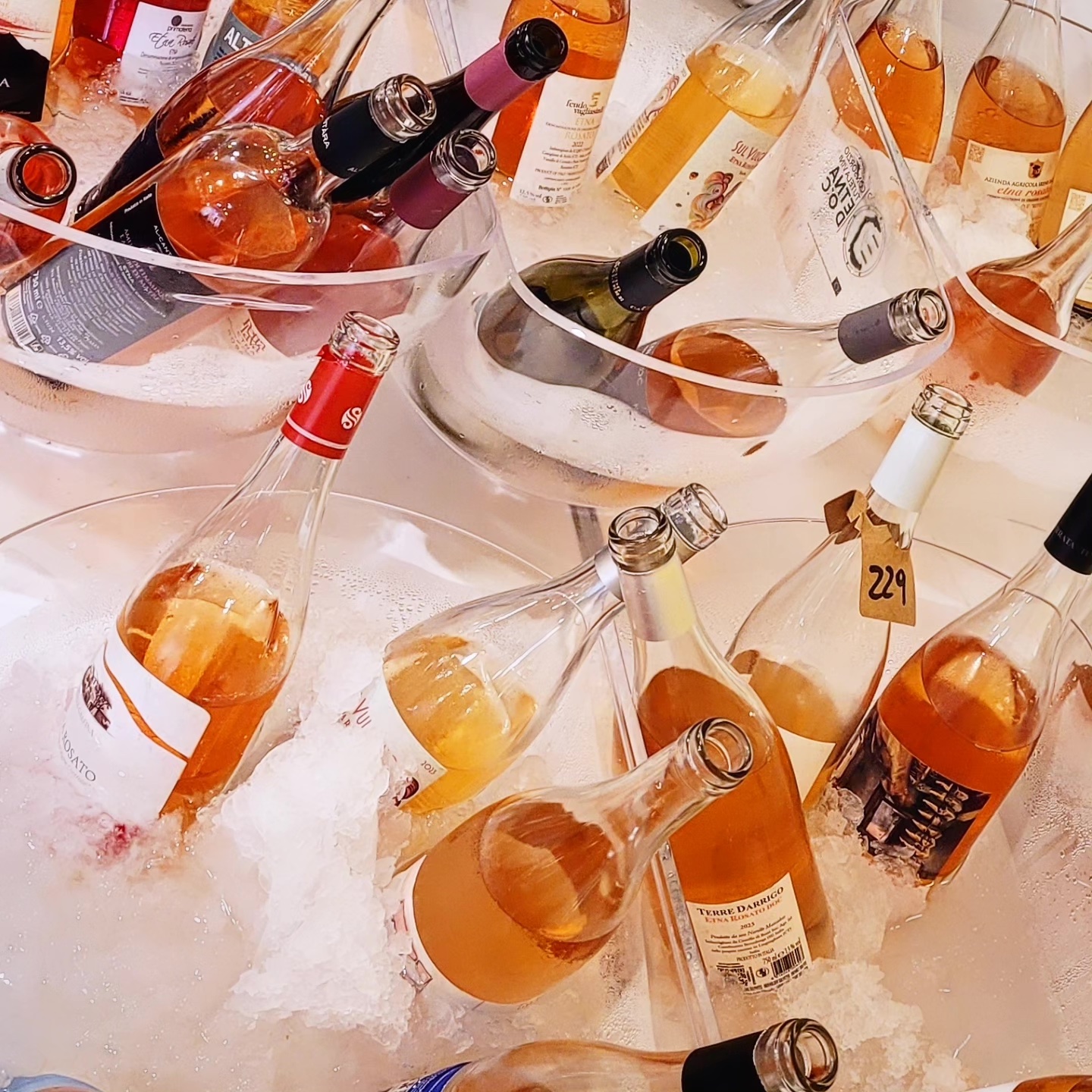
Etna Rosato DOC

Alessandro Serughetti Etna Rosato DOC Lunabuona 2022

In 2022 Alessandro and Loredana Serughetti chose to invest in a small 1960 planted vineyard at 680m on the North slope of L’Etna in the village is Rovittello, a suburb of Castiglione di Sicilia in Contrada Dafara Galluzzo. Their Rosato is 90 percent nerello mascalese with (10 combined) minella nera and bianca. A unique Rosé, equal parts salinity an sapidity which essentially translates to 100 percent volcanic. This is currently their largest volume sku at 1,600 bottles and with the extra year of aging it drinks beautifully, at peak and with grace today. Drink 2024-2025.  Tasted September 2024

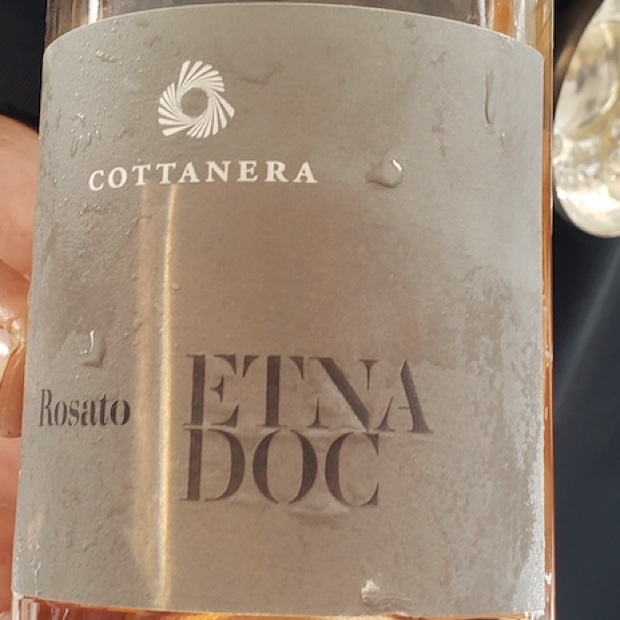
Cottanera Etna Rosato DOC 2023

From Rosso vineyards, looking for freshness and very little sugar but also low alcohol. Only steel, three months, bottled in February. Rich of fruit, salty, crunchy and for Rosato also complex. Tons of flavour, strawberry and some leafy savour. Drink 2024-2025.  Tasted May and September 2024

Palmento Costanzo Etna Rosato DOC Mofete Rosato 2023

Energy noted straight away, a carbonic nerello mascalese buzz that drives Rosato to stand up and be noticed. Comes right at the senses, aromatically floral and palate treble tremble to pique interest and taste sensations. Full fruit and mineral working together for flavour and character. That’s what it’s all about . Last tasted September 2024

Equally fruity and vegetal, of red berries and peppers, a tartness and also lactic cheese note. Herbal as well and so complexity as Rosato if on the acquired taste side of style. Crunchy and salty, briny to a degree, naturally wild and free. Drink 2024-2025.  Tasted May 2024

Rupestre Etna Rosato DOC 2023

So similar to the Terre Darrigo Rosato made by Rosario Raciti with 100 percent nerello mascalese fermented and simply allowed to go from vine to glass. The difference is location and terroir. What does that mean? Contrada Pietramarina fruit, salinity and acidity, grip and tension. Otherwise just the Rosato and mascalese facts. Drink 2024-2026.  Tasted September 2024

Tasca d’Almerita Tascante Etna Rosato DOC Tefra 2022

Aptly labeled “Vigne Custodite dalla Famiglia Tasca d’Almerita,” a statement to make sure we understand these nerello mascalese grapes are estate grown. Aromatic varietal volume, energy and spirit run high, yet most notable are the wealth and depth of flavours. Cherry moving into strawberry with a basic phenolic presence and that is very much all you want and need. Not a high acid Rosato, nor was that the intention. Drink 2024-2026.  Tasted September 2024

Tenute Bosco Etna Rosato DOC 2020

Only nerello mascalese from the lower and most vigorous part of the vineyard and grapes are chosen specifically for the Rosato. No wood like the white, once again to preserve the volcano’s effect on the wine, which is essential and when Rosato is made like this, also profound. This is a specific kind of salty, to Bosco’s vineyard and the mascalese that grows. Just three hours or less skin contact, quick maceration, no thought to colour, as with every wine in this portfolio, the place on Versante Nord is the heart of each and every matter. Already two years old, evolving very slowly and there is no reason to think it will not continue this way for another two or three more. Tranquility but also energy. Drink 2023-2027.  Tasted May 2023 and September 2024

Terre Darrigo Etna Rosato DOC 2023

Only nerello mascalese as per the norm for Etna Rosato DOC and another salty little number with satisfying juiciness and grip. Direct, unadorned, almost no barrel, perhaps just a few percent. Straight fermentation, let it sit and ride. Drink 2024-2025.  Tasted September 2024
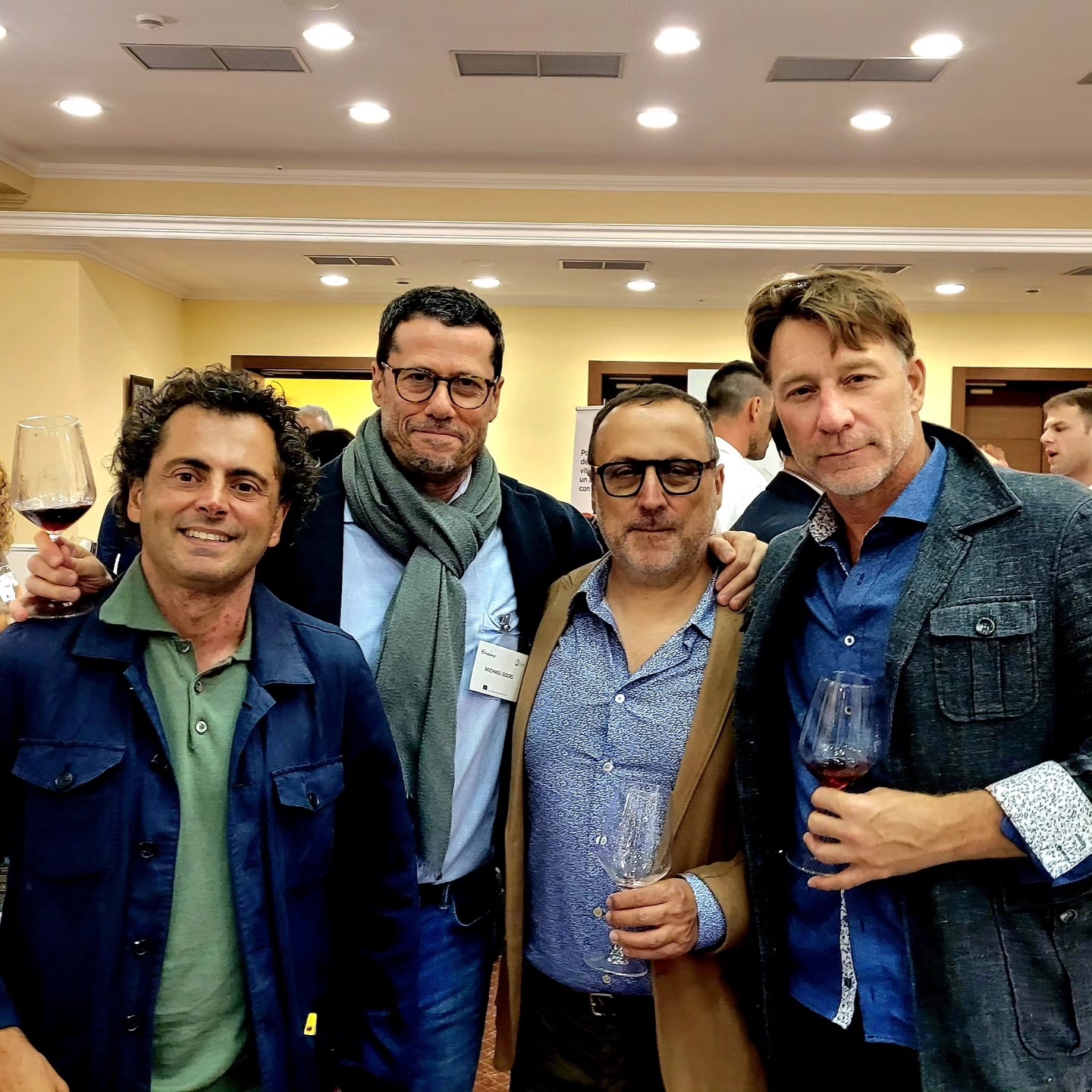
With Alberto Graci, Giuseppe Russo and John Szabo M.S.

Etna Bianco DOC

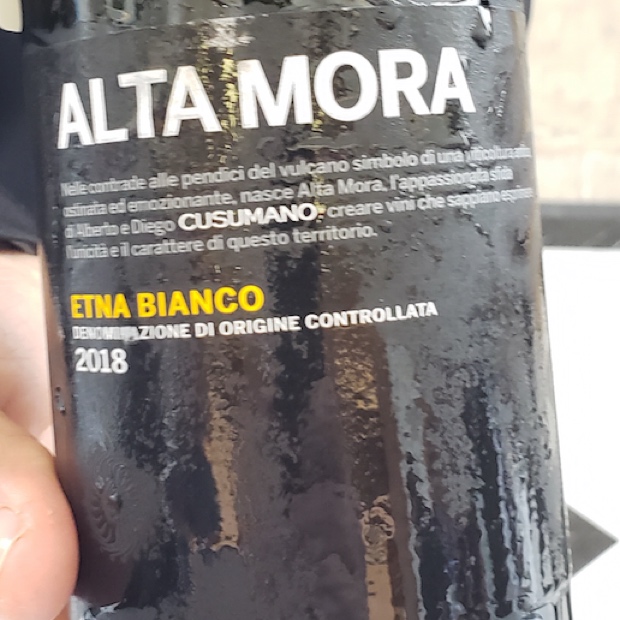
Alta Mora Etna Bianco DOC 2022

Nice and smoky Etna Bianco from Alta Mora though the fruit is equally adamant about gaining your trust. The smoulder equalized by the pulpy flesh of fresh bites into orchard fruit and a touch of finishing spice. Not the most complex but surely robust for the category.  Last tasted May and September 2024

Solid and well made Etna Bianco in the ways of respect and tradition, ample, fulsome, substantial and structured for a wine that will drink well three-plus years forward. Citrus mainly, both lemon and lime, cool, not quite minty but surely like fresh summer basil and then a pinch of salt at the finish. Drink 2023-2026.  Tasted May 2024

Antichi Vinai 1877 Etna Bianco DOC Petralava 2023

Soda and neutral fruit intro which is par for the Etna Bianco course and certainly not unexpected. In other words mineral led, volcanic obviously and yet cool, gelid, mildly if sweetly botanical. A shot in the dark, unexpected and how can you not be thankful for a wine of this stature you knew nothing about. Drink 2024-2026.  Tasted September 2024

Azienda Agricola Ciro Biondi Etna Bianco DOC Outis 2022

Fruit up front but in a botanical way, less basaltic mineral salty and more sapid as a result. Still it carries a set of elements that conceptualize the Bianco, however the peachiness and sweet preserved citrus set this one up to be a mellow sort of affair. Drink 2024-2026.  Tasted September 2024

Azienda Agricola Ciro Biondi Etna Bianco DOC Chianta 2021

A more important label for Biondi and therefore aged an extra year ahead of release. Chianta the top Bianco cru and clearly a matter of longer maceration magnified by the extra aging. Not only noticed in hue but that natural salve texture settling while also dissolving nicely on the palate. A more interesting and satisfying iteration to speak credibly for the winemaking intent and also a matter of style. Then some crispiness and crunch to speak for captured and persistent freshness. Fine work. Drink 2024-2027.  Tasted September 2024

Benanti Viticoltori Etna Bianco DOC Contrada Cavaliere 2022

Sweetly aromatic waft in a memory of cotton candy at the fair sort of way. Palate tells another story, truly lemony and in a current one-dimensional phase. The carricante has gone into slumber, which is unsurprising and so best not to touch any bottles until the Spring of 2025.  Last tasted September 2024

Reserved, not reductive but neither open nor gregarious. A smoulder of volcanics and wood aging, just an aromatic wisp of flint and notable verdancy. The greens are also driven by the place and Cavaliere gives in just this way. Low, slow and with a time lapse release of controlled power. Really quite remarkable Etna Bianco from this contrada. Drink 2025-2032.  Tasted May 2024

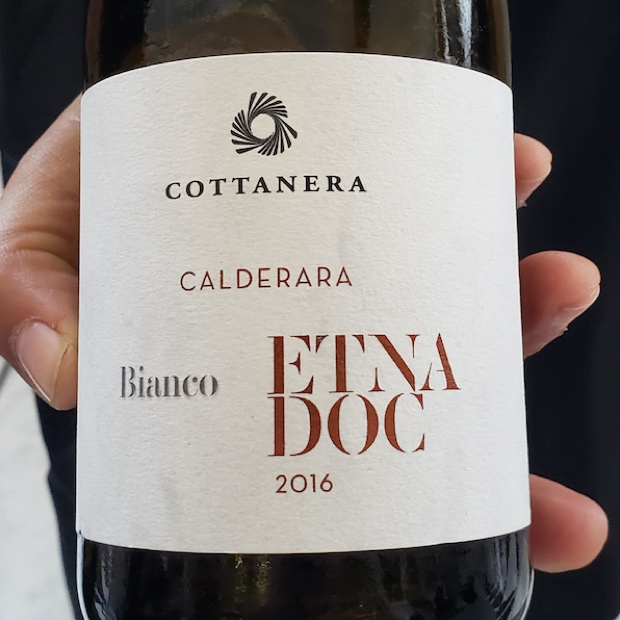
Cottanera Etna Bianco DOC Calderara 2022

Calderara vineyards are 40-45 years of age and the harvest happens a week later, in the second week of October. Cement and large casks, 60-40, 10-12 months, brought back together and bottled. Saltier than the Bianco because the vineyard is so full of lava stone, a 100-plus year old eruption with brown basaltic stone. Very focused and precise though more power than 2021. Drink 2025-2029.  Tasted May and September 2024

Donnafugata Etna Bianco DOC Sul Vulcano 2021

Quite a taut and wound Etna Bianco, not unusual for the vintage and though anything but lean – my this is tight. Mountain white in every respect and one of the finest if also precise Bianci ever produced at Donnafugata. Exemplary for the DOC, speaking to the mineral slats, elements and ways but also reasons for how lava flows have affected what will happen to vines farmed with industrious respect. Frames Etna Bianco in a serious if surely satisfying way. Drink 2024-2031.  Tasted September 2024

Federico Curtaz Etna Bianco DOC Gamma 2021

Gamma is more aromatic than most with its mix of candied and floral but also spicy and so nasturtium or marigold are considered. The transitions are bold if seamless and the next stage is where things really take a turn to excitement. Moving away from the tight reduction and into bold flavours, variegated and layered, of fruit but of course minerals and elements that deduce then decide what an Etna Bianco is all about. Crisp, crunchy, biting and lengthy, all decidedly essential attributes of a rebel Bianco. Drink 2025-2034.  Tasted September 2024

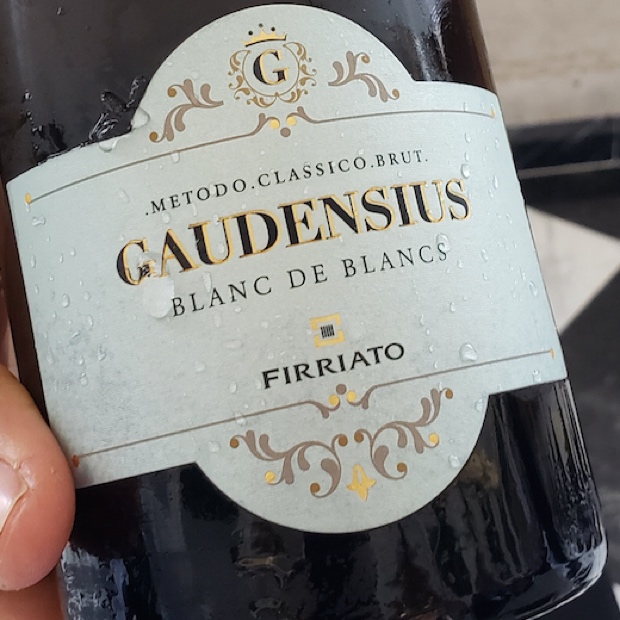
Firriato Cavanera Etna Bianco DOC Contrada Zottorinotto, Balza Delle Poiane 2022

Some reduction from a specific cru and designation, that being Cavanera Balza delle Poiane within the northerly contrada of Zottorinotto. Herbal as well, fresh sprung spring glade of ferns and wild allium, trillium and the local Ginestra. Plenty of substantial fruit and truthfully so much going on. As far as Etna Bianco is concerned this should be considered a big wine, the kind that can be enjoyed by lovers of full-bodied chardonnay. Drink 2024-2029.  Tasted May and September 2024

Fischetti Etna Bianco DOC Muscamento 2022

Purchased the palmento in 2006, fully restored and what Michaela Luca calls “a very romantic place.” A Bianco called “Muscamento” (due to labelling bureaucracy) from the Contrada “Moscamento” at 650m on the northeast part of L’Etna. Just three hectares and 8,000-9,000 total production with this being the single-vineyard label. A blend, of 60 percent carricante and (40) catarratto. As floral as it gets for Etna Bianco with honeysuckle and ginger root. Lemon and lime flavours, clean, fresh and truly amenable. Drink 2024-2026.  Tasted September 2024

Giovanni Rosso Etna Bianco DOC 2023

The work of Barolo’s Davide Rosso who came to L’Etna in 2016. Straightforward Bianco, neither predictive nor oxidative, tight or loose but somewhere comfortably in between. Goldilocks, between hard and soft, fruit and mineral, an equality of both. Solid, unassuming and yet perfectly representative Etna Bianco. Wood spirit and spice is felt on the back end. Rosso may need to make Bianco for 10 years before greatness arrives. His past work with chardonnay in Bourgogne can only serve to speed up the understanding of carricante. Would not put it past him to get there even sooner. Drink 2024-2027.  Tasted September 2024
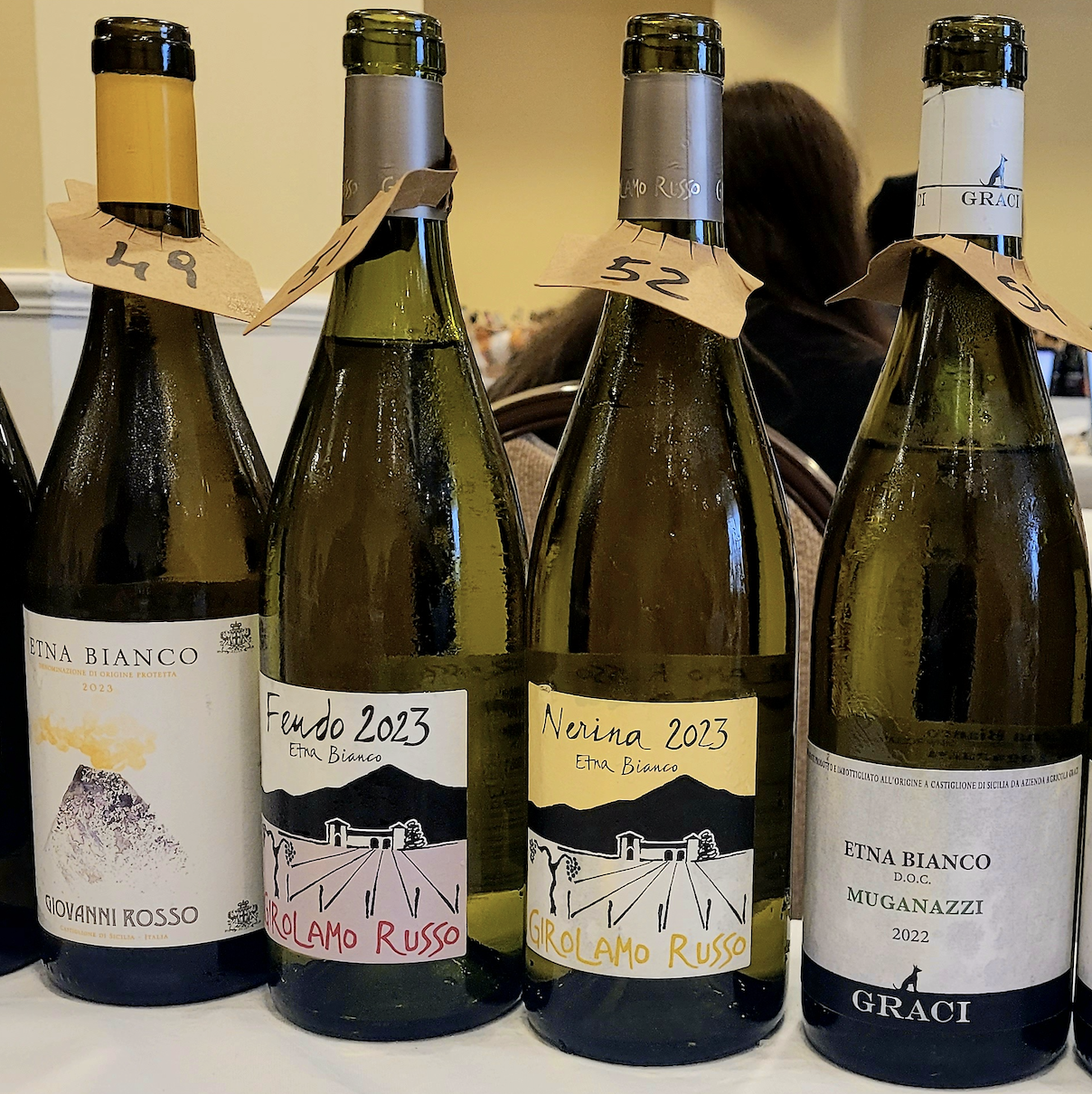
Girolamo Russo Etna Bianco DOC Nerina 2023

Only Nerina, San Lorenzo and Feudo were made in 2023 due to a challenge from rain, mildew and less fruit availability. No worries about quality however and Nerina is about as full pulp-fleshy and developed as it has ever been. The acids travel up and down the sides of the palate in the ways of striking Etna Bianco and here Russo finds the road back, each and every time. Drink 2024-2029.  Tasted May and September 2024

Girolamo Russo Etna Bianco DOC Feudo 2023

New Bianco for Giuseppe Russo, a selection of 100 percent carricante from three hectares within the Feudo di Mezzo vineyard and contrada. Feudo is not San Lorenzo but it is something remarkable in its own right. More botanical and phenolic but also a level of citrus preserve not noted anywhere but Feudo. Crazy level of implosive citric intensity and taut character. The behaviour is so different to San Lorenzo with flavours that mean business in the most impressive way imaginable. Intensity off the charts, concentration so impressive, energy that builds and builds. Drink 2024-2029.  Tasted May and September 2024

Graci Etna Bianco DOC Muganazzi 2022

“A wine of mystery,” says Alberto Graci, “very intriguing for me.” Flinty and scrubby at the same time, energy and vibrancy laying in waiting, a buzz behind the curtain and a soil purposed into the 100 percent carricante that Graci’s team and now also we know the wine will want to explode with flavours a year, or more rightly two from now. So tight but you can feel it, the linear nature looking ahead and time will bring about something social form that mystery. Unquestionably one of L’Etna’s finest ’22s. Drink 2026-2035.  Tasted Tasted May and September 2024

Graci Etna Bianco DOC 2023

A mix of all four contradas; Muganazzi, Arcurìa, Feudo di Mezzo and Santo Spirito. A mix of Mediterranean scrub and vibrancy, looking for that balance between and finding it. Really fine precision and salinity, length is outstanding for villages level Bianco. Drink 2024-2027.  Tasted May and September 2024

La Gelsomina Di Colombo Maria Adalgisa Etna Bianco DOC 2023

Fruit is drawn from the steepest of slopes surrounding the pond within an amphitheatre that is an extinct volcanic crater on the Gelsomina property. Tiny micro-climate within the 15 hectares of the estate, mainly carricante (80 percent) with a smaller portion of cattaratto, neutral and primary when this young, needing time to find its expression. Again the clarity and freshness are proper but the neutrality makes it hard to see where this will go and what it will become. Drink 2025-2027.  Tasted September 2024

La Gelsomina Di Colombo Maria Adalgisa Etna Bianco DOC 2022

The 80 percent carricante with (20) cattaratto grows on the steepest of slopes within the estate’s amphitheatre in surround of a natural pond that are all part an extinct volcanic crater on the Gelsomina property. A small micro-climate inside of 15 hectares for a Bianco fruit forward and when young, so easy to drink. Unsurprising to find this perfectly clean, fresh and direct, a matter of just five months in stainless steel. Perfect for the many and the willing. Drink 2024-2026.  Tasted September 2024

Massimo Lentsch Etna Bianco DOC 2023

Sweet aromatic perfumes, candied florals and white peach per se, a preserved lemon edging to limoncello. Lemony flavours, fine, simple and preparative to set the Bianco up for a modicum of representative success. Good and plenty but not quite exciting, complex or wholly substantial. Drink 2024-2026.  Tasted September 2024
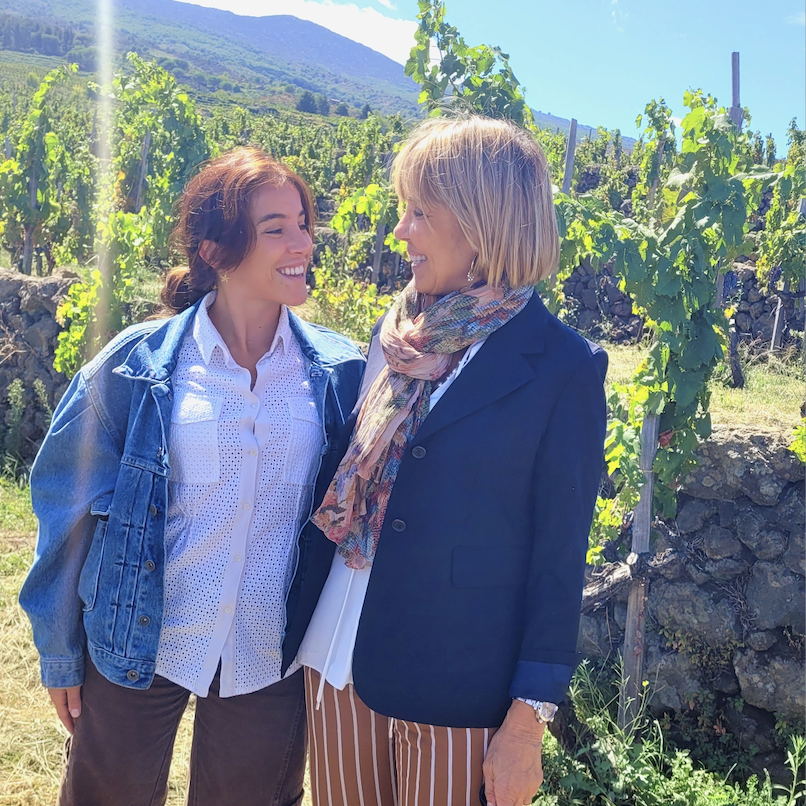
Serena and Valeria Costanzo – Palmento Costanzo

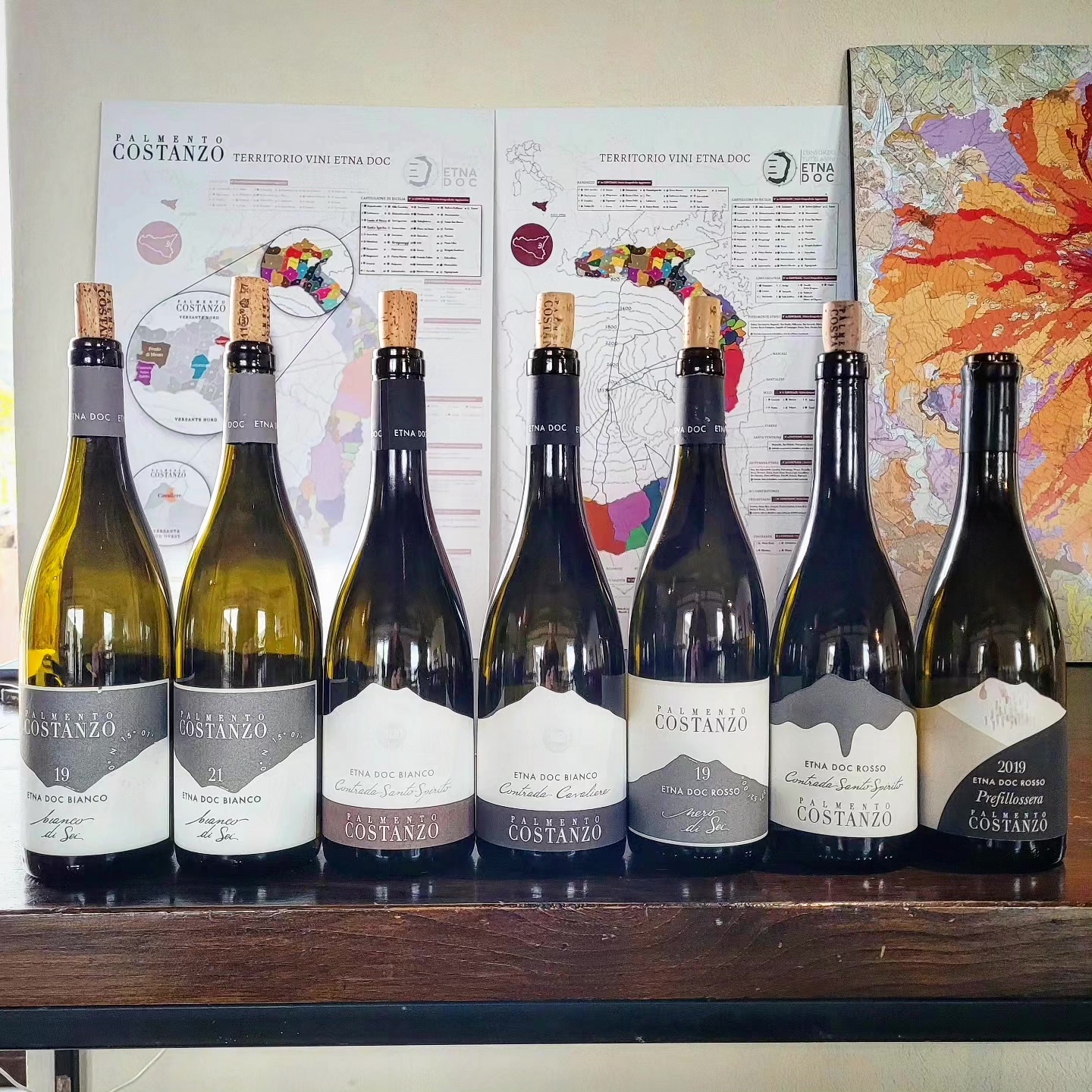
Palmento Costanzo Etna Bianco DOC Bianco Di Sei 2022

A cuvée of all parcels from different contrade, including the homefront Santo Spirito, along with Cavaliere. On average 90 percent carricante with (10) catarratto. Only raised in stainless steel, persistently fresh and if any region in the world might be compared with it would be Chablis AOC, direct, salty, smart and widely purposed.  Last tasted September 2024

Just have to say wow because Bianco di Sei comes equipped with a level of intensity that was not quite expected from 2022. Not so much a volume or an explosion aromatically speaking but an extreme set of eccentricities that crash aboard the palate. Likely needing some rest and down time to integrate because the level of extract here (including volcanic activity) is simply off the charts. Etna incarnate, pointed and exciting. Drink 2025-2029.  Tasted May 2024

Palmento Costanzo Etna Bianco DOC Contrada Santo Spirito 2022

High level aromatic volume and concentration from Santo Spirito ’22 and we know right away that this wine knows exactly who it is, where it comes from and where it wants to go. Volcanic salts are also present on the nose from a Bianco of great stage presence and such a smart textural weave that gains every bit of the palate’s confidence. The connection is prescient, reaction calming and conclusion poignant. This is how you make and present Contrada-specific Etna Bianco. Drink 2025-2033.  Tasted September 2024

Palmento Costanzo Etna Bianco DOC Contrada Santo Spirito 2021

Note the colour of the lava soil on the label, lighter brown for Santo Spirito, from the contrada vineyard at 700m on the northern slope that comprises one out of three “islands within the island” of L’Etna. Still just an infant, implosive and insular, wound so tight, yet to explode. Give this another year, just as the first taste had indicated for months prior.  Last tasted September 2024

A fine vintage and and even finer Contrada, that being Santo Spirito where carricante (and 10 percent cattarrato) are given every soil, geological and micro-climatic advantage. There is an accumulation of ripeness and stone cool mineral groove from location and acumen that make this move with incremental ability. It will slowly define itself over along period of time that will be fascinating to watch every step of the way. Drink 2025-2032.  Tasted May 2024

Palmento Costanzo Etna Bianco DOC Contrada Cavaliere 2021

Note the colour of the lava soil on the label, darker brown for Cavaliere, from the contrada vineyard at 700m in the southwest “island” of L’Etna. A different expression to that of Santo Spirito, volumetric in terms of aromatics and less austere or rather locked tight. Here more sapid and botanical, less basaltic salinity and fleshier early on. More fruit forward, pulpy stone fruit like, amenability run higher and the Contrada-designate Bianco to drink while waiting for Santo Spirito to mature. Drink 2024-2027.  Tasted September 2024 
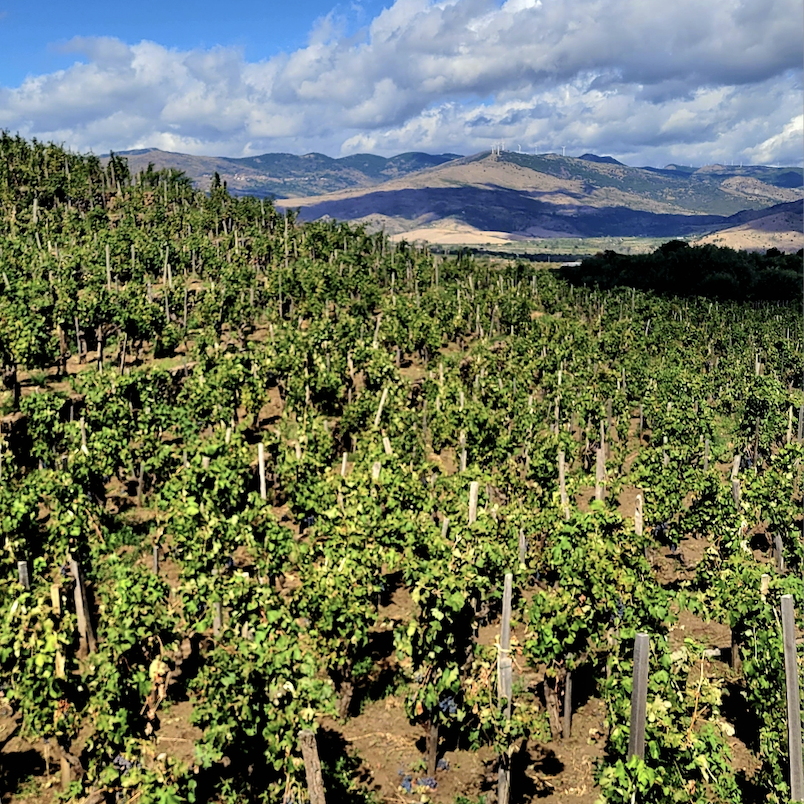
Papa Maria Cuore Di Marchesa Etna Bianco DOC Cuore Di Marchesa 2022

From Contrada Marchesa near Solicchiata at 750m, a property through Pietro Giovanni’s father-in-law with vines around 100 years old, of the passion and at the heart of the contrada. As unique as it gets for Etna Bianco, 100 percent carricante, ripe yet certainly not honeyed and wood a driver with a white cocoa note that alters perception at a certain level. Some savour as well, brushy style, curious and raising the overall levels of interest. The flavours and textures combine for substantial, if also layered appeal. This may turn secondary sooner rather than later but the level of intersecting interest should only increase. Drink 2024-2028.  Tasted September 2024

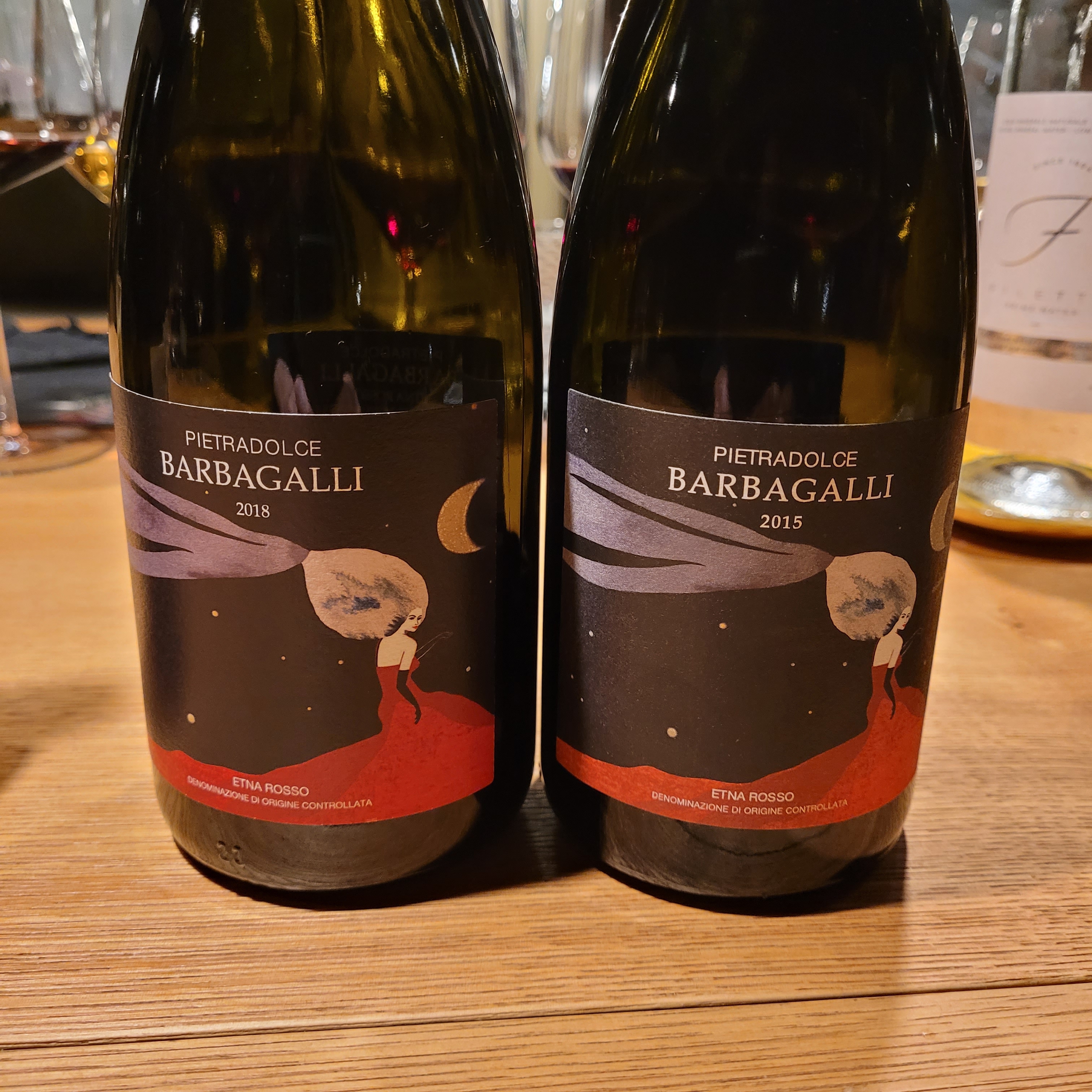
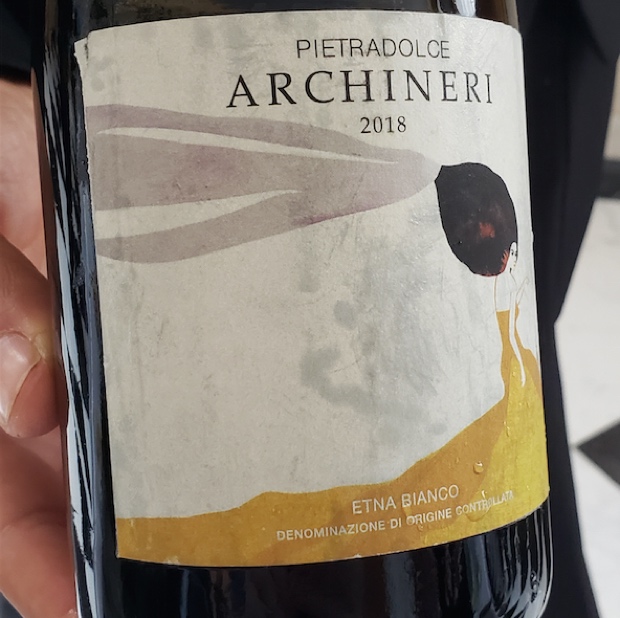
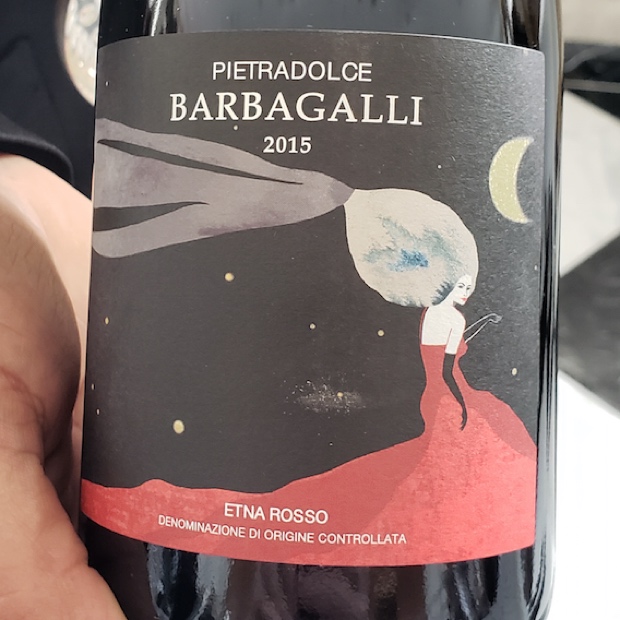
Pietradolce Etna Bianco DOC Archineri 2022

Archinieri comes at us with that Pietradolce mix of confidence and generosity because well, vineyards and expertise. A Bianco that must be great because the makers demand top quality from field to table and all the markers here are present, defined and accounted for. Ideal reasoning, seasoning and style. Drink 2024-2028.  Tasted May and September 2024

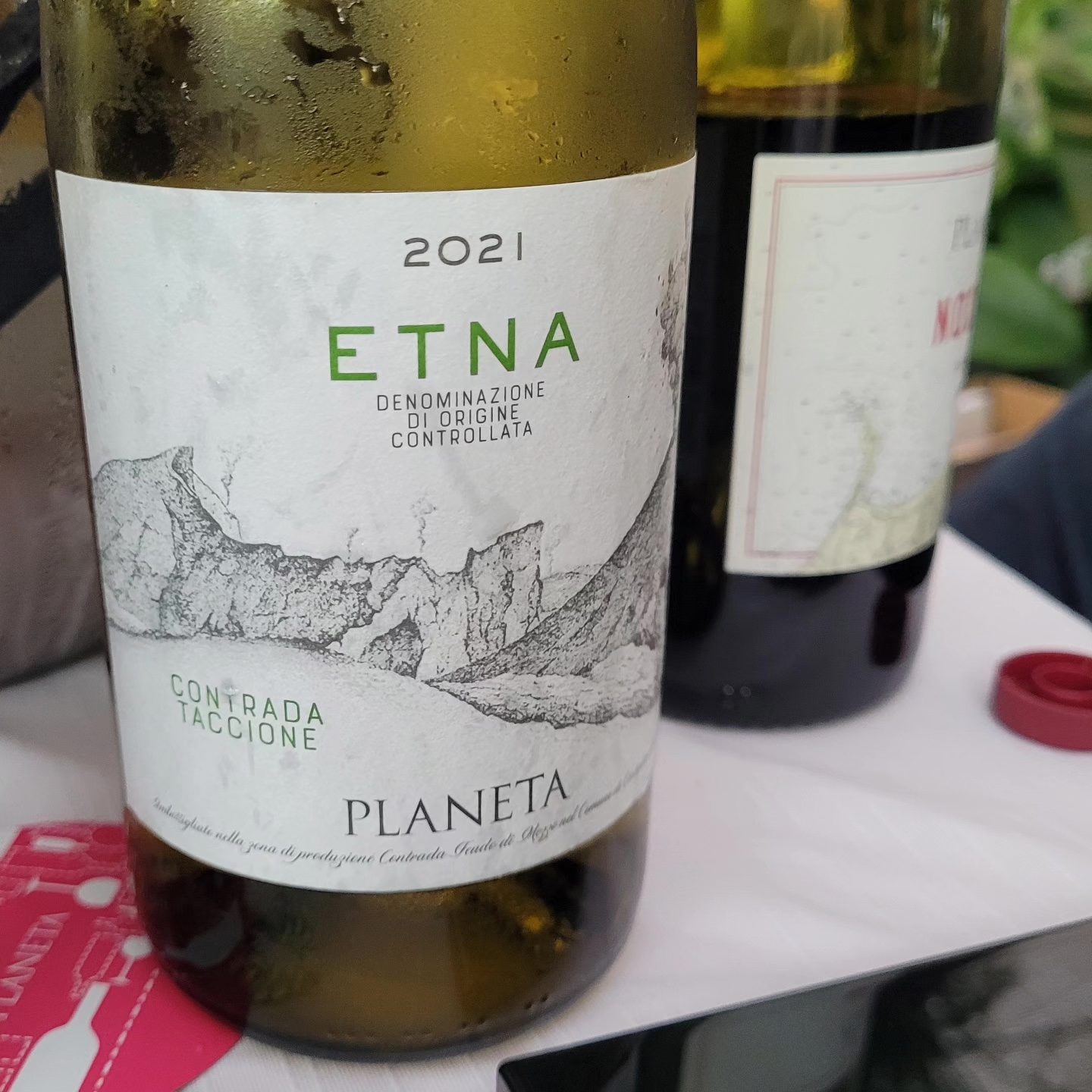
Planeta Etna Bianco DOC Contrada Taccione 2022

A singular Bianco labeled within Contrada Taccione for Planeta’s cantina located in Feudo di Mezzo and when you are the sole (known) contributor you make, transmit and valourize the rules. Pulp, acumen and circumstance establish and disperse layers of lava-fueled feelings, initiate discourse and bring about results to say this is Etna Bianco of balance and mountain reform. Not the acid intensity of some, nor the flowery pot gratuity of others. Nor does it reside indiscriminately or disinterestedly in between – no it makes a great pronouncement of elevation, mountain experience and intention. Exceptional Etna Bianco. Drink 2025-2033. Tasted September 2024
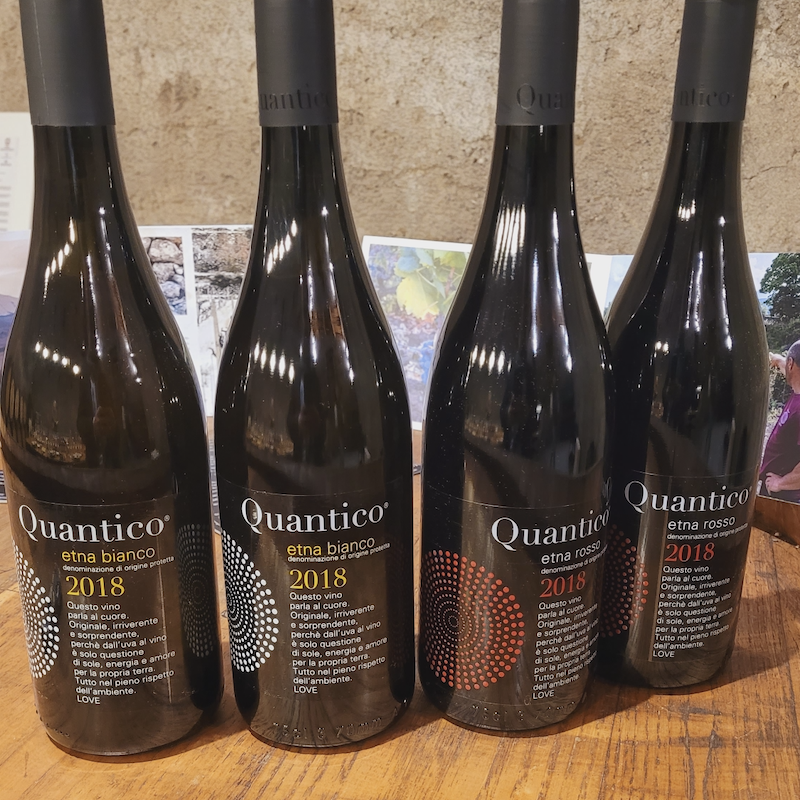
Quantico Etna Bianco DOC 2018

A few years have passed but my how this 2018 has hung onto its freshness despite some skin contact involved in the early process. Maturity is recognized in the platinum gold hue, subtle caramelization and next level developing complexities. May not keep for several years more but at nearly six years of age it is special.  Last tasted September 2024

Just two years older than the ’20 and a marked difference, especially in aromatics. Much warmer year but the exotica and tropical fruit really stand out in this 2018. Cherry blossom, lime cordial and a litchi or longan effect, almost feeling boozy but the alcohol (at 13 percent) is the same as 2020. That said the palate is much more similar, less advanced and feeling fresher. Lots of fruit here, full of energy with a long lasting impression. Drink 2023-2025.  Tasted May 2023

Rupestre Etna Bianco DOC 2023

The private label of Terre Darrigo winemaker Rosario Raciti grown in the Contrada of Pietramarina and vinified in the company’s cantina. Only carricante and an old lava flow location with 14 year-old vines planted by Rosario’s father. A unique saltiness and mineral intensity clearly attributed to the contrada despite the young age of the vines. Lean, direct and pointed, sharp and just the beginning of the story. Only 8,000 bottles in 2023. Drink 2024-2027.  Tasted September 2024

Tasca d’Almerita Tascante Etna Bianco DOC Buonora 2023

Only carricante and just has that look of a wine you expect to be extremely cold when it’s really a matter of a strong, sweetly phenolic presence. Herbal, like basil granita and a different sort of salinity owing to the specificity of Tascante’s Pianodario gravelly volcanic sands. Also owing to harvest time after a most challenging vintage which gave smaller, more concentrated berries with high skin to pulp ratios. Sees only stainless steel, for good reason and the effect triples down on this Bianco’s style. Drink 2024-2026.  Tasted September 2024
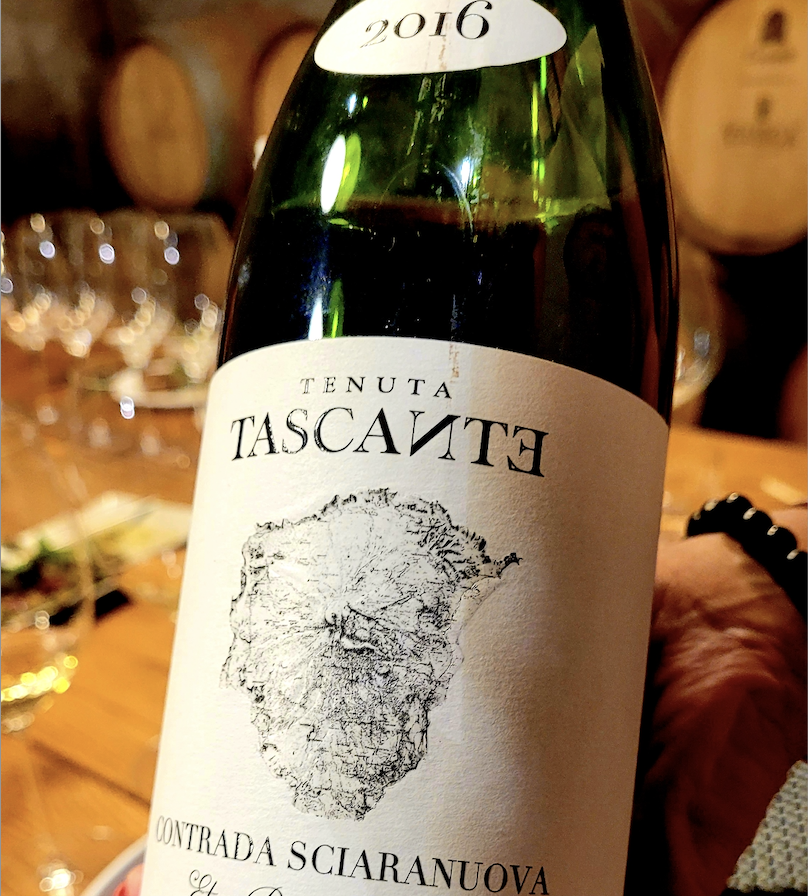
Tasca d’Almerita Tascante Etna Bianco DOC Contrada Sciaranuova 2022

Vinified and aged in Slavonian Grandi Botti, “to preserve the verticality and freshness of the carricante” explains Tasca d’Almerita agronomist Michele Brusaferri. Plays hard to get and acts demure inside the halls of its aromatic silence but you know that the elevation and fine basaltic soil are the portents of Tascante’s main Contrada Sciaranuova that will see to conditions for change. Though soft you feel the wood, present with confidence yet the thread of cool, herbal and botanical rins from Buonora into this Bianco. Fruit will soon peek through and announce a scintillant’s arrival, blossoms too, namely orange and then to salty lime later on. Just takes some air, agitation and swirl to coax out the excitement and up into the stratosphere. Turns out to be crunchy and seriously salty Etna Bianco, like flakes of Maldon or Slovenian platinum for what can best be described as living the high seasoned life of Etna Bianco. Structure is there and so this should age quite well. Drink 2025-2031.  Tasted September 2024

Tasca d’Almerita Tascante Etna Bianco DOC Contrada Sciaranuova 2016

The 2016 carricante takes the ’22 tasted alongside to another extreme. Now a return to a full blown aromatically romanticized effect with honey, orange blossom, sweet concentrated herbs, then into a downy, mature and creamy softness. Curious if well past prime with no good reason to complain about a Bianco conceived during its earlier stages of experimentation and understanding. You can tell the first two to three years would have had no problem convincing of greatness within the style it was made.   Tasted September 2024
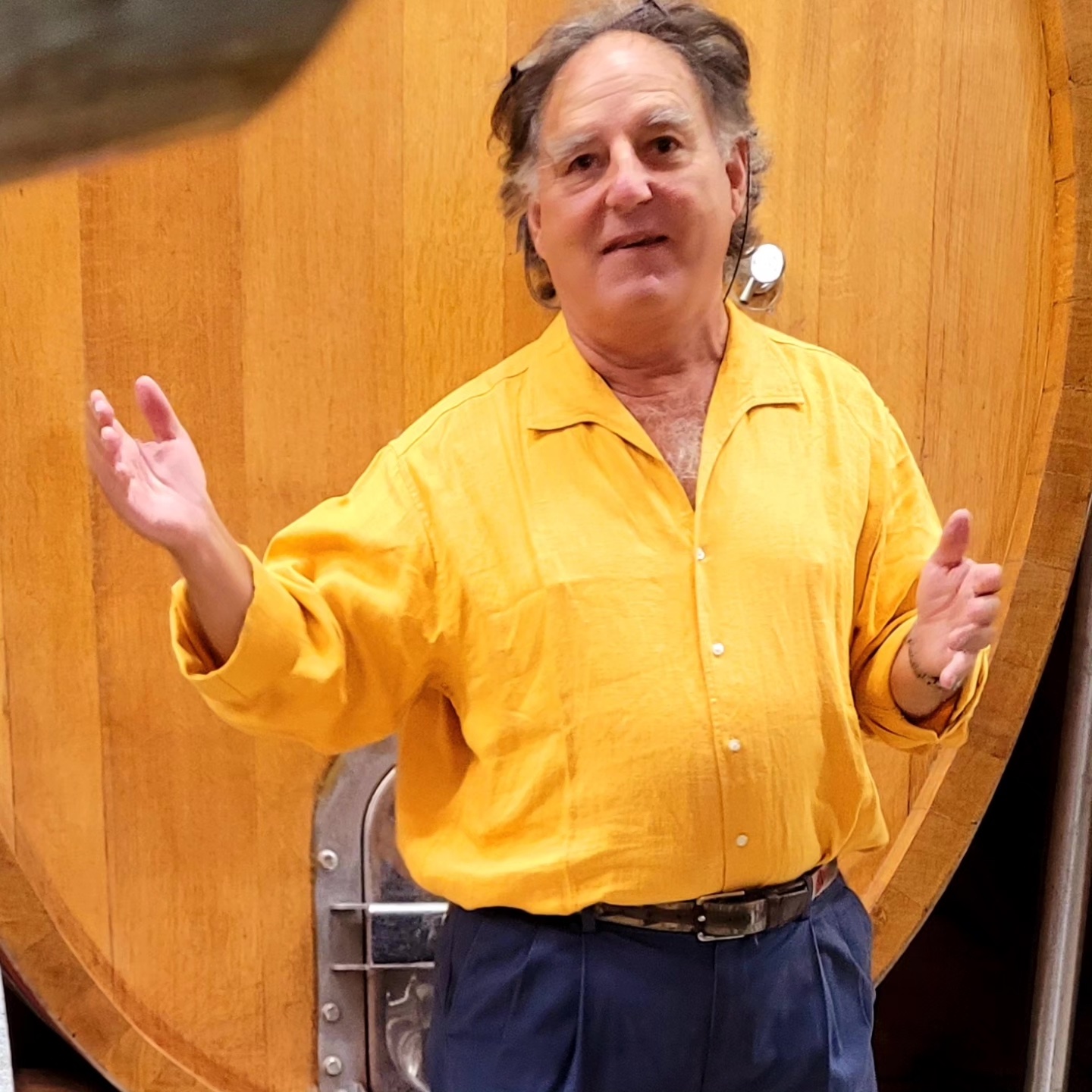
Marc de Grazia – Tenuta delle Terre Nere

Tenuta Delle Terre Nere Etna Bianco DOC 2023

The Santo Spirito area has traditionally been devoted to Rosso and so grapes need to be brought in to make the Etna Bianco. Not 100 percent carricante yet the single contrada whites are. Remember that old vineyards would house five to seven percent white grapes and so here 20-30 percent would include minella, cattaratto, inzolia and grecanico. There is a gelid solidity to the texture and structure, inclusive of the white grapes hand-plucked out of the red vineyards. Makes for a complicated yet complex cuvée, not about parochial purity but instead an assemblage that speaks to bio and varietal diversity. There is notable extract and even some tannin involved for a Bianco you would want to drink every single day. With thanks to salinity that does the work from acidity. If only there were more of 2023, but such is the nature of farming in adversarial vintages. Drink 2024-2027.  Tasted September 2024

Tenuta Delle Terre Nere Etna Bianco DOC Calderara Sottana 2023

“Such a stunning vineyard that I believe will actually improve the Calderara,” says Marc de Grazia. Where Bianco can help to elevate the Rosso by association and osmosis. A carricante with more volume and depth than the wines from the south and east of L’Etna but we know many will not only appreciate but also prefer the style of those Bianci grown in warmer areas. As such the Calderara Sottana sees barrel fermentation, in 350L tonneaux and 10 hL foudres. Now we are getting into a Bourgogne comparison, Meursault first and foremost though some will consider Premier Cru, Right bank Chablis, Fourneaux coming to mind more than most. In the end all that matters is finding the sweet spot in every vintage to express place, in terms of wood size, time and methodology used. We can be reminded that Dibourdieu is a big influence on de Grazia, for whatever that is worth. “If you don’t have a compass it’s not sailing, it’s what Dibourdieu called vagabondage. You need to have an idea of the answer you’re looking for.” Drink 2025-2032.  Tasted September 2024

Tenuta Delle Terre Nere Etna Bianco DOC Montalto 2023

Montalto, “high mountain,” a 950m plot on L’Etna’s southern slope. Another Bianco that does not like being fermented in wood and so steel only aids and abets to maintain carricante purity. For the first time a Terre Nere white just feels truly salty, mineral extraction expressed through Bianco, as opposed to elemental sapidity. “You have to go higher as the heat increases,” says Marc de Grazia, “to extract perfumes and find acidity.” There is a savoury honeyed aspect that reminds of chenin blanc and the length is determined by old vines. Silex again which takes a mind to Loire more than Chablis. Drink 2024-2030.  Tasted September 2024

Tenuta Di Fessina Etna Bianco DOC A’Puddara 2022

Reductive in a most protective, protractive and progressive way because the burst of citrus screamed forth is seriously intensive. Well yes but it would behoove one to think in terms of elements and minerals over more than merely fruit. Wild and frantic even, excitability factor run off the charts and the palate, not to mention spirit seriously awakened. Drink 2025-2029.  Tasted September 2024

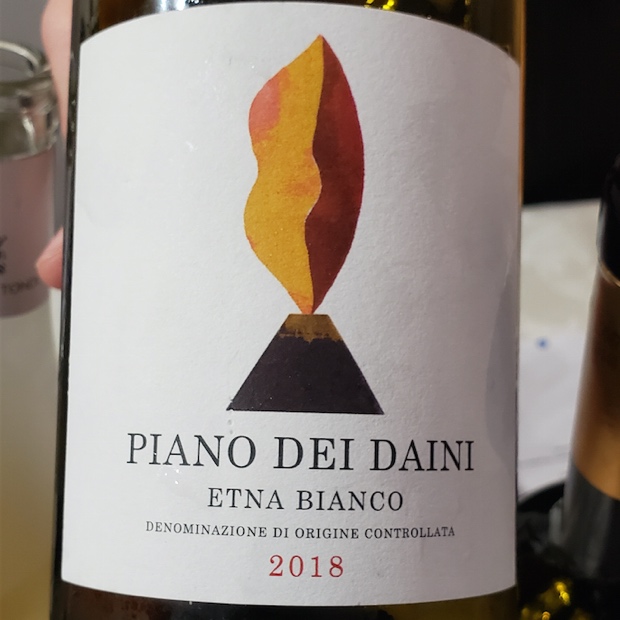
Tenute Bosco Etna Bianco DOC 2023

The ’23 Etna Bianco artist formerly known as Piano Dei Daini comes out of a hard vintage because of rain in June with some Perenospera issues, “but the carricante can handle the attack” explains Sofia Ponzini. No loss of fruit, harvest and vinification all together very much in a field blend way. The ten percent endemic varieties settle the carricante, neutralize its power and make for a most wholesome but always elegant Etna Bianco. A rinse of salty sea air meets Macchia Mediterranea. Sofia ends up happy but admits the wine needs bottle time, to sleep a bit, calm the energy and the power. Vibrancy is needy, crunchiness too, feel of the volcano so crucial and so all that is great but the drippy phenolic presence needs taming. That’s what time will effect. Drink 2025-2032.  Tasted May and September 2024
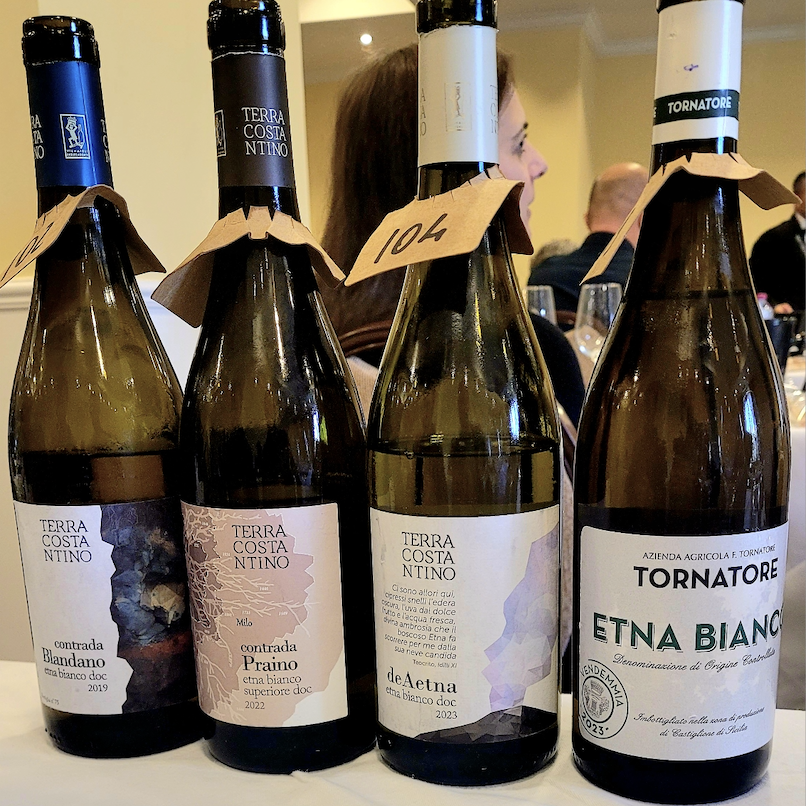
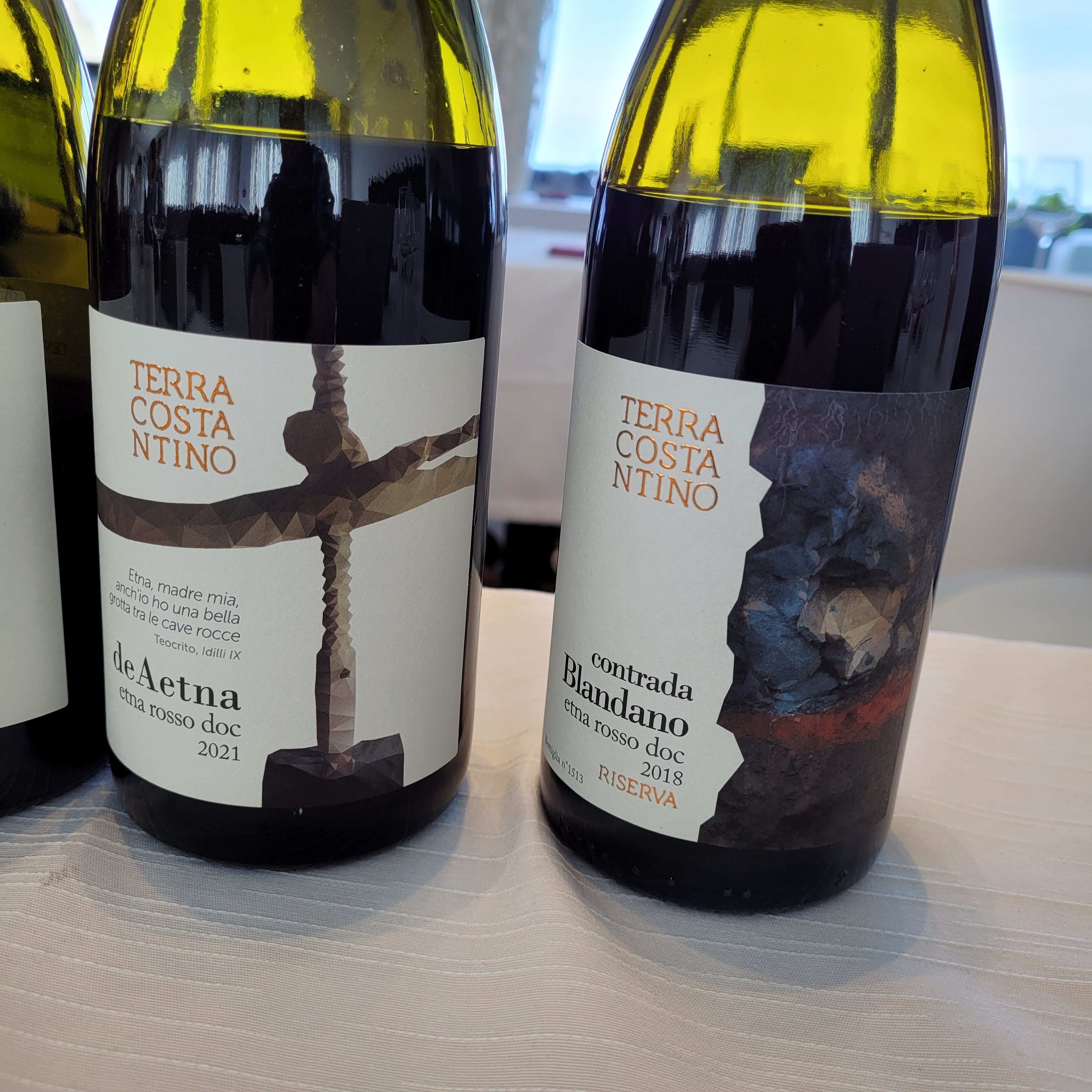
Terra Costantino Etna Rosso DOC d’Aetna 2023

Presumably a mix of of Blandano and Praino, which incidentally seem to be siblings from two different mothers and so the deAetna label is a blend in two-parts. More Praino is would seem, gelid and cool, a lemon-yellow plum granita of an Etna Bianco. Fine and solid enough though quite generalized as a local, eastern side of Etna expression. Drink 2024-2026.  Tasted September 2024

Terra Costantino Etna Bianco DOC Contrada Blandano 2019

A few years now in bottle and so this 2019 has developed next level style, further character and stage presence. Honeyed and luxe, acids sweetened with a lively if sour edge and then comes that extract that urged the totality from the start. A fine and confident wine with time on its side and a healthy perspective for Etna Bianco as the kind to serve at dinners and tastings all over the world. Drink 2024-2026.  Tasted May and September 2024
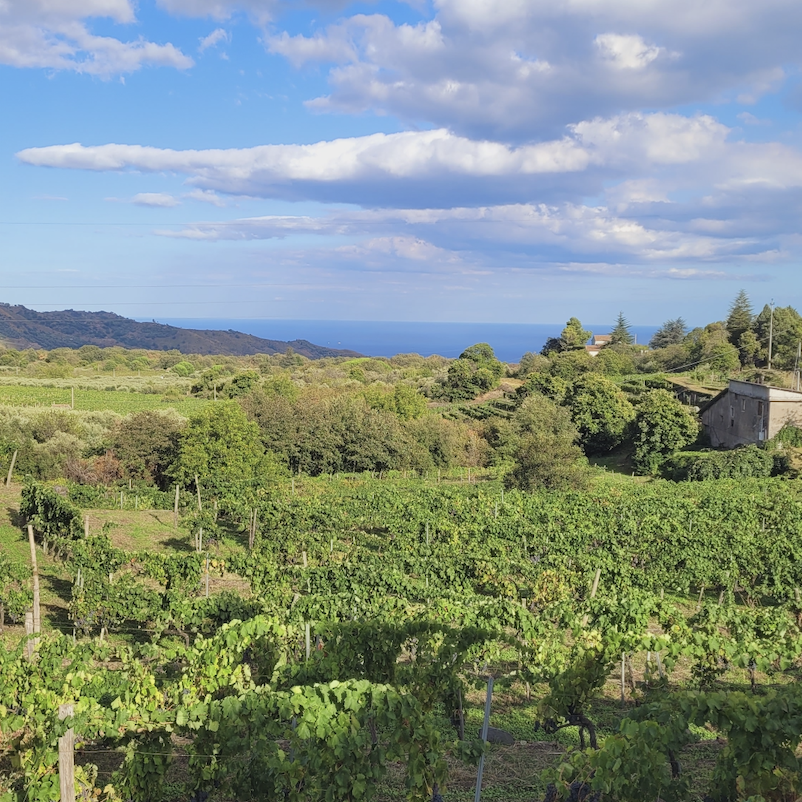
Terre Darrigo

Terre Darrigo Etna Bianco DOC 2023

A stone’s throw down the mountain is Lingualossa, of a terroir above 500 and upwards to 600m in a natural amphitheatre taken over by the Bacci family from a bankrupt farm and in disrepair. Restored to a beautifully rustic terraced set of vineyards set between the volcano and the sea. Salty carricante indeed with phenolic grip and yet acidity keeps the drive alive. So little was made because of a hailstorm in the first week of May that took out most of the vines even before rains and Perenospera mildew arrived to attack much of Etna’s northern vineyards. Drink 2024-2026. Tasted September 2024

Theresa Eccher Etna Bianco DOC Alizée 2021

As per the vintage and an estate taking full advantage this is quite ripe and open-knit Etna Bianco, simplified and moving forward into maturity with haste. Comes away with a bit of bitterness and honeyed savour but otherwise drinks well enough. Drink 2024-2026.  Tasted September 2024

Tornatore Etna Bianco DOC 2023

Tornatore has simply, unequivocally and decidedly defined the genre that is Etna Bianco for world markets at an affordable price. The 2023 vintage was not so easy to do this way because mildew pressure and low yields were the obstacle. And yet like so many the acids are intense to insure true Etna mountain spirit is elevated as it needs be. This does precisely what wants and needs for a $25-30 Bianco. All must partake and become believers in what is possible. Drink 2024-2027.  Tasted September 2024

Tornatore Etna Bianco DOC Pietrarizzo 2022

Pietrarizzo is both available and confident, not idiosyncratic like Zottorinotto and also richer of fruit. There is an herbal and botanical way about this cru Bianco with splashes of catarratto bringing seasoning to the carricante. A bit spicy and even humid though the fruit is the thing and the volcanics an accent making for even more spice entertained. Such a solid Contrada based Bianco. Drink 2024-2028.  Tasted and September 2024

Torre Mora Etna Bianco DOC Chiuse Vidalba 2022

An Etna Bianco on the extreme volcanic side because the aromas and flavours just feel like sucking on a mouthful of basaltic lozenges. Cool, gelid and distinctly mineral on the outside, liquid ethereal and almost mentholated within. Don’t come looking for a burst of fruit, not by citrus, stone nor orchard though there is this green melon note coming late. Nor is this a high acid example, but also not so very botanical. Just bloody volcanic – which speaks to Chiuse Vidalba. Drink 2024-2028.  Tasted May and September 2024
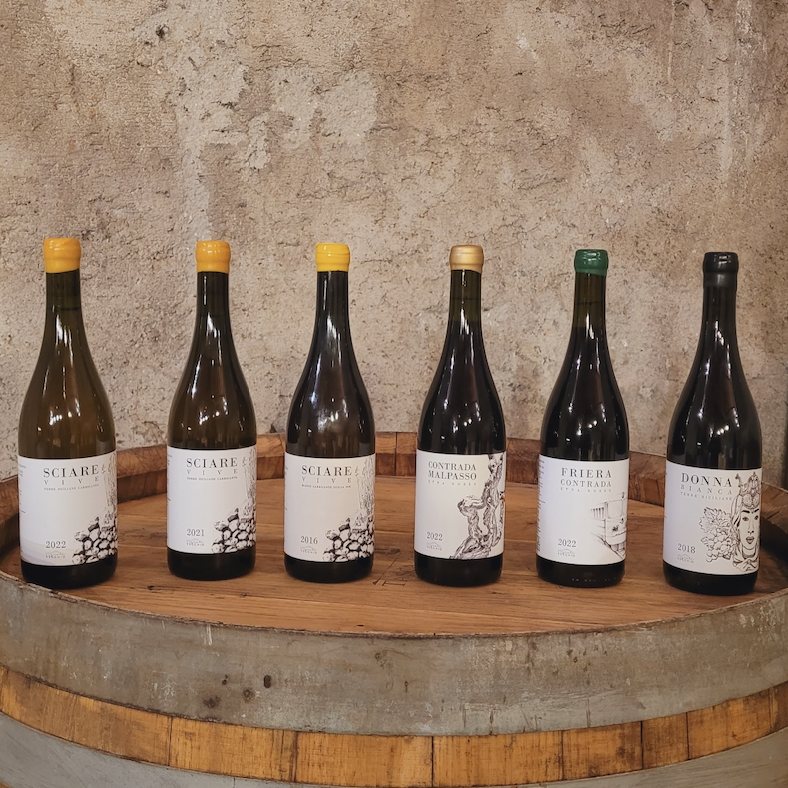
Vigneti Vecchio Carricante Sciare Vive 2022, Terre Siciliane IGT

Part of the production is from a vineyard located outside of the allowable (if arbitrarily and self-serving organization of geographic definition) for the DOC regulations. Yet the fruit from these 40 year-old carricante vines are special to Carmelo Vecchio. His is a true to real volcanic life skin-contact Bianco without the slings, constraints and arrows of pedagogical natural wine. Just the methodological facts to capture, elevate and celebrate the purity of grape variety come from where it lives. A well made example is a thing of beauty and in this case, a premise of perfection. Sapidity wins out over salinity and yet your palate may figure to feel more of the latter. Drink 2024-2029.  Tasted September 2024

Vigneti Vecchio Carricante Sciare Vive 2021, Terre Siciliane IGT

Tasted side by side with the 2022 (and also 2016) but here the extra year on a skin contact carricante solicits the first stage of age development. Just on the nose really, quite honeyed with a Ginestra savoury spice and a vague saffron note considered. More so honeysuckle when you combine the two and so there feels like a connection, re-imaging or re-imagining of chenin blanc. Palate presence lingers and length is befitting of ’22. Drink 2024-2027.  Tasted September 2024
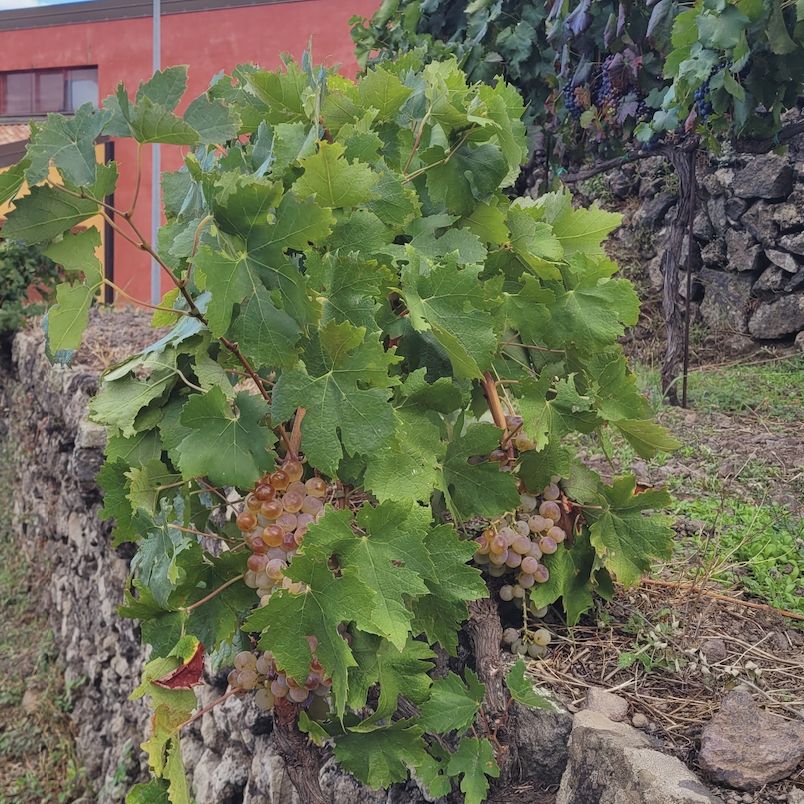
Piè Franco Carricante – Terre Darrigo

Etna Bianco Superiore

Barone Di Villagrande Etna Bianco Superiore DOC 2023

Aromatic volume is turned up through the combination of vintage and Superiore designation which both repeats and magnifies the great fleshy chew for the accessorized palate. Some greens here though they are sweet to commit and then induce satisfaction. Also a great basaltic saltiness that causes this Bianco to linger long after you thought it might not and you are extremely grateful for the extension. Drink 2024-2030.  Tasted September 2024

Barone Di Villagrande Etna Bianco Superiore DOC Contrada Villagrande 2021

Just two years older than the ’23 Superiore (classico) and here the Contrada-specific Etna Bianco maintains freshness while defending the integrity of its municipal steading. This is a reduced volcanic saltiness but even more so it speaks to being a mountain wine in the most credible of ways. Rich and expressive, so finely tart and just so very impressive. Stays with your palate for minutes on end and for that you say brava. Drink 2024-2032.  Tasted September 2024

Salvino Benanti – Viticoltori Benanti

Benanti Viticoltori Etna Bianco Superiore DOC Pietramarina 2019

A current release which follows the Benanti rule of waiting four-plus years. Only stainless and already hinting at aromatic volume but also length, with petrol coming around the corner. Kind of in the vein of say riesling but even more so sémillon and more Hunter Valley than Bordeaux in that regard. Acidity is obviously lower and phenolics broader – but you get the drift. Will gain curiosity, if at the expense of freshness but that feels like the Superiore point. Drink 2024-2027.  Tasted September 2024

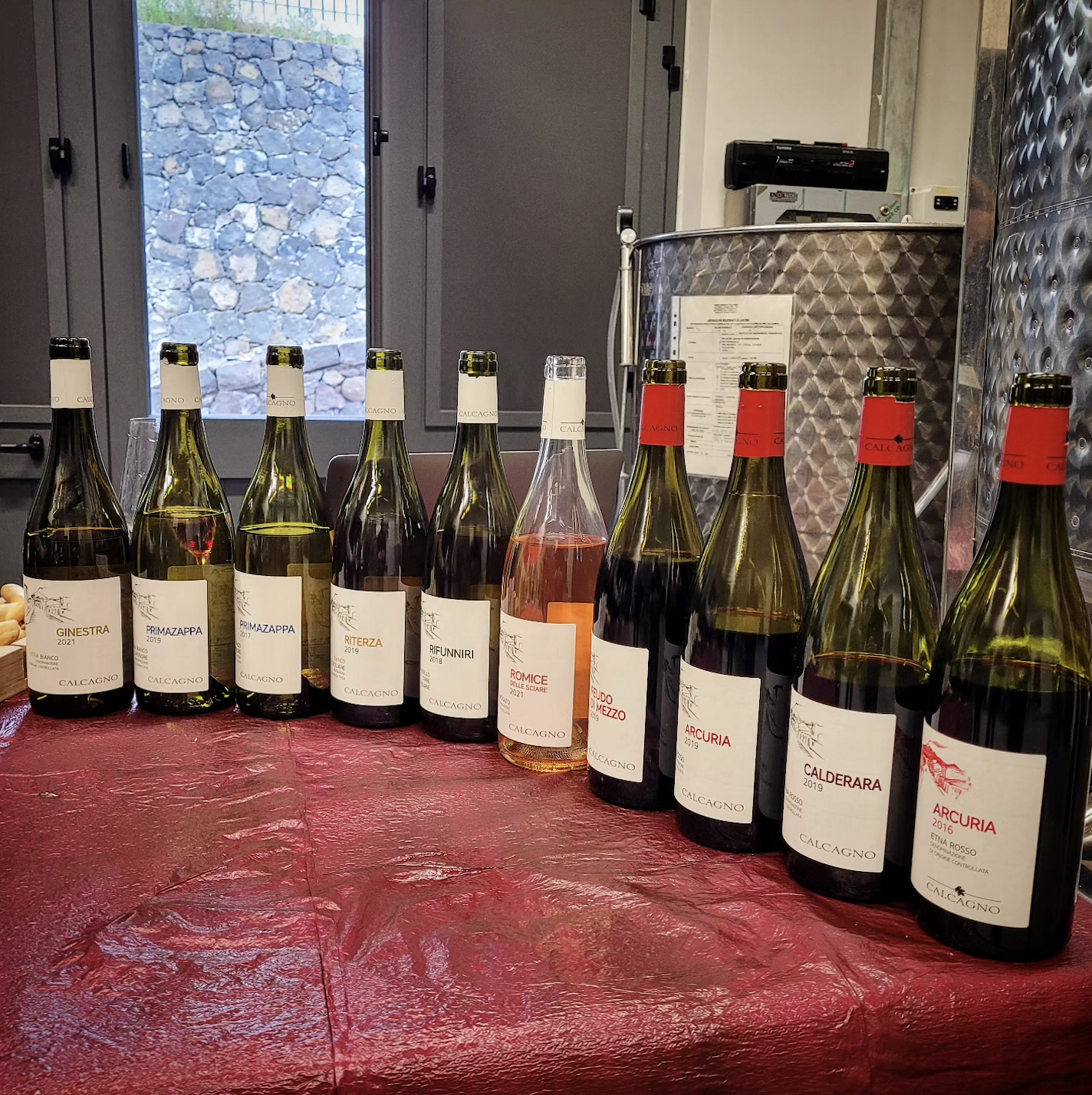
Calcagno Etna Bianco Superiore DOC Primazappa 2022

Important if also essential mountain label for Calcagno in Superiore clothing and ’22 shines brightly, even if this is not the summit of summits as far as vintage is concerned. No conceding or submissive behaviour mind you and instead great spirit, energy and vitality. Crisp bites of orchard fruit doused under lemon-lime citrus for real spark. A scintillant Etna Bianco with some fine chiseling and structured for aging. Drink 2024-2029.  Tasted September 2024

Federico Curtaz Etna Bianco Superiore DOC Kudos 2021

Kudos is far more botanical than that of Gamma, of green herbs and some herbaceous meanderings. More tonic and fine bitters though truthfully lemon in so many ways with some pith and it tastes like roasted Greek lemon potatoes. A second bottle seems to ramp up the intensity though things stay relatively the same. Superiore is a different animal and it feels like Curtaz has gone a bit more pied du cuve natural in the approach. Surely not an accidental wine and the jury stays out, not hung, but not making a final decision. Will do so after tasting another bottle, preferably sooner rather than later.  Tasted September 2024

Fischetti Etna Bianco Superiore DOC Rocca d’Alba 2022

First kick at the Fischetti can and it must be said where have these wines been in this life? In others’ glasses and now here for a look at possible grandezza. Big attempt at extraction, squeezing every bit of 100 percent carricante juice which means tomato leaf and water, but also acetic belief. Old wood is very present and leads the feels for a rustic Bianco that may not exactly find precision, nor finesse neither, but its character is built from soil, soil, soil. The earth is all in and it translates with the aforementioned acetic tang. Just 700 bottles are produced. Drink 2024-2025.  Tasted twice, September 2024

Varietal carricante at 800m fermented in steel, put to barrel and then one year in bottle. So much corporeal flesh on the body of a seriously developed Bianco. Has come into a fine place but my goodness so much texture, citrus and length. Drink 2024-2027.  Tasted May and September 2024
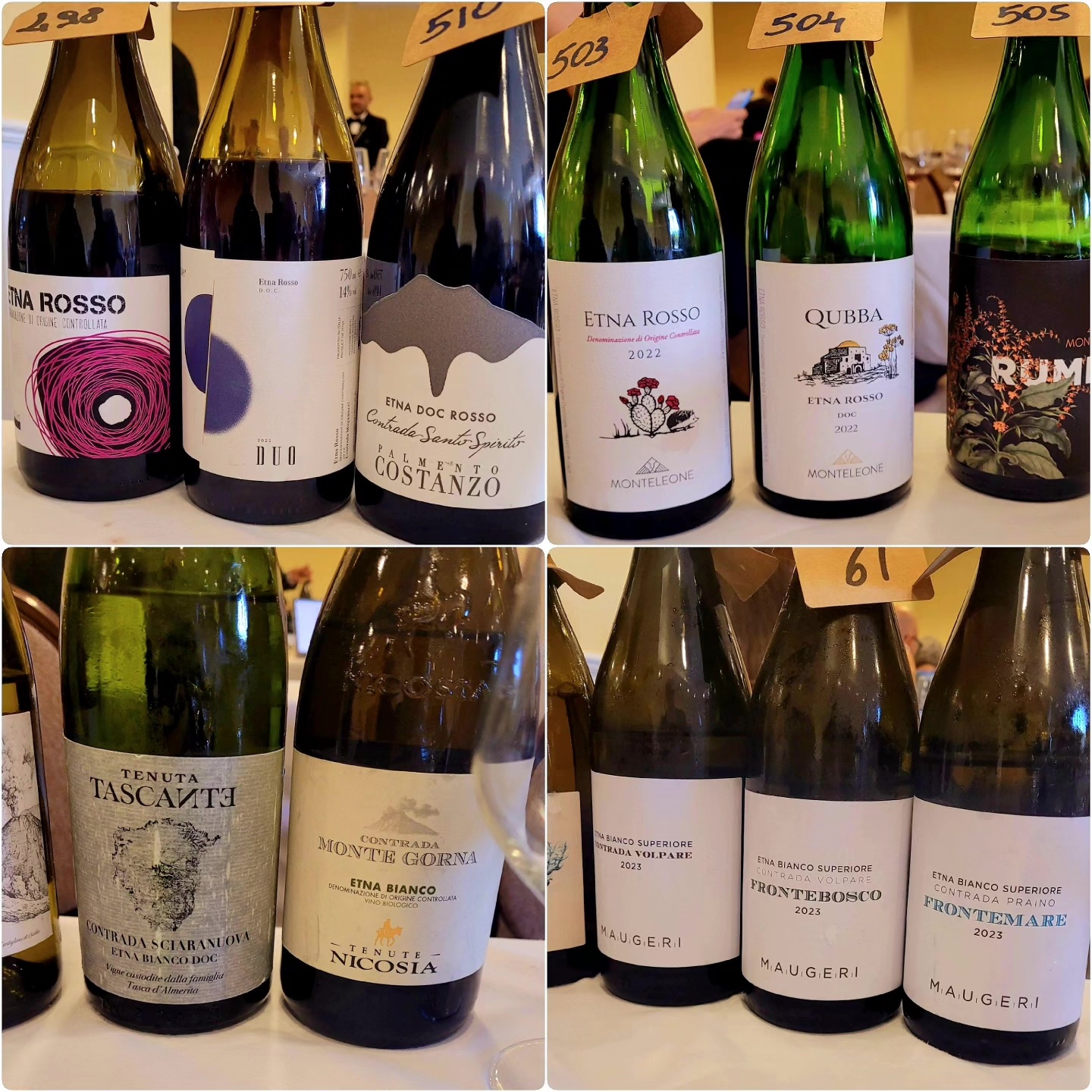
Maugeri Etna Bianco Superiore DOC Contrada Volpare 2023

Youthful is the understatement and Volpare the name, so say it loud. This is indeed singular Etna Bianco, as they should be but some are in a league of their own, as Mugeri’s eastern wines clearly are. The estate has taken it to the next level with an ascension of elevated mountain fortuity but also depth determined by terroir which can only be transmitted when agriculture abides. Abides because the maker makes it happen and Volpare delivers generously while also with precision and finesse. Leave this for 18 months or more to settle the relationship between rocks and acidity. After tasting Frontebosco and also Frontemare you realize the latter is the true catalyst to propel this cuvée selection. Drink 2026-2032.  Tasted September 2024

Maugeri Etna Bianco Superiore DOC Contrada Volpare Frontebosco 2023

Versante est which separates Mugeri from not just the north but also the south and the future will surely look to this area for greatness. Not only Volpare contrada but a section within, here called Frontebosco, as in facing or in front off the forest and so the herbals here within are assumed to be elected by the nearby woods. Makes for freshness but also a fruit fleshiness that the more general Volpare does not show. A full, substantial and impressive Etna Bianco that might just appeal to everyone. Superiore indeed. Drink 2025-2033.  Tasted September 2024

Maugeri Etna Bianco Superiore DOC Contrada Praino Frontemare 2023

Frontemare, “facing the sea,”as opposed to Frontebosco, “facing the wood.” As such this would be east facing from Etna’s east sector and so the block with the view creates a unicorn of an Etna Bianco as fascinating as it seemingly gets. The most crisp, crunchy, fresh and intense of Mugeri’s whites, citrus squeezed throughout and long as the zig-zagging wind of a single road down to Catania and into the sea. Just wow, with layers upon layers to unreel, unfurl and unroll for a long aging period ahead. Drink 2026-2034.  Tasted September 2024
Tenuta delle Terre Nere

Tenuta Delle Terre Nere Etna Bianco Superiore DOC Salice 2023

Only carricante from the the town of Milo, five year-old vines in the place where more rain falls and reds can not really be made. No more than 1000 hectares of vineyard farmed by 20 producers recently and collectively coming into its own. Wines now made by high profile estates including Barone di Villagrande, Benanti and Marc de Grazia. Soils are unique, having come from the collapse odf the side of the volcano’s east side. Deep, fractured and then also shallow soils so compact it’s hard for roots to penetrate. Less humid as a result and the best for ripening carricante. Exposure is key because the sun disappears behind the mountain earlier than most, though says de Grazia, “650-750m is the sweet spot. Adding “a challenge but not a suicide.” Extremely steep, two years to rebuild the terraces and here is the result. Imagine the views of the Ionian Sea with a glass, wildflowers everywhere and a sapidity so different to the gifts of the northern slope. Salice is the willow and that weeping only adds to the demure, but in a botanical, mellow and properly astringent way. Just like silex, but volcanic from a wine with no wood in play. Drink 2024-2028.  Tasted September 2024

Tenuta Di Fessina Etna Bianco Superiore DOC Il Musmeci Bianco 2021

Il Muscemi Bianco is another matter altogether because of two aspects. More taut reserve instigated by reductively protected ability plus an aromatic accountability that screams “mountain wine!” Scintillant behaviour, a bit eccentric mind you but how one could not be amused if clearly enthralled with the intensity. Once again we speak of volcanics and mysterious elements with fruit out of the conversation because it was picked early and with acidity in total mind, but in the end the lava matters most. Needs years to settle in, especially because of the need to assimilate its wood. Drink 2026-2032.  Tasted September 2024

Terra Costantino Etna Bianco Superiore DOC Contrada Praino 2022

Eastern slope on Etna, in the town of Milo where only here the Etna Bianco can be labeled with the addendum “Superiore.” From young five year-old carricante vines grown on Alberello at 650m by Fabio Stantino and his family where the conditions are more humid, namely because of the closer proximity to the sea. Cool, gelid and stylish. The kind of Etna Bianco with that mineral, gemstone quality while also one of the more yellow-fleshed fruit pulpy examples juiced by Sicilian orange. Gets white pepper and mango powder exotic at the humid finish. Drink 2024-2028.  Tasted May and September 2024
Etna Rosso

Etna Rosso

Alice Bonaccorsi Etna Rosso DOC Valcerasa Rosso 2019

Truly ripe cherry, maturing and for Bonaccorsi’s Rosso surely well into the drinking zone. Wealth of cloying oak, resins and overripe behaviour mean that zone should already be behind us. Drink 2024-2025.  Tasted September 2024

Alta Mora Etna Rosso DOC Feudo Di Mezzo 2020

Middle ground traveled and promise delivered for the large Feudo di Mezzo as Contrada sizes come, with fruit able to defend itself against generous wood though all parts launch a collective attack on the senses and palate. Big Rosso for Etna, strong boned and willed with the intention to impress. Drink 2025-2028.  Tasted September 2024

Alta Mora Etna Rosso DOC Guardiola 2020

Big barrel feel on Guardiola from Alta Mora and some fruit maturity to say the twain is yet to be abridged. As high toned as Rosso will come, red fruit swells and a dusty volatility that reminds of Rioja. Just feels akin to aging in American wood. Drink 2025-2029.  Tasted September 2024
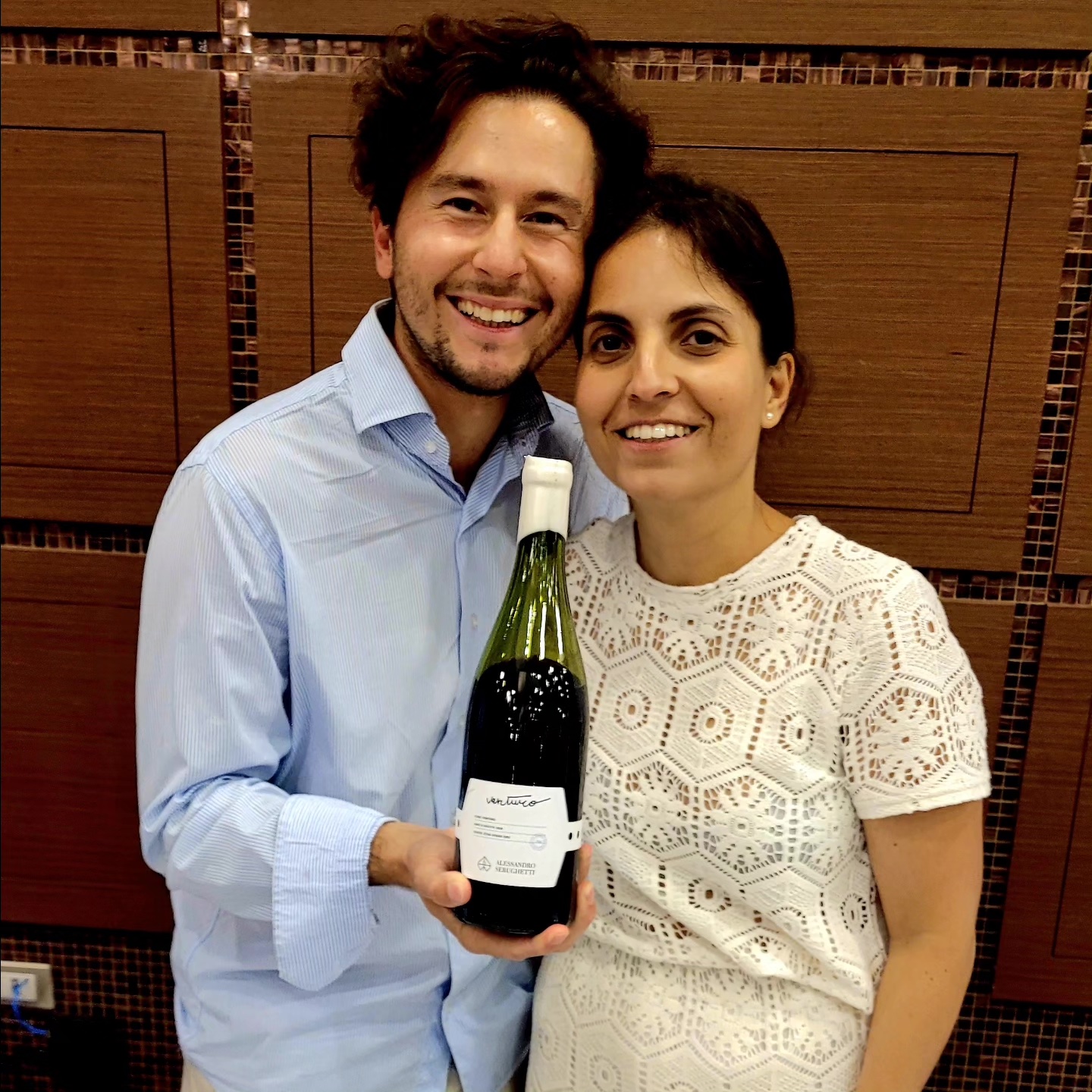
Alessandro and Loredana Serughetti

Alessandro Serughetti Etna Rosso DOC Venturo 2022

Only 700 bottles were made of Alessandro Serrugheti’s Venturo, which transliterates to “next” and generationally speaking that is exactly what he and wife Loredona are to L’Etna. Their corner of Rovitello is rich in volcanic ingredients, of potassium, iron, and magnesium in the lava flow soils of their old (and qualifiedly historic) nerello mascalese vineyard. Alessandro dates them back 60 years and admits there to be a few cappuccio plants mixed in for one of his first attempts at Rosso that is simply grippy, liquid chalky, textural, structured and brimming with dark fruit. Ages 10 months in tonneaux. It’s basically a profound basaltic matter of this place within the greater volcanic place. Greatness is coming. Coming up next. Drink 2025-2030.  Tasted September 2024

Antichi Vinai 1877 Etna Rosso DOC Petralava 2019

Floral with a pretty perfume of fruit to join along and the effect is a fête for the olfactory senses. Neither lithe nor delicate in terms of flavour profile and punch yet the substantial and layered effect is something notable. Just a smidgen overdressed and no, subtlety is not the middle name but overall there are fine and appreciable aspects if this Rosso to get behind. Drink 2024-2027.  Tasted September 2024

Azienda Agricola Ciro Biondi Etna Rosso DOC San Nicolo’ 2022

San Nicolo’ steps up more than a tier in Etna Rosso terms as compared to Outis because its freshness and fragrance are that much more intense. This smells like Etna should, with southeastern slope warmth behind its ripeness and acidity acting as the driver for that freshness. Still it presents a challenge to sort through and figure out the how, what and why. Drink 2024-2026.  Tasted September 2024

Azienda Agricola Ciro Biondi Etna Rosso DOC Outis 2017

Notable wood on the nose, spiced and like the Bianco also savoury in an herbal-botanical way. Suits the fruit though the aromas lower, deepen into baritone and struggle to rise up with ease. The barrel is very involved with the flavours and somewhat unrelenting though one should not question the substance of this Rosso. Then again it’s already five to six years of age and so maturity will now beget declension. Drink 2024-2025.  Tasted September 2024

Barone Di Villagrande Etna Rosso DOC 2021

Truly pretty Rosso perfume yet the palate’s hard shell is candied and a bit cloying. The barrel is used in a symptomatic way, driving the fruit to places it may not have wished to go. The combination of that and volatility not in check leads this down and artificial and medicinal path, as a result. The ’21 Bianco Superiore is glorious but the Rosso is a miss. Drink 2024-2025.  Tasted September 2024

Barone Di Villagrande Etna Rosso DOC Contrada Monte Ilice 2020

Monte Illice 2022 is in better steading than the Rosso 2021 because its volatile compounds lay low and do much less to distract from the prize. Still the use of wood is heavy and so a resinous but also emulsified feeling is ascertained. Not quite soy but certainly lactic and creamy. A much better wine however and one that will age well over a five-plus year run. Drink 2024-2028.  Tasted September 2024

Benanti Viticoltori Etna Rosso Riserva DOC Serra Della Contessa Alberello Centenario 2018

Benanti Viticoltori was founded in 1988, one of the pioneers on L’Etna. Two Piedmontese oenologists, Gian Domenico Negro and Marco Monchiero, along with Prof. Rocco Di Stefano of the Experimental Institute for Oenology in Asti and Prof. Jean Siegrist of the Institut National de la Recherche Agronomique of Beaune combined to exert profound influence on Giuseppe Benanti and his wines. Oenological consultancy has molded and developed Benanti’s wines, from Salvo Foti to Enzo Calli, now with Benanti for 25 years. Serra Della Contessa is a field blend of the two nerello out of a 100-plus year-old bush vine vineyard (documents say 1910s), own grafted and original, bit of a unicorn for Benanti and a pioneer, just like Giuseppe Benanti. Not labeled as pre-phylloxera because “it’s difficult to prove,” but surely from resistant vines. The same vineyard (Monte Serra) also makes for a Contrada wine from the younger vines. Large barrels for two years, one in tank and then finally two in bottle, not unlike a Brunello di Montalcino Riserva. There is a chalkiness and serious structure here but the Grandi Botti do little to distract, thicken or overarch any semblance of density to this blend. Serra della Contessa dates back to the countess that owned the state in 1472. Cleary one of not only L’Etna’s but all of Sicily’s most important structured and age-worthy red wines. Would love to see this agin in 2033. Drink 2025-2034.  Tasted September 2024

Benanti Viticoltori Etna Rosso Riserva DOC Rovitello Alberello Centenario 2018

From North Etna, as opposed to the sister Serra della Contessa label that comes from the home-front vineyard on the mountain’s southeast slope. Picked two weeks later from a cooler location and still the same concept, that being a field blend of nerello mascalese and cappuccio, planted in the 1920s and yes it’s possible there are other varieties mingling in the ancient material of these bush vines. Essentially pre-phylloxera and here Rovitello is softer and cooler, almost gelid and less warmth meets weight, though Monte Serra is not what you would call a wine of density. The acids, harmony and understatement are really fine but to be honest the Contessa is showing better and with more impressive structure today. And yet Rovitello is a magnificent red blend from old DNA in its own-right. Drink 2024-2031.  Tasted September 2024

Viticoltori Benanti

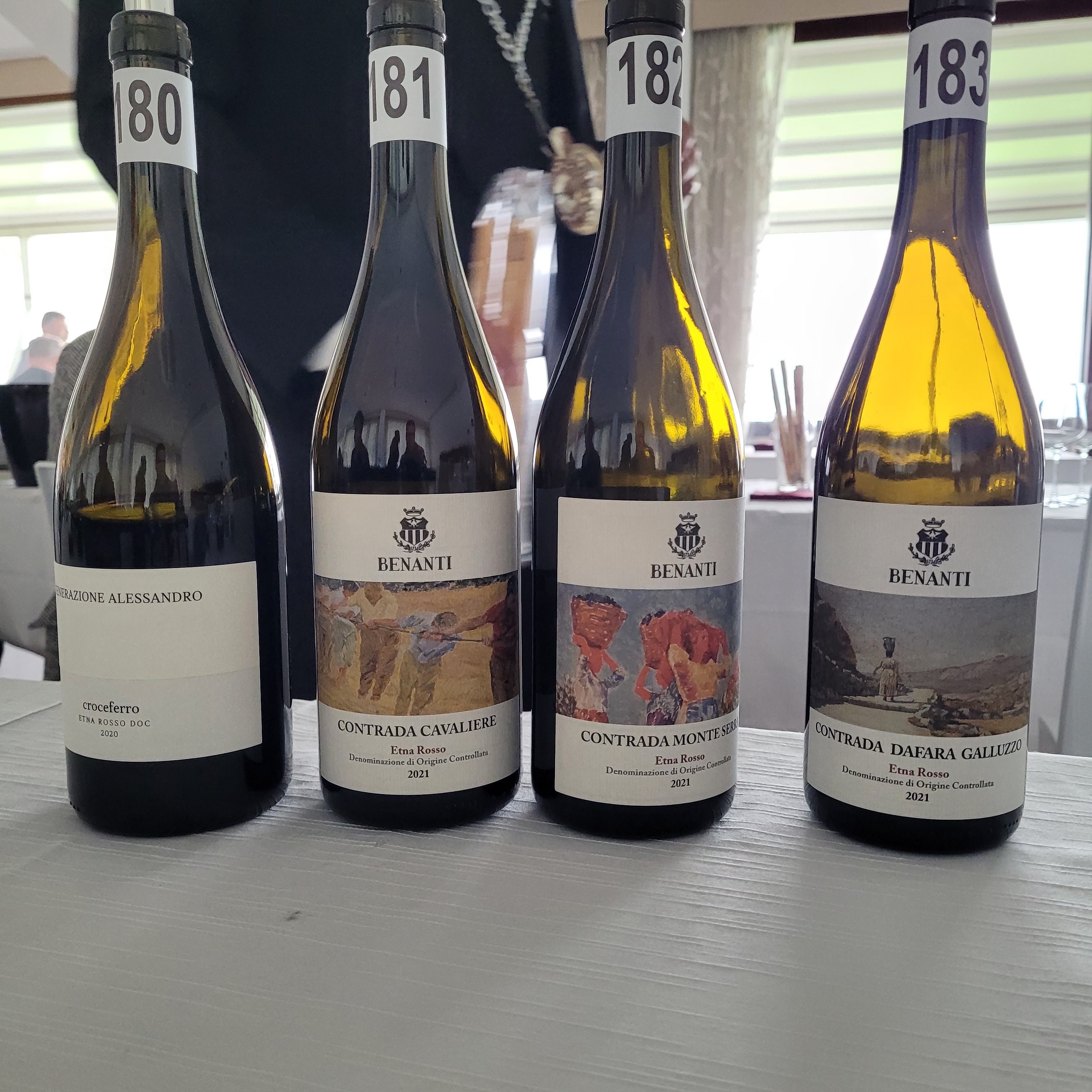
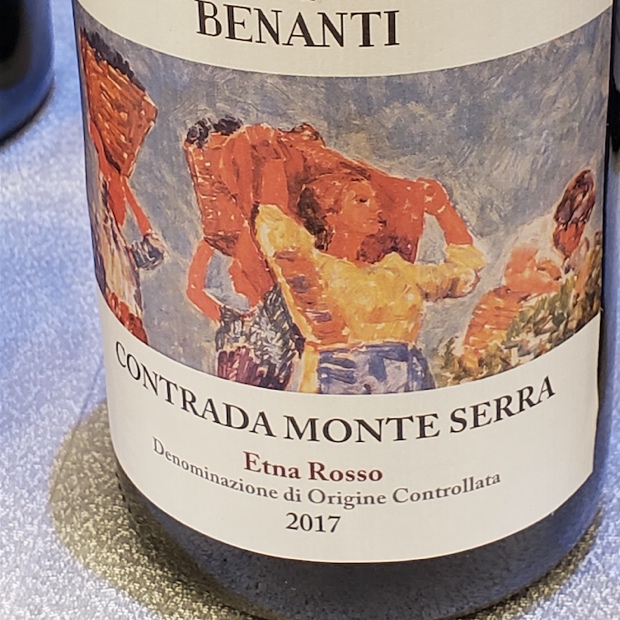
Benanti Viticoltori Etna Rosso DOC Contrada Monte Serra 2022

From L’Etna’s southeastern sector on the mountain’s semi-circle and one of fine if also light glycerol texture. Truly pretty and delicate for Rosso, the kind we tell people about in the way we often describe pinot noir from the Côtes de Beaune. This is indeed as closely resembling that kind of varietal-appellation relationship as any on this volcanic mountain. Really fine, precise and softening though structure is not a problem. The feels are of older lava flows and how they effect nerello mascalese. Obviously not pinot noir. Drink 2024-2029.  Tasted September 2024

Benanti Viticoltori Etna Rosso DOC Contrada Calderara Sottana 2022

Benanti is not just a southeastern Etna specialist but an estate that wrote the book on the making of fine, precise, finessed and structured wines from that sector aboard the mountain. There is more power (albeit restrained) from northern slope Calderara Sottana and a sense of rich chalky liquidity that speaks to the age of lava flows and how vines are raised on older volcanic soils. Also the 700m of elevation and a place that works best with nerello mascalese, especially with north-facing plantings. The transmission is purposed, trenchant and near formidable. More chewy texture here and more favourably or gainfully nerello mascalese but when you think of it alongside Monte Serra than the options laid out are yours to choose. Drink 2026-2035.  Tasted September 2024
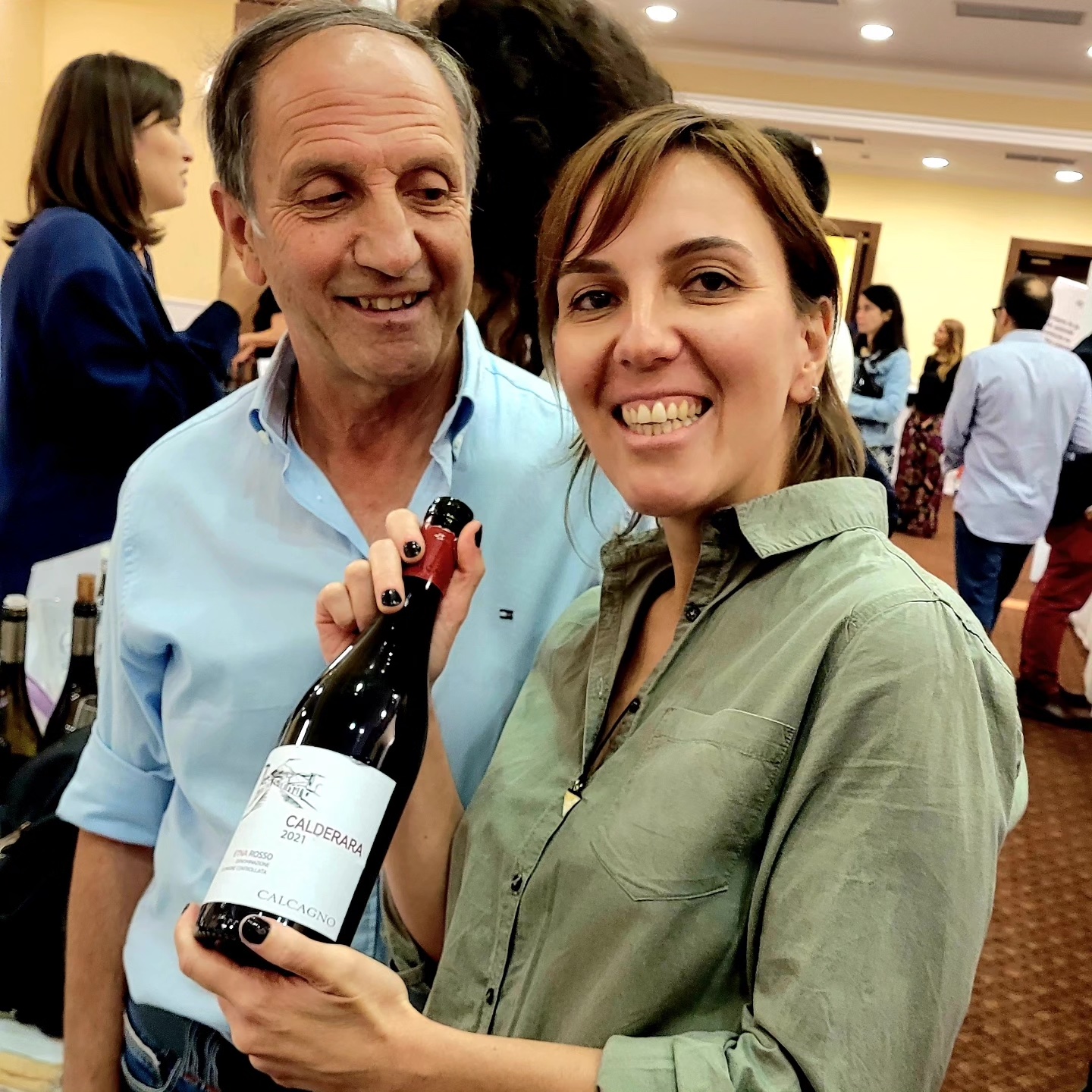
Franco and Giusi Calcagno

Calcagno Etna Rosso DOC Calderara 2021

Ah such an intoxicant of Calderara perfume coaxed and on exhibit just the way we would hope it should. Mind you there is some wood to deal with though high standard used will become quality worth resolved. More liquid chalky an Etna Rosso than many but again the execution will beget harmony because the wine is already expressive and frankly distinguished right there. Give this promising 2021 another 18 months and its canto will warble harmonic, pure and long. Drink 2026-2033.  Tasted September 2024

Cottanera Etna Rosso DOC Diciassettesalme 2022

Solo nerello mascalese, made with the grapes from all three Contradas, 10 months in steel, followed by six months in bottle. Dictionary entry though it’s just the first vintage of this specific Rosso without Cappuccio. These are nerello plants grafted onto the old cappuccio and to be honest there is more purity and focus this way. Spicier, in a way and more energy. Will take a few vintages to find its solo artist stride. Drink 2024-2027.  Tasted May and September 2024

Cottanera Etna Rosso DOC Contrada Feudo Di Mezzo 2020

Only nerello mascalese from 35 year-old vines, big barrel for 14 months. Even though Feudo di Mezzo is the largest Etna Nord contrada there is such consistency and a thread of wine effect that runs through the 20-plus producers. Cottanerà heeds and abides by the vineyard to produce a balanced FdM worthy of the name. Drink 2024-2027.  Tasted May and September 2024

Cottanera Etna Rosso Riserva DOC Zottorinoto 2019
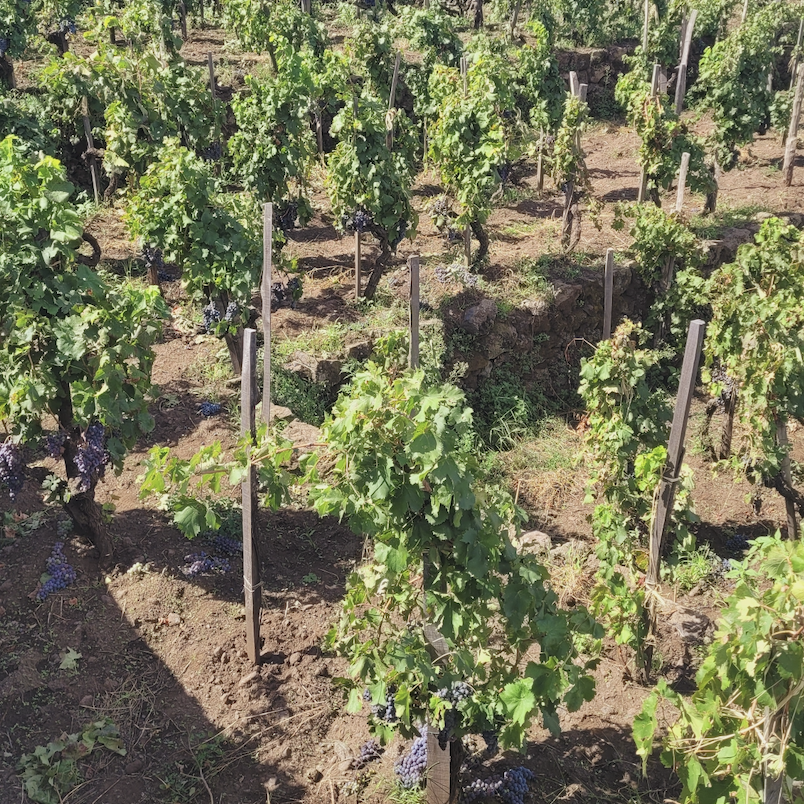
Nerello Mascalese

Plants are 85 years of age on four hectares but this wine is a selection from three tonnes of grapes to make only 1,800-2,000 bottles. Riserva, so it remained in cask for two years plus two more in bottle. Depth, breadth, spices and richness, the most full bodied and textural Rosso, tannins sweet and long-chained with time still needed to resolve all that is here. Drink 2026-2032.  Tasted May and September 2024

Donnafugata Etna Rosso DOC Contrada Marchesa 2020

Marchesa 2020 seems to tell a contrada story in a most positive light with its effusive, fresh and yet also concentrated way. A specific style to be sure and a layered one but those layers are closely knit with their weave of ultra specific fibre. There is some reduction which is not a surprise and then some good old-fashioned structure to see this age quite admirably. A different charm and a good one from this well made Rosso. Drink 2025-2029. Tasted September 2024

Federico Curtaz Etna Rosso DOC Il Purgatorio 2020

Bold and trenchant Etna Rosso from the one and only legend that is Federico Curtaz and one to take great time getting to know. Ripe to be sure but also acids in stride with fruit influenced by Etna’s newer (relatively speaking) northern lava flows providing the freshness and finesse. There are some herbaceous moments that put this in a savoury place and in the end the diversity and complexity renders this a potent while oh so intriguing iteration of Etna Rosso. Drink 2025-2030.  Tasted September 2024

Federico Curtaz Etna Rosso DOC Il Pukkaria 2020

Consistency and a thread of similarity runs from Purgatorio through Pukkaria but the latter is not the bold expression that is the former. Sweeter perfume, more glycerol texture and emulsified acidity make this closer to the heart and without the same level of grip by structure. Still the herbal-herbaceous feels are there and some reduction to hold a part of the wine back. Give it a year and the ties that bind will loosen to free this wine of brine and tang. Drink 2025-2028.  Tasted September 2024

Federico Graziani Etna Rosso DOC 2022

Pretty much what they call Classico as far as Etna Rosso is concerned with a nerello mascalese of concentration yet delicate and shiny enough to speak generally if abidingly for an appellation. Wood is not nothing and will need some time to melt in but this is clearly a Rosso for Rosso sake, raised properly and equipped to live comfortably. A five year example that could be poured for anyone to explain the combination of style, varietal and place. Feels just a bit natural with faint Brettanomyces noted in the end. Drink 2024-2027.  Tasted September 2024

Federico Graziani Etna Rosso DOC Rosso Di Mezzo 2022

A sturdy and well wooded Rosso from Feudo di Mezzo labeled as Rosso di Mezzo because why not though the nomenclature could suggest a second wine to some. Like Rosso di Montalcino or even lesser, Rosso di Toscana. We know the intent but when you look at some other Italian denominations this becomes somewhat perplexing. In any case this travels down the middle of the Mezzo road (wink, wink) to deliver a Rosso of medium body, acidity, structure and finish. On par with Graziani’s Rosso DOC, both good wines though with little to distinguish between the two. Drink 2024-2027.  Tasted September 2024
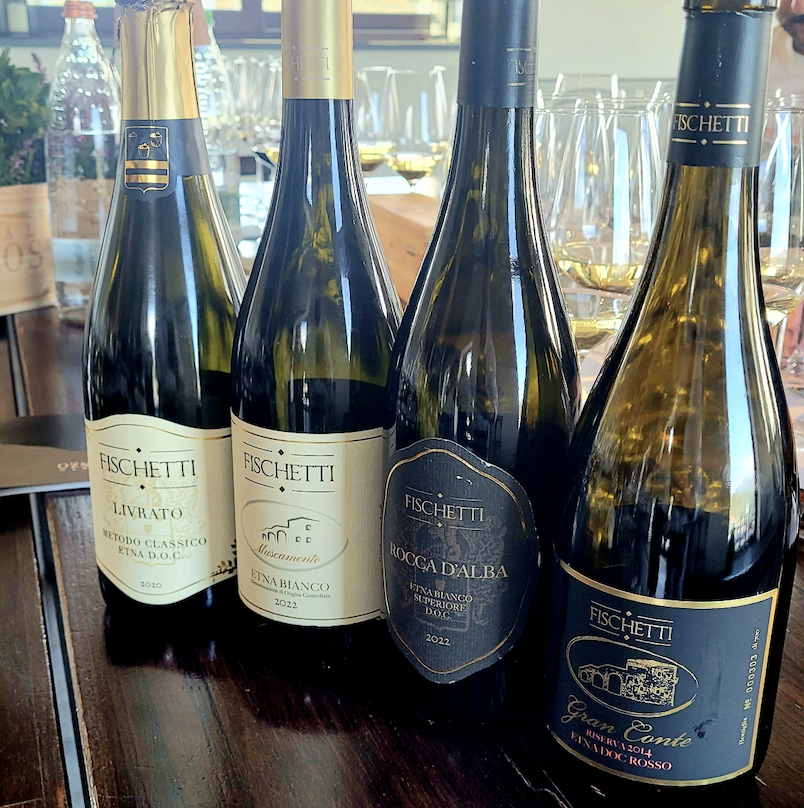
Fischetti Etna Rosso Riserva DOC Gran Conte 2014

An alberello-trained, pre-phylloxera nerello mascalese of century vines. A survivalist, having been through at least one world war. A mature, oxidative and fully resolved Rosso in secondary character with no going back. Gifts that old Amarone feel without the jam or density, but age has put this in a known time frame for they who fully appreciate old wines. Freshness is not part of the package. This ’14 is the current release and once again 700 bottles are produced. Drink 2024-2026.  Tasted September 2024

Frank Cornelissen Etna Rosso DOC Munjebel 2021

As per the explanation of the erudite gentleman from Houston (by way of San Diego) the meaning of Munjebel informs us to be a “dialectal toponym for Mt. Etna and by the way akin to the Sicilian Muncibeddu or the Italian Mongibello, meaning monte bello or beautiful mountain.” And so it truly is in Etna Rosso form, of a purity and clarity that bemuses but also pleases us so. Chewy Rosso with that natural settling on the palate like a savoury salve slowly dissolving without dissipating or disappearing from consciousness. Stays with our thoughts and feelings for a good long time. Fine 2021, as expected and confirmed without a single moment of having conformed. Drink 2025-2033.  Tasted September 2024

Giovanni Rosso Etna Rosso DOC 2021

Quite the bright and ultra fresh nerello mascalese number with what feels like fruit taken from young and impressionable vines, and as of yet to deliver full out structure. Easy access, fresh and free drinking, no big questions posed and a Rosso that simply drinks really well. The length and consistent presence of flavours and textures speak to the maker’s affinity with mutually relatable red varieties, in this case nerello’s spiritual and physiological connection to nebbiolo. Then again Davide Rosso’s work with both Domaine Jean Grivot and Domaine Denis Mortet have no doubt influenced and introduced the treatment of pinot noir towards his work with mascalese. Drink 2024-2027.  Tasted September 2024

Girolamo Russo Etna Rosso DOC ‘A Rina 2022

A very warm and dry vintage making for a taut, chalky and savoury nerello mascalese (with 10 percent cappuccino). This next ‘a Rina takes off where 2021 left off and only Feudo is as consistent an Etna Rosso as this. Chalky red cherry, a leathery aspect and drying tannins that speak about 2022 in both toasty and positive ways. Crisp ’22, of bay and liquorice, salty volcanics and good length, though not in the league of Feudo and San Lorenzo. Drink 2025-2030.  Tasted May and September 2024

Girolamo Russo Etna Rosso DOC San Lorenzo 2022

The gifts of San Lorenzo are of a slow release ilk the other cru and vineyards of Girolamo Russo are not, but this from 2022 is so full of riches it brings early joy. A great pleasure to have a glass even now with gregarious perfume and readied flavours, of red berries, liquid chalky to candied palate swaths and immediacy from this bottle of wine. San Lorenzo shows off the most glyercol and silken texture – it’s almost candied but of course it’s not. Spicy on the back side, sneakily structured and all the while with a glass we’re feeling fine. Can only improve and integrate with a couple of years time. Drink 2025-2030.  Tasted May and September 2024

Girolamo Russo Etna Rosso DOC Feudo 2022

From the highest section in the Feudo di Mezzo vineyard, bush vines, very old. Delivers ultra light and conversely powerful di Mezzo freshness, but from this elevation at a much higher rate and with an extension of vibrancy plus energy. More verticality and sweetness of nerello fruit like almost no other. Resides in a state of grace upon the palate and though it hovers just a millimetre above, there still feels like the fruit, acidity and finest tannin are collectively making full contact. Remarkable. Drink 2026-2036.  Tasted May and September 2024

Graci Etna Rosso DOC 2022

From estate vineyards at 650-750m, fermented and aged for 18 months in concrete though once in a while a little bit of big barrel is used. Linear, stoic, restrained and serious Etna Rosso for Rosso’s sake but also trenchant intention. Crispy and crunchy, vertical and youthful. Fresh, even a bit reductive, so peppery and a year away from that open window. Drink 2025-2029.  Tasted May and September 2024

Graci Etna Rosso DOC Arcurìa 2021

The home vineyard, great vintage and that should not be questioned because frankly it simply can’t be denied. If nothing else the intensity of purpose comes through from the start. More depth and crunch, further concentration and breadth, still austere and working through its tasks, machinations and intentions. Big wine from 2021. Drink 2026-2033.  Tasted May and September 2024

Graci Etna Rosso DOC Arcurìa Sopra Il Pozzo 2019

Longer maceration because these are stems that ripen better than anywhere else and so Alberto Graci tastes and decides how long to go. Usually 60 days and 2019 was right around that number. You can feel them, mostly though not 100 percent ripe and yet that savoury-verdant note works so well to create a spice mix and seasoning that extends the breadth of the fruit. Do not come here for heavy concentration or weight because there is restraint but also expect some austerity. Really needs time and will eventually settle into it’s technicolor skin. A compact wine that will deliver a slow release of energy. Drink 2026-2035.  Tasted May and September 2024

La Gelsomina Di Colombo Maria Adalgisa Etna Rosso DOC 2021

A blend of 80 percent nerello mascalese with (20) nerello cappuccio, raised in 500L cask. Ascends with warm grape must character, fresh fig and tree pod fruit. On the warmer and darker side for Etna Rosso, already into some maturity with an almost Ripasso-like feel on the palate. Less typicity for Etna Rosso without a real sense of place. Either the grapes need to be picked (even) earlier or the winemaking will need to scale back and press as gentle as possible. Times have changed. Drink 2024-2025.  Tasted September 2024

Massimo Lentsch Etna Rosso DOC 2021

Spice and resins on the aromatics, wood-derived and unresolved. Earthiness, of fresh laid sod and a chalky undercut of stone. A bit rustic, as they say. Drink 2025-2027.  Tasted September 2024

Sebastiano Vinci – Mecori

Mecori Etna Rosso DOC Contrada Muganazzi Duo 2022

They are Serena & Sebastiano, Mecori’s “Duo,” reiterated from the special Muganazzi Contrada and vines planted in 1927 as a reductive one, protected and insular, unresolved and therefore undefined. Air is a friend of this nerello mascalese from one (soon to be two and a half) hectares and agitation an even more important accomplice to release what charm lays low and behind. There is real richness and layering beneath the shell which more than accidentally and incidentally defines the contrada and what it can achieve. Spicy and spiced, chalky, massively tannic and the kind of structure few Etna Rosso are wont to hold. A big wine so far away from ready, currently grippy and austere, tension in charge and time the operative to effect any kind of significant change. Average production is 4,000 bottles, soon to reach approximately 10. Drink 2026-2034.  Tasted September 2024
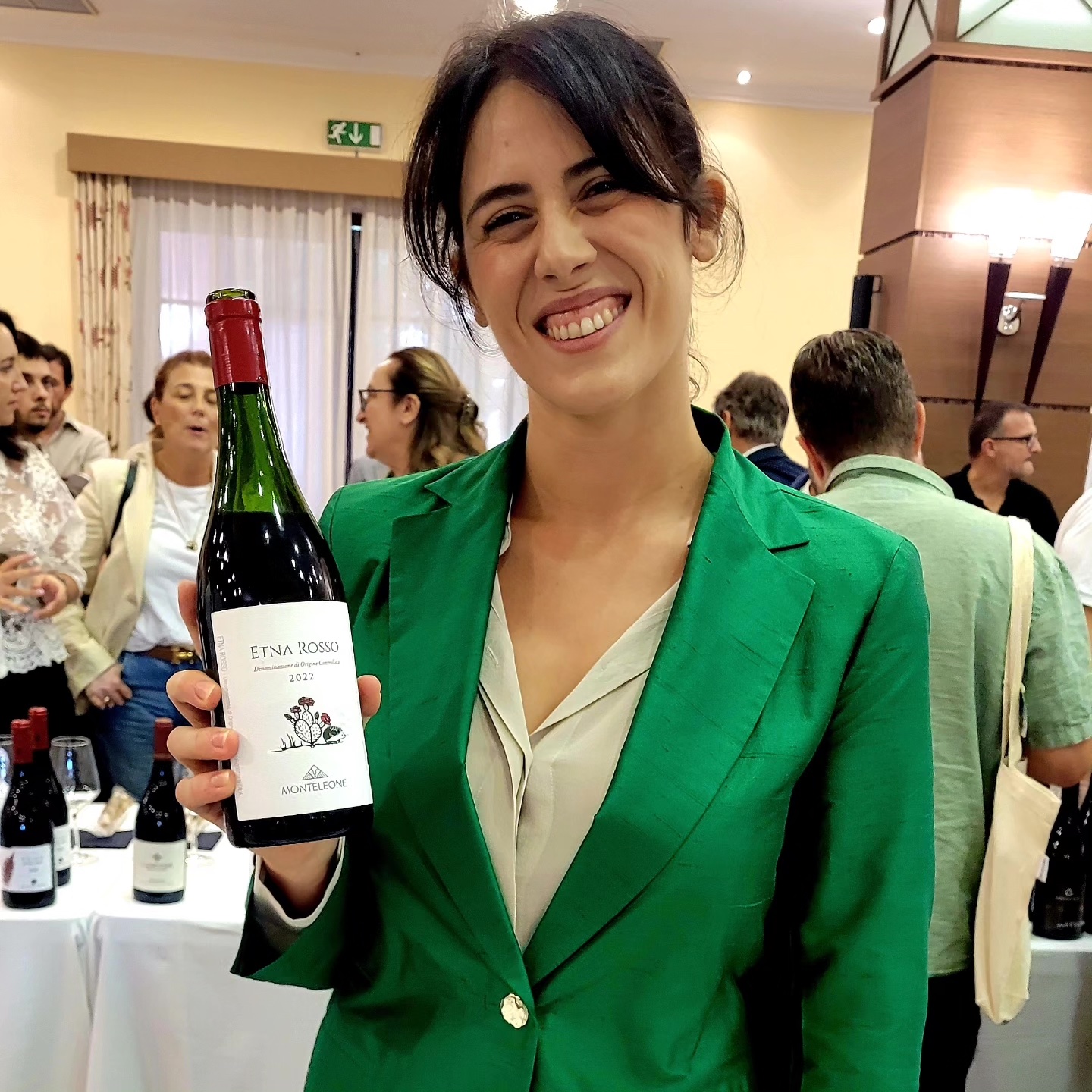
Giulia Monteleone

Monteleone Etna Rosso DOC Monteleone 2022

Fine perfumes and just as promising spirit turn upwards with even further generosity from an Etna Rosso of fruit as pure as any. A wine of harmony and like a well-written song sung with grace. Not the most complex or complicated Rosso but who would not bask in the glow of a glass any place and any time. Clarity and purity are what matters for Etna Rosso with its feet on the ground. Drink 2024-2027.  Tasted September 2024

Monteleone Etna Rosso DOC Rumex 2022

Rumex, a.k.a. Dock or Sorrel, a perennial culinary herb. Also Rumex, Giulia Monteleone’s sister Rosso to Qubba, of 100 percent nerello mascalese grown at 680m in the volcanic sand and gravels of Contrada Pontale Palino. The vineyard is a natural “clos” encircled by Sciara (mounds of magmatic scoriae formed along lava flows). Rumex is not Qubba what with its brighter entry but also high tonality and elevated acidity. This also means volatility, in check and important for the style and effect of this Rosso. While Qubba is a Rosso for which to peer through ornate windows, Rumex offers a converse approach with much to chew and mull upon, many facets to look deeper into, parts to unravel and feelings to unlock. Must wait two more years before more answers are provided. Drink 2026-2030.  Tasted September 2024

Monteleone Etna Rosso DOC Qubba 2021

Perhaps the most famous Islamic architectural example of a Qubba is the Green Dome in Medina, a cupola-shaped shrine built in 1837. In a way Monteleone’s Qubba feels like the representation of Giulia Monteleone’s short history aboard Versante Nord, a journey that began in 2017 and perhaps this Rosso’s extra year in bottle has contributed to the story. A nerello mascalese from a fine vintage that has come to a very great place. There is charm but even more so there is depth to this ’21. A structured wine just about arrived though not quite ready to open its doors and yet we feel like we are peering through the stained glass window of Jerusalem’s Qubba al-Sakhra. Or more realistically the nerello’s aperture but this is clearly coming from fine northern Etna terroir that ripens fruit, maintains acidity and give generously of its vines. Fully developed flavours, plenty of grip and many years are left to give. Drink 2024-2029.  Tasted September 2024

Palmento Costanzo DOC Etna Rosso Nero Di Sei 2021

Nero di Sei 2021 comes quicker to the point with near-immediate gratification because of vintage and also by way of the team allowig and even encouaging this to happen. Or abided more like it, with red berry fruit aromas that nerello mascalese can gift when the conditions are right. This is not to say that 2021 will fade into early light because it is in fact equipped with volume, concentration and backbone. A truly exceptional vintage that will appeal to all. Drink 2025-2030.  Tasted September 2024
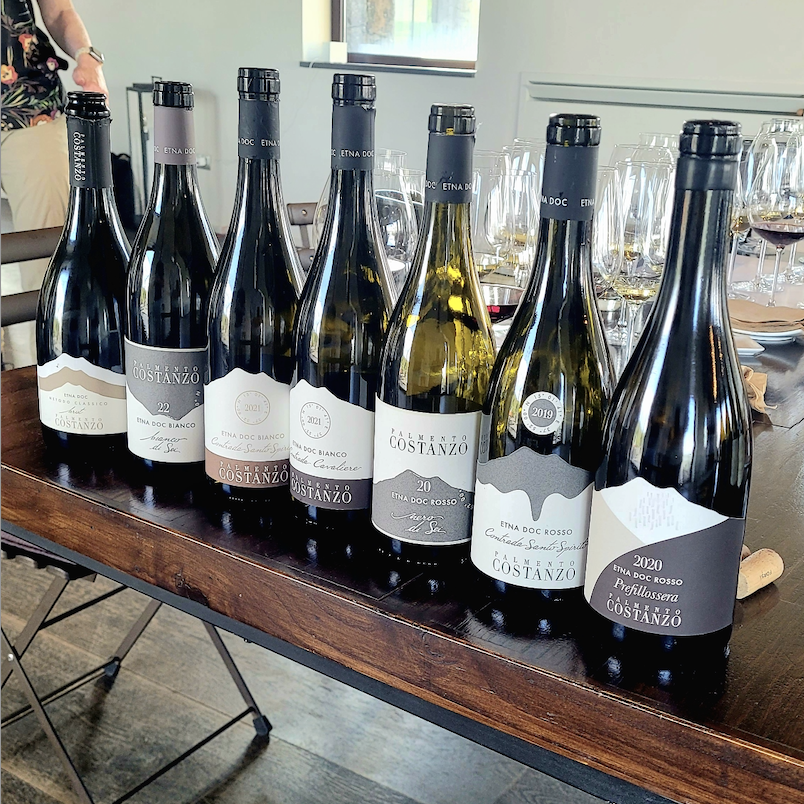
Palmento Costanzo DOC Etna Rosso Nero Di Sei 2020

A nerello mascalese that sees 24 months in the troncone wooden vats from a vintage with its specific challenges but there is volume and depth. A Rosso that draws from all the available plots farmed by Palmento Costanzo. Spice and that feeling you get when you bite into dried fruit tree pods like bokser or carob. The finish is Etna balsamico, a mix of wild fennel, oregano and mint, but also some other dusty gariga.  Last tasted September 2024

Spicy and floral, aromatically crisp and taut, wood a factor with plenty of seasoning. A bit sappy and edging into tang with flavours quite sharp and also dense but time will settle the score for all parts involved. A big and inky version of Nero di Sei and one to really sink your teeth into. Wait two years to do so. Drink 2025-2028.  Tasted May 2024

Palmento Costanzo Etna Rosso DOC Contrada Santo Spirito 2020

Always promising and spirited Rosso from the combination of producer and place which take full advantage of both its elevation and particular lava flow to effect beauty and age-ability. A swirl of glycerol comes away from sweet perfume and leads toward real time austerity to indicate not only a wine of substance but also one of aging probability. The concentration is buoyed by acidity and tannin in the ways of top shelf Etna Rosso. Fine vintage and work from the Palmento Costanzo team. Drink 2025-2032.  Tasted September 2024

Palmento Costanzo Etna Rosso DOC Contrada Santo Spirito 2019

Three further months in and no further changes or gains but just the status quo of primary fruit and a Rosso come from vineyard health with thanks to organics and this 1879 eruption derived volcanic terroir.  Last tasted September 2024

Evolving nicely, now nearly ready to go, fruit still fresh enough and structure beginning to subside. A full bodied Etna Rosso from Santo Spirito in delivery of what the contrada and the vintage held in hand.  Tasted May 2024

A vintage out of which the pre-phylloxera was produced from the contrada so just imagine the possibilities as they come from this all in for the vintage nerello mascalese. Feels like an extended maceration because the glycerol and unctuous textural pool are both at the crest of Etna Rosso heights. Oranges and cherries but more than anything old vines spirit and what just happened from out of these volcanic sands carried through to century and a half vines is something wholly and unequivocally other. Hints at balsamic reduction but the tannins and also acids are so fresh and so years is what it will take to take this anywhere new. The finest chalkiness imitates the soil and puts this in a league with some of Italy’s most important red wines. Up to you too decide which they are or don’t bother at all. Drink 2025-2034.  Tasted May 2023

Palmento Costanzo Etna Rosso DOC Contrada Santo Spirito Pre Phylloxera 2020

Same grapes, different style of vinification from the pre-phylloxera section of the vineyard, therefore from material grown on the oldest vines. The extended skin contact is followed by a great and instructive polymerization of the phenolic compounds and when the skins sink down in the troncone the wine is racked and sent on its way into Stockinger Foudres. The tannin quality from the grapes coming off of old Santo Spirito vines are a velvet crush of plush fortified by exquisite volume. The wine moves fluidly and in harmony from start to finish, pausing only to see if you are paying full attention, then continuing to command attention seemingly without trying at all. Rosso this fine is deserving of its own place and time. Drink 2025-2035.  Tasted September 2024

Papa Maria Cuore Di Marchesa Etna Rosso DOC Cuore Di Marchesa 2020

The work of Pietro di Giovanni who also happens to be the oenological consultant to La Gelsomina. Papa Maria refers to first name and surname of the maternal grandmother and Pietro has been producing Cuore di (Contrada) Marchesa since 2016. From nerello mascalese grown at 750m near to Solicchiata with a look at varietal character in the vein of nebbiolo and sangiovese but the aging here is one third each steel, tonneaux and amphora. There is some depth to its hue but also proper Etnese transparency and being 2020 there is a sense of maturity on the nose. Amphora will add such an element, not to say the Rosso is passing over into secondary character but it is made with a specific style. Wood spice and amphora texture make this unique, again because Pietro di Giovanni is a winemaker free to choose his whimsy. Drink 2024-2026.  Tasted September 2024

Papa Maria Cuore Di Marchesa Etna Rosso DOC Cuore Di Marchesa 2019

The work of Pietro di Giovanni who also happens to be the oenological consultant to La Gelsomina. Papa Maria refers to first name and surname of the maternal grandmother and Pietro has been producing Cuore di (contrada) Marchesa since 2016. From nerello mascalese grown at 750m near to Solicchiata and 2019 show no further maturity as compared to 2020. Speaks not only to vintage but Pietro di Giovanni’s abiding by his contrada and climate. The vineyard is small (1.5 hectare) and the yields extremely low (4 tonnes per hectare). There is surely a style and an honesty here though with time these wines should become exceptional when they are designed with a just bit more restraint. Drink 2024-2026.  Tasted September 2024

Passopisciaro Etna Rosso DOC Passorosso 2022

Properly reductive, a redacted quality to hold back the tears and also the years. Concentration and aura are the cards held up by the artistic austerity held out with the final hand yet to play because bets are still arriving on the table. My goodness what structure and intensity so please, stay focused and patient because many years are needed to settle the score. Drink 2026-2032.  Tasted September 2024

Pietradolce Etna Rosso DOC 2020

Fine perfume, handsome and inviting to set this up as a muscular yet taut and lean Rosso. Reductive and herbaceous, such a savoury and earthy example of a place within a place. Tannins are somewhat austere and gritty but they should settle and resolve. Palate presence does not follow a direct line from aromas but again, time will bring them closer and eventually together. Drink 2025-2028.  Tasted September 2024

Pietradolce Etna Rosso DOC Santo Spirito 2020

The 2020 nerello mascalese from Contrada Santo Spirito is a meaty and gamy bruiser, sanguine and yet lifted with some fine volatility to nose. The right amount because the aromatic volume, palate depth and tannic freight are all equal partners working towards a common goal. That would be a full-bodied Etna Rosso with the stuffing and planning to age very well. Drink 2025-2031.  Tasted May and September 2024

Pietradolce Etna Rosso DOC Barbagalli 2019

A unicorn Etna Rosso and here from 2019 there has been some development though the wine is still ways away from full integration. Talking formidable structure, inclusive of tannins of a tight and variegated grain, running crosswise and painless because they usher fruit and urge acidity to always be a part of the fray. A total weave of Rosso sentiment, bringing emotion and pleasure without fail, to exult a vineyard as special as any in the world. One only need to stand over it to understand its power, insistence on restraint and the keys to unlock potential. Will turn heads and remain in light for a good long time. “Facts are nothing on the face of things. “Still waiting, still waiting, still waiting, still waiting.” Drink 2026-2037.  Tasted May and September 2024

Planeta Etna Rosso DOC 2022

Not a contrada specific Etna Rosso but more than 70 percent comes from Feudo di Mezzo in Passopiciaro. As juicy and glycol notable Rosso as there has ever been and silken would best describe the quality felt aboard the more than pleased and nurtured palate. Another wine that improves each vintage under the guidance of Patricia Tòth, in part because her favourite dogs hang around that winery next to the vineyard. Also because her experience and abilities have come to a most profound place. Love the spice masala on the finish. Drink 2025-2033.  Tasted May and September 2024

Quantico Etna Rosso DOC 2018

“Tough vintage,” admits Giovanni Raiti, with rain at harvest in October and lots of it. Selection was essential, careful maceration and pressing as well. What has resulted is a glycerol glide through texture incarnate with a fab silken palate holding court and more concentrated strength than thought possible. A wine to nose quickly and move forward to linger on that mouthfeel. Drink 2024-2027.  Tasted September 2024
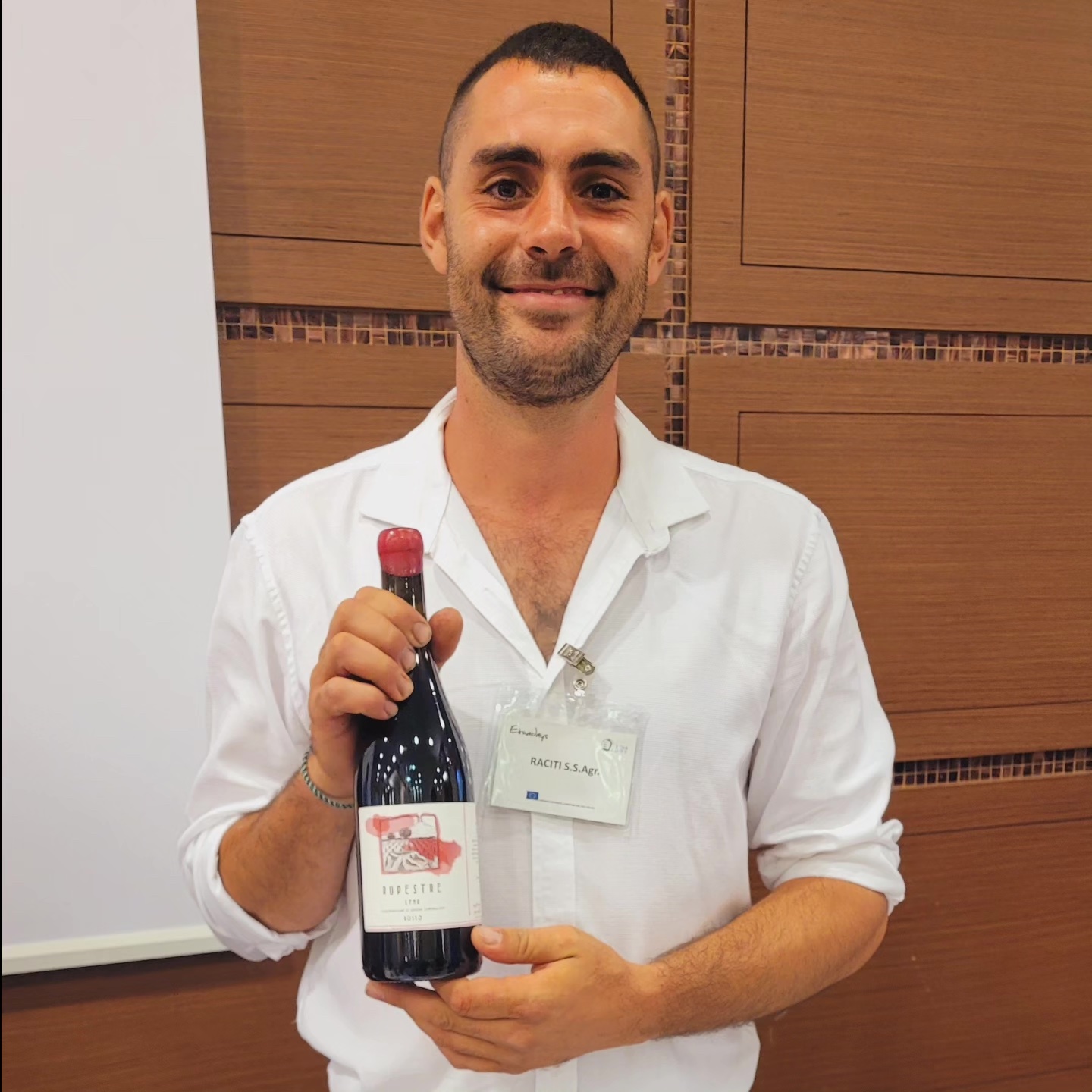
Rosario Raciti – Rupestre

Rupestre Etna Rosso DOC 2022

The name Rupestre refers to the 3,000 year-old Palmento found on the estate’s site in Contrada Pietramarina and the word essentially means “ancient.” Rosario Raciti worked in Portugal, Spain, New Zealand, Australia, Tuscany and Puglia before returning to the family farm in Castiglione di Sicilia. The style is so very much Rosario’s, reductive and closed, yet from Contrada Pietramarina the glycerol, silky organza texture and length are what make the case for potential greatness out of such a wine. Again vine age is less than 20 and so the best days are still to come. Drink 2025-2029.  Tasted September 2024

Rupestre Etna Rosso DOC 2021

This just the third vintage for Rosario Raciti’s Etna Rosso from Contrada Pietramarina in in Castiglione di Sicilia. A perfumed nerello mascalese, unadorned and pure with glycerol marking the mouthfeel. Sweet and savoury spices and just a lovely natural swirl to not just the fruit but the whole composition. Drink 2024-2026.  Tasted September 2024
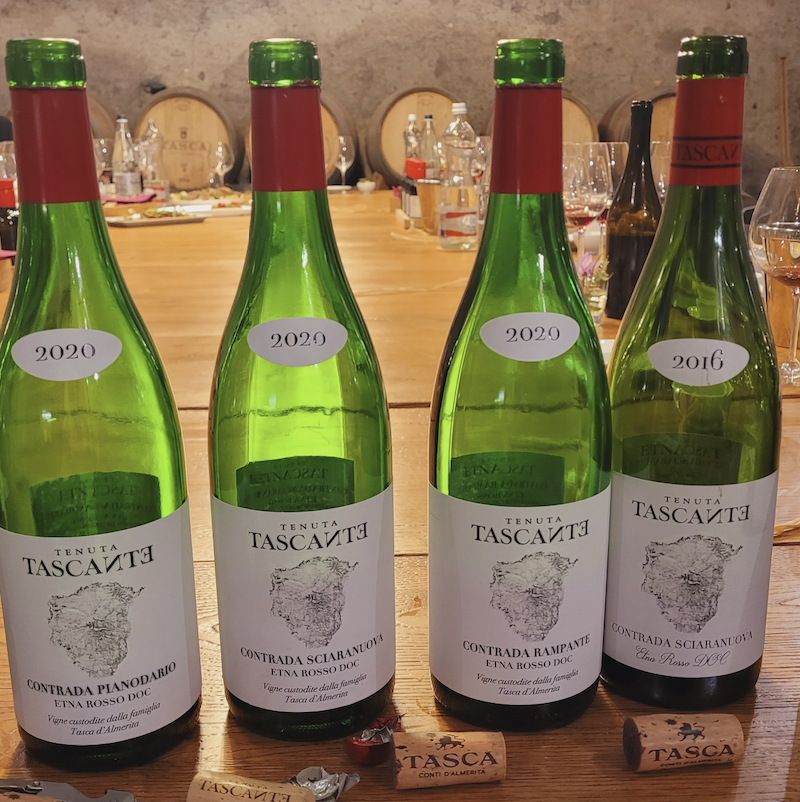
Tasca d’Almerita Tascante Etna Rosso DOC Contrada Pianodario 2020

Lighter of body but not aroma as it now enters with the volume turned up, a feeling of idiosyncrasy and high-level curiosity. Wild and exotic spicing owing to a 17th century lava flow now in a state of degradation to make certain the nerello mascalese growing in its sands are the recipient of its mineral profile.  Last tasted September 2024

High-toned, spirited and transparent nerello mascalese from Tasca’s L’Etna Tascante out of Contrada Pianodario. Red berry shine, acids excited and fruit a willing participant. Tarragon and Basil herbal, so very basaltic stony and truly a wine of place. Crunchy and ever so slightly resinous with balsamico mixing into the sweetness of fruit and acidity. Drink 2024-2029.  Tasted May 2024

Tasca d’Almerita Tascante Etna Rosso DOC Contrada Sciaranuova V.V. 2020

Old Sciaranuova vines are the impetus for concentration and experience in this soil-driven contrada specific Rosso for Alberto Tasca’s Tascante of L’Etna. A wholesome, fulsome and fully formed Rosso with the verity of a nerello mascalese-ness here that delivers the entirety of mountain experience with earthy, austere and drying tannins sure to elevate the long term goal and gain. Big Rosso but one of medium body that sets its heights and peaks to points achievable and five years forward will see real things indeed. Bravo to the team for getting this estate and this wine to where it needs to be. Drink 2026-2033.  Tasted September 2024
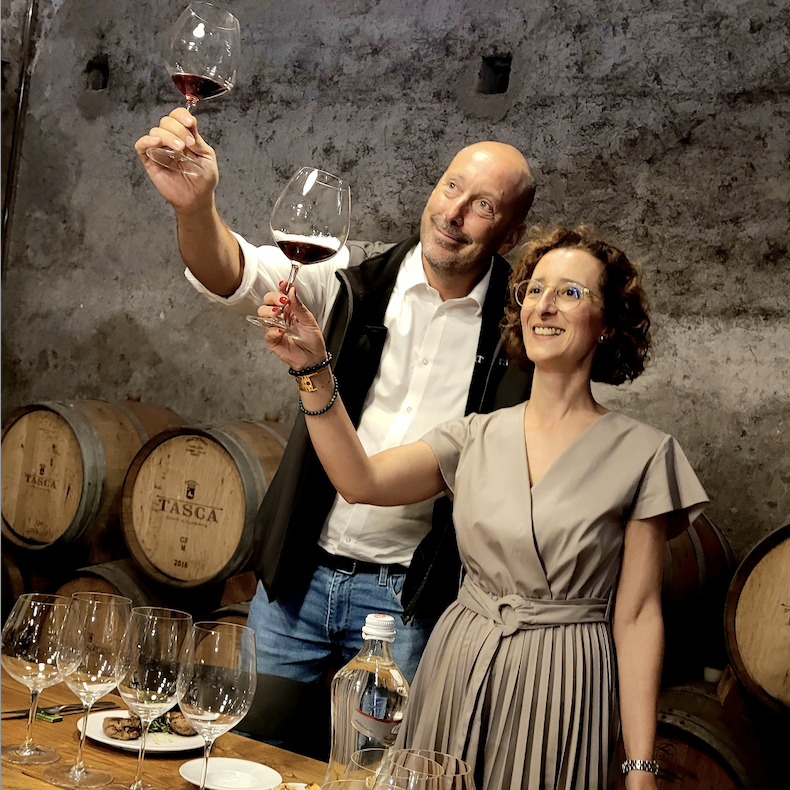
Michele Brusaferri and Vittoria Cerniglia – Tasca d’Almerita Tascante

Tasca d’Almerita Tascante Etna Rosso DOC Contrada Sciaranuova V.V. 2012

The inaugural vintage for the Tasca family’s Etna project and a more intense result because of initial experimentation with longer macerations. A very promising and in retrospect top quality but also age-worthy vintage, with lingering freshness battling against developing cherry stone bitters. As for overall maturity the ’12 has hung in admirably though wood and the pressed style have added up to this. Drink 2024-2025.  Tasted September 2024

Tasca d’Almerita Tascante Etna Rosso Doc Contrada Rampante 2020

Rampante is the biggest and broadest of the three Contrada Tascante, less ethereal and with more gainful force but it does so with impressive pronouncement. A comparative study however and still thus Rosso is transparent like its brethren. The fullness is a matter of contrada soil and subsequent style. Really quite unique for Etna Rosso, glycerol and silken texture in delivery of mouthfeel that few others will gift. Rampante yes but also Tascante, a way of raising and looking at nerello mascalese fruit with an eye to expression and fineness of tannin. There is some grippy austerity in the last part of this Rosso but one can’t help but feel the promise in its ways. Should age beautifully for 10 years easy. Drink 2024-2034.  Tasted September 2024
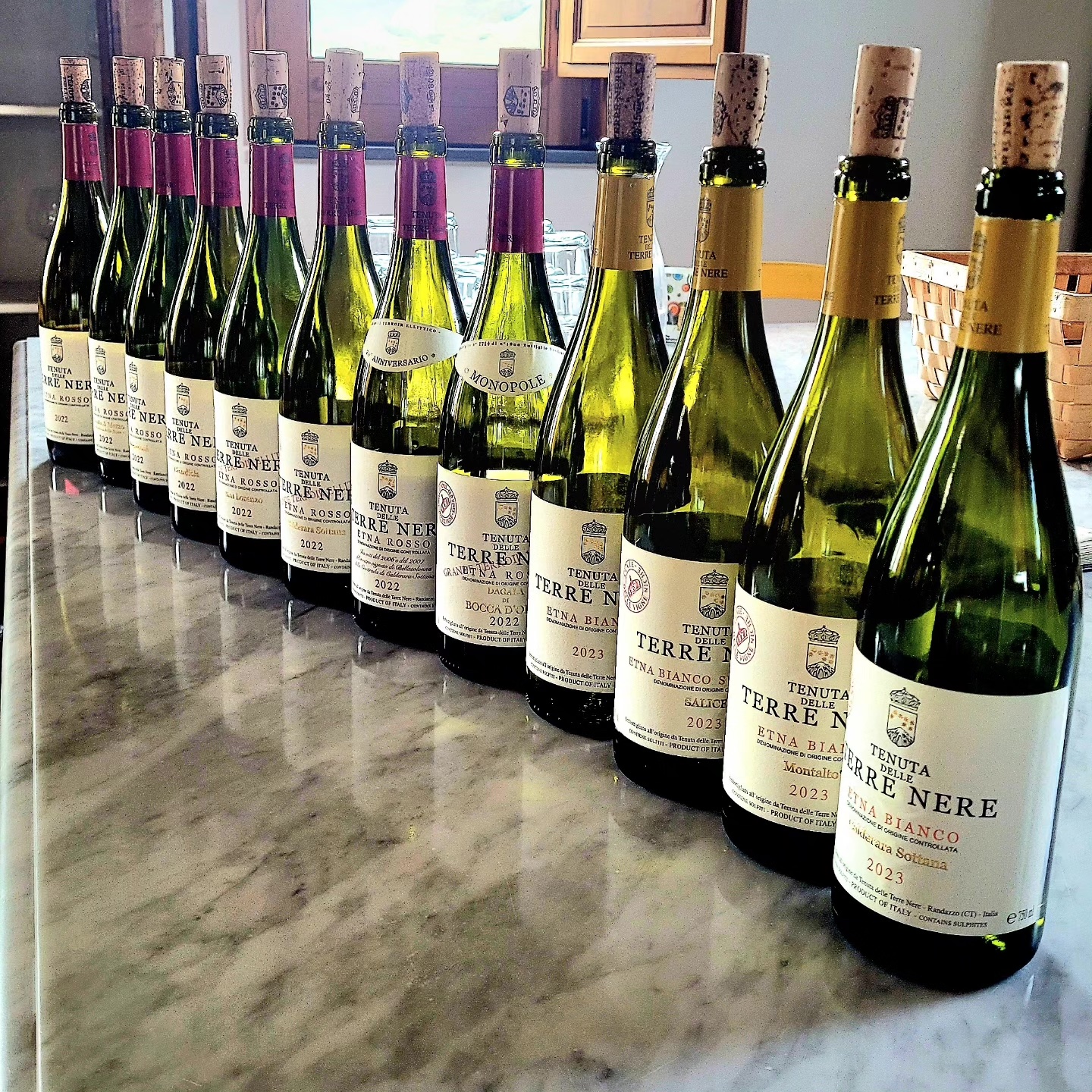
Tenuta Delle Terre Nere Etna Rosso DOC 20° Anniversario 2022

A single contrada Rosso from Terre Nere from the young vines within Calderara Sottana, to celebrate Marc de Grazia’s 20 years of delivering nerello mascalese from his Etna estate. “The young vines have a vigour and an enthusiasm,” he says. “Bless them.” A blend of these precocious parcels and a cuvée that he surely feels is representative of what has been accomplished thus far, without diverting too far way from what has already been done. Their cumulative hue is always lighter and brighter than the rest of the wines. A fine design and effort that stays true to purity and finesse. Fine wine indeed. Drink 2024-2027.  Tasted (twice), September 2024

Tenuta Delle Terre Nere Etna Rosso DOC 2022

Aged 18 months instead of the usual 12, which the reds will almost always receive going forward. “The son of our vineyards and also neighbours that follow our protocol,” explains Marc de Grazia, “or those who are so good in their’s they don’t need to follow our protocol.” Fine introductory lesson in Etna Rosso now in session. Not so much a dictionary entry but more like the instructor itself to test our mettle and knowledge, to see if we are paying attention and gaining what we need to now and feel. Bright red fruit, some grip and structure with tannins that dry with preferable, positive and proper distinction. A wine that will see the single contrada wines of Terre Nere move from strength to strength. “A watershed vintage” says de Grazia. “The finest (non single contrada) Rosso we’ve ever made and will improve with age.”  Last tasted September 2024

The “Villages” Rosso, blending youngest vines fruit from the various 50-plus parcels comprising half of the total production, including some cappuccio. There could be some montellado and other smallest quantities of red grape varieties involved. Interesting in that this effects a richer and naturally sweeter character than most Contrada or Cru wines. So getable and crushable, also a dictionary entry and teaching moment for what it means to be and taste like Etna Rosso. Drink 2023-2026.  Tasted May 2023
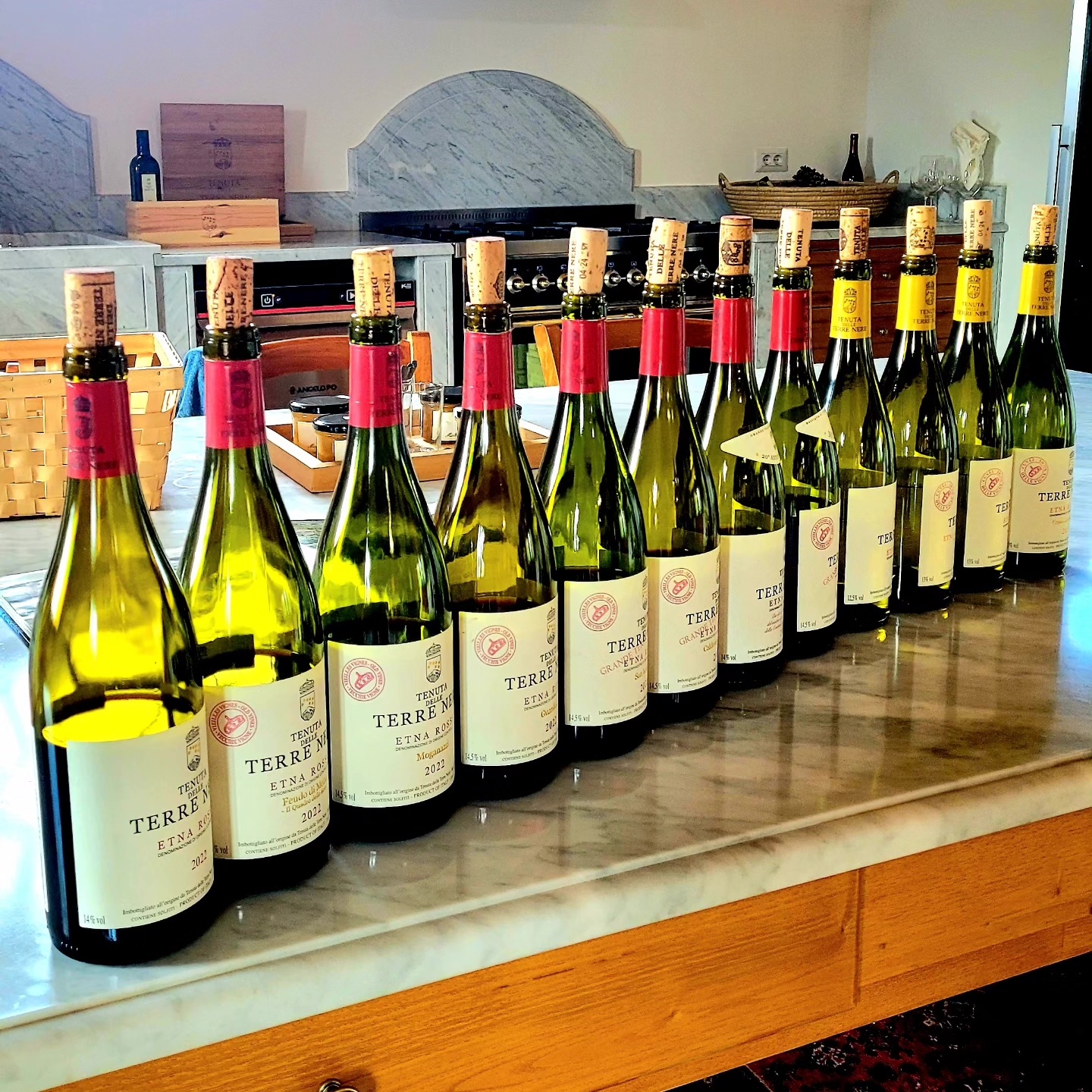
Tenuta Delle Terre Nere Etna Rosso DOC Feudo Di Mezzo 2022

Always the first to be harvested, almost certainly on October the 4th, give or take a few days of course. “Begins with harmony when young,” tells Marc de Grazia, “and born perfect.” Not entirely true and yet also not disengenous to say that because it will age extremely well. Yes 2022 is pretty, immediately gratifying and seductively perfumed already. Underneath are layers of feudal structure that may lay low below, unseen and unspoken, but they are there. The nerello mascalese equivalent of a hierarchical social structure characterized by a small ruling set of tannin over fruit peasantry working in exchange for protection. Maybe half the grip as compared to the other single contrada Etna Rosso but do not sleep on this subjugating power. Needs two year to initiate its integrations. Drink 2026-2032.  Tasted September 2024

Tenuta Delle Terre Nere Etna Rosso DOC Moganazzi 2022

Moganazzi is a bit further east and slightly higher in elevation as compared with Feudo di Mezzo. All terraced, 70 year-old vines at 650-700m. Three parcels combining for one vineyard on the same hill. Marc de Grazia purchased them one at a time and he sees this wine in the vein of say Pommard or Nuit-Saint-Georges. In other words grip that needs two years to “mellow and obtain its luminosity.” True spirit of Etna Rosso’s grace and charm with as lithe and bright nerello mascalese as ever there could be. Fragrance and kick. Moganazzi is all that and secretly austere within the construct of its fine demure. A Rosso that makes you think but even more its makes you feel. Terrific emotion, control, concentration and expressiveness. Amazing wine. Drink 2025-2034.  Tasted twice, September 2024
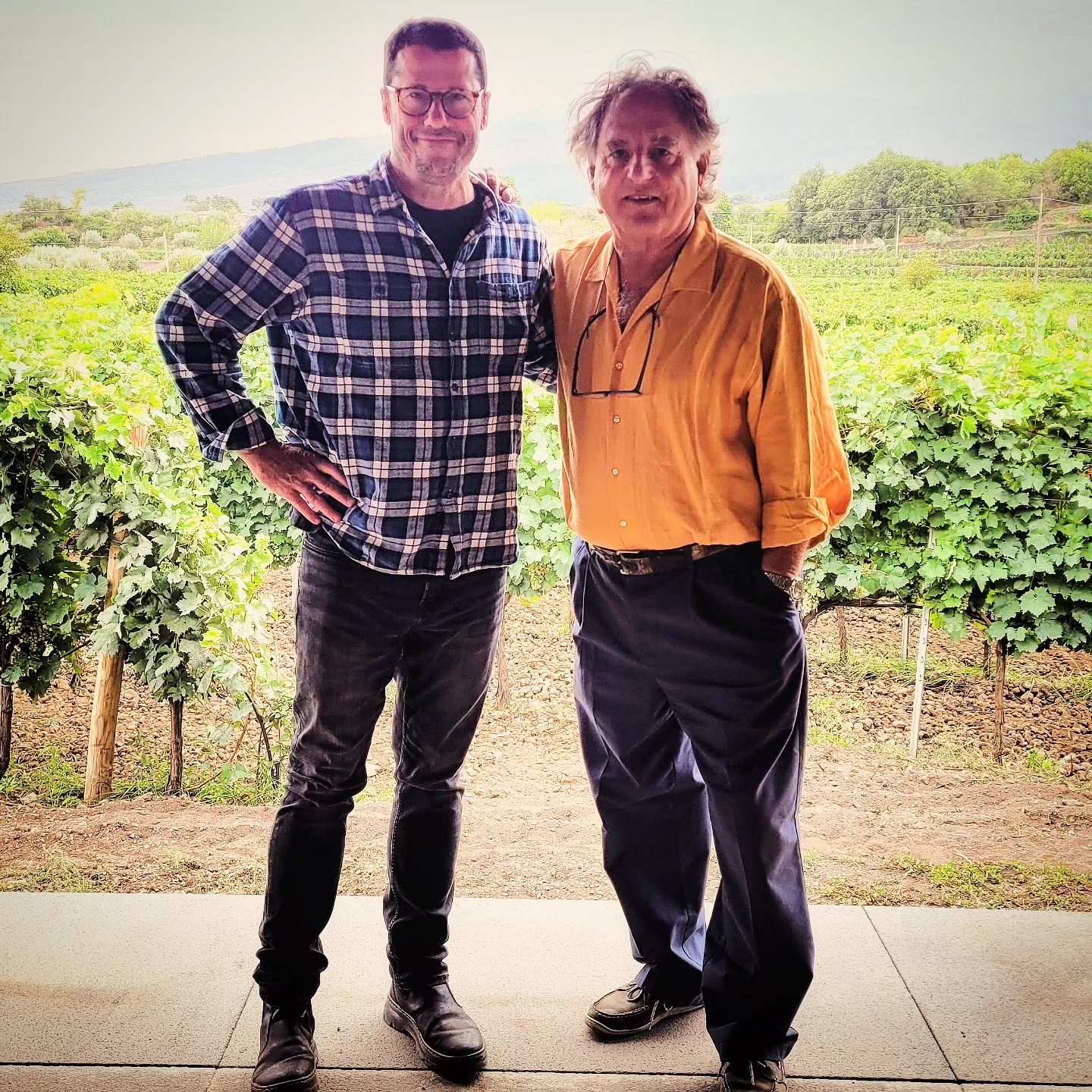
With Marc de Grazia – Tenuta delle Terre Nere

Tenuta Delle Terre Nere Etna Rosso DOC Guardiola 2022

Marc de Grazia considers Feudo di Mezzo and Moganazzi to be Premier Cru and while some producers feel that Guardiola is Grand Cru, he begs to differ. “Somewhere between the two,” he says. On the right hill and yet not quite there, maybe like the split opinion on Monte de Tonerre. Elevation up in the 900s transmits up as aromatic heights, expanse of perfume and yet also this sense of maturity. “A soprano of Rosso, a separation of crus with identity that implies discretion.” Refinement but also tannins that are compact, austere and like the bouquet, irreplaceable, in other words, not replicable. Drink 2026-2035.  Tasted September 2024

Tenuta Delle Terre Nere Etna Rosso DOC San Lorenzo 2022

From 70,000 year-old soils which makes a connection with other Rosso raised on the same terroir, like Calderara Sottana. A place that consistently provides quality for fine wines, from Premier to Grand Cru. This is the oration from Marc de Grazia who repeatedly uses Bourgogne as the reference point. “San Lorenzo of all the wines is the one that requires more patience,” says de Grazia. “To reveal its glory.” There is an aroma that reminds of Guardiola as well, a mix of restrained bursts and maturity which tells us the wine will be more expressive after a bottle is open for 24 hours. Youthful is the understatement. Drink 2026-2035.  Tasted September 2024

Tenuta Delle Terre Nere Etna Rosso DOC Dagala Di Bocca d’Orzo 2022

The tiny vineyard that survived the 1981 lava flow, a parcel that only produces a maximum of 1,800 bottles with a connection to San Lorenzo on the other side of the 100m wide lava swath. An old vines Monopole block dating back a century always made and the one that drinks with immediate distinction, maturity and acumen. Dagala di Bocca d’Orzo also deals in the sneakiest of tannins, more structure than you would surely think and that sort of Etna Rosso that arrives somewhere fast but stays comfortably in the same state for a dozen years. All that said it’s precision and beauty allow us to enjoy its charms straight away. Drink 2024-2035.  Tasted September 2024

Tenuta Delle Terre Nere Etna Rosso DOC Calderara Sottana 2022

What Marc de Grazia considers to be the finest contrada on the north slope and yet there are micro plots within the eight parcels that can only be made into Rosato in humid vintages. This comes from the oldest vines, more than 80 years old and just one look sees a brightness and transparency inciting the senses as they take in a bouquet not having yet nosed in the other Rossi. Calderara Sottana is the most demure, the finest of sound and vision, the one you take in slowest, without haste, to allow unfurling and length to travel as far as it wishes, evocatively so. “It asks delicate questions,” says de Grazia. “Rose petal perfume and tannins that don’t cut off your palate.” Even more is this elastic meander, not aimless but with purpose and our palates follow every step. Like Giuseppe Russo’s (though de Grazia sees little comparison) this provides the exception to so many Etna Rosso rules. Drink 2027-2038.  Tasted September 2024

Tenuta Ferrata Etna Rosso DOC Frevi 2020

From the area of Castiglione at 680m with 100 percent nerello mascalese. Aging in grandi botti for two years and then 10 months in bottle before release. A richness of style, liquorice and dried tree pod fruit, the wood very much in play and acidity less intense than many. A liquid chalky presence on the palate, still needing another year to resolve. Chewy example, confident and a slow delay of fruit, which is never really all that fresh. Drink 2024-2026.  Tasted May and September 2024

Tenute Bosco Etna Rosso DOC 2021

Big French tonneaux, second passage and older for eight months. No recipe but that is this vintage, not as powerful as 2022 and Sofia sees it like 2016, but perhaps a different kind of balance, though not as ideal as 2016. The restrained power of the volcano runs throughout and you really feel it. Remarkable Etna Rosso in balance and of a grace that speaks to all there can be. What these wines are want to express and how they carry themselves, non-plussed, confident and free. The ripeness factor at the top of what is normal and beautiful without excess or greed. Sweetness of acidity and form-fitting structure but neither curves nor angles are exaggerated, nor drawn with any concentric circles or sharp lines. The wine flows and reaches the limits of what is right and proper. Just that much and no more. And we say thank you. Drink 2024-2030.  Tasted May and September 2024

Tenute Bosco Etna Rosso DOC Vigna Vico Pre-Phylloxera 2017

From Sofia Ponzini in the area of Passopisciaro and her cru vineyard called Vico. Own-rooted, pre-phylloxera vines, more than 100 years old, nerello mascalese and also cappuccio. A reminder that 2017 was cooler than most of Italy, especially the centre and north, but still generally sunny and warm on Sicily, including aboard L’Etna. Just now beginning to open and emit its magnificent perfumes, followed by a textural weave of vinous fabrics and finally the much expected, energizing and aligning archetypal volcanic saltiness. Drink 2024-2030. T asted May and September 2024

Tenute Nicosia Etna Rosso DOC Contrada Monte San Nicolò Biologico 2020

A 2020 and so a few years in though the Monte San Nicolò is a bit quiet – somewhat aromatically subdued. Needs some coaxing to see and feel its joy, but fruit nor florals are what drive or cause the beats of the heart. In part because it’s somewhat reductive, of pencil shavings and notable botanicals, like an artiginale tonic water if you get the herbal drift. Solid if currently missing some spirit but time will make a difference. Drink 2024-2027.  Tasted September 2024
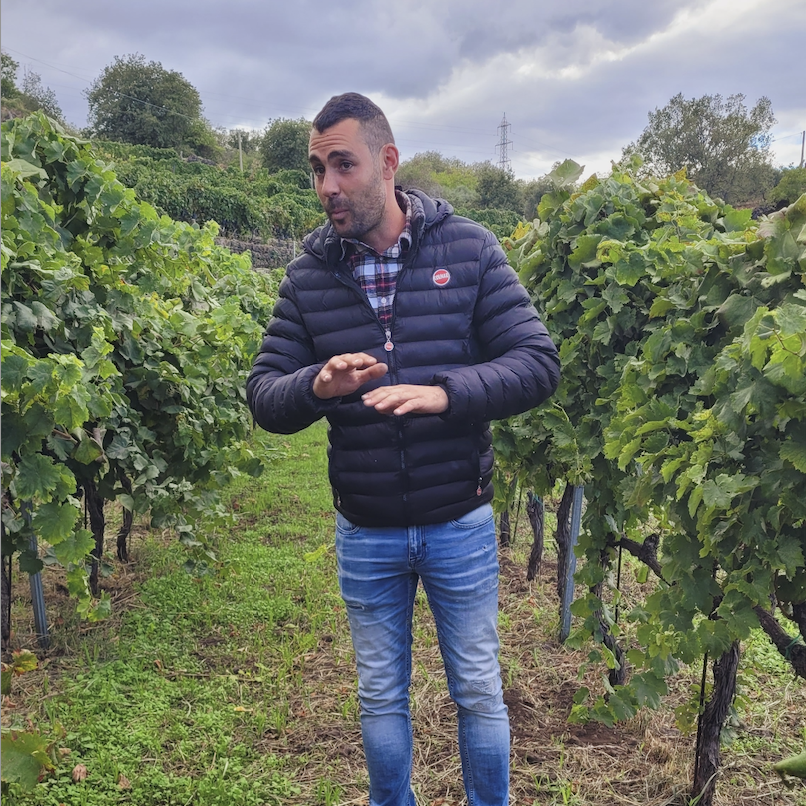
Rosario Raciti – Terre Darrigo

Terre Darrigo Etna Rosso DOC 2022

Proper and correct northeastern Etna road taken in terms of extraction and transparency, A good volume (upwards of 30,000 bottles) that will repeat in 2024 after the disastrous 2023. Real cherry fruit but also the stone that speaks to what Contrada Arrigo is want to lend in mineral terms for nerello mascalese. That mixed with some fruit from other sources but our palates get the drift. Good Rosso that will improve with vine age and agronomist/winemaker Rosario Raciti’s familiarity with this farm. Drink 2024-2027.  Tasted September 2024

Terre Darrigo Etna Rosso DOC C. da Arrigo 2022

Etna Rosso from the single contrada (Arrigo) where Terre Darrigo’s amphitheatre grows nerello mascalese in a most beautiful rustic setting on southeastern facing, tightly packed terraces between the volcano and the sea. You can feel the great difference between this wine and the classico Rosso though if you are from this place you say it with sentito, that is with feeling, shouting out this is “the wine from L’Etna!” This single contrada wine elevated from that appellative discourse, softens the bitter cherry stone and smooths transitions. This because it’s a very well made Rosso from a place of great potential. Drink 2024-2027.  Tasted September 2024

Tornatore Etna Rosso DOC 2021

The most understandable and straightforward Etna Rosso there could be, mature and layered, of riches and earth, fruit and soil all in the mix. A volcanic paint by numbers canvas of realism and beauty, easily accessible and generous to a perfectly reasonable degree. Entry point for the DOC and once in, never to look back. Drink 2024-2026.  Tasted May and September 2024

Tornatore Etna Rosso DOC Pietrarizzo 2020

Some very ripe fruit here from Tonatore’s Pietrarizzo Rosso in the ways of late picking and good solid pressing. Makes for a chewy nerello mascalese that will ready itself for consumption quite a bit earlier than quite a bunch of its peers. Plenty of flavour and attraction for a wine that should be consumed over the next three years.  Last tasted May and September 2024

North slope of Etna cru of nerello mascalese put to 50hl foudres, blended and then settled in concrete ahead of bottling. Consistently one of the finer Rosso values in Contrada-specific Etna and here the fruit ripeness and maturity is as fulsome as it ever gets. Makes for a drink really early proposition and provided that advice is followed there will be perfume, heady flavours and good acidity in your glass. A wine to lead off high-end tastings and dinners here, there and everywhere. Drink 2023-2025.  Tasted November 2023
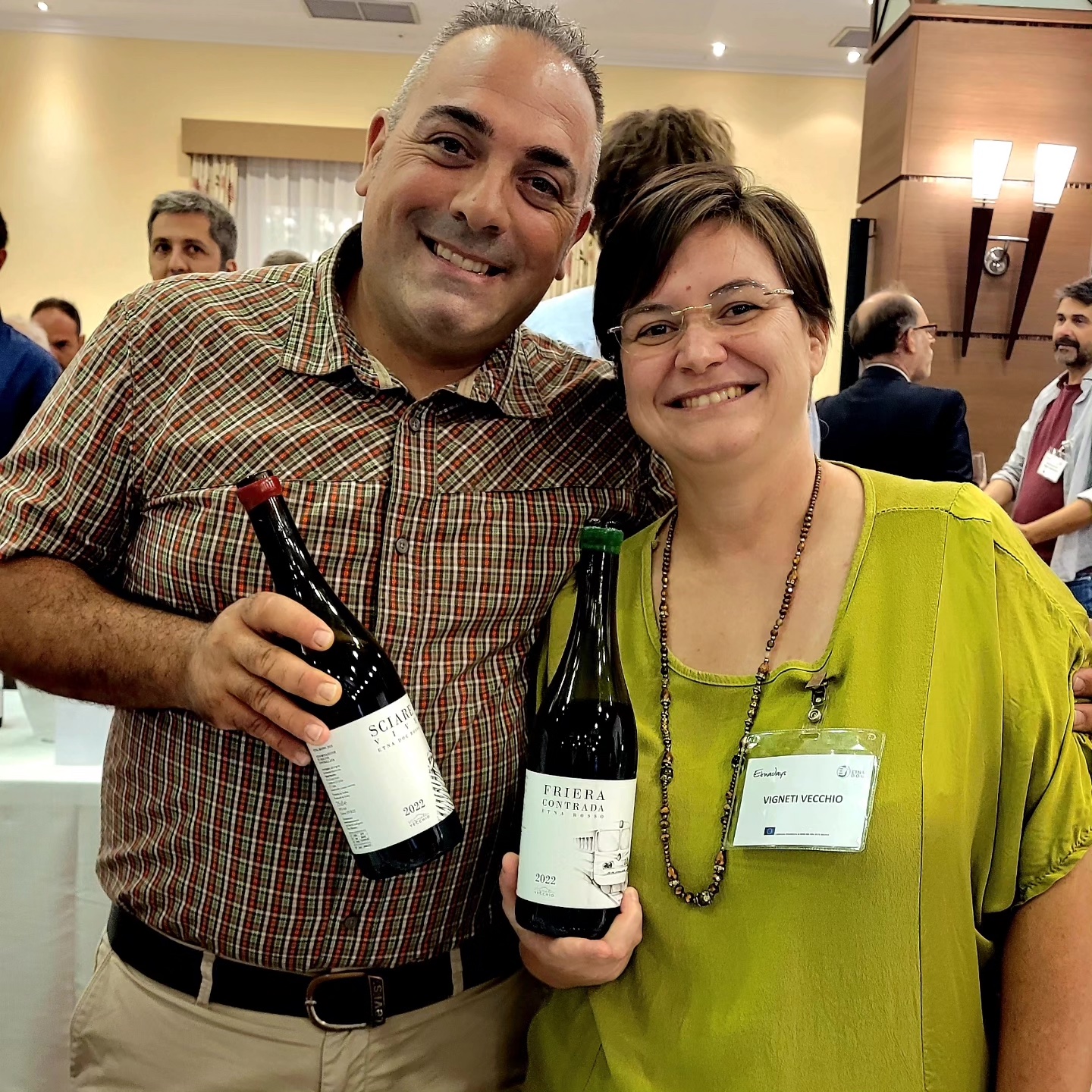
Carmelo Vecchio and Rosa la Guzza – Vigneti Vecchio

Vigneti Vecchio Etna DOC Rosso Sciare Vive 2022

The work of Rosa La Guzza and Carmelo Vecchio in Solicchiata on L’Etna’s northeastern slope and a blend of several contrade. The signature Rosso of highest production that sees concrete, botti and fibreglass. Some of the vines date back 150 years and there are many varieties involved in what is a true field blend, including the likelihood of ancient red and white varieties; minnella, inzolia, carricante, grecanico, catarratto and malvasia. But when it comes to grapes (if not perhaps location and elevation) the Etna DOC offers an inclusive and forgiving discipline. Rosa admits this Rosso to be “a little rough,” Carmelo nods in agreement and while also tumble there is just so much flippin’ personality. It may blow your mind and also lash your palate, but in the end nothing else on Etna, or anywhere else tastes like this Rosso. Drink 2024-2027.  Tasted September 2024

Vigneti Vecchio Etna DOC Rosso Contrada Friera 2022

Contrada Friera is Carmelo Vecchio’s Etna Rosso from Lingualossa, of 95 percent nerello mascalese and a smattering of various endemic varieties (minnella, inzolia, carricante, grecanico and catarratto) from vines as old as 120 years of age. Less than one hectare provides this antediluvian hodge-podge of the varietal wild and the maker’s job is to simply gather and come what may. His vineyard is basically a monopole and so there is no frame of reference save for what the eastern Etna spirits might whisper in his ear. Material this old will do what it pleases and while there is a rusticity similar to Sciare Vive there is also more concentration, complexity and most importantly intuition. There could always be the possibility of importune happenstance but Friere knows what to do. It would seem. Drink 2026-2031.  Tasted September 2024

Vigneti Vecchio Etna Rosso DOC Contrada Malpasso 2022

Classic and that means arch-classic texture brought forth from a Carmelo Vecchio nerello mascalese. Without a doubt the purest and cleanest Vigneti Vecchio Rosso to date made under his tenure. A challenge of vintage but a test passed with flying colours and sweet spot found. Allow this 2022 to rest on the palate for 20 seconds, to take in its weightlessness and ability to hover just above the senses. A signature of Malpasso that will repeat and be recognized going forward. Drink 2025-2032.  Tasted September 2024

Vigneti Vecchio Etna Rosso DOC Contrada Malpasso 2020

As with Friere, the Etna blend from Contrada Malpasso (literally “bad step”), is a Rosso of 95 percent nerello mascalese with bits and bites of various indigenous varieties like minnella, inzolia, carricante, grecanico and catarratto, here from vines in the 120 year-old range. A Rosso that pulses, still with some residual CO2 and it feels like carbonic maceration was a part of the deal. Carmelo Vecchio in fact started with the method in 2020 so family and friends could get together and make a party of it. Malpasso shows great energy, fabulously so, alive and kicking. It is said that one wrong step can change everything but a mal passo might just result in a wildly entertaining wine like this. Drink this sooner than the other VV’s while this candle still burns. Drink 2024-2026.  Tasted September 2024

Vigneti Vecchio Etna DOC Rosso Contrada Crasà 2022

Contrada Crasà for Etna Rosso is composed of 90 per cent nerello mascalese and a field blend of (10) local white varieties, in this case inzolia, grecanico and catarratto. The hectare and a half was planted in 1930 and so 92 years is the number for this vintage. Call it even and just say century vines because 1930 seems a bit arbitrary at this point for a vineyard that sits just one km away from another where vines are 130 years of age. Carmello Vecchio likes to use stems, co-ferment and give 15 days of skin maceration. The acts of pigeage and remontage are done lightly and so the sweetness and purity of fruit is kept in tact. Like the Malpasso this buzzes with energy but with more control, less wildness and yet remains very much alive. All the red berries are imagined to be represented and once again Vigneti Vecchio presents a unicorn wine. They always are. Drink 2025-2033.  Tasted September 2024
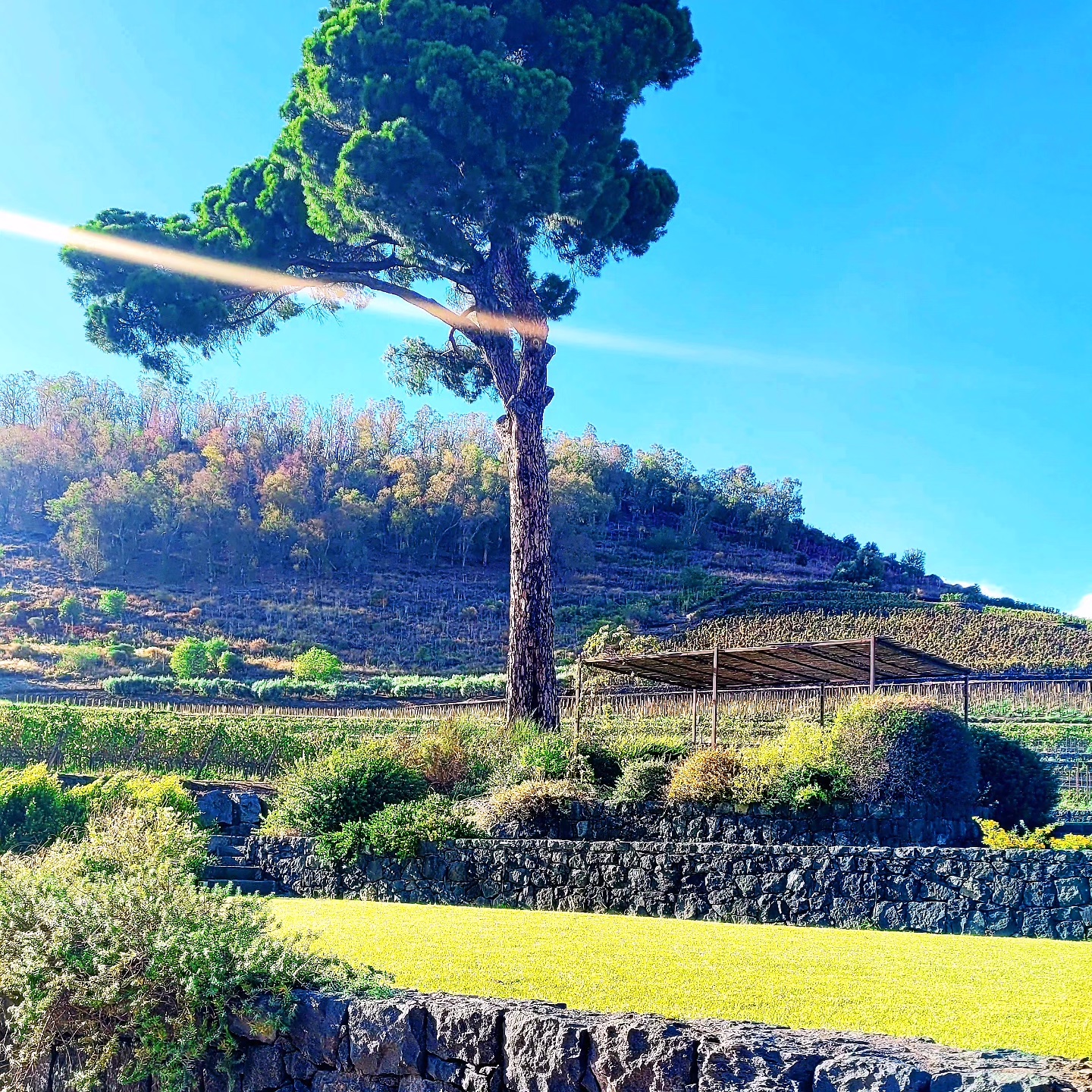
Benanti

Other Wines

Benanti Viticoltori Nerello Cappuccio 2022, Terre Siciliane Rosso IGT

A rare varietal nerello cappuccio, without oak since 2014, not always made and says Salvino Benanti, ”not a wine you can make a business from, but it’s worth showing to the world.” A versatile red to chill, very gamay like, or if you ike to compare locally, in the vein of frappato. Does not grow (perfectly) well in every vintage and there is surely a rusticity but you can see just how well Benanti tames the edginess, softens the structure and maintains a sweet herbal profile. Drink 2024-2027.  Tasted September 2024
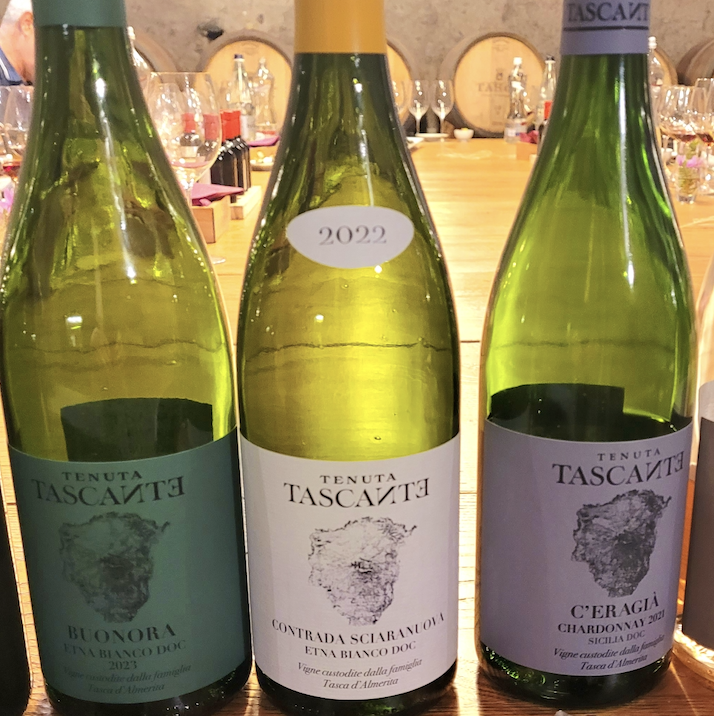
Tasca d’Almerita Tascante Chardonnay C’eragià 2021, Sicilia DOC

Tasca’s Etna interpretation of chardonnay comes from a one-acre vineyard in Contrada Rampante and no shock to sense the scents of barrel fermentation. There is vanilla, white caramel, honeysuckle, fennel pollen and lightly toasted biscuits with an autolytic wind ‘a blowing. A still chardonnay imagined as being subjected to a secondary fermentation in bottle and a sparkling method wine should be so lucky to have this fruit as its maker. The flavours feign sweetness accented by spice., energy runs high and in the end C’eragià which translates as “it was already there” is a fine interpretation of chardonnay. Drink 2024-2026.  Tasted September 2024

Vigneti Vecchio Donna Bianca 2018, Terre Siciliane Rosso IGT

With fruit from outside of the defined DOC yet in Carmelo Vecchio’s world a most important vineyard at 820m of elevation. The mix of soil and climate make for a poignant and prescient nerello mascalese named for Donna Bianca, the snowcapped “lady,” a.k.a the volcano at 3,000-3,300 metres above. High-toned, free-spirited, big acid bomb and half the glycerin of some of Vecchio’s other reds. Far from volatile despite the lightning style with great potential and a truly high ceiling. Drink 2024-2028.  Tasted September 2024

Dessert wines

La Gelsomina Di Colombo Maria Adalgisa Moscato Passito Di Terreni Vulcanici 2018, Terre Siciliane IGT

A moscato (bianco) but the variety is muscadelle, not moscato di alessandria, a.k.a. zibbibo. Dried fruit, never crushed, always infused after the stainless ferment and finishes at 110-120 g/L of residual sugar. Uniquely Sicilian if not defined or expressive of being from L’Etna but still a tradition is followed. Clean as Passito will be, without formaggi or yeasty notes, of apricot and fig, acidity enough though unassuming. Serves a purpose, preferably with a good bite into biscotti. Drink 2024-2028.  Tasted September 2024

Visits with Planeta and Serra Ferdinandea

Planeta Syrah Maroccoli 2020, Sicilia Menfi DOC

Just the syrah facts, “in purezza” as they say, from an Ulmo site with a proviso for as much varietal perfume as anywhere in Sicily. “We were expecting some kind of natural catastrophe, “says Winemaker Patricia Tóth, “because it was 2020 – but it never arrived.” Good winter precipitation was followed by months of pleasant weather, much like 2014. Succulent acids and tart idealism combine to elevate, buoy and celebrate fruit. A syrah of a rising, balanced, long and true. Has already entered the drinking zone. Drink 2024-2028.  Tasted September 2024

Planeta Burdese 2020, Sicilia Menfi DOC

A cabernet joint, of 70 sauvignon and 30 franc, each noticeable and notable for this Sicilian play on words. Burdese, as in Bordeaux for a wine grown on the left bank of the man made lake, once a river flowing through the valley below Ulmo in Sambuca di Sicilia. Forget the mimic or simulation because place supersedes idea with a mix of juicy and dusty fruit, succulent acids and fine tannins. No grittiness or grippy intensity but really more a matter of verticality and integration. Drink 2024-2027.  Tasted September 2024

Planeta Merlot Sito Dell’Ulmo 2020, Sicilia Menfi DOC

A 100 percent merlot from the Ulmo Vineyard, owned since 1694 and a first harvest in 1995. From this part of Menfi where the sun shines bright and the breezes blow every day between the massifs to the north and Monte Cerami that separates the vineyard from the sea. Menfi where the typical reds of merlot outlast the opposing greens by 10 to one and so fruit is everything with the local limestone streaking through. Succinct wine, linear and direct, credibly structured and the cohort involving fruit and wood seamlessly integrated. Fine stuff, veritably reasoned and seasoned. Drink 2024-2027.  Tasted September 2024

Planeta Cabernet Franc Didacus 2020, Sicilia Menfi DOC

Should there be a finer and more appropriate place to plant and raise cabernet franc on the entirety of Sicily that information should immediately be made public. Planeta’s Ulmo vineyard brings the grape to singular light, here 25 years after its introduction and it has become abundantly clear how it resides at the pinnacle and signature for reds out of Menfi. The 2020 is just now settling in and acting perfectly comfortable in its skin, fruit still swelling and always with the potential to burst free at any time. These are near perfect acids, sweet and sumptuous, allowing for movement and at this ideal stage, also development. There are hints at secondary character in the chiaroscuro shadows slow to reveal themselves. Sumac and pomegranate, a lightly browning and caramelizing eggplant before finishing with a wood encouraged dusting, as if by cocoa and clove. Drink 2024-2032.  Tasted September 2024

Planeta Cabernet Franc Didacus 2019, Sicilia Menfi DOC

An extra year in bottle and at first there seems not to be the great difference that might have been expected when tasted side by each with Didacus 2020. In fact 2019 is a much more tannic and structured vintage with its intensity cross-examined by austerity. Indemnity for cabinet franc with an upwards trajectory of extending verticality and still it requests for more time. The fruit is far less succulent and lush as compared to ’20 and so when the wine falls into place there will be a faster intern into secondary character. Expect quicker to arrive fungi and a masala of spice directed by the wood. Wait another year at least and then drink this Didacus ’19 before the ’20 finishes its own run. Drink 2025-2029.  Tasted September 2024

Serra Ferdinandea Rosato 2023, Sicilia DOC

First vintage of the 100 percent nero d’avola Rosé was 2020, grown aboard the serious limestone at 400-plus metres subjected to the south sea, Saharan and Mistral winds that blow through the Sambuca di Sicilia Valley. While southern France might seem to be the precursor that may no longer be the case, if namely because a blend now becomes a varietal wine. Better for the decision and change, now a step up in rich flavours, texture and presence. Fine and elegant.  Last tasted September 2024

Next step taken for Rosé on the south coast at Menfi with this upright and linear ’23 inching towards the profound. A balance and a confidence with 100 percent nero d’Avola that defines the idiom and begins to perfect the workmanship. Satisfying and also delicious, inciting the salivary glands and asking for more. Will gain interst and intersect with further complexities after 18 months further time in bottle. Drink 2024-2027.  Tasted May 2024

Serra Ferdinandea Bianco 2022, Sicilia DOC

Mezzo e mezzo, 50-50 grillo and sauvignon blanc grown at elevation like the nero d’avola, only stainless steel for fermentation. The grillo has always been a natural fermentation of a pied de cuve way, while the sauvignon follows dutifully along. A true bianco joint, friendly and smart, sapid and salty, phenolic and grippy. Brat not nat, not bratty and certainly not natty. Crisp and edging into herbal with a what just feels like place, that being Menfi. You can forage for salads in the fields and vineyards, reflected in the flavours of this Bianco.  Last tasted September 2024

Mix of 50-50 grillo and sauvignon blanc, for now the only two white grapes and making up a third of the 17 hectares total. The most recent planting was 2021, the first back in 2015. All about freshness and salinity with just a bit of wood thanks to 25 percent, none of it new. The wood is present by only in subtle and oscillating tones on the mouth. Some phenolic presence yet again, not overdone or even remotely aggressive. A bit buttery at the finish, graced by piquancy and the sort of scorrevole that drifts slowly away. Drink 2023-2025.  Tasted May 2023

Serra Ferdinandea Rosso Sicilia 2022, Sicilia DOC

Another 50-50 blend, here from nero d’Avola and syrah, equal partners in crime. The wines used to be 70-30, including the Rosato and now half an half makes much more sense for Rosso. And in turn it makes the Rosé that much better as a varietal nero. More syrah brings more spice and also meatiness matched by mineral, spice and elements of the earth. A hit of sanguine, a hint of iodine and then the floral nero kicking in. It continues with its freshness and necessary mix of sapid meeting salty, from limestone, sea and wind revivalist nature. The most complex and frankly interesting becoming delicious red blend in the winery’s short history. Just FYI the Serra Ferdinandea catalogue lists the wines from Rosso to Bianco to Rosato, in that order. Just the way tasting wine should be and yet we taste in the opposite order. Maybe we’ll switch that around in 2025.  Last tasted September 2024

Equal parts syrah and nero d’Avola, straightforward, clean and with the idea being to make the purest iteration that exults two very important grapes. Increasing the concrete involvement though this is all done in wood with subsequent vintages to go in that cemented direction. Already croccante so imagine the freshness and crunch going forward. Purple violets, light chalkiness and what feels like sandy soil-effected freshness. Piquant and toothsome. Delicious. Drink 2023-2025.  Tasted May 2023

Good to go!

godello

Versante Nord, L’Etna

Instagram

Facebook

Post ProWein tasting crawl trough the Ahr, Mosel, Nahe and Rheinhessen

In March of 2024 Godello reprised a Düsseldorf redux by attending the annual ProWein Wine Fair and then hitting the road for a three-day, four region transversal of German wine-growing regions. Prowein, Messe Düsseldorf and the German Wines Institute brought international journalists through the Ahr, Nahe, Mosel and Rheinhessen. The producers visited were Weingut J.J. Adeneuer (Bad Neuenahr-Ahrweiler); Weingut Forster (Rümmelsheim), Schlossgut Diel and Piri Naturel Christine Pieroth (Burg Layen) and Weingut Anette Closheim (Langenlonsheim); Four producers from Der Ring 1899, a.k.a. the Bernkasteler auction company hosted the group at Die Mosel Vinothek und Winebar, Traben-Trarbach; Weingut Franzen (Bremm), Weingut Walter (Briedel), Weingut Rebenhof (Hochheim am Main) and Weingut Erben Von Beulwitz (Mertesdorf); Last stop was with Weingut J. Neus (Ingelheim am Rhein) in Rheinhessen and finally the press tour concluded with a fascinating Rheinhessen tasting at the Ingelheim Vinothek, presented by Sommelier Shanna Reis. Special thank you goes out to Christiane Schorn, Senior Manager Press & PR, ProWein, Michael Mandel, Messe Düsseldorf and Carola Keller, Marketing Manager, German Wines (DWI). These are the estates, their makers and notes on a collective 80 wines tasted between the 12th and 14th of March.

Marc Adeneuer with daughter Francisca – J.J. Adeneuer

Ahr Valley

Weingut J.J. Adeneuer –  Bad Neuenahr-Ahrweiler

Weingut J.J. Adeneuer Blanc De Noir Purist 2022, Ahr Valley

Saignée method Blanc de Noir, reduced from the Grosses Gewächs spätburgunder, finished at three g/L of RS. Simple, fresh and dry. Quite pure as Rosé with a mild pith bitters finish. Drink 2024-2025.  Tasted March 2024

Weingut J.J. Adeneuer Weissburgunder Purist 2022, Ahr Valley

Juts a month on the lees for pinot blanc, now a year in bottle, more about texture and mouthfeel than primary fruit. About as crisp and clean as it gets but again with a mild lime pith bitter finish, much like the Rosé. Length adds to the refreshment of the wine. Drink 2024-2025.  Tasted March 2024

Weingut J.J. Adeneuer Spätburgunder 2022, Ahr Valley

Mildly reductive and also a factor of Ahr Valley terroir, making pinot noir flinty and taut while still this youthful. As with all the Adeneuer pinots they all fall in at 13 percent alcohol, the wood factor only from Bourgogne forests and just 10 percent new. A mix of red berry fruit, more flint stone character and the faintest touch of red fruit but also almond bitters. Would never see this as jammy and chilling it down for maximum freshness is wholly encouraged. Drink 2024-2026.  Tasted March 2024

Weingut J.J. Adeneuer Spätburgunder No. 2 2020, Ahr Valley

A pinot noir from after the floods of 2021 and normally bottled after 12 months. Circumstances meant that after the barrels were saved the vintage had to remain in wood for 18 months, only able to be bottled after the clean-up. Caused the alcohol to finish at 13.5 percent instead of the usual 13 and there is more texture as a result. Feels like a bigger and creamier pinot noir with tang and more red berry plus a toastier quality than that of the coming ’21s and ‘22s. Drink 2024-2026.  Tasted March 2024

Weingut J.J. Adeneuer Spätburgunder No. 1 2021, Ahr Valley

A later harvest, two weeks later the 2018-2020 but also the flood vintage when on the night of July 14th and into the 15th the waters filled the cellars and basements plus halfway up the ground floor of the winery. The No. 1 always remains 18 months in barrel, fruit coming from the lower Ahr Valley vineyards in three villages. The soils are 60 percent volcanic rock and the basaltic reek is felt in palpable aromatic display. Much more lactic and blood red citrus style plus this porcine smokiness, like Speck bacon. More structure and only GG plots are used – three of them. Drink 2025-2029.  Tasted March 2024

Weingut J.J. Adeneuer Spätburgunder Kleine Kammer 2022, Ahr Valley

J.J. as in Johannes Josef (ancestor from the 18th century, dating to 1776). Kleine Kammer, meaning “small (fermentation) chamber.” This Adenauer pinot noir comes off of soils of only pure slate with sandy loam, the second choice from a GG site, a terraced plot measuring only 0.68 hectares in size. The rule in Germany for GG is such that you can’t use a site’s name twice, thus the fantasy name. Vines are 50-60 and 80-100 years of age with the younger vines giving fruit for this wine. Ages in 1,800 to 2,000L barrels, namely Taransaud. No real toast to speak of, nor new wood feels or bitters in any notable way. Classic slate example that expresses its terroir and since 1776 as a Monopole. from vines with deep roots that never see their berries get sunburnt. A beauty and grace about this, quite getable and with sneaky structure. Made with the Kastenholz clone, grandchild of a pinot noir original. Drink 2024-2028.  Tasted March 2024

Weingut J.J. Adeneuer Spätburgunder Rosenthal GG 2021, Ahr Valley

J.J. Adenauer is now Marc Adeneuer with daughter Francisca and together they farm 13 of 540 hectares in the region, third most from the fourth smallest region in Germany. A red wine specialist with 90 percent red grapes, mainly pinot noir while the rest is weissburgunder and now just starting with chardonnay. Basically a place where Bourgogne grapes thrive. Rosenthal is mainly sandy loam and graywacke soils to gift pinot noir with a purity, crispiness and liveliness. You simply will not find more fresh fruit purity from any of the other Adeneuer pinot noirs. Comes from 2.5 hectares in the GG vineyard and the acid structure here is sensational – the catalyst and reason why this will age longer and slower than the other wines. This was the flood vintage too so kudos to the estate for sticking with it and creating this delight of a pinot noir. Drink 2025-2031.  Tasted March 2024

Weingut J.J. Adeneuer Frühburgunder 2022, Ahr Valley

Varietal frühburgunder, fresh and clean, clean, clean. Floral, without musculature, gamay like and though labeled at 13 per cent it’s really 12.7. Chill this and put away the serious talk. More than go gamay go – it’s fly frühburgunder fly. Approximately 1,500 bottles produced (plus 500 of the GG). Drink 2024-2025.  Tasted March 2024

Beef Tartar – Kräter Sauce, Pinienkerne, Koriander, Chips – Die Mosel Vinothek und Winebar, Traben-Trarbach

Mosel

Der Ring 1899 at Die Mosel Vinothek und Winebar, Traben-Trarbach

Weingut Franzen – Bremm

Weingut Franzen Riesling Der Sommer War Sehr Groß 2022, Gutsweine, Mosel

A dry Mosel riesling which means 10.2 g/L of RS, 7.3 TA and finished at 11 percent alcohol. “Winegrowing on a razor’s edge” for a riesling “summer project” begun in 2011, “a cuvée that presents the cross-section of our vineyards and combines all the advantages of the individual locations in one wine.” Spontaneous ferment, as with all the wines, not far from Cochem where the steepest vineyard in Europe slopes to 68 degrees. A riesling of what feels like crazy conversion rates coming from red slates and seasoned with many spices. You would literally have no idea there is any sugar in this wine and the length is exceptional. Drink 2024-2027.  Tasted March 2024

Weingut Franzen Riesling Bremmer Calmont Großes Gewächs 2022, Lagenweine, Mosel

Bremmer Calmont delivers far more spice and power than the Franzen blend, here off of pure slate on a 65-degree slope which happens to be one of the steepest vineyards in Europe. Calmont is about as dry as riesling gets and its scintillant-mineral quality delivers true Großes Gewächs distinction. Extreme aridity perceived matched by intense sapidity that only this specific Mosel red slate provides. A riesling of trenchant intention, compact and stone cold concentrated. Serious wine. Drink 2024-2029.  Tasted March 2024

Angelina Franzen – Weingut Franzen

Weingut Franzen Riesling Calmont Trocken 2021, Lagenweine, Mosel

Dry riesling from the steepest 65 degree vineyard of oxidized red Devonian slate and quartzite raised only in steel. The specs are 8.5 g/L of residual sugar matched by 7.6 g/L of acidity with 11.0 percent alcohol and as far as vintages are concerned this would be one to really age. Namely because of palate density but also because the acidity is as fine and finessed as it gets for this composition. May not pierce your riesling heart, or soul but it will age well. Drink 2024-2030.  Tasted March 2024

Weingut Franzen Riesling Fachkaul Großes Gewächs 2020, Große Lagen, Mosel

Fachkaul is the parcel which forms a kind of mini-amphitheater-shaped bowl where at the end of the 1990s Kilian Franzen’s father Ulrich restored and replanted the vines. The epitome of Killian and Angelina’s story, a Calmont tale fraught with adversity, challenges and heartache, but this small (1.6-ish hectare) plot means everything. Mineral that matters, red slate and the steepest slope where all that is important, essential and profound result in singular riesling. Not quite as dry as the Bremmer but higher in acid, more stark, expletive and magical. Sapid lime intensity, long, significant, precise, consequential and just recently bottled in January. Drink 2025-2032.  Tasted March 2024

Lachs – Tofu Puree, Edamame, Bohnen, Dijon Sauce – Die Mosel Vinothek und Winebar, Traben-Trarbach

Weingut Franzen Riesling Fachkaul Großes Gewächs 2017, Große Lagen, Mosel

In a perfect place at this six to seven year stage, from one of the warmest seasons with lots of rain at harvest. Picking began in the second week of September and required many passes in the vineyard with a stringent selection to create (an overall) 15 skus for 11 hectares. The work of Killian and Angelina, students from Geisenheim who began this journey of family necessity at the ages of 23 and 20. A softer Fachkaul but that is the maturity speaking for riesling of a sapid tug on red slate, one and a half hectare mineral-varietal heartstrings. Quite remarkable and with three great years still laid out ahead. Drink 2024-2027.  Tasted March 2024

Weingut Franzen Riesling Sterneberg Großes Gewächs 2020, Große Lagen, Mosel

Killian and Angelina Franzen’s best plot in the Neefer Frauenberg is called Sterneberg. Vines were planted in 1938 on grey slate for a different, next level mineral quality and quotient for Mosel riesling. These are own-rooted vines, old, experienced and wise, their resulting dry wine coming away like the desert because sugar and acids near-equal come together seamlessly. The most viscosity and texture of the Franzen rieslings, from a hot vintage and so concentration, unctuousness, flesh, pulp and glissade are all at peak performance. Glorious and confident, outspoken but only to make sure we understand its origins and Franzen abides by its voice. Drink 2024-2033.  Tasted March 2024

Gerrit Walter and Angelina Franzen

Weingut Walter – Briedel

Weingut Walter Riesling Trocken 2022, Gutsweine, Mosel

From Briedel, next village out of this tight turn in the Mosel from Pünderich where Clemens Busch farms their riesling. The Walter Trocken is just 6.5 g/L of residual sugar pretty much hidden by 6.9 of TA. Six to eight hours of skin contact for a phenolic, taut, lime doused example off of the grey slate of the Briedel Vineyard. Solid effort and notably modern. Drink 2024-2025.  Tasted March 2024

Weingut Walter Riesling Feinherb Briedeler 2022, Ortsweine, Mosel

Villages quality wine from Briedel, not as dry as the Trocken with three times the residual sugar, here at 10 g/L. A floral-herbal expression, fresh, light and modular. The acidity functions to make the malleable wine travel to the back palate and structure is formed because of this movement and interaction. Very well made Feinherb style by Gerrit Walter for simple pleasure, especially with a piece of cheese or beef tartare with pine nuts and a high acid mustard sauce . Drink 2024-2026.  Tasted March 2024

Weingut Walter Riesling Pünderricher Marienburg Großes Gewächs 2022, Mosel

Gerrit Walter is the next generation producer of this GG riesling out of Briedel’s grey slate vineyard. Sees a longer maceration of 12-15 hours, comes away super dry (3.1 g/L), matches the Trocken’s acidity and finishes at a Mosel high 12.6 per cent alcohol. This is not about fruit but rather the type of mineral focus that comes from Marienburg, with increased seasoning, spice, elements and tonic-edgy florals, though it is not the most phenolic of rieslings. Cracker example, truly dry and in command of the palate. Drink 2024-2028.  Tasted March 2024

Weingut Walter Riesling Kabinett Pünderricher Marienburg 2022, Lagenweine, Mosel

One of two recognizable styes of riesling made by Gerrit Walter to carry on with Mosel tradition even while he and many young generation winemakers are turning to drier and drier. This from an early harvest resulting in 45 g/L of residual sugar, far from searing 8.0 TA and low-ish alcohol at 8.6 percent. There is more fruit here in a light, refreshing yet in its own way also intense style that the estate has been making for 10 years. “Kabinett means light, vibrant and elegant,” explains Gerrit and his Pünderricher is without any real skin contact, but the tangerine-orange peel aroma really kicks things off. The length is indeed outstanding. Drink 2024-2029.  Tasted March 2024

Weingut Walter Riesling Kabinett Marienburg 2016, Lagenweine, Mosel

When talking about his 2022 Pünderricher from Marienburg Gerrit Walter noted that “Kabinett means light, vibrant and elegant,” three things this 2016 most surely had been. Not anymore because age has exaggerated the aromas if also softened the palate flavours. This divergence has resulted in maturity and a dispersion of parity. There is some interest for this fine if past prime look at a Marienburg riesling.  Tasted March 2024

Weingut Walter Riesling Spätlese Briedeler Schäferlay 2022, Lagenweine, Mosel

No botrytis came about for Walter’s late harvest riesling with 63.2 g/L of RS, higher 9.3 at TA and 8.6 percent alcohol. Elegant, concentrated and optimum if unassuming ripeness for this lime cordial, mineral salts and cracker acidity style. In fact the blade swipe makes for an intensely serious and stood up to be counted riesling that demands attention. Serious but as mentioned also elegant which is a very good combination. Drink 2025-2031.  Tasted March 2024

Weingut Rebenhof – Hochheim am Main

Weingut Rebenhof Riesling Kabinett Trocken Ürziger Würzgarten Von Wurzelechten Reben 2022, Hochheim am Main

Ürzig is a village in the Bernkastel district of the Mosel and the Ürziger (vineyard) is a place of red slate, often lending a spicy or salty character to the riesling grown there. Wurzelechten basically means “own or unrooted,” a significant case because there are between 50-60 hectares of un-grafted vines in all of Germany, about half of them planted between 1910 and 1935. Topsoil must exist over stoney soils for Phylloxera to attack and the slate in this part of the Mosel is not one of those locations. Rebenhof’s Kabinett is the truest form of Trocken and one of the zestiest you are ever likely to encounter. Matching sugar and acidity numbers create the equilibrium, both at 6.8 g/L with alcohol right there in the median sweet spot at 11 percent. Tons of lime, mostly zest and the intensity never relents. Still there is a fulsome aspect and so time should soften the attack and coax out some flesh. Unique riesling in any case. Drink 2025-2029.  Tasted March 2024

Weingut Rebenhof Riesling Großes Gewächs Auktionswein Erdener Treppchen 2020, Hochheim am Main

A riesling with the Auktionswein classification which means it its part of the Bernkasteler Ring E.V., which is the oldest wine auction company in Germany. A Großes Gewächs (a mark of quality by top producers from best sites making dry wines) from the iron-rich, red slate soils of the Erdener Treppchen (village of Erden in the Mosel’s Bernkastel area). The 2020 is a wine of dichotomies, still on the dry side but with elevated numbers as compared to the Ürziger. Here riesling is at once salty but the acid presence (as a quotient of this vineyard’s minerals) creates an opposing sense of sapidity. Diversity from start to finish, a wine of waves and oscillations, multifold mineral movements and a gelid texture to the palate. Higher alcohol contributes to the elevated weight. Drink 2024-2028.  Tasted March 2024

Weingut Rebenhof Riesling Spätlese Ürziger Würzgarten Von den Felsen 2018, Hochheim am Main

A new style of Spätlese riesling, well ahead of its time from 2018 out of the Ürziger Würzgarten with just a bit more than one-third of the residual sugar of the Kabinett. Here at 29.5 g/L and higher alcohol (11.0 percent) than might have been thought. This modern approach makes for a sapid riesling despite the sweetness, quite phenolic, ripe and grippy, rich and creamy yet intensely mineral. A lime cordial meets sherbet style with backbone, attitude and potential. Drink 2025-2031.  Tasted March 2024

Weingut Rebenhof Riesling Kabinett Auktionswein Ürziger Würzgarten Urglück 2022, Hochheim am Main

Fabulous nose with exceptional aromatics mark the entry of this very sweet riesling made in a singular Kabinett style. A riesling of nectarine and peach stone, creamy like the Spätlese but more bodied and emulsified as texture with acidity really buoying the fruit. The method, application and intention might suggest a challenge but Rebenhof does their best work when sugars are elevated because that is how they see riesling and its capabilities. Drink 2024-2030.  Tasted March 2024

Charlie and Caroline Weis – Weingut Erben Von Beulwitz

Weingut Erben Von Beulwitz – Mertesdorf

Weingut Erben Von Beulwitz Riesling Kaseler Nies’chen No. 15 Im Steingarten 2023, Mertesdorf, Mosel

Caroline Weis describes the steep and exposed Nies’chen vineyard as the “mountain,” an extreme and specific Steingarten site with blue slate and sparse stony topsoil. It is anything but a “garden” of a vineyard to farm. Labeled Trocken and while anything but severely dry it is the intensity of this riesling’s acidity that plays tricks upon both the nose and palate. The TA is in fact higher (at 7.9) than the sugar (at 7.5 g/L). The new (and local) winemaker Phillip Steffes likes this style, more open than rigid and definitely sapid without any gratuitous generosity. Drink 2024-2027.  Tasted March 2024

Weingut Erben Von Beulwitz Riesling Großes Gewächs Trocken Mertesdorfer Herrenberg No. 14 2022, Mertesdorf, Mosel

As with the Nies’chen there is slate in the topsoil of the Mertesdorfer (Mertesdorf Village) Herrenberg but more blue on the lower slope, as opposed to black at the “mountain” top. Also a dry riesling though even more so (at 5.5 g/L) in this Großes Gewächs edition with an acidity number (at 6.7) that dominates to make this feel like one of the most arid Mosel rieslings around. A modern and modish take that commands attention, broadens the mouthfeel and so that fruit-mineral swirl becomes one of serious breadth. A credible example with acidity that is not sharp, but certainly powerful, impeccable balance and high level age-worthiness in the Trocken idiom. Drink 2025-2032.  Tasted March 2024

Weingut Erben Von Beulwitz Riesling Großes Gewächs Trocken Kaseler Nies’chen No. 12 Auf Den Nauern 2021, Mertesdorf, Mosel

Auf Den Mauern is a 60 percent steepness portion of the Nies’chen Vineyard and considered to be the most important riesling section where high slate walls support the slope. Though this does come across as dry there is more sugar (at 8.6 g/L) and also acidity (7.2) as compared to the Herrenberg. What stands out now is the saltiness in a way only this riesling from Erben Von Beulwitz is want to show. A different expression results, also because it’s still young, reductive and yet to open. Caroline Weis notes its 10-year potential and truth be told there will be two more years of waiting before any significant changes begin to occur. It could be suggested to open bottles at the 2,4, 6, 8, 10 and 12 year marks to see the evolution. It was a rainy summer of 2021 in this part of the Mosel and so things slows down for riesling. Drink 2026-2034.  Tasted March 2024

Weingut Erben Von Beulwitz Riesling Kabinett Feinherb Kaseler Nies’chen No. 10 2022, Mertesdorf

Classic Mosel style in the ways of the 90s and 2000s and “Dad’s favourite,” tells Charlie Weis. The kind that expertly balances high sugar and acid, layered like mille-feuille pastry, light on its feet and melting with ethereal ability in the mouth. Creates a symbiotic relationship with the Spätlese, the other Herbert classic styled riesling. The combination of 150 years of history and a family’s efforts since 1982 are what make a riesling like the Kaseler Nies’chen No. 10. Drink 2024-2029.  Tasted March 2024

Weingut Erben Von Beulwitz Riesling Spätlese Alte Reben Kaseler Nies’chen No. 6 2023, Mertesdorf, Mosel

Now into late harvest territory, old-school if you will, “Dad’s riesling” admits both Caroline and Charlie, Weis daughters and face of the estate. What a contrast to the Trocken, fruity, pulpy and forward, blast from the past though a very recent one to be honest. No holding back, zero reduction and ready to please. The specs are 95.0 g/L of residual sugar, 9.1 TA and 7.1 percent alcohol. Classic in so many respects, namely the tart stone fruit, sweetness elevated by the specific kind of acidity and good energy all-around. A clean and protected riesling that should have no problem living a long and productive life. Drink 2024-2033.  Tasted March 2024

Weingut Erben Von Beulwitz Riesling Auslese Alte Reben Auktionswein Kaseler Nies’chen 2015, Mertesdorf, Mosel

Tasted side by side with the 2020, a wine so incredibly youthful it seems years too early to be tasted. This 2015 is just beginning to show the first early stage of maturity, an Auslese from a hot summer with heavy rains. This fortunately stopped and the harvest saw cooling temperatures with beneficial drying winds. The end result was small berries and low yields for highly concentrated riesling fixing high quality Auslese. The acidity is still ripping through, keeping the sugars low and at bay, way down below. Kaleo rhythm, pure Mosel aromatic if perhaps the melodic-Icelandic gelid coolness, and “whoa, we get what we deserve.” Drink 2024-2031.  Tasted March 2024

Nahe Vineyard

Nahe

Weingut Forster – Rümmelsheim

Weingut Forster Sekt Brut Nature Chardonnay and Weißburgunder 2016, Nahe

The 2016 Sekt of zero dosage spent 90 months on the lees. Still showing good freshness and aromatics are more than joyous. The wine turns quite botanical and it’s all sweet herbs throughout the second half of this unique sparkling wine. Drink 2024-2026.  Tasted March 2024

Weingut Forster Weißburgunder Dry 2023, Nahe

Fermentation is 70 percent in stainless and (30) in wood. A few hours of skin contact, bâttonage and lees contact for a few months. Organic, with neutral yeasts in the steel and spontaneous in the barrels. Low sulphur, vegan and unfined. Just grapes, no additions, proper ripeness, tasting like fruit and admittedly never creamy, oaky or gratuitously soft. Clean, satisfying, of medium acidity and surely just a matter of healthy grapes out of a good pinot blanc vintage. Well thought out, environmentally and sustainably conscious white wine. Drink 2024-2025.  Tasted March 2024

Weingut Forster Riesling KABInett 2023, Nahe

A German word play, the use of KABI in bold, as in “I’d like to have a Kabi, short for Kabinett.” One of the first riesling harvested at lower sugar and higher acidity though like all Kabinetts the residual sugar is essential, though here it’s in the lower range at 36.2 g/L. A cool climate vineyard that is now warming to be able to make this style in the Nahe, plus Laura Forster wanted this style to be made, especially because of the low alcohol. Only the third vintage, a fine mix of peach and lime, richness and tang. Well balanced though not one to age like many from the Mosel. Only 3,000 bottles made. Drink 2024-2027.  Tasted March 2024

Weingut Forster Riesling vom Kies Dry 2022, Nahe

From gravel (kies) soils and the aromatic profile is not only so opposite to the Schiefer but to 99 percent of rieslings made in Germany. A botanical tonic and a cheese rind that really expounds on the idea of this being a natural wine. Yes the soil comes through but also the vinification process, of 10-12 hours of skin contact, first press juice only, spontaneous fermentation in steel, finished at Christmas. Very dry, lime finish and just a bit “horsey.” Drink 2024-2025.  Tasted March 2024

The Forsters

Weingut Forster Riesling vom roten Schiefer Dry 2022, Nahe

From red slate soils, same fermentation-vinification process as the Kies (granite) riesling. Less lactic and more phenolic, dry as can be and in better balance with thanks to the soil. Still it is the mix of style, use of compost, organics and low intervention, including sulphuring that creates this very natural scenting, a notably earthy and cheese rind notated riesling. Drink 2024-2026.  Tasted March 2024

Weingut Forster Riesling Burg Layer Schlossberg Dry 2018, Nahe

Warm, south facing red slate hill, 52 degrees of steepness, right behind the winery. Warm vintage though cooler than 2019, higher in sugar though still just about bone dry at 2.9 g/L. Also higher in alcohol at 13.5 with more flesh and body and the balance afforded this clean riesling from clearly healthy soils is just right there where we want it to be. Tannins and structure aided by long lees aging (up to a year) in stainless steel. Freshness fully captured, longevity a true matter of potential and acidity still a great catalyst for all that is happening and will continue to develop in the wine. Drink 2024-2028.  Tasted March 2024

Weingut Forster Riesling Burg Layer Schlossberg Dry 2019, Nahe

Mild though detectable TCA. Warm, south facing red slate hill, 52 degrees of steepness, right behind the winery. A complete and utter apposite vintage to the cooler 2018, here warm and dry, the sugar under 1.0 g/L and the acids also a point lower. Alcohol 1.5 less at 12 and overall the balance afforded by 2019 was surely more of a challenge. Warm nights up to harvest sacrificed some acidity and so structure overall here, included tannin is lessened. Just not as balanced and without the top energy of 2018 but still well and naturally made. Drink 2024-2025.  Tasted March 2024

Weingut Forster Grauburgunder Réserve Dry 2022, Nahe

Short 12 hour but effective skin contact for pinot gris, fermented in 500L tonneaux, 12 months of lees contact and healthy alcohol at 13.5 though less than much warmer vintages. Grows on the red slate soil of the Rotenberg (red mountain), sun richness and good metallurgy in the aromatics. Juicy, fleshy and just enough acid to keep things moving swimmingly along. Great diversion from a sea of pinot grigio ubiquity. Drink 2024-2026.  Tasted March 2024

Weingut Forster Frühburgunder Burg Layer Johannisberg 2022, Nahe

A single vineyard red from the rare variety (only 440 hectares planted in all of Germany), a cru frühburgunder not oft seen in the Nahe. Early ripening grape planted by Johannes Forster’s father 20 years ago. Softer tannin structure as compared to spätburgunder and grown in the cooler site where the riesling for Kabinett also grows. Some whole bunch, fermented on skins for four weeks and yes just enough tannin has come through. Some aging in low toast new barrels, a bit more structure than some though it stays below the threshold of too much extraction and tannin. Just a bit of spice and again gamay or perhaps even pelaverga is the mind’s launching point. Just a hair ambitious for what the grape is want to deliver. Drink 2024-2026.  Tasted March 2024

Weingut Forster Spätburgunder Kies 2022, Nahe

Grown on the Kies (granite) soil, four weeks of skin fermentation, very little wood usage, soft but still just enough grip to effect structure. Similar natural feel like many of the rieslings and more viscous mouthfeel than the frühburgunder, liquid chalky and again the cheese rind note, Also a verdancy and red citrus tang, desiccated roses and minty cool savour at the finish. Tannins are just a bit hard, chalky-grainy and friable. Drink 2024-2026.  Tasted March 2024

Schlossgut Diel – Burg Layen, Nahe

Schlossgut Diel Pinot De Diel, VDP.Sekt, Nahe

A vibrant mix of pinot noir and pinot gris from Caroline Diel, seventh generation winemaker at Burg Layen which came into the possession of the Diel family in 1802. The base wine is 2020 fruit with some residual 2019 involved, two years on the lees and of an aperitivo intent. Easy drinking and on the dry side which feels like another Brut Zero style is well within Diel’s capable reach. Like a bite into a tart and juicy green apple with a drip of red fruit and a fairly tart finish. Satisfying bubble all around. Drink 2024-2026.  Tasted March 2024

Schlossgut Diel Dry Riesling Dorsheim 2017, VDP.Orstwein

Villages organized riesling from neighbouring village Orstwein with seven-plus years of age, dry and now pretty much in the perfect zone. Has aged beautifully, sitting up vertical and straight, giving generously with a clear and present amount of grace in restraint. The balance between extract and tannin, fruit and acid is simply structured, allegedly and unequivocally spot on. Drink 2024-2027.  Tasted March 2024

Caroline Diel – Schlossgut Diel

Schlossgut Diel Cuvée MO Brut Nature 2014, VDP.Sekt Prestige

“I believe sparkling wine does not need any dosage,” and Caroline Diel followed this when she joined the family in 2007, continuing what started going all the way back to the 2004 beginning of this project. Cuvée MO Brut Nature is ninety months on the lees, made with pinot noir and chardonnay. Developed richness for a sparkling wine made at the time in an oxidative style,. Showing aldehydic notes, of brioche to the end of a smoky and really old style of Champagne. Should actually stay this way for a few more years to come. Drink 2024-2027.  Tasted March 2024

Schlossgut Diel Pinot Noir Réserve 2020, Nahe

Most of the vines were planted in the mid to late 90s by Caroline Diel’s father Armin. Approximately 20 percent whole cluster, the rest hand de-stemmed, all vineyards in the cuvée fermented naturally and kept separate. A year and a half in barrel, spontaneous malolactic settling, racked now and then and no filtration. Rich fruit, high acid, truly complex aromatics, meaty perfume, full, juicy, lively and finally a truly substantial finish. Neither derivative nor imitative. This is Caroline’s mid-level pinot noir for a 7th generation winemaker who would go on to do the 2022 harvest at Romanée Conti. Mid-level will surely rise up to even greater heights. Drink 2024-2028. Tasted March 2024

Schlossgut Diel Dry Riesling Pittermännchen GG 2022, VDP.Grosses Gewächs

The tiny one hectare cru Pittermännchen is a name that dates to the middle ages with a connection to the people of Köln and Düsseldorf. Grand cru site of weathered grey (Devonian) slate atop Rotliegend conglomerate that dates back several million years. The geo-agricultural texture is small decomposed particles as opposed to the larger stones of the Mosel. Expressive flint stone aromatics undeniably soil related and not much fruit to discuss, save for some variegate currants but you really have to conjure imagination. There is a mille-feuille density to this riesling that peels away and delivers waves in layers without boundaries. Complexities are revealed without pause and dryness results because purity and grip replace the necessity for sugar-acid balance. So stony, long and our palates are held captive. Top shelf riesling within the idiom. Drink 2026-2033.  Tasted March 2024

Schlossgut Diel Riesling Kabinett Goldloch 2022, VDP.Grosse Lage

When she returned to the family in 2007 Caroline Diel’s first order of business was to not use herbicides “and it was a disaster,” she remembers, “not being prepared with staff, machine and experience.” Good things take time and now organic certification will come in 2024. The 2022 vintage was not the hottest but was an extremely dry one that saw vines on steep hillsides have to work hard to resist the dangers. Healthy vines can in fact digest the climatic extremes and this riesling of Kabinett style is a testament to facing the challenges head on. The gravelly bedrock of Dorsheimer Goldloch is of the Permian age and its rieslings are juicy as it gets, fruit forward and truly antithetical to the über mineral of the Pittermännchen. Makes sense that Kabinett is the choice for this naturally sweet meeting equal factored acidity that connects for a kick mix of sweet, salty, sapid and savoury. A quotient of 42 g/L of RS so hidden by the acids, grip and energy of the wine. Drink 2024-2031.  Tasted March 2024

Christine Pieroth – Piri Naturel

Piri Naturel Christine Pieroth – Burg Layen, Nahe

Piri Naturel Christine Pieroth Mathilda 2021, Nahe

Christine Pieroth is 7th generation for a winery dating back to 1789. Mathilda is a blend of sylvaner, riesling and kerner, made for simple drinking pleasure. Bottled under screwcap to capture the natural effervescence, skin contact and cloudy character for a characterful example of what a nurturing and deft touch can do for grapes that just want to be together. Clean and well made without any pretence, trend or commercial design. Natural for the simple reason of pour me a glass. Drink 2024-2025.  Tasted March 2024

Piri Naturel Christine Pieroth Riesling 2021, Nahe

Christine Pieroth studied at Geisenheim and worked in the Okanagan. Her philosophy is really quite direct. “Agriculture is really separated from nature.” Piri Naturel is riesling grown on granite-based, (ancient) sandy seashore pebbles called the Kieselstein. Macerated on the skins for one day, to capture the cool climate region, especially with riesling, then ages two years on full lees in big Stückfässern. “One of the vintages (2021) with the highest acidity I’ve ever experienced” she remembers. Beautiful purity captured without oxidative or any idiomatic orange ornateness. Brilliant riesling work in the style for those who like and want, but also those skeptical of what this kind of wine can be. Acids are captured, tamed and on time release. Drink 2024-2028.  Tasted March 2024

Piri Naturel Christine Pieroth Ponderosa 2021, Nahe

A family nickname for the vineyard and incidentally also the Matsutake mushroom, a.k.a. Armadillo Ponderosa. Comes from a schist slope that changes colour from top to bottom, here for a single vineyard though it can’t be labeled this way. Not filtered and so it can’t have a classification. “In the last year I’m turning things upside down” says Christine Pieroth. Ponderosa is 90 percent pinot gris with (10) pinot noir treated to carbonic maceration and my if this isn’t the pink juice you really want to drink. Pink grapefruit, jelly belly, pomelo and guava, dry and tropical, crunchy and tart though never searing. Drink this with a grilled striploin – seriously. Forget Rosé or chardonnay – the acid structure, grip and tannins will do well especially, with a marbled cut. After all it is called Ponderosa. Drink 2024-2027.  Tasted March 2024

Piri Naturel Christine Pieroth Pinot Blanc 2019, Nahe

Piri farms 7.5 hectares for an average of 80,000 bottles, mostly estate. Permaculture and regenerative farming are practiced with organics as the basis for everything, including no fining or sulphites. The pinot blanc is from 70 yer-old vines, “a very special vineyard, planted by my grandpa,” tells Christine Pieroth. Red schist soil to gift passion and texture to pinot blanc that sees three years in oak, all the while on its lees. No complication, a wine of perfume and nuance, abstract expressionist style, an incredible natural sweetness. A unicorn wine, infinite in ways that can and also can’t be described. The most alcohol of Christine’s wines at 13.5 percent but acidity and spices share the stage and spread the wealth. A slight amount of oak flavour, but fermentative notes have all resolved. Drink 2024-2027.  Tasted March 2024

Piri Naturel Christine Pieroth Pét-Nat 2021, Nahe

A Germanic-styled Pétillant-Naturel in the Lambrusco idiom, bone-dry, made from Piwi grapes planted 20 years ago. They being dornfelder and regent (the piwi variety). Talk about foresight and seeing the challenge ahead of the curve. Leesy and cheesy, the most reductive and natural of all Christine’s wines. The kids will love this.  Tasted March 2024

Weingut Anette Closheim – Langenlonsheim

Weingut Anette Closheim Calardis Blanc Dry 2023, Nahe

Calardis is a Piwi variety crossed with bacchus (as opposed to sauvignon blanc or cabernet sauvignon especially) and this is just the second vintage of trying it. Quick  on skins, fermentation and just bottled in February. Picked on the 22nd and 23rd of September after a picture perfect season. A muscat aromatic way about this unique hybrid example, light, fresh, clean and this elastic push-pull between fizzy and botanical. Bit of white peach and peach pit too. Finished at 12.5 percent alcohol with 4.7 RS and 5.8 TA. Drink 2024-2025.  Tasted March 2024

Weingut Anette Closheim Riesling With Friends Dry 2022, Nahe

For friends who are or may not be friends with riesling, but they can be. Acts dry but there is 7.0 g/L of residual sugar and a near equal amount of acidity. Entry riesling in style, juicy, high citrus, only steel raising and uncomplicated. Lime in every way, especially the juice and the zest. Bit of a Mojito you might say. Drink 2024-2025.  Tasted March 2024

Weingut Anette Closheim Riesling Fifteen Dry 2022, Nahe

From Langenlonsheim, Nahe. A long and narrow, “street village” a.k.a. the Naheweinstraße that lines the Nahe. Anniversary riesling of the label, a blend of two single vineyards, planted in 1963 and 1965, red limestone and Nahe gravel. Vinified separately in old wood and in the 2022 there is some residual sugar because one half did not quite finish its fermentation. Seems like rising pH numbers in a vintage like 2022 is the reason for lower acidities and while riesling still seems immune you can’t say the same about pinot grigio and pinot noir which are hitting numbers at or exceeding 3.5. Quite a balanced riesling, a bit higher in RS than the “With Friends” but also more vibrant, less rounded and more quenching. Drink 2024-2026.  Tasted March 2024

Weingut Anette Closheim Riesling Pastorei Dry 2018, Nahe

The last vintage of this near 40 year-old south facing riesling vineyard which has since been re-planted to chardonnay because it’s just too warm a place and 2018 was such a vintage. Finished at 13.5 percent which is about as high as you’re going to accept from riesling, with acidity at a healthy 6.3 though anything but creating a searing experience. Lime juicy, ripe and reduced, like a creamy cordial, sapid as it gets, sweetly botanical upon the finish. Drink 2024-2026.  Tasted March 2024

Weingut Anette Closheim Riesling Kabinett Löhrer Berg Medium Sweet 2022, Nahe

From the right side gravel soils for a different mineral experience and while sugar (at 36 g/L) runs high in the Kabinett style you can’t deny how forceful the (8.1) acidity really is. A good if not highest level vineyard site, vines 10-12 years of age, nectarine and lime, well integrated and such a grippy wine. Will hit its balanced stride in a year or two. Drink 2025-2028.  Tasted March 2024

Weingut Anette Closheim Sauvignon Blanc Maturis Dry 2022, Nahe

Single vineyard sauvignon blanc called Maturis, as in ripe, well matured and experienced. The clones are mostly from Alto Adige but also some from France, the vines now 16-18 years of age, in seven vineyards, picked across a week’s time. Verdant, botanical and there is a CO2 buzz on the palate. Lime intensity with just six percent wood aging. One of the most unique SBs ever tasted, like green eggs and ham. Tonic fuelled finish. Drink 2024-2025.  Tasted March 2024

Weingut Anette Closheim Sauvignon Blanc Lorista Dry 2022, Nahe

Higher, drier, similar acidity to the Maturis and now the barrel aged version, with the latest picked grapes (near to the end of September) and a much preferred iteration for Langenlonsheim. From a quickly settled, cloudy and protected pressing that clarifies itself and delivers this amazing richness in spite of the austere aridity. The acidity feels closer to riesling for the Lorista and yet there is some roundness, a creamy consistency based on lime because of the wood. Really unique for the variety, made with the Leimbourg (LB) 36 clone out of Alto Adige. Drink 2024-2026.   Tasted March 2024

Weingut Anette Closheim Pinot Noir Dry 2020, Nahe

Pretty big pinot noir, not exactly traditional German spätburgunder, from German research clones with bunches of small berries and space. Results in more airflow, less botrytis and good ripeness. Low yielding and good colour. Stays on the skins for 16-18 days and then wood for 14-16 months, mainly from François Frères, 25-35 new, plus second, third and fourth fill. Dark berries, sweet savour (with help from 30-40 percent stems added back) for a level of verdancy expected and well integrated. Solid work here. Drink 2024-2027.  Tasted March 2024

Weingut Anette Closheim Pinot Noir Dry 2016, Nahe

Considering the ripeness, well integrated chemistry and complexity of 2020 it should be really fascinating to look back at 2016. Still peppery reductive and surely a matter of vintage meeting winemaking that both changed within two years after this one. Quite a bit lower in alcohol, here at 13 percent and a perceivable verdant-savoury accent with no shortage of salt and pepper seasoning and added spice. Beyond the reduction this is showing really well, with cool freshness and what could be called a classic German vintage. A pinot noir naked to the world of beauty and that could not be hidden. First vintage was 2008 and since 2012 the same two vineyards have been making this wine. Drink 2024-2025.  Tasted March 2024

Weingut Anette Closheim Pinot Noir Dry 2019, Nahe

Higher percentage of stems (over 50) as compared with 2020, with moderate alcohol (at 13 percent like 2016). Now things are really interesting, also more new oak involved and clearly the thought was that this combination of ripeness and moderation could handle more structure and anti-jam developing fruit. Which turns out to have been the correct move because the wood is hidden, the succulence raised and the overall effect one of best balance. Truly well made, judged and effected pinot noir. Drink 2024-2027.  Tasted March 2024

Weingut Meilenstein 2020, Nahe

Meilenstein, meaning milestone and a wine that marked a big step from a wine that used to be based on point noir with st. laurent. A richness and a pyrazine quality, mildly smoky and really warming on the back end going down. A mix of 65 percent cabernet franc, (25) merlot and 10 acolon (a crossing of dornfelder and lemberger). A quarter new wood and 24 months for a spicy red blend with good energy. It’s woody and a bit awkward still but another year or so will do well to get it into a good place. Drink 2025-2028.  Tasted March 2024

Rheinhessen

Weingut J. Neus – Ingelheim Am Rhein

J. Neus Chardonnay Muschelkalk 2022, Ingelheim Am Rhein, Rheinhessen

Chardonnay is increasingly important at J. Neus and while pinot noir represents 70 percent of the portfolio it is this kind of entry-level varietal wine that speaks to what is possible. All chardonnay is barrel fermented and aged in 500L tonneaux and some German wood. Simple but proper, subtle in all the important ways, especially texture. Impressive work for a barrel fermented and aged, full malolactic chardonnay. Good crunch, energy, vitality and persistence. Pure chardonnay expression, the new Rheinhessen personified for what white wine can be, especially in and around Ingelsheim. Drink 2024-2026.  Tasted March 2024

J. Neus Chardonnay Ingelsheimer 2022, Ingelheim Am Rhein, Rheinhessen

Ingelheim is the village and this is currently the higher tier chardonnay though a third is on the way so it will soon fall into the middle. Certainly shows more newer tonneaux and compactness on the aromatic front, less forthcoming and yet clearly more stylish. Smells richer and more expensive, transitions with tighter grain and intensity, fills the spaces in between with riper, woven and textured fruit. Then it’s all chalky limestone strikes with spice over the last moments of the wine. Vanilla rests and settles on the finish. Drink 2025-2029.  Tasted March 2024

J. Neus Spätburgunder Muschelkalk 2021, Ingelheim Am Rhein, Rheinhessen

The introductory pinot noir with a great part of it made with Neus clone grapes, genetically selected by Josef Neus who came from the Mosel and started the winery in 1881. Full on berry aromas in red but also blues, still quite primary as if it just recently come out of its fermentative machinations. So fruit forward and floral, truly unique oi the world of pinot noir and the vintage must have more than something to do with this result. Drink 2024-2026.  Tasted March 2024

J. Neus Spätburgunder Alte Reben Ingelheimer 2021, Ingelheim Am Rhein, Rheinhessen

Eminently and immediately notable to recognize more reduction, flint stone and less fermentative aromas as compared to the entry level Muschelkalk spätburgunder. The wood lends an early and persistent toasty quality while dried herbs and botanicals remind of the phenolics that a Neus pinot noir has been showing for a decade. That said the style has for sure softened and refined over the last seven years to arrive at this well founded time in its tenure. Many people will be surprised at this high level of Rheinhessen quality. Drink 2025-2028.  Tasted March 2024

J. Neus Spätburgunder Pares GG 2021, Ingelheim Am Rhein, Rheinhessen

A hot summer though the Grosses Gewachß spätburgunder are made from fruit grown in the coolest spots and picking was done in mid September ahead of the rains. Lively and spicy aromatics with acidity showing up even before a sip is taken. Red fruit of many ilk, from stone through citrus and yet the palate is quiet, namely because Pares is a much more mineral example than the other GG called Horn. Again the refinement compared to vintages such as 2014 shows the progression and evolution of Neus’ work with pinot noir. Approximately 3,000 bottles are produced between the two GGs. Drink 2026-2031.  Tasted March 2024

J. Neus Spätburgunder Horn GG 2021, Ingelheim Am Rhein, Rheinhessen

One of two single vineyard sites (along with Pares) on the Meinsebach side of the river and Ingelheim village. Horn is the warmer of the two sites and so the great immediacy of the Pares acidity gives way to greater depth of gratifying fruit maturity on Horn. More stone and less citrus but really the differences are subtle even while the breadth here surely elevates this unique GG. The vineyard faces southwest and texture really concentrates in a pinot noir that still shows off sweet acidity with top level spiciness and energy. Ripest stems are added back and again it just feels like this process has been refined over the last seven years to come to this really stylish point. Drink 2026-2032.  Tasted March 2024

Shanna Reis – Ingelheim Vinothek

Rheinhessen tasting at the Ingelheim Vinothek with Shanna Reis

Organic Weingut Weitzel Riesling Spätlese Trocken Bockstein 2021, Rheinhessen

The work of Elke & Eckhard Weitzel with riesling of late harvest (somewhere between Kabinett and Spätlese) designation though also classified as dry. A bit of an oxymoron but this is in fact of a much lower residual sugar content for a late picked riesling. Lacks the energy and drive in the sugar-acid relationship of true or classic late harvest and so the simplified style drinks easily with straight lines and one-dimensional lime. Drink 2024-2025.  Tasted March 2024

AdamWein Weißburgunder Trocken Ingelheim 2022, Rheinhessen

Simona Adam is the winemaker, having taken over from her parents nearly 10 years ago. Creamy wood on the nose and even more so on the palate. Spice and pencil lead first, followed by lactic peach and vanilla after. A shot of tonic at the finish for a nicely complex if easy drinking white. Drink 2024-2026.  Tasted March 2024

Ingelheim Vinothek

Weingut Arndt Werner Weißer Burgunder Trocken Lottenstück 2022, Rheinhessen

One of two local organic wineries doing weißburgunder (though for the consumer confusingly labeled “Weißer Burgunder) and a much fruitier, almost fruit punch, up front and round style of pinot blanc. Lower in acid and really just about the fruit. It’s weisser, meaning whiter, so the question is, how much more white can this pinot be? The answer is none more white. Drink 2024-2026.  Tasted March 2024

Weingut Hamm-Burgkirsch Souvignier Gris Weiss Trocken Zunkunftswein 2022, Rheinhessen

A Piwi grape, German cross between seyval blanc and zähringer created in 1983 by Dr. Norbert Becker. Strange that it was originally thought to be a cross between cabernet sauvignon and bronner and maybe because the grapes are quite dark pink in colour. The idea is sauvignon gris meets viognier and the style is not far from that type of union. The palate is more tropical and unctuous than what the nose might have indicated but there is a pungency and passion fruit-like note that advances aromatically after a sip is taken. Some sweetness and good acidity. Could really see people enjoying this. Drink 2024-2025.  Tasted March 2024

Weingut Bettenheimer Frühburgunder Trocken Schlossberg 2020, Ingelheim, Rheinhessen

Germany’s most interesting grape and perhaps its red future is frühburgunder, a.k.a pinot noir précoce or pinot madelaine, a cultivar that needs to be treated without great oak or pressed ambition. This is neither lithe nor heavy but some not so perfect wood makes the texture quite pasty and it settles uncomfortably on the palate. Some green tannin as well – pressed just a bit heavy it feels. Drink 2024-2025.  Tasted March 2024

Weingut Wasem Doppelstück Pinot Noir Trocken Ingelheimer Pares 2020, Rheinhessen

Some micro oxidative notes at this three-plus year stage though also a taut and compact sensation both on the nose and palate. Rich glycerin and viscous, plenty of cherry and cherry stone bitters for complexity but also a harshness at the finish. Doppelstück is a barrel name where more than one family makes wines but this pinot noir is made by two sisters of the family’s next generation – Doppelstück, meaning twice as big as a regular sized barrel. Very promising varietal wine, just a bit heavy pressed at this stage in its tenure. Drink 2024-2026.  Tasted March 2024

Menk Frühburgunder Trocken 2021, Ingelheim, Rheinhessen

Fresh and energetic frühburgunder with a briny note but some nice fresh raspberry fruit with leafy accents. Palate is a bit syrupy while overall acidity and drive are quite good. Drink 2024-2025.  Tasted March 2024

Baum-Barth Ingelheimer Frühburgunder 2021, Rheinhessen

Good ripe fruit, a bit oxidative but the bottle has been open for a few days. That said the tannic structure and energy are clearly based on an uptick of quality and overall intensity is really fine. Drink 2024-2025.  Tasted March 2024

Sebastian Münster Frühburgunder Cosmographia 2020, Ingelheim, Rheinhessen

Fine and well made frühburgunder with a lactic way about it and fruit really well connected to the structural aspect of the wine. A bit of red fruit paste and austere tannins so there is potential and the pressing was done with some fine restraint. No overriding green tannin but a tisane quality is part of the deal. Drink 2024-2026.  Tasted March 2024

Good to go!

godello

Twitter: @mgodello

Instagram: mgodello

WineAlign

The sparkling rise of Alta Langa

Godello, Alta Langa blind tasting (c) Anastasia Florea and Consorzio Alta Langa DOCG

This is the story of Alta Langa, Alte Bollicine Piemontesi. A portrait of proposal for a clearly defined class and style of sparkling wines led by a young, energetic and promising 20-year old Consorzio. An organization led by President MariaCristina Castelletta of Tosti1820 and Vice-President Giovanni Carlo Bussi of San Marzano Oliveto charged with the valourization of Alta Langa DOCG, a dry, vintage-dated Spumante obtained through the traditional method from pinot noir and chardonnay grapes grown on the Piedmontese hills. Their work carries forward from past Consorzio Alta Langa presidents Giulio Bava (Giulio Cocchi, 2013-2022), Lamberto Vallarino Gancia (F.lli Gancia, 2010-2013), Giovanni Carlo Bussi (Viticoltore di San Marzano Oliveto, 2004-2010) and Giorgio Giusiana (Martini & Rossi, 2001-2004). The date was June 15, 2001 in Asti, after more than 10 years of in-depth and methodical research and studies on the suitability of the area, to bring together winegrowers and producers involved in the development of a wine, an appellation and a territory. The common link was the steadfast adherence to classic Champenoise method sparkling wines made with grapes six years after planting. Il Consorzio Alta Langa protects and promotes the ideals of like-minded producers in search of the finest bubbles that can be made.

For the last two years the wine and also social media narrative has been played annoyingly on repeat, of grave reports concerning the decline of global wine consumption and yet there is an essential category on the rise. Sparkling wines are doing fine, with thanks of course in great part to bottles of Italian method examples produced in the hundreds of millions. A skewed graph perhaps but as long as there are bubbles we can’t really complain and yet we know that traditional method styles are what matter most. This is why news of the acclivity and proliferation of classic method effervescent wines is of the best kind. The question is how many are aware about production out of the northwestern part of Italy? For there is Piemonte, from the word piedmont, meaning “at the foot of a mountain,” an alpine arc of a vineterland surrounded to the south, west, and north by the vast Ligurian Apennines. Best known for growing red grape varieties, namely nebbiolo, barbera and dolcetto, also the whites of cortese and arneis, but in Piedmont there is this great affinity with the expatriate grapes from Champagne. The affair is nearly 175 years old, but what has been occurring over the last two decades will act as the impetus for shaping the future.

Where in Piemonte?

The Alta Langa DOCG area of production of grapes intended for the production of Alta Langa sparkling wines consists of the parcels on hillsides in the provinces of Cuneo, Asti and Alessandria, in the territories of the following municipalities:

Province of Alessandria: Acqui Terme, Alice Bel Colle, Belforte Monferrato, Bistagno, Bosio, Capriata d’Orba, Carpeneto, Cartosio, Casaleggio Boiro, Castelnuovo Bormida, Castelletto d’Erro, Castelletto d’Orba, Cassine, Cassinelle, Cavatore, Cremolino, Denice, Grognardo, Lerma, Malvicino, Melazzo, Merana, Molare, Montaldeo, Montaldo Bormida, Montechiaro d’Acqui, Morbello, Mornese, Morsasco, Orsara Bormida, Ovada, Pareto, Parodi Ligure, Ponti, Ponzone, Prasco, Predosa, Ricaldone, Rivalta Bormida, Rocca Grimalda, San Cris toforo, Sezzadio, Silvano d’Orba, Spigno Monferrato, Strevi, Tagliolo Monferrato, Terzo, Trisobbio and Visone.

Province of Asti: Bubbio, Calamandrana, Calosso, Canelli, Cassinasco, Castel Boglione, Castelletto Molina, Castelrocchero, Cessole, Coazzolo, Fontanile, Loazzolo, Maranzana, Monastero Bormida, Mombaldone, Mombaruzzo, Montabone, Olmo Gentile, Quaranti, Roccaverano, Rocchetta Palafea, San Giorgio Scarampi, San Marzano Oliveto, Serole, Sessame and Vesime.

Province of Cuneo: Alba (territori alla destra orografica del fiume Tanaro), Albaretto Torre, Arguello, Bastia, Belvedere Langhe, Benevello, Bergolo, Bonvicino, Borgomale, Bosia, Bossolasco, Briaglia, Camerana, Camo, Carrù, Castellino Tanaro, Castelletto Uzzone, Castiglione Tinella, Castino, Cerretto Langhe, Ceva (territori alla destra orografica del torrente Cevetta fino alla confluenza nel Tanaro, da qui i territori alla destra orografica del fiume Tanaro), Cigliè, Clavesana, Cortemilia, Cossano Belbo, Cravanzana, Diano d’Alba, Dogliani, Farigliano, Feisoglio, Cissone, Gorzegno, Gottasecca, Grinzane Cavour, Igliano, Lequio Berria, Levice, Mango, Marsaglia, Mombarcaro, Monchiero, Mondovi’ (territori alla destra orografica del torrente Ellero fino a raggiungere da sud l’abitato di Mondovi, quindi proseguendo verso nord-est i territori a destra della s.s. 28 per Fossano, fino al confine comunale con Magliano Alpi), Monesiglio, Monforte d’Alba, Montelupo Albese, Murazzano, Neviglie, Niella Belbo, Niella Tanaro, Novello, Paroldo, Perletto, Pezzolo Valle Uzzone, Piozzo, Prunetto, Roascio, Rocca di Cigliè, Rocchetta Belbo, Roddino, Rodello, Sale Langhe, Sale San Giovanni, Saliceto, San Benedetto Belbo, Santo Stefano Belbo, Serralunga d’Alba, Serravalle Langhe, Sinio, Somano, Torre Bormida, Torresina, Treiso, Trezzo Tinella and Vicoforte.

Alba truffles

The goods on geology

Two agronomy experts, Edmondo Bonelli (soils) and Maurizio Gily (viticulture) present Alta Langa to a group of local and foreign journalists. It begins with the sedimentary origin of crystalline rocks from two geological areas, first the firmer central and then the outer areas of alpine rocks. Currently there are no vineyards in this area yet but likely will be so in the future. Challenging terroir, but it’s coming. Sedimentary soils are of marine origin, silty or sandy, on hillsides and usually calcareous, most relatively high in water retention capacity. The calcaire is not the same as chalk but it is calcium carbonate. Layered rocks with marls, sand, conglomerates or gypsum, 30-2.5 million years in origin (Oligocene-Miocene-Pliocene), again sand-silt-clay-calcium carbonate. Sandstones are Pietra di Langhe and can be as deep as six kms of stratified rocks down into the earth. The descriptor “Langhe” comes from Langiano or Langian – a geological epoch named after this area. There are the Molare Formation, Cassinasco Formation and sandstones of Diano. Monseglio Formation, Cortemilla Formation, Cessole Formation, Lequio Formation, Murazzano Formation, each named after a village in the Langhe area (of sandy and silty layers and high calcium carbonate). Rochetta Formation, Marls of Parolo, Sant’Agata Marls (silty medium calcium carbonate).

Tajarin con Tartufo Alba Bianco

The Carta Geologica dell’Alta Lange is spilt into eight formations, of eight colours, highlighted by La Malora Beppe Fenoglio, famous Romanzo from San Benedetto Belbo. If we compare Winkler zones, the area is ccooler than Barolo yet quite a bit warmer than Champagne. Biodiversity of the hills is always considered, as are the forests, animals and rivers, they being the Tanaro, Bello, Bormida and Orba. Light soils “dip,” darker soils “anti-dip.” Truth is they are relatively young geologically speaking with lots of erosion and soil movement. Their retention and release of water depends on soil structure and this is also what determines vine (and canopy) growth more than any other factor. But it is the type of soil that deals in different water dynamics. The vines adapt their metabolism  by following their soil conditions. A lot of research has gone into picking the right clone of pinot nero for making Alta Langa.

Alta Langa journalists with President Mariacristina Castelletta of Tosti1820 (c) Anastasia Florea and Consorzio Alta Langa DOCG

Disciplinare

Alta Langa DOCG regulations say that pinot noir and/or chardonnay vines account for 90 to 100 percent of the wines and grapes from non-aromatic varieties suitable for cultivation in Piedmont and may contribute the remaining 10 percent. In the vineyards minimum elevation is set at 250 masl, planting density not less than 4,000 vines per hectare, training forms and pruning systems need be traditional, of low espalier with traditional Guyot or spurred cordon pruning. Maximum grape yields are 11 tonnes per hectare and minimum alcohol is set at 11.5 percent abv. Minimum total acidity is 5 g/l and minimum non-reducing extract is 15 g/l. Yields are subject to change, by approval, in circumstances of favourable and also challenging vintages. Vinification, bottling, processing and aging operations of “Alta Langa” wines must be carried out in Piedmont. From vintage to vintage the maximum addition is 15 percent, of younger “Alta Langa” to older “Alta Langa.”

With the AIS Piemonte Sommeliers

The use of the simple term “bottle fermentation” is prohibited in the designation of Alta Langa DOCG. Allowable definitions and descriptions are  “bottle fermentation according to the traditional method,” or “traditional method,” or “classic method,” or “traditional classic method.” Lees aging rules are no  less than thirty months for Alta Langa Spumante DOCG and Alta Langa Spumante Rosé DOCG. Wines labelled as Riserva require 36 months of lees aging.

Godello at the Masterclass given by Bonelli and Gily (c) Anastasia Florea and Consorzio Alta Langa DOCG

History

It was around 1850 when Marquis Leopoldo Incisa included several French grape varieties in his ampelographic collection located in the vineyards of Rocchetta Tanaro, in what was then the province of Alessandria (which also included Asti). At that time these grape varieties did not meet with much favour, especially among winegrowers. However Gancia created the first Italian Spumante with a Muscat base, in 1865, at a time when farmers held an aversion to foreign vines. This was still witnessed toward the end of the century by the complaints of the owner who succeeded Marquis Incisa, who could find no farmers willing to grow them. In fact, by the mid-19th century, there was no shortage of pinot noir plantings in Piedmont. As early as the first decades of the 1800s, the Counts of Sambuy had begun to introduce some renowned French grape varieties with the specific aim of improving local wine production.

Blind tasting Alta Langa DOCG wines (c) Anastasia Florea and Consorzio Alta Langa

Carlo Gancia was the pioneer who favoured the spread of pinot noir and chardonnay among the winegrowers in the Canelli district. Gancia saw the possibilities for having a certain quantity to use in the production of his sparkling wines. With the Spumante Metodo Classico Project in Piedmont, of which the “Alta Langa” appellation was born, the Piedmont sparkling wine industry made a valuable contribution of economic and technological commitment to a vocation that had remained unexpressed for decades outside the mere scientific sphere. It was shown that the hills of Piedmont, where vines had over time settled a significant and enduring presence, could work very well with the French grape varieties.

With Gancia oenologist Dr. Donato Lanati

The wines of Gancia today

Gancia is the forerunner of today’s experimental innovation that acts as the basis for the production of the Brut Alta Langa. In 1931 the company contributed to the creation of the denomination Asti for sweet sparkling wines made from muscat and also the first white vermouth made from the moscato. In 1980 they launched the first sparkling wine “pinot di pinot,” using three varieties of that family of grapes. The most important work has come with lees aging using a mix of Champagne grapes. “Whether or not you like a particular aroma in a wine is a subjective fact,” explains renowned Oenologist Dr. Donato Lanati. “It’s all about the amino acids coming together over time – they make the aromas.” Dr. Lanati believes the wines plateau after a 60-70 months stay on lees. After that they will not continues to develop enough favourable nuance and complexity. He recommends that after 10 years you have to turn the bottles nose down in storage to avoid unwanted excess oxidation.

Gancia Vino Base Pinot Nero 36 Mesi Rosé Alta Langa (Campione Da Vasca) 2023

A base wine destined for Alta Langa, still turbid with a high content of yeast activity using amino acids to get somewhere intentional over a long period of time. Salty entry and salty finish with intensities through the middle, grapefruit standing out and unrefined acids – rough for now. Comes from vineyards at 450m and the breeze does blow through this striking base wine. Dr. Donato Lanati explains that it is ”kept cloudy on purpose to avoid having to sulphur because the yeasts are a thousand times more effective as a protector against oxidation then sulphur dioxide.” Just a part of a cuvée and the process that sees an opaque sample mix with other cloudy base wines to create clarity in its final housing.  Tasted December 2023

Gancia Cuvée Gancia 36 Mesi Alta Langa Rosé DOCG 2018

Minor reduction which is in fact something that is important because “things would be a lot more serious if drinking a glass would make you want to drink a glass of water,” kids Dr. Donato Lanati. Sounds like a joke but in these climate change and extreme times you can taste what would not have been tasted before and Gancia knows, with 150 years of experience in crafting sparkling wines. Aging some of the base wines in wood goes a long way to control the reduction and yet some reduction is a good thing. There is some sweetness in the perfume which is a result of a portion having been aged in a “sweet” wood. This sulphur dioxide character mixed with some acetates that have yet to fully dissipate are what drive aromatic pulchritude and it is the esters (within reason) which will bind with amino acids to eliminate any semblance of confection. There is a small dosage here but it in fact under wonderful control and while Rosé by nature is rounder than Bianco, well no matter or judgement because the mix of tension and elasticity is really well managed. Drink 2024-2029.  Tasted December 2023

Gancia Cuvée Gancia 36 Mesi Brut Alta Langa DOCG 2015

Same amount of time on the yeasts and yet three years further bottle time although Bianco (Brut) is always different than Rosé with this Gancia Alta Langa immediately caught with more tension and overall taut behaviour. Freshness incarnate and scintillant intensity without compromise and all intentions are exercised for good and proper reason. Impressive balance and stage presence here from a master sparkling wine producer that is not just the original but currently under the supervisor of a master scientist, that being Dr. Donato Lanati who is one with the chemistry and physiology of these sparkling wines. Drink 2025-2032.  Tasted December 2023

Gancia Cuvée Gancia Riserva 60 Mesi Brut Alta Langa DOCG 2012

Wild to taste this just about five years to the day after the 24 month-ages 2012 back in December of 2019. All the scientific tenets of sulphur dioxide, amino acids, yeasts and esters come to their development line at 60 months of aging on the less and this Brut has passed over by leaving any awkwardness of unresolved notes behind. It is now in fine linear verticality and drinks with Bianco distinction. Crisp, fresh, crunchy and fraught with important if profound tension, citrus and herbs, length and just that right amount of finishing bitters. Scientific does not begin to explain how precise and well designed this acts and delivers as Alta Langa sparkling wine. That said another year will only serve to solidify the evolution and set this up for all we, they and everyone else could hope it could be. Drink 2024-2034.  Tasted December 2023

Cuvée Gancia Riserva 170 Mesi Brut Alta Langa DOCG 2005

From a wine made by previous illustrious oenologist Piergiorgio Cane and found by Dr. Donato Lanati who resisted any temptation to change, delete or add anything to the wine. That it has aged between 14 and 15 years on the lees begs the question of how long is too long or more to the point where is the line at which the wine no longer changes to develop more nuances for positive results. Intuitively, if also extrospectively in its maturation to arrive at this dried porcino mushroom and oxidative state. It’s a museum wine in every respect and while it does not deliver freshness or pretty pleasure it does deliver a most fascinating tasting experience. The palate is really in fine shape and that is where some excitement and freshness persists. Twenty minutes does not kill the wine and it continues to evolve, so in the end this does what it surely was intended and wanted to do. Drink 2023-2025.  Tasted December 2023

Enrico Serafino

The innovation of Enrico Serafino

In a word, a visionary. Cavaliere Enrico Serafino (of the Romano Cavanese) is considered to be one of the “wise men of oenology” that defines Italian wine. He sold wine in China as far bak as 1910 and the winery is one of the first producers of Alta Langa to invest in concrete vats.  Today the company led by President & CEO Nico Conta produces eight different sparkling wines from 56 parcels in 41 vineyards found in 16 villages. In 1994 Enrico Serafino joined the (1990 established) Piedmont Sparkling Wine Project, the year of the first experimental vintage, with the aim of identifying the best areas to plant pinot noir and chardonnay. The 2023 harvest marked their 145th and the annual sparkling production is approximately 200,000 (of 360,000 total) bottles. Serafino ws acquired in 2014 by Kyle Krause Gentile and the current ownership recently purchased Elena Penna and Luca Corrado’s Vietti.

The company practices sustainable viticulture, biodiversity protection and the promotion of social initiatives. It actively works to reduce water consumption and uses 100 percent electricity from renewable sources. Bottles are made from at least 65 percent recycled glass, packaging from 70 percent natural paper (International Forest Certification System and corks are 100 percent recyclable. In 2021 Serafino obtained the renewal of VIVA Certification of Organization as well as product for Alta Langa Oudeis, the only Alta Langa certified. VIVA is a protocol of the Italian Ministry of Environment and Land and Sea Protection designed to assess sustainability performance and communicate it to consumers.

Enrico Serafino Alta Langa Riserva DOCG Zero Pas Dosé 2012

The no dosage metodo classico is known as Sboccatura Tardiva, meaning late disgorgement and a wine first made in 2004. Poured from magnum which is well known to deliver a markedly fresher and youthful sparkling wine when the traditional method is involved. The ’12 is the first to be a solo pinot noir, here with zero residual sugar and a disgorgment from 2018. Extreme level of toast and a pH under 3.0, wondrous and excitable because the total acidity runs higher than 8.5 g/L, yet comfortably under 9.0. Makes for a salty bubble compounded by the silty, calcareous soils of marine origin. Citrus zesty, both lemon and orange, with more spiced accents to this dry Martini of a sparkling wine. Lip-smacking, briny and effortlessly saline, chalky-dry and so well arranged from 100 months on its lees. Drink 2024-2028.  Tasted December 2023

Enrico Serafino Alta Langa Riserva DOCG Zero 140 Pas Dosé 2012

“140,” as in that number of months “potentially” spent on lees which in many cases runs past the vanishing point of increased returns, but with Serafino the extra 40 (or more) seems plenty justified. A 20,000-30,000 bottle production that acts so much more demure and soft than the (100 – 2012) with aromatics spoken in a seductive whisper. Everything changes with a dynamic paradigm shift onto the explosive palate where the 85 percent pinot noir (and 15 chardonnay) begins to quiver with nervous tension and excitement before complex flavours emerge. This bottle was disgorged this year and so took the full 140 advantage. The longest level of aging suggests this should be left open to evolve in the glass as long as any sparkling wine on the planet. That is if you are looking for an aromatic emergence, with an awakening forest, pencil shavings and poached pear. Subtle at first, many layers to unfold, a toasty quality, acidity and chalky earth, less obvious than the ’12 but with more mystery, fantasy and possibility. Drink 2024-2030.  Tasted December 2023

Alta Langa dinner at

Some dinner wines

Bera Alta Langa DOCG Brut 2018

Also labeled as DOP because “dad always believed that DOP stood for quality,” tells oenologist Umberto Bera. He was also one of the first 10 to join the Consorzio Alta Langa. The mix is 70 percent chardonnay and (30) pinot noir, 15 months on lees. A mix of toasty and autolytic notes, 5 g/L of RS, well beneath the Brut threshold. Disgorged in May, 2023 and so the aging time is nearly three times that 15 months and Bera disgorges three times per year. Showing some secondary level maturity with ample freshness preserved and a persistence of energy.  Last tasted December 2023

Nothing overt but yes there is a phenolic and also metallic presence within the aromas. Lemon drop and also herbs, not quite sweet but like basil or better yet slightly more resinous like tarragon. Good crunch in palate texture with stuffing and a mouthful to be had before moving sideways into more metals and botanicals. A periodic wave of elements and emotions form this Extra Brut mix of chardonnay and pinot noir, likely close to half and half. Drink 2023-2026.  Tasted Blind with the Consorzio Alta Langa in Asti, December 2023

Cocchi Alta Langa DOCG Blanc De Noirs Pas Dosé 2017

Under the ownership of Giulio Bava, created in 1981 and has always produced Alta Langa in Piemonte. “Alta Langa has a soul of its own,” tells Roberto Bava, “and a personality reflective of just two varieties, pinot noir and chardonnay.” The B de N is 100 percent pinot, five years spent on lees and Bava notes the sapidity of this wine. “next to (minerality), which all Alta Langa wines must have, played out in different ways.” Truly stoic and direct with dried herbal notes, pencil lead, sage and dry, dry, dry. Who needs sugar in such wines? Drink 2023-2026.  Tasted December 2023

Deltetto Alta Langa DOCG Blanc de Blancs Pas Dosé 2016

“A great passion of my father was Spumante Método Classico, first made in 1980,” tells Carlo Deltetto. “The business card of the winery is the Alta Langa.” This despite the winery being primarily a Roero producer. The ’16 is the inaugural Riserva, pas dosé style which for Alta Langa incidentally is done incredibly well as a sparkling wine region. The key here is elevation, of vineyards averaging 470m, directing the sapid nature of this bubble. Who needs sugar when you have an arc of both richness and flavour, developed of natural sweetness, all leading to captured balance. Impressive acids help the wine be direct and precise, already now with good age in pocket. Drink 2023-2027.  Tasted December 2023

Enrico Serafino Alta Langa Rosato Riserva DOCG Pas Dosé Zero De Saignée 2016

Ripe, high level fruit and mature, advancing and settling into a secondary state. Scents of lemon iced tea and this from a wine no longer part of the Serafino portfolio. Simple, 100 percent pinot nero, pas dosé, disgorged in 2022. Demure on the nose yet explosively expressive on the palate. Labeled saignée but like much of Alta Langa Rosato it’s really just a matter of a quick maceration to bring out the rusty hue. A curious acidity to make this seem as dry as any of the no dosage style. Drink 2023-2025.  Tasted December 2023

Ettore Germano Alta Langa Riserva DOCG Pas Dosé Blanc De Blanc 65 Mesi 2016

If at first this seems to be par for the no dosage course well think again because with chardonnay the fruit stands out so very expressive. Germano’s dream was to make Bianco and so 1988 was the year to exploit riesling and chardonnay at 500-600m of vineyard elevation in the Tanaro River valley. In 2000 the sparkling journey began and the first cuvée was made in 2003. This ’16 marks the second vintage of the blanc de blanc, 65 months on lees, an equal mix of salinity and sapidity for gastronomy in a bottle. Three essential pillars of Alta Lang that give the sessantacinque its credibility and promise of top quality. Precise, chiseled and full of class. Fabulous traditional method sparkling white. Drink 2023-2029.  Tasted December 2023

Gancia Cuvée Gancia 60 Mesi Brut Riserva Alta Langa DOCG 2011

Clarity of a blue sky with some density to it and the smoothest, most polished Gancia Alta Langa there ever was. For the entire denomination in fact, or any style of sparkling wine. Obviously vintage related but also the extra time allotted, above and beyond 60 months on lees. Luxe aromas and flavours, rich polyphenolic moments and the sweetset sapidity ever. Polyphonic, multi tonal, melodic lines melting into and becoming one another. Tonic, lemon preserve and the finest of bitters. Serious simultaneity and seamless presence. Drink 2023-2026.  Tasted December 2023

Tosti1820 Alta Langa Riserva DOCG Bicentenario Pas Dosé 2010

Tosti has spent 200 years of making this 100 percent pinot noir, pas dosé cuvée, not always but this anniversary edition saw some wood aging. Just 2-3 g/L of (inconsequential) residual sugar an 105 months of lees aging, disgorged in 2020. From two plots in Canelli and Alba, estate and grower fruit. Rich, a mellow golden toast, intensity of flavour, fleshy and lengthy. Very all-purpose sparkling wine, well formed, formulated and generous. Quintessentially Alta Langa. Drink 2023-2026.  Tasted December 2023

Alta Langa seminar

The blind tasting (69 wines)

Bianco

San Silvestro Alta Langa DOCG Albarè Pas Dosé 2020

Blanc de Blancs, only chardonnay as per the disciplinare and pas dosé so just the natural fruit facts. Subtlety and therefore what should be noted as a light toast and once again the fruity notes continue to press the theory that chardonnay performs more in this way with no dosage as compared to pinot noir. The sharpness and lightning strike on the palate is consistent with the theoretical style. Finishes with neutral citrus pith and minor bitters. Drink 2023-2026.  Tasted Blind with the Consorzio Alta Langa in Asti, December 2023

Coppo Alta Langa DOCG Brut Luigi Coppo 2020

Strikes out at a higher aromatic tone, less subtle and demure as a chardonnay and so the terroir feels heavier, of more density in the soil structure and a weightier result comes out. Palate presence is sturdy and strong, flavours wild and exotic, lemongrass namely and also a guava to lemon curd connection. Great flavour intensity and length. Drink 2023-2027.  Tasted Blind with the Consorzio Alta Langa in Asti, December 2023

Deltetto Alta Langa DOCG Brut 2020

A heavy aromatic inhalant, weighty and not easily induced with little to no aerosol quality. An oxidative style with lemongrass, ginger and cardamom, neither herbal nor particularly fruity. Quite tart, citrus namely and quite chardonnay of nature, though a bit gangly and awkward overall. Drink 2023-2024.  Tasted Blind with the Consorzio Alta Langa in Asti, December 2023

Ferraris Agricola Alta Langa DOCG Brut Tenuta Santa Chiara 2020

Leaning oxidative with maturing notes up front. Complex and exotic, gingered, toasty and very expressive with a wide range of fruit, herb and mineral flavours. Textural as well to add another dimension and potentially three of them from this curious and crafty chardonnay. That early note of oxidation will serve it well. Not long on the lees, yet really well made. Drink 2023-2026.  Tasted Blind with the Consorzio Alta Langa in Asti, December 2023

Terrabianca Alta Langa DOCG Brut 2021

Young specimen, a Bianco (therefore 100 percent chardonnay) not long, if likely the bare minimum on its lees. Tight, I mean really taut and wound around like a winch tightening a spindle. There is citrus but not really any other fruit to speak largely of. Lighting strike of Alta Langa without autolysis, bready-yeasty quality of density. Power is all up front and neutrality follows. Just too young to see through the trees but not certain much else will follow. Drink 2023-2024.  Tasted Blind with the Consorzio Alta Langa in Asti, December 2023

Vite Colte Alta Langa DOCG Brut Cinquecento 2020

Quite the complex nose for a young Alta Langa Bianco with that nice little note of fresh cheese that should develop some nuttiness, compound butter flavour and receive its structure after some time in bottle. Even more so than other cuvées of similar vintage and ilk that have yet to be disgorged. Brut so there is some sugar but hardly noticeable because acids and intensity are both in charge. Drink 2024-2027.  Tasted Blind with the Consorzio Alta Langa in Asti, December 2023

Cerrino Alta Langa DOCG Pas Dosé 2019

Nothing but chardonnay and a few years on lease for a yeasty, autolytic and on autopilot example. A bit too much autolytic behaviour and so some odd flavours have crept in. Not a pristine pour to be sure.  Tasted Blind with the Consorzio Alta Langa in Asti, December 2023

Contratto Alta Langa DOCG Pas Dosé Blanc de Blancs 2019

Brilliant beginning to this 100 percent chardonnay without dosage. Power yet a restrained one and seamless transitions throughout. Fine balance between acidity and texture, intention and complexity. True deal in the Alta Langa style that delivers fruit from chardonnay while also a matter of soil and place. Drink 2024-2029.  Tasted Blind with the Consorzio Alta Langa in Asti, December 2023

Fabio Perrone Alta Langa DOCG Pas Dosé 2019

Chardonnay and no dosage with that ever consistent play of fruit first on the nose and then replayed with lovely swirls as the palate presence and flavours march on. Good density and purity here with fine acid structure though either a bit young or not necessarily the most complex example. Perfect right now and will stay this way for another year – after that it will likely soften and the bitters expand upon. Drink 2023-2024.  Tasted Blind with the Consorzio Alta Langa in Asti, December 2023

Mauro Sebaste Alta Langa DOCG Pas Dosé Avremo 2019

Some foraged fungi on the nose, not unusual for chardonnay however it replaces the fruit to a good degree. Good and fine bitters with lemon in many respects. A bit of preserve but mostly the juiced fruit if not the one most perfectly fresh. Drink 2023-2024.  Tasted Blind with the Consorzio Alta Langa in Asti, December 2023

Alta Langa blind tasting revealed

Contratto Alta Langa DOCG Pas Dosé For England Blanc de Noirs 2019

Maturing and oxidative example, noted first in golden hue and then the bronzing, sun-tanned feeling on the aromatics. Gingered and orange scraped palate notes yet dry as the desert and caught up in taut intensity. Really complex, very “Cap Classique” in style or Champagne that leans notably oxidative. A specific way of doing things for sure and one done very well. Drink 2023-2026.  Tasted Blind with the Consorzio Alta Langa in Asti, December 2023

Pianbello Alta Langa DOCG Pas Dosé Orme 2019

Quite classic, stoic, taut and yet highly tonal pronounced iteration of untreated chardonnay without dosage. Straightforward, unabashed, running hither and thither with just about everything Alta Langa will offer in this dry, untamed and free to be style. Very well made in all these knowable respects. Drink 2023-2027.  Tasted Blind with the Consorzio Alta Langa in Asti, December 2023

Rizzi Alta Langa DOCG Pas Dosé 2019

Aromatic, more than many, especially considering the style, that being Blanc de Blancs without any dosage. The flavours and textures follow suit though the autolysis takes charge in notes of cheese rind plus bitters. A bit overdone in this regard and so the finish falls off as a result though there is certainly character and charm for short term drinking. Drink 2023-2024.  Tasted Blind with the Consorzio Alta Langa in Asti, December 2023

Tenuta Carretta Alta Langa DOCG Pas Dosé Airali 2019

Quite phenolic and reserved aromatically speaking. True aridity in the pas dosé idiom and the palate changes nothing about that in this way. Crunchy Alta Langa and it does begin to change and become something other with some time in glass. Next level flavours and also texture comes out to finish with that pencil lead and bitter tincture drops of chardonnay God. Give this some time. Drink 2024-2028.  Tasted Blind with the Consorzio Alta Langa in Asti, December 2023

Banfi Alta Langa DOCG Extra Brut Cuvée Aurora 2019

Another phenolic entry and so one of those sapid style of Alta Langa chardonnay is expected. And so it is with dry botanical aromatic notes followed by great flesh, lemon and lime in all their parts and extended play for a very important and lengthy example. Holds all the necessary tenets and stuffing to see this age well, but also evolve to become something special. Drink 2024-2028.  Tasted Blind with the Consorzio Alta Langa in Asti, December 2023

Daffara & Grasso Alta Langa DOCG Extra Brut 2019

Very lemon up front, bigger aromatic thrust than many but we’re out of Pas Dosé and into Extra Brut with this Blanc de Blancs. Fine lines and pretty good purity with quite a notable level of bitters though we are aware of how well they integrate into the fabric and framework of a properly executed and structured sparkling wine. Drink 2023-2027.  Tasted Blind with the Consorzio Alta Langa in Asti, December 2023

Ettore Germano Alta Langa DOCG Extra Brut 2019

Extra Brut accommodation and you feel the juxtaposition of sugars and acids in the aromatics. Feels riper and fleshier but only the palate can confirm or confound that idea. Does the first and then goes into full citrus juice squeeze, though it’s manifold, of lemon, lime and also grapefruit. The destiny of this wine is to see some cheese and funk in the future but so many will see the love and the beats in that next stage. Drink 2023-2026.  Tasted Blind with the Consorzio Alta Langa in Asti, December 2023

Alta Langa at Relais San Maurizio, Santo Stefano Belbo

Ivaldi Alta Langa DOCG Extra Brut Andrea Blanc de Blancs 2019

Quite phenolic, plenty of citrus flesh but also custardy orchard fruit. Extra Brut and you note the sweetness, nothing simple here and it does elevate the style. This will have wide appeal for its easy, if earlier drinking ability. Drink 2023-2024.  Tasted Blind with the Consorzio Alta Langa in Asti, December 2023

Marcalberto Alta Langa DOCG Extra Brut Millesimo2mila19 2019

Truly proper in the Extra Brut Bianco ways of Alta Langa are extracted, exerted and extrapolated upon with a fine 2019. Lemons and apples, tart and tight on the palate, great acidity moving all ways including sideways, all parts together, linear, vertical and powerfully restrained. A very fine example from a warm and yet promising vintage. Drink 2024-2029.  Tasted Blind with the Consorzio Alta Langa in Asti, December 2023

Marziano Abbona Alta Langa DOCG Extra Brut 2019

The sapidity spoken of by agronomists and producers is here on the phenolic front in this Bianco Extra Brut. Captures a certain side of Chardonnay and does so with stoic, reserved, complicated and trenchant nature. This wine has purpose and feels so very serious. It will need a few years to settle and hopefully prepare some flesh for a more pronounced Alta Langa experience. Drink 2025-2030.  Tasted Blind with the Consorzio Alta Langa in Asti, December 2023

Massimo Rivetti Alta Langa DOCG Extra Brut 2019

More juiciness and terpene action up front as compared to many and so a slightly later harvest from a warm vintage seems to be the fruit matter on order. Some maturity and a bruised apple note in the flavour profile confirms this and while acidity is spot on there is this feeling of flattening out at the finish. Drink 2023-2024.  Tasted Blind with the Consorzio Alta Langa in Asti, December 2023

Roberto Garbarino Alta Langa DOCG Extra Brut Le Rapide 2019

The Extra Brut Alta Langa as Bianco seem to act tart in one of the three ways. Sharp and restrained, maturing or as it does here which is phenolic to imagine a sapid sparkling wine. Not exactly the opposite of salty but a different sort of mineral style, that is to say a sparkling wine that is a direct result or at least one that speaks with true correlative nature to the place. That being a terroir surely sandstone based with some slit, minor calcareous parts and older soils, geologically speaking. A vertical wine with great apposite if transferring and complimentary fleshy texture and a wine as long as is gets. Drink 2024-2029.  Tasted Blind with the Consorzio Alta Langa in Asti, December 2023

Roccasanta Alta Langa DOCG Extra Brut 2019

Phenolic, for the most part with some green notes and plenty of terpene as well. A bit overdone, likely picked a bit tardy and so acidity is more dense and botanical than the team probably wished it to be. Drink 2023-2024.  Tasted Blind with the Consorzio Alta Langa in Asti, December 2023

Tenuta Rocca Alta Langa DOCG Extra Brut 2019

Expressive and quite tightly wound example of Extra Brut for chardonnay as a Bianco or Blanc de Blancs style. Lemon in every respect, more juice and zest than pith but it’s all truly represented. Fine work in a very specific, taut, direct and scintillant way. Drink 2023-2026.  Tasted Blind with the Consorzio Alta Langa in Asti, December 2023

Roberto Garbarino Alta Langa DOCG Extra Brut Il Viaggio 2019

Still in the Extra Brut conceptualization for (chardonnay) Bianco and of the three styles this comes out phenolic and well extracted. An example that transfers really well onto the palate with tart juiciness and true blue varietal acidity that travels up and down the sides of the palate. Not the most complex sparkling wine and lacks some depth but it’s solid, well made and serves great purpose. Drink 2023-2026.  Tasted Blind with the Consorzio Alta Langa in Asti, December 2023

Agricola Brandini Alta Langa DOCG Brut 2019

The first true reductive Alta Langa in flight of 69 with this being the 26th pour. Agitation does blow off some steam and allow fruit to rise like cream to the surface. What is next is great purity and a creaminess to the mousse unlike any other thus far. These flavours are rich and frankly delicious though that reduction will be a detraction for some. The finish is long and nurturing. Stick with this wine if you want the right kind of reward. Drink 2023-2027.  Tasted Blind with the Consorzio Alta Langa in Asti, December 2023

Blind tasting Alta Langa (c) Anastasia Florea and Consorzio Alta Langa DOCG

Bosca Alta Langa DOCG Brut Ispiro 2019

As quiet as it gets aromatically speaking from a Brut for chardonnay out of a warm and promising vintage. Though the entry was a reserved and yet giving one there is much more happening on the palate. Heavy dose of lemon, fresh squeezed and ready to integrate with the sapid-mineral wealth of this wishing to be serious example. Here is an Alta Langa with true karst from bones that stand upright with great skeletal verticality that suggests poor soils and plenty of calcium carbonate for a result that could only be like this. This winemaking team paid great respect to the terroir. Drink 2024-2029.  Tasted Blind with the Consorzio Alta Langa in Asti, December 2023

Cascina Cerutti Alta Langa DOCG Brut Enrico Cerutti 2019

Well made, simple, straightforward, a bit bitter and creamy iteration of chardonnay in the local ways of Brut sparkling wine. Short and to the point. Drink 2023-2024.  Tasted Blind with the Consorzio Alta Langa in Asti, December 2023

Fontanafredda Alta Langa DOCG Brut Blanc de Blancs 2019

Quite the phenolic lift as opposed to that aromatic ripeness style that can sometimes weigh down Alta Langa sparkling. A botanical example with replay on the palate that confirms the suspicion. Good integration of parts with acidity more than well and good but the phenols outweigh all else and take back power in the end. An herbal example, possibly because of heavier and more organic soils that deliver some increased vigour and therefore likely yields iin the vines. Drink 2023-2024.  Tasted Blind with the Consorzio Alta Langa in Asti, December 2023

Il Cascinone Alta Langa Riserva DOCG Brut Alasia 2019

The first Alta Langa Riserva at pour number 30 in a flight of 69 and a stoic one at that, with must reserve in the tank. High ranking parts, namely substantial if notably compact fruit that puts this is a place of yet unresolved business. The acidity is similar of nature meaning its not of scintillant action but rather one of weight as well. This could use some time to see if it will open up and rise up as it likely wants to, after being interred by too much gravity. Drink 2024-2027.  Tasted Blind with the Consorzio Alta Langa in Asti, December 2023

Paolo Berutti Alta Langa DOCG Brut 2019

High terpene level and so orchard fruit (namely apples) are front and centre for this chardonnay of Brut categorization. Crisp enough and acidity is elevated though the parts are a bit disparate and there is some bruising of the fruit. Drink 2023-2024.  Tasted Blind with the Consorzio Alta Langa in Asti, December 2023

Pecchenino Alta Langa DOCG Brut Ecole 2019

Cheese funky and bruised. Not a good bottle or perhaps past prime.  Tasted Blind with the Consorzio Alta Langa in Asti, December 2023

With Alta Langa Consorzio President Mariacristina Castelletta and Journalist Åsa Johansson (c) Anastasia Florea and Consorzio Alta Langa DOCG

Piazzo Comm. Armando Alta Langa DOCG Brut Ritorno in 2019

Reduction released by agitation quite quickly so note to self and to others be sure to give this sparkling Alta Langa a swish and a swirl. Grippy example, fully fleshed and giving much aromatic fruit, palate presence, fleshiness, some creamy texture and finally that local sapidity so often talked about. There is much going on in this Brut though it does not soften in the end. Drink 2023-2026.  Tasted Blind with the Consorzio Alta Langa in Asti, December 2023

Sara Vezza Alta Langa DOCG Brut 2019

The kind of aromatic entry that causes a raise of one eyebrow because it’s a combination of maturity and intrigue. A very young wine in one respect and on the other also one of experience. Rich at first and then repeated, but also a matter of fine acidity before rising and then settling with tonic and bitters. Seriously complex activity here and if perhaps a polarizing Bianco then so be it because the chardonnay and pinot noir each do so much to variegate the blend. They make this work. Drink 2023-2028.  Tasted Blind with the Consorzio Alta Langa in Asti, December 2023

Vinchio Vaglio Alta Langa DOCG Brut 2019

Cool, sapid, salt-licked, rising to meet the ethereal and the first notably mint-savoury Alta Langa noted in this long flight of 69. Tart and full on tang, fleshy, ripe and chewy – sure more than 95 percent of what can be tasted. This will have great appeal for its generosity and acumen.  Tasted Blind with the Consorzio Alta Langa in Asti, December 2023

Ravasini Alta Langa Riserva DOCG Pas Dosé 2019

Mature, oxidative and not perfectly clean. Very natural feel, pas dosé and obvious for a style that was intended to be played out. Does not quite function as we, or at least some might have wished it to. Not convinced Alta Langa can yet do this style consistenly well, at least not this early in its tenure. Drink 2023-2026.  Tasted Blind with the Consorzio Alta Langa in Asti, December 2023

Enrico Serafino Alta Langa DOCG Extra Brut Parcellaire 2019

An Extra Brut Bianco with some extra lees aging time, here from a cooler and wetter vintage which is duly noted on the aromatic entry of the wine. Part reduction and part reserve, a tight and grippy wine that shows its strength through structure overarching above all else. A sapidity that its maker surely wanted and a holding back so that it can continue to develop, morph and become something next or at at the very least, other. The palate delivers the full experience and there is some great flesh hanging taut on these solid bones. A fine Alta Langa in this specific style – there can be no arguing this as a fact. Drink 2024-2028.  Tasted Blind with the Consorzio Alta Langa in Asti, December 2023

Terre del Barolo Alta Langa DOCG Extra Brut Vinum Vita Est 2019

Firm iteration of an Extra Brut stylistic that could use some generous aeration so that the aromas can be released. They will and do, though it would seem acting less effusive then some. This goes more at a line that is tight and the end of Alta Langa predicated on intensity and drive. Plenty of spirit here and a finish dotted by fine bitters, of pith and tubers. Drink 2023-2027.  Tasted Blind with the Consorzio Alta Langa in Asti, December 2023

Bera Alta Langa DOCG Brut 2018

Also labeled as DOP because “dad always believed that DOP stood for quality,” tells oenologist Umberto Bera. He was also one of the first 10 to join the Consorzio Alta Langa. The mix is 70 percent chardonnay and (30) pinot noir, 15 months on lees. A mix of toasty and autolytic notes, 5 g/L of RS, well beneath the Brut threshold. Disgorged in May, 2023 and so the aging time is nearly three times that 15 months and Bera disgorges three times per year. Showing some secondary level maturity with ample freshness preserved and a persistence of energy.  Last tasted December 2023

Nothing overt but yes there is a phenolic and also metallic presence within the aromas. Lemon drop and also herbs, not quite sweet but like basil or better yet slightly more resinous like tarragon. Good crunch in palate texture with stuffing and a mouthful to be had before moving sideways into more metals and botanicals. A periodic wave of elements and emotions form this Extra Brut mix of chardonnay and pinot noir, likely close to half and half. Drink 2023-2026.  Tasted Blind with the Consorzio Alta Langa in Asti, December 2023

Ravasini Alta Langa DOCG Brut Cuvée Leonora 2018

Maturing aromas and so the vintage plus lees aging have come to a place where the wine is moving into secondary stage. Just that hint of fungi, basic like a meadow variety, horse or commercial button, but with no sign of truffle. That will likely happen soon enough so get at this Brut styled Bianco sooner rather than later. Flavour profile is open and strong though again evolution is in full movement forward. Drink 2023-2024.  Tasted Blind with the Consorzio Alta Langa in Asti, December 2023

Cocchi Alta Langa DOCG Pas Dosé 2017

Now heading back a few years with a warm and dry vintage of little worry for a producer and their pas dosé methodology. The nose is quiet and comforting, the perfumes more demure and beautiful than many of similar ilk. This Alta Langa may not scream of its intentions nor will it appeal to a mass audience but it’s character is quietly impressive and its style something worth repeating. Consistently reserved, never demanding and always in complete control. Fine and proper if again not the most gregarious sparkling wine you are likely to encounter. Drink 2023-2027.  Tasted Blind with the Consorzio Alta Langa in Asti, December 2023

Tosti1820 Alta Langa DOCG Brut Giulio I 2017

Truly unique nose on this 2017 Brut which seems to put pinot noir first though not convinced its percentage exceeds that of chardonnay. A clean funk or better said classic Langhe earthiness involved and so this seems to be an Alta Langa true to terroir. Plenty of textural chew and citrus preserve but also this cool, gelid and slightly bitter feeling to the fruit. The lees are a major part of this exercise and while they are not 100 percent clean they are the kind that lend and promote great character. Drink 2023-2026.  Tasted Blind with the Consorzio Alta Langa in Asti, December 2023

Cocchi Alta Langa DOCG Brut Bianc’d Bianc 2017

Plenty of lees aging and effect here for a 2017 Alta Langa of a warm and extremely dry vintage. Seems to have really settled into its skin with softening aroma and creaming textures that are seamlessly integrated at this advanced stage. If getting to know and understand aged Alta Langa and its potential is on your wish list then this Brut is a very solid place to start that journey. Drink 2023-2025.  Tasted Blind with the Consorzio Alta Langa in Asti, December 2023

Banfi Alta Langa DOCG Pas Dosé Cuvée Aurora Blanc de Noirs 2016

Truly toasty and piquant example of pas dosé Alta Langa with a curious cotton candy or slightly caramelized peachy note to begin. Really well aged with clean lees and a fine gem-metal aspect to join the maturing fruit notes. This holds its line and maintains its composure to great length and effect. Drink 2023-2027.  Tasted Blind with the Consorzio Alta Langa in Asti, December 2023

Tenute Rade Alta Langa DOCG Pas Dosé 2016

No dosage and a very restrained example that whiffs of neutral or virgin concrete, dry and severe. Not a sound bottle perhaps though a second bottle delivers much of the same. The palate is improved with fleshy citrus flavours yet that musty note prevails.  Tasted Blind with the Consorzio Alta Langa in Asti, December 2023

Ettore Germano Alta Langa Riserva DOCG Pas Dosé Blanc de Noir 65 Mesi 2016

It seems that Riserva is not just a matter of longer aging time but also a product of greater fruit quality. This 2016 from a powerful and tannic vintage brings the goods in ways few others seem want to deliver. Crisp and in charge, an intensity of parts that begin with quality fruit never letting up or seemingly willing to relent. Carries items with dignity and confidence for a wine or great Alta Langa respect, of its heritage and place. Feels like the clear juice from pinot noir stands above the chardonnay in this cuvée of great purpose and interest. Drink 2023-2030.  Tasted Blind with the Consorzio Alta Langa in Asti, December 2023

Roccasanta Alta Langa Riserva DOCG Pas Dosé 2016

Not overly expressive in fact this holds back despite its age and lees aging time as per the Riserva style. The palate is appsoite, mature, of slight caramel and notably soft. This has done its time and the time is now to drink up. Has developed a minor cider note to confer that suggestion.  Tasted Blind with the Consorzio Alta Langa in Asti, December 2023

Tenute Rade Alta Langa Riserva DOCG Pas Dosé 2015

From 2015 and a no dosage Bianco iteration of volatility, maturity and a mix of caramelization meets oxidation. A lovely old drop in one respect and because the acidity rises high it’s well preserved and so should be well perceived and received as a sparkling wine of age. Flattens after the initial weak palate display before fading off into the proverbial Alta Langa sunset.  Tasted Blind with the Consorzio Alta Langa in Asti, December 2023

Daffara & Grasso Alta Langa Riserva DOCG Pas Dosé 290 mesi 2014

Alta Langa in Riserva form with that extension from extra Lees aging and no dosage for that magical combination. This has truly developed next level character while staying level on its legs and staying a course that will allow even further aging excellence. Labels Bianco though tasted blind it can be nothing but Blanc de Blancs because the chardonnay stands out like a hitchhiker with an extra large thump. A guide to the Alta Langa galaxy right here in the glass, heady, steady and grippy with a real plan, even if the world may not think that this place and these wines have this fully entrenched in mind. The real deal will reveal itself and this 2014 has done just that. Drink 2023-2027.   Tasted Blind with the Consorzio Alta Langa in Asti, December 2023

Fontanafredda Alta Langa Riserva DOCG Pas Dosé Vigna Gatinera 96 mesi Blanc Noir 2014

Only Alta Langa it seems can effect this intricate mix of long lees aging time and no dosage for such great and curious effect. As here though this 2014 Bianco is showing some oxidative maturity even even while it persists as a reductive example by way of its pinot noir and chardonnay cuvée. Still crunchy and truly flavourful with both yellow citrus and small red berry fruit in combinative affair. Finds its groove late and accumulates more and more pleasantries as you taste through a few sips. You need to hang in with this nine year-old Alta Langa and if you do there will be greater reward. Drink 2023-2026.  Tasted Blind with the Consorzio Alta Langa in Asti, December 2023. asted December 2023

Gancia Alta Langa DOCG Pas Dosé Cuvée 36 mesi 2014

A Bianco long on its lees and showing maturity though also a stoic nature to begin. Still crunchy and like a mouthful of citrus and stones. This would have been singing with its finest voice just a year ore two ago though still does so dutifully and truthfully today. Drink 2023-2025.  Tasted Blind with the Consorzio Alta Langa in Asti, December 2023

Bera Alta Langa DOCG Brut (90 mesi) 2013

A mildly oxidative and advancing example though having strong 10 years in. Plenty of experience, of creamy fruit, almost a custard of the orchards and while pinot noir makes a play it is the Chardonnay making the bigger statement. Shows off heritage and good planning to exact more emotion for what kind of potential Alta Langa holds for wines to age this length of time. Drink 2023-2025.  Tasted Blind with the Consorzio Alta Langa in Asti, December 2023

Coppo Alta Langa Riserva DOCG Brut Riserva Piero Coppo 2013

A Riserva of Bianco that reeks at least as much of pinot noir as it does so from chardonnay. At ten years of age it have proven to have lasted and lingered as well as could be expected with the best times presented right here and now. Feels like a wine of age and drinks with nurturing comfort at this stage, like a blanket or a parent. Drink up and savour every last moment.  Last tasted blind with the Consorzio Alta Langa in Asti, December 2023

The 2013 vintage is the turning point to this 60 percent pinot noir and (40) chardonnay becoming and being labeled Alta Langa, recently disgorged in 2022. Previous disgorgements were labelled Vino Spumante di Qualità. Now into wildly vivid and famous complexity, toasty yes but there’s a crème frâiche and an almost strawberries and cream component. Eonologists GianMario Cerrutti, Guiliermo Grasso and Vittorio Pescarmona conspired to see this age 85 to 90 months on the lees, almost unprecedented around Asti. Has hit its stride, in the right place between crunchy and the kind of sparkling wine that you begin to ruminate with in the mouth. Cerebral wine in every respect. Drink 2023-2027.  Tasted January 2023

Tosti1820 Alta Langa Riserva DOCG Riserva Giulio I 100 Mesi 2012

More than 10 years old and still a quietly demure and not overtly philanthropic example of Alta Langa Riserva. Getting as much red fruit pinot noir as citrus chardonnay on the nose though together they combine and accumulate for a very fruity sparkling wine. Also toasty and even just flinty enough to consider the calcari, the argilla and the arenaria in the earth from whence this once emerged and has now arrived. A beautiful ALR after all these years and I for one would relish a pour anytime it might be forthcoming. Drink 2023-2026.  Tasted Blind with the Consorzio Alta Langa in Asti, December 2023

Enrico Serafino Alta Langa Riserva DOCG Pas Dosé Zero 140 2010

No sugar added at tirage and yet you will not find more natural fruit in an Alta Langa Bianco or Riserva, especially in this style. Magnificently organized and perfumed of all the fruit blossoms and then the ripeness of that fruit as it arrived at fruition. Toasty, even still slightly reductive and almost no signs of true maturity – certainly limited oxidation. The truth is alive and these bubbles prove that Alta Langa ages really, really well. Drink 2023-2027.  Tasted Blind with the Consorzio Alta Langa in Asti, December 2023

Gancia Alta Langa Riserva DOCG Brut Cuvée 120 mesi 2010

Nearly 13 years of age and a wine doing well, thank you very much. Many years (upwards of 140 months) on its lees and using every bit of those clean yeasts to conduct a current and fully realize the fruit for dramatic effect. Just a bit toasty and over excited (as it must have always been) to rise above the fruit but acidity is fine, racy and its charge well executed to make this work as well as it should. Drink 2023-2026.  Tasted Blind with the Consorzio Alta Langa in Asti, December 2023

Blind tasting Alta Langa (c) Anastasia Florea and Consorzio Alta Langa DOCG

Rosato

Colombo Alta Langa Rosato DOCG Brut 2020

Just a wee youthful one, of maximum 24 months on lees for a Rosato (namely Blanc de Noirs) that modernizes Alta Langa with ever increasingly utilized pinot noir. Well short of saignée and just a few hours run off with clean juice that came from pure fruit of a well timed sparkling pick. The clarity puts this in spot on territory for the idiom. Creates a dictionary entry Rosato for the denomination. Drink 2023-2027.  Tasted Blind with the Consorzio Alta Langa in Asti, December 2023

Ivaldi Alta Langa Rosato DOCG Extra Brut Andrea 2020

Extra Brut with a bit more dosage that foils if not perfectly aligns with the fruit and acidity for what collates as a slightly rustic example. Well and substantial fruit and complimentary savour if just off-putting because the combinations create some mismatching and misappropriated flavours. More than serviceable if not truly representative of potential. Drink 2023-2025.  Tasted Blind with the Consorzio Alta Langa in Asti, December 2023

Banfi Alta Langa Rosato DOCG Extra Brut Cuvée Aurora 2019

A few years of lees aging has done well to set this Extra Brut Rosato up for rusty copper Alta Langa success. More than ample richness, orchard fruit that involves crab apple and then a turn to more savoury elements with low-creeping vines that deliver leaf and red fruit in elastic flavours. Carries with nimble ability, without distraction and only purity. Very well made with the capability to age at least a few if not five-plus years. Drink 2023-2028.  Tasted Blind with the Consorzio Alta Langa in Asti, December 2023

Massimo Rivetti Alta Langa Rosato DOCG Extra Brut 2019

Quite pale for Alta Langa Rosato and so though a factor of pinot noir and blanc de noirs it is noted how the maceration was quick and oh so gentle. Not as overtly aromatic as some though there is a yeasty autolytic note involved to tell us quite a bit about the style and also the intention. Pay attention to the stage presence and the seriousness with which this intends to capture your palate. Succeeds for the most part though does not hold on as long as some deeper and more impressive examples. Drink 2023-2026.  Tasted Blind with the Consorzio Alta Langa in Asti, December 2023

Il Cascinone Alta Langa Rosato DOCG Brut Alasia 2019

Quiet aromas, a bit of citrus tablet dissolve and more dosage noted than many. Simpler, easy and getable ahead of the game. Lacks the complexity and drive of more serious examples in the Brut Rosato category. Drink 2023-2025.  Tasted Blind with the Consorzio Alta Langa in Asti, December 2023

Ravasini Alta Langa Rosato DOCG Brut Cuvée Leonora Rosé 2019

Cider notes, of terpene and juiced orchard fruit that suggests more than pinot noir but is likely just a matter of how this was pressed. Acetic and volatile more than anything else. Something went wrong in this case.  Tasted Blind with the Consorzio Alta Langa in Asti, December 2023

Tosti1820 Alta Langa Rosato DOCG Brut Rachele Rosè 2019

A funky cheese rind note mixes with a rusty and rustic red fruit style anchored by strawberry then accepted by rhubarb, baking spices and earth. A savoury kind of Brut Rosato that’s not so much a matter of overripe fruit bit more so terroir and then winemaking. An is what it is Alta Langa that succeeds because it is unique. Sweetness comes out at the finish to mix and merge with tonics and bitters. Drink 2023-2025.  Tasted Blind with the Consorzio Alta Langa in Asti, December 2023

Agricola Brandini Alta Langa Rosato DOCG Brut 2018

Crisp, earthy and crunchy Rosato, savoury and with some strawberry sweetness across the board. Begins savoury and finishes on a sweeter if also earthier note. An interesting Rosato that will likely morph and change into something of greater interest because the yeasts are clean, the fruit pure and the potential quite good. Drink 2024-2027.  Tasted Blind with the Consorzio Alta Langa in Asti, December 2023

Gancia Alta Langa Rosato DOCG Brut Cuvée 36 Mesi Rosé 2018

Rusty, savoury and cheese rind aromatic with plenty of yeasty lees notes that likely need more time to integrate. That said the rusticity can’t be ignored nor denied so keep in mind how parochial and local this will always purport to be. It’s really quite comforting and with some excited energy on the palate their is a true affinity with growers’ Rosé Champagne. That’s a compliment because authenticity and respect for terroir are more than half the battle and reason to appreciate an Alta Langa sparkling wine.  Last tasted Blind with the Consorzio Alta Langa in Asti, December 2023

Minor reduction which is in fact something that is important because “things would be a lot more serious if drinking a glass would make you want to drink a glass of water,” kids Dr. Donato Lanati. Sounds like a joke but in these climate change and extreme times you can taste what would not have been tasted before and Gancia knows, with 150 years of experience in crafting sparkling wines. Aging some of the base wines in wood goes a long way to control the reduction and yet some reduction is a good thing. There is some sweetness in the perfume which is a result of a portion having been aged in a “sweet” wood. This sulphur dioxide character mixed with some acetates that have yet to fully dissipate are what drive aromatic pulchritude and it is the esters (within reason) which will bind with amino acids to eliminate any semblance of confection. There is a small dosage here but it in fact under wonderful control and while Rosé by nature is rounder than Bianco, well no matter or judgement because the mix of tension and elasticity is really well managed. Drink 2024-2029.  Tasted December 2023

Enrico Serafino Alta Langa Rosato Riserva DOCG Pas Dosé Zero Rosé 2017

This Rosato may be pas dosé but screams form the glass with a wealth of ripe fruit captured to be put to great use. Richness and energy combine from start to finish, exert upon the palate and continue to rise through every moment of this fine Alta Langa sparkling wine. No let up, time off, sick days, stops or starts. Continuous and righteous. The potential is still great and the faint bitterness on the palate is just so appropriate. Drink 2023-2026.  Tasted Blind with the Consorzio Alta Langa in Asti, December 2023

Cocchi Alta Langa Rosato DOCG Brut Rösa 2017

Good aromatic presence, a nose into Orange Pekoe tea and earth before the leafy red fruit notes become involved. Tight and bracing on the palate with piercing acidity, never acetic nor volatile but very much in charge. An intense example that still needs time to flesh out even if it’s a wine from back in 2017. Not sure it will ever really change but if you like this excitable style than this is the Alta Langa Rosato for you. Drink 2023-2026.  Tasted Blind with the Consorzio Alta Langa in Asti, December 2023

Fontanafredda Alta Langa Rosato DOCG Brut Contessa Rosa Rosè 2017

Notable extra fruit substance and also yeasty notes determine the Riserva designation and set this Rosato up for plenty of slow maturing, unfolding and unraveling days ahead. Rusty, earthy, gingered and tonic-botanical notes but also evergreen so quite a variegate composition from pinot noir. Complex tones for sure if just that ever so slight disadvantage as a wine that will act and therefore be an acquired taste. Drink 2023-2026.  Tasted Blind with the Consorzio Alta Langa in Asti, December 2023

Roberto Garbarino Alta Langa Rosato DOCG Extra Brut L’Istinto 2016

The oldest of the Roasto and the only one defined as Extra Brut in a flight of 13 Alta Langa examples. The most fruit blossom forward on the nose, rich and expressive, sweetness so well incorporated and the fruit comes away so finely crossed between citrus and berries. Really well delineated and defined, of accords struck and alliances formed. This will live a great long iife. Drink 2023-2028. Tasted Blind with the Consorzio Alta Langa in Asti, December 2023

Good to go!

godello

Godello, Alta Langa blind tasting

Twitter: @mgodello

Instagram: mgodello

WineAlign

Visceral, volcanic Hungary

Balaton

From almost any vantage point up on the Szent György-Hegy one can’t help but engage in the act of starting to smile and in a really subtle way. There’s a Hungarian word for that called elmosolyodik. Mosoly is the word for smile, but to elmosolyodni is something less obvious, usually reserved for something you don’t do right away, meaning you realize something is funny or heartwarming and so in the end you find yourself smiling. Taking the liberty here to make use of the abstruse word because no matter the moment, who could not smile when surrounded by these landscapes. From up aboard the majestic Saint George Hill and downward in descension the vistas are inspiring. They keep your gaze locked in tight as the vines (especially in mid-summer) spread out through villages and across to the shapes of other emerald volcanic hills that dot the peripheral horizons.

View of Lake Balaton from the peak of the Szent György-Hegy

Starting to write an article about any wine region is always difficult because while visiting said region is at the time a special experience, returning back to it months later presents a serious challenge to the intellect. The Lake Balaton region is no exception and so making headway might best be served by another usage of a Hungarian word. Here is where szöszmötöl seems to offer the best approach. The conjugated verb could be interpreted as “to do something lengthily and with uttermost care.” Sounds right up Godello’s alley and so what may begin with frustration, lack of initiative, or suffering from writer’s block will eventually somehow lead to being prone to szöszmötöl, that is to wax rhapsodic, not forever, but every once in a while. As in right now.

With Robert Gilvesy

Before continuing on it must be noted straight away that much of what will follow is thanks in full to the planning by WineAlign partner John Szabo M.S. and the Canadian-Hungarian architect-wine producer Robert Gilvesy. Gilvesy has made his home and last three decade’s of work on the Saint George Hill going back to the early 1990s. Behold a 2023 seasonal round-up message from Robert:

“Round and round and round we go, following the seasons, the cycles, and nature’s whims, and with this, finally our wines sleep. Our wines sleep, but they are alive, and they will greet you with the vibrance and life that you have come to know in our wines. 2023 was a season of changes and challenges, with great new faces on our team and high disease pressure in the vineyards. Since our inception in 2012, I do not remember a growing season with such intense downy mildew pressure, assisted by rains and humidity which started before flowering and stayed with us through the end of July. After being surprised with such early infections, and playing catch-up most of the summer we had ideal conditions from August through the end of a small but well-conceived harvest. Our reinvigorated crew performed marvellously, and we look forward to building with them in 2024. Pruning has started and we will continue through the winter of 2024.  At the same time I will be visiting some very fine wine fairs: Haut les Vins, Paris and Haut les Vins, Düsseldorf, not to mention Alois Lageder’s  SUMMA in April. Don’t worry, I will send out notices with details very soon should you like to visit. I would like to thank you all for working with us, and following not just our seasons, but how our wines have developed over years. Our love of our terroir, and our volcanic landscape has only deepened and so we will continue send you an honest, and natural expressions of this in our wines.”

Lake Balaton from the Szent György-Hegy

For four days at the end of July 2023 a small group of wine writers, including Godello traveled across Slovenia, originating in Collio, arriving at the Szent György-Hegy in the dead of night. Magyarórszág csapat, a.k.a. Team Hungary took to the volcanoes around Lake Balaton like ducks to water and dove headfirst into the wines from Balatoni, Badacsony, Szent György-Hegy, Csobánc, Káli Basin and Somló. Mostly volcanic, all so very real, of grape varieties endemic to, suitable for and just plain native for these verdant hills. These are the notes on 65 wines tasted over those four fateful days in July.

Gilvesy Winery

Robert Gilvesy’s home and winery sit on a former Esterházy estate on the Szent György Hill. Mount Saint George is an ancient and little known volcanic butte in Europe’s Pannon basin. The Hegymagas-based facility and 13 hectares of vineyards are poised at this prime location in an area shaped by eight million year-old volcanoes that would have ceased erupting between four and five million years ago. The cellar was erected circa 1680 by the Lengyel family and was later part of the noble Esterhazy estate. In 2012, the renovation and modification was completed just in time for the 2012 harvest. All Gilvesy vineyards have been organically cultivated since 2014. Soils are eroded basalt and tuff integrated in Pannon loess, sand or clay. Varieties cultivated are  riesling, furmint, olaszrizling and sauvignon blanc. The place is home to, as described by Gilvesy, “ancient, crumbling edifices, witness to a violent history, but now so bucolic, and natural.”

Gilvesy Brut Nature Méthode Traditionnelle 2017, Szent György Hegy, Balatoni, Hungary

Toasty as few other sparkling wines made from furmint are or really can be in Balaton. The first varietal harvest (of an overall vigorous and usually generous amount) is taken for the BNMTSGH in the first week of September. A late green harvest if you will, not about percentage but about properly thinning out the vines. The 2017 vintage saw to 3,000 bottles which is the ceiling “for the market.” Natural ferment, fine lees through March/April and then shipped off to Garamvári sparkling wine house. The subtle aspects of autolysis and aldehydes are shadows and mysteries, never rising to the surface or making themselves clear but you feel them gliding through air, following the layers of fruit, texture, truth and soul. Lovely bitters and tonics on the finish, just there and just right. In other words the terroir of Szent György-hegy. Drink 2023-2026.  Tasted July 2023

Gilvesy Bohém Balatoni Cuvée 2021, Balatoni, Hungary

Robert Gilvesy’s Bohém blend no longer uses pinot gris (as mentioned in March) and tasting it four months later while looking out at Lake Balaton only romances the flavours and exults the wine. How could it not? The appellative excellence speaks to all the winemakers in the area and says it’s time. Time to join the party and make a white blend that represents estate.  Last tasted July 2023

The blend in 2021 is olaszrizling (a.k.a. welschriesling), riesling and sauvignon blanc with pinot gris no longer involved. No doubt a botanical aspect ups the complexity game away and beyond the simple norms of white blends marked by citrus and stone fruit. They are in the mix but the herbal tonic and fine bitters elevate the cuvée to speak rightly and spritely for Balaton, the Szent György Hill and Robert Gilvesy’s oeuvre. This wine is an institution now and deserves plenty of attention. Drink 2023-2026.  Tasted March 2023

Gilvesy Sauvignon Blanc Volcanic & Basalt 2022, Szent György Hegy (Mount Saint George), Balatoni, Hungary

Stainless steel and all wild ferment by way of a starter (Pied de Cuve) from the home-based Szent György-Hegy a.k.a. Mount Saint-George). No this is not the vintage of the century for Balaton but there is no doubt that sauvignon blanc is becoming one of his most consistent wines. A minty-herbal cool sensation and citrus distillate, concentrated and so well balanced for a pleasurable flavour profile while also inducing saliva to wish for more and more sips. An improved wine with the changes that begun in 2019 making for a much more complete example of sauvignon blanc. Drink 2023-2027.  Tasted July 2023

Gilvesy Pixu Saba Szüretlén 2022, Szent György Hegy (Mount Saint George), Balatoni, Hungary

The use of 15 percent whole bunch through fermentation (inclusive of three days of skin contact) on this next and ulterior level sauvignon blanc plays a prominent role and puts a positive spin on the Pixu. More than flinty reduction (which is incidentally low key) but mainly a matter of texture because the palate awakens with excitement, like a child bounding out of bed for Saturday morning cartoons. But such a crunchy wine can almost be heard as the palate swirls and bites down on the cracklings of the wine. Lemon pith finish reminds that this natural SB makes decisions of its own accord. Drink 2023-2028.   Tasted July 2023

Gilvesy Pixu Olaszrizling 2022, Szent György Hegy (Mount Saint George), Balatoni, Hungary

Third vintage (2020 was skipped) for the olaszrizling of no maceration but the use of a really old 52L foudres and two German spiedl (concrete) eggs were employed and then…nothing much after that until bottling with only some sulphuring late when oxidation was sensed. Followed by a small amount, after not filtering, before bottling. And so the linear and vertical variety is turned textural, citrus preserved and chewy. Like savoury sour lemon chews rolled in ginger crystals. The petrol future will be like none you’ve ever encountered in olazriesling. Drink 2023-2029.  Tasted July 2023

Gilvesy Pixu Furmint 2022, Szent György Hegy (Mount Saint George), Balatoni, Hungary

Vinification essentially identical to the olazrizling; that is large old foudres, two concrete eggs, minor sulphuring and no filtering. Yet furmint comes leaning and angling with more notable oxidative sways, golden hue, metallic moments, phenolic elasticity and early petrol emission. Feels like there is still some malolactic magic going on and the wine will be a vastly different animal six months to a year from now. Crafty little thing this furmint, acidity doing its thing and textural like lemon curd swirled into mascarpone. Drink 2024-2027.  Tasted July 2023

Gilvesy Pixu Cross 19 + 21, Szent György Hegy (Mount Saint George), Balatoni, Hungary

Two old barrels of furmint, one from 2019 and the other 2021 are put together, one because each orange segment needed a kick from the other and two because they were both stable ferments that could marry to make an even more stable union. This is delicious wine, no matter what it actually is or people perceive it to be. The idea of orange upon orange is Rothko-esque but truth is orange (the wine) is a primary thing and orange (the colour) is a secondary one, made by combining red and yellow, which is essentially what skin-contact wine happens to be. As for volatility it is at the edge but anyone who wants to win the argument that this is above and beyond is only fighting to win. In the end 19 plus 21 is forty. Drink 2023-2026.  Tasted July 2023

Gilvesy Pixu Kadarka 2021, Szent György Hegy (Mount Saint George), Balatoni, Hungary

First vintage form the vines’ third leaf planted right on the Saint-George hill. A vigorous variety, historically grown in Hungary but also certainly here, best produced in a light and bright style, picked ahead of its tendency to go jammy. Nothing here suggests that, nor oak-influence, nor heavy ambition neither. Just fruit, ih so natural and the aroma is the uncanny scent of watermelon (namely the rind). A convincingly pure kadarka so fruit driven, balanced and impossibly juicy. Hard to get simpler or more refreshing than this. Newsflash: Kadarka has a place on this mountain. Drink 2023-2025.  Tasted July 2023

Gilvesy Volcanic & Basalt Furmint Rajnai Rizling Olaszrizling 2021, Szent György Hegy (Mount Saint George), Lake Balaton, Hungary

Co-fermented furmint and olaszrizling with other ferments of rajnai riesling mixed in, up to 50 percent oak on some of the furmint and in the end there are varietal layers but vintage is really what’s on display. Yet another appellative white blend that speaks to place and sure there is a specificity that a cool and balanced vintage brings but this style considers place more than anything else. Complex while much more finessed and precise than what might be imagined and also a joy to sip. Acid, layers of tart and taut, highly local fruit and boom – SGH incarnate. Drink 2023-2026.  Tasted July 2023

Gilvesy Rajnai Rizling 2021, Szent György Hegy, Balatoni, Hungary

The most straightforward, juicy and crunchy of Robert Gilvesy’s wines is this rizling of the Rajnai type. Dry style and luxe for the variety, lemon and lime plus an ideal vintage from which to capture the essence of this hill above Lake Balaton through the lens of the grape. Hard to imagine the wine with more energy and vitality than what 2021 has to offer. Drink 2023-2026.  Tasted July 2023

Gilvesy Rajnai Rizling 2017, Szent György Hegy, Balatoni, Hungary

Nearly all the grapes come from different clones, blocks and harvests out of the Varadi Vineyard. Most of the vines were planted in 2014 and so it’s just amazing how by 2017 the vines were already getting into the Szent György-hegy groove. The location is down left or southeast from Csaba Török’s 2HA Estate terrace. There is no doubt that 2017 has developed into a fuller expression of rajnai rizling but also one leaving behind a vapour trail. Last tasted July 2023.

The immediate sensation is that of two-toned texture, like a faux sweet and savoury green apple creation, a bite through a crisp candied shell and then the creamy pulp inside. Two basalt vineyards, old Tarányi and young Váradi meet from off of the Saint George hill on lake Balaton. The palate delivers a snap of fruit and this mildly bitter tonic aridity and that variegation is due to staggered picking and stacking. In the end the alignment and balance find the first stages of fine accord. With greater experience more finesse is sure to come. Drink 2018-2022.  Tasted December 2018

Gilvesy Rajnai Rizling Tarányi 2020, Szent György Hegy, Balatoni, Hungary

Old vines over 50 years of age (planted sometime in the 1970s), right below the estate, just nine rows and once belonging to the cooperative. Named after a landowner from the 1920s (or 30s) connected to the local governmental administration. Crunchy as only a Gilvesy rizling can be, lime doused, acids so bloody intelligent and making sure fruit is put into flight. Aged in steel, Austrian Stockinger cask and Flex-Cube. There is no doubt that the single vineyard Tarányi delivers a richer and luxe expression of rajnai rizling but also one of flint, petrol and scintillant emission. This flashes across the palate like a supernova and lingers long after the wine is gone. That is powerful rizling. Drink 2024-2030.  Tasted July 2023

Gilvesy Sauvignon Blanc Mogyorós 2019, Szent György Hegy, Balatoni, Hungary

Single vineyard on the north side of Saint George Mountain for a varietal wine but what the world needs to know about Robert Gilvesy’s sauvignon blanc is that it tastes nothing like any other. Matured in Hungarian wood, luxe, mature, rich and just plain exceptional. Full and layered with elderflower that creeps in and out with ascent that distracts while enhancing the yellow fruit. Must be tasted to be understood how unique this truly is and how it celebrates this volcanic hill. Drink 2023-2028.  Tasted July 2023

Gilvesy Furmint Váradi 2019, Szent György Hegy, Balatoni

Single vineyard furmint from the vineyard planted just five years earlier and so ready so quick, as with the rizling from the same place. Anyone who thinks they know furmint and also they who know nothing about the great Hungarian grape must have a moment with Gilvesy’s finessed and precise work that truly expresses what grape and place will conspire to create. Furmint is “well-acquainted with the touch of the velvet hand,” and Gilvesy’s is that hand. Like happiness, furmint is a warm gun and when treated to the volcanics of the Szent György Hegy it becomes the eighth track on the white wine album of the Balatoni. Special does not begin to describe this fantasy. Drink 2024-2029.  Tasted July 2023

Vineyards at Szászi Birtok

Szászi Birtok

Endre Szászi is one of the original winemakers of the Badacsony wine region. His family vineyard was established in 1999 with twp hectares, organic from the start, certified since 2003, now 20. Balontoni olazriesling is key, also grown in Zigliget and at the hills called Kesthely which are the Balaton Uplands where the soils mix with limestone. Main vineyards are here on the basalt hill and at Siglikat with other plots at Hajagos and Lesencetomaj, All wild fermentation, only bentonite for fining with filtration. Also natural wines, first Orange released in 2019. Daniel Friedrich is viticulturist and in charge of sales, amongst other things.

Szászi Birtok Zenit 2022, Badacsony

Zenet is a Hungarian crossbreed of bouvier and ezerjó, put to direct press, all parts in steel. Runs similar to sauvignon blanc and here a warm vintage with up to (one percent) higher alcohol than normal. Usually blended yet here we are – 13.2 in ’22, lemon zest big time and yet there is something about zenit that puts it in a l’acadie vein. Pick it on time and you get this low pH and high acid speciality. But the window is wider, up to 10 days. Crunchy and clean, a refresher that serves a great purpose. Drink 2023-2024.  Tasted July 2023

Szászi Birtok Rozsakö 2022, Badacsony

Rózsakó translates as “rose stone,” a crossbreed made in the Balaton agricultural centre in the 1960s, between kéknyelü and budai zöld. The kéknyelü was the first mentioned variety in the area but hard to grow because it only produces female flowers and so another variety must be grown nearby, thus budai sold. Low yielding, late flowering and producing truly salty volcanic flavours. Only steel fermentation and aging, up to eight months. No miss in terms of acid and rózsakó is also aromatically gregarious. Lots of lime here and also phenolic grip. It was first accepted as a local appellative variety in 2002. Drink 2023-2025.  Tasted July 2023

Szászi Birtok Kéknyelü 2022, Badacsony

Only 38 hectares total planted in the area of this local variety that Srászi also uses but in a crossbreed called rózsakó that sees the grape blended with budai zöld. More lemon drop with viscosity in a varietal wine that’s more about texture than the others. A warm vintage like 2018 and 2020 with high ripe fruit flavours and slightly lower acidity. Just a drinkable white wine in all respects, without distraction and finishing with the slightest amount of lovely pith bitters. The soils high in potassium make for high pH to give the sapid element and unctuous drift. Drink 2024-2027.  Tasted July 2023

Szászi Birtok Kéknyelü 2019, Badacsony

Cooler vintage for the kéknyelü and considered a best or favourite for Srászi and likely in its best condition right now. Has developed something new, akin to petrol but very different than what happens in riesling or perhaps sémillon. A winemaker’s vintage and style, also now lemon creamy against the salty (especially as compared to 2022) backdrop and length is clearly more impressive. The caress is created by wood, 500L and none of it even close to new, some as old as 20 years. Drink 2023-2026.  Tasted July 2023

Szászi Birtok Szent György Hill Olaszrizling 2021, Badacsony

From eight hectares on the Szent György-Hegy (Saint George Hill), south slope facing the lake and every parcel is picked over two or three times. Top picks that is and the rest goes to the larger quantity white blend. Does not get cleaner and more crystal transparent, a popular wine found in many Budapest restaurants, easy to comprehend and less phenolic than riesling. Nothing fussy or precious, much like the grape itself and how it grows so easily. Neutral in a way but expressive and predicated on a squeeze of sweet lemon. Drink 2023-2025.   Tasted July 2023

Szászi Birtok Olazsrizling Szent György Hegy Rókaluki Vineyard 2021, Badacsony

From the vineyard just in front of the winery, rókaluki meaning “foxhole,” considered part of the Szent György-Hegy. Off of low-yielding vines and whole bunched pressed to restrict the phenolics which can spoil the wine with bitterness if left to its own devices. Next level richness but also intense juiciness with more colour and reduced citrus. Also sweet herbs here, basil namely but make no mistake the drink-ability factor runs equal if not higher to the cuvée of olazriesling. Almost tropical flavours but no botrytis involved. Clean, focused and precise from a wine that all wine savvy Canadians should know and get to love. Drink 2023-2026.   Tasted July 2023

Szászi Birtok Blanc De Noir Brut Nature 2020, Balatoni

Made from pinot noir with no local appellative PDO and nearly all the sparkling wine made at small wineries are not traditionally labelled this way. Just 1,000-1,500 bottles made, first was from 2010, fruit picked late August in the Kesthély limestone hills. On the lees for six months in steel and transferred for two more years before disgorgement. Lovely in so many respects, without malo and just lemon creamy enough to create a true level of textural satisfaction. Really nice without saying too much and speaking softly. Drink 2023-2025.  Tasted July 2023

Szászi Birtok Nyerspezsgö (Brut Nature) Furmint 2020, Balatoni

Made from furmint but you can’t put it in on the label because still/table PDO wines have cornered the appellative market nor can it have a PDO or PGI working title because the wine is not bottled in the region. Ferment takes more time to settle in as bubbles so this raw example is still quite young. Autolytic and protectively, if gently oxidative, gingery and of downy feather feels. Quite fresh as compared to the pinot. More twist and torque, grip and circumstance. Disgorged in February of 2023 and so upwards of 30 months on lees like the pinot noir Brut Nature. Similar production number, of 1,000-1,500 bottles. Drink 2024-2027.  Tasted July 2023

Szászi Birtok Pet Nat Cabernet Sauvignon 2022, Balatoni

Endre Szászi wanted to make a Rosé Pét-Nat and with no pinot noir to employ it was cabernet sauvignon as the next grape up. Planted in front of the estate, a half hectare and one more to the east, with some of the fruit (for 6,000 bottles) being made into still Rosé. Same picking time and fermentation with just a few litres or so (for 2,000 bottles) pulled off for Pét-Nat. “Quite popular at the lake,” tells Daniel Friedrich and it is only sold at the cellar door. Strawberry to cherry flavours, inexpensive, charming and simple fun. Low sugar too, at 3.5 g/L. Drink 2023-2025.  Tasted July 2023

Szászi Birtok Csokászölö 2022, Balatoni

Csóka is a type of bird, literally “coot bird” but that does not tell us much. Actually a Jackdaw, in the crow family and the csokászölö variety is quite rare in Hungary, with only six family holding plantings. From the Szent György-Hegy, bottled as a varietal wine, hard to grow, not produced in every vintage, perhaps 60 percent of the time. Similar to kadarka, light, phenolic with some character traits that are shared with pinot noir. Makes 500-700 bottles per year. Sweetly fruity, gummy berry in a sense, 2022 ripe, playful and of a charming grace. An affinity with gamay, as far as the csóka flies. Drink 2023-2025.  Tasted July 2023

Szászi Birtok Cserszegi Narancsbór 2022, Balatoni

A unique variety crossing between irsai-oliver and traminer, made into an unfiltered orange wine, spiced and spicy, salt and pepper seasoning, uniquely gastronomic. Amazingly clean, without faults, the furthest possible from acetic or bacterial. Just the right hit of tart and textured, terpenes involved, bright, perfumed and grounded. Made primarily for a partner in Korea, about as random as it gets but alliances can be forged between the strangest of bedfellows. It can be imagined as working well with Korean food where kimchi is involved. Sees seven months on lees, bottled by hand. It’s bloody delicious, acids are delicate yet properly arranged, unabashedly and honestly Orange. There were 2,000 bottles in 2022, a year where the (other Orange) Zeus was not able to be produced. Drink 2023-2025.  Tasted July 2023

Csobánc hill

Villa Tolnay

Since 2004 Philipp Oser has been the owner and chief-winemaker of Villa Tolnay winery. Oser’s cantina is located at the foot of the Volcanic Csobánc hill and is actually the former residence of the famous Hungarian actress Klari Tolnay. Csobánc is one of the unique and peculiar monadnocks of Tapolca Basin, a coffin-shaped mountain befitting (especially) of riesling and olazriszling.  Atop the grassy plateau there rests the ruins of Csobánc Castle and a 360 degree view can be had over the Balaton Uplands. While some volcanoes in the area have conical or pointed peaks but Csobánc, like Badacsony and Szent György-hegy bear a flat plateau. The soil and terroir at Csobánc is volcanic basalt soil with ancient Pannonian sea sediment, on 23 hecatres for cabernet franc, cabernet sauvignon, chardonnay, merlot, olaszrizling, pinot noir, rajnai riesling, sauvignon blanc and zold veltilini (grüner veltliner).

Villa Tolnay Zöldveltelini GV Grüner Veltliner Selection Balatoni 2022, Csobánc

A mix of a 50 year-old plot and a more recent (eight year-old) planting and some of that old fruit went into a premium bottling. Takes up to six harvests separated because of variable ripening. Over time it has made sense to bring all the picks, tanks and barrels together to make this selection. Phenolic, herbal and luxe grüner, lime douse throughout as a seamless account filled with fruit, basaltic tension, texture and grip. Finishes properly salty and long. Drink 2023-2027.  Tasted July 2023

Villa Tolnay Olaszrizling Csobáncz Welschriesling Balatoni* 2022, Csobánc

“Even if olaszrizling is not considered a class “A” variety it can be a great expression of terroir,” says Philipp Oser and it should be added, in more than one way. If you compare to Steirmark this is picked a bit earlier but extracted to make it a be richer iteration – and yet find the 12.5-13.0 alcohol by volume sweet spot. The terroir is a mix of basalt and sedimentary layer of powdery white sand left over from the ancient Panonian Sea – brings that fine limestone acidity to the wines and they come out specifically salty. It’s the combination and yes, this begins rich and finishes lean and salty. Further away from Lake Balaton so cooler there and less humid following lower sun refraction as compared to the volcano vineyards down by the water. Class A or not this should never, ever by used to spritz it up. No fröccs from this olaszrizling. Drink 2023-2026.  Tasted July 2023

Villa Tolnay Balatoni Rajnai Rizling Csobáncz 2022, Csobánc

From a vintage that was too dry and yet this entry into Villa Tolnay’s rizling does well to make a layered tripartite mix from purchased sandstone-soil fruit (south shore Balaton) mixed with Badascony (hill) and the Csobánc hill’s basalt. A lovely entry plus mid-palate middle weight grip of phenols and preserved citrus, well balanced between creamy and crunchy. Fruit and succulence work together for gratification and this easy glide down the gullet. No need for esoteric complexity but just enjoyment. Drink 2023-2026.  Tasted July 2023

Villa Tolnay Csobáncz Rizling Rajnai Kápolna-Domb Balatoni *** 2020, Csobánc

Premium single rizling, varietal and vineyard, from the start an understood haute level of aromatic concentration with seamless transition to feeling the same coming off of the palate. Incidentally the “Z” is added to the hill’s name because of labelling laws and so it becomes a proprietary name from a monopole. Intensity of citrus from the chapel hill (Kápolna-Domb) with a nod to Burgundian philosophy. The two best (1200 and 1800L) casks are chosen for this top expression. Length to the top of the Csobánc and back down. Drink 2023-2029.  Tasted July 2023

Hidden Treasures/A Moric Project NR3 Feat. Villa Tolnay Balaton 2020

A micro-négoce project where Roland seeks producers to bottle wines under the label and Hungary’s contribution includes Philipps’s two-part varietal wine – blending riesling and furmint, nearly half and half. “The idea is fTükör Balaton ** 2020, Csobáncirst of all, for us and for the region, the furmint could be the Panonain riesling,” tells Philipp. “I’m convinced here at lake Balaton, some great rieslings are being produced.” All estate selections, complimentary, especially after some bottle aging because the furmint fruitiness mixing with the riesling’s saltiness marry so well together. The salty and sapid elements are strongest, the fruit laying lower but it does create the mid-palate texture and structure. Drink 2023-2026.  Tasted July 2023

Villa Tolnay Furmint Tükör Balaton ** 2020, Csobánc

Pure furmint from the two estate blocks, only separated by a small road, right by the cantina but considered a single vineyard wine. Certainly less aromatically expressive but the basaltic terroir is beautifully expressed like aligoté as it pertains to Bourgogne. Low pH and high acidity yet far from a scintillant sear with relatively neutral citrus and tart stone fruit. Compressed and confident. Drink 2023-2025.  Tasted July 2023

Villa Tolnay Tenger Fehér Cuvée Weiss ** 2022, Csobánc

In Hungarian meaning “the sea,” Villa Tolnay’s white cuvée, for an audience that appreciates a white appellative style. Always 40 per cent-ish chardonnay withy rizling, olaszrizling and grüner veltliner. “With this wine we cover a much bigger surface,” says Philipp Oser. And still the mineral, basaltic terroir and winemaking acumen is shown. Never a cuvée of leftovers, a window into Philipp’s philosophy, experience and soul. Perhaps a Burgundian style with barrel fermentation involved with malo and lees for a creamy, quite getable and amenable style. Very lemon oriented, like Mâcon-Villages, seamless, balanced and much finer than expected. Would drink this everyday. Drink 2023-2025.  Tasted July 2023

Villa Tolnay Furmint Méthode Traditionelle Extra Brut Balatoni 2020

A 24 months on lees sparkling furmint from the volcanic Csobánc hill. Young vines picked on point to make this delightful, expressive, fashionable and delicious bubble. Mousse is full, fruit matters and acidity meets salinity at a point to put this in great steading. Couldn’t be happier if there were other grapes involved because there is no need – the hill, the maker and the style all get together for quietly simple and energetic distinction. Drink 2023-2026.  Tasted July 2023

Káli Kövek Borászat Winery

Káli Kövek Borászat Winery

Borászat means “winemaker’s” and Szabó Gyula is the winemaker of Káli Kövek Borászat Winery in the Káli Basin of the Balaton uplands. Most of his graoes come from the slopes of  volcanic buttes made up of basalt fragments mixed with clay and brown earth. Structurally speaking the volcanic tuff and sedimentary rocks create soils of rich mineral and fossil content. A very Mediterranean climate with more than 2,000 sunshine hours yearly.

Káli Kövek Olaszrizling Rezedal PDO Válogatás 2022, Káli Basin

A varietal olaszrizling from the Káli Basin of terroir mixing volcanic origin with limestone. From winemaker Gyula Szabó. This doubles down on the saltiness like few other – a searing and dual-stony example that so reminds of aligoté in its most intense form. Perfect gateway entry into the grape and place. Drink 2023-2025.  Tasted July 2023

Káli Kövek Monoszló Jufhfark Pangyér Dülö 2022, PDO Káli, Káli Basin

Just 1,000 bottles produced of this rare Hungarian variety for which five producers maximum take on, aged in Inox and wood. Growers’ fruit, 30 year-old vines, sour lemon character, intense and salty style, salivating and soliciting the need for more. Crunchy stuff, tart and maximum tang acceded. Drink 2023-2025.  Tasted July 2023

Káli Kövek Zôld Veltlini 2022, PDO Káli, Káli Basin

A grüner veltliner from the volcanic “black hill” estate grapes, 30-plus year-old vines harvested later, yet short of late to get into sweetness territory. Wild ferment, notable lees effect to counteract the basaltic saltiness and piercing quality shown with extreme direct hit by the olaszrizling and juhfark. Feels a miles away from Austria and surely the terroir trumps anything that grüner should be or at least for this sideways clone. Drink 2023-2025.  Tasted July 2023

Káli Kövek Furmint 2021, PDO Balatonfüred Csopak, Káli Basin

From the parcel (Dülö) called Kütfoi on the volcanic black hill (Halom-Hegy) in the village of Dörgisce and difficult to work with because the grape likes and tends to develop non-noble, as in the non-beneficial botrytis. A full mouthful of furmint that fleshes and develops before showing its stripes and mature charm. Most fascinating wine!! Develops an oily fatness with time to only increase the curiosity. Drink 2024-2027.  Tasted July 2023

Káli Kövek Köveskál Olaszrizling Fekete Hegy Töltés Dülö 2021, PDO Balatonfüred Csopak, Káli Basin

Varietal olazrizing from estate fruit out of the village of Köveskál and a parcel called Töltés Dülü on the volcanic hill of Fekete. Richer than the cuvée for sure with some next level aromas for one, of white to yellow blossoms, followed by tart white peach flesh. There is some fantasy with this olaszrizling, sharp, tart and built aboard lemon-lime citrus flavours. Drink 2023-2026.   Tasted July 2023

Káli Kövek Szentbékkálla Pinot Noir Rosé Oreghegy Dülö 2021, Káli Basin

A pinot noir Rosé fermented in barrel and no red was made so this is the only pressing of that fruit. Szentbékkálla (village) is the western part Öreghegy-Dülö of the black (Fekete) hill. Massive flavour from grapes destined for red wine, if not in the next vintage, surely the one after that. A 2021 Rosé of strawberry flesh and great acid intertwine that delivers such a satisfying stylistic experience. Fully formed in hue, aromas, flavour and finish. Drink 2023-2025.   Tasted July 2023

Laposa Birtok

The winery’s origins (back in 1978) are a merger between two families, a barrel maker (József Laposa of the Laposa family from Budapest) and a winemaker (Eleonóra of the Barabás family from Badacsony). Located on the side of Badacsony hill making mostly white wines, working with traditional, local grape varieties. The biggest plots are in Badacsony, Csobánc and Köves-hill. Production is approximately 500,000 bottles a year with a focus on welschriesling, rhine riesling, pinot gris, kéknyelű, furmint and juhfark.

Laposa Pezsgö Habléany Anno 1888 Methode Charmat Balatoni Brut

Pure furmint, Charmat Method, green fig, creamy and them’s fighting acids to seek some balance. Refreshing, wine bar creative and serviceable with distinction. Drink 2023-2024.  Tasted July 2023

Laposa Pino Szürkebarát Badacsonyi 2022

A multi pinot assemblage but from just one half hectare (of the gris) in Szürkebarát. The label’s Pi symbol is shown to represent all the different pinots. Simple and fresh, clean, quietly stainless steel reductive style through there are no flint or sulphide elements anywhere in the aromatic mix. Carries some fine bitters to give it just enough complexity to be more than just a simple sipping pi. Drink 2023-2024.  Tasted July 2023

Laposa Kéknyelü Badacsonyi 2022

The kéknyelü was one of the first mentioned varieties in the area but hard to grow because it only produces female flowers and so to pollinate another variety must be grown nearby, thus something like budai sold is used. Low yielding, late flowering and producing truly salty volcanic flavours. Only 80 hectares exist and they are all here in Badascony. Fermented in steel, 70 per cent of which is sent to 35 hL barrels, bottled the spring after vintage. From two parcels on two hills, one being Basacsony and the neighbouring one. In better years they are separate bottlings but here they are blended. Semi-aromatic, buoyed by lees and tasting like preserved lemon. Drink 2023-2024.  Tasted July 2023

Laposa Olaszrizling 4Hegy Badasconyi 2022

Varietal olaszrizling from four hills, they being, harvested and fermented separately, put to four barrels. The flagship wine of the winery’s 30 hectares, here a mid-range olaszrizling. Surprisingly ripe and luxe example though the mid-palate does not quite keep up with the initial peach and longan beginning. Returns to form, acids stretch out the fruit and the finish carries forward. Drink 2023-2025.   Tasted July 2023

Laposa Olaszrizling Kápolna Badasconyi 2017

From a single block on the Csobánc, a.k.a. the “chapel hill” (without the add-on Z because it is in the official appellation) and next to Villa Tolnay. Concentration, low-yielding single sites vines and of course age have conspired to bring this into a petrol-phenolic space where grip and unction coincide. There is some fine and taut spin to this olaszrizling, quite fine and precise to be sure. In the window now and should drink beautifully for two-plus further seasons. Lovely example of the grape from Badasconyi. Drink 2023-2025.  Tasted July 2023

With Csaba Török, 2HA

2HA

Csaba Török is the proprietor of 2HA Vineyard and Winery in the Badacsony wine region aboard the Szent György Hill on the north side of Lake Balaton. Török started with two hectares (thus the name)and is now cultivating a four hectare organic vineyard. One of the smallest operations and one that guarantees all the vines are farmed with special, personal treatment, further reflected in the wines that are produced. Csaba is a huge proponent of red varieties, including shiraz, merlot and sangiovese. This is clearly antithetical to most of the white wines made by producers on a number of basaltic terroirs but the future may just be red. One never knows.

2HA Olaszrizling Szent György Hegy 2022, Badacsony

From two of Csaba Török’s oldest sets of vines, bottled three weeks ago, harvested in late September, aged in old 225L barrels, malolactic always encouraged. No filtration and since the beginning (which was 2007) this is the way his wines have been made. Hard to find more texture captured and says Török, “this is my style, whether people like it to not. I don’t like the others.” To be honest there is something hypnotic about the energy in this olaszrizing, a buzz that you feel by tasting it. And this is the entry level wine because everyone raises this variety on the Szent György-hegy. Drink 2023-2027.  Tasted July 2023

2HA Pinot Gris “5” Szent György-Hegy 2021, Badacsony

A little bit of skin contact for the pinot gris, half a day maybe but Csaba Török likes this and would probably do more if there was room in his small press. If this aroma has ever come from pinot gris before it would be good to know where and when. Only 400 bottles (of a usual 2000) were produced because of a green harvest mistake and so imagine the high levels of acidity, ripeness, concentration and heterogeneity in the aromas, flavours and accents. It all comes forward and trips the palate with fantastic if unprecedented Basasconyi effect. Was harvested on the 15th of August, with alcohol at 13.5 percent alcohol and the most magical conversion rate in the place. Drink 2023-2026.  Tasted July 2023

2HA Pinot Gris Orange Szent György-Hegy 2022, Badacsony

Skin contact but not all that long (less than 10 days), not long enough to truly get to Orange and yet that’s the name. Still the colour is truly candied or watermelon pink. Implosive and inwardly intense, layering within and upon itself with an almost pint noir character and sensibility that confuses the palate and the senses. How is this orange wine? In theory and practice perhaps but the result, effect and reality is something completely other. One of the most unique wines made anywhere in the world. Oh the fascination and the humanity! The changing climate does mean that its shelf life is diminishing (as proven by an August 15th pick) but for now the present is exciting. It’s all pinot in the end. Drink 2023-2026.  Tasted July 2023

2HA Cabernet Szent György-Hegy 2022, Badacsony

Labeled cabernet but it’s only cabernet franc and just proves that Csaba Török is a more highly evolved thinker than everyone else in the world. Smells precisely like franc or as it were, cabernet. Green in the best way, herbal in the sweetest matter and herbaceous as the savoury beast it needs to be. Wood is the spice and the accenting addendum, not the driver nor the star. Tar and char but fruit is the heart of the matter. Excellent and yet far from his best red wine work. Drink 2023-2026.  Tasted July 2023

2HA Shiraz Szent György-Hegy 2019, Badacsony

“Shiraz is a big challenge for me every year,” tells Csaba Török. “You have to catch it at exactly the right time.” Csaba feels this is a perfectly prime vintage and the style may be considered in a Swartland vein but dig deeper, concentrate and note the specific gamey-meatiness that’s much more Euro. The skins are not old man wrinkled and so the peppery spice and chalky underlay are more northern Rhône if you need to make a connection. This is blood sausage coagulation and iodine intensity from syrah called shiraz because it’s just another name. Drink 2023-2027.  Tasted July 2023

2HA Sangiovese Szent György-Hegy Tabunello 2019, Badacsony

A self-professed and yet clearly the sangiovese specialist aboard the Szent György-Hegy. A play on words with the nod more than obvious but the connection ends there. Tuscany maybe but Brunello? Not so much. The wood is 40 percent new and medium toast, the style high acid, sour edged and more than unique. Once again a look at a grape from a place that’s unlike anything else with very little reference point. Meaty like the shiraz and yet the acetic notions are voiced with varietal and local knowledge. Drink 2023-2025.  Tasted July 2023

2HA Merlot Szent György-Hegy Courage 2011, Badacsony

Called “Courage” because merlot needs nobility and saying that it makes this deserving of some praise. This was the second vintage and the last made by Csaba Török. After that it began to be blended with other grapes like the cabernets. A bit foxy and chalky but it has aged quite well, in fact it’s going strong with nary a true set of secondary circumstances. Drink 2023-2025.  Tasted July 2023

PAP Wines

PAP wines is a small biodynamic winery making self-professed “vins de garage” style wines. It was founded by Aron Molnár and Karina Vissonova, who cultivate 4.8 hectares of vineyards with biodynamic methods. Pap is located on the south and southeast slopes of Mount St. George (Szent György-hegy) and their credo reads as “our job is to bottle this truth.” Their small selection is up to 8,000 bottles, crafted with low intervention and containing very low to no sulphites and no additives. The wines are matured in oak barrels on lees, unfiltered at bottling. They specialize in pinot noir and a ‘Bazalt’ cuvée, szürkebarát (pinot gris) and olaszriszling, as well as kéknyelü, hárslevelü, szürkebarát and olaszriszling for skin-contact wines.

Pap Wines Balatonmeleki Szürkébarat Tuff Szent György-Hegy 2022, Badacsony

A pinot gris from the tuff soils on the shores of Lake Balaton of just what feels like perhaps just one day of skin contact, aged in barriques, unfined and unfiltered. Unfeigned natural wine so to speak, lemon curd in all respects, phenolic and welcoming. Refreshing and textural, clean and juicy. Drink 2023-2025.  Tasted July 2023

Pap Wines Balatonmeleki Hárslevelü Jumis Szent György-Hegy 2022, Badacsony

A varietal hárslevelü, descendent of furmint grown on the shores of Lake Balaton. Skin contact, not forever but a few too three or fours days it feels, orange in a way and then again just a local pinot gris. Really clean and emptying into the complex basin of light and refreshing whites of hue, distinction, sweetly natural and ripe phenolics. Almost crunchy but more gliding and sliding across the palate with salty goodness. Drink 2023-2026.  Tasted July 2023

Pap Wines Balatonmeleki Olaszrizling Or(e) Szent György-Hegy 2022, Badacsony

Aromatically distinct to potentially challenging with an aldehydic accent from olaszrizling grown near the shores of Balaton. Like Manzanilla with green olive brine, full on sapidity and in most respects so apposite to the salty pinot gris and truly saline hárslevelü. Drink 2023-2024.  Tasted July 2023

Pap Wines Balatonmeleki Kékmelü-Olaszrizling Don’t Tell Mama Szent György-Hegy 2021, Badacsony

The blend is a macerated joint between kékmelü and olaszrizling from the north side of Lake Balaton that seeks the cool factor and finds it, but the wine while salty and a product of organic, natural wine and no sulphites credo, well, the je ne sais quois is yet out of reach. Love the idea and the flavours but perhaps an extra level of intensity and fantasy would seal the deal. Drink 2023-2024.  Tasted July 2023

Pap Wines Balatonmeleki Pinot Noir Szent György-Hegy 2021, Badacsony

Natural, organic (not certified), unfined, unfiltered and in 2021, a very promising vintage as it happens, delivering a ripe pinot noir. High acid, intensely acid structured and tart to the nth degree. It’s cool climate but the vintage brings the phenolics and also the juiciness of all angles, sharp tang and length. Drink 2023-2025.  Tasted July 2023

Pap Wines Balatonmeleki Bazalt Szent György-Hegy 2021, Badacsony

A cuvée from the very good 2021 for the natural producer, built on cabernet franc (and likely kékfrankos) with a proper combination of ripeness and acidity. Sweet fruit and that level of acidity caught between beauty and intensity to create some fantasy and magic. This hill holds a future for red grapes and in particular kék, also hopefully kadarka but cabernet franc is surely the grape of least risk involved. Good work no doubt, rich enough to gain attention and as clean as so many would prefer in the context of “natural” wines. Drink 2023-2026.  Tasted July 2023

Somló Hill

Somló

Somló is an 832 hectare wine region (530 planted top vines) in Veszprém county, in the North-West of Hungary and is the smallest of Hungary’s 22 wine regions. Juhfark, a native grape that survived the phylloxera epidemic, is planted almost exclusively in Somló. Two modern day winemakers chose quality, they being Imre Györgykovács and Béla Fekete, opening a new Somló renaissance after decades of obscurity. Much is happening today and new winemakers are very interested in this singular volcanic hill. The 432m high Somló hill is surrounded by a flat terrain, formed four to five million years ago as a result of a volcanic eruption. The terroir is basalt and volcanic ash tuff, while the lower areas are mainly loamy loess. On this visit we were graciously hosted up on the hill’s cantina to a most informative and quite frankly comprehensively representative tasting by Eva Cartwright, long time procurer of Somló wines.

With John Szabo M.S. and Eva Cartwright at Somloi

Somlói Vandor Pince Celli Dunántülu Juhfark 2021, Somló

From the volcanic Somló hill, stand alone away from the dozen or so others in the Balatonyi and a field blend despite the label announcing the variety as juhfark. Taut, high acidity that feels upwards of 8 g/L and mixed with 13 percent alcohol to incite this doubling down of local intensity. Salty and the sapid, then back aging before feeling warm and peppery into the finish. Drink 2023-2025.  Tasted July 2023

Tornai Juhfark Grófi Top Selection 2020, Somló

Varietal juhfark from the volcanic Somló hill and a best possible iteration from Tornai that will not tear love apart. A quality juhfark to be very sure, sapid and viscous, mature and with enough glycerin to really coat the palate. Must try interest here, like a cross between chenin blanc and viognier. Drink 2023-2026.  Tasted July 2023

Tornai Furmint Apátsági Top Selection 2020, Somló

Varietal furmint from the volcanic Somló hill where this grape thrives, as it does in many basaltic Balaton area collines but something extra seems to exist here. Compound complexity and interest, fully formed ripenesses and then textures, substantial fruit and a sweet saltiness streaking through. Some glycerol fantasy as well in spite of the sweetness provided by the wood. Drink 2023-2026.  Tasted July 2023

Tornai Hárslevelü Grófi Top Selection 2020, Somló

Varietal hárslevelü from the volcanic Somló hill and a definite cheese intonation which directs what to do for best pairing results. Only 12.5 percent alcohol but there is grip, flesh and structural hang, so be impressed if you dare. More interesting than the furmint, less oak textural-glycerol cloy and yet not quite the substance of the juhfark, in the end. Impression times three here, viognier-like power and full to the very, slightly nutty two bitter end. Drink 2023-2026.  Tasted July 2023

Fekete Pince Hárslevelü Somlóí 2018, Somló

Varietal hárslevelü with some age on ‘im and a Manzanilla notation now, briny and green olive sharp. Taut still but surely moving along and interest in terms of what to eat (chicken Kiev comes to local mind) and so the intersect involves phenols, petrol and fried chicken and cheesy ham goodness, a.k.a. “Gordon Blue.” In the zone for certain reasons and anyway marching forward so make sure their is food and the wine is chilled. Drink 2023-2025.  Tasted July 2023

Fekete Pince Furmint Somlóí 2020, Somló

Varietal furmint that shows the youth of Somló with a similar Manzanilla profile and phenolic grip but quite youthful here – yet to transfer power to next level food pairing necessity. The volcanic hill is not one to deliver fruity wines and yet complexity, as you will duly note right here, runs dramatically and fantastically high. Which grape between the two (including hárslevelü) is better suited to the hill and a true Balatonyi palate? Drink 2023-2029.  Tasted July 2023

Fekete Pince Juhfrark Somlóí 2019, Somló

Somló is simply the home of juhfark, a grape identified from and matched to the volcanic hill in ways others can’t quite get. Aromatics may not be the thing of expectation but they are filled with delectable fantasy and dream on from there forward. This is citrus unknown, not lemon or the type to think in terms of grassy extras but it’s something inviting, invigorating and shameless. What is this? Hard to say but it’s hyper real and curious. Drink 2024-2030.  Tasted July 2023

Fekete Pince Cuvée Somlóí 2019, Somló

A Cuvée from the hill known as Somló and likely a mix of four varieties planted there, they being hárslevelü, furmint, juhfrark and olaszrizling. While all three varietal wines from this volcanic place are special in their own right, layer and stack them in a cuvée for something truly other. And special. This has the ilk, glycerin, phenolics, resins, salts, sapid sways and complex flavours. Truth to the idea once again for the Balatonyi that appellative white blends can really tie the basins together. Drink 2023-2026.  Tasted July 2023

Good to go!

godello

Balaton

Twitter: @mgodello

Instagram: mgodello

WineAlign


Sicilia en Primeur 2023 Part One: L’Etna
L’Etna at 3,357m
L’Etna has caused its share of destruction, yet the volcano has also created beauty and in so many ways. This past May the opportunity arose to ascend and stand near the tip of the volcano’s 3,357m of elevation. After Kilimanjaro and Bromo, walking the ice and screes of this third volcano has now been crossed off of the bucket list. To see the awe, walk across its basalt sand, breathe in its gassy air, trace the paths of wrath caused by its powerful magma flows, including that of 2002, its most recent from 2,900 metres above sea level – it kind of puts life and all the incredible Etna wines into perspective.
Cottanerà

Related – Notes from 2019 Sicilia en Primeur

The Etna wine story is nothing short of incredible because its modern day rise to major wine prominence is less than three decades old. Just 25 years ago there were a mere 400 hectares and today more than 1,300 planted on the muntagna. Yet at the end of the 19th century records tell us there were more than 50,000 hectares of vines. The market for wines made on these basalt slopes collapsed over the next 150-plus years as there was neither profit nor foresight in the promise of grape growing. The end of Italy’s mezzadrira system of land ownership and farming spread from north to south and by the 1970s and 1980s there became a renewed interest in Mount Etna. Today there are vineyards located on ancient lava flows and also those of eruptions having occurred in the last 100 years. There are estates risen from the ruins of the historical palmento and natural wonderlands like Parco Naturale dell’Etna and Parco Statella.
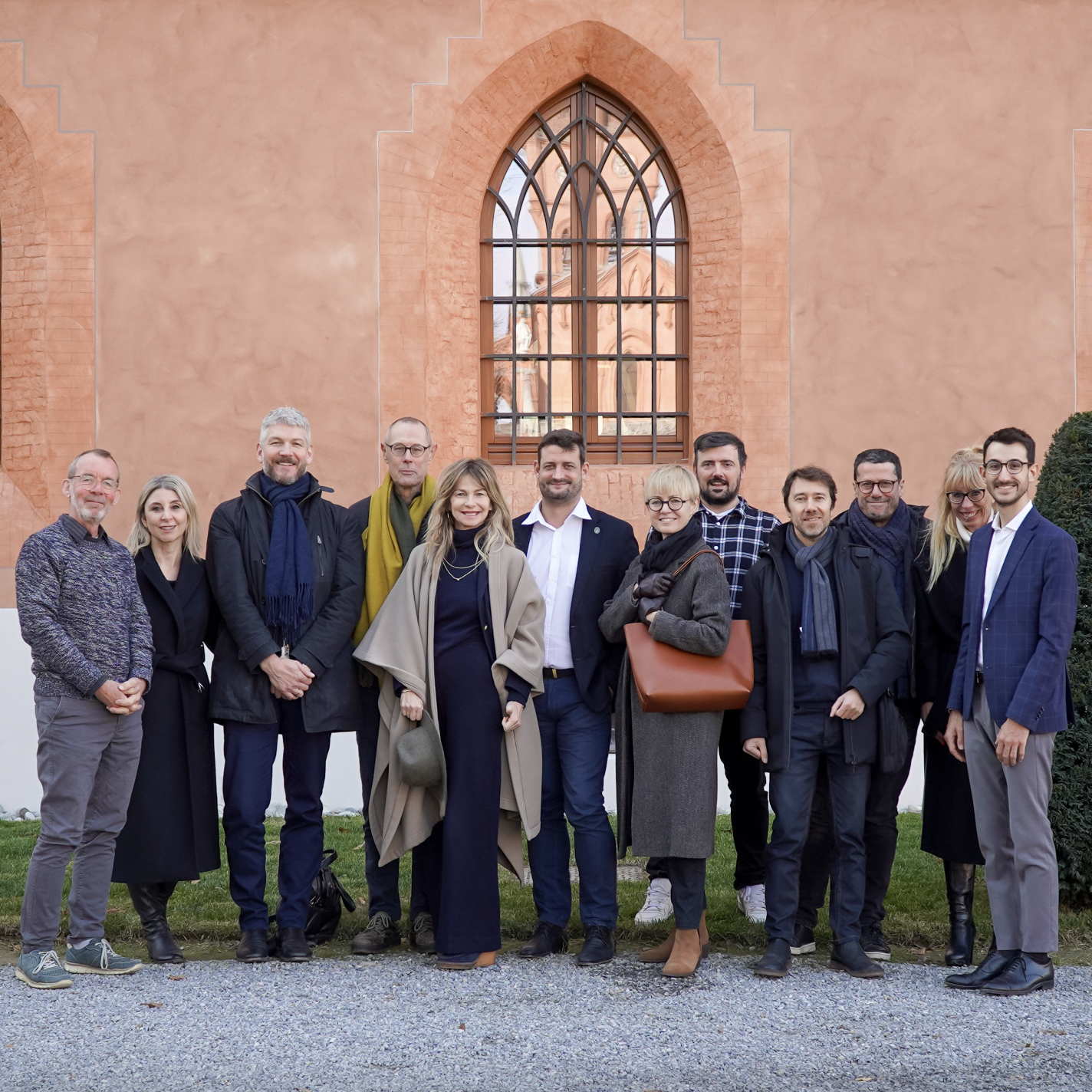
Sicilia en Primeur

Related – L’Etna and Parco Statella saved my Sicilian quarantine

“Etna is and island within an island,” explains Valeria Agosta Constanzo, “because of its particular micro climate.” While most of Italy suffered beneath an unprecedented heat wave with no rain in 2017, Etna’s weather was anything but hot. Costanzo’s position in Contrada Santo Spirito is unique and the soils are of the finest volcanic sands from the 1879 eruption. An island within an island, within an island. The same might be said for Firriato’s pre-phylloxera vines in fine basalt at Cavanera Etnea but also those of Tenuta delle Tere Nere’s La Vigna di Don Peppino; the gnarly vines growing on solid rock in Feudo di Mezzo, Giuseppe Russo’s San Lorenzo, the grand cru amphitheatre that is Pietradolce’s Barbagalli and Planeta’s 1614 eruption soils at Sciaranuova; Cottanerà’s new cru vineyard called “Scalette” and the incredulity of growing up to and beyond 1000m of elevation at Guardiola.

Federico Lombardo in the Firriato experimental vineyard explaining the science of staving off Phylloxera

Related – All the wines of Sicily

The 2010 introduction of an MGA (menzione geografiche aggiuntive) system for reds followed in the footsteps of Barolo and Barbaresco in Piemonte. Then in 2011 the whites followed with Alberto Graci’s Arcurìa acting as the first to carry the recognition. This haute positioning was a far cry from the pistemutta wines that used to be made for the local market, light, of less maceration, lower structure and made for quick selling. Wines made by the contadino using old-school winemaking techniques. It’s revival is in the hands of Frank Cornelissen. But on L’Etna the new wine scene is more about electric energy and life. “Etna is a place of paradox,” tells Graci. “Part Africa and part Europe, with cold climate flowers and cacti.”

Related – Sicily’s varietal concentration: Measuring an island’s wealth in grape varieties, a journey through its winelands and tasting Sicilia en Primeur

“Sustainability is not about the vines and leaves,” Graci continues, “it’s about the forests.” The Alcantara Valley is a place of sustainability because it is home to so much biodiversity. Not a cultivated one but a wild one. Wild herbs like fennel, chamomile, calendula, allium and oxeye daisy. Flowers, dominated by the ginestra but especially fruit trees like apricot, chestnut and apple. This is all related to and essential for what diversity is created in the vineyard. In fact on Etna North there is almost too much wild competition., for water and nutrients, yet nothing has really been removed or destroyed. The need for biodynamics has never been great because this is not a territory that needs to be restored. Life has always flourished and the use of chemicals was much lower as compared to most other wine growing regions of Italy.

Etna Wine Map

The task of mapping Etna’s communes, villages, contrade and vineyards has been a complicated and formidable one but a Taiwanese journalist named Xiaowen Huang spent several years assembling the information and the substance for this great cartographic endeavour. The first edition of the first comprehensive map of the Etna Contrada was established in 2019 and recently published in 2022. Huang’s efforts have not been recognized by the entirety of the Etna cognoscenti but those who know are aware of its significance. The exercise was made even more difficult because geographical lines are a contentious matter and not all of L’Etna’s estate owners agree along contrada lines, nor to a producer do they harbour the same opinion on where elevation lines should be revised as it pertains to DOC status. Traditionally these were drawn based on existing roads and natural barriers such as rivers and streams. It would be foolish to dismiss each and every claim and also hard to ignore the liberties taken by some producers whose vineyard holdings straddle recognized demarcations and so there are some DOC wines that take their home field advantage. Still there are others labeled as Terre Siciliane IGT when their claims are likely as valid as some DOC wines. The stakes are high and challenging for such a young region. As it stands, these are the facts, rules and numbers.

  • Established as a DOC in 1968
  • 1,184 ha
  • 33,750 hl / 375,000 cases of production
  • 133 contrade

Disciplinare: Minimum and maximum elevation: 400-1000m

Bianco: Minimum 60 percent carricante; maximum 40 percent catarratto; maximum 15 percent other allowable non aromatic white grapes

Superiore: Minimum 80 percent carricante plus other allowable non aromatic white grapes and can be produced only in the commune of Milo

Rosso: Minimum 80 percent nerello mascalese, maximum 20 percent nerello cappuccio; maximum 10 percent other allowable non aromatic white grapes

Rosato: Minimum 80 percent nerello mascalese, maximum 20 percent nerello cappuccio; maximum 10 percent other allowable non aromatic white grapes

Contrada Rampante

Communes

South Slope: Biancavilla, Santa Maria di Licodia, Ragalna, Bel Passo, Nicolosi, Mascalucia, Pedara, Trecastagni, Acireale, Aci Sant’Antonio and Viagrande

East Slope: Zafferana Etnea, Milo, Giarre, Mascali, Sant’Alfio and Santa Venerina

North Slope: Linguaglossa, Castiglione di Sicilia, Randazzo, Bronte and Piedimonte Etneo

  • List of contrade: Acquafredda, Airone, Alboretto–Chiuse del Signore, Algerazzi, Allegracore, Arcuria, Arena, Arrigo, Baldazza, Barbabecchi, Blandano, Bocca d’Orzo, Bragaseggi, Calderara, Calderara Sottana, Campo Rè, Cancelliere–Spuligni, Cannarozzo, Canne, Caristia, Carpene, Carranco, Caselle, Cavaliere, Cavotta (Treccastagni), Cavotta (Zafferana), Chiusa Politi, Ciarambella, Città Vecchia, Civita, Collabbasso, Cottanera, Croce Monaci, Crocittà, Dafara Galluzzo, Diciasettesalme, Dragala Gualtieri, Eremo di S. Emilia, Feudo, Feudo di Mezzo, Fleri, Fornazzo, Fossa Gelata, Fossa San Marco, Friera, Giunta, Grasà, Grotta Comune, Grotta della Paglia, Guardiola, Imbischi, Imboscamento, Iriti, Lavina, Maiorca, Malpasso, Mantra Murata, Marchesa, Martinella, Mille Cocchita, Monaci, Monte Gorna, Monte Ilice, Monte Rosso, Monte S. Nicolò, Monte Serra, Montedolce, Montelaguardia, Moscamento, Muganazzi, Muri Antichi, Palmellata, Panella–Petto Dragone, Passo Chianche, Passo Pomo, Paternostro, Petrulli, Pettinociarelle, Piano dei Daini, Piano dell’Acqua, Piano Filici, Pianodario, Pianogrande, Picciolo, Pietra Marina, Pietralunga, Pietrarizzo, Pignatone, Pignatuni, Pino, Piricoco, Pisanello, Pisano, Pomiciaro, Pontale Palino, Praino, Primoti, Rampante, Rapilli, Rinazzo, Rocca d’Api, Ronzini, Salice, San Giovannello, San Lorenzo, San Teodoro, Santo Spirito, Sarro, Scacchieri, Schigliatore, Sciambro, Sciara Nuova, Sciarelle, Scimonetta, Spadatrappo, Statella, Stella, Taccione, Torreguarino, Torretta, Tre Monti, Trimarchisa, Vaccarile, Valle Galfina, Valle San Giacomo, Vena, Verzella, Vignagrande, Villagrande, Viscalori, Volpare, Zottorinotto, Zucconerò.

The 2023 edition of Sicilia en Primeur was held in the second week of May, culminating with tastings, masterclasses and dinners in the extraordinary seaside hilltop village of Taormina. The annual event is made possible by Sicilia DOC, Assovini Sicilia and AB Comunicazione. I spent the better part of five days visiting producers aboard L’Etna, followed by tasting through many more of the mountain’s wines by way of the Assovini and AIS Sommelier assisted table-side service. Visits on this particular trip were made to Alta Mora, Calcagno, Cottanerà, Firriato, Girolamo Russo, Graci, I Custodi delle Vigne dell’Etna, Quantico, Palmento Costanzo, Pietradolce, Tenuta delle Terre Nere and Vini Scirto. These are my notes on the 150 Etna wines tasted and it is the cumulative assessment that offers a Godello’s eye view of the current state of Etna wines.

Alta Mora

Alta Mora Etna Bianco DOC 2022

Solid and well made Etna Bianco in the ways of respect and tradition, ample, fulsome, substantial and structured for a wine that will drink well three-plus years forward. Citrus mainly, both lemon and lime, cool, not quite minty but surely like fresh summer basil and then a pinch of salt at the finish. Drink 2023-2026.  Tasted May 2023

Alta Mora Etna Bianco DOC 2021

Nothing but carricante from three fruit sources, Contrada Arrigo in Linguaglossa plus Pietramarina and Verzella in Castiglione di Sicilia. No shortage of fully ripened varietal character for a Bianco of fruity ambition and most everything else secondary to that ideal. While other traditional examples express as much salinity and austerity as fruit you can’t really say that about this modern iteration. More delicacy than that which describes a delicate wine. A tour de force of magnanimous behaviour upon the palate, verging on Bianco ostentatious. Fine work from the Cusumano property. Drink 2023-2025.  Tasted May 2023

Alta Mora Etna Bianco DOC 2015

Back in 2015 there was no Arrigo fruit so just the two contrade in Castiglione di Sicilia at 600m of elevation. Without the higher Linguaglossa sourcing there is that reason plus age that puts this in higher richness, ripening and sun-drenched character. Holding well and the vintage acidity does well to manage the excess of full, substantial and near over the top fruit. Freshness is still there and fruit is everything. Neither croccante nor scorrevole but something other. Gelido I would say. Would have been just perfect in its secondary window about a year ago. Drink 2023.  Tasted May 2023

Alta Mora Etna Rosato DOC 2021

Straight ahead nerello mascalese from the Contrada of Solicchiata in Castiglione di Sicilia where Alta Mora also uses this fruit for the Etna Rosso. While this and some other Etna Rosato are southern French “styled” there is always the hyper specific mountain umami that puts these wines in a place of their own. More than crunchy as an example and the length leaves quite a Rosé impression. It’s an extremely well made and satisfying Rosato. Drink 2023-2025.  Tasted May 2023

Alta Mora Etna Rosso DOC 2021

Only nerello mascalese with fruit from all the contrada sources; Solicchiata, Feudo di Mezzo, Verzella and Guardiola, all the young vines and what they together can effect for the most modernized example of a traditional wine. Feels like layers upon layers of mascalese delicasse, not compressed or compact but like many textiles fallen upon one another to create a many layered fabric. Once again it is ripeness that directs the whole and this is something in the Etna Rosso idiom that explains what the mountain will be for red wines but in the most direct, clean, correct and obvious way. Not a Rosso of fantasy but basic reality. Drink 2023-2026.  Tasted May 2023

Alta Mora Etna Rosso DOC 2016

Four years in bottle has ushered a next era of character but not one customized by earth or basaltic soil per se, no it’s still a matter off fruit layered upon fruit, over more fruit. Some dried notes now, like wild strawberry, currants and pomegranate. Showing dusty and high in acidity, with a drift of ripeness away from the original state of freshness. In very good condition and the vintage was clearly top quality though the wine would have been in an ideal state just a year ago. Still it will offer tasty and moderately complex drinking qualities for another year or two. Drink 2023-2025.  Tasted May 2023

Alta Mora Etna Rosso DOC Feudo di Mezzo 2019

As with all of Alta Mora’s Etna Rosso the only grape in all the wines is the one and only delicate beauty that comes from nerello mascalese and here off of 100-plus year-old vines in the Castiglione di Sicilia contrada of Feudo di Mezzo. In many ways this 2019 is closer to the 2015 tasted side by side, more so than any vintage in between (including 2016) and looking forward to 2021. The is all about warmth, fruit in consistently variegate layers and immediate gratification. That said these three to four years of aging have brought this Rosso into what must be its perfect drinking window. You will not find more cherries in an Etna Rosso to see it drink like so many other important Italian reds; nebbiolo and sangiovese namely and yet the dusty, crunchy and candied roses mix just put this in Feudo di Mezzo. That is the consistency of the most repeatable cru on Etna Nord. Some austerity in the tannins will help the 2019 to age well. Drink 2024-2028.  Tasted May 2023

Alta Mora Etna Rosso DOC Feudo di Mezzo 2017

Quite mature and having arrived at a soft and amenable place it is this Feudo di Mezzo that drinks with well-aged distinction. Fruit was no doubt ripe and macerated for full effect, matched by wood ageing to emerge seasoned as baked goods should. The style is in the vein of fruit-filled dark chocolate, impressive and giving the feeling of a super healthy, full-bodied red wine. Drink 2023-2025.  Tasted May 2023

Alta Mora Etna Rosso DOC Feudo di Mezzo 2016

Going back another four vintages brings this Feudo di Mezzo four plus four forward because the ripeness of vintage and capture of exceptional fruit can’t help but double down on expediency. This has in fact passed over to stage two but remains early in that epoch for a nerello mascalese really aiming to please two camps; those who love it as youthful as possible and also those who wants some developed delicasse. The new fruit aromas are quite perfumed, like scraped blood orange skin and ginger-spiked dark chocolate., The wood is noticeable still though the tannins have softened and sweetened. This will have great appeal to a crowd wanting substance and body, but also the caché of age. Drink 2023-2026.  Tasted May 2023

Alta Mora Etna Rosso DOC Guardiola 2019

Then along comes Guardiola, the awe-inspiring contrada at the high point out over Castiglione di Sicilia, vineyards set above 800m upwards of 900-plus though still qualifying for consortia delineated Rosso DOC status. The cooler climate is juxtaposed against full-factored solar radiation collection and transmitted to nerello mascalese so that a wine from these heights still comes away ripe and rich. It must achieve its numbers to qualify as an Alta Mora Rosso, regardless of cru or how high up the volcano it lays. Make no mistake that this is a volcanic wine, muscular, dusty and taut, ripped even, as opposed to a mountain example, fit, in shape and beautiful. Drink 2024-2030.  Tasted May 2023

Alta Mora Etna Rosso DOC Guardiola 2016

Quite mature yet holding strong though the warmth and fruit cumulate substance makes for a big mouthful of nerello mascalese. This is is fine shape though it has done quite a bit of living already and these next two to three years will express full on secondary character. Drink 2023-2026.  Tasted May 2023

Giusy and Franco Calcagno

Calcagno

Calcagno Etna Bianco DOC Ginestra 2021

“Mountain wine,” says Giusy Calcagno. Not volcanic because the Italian montagna is the correct correllation. The feminine as opposed to the masculine power of the volcano. Giusi, Franco and grandfather Vicenzo. The late Andrea Franchetti was intrinsically connected to Giusy uncle the winery and the formation of Etna DOC. From Contrada Volpare, mostly carricante with some grecanico in a Bianco considered a Calcagno classic, aged only in stainless steel tanks. Equal parts salty mineral and phenols but more than anything fruit perfumes as effusive and aromatic as any of the Etna Nord ilk. Still no matter what other characters would like to join and take turns leading the dance, well it is the terroir that wins out in the end. The finish is just so salty. Drink 2023-2026.  Tasted May 2023

Calcagno Etna Bianco Superiore DOC Primazappa 2019

Primazappa, the first movements, moving the soil, rifondare. The name refers to the knowledge of how to cultivate the vineyard (with a hoe) which is Calcagno’s expertise and their contiguous sustainability for making wines on L’Etna. Sees stainless steel tank and also barriques, barrels that were once used for reds but deemed not ideal for nerello mascalese. Same fruit source and batch as Ginestra but with wood involved. The perfumes are still intact no matter the barrel and though there is clearly more richness than Ginestra there is also freshness and the presence of gregarious aromatics that are so high level specific to Calcagno. The scents of local herbs and perennials are part of the mix and these scents never relent. The flavours are fresh as the day they were bottled and time has only served to accentuate and spice up the character. And there is a boatload of mountain personality.  Last tasted May 2023

Primazappa comes from the commune of Milo, incidentally the only Etna area where it is allowed to bottle as Etna Bianco Superiore. A varietal carricante off of 30-40 year-old vines grown on both alberello and spalliera at 850m, picked in late September. The volcanic soils are quite weathered, decomposed and sandy, with a decided micro-mineral effect on this wood-aged and seriously flinty Bianco. Takes on a whole new appellative and stylistic meaning, clearly designed to age and enter another new Bianco world apart. Simultaneously smouldering and buzzing with mineral salts, fleshing if not yet quite fleshy. The curiosity and potentiality factors in this Bianco are developing and climbing off the charts. A bit wild now, it should settle into something really special. Drink 2024-2028.  Tasted April 2022

Calcagno Etna Bianco Superiore DOC Primazappa 2017

The first vintage of Primazappa made with the carricante that is indeed superior from a local grower and here aged half in barriques once used for nerello mascalese. No hue of flavours transferred in this first vintage and there is some maturity, especially as compared to 2019. Part vintage variation and part better understanding of how to make wood-aged carricante by the time the third vintage came about. Advancing but so much fruit and a long, long finish. Drink 2023-2025.  Tasted May 2023

Calcagno Riterza Bianco 2019, Terre Siciliane IGT

Bianco mazzerata, 10 days skin contact but made from the same carricante grapes dealt with so differently and yet there is so much mouthfeel and the flavour profile is eccentric, if well under control. Not exactly spooky yet there is a true piquancy and texturally speaking this makes hay while touching every part of the palate. Don’t sleep on the open aromatics because they are special, of beeswax, honey, mandarin orange and fennel. Complexity is special and clarity like looking through glass. Drink 2023-2026.  Tasted May 2023

Calcagno Rifunniri Bianco Da Nerello 2018, Terre Siciliane IGT

The experimental white as a revolutionary idea that Giusy Calcagno’s uncle wished for and made happen. Just as it sounds, a white wine vinified by red grapes (nerello mascalese) and surely more phenolic than the carricante-based wines – but also sapid. The acidity is a bit lower and pH higher to result in this mimicry of the orange wine concept yet harvest is a couple of weeks earlier than nerello for Rosso. There are some sharp edges to this Bianco and with a few more vintages under service this will round and smooth further. Drink 2023-2025.  Tasted May 2023

Calcagno Etna Rosato DOC Romice Delle Sciare 2021

Rosato that only sees steel and the name refers to Etna flowers that grow upwards to the Ginestra. Rosato of healthy platinum rose colour and a high level of aromatics, expressly floral and saline. A very good vintage of Rosato and made for pizza in the al forno oven at Calcagno. Delicious pink stuff that is bloody difficult, well actually impossible to resist. Irresistible, said in Italian. Drink 2023-2025.  Tasted May 2023

Calcagno Etna Rosso DOC Arcurìa 2019

One of three single Etna Contrada Rosso from Calcagno and the smallest on Etna Nord. Spends one year in big barrel followed by six months in bottle before release. This 2019 is the current release. Arcurìa is a sandy soil with some of the oldest vines, from 70-100 years old. Only Calcagno and Graci make a Rosso from this contrada. So glycerin and an almost oily character but my is this a salt, sandy soil driven nerello, with mostly mascalese but also colour advancing (10 percent) cappuccio. There is a tar and roses element here which is akin to another great Italian but the comparison ends there. Still a sharpness here and a tightly would Rosso so I would personally wait another two years to allow this highly specific compassion acid plus tannic structure to settle in.  Last tasted May 2023

Arcurìa contrada is a late October harvested cru for nerello mascalese grown at elevations between 600 and 700m, on five types of multi-layered volcanic soils associated with the village of Passopisciaro. The Calcagno profile is consistent with Calderara in red fruit as if cherries especially are prominent and yet sour-savoury and botanical tonic elements change the complexion of this particular Rosso. Less generous and effusive if more serious and even structured results. No, not the same wine at all, even if it is distinguished as being from Calcagno. Drink 2024-2028.  Tasted April 2022

Calcagno Etna Rosso DOC Arcurìa 2016

The first vintage for a cru Rosso for Calcagno aged in Botti Grandi, now seven years old and showing remarkably well. Still some energy and pulse here despite the full on maturity. Acids are special and there are some faint droplets or hints of porcini jus involved but my goodness this impresses above and beyond expectation. Right where you might want it to be. Drink 2023-2025.  Tasted May 2023

Calcagno Etna Rosso DOC Feudo Di Mezzo 2019

All three contradas are built upon different epochs and therefore colours of lava stone with Feudo di Mezzo being the whitest of the three. Same vinification and if I thought that Arcurìa was sharp, taut and edgy then get a load of this FdM. More tar, less roses, even more structure and heavy on the stoniness. More tannins but not as austere and so there is perhaps more potential but clearly in a different way. Big wine with endless potential.  Last tasted May 2023

Feudo di Mezzo is neither Calderara nor Arcurìa, here much smaller plots of alberello vineyards with their twisted and ancient vines 60, 70 even 80 years or more growing at 600m.The nerello msacalese often shares space with less dominant and texture thickening cappuccio but most notable is the salumi and red fruit skin musk aromatics of these Rosso. There is nothing like Feudo di Mezzo, characterful, distinct, knowable and just plain funky. In a 70s bass beat way, not quite G.Q. but perhaps Love Train style. Calcagno’s is really special FdM, reaching for greatness and making itself noticed. Don’t sleep on this cru “‘cause if you miss it, I feel sorry, sorry for you, well.” Drink 2023-2028.  Tasted April 2022

Calcagno Etna Rosso DOC Calderara 2019

Calderera are the oldest soils of the three Contrada Rosso and Calcagno farms just one hectare of essentially all century vines. The experience of these plants and their abilities make for less aggressive if still very powerful tannins. The mouthfeel is not quite as velvety as Arcurìa but it is its one character and the overal effect is extreme elegance.  Last tasted May 2023

Calcagno is the life work of Franco, Gianni and Giusy Calcagno, two brothers and a daughter, first vintage being 2006, now a full grown concern. From the Contrada Calderara the mixed soil consists of black pumice and basalt. Perhaps made most famous by Cottanera but never sleep on the passion and torch passing into this generation of Calcagno hands. Cherries and red fruit in concentration could never be dismissed and in fact must be celebrated in a nerello mascalese of sweet intoxication. I really wanna know this Rosso, I really wanna go with this mascalese, my sweet Calderara. Fresh and grounded, “effusive” and “espansivo,” meeting at both poles, one mission gained. Implosive Rosso from the famiglia and one to savour after many other wannabes have walked heavy in their soles and commercialized their souls. Drink 2023-2027.  Tasted April 2022

Godello at Cottanerà

Cottanerà

Cottanerà Etna Bianco DOC 2022

Über freshness for the arch classic Etna Bianco ideal, citrus and stone fruit through also unique for the juicy bite into a fresh pear. Pristine harvest and premium classicism as a balanced ballet between fruit and acidity. A joy to drink, no matter the moment or occasion. Drink 2023-2026.  Tasted May 2023

Cottanerà Etna Bianco DOC Calderara 2021

Contrada specific Etna Bianco, a matter of specializing carricante from a zone of old vines with some catarratto involved for a much more intense and taut iteration. Thinking of Calderara in terms of fruit is not the order of assessment because concentration goes above and beyond, into basaltic stoniness and the other nutrient elements that vines seek for their character and complexity. A much different kind of freshness to the Classico, here more about many energies fusing for a Bianco that buzzes and invigorates. The said there are stylish qualities and also a fine-streaked polish to this Calderara. Drink 2023-2027.  Tasted May 2023

Francesco Cambria, Cottanerà

Cottanerà Etna Rosso DOC Diciassettesalme 2021

Truthfully and veritably Etna Rosso classicism, classy and stylish, just about the pinnacle of what an ethereal Classico can be. An accumulation of 17 places within a place that layer, integrate and fuse like the tightest 17-piece orchestra. How else to describe an Etna red that could and should be in display of so many moving pieces. Not the case, in fact like clay soils there is compaction and a sponginess that presses harder, yet with enough give for elastic texture. That is the nature off this Rosso, generous and built upon more fruit layers than most in the area. Drink 2023-2026.  Tasted May 2023

Cottanerà Etna Rosso DOC Feudo di Mezzo 2019

Uncanny how Feudo di Mezzo is so able and capable of such a consistent style, softer as things go, relatively speaking and all the while generous as any. Feudo di Mezzo is expressive of fruit and earth perfumes but more than anything it is mouthfeel and length that give the contrada its high level exceptionalities. The nerello mascalese may not be the most typical of all the Versante Nord vineyards but it is easier to qualify and conceptualize the source, from producer to producer. There are 10 of them (I do believe) and Cottanerà’s is expressive of more up front fruit than most. Also a piquancy and spice cupboard set of accents that determine style within style and character. Drink 2024-2030.  Tasted May 2023

Cottanerà Etna Rosso Riserva DOC Zottorinoto 2017

So curious to taste 2017 after 2013, especially considering how a vintage might sku expectation to see this as equally mature. Far from it because acids are spectacular, like certain parts of other Italian wine-growing areas but Etna is its very own incomparable climate entity. As such the vintage persists as a strange yet beautiful and pitch perfect one. It seems the Cottanerà team deduced that highest of high caste fruit was on order from the cru to define the producer and so there was no holding back, thus creating a structured wine that should very likely glide through the ages. The length on this wine is equalled only by its stylish grace. Serious yet generous, ambitious and confident, but tension creates something exceptional. Acids as mentioned are the catalyst and yet we don’t always talk about Etna Rosso in such terms. And we should.  Last tasted May 2023

Arguably the estate’s finest parcel of nerello mascalese grown at 800m in the commune of Randazzo, Lavico. A 2017 of weight, density, or as it may be called importante. An Etna Rosso of ruby-orange bellocio hue, passione di legno, exotically spiced by the barrel, warm and very vintage driven. Closed, più giovani then many, needing years to blossom. Tannins are thick and seemingly esculent but resist the temptation and let them rest. A coalescence of red fruits, skins included, macerated at 28 degrees for 30 days. Circles back to the florals, in violet plus spices, caper and brush. Inevaso Rosso. Drink 2023-2031.  Tasted October 2021

Cottanerà

Cottanerà Etna Rosso Riserva DOC Zottorinoto 2013

A most important contrada/cru for Cottanerà, as much as any and thus the decision to bottle it as Riserva, not the most common appellative add-on for Etna wines. Low yielding and a Rosso of extra-level concentration with as much glycerol as likely to be found anywhere in the territory. Funny vintage in certain ways, considered truly warm and one clearly age-worthy. Showing some maturity with a moment of blood orange and also what feels like saffron, though as an aromatic note the former is far greater than the latter. Touch of residual vanilla and creamy dark chocolate linger with the most minor tannic austerity and a shot of late expressed espresso. Complex Zottorinotto no matter how you assess it. Drink 2023-2025.  Tasted May 2023

Firriato

Firriato Gaudensius Rosé Etna DOC 2019

From the Latin gaudeo, the feeling of “deep pleasure or satisfaction.” From the warm and generous 2019 vintage, harvested on October 9th, later than most would imagine, The expectation of complex aromatics is warranted and fulfilled. The colour of lightly pressed fruit and florals most importantly captured. From lemon to orange, scraped skin mostly, then the self-professed pomegranate to be sure. Taut and compact though happily never bracing with high level extract and therefore freshness. Between 7 and 8 g/L of residual sugar and therefore Brut in style/classification. Hides every bit of that sugar with equal, opposite and supportive acid. There were 20,000 bottles produced. Drink 2023-2025.  Tasted May 2023

Firriato Gaudensius Blanc De Noir Etna DOC

Has been four years since last tasting this traditional method sparkling made from nerello mascalese and still the fresh green nasturtium seed is right there with the oranges and lemons on the nose. The palate finds that star anise and yeasty notes to raise the level and flavour intensity for a white made from red grapes so bloody satisfying to sip. Gastronomy in a glass as well, insalata mista, peppery and with so many vegetal notes that pique the palate. Drink 2023-2026.  Tasted May 2023

Mount Etna, nerello mascalese and downright intensity are the triad of notation from a sparkling wine of great freshness and drive. The lime notes are there from start to finish and there’s a reductive and peppery green apple bite, with an amazing note of green nasturtium seed. This would pair so well with a salad augmented by salty chèvre or feta with nuts, seeds and fresh nasturtium. Like a Brut Zero from Franciacorta, in a way, with great length and potential right here.  Tasted May 2019

Firriato Gaudensius Metodo Classico Pas Dosé 2017, Terre Siciliane IGT

Does not classify as Etna DOC because when the regulations were written there was no inclusion of the style that is Pas Dosé. Ages a minimum 60 months on the lees and fruit is taken from a single vineyard. Some top quality base wines from previous vintages are added but the percentage is moot because regulations or lack thereof do not effect the wine philosophy. Certainly a more stark, taut and austere sparkling wine but one that proves dosage is less than necessary to make quality sparkling wine from nerello mascalese grown on Etna’s volcanic soils. In fact the grape is exposed for everything it is and can be. Floral and here the mix of red fruit, florals, yeasty brioche and blanched nuts is a matter of full expression. The most toasty and botanically herbal of the three bollicini. Drink 2023-2027.  Tasted May 2023

Firriato Cavanera Etna Bianco DOC Ripa Di Scorciavacca Contrada Verzella 2021

Reductive for Bianco and even more so phenolic so give the glass some agitation to break down walls and shed light on the carricante situation. Melon and citrus, almost a star anise plus star fruit character, in fact the latter is very much in play. Acids are just fine enough to keep the spirit alive. Drink 2023-2024.  Tasted May 2023

Firriato Cavanera Etna Rosso DOC 2018

Cavanera Etnea is the most elevated and active volcano in the EU. At Cavanera the soil is what is called Sabia Volcanica – literally volcanic sand. Like black earth but texturally it’s more a matter of fine sandy pebbles. The first vintage of Etna DOC was 1994 and Firriato farms 90 hectares, 78 in production, north and northeast on the mountain. Castiglione Sicilia, Passopisciaro and Randazzo are the locales, spreading across 12 contradas. Firriato explores nerello mascalese in so many different ways, always capitalizing on its aromatic diversity. Leaf thinning is completed ahead of blooming to maximize energy and sugar transitions to the bunches. The 2018 is a well pressed, macerated and expressed nerello mascalese, of full on black cherry styled with pulp and stones sharing aromatic space. Suave texture and silky tannins, full flavoured with citrus of multi origins, including blood orange and that which imagines red citrus; currants and pomegranate. Candied roses, peppery piques and baking spices, Christmas cake in a glass, with boozy raisins and plum. Wildly flavourful, well-wooded and finishing with charred herbs, eggplant and red peppers. Drink 2024-2027.  Tasted May 2023

Firriato Cavanera Etna Rosso DOC Rovo della Coturnie 2018

Right proper red fruit, funk impacting the nature and style of this Rosso in which wood is more a spice element than anything else. A Rosso of piques and energy, tang and the right kind of tart. “Rovo della Coturnie” refers to the brambles of a plant and yes there is some of that brambly character, not unlike certain zinfandel. Curious and particular Rosso in any case and one to have a look at. Pretty much ready to go. Drink 2023-2026.  Tasted May 2023

Firriato Cavanera Etna Rosso Riserva DOC Signum Aetne 2014

Named for Firriato’s pre-phylloxera vines project with which human interaction with the vineyard are limited as much as possible, essentially zero vineyard handling. As for phylloxera there were conditions in the Verzella vineyard that nullified the attacks and allowed the vines to survive. Only one of the louse’s 18 cycles attacks vine roots. Because the elliptical volcanic soil acts more like sand than soil (because that is what it is) it does not allow the phylloxera to efficiently develop the radicultural ananocycle (parthenogenesis). Also because between 600 and 1000m it faces climatic obstacles. Above 1000m it fails. This example of nerello mascalese is much more naked and transparent but it is tobacco smoky and multi-spiced, with no lack for cocoa and espresso. Any wood aging hyperbolizes because of the nature of this ancient DNA’s fruit. Like chewing on fresh liquorice root for minutes and the 24 months spent in 700L tonneaux has only acted to fortify and bring so much spice of life. Spent six years further in bottle to bring it to this place today. Fascinating, an Etna Rosso of great depth, macerated black cherry and the finest Amaro. Rich and deep with a feeling that the fine volcanic sand that looks just like black earth high in composted organic matter would. Just 3,500 bottles produced. Drink 2023-2026.   Tasted May 2023

Godello and Giuseppe Russo

Girolamo Russo

Girolamo Russo Etna Bianco DOC Nerina 2022

For Bianco it is the single vineyard of Nerina that gives not just carricante but also the allowable varieties of grecanico, catarratto, inzolia and minella. This is important because it creates a field blend style of Etna Bianco, even if these other varieties only add up to a maximum 15 percent of the whole. A much more wholesome, fulsome and layered example because of what the vineyard delivers, so far away from some of the lean, salty and linear Bianci of the area. Yet there are moments of all those aspects and then viscosity, generosity and even a bit of extra balancing weight. Length and greatness, actually. Drink 2023-2027.  Tasted May 2023

Girolamo Russo Etna Bianco DOC San Lorenzo 2022

Apposite to Nerina is the Etna Bianco reality of San Lorenzo, leaner and more direct but more so flinty, stone struck, taut and intense. Here cariccante really takes charge in a truly scintillant Bianco of style. All of San Lorenzo goes into tonneaux, which gives it an unmistakable note of fumé. The Etna version of growth-level Bordeaux Blanc in which sémillon is the star. Austere when this youthful, immovable but with dry extract and white lightning tannin literally crawling off the proverbial charts. Citrus is the main thing as far as fruits are considered while San Lorenzo’s stone and trace elements are the profound parts that take full control. The most croccante of all Etna Versante Nord whites and one to surely develop flinty and potentially petrol-like notes. Drink 2024-2032.   Tasted May 2023

Girolamo Russo Etna Rosato DOC 2022

Rosato from nerello mascalese is sale e salasso, pale and purposed, of acids in charge without the necessity for sapidity aboard the palate. These acids work the side of the mouth, zigzagging from the walls to the sides of the palate and back again, up and down, never seeming to stop. An incredible feign of sweetness even though the mind knows this to be dry and even austere. Part of us wants to admit this Rosato to be as important as the Bianco and the Rosso but know full well it is instead a perfect compromise of the two. Delicious and satisfying is what it is. Will age well. Drink 2023-2026.   Tasted May 2023

Godello and Giuseppe Russo

Girolamo Russo Etna Rosso DOC ‘A Rina 2021

‘A Rina is Giuseppe Russo’s Classico, that is to say a blend of vineyards and vinifications, as traditional a followed concept as it gets for the zone. Shows through generosity and acts as far from austere as it gets while vintage surely has as much to say as anything else. Scents of roses and the sweet sapidity of wild herbs that dominate the landscape. Barriques and tonneaux play equal parts toward the eventual chosen assemblage. There may have never been and while it can’t be speculated what future ‘A Rina will bring – but this is the most getable of them all. `I could drink A’Rina every day of the week. Drink 2023-2027.  Tasted May 2023

Girolamo Russo Etna Rosso DOC ‘A Rina 2020

My what a difference a year and a vintage both make, even in Giuseppe Russo’s Classico Rosso called ‘A Rina. The aromatics are wildly floral, expressive and complex, not to mention stylish and said again (about the right sort of Etna Rosso), definitively elegant. The mouthfeel takes no time off nor does it divert from what are fine and classic nerello mascalese (inclusive of 10 percent, unseparated cappuccio) aromas at an almost unparalleled appellative level. Hard to believe this 2020 is not the work of a single vineyard Etna Rosso. Drink 2023-2026.   Tasted May 2023

Girolamo Russo Etna Rosso DOC Feudo Di Mezzo 2021

The most identifiable cru is in fact (IMHO) Feudo di Mezzo but that which Giuseppe Russo makes is the one by which all others are calibrated. That includes Cottanera, Graci, Alta Mora, Planeta and Marc de Grazia (Terre Nere) though they are all perfectly excellent iterations in their own right. Though the large contrada is known for diversity there is just something about the glycerol, viscosity and unctuousness of its rich and ripe fruit that sets it apart. Like Toscana’s Panzano or Canalicchio but in Russo’s hands it’s more cru specific, like Vigna del Sorbo or Vigna Casaccia. Perfumed and also generous, especially from 2021. The fullness of flesh and body with silken texture and the streak of balsamic acidity is dramatic, yet never vivid. The levels of control and balance can be quantified as so much more than merely exemplary. Drink 2025-2032.   Tasted May 2023

Girolamo Russo Etna Rosso DOC Feudo Di Mezzo 2020

The virtues of Feudo di Mezzo contrada have been extolled and exulted but they should be doubled as it pertains to the 2020 vintage. Perhaps not the same generosity of 2021 but the perfumes are special and my do they capture attention before inciting fantasy through imagination. Once again the balance in the context of highest level nerello mascalese (and 10 percent cappuccio) is just about perfect, certainly ideal and harmonious, but 2020 is less overstated, bordering on understated Etna Rosso. Keep returning to the brilliance of the aromatics – they are the heart of this wonderful wine. Drink 2023-2032.   Tasted May 2023

Girolamo Russo Etna Rosso DOC Feudo Di Mezzo 2013

First vintage was 2005 and Giuseppe Russo is now farming 50 hectares. The old vineyards are refurbished with massal selections from the vineyard’s material. The alberello planted around the house in this contrada is cappuccio, planted in 2006 and 2007. Feudo as an Etna Rosso is considerably fresher than San Lorenzo when it comes to 2013 but that wine’s bright light is from different sources. This Feudo is still very fruit forward and blessed of that which seems recently picked. The lack of evolution in 2013 Feudo is remarkable, bordering on impossible. Traction and trenchant focus are fully engaged, never having released grip and if there was ever closed phase it can’t really be speculated but it’s doubtful this ever occurred. Impressive and delicious in every respect, in fact this ’13 Feudo is about as special as it gets for a 10 year-old Etna Rosso. Drink 2023-2028.  Tasted May 2023

Girolamo Russo Etna Rosso DOC Calderara Sottana 2021

Giuseppe Russo’s part of Contrada Calderara Sottana is at the upper reaches and the kind of fruit he pulls sees both barriques and tonneaux. Makes for a recently forged traditional sort of Etna Rosso of all parts elevated, stood up to be noticed and counted. More so than Feudo di Mezzo – if surely less so than San Lorenzo. The fruit is darker, almost into the proverbial black cherry style and yet the stone of the vineyard streaks straight on through. Easily the most dichotomous of Russo’s reds, like a line of truffle cutting through a semi-hard cheese. Chewy vintage though, again full of fruit and there could be no lover of fine Italian reds that would not drool over this wine. Ready earlier than the others though these sneaky tannins will creep up silent and stealth. Drink 2024-2029.   Tasted May 2023

Girolamo Russo Etna Rosso DOC Calderara Sottana 2020

Tighter than 2021, of course but even Calderara Sottana succumbs to earlier gratification. No Feudo di Mezzo however but the 2021 vintage will breach the 15 percent alcohol mark. As for 2020 well that streak of salinity called mineral or not runs through with fine filament bridges connecting top and bottom palate fruit. The ’20 is stellar, in finer balance than ’21, harmonious because tension and even a moment or two of austerity reign in the potential for over exuberant fruit. More brilliance from Giuseppe Russo. Drink 2024-2031.   Tasted May 2023

Girolamo Russo Etna Rosso DOC Feudo 2021

Solo Feudo, the oldest vineyard block, without the addendum of the “di Mezzo” and so a more specific piece of the Contrada which only Giuseppe Russo (who planted back in 2006/2007) can lay claim to such focus. Feudo (and even from 2021) is a Rosso of finer chained tannins, sharper acidity and more linear structure than the others, save perhaps for San Lorenzo. A chalkiness pervades and a dry extract meeting of the mineral mind means that a Russo exposée is expressed, spoken in tongues, of determinate focus throughout the experience. Dry and even austere, structured to age for seemingly ever. Once again, even from this vintage. Drink 2025-2035.   Tasted May 2023

Girolamo Russo Etna Rosso DOC Feudo 2020

No matter the contrada or the pinpointed place within the place there is a marked difference between the 2021s and these taut 2020s. No more is that notion explained and received than by this Feudo (minus the di Mezzo) what with its massive accumulation of structural parts. That said there is something more appealing about the 2021 because this vintage surprisingly acts a bit backward as compared to Calderara Sottana and Feudo di Mezzo. The solo artist known as Feudo is a tough guy, masculine of temperament and presents a tasting challenge. There is more fruit than most however, so give it an extra year and drink 2021 first. Drink 2025-2033.   Tasted May 2023

Girolamo Russo Etna Rosso DOC San Lorenzo 2021

From the cru as elevated as any in Versante Nord and surely the one closest to not only Giuseppe Russo’s heart but also that which captures his imagination. The vines are also the oldest (up there with some that are in Feudo di Mezzo) and what can you say? The complete package for a Girolamo Russo Etna Rosso that speaks of a mind it has developed and one that is its very own. A voice of experience and never relenting determination. The purest red fruit, not one thing or another, not one to elicit memories of tasting or eating anything specific but instead all about fantasy or perhaps hyper-focused reality. Carries the acid of the climate that envelops this place and while 2021 delivers so much fruit – well too bad because the acid will not be denied. There is balsamic here but not a deep, dark, cimmerian and cloying one. This is purity and focus, not to mention finesse and finally, generosity. This is everything. Drink 2025-2034.   Tasted May 2023

Girolamo Russo Etna Rosso DOC San Lorenzo 2020

First vintage for Russo was 2005 and Giuseppe is now farming 50 hectares, The old vineyards are continuing to be  refurbished with massal selections from the vineyard’s material. The alberello planted around the house in this contrada is cappuccio, planted in 2006 and 2007. As for 2020 the snapshot is a different one, angles and lightning not the same as 2021. For the first time the fruit is finer and more focused toward a vanishing point as it pertains to a 2020, something that could not be said for Feudo. San Lorenzo as a cru is triumphant for Etna Rosso because its freshness is only equalled by its structure and the purity of nerello mascalese (with the small amount of cappuccio) that can be exulted as something truly special. San Lorenzo is nothing if not consistent because of the rustic and high red citrus qualities noted from its fruit. Can’t look away, will not look or turn away from 2020. Has my heart. Drink 2024-2036.   Tasted May 2023

Girolamo Russo Etna Rosso DOC San Lorenzo 2013

Warmer vintage than many in the way that Etna does the opposite of the rest of Italy and also Sicily. Though the fruit has passed over into a liquorice, bokser, cacchi persimmon and even tamarind sort of place there are other freshening aspects that continue to breath light and freshness into this 2013 Rosso. Earthy to a degree and the oak has rendered to emerge as sweet baking spice with a shot of red berry mocha. Fully fleshed Rosso, smooth and lingering for one of Giuseppe Russo’s Rosso of longer than life finishes. Longer than the road that leads from Passopiciaro. Drink 2023-2026.   Tasted May 2023

Girolamo Russo Etna Rosso DOC Piano Delle Colombe 2020

Piano delle Colombe is a single block (or vineyard if you like) identified within San Lorenzo aged in tonneaux and barriques. Not a different take on the contrada but one that considers some rows of nerello mascalese whose separated vinifications have consistently performed well (and more often than not better) in many consecutive vintages. Concentration and hyper purity is incredulous, encouraged to the point of hyperbole by the vintage. Would say yet another Girolamo Russo ’20 that opens the floodgates of Etna Rosso fruit potential so that this waterfall of beauty crashes over the palate. Which in turn abides if only because it has no choice or else be drowned in fruit. Submit and be graced with a fineness of structure that can only feel the condition of greatness. Texture and finish are tops. Drink 2025-2038.   Tasted May 2023

Girolamo Russo Etna Rosso DOC Piano Delle Colombe 2019

The single block within larger San Lorenzo is Giuseppe Russo’s prized piece of Etna Rosso real estate. There is a sharpness from 2019 that is not noted from 2020, part early maturing fruit and balsamic dustiness that speaks to a warmer vintage with some fruit edging to the precipice. Acids are spectacular and overall there is a fine architectural design. Freshness persists though this will likely advance quite a bit quicker than the following vintage. Drink the ‘19s while 2020 takes its sweet Piano delle Colombe time. Drink 2024-2032.   Tasted May 2023

Alberto Graci, Feudo di Mezzo Vineyard

Graci

Graci Etna Rosso DOC 2021

Conceptualize all of Graci’s Rosso and imagine how they might act, nose and taste like in one layered package and voila, the Classico is conceived. Not that the same fruit from Arcurìa and Feudo di Mezzo will find its way into such a wine but a kinship and a thread is clearly woven into this level. Crisp, crunchy, middle ground of tonality and more amenable nature though still viewed as a structured Rosso that will show its best in a couple of years. Graci’s normale is many others’ best. Drink 2025-2031.  Tasted May 2023

Graci Etna Rosso DOC Arcurìa Sopra Il Pozzo 2018

The southwest corner of Graci’s Arcurìa cru is Vigna Sopra Il Pozzo, identified as a most important block within a larger vineyard already qualified as something of great Etna Versante Nord value. Challenging season and every iota of energy captured and encapsulated inside a nerello mascalese of supreme freshness. The palate is the profound matter of this wine’s supreme expressive nature, with soft, graceful and subtly powerful tannins. An Etna Rosso that lays in waiting, not to pounce but to slowly and persistently keep hold of our attention. No density from Sopra Il Pozzo ’18 but compact layers of slow-release tension – and also energy. Drink 2024-2035.  Tasted May 2023

Graci Etna Rosso DOC Arcurìa Sopra Il Pozzo 2017

A warm vintage in its own right and compared to 2018 the difference is north versus south, night and day, light against dark side of the moon. If 2018 is a nerello mascalese of chiaroscuro then 2017 is blazing light. And yet this section within a sector, that being Arcurìa is the captain of a nerello mascalese, no matter the vintage, to breath light into a pure and vibrant expression. Just an iota more density and nebbiolo-like tar drifting into austerity appeals from this ’17, however it does well to maintain vitality and life affirming, but also extending grace. Ready now and though not one of or for generations, some vintages do need to sacrifice for the greater good. Last tasted May 2023.

Sopra il Pozzo describes a special portion of the signature Arcurìa vineyard (and contrada of the same name), a block “above the well,” 100 per cent nerello mascalese picked in the last week of October. Treated to the same maceration and elévage as the Rosso for the same spontaneous style and time as Feudo di Mezzo. However Sopra il Pozzo’s “refuse” soil composition is different and requires patience in the name of time, due to its alternating layers of decomposed volcanics in stone and coarse sand. This is a section of recast material and the corresponding mascalese is both emasculated and chivalrous. The degree to which layers of fruit, mineral and umami incorporare and completare is finite and contiguous yet also lengthy, scorrevole and endless. There is rare Etna glycerin texture and perfectly timed acid tang. Tempismo perfetto. Grande. Drink 2024-2032.  Tasted April 2022

Godello and Alberto Graci

Graci Etna Rosso DOC Arcurìa Sopra Il Pozzo 2016

Not sure if this had not not been tasted in a vertical between 2015-2018 that any maturity would have been noted but especially as compared to the most recent ’18 there is some perceived evolution. Also a wine of depth, more compact flavours and the wood is duly noted, part vintage and partially what feels like the end of an era before a stylistic change was made. There is some chocolate on this vintage, a depth of fruit and soil that receive spice for accents towards accumulating a full-bodied nerello mascalese. Suave and silky tannins here, just about resolved. Drink 2023-2026.  Tasted May 2023

Graci Etna Rosso DOC Arcurìa Sopra Il Pozzo 2015

Increasingly, with each new tasting of 2015 Versant Nord Etna it is becoming clear that this is a great and age-worthy vintage. Warmth and particularities of climate captured in time are resulting in the slowest and most graceful release of energy with aid and abet by finest tannins. Graci’s is running strong, high in energy and persistent heart beating acids, time tested, keeping time and strong. Great heart and love from this wine, similar oak styling to 2016 but the energy and vibrancy are the thing, at the crux and delivered by a season that could not help but beat the infinite drum. Etna incarnate and one to emulate for generations to come.  Drink 2023-2033. Tasted May 2023

Graci Etna Rosso DOC Arcurìa 2020

Tasting a Graci Rosso five to six years after vintage is the prudent course of action – this much we know to be true. Case in point the open window that is the 2018 which tells us that 2020 is still in need of two further years in bottle. A tight one here with some grippy if also austere tannins but sweet fruit, earth and acids are all there, waiting, but we know them to be present. Much like nebbiolo this is the way of correct and proper, not to mention hugely promising nerello mascalese. A 15-20 year Rosso no doubt. Drink 2025-2036.  Tasted May 2023

Graci Estate

Graci Etna Rosso DOC Arcurìa 2012

A vintage of great conditioning and showing with exceptional delicasse this far forward. Near eleven years have done less to advance this cru-designate nerello mascalese in the early years of its classification, surely less than what comes four years forward from the quickly softening 2016. This is a look back at a wine so capable of hanging with and also being considered with the likes of Cru Bourgogne and/or MGA descried Barolo. The perfumes rise with trenchant intendment and the earth elevates alongside, complimenting and spicing, along with the long ago softened wood. Yet there is no downside or grace failing moments, only energy and vibrancy, traits Alberto Graci insists upon from every wine he makes these days. Drink 2023-2028.   Tasted May 2023

Graci Etna Rosso DOC “Quota 600” 2007

Warm vintage that will happen again 10 years later and though 15-plus years have passed there is no retreat of structure or desire to take only a quick look at this wine. A handsome and well aged example, soft and caressing for a most willing recipient that happens to double as a submissive palate. Lovely and in a state of grace, wistful look back at another era and time when Etna Rosso was something most of the world knew very little about. A dream to taste such an example. Drink 2023-2025.   Tasted May 2023

Graci Etna Bianco DOC 2022

So young and for the vintage, so promising from Alberto Graci. The pioneer for Etna Bianco DOC Contrada declared wine has advanced into modern day winemaking for exclusivity in Bianco and this Classic represents one of the most avant-garde steps. Clean, clean lease livivg still very much alive and in charge with some of the finer extract and tannin in non-cru Bianco across the northern slope. Revisit in 12-18 months for further disclosures. Drink 2024-2030.  Tasted May 2023

Graci Etna Bianco DOC 2021

Ten years after this first of the white Etna crus was declared is a Bianco that shines and shows exactly zero maturity with über freshness captured. Transparent, translucent and what can best be described as carricante purity is what comes from this taut and energetic white. Alberto Graci has built a separate facility for white wines, to ensure provenance and make sure every step is taken to concentrate on making whites without red distraction. High citrus aspect and yet a mark of stone fruit because the vintage was easier and allowed for a next level of ripeness. Still there is basalt stoniness and that extra edge of complexity by white grapes grown (inclusive of some cattarrato) and used here from the primarily red Feudo di Mezzo vineyard.  Last tasted May 2023

Graci’s viticultural epicentre is Contrada Arcurìa but they also grow in four other Etna north communes. The all-purpose Bianco is 85 per cent carricante with (15) catarratto harvested mid-October (on average) and raised in only stainless steel for nine months, on the lees. My how those lovely lees drive this wine, texturizing the local grapes and directing all the traffic. Rarely does an Etna Bianco recall Chablis but here is one in all glory and reminiscence. Fresh, luxe fruit round and abounding, mild yogurt to crème frâiche character derived by the infiltrations of those positive yeasts. Just salty enough to remind of the place in a generalized and beneficial way. Drink 2022-2024.  Tasted April 2022

Graci Etna Bianco DOC 2011

The inaugural vintage for Arcurìa as a vino Bianco is this 2011 and in fact it was the first such cru-declared white wine for Etna Nord. Graci is the pioneer of this menzione conceptualization for Etna Bianco and not by any simple or off the cup (lack of) planning. The shape of this Arcurìa is still a structured entity, with flesh hanging taut on bones and a malleability or elasticity that expresses the adaptability of fruit from this very particular place. Yes the wine has softened but freshness persists and energy refuses to wane. Remarkable length and longevity for Etna Bianco. Does 11-plus years old get any better than this? Drink 2023-2026.   Tasted May 2023

Graci Etna Rosato DOC Arcurìa 2021

Comes mainly out of Arcurìa’s bottom vineyard where it is predominately sandy, better for salty, high acid and energetic Rosato. All nerello mascalese, quickest of presses, extracting negligible colour and the nose indicates the warmer vintage. Sells out immediately but with oxygen and time this can develop patisserie and bicarbonate smells, like sparkling wine or even something like Loire Chenin grown on Caillotes. Notable extract and tannin involved, really special.  Last tasted May 2023

Etna Rosato comes from 100 per cent mascalese and the only grapes harvested in September. Just a soft press, no skin contact maceration and ultimately a salty, easy, light and rustic rose coloured meeting flavoured mingling with texture Rosato. Just what you want to drink in the sun, anytime after 11:00 am, preferably with the volcano looming above. Or anywhere the sun might hit in your place of living. Meets the non-plussed demands of delicious and satisfying, two most important blush ideals. Drink 2022-2023.  Tasted April 2022

Graci Etna Bianco DOC Muganazzi 2021

Precision and intensity rarely come together in Etna Bianco as they do in Alberto Graci’s Muganazzi to tell us something fantastic about this contrada’s capability. With carricante that is and Graci takes full advantage, listens to the winds and creates this near masterpiece as it pertains to 2021. A vintage that could be too easy and simpatico as they say but Graci makes the most of the benign situation. Sharper and more phenolic than Arcurìa yet high caste in its own right. Drink 2023-2029.  Tasted May 2023

Graci Bianco Buscemi 2021, Terre Siciliane IGT

From a zone outside of Etna, Mirella Buscemi and for Alberto a very interesting place, that being colder and drier which means later but also well maturing, high caste, kept acidity. Only sulphured at bottling and less treatment needed in the vines because of the micro-climate and the fact the elevation is 980m, on Etna’s northwest slope, past Randazzo. This is different, more into stone fruit but lean, taut and curiously fit with some kind of Bianco sauvage. Drink 2023-2026.  Tasted May 2023

Graci Tartaric 2021, Terre Siciliane IGT

A blend of nerello mascalese and (30 percent) garnacha, referred to locally as granacco and a most unique expression of an Etna red grown outside of the territory. Same vineyard as the Bianco, at 980m of elevation in Mirella Buscemi. Chewy and nicely tart, hinting at balsamic but the garnacha changes the overall ideal, bringing juicy red fruit and a doubly red macerated cherry with a note of tar into the mix. Some stems (just a few percentage points) add a third dimension, part savoury and part a thing of plant-based energy. Another truly interesting Etna diversion away from the oft repeated classic norm. Really important to taste something beyond the mantra; Bianco,  Rosato, Rosso. Bianco, Rosato, Rosso. Something new and refreshing without trying to copy other famous wines. Still very Etna. Drink 2024-2027.   Tasted May 2023

I Custodi delle Vigne dell’Etna

I Custodi delle Vigne dell’Etna

I Custodi Delle Vigne Dell’Etna Etna Bianco DOC AEDES 2022
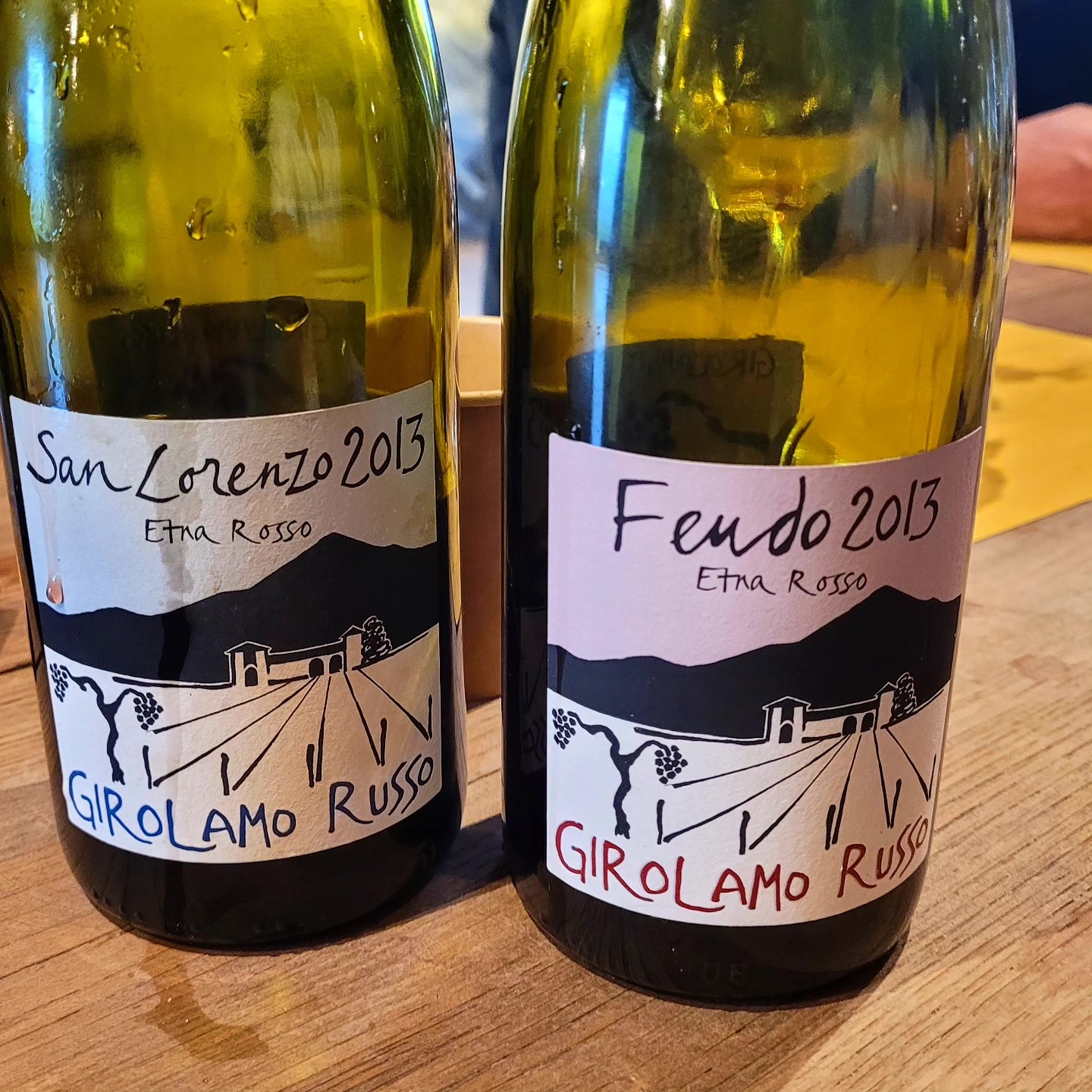
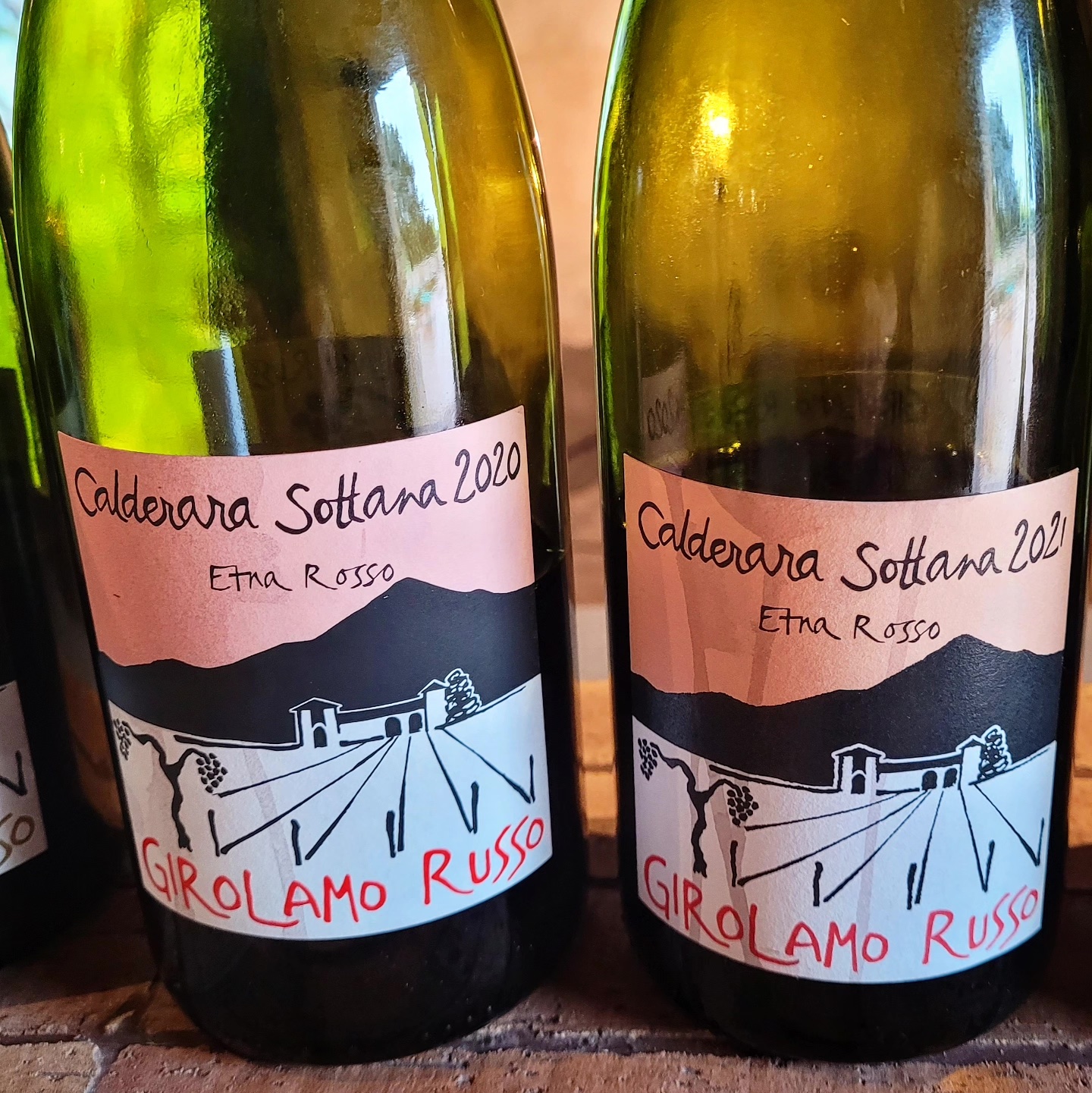
A blend led by carricante with other white varieties, grecanico and minella included. As much citrus as any from Versante Nord and not only lemon but an almost lime squeeze over avocado. Also an inert gas, eventually to emit petrol, persistent in repeat for a lightly tart and ultimately pleasant feel for the palate. Simple, effective and very well made. Drink 2023-2025.   Tasted May 2023
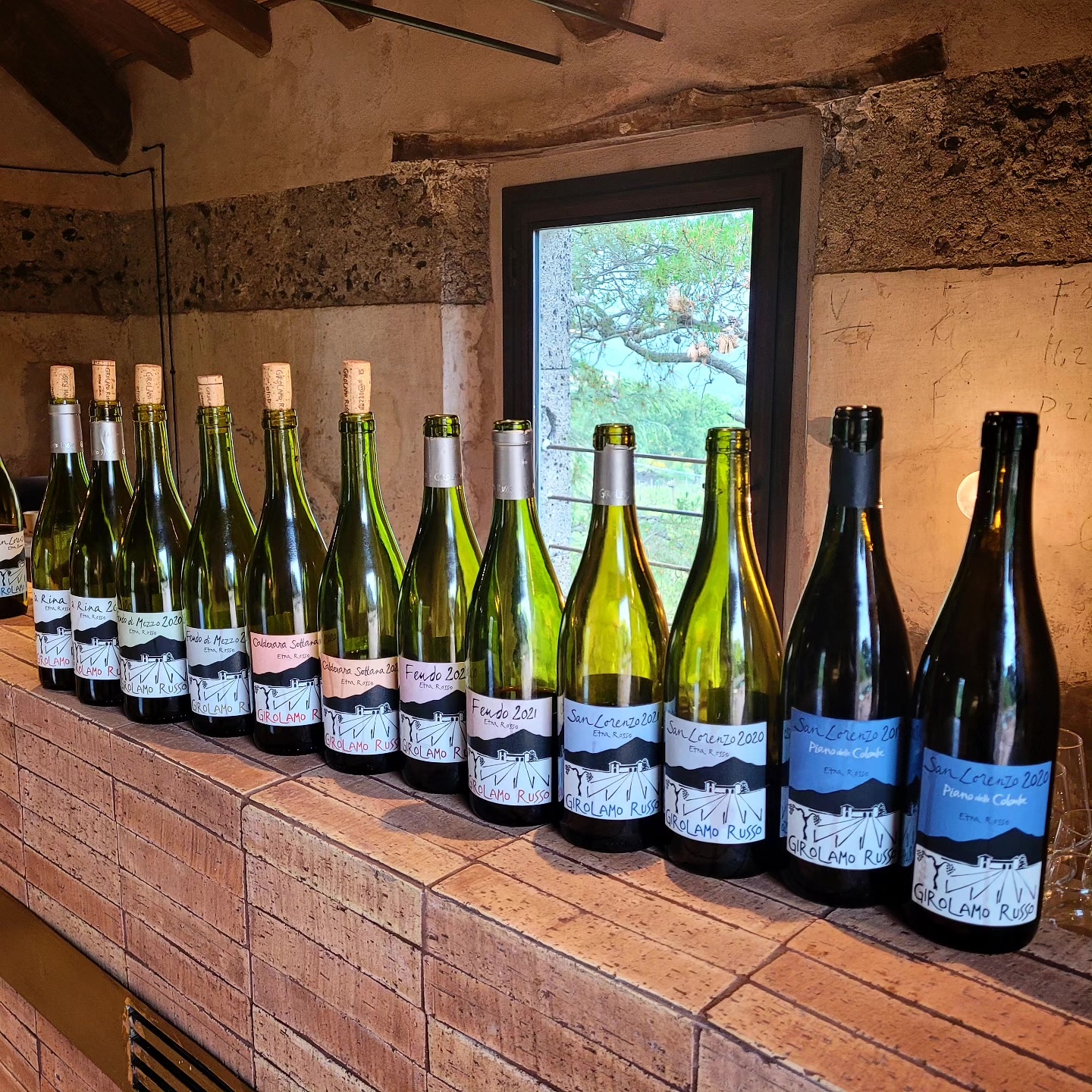
I Custodi Delle Vigne Dell’Etna Etna Bianco DOC AEDES 2021

A Bianco of its own accord, high in all parts well connected, including but not restricted to fruit both brim ripe and also phenolic. Some botanicals and metals here, for complexity and range. Four-poster blend and the three supporting varieties (catarratto, grecanico and minnella) do a lot to support and change the sharp nature of carricante. Intensifying the aromatics is what stands out above anything else. Drink 2023-2027.  Tasted May 2023

I Custodi Delle Vigne Dell’Etna Etna Bianco DOC ANTE 2020

Varietal carricante from the east side of Etna, perhaps the new frontier for 100 percent solo Etna Bianco. Will see what the future holds but this example from Contrada Puntarazzo is both curious and intriguing, complex at all parts in between and of aromatics seriously inviting. Of oh my goodness intensity, the spirit of citrus and a new slang of Etna acidity. This travels all over the palate and hovers over the surface like a combination of unoaked chardonnay (namely Chablis) and assyrtiko from Santorini. More of that latter it feels, volcanically speaking. Drink 2023-2027.  Tasted May 2023

I Custodi Delle Vigne Dell’Etna Etna Bianco DOC ANTE 2013

This must be the third or fourth 2013 Etna poured in three days because producers are obviously proud to share this special and longer lasting vintage. This is exactly that, a terrific showing for a near 10 year-old Etna Bianco, still racing with fruit and alcohol but also that sense of place, that being Contrada Puntarazzo in Etna East that is always hoped for in a place specific wine. Sure there is maturity and the wine shows some petrol but freshness and original character is still very much alive. Drink 2023-2025.   Tasted May 2023

I Custodi Delle Vigne Dell’Etna Etna Bianco Superiore DOC Imbris Contrada Caselle 2019

Imbris changes gears from Ante because wood aging is involved and a return to blending other varieties with the local carricante. Not so much a flinty Bianco but more so a phenolic one, quite botanical and herbal, less citric and rounder. Softer as well, already showing some maturity and drift into secondary character. Warm season increases the chances of all this personality coming out early and moving a bit quicker forward than the cooler vintages are want to do. Drink 2023-2026.   Tasted May 2023

I Custodi Delle Vigne Dell’Etna Etna Rosato DOC Alnus 2022

A Rosato made with nerello mascalese (and cappuccio) well bled (pressatura method) for generous colour in an almost rusty version of Tavel – but Etna style. Full express of aromas and flavours, nothing held back and in the Rosato idiom this is what we would call all in. Like blood orange iced tea, sweet basil and some soil mineral for good local savour faire and measure. More of a food Rosato it would seem. Drink 2023-2024.   Tasted May 2023

I Custodi Delle Vigne Dell’Etna Nerello Cappuccio 2020, Terre Siciliane IGT

Won’t find nerello cappuccio from Etna darker and fruit richer than this, nor will the aromatics brood and compact as they do in this 2020. That said it is obviously a very good vintage for a varietal wine from young vines aching to express their youthful rebellion. Plenty of teen spirit here, sharp and gangly, ready for anything, action and a good fight with any structure exhibited its way. Fruit is the matter and maturity will come rather quickly. No wood means this is worked in just the right way. Drink 2023-2024.   Tasted May 2023

I Custodi Delle Vigne Dell’Etna Etna Rosso DOC Pistus 2021

Pictus is the Classico for the company, made with both nerello mascalese and cappuccio grown around the winery. Older vines obviously as compared to the mascalese label, wood aging in 500L tonneaux of mostly light toast. Notable blood orange, pomegranate and red curramt, sharply defined by their collective citrus and a lifted example of Etna Rosso. Chewy with liquorice and more red citrus on the palate. The volatility is just a bit elevated. Drink 2023-2025.   Tasted May 2023

I Custodi Delle Vigne Dell’Etna Etna Rosso DOC Aetnus 2018

A nicely settled Etna Rosso from 2018, clearly steps above the Pictus and from a selection more stringent with some oldest vines a part of the mix. This is a Rosso of texture, wood generosity yet to fully melt and meld with the fruit. Black cherry and liquorice, more chew than juicing, no smoulder or toast but the palate is very much affected by the tonneaux. The faintest note of astringency comes across at the finish. One more year should quell any rebellion and yet the chocolate will increase with ganache fervour. Drink 2023-2026.   Tasted May 2023

I Custodi Delle Vigne Dell’Etna Etna Rosso Riserva DOC Saeculare 2013

Yet another impressive 2013, this time from a Rosso by I Custodi delle Vigne dell’Etna made from pre-Phylloxera wines which puts them in the 140-ish year-old range. Vines that give to massal selection so that their DNA may be passed on to create new plants (in a facility in the north of Italy). This is the dream vintage as far as tasting older wines are concerned, now number five in three days from four Etna producers and no duds in the lot. The longevity of 2013, in Bianco and also Rosso is not a matter of fantasy. This 10 year-old proves its trenchant ability to exist in an Etna reality. Dark and perfectly mature fruit but should and will continue to gain interest for a few more years. Drink 2023-2027.   Tasted May 2023

Palmento Costanzo, Contrada Santa Spririto

Palmento Costanzo

Palmento Costanzo Etna Bianco DOC Bianco di Sei 2021

Old vines, just about 100 percent carricante because the new vineyard has only that variety though there are no old plants in the original vineyard so the cattaratto can be anywhere from one to ten percent in the mix. From the blocks to the right (east) of the winery, nine months in steel and no malo. Smart scintillant of Bianco with a juicy squeeze of lime and beautifully fine bitters. Clarity and pristine fruit. If you are warm for steely Chablis then switch to Palmetto Constanzo Etna Bianco. You may never go back. Drink 2023-2027.  Tasted May 2023

Palmento Costanzo Etna Bianco DOC Bianco di Sei 2019

The steely one, essentially carricante with smatterings of cattaratto vine fruit in the scintillant mix. Hard to believe this is two years older than the current release, from warm 2019 and at the Classico level of Etna Bianco. Freshness is everything and a wine with four years of age exhibiting this kind of youth would fool just about anyone as to its vintage. The harvest in a bottle, not a genie because time does not trick away upon its release into the air. Keep wishing and living your best life with a glass or three of Bianco di Sei ’19. Drink 2023-2026.  Tasted May 2023

Palmento Costanza

Palmento Costanzo Etna Bianco DOC Contrada Santo Spirito 2020

The first contrada-designate Bianco from and for Santo Spirito is in fact that of Palmetto Costanzo and here the vintage exultation is welcomed with the most appreciative embrace. Moving away from steely purity and into an entirely next level of clarity, finesse and ultimately spirit. A most important and structured vintage because fruit harmony meets cool elongation for top results. Crisp and fleshy, layered of citrus, stone and melon fruit but always lined by basaltic stoniness. Unique Bianco, quite studiously Santo Spirito, forever and forever. Drink 2023-2029.  Tasted May 2023

Palmento Costanzo Etna Bianco DOC Contrada Santo Spirito 2019

A beautifully dusty, balsamic and herbal example of Rosso, so very Santo Spirito of elevation that cools and breathes great life into a wine. So powdery as per the contrada, exulted and when this fully liquifies it will show the saints’ true spirit indeed. Drink 2025-2032.  Tasted May 2023

Palmento Costanzo Etna Bianco DOC Contrada Cavaliere 2020

Different soils in Contrada Cavaliere, of sandier volcanic fineness as compared to Santo Spirito and as such 20 percent goes into 500L tonneaux. A finer grain of carricante tannin and more viscosity against a backdrop of even finer dry extract. Leans into the melon and macerating stone fruit spectrum, not quite a cordial but something more shall we say, distilled. Increase of flavour, salty streak but not as glaring in terms of searing volcanics and in the end a really smooth, gelid and silky Bianco. Not as much structure as Santo Spirito as well but surely an important vintage for this wine. Drink 2023-2026.  Tasted May 2023

Palmento Costanzo Etna Rosso DOC Nero di Sei 2019

Bottle tasted at the winery: Slightest amount of TCA. Only nerello mascalese from the vines around the winery including the contrada of Santo Spirito. Aromatics just ever so slightly muted but no lack of spirit and a lovely palate if also just ever so slightly muted.  Tasted May 2023

Tasted for the second time in two days and this from a sound bottle at Siclia en Primeur, in fact the fruit is so luxe and naturally sweet you have to take a moment to savour its generosity. From several sources including Contrade Santo Spirito and Cavaliere for a full and substantial Classico that everyone should know. The Etna equivalent of a Piu Communì nebbiolo that does everything it needs to connect, interweave and layer nerello mascalese for maximum satisfaction. Not that immediate gratification is the order but this is a Rosso to drink now and easily up to 10 years more. Drink 2024-2032.  Tasted May 2023

Palmento Costanzo Etna Rosso DOC Contrada Santo Spirito 2019

A vintage out of which the pre-phylloxera was produced from the contrada so just imagine the possibilities as they come from this all in for the vintage nerello mascalese. Feels like an extended maceration because the glycerol and unctuous textural pool are both at the crest of Etna Rosso heights. Oranges and cherries but more than anything old vines spirit and what just happened from out of these volcanic sands carried through to century and a half vines is something wholly and unequivocally other. Hints at balsamic reduction but the tannins and also acids are so fresh and so years is what it will take to take this anywhere new. The finest chalkiness imitates the soil and puts this in a league with some of Italy’s most important red wines. Up to you too decide which they are or don’t bother at all. Drink 2025-2034.  Tasted May 2023

Palmento Costanzo Etna Rosso DOC Contrada Santo Spirito Pre-Phylloxera 2019

As the name suggests this is indeed nerello mascalese taken from vines equipped with pre-phylloxera DNA and the experience of the ages. Vines that were either around or planted not long after the 1879 eruption passed across the western boundary of what is today’s property. Yes all this makes a difference and this is an extraordinary wine. It breathes Ginestra (the herbal plant with the beautiful yellow flowers growing out of the black lava stone) and silkens in texture no doubt because of the fine powdery volcanic sand this vineyard thrives upon. Extreme purity, focus and finesse, not a moment too soon or late, all parts in union, seamless and in group understanding. Yet there is mystery, fantasy and spirit and it must be said, no matter the clarity and polish, it is a Rosso with soul. We thank Costanzo for that. Drink 2025-2039.   Tasted May 2023

Michele Faro, Pietradolce

Pietradolce

Pietradolce Etna Bianco DOC Archineri 2021

Steely Bianco, of a clarity that even the great whites of Etna somehow seem challenged to acquiesce and yet this is the one destined to appeal to those whose imagination is captured by such an uncompromising kind of purity. Very much a matter of how Pietradolce sees what Bianco should be, without distraction or creativity beyond total control. Pristine is what this is and there is no other way to frame it. Drink 2023-2026.  Tasted May 2023

Pietradolce Etna Rosso DOC Archineri 2019

Aromatic freshness is preserved by fermentation in conical cement tanks, state of the art in modern design. The perfume is fruit first and also the character of that cement. Would not say Archinieri is lighter than Rampante though it does show its upbringing in a brighter, more effusive and also cured salumi way. It’s power is also more reserved or should we say less obvious. One is not the other and each are their own Etna Rosso. Shows what terroir and especially volcanics are want to say. Archinieri is mountain nerello mascalese. Drink 2023-2029.  Tasted May 2023

Pietradolce Etna Rosso DOC Rampante 2019

If the lady is on the label, the vines are pre-phylloxera. From the Albarello raised nerello mascalese above and to the northeast of the winery, vines in and around 95 years of age, a special and small parcel with a micro-climate and geological meets flora structure all of its own. Same contrada as Archinieri and the vineyards are close to one another yet they are located on different lava flows. Vinified the same way, in concrete, with Archinieri being a quantity at 4,000 and here Rampante at 7,000 bottles on average per year. Sees barrel for 14 months, first vintage was 2014, same year that the land was purchased. Indeed so apposite and here a deeper, more perfumed and darker fruited wine. Says something about the colour, mineral and elemental make-up of the particular basalt. Rampante is volcanic nerello mascalese. Drink 2025-2032.  Tasted May 2023

Pietradolce’s Rampante Vineyard

Pietradolce Etna Rosso DOC Santo Spirito 2019

A fresher nerello mascalese from a cooler and windier cru, once abandoned when it was found and covered by wild weeds. Cleaning the vineyards revealed some pre-phylloxera vines and now that part of the vineyard is one hectare of the four total. Same vinification in concrete followed by 14 months in 70 HL barrel. The chalkiest and most spirited of the Rosso cru yet not without proper grounding. Perhaps not as easily understood as Feudo di Mezzo when young but certainly more direct and transparent in its make-up as compared to Rampante. Santo Spirito seems to have and hold a little bit of everything. It is a complete nerello mascalese, a package where all part are present and fit. Drink 2024-2029.  Tasted May 2023

Pietradolce Etna Rosso DOC Feudo Di Mezzo 2019

Just 1,400 bottles are made of Feudo di Mezzo in the cru just below the village of Passopisciaro. This ’19 is the first vintage because the team was not satisfied with what was supposed to be the first out of 2018. Yet another example that somehow or perhaps its should be said must be this cru because it speaks with consistent understated power no matter the handling. As long as respect is given – though it seems no one can use this fruit without following the unwritten code. No change in how this is raised after harvest, from concrete to 70 HL barrels. There are few as powerful while so very in control and in the hands of Pietradolce that aspect from this cru is exemplified to the highest degree. Drink 2023-2027.  Tasted May 2023

Pietradolce Etna Rosso DOC Barbagalli 2018

For Pietradolce it is Barbagalli that is THE Grand Cru of nerello mascalese, first made in 2010, only 2,000 bottles today, the most concentrated of them all from which only half to three-quarters of a kilo of fruit is picked per plant. Ups the aging in 70 HL botti to 20 months and here we find everything elevated and that means everything, A phenom of perfume and a powerful wine that never flaunts its impressiveness. Barbagalli is no peacock (though they are magnificent creatures) and it knows what excellence its holds. The vineyard proves to be one of Etna Nord’s greatest assets and with 2018 the combination is one of both expression and impression. Exotic in ways no other Pietradolce Rosso can think of but truth is there are few Etna Rosso that deliver this mix of perfume and power. A difficult vintage that challenged because of humidity (mainly) and the come the spices and acids covering the palate. The wood brings an exotic spice to the finish and droplets of infusing Amaro. Unrelenting. Freshness. Elegance. So young. Drink 2025-2036.  Tasted May 2023

Barbagalli Vineyard

Pietradolce Etna Rosso DOC Barbagalli 2015

Far less of a humid vintage as compared to 2018 and a wine so perfectly in the window of its prime – so in a way all Barbagalli can be assessed in relation to this 2015. Nothing passive about this nerello mascalese while conversely no aggressive actions or furtive movements neither. Powerful and yet incrementally structured so that time moves slowly and will be on side with the freshness of the fruit for a good long time. All the wines show great precision, polish and promise with this 2015 as a beacon and experienced adult from which to learn, follow and determine their own paths.  Last tasted May 2023

Barbagalli is not merely just a year older than Santo Spirito but it is a contrada to deliver the most fruit in the Piertradolce stable. There’s also an earthy underbelly impression, plus a richness and an unctuous stability that breeds sour edging over the sweetness of its fruit. Does not fool around in fact it’s structured to last a short lifetime, or 15 years at the very least.  Tasted May 2019

The estate flagship Etna Rosso Barbagalli is taken from Contrada Rampante in the area that is known as “Barbagalli” in Solicchiata. This northern Etna 80 to 100 year-old pre-phylloxera vineyard delivers the most naturally earth-crusted, umami-laden expression in hyperbole, concentration and peak spiciness. There is a buzz about this nerello mascalese that the rest of the portfolio does not pulse with, neither outward through expressionistic energy nor inward, retracted and self-effacing by implosive feeling. The texture separates itself with multi-faceted tenor and a tremor of explosive potential that might strike at any time, anywhere, any place. This will turn into something ethereal, of that there can be little doubt. Drink 2022-2032.  Tasted May 2018

Pietradolce Sant’Andrea Bianco 2018, Terre Siciliane IGT

Poured after the Rosso which is not a big surprise considered the name Bourgogne has been mentioned several times, in the vineyard, cantina and at this tasting. Pre-phylloxera vines are always ready for the longest of skin contact times, for months on end. The colour is the first cue, as golden hued as it gets and the aromas are so compactly concentrated there seems little room for light and bright moments. Yet there are with freshness an essential matter and sapid persistence the real result of a Bianco’s complexion. Very small production, first vintage being 2015 and now considered the Bianco Grand Cru, just as Barbagalli is for the Rosso. Highly polished, silky and without any parts out of place and despite the persistent freshness there is no doubt that the wine has evolved though not out of a hot vintage. Will continue without advancing too far for another two or three years and then will taste like older Bourgogne before too long. Drink 2023-2026.  Tasted May 2023

Pietradolce Sant’Andrea Bianco 2017, Terre Siciliane IGT

From 140 year-old cariccante vines near the village of Milo on the eastern slopes of Etna. Between 8-10 months of skin contact. High elevation and volcanic soils maintain acidity and freshness, but most important this is arguably the finest area on the mountain to make white wines. This has nothing to do with appellation but a wine that maintains the soul and character of Etna with something more, meaning through skin contact style. The white “Grand Cru,” as opposed to Barbagalli for the red. Full on gold in the most luxe example and truth is spoken with clarity, energy, spiritual individuality and what we must consider as Etna mineral. Volcanic and you could drink three glasses of this without tiring for a moment. Clocks in at 13.5, light and forever. Will age like fine Bourgogne but you feel the volcano inside this wine. Drink 2023-2028.  Tasted May 2023

Quantico Estate

Quantico

Quantico Etna Bianco DOC 2020

From 2.2 hectares, mainly carricante with smaller amounts of grillo, grecanico and trebbiano within the allowable amounts within the DOC. Lean and soda biscuit at first but also herbal aromatique with acacia flower. Some 10 months spent in stainless steel only with a plan going forward to do two years with some skin contact. Highly aromatic Bianco, complex to a great degree but taut and intense. Intriguing and from lower elevation than many but also heavier soil with plenty of clay. At the end of the day this Bianco is expressly Etna, no matter the pinpoint of location. Drink 2023-2027.  Tasted May 2023

Quantico Etna Bianco DOC 2018

Just two years older than the ’20 and a marked difference, especially in aromatics. Much warmer year but the exotica and tropical fruit really stand out in this 2018. Cherry blossom, lime cordial and a litchi or longan effect, almost feeling boozy but the alcohol (at 13 percent) is the same as 2020. That said the palate is much more similar, less advanced and feeling fresher. Lots of fruit here, full of energy with a long lasting impression. Drink 2023-2025.  Tasted May 2023

Quantico Etna Rosso DOC 2020

A week of maceration and stainless fermentation though going forward chestnut wood will be used, it being far more traditional a vessel then that of French. Extreme lightness of Etna Rosso being in fact this is at the head of that stylistic class. No wood of distraction, nor colour neither. Lean, tight, implosive, rising with some acetic notions and then this underlying feeling of liquorice. Pretty much the most unadulterated Rosso with airy and also minor volatile character. Drink 2023-2025.  Tasted May 2023

Tenuta Delle Terre Nere

Tenuta Delle Terre Nere Etna Rosato DOC 2022

Newer bottling, approximately two months ago, give or take. Early harvest of nerello mascalese with the full intention to make Rosato. Keep in mind that Etna producers are well ahead of this Italian game and Terre Nere was the first. It was Elenea, daughter to Marco who asked when she was two, “daddy are you making a pink wine for me.” Sometimes being a pioneer for a place is simply a matter of love. Perfectly basaltic saline while conversely balanced with sapid notions, flavours and responsibility. Phenolic too and closer to Provence than many of the area. Will age a few years as well. Drink 2023-2026.  Tasted May 2023

Tenuta Delle Terre Nere Etna Rosso DOC 2022

The “Villages” Rosso, blending youngest vines fruit from the various 50-plus parcels comprising half of the total production, including some cappuccio. There could be some montellado and other smallest quantities of red grape varieties involved. Interesting in that this effects a richer and naturally sweeter character than most Contrada or Cru wines. So getable and crushable, also a dictionary entry and teaching moment for what it means to be and taste like Etna Rosso. Drink 2023-2026.  Tasted May 2023

Tenuta Delle Terre Nere Etna Rosso DOC Feudo Di Mezzo Il Quadro Delle Rose 2021

A bit more than a hectare from the relatively large cru but one of greatest Etna consistency, of ripening time year after year (beginning of October) and also character, even from producer to producer. Shows its wood more than any off the other wines, not quite chocolate, white or dark, but texturally speaking this is the feeling gained. There is a tang for lack of a better word that defines FdM, an intensity of liquid chalkiness and the most blood orange of any, especially in the hands of Terre Nere. Considered a Premier Cru in Terre Nere terms. Drink 2023-2026.  Tasted May 2023

Tenuta Delle Terre Nere Etna Rosso DOC Santo Spirito 2021

One of the OG defining Etna Rosso now nearly 25 years after the pioneers began to bring these basaltic red gems to by the world. This is the Santo Spirito contrada world created Marco de Grazia, a single vineyard Etna just about 100 percent nerello mascalese off of nearly 50 and 100-plus year old vines. A contrada specific nerello mascalese, deep dark and hematic while in this sense and today’s Etna it creates a broader spectrum of style. Depending on the size of the cru of course. Here as mentioned truly deeper and layered, fixating on or in mimic of basaltic layers where the Ginestra and the nerello thrive. Drink 2023-2028.  Tasted May 2023

Godello, Guardiola, Etna Nord

Tenuta Delle Terre Nere Etna Rosso DOC Guardiola 2021

Guardiola is the genesis of Tenuta delle Terre Nere for Marc De Grazia, the reason why he came to Etna and everything extends into the present from its high elevation origins. Simply put Guardiola marks the beginning of his Etna adventure. In 2001 there were no more than 10 wineries bottling commercially on Etna Nord. The vineyard rises from 870-950m of elevation, “La Casa della Guardiola,” literally the guards’ or guarding house. A fresh and cool place whereas Calderara is now too hot in the summer. Here the volcanics are from the 1873 eruption, therefore a relatively “newer” soil. The personality of this wine is unlike any other, the elegance factor just about as prescient as they come. Gentle, calming and blessed of a reserved, almost hidden and yet to be unleashed while singular kind of power. Drink 2025-2031.  Tasted May 2023

Tenuta Delle Terre Nere Etna Rosso Doc San Lorenzo 2021

The über specific San Lorenzo elevates Terre Nere up to Grand Cru status, just about at the border of Randazzo, close to the 1981 lava flow, Randazzo side. A beautiful wine because it stands upright yet without rigidity. Domenico quips that “I’ve never found anyone who says San Lorenzo is not my wine.” Both rich and linear, more flesh on these bones than any other and handling the wood as easily and suggestively as any of the crus, Premier or Grand. Drink 2025-2032.  Tasted May 2023

Tenuta Delle Terre Nere Etna Rosso DOC Prephylloxera La Vigna Di Don Peppino Calderara Sottana 2021

The contrada is Calderara Sottana and within this part of the estate are the Prephylloxera vines of La Vigna di Don Peppino, ode to a grower who created these oldest of vines for this lower elevated cru. The sweetest natural fruit but also the most intensely wound, tannic spooling like wire on a winch pulled tight. As taut as the winding is we can imagine the unwinding to take years, perhaps even decades to achieve any semblance of loose consistency. The acumen, experience and wisdom of century vines predating the nasty European louse puts this Etna Rosso in a world of its own, even within a world that is already so hyper-specific. You feel the wood upon the finish and its tannic spice, so even more reason why time is the requiem above and beyond. Drink 2026-2039.  Tasted May 2023

Tenuta Delle Terre Nere Etna Rosso DOC Dagala di Bocca D’orzo 2021

First the monopole vineyard Dagala, “the islands saved by God,” within the contrada Bocca d’Orzo. Another singular Rosso expression, like the rest and yet it can only be Terre Nere that quips with trenchant purpose on how to create a block within a cru for something like this. Less compact and taut than the professed Grand Crus while returning to amenability and elegance. There are some chiaroscuro and shadowy qualities involved, not yet known and two years should shed the chalky tannin so that flesh can emerge. Harder to understand this wine but when it comes out of the shell many things shall be revealed. Drink 2025-2033.  Tasted May 2023

Tenuta Delle Terre Nere Etna Bianco DOC 2022

The entry level though is there really such a thing in Terre Nere’s world? A beautifully premeditated, coordinated and concluded Bianco blend that exults planting white grapes on the north slopes. Equal parts salinity and sapidity with some of the mountains finest extract and tannin at this Bianco “Villages” level. Crunchy and what they call croccante. Drink 2023-2027.  Tasted May 2023

Tenuta Delle Terre Nere Etna Bianco DOC Montalto 2022

First vintage was 2018 and beginning in 2020 it sees no wood, only steel. “High mountain” is from the south slope at 950m, highest of that side. On the north the slopes begin at 600m and on the south you have to go much higher to make fine wine. The vineyard is 70-plus years old and it was in great shape from the first for Terre Nere. Just a bit more than. One hectare and it’s a good distance to trek back to Calderara Sottana. Richness here, definitely a place of high solar radiation so that there is a platinum effect, not a bronzing but definitely something extra in terms of extract, concentration and slight hue, however inconsequential that might be. Metallic to a small but significant degree and delectable for Etna Bianco.

Giuseppe Scirto and Valeria Franco

Vini Scirto

Vini Scirto All’Antica 2020, Terre Siciliane IGT

Giuseppe’s grandfather made bulk wine like everyone else on Etna. Hi father Alfio did other work but returned to the land in 2010 to bottle his one wine. Located in Passopiscaro, now it is the turn of Giuseppe and Valeria. All’Antica is the “traditional” wine, which is a much better way of expression, leaving words like normale and “entry-level” to others who do not live by their ancestry. An IGT of 100 percent nerello mascalese and truth is other Etna Rosso do not exude these kinds of aromatics. Not quite blood orange but certainly this mix of scraped red citrus and salumi skin yet so fresh, natural and effusive. The definition of that word in wine speak because brightness is not the right way to communicate one’s thoughts and feelings. All the herbs and wild plants od the vineyard are in. The way nonno used to make wine but with today’s most important grape as it may choose to write its solo poetry. Simple stanzas, understood but you know there is hidden, maybe ironic and potentially revelation inducing meaning. All this from the “traditional” level. Drink 2023-2028.  Tasted May 2023

Vini Scirto Don Pippinu Rosso Nerello Mascalese 2019, Terre Siciliane IGT

An extra year in bottle has transformed Don Pippinu Rosso, now in recognizably secondary position, some porcini or at least Fungi di Ferla in its earthy aromas. The perfumes have grounded and yet the palate is eye-popping expressive, at the height of sapid pings, spices piquing and of an intensity running hither and thither, heading towards the amok. Brings or travels back to the aromas that now figure away tar, red citrus and liquorice. Fascinating Rosso that may strike some as oxidative and not wholly under control. Serious tannins here that will need a few more years to resolve.  Last tasted May 2023

Scirto is the work of Giuseppe Scirto and Valeria Franco near Passopisciaro, with grapes since 2010 and from vineyards inherited from their grandparents. They have vines in Feudo di Mezzo and Porcaria, mainly nerello mascalese. Don Pippinu comes from a tiny plot of ungrafted 80-100 year old nerello mascalese and nothing off of the north slope of Mount Etna resembles what’s in this glass. Throws a light sediment, its hue is orange sky pastel at dawn and a flirtatious volatility marks the nose. Opens to an earthy if wild berry fragrance and then the salty-geological basaltic rock energy alights, if of a purpose to wake up the palate. Do not be fooled into any commercial space or domain for this is a natural expression of the Feud di Mezzo zone. Not on purpose mind you but a Rosso that is precise and as was unintentionally intended. So much beauty in the complexion of its flaws, a taste into the mirror of what is necessary and also possible. Wouldn’t age this too long but can think of many, many wine geeks who could crush the bottles of such a quietly provocative Rosso. Drink 2022-2026.  Tasted April 2022

Vini Scirto A’Culonna Rosso Nerello Mascalese 2019, Terre Siciliane IGT

Like the others this is a 13 percent wine that never tries to be anything but exactly what it is. Again IGT and not Etna Rosso because there is no necessity for Giuseppe and Valeria to follow rules of a Consorzio’s “disciplinare” but instead the traditions and to listen to the terroir of the place where they were born and grew up. A’Culonna shares these affinities with Don Pippinu but this is a different nerello mascalese space, occupying its own column of Etna Rosso authenticity. Richer and furthered in texture, closer to Feudo di Mezzo in style, expressive of more wood and with that early sense of maturity not unusual for a Scirto Rosso. An example that gets somewhere quickly and acts with experience though you know it will remain in a holding pattern for several years without any haste into tertiary character. Chewy Rosso and again, markedly tannic. Drink 2024-2030.  Tasted May 2023

Tasted in Taormina at Sicilia en Primeur

Planeta

Planeta Etna Bianco DOC Contrada Taccione 2021

Has always been from Contrada Taccione but this is the first vintage to show it on the label. Not that this changes anything but winemaker Patricia Tóth and team surely understand this fruit after the trials and errors of ten-plus years of working towards figuring out its nuances. Fantastic super high quality waxiness, citrus and a Bianco from which the Ginestra is showing for an arch-floral iteration of what Etna Bianco must mean. Essential Etna Bianco. Drink 2023-2028.  Tasted May 2023

Planeta Etna Rosso DOC 2021

Warm vintage for the Rosso and so there is no avoiding the extra layers of aromatic intensity. A solo nerello mascalese effort from the gnarly old vines of Feudo di Mezzo and for this final installation, still some fruit out of Pietramarina. There is no mistaking the crunchy, basaltic stony and at moments gritty tannins so always remember that place on Etna will not be denied. Drink 2025-2031.  Tasted May 2023

Planeta Eruzione 1614 Nerello Mascalese 2020, Terre Siciliane IGT

Brightest and highest of scintillant nerello mascalese at impressive elevation on soils developed from the mountain’s 1614 eruption, in other words ancient but still young by world standards. Each and every lava flow resulting in volcanic soils is different on Etna and this 406 year-old tract is unequivocally responsible for Planeta’s 2020 style. Sure the winemaker might have a say but her job is to let the vineyard speak which she does as well as any artista/professionalista on the mountain. Buon lavoro PT. Stupendo. Drink 2024-2032.  Tasted May 2023

With Sofia Ponzii, Tenute Bosco and John Szabo MS

Tenute Bosco

Tenute Bosco Etna Bianco DOC Piano Dei Daini 2021

Ah the handsome beauty an stylish aromatic presence of a Bosco Bianco, so perfumed yet subtly so of just a whisper that pervades, left to linger in the air after it has left the room. The four complimentary varieties are catarratto, grecanico, inzolia and minella adding up to 10 percent and their presence makes this carricante shine, freshening at every moment and turn. Maturing vines around 25 years are in that moment of time for Bianco that speaks in the cleanest and more importantly the clearest vernacular. No need for wood for the idea is to keep the volcanic character front, obvious and centred. Indelibly stamped mountain wine from Sofia Ponzini and team but also as classy and finessed as any Classico there is. “Mountain” as opposed to “Volcanic” because of the aforementioned bellezza and because the wine is both linear and demure. Not soft but its power comes from confidence and attention to detail. And place. Drink 2023-2030.  Tasted May 2023

Tenute Bosco Etna Rosato DOC 2020

Only nerello mascalese from the lower and most vigorous part of the vineyard and grapes are chosen specifically for the Rosato. No wood like the white, once again to preserve the volcano’s effect on the wine, which is essential and when Rosato is made like this, also profound. This is a specific kind of salty, to Bosco’s vineyard and the mascalese that grows. Just three hours or less skin contact, quick maceration, no thought to colour, as with every wine in this portfolio, the place on Versante Nord is the heart of each and every matter. Already two years old, evolving very slowly and there is no reason to think it will not continue this way for another two or three more. Tranquility but also energy. Drink 2023-2027.   Tasted May 2023

Tenute Bosco Etna Rosso DOC Pian dei Daini 2020

Rosso sees Botti Grandi for up to two years of time, depending on the vintage. A most amazing vintage, especially after two really challenging ones and here a connection with 2016 – though there are likely more connections between that and the coming 2021. Sometimes it feels as though we are waiting for a particular vintage of a wine we think we know so well and along comes Tenuta Bosco’s super fine 2020 Pian dei Daini. Here is what we need to know and even a suggestion on what to feel about tasting such a specimen of Rosso that makes everything alright. Classico incarnate, neither too warm or cool, hard or soft, heavy or light. Just right in fact, on all fronts, measured, seasoned and silky but also generous and clean. This wine is more than just a Rosso connected to Versante Nord but one that defines Bosco’s nook and how nerello mascalese is transforming itself to become a biotype specific to the vineyard. Exemplary and a wine possessive of its very own kind of soul. Tannins are just bit drying so be sure to sit on your bottles for another two years. Drink 2025-2032.  Tasted May 2023

Tenute Bosco Etna Rosso DOC Vigna Vico Pre-Phylloxera 2016

Single parcel and a selection of that block within the Contrada of Santo Spirito. There is nothing like Tenute Bosco’s Vico and you must spend some time to allow the wine to open. It is both tight and demure from the beginning, like cured artiganale salumi, not quite ready to slice but you can sense through its concentrated musky scent that something remarkable is developing, maturing and taking place. Verdant savoury bits, sultry smoulder, lean yet fleshy at moments and handsomely muscular in certain parts. Nothing showy but surely sophisticated. Finesse and while there may be nothing else like Vico in Rosso terms aboard Etna, it is a beautiful thing indeed. Drink 2026-2036.  Tasted May 2023

Sicilia en Primeur

Etna Bianco

Alessandro Di Camporeale Etna Bianco DOC Trainara (Generazione Alessandro) 2022

Fine, precise and focused example of mainly Etna carricante with (10 percent) catarratto, a variety that Alessandro di Camporeale makes great use of in their single vineyard Vigna Di Mandranova in Agro di Camporeale. Crisp and croccante, vibrant and succulent, acids and minerals creating a quotient where fruit simply abides. Drink 2023-2026.  Tasted May 2023

Benanti Etna Bianco DOC Contrada Cavaliere 2021

Cool, almost minty, certainly phenolic, direct and ready. Traditional yet of a clarity that shows no lees nor solidifying textures neither. Lemon and lime, gelid and tart if also very focused. Drink 2023-2025.  Tasted May 2023

Benanti Etna Bianco Superiore DOC Contrada Rinazzo 2021

Different sort of Bianco for Benanti, openly phenolic and after some complex oscillations, ultimately peppery upon the finish. In between the waves roll in with a full compliment of herbals, botanicals and stone fruit. A layered and textural wine, predicated on clean lees and what feels like a bit of tart sharpness. The peppery kick is either cumin or mirto – or both. Feel the wood and the bâtonnage for real interest here. Drink 2024-2028.  Tasted May 2023

Barone Di Villagrande Etna Bianco Superiore DOC 2021

Versante Est and one of the OG’s if not the OG producer for Bianco Superiore. Here the old indigenous varieties of (10 percent each) minnella bianca and visparola are essential for sparking and spicing up carricante. Volcanics and the grapes that thrive on these basaltic flows make for a ballistic missile of minerals, acids and elements for a striking white such as this. About as taut, linear and intense as it gets, all adding up to arch classic, don’t even think about fruit Etna Bianco. Cracker stuff! Drink 2024-2029.  Tasted May 2023

Barone Di Villagrande Etna Bianco DOC Superiore Contrada Villagrande 2019

From the Contrada named with, by and for one of the oldest Etna estates and the original for the eastern slopes. If the Classico is one thing then this more specific iteration is a hyperbole of that taut, linear and intense and broader sourced Bianco. The true definition and respect for how things have come to pass out this in reverential and biblical light. Hard to find an equal level of attention to and completion of detail from an arch classic producer. Drink 2024-2032.  Tasted May 2023

Donnafugata Etna Bianco DOC Isolano 2020

Lees and phenols, preserved citrus and some rustic bitters in the ways of limoncello. Curious, different and unique for Etna Bianco. Drink 2023-2024.  Tasted May 2023

Gruppo Duca Etna Bianco DOC Lavico 2021

Waxy aromatics, like lemon-scented candle and quite the lees effect for an Etna Bianco made with (100 percent declared) carricante. Yet it feels like some other percentage of white grapes involved if only because of the weight and also lees major as noted in the type of yeasty notes found in this wine. Full on citrus tang, sweet/salty/sour mix and a wine that must be consumed fresh. A bit rustic. Drink 2023-2024.  Tasted May 2023

Maugeri Etna Bianco Superiore DOC Contrada Volpare 2021

Light side of the Etna Bianco spectrum, stretched and linear, mostly predicated on citrus. Not getting much wood or lees here, certainly no stirring in the vessels. Clean, taut and lime the number one noted fruit. Simplicity with tonic and fine bitters at the finish. Drink 2023-2025.  Tasted May 2023

Maugeri Etna Bianco Superiore DOC Contrada Volpare Frontebosco 2021

From Etna’s eastern slope (as per the Superiore designation) and pure carricante. The Contrada “in front of the woods” and a Bianco of more earth and soil as compared to the Volpare. More texture, extract, tannin and overall structure with white pepper (in the way of grüner veltliner) and lime dousing over the finish. Good energy. Drink 2023-2026.  Tasted May 2023

Cantina Nicosia Etna Bianco DOC Contrada Monte Gorna Biologico 2022

Nicosia’ Bianco is cooled and made more accessible by 10 percent catarratto to enliven and even flesh out volcanically salty carricante. Notable lees usage and stirring with or without a little bit of wood. Tang, tart and edgy. Tins of citrus so it’s ultimately piqued and sharp. Bitter and hard at the finish. Drink 2023-2025.  Tasted May 2023

Sicilia en Primeur on Ice


Serafica Etna Bianco DOC Grotta Della Neve 2019

Notably barrel aged straight from the flinty and ready aromas but it’s also a pretty phenolic example of Etna Bianco. Green herbs and ham, gelid in a way and more fruit than many. Lots going on in here though not all parts either mesh or follow one another. Preserved lemon, melon and lime. Doused in lime. Drink 2023-2025.  Tasted May 2023

Terra Costantino Etna Bianco DOC Contrada Blandano 2018

Age apparent and the 2018s can go two ways with this Etna Bianco showing a bit more maturity than others of its ilk. Golden and beginning to express some honey though acidity and energy are quite special. Great presence and persistence though secondary character is involved and the best years will be from the last through to the next. Drink 2023-2025.  Tasted May 2023

Terra Costantino Etna Bianco DOC DeAetna 2021

Of Etna (in Latin) and a Bianco made with carricante, catarratto and minnella that rises with fruit and also acidity like few others. Crisp and croccante while youthful though there can be little doubt the effect of ripeness, barrel aging and lees will all conspire to see this mature to next stage open heartedness approximately three years from now. Possibly earlier and so the best window will be a year from now through to three-plus after that. Some fine bitters, funky lees and piquing tang all need to settle. Drink 2024-2027.  Tasted May 2023

Tornatore Etna Bianco DOC 2022

Extreme unction and notable lees usage though keep in mind this is 2022. As young, impressionable and not quite out of the gangly stage as an Etna Bianco can act. Laden with lemon, much of it fresh squeezed, some unresolved phenolics (and aldehydes) and a shield of early structure or elastic membrane that is yet to slide away and reveal the full nature of what will surely be a cracker wine. Would much prefer to taste this a year from now. Drink 2024-2028.  Tasted May 2023

Tornatore Etna Bianco DOC Pietrarizzo 2021

Tornatore’s Pietrarizzo always means serious Etna Bianco business because first off their carricante is chosen and is then thickened (so to speak) by the smallest (three percent) amount of catarratto). A most gelid white that gets into glycerol in ways that pretty much no other Bianco of this ilk will achieve. Singular wine and one to really solicit great opinion if only because it’s do darn textural and delicious. Those who don’t like are missing the point. Drink 2023-2027.  Tasted twice, May and June 2023

Torre Mora Etna Bianco DOC Scalunera 2021

Still very young and tight, aromatically closed but aching to get out. Crunchy and ever so knowably leesy, then chewy as those yeast solids bind with the tang of acid and kick of structure. A bit phenolic at the end though all in all the high level character comes close to meshing seamlessly together. Could use another six months in bottle. Drink 2024-2027.  Tasted May 2023

Vivera Etna Bianco DOP 2022

Salisire is a magnificent Etna Bianco and so when Vivera’s Classico also comes along with high hopes it does not disappoint. Perhaps not the silky yellows and greens in florals and herbs of the Contrada-designate wine but as this is a 2022 there will be a future filled with unimpeded excellence for certain. Too young for bottle and for clarity though so much stuffing and impression should and will be available down the road. Need to revisit to truly get a sense of this wine. Drink 2024-2027.  Tasted May 2023

Vivera Etna Bianco DOC Salisire Contrada Martinella 2018

High caste, fully-formed, substantial in all respects with the ripe phenols still very much at the head. Lovely fresh greens, in fiddleheads and avocado, fresh from a warm climate’s Spring. Good acid persistence and ample fruit put this is a fine place, just now into secondary character. Fun Etna Bianco for sipping and discussing, but most of all with a mess of local greens, either on their own or puréed over fresh pasta. Purely local and traditional. Drink 2023-2026.  Tasted May 2023

Vivera A’mama 2021, Terre Siciliane Bianco IGP

Richly aromatic, phenolic and more middle of the road taken, appealing for its broad flavours and smooth textures. A blend of equally declared parts in carricante and chardonnay, at once sharp and then just creamy enough to create good harmony. Really effective work and a delicious mouthful for the 50-50 styling. Drink 2023-2025.  Tasted May 2023

Etna Rosso

Etna Rosso

Alessandro Di Camporeale Etna Rosso DOC Croceferro (Generazione Alessandro) 2020

Rustic and dusty aromatically speaking in a balsamic-toned Rosso with clear and present ties to tradition. Fruit gels a bit sweeter in naturally earthy ways and quite a savoury wine is the result. Classic caponata and antipasti course Rosso in all its glory. Drink 2023-2025.  Tasted May 2023

Barone Di Villagrande Etna Rosso DOC 2020

Authentic is the first thought and yet there is more upfront fruit in the Barone’s 2020 profile to put it in an earlier drinking window than many of the classic producer’s wines. Very black cherry, dusty to a degree, macerate of plums and some drying if also austere tannins. A very good mid term Rosso to begin drinking a year from now. Drink 2024-2028.  Tasted May 2023

Barone Di Villagrande Etna Rosso DOC Contrada Villagrande 2018

No doubt the Villagrande means more serious business and two years extra aging is simply not enough as compared to the Classico bottling. Tannins remain fierce while an earthy grouting persists and keeps the wine from coming together. Not the most ideal vintage for fruit or longevity but time will be an ally. The classicism and acumen are a guarantee even if we still do not clearly see the finish. Needs to shed some fat and overtly sour-edged chewy fruit for character more integrated and softened. Drink 2024-2027.  Tasted May 2023

Benanti Etna Rosso DOC Contrada Cavaliere 2021

Dark skinned fruit well pressed to compress this Rosso into the depths of varietal and appellative style. Deep example of nerello mascalese and with respect to Contrada there is nothing cavalier about the character of this wine. Bones are strong and grip is tight for a structured Rosso that will take time to shed its dusty ways while balsamic, espresso and intensity will always be in the display. Drink 2024-2028.  Tasted May 2023

Benanti Etna Rosso DOC Contrada Monte Serra 2021

Much brighter and higher tonality as compared to Cavaliere, less dusty but even more lifted than that of the lower elevated contrada. My this reminds of high elevation sangiovee, like Radda per se but it is the sandy volcanics that give this Rosso its breath and life. Also needs another years, preferably two to settle in and open like a rose. Drink 2025-2029.  Tasted May 2023

Benanti Etna Rosso DOC Contrada Dafara Galluzzo 2021

Of the three Contrada specified Rosso from Benanti it is this Dafara Galluzzo that marks the twain between the others, they being Cavaliere and Monte Serra. All the red fruits are represented, starting with raspberry but then come pomegranate and red currant. More fruit than many Etna wines, including the Rosso, with liquorice, a natural sweetness, fine acids, tannins and length. Drink 2025-2031.  Tasted May 2023

Benanti Etna Rosso DOC Contrada Calderara Sottana 2021

Earthy and soil driven Rosso, immediately notable for its liquorice chew and a wine of its place. Here in Calderara Sottana the vines see the sun and take it all in, develop alcohol with ease and turn out darker fruit moving from red into a black spectrum. There is a natural sweetness and a clarity but the tight wind of tannin around flesh makes this a bit hard in the present tense. Drink 2025-2030.  Tasted May 2023

Donnafugata Etna Rosso DOC Contrada Marchesa 2019

The Marchesa delivers the reddest of dusty ochre, high-toned, tart citrus intensity of just about any Etna Rosso in the DOC. Scrapes of orange as well and a wood component that will need a few years to fully integrate. Drink 2025-2029.  Tasted May 2023

Gruppo Duca Etna Rosso DOC Lavico 2021

Here flies nerello mascalese from the glass, sweetly, naturally and effectively. Bit of a seducer this one, wild strawberry at the fore, chewy and succulent, acids in tow. Simpler than many and also accessible so get at ‘er. Drink 2023-2025.  Tasted May 2023

Cantine Nicosia Etna Rosso Superiore DOC Contrada Fonte San Nicolò 2016

Buggy as a result of high stem inclusion and therefore both reactive and reductive. A tough act for these old vines to find peace and tranquility when so much green savour is induced. Acids and tannins are fine, astringency is kept at bay and then herbals take over control. Rosemary, laurel and sage. Time will heal some wounds but not all of them. Drink 2024-2027.  Tasted May 2023

Tasca D’almerita Etna Rosso DOC Tenute Taccante Contrada Piandario 2019

High elevation vineyard, well above the Alacantra valley floor up top the edge of the DOC limit and it shows. Some of the brightest and most red lightning scintillant fruit of them all, lifted yet beautifully judged and therefore squeaky clean. Perhaps just a bit too much wood but my if this is not the finest and purest Etna Rosso from Tasca. Delicate, chiseled, saline and really, really fine. Drink 2025-2035.  Tasted May 2023

Terra Costantino Etna Rosso DOC d’Aetna Contrada 2021

A really fine fruit source, at once dusty but clearly juicy fruit mixed with acids of a medium therefore just ever so slightly lifted intensity. A sweet structural profile and the balsamic is just this way. Well made Rosso. Drink 2024-2028.  Tasted May 2023

Terra Costantino Etna Rosso Riserva DOC Contrada Blandano 2018

Tougher Rosso from Blandano, fruit a bit baked and wood coming away a bit heavy on the side of vanilla and inky clayey. Nothing egregious but the flavours are souring and the texture notably liquid chalky. Will settle in and integrate to a degree. Drink 2024-2026.  Tasted May 2023

Torre Mora Etna Rosso DOC Scalunera 2020

Good vintage to work with and so juicy fruit meets plenty of wood to find harmony halfway for a proper Etna Rosso. Add a Contrada cru effect and things rise up to a crescendo of singularity whereby the place is able to speak and do so in a clear tone. Solid and professional wine, aged to a good moment with a tannic hill built upon some austerity still to climb. Drink 2024-2028.  Tasted May 2023

Tornatore Etna Rosso DOC 2019

Crunchy Rosso, cherry red fruit with some dusty plum and tannin, mostly salt and pepper seasoning to put this in a fine state of Rosso line. Chewy now, liquorice and carob, juiced by blood orange and one of those wines that’s quite sanguine, needing just a little bit more time. Drink 2024-2027.  Tasted May 2023

Tornatore Etna Rosso DOC Pietrarizzo 2019

Tight, fulsome and lifted, here the 2019 vintage delivers a structured Pietrarizzo from a healthy does of wood for grippy, seasoned, starchy and as yet unresolved tannins. Still needs more time to come together, shed some fat, tighten the relationships and drink with its intended distinction.  Last tasted May 2023

Pietrarizzo is a truly historical contrada and the northern Etna cru where Tornatore makes both their (catarratto) Bianco and this varietal (nerello mascalese) Rosso. The vintage is in a word stellar, long and drawn out, as close to phenolic perfection as it exists and the kind of fruit that’s like sweet adult crack in Rosso form. More to the point and crux of the situation are the aspects of purity, seamless transitions and physical attraction to a really beautiful wine. Essence of l’Etna in the most modern of ways. Drink 2023-2027.  Tasted November 2022

Tornatore Etna Rosso DOC Calderara 2019

Fine work from 2019 for Calderara, fruit at the fore and still in its freshest of formation. A beautiful example of the contrada and one to share for a decade to come. That said it’s almost ready so do not hesitate! Drink 2024-2028.  Tasted May 2023

Tornatore Etna Rosso DOC Trimarchisa 2017

Warm vintage for the Trimarchisa Contrada delegate, they of 40-plus year-old vines on volcanics and degrading calcaire in Verzella, Castiglione di Sicilia. Mostly nerello mascalese though a few cappuccio vines here and there mixed in to create a smashing example of Etna Rosso defined by a sense of earth and place. A basaltic feel to be sure, balanced between saline and sapid, fruity and earthy, amenable and fortified. Juicy indeed with more acid than might be expected from 2017 but those who picked right were able to capture this must needed bit of catalyst acting magic. Not one for the ages necessarily but real, good and proper. Drink 2023-2026.  Tasted March and May 2023

Vivera Etna Rosso DOP 2020

Well captured, pressed, macerated, concentrated and fortified fruit here from the fine 2020 vintage for Vivera. A nerello mascalese of obvious amenability and one to gift immediate gratification. There is a bit of stewed berry confiture aspect but it drinks easy for the present tense. Drink 2023-2024.  Tasted May 2023

Vivera Etna Rosso DOC Martinella 2016

Martinella 2016 is reductive, locked in tight, not ready for its destined prime time. Cherries are light, bright and so very nerello red, mainly mascalese with (10 percent) cappuccio. Structure is solid and the parts of this wine are trying to fall into line, though perhaps will always be in the trying stage, even if given enough time. Drink if you must but please decant, regardless of how old this happens to be. Drink 2023-2025.  Tasted May 2023

Good to go!

godello

L’Etna at 3,374m

Twitter: @mgodello

Instagram: mgodello

WineAlign

Twenty-one Canadian wines that rocked in 2021

Another year comes to a close, one filled with the dark moments and the light, the romantic entanglements and debacles, highs and lows. In life, love and wine, here with any reference to a gesture, gaze, smile or any other sensory reaction coming from an account of someone who witnessed it. In this particular case that would be Godello and much of what he saw and heard included odd little episodes that reveal how grapes really lived under the conditions of not only this vintage, but also the ones that came before. This ninth edition of 21 Canadian wines that rocked in 2021 comes out as a derivative, spin-off and postscript to all of this.

Godello in the Similkameen Valley

Related – Twenty Canadian wines that rocked in 2020

As a reminder, year-end lists are a matter of personal fascination and should be met with a certain level of judgement so that highly subjective descriptors such as “best” or “most” can be consumed with doubt, thoughts askance and even heated moments of disbelief. That which makes us feel moved, stirred, excited, ignited and set aflame could very well be someone else’s nothingness. Classification, indexing and charting is truly personal and as such opens up wide for criticism and hopefully, healthy debate. So keep it real but also civil, if you please.

Related – Nineteen Canadian wines that rocked in 2019

If we thought the 12 months that made up the 2020 calendar took things deep into the arena of the unfathomable and the absurd, then 2021 left the stadium and flew into the stratosphere of the preposterous. One silly year led to another but this one just seems to be concluding with some sort of level best described as fraught with “Vonnegutian violence.” Thank goodness there is Canadian wine to fall back onto and though it has been said before, this was indeed the very best year for the local stuff. A 2021 from which the highest to date level of greatness was achieved. Though these holidays are bittersweet and conditioned with some great unknowns, take solace in Canadian wine and what can be learned from their progression, evolution and continued excellence. They never give in or up but always strive forward, getting better all the time. To quote and then paraphrase from Britt Daniel and his band Spoon, “when you think your thoughts be sure that they are sweet ones. Don’t you know, love, you’re alright…don’t you know your (glass) awaits and now it’s time for (tasting).”

Related – Godello’s 24-hour Nova Scotia revival

This latest rocking roster of Canadian made wine is now the ninth annual for an exercise that first began back in 2013. When 2022 comes to a close the 10th will come to fruition in print, with 22 of Canada’s best laid to order. In 2021 Canadian wines were made available at every turn, especially at the WineAlign tasting table. In July the WineAlign critics’ crü took in Niagara for a pseudo-i4C 2021 Cool Chardonnay weekend. Godello made his own way to Nova Scotia in September to meet with and taste alongside eight of that province’s great winemaking teams. In October the WineAlign judging cartel sat through more than 2,000 entries at the National Wine Awards of Canada in the Okanagan Valley. Events such as the VQA Oyster competition, Somewhereness and Terroir Symposium were still no shows, or gos, nor walk-around tastings neither. Once again sad to miss Tony Aspler’s Ontario Wine Awards and David Lawrason’s Great Canadian Kitchen Party, the artist formerly known as Gold Medal Plates. Here’s to hoping 2022 will finally usher in a return to assessing and celebrating together.

Related – Niagara’s cool for chards

As per previous incarnations of this annual compendium, “the numbers chosen to cant, recant and decant excellence in Canadian wine continue to march ahead, as promised by the annual billing. In 2019 the list counted 19. In 2018 there were 18 and in 2017, 17 noted. In 2016 that meant 16 and 15 for 2015, just as in 2014 the filtered list showed 14, after  13 for 2013. Last year? You would be correct if you guessed 20. “Whence comes the sense of wonder we perceive when we encounter certain bottles of art?” Note that a third of the 21 most exciting Canadian wines of 2021 are in sparkling form. Does that need to be qualified? Of course not. Godello gives you twenty-one Canadian wines that rocked in 2021.

13th Street Premier Cuvée Sparkling 2015, Traditional Method, VQA Niagara Peninsula, Ontario

Racy sparkling wine of traditional ways, dry, toasty and of great vigour. Top notch autolysis, fine lees and guesses to the end would have to be in the 48-plus month arena. The real deal, richly rendered, acids in charge, instructive and carrying the fruit to the mountain’s peak. Hard to top this in Canada. Drink 2021-2027.  Tasted blind at NWAC2021, October 2021

Avondale Sky Winery Méthode Traditionelle Blanc De Noir 2013, Nova Scotia

While Ben Swetnam had wanted to dabble in sparkling going back to 2009 he can thank everyone in the Nova Scotia industry for showing him the ropes. That includes Gina Haverstock at Gaspereau, Bruce Ewart at L’Acadie, Simon Rafuse at Blomidon, Jean-Benoit Deslauriers at Benjamin Bridge and others. The 2011 would have been the first vintage of pinot noir production with the intent of making sparkling wine, of hot to cool years and all others in between. Dijon clones and a warmer edge of a ’13 season, a riper style but brought in at classic sparkling numbers, acids 11-12.5 and brix 17-19, picking in the third week of October. An early vintage. Intensity meets richness halfway there, fruit flavours are exceptional, just shy of eight years on lees, disgorged three months ago. “For the pinot I always wanted to do a minimum five years and the acidity was always there,” tells Ben. “The tertiary qualities were not out yet so the pause every six months kept the decisions at bay.” Got this apricot chanterelle fungi character, mousse and bubble are really in tact, dosage is 7.5 g/L almost fully hidden by that Nova Scotia acidity. There is something about this sight that maintains higher acidity levels while sugars rise but as an example perhaps it’s the gypsum based soil underneath the whole vineyard, or the tidal rivers and the specific diurnal fluctuations, cooler at night and “it’s something we can always rely on, in every year, that backbone of acidity.” So very Nova Scotia. Usually 500 bottles produced per year. Drink 2021-2027.  Tasted August 2021

Benjamin Bridge Méthode Classique Brut Rosé 2017, Nova Scotia

One of the first wines to come to the surface with Pascal Agrapart’s involvement with winemakers Jean-Benoit Deslauriers and Alex Morozov. When tasted the sentiment was that this particular vintage of this very particular sparkling wine was not yet there yet in terms of readiness or rather publicizing but truth be told, never have texture and acids come together as one in a BB Rosé. Crunch and chew, riff and rise, bellow and beauty, all despite the spiralling zeitgeist that underscores its urgency. Drink 2022-2027.  Tasted August 2021

Blomidon Estate Winery Méthode Traditionelle Blanc De Noirs 2016, Nova Scotia

Give or take 76 per cent pinot noir and 24 meunier, a similar vintage to 2015 (though a touch warmer) and here picked on the 17th of November. Almost all from Woodside Vineyard and some meunier off of the Blomidon estate vines, no longer here. Disgorged today, yes today and my oh my the potential here elevates to a very high ceiling. Just under 6 g/L RS so exactly extra brut, really primary but with the dosage that will arrive before you know it. The pinot delivers more fruit than the chardonnay, perhaps a counterintuitive concept but that’s Nova Scotia. And every vintage will flip the head and make you think again. Small lot, 50 cases or so. Searing succulence, a structural richness and transformative beyond the complex, curious and interesting. Assiduous if conceited blanc de noirs, pejorative to chardonnay, entangled inside enigma, mystery and riddle. Literally. Drink 2022-2027.  Tasted August 2021

Blue Mountain Blanc De Blancs R.D. 2012, VQA Okanagan Valley, British Columbia

A varietal estate grown chardonnay that spent upwards of 78 months sur lie is nothing short of dramatic, if not unconscionable. Not that no one else, anywhere else does such a thing but to do so, change so little and deliver unquestionable excellence is what dreams, expression and delivery are all about. If the Brut Reserve is Fillmore East than this Blanc de Blancs is Montreux, electric, mind-bending and so very exotique. João Gilberto, Marvin Gaye and Lou Reed wrapped into one, a sparkling wine of influence that only incidentally expands into mainstream visibility. This has stage presence and breaks fresh ground with creative sensibility, not to mention a deliciousness of flavour and mousse. That and 2012 in pocket permanently affixed to to the album cover. Drink 2021-2029.  Tasted March 2021

Henry Of Pelham Estate Winery Cuvée Catharine Centenary Estate Blanc De Blanc 2010, VQA Short Hills Bench, Ontario

As a reminder this top H of P traditional method sparkling wine is named after Catharine Smith, Henry of Pelham’s wife and this Centenary is the crème de la crème for the label. A rarity for the estate and for Canadian wine, partially (20 per cent) barrel fermented and aged for up to 100 months on the lees. All Short Hills Bench chardonnay, all in with a hyperbole of toasty development and the most brûlée of any bubble in the village. The sparkling stage presence and prescience of being so connected to grape and place make this true to itself. Not to be missed. Drink 2021-2026.  Tasted December 2021

L’Acadie Vineyards Prestige Brut Estate Méthode Traditionelle 2014, Nova Scotia

Was embargoed until September 9th after having just received the Lieutenant Governor Award. Has evolved into a seriously toasted arena, gone long with lees contact, looking for peaceful co-existence between yeast autolysis and the fruit of the wine. “You don’t want conflict, you want that harmony, tells Bruce Ewart.” Disgorged January 2021 and so spent more than the minimum five years on lees. An insignificant dosage (more than most of these wines). Bruce’s program goes at it in terms of two and five year aging and he believes that while Nova Scotia can do ten or more there is only a minor incremental increase in complexity by doing so. This at six-plus has hit such a sweet spot, still in retention of currant and white/red berry fruit but also low and slow golden, tanned and long as an August afternoon Gaspereau shadow. Drink 2021-2026.  Tasted September 2021

Two Sisters Blanc De Franc 2018, VQA Niagara River, Ontario

Stellar work here in blanc de franc, understated and effusive, lifted of black currants and sweet pepperoncini yet grounded by serious grape tannin. A sparkling wine of grape extract so full of depth and breadth. Not a wine of high autolysis but rather tart, tight and in command of all it wants to be. Last tasted blind at NWAC2021, October 2021.

The third vintage of Adam Pearce’s ground-breaking Blanc de Franc is as you would imagine a white sparkling wine made from the red cabernet franc grape. The aromas are distinct and secure, squarely wrested from the red currant and sweet peppery varietal post, expressed in a uniquely Two Sisters bubble that may once again, or rather should continue to rock one’s world. More richness and also excitement than ever before, risk taken and reward achieved. No acquiescence, no adjacent meanders but head down, goal in sight and hurdles overcome. At the end of the day this is one of the most impressive and essential wines made in Ontario. Nova Scotia is on the franc idea and others locally are beginning to follow. Autolytic and delicious, on point and regal. Drink 2021-2027.  Tasted September 2021

Malivoire Rosé Moira 2020, VQA Beamsville Bench, Niagara Escarpment, Ontario

From vines planted by proprietor Martin Malivoire “close to home” in what is the eponymous vineyard. Moira is a Beamsville Bench icon and has been for quite some time now, without question, nothing to discuss here, case closed. There is a complex and layered developed notation that Vivant does not have, not fort better or worse but Moira requires more thought and consternation. You can no longer think on it in terms of salinity, sapidity and satisfaction. Something more and other must be considered. Style. Style is what separates Moira from most other Ontario Rosé and in 2020 it exudes with prejudice and finesse. When a sip of a wine in this category stays with you for as long as Moira does, well you just know greatness is in the glass. This can saunter with the very best of Southern France. That’s the truth. Kudos to winemaker Shiraz Mottiar for this. Drink 2021-2025.  Tasted April 2021

Martin’s Lane Riesling Fritzi’s Vineyard 2018, BC VQA Okanagan Valley, British Columbia

Shane Munn’s riesling from the volcanic, clay and white quarts Fritzi’s Vineyard continues to get better, all the while with a wine he seems to do less and less to try and control. Must be the place and the fruit from this 21 year-old block (as of this 2018 vintage) seeking a 48 hour skin-contact for oxidatively handled juice. Pressed once, lightly and so softly treated, then transferred to German casks where it stays for up to eight months. Just bloody delicious, hard to not conjure a frothie for this freshest of phenolic rieslings, which incidentally was only sulphured once, four months into the trek. Walks about from grippy to lovely and back again, with silk stops along the way. Will shine brightest two years from now. Drink 2023-2029.  Tasted twice, October and December 2021

A really creative sémillon, rich, creamy and fulsome which is classic Mt. Boucherie while never abandoning the grape’s pointed and intense linearity. Hard not to be impressed by the soil intendment and how it creates a backbone in the wine, beyond acidity and into something sarsen-like, upright, timeless, forever. Plenty of grip, essential elements, minerals and metallics. Keeps the sémillon sensibility alive of an unconquerable nature, varietal invictus, solid construct but with more than ample fruit. Convincing follow-up to 2019 and really quite on par in every respect. Drink 2021-2025.  Tasted October 2021

Closson Chase South Clos Chardonnay 2019, VQA Prince Edward County, Ontario

Notable reduction marks South Clos’ youthful entry and with that first nose in the glass we are put on immediate notice that 2019 will be a structured year for winemaker Keith Tyers’ and Closson Chase’s chardonnay. This and the following vintage will trade blows for bragging rights, longevity and excellence, so pay attention to this pool of varietal estate wines. That is something CC so generously affords their customers. Here at the top level the fruit is glorious, pristine, pure and cut by diamond clarity. The reduction flies away and a nose of marzipan, lemon preserve and a fresh bitten Ida Red apple come away from the vineyard. Acids here are tight, crunchy, friable, felt from the tongue’s tip to the wisdoms. The liquidity is so finely chalky with all signs pointing to spirit and balance with that ’19 crop of South Clos fruit at the core. Does not get much better from PEC, Ontario or Canada. Anywhere. Drink 2022-2028.  Tasted October 2021

Hidden Bench Chardonnay Felseck Vineyard 2019, VQA Beamsville Bench

Tasted as part of an #14c21 seven year vertical Felseck Vineyard retrospective. No stirring, “I don’t like bâtonnage,” tells winemaker Jay Johnston, “unless I’m trying to get a wine to dry.” Never mind the lees aeration or the emulsification because texture in this ’19 is extraordinary to behold, gliding across the palate with Bench orchard fruit cleverness, penetrating perspicacity and juices running through unblemished flesh. Tighter and taut than ’18, while seemingly improbable but here yet unwound, far from the pinnacle at which point full expression will surely ache to be. The ’18 may be a beautiful thing but the ’19 is structured, manifold in destiny and ideal for those who know, or at least think they do. Drink 2023-2030.  Tasted July 2021

Lightfoot And Wolfville Ancienne Chardonnay 2018, Annapolis Valley, Nova Scotia

Frost year for the valley but again an escape by the vines at Lightfoot & Wolfville with thanks to the tidal influence to keep the chardonnay vines happy, healthy and secure. So much fruit and warm summer sunshine, a glade bathed in light and a luminescence rarely found in chardonnay. Consistent L & W elévage, increasingly into puncheons and away from 225L barriques. You can never forget and not remember what chardonnay has done for L & W, while now the richness and restraint work in optimized tandem. Less reductive than previous incantations, with new and improved connotations, consistencies and harmonic sway. Also a matter of vintage and cooperage. Stability is the key to being great. Drink 2022-2026.  Tasted September 2021

Westcott Reserve Chardonnay 2020, VQA Vinemount Ridge, Ontario

Almost seems redundant to say anything about the Reserve from 2020 because what more is there that was not already expounded upon from the Estate chardonnay. Same soft entry, slow developing charm, fruit neither richest nor gregarious but yet in Reserve truly ideal, less variegated and hinting at opulence. That is the crux and the key, hints, in shadows, speculations, possibilities and in Reserve form most surely probabilities. Elevates the crisp crunch and gets real trenchant with the pulverulent and tactile sensations. Seriously credible, professional and still emotive work here from Westcott at the pinnacle of Vinemount Ridge, but also Bench and Escarpment chardonnay. Drink 2022-2027.  Tasted October 2021

The Bachelder Vineyard Map

Bachelder Bai Xu Gamay Noir Niagara Cru 2019, VQA Four Mile Creek, Ontario

Bai Xu is unique within the Bachelder gamay domain encompassing whole cluster ferments and cru investigations. It reminds us all that time and patience are a must, an academic approach is not enough and one must follow their intuition, instinct and heart to deliver appreciated wine. In Niagara the philosophy has merged with gamay in ways the monk could never have known were possible. Here 20 per cent whole cluster may be less than the 22 and 52 crus, but this is a broader matter and one that fruits beyond the Wismer-Foxcroft Vineyard. In a sense, a villages-plus wine (think Côte d’Or) but as a conceptual one. The clarity and slow release of flavour in Bai Xu happens without power, grip or forceful intent. The acidity neither startles nor does it cry out, but instead acts as architect for the infrastructure and the mosaic. Bai (it is presumed) from a Chinese language, meaning “pure,” (depending on the dialect and vowel’s accent) and Xu, “slowly, calmly.” Thomas Bachelder is surely looking for the chaste gamay, unadulterated and one that rushes nowhere, takes the slow and winding path, feet securely on solid ground. More than anything else, this gamay cru won’t chase after what it thinks may make us happy or search for things that deliver one and done, immediate and short-lived excitement. As another one of nature’s mysterious constructs the captured poise and effect make cause for great delight. Drink 2021-2026.  Tasted June 2021

Cloudsley Cellars Cuesta Vineyard Pinot Noir 2018, VQA Twenty Mile Bench

Cuesta as a vineyard has more history behind it than one might have assumed, having been planted back in 2002. Adam Lowy has made 65 cases from Cuesta’s deeply resonant and soulful fruit, so as a consequence given it more new oak (28 per cent) than any of his other three single-vineyard pinot noirs. Clearly the brightest, most tonally effusive and transparent of the quadrangle, as Burgundian as it gets when it comes to mapping or contemplating the connectivity with the mothership. Just a lovely, elegant and sweet-scented pinot noir, classically arranged, scientifically opined and romantically delivered by Lowy’s prudent if so very hopeful elévage. The Côtes de Nuits notation is clearly defined, intuited and understood. Not quite but resembling Marsannay, or perhaps even something just a plot or three further south. Cuesta conduits as the “Robbinsian” one for which “the scientist keeps the romantic honest and the romantic keeps the scientist human.” Drink 2022-2027.  Tasted August 2021

Checkmate Silent Bishop Merlot 2015, BC VQA Okanagan Valley, British Columbia

One of four Checkmate merlots, regional expressions, here a blend of three benches, Osoyoos West, Oliver North and Golden Mile. A Silent Bishop and a merlot are more powerful than those who speak and their ordinations may also be called consecrations. Here the silent 2015 is one that is dedicated, coordinated, devoted and sacred to proprietors, winemaker and place. When a merlot is silent it moves in dynamic tactical effect and like the bishop moving on a position, does not capture or attack an enemy piece. Truth be told this is a stealth merlot, of fruit so dark and mysterious, of structure hidden, enigmatic and prepared to go the distance. Such an efficient wine and the kind to cause a ripple effect. Taste this and you too will want to pursue making profound Okanagan merlot, an endeavour as frustrating as it can be elusive. Drink 2022-2029.  Tasted June 2021

La Stella Maestoso “Solo Merlot” 2017, BC VQA Okanagan Valley, British Columbia

The decision whether to listen to Chopin’s Piano Concerto No.2 or Handel’s Allegro Maestoso (Water Music Suite 2) while tasting and sipping through La Stella’s “Solo” merlot is a difficult one. Less obvious than it might seem and the question is which piece best exemplifies “the highest peak in the crescendo, that moment of realizing you are in the presence of majesty.” Both, to be fair and so I find myself in good ears, and taste by the triad grace of Chopin, Handel and La Stella hands. Let’s revise to encompass all three, in decadence, rolling rhythm and Okanagan Valley merlot-defining precociousness come crashing onto a shore of strings. This is where the maestroso moment happens, in cumulative fruit substance joined by fine acid intensity, wrapped up in structural soundness. All this after a great deal of strong tempo variations which are prominent features in this Severine Pinte interpretation. The instruments are Glacio Fluvial and Fluvial Fan; Clay and Gravel mix, Alluvial deposit and Clay, playing in the orchestra of Osoyoos Lake District and Golden Mile. Support from the Okanagan’s best, written as a top merlot composition and executed flawlessly by the winemaking team. Bravissimo. Drink 2023-2032.  Tasted May 2021

Phantom Creek Phantom Creek Vineyard Cabernet Sauvignon 2017, BC VQA Okanagan Valley, British Columbia

Two weeks later than the usual norm defined the 2017 spring but hot and dry summer weather confirmed the intensity of Phantom Creek Vineyard’s southern Okanagan growing season. The cabernet sauvignon grows on the lower terrace of the Black Sage Bench’s Osoyoos sandy loam and it has been approximately 15 years that these vines have been fostering these wines. Magnanimously ripe and conspicuously copious fruit sees the unabashed generosity of (75 per cent new) French wood in a bone dry, healthy acidity endowed and elevated pH cabernet. This is essential edging up and into quintessential Okanagan varietal chattel, a wine of substance, grip and winched binding, oozing with expensive taste, fine dark chocolate and a depth of fruit that aches to be heard. That will have to wait and so should you because the structural parsimony will need three years or more to release and allow for stretching and breathing room. A prouheze as they say. Drink 2024-2032.  Tasted May 2021

Stag’s Hollow Syrah 2018, BC VQA Okanagan Valley, British Columbia

Roes floral, elegant, ethereal, really effusive and just lovely stuff. Nothing remotely over the top, no blow to the head nor a crashing upon the senses. Sweet acids and silky tannins are the finality in what is clearly generated to conclude upon the notion of a very great wine. Drink 2022-2026.  Tasted blind at NWAC2021, October 2021

Good to go!

godello

Twitter: @mgodello

Instagram: mgodello

WineAlign

Godello’s 24-hour Nova Scotia revival

Lightfoot & Wolfville estate vines overlooking the Minas Basin

Neither travel fatigue nor Ida on a wet and grey last day of August and first of September could hardly dampen the spirit nor get in the way of a most rewarding and highly educational visit to Nova Scotia wine country. On Thursday the skies looked like an unripe olive as photographed through gauze yet the fabric gifted a palpable feeling of optimism. As Friday progressed the resolute mood took on a confidence in airs. An exchange of ideas and a refreshed positivism rang from Newport to Wolfville, the Blomidon Peninsula, Gaspereau Valley and through permeate points dotting the Minas Basin. Looking back one month later, a persistent study in reflection wonders if the blood of Nova Scotia wines are closer to seawater than its bones are to soil. Considering the growing of grapes so proximate to the immense tidal sways of the Bay of Fundy can weaken or perhaps even profane the recurring thought, as if in fact in the whole of the Annapolis Valley there may be more earth than sea. If that is the answer then what is the question? Ponder this. Can you taste Nova Scotia terroir in the wine?

A rebirth with new blood. Caitlyn McNamara, Erin Carroll, Cat Taylor. Three new faces of Nova Scotia winemaking. Innovators, bringers of new, fresh and forward-thinking ideas to an industry well past the cusp, fully cognizant of and cementing its command of greatness. Arbiters of viticulture and viniculture who have joined the ranks of teams already entrenched and with positions of leadership occupied; Louis Coutinho, Jean-Benoit Deslauriers, Bruce Ewart, Harold Gaudy, Gina Haverstock, Josh Horton, Rachel Lightfoot, Mike Mainguy, Alex Morozov, Simon Rafuse, Jürg Stutz and Ben Swetnam. There are others of course and yet on my most recent east coast swing to the Annapolis Valley there were six visits in total plus two remarkable if isolated wine experiences and meals; first at Heather Rankin’s Obladee Wine Bar in Halifax and then at Chef Geoffrey Hopgood’s Juniper in Wolfville. Add to that an ocean submerging of 300 bottles of sparkling wine and some after the fact assessments of more Nova Scotia bottles. Funny how a 24 hour jaunty through Nova Scotia wine country is the stuff of bagatelles, dear and near to a naturalist’s heartstrings, familiar as family and yet wrought with equalizing, objective professionalism. Please read on for a 2021 update to winery profiles and tasting notes for 40 wines from Nova Scotia.

Related – Consider the Gaspereau Valley

Winemaker Ben Swetnam, Avondale Sky Winery

Avondale Sky Winery, Newport

Andrew and Mary Bennet first planted the vineyard in 1987, in one of the hotter provincial zones. It would have been an old dairy farm, with an original schoolhouse, six old dug wells and the same number of split properties/buildinAvila,gs on the farm. In 2008 they realized the 12.5 acres was a bit much so put it up for sale. They were picky about the buyer and keen to keep it going. Winemaker Ben Swetnam was at Petite Rivière on the South Shore at the time and was hired by Chef Ray Bear, then Avondale sold five months later to Lorraine Vassalo who kept Ben on. They relocated an old hay barn from down the road without water and doors but that first harvest went through beautifully. The Coutinho family bought Avondale Sky Winery and Restaurant at the tail end of November 2019. They lost 95 per cent of their crop to the 2018 frosts. As an example l’acdie’s primary, secondary and tertiary buds all come out at the same time, not exactly frost protection and all hybrids were lost. The original 12.5 acres have turned into 25 which now includes an acre of pinot noir and this coming Spring the plan is to add more, along with pinot gris (as far as cleared land) with a possible five cares uncleared that could be used in the future. Up to 5,000-5,500 total cases at this point. Vineyard manager is Pete Smits and has been at Avondale for five years. The family are all involved; Louis (vineyard), Avila (finance), Sean (hospitality), Karl (CEO) and Jamie (Social Media).

Avondale Sky Winery

Avondale Sky Winery Gamay Pet Nat 2019, Nova Scotia ($50)

From a grower (Andre Dant’emont) in Mahoney Bay who has a small amount (he sold winemaker Ben Swetnam 96 kilos) with the intention of making a red from whole cluster and a gentle mash. Swetnam instead decided to “let this happen” because it just smelled clean. An as it happens sparkling pet-nat with just the right amount of lees, and a quick three day riddle so that it wouldn’t explode as Rosé P-N is want to be a little jumpy. Bloody delicious, as juicy and forthright as could possibly be. Bottled on November 18th, 2019, only 23 bottles made, from grapes brought in November 2nd and 3rd. Showing with vigour, intendment and kept determination. Drink 2021-2023.  Tasted August 2021

Avondale Sky Winery Méthode Traditionelle Blanc De Noir 2013, Nova Scotia ($75)

While Ben Swetnam had wanted to dabble in sparkling going back to 2009 he can thank everyone in the Nova Scotia industry for showing him the ropes. That includes Gina Haverstock at Gaspereau, Bruce Ewart at L’Acadie, Simon Rafuse at Blomidon, Jean-Benoit Deslauriers at Benjamin Bridge and others. The 2011 would have been the first vintage of pinot noir production with the intent of making sparkling wine, of hot to cool years and all others in between. Dijon clones and a warmer edge of a ’13 season, a riper style but brought in at classic sparkling numbers, acids 11-12.5 and brix 17-19, picking in the third week of October. An early vintage. Intensity meets richness halfway there, fruit flavours are exceptional, just shy of eight years on lees, disgorged three months ago. “For the pinot I always wanted to do a minimum five years and the acidity was always there,” tells Ben. “The tertiary qualities were not out yet so the pause every six months kept the decisions at bay.” Got this apricot chanterelle fungi character, mousse and bubble are really in tact, dosage is 7.5 g/L almost fully hidden by that Nova Scotia acidity. There is something about this sight that maintains higher acidity levels while sugars rise but as an example perhaps it’s the gypsum based soil underneath the whole vineyard, or the tidal rivers and the specific diurnal fluctuations, cooler at night and “it’s something we can always rely on, in every year, that backbone of acidity.” So very Nova Scotia. Usually 500 bottles produced per year. Drink 2021-2027.  Tasted August 2021

Avondale Sky Winery Méthode Traditionelle L’Acadie 2015, Nova Scotia ($55)

A first attempt at l’acadie (with 86 per cent estate) and because there was no pinot noir available at the time there is instead some frontenac blanc by a grower in Truro (grown in a gravel parking lot). It lends some (lol) acidity (21 g/L) but it’s almost all tartaric, meaning you can lose much of it during cold stabilization, which incidentally may have been lacking (hard to believe) while the fruit essentially came in at 19-21 brix. L’Acadie comes in around 18-18.5 brix with acid 10-10.5, so much less bracing than what reputation may proceed it. In fact it can be flabby if harvested late and happens to act the part of texture grape for Tidal Bay. May be revelatory to think this way but it is the least of the bunch. About five years on lees, disgorged this winter, 10.5 g/L of RS, mineral push, now out of the searing and into developing secondary moments, petrol to mild caramelization. Only 300 bottles disgorged, more citrus, a touch of pith, fine bitters, botanical, orange scrape, length, striking. Hair raising though never a scare. Drink 2021-2025.  Tasted August 2021

Avondale Sky Benediction 2017, Nova Scotia ($35)

“Our cheap and cheerful bubble as you will find here,” targeting 18 months on lees, with the idea being geisenheim fruit and higher dosage (20 g/L) to balance out geisenheim’s acidity. Smells like geisenheim alright, star fruit to the edge of elderflower, picked 17-18 brix, before the cabbage and burnt orange but with the fresh citrus well intact. The bliss (stalled ferment geisenheim) is employed for more green apple and grapey notes. More dried herbs here, fennel and a touch of anise. All works really well together. Surely one of the more consistent sparkling wines and ’17 may be a more linear, shall we say “classic,” unmeshed, non messed with or plussed vintage. So drinkable with great and sweet acids. Drink 2021-2023.  Tasted August 2021

Avondale Sky Winery Riesling Small Lot NV, Nova Scotia ($25)

“A rescue wine,” blending re-fermented 2018 fruit with 2019 and “the wine is better as a blend than either one would have been on their own.” Super biased towards the Mosel (Ben Swetnam worked at St. Urbans-Hof in 2005) and so a riesling to prove that terroir does indeed exist. A child of stalled ferments, sugar kept naturally. Almost entirely Warner Vineyards fruit, down in the valley, been working with them since 2012. The sugar level is higher than imagined, upwards of 26 g/L (the ’18 fruit was at 38 and the ’19 part 40 and part fully dry). A better methodology to keep aromatics and shy away from vinous qualities. Also in avoidance of dilution, here the concentration and texture are in upright rise and uprising. Citrus prominence and at the lower end of the phenolic spectrum. Terrific work. Drink 2022-2026.  Tasted August 2021

Avondale Sky Tidal Bay 2020, Nova Scotia ($23)

A blend of l’acadie, vidal, frontenac blanc, geisenheim and muscat. The plan is “don’t screw it up, stick to your guns” and stay consistent. Even in frost destroying 2018 there was no non-Nova Scotia grapes allowed. Each winery has their own style and Avondale Sky’s is on the sweeter, stalled ferment part of the spectrum, keeping balance with the searing acids, finishing at 16-17 g/L of residual sugar, centring around fruit. So citrus, with plenty of juiced orange. Sweet and sassy, tart with a faux botrytis sauvignon character managed by riesling like acidity. Quite complex for Tidal Bay, sweet yet classy. Look beyond seafood for this, in particular hot and spicy. Hot wings and south asian dhosa, as examples. First made in 2010, first official vintage was 2011. Drink 2021-2023. Tasted August 2021

JB and Morozov, Benjamin Bridge

Related – Crush on Benjamin Bridge

Benjamin Bridge, Wolfville

From the name of the bridge that crosses the Gaspereau Valley and pays tribute to the Benjamin family who dammed up the river to become the first industrialists here. Sparkling wine specialist, unquestioned leader and now moving into uncharted territory but also deep waters. Watch these videos to learn more about the 2011 Blanc de Noirs that was “dunked into the sea to age and drift with the tides to test the effects of underwater ageing on sparkling.”

Each bottle has been carefully wrapped so as not to disturb the Bryozoa and sediments. The project was inspired by recovered Champagne on shipwrecks on the ocean floor and the fun daydreaming ways through the inquiring minds of Alex Morozov and Maxime Daigle. After a year at sea, though ice and snow, this wine is finally surfacing. But there’s more in the works at Benjamin Bridge, including newest member of the winemaking team Erin Carroll’s “Gamay Col Fondo,” a hybrid concept in ancient meets futuristic sparkling wine. The fun never ends at the Bridge, nor does the excitement.

Benjamin Bridge Méthode Classique Brut Rosé 2017, Nova Scotia ($49.95)

One of the first wines to come to the surface with Pascal Agrapart’s involvement with winemakers Jean-Benoit Deslauriers and Alex Morozov. When tasted the sentiment was that this particular vintage of this very particular sparkling wine was not yet there yet in terms of readiness or rather publicizing but truth be told, never have texture and acids come together as one in a BB Rosé. Crunch and chew, riff and rise, bellow and beauty, all despite the spiralling zeitgeist that underscores its urgency. Drink 2022-2027.  Tasted August 2021

Benjamin Bridge Gamay Col Fondo Handcrafted Small Lot 2020, Nova Scotia ($49.95)

A hybrid concept, between Ancestrale and Traditional Method sparkling wine, driven by experimentation, constant reassessment of a varietal progression and the new injection of intelligence through the focused lens of assistant winemaker Erin Carroll. Though the term is normally associated with Prosecco there is really no reference point as such, not with gamay and certainly not the way the BB team approaches their work. Such gamay-ness glaring, vivid and concentrated never graced a glass, not before nor likely any time soon. Refosco meets Lambrusco and a quasi Valpolicella rifermermentato in bottiglia futuristic sentimentality. Despite the Nova Scotia acid structure that hangs in the balance it should be considered that Carroll’s Col Fondo is not likely to allow objectivity to nudge itself off of the pillar of its own perspective. Drink 2021-2024.  Tasted August 2021

Benjamin Bridge Méthode Classique Brut 2016, Nova Scotia ($45.00)

Perfect conditions, “an Olympic year.” The most tightly wound toast, the year that acidity through the roof while in control will bring the dosage down, from 8.5 to 2.6 g/L. At the most. And so Brut Reserve will be Brut zero. The epiphany, or at least the latest epiphany is upon Alex Morozov and Jean-Benoit Deslauriers. No longer the project incarnate, defined, teachable house style. Now the realization of a prophecy from words spoken three years ago by Deslauriers, then echoing in your head, now coming to idealistic fruition. “With the possibility of absolute transcendency.” Back then it was a matter of eventuality. Today it is the truth. This may not turn out to be the finest Brut made by the team in the new era but it sets a course for a neoteric sparkling wizardry shore, where climate, acids, vines, sugars and controlled emotion all meet to advocate in realization of their necessary dynamic. Drink 2022-2027.  Tasted August 2021

Winemaker Simon Rafuse, Blomidon Estate

Blomidon Estate Winery, Canning

Blomidon Estate Winery is set on the western pastoral shelf of a shore overlooking the the Minas Basin in Nova Scotia’s Annapolis Valley. Perhaps the most intimate of all the seaside settings there is a sense of singularity in the milieu and atmospheric conditions on this side of the basin’s shores edging northerly up the Blomidon Peninsula. Surely a sparkling wine specialist but also a champion of chardonnay both in still and sparkling forms. Co-owner Tim Ramey purchased the property in 2007 and Simon Rafuse is the Winemaker alongside Harold Gaudy, the viticulturist.

Blomidon Estate Winery Crémant NV, Nova Scotia ($28)

Disgorged March of 2021, based on the 2019 harvest, bottled in early 2020. Three grapes, approx 60-20-20, seyval blanc, l’acadie and chardonnay. Moving up in pressure and therefore a new sweet spot, up to 5.5 bars of pressure, at 14-16 g/L RS, with more texture. This is the balanced spot, with seyval’s acidity equalizing into citrus and tree (peach) fruit. Tart and full on tang, fulsome and a healthy dose of fruit, so late in ripening, old school Nova Scotia. If too old school so be it because longevity and slow development is everything. Easy to drink and yet pointed, poignant even. Drink 2021-2025.  Tasted August 2021

Blomidon Estate Winery Cuvée L’Acadie Brut Méthode Traditionelle, Nova Scotia ($39.95)

A 100 per cent estate l’acadie disgorged in March 2020, approx. 65-70 per cent 2017 with 2016 and a splash of 2015, 2,500 bottles caged in August 2018. Dosage is 6 g/L, very Brut, dry as the desert and not just because of a concept in which l’acadie is an acid king, because in fact it can be quite the opposite. A phenolic sparkler, picked early (first in fact) and therefore a self-starter, enthusiastic, cranking and varietally zealous. There will be 24 cases coming to VINTAGES in mid-September. Drink 2021-2025.  Tasted August 2021

Charcuterie, Obladee Wine Bar, Halifax

Blomidon Estate Winery Brut Réserve Méthode Traditionelle 2014, Nova Scotia ($45.00)

A 100 per cent estate chardonnay picked relatively early (21st of October), having seen no malolactic fermentation and six years on the lees. Feels like this has moved into both secondary and tertiary character, that and so much deeper engagement with structure. Disgorged in the spring of 2020 then held for eight months before release. This to get new reactions past dosage (that was 6.5 g/L). The mushroom notes and other evolutionary gains are vintage driven and the lemon crème brûlée meets Nova Scotia finish is bridged by orchard fruits as creamy as they are striking. Toasty dichotomous bubbles of the extraordinary kind. Drink 2021-2025.  Tasted August 2021

Blomidon Estate Winery Méthode Traditionelle Woodside Road Vineyard 2015, Nova Scotia ($45.00)

The second iteration, disgorged on August 31st, no malo, 7 g/L dosage, picked on the 20th of October. Made from 70 per cent chardonnay, (20) pinot noir, (5) meunier and splashes of pinot gris plus blanc. Base wines were bottled late summer 2016 and so now five years and a bit of lees aging. The pinot brings much ado in small quantity. The aromatics are temporarily not quite integrated, the gas is working the room and in due course all will come back together. Complex, graphing a new Minas course, small lot, 50 cases or so. Drink 2022-2027.  Tasted August 2021

Shrimp Cocktail at Juniper, Wolfville

Blomidon Estate Winery Méthode Traditionelle Blanc De Noirs 2016, Nova Scotia ($45.00)

Give or take 76 per cent pinot noir and 24 meunier, a similar vintage to 2015 (though a touch warmer) and here picked on the 17th of November. Almost all from Woodside Vineyard and some meunier off of the Blomidon estate vines, no longer here. Disgorged today, yes today and my oh my the potential here elevates to a very high ceiling. Just under 6 g/L RS so exactly extra brut, really primary but with the dosage that will arrive before you know it. The pinot delivers more fruit than the chardonnay, perhaps a counterintuitive concept but that’s Nova Scotia. And every vintage will flip the head and make you think again. Small lot, 50 cases or so. Searing succulence, a structural richness and transformative beyond the complex, curious and interesting. Assiduous if conceited blanc de noirs, pejorative to chardonnay, entangled inside enigma, mystery and riddle. Literally. Drink 2022-2027.  Tasted August 2021

Jürg Stutz, Winemaker at Domaine de Grand Pré

Related – East coast swing 2015: Time, tides and wine

Domaine De Grand Pré, Grand Pré

Domaine De Grand Pré has recently celebrated 20 years of erudite work leading the Nova Scotia wine industry. As for riesling, well the work of Jürg Stutz speaks for itself and now in sparkling the game is on. A visit is well worth the tasting, local knowledge and great gastronomy of Chef Jason Lynch.

Domaine De Grand Pré Riesling Extra Dry Traditional Method NV, Nova Scotia ($44.50)

A blend of 2019 and (more) 2018 fruit reviewed by the traditional method and 12 months of lees aging, finishing at 18 g/L dosage of RS. Just released one month ago, the first such sparkling wine at Grand Pré. The ’18 juices at low pH and high acidity was adjusted by the ’19s, then sent back to bottle for an additional 12 months. Sometimes not acting with pragmatic immediacy turns into something special and complex. A matter of adjustments and not the ripest ’18 grapes but here the combination of autolysis and phenolics goes beyond acidity. Three thousand bottles of great energy in the wine, green apple bite and that phenolic rush. Very singular, even for Nova Scotia sparkling. Drink 2021-2023.  Tasted September 2021

Domaine De Grand Pré Riesling 2020, Nova Scotia ($22.50)

Harvested Oct. 23rd at 18.3 brix, a pH of 3.05, with total acidity at 10.4, no malo and 18 g/L of RS. Picking can be the first week of November but 2020 saw picking towards the later stages of October. A wine without changes, a Grand Pré way stuck to, given extra care, in vinifera extra work put in, with cluster thinning and battling all the disease pressure grapes are likely to meet in this climate. Vinous riesling, fermented through with adding back sugar in a complex, layered and Mosel like riesling. Really balanced and perfect with subtly spiced cuisine. Will improve with two to three years of age. Drink 2021-2024.  Tasted September 2021

Domaine De Grand Pré Tidal Bay 2020, Nova Scotia ($22.00)

In 2020 a blend of mainly l’acadie (44 per cent), with vidal (20), ortega (16), muscat (12) and seyval (8). TA is 8.6 g/L; RS 12 g/L; 11 per cent alc./vol. Certainly one of the most aromatic of all Tidal Bays, fruit spread across yellow, white and green spectrums, flowers too. Really pushes the appellative concept, ties the room together, bedroom, living space and community. Plums and oranges, apricots, peached and green apples. All the fruits, all in full regale and blossoms in bloom. The most fruit adjustment of all. The next (2021) will be labelled Annapolis Valley. Drink 2021-2023.  Tasted September 2021

Domaine De Grand Pré Chardonnay 2020, Annapolis Valley, Nova Scotia ($35.00)

Second vintage from young Melanson Vineyard vines (planted in 2017), low yielding, definitely a work in progress. Harvested Oct. 16t at 20 brix, barrel fermented in new French oak, passed through malo and remained there for nine months altogether. Only two barrels were gained of this flinty, sulphide felt, clearly reductive style but also one that is explicitly Nova Scotia. The pH is 3.11, the tA 9.4. Some of this fruit will go to sparkling and it’s really quite a special vineyard (Melanson) that sits across the river in the Gaspereau Valley across from L’Acadie Vineyards. This will morph and flesh, placate the over-cumbersome wood at present and then settle in. Work in progress as mentioned. The vineyard is also planted to some pinot noir and cabernet franc. Drink 2021-2023.  Tasted September 2021

Domaine De Grand Pré Millot 2017, Nova Scotia ($28.50)

One hundred per cent Leon Millot in American oak for two years. Was already planted when the Stutz family arrived, along with Marechal Foch. A lighter red here, lending itself to barrel aging, green when fresh and urged on to fleshy substance with two or three years of barrel put behind. A warm vintage and a remarkable brightness having emerged with gamay-like tang and circumstance. Very cherry, almost black but short of that darker hue-flavour profile. The least musky and foxy of hybrid reds. Really well made. Drink 2021-2024.  Tasted September 2021

Domaine De Grand Pré 20 By Domaine De Grand Pré, Nova Scotia ($28.50)

A one-off, three part blend of cabernet foch (40 per cent) with equal (30) parts marquette and marechal foch, released to celebrate the winery’s 20th anniversary. Mainly from the hot 2016 vintage (70 per cent) with some warm 2017 mixed in. Again in American oak, most for two years, some even longer. Layered with some further musk this time, skins of dark red fruits and a forest floor component. A bit of tar and so much tang. More chalky texture and chew but still good balance. Was recently pulled off the shelf because only 20 cases remained. Drink 2021-2023.  Tasted September 2021

Bruce Ewart, L’Acadie Vineyards

L’Acadie Vineyards, Wolfville

Bruce Ewart hired a viticultural manager and performed a three year terroir study on his vineyards in collaboration with three other wineries (Benjamin Bridge, Domaine de Grand Pré and Lightfoot & Wolfville). The study was assembled by the department of agriculture, or rather it was part of a program informally known as “farm extension,” services provided by Perennia on behalf of the Nova Scotia Department of Agriculture. The idea was to get a good representation of the Nova Scotia wine industry. Rodrigo Layette who is Directeur Général de trois domaines (a Bordeaux viticultural consultant) dug test holes to look at the schist and sandstone. They found roots were three feet deep and like children and if you give them everything they want (like soft clay and loam) they will stay near the surface where the water is. If they have to work for the nutrients they will dig deeper and find the trace elements and minerals. Ewart also converted to Clover and Timothy employed as ground cover, part of the organic practice and to till only occasionally. The use of compost and horsetail teas, humus, etc. Caitlin McNamara is the vineyard manager and she did her degree at the university (Acadia), of which Bruce is half the faculty. “We used to employ organic chicken manure and the study determined this was no longer necessary. L’Acadie wanted to find a non-biodynamic organization.” They found Biocyclic Vegan (from Germany) whose concept is farming without any form of animal or animal product, opposite or rather apposite to biodynamism. This year (2021) they will become certified and from 2021 onwards their bottles will wear the certification. L’Acadie Vineyards will be the first in North America to gain this status.

L’Acadie Vineyards Pétillant Naturel Méthode Ancestrale 2020, Nova Scotia ($29.00)

This is the story of Saccharomyces paradoxus. Wild yeast present in the vineyard, naturally, like pre-packaged enzymatic magic ready and prepared to give a Pétillant Naturel its head start. Bruce Ewart explains they know this from analyses of the lees and his Pet-Nat acts as a conduit for microbial terroir, with no inputs showing itself off. Whole cluster pressed with no skin contact, a light disgorgement, no residual sugar, bottled just at dryness. Subtly orange, lithely citric, a marriage of acidities, tremendous flavour development and amazingly so considering the grapes are picked at sparkling time, four weeks ahead of when the l’acadie is picked for the still bottling. Drink 2021-2024.  Tasted September 2021

L’Acadie Vineyards Prestige Brut Estate Méthode Traditionelle 2014, Nova Scotia ($50.00)

Was embargoed until September 9th after having just received the Lieutenant Governor Award. Has evolved into a seriously toasted arena, gone long with lees contact, looking for peaceful co-existence between yeast autolysis and the fruit of the wine. “You don’t want conflict, you want that harmony, tells Bruce Ewart.” Disgorged January 2021 and so spent more than the minimum five years on lees. An insignificant dosage (more than most of these wines). Bruce’s program goes at it in terms of two and five year aging and he believes that while Nova Scotia can do ten or more there is only a minor incremental increase in complexity by doing so. This at six-plus has hit such a sweet spot, still in retention of currant and white/red berry fruit but also low and slow golden, tanned and long as an August afternoon Gaspereau shadow. Drink 2021-2026.  Tasted September 2021

Tuna, Obladee Wine Bar, Halifax

L’Acadie Vineyards Joie De Vivre Charmat Method 2019, Nova Scotia ($28.00)

From a project that began three years ago, with vessels from Northern Italy, wines rested in tank during the pandemic, made from l’acadie (85 per cent) and (15) seyval blanc. “An earlier release, fruity sparkling for the market.” Held at 0-2 degrees celsius. The tanks arrived in early May and this was bottled last week. From the later picked l’acadie, fuller of tree fruit and lower in acidity. Low dosage for the style at 8 g/L and lithe at 11.1 per cent alcohol. Peach and apricot in a moscato d’asti vein, albeit higher of alcohol, mingling with yeasty col fondo, though crystal clean. Simple and satisfying. Delightful. Drink 2021-2023.  Tasted September 2021

L’Acadie Vineyards Vintage Cuvée Méthode Traditionelle 2018, Nova Scotia ($35.00)

From the frost year (June 5th), a blend of l’acadie and seyval blanc in a sparkling wine that shows the formers’s resilience, having raced out to meet bloom, veraison and harvest dates. In a 30 per cent crop but vines that bounced back the following year for a full yield out of harvest. A wine that meets the LV twain, somewhere between the fruit first sparklers and those of the longest tirage. The length of this is more than surprisingly impressive from a wine that looks for a new slate in every vintage. A wine of trials, investigations and experiments. Not at the toast ceiling but consistently malolactic and in that 8-12 g/L dosage. Truly a Brut style and middle of the road in the most complimentary way. Drink 2022-2026.  Tasted September 2021

L’Acadie Vineyards Tidal Bay 2020, Nova Scotia ($24.00)

Bruce Ewart’s first Tidal Bay, now being a part of the committee that holds a new standard to protect Nova Scotia wines from artificial carbonation. Here a combination of the two grape varieties where the hat is hung upon, they being l’acadie and seyval blanc. “My take on Tidal Bay is dry, even at five or ten g/L of RS it is not really our market.” Many are going dry and while there is stone fruit and white citrus this is truly a TB of mineral push and salty Fundy air. Just tastes like the vineyard so clearly showing off as a terroir based wine. Nova Scotia, part of a common thread but pretty specific to here. Drink 2021-2022.  Tasted September 2021

Cat Taylor, Rachel Lightfoot and Godello

Related – The future is now for Lightfoot and Wolfville Vineyards

Lightfoot & Wolfville Vineyards, Wolfville

When I first arrived on the shores of the Minas Basin in 2013 to begin a near decade long (by now) immersion into the Nova Scotia wine industry it was Mike Lightfoot that I first came to know. With thanks to consulting oenologist Peter Gamble I spent a great chunk of time with the Lightfoots and their exciting new Wolfville project. My how things have changed, evolved, progressed and come to this astonishing point.

There is the home vineyard, Raven Hill across the road and what may just be the valley’s most important knoll in a vineyard at Avonport. Along with the most precocious work being executed by winemaker Josh Horton, Rachel Lightfoot and now with the addition of Assistant Winemaker Cat Taylor. Cat came from Toronto in logistics (Unilever) for 10 years, went to New York, then to wine school in France. She staged with Zind-Humbrecht alongside Biodynamic guru Olivier Humbrecht in 2016, worked at Tawse in Ontario with Paul Pender in 2017, then arrived here to Lightfoot & Wolfville in 2018. A biodynamic journey and now she is responsible for implementing the biodynamic aspect of the farming. “Using what’s on the farm around you,” Taylor notes, “seeing what the books say and what your farm says. It took me a while to get used to Nova Scotia acidity, I’m now much more comfortable with it.” Cat also brought in foudres from Alsace with thanks to Olivier Humbrecht. If around the time Cat Taylor arrived in Wolfville coincided with The future being now for Lightfoot and Wolfville Vineyards, well then that future is now the present.

The tasting line-up at Lightfoot & Wolfville

Lightfoot & Wolfville Blanc De Blancs Extra Brut 2014, Nova Scotia ($75.00)

From a specific lower-cropped section of the home farm vineyard and an early 2019 disgorgement so an additional year on its lees, rounding it out just a hair further. Still the ripeness and added creamy character, engaging a new complexity by way of fruit fleshiness and crisp exterior crunches. This is the window, open, acclimatized and staid through a holding pattern of complex energies.  Last tasted September 2021

Disgorged just now. Looking for a late spring release. Built on 100 per cent clone 95 and 96 estate fruit, on its lees almost 50 months. This carries the most texture meeting energy piqued by pungency. The story is now beginning to truly set in with formative consistency. The lemon curd is swirled with bits of zest for a salty citrus intensity not yet known from this chardonnay. Was picked a bit riper and that’s quite obvious, plus some new play time with malo. Needs nine or ten more months of integration for the moving parts of tension and density to come together. Yet another Nova Scotia sparkling wine to inform us all. This must be the place and the sky is the limit. Drink 2019-2026.  Tasted October 2018

Lobster Gnocchi at Juniper, Wolfville

Lightfoot & Wolfville Blanc De Blanc Brut 2015, Annapolis Valley ($45.00)

From all three blocks of the home vineyard, 100 per cent chardonnay, classic line, part tank and part barrel, an extra year in barrel. Disgorged in February 2020, still only at 15 per cent malolactic, soon to become near 100 per cent in 2017. In these early-ish sparkling wine program days there was worry about how high to go with malic conversions and with so much acidity to play with these things were not yet known. Less tension, more cream, 15 g/L in RS as compared to 4 g/L in the Extra Brut. Still a toasted element and at 50-plus months of lees contact this is just shy of that perfect window. Some tropical fruit joins tree peach and pure yellow citrus, all following the brushy herbs. Drink 2021-2024.  Tasted September 2021

Lightfoot & Wolfville Brut Rosé 2019, Annapolis Valley ($45.00)

Made from 100 per cent pinot noir off of the certified organic, third year Raven Hill Vineyard fruit across the road from the winery. Full malolactic fermentation and a wine that needed a few more months of time before disgorgement. Also to step away and allow the wine to say what it wants to say. After all it’s a wine made with red fruit, of more pulp and circumstance, fruit substance in waves and surely a great season following and in spite of the challenging 2018. Who would not be wooed, pleased and gainfully satisfied by a glass of this class, craft and equanimous Rosé? Methinks no one paying any attention. A gorgeous wine that shows off the L & W ability for shortening the wait times on enjoyment for their ever maturing, evolving and appetizing sparkling wines. Drink 2021-2026.  Tasted September 2021

Lightfoot & Wolfville Small Lots Oak Island Vineyard Sparkling Chenin Blanc 2016, Annapolis Valley ($55.00)

In 2016 the one acre Oak Island Vineyard crop was split between this sparkling wine and the (still) barrel-fermented chenin blanc. The wine has progressed with slow haste, still tense and exited while in exemplary control. Driving forward with rhythmic dance step, forward and sideways but also times always gaining.  Last tasted September 2021

I tasted this unfinished wine in the Oak Island Vineyard back in November 2018 and I remember at the time Mike Lightfoot saying “out goes the muscat, in goes the chardonnay.” Truth is, in goes the chenin blanc as well. To say the grape variety is suitable to Nova Scotia sparkling would be a gross understatement. What it delivers is the expected tight and bracing local acidity but with longer hang time also the potential to accept a lees-aging development for downy to fluffy texture. Mousse without compromise to emotion and ardor. As with the L & W Blanc De Blanc Brut there is some white lightning by direct sunlight extended and mixed into weeks of cloud cover for a full east coast sparkling wine experience. Phenolics, acidities and specificity of flavours. Ideal now with a foreshadowing towards the memorable, three to four years ahead. Drink 2021-2025.  Tasted February 2021

Lightfoot & Wolfville Ancienne Oak Island Vineyard Chenin Blanc 2017, Annapolis Valley ($39.00)

In a most interesting phase, not dumb but reserved, needing some coaxing. Shows off the 2017 structure, long-lasting and ever-bearing. Or vice versa. Spent 18 months in neutral French oak (three barrels full) and a vintage meant for still wines, not necessarily for sparkling. Hung really long, picked in early November and finishing at a remarkable 23-plus brix. Tough mudder this variety (on California rootstock) set into Nova Scotia soils. An Avonport, Oak Island child, one acre in an open place to the elements and elements there almost always are. Richness, fulsome character and textural gains are possible, even if there could have been no way to know it. A beautiful fall, especially October led to the hang, develop and creation of minutia facets of this wine. A one off perhaps but also the future.  Last tasted September 2021

The Oak Island hill in Avonport is Nova Scotia’s “mini Corton,” a vineyard unlike any other in surround of The Bay of Fundy’s Minas Basin. Lightfoot & Wolfville planted many engaging varieties on that convex mound through the course of the last decade and chenin blanc is just now coming into fruition. It was October of 2018 when I last walked it with winemaker Josh Horton, Mike and Rachel Lightfoot. The purpose that day was to sample the chenin projects, still and sparkling, while also tasting grapes just a couple of weeks away from picking. While still from young vines this 2017 shows great charm, a curious varietal precociousness and calling it a quick study speaks to the land and the choice of plantation. Aromatically sits in a tirage de liqueur place, prominent and demanding. Acids are Oak Knoll special, lifted and crunchy. High ceiling relationship between varietal and place is in the books, this being just the new beginning. Drink 2021-2024.  Tasted February 2021

Lightfoot & Wolfville Gamay Noir Terroir Series 2020, Annapolis Valley ($30)

From a block just now coming into its own, on the far end of the Oak Island, Avonport Vineyard, planted in 2013 and 2014. The first vintage was 2018 though this is the fullest of the three and the question begs, is gamay perfect for Nova Scotia? Some neutral oak was incorporated because of increased ripeness, though just for a few months. Freshness of course but also a marine funk that speaks to food pairing possibilities. Lovely musk that talks of the grape and also other fruit skins. Very primary, delightful, floral and as Rachel Lightfoot says, “weirdly popular.” As it should be. Drink 2021-2023.  Tasted September 2021

Lightfoot & Wolfville Ancienne Wild Ferment Pinot Noir 2018, Annapolis Valley ($45)

Despite the early frost of 2018 (June 5th) the pinot noir was unaffected, even at the Oak Island site where other (earlier developing) varieties were hit. The rest of the season was beautiful and with today being a spice day (or earth if you prefer) the sandalwood, fenugreek, cinnamon and cardamom all come through. Such a seep of tea, red tea that is, not quite rooibos but more floral, into hibiscus without any doubt. A wine of oscillations and grooves, sensitive, emotive, ever changing. That said the mood is more than good at this stage, an intuitive and responsive, paying attention and ranging to so many edges, corners and plateaus. Already secondary, perhaps empathetic in speaking about other vines’ suffering and expressive of beauty for all. Almost as if the pinot noir is saying I’ll take all the attention right now while the rest of you get healthy. 3,000 bottles made, approximately. Drink 2022-2027.  Tasted September 2021

Lightfoot & Wolfville Kékfrankos 2018, Annapolis Valley ($30)

A near-finished product but still needing the final touches after nine months in mostly older wood. Well hello there Kék, welcome to the world. Structured like nothing that came previous and floral off the charts. Still so youthful in exuberance and yet to settle in, the richness and caky barrel notes still very much in charge. Oh my the sweetness of fruit, so ripe, full on tang, tannins a bit lowered but so much richesse. Vinous and primary, expressive and working through the gears of its journey. Drink 2022-2025.  Tasted September 2021

Rachel Lightfoot and Cat Taylor

Lightfoot & Wolfville Ancienne Chardonnay 2018, Annapolis Valley ($56.95)

Frost year for the valley but again an escape by the vines at Lightfoot & Wolfville with thanks to the tidal influence to keep the chardonnay vines happy, healthy and secure. So much fruit and warm summer sunshine, a glade bathed in light and a luminescence rarely found in chardonnay. Consistent L & W elévage, increasingly into puncheons and away from 225L barriques. You can never forget and not remember what chardonnay has done for L & W, while now the richness and restraint work in optimized tandem. Less reductive than previous incantations, with new and improved connotations, consistencies and harmonic sway. Also a matter of vintage and cooperage. Stability is the key to being great. Drink 2022-2026.  Tasted September 2021

Lightfoot & Wolfville Riesling 2020, Annapolis Valley ($30)

A not quite finished wine but so very close, raised in foudres, lighter in oak impact as compared to what might happen in smaller barrel. Hard not to imagine an Alsace-Zind Humbrecht idealistic connection, long-pressed and slowly done, a 10-12 hour cycle without compromising the pH. That’s because you get plenty before it trickles in at the end of the cycle. Full malo as well, a few grams of sugar and definitely a lemon curd, perhaps but not in a Windsbuhl manner. Just enough crunch but to be fair the texture is more emulsified than in any other way. Gonna be a stunner. Drink 2022-2027.  Tasted September 2021

Lightfoot & Wolfville Tidal Bay 2020, Annapolis Valley ($30)

Tidal Bay’s mix in 2020 is 50 per cent l’acadie with an almost equal amount of geisenheim and chardonnay. In a tree fruit moment, in apples and pears with citrus in the background. Sugar in the 12 g/L area and trying for drier, with higher toned fruit due to the pressing on l’acadie’s skins. Over time the sugars are less important, especially as compared to the wine in its extreme youth. This is the Tidal Bay for all and all will love what it brings to the appellative table. Drink 2021-2023.  Tasted September 2021

Lightfoot & Wolfville Terroir Series Scheurebe 2020, Annapolis Valley ($30)

Skipped in 2018 due to the hurricane’s fall effect and now here back in 2020. Not merely a classic varietal vintage but an exaggerated one, in harmony and open to any and all benefactors. A benevolent and philanthropic scheurebe, a touch drier than before, toned back in the range of 10-12 g/L of sugar, along with the matching decreased acidity. Stays focused and balanced throughout. So much stone orchard fruit unrelenting and with feeling. Passion fruit as well, open-knit, expressive and very giving. Drink 2022-2027.  Tasted September 2021

Luckett Vineyards, Wolfville

While I did not visit with winemaker Mike Mainguy on this trip I did have the pleasure of tasting through some of his essentials. These are three that stand out as wholly representative of Luckett’s increasingly focused varietal persona.

Luckett Vineyards Rosetta Rosé 2019 ($20)

The plan has been to get back to Nova Scotia and get a bottle of Luckett winemaker Mike Mainguy’s Rosé. Took two years to do so and Rosetta is the one, perhaps (if only in this fantasy) a reference to Lennon’s only utterance ahead of McCartney’s final crooning upon a London rooftop. Also a vidal, riesling and leon millet chorus of Nova Scotia phenolics, soft-pressed sentimentality and faintly funky-earthy Fundy salt. Consistently reeking of red berry and citrus, sweetly herbal and coaxing out (or in) stone fruit. Drinking well more than a year in. Crushable delicasse. Optimization and individuality meet upon a plain where all can enjoy this satisfying Rosé. Drink 2021-2022.  Tasted September 2021

Luckett Vineyards Tidal Bay 2020 ($20)

Confirms the billing of 100 per cent Nova Scotia, as per the Tidal Bay manifesto and in Luckett’s view (which incidentally is a spectacular one) screams local, parochial and beneficially biased. The l’acadie, seyval blanc, chardonnay and ortega all conspire to speak the language or even more so the spirited vernacular of Tidal Bay. This package may have once been a searing machine but the ripenesses reached besides maintaining early enough picked acidity is a miracle of climate change and wine-growing intelligence. This new era is coming out clean, obvious and beautiful with new phenolic frontiers gained. Yes the lemon incarnate zests, juices and zings throughout this 2020 but so do orange, jasmine, lemongrass and honeyed herbals. Dry as it seems to get for the category yet opulent in its very own light alcohol, marine breezes, oyster shell way. Hello Santorini assyrtiko and Muscadet Sèvre et Maine melon de Bourgogne. Meet the new Tidal Bay. Drink 2021-2023.  Tasted September 2021

Luckett Vineyards Chardonnay 2020 ($25)

Grapes are grown in Avonport, one of Nova Scotia’s wildcard if tiny micro zones in Kings County. The land is graced by flats, rolls of hills and well-positioned knobs or hillocks set between the mouths of the Avon and Gaspereau Rivers. No other Nova Scotia terroir offers up the kind of varietal-vinifera playground as Avonport and Luckett’s unoaked beauty takes on the marine air, silty saltiness and Fundy-proximate sway. Lean and characterful, herbaceous in an ox-eye daisy way, nearly chamomile and no woody parts denoted. Quite a precise chardonnay with snap-back green apple bite and positive energy. Drink early and on repeat. Drink 2020-2021.  Tasted September 2021

Good to go!

godello

Lightfoot & Wolfville estate vines overlooking the Minas Basin

Twitter: @mgodello

Instagram: mgodello

WineAlign

Meyer-Näkel, Ahr Valley, March 2017

The village of Dernau, Ahr Valley

The Ahr Valley is one of Germany’s furthest northern wine regions (out of 13), more so than the Mosel. The total area is 150 hectares (of 100,000 total in Germany). Meyer Näkel is a young winery by Ahr standards, now at the fifth generation, with sisters Meike and Dörte Näkel at the helm. Before that there was a winery (Meyer) and a restaurant (Näkel). When the grandparents (Paula Meyer and Willibald Näkel) married the entities merged. In 1982 Meike’s father and mother (Werner and Claudia) took the winery and her uncle the restaurant. Started with 1.5, now there are 15 hectares under vines. Meike interned at the Dr. Heger winery in Baden and later with Weingut Fürst in Franken.

With Meike Näkel, Ahr Valley March 2017

The slopes are ridiculously steep. So difficult to work. Dangerously steep inclines, contours, weathered (in some cases blue) slate and greywacke define the grape-growing. “In our case it is both the shape and stone of the valley,” tells Meike. The Ahr runs west to east as a deep valley, creating canyon like topography. Just the southern part is planted to vines. Dark slate warms and conserves heat, returning it to the air very slowly. It’s a glass house in essence. The focus of the tasting was the varied ways in which Meyer Näkel makes use of spätburgunder, in sparkling, rosé and pinot noir varietal wine. I visited with Meike Näkel after attending the Prowein wine fair in March 2017. These were the nine wines she poured and my notes.

Meyer Näkel Rosé 2016

A 100 per cent pinot noir, one of two Rosés allowed under German law, no longer called weissaste, in which you need to use 100 per cent of that variety to say it on the label. Despite the old-school reputation (like the old aunt drinking sweet sherry) so the word Rosé gives credibility towards dictating quality. Intensely floral and full of strawberry essence there is also something very stony and certainly some sweetness. Summer refreshing with such capable acidity. Flavours promise citrus and candied flowers. It’s also just a bit crunchy. Success is not predicated on a stark and dry expression. The acidity sees to the balance and the energy. Just bottled too weeks ago. De-stemmed, crushed and two hours skin contact. Only stainless steel. RS 7.9 g/L ABV 12.5 TA 7.0. Drink 2017-2019.  Tasted March 2017

Meyer Näkel Spätburgunder Blanc De Noir “Illusion” 2016

Spätburgunder Blanc de Noir “Illusion” is obviously not Rosé like, but just a hint though not even Vin Gris. Half is made saignée, then 10-15 per cent is removed. The second half is crushed bunches of pinot noir. If just saignée the lack of tannins would lead to a tannin-less, potentially dull wine. Ten per cent in new barriques. Bottled two weeks ago. It just smells viscous, beyond berries and into peaches. You can imagine toasty and creamy notes on the palate, even if those notes are not yet present. Just an illusion, “looking over your shoulder.” Just hints at effervescence but it’s more like an analgesic tingle on the tongue. The citrus is like pure lime with acidity inward and intense. Very long and should really develop with two years of concentrating, fleshing time. The lack of bitters when you consider how much pure lime and tight acidity is a factor of the dual process, two connecting systems, blending acumen. An illusion because it had to be sold as table wine for eight years, but today it’s fine to call it and sell it as Blanc de Noir. A perfectly cleaner version of a Jean-Pierre Frick. 7 g/L RS and TA. 13 ABV. Drink 2018-2022.  Tasted March 2017

Ahr Valley slope

Meyer Näkel Spätburgunder Ahr Valley 2015, Deutscher Qualitätswein

The entry-level pinot noir was bottled in the summer of 2016, after a hot season and dry elsewhere but in the Ahr it rained and it was cool overall. Picking was actually late and the aromatics show off the long, cool, floral temper. De-stemming and fermentation is immediately initialized but the maximum fermentation is 10 and usually six days. The pips are just a quick doo-wop to keep both green and bitter away. A focus on fruit, an absence of tannin and a pure varietal expression. Red trumps green, large wooden casks (15-20 years) also impart no tannin so the finality is simply cherry. That said, this carries some almond pit and green strawberry on the palate. It’s really what basic German spätburgunder is and expected to be. Nicely balanced and in at 13 per cent alcohol. Drink 2017-2019.  Tasted March 2017

Steep grade of Ahr Valley vineyards

Meyer Näkel Spätburgunder Blauschiefer 2015

Spätburgunder Blauschiefer is from blue slate, from the steepest slopes with highest percentage of slate in the earth, to get it in the glass. A collection of all the blue slate sites in the two villages, this and the sister neighbour. “The stale gives us the specific micro-climate to grow grapes up here,” tells Meike Mayer, at 50 degrees of latitude, but also in the Rheingau and parts of the Mosel and the Nahe. “In our case it is both the shape and stone of the valley.” The Ahr runs west to east as a deep valley, creating canyon like topography. Just the southern part is planted to vines. Dark slate warms and conserves heat, returning it to the air very slowly. It’s a glass house in essence. Glass Houses. Billy Joel. Needs to be on the label. As a thank you and to tell the people. A niche wine locale and yes, there is this metal feel on the nose and even more so on the palate. It’s an intense impression, deep and mined. Vinified by a de-stem, followed by three days of cold soak, then heat and 18 days skin contact. Just new barriques, two to four years old. The tannins are long and indeed elegant with the stones imparting a constant warming blanket across the palate. This goes cool and warm then back again. Idiosyncratic and highly drinkable pinot noir. Drink 2018-2022.  Tasted March 2017

The weathered slate and greywacke of Ahr strata

Meyer Näkel Spätburgunder “S” 2015

The good problem to have is that as you grow and buy up land the accumulated hectarage become disparate, spread apart and generally all over the Ahr. Small pieces of land owned by older growers who stopped farming. The holdings are not contiguous. These small parcels need to be gathered and made in cuvées or blends. The plots are just too small for single-vineyards but the “S” is made from those tiny disparate plots. Also from some fruit “stolen” or bled from the three single-vinyard GG blocks, especially from fruit taken from younger vines. Small barriques and 40 per cent new oak after 21 days skin-contact maceration. You can’t write Selection on the label so you use the letter “S”. The nose shows tonic and cherry and a beautiful inhalant/liqueur. The fruit is made darker and more unctuous by the barrel but that fruit was clearly classified to begin with. The first pinot noir with true tang is here in this “S” so this and the wise Ahr bitters design the structure with long lasting intent. Drink 2018-2024.  Tasted March 2017

Meyer Näkel Spätburgunder Sonnenberg GG 2013

The VDO follows the Bourgogne cru system, looking for the climats of highest quality. Ostensibly Granc Cru, known as GG (Grosses Gewächs). Sonnenberg is a single vineyard from the “sunny mountain,” in the lower part of the Ahr Valley. From steep slopes though not the most, the underbelly is rock, with loess-loam aboard. That top layer of earth brings the fruit to mix with the minerality. Ice age, glacial pinot noir, fertile and for the first time, a Burgundian presence, if only because of the sweet extract concentration. Five to seven days of cold maceration, followed by a slow warming for seven days and 23 days maceration. Barriques, 75 per cent new oak. It carries that barrel with remarkable ease, like the vintage, ripe, easy phenolic development ensured and by picking. Drink this at your whimsy. Drink 2017-2021.  Tasted March 2017

The cemetary in Dernau

Meyer Näkel Spätburgunder Pfarrwingert GG 2013

From the high part of the valley, on Grauwacke slate, a highly decomposed slate (in the area known as Fabrigatte) easier to crush so the soil is filled with fine pieces of this stone. There is so much break down that the soil becomes loose, like sand. A crunchy, crispy and fragmented pinot noir, in acidity at least. Means “church vineyard,” of the local dialect in origin. Once belonged to the Catholic church. More mineral, less fruit, a touch more oak then the Sonnenberg, spice but less so with thanks to the quicksand soil work in the development of this wine. Once again the sweetness created by extract from a top quality vineyard is impressive. Drink 2019-2024.  Tasted March 2017

Meyer Näkel Spätburgunder Kraüterberg 2013

Kraüterberg meaning “herbal mountain,” going back to the Romans who created the terraces and began the wine making processes. The thought is that the reference is in to gardens where herbs were planted along with vines. In the upper Ahr, very steep old terraces, this seems a combination of the first two but more body, with thanks to an increase of clay to go along with the stones. Complexity is a step above, as is fleshy, ripe and elegant character. There is a medicinal quality which is the herbs speaking and a texture as silky as the Ahr is long. It’s a beautiful wine, from 80 per cent new oak but I really do think that the terroir will speak louder with a bit less oak. Drink 2019-2025.  Tasted March 2017

Meyer Näkel Spätburgunder “SR” 2013

A “Selection Reserve” made from one selected barrique, not made in every vintage. Looking for plants which suffer blossom loss, plants that only produce small bunches of the smallest berries. Mostly skin, small pips and very little juice. Not possible every year and the concentration is really noted on the nose. Again it can’t be called Selection Reserve so “SR” is the moniker. The first vintage was 2009, then 2012 and now here in ’13. Sees 24 months in a new barrel, a total of three years aging and now just released. Very creamy, pretty ambitious and likely costs double to make what it sells for. This shows oak way more (and in the tannin it delivers) because there just isn’t the juice to support it. It’s certainly ripe though the wood makes it seem so sweet. Drink 2018-2022.  Tasted March 2017

Good to go!

godello

The village of Dernau, Ahr Valley

Twitter: @mgodello

Instagram: mgodello

WineAlign

Matteo Soria’s made to order Moscato d’Asti

    Eleonora Bragnero and Matteo Soria

Matteo Soria in Castiglione Tinella is the man. If the world at large is not yet privy to his prowess they will soon be. Soria’s work put in with Asti’s varietal exemplar and the sparkling wines that emerge are turning moscato into gold. His Moscato d’Asti methodology is brilliant, seemingly simple in its chemistry and scientific efficacy but truths are spoken in complex terms. Grapes are literally suspended in time, beyond weeks, months and years, often for decades before their transfer to fermentation and then bottling. Both those in the present and also juice renewed come to astonishing results. Matteo Soria’s made to order Moscato d’Asti.

Related – Three DOCG pillars of Asti: Secco, Dolce, Moscato d’Asti

It begins, as it must, with weight and measurements. The math is straightforward: 100 kilograms of grapes is equal to 86 of must. The first press of moscato yields 15 per cent of that 86, or 13 kg. Only 15 per cent is used for the top wine. The must is kept at freezing temperature (approximately -2 degrees celsius) and every two months must be “cleaned.” Musts from past vintages are also kept (generally up to four) for the production of Moscato d’Asti wines. The DOCG rule says that a vintage dated wine must consist of 75 per cent must from that year’s production. Soria’s are just that, with the other 25 per cent made up of the three previous vintages. Complexity factor increased and in Matteo’s world that is how you achieve such a distinction because to him “this is not a single-vineyard ideal.”

Castiglione Tinella

Related – Coppo: Feet on Canelli ground since 1892

Soria is not wholly impressed with the aromas from the 2019 vintage, like 2016, very hot. “For moscato we don’t need too much sun,” says Matteo. “The grapes will dry out, burn, lose freshness and perfumes. From tasting the must you smell honey which proves the grapes are not perfectly mature.” This is where the vision of using 25 per cent must from the three preceding vintages works to great advantage. Phenolic holes are filled, absent aromas are engaged and layers of intricacy are cast. We taste the musts of 2019, 2018, 2017 and 2016. The ’19 smells like honey, the ’17 is developed, rich and full of glycerin, nearly cloying. As for ’16 it’s certainly sweet and somewhat out of balance but there is delicacy, florals and it’s never cloying. The ’18 is clearer, easier to comprehend, showing nary a trace of honey. The presence of white flowers and apricot in a wine lighter in hue and more delicate in mien speaks exactly to what Matteo Soria is after. When fermentation happens those aromas increase by 80 per cent. There’s the rub and the magic.

The terroir of Castiglione Tinella is one that breeds some of the highest acidity for moscato. The pH averages out at 3.4  and when bottled at 3.08, because this is when the acidity rises. Once a week every week 10,000 litres are moved to fermentation to begin their process of making Moscato d’Asti. The bottling quantities are 1,500 a week and so approximately 75,000 per year. We convened in the tasting room with Matteo Soria and his wife Eleonora Bragnero, winemaker at Cantina Oriolo in Montelupo Albese. These are the fives wines tasted.

Matteo Soria Moscato d’Asti DOCG Soria 2019, Piedmont, Italy ($16.00 – Estimate)

Bottled last week, barely moved in, likely not yet settled into its new digs. Made up of 75 per cent 2019 (as per appellation rule) plus a mix of the three previous vintages. Crisp, cleaner and waxier than the ’16 with sharper acidity and leaner flavours. Heavily aromatic and even a bit herbal but just so linear, searing and lightning quick in reflex motion. That said the ripeness is just a tad short of ideal and so Matteo seems to have gone straight to freshness and intensity. It was the correct choice with a little help from the last three vintage friends. All about finding more aromas. Drink 2019-2022.  Tasted December 2019

Matteo Soria Moscato d’Asti DOCG Soria 2016, Piedmont, Italy ($16.00 – Estimate)

Bottled in the beginning of November, and while again looking like it was just bottled it was kept at passive winery temperatures. The biggest difference is not so much a comparison to vintages but to the other Moscato d’Asti producing areas around, as in Canelli and Castignole Lanze. This according to Matteo is the mineral hill and a pinch of salt consistently confirms the boast. There seems just a slight advancement, a move into lemon curd and a sweeter profile of further fruit density. Acids up high are maintained and this surely is a top quality vintage. For the price it is clearly one of the benchmarks for the appellation. Drink 2019-2024.  Tasted December 2019

Matteo Soria Moscato d’Asti DOCG Soria 2005, Piedmont, Italy

Fermented in December 2005 and from a program out of which in every weekly bottling Matteo Soria kept back 12 bottles, for replacements and for saving them 14 years to taste at times like this. Has been kept in a minus two temperature cellar all this time and so yes, it is as fresh as the day it was bottled. Acids are sharp and invigorating, lemon meringue flavours are just so and a saltiness streaks through which is something Matteo calls mineral, specially from his Castagnole Tinelli vineyards. Impossible and amazing. The question is, what is gained if nothing is lost? It’s a cryogenic moscato. Keep it forever if you can maintain the minus-two temperature, or three years without. Drink 2019-2023.  Tasted December 2019

Matteo Soria Asti DOCG Extra Dry Bric Prima Bella NV, Piedmont, Italy ($16.00 – Estimate)

One of drier Asti sparklers, at only 11g of sugar in that zone of extreme possibility, in the middle between Brut and Extra-Dry. A real ginger and lightly toasted nut expression of moscato and surely seeming drier than pretty much any other. A tight mousse of a velouté inextricably tied to the chemistry as if a zabaglione whipped to a perfect consistency. White pepper and more complexity than almost any tank fermented sparkling wine that turns a touch bitter at the finish. A really great concept and near excellent execution though something has to give between the methodology and the sugar control. Drink 2019-2021.  Tasted December 2019

Matteo Soria Bolla Bea Cuvée Speciale Blanc De Noir, Piedmont, Italy

There is no one making sparkling wines in Castiglione Tinella or just about anywhere in Asti lands like Matteo Soria. The results, especially in Moscato d’Asti are both fascinating and confounding. This however is another story altogether. The Bea Cuvée Speciale Blanc De Noir is 100 per cent pinot noir aged five years on the lees and that is what provides a perceived thickness of texture, like toasty crostini soaked in a viscous stock made from the bones of muscular fowl. Strength begets energy and so it’s quite a brilliant and vigilant bubbly, racy, plush, crystalline of sight and like a hand that tries to seize flowing water. A must try at some point in life. Drink 2020-2025.  Tasted December 2019

Good to go!

godello

Twitter: @mgodello

Instagram: mgodello

WineAlign


All the wines of Sicily

Temple ruins of Giunone, Parco Valle dei Templi Agrigento

People get ready and listen up. Back in May of 2019 I paid a visit to the great and ancient, melting and wondrous pot of multiculturalism that is the island of Sicily. Sicilia en Primeur, a.k.a Anteprima Siciliana is one of Italy’s finest. JustSicily founder Giusi Macchiarella and her staff on a mission to be great provided my companions and I with an Enotour designed to make tracks through green pastures and winding roads mostly covering the eastern and southeastern sectors of the island. Though it flew by in an instant there was plenty of time afforded intensive investigations over backroads of Catania and Agrigento, replete with return engagements at four near and dear properties; Feudo Montoni, Tenuta Regaleali, Baglio di Cristo Campobello and Feudo Principe di Butera.

Related – Notes from 2019 Sicilia en Primeur

A walk through #villaromanadelcasale to see the exorbitant 4th century splendour of Roman nobility

These visits reconnected me with some of Sicily’s smartest and greatest characters; Fabio Sireci, Melissa Muller, Alberto Tasca, Davide Bacchiega, Carmelo Bonetta, Rosario Ferro, Antonio Paolo Froio and Alessandra Zambonin. It also made cause to pause and be reminded of the important vineyards and wines for which these messengers are custodians; Vrucara, Barbietro, San Lucio, Campobello di Licata and Deliella. On this 2019 leg of the journey a new vineyard discovery called Diodonos told an old nero d’avola story for the Agrigento cooperative Canicattì beneath the temple ruins of Giunone. Perfect segue for a walk through Villa Romana del Casale to see the exorbitant 4th century splendour of Roman nobility.

A glorious finale in Ortigia at Castello Maniace with @siciliaenprimeur

After the 2018 Sicilia en Primeur I asked “have you ever felt so at home or been so comfortable travelling as you have been in Sicily? If you’ve not been then you might not understand what I mean. Sicily is Casa quantu stai e tirrinu quantu viri, “home for as long as you need to be and land as far as the eye can see.” I always assumed it would be the water to captivate me, but from endless seas of wheat to grapevines covering plains, hills and terraces, it would always be about the land.”

“You might also think this island in the southern Mediterranean would ripen grapes with the sort of ease akin to some of the world’s warmest climates, like South Australia or the Western Cape of South Africa. Oh that it were so simple. In Sicily they say, Austu e riustu capu i mmennu, “after August, winter starts.” Growing grapes is truly a matter of place. You need to be specific with your grape varieties and match them to your micro-climate, but also your soils. This is a Sicilian necessity.”

Calling it a day with the @siciliaenprimeur sommeliers @orteapalace

In Siracusa we tasted all the wines of Sicily over two glorious Ortigia days in the palace. I have split up my 136 tasting notes into 12 separate categories, five of which cover the winery visits. If you’d like to go straight to a particular section covered in this report, please feel free to skip forward and click the quick links for any of the following categories:

It’s on the way back home We’ll be there soon.

Sicily’s Viticultural Year: 2018

For those who keep such records, 2018 will go down as the fifth hottest year on the Mediterranean  Italian island since 1900. Sicilia en Primeur took place between May 6th and 10th, 2019 as Assovini Sicilia presented that peculiar vintage to 100 international wine journalists through three days of eno-wine tours and two more of anteprime in Siracusa. This sixteenth edition of Sicily en Primeur hosted 50 producers in the Ortea Palace Luxury Hotel of Ortigia, with more than 500 wines available to taste. The technical presentation was delivered by Mattia Filippi, winemaker and founder of Uva Sapiens. Five masterclasses were presented by five Masters of Wine; Vineyards with a sea view, Travelling through time, DOC Sicilia, Etna, a constantly evolving territory and Small Destinations, a great history.

#piazzadelduomo #ortigia #syracusa #sicilia

We learned three simple truths about the Sicilian wine industry because of the collective reaction to the heat brought forth by 2018. First, production numbers were consistent with 2017. Second, the other two wine production regions of Italy with similar horizontal exactitudes were Piedmont and Tuscany. Third, Sicily proved that staying true to core values, paying attention to quality and limiting yields in the name of productive balance puts the island’s denominations in a league with the country’s elite.

Related – Sicily in review

Sicily’s aromatic whites

In Sicily, the climate and especially the many micro-climates bless the island with levels of aromatic complexity that come straight off of the skins of the grapes, especially the whites. The winemaker attuned to and in tune with his or her terroir is not in search of fat wines because quite frankly, in Sicily they already have so much of everything. So the question begs, “why do they need more?” This fundamental approach is surely an existential one but also one that is highly practical and when followed always leads to some of the most truthful aromatic white wines on the planet. From catarratto, grillo and inzolia to carricante and zibbibo, Sicilian whites are simply killing it. Two prime examples are noted from May visits with Fabio Sireci at Feudo Montoni and Alberto Tasca at Tenuta Regaleali. Many others offered up thrilling discoveries, including those made by Planeta, Tornatore, Donnafugata and Rallo.

Fabio Sireci and Melissa Muller

Feudi Montoni

Feudi Montoni Catarratto Masso 2018, Sicilia DOC ($22.95)

Masso is the cru, “conglomerate stone,” from the soil. Fermented in cement, locked in for and with freshness, sapid and ultra fresh. In 2018 it rained every 10 days, including during harvest so the aromatics are an about face from 2017, a vintage that saw no rain from March to October. What was a relative tropical 2017 is now an herbal, verdant 2018, with aromatics filled by wild finnocchio, fava, honeysuckle, chick pea and lentil. So to speak. Great freshness and so linear, with more age potential. More lime in ’18 and sapidity but only having tasted ’17 will you heed to that belief. Drink 2019-2022.  Tasted May 2019.

Feudo Montoni Inzolia Dei Fornelli 2018, Sicilia DOC (539932, $22.95)

‘Tis a perfumed vintage for inzolia in Montoni’s world and while the length of time for its stay in stainless is not defined, it remains at service, ready when ready and different every year. If it’s floral so be it with thanks to the blooming heather or in this property’s case, the purple honeysuckle. Another indigenous wine extended from the pied de coup, wildly elegant and yet so simple. Will gain some honey and more flinty strike with a few years in bottle. “And we’ll all go together.” Drink 2019-2023.  Tasted May 2019

Feudo Montoni Grillo Timpa 2018, Sicilia DOC ($22.95)

Like the cattaratto and the inzolia the aromatics have turned 180 degrees in ’18 from the wet year, with linearity and direct to the senses notes. Still the fresh squeeze of lemon gets you quick, with smiling spirit. A wholly soulful grillo that will keep you woke and alive. Drink 2019-2022.  Tasted May 2019

Feudo Montoni Nerello Mascalese Rosé Di Adele 2018, Sicilia DOC ($22.95)

“For you Adele I will pull out all the thorns and put in roses.” This from Fabio Sereci’s father to his mother. Also symbolic for bringing a vineyard back to life. The only wine not named after a cru, but after mama, the mama, the only mama. The “roses of Adele.” The most sapid, herbal, linear and did I mention sapid Rosé in the these parts and any nearby and far away. Take nerello mascalese, grow it in the wilds of Feudo Montoni and this is the result, elegant, lengthy and certainly piu sale. Drink 2019-2021.  Tasted May 2019

Feudo Montoni Nero d’Avola Lagnusa 2018, Sicilia DOC (523738, $23.95)

The cru where the nero d’avola grows, the lazy one or better yet the smart one, intelligent one who is a late starter, but when he works he’s very good at what he does. Lagnusa. Also a grape gown in clay soils from which yields are low, once a negative now very positive in terms of quality. Some concrete aging and only a short contact with mostly (approximately 80 per cent) old barrels. Another factor of a vintage, herbal, dusty, so very fennel and aromatic enhancing legumes, non marmalata, far from dense, heavy or over the edge in any possible sense of reality. Just balanced in its slightly wild, feral, cured and elegant way. Drink 2019-2023.  Tasted May 2019

Feudo Montoni Nero d’Avola Vrucara 2015, Sicilia DOC ($58.00)

The en primeur nero d’avola, finished but so far from even hinting at a readiness. Wild strawberry and the dreams of aromatics to come; carob, liquorice, salumi and all the herbs. Grasses and magical things that grow in a Montoni natural world. Top quality acidity for 2015, reeling, supportive and wild. A truly structured wine and one that will resist growing old despite the passage of time. Drink 2020-2029.  Tasted May 2019

Feudo Montoni Nero d’Avola Vrucara 2010, IGT Sicilia

From Fabio Sireci’s pre-phylloxera vineyard in which some heritage nero d’avola with unparalleled root structures find water six to eight metres below the sand and clay layers. Some are as old as 120 years and still others have been raised by the Sireci method of propaginato, the bending of a heritage vine cane into the earth and then brought up as a new vine. The savoury here is fed by so many surrounding native plants, aromatic oils and how they share the terroir with the Vrucara vines. It’s a great wine, singular, mature and mellowing but done with such confidence and lessons learned. One of Sicily’s greatest wines of confidence and humility. Drink 2019-2025.  Tasted May 2019

Feudo Montoni Nero d’Avola Vrucara 2008, IGT Sicilia

Still just a baby, curative youthful, high acidity very much in charge with an uncanny at present aroma of wild strawberry. Impactful wild fennel and roses still in bloom. Just the first stages of secondary character are upon the aromatics but structure controls the rest, all of whom still lay in wait around the next decade. We visited the queen by pickup at night where she sits on her throne, as she has for 120 years, with her children born by propaginato, over the course of all that time. Like a cavallo indonato or, if you like, non manzito. Untrained, not wanting to be fenced in, needing time to civilize, habituate and domesticate. We’ll all be long gone.  Last tasted May 2019

The answers are so simple and yet unanswered because magic is involved. You can understand the old vines and the way their fruit turns into wines that begin with ancient wisdom but move so little in the first seven years. What happens at 10 is the turning outward, to express the place and speak the dialect of the cru. The acidity is still high but is now in lift, with fruit at the height and en anergy that flows, really flows, moving across your palate with grace, grab and attention. A contiguous wine from start to finish, with intensity, impression and precision. The structure is come cavallo domato, like a trained horse. Dramatic nd’A but with no drama at all. Tamed and in respect of ancient vine, where it grows and what it wants to give. Ma zitto, a wine to keep you silent. Drink 2018-2029.  Tasted May 2018

Feudo Montoni Perricone Core 2008, Sicilia DOC ($22.95)

The most interesting of grapes, known as guernaccia in this part of Sicily, “the grape of the farmer,” thick-skinned, disease resistant and perfect for making home made wine. Full phenolic perricone still has a green pit, picked late (in November), so Fabio cuts/crimps the vine very hard, blocking the flow of sap from the rootstock to the clusters, ostensibly creating an appassimento technique but in the vineyard, one week before harvest. Intriguing from bitter cocoa, through tobacco, carob, bokser and liquorice. You absolutely need lignification, brown stems, for whole bunch fermentation and add all this up, the grape, the techniques and the result is almost singular for any red wine in the world. Drink 2019-2025.  Tasted May 2019

Feudo Montoni Passito Rosso, IGT Terre Siciliane

From nero d’avola and perricone. Upwards of 200 g/L of RS. That nero liquorice and carob is magnified, hyperbolized and liquified. The acidity brings stability and re-introduces the varietal centrifuge and microcosmic sense of place to the wine. This is like the place itself, centre of some people’s necessary universe, where everything goes on and on.  Drink 2019-2029. Tasted May 2019

Feudo Montoni Passito Bianco, IGT Terre Siciliane
From grillo with some cattaratto to elevate and manage acidity in a passito that is upwards of 136 g/L of RS. So much fruit goings on; gelid orange, caramelized orange, burnt pineapple and apricot. Just faintly nutty, surely unctuous and fine. Drink 2019-2029.  Tasted May 2019

So good to be back @tenutaregaleali with @albertotasca

Tenuta Regaleali

Tenuta Regaleali Nozze d’Oro 2017, Sicilia DOC

A wine with a nod in ode to Alberto Tasca’s grandparents and their 30th anniversary, made from inzoilia off of the old (back to 1966) Barbieto Vineyard and blended with sauvignon blanc grown at the highest site on the estate. From a hot and quick vintage the two aromatic varieties layer to create something intense and the connection to Bordeaux Blanc in style is somewhat an uncanny one. A seamless and straightforward white wine with top quality sweet acidity and exceptional food pairing ability. Drink 2019-2024.  Tasted May 2019

Tenuta Regaleali Nozze d’Oro 2014, Sicilia DOC

A cooler vintage makes for a flintier, tighter and more snappy white blend, from Barbietro Vineyard grown inzolia and sauvignon blanc. If the hot 2017 was thought to be a Bordeaux ringer than this will double down on that idea, in fact this makes that vintage seem downright tropical. Crunchy, sapid and in the truest sense of the word, so bloody mineral. Lovely bit of grapefruit like bitters with a note on ginger on the finish. Drink 2019-2028.  Tasted May 2019

Alberto Tasca

Tenuta Regaleali Nozze d’Oro 2006, Sicilia DOC

A remarkable study in longevity for a Sicilian white blend but you have to delve deeper and into the microcosmic world of the Tenuta Regaleali Estate. Flinty like 2014 though of some more humidity and also residual, semi-tropical fruit substance still relative within the subtext of a cool vintage. It’s like lime dousing mango and gooseberry in cooling mode out of the stufa. Still very flinty and implosive, spirited and gaining speed, if traction even. Impressive look at a 13 year-old joint between inzolia and sauvignon blanc, acidity and structural elegance. Drink 2019-2020.  Tasted May 2019

Tenuta Regaleali Perricone Tasca d’Almerita Guarnaccio 2016, Sicilia DOC

The artist also known parochially as guarnaccio is the magical grape variety of endemic proportions that only Sicilia can claim. A wine that will open doors to perception and change the way you see Sicily, not just because it’s different but because it’s exciting. Like cabernet franc with sweet basil, liquorice and sweet peppery plum. Just an ideal vintage, liquid chalky, high acid, full fruit complement and ideal extract. Crunchy like a mouthful of berry rocks.  Last tasted May 2019

Endemic perricone is the grape that has always existed at Regaleali, since 1954, in the historical San Lucio vineyard. The massal selection allowed for extending the vineyard, because believing in perricone (always known as Guarnaccio at the Estate) means respecting the winemaking past of western Sicily, which was rich in this grape. Because brother Rosso del Conte was always offering an age able wine, it was decided to bottle this varietal wine for freshness and possibility. It sees 12 months in 2nd and 3rd use barrique. The first vintage was 2012 and there is a sweet nuttiness about this grape made in this way, like marzipan or nougat, with currant red fruit and in a way, like cabernet franc but without any pyrazine intrusion. A note of carob or bokser joins in, advantageous acidity for buoyancy and a calmness without any real demand by tannin. So much pleasure and confidence. Too early in its tenure to know about aging solo but how can confidence not speak to an avowal of yes? Drink 2019-2026.  Tasted May 2018

Tenuta Regaleali Rosso Del Conte Tasca d’Almerita 2014, Sicilia DOC

The famous blend of perricone and nero d’avola that does not tread into the danger zone of over ripeness and jam, keeping acidity and running with the devil, for the better part of 50 years. Extremely youthful wine, still reductive, still reeking of its multi-vegetal/floral scents of herbs, legumes, grasses and flowers that grow all around the infamous vineyard. The oak regime is still very much in charge of the fruit and so a vanilla-graphite film rests atop the syrah-like pepperiness of the endemic fruit blend. Should begin talking in a dialect that lends a sense of place in two or three more years time and will be a long-lived RdC. Drink 2021-2032.  Tasted May 2019

Tasca d’Almerita Rosso Del Conte 1998, DOC Monreale

The original Super Sicilian is a nero d’avola and perricone marriage though over the years they have swapped place in terms of which one leads. Still a secondary time and place, with fruit coming around again and again, especially at the finish. A perricone bulk head wonder with nero d’avola wings. Very much a creamy chocolate ending that while certainly a matter of oak it’s really quite dreamy and through a connection to earthiness it brings you back to the vineyard. Drink 2019-2021.  Tasted May 2019

Baglio Del Cristo Di Campobello

Baglio Del Cristo Di Campobello C’D’C Cristo Di Campobello Rosso 2018, Sicilia DOC

Proper Rosato, of chalk and a faint feign of sweetness, lithe in legerement, no more than two or three hours of free press run. An expression of nero d’avola, of currants and savoury but also sweet herbs. Perfectly salty and in salivation solicitation. That’s what you need and also because there is fruit, real nero d’avola fruit, inclusive of tiny wild strawberries. Only 8,000 bottles are made, out of an estate total of 300,000, in this the fifth year of blush production. Drink 2019-2021.  Tasted May 2019

Baglio Del Cristo Di Campobello Adènzia Bianco 2018, Sicilia DOC

The 50-50 grillo and inzolio blend that is the expression of white wine as a philosophy from the estate. A Sicilian dialect word that means “pay attention and take care, to the little details, to something or someone.” A soil enriched white blend with tang, silk, salt and richness. It reminds of some Western Cape chenin blanc with melon and sweet lime flavours filling up a frame built on white crumbling stone and aridity. Good persistence noted from a persistently wet year. Drink 2019-2021.  Tasted May 2019

Baglio Del Cristo Di Campobello Adènzia Bianco 2009, Sicilia DOC

Now a look at the 50-50 grillo-inzolio joint going back 10 years and a wine you might not expect to age this long. An estate credo for the dialectical expression that asks to “pay close attention, take care of the things and people you know and love.” Still carries some impressive energy mixed with some warmer fruit like banana and mango, dusted with dried herbs and fine chalky salt. The acidity persists cut with tonic. Better showing than than the 2008 poured here one year ago. Drink 2019-2020.  Tasted May 2019

Baglio Del Cristo Di Campobello Grillo Lalùci 2018, Sicilia DOC

And so grillo on its own from Campobello stands alone with a pulse and a stand up to be noticed personality that speaks to a relationship with the land. “A most representative white for us,” says Carmello, “a great variety with a great potential.” Literally translates to “the light,” in reference to times when economics and potential were in the dark. Also means “hope” in light at the end of the tunnel. Rich and sapid, implosive and saline, like peaches sprinkled with rock chalk and fresh basil. Very fresh, very young, at heart. It’s Papa Bonetta who says it best. “I’d like to make a toast with Lalùci, to think positive and see the light in every day of our life.” Drink 2019-2023.  Tasted May 2019

Baglio Del Cristo Di Campobello Grillo Lalùci 2013, Sicilia DOC

Two bottles are opened because one is just slightly deeper hued and showing an oxidative note. Each does to an extent which comes us no surprise for a six year-old white from grillo of micro-oxygenated life moments. It’s still reductive, smoky, flinty and like a Sicilian marriage between Bordeaux Blanc and Hunter Valley sémillon. The oxidative bottle is not nearly as smoky or expressive and while it’s not necessarily faulted the advancement must be a result effected by the quality of the cork. It’s actually quite flat in comparison with the sound bottle offering more richness meeting salinity and tension on the palate. More than curious, in fact this is a fascinating look at grillo. Drink 2019-2021.  Tasted May 2019

Baglio Del Cristo Di Campobello Laudàri Chardonnay 2017, Sicilia DOC

Tasted last year after only only week in bottle, now the reductive aspect and the equalizing barrel are front and centre in this youthful wine from a very warm and even more so, an extremely arid vintage. The chardonnay vines were planted back when no one wanted wines made from autochthonous grape varieties and here twenty some odd years later have become some important heritage vines for the estate. It’s chewy and structured chardonnay, will be improved in another year’s time and while may not live like some cooler vintage brethren, will still develop more interest. Drink 2020-2023.  Tasted May 2019

Baglio Del Cristo Di Campobello Adènzia Rosso 2017, Sicilia DOC

Silky red, fine, refined and thorough. The blend is 50-50 syrah and nero d’avola, raised in large 100hL barrels. Tini in Legno is the tradition, from tanks meeting barrel where the bottom and the top portions are stainless steel. This allow every aspect of the winemaking to be controlled and the technique combines the old and the new. No surprise this is as smooth as you might imagine. There’s a chalky terroir doubled down by the chalky grain of barrel running through the veins of this deep and warming red blend. Drink 2020-2023.  Tasted May 2019

Licata hospitality @cristodicampobello is always on point.

Baglio Del Cristo Di Campobello Lusirà Syrah 2016, Sicilia DOC

Lusirà is Syrah in dialectical Sicilian speak. From a micro-climate and a soil that can express syrah with elevated, aerified and intense aromatics. Fermentation in stainless steel and aging in French oak barriques, new, second, third and fourth passage. All blended back together and the result is rich, richer and richest. It’s a silken feeling, a peppery liquidity and good persistence. Highly modified and prepared syrah for pomp, pop and pleasure. Drink 2020-2025.  Tasted May 2019

Baglio Del Cristo Di Campobello Nero d’Avola Lu Patri 2016, Sicilia DOC

“The father” is the ultimate red wine expression from Campobello for which all things endemic and traditional are drawn upon for the crafted nero d’avola. The process is the same as Lusirà Syrah, stainless steel fermentation and aging in barriques from one through four years old. Rich as nero d’avola can be, of sweetly endowed fruit and plenty of swagger. This nDa knows exactly what it wants to be, sticks to its guns and tells the world. Look at me, I am nero and I am proud. Drink 2020-2026.  Tasted May 2019

Baglio Del Cristo Di Campobello Nero d’Avola Lu Patri 2009, Sicilia DOC

The father, as opposed to “my father,” so that it celebrates all fathers. That and the fact that nero d’avola is the father of Sicilian grape varieties. A patriarchal wine and three different samples are poured. A bit oxidative and musty with some raisining fruit. More freshness and spirit with good acidity in the second but still showing similar to the first. The third is most similar to the first. They are all past their best but all show what nero d’avola can do if treated with hands off kid gloves. The 2016 is an example of the trending direction en route to finding the strange, kind and fine magic. In the end it grows on you to make you think of things that matter.  Last tasted May 2019

We tasted two bottles of Lu Patri 2009, the first being a bit muted, not very evolved, a character that could be described as one of slow micro-oxygenation. In the second a minute advancement and I agree with Carmelo that this is preferable, because by now it is clear that all of his wines get better with age. They are not that much fun when stuck inertia-like in their undeveloped youth. The evolution at this stage has brought wild cherry, part fresh (Yes!) and part dried. The acidity is linear up and down the sides of the mouth and the length exceptional. First wine with true chocolate and espresso ahead of the balsamico. The last supper nero d’avola. Truly. Drink 2018-2022.  Tasted May 2018

Canicattì

Canicattì Catarratto Aquilae 2018, IGP Terre Siciliane

From the contrada of Aquilata, municipality of Canicattì and the “hinterland” of Agrigento off of limestone and silty soils. The quickest and fruitiest catarratto there just might be, with straight to the point starlight fruit after just a few months of fermentation/aging completion. Like value vermentino or greco, straightforward of recognizable orchard and tree fruit. The minor complexity is like Eledrflower and blanched almond. Simple, fresh, clean and dry. 4.35 euro ex-cellar price. Drink 2019-2020.  Tasted May 2019

Canicattì Grillo Fileno 2018, Sicilia DOC

From the municipality of Canicattì and the “hinterland” of Agrigento off of limestone and silty soils. With some higher altitudes at play (up to 600m) this child of zibbibo and catarratto is a spiced, herbal and wildflower grillo, fresh and direct though quite expressive. There’s a fruit tincture meets tin cup sweetness elevated by arranged acidity and garnished by mint. Solid and very drinkable with a minor lemon pith bitter note on the finish. Drink 2019-2020.  Tasted May 2019

Dining with the boys of @cvacanicatti at #restaurantecaico in #valleditempi #agrigento

Canicattì Grillo Acquilae Bio 2018, Sicilia DOC

From the contrada of Aquilata, municipality of Canicattì and the “hinterland” of Agrigento off of limestone and silty soils. The organic one and like father catarratto it’s a quick ferment and ageing for easy, fresh, sapid and instant access. What is lacks in complexity as compared to the Fileno it more than makes up for it in acidity, clarity and ubiquitous amenability. No over-thinking needed or involved. Fry some small fishes and exhale. Drink 2019-2020.  Tasted May 2019

Canicattì Rosato Delicio 2018, IGP Terre Siciliane

From the municipality of Canicattì and the “hinterland” of Agrigento off of limestone and silty soils. The Rosé is 50-50 nero d’avola and nerello mascalese taken from younger vineyards and aged for four months. More about fruit than acids, although the latter’s presence is noted quite prominently. Strawberries, red delicious apple and currants meet sweet herbs and this is ultimately really well made Rosé with nary a bitter moment. Drink 2019-2020.  Tasted May 2019

Canicattì Nero D’avola Centuno 2016, Sicilia DOC

From the municipality of Canicattì and the “hinterland” of Agrigento off of limestone and silty soils. Saw 12 months in barriques and the graphite-eucalyptus notes confirm the newness of the aging. That said it exhibits some notable varietal character albeit in a lush, modern, oxy and forward manner. Clearly a wine made with a specific idea and executed plan in mind. Drink 2019-2020.  Tasted May 2019

Canicattì Diodonos 2016, Sicilia DOC

Next vintage from the 2010-ish resurrected vineyard beneath the temple ruins of Giunone, off of sandy, alluvial soils at valley floor altitude. This is mostly nero d’Avola two months in tank and 10 in barrels, then six more before release. A sense of place truly comes through from this youthful 2016 with both sugar ripeness and phenolic ripeness walking hand in hand. The 10 per cent coming from nerello mascalese and cappuccio is nicely supportive for a wine that tastes like nero d’avola should. Balanced, bright, fruit full and structured. Drink 2021-2026.  Tasted May 2019

Canicattì Diodonos 2015, Sicilia DOC

From a once abandoned and now resurrected vineyard (around 2010) below the temple of Giunone, off of sandy, alluvial soils at valley floor altitude. Varietal nero d’Avola two months in tank and seven or eight in barrels, then six more before release. A sense of place is important because this carries more, albeit some dried fruit varietal character and in spite of 10 per cent coming from nerello mascalese and cappuccio. Chewy, fruit leather character and some finishing bitters. Goes all out for sugar ripeness, pressing and extraction with a minor green seeds astringent note. Drink 2020-2024.  Tasted May 2019

It is such a pleasure to travel across oceans, to talk, taste and learn with friends, colleagues and wine’s sharpest minds ~ at #siciliaenprimeur with @principidibutera @antoniopaolofroio and @alessandrazambonin

Feudo Principi Di Butera

Feudo Principi Di Butera Grillo 2018, Sicilia DOC

The child of zibbibo and cattaratto, a recent story actually, from an agronomists’ experiment. This is “A” type of grillo, also know as the “green one,” as opposed to the “B’ used in sweet Marsala production. The green association is a sauvignon blanc one. The verdant character may be present but plays second and third strings to the freshness and the acidity. Implosive grillo and salivating quite frankly. Drink 2019-2021.  Tasted May 2019

Feudo Principi Di Butera Inzoila 2018, Sicilia DOC

A new soil which is both a blessing and a curse, a pain and a joy to work with. Quality comes from lower yields and specific soils. Here inzolia grazes into hyper-metallic and mineral territory, protected from the heat of the sun, in avoidance of saturated copper, sunflower and gilded gold. Very short skin-contact and nurturing care turn inzolia into this, sapid and even salty, expressive of the calcareous soil and the sea breezes coming from a mere eight kilometres away. Drink 2019-2023.  Tasted May 2019

Feudo Principi Di Butera Inzoila Séro 2018, Sicilia DOC

Serò is inzolia that saw some time in old barrels and also extra time in bottle. It has maintained its vineyard and atmospheric character while also carrying an oxidative note in opposition to the reductive sibling. Takes the varietal out of vintage and into something structured, with tonic spirit and implosive tang. This is surely something new for inzolia, to be taken seriously into something from a winemaker’s (Paolo Antonio Froio) imagination and beyond. The finish adds toasted chestnut and brown butter, not atypical for wines that pass through Bourgogne barrels. Drink 2019-2025.  Tasted May 2019

Feudo Principi Di Butera Syrah 2017, Sicilia DOC

The first red to harvest in August at a time with less of a probability to face climate stress. It’s rich, spicy, liquid chalky, peppery and finishing with a minor note of creosote or mesquite. The vintage only accentuates the character, concentrating floral aromas and fine-grained structure without compromise or consequence to über-heightened flavour. A third is put to 350L tonneaux and it shows, in depth of accent and overall composition. Drink 2020-2026.  Tasted May 2019

Butera Pasta

Feudo Principi Di Butera Nero d’Avola 2016, Sicilia DOC ($18.95)

Find another nero d’avola that smells like this. I dare you. It’s wildly floral, feral and meaty but not really a matter of sauvage. The fruit optimization and concentration is simply unparalleled and while extraction is ambitious this never gets into over mature berries and cherries. Right now there is strawberry and the just ripe cherry but not so far away are balsamico, tobacco, truffle and all things leather. Only large botti and no tonneaux are used, in respect to the terroir.  Last tasted May 2019

Really complex perfume, jumping from the glass, fresh, vital, from large plantings that make up more than 50 per cent of the agriculture. It’s both dark red fruit expressive and also herbal, of fennel and then a territorial limestone impression running through the fruit. Quite chewy and expansive in the mouth, all a result of stainless fermentations followed by older, larger barrels, 30 and 50 hL. Gives a broad, soft, elasticized and stretched palate texture with no departure from varietal and place. Very focused, clean, modern interpretation with no excesses, attitude or conceit, nor ambition neither. Drink 2018-2021.  Tasted May 2018

The man, the thinker, the legend- Antonio Paolo Froio @principidibutera ~ calcaire soils, focused wines, ocean breezes, calming vistas and @zoninwines hospitality. A perfect Sicilian storm.

Feudo Principi Di Butera Nero d’Avola Deliella 2015, Sicilia DOC ($55.00)

Take everything you think you have come to know about a Butera nero d’avola and begin to multiply, extrapolate and exaggerate. High acidity and a mentholated accent work with the dark purple fruit. Did not think the “normale” was one dimensional but this makes that wine seem simple by comparison. Only the best berries are chosen and only those of the right size and dimension. Precision and focus define this structured wine first produced in 2000 and one that has the potential to age gracefully for up to 20 years.  Last tasted May 2019

Deliella is a selection in the vineyard, from edgy, prurient and analytical investigations in special vineyard blocks with maximum of five bunches per vine to find more concentration from each vine. It’s actually quite a taut and reserved nero d’avola with a slow release of aromatics and charm, dark liquid fruit chalky, structured and quite calm. Takes its time but the acidity carefully climbs up and down the sides of the mouth to stress its position in the overall architecture. Aged in 30 hL casks (and larger tonneaux) for 14 months. There will be some extended longevity here, not forever but likely five to seven years. Drink 2019-2024.  Tasted May 2018

Feudo Principi Di Butera Nero d’Avola Deliella 2013, Sicilia DOC ($55.00)

From a time before Antonio Paolo Froio took over the winemaking duties and yet you can’t help but notice the terroir in this single-vineyard nero d’avola. Blacker fruit than red and plenty of spice. Although the oak-aging is stronger than perhaps what needs the fruit persists, the acidity is vibrant and supportive and the concentration handles tannins with great ease. Love the way the caress in energy remains in charge and expressive over the palate. Still very youthful but if you’ve tasted more recent vintages it will then come as no surprise. Very capable wine. Drink 2019-2024.  Tasted May 2019

Sparkling Wines

Cantine Nicosia Sosta Tre Santi Carricante Brut Metodo Classico 2016, Sicilia DOC ($55.00)

Varietal carricante from Catania province carrying true green character, lime over lemon and dried herbs. Great grape spirit, high elevation airy tension and flavours promising orange zest, spry and finishing fine bitters. Make use of this ambitious, finely leesy and refreshing sparkling wine as a most excellent aperitif. Drink 2019-2023.  Tasted May 2019

Cantine Nicosia Sosta Tre Santi Brut Metodo Classico 2014, DOC Etna ($55.00)

The use of nerello mascalese is certainly intriguing for traditional method sparkling wine, here from volcanic soil on Etna. The varietal character is not without its obviousness in light berry meets currant aromas and then the citrus aspect of red fruit takes over on the palate. Tart in just the right way, balanced and driving steady right down the middle of the road. Drink 2019-2022.  Tasted May 2019

Firriato Gaudensius Blanc De Blancs, IGT Terre Siciliane

Labeled as B de B though a 50-50 carricante and chardonnay joint from Catania province with sulphur and citrus dominating the intensity on the nose. Leesy and creamy with some lemon pith for what adds up to a disparate and meandering sense of pleasure. Drink 2019-2021.  Tasted May 2019

Casa Vincola Fazio Grillo Spumante Brut, Sicilia DOC

Here grillo from Trapani delivers the basics, with some sugar residually noted and not entirely captured by quick acting fermentation and acidity. Very peachy as per the varietal, the technical guru’s instruction and the method. Drink 2019-2020.  Tasted May 2019

Sibliana Due Sorbi, Sicilia DOC

Trapani raised grillo supports a supple and fairly still bubble with concrete and lime aromas leading to a gain of ascension on a palate that comes as quite a pleasant and tension filled surprise. Goes herbal and tannic at the finish. A program with plenty of potential in need of more lees, more acidity and more time. Drink 2019-2021.  Tasted May 2019

Sibliana Grillante, Sicilia DOC

Grillo from Trapani in Grillante form is much more direct, dry, intense and ultimately refreshing. There’s a true lemon and lime spirit in this simple, effective and really well made, balanced and focused bubble. Drink 2019-2021.  Tasted May 2019

Tenuta Gorghi Tondi Palmarès Brut

Grillo of no specific production zone is a child of Trapani provincial heritage (Mazara del Vallo, south-western Sicily) and it’s one of the more leesy sparkling wines in Sicily. That and great acidity balance out the sweetness and the creamy consistency. Kind of goes for all out broke to layer and solicit pleasure, albeit with quite a whack of flavour packet concentration. Drink 2019-2021.  Tasted May 2019

Firriato Gaudensius Blanc De Noir, DOC Etna

Mount Etna, nerello mascalese and downright intensity are the triad of notation from a sparkling wine of great freshness and drive. The lime notes are there from start to finish and there’s a reductive and peppery green apple bite, with an amazing note of green nasturtium seed. This would pair so well with a salad augmented by salty chèvre or feta with nuts, seeds and fresh nasturtium. Like a Brut Zero from Franciacorta, in a way, with great length and potential right here. Drink 2019-2023.  Tasted May 2019

Feudo Principi Di Butera Nerlouce, DOC Sicilia

A 100 per cent Charmat method nero d’avola that was first produced in 2018 to initiate a sparkling wine program under the guide of winemaker Paolo Antonio Froio. The new traditional method program will launch in 2020 from the 2016 vintage and this “black light” is a careful play on words for a varietal wine made light, fresh, fruity and a touch sweet from the dark-hued red grape. It’s vibrancy is very useful for midday sipping under the Butera sun with a cool breeze and a view across the surrounding hills. It’s just the beginning of a long sparkling relationship ahead. Drink 2019-2021.  Tasted May 2019

Planeta Carricante Brut Metodo Classico, DOC Sicilia

The varietal classic method sparkling wine come from the same vineyard as the Eruzione, picked around the 20th of September. First bottles were made in 2009 and first commercial release was 2010. Today the vintage (2015) is defined but actually on the back label. Stoic and sharp, attention grabbing and if short of eruptive, still blowing ash, smoke and pumice. So to speak of course but there is true intention, pet up tension and after a sip, release. Drink 2019-2022.  Tasted May 2019

Gurvinder Bhatia

Whites from Etna

Cottanera Etna Bianco Contrada Calderara 2016, DOC Etna

Salty volcanic single cru Etna Bianco (at 750m) with a distinct lava-wild finocchio aroma that demands immediate attention. Also quite floral with as much of a sense of place in pocket as any carricante from anywhere on the volcano. Some tonic and ginger-orange bitters mark the back end in finale. Drink 2019-2024.  Tasted May 2019

Cusumano Alta Mora Etna Bianco 2018, DOC Etna

Herbal, rich and lightly salty carricante with yeoman acidity and good soil derived tang. Quickly on the lime and savoury herb angle without equivocation. Basic really and perfectly serviceable. Drink 2019-2020.  Tasted May 2019

Gulfi Carjcanti 2016, IGT Terre Siciliane

Highly curious and salty savoury carricante from Gulfi, apposite to Etna Bianco in more than simple denominational ways. It’s flinty reductive, white peppery and bloody spirited stuff, a Ragusa white of parochial and carefully if rebelliously constructed purpose. The tart aspect is angular to implosive and the length a matter of exceptional extract and tannin, if not necessarily acidity. It’s a different sort and so worth the visit. Will age really, really well. Drink 2019-2026.  Tasted May 2019

Pietradolce Sant’Andrea Bianco 2016, IGT Terre Siciliane

This Catania Bianco is quite evolved in its own idiosyncratic way, with a barrel influenced note that still indicates reduction in a wine that has clearly seen its share of oxygen. The paraffin and beeswax are just ahead of what soon will be honey and lemon curd entangled romantically for soft lighting and music. A natural, in the local demure of dimly lit carricante for those who need to get lost in their wine. Drink 2019-2022.  Tasted May 2019

Pietradolce Etna Bianco Archineri 2018, DOC Etna

The Archineri cru brings the most laser-like and saltiest intensity to carricate from Etna. It’s a syringe filled with concentrated lemon and grape spirt injected into the utmost varietal conjecture that can be captured from this volcanic moonscape. Such a crunchy mouthful of lava, basalt and love. Drink 2019-2025.  Tasted May 2019

Pietradolce Etna Bianco 2018, DOC Etna

The Etna Bianco normale from Pietradolce shoots less of a laser shot into carricante and while it may be seen as rounder and more amenable than the Archineri and it is a perfectly knowable introduction to Etna Bianco. You should and will not be fooled for its honesty. It shoots from the hip and means serious Etna business. A must have for licensees and those who just want to share the volcano with friends, enemies and colleagues. Drink 2019-2022.  Tasted May 2019

Vivera Salisire Contrada Martinella Etna Bianco 2015, DOC Etna

Salsire is by now well accumulated in character from time and evolution to bring a lovely sense of that secondary expressiveness only carricante can do with idiosyncratic oath. It’s round and full of lemons in many respects; juice, curd and zest. Has come to where volcanic Etna can and will. It just is, that’s all there is and it’s alright. Drink 2019-2021.  Tasted May 2019

Alessio Planeta

Planeta Etna Bianco 2018, DOC Etna

Planeta’s Etna Bianco is the poster child, smiling face and sharp as a tack example, also carrying a smirk and an all pervasive knowing of what do to. This fruit and the way it is handled go hand in hand with what you want, need and desire from carricante, volcanics and winemaking. There is substance, a serious basaltic injection and more fruit than most white grape varieties are capable of giving without gushing, cloying or tropically distracting your attention. Such an ideal vintage too. Drink 2019-2023.  Tasted May 2019

Planeta Eruzione 1614 Carricante 2017, Sicilia DOC ($42.99)

Eruzione lies in wait, impulsively structured, set marbled in state as an implosive carricante (with five per cent riesling) class of its very eruptive own. It is a mimic of its volcano, a wine spewing smoulder and gaseous aromatics surrounding a core of fruit so compact, connected, exacting and protected. Perhaps a misunderstood and even strange vintage advance but in a world’s away way the evolution will take time to unwind and reveal what lays behind. There is nothing like fantasy and musical sci-fi imagery in a wine of such mystery and we’re all better off to be caught up in the presence of this great unknown. We’ll find some things out when this casts in a future light so for now, just enjoy whatever laser light show and sonic beeps happen to come your way. Drink 2021-2029.  Tasted May 2019

Torre Mora Etna Bianco Scalunera 2018, DOC Etna

Scalunera is a new player steeped in Etna volcanic tradition from the house that Puccini built. The carricante fruit is highly augmented with complexities of almond pit, peach blossom and soft marzipan. It’s both herbal and fruity with these accents providing the salve greeting proviso to consumer pleasure. Can’t go wrong here. Drink 2019-2022.  Tasted May 2019

Firriato Le Sabbie Dell Etna Bianco 2018, DOC Etna

The blend of carricante and catarratto (60-40) from the sandy basalt on Mount Etna is a rounder and more herbal pesto expression with sweet verdant personality and very lime driven flavours. It’s the salsa verde of Etna with fine acidity and true salinity. Golden and purely pleasurable, if slightly metallic Bianco. Drink 2019-2021.  Tasted May 2019

Firriato Cavanera Ripa Di Scorciavacca 2016, DOC Etna

This Firriato carricante-catarratto blend (60-40) takes an about face turn away from the Sabbie sister and goes more linear, direct and intense. Still verdant but this time less herbal and more reductive, with green apple bite. A bigger and more focused and extracted Etna Bianco with more bones and further potential to develop beneficial bitters and secondary notes. Drink 2020-2024.  Tasted May 2019

Tornatore Etna Bianco Pietrarizzo 2017, DOC Etna ($34.00)

The cru Pietrarizzo concentrates fruit, style, cause and effect in a carricante (with 10 per cent catarratto) that really builds texture upon a core of stability. There’s a lemon layering as mille-feuille as any on the mountain from which mouthfeel and balance are well-afforded time, grace and place. This is the quintessentially responsible, responsive and remonstrative Etna Bianco. It’s giving, generous and free-spirited, taking cleanest fruit and bringing a Contrada’s specificity to light. Drink 2020-2027.  Tasted May 2019

Tenute Bosco Piano Dei Daini 2018, DOC Etna

If any other Etna Bianco were considered round and generous previous to now, this from Bosco re-writes the script. The fruit is quelling, welling and so up front, mostly citrus in orientation but aromatically speaking this bursts from the glass. Extreme freshness with heavy prejudice towards immediate gratification brings you in and keeps you fascinated. A gregarious wine with a solid core and a karst from bones that bodes very well for the future. Drink 2019-2026.  Tasted May 2019

Tenute Bosco Etna Bianco 2017, DOC Etna

A blend of the two contrade (Santo Spirito and Pian dei Daini) made with 90 per cent carricante blended into by catarratto and inzolia. A triad of clean clarity, salty aromatics and confident fruit unction. Meyer lemon to peach and a metal-mineral set of moments. Basalt tang and pure intensity with persistence to just an amount you would ask for and to manage the bites you are enjoying from various depths plucked out of the sea. Drink 2019-2024.  Tasted May 2019

Assorted Whites

Rallo Bianco 1860 2017, DOP Sicilia

No member of the Rallo family remains a part of the winery yet that need not distract us from a catarratto out of the terroir in Patti Piccolo ad Alcamo,with luminous acidity plus low and slow developed phenolics. The fruit has come full growing cycle circle so that the pith is truly a part of the lushness that flirts with the tropical. Organic, perfectly bitter and so drinkable. Nothing neutral or boring here. Should develop a sense of caramelization by way of flinty, smoky and smouldering ways. Drink 2019-2025.  Tasted May 2019

Assuli Donna Angelica 2017, DOC Sicilia

A sample somewhat metallic, oxidative and quite glycerin in texture, of catarratto, grillo and zibibbo in the production area of Mazara del Vallo. A completely different style of extraction, longer maceration and lots of richness. Certainly a style and one that will solicit a consumer who likes their fruit and their metals. Drink 2019-2021.  Tasted May 2019

Alessandro Di Camporeale Catarratto Vigna Di Mandranova 2017, DOC Sicilia

The parent of garganega (Soave and Gambelara) is a firm, giving and well endowed in acidity catarratto from this single vineyard in Agro di Camporeale. Some wood aging adds tonic and marzipan to what began as a smoky varietal wine. The concentration can handle the movement through wood so that basalt, fruit and elemental fineness all get on the same page. Quite complex and morbido (in two languages) at the finish. Drink 2019-2021.  Tasted May 2019

Centopassi Terre Rosse Di Giabbascio R14 2014, IGT Terre Siciliane

From a warm area in San Giuseppe Jato on the northwest part of the island and a cooperative on lands confiscated from the mafia. Long aging adding up to nearly four years in tank plus barrel make for a tannic, evolved, metallic and soft catarratto. Full development and extract of all phenolics available in a wine predicated on winemaking above all else. Drink 2019-2020.  Tasted May 2019

Feudo Arancio Bianco Riserva Dalila 2017, DOC Sicilia

The blend is grillo (80 per cent) and viognier from Contrada Portella Misilbesi in Sambuca di Sicilia. Very yellow orange, quite muscat like with sauvignon blanc lime, floridity and florality. It’s like how that grape can seem botrytis affected because of the peach sweetness and noble rot sensation. Nothing exciting but surely has its place. Drink 2019-2020.  Tasted May 2019

Le Casematte Peloro Siclia Bianco 2018, DOC Sicilia

A blend of grillo and carricante, more than 60 per cent is grillo and yet the carricante develops the good and plenty complexity from high toned aromatics. A flinty and striking scintillant with laser sharp flavours. Lovely wine, focused, mineral, salty and fine. Drink 2019-2024.  Tasted May 2019

Dei Principi Di Spadafora Catarratto 2018, IGP Terre Sicilane

Out of northwest Sicily, of land and respect for nature first. An organic vineyard, 100 hectares, 215,000 bottles produced annually. From sand and marl, essentially argiloso, so a very Good texture, some peach and almond pit notes that are gentle and influential. Lovely wine. Drink 2019-2022.  Tasted May 2019

Dei Principi Di Spadafora Don Pietro Bianco 2018, IGP Terre Sicilane

A 50-50 split of catarratto and grillo, named for Enrica’s grandfather who first made this wine in 1993 and named it as such in 1994. The grillo adds sunshine but this is in fact more amenable and understandable with a different sort of mineral, here in alloy conglomerate accumulation. A beautifully arranged appellative blend. Drink 2019-2021.  Tasted May 2019

Dei Principi Di Spadafora Grillo 2018, IGP Terre Sicilane

Grillo is held back two years, one in concrete tank and one in bottle, to mitigate the potentially obstructive freshness though more so, like riesling, a little extra time will bring more balance and delight. There needs to be middle ground between the old oxidative grillo and the new must drink in the first six months style. This is the compromise but even better the right way to accomplish what’s right, proper and necessary, And one to age as well. Drink 2020-2025.  Tasted May 2019

Planeta Allemanda, Sicilia Noto DOC

A dry moscato (de Noto) that ranks as one of most aromatic you are likely to come across. While it is dry there’s a sweet and savoury tug at once herbal and then metallic enough to pique your interest straight up into the atmosphere. Drink 2019-2021.  Tasted May 2019

Planeta Alastro 2018, Sicilia Menfi DOC

A varietal sauvignon blanc from the unheralded and exceptional outpost of Menfi which just may be Sicily’s version of the wild, wild, west. This is a searing, straight-shooter, powerful, elegant, direct and unintentionally ethereal. There’s a punchiness, a fruit punch lag and great mineral thoughtfulness. All terroir right here. Or if you could make riesling in Sancerre, when done well, this is what it might be. Drink 2019-2023.  Tasted May 2019

Planeta Cometa 2018, Sicilia Menfi DOC

Cometa has changed or rather in its youthful state of ultimate reductive freshness is so straight-laced, linear, tightrope walking along a razor sharp edge. There’s a tonic injection that helps to propel it forward and the envisioning projects two years ahead to see it develop some sweeter fruit notes, straight from the orchard’s hip. Watch for this special vintage of fiano, the ancient noble variety from Campania that Planeta’s braintrust took a well-advised flyer on in the 1990s. Drink 2020-2026.  Tasted May 2019

Planeta Didacus 2016, Sicilia Menfi DOC

The chardonnay dedicated to Diego Planeta, from the oldest Menfi vines, planted in 1985. The name Didacus is indeed Diego in Latin and the inherent plus inferred further meaning is as thought, a didactic one, which says something about many things. It speaks to the pioneer Mr. Planeta’s two-toned, ahead of its time work and to the way chardonnay takes Sicily into another realm and brings reductive freshness into buttery bites that ties two voices together. And they will speak as one. Soon. Drink 2021-2027.  Tasted May 2019

More dry #zibbibo please ~ tasting a diverse lot @siciliaenprimeur ~ terrific wines

Zibbibo

Donnafugata Lighea 2017, DOC Sicilia ($27.99)

Now into the lost art of grillo’s parent zibbibo, a once dominating Sicilian grape that can and will demand your attention when made this way. Like muscat with greater acidity and metal-magic ability, zibbibo carries fine lime and grapefruit bitters like the best of riesling and with a florality that intimates gewürztraminer. Just this example will tell you why some winemakers choose the skin-contact route with a grape that’s such a chameleon and able to maintain acidity plus structure without heading out to salve pasture. Prime example of that right here, finishing with a perfectly tart, just bit into green peach. Drink 2019-2023.  Tasted May 2019

Sibliana Eughenes Zibbibo 2018, DOC Sicilia

Another example of dry zibbibo here with less petrol and floral notes but so much citrus fruit. Along with the lemon and lime comes that grapefruit and zesty orange. It’s amazing how it’s expressive of all this plus the kind of bitters that really tie the zibbibo room together. Some will find it challenging but the linger and length are nothing short of remarkable. Drink 2019-2022.  Tasted May 2019

Tenuta Gorghi Tondi Rajàh 2018, DOC Sicilia

Yet again another sort of zibbibo and even within the dry spectrum we see the versatility and diversity of this disappearing variety. More verdancy, herbal pesto, honey dew melon and unction now, with the floral return in lily of the valley and then some drops of orange in a tincture of coriander, stem and hay. The grassiness here is more sauvignon blanc than riesling or muscat and yes, a new way to look at dry zibbibo. Drink 2019-2021.  Tasted May 2019

Rallo Al Qasar 2018, DOC Sicilia

The richest and sexiest of the five zibbibo tasted in this flight, of tropical, glycerin fruit and spicy white pepper. Surely less arid than the others, rounder and with added metallics. Drink 2019-2020.  Tasted May 2019

Fina Taif Zibibbo 2018, IGT Terre Siciliane

Taif is zibbibo from Trapani and once again it’s profile and style is unlike any of the other four tasted in this flight. Though linear, high in striking acidity and certainly lemon-lime focused it’s also an aromatic white of texture and mouthfeel. Brings the muscat nose and zibbibo palate capability together for balanced culpability. Just a terrific example of pleasure meeting structure for the next five years of tight and copacetic togetherness. Drink 2019-2023.  Tasted May 2019

Sunset over Siracusa

Rosato

Spadafora Dei Principi Rosato Don Pietro 2018, IGT Terre Siciliane

A wild strawberry and mildly earthy-funky Roasto without any bones about who he, she or they happen to be, which coincidentally is nero d’avola of the quickest press for just a hint of varietal inclination. Tart, tight, salty and direct, the brain with knowable and nodding understanding. Serious and who cares at the same time. Drink 2019-2021.  Tasted May 2019

Cottanera Etna Rosato 2018, IGT Terre Siciliane

Well, now this is really something in nerello mascalese Rosato. It seems at first so fruity, amenable and commercial. The masses will love its fruitiness and what seems like the right amount of sweetness. Then it turns, salty and fine, complexities woven through the extract of time, tannin and crushed rocks sprinkled with lime. It’s chameleon ability to now reel in the the intellect and the discerning one is something to behold. Smart, funny and so charming. Drink 2019-2023.  Tasted May 2019

Tenuta Gorghi Tondi Rosa Dei Venti 2018, IGT Terre Siciliane

A lovely dry and herbal Rosato with a distinct rose petal aroma that leads to saltiness and real Provençal styling on the palate. It’s the way nerello mascalese can imitate, intimate and walk the walk of such a stylistic. Really well made in that regard. Drink 2019-2021.  Tasted May 2019

Tenuta Bosco Rosato Piano Dei Daini 2018, DOC Etna

Daini’s is recognizable nerello mascalese in Rosato styling and clothing with its tart aridity and fruit of a cranberry, currant and pomegranate vein. If that makes sense to you then read on. There’s a red citrus notation that some Rosés just seem to acquiesce and I tend to find it polarizing for those who like Rose. In this instance it can be imagined to work really well for grilled meats. That much I know. Drink 2019-2021.  Tasted May 2019

Tenuta Bosco Etna Rosato 2018, DOC Etna

Rosato from only the pre-phylloxera vines found in Santo Spirito and yes, this is Rosato from those grapes, albeit at the lowest part of the vineyard. The saltiest (within perfect reason) and great fruit concentration rosato that makes you wish you could have the bottle all to yourself. A natural extract sweetness that Rosé so rarely gifts. Just ideal. Drink 2019-2024.  Tasted May 2019

Pietradolce Etna Rosato 2018, DOC Etna

Pietradloce does Rosé with certain weight, not in density or heaviness but in magically drawn dry extract and grape tannin. Though it’s lithe Rosato made like a white wine from local nerello mascalese it comes across as a red because the unspoken and hidden possibilities in that extractive process bring trace minerals, elements and earth that most don’t find the way to do. Curious, expressive and with some serious potential. Drink 2019-2021.  Tasted May 2019

Pietradolce Etna Rosato 2017, DOC Etna

Perhaps less expressive as ’17 but equally salé with a touch of pepe bianco, or if you concentrate the fruit like this and gift such clarity, the delicasse is more pepperosa. Lovely, fine, special and ideal. Celebrates the young vines growing in the pre-phylloxera Santa Spirito vineyard. Drink 2019-2024.  Tasted May 2019

Torre Mora Scalunera Etna Rosato 2018, DOC Etna

Here is truly fruity, amenable and aromatic Rosato from nerello mascalese that walks the textured line. The components are all raised up on the bar; fruit, acids and also sweetness. It’s ostensibly made dry by its balance but the market is meant to be pleased with this style. And it will be. And more because the sneaking factor suggestive of structure raises the ceiling of potential. Drink 2019-2021.  Tasted May 2019

Donnafugata Sul Vulcano 2018, DOC Etna

Here Donnafugata serves up a serious yet humorously chic Rosato of more seamlessness when you consider the gathering of fruit, texture and acidity. This just has a way of tying the varietal and purgatorial room together with some method in its magic madness and the result is quite hypnotizing. It’s both gratifying and mystifying from a hermaphroditic wine that crosses between the poles. So for Sul Vulcano there is no mystery. As for the rest of us, there is plenty. Erstwhile will watch to see where this goes. Drink 2019-2024.  Tasted May 2019

Assorted Reds

Castello Solicchiata Cabernet Franc 2013, IGT Terre Siciliane

If you are not fascinated by what can happen when cabernet franc takes to the diaspora streets than clearly you are not a golfer. It is unfortunate that this particular bottle is a bit oxidized, not as a matter of age but just the bottle. And yet the captured acidity is still more than intact but it can’t make up for fruit that is at the edge; hints at cooked, roasted, torched and drying. Drink 2019-2020.  Tasted May 2019

Castello Solicchiata Cabernet Franc 2012, IGT Terre Siciliane

While the bottle of 2013 is not so sound this 2012 resides in a place of much better condition. The fruit ripeness persists with a drizzle of reduced balsamico and a lingering that really drives the point. There’s a real sense of crunchiness now rendering into chewy leather and liquorice. Highly instructive wine that is a true rarity in these parts around Catania. Drink 2019-2022.  Tasted May 2019

Tenuta Gorghi Tondi Dumé 2018, DOC Sicilia

This frappato from Trapani is a fruit bomb in the lightest and most acid-driven expression of the word. The light, airy and unencumbered brilliance is buoyant and responsive. This is clearly on the sour side of frappato and in a wholly intense and gastronomic way. Drink 2019-2022.  Tasted May 2019

Valle Dell’acate Frappato Il Frappato 2018, DOC Sicilia

Here is a richer and riper frappato that has been pressed for success and squeezed for every last good and plenty drop it can give. There’s a sour candy apple tartness to the fruit and nearly negligible tannin. Ready to drink anytime you are ready. Drink 2019-2020.  Tasted May 2019

Centopassi Cimento Di Perricone 2017, IGT Terre Siciliane

Cimento is high glycerin and rich perricone in the garnacha realm, nearly into syrup and certainly at maximum fruit. Dark and blue blood fruit mysterious with pectic and fine-grained tannin. Really well made. Drink 2020-2024.  Tasted May 2019

Azienda Agricola Todaro Perricone Feotto 2016, DOC Sicilia

Rich, thick, unctuous and all pervasive glycerin perricone. Highly modern, extracted and wood modified red. Drink 2019-2021.  Tasted May 2019

Assuli Furioso Perricone 2016, DOC Sicilia

The longest living variety in Italy, kept alive by a couple dozen producers that was at a time (in the late 19th century) the most planted variety in Sicily. From Contrada Carcitella in Mazaro del Vallo, far western Sicily. A varietal play with rocks, crunchy texture and highly parochial flavours; amaro herbal, blue pulpy fruit and quite forthright. Juicy, juicy wine. Drink 2019-2021.  Tasted May 2019

Todoro Shadir 2017, DOC Sicilia

Varietal nero d’avola from Contrada Feotto in San Giuseppe Jato in western Sicily on the north coast. Clay soils at 450m bring dark, rich and warmth for fig, raisin and caramelized sunshine. Not very expressive aromatically though finely tannic and chalky. Acidity is quite supportive though the toasted fruit is not so interested in what it might improve upon were it so accede. Drink 2019-2021.  Tasted May 2019

Baglio Di Pianetto Viafrancia Rosso 2014, DOC Sicilia

Contrada Pianetto in Santa Cristina Gela is the source for merlot (70 per cent) and cabernet sauvignon raised in controspalliera (cordone) trellising. Carries all the hallmarks of international varieties grown in foreign lands where it may or may not have found its way. The acidity is searing while the fruit fades into acetic ways. Chalky and grainy but very tart. Drink 2019-2020.  Tasted May 2019

Feudo Maccari Maharis 2016, DOC Sicilia

From Contrado Maccari, in Noto with 100 per cent varietal syrah off of calcareous soils. Quite layered and expressive, peppery, high-toned and fruit liquorice leathery. Fragrant and crunchy at times too with savoury-sinewy, nearly resinous but just dialled back enough syrah style. The name comes from the watchtower built by the Arab inhabitants on this coast. Drink 2019-2022.  Tasted May 2019

Duca Di Salaparuta Duca Enrico 2009, IGT Sicilia

This is just a lovely older wine with perfectly intact albeit transmogrified cherry fruit, uncanny as cherries dried, leathery and still somehow deliciously fresh. That it is nero d’avola, allevato ad alberello in Tenuta di Suor Marchesa in Riesi may or not bring further surprise but the tertiary qualities are nothing short of remarkable. Acids are still supportive and though the syrupy palate is advancing into marbella-like territory that earthiness just adds to the overall charm. As does the sweet smoulder of tobacco that comes at you in waves. Drink 2019-2021.  Tasted May 2019

Duca Di Salaparuta Làvico 2015, IGT Terre Siciliane

Take a turn about face in such a nerello mascalese, not quite Etna and surely something other. There is a glycerin and wood structuring if mottled by a soothing coolness about this Rosso. It’s lavished with gilded texture and is very lengthy, like a dress on a mosaic depiction that runs the length of a 4th century Roman villa’s welcome hall. Another example of what a particular house in a particular place can do with nerello mascalese. Drink 2020-2029.  Tasted May 2019

Gulfi San Loré 2001, IGT Sicilia

Gulfi’s Vigna San Lorenzo is the source for this umami-marmite-vegemite-roasted vegetable-meat curative Alberello raised nero d’avola from Pachino/Eloro/Val di Noto. This is essentially Sicilian royalty winemaking from fruit concentration at its very optimum best. Twenty-four months in all the right vessels has extracted all the magical character in charm and possibility from and for the grape variety. The acidity is extraordinary and the balance just spot on. So much life and further potential lay ahead. Drink 2019-2026.  Tasted May 2019

Spadafora Nero d’Avola Selezione Limitada 2013, IGP Terre Siciliane

“We like to wait, we’re in no hurry. When the wine is ready we release it.” So says Enrica Spadafora. This ’13 is the current release, six years forward. The aging has been done for you and this one needed the time, in fact the tannins are still demanding and in charge. The dark fruit has not dissipated a moment or lost a step. Has 10 years left easy. Delightfully structured nero d’avola of tension, purpose and definitive direction. Drink 2020-2025.  Tasted May 2019

Spadafora Schietto Nero d’Avola 2009, IGT Sicilia

From Contrada Virzi in Monreale this is nero d’avola fuller and with more tart ability. While the aromatics are less curious or idiosyncratic there is a wet concrete character that suggest less oxygenation and freshness, though with it comes more unresolved tannin. From Sicily’s northwest with rich soil structure that translates into this nero d’avola heading towards the sunset. It’s really good though not necessarily magically complex. Drink 2019-2021.  Tasted May 2019

Leonardo di Bella and Enrica Spadafora

Spadafora Cabernet Sauvignon Selezione Limitada 2012, IGP Terre Siciliane

One of the few Sicilian wineries to not just bottle varietal cabernet sauvignon but to do so with such intention and to treat it with the same respect nero d’avola affords. From the island’s northwest and a small total output off of organic vineyards. So bloody smooth, of ribena and chocolate and one of the island’s great textural wines. Quite a Sicilian expatriate epiphany this one. Drink 2020-2025.  Tasted May 2019

Spadafora Syrah Sole dei Padri 2009, IGP Terre Siciliane

This 2009 is the current release, held back for the consumer as will all the reds. A 100 per cent syrah, 50 per cent seeing 25hL barrels, 25 per cent in barriques and 25 in stainless tank. High toned, of creosote, graphite and syrah’s distinct pepperiness. Travels far beyond nero d’avola and cabernet sauvignon in terms of reductive expressionism though without the dusty plum or black forest cake syrup glaze. The flavours here are singular and striking, needing even more time to integrate because the tannins are formidable. Drink 2021-2027.  Tasted May 2019

Donnafugata Mille E Una Notte 1996, DOC Contessa Entellina

An arch classic from Sicilia sud Occidentale and more specifically Tenuta Contessa Entellina. Of the oldest wines this is one of the highest tonality, not unlike older and older schooled nebbiolo from Barbaresco, in a queen’s throne sort of way. There is siply no way to argue that this wine did not deserve to be aged this way and to be waited on for such a moment of appreciation. Age worthy and load management indeed, with every resolution hoped for and expected. Brilliance and a benchmark, with a half decade of life still ahead. Drink 2019-2026.  Tasted May 2019

Le Casematte Faro 2017, DOC Sicilia

A four-poster blend of nerello mascalese (55 per cent), nerello cappuccio (25), nocera (10) and nero d’avola. Another wine from Gianfranco Vailati that smells and tastes like the sea, like the far northeastern corner on the strait of Messina to almost reach out and touch Calabria. Sea urchin again, great black fruit, acidity and fine tannin. Drink 2019-2027.  Tasted May 2019

Le Casematte Nanuci Nocera 2017, IGP Terre Sicilane

A salty and marine, “ricci di mare,” totally and utterly uncanny in how it smells like sea urchin or perhaps Sicilian mussels and this is a red wine to drink with such an animal and to gaze out over the sea. Dark fruit and massive tannin from the native grape variety. Sit on this thymus one, take deep breaths and take in the vastness of life. Drink 2021-2028.  Tasted May 2019

Planeta Santa Cecilia 2016, DOC Noto ($75.00)

The flagship 100 per cent nero d’avola must be poured last because of the power and the fact that it’s not something so easily understood. If you were to try and taste other wines after this it would be like Eric Clapton going on after Jimi Hendrix. There’s a deep olive, blood orange, tar and ribena profile that you just know will seek out truffle, porcini, tar and roses. Welcome to the world of aging Sicilian wines and in this very specific world, nero d’avola from Noto. Drink 2022-2034.  Tasted May 2019

Planeta Nero d’Avola Plumbago 2017, Sicilia DOC

Young and chalky, a nero of very blue fruit, very much a Menfi d’avola, led to believe and also to act like it must from the place. The acidity demands mouth attention, not just up and down but also all around. There’s a certainty and a need for time, a waiting period for those grains of tannins to turn liquid, fill in the cracks and solidify as stalagmites and stalactites. Balance is already confirmed so the result will do the same. Drink 2021-2027.  Tasted May 2019

The blend in 2017 is 60-40, nero d’avola and frappato and if there was ever so much power before I’m not sure I’ve been there alongside. The nero loves warm vintages and so really takes grippy control of lighter and more submissive frappato, but conjoined they form a formidable fruit team. Peppery plum and pomegranate plus a tarry note on fresh roses that speaks to an idea that reminds of modern nebbiolo. Big structure in the first of two CdV’s. So much teen grape spirit here. Smells like it. Drink 2021-2028.  Tasted May 2019

Planeta Cerasuolo Di Vittoria DOCG Dorilli 2016

The blend in 2016 is 70-30, nero d’avola and frappato with the addition of 12 months in old grandi botti, 25 and 36hL. If the CdV (non-classico) was considered to be firm, grippy and in charge then just get a load of the chalky, non-grainy tannins that mark the structure in this DOCG. The aromatics speak to time, as in what’s needed to settle the graphite, creosote and distilled extracts that well up in elemental tension. Great liquid smoke of peppery fruit permeates and percolates. This wine is alive, organically reverberating about while it tries to find itself and you.  Last tasted May 2019

Cerasuolo di Vittoria Classico is one thing, Dorilli 2016 is another matter altogether. The name of the estate marks the iconography of this Planeta blend, from a chosen vineyard carrying the dialectical tome of the river passing by. The old maps say Dirillo but through time this has changed, just like this Burgundian wine will draft through wake and evolve. There is a minor reduction here so it’s not as open as the normale though it’s offset by an extra year of aging for release 18 months after harvest. Blooming should happen some time in 2019 after the 70 per cent nero d’avola and (30) frappato begin to unfold out of itself for a full and layered Vittoria. Still there is the Cerasuolo fragrance from a guarantee by vintage and for texture. Drink 2019-2027.  Tasted May 2018

Planeta Nocera 2017, DOC Sicilia

This varietal rarity from Menfi is a tannic bruiser and while it often offers no respite at all, this vintage, warm as it was brings fruit nearly capable of standing up to the mother of all acidities and tannins. It’s like sangiovese, barbera and tannat all wrapped up in one big package; tart, tight, taut and of the most solid backbone. Black cherries and black olives through and through. Drink 2021-2026.  Tasted May 2019

Planeta Mamertino 2016, DOC Sicilia

From Capo Milazzo the blend is 60-40 nero d’avola and nocera, so apposite to what such a blend will be with frappato instead, out of Vittoria. Here from a dry and relatively cool vintage though the vegetation period was fortunate with water filling the table beneath the surface. Richness preserved, ripeness exceeded and fine tannins resolving, nearly, almost, maybe. Drink 2020-2025.  Tasted May 2019

Reds from Etna

Pietradolce Etna Rosso Contrada Santo Spirito 2016, DOC Etna

Santo Spirito seems like it doles fruit that wants to solicit immediate gratification when in fact it’s been structured to advance only to this point. It teases that luxe fruitiness and then lashes at you with repeated whips of acidity and tannin. Much bigger, bolder and grippier than the first attack provides and so it just keeps coming at you in waves. Not a wine of first impression so be sure to take your time or it may just overwhelm you. Drink 2020-2027.  Tasted May 2019

Pietradolce Etna Rosso Barbagalli 2016, DOC Etna

Barbagalli is not merely just a year older than Santo Spirito but it is a contrada to deliver the most fruit in the Piertradolce stable. There’s also an earthy underbelly impression, plus a richness and an unctuous stability that breeds sour edging over the sweetness of its fruit. Does not fool around in fact it’s structured to last a short lifetime, or 15 years at the very least.  Last tasted May 2019

The estate flagship Etna Rosso Barbagalli is taken from Contrada Rampante in the area that is known as “Barbagalli” in Solicchiata. This northern Etna 80 to 100 year-old pre-phylloxera vineyard delivers the most naturally earth-crusted, umami-laden expression in hyperbole, concentration and peak spiciness. There is a buzz about this nerello mascalese that the rest of the portfolio does not pulse with, neither outward through expressionistic energy nor inward, retracted and self-effacing by implosive feeling. The texture separates itself with multi-faceted tenor and a tremor of explosive potential that might strike at any time, anywhere, any place. This will turn into something ethereal, of that there can be little doubt. Drink 2022-2032.  Tasted May 2018

Tornatore Etna Rosso Pietrarizzo 2017, DOC Etna ($34.00)

Pietrarizzo comes with mentholated cool and savoury fruit that soothes the palate, this after having anaesthetized by way of the inhalant it provides. If you hang in there for 10 minutes or so it will exude lovely cherry and tisane notes before coming to grips with its firm constituent behaviour. The development over time shows the character of its building blocks for structure and longevity. Very fine wine indeed. Drink 2021-2028.  Tasted May 2019

Tornatore Etna Rosso Trimarchisa 2016, DOC Etna

Tornatore Trimarchisa in Rosso clothing is rich, luxe and luxurious nerello mascalese with darker fruit as compared to many,. The volcanic basalt is reductive and reduced like a lava demi-glacé for Etna Rosso of deep, dark and hematic-blood orange display. Impressive concentration and intensity with seven to 10 years of ideal Etna DOC exemplary drinking ahead. Drink 2020-2029.  Tasted May 2019

Tenute Rapitalà Etna Rosso 2016, DOC Etna

Here we climb right into the depths of the Etna Rosso glass in a structured nerello mascalese of hematic and ferrous red fruit. Plenty of depth, wood spice and high acidity, not to mention wound up, pent up and grippy tension. That’s the tannin speaking, fully extracted and presented to the fruit, which incidentally want no part of that anxiety at this time. The architecture is Roman and if not for an emperor, is at least at the level of nobility. Wait five years before returning to this place. Drink 2021-2028.  Tasted May 2019

Vivera Etna Rosso Martinella 2013, DOC Etna

At nearly six years of age it’s a wonder this Martinella cru nerello mascalese from Vivera is till tight and reductive. It’s quite the spool of tannin this fruit layered with fine acidity is wrapped around. Good fruit concentration brings sour berries and sweet pomegranate into a pool where pectin and acids swirl with the fishes. Fine wine here. Drink 2021-2029.  Tasted May 2019

Cittanera Zottorino Etna Rosso Riserva 2013, DOC Etna

Cool vintage, late pick, some rain at harvest for nerello mascalese in Contrada Zottorino, Castiglione di Sicilia. Fruit driven aromatics still quite persistent now coming into flowers and spices. Acidity and freshness plus structure in line with Etna’s possibilities plus an affinity with more famous or more established Italian kin like nebbiolo and sangiovese. Very much alive, less advanced to taste and eight in the window. Drink 2019-2022.  Tasted May 2019

Cantine Nicosia Etna Rosso Riserva 2012, DOC Etna

From Contrada Monte Gorna in Trecastagni. Impressively youthful, still pulsating with original fruit and magically or if you will, skeptically un-evolved. Transparent and clear as a late summer afternoon sky with nary a moment of distraction. If only a perfect bottle it matters little because the showing speaks volumes about vintage, luck and acumen. Fruit rom start to finish but also a searing tartness on a sour spectrum that talks the varietal talk. If you love Etna Rosso this is a perfectly vibrant and classic example. Drink 2019-2024.  Tasted May 2019

Benanti Etna Rosso Rovittello 2014, DOC Etna

Rovittello cru is a structure gifting one and that much is obvious from Benanti’s 2014, a wine at five years that has yet to move an inch. This from an estate known well for the elegance and understated nature of their nerello mascalese. Sometimes the volcanics in the soils give you pomegranates and at other time they give you demi-glacé. This is a long and winding structured road Etna Rosso travelled one. It winds in and out of fruit, acidity and tannin so where it will emerge remains to be seen. I would imagine the truth will lie somewhere between five years and not more than 20. Drink 2021-2032.  Tasted May 2019

Benanti Etna Rosso Serra Della Contessa 2011, DOC Etna

From Contrada Monte Serra I Viagrande on the southeast volcanic slope soils of Etna. More evolution, looser and well into secondary character. Acidity keeps it alive while the fruit has moved into dried, leathery and browning personality. Quite earthy, nearly stewed and further along by a long shot. It’s both a glass of pleasure and also one of puddle mud. That said it’s charming and even if it may seem at least five years older than it really is, there is still something to get onside with, especially with a plate that might sing along. Drink 2019.  Tasted May 2019

Torre Mora Etna Rosso Càuru 2016, DOC Etna

Torre Mora Etna Rosso Càura is the entry level blend of nerello mascalese (85 per cent) and nerello cappuccio (15), meaning hot in the local dialect, taken off of younger vines 7-10 years old. Nicely floral and also a bit salumi curative, tangy and freshly volcanic. Chewy and persistent, somewhat youthfully rustic in the precocious ways of nerreli bambini on Etna’s slopes. Bodes well for what’s more to come. Future vintages from more mature vines will bring next level expressiveness. Count on it. Drink 2019-2023.  Tasted May 2019

Torre Mora Etna Rosso Scalunera 2015, DOC Etna

From Imboscamento (inside Rovittello, or hiding in the bush within), the next level blend is not even what the top tier Contrada specific wine will be, either next year of the one after that. Tier two is older vines in the 15-20 year range, with savoury basaltic notes typical of the cooler clime and quite high-toned like Marsannay. An uncanny connection to cooler limestone raised Bourgogne, like the lighting red fruit pinot noir, here in nerelli clothing. Says that this Etna Rosso comes from a place, from a very specific terroir. Drink 2020-2025.  Tasted May 2019

Cottanera Etna Rosso Diciassettesalme 2017, DOC Etna

Youthful to say the least and so the operative here is reductive, tight and unforgiving. A swirl, some air and some time releases the essential oils of a nerello mascalese out of a historic contrada with a great history of aging the wines. The fruit concentration is markedly given to the obvious and the fineness of acidity may be equalled by the high level of glycerin available. That said it’s a balancing act performed by going to the edges of all these places and peeling back to try again. This will age gracefully and consistently so that subsequent trips and sips provide new and improved information all along the way. Drink 2021-2032.  Tasted May 2019

Tenute Bosco Etna Rosso 2016, DOC Etna

The Rosso’s fruit is in Contrada Piano dei Dani, with 90 per cent nerello mascalese and 10 cappuccio. It’s ripe, bright, knowable and the fruit concentration reaches an apex of optimization without tempting fate, going over or pressing any problematic buttons. There’s a succulence with thanks to level-headed and easy-handed oaking so that the overall expression goes hand in hand with your wishful senses. Drink 2019-2026.  Tasted May 2019

Tenute Bosco Etna Rosso Vigna Vico Pre-Phylloxera 2015, DOC Etna

The litheness of this nerello mascalese from Mount Etna off of 100-plus years of age pre-phylloxera vines cannot be over-stated or overstressed. The light, ethereal beauty of this wine may very well transport you to a place, to a vacuum within a bubble that is a hidden world inside a biodome. Few words are available when a wine speaks to you such as this Vico does to me at this time. This impossibility of such fruit concentration is also implausibly understated, as are the tannins and the acidity, yet all align and intertwine along a perfectly rendered line. You recognize the automatic brilliance, for the people and from the place. You just know it when you taste it. If you can find this wine, if you ever get the chance to purchase a bottle or two, you owe it to yourself to act, for you and for anyone you might happen to share it with. Drink 2019-2035. Tasted May 2019

Tenute Bosco Etna Rosso Vigna Vico Pre Phylloxera 2013, DOC Etna

Allora e adesso. And so we travel back another vintage to when Vico was in its first vintage and the word Vigna was still on the label. Nothing else on the mountain smells like Vico, is as delicate while having fruit concentration that is so mysteriously connected to transparency, grace and structure. Though the vintage was difficult this is Etna Rosso of heritage and love that only this house can procure, from Sofia Bosco, the men and women in her crew. Drink 2019-2029.  Tasted May 2019

Tasting @planetawinery with @plantdependent

Planeta Eruzione 1614 Nerello Mascalese 2016, DOC Sicilia ($42.99)

Mainly nerello mascalese but there is in fact nine per cent nerello cappuccio. Not so much an eruptive vintage but certainly a rumbling one, a low murmur, gardening at night. This is imagined to be the nerreli red that would work in the garden, at night, under an Etna moon, no clouds (as if) and absolute quiet. Fruit concentration is outstanding, liquid pepperiness calming and yet grappling for you attention. The grip is easy but wrapped tight and the next five years will see very little movement. A beautifully textured Etna red with everything to look forward too.  Last tasted May 2019

Like the yellow lorry carricante thriller it is Etna Rosso incarnate that is portrayed in this Eruzione red lorry nerello mascalese (with nine per cent nerello cappuccio) from up the mountain’s 890m vineyards of (Contrada) Sciaranuova, but with some fruit from lower altitude at 600m. The vine age is part 2008 and part 20 year-old vines and a small section going back 90 years but just a small spot. The higher you climb for nerello macalese the more finesse you acquire. This Eruzione is swimming through lava with it, smoothed by plenty of silky texture, raspberry and chalky liquid tannin. Nerello, “you ain’t nothing but a true embrace. You ain’t nothing but a hidden face.” Your Planeta edition gets neither more refined, elegant nor focused. You’ve been descried as the “alternative classic” or the new light pinot noir. Maybe frappato, but not you, nerello mascalese. Let’s leave you out of the discussion. Leave you alone. Talk about the weather. Drink 2019-2025.  Tasted May 2018

Good to go!

godello

Twitter: @mgodello

Instagram: mgodello

WineAlign