Eighteen Canadian wines that rocked in 2018

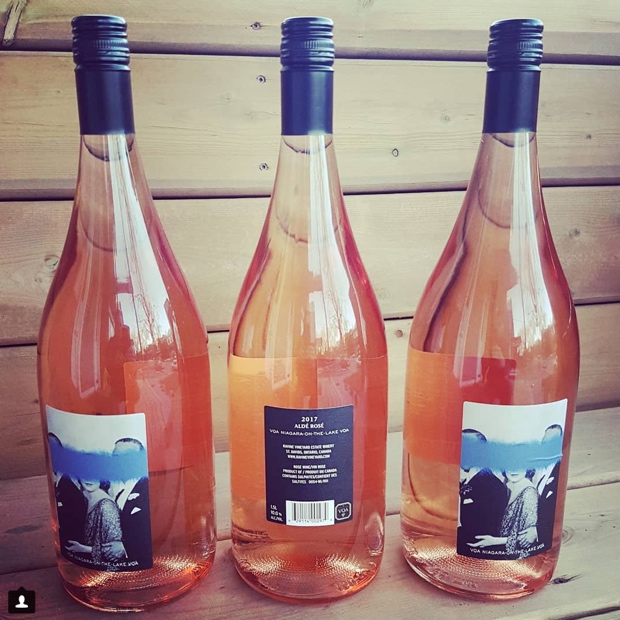
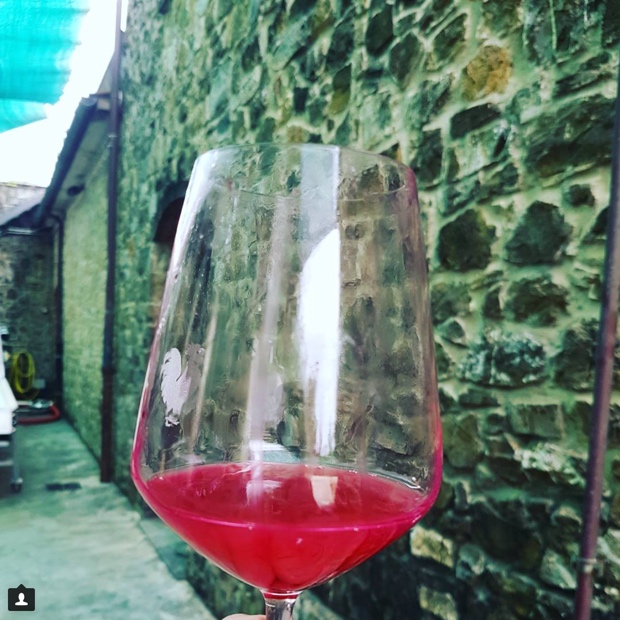
2017 Aldé Rosé, Interloper and As Is

The inaugural year-end summary of Canadian wine excitement posted to godello.ca was in 2013 and this sixth instalment naturally includes five more than the first. The necessity begs of the process to expand because five years later even the paltry number 18 is but a fraction of what could or should be noted, publicized and celebrated. This exercise is one of the most arduous writing assignments of the calendar year, difficult to pin down, even harder to leave wonder out in omission. As I’ve said before “it’s biased, exclusive and decisive but it is meant to celebrate a select few with a mandate to elevate and exult the rest. It’s also a proclamation read to many who remain ignorant to an ideal of great wine being made in Canada, to tell the insolent they are not welcome here anyway. The winemakers in this country are in full command of their acumen, craft and future. They own it.”

Related – 17 Canadian wines that rocked in 2017

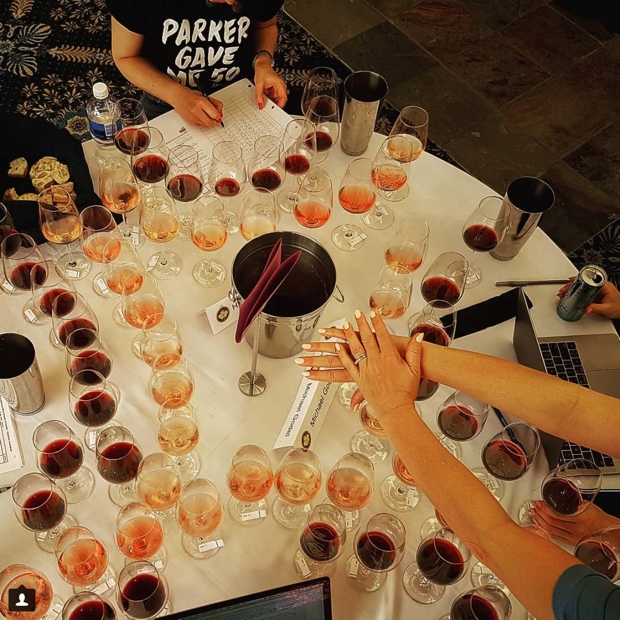
Another year of tasting Canadian wine, another year of thousands of examples shared my way. Even more international travel made it difficult to keep up the pace but I’m sure I tasted more than 1000 wines once again. We are relentless in our attention paid to Canadian wines at the WineAlign office. The WineAlign National Wine Awards of Canada convened in June at the convention centre in Penticton B.C. and judging Ontario wines happened with David Lawrason at The Great Canadian Kitchen Party, the artist formerly known as Gold Medal Plates.

Related – 16 Canadian wines that rocked in 2016

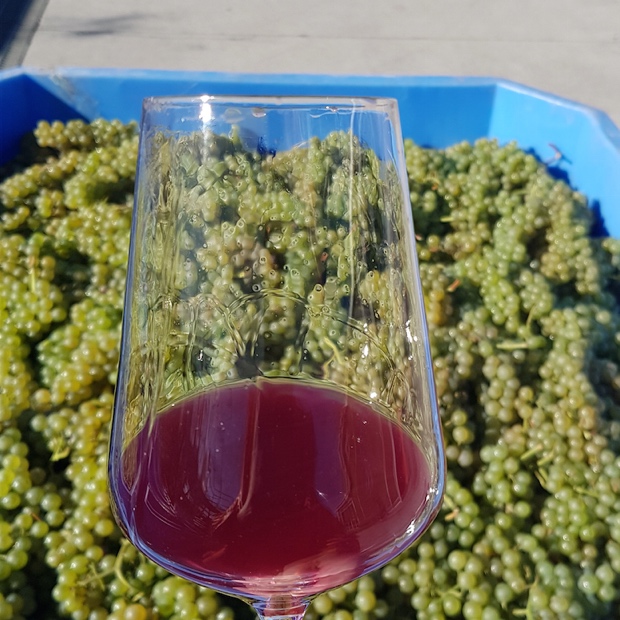
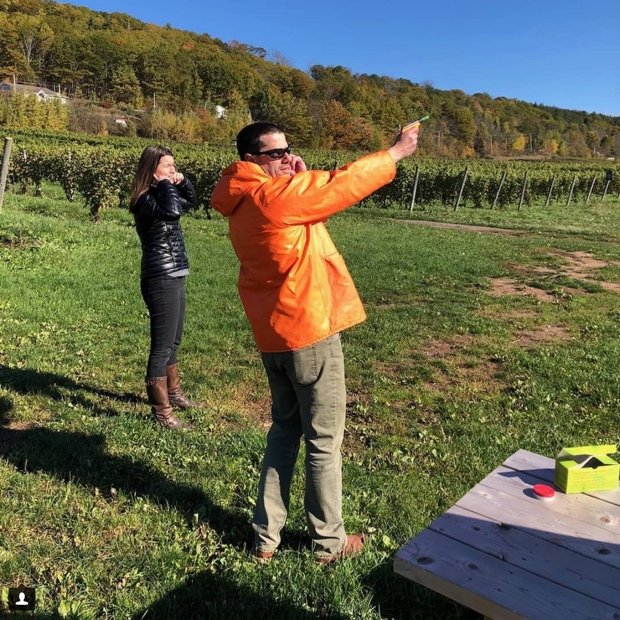
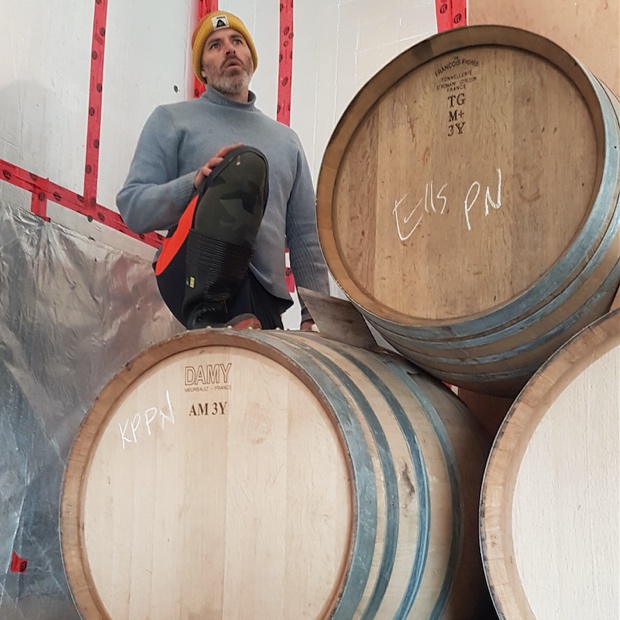
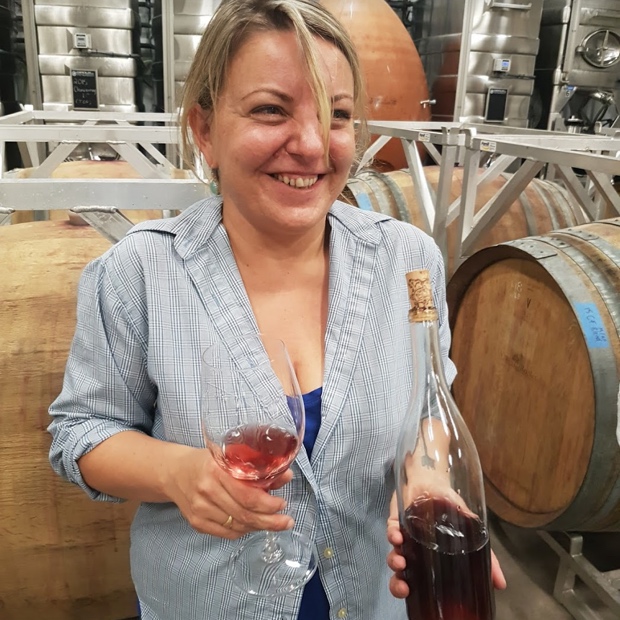
Over the past 12 months my partner Scott Zebarth and I have upped our little négoce game with the fine folks at Ravine Vineyard Estate Winery. With the help of Marty Werner, Ben Minaker and Eden Garry we managed to crush, ferment, blend and bottle three new wines. In April there were 594 magnums of Aldé Rosé 2017, a 100 per cent VQA Niagara-on-the-Lake cabernet franc. Then in September we released the second vintage of Interloper Cabernet Franc 2017, VQA Niagara-on-the-Lake and our newest wine, As Is Field Blend 2017, VQA Niagara Lakeshore.

As Is Field Blend 2017, VQA Niagara Lakeshore, Ontario ($19.95)

The third wine in the little project with partner Scott Zebarth and Ravine Vineyard Estate Winery’s Marty Werner, Ben Minaker and Eden Garry A dream of fields, single-vineyard one-third each blend of pinot noir, merlot and cabernet franc, co-fermented with ambient yeasts. As Is.  scottzebarth  marty_werner  benminaker23  ravinevineyard  @Scottsomm  @marty_werner  @BMinaker23  @RavineVineyard  Scott Zebarth  Martin Werner  Ben Minaker  @RavineVineyardEstateWinery

In 2016 there were 16 wines noted. In 2015 I counted 15 on the filtered list. In 2014 the highlights numbered 14, just as in 2013 the number chosen to cant, recant and decant excellence in Canadian wine was 13. Last year you are correct, the list held 17 spots. Roll out the 2018 red carpet. Here are the 18 most exciting Canadian wines of 2018.

Back up the truck, glug glug Gamay Rosé Flipping the Bird by @hatchwines and where’s J-do?

The Hatch Wines Gobsmacked Flipping The Bird Pink 2017, Okanagan Valley, British Columbia (Winery, $21.99, WineAlign)

We pulled this Rosé from the ice and were utterly astonished and astounded at this particular bird. It was Jason Parkes, “he named you the bird. It’s how you were generally referred. We never really understood, never really thought about much.” So we tasted again and we raised a brow, got excited and then were utterly gobsmacked. Sometimes, there’s a wine. And I’m talkin’ about the Bird here. Sometimes, there’s a wine, well, he’s the Rosé for his time and place. Mostly go gamay go with some cabernet sauvignon, utterly fresh at the peak of perfect natural volatility, red berries and grapefruit. No salve texture nor trans fat feeling left in mouth behind neither. Crushable by any amount desired. A portion of the profits from the sale of this wine are donated to Parrot Island, a non-profit sanctuary for abandoned and abused exotic birds in Peachland BC. “With time, it only made more sense, As time went by, it just made more sense. You are the bird. You are the bird.” Thank you Jason, thank you Dude. Thank you Gord. Drink 2018-2019.  Tasted June 2018  hatchwines  @HatchWines  @hatchwines

Two years in a row. Well-deserved and just because.

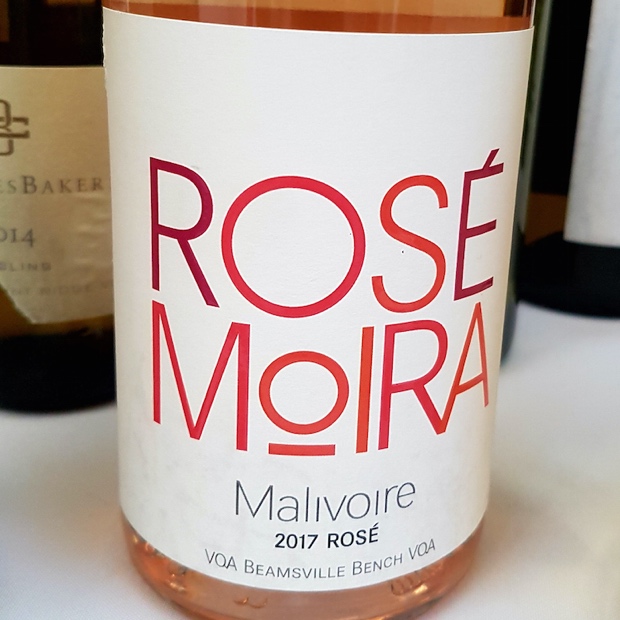
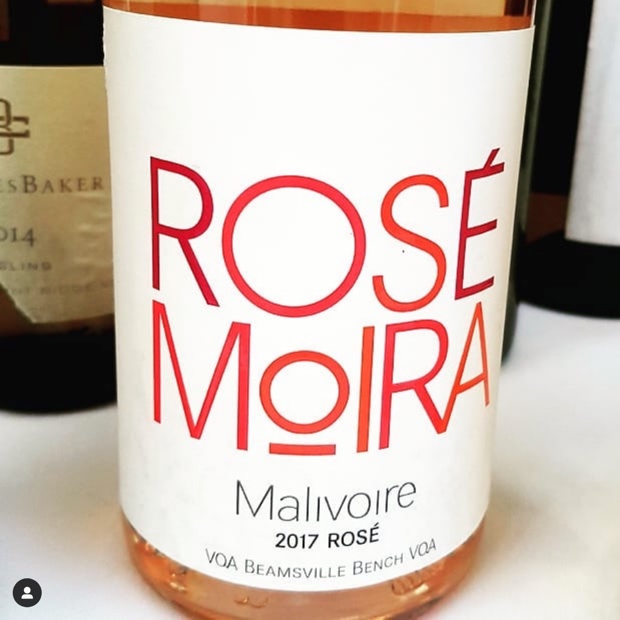
Malivoire Rosé Moira 2017, VQA Beamsville Bench, Niagara Escarpment, Ontario (Agent, $24.95, WineAlign)

Malivoire’s most important and benchmark Ontario Rosé is one of the first to the table from the 2017 vintage and why not because its quick soak and lightness of being takes no time at all to get ready. This is the antithetical beauty of Rosé and how it must be approached for best results. Malivoire does not take a step forward from the most perfect ’15 and ’16 wines but there is more fruit in this ’17. You can actually nose and taste strawberry plus a hint of tart raspberry. This will appeal to more of the general Rosé loving populace without any compromise for the provincial, provençal geeks everywhere else. It’s ostensibly a better wine in 2017 because it will attract that growing audience without having made any concessions or dis to authenticity. Drink 2018-2021.  Tasted February 2018  malivoire  noble_estates  @MalivoireWine  @Noble_Estates  Malivoire Wine  Noble Estates Wine & Spirits

Fitzpatrick Fitz Rosé 2014, Okanagan Valley, British Columbia (Winery, $48.98, WineAlign)

Long lasting flavours of impression. Candied ginger, dried strawberry, every fruit shade of red, for redheads everywhere.  Last tasted December 2018  fitzwine  @FitzWine  @FitzWine

This pinot noir is lovely, quiet and mild, a lemon-strawberry aromatic blush of the faintest noir. Fine spun, wild yeasty, truly wound tight, so focused and persistent. Drink 2018-2022.  Tasted blind at NWAC18, June 2018

Trail Estate Riesling Foxcroft Vineyard Unfiltered 2016, VQA Twenty Mile Bench, Ontario (Winery, $35.00, WineAlign)

In 2016 the next wrinkle is a wild ferment (as opposed to the inoculated ’15), unfined and unfiltered, because as time progressed “I liked it more and more,” says winemaker Mackenzie Brisbois. No coarse filtration means some minor sediment will settle in the bottle. Smashed layers of tote-filled grapes are brought to the crushpad, in lieu of the crusher, to extract from the skins and stems, making use of the punchdown tool, while waiting before pressing. Recently bottled in December 2017 the BFR is something completely other and if 2015 was considered not, this follow-up is markedly fruity now, because it always was, all the way through during just more than a year in really old barrels. It’s a blonde riesling as per M. Gustave, if you will. “Why blonde? Because they all were.” This is the wisest of Mack Brisbois’ rieslings, calm, confident, collected and shining brightly from the word go. You don’t have to wait on this one, it’s riper, it’s unfiltered, made with a lot less sulphur than the skin contacts and those “dirty” 15s. “I like to see how little (sulphur) I can get away with,” notes Brisbois. The most accomplished riesling that she has made to date, the 16’s balance is spot on now and you will not have to wait for it to come into its cinematic stage. Drink it now and keep it longer. Drink 2018-2024. Tasted April 2018  trailestatewine  mackbrisbois  @TrailEstateWine  @MackBrisbois  Trail Estate Winery  Mackenzie Brisbois

Hard not to put the 1991 Cave Spring on the list but is there any good reason to not place the CSV on the list every single year?

Cave Spring CSV Riesling 2016, Cave Spring Vineyard, VQA Beamsville Bench, Niagara Escarpment, Ontario (566026, $29.95, WineAlign)

The CSV from a warm 2016 really expresses the vintage on the nose with a heavy dose of wet stone and every part of a ripe peach. You have to get past the early sulphur but once you do you take a good bite into the flesh of this riesling and the juices will run with accents and angles fit by tonic, pith, tangy, nervy acidity and a hidden sweetness. The sugars are surely more elevated than realized or will ever be felt because the combination of acidity and pith are covers that will never peel back. Size matters and this CSV is built with great Escarpment architecture, stepping out of the paradigmatic 2015 shadow and into another age. This 2016 begins an epoch of structural expressionism and should easily carry its construct through to the next decade. That consequently, is when this CSV will really be ready to rock and roll for a full decade more. Drink 2020-2030.  Tasted March 2018  cavespringcellars  thevineagency  @CaveSpring  @TheVine_RobGroh  Cave Spring Cellars  The Vine

Godello and Paul Pender of Tawse
PHOTO: Steven Elphick & Associates

Tawse South Bay Vineyard Chardonnay 2015, VQA Prince Edward County, Ontario (Winery, $35.15, WineAlign)

The South Bay Prince Edward County fruit from Huff Estates lands is simply exceptional produce, from where winds blow-dry leaning vines perched aboard a passel of solid limestone sliding into Lake Ontario. Tawse has always coveted this fruit and when Paul Pender is allowed to play with it he does so with great mindfulness in search of greater apogee. Methinks Pender both picked a few days to a week earlier and also worked the most mineral meets Ceres toast his barrels can afford. There is a deep, sonorous and resounding regard about this chardonnay. It’s both sumptuous and serious, with a flinty-mineral meets toasted hazelnut interplay. It is perhaps an Ontario nod to Les Caillerets, or just a far away coincidence, but regardless you just have to know that it’s a very special wine. Drink 2019-2026.  Tasted December 2018  tawsewinery  @Tawse_Winery  @tawsewines

Domaine Queylus Chardonnay Réserve Du Domaine 2016, VQA Niagara Escarpment, Ontario (Agent, $37.95, WineAlign)

Still in the vein of the Queylus chardonnay tradition where a winemaker is always on the watch, meaning you never take your eyes off the child or the prize. The Réserve is a matter gathered from the best barrel selections but says Kelly Mason “the treatment and the worry are the same.” Slides easily away from the tropical and sidles up the the rocky places from whence it came. Chardonnay is often round and liked that way but Queylus is direct, linear, angled and also far from angular. When the Escarpment rule is followed and traced along the lines of a malolactic ruler marked by clones (in this case 76 as opposed to 95) then structure is assured. The ambition is real, the intention serious and there is no roaming far to the west or the east. All that and richness is found through every bright sip. Drink 2018-2024.  Tasted July 2018  queylus  @Queylus  Domaine Queylus Winery

Hidden Bench Chardonnay Tête De Cuvée 2011, VQA Beamsville Bench, Ontario (278812, $45.20, WineAlign)

Still so youthful, now noted by smoked quince with a shot of peppermint schnapps where no sugar lives save for the sweetness of nature.  Last tasted December 2018  hiddenbench  markanthonyon  @HiddenBench @MarkAnthonyWine  Hidden Bench Estate Winery  Mark Anthony Wine & Spirits

Tête De Cuvée by Hidden Bench, like a Champagne best of the best abstraction, makes an appeal to self-esteem and esteem for others, to consumers who have come to recognize Niagara and even more specifically, the Beamsville Bench for head of the class, cool climate Chardonnay. That mouthful congregates and works in congruence with the quality in the Tête’s composition; full-on freshness, density, weeping cerate texture, toasted and popping kernel, fine-grained localization, utterly integrated barrel. There was scant quantity (32.5 hL/h) from some very old and wise vines, pronounced like others but louder than most, from the bullhorn of a stentorian vintage. What is felt and spoken about the quality inherent from out of the finest parcels in the Locust Lane and Rosomel Vineyards Chardonnay fruit is more than a patent observation. The ability to take on toast cuts to the nougat and the synoptic rises to the ethereal ozone. Not to mention gross minerality. On the shortlist for best Niagara Chardonnay to date. Drink now and beyond 2025. Tasted twice, September and October 2014

Roche Wines Pinot Noir 2016, Okanagan Valley, British Columbia (Winery, $24.90, WineAlign)

The 2016 is purchased pinot noir fruit by Dylan and Pénélope Roche from Kozier organic vineyard on the Naramata Bench. Hand harvested and fermented in stainless steel tanks with regular pumping over and pressed after three weeks on skins. The press wine was separated from the free run and aged for 10 months in stainless steel and neutral French oak. Knowing what I know after the first blind assessment it now turns this love of love into inspiration, away from the soulless, blind pinot noir love and to something real. If there is a more honest and crushable one I’d be shocked. So exciting and new.  Also tasted at Bench 1775, June 2018  rochewines  @RocheWines  @rochewines

Really ripe, I mean really ripe, a hematic liqueur that few others in the flight can match. From a warm site to be sure, full and thick as pinot nor  thieves. Not as structured but so very, bloody and reasonably drinkable. Drink 2018-2021.  Tasted blind at NWAC18, June 2018

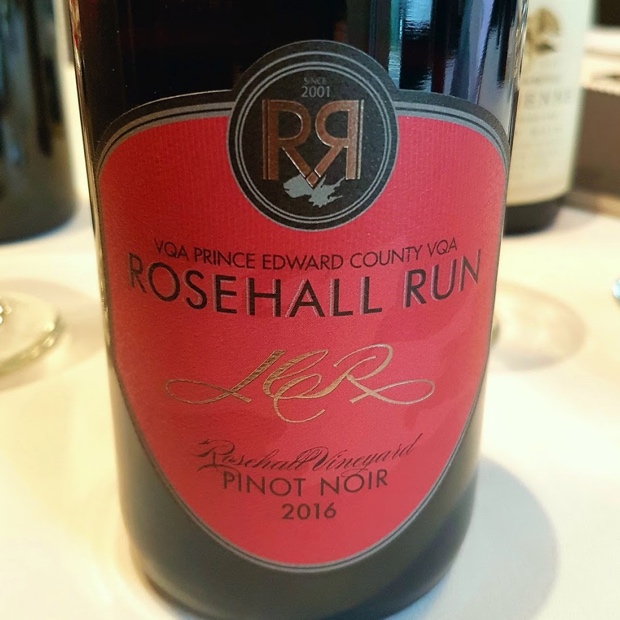
Rosehall Run Pinot Noir JCR Rosehall Vineyard 2016, VQA Prince Edward County, Ontario (Winery, $39.00, WineAlign)

Though statements of monadical hyperbole should very much be avoided, a taste of Dan Sullivan’s ’16 JCR makes one think it has all come to this. The glycerin fruit endowed with so much natural sweetness and magnificently low alcohol feels like an impossibility. In a way it is but it’s also a County reality. This may just be the least astringent PEC pinot noir ever produced and at the same time seems entirely void of tension. Yet there is structure and cohesion, two functors so very necessary to see it drink well for 10 years, with great charm and further curiosity for five more after that. Drink 2018-2028.  Last tasted July 2018  rosehall_run  sullywine  profilewinegroup  @Rosehall_Run  @sullywine  @ProfileWineGrp  @RosehallRun  Dan Sullivan  @ProfileWineGroup

Bright, red raspberry, light and effusive with a simple, liquid chalky feel. Really drinkable. The tart is part of a delight in composition. A good chew.  Tasted blind at NWAC18, June 2018

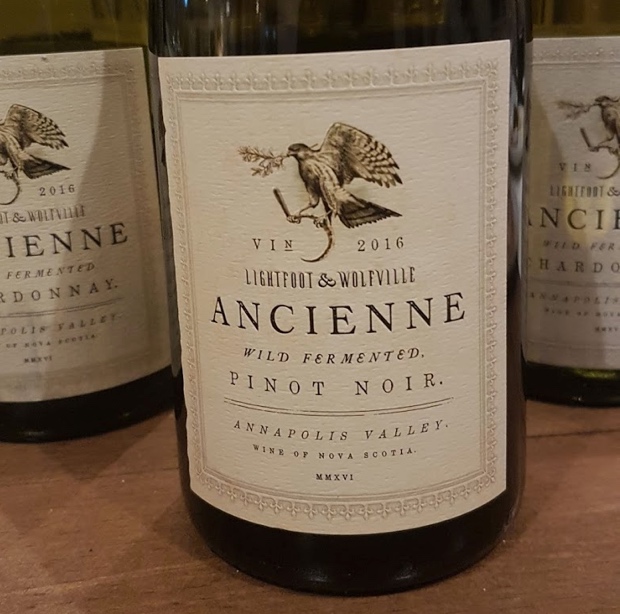
Lightfoot & Wolfville Ancienne Pinot Noir 2016, Nova Scotia, Canada (Winery, $40.00, WineAlign)

Driest year on record with nary a moment of disease pressure. Spent 18 months in older French oak, less one barrel. This is the richest Ancienne and Nova Scotian pinot noir to date, with firm grip, structure and outright intensity. Welcome to the pinnacle of the first L & W pinot wave, the culmination of the first epoch, after which nothing will be the same and so much learning will have been achieved. Begs the question of what happens next? The vines get better is what, in fact I walked the 2018 pinot noir vines today. Their maturity and contiguous consistency will be the answer to future questions and debate. They will speak for and on behalf of themselves. Drink 2019-2026.  Tasted October 2018  lwwines  rachhlightfoot  jhortonns  korilightfoot  @rachel_hope  @lwwines  @lightfootandwolfvillewines  Rachel Lightfoot  

Two Sisters Cabernet Franc 2014, VQA Niagara River, Ontario (Winery, $54.80, WineAlign)

Released on Monday July 16th and now a Platinum Award winner at NWAC18. “This has everything that ’13 had but just a bit more weight, structure and complexity, plus volume, those last three meaning on the palate,” explains winemaker Adam Pearce. Down in volumes (30 per cent), beautifully aromatic, low-cropped, (1.25 tonnes per acre), 15 per cent new wood, 32 months in barrel, in bottle for an additional 10 months. The focus, presence and confidence of this wine stand apart, all worked specific to place and the uniqueness of the appellation. Benefits from a double-lake effect and different soils. Chalk and river stone liquidity running as a river of its own right through. Drives the point of patience, to allow a vineyard the chance to speak of its singular phraseology. The 2014 Niagara River cabernet franc may still be a ways from reaching its full potential but it has certainly hit its stride. Drink 2019-2027.  Tasted July 2018  twosisters_vineyards  apearcevino  @TwoSisters_wine  @apearcevino  Two Sisters Vineyards  Adam Pearce  

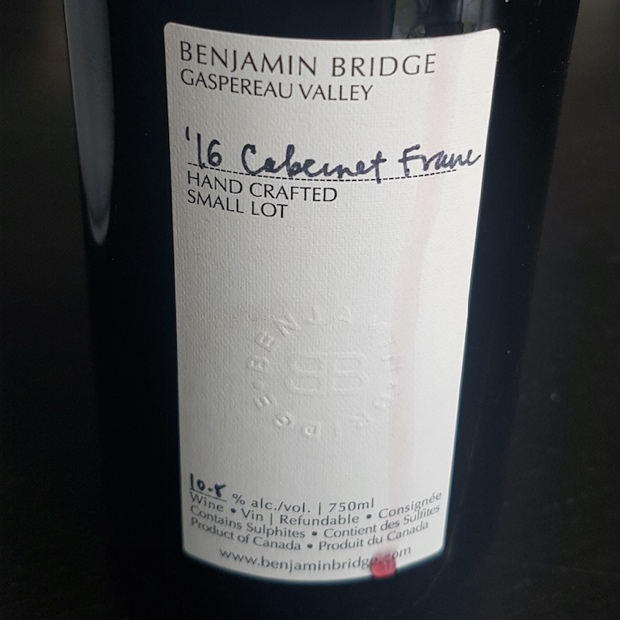
Benjamin Bridge Cabernet Franc Small Lot 2016, Nova Scotia, Canada (Winery, $57.95, WineAlign)

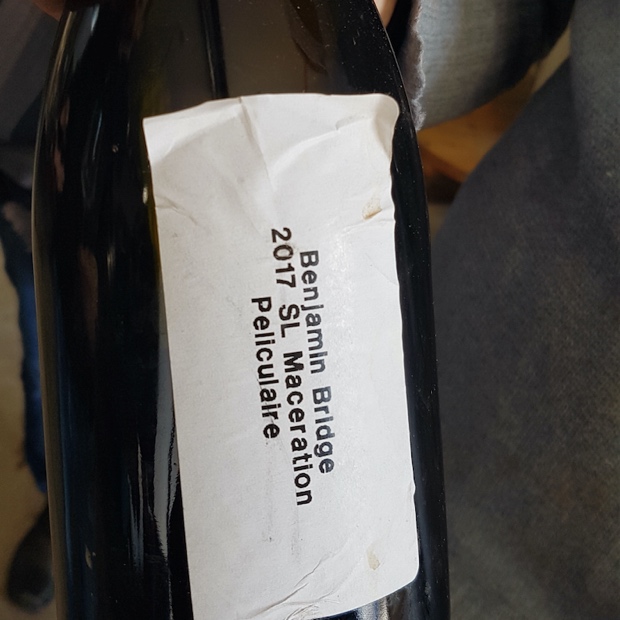
Still from the Kingsport farm fruit, a whole cluster ferment, no messing with stems, fully oxygenated, no carbonic maceration, 30-40 per cent whole bunch. Total output is “a barrel and a bit.” An infused aromatic ferment, green spice and a char of tobacco, utter intensity, compelling and a phenolic reality. “A myth buster incarnate,” says Jean-Benoit Deslauriers, ripened beyond the sensory borders, miles away from other territories, with generosity and juicy ripe legs. From a warm vintage, nine months in neutral oak plus nine in the bottle. Then a decant and oh how the florals open up, furthered, blooming and intoxicating. More than just a fun little experiment so please wake up and smell the Gaspereau Valley. So lively, a wee salty and all energy. Drink 2018-2024.  Tasted October 2018  benjaminbridge  caveman__jones  scott.savoy  @Benjamin_Bridge  @benjaminbridgevineyards  Jean-Benoit Deslauriers  Scott Savoy  

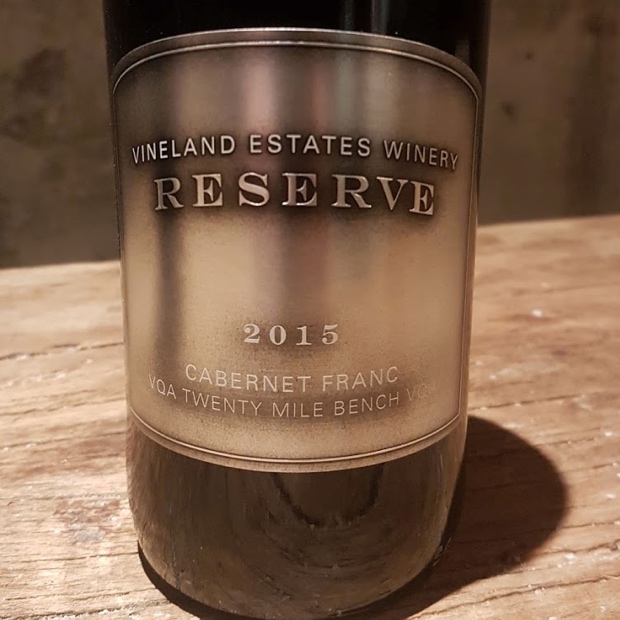
Vineland Estates Cabernet Franc Reserve 2015, VQA Niagara Peninsula, Ontario (Winery, $50.00, WineAlign)

Winemaker Brian Schmidt’s investigations into cabernet franc border on obsession but truth be told it’s not rocket science that makes so many fine varietal tiers. There are the six growers combed from six Niagara sub-appellations that add up to one entry-level, over-delivering cabernet franc. Then there is Bo Teek, the large estate vineyard planted in 1996 to clone 327 in the south and in 2006, to clone 214 in the north. Not to be forgotten in the cabernet franc make-up is the limestone substratum, highly significant for the trace mineral, elemental push up into these vines ensuring that no over-the top make up is required for varietal elevation, explanation and consummation. Vineland’s Reserve spends 16 months in barrel, none of which are any newer than from 2009. Fermentation, barrel, bottle, repeat. That’s it. No racking. This Reserve is the marriage of north and south, 60 and 40 per cent respectively, a combinative attack both phenolic and aromatic. The northern fruit sings some blues with crooning volatility whilst in delivery of sweet blackberry fruit. The south is all about stretched, nimble and elastic tones, elegant, more fragrance, black to red berries and less brooding. As one it’s a deeper and more intense wine than Bo Teek or Elevation, bottled in November, with higher acidity. The corollary variegation expands above what Bo Teek seems capable of executing solo. The structure here tells us it will not switch gears as early and live longer. Look for some secondary notes in the vein of black truffle, sweet balsam and dried lavender to show up after the turn of the decade. Drink 2020-2027.  Tasted April 2018  vinelanestates  benchwineguy  @VinelandEstates  @benchwineguy  @winery.vinelandestates  Brian Schmidt


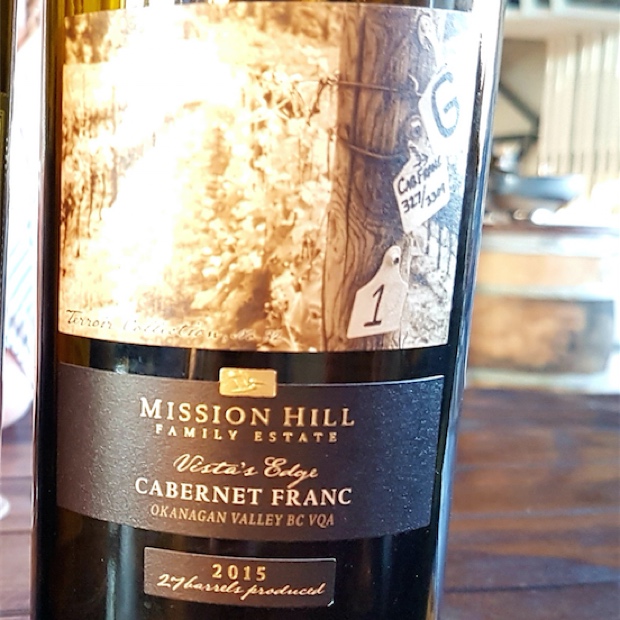
Mission Hill Terroir Series Vista’s Edge Cabernet Franc 2015, Okanagan Valley, British Columbia (Winery, $50,00, WineAlign)

You have to wonder why Mission Hill had not kicked at the can before because the Vista’s Edge is one of British Columbia’s brightest cabernet francs. It’s an important and exciting first effort from East Osoyoos fruit pulled from one of the Okanagan Valley’s farthest southern plantings. It’s a top three per cent single-vineyard, special terroir series edition that smells, tastes, feels and acts like cabernet franc. Nothing about this, not by barrel nor like varietal reminds of cabernet sauvignon. There are currant and peppery reductive meets pyrazine notes as red, bright and fresh as you’d hope they would be. The pitchy darkness of structure and hue falls because night must always follow the day and that’s what happens when cabernet franc is made this way. A long life ahead is conformed by the diphthong finish. Drink 2019-2026.  Tasted June 2018  missionhillwinery  @MissionHillWine  @MissionHillWine

Leaning Post Syrah Keczan Vineyard 2016, VQA Lincoln Lakeshore, Ontario (Agent, $45.00, WineAlign)

The eureka moment for syrah, Lincoln Lakeshore, Keczan and Leaning Post came years ago, for it, that, they, them and I. Not together mind you but passion knows no limits and opens doors to transcend time and space. This pinpointed farm on that flat expanse so perfectly proximate to the lake is where syrah can express itself without hindrance or opposition. Here the lake is like the Mediterranean and the river like the Rhône. Together they address the clay, create a moisture gathering effect, ship out the cold fronts and usher in the warm. They make syrah like this, rich in humus, hummus and hubris, olive tapenade and sweet brine. Fruit is fruit, also sweet, but savoury, acidulated and fine. Acidity is perfect in this vintage. Length is exceptional. A new benchmark, bred from passion with the intendment to inspire commitment. One of Ontario’s best red wines. Drink 2020-2032.  Tasted September 2018  leaningpostwine  nicholaspearcewines  @LeaningPostWine  @Nicholaspearce_  Leaning Post Wines  Nicholas Pearce

Kacaba Signature Series Reserve Syrah 2015, VQA Niagara Escarpment, Ontario (Winery, $44.95, WineAlign)

It’s about time we get something straight. Kacaba knows Syrah, in fact they should receive serious consideration for the title of Ontario’s top Syrah specialist. Two vineyards (with plantings that date back to 1997) provide fruit for several tiers, including the syrah from Terrace and Silver Bridge Vineyards and the highest quality chosen, hand-harvested fruit for this Signature Series Reserve. An escarpment’s dolomite limestone effect plays into these hands from fruit that arrives into glass through the body of arguably Ontario’s finest current syrah. The aromatic waft of a warm pastry crust is laden with red and blue berries that also fill the cool flavour centre of a pastille. The savoury candy gives way to a peppery kick before featuring a cure of salumi and a return full circle to that serious fruit. The apposite and complimentary smells and tastes are only intensified with a bottle’s decant so just imagine the possibilities that age will bestow. This is special work from Michael Kacaba with winemakers John Tummon and Vadim Chelekhov.  Last tasted February 2018  kacabavineyards  vadimwineguy  @KacabaVineyards    Kacaba Vineyards and Winery  Vadim Chelekhov

Oh what a beautiful peppery syrah, ripe and floral, all of its aspects, angles and components agreed upon, all in. When Canadian (and in this case, somewhere in Ontario) syrah gets down to business, gets straight to the meaty and smoky point it does so tart, tight and coiled around your tongue and finger. This, right here just nails it. It is the best of times. This is the man. Drink 2019-2027.  Tasted blind at #NWAC17, June 2017

Stratus Vineyards Sémillon Botrytis Affected 2016, VQA Niagara On The Lake, Ontario (Winery, $38.00, WineAlign)

One of the most unique dessert wines in Ontario this is neither late-harvest nor Icewine in origin. Only the third time it has been made, the 2016 sémillon launches with a smoky beginning, as expected and yet, is always appreciated. Some of the fruit is harvested early, but other bunches in the same vineyard are some of the last to be harvested. This low alcohol anti-sticky is from the warm vintage and from the same spot in the vineyard, vintage in vintage out. Most interesting is how these pristine botrytis affected grapes are picked ahead of the rest of the clean fruit used for the dry sémillon. It’s a very vinous sém with distinct apricot and longan notes. Great acids in 2016. Has still retained some waxiness and found some tropical fruit despite the early pick. All of the counterintuitive ideals tell us that the warm vintages can make for top quality dessert wine. This is the masquerade party wine made by the Way Outs band. “That’s where the fun is, way out, WAY OUT!” Drink 2019-2028.  Tasted October 2018   stratuswines  @StratusWines  @StratusWines

Good to go!

godello

2017 Aldé Rosé, Interloper and As Is

Twitter: @mgodello

Instagram: mgodello

WineAlign

Eighteen mind-blowing wines of 2018

Godello, Museo civico e diocesano d’arte sacra di Montalcino

Welcome to Godello’s annual list of the most memorable, game-changing and mind-altering moments, also known as his 18 mind-blowing wines of 2018. Godello started this year-end assessment first in 2012 though first blessed the list with the moniker for the 14 mind-blowing wines of 2014. Whether it’s the fifth or the seventh incarnation matters little to negligible because in the end it’s all about the who, what and where.

Related – Seventeen mind-blowing wines of 2017

With thanks to the winemakers, friends, colleagues and pirates I welcome you to read on. Godello’s 18 mind-blowing wines of 2018.

Taittinger Comtes De Champagne Blanc De Blancs Vintage Brut Champagne 2006, Champagne, France (55277, $205.95, WineAlign)

Rarities are special for many reasons but in the case of the Comtes de Champagne Blanc de Blancs it’s a matter of chardonnay incarnate. Some details must be kept in the pocket of assessment. Only exceptional vintages lead to its production, fruit is drawn from the finest Côte des Blancs parcels of chardonnay and only the first press juice is used. So what? So the gathering might lead one to think of words like purity, elegance, refinement, finesse and delicasse. In actuality there is the finest wisp of smoke and smoulder, a bite from a perfectly ripe apple and the zen golden taste of honeyed Japanese toast. Who could not be overjoyed to zen out with the Comtes B de B, anytime, anywhere. Drink 2018-2030.  Tasted January 2018  champagnetaittinger  fwmcan  champagne_officiel  @TaittingerUK  @FWMCan  @Champagne_UK  Champagne Taittinger  @FWMCan

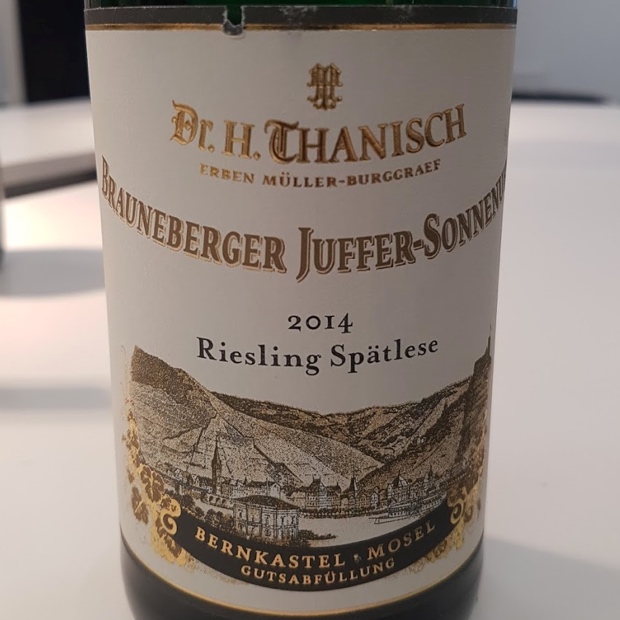
Dr. H. Thanisch Brauneberger Juffer Sonnenuhr Riesling Spätlese 2014, Prädikatswein, Mosel, Germany (298182, $40.95, WineAlign)

In a word, thank you, well two, to say how important, generous, fortuitous, philanthropic and poignant it is to taste Spätlese from this combination of producer, vineyard and alcohol. At 7.5 per cent proper and out of arrested necessity the frame on which the ultra-clean fruit and fineness of acidity hang is kevlar light and built to last. The poise and integrity in exhibition toasts lithely from stones warmed and earth cooled by night through excitable seasonal fluctuations. If this does not soothe the savage while wooing the unaware then few German rieslings will. This can’t be missed nor will it pass lips without eliciting a response set passionately in the ethereal and the sublime. Amazing. Drink 2021-2035.  Tasted April 2018  #braunebergerjuffer  awsmwest  germanwine_ca    @AuthenticWineON   @germanwineca  #braunebergerjuffer  @awsmon  @germanwinecanada

Into the South African mystic ~ A formidable line-up led by @mullineuxwines with thanks to Chris, LK @WOSACanada JG @lbstoronto @wosa_za @NicholasPearce_

Mullineux Schist Chenin Blanc 2014, Swartland, South Africa (Agent, $89.95, WineAlign)

Mullineux’s Schist is a 100-120 case production (though only 72 in 2014), from schist, of course, not granite, which adds mid-palate weight and texture. Also from older (36 and 40 years) vines based from soils of the Kasteelberg. It’s a heartfelt message and cerebral pulling string from the 2014 density gifting vintage. Older barrels wrap like a blanket for fruit richer than you’d ever imagine, full-bodied, beautiful and robed in petticoat unction. It’s also dry as the farmland desert. Truly one of the finest chenin blancs from South Africa and beyond. Drink 2018-2027.  Tasted May 2018  mullineuxwines  nicholaspearcewines  wosa_ca  @MullineuxWines   @Nicholaspearce_   @MullineuxWines  @WOSACanada  Andrea Mullineux  Chris Mullineux  Nicholas Pearce  @WOSACA

How to have an epiphany. Taste 25-30 year-old #southafrican white wines. Case in point @kleinconstantia sauvignon blanc

Klein Constantia Blanc De Blanc 1987, Constantia, Western Cape, South Africa (Winery, WineAlign)

Poured by Managing Director Hans Astrom in Cape Town alongside 1994 and 2009. Planted in 1979, the inaugural vintage and the first South African sauvignon blanc was 1986. The 1987 was not labelled as sauvignon blanc but rather as B de B because of the botrytis-affected vintage. Honeyed but not in the way you might expect, not pushed by a petrol-fuelled sweetness but instead as the action of an old world inspired mash up. Like Loire Jolivet Sancerre meeting Huet Demi-Sec chenin blanc head on. The collision explodes into a smoky smoulder with textural consequences. It’s a bees-waxy ethereal treading of chaotic spaces between worlds. The astral travel must have twisted through three decades of nether to arrive at this place, with the low pH vineyard soils to thank. And the magic, despite or perhaps in ode to the ’87 botrytis. In the end aridity wins and the wine drinks so proper, perfect and fine. Drink 2018-2020.  Tasted September 2018  kleinconstantia  halpernwine  wosa_za  @KleinConstantia  @HalpernWine  @hansverbier  @WOSA_ZA  @KleinConstantia  @halpernwine

Alheit Vineyards Sémillon La Colline Vineyard 2017, Franschhoek, Western Cape, South Africa (Winery, WineAlign)

“Qu’est-ce que c’est?” From a vineyard housing both light and dark skinned sémillon and if there are others in this world I am not privy to the information. The resulting wine is 85-90 per cent blanc and 10-15 gris. La Colline was planted in 1936 on the southern slope of Dassenberg and is now farmed by grandson Anton Roux, a direct descendant of the Huguenot refugee Paul Roux who arrived in Franschhoek in 1688. The vines stretch up the hill from 310-350m and it is the fruit from the middle slope that is best to leave for picking long after the chenin blanc. This is the indispensable fruit used in Alheit’s Cartology. Thick skins elevate the natural talking tendencies, from a super healthy pH for drupe of apposite attack and confusing like great whites you would not or should not compare it to. Chris Alheit’s invades your head’s consciousness with this amazing depth for sémillon, with no definable context, pretence or precedent. The impossibility is totally unique in the world and yet utterly South African. It’s both tense and nervous but somehow I can still relax. Psycho Killer sémillon.  Drink 2020-2028. Tasted September 2018  chrisalheit  gsoleil123  @ChrisAlheit  @GroupeSoleilTO  Chris Alheit  Groupe Soleil Fine Wines

Chablis Grand Cru can be found in the commune of Chablis on the right bank of the Serein River and the appellation comprises seven climats; Blanchot, Bougros, Les Clos, Grenouilles, Preuses, Valmur, and Vaudésir. “The terroirs, formed in the Upper Jurassic era, 150 million years ago, are composed of limestone and marl with Exogyra virgula, tiny oyster fossils. Chablis Grand Cru is one of the rare French AOC wines to make reference to its geology, notably the Kimmeridgean age.”

Christian Moreau Chablis Grand Cru AOC Les Clos 2015, Bourgogne, France (Agent, $82.00, WineAlign)

Who has not waited for the sovereign Grand Cru to get together with the 2015 vintage? I’m quite sure Christian Moreau was one of those who looked at the alliance with all his acumen and experience to craft a high point of Chablis benevolence. Christian’s ’15 is beautifully fruity, ultra fresh, richly endowed and reductive perforce. So young and precocious but begging for our patience, his is a model of Les Clos richesse. Resides on the cocotte or chouette side of Chablis with notes of white flowers and fresh herbs. Also layered of fruit over stone upon fruit, of peach, persimmon, citrus and wet stone. Implosive intensity reminds of Chablis Grand Cru structure though Moreau’s is more elastic than many, of a subtle and sultry liquidity. Great potential here. Drink 2021-2031.  Tasted May 2018  @christian_moreau_pere_et_fils  rogersandcompanywines  vinsdechablis  vinsdebourgogne  @ChristianMoreau  @rogcowines   @vinsdechablis  @GrandCruChablis  @purechablis  @VinsdeBourgogne  @BourgogneWines  Christian Moreau  @rogcowines

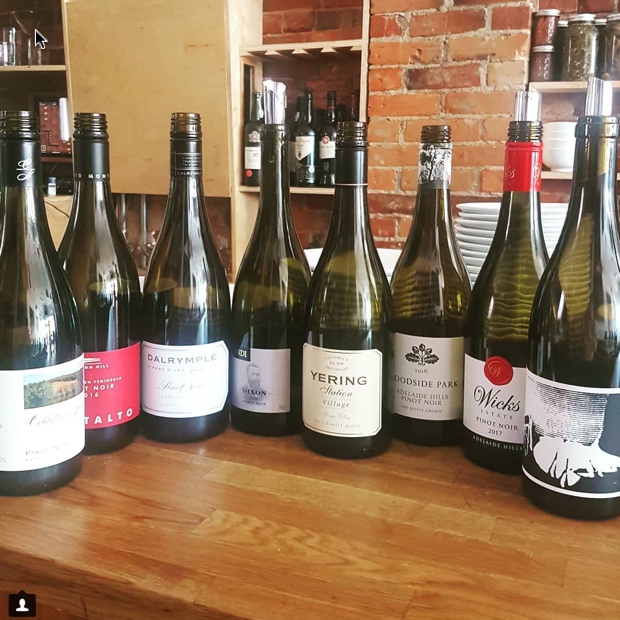
Makers’ cool pinot noir warmth from regional @wineaustralia as explained by the man, @vintagemarkdavo

Bindi Pinot Noir Dixon 2015, Macedon Ranges, Victoria, Australia (Winery, $85.00, WineAlign)

The Bindi Dixon Pinot Noir is based upon declassified grapes from the Original Vineyard planted in 1988 and grapes from the new Block K, planted in 2001. Crazy horse nose in the way that other varieties of the world will do, or at least try and simulate when they want to be pinot noir. Especially Italian varieties, like nerello mascalese, dolcetto, perricone and montepulciano. This is a natural leader for grape wishes like those of the lesser known. Very wise from the start, from birth, from creation with more savour and salumi then so many wannabe realists. There is a beautiful raw pasta dough note and then an exotica by fruit that isn’t really nameable. If this is the de-class from Michael Dhillon I’d like to meet the classified. Drink 2020-2028.   Tasted June 2018  bindiwines  wineaustralia  @Bindiwines  @wine_australia  @WineAustralia

50 years ago this #chianticlassico entered the world. Suffices to say 1968 was a pretty good year ~ @castellomonsanto

Castello Di Monsanto Chianti Classico Riserva DOCG Il Poggio 1968, Tuscany, Italy (Agent, WineAlign)

“A good, not an outstanding vintage, with some vines affected by botrytis,” explains Laura Bianchi, though truth be told she’s relating the information from stories and legends. You can taste it, in a sweetness that reminds of quince and apricot. Plums are dusted with white pepper, sherry drizzles over sugar plums and in the end, acidity continues to shine. It’s still a dramatic drop of sangiovese, with longevity preservation going back to the era (1962-1969) when the wines were aged in chestnut barrels. This at 50 years of age is so alive, time encapsulated, dew sweetened, ethereal. Drink 2018.  Tasted September 2018  castellomonsanto  @castelmonsanto   @castello.dimonsanto  Laura Bianchi  Carpe Vinum  

Castello Di Volpaia Chianti Classico Riserva DOCG 1987, Tuscany, Italy (Agent, WineAlign)

Chianti Classico Riserva 1987 is habituated and living life to the fullest in a state of complete and utter sound body and mind. It is sangiovese made at a time when it could it not have been known how impressive it would show 30 years later. Volpaia ’87 is from way back in the cold, pre-climate change days, the acid-washed, roaring 80s, now umami-earthy, cherry-plum fruit with some celery and a real salty-sandstone vein. Still blessed by a healthy, rhythmic pulse of acidity and finally, pure pleasure. Chalk it to bottle luck or a vintage that just had an inkling of greatness that would surely come but this is truly a special and memorable moment to taste. It needs saying with a thank you in words to Giovannella Stianti for sharing, but that will never be enough. Grazie infinite. Drink 2018-2021.  Tasted February 2018  castellodivolpaia  rogersandcompanywines  chianticlassico  @volpaia  @rogcowines   @chianticlassico  @volpaia  @rogcowines  @ChiantiClassicoUSA

Elisabetta Foradori

Foradori Granato 2013, IGT Vigneti Delle Dolomiti, Trentino, Italy (Agent, $74.95, WineAlign)

At the pinnacle of Elisabetta and Emilio Foradori’s mysterio teroldego pyramid is this Granato, theoretically or perhaps spiritually interchangeable with the world’s most fascinating and complex fruit, the pomegranate. There are many theories on separating the edible seeds from the pith and skin but those who know do it the right way. Foradori knows teroldego and raises this singular expression the right way. The roots dig deep into the Campo Rotaliano and Mezzolombardo stony alluvial soils with pebbles and gravel for an alternative-indie northern Italian red wine. Raised in large 20 and 30hL casks it’s still reductive, seriously internal and yet to shed layers, open up and externalize. The red fruit is alone and incredible, sweet and tonic-amended at the same time. It’s both retro and timeless. “And the world fell down, when the moon was blue, and you wore a crown and the word was true.” Like a pomegranate. Drink 2019-2024.  Tasted May 2018  eforadori  thelivingvine  @AzAgrForadori  @TheLivingVine  @elisabettaforadori  @thelivingvineinc

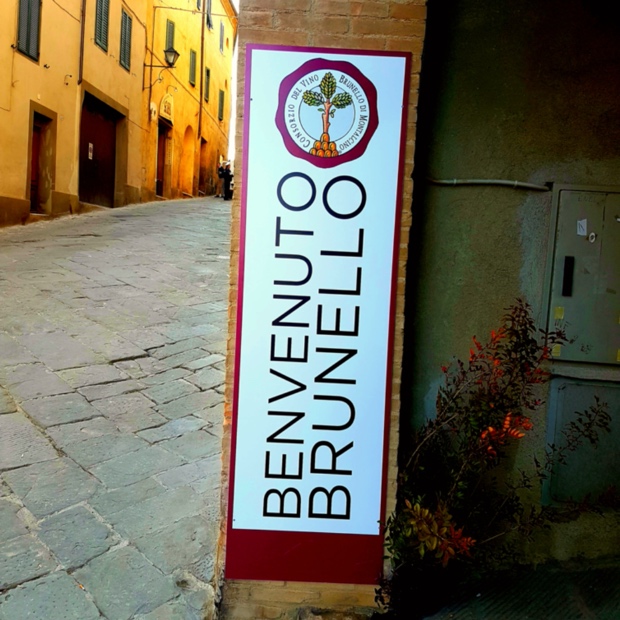
Benvenuto Brunello

Talenti Brunello Di Montalcino Riserva DOCG Pian Di Conte 2012, Tuscany, Italy (Agent, $120.00, WineAlign)

Two of the 20 estate hectares in Castelnuovo dell’Abate are dedicated to the the vineyard Paretaio, planted to a sangiovese clone selected by Pierluigi Talenti. Pian di Conte is only made in years deemed worthy of carefully selected grapes from 20-plus year-old vines out of this highly specific, 400m of altitude micro-climate block. It’s a wow Riserva from 2012, perfumed with classic extra time in barrel that Annata Brunello only seems to reach. Notes like dark berries, pipe smoulder and rich ganache, the 2012 is already showing some maturity signs of integration. It’s a fineness of tart dark citrus styled-sangiovese wrapped so tightly around the structure’s finger, indelibly inked, modern and with all parts fine-tuned in synchronicity. Riservas will often sting until they pass at least a ten-year mark but Talenti’s croons romantically with stand-up base note ease. For Montalcino it’s a hit of the vintage and to it I can safely say “I can see the destiny you sold turned into a shining band of gold.” Drink 2020-2030.  Tasted March 2018  talentiriccardo  brixandmortarwineco  brunellodimontalcino  @brixandmortar  @ConsBrunello  Riccardo Talenti  @brixandmortarwineco  BRUNELLO DI MONTALCINO

Feudo Montoni Nero D’avola Sicilia DOC Vrucara 2008, Sicily, Italy (Agent, WineAlign)

The answers are so simple and yet unanswered because magic is involved. You can understand the old vines and the way their fruit turns into wines that begin with ancient wisdom but move so little in the first seven years. What happens at 10 is the turning outward, to express the place and speak the dialect of the cru. The acidity is still high but is now in lift, with fruit at the height and en anergy that flows, really flows, moving across your palate with grace, grab and attention. A contiguous wine from start to finish, with intensity, impression and precision. The structure is come cavallo domato, like a trained horse. Dramatic nd’A but with no drama at all. Tamed and in respect of ancient vine, where it grows and what it wants to give. Ma zitto, a wine to keep you silent. Drink 2018-2029.  Tasted May 2018  feudo_montoni  wineofsiciliadoc  winesofsicily  @FABIOSIRECI  @WinesOfSicily Fabio Sireci Feudo Montoni (Fabio Sireci)  @feudomontoni  @WinesOfSicily

Cottá Azienda Agricola Sottimano cru spoiled by Elena Sottimano and Le Sommelier, Wine Agency ~ going vertical with Barbaresco and John Szabo — at Taverna Mercatto.

Sottimano Barbaresco DOCG Cottà 2010, Piedmont, Italy (Agent, $234.95, WineAlign)

While tasting through Pajoré, Fausoni, Currá and a mini-vertical of Cottá with Elena Sottimano it is here for the first time that some development appears in a wine. This glimpse into what might happen with their Barbaresco may only be a minor crack in the oasis but it begins to fall away from the curative, tannic intensity into something stretching its limbs towards the ethereal. I can ruminate with this nebbiolo swirling around in my mouth while I wonder how far along we are or have come. But it comes with knowing that no matter how much distance we walk there is still a marathon to run. There is this perfect wonderwall of wild cherry spinning like vinyl liqueur over the cheeks, tongue and gums, refreshing and working its magical fruit dance up to the edges of my nerves. “I said maybe, you’re gonna be the one that saves me. And after all,” you’re Sottimano. Drink 2019-2035.  Tasted April 2018  az.agr.sottimano ElenaSottimano  @AzAgrSottimano  @LeSommelierWine  @AziendaAgricolaSottimano  Elena Sottimano  @LeSommelierWine<

La Rioja Alta Gran Reserva 904 2001, Rioja, Spain (Agent, $65.00, WineAlign)

I am convinced the Reserva 904 is just one of those wines that must be held for 15 years before any deep understanding can be resolved. It beats down the adage that says if the fruit is not gorgeous from the beginning it will never be. At 17 years of age this Rioja of 90 per cent tempranillo and graciano remembers with a hyper-sensitive vividness the 40 year-old vines and the four year-old American oak barrels. The memories are crystal clear and it remembers the comfort, protection, protraction and the possibilities. The power is edifying, stabilizing and eventually but without great haste, emollient. La Rioja Alta has produced the 21st century purpose for what it is to mean Rioja. Drink 2018-2025.  Tasted June 2018  lariojaaltasa  riojawine_es  @LaRiojaAltaSA  @RiojaWine  La Rioja Alta  

And @winealign we tasted the greatest of #madiran terroir with the Man himself, #alainbrumont of @montusbouscasse

Château Montus La Tyre 2009, Madiran, Southwest, France (Agent, $135.27, WineAlign)

La Tyre, literally “the tire” is the pinnacle of Alain Brumont’s tannat from Madiran. It’s a wine that needs a decade to even begin to relent and open up for viewing, nosing and tasting. Pitchy to the nth cimmerian degree it would be hard not to see this wine as THE Madiran, the epitome of a red wine from Gascogne. The nose is über-umami and in fact in character it reminds so much more of Brunello Riserva meets sagrantino from Montefalco combined with Taurasi aglianico than it does Bordeaux. Not that Toscana, Umbria or Campania are the reference points but old school meets micro-oxidative winemaking surely is. The formidable acidity and the way in which the expense of barriques inject major influence is similar to what happens when sangiovese is subjected to said same sort of winemaking. The underbrush, garrigue and intensely concentrated argileux all combine, along with toasted wood to make this one of the most intense and structured red wines on the planet. Should seek and realize its best at some point in its late teens or early twenties. Drink 2025-2039.  Tasted October 2018  vinsdemadiran  montusbouscasse  markanthonyon  @MontusBouscasse  @MarkAnthonyWine  Marine Madiran  @MontusBouscasse  @MarkAnthonyWine

Catena Zapata Adrianna Vineyard Malbec River Stones 2015, Gualtallary, Tupungato, Uco Valley, Mendoza, Argentina (132340, $95.59, WineAlign)

In a line up that includes malbec from all walks of Mendoza life as well as some extreme altitude northern examples this is the first wine with a somewhat reductive quality, locked in freshness and very high acidity. It’s a wine of exceptional qualities. There is a highly intellectual and sensory balance executed through perfectly ripe fruit, that fine acidity and even more fineness in tannins. A beautifully linear wine that can come full circle if need be. This is a malbec that creates moisture in your mouth, never drying or taking anything away. A wine that is changing the way we are dealing with the idea of different terroirs in Argentina. Drink 2020-2027.  Tasted November 2018  lauracatenamd  catenawines  winesofarg  noble_estates  @LauraCatena   @CatenaMalbec  @ArgentinaWineCA  @Noble_Estates  @winesofarg  @bodegacatenazapata  Noble Estates Wine & Spirits  @winesofargentina

Roche De Bellene Clos De La Roche Grand Cru “Collection Bellenum” 2006, AC Bourgogne, France (Agent, $279.95, WineAlign)

The great Cru and the magnificent vintage conspiracy is a tour de force, even by the standards of Grand Bourgogne. I’m a bit surprised by the ascension to secondary life but it is Clos de la Roche that goes there early because of wisdom, curative indiscretion and life as it always was, right from the word character. Only this Cru delivers such soulful funk, perfectly classified and ethereal volatility and fully gathered expressions. It’s like a face that flashes a thousand looks in the span of a few seconds, there is that much going on. I am blown away by this. Still needs another year to settle, gather and explain itself. Drink 2019-2032.  Tasted May 2018  domaine_de_bellene  domaine_de_bellene  vinsdebourgogne  @Nicholaspearce_   @VinsdeBourgogne  @BourgogneWines  @BourgogneWines  @VinsdeBourgogneofficiel

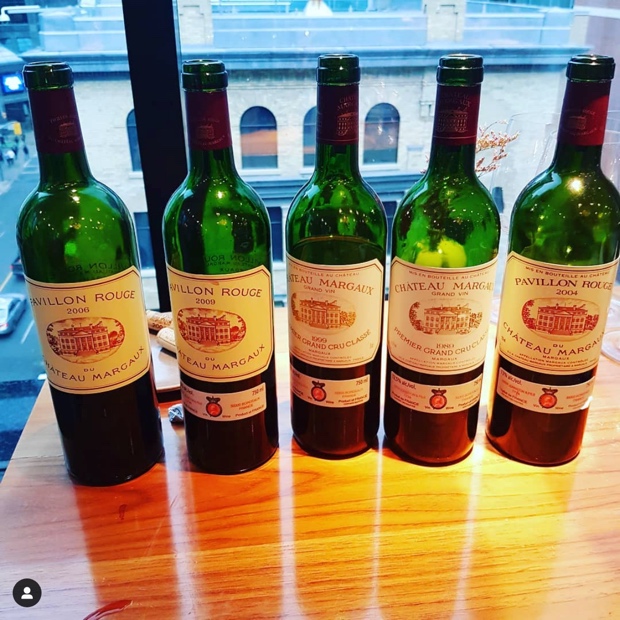
Château Margaux 1989, AC Margaux, Bordeaux, France (176057,$1,645.00, WineAlign)

You never want to say that a vintage was perfect but in this case, the vintage was perfect. It seems impossible but the tannins are both present and even a bit drying so at least for this bottle there will be so much residual fruit at the end of the tunnel. Only those tannins seem altered from four years ago because the fruit and the flowers are exactly the same. What rises above, around and in darts between is the fineness and intensity of implosive acidity. Structure in this 1989 is forged by bars of steel as reinforced spikes in the concrete. It may never truly break down. Drink 2018-2044.  Last tasted March 2018  chateaumargaux  noble_estates    @Noble_Estates  @NobleEstates

The 1989 Château Margaux wears the response to a mondo Bordeaux axiom on its sleeve. Are First Growth wines made for people who want darts of instant pleasure?” Twenty years earlier and now like the 2009, here is a quintessential and exemplary vintage, from day one of bud break to the last day of harvest. Its appraisal as anything but incredible is to assassinate it as if it were the Franz Ferdinand of Bordeaux. The examination 25 years later sees a mellow funk meet a peerless and sublime perfume. A wine cast in utmost density, complexity and length. It noses strength, warmth verging on heat but only for a fleeting moment, to gain attention. The iconic wine has reached the first major peak, up a ways from base camp. In this second phase of young adulthood it looks with conceit to the top of the mountain, seeing 25 to 50 more years on the climb. Mr. Pontallier regrets he won’t be around to taste this wine at full maturity. Moi aussi. The fruit lingers in its full, original state, from the moment it passes lips and for minutes onward. Violets trump roses. Château Margaux 1989 is from a vintage that offers the blessing of ethereal balance. Hear her sing, “Ich heisse Superfantastisch!”  Tasted April 2014

Good to go!

godello

Godello, Museo civico e diocesano d’arte sacra di Montalcino

Twitter: @mgodello

Instagram: mgodello

WineAlign

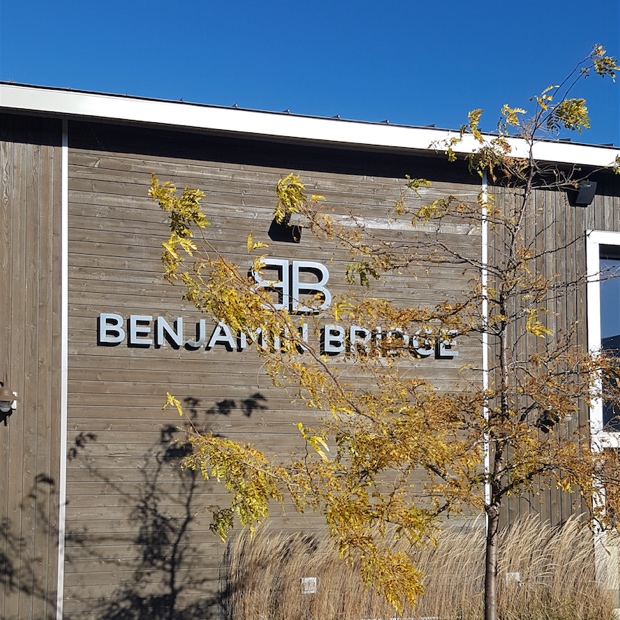
Crush on Benjamin Bridge

Benjamin Bridge Vineyards

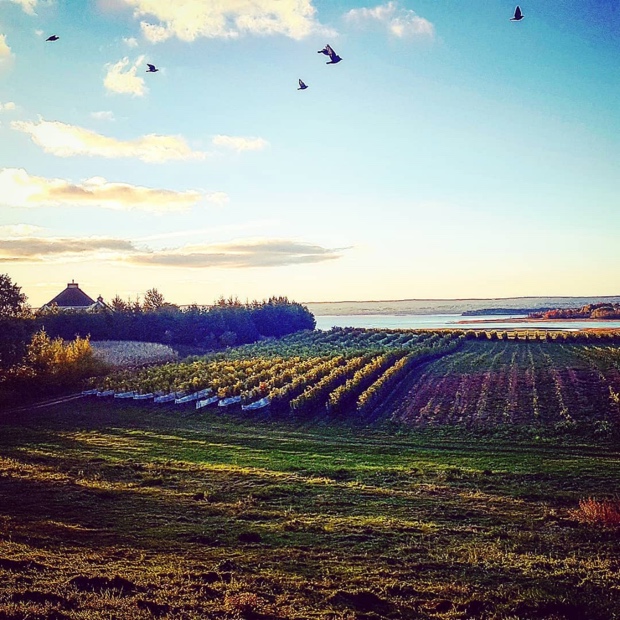
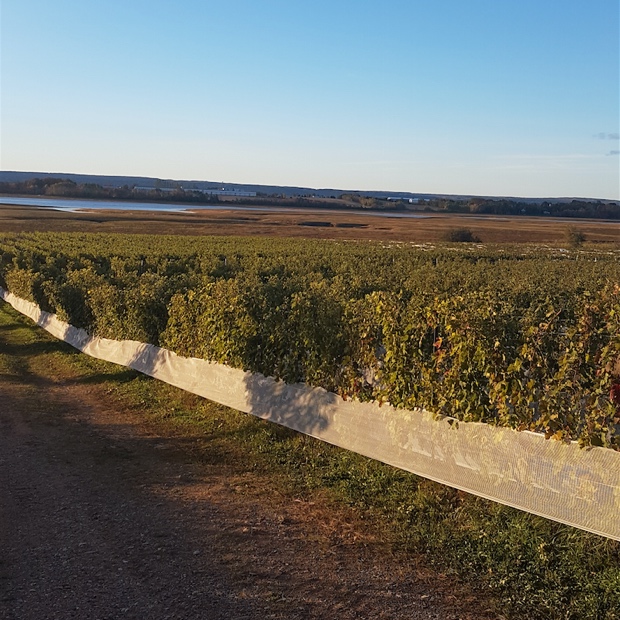
It’s late October and I’m walking the vineyard with viticulturalist Scott Savoy who gestures below our feet into the genius loci where multiple layers of loam and sandy loam are mixed with river stones. In the vested interest of micro-climate orientation he points out the modest mountain ridges to the north and south, the stretch of valley to the east and west, to the big Bay of Fundy beyond and back down to the earth. He notes the fault line running diagonally away from the crush pad and tasting room, through the vineyard and down the slope to the river below. Today the namesake belongs to the winery but Benjamin Bridge is first and foremost a place. We all want to know about its history because there is something very special here. In this valley the apples are different and the vines grow berries smaller and unique. It’s a place that pulls on the heartstrings of innate curiosity.

Related – Consider the Gaspereau Valley

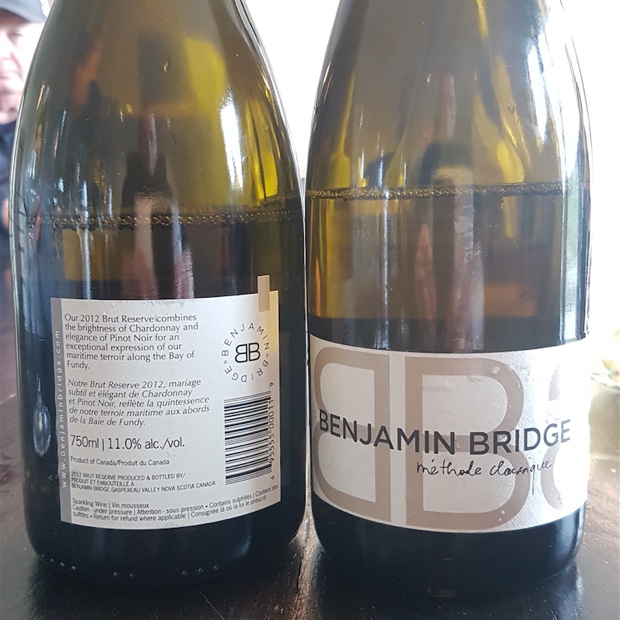
It comes from the name of the bridge that crosses the Gaspereau Valley and pays tribute to the Benjamin family who dammed up the river to become the first industrialists here. The name is a historical one, not one of fashion, trends, aggrandizement or narcissism. The ownership and the management of Benjamin Bridge Vineyards are fully cognizant of their place within a King’s County pantheon, of the past and for the future. Who among them wouldn’t pay a king’s ransom to protect it? They fully recognize how the tenets of farming, progression, life, struggle and ethos came before them and will continue long after they are gone. Just in case their work in making sparkling wines headed up by chief winemaker Jean-Benoit Deslauriers is not legacy defining enough they recently supplied a bottle of Benjamin Bridge Méthode Classique Brut Reserve 2012 to christen the first Irving Shipyard built Arctic patrol vessel. Sophie Trudeau used the bottle to christen the Harry DeWolf during an October ceremony on the Halifax waterfront. An interesting and poignant aside, this gesture.

Frost damage at Benjamin Bridge

The 2018 Nova Scotia harvest will live in infamy and perhaps not for the reasons everyone involved will want to remember. Frosts, rain, grape growing pressures and more frosts reduced quantities so drastically that emergency fruit was transported across two provincial borders from Ontario, a fact not lost as a notion that is pathetically-monopoly ironic. Annapolis Valley Vineyards were looking at losses of at least 50 per cent following a late Sunday frost overnight and into the morning of June 4th. Temperatures plummeted from the high 20s just two days earlier to minus three degrees celsius. There were some miraculous exceptions to the rule, like Avonport’s Oak Knoll Isle but damage ran from 20 to 100 per cent. Frost that settled in the lowest sections of valley vineyards were hardest hit.

All that happened to Nova Scotia’s wine industry plus more in, outs and twists than a Coen brothers comedy-drama and yet the greatest things happened anyway. The community of growers and producers banded together, traded grapes, shared experience and pulled each other through. This is a place where everyone understands that making wine is not about one vintage, individual accomplishments or accolades. Turning grape water into wine is a life-long partnership with the land, with the weather, the Bay of Fundy and each other. Success is wrought with challenges, adversity and responses to the contretemps of the day. Such tremendous odds give credence to Nietzsche saying “that which doesn’t kill you makes you stronger,” leading to an alignment with a maritime band of brothers and sisters. The year 2018 is the vintage during which the Nova Scotia wine producers in and around the Annapolis Valley were forced into a situation of needing one another and to become les retrouvailles, the reunited.

#lookoff in Canning, Nova Scotia

At the fore of this happenstance is Benjamin Bridge Vineyards, both in terms of being the helped and the helper. The Gaspereau Valley sparkling wine specialist is the unquestioned leader of their cottage wine industry and for so many reasons. Decisions made more than a decade ago to invest everything into this stretch of land south of the Bay carved through two micro-climate catalyst ridges for the purpose of creating the newest and most important innovative sparkling wine on the planet is nothing short of historical. The speed bumps may be serious but mark my words (and by many who have stated this before me), Nova Scotia is second only to Champagne for making the kind of sparkling wine we should and will want to drink. No disrespect intended to Franciacorta, Alta Lange, Prosecco, Crèmant de Loire, Bourgogne, Jura or d’Alsace. No ill will meant towards Sonoma County, Ontario, British Columbia, Tasmania, England or Roberston’s Méthod Cap Classique. I love you all but Nova Scotia can raise grapes for traditional method sparkling wine in ways and with results that blow everything else out of the proverbial water.

Not sure you need the banger. Jacket should scare them off!

Case in point, time and again, with variations on the theme, measurable and of a ceiling reckonable through infinite possibility. In this part of Canada vinifera varietals like chardonnay, pinot noir and pinot meunier can linger well in the autumn months, reach brix levels ideal for sparkling wine and still maintain acidities at levels all other regions can only dream of. The effect of the Bay of Fundy creates a unique environment, plain, simple and complex. Imagine adding up the flow of all the rivers in the world and asking that accumulation to submit to the power of one body of water’s tides that lower and rise as much as 17 metres every day. The Bay is like an air pump that moderates climate. Frosts be damned the picking in the Gaspereau of grapes just ripe enough for making wine is the latest anywhere. In Franciacorta for example picking of chardonnay happens in early August, just to keep natural acidity. In California it’s July and in the dead of night. We have begun to taste Nova Scotia bubbles at eight, nine and ten years on their lees. The results are astonishing with a combination of texture and acidity never seen before. As I said, the ceiling is boundless.

Crush at Benjamin Bridge: Chris Campbelll, Godello and Jean-Benoit Deslauriers

The charge at Benjamin Bridge is led by founder Gerry McConnell who purchased the property with his late wife Dara Gordon in the Gaspereau Valley in 1999. McConnell worked with Canadian oenological consultant Peter Gamble and Sparkling Wine Consultant/Champagne specialist Raphaël Brisbois to establish vineyards, a protocol and a long-term strategy for making world-class bubbles. Within three years of launching the project they knew it would work.

Sunday morning, #Kingsport Nova Scotia

The unfortunate passing of Raphaël Brisbois left a huge hole in the hearts and the ethos of the BB project but great timing, fortune and intellect came to the company in the extraordinary ethic and cerebral meanderings of head winemaker Deslauriers. Originally from Québec, J-B joined in 2008 and for 10 years has explored, extrapolated and elevated the game. No combination of diversity and focus is more apparent than it is now at Benjamin Bridge.

Winemakers at work, Jean-Benoit Deslauriers, Alex Morozov and Chris Campbell

The team on the ground and in the cellars is led by Head Viticulturist Scott Savoy and Chris Campbell who aides, abets and manages the trilogy of harvest, cellar and production operations. Alex Morozov is Assistant Winemaker to Deslauriers. Gerry’s twin daughters Devon and Ashley McConnell-Gordon have run the daily operations of the winery since early 2010, Keltie MacNeill manages the BB Club and Gillian Mainguy is the face of the place. Some of you may remember Gillian at Wines of Nova Scotia but now she is marketing, public relations and tireless world traveller on behalf the BB brand.

Racking chardonnay with head winemaker Jean-Benoit Deslauriers

In the third week of October I spent 48 hours with the gang at Benjamin Bridge. Crushing, talking, pressing, tasting, pumping, discussing, racking, ruminating, walking and speculating. There is a foundation of land, people and spirit you can’t know until you come here to really know.

The base is the matter and what matters comes from the great base

The discussion with Gerry and Jean-Benoit is now woven into the fabric of relationship with Pascal Agrapart who has been making wines at Champagne Agrapart & Fils since 1983. BB is keen on keeping a lineage with Champgane, a connection, to pursue more richness, texture and wines structurally rounder and fuller. Says Deslauriers, “we’re looking for the growers taking a Burgundian approach to winemaking, in the vineyard first. Pascal’s wines have always had that compelling textural quality.” Has anyone in Canada ever taken a grower’s approach to sparkling wine is the question. Here in Nova Scotia these are the wines with a stamp, of an equation in confluence from estate plus local vineyards and growing environments. The wines are not in jeopardy by adding this richness. “We still recognize the parcels we have selected through the wines we have made. There is still an inherent Benjamin-ness to the wines, ” adds Chris Campbell. I tasted the following wines off the record, some unfinished and others still who are the children of experimentation but even more so as matters of conceptual links to the reasons why Benjamin Bridge even exists at all.

Minas Friday morning

Brut 2016

Part estate and part Kingsport chardonnay fruit, with effervescence not the thing but it should tell a story. Already showing off its richness, density and concentration, even herein the “entry level,” the first full vintage for and from Pascal’s influence and tutelage. Cool stuff in here, decoupement particulare, this taking of different parcels for micro-vinifications.

Brut Reserve 2016

Of chardonnay and pinot noir, from the oldest estate blocks. There is so much more complexity, legit and from the word go. The terpenes are exceptional ones, and that is something they can be, built on acidity. Even without bubbles you can fully relate to it as the wine it knows it is. Grapefruit and tangerine, dry and sumptuous. The base is the matter and what matters comes from the great base. Perspective comes at you in solicitation of your emotions and opinions in many ways. You don’t always need CO2 to make contact with sparkling wines.

The future

Blanc de Noirs 2016

Now into pinot noir this new perspective makes you want to admit that it may be that chardonnay and pinot noir come together with a higher ceiling as a sum of their parts. Here it’s the antithetical aromatics of lemon rosewater and an amaro-herbal-red currant thing. Also oranges with spirit and a linger that reminds of the best athlete, with the greatest potential, but not the flashy star who scores early and often. 

Brut 2017

The secondary fermentation is only a few weeks old and it’s a very primary notation, with the bubble still on the way up. The rise is lime as a slow crawl along a coaster’s upward track, welling with tension and a coursing flow of anticipation. By way of comparison there is a tonic phenolic uprising either not noted or now having dissipated from the 2016.

Peculiar samples

Brut Reserve 2017

Once again the youth and the young phenols of very early fermentation but also a course led by the most unusual of vintages, cold and wet all summer long followed by 30-plus degrees in September and October. That’s 30-plus higher than right now in 2018. The contact here is unlike ’16, almost agitating and certainly unsettled. It would prefer not to be bothered at this time.

Brut NV

A non-vintage ’16, tirage in ’17. Could be vintage-dated but isn’t and won’t be. Higher acidity and more of the tonic phenolic-ness that the young ‘17s are showing. So I conclude that the NV is less structured and as an acumen-accumulated base wine it’s like a Blanc de Noirs or a reserve when younger. The translation states they are not only on to something and a real pattern is forming but they really know what they are doing, in separating micro cuvées and the outstanding wheat from the excellent chaff.

Kingsport cabernet franc

While I tasted these unfinished wines and other tank samples I also assessed 10 new wines from the portfolio. Here are my notes. The prices are all Nova Scotia retail from the winery.

Benjamin Bridge Méthode Classique Brut 2013, Nova Scotia, Canada (Agent, $45.00, WineAlign)

Disgorged June of 2018, now four plus months in bottle. Right from the beginning it is energy, spirit and tension. It’s mostly chardonnay but suggests richness marked by toast and flint. Quite a smokiness, not from oak, but an autolytic one. A true wine of secondary fermentation, naked and smouldering. Richness comes naturally, in second term existential notability, followed by density and length. The linger turns to mineral and salinity and you really want more right away, to layer upon what’s still left lingering behind. This is the Benjamin Bridge project incarnate, defined, teachable house style. The words of Jean-Benoit Deslauriers echo in your head, “with the possibility of absolute transcendency.” Eventually. Drink 2018-2028.   Tasted October 2018  benjaminbridge  liffordgram  @Benjamin_Bridge  @LiffordON  @benjaminbridgevineyards  @liffordwineandspirits

Benjamin Bridge Méthode Classique Brut Reserve 2012, Nova Scotia, Canada (275396, $74.95, WineAlign)

Now into a real vinous notion, with extra concentration that reminds you how Reserve wines have to be perfectly exceptional as still wine. The bubbles bring an added dimension but they are not the be all, end all. The richness here is taken to another level, still of course with a toasty edge but it’s the 2002 blocks of estate chardonnay and pinot noir (then 10 years old) that deal in this endearing fruit and enduring length. The sip expands and increases, with knowledge that it is that fruit, very apple orchard but a variety not fully known that drives this wealth. It’s also knife-edged and able to keep this youthful tension cut and fissured through the mouth. Not a sprinter but a climber able to amble and scramble up to heights for a decade plus. Drink 2018-2029.  Tasted October 2018

The following two wines were tasted in 2017 and a few months earlier at #i4c 2018, Ontario’s Cool Climate Chardonnay Conference in Niagara.

Benjamin Bridge Méthode Classique Estate Blanc De Blancs 2013, Nova Scotia, Canada (Agent, $119.50, WineAlign)

Tasted from a bottle disgorged in May 2017, there alights a plugged-in, three-pronged, dazed, charged and enchanted energy about the Bridge’s ’13 Blanc de Blancs. The history of go it alone pure chardonnay is a relatively short one for the estate so this quickly makes up for lost time or rather with haste sets the timer and heads out at first light. “Like sittin’ on pins and needles, things fall apart, it’s scientific.” Wild, of talking heads temper and yeasts, done up in demi-muids, with a wilder secondary fermentative push riding on the coattails of the primary fermentation. Everything in this wine is a productive child of the vineyard, of no third party sugars or consultations. “How do you do that without making a Pétillant Naturel,” I wonder aloud. It’s a second ferment, non-contiguous is the reason, even if the former is both influencer and mentor to the latter. It certainly falls under the category of “micro-cuvée. Like its cousin and predecessor (Blanc de Noirs 2011), this ’13 BdeB is mired intensely inward within its own specificity and is not so much a sparkling wine with competitive soul. It is a pure representative of chardonnay grown in Nova Scotia for one purpose. So let’s talk about true stories and wild, wild life. “You get on board anytime you like.” Drink 2018-2024.  Tasted July 2017

Benjamin Bridge Méthode Classique Estate Blanc De Blancs 2012, Nova Scotia, Canada (Agent, $119.50, WineAlign)

The vintage 2012 marks the beginning of the Benjamin Bridge oak program, here with some purchased fruit from friends and neighbours Lightfoot & Wolfville. This January 2018 disgorged bottle spent 66 months on its very, very fine lees and represents the inaugural departure away from reductive chardonnay in traditional method housing. Its acidity is striking, ripping and amazingly shot straight up to light and ignite the olfactory nerve. That is seems another six months to a year will only lead to textural and mouthfeel home improvements tells us there is seemingly no ceiling for how long on lees these south Fundy shore valley sparkling wines can go. The research is still one in progress but this much we know. The house of Nova Scotia is built on acidity. It’s a commodity much of the rest of the wine-growing planet will want to pay anything to use. Drink 2018-2024.  Tasted July 2018

Now back to October 2018.

Benjamin Bridge Riesling 2016, Nova Scotia, Canada (Agent, $24.95, WineAlign)

With time rieslings change drastically, much more so than traditional method sparkling, completely disconnected from their youth. So where is this going? Energy, tension, Nova Scotia. This is a Bay of Fundy riesling, ocean-wise, saline, poignant, direct. There are herbs and fennel but already this onset of glück and proverbial riesling stamp. Lemon-lime, tart angling, green to ripe apricot. Mostly fruit from grower John Warner, it’s not too edgy, a dry, albeit 15 g/L RS style. The Mosel frame is obvious and the ceiling for potential great but this strikes me as being three to four years away from really moving into another gear. Drink 2020-2027.  Tasted October 2018

Benjamin Bridge Riesling 2013, Nova Scotia, Canada (Agent, $24.95, WineAlign)

There is something I can’t simply put a nose or a finger on. It’s floral but also aerified, stratified, stratospheric, atmospheric. It’s sugary honeyed and very beeswaxy but not in a sticky way. The balance is a roundabout one where you have to travel the entire circumference in order to tie the whole room together. Something umami meets intangible allows you to imagine where 2016 will travel but it’s just an inkling coupled with a hunch. The wax is lit or rather unlit, snuffed, smouldering and beautiful. So worth this five years forward visit. Drink 2018-2022.  Tasted October 2018

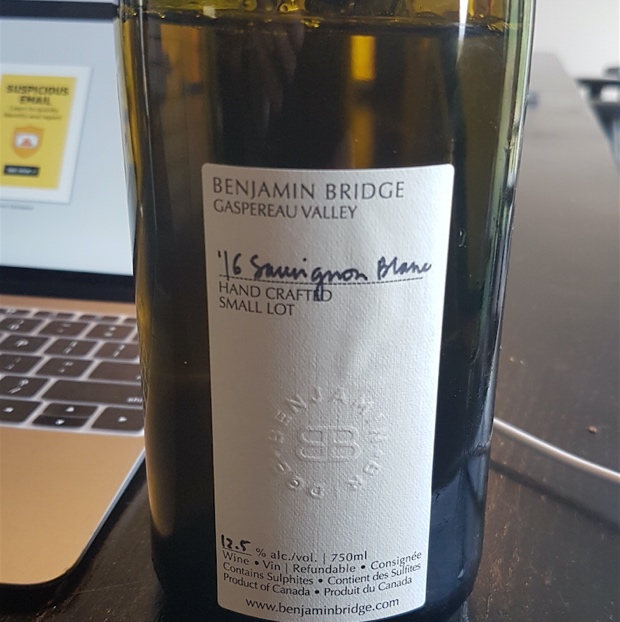
Benjamin Bridge Sauvignon Blanc 2017, Nova Scotia, Canada (Agent, Approx. $47.95, WineAlign)

The 2013 was the inaugural release and so here the fifth marks the man, the myth, the legend. Should sauvignon blanc be a Nova Scotia something, grown here is this tiny stretch of narrow valley? The answer is no but taste the impossible results and then try to say it with a straight face. A man who loves Sancerre and has the vision to stick with this project through unsurmountable odds and adversity deserves to drink his very own, very excellent sauvignon blanc. This 2017 strings forward a great moment of continuity although in less tropical, more saline and increased tension ways. There is an infiltration by tonic, lemon and lime and yet still explosively aromatic with citrus peel that connects the two vintages by way of this unequivocal substance and emotion. Let’s wait on this buffering streamer. Drink 2020-2027.  Tasted October 2018

Benjamin Bridge Sauvignon Blanc 2016, Nova Scotia, Canada (Agent, $47.95, WineAlign)

The difference between this and the previous vintage is turbidity, having it and not. It’s a negotiable varietal that doesn’t really prepare for winter and it’s not a match made in heaven with the climate. That said the adversity makes for wines of great interest. Not driven by rational motivation but by passion and love, from 0.75 tonnes of yield per acre. Explosive from the concentration delivered to each privileged berry. Dry extract is through the roof. The passion fruit on this ’16 is uncanny, almost tropical in fact it really is and yet in the end there is a revival of salt, tonic and lime. Drink 2018-2022.  Tasted October 2018

Benjamin Bridge Nova 7 Sparkling 2017, Charmat Method, Nova Scotia, Canada (256289, $24.95, WineAlign)

You’ll be pleased to know that Nova 7 is a child of wild ferment and made in 15,000 cases. It’s not tied to any real natural winemaking processes, but considering all that is in the balance it was decided not to add any sulphur in the winemaking process, only before bottling. Hard line indeed. No messing with the aromatic spectrum, not the terpenes nor the esters or anything else, so that the wine has developed its full aromatic possibility. Just the greatest lithe hint of effervescence, the crushable one, better than mega purple sweet confections for people who want to drink flavour. Peach, strawberry and juicy fruit for the people, for everyman, woman and non gender specific imbiber, for people in the sticks who don’t, won’t and can’t drink grower’s Champagne. Aromatic backbone is New York Muscat, plus ortega, seyval blanc, l’acadie, vidal, riesling, chardonnay (and no perle). “It’s all a lot of oyster and no pearlA, perfect for this long December. And no need to swirl, so you get a kick from the natural CO2. Drink 2018-2020.  Tasted October 2018

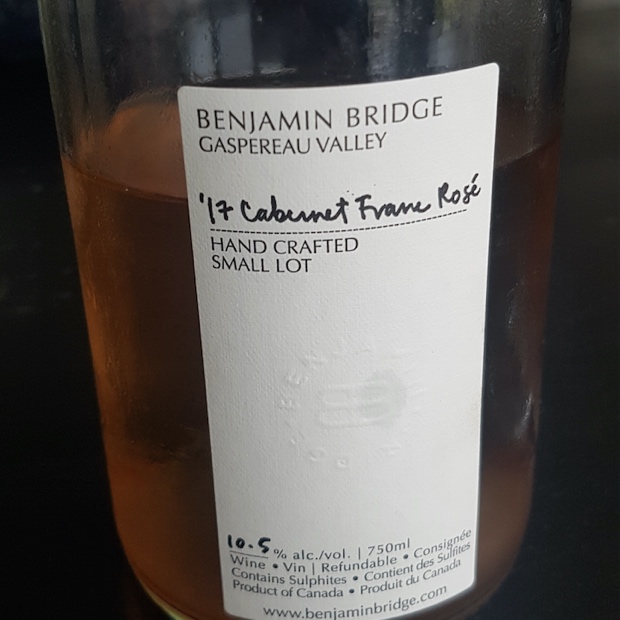
Benjamin Bridge Cabernet Franc Rosé Small Lot 2017, Nova Scotia, Canada (Winery, $26.95, WineAlign)

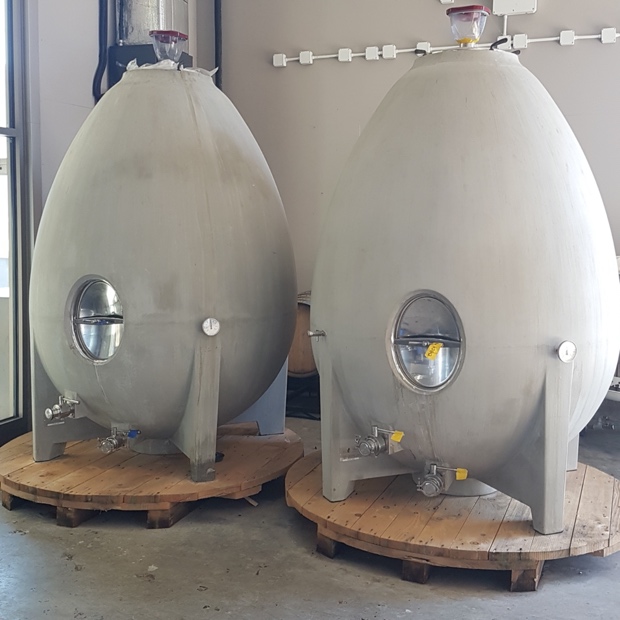
“We knew in this season we wouldn’t have enough for a full-on commercial Rosé,” tells Jean-Benoit Deslauriers. This was harvested same day, red or pink, November 10th, whole cluster pressed for a few hours and then after débourbage transferred into concrete egg. There is remained for nearly six months and in March it was highly turbid at ferments’ end. No fining, no filtration, never a sulphur addition with thanks to natural acidities that protect. It’s a perfectly lovely oxidative note with creaminess brought by the egg, never to be stripped away. It emulates the Kingsport vineyard and the varietal. Orange skin, salinity and integrated variability, with good tonic bitters. Even a bit of firmness of tannin that says its come into its own now and will be a cerebral bit of fun for two or three more years. This is Rosé very much meant to be. There were in and around 200 cases made, this essentially estate exclusive, with a few exceptions. Drink 2018-2021. Tasted October 2018

Benjamin Bridge Cabernet Franc Small Lot 2016, Nova Scotia, Canada (Winery, $57.95, WineAlign)

Still from the Kingsport farm fruit, a whole cluster ferment, no messing with stems, fully oxygenated, no carbonic maceration, 30-40 per cent whole bunch. Total output is “a barrel and a bit.” An infused aromatic ferment, green spice and a char of tobacco, utter intensity, compelling and a phenolic reality. “A myth buster incarnate,” says JB, ripened beyond the sensory borders, miles away from other territories, with generosity and juicy ripe legs. From a warm vintage, nine months in neutral oak plus nine in the bottle. Then a decant and oh how the florals open up, furthered, blooming and intoxicating. More than just a fun little experiment so please wake up and smell the Gaspereau Valley. So lively, a wee salty and all energy. Drink 2018-2024.  Tasted October 2018

And one final tank sample.

Cabernet Franc 2017

A good portion of, as in 100 per cent whole berry, whole cluster fruit ferment. Heavily oxygenated, non-carbonic, from four barrels, to be bottled in December and then released next fall, so nine plus nine. There’s the floral rising from the glass, so pronounced. Strawberry, mint, cherry and liquorice, amaro, spice and tobacco. Green and pyrazine are looked for and not found. It’s the sand layer under the strat of mixed recent glacial run off rocks that mitigate the bubbling water beneath the soil and give this a tannic structure unheard of in Nova Scotia reds, Also remembering the urgency at the hands of the whole cluster ferment.  There are 900L available. Grab ’em by the growlers.

crush #interloper standing with harvest giants

Good to go!

Twitter: @mgodello

Instagram: mgodello
WineAlign

Important and impromptu study session at Stratus

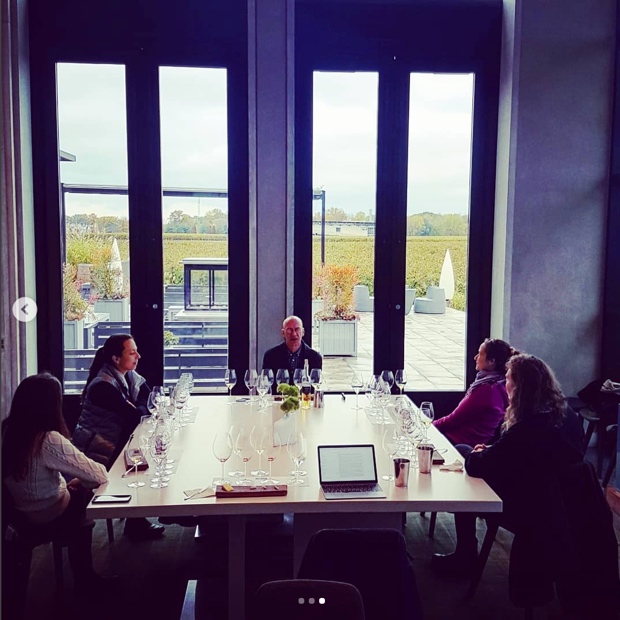
It was planned as a big chill weekend, set aside months before because if you don’t dot the calendar you will never find the time. It was a meeting of old friends who rarely see one another, coming from different cities and countries to gather in Niagara for reasons unknown. It was more than an important impromptu tasting at Stratus Vineyards on a blustery October Sunday. Thanks so much Ben, for the hospitality and new revelations.

I pack my case, I check my face
I look a little bit older
I look a little bit colder
With one deep breath, and one big step
I move a little bit closer, I move a little bit closer
For reasons unknown

https://www.youtube.com/watch?v=TG5X4kOjEX8

Related – Chase food pairings with Stratus

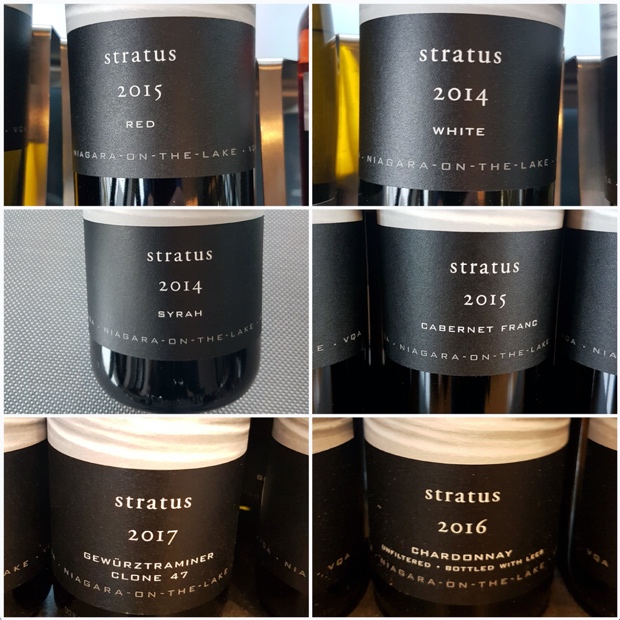
I’ve written about Stratus Vineyards before, about Yoda of assemblage and varietal maître winemaker J-L Groux. Ben Nicks is the winery’s hospitality master, mentor and guiding light. It’s no coincidence that Ben set us up with six current releases in the tasting board room with a tease of three local cheeses and a morsel of Mario Pingue’s salumi. A subtle arrangement this micro-pairing, seemingly inconsequential but oh so very poignant and perfect. 

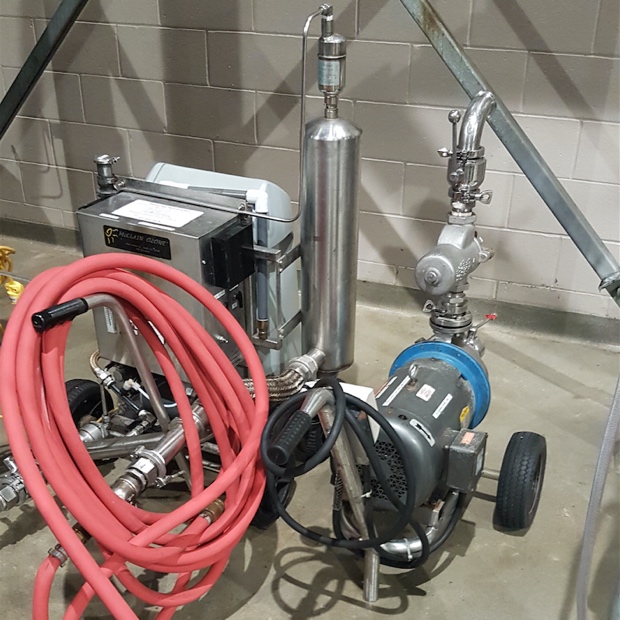
The Ozonator

Related – The Stratus-Momofuku continuum

Ben leads us through the inner workings of Stratus and you should know that this behind-the scenes tour is no ordinary junket nor is what goes on back there any accident. Sustainability is key, planned to a T, in particular with respect to water use. We pass by the hydrosieve, a simple stainless box used to aerate wines during fermentation and Ben explains the great ozonator, to clean and preserve sterility in the winery. When ozone gas is introduced to an environment with bacteria, mold or any other organic material, it readily donates one of the oxygen atoms to oxidize or destroy that material. The ozonator is highly effective in controlling Brettanomyces populations.

More than an important impromptu tasting @stratuswines on a blustery October Sunday. Thanks so much Ben, for the hospitality and new revelations.

Related – Select tasting through years of the Stratus Red and White

In the boardroom we set about tasting with the saturated vineyards as our backdrop. Grapes continue to hang though there is no surprise in that. Stratus is known to wait out the rest of the Peninsula in search of more phenolic ripeness and infinite aromatic possibilities. Here are the seven wines tasted on Sunday, October 28th.

Stratus Vineyards White 2014, VQA Niagara Lakeshore, Ontario (660704, $38.00, WineAlign)

So what is White ’14’s status in late October 2018? Still pronouncing struck flinty with a capital F and elevated into the air on a pillow of fine smoulder. What is duly noted at this stage is the pause, at calm, unaffected by gravity and then, the length. In other words, a perfectly drinkable state.  Last tasted October 2018

White assemblage under the Stratus label is not like spinning a single record, it’s like Rock ‘n Roll radio. Opening a bottle brings great excitement and anticipation, with a sense of wonder. What songs am I going to hear or more to the point, which grape varieties am I going to taste, in which percentages and in what order? In 2014 it’s a medley of chardonnay, sauvignon blanc, viognier, sémillon and gewürztraminer. The blend spent 21 months in (15 per cent) new oak. The fruits are varied and each one (or mélange of several) represented a hit in their own right. Tutti frutti, orange blossom special, little green apples, the lemon song, kiwi, peach, tangerine and forbidden fruit. In the end I heard it through the grapevine, by way of a conduit provided by great and necessary acidity. A top quality Stratus White, worthy of repeat plays. Drink 2018-2025.  Tasted twice, May and June 2018

Stratus Vineyards Chardonnay 2016, VQA Niagara-on-the-Lake, Ontario (Winery, $48.00, WineAlign)

This Stratus is the year of the utmost natural chardonnay, the one where knuckling down and waiting with great patience leads to the most ambient of varietal wines. Not that the indigenous yeast plan is new (it dates back to ’09) but it is unfiltered and the aromatics are wonderfully nostalgic. This too (like the White) has that uncanny and unmistakeable flinty smokiness but in the realm of chardonnay it’s surprisingly delicate and finessed. ’Twas a warm vintage and so there must be an initialization of richness and the lush contextual accession will continue to develop but for now its tighter and sitting in a pool of quietude. Revisits in two and three years will tell the wine’s story. Drink 2019-2026.  Tasted October 2018

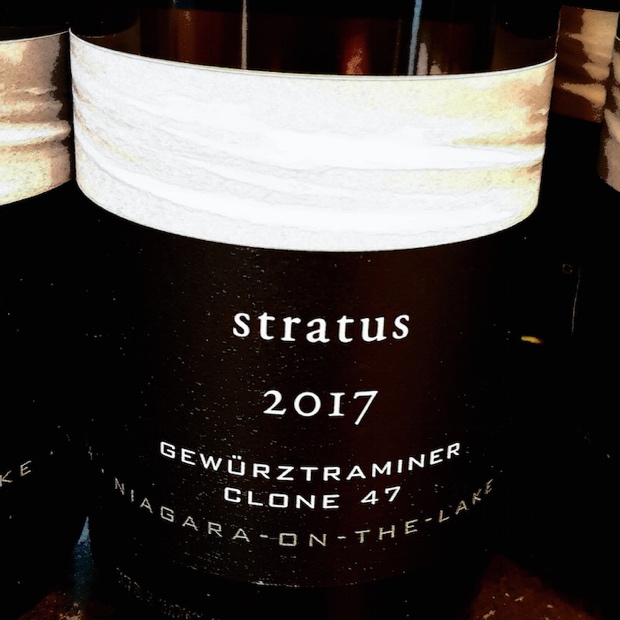
Stratus Vineyards Gewürztraminer 2017, VQA Niagara-on-the-Lake, Ontario (Winery, $29.00, WineAlign)

The plantings are Clone 47, one of two from Alsace (along with 48) that are often used in Ontario. There are few regional equals like this one of subtle floral expression in lemon waxy spray, yellow rose fragrance and citrus oil incumbency. The acidity is buoyant, unaggressive and supportive and so the residual sugar number is probably higher than expected, perhaps in the mid to upper teens. Works the derivative volatile aroma compounds drawn from flowers, fruits, leaves, and stems to great aromatic effect. In any case it’s a health affirming gewürztraminer by essential oil and through the act of sumptuous behaviour. Drink 2018-2022.  Tasted October 2018

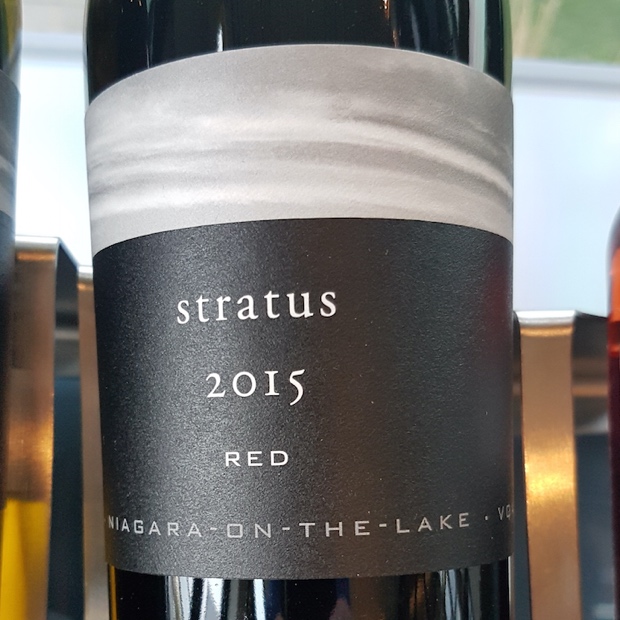
Stratus Vineyards Red 2015, VQA Niagara-on-the-Lake, Ontario (131037, $48.00, WineAlign)

Harvested over a week’s time in mid to late November from a warm if unremarkable vintage that followed a polar vortex winter, the just released 2015 Red is the five-headed Bordelais made from cabernet sauvignon, merlot, cabernet franc, petit verdot and malbec. If indeed perception is conceived to occur through five senses then all are needed to feel the fingers and toes of this assemblage. It’s also a matter of mathematical relevance, especially if you’ve tasted a few vintages of this most consistent appellative blend. And so standard deviation is relevant in assessment. From one Stratus Red to another we are looking at two sets of five different numbers that have the same mean but different standard deviations and it can be argued (because of the methodology), the same standard deviation but different means. If only J-L Groux knows the answer to the mean and standard of each Red set we can still look at this ’15 and note how it’s quite dusty and high-toned in its youth, with a richness that will eventually bring it all down to earth. It’s a chewy Red with some dried, leathery fruit, as per the mean, equal and opposing to the fresh and friendly, as per the standard deviation. As a matter of assemblage it’s as classic and recognizable as any in the accumulative history and also reminiscent of the past, like ’07, ’10 and ’12, to name just a few. With cabernet sauvignon at the head it tells us that ripeness is the virtue and comfort the result. By the way, the varietal breakdown of 40, 24, 23, 11 and 2 equates to a mean of 20 and a standard deviation of 14.40. For what it’s worth. Drink 2019-2026.  Tasted October 2018

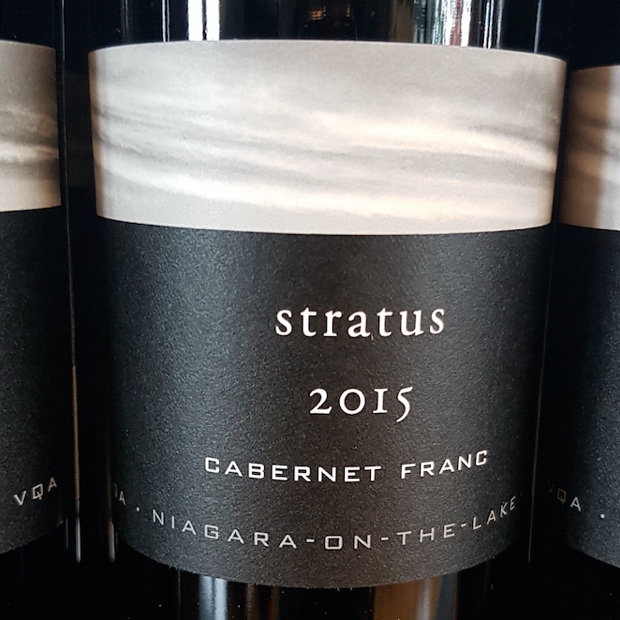
Stratus Vineyards Cabernet Franc 2015, VQA Niagara Peninsula, Ontario (412759, $38.65, WineAlign)

The 2015 cabernet franc of warmth and layering is wise in the ways of fruit. It’s an overt and resolute varietal wine picked at intervals and in succession with on the fly intent. The endeavour is worthy of the ideal and in turn, every moment of our consideration. Here is where you can begin any one of your carefully thought on handful of cabernet franc explorations, not just any mind you but from those that start at the top of the pyramid, from the top down. What is striking about 2015 is the sweet herbal quality, with a bushy tisane in place of hard to ascertain, high-toned pyrazine. What you will find is actually quite simple; cabernet franc grown, raised and fashioned by winemaker J-L Groux at Stratus. I just love this fruit. These chips have fallen where they may. Drink 2020-2038.  Tasted October 2018

Stratus Vineyards Syrah 2014, VQA Niagara Peninsula, Ontario (Winery, $48.00, WineAlign)

Stratus turns back time and into varietal subtleties so that sniffs and sips of this ’14 are met with pauses. This iambic syrah is indeed something other, with dusty peppery notes and an unforced extraction that does little (at first) to challenge or demand that you work for your sips. The floral aromas form the crux of the unstressed syllables and are followed by strong flavours, a.k.a. the stressed syllables. The poetic feel is one of clause, pause and punctuation, with acidity strong but also fine and the even ripening from the grapes is a matter of obvious clarity. I suggest that the winemaking is more hands off than before and the wine needed little to no clutter to reach this goal. The richness is subdued and the balance as bountiful as it is beautiful. The drinker must read-render this syrah stanza so that it is both comprehended and appreciated. There may be some potential tension in doing so because you need to know how to seek out the stressors but also where to find the metrical pauses. Unearthing all the elements will help to pair with food that reads the same, like a seared duck breast, rare and sliced, or a lean piece of beef, carved tagliata style. Drink 2019-2025.  Tasted October 2018

Stratus Vineyards Sémillon Botrytis Affected 2016, VQA Niagara On The Lake (Winery, $38.00, WineAlign)

One of the most unique dessert wines in Ontario this is neither late-harvest nor Icewine in origin. Only the third time it has been made, the 2016 sémillon launches with a smoky beginning, as expected and yet, is always appreciated. Some of the fruit is harvested early, but other bunches in the same vineyard are some of the last to be harvested. This low alcohol anti-sticky is from the warm vintage and from the same spot in the vineyard, vintage in vintage out. Most interesting is how these pristine botrytis affected grapes are picked ahead of the rest of the clean fruit used for the dry sémillon. It’s a very vinous sém with distinct apricot and longan notes. Great acids in 2016. Has still retained some waxiness and found some tropical fruit despite the early pick. All of the counterintuitive ideals tell us that the warm vintages can make for top quality dessert wine. This is the masquerade party wine made by the Way Outs band. “That’s where the fun is, way out, WAY OUT!” Drink 2019-2028. Tasted October 2018

Good to go!

godello

Twitter: @mgodello

Instagram: mgodello

WineAlign

Hamilton Russell three ways

Olive and Anthony Hamilton Russell at Ridley College

Anthony and Olive Hamilton Russell are tireless wanderers of this earth. When you consider the amount of time they spend travelling in support of one, their eponymous winery, two, their Hermanus friends and colleagues and three, Wines of South Africa, it’s amazing that they are able to find time to produce high quality wines. That they do with great consistency and though they are responsible for interpreting the Hemel-en-Aarde in three ways, in each case they do one or two things and they do it really well.

Hamilton Russell Vineyards works three appellations. The WO of Hemel-en-Aarde Valley is a geological wonder akin to Burgundian soils of 35-50 per cent top soil clay layered with exposed shale, closest to Walker Bay. It is here that Anthony and Olive pioneered the raising of chardonnay and pinot noir. Ashbourne red and white blends are fashioned in the Upper Hemel en Aarde Valley, on the eastern border of Hamilton Russell Vineyards, built of decomposed granite, with freer draining soils and more diurnal temperature fluctuations then the Hemel en Aarde Ridge. The property is named after Anthony’s great, great-grandfather Lord Ashbourne who was Lord Chancellor of Ireland in the late 1800’s. Southern Right is the line of pinotage and sauvignon blanc raised on the western border of Hamilton Russell Vineyards, on a 448 hectare property just behind the old fishing village of Hermanus.

In 1991 Hamilton Russell was the only one producing wines. Now there are 22 in the valley. They began running in 1991 and made full purchase in 1994. A cold current rises up from Antartica into the tip of South Africa’s (Western Cape) “making quality winemaking possible,” explains Anthony. “Our soils have been on the surface for more than 300,000,000 years. I like that you can taste ancient soils in every glass.” Hamilton Russell is what he refers to as their “immediate family.” Southern Right and Ashbourne are close relatives.”

As for varietal choices, there is little doubt that pinotage is (once again) booming while others are dropping. The plantings are very much on the rise. “What people thought was pinotage was badly made pinotage. It’s not a bad grape,” insists Hamilton Russell. We like to control what’s happening on both borders of Hamilton Russell.” So Southern Right (1994) and Ashbourne (1996) are more than just passion projects. “We also want to change people’s perception of pinotage,” he adds. There were no releases between 2011 and 2014, instead it was used as a re-thinking period and a chance to reflect on vineyard/agricultural culture, followed by the new age. “I don’t have a beard, I’m in my 50’s (plus) and I’m doing some pretty hipster stuff. We just don’t look the part.”

I have had numerous opportunities to taste, track, re-taste and follow the chardonnay and pinot noir over the past five years. I often add to my notes because theirs are highly organized, Burgundian powered structures that demand re-visits and respect. The Ashbourne and especially the Southern Right varietals and blends have seen less exposure but the notions of longevity (Ashbourne) and drink-ability (Southern Right) are fast gaining attention.

A few weeks back and post i4C Cool Chardonnay conference I sat down with Wines of South Africa’s Laurel Keenan, Angela Aiello and the South African Wine Society to listen in on Anthony Hamilton Russell’s dissertation and a tasting of eight wines. Here are the notes, plus two for their recently released ’17 chardonnay and pinot noir.

Southern Right Sauvignon Blanc 2016, WO Walker Bay, South Africa (512277, $21.95, WineAlign)

The Southern Right whale is a frequent visitor to Walker Bay and this sauvignon blanc should be a frequent visitor to your glass. It’s a white wine that acts as a messenger to its proximate location to a cold body of water. It’s a pure Western Cape fresh, flinty and smouldering sauvignon blanc so akin to a Bordeaux White. You could close your eyes and imagine Pessac-Leognan (perhaps even hoping for Sancerre or Chavignol) but there really isn’t any need. Six clones and six yeasts, multiple ripeness levels and some clay-grown vines deliver fat fruit to meet the linearity and tension of other shale grown fruit. In the end it’s a complex and rare chance to taste this kind of value. Drink 2018-2020.  Last tasted July 2018

The pungent nature of this sauvignon blanc brings a vigor sight and taste unseen. Classic herbal meets gooseberry and passionate notes are berry-derived and very floral. The palate confirms the notion and makes one a true believer in Walker Bay. Drink 2017-2020. Tasted July 2017   olive_hamilton_russell  noble_estates wosa_za  wosa_ca  @OliveHR  @Noble_Estates  @WOSA_ZA  @WOSACanada  Olive Hamilton Russell  @NobleEstates  @WOSACA

Southern Right Pinotage 2015, WO Hemel-en-Aarde Valley, South Africa (486167, $26.95, WineAlign)

Tasting ’15 while ’17 is already sold out back home. From an opulent and wide open vintage, the wine offers just those expressive attributes. Smokiness meets curative meaty notes and an umami sort of South African garrigue. From a vintage where phenolic ripeness occurred at a higher level of alcohol so it carries a 15 per cent volume, but does so with marked ease. Drink 2018-2021.  Tasted July 2018

Hamilton Russell Ashbourne 2009, WO Hemel-en-Aarde Valley, South Africa (486167, $25.95, WineAlign)

The Ashbourne ’09 includes cabernet sauvignon, cabernet franc, malbec, petit verdot and syrah blended in, “which brings nothing really to the party,” says Anthony Hamilton Russell, “but at least it doesn’t compete with Southern Right.” It’s deeply savoury and smoky, continues to smell like chocolate and will always show its wood. The single-vineyard heavy clay block was always in delivery of fruit ripe but never over that edge, all the while telling its shepherds when to pick so that balance and structure can be had. The linger and length are exceptional. “The variety doesn’t suck.” Truth that. Drink 2018-2024.  Last tasted July 2018

Ashbourne is a 25 barrel cuvée and the outlier in the Hamilton Russell pinot noir-chardonnay stable. With more than enough time behind at eight years on it is essentially evolved and resolved, now a downy blanket of Bordeaux fibres woven, seamless and soft. The fruit dries a bit but like all great aging South African reds the candidly curated acidity is years from relinquishing its grip. Ashbourne is not a matter to blow one’s mind but it teaches some vinous life lessons about Hemel-en-Aarde and the greater good of aged South African reds. It can be enjoyed right now and left for another decade. Like Meerlust’s Rubicon it’s an easy on the pocketbook gift in kind to Ontario from proprietors Anthony and Olive Hamilton Russell. Drink 2017-2024.  Tasted October 2017

Hamilton Russell Ashbourne Pinotage 2015, WO Hemel-en-Aarde Valley, South Africa (486167, $25.95, WineAlign)

It could be expected that this 2015 pinotage blend would already act somewhat to quite advanced when in fact the evolution is virtually non-existent. A side-by-side revisit with 2009 is all that is needed to drive the point. The ’15 is still quite demurred, tightly wound, not in a fresh to reductive way but more in terms of its finely-crafted pyramids of Giza architecture. The acidity and the spice are up there on the crests of the upper steps, very near to the pinnacle. Again it is the way the wine stays with you like a slowly rendered demi-glacé made from the lightest roast of bones that keeps the karst of stone sublime in your mind and mouth. Drink 2018-2028.  Tasted July 2018

Hamilton Russell Ashbourne Pinotage/Cinsault 2018, WO Swartland, South Africa (486167, $25.95, WineAlign)

“We wanted to work with an unoaked pinotage, to mix with a lighter and brighter cinsault.” In fact the cinsault really shines with (by now) classic Western Cape lithe ability because the pinotage allows it to. Add to that a verdant, pyrazine and currant streak and in the end you get perfume but no impenetrability that an overly green and wooded forest would demand. Beautiful (1972 planted) Paardeberg on decomposed granite gifts a chic and classy, perfectly correct blend of these two made for each other varietals. Will settle into one another so effortlessly and with sleepy grace in another year or so. Drink 2019-2024.  Tasted July 2018

Hamilton Russell Ashbourne Sauvignon Blanc/Chardonnay 2018, WO Walker Bay, South Africa (Agent, $25.95, WineAlign)

There can be no more fruit in a white blend than what bursts from this sauvignon blanc-chardonnay scene. Just released in South Africa and carried by Anthony and Olive (Hamilton Russell) on the plane. Chavignol is the reference point, with lightly structured sandstone soils bringing lightness, airiness and delicate fruit. Or think Jim Clendenen’s Au Bon Climat out of Santa Barbara. It’s democratically priced (a Hamilton Russell first) without gratuitous sugar and still dry, tart and direct. Also the first screw-cap for the company. Bottled just three weeks ago. Drink 2018-2020.  Tasted July 2018

Hamilton Russel Vineyard Chardonnay 2017, WO Hemel-en-Aarde Valley, South Africa (931006, $44.95, WineAlign)

A Hamilton Russell chardonnay must have its nuts, butter and über direct acidity. It just may remind of Bâtard perhaps because depth, richness and a ridges-straddling connection to the valley it comes from all work in this way. But what else brings that connection? In 2017 it’s elegance for sure, but also intensity. This 36th vintage is “a reflection, always of the same piece of ground, even if we are always insecure and trying to improve, it’s a far bigger thing than we are. We feel justice to serve it. We feel we have a duty to this.” This is what Anthony Hamilton Russell told me last year and it perfectly applies to this 2017. Back then he noted that “god made the 15s and winemakers watched. In ’16 winemakers made the wine.” So what about ’17? With heady attention paid to its eccentricities and idiosyncrasies, it’s really a matter of both. Drink 2019-2026. Tasted twice, July 2018

Hamilton Russel Vineyard Chardonnay 2016, WO Hemel-en-Aarde Valley, South Africa (931006, $44.95, WineAlign)

Says Anthony Hamilton Russell. “It took the French to teach me not to care about the colour of chardonnay, but to only worry about flavour and texture.” Fermented with a healthy amount of solids and introduced to oxidation in its youth. This helps and results in a chardonnay well-adjusted to adult life and to adults. “You cannot measure an aesthetic with a number,” meaning you can’t learn from a measured response. Literally speaking. The balance is as good as this archetype of an HR white has ever been. It is after all, the HR white.  Last tasted July 2018

No stone is left unturned in the Hamilton Russell 2016 chardonnay because it speaks with utmost Hemel-en-Aarde Valley clarity. There is less make-up in 2016 so the fruit, acidity and subtle salty quality all must have begun to speak from the word go. The first pressed, non-clarified must would have done nothing but made the maker’s smile, mimicking a foggy morning over Walker Bay and so they have allowed the wine to speak for itself. This is a beautifully restrained and go it alone rendered to be measured chardonnay, with beauty and grace. Drink 2017-2022.  Tasted September 2017

Hamilton Russel Vineyard Pinot Noir 2017, WO Hemel-en-Aarde Valley, South Africa (999516, $58.95, WineAlign)

’m not sure it can be stated often enough that when you continually do one thing well, without compromise or mutation, than you’re more likely to do it very well. This is the case with a Hamilton Russell pinot noir, the only one that is produced. From the best fruit available and swinging in the direction of the vintage, either into or away from the winds of vineyard or winemaking. The 2017 is like the chardonnay in that it’s a best of both worlds seasonal and acumen-focused display, neither one or the other dominant and in the end, so balanced. The fruit depth is exceptional, the acidity deeper still and the intensity wound around it all. It’s so precise and layered, like a pinot noir prism, like staring far inside the intricate and symmetrically patterned angles in a diamond. Drink 2019-2028.  Tasted July 2018

Hamilton Russel Vineyard Pinot Noir 2016, WO Hemel-en-Aarde Valley, South Africa (999516, $58.95, WineAlign)

“We believe in wines of consequence.” How pinot noir is capable of performing in South Africa can be defined right here, with a wink and a nod to Gevrey-Chambertin. Pure unbridled Hamilton Russell cerebral joy, nothing taken for granted and all possibilities celebrated.  Last tasted July 2018

This welcome ethereal return of Hamilton Russell’s Hermanus benchmark pinot noir follows on the heels of the early-picked, dense, muscular and compressed 2015. Comfortable alcohol meets optimum phenolic ripeness so lets think on it in terms of ’08 burgundy, though perhaps not as tight and classic. This is the second fully organic vintage, not certified but with no systemic use of chemicals. Young (just last year turned 30) winemaker Emul Ross from Chamonix and viticulturist Johan Montgomery have reverted to gentler pressing and travelled further away from hyper-reduction. Open fermenters handle the entire pinot noir harvest at once so there is nary a posit tug of war or movement at shock times. Thus the elegance and as mentioned, the ethereal. It should always be noted that all the HR grapes go into these wines, with no tactical moves and philosophical aberrations (any more), no reserve wines, no single-vineyard, no divergence from monopole, always staying the broad expression course. “We committed to this in 1981 and other than experiments, we’ve stayed this way,” says Anthony Hamilton-Russell. There is simply no plot, block, aspect, top, middle or bottom slope separation. It’s pinot all in for one purpose, fully conjoined and conspiring to make the Hamilton Russell expression. This expression, of pure fruit, no drudgery, clarity and exceptional length. Drink 2017-2029.  Tasted October 2017

Olive and Anthony Hamilton Russell at Ridley College

Good to Go!

Godello

Twitter: @mgodello

Instagram: mgodello

WineAlign

Tasting Ontario Part Three: Rosé

Do not adjust your set. Magnums of Rosé by @scottzebarth and godello ~ #aldé #cabernetfranc @ravinevineyard #vqa #niagaraonthelake

The first of the 2018 WineAlign National Wine Awards of Canada results are now live on site with the announcement of winners in the Rosé category. The global blush explosion has not passed Canada by as witnessed through the record number of entries at this year’s Nationals held in June at the Penticton Trade & Convention Centre.

Related – Tasting Ontario Part One: Riesling 

The Rosé romance is still in the honeymoon phase as sales have seemingly been rapidly rising every year for at least the last three and show no signs of slowing down. In the early part of 2018 my partner Scott Zebarth and I made 599 (sold out) magnums of 100 per cent cabernet franc with Marty Werner and Ben Minaker at Ravine Vineyard. We are officially part of the problem, I mean program.

Related – Tasting Ontario Part Two: Chardonnay

As part of an ongoing series in which I am publishing my most recent tasting notes of Ontario wines in any and all categories, here are 20 Rosés of local origin, including a half dozen tasted blind at NWAC18 last month.

Day 3 #nwac18 shades with Rosé nails by @heatherriley29 and a 50 for the judge from Nova Scotia.

Fielding Estate Rosé 2017, VQA Niagara Peninsula, Ontario (53421, $15.95, WineAlign)

Fielding’s latest Rosé is not only unlike the others but also unrecognizable from itself and the curiosity level is set real high. The sweetness is different, almost late harvest so perhaps Richie Roberts has taken a turn by adding a twist into experimentation and it really works. No compromise to sapidity or energy is noted and in the context of rich and ripe there is great pleasure. Nice departure here. Drink 2018-2020.  Tasted May 2018  fielding winery  richiewine  @FieldingWinery  @RichieWine  Fielding Estate Winery

13th Street Pink Palette Rosé 2017, VQA Niagara Peninsula, Ontario (275834, $15.95, WineAlign)

Pink palette is exactly as the nomenclature suggests, a painter’s tray with colours blending and layering in and out of one another. All the pink, red and orange fruits are represented here in aromas and flavours. It’s a bit of an abstract mess but it finds a way to work. Goes every way and returns to the starting point, then sets out again. Drink 2018-2019.  Tasted May 2018  13thstreetwinery  @13thStreetWines  13th Street Winery

Malivoire Wine Ladybug Rosé 2017, VQA Niagara Peninsula, Ontario (559088, $15.95, WineAlign)

The blend is cabernet franc (65 per cent), pinot noir (24) and gamay (11) for the most Malivoire forward, all fruit all the time, simply rosy Rosé. Name those red fruits in their collected bunches but don’t plan to come looking for citrus. As I said, it’s all about the red fruit. Drink 2018-2019.  Tasted twice, blind at NWAC18 and July 2018  malivoire  noble_estates  @MalivoireWine  @Noble_Estates  Malivoire Wine  Noble Estates Wine & Spirits

Tawse Rosé Sketches 2017, Niagara Peninsula, Ontario (172643, $16.35, WineAlign)

Now that Tawse is making a 100 per cent pinot noir Rosé from the Quarry Road Vineyard it puts the Sketches into clearer perspective as a provident and judicious bet for easy and easier drinking. I’d say there is a good amount of gamay in this Rosé because it delivers softer, less rusty and coppery, more wild berry-scented and leafy savoury-accented fruit. It nicely straddles the line between fruity-candied and sapid-dry for maximum amenability. You can’t go wrong here with a warm day and a big chill. Drink 2018-2019.  Tasted June 2018  tawsewinery  @Tawse_Winery  @tawsewines

Westcott Vineyards Delphine Rosé 2017, VQA Vinemount Ridge, Ontario (498527, $16.95, WineAlign)

Delphine does not shy away from expressiveness, with a high level of Rosé complexity by Vinemount Ridge pinot noir. Sugar, tang and washed rind cheese get together with high tonality and quite the fleshy tang. Good food Rosé, especially with a vegetables accented by a smoky edge. Drink 2018-2019.  Tasted May 2018  westcottvineyards  @WestcottWines  @westcottwines

Kacaba Summer Series Rebecca Rosé 2017, VQA Niagara Peninsula, Ontario (227025, $17.95, WineAlign)

From gamay and an immediate response of that’s more like it. Smells just like gamay with a salt lick running through cranberry and raspberry fruit. Just enough pressing, good acidity and great persistence. Drink 2018-2020.  Tasted blind at NWAC18, June 2018   kacabavineyards  @KacabaVineyards  Kacaba Vineyards and Winery

Wildass Rosé 2017, VQA Niagara Peninsula, Ontario (71712, $18.95, WineAlign)

As per the plan Stratus will change direction and for the first time chooses the saignée method for varietal cabernet franc. As for Wildass it is a blend of sauvignon blanc, riesling, tempranillo and cabernet franc. It hints at the present and the future of Niagara Peninsula Rosé in a nutshell albeit with full-bled coverage, high level fruit phenolics and a little bump up in residual sugar. If the ’16 Wildass hovered in the five to six range this seems to be upwards of nine or ten. The fruit here is fantastic and the warmth of the vintage can be thanked, especially from the extended fall and the later picking hands of a Stratus managed wine. Drink 2018-2019.  Tasted May 2018   stratuswines  @StratusWines  @StratusWines

The Roost Rosé 2016, VQA Niagara Peninsula, Ontario (Winery, $18.95, WineAlign)

From pinot noir, rich, very pressed and quite tannic. Fleshy, full and a bit funky. Rhubarb leads the fruit in a two-dimensional, flat-patterned, if unusual texture. Drink 2018-2020.  Tasted blind at NWAC18, June 2018  theroostwineco  @TheRoostWineCo  @theroostwineco

Peller Estates Private Reserve Rosé 2017, VQA Niagara Peninsula, Ontario (Winery, $18.95, WineAlign)

A blend of pinot noir (88 per cent) with gamay and pinot meunier. Lovely in litheness, light, bright and briny blush, saline all the way through. Does the trick with fineness, tart and tight inner-vision Really lovely. Drink 2018-2020.  Tasted blind at NWAC18, June 2018

Huff Estates Rosé 2017, VQA Ontario (Winery, $19.00, WineAlign)

From cabernet franc, some florals, with agitative acidity and a good tartness in composure. Fruit meets salinity and a touch of currants in brine. Drink 2018-2020. Tasted blind at NWAC18, June 2018  huffestateswine  @HuffEstatesWine  @HuffEstates

80x Wine Company When Pigs Fly Pinot Noir Rosé Ridgepoint Vineyard 2017, VQA Twenty Mile Bench, Ontario (Winery, $19.95, WineAlign)

It’s a comedy moment reminder and also a temptation to invoke the Smithers question “will you be donating that million dollars now, sir?” The cheeky name “When Pigs Fly” is actually Rosé by pinot noir from André Proulx and (Kacaba winemaker) Vadim Chelekhov made with the help of David Stasiuk at Rockway Winery. It ain’t no big thing, nor adynaton, idiom of improbability, impractical nor rhetorical device as extreme exaggeration. And so When Pigs Fly is summer in September, harbinger of spring and varietal Twenty Mile Bench, single Ridgepoint Vineyard hyperbole captured with healthy, fresh, brackish and earthy estuary goodness. As promised, its verdant, crisp, delicate, sweet rose petal floral and rusty fruit gone down easy, on a deck, in the sun. Drink 2018-2019.  Tasted March 2018  andrewinereview  vadimwineguy  @andrewinereview  @Vadim_Chelekhov  André J Proulx  Vadim Chelekhov

Henry Of Pelham Rosé Three of Hearts 2017, VQA Ontario (552562, $19.95, WineAlign)

It’s a good card the three of hearts, played out in Rosé form though admittedly in sweet and sour ways. A salty cheese rind note filters in to the ubiquity of Rosé strawberry and grapefruit, that and some blanched, sweet herbs. This is a snazzy meets chic new label from the Speck brothers at Henry of Pelham and there is little doubt that the lithe and lean style is the right one to choose. From this particular bottle an overly aggressive mix of sugar and sulphur detracts from the overall impression and pleasure. Drink 2018-2019.  Tasted April 2018  henryofpelham  @HenryofPelham  Henry of Pelham Family Estate Winery

Southbrook Vineyards Organic Triomphe Cabernet Franc Rosé 2017, VQA Niagara Peninsula, Ontario (279117, $19.95, WineAlign)

Mostly cabernet franc (85 per cent) with merlot in this tart and rich blush. Currants and blackberries, good flow and integration, very solid if typical and correct, highly market saturate and soluble commercial Rosé. Drink 2018-2019.  Tasted blind at NWAC18, June 2018  southbrookvineyards  thelivingvine  @SouthbrookWine  @TheLivingVine  Southbrook Vineyards  The Living Vine inc.

Malivoire Rosé Bon Vivant 2017, VQA Beamsville Bench, Ontario (498535, $19.95, WineAlign)

C’est bon this Maliviore, from what is just the most perfect, antithetical, apposite Rosé vintage Niagara has perhaps ever seen. After the coolest of summers the great resurgent warmth of September delivered great ripeness into this Beamsville Bench fruit, even when picking for Rosé is completed before the full monty is reached. The result is nothing short of bring it on. Salt, brine, stone fruit, citrus and sonic, tonic injections had never gathered so collectively in synch at this price, from this place. This is brilliant Ontario blush and all should be so lucky to emulate and live as cohabitant with the Vivant. Drink 2018-2020. Tasted April 2018  malivoire  noble_estates  @MalivoireWine  @Noble_Estates  Malivoire Wine  Noble Estates Wine & Spirits

Southbrook Syrah Rosé 2017, VQA Four Mile Creek, Ontario (Winery, $22.25, WineAlign)

Ann Sperling’s small lot, organic and biodynamic syrah shows what the vintage is for Rosé, that being stellar and why did Ann make such a varietal Rosé? “It seemed like a good idea at the time.” It’s still a good idea. Great acidity, faint white peppery red fruit, namely raspberry and then that blush catalyst called texture. Salty, fruity, energetic and well-commanded. Proper. Drink 2018-2019.  Tasted April 2018 southbrookvineyards  thelivingvine  @SouthbrookWine  @TheLivingVine  Southbrook Vineyards  The Living Vine inc.

Malivoire Rosé Moira 2017, VQA Beamsville Bench, Ontario (Agent, $24.95, WineAlign)

Malivoire’s most important and benchmark Ontario Rosé is one of the first to the table from the 2017 vintage and why not because its quick soak and lightness of being takes no time at all to get ready. This is the antithetical beauty of Rosé and how it must be approached for best results. Malivoire does not take a step forward from the most perfect ’15 and ’16 wines but there is more fruit in this ’17. You can actually nose and taste strawberry plus a hint of tart raspberry. This will appeal to more of the general Rosé loving populace without any compromise for the provincial, provençal geeks everywhere else. It’s ostensibly a better wine in 2017 because it will attract that growing audience without having made any concessions or dis to authenticity. Drink 2018-2021.  Tasted February 2018  malivoire  noble_estates  @MalivoireWine  @Noble_Estates  Malivoire Wine  Noble Estates Wine & Spirits

Hidden Bench Locust Lane Rosé 2017, VQA Beamsville Bench, Niagara Peninsula, Ontario (68833, $22.95, WineAlign)

Locust Lane is always in the echelon of premier Ontario Rosé and from a prized piece of real estate on the Beamsville Bench. This takes autumn warmth and bottles it as blush sunshine with zippy fraise cocktail essence and ever-berry flavour that goes on forever with an added good shake or two of maldon salt. Great quality right here and well worth the price of admission. Drink 2018-2020.  Tasted May 2018  hidden bench  markanthonyon  @HiddenBench @MarkAnthonyWine  Hidden Bench Estate Winery  Mark Anthony Wine & Spirits

Tawse Quarry Road Vineyard Rosé 2017, VQA Vinemount Ridge, Niagara Peninsula, Ontario (Winery, $27.95, WineAlign)

The inaugural Tawse single-vineyard Rosé launches with a whisper, as Rosé should, from a saignée methodology in search of layering and structure. The way this pinot noir of Vinemount Ridge Quarry Road grapes lightly treads into this world means that it can build, layer and ultimately capture our attention. It’s decidedly dry and brings many fruit thoughts to the bowl but more than anything it’s lime-doused cherries, a shot of ginger bitters and the ever-proper feign of sweetness that really isn’t there. This is terrific varietal pinot noir in blush clothing, properly sour and briny to keep pace with similar renderings by cabernet franc. Drink 2018-2020.  Tasted June 2018   tawsewinery  @Tawse_Winery  Tawse Winery

Thirty Bench Small Lot Rosé 2017, VQA Beamsville Bench, Niagara Peninsula, Ontario (414227, $29.95, WineAlign)

“I am not in love, but I’m open to persuasion.” So tell me what a $30 Ontario Rosé can be. Here presents a next level of expectation from the Thirty Bench Small Lot and yes it obliges with a profile that begins in flavour bursts to supersedes its regional and price category. With open armed, elevated and trading hands this Small Lot at first offers pressed juicy fruit, then fresh picked strawberry and finally packets of fruity umami. The triumvirate workings of saignée cabernet sauvignon, cold-soaked pinot noir/pinot meunier and direct-pressed cabernet franc mean business. Rosé is meant to gift wrap an equation executed through chill, quaff and relax, which you can do with this example but it requires a little bit more attention. Give it that love if you’ve got the mind and the meditation, “but this time with a little dedication.” Sing it, sing it. Drink 2018-2020. Tasted May 2018  hirtybench  pellerwines  @ThirtyBench  @PellerVQA  @ThirtyBench  Andrew Peller(Andrew Peller Import)  Emma Garner

Pearl Morissette’s Svetlana Atcheva with Cuvée Roselana

Pearl Morissette Rosé Cuvée Roselana 2016, Ontario (Winery, $30.00, WineAlign)

Roselana is a gamay-pinot noir saignée blend that pulls no pleasure punches. “We like Rosé of colour, like Tavel,” notes Svetlana Atcheva, “but in a more accessible style.” Her name folds into a Rosé that was sold out as it was bottled, a blush of so much gifting flavour and unlimited pleasure. The specifics of aromatics, berry, citrus or otherwise defined tastes is not important. Just drink it. Next vintage. Drink 2018-2020. Tasted July 2017  pearlmorissette  @PearlMorissette  Pearl Morissette

Good to go!

Godello

Twitter: @mgodello

Instagram: mgodello
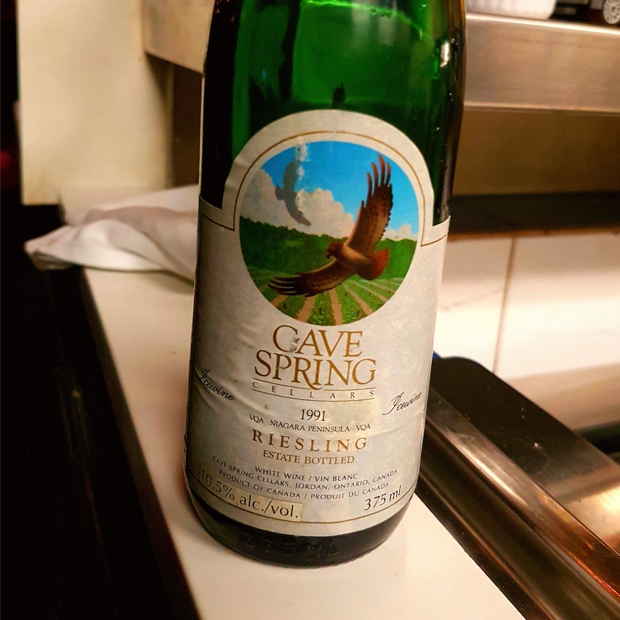
WineAlign

Planeta’s Sicily

Missed flight fifth order of business @planetawinery 2008 #santacecilia #docnoto

On a most recent trip to Sicily I tasted no less than 20 wines from Planeta’s five estates, most with winemaker Patricia Tóth and some all by my lonesome. I will be tasting more with the ethereally-worldy Tóth in just over an hour from now so what better time to share these notes than right now. There was a Chardonnay 2002, Eruzione Riesling and Santa Cecilia Noto 2008 as well but those notes need time, music and deeper thought.

Degustazione e bei tempi with the @planetawinery gang ~ #lookup #siciliaenprimeur #siciliaep18 #siciliaep2018

Planeta Grillo Terebinto Sicilia Menfi DOC 2017, Sicliy, Italy (Winery, WineAlign)

Planeta’s varietal grillo is raised at Cantina Ulmo in Menfi, a western Sicilian outpost where pebbly-inlaid deep soils are found around Lake Arancio. The terebinth is a Sicilian shrub with glossy fronds. a.k.a. Pistacia Terebinthus or white pistachio, used as rootstock for pistachio production. The Menfi grillo is pulled from a low lying clay vineyard at 50m. Aromatics and texture are equally rich at maximum ripeness as bottled sunshine, pomelo sago unctuous and so consumable. Mango trees are actually in the same family as pistachio but of more interest is the fact that the female trees produce the nuts while the male produces the pollen. Sounds familiar, not to mention that male and female pistachio trees are often grafted together to bring about pollination. Drink 2018-2019.  Tasted May 2018  planetawinery  plant dependent  noble_estates   @PlanetaWinery  @Noble_Estates  @planetawinery  Tóth Patricia  @NobleEstates

Planeta Alastro Sicilia Menfi DOC 2017, Sicliy, Italy (Winery, SAQ 11034361, $22.00, WineAlign)

Alastro amalgamates 70 per cent grecanico with 15 each grillo and sauvignon blanc for one tart, intense, highly aromatic, mineral and striking western Sicilian white blend. It’s certainly got a tropical feel but not in any creamy or humid sense. Also known as the bush La Segreta, meaning “broom,” the horny plant was used for natural fences and as a general intruder deterrent. Take note of the locked in neoteric and floral aromatics from this early September harvested blend, wild as its name suggests and best when youthfully fresh. Grecanico can age but this blend screams immediate gratification. Drink 2018-2019.  Tasted May 2018

Carnage for two please

Planeta Etna Bianco 2017, Etna DOC, Sicliy, Italy (Agent, $33.99, WineAlign)

The Etna is 100 per cent carricante produced at the Feudo di Mezzo winery in the Contrada Taccione, in Montelaguardia. Now labeled simply as Etna, not as the artist formerly known as Bianco and apparently for no reason at all. Seventeen was a really warm year here in the 690-720m vineyard and so the quickest maceration was performed due to so much sun-developed colour on hand. Stayed on lees until February, also less than usual but again the hot season saw quick development. The quotient distilled is a plentiful one, a brocade like golden silk, full and full of everything it can be. Not the sapid, mineral and volcanic salty carricante of let’s say 2014 but sometimes “luxury is the opposite of vulgarity…and complication, a necessity that begins where necessity ends.” Drink 2018-2022.  Tasted May 2018

Planeta Eruzione 1614 Carricante 2016, Doc Sicily, Italy (Agent, $42.99, WineAlign)

Passion projects are not for the faint of heart but they are perhaps reserved for winemakers too smart and too worthy for their own good. Eruzione is such an animal for Planeta’s winemaker Patricia Tóth, a varietal carricante ode (with 10 per cent riesling) to the great and tragic 1614 Etna eruption. If boys don’t cry I still shed a tear or two for history and for my love of this wine. It comes from the black volcanic soil of the Contrada Sciaranuova vineyard, next up the mountain from Contrada Santo Spirito. In ’16 it’s not measured by a low ’14-like pH, not quite as sharp, so therefore fuller and with more unction. It’s still an Etna-bled eruptive white, still beating raw by laser focus out of inspirational terroir. Readier too because it’s been held back a few more months for release. This wine will let you arrive at where you want to be. So many whites are mired in repeatable refrains. “Plastic passion is a Hyacinthe heart. Plastic passion is a transparent tart…Plastic passion is a gold guarantee. The plastic passion is murdering me.” Eruzione is life affirming and though other wines may pay the bills, this cariccante is the cure. Fill your prescription and drink up its passion. It’s the winemaker’s too. Drink 2018-2024.  Tasted May 2018

Planeta Rosé Sicilia DOC 2017, Sicily, Italy (Agent, $16.95, WineAlign)

Planeta’s Rosé is half nero d’avola and half syrah, the nero coming from higher elevations. “We want something that we like to drink,” is the matter of fact explanation from winemaker Patricia Tóth. The first vintage was 2007 and it has evolved into this lithe and yet lush blush, the syrah bringing crisp verve and nerve. It is perhaps not as aromatic as some high level Planeta but that’s the life where odd bedfellows compliment one another in a modern world. Salty and sexy equals good combination. Drink 2018-2019.  Tasted May 2018

Planeta Cerasuolo Di Vittoria DOCG 2016, Sicily, Italy (Agent, $29.37, WineAlign)

The only Sicilian DOCG in Planeta’s hands is noticeable, contractable and notable for quality consistency, both for the denomination and the estate style. Rich but tangy with so much soil voce, it flows effortlessly across the palate with malleable texture. Like Bourgogne Villages it starts at fruity and two years forward will begin to morph, into tobacco, funghi and salts of the earth.  Last tasted May 2018

Planeta’s Cerasuolo di Vittoria brings together nero d’avola and endemic frappato with only a stainless steel ferment in an anti-oxidative and naturally anti-oxidant way. This is nothing but freshness in a bottle with its ubiquitous red berry verve. You can just feel the breaths in this radiant Planeta, of winemakers and coveters of Sicilian treasures. You just have to taste Cerasuolo to understand how generous and graceful it is, earthy but of lovely clarity and spice all over the finish. Drink 2017-2021. Tasted November 2017

Planeta Cerasuolo Di Vittoria Classico DOCG Dorilli 2016, Sicily, Italy (Agent, $38.95, WineAlign)

Cerasuolo di Vittoria Classico is one thing, Dorilli 2016 is another matter altogether. The name of the estate marks the iconography of this Planeta blend, from a chosen vineyard carrying the dialectical tome of the river passing by. The old maps say Dirillo but through time this has changed, just like this Burgundian wine will draft through wake and evolve. There is a minor reduction here so it’s not as open as the normale though it’s offset by an extra year of aging for release 18 months after harvest. Blooming should happen some time in 2019 after the 70 per cent nero d’avola and (30) frappato begin to unfold out of itself for a full and layered Vittoria. Still there is the Cerasuolo fragrance from a guarantee by vintage and for texture. Drink 2019-2027.  Tasted May 2018

Planeta Nocera Sicilia DOC 2016, Sicily, Italy (Winery, WineAlign)

This is just the second vintage of Nocera, from the province of Messina and one of the most dramatic vineyard landscapes on the planet. La Baronia on Capo Milazzo is a long strip of a peninsula that looks out to the Aeolian islands. Nocera is by accounts an unusual variety made by approximately 15 producers, also in Faro and the total wines produced are from 28 hectares in total. The expectation is a marine wine of macchia, myrtle and garrigue. “It’s a beast,” says Patricia Tóth, especially in marine areas with huge clusters. It’s notable for its thickness and tannin, smelling of white pepper, maybe a note of geranium and it just might become a superstar. It’s like a child of cabernet franc and primitivo but with gamay plus pinot structure. Or like Bandol, with fleshy tannin and with time it will beocme a velvety version of its thick self. Don’t forget the salinity. Drink 2019-2025.  Tasted May 2018

Planeta Eruzione 1614 Pinot Nero 2016, IGT Terre Siciliane, Sicily, Italy (Winery, $42.99, WineAlign)

Even within the erudite and super-investigative Eruzione 1614 series there is no internet or Planeta mention of the newest member Pinot Nero IGT Terre Siciliane 2016. It’s high volcanic mountain landscape time we talk about Etna and pinot noir. The symbiosis is a reality meeting necessity at a crossroads of potential. Not just any potential mind you but a Burgundian one. “We don’t want to talk about Bourgogne but Etna is the only Sicilian terroir where it can build a house,” says winemaker Patricia Tóth. The perfume, texture and tannic structure is all pinot noir, picked on a Saturday afternoon which was the moment of truth from green to spirit, the aha before moment the sun-dried plum is placed into the cognac. This is all heard in Sicily but it’s all true. There are now two terraces of fruit, so the current production of 1472 bottles may become 4000! Drink 2019-2027.  Tasted May 2018

Planeta Eruzione 1614 Nerello Mascalese Sicilia DOC 2016, Sicily, Italy (Winery, $42.99, WineAlign)

Like the yellow lorry carricante thriller it is Etna Rosso incarnate that is portrayed in this Eruzione red lorry nerello mascalese (with nine per cent nerello cappuccio) from up the mountain’s 890m vineyards of (Contrada) Sciaranuova, but with some fruit from lower altitude at 600m. The vine age is part 2008 and part 20 year-old vines and a small section going back 90 years but just a small spot. The higher you climb for nerello macalese the more finesse you acquire. This Eruzione is swimming through lava with it, smoothed by plenty of silky texture, raspberry and chalky liquid tannin. Nerello, “you ain’t nothing but a true embrace. You ain’t nothing but a hidden face.” Your Planeta edition gets neither more refined, elegant nor focused. You’ve been descried as the “alternative classic” or the new light pinot noir. Maybe frappato, but not you, nerello mascalese. Let’s leave you out of the discussion. Leave you alone. Talk about the weather. Drink 2019-2025. Tasted May 2018

Planeta Santa Cecilia Doc Noto 2015, Sicily, Italy (Winery, $54.99, WineAlign)

The first vintage was in the late 90s and the appellation eventually became DOC Noto, with the initial vintage of 2003 having been where it was fully done in Noto, but 2008 is the official DOC recognition. This is when both Noto and Sicilia are on the label for the DOC to be recognized as 100 per cent nero d’Avola. Comes by way of the white chalky soils of Noto and is deceptively rich, deeply rendered, of an incredible acidity, dark and viscous fruit. There is so much happening in violet florals and light. Did I mention the acidity, amazingly linear but waiting to circle and become ringing. Drink 2019-2025.  Tasted May 2018

Allemanda Sicilia Noto DOC 2017, Sicily, Italy (Winery, WineAlign)

Allemanda is made from 100 per cent moscato bianco and if you have not tried to sit on a beach in the shade with a bottle of this gently but forcefully aromatic farfalle of a Noto in Sicilia white then you have yet lived. The self-professed Baroque dance is truly an exotic reminder of jasmime blooms and tropical citrus. It’s actually a bit tannic and also extremely refreshing. Two hands in the air for Noto’s soils and sea-proximity to do what’s necessary and beautiful for moscato. Dangerously consumable. Drink 2018-2021. Tasted May 2018

Cometa Fiano Sicilia Menfi DOC 2017, Sicily, Italy (Winery, $49.99, WineAlign)

Cometa from Menfi is the other fiano, the somewhat rare and effusive fiano from Sicily. The elusive one is a Planeta speciality and one of winemaker Patricia Tòth’s great secret varietal weapons, a Mediterranean that pleases quickly, compliments all that is drawn from the sea and is capable of developing complexity with age. This is both floral and juicy, combining for this lychee meets honeysuckle into tropical territory. Streaks like a comet indeed, right across the palate and into your psyche. Not to mention your bleeding heart. Drink 2019-2024.  Tasted May 2018

Burdese Sicilia Menfi DOC 2014, Sicily, Italy (Winery, WineAlign)

Burdese is cabernet sauvignon (70 per cent) and cabernet franc as the playful Bordelais blend, dialectical in nomenclature and in style. It’s an adaptation from “Bordolese” and into the land. The trilogy of sun-ripened phenolics, rich texture and silky tannins make this quite easy to drink, especially with four years past and medium rare protein on the plate. All aspects of sun-reasoned votes play notes, of tomato, dusty plum and dark currants. Flavour abounds with no sign of impending decline. Drink 2018-2022.  Tasted May 2018

Maroccoli Syrah Sicilia Menfi DOC 2014, Sicily, Italy (Winery, WineAlign)

The name Maroccoli is local for “ideally situated vineyard” and syrah must find its spots to shine. An elevated hill between lake and sea is this Maroccoli’s place in the sun and the syrah it delivers is spicy, high tonal and indelibly stamped with firm grip. It’s both meaty and exotic, wildly berry filled and sharp as a tack. It seems syrah could use an extra year or two beyond the Bordolese out of Menfi. Drink 2019-2023.  Tasted May 2018

Sito Dell’umo Merlot Sicilia Menfi DOC 2014, Sicily, Italy (Winery, WineAlign)

Here the biggest of the three Menfi reds and the varietal home from where the estate’s story really begins. No wood holds barred or lack of ripeness can keep this Bordolese down, not with such a firm grip by way of tannin derived off of sun-worshipping vines and generous barrels. On its own the merlot is more demanding than the Burdese and just as grippy-peppery as the syrah. It’s a wine best enjoyed when it reaches the balsamico-ganache-medicinal herbs stage. That has yet to happen. Drink 2019-2025.  Tasted May 2018

Missed flight fifth order of business @planetawinery 2008 #santacecilia #docnoto

Good to go!

Godello

Twitter: @mgodello

Instagram: mgodello
WineAlign

A river runs through Greve

Ruffoli, Greve in Chianti

Chianti Classico is not one of the more famous left versus right bank terroirs in Europe but in the case of Greve in Chianti a river does run through it. My recent September 2017 sangiovese exploration brought me to Greve and a retrospective concern shows how visits to Querciabella, Villa Calcinaia and a subset of Montefioralle wines now explain a contrast in landscape meets topography, position and soil that at the time was not fixed on my menzioni geografiche radar. What happens left or west of the river is one thing and to the right something other. Were that it were so simple I wouldn’t have to expand, but it’s not and I do.

Related – The ins and outs of Panzano in Chianti

The Greve river (fiume Greve) is a 43 kilometre slide of twists, turns, switchbacks, rises, falls and settles into floodplains. It’s origins are upon Monte Querciabella in Radda, north of Volpaia, southwest of Badaccia a Monetmuro and southeast of Lamole. Heading swiftly northwest it then crests as a flat flood plain between Panzano and Greve, known as the Piano di Montagliari. Continuing north it slices the village of Greve in Chianti and along Strada 222 past Villa Calcinaia, Verrazzano and Vicchiomaggio. It eventually spills into the Arno River at Firenze.

Related – Into the Castelnuovo Berardenga great wide open

Querciabella’s position in Ruffoli east of the Greve hamlet and the river is one of the more distinct and perhaps least understood of Greve’s areas. Ruffoli is another communal sub-zone that requires the introspective investigation for its singularities and peculiarities. It is the Chianti Classico poster child for seeing the vineyards through the trees. Along with neighbours Poggio Scalette and Il Tagliato there forms a special bond for the combination of altitude, great stands of forests and the multifarious soils that have been unearthed from beneath those heavy woods. In fact Ruffoli may be the most Burgundian meets Alsatian terroir in all of Tuscany. It’s a very cool place.

Related – Because the night in Gaiole

Not all clones are created equal #sangiovese #ruffoli #chianticlassico #greveinchianti #querciabella

Related – Castellina in golden light

Comparatively speaking Villa Calcinaia and the hills west of Greve are more of a landscape of tumbling rocks and stones down hills into gravel and silt where the river lies below. Stand on the upper terrace of Calcinaia’s property, look up into the hills and then back across the Chiantigiana and the study in contrasts is a fascinating one. Calcinaia’s soils down by the river are clay-loam and as you climb the hill the sand and calcaire with Galestro predominating lends the name “chalk quarry” to the estate.

Related – Get Radda for Chianti Classico

South from Calcinaia and Viticcio we come upon the next great Greve sub-zone known as Montefioralle. Simply assessed Montefioralle is close to Castello di Montefioralle, southwest of Greve and south of Greti. The hamlet has 79 residents and sits at an elevation of 352 meters. The zonazione is home to the Associazione Viticoltori Montefioralle of 14 producers; Altiero, Belvedere, Brogioni Maurizio, Villa Calcinaia, Podere Campriano, Podere San Cresci, Roberto Grassi, Le Palei, Luciano Meli, Poggio Riccioli, Schietto, Terre di Baccio, Castello Di Verrazzano and Vitticio. The growers refer to their collective soil soul as “on the left side of the river, the peculiarity of the soil and the microclimate give to the Sangiovese grapes a unique and strong identity.” The terroir in Montefioralle is indeed mostly calcareous clay, with sand and in some cases, outcrops of “compresso indifferenziato argille scagliose,” part schisty calcaire with less instances of Galestro or Alberese and more Macigno. Once again yet another micro-territory in Chianti Classico to be considered for menzione geographiche aggiuntive.

This sixth of seven exposés on i cru di enogea, the greater and smaller territories within Chianti Classico covers the visit to Querciabella and the Montefioralle tasting with Sebastiano Capponi at Villa Calcinaia. I’ve reviewed 18 wines in total.

Querciabella

Querciabella is the continuing vision of the late patriarch Giuseppe Castiglioni, a man of Milanese origins who purchased and launched the estate in 1974 in the post sharecropping, mezzadrina era. Since 1988 with his precocious and ahead of the global game decision to convert the farm to organic practices, it is the emotional and soulful braintrust of Sebastiano Cossia Castiglioni that leads Querciabella forward. The estate is also biodynamic (2000) although minus the hocus-pocus, voodoo chile, astrological, new age nonsense. There are no animal-based preparations employed, no stuffing cow horns with manure, only plants, all in the name of applications rooted in ethical principles. The forests are maintained and cover crops are composed of grasses, herbs, cruciferous vegetables and legumes. 

Our visit to Querciabella coincided with harvest so we were able to watch first hand the sangiovese grapes coming in and going through the presses. Grapes destined for Chianti Classico and IGT Toscana. In 2000 Querciabella’s Camartina was proclaimed as the greatest Italian wine of the year by virtue of combining scores rated by the Italian wine guides. At the time it was a sangiovese dominant blend and in this tasting we were able to taste a vertical that showed how it has transformed into the cabernet-led blend it is today. The cru of Ruffoli was investigated through pours of Chianti Classico and Palfreno, a merlot only made in selected vintages. We also got a glimpse into the history and evolution of Bátar, a white wine of not so subtle reference to Bâtard-Montrachet. Our tasting was one of patent application for full Querciabella disclosure, led by winemaker Manfred Ing and CEO Roberto Lasorte.

Revisiting the exceptional @querciabella @chianticlassico at the source

Querciabella Mongrana 2013, IGT Toscana, Italy (Agent, $28.95, SAQ 11192183, $25.25, WineAlign)

The first vintage of Mongrana was 2005 and the blend is now 50 per cent sangiovese plus 25 each cabernet franc and merlot. The fruit comes coastal from the Maremma, easy-going dusty and orchard red. Very red fruit, so crushable with ripe acidity and a grippy finish. Spicy and round, but pointed, in a right and delectable direction. Bloody delicious, this medieval blend of poetry, of knights and horses. Drink 2017-2020.  Tasted September 2017  querciabella  grape_brands  @Querciabella   @querciabella

Querciabella Chianti Classico 2014, DOCG Tuscany, Italy (728816, $30.25, WineAlign)

This vintage is the third as a 100 per cent sangiovese and Manfred Ing points out how there is a lot less Radda fruit in the mix due to pest problems and so much of that fruit was dropped. Whatever (lack of) balance may have been in question last February is no longer debatable. This is a most exceptional 2014.  Last tasted September 2017

I am at first quite surprised by the aromatic candy and volatility on this Greve in Chianti Querciabella when considered after the extraordinarily balanced 2013 recently tasted. But this ’14 is still silly young and the sweet opening is just a portal in which to crawl through. Once inside there is this specific liquor, a pool filled with more wealth of sangiovese fruit than the basin can currently hold. So it’s spilling over the edges in its youth and it’s simply too much for the glass to hold. I think the house took this a bit too far in reaction to ’14’s weather and a bit of balance has been compromised. I’m not sure this will ever find the elegance that ’13 showed but it does match the ripeness and the necessary triumvirate opposition forces of grip, acid and tannin. Huge wine. Maybe it just needs five years to settle into its skin because of course the fruit is red bright, not dark, hematic and brooding. Drink 2019-2026.  Tasted February 2017

Querciabella Chianti Classico Riserva 2013, DOCG Tuscany, Italy (WineAlign)

This Riserva picks up right where the ’13 normale left you hanging and wishing for more. As is so often the case when it can be excellent CC but disappointing, or at least, not quite meeting high expectations from CCR. This Querciabella carries the same pure fruit but with another layer of concentration and purity. Where it really excels is in a combinative and almost but not quite too serious combative struggle between texture and structure. The acidity is red tapioca pearly fine and the tannins ridiculously fine. So appreciative of this Burgundian-style, Beaune winemaking for sangiovese. Certainly Premier Cru in quality though in the end, if only by a splitting hair, I will always choose the CC. Drink 2019-2025.  Tasted February and September 2017

Querciabella Turpino 2011, IGT Toscana, Italy (Agent, $54.95, WineAlign)

Turpino Toscana IGT is a blend of cabernet franc (40 per cent), syrah (40) and merlot (20), with this being the second commercial vintage. For winemaker Manfred Ing it’s about “having the ability to do small, micro-vinifications,” to produce a Super Tuscan wine from the Maremma coast, but here also including some cabernet franc and merlot from Greve. It’s hematic with still a minor reductive note that persists and though its draws from grapes and sites around the region the Querciabella liqueur distinguishes and pervades. The name’s origin might come from one of a few sources. Turpino, an eighth century monk and archbishop of Reims, Turpinus or Tylpinus. Turpino from the poem written by Ludovico Ariosto, the “Orlando Furioso.” Or perhaps fictional from the medieval verse Cronaca di Turpino o Historia Karoli Magni et Rotholandi. The wine is grandioso in its own right, really wound tight, still of the Querciabella red fruit but quite forward and stand alone despite the oak and the age. The freshness is actually quite remarkable as it seems both agronomist and winemaker really understand their fruit. There is even a marine saltiness running through. Drink 2017-2022.  Tasted September 2017

Camartina

Querciabella Camartina 2011, IGT Toscana, Italy (Agent, $100.00, WineAlign)

Camartina is Querciabella’s red of greatest reason, lineage and purpose, from Giuseppe Castiglioni through Sebastiano Cossia Castiglioni and Manfred Ing. The first vintage was 1981 of this 70 per cent cabernet sauvignon and 30 sangiovese from organic (1988) and biodynamic (2000), frightfully low-yield vineyards and it is not produced when the year is not right. The varietal obviousness from the cabernet is so transparent, especially for Toscana, dusty, Cassis-led, full of black raspberry fruit and ripe verbena. The sangiovese brings the acidity and a secondary layering of tannin but there is nothing fat or brooding about the cabernet. Freshness again and elasticity that starts wise and comes back in. Very focused and length that delivers more and more waves of that fruit. Tannins are pure and their fineness only stretches and further lengthens the accord. There can be no consideration of understanding until at least four years after vintage with seven being the correct launching point. Alas. Drink 2018-2028.  Tasted September 2017

Querciabella Camartina 2005, IGT Toscana, Italy (AgentWineAlign)

Camartina in 2005 is 70 per cent cabernet and 30 sangiovese, two years forward after 2003, the point where the cabernet replaced the sangiovese as the varietal so here we are early in that ideal. An ideal that has persisted to 2011 and beyond. Warmth of vintage shows with 12-year mark secondary character but of a vintage that wasn’t (at the time) considered great (being between 2004 and 2006). Here it’s really claret-Bordeaux like, with Cassis, graphite and this open phase of life. Really quite expressive and yet the wood is more a part of the mix, albeit with a savoury edge. Drink 2017-2020.  Tasted September 2017

Querciabella Camartina 1999, IGT Toscana, Italy (AgentWineAlign)

Camartina back in 1999 was a very different wine, of 85-90 per cent sangiovese and 10-15 per cent cabernet sauvignon, all from Greve, specifically the cru of Ruffoli. Would have qualified as a Chianti Classico Riserva back then (and potentially Gran Selezione now, though not for long), both because of varietal percentage and location. So the reference point is taken, this from the last Camartina that winemaker/enologist Giacomo Tachis followed through to the end. The structure has made this one built to last with the umami factor running plateau high and the acidity persistent and lifted, but sweet and layered. The spice, savour and this mint-rosemary-lavender-sage mix is really quite striking. Drink 2017-2025.  Tasted September 2017

Querciabella Palfreno 2012, IGT Toscana, Italy (AgentWineAlign)

Palafreno is organic and biodynamic Greve farmed 100 per cent merlot from Ruffoli made in small quantities and only in the finest vintages, with 2000 being the first. Picking merlot is the most precarious preoccupation in Toscana, as explained by Manfred Ing, “it’s nearly ready, it’s ready and it’s gone.” The three-day window of merlot. Palafreno is an ancient Italian word designating a noble riding horse used by medieval knights for travel, parades or tournaments. Palafreno the merlot is an open book, quite ripe, not from a cold vintage to be sure but one of a a slow ripening gait, with some rain and then long, extended trotting through heat. Very spicy, really chalky, tart, tight and highly tannic. In other words, merlot of structure, musculature and regal status. Drink 2019-2027.  Tasted September 2017

Batter

Querciabella Bátar 2014, IGT Toscana, Italy (SAQ 12294771, $97.00, WineAlign)

Batar from the Latin battere, variant of battuere, to beat, strike repeatedly hit. Bátar, a not so subtle reference to Montrachet and at Querciabella the name used to have a D on the end, but a letter from the French changed that, to Batàr with the accent but the Milanese translation remains essentially the same. Between 1988 and 1991 the wine was called Bâtard-Pinot, which was a blend of Pinot Blanc and Pinot Gris. Between 1992 and 1994 the name was Bâtard because Chardonnay had been added to the blend. In 1995 the name was changed to Batàr in order to avoid confusion with French AOCs of Burgundy whose name contains the word ‘Bâtard’ (Bienvenues-Bâtard-Montrachet, Criots-Bâtard-Montrachet and Bâtard-Montrachet). Batàr is the Querciabella outlier, a long thought on project to combine pinot bianco and chardonnay and elevate its white appellative status though barrel aging and full malolactic. It may just be the most singular white wine in all of Chianti Classico, perhaps in all of Toscana. It’s like Beaune-Bourgogne and Norman Hardie rolled into one Tuscan white blend package, with a fine oxidative line running through a fresh, tannic and pure wine, with thanks to the generous use of French barrels. The length is exceptional but to be honest, not unexpected. Another galestro-elastic-saline wine, in its own special way. Drink 2019-2029.  Tasted September 2017

Querciabella Bátar 1998, IGT Toscana, Italy (WineAlign)

Batàr has been the name since 1995 after the Bourgignons forced Querciabella to drop the “D” at the end. This ’98 is certainly oxidative (and unavoidably so because of style and time) but the acidity really persists. A comparison with 2014 is quite futile as this is just from another era. Texture and flesh is strong, floral, honeyed, tannic again and even carrying some notes of pineapple, beeswax and almandine. Would make for a wonderful blind pour at a pirates on a picnic dinner. Drink 2017-2019.  Tasted September 2017

Appassitoio (drying room) at Villa Calcinaia

Villa Calcinaia

For a full report on Villa Calcinaia please click on this link.

Related – Six hundred years of Villa Calcinaia in Chianti Classico

After a September evening visit to Calcinaia we convened at Ristorante Pane E Olio in Firenze for a final meal with the Consorzio Vino Chianti Classico’s Silvia Fiorentini, Christine Lechner and Calcinaia’s Count, Sebastiano Capponi. It was here that he opened the only varietal bottle of its kind.

Villa Calcinaia Occhiorosso 2015, IGT Vino Dei Colli Della Toscana Centrale, Italy (Winery, WineAlign)

Occhiorosso is Endemic to Lamole, cultivated at Calcinaia and raised by Sebastiano Capponi. Only the lonely occhiorosso are the red eyes of Greve in Chianti, the war on drugs varietal feeling, in cohorts to cousin sangiovese. “Come and see, where or when there’s everything. On my ways, be better, get to my soul.” Drink 2017 -2019.  Tasted September 2017

I was under the impression this was called “Ocolos” which could very well be a shortened version of concupiscentia oculorum, “the lust of the eyes,” or in this case sarcopodium odoratum, with a sangiovese-copycat more volatile (but not screaming sour in any acetic way), just earthy, not microbilia, but soil funky. This is in fact Occhiorosso, drawn from a specific seven rows of vines, adding up to one barrique and it will go to bottle in July. Earthy, from Galestro soil located on the upper seventh and eight terrace of sangiovese, so different from the single-vineyard cousin, Gran Selezione Bastignano. The perfume is redolent of sweet scented bedstraw and exotics, like orchids just beginning to decay in water, still in control of its enticements. This is the natural sangiovese, very specific to place. Drink 2019-2025.  Tasted from barrel, February 2017

Greve in Chianti – Montefioralle

The Montefioralle Divino wine festival organized and promoted by the Grape Growers Association of Montefioralle took place on September 23 and 24, just four days before we met at Villa Calcinaia to taste through the wine growers’ wines. The harvest festival is a two day event with tasting stalls and direct sale. The members are producers with estates and/or vineyards holdings around the Montefioralle hill west of Greve.  @ViMontefioralle  @viticoltorimontefioralle

A #greveinchianti #montefioralle @chianticlassico run through @villacalcinaia in Sebastiano’s caves

Altiero Chianti Classico 2014, DOCG Tuscany, Italy (WineryWineAlign)

Altiero Chianti Classico 2014 by Paolo Baldini is 100 per cent Montefioralle sangiovese with a distinct reduced balsamico, soy and tar complexity. Oak stands out in a deep, dark and handsome way. It’s kind of sweet in a chcolate ooze of dessert topping sort of way. Drink 2017-2019.  Tasted September 2017  aziendaagricolaaltiero    Azienda Agricola Altiero

Brogioni Maurizio Chianti Classico 2014, DOCG Tuscany, Italy (WineryWineAlign)

Brogioni Maurizio is plain good funky Greve in Chianti Chianti Classico of its own sweet funk with a bounce in its step, a funk that does not so much blow away as carry on with the musicality of the fruit. The palate piles on with great harmonic volatility. The beat is part disco and part Funkadelic R & B all wrapped and warped into one crazy fun wine. Drink 2018-2020.  Tasted February and September 2017  #brogionimaurizio  Maurizio Brogioni

Villa Calcinaia Chianti Classico 2014, Docg Tuscany, Italy (Agent, $25.95, WineAlign)

From a challenging and low-yielding vintage that took away more than it gave. The varied renditions of Chianti Classico are all over the map so it’s a revelation to come across Sebastiano Capponi’s calm and beautiful ’14 life. His is a sangiovese that was allowed to just be itself, aromatic to savoury, immune from the pressures placed upon by vintage and expectation. Calcinaia’s is a Greve in Chianti of roses, violets, more amenability than most ‘14s and without any real bother from the barrel. Quite pure with very mature sangiovese flavours, circulating and by extension from natural acidity. The length is exceptional for annata. Drink 2018-2022.  Tasted February and September 2017  @villacalcinaia  @Nicholaspearce_  villacalcinaia  nicholaspearcewines  @calcinaia  Nicholas Pearce

Podere Campriano Chianti Classico 2014, DOCG Tuscany, Italy (Win eAlign)

Podere Campriano Chianti Classico 2014 is Elena Lapini’s organic 100 per cent sangiovese. The label notes Greve in Chianti straight under the winery name and the sense of appellative pride is duly noted. Lapini’s ’14 is so proficiently correct, righteously tart, deeply rendered and soulful. The low-yielding, young adult (15 year-old high density vines) fruit was picked on fine acidity and carries this plummy note to counteract the launching tang and direct energy. Really stays focused and keeps it clarity through a long finish. Great example from Montefioralle. Drink 2018-2022.  Tasted September 2017  poderecampriano  @ElenaCampriano  Elena Podere Campriano Lapini

Podere San Cresci Chianti Classico 2013, DOCG Tuscany, Italy (Winery, WineAlign)

Santa Cresci Chianti Classico 2013 from David Ballini carries both five per cent of cabernet franc and merlot alongside the sangiovese in the only sample of ten from Montefioralle that comes from the little peninsula outcrop with a slightly different soil composition, “compresso indifferenziato argille scagliose,” part schisty calcaire with less Alberese and more into the Macigno than the others. The unfair playing field puts this in ’13 territory, with its silky and filled in mid-palate and plenty of vintage energy. The cab franc and merlot do indeed impart a right bank Bordeaux moment, however fleeting, and the roasted meat meets dark ropey fruit is quite the excitement creator if ever there was in sangiovese. This the outlier is quite vital even if some raisin notes pop in and out of the fruit. Drink 2017-2021.  Tasted September 2017  ballanza12_  David Arnold Ballini

Terre di Baccio Chianti Classico 2014, DOCG Tuscany, Italy (WineryWineAlign)

Terre di Baccio Chianti Classico 2014 from Montefioralle boldly expresses the rich brooding of sangiovese and an acquiesced savoury streak with 10 per cent cabernet franc in the mix. This final sample of 10 confirms the consistency of terroir, style and execution, readily apparent across the Montefioralle grouping. They are deep, hematic, dark and intense sangiovese. This is no exception. Drink 2017-2020.  Tasted September 2017  #terredibaccio  @TerrediBaccio  Agriturismo Terre di Baccio

Castello Di Verrazzano Chianti Classico 2014, DOCG Tuscany, Italy (Agent, $30.25, WineAlign)

Castello di Verrazzano Chianti Classico from Luigi Cappellini is 95 per cent sangiovese with five per cent “other varieties.” A really ripe and filled to the brim CC for ’14, fully pressed and expressed. Oak laden in as much as Greve in Chianti can be, like a milkshake with bitter almond elements. From the north part of Montefioralle on Alberese and some Galestro with sandy soils. A solid early drinking and lush Chianti Classico. Drink 2017-2020.  Tasted September 2017  verrazzanopeople   @StaffVerrazzano  @Smallwinemakers  Castello di Verrazzano  The Small Winemakers Collection

Viticcio Chianti Classico 2014, DOCG Tuscany, Italy (283580, $19.25, WineAlign)

Viticcio’s also hails from the north part of Montefioralle (on the western side of Greve in Chianti) and its typical Alberese, Galestro and sandy soils. A good punch of dark red and black raspberry fruit is mostly sangiovese (with two per cent merlot), spicy and bitterish with wood notes and plenty of savour. This ’14 from the vintage of great demand and attention to detail is tart and chalky, needing some time. Drink 2018-2022.  Tasted September 2017   viticciowinery  majesticwinesinc  @viticciowinery  @MajesticWineInc  Viticcio Winery  Majestic Wine Cellars

Good to go!

Godello

Twitter: @mgodello

Instagram: mgodello

WineAlign

Get Radda for Chianti Classico

Gallo Nero Sangiovese Vendemmia 2017

Most likely you’ve arrived at this page because you know that the story of Radda in Chianti will make for a terrific read. If you’ve landed here and do not yet know the blood of Radda’s sangiovese or are not yet excited about the commune’s 2017 harvest then I urge you to press on. In Radda they are farming higher, further and edgier. Their time in the sun as the cool kid on the fringe of selvage sangiovese viticulture in Chianti Classico has begun.

We’ve talked ad nauseam of late about the marginalia of climate change, about cool climates and growing regions finding ways to ripen grapes at the edge of what is possible. As a greater entity Chianti Classico is not one of them per se but Radda may just be entitled to boast about being cool, relatively speaking. Everywhere vines are grown there has to be a coolest spot, where the altitude is highest, the temperatures are lowest and the vines are slower to manage phenolic ripeness. Radda is the coolest sector and the rest of Chianti Classico should be paying careful attention. Like all wines subjected and connected to global climate change, in Chianti Classico the future of sangiovese will be inextricably tied to those from Radda. Until now it has been generally understood that above 550m (or so) of altitude it is more than difficult to ripen sangiovese in Chianti Classico. That too is changing and the 2017 vintage will offer great proof.

In #raddainchianti we find ourselves immersed in a recurring if revelatory theme #sangiovese #chianticlassico

Related – All in with Chianti Classico

Radda is one of four sub-zones in the province of Siena and shares its borders with four other Chianti Classico communes; Gaiole to the southeast, Greve to the north, Castellina to the west and Castelnuovo Berardenga to the south. There is something about the Radda sangiovese that stands alone, a thread that runs through, with traces and shadows of the territory omnipresent in the collective psyche of these wines. While other communes like Gaiole have begun to gather and band together, it is the group from Radda that is most keen and desperate to share their collective heartbeat from the eastern corner of Chianti Classico.

In Radda the shift to one for all and all for one has brought 30 producers together. The recently formed group share a commonality defined by soil types and estate vineyards set at an average elevation of 450m. This is one of the oldest areas of Chianti Classico, a commune of castles and vineyards that date back to the 12th century. Elevation, the soils and the expositions make for some of the most elegant sangiovese in Chianti Classico. The results are a cause and effect summation due to less sun, more finesse and a most prominent mineral influence. Radda’s destiny is defined by deeper root delving and more extraction of trace minerals from well below the soil surface. “The territory has always has been considered a cold terroir with more difficulties to grow sangiovese, especially as compared to other communes that are lower, hotter and with fewer difficulties,” claims Roberto Bianchi of Val delle Corti. Climate change has opened the door for this fringe commune to take center stage.  Says Bianchi, “other communes have tremendous problems of overheating. We don’t have that problem in Radda.”

Radda is a story built upon a multiplicity of limestone, in all its Chianti Classico permutations, from grey calcaire to Galestro and everything in between. Terraces are all used, irrespective of the orientation. Two rivers, Pesa and Arbia mark the lowest points at approximately 300m and the slopes rise up from the rivers, up to 600-650 at the top where the Galestro and Alberese change to Macigno, friable limestone and sandstone, less calcareous, harder to work and therefore, places of lower yields.

“A subzone system for a definitive denomination as big as Chianti Classico should exist.” These are the words of Volpaia’s Giovannella Stianti. Signora Stianti’s vision may not be a singular one but not everyone is bold enough to speak aloud about an idea that most likely will soon become a reality. Until now the Chianti Classico discussion has been limited to varietal and the insistence that the main concern be about the multiplicity of sangiovese. September tastings centred on Radda, Gaiole and even more specific still to Montefioralle and Lamole speak to the idea of breaking down a territory into smaller parts. Defining sub-zones and then sub-sub zones is potentially discriminatory and ultimately controversial but the communes and villages are ready and stating their case for individual due. The murmurings ask the question. Has the time not come to proudly wear Radda in Chianti on your wine label? This piece of prominent information would help the consumer understand where this wine is from. The impressive number of producers and wide-ranging diversity suggests there are more than enough reasons to get behind the plan. Chianti Classico will always come first but in all of Toscana only it is possessive of such distinct communes. So why not tell the world? Borders can’t be drawn underground but the lines can be demarcated above ground, by commune, village, river or road. Naturally the geologies will have to fall into line. In the case of Radda, that won’t be a problem.

Brad Royale, Steven Robinson and Federica Mascheroni

Related – The most important red wine from Italy

In September of 2017 I made my second visit to Casa Chianti Classico, located in the former Convento di Santa Maria al Prato in Radda in Chianti. It is here that the Consorzio Vino Chianti Classico has set up its new education and events centre to promote the wines of the Gallo Nero. Casa Chianti Classico has been converted from the old Franciscan monastery and is now home to meetings, conferences, events, a wine shop and a museum. Four intrepid Chianti Classico inquirers, John Szabo M.S., Brad Royale, Steven Robinson and Godello were hosted by three valorous representatives for the municipality. Federica Mascheroni of Castello di Volpaia, Roberto Bianchi of Val delle Corti and Oscar Geyer of Borgo La Stella. I have reviewed 23 examples from the tasting in Radda.

Sangiovese of Radda in Chianti

Borgo La Stella Chianti Classico 2014, DOCG Tuscany, Italy (WineryWineAlign)

The proposition indicts 2014 with a tight Chianti Classico, of fruit either berry or plum it’s hard to be sure, but either way it’s found wrapped and dragged through a stone-earthy ride. There is this deep into the soil liqueur that carries a mushroom funkiness, all within reason and finely integrated. Not a fruity CC by any stretch but carries plenty of character and might even be considered ripe for the vintage. From young vines, planted in 2006. That says something about its prescient present and the possibilities for the future. Drink 2017-2019.  Tasted September 2017  borgolastella

Borgo La Stella Chianti Classico Riserva 2014, DOCG Tuscany, Italy (WineryWineAlign)

Made with oenologist Maurizio Alongi, Oscar and Christian-Oscar Geyer’s Borgo La Stella Chianti Classico Riserva 2014 was bottled at Mazzei in Castellina. The vintage is all over this sangiovese (with 10 per cent merlot) planted to heavy, heavy density. The vines are but a mere six years old but already the Alberese is felt in this impressively layered, deeply hematic and starchy tart CCR. The mineral sensation is something that it quite striking at the Riserva level. It’s a big and tannic arena in which the wealthy deposits of mineral salts are pulsating with Radda terroir. Drink 2018-2024.  Tasted September 2017

Brancaia Chianti Classico 2015, DOCG Tuscany, Italy (519173, $24.95, WineAlign)

Classic 2015 Chianti Classico of dark raspberry fruit and maximum ripeness with a side show of top notch acidity, bright enough to stay grounded in loyal and traditional footing. The tannins do cause a minor drying finish which only accentuates the correct and justifiable humility of sangiovese. An example to live and abide by. Drink 2017-2020. Tasted August and September 2017  brancaia_com  noble_estates  @CasaBrancaia  @Noble_Estates  @Brancaia  @NobleEstates

Brancaia Chianti Classico Riserva 2013, DOCG Tuscany, Italy (260802, $36.95, WineAlign)

Brancaia goes all in to exploit sangiovese and the for broke style solicits some patience to wait out in extra time. The dusty, musty and leathery notes are up front, closed and somewhat suffocating for the fruit. Though 16 months in barrel is nothing to call nothing it is not the wood that dominates these gregarious 2013 grapes. With time this swirls into a grosso sangiovese like liqueur with plums, cherries and spice. Really Riserva in style but not of the recent past, more like the older ways but translated to modern times. Needs three more years to perform due diligence, gain some traction and find its guaranteed due elegance. Drink 2019-2024.  Tasted March and September 2017

Castello d’Albola Chianti Classico 2014, DOCG Tuscany, Italy (339937, $18.95, WineAlign)

Castello d’Albola Chianti Classico is really quite ripe for 2014, even perched on the next edge but short of the dangerous ledge. The acids are a bit hard and the compression somewhat intense in a sangiovese that reeks of personality spoken loud and clear. Both fruit and tannins are set out to drying on the savoury finish. Drink 2017-2019.  Tasted September 2017 castellodialbola  zoninwines  @CastellodAlbola  @zonin1821  @castellodialbola  @ZoninProsecco

Castello d’Albola Chianti Classico Riserva 2014, DOCG Tuscany, Italy (315150, $24.95, WineAlign)

Castello d’Albola 2013 is a gamey Riserva, with aromas of roasted meat and salumi, expressly extracted and pressed. This goes for broke and makes the most impression it can, with big fruit, tart edges and big tannins. It’s a formidable mouthful to be sure though lacks some balance, at least while it’s quite young. Time might help to shape the finesse and sharpen the clarity. Drink Drink 2018-2022.  Tasted September 2017

Castello di Radda Chianti Classico 2015, DOCG Tuscany, Italy (WineryWineAlign)

Here the exchange between fruit and acidity is seamless if simple, easy going and with no risk taken. Hard not to understand what’s going on here with its simple plan, fine execution and classic tart, red fruit and salty stone bent. On the sour side for Radda in Chianti Classico, particularly when discussing 2015. Drink 2017-2019.  Tasted September 2017  #castellodiradda  @CastellodiRadda  @castelloradda

Castello di Radda Chianti Classico Gran Selezione 2013, DOCG Tuscany, Italy (WineryWineAlign)

This 100 per cent sangiovese is from Il Corno, a single vineyard meaning “The Horn” upwards of 400 m above sea level. The soil is a calcareous clay and the vines were planted in the early 1990s. The ’13 Gran Selezione is rich and expressly ripe, simply linear for the category with very high acidity. Over the top high acidity. Let’s hope the twain is met before the end of this decade. Drink 2018-2022.  Tasted September 2017

Castello di Volpaia Chianti Classico 2015, DOCG Tuscany, Italy (953828, $27.95, WineAlign)

Volpaia’s 2015 strikes me as a Chianti Classico with ancient wisdom and perfect vintage fruit quality in its calculated, curative concentration, a wine that modestly takes every advantage it can, which are few and far between. This is a rich and earthy red, of frutti di bosco, ropey and wild, yet generating power in its wonderful restraint. Take in and regard the gentile, non facile, wondrous mystery of Radda in Chianti Classico. Drink 2018-2023.  Tasted September 2017  castellodivolpaia  rogersandcompanywines  @volpaia  @rogcowines  @volpaia

Castello di Volpaia Chianti Classico Riserva 2014, DOCG Tuscany, Italy (705335, $41.95, WineAlign)

Volpaia Chianti Classico Riserva 2014 is expressly reductive with layers of beautiful fruit laid comfortable and resting below. The glycerin texture and fine, fine tannins tell us the life of this CCR will be long, slow developed and over time will become more beautiful than imagined. Benvenuto to the blessed nature of Macigno terroir exorcized properly, in allowance of place to hold court and fruit to slowly dance upon its stage, rhythmically and harmoniously together. This takes every advantage of a vintage that will build structure if you let it. Wait for Volpaia’s ’14 because two plus years from now the florality will floor you. So pretty. Drink 2019-2026.  Tasted September 2017

Before #bistecafiorentina #enotecanuvolari

Castelvecchi Chianti Classico Capotondo 2014, DOCG Tuscany, Italy (WineryWineAlign)

I had tasted both Capotondo ’14 and ’15 earlier in the week at Enoteca Nuvolari (Pietrafitta) though took no formal notes at the time. It was clear by way of perspective that ’15 was certainly drinking well but this ’14 holds more impressive and precise structure, at least by way of intensity. This is highly distinctive, chewy, somewhat chunky sangiovese, but the firm constitution and decidedly ferric edginess brings Radda soil into play. The “round head” tells us that it can be nothing but Chianti Classico in all its history and its glory. Drink 2018-2022.  Tasted September 2017  cantinacastelvecchi  barrelselect    @BarrelSelect  @chianticastelvecchi.it  Barrel Select Inc.

Castelvecchi Chianti Classico Riserva Lodolaio 2014, DOCG Tuscany, Italy (WineryWineAlign)

Riserva Lodolaio 2014 is not only scented by a curious perfume but a bit of a nutty one, connected to sweetness by oak in an immediate gratification, prompt to the consumer kind of way. This old castle, heritage vines sangiovese from high territory altitude is a veritable legume and spice spider, with legs of clove, cinnamon, nutmeg, anise, vanilla, coffee, dried herbs and dark chocolate. Here in the short term is an example of Chianti Classico Riserva ready for many a believer and quick to act appreciative imbibers. Lodolaio, the Riserva awarded, in a frame. Drink 2017-2020. Tasted September 2017

After #bistecafiorentina #enotecanuvolari

Colle Bereto Chianti Classico 2015, DOCG Tuscany, Italy (Agent, $31.95, WineAlign)

From Radda in Chianti and one of Chianti Classico’s great young, forward thinking winemakers Bernardo Bianchi the wisdom is easily noted, deduced, accepted, considered and abided. Red fruit with an earth’s dusty, cracked crust allows for smells like fresh tiles and the just mixed mortar but that fruit is aching to burst forth. Very seamless for a young Chianti Classico, so this building will stand strong and last through the centuries, which in wine years equates to seven, maybe ten. Terrific sweet acidity, life-affriming sapidity and vitality. As good as young CC gets with the longest, pitch perfect tang in elongation, drift and persistence. Drink 2018-2025.  Tasted February and September 2017   @NokhrinWines  Azienda Agricola Colle Bereto  Azienda Agricola Colle Bereto

Colle Bereto Chianti Classico Gran Selezione 2013, DOCG Tuscany, Italy (Agent, $67.50, WineAlign)

The current incarnation of the single-vineyard Gran Selezione from “la vigna del Convento” is a wildly rich and structured, intuitive and interpretive expression. The vineyard resides in a great Radda amphitheatre, situated on the slope beneath Il Convento di Radda in Chianti. Winemaker Bernardo Bianchi does nothing to veer away from the house-composed, let the vineyard speak style, from a sun-worshipping, ambitious yet wise, 22 year-old Galestro soil block at a high Chianti Classico 500m peak. All together making for the new super Riserva of restrained power and elegance. If the aromatics in 2011 were of a wow factor they are somehow, magically and inexplicably improved upon in 2013. The field of flowering greens, the deep way you inhale the fruit and above all else, the mineral of this Galestro. It pervades and attacks, especially on the palate but when you taste sangiovese like this you understand the disconnected exaggerations, over-stressed acidity and the (comparative) imbalance in some of the GS peers. Bereto’s is one of the finest Gran Selezione and worthy of every charged sip. Drink 2020-2035.  Tasted February and September 2017

Istine Chianti Classico 2015, DOCG Tuscany, Italy (WineryWineAlign)

Istine Chianti Classico is made by Angela Fronti out of vineyards set quite high between 480 and 550m, on the road that runs from Radda to Castellina in Chianti. From a great variegation of soils; Alberese, marly limestone, Galestro and some light presence of quartz. A rich red limestone ruby sangiovese is the result, collecting to a mild but notable unctuous liqueur, manageable acidity and tannin. This sharp and correct CC is lovely, well made, so proper. Drink 2017-2020.  Tasted September 2017  istine_raddainchianti    @istineraddainchianti

Istine Chianti Classico Riserva Levigne 2013, DOCG Tuscany, Italy (WineryWineAlign)

Levigne is considered the top wine of the estate and it is one of two assemblage-forged sangiovese. Angela Fronti produces three single-vineyard Chianti Classico, a CC that combines all three vineyards and this Riserva. Since the 2012 harvest Fronti has opted for separate vinifications of sangiovese according to each vineyard of origin. Through different wines the characteristics of each specific vineyard, as in exposure, soil and altitude, are exploited. Fronti notes “we tell our reality through the best sangiovese harvested in the Vigna Istine (between Radda and Castellina), the one collected in the Vigna Casanova dell’Aia (near Radda) and the one in the Vigna Cavarchione (in Vertine, Gaiole). Riserva is a story of assemblage and it seems to me, not the wine of Angela’s greatest passion. This CCR is chosen from her best fruit and spent 18 months in large botti. The fruit is raisin chewy and a bit stewed to be sure but with good acidity and tart, tight tannins to keep the faith. It’s disjointed and I would bet the single-vineyard CCs are more precise and focused. Should SV Riservas be the wave of Istine’s future? Only Fronti can answer that question, if adding more diversity to the portfolio is even a possibility. All that said this high quality blend will turn and morph for a more than interesting secondary CCR display of personality. Drink 2017-2022.  Tasted September 2017

Podere Terreno Chianti Classico 2015, DOCG Tuscany, Italy (WineryWineAlign)

In 2015 Podere Terreno Chianti Classico makes a bit of a funky entry, not reductive but seemingly drawn from a lower slope, deep and earthy. In this vintage it wells deep as an inhalant of cherries, macerated and yet it’s entirely Radda, cool and wet, stony and such a calcari expression. You can enjoy this beginning in six months simultaneously alongside the tougher ’14, but their worlds will parallel one another for the rest of the journey. In both cases Radda represents. Drink 2018-2021.  Tasted September 2017  agriturismo_podereterreno  @podereterrenoallaviadellavolpaia

Poggerino Chianti Classico 2014, DOCG Tuscany, Italy (SAQ 878777, $25.95, WineAlign)

The vines date back to 2004 and 1994 for Poggerino’s Chianti Classico, a 100 per cent sangiovese that sits at a zenith where the most red limestone earth and sour intensity is noted above all 14s almost anywhere, not just from Radda but for all of the territory. Almost over the top in this regard but stand up and counted is what this amounts to. Then it grooves forward and rebounds with warmth and depth before returning to that earthy calacari bonding. Gathers itself, the moving parts and glides along with solid length. Very interesting, honest, organic and naturally curated work from Piero Lanza. Drink 2018-2022.  Tasted September 2017  fattoriapoggerino  vins.balthazard    @vinsbalthazard  @poggerino  @VinsBalthazard

Poggerino Chianti Classico Riserva Bugialla 2014, DOCG Tuscany, Italy (Agent, $45.00, WineAlign)

Here the ’13 vintage is really expressed for Chianti Classico in Radda with deep red cherry fruit, earth and real saline intensity. The tannins are a bit rough and tumbling but even in their coarseness there is charm and even beauty. In such a state of youth at this the deceitful Poggerino Riserva talks some trash, almost as if to lie (alla bugia) about what it’s worth, so let it settle, integrate, develop and expand. The chew and the grip will be replaced by something other. Drink 2019-2025.  Tasted September 2017

Pruneto Chianti Classico 2013, DOCG Tuscany, Italy (WineryWineAlign)

Pruneto is the sole ’13 in the group tasting and the only one with Radda celebrated in larger font on the label. This is the outlier, from the singular winemaker (Riccardo Lanza) and was just recently bottled. The organics and organoleptic, earthy intensity are something to behold. It’s a stripped down ’13, Radda stye, needing time to unfurl and even bloom. This is hard to figure Chianti Classico 2013 but I suspect it will blossom after a few years time. Nothing else in Radda tastes like this. From the tiny, 3.5 hectare estate divided into just two vineyards, surrounded by forest. Drink 2019-2024.  Tasted September 2017  #Pruneto

Val Delle Corti Chianti Classico 2015, DOCG Tuscany, Italy (WineryWineAlign)

Roberto Bianchi’s 2015 is a reserved and restrained aromatic Chianti Classico but there is a subliminal Galestro or Macigno message being delivered here and it would seem to be a grey to darker calcareous rock expression. The fruit is quiet but felt plummy and tart on the palate. This is a bit older schooled but surely carries great presence and length. A rich thorough finish concludes that ride through the mineral life. Drink 2018-2021.  Tasted September 2017  valdellecorti  @ValdelleCorti  @valdellecorti

Val Delle Corti Chianti Classico Riserva 2014, DOCG Tuscany, Italy (WineryWineAlign)

From Roberto Bianchi, the Val delle Corti Chianti Classico Riserva 2014 comes from not just a challenging but also a complicated vintage. Despite the rains and the unusually cool temperatures the aromatics here are not just a pure distinction for CCR but also for Radda. This is because it eschews concentration, alcoholic heat and unnecessary intensity for purity, honesty and delicasse. Here sangiovese acts in a wine that stands on its own as the finest expression of fruit from this estate. It’s both pretty and earthy, peppery and really deep, really deep. This has layers and layers of trace mineral drawn up into the red cherry mixed with some dried fruit bright and vibrant of the bones of the Riserva level wine. It can’t be thought of as anything but most excellent. Drink 2019-2025.  Tasted September 2017

Vignavecchia Riserva Chianti Classico Odoardo Beccari 2011, Docg Tuscany, Italy (Agent, $33.95, WineAlign)

A consistent and terrific follow-up to 2010 from old vines in Radda in Chianti, this is warm and creeping north (or south depending on your explanatory orientation) from deep, religious aromatics. Fresh slices of fennel bulb and wet concrete are rich, wet, juicy and vaporous. Sweet acidity and tannin join spicy red fruit from what is ostensibly the most unctuous and deeply tangy sangiovese you are likely to ever taste. This is quite something else, both hedonistically indulgent and propitiously wild and engaging. You had better like it hot and bothered, fleshy, gregarious and sexy. This really has it all. Drink 2017-2024.  Tasted February and September 2017  #vignavecchia    @VignaVecchia

Gallo Nero Sangiovese Vendemmia 2017

Good to go!

Godello

Twitter: @mgodello

Instagram: mgodello

WineAlign

17 Canadian wines that rocked in 2017

As we taste through the #NWAC17 finals we thank @ZWILLING_CA for the rocking great glassware. Canadian wines are better for these vessels.

I first published this year-end summary of Canadian wine excellence in 2013 and four years on that original list of 13 has expanded with four more. It’s a good thing too because four years later 17 wines is but a fraction of what could or should be included. This exercise is more than difficult. It’s biased, exclusive and decisive but it is meant to celebrate a select few with a mandate to elevate and exult the rest. It’s also a proclamation read to many who remain ignorant to an ideal of great wine being made in Canada, to tell the insolent they are not welcome here anyway. The winemakers in this country are in full command of their acumen, craft and future. They own it. Roll out the red carpet. Here they come.

Related – 16 Canadian wines that rocked in 2016

My writing about wine is a display that spills everything but subtraction, reduction and minimalism. It is an occupation whose reality is examined to points of madness, of long, run-on sentences, often at odds with grammatical winemaking realism. My tireless, tiring sentences and phrasing can at times offer a feeling that is potentially endless. So thanks for reading and putting up with me.

As I have noted before, I try to visit wines more than once before reviewing them, preferably from more than one bottle but even more importantly, with a good chunk of time having passed between assessments. The most complete picture is drawn from such a course of critical action but it’s not always possible. Not a single one of these 17 wines were decided upon at a single VINTAGES release, sterile and windowless LCBO laboratory tasting. The nearly 2000 wines (of which approximately were 20 percent Canadian) that I tasted in the LCBO lab in 2017 are kept, compartmentalized, reviewed and stored over at WineAlign. They are forged from and formed by a very specific, of the fleeting moment style. They are the results of root days and fruit days, often plagued by other writers present levels of distraction and time constraints. These 17 wines are children of repeated concentration and stand out because the makers went out of their way to bring them to me.

Please allow me to quote Wes Anderson. “It is an extremely common mistake, people think the writer’s imagination is always at work, that he’s constantly inventing an endless supply of incidents and episodes, that he simply dreams up his stories out of thin air. In point of fact, the opposite is true. Once the public knows you’re a writer, they bring the characters and events to you and as long as you maintain your ability to look and to carefully listen, these stories will continue to…,” continue to provide what you need to entertain your readers. Thank you to the winemakers for sharing their stories time and time again.

Related – 15 Canadian wines that rocked in 2015

Heartbreaker

If 2016 was a most difficult year, what does that say about 2017? It was a most dippy, derisory, barmy and yet chimerical one. Once again too many special people were taken from us and in Ontario, no one more important to everyone who works in wine than Karl Kaiser. It can and should be argued that the industry we all call home is at its 2017 state because of Mr. Kaiser and what he pioneered more than 40 years ago. Karl Kaiser was eulogized by Brock University’s Dan Dakin. Please take the time to read it.

Related – Karl Kaiser left indelible mark on Brock University

Once again we all lost someone close to us in 2017. Celebrity deaths, especially the ones of loved musicians seem to hit us the hardest because we relive moments of our lives when their songs are played. I’ll ask the social media trolls to walk on past and to once again, please respect our reminiscences.

Gregg Allman. Richard Anderson. Harvey Atkin. Walter Becker. Chester Bennington. Johnny Bower. Chuck Berry. Glen Campbell. David Cassidy. Chris Cornell. Jonathan Demme. Fats Domino. Dick Enberg. Stephen Furst. J. Geils. Robert Guillaume. Roy ‘Doc’ Halladay. Connie Hawkins. John Hurt. Al Jarreau. Martin Landau. Jerry Lewis. Erin Moran. Sir Roger Moore. Bryan Murray. Charlie Murphy. Bill Paxton. Tom Petty. Della Reese. Don Rickles. Sam Shepard. Joni Sledge. Keely Smith. Harry Dean Stanton. Y. A. Tittle. Mary Tyler Moore. Adam West. Malcom Young. Joanne Godel.

Don’t forget the pouring rain

There was more than enough good news out of 2017, especially from Ontario. After one of the wettest summers on record and this looming harvest of disaster everything changed. The temperatures hit 30 degrees and remained there for much of September. October obliged with warm and slowly declining temperatures with very little precipitation. Not only was the 2017 vintage saved but it became one of the great phenolic ripeness stories in wine country history. Quality high. Check. Quantity high. Check. Win win for wine.

The year continued to throw thousands of wines my way. I did travel more and so the international count ran higher at the expense of the local. I plan to fix that in 2018. Things have a way of balancing out anyway. Still I’m sure I tasted close to 1000 Canadian wines once again. We continued to pay great attention to Canadian wines at the WineAlign office. I once again joined the judging with Tony Aspler at the Ontario Wine Awards, in Wolfville, Nova Scotia at the WineAlign National Wine Awards of Canada and with David Lawrason at Gold Medal Plates.

Related – 14 Canadian wines that rocked in 2014

My wine on tap program at Barque Smokehouse and Barque Butcher Bar welcomed a third child to the family when we opened Barque Smokehouse Burlington in August. With that opening we were proud to partner with Rosewood Estates to join the family that over the years has included Tawse, Lailey, Norm Hardie, Creekside, Between the Lines, Kew Vineyards, Redstone, Stratus, Leaning Post, Between the Lines, Coyote’s Run, Vineland Estates and Creekside Estates.

It began, as it always does with Niagara’s Icewine Festival in January and in February there were Thirteen ways to taste Cuvée. In March I found Fifty ways to Taste Ontario and then travelled to Germany for Godello’s March through Prowein, The Ahr Valley and The Rheinhessen. As a Canadian and a representative of Wine Country Ontario I hung around the Canadian pavilion, talked with our coast to coast winemakers, vintners and marketing representatives, took in the seminars on cool climate wines led by David and Dr. Janet Dorozynski and of course, tasted some wines.

Related – 13 Canadian wines that rocked in 2013

In the company of #family so thank you judges, friends and badasses #NWAC17 #killedit

Any major dude will tell you

At the Terroir Hospitality Symposium in May we debated the highly controversial new category of Skin-Contact wines in Ontario. Orange is the new smack should have been my title but instead I chose to talk through hushed tones in Pop goes VQA, a story in three parts, each one more misunderstood than the others. It would take months to come to better and more improved conclusions to that haughty complex story.

In June we convened the WineAlign Canadian Wine Awards in the Annapolis Valley. It was the first time that Nova Scotia hosted our motley crew and what a smashing success it was. Great thanks must go out to all our tremendous hosts including Wines of Nova Scotia, Domiane de Grand Pré, Benjamin Bridge Vineyards, Blomidon Estate, Annapolis Cider Company and Obladee Wine Bar in Halifax.

In July I once again made the pilgrimage to i4c, the International Chardonnay Cool Climate Conference, “the local mecca attracting thousands, arriving to praise chardonnay in all its glory. It’s chanted with incantatory connotation by patrons cantilevered like alluvial fans across the Niagara Peninsula. It teaches us about more than chardonnay because the rapidity of climate change is real and the desire for fresh is yet unquenched. This transcends chardonnay. It’s about growing grapes and making wines in places we all previously discounted. Recently scoffed at. It concerns farming higher, further and edgier. This conference and this grape together let us know that we must change.”

At i4c we welcomed California’s Karen MacNeil, Dr, Jamie Goode, Bill Zacharkiw, Treve Ring, Kurtis Kolt and Rhys Pender MW and then I penned 69 chardonnay reviews. What did Godello learn from Cool Chardonnay in 2017? After a visit to Pearl Morissette I learned from François Morissette, vigneron about oxidation.“Whatever we press, we oxidize. We do not oxidize wine, we oxidize must.” There’s a big difference. The stabilization of these wines are attributed to this idea of getting rid of all oxidizable compounds before they enter into the next stages of the winemaking process. Pleasing aromas, flavours, textures and ultimately the sum of the above elevates the cool chardonnay game and speaks to the future. But I did not learn enough. I needed to move beyond the ubiquity of cool climate. I wanted to understand more about cold soaking and whole berry fermentation. Just last week Pearl Morissette’s savant winemaker Brent Rowland sent me these words of enlightenment.

“This is the main reason I am such an advocate to whole bunch fermentation. The best tannin and worst tannin are seed tannin, depending on how you extract them…heat and alcohol rip out aggressive angular tannins. By keeping the berry attached to the rachis for as long as possible you are creating a little microenvironment for fermentation that is low heat and low alcohol, enabling you to slowly extract long polymerized tannins. This and perfume is the reason I do everything whole bunch. To me whole bunch has nothing to do with the stems, tannins from stems or flavour of stems.” He continues. “I absolutely think that skin contact wines can have elevated structure and texture. I also do not subscribe to the idea that some arbitrary number like “10 days” defines the genre. I did say that Orange wine is not an in-between wine but its own genre and I believe that. For the record I feel the less rigid the criteria for the category the better. As you state the broader the category the more opportunity for discovery of a valued category.” Thank you mate.

Be part of the Greatest Wine Revolution since Prohibition.

Where are we one year later?

I’ve two words for you. WineAlign Exchange. The WineAlign Exchange taps into the world of wines beyond the LCBO and delivers a curated, mixed case of top quality wines directly to your door. All the wines have been carefully chosen by our panel of critics for their quality and value. David Lawrason, John Szabo M.S., Sara d’Amato, Steve Thurlow and Godello. The first case delivered to hundreds of members was an all Platinum Award winners pack from the National Wine Awards of Canada. In terms of free trade we await a decision but don’t expect a miracle in 2018, Christmas or otherwise. As for the VQA panel in Ontario? Well, read my article referenced above and you’ll get my drift.

One of my favorite wines I tasted in 2017. All killer no filler. Beautifully ripe #cabernetfranc nice layers of cocoa, red, and black fruit. Tannin is liquid silk. Can_t wait for next

Let’s be Franc

Cabernet Franc is getting better all the time. In British Columbia the coolest sites are increasingly raising fresh, spirited and ultimately crushable wines with unmistakable west coast accents; savour, garrigue and mountain tea. With thanks to venn diagram circles drawn in and out of Niagara’s Lincoln Lakeshore, but also magically deep into the Prince Edward County limestone, the great Ontario hope is developing into what we thought it might be. Getable and structured red wine.

New World cabernet franc growing sites produce less delineation as compared to the various lieux-dites in the varietal homeland, France’s Loire Valley. Niagara is beginning to enter into an Old World state of mind, so now winemakers and by extension wine geeks, are posturing over micro-terroirs; Niagara-on-the-Lake, Beamsville Bench, Niagara Escarpment, St. David’s Bench, Lincoln Lakeshore, Four Mile Creek. The same is happening in British Columbia’s Okanagan Valley although the cumulative stylistic is worlds (four provinces to be exact) apart. In Nova Scotia Benjamin Bridge Vineyards’ viticultural and vinifying braintrust of Jean-Benoit Deslauriers and Scott Savoy are allocating serious resources to cabernet franc in the Gaspereau Valley. But how is it that decisions are made as to where to plant this crisp, juicy and crunchy grape? While many will disagree, if you consider growing sites as circles within the aforementioned venn diagram, in Canadian soils the shared subtleties can easily get buried or muddled within the common areas. The lines may be drawn but the web is tangled. That said, the story of franc terroir is getting clearer and clearer. Interloper carries the torch.

Tonight brought to you by #interloper and the inner beauty of #cabernetfranc @RavineVineyard #vqaniagaraonthelake

At this most recent NWAC17 judging experience the results from cabernet franc paints a more palatable picture than those brushed by both merlot and cabernet sauvignon. We are collectively impressed with and solidly behind the direction growers and winemakers are taking with this noble varietal. The 546 acres planted in B.C. are rising steadily and if I were merlot I’d be looking in the rear-view mirror. In Ontario more than 4,000 tonnes were harvested in 2015, third to only chardonnay and riesling. Four of five Gold Medals were Ontario in origin, 10 of 16 were awarded Silver and 10 of 17, Bronze. While only four in Ontario are labled “LL,” no less than 10 of the 24 winners were made with at least some significant amount of fruit grown in the Lincoln Lakeshore/Beamsville Bench circle of commonality. The sites we want to call “cru” are no longer a mystery.

Taskmasters not pictured #punchdowns #interloper

I can’t say this list is full of surprises, save for the first of 17. You see this particular wine is close to my heart because I had a hand in its concept and design. My partner Scott Zebarth and I teamed up with winemakers Marty Werner and Ben Minaker at Ravine Vineyards to produce what we all feel is the most exciting fresh breath of cabernet franc air to arrive in Ontario in quite some time. It’s obviously self-serving to put it on a best of the year list but we are very proud of this project and its inaugural effort. If you’ve tried it you know. If you haven’t, give me a ring. We’ll break Interloper bread together. To the other 16, welcome to the list.

Scott, Marty, Ben and I are proud to present the now SOLD OUT #interloper Cabernet Franc 2016. We’ll be back next year #vqa #niagaraonthelake #ravinevineyard

Interloper 2016, VQA Niagara-on-the-Lake, Ontario ($19.95)

Produced at Ravine Vineyard Estate Winery with the winemaking team of Martin Werner and Ben Minaker

Variety: 100 per cent cabernet franc

Fruit source: 55 per cent Estate (St. David’s Bench), 40 Creek Road, five Tanbark (Four Mile Creek)

Harvest Dates: October 26th and November 5th, 2017

Time on skins: Estate 26 days, Creek 21 days

Length and type of fermentation: Three weeks, ambient/wild for both

Élévage: Eight months in old 225 L French barrels

Case Production: 22

mgodello  scottzebarth  marty_werner  benminaker23  ravinevineyard

Charles Baker Riesling B-Side 2016, VQA Niagara Peninsula, Ontario (Winery, $22.00, WineAlign)

Vinyl records sound different because they are designed with grooves carved in that mirrors the original sound’s wave form. Their analog recording delivers a sensory feeling of warmth, an aural of texture, nuance and soul. There was a time when the hits spun over and over were also pressed onto the A-Side of 45 rpm singles. The discovery of a never before heard B-Side was a revelation because is was extra material from a favourite band and it was a great song. It meant the record was already too strong for that song to make the final cut and to choose it for a B-Side meant it would elevate the quality of the album. A well-chosen B was not an afterthought. This is the accomplishment of the first Charles Baker’s B-Side, for itself and for the vineyards of Iaen and Picone. Baker digs about in the Niagara Peninsula’s escarpment dirt for young vine, not ready for prime time riesling fruit. If perchance it seems like cheating on his per se Vinemount Ridge Picone and Ivan bottles so be it but one look at him and he’ll say “Hey, hey, what can I do?” His 2016 B-Side delivers a spray bottle Zeppelin expressing heady aromas, high in the stratosphere and raining down upon the earth. The notes are an all in, breath of classic Baker riesling air, blanketing from up above and with a landscape that reeks of lime and quivers with classic agitation. The fruit is wild and full, the salty grit infiltrating and gripping the bloody omniscience of this package. What is this B-Side and where will it be lead? To the top of the ridge, from earlier harvests, younger fruit and higher yields. Scratch the single vineyard elitism, just listen to the song and raise one up, to getting ‘er done before the conceptual singular side one and side two, Ivan and Picone. The Beatles? Forget it. Led’s flip side to the ‘Immigrant Song’ A is the one. Drink 2017-2021.  Tasted November 2017  Charles Baker Wines  stratuswines  @cbriesling  @StratusWines  Stratus Vineyards

Tawse Riesling Quarry Road Vineyard 2016, VQA Vinemount Ridge, Ontario (198853, $24.50, WineAlign)

There is no substitute for seasonal Vinemount Ridge warmth when you are (or even if you’re not) trying to emulate a Mosel like, fleshy Kabinett tension. The Tawse Quarry Road riesling has shown signs of such mimicry in the past but here in 2016 the coincidence is uncanny. Riesling amounts to just 10 per cent of the 2007 planted vineyard, a Fly Road in Lincoln block where chardonnay (planted in 1998) and pinot noir (2007) are queen and king of the hill. But it is riesling that mines for limestone and uses it to distill, filter and enervate the outright fruity purposes of orange zest, lime juice and sweet grapefruit flesh. This ’16 has it all; adipose drupe, salty elements and stasis preserve. It will add some petrol and honey after a few years time and drink well for a few to a bevy more. Drink 2017-2023.  Tasted November 2017  tawsewinery  @Tawse_Winery  @tawsewines

Malivoire Rosé Moira 2016, VQA Beamsville Bench, Ontario (AgentWinery, $24.95, WineAlign)

Hard to believe what I see, a hue not blush nor pink, but gris. That “if my eyes don’t deceive me there’s something going wrong around here.” Forget about Provençe, don’t think too hard about Vin Gris but concentrate only on what Shiraz Mottiar has acceded with Rosé for Moira in ’16. Light and lithe do not begin to explain the rub. Rocks and stones are what come through the good earth on the nose. Is this the blush equivalent of mineralité, away from chardonnay and into pinot noir? “Is she really going out with him?” But the pinot noir component is almost non-existent so what is the phenolic advantage here? Has this gone too far or not far enough? Don’t mistake the things I say. This is delicious, understated and fully underestimated Rosé. It will have great appeal to a specific cognoscenti population and who could not think to drink it any day of the week? Commercially considered however, it may not speak a universal language. Drink 2017-2021.  Tasted March 2017  malivoire  shirazmottiar  @MalivoireWine  @ShirazMottiar  @MalivoireWine

Flat Rock Riesling Nadja’s Vineyard 2016, VQA Twenty Mile Bench, Niagara Escarpment, Ontario (578625, $24.95, WineAlign)

Nadja, like the Bréton novel begins with the question, “Who am I?” A surrealistic trigger is incited by the first taste, with excitement running in many directions but like the book, Nadja’s non-linear structure is grounded in Twenty Mile Bench riesling reality. She is an elite varietal wine in 2016, excitable girl, gregarious, punchy and so bloody juicy. I don’t recall the last Nadja with so much up front zest fervency and writhing aromatic gait, “exploding international, the scenes, the sounds, and famously the feeling that you can’t squeeze ground.” The lime flesh and cordial infusion brings the flavours into a once tropical, twice bitten realm. The vintage delivers the electric version, the new pornographer for the vineyard and the song sung loud swan song for departing winemaker Jay Johnstone. Was it all for swinging you around? Drink 2017-2024.  Tasted October 2017  flatrockcellars  @Winemakersboots  @FlatRockCellars

First Fruit: Field Day Pet Nat, Niagara Peninsula, Ontario (Winery, $25.00, WineAlign)

An escarpment Pet-Nat is born, thanks to the healthy and precocious idealism of winemaker Ryan de Witte and his Winona-based host Ilya Senchuk at Leaning Post Wines. The name “First Fruit: Field Day” carries three connotations; a reference to De Witte’s first commercial wine, the first crop off this particular block and the fact that it’s a field blend of two grapes. The erudite hat is thrown into the micro-cuvée, sparkling wine ring with interchangeable tracks of arts and science from near-equal parts muscat (60 per cent) and gewürztraminer. The style is pétillant-naturel, or as they say in Italy, Vino Rifermentato In Bottiglia, under crown cap with what Ryan notes “as much of the lees as I could get in.” The tightrope induces a two-fold increase, of reduction and for texture, from the nutrients fed the fermentation. De Witte’s math was sound because the effervescence is strong enough to blow the reduction off after a few seconds in the glass. One point for science. After tasting two samples I can safely say that the yeast deposit can’t be missed but it is those crafty and leaningpostwineconsolidated cells that drive the salvus meets salus machine. This lithe, re-fermented and crackling sparkler is both safe and healthy. You can feel its enzymes usher liquid happiness through your body and it makes you pause, leave the warrior behind and become at one with the experimental fizz. It’s raw and you want it to be so. The aromatic varieties collogue preserved lemon, ginger and aseptic vegetal scents in an almost funk-less Pet-Nat. It’s an impossible one actually, that is until you get a load of that slag at the bottom of the bottle. But the lack of danceable, rhythmic funk may deny you a Cissy Strut so think on it like Foam meets Talking Heads as in minimal, industrial, synth-pop. Or, in sparkling wine terms, one Pet-Nat’s riflessioni naturalische is another one’s clarity. One point for art. The intrigue here sets the bar high and looking ahead, when acidity can further provide boundless rhythm section support we’ll really have something to talk about. Inaugurals are never easy, nor is progress but the sophomore release will most certainly play on repeat. Let’s hope someone finds a category to place it for three-letter approval. Drink 2017-2018.  Tasted Twice, February 2017  leaningpostwine  @LeaningPostWine  @Witte_Wine  Leaning Post Wines  Ryan de Witte

Cave Spring CSV Riesling 2015, Cave Spring Vineyard, VQA Beamsville Bench, Niagara Peninsula, Ontario (566026, $29.95, WineAlign)

In a word, balance. Well two, balance and brilliance. CSV in 2015 takes the reigns from itself and stands firm. The fruit is in charge, the mineral a support system unparalleled and the minor celebratory sweetness a mere afterthought when it comes to rounding out the complexity. CSV is pretty darn back in ancient dolomite time travel and escarpments high great in 2015, uplifting, serious but yet not so. The numbers trip the light fantastic, fooling like gold and bones dry are seemingly preserved in karst but impossibly not. The sensoria apprised reel from the finest acidity it can possibly carry in its veritable truth. Deep lemon intent and a new wax vernacular speak the clarity of a wine that listens to its own expert advice. Might as well have made itself. CSV 2015 is one of the finest rieslings ever made from Ontario grapes. Drink 2019-2031.  Tasted March 2017  cavespringcellars  thevineagency  @CaveSpring  @TheVine_RobGroh  Cave Spring Cellars  The Vine – Robert Groh Agency

Sneak peak in the @TriusWines Meunier with Craig McDonald and a true Niagara Grand Cru @coolchardonnay site #lincolnlakeshore #oliveiravineyards #vqa #wildferment

Trius Showcase Chardonnay Wild Ferment Oliveira Vineyard 2015, VQA Lincoln Lakeshore, Ontario (Winery, $36.75, WineAlign)

When you consider the level of quality provided by the Wild Ferment 2014 it would be hard to imagine raising the bar any further but this is what winemaker Craig McDonald has managed with his exceptional 2015. The accomplishment is purely based on one year older, wiser and complexities developed Oliveira Farm vineyard fruit, the holy chardonnay grail, Lincoln Lakeshore playground. The site sits along the QEW below the escarpment’s Twenty Mile and Beamsville benches, a recipient of glacial till and rocks left behind by an ancient river running from a lake. It’s a chardonnay wonderland. Intensity of fruit purity, fleshy and real, remarkably juicy and notably crunchy has increased, upping the pleasure game and turning the impression knob up to 11. The windmill generates more power while always maintaining a classic Trius level of finesse. Then you think on the wood integration, equally impressionable because acidity is sweet and refined. Dry extract is also impressive, not to mention a fineness of grape tannin. The site’s unofficial designation as a Niagara Grand Cru should be upgraded with status. There is no better time than the present and the Wild Ferment’s 2015 ability is proof enough. Drink 2017-2023.  Tasted July 2017   triuswines  @TriusWines  @triuswines

Pearl Morissette Cuvée Madeline Cabernet Franc 2014, VQA Twenty Mile Bench, Niagara Peninsula, Ontario (Winery, $38.00, WineAlign)

From the 19th Street Vineyard and wow, there is simply no cabernet franc like this cabernet franc. It pops and flies from the glass, in and out of your mouth, playful, buoyant, joyful, unbridled. A silky and spicy ripeness that’s also shed by its tannin, like shavings of a chocolate only a master knows to render, then currants electric and alive. Excels by its chewy mouthfeel and texture and you must ruminate on this cabernet franc. This is the it vintage, with all the enzymes in control, wrapped up in the enigma membrane and this low, classical Beethoven orchestral strings rumble, on a Verona stage, surrounded by the ancient rocks, acoustics perfect. You can get lost in franc like this. Drink 2019-2027.  Tasted July 2017  pearlmorissette  @PearlMorissette  Pearl Morissette

Quails’ Gate Stewart Family Reserve Chardonnay 2015, BC VQA Okanagan Valley, British Columbia (639641, $43.95, WineAlign)

Some of the Okanagan Valley’s great chardonnay fruit is found on its eastern shore and makes its way into this Quail’s Gate Reserve. The story and place go back 60 plus years and wait if you can’t nose it in this top North American chardonnay. Forget comparisons, competitions and blind judgements but pull anything you want from Sonoma and watch this raise eyebrows and turn heads. The variegations are numerous and in replay. Richness, bite, energy, spirit and firm conceit. The barrel is everywhere and nowhere. What is a great chardonnay? It’s completely invisible, yet always in sight. It remembers what people hate. It anticipates the consumer’s needs before the needs are needed. A great chardonnay is, above all, discreet to a fault. Such is the Stewart Family Reserve. Drink 2018-2023.  Tasted October 2017   quails gate  hobbsandcompany  @Quails_Gate  @AMH_hobbsandco  Quails’ Gate  Hobbs & Co.

Sparkling wine you need to know @lwwines Blanc de Blanc Extra Brut 2013, from the shores of the #minasbasin #annapolisvalley #novascotia

Lightfoot & Wolfville Blanc De Blanc Extra Brut 2013, Nova Scotia, Canada (Winery, $45.00, WineAlign)

Josh Horton and Rachel Lightfoot presented an early, less leesy glimpse of their 100 per cent estate chardonnay at i4c in July of 2016. It was a different animal than this recently disgorged (late February/early March) sparkling wine. The Extra Brut lives up to its designation, from fruit grown on the shores of the Minas Basin under the auspices of a markedly warm year with exceptional phenolic ripeness and 25 per cent malolactic gain. The time relative to texture lees accumulation is approximately 40 months and it’s an accurate representation of Nova Scotia low and slow. The flavours are wisely developed ripe and spicy, leaning into a moment or two of oxygenation, but seemingly richer than the amount of lees time that was given. Now emerging from the shell of not just a warm but a great chardonnay year (as previously proven by the Ancienne released two years ago). The notion here is of a sparkling wine that has been brought home, a B de B that you need to get to know. There are layers and layers of character that fold and unfold. The precision, focus and rendering is citrus tamed, mouthfeel in perpetual expansion and contraction, length linear and elastic. And it’s just the beginning. Drink 2017-2023.  Tasted June 2017  lwwines  @lwwines  Lightfoot & Wolfville

Blomidon Late Pick Sparkling Chardonnay 2011, Nova Scotia, Canada (Winery, $45.00, WineAlign)

The 2011 late-picked chardonnay, the “Hurricane” is a hyperbole of itself. Normally picked in later October, the frost-free weather allowed further time and development. Picked from seaside vineyards just ahead of another hurricane (in a season that included Irene), this is sparkling wine you just have to try. Though lean, taut and as intense as you are likely to taste, the developed character and complexity is visionary for Nova Scotia and Canadian sparkling wine. Three years on the lees brings the texture and fills the gaps, holes and voids created by such a tightly wound cool climate chardonnay. The dry factor is exaggerated in 2011 (a one-off says winemaker Simon Rafuse) but the wine takes full advantage of the Extra-Brut intent. Did it require the anxiety of a recent and an impending cyclone? Can it be duplicated? “That’s the story of the Hurricane.” Visionary for Nova Scotia and Canadian sparkling wine. Drink 2017-2022.  Tasted March 2017  blomidonestate  @BlomidonEstate  Blomidon Estate Winery

Southbrook Poetica Red 2013, VQA Niagara Peninsula, Ontario (355859, $69.95, WineAlign)

It seems at first that Poetica 2013 was chosen by winemaker Ann Sperling to be the deferential one. The blend is dominated by 74 per cent cabernet sauvignon, the highest number ever for the wine. Conversely the cabernet franc component is set to 23 per cent and far less petit verdot (3 per cent) rounds out the blend. That number had been 29 per cent in 2012 because the varietal elegance shown at that time necessitated the relationship. In 2013 it is the cabernet sauvignon that displayed with elegance and an uncanny ability to sow of its own accord and yes, it is an exceptional vintage so look for 2013 to age on a 15 year curve. The Witness Block CS-CF follows suit and the SV-PV is better off for the allocations. Every wine wins as a result. There is this deep-impressed sous-terre tang in here, a wisdom certainly, and when it is released later in the year the heads will turn. Poetica is often but here not overly tannic, but it is endowed with bones, spine and structure. The flavours, spice and magnetism give cause to salivate. Only Ann Sperling makes Niagara reds like this, wines that can develop such architecture without an excess of tannin, astringency and chalky chocolate from over-wrought wood exchange. Poetica 2013 will drink well young and comfortably into the end of the next decade. Drink 2018-2028.  Tasted January 2017  southbrookvineyards  thelivingvine  @TheLivingVine  @SouthbrookWine   @SouthbrookWine  The Living Vine inc.

A finer man, winemaker and host you will not find. Thank you @normanhardie @keeponshucking @clarsenault @cuveeletittia @Mknow21 @mclauriault and all.

Norman Hardie Chardonnay Cuvée Des Amis 2014, Prince Edward County, Ontario (Winery, $150.00, 1500ml, WineAlign)

As exceptional as chardonnay may have seemed from out of the 2013 Ontario vintage you haven’t lived or loved until you get a taste of (only in magnum format) Norm Hardie’s 2014 Cuvées des Amis. This chardonnay attacks and ascends, recalibrating the inner workings of the brain and how it develops conceptualization. It is a state of the art and all-knowing elixir to remind that ’13 was a vintage with profitable yields and a generously stretched canvas on which to practice on, for when things begin to get real. The CdeA spent 18 months in barrel, the first 12 (in 35 per cent new), the next six in neutral and the last six in stainless steel on the fine lees. The spin class in the mouth manages agility, dextrous, furtive movement and completes many pirouettes. The dance is pure joy but the intensity is equally to disturbingly intrusive, suggesting more settling time is necessary. The flavour pearls are delicate and come straight from the oyster so they carry salinity, power and brine. Pure lemon essence is received by intravenous injection. Sumptuous is translated from Hardie-speak as a four-letter, Prince Edward County word. It doesn’t get more real than right here, with the best fruit, the tripping of the light fantastic, previously unheard and unseen unconscionable concentration. Drink 2019-2025.  Tasted twice, June and July 2017  normanhardiewinery  @normhardie  Norman Hardie

Le Vieux Pin Équinoxe Syrah 2014, BC VQA Okanagan Valley, British Columbia (Winery, $80.00, WineAlign)

Èquinoxe is announced without equivocation as the Bricco of B.C. syrah and an absolutely lovely Bench expression from winemaker Severine Pinte. What came from these three-quarters Osoyoos Lake District and one-quarter Black Sage vineyards in 2013 was floral and peppery, with a fineness that belies a dessert climate but in 2014, well this is something more and other. You just have to think about texture here and a quality of acidity that is peerless in B.C. syrah. So juicy, beautifully tannic and rendered with culture and class. Drink 2018-2022.  Tasted October 2017  levieuxpin  @LeVieuxPin  Le Vieux Pin Winery

My eyes do not deceive me. It’s Decant @StratusWines #cabernetfranc bottled with lees #vqa #niagaraonthelake #karimrashid

Stratus Cabernet Franc “Decant” 2014, VQA Niagara On The Lake, Ontario (Winery, $95.00, WineAlign)

“A designer’s hands are tied. They are only as good as their opportunities.” The words of the brilliant bottle designer Karim Rashid fully apply to the mirrored universe in which winemaker J-L Groux works, here with a deferential and ulterior cabernet franc, bottled with its lees. When I first tasted it in February (in advance of this auspicious release), its unfiltered state spoke of a hyperbole of perfume, marked by exoticism. The aromatics gave far east five-spice, star anise, cardamom, miso and incense, all natural by-products of its purposed ferment. More grain spoke out but also a roundness of tannin and a smoothness both coating and comforting. There was chocolate accentuated by the treatment, with thanks to those lees left in the bottle. The chopped up and constructed bottle catches the lees while the volume flows out and the function out of form mimics the thought of lees delivering structure and yet they are invisible, caught in a hidden net or nook, out of sight, out of mind. But it’s not about pouring. It’s about the hand, or the slight thereof. Then there is the copycat idealism of strata in the vineyard, of geology transferred to the bottle and kept there, like a ship perfectly preserved inside. This cabernet franc will age better, as is the plan, with thanks to the lees that you’ll never have to deal with. There were 110 cases made. Drink 2019-2029.  Tasted twice, February and May 2017  stratuswines  @StratusWines  Stratus Vineyards

Supper at Benjamin Bridge

Benjamin Bridge Méthode Classique Estate Blanc De Blancs 2013, Nova Scotia (Winery, $119.50, WineAlign)

Tasted from a bottle disgorged in May 2017, there alights a plugged-in, three-pronged, dazed, charged and enchanted energy about the Bridge’s ’13 Blanc de Blancs. The history of go it alone pure chardonnay is a relatively short one for the estate so this quickly makes up for lost time or rather with haste sets the timer and heads out at first light. “Like sittin’ on pins and needles, things fall apart, it’s scientific.” Wild, of talking heads temper and yeasts, done up in demi-muids, with a wilder secondary fermentative push riding on the coattails of the primary fermentation. Everything in this wine is a productive child of the vineyard, of no third party sugars or consultations. “How do you do that without making a Pétillant Naturel,” I wonder aloud. It’s a second ferment, non-contiguous is the reason, even if the former is both influencer and mentor to the latter. It certainly falls under the category of “micro-cuvée. Like its cousin and predecessor (Blanc de Noirs 2011), this ’13 BdeB is mired intensely inward within its own specificity and is not so much a sparkling wine with competitive soul. It is a pure representative of chardonnay grown in Nova Scotia for one purpose. So let’s talk about true stories and wild, wild life. “You get on board anytime you like.” Drink 2018-2024.  Tasted July 2017  benjaminbridge  caveman__jones   winesofn  @Benjamin_Bridge  @benjaminbridgevineyards  @WinesofNS @benjaminbridgevineyards  @winesofns

As we taste through the #NWAC17 finals we thank @ZWILLING_CA for the rocking great glassware. Canadian wines are better for these vessels.

Good to go!

Godello

Twitter: @mgodello

Instagram: mgodello

WineAlign