Chardonnay is never too cool for school

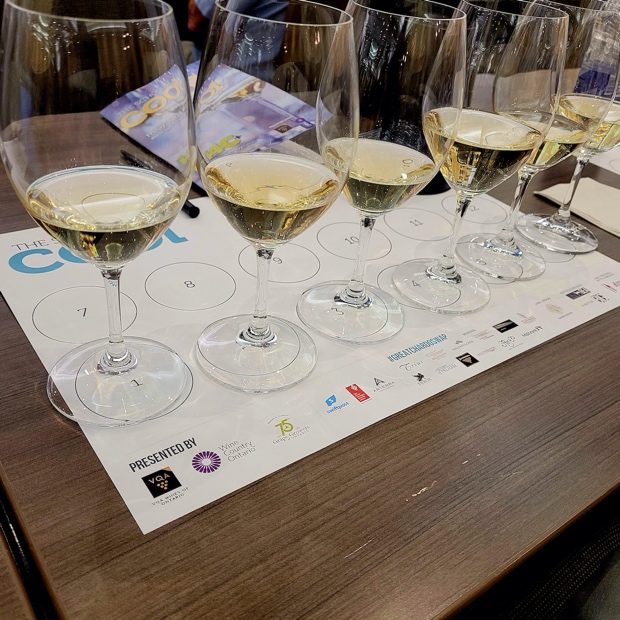
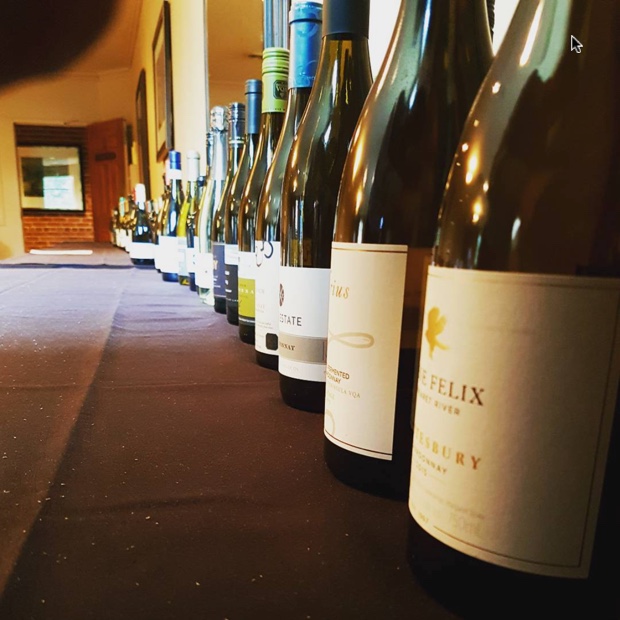
Flight #1 at the 2024 School of Cool
(c) i4C

Will fully admit to having seriously considered not using the word “cool” in the title for this latest exposé on i4C, Niagara’s annual International Cool Climate Chardonnay Conference. Then good conscience and reality set in because the original dub for Canada’s most important and successful wine congress will always be too good to dismiss. They coined it, built it and people have most certainly come. To foresee and then to consummate this collective pursuit of excellence inscribes Cool Chardonnay into the lexicon of wine forever. Hard to predict just how many more of these joyous to potentially annual profound (four-day) weekends there will be, but were this the last then hundreds upon hundreds of producers, winemakers, media, influencers and consumers over the years will have walked away happy, better for it and with memories to last a lifetime. The extraordinary 2024 edition of i4C went deeper still, to deliver the coolest quality and finest balance between information, socialization, revelry, society and of course, chardonnay. Cool as ever, gotta be cool, relax and never too cool for school.

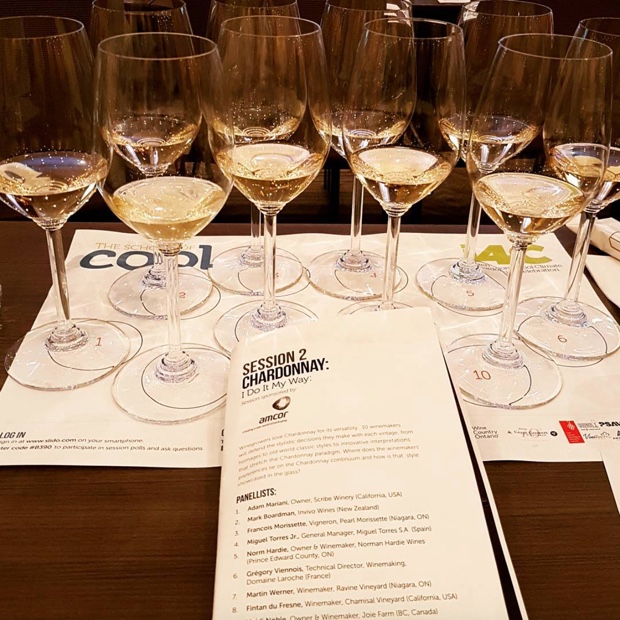
Three panels of i4C School of Cool 2024

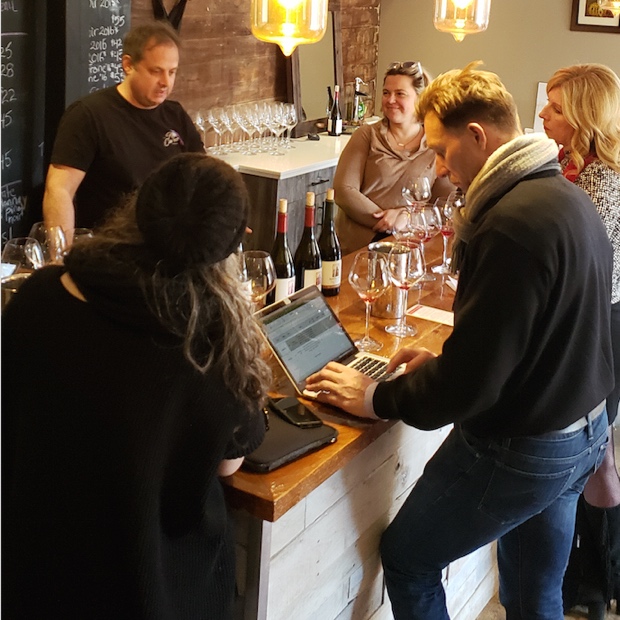
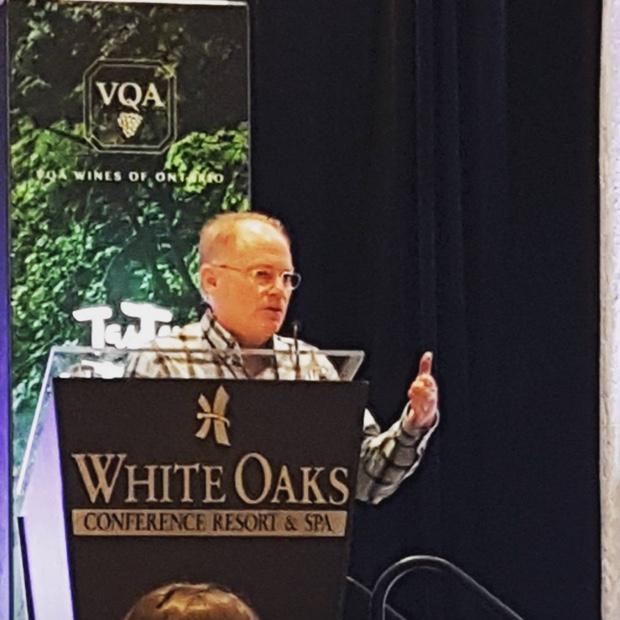
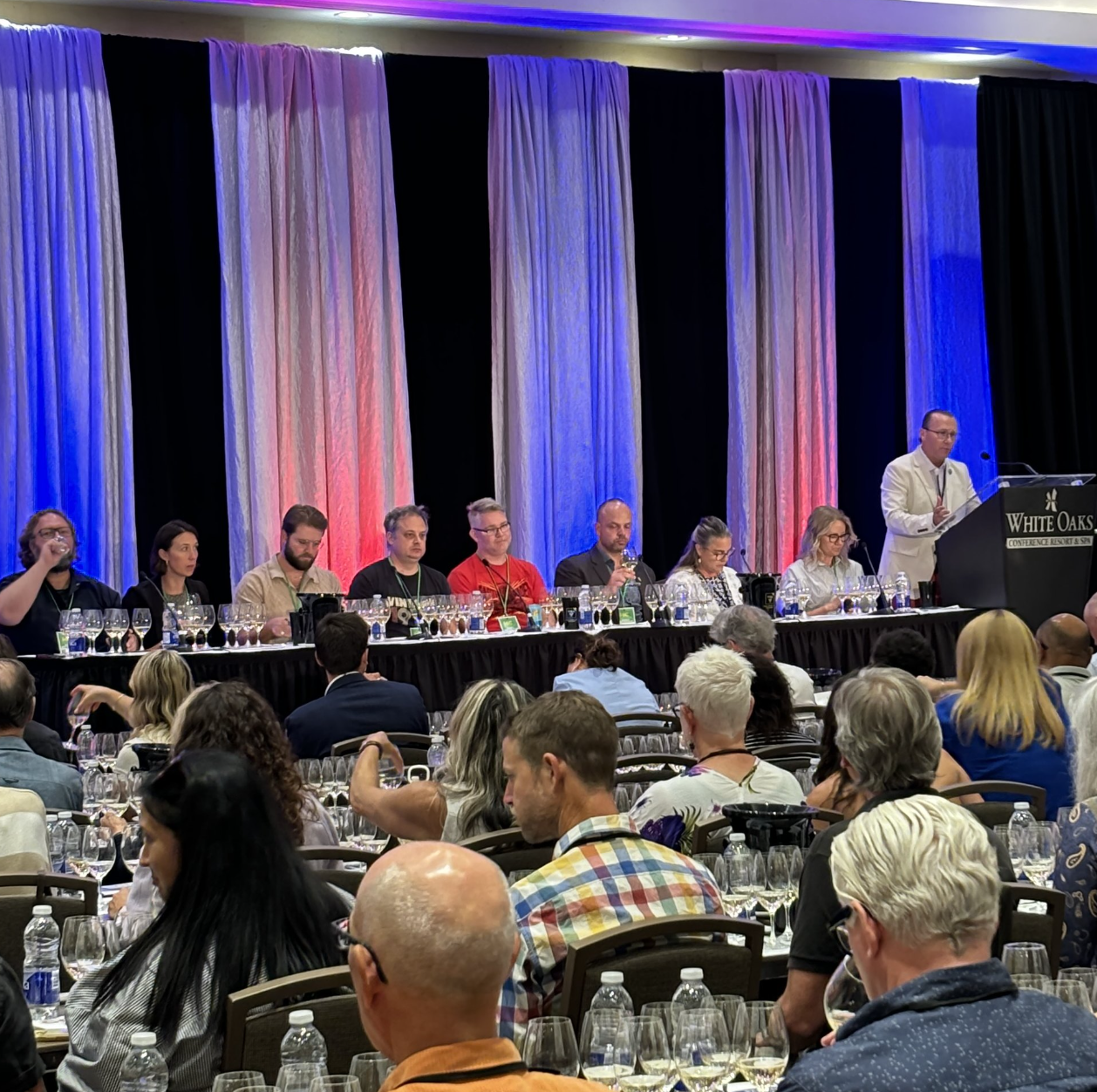
The School of Cool gets into sessions with wise and wily words from Past Chair Suzanne Janke, a lifer for the cool climate cause, public face of Stratus Vineyards and light of the room. Janke’s input, along with the i4C Board, Concierge Kim Auty and Event Director Trisha Molokach shows a highest level of intuition for what can only be judged as a cracker choice for keynote speaker at the 2024 School of Cool. That would be the affable character, next level intelligence and dry as the desert humour of Austrian-born, London-living Master of Wine Stefan Neumann. Mr. Neumann peeks out from behind his little boy grin to invoke the legend that is Laura Catena, to introduce his intentions as it pertains to cool climate chardonnay. “She slapped me on the brain and said there is no such thing as good warm climate chardonnay.” The wheels are turning, theories circulate and then from his own powers of reasoning Stefan announces, “I really think the world needs to know more about Canada and cool climate chardonnay, because it’s really important.” Not that he is late to the party, but the choir nods silently and knowingly, all smiling wryly. You can hear the collective internal dialogue working. “We like this guy.” Then he speaks to they who are not in the room. “Every cool chardonnay has a cool admirer out there,” he insists, “just as every pot has a lid.” The analogy might have got lost in translation from within the history of some ironic Viennese dialect. Note to self: Send Ernst Molden a note to ask for clarification. In any case Neumann comes from a place of hospitality. “As a guest you need someone who can help you,” he explains. “As a sommelier, if I’m going to explain cool climate chardonnay to a guest I’m not going to start with the Winkler classification.” Truer words never spoken.
School of Cool
(c) i4C

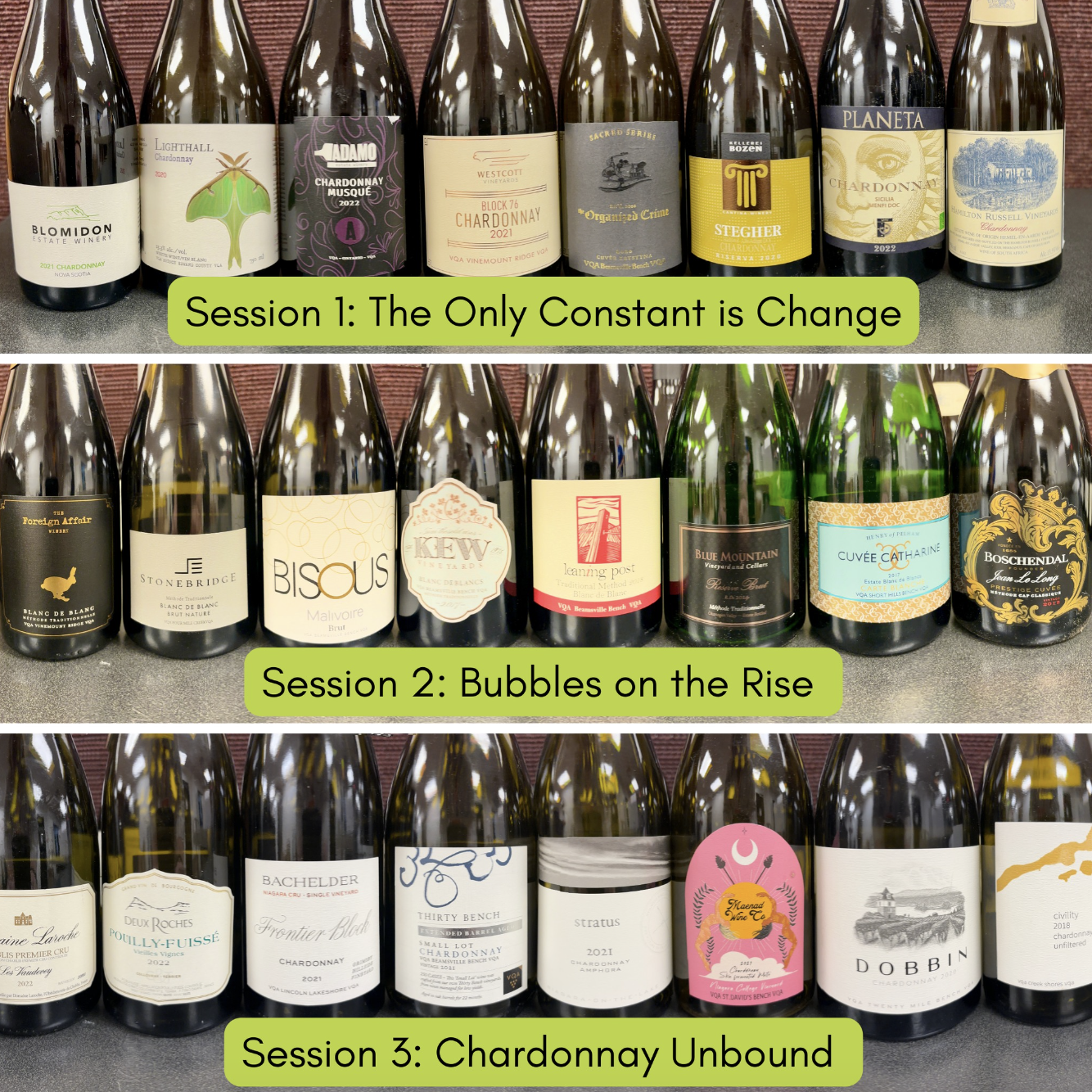
South Africa’s Anthony Hamilton Russell leads the first session where things turn immediately laugh out loud funny, if simply because Hamilton Russell is an Afrikaans lekker of off-the-charts intellect, dry wit and a brand of self-deprecating meets sweet roasting and toasting humour that is by all accounts infectious. “The only constant is change,” he begins with an address that may or may not attempt to tackle climate change. “All the hard rains and frosts are just noise in the background and it’s about how we are going to deal with it.” Anthony wisely chooses to order the chardonnay tasting from north to south. His first notation is to explain “how important it is to precipitate proper dormancy in chardonnay.” Then he poses the question, “what is the worst climate problem?“ He is answered by (Nova Scotia’s) Blomidon Estate winemaker Simon Rafuse. “Depending on when you ask me, the answer will be about what just happened.” For Adamo’s Vanessa McKean “it’s a big catch up in the spring to get ahead of things, remove the (geo-thermal) blankets as late as possible before the weeds get out of hand and also late frosts compounded by the textiles still in surround of the vines.” Westcott’s Casey Kulczyk notes that bud break occurs earlier, growing seasons are warmer and ripening is quicker, while also more uneven. Are you sensing a (lack of) discernible Canadian patterning? Even in winemaking, from west to east Canada is comprised of many different vine-growing countries.
Sparkling Flight led by Peter Rod
(c) i4C

Session two is led by Peter Rod, he of chivalrous and consortable character, a prodigy and mentor for Niagara educator royalty and if the audience thinks Neumann’s humour is dry, they are then treated to Rod’s mix of dead-pan, amusement and bemusement. Fine decision to put Peter at the fore for the Sparkling wine flight because nowhere does that category receive more attention, research and investigation than that at his seat of higher learning. Peter Rod is surrounded by bubbles at Brock University’s CCOVI where fizz is considered on a daily basis. An effervescent panel delves deep into discourse for what Peter dubs as “Bubbles on the Rise.” Then the third set of eight pours, this time returning to still waters, holds title for “Chardonnay Unbound,” a varietal discovery with different faces, from different countries. Stefan Neumann returns and keeps the room engaged. Then Suzanne Janke is back at the podium and tells the audience her outfit blends seamlessly into the drapes, as if no one had noticed. Janke’s words are sing-song, showing the skills of a melodist with a sweeping sense of purpose. All she says focuses on the patrons, panelists and chardonnay, but never the I. Piano-woman, “quick with a joke or to light up your smoke….Oh, la, la-la, di-dee-da. La-la, di-dee-da, da-dum.”
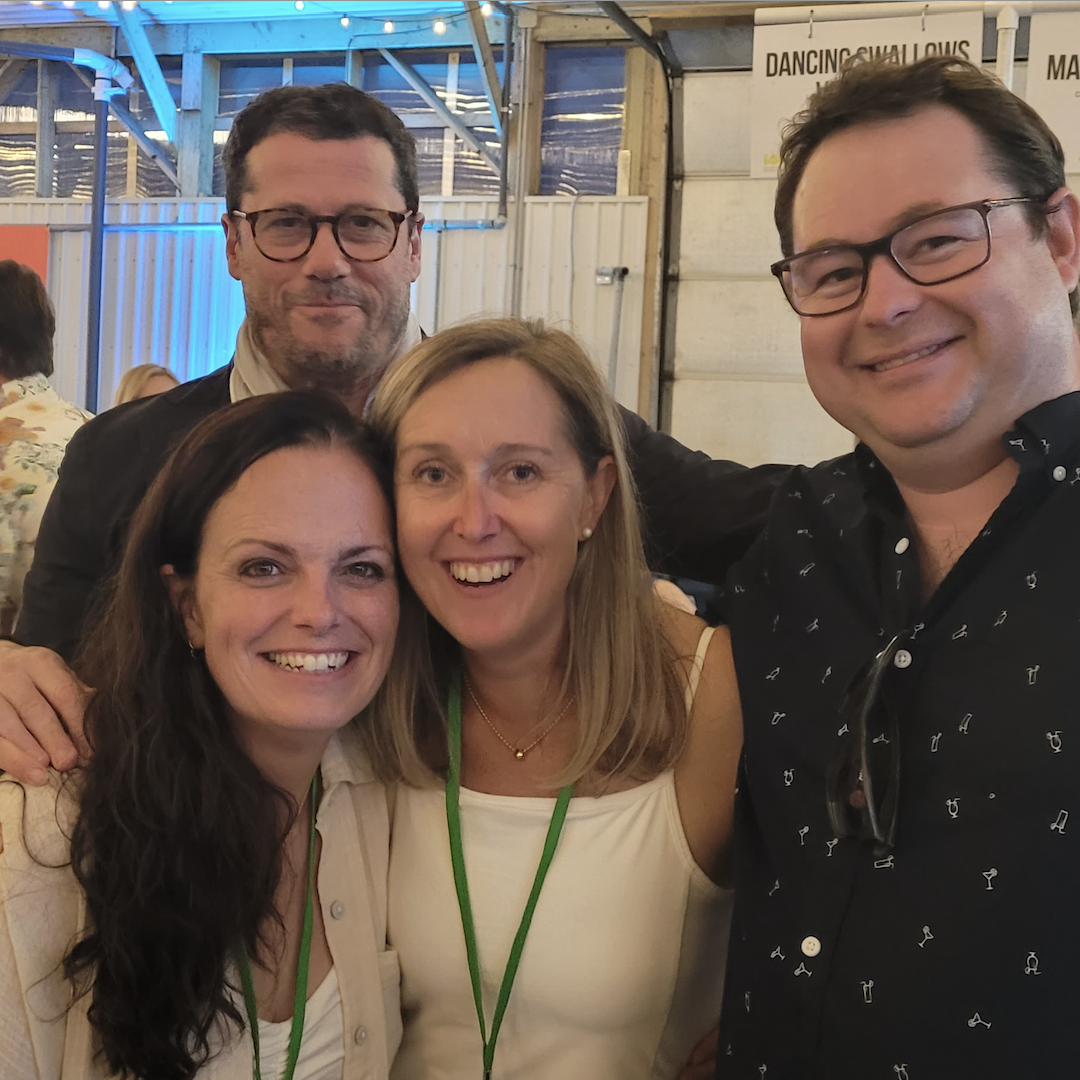
With Katie Dickieson, Emma Garner and Ben Minaker – Andrew Peller Ltd.

In the end these are three memorable panel experiences at the 2024 i4C Cool Chardonnay School of Cool. Three expertly moderated sessions by Anthony Hamilton Russell, Peter Rod and keynote speaker Stefan Neumann MS. Intel of the highest order from 21 Chardonnay winemakers. In 12 years of attending this conference there has never been a better organized, finer seamless set of transitions or more to learn. Bravo to Concierge Kim Auty, Event Director Trisha Molokach, Past Chair Suzanne Janke, the producers and entire team of volunteers. Friday night we tasted Friday Night Flights with the producers at Cherry Lane Farms in Vineland. On Saturday night we returned for Chardonnay in the Vineyard World Tour Tasting and Dinner at The Riverbend Inn, Niagara-on-the-Lake. And there were visits orchestrated by the Wine Marketing Association of Ontario’s Andrea Peters. To Chef Ryan Crawford’s Bar Ruffino with J-L Groux, Dean Stokya and Suzanne Janke of Stratus Vineyards. To Dobbin Estate with Wade Dobbin, Peter Gamble and Ann Sperling. To Flat Rock Cellars with Ed Madronich. To Le Clos Jordanne with Thomas Bachelder, Phillip Brown, Kerri Crawford and tasty treats from Chef Crawford. Finally, an i4C lunch at Westcott Vineyards’ Butlers’ Grant Vineyard with Grant Westcott, Carolyn Hurst, Casey Kulczyk and magnificence from Chef Tim Mackiddie. Alas, here are 83 tasting notes, 63 for chardonnay and 20 others. 

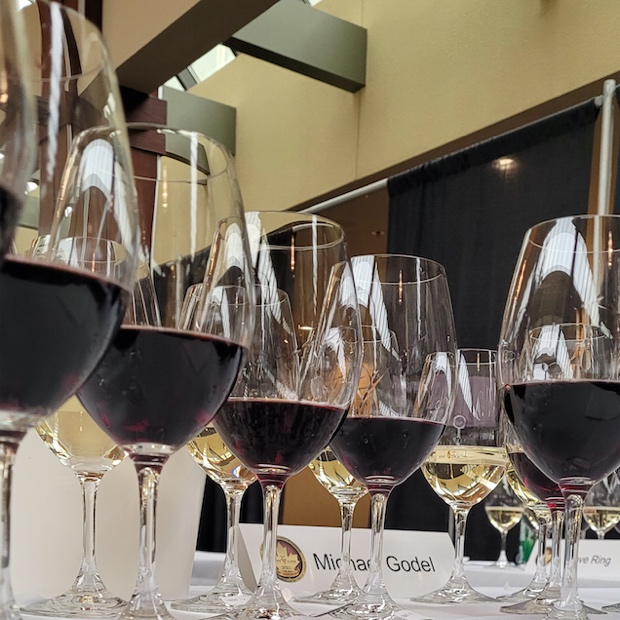
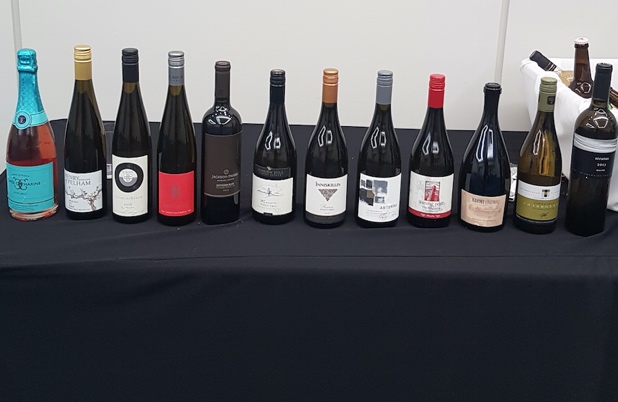
Three panel blinds

Blomidon Estate Winery Chardonnay 2021, Nova Scotia

“We have been growing chardonnay since the 1990s,” tells winemaker Simon Rafuse. “We can definitely ripen and picking is weeks ahead of the past, but we have experienced more extreme climate events in the last decade, whether it be frost, flash flooding, polar vortexes, hurricanes and disease pressure.” His ’21 is made in a clean style, whole cluster pressed, on lees for 12 months. Sharp yet rich, intense while full, apropos, meaningful and direct. Top vintage without a shadow of a doubt. Drink 2024-2027. Tasted at i4C, July 2024

Adamo Estate Chardonnay Musqué 2022, VQA Ontario

From an emerging Ontario region – Hockley Valley. Does not quite feel like 100 percent chardonnay musqué but more like an interplanting or layering with some linear, vertical and incisive Burgundian chardonnay. Less fruit from this bottle replaced by mineral salts yet with no compromise to the flowers by musqué. Producers and consumers of fleshy to buttery chardonnay will find holes but the rest will relish in this outcome all the same. “We farm in an area not great for growing grapes” says winemaker Vanessa McKean. ”We don’t have a large body of water to mitigate extreme temperatures so we cover out our entire 18 acres with geo-textile blankets.” Air flow through the vineyard is essential and being at the top of the hill is helpful. Barrel fermented in neutral wood with the musqué portion delivering more floral notes than most Ontario chardonnay. There is a tinned orchard fruit character that invites more than it distracts and the sharpness of this palate journeying acidity is really quite special. Drink 2024-2026.  Tasted twice at i4C, July 2024
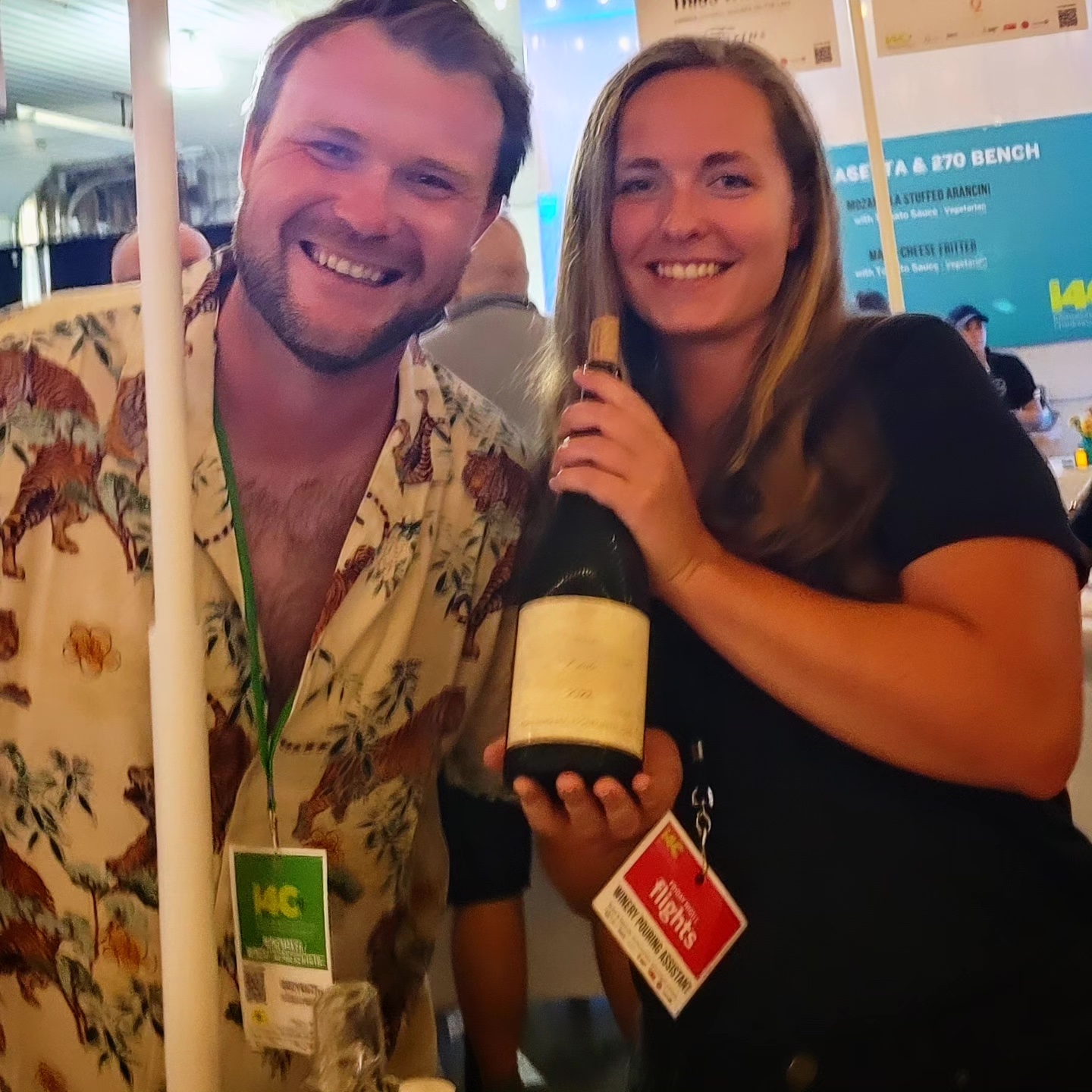
The winemakers are alright – Westcott Vineyards

Westcott Vineyards Chardonnay Block 76 2021, VQA Vinemount Ridge

From the home farm of 26 acres and the lowest elevation, teardrop block on shales and gravels, facing east. Earlier ripening, acid retentive and sees 10 months in barriques, followed by six months in puncheon filled with the previous vintages’ clean lees. Like connective tissue that links the past to the present to prepare the chardonnay for a longer future. Texture is mineral, set below tannin, in command of the palate from a chardonnay built to celebrate and also abide by it’s double-barrelled shotgun approach. Fires, attacks and conquers the palate from above and below so that there is no escape. Spirit of ’76 all the way with more vibrancy than ever. Impressive like few others. Will age really well. Made for seafood dishes poached, bathed and sautéed in butter. Drink 2024-2028.  Tasted at i4C, July 2024

Greg Yemen – The Organized Crime

The Organized Crime Winery Inc. Chardonnay Sacred Series Cuvée Krystyna 2020, VQA Beamsville Bench

As implosive and protected as any Niagara chardonnay to speak of a year older example that acts and feels as young as any on recent record. Terrific sweetness of fruit and a testament to a full and in this case also long ripening season. Crisp and biting, orchard fruit crunch and no sign of breaking down. Gambles with nature, shows off precision winemaking and confidence exudes from a chardonnay constantly reopening and one you can do so much with. There are savoury elements that suggest food pairing with be a most fun and rewarding exercise.  Last tasted twice at i4C, July 2024

Powerful, reductive and in charge chardonnay, assuming the risk and in delivery of the reward. Platinum gold hue and attitude, serious, grippy and über conscious of its abilities. Top notch with vanilla and cereals that swirl into the full fruit complement of a chardonnay you just bloody want to drink. Consume away, with abandon because it asks this of you. Abide and oblige. Drink 2022-2026.  Tasted blind at NWAC2022, June 2022

Kellerei Bozen Chardonnay Riserva Stegher 2020, Alto Adige, Italy

From a vineyard at 650m with picking happening at least a week earlier than just 10 years ago and a dolomitic mountain air that breathes great life into this special sort of cool climate chardonnay. A yellow apple just short of ripe, with acidity sweeter than the drupe itself and a classic northerly sharpness that speaks to place as well as any European chardonnay. Drink 2024-2026.  Tasted at i4C, July 2024

Planeta Chardonnay 2022, Sicilia DOC 

Production began in 1995 while the vines are now nearly 45 years of age. In the southwest part of Sicily, in the Ulmo area around the village of Menfi where a corridor of wind, “our favourite friend,” tells Santi Planeta, blowing through between the lake and the sea. Through vines growing between 100 and 450m, breathing cool life, especially in the summer. The 2022 vintage saw plenty of rain though not concentrated at any particular time and so the constant events of moderation were something remarkable considering how often extreme climate events are increasingly more prevalent. The coming vintage of 2023 and 2024 will be affected by them, mostly because there was no rain. This chardonnay is impeccably balanced between fruit and acidity, acidity and texture, texture and tannin. The progression is seamless, the result precise and anyone who does not the recognize the experience and continued work put in may not be paying close attention. That’s fine but know just how special a (relatively) large production, semi-cool climate chardonnay this truly is. Planeta’s year-to-year consistency is truly impressive. Drink 2024-2028.  Tasted at i4C, July 2024

Hamilton Russell Vineyards Chardonnay 2023, WO Hemel En Aarde Valley, South Africa

The spirited intensity is unrelenting and speaks to how the HRV chardonnay tastes more profoundly serious than any other of its ilk. “Young and primary,” insists Anthony Hamilton Russell. “I like the complexity that our chardonnay develops with time in the bottle.” Well said but truth be told the wine already exhibits an electric variegate character and so what’s to come may just blow the mind.  Last tasted at i4C, July 2024

Freshness and abundance incarnate for Hemel-en-Aarde Valley chardonnay from the HR team that simply gets this grape from this place. A citrus vintage, less reductive than some whilst bursting with energy. Delight in lemon custard, all the zest, crunchy, mellifluously honeyed and never over-arching above and beyond the target. A scintillant of fruit through variety, to ache with love and to please, simply and unequivocally by design. Peak performance, summarily in the best of ways.  Drink 2024-2029. Tasted July 2024

The Foreign Affair Blanc de Blancs 2021, Methode Traditionelle VQA Vinemount Ridge

Light toast, easy goes, no long lees but a good signed lease to hang around for a few years time. True as chardonnay blanc de blanc, apples part terpene and part mashed. Smells like baked and cooled apple pie. Palate spirit yet agin those apples are all over, all consuming and all in. Some wood aging, Brut in style, somewhere between six and 10 g/L of dosage laid over 24 months leased lees aging. The second iteration of this sparkling wine.  Last tasted blind at i4C, July 2024

The bottle lists Vinemount Ridge as the fruit source though the website writes Lincoln Lakeshore so lets go with the bottle! Regardless we are looking at 100 percent chardonnay crafted in the dry, intense, citric, high energy style. This shows real energy and a couple of sips nearly take your breath away. The elucidations are green apple, piques of white pepper and the flavour profile slash texture much like sabayon extended by a few shots of limoncello. So much interest here. Drink 2023-2026.  Tasted November 2023

Stonebridge Blanc De Blanc Brut Nature 2020, VQA Four Mile Creek

More autolytic than some and even more than that, mellow, malolactified and softening quickly. Botanical flavours and fine bitters, creamy style, easy and ready. From chardonnay first made off of the estate in 2017 and looking forward to seeing what can be learned from the idylls of experience towards trying this first sparkling wine made at Stonebridge. Old puncheons and stainless steel combine for a punchiness that come out of several cuvées to try and abide by site, structure and ultimately consumer appeal. Richness of the site begets texture and in turn that appeal. The flavours persist though this is ready to drink sooner than many. Drink 2024-2025.  Tasted blind at i4C, July 2024

Kew Vineyards Blanc de Blanc 2017, VQA Beamsville Bench

Golden toast, truly brioche style, equipped with fruit a plenty marked by a note that reminds of good and plenty. Stage presence, persistence and length. A dosage of 5.9 g/L of residual sugar which may be the highest in a flight of eight but still very low for sparkling that is essentially dry. Made by Phillip Dowell with chardonnay that would have been planted on the property back in 1980. As concentrated as it gets for chardonnay sparkling wine but the vintage was acid driven and so the sugar extends the flesh.  Last tasted blind at i4C, July 2024

High energy, raging acidity, captivating and intense Blanc de Noirs right here. Eye-opening, olfactory shocking and palate enervating in every which way but loose. Taut, tight and demanding. Party wine. Drink 2020-2023.  Tasted October 2020

Leaning Post Traditional Method Sparkling Blanc de Blancs 2018, VQA Beamsville Bench

From Hemeris Vineyard on the Beamsville Bench, primary fermentation for six months in barrel, another six with lees and then the full lees aging of 36 months. An emotive sparkling wine that elicits and solicits emotion. Could this be a unicorn wine in its own special way? Evocative of what it makes you feel and what you would like a bubble to taste like? The long lees aging is clearly appropriate and leads the autolysis to a place of warmth, beauty and comfort. Oxidative and yet searing, a blanc be blancs no doubter that mans serious chardonnay business. Complex and curious, crafty and creative.The acidity here is special and in charge. An ideal mix of 9.2 g/L of total acidity and 3 g/L of residual sugar. “The vineyard was asking to become this kind of wine” explains Ilya Senchuk. “The purpose is a single vineyard expression.” Here’s to hoping the 2019 will add a few more months on lees to take that next step upwards.  Last tasted blind at i4C, July 2024

Single vineyard block called Hemeris (an old term for garden, or “something like that,” from the Greek). Of chardonnay, location between (Hidden Bench’s) Rosomel Vineyard and Cave Spring, picked late September and sometimes early October, for sparkling. Base wine is barrel fermented and aged in oak for six months. Spent 36 months on lees in bottle, finished at 2 g/L dosage (so essentially bone dry) and is now about to be released. This was the wine Nadia Senchuk pushed her husband for and this is the chardonnay tract that was needed to create it. Listen to the vineyard says Ilya, “because it’s basically growing bubbles.” Rich and exciting in the same breath, essential through autolytic response elicited and the breath stolen, literally taken away, every move made for the connection between I and it. An auspicious debut and were it not for the prophetic mind and ravishing palate of the winemaker’s better half, well then access to supply might not be so limited. Drink 2022-2026.  Tasted June 2022

Blue Mountain Vineyard and Cellars Brut Reserve R.D. 2014, VQA Okanagan Valley

Aromatic complexity, a chardonnay and pinot noir (55-45) sear of raging citrus but never lean because there is flesh all over the palate. The lemon segments are ripe and delicious, the red fruit character compliments with added spice, the persistence endless and the winemaking clearly coming from a place of experience and respect to place.  Last tasted blind at i4C, July 2024

Always pleased to welcome the BR R.D. into a glass and here is an old but a proverbial goody, that being 2014 and consumers must be reminded just how special this research and development is to determine the excellence of Blue Moutnain’s indagative sparkling wine. A blend of chardonnay and pinot noir, the first 10 percent more than the last with some of the most restrained, reserved and demure aromatics in the Okanagan Valley. All ways to say this is lovely, quietly generous and so settled to gift pleasure above all else. A most complex game of citrus and orchard fruit, distillate by nature, expertly seasoned with fine sea salt, white pepper and lemongrass powder. Such a gift nine years after vintage at a ridiculously reasonable price. Drink 2023-2027.  Tasted November 2023

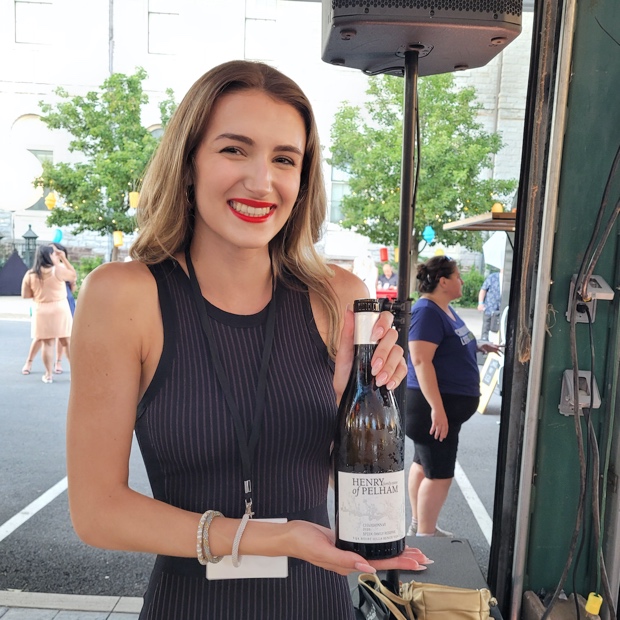
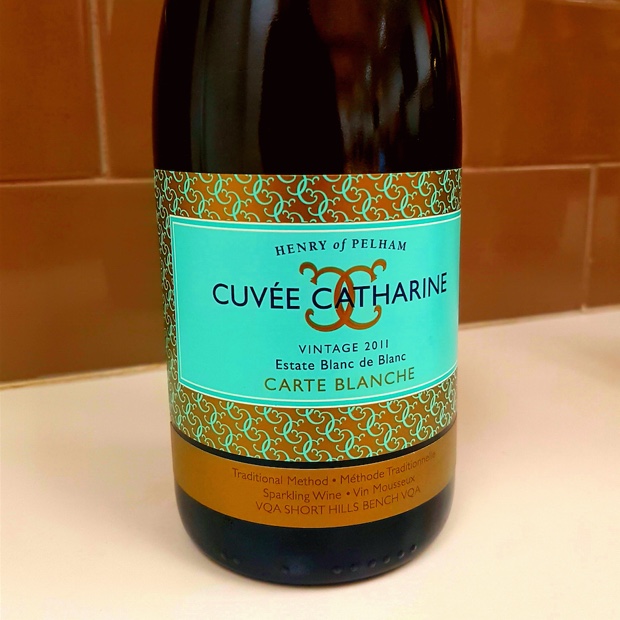
Henry Of Pelham Cuvée Catharine Carte Blanche Estate Blanc De Blancs 2017, Traditional Method, VQA Short Hills Bench, Niagara Escarpment

Stoic, reserved, full scenting, flavoured and expressive. Tons of fruit here in what could only be 100 percent chardonnay. From a vineyard planted in the 1990s to Clone 95 chardonnay and a place of incredible consistency, “one of the most I’ve ever worked with,” tells winemaker Lawrence Buhler. Sees 54 months on its lees and while it may be difficult four to five years ahead to know what will happen – this is Ontario’s benchmark sparkling wine that always comes through. Not merely a matter of replication but more like intuition conjoined with persistence.  Last tasted blind at i4C, July 2024

Consistently crafted as a Blanc de Blancs that sees 60 months on the lees from estate grown chardonnay. From a varietal growing season so ideally destined for sparkling wine because a cool and wet spring plus summer emerged in late August to hot days and cool nights through October. In the middle of that spell is the chardonnay pick for sparkling and as good, complex and riveting as this arch-classic Ontario bubble may have been before – well bring on 2017 for next level complexities. Tasty, piquant and toothsome, of toasty brioche like never before and this swirl of creamy fruits and exotic seasonings. Feels like aged Growers’ Champagne and the fact that it is from Niagara makes it all that much more satisfying. Plenty of crunch, succulence and acid-driven energy from a meticulous bubble. The benchmark for local. Drink 2023-2027.  Tasted November 2023
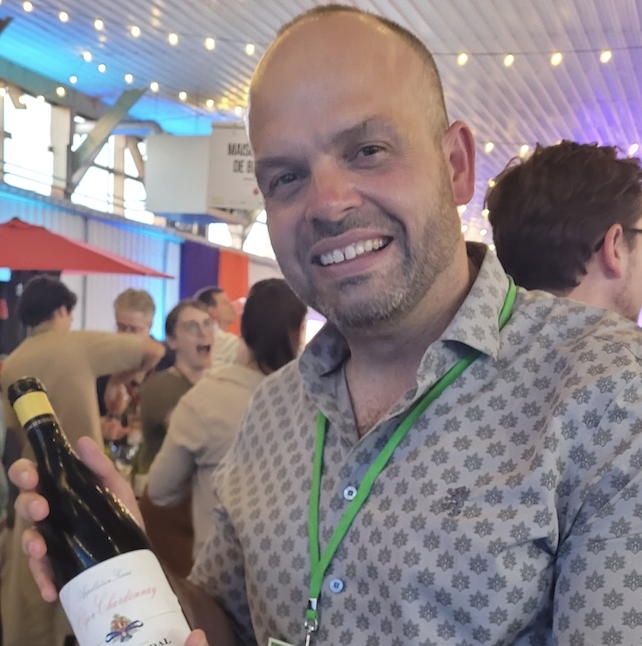
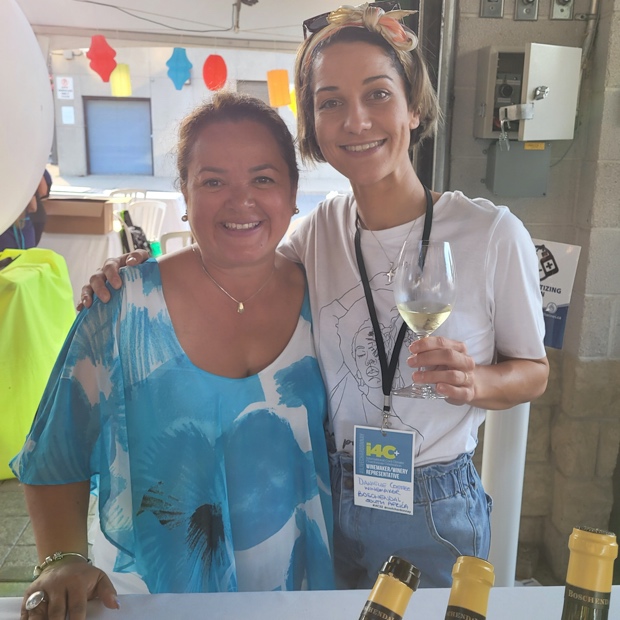
Jacques Viljoen – Boschendal

Boschendal Cap Classique Jean Le Long Prestige Cuvée Blanc De Blancs 2012, WO Elgin

Presented by cellar master Jacques Viljoen for a sparkling wine coming from one of South Africa’s coolest climate area. The first vintage was 2007 and these are vines planted south-facing (i.e. cooler in the southern hemisphere) and facing the sea. A place where grapes can hang long and develop phenolic ripeness even while coming in at a brix number just above 19. Lower dosage now and so the autolytic notes (if not globally classic in their expression) and also excitement are increased. As much toast, autolytic and oxidative notes as any in a blind flight of eight. Pushes the envelope to see what can be done with sparkling wine, malolactic fermentation, wood aging, near dry dosage and lees aging. Not so much the classic brioche or baked bread representation but there are complex notions perceived from that aforementioned style clearly chosen, conceived, attempted and for the greater part, succeeded. Drink 2024-2027. Tasted blind at i4C, July 2024

Kyle Loney and Whitney Collins – Advini and Domaine Laroche

Domaine Laroche Chablis Les Vaudevey Premier Cru 2022, Bourgogne AOC, France

The word precise is often used to describe Chablis and many other global chardonnays, sometimes gratuitously but here perfectly applies to the Laroche Vaudeyey. Les VdV ’22 is focused to a virtue with its equality, equanimity and equilibrium from start to finish. A lexical entry to figure out the crux and relationship between cru and village.  Tasted a second time, July 2024

The immediate feeling perceived would be of a chardonnay bottled with lees, of a certain level of autolysis though neither by brioche or with respect to the sparkling kind. More like washed cheese rind, preserved lemon and that kind of texture that skin contact whites also deliver. The sort that settles on the tongue like a dissolving salve but here the subtlety suggest lees in the bottle more than light “orange.” In fact this is essential Chablis and does it not just feel like Ontario winemakers (in particular) are trying to emulate such a style by keeping lees in their bottles? Drink 2024-2028.  Tasted blind i4C, July 2024

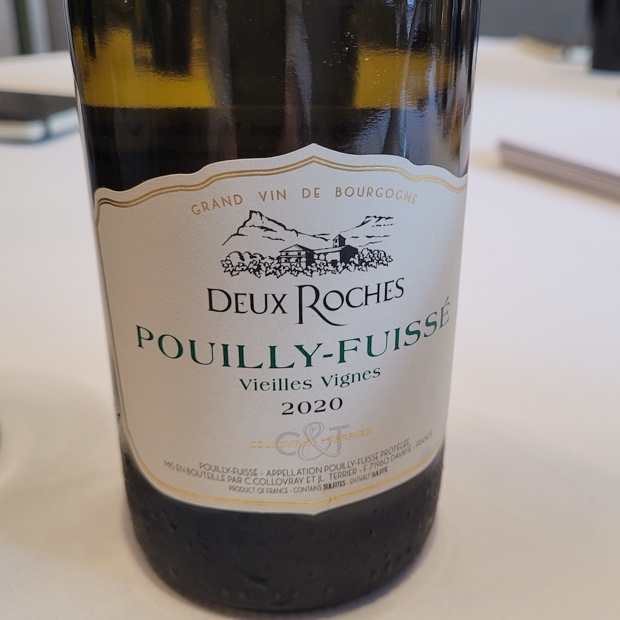
Deux Roches Pouilly-Fuissé Vieilles Vignes Deux Roches 2022, Bourgogne AOC, France

Also a bottled with lees style of chardonnay with a level of richness so rightly and righteously older/traditional schooled, but so bloody clean and expertly made. Express and expert tang, layers of citrus, more grapefruit than many, fine tonics and also sweet bitters. There is some fat here but also acidity and verticality, in other words tension, more so than many of the appellation. Recommended by Export Manager Romain Bourgeois and also Stefan Neumann M.S. to pair with The Little Sparrow, a.k.a. La Vie En Rose, the one and only Édith Piaf. Drink 2024-2027.  Tasted blind at i4C, July 2024

Bachelder Chardonnay Grimsby Hillside Vineyard Frontier Block 2021, VQA Lincoln Lakeshore

So much to digest, first with knowledge of chardonnay in the hands of one monkified human that shall be named Bachelder and second of so much to take in and absorb from the label on the bottle. Niagara Cru (there are many), Single Vineyard (there are more), Grimsby Hillside Vineyard (current status Grand Cru, in progress) and Frontier Block (one of two within the great new frontier, inclusive of Red Clay Barn). Two-toned, of bites and textural chew, sexy chardonnay, clean and focused. Highest level aromatics at the peak of what is possible out of Ontario, positively spicy, white peppery even. Cleanest lees usage for a chardonnay of clarity and relatively speaking, also substance.  Last tasted blind at i4C, July 2024

Vintage number three from Grimsby Hillside Vineyard and now more specific by way of a split, with the Frontier Block as the plot within the larger plot, along with that of Red Clay Barn. Drilling down into this historical vineyard that has risen as fast as any New World terroir, just about anywhere these sorts of things are measured. Here named for the final frontier, that being the “last terroir” in Niagara and who knows, maybe it will soon be the first rolling off of everyone’s lips. GHV-FB 2021 is a force, that much is clear from the first look. Or nose, for what matters. Cool and stony style from a wide open space where limestone, shale and gravels conspire to create something new and with absolute potential. It’s already arrived thank you very much and while words like luxe and opulent do not come to the tip, others like succulent and scintillating do. Just something so real and right at your doorstep, vivid beyond chardonnay compare, a stealth fish swimming in clear waters. Truly complex for chardonnay and it must be noted, unlike any other in the world though at the same time feeling like something you’ve known your whole life. Make an exception to delve into this exception because when it comes to chardonnay, this is what we need. Remarkable clarity and distinction, precision extraordinaire and a wine to cast nets far and wide to secure as many bottles that could be found. Drink 2024-2032.  Tasted December 2023

Thirty Bench Chardonnay Small Lot Extended Lees Aging 2021, VQA Beamsville Bench

Spent 22 months in barrel, in other words space was not needed for new juice after 10, nor did Emma Garner feel the need to remove this lot and so 22 months it was. For good reason, great measure and bonafide success. You know the extra wood melt is there and integration is so complete. No compromise to fruit from a vintage aboard the Beamsville Bench that gave of itself selflessly to mingle in cahoots with the cohorts of those barrels and nuances at every turn. Acumen begets probability which in turn generates prospect. Conclusions drawn are expressed with silent nods, a twinkle and smile. This will age gracefully for 10 years.  Tasted a second time, July 2024

Maximum ripeness, warm vintage no doubt, captured and locked into what feels like a reserve style of chardonnay. Full and fine, fleshy and yet sturdy, chiseled musculature, riveting and attention so locked in. As is ours because we simply can’t turn away. Not an easy vintage tells Emma Garner because there was some rot, botrytis and less than desirable grapes. But there was also plenty of great fruit once the chaff was culled, the wheat came in and in turn a terrific chardonnay was made. The length is outstanding.   Tasted blind at i4C, July 2024

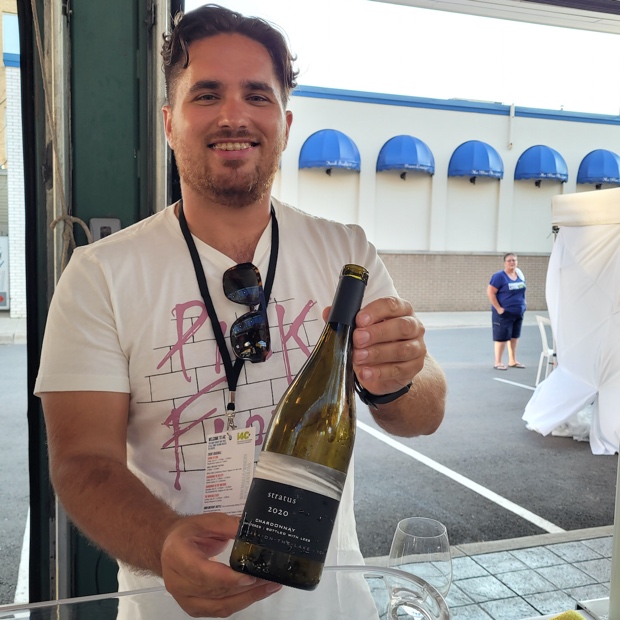
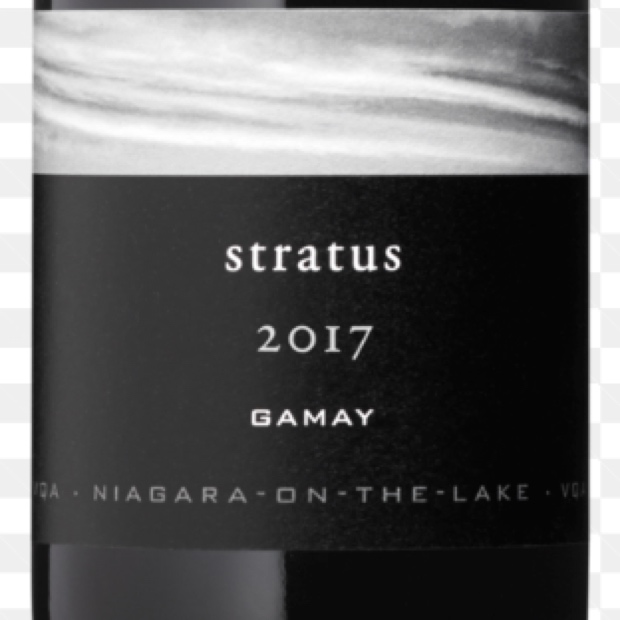
Stratus Vineyards Chardonnay Amphora 2021, VQA Niagara-on-the-Lake

Several factors are here at play, namely lees but also vessel so that the mineral aspect exhumed and manifested as texture makes us think about place. Spices run amok and that housing continues to occupy the impression that is distinctly Ontario chardonnay. Bottled with lees would be the reason behind the feeling and also the fact that it has been aged in amphora. First edition, fermented and aged in the clay vessels, influenced by Rene Barbier Jr. says winemaker Dean Stoyka. “It really respects the fruit and causes some restraint in the wine,” he explains. “Giving some salinity and richness on the mid palate.” A unique way to make chardonnay indeed.  Last tasted blind at i4C, July 2024

Along with cabernet franc this chardonnay was also tucked into and raised in amphora, no surprise because these have been two varieties suited up for experimental tests. Very late harvested (November 4th) from the 2021 vintage and specs are not very elevated for this wine. Moderate across the board and yet it is the clay that defines what we nose, taste and feel. Wet clay, a preserve with notable vegetal and savoury elements, banana esters, soft wool and ultimately a new set of varietal parameters imagined. One assumes this is bottled with a similar amount of lees as the R & D Stratus OG chardonnay but the clarity and transparency of the AC suggests something other, or wise. All in all a conundrum frankly, jury still out, much left to figure, pilot, trial, error and decide. Drink 2023-2025.  Tasted September 2023
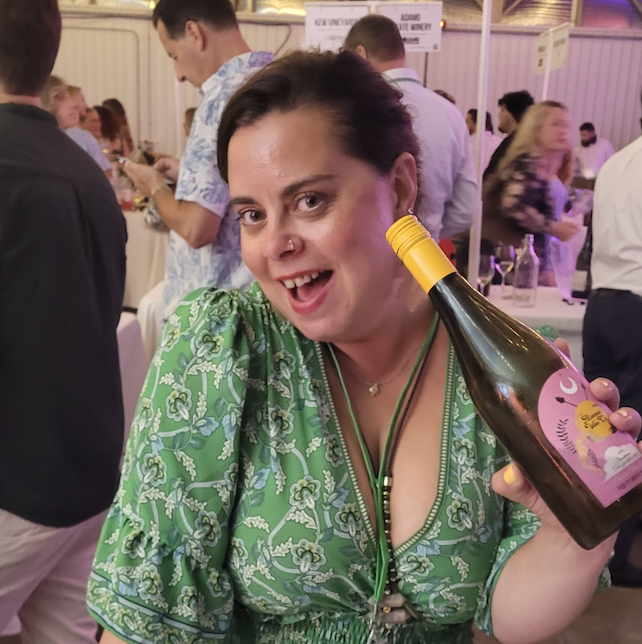
Maenad Wine Company’s Yvonne Irvine

Maenad Wine Co. Chardonnay Skin Contact 2021, VQA St. David’s Bench

Orange chardonnay is a thing and this leads by example. Cloudy, hazy and yet much cleaner than the visuals might suggest. From Yvonne Irvine’s virtual wine project, made at Creekside and sold through the retail license at Marynissen Estates. Breaks down regular conventions like busy beavers taking apart wood and making their dens. To be honest skin contact wines don’t get much more delicious than this, especially from chardonnay, fruit having been “borrowed” from the vineyard owned and farmed at Niagara College. Full malolactic, lees stirring, older French wood for seven months. The richness, roundness and cozy-fuzzy feeling on the palate shows just how well this turned out. Should be so interesting to see how this ages – can’t hep but think it will go through the process with ease. Drink 2024-2027.  Tasted blind at i4C, July 2024
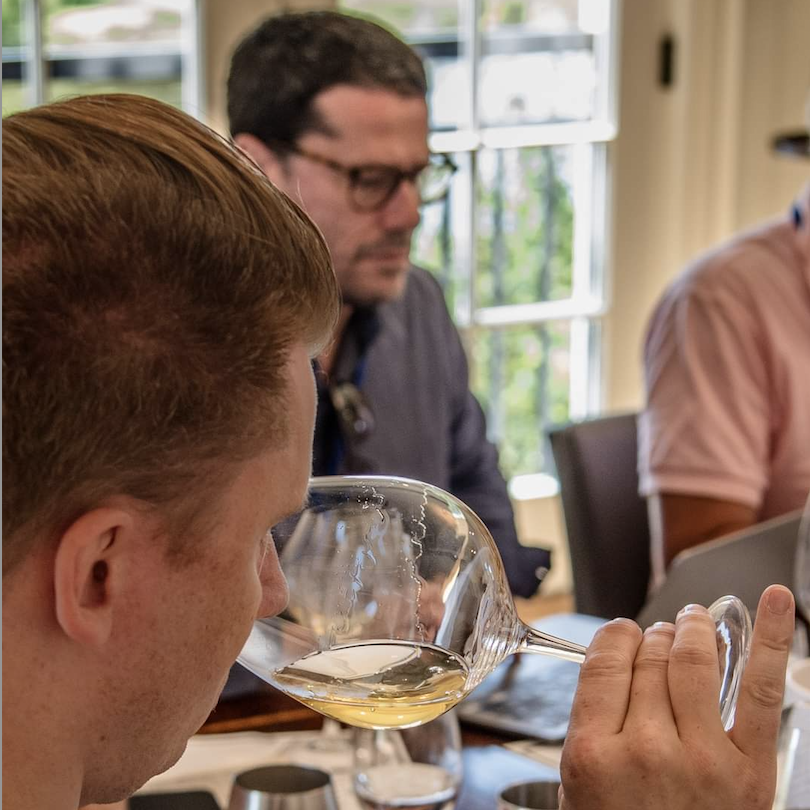
Stefan Neumann MS

Dobbin Estate Vineyard & Winery Chardonnay 2020, VQA Twenty Mile Bench

As full, rich and riveting a style of Niagara chardonnay as there has ever been. Ripeness at peak, wood in full glory, generously yet judiciously used and the overall effect is something usually reserved for what many will think of as a story written over centuries by Beaune chardonnay. There is delicacy here and if this chardonnay were a book it would be a page turner, which says this vintage in particular should likely appeal to a great and wide audience. Make no mistake though because a wine like this is comfortably affordable to the haves. That it turns out to be a Peter Gamble and Ann Sperling made chardonnay from a top warmth vintage comes as little surprise. Drink 2024-2027.  Tasted blind at i4C, July 2024
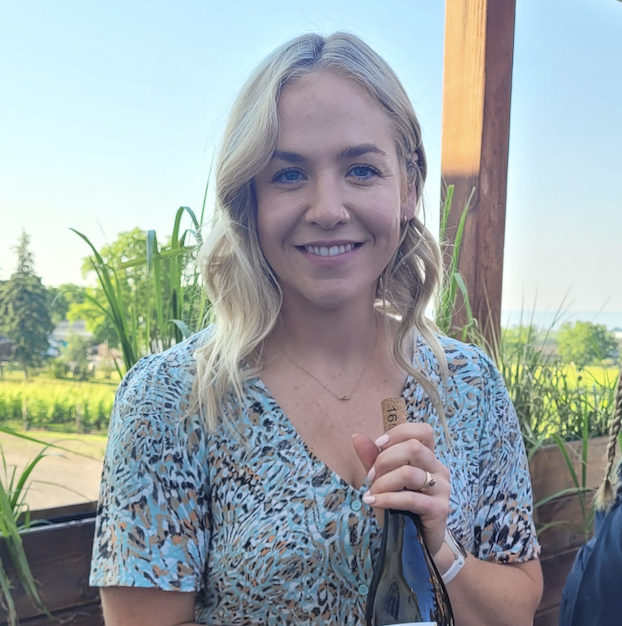
Morgan Juniper – 16 Mile Cellar

16 Mile Vineyard Chardonnay Civility 2018, VQA Beamsville Bench

Just carries and emits the feel of classic chardonnay winemaking, without hesitation or equivocation to result in something so knowably Niagara. The wood is on the weighty side and maturity has begun to see this wine acting its age. “I really think it’s important to honour the process of patience in winemaking,” says winemaker Morgan Juniper. The opportunity is not always available to do that but the ripeness here presented the proposition on a platter. “This wine is like waiting for a child to actualize their full potential,” she adds. “I wanted to push the boundaries to see this actualize at a later date.” As it has and the window is fully open with another year or two of enjoying this light lees-affected, barrel-aged and now of a chardonnay at this all in butterscotch stage. Drink 2024-2026.  Tasted blind at i4C, July 2024

Not labeled as such but essentially a Reserve wine taken from a single barrel housing all estate fruit. High level of concentration and richness in the face of a vintage considered cool and challenging, but when you take a smallest of small lot wines like this that just does not apply. Everything about this is classic, basket pressed, natural ferment, full natural malolactic, 22 months maximum for oak aging, Burgundian obviously and medium of toast. “We come to barrel turbid – we like density,” notes Peter Gamble. (Peter) and Ann Sperling really liked this one particular barrel and decided to put it to magnums only. From late September and early October picks, finished at 14.5 percent alcohol and ultimately mouthfeel that rivals some pretty warm wine growing regions. A chardonnay that moves beyond Bourgogne to offer up its very own definition of Niagara’s Twenty Mile Bench.  Last tasted July 2024

Friday, Saturday and Media room tastings

Trius Chardonnay Showcase Wild Ferment 2021, VQA Lincoln Lakeshore

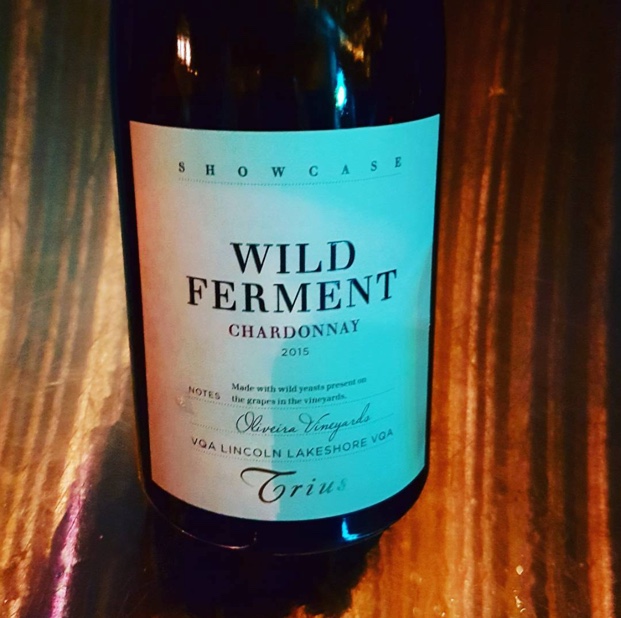
A matter of factor decided by two essential aspects, the first being this chardonnay’s wild ferment and the second surely vintage. Turbidity endured and yeasty ebullition understood are how Wild Ferment ’21 co-opt and conjoin for aromas dedicated and unique to the Trius distinction. Scents of tropical fruit bathing in opaque waters cleansed by energy and movement to result in seriously complex chardonnay. Some spice tipping the tongue and tripping the palate fantastic for machinations of dreams and fantasy. Curious 2021, wild and woolly of texture with the confusion in delivery of a great part of the fun. The back label reminds that the fruit source continues to be Watching Tree Vineyard. Drink 2024-2027.  Tasted July 2024

Rosehall Run Chardonnay JCR Rosehall Vineyard 2021, VQA Prince Edward County

More of a restrained, stoic and while not reductive as chardonnay per se there is a wall erected between aromatics and early joy. A JCR dictated by its extract and structure, a compound butter in hard shell, surely not one in delivery of early returns. The crispiest, crunchiest, saltiest and most savoury of all the Dan Sullivan draws from the oh so important PEC Rosehall Vineyard. Try not to blink for many chardonnay that change straight away but with Rosehall that is far from the case. Twenty minutes in a glass and plus ça change, as they say. Immovably youthful chardonnay, stark and as a contrast, so sown, sworn, authoritative and stone cold of its own accord. There are 2021s from Ontario what will last comfortably in states of fickle freshness for 15-plus years. This could very well be one of them. Drink 2025-2031.  Tasted July 2024

Domaine Queylus Chardonnay Tradition 2022, VQA Niagara Peninsula

Warm and inviting, textural like silk, some glycerol and running soothingly smooth from start to finish shows a different look and separates itself from other vintages. Kelly Mason’s ability to change it up while still maintaining an always high level is a chardonnay testament to a team that ranks with the hardest working makers in Niagara Peninsula show business. There are clean yeasty notes, like sourdough in the proofing stage and subtle baking spice with texture truly divining the directive for high quality “classico” Niagara chardonnay. Never gives up or in, never too hot or cold, a great vintage in Mason’s estimation, but then again, “anything was better than ’21.” Drink 2024-2027.  Tasted July 2024

Taylor Emerson and Jonathan McLean – Black Bank Hill

Black Bank Hill Chardonnay Runway 2023, VQA Lincoln Lakeshore

Gotta be the first chardonnay out of the gates from the 2023 vintage and if this cracker example is any indication of what’s coming then hold on to your senses. Recently bottled and even with an early (September) pick this saw less than 10 months of aging, but the mix of indelible lees and high voltage (8.5 g/L) total acidity put this in scintillant, dare it be said Blanc de Blancs styled territory. So very different to the Runway White (blend) because of its intensity but also warmth at 13.8 alcohol, not quite torridity, but a white peppery scorch nonetheless. Wild and exciting shift from vintner Taylor Emerson and winemaker Jonathan McLean. Will be hard to wait and anticipate what the next level chardonnay turns out to be. Drink 2024-2026.  Tasted at i4C, July 2024

Alex Baines – Hidden Bench

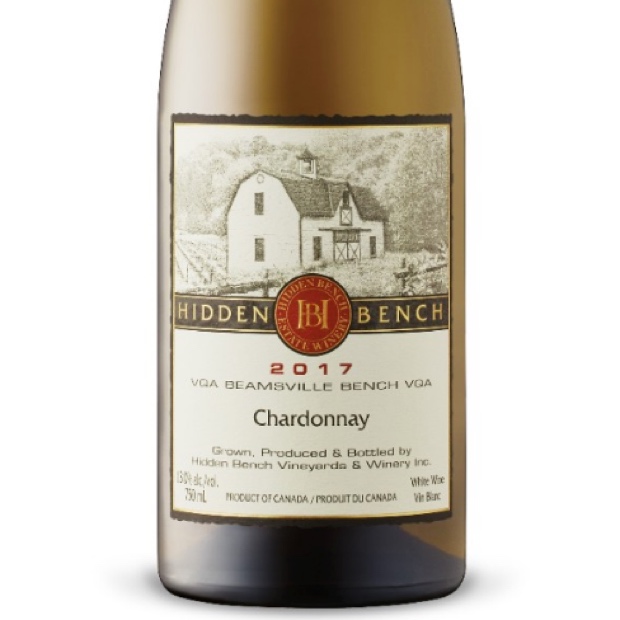
Hidden Bench Chardonnay Unfiltered 2022, VQA Beamsville Bench

Say 10 months in French barrel, a warm vintage to coax out full concentration though “bunch weight and tonnage were actually lower than 2021,” tells winemaker Alex Baines. “More on the average” and yet this Estate level is all that 2022 could be and more, of fruit so silkily rendered, starred gastronomy plated and proffered as if by sous vide and reverse seared white meat, asparagus, salsify and yucca for one of HB’s most sweetly vegetal and succulently situated chardonnays. Gentle spice, firm grasp of the Beamsville Bench, extract accumulated at the peak of the proverbial chart and elastic tannin. All fine, refined and stylish.  Last tasted blind at i4C, July 2024

Full and wholly substantial chardonnay wth fruit juiciness, acidity and intensity. Never relents, takes a break or falls away. Keeps a straight line and follows the progression to a vanishing point. The perspective here is focused and linear. Top “Villages” example. Drink 2024-2027.  Tasted blind at NWACs24, June 2024

Dancing Swallows Chardonnay “Composite Number” Unfiltered 2019, VQA Ontario

Maturing, acetic and yet quite complex aromatics offer more than curious intrigue. Über cool climate, variegate ripenesses in the fruit and the acetone incites the proverbial shower curtain comment. All that said there is promise and even pleasure to be had.  Tasted July 2024

Hidden Bench Estate Winery Chardonnay Felseck Vineyard 2021, VQA Beamsville Bench

My goodness this is special chardonnay, coming as no surprise and if your thoughts and emotions for 2021 Niagara chardonnay need buoying than begin the bob right here. Precise aromas, immediate and echoing, more fruit than frankly necessity should expect as the mother of invention because mineral and saltness demand our utmost attention. Yet the fruit stands firm and even pulpy in the face of the crushed stone infiltrate from a vineyard stop on the grandest of Niagara cru tours. Exemplary to speak on behalf of a vintage that separates wheat from chaff, pinpointed location from just anywhere and adults from the gambling trials of youth. Drink 2024-2028.  Tasted July 2024
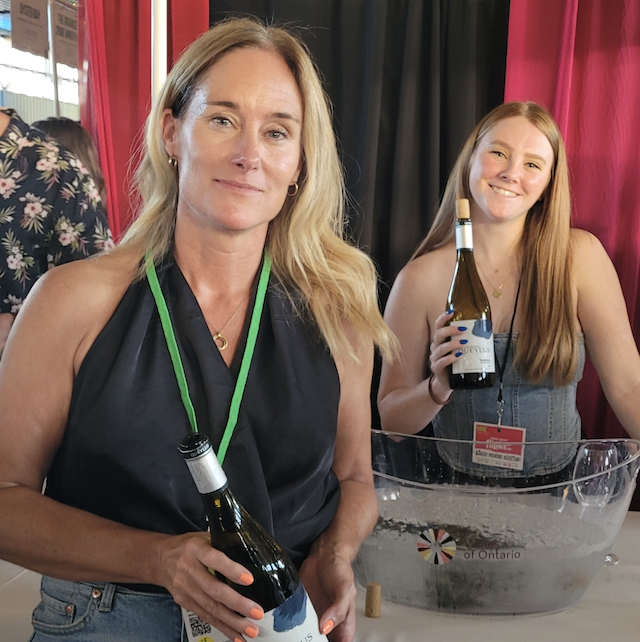
Kelly Mason and Brooke Husband – Domaine Queylus

Domaine Queylus Chardonnay Réserve du Domaine 2022, VQA Niagara Peninsula

Kelly Mason has hit the proverbial nail on the chardonnay head with her focused and balanced work with 2022 fruit to create what will forever exists as a quintessential Réserve du Domaine. The sort that will linger for years and be compared with when subsequent vintages are produced over the next 10-15 years. Remember the 2022 they will say. Ideal posit tug and a correct split between ripe fruit and stony goodness, also considered as mineral wealth to equip the wine with structure and subsequently longevity. All this despite a slight miss on acidity, which really turns out to be a thing of vintage. Brava team Mason. Sometimes there are misses when we taste blind.  Tasted July 2024

Oak all over, toasty notes in the orchard fruit aromas, mid-palate texture and no glissade but instead a settling on the palate. A bit heavy though just a year’s time will integrate the cloud. Lacks the right kind of acidity to really make it sing. Drink 2024-2026.  Tasted blind at #NWACS24, June 2024
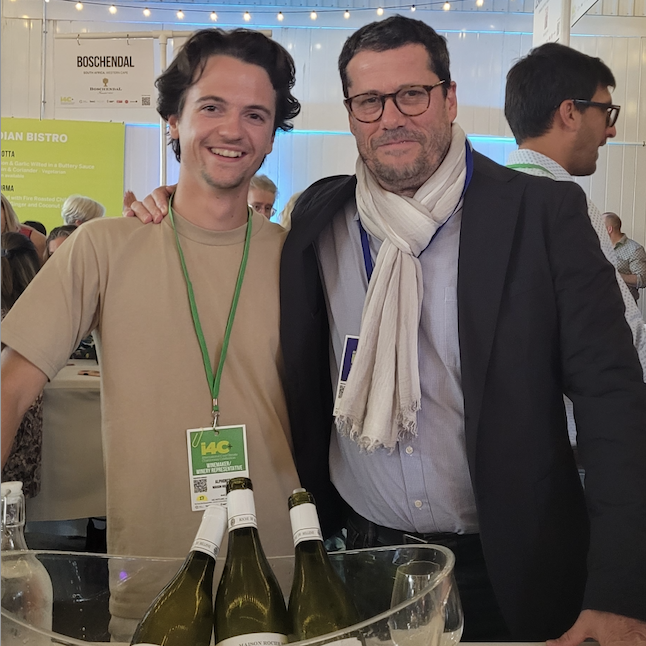
With Alphonse Potel – Domaine de Bellene

Maison Roche De Bellene Vieilles Vignes Bourgogne Chardonnay 2022, AC Bourgogne

A vieilles vignes at Bourgogne AOC level that proves the ’22 point just how universal these wines should be admired and can be your friend. Bellene’s is luxe, focused and balanced.  Last tasted at i4C, July 2024

Sharp chardonnay from Nicolas Potel’s Maison Roche de Bellene out of 2022, lightly reductive, tightly wound and beaming with energetic light. Got a buzz and a vitality about it, with old vines concentration keeping pace and developing texture as we speak. This has been a good sku in the past but Potel has hit the proverbial varietal nail on the head this time around. Drink 2024-2026.  Tasted July 2024

Nadia and Ilya Senchuk – Leaning Post

Leaning Post The Fifty Chardonnay 2022, VQA Niagara Peninsula

What was once a true matter of 50-50 barrel to steel raising has morphed and is now another matter. A concrete matter for today’s 50, full of fruit and fuller after its cementing, a posit tug still, even though wood and steel no longer play the push-pull game. More about fruit versus lees, tension so tight the rope never seems to budge, but it sways and slings within inches of itself. A bloody poignant vintage in spite of warmth, contiguous from its wild ferment and winemaking truth. Drink 2024-2026.  Tasted at i4C, July 2024

Matthias Messner – Kellerei Bolzen

Kellerei Bozen Chardonnay Bolzano 2022, Südtirol Alto Adige DOC

Really hot year tells Matthias Messner for a steel only raised chardonnay on lees from vines at 550-600m of elevation. Close to the south of Balzano, “a windy area” with cooling temperatures at nigt. Straight as a marksman’s arrow, cracker sharp and the sort of chardonnay to pierce your heart. Quenching, satisfying and Südtirol perfumed. So drinkable.  Last tasted at i4C, July 2024

Has been three vintages since getting back to tasting this archetypal Südtirol-Alto Adige chardonnay from top quality and quantity cooperative producer Bolzano. Can’t go wrong with the style or the effect, of no oaks given and the most lemony sunshine one could arrive hoping to find. This is a terrific vintage for a chardonnay we could all afford to drink a boatload of. Drink 2024-2026.  Tasted July 2024

Boschendal Chardonnay Appellation Series 2021, WO Elgin

“It’s easy to make quality chardonnay,” says cellar master Jacques Viljoen, “but hard to make sellable quality. Also scaleable but Boschendal seems to have accomplished all three with their high level tiered Appellation Series Chardonnay. What could be called a 2021 of dramatic restraint, of tension but never nervous, of grip but no abuse of power. Brilliant chardonnay and Ontario consumers should be happy to know it will become available in the upcoming VINTAGES September Classics. Drink 2025-2028.  Tasted at i4C, July 2024

Lydia Tomek – Ravine Vineyard

Ravine Vineyard Chardonnay 2021, VQA Niagara-on-the Lake

All Niagara-on-the-Lake fruit, from three vineyards and with just a wee bit of musqué inclusion to give Ravine’s chardonnay that gentle spirit and floral lift. Just that subtle hint of jasmine flower, oxalic acid lemony scent of purslane and faint anise of chervil. Spends 18 months in a majority of old wood which does develop texture to find this somewhere comfortably between pillowy and elastic tension. You may not always have you’re best stuff but you can still contribute admirably to the team. Though 2021 is not the recent vintage to set Niagara chardonnay up for its greatest balance, “you take everything you’re given and make the best of it,” reassures winemaker Lydia Tomek. Which she clearly does to deliver a chardonnay to keep the dream alive and the streak unbroken. Drink 2024-2026.  Tasted at i4C, July 2024

Thirty Bench Small Lot Chardonnay 2021, VQA Beamsville Bench

True to Bench chardonnay sprit and energy, standing upright, demanding to be noticed and in turn we are paying attention. A harvest of demand forces the team to focus and pay extra attention, to do everything possible for greater returns. Picking and sorting strategies finds the best available fruit to create something cool, gelid, succulent and shockingly Chablis like. Should age longer than first anticipated.  Last tasted at i4C, July 2024

Small Lot just has to be the ownver of the lowest of low alcohol number as it pertains to the Beamsville Bench and at 12.6 percent the conversion rate falls under the categorical auspices of magic. This is not a light chardonnay but it is a lithe, elastic and effusive one. Aromatically demure yet soft and almost caressing, without peppery (and sharp apple) bites or jolting in any way. The palate runs a similar course, gracing with soft and round flavours that are easy and stretched. Lovely and amenable 2021 here from Emma Garner and one to savour slowly, in a calm and tranquil setting. Drink 2023-2025.  Tasted July 2023

Katie Dickieson – Peller Estates

Peller Estates Private Reserve Chardonnay 2022, VQA Niagara Peninsula

A factor of chardonnay and also musqué interplanting, unique for Niagara and smartly put to a 50-50 ferment between steel and oak. What follows is 12 months in barrel and mostly no malolactic fermentation though says Katie Dickieson, “some might happen.” Clear, clean, precise, pristine and from an ideal vintage to make this style of direct, ready to rock chardonnay. Beautiful. Drink 2024-2025.  Tasted at i4C, July 2024

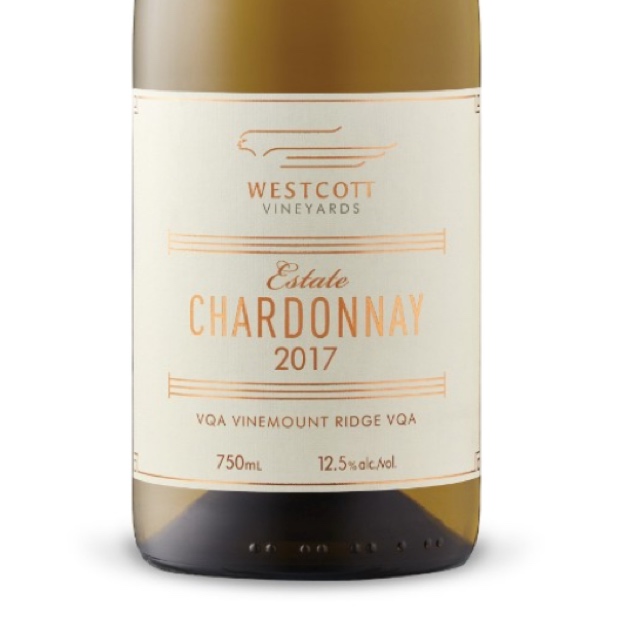
Westcott Chardonnay Estate 2022, VQA Niagara Escarpment

Wild ferment and malolactic happenstance, “and if it occurs simultaneously,” says winemaker Casey Kulczyk, “it’s fine, I want this.” Barrel fermented, super turbid going in and also desired. Welcome to 2022, a vintage for which its maker forgets and leaves everything behind because adversity and challenges always puts one on their toes. Cold snap in winter, vine damage and a 60-plus percent loss of buds (on chardonnay). Great quality nonetheless, a new or different estate mix to result in a more linear, tight, bright and for Westcott, extreme iteration. Yet this arrives brilliantly, very young, not itinerantly fruity, but sharp and hyper real. Drink 2025-2029.  Tasted at i4C, July 2024

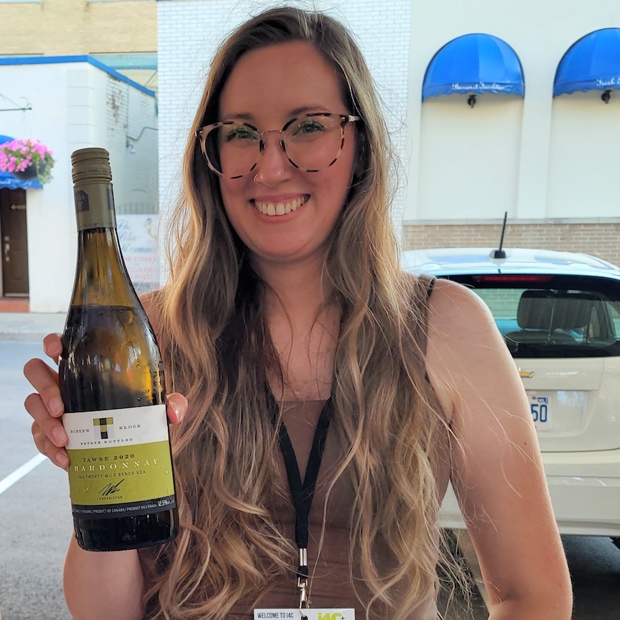
Tawse Chardonnay Quarry Road Vineyard 2021, VQA Vinemount Ridge

No shock or surprise that Quarry Road ’21 is a mineral bomb, coming away on that rocky side of the 50-50 fruit to stone compendium. Forget everything you’ve heard or read about this arch-cool Vinemount Ridge chardonnay, but also ignore all the noise about unmitigated disaster by vintage. Niagara winemakers should always make quality cool chardonnay these days and Tawse holds more water and responsibility than most. Jessica Otting is ten times equal to the task with a Quarry so precise and focused it may just make a tooth or two feel the mineral pain. A chardonnay chillingly representative of its vineyard yet, rewriting the jazz because of the shall not be named vintage. The naysayers can run away and hide in their holes because history will be kind to these wines, especially when they shine on in tastings ten years forward. No crutch or apology, sorry not sorry. Remember 2011 and 2013. Now forget them and only speak of 2021. Just great chardonnay. Drink 2025-2030.  Tasted at i4C, July 2024

Cave Spring Estate Blanc De Blancs, VQA Beamsville Bench

Classic, sharp, intense and ideal. A ripper, “and I love that” says Stephen Gash. Dry as the desert in such a plainfully proverbial way. Scintillant extraordinaire.  Last tasted at i4C, July 2024

For the first time in quite some time the next look at the Cave Spring Estate Blanc De Blancs is bang on one year later and so yes, freshness is the thing. Crisp and crunchy, stylistically so consistent and really set up to act as the dictionary entry for chardonnay as sparkling wine out of Niagara. It’s just so spot on, high in energy and exacting for style, place and estate.  Tasted November 2023

Domaine Des Deux Roches Saint Veran Vieilles Vignes 2022, Bourgogne AC

From the estate’s flagship old vines holdings in the village of Saint-Véran on the slopes set below the famous two rock faces (Deux Roches). They happen to be the largest holder of hectarage and as such this is one of six cuvées in the Véran. As crunchy as any in the Bourgogne Mâconnais, or will ever be, with crisp bites and never dissipating tension. Sharp, representative of great value with several Premier Cru coming to mind and a vintage quality to solidify and formalize the overall trenchant intention, consolidation and voice. Drink 2024-2028.  Tasted at i4C, July 2024
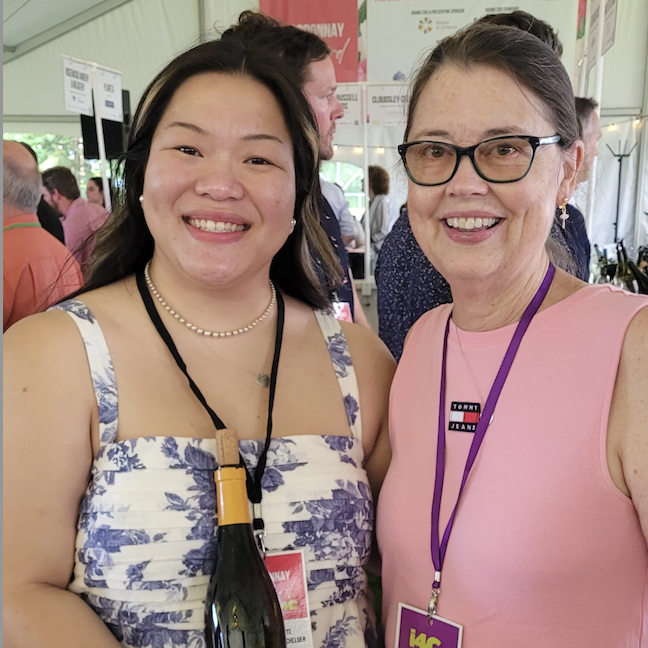
Violette Bachelder and Mary Delaney – Bachelder Vineyards

Bachelder Wismer Wingfield Chardonnay 2021, VQA Twenty Mile Bench

By this time Wismer-Wingfield is the standard Bachelder chardonnay, the one of great acumen and knowledge accrued, the most middle of the road of the Toussaint releases. This is said with greatest of compliment because there is no substitute for experience and Thomas has long since figured out how to make this most high level and consistent chardonnay. No lack for all this and more from 2021, of a wine where fruit and wood share equal space but both exist on the same footing. As always the presence of waxy, aerosol and resinous notes that chardonnay for Wismer-Wingfiled always displays. There is something to be said for the same old. Drink 2023-2026.  Tasted December 2023 and at i4C July 2024

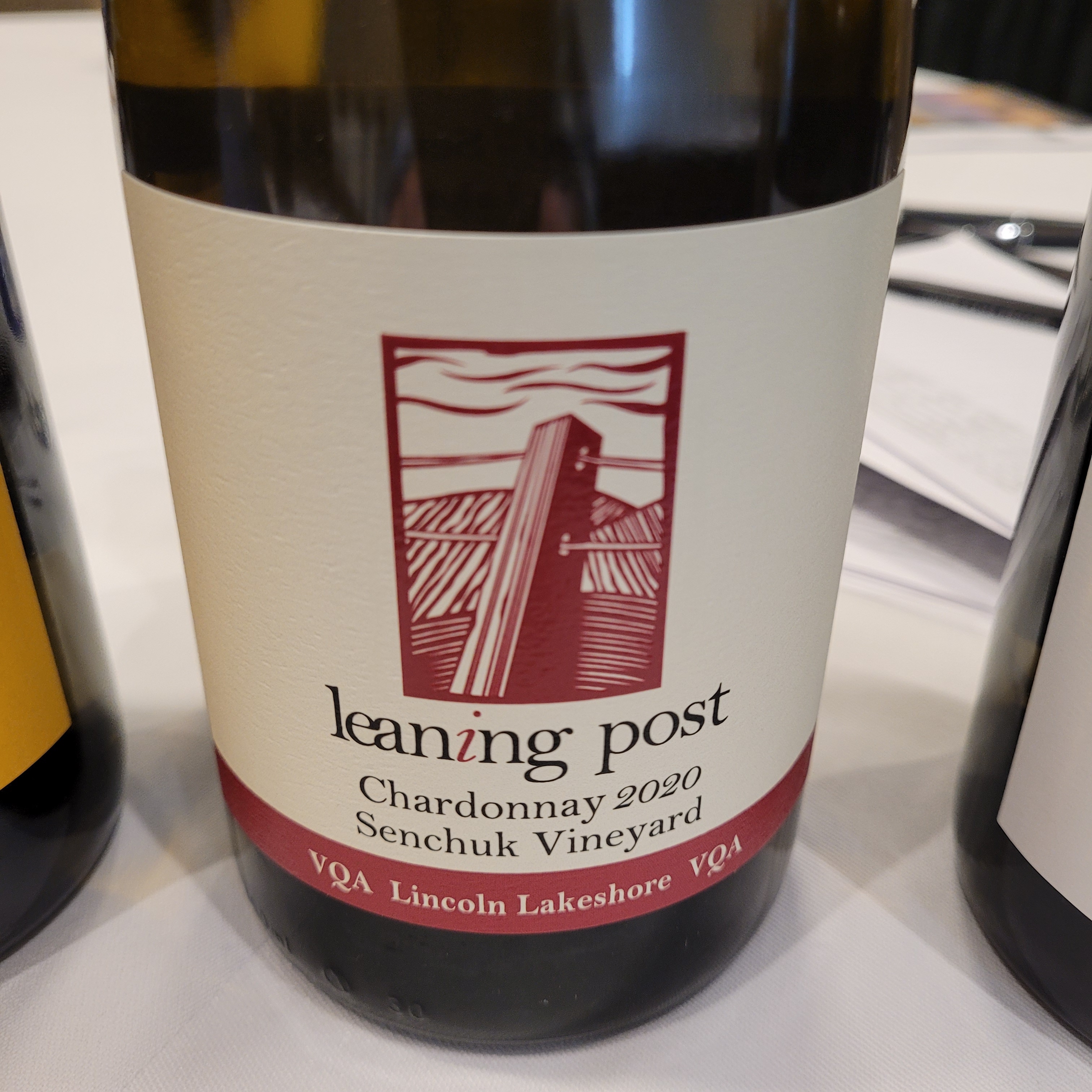
Leaning Post Chardonnay Senchuk Vineyard 2021, VQA Lincoln Lakeshore

“I fought the grapes…and the grapes almost won,” quips Ilya Senchuk. We should note that the the temps are/were five to six degrees cooler in Grimsby/Senchuk Vineyard and so he and Nadia feel quite strong about their success for cool climate chardonnay out of the adversarial vintage. A “war of attrition” perhaps and some losses but in the end more wins, but you have to buy and taste these wines to find out. Ilya agrees that sometimes “you have to get out of the fruit zone,” and not just with respect to pinot noir. The mineral aptitude and stony goodness of this cracker ’21 Senchuk chardonnay will not be denied. Not to mention at 12.5 percent alcohol we need to look past lean and consider magical conversion rates. See for yourself. Drink 2025-2029.  Tasted July 2024

Cloudsley Chardonnay Twenty Mile Bench 2022, VQA Twenty Mile Bench

Always a mix of Wismer fruit, of Wingfield and Foxcroft, same bat fermentation and same bat channel. Wild ferment that is, followed by 18 months in French wood with one-quarter or so being new barrels. Balance of the old and new, the buttery and the grippy, the soft and the profound. A recurring fruit theme for 2022 with less tension and tightening as compared to say ’19 and ’21. Getable as chardonnay though persistent in its inherent cool climate origins. Still it will attract more and more consumers who hold preconceived notions about the idea of chardonnay. Drink 2024-2027.  Tasted July 2024
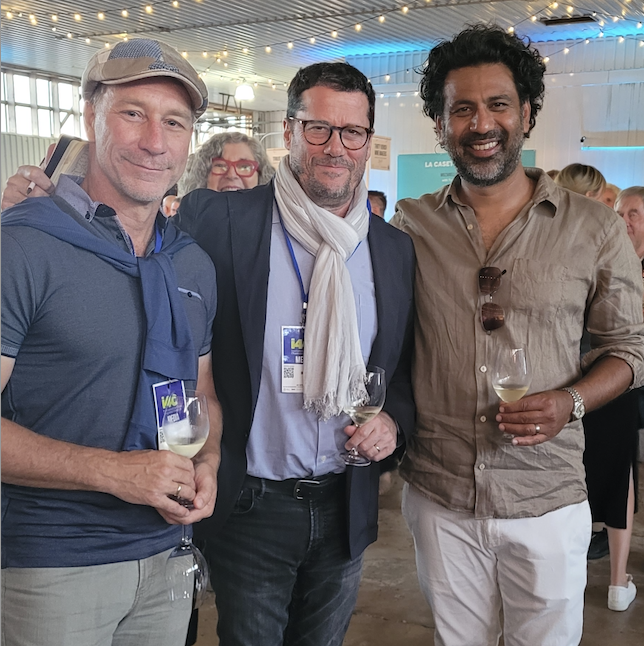
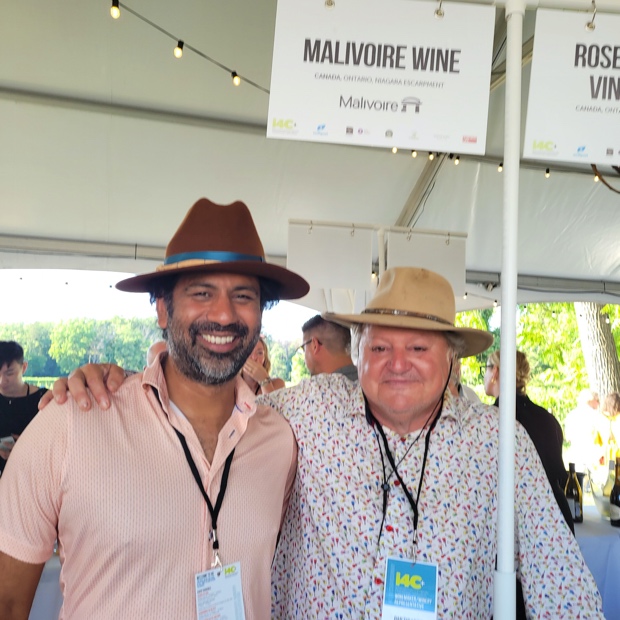
John Szabo M.S., Godello and Malivoire’s Shiraz Mottiar

Malivoire Chardonnay Mottiar 2020, VQA Beamsville Bench

In a state of grace resolve on course to deliver its best at every step of development. In the heart of the matter now, primary yet moving forward with finespun caramel right ahead. So well conceived and made to honour its origins.  Last tasted at i4C, July 2024

Sure there is a full and subtly opulent quality to the Mottiar 2020 but from the beginning there is confidence and balance. Always this way but ’20 is special in that regard, comfortable in its skin and so sure of what it brings to the chardonnay table. Beamsville Bench beauty and bounty, acidity so sweet and developed it feels like it has not yet acted just like this before. A hint of paraffin and beeswax, a lilt and a rise in beats here and there but most of all freshness and that aforementioned surety of conviction. Drink 2023-2027.  Tasted July 2023

Blomidon Brut Réserve NV, Annapolis Valley, Nova Scotia

Put to bottle in 2019 and so five years on lees ain’t nothing to develop complexities, eccentricities and potential variability. This pour comes out of sound and vision, disgorged in March of 2024, set to be released in the early Fall. Makes great use of 2016 and 2017 fruit, plus a small amount of the frost vintage 2018. Youthful, appropriately Blomidon Peninsula/Annapolis Valley tightly wound and in a way very chardonnay, though not glaringly so. “For us this is the future for non-vintage,” explains Simon Rafuse, “and to save the cooler vintages for Blanc de Blancs.” It’s a reverse engineering kind of approach. Simply put, in cooler vintages you can’t push wines through malolactic and so chardonnay is best purposed for sparkling when acids are high and pH levels are low.” Like 2011, but not 2010 and Rafuse adds that “the problem is you have to wait many years to see the results. But it’s worth it because they are really good.” True that. Drink 2024-2028.  Tasted at i4C, July 2024
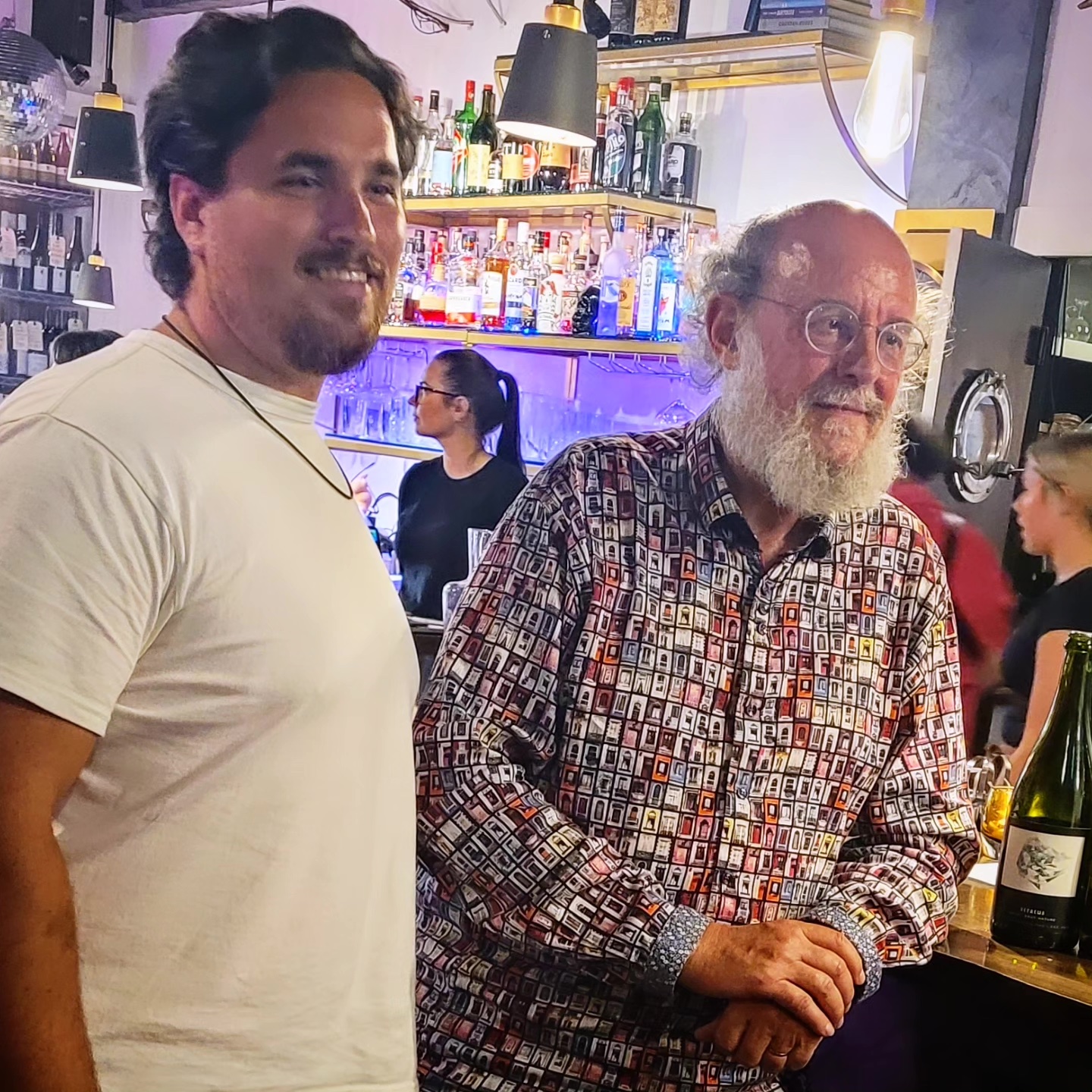
Dean Stoyka and J-L Groux – Stratus Vineyards

And there were visits

Stratus Vineyards at Bar Ruffino

Stratus Brut Nature Zero Dosage 2013, VQA Niagara-on-the-Lake

J-L Groux explains that the main factor for making this kind of sparkling wine is PH, “because the aromatics will be built upon six to seven years of lees aging time.” J-L feels this ’13 is going to be the winner now, and for 20 years. Not far off it would seem because of the “partial disgorgement” method, well within VQA rules and thus you arrive at a toasty smoulder unlike any other sparkling wine. The lees are the thing, in fact they are everything. They prevent the aromas and the wine from oxidizing. Amazing.  Last tasted July 2024

Comes across a bit cloudy, at least as compared to the B de B with thanks to the natural, lees left intact style. The citrus component is so pronounced, as is the taut, direct, lean and intense manifold destiny of what is truly a singular Sparkling wine. That being a living, breathing, inhaling and exhaling wine, slowly releasing proteins, acids and realizing its B de B Nature dream. Just amazing what lees can do for sparkling wine.  Tasted July 2021

Released side by each with the Stratus Blanc de Blanc 2013 and while vintage and grape are the same, the similarities almost seemingly, ostensibly and allegedly end there. Yes in fact this 100 per cent chardonnay is a child of the most excellent varietal vintage and like the B de B spent six years on the lees. Comparisons cast aside it is the very fact that because much of the lees were transferred to bottle by a minimalist’s disgorging that this cloudy bubble with a Canadian artist’s series set of labels can’t help but elicit another memory. The Lilies of Monet and their clouds represent neither the horizon, nor the top or the bottom. Nor does a bottle of this Zéro Dosage Brut. The elements of water, air, sky and earth become intertwined in a composition without perspective, or so it goes in this hazy, opaque and dry as the desert sparkling wine. So many layers of lemon can be peeled, juiced and scraped away. If a Stratus wine could be a a riddle, wrapped in a mystery, inside an enigma then here it is. The texture here is palpable and the intrigue factor surely high, so it should be imagined that longevity will be this wine’s calling card. It’s more austere than the Blanc de Blanc but I think in fact it will. Drink 2022-2029.  Tasted November 2020

Stratus Chardonnay Reserve 2002, VQA Niagara-on-the-Lake

Harvested between October 4th and 6th which for J-L Groux was early, akin to harvesting in early September in the Stratus world of today. Barrel fermented for 350 days in a mix of new, second and third fill French wood. Low(ish) acid and high pH vintage from the vineyard purchased just two years prior. The team went about immediately reducing yields from eight to two tonnes per hectare, “direct to concentration,” says J-L, who at the time partnered with Peter Gamble to make this rare iteration labeled as a Reserve wine. They selected barrels for this premium chardonnay and truth can feel counterintuitive because many years after having tasted the (Non-Reserve) 2002 it is this ultra varietal bottle that shows impossible freshness. Persistent in reserve, laden with grapefruit and as much texture as wood is want to impart. Well, actually a bit less than expected but as a chardonnay expression with the same fruit the special barrels chosen have come about with such a different result. Less preserved lemon, wax, late bitters and oxidation. Therefore sharper and fruitier while in the end likely just what Peter and Jean-Laurent were looking for. Drink 2024-2026.  Tasted July 2024
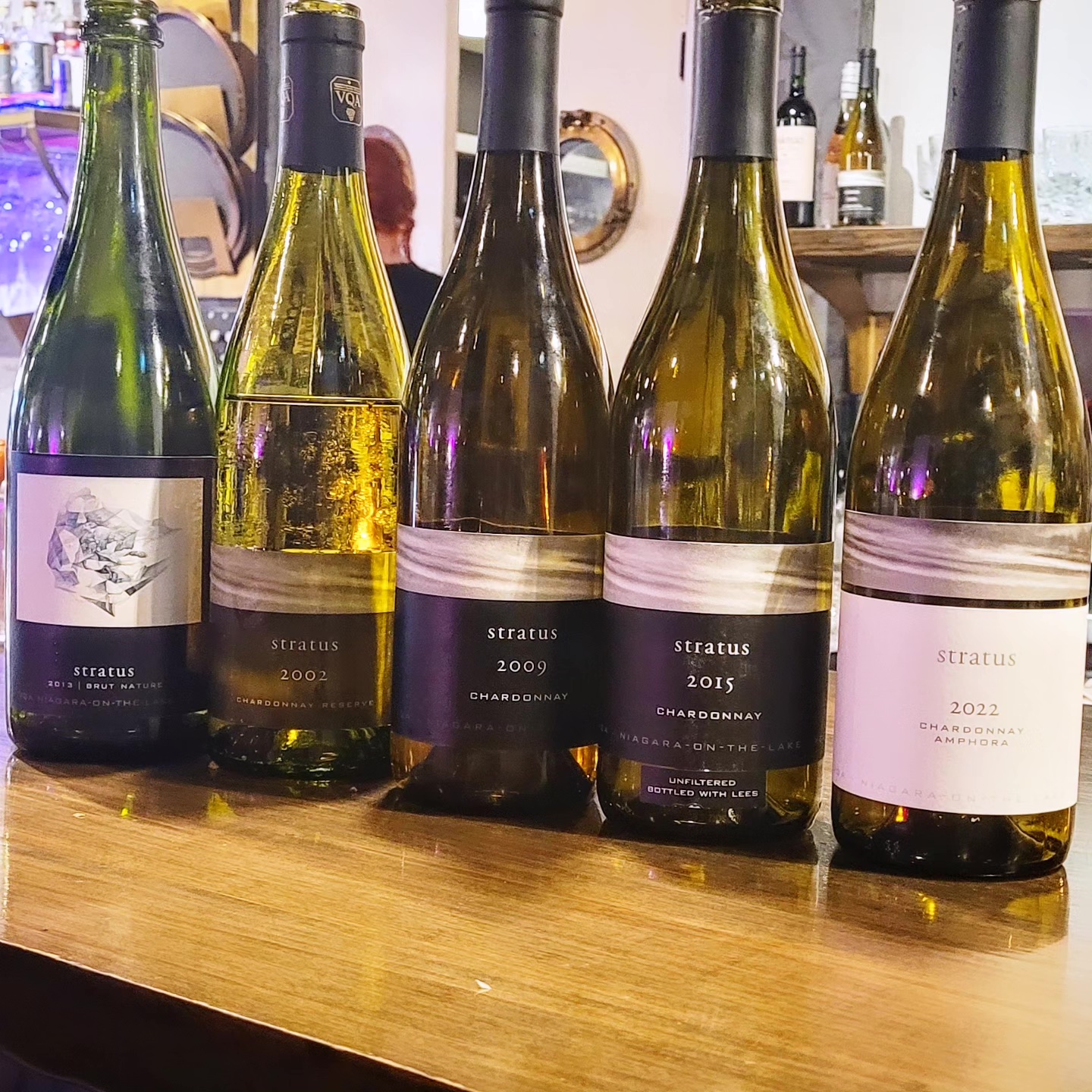
Stratus Vineyards Retrospective at Bar Ruffino

Stratus Chardonnay 2009, VQA Niagara-on-the-Lake

Late pick (November 10th), high acid, smoky and smouldering chardonnay, connecting it to a course of action for those that are made today. A precursor and one that the winemakers surely look back at and draw upon for current preoccupations. Especially Dean Stoyka who stirred some lees and learned how to get his chardonnay through malo during his Niagara College educational days. Looking at 2009 helps to consider the sparkling wine program because the specs and style of this wine are clearly inspirational towards that end.  Last tasted July 2024

Comes off like a white blend, aka Stratus White but this is the outright, unchaste vintage talking. Winemaker J-L Groux crafted three wines with viticulturist Paul Hobbs. Here they split the project 50/50 with Hobbs including wild yeast fermentation and whole bunch pressing and J-L adding short skin contact, controlled yeasts and no whole bunch pressing. From extreme low yields, this one puts on a show after only 10 months in barrel. High on aroma, brazen in texture, ambient in flavour bites. Very Niagara if inexactly Chardonnay.  Tasted March 2014

Stratus Chardonnay Bottled with Lees 2015, VQA Niagara-on-the-Lake

Medium acid and low pH year, picked across September which is early (and necessary because acids would have waned) but what matters most are the lees kept in bottle. To develop aromas over time and ward off oxidation. So unlike the 2009 tasted side by each, here from a “winter damage year” tells Dean Stoyka. Small crop, somewhere between 88 and 91 tonnes (the number changes form time to time), average heat and precipitation. Serious chardonnay concentration, fruit persistent, in great shape and a better wine today than it showed as seven years ago.  Last tasted July 2024

The 2014 vintage was essentially the first year when barrel lees would be left in the bottle and my how conservative this ’15 really was as compared to an evolution that culminates (currently) with the full on lees filled chardonnay vintage. Quite the opulent vintage mixed with aromatics still morphing, developing lees, brash and blushing by 40 per cent new oak, complimented by generous acidity. Showing with controlled drama and though the yields were low (only 88 tonnes) there is something quite special about this emotionally charged, vivid, scarce and remarkable chardonnay.  Last tasted July 2021

Stratus Amphora Chardonnay 2022, VQA Niagara-on-the-Lake

“Slightly, maybe three times more oxidative than a barrel,” explains Dean Stoyka as it pertains to amphorae. Kind of surprising but then again there needs to be a good reason for choosing these tight-grained Tava Amphora baked at higher temperatures, especially as compared to Georgian Qvevri. More oxidation means more lees and more lees means kept freshness plus the ability for aromas to develop into complexities over time. As for a a second kick at the chardonnay in amphora can by Stratus well then assessment out of expectation also triples and the learning curve realized by Stoyka becomes three times the fun. Where is the reference point? Who cares because the nurturing of this fruit and palate caress conspire to create a feeling, as if you have known this wine your whole life. A matter of great positivity and understanding. Dios mio, man. Longevity should never be questioned and reasons why never argued. Keep at it, keep on keeping on. Drink 2024-2030.  Tasted July 2024
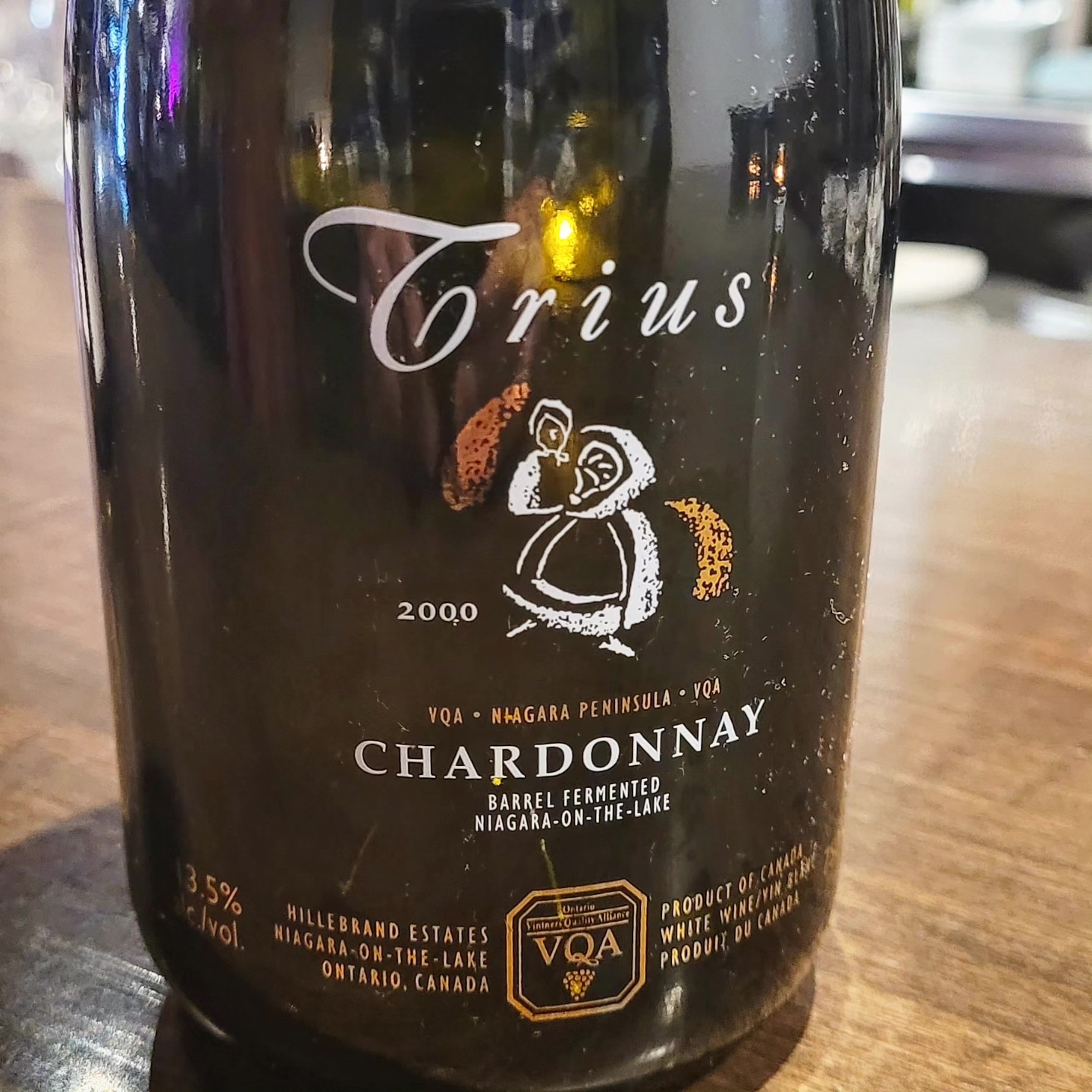
Hillebrand Trius Barrel Fermented Chardonnay 2000, VQA Niagara Peninsula

Nutty, flor oxidative and 24 years of age. From a very cool year and J-L Groux’s roots as a Niagara winemaker. Reluctantly fresh and honestly a good showing at this ripe old age easily into a time when the ideas and thoughts of mortality and finality can’t help but creep in. Though the wine would not shine to the dispassionate it does cause a stir of interest to a group of writers, influencers and sommeliers, all happy to drink one glass. Kudos to the Stratus team for offering up this cool piece of chardonnay history.  Tasted July 2024
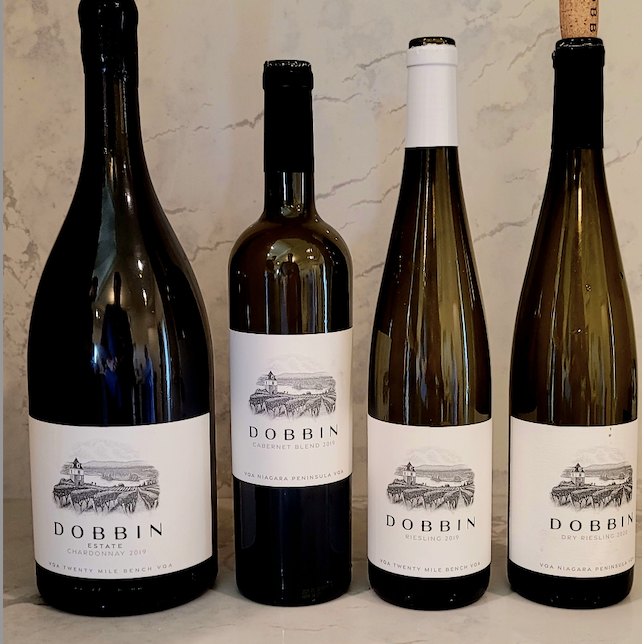
Dobbin Estate Vineyard & Winery

Dobbin Estate Vineyard & Winery Chardonnay 2019, VQA Twenty Mile Bench

This may be just the first stages of Dobbin’s tenure making high end wines from the Twenty Mile Bench but auspicious does not begin to describe the level of sophistication marking these beginnings. The erudite oenological consulting team of Ann Sperling and Peter Gamble have taken chardonnay into territory they are quite familiar with but always keep in mind that top terroir, vineyard conditioning and uncompromising preparation are what collectively set this up for success. This 2019 is from a cool climate vintage out of a cool climate place and recent history tells us that these are chardonnay that live good, long and healthy varietal lives. Luxe yet still crunchy, high quality wood used generously if judiciously and in the end this kind of rocks the world. In a chardonnay way. Drink 2024-2028.  Tasted April 2024

The Tower at Dobbin Estate

Dobbin Estate Vineyard & Winery Cabernet Blend 2019, VQA Twenty Mile Bench

From a cool vintage, long one though and cabernets cropped at the lowest of the low – less than one tonne per acre. ”A drinkable style,” says Peter Gamble and “I like the ‘19s from Niagara for that reason.” Pretty much a 50-50 final blend, almost too easy if by design and immensely popular with those who know, but also those who do not necessarily know the how or why. This is not a Caymus drinker’s red but it will inform and in turn impress they who should do better than their muscle memory habits of consuming over ripened, elevated alcohol, sugary reds. The ’19 is not particularly structured as a cabernet squared though the modelo drinking window is a good one.  Last tasted July 2024

First release for the new, high-end estate found on the Twenty Mile Bench with this stylish, Right Bank in make-up cabernet franc (inclusive of 15 percent merlot) having been sourced from a mix of the Homefront along with Creek Shores and Four Mile Creek. Oenologists Ann Sperling and Peter Gamble have consulted from the beginning and this is what would be considered a “Peninsula” wine because the fruit is drawn from three very different micro-climates. Sure seems like single site iterations are the future once each have been trialled and understood but for now the mix makes for a treat of layering and integration. Chic, full, substantial and generously oaky in the classic Sperling-Gamble style for full-bodied but never over the top Bordeaux reds for Niagara. The wood lends sweetness, fine chocolate ganache and a smoothness that is a hallmark of their wines. They did not go for structured broke in this inaugural bottle but the result is dreamy and leaves an impression, without seemingly trying to be impressive. No doubt a Napa Valley feel here which is always a compliment as it pertains to Niagara reds. The only qualm is the lack of franc-ness but that feels somewhat intentional. Drink 2024-2026.  Tasted April 2024
Tasting at Dobbin Estate

Dobbin Estate Vineyard & Winery Riesling 2019, VQA Twenty Mile Bench

Classic and balanced, concentration meeting at the intersection where a righteous mix of sugars and acidities form layers from. Vineyard blocks are what define the intention and i turn the results of this riesling. Nothing overt, neither by salinity or sapidity, though their are hints, shadows and subtleties indicated by both. And so the requiem for this riesling’s success lies in its ability to please without speaking loud or acting with any sort of impunity or demand. This is why people who know nothing about riesling will gravitate to enjoying this as a glass of a special white wine. And those who get it will be hard pressed to label or pigeon-hole it as Ontario. The inclusion of some botrytized grapes has something to do with this. Drink 2024-2028.  Tasted July 2024

Dobbin Estate Vineyard & Winery Riesling 2020, VQA Twenty Mile Bench

A much warmer vintage for all of Niagara and with riesling the difference between 2019 and 2020 is truly the proverbial might and day. Almost an about face style with the ripest and juiciest ripe fruit, lower sugar and (less botrytis) but truth be told there is more richness and flesh in 2020. Intensity by implosion and higher sugar number (15-16 g/L) as compared top 10.5 fro 2019. Unrelenting flavours and a profile more Germanic than that more chiseled and muscular ’19. Drink 2024-2028.  Tasted July 2024
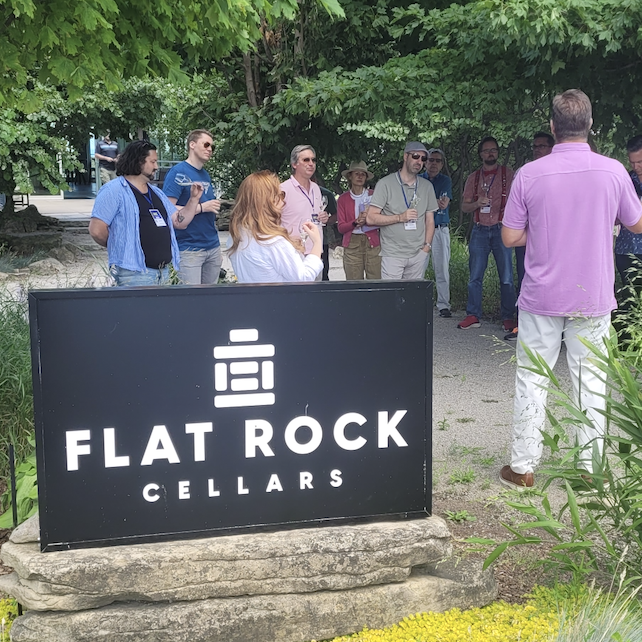
Ed Madronich holding court at Flat Rock Cellars

Flat Rock Cellars

Flat Rock Cellars Pinot Noir Foundation Series 2022, VQA Niagara Peninsula

The separation between Foundation and Gravity is essentially barrel selection with the winemaking being the same. So specific to this place, rusty and busy tart fruit, a mix of plum and cranberry, always curious, always complete. Gently and fluidly volatile, crunchy at its peaks and low rumbles in the valleys. A 5,000 case production (on average) as compared to 1,000 of Gravity. Never a question that this is and represents Flat Rock.  Last tasted at i4C, July 2024

No questioning the ripeness on all fronts, to the edge and precariously so with maturity and also a glycerol meets acetic set of circumstances. As such there is a raw cookie dough note, also potpourri and natural medicinals. A very specific tang carries the flavours and the sensation of style is duly noted. Gets chalky and the acidity takes over on the backside of this distinguishable pinot noir. Drink 2024-2025.  Tasted July 2024

Flat Rock Cellars Pinot Noir Gravity 2020, Twenty Mile Bench VQA

Warm vintage and about as high-toned that Gravity as pinot noir will ever be. A tight and to be frank also austere iteration that still remains and persists in this state of the unforgiven. If a Gravity has ever needed for time than this 2020 is certainly up for debate. Muscular, concentrated, broad shouldered, full of texture and buzz in its extremities. There is plenty of substance and so when the wine settles in it will do what intention asked it to do.  Last tasted July 2024

Jury’s still out on the season’s relationship between pinot noir, Niagara and especially the tattooed effect painted by the Escarpment’s benches. Gravity ’20 is still showing some early earthy, fermentative aromatic volatility by way of bread dough, tar, strawberry red fruit and coniferous-evergreen energy. Some stem inclusion surely, an early pick on acidity in a warm year, strength in maceration and equally pressed so that the Ontario greens also come through on the flexed rope of tannins. Like hastily hand-stretched pizza dough popping holes, or pulling liquorice too fast and causing cracks. Gravity is meant to fall softly downwards, gracefully and gently. The sour accents speak another language, a bit unfamiliar and yet the track record of this wine deserves respect and time. Jury will be hung and a new one will come back in two years for next assessment. Drink 2024-2027.  Tasted October 2022

Flat Rock Cellars Pinot Noir Gravity 2010, VQA Twenty Mile Bench

Really warm vintage, one of those in that time that ripened fruit to the max and so pinot noir went where it so boldly wished to go. One of those substantial examples that has surprisingly lasted deeper into its tenure than assessment of that vintage would have predicted. Good showing today and some duck prosciutto would work really well alongside.  Last tasted July 2024

Reels in Twenty Mile Bench fruit in a warm vintage as well if not better than any of its peers. Founder Ed Madronich is clearly slope and soil obsessed and this Pinot Noir is a study in topography and geology. To paraphrase Madronich, it’s ”more Pommard than Volnay, in a deeper and more masculine way than the Estate bottling.” Pinot barrels most representative of the Gravity style were chosen for the final blend, in this case noted by woodsy black cherry and spiced root vegetable. “Get a little savagery in your life.”  Tasted twice, April and December 2013
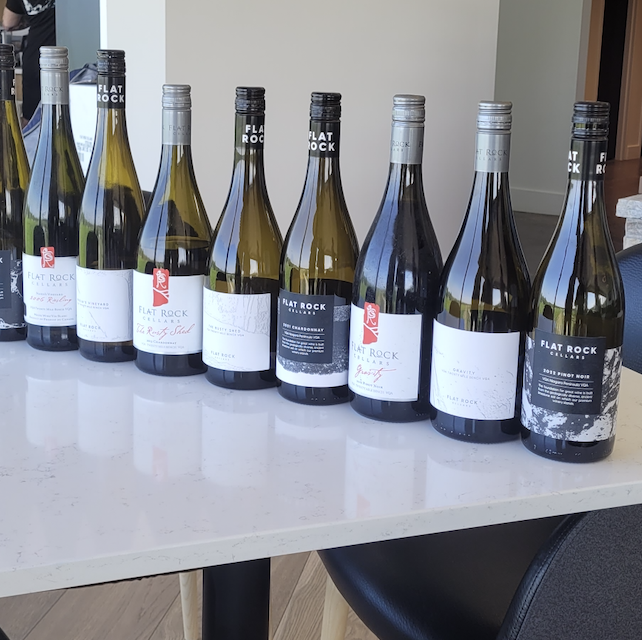
Flat Rock Cellars Chardonnay Foundation 2021, VQA Twenty Mile Bench

Middle road traveled, taken and projected for chardonnay definitive of a 25-year study by Flat Rock makers to arrive at this time. Lovely, juicy, prolific and in its Flat Rock way also a quintessential Twenty Mile Bench example of chardonnay What more needs to be said?  Last tasted July 2024

Foundation Series: Our Classics redefines the Flat Rock entry to market and gateway for their chardonnay. If you’ve been tasting these wines for a decade or more you’ll recognize these aromas from a 2021 that resonates of the house style. Inviting, somewhere between vanilla crème frâiche and lemon crème brûlée, soft and demure. Creamy palate texture, a swirl of butterscotch ripple curd and easy drinking all the way through. Many will find this soft but it’s best considered as a comfort food kind of chardonnay. Drink 2023-2024.  Tasted October 2023

Flat Rock Cellars Chardonnay The Rusty Shed 2021, VQA Twenty Mile Bench

If the Foundation delivers a quintessential Flat Rock chardonnay experience than The Rusty Shed takes it further. More substantial fruit and aromatic muskiness if less immediate joy and juiciness. No shock because RS is a wine that can and will age with this being one of those vintages that fit the bill. Reminds of 2011 or 2013, or maybe a combination of the two with the modern world of love and varietal development taking chardonnay from FR to new heights. Will hit the zone sometime later this year or early next. Drink 2024-2027.  Tasted July 2024

Flat Rock Cellars Chardonnay The Rusty Shed 2013, VQA Twenty Mile Bench

A more than appropriate vintage to pour side by each with 2021 because they share that Flat Rock Rusty Shed affinity of chardonnay needing some time to open up before delivering the juicy, gelid and fleshy character they will almost always eventually do. The ’21 will get to this place and few Niagara or Bench chards can go light years ahead into such a place of beauty. Just knew 2013 would get there and what a joy to be here with it.  Last tasted July 2024

It’s as if this label had bided all this time to be the benefactor of 2013 fruit. This Rusty Shed, this 20 miler with the track record to age, a wine that sheds baby fat over a 10 year mineral through echelon stratum, in ways few other peninsula to bench chardonnay can do. This Jay Johnston handled surfer of a wine, buoyant and balanced, centred and able to withstand turbulence, oscillation and tidal sway. Here with sumptuous and spiralled fruit gaged in lode intervals and a tartness held in lope and line by a membrane of extract and tannin. Best ever. Showing well, repeatedly and to forecasted repute. Impressing critics and consumers alike. Bravo. Drink 2016-2025.  Tasted June 2016
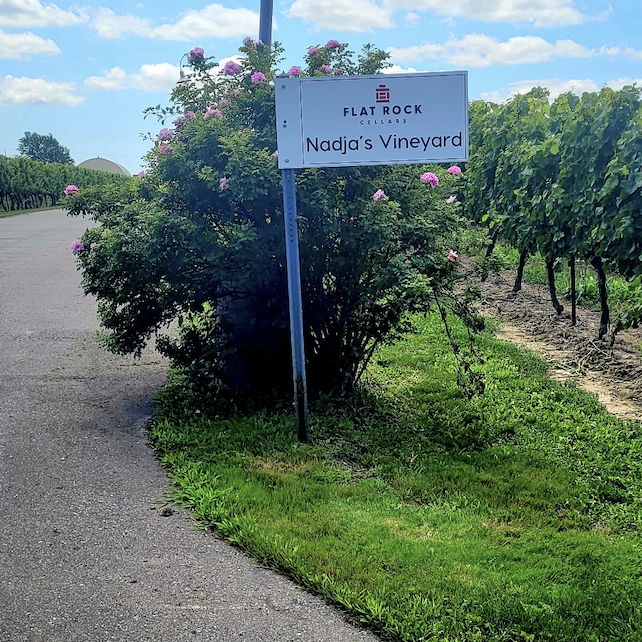
Flat Rock Cellars Riesling Nadja’s Vineyard 2021, VQA Twenty Mile Bench

A savoury, mineral and waxy Nadja as riesling, citrus as high and spritzed with energy as it will ever be. Not a vintage of concentration but rather one that is structured and so bloody specific to the vineyard higher up upon the estate’s step of the Niagara Escarpment. Flat Rock is perhaps the only estate with this level of elevation change, as much as a 10 story building from the this top vineyard to the (pinot noir) bottom. A place of air flow, equidistant to the lake and to the top of the Escarpment. Crisp, crunchy, tart and high level intensity, even for Najda. Need to wait a few years to see what next steps it will take. Drink 2025-2029.  Tasted July 2024

Flat Rock Cellars Riesling Nadja’s Vineyard 2006, VQA Twenty Mile Bench

Tough vintage but are they not the ones that find the magic of aging to deliver a wine like this? Phenolic and mineral as the saltiest of Nadja rieslings, ultra aromatic and a bit yeasty but the vintage had much to do with this. The rest is soil and location, up on the Twenty Mile bench on a second step up towards the crest of the Niagara Escarpment. Crunchy in every way, citrus as always but accentuated here (as it will repeat 15 years forward with 2021) and as Nadja, so very recognizable. Drink 2024-2026.  Tasted July 2024
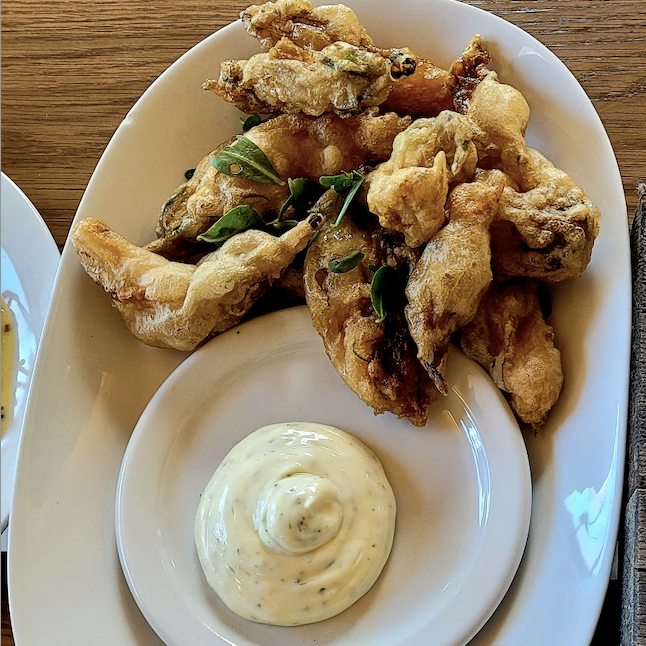
Chey Ryan Crawford’s Fried Zucchini Blossoms

Le Clos Jordanne

Le Clos Jordanne Pinot Noir Villages 2021, VQA Niagara Peninsula

A few more red fleshed drops of fruit after only three months further in bottle. Fine impression gained from these Jordan Bench blocks acceding a seamless layering and all is right in this Villages world.  Last tasted July 2024

Off the top a more structured pinot noir vintage for Le Clos Jordanne and the aromatics are not shy to announce their swaggered arrival. Bigger bones and flesh hanging tightly, tannins very much apart of the mix, holding firm, lightly chalky in constitution and a notable wine meant for aging, surely be design. Very different to the 2019 and 2020 LCJ pinots which is both curious and effective. Drink 2025-2028.  Tasted April 2024
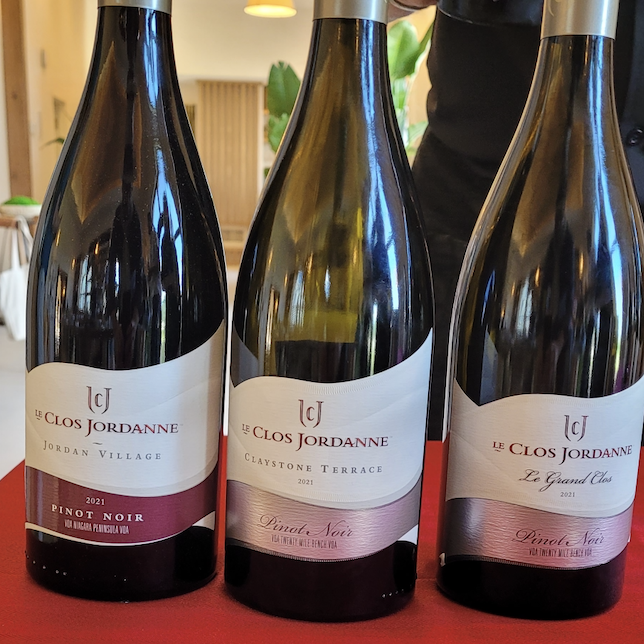
Le Clos Jordanne Pinot Noir Claystone Terrace 2021, VQA Twenty Mile Bench

This is a first kiss with and assessment of Claystone Terrace aboard the Twenty Mile Bench which Thomas Bachelder sets the record straight for how it is a contiguous tract connected with the terroir of the Jordan Bench. What it shares with Le Grand Clos Vineyard is a west to east gradation that moves from the structured to the blowsy. In other words every block acts differently but also incrementally and when their individual barrels are assembled they are done so to make the best and most balanced wine with nuts, bits, bolts and pieces drawn out of each gradation. From 2021 the softer aspects shine on because austerity and tension just don’t hold court as strong as they might in some cooler and also much warmer vintages. More middle road (for Claystone specifically) and the beneficiaries of such a pinot noir are all of us. Still another year will soften the last of the tannins and gripping tension. Drink 2025-2029.  Tasted July 2024

Le Clos Jordanne Pinot Noir Le Grand Clos 2021, VQA Twenty Mile Bench

As with Claystone Terrace the Grand Clos Vineyard blocks running from west to east move through this fruit gradation from structured and austere through to soft and amenable. For 2021 the middle ground is duly noted with a signature and arch classic Jordan/Twenty Mile Bench pinot noir that sings in youthful life as early as it ever has. The team (Thomas Bachelder, Kerri Crawford and Phillip Brown) have coaxed out the sweetest natural fruit. While it flows with ease it’s also equipped to slow down, reflect, and then re-emerge a few years thereafter, post pause and not atypical varietal dumb phase. Th3 2021 is found to be chic, suave and stylish as ever, fruit in a dark red cherry state and acidity meeting texture for mouthfeel of a most finessed kind. Drink 2025-2031.  Tasted July 2024

Chey Ryan Crawford’s Salmon Sack

Le Clos Jordanne Chardonnay Villages 2021, VQA Niagara Peninsula

Something about the Goldilocks vintage for chardonnay brings the three LCJ wines closer together. Villages may lack the complexities of Claystone Terrace and Le Grand Clos but its juiciness, open aromas, flavours and texture are all there. When you consider price there is no debate in how much value this offers and the gentle spice masala on all parts of the palate are really special. The attack of CT and le roi cru block LGC are there, albeit here less grippy and weighty, but Villages gives all that you want and need. Drink 2024-2026.  Tasted July 2024
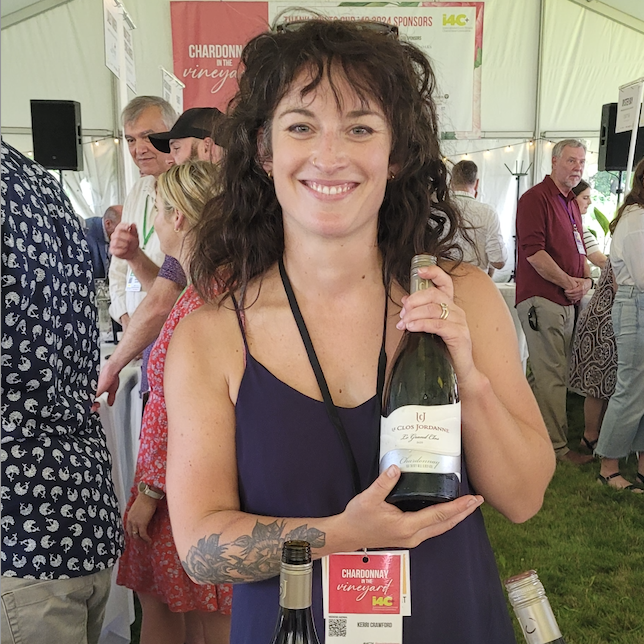
Kerri Crawford – Le Clos Jordanne

Le Clos Jordanne Chardonnay Claystone Terrace 2021, VQA Niagara Peninsula

The Claystone Terrace attacks direct into vision, up the olfactory and drilling into the cerebral cortex, no holds barred, nor does it wait to express anything it needs to say. Like a blast of sunlight straight out of the west on a late July afternoon, not blinding but warm and inviting, though not what would be considered subtle. This speaks from the vineyard in a more substantial way than Villages and also Le Grand Clos, if not quite at the level of aromatic and textural complexity of the highest tier, signature chardonnay. CT scans your senses and takes hold of them. It is anything but tripping the light but it is quite fantastic. Captain Claystone fantastic. The bomb for 2021 as a Le Clos Jordanne chardonnay. Drink 2024-2027.  Tasted July 2024

Le Clos Jordanne Chardonnay Le Grand Clos 2021, VQA Niagara Peninsula

Feels like a bit more easterly block fruit from barrels chosen for the 2021 Le Grand Clos because there is a softness (though far from blowsiness) about the mouthfeel and mellow flavours. The Claystone exhibits more drama and while complexities are on par it is this LCJ that should actually be consumed sooner rather than later. Thinking however that more folks would love and appreciate this style from this vintage.  Last tasted July 2024.

A bit sweet it needs saying straight away from wood aging that mixes with fruit quite ripe though not seductively so. Surely cool climate and well judged but the barrels do lend some oily texture and weight to this otherwise fine chardonnay. Solid mid-weight example. Drink 2024-2026.  Tasted blind at #NWACS24, June 2024

Westcott Vineyards

Westcott Vineyards Chardonnay Reserve 2022, VQA Vinemount Ridge

Like Block 76, also from the home farm of 26 acres on the Vinemount Ridge. Warmer parameters for richer and well-developed chardonnay cut through with fine chiseling because of the limestone bedrock beneath the slim soils for what can be best described as Westcott salinity. Reverberations and consequences are a mix of quantifiable component and marbling, also with thanks to the mix of 95 and 96 clones. Reserve always comes from the same rows of two blocks and while it may have once been a barrel selection, over time it has come to abide by the strictest regimen of only those rows. A retro Reserve if you will with a return to fully celebrating specific fruit no matter the vintage or circumstances. What separates this chardonnay is more than concentration, but rather the underlying salinity that is more pronounced that that of the Block 76.  Drink 2024-2027. Tasted July 2024

Westcott Vineyards Chardonnay Estate 2016, VQA Vinemount Ridge

Amazing how age can be a graceful and beautiful thing and the ideal truly applies to Westcott’s Estate chardonnay. The ’16 was made by then winemaker Arthur Harder and subsequently blended and bottled by Casey Kulzyck. Now in a pretty good place, fine and refined, Still some linger of primary fruit.  Last tasted July 2024

This is one of the first near-premium chardonnays to hit the market from 2016 and so a decision needs to be quickly made if the style is more vintage or house in origin. There really isn’t any estate precedence for this superabundance of fruit on the “normale,” like Christmas coming early or Niagara peaches appearing in June. The ripeness goes beyond freestone fruit and into the tropical realms occupied by mango and pineapple. There is no denying the nectarous and appetizing nature so I’d like to think it’s really a seasonal somewhereness that drives the druthers. Drink this young and with some poached seafood. It will satisfy the pairing. Drink 2017-2019.  Tasted July 2017
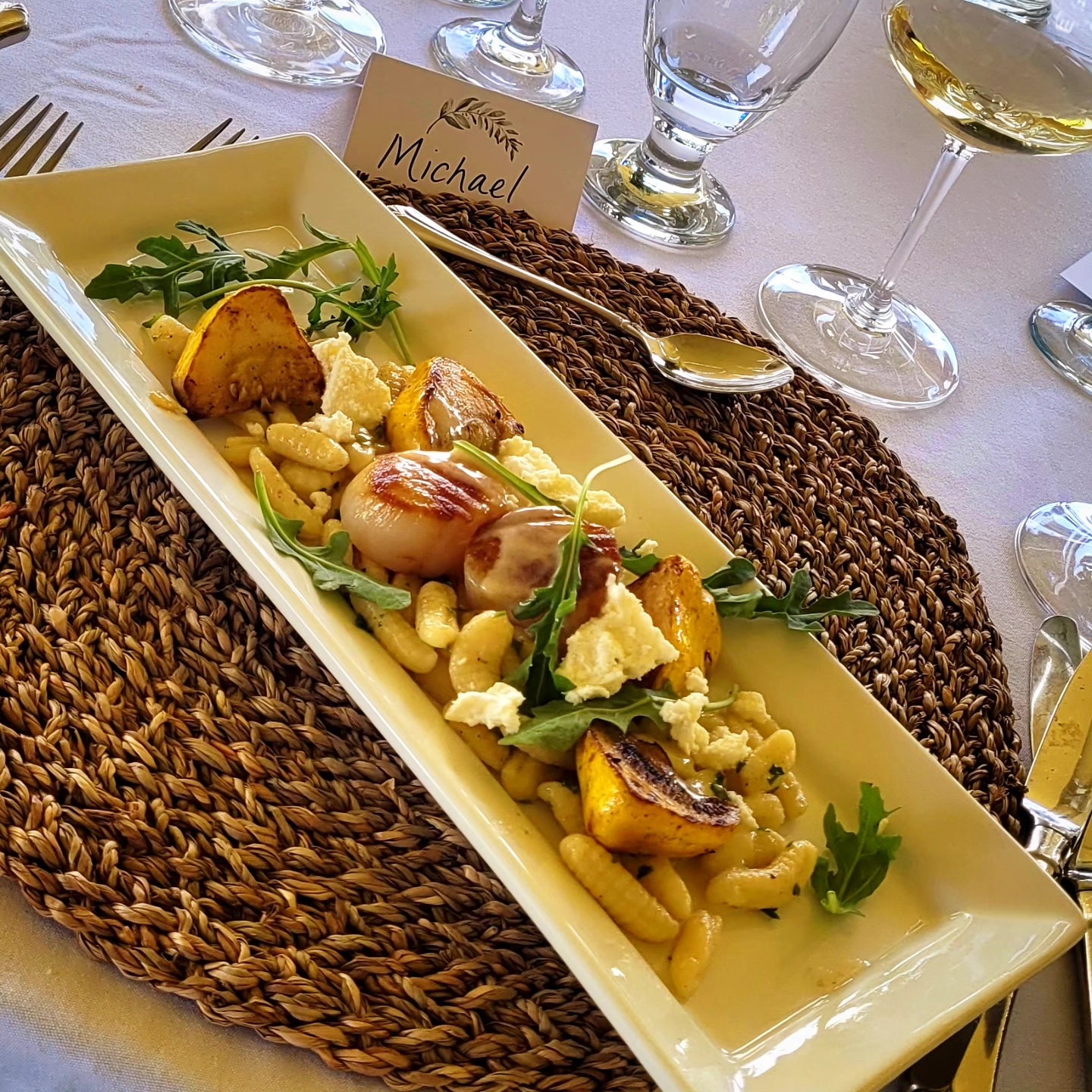
Chef Tim Mackiddie’s Scallops, Cavatelli and Chardonnay – At Butlers’ Grant, Wetscott Vineyards

Westcott Vineyards Chardonnay Butlers’ Grant Old Vines 2022, VQA Twenty Mile Bench

Old Vines refers to the 1989 planting of Clone 76 on a 5.08 acre block on the northwest side of the 43 acre Vineland Bench property. The long and rectangular chardonnay block culminates on the southeastern side at Butlers’ Workshops and is paramount for a site that was a grower’s vineyard up until the Westcotts purchased the land that immediately abuts the Bruce Trail. So many c’s are apt descriptors for this chardonnay; copacetic, coalescing, conditioned and commendable. From a recalcitrant vintage in some ways, adversarial and short of crop but the chosen fruit seemed eager to please and access feels easy. Concentration is impressive and immediate gratification is on offer. Extract and tannin take this to another level and so the probabilities are positive for a chardonnay you may choose to age. Drink 2024-2028.  Tasted July 2024

Westcott Vineyards Pinot Noir Butler’s Grant Carolyn’s Block 2020, VQA Twenty Mile Bench

From the block closest to the house planted to the 667 clone. Youth still the understatement, vintage accessibility be recognized and quickly cast aside. A mix of flintiness and delicacy when rich and fat could have been this pinot noir’s everything. Not in this case.  Last tasted July 2024

From riesling to chardonnay and now pinot noir, all planted in 1988 under the name of Butler’s Grant and here the pinot is dedicated to Westcott proprietor Carolyn Hurst. A clone first iteration, or at least one owning as much as site itself because vinous, resinous and intense is what oozes from this Twenty Mile Bench wine. Hard to find this much varietal expression so reminiscent of some Beaune counterparts because austerity, intensity and implosive behaviour are all compounded with tough love, seriousness and respect. The vintage gives and is in turn captured for a wine that will command your undivided attention, in part because some suspected whole bunch fermentation just seemed like recssecity is the mother of invention. Need is the primary driving force behind Carolyn’s strong-willed pinot noir. Drink 2024-2028.  Tasted August 2023

Westcott Vineyards Pinot Noir Butler’s Grant Carolyn’s Block 2019, VQA Twenty Mile Bench

The 2020 Carolyn’s Block is something joyous but get a scent of (a now well-aged) 2019 and the aromatic world changes dramatically. A vintage advantage and clearly a pinot noir in need of time to set it aromas straight. From eccentricity to complexity, wildly spiced and now entrancing. An affinity with Cuesta the the south and Hanck to the north yet perfectly idiosyncratic in between. Some sweet seduction, ripe acidity and organza texture.  Tasted July 2024

Westcott Vineyards Pinot Noir Butlers’ Grant Old Vines 2019, Twenty Mile Bench

The 2020 Carolyn’s Block is something joyous but get a scent of (a now well-aged) 2019 and the aromatic world changes dramatically. A vintage advantage and clearly a pinot noir in need of time to set it aromas straight. From eccentricity to complexity, wildly spiced and now entrancing. An affinity with Cuesta the the south and Hanck to the north yet perfectly idiosyncratic in between. Some sweet seduction, ripe acidity and organza texture.  Last tasted July 2024

Funny aroma to begin, paint or something metallic but also tomato purée. Verdant as well, chalky and chewy, ready to rock and roll. Something amiss or at least distracting but there is this great palate presence and structural appeal. Silkiness and wood define the finish. Drink 2022-2025.  Tasted blind at NWAC2021, October 2021

Westcott Vineyards Pinot Noir Butlers’ Grant Old Vines 2020, VQA Twenty Mile Bench

Elevated concentration, of course, but an immediate burst of energy and immediacy really command attention. Spice and potpourri, full and up front, unabashed, without hesitation, standing vertical to be noticed. Clone is 828 planted in 1988 on the southwest corner of the Vineland Bench property. Explicit varietal assemblage curving to the substantial to decide the outcome for pinot noir designed to please. The gratification is underscored by a mineral underlay to say that tine is on side. Two more great years and two to for more with positive secondary characteristics.  Last tasted July 2024

Dark fruit, ambitious and tannic. Bold and structured pinot noir from a hot summer clime. Drink 2024-2026.  Tasted blind at #NWACS24, June 2024.

Westcott Vineyards Pinot Noir Butlers’ Grant Old Vines 2019, VQA Twenty Mile Bench

The second harvest of this block foreshadows what will be concluded as a dramatic difference between the ’20 and this ’19 residing in the arena of the vivid. A level of chalkiness and therefore structure now explain why tasting this early would have been confusing to deduce how clone and place will conspire for great pronouncement. This Twenty Mile (or Vineland) Bench geology directs the show and old vines concentration does the rest. Who knows, maybe Carolyn’s Block will act like this 28 years from now. For now Butlers’ Grant Old Vines is the one in command.  Last tasted July 2024

Funny aroma to begin, paint or something metallic but also tomato purée. Verdant as well, chalky and chewy, ready to rock and roll. Something amiss or at least distracting but there is this great palate presence and structural appeal. Silkiness and wood define the finish. Drink 2022-2025.  Tasted blind at NWAC2021, October 2021

Westcott Vineyards Brilliant Traditional Method Blanc De Blancs, VQA Vinemount Ridge

Winemaker Casey Kulczyk explains how chardonnay is always picked at a minimum 19 brix which not only influences but extends flavours and also exaggerates texture. Plenty of acidity mind you though the complex profile wins over all else. Sees 30 months on lees and makes every iota of their use to accentuate and autolyze for increased extensibility, plasticity and the aforementioned flavour. Yes this shows smoother texture and strengthened chains of mousse. Westcott’s sparkling processes are at the head of the game. Drink 2024-2027.  Tasted July 2024

Westcott Vineyards Brilliant Traditional Method Blanc De Noirs, VQA Vinemount Ridge

As with the Blanc de Blancs the pick is done at a minimum 19 brix and lees aging time is 30 months. The mix of chardonnay, pinot noir and meunier shows off ample freshness and sharp acidity, leading to boundless energy tethered with creamy flavours. Red fruit prominent but the truth lies in mellifluous textures ruling the day. Drink 2024-2026.  Tasted July 2024

Good to go!

godello

Flight #1 at the 2024 School of Cool
(c) i4C

Twitter: @mgodello

Instagram: mgodello

WineAlign

Twenty-three Canadian wines that rocked in 2023

What makes a list? The question is like asking what makes a Martini dirty or how much VA is too much in sangiovese? There are some things in life that aren’t certain and others that are. The porcino is the king of all Italian mushrooms, just as the morel is in Ontario. This much is true. A young wild leek is best sautéed as briefly as possible in soft scrambled eggs while an older bulbous ramp should only be pickled. Chicken of the Woods mushrooms are the most striking fungi of them all and chanterelles are the only true frutto del bosco. Composing a best of list is not like these things but something other that takes time, a year’s accumulation of thought and above all else, patience. When more than 1,000 Canadian wines are tasted in a calendar year, narrowing it down to 23 feels like a weighty sense of responsibility and a profound task.

Related – Twenty-two Canadian wines that rocked in 2022

Related – Twenty-one Canadian wines that rocked in 2021

We are so far past discussing the merits or collective quality of wines produced in Canada. Canadian wines rock. They rock you like a hurricane, rock this joint and this town. They rock and roll all night, around the clock and the casbah. They are a rock and roll star, a rock and roll fantasy, old time rock and roll, a rock lobster and just a singer in a rock and roll band. Canadian wine is still rock and roll to me. Got it? This annual agglomeration gets easier to create and harder to define. In no particular order, in other words one through 23 are not systemized in any ascending or descending order. They are arranged to begin with this country’s most successful style of wine, that being sparkling, followed by riesling, chardonnay, pinot noir, cabernet franc, red blends and Icewine. These are Godello’s 23 Canadian wines that rocked in 2023.

Related – Twenty Canadian wines that rocked in 2020

From the Naramata Bench

Tantalus Blanc De Blancs Traditional Method 2020, VQA Okanagan Valley, British Columbia

Truly noses as blanc de blanc made from only chardonnay, orchard fruit suspended in sparkling animation. Gingery and rightly oxidative while tightly wound, grippy and ready for anything that is to follow. Flesh from the fruit of the trees fallen in to the hand even before it was picked from the stem. Croccante, succulent, a scintillant raciness in every respect, satisfying and long. Would really like to see this again after the decade strikes ten. Drink 2023-2032.  Tasted blind at NWAC2023, June 2023

WineAlign National Awards of Canada judging in the Okanagan Valley

Hinterland Les Étoiles 2018, VQA Prince Edward County, Ontario

Traditional Method and the archetype for making bubbles to speak on behalf of a very specific terroir whilst using estate grown Prince Edward County chardonnay and pinot noir. Hinterland is THE PEC version of Grower’s Champagne because Jonas Newman and Vicki Samaras spend more time with their vines than anything else. Considering how many waters their toes dip into that says something and Les Étoiles means business. It is a serious sparkling wine, with intense flavours and the kind of backbone most fizz can only dream of hanging their flesh upon. The 2018 is precocious and wise yet the exploits of its behaviour have only just begun. So taut, so tightly wound and yet so bloody generous. Fresh and with gingery oxidative moments but ultimately in control and introspectively complex. Re-visit as often as possible for up to 10-plus years. Drink 2023-2030.  Tasted March 2023

Henry Of Pelham Cuvée Catharine Carte Blanche Estate Blanc De Blancs 2017, Traditional Method, VQA Short Hills Bench, Niagara Escarpment, Ontario

Consistently crafted as a Blanc de Blancs that sees 60 months on the lees from estate grown chardonnay. From a varietal growing season so ideally destined for sparkling wine because a cool and wet spring plus summer emerged in late August to hot days and cool nights through October. In the middle of that spell is the chardonnay pick for sparkling and as good, complex and riveting as this arch-classic Ontario bubble may have been beforev- well bring on 2017 for next level complexities. Tasty, piquant and toothsome, of toasty brioche like never before and this swirl of creamy fruits and exotic seasonings. Feels like aged Growers’ Champagne and the fact that it is from Niagara makes it all that much more satisfying. Plenty of crunch, succulence and acid-driven energy from a meticulous bubble. The benchmark for local. Drink 2023-2027.  Tasted November 2023

Related – Nineteen Canadian wines that rocked in 2019

Okanagan Valley

Blue Mountain Reserve Brut R.D. 2014, VQA Okanagan Valley, British Columbia

Always pleased to welcome the BR R.D. into a glass and here is an old but a proverbial goody, that being 2014 and consumers must be reminded just how special this research and development is to determine the excellence of Blue Moutnain’s indagative sparkling wine. A blend of chardonnay and pinot noir, the first 10 percent more than the last with some of the most restrained, reserved and demure aromatics in the Okanagan Valley. All ways to say this is lovely, quietly generous and so settled to gift pleasure above all else. A most complex game of citrus and orchard fruit, distillate by nature, expertly seasoned with fine sea salt, white pepper and lemongrass powder. Such a gift nine years after vintage at a ridiculously reasonable price. Drink 2023-2027.  Tasted November 2023

Trail Estate Pinot Noir Sparkling (P.N.17) 2017, VQA Ontario

Here flies from the glass a sparkling gambit that has to be winemaker Mackenzie Brisbois’ most conventional wine. Just pinot noir and from an inverted vintage that gets better and better with time. A 2017 of wildly fantastical aromas and gravitas that make every aspect, component and iterated moment shine. This is a scintillant of excitation that delivers succulence we richly desire from Ontario sparkling wine. The mix of heady perfume, intensity of palate raciness and texture sliding into structure is truly something. If you are not put into an absolute tizzy and hypnotized by this fizz you may not be paying attention. Drink 2023-2028.  Tasted November 2023

Simon Rafuse, Blomidon Estate

Blomidon Estate Winery Brut Blanc De Blancs 2016, Nova Scotia

A 2016 Bland de Blancs that saw 60 months on the lees. Super aromatic and expressive as if breezes were blowing through, Fundy winds with sea kelp and wet clay. Ideal phenolics in an idealized B de B that surely captures place, especially in a vintage like this, but truth is tells Simon Rafuse, “extreme climate event weather in Nova Scotia is making vintage cuvées nearly impossible.” Much of the fruit here comes from the estate block on the bay north of Port Williams, a sandy site that makes for more gentle, elegant and abiding chardonnay. Using old barrels helps to fatten and flesh up that fruit. Seems like an ideal match for the scintillant style of traditional method Nova Scotia sparkling wine. Super fun and energetic bubble. Drink 2023-2027.  Tasted at i4C, July 2023

Related – Eighteen Canadian wines that rocked in 2018

Lightfoot & Wolfville estate vines overlooking the Minas Basin

Lightfoot & Wolfville Cuvée Evelyn, Nova Scotia

Pinot Noir 85% Chardonnay 15%. If a bit too oxidative in tendency confirmed by the preserved lemon, well it also supports an ambitious style (reminiscent of top, top Cap Classique) that defines this traditional method, pinot noir controlled sparkler. Amazing toasty quality and just the right level of acid sourness to electrify and stretch in the finest nimble way while maintaining balance. Just has to be a top tier cuvée for this house. Drink 2023-2028.  Tasted blind at NWAC2023, June 2023

Godello and Taylor Whelan, CedarCreek Vineyards

CedarCreek Pinot Noir Rosé Platinum South Kelowna Slopes 2022, BC VQA Okanagan Valley, British Columbia

As perfumed as it can ever get for Rosé with a salutary seasoning to elevate flavours up into a complex level of vinous gastronomy. Just scents like ripe pinot noir set up for food matching where plates like tamarind-glazed duck tacos, lemon thyme roasted game birds or anything spit grilled (a.k.a. al pastor) would willingly sidle alongside. Can handle a side of pickled onion, beet or turnip and also the truth. What a terrific use of Home Block and Simes vineyard pinot noir fruit, a white-like wine of protected aromatics, lees addendum, not to mention how blessed it is by a beautiful autumn that made sure Rosé could also be graced by true Okanagan phenolic ripeness. Perfect storm of a Rosé and we should all be thankful for the happenstance. Will age more than a bit as well. Drink 2023-2027.  Tasted June 2023

Vineland Estates Riesling Elevation St. Urban Vineyard 2022, VQA Niagara Escarpment, Ontario

Credit know-how, track record and pedigree – all those essentials of a producer with varietal experience from THE place in this country where it all began. Yes, all this matters but step forward and know that Vineland Estates uses modern technology in both their farming and also winemaking practices in ways no one else seems to equal. So what does this mean for this archetype of an Ontario riesling? So much. St. Urban 2022 is the cleanest, freshest and most luxe yet, simply put it’s all about pinpointed accuracy, finesse and well, great science. The fruit is crisp, the acids purposed and the finish long, silent, salient and salty. This will age alongside some of the best, with noticeable phenolics in tow, making for sapid moments too. Drink 2023-2032.  Tasted September 2023

Related – 17 Canadian wines that rocked in 2017

Gabriel Demarco, Cave Spring Cellars

Cave Spring Riesling CSV 2019, VQA Beamsville Bench, Niagara Escarpment, Ontario

From the first 2019 CSV holds the intangible riesling cards and feels well-ripened, despite the vintage not being one of the warmer ones up on the Niagara Escarpment. Truth is CSV ’19 wears its phenolics on both sleeves as noted in the botanical resins, melon skins and stone fruit pit aromas. Already possessive of a subtle petrol kiss and acidity of a clear and present high number. Nothing dangerous mind you and the phenol-acid relationship in the wine is quite static, stoic and immovable, at least in this stage of early youth. Will mature quicker than some though the mineral quotient will always ride shotgun. CSV 2019 feels like healthy drinking. It will likely assist in averting the damage of cells resulting from free-radical oxidation reactions and also promote anti-inflammation capacity. More than riesling. Drink 2024-2030.  Tasted April 2023

Tawse Riesling Carly’s Block 2020, VQA Twenty Mile Bench, Ontario

Stoic, cool, gelid and reserved riesling in the vein of a cool climate though the palate richness suggests a warmer vintage. High sugar and also equally so in acid, well-balanced and bespoke where the relationship between grape and geology is ideally matched. This is extremely well made. Finish is extraordinary, with tremendous grip. Drink 2024-2032.  Tasted blind at NWAC2023, June 2023

ed. The 2007 Carly’s Block tasted in July during a visit to Redstone Winery also rocked for 2023. One of Paul Pender’s great works indeed.

Charles Baker

Charles Baker Riesling Picone Vineyard 2019, VQA Vinemount Ridge, Ontario

Crisp and crunchy but more importantly indelibly phenolic and with all parts moving as one, in synch and so incredibly harmonic. Symphonic riesling from the fabulous Baker boy out of 2019 and with this amount of time now passed, increasingly uncovering proof that it is indeed a vintage for the ages. Texture and intensity with shots of umami are created as a result of that stamp of particular Vinemount Ridge ripeness. Drink 2023-2032.  Tasted April 2023

Related – 16 Canadian wines that rocked in 2016

August Chicken of the Woods

Westcott Chardonnay Block 76 2020, VQA Vinemount Ridge, Ontario

The 2020 may be as ideal as it gets for chardonnay across most sub-appellations of Niagara and Block 76 from Westcott up on the Vinemount Ridge proves the theory in so many ways. The statuesque musculature and moment frozen in time visage is something else from a chardonnay so stoic, confident and the kind of act sure attitude that speaks to farming and winemaking cohesiveness. From Garrett Westcott to Casey Kulczyk – there are no holes in this chardonnay. The barrel is huge and yet subtle, the fruit pristine and treated to precision, finesse and at the end of the day, Westcott family love. Benchmark for vintage, ridge and estate. Drink 2023-2028.  Tasted August 2023

Hidden Bench Chardonnay Felseck Vineyard Unfiltered 2020, VQA Beamsville Bench, Ontario

Estate chardonnay is a cracker 2020 for Hidden Bench and along comes single-vineyard Felseck to crank up the volume for something off the charts. The aromatic bites and flavour washes deliver a Beamsville Bench wall of varietal sound. This is driven, single-vineyard minded and stubborn chardonnay to put symphonies of sound in our heads. Like massed pianos, guitars and string arrangements from which pervasive aromatic perfume and transonic flavour intensity collect to personify cool climate Bench chardonnay. The farmer, maker and proprietor may not be the fruit themsleves, but Felseck 2020 is most definitely their wine. Drink 2023-2028.  Tasted July 2023

Leaning Post Chardonnay Senchuk Vineyard 2020, VQA Lincoln Lakeshore, Ontario

Not just the next vintage of the Senchuk homefront chardonnay but potentially one that will be talked about for a decade in retrospective tastings and longer. Whether or not a bottle is present, the reverberations will percolate through the ages. Not just a matter of varietal stuffing created by soils rich in clay and alluvial alloy in which stones feel pulverized into the textural fabric of this wine. You can chew this like taffy and feel the juices run as it liquifies and spreads across the palate. Hovering acidity keeps all the fruit covered, then lifted and placed just where you want this cleanest and purest of Lincoln Lakeshore fruit to be. We are all impressed and those who are not should be mystified due to reasons misunderstood. Drink 2023-2028.  Tasted July 2023

Related – 15 Canadian wines that rocked in 2015

Chardonnays of i4C 2023

Rosehall Run St. Cindy Chardonnay 2020, VQA Prince Edward County

The ode goes to Cindy Zwicker Reston, Rosehall Run co-founder and the honour is more about good deeds and love than it is just about name. St. Cindy is no small gift of a label and the good thing is Dan Sullivan’s work puts the saint in the Cindy. Few Prince Edward Country chardonnays were able to avoid ripening, softening, elevated alcohol and loss of tension but double R’s Cindy is the balanced one. Yes it is ripe and also rich but even more important is the pitch perfect seasoning, grip retention and finest moments where extract and tannin collide. This is really, really good chardonnay. The kind of stuff taught in chardonnay winemaking school but riffed upon in the real world. What else needs to be said? Drink 2023-2026.  Tasted March 2023

Grimsby Hillside Vineyard

Bachelder Chardonnay Frontier Block Grimsby Hillside Vineyard 2021, VQA Lincoln Lakeshore, Ontario

Vintage number three from Grimsby Hillside Vineyard and now more specific by way of a split, with the Frontier Block as the plot within the larger plot, along with that of Red Clay Barn. Drilling down into this historical vineyard that has risen as fast as any New World terroir, just about anywhere these sorts of things are measured. Here named for the final frontier, that being the “last terroir” in Niagara and who knows, maybe it will soon be the first rolling off of everyone’s lips. GHV-FB 2021 is a force, that much is clear from the first look. Or nose, for what matters. Cool and stony style from a wide open space where limestone, shale and gravels conspire to create something new and with absolute potential. It’s already arrived thank you very much and while words like luxe and opulent do not come to the tip, others like succulent and scintillating do. Just something so real and right at your doorstep, vivid beyond chardonnay compare, a stealth fish swimming in clear waters. Truly complex for chardonnay and it must be noted, unlike any other in the world though at the same time feeling like something you’ve known your whole life. Make an exception to delve into this exception because when it comes to chardonnay, this is what we need. Remarkable clarity and distinction, precision extraordinaire and a wine to cast nets far and wide to secure as many bottles that could be found. Drink 2024-2032.  Tasted December 2023

Ramps of 2023

Stanners Pinot Noir The Narrow Rows 2020, VQA Prince Edward County, Ontario

Warmest of vintages and yet as only pinot noir (especially from PEC) is want and capable of doing there is no dramatic rise in alcohol. Conversions will be conversions and they are almost always magical as it pertains to the County. The specificity of the Narrow Rows elicits a varietal human response like few, if no others out of the County and that means love. The wave of fruit effortlessly tumbling into sweet acidity and structure fitting like a glove makes all parts happy, singing and generous. They do their work with chivalry, philanthropy and love. The vintage is a conundrum for PEC reds but the Narrow Rows and subsequent actions will be judged as right in the future, in part because of the block and in part because the Stanners team abides by what this pinot noir needs to be. A top pinot for 2020 Prince Edward County. Drink 2024-2029.  Tasted March 2023

Related – 14 Canadian wines that rocked in 2014

Judges of the 2023 WineAlign National Wine Awards of Canada

Privato Tesoro Pinot Noir Woodward Collection 2020, BC VQA Okanagan Valley, British Columbia

Inviting, sexy and rising in high spirit, song sung hitting the high notes and a pinot noir that rocks from the first. The perfume is just so very brushy hillside or escarpment and perhaps a bit northerly in location. Crunchy and succulent, judiciously oaked and spiced. mid to more than that in weight, impressive concentration without density and length – such never-ending length. This is the right pinot for the people. Drink 2024-2032.  Tasted blind at NWAC2023, June 2023

Thomas Bachelder

Bachelder Old Eastern Block Lowrey Vineyard Pinot Noir 2021, VQA St. David’s Bench, Ontario

For Lowrey Vineyard go east young man, the east is the best – or at least east is oldest, planted in 1984 by the family for the legend Karl Kaiser. The lineage of alliances runs from Kaiser at Inniskillin with Jaffelin (now Rémoissenet), through Le Clos Jordanne and Bachelder forays into Oregon. Today the eastern block of old vines have passed their 35 year mark which means they are truly heritage, not only for Niagara but for anywhere in the world. A glacial heritage too, with limestone being a determining factor to make pinot like this seem soil-driven, mineral-bent and shaped by millennium. Bachleder’s job is to not fuck it up and though he never does, for 2021 he finds another gear. One that is measured and paced for pinot noir – which is exactly what it needs and wants. The sweetness and purity of both fruit and acidity is seamlessly braided to spin a wine that will surely be timeless. Truly special and deserving of much love so give it. Success? Did it come out? All his wines come out. Drink 2025-2033.  Tasted December 2023

The first Morel of 2023

Thirty Bench Cabernet Franc Wild Cask 2020, VQA Beamsville Bench, Ontario

Full and splendid varietal expression with such a distinctly captured frank-ness in concentration that really sets the Bench on fire. All the fruit imaginable with help from ant ideal growing season and then the salt and pepper seasoning that sees wood do what’s right and also necessary. The linearity and even-keeled notions of this Thirty Bench are just so measured, persistent and incremental. Will age gracefully over 10 years time.  Last tasted April 2023

If at first this may seem like middle road taken for grape and vintage, of medium specs all the way through, keep coming back to this wine. From fruit through acidity and into tannin there is harmony, seamlessly woven and without falter. Good pH balance connectivity to structure so that the cabernet franc doles in sapidity as much as anything else. Right amount of chalkiness and a temperament that is really quite fine. No mind that oak persists as a factor just on the right side of heavy for now. Should show beautifully in another year’s time and with (Bench) distinction for many years to follow. Equal parts salty and sapid is always great combination. Drink 2024-2028.  Tasted blind with the Experts’ Panel, April 2023

Related – 13 Canadian wines that rocked in 2013

Stratus White Label Red 2020, VQA Niagara-on-the Lake, Ontario

The blend for Red is always vintage dependant but can’t say there is any shock to see cabernet sauvignon art 40 percent taking the 2020 lead. Next there is cabernet franc (27), followed by merlot and malbec (13 each) and finally petit verdot (7). Six weeks of picking between the merlot and the cabernet sauvignon with specs in the end right on par with that (latter) varietal wine. Meaning magnanimous, ambitiously structured and of a potential to see the 2020, 20th anniversary Red as becoming one for the Stratus ages. Certainly more juiciness and also fun (and pleasure) but make no mistake. These tannins bite back, the wood is far from integrated and years will be required to see this make good on its promise. Drink 2025-2032.  Tasted September 2023

Peller Estates Riesling Icewine Andrew Peller Signature Series 2019, VQA Niagara Peninsula, Ontario

Densely concentrated and from the beginning an impressive balance in accord between sugars and acids so that the two move swimmingly along from the start through to a long lingering finish. One sip and the Icewine becomes one with your palate, hangs on, repeats upon itself and as far as that kind of attraction is concerned you welcome the linger. Special dedication and technique here to be sure. 179 gL RS and 10.5 percent abv.  Last tasted January 2023

Good to go!

godello

Twitter: @mgodello

Instagram: mgodello

WineAlign

To Icewine and beyond

The Tunnel at Niagara Parks Power Station

Icewine. A Niagara wine-growing region speciality, long-suited to place, world renowned and in a way a curse because mistakenly global perception thinks only this kind of wine can be made great out of this coldest of cool viticultural climates. For quite some time Icewine has been Canada’s infinity, a national star and success story that have been the Ontario wine industry’s burden to bear, it being the ONLY wine capable of excellence in the minds of consumers and also many wine industry peeps worldwide. This is finally changing, in no small part thanks to ambassadors like The Wine Marketing Association of Ontario’s Magdalena Kaiser and Canadian Trade Commissioner Dr. Janet Dorozynski PhD. They, along with dozens of Canadians producers and winemakers have presented many years of Canadian wine tastings in London, at Germany’s Prowein Trade Fair and most recently through masterclasses in Copenhagen and Berlin. Their efforts and an exponential leap in collective quality have helped to raise the profile of the great breadth of Canadian wines.

The Wine Marketing Association of Ontario’s Magdalena Kaiser

Is it not finally time to prove two 21st century facts? First that wine consumers from Timmins to Torino are actually privy to a vinous Canadiana scene that includes but is no longer confined to the gelid, glycerin and bracing late harvest elixir. Second, Icewine and other forms of fermented grapes are evermore intrinsically connected, bonded by their growers and makers whose climate change evolving portfolios are now the sort that are chock full of inclusivity. Is it not possible to celebrate Icewine without sacrificing the progresses made by other styles of wine? Of course it is and our Ontario (and also British Columbia, Nova Scotia, New Brunswick and Québec) includes all walks of appellative, varietal and stylistic life.

The Horseshoe Falls lit up in Pride colours

The time has come to reflect upon Icewine as an entity the likes of say VinSanto or Sauternes, sweet labours of love perpetuated because of tradition and climates that continue to encourage their production. Icewine in Ontario are intrinsically connected to a winery’s portfolio; to the consumer-friendly, classic and small lot wines. European wine producing regions were once sweet-centric too and Ontario is at long last maturing into a new epoch where Icewine the founder is begetting table wines, the current board of directors. They and all Canadian wines are prepared and experienced to travel far, well outside the Icewine universe. Their destination looks past infinity, to the beyond.

The Savoury – From Chef Tim Mackiddie’s “Savoury, Spicy and Sweet” Icewine pairing preparations

Back in January the WineAlign crü shuffled off to Niagara Falls for the 2023 iteration of Niagara’s Icewine Festival. It was inside the renovated event space halls of the Niagara Parks Power Station where the gala event was held. If you’ve not been the time has come to make a visit because the installations are spectacular. Then there is the inspiring experience that is a 600m walk through the early 1900s tunnel construction that empties beneath the Horseshoe Falls. Many Icewine and other Ontario wine samples were tasted that evening, this following a truly special Icewine Masterclass given by WMAO’s Kaiser at the tasting room of The Hare Wine Company. Kaiser put together an 18-strong Icewine line-up in conjunction with Chef’ Tim Mackiddie’s “Savoury, Spicy and Sweet” pairing menu, all to fascinating results. “Icewine is the strongest post pandemic recovery for a Niagara wine category,“ informed Kaiser. “Younger males lead the resurgence.” She noted an increased use in cocktails, making use of Icewine instead of simple syrup because the traditional dessert wine is such a high quality ingredient, with natural sweetness. At the gala it was Kaiser’s son Maximilian Smit, creator of the Niagara Icewine Sour, who mixed up two unique and bloody delicious Icewine cocktails for hundreds of guests. The masterclass and the cocktails demonstrated how Icewine is no longer just about dessert. 

The Spicy – From Chef Tim Mackiddie’s “Savoury, Spicy and Sweet” Icewine pairing preparations

On Sunday after the Icewine fète the group paid two visits, to Queenston Mile Vineyard and Henry of Pelham Family Estate. The following 30 tasting notes cover Magdalena’s Masterclass and the wines tasted at the two Sunday morning stops.

Cave Spring Riesling Icewine 2019, VQA Niagara Peninsula

Stars and acids through the proverbial roof with thanks to a November 14th harvest, earliest on record by what has to be a long-shot. Specs come in at 245 g\L RS, 15.3 TA, and 9 percent abv. Full aromatic wealth and viscosity, apricot and golden pineapple, acids coming through on the nose to set up everything wanted and needed on the palate. As unctuous and fell-throttle expressive an Icewine from riesling that could ever be. Kudos to the vintage and to the makers for capturing all parts at peak. Top performer without a doubt. Drink 2023-2029.  Tasted January 2023

Henry Of Pelham Riesling Icewine 2019, VQA Short Hills Bench

Part scintillant and part fruit bomb with high active acidity in great categorical respect. Lemon, apricot and pineapple all in, gelid and cool, high in balancing acid from one of the earliest picks by one of the earlier pickers so certainly in the first two weeks of November. Also as much a petrol and airy aromatic propulsion signalling near equal to any indicators the fruit might elicit for Icewine temptation. With sugar plus acid so high and meshing together there are no spikes, searing moments or overt richness, though in the end there is a white peppery warmth. Lemon and tea, heavy sweetener and naturally tannic. Unique Icewine when you get down to the brass tacks. Registers as 9.5 percent alcohol and what’s also special is a saline streak running through. Sweet lemon desserts only serve to accentuate the sweetness and the lemon. Drink 2023-2027.  Tasted January 2023

The WineAlign Crü with Magdalena Kaiser

Magnotta Riesling Icewine Niagara Peninsula Limited Edition 2019, VQA Niagara Peninsula

A nose of ulterior style leading to different sort of reactions though the palate is much more classic, standard and expected. Reserved and limited and then exuberant, forceful, heavy steel reinforced. Really attacks the sides of the mouth upwards to the upper wisdom corners and pineapple is everywhere. Old school, white fleshed and high acid. 194 g\L of RS and 10 percent abv.  Last tasted January 2023

The lemon iced tea in Icewine makes riesling go its own direction and run with the ideal. This has energy and pizzazz, style that makes one want to know more and more. Great tension and acidity puts this in a place of its own. Drink 2024-2030.  Tasted blind at NWAC2022, June 2022

Riverview Cellars Estate Winery Riesling Icewine 2019, VQA Niagara-on-the Lake

Exotic scents in riesling out of 2019 running the mango to pineapple, papaya to litchi gamut of ripe, tart, rich and creamy. Extreme sweetness and delectable flavour profile. Chewy stuff, heavy concentrate of the tropical doused by heavy yellow citrus. Lacks a bit of balance. 189 g\L of RS, 11 abv. Drink 2023-2025.  Tasted January 2023

Byland Riesling Icewine 2019, VQA Niagara-on-the Lake

Some understatement here, aromatically speaking at the very least and the first in a comprehensive Icewine tasting to feel herbal, stem-scented and evergreen savoury. Mint and fennel, sweetness never overloading the palate or making any demands. Almost a tonic or cocktail bitters note near the finish, though persistently subtle and agreeable. Unique Icewine is every which way but loose. 192 g\L RS, 11 abv. Drink 2023-2026.  Last tasted January 2023

Byland Estate Winery is a newer Niagara-on-the-Lake, 13-acre vineyard owned by Jackson Bai since 2015. It was acquired from Frank Di Paola and his three decades of grape growing experience. The vineyard has been providing grapes for Magnotta Winery for 25 years. Their riesling Icewine is high-toned, aggressively tart and intensely implosive. Lemon and also lemongrass nose, orange crème brûlée and lime flavours with some bitterness inherent in all that layered citrus. Good length here.  Tasted November 2020

Peller Estates Andrew Peller Signature Series Riesling Icewine 2019, VQA Niagara Peninsula 

Densely concentrated and from the beginning an impressive balance in accord between sugars and acids so that the two move swimmingly along from the start through to a long lingering finish. One sip and the Icewine becomes one with your palate, hangs on, repeats upon itself and as far as that kind of attraction is concerned you welcome the linger. Special dedication and technique here to be sure. 179 gL RS and 10.5 percent abv.  Last tasted January 2023

Stratus Riesling Icewine 2020, VQA Niagara Lakeshore

Perhaps the most aromatic, palate density and intense character of any in a long Icewine flight but also a lovely swarthiness to take things to an entirely new level. Of promise and age-worthiness, to imagine a wine equipped with structure and fortitude, to change with incremental tempo (and opposite of haste), to spend a couple of decades evolving. Impressive and intoxicating in every way while sweetness is lowest in importance. 142 g\L RS, 9.3 tA, 14 abv. Drink 2023-2033.  Tasted January 2023

Densely concentrated, heavy fuel and sweetness overload Icewine that delivers all the expectations in that dessert wine category. Classic example, not overtly exotic but full of stone fruit in the peach, nectarine and yellow plum spectrum. Not the longest yet of a more than ample lingering finish. 235 g\L RS, 8 tA, 10 abv. Drink 2023-2026.  Tasted January 2023

Lakeview Cellars Gewürztraminer Icewine 2019, VQA Niagara Peninsula

Über sweet Icewine, oily of viscosity, a chewy mouthful of stone fruit fleshiness. Pulpy in textural feel, a mouthful all the way through. Yeoman acidity work and moderate length in a correct to highly proper example. Expressly gewürztraminer so it’s got that going for it, which is nice. 188 g\L RS, 9 TA, 9 abv. Drink 2023-2026.  Tasted January 2023

Vineland Estates Vidal Icewine 2017, VQA Niagara Peninsula

Wildly aromatic Icewine, unique and savoury, almost smells like charcuterie with pork rillette and a mix of pickles. Does not act so overtly sweet as compared to so many others and is remarkably characterful. But just look at the numbers. Residual sugar of 271 g\L, 8.2 TA, 9 abv. Onion skin and the musky cured skin of pork salumi. So bloody interesting. Would age this a year or two. 271 g\L, 8.2 tA, 9 abvDrink 2025-2033.  Tasted January 2023

Sue Ann Staff Howard’s Vidal Icewine 2017, VQA Niagara Peninsula

Desperately sweet and intensely concentrated Icewine, as fortified and full as they come. Not a tropical one but certainly the kind that makes one think of ripe stone fruit after a different sort of Ontario summer that turned into a hot September. Good capture of a season that was turned on its head that delivered something new. 209 g\L RS, 11 abv. Drink 2023-2027.  Tasted January 2023

Chateau Des Charmes Vidal Icewine 2018, VQA Niagara Peninsula

Concentrated of fruit times more fruit sweetness to define the style and quality of this vidal in Icemen clothing. Pineapple and apricot namely, lemon drop and a tisane finish. Quite tannic, unexpectedly so. Drink 2023-2026.  Last tasted January 2023

Lithe and charming use of vidal in Icewine from Château des Charmes, of such proper middle ground concentration and intensity. Sweet pear and caramel apple, mango purée and maple syrup on snow. Simple and oh so very effective.  Drink 2020-2023

The Sweet – From Chef Tim Mackiddie’s “Savoury, Spicy and Sweet” Icewine pairing preparations

Hare Wine Frontier Collection Vidal Icewine 2019, VQA Niagara-on-the-Lake

Impressive concentration meets a savoury edginess, white peppery dusted and full on character of an Icewine made with vidal. Classic preparation and presentation, no side-steps or derivations but simple, capable and proud. Really well made. 171 g\L RS, 10.3 abv. Drink 2023-2026.  Tasted January 2023

Reif Estate Grand Reserve Vidal Icewine 2018, VQA Niagara Peninsula

Indelibly stamped and incredible density from an Icewine that delivers maximum fruit substance from maximum effort. Here the work and the patience is justified because this is what the wine has to be. Acids do well to keep up with some much sweetness and fruit character. The crème brûlée of vidal all the way. 270 g\L RS, 10.5 tA, 9.5 abv. Drink 2023-2028.  Tasted January 2023

Ferox By Fabian Reis Dornfelder Icewine 2017, VQA Niagara Peninsula

Pungent in so many ways with serious wood elements that manifest as soy, carob, dill, tar and chocolate. In a way tastes like Cherry Blossom in childhood memory recall but its clearly more complex that that. Pot of Gold perhaps, the finest Laura Secord mixed box and so much more. Chocolate and red jam persist long after the wine has been swallowed. As much like Port as it is representative of Icewine. Picked at -10 degrees Celsius and fermented for six weeks. 90 percent stainless steel and (10) neutral French oak. 250 g\L RS, 6.4 tA, 10 abv. Drink 2023-2026.  Tasted January 2023

Pelee Island Winery Cabernet Franc Icewine 2017, VQA South Islands

Truly savoury, wholly identifiable as cabernet franc and ultimately a varietal wine that stands tall. Lacks concentration to be sure but ultimately this does the yeoman work. 187 g\L RS, 11 abv. Drink 2023-2025.  Tasted January 2023

Really does taste like cabernet sauvignon but what really stands out is the candied red apple skin character above all else. A petrol note as well however subtle and always that truth in red fruit, of currant, pomegranate and cherry character. Quality Icewine from less than classic varietal origins. 224.5 g\L RS, 10.3 tA, 9.5 abv.  Last tasted January 2023

This is a well-priced Icewine made from cabernet franc with tell-tale varietal signs. Smells like red currants, roasted peppers, strawberry or cherry pie and Ju Jubes, a Canadian Candy classic or wait, Swedish Berries. Nicely concentrated with mid-weight Icewine feel and really good length. Quality, not over the top and a pique of relish make this a highly plausible dessert wine for red wine drinkers. Drink 2020-2024.  Tasted November 2020

Queenston Mile Vineyard Blanc De Noirs Brut 2018, VQA St. David’s Bench

Two-hour cold soak for colour and spends 38 months on lees for one of Niagara’s most fully developed and also bodied Blanc de Noirs, bar none. Fruit comes from The Mile’s original 25 year-old plantings, totalling 33 acres. A light toasty and generously expressive traditional method sparkling wine not so much pink as platinum gold shaded subtly of pink salmon. High acid above 9 g\L of tA and just a few pinches (in and around) 4 g/L of residual sugar. Taut and residing somewhere between bracing and embracing in a balanced pinot noir off of these deep and heavy clay St. David’s Bench soils, to suit up sparkling from pinot noir ready, willing and able to abide. Dry and focused, precise, proper and balanced. Just a few more than 300 cases are produced. Drink 2023-2026.  Tasted January 2023

Queenston Mile Vineyard Grand Mile 2017, VQA St. David’s Bench

Just about half the production of the Blanc de Noirs (at 155 cases total) and a traditional method example with 11.2 g/L of tA and higher sugar than the B de N, upwards of 9 g/L. Aged 39 months on the lees, fuller and though the acid is so high there’s actually some creamy and mouth filling expansiveness to this pinot noir based sparkling wine. The matching sugar walks hand in hand along with the pierce of intensity so expect nervous energy and tension from this antonym to the straight pinot noir. Needs more time to integrate, seek and accede its intended balance.  Last tasted January 2023

Odd climatic vintage and while chardonnay had little trouble staying the course the same could not be said for pinot noir. It was late and it was all strawberry in 2017 so at 40 per cent of the classic mix it just can’t be denied. White strawberry in sparkling that is, leafy and savoury, unique beyond. Nearly 40 months on lees puts this is a justice league where Niagara sparklers congregate and debate with philosophical force. Grand Mile is a contemplative one, its tension suppressed yet ready to rise anytime. The moment has not yet arrived but when it does sometime in 2023 this fizz will stand up to be noticed. Such are the important matters of sparkling wine programs like these in Ontario. Drink 2023-2026.  Tasted November 2022

Queenston Mile Viognier Pét-Nat 2021, VQA St. David’s Bench

There have been still viogniers and pinot noir Pét-Nats but methinks this to be the first ancestral method viognier for The Mile. Cloudy and aromatically tart, a 100 per cent, estate fruit viognier that acts as much like a yeasty sour beer as much as it might seem to fit into the sparkling wine system. Pretty clean to be honest and there is certainly a mashed banana, creamed mango and puréed pineapple feel from this pèttilant speaking directly to hipster fashion. It’s the bacon for vegans and the air-conditioner for fans of fans. Drink 2023-2024.  Tasted January 2023

Queenston Mile Vineyard Pinot Noir Pét-Nat Sparkling Rosé 2020, VQA St. David’s Bench

Strawberries in a glass, through and through, the brain trust, child and wild thing amour of winemaker Yvonne Irving and if asked, I would imagine winemaker partner Rob Power saying, “I love all my children and I want them to discover themselves.” Which is what this pink P-N is want to do but more so allow a curious crowd the ability to get with trends, ancient method resurgences and wild thing vibes. Much drier than expected with a bin full of play dough, rye bread in the proofing stage and stewing strawberry/rhubarb. There is an unusual and au naturel, dancing in the dark profile to be sure but this kind of enzymatic presence is something to behold. Mon dieu Cellar Monkey! Well, remember this. “You can’t start a fire without a spark.” Drink 2023-2025.  Tasted January 2023

Queenston Mile Mile High NV, VQA St. David’s Bench

A Charmat method sparkling wine in a heavy fruit matched by sour lactic yogurt meets lime doused mango kind of profile. More than ample to impressive complexity for an Italian method sparkling wine though without the traditional lees aging there is a brief exchange of values and shorter finish. No surprise and because much is happening both on the nose and the palate this services the intellect although the story ends in an abrupt way. Drink 2023-2024.  Tasted January 2023

Queenston Mile Vineyard Chardonnay 2020, VQA St. David’s Bench

From the estate Queenston Mile Vineyard and spends a year in neutral barriques plus undergoes partial malolactic fermentation. Flinty and really quite yeasty for chardonnay, a raw bread dough note which seems to be something that happens in many of the QM still and especially sparkling wines. Fine bitters too, the kind you wish for in your cocktail with that kiss of oak you cherish and are so pleased it’s that and no more. Some capsicum and sweet basil come later, integrating and making for a complex and quality chardonnay. Drink 2023-2025.  Tasted January 2023

Queenston Mile Pinot Noir Unoaked 2021, VQA St. Davids Bench

As advertised there is no wood employed to ink or embellish this neutral St. David’s Bench pinot noir and the natural result is just that. Maybe not a first but writing “unoaked” on a pinot noir label is certainly not the norm and here we are with Queenston Mile’s fresh 2021. Would like to say this is all about fruit but my there are so many more goings on. Likely a healthy stem inclusion because the notes from nightshade and other sundry vegetables are swirling in the checkered and mottled aromatic profile. Some resin to varnish scents, gentle swarthiness manifesting the rusticity but naked is naked and this wine wears clarity on its sleeve. Smells like a September tomato canning day and tastes like a strawberry-rhubarb fruit roll up, though much more of saline piquant-tang than that of any level of sweetness within. Crunchy as well with a good long finish. Imagine the excitement and vinous intensity were there a higher level of whole bunch and carbonic maceration methodology involved. Drink 2023-2025.  Tasted twice, January 2023

Queenston Mile Proud Pour Pinot Noir For Bees 2020, VQA St. David’s Bench

A wine that exults the idea of “Cheers to Change” as five per cent of profits gives back to 20 non-profit organizations. Sees eight months in wood to put it in the middle tier of the three QM pinots. Gains a sweetness and a cream-centred textural verging towards Turkish Delight in a pinot not that is eminently and imminently drinkable from the day it’s bottled. No tension or sharp angles here, just roundness and amenability. Drink 2023-2024.  Tasted January 2023

Queenston Mile Vineyard Pinot Noir 2017, VQA St. David’s Bench

Nearly three years have passed and things have really changed, as they should have and now the whole bunch retreats from its original attack, fruit flanks running short in residual terms. The verdancy of stem inclusion makes this feel almost reductive but mostly it is the toasted and roasted notes that remain. The flavours are most important at this stage and so food pairing is truly key. Duck confit and crispy potatoes but also a sweetened fruit demi-glacé would elevate the wine and leave the savoury exaggerations behind.  Last tasted January 2023

The ’17 is even dustier than ’16, in fact it’s sitting compressed and pressed in a bowl inside a bin. Roasted, toasted and intense, particularly string, grippy and potent. The warmth of St. David’s and the heat of September really speaks but curiously noted and question asked is where is the strawberry jam? Lost in the foil provided by whole bunches it would seem. Drink 2021-2025.  Tasted March 2019

Queenston Mile Vineyard Cabernet Franc Icewine 2017, VQA Niagara Peninsula

Once again a wine from a vintage turned upside down with cool summer weather resolving into the hottest September and early October on record. For cabernet franc the harvest date was January 2, 2018 and yet for 2017 that would have been a vintage where acidity was easily maintained to that date. Clocks in above 9 g\L to match the 204 g\L of residual sugar with esteem and balance for Icewine of proper red fruit character, part raspberry and part red currant. Nice level of tart here but there is a roundness to what could have been sharp edges. Well made to be sure. Drink 2023-2027.  Tasted January 2023

Henry Of Pelham Cuvée Catharine Carte Blanche Estate Blanc De Blanc 2015, Traditional Method, VQA Short Hills Bench

From a specially identified block of chardonnay vines. Best of the best are destined for this top Niagara sparkling and it was Matthew of the Speck Bros. that determined the direction of this Ontario essential. One quarter barrel aged and 60 months on lees, as gently toasted and smooth sailing as a Blanc de Blancs can be – in the context of fizz that is always a scintillant without repose. Some warmth now emitting from 2015 matched by intensity and so very long.  Last tasted January 2023 

As always 100 per cent chardonnay and 2015 is perhaps the vintage of the most golden toast, as if made by agemono, with the most lemon and lees ever assembled in a Cuvée Catharine, vintage-dated Sparkling wine. An intensity of aromas swirl around in citrus centrifuge into which the gross cells don’t seem to want to go. On the palate is where they rest, layered and leesy, textured with a sense of weightlessness and wonder. Henry of Pelham channelling an inner Japanese cooking technique. Feels like some time is warranted to pull all this together. Drink 2021-2025.  Tasted October 2020

Henry Of Pelham Speck Family Reserve Riesling 2020, VQA Short Hills Bench

When winemaker Lawrence Buehler came on board in 2017 he quite soon thereafter introduced 3000L foudres to age riesling. For Henry of Pelham it continues to evolve as a game changer. Tames acidity to an extent while in certain years the truth spoken by this varietal wine in the SFR line is truly indicative of Henry of Pelham’s raison d’Être. Not merely a matter of high intensity (though there is plenty of that in high regard) but the warm 2020 season concentrates the fluid to gelid texture up the middle of this balanced wine. Youthfulness supersedes what secondary notes might choose to emerge but there is a sense of early emission, namely petrol or the equivalent aching to emerge just around the bend. Drink 2023-2027.  Tasted January 2023

Henry Of Pelham Speck Family Reserve Pinot Noir 2019, Sustainable, VQA Short Hills Bench

Vines upwards of 30 years of age provide the drupe and great Scott (or Speck) fruit it is indeed for what is almost Willamette sweet in correspondence and style. That strawberry purée and raspberry coulis effect comes pure, unadulterated and about as natural as one might imagine a varietal wine of this level of quality could come to be. Some sugar involved, maximizing around 7 g\L. Not a year of major tension but they can’t all be so drink this young, for four to five years after harvest, for best results.  Last tasted January 2023

Not so crazy young anymore in fact the perfume has become an intoxicant, spellbinding, hypnotic even. But also because the oak vanillin swirls through and is further imagined as sweetness on the palate. In the zone, as they say, all parts melted and melded together. These next six months will mark the height of this SFR Reserve with the succeeding two years being the slowly descending denouement.  Last tasted November 2022

Crazy young but somehow lovely aromatic potpourri to the SFR ’19 and a benchmark as such for the Short Hill sub-appellation. What you want to nose from the are that borders, ties and links all surrounding pinot noir lands together, especially Twenty Mile and St. David’s Bench. This just fits right in and into itself with snug togetherness. Juicy fruit, fine acids and tightly coiled tannin. Just the right kind of sour tang. Real varietal gastronomy and ideal for three to four years, some salty protein and even a side of pickle. Drink 2020-2024.  Tasted November 2020

Henry Of Pelham Baco Noir Speck Family Reserve 2020, VQA Ontario

The top seller of all of its Pelham wines and just about as promising a vintage there could possibly be for this scientifically orchestrated varietal wine. High yielding season, absence of stress, plenty of ripe fruit for a hybrid variety and ultimately the best there can really be. Picking time is crucial to ward off incoming and oncoming funk which this fruit-centric wine does not show. No barnyard, earthiness nor swarthy character neither. No – it’s so very blackberry and dark cherry, void of the feral and so well assimilated of its American oak. Pure honest tang and even though the residual sugar pushes 12 g\L it’s not the most prominent aspect of the wine. Tannins are also sweet, plush and positive. It just works, like it or not. Drink 2023-2026.  Tasted January 2023

Good to go!

godello

Twitter: @mgodello

Instagram: mgodello

WineAlign

Get back to Cool Chardonnay

Chardonnay is one of the romantics. At the centre of cool belief are the fruits of isolated self-expression, of greatest importance and capable of discovering the highest truths. When chardonnay is treated with utmost respect it can commit to wines of sublime impulse that rearrange and execute the natural world in order to reflect its own preoccupations. Imagine chardonnay as a street scene, as a wine that might stumble into itself, of footsteps and flaring lights, of mystery beneath dreamy lamplight. It will always find the light. That’s what chardonnay does. Ontario is a place where people come to be intimate with the grape and while lovers of the cool stuff were unable to gather in July of 2020 or 2021 the movement has built momentum once again. In 2022 it was high time to get back to cool chardonnay.

School of Cool

Related – Niagara’s cool for chards

Yes, in 2021 visits are paid and wines are tasted, but there is no congress. In 2020, the writer leads a virtual thing. In July the School of Cool comes back to session at White Oaks Conference Resort where it belongs. The Wine Marketing Association of Ontario’s Magdalena Kaiser reunites the community and introduces the long-awaited keynote speaker, columnist at Decanter and World of Fine Wine Magazine. “Andrew Jefford writes about wine like no other. He is a poet and a legend.” She is spot on. The author of the recently published anthology called “Drinking with the Valkries” asks the audience to “imagine wine as music. It brings solace to our lives, sends us beyond ourselves, just like music. The potential grandeur of a wine is a factor of its milieu, but it’s silent without the human.” Jefford notes that because of a changing climate the instructions are changing. “The music of many places is beginning to slide out of tune…varieties are the litmus of the vineyard. The most useful and adaptable of instruments is the piano…and that variety is chardonnay. Ask for chardonnay and you’ll be played any old tune on the piano, all well and good, anodyne. Wines produced at higher elevations on stony soils tend to be more percussive. Quality of clay and aptitude of soil structure is just as important as limestone would be for chardonnay. It’s Proteus, if you will.”

Andrew Jefford advises, tacitly implores his audience to listen. Pay attention. Take nothing for granted and understand that the parameters, goal posts and reference points are always changing. Chardonnay is indeed on the move and we must move with it or risk losing our rhythm, our mojo, our music. Practice makes perfect but innovation, cooperation and collaboration are imperative. Varietally speaking chardonnay may be the piano but other instrumentation is the requiem for completeness, satisfaction and glory. Chardonnay can achieve grandeur and continue to be the spirit of the sea, exist as past, present, and future, assume all sorts of shapes. To be regarded as a symbol of the original matter from which the world of white wine created. Chardonnay must always be protean, must always be on the move.

Related – A Chardonnay toast to Cool and the gang

The Great Chardo Swap

Moderator Chris Waters takes control. He explains how the powers of Ontario minds devise a most devilish and transformative scheme. The “Chardo Swap” concerns chardonnay grape must from the 2017 and 2018 vintages. In reverse 300L from the west’s Montague Vineyard are sent to eastern Niagara winemakers and 300L of Thirty Bench chardonnay is conversely transferred to six winemakers in western Niagara. Until now the custodians of Montague fruit have only been the originals, like Karl Kaiser, Phillip Dowell and Bruce Nicholson. For continuity the juice provided is pre-settled. One of the wildcards is a matter of cross pollination, of sites and yeasts present on these grapes. So be it. Play and work with what you’ve got. The results are astonishing and compose a picture of subject matter as nature versus nurture. Which matters more? Read up on 12 wines made in reserve and decide for yourself.

Chardo Swap

Craig McDonald, Trius Winery – Thirty Bench Vineyard Chardonnay 2017

An ideal season to gift the rich and the restrained, right in the sweet spot between reduction and openly recognizable to getable purity. And yet it was “the summer we didn’t get,” tells Craig McDonald, a late season, cleaner, with more choices available, extended elévage in neutral wood. “I took the opportunity to push and stretch this into this kind of milieu.” Comes out more salty, stays clear of wild and woolly. Great approach and treatment of east side Bench fruit. Drink 2022-2025.  Tasted July 2022.

Gabriel DeMarco, Cave Spring Vineyard – Montague Vineyard Chardonnay 2017

Bottled with and making full use of its laissez faire if highly useful lees, acting on behalf of and representing every variety’s profound catalyst. Wound tighter than many vintages of Niagara chardonnay, even at this four to five year mark. Chalk it up to the “other” fruit but also the oxidative winemaking and creation of a “flor” to bring cloudiness and texture. A definite fino brininess and yet less barrel effect (only 10 months) and ultimately transforming Montague fruit into something it’s never been known to do before. Also apposite to a Cave Spring chardonnay so in the end all cards that were on a table were flipped over for all to begin again. Drink 2022-2024.Tasted July 2022

J-L Groux, Stratus Vineyards – Thirty Bench Vineyard Chardonnay 2017

A case of the most experienced winemaker experiencing a fermentation that caused nightmares, perhaps because of a first try with new fruit, a season turned on its head, or both. But it came around and eventually complexity, “because of the thick coat of fur,” says J-L Groux. Bottled with its lees like a Stratus chardonnay would be but as a chardonnay it could not have resulted further from the maker’s truth. Drink 2022-2024.Tasted July 2022

Casey Kulczyk, Westcott Vineyards – Montague Vineyard Chardonnay 2017

Four chardonnay into the great chardo swap and this one begins to emit or rather implode within itself due to untracked, no cracks reduction. No shock that a Burgundian sensation grabs our attention because barrels are key and with a few years got behind also melted into the background behind the fruit. This is perhaps the wine that acts as it would were it made by a western Niagara producer in that the richness of clay and loam raised chardonnay meets its wood host for a double whammy effect. You really notice and feel it all. Drink 2022-2023.  Tasted July 2022

Amélie Boury,  Château des Charmes – Montague Vineyard Chardonnay 2017

Formerly Oliveira Vineyard, in Amelie Boury’s hands a sense of crispness and restraint. Quite fresh and laden with apple-terpene juice. A chardonnay straight to the point, lemon and lime, a style of evolution and not necessarily what winemaking would have done with this juice ten or more years ago. Drink 2022.Tasted July 2022

Thomas Bachelder, Bachelder Wines – Montague Vineyard Chardonnay 2018

If Montague Vineyard fruit could actually speak it might ask “why has it taken so long for me to fall into the winemaking hands of Thomas Bachelder?” Good coopers, the right toast and the pragmatic meets ambitious elévage transforms Montague chardonnay into something other. Something vivid and lyrical but mostly something linguistic and long in the tooth. “Montague Vineyard looms large in my life,” looking back at OG Le Clos Jordanne times, “not just because of lions inthe industry, Karl Kaiser and Donald Ziraldo, but because Montague is a really good vineyard.” Golden in every way, platinum, gem-like, gilded and if intense, also round. Thomas has coaxed oyster shell and a kind of Muscadet sea spray from this tract, something that has been noted at least one time in past iterations but now coming to the surface. Drink 2022-2024.  Tasted July 2022

Chardo Swap Labels

Ann Sperling, Southbrook Organic Vineyards – Thirty Bench Vineyard Chardonnay 2017

Feels so much more ’18 than ’17, fresher and gilded, fruit and wood high, mighty and in synch. And yet the ’17 fruit has remained fresh with thanks to some early, slightly unsettled and oxidative juice used, opened then protected so that time would do little in these formative years. Fabulous western take on east chardonnay, balanced and expressed in a higher key of varietal life. Drink 2022-2025.  Tasted July 2022

Shiraz Mottiar, Malivore Wine – Montague Vineyard Chardonnay 2017

From a Niagara-on-the-Lake neophyte, Shiraz Mottiar, who had never worked with fruit from that source. “All I know is that I had to be really gentle with the fruit. And I am adverse to risk. I had no understanding of Montague, how it was growing, or how it should be pressed. So for me, most of the winemaking had already been done.” Demure, taut, reserved and restrained. Lean aromatically speaking, green apple snap, backed up on the palate in a streak of linear and purposed focus. Things get a bit warming going down, a glow of charcoal though the effect is hypnotic, energy raising and ultimately nurturing. This is winemaking that makes pale chardonnay, phenolics dropped out, clean all the way. Just feels like an expression of place. Drink 2022-2024.  Tasted July 2022

Nicholas Gizuk, Inniskillin Wines – Thirty Bench Vineyard Chardonnay 2017

Sap and resin, vanilla, wood all in, vinyl and tropical intentions. Tart pineapple, textural yet not creamy so finding its way with some poise after all. A chardonnay predicated of professionalism and flavour. Drink 2022-2023.  Tasted July 2022

Emma Garner, Thirty Bench Wine Makers – Montague Vineyard Chardonnay 2017

Feeling the angles, juts, zigs and zags of this chardonnay, not to mention the tightly wound intensity. Crisp though also mighty substantial, Bench fruit for certain and of a clarity, placed under and scrutinized by the magnifier. Reveals site above all else so yes, an example of a winemaker that heeded place and let it be, or used what was available to make that happen. Making magic and magnifique with Montague fruit. Drink 2022-2025.  Tasted July 2022

Fabian Reis, Ferox Estate Winery – Thirty Bench Vineyard Chardonnay 2017

So very caramel and vanilla, sweetly fruited and creamy, textural in the smoothest and fullest way. Spice cupboard for tartes, tatine and madeleine. Really quite reductive and almost a reserve, thickened, glycerol and what just feels like appassimento in addendum. Incredible richness gained from Montague fruit. Drink 2022-2023.  Tasted July 2022

Lawrence Buhler, Henry of Pelham Family Estate – Montague Vineyard Chardonnay 2017

Of the 12 chardonnays in the great chardo swap this is the most reductive in that there is a shell that contains the fruit, part candied and part metallic. It’s a curious combination and solicits a response plus a focus of attention. The aspects of malolactic, textural in mouth feel and length are all fully formed and made longer by extension. So much wine and so little time but give it away and you will regret having acted with such haste. Drink 2022-2024.  Tasted July 2022

14C Friday night

Redefining Cool

Redefining Cool is much ado and to do about climate change. Winemaking is the proverbial canary in the cage, from cool latitude, altitude and attitude, devising an intellectual journey through a discussion on how to redefine Cool Chardonnay in 2022. “We are creatures of the interglacial…but we are flipping into a greenhouse world.” What does this means for winegrowers? Simply stated once again, “cool is on the move.” Six winemakers share their wines to help address and extoll the problems, virtues and answers toward this concern. Danielle Coetsee, Boschendal (White Wine Maker), South Africa; Clémentine Baud, Owner, Domaine Baud, Jura; Joseph Ryan, Winemaker and Vineyard Manager, Ernest Vineyards, Sonoma Coast; Nikki Callaway, Winemaker, O’Rourke Family Estate, Okanagan Valley, Lake Country, B.C.; Patricia Tóth, Winemaker, Planeta Winery, Sicily; Alex Baines, Winemaker, Hidden Bench Estate Winery, Beamsville Bench, Ontario.

Trisha Molokach, Godello and Magdalena Kaiser

Please scroll through below for notes on the wines they poured. In total there were 67 chardonnay tasted that I have now reviewed from i4c2022, Niagara’s Cool Climate Chardonnay Celebration. It was great to be back, with thanks to the cool concierge team led by the intrepid and tireless Trisha Molokach, the i4c22 Board of Directors and Educational Committee; Mark Torrance, Anne Weis-Pennachetti, Suzanne Janke, Magdalena Kaiser, Rob Power, Elsa MacDonald, Mary Delaney-Bachelder, J.J. Syers, Scott Wilkins and Belinda Kemp. Gratitude to all the Ontario member wineries, VQA Wines of Ontario, Grape Growers of Ontario and visiting Ambassadors of Cool.

Tasting Chardonnay

Ontario Chardonnay

13th Street Chardonnay L. Viscek Vineyard 2020, VQA Creek Shores

L. Viscek Vineyard does not give a reductive chardonnay so much as the über fresh kind in which transparency and site honesty are gifted at a serious premium. This is the green apple snap, bite and crunch one comes to expect, followed by a lees filled donut of a middle, no holes and a real Chablisienne mentality. Perhaps with a side of Loire like chenin roundness. Drink 2022-2025.  Tasted July 2022

2027 Cellars Chardonnay Wismer Vineyard Foxcroft Block 2020, VQA Twenty Mile Bench

Still trying to figure out how a chardonnay from the Wismer Vineyard, Foxcroft Block can come to a consumer’s glass at $24.95 yet here we are and thankful for the gift. A rich and relatively buttery one, snap, crackle and green apple bite included, aromatic, flavourful and textured all the while. Caramel crunch as the skin of that apple and plenty of length to stay and drink a while. What’s not to be smitten by? Drink 2022-2024.  Tasted April and July 2022

Adamo Sogno Unoaked Chardonnay Lore Vineyard 2020, VQA Four Mile Creek

Crisp, clean, unadulterated fruit with a je ne sais quoi floral lift with thanks to some musqué clone vines interspersed in the chardonnay of the 1980s planted Lore Vineyard in the sub-appellation of Four Mile Creek. A vintage to recite from, act on behalf of and celebrate the execution of a no wood varietal purity extraction. Not so much a lees affectation but high in citrus and knowable as a chardonnay with a single vineyard attachment. Drink 2022-2024.  Tasted July 2022

Vanessa McKean and Renan Theilloux, Adamo Estate

Adamo Estate Chardonnay 2019, VQA Ontario

Adamo based in the Hockley Valley (Mono, Ontario) makes fine use of Niagara fruit for their ubiquitous chardonnay. Here a wine started by former OG winemaker Shauna White and finished by the dynamic incumbent duo of (winemaker) Renan Theilloux and (vineyard manager and winemaker) Vanessa McKean. Quite focused and tightly wound with notable lees sensations, though no overt wood make-up. Does slide into an invigorating sour edge and then warming, almost nurturing upon the finish. Drink 2022-2024.  Tasted July 2022

Youthful, fulsome, a slight tinge or rise to high tone. White caramel and a terrific zing to the palate. Lemon and lime in many ways; curd, zest and with the tell-tale green apple bite. Shows the focus of examples alight as if by a single block. Impressive and woven, warmth and yet wild of sprit. Great potential here. Drink 2022-2026.  Tasted blind at NWAC2021, October 2021

With Andrea Peters, Brock University

Bachelder Les Villages Bench Chardonnay 2020, VQA Niagara Escarpment

While Les Villages pinot noir draws from and abides by Niagara-on-the-Lake it is the dolomitic outcrops of the Niagara Escarpment for chardonnay where hope springs eternal out of this geological source. Micro-climate too, where a vacuum between the long, semi-steep slope at the edge of the plateau and the lake make for a wondrous place to grow chardonnay. The space between the two separated areas at different heights and the limey clay creates this two-part harmony of metal-elemental fruit and reductive, barrel spiced accents. Bachelder’s Burgundian conceptualization comes to fruition with abundance and the fabric of oblate making. Correct and unsparing, a good combination.  Last tasted June and July 2022

“Les Villages” seems to be all in, fruit picked on the late side, wood complimenting with a wink and 2020 showing no signs of being left behind. Welcome to village chic, Escarpment style, full, luxe and round by design. Methinks Mr. Bachelder wants you to drink and enjoy this now, imagine a circle drawn through and around bench lands, all part of a community and a plan. This is life on “Le Bench.” Drink 2022-2025.  Tasted April 2022

Bachelder Chardonnay Wismer Foxcroft “Nord” 2019, VQA Twenty Mile Bench

Nord is a cool firecracker of a chardonnay, crisp and sweetly volatile, white peppery sharp and given some air time, also luxe and suave across the palate. One of the fullest, most accomplished and complete wines in so many respects, fruit sources imagined as being picked from orchards of all shapes, ilk and sizes. Apples to peaches, nectarines to pears. Oh hail great fruit and how cool it breathes. Nord for Wismer-Foxcroft is clearly the shizzle, not merely the best or most popular but the source for Bench chardonnay that can handle the truths of reduction and flint struck realities. Drink 2022-2028.  Tasted December 2021 and July 2022

Thomas Pennacchetti and Gabriel Demarco, Cave Spring Vineyard

Cave Spring Estate Chardonnay 2019, VQA Beamsville Bench

Sharp and taut, an intense and fortified chardonnay. Precise and pure, exacting the Escarpment with focus like few others at this level and so indicative of a classic 2011-esque varietal Niagara vintage. Such performance in crunch and mystery with creative juices flowing, dreams realizing and a future filled with even greater potential. Drink 2022-2026.  Tasted July 2022

Cave Spring Chardonnay Musqué Estate 2020, VQA Beamsville Bench

A conversation with Thomas Pennacchetti and Gabriel Demarco wonders who has the most musqué planted in Ontario. No answer other than Cave Spring comes forth. Don’t sleep on both the intrigue and the significance of this chardonnay. Half the fruit is picked at 20/21 brix (early) and the other half in November. Acids and florals are each given their due. Skin contact time is 12-16 hours on both picks and so a “brownness” is pulled, “hard to get with musqué” tells Tom. A contract part terroir and part level of contact to achieve genuine character, but more so this candied orange peel aroma. In this warm vintage one could close their eyes and imagine friulano from Friuli, with thanks to the sticky wild yeasts leading to such an imagined result. Well also the bump in skin contact which also shows in the alcohol. As per the original statement: Intrigue and significance. This will age like old tokay. Drink 2022-2026.  Tasted July 2022

Chardonnay in the Vineyard, Riverbend Inn

Château Des Charmes Chardonnay Paul Bosc Estate 2020, VQA St. David’s Bench

Laden with dichotomously soft terpenes and the squeeze of orchard fruit juices. Just the chardonnay facts and nothing but, ultimately a spirited and focused chardonnay as lean as it is fleshy and saline with no barrel unction to distract from the main concern.  Last tasted July 2022

Takes no time at all to see this Paul Bosc Estate vintage of chardonnay by Château Des Charmes as a true crowd pleaser. It’s soft, delicate and supple on the palate. The oak is well integrated if sparsely adding any toast or nutty accents, with less than obvious salt and pepper seasoning. Even the vanilla is subtle, caramel too, the roundness just adding to the peaceful easy feeling. Hard to find more mildness and amenability in cool climate chardonnay. Drink 2022-2024.  Tasted May 2022

Closson Chase Chardonnay The Brock 2019, VQA Niagara River

As a general rule the Brock is built upon K.J. Watson Vineyard fruit (in the Niagara River sub-appellation) with half seeing barrel time. For some reason it seems to show its oak more than the CCV and South Clos chardonnays albeit as a comfortably worn sweater in 2019. The scents are late summer, bergamot and then gardenia to tuberose. The bite is beneficial from out of this linear vintage and though there is a reductive quality the general outlook is aromatics above texture. Brock is a fine entry level chardonnay representative of Closson Chase working with Niagara fruit. Drink 2021-2023.  Tasted October 2021 and July 2022

Closson Chase Chardonnay South Clos 2020, VQA Prince Edward County

More than 20 years of vine age, acumen and wisdom are the gain of a South Clos chardonnay and winemaker Keith Tyers is surely more than comfortable making it happen. Dry and warm vintage shows in the dried herbs, almost fennel to pollen dusting on the nose and a stoic presence in almost every respect. Would not go so far as to call this a taut and unforgiving chardonnay, nor is it particularly flinty or reductive. What it shows is utter purity and linearity, a platinum gemstone sheen and shine, controlled power and so much more packed away in reserve. The flavour bursts and energy spurts indicate just how long this will travel. Top, top. Drink 2023-2028.  Tasted July 2022

Cloudsley Chardonnay Twenty Mile Bench 2019, VQA Twenty Mile Bench

A mix of Wismer fruit, part Wingfield and part Foxcroft, indigenous ferment and 18 months though only 28 per cent in new wood. Solid pH and also acidity numbers, more fruit and flesh, less flint, tension and spin. The accessible chardonnay for all to gain insight into the Twenty Mile Bench and how it raises these beautiful blancs. Length is outstanding in 2019. Drink 2022-2025.  Tasted July 2022

Cloudsley Cellars Chardonnay Foxcroft Vineyard 2019, VQA Twenty Mile Bench

Winemaker Adam Lowy likes to get at it, especially with Foxcroft fruit out of the Wismer Vineyard. And so aging is for 18 months in 50 per cent new barrels for a truly flinty, flexed and tense chardonnay. Vines are 23 years of age at this harvest and their potency meeting potential for balance seems poised at the apex of excellence and understanding. So close to pay dirt now and yet for a Cloudsley chardonnay, perhaps so far away. Wait just a wee bit. Drink 2023-2027.  Tasted July 2022

Domaine Queylus Chardonnay Tradition 2020, VQA Lincoln Lakeshore

A wild ferment and approximately 20 per cent new wood. Textural vintage for the Tradition, viscous and really very fluid, brioche imagined as a sweet liquid and also a liquor of buttery spice and botanicals. Quite a rich and developed chardonnay, product of a warm vintage resulting in ripe returns. Drink 2022-2024.  Tasted July 2022

Domaine Queylus Chardonnay Réserve Du Domaine 2020, VQA Niagara Peninsula

Much more intensity and higher ceiling of promise comes from the next level Réserve du Domaine, rising away from softness and up to a more rigid, biting and cracked spice precipice. Sharp at its most vital moments and vintage rich at times when generosity is warranted. Does it all really, with style and warmth. Still there is more nature than nurture in a chardonnay allowed to simply make it happen. Drink 2022-2026.  Tasted July 2022

Ferox Estate Chardonnay “Vintages,” VQA Niagara Peninsula

Wholly unique aromatics, almost Icewine in favour, dense and intense with as much metallics as there are exotic fruits. A non vintage blend, also unusual but for reasons vintage related. And so this runs from 2016 to 2019, a blend of sites as well, warm moments and then turning cool, of yellow fruit from banana to pineapple and mango, then greens, in apple and herbals too. It’s pretty complex stuff if admittedly hard to wrap a brain about. Drink 2022-2024.  Tasted July 2022

Henry Of Pelham Cuvée Catharine Carte Blanche Estate Blanc De Blanc 2016, Traditional Method, VQA Short Hills Bench

Never gets old does it? It’s like Christmas every time a new vintage of the Cuvée Catherine is opened, always with great anticipation and wonderment for what the most recent disgorgement will bring. In this case intensity juxtaposed by harmony in ways only the Carte Blanche can and with Niagara’s greatest fizz consistency. That’s the thing really. The bar and the pressure was set high long ago and this sparkling wine meets it, failing nothing, equally so, year in and year out. The 2016 is no exception with perfectly equanimous apple fruit and fine structural fortification. Just a delight, sturdy, openly fragrant, delectable and succulent. Resounding yes, as per expectation and adjudication. Drink 2021-2026.  Tasted November 2021 and July 2022

Henry Of Pelham Estate Chardonnay 2020, VQA Short Hills Bench

Whole bunch pressed, barrel fermented with a cocktail of yeasts, one third new French oak and some further older usage ones as well. So perfectly middle of the road, proper and accessible, well managed by acids and really just the right and quick answer to what is Niagara and even more specifically Short Hills Bench chardonnay. Drink 2022-2024.  Tasted July 2022

Next generation Speck, Henry of Pelham Estate Winery

Henry Of Pelham Speck Family Reserve Chardonnay 2020, VQA Niagara Escarpment

Crisp and über clarity from the first nose and nary a moment of reduction, if any. Richness accumulates with aeration as the wood gains olfactory traction. Need to test the palate forces to know what goods and treasures lurk in this oh so young and impressionable chardonnay. Track record is more than a mere incendiary aspect of the Speck Family Reserve capability and knowing airtime and chronology are essential towards determining the future, well, you get the apple orchard and white caramelizing drift. So youthful and yet there is plenty of time. Drink 2022-2026.  Tasted November 2021 and July 2022

Hidden Bench Chardonnay Felseck Vineyard Unfiltered 2019, VQA Beamsville Bench

Felseck sits at 37.59 North, a latitude working in cohorts with an escarpment’s nook and the lake laying low below.  Last tasted July 2022.

Don’t be fooled in thinking this is merely a reductive and green glade example of cool climate chardonnay. Solid and expected? Perhaps and yet also crunchy with shots of lemon and lime. Nothing out of sorts, tight enough to at times act hard to get and even anti-complex. There are secrets inherent in a cool climate world where so many chardonnays are made this is as interesting and innovative as the first.  Last tasted blind at NWAC2022, June 2022

Tasted as part of an #14c21 seven year vertical Felseck Vineyard retrospective. No stirring, “I don’t like bâtonnage,” tells winemaker Jay Johnston, “unless I’m trying to get a wine to dry.” Never mind the lees aeration or the emulsification because texture in this ’19 is extraordinary to behold, gliding across the palate with Bench orchard fruit cleverness, penetrating perspicacity and juices running through unblemished flesh. Tighter and taut than ’18, while seemingly improbable but here yet unwound, far from the pinnacle at which point full expression will surely ache to be. The ’18 may be a beautiful thing but the ’19 is structured, manifold in destiny and ideal for those who know, or at least think they do. Drink 2023-2030.  Tasted July 2021

With Magdalena Kaiser, Chardonnay in the Vineyard

Icellars Chardonnay Icel Vineyard 2019, VQA Niagara-on-the Lake

Similar to 2017 at 13.5 per cent alcohol yet more phenolic and also in that sizeable frame of inclination that is captured in the full, ripe and potently efficacious 2018. This just feels like the best of both worlds in chardonnay, at once cream centred and then juxtaposed by just a bit of back bite. A lovely and somehow powerful wine of wine contrary forces in push and also pull, ying and yang, punches and then receives. Hard not to see everyone loving this chardonnay. Drink 2023-2026.  Tasted July 2022

Icellars Chardonnay Icel Vineyard 2018, VQA Niagara-on-the Lake

And then ’18, which was a warmer year in this sub-appellation and a chardonnay more reductive but also bolder, fulsome and phenolic, feeling a bit boozy (only 0.3 higher than ’17 and ’19) and definitely riper, even feeling sweeter. Was inoculated as the yeast cultures have not quite established in the cellar. Plenty of phenolics here, raising the bar all around. More age-ability to be sure.  Last tasted July 2022

Devilishly rich with full compliments of berries and barrel working side by each to create this tropical fruit split that reaches the heights of chardonnay decadence. Runs the gamut from pineapple to green apple and though it does not snap back there is a fine elasticity to how the texture stretches and then releases. For those who like to strike it rich. Drink 2020-2024.  Tasted October 2020

Icellars Chardonnay Icel Vineyard 2017, VQA Niagara-on-the Lake

Favourite wine of Adnan Icel’s wife Elif, a fan of Bourgogne and made by (12 rows) planted on the property in the beginning in 2012, followed by eight rows in 2014. Always hand-picked, whole cluster pressed. As for 2017, fermented 12 months in 500L French barrels. Malo in barrel, stirred and two years in French oak kept on lees with no racking. A multitude of flavours, now fully emerged, developed and gifting to the very maximum. Showing so well.  Last tasted July 2022

From Niagara-on-the-Lake and 2010 founder Adnan Icel, a rich throttled chardonnay barrel fermented in 500L French oak puncheons, lees stirred for six months, then aged 12 months more. Tells us to expect rich, opulent, creamy and highly flavourful chardonnay. That it is. Flint-struck if only momentarily, correctly reductive in the sense of fresh encouragement combined with the Niagrified creamed corn, again, if only during this persistently youthful state. Maybe causes a note of bewilderment for some but stay with this wine, give it a year’s time and all will be worth it. Will drink in optimum and designed fashion eight months from now and for two-plus years thereafter. Drink 2021-2024.  Tasted July 2022

Inniskillin Reserve Chardonnay 2020, VQA Niagara Peninsula

Hard to ignore the Niagara peach character of this fruit in chardonnay that’s all about this and not really how residual oak might want to linger within. There are old blocks of chardonnay available and this is from Block 210, planted in 1993 through 1996. The peach leads to harder fruit drugs, golden pineapple and guava, some lees feel, plenty of nutrients and that oak then becomes one of low and slow accumulation, neither a piqued nor toasted. Well made indeed. Drink 2022-2024.  Tasted July 2022

Jackson Triggs Entourage Grand Reserve Blanc De Blanc Limited Release 2017, VQA Niagara Peninsula

More than a moment of reduction requires agitation and then the apple/pear orchard fruit is released. More than lees affected blanc de blanc, ostensibly chardonnay and seemingly the first of its kind for J-T. More scintillant style than either the Brut or the sauvignon blanc, direct, linear and shedding a lovely lemon pith bitter set of flavours. Almost woolly for sparkling, like Loire or some Alsace and very long. Drink 2022-2025.  Tasted July 2022

Kin Vineyards Chardonnay Carp Ridge 2019, VQA Ontario

Kin close to Ottawa is a fascinating species of Ontario wine where pinot noir and this chardonnay grows atop glacial till, clay loam over grey limestone of the Hazeldean Fault. Low to moderate alcohol (12.5 per cent), dry as the desert and expressive of the coolest of cool climate acidities all add up to something arriving this way with intensity through integrity. Green apple bites are what they should imagined to be in chardonnay and rusticity is only a state of mind. Must be tasted more than once, to appreciate the credence and join the new frontier seance. Drink 2022-2025.  Tasted July 2022

Leaning Post The Fifty Chardonnay 2020, VQA Niagara Peninsula

I believe it was April of 2017 when I first tasted the inaugural (2015) vintage of Ilya Senchuk’s The Fifty, a chardonnay that ferments in barrel but then transfers to finish up on lees in stainless steel. Not much has changed in five years but the wine has tightened and like a rare shelf fungi it is at its freshest finest when the teeth-like hymenium pores are barely visible. Senchuk bottles at precisely this point and that is something he has gotten really good at over the years. This chardonnay is remarkably precise, takes nothing for granted and delivers a layered experience in which more than one vineyard and sub-appellation contribute to the greater good. Might very well be the best one made of the six to date. Drink 2022-2024.  Tasted June and July 2022

Leaning Post Chardonnay Senchuk Vineyard 2019, VQA Lincoln Lakeshore

Ilya and Nadia Senchuk’s home playground is a matter of grey clay in alluvial soil with river stone, that is in terms of the vineyard and the winery’s back (or maybe front, as if it were a lake) location. The Winona-Grimsby couple are just starting to really understand, forge sensorial connections but even more so make their terroir relatable to the world. Even more piques and white peppery jolts than Wismer and Grimsby Hillside Vineyard combined, intense emotion and a crisp freshness that’s both hard to explain and also impossible to look away. Textural chardonnay that on the surface is nothing at all like Foxcroft or GHV. Come back again and again for five to seven years. My what a beautiful chardonnay world this is. Drink 2023-2028.  Tasted June and July 2022

Le Clos Jordanne Chardonnay Jordan Village 2020, VQA Niagara Peninsula

The second iteration of the Village chardonnay is again a parcel amalgamation of Twenty Mile bench Le Clos and Claystone vineyards along with that of Talon Ridge in the Vinemount Ridge. If this is to be considered another standout vintage then the fact that early malolactic, sluggish ferments and moderate alcohol must all come together with a seamless whoosh. Another year in the triumvirate averaging of vine age puts less pressure on balance and more on concentration, here resulting in true LCJ favour. So much furthered collective warmth is 20’s call to body and then mind takes over with succulent bites and crafty control. Should settle by the spring of 2023. Drink 2023-2027.  Tasted July 2022

Glenn Symons and Chris Thompson, Lighthall Vineyards

Glenn Symons and Chris Thompson, Lighthall Vineyards

Lighthall Chardonnay 2019, VQA Prince Edward County

Unique even for Prince Edward County chardonnay in a stainless meets barrel ferment with the latter a combination of new and third use 500L vessels. Warmer and fleshier than 2018, higher in alcohol by what feels like at least a per cent. Defines crisp pear, washed Phillipston Road cheese rind and crunchy bits of oyster shell but also salted white-spun aureate for local chardonnay. Pairing paraphrases aside this is made for the cheese board, a dozen oysters and a really good pretzel. Drink 2022-2025.  Tasted July 2022

Lighthall Chardonnay 2018, VQA Prince Edward County

Mon dieu what a completely different animal than 2019, leaner, saltier and all about the oyster. No real orchard fruit flesh nor pith neither. Zest perhaps though the tight nature, lean disposition and more neutral flavours put this in wholly different regard, Alcohol is a mere 12.8 per cent (as compared to a minimum 13.5 in 2019). And so find some fattier fish (like halibut) and drink up. Drink 2022-2023.  Tasted July 2022

Malivoire Chardonnay Estate Grown 2020, VQA Beamsville Bench

“Estate” raises purposed and propping acids in 2020 with somewhat maintained if lessened pH (all as compared to Moira) if for no other reason than because (85 per cent) Moira fruit is accented by Mottiar and Estate. Comes away crisp, brisk and frisky, contagiously spiced by galangal and ginger, tastes like sweet lime without the sugar. Has been in bottle just under a year and while the quaff factor begin to run high it may be suggested that the best moments are still to come. Picking took place over three weeks in September and so the “stacked” cuvée makes for an omnipresent happening, variegated though contiguously seamless too. Drink 2022-2025.  Tasted July 2022

Malivoire Chardonnay Moira 2020, VQA Beamsville Bench

“Broad and tentative swipes” be done and so consistency thy name is Moira, or at least a vineyard’s persistence is manifest in a chardonnay that keeps the faith and the fluid movement of flavour alive. Lovely showing nine months on, window opening or at least now ajar to crawl through and feel the Beamsville love.  Last tasted July 2022.

Fun phantom power spirit on the aromatic front, perfumed to the hilt, creamy fruit and vanilla, well positioned and working as one. Quality if too youthful at present to fully appreciate. Causes a tragically hip perception of middle of the road but with an intention so great the future will change everything. “Don’t tell me what the poets are doing, on the street and the epitome of vague…Got to make it, that’ll make it by swimming” Drink 2022-2025.  Tasted blind at NWAC2021, October 2021

Shiraz Mottiar, Malivoire and Dan Sullivan, Rosehall Run

Malivoire Chardonnay Mottiar 2019, VQA Beamsville Bench

“I always hold my pH down below 3.2,” which is accomplished by understanding your vineyard, tells Shiraz Mottiar. “And you have to know (not only when but also) how to pick.” Which was October 5th in 2019 and so acidity remains high and persistent, fruit in a holding pattern and structure a real thing. More place resolved and revealed, vines clearly having well arrived into their state of balance and grace. As fine a chardonnay from the Beamsville Bench in this vintage as you are likely to find. So much more worthy than first considered.  Last tasted July 2022

Nicely, allegedly and properly reductive, especially as it pertains to chardonnay, a bit closed but nearly ready to spread its wings. Quite the fruit juicy tang, green apple bite and cool climate, sparked and piqued style. The sharpness of flavours works well with the wood and integration is just around the corner. Look for that moment in the Spring of 2022. Drink 2022-2026.  Tasted blind at NWAC2021, October 2021

On Seven The Pursuit Chardonnay 2018, VQA Niagara On The Lake

Seven acres, thus the name, in the hands of Vittorio de Stefano, “and a project paramount to wanting something sustainable that can compete at the international level and standard.” The vineyard is five acres and the property now 15.5. Planted half each to chardonnay and pinot noir, all organic. Bourgogne is the impetus, Niagara the goal. The genesis of planting decisions dates back to 2009, high vigour rootball SO4 rootstocks and clones finally acquired in 2014. Now at seven years of age the vines are ready to rock. A place of science, with oenological consultant/winemaker Peter Gamble at the fore and wines of minimalist approach starting out in reductive tendency, then finishing with longevity defining acidity. Richness and intensity meet at a general Côte d’Or vortex but in the end Niagara lake-proximate flesh and tension are the true meeting point. There is a distinct flintiness (and unlike other flinty chardonnays) but also a caramelization of high delectability and flavour. Vim and vigour, vivid and 20 per cent new oak over three years to gain such favour. Exotic too, with wood contributing to the extract, but surely essential trace elements; manganese, iron and calcium of causation allowing the minerals to make themselves heard. Intriguing wine if only at the beginning of a long story yet to be told. Only 82 cases made. The goal as the vines mature will be 800. Drink 2021-2024.  Tasted July 2021 and July 2022

Lydia Tomek, Ravine Vineyard

Ravine Vineyard Reserve Chardonnay 2019, VQA St. David’s Bench

Fully glazed, honeyed and barrel affected to an nth degree. Unctuous, caramel and pineapple, a huge chardonnay expression that means business and is surely priced accordingly. Matters not where it’s from because the wood is everything here. That said there is plenty of substance, namely fruit to carry the weight. For a specific crowd that will enjoy the experience, west coast style of certain recurring eras. Drink 2022-2024.  Tasted blind at NWAC2022, June 2022 and at i4C22, July 2022

Rosehall Run Ceremony Estate Grown And Bottled Blanc De Blancs 2017, VQA Prince Edward County

More than ample and credible chardonnay vintage, especially for sparkling with thanks to a longer season. There is some lees lounging in 500L puncheon which, coupled with the further 42 months post tirage adds up to complexities on charts and those not able to be found on charts. Really toasty bubble, invigorating and yet also of a calming or at least nurturing stance. Like biting into a fizzy apple and having it tingle in your mouth, followed by a jettison of herbal, citric and wild forest edible flavours. Even a fruity chanterelle. Devilish stuff once again from Dan Sullivan. Drink 2022-2026.  Tasted July 2022

Rosehall Run Chardonnay JCR Rosehall Vineyard 2019, VQA Prince Edward County

Yet another stellar chardonnay from Rosehall’s JCR Vineyard and coupled with a most excellent varietal vintage the stars, Strats and stats are clearly aligned. Behold an increasingly accomplished wine that reveals the breadth and depth of this vineyard. It has been and continues to be made in a genre to gender bending approach, fusing the alternative with the electronic and achieving a rare balance of critical and commercial success. Dan Sullivan’s JCR, like St. Vincent is one to sing “I do a dance to make the rain come. Smile to keep the sky from falling down down down down. Collect the love that I’ve been given.” Marry Me JCR? Drink 2022-2024.  Tasted April and July 2022

Southbrook Estate Grown Small Lot Wild Ferment Chardonnay 2020, VQA Four Mile Creek

As intense a grab of fruit, barrel and spice as ever in an Ann Sperling chardonnay. What with her classic handling whereby slightly unsettled juice receives some early oxidation, followed by an über protected elévage to bring it forward and into a now fruition. As a result drinks well right away but we known it will stall and little will change for the next few years. More chew than crunch, sweet and sour, encouraging and demanding at the same time. Drink 2022-2025.  Tasted July 2022

Estate chardonnay, six years on the lees, traditional method. Generally speaking an inconsequential one gram of dosage, disgorged in February 2021. The other OG for Stratus based on the team’s research and development trials first executed back in 2006 and 2007. Another elevated autolytic example, not as toasty as ’13 but more textural and lees-directed. Further down the road to complexity of flavour washes, swarths and swaths as well. A woollen one, leaves a salve as it graces the palate and lingers long after the fluid thrill is gone. Everything is here, everyone should want some. It’s the Devil and Mr. Jones. Lucifer on the sofa. “There’s juju raining down all around you, yeah. Makes you heavy mental. It makes you tense.” Spoon-feed it to me when I can no longer do it myself. Drink 2022-2026. Tasted July 2022

Dean Stoyka, Stratus Vineyards

Stratus Chardonnay Unfiltered Bottled With Lees 2020, VQA Niagara-on-the Lake

As with so many 2020s the virtuous exercise patience during a vintage of sluggish ferments. Ask winemaker Dean Stoyka and he’ll tell you “it’s all about canopy.” In a hot and arid season chardonnay is kept “beneath a sombrero effect,” to avoid sun scorching, to access dappling but avoid 10am to 3pm sun. This practice is not new to the team at Stratus but they are truly now in the “balanced zone.” Chardonnay is a matter of (60 per cent) wood, 30 white clay and 10 stainless steel. This and the lees make for a cloudy if ducky wine of downy texture and very refreshing feel. A whole lot of R & D for which the maker and the consumer are loving the results.  Last tasted July 2022

Next vintage up for this singular Niagara Lakeshore chardonnay meets expectation where fruit substance and quality lees get to making some magic from out of the auspices of an hermetically sealed environment. Love it when chardonnay acts reductive without being either obvious or blatant, instead going about its high quality business like the natural professional it knows it can be. Whispering caramel and subtle smoulder set the bar high and as chardonnay there is this perching upon a gilded golden wire, in regal, confident and self-secured style. Most excellent rhythms, beats and tones set this up for a promising run. Drink 2023-2027.  Tasted April 2022

Stratus Blanc De Blancs 2014, VQA Niagara-on-the-Lake

Estate chardonnay, six years on the lees, traditional method. Generally speaking an inconsequential one gram of dosage, disgorged in February 2021. The other OG for Stratus based on the team’s research and development trials first executed back in 2006 and 2007. Another elevated autolytic example, not as toasty as ’13 but more textural and lees-directed. Further down the road to complexity of flavour washes, swarths and swaths as well. A woollen one, leaves a salve as it graces the palate and lingers long after the fluid thrill is gone. Everything is here, everyone should want some. It’s the Devil and Mr. Jones. Lucifer on the sofa. “There’s juju raining down all around you, yeah. Makes you heavy mental. It makes you tense.” Spoon-feed it to me when I can no longer do it myself. Drink 2022-2026.  Tasted July 2022

Stratus Chardonnay Unfiltered Bottled With Lees 2017, VQA Niagara-on-the Lake

Same winemaking as the team put on the (Chardo swap) Thirty Bench Vineyards fruit and yet with these 30 year-old vines the result is night to the Bench’s day. Cloudier to a view, more advanced and developed, fully resolved citrus notes in juice, zest and pith entwine. Deeper and fuller intensity of flavours, fuller and dramatic. Conceptual.  Last tasted July 2022

Warm and ripe vintage if only because of a gorgeous September into October, more lees than ever before, no new wood and an extended elévage nearing a year in length. Alcohol has risen, as has the pH though neither are what you might call vivid. The palate is actually tightly strung, the texture fulfilling and a cloudiness so perfect for what the winemaking team had long wanted to achieve. Hard not to see 2017 as the teaching wine where lees usage is concerned, the (after the fact) ah-hah moment whereby knowing what to do and how deep to go was learned by how 2017 turned out. In this case fulsome of stone fruit, opaque clarity, an oxymoronic ying-yang of positives in apposite attractions. A Monet vintage, modernized and so very J-L Groux. A Stratus, unlike any other. Drink 2021-2025.  Tasted July 2021

Tawse Estate David’s Block Spark Blanc De Blancs 2009, VQA Twenty Mile Bench

Quite exciting to get a look at a new disgorgement nearly 10 years later for a chardonnay that sat on its lees like a Berlucchi Riserva Familia Ziliana Franciacorta DOCG. While the ceiling of complexity may have reached maximum plateau a year, two or even three years ago, it matters little because this level of acidity and sparkling wine vintage favour met the terms of easy regard thrown to the wind. Gone is the woolliness, now replaced by flint and a vapour trail of David’s design. This was meant to wait and thanks to Tawse today is the day. Bears little resemblance to the wine tasted back in 2012. Drink 2022-2025.  Tasted July 2022

Has thankfully shed its baby fat, the cheesy whey that sat atop all else last time I tasted. Today the epoisses is now mild Niagara Gold, or a creamy, Triple-Cream Brie. Still a wine of lees and leisure, with tangy green apple and sharp, piquant flavour.  Tasted December 2012

Jessica Otting, Tawse Estate Winery

Tawse Chardonnay Robyn’s Block 2020, VQA Twenty Mile Bench

While Robyn’s Block is always a unique chardonnay for the Twenty Mile Bench in 2020 it’s part of a community because of a slow, actually a very slow (as in sluggish) ferment. Didn’t actually finish until April, a remarkable happenstance because malolactic was completed back in November. As late as winemaker Jessica Otting has ever seen and it happened with all the chardonnays, save for Quarry Road. The whole cellar was like this and so what does it all mean? Perdition might be the answer but miracles happen and composure begets fortune, leading to a reward in most excellent textural deference. Alcohol and acidity are both exemplary and know this. Chardonnay left alone will find its way, unforced and uncompelled. We may be stupefied by the journey but we are most impressed by the result. Be patient with while offering up a little extra time and mind for these ’20 chards. As here with Robyn they are demure and they are at peace. Drink 2023-2026.  Tasted July 2022

Thirty Bench Chardonnay Small Lot 2020, VQA Beamsville Bench

Really quite primary, an undisclosed while pleasingly reticent chardonnay from Emma Garner of gratitude and grace. The first because it thanks the Beamsville terroir and the second because it does so with soft spoken respect. A mélange of different fermentation batches, each small and precise come together for the final sumptuous and restrained blend. The tenets of fruit, acid and what ties them together is just about as seamless and easily layered as any of a Bench ilk and idiom. Not a chardonnay of style but instead stylish, not chic but surely sung with notes held, seemingly forever. Drink 2023-2028.  Tasted July 2022

Mackenzie Brisbois, Trail Estate

Trail Estate Chardonnay Cold Creek Vineyard 2020, VQA Prince Edward County

From a vineyard on the Danforth Road in Hillier and young vines of chardonnay. A 50/50 neutral and second fill barrel aging for 10 months in yet another 2020 fermentation that took seemingly forever to complete. This is attributed to a hot and dry summer and also harvest, with excess humidity causing sluggish and possibly even dormant yeasts. That said this Cold Creek shows plenty of zip and zest, clocking in at 14 per cent off of 23 brix. “Early” numbers though the pH was normal (3.2). Crazy for chardonnay, at heart and for trying, with plenty of dichotomously extrapolated energy and PEC drive. Drink 2022-2025.  Tasted July 2022

Two Sisters Chardonnay 2019, VQA Beamsville Bench

Fruit is entirely taken from the 1959 planted Lenko Old Block, likely the first in Niagara. Twenty per cent new wood and no real sense of malo (up to a maximum 30 per cent) but says winemaker Adam Pearce, “we’re not looking for that route.” A brilliant chardonnay, cohesive and smart, taut and slowly revealing itself. The right and righteous stuff.  Last tasted July 2022

If unoaked takes full advantage of a terrific 2019 growing season then surely the oaked chardonnay will go after it with uninhibited abandon. Perhaps but just one sip and you see the cool demeanour, the artist restraint and the blessed balance afforded throughout the wine. Only hints of toast, smoulder and buttery biscuit wisp on through while the purity of warm terroir raised Niagara chardonnay shines, as it should. Most excellent work here from Adam Pearce and team. Drink 2021-2025.  Tasted September 2021

Guest Chardonnay

Boschendal Chardonnay 2019, WO Elgin

The Elgin blocks are 15 kms from the Indian Ocean with sites ranging from 200-500m above the sea level and surrounded by mountains. Grown at an average of 300-plus metres at a latitude of 31.15 South. A prime example of the Elgin style, citrus led, stony and flinty from weathered shale soils but there can be no dispute about the fruit richness and sumptuous tactility for how this settles upon the palate. Thankfully a feeling of sea breeze passes through and maintains the freshness. Drink 2022-2024.  Tasted July 2022

Ana Norris (Santillán) and Danielle Coetsee, Boschendal

Boschendal Cap Classique Jean Le Long Prestige Cuvée Blanc De Blancs 2009, WO Stellenbosch

Long on the lees (gotta be 120 months-plus) and as a 2009 well within a Cap Classique vernacular still with the “Méthode” verbiage at the lead. Long since developed its ceiling of complexity and although those last 12-18 months may have done little to advance, accelerate or diminish the returns, how can it even matter. Just consider the greatness here. Eloquently complex by nature and also design, all about fruit and earth, liquidity and dusty decomposition, delicasse and deconstruction. The level of acuity is commanding and beyond commendable for a comestible this long in reserve. A confession of wishing for just the slightest lessening of dosage, to avoid a softening and raise the energy bar. Otherwise this would be tops. As it stands it’s pretty special. Drink 2022-2025.  Tasted July 2022

Catena Chardonnay Appellation Tupungato 2020, Mendoza, Argentina

Only Tupungato will do for chardonnay as this “High Mountain Vines” will do, equipping what could be the roundest, softest, creamiest and most delicious fruit set with a blast of freshness and atmospheric drive. This is exactly what you can expect from Catena’s work in specific appellative chardonnay, drilling down into the dirt of a place within a place with the same conviction found in their more expensive wines. No compromise. Drink 2022-2025.  Tasted July 2022

Catena Alta Historic Rows Chardonnay 2019, Mendoza, Argentina

Kind of surprised how many years have passed since last seeing this über specialized Tupungato chardonnay in a VINTAGES release and thankful to see its auspicious return. The highest elevation and prized fruit from quantified rows put the specificity and trenchant expectation into a chardonnay of indelibly stamped, site explorative and barrel programmed richness. Truly fleshy but also elastic and stretched varietal wine of not only acumen and desire but also depth and understanding. The White Stones may be Catena’s chardonnay prize but do not sleep on this wine. It delivers all you could want from producer, place and grape. Drink 2022-2026.  Tasted twice, July 2022

Côteau Rougemont Chardonnay La Côte 2020, Québec

The Robert Family takes chardonnay to the next level with their south facing vines on slopes of soils dotted by pebble and schist. A blessed sun dripping vintage for Québec chardonnay that takes full advantage of more climate change heat units and good fortune for no 2020 frosts. Crisp and crunchy to the nth degree, just reductive enough to stand taut and ever so slowly releasing its charm. Next chapter and a win win all around. Drink 2022-2024.  Tasted July 2022

Domaine Baud Blanc De Blanc Brut, Crémant Du Jura

Varietal chardonnay that sees a year of lees aging with a dosage to reach the desired Brut. A richness and also dried herbal notes plus fennel that is offset by a creamy sweetness melting and melded through the pictorial texture of a wine so sharp and yet so soft. One imagines the Baud family being led by such humans and when a wine acts as an expression of they, well isn’t that the point in a wine like this? Drink 2022-2024.  Tasted July 2022.

Baud’s Crémant is made in true Blanc de Blancs style, from 100 per cent chardonnay and though faintly if beautifully oxidative, the cuvée pulses with great energy. The scents of fraying ginger batons, scraped orange skin and baking almond cookies are all a treat for the olfactory. Just enough but not too much sweetness fleshes the the body to get down to density in mouthfeel but never abandons its airy character. A terrific Champagne alternative that was disgorged in October of 2017. Drink 2018-2022.  Tasted April 2018

Clémentine Baud, Domaine Baud

Domaine Baud Cuvée Flor Côtes Du Jura 2020, Côtes Du Jura AOC

Clémentine Baud took over the family estate with her brother six years ago. The first father to daughter transition and with many to follow. The estate dates back to 1742, started by Jean-François. They farm 25 hectares, Clémentine’s father started with five and grew to 19 hectares when he retired. Picking for Sparkling now seems to happen in August, save for the difficult 2021 vintage. In 2017 70 per cent of the harvest was lost to the frosts, 50 in 2019 and 80 in 2021. “We have over 40 old varieties in the Jura, important for diversity, including those not allowed under the rules of the AOC,” tells Clém. The fruit for Cuvée Flor is grown at a latitude of 46.73 North and though very much a cool climate place for chardonnay the threats of warmer winters and seasonal frosts has wreaked havoc over the past 10 years. A chardonnay of remarkable lustre, concentration and purity, worked by way of oxidative aging, low alcohol expectation starting at 12 and finishing no higher than 14 to 14.5. A floral chardonnay, not one related to yeast and surely a pretty in Jura wine. From the younger vines, phenolic and hinting towards though remaining clear of emerging boozy. Filled with flavour, hazelnut and praline, peach and yellow plum. A world of its own. Drink 2022-2025.  Tasted July 2022

Domaine Des Deux Roches Altugnac “Terres Amoureuses” 2020, AOP Limoux

From land at the edge of the Languedoc, on the Pyrenean foothills, “where the vines flirt with the scrubland.” A chardonnay of amorous lands, a golden hue of fortune and really fine balance. Light on its feet, forming a small wake, chardonnay of prosperity, dreams, space and a garden of thought. Alluring and inviting, ease of wood, spice and bites throughout. Drink 2022-2024.  Tasted July 2022

Domaine Des Deux Roches Pouilly Fuissé Vieilles Vignes 2020, Bourgogne aoc, France

There can be no doubt that an old vines cuvée in the hands of Deux Roches gifts impeccable and earnest profundity coupled with culpable concentration. A touch reserved in restraint though again expectation dictates that energy will release as the wine opens and ages. All the orchards are on the nose, transitioning into flavours full, layered and built by a liquid textural weave. Expansive chardonnay. Drink 2022-2026.  Tasted July 2022

Joseph Ryan, Ernest Vineyards with Brooke Husband and Kelly Mason

Ernest Chardonnay Joyce Vineyard 2019, Sonoma Coast

Erin Brooks started the vineyard 10 years ago, as proximate to the ocean as much as any. West Sonoma Coast, now a new AVA with Brooks at the forefront of making that happen. Down at the bottom of the AVA, at 400ft of elevation, of marine bed, volcanic activity and metamorphic matter all present in one vineyard. Joseph Ryan is Winemaker and Vineyard Manager. Southeast facing at 38.44 North latitude on Goldridge soil, a sandy loam and a really mitigated diurnal shift of temperatures between 45 and 85 degrees (F). As such there is little cold or heat shock, plus what is gained by being so close to the ocean. Truth be told this is Sonoma Coast times 10 with a driven intensity of parts bloody captivating. Fruit and acids dancing intertwined and inseparable, unrelenting in a dizzying twirl of chardonnay wind and dust. “Oh, loving her was easy. The easiest thing in the world.” Hiss Golden Messenger. Drink 2022-2027.  Tasted July 2022

Andrea Barker and Grant Chisholm, Foxtrot Vineyards

Foxtrot Chardonnay 2020, BC VQA Okanagan Valley

Quite wooden and also lean, tart and speaking in the kind of chardonnay tones that say professional and successful. Apples of greens and yellows, tart and creamy at the same time, blessedly flavourful if simply one dimensional. Solid and classic for a warm weather season out of a cool climate location losing that plus with every passing year. Drink 2022-2024.  Tasted blind at NWAC2022, June 2022 and at 14C22, July 2022

Foxly Chardonnay 2020, BC VQA Okanagan Valley

Foxly is Foxtrot’s second label from Osoyoos and Similkameen fruit (as they only grown pinot noir on the Naramata Bench). This mix of northern and southern combines tension with roundness, two best worlds into one, hvac and evac. Fresh and taut with a downy cream centre.  Last tasted July 2022

Reductive to the point if just a bit stinky, not egregious mind you but the funk is in. These lees are in charge and upon the palate with a hit of true juicy fruit attacks, with beneficial fervour. In fact the lees do and are everything, living and dying with adamant behaviour to direct what will happen at every step along the way. Keep working with this chardonnay. It truly wants to offer up a just and pleasurable reward. Drink 2023-2027.  Tasted blind at NWAC2022, June 2022

With Olive and Anthony Hamilton Russell

Hamilton Russell Vineyard Chardonnay 2021, Hemel-en-Aarde, South Africa

A new return to a manageable vintage of warmth and generosity in which the beauty of Hemel-en-Aarde chardonnay comes across with sweeping charm, just as a vista will take in the scroll of hills, mountains and eventual fall, 100 kilometres away into the sea. The taut nature, tight control and expertly wound fruit behaviour follows a line of HR acidity like never before. The magnificence of the balance occupied by parts so known like home is what emanates from this chardonnay and the gracious people who make it. Can’t think of much better in South Africa. Drink 2023-2028.  Tasted July 2022

O’Rourke Family Estate Chardonnay Twisted Pine 2020, BC VQA Okanagan Valley

O’Rourke’s Family Tree brand from Lake Country in the northerly Okanagan just feels warm and nurturing, a 2020 Twisted Pine chardonnay in this glass with drawn butter, soft brioche and mulled spice. Lightly caramelized, with soft serve vanilla and ease of amenability. Oak is a true factor though it melts nicely into the background of the wine. This is chardonnay of a deeply calming presence. It is warm bread. It is dry shelter. Drink 2022-2025.  Tasted July 2022

O’Rourke Family Estate Chardonnay 2020, BC VQA Okanagan Valley

Lake Country is one of the newest geographical locations of eight or nine wineries in the Okanagan and really only minted a month ago. The furthest north in the Valley and ostensibly the coolest as a result. First chardonnay by O’Rourke Family Estate with winemaker Nikki Callaway (famed for her work at Quails’ Gate). A young at heart wine and project with vines just three to six years of age grown at a latitude of 50.05 North. A fruit salad because it comes from all the blocks and clones on the property, built above ancient glaciers and caves. All indigenous ferments, with great freshness in abundance. A sharper expression than the Twisted Pine, with more snap, crackle and bite, not to mention pop. Hints at a reductive flintiness though it’s really quite open and even generous. Really quite effusive and brings chardonnay fruit to the fore, celebrates its Okanagan fullness and is developed enough to be ready and willing for to please. Drink 2022-2024.  Tasted July 2022

Paddy Borthwick Chardonnay 2020, Wairarapa, New Zealand

An extension of 2019 to be clear, of flint and reduction as well, though less so in this vintage. Same sectarian or free thinking where herbs and lime get as much playing time as the stony qualities showing tight and tart in this 2020 wine. Caramel apple in the most seductive way, a bite through savoury spun sugar into the flesh of apples and or pears plucked straight from the tree. Flavours are ripe and seductive, at times verdant, other times spiced. No missing the barrel here. Drink 2022-2025.  Tasted July 2022

Planeta Chardonnay 2020, Sicilia DOC

From 43.25 North latitude. Chardonnay comes from two vineyards, Storico which is the large white rock at 270m above the Menfi lake and Marrocoli, where red grapes (cabernet franc, merlot and syrah) really thrive. Here chardonnay is given roundness to mix with the stoic-stony and intense directness of what it could have been. A place of vibrations and nerves and so Marrocoli is needed to tame and soften Storico’s blunt edginess. That it does, injecting peach fleshy sunshine into the linearity of the wine. Keep in mind that 200,000 bottles a year are made and that doesn’t even keep up with the demand. Arch classic Planeta bread and butter wine, also in style. One of the planet’s great chardonnays of double Q effect. Quantity and quality. Drink 2022-2025.  Tasted March and July 2022

Ronan Stewart, Quails’ Gate Estate Winery

Quails’ Gate Chardonnay 2020, BC VQA Okanagan Valley

Tasted with Rowan Stewart and in agreement that this is meant to be the freshest possible, a chardonnay of lemon zest and glaze, spicy piques and back bite. Acidity is the factor in a chardonnay lacking no moments of ripeness and can be round when needed. In other words it reacts and shapes to the palate’s needs, doing so simply and with no wasted movements. Drink 2022-2024.  Tasted July 2022

Quails’ Gate Chardonnay Stewart Family Reserve 2019, BC VQA Okanagan Valley

From vines growing on Mt. Boucherie, a volcanic steppe right above the winery. Whole cluster and barrel fermented, combination of new and used wood, malo, lees and regular stirring. All because the top chardonnay fruit in the Stewart household wants and can handle this level of elévage truth, seeks the richesse and desires uncompromising complexity. A chardonnay rising and swelling with fruit flavours, spices and then lingering long after the liquid is gone. My goodness length is truly a six letter word. Like bezazz, jazzbo, pazazz and pizazz. Drink 2023-2027.  Tasted July 2022

Vignoble Domaine Du Fleuve Chardonnay 2020, Québec

The drive for chardonnay to thrive in Québec vineyards is kept alive with this linear and driven example from de Fleuve. It is not good enough to just make chardonnay in the province and call out success. The variety must ripen well, find that sweet spot between phenolic and layered, in the zone where acids lift yet never lie. This does most things admirably well though there are some moments where sulphides and esters creep in. Drink 2022-2023.  Tasted July 2022

Good to go!

godello

Twitter: @mgodello

Instagram: mgodello
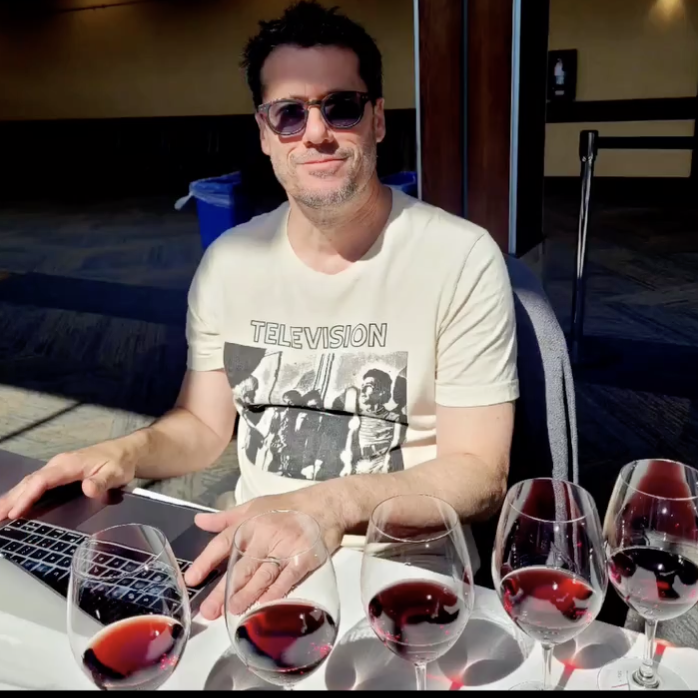
WineAlign

Twenty-one Canadian wines that rocked in 2021

Another year comes to a close, one filled with the dark moments and the light, the romantic entanglements and debacles, highs and lows. In life, love and wine, here with any reference to a gesture, gaze, smile or any other sensory reaction coming from an account of someone who witnessed it. In this particular case that would be Godello and much of what he saw and heard included odd little episodes that reveal how grapes really lived under the conditions of not only this vintage, but also the ones that came before. This ninth edition of 21 Canadian wines that rocked in 2021 comes out as a derivative, spin-off and postscript to all of this.

Godello in the Similkameen Valley

Related – Twenty Canadian wines that rocked in 2020

As a reminder, year-end lists are a matter of personal fascination and should be met with a certain level of judgement so that highly subjective descriptors such as “best” or “most” can be consumed with doubt, thoughts askance and even heated moments of disbelief. That which makes us feel moved, stirred, excited, ignited and set aflame could very well be someone else’s nothingness. Classification, indexing and charting is truly personal and as such opens up wide for criticism and hopefully, healthy debate. So keep it real but also civil, if you please.

Related – Nineteen Canadian wines that rocked in 2019

If we thought the 12 months that made up the 2020 calendar took things deep into the arena of the unfathomable and the absurd, then 2021 left the stadium and flew into the stratosphere of the preposterous. One silly year led to another but this one just seems to be concluding with some sort of level best described as fraught with “Vonnegutian violence.” Thank goodness there is Canadian wine to fall back onto and though it has been said before, this was indeed the very best year for the local stuff. A 2021 from which the highest to date level of greatness was achieved. Though these holidays are bittersweet and conditioned with some great unknowns, take solace in Canadian wine and what can be learned from their progression, evolution and continued excellence. They never give in or up but always strive forward, getting better all the time. To quote and then paraphrase from Britt Daniel and his band Spoon, “when you think your thoughts be sure that they are sweet ones. Don’t you know, love, you’re alright…don’t you know your (glass) awaits and now it’s time for (tasting).”

Related – Godello’s 24-hour Nova Scotia revival

This latest rocking roster of Canadian made wine is now the ninth annual for an exercise that first began back in 2013. When 2022 comes to a close the 10th will come to fruition in print, with 22 of Canada’s best laid to order. In 2021 Canadian wines were made available at every turn, especially at the WineAlign tasting table. In July the WineAlign critics’ crü took in Niagara for a pseudo-i4C 2021 Cool Chardonnay weekend. Godello made his own way to Nova Scotia in September to meet with and taste alongside eight of that province’s great winemaking teams. In October the WineAlign judging cartel sat through more than 2,000 entries at the National Wine Awards of Canada in the Okanagan Valley. Events such as the VQA Oyster competition, Somewhereness and Terroir Symposium were still no shows, or gos, nor walk-around tastings neither. Once again sad to miss Tony Aspler’s Ontario Wine Awards and David Lawrason’s Great Canadian Kitchen Party, the artist formerly known as Gold Medal Plates. Here’s to hoping 2022 will finally usher in a return to assessing and celebrating together.

Related – Niagara’s cool for chards

As per previous incarnations of this annual compendium, “the numbers chosen to cant, recant and decant excellence in Canadian wine continue to march ahead, as promised by the annual billing. In 2019 the list counted 19. In 2018 there were 18 and in 2017, 17 noted. In 2016 that meant 16 and 15 for 2015, just as in 2014 the filtered list showed 14, after  13 for 2013. Last year? You would be correct if you guessed 20. “Whence comes the sense of wonder we perceive when we encounter certain bottles of art?” Note that a third of the 21 most exciting Canadian wines of 2021 are in sparkling form. Does that need to be qualified? Of course not. Godello gives you twenty-one Canadian wines that rocked in 2021.

13th Street Premier Cuvée Sparkling 2015, Traditional Method, VQA Niagara Peninsula, Ontario

Racy sparkling wine of traditional ways, dry, toasty and of great vigour. Top notch autolysis, fine lees and guesses to the end would have to be in the 48-plus month arena. The real deal, richly rendered, acids in charge, instructive and carrying the fruit to the mountain’s peak. Hard to top this in Canada. Drink 2021-2027.  Tasted blind at NWAC2021, October 2021

Avondale Sky Winery Méthode Traditionelle Blanc De Noir 2013, Nova Scotia

While Ben Swetnam had wanted to dabble in sparkling going back to 2009 he can thank everyone in the Nova Scotia industry for showing him the ropes. That includes Gina Haverstock at Gaspereau, Bruce Ewart at L’Acadie, Simon Rafuse at Blomidon, Jean-Benoit Deslauriers at Benjamin Bridge and others. The 2011 would have been the first vintage of pinot noir production with the intent of making sparkling wine, of hot to cool years and all others in between. Dijon clones and a warmer edge of a ’13 season, a riper style but brought in at classic sparkling numbers, acids 11-12.5 and brix 17-19, picking in the third week of October. An early vintage. Intensity meets richness halfway there, fruit flavours are exceptional, just shy of eight years on lees, disgorged three months ago. “For the pinot I always wanted to do a minimum five years and the acidity was always there,” tells Ben. “The tertiary qualities were not out yet so the pause every six months kept the decisions at bay.” Got this apricot chanterelle fungi character, mousse and bubble are really in tact, dosage is 7.5 g/L almost fully hidden by that Nova Scotia acidity. There is something about this sight that maintains higher acidity levels while sugars rise but as an example perhaps it’s the gypsum based soil underneath the whole vineyard, or the tidal rivers and the specific diurnal fluctuations, cooler at night and “it’s something we can always rely on, in every year, that backbone of acidity.” So very Nova Scotia. Usually 500 bottles produced per year. Drink 2021-2027.  Tasted August 2021

Benjamin Bridge Méthode Classique Brut Rosé 2017, Nova Scotia

One of the first wines to come to the surface with Pascal Agrapart’s involvement with winemakers Jean-Benoit Deslauriers and Alex Morozov. When tasted the sentiment was that this particular vintage of this very particular sparkling wine was not yet there yet in terms of readiness or rather publicizing but truth be told, never have texture and acids come together as one in a BB Rosé. Crunch and chew, riff and rise, bellow and beauty, all despite the spiralling zeitgeist that underscores its urgency. Drink 2022-2027.  Tasted August 2021

Blomidon Estate Winery Méthode Traditionelle Blanc De Noirs 2016, Nova Scotia

Give or take 76 per cent pinot noir and 24 meunier, a similar vintage to 2015 (though a touch warmer) and here picked on the 17th of November. Almost all from Woodside Vineyard and some meunier off of the Blomidon estate vines, no longer here. Disgorged today, yes today and my oh my the potential here elevates to a very high ceiling. Just under 6 g/L RS so exactly extra brut, really primary but with the dosage that will arrive before you know it. The pinot delivers more fruit than the chardonnay, perhaps a counterintuitive concept but that’s Nova Scotia. And every vintage will flip the head and make you think again. Small lot, 50 cases or so. Searing succulence, a structural richness and transformative beyond the complex, curious and interesting. Assiduous if conceited blanc de noirs, pejorative to chardonnay, entangled inside enigma, mystery and riddle. Literally. Drink 2022-2027.  Tasted August 2021

Blue Mountain Blanc De Blancs R.D. 2012, VQA Okanagan Valley, British Columbia

A varietal estate grown chardonnay that spent upwards of 78 months sur lie is nothing short of dramatic, if not unconscionable. Not that no one else, anywhere else does such a thing but to do so, change so little and deliver unquestionable excellence is what dreams, expression and delivery are all about. If the Brut Reserve is Fillmore East than this Blanc de Blancs is Montreux, electric, mind-bending and so very exotique. João Gilberto, Marvin Gaye and Lou Reed wrapped into one, a sparkling wine of influence that only incidentally expands into mainstream visibility. This has stage presence and breaks fresh ground with creative sensibility, not to mention a deliciousness of flavour and mousse. That and 2012 in pocket permanently affixed to to the album cover. Drink 2021-2029.  Tasted March 2021

Henry Of Pelham Estate Winery Cuvée Catharine Centenary Estate Blanc De Blanc 2010, VQA Short Hills Bench, Ontario

As a reminder this top H of P traditional method sparkling wine is named after Catharine Smith, Henry of Pelham’s wife and this Centenary is the crème de la crème for the label. A rarity for the estate and for Canadian wine, partially (20 per cent) barrel fermented and aged for up to 100 months on the lees. All Short Hills Bench chardonnay, all in with a hyperbole of toasty development and the most brûlée of any bubble in the village. The sparkling stage presence and prescience of being so connected to grape and place make this true to itself. Not to be missed. Drink 2021-2026.  Tasted December 2021

L’Acadie Vineyards Prestige Brut Estate Méthode Traditionelle 2014, Nova Scotia

Was embargoed until September 9th after having just received the Lieutenant Governor Award. Has evolved into a seriously toasted arena, gone long with lees contact, looking for peaceful co-existence between yeast autolysis and the fruit of the wine. “You don’t want conflict, you want that harmony, tells Bruce Ewart.” Disgorged January 2021 and so spent more than the minimum five years on lees. An insignificant dosage (more than most of these wines). Bruce’s program goes at it in terms of two and five year aging and he believes that while Nova Scotia can do ten or more there is only a minor incremental increase in complexity by doing so. This at six-plus has hit such a sweet spot, still in retention of currant and white/red berry fruit but also low and slow golden, tanned and long as an August afternoon Gaspereau shadow. Drink 2021-2026.  Tasted September 2021

Two Sisters Blanc De Franc 2018, VQA Niagara River, Ontario

Stellar work here in blanc de franc, understated and effusive, lifted of black currants and sweet pepperoncini yet grounded by serious grape tannin. A sparkling wine of grape extract so full of depth and breadth. Not a wine of high autolysis but rather tart, tight and in command of all it wants to be. Last tasted blind at NWAC2021, October 2021.

The third vintage of Adam Pearce’s ground-breaking Blanc de Franc is as you would imagine a white sparkling wine made from the red cabernet franc grape. The aromas are distinct and secure, squarely wrested from the red currant and sweet peppery varietal post, expressed in a uniquely Two Sisters bubble that may once again, or rather should continue to rock one’s world. More richness and also excitement than ever before, risk taken and reward achieved. No acquiescence, no adjacent meanders but head down, goal in sight and hurdles overcome. At the end of the day this is one of the most impressive and essential wines made in Ontario. Nova Scotia is on the franc idea and others locally are beginning to follow. Autolytic and delicious, on point and regal. Drink 2021-2027.  Tasted September 2021

Malivoire Rosé Moira 2020, VQA Beamsville Bench, Niagara Escarpment, Ontario

From vines planted by proprietor Martin Malivoire “close to home” in what is the eponymous vineyard. Moira is a Beamsville Bench icon and has been for quite some time now, without question, nothing to discuss here, case closed. There is a complex and layered developed notation that Vivant does not have, not fort better or worse but Moira requires more thought and consternation. You can no longer think on it in terms of salinity, sapidity and satisfaction. Something more and other must be considered. Style. Style is what separates Moira from most other Ontario Rosé and in 2020 it exudes with prejudice and finesse. When a sip of a wine in this category stays with you for as long as Moira does, well you just know greatness is in the glass. This can saunter with the very best of Southern France. That’s the truth. Kudos to winemaker Shiraz Mottiar for this. Drink 2021-2025.  Tasted April 2021

Martin’s Lane Riesling Fritzi’s Vineyard 2018, BC VQA Okanagan Valley, British Columbia

Shane Munn’s riesling from the volcanic, clay and white quarts Fritzi’s Vineyard continues to get better, all the while with a wine he seems to do less and less to try and control. Must be the place and the fruit from this 21 year-old block (as of this 2018 vintage) seeking a 48 hour skin-contact for oxidatively handled juice. Pressed once, lightly and so softly treated, then transferred to German casks where it stays for up to eight months. Just bloody delicious, hard to not conjure a frothie for this freshest of phenolic rieslings, which incidentally was only sulphured once, four months into the trek. Walks about from grippy to lovely and back again, with silk stops along the way. Will shine brightest two years from now. Drink 2023-2029.  Tasted twice, October and December 2021

A really creative sémillon, rich, creamy and fulsome which is classic Mt. Boucherie while never abandoning the grape’s pointed and intense linearity. Hard not to be impressed by the soil intendment and how it creates a backbone in the wine, beyond acidity and into something sarsen-like, upright, timeless, forever. Plenty of grip, essential elements, minerals and metallics. Keeps the sémillon sensibility alive of an unconquerable nature, varietal invictus, solid construct but with more than ample fruit. Convincing follow-up to 2019 and really quite on par in every respect. Drink 2021-2025.  Tasted October 2021

Closson Chase South Clos Chardonnay 2019, VQA Prince Edward County, Ontario

Notable reduction marks South Clos’ youthful entry and with that first nose in the glass we are put on immediate notice that 2019 will be a structured year for winemaker Keith Tyers’ and Closson Chase’s chardonnay. This and the following vintage will trade blows for bragging rights, longevity and excellence, so pay attention to this pool of varietal estate wines. That is something CC so generously affords their customers. Here at the top level the fruit is glorious, pristine, pure and cut by diamond clarity. The reduction flies away and a nose of marzipan, lemon preserve and a fresh bitten Ida Red apple come away from the vineyard. Acids here are tight, crunchy, friable, felt from the tongue’s tip to the wisdoms. The liquidity is so finely chalky with all signs pointing to spirit and balance with that ’19 crop of South Clos fruit at the core. Does not get much better from PEC, Ontario or Canada. Anywhere. Drink 2022-2028.  Tasted October 2021

Hidden Bench Chardonnay Felseck Vineyard 2019, VQA Beamsville Bench

Tasted as part of an #14c21 seven year vertical Felseck Vineyard retrospective. No stirring, “I don’t like bâtonnage,” tells winemaker Jay Johnston, “unless I’m trying to get a wine to dry.” Never mind the lees aeration or the emulsification because texture in this ’19 is extraordinary to behold, gliding across the palate with Bench orchard fruit cleverness, penetrating perspicacity and juices running through unblemished flesh. Tighter and taut than ’18, while seemingly improbable but here yet unwound, far from the pinnacle at which point full expression will surely ache to be. The ’18 may be a beautiful thing but the ’19 is structured, manifold in destiny and ideal for those who know, or at least think they do. Drink 2023-2030.  Tasted July 2021

Lightfoot And Wolfville Ancienne Chardonnay 2018, Annapolis Valley, Nova Scotia

Frost year for the valley but again an escape by the vines at Lightfoot & Wolfville with thanks to the tidal influence to keep the chardonnay vines happy, healthy and secure. So much fruit and warm summer sunshine, a glade bathed in light and a luminescence rarely found in chardonnay. Consistent L & W elévage, increasingly into puncheons and away from 225L barriques. You can never forget and not remember what chardonnay has done for L & W, while now the richness and restraint work in optimized tandem. Less reductive than previous incantations, with new and improved connotations, consistencies and harmonic sway. Also a matter of vintage and cooperage. Stability is the key to being great. Drink 2022-2026.  Tasted September 2021

Westcott Reserve Chardonnay 2020, VQA Vinemount Ridge, Ontario

Almost seems redundant to say anything about the Reserve from 2020 because what more is there that was not already expounded upon from the Estate chardonnay. Same soft entry, slow developing charm, fruit neither richest nor gregarious but yet in Reserve truly ideal, less variegated and hinting at opulence. That is the crux and the key, hints, in shadows, speculations, possibilities and in Reserve form most surely probabilities. Elevates the crisp crunch and gets real trenchant with the pulverulent and tactile sensations. Seriously credible, professional and still emotive work here from Westcott at the pinnacle of Vinemount Ridge, but also Bench and Escarpment chardonnay. Drink 2022-2027.  Tasted October 2021

The Bachelder Vineyard Map

Bachelder Bai Xu Gamay Noir Niagara Cru 2019, VQA Four Mile Creek, Ontario

Bai Xu is unique within the Bachelder gamay domain encompassing whole cluster ferments and cru investigations. It reminds us all that time and patience are a must, an academic approach is not enough and one must follow their intuition, instinct and heart to deliver appreciated wine. In Niagara the philosophy has merged with gamay in ways the monk could never have known were possible. Here 20 per cent whole cluster may be less than the 22 and 52 crus, but this is a broader matter and one that fruits beyond the Wismer-Foxcroft Vineyard. In a sense, a villages-plus wine (think Côte d’Or) but as a conceptual one. The clarity and slow release of flavour in Bai Xu happens without power, grip or forceful intent. The acidity neither startles nor does it cry out, but instead acts as architect for the infrastructure and the mosaic. Bai (it is presumed) from a Chinese language, meaning “pure,” (depending on the dialect and vowel’s accent) and Xu, “slowly, calmly.” Thomas Bachelder is surely looking for the chaste gamay, unadulterated and one that rushes nowhere, takes the slow and winding path, feet securely on solid ground. More than anything else, this gamay cru won’t chase after what it thinks may make us happy or search for things that deliver one and done, immediate and short-lived excitement. As another one of nature’s mysterious constructs the captured poise and effect make cause for great delight. Drink 2021-2026.  Tasted June 2021

Cloudsley Cellars Cuesta Vineyard Pinot Noir 2018, VQA Twenty Mile Bench

Cuesta as a vineyard has more history behind it than one might have assumed, having been planted back in 2002. Adam Lowy has made 65 cases from Cuesta’s deeply resonant and soulful fruit, so as a consequence given it more new oak (28 per cent) than any of his other three single-vineyard pinot noirs. Clearly the brightest, most tonally effusive and transparent of the quadrangle, as Burgundian as it gets when it comes to mapping or contemplating the connectivity with the mothership. Just a lovely, elegant and sweet-scented pinot noir, classically arranged, scientifically opined and romantically delivered by Lowy’s prudent if so very hopeful elévage. The Côtes de Nuits notation is clearly defined, intuited and understood. Not quite but resembling Marsannay, or perhaps even something just a plot or three further south. Cuesta conduits as the “Robbinsian” one for which “the scientist keeps the romantic honest and the romantic keeps the scientist human.” Drink 2022-2027.  Tasted August 2021

Checkmate Silent Bishop Merlot 2015, BC VQA Okanagan Valley, British Columbia

One of four Checkmate merlots, regional expressions, here a blend of three benches, Osoyoos West, Oliver North and Golden Mile. A Silent Bishop and a merlot are more powerful than those who speak and their ordinations may also be called consecrations. Here the silent 2015 is one that is dedicated, coordinated, devoted and sacred to proprietors, winemaker and place. When a merlot is silent it moves in dynamic tactical effect and like the bishop moving on a position, does not capture or attack an enemy piece. Truth be told this is a stealth merlot, of fruit so dark and mysterious, of structure hidden, enigmatic and prepared to go the distance. Such an efficient wine and the kind to cause a ripple effect. Taste this and you too will want to pursue making profound Okanagan merlot, an endeavour as frustrating as it can be elusive. Drink 2022-2029.  Tasted June 2021

La Stella Maestoso “Solo Merlot” 2017, BC VQA Okanagan Valley, British Columbia

The decision whether to listen to Chopin’s Piano Concerto No.2 or Handel’s Allegro Maestoso (Water Music Suite 2) while tasting and sipping through La Stella’s “Solo” merlot is a difficult one. Less obvious than it might seem and the question is which piece best exemplifies “the highest peak in the crescendo, that moment of realizing you are in the presence of majesty.” Both, to be fair and so I find myself in good ears, and taste by the triad grace of Chopin, Handel and La Stella hands. Let’s revise to encompass all three, in decadence, rolling rhythm and Okanagan Valley merlot-defining precociousness come crashing onto a shore of strings. This is where the maestroso moment happens, in cumulative fruit substance joined by fine acid intensity, wrapped up in structural soundness. All this after a great deal of strong tempo variations which are prominent features in this Severine Pinte interpretation. The instruments are Glacio Fluvial and Fluvial Fan; Clay and Gravel mix, Alluvial deposit and Clay, playing in the orchestra of Osoyoos Lake District and Golden Mile. Support from the Okanagan’s best, written as a top merlot composition and executed flawlessly by the winemaking team. Bravissimo. Drink 2023-2032.  Tasted May 2021

Phantom Creek Phantom Creek Vineyard Cabernet Sauvignon 2017, BC VQA Okanagan Valley, British Columbia

Two weeks later than the usual norm defined the 2017 spring but hot and dry summer weather confirmed the intensity of Phantom Creek Vineyard’s southern Okanagan growing season. The cabernet sauvignon grows on the lower terrace of the Black Sage Bench’s Osoyoos sandy loam and it has been approximately 15 years that these vines have been fostering these wines. Magnanimously ripe and conspicuously copious fruit sees the unabashed generosity of (75 per cent new) French wood in a bone dry, healthy acidity endowed and elevated pH cabernet. This is essential edging up and into quintessential Okanagan varietal chattel, a wine of substance, grip and winched binding, oozing with expensive taste, fine dark chocolate and a depth of fruit that aches to be heard. That will have to wait and so should you because the structural parsimony will need three years or more to release and allow for stretching and breathing room. A prouheze as they say. Drink 2024-2032.  Tasted May 2021

Stag’s Hollow Syrah 2018, BC VQA Okanagan Valley, British Columbia

Roes floral, elegant, ethereal, really effusive and just lovely stuff. Nothing remotely over the top, no blow to the head nor a crashing upon the senses. Sweet acids and silky tannins are the finality in what is clearly generated to conclude upon the notion of a very great wine. Drink 2022-2026.  Tasted blind at NWAC2021, October 2021

Good to go!

godello

Twitter: @mgodello

Instagram: mgodello
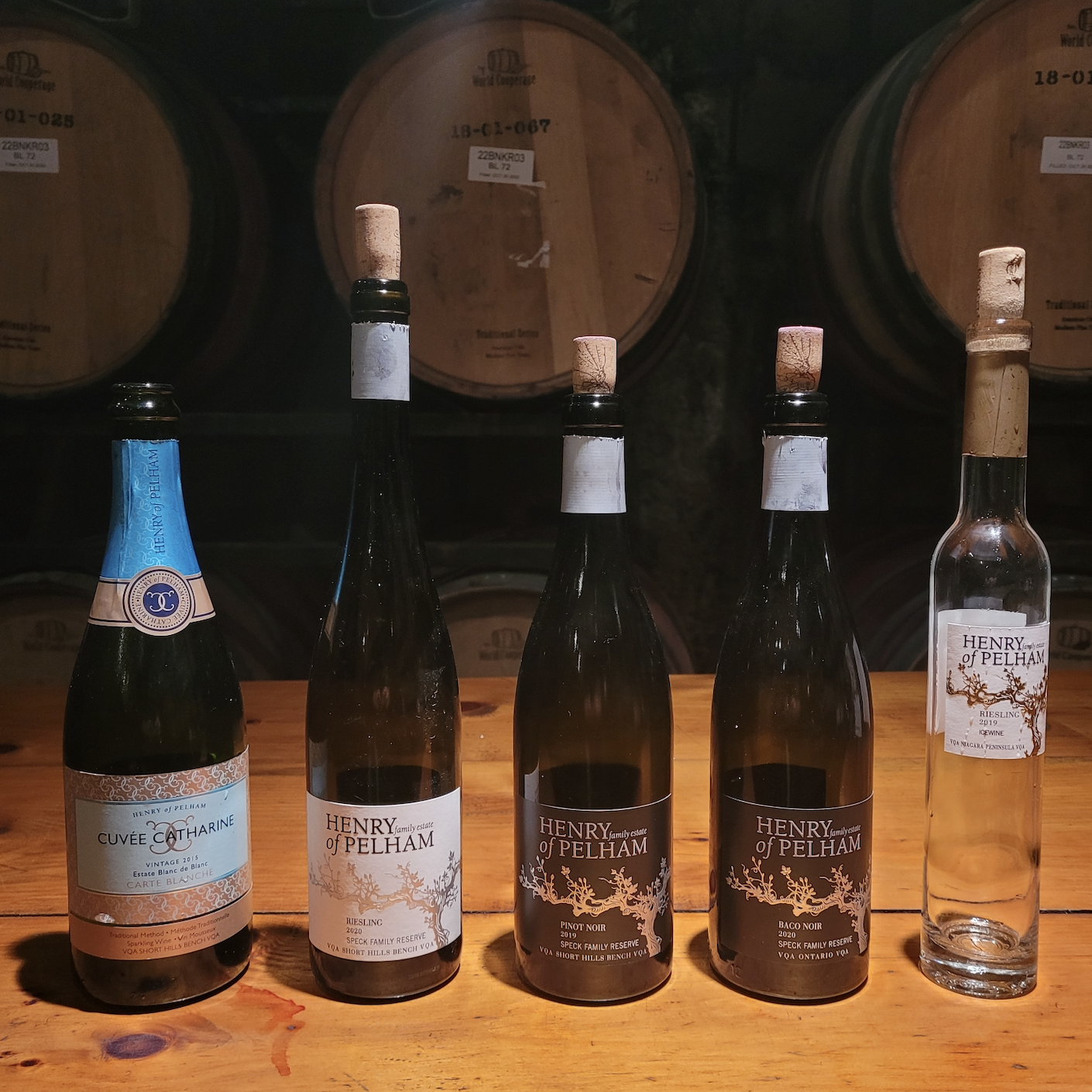
WineAlign

Godello’s Ontario wines playlist

Writing about Canadian wines has been intrinsically inspired by music because quite frankly, one is always connected to the other. The wines of Ontario have always been at the head of this coupling and the relationship is borne more or less of its own accord. Music came first of course because before wine there was this gangly Toronto teenager every Saturday morning at 8:59 am sitting on the curb in front of Vortex Records at Dundas and Mutual Streets waiting for Bert Myers to open his shop so that kid could be the first in. The 1,600 vinyl record collection still gets plenty of spin time, as does Spotify and Google Music. The CDs? Not so much. Invariably a glass of wine is in hand, more often than not with an Ontario VQA designation in tow.

Canadian music has been great for as long as I have been listening. When did Ontario wine get here too, or the question begs, how? Not by virtue of any particular ethos through customs and traditions going back over many generations of wines. No, success and cumulative proficiency exists by dint of these wines without any forced supervision. They are governed by themselves and indeed across the entire industry. Done are the blanketing days of spare and powerful Ontario wines that were often too spare, so that the ribs of tannin showed through in painful obviousness. Today the contigious embracing of cool climate idiosyncrasy, fringe exceptionality and a unique Somewhereness makes Ontario the envy of the developing wine world.

Niagara-on-the-Lake, Ontario

My writing about wine an occupation whose reality is examined to points of madness, of long, run-on sentences, often at odds with grammatical winemaking realism. My tireless, tiring sentences and phrasing can at times offer a feeling that is potentially endless. Often I like my music to be the same in a Genesis-Frank Zappa-Pat Metheny like continuum but that too is changing. The young pop meeting hip-hop stars that my children listen to are growing on me. As are the unknown, the indie and the tireless players. And they need our help. The wineries too. Just ask Neko Case. “For every piece of music you stream/use for free today, please pay for one if you can. Music and art seem as effortless and breathable as air because an army of humans lovingly make it and propel it for the good of all.” Support local and order your next case of wine from an Ontario winery.

Compiling any wine list is never easy. Not when the subject matter is the most fleeting of consumables, a drink ever-changing, almost never tasting the same twice and destined for eventual failure. We know by instinct that wines cast the shadow of their own destruction before them and are designed from the first with an eye to their later existence as ruins. Wine critics can only regard what is in the glass by what sensory enjoyment or displeasure is activated at that exact time. In most cases there are no second chances. Music is different, timeless, often repetitive and can always be given a second chance.

Music and wine can work magic when paired together. Sometimes it’s just a matter of breaking wine down to the base, choosing grapes from places where they are made in straightforward and simply powerful ways. Likewise, clicking an uncomplicated, three-chord arrangement on YouTube or Spotify can really change the outlook of a day. With a glass of wine in hand there’s a familiar internal silence when sublime music plays, is performed, gifted. The following wines combine lyricism with melody. They write the songs.

Sparkling Wine

Ontario’s sparkling wine oeuvre has transformed into something unstoppable, immoveable and utterly impressive. Truly. Examples tend to be sharp, of lean and intense fruit, with more toast and edges than other Canadian counterparts. The climate is ideal for making bubbles of all ilk; traditional method, cuvée close, ancestral, charmat and pétillant naturel, a.k.a. pét-nat. For every occasion and at all times, especially with music blaring, or soothing softly, as you wish. There are no wrong pairings for Ontario sparkling wine.

Hinterland Lacus Pétillant Naturel 2017, VQA Ontario ($24.00)

Hinterland’s Lacus is gamay noir made in a fully accumulated yeasty style, re-fermented in bottle and yet wholly antithetical to the Jonas Newman’s sweeter Ancestral. Lacus could mean “lake” or “cistern,” perhaps in nod to all the meandering, surrounding and irregularly patterned water in the County, or perhaps it might mean “award,” as should be what we all get in tasting this delightful sparkling wine. Different and comforting, textural and exceptional in varietal, land and stylistic usage. Utterly versatile and electric as need be. Elevates pétillant naturel wine into the real world for many to enjoy. Drink 2019-2023.  Tasted June 2019

Pairs with The Tragically Hip’s My Music at Work

Why? The opening lines say it all, for what’s happening today.

Everything is bleak
It’s the middle of the night
You’re all alone and
The dummies might be right
You feel like a jerk
My music at work
My music at work


Henry Of Pelham Cuvée Catharine Carte Blanche Estate Blanc De Blanc 2014, Traditional Method, VQA Short Hills Bench, Niagara Escarpment (315200, $44.95)

The vintage tension is felt right from the aromatic get go and there can be no doubt that you are nosing Niagara’s most accomplished sparkling wine. Lime and wet concrete, fennel pollen and Baked Alaska. All tolled a terrific entry and no downturn into ginger and savoury crème brûlée followed by a moment of silence and contemplation. Use this for all, whenever and wherever. It will work for everyone, including those who will appreciate the faint sweetness to balance the year’s anxieties. Drink 2019-2026.  Tasted November 2019

Pairs with Alessia Cara’s Scars to Your Beautiful

Why? H of P’s Cuvée Catharine is also a wine of hope, youth and beauty. A wine from our very own backyard, just like the the singer from Brampton. The first line helps.

But there’s a hope that’s waiting for you in the dark

Riesling

It seems that in Ontario riesling is perpetually on the rise and the reasons why are as varied as the artistry it’s equipped to display. It has been 40 years since the Pennachetti family of Cave Spring Vineyard and German vintner Herman Weis planted riesling in St. Urban Vineyard on what is now Vineland Estates. My how things have changed. The trending line ascends as the general public comes around and warms to the versatile grape so popularity is not just in the hands of geeks, oenophiles and connoisseurs. Ask your favourite sommelier, product consultant or wine writer. Riesling’s neighbourhood is beginning to gentrify in a big way but it’s also expanding experimental and ancestral horizons. Varietal power, finesse and omniscient existentialism for a signature and singular Ontario purpose is perpetual and unwavering. Versatility goes with eccentric, electric and eclectic tunes so get your funk, funky and funkadelic groove on.

Adamo Estate Riesling Wismer Foxcroft Vineyard 2017, VQA Twenty Mile Bench (11236, $19.95)

Grower’s Series as in purchased fruit raised by serious Ontario grape farmers, in this case the Wismers and their expansive and generous Twenty Mile Bench-Foxcroft Vineyard. In Shauna White’s hands this Wismer fruit is ripe, developed and open-knit for skies the limit flavour potential. Cut your teeth on this juicy somnambulist riesling of citrus, peach, yellow plum and wide-eyed excitement. Drink 2020-2024.  Tasted March 2020

Pairs with The Weeknd’s Blinding Lights

Why? The song is new but timeless, retro, thrown back to the mid 1980s with synth rhythms like Take on Me by A-Ha. Adamo’s riesling sleep walks, blinds us by its light and connects rieslings going back through time to today.

Oh, when I’m like this, you’re the one I trust
Hey, hey, hey

Cave Spring Riesling Adam Steps 2017, VQA Beamsville Bench ($24.95)

Adam Steps is the riesling positioned up the middle lane, with more sugar than the Estate and near equal to CSV, with acidity higher than the former and similar to the latter. It’s the fatter, juicier, more generous one and in many ways much like the Feinherb’s of Germany. This is a very forward vintage with elevated levels of all its typical character, including tropical notes of guava and pineapple. May not be the longest age worthy AS but it is a most pleasing one. Drink 2019-2022.  Tasted February 2019

Pairs with Drake’s Passion Fruit

Why? You might think this would pair better with sauvignon blanc but Adam’s Steps smells just as tropical and well, the first line.

Ayy, y’all get some more drinks goin’ on, I’ll sound a whole lot better

Ravine Vineyard Riesling Patricia’s Block 2018, VQA St David’s Bench ($35.00)

From the botrytis block and you can feel, sense, and taste it very much so in this vintage. This in spite of a 30 per cent number out of a year when humidity and brix did not quite jive in terms of penultimate timing. Tart, leesy and so bloody sensorial. Drink 2019-2021.  Tasted September 2019

Pairs with DJ Shub’s Indomitable

Why? The indigenous electronic music of PowWowStep is so riesling, so Ravine and so Patricia. “I want Canadians to see that pow wow culture is beautiful in both imagery and spirit,” explains DJ Shub. “I also want young Native kids to know that they can find support and happiness in their lives, even if they can’t see it right in front of them.”

Chardonnay

In Ontario, raising chardonnay is about growing grapes and making wines in places previously discounted. There is no secret that Ontario winemakers have worked tirelessly to develop the ability and the acumen to make world-class chardonnay. Always reinventing itself and potential fulfilled, chardonnay, the slow train coming. Few ideals or notions are hotter these days than those relating to cool climate viticulture and the selvage regions from where such wines are produced. As for music and chardonnay? The great singer-songwriters and bands of course; the classics, icons and archetypes.

Westcott Vineyards Estate Chardonnay 2017, VQA Vinemount Ridge (424507, $27.95)

This 2017 from Westcott is really just what you might imagine were you to close your eyes and draw a triangle in your mind from the Vinemount Ridge, to judiciously oaked chardonnay and through to Westcotts’s manifesto. Niagara chardonnay should be about farming and this most certainly is, but also a microcosm of place, again of truth, but like all good, great and ethereal chardonnay must be. The florals are high for the place and the texture like organza, filament and lace. The obtuse vintage be damned it is this team that has found the right path and the way to varietal understanding. This teaches us about the ridges and benches but also about cool climate chardonnay. Thanks for this. Drink 2019-2025.  Tasted October 2019

Pairs with Bruce Cockburn’s Wondering Where the Lions Are

Why? Like the song everyone always wants to hear him play, timeless, so Canadian and one that teaches so much about being us. The dictionary and playlist wrapped into one with a chardonnay that speaks to all of us in a cool climate vernacular.

Sun’s up, mm-hmm, looks okay
The world survives into another day
And I’m thinking ’bout eternity
Some kinda ecstasy got a hold on me

Hidden Bench Estate Chardonnay 2017, VQA Beamsville Bench, Niagara Escarpment (68817, $29.95)

You may consider this 2017 (estate) chardonnay from Hidden Bench the transition, meaning it demarcates the passing of the varietal torch, from Marelize Beyers to Jay Johnston. And indeed there is a little bit of each winemaker’s finesse, grace and cumulative style. Perhaps a step away from richesse with a step forward in structure. That means the linearity and subtlety speaks ahead of the developed flavours and so a longer primary period will allow this to drink consistently for nearly five years. After that it will develop more flint and smoulder, if less golden sunshine richness. These are of course details in minutia and shadows to discover. Drink 2020-2027.  Tasted February 2020

https://www.youtube.com/watch?v=Lin-a2lTelg

Pairs with Leonard Cohen’s Everybody Knows

Why? Everything about Cohen’s music lives in shadows and everybody knows that a Hidden Bench chardonnay does the same. Even if the plague is coming fast, from one great to another, everybody knows.

Everybody knows,
Everybody knows,
That’s how it goes,
Everybody knows

Le Clos Jordanne Le Grand Clos Chardonnay 2017, VQA Niagara Peninsula ($44.95)

Welcome back, to that grand vineyard place that we’ve talked about. Down on the farm near the water where chardonnay was purposed grown and put in the hands of a young Thomas Bachelder. The results were dramatic and now that unparalleled fruit is back in the monk’s world, he wiser and more experienced than ever. The transition is spooky seamless and the awe in hand providing breathtaking posits in moments more than fleeting. Behold the presence of orchards and their just ripened glow of fruit with sheen so fine. Let your glass allow the ease of the aromas and flavours to fall in and emit with conscious movement, without conscience or effort. That’s the 2017 Grand Clos. Chardonnay that is. Drink 2019-2026.  Tasted November 2019

Pairs with Rush’s Limelight

Why? Le Clos Jordanne is back in the limelight and on a literal level, the return of this iconic Ontario chardonnay by Thomas Bachelder is about living as a performer, on a stage, with all eyes upon them. A wine with a higher purpose.

Get on with the fascination
The real relation
The underlying theme

Rosé

Who needs only light, southern French styled Rosé when you can also have full fruit, plenty of colour and a healthy dose of personality? In many cases the nearly pale and vin gris examples still persist and excite but there are those bled and rendered, heavily hued and teeming with fruit. Ontario made Rosé is more diverse, complex and multifarious than ever before. In terms of working for the consumer that means more choice and that’s a beautiful thing. Whether you are making yours to be a crowd pleaser with a heathy dose of residual sugar or dry as the desert, the unequivocal voice of necessary conscience will always whisper “balance in Rosé is key.” Like Canadian music which also pairs well with bottles of blush.

Leaning Post Rosé 2018, VQA Niagara Peninsula ($20.95)

Hmmm…salty. Lovely lithe and spirited Rosé here from the LP boys, redolent of fresh-picked strawberry, Maldon sprinkled and just herbaceous enough to care for signature red grape varieties ideal for the quick, calm and easy blush bleed. The sour edge just adds to the mystique and the by the boatload charm. Just right. Drink 2019-2021.  Tasted February 2019

Pairs with Shawn Mendes’ Stitches

Why? Don’t want to get too serious with Rosé so a little pop music with a slightly salty and bitter sound seems like just the plan.

And now that I’m without your kisses
I’ll be needing stitches

Malivoire Rosé Moira 2019, VQA Beamsville Bench ($24.95)

Production is “as much as I can get from that site,” tells Shiraz Mottiar, so maximum 800 cases. As always the aridity and the salinity continue to rise, the acids, minerality, near brininess and ultimate stoic balance so secure at the top of the game. Such a high acid vintage for everything but certainly that includes Rosé, yet still the least amount of skin-contact of the three Malivoire blush. Acids just don’t correlate to hue and flesh. Thank pH for the needle’s movement in how this translates from vintage to vintage. Drink 2020-2024.  Tasted January 2020

Pairs with Justin Bieber’s Intentions

Why? Moira just gets to me and a glass always leads to creativity. The Ontario Rosé muse unparalleled.

Shout out to your mom and dad for making you
Standing ovation, they did a great job raising you
When I create, you’re my muse
The kind of smile that makes the news

Gamay

Not that there is ever a bad time to partake in the wonders of gamay, but with the mercury rising, spring is the right time to be with the gamay you love. If you’ve never experienced the nuanced pleasure of great gamay, whether it be from Beaujolais in Bourgogne’s southern reaches or from Ontario’s cool-climate hinterlands, its prime time you did. The gamay produced in Ontario can run the gamut from light, fruity and joyful to dark, serious and structured. Winemakers are on their gamay game and the quality has never been better. The kind of songs to match gamay need to exhibit intrinsic purity and also variance so be picky and intentional here.

Château Des Charmes St. David’s Bench Vineyard Gamay Noir Droit 2017, VQA St. David’s Bench, Niagara On The Lake (346742, $19.95)

Quite a reductive and structured gamay with healthy extraction and great vintage fruit. Resides in the black raspberry realm with a balancing sheet of strawberry roll-up. Nothing shy about this, in a ripest of St. David’s Bench vein and so much could be taught about Ontario gamay through the work of this maker. Drink 2019-2023.  Tasted October 2018 and March 2020

Pairs with Neil Young’s Homegrown

Why? Both Château Des Charmes and gamay strike me as the epitome of homegrown and the St. David’s Bench estate is simply the Neil Young of Ontario.

Homegrown’s
All right with me
Homegrown
Is the way it should be
Homegrown
Is a good thing
Plant that bell
And let it ring

Stratus Gamay 2017, VQA Niagara On The Lake ($29.20)

Gamay gets neither more ripe nor extracted in Ontario and yet there’s a step back dance grace about this singular ’17. If ever the word Cru might come to mind when nosing and tasting local gamay this would be one, specific to a time and a place. Wild cherry, black cherry and concentrated cherry syrup are the big, bigger and biggest attributes, all cut through by a knife’s edge acidity. Wild gamay of grip, with very good length. Drink 2019-2023.  Tasted February 2019

Pairs with Robbie Robertson’s I Hear You Paint Houses

Why? To be honest lyrically this song has nothing to do with Stratus or gamay but it features Van Morrison and that’s pretty much the reason. Robbie and Van together is like Stratus and gamay.

I hear you paint houses
Right down to the wire

Pinot Noir

Thoughts about pinot noir always articulate an opinion. Smells like cherries, shows earth and mineral notes of/from clay and limestone. Texture is specific to the village where it is grown. In Ontario there are pinot noir crus few would ague against the probability that in most vintages quality will be a guarantee. Crus like Lowrey Vineyard on the St. David’s Bench, top blocks in Prince Edward County, several vineyards up on the Beamsville Bench, Wismer-Foxcroft, much of the Twenty Mile Bench and Four Mile Creek. The naysayers who continue to doubt whether pinot noir is a viable signature grape in this province are not paying close enough attention to the signs, portents and in conclusion, the results. As for the songs it plays and sings? Gotta be both old and new, retro and still avant-garde, crooning while ambient, poppy yet just a bit unusual and always stuck in your head.

Inniskillin Montague Vineyard Pinot Noir 2017, VQA Four Mile Creek, Niagara Peninsula ($30.95)

From a vintage both turned on and stood on its head with cool and wet summer conditions followed by unprecedented heat in September. The resulting look at pinot noir means strawberry like you’ve never noted before and Montague’s certainly jamming with concentration. Sweet fruit carries just enough varietal tension and depth to keep it grounded in the clay-earthy realities of Niagara. Not like Montague’s past perhaps but great fun nonetheless. Drink 2019-2023.  Tasted November 2019

Pairs with City and Colour’s Hope for Now

Why? Dallas Green’s voice, of sweet tension, like Ontario pinot noir and Montague’s clay-earthy reality.

What will it take to live as if I would not another day?
To live without despair, and to be without disdain
How can I instill such hope, but be left with none of my own?
What if I could sing just one song and it might save somebody’s life?

Rosehall Run JCR Pinot Noir 2017, VQA Prince Edward County ($39.00)

A bit high-toned, magically spirited and rebelliously volatile. Earthy and lithe in fruit though quite raspberry-pomegranate and exciting for those who like it not only lightning searing, but intensely meaningful. Hard not quiver with impatience at the thought of this treat before me and what such a singular pinot noir will become when it matures. Drink 2019-2023.  Tasted blind at NWAC19, June 2019

Pairs with Joni Mitchell’s A Case of You

Why? PEC pinot noir, this vineyard and that winemaker. Musically structured like a song from Blue, chord and tempo changes, magically spirited and intensely meaningful. Thank you Dan Sullivan.

You taste so bitter
And so sweet, oh
I could drink a case of you darling, and I would
Still be on my feet

Congrats to Cliff and Colin @stannerswines for their The Narrow Rows Pinot Noir 2017 Gold Medal performance @judgement.of.kingston 2019. We the judges deliberated long and with great care to come to this well-deserved conclusion.

Stanners Vineyard Pinot Noir The Narrow Rows 2017, VQA Prince Edward County

A super-saturated, honed and zeroed in upon place in a vineyard ripeness with a touch foxiness. Reality from limestone bled into fruit wavering on a spectrum where berry fruit

sits on one end and earthy beetroot all the way over on the other. Touches both and then properly meets in the middle. Cherries are red, herbs are green and tension stretches a wire between two poles. Tomato water and tomato leaf with fresh basil. That’s just matter of fact and a good struck balance in combination. You almost feel it’s at once too ripe and then a bit green but those moments are fleeting and so the summation in accumulation is the thing; must, seeds, stems and the work of kind, nurturing and gentle hands add up to great delicacy. It’s local and it’s so bloody good. Delicious even. Unlike any pinot noir ever made previously in Ontario. Drink 2019-2023.  Tasted blind at the Judgement of Kingston, November 2019

Pairs with Ron Sexsmith’s Gold in Them Hills

Why? Pinot is a song of hope, crooned by a Canadian treasure. Colin Stanners may as well be the Ron Sexsmith of Prince Edward County, shy and brilliant, reserved and funny.

But maybe it’s the perfect day
Even though the bills are piling

There’s gold in them hills
So don’t lose heart
Give the day a chance to start

Cabernet Franc

At the brazen and confident right of Ontario’s most important varietal reds is cabernet franc, a Bordelais grape that paints a more palatable picture than those brushed by both merlot and cabernet sauvignon. Transparently honest and forthright by nature, brassy and highly energetic, righteously indignant like a young band with a big sound and no shortage of swagger. Frank Ontario red, frankly speaking.

Tawse Natural Wine Cabernet Franc Redfoot Vineyard 2018, VQA Lincoln Lakeshore, Niagara Peninsula ($28.95)

There’s a symmetry in this cabernet franc and as it is the natural one in the Tawse stable, it’s actually the connection between vineyard and varietal that brings about the a ha moment. Redfoot has to date been the gamay block for natural executions and cabernet franc has been a Laundry Vineyard affair. The dots are connected through the Lincoln Lakeshore lexicon from one to the next, first in grape and then in winemaking, or lack thereof. This Vin Nature is both the least “natural” of all the Tawse tries while at the same time most like the Laundrys of past vintages, though it’s really somewhere in the circulative middle of a stylistic that includes the Grower’s Blend. In fact there’s no great departure from those cabernet francs so why not make them all this way? If the results are same dark fruit, same blushing acidity, same piquancy, same herbal undertones and nearly the same clarity of structure, why not risk it across the board? Could drink this with abandon. Drink 2019-2022.  Tasted September 2019

Pairs with The Arkells Knocking at the Door

Why? “There’s a fearlessness to it that I think a lot of sports fans and teams want to feel,” said frontman Max Kerman. The song has been anthemic at hockey games and women’s marches. Paul Pender’s natural wines do something eerily similar and reach a very large audience.

That’s me, I’m knockin’ at the door
I’m thirsty
For more, for more, for more
That’s me, I’m knockin’ at the door
I’m knockin’ at the door
That’s me

Southbrook Saunders Vineyard Cabernet Franc 2018, Beamsville Bench, Niagara Peninsula ($28.95)

Nothing if not classic Bench-raised cabernet franc with crunchy fruit, dark red and savoury plus that unmistakeable current of dark currant and capsicum. There’s no mistaking the origin or the execution, nor the varietal expressiveness. Transparent, honest, real and blessed of so much purposeful character. May not charm everyone from the word go but a couple of years will sort them out. Drink 2020-2024.  Tasted December 2019

Pairs with Arcade Fire’s The Suburbs

Why? The bounce in this song reminds of cabernet franc’s varietal dance, crunchy, savoury and honest. That’s just how Ann Sperling interprets fruit from Saunders Vineyard, tripping over piano keys and a background of strings making ambient sounds, rising to a crescendo.

Sometimes I can’t believe it
I’m moving past the feeling
Sometimes I can’t believe it
I’m moving past the feeling again

Good to go!

godello

Twitter: @mgodello

Instagram: mgodello

WineAlign

Gold Medal Plates Toronto 2017

Go Time @GoldMedalPlates Toronto #gmp2017

It was my fourth Gold Medal Plates Toronto as wine judge, culinary taster and olympic athlete groupie. In 2014 WineAlign partner, colleague, mentor and friend David Lawrason invited me to join the festivities and help decide which three wines should be crowned Gold, Silver and Bronze. Two weeks ago a panel of Ontario wine experts tasted, assessed, debated, deliberated and ultimately decided this year’s top three. David Lawrason, John Szabo M.S., Michael Vaughan, Margaret Swaine and Godello. The winner ran away from the pack but two through six were separated by one point increments. It was a photo finish for Silver and Bronze.

The 2017 Toronto event featured emcee Scott Russell of the CBC’s Olympic coverage. Russell was joined by dozens of Olympic medallists and future hopefuls. Blue Rodeo’s Jim Cuddy led the on-stage entertainment; Anne Lindsay, Danny Michel, Jeremy Fisher, Devin Cuddy and Sam Polley. The inimitable and eloquent James Chatto was once again at the head and the heart of the culinary judging panel with seats occupied by an illustrious five; Sasha Chapman, Anita Stewart,  Christine Cushing, Amy Rosen and Chef John Higgins.

Gold Medal Plates Toronto 2014

For a little bit of GMP history please click on this post I penned after that 2014 gala event. The culinary winners then were Gold Medal Plates Toronto 2014 bronze, gold and silver medal winning chefs Damon Campbell, John Horne and Jason Bangerter. The top three wines were Norman Hardie‘s Niagara Unfiltered Pinot Noir 2011, Hidden Bench Nuit Blanche Rosomel Vineyard 2012 and Creekside Estate‘s Iconoclast Syrah 2012. But what about 2017? My top seven in no particular order were Flat Rock Cellars Riesling Nadja’s Vineyard 2016, Ravine Vineyard Chardonnay Reserve 2014, Charles Baker Riesling B-Side 2016, Henry of Pelham Cuvée Catherine Brut Rosé, Stratus White 2013, Leaning Post Chardonnay ‘The Fifty’ 2015 and Tawse Chardonnay Quarry Road 2013. The actual medalists are listed below in David’s report.

National Wine Advisor David Lawrason’s Wine and Spirits Report

Nadja’s Tops a Bounty of Great Whites in Toronto

“The Gold Medal Plates campaign came to a booming 800-person conclusion at Toronto Convention Centre on November 16, and it included the largest selection of wines seen in any stop on the ten-city national tour.  We judged 26 donated wines, beers, spirits and even a lavender mead, but it was a core of great Canadian white wines that caused the most excitement, and produced the winner of the evening.

The “Best of Show” Gold Medal went, by a very clear margin, to Flat Rock Cellars 2016 Nadja’s Riesling, from a single block of maturing vines in Niagara’s Twenty Mile Bench appellation. I was personally stunned by just how delicious, well-balanced and nuanced this wine is – in my mind it is the best vintage of “Nadja’s” ever produced.  Other judges agreed – we all placed it as either our first or second choice.  This beauty also took a rare Platinum Medal at 2017 National Wine Awards.

It will go on to compete for Gold Medal Plates Wine of the Year at the Canadian Culinary Championships in Kelowna in February, and it appears there will be a riesling showdown, as it will be tasted against rieslings from Tantalus, Cave Spring and Norman Hardie, plus six other wines.

For second and third place the voting in Toronto was more varied, and only one point separated the second, third and fourth place wines.  The Silver Medal went to Mission Hill 2015 Merlot Reserve, a swarthy, plummy and ripe red from the Okanagan Valley.  And the bronze medal went to Henry of Pelham Cuvee Catharine Brut Rose, a delicate refined pink sparkler with subtle berry aromas.

In very close 4th place came Tawse 2013 Quarry Road Chardonnay from Niagara’s Vinemount Ridge sub-appellation. I have become very familiar with this solid, complex Burgundian chardonnay as it was generously donated by Tawse to the Celebration in three cities this year. It was also a Platinum Award winner at the 2107 WineAlign National Wine Awards of Canada.

Tawse was one of three Gold Level sponsors. Mission Hill was a national sponsor as well, donating a variety Reserve wines to seven city events across the country, and stepping even higher in Toronto with smaller donations of their more expensive “Legacy tier” red Compendium 2013 and Perpetua 2015 Chardonnay.

Arterra Wines, the recently re-named company with several wineries in Canada, was a gold sponsor donating to six cities.  In Toronto there was a selection of reserve whites and reds from Jackson-Triggs and Inniskillin, as well as a rare public showing of the new Arterra 2016 Chardonnay and Arterra 2016 Pinot Noir.

Toronto’s Silver Sponsor also donated to Ottawa. Cave Spring of Niagara donated their 2015 Cabernet Franc.  Although better known as a riesling producer, Cave Spring is doubling down on its efforts to produce fine reds from Ontario’s most widely grown grape.

Flat Rock Cellars was one two Bronze level sponsors for the Toronto event, providing Nadja’s riesling for the VIP Reception and Celebration tables. The other was Henry of Pelham, which split their donation between the 2016 Old Vines Baco Noir and yet another strong 2016 Estate Riesling.

Among other notable and high calibre wines donated to the chefs, I gave my first-place vote to Stratus 2013 White, a very complex, now maturing, barrel aged blend of several white varieties. Ravine 2014 Chardonnay Reserve, another power white, also earned top-five votes.  Leaning Post 2015 Mile 50 Chardonnay was a leaner style that paired well with Gold Medal Plates Chef Lorenzo Loseto’s winning dish.  And riesling specialist Charles Baker chose the occasion to show his new, bracing B-Side Riesling.

Interestingly, no red wines were paired with chef’s creations this year, but there were two ciders, including the fine, crisp Brickworks CiderHouse Batch 1904 and a lighter cider called Pick Up 66 from Hoity Toity Cellars. Rosewood Cellars donated their exotic, fragrant Lavellener Lavender Mead, and Zirkova Vodka set up shop during the VIP Reception to sample Zirkova One, a vodka designed to be drunk “neat” and Together a version designed for cocktails.

The Best of Show judging is held prior to each event, as way to highlight the generous donation of beverage by Canada’s wineries, brewers and distillers.  In Toronto I assembled four wine pros/sommeliers.  Three are amigos at WineAlign.com and two are judges at the National Wine Awards of Canada; including Master Sommelier John Szabo, and wordsmith extraordinaire and former chef Michael Godel.  Margaret Swaine is a veteran wine and travel writer, and the spirits columnist at WineAlign.  Michael Vaughan publishes Vintages Assessments, a detailed critique of every wine released by the LCBOs Vintages stores.”

Chef Lorenzo Loseto’s @GoldMedalPlates winning dish @georgeonqueen paired by @brieish with @leaningpostwine The Fifty Chardonnay 2015. Congratulations Chef and the entire team.

Culinary Medals

Gold

Lorenzo Loseto
George Restaurant

Pairing: Leaning Post Wines, 2015 ‘The Fifty’

Silver

David Lee
Nota Bene

Pairing: Brickworks Ciderhouse, Batch: 1904

Bronze

Jesse Vallins
Maple Leaf Tavern/PORT

Pairing: Tooth & Nail Brewing Company, AGRARIA Modern Farmhouse Ale

Nota Bene’s David Lee

Here are my tasting notes for the 20 wines entered at Gold Medal Plates 2017.

Henry Of Pelham Family Estate Winery Cuvée Catharine Brut Rosé, VQA Niagara Peninsula, Ontario (217505, $29.95, WineAlign)

A whole new base, a whole new wine, the departure point exacted by a new wisdom and understanding. But it’s somehow like looking in the mirror, reviving a good memory, going back to wine childhood. Consistency is your friend with non-vintage fizz and the Catherine(s) are the undisputed leader in the Ontario biz. Brings back the Niagara orchard of a take your pick red apple, lovely creamy texture, a mild blanch of nut and fresh baked bread. Terrific class and of its own accord. Drink 2017-2021.  Last tasted at Gold Medal Plates Toronto, November 2017

With its fine, strawberry mousse is at the head of its Ontario class. Vanilla, Ida Red apple and bitter nut combine like a smooth, creamy, Mediterranean spread to dip the warmest, fresh-baked bread.  Tasted December 2012

Henry Of Pelham Riesling Estate 2016, VQA Short Hills Bench, Niagara Peninsula, Ontario (557165, $17.95, WineAlign)

A rash of aromatics straight away and marked warmth verging to humidity. More weight, substance and depth than most vintages deal when youth is the tempo so this riesling plays the notes and the hand quick after the draw. What you nose, taste and feel is what you get, with lime, gassing up to petrol quickly and flavours already in developing mode. Five years of riesling together for the best of times, from beginning to end. Drink 2017-2021.  Tasted November 2017

Charles Baker Riesling B-Side 2016, VQA Niagara Peninsula, Ontario (Winery, $22.00, WineAlign)

Vinyl records sound different because they are designed with grooves carved in that mirrors the original sound’s wave form. Their analog recording delivers a sensory feeling of warmth, an aural of texture, nuance and soul. There was a time when the hits spun over and over were also pressed onto the A-Side of 45 rpm singles. The discovery of a never before heard B-Side was a revelation because is was extra material from a favourite band and it was a great song. It meant the record was already too strong for that song to make the final cut and to choose it for a B-Side meant it would elevate the quality of the album. A well-chosen B was not an afterthought. This is the accomplishment of the first Charles Baker’s B-Side, for itself and for the vineyards of Ian and Picone. Baker digs about in the Niagara Peninsula’s escarpment dirt for young vine, not ready for prime time riesling fruit. If perchance it seems like cheating on his per se Vinemount Ridge Picone and Ivan bottles so be it but one look at him and he’ll say “Hey, hey, what can I do?” His 2016 B-Side delivers a spray bottle Zeppelin expressing heady aromas, high in the stratosphere and raining down upon the earth. The notes are an all in, breath of classic Baker riesling air, blanketing from up above and with a landscape that reeks of lime and quivers with classic agitation. The fruit is wild and full, the salty grit infiltrating and gripping the bloody omniscience of this package. What is this B-Side and where will it be lead? To the top of the ridge, from earlier harvests, younger fruit and higher yields. Scratch the single vineyard elitism, just listen to the song and raise one up, to getting ‘er done before the conceptual singular side one and side two, Ivan and Picone. The Beatles? Forget it. Led’s flip side to the ‘Immigrant Song’ A is the one. Drink 2017-2021. Tasted November 2017

Flat Rock Riesling Nadja’s Vineyard 2016, VQA Twenty Mile Bench, Niagara Escarpment, Ontario (578625, $24.95, WineAlign)

Nadja, like the Bréton novel begins with the question, “Who am I?” A surrealistic trigger is incited by the first taste, with excitement running in many directions but like the book, Nadja’s non-linear structure is grounded in Twenty Mile Bench riesling reality. She is an elite varietal wine in 2016, excitable girl, gregarious, punchy and so bloody juicy. I don’t recall the last Nadja with so much up front zest fervency and writhing aromatic gait, “exploding international, the scenes, the sounds, and famously the feeling that you can’t squeeze ground.” The lime flesh and cordial infusion brings the flavours into a once tropical, twice bitten realm. The vintage delivers the electric version, the new pornographer for the vineyard and the song sung loud swan song for departing winemaker Jay Johnstone. Was it all for swinging you around? Drink 2017-2024.  Tasted October 2017

Jackson Triggs Niagara Estate Sauvignon Blanc Grand Reserve 2015, VQA Niagara Peninsula, Ontario ($19.95, WineAlign)

Arterra’s JT sauvignon blanc is youthful and even a bit reductive, with wood notable and a real sauvignon blanc pungency. Its character and a bit of risk are tied up in the aromatics though it settles for mild-mannered and middle of the road on the palate. Drink 2017-2020.  Tasted November 2017

Mission Hill Family Pinot Gris Reserve 2016, BC VQA Okanagan Valley, British Columbia (537076, $24.95, WineAlign)

Reserved to be sure and also still in pulse mode, with some tongue pin-pricking, not quite effervescent but moving in time. A bit of skin-contact hue and plenty of orchard fruit notes are present in both aromas and flavours. Solid gris that will improve in six months or so. Drink 2018-2021.  Tasted November 2017

Inniskillin Okanagan Pinot Gris Reserve 2016, BC VQA Okanagan Valley, British Columbia ($19.99, WineAlign)

Noticeable skin-directed hue, chalky to soapy, with a taste that reminds of Topps hockey card bubble gum. Childhood memory revisited in pinot gris. Drink 2017-2018.  Tasted November 2017

Arterra Chardonnay 2016, VQA Niagara Peninsula, Ontario  (Winery, $25.00, WineAlign)

Arterra’s chardonnay comes from a famous Peninsula source, formerly made into just as famous wines by Le Clos Jordanne The site is on the Escarpment’s Bench above Jordan Village and this is the second vintage at the hands of Jackson-Triggs winemaker Marco Piccoli. Picks up where the fine and ambitious first vintage in 2015 left off but here with some light strike and reduction. You can just feel the buttered toast and kernels behind the flinty curtain, with blanched nut and some fine elasticity. Will benefit from a few more months in bottle to gather thoughts and flavours. Drink 2018-2021.  Tasted November 2017

Leaning Post Chardonnay ‘The Fifty’ 2015, VQA Ontario (Winery, $25.00, WineAlign)

This is chardonnay that had a cup of coffee in the big leagues and was then moved to the fresh confines of stainless steel tanks soon after its 15 minutes of barrel fame. It’s a unique chardonnay specimen this Fifty, barrel fermented but not aged, a wine crafted with pragmatic reverse psychology so that it may solicit great appeal. If you’ve never tasted Ilya Senchuk’s entry-level foray into Peninsula chardonnay you’ve been missing out, but by starting here in 2015 there is certainly no harm, no foul. This is the most pleasing and palatable Fifty so far, barrel creamy, suety and magically malolactic on the nose. The flavours are cooler, of an anti-Senchuk subtlety and versatile food amenability. I can think of 50 reasons to pour this by the glass, at home, on a restaurant list or on a campsite under the stars. Drink 2017-2020.  Tasted April 2017

Ravine Vineyard Chardonnay Reserve 2014, VQA St. David’s Bench, Ontario (Winery, $55.00, WineAlign)

The Reserve is 100 per cent estate fruit that spent 18 months in (50 per cent new) barrel. As it’s both barrel fermented and aged the variegation locks the fruit in so bloody tight so even now it’s reductive, smoky and flinty. A mineral chardonnay needs balance from over the top fruit and so track record, acumen and love will have it so. Marty Werner and Ben Minaker’s is a big, summery and gold platinum expression, very expressive, the two-lb steamed in seaweed lobster chardonnay, seemingly Meursault but just as likely from California. But as Ravine’s Reserve on the St. David’s Bench it is purely Niagara Peninsula. Fruit intensity, extract and controlled oxygenation shows off the best of what these men can do. It speaks to their efforts, knowledge accumulation, trials and finally to the culmination of their stamina. Drink 2018-2023.  Tasted July 2017

Small @RavineVineyard village looking pretty sweet at @GoldMedalPlates 2017 #gmp2017

Tawse Chardonnay Quarry Road Vineyard 2013, VQA Vinemount Ridge, Ontario (111989, $35.80, WineAlign)

When I tasted Quarry Road 2013 out of four barrels three years ago the purpose was to take in the nuances and see only the trees. I for one could not help seeing the forest through the trees and imagining percentages of each combining for the final blend. Neutral Mercurey wood looked over infant three year-old vines spoken here with surprising density, tang and tropical melon in both aroma and flavour. This sits on the front palate right now. The mineral Ceres qualifies older fruit as the pretty and the gemstone, essential for Quarry Road, the most like (Meursault) in Burgundy. This fruit transferred to stainless on the lees from September to March before going into bottle now renders to make Quarry the purest expression from the best vineyard. The CLL toast delivers the taut, not yet reductive wood tightening, then and again now, mainly on the finish. Compressed citrus notes are late arriving and even if it is splitting hairs, the oak really impacts the finish. The larger CLL toast Mercurey barrel reveals a fresher, more reductive, less oaky feel. All together we now have one of Paul Pender’s most accomplished to date and all chardonnays considered, one of the finest higher end values around. I think he would agree. Drink 2017-2024.  Tasted May 2017

Mission Hill Perpetua 2015, BC VQA Okanagan Valley, British Columbia (Winery, $73.03, WineAlign)

Perpetua is a different sort of chardonnay for the Okanagan, with not completely obvious fruit and leesy notes that outdo the effects of wood, plus a lactic edge that also smothers the smoulder. This is not the toastiest of chardonnays but is does deliver a saltiness so ultimately the reference point is flint and stone, a.k.a. Chablis. A bit of crème frâiche adds to the dairy mystique. Perpetual chardonnay motion leads to persistence. Drink 2017-2022.  Tasted November 2017

Stratus Vineyards Stratus White 2013, Niagara Lakeshore, Ontario (660704, $38.20, WineAlign)

There can be little doubt that anticipation would haver to run high for the aromatic, elongated and coolest of Niagara white wine vintages, especially for the chardonnay, but also for the iconic, four-varietal (with sauvignon blanc, sémillon and viognier) blend. The five sensory tenets are solicited and provided for; salty, sour, sweet, briny and umami. The last is exotic and punchy, so this White does it all, speaks for it all and completes it all. It is the most designed and seamless their’s can be. Last tasted May and November 2017

In 2013 viognier is back in the varietal mix, in reprise of its earlier role in support of chardonnay, sauvignon blanc and riesling. A different sort of vintage here for the White, seemingly led by a circular turning of chardonnay and viognier, like a cat chasing its tail. This really goes round and round with no obvious signs of where it will stop. Quite fleshy and lime juicy with stone fruit flavours in righteous abound. Really amalgamated and seamless even for itself. It is here that I think of it as The White. Niagara’s White. Lake Effect™. Drink 2017-2022.  Tasted November 2016

Arterra Pinot Noir 2016, VQA Niagara Peninsula, Ontario (Winery, $29.95, WineAlign)

Wow the cherry pie delivers a healthy slice oozing in reduced cherry syrup. Could only by an effect created by some appassimento on pinot noir. It’s so concentrated, full of glycerin and sweet fruit. Were it not pinot made with some drying of the grapes it would be an amazing feat of growing, picking and pressing. A panoply of cherries wells in this ripe of ripest Marco Picoli red. Wow, as I said. Drink 2017-2019.  Tasted September and November 2017

Cave Spring Cabernet Franc 2015, VQA Niagara Escarpment, Ontario (523001, $17.95, WineAlign)

As with the other Niagara Escarpment reds in the portfolio it is the limestone that stands out, in a good way, to bring about this mineral-red citrus cutting through the rich fruit. That stone-mineral note also does everything to temper and even mute what bitter-tonic-astringent notes might try to distract because that’s what capsicum-bell pepper is wont to do in cabernet franc. This is clean and focused, light and eminently quaffable juice. Drink 2017-2019. Tasted September and November 2017

Inniskillin Merlot Reserve 2014, VQA Niagara On The Lake, Ontario (Winery, $24.95, WineAlign)

This is really pressed and pushed merlot, cool and savoury, minty and spirited with lots of wood spice and equal amounts of tannin. The really tart finish dries out with grip and force. Drink 2018-2020.  Tasted November 2017

Jackson Triggs Grand Reserve Meritage 2015, VQA Niagara Peninsula, Ontario (594002, $24.95, WineAlign)

Now here is a nice little bit of diesel of dust, with more than a fair shake of dark raspberries and a mix of chicory, nettles and chalky tannin. Pretty wondrous quality and complexity here. Drink 2018-2021.  Tasted November 2017

Henry Of Pelham Baco Noir Old Vines 2016, VQA Niagara Peninsula, Ontario (459966, $19.95, WineAlign)

This is finely rendered baco noir, rich and tangy, with bright cherries and what just feels like beeswax. The most elegant baco noir ever made in Ontario and just foxy enough to be itself. Drink 2017-2019.  Tasted November 2017

Mission Hill Merlot Reserve 2015, VQA Okanagan Valley, British Columbia (Agent, $24.99, WineAlign)

This is aromatically rich and lush merlot, with a full compliment of palate richness and silky tannins. For fans of the California style with all in hedonism and a side of nettle. Drink 2018-2022.  Tasted November 2017

Mission Hill Compendium 2012, BC VQA Okanagan Valley, British Columbia (Agent, $86.25, WineAlign)

Compendium 2012 carries a great wealth of aromatics, very floral and rusty, with dried strawberries and so much more. A bit reserved on the palate but its elegance and seamlessness are special. Great length even while it’s just not that much of a concentrated beast. Drink 2017-2022.  Tasted November 2017

Good to go!

Godello

Twitter: @mgodello

Instagram: mgodello

WineAlign

How can i4c the future through cool chardonnay?

Every stop is neatly planned for a poet and a one man band, but #i4c Sunday @ravinevineyard is always #homewardbound

It’s #i4c, the coolest of chardonnay celebrations. It’s a pilgrimage to a local mecca attracting thousands, arriving to praise chardonnay in all its glory. It’s chanted with incantatory connotation by patrons cantilevered like alluvial fans across the Niagara Peninsula. It teaches us about more than chardonnay because the rapidity of climate change is real and the desire for fresh is yet unquenched. This transcends chardonnay. It’s about growing grapes and making wines in places we all previously discounted. Recently scoffed at. It concerns farming higher, further and edgier. This conference and this grape together let us know that we must change.

Few ideals or notions are hotter these days than those relating to cool climate viticulture and the selvage regions from where such wines are produced. That is why each summer for the past seven Niagara has attracted a world-class global presence for its most important annual congress. The seventh installation of the International Cool Chardonnay Celebration made an ironic and apropos choice in California’s Karen MacNeil to act as keynote speaker at The School of Cool. Ironic for obvious reasons because MacNeil spends most of her time talking about and educating on matters pertaining to growing areas generously gifting maximum sunshine to its grapes. Apropos because like any top quality orator she chose to speak about a rapidly changing world and a paradigm shift for wine growing, producing and ultimately consuming being led down an extreme, on the fringe and ultra cool path.

@KMacwine on @coolchardonnay Refrigerated sunlight, conscious marginality, sophisticated choreography. #i4c17

Cool, as in temperature and slowly developed phenolic ripeness. Cool, as in places like Champagne, Nova Scotia, Austria, Uruguay, northern Chile and Ontario. But MacNeil was quick to point out that the greatest terroirs may yet to be known, despite the proverbial Canadian wine cognoscenti already in the possession of harnessed and usable power through information, knowledge that tells us that five of the 15 (also known as one-third) coldest wine regions growing quality grapes, are found in Canada. “Elegance is directly connected to coolness, the slow dance, refrigerated sunlight,” waxes the poetic and rhapsodic MacNeil, “from couch potato chardonnay to lift, spirit and class.” She admits to pitting the world versus “us,” as a challenge against “them,” the overwrought, overblown and over-produced. She asks the question, “why are they not over it already, these cream puff of chardonnays?” and then “oak is like a tattoo, it doesn’t always look good with age.”

If all these warmed by the hot, hotter and hottest sun and fashioned to express this in hyperbole wines all taste so similar, is this really something reassuring and knowable? Apparently it still is, this persistent overloaded ice cream sundae style of chardonnay that will just not go away. But wake up and smell the altitude and the stone-based, craggy outlooks of  “marginal” vineyard locations. “All of the world’s greatest grapes are only great if they exist on the edge,” said the great Willamette Valley Oregonian David Lett. “Complexity is only achieved, paramount to success, by a slow dance or heartbeat. A great wine revels itself sequentially, over time,” insists KMac, as opposed to mindless and soulless. With acidity at the crux of cool climate wines she talks of “conscious marginality” and “sophisticated choreography.” This is how we should see the future, not only in chardonnay, but in all wines subjected and connected to global climate change.

Says @johnszabo apparently winemakers matter too. #i4c17 @coolchardonnay I do it my way #schoolofcool

Related – A link to the School of Cool presentation download

In the first of three Friday School of Cool sessions at White Oaks Conference Resort and Spa it is MC Master Sommelier and WineAlign Partner/Critic John Szabo who introduces the “soil smackdown.” The question “is there a best soil type for chardonnay” is meant to instigate a healthy discourse but like every #i4c that came before it quickly turns to a dissing of the “m” word. Paul Anamosa of Vineyard Soil Technologies, the main man down in California, is the first to speak. He rambles on about trace minerals, nematicides, oils and clay minerals – kaolinite is the smallest and yet still a very big molecule. “I don’t know too many winemakers with deflated ego problems,” is interjected. “Minerality is a metaphor, not a simile (like what it shown on the aroma wheel). It does not get up and impart flavour into the wine. It’s a romantic notion. Limestone doesn’t give up its water readily or easily.” Here we go again.

Anamosa will give up the idea that poor soil structure allows for a low and slow hydration transfer, with no spikes up or down and this uptake certainly affects vine growth, nutrient transfer and ultimately flavour, but its the elements found in the water that effect these impressions. Not “minerality.” Must be hard to go through life with such a scientifically nihilist approach. It sounds exhausting.

I don’t know too many winemakers with deflated ego problems. Paul Anamosa @coolchardonnay #soilsmackdown #i4c17

Three winemakers go pro on the mineral ideal. Paul Berger of Berger-Rive has been making his wine since he was four-years old and unsulphured Rosé no less. He talks of clay over limestone, places where “the ground is in love.”  Thomas Bachelder monkifies the soil plant matrix made to transmit minerality. “It’s as much about photosynthesis in the new world but minerality is still apart of it. Jory soils in Oregon bring a salty tang, a savour. It’s true.” Shiraz Mottiar notes that calcareous soils that start wet and sticky eventually turn to concrete. “They don’t crumble, there is no soil tilt, they are angular, evolving and difficult, self-compacting and that hard-pan deals with high mineral content. So we use cover crops for developing soil tilt and friable structure.” There points for the mineral team. Szabo concludes with “anyone getting the sense that this is pure crap? We’re going to continue with the program anyway. Monkeys in a parallel universe are doing this and doing it better.”

In the second session, “Chardonnay, I do it my way,” Szabo told several hundred #i4c junkies “apparently winemakers matter too.” I thought Invivo Wines’ Mark Boardman said it best. “Rob (winemaker “Crusher” Cameron) is not trying to make a $100 Burgundy here folks,” but rather chardonnay can be so happy in so many places, in so many ways. Here it’s from one of the warmest parts of New Zealand, with high rainfall, on Pacific coast of the South Island. It’s about pleasing the customers, being approachable and “nice” on the palate. “Respect, not patronize the consumer.”

François Morissette, vigneron of Pearl Morissette talked technique. “Whatever we press, we oxidize. We do not oxidize wine, we oxidize must.” There’s a big difference. The stabilization of these wines are attributed to this idea of getting rid of all oxidizable compounds before they enter into the next stages of the winemaking process. Pleasing aromas, flavours, textures and ultimately the sum of the above elevates the cool chardonnay game and speaks to the future. Ravine Vineyard’s Marty Werner remarked on the high degree of heat units but also the cool nights in 2014 so his chardonnay received no cooling, some sulphur for a night, straight to barrel and left a bit empty. Why? “Because it’s different in Niagara, you need to get some oxygen in there, so that we develop some more fruit characteristic.”

Dr. Jamie Goode

Heidi Noble, Owner & Winemaker of B.C.’s Joie Farm coined the term “juiceidity.” She told the crowd, “when (cellarmaster) Karl speaks it’s incredibly important and poignant,” he knows the truth about location, from the most northerly tip of the Sonoran desert but in a zone of what Karen MacNeil called “conscious marginality,” a micro climate of cool within a hot zone.

And finally, le grand ami himself Norman Hardie. “Solids matter to me,” he explains. “We pump out the separated clear juice until the point where I feel like we are getting to the danger zone.” They make use of horizontal tanks, “so the ratio of solids to juice is much higher.” Solids are critical to expressing terroir but too many solids and it’s too reductive. “I’ve gotten braver and braver as time’s gone on.” Mackenzie Brisbois talked about the 2015 vintage, her first full one at Trail Estate. Her methods include hyper-oxidized, cold-settled, natural ferments in stainless steel, put to barrel towards the end, 4o per cent new, 60 neutral, full malo, 10 more months, sulphured, racked out of barrel and a coarse filtration so it’s called unfiltered. “Hopefully my lack of filtration helps you to hear the music in my wine.”

The third School of Cool session looked at dosage in bubbles. “The Sugar Trials,” or as moderator John Szabo M.S. told us “sparkling wines are wines of process and one of the most important events happens right at the end of the trail and that’s called dosage.” Essentially, the crux of what it is, the sugar trials define how much, if any, should be added.

A Sunday #i4c @coolchardonnay morning at the P & P and Josh Ritter covering Modest Mouse. Johnny Cash next.

Dr. Belinda Kemp led the panel discussion and her research at Brock University’s CCOVI lies at the heart of the Ontario wine industry’s investigations. Tawse winemaker Paul Pender had this to say. “Balance is something I strive for but rarely achieve.” He noted that it’s about pleasure, hedonism sometimes, ultimately something that makes you smile, and tastes good. It’s always a moving target, so many things effect how it tastes and more so your perception of sugar and acidity, even what you had for breakfast this morning. “Sugar kind of takes away terroir.” Dr. Jamie Goode added, “it turns out we all live in different taste worlds. Because we model touch, taste, smell and all the sensory perceptions into an unconscionable, alt-reality which bears no real resemblance to how a wine actually tastes. It’s highly personal.”

The i4c weekend takes winemakers, journalists and consumers from White Oaks’ School of Cool and over to Niagara Airport’s hangar for a grand, cool affair. It shuttles past lunch tastings scattered across and throughout the Niagara Peninsula and Escarpment locations and lands at Ridley College for the worlds most grand chardonnay event. It culminates on Sunday at Ravine and Redstone wineries for brunch and if you’ve not had your fill, more chardonnay. Most of all it brings people together but not without an army of volunteers to make it happen. It functions seamlessly because of people like the Cellar Sisters, Angie Jewell and MJ Macdonald, Paul Dearborn and Kari-and Macknight Dearborn. The Cool Chardonnay weekend delivers year after year with thanks to VQA Wines of Ontario, Dorian Anderson and Trisha Molokach and the chefs of Niagara. The media are treated (better than we deserve) because of Wine Country Ontario’s Magdalena Kaiser, Joanna Muratori and Ryan Zanette.

I was not able to taste and review every chardonnay on hand at #i4c17 but I did get to a better percentage than I actually thought I had at the time. Many of these wines are available in small quantities through the VINTAGES Online platform through August 3rd so you have exactly three more days to act. Here are 69 reviews. If you are thinking about injecting some cool chardonnay into the rest of your summer plans then read on and make your picks. I hope I’ve been of some assistance.

Are you ready for an #i4c17 @coolchardonnay Saturday night?

Invivo Chardonnay 2016, Gisborne, North Island, New Zealand (499855, Agent, $16.95, WineAlign)

A nicely green and cool Gisborne composed chardonnay is just the ticket for warm nights, frâche-inflected appetizers and a good chill. This is quite fleshy, creamy and tangy, just stopping short of citrus-sour piercing and intense. It’s that creamy sherbet and tangy gelato character that balances it out. Drink 2017-2019.  Tasted June and July 2017  invivowines  nicholaspearcewines  @InvivoWines   @Nicholaspearce_  @InvivoWines  Nicholas Pearce

Maycas del Limarí Reserva Especial Chardonnay 2015, Limarí Valley, Chile (143768, $18.95, WineAlign)

Lovely vintage and cool-climate conditioning with A-plus exemplary effort from the Limarí specialist. The ripe and bright fruit is buoyed by classically rendered acidity that never relents. I really like the elegance and the way the wood is just a spice accent, not a cream churning machine. Not to be missed. Drink 2017-2020.  Tasted May and July 2017  maycasdellimari  #thevineagency  wines_of_chile_canada  @Maycasdellimari  @TheVine_RobGroh  @WinesofChile  @maycasdellimari  The Vine – Robert Groh Agency  @WinesOfChile

Cheesecake Bar by Chef Frand Dodd, Trius Winery and Restaurant

Trius Barrel Fermented Chardonnay 2015, Niagara Peninsula, Ontario (346064, Winery, $19.95, WineAlign)

Quite flinty and mineral smoky, even for Trius and Niagara chardonnay so it would seem that winemaker Craig McDonald prepared this larger batch with a friendly reductive environment. The aim, goal and result adds up to locked in freshness and a decoding of oak to relegate the label as secondary to the post-modern future of this bottling. It’s crisp, crunchy, spoken of and for place with edging cut with spice. The creamy centre is present and delivers texture, not weight. Really fine effort. Drink 2017-2019.  Tasted July 2017  triuswines  @TriusWines  @triuswines

Esterházy Chardonnay Leithaberg DAC 2015, Burgenland, Austria (511386, Agent, $19.95, WineAlign)

Tangibly full and rich style of chardonnay with a flinty, smoky limestone foundation edge, a pierce running through the barrel spiced mid-palate and quite generous length. Really fleshy, lemon-citrus sparked, clean, precise and stony good. Of markedly fine compression, layers woven of tart and stone. A highly composed and forged composition, in action and temperament, so kudos to the great work out of a warm vintage. It’s a complete wine all the way through, perhaps restrained at first but structure is the key to its success. An Austro-pure, appellative finessed chardonnay if ever there was from a place where the grape thrives unencumbered and blessedly expressive. Drink 2017-2020. Tasted twice, with Stefan Tscheppe, July 2017  #esterhazy @esterhazywein  austrianwine  Esterhazy Wein  @NaturalVines  @oesterreichwein  @AustrianWine  @BirgittaSamavar  Marzia Gallo  @austrianwine

Pierre Sparr Le Clos Sainte Odile Brut Crémant D’alsace, Traditional Method, Ac, Alsace, France (457788, Agent, $19.95, WineAlign)

Sparr’s site specific Crémant would seem counterintuitive to the free and easy-going genre which prides itself on the purpose of wide-ranging food matching but the divergence here in minimal. Le Clos Sainte Odile is equally proportioned though it carries a marked increase in lees and texture. Smells more like Champagne and acts this way too, so in that sense the quality improves and food will benefit several fold. The length is exceptional. Still creamy Crémant but with more layers and fine complex stills. Drink 2017-2020.  Tasted June and July 2017  #pierresparr  profilewinegroup  vinsalsace  drinkalsace  #PierreSparr  @ProfileWineGrp  @AlsaceWines @VinsAlsace  Pierre Sparr  Bernard Sparr  Maison Pierre Sparr Successeurs  Profile Wine Group  @AlsaceWinesOfficial  @vinsalsace

Pierre Sparr Crémant D’alsace Chardonnay Brut Méthode Traditionnelle, Ac Alsace, France (416040, Agent, $20.00, WineAlign)

In Sparr’s eponymous Crémant bottling the dosage is evident in every facet of fizz being to balance out the sour acidity and formidable tension. The most Champagne like of the flight is contextual, textural, elevated and serious. It is a bit on the sweet side (at 8 g/L of RS) as compared to (3.7 TA and pH of 3.29) with 18 months minimum on the lees and aging in oak casks. There is no shortage of fruit and that acidity is surprisingly lively. Tasted with Bernard Sparr who says quite simply, it’s “easy to drink.” Drink 2017-2019.  Tasted July 2017  #pierresparr  profilewinegroup  vinsalsace  drinkalsace  #PierreSparr  @ProfileWineGrp  @AlsaceWines @VinsAlsace  Pierre Sparr  Bernard Sparr  Maison Pierre Sparr Successeurs  Profile Wine Group  @AlsaceWinesOfficial  @vinsalsace

Marcel Cabelier Crémant De Jura Organic 2014, Jura, France (738641, Agent, $19.95, WineAlign)

A most engrossing and provocative Crémant, at first aromatically onion skin sweaty and sweetly caramelized. No citrus to really speak of and then lemon sweetness to taste. Sapid to be sure, leaner, crisp, on the path to a searing style. Fascinating when you consider the dosage number is upwards to 12.3 RS while the actual acidity is 5.26 TA. An elevated 3.37 pH and a ripeness from the warm vintage really helps to hide its sugar, incredibly so. Texture never hurts as well as this spent 24 months on the lees. Will age nicely into secondary waxy territory. Drink 2017-2022.  Tasted with winemaker Nicolas Haeffelin at i4c, July 2017  #marcelcabelier  #andrewpellerimportagency  #jurawine  #marcelcabelier  @APImportAgency  @JuraWine   #marcelcabelier  @APImportAgency  @JuraWine

Cremaschi Furlotti Chardonnay Single Vineyard 2015, Do Loncomillo, Maule Valley, Chile (511097, Agent, $22.00, WineAlign)

DO Loncomilla lies at the heart of the Maule Valley, a place of serious Chilean history. The Battle of Loncomilla was the decisive campaign of the 1851 Chilean Revolution between conservative government and liberal rebel forces. It’s also apparently a terrific place to grow chardonnay. Winemaker Gonzalo Perez’ 2015 is a fuller expression, with green apple piquancy to nose, a wealth of fruit, tart done so right and a true barrel-blessed chardonnay bite. It reeks of stone, acts restrained enough to seem (at times) unsure but in its quietude there is a mineral sway to say this must be the way. It solicits a follow me down the stone road, up to a very orchard palate with gregarious flavours and compressed acidity. Serious, almost brooding chardonnay but very new world. Chewy and very long. The soils are volcanic and alluvial, aiding and assisting to gather into this highly complex, 100 per cent malolactic, reductive, tart and biting chardonnay. The most surprising and intriguing find at #14c17. Drink 2017-2020.  Tasted July 2017  cremaschi_furlotti  @winecremaschi  @cremaschifurlotti

Coteau Rougemont Chardonnay La Côte 2015, Quebec, Canada (Winery, $24.00, WineAlign)

From La Famille Robert and the latest, newest, impressionable cool climate frontier in Rougemont Quebec, climate change delivers another stellar chardonnay attack, here with something quite supple, almost creamy, acid-driven but surprisingly far from scathing and eminently drinkable. These vines are planted on sun-drawing south facing slopes with more than ample pebble and schist in the soil, enough no less to streak a wire of balance through the softened, downy fruit. Well done. Drink 2017-2019.  Tasted July 2017  coteaurougemont  #CoteauRougement  @VinsduQuebec  Vignoble Coteau Rougemont

Creekside Chardonnay Queenston Road Vineyard 2015, Niagara Peninsula, Ontario (Winery, $24.95, WineAlign)

Comes barreling out replete with the highest of chard tones mixed with plenty of richness lifting and layering oak. Quite ambitious, full malo felt, of waves more than dollops of vanilla. The acidity comes later because nothing can get in the way of the creamy texture and voluptuousness. Cool but secondary to these flavours and mouthfeel are incendiary savoury tendencies. Adding things up all being equal the Queenston Road, St. David’s Bench vineyard, with its clay-loam and the eventuality of full-malo effect well, it’s really a thing of richesse. “I wouldn’t say this wine is a whole lot about minerality,” says winemaker Yvonne Irvine, “but it’s there in the bite on the finish.” Fair enough. Drink 2017-2021.  Tasted July 2017  creeksidewine  @CreeksideWine  @CreeksideWine

Inniskillin Montague Vineyard Chardonnay 2014, VQA Four Mile Creek, Niagara Peninsula, Ontario (586347Agent, $24.95, WineAlign)

If you have had the opportunity to taste the Montague Vineyard chardonnay from Niagara’s Four-Mile Creek sub-appellation in at least four consecutive vintages you will know that its style is only exceeded by its consistency. Little has changed; the same warm, barrel-kissed style comforts generously pressed and extracted fruit. It’s not that I don’t deduce soft, downy and buttery fruit from Montague. I do, but this vineyard always offers a counter-point with some firmness and compression, as it does with pinot noir. This 2014 is smoky and faintly smouldering, even a touch flinty. Even if it is a bit baked, spiced or toasted it is also a more mineral vintage for chardonnay. On one hand it offers or gives up too much of itself (and too early), with creamy vanilla, ripe melon and sappy, stone-fruit. On the other it finds balance amongst the dense layering of bigger, harder and more productive moving parts. You are going to want to match this with some protein and a good reduction sauce. I’d look to pulled pork, zesty kohlrabi slaw and a tangy BBQ sauce, duck confit with a savoury-spiked demi-glacé or coq au vin, just to name a few. Drink 2017-2019.  Tasted January 2017  inniskillinwines  cbrandscareers  @InniskillinWine  @CBrandsCareers  Inniskillin Vineyards  

Vasse Felix Filius Chardonnay 2016, Margaret River, Western Australia (416511, $24.95,  WineAlign)

Same price and highly credible follow-up is what we can all hope to taste and make comment to the great winemakers of this world so kudos to Virginia Willcocks of Vasse Felix for doling out another eminently drinkable Filius. Still holds the Australian cool-climate chardonnay candle from the Margaret River though it’s a touch fleshier, riper and creamier in 2016. The combination of salt and stony-mineral adds up to grip and the tightness means some air is needed. A mess of grilled langoustines would also work. Drink 2018-2021.  Tasted June and July 2017  vassefelixwines  margaretriver  @vassefelix  @MargaretRiver  @MargaretRiverWi  @vassefelixwines  @MargaretRiverWineRegion  @margaretriverwines1

Château Des Charmes Paul Bosc Estate Chardonnay 2014, VQA St. David’s Bench, Ontario (511345, Winery, $24.95, WineAlign)

Here is fine example of a winery showing off their rockstar barrel program in a starman of a chardonnay. The dreaminess on the nose and the early 1970’s ambient and textured guitar unction on the palate just get you stoned. “Didn’t know what time it was and the lights were low…Some cat was layin’ down some rock ‘n’ roll, ‘lotta soul.” Tart, lots of wood, bite, so much structure. Is it too much? Not when it’s the kind of chardonnay and music that can stand the test of time. Drink 2018-2022. Tasted blind at NWAC17, June 2017 and at #14c, July 2017  chateaudescharmes  @MBosc  Château des Charmes

Domaine Laroche Chablis Saint Martin 2015, Ac Burgundy, France (289124, $25.25, WineAlign)

The vintage is a ripe, accessible and easy to love one so this marks a 90 degree turn for the Saint Martin. This is Laroche’s most important cuvée, sold in 80 countries and collected from select plots across 60 hectares of vines. Structure will always direct this cuvée and so long as Gregory Viennois is winemaker you can be sure that a taut entry will be joined by some subtle oak richness (in 2015, eight per cent in large, 25 year-old, 55 hL foudres). It’s just an aromatic hint but look forward with eyes closed and inculcate the texture addendum. Acids are soft and caressing. Drink 2017-2021. Tasted July 2016 and 2017  laroche_wines  selectwinemoments  @DomaineLaroche  @SelectWinePros  @Select_Wines  @SelectWinesCanada

Southbrook Chardonnay Triomphe 2015, VQA Niagara Peninsula, Ontario (172338, Agent, $24.95, WineAlign)

The fruit for Ann Sperling’s chardonnay Triomphe ’15 is sourced primarily from Saunders (Beamsville Bench) with auxiliary support out of Heather Laundry’s old vine Lincoln Lakeshore vineyard. There are older, non-clonal blocks with perhaps some Musqué mixed in so the aromatics fly, with no restraint applied by the wild ferment and (mostly 300L) neutral oak. This Triomphe is anything but reductive, a no stress chardonnay from such a far from sluggish, clean ferment. The simplicity and complicity explain how beauty is curated, from a vintage where reduction did not happen or beg to happen so why try to force it. The copacetic re-quiescence bears witness to classic Ann Sperling in such a vintage. Chardonnay of mellow smoulder, of old barrel spice and one to define a certain kind on a line of disparate and unique, cool climate, i4c selections. There are 800 cases made. Drink 2017-2020. Tasted January and July 2017  southbrookvineyards  thelivingvine  @TheLivingVine  @SouthbrookWine   @SouthbrookWine  The Living Vine inc.

Bachelder Chardonnay Niagara 2014, VQA Niagara Peninsula, Ontario (302083, Agent, $24.95, WineAlign)

Thomas Bachelder’s ’15 chardonnay is a story of what happens ’round here, a chardonnay counting the years of peninsula life. It’s so representative, a comfortable stroll through the echelons and stages of a man’s history, in and out of Niagara eponymy and how it relates to a monk’s personal journey. It also traces the stages of vineyard life and for the winemaker, of fruit “slipping through my hands.” Out of 2015 chardonnay can be forgotten, with weather nothing to remember and on the heels of two most excellent seasons. It could easily pass “into the fog where no one notices the contrast of white on white.” Here is the time, place and harvest for Thomas Bachelder to interject and explain, to send a grape into a recognizable future, as far as the crow flies. He uses the barrel to pique the fruit into life, to inject French cream with the very intent in demand of its intention. Flavours are therefore sapid, piquant and variegated. In the end, you can drink this in August and into complexity, everything after. Drink 2017-2020.  Tasted July 2017  bachelder_wines  liffordgram  @Bachelder_wines  @LiffordON  @BachelderWines  @liffordwineandspirits

Joie Farm Unoaked Chardonnay 2016, VQA Okanagan Valley, British Columbia (511261Agent, $25.00, WineAlign)

Terpenes up front, orchard fruit and high acidity in ways that mimic riesling but the broad apple juice swirl and bite on the palate is all chardonnay. Shows sugar tempered by acidity in what is ostensibly fresh and simple, unoaked Okanagan juice. This is made in the vineyard, picked three times, from straightforward winemaking, making use of lots of solids,”lots of liquid aromatics,” as Heidi Noble notes. Champagne yeasts are employed to celebrate place. Drink 2017-2018.  Tasted July 2017  joie farm  liffordgram  #JoieFarm  @LiffordON  @joiefarm  @liffordwineandspirits

Willamette dammit! @bachelder_wines @coolchardonnay #i4c17

Bachelder Chardonnay Willamette 2014, Oregon (273334, Agent, $25.00, WineAlign)

The richest Bachelder Oregon to date for reasons explained by the indubitable and unwavering Thomas is no doubt in leading part a result of one of the earliest vintages on record for Oregon Pinot Noir. His Willamette is a veritable intertwine of mineral, fruit and energy like there is no tomorrow. Also welcome to the lengthy one. The barrel is a caramel pillow, a downy wooden bench, a soft French cream dream. Drinkable is the understatement, pleasure the song. Willamette Dammit. Drink 2017-2020.  Tasted July 2017  bachelder_wines  liffordgram  @Bachelder_wines  @LiffordON  @BachelderWines  @liffordwineandspirits

Westcott Vineyards Estate Chardonnay 2016, VQA Vinemount Ridge, Ontario (427484, Winery, $25.95, WineAlign)

This is one of the first near-premium chardonnays to hit the market from 2016 and so a decision needs to be quickly made if the style is more vintage or house in origin. There really isn’t any estate precedence for this superabundance of fruit on the “normale,” like Christmas coming early or Niagara peaches appearing in June. The ripeness goes beyond freestone fruit and into the tropical realms occupied by mango and pineapple. There is no denying the nectarous and appetizing nature so I’d like to think it’s really a seasonal somewhereness that drives the druthers. Drink this young and with some poached seafood. It will satisfy the pairing. Drink 2017-2019.  Tasted July 2017  westcottvineyards  @WestcottWines  @westcottwines

Domaine Berger Rive Manoir De Mercey Bourgogne Hautes Côtes De Beaune Clos Des Dames 2015, Ac Burgundy, France (Agent, $26.95, WineAlign)

A restrained, faux-sugary, hautes Bourgogne, spirited near but so far from a Reuilly-like nose. You think it’s thin but know it’s not while the fruit struggles to steal the spotlight from the rocks. Very cool chardonnay with crazy natural sweetness and sneaky length. The warm vintage plus the limestone calcareous soil grows on you for sure and so that length shows off the best of its world and the talents of winemaker Paul Berger. Drink 2017-2020.  Tasted July 2017  @FWMCan  #BergerRive  fwmcan  @FWMCan

Traversa Viña Salort Chardonnay Reserve 2016, Canelones, Uruguay (511550, Agent, $29.00, WineAlign)

Chardonnay from Canelones needs to discovered and Traversa’s Reserve is a fine high-end place top start. The name is derived from a species of cinnamon called “canelón, growing along the banks of the homonymous river. This new fringe frontier for chardonnay is found here 50 kms or so north of Uruguay’s capital Montevideo. A specific sort of freshness is locked in tight, reductive in a gassing up the truck sort of way, subduing fruit and inviting mineral meanderings. It’s on the palate where things get very interesting, upon which the spice, buttered toast and brûlee of pears lay. There is a few percentage points too much wood on this next South terroir-Americanific frontier chardonnay but the substantial mid-palate fruit can handle the accents. A fine example in many respects. Drink 2017-2018. Tasted July 2017  familiatraversa  @TraversaUSA

Malivoire Chardonnay Mottiar 2014, VQA Beamsville Bench, Niagara Peninsula, Ontario (Winery, $29.95, WineAlign)

This is classic Mottiar chardonnay, lean, sharp, quivering and yet somehow so knowable and comfortable. As time goes by this generates the confidence to represent the Beamsville Bench as its prodigal son, the handsome one, of pulchritude and with the promise of great memories ahead. If it’s a bit reductive, taut and aerified chardonnay, so be it, but it’s also so very Niagara, essential, the essence of what happens on dolomitic limestone. The low (3.15) pH factor at go time caused a force picked at high acidity to maintain the lean style and a partial (not much) malo assists in effecting this high-level bench factor. Shiraz Mottiar’s eponymous chardonnay is the shit, for Beamsville and for what he does best. Drink 2018-2022.  Tasted July 2017  malivoire  shirazmottiar  @MalivoireWine  @ShirazMottiar  @MalivoireWine  

Rodney Strong Sonoma Coast Chardonnay 2014, Sonoma Coast, California (465724, $29.95, WineAlign)

The first appearance of the Rodney Strong Sonoma Coast bottling is an auspicious one, announced with ripe and delicious clarity. Though the nose is a bit reserved there is no reductive quality and the orchard is but a mere stone’s throw away from really standing out. The wood shows up on the vanilla, caramel tangy and further, deeper into the apple tree’s palate. The finish brings a pie from out of the warm oven. Drink 2017-2020.  Tasted October 2016 and July 2017  rsvineyards  markanthonyon  california.wines  @rsvineyards  @ImportWineMAFWM  @CalifWines_CA  @Rodney.Strong.Vineyards  @MarkAnthonyWine  @CaliforniaWinesCanada

13th Street Sandstone Reserve Chardonnay 2013, VQA Four Mile Creek, Niagara Peninsula, Ontario (Winery, $29.95, WineAlign)

No surprise the vintage is a major plus for the Sandstone and the natural funk it owns. And I mean owns. Only Sandstone has such geological drive, not unlike chardonnay from South Africa’s Hemel-En-Aarde Valley. In 2013 there is a sweetness to the fruit mixed with a misty humidity and finally that falling over backwards with feet stuck in the clay and the calcaire. Wildness from J. P. Colas here and with attentiveness to place and time. Drink 2016-2021. Tasted at #i4c16, July 2016 and #14c17, July 2017  13thstreetwinery  @13thStreetWines  @13thStreetWines

Hidden Bench Estate Chardonnay 2014, VQA Beamsville Bench, Niagara Peninsula, Ontario, (68817, $29.95, WineAlign)

Exemplary follow up to a terrific 2013 with more emerald gemstone, green apple bite and fine textured lees running through. Tart and yet not at the same time, seemingly sweet but only in the way that flavourful salts with added umami can collect, pool and co-exist. Just great focus, precision, fineness and balance. Drink 2018-2022.  Tasted June 2017 and #14c, July 2017  hidden bench  @HiddenBench  @Hidden.Bench

Thirty Bench Small Lot Chardonnay 2014, VQA Beamsville Bench, Ontario (Winery, $30.00, WineAlign)

The nose on this chardonnay is pretty, alive, vibrant and pure. The palate is exceptional, fleshy and full. There is intensity and precision, class and seamless integration of fruit, acidity and texture. Really longDrink 2018-2024. Tasted blind at #NWAC17, June 2017 and at #14c, July 2017  thirty bench  @ThirtyBench  @ThirtyBench

Ravine Vineyard Chardonnay 2015, VQA Niagara Peninsula, Ontario (Winery, $30.00, WineAlign)

Ravine’s is one of those chardonnay blessed with uncanny ability to amalgamate the sumptuousness of fruit warmed by sun and kissed repeatedly by barrel. The equation renders delicacy and texture, so obviously and vehemently spoken in the 2015 Peninsula language. It really is all about texture with a plus-minus spice note codicil and cool unction drawn like butter in suspended animation, a pool into which all parts have melted. Needs a year to finalize the deal and sweeten the pot. Drink 2018-2022.  Tasted July 2017  ravinevineyard  marty_werner  benminaker23  @RavineVineyard  @marty_werner  @BMinaker23  Ravine Vineyard Estate Winery  Martin Werner  Ben Minaker

Mer Soleil Silver Unoaked Chardonnay 2014, Monterey, California (220343, Agent, $31.00, WineAlign)

Chardonnay sans wood doesn’t get more premium than this (save for some Chablis) so the use of unlined concrete tanks (a third to a half) allows the sort of micro-oxegynation that elevates the complexity game. Despite the hard-goings of working this way, the delivery is a crisp, crunchy and slightly edgy (and eggy) ’14 with addendum by the confluence of fog, sun and sea. Mer Soleil. More pear than green apple, the character speaks a Monterey note. The packaging has left ceramic behind in favour of electrostatic painted (second-purposed) glass, made to look like (and celebrate) concrete. This is surprisingly creamy so the solids get their say and the conclusion is of a chardonnay made this way that rarely achieves such a level of texture and piquancy. Drink 2017-2019.  Tasted July 2017  mersoleilwine  #andrewpellerimportagency  @MerSoleilChard  @APImportAgency  @MerSoleilVineyard  Andrew Peller (Andrew Peller Import)

House of Chards #i4c Lunch at Trius

Artesa Chardonnay 2014, Carneros, Napa Valley, California (657585, Agent, $31.00, WineAlign)

The differing and contrastive style in Artesa’s ordinario is literally chardonnay night in comparison to the estate’s reserve day. Absent is the mineral alloy streak, the temper and the level of fruit quality and density so that here the buttery and creamy oak is felt on top and down below. Acidity, tension and posit tugs of intensity are relegated and softened to the mild mannered and middle palate personality. This is 70 per cent estate fruit, simple, rich, soft and mildly spicy chardonnay, antithetical for completion recognition of the basic to reserve paradigm. Drink 2017-2018.  Tasted July 2017  artesawinery  #andrewpellerimportagency  @Artesa  @APImportAgency  @Artesa

Adamo Oaked Chardonnay Willms’ Vineyard 2014, VQA Niagara-on-the-Lake, Ontario (Winery, $32.00, WineAlign)

This is the second vintage of the Willms, a rich and viscous chardonnay with green apple bite. More barrel (15 months, 30 per cent new) on this than others in an #i4c School of Cool flight and also Beaune-styled, ambitious otherwise but certainly the structured and gregarious one. Chardonnay as many would recognize, could be nothing other, some terpenic moments but the cool, sharp and spirited are mixed into the clay. Last tasted July 2017.

Adamo sources from the same vineyard that provides fruit for 13th Street’s Sandstone Reserve in the Four Mile Creek sub-appellation of Niagara-on-the-Lake. Planted in 1983, it is owned and farmed by Erv, Esther and Eric Willms. In its early stages the fruit acted and reacted as a lean, taut and tension fuelled chardonnay with party a sign of letting up. Eight months later the juicy flesh of orchard fruit pushes past the vintage’s grip and lets tis wine breath a sigh of relief. Chalk one up to yet another cool-climate, calcareous clay stuck moment in time. Drink 2017-2019.  Tasted twice, at #i4c16, July 2016 and Taste Ontario, March 2017  adamoestatewinery  @AdamoEstateWine  @adamoestatewinery

Trail Estate Chardonnay Unfiltered 2015, VQA Niagara Peninsula, Ontario (Winery, $32.00, WineAlign)

A blend of vineyards, from Ed Hughes and (Wismer) Foxcroft, perhaps with some influence under the lingering auspices of the Norman Hardie school, here in the playful and progressive hands of Mack Brisbois. Mackenzie employs no sulphur at processing, allowing for chardonnay efficacious and liberally oxidized, settled, cold stabilized, non bentonite-affected, chilled and racked. Not lost is the ever-commented process of going at it with wild ferment, but also caution thrown to the wind via no temperature control (but yes on the Hughes fruit), with the final end game in search of and wanting a fruity Chablis side. Done up in half stainless plus 50 old 500L and two 225L barrels. The sulphur was added in October, the full malo achieved and then bottled in November. All of this technical mumbo-jumbo to say there is still quite a creamy, leesy, oaky feeling but like some others in Niagara (Robyn’s Block, Oliveira and Aberdeen) it totes great palate texture and a “fruitiness,” but it’s not fruity. It may not recreate the Chablis fruit to mineral purity but it is a righteous, proper and Niagara purity fashioned in PEC. There are 266 Cases. Drink 2016-2020.  Tasted December 2016 and July 2017  trailestatewine  mackbrisbois  @TrailEstateWine  @MackBrisbois  @TrailEstateWinery  Mackenzie Brisbois

Westcott Vineyards Chardonnay Lenko Old Vine 2014, VQA Niagara Peninsula, Ontario (Winery, $32.95, WineAlign)

The iconic vineyard, the wise old vines, the chance to make some magic; these are all a part of the mystery and the mystique of Lenko placed in the hands of one winemaker at a time, fruit put to bottle in his or her own special way. It’s simple isn’t it? “Go far enough and you will reach, a place where the sea runs underneath,” take up the grapes and do what they need. In terms of chardonnay the vineyard is ground zero, the genesis, the oldest Chardonnay planting in Canada. In Arthur Harder’s hands the fruit reaches you with apposite if ambient sparks while its chords are strummed with 12 strings so that it never loses touch with its structure. A very expressive chardonnay from a benevolent vintage, Westcott’s breaks free from traditional Niagara with this tart and that tart. There is wind, wuthering and it has the uncanny ability “of turning the world so it’s facing the way that I’m going.” Drink 2017-2024.  Tasted July 2017  westcottvineyards  @WestcottWines  @westcottwines

Chateau Des Charmes Blanc De Blanc Sparkling Méthode Traditionelle 2014, VQA Niagara On The Lake, Ontario (511352, $32.95, WineAlign)

A different sort this one, with lots of barrel spice, liquid splinter creaminess, a heavier dosage to be sure, creamy lemon and almond skin, but also pith. Complex if commercially sweeter, rich and fatter, something School of Cool 2017 Sugar Trials panelist Rhys Pender MW agrees with. Making sparkling wine from the warmish Niagara-on-the-Lake regional-appellation (which includes the warm St. David’s Bench) has its pros and cons, the positives mostly tending to richness and the negatives the compromise to energy and verve. Winemaker Amélie Boury manages the dosage of 10 g/L RS with natural acidity (5.5 g/L TA), a forthcoming low pH of 3.16 and a late September pick. “For richer fruit” she notes and then a coupling texture by fermenting in barrels. Look for it on the ambit of tertiary personality after a few years of age. Drink 2017-2021.  Tasted July 2017  chateaudescharmes  @MBosc  Château des Charmes

Domaine De Mauperthuis Chablis Vieilles Vignes Les Malantes 2014, Ac Burgundy, France (511063, $33.95, WineAlign)

From a new family (relatively speaking) to Chablis, the estate belongs to Marie-Noëlle & Laurent Ternynck. The old vines Chablis saw 12 months in foudres, on the lees, with fruit gathered from vineyards in Fleys. The cool spot comes with a higher altitude, on a windswept plateau and so harvest is generally five to six days later. And so their Chablis is cool, direct, taut and sapid stuff, as Chablis will go, from such a climat and handled so. Acidity runs rampant and travels quickly up and down and into parts of the mouth that stand up to take notice. Sharp and focused Chablis. Drink 2017-2022.  Tasted July 2017  #mauperthuis  vinsdechablis  vinsdebourgogne  nicholaspearcewines  #Mauperthuis  @vinsdechablis  @VinsdeBourgogne  @Nicholaspearce_  Vins de Bourgogne / Burgundy wines  Nicholas Pearce

Mer Soleil Chardonnay “SLH” 2015, Santa Lucia Highlands, California (958975, Agent, $34.95, WineAlign)

The sun always shines upon Mer Soleil’s “SLH,” a chardonnay equipped with exceptional fruit purity that welcomes but could go it so much more confidently alone without the mask-caking make-up. It needs a fraction of the wood it receives. A tour de force of ocean and sun (tied together by fog) delivers acidity, sapidity and the fruit is raised to keep things moving swimmingly along. So it’s got that going for it. Which is nice. Drink 2017-2019.  Tasted July 2017  mersoleilwine  #andrewpellerimportagency  @MerSoleilChard  @APImportAgency  @MerSoleilVineyard  Andrew Peller (Andrew Peller Import)

Good man this man. Great winemaker this winemaker #i4c @coolchardonnay

Tawse Quarry Road Vineyard Chardonnay 2013, VQA Vinemount Ridge, Ontario (111989, $35.80, WineAlign)

When I tasted Quarry Road 2013 out of four barrels three years ago the purpose was to take in the nuances and see only the trees. I for one could not help seeing the forest through the trees and imagining percentages of each combining for the final blend. Neutral Mercurey wood looked over infant three year-old vines spoken here with surprising density, tang and tropical melon in both aroma and flavour. This sits on the front palate right now. The mineral Ceres qualifies older fruit as the pretty and the gemstone, essential for Quarry Road, the most like (Meursault) in Burgundy. This fruit transferred to stainless on the lees from September to March before going into bottle now renders to make Quarry the purest expression from the best vineyard. The CLL toast delivers the taut, not yet reductive wood tightening, then and again now, mainly on the finish. Compressed citrus notes are late arriving and even if it is splitting hairs, the oak really impacts the finish. The larger CLL toast Mercurey barrel reveals a fresher, more reductive, less oaky feel. All together we now have one of Paul Pender’s most accomplished to date and all chardonnays considered, one of the finest higher end values around. I think he would agree. Drink 2017-2024.  Tasted May and July 2017  tawsewinery  @Tawse_Winery  @tawsewines

Maycas del Limarí Chardonnay Quebrada Seca 2013, Limarí Valley, Chile (331520, $36.00, WineAlign)

Maycas de Limarí’s Quebrada Seca or “dry-cracked” makes reference to the fragmented soils, a place of low-fertility and chardonnay loving terroir. This spent 14 months in (30 per cent new) but it’s not just the extended barrel time that separates it from the estate’s Reserva. Vintage plays a significant role in conjunction with the soil and it teaches so much about the virtues of patience and time. No malo but high sapidity, lots of bite and the verdant, healthy life are borne out of poor fertility. This is life affirming chardonnay from harsh climes. Drink 2018-2022.  Tasted July 2017  maycasdellimari  #thevineagency  wines_of_chile_canada  @Maycasdellimari  @TheVine_RobGroh  @WinesofChile  @maycasdellimari  The Vine – Robert Groh Agency  @WinesOfChile

Joie Farm Chardonnay “En Famille” 2015, BC VQA Okanagan Valley, British Columbia (511113Agent, $36.00, WineAlign)

The developed layers of fruit are well integrated and interwoven into the mildness of both barrel and tannin. The sweetness of that sun-kissed fruit leaves a lasting impression from what has been brought into being by a warm and impressionable vintage. Exemplary three or four year Okanagan chardonnay that shows off its charming sucrosity. Drink 2017-2020.  Tasted July 2017  joie farm  liffordgram  #JoieFarm  @LiffordON  @joiefarm  @liffordwineandspirits

Sneak peak in the @TriusWines Meunier with Craig McDonald and a true Niagara Grand Cru @coolchardonnay site #lincolnlakeshore #oliveiravineyards #vqa #wildferment

Trius Showcase Chardonnay Wild Ferment Oliveira Vineyard 2015, VQA Lincoln Lakeshore, Ontario (199273, $36.20, WineAlign)

When you consider the level of quality provided by the Wild Ferment 2014 it would be hard to imagine raising the bar any further but this is what winemaker Craig McDonald has managed with his exceptional 2015. The accomplishment is purely based on one year older, wiser and complexities developed Oliveira Farm vineyard fruit, the holy chardonnay grail, Lincoln Lakeshore playground. The site sits along the QEW below the escarpment’s Twenty Mile and Beamsville benches, a recipient of glacial till and rocks left behind by an ancient river running from a lake. It’s a chardonnay wonderland. Intensity of fruit purity, fleshy and real, remarkably juicy and notably crunchy has increased, upping the pleasure game and turning the impression knob up to 11. The windmill generates more power while always maintaining a classic Trius level of finesse. Then you think on the wood integration, equally impressionable because acidity is sweet and refined. Dry extract is also impressive, not to mention a fineness of grape tannin. The site’s unofficial designation as a Niagara Grand Cru should be upgraded with status. There is no better time than the present and the Wild Ferment’s 2015 ability is proof enough. Drink 2017-2023.  Tasted July 2017  triuswines  @TriusWines  @triuswines

Exquisite dish by Frank Dodd @TriusWines #houseofchards #i4c lunch . . . Lake Huron Whitefish, lobster and scallop sausage, crab croquettes, asparagus, sweet peas, celeriac slaw, seabuck

Trius Showcase Chardonnay Wild Ferment Oliveira Vineyard 2014, VQA Lincoln Lakeshore, Ontario (199273, $36.20, WineAlign)

With fruit from the Niagara chardonnay mecca Oliveira Vineyard and the addendum of yet another stellar varietal vintage it is this Craig McDonald speciality that helps to steal the show. Striking out with near-raging acidity (pushing and possibly exceeding the 8 g/L mark) the Wild Ferment is one of the most formidable expressions of 2014, if not ever. All the moving parts work fervently and impressively as if the motor is running and the machine careening around the speedway. To keep composure it is texture that brings about grounding, balance and cadence, from obvious lees perfection and 30 per cent new wood plus the rest forged by two to five year old barrels. This is creamy, energetic and tannic chardonnay, all conspiring to express itself with both weight and poise. From a maker who’s been around the block a few times, the ’14 WF will go the distance. And you can start now. Drink 2017-2024. Tasted at Cuvée, March 2017 an #i4c July 2017  triuswines  @TriusWines  @triuswines

Esterházy Il Magnifico Blanc de Blancs Brut 2013, Burgenland, Austria (511378, Agent, $37.95, WineAlign)

Esterházy was a Hungarian noble family with origins in the Middle Ages, generally bilingual, in Hungarian (as a result of their ethnicity) and German (as they were aristocrats of the Austrian Empire). The family was intrinsically tied to the Austrian composer Joseph Haydn (master to Beethoven) and the estate today shares the same desire; to epitomize the aims and achievements of the Classical era, Hadyn for music and today, Esterházy for contemporary Austrian wine. General Manager Stefan Tscheppe spins a tale of Nikolaus II, the wealthy late 18th and early 19th century prince who lived a charmed life, nicknamed by his sisters as “Il Magnifico.” The namesake sparkler is done in a Brut Nature style, 18 months on the lees and is possessive of a distinctive grapefruit liqueur. The vines grown on limestone-based soil and this is clearly picked on acidity, in the first to second week of September. Il Maginifico may not carry the weight or tone of Hadyn’s The Creation but it is a most excellent Blanc de Blancs composition. Drink 2017-2022.  Tasted July 2017  #esterhazy @esterhazywein  austrianwine  Esterhazy Wein  @NaturalVines  @oesterreichwein  @AustrianWine  @BirgittaSamavar  Marzia Gallo  @austrianwine

Pearl Morissette Chardonnay Cuvée Dix Neuvième 2014, VQA Twenty Mile Bench, Niagara Escarpment, Ontario (303602Winery, $38.20, WineAlign)

It’s never easy to follow up greatness, even for this top quality Niagara chardonnay and yet I am almost ready to believe that this Dix-Neuvième delivers more richness of fruit than its predecessor. The stoicism lost from 2013 is woven texture gained, here in a tapestry of pure chardonnay fruit, beeswaxy, faint honey and an almost imperceptible reductive environment. Francois Morissette and Brent Rowland clearly had texture earmarked as the raison d’être for this ’14, almost to a fault but the result is bloody delicious. No Pearl Morissette wine ever gave of itself so young, so fast. Immediate gratification be darned there will be five blessed textured years ahead. And then the honey will set in. Drink 2017-2022.  Tasted June and July 2017  pearlmorissette  @PearlMorissette  @lassvet  Pearl Morissette

Domaine Laroche Les Vaudevey Chablis Premier Cru 2014, Ac Burgundy, France (416057, Agent, $38.95, WineAlign)

A compressed chardonnay that strikes as a passion play between herbs and limestone and no surprise that the spoils go to the latter. The citrus is gassy, rising, bathed in atmosphere. The structure is predicated on stone, rock and struck flint. Chablis of metal and essential minerality, discovered and defined. This slow-ripened chardonnay will evolve one year for every month contributed by its growing cycle. Drink 2016-2026.  Tasted June 2016 and July 2017  #domainelaroche  selectwinemoments  @DomaineLaroche  @SelectWinePros  @Select_Wines  Domaine Laroche, Chablis 

Mackenzie Brisbois, Trail Estate Winery

Trail Estate Chardonnay Unfiltered 2016, VQA Prince Edward County, Ontario (Winery, $39.00, WineAlign)

Auspicious beginnings transcend the customary for Trail’s winemaker Mackenzie Brisbois, case in point exhibit A with her first fledged County chardonnay, a whole cluster pressed, native yeasts and full malolactic beauty. Only a single barrel was made of this really tight, taut and youthfully vituperative one but it will mature, self-reflect and turn into a respectful and generous wine. There is a toasty note that currently smoulders in the glass but that too will gently peel away. The terrific render of acidity couples at present and will melt with the rest of the intensities. This is the estate’s first kick at this County cru, “things are going great, and they’re only getting better.” The future’s so bright I gotta wear shades. Drink 2018-2022.  Tasted July 2017  trailestatewine  mackbrisbois  @TrailEstateWine  @MackBrisbois  @TrailEstateWinery  Mackenzie Brisbois

Hidden Bench Chardonnay Felseck Vineyard 2014, VQA Beamsville Bench, Niagara Peninsula, Ontario, (276261, $39.20, WineAlign)

Unction and creaminess, lost in a chardonnay dream because to nose it’s a sweet, floral, demure thing. Lees apparent so you can smell the work in progress and feel the texture. But it’s wound loosely tight with just enough give to make it so readily available. Beautiful little wine though I can’t help but imagine there’s more single-focus structure than a blind taste wants to give. Hope to come across this hard to get beauty again someday soon. Drink 2018-2022.  Tasted blind at NWAC17, June 2017 and #14c, July 2017  hidden bench  @HiddenBench  @Hidden.Bench

Norman Hardie Chardonnay Niagara Unfiltered 2015, VQA Niagara Peninsula, Ontario (184432, $39.20, WineAlign)

Norman Hardie’s 2015 Niagara is a reductive yellow goddess dressed chardonnay, connected to the fullest of its fruit, (slowly developed) creamy malolactic, touchstone acidity and grape tannic ability. There is this understated feeling in the throes of richness that the winemaker and the place always seem to agree upon. The display window celebrates and proudly promotes the somewhereness of this ’15 chardonnay. It is never a matter of Niagara versus County, there is little substance to be found, nor is it a necessary point of discussion worth investigating. It’s just highway that separates the two. Both are children of the Norm, both deserving of estate credibility and here, with this next excellent Niagara, taking the Hardie progression one step further. Drink 2017-2022.  Tasted June and July 2017  normanhardiewinery  normhardie  Norman Hardie  @NormanHardieWinery

Domaine De Mauperthuis Chablis Premier Cru Montmains 2015, Ac Burgundy, France (511071, $39.95, WineAlign)

Winemaker Stéphane Saillet’s is a highly compressed, pure and precise Montmains. No wood was used because of the vintage, a season from which the ripe and developed fruit could clearly defend and take care of itself. Carries the essential tenets of texture and chew. Stéphane notes that the challenged ’16 will have some barrel (foudres) because “in the beginning there was nothing,” an important omen with which to help reflect on the fantasy and fantastic effort found in his 2015. Drink 2018-2023.  Tasted July 2017  #mauperthuis  vinsdechablis  vinsdebourgogne  nicholaspearcewines  #Mauperthuis  @vinsdechablis  @VinsdeBourgogne  @Nicholaspearce_  Vins de Bourgogne / Burgundy wines  Nicholas Pearce

Malivoire Chardonnay Moira 2014, VQA Beamsville Bench, Niagara Peninsula, Ontario (Winery, $39.95, WineAlign)

Moira delves much further into the spice with a wood feel into texture, piquancy, savour, sapidity and on repeat in all of the above. The length stretches further as a deeper, more intense expression of Beamsville Bench terroir. It will need to settle and integrate with another year in bottle. Drink 2018-2022.  Tasted July 2017  malivoire  shirazmottiar  @MalivoireWine  @ShirazMottiar  @MalivoireWine 

Lightfoot And Wolfville Chardonnay Ancienne 2014, Nova Scotia (Winery, $40.00, WineAlign)

The name Ancienne and the proximate irony appraised is not lost for its translation as endemic or indigenous for wines made from Burgundian grape varieties raised on Nova Scotia soil. The sophomore chardonnay speaks in a vernacular a year to the wiser but at the expense of excitement, which is actually a good thing. A step back taken will result in two going forward, as I shall explain. The same regime exercised mimics the ’13, of 20 per cent new, 18 months in barrel, but a slight course altered with some reductive play in ’14, as an experiment but also as a plan. There seems to be more lees richness and spice notes that flit like direct darts on the palate. Different clones are harvested at different times, so now the vinifications are staggered and layered, which really shows on the stratified and almost germinating palate. Another year older allows these vines to bring diversified variegation, more Nova Scotia and as a consequence, less winemaking. The growth here is fascinating and enlightening. In the interim it may compromise the flavour profile and the wow factor but in the long run it is structure, longevity and impressibility that will give the green light to estate grown, Minas Basin success. Drink 2017-2021.  Tasted June 2017   lwwines  jhortonns  rachelhopelightfoot  winesofns  @lwwines  @rachel_hope  @WinesofNS  @lightfootandwolfvillewines  Rachel Lightfoot  @winesofns

Bachelder Wismer Vineyard #2 “Foxcroft Block” Chardonnay 2013, VQA Niagara Peninsula, Ontario (512178, Winery, $44.95, WineAlign)

Deeper and deeper into the micro terroir we go, with thanks to the monk himself so strike me down as a cool climate instigator if you must but Thomas Bachelder takes on the challenge, fresh and new as ever. This Wismer Block dubbed #2 is purely and expressly Foxcroft, a divided up for purchase and worked by many vineyard. Few do it justice like the unstressed symbiotic relationship between Bachelder and grower Craig Wismer. From the ideal session of 2013 we have creamy and cracked, fragmented mineral intensity in opposite attitude to Wismer-Parke but more on the fleshy and structured side. The wood is bigger and more integrated, the flesh ripping and of the sort of musculature that shows no aggression nor needs any explanation. It’s just big and beautiful, not to mention an ambassador for cool. Hello world. Drink 2018-2025.  Tasted June and July 2017  bachelder_wines  liffordgram  @Bachelder_wines  @LiffordON  @BachelderWines  @liffordwineandspirits

Henry Of Pelham Cuvée Catharine Blanc De Blanc ‘Carte Blanche’ 2012, Short Hills Bench, Ontario (Winery, $44.95, WineAlign)

Reserved for Ontario sparkling but indicative of a bench-steppe foothills style because it just has that spark. Very much a ball of tart and compressed energy and so intense. A middle of the norm dosage at 8 g/L RS is managed in perfect oscillate with equal and opposing acidity at 7.3 TA. Such precision, ease and high quality serviceability is the equanimity quotient delivered by the estimable work ethic of winemaker Sandrine Bourcier. It boils down to recognition. The benchmark for Niagara Peninsula year-dated sparkling wine juices ripeness out of this warm vintage to perpetuate Cuvée Catharine’s unparalleled fizz consistency. Drink 2017-2021.  Tasted July 2017  henryofpelham  @HenryofPelham @SpeckBros  Henry Pelham

Lightfoot & Wolfville Blanc De Blanc Extra Brut 2013, Nova Scotia, Canada (Winery, $45.00, WineAlign)

Josh Horton and Rachel Lightfoot presented an early, less leesy glimpse of their 100 per cent estate chardonnay at i4c in July of 2016. It was a different animal than this recently disgorged (late February/early March) sparkling wine. The Extra Brut lives up to its designation, from fruit grown on the shores of the Minas Basin under the auspices of a markedly warm year with exceptional phenolic ripeness and 25 per cent malolactic gain. The time relative to texture lees accumulation is approximately 40 months and it’s an accurate representation of Nova Scotia low and slow. The flavours are wisely developed ripe and spicy, leaning into a moment or two of oxygenation, but seemingly richer than the amount of lees time that was given. Now emerging from the shell of not just a warm but a great chardonnay year (as previously proven by the Ancienne released two years ago). The notion here is of a sparkling wine that has been brought home, a B de B that you need to get to know. There are layers and layers of character that fold and unfold. The precision, focus and rendering is citrus tamed, mouthfeel in perpetual expansion and contraction, length linear and elastic. And it’s just the beginning. Drink 2017-2023.  Tasted June and July 2017  lwwines  jhortonns  rachelhopelightfoot  winesofns  @lwwines  @rachel_hope  @WinesofNS  @lightfootandwolfvillewines  Rachel Lightfoot  @winesofns

Bachelder Chardonnay Johnson Vineyard 2013, Yamhill Carlton District, Oregon (416644, Agent, $45.00, WineAlign)

The best of the barrels, always remember the soil, the soil Johnson Vineyard chardonnay will send you spiralling deep into thought, like it or not. It’s origins in Jory, sedimentary soils draw energy from a source unseen, dug down into where the ancients dwell. Thomas Bachelder monkifies the soil plant matrix made to transmit minerality. “It’s as much about photosynthesis in the new world but minerality is still apart of it. Jory soils in Oregon bring a salty tang, a savour. It’s true.” Bachelder speaks of a wisdom once revered, now questioned and he’s fine with needing to work for a living. The Johnson chardonnay is beautifully tart, rich and complex, biting, full of energy, so cool, taut, structured and even still a bit reductive. But it really is pressed, juiced and spirited with lime, for success and to linger, for a decade post harvest, perhaps for even longer a quality length of time. Drink 2018-2023.  Tasted July 2017  bachelder_wines  liffordgram  @Bachelder_wines  @LiffordON  @BachelderWines  @liffordwineandspirits

Norman Hardie Chardonnay Sans Soufre 2015, VQA Niagara Peninsula, Ontario (Winery, $45.00, WineAlign)

Says Norm with matter of factness, as he always does, “it’s the regular Niagara chardonnay, but without sulphur.” So you ask the question up front? Is the unsulphured so different than the other? To the naked senses, no. The charm, power and generosity are all there. It took a full year to pass malolactic inspection. So why do it? Because it reminds of 2012, same slow malo, same deferential and determined kind of wine and the answer comes from something Norm says. “I didn’t have the guts in those days.” But he has them now and yet the decisions imparted this Sans Soufre will be different, with more guts and glory, say in 2022. Perhaps there is a softness about this naked one, something cotton candy about its aromatics and its texture. It’s fine-spun, ethereal and dissipating. It does not argue but you sense it’s possessive of an organized, controlled tension. But don’t be thinking this isn’t a planned piece of parenthood. Did I mention the tannic presence on the palate? How about the wind-up, into tart and the stiff breeze that blows through as if it’s already turning to fall. Drink 2017-2022.  Tasted Twice, June and July 2017  normanhardiewinery  @normhardie  Norman Hardie

Tawse Robyn’s Block Chardonnay 2013, VQA Vinemount Ridge, Ontario (Winery, $45.95, WineAlign)

The temptation and the desire to compare Robyn’s Block and the other Tawse chardonnays is unavoidable but in 2013 it’s a fruitless exercise. Neither warmth, tropical fruit, cold, rain, terpenes or high acidity are hallmark traits of Robyn’s Block 2013. So what is? When I tasted through Robyn’s barrels with winemaker Paul Pender back in April of 2014, the Mercurey (one year-old, CLL toast) from the oldest (32 years) vines off of the richest site worked wonders in tandem with new oak. Very primary, fermenting notes foretold of a reigned in, restrained Robyn. The Mercurey (new) barrel gifted tang and girth into which the barrel disappears, with sappy toast on the back end. It too was quite young in its evolution but was rich, thick and dense. The Céres (Mineral) barrel brought exclamatory fruit and was ready to drink. All together and three years later these barrels have conspired for all of the above but if I had to sum it up in five words or less I’d say Robyn is “full of energy, texture and beans.” She will turn out creamy notes as the decade turns but always maintain her sense of restraint, running sap and fleshy tone. The wine is nothing if not a fascinating introspection into the history and the future of this block.  Drink 2017-2023. Tasted April and July 2017  tawsewinery  @Tawse_Winery  @tawsewines

Sperling Vineyards Blanc De Blancs Brut Nature 2013, VQA Okanagan Valley, British Columbia (511329, Agent, $47.00, WineAlign)

There is no dosage in this directly motivational Blanc de Blancs and plenty of potential palate weight with thanks to 30 months spent on the lees. There is something top single-vineyard cru Alsatian about the savoury and searing coolness in this style, as if it were more than just the sum of chardonnay parts, like some hypothetical pinot blanc and perhaps auxerrois. There is some reductiveness, a lovely washed rind cheese, lemon scrape melted into curd and fine bitters. The flavours are really quite lemony tart. Striking really. School of Cool moderator Karen MacNeil described this like “a nun in catholic school, severe and a bit starched. I’d like to try it a bit sweeter, to mollify the tension.” Though the consensus is one that sees it under-dosed, you have to admire Ann Sperling’s “decision based on lees contact time.” To make it longer. The sharp, angular edges are a by-product of its aggressive nature but like sémillon in its lean and gaunt youth this B de B will develop some faux honey and petrol with age. Drink 2018-2022.  Tasted twice, July 2017  @SperlingVyds  @AnnSperling  @CRUOntario  sperlingvineyards  cruwine  Sperling Vineyards  Ann Sperling

Stratus Chardonnay 2014, VQA Niagara-On-The-Lake, Ontario (307645, Agent, $48.20, WineAlign)

The Stratus 2014 is more reductive than usual, in its case more of a vintage-related affair than others. The “Burgundy method” is employed, but in a “Niagara style” notes winemaker J-L Groux,  that is with native yeasts and a pick that can’t be too early. The wine saw nine months in (25-50 per cent new) oak. This ’14 is Groux’s last of the chardonnay mohicans because in 2015 it will be bottled with lees. This ’14 is nothing if not bloody delicious, ripe orchard fruit swelling, of mild acidity and seamless texture. Drink 2017-2021.  Tasted May and July 2017  stratuswines  @StratusWines  @StratusWines

Southbrook Poetica Chardonnay 2013, VQA Four Mile Creek, Ontario (366500, Agent, $49.95, WineAlign)

Always Ontario’s outlier, eccentric and non-conformist chardonnay and I say this with complimentary, best of intention flattery. The 2013 vintage is simply chivalrous to chardonnay and in Poetica’s corner, a perfect calm case of preux meets elegante. Here is a chardonnay of inherent oxidative wisdom, from cloud cover, cool, long breaths of Niagara air well into the elongated autumn and the address for what I refer to as “the age apparent one.” The iconoclast Poetica ideal conforms because it is matched with equal breadth by richness of fruit and confirms the way Ann Sperling makes her signature wine. Tasted blind my first guess would put this at five years old because of the exuding warmth so 2010 might just be the order. A 2012 Bench chardonnay might have also been the answer. But with Poetica the promise is like Meursault with uptown fruit, honey, vanilla, caramel, a Niagara vapour and ethanol. Such a telling display that only Poetica can play. Drink 2016-2024.  Tasted October 2016 and July 2017  southbrookvineyards  thelivingvine  @TheLivingVine  @SouthbrookWine   @SouthbrookWine  The Living Vine inc.

Viñas Ventisquero Tara Chardonnay 2014, Atacamas, Casablanca Valley, Chile (511337, Agent, $53.00, WineAlign)

Chile’s Atacama Valley frontier is one of the world’s great terroir expansions, a limestone soil-based flat, even further north than the Limari valley. Ventisquero’s winemaker Felipe Tosso has said that Atacama “breaks all the paradigms of what has been produced in the central-southern valleys of Chile.” The salinity in the land translates to notes in chardonnay of almost no precedence, like salty cotton candy and a fineness of acidity singular in chemical design and how it feels in the mouth. It’s like sucking on a stone lozenge that never dissolves. It’s relentless in its pursuit of fruit. Flavours coagulate liquid almond joy and transparent bitters but there is also a sweetness without definition, a simple limestone syrup that melts into the saltiness of the wine. Drink 2017-2021.  Tasted July 2017  vventisquero  univinscanada  wines_of_chile_canada  @vventisquero  @UNIVINS  @WinesofChile  @VentisqueroWines  @UnivinsCanada  @WinesOfChile

Charline Drappier

Champagne Drappier Blanc De Blancs NV, Champagne, France (599860, Agent, $54.95, WineAlign)

Made with five per cent pinot blanc this faintly oxidatively-styled Blanc de Blancs is gingery-leathery and felt as if by extended skin contact. It’s both tannic and orange pith spritzy, also mixed in with grapefruit and lemon. Twenty-four lees-affected months bring body that is fleshy, corporeal and with acidity in charge on the palate. Quite a full fizz with some preserved fruit attentiveness. The dosage is healthy but simply flavour gifting at 7.1 RS because the sugar is a combination of beet and cane aged in oak for 10-15 years. It’s a special Drappier liquor dosage developed at the winery. What it brings is not just sweetness but a complex sweetener that has evolved and developed over time while it has aged. Drink 2017-2021.  Tasted twice with Charline Drappier at #14c, July 2017 #ChampagneDrappier  @FWMCan  champagne_drappier  champagnedrappier  fwmcan  Champagne Drappier  Charline Dppr  @FWMCan

Ravine Vineyard Reserve Chardonnay 2014, VQA St. David’s Bench, Ontario (Winery, $55.00, WineAlign)

The Reserve is 100 per cent estate fruit that spent 18 months in (50 per cent new) barrel. As it’s both barrel fermented and aged the variegation locks the fruit in so bloody tight so even now it’s reductive, smoky and flinty. A mineral chardonnay needs balance from over the top fruit and so track record, acumen and love will have it so. Marty Werner and Ben Minaker’s is a big, summery and gold platinum expression, very expressive, the two-lb steamed in seaweed lobster chardonnay, seemingly Meursault but just as likely from California. But as Ravine’s Reserve on the St. David’s Bench it is purely Niagara Peninsula. Fruit intensity, extract and controlled oxygenation shows off the best of what these men can do. It speaks to their efforts, knowledge accumulation, trials and finally to the culmination of their stamina. Drink 2018-2023.  Tasted July 2017  ravinevineyard  marty_werner  benminaker23  @RavineVineyard  @marty_werner  @BMinaker23  Ravine Vineyard Estate Winery  Martin Werner  Ben Minaker

Adam Mariani, Scribe Winery

Scribe Chardonnay 2014, Carneros, California (511139, Agent, $55.00, WineAlign)

Adam Mariani raised his 2014 in concrete and though we are distracted and of course fully willing to think about the fruit (especially in contrast to his Skin Contact chardonnay) it is the texture that grabs most attention. That this solicits older world comparisons is hard to avoid, but it’s not a Burgundian thematic. Like the garnatxa by Ramon Roqueta Segalés of Domaine Lafou, Scribe’s is a wine that has succeeded in mastering the oxidation process and the scents are of ripe peach, fresh, without overdeveloped sugars but instead a sprinkling of ocean salt. Finishes with a savoury mix of lime, tonic and the liquor of distilled flowers. Drink 2018-2023.  Tasted July 2017  scribe winery  nicholaspearcewines  @scribewinery  @Nicholaspearce_  Scribe Winery  Nicholas Pearce

Familia Torres Chardonnay Milmanda 2014, Catalunya, Spain (332171, Agent, $59.95, WineAlign)

Miguel Torres Jr. tells us his wine comes from a great white wine vintage; cool and rainy, though not great for reds. “I don’t believe in miracles from the vineyard. You have to do some things in the winery,” he adds, like the use of bigger (300L) barrels and a 50 per cent malolactic goal. His chardonnay is a juicy, terpenic, honorary cool climate Canadian. That’s not to say it isn’t barrel rich, but it too speaks a language of the lively, crisp, crunchy and bloody delicious. This is full, satisfying, spicy and buttery teasing chardonnay out of Catalunya and few gallop along with such equine gait and grace, at least not from Spain, without either softening like butter or hardening like stone. Here the twain is met. Drink 2017-2021.  Tasted July 2017  torreswines  @FWMCan  @TorresWines  fwmcan  @bodegastorres  @FWMCan

Scribe Skin Fermented Chardonnay 2015, Carneros, California (511147, Agent, $63.00, WineAlign)

Scribe Winery’s Adam Mariani introduces his antithetical Californian from the Sonoma side of cooler Carneros up on Arrowhead Mountain in the northern part of the region, planted in 2007 abutting the Mayacamas range on volcanic soils. The grapes are skin-fermented cold (in the farenheit 50’s) with native yeasts for five to six weeks until mid-December but over the past several vintages they (the winemaking team) have slowly gained the confidence to get them above 100 days. One bottle (served too warm) is amiss and oxidative and this really accentuates the skin-settling tannins on the palate. A second is beautifully lively, tannins a bit tamed, acidity in tact and fruit concerned and even obsessed with all things lemon. The aging is done in concrete egg and with a correct bottle this is not oxidized, nor is it an orange wine but it most certainly is a Carneros expression of great interest. It should be dealt with young. Drink 2017-2019.  Tasted July 2017  scribe winery  nicholaspearcewines  @scribewinery  @Nicholaspearce_  Scribe Winery  Nicholas Pearce

Artesa Estate Reserve Chardonnay 2014, Carneros, Napa Valley, California (457143, Agent, $67.00, WineAlign)

Artesa or artisan, from the Catalan, an affirmation of style gifted in name from the Barcelona family Raventos. This chardonnay from the base of Mt. Veeder is 100 per cent estate fruit, adjacent Hyde Vineyards, all hillside sits of elevation, sun and under cover of omniscent fog blowing in from San Pablo Bay. The character is unmistakable French (50 per cent new) cream barrel warm and buttered, yet young and still a bit closed for business. The 16 months in wood requires double that to integrate but a fine mineral streak cuts through the caramel. Nothing shocking mind you, grace meets weight and toasted chestnut melds into sweet marzipan. The quality of fruit is unquestionably high and the seamlessness a given. The style can be yours. Drink 2018-2022. Tasted July 2017  artesawinery  #andrewpellerimportagency  @Artesa  @APImportAgency  @MerSoleilVineyard  @Artesa

Chamisal Vineyards Chardonnay Chamise 2014, Edna Valley, California (511212, Agent, $86.00, WineAlign)

The aromatics are slow to reveal but if at first they are mildly mired in solder there is this sweet basil-herbal and lemon-balmy calmness on the entry. Takes some moments and then opens to a creamy, barrel-sweetened, tart and layered chardonnay. Looked at blind I’d certainly peg this as warmer climate, New Zealand perhaps but more likely and gracefully California. Indeed the Chamisal-Chamise of Edna Valley origins completes the picture. The first vineyard planted in the Edna Valley in 1973 near the Pacific and a long temperate growing season adds up to low and slow phenolic developed chardonnay. The warm vintage plus calcareous, clay-rich soil develops further flavour. Shy no more, the namesake flowering plant Adenostoma fasciculatum (chamise or greasewood) native to California bounds away with complex flavours. Drink 2018-2022.  Tasted July 2017  chamisalvyd  #andrewpellerimportagency  @ChamisalVyd  @APImportAgency  @Chamisal.Vineyards  @APImportAgency

Vasse Felix Chardonnay Heytesbury 2015, Margaret River, Western Australia (674648, $91.00,  WineAlign)

Heytesbury is Virginia Willcock’s top chardonnay and while it is one of Australia’s most iconic wines, it may never be made the same way twice. In 2015 the élèvage is in French oak for nine months (57 per cent new and 43, one to two years old) but no malolactic was encouraged. That’s a non-committal way of saying (and Virginia did in fact say) there was no malo in 2015 simply because it was not a vintage in which the acidity needed to be tamed. So with fruit so pure, strong and expressive, what else is there to say? Simply that you would be an idiot to tire of a fresh herb garden, blue slate shoes, ripe pomelo, a wedge of smoked cheddar, fresh scones and a crunch of mellifluous honeycomb. Heytesbury will gift all of this and more. Drink 2019-2027.  Tasted July 2017  vassefelixwines  margaretriver  @vassefelix  @MargaretRiver  @MargaretRiverWi  @vassefelixwines  @MargaretRiverWineRegion  @margaretriverwines1

Benjamin Bridge Méthode Classique Estate Blanc De Blancs 2013, Nova Scotia, (Winery$119.50, WineAlign)

Tasted from a bottle disgorged in May 2017, there alights a plugged-in, three-pronged, dazed, charged and enchanted energy about the Bridge’s ’13 Blanc de Blancs. The history of go it alone pure chardonnay is a relatively short one for the estate so this quickly makes up for lost time or rather with haste sets the timer and heads out at first light. “Like sittin’ on pins and needles, things fall apart, it’s scientific.” Wild, of talking heads temper and yeasts, done up in demi-muids, with a wilder secondary fermentative push riding on the coattails of the primary fermentation. Everything in this wine is a productive child of the vineyard, of no third party sugars or consultations. “How do you do that without making a Pétillant Naturel,” I wonder aloud. It’s a second ferment, non-contiguous is the reason, even if the former is both influencer and mentor to the latter. It certainly falls under the category of “micro-cuvée. Like its cousin and predecessor (Blanc de Noirs 2011), this ’13 BdeB is mired intensely inward within its own specificity and is not so much a sparkling wine with competitive soul. It is a pure representative of chardonnay grown in Nova Scotia for one purpose. So let’s talk about true stories and wild, wild life. “You get on board anytime you like.” Drink 2018-2024.  Tasted July 2017  benjaminbridge  caveman__jones   winesofn  @Benjamin_Bridge  @benjaminbridgevineyards  @WinesofNS  @benjaminbridgevineyards  @winesofns

Cuvée des Amis in grand format from le grand ami @normhardie at an #i4c @coolchardonnay grand tasting dances and trips the light fantastic with unconscionable concentration.

Norman Hardie Chardonnay Cuvée Des Amis 2014, Prince Edward County, Ontario (Winery, $150.00, 1500ml, WineAlign)

As exceptional as chardonnay may have seemed from out of the 2013 Ontario vintage you haven’t lived or loved until you get a taste of (only in magnum format) Norm Hardie’s 2014 Cuvées des Amis. This chardonnay attacks and ascends, recalibrating the inner workings of the brain and how it develops conceptualization. It is a state of the art and all-knowing elixir to remind that ’13 was a vintage with profitable yields and a generously stretched canvas on which to practice on, for when things begin to get real. The CdeA spent 18 months in barrel, the first 12 (in 35 per cent new), the next six in neutral and the last six in stainless steel on the fine lees. The spin class in the mouth manages agility, dextrous, furtive movement and completes many pirouettes. The dance is pure joy but the intensity is equally to disturbingly intrusive, suggesting more settling time is necessary. The flavour pearls are delicate and come straight from the oyster so they carry salinity, power and brine. Pure lemon essence is received by intravenous injection. Sumptuous is translated from Hardie-speak as a four-letter, Prince Edward County word. It doesn’t get more real than right here, with the best fruit, the tripping of the light fantastic, previously unheard and unseen unconscionable concentration. Drink 2019-2025.  Tasted twice, June and July 2017  normanhardiewinery  @normhardie  Norman Hardie

Took all night but it was so worth it. Welcome to #i4c17 @coolchardonnay #ilivechardonnay

Good to go!

Godello

Twitter: @mgodello

Instagram: mgodello
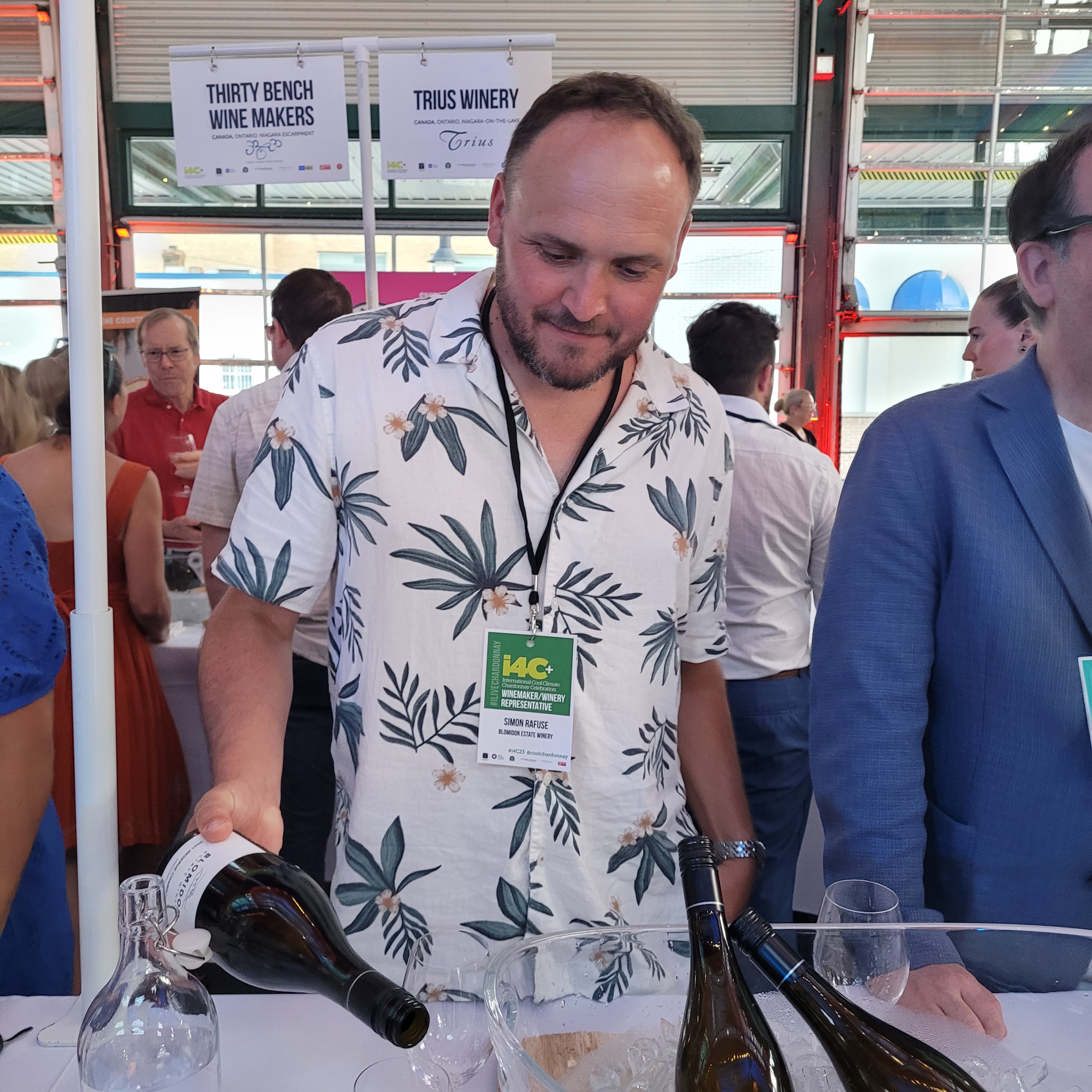
WineAlign

Outward and inward nines for November 12th

Can somebody get the pin? The ninth green at Summit Golf & Country Club

Can somebody get the pin? The ninth green at Summit Golf & Country Club

This will be the last weekend of play for most southern Ontario golf courses, or at least the ones who are smart enough to lock down and protect their precious 7,000 yards of turf from irreparable 2017 damage. For many players there are two seasons, golf and wine buying. Now that the exceptional 2016 year of 50-plus, sunshine-blessed rounds of 18 are done, the time has flipped over to loading up for the holidays and stocking the cellar.

My outward and inward nine recommendations from the VINTAGES November 12th release cover one and then the other. The front is marked by balance relative to par; wines of value, amiability, varietal purity and regional respectability. Just have a look at some of these iconic names: Delas, Catena, Trimbach, Gabbiano, Hedges and Cave Spring. The back takes swings into under and over par territory. Some are choices that polarize with buyers, critics and geeks. Are they worth the cash? Only you can be the judge. Along with some of Niagara’s greats are selections that include Chablis, Gran Selezione, Veneto and Napa Valley.

So put away the sticks and hit the stores. Here are my top 18 recommendations coming to VINTAGES this weekend.

Front Nine

delas

Delas Viognier 2015, Vins De Pays D’oc Rhone, France (462465, $13.95, WineAlign)

Pretty darn textbook viognier in the broadest sense of the varietal word, aromatically waxy, tropical and medicinal. The low alcohol, high flavour and commercially managed acidity is balanced by cream and citrus. No more, no less, precise and managed with utmost professionalism. Drink 2016-2019.  Tasted October 2016    @VINSRHONE  @UNIVINS

karavitakis

Karavitakis Winery The Little Prince White 2015, Crete, Greece (465930, $14.95, WineAlign)

Here an interesting bit of local vernacular, Cretan style, with vilana (65 per cent) and vidiano (35) dishing up a distinctly and singularly endemic mineral impression by way of subtle hints from tropical fruit. The palate is rich, broad and marzipan creamy. The acidity is round and rambling, tying the whole kit and Crete kaboodle together. A worthy side venture into the Greek Aegean hinterland. Drink 2016-2018.  Tasted October 2016   @karavitakiswine  @VictoryWine  @winesofcrete  @DrinkGreekWine

thym

Thymiopoulos Vineyards Young Vines Xinomavro 2013, Naoussa, Greece (466474, $17.95, WineAlign)

The Young Vines is an orange to the Earth and Sky’s apple, of a change of fruit and a pace that is hot off the press. Yet it is not without some ancient wisdom. In some new world sites vines up to 15 years of age would be considered old growth adults. In a Greek vineyard like that of a Naoussan like Thymiopoulos, they are babies of the sun. The Xinomavro here is fresh, momentarily acts strikingly brazen, bracing and ultimately, blatantly beatific. With a glass of the young vines in hand to it I say, “it’s not the pale moon that excites me, that thrills and delights me. Oh no, it’s just the nearness of you.” Like Norah Jones in a glass, sultry, contemporary, lightly smoky, of a jazz aesthetic and a pop sensibility. And wild berries. So fresh, so good. Drink 2015-2019.  Tasted May 2015

parker

Parker Coonawarra Series Cabernet Sauvignon 2013, Coonawarra, Limestone Coast, South Australia, Australia (467571, $19.95, WineAlign)

The Coonawarra Series cabernet sauvignon is predominantly sourced from the Williams family vineyard (like that of the chardonnay) in Southern Coonawarra. There can be no separating Terra Rossa soil from what happens with (especially) cabernet sauvignon anywhere in the Coonawarra. Very cool and savoury cabernet with tart cranberry, currant and black raspberry aromas. Really crunchy, chewy and gritty wine with focus and grip. Drink 2017-2020.  Tasted October 2016  @parkerwine  @CoonawarraWine  @Select_Wines  @Wine_Australia

catena

Catena Malbec 2014, Mendoza, Argentina (468066, 1500ml – $39.95, WineAlign)

High mountain vines bring more than altitude to Catena’s most commercially visible and successful malbec. In magnum format it accentuates the herbs and the dry, dusty qualities. In here there is sweetness but from tannin and extract. Acidity is the catalyst to make this sing a mountain hymn. Such proper winemaking brings rain. Love the format. Drink 2017-2020.  Tasted October 2016  @LauraCatena  @CatenaWines  @ArgentinaWineCA  @winesofarg  @Noble_Estates

gabbiano

Castello Di Gabbiano Chianti Classico Riserva 2013, Docg Tuscany, Italy (216309, $22.95, WineAlign)

First and foremost it is the wood, or the lack of wood that stands out in the CCR 2013. It may be observed as a different kind of wood, less polished and more natural but what really wins out is the fruit. The cherries are surfeited by impressed tannin and linger with good tonic for a good length of time. Great restraint shown by winemaker Federico Cerelli. Drink 2018-2024.  Tasted June 2016  @castgabbiano    

trimbach

Trimbach Riesling 2013, Ac Alsace, France (734517, $23.95, WineAlign)

What pray tell might you ask more than this from Alsace riesling? Could you, would you demand more immediate gratification? Might you request more purity and clarity of soil, rock and regional understanding? Is there a need to better define citrus and dry extract in any finer way? Trimbach has it down and few can pinpoint with fewer words and more direct impression. How things ought to be. A tight vintage though, so wait 18 months before embarking on chapter one. Imagine the Cuvée Frédéric Emile possibilities. Drink 2018-2023.  Tasted October 2016  @trimbach  @annetrimbach  @WoodmanWS  @AlsaceWines  @ACT_Alsace  @VinsAlsace  @drinkAlsace

hedges

Hedges C.M.S. Cabernet Sauvignon / Merlot / Syrah 2014, Columbia Valley, Washington (948992, $23.95, WineAlign)

Copacetic and well-amalgamated vintage here for the Hedges CMS, a wine of deep singer-songwriter meets jazzy flavour and sensible grip. Though there are bitters and a display of fine if sweet tannic structure, this CMS hits not over the head or below the belt. Just a few jabs and a loving embrace. A blackstar Columbia Valley blend that flies past, like “seven tracks in 40 minutes and it’s musically distinct.” In this way it reminds me of Ben Greenman’s New Yorker piece, “The Beautiful Meaninglessness of David Bowie.” Or it makes me think of Bowie as so many Hedges wines do. It’s not that this wine offers no clear meaning but it dishes ambiguity in ways only it can do. Like the late glam star, it “can’t give everything. Away.” Or, as Greenman concludes, “unless, of course, that isn’t what it means at all.” Drink 2017-2020.  Tasted October 2016  @hedgeswine  @Noble_Estates  @WINESofWA

csv

Cave Spring CSV Riesling 2014, Cave Spring Vineyard, VQA Beamsville Bench, Niagara Escarpment, Ontario (566026, $29.95, WineAlign)

The vintage brings a concentration and a compression and the most fruit imaginable for the Beamsville bench and the CSV. How this iconic riesling solicits immediate attention and fruit-juicy love is really something and hasn’t been seen in a few years. The citrus is all flesh and juice, the mineral aspect full of tang. Unction and viscosity define the texture and the palate. Drink early and enjoy the hell out of this forward CSV riesling. Drink 2016-2021.  Tasted October 2016  @CaveSpring  @TheVine_RobGroh

Back Nine

baker

Charles Baker Picone Vineyard Riesling 2013, VQA Vinemount Ridge, Niagara Peninsula, Ontario (241182, $35.20, WineAlign)

There was this intuitive moment with Picone 2013 as if it was waiting on me. Not doting or soliciting, but waiting. I will admit to have been wondering, reeling and speculating. To peer or peek into what Mark Picone’s Vinemount Ridge vineyard would adjudge and then bestow Charles Baker’s riesling in 2013? Would it be a case of weight, hyperbole, a hang in the balance out of misjudged necessity? Nah. Picone is no longer a mature 20 year-old vineyard but now a wise old thirty year-old one. Picone 2013 is in fact a fun park mirrored image of itself, with haughty, aerified aromas and variegated, leaning to tropical fruit flavours, taut like a flock in line with the vintage. The riesling berries just seem to have imploded and the results that have followed are nothing if not intense. Imagine a Yogyakarta market and a two-wheeled, glass-cased push cart stacked with a pyramid of tart mangoes. The fruit had been picked just as the sugars had begun to run like sap and bleed sticky on the cracking skin. A mango is sliced and doused with the intensity of Java lime juice and then sprinkled with Laut Jawa salt. The flavours are searing, sweetly saline and quenching. Only this tart is this, where tart and acidity meet, intertwine and connect on an emotional level. Picone 2013. The first non-inoculated riesling at first and then touched up near the end. “The best vintage you could ask for in riesling,” notes Baker, “cloud-covered, a meeting of the minds, vibrant.” The arid, cranky one will live without fret for 15 years. Drink 2018-2028.  Tasted twice, October 2016  @cbriesling  @StratusWines

moreau

Louis Moreau Chablis Vaulignot Premier Cru 2014, Burgundy, France (525386, $36.95, WineAlign)

Vaulignot was created in 1976, one of the last Premier Crus to gain such status within the association. Note that Moreau’s nomenclature is Vaulignot instead of Vau Ligneau, but the meaning is exactly the same. Really round and rich Chablis with a relative and realistic purity specific to place. This alights as a sun-drenched and lemon waxy chardonnay with enough (thank you very much 2014) tension to keep it rolling right along. What Vaulignot brings to the Chablis table is stick to your tongue, mouth and ribs persistence and vitamin water mineral enhancement. In a way it is caught in the Chablis netherland between up front gregariously fruity and strikingly mineral/acidity piercing. Great length in this vintage. Drink 2016-2020.  Tasted October 2016  @MoreauLouis1  @vinsdechablis  @purechablis  @BourgogneWines  @vinsdebourgogne

hb

Hidden Bench Terroir Caché Meritage 2012, VQA Beamsville Bench, Niagara Peninsula, Ontario (505610, $38.00, WineAlign)

I would not have thought it possible but the ’12 TC Meritage is open for business. The fruit is near-perfect for what these parts of the Beamsville Bench can offer and the normal gnashing is frozen as if suspended, which it likely is. In its current state it is all berries and dusty tannins, ripe, ripe acidity and plenty of outright happiness. A wisely structured Terroir Caché from Marlize Byers as only she could coax and extend. Drink now (not) or wait five years. Points in between may be confounding. Drink 2020-2030.  Tasted October 2016  @HiddenBench  @BenchVigneron  @MarkAnthonyON

coyote

Coyote’s Run Rare Vintage Pinot Noir 2013, VQA Four Mile Creek, Niagara Peninsula, Ontario (296863, $39.95, WineAlign)

A tart and robust vintage for the rare pinot noir, deeply ingrained into earth, sun and savour. This is distinctly varietal to Four Mile Creek with haute sapidity and exceptional length. The rusty accents inject piercing citric life into strawberry rhubarb pie. The tannins gnash their terrible teeth and the fruit hides for dear life. I’m not sure any Rare Vintage David Sheppard-ed pinot noir has ever delivered such mean structure. The next Niagara growing season should contribute to an ever more impressive showing because the fruit will almost certainly be up to the tyrannical task. Not to mention the coincidental crossroads 30th Sheppard vintage of making wines in Ontario. Meanwhile, from the cloudy, windy 2013 vintage his pinot noir will live long and prosper. Drink 2018-2025.  Tasted October 2016  @coyotesrun

pelham

Henry Of Pelham Cuvée Catharine Carte Blanche Blanc De Blanc 2011, Méthode Traditionelle, VQA Short Hills Bench, Niagara Escarpment, Ontario (315200, $44.95, WineAlign)

t’s always a highly anticipated taste when a vintage dated Cuvée Catherine is on the table sidled and promoted with the bar raised to epic heights from a striking chardonnay vintage like 2011. With acidity a given as the elephant in the room the formidably elegant Blanc de Blanc glides ethereally to press upon the olfactory nerve major and then grace the palate with fine mousse, citrus and biscuits. This is a benchmark for Ontario and Canada with only Benjamin Bridge’s B de B styled Gaspereau Valley gemstone sparkler in the same elite league. Enjoy this now and for 15-20 blissful, fizz-friendly years. Drink 2016-2032.  Tasted October 2016  @HenryofPelham  @SpeckBros

brolio

Barone Ricasoli Castello Di Brolio Chianti Classico Gran Selezione 2012, Docg Tuscany, Italy (942607, $59.95, WineAlign)

A Chianti Classcio first borne in 1997 with the plan to create a maximum quality blend as an expression of the estate’s diverse terroir. A meticulous selection is combed from the estate’s vineyards, spread over 230 hectares of land. Though early on the fruit may have emerged out of good but not yet exceptional vineyards, nearly 20 years later the sangiovese (90 per cent) with cabernet Sauvignon and merlot (or perhaps petit verdot) adheres to grand vin excellence. The wood regimen is 18 months in tonneau followed by 18 in bottle. Perhaps you will not find a more accomplished, perfectly judged, matter of factly expressed Gran Selezione. Sangiovese in equality of spicing with fruit, acidity and tannin, perfectly integrated toast, wood impact and textural drive. Stefano Capurso admits this about the transition from Chianti Classico to Gran Selezione.”It’s a matter of compromise between what is needed for the small producers and the need to express through crus for the large ones.” Drink 2018-2025.  Tasted May 2016  @barone_ricasoli  @imbibersreport  @chianticlassico

quintarelli

Quintarelli Primofiore 2012, Igt Veneto, Italy (20867, $66.95, WineAlign)

Only and distinctly Quintarelli, of that Negrar perfume and the kind of salumi cure no other producer can seem to procure. Though an infant and a baby to more mature vineyard selection Quintarelli adult bottlings, the Primofiore is full of exotics, of clove, cardamom, liquorice and meaty char. There is a sweetness to Quintarelli fruit and a remarkable resistance to astringency. This particular 2012 IGT is smooth and soothing. It is dangerously easy to consume. Drink 2017-2027. Tasted October 2016    @LiffordON

stag

Stags’ Leap The Leap Cabernet Sauvignon 2012, Napa Valley, California (142844, $89.95, WineAlign)

Signature cabernet sauvignon from Stag’s Leap from the first of the dry Napa vintages is dusty and high-toned to a high degree. Pure berry distillate and a savoury linger lead off and yet the closemindedness is still a youthful issue. There is a beautiful sense of florality behind the veil of aridity and big room tannin and yet the fruit is so very ethereal when it comes to tasting. Yes the dinging acidity and dastardly tannin will be a constant reminder of structure but without over compensation from the barrel the DJ Kylo driving beat will always be helpful. Gorgeous wine from Christophe Paubert. Put it in the time machine. I’ll take that leap in the dark. Drink 2019-2027.  Tasted October 2016  @stagsleapwines  @SLDistrict  

forman

Forman Cabernet Sauvignon 2012, Napa Valley, California (143925, $160.00, WineAlign)

Forman’s 2012 is a big, vibrant, robust and dusty expression, full of fruit, more fruit and nothing but fruit. Though the price is exceptional, the combined stylistic and level of honesty is formidably forman-ible. It is a rare opportunity and execution indeed when sweetness is culled from extract without the necessities of manipulated winemaking, oak usage included. The naked purity of this wine from an exceptionally dry, ripe and efficiently evolved vintage leads this cabernet sauvignon down a long, purposed and grandiloquent road. Drink 2018-2030.  Tasted October 2016  @rogcowines  @NapaVintners  

Good to go!

Twitter: @mgodello

Instagram: mgodello

WineAlign