Wines of South Africa: It’s the fling itself

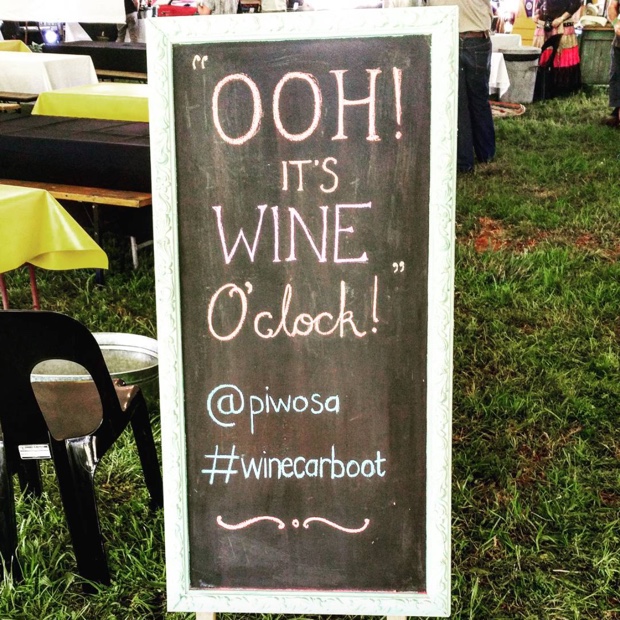
High five Sunday, at #winecarboot with @PIWOSA @WOSA_ZA @WOSACanada #journeysendvineyards #schapenberghills #sirlowryspass

High five Sunday, at #winecarboot with @PIWOSA @WOSA_ZA @WOSACanada #journeysendvineyards #schapenberghills #sirlowryspass

A few weeks ago there was this South African fling in Toronto. Anyone who fancies themselves as anything showed, because everybody was there. Joshua Corea and Archive Wine Bar graciously played host. Cape wine swelled like water and the mass of sommelier humanity flowed like wine.

After we had first returned to Canada from Cape Wine 2015, Will Predhomme and Wines of South Africa Canada’s Laurel Keenan had asked Rémy Charest, Scott Zebarth, Nicholas Pearce and I a question in requiem of some deep Jack Handey thought. Of the bottles we tasted in South Africa, what would we most like to see at a paradigmatic tasting back home? We offered up our lists and many of them were presented at Archive, along with a tumultuous quantity more. The likes of such an amassment had never been seen this side of the great pond. Cape Town loomed in de Chirico casted shadow in the backwater distance, watching, wondering, judging. So I tossed a pondered abstraction out to the winds that drift in the South African wine diaspora. “What page is loomed in the giver?”

Related – Once upon a time in the Western Cape

My mind travels back to the Western Cape. The retrospection remembers wines yet brought to North American light, to intrepid voyages still to disgorge and to stories ultimately untold. Looking back it occurs to me, from a northern point of view, having witnessed and experienced an immersion and exposure into the culture and wines of South African life, that it is not the thing you fling. It’s the fling itself.

It began with the trebuchet. At Journey’s End the Premium Independent Wineries of South Africa (PIWOSA) threw a car boot and catapulted some rather heavy objects at targets far away.

The prepossession laid out with tastes of The Drift Farm, The Winery of Good Hope, Glenelly Cellars and Mullineux & Leeu. Later the night begged and belonged to vignerons gathered at Longridge Estate, the following morning a tour of the Franschhoek Motor Museum and a tasting at Anthonij Rupert Estate.

Each of the three days at Cape Wine begat evenings in Cape Town of world’s away preoccupation. Velvet dissident South African Braai at Publik, her majesty’s secret service at Ellerman House and born in the USA-DGB in the Winelands. Events de facto, recondite and unshackled.
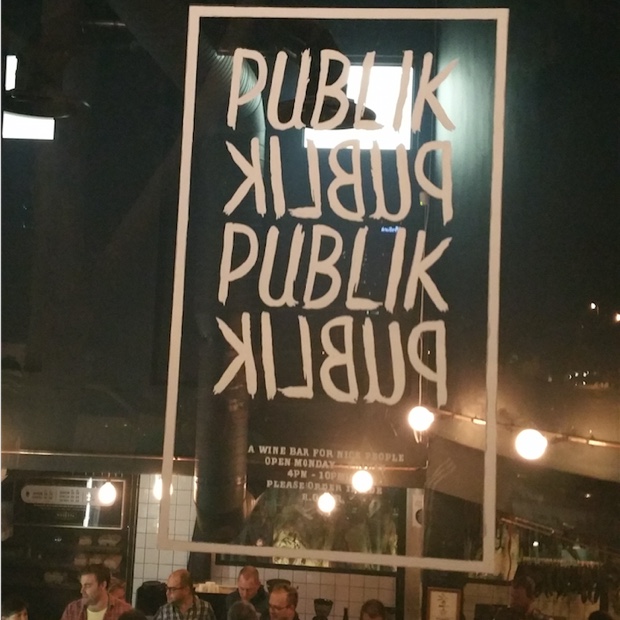
Publik, Cape Town

Publik, Cape Town

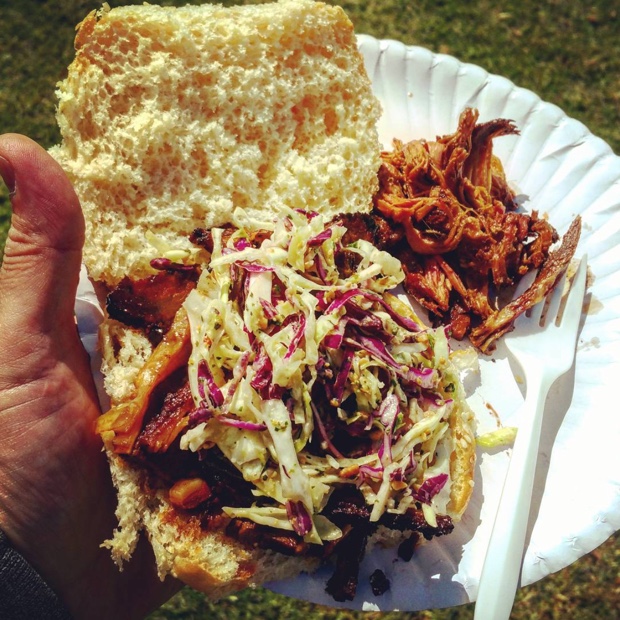
Then the Canadian boys played cricket with the Swartland cowboys and while our swings looked more like hockey snap shots and our bowls like little league change-ups, in the end we held serve and thankfully no one got hurt. True Swartland smoking at the hands of Callie Louw linked Groot Frankenstein to Barque Smokehouse BBQ.
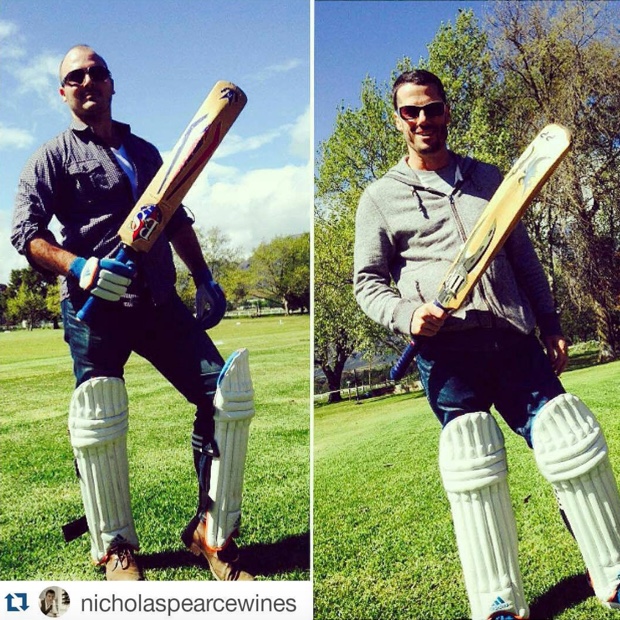
Cricket adversaries #swartlandswingers
Cricket adversaries #swartlandswingers

A #braai in the hand is worth two in the bush #callielouw #porseleinberg @SwartlandRev #swartlandindependents #swartlandswingers #swartland

A #braai in the hand is worth two in the bush #callielouw #porseleinberg @SwartlandRev #swartlandindependents #swartlandswingers #swartland

An epic 12 hours followed the matches, first with Ken Forrester and a speed tasting across a portfolio shot through the heart with some striking, older bottles. Then the group got down to trials at the Winery of Good Hope with Alex Dale and Jacques de Klerk. Remy Charest, Scott Zebarth, Kler-Yann Bouteiller and Godello helped mix, match, add and subtract percentages of fermented juice to decide upon the blend for the Pearce-Predhomme Stellenbosch Chenin Blanc. Nicholas and Will are now taking orders for delivery in the new year. Then in order, wagyu beef and Radford Dale wines at Ken’s 96 Winery Road Restaurant, World Cup Rugby and Burgundy.
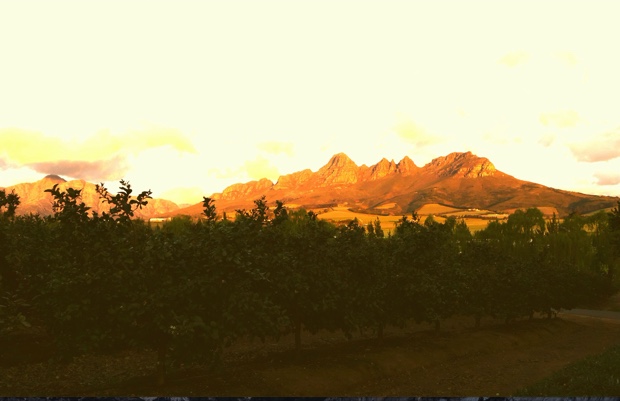
The view from the Winery of Good Hope

The view from the Winery of Good Hope

On the final day we paid a visit to the Hemel-en-Aarde Valley along the Hermanus wine route, with a tasting at Bouchard Finlayson and lunch at La Vierge winery.

I tasted hundreds of wines during the eight-day journey around the Western Cape. In due course I will put up tasting notes for as many as possible but for now here are a couple of dozen, specific to and in conjunction with the people and places that hosted us.

The PIWOSA Wine-Car Boot, Journey’s End Winery
The Drift Farm

The Drift Farm

The Drift Wines Year of the Rooster Rosé 2014, Overberg Highlands, South Africa (Winery)

Winemaker Bruce Jack’s 100 per cent shaken, not stirred Touriga Franca was inspired by a trip to the Douro. Rhubarb and salinity rub the ripe fruit in the right way. If 007 were to drink Rosé, this would fit the metrosexual bill. From four barrels. Drink 2015-2016.  Tasted September 2015  @TheDriftFarm
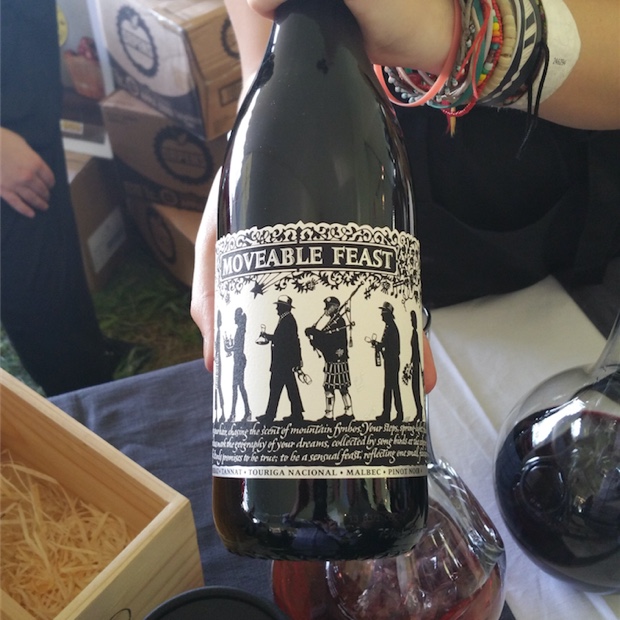
Drift Farm The Moveable Feast

Drift Farm The Moveable Feast

The Drift Wines The Moveable Feast 2013, Overberg Highlands, South Africa (Winery)

A blend (that drifts and changes every year) of Malbec and Shiraz with Tannat, Touriga Nacional and Pinot Noir. Though the notes are played without excess, the specs ruminate for infinite possibilities, with aspects as from mine run-off, ocean salinity, high body acidity, muted sunshine, rusticity and veneer. Rides a sonic highway, to “crossroads with nothing to lose.” The feast and the famine, a fighter, “put back together by a troubled groove.” From minimalist Hemingway to Foo from Grohl. Get the drift? Drink 2015-2019.  Tasted September 2015

The Drift Wines Mary le Bow 2011, Robertson, South Africa (Winery)

A farm-designate red blend (Wildepaardekloof, Langeberg Mountain) built upon Cabernet Sauvignon (38 per cent), Shiraz (31), Petit Verdot (23) and Merlot (8). In ode to the Cockney saint, big Bow Bell and crusader’s crypts. Extended barrel age and the deepest, darkest maturity makes for a brooding red reflective of a Kloof’s tale from a crypt. Not for the faint of red blends. Indeed it trembles with power. Drink 2017-2021.  Tasted September 2015
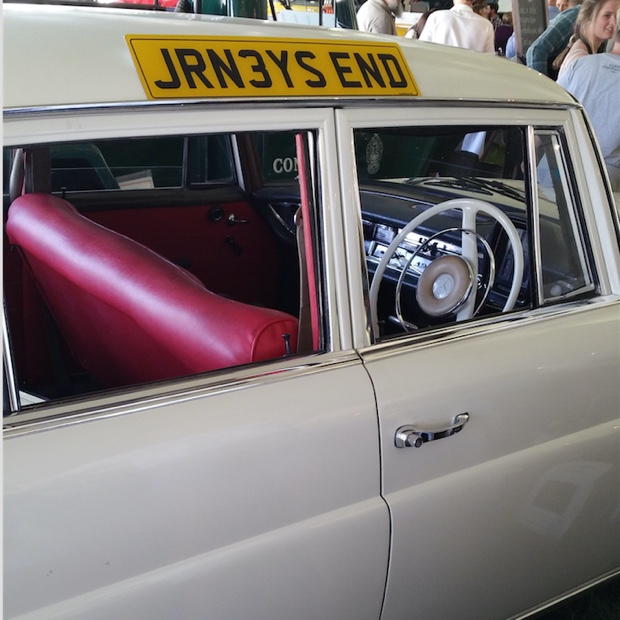
JRN3YS End

Journey’s End Sauvignon Blanc The Weather Station 2014, Stellenbosch, South Africa (AgentWinery, WineAlign)

A product of the first Sauvignon Blanc clones planted in South Africa (next to a weather station). The wine had been bottled less than a week ago so while the pyrazine factor is set to high the equal and mitigating fruit freshness trumps the green. Free spirited, of spice, in bite and quickly settling, into balance. Drink 2015-2018.  Tasted September 2015  @JourneysEndWine  @vonterrabev  @colyntruter

Journey’s End Destination Chardonnay 2014, Stellenbosch, South Africa (AgentWineryWineAlign)

A nicely, effectively minor reductive Chardonnay that knows the barrel well. Divides by mitosis the cells of mineral and spice into furrows, chiseling a secondary cytokinesis flavour profile in cut by brilliant gemstone flexure. From fruit fracture to cellular overlap, out of (approximately 10 months) wood and into impressionistic stone. Tasting accessed through four stages imagines time to be exigent; through reduction (prophase), oak (metaphase), stone (anaphase) and texture (telophase), until the ultimate descent toward’s the journey’s end. Drink 2016-2022.  Tasted September 2015
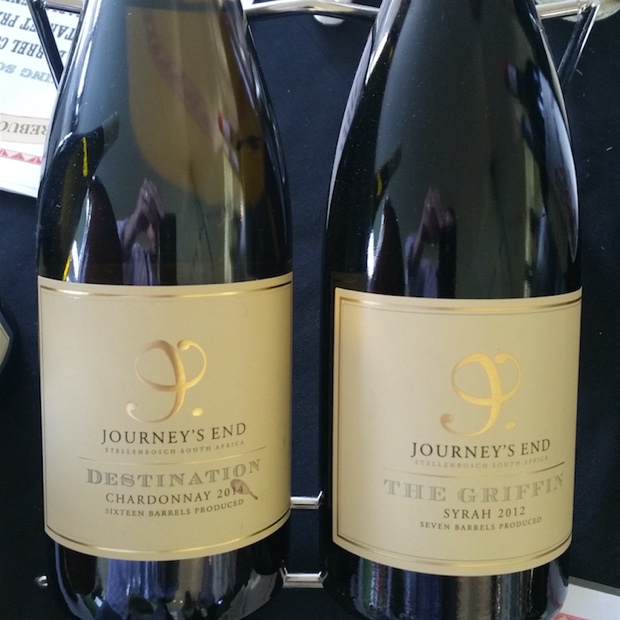
Journey’s End Trebuchet 2014, Stellenbosch, South Africa (AgentWinery, WineAlign)

Two Cabernets and a Malbec conjoin to catapult funk-less, heavy laden red fruit into an atmosphere of veneer. The flavours are inclusive of pomegranate and anise, with some rust and circumstantial metallurgical magnification. The tang is a factor to be reckoned with in this primeval red blend. Crushes unsuspecting objects upon landing. Let it settle for 12 months. Drink 2016-2020.  Tasted September 2015

Journey’s End Cabernet Sauvignon 2009, Stellenbosch, South Africa (AgentWineryWineAlign)

A 100 per cent varietal wine from a wind that blew through and away. The child of a markedly perfect vintage blessed with chalk, grit and terroir. Views from within the new barrel have diminished along with once terrible teeth gnashing tannin. At six years-old it sits cross-legged, big-boned, fruit fleshy, structured and sure. The evolution is far from complete with berries seemingly so presently ripe, the late spice and coffee kick making cause for yet jittery times. Two or three more years will offer further guarantees of pay dirt and peace. Drink 2017-2024.  Tasted September 2015
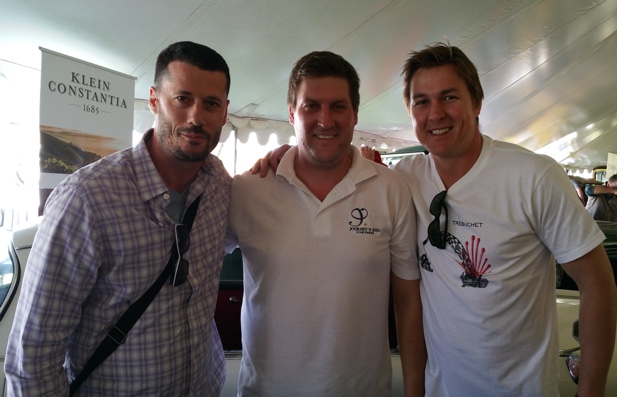
Godello, Leon Esterhuizen and Colyn Truter from Journey's End

Godello, Leon Esterhuizen and Colyn Truter from Journey’s End

Glenelly Estate Shiraz “Glass Collection” 2011, Wo Stellenbosch, South Africa (Winery, Agent, WineAlign)

Screw cap Shiraz reason number one here, fresh from Stellenbosch, single-vineyard, whole bunch fermented for aromatics and 10 months in one-third new oak, for maximum flavour. “These wines are to be drunk young,” notes export manager Nicolas Bureau, “within five to six years of the vintage.” And so, why put a cork in them? From the hands of winemaker Luke O’Cuinneagain and Secateurs minimal intervention wine consultant Adi Badenhorst. Sparkle, vigour and dew. Drink 2015-2021.  Tasted September 2015  @GlenellyWines  @VinexxWine
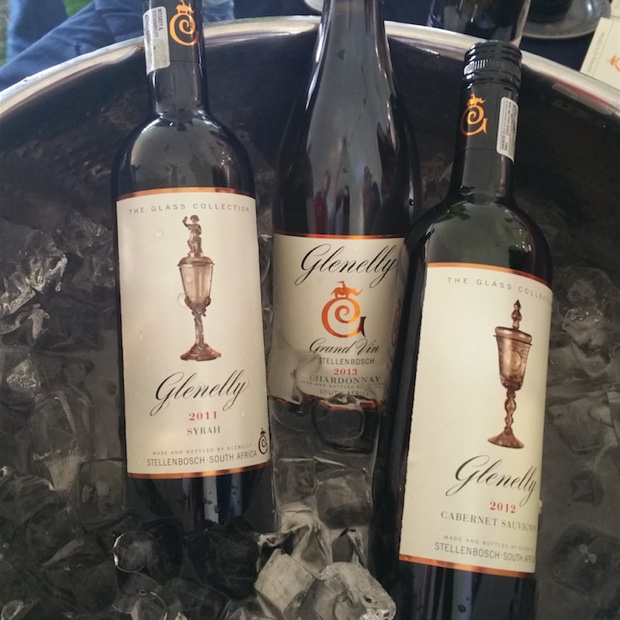
Glenelly Wines

Glenelly Wines

Grand Vin De Glenelly Red 2009, Wo Stellenbosch, South Africa (360339, $19.95, WineAlign)

There are components of the Shiraz and the Cabernet in the Grand Vin though its composure comes neither from sparkle nor funk. Nor does it pay direct homage any more to the Rhône than it does to Bordeaux. With time, the Grand Vin will go it alone, from Stellenbosch to the world. Time spent in oak was lengthy (18 months in one-third new) for a blend composed of Syrah (42 per cent), Cabernet Sauvignon (40), Merlot (14) and Petit Verdot (4). The estate clearly considers blends as more than the sum of parts. The Grand Vin is the thing. The Glenelly king. It’s hard to get under its skin, to comprehend its nuance, to know it as a child. The wood, the terroir and the structure yet relent to understanding. A matriarchal wine to be sure, a generation may need to pass for the Grand Vin to carry the torch. The Pichon Longueville connection is not lost or left to chance but this prodigy will need to find its own voice. Red wine of such eternal maturity exists towards a future that begins now. Or on in two to three years. Drink 2017-2024.  Tasted September 2015
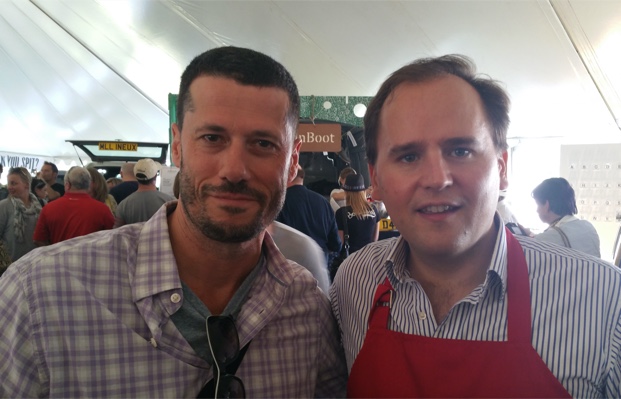
With Nicolas Bureau, Glenelly Estate

With Nicolas Bureau, Glenelly Estate

Mullineux & Leeu Syrah 2011, Wo Swartland, South Africa (Winery, Agent, SAQ 12490545, $36.00, WineAlign)

Grasps the subterranean funk of the Swartland terroir and runs with in, through fields of atmosphere, in a wholly singular way. A culling combination if shale, schist and granite, brushed by (15 per cent new) oak for 11 months. Pure, natural, fresh and rising, by citrus zest and inflating acidity. The oscillating flavours prick, pierce, push and pull with elemental and mineral inflections. Like a light show in the sky, Chris and Andrea Mullineux’s Syrah is a quiet spectacle. Drink 2016-2026.  Tasted September 2015  @MullineuxWines  @MullineuxChris  @Nicholaspearce_

Mullineux & Leeu Cinsault Rosé 2013, Wo Swartland, South Africa (WineryAgent)

Tangy tangerine, rhubarb and liquid chalk are the emotive emissions from this skin contact blush as much orange as it is pink. Wild in sauvage, perfectly musty, a Rosé of its own accord and spacing within the parameters of its very won world. Drink 2015-2017. Tasted September 2015

Mullineux & Leeu White 2013, Wo Swartland, South Africa (WineryAgentWineAlign)

An old bush vines blend of Chenin Blanc (80 per cent), Clairette Blanc (13) and Viognier, 10 per cent of which was fermented in old oak. A wild and carpeted ride for Chenin Blanc, melding into gentle acidity with layers of smithy portent and even a bit of Greekdom. “The son. And the heir. Of a shyness that is criminally vulgar.” There is so much spice and complexity, from the skins of many citrus fruits. Strips, stripes and skirts the mouth with layers of mineral life. How soon is now for wines like these in South Africa and to be shared with the world? Drink 2015-2023.  Tasted September 2015

Mullineux & Leeu Syrah Iron 2013, Wo Swartland, South Africa (WineryAgentWineAlign)

If such cure, grip, ferric grab and intense tannin has ever infiltrated South African Syrah it has not yet found its way over to me. In a side by side comparative tasting with the Schist Syrah this one wrestles to win. The Schist is all perfume and soft elegance. The Iron draws power to strength from strength. It is an unrelenting conduit of energy, from soil clearly designed to outlive humanity. The Syrah is a product of geological wonder and winemaking that steps aside to let the terroir speak its mind. Demanding and filled with tension now, time will soften the stranglehold and loosen the wires. Lots of time. Drink 2019-2028.  Tasted September 2015

Radford Dale Nudity 2014, Voor-Paardeberg, South Africa (Winery, AgentWineAlign)

From the Winery of Good Hope, vignerons Alex Dale and Jacques de Klerk. Ancient granite soil from a single-vineyard on Paardeberg mountain. Organic, dry-farmed, total consciousness, flowing robes, grace, striking. Low alcohol, high natural acidity, fresh, spirited, energetic Syrah. Impossible South African Syrah. Drink 2015-2022.  Tasted September 2015  @Radforddale  @WineryGoodHope  @deklerkjacques  @Noble_Estates

With the gang from Radford Dale

With the gang from Radford Dale

Radford Dale Black Rock 2013, Perdeberg-Swartland, South Africa (Winery, AgentWineAlign)

From old bushvine vineyards scattered amongst the granite outcroppings of the Swartland, the blend combines Syrah, Cinsault, Carignan, Grenache, Mourvedre and Viognier for full Rhône homage, if not necessarily effect or intent. The percentages change with each vintage, left to seek harmony in the hands of master blender de Klerk, a man who plays and has the mandate to do so. Natural fermentations persist, as they should and they rightfully accomplish goals of freshness, natural acidity and that elusive you’re born with cure that extends health and longevity. Modern South Africa of ancient longing here on display is just the tip of the bare essentials, in ferments and blends, yet to come. Drink 2015-2020.  Tasted September 2015

Working on South Africa with a sundown over Stellenbosch @WOSACanada

Working on South Africa with a sundown over Stellenbosch @WOSACanada

The Stellenbosch Experience, Longridge Estate
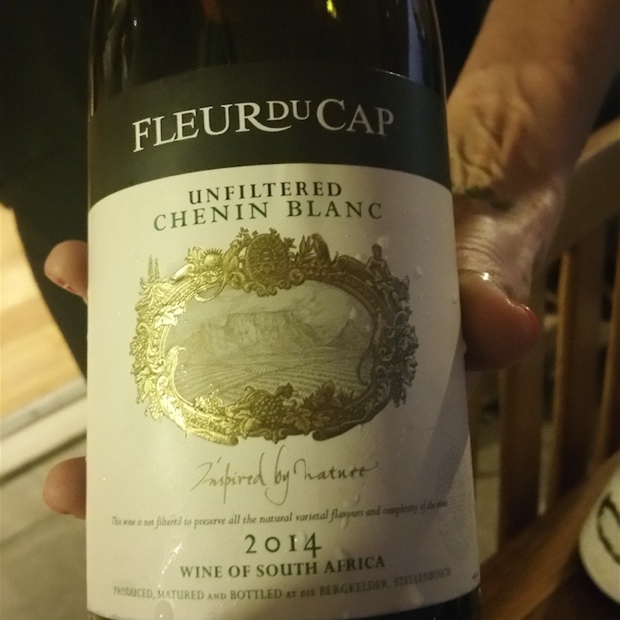
Fleur du Cap Unfiltered Chenin Blanc 2014

Fleur du Cap Unfiltered Chenin Blanc 2014

Fleur du Cap Unfiltered Chenin Blanc 2014, Western Cape, South Africa (Winery, Agent, WineAlign)

A markedly different and intriguing Chenin Blanc that saw seven to eight months in second and third fill barrels. Well-groomed, direct, crisp, clean and pure within the wooden framework and not even close to flirting with oxidative leanings or an overly creamy texture. A pleaser avec plaisir in excelsior, expression and exemplary restraint. Very tidy winemaking. Drink 2015-2019.  Tasted September 2015  @FleurduCapWines

Venison and salted chocolate, Longridge Estate

Venison and salted chocolate, Longridge Estate

Fleur du Cap Unfiltered Pinotage 2014, Western Cape, South Africa (WineryAgentWineAlign)

If it was not for this early sip of Fleur de Cap’s Pinotage on the first night of the South Africa trip I’m not sure the doors to new perception would have ever been opened. Fresh, red fruit juicy, base, natural and nearly naked. A step into giving new meaning for the great hybrid history and varietal future. Though other examples over the course of a week would blow my mind, this unfiltered beauty set the altering stage for what was to come. Unexpected excellent match to Venison with salted chocolate. Drink 2015-2018.  Tasted September 2015
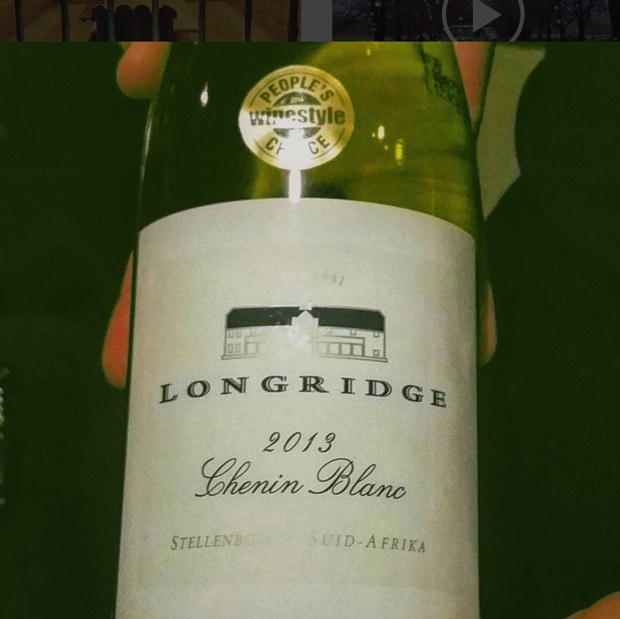
Chenin gem @LongridgeWines & munificent hospitality @StellWineRoute @WOSA_ZA @WOSACanada #stellenblog

Chenin gem @LongridgeWines & munificent hospitality @StellWineRoute @WOSA_ZA @WOSACanada #stellenblog

Longridge Estate Chenin Blanc 2013, Stellenbosch, South Africa (Winery, Agent)

Covers the essentials for Chenin Blanc in a Vouvray style; mineral, lemon, bitters and salinity. Emphasizes mastered qualities with proper stability and a strength of character. Will not usher in any sort of revolution but it takes beautifully bitter pear-like fruit from wizened vines and hits the target. And though it spent 11 months in second and third fill barrels you would never know it. A flinty fleeting moment, a slow ride and a shelter from residual sugar that might try to alter its corse. Instead it will munch on that sweetness to live on. Silky smooth, momentarily pungent and refreshing as can be. Stellar Chenin. Drink 2015-2020.  Tasted September 2015  @LongridgeWines
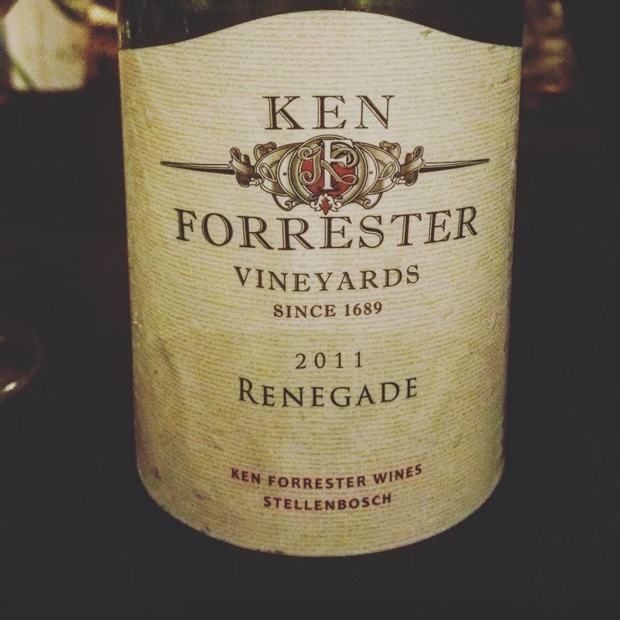
Ken Forrester Vineyards Renegade 2011

Ken Forrester Vineyards Renegade 2011

Ken Forrester Renegade 2011, Stellenbosch, South Africa (SAQ 10703084 $24.25, Winery, Agent, WineAlign)

Mainly Grenache and inculcated with varietal layers thereof, though in the end it is the Rhône blend accrual that bounds over hills and dales. I’m not sure any number of Stellenbosch investigations will unearth more expatriate quality for the coin than is found in the Renegade. A true marker of its maker, The specs are spot on to produce heft, strength and confidence from tireless work. Healthy pH, minimal sweetness, virile acidity and generous alcohol. Like a blood transfusion even though you weren’t sick. Like drinking snake’s blood in grain alcohol on the side of a Hanoi road. Like an hour of intense yoga. Ken Forrester, all in, fully, completely engaged. This red blend speaks in his voice. “Renegade! Never been afraid to say. What’s on my mind at, any given time of day.” It’s no jay but it covers the Stellenbosch bases, from A to Z. Drink 2015-2020. Tasted September 2015

Ellerman House

Godello at the edge of the world #capetown #ellermanhouse #banghoekuncorked #southafrica

Godello at the edge of the world #capetown #ellermanhouse #banghoekuncorked #southafrica

Tokara Sauvignon Blanc Reserve Collection 2014, Elgin, South Africa (Winery, Agent)

From the atmospheric growing conditions of Elgin, the new South African geographical epiphany for the cool-climate varietal future. From the winery’s Highlands farm, transported to Stellenbosch and fermented with tact, cold, stainless, with acidity intact. Tokara’s Sauvignon Blanc is bone dry (near and dear to 2.0 g/L of RS) and a straight piercing heart of an SB as ever there was. Takes the likes of Marlborough and teaches it a thing or two about the coastal ways of the Western Cape. Tasted with viticulturist Aidan Morton. Drink 2015-2017.  Tasted September 2015  @TOKARA_ZA
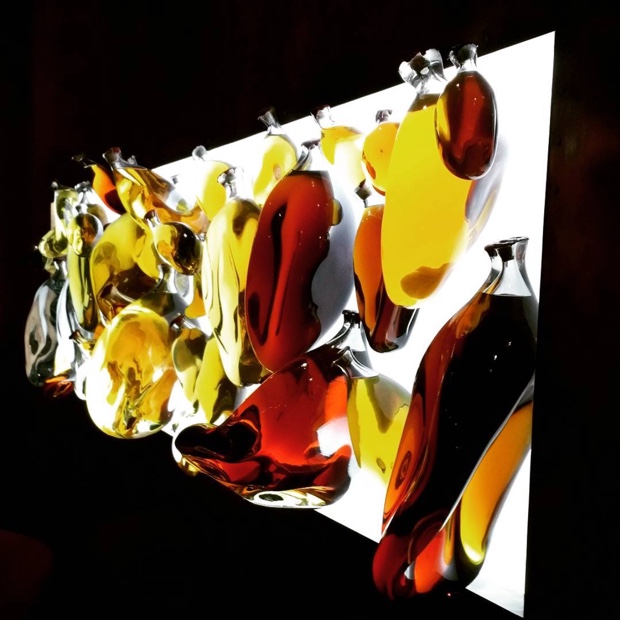
Brandy sculpture @Ellermanhouse @WOSA_ZA #banghoekUncorked #capetown #southafrica

Brandy sculpture @Ellermanhouse @WOSA_ZA #banghoekUncorked #capetown #southafrica

Oldenberg Vineyards Chenin Blanc 2014, Stellenbosch, South Africa (Winery, AgentWineAlign)

From vines planted in 2006 on alluvial soils. A tight, lean and bracing Chenin Blanc with seamless attribution. Simplicity of fruit meets oak (30 per cent ferment for 10 months in 300L French barrels, 50 per cent new) but somehow freshness wins outright. This in kind to sharp, feisty, sour-edged acidity that is lemon bracing and a linger for a good length of time. Also in spite of generous alcohol (14.11 per cent) and relatively low pH (3.21). Jasmine and honey? “Fields of flowers deep in his dreams (Ha ha, honey), lead them out to sea by the east (Ha ha, honey).” The reminder of Stellenbosch and Chenin Blanc. Drink 2015-2019.  Tasted September 2015  @Oldenburgwines  @HHDImports_Wine

Thelema Mountain Blanc de Blancs Méthode Cap Classique 2012, Stellenbosch, South Africa (Winery, Agent, WineAlign)

Sparkling generously donated to with agreeable richness from eight year-old vines out of Tukulu soil. Generous of yield (16 t/hL) at low red/yellow saturated slopes near the basin floor. The dosage keeps it comfortably Brut, the acidity cozily numb. Classic bubble methodology, including three years lees aging, in line for such fine elegance. Runs for a straight purpose, of citrus incarnate with a penchant for piercing. In its youth it knows nothing of oxidative and yet that dimension will lengthen its future. For 15 years it will reside in the refreshing valley in between. Though he is a multi-varietal maestro and with no disrespect to the rest of his Thelma and Sutherland portfolios, if Sparkling is not winemaker Rudi Schultz’s true calling then I’ll have to spend three more hours at dinner with proprietor Thomas Webb to find out what is. Drink 2015-2030. Tasted September 2015  @ThelemaWines  @tomwebbsa  @EpicW_S
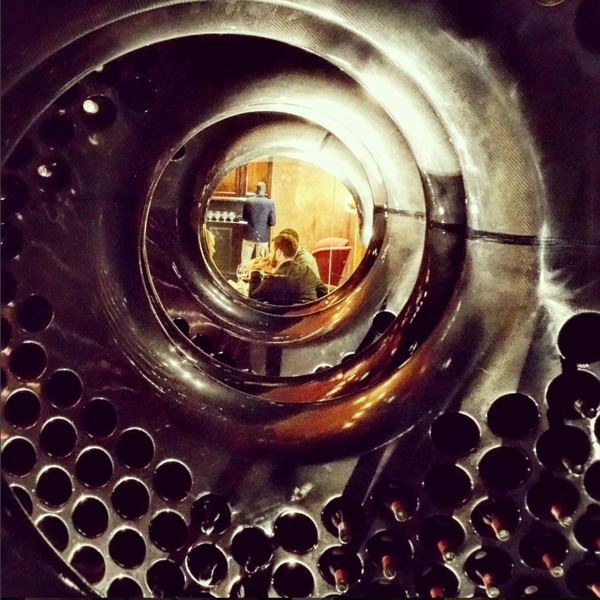
We've been expecting you, Mr. Bond #ellermanhouse #banghoekuncorked #007 #capetown

We’ve been expecting you, Mr. Bond #ellermanhouse #banghoekuncorked #007 #capetown

Thelema Sutherland Viognier-Roussanne 2012, Elgin, South Africa (WineryAgent, WineAlign)

In the realm of two-thirds to one-third ratio from Seven year-old (at the time) vines grown on Tukulu and Glenrosa soils. The ramp up of Roussanne percentage elevates acidity to balance the richer, broader and wide-ranging Viognier breadth. There is great grape tannin in this Elgin white with healthy yet balanced alcohol, negligent sweetness and that bouncy, bountiful acidity. Lays about happily in a pool of bleed from rock and stone. Possessive of the je ne sais quoi all impressionistic whites must have, vry of the land and tonic attention. In the end bitter grapefruit draws a cheek full of wince and sends goose bumps down the spine. Gotta love that. Drink 2015-2021.  Tasted September 2015
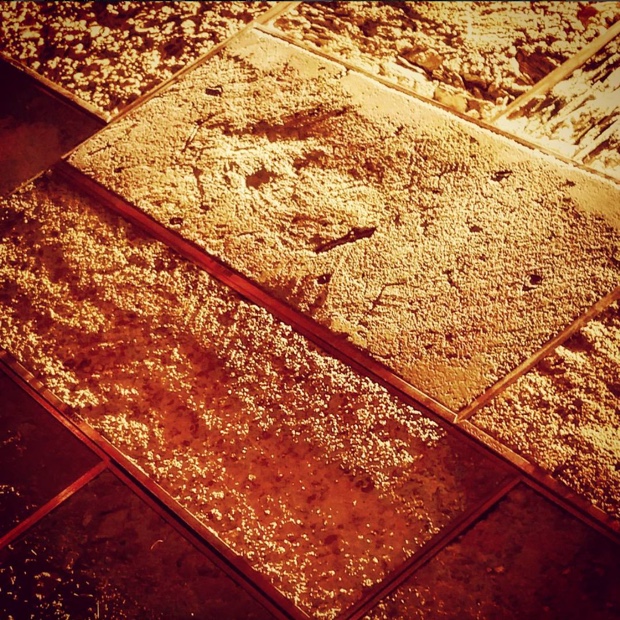
Panels of terroir @Ellermanhouse Face in the crowd #terroirwall #angustaylor #rammedearth #paulharris #winegallery #capetown

Panels of terroir @Ellermanhouse Face in the crowd #terroirwall #angustaylor #rammedearth #paulharris #winegallery #cape town

DGB in the Capelands

Others would kill for her Pinot fruit and Lizelle Gerber kills it for @BoschendalWines #dgb #DGBinthewinelands

Others would kill for her Pinot fruit and Lizelle Gerber kills it for @BoschendalWines #dgb #DGBinthewinelands

Boschendal Cap Classique Jean le Long Prestige Cuvée Blanc de Blancs, Stellenbosch, South Africa (Winery, Agent)

Chardonnay curried favour from impeccant and licid (2007 base wine) cool climate fruit and then ingratiated by 60 months plus one year on the lees. Of added significance by only having been sulphured at disgorgement. A yeasty B de B of beautifully beckoning oxidation and bone dry at 2.3 g/L of RS. Fizz of finesse and elegance, a feet sweeping, inveigling, influence exerting Stellenbosch cuvée. A skillfully applied mound of preserved lemon and freshly grated wild ginger, piled like airy mousse, or like lustrous wasabi without the burn. Benchmark for the Méthode Cap Classique B de B style. Drink 2015-2027.  Tasted September 2015  @BoschendalWines  @LiffordON  @liffordwine
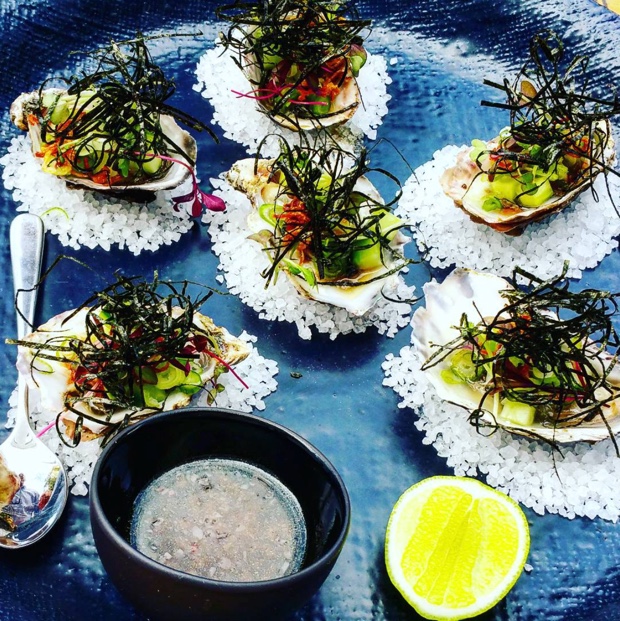
Cape Oysters Vietnamese #chefswarehouse #capetown

Cape Oysters Vietnamese #chefswarehouse #capetown

Boschendal Cap Classique Grand Cuvée Brut 2009, Stellenbosch, South Africa (Winery, Agent, WineAlign)

Time is the settler is this Pinot Noir (51 per cent) and Chardonnay (49) of aeration and ripeness from its days as a sun-worshipper. From fruit primarily sourced in Stellenbosch with some help from the Elgin Valley. Disgorged in the Spring of 2014, six months post 36 months on its yeasts have brought it to a very happy place. As it found itself in requiem of a less than Brut profile, the sugar level is higher (7.8 g/L), a munching magic mousse transformative indeed, enacted during secondary fermentation and measured dosage. Distinctly nutty, rich, torch toasty and presented in purview by citrus. For Cape oysters, at the least, or foie gras and with a bowl of salted nuts. Drink 2015-2029.  Tasted September 2015

Boschendal Cap Classique Grand Cuvée Brut 2009

Boschendal Cap Classique Grand Cuvée Brut 2009

Boschendal Sauvignon Blanc 2014, Elgin, South Africa (WineryAgent)

From the highest of and one of the latest ripening mountain plateau vineyards in Elgin, 500m above sea level and only 18km away from the Atlantic Ocean. The Eikenhof farm offers well-drained Bokkeveld Shale soils and with a healthy yet restrained sugar component (4.4 g/L), here Sauvignon Blanc goes at it rich and grassy, herbal and highly textured. The white pepper olfaction in lieu of capsicum makes a yummo aromatic impression. Here SB executes in expatiated flection, with layers waiting to be peeled away in discovery of what lays beneath. I would suggest not treading near the surface. You will miss out on the mysteries weighted in its depths. Drink 2016-2021.  Tasted September 2015
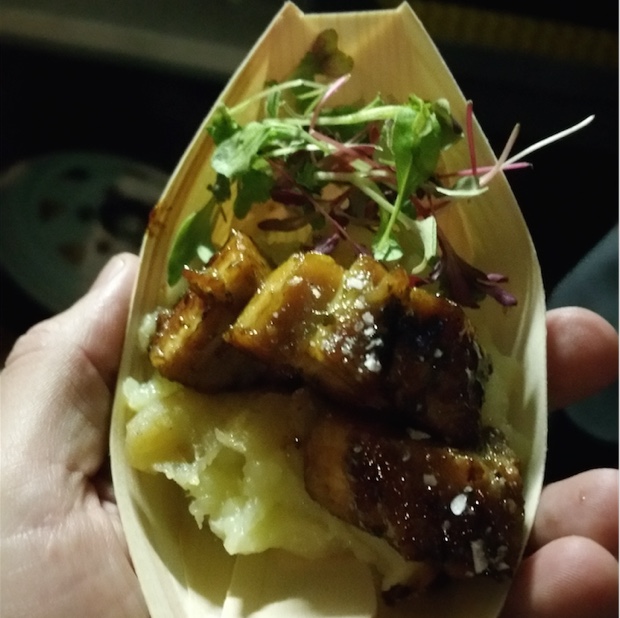
Pork Belly at DGB in the Capelands food truck event

Pork Belly at DGB in the Capelands food truck event

Boschendal Chardonnay 2013, Elgin, South Africa (WineryAgent)

Slow-ripened, low-yielding Chardonnay seasoned from unirrigated mountain slopes of Bokkeveld Shale mixed with some clay. Chardonnay paid attention in detail only a small farm can afford, followed by prudent picking in a warmer than average vintage. The barrel has its say in a heartfelt way, the integration with delicate fruit sprouting wings more effete than mannish. One quarter of the 80 per cent oak ferment is new and the rest either second or third fill. Fresh now, reductive to a necessary degree and built for a minimum five with an optimum seven to eight year shelf life. Drink 2015-2020.  Tasted September 2015
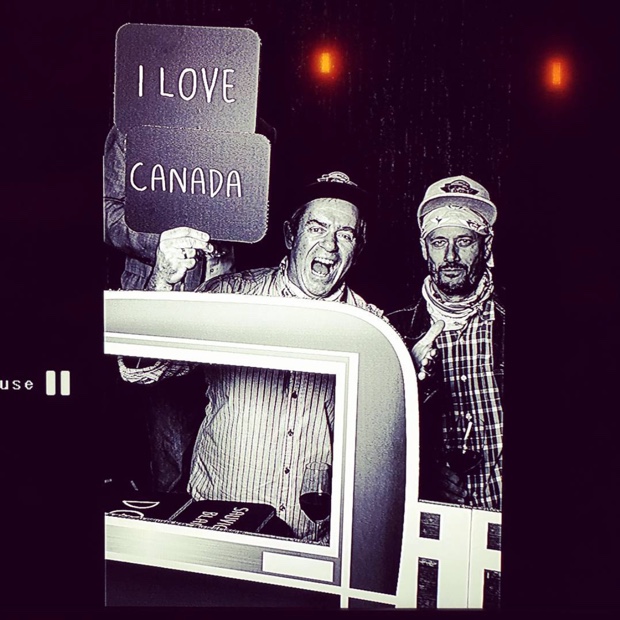
This guy loves Canada @WOSA_ZA #DGBinthewinelands #foodtrucks

This guy loves Canada @WOSA_ZA #DGBinthewinelands #foodtrucks

Boschendal Pinot Noir 2013, Elgin, South Africa (WineryAgent)

This is the bomb. Lizelle Gerber may be benevolently pegged as the white wine maker at Boschendal but place Pinot Noir fruit from the second highest vineyard in South Africa in her hands and shazam; welcome to the hallowed alchemy payoff. The treatment is not unlike what Gerber effects upon her Chardonnay; 50 per cent natural fermentation, 12 months barrel maturation in (25 per cent) new, (35) second fill, (15) third and (25) fourth French oak. Variability comes by way of heavy red clays, from Table Mountain Sandstone, Bokkeveld shale, Tukulu and Silica Quartz with underlying Caoline clay. So what? Balance, so what. Her Pinot Noir finds separation by soil. The small berries are so prized even the baboons want in. The windswept vineyards are a place of chaste, inviolable grounds, where Pinot Noir needs little human interference save for some predator protection. The gathering here imagines Willamette salinity, Otago purity and Beaune delicacy. Gerber’s Pinot is simple, cast from only overnight free-run juice, unpressed, pitch perfect, virtuous and riddled with the tension of decorum. It will age for 10 years plus. Drink 2015-2025. Tasted September 2015

Good to go!

Twitter: @mgodello

Instagram: mgodello

WineAlign: Michael Godel
Facebook

In a gadda da vino baby

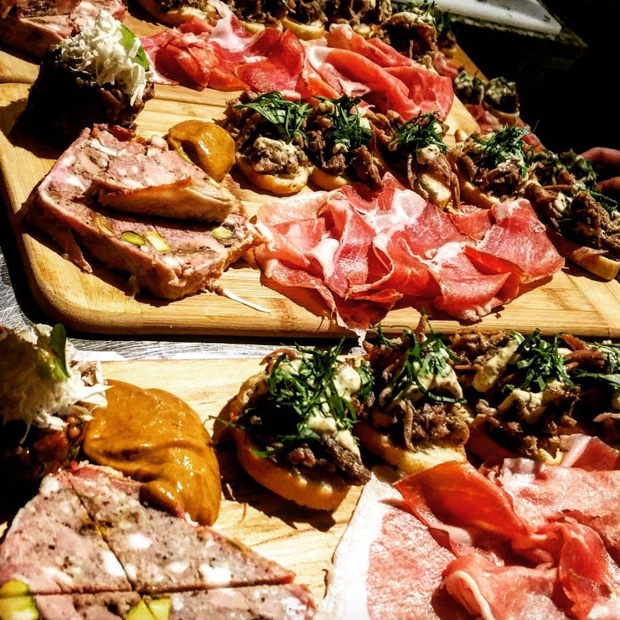
Charcuterie and Appetizers @barquebutchers by the Greek Silver Fox, Chef @JoCastrinos

Charcuterie and Appetizers @barquebutchers by the @greek_silver_fox, Chef Jo Castrinos

It’s December, baby. In Ontario that means one thing. Cash money for the LCBO. Lineups longer than a 1988 Moscow bread line. If you’re from somewhere other than this magical, monopolized place we call wine central you just wouldn’t understand. You would not be privy to and giddy with isles stacked in pyramids of critter red and whites, Bailey’s Irish Cream and Absolut Durian. Wait, that would be cool.

No, not la vida loca. We are not talking about living the crazy life to make you cool. No party trick, no Spanglish, no politically incorrect, Urban Dictionary Ricky Martin slur. Not this either. “The awkward silence and/or major anticlimax that follows the confession of a big secret that everybody else already knew.”

You want it all in December, the most wine for the money, for gifts, to bring to the holiday party, to stack some away in the cellar. You want the Garden of Eden in a bottle.

In a gadda da vida, honey.

Let me tell ya.

With the ghosts of Christmas gem releases now just a strange, uncomfortable and debilitating nightmare trailing away in the rear-view mirror of Visa cards maxed out past, now is the time to focus on what’s real. To concentrate on purchasing wines in your price bracket, wines that speak of people, places and who will be drinking them.

I have combed, tasted and considered the releases now on shelves for this weekend’s December 12th offering. The parameters are $15 to $35, something for everyone, to purchase with confidence and to equip you with a most necessary advantage, to present them with pride no matter the circumstance. Ten wines to work the holiday room.

Cabriz Reserva 2012

Cabriz Reserva 2012, Doc Dão, Portugal (21410, $17.95, WineAlign)

Such a juicy red, of honest imporosity and primed with acidity to prop and speculate. Bang on for the price, in its weight class and with the charm of sweet adolescence. Solid Dao with a whole lot of propensity to mix and match with the multitude of foods at your table. Drink 2015-2019.  Tasted November 2015  @wines_portugal  @winesportugalCA  @Noble_Estates

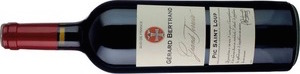
Gérard Bertrand Grand Terroir Pic Saint Loup 2011

Gérard Bertrand Grand Terroir Pic Saint Loup 2011, Ap Coteaux Du Languedoc, France (376491, $18.95, WineAlign)

Syrah, Mourvedre and Grenache blend from the Pic Saint-Loup mountain peak and limestone cliff flanks of the the Coteaux du Languedoc. Sharp with concentrated red fruit, tight acidity and just enough tannin to render this marketable to a five-year plan of evolution. Real and as naturally forged as they come from Gérard Bertrand’s Cross Series reds of southern France. Prime example from and one to celebrate a terroir like Pic St Loup which continues to play the unheralded outlier. Really fine and just the right and correct amount of attitude. Drink 2015-2020.  Tasted November 2015  @GBvins  @FwmWine  @LanguedocWines

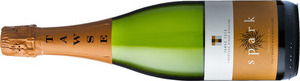
Tawse Spark Limestone Ridge Sparkling Riesling 2013

Tawse Spark Limestone Ridge Riesling Sparkling 2013, Twenty Mile Bench, Ontario (370361, $19.95, WineAlign)

Only a year and in conjunction with an improved Sparkling wine vintage for Riesling, short work has elevated the young Spark’s game. A repeat lees performance initiates the conversation, of cheese melted overtop composite laminate, with yeast burgeoning about. In 2013 the concrete crispness is cemented deeper, etched into stone and thus completing the sub-$20 legacy. That winemaker Paul Pender can coax Riesling character, striking Sparkling wine resolve and yet hover in the air of litheness, well, this is the kneading. Silty, salty earth and soft transitions to citrus acidity are a requiem for success as per the Twenty Mile Bench/Limestone ridges vouchsafe common. Can even imagine a bit of time turning this into sparks and honey. Drink 2015-2019.  Last tasted November 2015  @Tawse_Winery  @Paul_Pender

Ernie Els Big Easy 2013

Ernie Els Big Easy 2013, Wo Western Cape, South Africa (220038, $19.95, WineAlign)

Big Easy, Stellenbosch

Big Easy, Stellenbosch

A massive amount of fruit, caked earth and big, bouncy reduction is packed into this free swinging Western Cape red blend. The reduction mixes with Rhone bacon and its own regional gamey notes. This is both typical and radical. It is made in a style that many love and will continue to love and yet others will balk at its generational specificity. The clean, pure focus in Rhone varietal terminology teams up to subdue the Cabernet though that variety does add lushness to smooth out some of the hard edges. Tons of flavour. Drink 2015-2020.  Tasted November 2015  @ErnieElsWinery  @WOSACanada  @WOSA_ZA

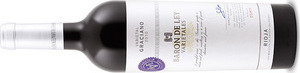
Baron De Ley Varietales Graciano 2011

Baron De Ley Varietales Graciano 2011, Doca Rioja, Spain (397166, $21.95, WineAlign)

Another terrific vintage for the varietal Ley, wrapping a wreath of pure Graciano fruit around your neck and letting you lay back with a sip of something beautiful. Pure floral liqueur, the violets and the sweat, the sweet fruit and the citrus accent. Soft lactic acid and chewy with an accent of dark chocolate and spice. A bit more burly than the ’09 and certainly increasingly oak apparent but a good mouthful nevertheless. Let it rest for two years to let the wood sink in. Drink 2017-2022.  Tasted November 2015  @BaronDeLeyRioja  @RiojaWine  @AMH_hobbsandco

Stratus Evergreen Red 2008

Stratus Evergreen Red 2008, VQA Niagara On The Lake, Ontario (437434, $24.95, WineAlign)

Where has this been? This harmonious composition, like a Starland Vocal Band, Cabernet Sauvignon (30 per cent) plus Cabernet Franc (30) friendship with a healthy dose of Merlot (27) and a bit of Petit Verdot (4) in minor support. The acidity and the tannin have nearly fully waned but it’s a real pleasure to drink at this seven-year mark. Pretty fruit, creamy texture, just enough energy left to keep the party grooving, weightless and soaring in the air. Some chocolate and dessert like tendency but with the right kind of salty main course or just a few sips leading to that point, this will be an afternoon delight. “My motto’s always been ‘when it’s right, it’s right.’ Why wait until the middle of a cold dark night?” Herbal finish is cool and Northern Ontario like in its slow, easy exhalation. Extra points for the foresight, the opportunistic release point and the effort in a hit or miss vintage. The Evergreen Brickworks market’s loss is the LCBO’s gain. Drink 2015-2018.  Tasted November 2015  @StratusWines

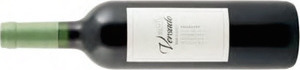
Versado Malbec 2013

Versado Malbec 2013, Luján De Cuyo, Mendoza, Argentina (317008, $25.95, WineAlign)

The rocks beneath the earth precede the rich, dark fruit. After the berries and the candy beets and the spices subside the flowers grow and take over the room. The vintage brings more layers than before. Malbec of character and belief, even a touch of good VA, a coat that only the Southern Hemisphere can provide. It is not usually present in Mendozan Malbec so it’s really a breath of fresh paint here in the Versado. Great purity. Protracted length. Most expansive and intriguing vintage to date. The Reserva will be killer.  Last tasted November 2015

Domaine Karydas Naoussa 2010

Domaine Karydas Naoussa 2010, Dop Naoussa, Greece (272013, $26.95, WineAlign)

A rich, nearly creamy mouthful of Xinomavro, full on red fruit and as much scorched earth as prescribed to be necessary. There is plenty of front end acidity and back-end tannin though the pathway between is rocky, jagged and bumpy. I’d like to see this again in two or three years to see if it has smoothed out. For now it’s certainly edgy and divided though I will admit it has gained my full, undivided attention. Time will tell. Drink 2017-2022.  Tasted November 2015  @KolonakiGroup  @winesofnaoussa  @DrinkGreekWine

Domaine Hamelin Chablis Beauroy Premier Cru 2012

Domaine Hamelin Chablis Beauroy Premier Cru 2012, Burgundy, France (391805, $33.95, WineAlign)

May just be the most well-rounded Premier Cru Chablis in the Ontario market today and orbits would not be its prescribed or described path. Linear more like it, star-shooting with trailing sparks from its steely beginnings out of stainless silo. Well-rounded because it draws fruit from every level of Kimmeridgien subsoil up and down the hills, from the bottom of the valley to the top of the slopes. Also because of its pinpoint unoaked Chablis accuracy, from mineral on the tongue to citrus receding and recoiling. So very clean old bones fruit (up to 35 years old) and direct at a price point most Premier Cru fail to touch. Drink 2015-2021.  Tasted December 2015  @BIVBChablis  @oenophilia1

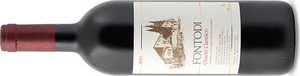
Fontodi Chianti Classico 2012

Fontodi Chianti Classico 2012, Tuscany, Italy (933317, $36.95, WineAlign)

Classic and I mean classic Chianti Classico, cured, ancient, fruit forward. Modern, gritty, tannic, spicy, desperately in love and bound by leather. Tea and liqueur, all in Chianti Classico. Some iron and animale, bitters, tonics, cherries, medicines, all of the above. Acidity raging, thunder clapping, lightning striking. Needs seven years to shed emotional tears, fully settle and be a memory of its intense self. A wine that will remember. Drink 2018-2026.  Tasted November 2015  @chianticlassico   @rogcowines

Good to go!

Twitter: @mgodello

Instagram: mgodello

WineAlign: Michael Godel

Facebook

Four times ten reasons to drink wine on Halloween

Smurfette does Halloween

Smurfette does Halloween

October 31st is a date empowered. Each year I fall victim to its commercial holiday, Soma-coma induced temptations. I eat candy on Halloween (I never eat candy) and I write about what to drink with in compliment and in conjunction with its tasting menu confection. It’s all so very wrong on so many levels and yet I’m drawn to it like a moth to a flame? Why? What is it about this impossibly sappy and gagged up day that sucks me into its vortex of plastic, vinyl, crinkle and excess?

Related – Yet another 10 reasons to pour a glass of wine on Halloween

I blame it on childhood, on a time when innocence, naiveté and gullibility ruled my universe. When running with friends and getting sick on candy was both joyous and  an exercise in self-flaggelent stupid. When two hours meant freedom, rebellion and independence. Halloween is a kids’ version of travelling through Europe with a back pack. It’s like quitting a job, like going to Vegas on a stag (I hate the idea of going to Vegas on a stag).

Related – Ten more reasons to pour a glass of wine on Halloween

Well, that explains it. As adults, we try to justify the ingenuousness, callousness and asinine holiday, to make sure our kids find happiness in its bent farcicality. We try to grin and bear it. We attempt to embrace its forced beauty and its urban chaos. And we drink wine.

Related – Top ten reasons to pour a glass of wine on Halloween

Looking back at those lists from 2012-2014 and the thirty reasons given for drinking wine on Halloween, the best ten can be culled and reformatted into the following quaternary list:

  1. Because sometimes adults need travelling sippy cups too
  2. The polyphenols in red wine can help offset the horrible effects of eating a pound of refined white sugar
  3. Who doesn’t drop their pants for a Ghostly White Wine Spritzer?
  4. Wine makes you forget Halloween ever happened
  5. A person with a candy bag full of vodka is an alcoholic. A person with a candy bag full of wine is classy
  6. To reduce the chances of having a heart attack or stroke at the sudden comeuppance of the neighbour’s $10,000 Halloween movie set
  7. Why should this night be different from any other?
  8. The doorbell rings every few seconds and beer takes much longer to pour
  9. It rhymes with Frankenstein

For the sake of keeping things new, I’ll add the final new reason to the list:

10.  A few glasses of Pinot Noir will make you smile as you remember how much money you saved by staying true to fun-sized candy

Be the life of the neighbourhood and fill those travellers with any of these 10 Halloween wines, subject to budget and chosen from the VINTAGES October 31st release. I promise not to suggest any candy pairings.

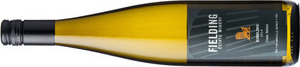
Fielding Estate Riesling 2014, VQA Beamsville Bench, Niagara Peninsula, Ontario (251439, $18.95, WineAlign)

The Richie Roberts take on Riesling brings Beamsville to the populace, combining the natural acidity of the variety with the micro-saddle-plot-climat ipseity that the sub-appellation provides. This early to market ’14 is quite tropical, offering an en primeur portal into what invariably will follow. Fresh, juicy, accessible and in near-perfect balance. Slate, calcareous bleed and fruit generosity make for one tidy, markedly gratifying Riesling.  Tasted March 2015  @FieldingWinery  @RichieWine

Fielding Estate Riesling 2014

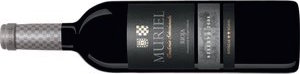
Bodegas Muriel Reserva Vendimia Seleccionada 2008, Doca Rioja, Spain (276030, $18.95, WineAlign)

Carries with it the efforts and old barrel trials of generations in its classic aromas. Cedar, dried plum, bitumen, dried anise, wood soaking in natural sugar syrup. Really seamless, flourless and austere in a running wild kind of way. Possessive of length and deserving of that oddest of wine descriptions; supple. This will age for 10-12 years with ease. A great wine for the money, right up there with the Montecillo 1991, but cleaner, juicier and with more sex appeal. A red head, a ginger, Rita Hayworth, Julianne Moore, Emma Stone.  Tasted March 2015  @bodegasmuriel  @RiojaWine

Muriel Reserva Vendimia Seleccionada 2008

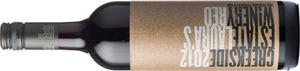
Creekside Estates Laura’s Red 2012, Queenston Road Vineyard, VQA St. David’s Bench, Niagara Peninsula, Ontario (117906, $19.95, WineAlign)

The richest, wealthiest and most lush Laura’s red to date. Constructed in high tones, big fruit and the most oak it has absorbed. Structurally speaking this climbs to play at the top of the Creekside regime game, with tannins formidable to demanding and a texture filled with spirited matter. Behind the scene and to a certain extent the veil there is Niagara, painted and dressed. Laura’s ’12 bites chocolate and picks at buds with impunity. This much plum and berry fruit will find a way to improve then strut in tastings years from now.  Drink 2016-2020. Tasted twice, June and July 2015  @CreeksideWine   @hobbsandco

Creekside Estate Laura's Red 2012

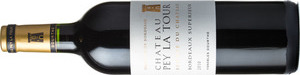
Château Pey La Tour Réserve Du Château 2010, Ac Bordeaux Supérieur, Bordeaux, France (349308, $19.95, WineAlign)

Here’s a well-organized, thought out and structured bit of tidy Merlot from the house of Dourthe. Bits of Cabernet Sauvignon, Cabernet Franc and Malbec reinforce the pretty, dusty, deep blue fruit from between Bordeaux and St. Emilion. I wouldn’t call it rustic or old-school but I would mention its wise charm and traditional handling. Just a bit of astringency in the tannic composition will take this five years down the road. Drink 2016-2020.  Tasted October 2015  @La_Cave_Dourthe  @Dandurandwines

Château Pey La Tour Réserve Du Château 2010

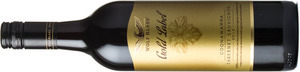
Wolf Blass Gold Label Cabernet Sauvignon 2013, Coonawarra, South Australia (606939, $23.95, WineAlign)

Prodigious Cabernet of and for protein. Melds flavours of salted caramel and real hot chocolate with melting berries like Churros filled with oozing centres, without sweetness. Has expansiveness and connectivity, with acids and direct displays of tannin. The real deal down in the depths of warm climate Cabernet Sauvignon. Drink 2016-2022. Tasted blind at WWAC15, August 2015  @WolfBlassWines

Wolf Blass Gold Label Cabernet Sauvignon 2013

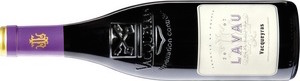
Lavau Vacqueyras 2012, Ac Rhone, France (104927, $24.95, WineAlign)

Rich and very perfumed Vacqueyras composed of Grenache (50 per cent), Syrah (40) and Mourvedre (10). A wine with every intention to seek out a standing rib roast or duck confit to meet its every move. Charges that mix depth of fruit with grain of wood. Stratagem that marks violets moved to red berry fruit and reasonable acidity melded into a fine grain of tannin. There is just enough restraint in the process to consider this a finessed wine of gastronomy. It’s chewy but easy to digest, crusted and built of simple pleasures. Really well-made. No pretension, no attention drawn to itself and just plain affordable. Drink 2015-2019.  Tasted October 2015  @oenophilia1  @RhoneWine  @VINSRHONE

Lavau Vacqueyras 2012

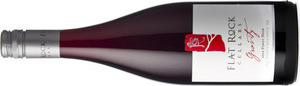
Flat Rock Gravity Pinot Noir 2013, VQA Twenty Mile Bench, Niagara Peninsula, Ontario (1560, $29.95, WineAlign)

Flat Rock’s ever involving vines (on 33 hectares planted in 2001 and 2002) enter a new phase with indicators blinking and refreshing in this 2013 Gravity Pinot Noir. Youthful adolescence and gregarious fruit expression initiated in 2010 and carried through the 2012 vintage. Those years saw to a world of astringency and tension relegated to mites in the rear-view mirror. The wine is now in a nexus cross-roaded with exigency holding pattern. To understand its confusion and survey fast forward to its future is not easy. Gravity is a bit large right now, seemingly advanced, but to me the fight is between that fruit abundant state and the return of, though eased by meditative Jedi tension. Gravity just needs a parachute to bring it back down to earth. That lifeline may not materialize in this 2013 but that does not take anything away from its discriminating and diagnostic tones. Brightness, astatic inflection and succulence. This vintage may suffer from some level of snafu but it will age, evolve and breath. That much fruit has to have some level of expectation. The follow up ’14 and ’15 will win the hearts of horses and men. Drink 2016-2021.  Tasted October 2015  @Winemakersboots  @UnfilteredEd  @brightlighter1

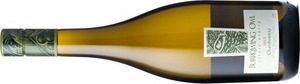
Burrowing Owl Chardonnay 2012, BC VQA Okanagan Valley, British Columbia (208694, $34.95, WineAlign)

Showing reduction and barrel youth in its veins, pores, gutters and buffers. Smells just like a young Chardonnay after spending 12-18 months in a combination of toasts and forests should smell. A changeling constantly shifting, grooving, picking up steps and notes. Spice, prick and pierce with the gems of proper acidity. Of emeralds and pepper grinds. The piquant nature begs for time. A stab in the Chardonnay dark says Okanagan as distant cousin to Beamsville Bench or Vinemount Ridge. In the end winemaking steals the show. Drink 2017-2020.  Tasted blind at NWAC, June 2015  @BurrowingOwlBC  @LeSommelierWine

Burrowing Owl Chardonnay 2013

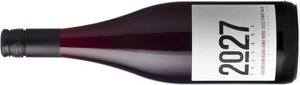
2027 Cellars Pinot Noir Queenston Road Vineyard 2012, St Davids Bench, Niagara Peninsula (421370, $35.00, WineAlign)

A highly perfumed Pinot Noir from winemaker Kevin Panagapka in 2012, complete with an exotic spice box of aromatics; potpourri, roses, cassia, clove and aamchur. The profile hydrates to a mulled simmer as the wine is once again warmed by the vineyard’s ability to ripen, exaggerated in ’12 but with more grace, bringing its personality in line with its modest (13 per cent) alcohol. The cherry flavour veers black with a paste of tar and charcoal, but again, the psyche is smooth and elongated. Long finish to this Queenston which should see it sing to 2018 and beyond. Drink 2015-2020.  Tasted August 2014  @2027cellars

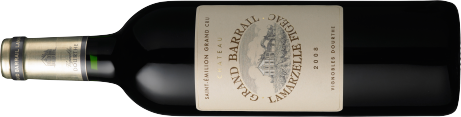
Château Grand Barrail Lamarzelle Figeac 2008, Ac Saint Émilion Grand Cru, Bordeaux, France (425546, $39.95, WineAlign)

Showing a twinge of age at seven years, in rim and out of the natural whiffing forest aromas escaping with ease. The absolute right kind of earthy and barrel-influenced funk emanates, like experienced Bordeaux should, as would Rioja in similar approach to climacteric transition. A bit of leather, licquorice and aged beef join the gritty fray, mixed with aromatic citrus and grainy tannin to seal the destined way. This is ready to drink and yet two more years would not hurt its cause. Drink 2015-2019.  Tasted October 2015  @Dandurandwines

Château Grand Barrail Lamarzelle Figeac 2008

Good to go!

Twitter: @mgodello

Instagram: mgodello

WineAlign: Michael Godel
Facebook

October surprise

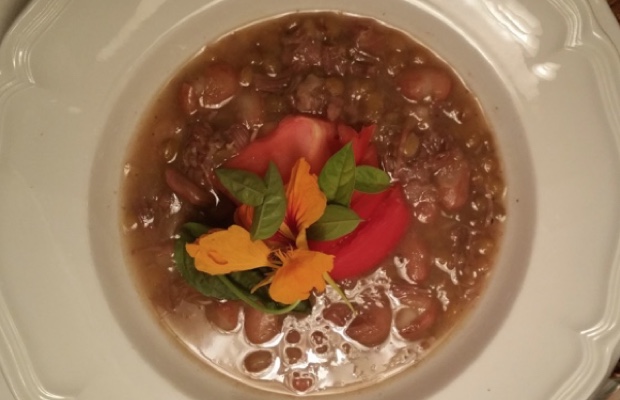
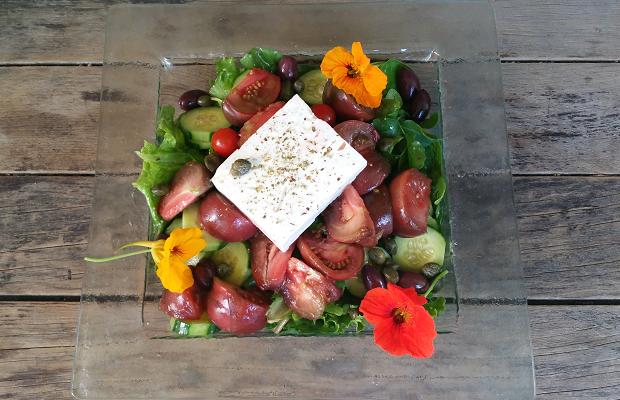
Beef shank, romano bean and lentil soup, tomato, basil, nasturtium

Beef shank, romano bean and lentil soup, tomato, basil, nasturtium

Just over two weeks separates us from another federal election, a national concern in address of criminal activity. Criminal because the choice, at least in the hazy, politically discharged context of my age of voting lifetime, has never been more difficult to make. This I can say. If any of the three leaders pulls out an October surprise from their proverbial political hat, I’m calling their bluff.

Political theory and editorial aside, the one organization that clearly invokes the OS trump card repeatedly and with outright conceit is the LCBO. The operating system is predicated on spin tactics to influence booze czars and to turn business reports inside out. Every month of the year can be aligned with surprise, to make certain the Province of Ontario and whichever elected (or keys to the castle given) Premier stays on the lee side.

Ontario beer, wine and spirit commentary aside, the VINTAGES release calendar continues to cycle on through with expert efficiency and en ever-increasing delightful, thoughtfully purchased and seemingly never-ending supply of quality wine. In 2015, the October surprise is one I can get behind, support and outright cheer for. Finding 10 wines I’d feel honoured to sip, pour and relegate to the mid-life crisis racks of the cellar is nothing short of shooting fish in a barrel. For October 3rd, here they are.

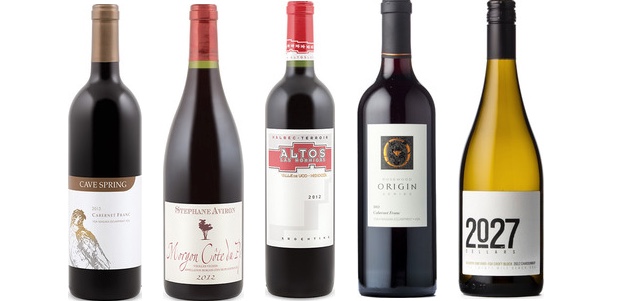
From left to right: Cave Spring Cabernet Franc 2013, Stephane Aviron Vieilles Vignes Morgon Côte Du Py 2012, Altos Las Hormigas Terroir Malbec 2012, Rosewood Origin Cabernet Franc 2013 and 2027 Cellars Wismer Vineyard Fox Croft Block Chardonnay 2012

From left to right: Cave Spring Cabernet Franc 2013, Stephane Aviron Vieilles Vignes Morgon Côte Du Py 2012, Altos Las Hormigas Terroir Malbec 2012, Rosewood Origin Cabernet Franc 2013 and 2027 Cellars Wismer Vineyard Fox Croft Block Chardonnay 2012

Cave Spring Cabernet Franc 2013, VQA Niagara Escarpment, Ontario (391995, $19.95, WineAlign)

Another notch on the Escarpment knows Cabernet Franc totem, with similar if deeper, earthy red fruit character in 2013 for the Cave Spring. The tonalities are further elevated in a vintage that should offer more balance. That it does in terms of handling ripeness in opposition to acidity but at a young age it is further from its intended truth than was the ’12. This may be a better, bigger and deeper CF of potentiality but it’s awkward right now. Give it a year plus to answer the bell. Drink 2016-2019. Tasted September 2015  @CaveSpring  @TheVine_RobGroh

Stephane Aviron Vieilles Vignes Morgon Côte Du Py 2012, Ac Beaujolais, France (424804, $19.95, WineAlign)

Like dark cherry for freshness, maceration for thickness. Entirely, satisfyingly and flat-out rung up in juicy Côte de Puy. Meaty and leaning to roasted, this consistent Morgon makes an honest bedfellow with the Cru. Drink 2015-2018.  Tasted September 2015  @Nicholaspearce_

Altos Las Hormigas Terroir Malbec 2012, Uco Valley, Mendoza, Argentina (366005, $22.95, WineAlign)

Tremendously different Malbec, within the context of largesse. Deep, natural funk, like Syrah of meaty, smoky, porcine intent, from the northern Rhone or Franschhoek. But as Malbec, to Cahors, or not, it is simply cimmerian, intense, of iodine and blood, of minerals not often sensed. Well scripted by a big box outfit with much on its plate. High commendation to be sure. Drink 2016-2020.  Tasted September 2015 @ALHmalbec  @winesofarg

Rosewood Origin Cabernet Franc 2013, VQA Beamsville Bench, Ontario (427534, $25.95, WineAlign)

Cabernet Franc moving with all the correct intentions. Plods a disciplined direction of self-harnessing variegated power out of the ripening challenges abetted by The Bench’s rolling hillside vineyards. Esteemed of low alcohol, on a knife’s edge verge of ripe, ripe fruit and with tannin to add necessary stuffing. Depth of Cab Franc terroir clay, simulating the beautiful rascal flats of the lakeshore, here up higher, crusted by the Escarpment, combining for depth and matter. This matter. This bottle matters, this varietal necessity, this excerpt. It has meaty, smoky, binging bent. It will age for a minimum five and likely, efficiently, for an excavating seven or eight. Drink 2015-2023.  Tasted September 2015  @Rosewoodwine

2027 Cellars Wismer Vineyard Fox Croft Block Chardonnay 2012, VQA Twenty Mile Bench, Ontario (421362, $30.00, WineAlign)

In the hands of winemaker Kevin Panagapka, Craig Wismer’s fruit retains un underlay of power not recognized in other Foxcroft Chardonnays. Neither Thomas Bachelder nor Ross Wise (Keint-He) make anything near spirited as this 2027 take. Chardonnay loves the sun in the Foxcroft Block and Panagapka loves to see that sun hook up with the inside of a barrel. This ’12 makes a nice date for a wood wedding. A product of the Dijon 96 clone, the reduction in this Chardonnay drives its fresh, spritely if mettlesome nature, with a bark and a barrel bellow, but longevity will not suffer as a result. This could take 30 years to oxidize, it’s that audacious and also courageous. Let it and its buttered popcorn rest a while. Drink 2017-2025. Tasted May 2015  @2027cellars

From left to right: Penfolds Bin 128 Shiraz 2013, Vina Real Gran Reserva 2008, Kenwood Jack London Vineyard Cabernet Sauvignon 2012, Burrowing Owl Cabernet Franc 2013 and Le Vieux Donjon Châteauneuf Du Pape 2013

From left to right: Penfolds Bin 128 Shiraz 2013, Vina Real Gran Reserva 2008, Kenwood Jack London Vineyard Cabernet Sauvignon 2012, Burrowing Owl Cabernet Franc 2013 and Le Vieux Donjon Châteauneuf Du Pape 2013

Penfolds Bin 128 Shiraz 2013, Coonawarra, South Australia (509919, $34.95, WineAlign)

One thing is certain, never judge a Penfolds by its cover, in its youth. Here Shiraz is meaty and pepper laces the brawny fruit. A purely bovine expression with enough ganache to ice a birthday cake for 50. But the level of structure, brick laying foundation and utter momentous occasion means this must be assessed with a waiting for the compression to emerge, from out beneath the cumbrous suppression. In time, that it will. Drink 2017-2022.  Tasted September 2015  @penfolds  @alyons_wine

Vina Real Gran Reserva 2008, Rioja, Spain (280545, $36.95, WineAlign)

Highly volatile at this stage and perhaps will be at further stages, but the fruit slinging to acidity bringing it to and from tannin is immense and beautiful. Big structure, stuffing and stage one temper. Has every right to fly its name up high because this represents firm 2008 Rioja with distinction and is as real as it gets. Needs three years to settle down and play a proper, righteous Rioja tune. Wow. Drink 2018-2023.  Tasted September 2015  @Cvne  @vonterrabev

Kenwood Jack London Vineyard Cabernet Sauvignon 2012, Sonoma Mountain, Sonoma County, California (944843, $39.95, WineAlign)

Always fruitful, full and necessary. No holes, plentiful in high quality chocolate and bountiful by way of stuffing. Deep and intense. Big tannins. Tells it from Sonoma Mountain in the way the author would have prescribed. In the proper function of Cabernet, “to live, not to exist. I shall not waste my days in trying to prolong them. I shall use my time.” Persists as a top under $40 California Cabernet, as it always has. A London for the 10-15 year haul. Drink 2017-2025.  Tasted September 2015  @KenwoodVineyard  @sonomavintners

Burrowing Owl Cabernet Franc 2013, BC VQA Okanagan Valley (349019, $44.95, WineAlign)

No combination of ripeness and desert derived concentration can be found in any Cabernet Franc, not just in this country but really anywhere. That the Owl can achieve such massive structure and red fruit containment is remarkable, unparalleled and in singular ownership of style. Extraction clearly matters, layering is key and quality must ride with ripeness. “You know what I’m saying baby,” this is a sky rocket of a Cabernet Franc. Full on, flat-out expression, without compromise.  Drink 2015-2020.  Tasted September 2015  @BurrowingOwlBC  @LeSommelierWine
Owl - Sky Rocket

Le Vieux Donjon Châteauneuf Du Pape 2013, Rhône, France (700922, $58.95, WineAlign)

A thankful. restful and wistful return to form, away from heat and into perfume. Cherry melting into garrigue, beautiful musty wood, the way things were, not so long ago, when the evening meal and the garden mattered. As things do and will again. This Donjon will be a part of future’s past. Drink 2017-2024.  Tasted September 2015  @VINSRHONE  @RhoneWine

Good to go!

http://www.winealign.com/profile/2058-mjg

Chase food pairings with Stratus

The Chase Restaurant's Pom-pom Mushrooms, braised bacon and peppery greens

The Chase Restaurant’s Pom-Pom Mushrooms, braised bacon and peppery greens

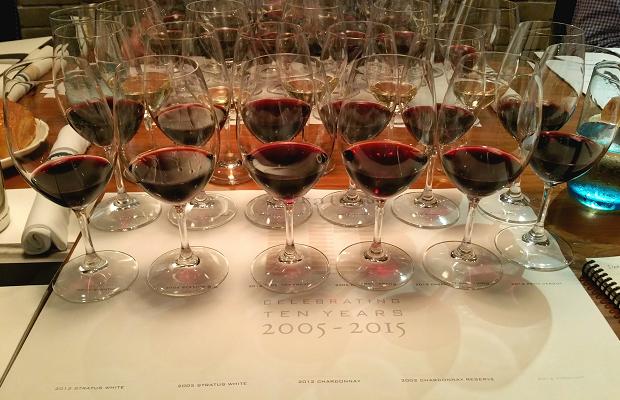
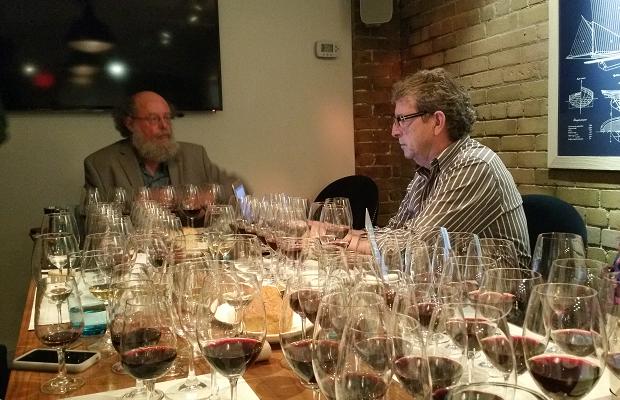
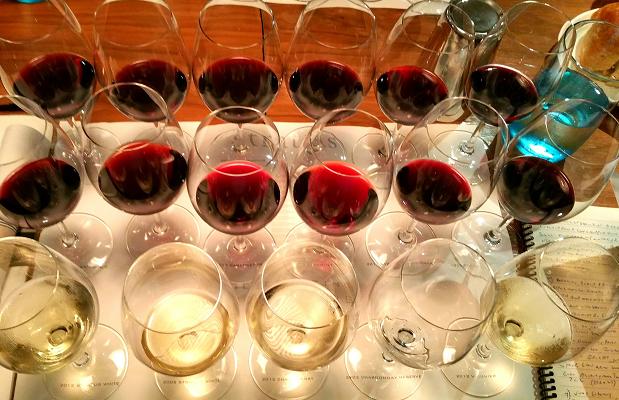
Master of assemblage and varietal maître J-L Groux sits at the head of the underground table while a busy lunch crowd fills in overhead at The Chase Restaurant in Toronto. Highly apropos not just because the Stratus winemaker is over-qualified to preside over the Niagara winery’s 10th anniversary tasting and dissertation on his wines. No, it’s because the posit perfectly illustrates the writer’s yet unspoken epiphany. Groux’s work under the Stratus Vineyards and its offshoot labels have made for some of Ontario’s great food matching wines.

Stratus 10-year anniversary tasting

Stratus 10-year anniversary tasting

Related – The Stratus-Momofuku continuum

It may not be obvious to most but Godello is not much of a food and wine pairing guy. Chef is a fan of great wine and food compatibility but not when generalities need define the directive and the prose. When it comes to the wines of Stratus, a pattern is emerging with incredible clarity. Momofuku, Select Bistro, The Chase. Three Toronto food destinations with high quotients of quality and progressive gastronomy. Three connections with Stratus. Three hits.

Stratus winemaker J-L Groux and WineAlign's David Lawrason

Stratus winemaker J-L Groux and WineAlign’s David Lawrason

Related – Select tasting through years of the Stratus Red and White

The wines are repeatedly discussed and assessed with assemblage and varietal tendency in mind. I have worked through the portfolio or a representative cross-section no fewer than six times in the past three years and yet for the first time the sound was one of a culinary vernacular, a voice heard out of ingredient and mise en place, a dawning of purpose.

The Chase Octopus, harissa, spiced merguez sausage, sauteed red onions

The Chase Octopus, harissa, spiced merguez sausage, sautéed red onions

Related – Stratus and Momofuku: Modernity incarnate

The Chase tasting was presented by the Stratus team of Groux, Charles Baker, Suzanne Janke and Nadia Skorupski. The exceptional lunch was prepared at the hands of Nigel Finley. Here are the notes on 18 wines poured.

Stratus assemblage and varietals

Stratus assemblage and varietals

Stratus White 2012, VQA Niagara Peninsula, Ontario (660704, $44.20, WineAlign)

In magnified aromatic persistence, on and over top of even two months earlier, in such a hyper-grapey way with terrific dry extract chained to tannin and humid minerality. The many months of leave in gentle oak is stating its technically procured, quote unquote de-classified case.

From my earlier note of April 2015:

In 2012 the blend is Chardonnay, Sauvignon Blanc and Riesling. Viognier was left out because according to winemaker J-L Groux “it did not work in blending trials.” The vintage has laid the foundation for the most density, and unctuous fruit for the Stratus White in what must be, ever. At the high aromatic end there is peppery beeswax, reverberating and echoing in scales and arpeggios. Like an open string singing warmly, the vintage, extraction and residuum combine for texture in mottled unction. Sapid lemon, more beeswax and lanolin mark the palate and then the White drifts into spaces occupied by smoky, back beats and bites. This has great pitch with a knowledge of the path to pleasure. Drink 2017-2025

Last tasted June 2015

Stratus White 2005, VQA Niagara Peninsula, Ontario (660704, $44.20, WineAlign)

The blend of Chardonnay, Riesling, Sauvignon Blanc, Gewürztraminer, and Sémillon with a not necessarily before announced whisper of Viognier was culled from vines “getting older, staying true to our technique,” recalls J-L Groux. The grapes were growing at the bottom of the vines which “made for a challenging wine.” The Gewurz acts in upwards accent to the others, its far-easter flavours speaking with scrunch. Concentration is in compression without density to soft spoken. The most unusual bunch location certainly had something to do with my aforementioned “whiff of terroir that blew away” and according to Groux “the year was very nice.” The Stratus White 2005, tasted again, as well.

From my earlier note of September 2013:

‘Twas a deadly vintage (worst frost in Niagara on the Lake) and the only one with smacking aromas from the vineyard floor. “A zoo growing season,” notes Groux, “with grapes hanging high and low.” Chardonnay leads the troops in ’05, in elevated acidity and earthiness from grapes picked “in a different type of environment, near to the earth.” Highly textured and mature, leggy fruit. Though its best years are behind (because the fruit will no longer support the oak), the Groux seven-year ageing goal has easily been reached. The whiff of terroir does blow away and the honey liniment and rose emerges. So much consistency, so rapidly developed. Amazing. Witness here the winemaking acumen out of an atypical vintage and confounding result.

Last tasted June 2015

Stratus Chardonnay 2012, VQA Niagara Peninsula, Ontario (Winery, $48.00, WineAlign)

As per the house promulgation, in Chardonnay, “still an assemblage process,” insists Groux, “no matter what we do.” Some grapes grown for Sparkling were added back in, for acidity, complexity and ultimately balance. That and though notably barrel burdened (a good, hard burden to bare) leading to a bargain, “the best I ever had.” Major key of whose who of Niagara fruit, power acoustic chords and 12-string harmonics. Drink 2015-2022.

From my earlier note of May 2014:

A change in direction is duly noted with J-L Groux’s 2012 Chardonnay, from fruit picked six weeks earlier than in 2010. The program is scaled back and the wine is more “typical” of the region, in weight, in barrel effect and in alcohol. Still quite defined by natural yeasts that “sometimes go a bit wild, but I’m getting better at it,” concedes the clinician of vinous letters. Those feisty microbes are difficult to work with, like dealing with a wine that lacks natural clarity. “You have to shut down the bacteria, teach the yeast to stop stealing the lees. In 2013 I really got it.” The ’12’s altered course is welcome and encouraged and the world should wait with bated breath for what ’13 will bring. Here the complexity of aromatics is matched only by the intensity of tropical fruit. Has balance and a soft, round feel. Again, more texture and aromatics than natural acidity. Classic J-L style. “It’s not about trying to imitate anyone. It’s about making the most interesting and most complex Chardonnay in Niagara.”

Las tasted June 2015

Stratus Chardonnay Reserve 2002, VQA Niagara Peninsula, Ontario (Winery, $48.00, WineAlign)

Even now its wick seems lit, a febrile wicker thatch of reed, bamboo and rattan, a little wicked even. Versatile like vin jaune, of oxidative rushwork, a product of a time when the regimen was all new oak. Preserved lemon and wax, late bitters within reason and with thanks, surprising freshness. Though the oak was overdone at the time, the slow food preservation has rendered the fat and left behind sharpness, even at 13 years of age.  Drink 2015-2017.  Tasted June 2015

Stratus Viognier 2012, VQA Niagara Peninsula, Ontario (Winery, $48.00)

The most tropical unction of seemingly all Viognier known to human kind, Stratus issue or not, at the hands of J-L Groux or any other aromatic junkie in the winemaking world. Hung like an ancient painting on a modernist gallery’s bright white walls. A pepper-laced, creamy white paste cuts through the similarly positioned texture. A quench of peach, apricot and nectarine sits on the palate, like an August fruit cup from Ontario trees, with a cut of nut pith. And lemon too. Drink 2015-2019.  Tasted June 2015

Stratus Red 2012, VQA Niagara On The Lake, Ontario (131037, $44.20, WineAlign)

The Stratus Red 2012 resides both in a virtuoso’s hollow and in a pantheon inhabited by some of Niagara’s great reds. The fact that such ripe phenology can anticipate and foretell to balance and freedom in the byplace of the blending process is nothing short of amazing. Sinuous and exact, of berries so indefatigable, layering raspberry over blackberry atop strawberry. Cedar and red citrus compound, without jamming the fluidity, but certainly accentuating the Fragaria vesca. Confident and fluid in movement, the ’12 neither shakes nor stirs and its acidity is flat out terrific. At this early point in its evolution it is showing as well as could be expected, or hoped for. Its core of fraises du bois will always be there. Time will be kind, gentle and patient. Drink 2015-2024.   Tasted April and June 2015

Stratus Red 2002, VQA Niagara On The Lake, Ontario (131037, $44.20, WineAlign)

Tasted from two bottles. The blend was Cabernet Franc (40 per cent), Merlot (37), Cabernet Sauvignon (16) and Gamay (5)…roughly. Gremlins from a closet in a funky way, in causation by time though for every thought of flaw there are 10 in depth and layering. The second pour is brighter and popping but if a master of time, partially, arguably so is considered, then the years have had their say. Both palates are alive, tense, terse and resonant in deep horns, where fog meets contrabass. The specs are interesting to note; 7.2 total acidity, pH at 3.19 and sugar (brix), 22.3. Says J-L Groux “we would never pick at that number today.” High acidity keeps it alive, this mix of fruit that is oxidized, nearing the suggestion of maderized and whiffing like 55-day, dry-aged beef. Only the second bottle offers up true savour and cooler instincts. Fascinating. Drink 2015-2016.  Tasted June 2015

Stratus Cabernet Franc 2012, VQA Niagara Peninsula, Ontario (Winery, $38.00, WineAlign)

A Cabernet Franc of settled, harmonious tones, of oak that sets sights and heights to heah, now integrated at such an early age. The grape succeeds and bleeds an exemplary, stalwart varietal suspension within the Stratus pantheon, a sanctuary where fiddles are yet played by other outfits across the region. Cabernet Franc will increase in the Stratus Red, for good measure and reason. This ’12 is simply smothered in an embarrasment of red fruit, smoky from raspy reds to plugged in currants. It is of a favour in flavour that reminds of Swedish berries, in modulated hög, though not in sweetness. Drink 2015-2021.  Tasted June 2015

Stratus Cabernet Franc 2005, VQA Niagara Peninsula, Ontario (Winery, $38.00, WineAlign)

Of a bygone era, an older style. Thicket or copse, but of a green, verdant, newby character. Like a shell, membrane or rim of shellac on an expressly full-bodied corpse. Smells like a grandfather’s old pipe, comforting and parched. Flavours have left piquant behind, settling with senectitude into orange and clove. Alive if well-aged and evolved. A push-pull of warmth and cool elasticity, humidity and savour. Drink 2015-2016.  Tasted June 2015

Stratus Cabernet Sauvignon 2012, VQA Niagara On The Lake, Ontario, (Winery, $55.00, WineAlign)

Few varietal Cabernet Sauvignon in Niagara stand out, firm and yet back from the pack. The Stratus is anything but “six and one, half dozen the other.” This prochaine exit strategy to the NSOR 2010 is an admirable follow, of dusty fill and grind of pepper, a touch of brine and “a cup of rhyme.” Structurally it is like a swan, elongated, muscular and elastic. It is elegant within a markedly rigid frame. It also flies freely, like a hummingbird. “You can crop it higher and it’s going to make good quality,” notes J-L. Hurrah. Another varietal success for Life’s Rich Paegent. Let it catch some R.E.M. to settle its tannins. Drink 2017-2022.  Tasted June 2015

Stratus Petit Verdot 2012, VQA Niagara Peninsula, Ontario (142638), $30.75, WineAlign)

Picked at nearly the same time as the ’12 Gamay and with prudent acidity preserving fashion – early. A variety that travels with happy expedience into sugar (26 brix) and maintains that aforesaid acidity without intrusion. A tightly spun PV, in need of five years easy to unwind and hopefully recoil. The wall of rigidity is woven in chalk and grain, the lift round, all-in, immediate and lingering. Then it comes back around again, ever-increasing the high tones of the wine. So very metagrobilizing genera, this ’12 Petit Verdot. Drink 2019-2024.  Tasted June 2015

Stratus Gamay 2012, VQA Niagara On The Lake, Ontario (Winery, $29.00, WineAlign)

“We try to treat Gamay as a noble variety,” says J-L Groux. This is the child of a short (three weeks) Stratus maceration. Today the nose indicates concentrated strawberry compote. Gamay of the most hue, tone and texture. “We don’t want to go back to the light years of Gamay.” This futuristic vintage (of two years in oak and high, high brix) sees to that concern. Subsequent vintages will scale back but won’t be “light, easy and breezy,” though they will shed the weight of raisin and fig.

From my earlier note of May 2015:

Esteem elevated by structure, matched in poise and presence mottled in smears of darker, richer black cherry. If a slight absence of brightness is sensed due to the syrupy compression, like New World, west coast Pinot Noir, the gleaning from acidity and tannin times perfectly the effluent escape.

From my earlier note of April 2015:

It may not be the most idiosyncratic Gamay in Niagara but the Stratus 2012 is without a doubt the most advanced and complex. Gamay fusion is on display, at once a bottle of Niagara’s finest pulchritudinous veneer and then a charcuterie board laid ample with cured bovine parts and sun-dried grapes. Maximum ripeness and then even later picking, to no one’s surprise, have led to this. Two years of ageing in neutral oak barrels has brought about a humid roundness and yet the centre is controlled by Oz-like mint and eucalyptus notes. The jam is gelid, as opposed to temperate. Rarely does Gamay go to such depths, of blackberry, chalk and grain, with an overlord of tannin. Quite serious stuff. Drink 2017-2020.

Last tasted April 2015

Stratus Sangiovese 2012, VQA Niagara On The Lake, Ontario (Winery, $42.00, WineAlign)

With no true recognition of, for or in cohort conscious decision to align with a clone, of Montalcino, Montepulciano or Chianti, this Stratus take on Sangiovese must go it alone. That said, so much modernity links it to some Tuscan brethren. “We have Italian winters that tell us our Sangiovese is not a crazy one,” explains J-L Groux. Nothing in this ’12 speaks of lightness, beets or simple, red fruit. Two years in French oak, blah, blah, blah leads to a Riserva style. This is not about making CC, simulating CCR, mimicking Gentile or copying Grosso. It’s about leaving a wine for two years to develop aromatic complexity and structure. “It’s a curiosity,” adds Suzanne Janke. Nail’s head, hit. Drink 2016-2019.  Tasted June 2015

Stratus Tempranillo 2012, VQA Niagara On The Lake, Ontario (Winery, $42.00, WineAlign)

In 2012 the J-L Groux take on the expatriate Spaniard is warm, rich, cake-driven and yet balanced in ways the 2010 was unable to exhort. This vintage appeases Groux’s ends of the earth search for aromatics, picking on them, executing vinification to encourage them and barrel-aging for the purpose of cementing them. The 2012 is an aromatic success. It exudes red fruit, flowers, baker’s kitchens and wet Niagara on the Lake earth. This is a clean and jerk Tempranillo, a bouquet to success. The palate, mouthfeel and mellow finish return the favour of 2010 when it was noted that the variety in this place is a stretch, overweening perhaps, certainly self-effacing if admittedly short of contumelious behaviour. Drink 2015-2019.  Tasted June 2015

Stratus Tannat 2012, VQA Niagara On The Lake, Ontario (Winery, $42.00, WineAlign)

“To me this is one of the most successful new varieties we are planting,” exclaims J-L Groux. In similar ways with Stratus varietal cousin Petit Verdot, acidity rules the roost. Smells like a just sliced open bag of organic earth, freshly neutral, funkless and emptying into a (first use) terra cotta pot. A rich, looking straight ahead expression. What it hides in fruit is lost to the brilliance of balance though plum is the operative hidden flesh and it will make a clearer impression when it steps clear of the tar and the tannin. This is pitchy sagacity, with poise and length. Drink 2016-2022.  Tasted June 2015

Stratus Syrah 2012, VQA Niagara On The Lake, Ontario (Winery, $48.00, WineAlign)

Once again, the tone climbs and hangs in the upper reaches, where structure lurks, preceded with intent by four plus weeks of maceration, followed by (sic) two years in oak. Some new, some old, to be technical and precise. Will be some time before this is able to shed the bathetic, syrupy aromatics and meaty, eat that soup with a fork texture. The concentration it treated and tempered with a pantomime shred of elegance. Not as Rhoneish as some other vintages (contemporarily not a bad thing) but this combines worlds in copacetic ways. Tomato and herbs crisped in good olive oil make for good gastronomy in this consumer-friendly, balanced Syrah. Drink 2016-2019. Tasted June 2015.

Stratus Malbec 2012, VQA Niagara On The Lake, Ontario (Winery, $42.00, WineAlign)

Unexpectedly floral, perhaps more than any other Stratus varietal red. That aroma bite strikes me as cool. Just a hint of fennel and coriander seed offer up an herbal hand of complexity. The texture advances to integrated, coming about with a softer red in tow, with less severe acidity than the others. More bitters on the finish as well. Less attitude, more fat, though decidedly rich. Drink 2015-2017.  Tasted June 2015

Stratus Wildass Rosé 2014, VQA Niagara Peninsula, Ontario (71712, $17.95, WineAlign)

A blend of Cabernet Franc and Merlot with some Sauvignon Blanc and Riesling added for lift and what J-L Groux admits is rendered “for the consumer.” This essentially marks the twain between sweet and dry, if not quite halfway then pretty darn close. Plenty of herbs and citrus nail the aromas on the proverbial head with more than a grapefruit or two on the half circle. A highly approachable, end-user friendly blush. Drink 2015-2016.  Tasted April and June 2015

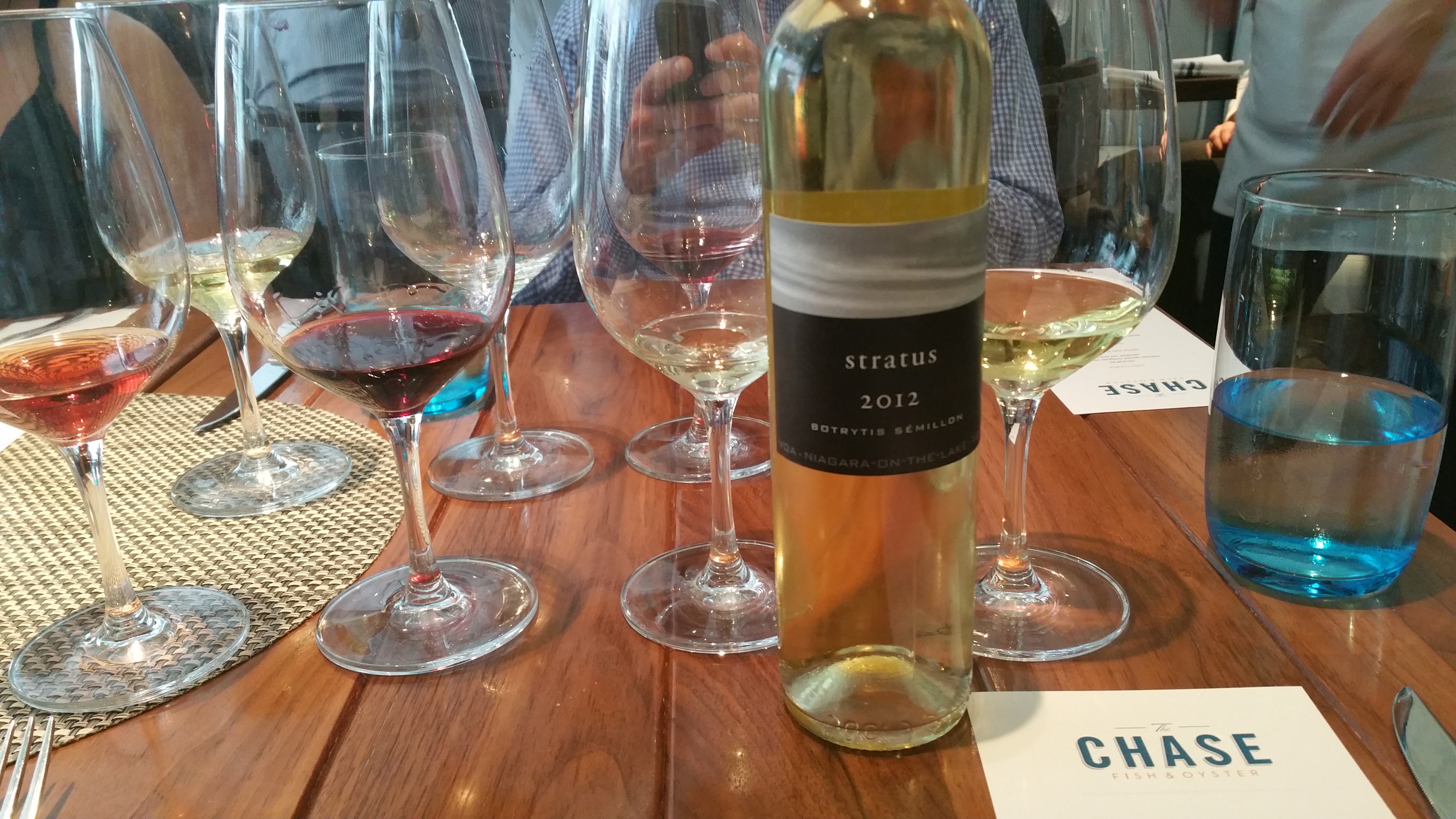
Stratus Botrytis Affected Semillon 2012 at The Chase

Stratus Botrytis Affected Semillon 2012 at The Chase

Good to go!

http://www.winealign.com/profile/2058-mjg

Catch 22 wines

Godello's garden meets Greek Horaitiki

Godello’s garden meets Greek Horaitiki

Twenty two wines I tasted from the August 22nd release. Some are really good. So what’s the catch? Some not so much. As always, take a grain of salt and judge for yourself. Godello is not traditionally a site to explore the good, the bad and the ugly. The good news is that the worst of these 22 are actually quite well-made. The bad news is that each will only satisfy a certain kind of palate and a specific sort of temperament.

Something for everyone. LCBO 101. I hope you find something you like.

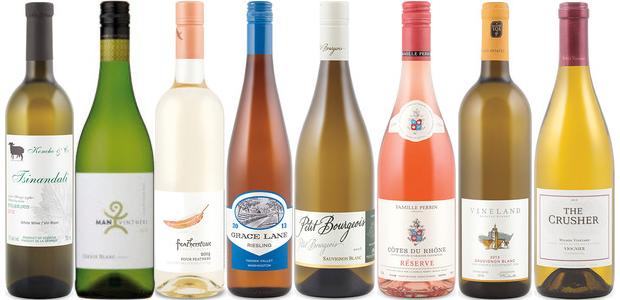
From left to right: Koncho and Co. Tsinandali 2012, Man Vintners Free Run Steen Chenin Blanc 2014, Featherstone Four Feathers 2014, Grace Lane Riesling 2013, Henri Bourgeois Petit Bourgeois Sauvignon Blanc 2014, Perrin Réserve Rosé 2014, Vineland Sauvignon Blanc 2013 and The Crusher Viognier 2013

From left to right: Koncho and Co. Tsinandali 2012, Man Vintners Free Run Steen Chenin Blanc 2014, Featherstone Four Feathers 2014, Grace Lane Riesling 2013, Henri Bourgeois Petit Bourgeois Sauvignon Blanc 2014, Perrin Réserve Rosé 2014, Vineland Sauvignon Blanc 2013 and The Crusher Viognier 2013

Koncho & Co. Tsinandali 2012, Kakheti, Georgia (412981, $12.95, WineAlign)

Boxy, foxy, contained, constrained, aromatics waiting to burst, in big timbre and quite spicy. A bit reductive and very juicy. Boisterous, wild-eyed expression. Drink 2015-2018.  Tasted August 2015  @GeorgianWineSoc

Man Vintners Free Run Steen Chenin Blanc 2014, Wo Coastal Region, South Africa (126847, $13.95, WineAlign)

Good texture and mouthfeel in this Chenin, dry but unctuous, direct and filling. Works coastal wonders in many ways. Drink 2015-2018.  Tasted August 2015  @MANVintners  @vonterrabev  @WOSACanada

Featherstone Four Feathers 2014, VQA Niagara Peninsula, Ontario (341586, $14.95, WineAlign)

Though Riesling dominant this is a shared experience, with cool climate Chardonnay and richly aromatic Gewurztraminer lifting spirits and exhaling breaths. The Sauvignon Blanc seems to add ripeness and juicy palate flow. A mouthful of ripe fruit to be certain and amenable beyond its pragmatic ways. One of the better value white blends and one to look at for Niagara Peninsula propensity within the context of designing an appellative blend. Drink 2015-2017.  Tasted August 2015  @featherstonewne

Grace Lane Riesling 2013, Yakima Valley, Washington (420737, $14.95, WineAlign)

Simple, straightforward, slightly spritzy Riesling with a full-blown lemon lime palate and a finishing set of bitter piths. Good length gives it life. Drink 2015-2018.  Tasted August 2015

Henri Bourgeois Petit Bourgeois Sauvignon Blanc 2014, Igp Vins De Pays Du Val De Loire, France (672345, $15.95, WineAlign)

A lithe and petite Sauvignon Blanc, balmy, touched by spice accents and a whisper of lemon/lime. Tart but not really striking or biting. Soft Sauvignon Blanc, quick and effortless. Drink 2015-2016. Tasted August 2015  @ChartonHobbs

Perrin Réserve Rosé 2014, Ac Côtes Du Rhone, France (719062, $15.95, WineAlign)

Pretty Rosé, arid enough though really juicy and presentable to a wide army of followers. Some tonic and even more brine. A late feeling of pickles and preserves. Better than many. Drink 2015-2018.  Tasted August 2015  @Beaucastel  @ChartonHobbs  @RhoneWine  @VINSRHONE

Vineland Sauvignon Blanc 2013, VQA Niagara Escarpment, Ontario (551168, $16.95, WineAlign)

Spicy vintage for the Escarpment, concentrated in many ways, for juicy fruit, capsicum and savoury herbs. A touch effervescent which does not detract, but rather adds a buoyant lifeline because the tart acidity is really something else. Fun with Sauvignon Blanc from up on the shelf. Drink 2015-2017. Tasted August 2015  @VinelandEstates  @benchwineguy

The Crusher Viognier 2013, Wilson Vineyard, Clarksburg, California (361964, $16.95, WineAlign)

Reductive Viognier, nice and fresh for a change, cool Clarksburg fruit thankfully kept shy and in absence of high alcohol, overly heated sunshine gluck. A bit of a mouth breather, tropical in a longan way and of enough though not striking acidity. Finishes overly bitter, in lime pith and a kind of nettle. Drink 2015-2018.  Tasted August 2015  @SebastianiWines  @Select_Wines

From left to right: Trivento Golden Reserve Malbec 2012, Pascal Jolivet Attitude Sauvignon Blanc 2014, Gérard Bertrand Côte Des Roses Rosé 2014, Paco & Lola Albariño 2013, Herdade Do Rocim Red 2011,S. Cristina Massoni Lugana 2014 and Gray Monk Pinot Blanc 2013

From left to right: Trivento Golden Reserve Malbec 2012, Pascal Jolivet Attitude Sauvignon Blanc 2014, Gérard Bertrand Côte Des Roses Rosé 2014, Paco & Lola Albariño 2013, Herdade Do Rocim Red 2011,S. Cristina Massoni Lugana 2014 and Gray Monk Pinot Blanc 2013

S. Cristina Massoni Lugana 2014, Doc Lombardy, Italy (200097, $17.95, WineAlign)

Tanky and metallic, coastal and postal for Trebbiano di Lugana. Quite herbal, reminiscent of Sancerre, with spice, nettle and linear length. Layered and structured white with a seriousness in its expression. Drink 2015-2020.  Tasted August 2015

Herdade Do Rocim Red 2011, Alentejo, Portugal (423574, $17.95, WineAlign)

A regional blend of Antao Vaz, Arinto and Roupeiro. Very cimmerian, rich and dense Alentejano, wildly berry delicious and yet fierce. Lots of oak, lots of optimism and plenty of swagger. Very spicy and toasty finish. Drink 2015-2019.  Tasted August 2015  @winesportugalCA

Paco & Lola Albariño 2013, Do Rías Baixas, Spain (350041, $18.95, WineAlign)

Concrete and tank Albarino, steely and mineral, cool and bristling. Turns to stone fruit on the palate, gets down to juicy and then ricochets off the walls, drawing salinity and pulverized limestone into the very linear finish. Such a calcareous, wound white wine, on a spindle, in a vacuous void of aggregate and steel. Drink 2015-2020.  Tasted August 2015  @pacolola  @azureau

Gérard Bertrand Côte Des Roses Rosé 2014, Ap Languedoc, Languedoc-Roussillon, France (373985, $18.95, WineAlign)

Dry, floral, medicinal, quite tight and angled, not angular Rosé. The sea salinity and briny strawberry confluence is quite striking. Doesn’t really linger so in the end it’s a bit of a simple quaffing Rosé but what of it? That’s right. Drink 2015-2016.  Tasted August 2015  @GBvins  @LanguedocWines  @FwmWine

Pascal Jolivet Attitude Sauvignon Blanc 2014, Loire, France (971887, $19.95, WineAlign)

A neat feat to stretch Sauvignon Blanc like this, in phyllo layers and like bitter greens braised to sweet tenderness. Savoury though the herbs are not the most recognizably cultivated, used or considered. Like winter savoury, or Spruce tip, edible seaweed even. All tossed lightly, gingerly in a citrus vinaigrette. Playful SB, at times tight and bracing and then generous, giving, forthcoming. Previous vintages have had more shine. Drink 2015-2020.  Tasted August 2015  @HalpernWine  @LoireValleyWine

Trivento Golden Reserve Malbec 2012, Luján De Cuyo, Mendoza, Argentina (588731, $19.95, WineAlign)

Heavy handed, much wood and chalky, full on bloody Malbec. Has Oz strength and gumption. Good lengthy finish. Drink 2015-2019.

From my earlier note of August 2014:

This Golden Reserve Malbec by Trivento is a juicy, dusty, fruit tree addition to the #WWAC14 flight and arrives just in the nick of time. Despite the dark fruit, it has no Drake spoken word conceit. It sings in classic Drake lullaby, with beefy meet pine forest aromas and so “you find that darkness can give the brightest light.” Tender refrains soften chalky, stalky wood and corresponding bitter chocolate. Big tannins on this balladeer. Has impressive stuffing.  @TriventoArg  @Select_Wines  @winesofarg

Last tasted August 2015

Gray Monk Pinot Blanc 2013, BC VQA Okanagan Valley, British Columbia (321612, $20.95, WineAlign)

Into another cool climate Pinot Blanc poster from Gray Monk, the standard bearer for the variety, in this price and stylistic niche, for anyone who cares or dares to join the bandwagon. Juicy stone fruit of a peach, yellow plum and nectarine fold, circular bites of acidity and mineral bleed and just a touch of tonic to tie it all together. Always great stuff. Length even better than in 2012. Drink 2015-2020. Tasted August 2015  @GrayMonkWinery

From left to right: Domaine De Rochebin Vieilles Vignes Bourgogne Pinot Noir 2013, Buena Vista Chardonnay 2013, Benjamin Bridge Nova 7 2013, Featherstone Onyx 2010, King Estate Signature Collection Pinot Noir 2013, Charles Baker Picone Vineyard Riesling 2012 and Cantina Del Pino Barbaresco 2010,

From left to right: Domaine De Rochebin Vieilles Vignes Bourgogne Pinot Noir 2013, Buena Vista Chardonnay 2013, Benjamin Bridge Nova 7 2013, Featherstone Onyx 2010, King Estate Signature Collection Pinot Noir 2013, Charles Baker Picone Vineyard Riesling 2012 and Cantina Del Pino Barbaresco 2010,

Domaine De Rochebin Vieilles Vignes Bourgogne Pinot Noir 2013, Ac Bourgogne, Burgundy, France (424275, $22.95, WineAlign)

Such a pretty red cherry, fine earth and cinnamon heart confluence on the aromatic front, with no palate or late tannin affront. The acidity seems particularly natural and fitting, the finish quick and efficient. Very good old world look at the world of Bourgogne. Drink 2015-2018.  Tasted August 2015  @BourgogneWines

Buena Vista Chardonnay 2013, Carneros, Sonoma County, California (67405, $23.95, WineAlign)

Cream in your coffee, sui generis housed and reductive Chardonnay with a chip on its shoulder. Aromatic rhythms are modulated by the barrel’s influence while flavours are pleasant though not wholly distinctive or full of character. Very directed Chardonnay and an exemplary regional example for the price. Will show better a year on. Drink 2016-2018. Tasted August 2015  @BuenaVistaWines  @TandemSelection

Benjamin Bridge Nova 7 2013, Gaspereau Valley, Nova Scotia (256289, $24.95, WineAlign)

Down $1 in price from this time last year.

From a bumper crop, there came to market 11,000 cases of this Nova Scotian feel good, faux-sparkling story. Winemaker Jean-Benoit Deslauriers’ Nova 7 dissimulation in bubbles is a true trick of the trade and though this white wine strikes as if it were a child of a warm vintage, there is a classic lightness of Rosé fizz being in its ever so slight effervescence. A singular wine in many hybrid incarnations, in Muscat ways, of pink Perle de Csaba, segmented and pressed for a sweet burst of grapefruit. It’s low (7 per cent) in alcohol, excellent in acidity, sweet and sour, citrus zesty, juicy and dry at the same time. Batch delineated and loyal to continence, though if the quantity creeps much higher that may come in to question. Grown up pink lemonade and so easy to consume.  Tasted June and July 2014, July 2015  @Benjamin_Bridge  @jbdeslauriers

Featherstone Onyx 2010, VQA Niagara Peninsula, Ontario (372433, $29.95, WineAlign)

Strikes as Cabernet Franc dominant and quite savoury so, slightly cured and richly layered. Merlot appeals and appears with its own distinct clarity, gift-wrapped with tidy flavours in refrain of Franc that acts like fruity Cabernet Sauvignon. The vintage is very in and though it’s warmer and coated with more wood than would best service its needs, this has settled into a really nice glass of red berry and plum red wine. Kudos to the blender and the patience afforded the result. Drink 2015-2018.  Tasted August 2015  @featherstonewne

King Estate Signature Collection Pinot Noir 2013, Oregon (984005, $34.95, WineAlign)

High quotient of ripeness, astringency below, earth above sprinkled and saturating. Quite an effusive design and rambunctious effort. All over the map. Big, bouncy and biting. Drink 2015-2018.  Tasted August 2015  @KingEstate

Charles Baker Picone Vineyard Riesling 2012, VQA Vinemount Ridge, Niagara Peninsula, Ontario (241182, $35.00, WineAlign)

This ripe Picone in 2012, not a surprise and ripping at the same time. The orchard stands out, the texture overlaid and the length outstanding. Picone in ’12 has presence of more immediate notice, standing firm and tall to be counted early and then, for years to come, often. Like juice bled from escarpment cragges, a speciality that is singularly Picone. Drink 2016-2022.

From my earlier note of June 2014:

A vintage that begged to be protected in the vineyard, meaning no leaf plucking and no thinning. A most excellent goal of (0.691895068 kg / m2), or 2.8 tons an acre was realized, as opposed to one in 2010. Heavy vigor slowed down the ripening (leaving that kind of tonnage on the vine), to an elongated balance. Comes from terroir Baker nods to as “a barren tundra,” which you don’t get down the hill. In 2012 there was no waste, no rot, no problems. Its residual climbs to 15 g/L but you’d never know it. There is a confit of citrus, a mellifluous sensation of preserved lemon. Total count is 600 cases.

From my earlier note of March 2014:

“Baker’s iconic child yet breathes in unsettled, spumous emission from out of a warm vintage. So primary and such a hard act to follow. Vanguard Vinemount Ridge, arid as the desert and citrus, carbonic tight. Treated with cool, cooler and colder methods to seek result and strike balance in an opulent, lees-appertained, tangy finish. A Picone that says I don’t live today, so it is told and canvassed, “uh, get experienced, are you experienced?”  Last tasted June 2014  @cbriesling

Cantina Del Pino Barbaresco 2010, Docg Piedmont, Italy (922880, $37.95, WineAlign)

Nebbiolo of intonation, modulation and stress, with a noticeable mid-life moment in volatility, in contrast to an enamoured aromatic loveliness in rose petal and candied flower. Dusty swirls and tight red fruit meets stark acidity. A Barbaresco such as this has historical advantage on its side but scares a bit in the present. A very fair price for a wine that has to be stashed away for at least three years for the angst to subside. Drink 2015-2018.  Tasted August 2015  @LeSommelierWine  @piemonte_italia

Good to g0!

http://www.winealign.com/profile/2058-mjg

Buy these five reds now

Ziti N. 69, sage, spinach, garlic, olive oil, reggiano

Ziti N. 69, sage, spinach, garlic, olive oil, reggiano

Last week there were bubbles and yesterday I gave you whites. Today five reds (well, four plus one very aromatic Rosé) from the VINTAGES, June 13th, 2015 release.

Related – Seven inexpensive must try whites

Related – This week bubbles, next week summer

All set, good to go.

From left to right: Fielding Estate Rosé 2014, Montebuena Cuvée K P F 2012, Château Eugénie Cuvée Réservée De L'aïeul Cahors 2011, Ambra Santa Cristina In Pilli Carmignano 2011 and Louis Jadot Château Des Jacques Moulin à Vent 2011

From left to right: Fielding Estate Rosé 2014, Montebuena Cuvée K P F 2012, Château Eugénie Cuvée Réservée De L’aïeul Cahors 2011, Ambra Santa Cristina In Pilli Carmignano 2011 and Louis Jadot Château Des Jacques Moulin à Vent 2011

Fielding Estate Rosé 2014, VQA Niagara Peninsula, Ontario (53421, $15.95, WineAlign)

A tree full of blossoms fills the air, with a fresh vegetal-herbal rub of vine leaves and grape skins. Aromas from vegetation determinate and indeterminate join the fray, you name it, they’re in there. Fruit notes run through strawberry, peach, rhubarb, tomato and cherry. A bowl of fresh petals adds to the al fresco potpourri. Not done there. Shoots, tender tendrils and slices of fruity flesh add a textural junction. As for the idea of Ontario Rosé, not only why not, why not this Fielding? Acidity seals in the juices and the deal. A squeeze of grapefruit and a chew on a few sections goes for the win. Drink 2015-2017.  Tasted May 2015 @FieldingWinery  @RichieWine

Montebuena Cuvée K P F 2012, Doca Rioja, Spain (211029, $15.95, WineAlign)

This young and taut Rioja is of the buenaza kind, giving and good-natured. From a ripe vintage, out of pure if elevated extraction. Life may sometimes be described in the old Spanish proverb “no todo el monte es orégano,” but a taste of this cherry filled Tempranillo will lift the spirits. It’s quite intense, with accents of plum and orange zest. The Montebuena is ready, willing and able. It is a fine value, a working Rioja in a permanent position to be consumed in the present. Drink 2015-2017.  Tasted July 2014 and June 2015  @oenophilia1  @RiojaWine

Château Eugénie Cuvée Réservée De L’aïeul Cahors 2011, Ac Southwest, France (295949, $20.95, WineAlign)

Initializes in a semi-reductive, verging on carbonic state. The miasma is excitable, especially for Cahors. The wine passes its early days in an ante-room, waiting for its life to begin. That will happen with air time or a few years of slumber, when it will drive past fennel seed and through the town of funky Calcaire. Following the brief mineral respite in a pit of alcoholic heat it will fuel up on desperate tannin, remain hot and bothered and then relax along the long lost highway into the sunset. This is Cahors mind you and a huge expression with plenty of fruit to carry it long. It’s a bit black like Barossa Shiraz but with a searing southern French mentality and a Malbec heart. Drink 2017-2021.  Tasted May 2015

Ambra Santa Cristina In Pilli Carmignano 2011, Docg Tuscany, Italy (705376, $23.95, WineAlign)

You have to appreciate a good Carmignano. This developed, cured, slightly oxidized but beautifully auctioned Bordeaux varietal-augmented Sangiovese is on target. Like proper modern Rioja with ancient feelings, or Chianti Classico of same. Here Sangiovese does the right dance on the line, with so much earth, liquorice and plum, not to mention cherry. It is decidedly warm, slightly baked but there is a cool centre and intensely proportioned acidity. This Carmignano yet swells, cracks and churns. Does it soften in the end and is it too bitter or charred? No. Drink 2015-2020.  Tasted May 2015

Louis Jadot Château Des Jacques Moulin à Vent 2011

Louis Jadot Château Des Jacques Moulin à Vent 2011

Louis Jadot Château Des Jacques Moulin à Vent 2011, Ac Beaujolais, France (700187, $29.95, WineAlign)

This Moulin à Vent exhibits as much natural, yeast induced funk as Gamay has or is likely to find, potentially offend and yet ultimately please. The novel and vertiginous perfumatory experience mingles with pure fruit, namely cherry and layers of caked, hard-packed earth. This is ferric, tannic, ionically structured and filled with thick droplets that seem distilled from anthropomorphitic ability. The reducing glycerin texture and slow developed flavour makes for exciting, Cru Beaujolais. Spice, chalk, grit and an anti-commonality add to the conductive charge. Drink 2016-2022.  Tasted May 2015  @ljadot  @HalpernWine  @DiscoverBojo

Good to go!

http://www.winealign.com/profile/2058-mjg

Searching for Somewhereness

The wines of Norman Hardie

The wines of Norman Hardie

Somewhereness is not really a word. It’s hokum. Gibberish. Nonsense. Look it up in Merriam-Webster or Oxford. Not there. Its conceived convenience is recorded in Wiktionary, Your Dictionary and other online glossaries though, because there is always an online presence ready and willing to immortalize anything and everything.

The definition of Somewhereness, according to the online “dictionaries.”

  1. The state or quality of being in, occurring in, or belonging to a specific place.
  2. The state or quality of existing in a place that is unknown or cannot be pinpointed.
  3. The unique characteristics imparted on a wine by the conditions of the place in which it was grown.

Somewhereness lies the truth?

Somewhereness is not a state of mind, of being, of knowing something is intrinsically right within the parameters or context of here, there, anywhere or everywhere. Somewhereness is not merely a function of good decision-making, of exercising the ideal to expand on terroir, to create something to talk about. Yet that third so-called definition is on the right track. Belief says terroir is what happens in the vineyard, through environment, by geology, geography and topology, from naturally occurring elements and microbes in the soil, by air and of climate. Terroir is the great one. The impossible creator of perfect storms, from out of riddle and enigma. Somewhereness, by extension, is the next one.

Somewhereness exists, albeit with just as much abstruse behaviour and paradox, inside the finished bottle. That’s all you really need to know. Terroir happens before. Somewhereness happens after. The line is drawn when wine enters its final resting place. It evolves, develops and finds its somewhereness inside the bottle. In the case of Champagne (and the wines of Emidio Pepe), the first bottling is merely a temporary shelter and somewhereness knows to wait for the final call. In those cases there are the stages of terroir, disgorgement and finally, somewhereness.

In Ontario, somewhereness has been found (as opposed to “was founded”) by Norman Hardie, Jonas Newman, Vicky Samaras, Bill Redelmeier, Ann Sperling, J-L Groux, Charles Baker, Doug Witty, J.P. Colas, Ed Madronich, Jay Johnston, Tom and Len Pennachetti, Angelo Pavan, Moray Tawse, Paul Pender, Harald Thiel, Marlize Beyers, Mary Bachelder-Delaney, Thomas Bachelder, Martin Malivoire and Shiraz Mottiar.

Somewhereness may have been born to these Ontario parents but it has and will not remain exclusive to the 12 who discovered it. Somewhereness belongs to all wine with true and truthful origins in terroir. The great wines of the world share in the expression and the mystery, even if the gold inside their bottles has never been affixed with such a label. Somewhereness is found inside a bottle of Dujac Bonnes Mares. You will taste it in an Egon Müller Scharzhofberg. It can’t be missed from out of a Margaux pour by the hands of Paul Pontallier. Wines of manic manipulation will never find it. They either do or they don’t, will or they won’t. Somewhereness just happens. Don’t ask me to explain. I’m just the messenger.

Over the past few years, much godello.ca white space has been set aside for glossing in written word and the ever-evolving rumination on the spiritual effect of somewhereness.

Konrad Ejbich holding court in front of De La Terre's breads

Konrad Ejbich holding court in front of De La Terre’s breads

Related, From February, 2013 – Somewhereness over the Canadian wine rainbow

“For a comprehensive look at our province, make sure you read A Pocket Guide to Ontario Wines, Wineries, Vineyards, & Vines by Konrad Ejbich. The discourse concerning somewhereness in Ontario is in full swing. In October of 2012 I wrote, “character and quality has never been better. Riesling continues to impress and let us not ignore the high level of ever-evolving Chardonnay vines. Reds have made great strides, especially Pinot Noir, Gamay and Cabernet Franc. The future looks very bright for Ontario [wines].”

Related, From April, 2013 – Come together, over wine

“Abeyance be gone, these next few years have the potential to cement an industry’s power. Only a minority has even the slightest clue that liquid gold is mined out of the peninsula’s glacial clay and limestone. The time is ripe to tell the world the story of somewhereness. The embryo is about to grow in a major way. Financial reward is within reach. So how to alert the world?”

Related, From April 2014 – The group of twelve

“History may one day remember them as the group of twelve, or perhaps, “The Ontario School.” They are the 12 wineries who have banded together to ensconce a strange but beautiful word on the tongue, in the dictionary and out in the world. Somewhereness. They are purveyors of the land from which their grapes grow and ferment into wine. Facilitators of terroir, working a canvas forged by millions of years of geological and climatic evolution. Their assembly is based on both exigency and on Moira; destiny, share, fate. Like that other famous group, “collectively they agree.” Ontario’s cool-climate wine regions need to qualify and certify a distinctive winemaking style. In juxtaposition to old world, European tradition, the intensity of somewhereness needs to reflect an increasingly Ontario-centric partiality.”

Related, From April 2014 – Why taste Ontario?

“The Ontario wine industry is the best kept secret in the world. It has grown, accelerated and advanced with more success than might have been imagined as recently as five years ago. In November I wrote, “Ontario winemakers have figured it out. The “world-class” comparative humanities of aging and longevity aside, the comprehensive and widespread phenomenon of excellence, regardless of vintage, is now an Ontario reality.”

Wine Country Ontario's Magdalena Kaiser

Wine Country Ontario’s Magdalena Kaiser

All wonderful hyperbole, to be sure. But for years I missed the point. Somewhereness is not about agreeing, in principle, on how to make wine from a particular place so that it can collectively result in a thing. It is something other. It’s in the bottle. It has always been there but the key lies in Ontario’s industry having matured to a point where we can now taste it, again and again, inside the bottle. The work made it happen. It is well-deserved.

Thomas Bachelder and Mary Delaney-Bachelder

Thomas Bachelder and Mary Delaney-Bachelder

So with the assistance of Trisha Molokach, Dorian Anderson and the vintners who came to realize what happens when terroir is used to bottle divine pleasure, another Somewhereness (the event) happened, at St. James Cathedral in Toronto, on April 20, 2015. Food partners completed the stellar event; Best Baa Dairy, Monforte Dairy, Upper Canada Chees Company, Fat Chance Hand Sliced Cold Smoked Salmon Co., Chef Ryan Crawford & Beverly Hotchkiss of Backhouse, De La Terre Kitchen and Bakery and Schott Zwiesel. Hinterland was not present in 2015 and I skipped two tables, due to quite recent full portfolio tastings, at Bachelder and at Southbrook. Here are some other notes.

Norman Hardie Riesling 2013, VQA Ontario (Winery, $21.00, WineAlign)

With less residual sugar than in 2012 and slightly higher alcohol (the bottle says 10.1 per cent but it’s actually 9.8), the house style persists, if only as a refrain that adjusts and adheres to the vintage. A hint of oyster shell is more than significant, in working alongside Hardie’s Calcaire, effected out of lees fermentation. The minute loss of high-toned aromatics is pitched in favour of fruit, if only from one exploited tank, within the context of producing 1000 cases. The ’13 (70 Niagara/30 PEC) is like very modern Alsace, akin to Schoffit, what with its texture fitted through a tiny hole. Drink 2015-2018.  Tasted April 2015

Norman Hardie Calcaire 2013, VQA Ontario (Winery, $23.00, WineAlign)

The field blend of Marcel Deiss is the starting point. Lees imparts texture and the proverbial minerality is rounder than the Riesling, though the acidity just as linear. The breakdown is Chardonnay (40 per cent), Riesling (40), Melon de Bourgogne (10) and Pinot Gris (10). It should be noted that the mid-palate is caressed by a silky cheese curd, sour milk atonement. Drink 2015-2019.

From my earlier note of August 2014:

If any wine growing and producing region not called Alsace has the right to label a wine Calcaire, Prince Edward County is that place. The irony squared of Norman Hardie’s choice of nomenclature is not lost. Olivier Humbrecht makes use of the term because some of his single-varietal wines can no longer (under the local AOC rules) be labeled with the name of the wine-growing village. Marcel Deiss produces ‘field blends’ composed of several varieties grown on Grand Cru soil but he can’t (under other regional rules) label them Grand Cru. Hardie takes Niagara and PEC Grand Cru grapes, fashions an Ontario white blend, not unlike J-L Groux and calls it Calcaire, in ode to the limestone underlay of the County. Are you following me here? This may be new, innovative, yet understood and an early impression, but this cuvée initiates the PEC march to white blend supremacy, much like Stratus White has done over the course of 10 vintages in Niagara. Norm’s Calcaire is a Chardonnay, Pinot Gris, Riesling and Melon de Bourgogne mélange, co-fermented on the lees, striking, all in limestone, full out mineral consequence. There is purified pear and white melon fruit in distillation. There is a house in Wellington, “they call the Rising Sun.” That this animal succeeds so early in its tenure shows the Norm conceit and the swagger. That it will define white blends for a millennium is an arrogance of traditional song and of scripture. So be it.

Last tasted April 2015

Norman Hardie Niagara Unfiltered Chardonnay 2012, VQA Niagara Peninsula, Ontario (184432, $39.00, WineAlign)

The ’12 Niagara has swapped spontaneity for coherence, licentiousness for logic. Has entered the stage of non-reductive peel, where skin is discarded, flesh is exposed and juices run free. If you like your Chardonnay settled and yet vitally fresh, now is the time to enjoy the Hardie 2012 Niagara Chardonnay. Drink 2015-2022.

From my earlier more of May 2014:

Norm’s Niagara is such a different animal to the County 2012. The warm summer and dry fall means more humidity and even more reduction. Currently cothurnal so less like Burgundy but only because there elevates the high-tones and percipience from Niagara. Texture is key but this Hardie needs time. It’s not angular but it is steroidal, injected, like a wild thing, as if the yeast were still in control, munching away even though there is no more sugar to be had. Undomesticated ’12, at heart, in spirit, out of mind. Hard to imagine there could be this much anxiety from the even-tempered vintage, but when you pick real early and keep the oak to a bare minimum, Hardie happens. Norm picked ripe fruit between September 7 and 10, six weeks ahead as compared to some years. He said the fruit had a “golden tan, ready to go.” The use of smallish 500L barrels works wonders for texture and though 40 per cent was new wood, you would never know it. Malolactic fermentation didn’t happen until late August, nearly a full year on so no sulphuring was required until that time. This is Hardie’s freshest Niagara fruit ever, from Duarte Oliveira’s farm between Victoria and Ontario Street, the same spot as Hillebrand’s Chardonnay Reserve. Terrific Beamsville Bench Chardonnay.

Last tasted April 2015

The wines of Hidden Bench

The wines of Hidden Bench

Hidden Bench Estate Riesling 2013, VQA Beamsville Bench, Niagara Peninsula, Ontario (183491, $23.95, WineAlign)

Hidden Bench’s ’13 Riesling is a pure, soft-spoken and balanced reflection of her maker, winemaker Marlize Beyers. Only a month or two of lees and no stirring has brought her Riesling into this current corporeal state. The citrus is all flesh, void of pith and with acidity that has already incorporated, disguised and covered the zest. If any Hidden Bench Riesling suggest tropical fruit, here it is and yet again, not. Drink 2015-2020.

From my earlier note of September 2014:

The Estate Riesling is as vigneron-defining as any wine on the Niagara Escarpment. Hidden Bench is a 100 per cent estate-fruit operation so this Riesling is spokesperson, prolocutor, mouthpiece, champion, campaigner and advocate for the concept. The estate ’13 reaches deeper for nutrient pot sweetening, into shale and in conceit of its varied, positively cultivated terroirs. Compact and jelled, this is several steps up from most other entry-level Niagara Riesling and in fact, is really anything but. The transparency here is patent. This is Riesling that simply knows what it is; pure Bench, unequivocally real and forthright. Knows what it wants to be.

Last tasted April 2015

Hidden Bench Bistro Riesling 2013, VQA Beamsville Bench, Niagara Peninsula, Ontario (Winery, $19.95)

Produced exclusively for licensee, the Bistro follows a very similar profile to the Estate Riesling, with exactitude in weight and alcohol 911 per cent). The flesh is less, the zest increased and overall you can sense more youth. The Bistro juice comes from Roman Block cuttings planted in Felseck Vineyard in 2008. The simmer here is a simpler, more straightforward pot of sustenance, entirely capable of acting as spokes-Riesling for the Hidden Bench house druthers. The vines will grow up and the juice will move on but other, newer, youthful cuttings will take up residence and the Bistro line will endure. Drink 2015-2017.  Tasted April 2015

Hidden Bench Nuit Blanche Rosomel Vineyard 2012, Beamsville Bench, Niagara Peninsula, Ontario (278812, $40.00, WineAlign)

The (five to) six percent Sémillon speaks at present, in a waxy, bitter gourd winter melon and smoky flint tightness. In this wound moment, it is perceived that another year will be needed for the next unwind. Now vacuous, spinning and whirling as if in a processor’s bowl, an amphitheatre of expression. Drink 2016-2022.

From my earlier notes of September and (at Gold Medal Plates Toronto) November 2014:

Less than six weeks after my first introduction to the NB ’12 complexity shines anew. Such a delicate and elegant take on the Bordeaux white axiom. Void of all the gangly G’s; grasses, gooseberry and green vegetable. Leans to custards and curds with a savoury accent and a limestone tang. Willing to be paired with a multitude of gastronomy. Long finish. From my earlier, September 2014 note: “Taking what the vintage gives, Rosomel’s Sauvignon Blanc was king in 2012, dominating at a 95 per cent share of the Bordeaux-styled blend with Sémillon. Barrels were stirred weekly during fermentation and the creamy texture thanks that regimen, as does the tannic fullness of the round back-end. It rocks out bracing, formidable and nobly bitter, in pear and its pith, in lemon, of rind and in curd. The SB lounges in tall grasses but avoids goose feathers and blanching veg. So very savoury, in gorse tension, thistle and nettle. These notes all cut through the roundness and are finally tied together by the flinty rock of Rosomel.”

Last tasted April 2015

Hidden Bench Rosé Locust Lane Vineyard 2013, Beamsville Bench, Niagara Peninsula, Ontario (Winery, $19.95, WineAlign)

A meandering young blend of Pinot Noir, Malbec and Viognier that is super dry (3.2 g/L of residual sugar), “hey, hey, my, my.” The aromas suggest a succession from strawberry to green and red onion but “there’s more to the picture, than meets the eye.” The medley, interrupted by ballads and road stories is like a subtle, sweet, sour and savoury gastronomical pickle, ramps in brine, scopes in sweet alkali. Can there be a drier, more windswept crag, neal to a southern French style made anywhere on the Peninsula than from the Escarpment coliseum up on Locust Lane? Drink 2015-2018.  Tasted April 2015

Hidden Bench Bistro Rosé 2013, VQA Beamsville Bench, Niagara Peninsula, Ontario (Winery, $19.95)

While persistent in aridity as a disciple to the Locust Lane, this Bordeaux blend Rosé packs a fruitier punch. Elevated residual sugar (as compared to the Double L) mans a higher rate of variability and accessibility, not to mention more chance of Ontario patio success. This licensee bottling will work for summer, across the province. Drink 2015-2016.  Tasted May 2015

Meg McGrath and and Marlize Beyers of Hidden bench

Meg McGrath and and Marlize Beyers of Hidden bench

Hidden Bench Locust Lane Vineyard Pinot Noir 2011, VQA Beamsville Bench, Niagara Peninsula, Ontario (Winery, $48.00, WineAlign)

Still tightly wound with the tannic grain criss-crossing at interstices of fruit (pomegranate/cranberry/strawberry) and acidity (sharp/pointed/direct). A fine, pointillist’s rendering; Locust as Seurat, nobly bitter, to the end. Drink 2016-2022.

From my earlier note of April 2014:

The Locust Lane Vineyard, originally planted in 1998, was Hidden Bench’s first acquisition, in 2003. It has a unique perpendicular cross-slope effect, undulating in all four directions, gathering sun hours in its own special way. The vineyard produces the richest and warmest Pinot Noir with fruit flavours more akin to ripe plum and black cherry than almost anywhere on the Beamsville Bench, certainly as any from the Hidden Bench stable. While the ’11 is not the biggest beast nor the Bordeaux bully of the Terroir Caché, it is surprisingly tannic and strong. It’s anything but hot, though it attacks with fervor. Big berry fruit, macerated strawberry, rich pie notes and spice. A great Locust vintage.

Last tasted April 2015

Hidden Bench Terroir Caché Meritage 2011, VQA Beamsville Bench, Niagara Peninsula, Ontario (505610, $38.20, WineAlign)

There is so much floral presence in 2011, a showy perfume that parades the relative elegance of Niagara’s Bordeaux reds in the vintage. Structure is comparable to 2010, not in beast mode but rather with a delicacy derived from less burning, high-toned fruit. Still here lays a wine so young, of social encumbrance that might be passed off as a mark of impertinence. This faintly embarrassing condition can be suppressed in a dark cellar, in which the foundation can be laid for the beginning of a cure. The Terroir Caché 2011 will show its best between 2017 and 2020, then develop, slow down, suspend animation and age further, effortlessly and exceptionally. Drink 2017-2024.  Tasted April 2015

Tawse Quarry Road Chardonnay 2012, VQA Vinemount Ridge, Niagara Peninsula, Ontario (Winery, $35.95, WineAlign)

Oh, the accessibility of Quarry Road in 2012. Still totes the emerald shine, the gemstone tannic scrape and yet the flesh is rendered rich, ripe, ratcheted and riled up. This has tonality like never before, layered and strudel buttery. At this point the vines for Quarry are 17 years of age, sophic and erudite, compounded by the organic, biodynamic and prudent pruning practices that have cemented its vigour. The clay-limestone, fresh-mineral, push-pull is a veritable careening of expression. Though its longevity may not pile towards a compressed future like that of ’09 or ’11, the earlier and often response will act both as Chardonnay charming and Quarry Road magnetizing. For the next five years it will be very hard to turn away. Drink 2017-2020.  Tasted April 2015
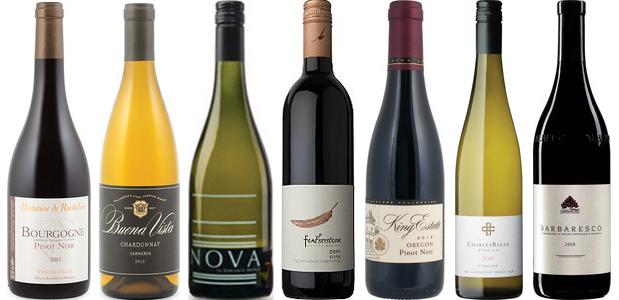
Tawse Laundry Vineyard Cabernet Franc 2011, VQA Lincoln Lakeshore, Niagara Peninsula, Ontario (130997, $34.95, WineAlign)

A year had added rich note to this ’11, furthering the inflammatory vibrations and purposefulness of Bordeaux (as opposed to Loire) red makings from the vintage. The depth of cherry merging to smoked currants is cool, collected and shaded by brushy, briny strokes. Hints at brambly, even. This is so very Cabernet Franc and even more so, Lincoln Lakeshore. Drink 2015-2019.

From my earlier note of April 2014:

A lean Laundry with as much finesse as winemaker Paul Pender has ever shown in his poignant Cabernet Franc realm. When a vintage deals you calm and scale you sit back and relax. The Lincoln Lakeshore advancing in years vines bring yet unseen front end red berry, licorice and red currant softness in 2011. There is elegance but also a refusal to yield its back end bite. A level of enveloping grain and chalk is unique to this bottle and should be seen as a very good effort with the possibility ahead
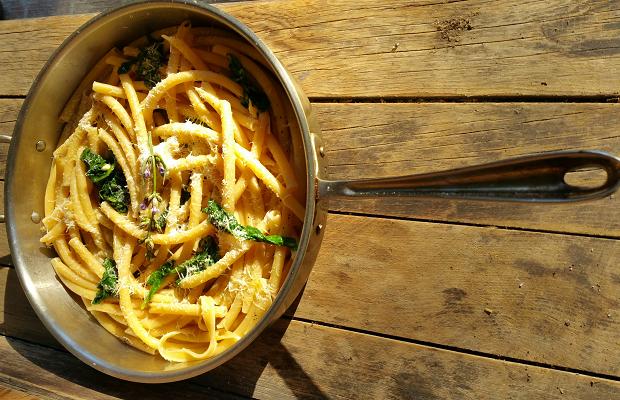
Last tasted April 2015
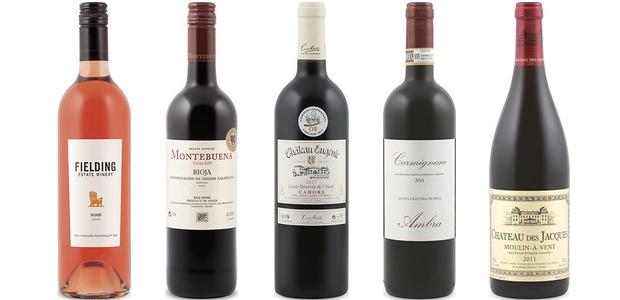
Cave Spring Cellars

Cave Spring Cellars

Cave Spring Extra Dry Sparkling Riesling 2010, VQA Niagara Escarpment, Niagara Peninsula, Ontario (Winery, $24.95, WineAlign)

From the clay-limestone bench lands abutting the Escarpment, specifically one block of 11 year-old vines at the Beamsville Bench Cave Spring Vineyard. Traditional method fizz accessed of low brix (early picked, 19.3 degrees) and mortar (2.97 pH) numbers, then elevated under microscope magnified sugar (15.5 RS g/L) and acidity (8.4 g/L). So what? So this is a pure CS expression of Riesling, cured and curated in the house style, led to textile weave from 14 months on the lees and finalized just that side of Brut. Functions like a Blanc de Blancs suitably this side of acidity rage and with corresponding remarkable, if close to impossible aridity. Less fat than might be expected and with a swath of sauvage. There sweats ginger and the cuttings of foraged wild things. The extension on the finish is protracted even after the liquid has left the building. Finishes with dry stones, nuts and a rightful oxidative thrust. Drink 2015-2020.  Tasted April 2015

Cave Spring Csv Riesling 2013, Cave Spring Vineyard, VQA Beamsville Bench, Niagara Peninsula, Ontario (566026, $29.95, WineAlign)

That flesh, that Kabinett flesh, fills the CSV in every crevice. In 2013 the residual sugar number lies between 15 and 16 g/L, and though the crop was bigger, it was still picked later than in 2012. The result is formidable corporeal concentration, consistency of house style and perhaps the only ’13 Niagara Riesling to imitate, perpetuate and extrapolate on the vintage that came before. This Cave Spring concentrates fruit and Escarpment into a powerful Riesling, streaming like charged particles through changing expressions. A lingering ascension hovers as it rises, until it slowly fades into the welkin, like a balloon that languidly gets lost into the blinding blue of a midday sky. Drink 2017-2025.  Tasted April 2015

Cave Spring Riesling ‘The Adam’s Steps’ 2013, VQA Beamsville Bench, Niagara Peninsula, Ontario (26372, $24.95, WineAlign)

At present there are sweets, bitters and rich Adam fruit. Only the shadows of a limestone outcrop near the crest of the Niagara Escarpment know why the Adam is so juicy. A chew like no other. Drink 2015-2020.

From my earlier note of October 2014:

A classic Adam, amplified in 2013, riper and not as piercing as previously noted vintages. Still the layering is omnipresent but there is more juicy fruit and texture then ever before. This is a consumer friendly Adam, gregarious, outgoing, off-dry as never before. New slang for the bottling.

From my earlier note of July 2014:

According to Cave Spring’s website this newer Riesling from older (18 to 35 year-old plantings) is from “a single block of vines in the shadows of a limestone outcrop near the crest of the Niagara Escarpment, known as ‘The Adam Steps’. Really apropos, for this Riesling is the cantilever, the one with the outstretched arm. At 10.5 per cent alcohol and with an unmistakably stony, sweet and sour whiff the wine speaks of its off-dryness. The juiciest of all the Cave Spring Rieslings, with rounder acidity and good persistence. This is the all-around good guy, the one with an open invitation, the bridge from Estate to Dolomite to Csv. The well-adjusted one steps up its game to help win one for the team, especially out of the convivial 2013 vintage.

Last tasted April 2015

Cave Spring Cabernet Franc 2012, VQA Beamsville Bench, Niagara Peninsula, Ontario (391995, $19.95, WineAlign)

The 2012 Cabernet Franc needed six further months for the high-toned fruit to settle just enough for the spiced richness to shine. Though Dolomite-designated, this sheds Beamsville light purity, along with a grain variegated by (pomegranate) citrus and chalk. The cool centre is elongated and expansive though it seems to inuit the correct time for retraction. The aerial fruit stresses condense and accept the angles prepared by coriander and eucalyptus. Drink 2015-2018.  Tasted April 2015

Flat Rock Cellars Chardonnay 2012, VQA Twenty Mile Bench, Niagara Peninsula (681247, $16.95, WineAlign)

The Twenty Mile Bench in Jay Johnston’s hands flat out rocks. The Chardonnays “they dig a funky spiel, they’ll make some spiel.” The ’12 Estate has crossed into pretty territory, not shy to wear its thin lamina of oak make-up and not too proud to say drink me now. Drink me here, there and everywhere. Drink 2015-2017.

From my earlier note of March 2014:

Has spent some quality time and knows its way around a barrel but its attitude is young, fresh and alive. From 12 and 13 year-old estate vines and kissed by only 15 per cent new oak. “But here’s a funky fact that I know is real.” Flat Rock’s Chardonnays are red hot and this fresh-faced ’12 has “baby appeal.” Blatant, colorable value on the Twenty.

Last tasted April 2015

Flat Rock Cellars Nadja’s Vineyard Riesling 2014, VQA Twenty Mile Bench, Niagara Peninsula  (578625, $19.95, WineAlign)

Always expressive of such manifest certitude, the 2014 can’t be anything but Nadja though there adds a fleshy dimension that pins it to the broader spectrum of Twenty Mile Bench, in as much as what the vineyard culls from its capacious diagrammatic. That broader outlook provides understanding into Nadja’s decrease of stentorian language in the fractionally stagnant vintage. There is a variegation within the sweetness lining the tunnel of aridity. Fourteen is nothing overly special and Nadja suffers as a result. It’s still a very, very good Riesling, just not one for the ages. Drink 2015-2019.  Tasted April 2015

Flat Rock Cellars Pinot Noir 2012, VQA Niagara Peninsula (1545, $18.95, WineAlign)

The vintage acts as a launch point for Flat Rock Pinot Noir and prepares a palate for the 20 Mile Bench by coating it with utmost approachability. Violets and Nebbiolo-like roses are raised in warmth, albeit beneath the safety net of cloud cover. You’ll find no burn, rust spots and yet you will acquire comfort, in and out of sips. Drink 2015-2018.

From my earlier note of April 2014:

As with Flat Rock’s Chardonnays, here is a vintage and an evolutionary coming of age that becomes a matter of scaling back oak. The quotient here is less than 40 per cent new, leaving the wizened vines and maker’s acumen to coax maximum character, brilliant sheen and recognizable aroma. The 2012 Pinot teases black cherry but never really goes there.

From my earlier note of February 2014:

Nearly 4000 cases will be available of this nearly-unfiltered, very established and always well-thought out Pinot Noir. A consideration of the plots and barrels micro-management that determine the crasis of this Estate wine demands an extrapolation in full-on assessment. The medium-coarse Chinois filtering lends to a tannic chain of texture thick in grain and chalk. A heavier Estate because when the weather gives you heat you make a climate appropriate wine. This monkey is not a product of arctic air and it “got too deep, but how deep is too deep?” Thermal vintage melt, ritzy ripe cherry stuff in 2012. From the Ritz to the Rubble, if you like, or the Flat Rock.

Last tasted April 2015

13th Street Pinot Gris 2012, VQA Creek Shores, Niagara Peninsula, Ontario (Winery, $19.95, WineAlign)

From two blocks on one farm in the centre of Creek Shores, one picked earlier to avoid botrytis. No malo, stainless steel tank fermentation leads to pure, crisp and clean Pinot Gris. The soil-driven funk meets faux-sulphur is typically J.P. Colas, a specificity in undertone that culminates in a dry, variegated finish. Drink 2015-2017.

From my earlier note of April 2014.

Here you have an honest, 100 per cent stainless steel treated Pinot Gris from an estate vineyard located adjacent the market on Fourth Avenue in the Creek Shores appellation. So very dry and really fine fruit, crisp, neoteric, rising and falling in waves of tempered acidity. Made in a comfortable, country-twanged, folk-rock style, like a Cowboy Junkie. Juicy, mouth watering work and very easy to fall for. An angel mine, this 13th Street, “and I know that your skin is as warm and as real as that smile in your eyes.” This effort by Jean-Pierre Colas is as good as it gets, a tally for Creek Shores and its kinship with the variety.

Last tasted April 2015

13th Street Gamay Noir 2013, VQA Niagara Peninsula, Ontario (177824, $19.95, WineAlign)

Four months has upped the funk in for ’13, with tar and bitters still and thick as summer air. Rich and ripe, notable for its black cherry aroma and that J.P. Colas natural truncation. Unique, as always and very Gamay. Drink 2015-2019.

From my earlier note of December 2014:

Fruit was sourced from both the Sandstone and Whitty Vineyards for 13th Street’s Gamay Noir, a focused and gritty adjunct in ode to the Cru Beaujolais approach. This ’13 raises the aromatic and texture bar and just may be the most striking from a 13th Street estate mix. All the important berries are there, as are the mineral quandaries. In a Gamay moment this will lead you to gulp and giggle with #GoGamayGo delight.

Last tasted April 2015

13th Street Syrah ‘Essence’ 2012, VQA Niagara Peninsula, Ontario (177824, $44.95, WineAlign)

Fruit was sourced mainly from Wismer Vineyard (Vineland) and a smaller proportion from AJ Lepp (Niagara-on-the-Lake) for this dry as the desert Syrah of deep extract, warmth and density of fruit. All set upon a highly tannic frame, with every indication that longevity will be its best friend, as much as any red has ever been produced in Ontario. A formidable vulcanization marks the entry, a not so inappropriate entreaty to beg for time and lots of it. The current pavane of fruit is exhibitive of excruciating physical reticence though behind the wall there is more than enough indicators to stand the test of time. No new oak (though the Essence saw an extended slumber in three to four year old barrels) has allowed the tapestry of intertwined layers to set up shop and dig in for the long haul. If big-boned Syrah and Niagara are in your cellar plans, this 13th Street 2012 has to have a prominent place. Drink 2020-2027.  Tasted April 2015

Malivoire

Malivoire

Malivoire Rosé Moira 2013, VQA Beamsville Bench, Niagara Peninsula, Ontario (Winery, $19.95)

A dual block blush, from two clones in the Moira Vineyard. Made from 100 per cent Pinot Noir, this second vintage is pale as can be, dry, saline and reeking of fresh peaches and strawberries. The level of purity and intensity is nothing short of amazing. This will rise quickly into the ranks of the Peninsula’s finest Rosés. Drink 2015-2017.  Tasted April 2015

Malivoire Pinot Gris 2014, VQA Beamsville Bench, Niagara Peninsula, Ontario (Winery, $19.95, WineAlign)

The purity and fine-lines of Pinot Gris are defined, delineated and deftly prepared by Shiraz Mottiar and team in 2014. This is a calm rendition, void of tremors, certainly not taking any risks but also not a white of unfulfilled promises. Herbs, lemon, mint and fine PG tannin draws salt from stone. A perfectly dry finish is in play, as with all malivoire whites, to cement the deal. Drink 2015-2018.  Tasted April 2015.

Malivoire Stouck Meritage 2011, VQA Lincoln Lakeshore, Niagara Peninsula, Ontario (Winery, $29.95, WineAlign)

It’s hard to recall memories of so much syrup, liqueur and high tonality as coming from Stouck, from any Meritage for that matter and yet the 2011 Bordeaux varietal wines out of Niagara continue to astound. If excess or vivid character is a negative, just look away. The combination of rich extraction and explicit oak generosity dope out fruit from a dry September into wonders of dried timbre and inflection. The drupe is enriched, as is the tannin and a Beamsville buttressing that warps and wraps like never before. At this four-year juncture, the Niagara ’11 varietal compendium is officially a thing, witnessed in example through this Stouck. More than just dramatic Shiraz Mottiar foreshadowing here, but further into thoughts of what vintages co do for red wine as a Peninsula whole. The ’11 Stouck Meritage stands upright at the mirror and its reflection looks right back. Drink 2017-2021.  Tasted April 2015

Malivoire M2 Small Lot Gamay 2013, VQA Niagara Escarpment, Niagara Peninsula, Ontario (Winery, $19.95, WineAlign)

The profundity of tart, keen, briny berries dilates in its own very useful layers of citrus, tannin and concentration, beyond even what was observed in 2012. The zesty, spritely argot resonates from the unfurling of floral essentia out of a Gamay in desperate need of time. The flavours and overlay are somewhat impenetrable and yet leave quite an impression. While patience might be the virtue and the reward, if #gogamaygo is the modus operandi, a swig from the bottle like gentlemen of the road is certainly not out of the question. Drink 2016-2021.  Tasted April 2015

Charles Baker Riesling Ivan Vineyard 2014, VQA Niagara Escarpment, Niagara Peninsula, Ontario (Winery, $27.00, WineAlign)

From the rich limestone and sandstone beneath the clay, 1.1 acre Misek vineyard, a southerly ledge up from Highway 8 and an easterly hill down from Cherry Avenue. A very linear Ivan combs the catacombs of the Escarpment’s underpinning. A retaining wall of vintage attenuated rocks and stones, a vineyard’s low yields and the voices in Charles’ head have produced a striking Riesling. In 2014 adolescence has entered adulthood. Now before us is a grown up Ivan, mature Ivan, maybe even wise Ivan. Texture is in manifest control in this loyal, stay at home Baker, not yet running wild like free-spirited Picone. Ivan has presence, sometimes a great notion and is Baker’s longest bit of prose to date. The next great Riesling vintage will make it iconic. Drink 2016-2020.  Tasted April 2015

Charles Baker Riesling Picone Vineyard 2008, VQA Vinemount Ridge, Niagara Peninsula, Ontario (126433, $35.20, WineAlign)

The petrol and mighty bee’s sting have taken over, with the honey again not far behind. A lemon prepares to spill its juices as it warms above a bunsen flame. At present it is almost too elemental to define. Will change course again when midnight strikes in 2016. Then it will come into its own. Drink 2016-2020.

From my earlier note of April 2014:

Tasted at Somewhereness 2014 as part of a vertical retrospective going back to 2007. The Vinemount Ridge’s now famous Picone Vineyard is set within a 10-acre estate on the Niagara Escarpment. Planted to the Weis 21 clone, the Riesling grown here digs in for complexity from sectional moieties of clay and sandy soil atop a unique base of limestone bedrock. Charles Baker began working with these grapes in 2005 and it is this 2008 where the learning curve took a turn for the Riesling stratosphere. The ’06 found luck in the stars but this vintage lays the framework and foundation for a master plan. At this stage in the ’08 evolution there is a prodigious and viscous honeyed textured. Ripening tree fruit juices run like maple sap in spring and the run off is beginning to think syrup. A cutting ridge of acidity arrests the sugaring, allowing citrus and flinty rock to recall the wine’s first, fresh steps. Baker’s Riesling time travels in circles with no real beginning and no real end. From my earlier, September 2012 note: ““Whoo-ahhh” Mojito, green apple skin scent of a Riesling. Seductive to sip, a bodacious body of influence, then back-end bite. A wolf pack in sheep’s clothing.”

Last tasted April 2015

Stratus Vineyards

Stratus Vineyards

Stratus Wildass Rosé 2014, VQA Niagara Peninsula, Ontario (71712, $17.95, WineAlign)

A blend of Cabernet Franc and Merlot with some Sauvignon Blanc and Riesling added for lift and what J-L Groux admits is rendered “for the consumer.” This essentially marks the twain between sweet and dry, if not quite halfway then pretty darn close. Plenty of herbs and citrus nail the aromas on the proverbial head with more than a grapefruit or two on the half circle. A highly approachable, end-user friendly blush. Drink 2015-2016.  Tasted April 2015

Stratus White 2012, VQA Niagara On The Lake, Ontario (660704, $44.20, WineAlign)

In 2012 the blend is Chardonnay, Sauvignon Blanc and Riesling. Viognier was left out because according to winemaker J-L Groux “it did not work in blending trials.” The vintage has laid the foundation for the most density, and unctuous fruit for the Stratus White in what must be, ever. At the high aromatic end there is peppery beeswax, reverberating and echoing in scales and arpeggios. Like an open string singing warmly, the vintage, extraction and residuum combine for texture in mottled unction. Sapid lemon, more beeswax and lanolin mark the palate and then the White drifts into spaces occupied by smoky, back beats and bites. This has great pitch with a knowledge of the path to pleasure. Drink 2017-2025.  Tasted April 2015

Stratus Gamay 2012, VQA Niagara On The Lake, Ontario (Winery, $29.00, WineAlign)

t may not be the most idiosyncratic Gamay in Niagara but the Stratus 2012 is without a doubt the most advanced and complex. Gamay fusion is on display, at once a bottle of Niagara’s finest pulchritudinous veneer and then a charcuterie board laid ample with cured bovine parts and sun-dried grapes. Maximum ripeness and then even later picking, to no one’s surprise, have led to this. Two years of ageing in neutral oak barrels has brought about a humid roundness and yet the centre is controlled by Oz-like mint and eucalyptus notes. The jam is gelid, as opposed to temperate. Rarely does Gamay go to such depths, of blackberry, chalk and grain, with an overlord of tannin. Quite serious stuff. Drink 2017-2020.  Tasted April 2015

Stratus Red 2012, VQA Niagara On The Lake, Ontario (131037, $44.20, WineAlign)

The Stratus Red 2012 resides both in a virtuoso’s hollow and in a pantheon inhabited by some of Niagara’s great reds. The fact that such ripe phenology can anticipate and foretell to balance and freedom in the byplace of the blending process is nothing short of amazing. Sinuous and exact, of berries so indefatigable, layering raspberry over blackberry atop strawberry. Cedar and red citrus compound, without jamming the fluidity, but certainly accentuating the Fragaria vesca. Confident and fluid in movement, the ’12 neither shakes nor stirs and its acidity is flat out terrific. At this early point in its evolution it is showing as well as could be expected, or hoped for. Its core of fraises du bois will always be there. Time will be kind, gentle and patient. Drink 2015-2024.   Tasted April 2015

Good to go!

http://www.winealign.com/profile/2058-mjg

WineAlign guide to VINTAGES April 4th and Easter recipes

Lamb Ribs by Barque Smokehouse

Lamb Ribs by Barque Smokehouse

On January 18, 2013 I began adding wine reviews to WineAlign. Review ground zero was Mallory & Benjamin Talmard Mâcon Uchizy 2010, an inauspicious little Burgundy described in “the coat of white.” A Genesis of great #ffffff value.” Beginnings, Genesis, ground zero. The Godello thing.

Two plus years and 2,023 reviews later much has changed. The wisest of wine scribes David Lawrason and WineAlign head wineaux Bryan McCaw asked if I would like to become a part of the April 4th, VINTAGES release newsletter and buyer’s guide. With renaissance banzai and Master Sommelier John Szabo leading the charge, along with most generous guidance and help from cake baker and palate extraordinaire Sara d’Amato, I have joined the fray.

Buyers’ Guide to VINTAGES April 4th – Part One

This week’s guide leads WineAlign subscribers to Easter Lamb and red wine, plus pre-dinner whites and a glass for dessert. The three recipes cover everything  you could possibly want at your table on the resurrection weekend. The recipes are for Traditional Easter lamb by John, Moroccan lamb loin chops by Chef Michael Pataran and Barque‘s smoked lamb ribs.

Here is what John wrote in his introduction of me. “If at first you don’t understand Michael’s reviews, just drop a couple of hits of acid, smoke a joint or put on some classic 70s tunes and they’ll all make more sense. Maybe.” The irony is that amongst the seven wines I contributed to the newsletter I made only one musical reference. Oh, and one to the Grand Budapest. So, maybe you will understand them. Maybe.

From left to right: Cdv Brazão Colheita Seleccionada Arinto 2013, Stéphane Aviron Domaine de la Madrière Vieilles Vignes Fleurie 2011, Mayschoss 140 Jahre Jubiläumswein Trocken Pinot Noir 2013, Dog Point Sauvignon Blanc 2014, Fielding Estate Viognier 2013, Château Haut Selve Réserve 2010 and Mendel Malbec 2011

From left to right: Cdv Brazão Colheita Seleccionada Arinto 2013, Stéphane Aviron Domaine de la Madrière Vieilles Vignes Fleurie 2011, Mayschoss 140 Jahre Jubiläumswein Trocken Pinot Noir 2013, Dog Point Sauvignon Blanc 2014, Fielding Estate Viognier 2013, Château Haut Selve Réserve 2010 and Mendel Malbec 2011

Cdv Brazão Colheita Seleccionada Arinto 2013, DOC Vinho Verde, Portugal (405217, $16.95, WineAlign)

A highly unique Vinho Verde that works as a sipper and as a solid, pair me with just about anything table wine. Savoury and blessed with a Bica de Queijo cheese aroma, you’ll be glad you gave it a swirl and a whiff. There is nothing shinking or violaceous about this. It’s medicinal like Moscato, toasty like Pouilly-Fumé and gangly like Garganega. Citrus juice and flesh add body and beautify its inherent male pattern baldness. Perhaps a bit of a river fish of a Vinho Verde but very fresh and a great catch. This Arinto will tie appetizers together and buy time until the bird, hock or shank is on the table with the feast’s big reds. Drink from 2015-2017.  Tasted March 2015  @vinhosverdes  @exCellarsWines

Stéphane Aviron Domaine de la Madrière Vieilles Vignes Fleurie 2011, AC Beaujolais, Burgundy, France (405779, $21.95, WineAlign)

Old vines and Fleurie scream holiday dinner wine in my books. Here struts out where it’s at Gamay from a terrific Cru, of maturity, chutzpah and depth. Bang on 13 per cent alcohol, most mature and munificent, so very forward and yet of a depth, richness and layering in fruit meeting acids. Black cherry with an accent of mint, sour citrus drop and blueberry. A minor chalky grain, just enough to evoke oak tenderness, but not enough to be cut by splinters. Very Burgundian, where it’s at and even better length. Talk about a red wine that could equally double down for the Easter and Passover table. Gamay that swings both ways, AC/DC, “it’s got two turntables and a microphone.” Drink 2015-2022.  Tasted March 2015  @DiscoverBojo  @warren_walden

Mayschoss 140 Jahre Jubiläumswein Trocken Pinot Noir 2013, Ahr, Germany (409649, $21.95, WineAlign)

Ahr Pinot Noir (as opposed to those from Germany’s Baden region) are just that much more accessible and wider table friendly. That’s because of volcanic soil and older vines like you find in this Qualitätswein. The fruit is richer, the cure more refined, the flavours full and the wine structurally sound. Give this some air and the roast swine will make an entry, with intoxicating aromas, balanced by earthy notes, ripe plums and berries. Structurally sound, the ripeness continues into a fleshy cure of wurst with good bite. The citrus tang is round and barkless. No matter the colour of your braise or roast, this Pinot Noir will compliment the hue. Drink 2015-2021.  Tasted March 2015  @LeSommelierWine  @WinesofGermany

Dog Point Sauvignon Blanc 2014, Marlborough, South Island, New Zealand (677450, $24.95, WineAlign)

So orderly and aligned, from ripe picked fruit with fervent acidity and all proportions in perfect working order. Four months in bottle has settled only worked to reinforce positive opinions. Grassless and flinty but no discernible elemental vagary, certainly no sulphur. This Sauvignon Blanc may just be the most consistent in every vintage, not only stylistically but also for the hedging of probability bets for guaranteed Marlborough quality. This is a superb vintage for the pied-à-terre phraseology. Like school in fall, winter and spring, the Dog Point is all class. Drink from 2015-2024.

From my earlier note of November 2014:

The prototypical Marlborough Sauvignon Blanc hitting all the classic numbers is right here in the Dog Point 2014. Low pH, high acidity, minuscule residual sugar and elevated aromatics. It’s ripe but ripped by citrus juice and zest. Like cubes of honeydew, bitter winter melon and dried lemongrass soaking in and flavouring a dish of briny scallop carpaccio with coarse sea salt and capers. The sapidity is palpable, the excesses vivid. I would avoid too much variegated gastronomy when sipping this wine. Opt for simpler fare because its talents would otherwise be mimicked and suppressed.

Last tasted March 2015  @DogPointWines  @TrialtoON  @nzwine

Barque Smokehouse Lamb Ribs - Spring 2014

Barque Smokehouse Lamb Ribs – Spring 2014

Fielding Estate Viognier 2013, VQA Niagara Peninsula, Ontario (142323, $25.95, WineAlign)

Winemaker Richie Roberts has worked tirelessly with Viognier to find out where it fits into the lexicon and ambience of Niagara Peninsula white grape varieties. The 2013 vintage marks a turning point in his and by extension, all of our understanding. The tropical fruit is now reigned in and the tension on the back bite a perfect foil to that well-judged, rich fruit. Trumps the layered ’12 with a new, aerified floraility that gives it more prototypal Viognier style. Short of leaving fruit to hang into late harvest (not recommended for the variety) this is like being wrapped in banana leaf along side young bamboo. Sip it joyously on its own or bring on the Easter Rijsttafel and a strolling procession down the cuisine of Kho San Road.  Drink 2015-2020.  Tasted March 2015  @FieldingWinery  @RichieWine  @Heidi_Fielding

Château Haut Selve Réserve 2010, Ac Graves, Bordeaux, France (235424, $27.95, WineAlign)

Who wouldn’t want to find a well-priced and expertly made Bordeaux to accompany an Easter feast? The abstraction is not as easy as it may have once been but once in a Paschal full moon a wine comes along and affords the opportunity. Stately structured, mid-range Graves that is so very much a combination of Cabernets. It reeks of currants, cool mint, Cassis, caramel and chocolatey oak. Kept shy in alcohol (13 per cent) and heat, the tannins are mildly grainy and though just a touch oxidative, it is a a most serviceable, generous and honest Bordeaux. From a workingman’s vintage of the century. This Graves will seal the Easter deal with its cool savour and chocolate hops. Drink 2015-2019.  Tasted March 2015  @BordeauxWines  @ProfileWineGrp

Mendel Malbec 2011, Mendoza, Argentina (108225, $27.95, WineAlign)

On the rare occasion when a Mendoza Malbec exhibits restraint, balance and all around congenial behaviour, it is imperative to sit up and take notice. This is finely fashioned juice, albeit rich, smokey red fruit swathed in good quality chocolate and a late kick of spice. Suppose there’s nothing really wrong with that. The Mendel will seduce, hypnotize and cause general swooning. Like a Grand Budapest Hotel box of treats, it will sooth even the savage beast. Ripe tannins will make this drinkable now to 2020. Tasted March 2015  @MendelWines  @TrialtoON  @winesofarg

Good to go!

http://www.winealign.com/profile/2058-mjg

Tasting with Power

The wines of Creekside Estates at Barque Smokehouse, March 2015

The wines of Creekside Estates at Barque Smokehouse, March 2015

Power, Rob Power. Niagara man of mystery, winemaker, barrel blender, junkie of dangerous varietal liaisons, license to chill. Power has been making the wines at Creekside Estate Winery for more than a decade. He is both the face and the enigma. Creekside is not a Peninsula vintner that rests on winemaking or marketing laurels. They change with and for the times.

Related – Up on Creekside Estates

I sat down with Rob Power and Rich Gaskin of Hobbs and Company last week at Barque Smokehouse to re-visit some wines tasted in the winter and fall of 2014, along with a couple of new issues. Here the notes, some updated and others in first time put to paper.

Creekside Estates The Trad Reserve 2011, VQA St. David’s Bench, Niagara Peninsula, Ontario (390336, $28.95, WineAlign)

From a taste five months further along in bottle and just shy of the 36 months on lees (37.5 to be precise) 2nd bottling about to be disgorged. Has chill thickened and fattened in the middle with a texture and a truffled funk like foie gras, heading backwards and upwards, like a video shot in reverse. Rises from an ocean of spume up to a slivered taste of a grapefruit moon. “Transmission’s on and up we go.” Cool and angular on the beautifully licensed, bitter finish.

From my earlier note of October 2014: The Trad ’11 has a classic toast and yeast aromatic waft and so it goes that everything that follows is embraced with curiosity and an open mind. Ginger, citrus, bronze and the sweet scents of the inside of a candy machine, its candy long gone. Creekside’s winemaker Rob Power will never be accused of dialing this sparkler in. Tasting trials help determine the necessary, final blend. The single, Queenston Road Vineyard puts 56 per cent Pinot Noir and (44) Chardonnay, aged 2 years in bottle, together for a highly effective, expansive but not explosive fizz. At 8.7 g/L of residual its dry but not quite falling off the bone. The sweetness is tempered by elevated (9.98 g/L) acidity and tension. Spent 24 months on the lees and was bottled back in February. There is balance and pleasure and a good, stretchy finish. No band-aid. Clean, precise, fizz of the day.

Last tasted March 2015

Sauvignon Blanc ‘Iconoclast’ 2013, VQA Niagara Peninsula, Ontario (Winery, $17.95, WineAlign)

The licensee SB jimmies from fruit out of a good (right at the winery) site, caught red-handed at peak ripeness on a very specific picking date and crushed immediately to coax maximum freshness. Readily identifiable as Sauvignon Blanc, perhaps more so than any other from the Niagara Peninsula. The fruit was oxidized a hair to the left, flipping this more Loire than New Zealand. A dichotomous activity from large juice tray oxygenation meeting reduction under screwcap causes initial confusion but when the hounds of Blanc are released the wine buffets into clear, crisp feelings. This is not “mean, green and pristine,” just simply clean. This one’s got “a license to chill and I believe I will.”  Tasted March 2015

Laura’s White 2012, VQA Niagara Peninsula, Ontario (121764, $18.95, WineAlign)

Winemaker Rob Power corrects previously provided information and tells me Laura’s composition is 55 per cent Sauvignon Blanc and that there is some Viognier in here, an inclusion that justifies the back-end bite (in conjunction with Gewürztraminer) of noble bitterness. They and the rest of the varieties combine to imitate Sémillon because Power is “going for white Bordeaux” in this pole to pole, here ’till Sunday blend. This has the grab, tempered by the warmth of the vintage, so look for ’13 to nail it with a hook.

From my earlier, May 2014 note: With a tilt of the head to 90 degrees the bottle is assessed and the glass contemplated. She’s a flirt, a gregarious girl this Laura, so orchard driven and with a perfumed attraction.

From my earlier, February 2014 note: Laura’s White combines Sauvignon Blanc, Pinot Gris, Chardonnay, Riesling and Gewürztraminer in a kitchen sink blend that sees a bit of oak. What’s notable about the ’12 is the omission of two highly aromatic components, the previously employed stalwarts Viognier and Chardonnay Musqué. The adage is justified in that you take what the vintage gives you. If it gives you lemons, (shift tangents) you let the busy aromatics of more flavourful grapes (like Chardonnay) do the floral work. Laura’s ’12 will be a standout for the concept, a revivalist blend to help bring back some religion to the region’s renditions. Coming to VINTAGES in June.

Last Tasted March 2015

Viognier Estate Reserve 2012, VQA Niagara Peninsula, Ontario (22058, $29.95, WineAlign)

Here free run juice gets just a little help from the press. Consistent with a very recent taste, with a density in concoction and blessed tonic on the finish.

From my earlier note of January 2015: Creekside’s small production Viognier (maximum 80 cases) from the warmer micro-climate of the Queenston Road Vineyard heads back to near-boozy and a bit hot in the sudorific vintage. Oh the viscous humanity of it all, especially when the (all French, two year-old, nine months time) ferment was performed on 100 per cent of the six barrel juice. While it may not flirt with the dangers of say, a dirty peach martini, there is plenty of seasoning, rich, spicy and opulent fruit to at least declare a cocktail of some shaken kind. The ’12 Viognier drips and sweats of a humidity as much as any cool climate rendition can (at least in the context of the Niagara Peninsula). It may not be the ideal vintage but it just may be the one with the most excess.

Last tasted March 2015

Cabernet-Merlot 2013, VQA Niagara Peninsula, Ontario (Tank Sample)

The blend is (very approximate) 35 per cent of each Cabernet (Sauvignon and Franc) with 20 per cent Merlot. “Basically a baby Laura,” says Power. Currently smelling very tanky but fresh and bullish. Sniffing past the must is not so hard to do, especially with the waft of spices coming through with thanks to the good barrel. The Franc here comes from Virgil, “no man’s land,” from Frank Serluka’s vineyard. The lack of any discernible volatile acidity speaks volumes about the clean winemaking and the gregarious personality of that Four Mile Creek Cabernet Franc fruit. This will excel out of keg in late Spring.  Tasted March 2015

Creekside Estate Winery Pinot Noir Queenston Road Vineyard 2013, VQA Niagara Peninsula, Ontario (Winery, $22.95, WineAlign)

Still the Kama Sutra Pinot Noir of inviting behaviour. Positions in aroma, taste and texture are all elastic and of an aphorism held together in intimacy. Virtuous and gracious Pinot Noir for the purpose of interaction and pleasure.

From my earlier note of January 2015: “The first made since the 2008 because of a new directional decision to hold onto and no longer forsake these exceptional Queenston Road Vineyard grapes. A wine that folds back the skyline skin of time and reveals a cloning from intimate belongings. Pinot blessed of a Dylan-esque drawl, from a comfortable and crooning time in its life. Penetrates into the QRV earth and draws out subtleties, slow food assuagement and makes no BS about its ease. Though posolutely whiffing and tasting of black cherry, it balances itself with an acerbic wit. This is what winemaker Rob Power refers to as a lay lady lay style. Partners in crime Yvonne Irving and Matt Loney concur. One sip and your partner may just lay across your “big brass bed.” You can always go back to Nashville.

Last tasted March 2015

Laura’s Red 2011, Queenston Road Vineyard, VQA St. David’s Bench, Niagara Peninsula, Ontario (117906, $19.95, WineAlign)

A combination of young and older Queenston Road Vineyard vine fruit meshes to creamy raspberry, spoken most upfront, in the absence of Franc, by the Sauvignon. Waiting for this to improve would be a calculated error so drink up by the end of the year.

From my earlier note of September 2014: The most dead red Laura to date, juicy and earthy, like a licorice, plum and pomegranate demi-glace. Really expressive of earth and fruit.  Traditional house blend of Cabernet Sauvignon, Merlot, Syrah, Malbec and Petit Verdot. A no coat unfastened Niagara, consumer-friendly but also swelling with stuffing. “The light is red. The camera’s on,” the strokes are rich in energy though the tannins dry out a touch. Drink now and for two more years.

Last tasted March 2015

Creekside Estates Broken Press Syrah Queenston Road Vineyard 2011, VQA St. David’s Bench, Niagara Peninsula (202127, $39.00, WineAlign)

At its spiciest best, alkaline and lifted by Viognier, though as the tannins mellow, the Viognier will slowly disappear. Continues the Rhône-ish tradition laid before by 2004, 2006, 2008 and 2010, yet in ’12, for the first time, in addition to the Broken Press, there will be one made from seven rows of the same block Syrah, picked about a week later, a 100 per cent Unbroken Press. From vintage to vintage, a Viognier lifted BP is the correct application but in ’12, to Power and his team, both made perfect sense.

From my earlier note of October 2014: Only Creekside Syrah smells like this, like bending down to smell black raspberries on the shores of a briny capsicum lake in the middle of a pine forest. The 2011 Syrah has fruit residing on the edge of impossibly ripe, factored inside a pipeline, while piping lavender and plum pastry cream float atop rare duck breasts. If Syrah were to ooze or drip without sticking to surfaces along the way, this would be it. If Syrah came forth from the maw of the beast it would speak in these demanding tones. Creekside’s BP talks the tense, nervous and twitching talk. It’s smeared with a coat of epoxy spread over fine grain in wood. It sweats an air of metallic cordiality. If given five years to come together it will vape and realize togetherness.

Last tasted March 2015

Good to go!

http://www.winealign.com/profile/2058-mjg