Twenty-four Canadian wines that rocked in 2024

Godello and Hare

Composing a best of list is something that takes a sedulous amount of time, a year’s accumulation of thought and above all else, ultra careful consideration. When more than 1,000 Canadian wines are tasted in a calendar year, narrowing it down to 24 feels like a profound task and weighty sense of responsibility. These twenty-four Canadian wines that rocked in 2024 represent the twelfth consecutive such register first published in 2013, annually iterated and guaranteed, never gratuitously settled upon and always as a show of Canada’s highest level of quality. Integrity too, which will become clear by the time you finish reading this exercise.

Related – Twenty-three Canadian wines that rocked in 2023
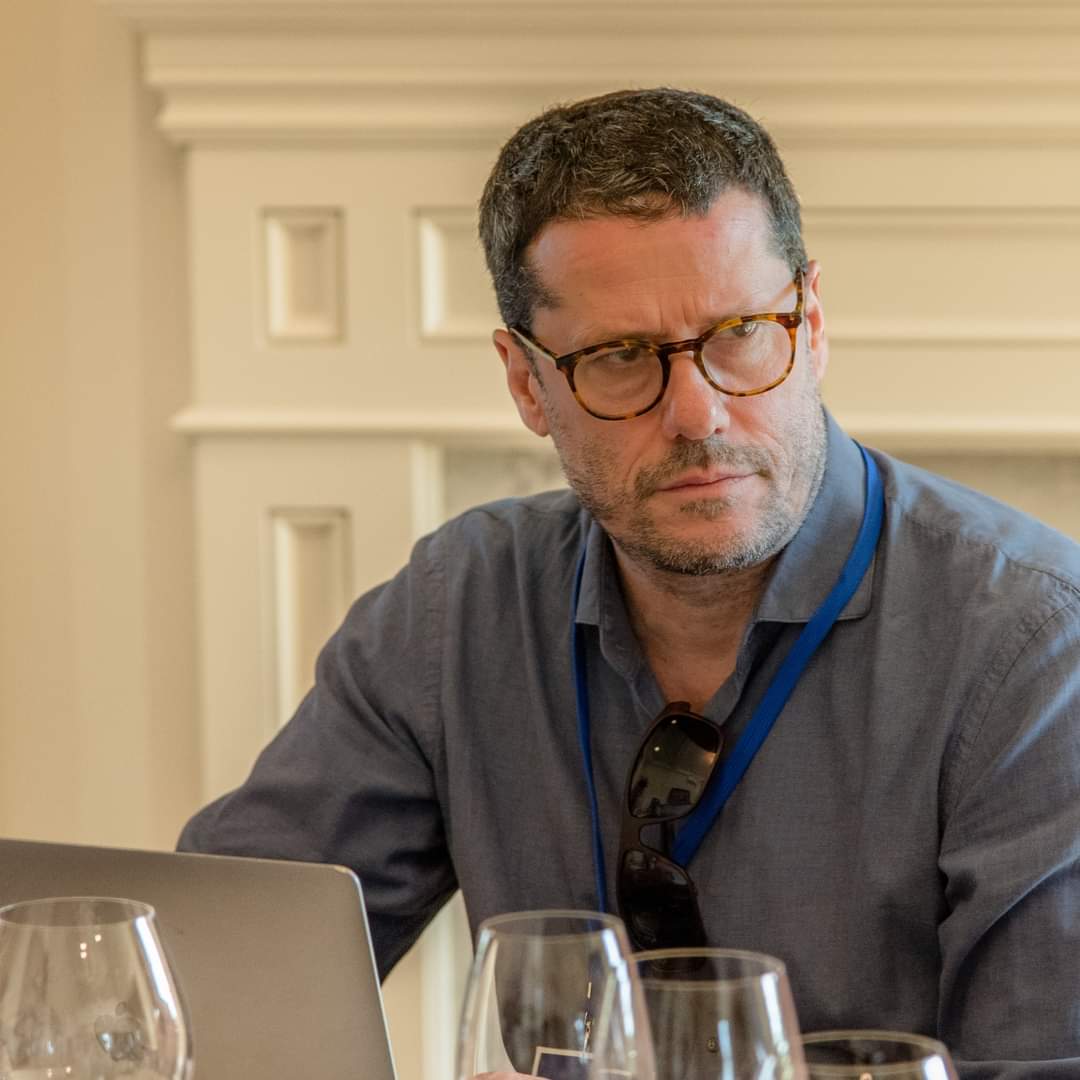
Godello at Dobbin Estate

Seven out of 24 (that’s nearly 30 percent for those scoring at home) are sparkling wines, a number that will only come as a shocking surprise to those who haven’t been paying attention. The math is really quite simple. Cool climate viticulture means longer growing seasons for more developed, therefore riper phenolics matched dutifully by kept acidities. Climates have changed but Canadian growing areas have not yet lost their edge and besides, extreme events are more likely and increasingly the culprit when it comes to extenuating snafu circumstances like crazy cold snaps that take out wide swaths of grapevines. For the most part this country can still hang a wide variety of grapes to create killer sparkling wines. Seven sparklers are here, from five growing areas in three provinces.

Related – Twenty-two Canadian wines that rocked in 2022
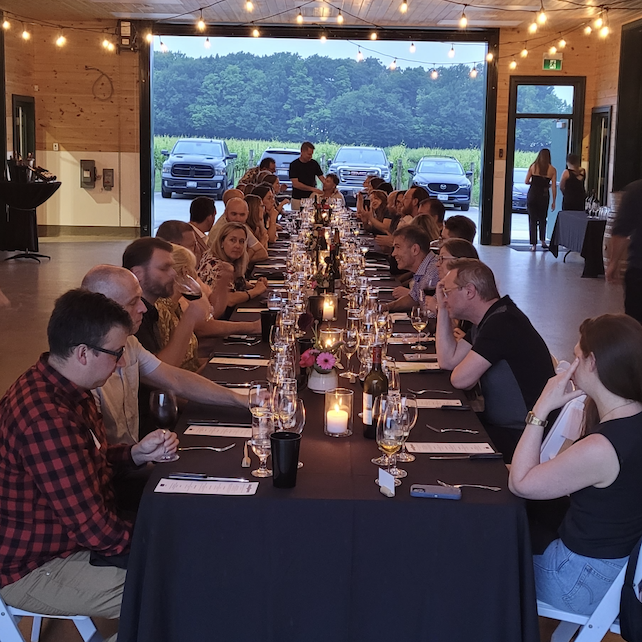
WineAlign dines at Hidden Bench

Six of Godello’s 2024s are chardonnay, if for no other good reason than it always being on Canadian minds. What’s the best way to go about growing and making wines of the highest quality? Is chardonnay a victim of its own ubiquity and adaptability? What makes it so special then, as an expression of place, as well as production and technique? Chardonnay should taste like it has come from a place, but also from a time. No one said it was easy but one thing is certain, it’s a hell of a lot easier to make great chardonnay that has been planted in the right location. Still the endeavour is puzzling, like getting lost and running through a maze, fraught with wrong turns and dead-ends. It’s about hunch work, gauging probabilities, accounting for what has come before and extrapolating towards what might be. In Canada trying to find locations that gift the sweet spot is, as if at midnight, where sugar ripeness, acid structure, phenolic ripeness and fruit character will probably meet for optimum results. We who feel like this and nod at one another knowingly are lovers of chardonnay; eager and desperate to be one with its varietal psyche, to imagine it synched in sycophant fixation with our own. Yet all the salient facts and aspects of a wine’s journey, in viticulture, pH, residual sugar, total acidity, élevage and in tasting, are really nothing if we are unable to find the theory of the wine and by extension, the winemaker who made it happen. Fortunately for us the top six Canadian chardonnays chosen here (and the list does not stop at that number), have all made it happen.

Related – Twenty-one Canadian wines that rocked in 2021

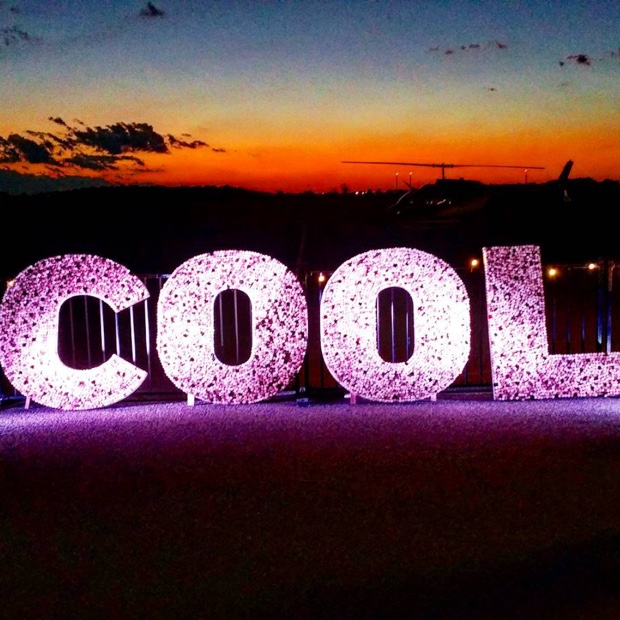
Flight #1 at the 2024 School of Cool
(c) i4C

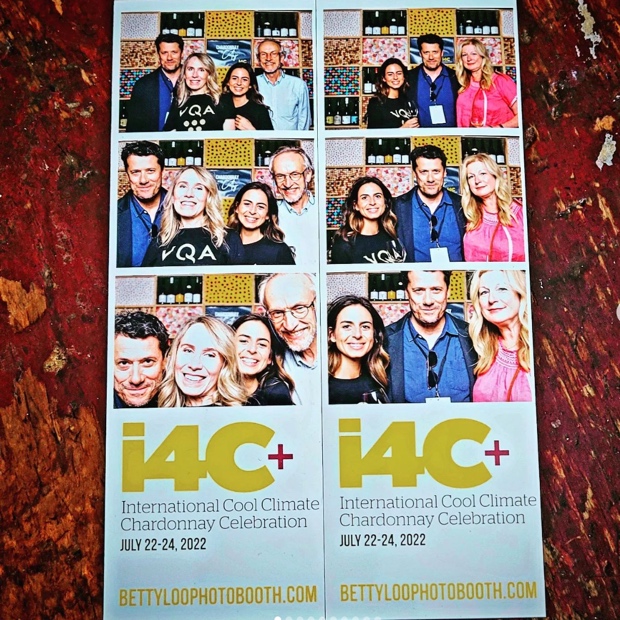
A reminder that “Chardonnay is never too cool for school.” The article published after i4C 2024 had this to say. “Will fully admit to having seriously considered not using the word “cool” in the title for this latest exposé on i4C, Niagara’s annual International Cool Climate Chardonnay Conference. Then good conscience and reality set in because the original dub for Canada’s most important and successful wine congress will always be too good to dismiss. They coined it, built it and people have most certainly come. To foresee and then to consummate this collective pursuit of excellence inscribes Cool Chardonnay into the lexicon of wine forever. Hard to predict just how many more of these joyous to potentially annual profound (four-day) weekends there will be, but were this the last then hundreds upon hundreds of producers, winemakers, media, influencers and consumers over the years will have walked away happy, better for it and with memories to last a lifetime. The extraordinary 2024 edition of i4C went deeper still, to deliver the coolest quality and finest balance between information, socialization, revelry, society and of course, chardonnay. Cool as ever, gotta be cool, relax and never too cool for school.”

Related – Chardonnay is never too cool for school

Twenty Mile Bench

It was a very good year for tasting pinot noir and thus the grape is also well represented with five on the list. No other grape causes more of a stir, is responsible for more hair to fall and breaks more hearts. Does not play well with others, refuses to share, to be blended, to give anything less than 100 per cent. For many, there is no other grape variety. How often does a conversation begin with “what is your favourite wine” and end invidiously with “Burgundy?” While Bourgogne certainly persists as the historic locale possessive of the title “when it’s great, it’s the best,” pinot noir has found immense global success and Canadian soils are largely responsible for that. Thoughts with doubts about pinot noir’s viability in Canadian vineyards have long been laid to rest with proof arranged and clarified after yet another edition of the 2024 WineAlign National Wine Awards of Canada. The judging week saw the fourth most number of flights, all intriguing and arguably the finest collective showing of bottles poured from the fickle grape. From lithe, transparent, high-toned, red berry charmers to darker, brooding, seriously ripe and often tannic iterations. As it has been said, “beauties and beasts, belles et bêtes,” pinot noir the good can succeed one way or another, with harmony and in balance.

Related – Twenty Canadian wines that rocked in 2020

With Magdalena Kaiser

So what is the number one takeaway with regards to Canadian pinot noir? The answer lies in the way winemakers approach their product. Lowest of low cropping to achieve density and concentration is no longer the launching point towards making great pinot noir. Aggressive pressing, intense macerations and long wood aging, especially in newer (and smaller) vessels all lead to astringency and imbalance. All of these things are fading into the rear-view mirror, slowly but surely being replaced by first and foremost, sustainable and regenerative agriculture resulting in healthier vines. In the winery there is less handling, more finesse and attention paid to detail leading to more purity and also clarity in the wines. This is what pinot noir needs. If the most suitable and only the most suitable sites are used, the future will move from optimistic to auspicious. The number one takeaway? Canadian pinot noir has long been searching for and is now beginning to find inner peace. Let’s just hope it keeps on this path, despite and in spite of climate change.

Godello’s annual best of bundle feels easier to create because with each passing year there are so many more wines of wonderment tasted and yet, and yet the jumble is harder to defend. Great wines are not left off the list for reasons of inferiority, deficiency or lack of character. The game is one of numbers and the pool from which to choose grows exponentially every year.  These are the twenty-four Canadian wines that rocked in 2024.

With Heather Rankin – Obladee, Halifax

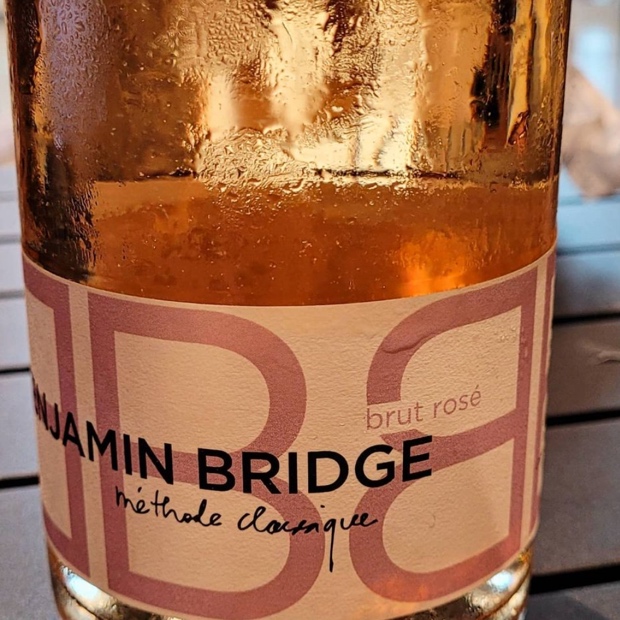
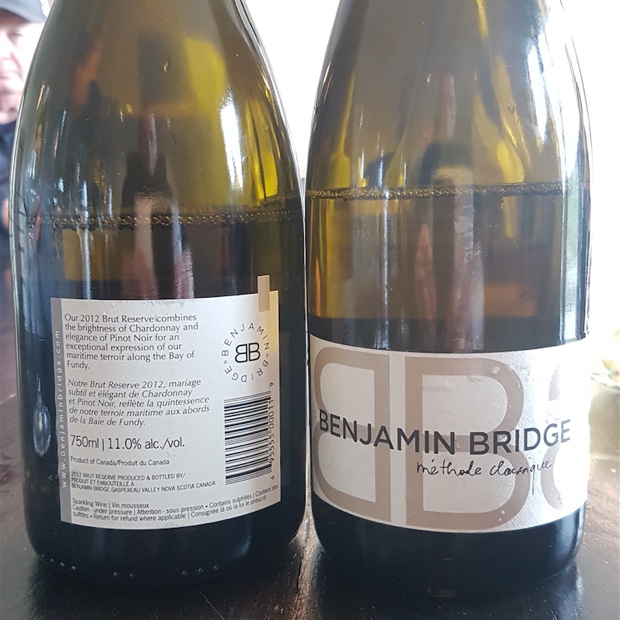
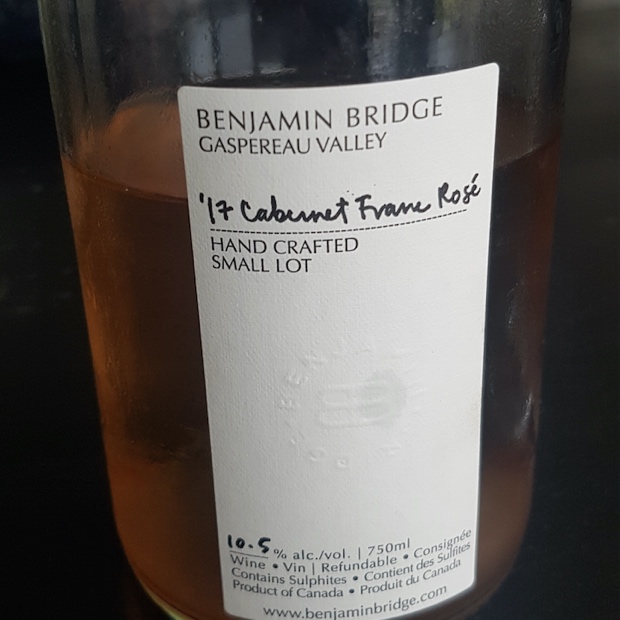
Benjamin Bridge Nova 7 Sparkling 2023, Nova Scotia

Benjamin Bridge is indeed correct and fully justified in self-proclaiming Nova 7 as “Nova Scotia’s favourite wine” because, well it just is. The blend for this resilient, magical, a decade and a half in the making, lightly effervescent and low alcohol sparkler is muscat, ortega, riesling, geisenheim, l’Acadie, vidal and petite pearl. The latter is a cold-hardy hybrid cultivar bred using a cross between MN 1094 and E.S. 4-7-26, grown in 25 US states and four provinces of Canada. The acidity for Nova 7 at 9 g/L integrates with ease and swirls 49 g/L of residual sugar into a comfort zone like a balanced Spätlese, with the peachiest of flavours and a refreshing, thirst-quenching and salty iced tea finish. A throwback in many ways and yet the 2023 is quite frankly as good as any Nova 7 there has ever been. Age a bottle three or four years to see what happens. What could go wrong? Drink 2024-2027.  Tasted October 2024

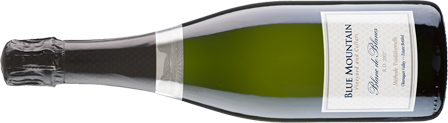
Blue Mountain Reserve Brut R.D. 2014, BC VQA Okanagan Valley

Aromatic complexity, a chardonnay and pinot noir (55-45) sear of raging citrus but never lean because there is flesh all over the palate. The lemon segments are ripe and delicious, the red fruit character compliments with added spice, the persistence endless and the winemaking clearly coming from a place of experience and respect to place.  Last tasted blind at i4C, July 2024

Always pleased to welcome the BR R.D. into a glass and here is an old but a proverbial goody, that being 2014 and consumers must be reminded just how special this research and development is to determine the excellence of Blue Mountain’s indagative sparkling wine. A blend of chardonnay and pinot noir, the first 10 percent more than the last with some of the most restrained, reserved and demure aromatics in the Okanagan Valley. All ways to say this is lovely, quietly generous and so settled to gift pleasure above all else. A most complex game of citrus and orchard fruit, distillate by nature, expertly seasoned with fine sea salt, white pepper and lemongrass powder. Such a gift nine years after vintage at a ridiculously reasonable price. Drink 2023-2027.  Tasted November 2023

Last House Joie De Vivre Blanc De Blanc 2021, VQA Prince Edward County

No dosage, categorically Brut Zero sparkling wine of leesy significance and gentlest positive oxidation. A bubble set up this way from the start and carrying the torch forward on a justifiably sound plateau that should see no significant changes for the next few years. Only chardonnay and no vintage heat to set its trajectory hastily forward, with full orchard and citrus fruit flavours on a sturdy frame backed by bedrock as backbone PEC limestone intensity. You need to try this – it represents a significant style and profound bottle of sparkling wine. Drink 2024-2028.  Tasted November 2024
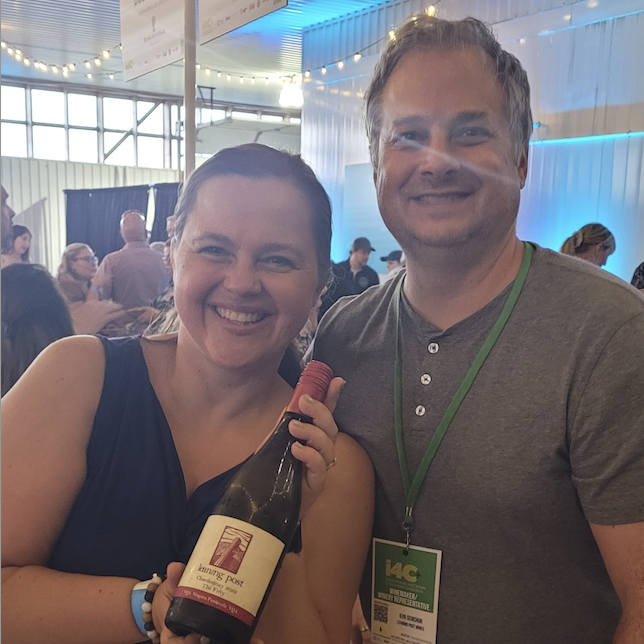
The Senchuks – Leaning Post

Leaning Post Blanc De Blanc Traditional Method Sparkling 2019, VQA Beamsville Bench

Old (35 year-old) chardonnay Hemeris Vineyard vines are the source for the LP traditional method Blanc de Blanc that sees four-plus years on the lees. The sugar is not quite zero but to be honest, nine-plus grams of acidity renders three g/L of RS essentially obsolete. And yet the mouthfeel is full, substantial and acting gregarious. Packed with aromas and flavours, seemingly impossible and so this from a less than heat-cumulate Niagara vintage (that would have made for seriously piqued and biting still chardonnays) is almost a sparkling oxymoron. As far from severe as B de B will be, instead generous and celebratory. Unexpected and mind-blowing in many ways. What sorcery is this pray tell, Senchuk and Senchuk? Drink 2025-2032.  Tasted November 2024

Dean Stoyka and J-J Groux – Stratus

Stratus Brut Nature Zero Dosage 2013, VQA Niagara-on-the Lake

J-L Groux explains that the main factor for making this kind of sparkling wine is PH, “because the aromatics will be built upon six to seven years of lees aging time.” J-L feels this ’13 is going to be the winner now, and for 20 years. Not far off it would seem because of the “partial disgorgement” method, well within VQA rules and thus you arrive at a toasty smoulder unlike any other sparkling wine. The lees are the thing, in fact they are everything. They prevent the aromas and the wine from oxidizing. Amazing.  Last tasted July 2024

Comes across a bit cloudy, at least as compared to the B de B with thanks to the natural, lees left intact style. The citrus component is so pronounced, as is the taut, direct, lean and intense manifold destiny of what is truly a singular Sparkling wine. That being a living, breathing, inhaling and exhaling wine, slowly releasing proteins, acids and realizing its B de B Nature dream. Just amazing what lees can do for sparkling wine.  Tasted July 2021

Released side by each with the Stratus Blanc de Blanc 2013 and while vintage and grape are the same, the similarities almost seemingly, ostensibly and allegedly end there. Yes in fact this 100 per cent chardonnay is a child of the most excellent varietal vintage and like the B de B spent six years on the lees. Comparisons cast aside it is the very fact that because much of the lees were transferred to bottle by a minimalist’s disgorging that this cloudy bubble with a Canadian artist’s series set of labels can’t help but elicit another memory. The Lilies of Monet and their clouds represent neither the horizon, nor the top or the bottom. Nor does a bottle of this Zéro Dosage Brut. The elements of water, air, sky and earth become intertwined in a composition without perspective, or so it goes in this hazy, opaque and dry as the desert sparkling wine. So many layers of lemon can be peeled, juiced and scraped away. If a Stratus wine could be a a riddle, wrapped in a mystery, inside an enigma then here it is. The texture here is palpable and the intrigue factor surely high, so it should be imagined that longevity will be this wine’s calling card. It’s more austere than the Blanc de Blanc but I think in fact it will. Drink 2022-2029.  Tasted November 2020

Tasting The Old Third at White Oaks

The Old Third Pinot Noir Sparkling À La Volée 2011, Prince Edward County

First bottle opened since last tasting this unicorn of a PEC sparkling wine back in October of 2015. Now in a state of settled grace, of a collected, stored and persistent slow release of energy that keeps on keeping on. Every County maker using pinot noir for a Brut zero (or near zero) style should find a bottle of À La Volée 2011 as a reference point because as interpreters they must translate still wines to become bubbles “on the fly,” without waiting for the end to begin, acting with hindsight.  Last tasted December 2024

“On the fly” is not exactly what comes to mind from this 100 per cent Pinot Noir, first Sparkling wine made by Bruno Francois. Calculated, attention to detail and intensity of ideation more like it. Three years on the lees, no dosage and from a vintage to speak in more than whispered voices, of acidity that announces its arrival with immediacy and a summons to contest. The nose does yeast, toast, citrus and ginger. A first release revelation as ever graced Ontario’s waves, as dry as the desert and lingering with switch back traces of its yeasty, toasty self. A single vineyard can be this way, equally and in opposition of natural and oxidative, with a hue less than Pinot Noir, though unrequited as a triumph when you get a ripe white from such Pinot. The production of 1200 bottles is relatively house high in a stunner that needs no sugar to draw up its flavours. Drink 2015-2023.  Tasted twice, July and October 2015

Marty Werner – York Vineyards

York Vineyards Reserve Brut, VQA Niagara-on-the Lake

York Vineyards’ Brut is a two-thirds to one-third chardonnay-pinot noir joint that sees 72 months on the lees. A sparkling sensation taking the country and apparently also the world by storm. The attention to detail, focus and determination are credible, felt with palpable energy and there is no doubt as to how much trial, experimentation and consideration went into making this and other York Vineyards wines. The Reserve moniker may at times feel like an add on but here one can imagine the assessment of base wines and the selection being both a stringent and anticipatory one. This is richness off the proverbial Ontario charts with a toasty-autolytic complex character that defies regularity. Toned, defined and appreciable because the flesh is yet to fully develop. Drink 2025-2030.  Tasted November 2024
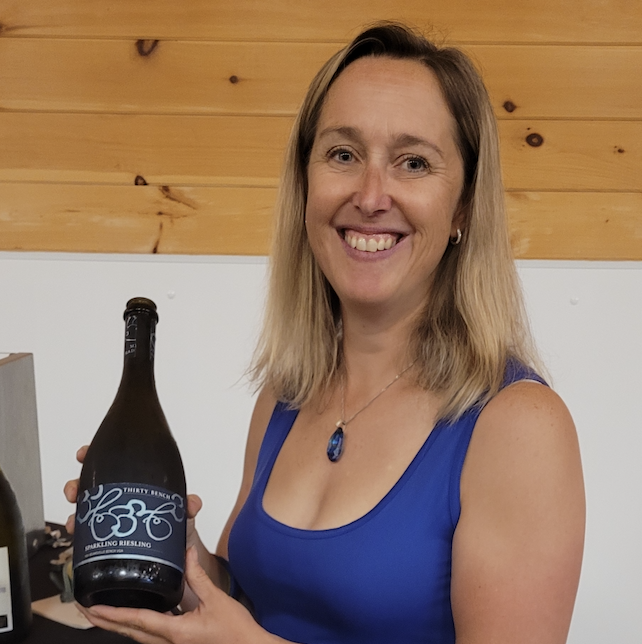
Emma Garner – Thirty Bench

Thirty Bench Steel Post Vineyard Small Lot Riesling 2020, VQA Beamsville Bench, Niagara Escarpment

An Ontario legend in terms of riesling and the one from Emma Garner at Thirty Bench that defies logic with a magical spell cast upon the grapes put to bottle. Probably the driest of the Small Lot series at just 11 g/L of residual sugar, impossibly converted and qualified by just 11.2 percent alcohol with what must be an acidity number that’s just about as high as the sweeter rieslings in the portfolio. The energy and vitality are exceptional, the warmth of the vintage delivers top quality, if absolutely pristine fruit and then there are the qualities of extract and tannin cohabitating at this highest level of composure. The potential here is unlimited. One of the finest rieslings ever made in Ontario and this one goes up to 11. Drink 2025-2035.  Tasted March 2024

Charles Baker Picone Vineyard Riesling 2021, VQA Vinemount Ridge

The word “tannic” does not often first (second or third) come to mind when riesling is the subject but ’21 and Picone from Charles Baker strikes that way from the first sip. This after a most unique aromatic begin, dried herbals for one thing and exotic spicing in a cumin-coriander masala way. Even more so fenugreek leaf and wait for it…maple syrup. Hard to say why ’21 emits this way but when these scents give way to the riesling’s body politic the effect is both exotic and promising. Baker himself says that the “2021 CB from Picone is true to form and represents the vintage properly. Elegant, refined, absorbs the richness with fine acidity. Long floral green toned finish. Will age beyond me.” Indeed this may just turn out to be Charles Baker’s longest lived of the Picones, right up there with the ’06, ’11 and ’16. Drink 2024-2036.  Tasted October 2024
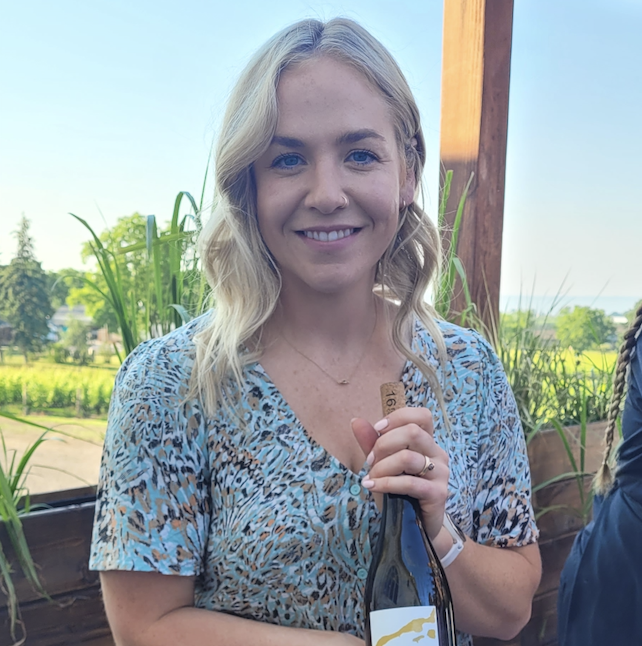
Morgan Juniper – 16 Mile

16 Mile Cellar Civility Chardonnay Single Vineyard 2020, VQA Creek Shores

From a block called Susan’s Vineyard, wild ferment, full malolactic, raised in oak puncheons of light toast. The growing location may be the lower Escarpment’s steppe of Creek Shores but who would not feel, see and recognize this 2020 as truly Bench chardonnay. No ambivalence in the method, execution or design, ample and plush, of an all in lemony curd to speak of the finest and cleanest lees. Truly singular style and without a doubt winemaker Morgan Juniper’s most comprehensive chardonnay to date. Drink 2024-2027.  Tasted June 2024
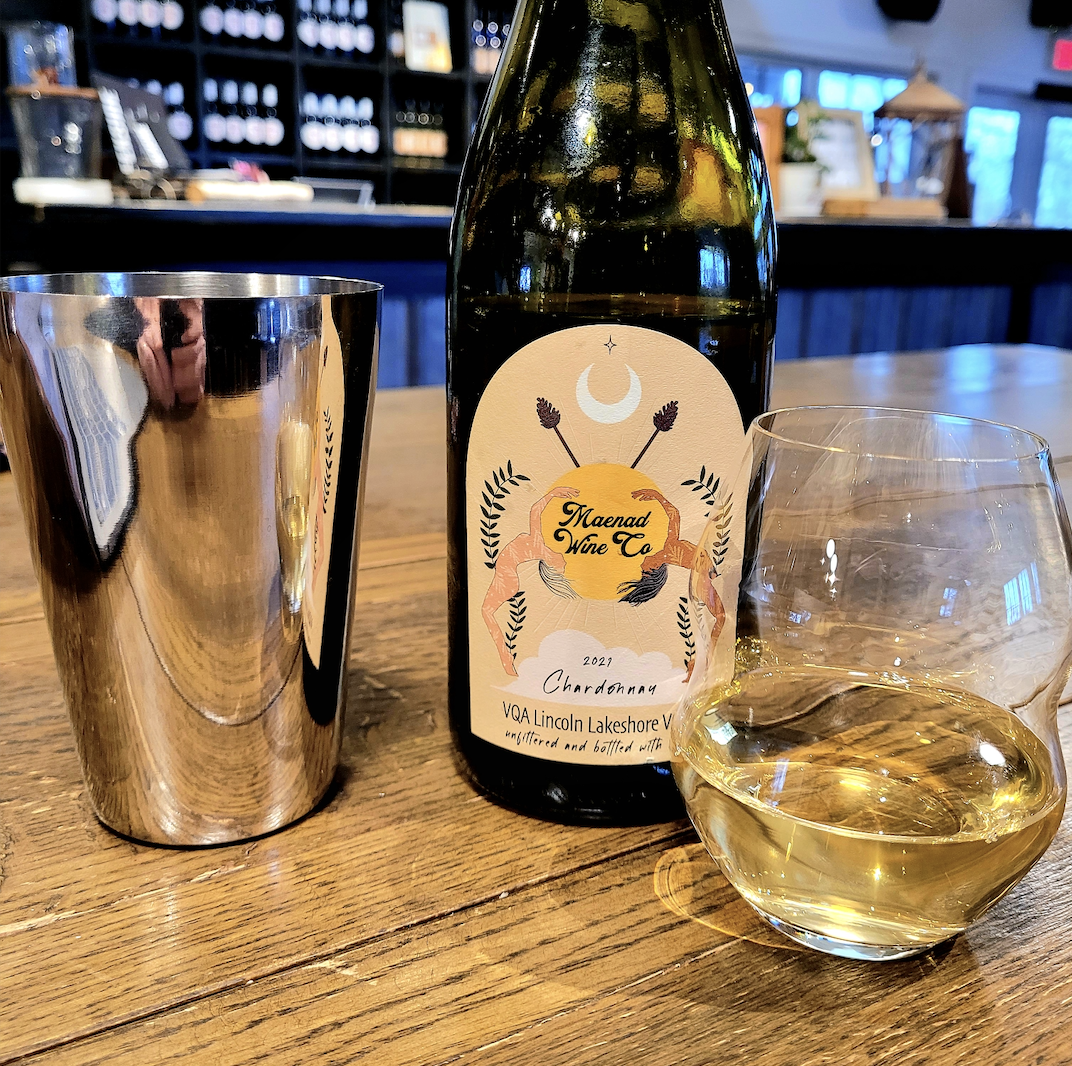
Maenad Wine Co.

Maenad Wine Co. Chardonnay Unfiltered And Bottled With Lees 2021, VQA Lincoln Lakeshore

From the young vines of Grimsby Hillside Vineyard and while this label shall remain nameless, the block is actually 295. “A wild terroir exploration” says the winemaking show that is Yvonne Irving, a winemaker used to making a full bodied style of chardonnay from the Queenston Mile Vineyard. Unmistakably GVH and if you’ve tasted a Senchuk or Bachelder iteration than you’d know the vineyard wins every time. The richesse is belied by this specificity of intensity that is unequivocally GVH. This northern spot produces the most brightness against the backdrop of ripeness, barrel fermentation and oak-aging. Full malolactic but always beneath the fruit, full on lees and amazing crunch. So full up the middle and yet vertical. Real deal, whole package and so much more to come. Drink 2024-2027.  Tasted March 2024

Henry Of Pelham Speck Family Reserve Chardonnay 2022, VQA Short Hills Bench

There is some truth to the advantage of tasting a stellar ’22 like this from Henry of Pelham when a great deal of other chardonnay being poured alongside are ‘21s, but letting chardonnays be chardonnay it matters less than we should actually be talking about. The SFR ’22 lives up to its blind billing and thrills without a moment’s hesitation. End of story.  Last tasted August 2024

The only reductive chardonnay in this flight of nine which speaks to an overall change in winemaking and in fact there have only been three like this, out of let’s say 50 tasted these days. Reductive as much as any chardonnay though the fruit can stand up and hang tightly on the upright frame. Notable style, bit of pyrazine, Behind the veil is most excellent and concentrated varietal fruit that to this mind celebrates a very specific sense of place. A Bench on a step up against a hillside or escarpment and its maker’s care is more than evident. Tastes akin to high end Marlborough chardonnay. Well thought out, serious intention and should age well. A seriously structured and balanced wine that drinks well now but will only improve over the next two years. Drink 2025-2030.  Tasted blind at #NWACS24, June 2024
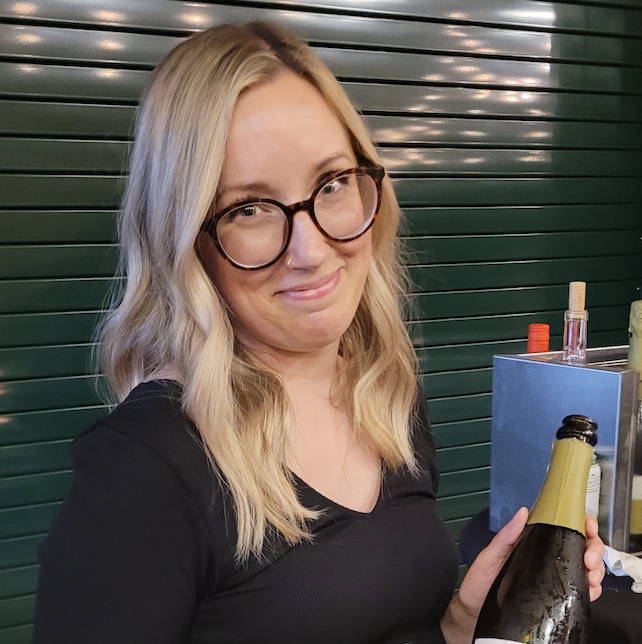
Jessica Otting – Tawse

Tawse Chardonnay Quarry Road Vineyard 2021, VQA Vinemount Ridge

No shock or surprise that Quarry Road ’21 is a mineral bomb, coming away on that rocky side of the 50-50 fruit to stone compendium. Forget everything you’ve heard or read about this arch-cool Vinemount Ridge chardonnay, but also ignore all the noise about unmitigated disaster by vintage. Niagara winemakers should always make quality cool chardonnay these days and Tawse holds more water and responsibility than most. Jessica Otting is ten times equal to the task with a Quarry so precise and focused it may just make a tooth or two feel the mineral pain. A chardonnay chillingly representative of its vineyard yet, rewriting the jazz because of the shall not be named vintage. The naysayers can run away and hide in their holes because history will be kind to these wines, especially when they shine on in tastings ten years forward. No crutch or apology, sorry not sorry. Remember 2011 and 2013. Now forget them and only speak of 2021. Just great chardonnay. Drink 2025-2030.  Tasted at i4C, July 2024

Alex Baines – Hidden Bench

Hidden Bench Chardonnay Felseck Vineyard Unfiltered 2021, VQA Beamsville Bench

My goodness this is special chardonnay, coming as no surprise and if your thoughts and emotions for 2021 Niagara chardonnay need buoying than begin the bob right here. Precise aromas, immediate and echoing, more fruit than frankly necessity should expect as the mother of invention because mineral and saltness demand our utmost attention. Yet the fruit stands firm and even pulpy in the face of the crushed stone infiltrate from a vineyard stop on the grandest of Niagara cru tours. Exemplary to speak on behalf of a vintage that separates wheat from chaff, pinpointed location from just anywhere and adults from the gambling trials of youth. Drink 2024-2028.  Tasted July 2024
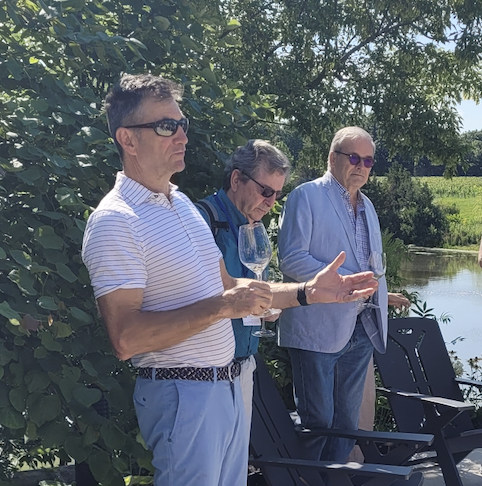
Wade Dobbin, David Lawrason and Peter Gamble

Dobbin Estate Chardonnay 2019, VQA Twenty Mile Bench

Not labeled as such but essentially a Reserve wine taken from a single barrel housing all estate fruit. High level of concentration and richness in the face of a vintage considered cool and challenging, but when you take a smallest of small lot wines like this that just does not apply. Everything about this is classic, basket pressed, natural ferment, full natural malolactic, 22 months maximum for oak aging, Burgundian obviously and medium of toast. “We come to barrel turbid – we like density,” notes Peter Gamble. (Peter) and Ann Sperling really liked this one particular barrel and decided to put it to magnums only. From late September and early October picks, finished at 14.5 percent alcohol and ultimately mouthfeel that rivals some pretty warm wine growing regions. A chardonnay that moves beyond Bourgogne to offer up its very own definition of Niagara’s Twenty Mile Bench.  Last tasted July 2024

This may be just the first stages of Dobbin’s tenure making high end wines from the Twenty Mile Bench but auspicious does not begin to describe the level of sophistication marking these beginnings. The erudite oenological consulting team of Ann Sperling and Peter Gamble have taken chardonnay into territory they are quite familiar with but always keep in mind that top terroir, vineyard conditioning and uncompromising preparation are what collectively set this up for success. This 2019 is from a cool climate vintage out of a cool climate place and recent history tells us that these are chardonnay that live good, long and healthy varietal lives. Luxe yet still crunchy, high quality wood used generously if judiciously and in the end this kind of rocks the world. In a chardonnay way. Drink 2024-2028.  Tasted April 2024

Spearhead Pommard Clone Pinot Noir 2022, BC VQA Okanagan Valley

A bit of aromatic restraint from a pinot noir keeping some secrets and what scents as some whole bunch percentage inclusive style. Good palate richness and berry to citrus emulsion like a fluid smoothie of reds, greens and acidity. Plenty of understated depth, so ample, focused and really well defined. Brightest of the flight, red fruit in flight, breathing easier, acids also up there and structure never too demanding. Could always drink a glass. Drink 2024-2026.  Tasted blind at #NWACS24, June 2024
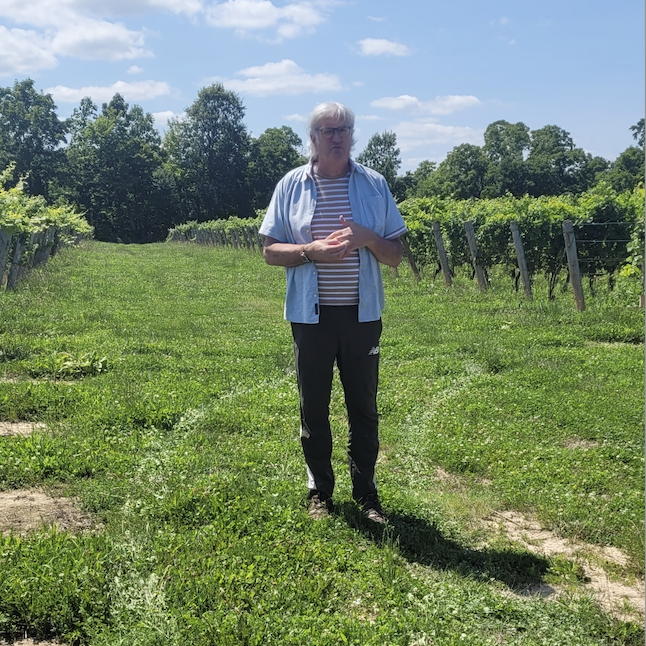
Thomas Bachelder in the wilds of the Twenty Mile Bench

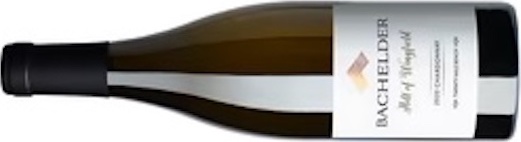
Bachelder Wild West End Wismer Parke Vineyard Pinot Noir 2022, VQA Twenty Mile Bench

For Thomas Bachelder Wild West End, Wismer Parke Vineyard and pinot noir started out as the one of the most mystery, namely because Wismer could not name the clone and the first wine was even more sanguine than that of the Wismer Parke. Which says that the West End’s soil affects the clonal material in exaggerated ways and the question has always been, to tame or not to tame. The answer is vintage and not needing “a weatherman to know which way the wind blows.” Bachleder had to hang loose, stay cautious and learn about the vineyard’s situation, take other’s opinions into account and then proceed with action. This vintage feels like a culmination of necessity, a varietal mother of invention, a reality on display of full capabilities realized. The height of an epoch acceded by a grower and a winemaker on the same page. A wine of intelligence and acceptance because the ferric meets hematic parts oversee and tell fruit what to be and how to act. The people have learned how not to get in the way and the degree has been earned. The question is what’s next? Drink 2026-2033.  Tasted November 2024
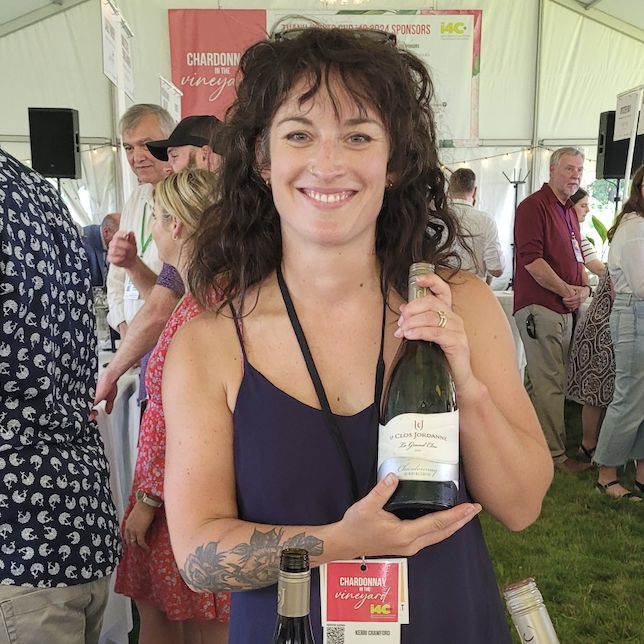
Kerri Crawford – Le Clos Jordanne

Le Clos Jordanne Le Grand Clos Pinot Noir 2021, VQA Twenty Mile Bench

As with Claystone Terrace the Grand Clos Vineyard blocks running from west to east move through this fruit gradation from structured and austere through to soft and amenable. For 2021 the middle ground is duly noted with a signature and arch classic Jordan/Twenty Mile Bench pinot noir that sings in youthful life as early as it ever has. The team (Thomas Bachelder, Kerri Crawford and Phillip Brown) have coaxed out the sweetest natural fruit. While it flows with ease it’s also equipped to slow down, reflect, and then re-emerge a few years thereafter, post pause and not atypical varietal dumb phase. Th3 2021 is found to be chic, suave and stylish as ever, fruit in a dark red cherry state and acidity meeting texture for mouthfeel of a most finessed kind. Drink 2025-2031.  Tasted July 2024

Carrying Place, Prince Edward County

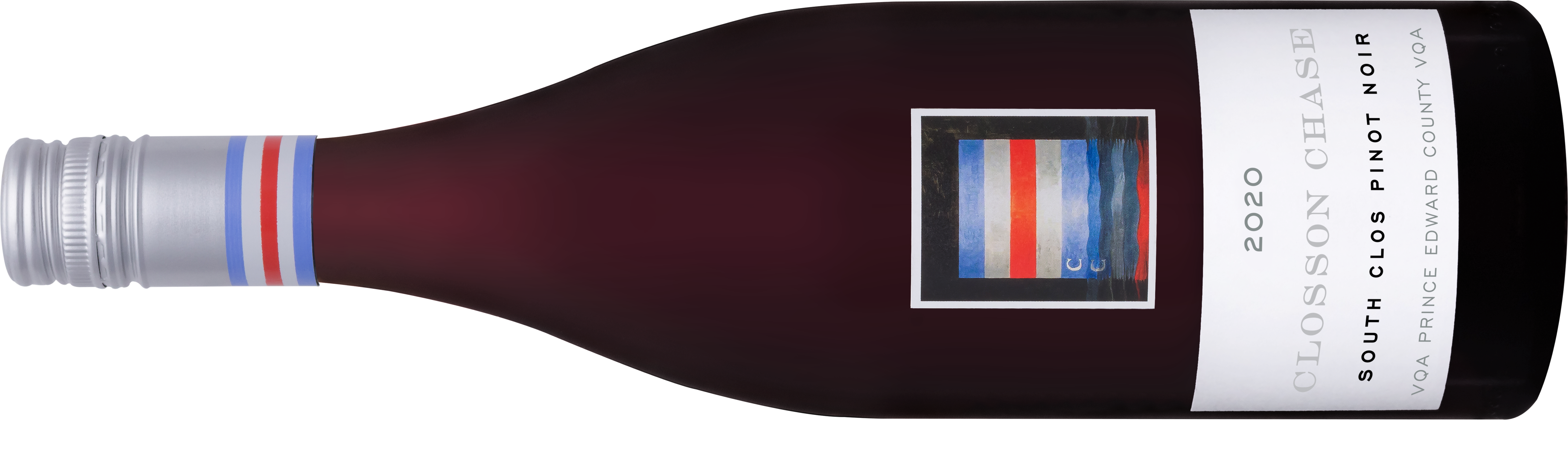
Trail Estate Winery Pinot Noir Revival 2020, VQA Prince Edward County

Has to be the top of the top drop for Trail Estate but also for PEC, not to mention perched up there at the precipice of breaching the Provincial price rubicon for all wines. Some are one dimensional, others expressed in two and then there is Trail’s, which most definitely incorporates a third. Reductive and diesel fuelled with almost no precedence towards understanding just exactly what this aromatic unfamiliarity is all about. Confounding and yet a sip quickly adjusts the viewpoint because layers of recognizable fruit glide over the palate. The vintage is worth waiting for, the phenolics so ripe that not a stem should be wasted, while the savoury pastry of said whole bunches makes sure no holes are left unfilled. When the lowest yields and the most stringent selection meet risk-reward winemaking techniques there can be something special to come from all these hopes and dreams. If revival speaks to the human condition, a.k.a. struggles with sin, forgiveness and redemption, well then this pinot noir may just be the answer to a winemaker’s struggle, quest and renewal. Now let’s see her repeat this every vintage, or at least one here and there deemed worthy of the pain, journey and prize. Oh, and please give this at least another year to find its way so that the enigmatic behaviour should wane and eventually subside. Those who can afford the cost will then see the forest for the trees and be granted some personal form of immediate gratification. In the end the question begs as to how we value Revival as a three-dimensional pinot noir? By definition three coordinates are required to determine the position of a point (and a pinot), namely those you can pick up, touch, and move around. But in the end the simple answer is depth, which is what Revival and all great wines simply have. Drink 2025-2032.  Tasted April 2024
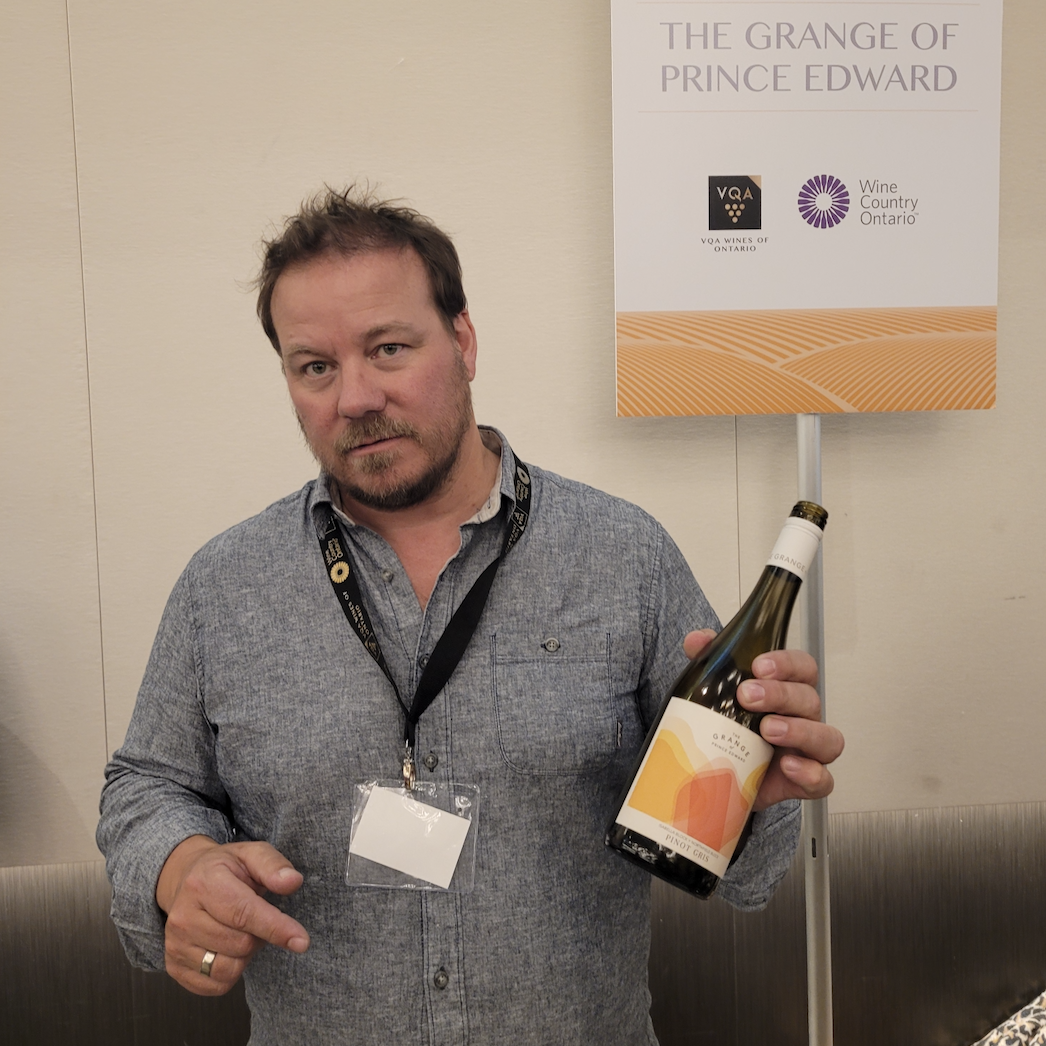
Jonas Newman – The Grange

The Grange Of Prince Edward Aurelia Pinot Noir 2023, VQA Prince Edward County

The golden one, Aurelia, from the Latin Aurelius and if you want to delve deeper, the name for Marcus Aurelius Antoninus, Roman emperor from 161 to 180. Even deeper still the character portrayed by Richard Harris in Gladiator. Also the top of the opus pinot noir at The Grange and what a golden one it surely is. Needs to be because it is bloody expensive but just 98 cases were made of a varietal harbinger that gets the full on spa treatment. Double sorted, first in the vineyard, then at the table. Whole cluster fermented, including carbonic for five days and then foot trodden. Ten days of délestage before being pressed off and blended to finish ferment in tank. Ages in the most expensive wood for 10 months, 33 percent new. Burgundy anyone? Yes this is the idea and the result is a pretty good approximation, all the while tended to by that County high life in acidity with a generous amount of volatile compound effect. Yet the fruit and that acidity are in cahoots, sweet, inviting and enlivening. At nearly $75 there is a whole lot of swagger, ambition and confidence but if money were no object I’d happily drink through a few bottles. Drink 2024-2027.  Tasted December 2024

Roche Wines Amulet Syrah 2021, BC VQA Okanagan Valley

Semi-serious syrah, surely built upon an upright skeletal frame with flesh hanging on its bones and acids piquing through the supple textures of that flesh. Also floral and the meatiness seems to increase with every sip. Iron bloodiness and tannins also grow as you work with what is now becoming a fully serious wine. Chocolate melting and coating the back end with the same function as the tannins of the wine. Drink 2025-2030.  Tasted blind at #NWACS24, June 2024

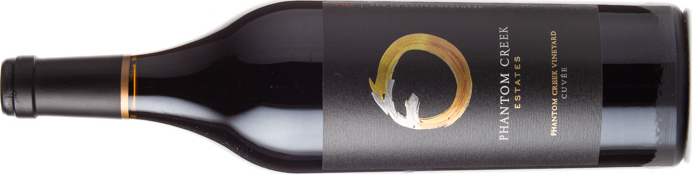
Phantom Creek Kobau Vineyard Syrah 2020, BC VQA Golden Mile Bench

Here is the syrah bomb that means serious business. Smoked meat, iodine, sanguine and that classic black olive tapenade. A veritable hematoma of red, black and blue, fruit, acid and tannic intensity. If it’s showing some volatility that’s just because of rebellious youth and unresolved structure. This is very serious wine. Drink 2026-2032.  Tasted blind at #NWACS24, June 2024

Okanagan Valley

LaStella Cabernet Sauvignon La Sophia 2019, BC VQA Okanagan Valley

When you look at the last 10 years of Okanagan wine-growing there is no doubt that 2019 resides near the peak and is a vintage that should be filling collector’s cellars. La Sophia is one of those wines, a cabernet sauvignon with a track record that speaks to consistency and excellence. Imminently recognizable as both La Stella and their extension of Black Sage Bench terroir in Oliver. If any local cabernet will resonate with the Oliver equivalent of the Tuscan coast’s Macchia Mediterranea than La Sophia would be it. Not exactly balsamico or garrigue but yes something Italianate, of rich dark fruit set against fine-grained tannin and that brushy, herbal, vinous and resinous scents of the terrain. Black Sage Bench issue, nothing standard about it and it needs a name. Like Okanagan Briar or Chaparral, but regardless you can’t miss the outback in this wine. Yes the 50 percent new wood needs to integrate further and it will, given the requiem necessary, in air and also time. Drink 2026-2035.  Tasted May 2024

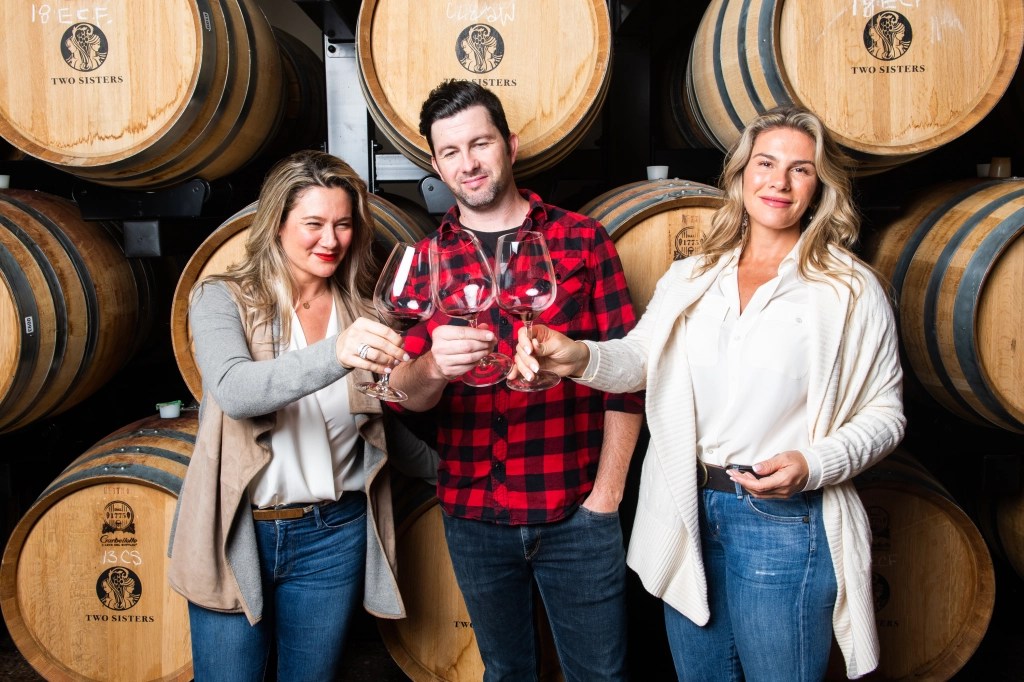
Two Sisters Riesling Icewine 2023, VQA Niagara-on-the Lake (375ml)

Spicy waft from the 2023 riesling and a level of viscosity to speak of Icewine made in the most serious of ways. The haute and cultured fragrance makes one wonder why $89 should be the price when three times that amount might make sense, after consideration is taken for the time, effort and work required to make such a wine even possible. The fruit is extraordinary, the acidity at a high level for the vintage and Icewine in general. This is the what, how and why for the category to be celebrated, wines exulted, performance perpetuated and raison d’être defined. Give this two more years to fully see the riesling respond in the way it surely can. Drink 2026-2036.  Tasted June 2024

Good to go!

godello

Godello and Hare
Instagram

Facebook

The sparkling rise of Alta Langa

Godello, Alta Langa blind tasting (c) Anastasia Florea and Consorzio Alta Langa DOCG

This is the story of Alta Langa, Alte Bollicine Piemontesi. A portrait of proposal for a clearly defined class and style of sparkling wines led by a young, energetic and promising 20-year old Consorzio. An organization led by President MariaCristina Castelletta of Tosti1820 and Vice-President Giovanni Carlo Bussi of San Marzano Oliveto charged with the valourization of Alta Langa DOCG, a dry, vintage-dated Spumante obtained through the traditional method from pinot noir and chardonnay grapes grown on the Piedmontese hills. Their work carries forward from past Consorzio Alta Langa presidents Giulio Bava (Giulio Cocchi, 2013-2022), Lamberto Vallarino Gancia (F.lli Gancia, 2010-2013), Giovanni Carlo Bussi (Viticoltore di San Marzano Oliveto, 2004-2010) and Giorgio Giusiana (Martini & Rossi, 2001-2004). The date was June 15, 2001 in Asti, after more than 10 years of in-depth and methodical research and studies on the suitability of the area, to bring together winegrowers and producers involved in the development of a wine, an appellation and a territory. The common link was the steadfast adherence to classic Champenoise method sparkling wines made with grapes six years after planting. Il Consorzio Alta Langa protects and promotes the ideals of like-minded producers in search of the finest bubbles that can be made.

For the last two years the wine and also social media narrative has been played annoyingly on repeat, of grave reports concerning the decline of global wine consumption and yet there is an essential category on the rise. Sparkling wines are doing fine, with thanks of course in great part to bottles of Italian method examples produced in the hundreds of millions. A skewed graph perhaps but as long as there are bubbles we can’t really complain and yet we know that traditional method styles are what matter most. This is why news of the acclivity and proliferation of classic method effervescent wines is of the best kind. The question is how many are aware about production out of the northwestern part of Italy? For there is Piemonte, from the word piedmont, meaning “at the foot of a mountain,” an alpine arc of a vineterland surrounded to the south, west, and north by the vast Ligurian Apennines. Best known for growing red grape varieties, namely nebbiolo, barbera and dolcetto, also the whites of cortese and arneis, but in Piedmont there is this great affinity with the expatriate grapes from Champagne. The affair is nearly 175 years old, but what has been occurring over the last two decades will act as the impetus for shaping the future.
Where in Piemonte?

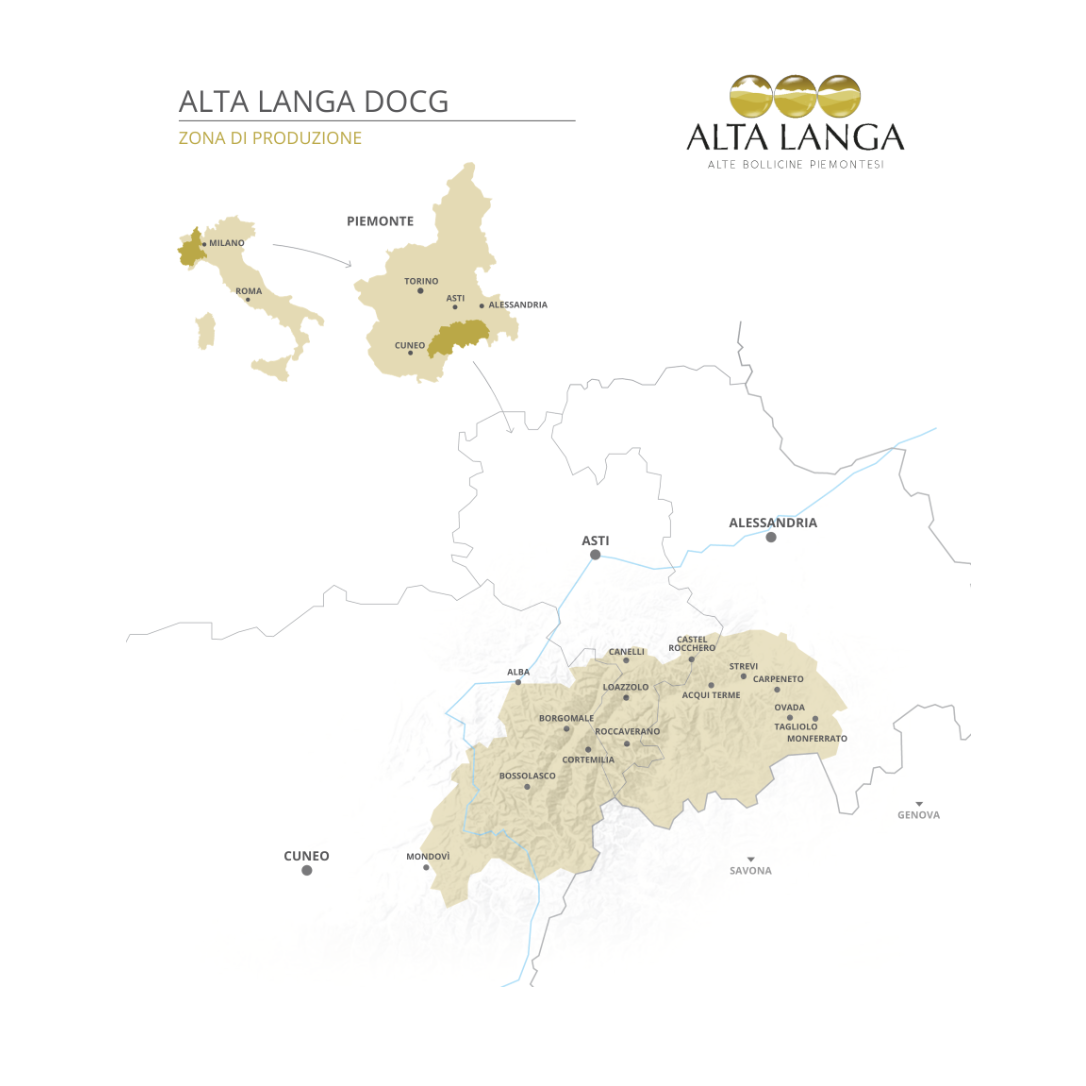
The Alta Langa DOCG area of production of grapes intended for the production of Alta Langa sparkling wines consists of the parcels on hillsides in the provinces of Cuneo, Asti and Alessandria, in the territories of the following municipalities:

Province of Alessandria: Acqui Terme, Alice Bel Colle, Belforte Monferrato, Bistagno, Bosio, Capriata d’Orba, Carpeneto, Cartosio, Casaleggio Boiro, Castelnuovo Bormida, Castelletto d’Erro, Castelletto d’Orba, Cassine, Cassinelle, Cavatore, Cremolino, Denice, Grognardo, Lerma, Malvicino, Melazzo, Merana, Molare, Montaldeo, Montaldo Bormida, Montechiaro d’Acqui, Morbello, Mornese, Morsasco, Orsara Bormida, Ovada, Pareto, Parodi Ligure, Ponti, Ponzone, Prasco, Predosa, Ricaldone, Rivalta Bormida, Rocca Grimalda, San Cris toforo, Sezzadio, Silvano d’Orba, Spigno Monferrato, Strevi, Tagliolo Monferrato, Terzo, Trisobbio and Visone.

Province of Asti: Bubbio, Calamandrana, Calosso, Canelli, Cassinasco, Castel Boglione, Castelletto Molina, Castelrocchero, Cessole, Coazzolo, Fontanile, Loazzolo, Maranzana, Monastero Bormida, Mombaldone, Mombaruzzo, Montabone, Olmo Gentile, Quaranti, Roccaverano, Rocchetta Palafea, San Giorgio Scarampi, San Marzano Oliveto, Serole, Sessame and Vesime.

Province of Cuneo: Alba (territori alla destra orografica del fiume Tanaro), Albaretto Torre, Arguello, Bastia, Belvedere Langhe, Benevello, Bergolo, Bonvicino, Borgomale, Bosia, Bossolasco, Briaglia, Camerana, Camo, Carrù, Castellino Tanaro, Castelletto Uzzone, Castiglione Tinella, Castino, Cerretto Langhe, Ceva (territori alla destra orografica del torrente Cevetta fino alla confluenza nel Tanaro, da qui i territori alla destra orografica del fiume Tanaro), Cigliè, Clavesana, Cortemilia, Cossano Belbo, Cravanzana, Diano d’Alba, Dogliani, Farigliano, Feisoglio, Cissone, Gorzegno, Gottasecca, Grinzane Cavour, Igliano, Lequio Berria, Levice, Mango, Marsaglia, Mombarcaro, Monchiero, Mondovi’ (territori alla destra orografica del torrente Ellero fino a raggiungere da sud l’abitato di Mondovi, quindi proseguendo verso nord-est i territori a destra della s.s. 28 per Fossano, fino al confine comunale con Magliano Alpi), Monesiglio, Monforte d’Alba, Montelupo Albese, Murazzano, Neviglie, Niella Belbo, Niella Tanaro, Novello, Paroldo, Perletto, Pezzolo Valle Uzzone, Piozzo, Prunetto, Roascio, Rocca di Cigliè, Rocchetta Belbo, Roddino, Rodello, Sale Langhe, Sale San Giovanni, Saliceto, San Benedetto Belbo, Santo Stefano Belbo, Serralunga d’Alba, Serravalle Langhe, Sinio, Somano, Torre Bormida, Torresina, Treiso, Trezzo Tinella and Vicoforte.

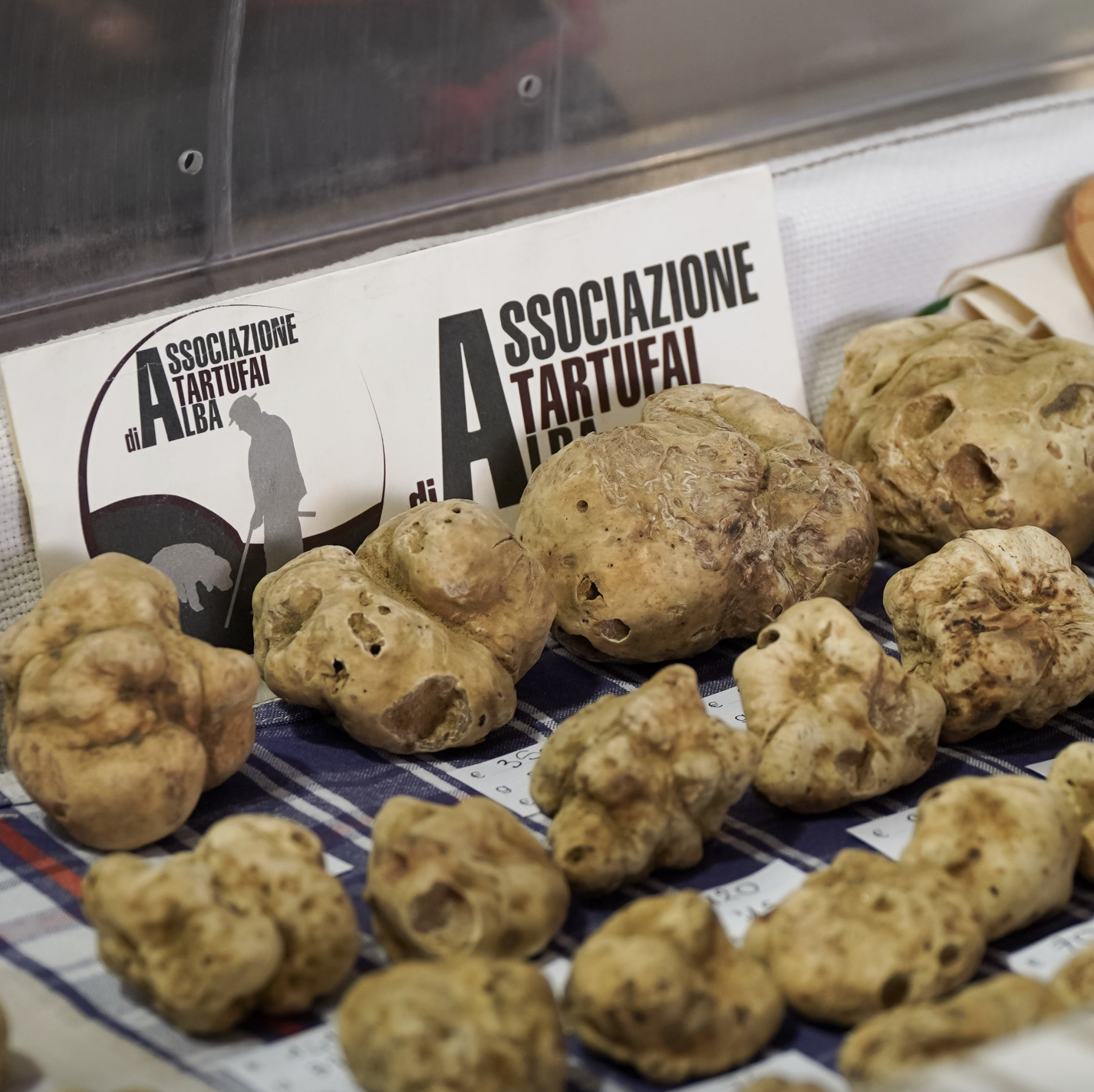
Alba truffles

The goods on geology

Two agronomy experts, Edmondo Bonelli (soils) and Maurizio Gily (viticulture) present Alta Langa to a group of local and foreign journalists. It begins with the sedimentary origin of crystalline rocks from two geological areas, first the firmer central and then the outer areas of alpine rocks. Currently there are no vineyards in this area yet but likely will be so in the future. Challenging terroir, but it’s coming. Sedimentary soils are of marine origin, silty or sandy, on hillsides and usually calcareous, most relatively high in water retention capacity. The calcaire is not the same as chalk but it is calcium carbonate. Layered rocks with marls, sand, conglomerates or gypsum, 30-2.5 million years in origin (Oligocene-Miocene-Pliocene), again sand-silt-clay-calcium carbonate. Sandstones are Pietra di Langhe and can be as deep as six kms of stratified rocks down into the earth. The descriptor “Langhe” comes from Langiano or Langian – a geological epoch named after this area. There are the Molare Formation, Cassinasco Formation and sandstones of Diano. Monseglio Formation, Cortemilla Formation, Cessole Formation, Lequio Formation, Murazzano Formation, each named after a village in the Langhe area (of sandy and silty layers and high calcium carbonate). Rochetta Formation, Marls of Parolo, Sant’Agata Marls (silty medium calcium carbonate).

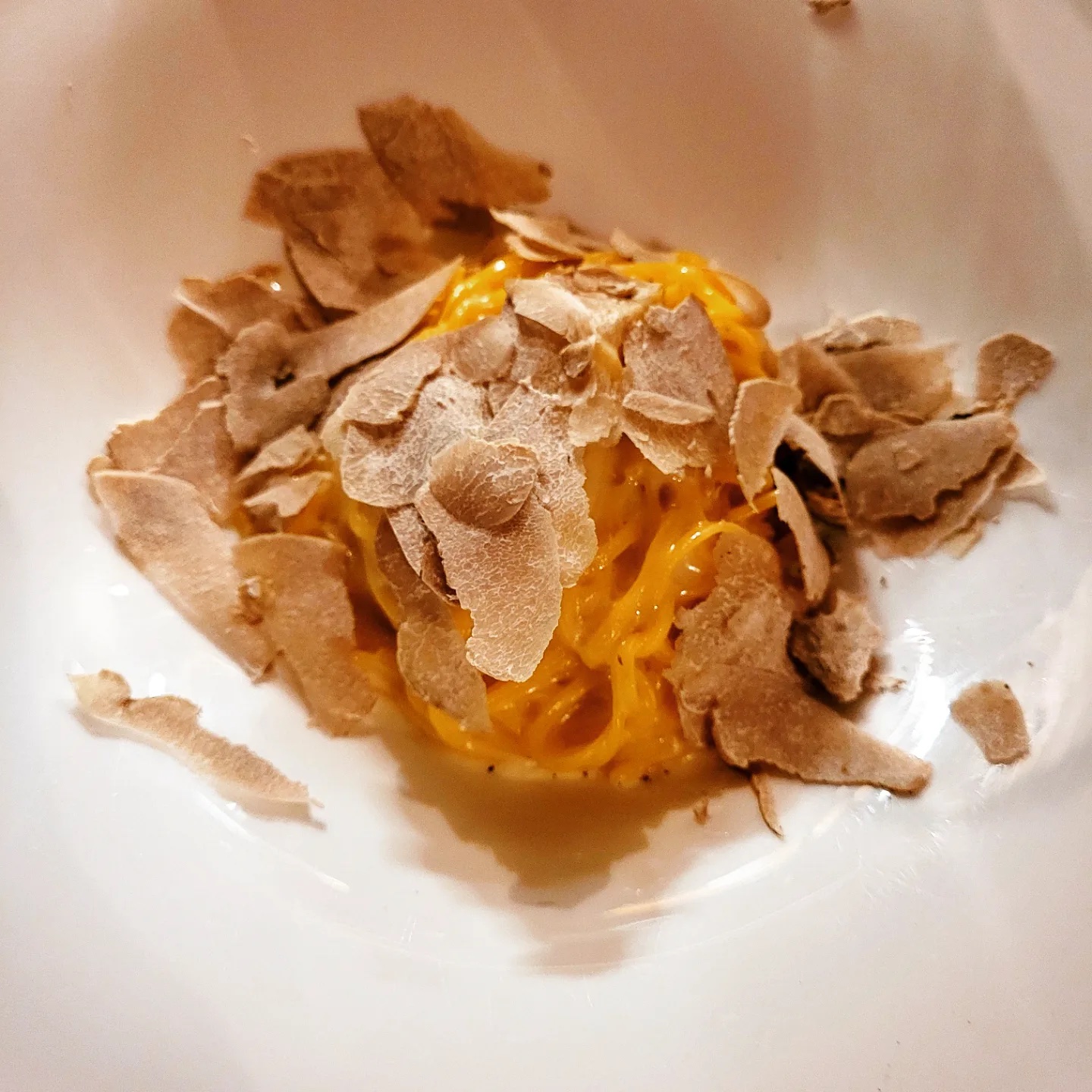
Tajarin con Tartufo Alba Bianco

The Carta Geologica dell’Alta Lange is spilt into eight formations, of eight colours, highlighted by La Malora Beppe Fenoglio, famous Romanzo from San Benedetto Belbo. If we compare Winkler zones, the area is ccooler than Barolo yet quite a bit warmer than Champagne. Biodiversity of the hills is always considered, as are the forests, animals and rivers, they being the Tanaro, Bello, Bormida and Orba. Light soils “dip,” darker soils “anti-dip.” Truth is they are relatively young geologically speaking with lots of erosion and soil movement. Their retention and release of water depends on soil structure and this is also what determines vine (and canopy) growth more than any other factor. But it is the type of soil that deals in different water dynamics. The vines adapt their metabolism  by following their soil conditions. A lot of research has gone into picking the right clone of pinot nero for making Alta Langa.

Alta Langa journalists with President Mariacristina Castelletta of Tosti1820 (c) Anastasia Florea and Consorzio Alta Langa DOCG

Disciplinare

Alta Langa DOCG regulations say that pinot noir and/or chardonnay vines account for 90 to 100 percent of the wines and grapes from non-aromatic varieties suitable for cultivation in Piedmont and may contribute the remaining 10 percent. In the vineyards minimum elevation is set at 250 masl, planting density not less than 4,000 vines per hectare, training forms and pruning systems need be traditional, of low espalier with traditional Guyot or spurred cordon pruning. Maximum grape yields are 11 tonnes per hectare and minimum alcohol is set at 11.5 percent abv. Minimum total acidity is 5 g/l and minimum non-reducing extract is 15 g/l. Yields are subject to change, by approval, in circumstances of favourable and also challenging vintages. Vinification, bottling, processing and aging operations of “Alta Langa” wines must be carried out in Piedmont. From vintage to vintage the maximum addition is 15 percent, of younger “Alta Langa” to older “Alta Langa.”

With the AIS Piemonte Sommeliers

The use of the simple term “bottle fermentation” is prohibited in the designation of Alta Langa DOCG. Allowable definitions and descriptions are  “bottle fermentation according to the traditional method,” or “traditional method,” or “classic method,” or “traditional classic method.” Lees aging rules are no  less than thirty months for Alta Langa Spumante DOCG and Alta Langa Spumante Rosé DOCG. Wines labelled as Riserva require 36 months of lees aging.

Godello at the Masterclass given by Bonelli and Gily (c) Anastasia Florea and Consorzio Alta Langa DOCG

History

It was around 1850 when Marquis Leopoldo Incisa included several French grape varieties in his ampelographic collection located in the vineyards of Rocchetta Tanaro, in what was then the province of Alessandria (which also included Asti). At that time these grape varieties did not meet with much favour, especially among winegrowers. However Gancia created the first Italian Spumante with a Muscat base, in 1865, at a time when farmers held an aversion to foreign vines. This was still witnessed toward the end of the century by the complaints of the owner who succeeded Marquis Incisa, who could find no farmers willing to grow them. In fact, by the mid-19th century, there was no shortage of pinot noir plantings in Piedmont. As early as the first decades of the 1800s, the Counts of Sambuy had begun to introduce some renowned French grape varieties with the specific aim of improving local wine production.

Blind tasting Alta Langa DOCG wines (c) Anastasia Florea and Consorzio Alta Langa

Carlo Gancia was the pioneer who favoured the spread of pinot noir and chardonnay among the winegrowers in the Canelli district. Gancia saw the possibilities for having a certain quantity to use in the production of his sparkling wines. With the Spumante Metodo Classico Project in Piedmont, of which the “Alta Langa” appellation was born, the Piedmont sparkling wine industry made a valuable contribution of economic and technological commitment to a vocation that had remained unexpressed for decades outside the mere scientific sphere. It was shown that the hills of Piedmont, where vines had over time settled a significant and enduring presence, could work very well with the French grape varieties.

With Gancia oenologist Dr. Donato Lanati

The wines of Gancia today

Gancia is the forerunner of today’s experimental innovation that acts as the basis for the production of the Brut Alta Langa. In 1931 the company contributed to the creation of the denomination Asti for sweet sparkling wines made from muscat and also the first white vermouth made from the moscato. In 1980 they launched the first sparkling wine “pinot di pinot,” using three varieties of that family of grapes. The most important work has come with lees aging using a mix of Champagne grapes. “Whether or not you like a particular aroma in a wine is a subjective fact,” explains renowned Oenologist Dr. Donato Lanati. “It’s all about the amino acids coming together over time – they make the aromas.” Dr. Lanati believes the wines plateau after a 60-70 months stay on lees. After that they will not continues to develop enough favourable nuance and complexity. He recommends that after 10 years you have to turn the bottles nose down in storage to avoid unwanted excess oxidation.

Gancia Vino Base Pinot Nero 36 Mesi Rosé Alta Langa (Campione Da Vasca) 2023

A base wine destined for Alta Langa, still turbid with a high content of yeast activity using amino acids to get somewhere intentional over a long period of time. Salty entry and salty finish with intensities through the middle, grapefruit standing out and unrefined acids – rough for now. Comes from vineyards at 450m and the breeze does blow through this striking base wine. Dr. Donato Lanati explains that it is ”kept cloudy on purpose to avoid having to sulphur because the yeasts are a thousand times more effective as a protector against oxidation then sulphur dioxide.” Just a part of a cuvée and the process that sees an opaque sample mix with other cloudy base wines to create clarity in its final housing.  Tasted December 2023

Gancia Cuvée Gancia 36 Mesi Alta Langa Rosé DOCG 2018

Minor reduction which is in fact something that is important because “things would be a lot more serious if drinking a glass would make you want to drink a glass of water,” kids Dr. Donato Lanati. Sounds like a joke but in these climate change and extreme times you can taste what would not have been tasted before and Gancia knows, with 150 years of experience in crafting sparkling wines. Aging some of the base wines in wood goes a long way to control the reduction and yet some reduction is a good thing. There is some sweetness in the perfume which is a result of a portion having been aged in a “sweet” wood. This sulphur dioxide character mixed with some acetates that have yet to fully dissipate are what drive aromatic pulchritude and it is the esters (within reason) which will bind with amino acids to eliminate any semblance of confection. There is a small dosage here but it in fact under wonderful control and while Rosé by nature is rounder than Bianco, well no matter or judgement because the mix of tension and elasticity is really well managed. Drink 2024-2029.  Tasted December 2023

Gancia Cuvée Gancia 36 Mesi Brut Alta Langa DOCG 2015

Same amount of time on the yeasts and yet three years further bottle time although Bianco (Brut) is always different than Rosé with this Gancia Alta Langa immediately caught with more tension and overall taut behaviour. Freshness incarnate and scintillant intensity without compromise and all intentions are exercised for good and proper reason. Impressive balance and stage presence here from a master sparkling wine producer that is not just the original but currently under the supervisor of a master scientist, that being Dr. Donato Lanati who is one with the chemistry and physiology of these sparkling wines. Drink 2025-2032.  Tasted December 2023

Gancia Cuvée Gancia Riserva 60 Mesi Brut Alta Langa DOCG 2012

Wild to taste this just about five years to the day after the 24 month-ages 2012 back in December of 2019. All the scientific tenets of sulphur dioxide, amino acids, yeasts and esters come to their development line at 60 months of aging on the less and this Brut has passed over by leaving any awkwardness of unresolved notes behind. It is now in fine linear verticality and drinks with Bianco distinction. Crisp, fresh, crunchy and fraught with important if profound tension, citrus and herbs, length and just that right amount of finishing bitters. Scientific does not begin to explain how precise and well designed this acts and delivers as Alta Langa sparkling wine. That said another year will only serve to solidify the evolution and set this up for all we, they and everyone else could hope it could be. Drink 2024-2034.  Tasted December 2023

Cuvée Gancia Riserva 170 Mesi Brut Alta Langa DOCG 2005

From a wine made by previous illustrious oenologist Piergiorgio Cane and found by Dr. Donato Lanati who resisted any temptation to change, delete or add anything to the wine. That it has aged between 14 and 15 years on the lees begs the question of how long is too long or more to the point where is the line at which the wine no longer changes to develop more nuances for positive results. Intuitively, if also extrospectively in its maturation to arrive at this dried porcino mushroom and oxidative state. It’s a museum wine in every respect and while it does not deliver freshness or pretty pleasure it does deliver a most fascinating tasting experience. The palate is really in fine shape and that is where some excitement and freshness persists. Twenty minutes does not kill the wine and it continues to evolve, so in the end this does what it surely was intended and wanted to do. Drink 2023-2025.  Tasted December 2023

Enrico Serafino

The innovation of Enrico Serafino

In a word, a visionary. Cavaliere Enrico Serafino (of the Romano Cavanese) is considered to be one of the “wise men of oenology” that defines Italian wine. He sold wine in China as far bak as 1910 and the winery is one of the first producers of Alta Langa to invest in concrete vats.  Today the company led by President & CEO Nico Conta produces eight different sparkling wines from 56 parcels in 41 vineyards found in 16 villages. In 1994 Enrico Serafino joined the (1990 established) Piedmont Sparkling Wine Project, the year of the first experimental vintage, with the aim of identifying the best areas to plant pinot noir and chardonnay. The 2023 harvest marked their 145th and the annual sparkling production is approximately 200,000 (of 360,000 total) bottles. Serafino ws acquired in 2014 by Kyle Krause Gentile and the current ownership recently purchased Elena Penna and Luca Corrado’s Vietti.

The company practices sustainable viticulture, biodiversity protection and the promotion of social initiatives. It actively works to reduce water consumption and uses 100 percent electricity from renewable sources. Bottles are made from at least 65 percent recycled glass, packaging from 70 percent natural paper (International Forest Certification System and corks are 100 percent recyclable. In 2021 Serafino obtained the renewal of VIVA Certification of Organization as well as product for Alta Langa Oudeis, the only Alta Langa certified. VIVA is a protocol of the Italian Ministry of Environment and Land and Sea Protection designed to assess sustainability performance and communicate it to consumers.

Enrico Serafino Alta Langa Riserva DOCG Zero Pas Dosé 2012

The no dosage metodo classico is known as Sboccatura Tardiva, meaning late disgorgement and a wine first made in 2004. Poured from magnum which is well known to deliver a markedly fresher and youthful sparkling wine when the traditional method is involved. The ’12 is the first to be a solo pinot noir, here with zero residual sugar and a disgorgment from 2018. Extreme level of toast and a pH under 3.0, wondrous and excitable because the total acidity runs higher than 8.5 g/L, yet comfortably under 9.0. Makes for a salty bubble compounded by the silty, calcareous soils of marine origin. Citrus zesty, both lemon and orange, with more spiced accents to this dry Martini of a sparkling wine. Lip-smacking, briny and effortlessly saline, chalky-dry and so well arranged from 100 months on its lees. Drink 2024-2028.  Tasted December 2023

Enrico Serafino Alta Langa Riserva DOCG Zero 140 Pas Dosé 2012

“140,” as in that number of months “potentially” spent on lees which in many cases runs past the vanishing point of increased returns, but with Serafino the extra 40 (or more) seems plenty justified. A 20,000-30,000 bottle production that acts so much more demure and soft than the (100 – 2012) with aromatics spoken in a seductive whisper. Everything changes with a dynamic paradigm shift onto the explosive palate where the 85 percent pinot noir (and 15 chardonnay) begins to quiver with nervous tension and excitement before complex flavours emerge. This bottle was disgorged this year and so took the full 140 advantage. The longest level of aging suggests this should be left open to evolve in the glass as long as any sparkling wine on the planet. That is if you are looking for an aromatic emergence, with an awakening forest, pencil shavings and poached pear. Subtle at first, many layers to unfold, a toasty quality, acidity and chalky earth, less obvious than the ’12 but with more mystery, fantasy and possibility. Drink 2024-2030.  Tasted December 2023

Alta Langa dinner at

Some dinner wines

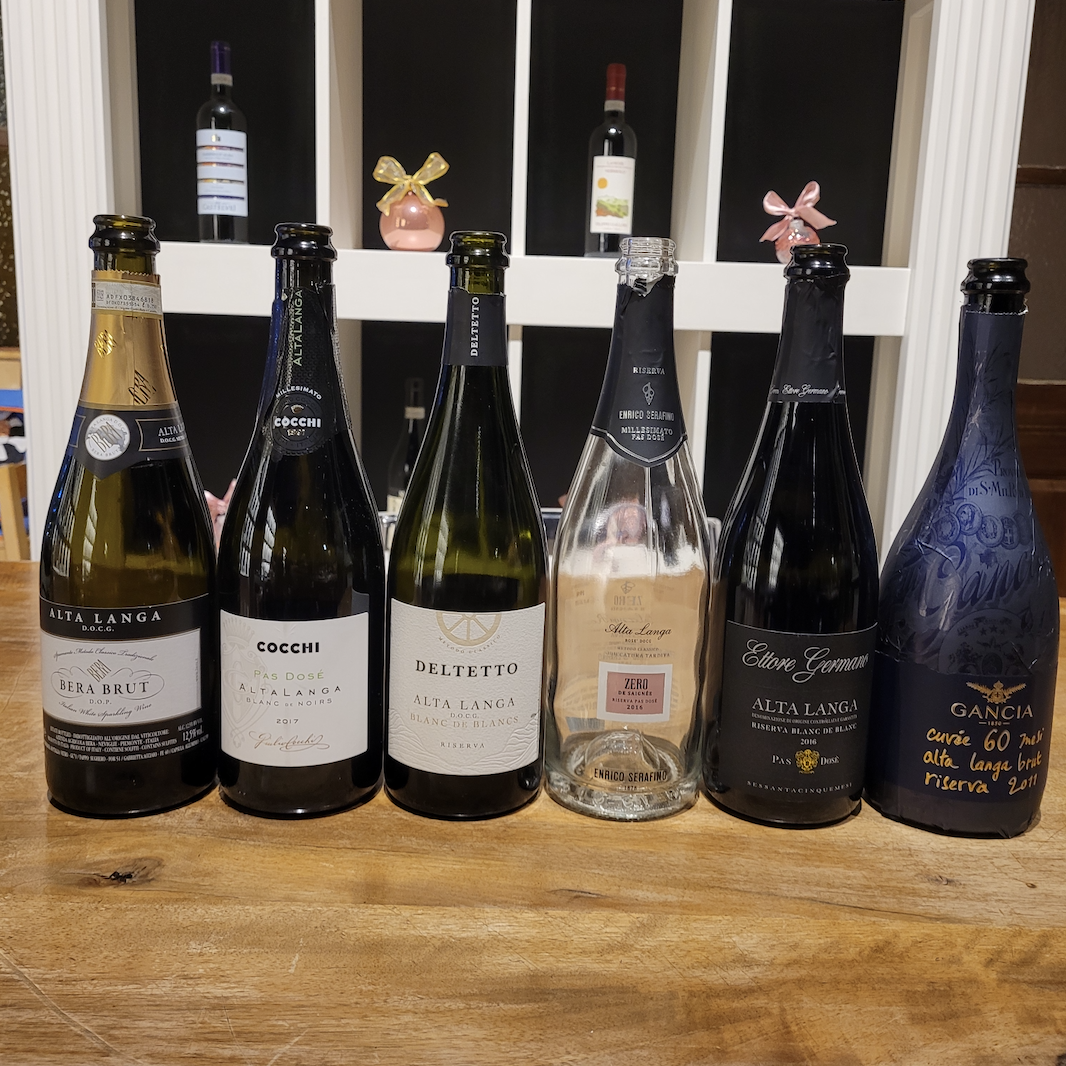
Bera Alta Langa DOCG Brut 2018

Also labeled as DOP because “dad always believed that DOP stood for quality,” tells oenologist Umberto Bera. He was also one of the first 10 to join the Consorzio Alta Langa. The mix is 70 percent chardonnay and (30) pinot noir, 15 months on lees. A mix of toasty and autolytic notes, 5 g/L of RS, well beneath the Brut threshold. Disgorged in May, 2023 and so the aging time is nearly three times that 15 months and Bera disgorges three times per year. Showing some secondary level maturity with ample freshness preserved and a persistence of energy.  Last tasted December 2023

Nothing overt but yes there is a phenolic and also metallic presence within the aromas. Lemon drop and also herbs, not quite sweet but like basil or better yet slightly more resinous like tarragon. Good crunch in palate texture with stuffing and a mouthful to be had before moving sideways into more metals and botanicals. A periodic wave of elements and emotions form this Extra Brut mix of chardonnay and pinot noir, likely close to half and half. Drink 2023-2026.  Tasted Blind with the Consorzio Alta Langa in Asti, December 2023

Cocchi Alta Langa DOCG Blanc De Noirs Pas Dosé 2017

Under the ownership of Giulio Bava, created in 1981 and has always produced Alta Langa in Piemonte. “Alta Langa has a soul of its own,” tells Roberto Bava, “and a personality reflective of just two varieties, pinot noir and chardonnay.” The B de N is 100 percent pinot, five years spent on lees and Bava notes the sapidity of this wine. “next to (minerality), which all Alta Langa wines must have, played out in different ways.” Truly stoic and direct with dried herbal notes, pencil lead, sage and dry, dry, dry. Who needs sugar in such wines? Drink 2023-2026.  Tasted December 2023

Deltetto Alta Langa DOCG Blanc de Blancs Pas Dosé 2016

“A great passion of my father was Spumante Método Classico, first made in 1980,” tells Carlo Deltetto. “The business card of the winery is the Alta Langa.” This despite the winery being primarily a Roero producer. The ’16 is the inaugural Riserva, pas dosé style which for Alta Langa incidentally is done incredibly well as a sparkling wine region. The key here is elevation, of vineyards averaging 470m, directing the sapid nature of this bubble. Who needs sugar when you have an arc of both richness and flavour, developed of natural sweetness, all leading to captured balance. Impressive acids help the wine be direct and precise, already now with good age in pocket. Drink 2023-2027.  Tasted December 2023

Enrico Serafino Alta Langa Rosato Riserva DOCG Pas Dosé Zero De Saignée 2016

Ripe, high level fruit and mature, advancing and settling into a secondary state. Scents of lemon iced tea and this from a wine no longer part of the Serafino portfolio. Simple, 100 percent pinot nero, pas dosé, disgorged in 2022. Demure on the nose yet explosively expressive on the palate. Labeled saignée but like much of Alta Langa Rosato it’s really just a matter of a quick maceration to bring out the rusty hue. A curious acidity to make this seem as dry as any of the no dosage style. Drink 2023-2025.  Tasted December 2023

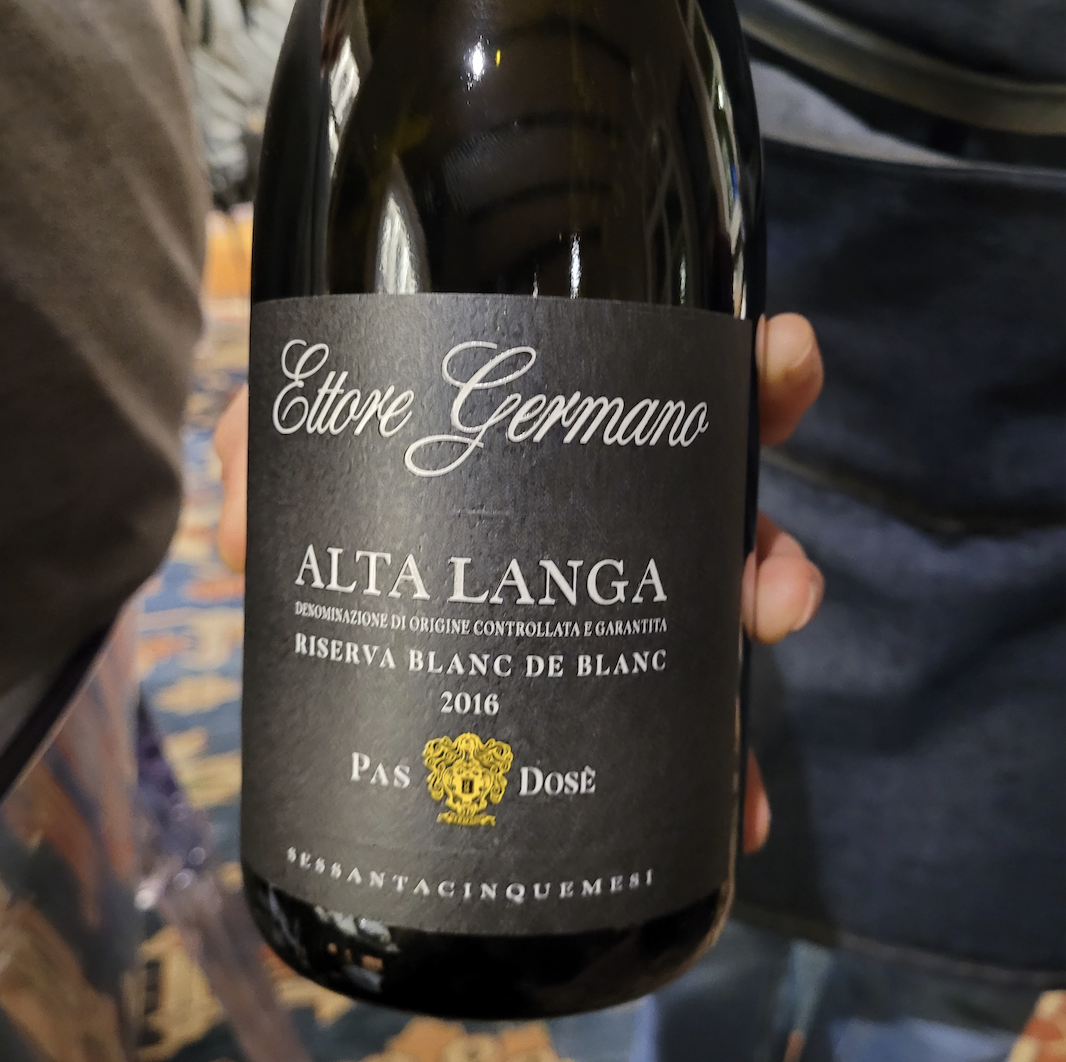
Ettore Germano Alta Langa Riserva DOCG Pas Dosé Blanc De Blanc 65 Mesi 2016

If at first this seems to be par for the no dosage course well think again because with chardonnay the fruit stands out so very expressive. Germano’s dream was to make Bianco and so 1988 was the year to exploit riesling and chardonnay at 500-600m of vineyard elevation in the Tanaro River valley. In 2000 the sparkling journey began and the first cuvée was made in 2003. This ’16 marks the second vintage of the blanc de blanc, 65 months on lees, an equal mix of salinity and sapidity for gastronomy in a bottle. Three essential pillars of Alta Lang that give the sessantacinque its credibility and promise of top quality. Precise, chiseled and full of class. Fabulous traditional method sparkling white. Drink 2023-2029.  Tasted December 2023

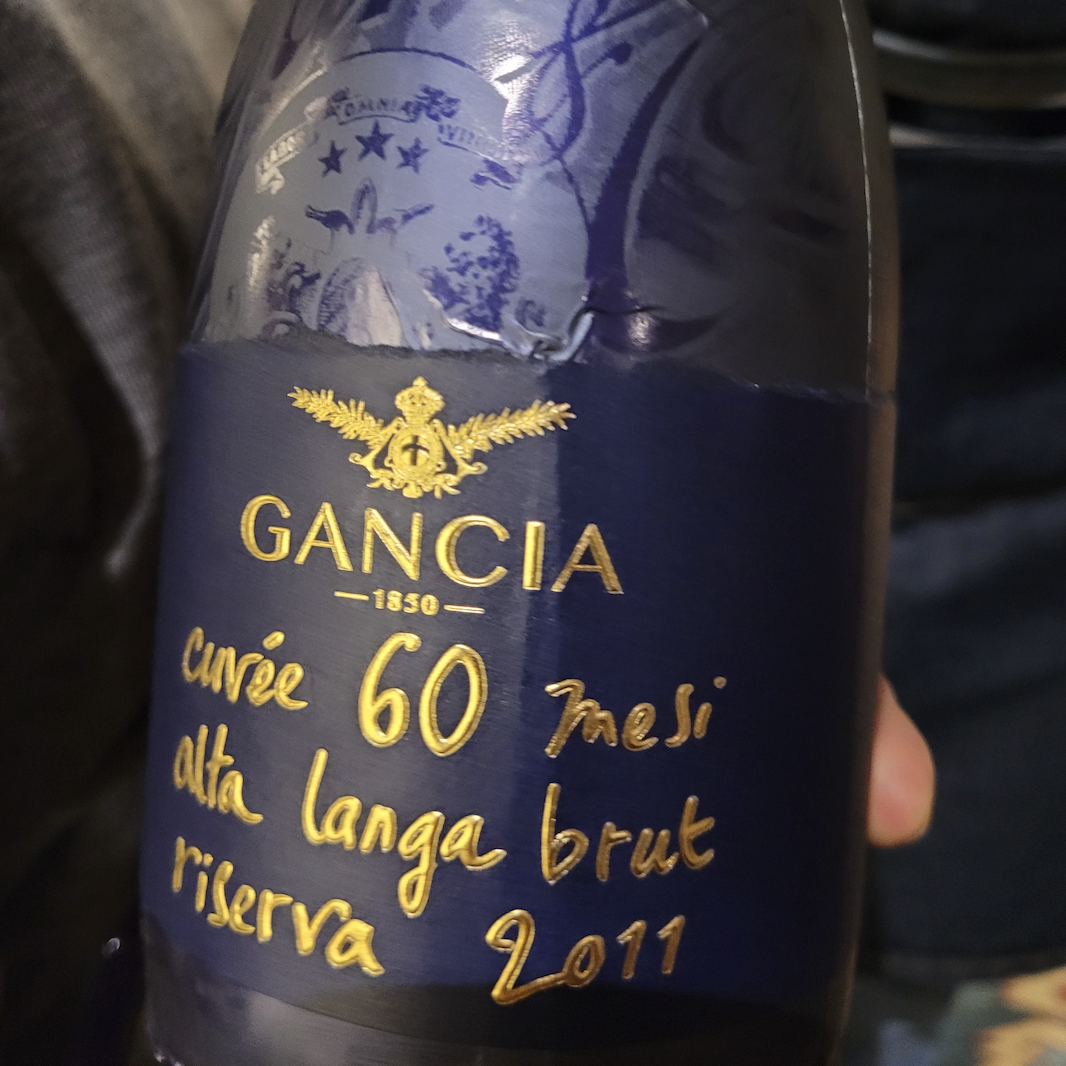
Gancia Cuvée Gancia 60 Mesi Brut Riserva Alta Langa DOCG 2011

Clarity of a blue sky with some density to it and the smoothest, most polished Gancia Alta Langa there ever was. For the entire denomination in fact, or any style of sparkling wine. Obviously vintage related but also the extra time allotted, above and beyond 60 months on lees. Luxe aromas and flavours, rich polyphenolic moments and the sweetset sapidity ever. Polyphonic, multi tonal, melodic lines melting into and becoming one another. Tonic, lemon preserve and the finest of bitters. Serious simultaneity and seamless presence. Drink 2023-2026.  Tasted December 2023

Tosti1820 Alta Langa Riserva DOCG Bicentenario Pas Dosé 2010

Tosti has spent 200 years of making this 100 percent pinot noir, pas dosé cuvée, not always but this anniversary edition saw some wood aging. Just 2-3 g/L of (inconsequential) residual sugar an 105 months of lees aging, disgorged in 2020. From two plots in Canelli and Alba, estate and grower fruit. Rich, a mellow golden toast, intensity of flavour, fleshy and lengthy. Very all-purpose sparkling wine, well formed, formulated and generous. Quintessentially Alta Langa. Drink 2023-2026.  Tasted December 2023

Alta Langa seminar

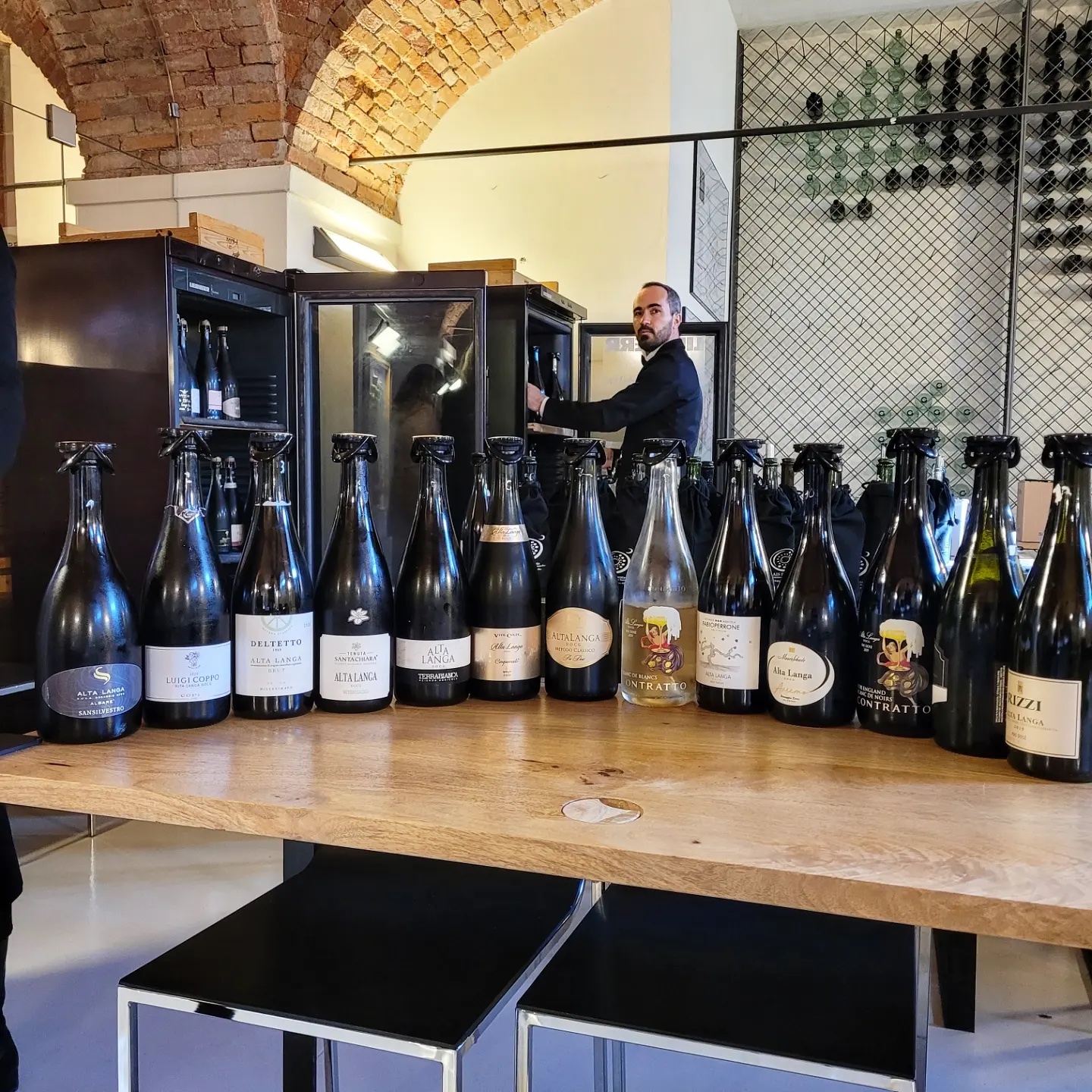
The blind tasting (69 wines)

Bianco

San Silvestro Alta Langa DOCG Albarè Pas Dosé 2020

Blanc de Blancs, only chardonnay as per the disciplinare and pas dosé so just the natural fruit facts. Subtlety and therefore what should be noted as a light toast and once again the fruity notes continue to press the theory that chardonnay performs more in this way with no dosage as compared to pinot noir. The sharpness and lightning strike on the palate is consistent with the theoretical style. Finishes with neutral citrus pith and minor bitters. Drink 2023-2026.  Tasted Blind with the Consorzio Alta Langa in Asti, December 2023

Coppo Alta Langa DOCG Brut Luigi Coppo 2020

Strikes out at a higher aromatic tone, less subtle and demure as a chardonnay and so the terroir feels heavier, of more density in the soil structure and a weightier result comes out. Palate presence is sturdy and strong, flavours wild and exotic, lemongrass namely and also a guava to lemon curd connection. Great flavour intensity and length. Drink 2023-2027.  Tasted Blind with the Consorzio Alta Langa in Asti, December 2023

Deltetto Alta Langa DOCG Brut 2020

A heavy aromatic inhalant, weighty and not easily induced with little to no aerosol quality. An oxidative style with lemongrass, ginger and cardamom, neither herbal nor particularly fruity. Quite tart, citrus namely and quite chardonnay of nature, though a bit gangly and awkward overall. Drink 2023-2024.  Tasted Blind with the Consorzio Alta Langa in Asti, December 2023

Ferraris Agricola Alta Langa DOCG Brut Tenuta Santa Chiara 2020

Leaning oxidative with maturing notes up front. Complex and exotic, gingered, toasty and very expressive with a wide range of fruit, herb and mineral flavours. Textural as well to add another dimension and potentially three of them from this curious and crafty chardonnay. That early note of oxidation will serve it well. Not long on the lees, yet really well made. Drink 2023-2026.  Tasted Blind with the Consorzio Alta Langa in Asti, December 2023

Terrabianca Alta Langa DOCG Brut 2021

Young specimen, a Bianco (therefore 100 percent chardonnay) not long, if likely the bare minimum on its lees. Tight, I mean really taut and wound around like a winch tightening a spindle. There is citrus but not really any other fruit to speak largely of. Lighting strike of Alta Langa without autolysis, bready-yeasty quality of density. Power is all up front and neutrality follows. Just too young to see through the trees but not certain much else will follow. Drink 2023-2024.  Tasted Blind with the Consorzio Alta Langa in Asti, December 2023

Vite Colte Alta Langa DOCG Brut Cinquecento 2020

Quite the complex nose for a young Alta Langa Bianco with that nice little note of fresh cheese that should develop some nuttiness, compound butter flavour and receive its structure after some time in bottle. Even more so than other cuvées of similar vintage and ilk that have yet to be disgorged. Brut so there is some sugar but hardly noticeable because acids and intensity are both in charge. Drink 2024-2027.  Tasted Blind with the Consorzio Alta Langa in Asti, December 2023

Cerrino Alta Langa DOCG Pas Dosé 2019

Nothing but chardonnay and a few years on lease for a yeasty, autolytic and on autopilot example. A bit too much autolytic behaviour and so some odd flavours have crept in. Not a pristine pour to be sure.  Tasted Blind with the Consorzio Alta Langa in Asti, December 2023

Contratto Alta Langa DOCG Pas Dosé Blanc de Blancs 2019

Brilliant beginning to this 100 percent chardonnay without dosage. Power yet a restrained one and seamless transitions throughout. Fine balance between acidity and texture, intention and complexity. True deal in the Alta Langa style that delivers fruit from chardonnay while also a matter of soil and place. Drink 2024-2029.  Tasted Blind with the Consorzio Alta Langa in Asti, December 2023

Fabio Perrone Alta Langa DOCG Pas Dosé 2019

Chardonnay and no dosage with that ever consistent play of fruit first on the nose and then replayed with lovely swirls as the palate presence and flavours march on. Good density and purity here with fine acid structure though either a bit young or not necessarily the most complex example. Perfect right now and will stay this way for another year – after that it will likely soften and the bitters expand upon. Drink 2023-2024.  Tasted Blind with the Consorzio Alta Langa in Asti, December 2023

Mauro Sebaste Alta Langa DOCG Pas Dosé Avremo 2019

Some foraged fungi on the nose, not unusual for chardonnay however it replaces the fruit to a good degree. Good and fine bitters with lemon in many respects. A bit of preserve but mostly the juiced fruit if not the one most perfectly fresh. Drink 2023-2024.  Tasted Blind with the Consorzio Alta Langa in Asti, December 2023

Alta Langa blind tasting revealed

Contratto Alta Langa DOCG Pas Dosé For England Blanc de Noirs 2019

Maturing and oxidative example, noted first in golden hue and then the bronzing, sun-tanned feeling on the aromatics. Gingered and orange scraped palate notes yet dry as the desert and caught up in taut intensity. Really complex, very “Cap Classique” in style or Champagne that leans notably oxidative. A specific way of doing things for sure and one done very well. Drink 2023-2026.  Tasted Blind with the Consorzio Alta Langa in Asti, December 2023

Pianbello Alta Langa DOCG Pas Dosé Orme 2019

Quite classic, stoic, taut and yet highly tonal pronounced iteration of untreated chardonnay without dosage. Straightforward, unabashed, running hither and thither with just about everything Alta Langa will offer in this dry, untamed and free to be style. Very well made in all these knowable respects. Drink 2023-2027.  Tasted Blind with the Consorzio Alta Langa in Asti, December 2023

Rizzi Alta Langa DOCG Pas Dosé 2019

Aromatic, more than many, especially considering the style, that being Blanc de Blancs without any dosage. The flavours and textures follow suit though the autolysis takes charge in notes of cheese rind plus bitters. A bit overdone in this regard and so the finish falls off as a result though there is certainly character and charm for short term drinking. Drink 2023-2024.  Tasted Blind with the Consorzio Alta Langa in Asti, December 2023

Tenuta Carretta Alta Langa DOCG Pas Dosé Airali 2019

Quite phenolic and reserved aromatically speaking. True aridity in the pas dosé idiom and the palate changes nothing about that in this way. Crunchy Alta Langa and it does begin to change and become something other with some time in glass. Next level flavours and also texture comes out to finish with that pencil lead and bitter tincture drops of chardonnay God. Give this some time. Drink 2024-2028.  Tasted Blind with the Consorzio Alta Langa in Asti, December 2023

Banfi Alta Langa DOCG Extra Brut Cuvée Aurora 2019

Another phenolic entry and so one of those sapid style of Alta Langa chardonnay is expected. And so it is with dry botanical aromatic notes followed by great flesh, lemon and lime in all their parts and extended play for a very important and lengthy example. Holds all the necessary tenets and stuffing to see this age well, but also evolve to become something special. Drink 2024-2028.  Tasted Blind with the Consorzio Alta Langa in Asti, December 2023

Daffara & Grasso Alta Langa DOCG Extra Brut 2019

Very lemon up front, bigger aromatic thrust than many but we’re out of Pas Dosé and into Extra Brut with this Blanc de Blancs. Fine lines and pretty good purity with quite a notable level of bitters though we are aware of how well they integrate into the fabric and framework of a properly executed and structured sparkling wine. Drink 2023-2027.  Tasted Blind with the Consorzio Alta Langa in Asti, December 2023

Ettore Germano Alta Langa DOCG Extra Brut 2019

Extra Brut accommodation and you feel the juxtaposition of sugars and acids in the aromatics. Feels riper and fleshier but only the palate can confirm or confound that idea. Does the first and then goes into full citrus juice squeeze, though it’s manifold, of lemon, lime and also grapefruit. The destiny of this wine is to see some cheese and funk in the future but so many will see the love and the beats in that next stage. Drink 2023-2026.  Tasted Blind with the Consorzio Alta Langa in Asti, December 2023

Alta Langa at Relais San Maurizio, Santo Stefano Belbo

Ivaldi Alta Langa DOCG Extra Brut Andrea Blanc de Blancs 2019

Quite phenolic, plenty of citrus flesh but also custardy orchard fruit. Extra Brut and you note the sweetness, nothing simple here and it does elevate the style. This will have wide appeal for its easy, if earlier drinking ability. Drink 2023-2024.  Tasted Blind with the Consorzio Alta Langa in Asti, December 2023

Marcalberto Alta Langa DOCG Extra Brut Millesimo2mila19 2019

Truly proper in the Extra Brut Bianco ways of Alta Langa are extracted, exerted and extrapolated upon with a fine 2019. Lemons and apples, tart and tight on the palate, great acidity moving all ways including sideways, all parts together, linear, vertical and powerfully restrained. A very fine example from a warm and yet promising vintage. Drink 2024-2029.  Tasted Blind with the Consorzio Alta Langa in Asti, December 2023

Marziano Abbona Alta Langa DOCG Extra Brut 2019

The sapidity spoken of by agronomists and producers is here on the phenolic front in this Bianco Extra Brut. Captures a certain side of Chardonnay and does so with stoic, reserved, complicated and trenchant nature. This wine has purpose and feels so very serious. It will need a few years to settle and hopefully prepare some flesh for a more pronounced Alta Langa experience. Drink 2025-2030.  Tasted Blind with the Consorzio Alta Langa in Asti, December 2023

Massimo Rivetti Alta Langa DOCG Extra Brut 2019

More juiciness and terpene action up front as compared to many and so a slightly later harvest from a warm vintage seems to be the fruit matter on order. Some maturity and a bruised apple note in the flavour profile confirms this and while acidity is spot on there is this feeling of flattening out at the finish. Drink 2023-2024.  Tasted Blind with the Consorzio Alta Langa in Asti, December 2023

Roberto Garbarino Alta Langa DOCG Extra Brut Le Rapide 2019

The Extra Brut Alta Langa as Bianco seem to act tart in one of the three ways. Sharp and restrained, maturing or as it does here which is phenolic to imagine a sapid sparkling wine. Not exactly the opposite of salty but a different sort of mineral style, that is to say a sparkling wine that is a direct result or at least one that speaks with true correlative nature to the place. That being a terroir surely sandstone based with some slit, minor calcareous parts and older soils, geologically speaking. A vertical wine with great apposite if transferring and complimentary fleshy texture and a wine as long as is gets. Drink 2024-2029.  Tasted Blind with the Consorzio Alta Langa in Asti, December 2023

Roccasanta Alta Langa DOCG Extra Brut 2019

Phenolic, for the most part with some green notes and plenty of terpene as well. A bit overdone, likely picked a bit tardy and so acidity is more dense and botanical than the team probably wished it to be. Drink 2023-2024.  Tasted Blind with the Consorzio Alta Langa in Asti, December 2023

Tenuta Rocca Alta Langa DOCG Extra Brut 2019

Expressive and quite tightly wound example of Extra Brut for chardonnay as a Bianco or Blanc de Blancs style. Lemon in every respect, more juice and zest than pith but it’s all truly represented. Fine work in a very specific, taut, direct and scintillant way. Drink 2023-2026.  Tasted Blind with the Consorzio Alta Langa in Asti, December 2023

Roberto Garbarino Alta Langa DOCG Extra Brut Il Viaggio 2019

Still in the Extra Brut conceptualization for (chardonnay) Bianco and of the three styles this comes out phenolic and well extracted. An example that transfers really well onto the palate with tart juiciness and true blue varietal acidity that travels up and down the sides of the palate. Not the most complex sparkling wine and lacks some depth but it’s solid, well made and serves great purpose. Drink 2023-2026.  Tasted Blind with the Consorzio Alta Langa in Asti, December 2023

Agricola Brandini Alta Langa DOCG Brut 2019

The first true reductive Alta Langa in flight of 69 with this being the 26th pour. Agitation does blow off some steam and allow fruit to rise like cream to the surface. What is next is great purity and a creaminess to the mousse unlike any other thus far. These flavours are rich and frankly delicious though that reduction will be a detraction for some. The finish is long and nurturing. Stick with this wine if you want the right kind of reward. Drink 2023-2027.  Tasted Blind with the Consorzio Alta Langa in Asti, December 2023

Blind tasting Alta Langa (c) Anastasia Florea and Consorzio Alta Langa DOCG

Bosca Alta Langa DOCG Brut Ispiro 2019

As quiet as it gets aromatically speaking from a Brut for chardonnay out of a warm and promising vintage. Though the entry was a reserved and yet giving one there is much more happening on the palate. Heavy dose of lemon, fresh squeezed and ready to integrate with the sapid-mineral wealth of this wishing to be serious example. Here is an Alta Langa with true karst from bones that stand upright with great skeletal verticality that suggests poor soils and plenty of calcium carbonate for a result that could only be like this. This winemaking team paid great respect to the terroir. Drink 2024-2029.  Tasted Blind with the Consorzio Alta Langa in Asti, December 2023

Cascina Cerutti Alta Langa DOCG Brut Enrico Cerutti 2019

Well made, simple, straightforward, a bit bitter and creamy iteration of chardonnay in the local ways of Brut sparkling wine. Short and to the point. Drink 2023-2024.  Tasted Blind with the Consorzio Alta Langa in Asti, December 2023

Fontanafredda Alta Langa DOCG Brut Blanc de Blancs 2019

Quite the phenolic lift as opposed to that aromatic ripeness style that can sometimes weigh down Alta Langa sparkling. A botanical example with replay on the palate that confirms the suspicion. Good integration of parts with acidity more than well and good but the phenols outweigh all else and take back power in the end. An herbal example, possibly because of heavier and more organic soils that deliver some increased vigour and therefore likely yields iin the vines. Drink 2023-2024.  Tasted Blind with the Consorzio Alta Langa in Asti, December 2023

Il Cascinone Alta Langa Riserva DOCG Brut Alasia 2019

The first Alta Langa Riserva at pour number 30 in a flight of 69 and a stoic one at that, with must reserve in the tank. High ranking parts, namely substantial if notably compact fruit that puts this is a place of yet unresolved business. The acidity is similar of nature meaning its not of scintillant action but rather one of weight as well. This could use some time to see if it will open up and rise up as it likely wants to, after being interred by too much gravity. Drink 2024-2027.  Tasted Blind with the Consorzio Alta Langa in Asti, December 2023

Paolo Berutti Alta Langa DOCG Brut 2019

High terpene level and so orchard fruit (namely apples) are front and centre for this chardonnay of Brut categorization. Crisp enough and acidity is elevated though the parts are a bit disparate and there is some bruising of the fruit. Drink 2023-2024.  Tasted Blind with the Consorzio Alta Langa in Asti, December 2023

Pecchenino Alta Langa DOCG Brut Ecole 2019

Cheese funky and bruised. Not a good bottle or perhaps past prime.  Tasted Blind with the Consorzio Alta Langa in Asti, December 2023

With Alta Langa Consorzio President Mariacristina Castelletta and Journalist Åsa Johansson (c) Anastasia Florea and Consorzio Alta Langa DOCG

Piazzo Comm. Armando Alta Langa DOCG Brut Ritorno in 2019

Reduction released by agitation quite quickly so note to self and to others be sure to give this sparkling Alta Langa a swish and a swirl. Grippy example, fully fleshed and giving much aromatic fruit, palate presence, fleshiness, some creamy texture and finally that local sapidity so often talked about. There is much going on in this Brut though it does not soften in the end. Drink 2023-2026.  Tasted Blind with the Consorzio Alta Langa in Asti, December 2023

Sara Vezza Alta Langa DOCG Brut 2019

The kind of aromatic entry that causes a raise of one eyebrow because it’s a combination of maturity and intrigue. A very young wine in one respect and on the other also one of experience. Rich at first and then repeated, but also a matter of fine acidity before rising and then settling with tonic and bitters. Seriously complex activity here and if perhaps a polarizing Bianco then so be it because the chardonnay and pinot noir each do so much to variegate the blend. They make this work. Drink 2023-2028.  Tasted Blind with the Consorzio Alta Langa in Asti, December 2023

Vinchio Vaglio Alta Langa DOCG Brut 2019

Cool, sapid, salt-licked, rising to meet the ethereal and the first notably mint-savoury Alta Langa noted in this long flight of 69. Tart and full on tang, fleshy, ripe and chewy – sure more than 95 percent of what can be tasted. This will have great appeal for its generosity and acumen.  Tasted Blind with the Consorzio Alta Langa in Asti, December 2023

Ravasini Alta Langa Riserva DOCG Pas Dosé 2019

Mature, oxidative and not perfectly clean. Very natural feel, pas dosé and obvious for a style that was intended to be played out. Does not quite function as we, or at least some might have wished it to. Not convinced Alta Langa can yet do this style consistenly well, at least not this early in its tenure. Drink 2023-2026.  Tasted Blind with the Consorzio Alta Langa in Asti, December 2023

Enrico Serafino Alta Langa DOCG Extra Brut Parcellaire 2019

An Extra Brut Bianco with some extra lees aging time, here from a cooler and wetter vintage which is duly noted on the aromatic entry of the wine. Part reduction and part reserve, a tight and grippy wine that shows its strength through structure overarching above all else. A sapidity that its maker surely wanted and a holding back so that it can continue to develop, morph and become something next or at at the very least, other. The palate delivers the full experience and there is some great flesh hanging taut on these solid bones. A fine Alta Langa in this specific style – there can be no arguing this as a fact. Drink 2024-2028.  Tasted Blind with the Consorzio Alta Langa in Asti, December 2023

Terre del Barolo Alta Langa DOCG Extra Brut Vinum Vita Est 2019

Firm iteration of an Extra Brut stylistic that could use some generous aeration so that the aromas can be released. They will and do, though it would seem acting less effusive then some. This goes more at a line that is tight and the end of Alta Langa predicated on intensity and drive. Plenty of spirit here and a finish dotted by fine bitters, of pith and tubers. Drink 2023-2027.  Tasted Blind with the Consorzio Alta Langa in Asti, December 2023

Bera Alta Langa DOCG Brut 2018

Also labeled as DOP because “dad always believed that DOP stood for quality,” tells oenologist Umberto Bera. He was also one of the first 10 to join the Consorzio Alta Langa. The mix is 70 percent chardonnay and (30) pinot noir, 15 months on lees. A mix of toasty and autolytic notes, 5 g/L of RS, well beneath the Brut threshold. Disgorged in May, 2023 and so the aging time is nearly three times that 15 months and Bera disgorges three times per year. Showing some secondary level maturity with ample freshness preserved and a persistence of energy.  Last tasted December 2023

Nothing overt but yes there is a phenolic and also metallic presence within the aromas. Lemon drop and also herbs, not quite sweet but like basil or better yet slightly more resinous like tarragon. Good crunch in palate texture with stuffing and a mouthful to be had before moving sideways into more metals and botanicals. A periodic wave of elements and emotions form this Extra Brut mix of chardonnay and pinot noir, likely close to half and half. Drink 2023-2026.  Tasted Blind with the Consorzio Alta Langa in Asti, December 2023

Ravasini Alta Langa DOCG Brut Cuvée Leonora 2018

Maturing aromas and so the vintage plus lees aging have come to a place where the wine is moving into secondary stage. Just that hint of fungi, basic like a meadow variety, horse or commercial button, but with no sign of truffle. That will likely happen soon enough so get at this Brut styled Bianco sooner rather than later. Flavour profile is open and strong though again evolution is in full movement forward. Drink 2023-2024.  Tasted Blind with the Consorzio Alta Langa in Asti, December 2023

Cocchi Alta Langa DOCG Pas Dosé 2017

Now heading back a few years with a warm and dry vintage of little worry for a producer and their pas dosé methodology. The nose is quiet and comforting, the perfumes more demure and beautiful than many of similar ilk. This Alta Langa may not scream of its intentions nor will it appeal to a mass audience but it’s character is quietly impressive and its style something worth repeating. Consistently reserved, never demanding and always in complete control. Fine and proper if again not the most gregarious sparkling wine you are likely to encounter. Drink 2023-2027.  Tasted Blind with the Consorzio Alta Langa in Asti, December 2023

Tosti1820 Alta Langa DOCG Brut Giulio I 2017

Truly unique nose on this 2017 Brut which seems to put pinot noir first though not convinced its percentage exceeds that of chardonnay. A clean funk or better said classic Langhe earthiness involved and so this seems to be an Alta Langa true to terroir. Plenty of textural chew and citrus preserve but also this cool, gelid and slightly bitter feeling to the fruit. The lees are a major part of this exercise and while they are not 100 percent clean they are the kind that lend and promote great character. Drink 2023-2026.  Tasted Blind with the Consorzio Alta Langa in Asti, December 2023

Cocchi Alta Langa DOCG Brut Bianc’d Bianc 2017

Plenty of lees aging and effect here for a 2017 Alta Langa of a warm and extremely dry vintage. Seems to have really settled into its skin with softening aroma and creaming textures that are seamlessly integrated at this advanced stage. If getting to know and understand aged Alta Langa and its potential is on your wish list then this Brut is a very solid place to start that journey. Drink 2023-2025.  Tasted Blind with the Consorzio Alta Langa in Asti, December 2023

Banfi Alta Langa DOCG Pas Dosé Cuvée Aurora Blanc de Noirs 2016

Truly toasty and piquant example of pas dosé Alta Langa with a curious cotton candy or slightly caramelized peachy note to begin. Really well aged with clean lees and a fine gem-metal aspect to join the maturing fruit notes. This holds its line and maintains its composure to great length and effect. Drink 2023-2027.  Tasted Blind with the Consorzio Alta Langa in Asti, December 2023

Tenute Rade Alta Langa DOCG Pas Dosé 2016

No dosage and a very restrained example that whiffs of neutral or virgin concrete, dry and severe. Not a sound bottle perhaps though a second bottle delivers much of the same. The palate is improved with fleshy citrus flavours yet that musty note prevails.  Tasted Blind with the Consorzio Alta Langa in Asti, December 2023

Ettore Germano Alta Langa Riserva DOCG Pas Dosé Blanc de Noir 65 Mesi 2016

It seems that Riserva is not just a matter of longer aging time but also a product of greater fruit quality. This 2016 from a powerful and tannic vintage brings the goods in ways few others seem want to deliver. Crisp and in charge, an intensity of parts that begin with quality fruit never letting up or seemingly willing to relent. Carries items with dignity and confidence for a wine or great Alta Langa respect, of its heritage and place. Feels like the clear juice from pinot noir stands above the chardonnay in this cuvée of great purpose and interest. Drink 2023-2030.  Tasted Blind with the Consorzio Alta Langa in Asti, December 2023

Roccasanta Alta Langa Riserva DOCG Pas Dosé 2016

Not overly expressive in fact this holds back despite its age and lees aging time as per the Riserva style. The palate is appsoite, mature, of slight caramel and notably soft. This has done its time and the time is now to drink up. Has developed a minor cider note to confer that suggestion.  Tasted Blind with the Consorzio Alta Langa in Asti, December 2023

Tenute Rade Alta Langa Riserva DOCG Pas Dosé 2015

From 2015 and a no dosage Bianco iteration of volatility, maturity and a mix of caramelization meets oxidation. A lovely old drop in one respect and because the acidity rises high it’s well preserved and so should be well perceived and received as a sparkling wine of age. Flattens after the initial weak palate display before fading off into the proverbial Alta Langa sunset.  Tasted Blind with the Consorzio Alta Langa in Asti, December 2023

Daffara & Grasso Alta Langa Riserva DOCG Pas Dosé 290 mesi 2014

Alta Langa in Riserva form with that extension from extra Lees aging and no dosage for that magical combination. This has truly developed next level character while staying level on its legs and staying a course that will allow even further aging excellence. Labels Bianco though tasted blind it can be nothing but Blanc de Blancs because the chardonnay stands out like a hitchhiker with an extra large thump. A guide to the Alta Langa galaxy right here in the glass, heady, steady and grippy with a real plan, even if the world may not think that this place and these wines have this fully entrenched in mind. The real deal will reveal itself and this 2014 has done just that. Drink 2023-2027.   Tasted Blind with the Consorzio Alta Langa in Asti, December 2023

Fontanafredda Alta Langa Riserva DOCG Pas Dosé Vigna Gatinera 96 mesi Blanc Noir 2014

Only Alta Langa it seems can effect this intricate mix of long lees aging time and no dosage for such great and curious effect. As here though this 2014 Bianco is showing some oxidative maturity even even while it persists as a reductive example by way of its pinot noir and chardonnay cuvée. Still crunchy and truly flavourful with both yellow citrus and small red berry fruit in combinative affair. Finds its groove late and accumulates more and more pleasantries as you taste through a few sips. You need to hang in with this nine year-old Alta Langa and if you do there will be greater reward. Drink 2023-2026.  Tasted Blind with the Consorzio Alta Langa in Asti, December 2023. asted December 2023

Gancia Alta Langa DOCG Pas Dosé Cuvée 36 mesi 2014

A Bianco long on its lees and showing maturity though also a stoic nature to begin. Still crunchy and like a mouthful of citrus and stones. This would have been singing with its finest voice just a year ore two ago though still does so dutifully and truthfully today. Drink 2023-2025.  Tasted Blind with the Consorzio Alta Langa in Asti, December 2023

Bera Alta Langa DOCG Brut (90 mesi) 2013

A mildly oxidative and advancing example though having strong 10 years in. Plenty of experience, of creamy fruit, almost a custard of the orchards and while pinot noir makes a play it is the Chardonnay making the bigger statement. Shows off heritage and good planning to exact more emotion for what kind of potential Alta Langa holds for wines to age this length of time. Drink 2023-2025.  Tasted Blind with the Consorzio Alta Langa in Asti, December 2023

Coppo Alta Langa Riserva DOCG Brut Riserva Piero Coppo 2013

A Riserva of Bianco that reeks at least as much of pinot noir as it does so from chardonnay. At ten years of age it have proven to have lasted and lingered as well as could be expected with the best times presented right here and now. Feels like a wine of age and drinks with nurturing comfort at this stage, like a blanket or a parent. Drink up and savour every last moment.  Last tasted blind with the Consorzio Alta Langa in Asti, December 2023

The 2013 vintage is the turning point to this 60 percent pinot noir and (40) chardonnay becoming and being labeled Alta Langa, recently disgorged in 2022. Previous disgorgements were labelled Vino Spumante di Qualità. Now into wildly vivid and famous complexity, toasty yes but there’s a crème frâiche and an almost strawberries and cream component. Eonologists GianMario Cerrutti, Guiliermo Grasso and Vittorio Pescarmona conspired to see this age 85 to 90 months on the lees, almost unprecedented around Asti. Has hit its stride, in the right place between crunchy and the kind of sparkling wine that you begin to ruminate with in the mouth. Cerebral wine in every respect. Drink 2023-2027.  Tasted January 2023

Tosti1820 Alta Langa Riserva DOCG Riserva Giulio I 100 Mesi 2012

More than 10 years old and still a quietly demure and not overtly philanthropic example of Alta Langa Riserva. Getting as much red fruit pinot noir as citrus chardonnay on the nose though together they combine and accumulate for a very fruity sparkling wine. Also toasty and even just flinty enough to consider the calcari, the argilla and the arenaria in the earth from whence this once emerged and has now arrived. A beautiful ALR after all these years and I for one would relish a pour anytime it might be forthcoming. Drink 2023-2026.  Tasted Blind with the Consorzio Alta Langa in Asti, December 2023

Enrico Serafino Alta Langa Riserva DOCG Pas Dosé Zero 140 2010

No sugar added at tirage and yet you will not find more natural fruit in an Alta Langa Bianco or Riserva, especially in this style. Magnificently organized and perfumed of all the fruit blossoms and then the ripeness of that fruit as it arrived at fruition. Toasty, even still slightly reductive and almost no signs of true maturity – certainly limited oxidation. The truth is alive and these bubbles prove that Alta Langa ages really, really well. Drink 2023-2027.  Tasted Blind with the Consorzio Alta Langa in Asti, December 2023

Gancia Alta Langa Riserva DOCG Brut Cuvée 120 mesi 2010

Nearly 13 years of age and a wine doing well, thank you very much. Many years (upwards of 140 months) on its lees and using every bit of those clean yeasts to conduct a current and fully realize the fruit for dramatic effect. Just a bit toasty and over excited (as it must have always been) to rise above the fruit but acidity is fine, racy and its charge well executed to make this work as well as it should. Drink 2023-2026.  Tasted Blind with the Consorzio Alta Langa in Asti, December 2023

Blind tasting Alta Langa (c) Anastasia Florea and Consorzio Alta Langa DOCG

Rosato

Colombo Alta Langa Rosato DOCG Brut 2020

Just a wee youthful one, of maximum 24 months on lees for a Rosato (namely Blanc de Noirs) that modernizes Alta Langa with ever increasingly utilized pinot noir. Well short of saignée and just a few hours run off with clean juice that came from pure fruit of a well timed sparkling pick. The clarity puts this in spot on territory for the idiom. Creates a dictionary entry Rosato for the denomination. Drink 2023-2027.  Tasted Blind with the Consorzio Alta Langa in Asti, December 2023

Ivaldi Alta Langa Rosato DOCG Extra Brut Andrea 2020

Extra Brut with a bit more dosage that foils if not perfectly aligns with the fruit and acidity for what collates as a slightly rustic example. Well and substantial fruit and complimentary savour if just off-putting because the combinations create some mismatching and misappropriated flavours. More than serviceable if not truly representative of potential. Drink 2023-2025.  Tasted Blind with the Consorzio Alta Langa in Asti, December 2023

Banfi Alta Langa Rosato DOCG Extra Brut Cuvée Aurora 2019

A few years of lees aging has done well to set this Extra Brut Rosato up for rusty copper Alta Langa success. More than ample richness, orchard fruit that involves crab apple and then a turn to more savoury elements with low-creeping vines that deliver leaf and red fruit in elastic flavours. Carries with nimble ability, without distraction and only purity. Very well made with the capability to age at least a few if not five-plus years. Drink 2023-2028.  Tasted Blind with the Consorzio Alta Langa in Asti, December 2023

Massimo Rivetti Alta Langa Rosato DOCG Extra Brut 2019

Quite pale for Alta Langa Rosato and so though a factor of pinot noir and blanc de noirs it is noted how the maceration was quick and oh so gentle. Not as overtly aromatic as some though there is a yeasty autolytic note involved to tell us quite a bit about the style and also the intention. Pay attention to the stage presence and the seriousness with which this intends to capture your palate. Succeeds for the most part though does not hold on as long as some deeper and more impressive examples. Drink 2023-2026.  Tasted Blind with the Consorzio Alta Langa in Asti, December 2023

Il Cascinone Alta Langa Rosato DOCG Brut Alasia 2019

Quiet aromas, a bit of citrus tablet dissolve and more dosage noted than many. Simpler, easy and getable ahead of the game. Lacks the complexity and drive of more serious examples in the Brut Rosato category. Drink 2023-2025.  Tasted Blind with the Consorzio Alta Langa in Asti, December 2023

Ravasini Alta Langa Rosato DOCG Brut Cuvée Leonora Rosé 2019

Cider notes, of terpene and juiced orchard fruit that suggests more than pinot noir but is likely just a matter of how this was pressed. Acetic and volatile more than anything else. Something went wrong in this case.  Tasted Blind with the Consorzio Alta Langa in Asti, December 2023

Tosti1820 Alta Langa Rosato DOCG Brut Rachele Rosè 2019

A funky cheese rind note mixes with a rusty and rustic red fruit style anchored by strawberry then accepted by rhubarb, baking spices and earth. A savoury kind of Brut Rosato that’s not so much a matter of overripe fruit bit more so terroir and then winemaking. An is what it is Alta Langa that succeeds because it is unique. Sweetness comes out at the finish to mix and merge with tonics and bitters. Drink 2023-2025.  Tasted Blind with the Consorzio Alta Langa in Asti, December 2023

Agricola Brandini Alta Langa Rosato DOCG Brut 2018

Crisp, earthy and crunchy Rosato, savoury and with some strawberry sweetness across the board. Begins savoury and finishes on a sweeter if also earthier note. An interesting Rosato that will likely morph and change into something of greater interest because the yeasts are clean, the fruit pure and the potential quite good. Drink 2024-2027.  Tasted Blind with the Consorzio Alta Langa in Asti, December 2023

Gancia Alta Langa Rosato DOCG Brut Cuvée 36 Mesi Rosé 2018

Rusty, savoury and cheese rind aromatic with plenty of yeasty lees notes that likely need more time to integrate. That said the rusticity can’t be ignored nor denied so keep in mind how parochial and local this will always purport to be. It’s really quite comforting and with some excited energy on the palate their is a true affinity with growers’ Rosé Champagne. That’s a compliment because authenticity and respect for terroir are more than half the battle and reason to appreciate an Alta Langa sparkling wine.  Last tasted Blind with the Consorzio Alta Langa in Asti, December 2023

Minor reduction which is in fact something that is important because “things would be a lot more serious if drinking a glass would make you want to drink a glass of water,” kids Dr. Donato Lanati. Sounds like a joke but in these climate change and extreme times you can taste what would not have been tasted before and Gancia knows, with 150 years of experience in crafting sparkling wines. Aging some of the base wines in wood goes a long way to control the reduction and yet some reduction is a good thing. There is some sweetness in the perfume which is a result of a portion having been aged in a “sweet” wood. This sulphur dioxide character mixed with some acetates that have yet to fully dissipate are what drive aromatic pulchritude and it is the esters (within reason) which will bind with amino acids to eliminate any semblance of confection. There is a small dosage here but it in fact under wonderful control and while Rosé by nature is rounder than Bianco, well no matter or judgement because the mix of tension and elasticity is really well managed. Drink 2024-2029.  Tasted December 2023

Enrico Serafino Alta Langa Rosato Riserva DOCG Pas Dosé Zero Rosé 2017

This Rosato may be pas dosé but screams form the glass with a wealth of ripe fruit captured to be put to great use. Richness and energy combine from start to finish, exert upon the palate and continue to rise through every moment of this fine Alta Langa sparkling wine. No let up, time off, sick days, stops or starts. Continuous and righteous. The potential is still great and the faint bitterness on the palate is just so appropriate. Drink 2023-2026.  Tasted Blind with the Consorzio Alta Langa in Asti, December 2023

Cocchi Alta Langa Rosato DOCG Brut Rösa 2017

Good aromatic presence, a nose into Orange Pekoe tea and earth before the leafy red fruit notes become involved. Tight and bracing on the palate with piercing acidity, never acetic nor volatile but very much in charge. An intense example that still needs time to flesh out even if it’s a wine from back in 2017. Not sure it will ever really change but if you like this excitable style than this is the Alta Langa Rosato for you. Drink 2023-2026.  Tasted Blind with the Consorzio Alta Langa in Asti, December 2023

Fontanafredda Alta Langa Rosato DOCG Brut Contessa Rosa Rosè 2017

Notable extra fruit substance and also yeasty notes determine the Riserva designation and set this Rosato up for plenty of slow maturing, unfolding and unraveling days ahead. Rusty, earthy, gingered and tonic-botanical notes but also evergreen so quite a variegate composition from pinot noir. Complex tones for sure if just that ever so slight disadvantage as a wine that will act and therefore be an acquired taste. Drink 2023-2026.  Tasted Blind with the Consorzio Alta Langa in Asti, December 2023

Roberto Garbarino Alta Langa Rosato DOCG Extra Brut L’Istinto 2016

The oldest of the Roasto and the only one defined as Extra Brut in a flight of 13 Alta Langa examples. The most fruit blossom forward on the nose, rich and expressive, sweetness so well incorporated and the fruit comes away so finely crossed between citrus and berries. Really well delineated and defined, of accords struck and alliances formed. This will live a great long iife. Drink 2023-2028. Tasted Blind with the Consorzio Alta Langa in Asti, December 2023

Good to go!

godello

Godello, Alta Langa blind tasting

Twitter: @mgodello

Instagram: mgodello

WineAlign

Twenty-two Canadian wines that rocked in 2022

Godello taking in the spirit of Grimsby Hillside Vineyard

I am a forager. I forage in the natural world, for plants in their season, pulled from the soil, from earth to pan, for medicinal teas, to preserve by drying or pickling, whatever the most appropriate case may be. Wild herbs, allium and beneficial greens are prized but mostly I use my mycological senses by looking for signs beneath my feet as to where the mycelium below will choose to fruit as fungi above. I look for the saprobic and the decomposer but also the mushroom that works through symbiosis, to aid and abet other species while receiving something beneficial in return.

Laetiporus Sulphureus, aka Chicken of the Woods

I am a forager of wines as well, perhaps not in the same spiritual or personal way, but as I do with the forest I try my best to listen and become one with the vine, to imagine what it will beget, that being quality grapes and eventually honest wine. Vinifera success in Canadian vineyards is a recent phenomenon and there are plants more suited and native to our land but we should and will continue to pursue both realities.  This is not a manifesto about natural wine, no far from it, but it is a confession. I love great wine, well made wine, wine in balance. I am open to all wines and like the fungi I choose to eat or to ignore, I can’t be sickened by something I choose not to taste. I taste what I trust and drink what I must. Most often it take years of research and seeing the same fruiting body appear in the same location with consistent markings to make the decision to eat that mushroom. That is why wines of history, pedigree and consistency are the greatest and most exciting. They have earned the recognition. Others gain reputation much quicker and they too deserve the kudos but the choice comes down to the individual. I just want the wines I choose to rock. Canadian wines, yeah they rock.

Hypomyces Lactifluorum, the Lobster Mushroom

Nova Scotia wines at Obladee Wine Bar in Halifax

Related – Twenty-one Canadian wines that rocked in 2021

The full scale return to not only tasting but rallying around Canadian wine began in earnest back in June of 2022. In a span of less than 30 days there were judges’ panel assessments and events during the WineAlign National Wine Awards of Canada, To July and 10 days spent in Nova Scotia wine country followed by a glorious weekend in Niagara for the i4c Canadian Cool Climate Celebration. Get back to Cool Chardonnay was the impetus and the reminder how much we Canadian wine folk respect one another and truly enjoy each other’s company. How great was it to interact once again, to taste with and experience the verities of vignerons and winemakers? To gather Insights, illuminations and incidentals from illustrious voices. To enter discourse with thought provocateurs who question sense of place, who consider vines and their relationship with the land. To reconnect with old friends forging new directions, seek flights of fancy and return to places always familiar, like coming home. The road ahead may still be uncertain but onward we will go.

Godello and Pender

Related – Twenty Canadian wines that rocked in 2020

Devastating news and especially the loss of a friend takes time to process. At the time I did not know what to do but suddenly the words poured forth, in one take and so in February I penned The Walrus is Paul. I miss Paul Pender. He was not my closest bud nor was I his but there will always be a hole in our lives without him. The thing about sadness is that it never goes away, but the trick is to remember the people we loved in a way that helps us through another day. “Paul Pender humanized everything in his life and all that he touched. He never expressed any dismay at comments I may have made about wines not being perfect, nor did he exalt in high scores or praise for wines about which I may have gushed or waxed rhapsodic. He was always zen, even-keeled, grounded and humble. Paul was the personification of gravitational constant, THE universal gravitational constant, a constant of gravitation. His presence and being related force to mass and distance, and he lived his life within the law of gravitation. I hope he taught everyone to be this way and that we can all go forward with his wise, sage and calm demeanour, safely tucked into our own lives. Thank you Paul. I love you, man. You are the walrus.”

Seafood by Godello, Kejimkujik National Park, Nova Scotia

Related – Nineteen Canadian wines that rocked in 2019

This might just be the 10th annual list and another spot is in fact added each year but the process just keeps getting tougher to complete. According to WineAlign I reviewed more than 3,000 wines in 2022, which means I tasted at least 3,500, if not more. The number of Canadian wines is likely one third, say 1,500 examples tasted this past year, in great part because at least one-third of that number is tasted at the Nationals. The process of nailing down this summary comes out of a shortlist of 100-plus that were what would be considered exciting. The exercise must be one that filters, fines and refines again and again so that every wine is reviewed and re-considered on repeat. I find it near impossible to make final decisions these days and yet somehow feel compelled to continue the discipline.  Thank you to all; associates, colleagues, wine professionals and especially friends who poured, for every sip and taste, with heartfelt thanks. Especially to the WineAlign Crü; David Lawrason, John Szabo M.S., Sara d’Amato, Steve Thurlow, Megha Jandhyala, Bryan McCaw, Sarah Goddard, Miho Yamamoto, Carol-Ann Jessiman and Heather Riley. Godello gives you 22 Canadian wines that rocked in 2022.

With The Thinker, Jean-Benoit Déslauriers, Benjamin Bridge Vineyards

Benjamin Bridge Glooscap First Nation X Rosé 2021, Nova Scotia

Benjamin Bridge Glooscap First Nation X Rosé is first a wine. A lithe, 10 percent alcohol and bone-dry vision in pale pink hue, described by thinker Jean-Benoit Déslauriers as blessed “with a softness from within.” My family and I taste along and become privy to why this project means so much more. The Rosé marks a turning point for Benjamin Bridge and is crafted neither for reconciliation nor to undue the past. Instead the path leads forward, for mutualism, cooperation and respect. A harbinger towards a more balanced future. Meaning is gleaned for the team after a decade-plus of grape growing now widened to include 13,000 years of sustainable and synergetic preservation of an ecosystem. Twenty years ago the BB understanding was of vineyards producing grapes exclusively focused on the sensory profile of wines, how they reflected the terroir and stacked up against Europe. Yet the Mi’kmaq have lived in balance within this unique ecosystem for millennium and the goal is to return to this symbiosis. It may take another 13,000 years and while subsequent generations will not be obligated to complete the work, neither are they free to desist from it. This Rosé establishes a “Ni’tap,” a relationship as ally-ship and friendship between Benjamin Bridge’s McConnell-Gordon family and Glooscap First Nation; Elder Lorraine Whitman, President of the Native Women’s Association of Canada and Advocate for the rights of Indigenous women, girls & gender-diverse people; her daughter Zabrina Whitman and Chief Sidney Peters. Glooscap First Nation X Rosé is a direct product of climate change with no need to soften the sear of acidity by backsliding into residual sugar. Do not forget the effect created by the air pump that is the Bay of Fundy that allows the vines to always take their time and manage a slowly gained phenolic development. The Bay means Rosé can indeed be forged this way. Dry and bright, aligning ortega, gamay and riesling in such a pointed and profound aromatic Sikunme’katik (Gaspereau) Valley way. The connection to Nova Scotia is real but very much a singular notion. The fact that modern agriculture has erased what really happened in this valley, as it pertains to vines and this terroir it is the kind of commentary that is “by definition profoundly inaccurate.” This is the charge of Déslauriers and all who take this path forward. Indigenous plants were in fact replaced with European plants so BB makes a clear point. How can it be said that these wines capture the essence of this terroir? The argument is compelling and will eventually change again, after 13 or 13,000 more years, or perhaps somewhere in between. In any case the wine is grand and the prospects even greater. Bravo all around. Drink 2022-2025.  Tasted July 2022

Mackenzie Brisbois, Trail Estate

Trail Estate ‘Oh Julius’ Skin Fermented White 2021, VQA Ontario

A plus or minus 10 days skin contact for 59 per cent riesling, (35) gewürztraminer and (5) muscat that drinks with full submission, symbiotically speaking. The wine gives and our palates lay down, receive this effortless elixir and allow it to pass on through, no questions asked, no wondering why. Something like 550 cases are made of this wild-fermented, Benchlands (Wismer) fruit-sourced quencher, aka refreshing drink. Easy enough in the tart citrus vein, no lacking for energy and in turn, our interest. Weird? No not really. Cool? Ticks all the boxes for what the kids are all making these days, but this is more a case of being made by and for kids at heart who are adults with kids of their own. At 10.4 per cent alcohol, no acetic meanderings nor cider-y complications neither. Well that just about wraps it up in a big natural bow and guarantees a good time. Drink 2022-2023.  Tasted June 2022

Canoe Trip cooking

Blue Mountain Blanc De Blancs R.D. 2013, VQA Okanagan Valley, British Columbia

The research tells us chardonnay and time conspire for beauty while development reminds how years upon years upon lees directs a Blue Mountain R.D. into sublimity and profundity. A vintage to recall, reflect upon and surely celebrate, to mull over its integrated and subtle spices, controlled energy and slow time release of responsibility. A sparkling wine of nature that has become one of nurture, now a perfectly posit tug between edginess and oxidation, tension and generosity. They call this the sweet spot. Raise a glass to recently disgorged. Drink 2022-2026.  Tasted November 2022

WineAlign judges at Stratus Vineyards

Stratus X Trials Blanc De Blancs 2012, VQA Niagara-on-the-Lake, Niagara Peninsula, Ontario

Looking back two years the bar was set so very high as noted when we first began tasting the culmination of years put in towards this Sparkling program. Far be it for Stratus to regress or work in reverse but they are now grooving further back in lees cumulative time and out there comes a chardonnay spent what must be nearly 10 years on those lovely yeasts. Trials they were and fruition they have become. It’s not so much the toasty and beautifully oxidative-fino nutty character. The impression digs deeper than green olives in brine and sweet pear compote, it grabs us by the emotive heartstrings and holds us close. In fact it’s not unusual for B de Bs ’12 X Trials to be loved by anyone. There’s just something about the subtleties and the open invitation, to love and be loved. “Whoa oh, oh whoa, oh oh, oh oh!” Drink 2022-2026.  Tasted November 2022

Sunset over The Twenty Mile and Beamsville Bench

Flat Rock Cellars Nadja’s Vineyard Riesling 2020, VQA Twenty Mile Bench, Niagara Peninsula, Ontario

Distinct mineral and petrol aromatic riesling rising, up into the stratosphere. in no hurry to come back down. Cracker citrus and acidity, tart and fuelled by intensity with no boundaries nor atmospheric pressures or deadlines neither. Sugars and structure are one in the same, seamlessness is the result and everything falls into its right place. The poster child, educator and pioneer. Drink 2023-2027.  Tasted blind at NWAC2022, June 2022

Felseck Vineyard

Hidden Bench Riesling Felseck Vineyard 2017, VQA Beamsville Bench

Not quite but just about 20 year-old vines as of this stellar 2017 vintage and a benchmark Bench riesling of all that has been developed, given, remains and jazz. A stoic propellant and scintillant of fineness, fruit in ample preserve, acids convergent and power releasing ever so slowly in perfect pace. Pitch is spot on, balance ideal and direction effortlessly forward. The Mario Lemieux of riesling. Drink 2023-2032.  Tasted February 2022

The family with Josh Horton and Rachel Lightfoot, Wolfville, Nova Scotia

Lightfoot & Wolfville Chardonnay Small Lots Oak Knoll Vineyard Stainless Steel 2020, Nova Scotia, Canada

“People have always said we need to make a stainless steel version,” says winemaker Josh Horton, to lighten the room and the mood. This being the first go at it, protocol kept very similar to the oaked (Ancienne), by wild ferment, aka “brown” maceration. Gone to bottle quicker (eight months after pick) and this will be slowed down in the future. Absolute tightness and freshness, purity of chardonnay as expressed in a juiced lemon and almost no reduction. A chardonnay of isolated terroir, specificity and one helluva beautiful experiment. Drink 2022-2024.  Tasted July 2022

Thirty Bench Small Lot Chardonnay 2020, VQA Beamsville Bench, Niagara Peninsula, Ontario

Really quite primary, an undisclosed while pleasingly reticent chardonnay from Emma Garner of gratitude and grace. The first because it thanks the Beamsville terroir and the second because it does so with soft spoken respect. A mélange of different fermentation batches, each small and precise come together for the final sumptuous and restrained blend. The tenets of fruit, acid and what ties them together is just about as seamless and easily layered as any of a Bench ilk and idiom. Not a chardonnay of style but instead stylish, not chic but surely sung with notes held, seemingly forever. Drink 2023-2028.  Tasted July 2022

Grimsby Hillside Vineyard

Ilya and Nadia Senchuk, Leaning Post Wines

Leaning Post Chardonnay Grimsby Hillside Vineyard 2019, VQA Lincoln Lakeshore, Niagara Peninsula, Ontario

Delicate, bright and efficacious wine from a north facing nook of the Escarpment vineyard in the narrowest spit of land between the rock face and the lake. Once the viticultural labrusca home of Parkdale Wines and now owned by the Franciosa family. A special wine occupying a place in my family’s history and heart. Apposite to Wismer in that there are more piques and peaks in and out, up and down, hither and thither in this singularly focused chardonnay. Pay attention to nuance, to barrel as well as it speaks in extra density because the terroir encourages the ambition. Remarkable structure despite how short a relationship there has been between maker and farm. The instant brilliance creates an effective and then profound buzz, a desired effect and the future is WIDE open. Drink 2022-2027.  Tasted June 2022

Melissa Marotta-Paolicelli, winemaker Adam Pearce and Angela Marotta

Two Sisters Chardonnay 2020, VQA Beamsville Bench, Niagara Peninsula, Ontario

With part in part thanks and a nod to the experimental minds and vineyard management acumen at (then) Parkdale Wines, back in 1959 Bill Lenko took a flyer on vinifera in the form of chardonnay. Today Two Sisters is the primary beneficiary of Niagara’s oldest chardonnay vines and this primo vintage extolls the virtues of those wise plants and their concentrated fruit. Still showing balance and tenderness, never mind the barrel beauty, bullocks or beast, in fact it all comes together in seamless fashion because the fruit is indefatigably remarkable. Winemaker Adam Pearce heeds the directive, does nothing to get in the way and what is delivered comes away with such a sheen and energetic burst it just may blow your mind. This is the finest result to date, a lightly reductive, subtly lees inflected, full fruit captured chardonnay. All of its lines run parallel, incline up the same slope, coextend in collateral company and with time will eventually relent for the great transversal. The fruit will cross over both acidity and backbone, resulting in the ultimate complex equation. Drink 2023-2028.  Tasted August 2022

The fishy work of Ryan Crawford (Ruffino’s and Bar Bea), Raoul Duke of Chefs


Bachelder Hill Of Wingfield Chardonnay 2020, VQA Twenty Mile Bench, Niagara Peninsula, Ontario

Hill of Wingfield, as opposed to the flatter portions of the large chardonnay expanse and one can’t help but conjure up vineyard monikers like “Hill of” Corton, or even Grace. Ancient and modern tracts can be descried by farmers and writers so with Thomas Bachelder as the guide we too can play this game, by extension and in a most semi-serious way. Everything is derivative and by association anyway so Hill of Wingfield it is. Same lush, luxe and top of the pops richness as Wismer-Wingfield yet here with some reduction and an almost candied shell of protection. Nearly impossible and yet every reason to believe that vintage, grape, block and maker can combine to execute such a phenomenon of chardonnay. No understatement or restraint here, nor were any grapes harmed in the due process. My goodness what gumption, ambition and monkified execution. You gotta believe in the truth! Drink 2023-2028.  Tasted December 2022

With Shiraz Mottiar and the uni, I mean photo bomber Anthony Gismondi

Malivoire Gamay Courtney 2020, VQA Beamsville Bench, Niagara Peninsula, Ontario

Youthful is the understatement when coming at this 2020 Courtney but my how juicy, meaty and pinpointed a gamay it truly is. There have been serious and fully formed Courtneys before but never have the assets in fruit, mouthfeel and acid-tannin structural interplay grabbed attention like this young and in charge ’20. Adds up to big, boisterous, ripe to the hilt, of zero austerity and so much possibility. Drink 2023-2027.  Tasted April 2022

Meyer Pinot Noir McLean Creek Road Vineyard Old Block 2020, BC VQA Okanagan Falls, British Columbia

Plenty of substance fills the aromatic glass in this immortality jam of substance, acid and textural intensity. Good red fruit if turning to act youthfully grainy in its unresolved structural demand, especially as it lands on and then scrapes over the palate. Dutifully solid wine, nothing to some and to others a pearl needing time. High arcing, a factor of indefinite continuation for pinot noir existence and “he who forgets will be destined to remember.” For such a delicate (aromatic) and working (palate) pinot noir it carries more than ample finishing strength, energy and power. “And I wish to hold on, too, but saw the trapdoor in the sun.” Drink 2023-2028.  Tasted blind at NWAC2022, June 2022

Closson Chase Pinot Noir South Clos 2020, VQA Prince Edward County, Ontario

As a reminder the South Clos Vineyard is six hectares of Prince Edward County Hillier clay loam and shallow crumbled limestone overlying fractured limestone. A top site (within the limit of vinifera capability) where chardonnay and pinot noir present as viable as any combo in Canada. Bring on a warm gift of a vintage like 2020 and the possibilities suddenly become endless. The site is always a place of high pH and allowable root penetration but 2020 just tops the show. The intensities are boundless in a most youthful and exuberant South Clos pinot noir that clearly act as the embodiment of one for the ages. Never before have acids tasted so sweet and tannins wept such tears of joy. South Clos is the culmination of decades put in, torches passed, hard work and experimentation. A victory for the 2020 season and perhaps the beginning of a Keith Tyers’ led dynasty. Drink 2024-2032.  Tasted November 2022

With Chef Michael Olson

Bachelder Pinot Noir Wismer Parke “Wild West End” 2020, VQA Twenty Mile Bench, Niagara Peninsula, Ontario

Wismer-Parke’s western section on Victoria Avenue just up from Highway 8 is planted to what Thomas Bachelder refers to as a mystery clone of pinot noir “whose identity is lost to the mists of time.” Twenty-one years to be exact at the meter of this vintage yet in nostalgic ways that kind of statement feels like something dating back to the 1950s or ’60s. Either way it’s long enough to make one wonder and wonder why. There’s a whole lot of “duh duh dun dun dun dah,” and “bah ah bah ah dun dun dun bah” then “beh do beh do,” followed by “bah doo doo bah,” and finally “wop, wop, wop, wop, wop” in this pinot noir. Why? Because this beast of the east is so strong-willed, immoveable and timeless with unparalleled layering and nuance. Doo Wop tannins in total control, winning out over dark fruit in black olive, fennel and tarry tones playing second fiddle. Why is there more oomph and grip to this savoury flavoured pinot noir of scrub and scorrevole across the palate?” The answer my friend is blowing in those mists and in the time you must give to see this wine come to its fruition. Wismer-Parke Wild West End may not necessarily save your soul, but it will make your soul worth saving! Drink 2024-2029.  Tasted December 2022

PEC wines

Rosehall Run Pinot Noir St. Cindy Unfiltered 2020, VQA Prince Edward County, Ontario

In 2004 and 2005 the first County Rosehall Run vineyards pinot noir fruit were given the name Cindy but between ’06 and ’19 the name JCR defined the estate’s best fruit. With a vintage as great as 2020 in vessel Cindy was anointed once again as saint of the top pinot noir. The ripeness and extract here are in fact the finest ever from these PEC lands so the choice was and remains perfectly clear. What the JCR misses in terms of tension is here fully trenchant and oblique, angles run in slants, musculature neither parallel nor perpendicular to the long axis of structure or bones. This is fascinating wine geometry and anatomy, clearly regimented yet offset and in the end, simply wondrous. Drink 2024-2030.  Tasted October 2022

Le Vieux Pin Syrah Cuvée Violette 2015, BC VQA Okanagan Valley

Five years after first tasting Cuvée Violette blind the opportunity arises for an up front and centre moment with bottle, label and glass. Though this syrah would have been more than satisfying before it must be said that its peak performance is in fact NOW. Takes an aromatic leap of faith and suspends at that Black Sage Bench/Dead Man Lake syrah apex where violets and pepper drip their eau de parfum down upon dark varietal fruit. There are many a more expensive Okanagan syrah but there are none as benchmark to combine age-worthiness with price as this Severine Pinte stunner. I for one am thankful to taste this vintage again and at its best.  Last tasted December 2022

Let’s put up our hands so we know who we are, we who expect three P’s in syrah; perfume, pepper and pulchritude. This syrah is possessive of all three. It’s quite the dark purple beauty but also savoury, reeking of black olive and brushy garrigue. The wood is exercised with admirable restraint and then there is this fineness of tannin. A very pretty, seamless and structured syrah of great length. Drink 2018-2023.  Tasted blind at #NWAC17, June 2017

Creekside Broken Press Syrah Reserve Queenston Road Vineyard 2016, VQA St. David’s Bench, Niagara Peninsula, Ontario

Good years have got behind this syrah with a touch of viognier so that five-plus in there’s an open window through which to find the heart of this wine. A democratic vintage, fruit at peak, elongated and built to last, last longer than anyone who knows not what capability is in store for this wine. The tannins are just beginning to wane and with great acumen they have melted into the karst of what is truly a special BP vintage. A minimum five years remains and quite possibly 10. Drink 2022-2028.  Tasted April 2022

CedarCreek Winemaker Taylor Whelan

CedarCreek Syrah Platinum Jagged Rock 2020, BC VQA Okanagan Valley, British Columbia

Inky and cimmerian, full syrah extraction, maceration, skin contact fermentation and finally, thankfully and for the win, concentration. All adds up to as big as it gets, with iodine, soy and yet this amazing floral indemnity that tells the whole story, but also one that celebrates a truly special site. Yes the tannins are omnipresent but they are reasonable, metered, mattering and real. So very polished. Drink 2025-2029.  Tasted blind at NWAC2022, June 2022

Vines in the Similkameen

Corcelettes Talus 2020, BC VQA Similkameen Valley, British Columbia

Talus makes balanced work of all fine main Bordeaux varieties, led by merlot (40 per cent) and cabernet franc (35), with (20) cabernet sauvignon, (3) malbec and (2) petit verdot. The names refers to the Talus “slides” that accentuate each mountainous side of the Similkameen Valley and the wine slides across the palate in equal, opposing and proportionate waves. Mostly a precise ripeness of fruit but also some passionate acids and truly purposed tannins. The merlot does seem to stand out with its verdant, creamy and downy character as it pertains to soaking up some barrel. There is a notable amount of quality dark chocolate here and still all parts just seem to synch up. Proper Meritage indeed. Drink 2024-2028.  Tasted September 2022

Black Hills Nota Bene 2020, BC VQA Okanagan Valley, British Columbia

The blend for the Black Hills flagship red in 2020 is 42 percent cabernet franc, (33) cabernet sauvignon, 24 (merlot) and (1) petit verdot. Merlot fared very well in 2020 and yet the team chose franc as the anchor, why, well it seems for structure over beauty and longevity over immediacy. This vintage is quite a remarkable example because all of these aspects show up, repeat, shuffle, reorganize and collectively speak a Black Sage Bench truth. Hard to imagine a more seamless set of red blend circumstances or astrological linearity. The stars do in fact align for this bright constellation of an Okanagan wine. Drink 2024-2030.  Tasted November 2022

Phantom Creek Phantom Creek Vineyard Cuvée #24 2019, BC VQA Okanagan Valley, British Columbia

At the top of the heap and pops for Phantom Creek is the red blend cuvée from the homestead vineyard and a wine denied absolutely nothing. The finest of the best is grown, nurtured and gathered with equally prized vessels providing the nurturing environment. There are some silky, suave and stylish red wines in this portfolio but nothing compares to the desire in Cuvée #24. These are the richest fruit sets, sweetest acids and silkiest tannins, none more important than the other and all working towards a common goal. That being beauty and longevity which the wine surely boasts. The only question is cost and a decision to be made to decide if the extra $60-100 dollars buys more wine and age-ability. The answer is yes, it surely does but is this “perfect” style the kind you like, want, need or deserve. Only you can be the judge of these things. Drink 2024-2035.  Tasted November 2022

Good to go!

godello

Godello surveys Grimsby Hillside Vineyard

Twitter: @mgodello

Instagram: mgodello

WineAlign

Godello’s 24-hour Nova Scotia revival

Lightfoot & Wolfville estate vines overlooking the Minas Basin

Neither travel fatigue nor Ida on a wet and grey last day of August and first of September could hardly dampen the spirit nor get in the way of a most rewarding and highly educational visit to Nova Scotia wine country. On Thursday the skies looked like an unripe olive as photographed through gauze yet the fabric gifted a palpable feeling of optimism. As Friday progressed the resolute mood took on a confidence in airs. An exchange of ideas and a refreshed positivism rang from Newport to Wolfville, the Blomidon Peninsula, Gaspereau Valley and through permeate points dotting the Minas Basin. Looking back one month later, a persistent study in reflection wonders if the blood of Nova Scotia wines are closer to seawater than its bones are to soil. Considering the growing of grapes so proximate to the immense tidal sways of the Bay of Fundy can weaken or perhaps even profane the recurring thought, as if in fact in the whole of the Annapolis Valley there may be more earth than sea. If that is the answer then what is the question? Ponder this. Can you taste Nova Scotia terroir in the wine?

A rebirth with new blood. Caitlyn McNamara, Erin Carroll, Cat Taylor. Three new faces of Nova Scotia winemaking. Innovators, bringers of new, fresh and forward-thinking ideas to an industry well past the cusp, fully cognizant of and cementing its command of greatness. Arbiters of viticulture and viniculture who have joined the ranks of teams already entrenched and with positions of leadership occupied; Louis Coutinho, Jean-Benoit Deslauriers, Bruce Ewart, Harold Gaudy, Gina Haverstock, Josh Horton, Rachel Lightfoot, Mike Mainguy, Alex Morozov, Simon Rafuse, Jürg Stutz and Ben Swetnam. There are others of course and yet on my most recent east coast swing to the Annapolis Valley there were six visits in total plus two remarkable if isolated wine experiences and meals; first at Heather Rankin’s Obladee Wine Bar in Halifax and then at Chef Geoffrey Hopgood’s Juniper in Wolfville. Add to that an ocean submerging of 300 bottles of sparkling wine and some after the fact assessments of more Nova Scotia bottles. Funny how a 24 hour jaunty through Nova Scotia wine country is the stuff of bagatelles, dear and near to a naturalist’s heartstrings, familiar as family and yet wrought with equalizing, objective professionalism. Please read on for a 2021 update to winery profiles and tasting notes for 40 wines from Nova Scotia.

Related – Consider the Gaspereau Valley

Winemaker Ben Swetnam, Avondale Sky Winery

Avondale Sky Winery, Newport

Andrew and Mary Bennet first planted the vineyard in 1987, in one of the hotter provincial zones. It would have been an old dairy farm, with an original schoolhouse, six old dug wells and the same number of split properties/buildinAvila,gs on the farm. In 2008 they realized the 12.5 acres was a bit much so put it up for sale. They were picky about the buyer and keen to keep it going. Winemaker Ben Swetnam was at Petite Rivière on the South Shore at the time and was hired by Chef Ray Bear, then Avondale sold five months later to Lorraine Vassalo who kept Ben on. They relocated an old hay barn from down the road without water and doors but that first harvest went through beautifully. The Coutinho family bought Avondale Sky Winery and Restaurant at the tail end of November 2019. They lost 95 per cent of their crop to the 2018 frosts. As an example l’acdie’s primary, secondary and tertiary buds all come out at the same time, not exactly frost protection and all hybrids were lost. The original 12.5 acres have turned into 25 which now includes an acre of pinot noir and this coming Spring the plan is to add more, along with pinot gris (as far as cleared land) with a possible five cares uncleared that could be used in the future. Up to 5,000-5,500 total cases at this point. Vineyard manager is Pete Smits and has been at Avondale for five years. The family are all involved; Louis (vineyard), Avila (finance), Sean (hospitality), Karl (CEO) and Jamie (Social Media).

Avondale Sky Winery

Avondale Sky Winery Gamay Pet Nat 2019, Nova Scotia ($50)

From a grower (Andre Dant’emont) in Mahoney Bay who has a small amount (he sold winemaker Ben Swetnam 96 kilos) with the intention of making a red from whole cluster and a gentle mash. Swetnam instead decided to “let this happen” because it just smelled clean. An as it happens sparkling pet-nat with just the right amount of lees, and a quick three day riddle so that it wouldn’t explode as Rosé P-N is want to be a little jumpy. Bloody delicious, as juicy and forthright as could possibly be. Bottled on November 18th, 2019, only 23 bottles made, from grapes brought in November 2nd and 3rd. Showing with vigour, intendment and kept determination. Drink 2021-2023.  Tasted August 2021

Avondale Sky Winery Méthode Traditionelle Blanc De Noir 2013, Nova Scotia ($75)

While Ben Swetnam had wanted to dabble in sparkling going back to 2009 he can thank everyone in the Nova Scotia industry for showing him the ropes. That includes Gina Haverstock at Gaspereau, Bruce Ewart at L’Acadie, Simon Rafuse at Blomidon, Jean-Benoit Deslauriers at Benjamin Bridge and others. The 2011 would have been the first vintage of pinot noir production with the intent of making sparkling wine, of hot to cool years and all others in between. Dijon clones and a warmer edge of a ’13 season, a riper style but brought in at classic sparkling numbers, acids 11-12.5 and brix 17-19, picking in the third week of October. An early vintage. Intensity meets richness halfway there, fruit flavours are exceptional, just shy of eight years on lees, disgorged three months ago. “For the pinot I always wanted to do a minimum five years and the acidity was always there,” tells Ben. “The tertiary qualities were not out yet so the pause every six months kept the decisions at bay.” Got this apricot chanterelle fungi character, mousse and bubble are really in tact, dosage is 7.5 g/L almost fully hidden by that Nova Scotia acidity. There is something about this sight that maintains higher acidity levels while sugars rise but as an example perhaps it’s the gypsum based soil underneath the whole vineyard, or the tidal rivers and the specific diurnal fluctuations, cooler at night and “it’s something we can always rely on, in every year, that backbone of acidity.” So very Nova Scotia. Usually 500 bottles produced per year. Drink 2021-2027.  Tasted August 2021

Avondale Sky Winery Méthode Traditionelle L’Acadie 2015, Nova Scotia ($55)

A first attempt at l’acadie (with 86 per cent estate) and because there was no pinot noir available at the time there is instead some frontenac blanc by a grower in Truro (grown in a gravel parking lot). It lends some (lol) acidity (21 g/L) but it’s almost all tartaric, meaning you can lose much of it during cold stabilization, which incidentally may have been lacking (hard to believe) while the fruit essentially came in at 19-21 brix. L’Acadie comes in around 18-18.5 brix with acid 10-10.5, so much less bracing than what reputation may proceed it. In fact it can be flabby if harvested late and happens to act the part of texture grape for Tidal Bay. May be revelatory to think this way but it is the least of the bunch. About five years on lees, disgorged this winter, 10.5 g/L of RS, mineral push, now out of the searing and into developing secondary moments, petrol to mild caramelization. Only 300 bottles disgorged, more citrus, a touch of pith, fine bitters, botanical, orange scrape, length, striking. Hair raising though never a scare. Drink 2021-2025.  Tasted August 2021

Avondale Sky Benediction 2017, Nova Scotia ($35)

“Our cheap and cheerful bubble as you will find here,” targeting 18 months on lees, with the idea being geisenheim fruit and higher dosage (20 g/L) to balance out geisenheim’s acidity. Smells like geisenheim alright, star fruit to the edge of elderflower, picked 17-18 brix, before the cabbage and burnt orange but with the fresh citrus well intact. The bliss (stalled ferment geisenheim) is employed for more green apple and grapey notes. More dried herbs here, fennel and a touch of anise. All works really well together. Surely one of the more consistent sparkling wines and ’17 may be a more linear, shall we say “classic,” unmeshed, non messed with or plussed vintage. So drinkable with great and sweet acids. Drink 2021-2023.  Tasted August 2021

Avondale Sky Winery Riesling Small Lot NV, Nova Scotia ($25)

“A rescue wine,” blending re-fermented 2018 fruit with 2019 and “the wine is better as a blend than either one would have been on their own.” Super biased towards the Mosel (Ben Swetnam worked at St. Urbans-Hof in 2005) and so a riesling to prove that terroir does indeed exist. A child of stalled ferments, sugar kept naturally. Almost entirely Warner Vineyards fruit, down in the valley, been working with them since 2012. The sugar level is higher than imagined, upwards of 26 g/L (the ’18 fruit was at 38 and the ’19 part 40 and part fully dry). A better methodology to keep aromatics and shy away from vinous qualities. Also in avoidance of dilution, here the concentration and texture are in upright rise and uprising. Citrus prominence and at the lower end of the phenolic spectrum. Terrific work. Drink 2022-2026.  Tasted August 2021

Avondale Sky Tidal Bay 2020, Nova Scotia ($23)

A blend of l’acadie, vidal, frontenac blanc, geisenheim and muscat. The plan is “don’t screw it up, stick to your guns” and stay consistent. Even in frost destroying 2018 there was no non-Nova Scotia grapes allowed. Each winery has their own style and Avondale Sky’s is on the sweeter, stalled ferment part of the spectrum, keeping balance with the searing acids, finishing at 16-17 g/L of residual sugar, centring around fruit. So citrus, with plenty of juiced orange. Sweet and sassy, tart with a faux botrytis sauvignon character managed by riesling like acidity. Quite complex for Tidal Bay, sweet yet classy. Look beyond seafood for this, in particular hot and spicy. Hot wings and south asian dhosa, as examples. First made in 2010, first official vintage was 2011. Drink 2021-2023. Tasted August 2021

JB and Morozov, Benjamin Bridge

Related – Crush on Benjamin Bridge

Benjamin Bridge, Wolfville

From the name of the bridge that crosses the Gaspereau Valley and pays tribute to the Benjamin family who dammed up the river to become the first industrialists here. Sparkling wine specialist, unquestioned leader and now moving into uncharted territory but also deep waters. Watch these videos to learn more about the 2011 Blanc de Noirs that was “dunked into the sea to age and drift with the tides to test the effects of underwater ageing on sparkling.”

Each bottle has been carefully wrapped so as not to disturb the Bryozoa and sediments. The project was inspired by recovered Champagne on shipwrecks on the ocean floor and the fun daydreaming ways through the inquiring minds of Alex Morozov and Maxime Daigle. After a year at sea, though ice and snow, this wine is finally surfacing. But there’s more in the works at Benjamin Bridge, including newest member of the winemaking team Erin Carroll’s “Gamay Col Fondo,” a hybrid concept in ancient meets futuristic sparkling wine. The fun never ends at the Bridge, nor does the excitement.

Benjamin Bridge Méthode Classique Brut Rosé 2017, Nova Scotia ($49.95)

One of the first wines to come to the surface with Pascal Agrapart’s involvement with winemakers Jean-Benoit Deslauriers and Alex Morozov. When tasted the sentiment was that this particular vintage of this very particular sparkling wine was not yet there yet in terms of readiness or rather publicizing but truth be told, never have texture and acids come together as one in a BB Rosé. Crunch and chew, riff and rise, bellow and beauty, all despite the spiralling zeitgeist that underscores its urgency. Drink 2022-2027.  Tasted August 2021

Benjamin Bridge Gamay Col Fondo Handcrafted Small Lot 2020, Nova Scotia ($49.95)

A hybrid concept, between Ancestrale and Traditional Method sparkling wine, driven by experimentation, constant reassessment of a varietal progression and the new injection of intelligence through the focused lens of assistant winemaker Erin Carroll. Though the term is normally associated with Prosecco there is really no reference point as such, not with gamay and certainly not the way the BB team approaches their work. Such gamay-ness glaring, vivid and concentrated never graced a glass, not before nor likely any time soon. Refosco meets Lambrusco and a quasi Valpolicella rifermermentato in bottiglia futuristic sentimentality. Despite the Nova Scotia acid structure that hangs in the balance it should be considered that Carroll’s Col Fondo is not likely to allow objectivity to nudge itself off of the pillar of its own perspective. Drink 2021-2024.  Tasted August 2021

Benjamin Bridge Méthode Classique Brut 2016, Nova Scotia ($45.00)

Perfect conditions, “an Olympic year.” The most tightly wound toast, the year that acidity through the roof while in control will bring the dosage down, from 8.5 to 2.6 g/L. At the most. And so Brut Reserve will be Brut zero. The epiphany, or at least the latest epiphany is upon Alex Morozov and Jean-Benoit Deslauriers. No longer the project incarnate, defined, teachable house style. Now the realization of a prophecy from words spoken three years ago by Deslauriers, then echoing in your head, now coming to idealistic fruition. “With the possibility of absolute transcendency.” Back then it was a matter of eventuality. Today it is the truth. This may not turn out to be the finest Brut made by the team in the new era but it sets a course for a neoteric sparkling wizardry shore, where climate, acids, vines, sugars and controlled emotion all meet to advocate in realization of their necessary dynamic. Drink 2022-2027.  Tasted August 2021

Winemaker Simon Rafuse, Blomidon Estate

Blomidon Estate Winery, Canning

Blomidon Estate Winery is set on the western pastoral shelf of a shore overlooking the the Minas Basin in Nova Scotia’s Annapolis Valley. Perhaps the most intimate of all the seaside settings there is a sense of singularity in the milieu and atmospheric conditions on this side of the basin’s shores edging northerly up the Blomidon Peninsula. Surely a sparkling wine specialist but also a champion of chardonnay both in still and sparkling forms. Co-owner Tim Ramey purchased the property in 2007 and Simon Rafuse is the Winemaker alongside Harold Gaudy, the viticulturist.

Blomidon Estate Winery Crémant NV, Nova Scotia ($28)

Disgorged March of 2021, based on the 2019 harvest, bottled in early 2020. Three grapes, approx 60-20-20, seyval blanc, l’acadie and chardonnay. Moving up in pressure and therefore a new sweet spot, up to 5.5 bars of pressure, at 14-16 g/L RS, with more texture. This is the balanced spot, with seyval’s acidity equalizing into citrus and tree (peach) fruit. Tart and full on tang, fulsome and a healthy dose of fruit, so late in ripening, old school Nova Scotia. If too old school so be it because longevity and slow development is everything. Easy to drink and yet pointed, poignant even. Drink 2021-2025.  Tasted August 2021

Blomidon Estate Winery Cuvée L’Acadie Brut Méthode Traditionelle, Nova Scotia ($39.95)

A 100 per cent estate l’acadie disgorged in March 2020, approx. 65-70 per cent 2017 with 2016 and a splash of 2015, 2,500 bottles caged in August 2018. Dosage is 6 g/L, very Brut, dry as the desert and not just because of a concept in which l’acadie is an acid king, because in fact it can be quite the opposite. A phenolic sparkler, picked early (first in fact) and therefore a self-starter, enthusiastic, cranking and varietally zealous. There will be 24 cases coming to VINTAGES in mid-September. Drink 2021-2025.  Tasted August 2021

Charcuterie, Obladee Wine Bar, Halifax

Blomidon Estate Winery Brut Réserve Méthode Traditionelle 2014, Nova Scotia ($45.00)

A 100 per cent estate chardonnay picked relatively early (21st of October), having seen no malolactic fermentation and six years on the lees. Feels like this has moved into both secondary and tertiary character, that and so much deeper engagement with structure. Disgorged in the spring of 2020 then held for eight months before release. This to get new reactions past dosage (that was 6.5 g/L). The mushroom notes and other evolutionary gains are vintage driven and the lemon crème brûlée meets Nova Scotia finish is bridged by orchard fruits as creamy as they are striking. Toasty dichotomous bubbles of the extraordinary kind. Drink 2021-2025.  Tasted August 2021

Blomidon Estate Winery Méthode Traditionelle Woodside Road Vineyard 2015, Nova Scotia ($45.00)

The second iteration, disgorged on August 31st, no malo, 7 g/L dosage, picked on the 20th of October. Made from 70 per cent chardonnay, (20) pinot noir, (5) meunier and splashes of pinot gris plus blanc. Base wines were bottled late summer 2016 and so now five years and a bit of lees aging. The pinot brings much ado in small quantity. The aromatics are temporarily not quite integrated, the gas is working the room and in due course all will come back together. Complex, graphing a new Minas course, small lot, 50 cases or so. Drink 2022-2027.  Tasted August 2021

Shrimp Cocktail at Juniper, Wolfville

Blomidon Estate Winery Méthode Traditionelle Blanc De Noirs 2016, Nova Scotia ($45.00)

Give or take 76 per cent pinot noir and 24 meunier, a similar vintage to 2015 (though a touch warmer) and here picked on the 17th of November. Almost all from Woodside Vineyard and some meunier off of the Blomidon estate vines, no longer here. Disgorged today, yes today and my oh my the potential here elevates to a very high ceiling. Just under 6 g/L RS so exactly extra brut, really primary but with the dosage that will arrive before you know it. The pinot delivers more fruit than the chardonnay, perhaps a counterintuitive concept but that’s Nova Scotia. And every vintage will flip the head and make you think again. Small lot, 50 cases or so. Searing succulence, a structural richness and transformative beyond the complex, curious and interesting. Assiduous if conceited blanc de noirs, pejorative to chardonnay, entangled inside enigma, mystery and riddle. Literally. Drink 2022-2027.  Tasted August 2021

Jürg Stutz, Winemaker at Domaine de Grand Pré

Related – East coast swing 2015: Time, tides and wine

Domaine De Grand Pré, Grand Pré

Domaine De Grand Pré has recently celebrated 20 years of erudite work leading the Nova Scotia wine industry. As for riesling, well the work of Jürg Stutz speaks for itself and now in sparkling the game is on. A visit is well worth the tasting, local knowledge and great gastronomy of Chef Jason Lynch.

Domaine De Grand Pré Riesling Extra Dry Traditional Method NV, Nova Scotia ($44.50)

A blend of 2019 and (more) 2018 fruit reviewed by the traditional method and 12 months of lees aging, finishing at 18 g/L dosage of RS. Just released one month ago, the first such sparkling wine at Grand Pré. The ’18 juices at low pH and high acidity was adjusted by the ’19s, then sent back to bottle for an additional 12 months. Sometimes not acting with pragmatic immediacy turns into something special and complex. A matter of adjustments and not the ripest ’18 grapes but here the combination of autolysis and phenolics goes beyond acidity. Three thousand bottles of great energy in the wine, green apple bite and that phenolic rush. Very singular, even for Nova Scotia sparkling. Drink 2021-2023.  Tasted September 2021

Domaine De Grand Pré Riesling 2020, Nova Scotia ($22.50)

Harvested Oct. 23rd at 18.3 brix, a pH of 3.05, with total acidity at 10.4, no malo and 18 g/L of RS. Picking can be the first week of November but 2020 saw picking towards the later stages of October. A wine without changes, a Grand Pré way stuck to, given extra care, in vinifera extra work put in, with cluster thinning and battling all the disease pressure grapes are likely to meet in this climate. Vinous riesling, fermented through with adding back sugar in a complex, layered and Mosel like riesling. Really balanced and perfect with subtly spiced cuisine. Will improve with two to three years of age. Drink 2021-2024.  Tasted September 2021

Domaine De Grand Pré Tidal Bay 2020, Nova Scotia ($22.00)

In 2020 a blend of mainly l’acadie (44 per cent), with vidal (20), ortega (16), muscat (12) and seyval (8). TA is 8.6 g/L; RS 12 g/L; 11 per cent alc./vol. Certainly one of the most aromatic of all Tidal Bays, fruit spread across yellow, white and green spectrums, flowers too. Really pushes the appellative concept, ties the room together, bedroom, living space and community. Plums and oranges, apricots, peached and green apples. All the fruits, all in full regale and blossoms in bloom. The most fruit adjustment of all. The next (2021) will be labelled Annapolis Valley. Drink 2021-2023.  Tasted September 2021

Domaine De Grand Pré Chardonnay 2020, Annapolis Valley, Nova Scotia ($35.00)

Second vintage from young Melanson Vineyard vines (planted in 2017), low yielding, definitely a work in progress. Harvested Oct. 16t at 20 brix, barrel fermented in new French oak, passed through malo and remained there for nine months altogether. Only two barrels were gained of this flinty, sulphide felt, clearly reductive style but also one that is explicitly Nova Scotia. The pH is 3.11, the tA 9.4. Some of this fruit will go to sparkling and it’s really quite a special vineyard (Melanson) that sits across the river in the Gaspereau Valley across from L’Acadie Vineyards. This will morph and flesh, placate the over-cumbersome wood at present and then settle in. Work in progress as mentioned. The vineyard is also planted to some pinot noir and cabernet franc. Drink 2021-2023.  Tasted September 2021

Domaine De Grand Pré Millot 2017, Nova Scotia ($28.50)

One hundred per cent Leon Millot in American oak for two years. Was already planted when the Stutz family arrived, along with Marechal Foch. A lighter red here, lending itself to barrel aging, green when fresh and urged on to fleshy substance with two or three years of barrel put behind. A warm vintage and a remarkable brightness having emerged with gamay-like tang and circumstance. Very cherry, almost black but short of that darker hue-flavour profile. The least musky and foxy of hybrid reds. Really well made. Drink 2021-2024.  Tasted September 2021

Domaine De Grand Pré 20 By Domaine De Grand Pré, Nova Scotia ($28.50)

A one-off, three part blend of cabernet foch (40 per cent) with equal (30) parts marquette and marechal foch, released to celebrate the winery’s 20th anniversary. Mainly from the hot 2016 vintage (70 per cent) with some warm 2017 mixed in. Again in American oak, most for two years, some even longer. Layered with some further musk this time, skins of dark red fruits and a forest floor component. A bit of tar and so much tang. More chalky texture and chew but still good balance. Was recently pulled off the shelf because only 20 cases remained. Drink 2021-2023.  Tasted September 2021

Bruce Ewart, L’Acadie Vineyards

L’Acadie Vineyards, Wolfville

Bruce Ewart hired a viticultural manager and performed a three year terroir study on his vineyards in collaboration with three other wineries (Benjamin Bridge, Domaine de Grand Pré and Lightfoot & Wolfville). The study was assembled by the department of agriculture, or rather it was part of a program informally known as “farm extension,” services provided by Perennia on behalf of the Nova Scotia Department of Agriculture. The idea was to get a good representation of the Nova Scotia wine industry. Rodrigo Layette who is Directeur Général de trois domaines (a Bordeaux viticultural consultant) dug test holes to look at the schist and sandstone. They found roots were three feet deep and like children and if you give them everything they want (like soft clay and loam) they will stay near the surface where the water is. If they have to work for the nutrients they will dig deeper and find the trace elements and minerals. Ewart also converted to Clover and Timothy employed as ground cover, part of the organic practice and to till only occasionally. The use of compost and horsetail teas, humus, etc. Caitlin McNamara is the vineyard manager and she did her degree at the university (Acadia), of which Bruce is half the faculty. “We used to employ organic chicken manure and the study determined this was no longer necessary. L’Acadie wanted to find a non-biodynamic organization.” They found Biocyclic Vegan (from Germany) whose concept is farming without any form of animal or animal product, opposite or rather apposite to biodynamism. This year (2021) they will become certified and from 2021 onwards their bottles will wear the certification. L’Acadie Vineyards will be the first in North America to gain this status.

L’Acadie Vineyards Pétillant Naturel Méthode Ancestrale 2020, Nova Scotia ($29.00)

This is the story of Saccharomyces paradoxus. Wild yeast present in the vineyard, naturally, like pre-packaged enzymatic magic ready and prepared to give a Pétillant Naturel its head start. Bruce Ewart explains they know this from analyses of the lees and his Pet-Nat acts as a conduit for microbial terroir, with no inputs showing itself off. Whole cluster pressed with no skin contact, a light disgorgement, no residual sugar, bottled just at dryness. Subtly orange, lithely citric, a marriage of acidities, tremendous flavour development and amazingly so considering the grapes are picked at sparkling time, four weeks ahead of when the l’acadie is picked for the still bottling. Drink 2021-2024.  Tasted September 2021

L’Acadie Vineyards Prestige Brut Estate Méthode Traditionelle 2014, Nova Scotia ($50.00)

Was embargoed until September 9th after having just received the Lieutenant Governor Award. Has evolved into a seriously toasted arena, gone long with lees contact, looking for peaceful co-existence between yeast autolysis and the fruit of the wine. “You don’t want conflict, you want that harmony, tells Bruce Ewart.” Disgorged January 2021 and so spent more than the minimum five years on lees. An insignificant dosage (more than most of these wines). Bruce’s program goes at it in terms of two and five year aging and he believes that while Nova Scotia can do ten or more there is only a minor incremental increase in complexity by doing so. This at six-plus has hit such a sweet spot, still in retention of currant and white/red berry fruit but also low and slow golden, tanned and long as an August afternoon Gaspereau shadow. Drink 2021-2026.  Tasted September 2021

Tuna, Obladee Wine Bar, Halifax

L’Acadie Vineyards Joie De Vivre Charmat Method 2019, Nova Scotia ($28.00)

From a project that began three years ago, with vessels from Northern Italy, wines rested in tank during the pandemic, made from l’acadie (85 per cent) and (15) seyval blanc. “An earlier release, fruity sparkling for the market.” Held at 0-2 degrees celsius. The tanks arrived in early May and this was bottled last week. From the later picked l’acadie, fuller of tree fruit and lower in acidity. Low dosage for the style at 8 g/L and lithe at 11.1 per cent alcohol. Peach and apricot in a moscato d’asti vein, albeit higher of alcohol, mingling with yeasty col fondo, though crystal clean. Simple and satisfying. Delightful. Drink 2021-2023.  Tasted September 2021

L’Acadie Vineyards Vintage Cuvée Méthode Traditionelle 2018, Nova Scotia ($35.00)

From the frost year (June 5th), a blend of l’acadie and seyval blanc in a sparkling wine that shows the formers’s resilience, having raced out to meet bloom, veraison and harvest dates. In a 30 per cent crop but vines that bounced back the following year for a full yield out of harvest. A wine that meets the LV twain, somewhere between the fruit first sparklers and those of the longest tirage. The length of this is more than surprisingly impressive from a wine that looks for a new slate in every vintage. A wine of trials, investigations and experiments. Not at the toast ceiling but consistently malolactic and in that 8-12 g/L dosage. Truly a Brut style and middle of the road in the most complimentary way. Drink 2022-2026.  Tasted September 2021

L’Acadie Vineyards Tidal Bay 2020, Nova Scotia ($24.00)

Bruce Ewart’s first Tidal Bay, now being a part of the committee that holds a new standard to protect Nova Scotia wines from artificial carbonation. Here a combination of the two grape varieties where the hat is hung upon, they being l’acadie and seyval blanc. “My take on Tidal Bay is dry, even at five or ten g/L of RS it is not really our market.” Many are going dry and while there is stone fruit and white citrus this is truly a TB of mineral push and salty Fundy air. Just tastes like the vineyard so clearly showing off as a terroir based wine. Nova Scotia, part of a common thread but pretty specific to here. Drink 2021-2022.  Tasted September 2021

Cat Taylor, Rachel Lightfoot and Godello

Related – The future is now for Lightfoot and Wolfville Vineyards

Lightfoot & Wolfville Vineyards, Wolfville

When I first arrived on the shores of the Minas Basin in 2013 to begin a near decade long (by now) immersion into the Nova Scotia wine industry it was Mike Lightfoot that I first came to know. With thanks to consulting oenologist Peter Gamble I spent a great chunk of time with the Lightfoots and their exciting new Wolfville project. My how things have changed, evolved, progressed and come to this astonishing point.

There is the home vineyard, Raven Hill across the road and what may just be the valley’s most important knoll in a vineyard at Avonport. Along with the most precocious work being executed by winemaker Josh Horton, Rachel Lightfoot and now with the addition of Assistant Winemaker Cat Taylor. Cat came from Toronto in logistics (Unilever) for 10 years, went to New York, then to wine school in France. She staged with Zind-Humbrecht alongside Biodynamic guru Olivier Humbrecht in 2016, worked at Tawse in Ontario with Paul Pender in 2017, then arrived here to Lightfoot & Wolfville in 2018. A biodynamic journey and now she is responsible for implementing the biodynamic aspect of the farming. “Using what’s on the farm around you,” Taylor notes, “seeing what the books say and what your farm says. It took me a while to get used to Nova Scotia acidity, I’m now much more comfortable with it.” Cat also brought in foudres from Alsace with thanks to Olivier Humbrecht. If around the time Cat Taylor arrived in Wolfville coincided with The future being now for Lightfoot and Wolfville Vineyards, well then that future is now the present.

The tasting line-up at Lightfoot & Wolfville

Lightfoot & Wolfville Blanc De Blancs Extra Brut 2014, Nova Scotia ($75.00)

From a specific lower-cropped section of the home farm vineyard and an early 2019 disgorgement so an additional year on its lees, rounding it out just a hair further. Still the ripeness and added creamy character, engaging a new complexity by way of fruit fleshiness and crisp exterior crunches. This is the window, open, acclimatized and staid through a holding pattern of complex energies.  Last tasted September 2021

Disgorged just now. Looking for a late spring release. Built on 100 per cent clone 95 and 96 estate fruit, on its lees almost 50 months. This carries the most texture meeting energy piqued by pungency. The story is now beginning to truly set in with formative consistency. The lemon curd is swirled with bits of zest for a salty citrus intensity not yet known from this chardonnay. Was picked a bit riper and that’s quite obvious, plus some new play time with malo. Needs nine or ten more months of integration for the moving parts of tension and density to come together. Yet another Nova Scotia sparkling wine to inform us all. This must be the place and the sky is the limit. Drink 2019-2026.  Tasted October 2018

Lobster Gnocchi at Juniper, Wolfville

Lightfoot & Wolfville Blanc De Blanc Brut 2015, Annapolis Valley ($45.00)

From all three blocks of the home vineyard, 100 per cent chardonnay, classic line, part tank and part barrel, an extra year in barrel. Disgorged in February 2020, still only at 15 per cent malolactic, soon to become near 100 per cent in 2017. In these early-ish sparkling wine program days there was worry about how high to go with malic conversions and with so much acidity to play with these things were not yet known. Less tension, more cream, 15 g/L in RS as compared to 4 g/L in the Extra Brut. Still a toasted element and at 50-plus months of lees contact this is just shy of that perfect window. Some tropical fruit joins tree peach and pure yellow citrus, all following the brushy herbs. Drink 2021-2024.  Tasted September 2021

Lightfoot & Wolfville Brut Rosé 2019, Annapolis Valley ($45.00)

Made from 100 per cent pinot noir off of the certified organic, third year Raven Hill Vineyard fruit across the road from the winery. Full malolactic fermentation and a wine that needed a few more months of time before disgorgement. Also to step away and allow the wine to say what it wants to say. After all it’s a wine made with red fruit, of more pulp and circumstance, fruit substance in waves and surely a great season following and in spite of the challenging 2018. Who would not be wooed, pleased and gainfully satisfied by a glass of this class, craft and equanimous Rosé? Methinks no one paying any attention. A gorgeous wine that shows off the L & W ability for shortening the wait times on enjoyment for their ever maturing, evolving and appetizing sparkling wines. Drink 2021-2026.  Tasted September 2021

Lightfoot & Wolfville Small Lots Oak Island Vineyard Sparkling Chenin Blanc 2016, Annapolis Valley ($55.00)

In 2016 the one acre Oak Island Vineyard crop was split between this sparkling wine and the (still) barrel-fermented chenin blanc. The wine has progressed with slow haste, still tense and exited while in exemplary control. Driving forward with rhythmic dance step, forward and sideways but also times always gaining.  Last tasted September 2021

I tasted this unfinished wine in the Oak Island Vineyard back in November 2018 and I remember at the time Mike Lightfoot saying “out goes the muscat, in goes the chardonnay.” Truth is, in goes the chenin blanc as well. To say the grape variety is suitable to Nova Scotia sparkling would be a gross understatement. What it delivers is the expected tight and bracing local acidity but with longer hang time also the potential to accept a lees-aging development for downy to fluffy texture. Mousse without compromise to emotion and ardor. As with the L & W Blanc De Blanc Brut there is some white lightning by direct sunlight extended and mixed into weeks of cloud cover for a full east coast sparkling wine experience. Phenolics, acidities and specificity of flavours. Ideal now with a foreshadowing towards the memorable, three to four years ahead. Drink 2021-2025.  Tasted February 2021

Lightfoot & Wolfville Ancienne Oak Island Vineyard Chenin Blanc 2017, Annapolis Valley ($39.00)

In a most interesting phase, not dumb but reserved, needing some coaxing. Shows off the 2017 structure, long-lasting and ever-bearing. Or vice versa. Spent 18 months in neutral French oak (three barrels full) and a vintage meant for still wines, not necessarily for sparkling. Hung really long, picked in early November and finishing at a remarkable 23-plus brix. Tough mudder this variety (on California rootstock) set into Nova Scotia soils. An Avonport, Oak Island child, one acre in an open place to the elements and elements there almost always are. Richness, fulsome character and textural gains are possible, even if there could have been no way to know it. A beautiful fall, especially October led to the hang, develop and creation of minutia facets of this wine. A one off perhaps but also the future.  Last tasted September 2021

The Oak Island hill in Avonport is Nova Scotia’s “mini Corton,” a vineyard unlike any other in surround of The Bay of Fundy’s Minas Basin. Lightfoot & Wolfville planted many engaging varieties on that convex mound through the course of the last decade and chenin blanc is just now coming into fruition. It was October of 2018 when I last walked it with winemaker Josh Horton, Mike and Rachel Lightfoot. The purpose that day was to sample the chenin projects, still and sparkling, while also tasting grapes just a couple of weeks away from picking. While still from young vines this 2017 shows great charm, a curious varietal precociousness and calling it a quick study speaks to the land and the choice of plantation. Aromatically sits in a tirage de liqueur place, prominent and demanding. Acids are Oak Knoll special, lifted and crunchy. High ceiling relationship between varietal and place is in the books, this being just the new beginning. Drink 2021-2024.  Tasted February 2021

Lightfoot & Wolfville Gamay Noir Terroir Series 2020, Annapolis Valley ($30)

From a block just now coming into its own, on the far end of the Oak Island, Avonport Vineyard, planted in 2013 and 2014. The first vintage was 2018 though this is the fullest of the three and the question begs, is gamay perfect for Nova Scotia? Some neutral oak was incorporated because of increased ripeness, though just for a few months. Freshness of course but also a marine funk that speaks to food pairing possibilities. Lovely musk that talks of the grape and also other fruit skins. Very primary, delightful, floral and as Rachel Lightfoot says, “weirdly popular.” As it should be. Drink 2021-2023.  Tasted September 2021

Lightfoot & Wolfville Ancienne Wild Ferment Pinot Noir 2018, Annapolis Valley ($45)

Despite the early frost of 2018 (June 5th) the pinot noir was unaffected, even at the Oak Island site where other (earlier developing) varieties were hit. The rest of the season was beautiful and with today being a spice day (or earth if you prefer) the sandalwood, fenugreek, cinnamon and cardamom all come through. Such a seep of tea, red tea that is, not quite rooibos but more floral, into hibiscus without any doubt. A wine of oscillations and grooves, sensitive, emotive, ever changing. That said the mood is more than good at this stage, an intuitive and responsive, paying attention and ranging to so many edges, corners and plateaus. Already secondary, perhaps empathetic in speaking about other vines’ suffering and expressive of beauty for all. Almost as if the pinot noir is saying I’ll take all the attention right now while the rest of you get healthy. 3,000 bottles made, approximately. Drink 2022-2027.  Tasted September 2021

Lightfoot & Wolfville Kékfrankos 2018, Annapolis Valley ($30)

A near-finished product but still needing the final touches after nine months in mostly older wood. Well hello there Kék, welcome to the world. Structured like nothing that came previous and floral off the charts. Still so youthful in exuberance and yet to settle in, the richness and caky barrel notes still very much in charge. Oh my the sweetness of fruit, so ripe, full on tang, tannins a bit lowered but so much richesse. Vinous and primary, expressive and working through the gears of its journey. Drink 2022-2025.  Tasted September 2021

Rachel Lightfoot and Cat Taylor

Lightfoot & Wolfville Ancienne Chardonnay 2018, Annapolis Valley ($56.95)

Frost year for the valley but again an escape by the vines at Lightfoot & Wolfville with thanks to the tidal influence to keep the chardonnay vines happy, healthy and secure. So much fruit and warm summer sunshine, a glade bathed in light and a luminescence rarely found in chardonnay. Consistent L & W elévage, increasingly into puncheons and away from 225L barriques. You can never forget and not remember what chardonnay has done for L & W, while now the richness and restraint work in optimized tandem. Less reductive than previous incantations, with new and improved connotations, consistencies and harmonic sway. Also a matter of vintage and cooperage. Stability is the key to being great. Drink 2022-2026.  Tasted September 2021

Lightfoot & Wolfville Riesling 2020, Annapolis Valley ($30)

A not quite finished wine but so very close, raised in foudres, lighter in oak impact as compared to what might happen in smaller barrel. Hard not to imagine an Alsace-Zind Humbrecht idealistic connection, long-pressed and slowly done, a 10-12 hour cycle without compromising the pH. That’s because you get plenty before it trickles in at the end of the cycle. Full malo as well, a few grams of sugar and definitely a lemon curd, perhaps but not in a Windsbuhl manner. Just enough crunch but to be fair the texture is more emulsified than in any other way. Gonna be a stunner. Drink 2022-2027.  Tasted September 2021

Lightfoot & Wolfville Tidal Bay 2020, Annapolis Valley ($30)

Tidal Bay’s mix in 2020 is 50 per cent l’acadie with an almost equal amount of geisenheim and chardonnay. In a tree fruit moment, in apples and pears with citrus in the background. Sugar in the 12 g/L area and trying for drier, with higher toned fruit due to the pressing on l’acadie’s skins. Over time the sugars are less important, especially as compared to the wine in its extreme youth. This is the Tidal Bay for all and all will love what it brings to the appellative table. Drink 2021-2023.  Tasted September 2021

Lightfoot & Wolfville Terroir Series Scheurebe 2020, Annapolis Valley ($30)

Skipped in 2018 due to the hurricane’s fall effect and now here back in 2020. Not merely a classic varietal vintage but an exaggerated one, in harmony and open to any and all benefactors. A benevolent and philanthropic scheurebe, a touch drier than before, toned back in the range of 10-12 g/L of sugar, along with the matching decreased acidity. Stays focused and balanced throughout. So much stone orchard fruit unrelenting and with feeling. Passion fruit as well, open-knit, expressive and very giving. Drink 2022-2027.  Tasted September 2021

Luckett Vineyards, Wolfville

While I did not visit with winemaker Mike Mainguy on this trip I did have the pleasure of tasting through some of his essentials. These are three that stand out as wholly representative of Luckett’s increasingly focused varietal persona.

Luckett Vineyards Rosetta Rosé 2019 ($20)

The plan has been to get back to Nova Scotia and get a bottle of Luckett winemaker Mike Mainguy’s Rosé. Took two years to do so and Rosetta is the one, perhaps (if only in this fantasy) a reference to Lennon’s only utterance ahead of McCartney’s final crooning upon a London rooftop. Also a vidal, riesling and leon millet chorus of Nova Scotia phenolics, soft-pressed sentimentality and faintly funky-earthy Fundy salt. Consistently reeking of red berry and citrus, sweetly herbal and coaxing out (or in) stone fruit. Drinking well more than a year in. Crushable delicasse. Optimization and individuality meet upon a plain where all can enjoy this satisfying Rosé. Drink 2021-2022.  Tasted September 2021

Luckett Vineyards Tidal Bay 2020 ($20)

Confirms the billing of 100 per cent Nova Scotia, as per the Tidal Bay manifesto and in Luckett’s view (which incidentally is a spectacular one) screams local, parochial and beneficially biased. The l’acadie, seyval blanc, chardonnay and ortega all conspire to speak the language or even more so the spirited vernacular of Tidal Bay. This package may have once been a searing machine but the ripenesses reached besides maintaining early enough picked acidity is a miracle of climate change and wine-growing intelligence. This new era is coming out clean, obvious and beautiful with new phenolic frontiers gained. Yes the lemon incarnate zests, juices and zings throughout this 2020 but so do orange, jasmine, lemongrass and honeyed herbals. Dry as it seems to get for the category yet opulent in its very own light alcohol, marine breezes, oyster shell way. Hello Santorini assyrtiko and Muscadet Sèvre et Maine melon de Bourgogne. Meet the new Tidal Bay. Drink 2021-2023.  Tasted September 2021

Luckett Vineyards Chardonnay 2020 ($25)

Grapes are grown in Avonport, one of Nova Scotia’s wildcard if tiny micro zones in Kings County. The land is graced by flats, rolls of hills and well-positioned knobs or hillocks set between the mouths of the Avon and Gaspereau Rivers. No other Nova Scotia terroir offers up the kind of varietal-vinifera playground as Avonport and Luckett’s unoaked beauty takes on the marine air, silty saltiness and Fundy-proximate sway. Lean and characterful, herbaceous in an ox-eye daisy way, nearly chamomile and no woody parts denoted. Quite a precise chardonnay with snap-back green apple bite and positive energy. Drink early and on repeat. Drink 2020-2021.  Tasted September 2021

Good to go!

godello

Lightfoot & Wolfville estate vines overlooking the Minas Basin

Twitter: @mgodello

Instagram: mgodello

WineAlign

Nine from Alheit Vineyards

Related – Searching for great heart in South Africa

At last September’s Cape Wine 2018 Chris and Suzaan Alheit poured me nine unique wines of clear South African identity. Their old vines attitude moves well beyond keen and into the realm of earnest insistence. Says Chris, “Cape heritage wine must make use of old vineyards” and that is precisely where and how these wines gain their mannerisms and habits. Chenin Blanc is at the core but Alheit’s work is not confined or delimited by a single varietal play. Point of fact, at the behest of site specific markers detected by the chosen and the gainfully employed, truths are spoken in the litmus voice of dry bushland vines. These notes are the collective messenger for the nine.

Varietal and single-vineyard wines are great but #cartology is forever ~ so pleased to get a chance at this today ~ another laser from @chrisalheit

Alheit Vineyards Cartology Bush Vines 2017, WO Western Cape, South Africa (Agent, $49.95, WineAlign)

Cartology exists in a vacuum without peers, in part because it charted and mapped a course ahead of the curve. The 2017 refuses to rest on laurels and pushes the destination even further away so that the journey still remains the thing. Chris and Suzaan Alheit employ 11 dryland bush (30-80) year-old parcels and the whole addition proposes an adage of place and not idea. This is Cartology, a snapshot of time and place. The smaller amount of eighty year-old sémillon is from La Colline in Franschhoek, while the 30+ year old chenin blanc is grown in Skurfberg, Perdeberg, Bottelary Hills and Kasteelberg. If Cartology was this rich before I cannot say and only Chris, Suzaan and the Cape can make this wine. Only them and in these places. Best to date. Drink 2019-2027.  Tasted September 2018  chrisalheit  gsoleil123  @ChrisAlheit  @GroupeSoleilTO  Chris Alheit  Groupe Soleil Fine Wines

Alheit Vineyards Chenin Blanc Radio Lazarus 2017, WO Western Cape, South Africa (Winery, WineAlign)

The site is Bottelary Hills where two of the highest and gnarliest hilltop shale vineyards were planted in 1978 and 1971, both at 450m. So very dry now through the years of drought, hopefully to be revived but it remains to be seen. Chris fermented this chenin blanc in large clay pots to auspicate more dry extract, calculated to ensure prosperity and good luck. There just seems to be this atypical, direct and massive accumulation of tannin that seems pissed off. Wait for it, even at this infant stage and even at this very moment in glass. Its convincing fruit will emerge, despite the introvert nature and retention tension because for one thing it resides on the salty side of life. The possibilities are endless as witnessed in the auguring of signs and portents. Drink 2019-2027.  Tasted September 2018

Alheit Vineyards Chenin Blanc Nautical Dawn 2017, WO Stellenbosch, South Africa (WineryWineAlign)

The reference cares to the very first light, with stars to navigate and light to get where you want to go. Nautical dawn marks the start of nautical twilight, which lasts until civil dawn. The fruit source is 1978 planted Granite Hill on False Bay, by the sea. An entirely new grape tannin, phenomenal really, likely caused by the granite shales, with yellow fruit, more sweet and sour, almost an underripe pineapple. Unctuous and different for Chris Alheit. Not a nautical disaster, “but only a fool would complain.” Drink 2018-2021.  Tasted September 2018

Alheit Vineyards Chenin Blanc Fire by Night 2017, WO Stellenbosch, South Africa (WineryWineAlign)

The fruit source for the aptly named Fire by Night is the Paardeberg, a 1978 planting. The references could be many, first from Exodus 13:21-22 and the Pillar of Night. Or a Canadian connection, however it may be viewed 78 years later (or 118 to this point), at the site of that army’s aid in handing Britain its first significant victory in the South African War. As for chenin blanc this one by Chris and Suzaan Alheit is rocky pristine, with memories, tension and elements brought up from that soil, purity and silky smooth texture. That’s the Paardeberg right there, again for 100 per cent chenin though in a way you “eliminate the wine the grape and just look at the place.” This couple is very focused and their wines in turn are perfectly concise. Drink 2019-2025.  Tasted September 2018

Alheit Vineyards Chenin Blanc Huilkrans 2017, WO Skurfberg, South Africa (WineryWineAlign)

Into the Skurfberg we go, where at 450m deep red sand and red clay abound and from that we note how there is no chenin blanc tang like this one. From fruit grown by the Visser family on Oudam farm Chris and Suzaan pay tribute to Kallie Visser who passed last year, lekker and friend, now respectively immortalized on the label. The reference is to the name of a cliff on the farm that weeps when it rains. The diffidence of growing north and making better chenin blanc is the thing that defines the wonder of the Skurfberg, where serious power by natural acids do the yeoman work and carry the wine. And it was Kallie who played an essential role in raising this 2017 fruit. In that sense this wine will always be a one off and a legacy defining varietal Cape white but it will be carried on. Another deferential chenin blanc, so new yet integral for the Western lands with this transformative reality into new territory. Drink 2019-2024. Tasted September 2018

Chris and Suzaan Alheit

Alheit Vineyards Chenin Blanc Magnetic North 2017, WO Citrusdal Mountains, South Africa (WineryWineAlign)

Also from the Citrusdal Mountains SAVA, a.k.a the viticultural area also known as the Skurfberg, a 10 minute drive away at 550m, again red sand and clay. The vines are ungrafted chenin blanc on its own roots but the soil here is an even deeper red, more so than Huilkrans and so now that white hematic thing is happening. Like red blood cells carrying elements, nutrients, ferrous unction and a pulse of power as opposed to the calm in the white of Huilkrans. This is the tenor to the baritone, rich in its crazy depth of fruit and always seared, marked and injected with trace elements. Does it all on its own. There is no winemaking going on here, only a moving target, of intensity and mystery. The vineyard lies a few degrees off true north from the Alheit cellar, poetically licensed as their “Magnetic North.” Drink 2019-2028.  Tasted September 2018

Alheit Vineyards Sémillon La Colline Vineyard 2017, Franschhoek, Western Cape, South Africa (WineryWineAlign)

“Qu’est-ce que c’est?” From a vineyard housing both light and dark skinned sémillon and if there are others in this world I am not privy to the information. The resulting wine is 85-90 per cent blanc and 10-15 gris. La Colline was planted in 1936 on the southern slope of Dassenberg and is now farmed by grandson Anton Roux, a direct descendant of the Huguenot refugee Paul Roux who arrived in Franschhoek in 1688. The vines stretch up the hill from 310-350m and it is the fruit from the middle slope that is best to leave for picking long after the chenin blanc. This is the indispensable fruit used in Alheit’s Cartology. Thick skins elevate the natural talking tendencies, from a super healthy pH for drupe of apposite attack and confusing like great whites you would not or should not compare it to. Chris Alheit’s invades your head’s consciousness with this amazing depth for sémillon, with no definable context, pretence or precedent. The impossibility is totally unique in the world and yet utterly South African. It’s both tense and nervous but somehow I can still relax. Psycho Killer sémillon.  Drink 2020-2028. Tasted September 2018

Alheit Vineyards Hemerland Vine Garden 2017, WO Hemel & Aarde Ridge, Walker Bay, South Africa (WineryWineAlign)

Neither one of five chenin blanc explorations nor the consistent and specific Cartology assemblage this is the Alheit five grape dream of fields blend. “As it grows in the field we pick it and blend it,” says Chris. It comes through the as it stands process with richness and intensity as a true Western Cape appellative blend, made in the fields. The five are chenin blanc, verdelho, roussanne, chardonnay and muscat, “a weird one, a cépage wine, a concept wine, a style wine.” The glebe is at 360m, a windy windswept place, stark and beautiful. The wine concurs. Drink 2019-2025.  Tasted September 2018

Alheit Vineyards Vote For Pedro 2017, Uncertfiable Wine, South Africa (WineryWineAlign)

Not sure what to make of this. Either it’s a skit performed in the guise of a wine or it’s a protest vote, one way or another. Perhaps a write in ballot as comment on a 2016 election far away or maybe a wink-wink, nudge-nudge on the state of government here at home, both in the appellative Cape and the larger authority as a whole. Or maybe it’s just good plain fun. Franschhoek is the source but it can’t be labeled as such because the rare Portuguese-Galician grape galego dourado is not not recognized, i.e. not on the “list.” The planting is of a mere 100 vines at the bottom of La Colline Vineyard. The concoction it forms is rich and syrupy, though also dry and floral. This unusual varietal style what with its natural acidity could be a star, if it were more than just a quirky indie film. For now it’s just a bit of fun for whimsy and for the sake of the love of wine. “Mooi. Baie baie mooi.” Right Chris? Drink 2018-2020. Tasted September 2018

Good to go!

godello

Twitter: @mgodello

Instagram: mgodello

WineAlign

Crush on Benjamin Bridge

Benjamin Bridge Vineyards

It’s late October and I’m walking the vineyard with viticulturalist Scott Savoy who gestures below our feet into the genius loci where multiple layers of loam and sandy loam are mixed with river stones. In the vested interest of micro-climate orientation he points out the modest mountain ridges to the north and south, the stretch of valley to the east and west, to the big Bay of Fundy beyond and back down to the earth. He notes the fault line running diagonally away from the crush pad and tasting room, through the vineyard and down the slope to the river below. Today the namesake belongs to the winery but Benjamin Bridge is first and foremost a place. We all want to know about its history because there is something very special here. In this valley the apples are different and the vines grow berries smaller and unique. It’s a place that pulls on the heartstrings of innate curiosity.

Related – Consider the Gaspereau Valley

It comes from the name of the bridge that crosses the Gaspereau Valley and pays tribute to the Benjamin family who dammed up the river to become the first industrialists here. The name is a historical one, not one of fashion, trends, aggrandizement or narcissism. The ownership and the management of Benjamin Bridge Vineyards are fully cognizant of their place within a King’s County pantheon, of the past and for the future. Who among them wouldn’t pay a king’s ransom to protect it? They fully recognize how the tenets of farming, progression, life, struggle and ethos came before them and will continue long after they are gone. Just in case their work in making sparkling wines headed up by chief winemaker Jean-Benoit Deslauriers is not legacy defining enough they recently supplied a bottle of Benjamin Bridge Méthode Classique Brut Reserve 2012 to christen the first Irving Shipyard built Arctic patrol vessel. Sophie Trudeau used the bottle to christen the Harry DeWolf during an October ceremony on the Halifax waterfront. An interesting and poignant aside, this gesture.

Frost damage at Benjamin Bridge

The 2018 Nova Scotia harvest will live in infamy and perhaps not for the reasons everyone involved will want to remember. Frosts, rain, grape growing pressures and more frosts reduced quantities so drastically that emergency fruit was transported across two provincial borders from Ontario, a fact not lost as a notion that is pathetically-monopoly ironic. Annapolis Valley Vineyards were looking at losses of at least 50 per cent following a late Sunday frost overnight and into the morning of June 4th. Temperatures plummeted from the high 20s just two days earlier to minus three degrees celsius. There were some miraculous exceptions to the rule, like Avonport’s Oak Knoll Isle but damage ran from 20 to 100 per cent. Frost that settled in the lowest sections of valley vineyards were hardest hit.

All that happened to Nova Scotia’s wine industry plus more in, outs and twists than a Coen brothers comedy-drama and yet the greatest things happened anyway. The community of growers and producers banded together, traded grapes, shared experience and pulled each other through. This is a place where everyone understands that making wine is not about one vintage, individual accomplishments or accolades. Turning grape water into wine is a life-long partnership with the land, with the weather, the Bay of Fundy and each other. Success is wrought with challenges, adversity and responses to the contretemps of the day. Such tremendous odds give credence to Nietzsche saying “that which doesn’t kill you makes you stronger,” leading to an alignment with a maritime band of brothers and sisters. The year 2018 is the vintage during which the Nova Scotia wine producers in and around the Annapolis Valley were forced into a situation of needing one another and to become les retrouvailles, the reunited.

#lookoff in Canning, Nova Scotia

At the fore of this happenstance is Benjamin Bridge Vineyards, both in terms of being the helped and the helper. The Gaspereau Valley sparkling wine specialist is the unquestioned leader of their cottage wine industry and for so many reasons. Decisions made more than a decade ago to invest everything into this stretch of land south of the Bay carved through two micro-climate catalyst ridges for the purpose of creating the newest and most important innovative sparkling wine on the planet is nothing short of historical. The speed bumps may be serious but mark my words (and by many who have stated this before me), Nova Scotia is second only to Champagne for making the kind of sparkling wine we should and will want to drink. No disrespect intended to Franciacorta, Alta Lange, Prosecco, Crèmant de Loire, Bourgogne, Jura or d’Alsace. No ill will meant towards Sonoma County, Ontario, British Columbia, Tasmania, England or Roberston’s Méthod Cap Classique. I love you all but Nova Scotia can raise grapes for traditional method sparkling wine in ways and with results that blow everything else out of the proverbial water.

Not sure you need the banger. Jacket should scare them off!

Case in point, time and again, with variations on the theme, measurable and of a ceiling reckonable through infinite possibility. In this part of Canada vinifera varietals like chardonnay, pinot noir and pinot meunier can linger well in the autumn months, reach brix levels ideal for sparkling wine and still maintain acidities at levels all other regions can only dream of. The effect of the Bay of Fundy creates a unique environment, plain, simple and complex. Imagine adding up the flow of all the rivers in the world and asking that accumulation to submit to the power of one body of water’s tides that lower and rise as much as 17 metres every day. The Bay is like an air pump that moderates climate. Frosts be damned the picking in the Gaspereau of grapes just ripe enough for making wine is the latest anywhere. In Franciacorta for example picking of chardonnay happens in early August, just to keep natural acidity. In California it’s July and in the dead of night. We have begun to taste Nova Scotia bubbles at eight, nine and ten years on their lees. The results are astonishing with a combination of texture and acidity never seen before. As I said, the ceiling is boundless.

Crush at Benjamin Bridge: Chris Campbelll, Godello and Jean-Benoit Deslauriers

The charge at Benjamin Bridge is led by founder Gerry McConnell who purchased the property with his late wife Dara Gordon in the Gaspereau Valley in 1999. McConnell worked with Canadian oenological consultant Peter Gamble and Sparkling Wine Consultant/Champagne specialist Raphaël Brisbois to establish vineyards, a protocol and a long-term strategy for making world-class bubbles. Within three years of launching the project they knew it would work.

Sunday morning, #Kingsport Nova Scotia

The unfortunate passing of Raphaël Brisbois left a huge hole in the hearts and the ethos of the BB project but great timing, fortune and intellect came to the company in the extraordinary ethic and cerebral meanderings of head winemaker Deslauriers. Originally from Québec, J-B joined in 2008 and for 10 years has explored, extrapolated and elevated the game. No combination of diversity and focus is more apparent than it is now at Benjamin Bridge.

Winemakers at work, Jean-Benoit Deslauriers, Alex Morozov and Chris Campbell

The team on the ground and in the cellars is led by Head Viticulturist Scott Savoy and Chris Campbell who aides, abets and manages the trilogy of harvest, cellar and production operations. Alex Morozov is Assistant Winemaker to Deslauriers. Gerry’s twin daughters Devon and Ashley McConnell-Gordon have run the daily operations of the winery since early 2010, Keltie MacNeill manages the BB Club and Gillian Mainguy is the face of the place. Some of you may remember Gillian at Wines of Nova Scotia but now she is marketing, public relations and tireless world traveller on behalf the BB brand.

Racking chardonnay with head winemaker Jean-Benoit Deslauriers

In the third week of October I spent 48 hours with the gang at Benjamin Bridge. Crushing, talking, pressing, tasting, pumping, discussing, racking, ruminating, walking and speculating. There is a foundation of land, people and spirit you can’t know until you come here to really know.

The base is the matter and what matters comes from the great base

The discussion with Gerry and Jean-Benoit is now woven into the fabric of relationship with Pascal Agrapart who has been making wines at Champagne Agrapart & Fils since 1983. BB is keen on keeping a lineage with Champgane, a connection, to pursue more richness, texture and wines structurally rounder and fuller. Says Deslauriers, “we’re looking for the growers taking a Burgundian approach to winemaking, in the vineyard first. Pascal’s wines have always had that compelling textural quality.” Has anyone in Canada ever taken a grower’s approach to sparkling wine is the question. Here in Nova Scotia these are the wines with a stamp, of an equation in confluence from estate plus local vineyards and growing environments. The wines are not in jeopardy by adding this richness. “We still recognize the parcels we have selected through the wines we have made. There is still an inherent Benjamin-ness to the wines, ” adds Chris Campbell. I tasted the following wines off the record, some unfinished and others still who are the children of experimentation but even more so as matters of conceptual links to the reasons why Benjamin Bridge even exists at all.

Minas Friday morning

Brut 2016

Part estate and part Kingsport chardonnay fruit, with effervescence not the thing but it should tell a story. Already showing off its richness, density and concentration, even herein the “entry level,” the first full vintage for and from Pascal’s influence and tutelage. Cool stuff in here, decoupement particulare, this taking of different parcels for micro-vinifications.

Brut Reserve 2016

Of chardonnay and pinot noir, from the oldest estate blocks. There is so much more complexity, legit and from the word go. The terpenes are exceptional ones, and that is something they can be, built on acidity. Even without bubbles you can fully relate to it as the wine it knows it is. Grapefruit and tangerine, dry and sumptuous. The base is the matter and what matters comes from the great base. Perspective comes at you in solicitation of your emotions and opinions in many ways. You don’t always need CO2 to make contact with sparkling wines.

The future

Blanc de Noirs 2016

Now into pinot noir this new perspective makes you want to admit that it may be that chardonnay and pinot noir come together with a higher ceiling as a sum of their parts. Here it’s the antithetical aromatics of lemon rosewater and an amaro-herbal-red currant thing. Also oranges with spirit and a linger that reminds of the best athlete, with the greatest potential, but not the flashy star who scores early and often. 

Brut 2017

The secondary fermentation is only a few weeks old and it’s a very primary notation, with the bubble still on the way up. The rise is lime as a slow crawl along a coaster’s upward track, welling with tension and a coursing flow of anticipation. By way of comparison there is a tonic phenolic uprising either not noted or now having dissipated from the 2016.

Peculiar samples

Brut Reserve 2017

Once again the youth and the young phenols of very early fermentation but also a course led by the most unusual of vintages, cold and wet all summer long followed by 30-plus degrees in September and October. That’s 30-plus higher than right now in 2018. The contact here is unlike ’16, almost agitating and certainly unsettled. It would prefer not to be bothered at this time.

Brut NV

A non-vintage ’16, tirage in ’17. Could be vintage-dated but isn’t and won’t be. Higher acidity and more of the tonic phenolic-ness that the young ‘17s are showing. So I conclude that the NV is less structured and as an acumen-accumulated base wine it’s like a Blanc de Noirs or a reserve when younger. The translation states they are not only on to something and a real pattern is forming but they really know what they are doing, in separating micro cuvées and the outstanding wheat from the excellent chaff.

Kingsport cabernet franc

While I tasted these unfinished wines and other tank samples I also assessed 10 new wines from the portfolio. Here are my notes. The prices are all Nova Scotia retail from the winery.

Benjamin Bridge Méthode Classique Brut 2013, Nova Scotia, Canada (Agent, $45.00, WineAlign)

Disgorged June of 2018, now four plus months in bottle. Right from the beginning it is energy, spirit and tension. It’s mostly chardonnay but suggests richness marked by toast and flint. Quite a smokiness, not from oak, but an autolytic one. A true wine of secondary fermentation, naked and smouldering. Richness comes naturally, in second term existential notability, followed by density and length. The linger turns to mineral and salinity and you really want more right away, to layer upon what’s still left lingering behind. This is the Benjamin Bridge project incarnate, defined, teachable house style. The words of Jean-Benoit Deslauriers echo in your head, “with the possibility of absolute transcendency.” Eventually. Drink 2018-2028.   Tasted October 2018  benjaminbridge  liffordgram  @Benjamin_Bridge  @LiffordON  @benjaminbridgevineyards  @liffordwineandspirits

Benjamin Bridge Méthode Classique Brut Reserve 2012, Nova Scotia, Canada (275396, $74.95, WineAlign)

Now into a real vinous notion, with extra concentration that reminds you how Reserve wines have to be perfectly exceptional as still wine. The bubbles bring an added dimension but they are not the be all, end all. The richness here is taken to another level, still of course with a toasty edge but it’s the 2002 blocks of estate chardonnay and pinot noir (then 10 years old) that deal in this endearing fruit and enduring length. The sip expands and increases, with knowledge that it is that fruit, very apple orchard but a variety not fully known that drives this wealth. It’s also knife-edged and able to keep this youthful tension cut and fissured through the mouth. Not a sprinter but a climber able to amble and scramble up to heights for a decade plus. Drink 2018-2029.  Tasted October 2018

The following two wines were tasted in 2017 and a few months earlier at #i4c 2018, Ontario’s Cool Climate Chardonnay Conference in Niagara.

Benjamin Bridge Méthode Classique Estate Blanc De Blancs 2013, Nova Scotia, Canada (Agent, $119.50, WineAlign)

Tasted from a bottle disgorged in May 2017, there alights a plugged-in, three-pronged, dazed, charged and enchanted energy about the Bridge’s ’13 Blanc de Blancs. The history of go it alone pure chardonnay is a relatively short one for the estate so this quickly makes up for lost time or rather with haste sets the timer and heads out at first light. “Like sittin’ on pins and needles, things fall apart, it’s scientific.” Wild, of talking heads temper and yeasts, done up in demi-muids, with a wilder secondary fermentative push riding on the coattails of the primary fermentation. Everything in this wine is a productive child of the vineyard, of no third party sugars or consultations. “How do you do that without making a Pétillant Naturel,” I wonder aloud. It’s a second ferment, non-contiguous is the reason, even if the former is both influencer and mentor to the latter. It certainly falls under the category of “micro-cuvée. Like its cousin and predecessor (Blanc de Noirs 2011), this ’13 BdeB is mired intensely inward within its own specificity and is not so much a sparkling wine with competitive soul. It is a pure representative of chardonnay grown in Nova Scotia for one purpose. So let’s talk about true stories and wild, wild life. “You get on board anytime you like.” Drink 2018-2024.  Tasted July 2017

Benjamin Bridge Méthode Classique Estate Blanc De Blancs 2012, Nova Scotia, Canada (Agent, $119.50, WineAlign)

The vintage 2012 marks the beginning of the Benjamin Bridge oak program, here with some purchased fruit from friends and neighbours Lightfoot & Wolfville. This January 2018 disgorged bottle spent 66 months on its very, very fine lees and represents the inaugural departure away from reductive chardonnay in traditional method housing. Its acidity is striking, ripping and amazingly shot straight up to light and ignite the olfactory nerve. That is seems another six months to a year will only lead to textural and mouthfeel home improvements tells us there is seemingly no ceiling for how long on lees these south Fundy shore valley sparkling wines can go. The research is still one in progress but this much we know. The house of Nova Scotia is built on acidity. It’s a commodity much of the rest of the wine-growing planet will want to pay anything to use. Drink 2018-2024.  Tasted July 2018

Now back to October 2018.

Benjamin Bridge Riesling 2016, Nova Scotia, Canada (Agent, $24.95, WineAlign)

With time rieslings change drastically, much more so than traditional method sparkling, completely disconnected from their youth. So where is this going? Energy, tension, Nova Scotia. This is a Bay of Fundy riesling, ocean-wise, saline, poignant, direct. There are herbs and fennel but already this onset of glück and proverbial riesling stamp. Lemon-lime, tart angling, green to ripe apricot. Mostly fruit from grower John Warner, it’s not too edgy, a dry, albeit 15 g/L RS style. The Mosel frame is obvious and the ceiling for potential great but this strikes me as being three to four years away from really moving into another gear. Drink 2020-2027.  Tasted October 2018

Benjamin Bridge Riesling 2013, Nova Scotia, Canada (Agent, $24.95, WineAlign)

There is something I can’t simply put a nose or a finger on. It’s floral but also aerified, stratified, stratospheric, atmospheric. It’s sugary honeyed and very beeswaxy but not in a sticky way. The balance is a roundabout one where you have to travel the entire circumference in order to tie the whole room together. Something umami meets intangible allows you to imagine where 2016 will travel but it’s just an inkling coupled with a hunch. The wax is lit or rather unlit, snuffed, smouldering and beautiful. So worth this five years forward visit. Drink 2018-2022.  Tasted October 2018

Benjamin Bridge Sauvignon Blanc 2017, Nova Scotia, Canada (Agent, Approx. $47.95, WineAlign)

The 2013 was the inaugural release and so here the fifth marks the man, the myth, the legend. Should sauvignon blanc be a Nova Scotia something, grown here is this tiny stretch of narrow valley? The answer is no but taste the impossible results and then try to say it with a straight face. A man who loves Sancerre and has the vision to stick with this project through unsurmountable odds and adversity deserves to drink his very own, very excellent sauvignon blanc. This 2017 strings forward a great moment of continuity although in less tropical, more saline and increased tension ways. There is an infiltration by tonic, lemon and lime and yet still explosively aromatic with citrus peel that connects the two vintages by way of this unequivocal substance and emotion. Let’s wait on this buffering streamer. Drink 2020-2027.  Tasted October 2018

Benjamin Bridge Sauvignon Blanc 2016, Nova Scotia, Canada (Agent, $47.95, WineAlign)

The difference between this and the previous vintage is turbidity, having it and not. It’s a negotiable varietal that doesn’t really prepare for winter and it’s not a match made in heaven with the climate. That said the adversity makes for wines of great interest. Not driven by rational motivation but by passion and love, from 0.75 tonnes of yield per acre. Explosive from the concentration delivered to each privileged berry. Dry extract is through the roof. The passion fruit on this ’16 is uncanny, almost tropical in fact it really is and yet in the end there is a revival of salt, tonic and lime. Drink 2018-2022.  Tasted October 2018

Benjamin Bridge Nova 7 Sparkling 2017, Charmat Method, Nova Scotia, Canada (256289, $24.95, WineAlign)

You’ll be pleased to know that Nova 7 is a child of wild ferment and made in 15,000 cases. It’s not tied to any real natural winemaking processes, but considering all that is in the balance it was decided not to add any sulphur in the winemaking process, only before bottling. Hard line indeed. No messing with the aromatic spectrum, not the terpenes nor the esters or anything else, so that the wine has developed its full aromatic possibility. Just the greatest lithe hint of effervescence, the crushable one, better than mega purple sweet confections for people who want to drink flavour. Peach, strawberry and juicy fruit for the people, for everyman, woman and non gender specific imbiber, for people in the sticks who don’t, won’t and can’t drink grower’s Champagne. Aromatic backbone is New York Muscat, plus ortega, seyval blanc, l’acadie, vidal, riesling, chardonnay (and no perle). “It’s all a lot of oyster and no pearlA, perfect for this long December. And no need to swirl, so you get a kick from the natural CO2. Drink 2018-2020.  Tasted October 2018

Benjamin Bridge Cabernet Franc Rosé Small Lot 2017, Nova Scotia, Canada (Winery, $26.95, WineAlign)

“We knew in this season we wouldn’t have enough for a full-on commercial Rosé,” tells Jean-Benoit Deslauriers. This was harvested same day, red or pink, November 10th, whole cluster pressed for a few hours and then after débourbage transferred into concrete egg. There is remained for nearly six months and in March it was highly turbid at ferments’ end. No fining, no filtration, never a sulphur addition with thanks to natural acidities that protect. It’s a perfectly lovely oxidative note with creaminess brought by the egg, never to be stripped away. It emulates the Kingsport vineyard and the varietal. Orange skin, salinity and integrated variability, with good tonic bitters. Even a bit of firmness of tannin that says its come into its own now and will be a cerebral bit of fun for two or three more years. This is Rosé very much meant to be. There were in and around 200 cases made, this essentially estate exclusive, with a few exceptions. Drink 2018-2021. Tasted October 2018

Benjamin Bridge Cabernet Franc Small Lot 2016, Nova Scotia, Canada (Winery, $57.95, WineAlign)

Still from the Kingsport farm fruit, a whole cluster ferment, no messing with stems, fully oxygenated, no carbonic maceration, 30-40 per cent whole bunch. Total output is “a barrel and a bit.” An infused aromatic ferment, green spice and a char of tobacco, utter intensity, compelling and a phenolic reality. “A myth buster incarnate,” says JB, ripened beyond the sensory borders, miles away from other territories, with generosity and juicy ripe legs. From a warm vintage, nine months in neutral oak plus nine in the bottle. Then a decant and oh how the florals open up, furthered, blooming and intoxicating. More than just a fun little experiment so please wake up and smell the Gaspereau Valley. So lively, a wee salty and all energy. Drink 2018-2024.  Tasted October 2018

And one final tank sample.

Cabernet Franc 2017

A good portion of, as in 100 per cent whole berry, whole cluster fruit ferment. Heavily oxygenated, non-carbonic, from four barrels, to be bottled in December and then released next fall, so nine plus nine. There’s the floral rising from the glass, so pronounced. Strawberry, mint, cherry and liquorice, amaro, spice and tobacco. Green and pyrazine are looked for and not found. It’s the sand layer under the strat of mixed recent glacial run off rocks that mitigate the bubbling water beneath the soil and give this a tannic structure unheard of in Nova Scotia reds, Also remembering the urgency at the hands of the whole cluster ferment.  There are 900L available. Grab ’em by the growlers.

crush #interloper standing with harvest giants

Good to go!

Twitter: @mgodello

Instagram: mgodello

WineAlign

Seventeen in VINTAGES February 4th, 2017

breakfast

as seen on WineAlign

Familiar and not so familiar Europe, always cool chardonnay, seeing South African red (and a white)

These past two weeks have been difficult, bizarre and disturbing to say the least. No one is immune to thinking about the twists, turns and horrors of recent world events. With no disrespect to activism, especially on a personal level, at WineAlign our job as critics is to find ways to keep the machine running, in other words, to focus on wine. In 1975 Saturday Night Live did a skit in which Paul Simon played one-on-one basketball against one-time Harlem Globetrotter and NBA legend Connie Hawkins. Just before the game sports reporter Marv Albert asks Simon about his strategy in going up against The Hawk. “Uh, but I’ll just have to play my game, as I usually play it,” says Simon. “I mean, I’m not gonna change anything, I’ve gotta stay with my strengths… basically, singing and songwriting.” At WineAlign we’ll simply do the same.

Wines across the Mediterranean are a primary focus of the VINTAGES February 4th release. A great number of them will coax a feeling of familiarity and there are others that may not ring a bell. In any particular wine purchasing scheme it is always best to strike a balance between the poles of available options so best approached by looking to one and then the other. While France, Spain and Italy will always deliver the tried and true, a gem of a geeky or otherwise deferential varietal can be unearthed if your mind and your heart are open. Get into the corners and alleys of habituated Europe but also a place like Greece. You will marvel at how it can change your outlook to usher in the most interesting of times, in life and in wine.

Related – Only one in VINTAGES January 21st, a writer’s defence and nine more

A view through Vouraikos Canyon from Mega Spileo Vineyard

A view through Vouraikos Canyon from Mega Spileo Vineyard

Don’t worry. I’m not going to run off and wax rhapsodic about wines found “off the beaten path,” argue on the semantics of what exactly that means or how it should be defined. But I will tell you a little story. In July of 2016 I visited one of Europe’s most extraordinary vineyards, found in Achaia, located in the northern Peloponnese. At the top of this incredible canyon you stand at the foot of another even more imposing and massive rock face that is home to the 11th century Mega Spileo monastery. Gazing north through the cracks in the mountain cragges you can see the azure blue waters of the Gulf of Corinth. Looking straight down you see the greenery of the healthy Mega Spileo vineyard. The entire footage leaves an indelible mark. What’s the point? The point is to get out there and make discoveries. This also applies to what can be found in the VINTAGES catalogue.

Related – Seventeen for January 7, 2017

#cool

Chardonnay is always in the spotlight so why should February 4th be any different? This past summer at Niagara’s Cool Chardonnay conference I found out that we have to look at organoleptics and ask a very important question. Is your expectation of a Chablis going to be the same as chardonnay made from anywhere else? More important, who are we putting this wine in front of? Ian D’agata’s take struck a Canadian chord. He talked of “a welcome astringency characterized by piercing flavours. These are cool-climate wines. Cool climate chardonnay is not about a long litany of fruit descriptors. If you have a cool-climate viticultural area it behooves you to give the people what they are looking for.” More cool chardonnay examples available on this release are worthy of your time and your dollars.

Bush vines, Groot Drakenstein Mountains @AnthonijRupert Wyne @WOSACanada #lormarins #franschhoek #southafrica #winesofsouthafrica #mesmerizing

Bush vines, Groot Drakenstein Mountains @AnthonijRupert Wyne @WOSACanada #lormarins #franschhoek #southafrica #winesofsouthafrica #mesmerizing

South Africa is a geographical and geological land of wonder, of ancient soils and picturesque intrusions. Extreme examples include the shale and schist of Swartland that turns into dust and the granite domes of Paarl, which are 30 million years old. We are talking about beginning of time stuff, but how does it impart into wine? Taste more than just a few South African reds and you will get a sense.

I’ve said it before and will repeat myself. South African wine is not what we thought it was. This mantra can’t be repeated often enough. Ventures into the Cape wine lands, tastings and zealous immersion into Stellenbosch, Paarl, Franschhoek, Swartland and Hemel-En-Aarde see to that. If you’ve not visited you can’t possibly know what revelations lurk but you can get a glimpse by drinking South African wines here in Ontario.

Familiar Europe

sierra

Sierra Cantabria Selección 2014, Doca Rioja, Spain (Agent190520$14.95, WineAlign)
@RiojaWine  @azureau

nimes

Château d’Or et de Gueules Les Cimels 2013, AC Costières de Nîmes, France (Agent480301, $15.95, WineAlign)
  @RhoneWine  @VINSRHONE  @NaturalVines

Grand Cru Riesling, Alsace

Grand Cru Riesling, Alsace

Jean Biecher & Fils Schoenenbourg Riesling 2014, AC Alsace Grand Cru, France (Agent, 469767, $23.95, WineAlign)
  @AlsaceWines  @drinkAlsace  @VinsAlsace

not-all-terroir-is-created-equal-cinque-cru-barone_ricasoli-granselezione-castellodibrolio-chianticlassico-massimilianobiagi-francescoricasoli-stefanocapurso

Five terroirs of Ricasoli

Barone Ricasoli Castello di Brolio Gran Selezione Chianti Classico 2013, DOCG Tuscany, Italy (Agent, 942607, $59.95, WineAlign)
@barone_ricasoli  @chianticlassico  @imbibersreport

Not-so familiar Europe

There's a new obsession in town- #campania @vinalois #falanghina #greco #fiano #aglianico #pallagrello #pallagrellonero #palagrellobianco #cassavecchia #pontepellegrino #therealcampania #massimoalois #vinialois #brandnewdaywines #bndwines

There’s a new obsession in town- #campania @vinalois #falanghina #greco #fiano #aglianico #pallagrello #pallagrellonero #palagrellobianco #cassavecchia #pontepellegrino #therealcampania #massimoalois #vinialois #brandnewdaywines #bndwines

Ponte Pellegrino Greco di Tufo 2015, IGT Campania, Italy (Agent477760, $13.95, WineAlign)
@vinialois

prunotto

Prunotto Mompertone 2015, DOC Monferrato, Piedmont, Italy (Agent, 388587, $18.95, WineAlign)
  @HalpernWine  

alicante

Tommasi Poggio Al Tufo Alicante 2013, IGT Toscana, Italy (Agent, 70797, $22.95, WineAlign)
@UNIVINS  @Tommasiwine

Mega Spileo Monastery

Mega Spileo Monastery

Domain Mega Spileo Red 2010, Peloponnese, Greece (Agent, 466110, $29.95, WineAlign)
@DrinkGreekWine  

chenin

Domaine F L Savennières Chenin 2012, AC Loire, France (Agent470971, $33.95, WineAlign)
@DomaineFL  @vinsdeloire

spatlese

Maximin Grünhäuser Abtsberg Riesling Spätlese 2014, Pradikätswein, Germany (Agent, 481374, $39.95, WineAlign)
  @germanwineca  @WinesofGermany

More cool chardonnay

citry

Simonnet Febvre Bourgogne Chitry 2014, AC Bourgogne, France (Agent, 479667, $19.95, WineAlign)
@SimonnetFebvre  @LouisLatour1797  @ImportWineMAFWM  @BourgogneWines  @vinsdebourgogne

Blue Mountain Vineyards Phoo: (c) www.bluemountainwinery.com

Blue Mountain Vineyards
Phoo: (c) http://www.bluemountainwinery.com

Blue Mountain Gold Label Brut Sparkling, Traditional Method, Okanagan Valley, British Columbia (Agent, 206326, $28.95, WineAlign)
@BlueMtnWinery @rogcowines  @winebcdotcom

Time to taste at Domaine Queylus

Time to taste at Domaine Queylus

Domaine Queylus Tradition Chardonnay 2014, VQA Niagara Peninsula, Ontario (Agent, 489591, $24.95, WineAlign)
@QueylusVin  @Dandurandwines

luminous

Beringer Luminus Chardonnay 2014, Oak Knoll District, Napa Valley (Agent, 395699, $39.95, WineAlign)
@beringervyds    @NapaVintners

South African reds (and a white)

Rustenberg R.M. Nicholson 2013

Rustenberg RM Nicholson 2014, Wo Stellenbosch, South Africa (Agent, 278390, $19.95, WineAlign)
@RustenbergWines  @WoodmanWS  @WOSACanada  @WOSA_ZA

mentors

The Mentors Shiraz 2012, Wo Paarl, South Africa (Agent, 403618, $29.95, WineAlign)
@KWVwines  @Dandurandwines  @WOSACanada  @WOSA_ZA

Avondale_Wines_Jonty_s_Ducks_Pekin_White_web

Avondale Jonty’s Ducks Pekin White 2015, Wo Paarl, South Africa (Agent, 439554, $15.95, WineAlign)
@Avondalewine  @RareEarth_Wines  @WOSACanada  @WOSA_ZA


I would like to wish you all great February release wine hunting and gathering. The WineAlign team is in travel mode these days but rest assured the reviews from upcoming VINTAGES releases will be dutifully covered. I’m off to Antiprime Toscane next week and will be back in time for everything March. The February 18th release will find a focus on Australia and March 4th, well, it’s anyone’s guess!

Good to go!

Godello

Twitter: @mgodello

Instagram: mgodello

WineAlign

The Cru chief comes to Toronto

The time is now. Olivier is in the @FineWineReserve house #zindhumbrecht @TrialtoON

The time is now. Olivier is in the @FineWineReserve house #zindhumbrecht @TrialtoON

Olivier Humbrecht came to Toronto last week to pour recent vintages of Pinot Gris, Riesling and Gewürztraminer. With brix and mortar special agent Ben Hodson of Trialto Wine Group leading the tasting room charge, Olivier also added in a few youthful historical gems in the line-up, including an “important and fantastic” Muscat that he so righteously and necessarily continues to insist on keeping both viable and alive.

Tasting Domaine Zind-Humbrecht Muscat, Pinot Gris, Riesling and Gewürztraminer with Olivier Humbrecht at the Fine Wine Reserve, Toronto

Tasting Domaine Zind-Humbrecht Muscat, Pinot Gris, Riesling and Gewürztraminer with Olivier Humbrecht at the Fine Wine Reserve, Toronto

Any time you get the chance to taste with Olivier Humbrecht the inevitable, integral and essential phenol-tannin-sugar-acidity sequence is front and centre. His devotion to ripe phenolics and grape tannin in white wines is now legendary and in many ways, revolutionary. Low pH levels continue to dominate his directive. “Ripe phenols come from the vines and Olivier continues to refer to structure and acidity as a direct consequence of what happens in the vineyard.”

Related – The cru chief of Alsace: Zind Humbrecht

The other blast from the past brought to the Fine Wine Reserve tasting was a 2006 Riesling Clos Saint Urbain Rangen de Thann Grand Cru of such pure acidity it speaks an ancient vernacular and spins in perpetual motion.

Related – All suss terroir

Humbrecht is the Cru chief of Alsace because of the plethora of terroir from which he chooses to make wine. It would be hard to name another Alsatian vigneron his equal of hands and with such a spirit of terroir understanding. In the 2011 vintage alone Zind-Humbrecht produced 29 different wines for Pinot Gris, Riesling and Gewürztraminer. Spread thin is not an issue. Each Cru, whether Grand, Clos or lieu-dit are approached with equal heedfulness and perpension. Here are the seven wines poured at the Fine Wine Reserve.

Keeping the #Muscat dream alive @TrialtoON #zindhumbrecht #olivierhumbrecht

Keeping the #Muscat dream alive @TrialtoON #zindhumbrecht #olivierhumbrecht

Domaine Zind-Humbrecht Pinot Gris Rotenberg 2012, Ac Alsace, France (Agent, $44.00, WineAlign)

Keeping jurassic or neolithic relativities in mind, the young(er) limestone results in a buoyant chemical level of free lime and higher pH, in addition to an earthly, marly tang and richness in clay. With 15 months tacked on there is weight are there are settled flavours, as if mimicking the 24-hour open bottle, tasted last June. “Pinot Gris is the most versatile grape we have,” says Olivier, so matter of fact. Drink 2015-2018. Tasted November 2015.

From my earlier note of June 2015:

The Rotenberg’s shallow, red soils (located on top of the Hengst) bring a whole new set of parameters to Pinot Gris, in stark contrast to the Calcaire. Two bottles were poured. A two-day old sample showed settled and mellow flavours. A new bottle was crackerjack reductive, leesy and with a shocky aridity so unusual for Pinot Gris. The soils bring concentration, here magnified and compressed by the hastened moment. All the hallmarks of the Zind-Humbrecht style are there, if suppressed; tang, herbiage and a spicy spike. Very dry (4 g/L) and really invigorating white wine.

Domaine Zind-Humbrecht Muscat Goldert 2009, Ac Alsace, France (Agent, $44.00, WineAlign)

Ripeness is a virtue, magnified here, from a very warm year, now six years on in compression from east facing, oolitic limestone and deep marl soil (classified as argileux calcaire). “Twas in another lifetime, one of toil and blood,” when Muscat was considered in much higher light. The 2009, dramatic at this age, bobs aromatics to the nines, dressed to thrill. Unctuous and magnetic, this has changed gears in ways that the ’12 had not and undoubtedly has yet to click. Lays claim to Olivier’s adage, “any fruit picked unripe will come with acidity but that’s not the kind of acidity you want.” In spite of ripeness this has maintained the correct amount of tartaric acidity and low pH to petrol up the Muscat truck deep into the end of this decade. Muscat to provide shelter from the storm. Drink 2015-2025.  Tasted November 2015

https://www.youtube.com/watch?v=Dgz88voETRM

Domaine Zind-Humbrecht Riesling Clos Saint Urbain Rangen de Thann Grand Cru 2011, Ac Alsace, France (Agent, $88.00, WineAlign)

A wine always tough to pinpoint its aromatic desires, especially when so young, but it is not difficult to assess the willingness to thrive in spite of the harshest Alsace geological conditioning. That said, this has seen a minor spectre of development. It has made some new acquisitions; rock spirit outward of expression and ready to party from its early (before the 25th of September) harvest ripeness. Struck Riesling, in flint and some signal clarity of medium to thriving acidity. Southern Alsatian with veins running fine slate and bleeding minerals in steaks running across its salty skin. There should be a willingness to concede this as the most accessible immediate, modern era R de T there ever was. Drink 2016-2028.  Tasted November 2015

Domaine Zind-Humbrecht Riesling Clos Saint Urbain Rangen de Thann Grand Cru 2006, Ac Alsace, France (Agent, $85.00, WineAlign)

From a professed beautiful vintage until a week of rain at the end of September, leading to noble rot in many places without sufficient drainage. In the Rangen the botrytis hit but the cause, effect and reaction remained within reason. Smoke and noble rot, out of aromas and into hues. The smell is sweet (carried by 35 g/L RS) but the acidity hides at least half that number, so it rings across with unconscionable aridity. Still the proposal insists that the late harvest sensibility can’t be denied, with its Ixion hyperbole of mineral and acidity. Acidity keeping this Riesling swirling like a Thessalian king punished by Zeus for his love of Hera, by being bound to a perpetually revolving winged fiery wheel. Drink 2015-2026.  Tasted November 2015.

Domaine Zind-Humbrecht Gewürztraminer Turckheim 2011, Ac Alsace, France (Agent, $27.95, WineAlign)

“What we call a village wine,” says Olivier, “so it’s usually a sweet wine.” From a well-drained vineyard offering blossoms and blessings of full flavours, supple textures that leave the palate with a sense of weightlessness. “In ’11 Gewürztraminer ripened really well and went to a really good level of potential alcohol,” he notes. Here it remains fresh at 12.5 per cent alcohol and at a healthy level of 75 g/L RS, though just short of existing in the land of Vendanges Tardives. A wine made by the vintage. Subsequent wines would and will more often than not be nearly bone dry. Drink 2015-2022.  Tasted November 2015

"If you can see the differences of terroir in Gewürz, then you won’t see it in Riesling" @AlsaceWines #olivierhumbrecht

“If you can see the differences of terroir in Gewürz, then you won’t see it in Riesling” @AlsaceWines #olivierhumbrecht

Domaine Zind-Humbrecht Gewürztraminer Clos Windsbuhl 2011, Ac Alsace, France (Agent, $64.00, WineAlign)

This is the most northerly Zind-Humbrecht vineyard, in Hunawihr. Like oil and water from this to 2012. So much more richness, unctuousness, classic western European riverbank gluck and heavy weighted metal. Layers upon layers of texture though not nearly as dramatically sweet as it might appear to be. Hides it so well, thanks to those remarkable Windsbuhl gifting phenols and intense grape tannin. This has presence so very rare in Gewürztraminer. In the end its a glass full of liquid gems, polished, elegant and refined. Allow the sugars several more years to fully realize its potential relationship with the acidity. Drink 2018-2033. Tasted November 2015

Domaine Zind-Humbrecht Gewürztraminer Clos Windsbuhl 2007, Ac Alsace, France (Agent, $69.00, WineAlign)

Settled and amenable in an unexpected way, offering up its level of sweetness that 2011 and certainly 2012, do not, at least not yet. The phenols must have been available in an abundance of riches in 2007. They have allowed for an evolution to take this 2007 into its happy place right now. This has travelled the far eastern path to tropical fruit, of mandarin, in apricot and the mineral cream of south asian stone fruits. Those characterics persist and play nice with the Windsbuhl verve, subduing any notion of drama or over excitement. This is drinking well right now. Drink 2015-2027.  Tasted November 2015

Olivier Humbrecht was hoping to pour two more wines, two very singular and very different Sélection de Grains Nobles. The LCBO could not find the shipped cases in their warehouse so they were not present at the tasting. Perhaps they will turn up at the same time the ark of the covenant crate is found.

When I visited and tasted with Olivier at the winery back in June of 2014, I had the opportunity to have a go at a younger vintage of the Pinot Gris. The older 2007 is available through consignment with Trialto, along with the Gewürztraminer Sélection de Grains Nobles Goldert 2007 ($120.00, six-packs). The Pinot Gris Clos Jebsal Sélection de Grains Nobles Trie Spéciale 2007 is also currently available ($180.00, six-packs) in limited quantities. Here was my note on the ’09 Jebsal

Domaine Zind-Humbrecht Pinot Gris Clos Jebsal Sélection de Grains Nobles Trie Spéciale 2009, Ac Alsace, France (Agent, $180.00, WineAlign)

A south-facing, very steep slope of grey marls and gypsum. A vineyard that yielded a miniscule 10 hl/H. A stratospheric residual sugar quotient (in the realm of 500 g/L) and incredulous acidity to prevent the development of the yeasts. A fermentation that finally finished in the late winter of 2012. A wine aged in demi-guid. Selection of grapes of a botrytis so pure and dry. These are the specs of a wine I may never taste again. Olivier concedes he “really tries not to obtain the highest sugar concentration possible” but this 2009 is a “monster of a wine.” It will take forever to assimilate and digest the sugar. Unctuous, lush, rich and gorgeous does not do it justice. Pure distillation of fruit and stone, accented by spice, wild herbs and flowers. Like an injection of pure, Pinot Gris adrenaline. All this from dry extract, slowly rehydrated with magic pixie dust and the wonders of the natural world.  Will live for a century and then some. Drink 2020-2115.  Tasted June 2014

Good to go!

Twitter: @mgodello

Instagram: mgodello

WineAlign: Michael Godel

Facebook

Gateway to Achaia, from Roditis to Mavrodaphne

Gate to Achaia Clauss Winery, Achaia

Gate to Achaia Clauss Winery, Achaia

A week of immersion on the ground running in Achaia drafts a new set of varietal tasting parameters. What is new to me are anent varieties of old. Roditis, Sideritis, Mavrodaphne and Mavro Kalavryta may be the grapes of ancients but obscurity be sprinkled, their resurrection blows forth in full paroxysmal scatter. The appeal is symptomatic of the new search for greatness in far away places.

Related – Till I reach Achaia ground

In  the second week of July I tasted through Patras and Achaia in the Greek Peloponnese. Here are 55 reviews from 10 producers.

Tetramythos

8ο kil. Pounta-Kalavrita, Ano Diakopto, 25003, Greece, 2691097500 The most modern facility in all of Achaia, re-built after a fire destroyed the property more than 10 years ago. Owned and operated by the brothers Aristos and Stathis Spanos.

Panyiotis Panagianopoulos, Tetramythos Winery

Panyiotis Panagianopoulos, Tetramythos Winery

Oenologist since 1999 is Panayiotis Papagiannopoulos, a winemaker who may just have been separated from twin Frank Zappa at birth. Located at Ano Diakopto of Egialia, on the slopes of Mount Chelmos, the 14 hectares of vineyards (450-1,000m) are farmed organically (and have been since 1997). Bush vines make up 80 per cent and endemic varieties (85 per cent) cultivated (plus some expatriates) are Roditis, Malagousia, Sauvignon Blanc, Mavro Kalavryta, Agiorgitiko, Cabernet Sauvignon and Merlot. The total production is 13,000 cases with export to foreign markets (80 per cent) that exceeds peers by a wide margin.

Tetramythos Winery

Tetramythos Winery

Tetramythos Roditis 2014, PDO Patras, Greece (SAQ 12484575, $15.75, WineAlign)

Pulled from four vineyards at 650-850m of altitude and from vines 19-42 years old. No skin contact though it shows a light, slight tinge of colour. Nearly platinum in its yellow hue, perhaps attributed to organics says Papagiannopoulos, Eighty per cent was achieved through natural ferment (with zero malolactic) plus “one tank for security.” Roditis can go clean or develop anti-austerity, texture, viscosity in the direction of a dirty projector. The Tetramythos glides “forward through the clover and the bergamot.” I can see what she’s seeing. Tasting like a leesy ripe peach, this is the best “basic” Roditis tasted in Achaia. Serious match of Aleria Restaurant‘s Sea Bass Tartare. Drink 2015-2020.  Tasted July 2015

Tetramythos Roditis 2014, PGI Peloponnese, Greece (WineAlign)

Here speaks the truth in endemic Roditis, raised in unconscious, wild ferment, unfiltered, forsaken to fining and treated to minimal sulphur. From 47 year-old vines, this most natural Peloponnese is made for the French market (that includes Quebec) with elevated acidity, deeper mineral, higher tang, pomp, circumstance and attitude. Latin, really, striking actually. Drink 2015-2018.  Tasted July 2015

Tetramythos Roditis 2014, PGI Achaia, Greece (WineAlign)

Roditis is here designated as the traditional Retsina, subjugated to wild yeasts in clay amphora and no sulphur during alcoholic fermentation. From 25 year-old vines out of a single vineyard and pine resin collected from trees on the edge of the vineyard. Post low and slow fermentation the wine rests on its lees for two months.  Such a wild and sauvage display of terroir; pine resin, beeswax, sealants and amphora. Like pure pine distillate without excessive herbaceousness and in subtlety of its own complacency. The palate follows the other roditis renditions and the pine again returns on the finish. 14,000 bottles made. Drink 2015-2019.  Tasted July 2015

Tetramythos Malagoussia 2014, PGI Achaia, Greece (WineAlign)

A single vineyard at an altitude of 750m guided by 30 hours of skin contact, for mouthfeel, to saddle the cool climate herbiage, needed for structure and for distance. Exudes poise, presence, precision, not oily but somehow creamy, glistening, this glow of malagousia. Expresses the longest hang time in the mouth, lingering like no roditis can or is willing to. Thanks to early picking to preserve acidity, the alcohol is low (12.4 per cent) and that acidity (7.2 g/L) above and beyond. Only here does malagousia keep this kind of flinty bite, in kind to a mid-September pick, keeping on the right side of soft and hot. I think this will live longer than you think.  Drink 2015-2020.  Tasted July 2015

Tetramythos Roditis 2008, PDO Patras, Greece (WineAlign)

A wine to fulfill the promise of my own personal vindication. I had asked Angelos Rouvalis about laying Roditis down for three to five years or more, to see where it may go and he said, “why?” Here is why. Has fan vaulted to the skies, urged by petrol and a symphony of mythology. Akin and within aromatic mineral reach of sémillon or riesling, with just a basal drip of ambrosial, gaseous honey. The green notes (of pea and nettle) are exaggerated but that is attributed to 2008 fruit that may have never been fully ripe. Drink 2015-2017.  Tasted July 2015

Tetramythos Roditis 2014 and Muscat Sec Blanc Nature 2014

Tetramythos Roditis 2014 and Muscat Sec Blanc Nature 2014

Tetramythos Muscat Sec 2014, PGI Peloponnese, Greece (WineAlign)

A slightly carbonic, reductive character – its natural protection, to keep the oxygen at bay, as if nouveau white Beaujolais. Combines bay laurel and beatific citrus, namely grapefruit after the banana blows off through the shutters of the cabana. Quite silky for muscat, of keys and zests citrus (major) and resin (minor). It may be sorry to leave you high and dry though there is no reason to feel a need to be weened off its charms. Far-out, groovy and compelling vin nature. Drink 2015-2018.  Tasted July 2015

Tetramythos Muscat Sec Blanc Nature 2014, PGI Peloponnese, Greece (WineAlign)

Nothing short of lucent, this friable, direct and crunchy raw muscat. Effusive of individual vowels and consonants, typically Achaian, extrapolated to Greek in its lambent and inventive simplicity. More glade than wax, it coats with orange and the spirit of lime. So different and yet so familiar, inevitably dry and straight as an arrow. Drink 2015-2018.  Tasted July 2015

Tetramythos Sauvignon Blanc Milia White 2014, PGI Achaia, Greece (WineAlign)

Not so many places are out there where sauvignon blanc grows at 1000m of altitude, so its got that going for it, which is nice. Add to that four months in new oak. What results is such a melon, citrus and high acidity tropical fruit mess. Wow is this piercing, almost over the top. Like sémillon this struts, in nod to the Hunter Valley. With time there is a varietal emergence. Eventually. Will age a spell. Drink 2015-2019. Tasted July 2015

Tetramythos Mavro Kalavryta 2014 (SAQ 11885457WineAlign)

A terrific example for a grape saved from extinction, Tetramythos owns 1.9 of a total four hectares of MK. Kudos for the effort especially considering the variety is thin skinned, slow to mature and difficult to cultivate. Saw nearly 20 days of skin contact because “the variety dictates the practice,” notes Konstantinos Lazarakis M.W. The fruit and bitters express a push-pull of terroir. One of two wineries making dry wines from the endemic variety, here the fresh red grape, the food friendly marker. Here confidently struts modern Achaian winemaking, from the ashes of naturalism and antiquity, the way Gamay or Loire Cabernet Franc are wont to do. Vibrant, with verve and a necessary natural funk. Herbal and with a rub of tomato skin, creamy, cool yet resinous, followed through from aroma to texture. Drink 2015-2018.  Tasted July 2015

Kotrotsos Moschofilero Erasmios 2014 and Tetramythos Mavro Kalavryta 2014

Kotrotsos Moschofilero Erasmios 2014 and Tetramythos Mavro Kalavryta 2014

Tetramythos Agiorgitiko 2013, PGI Peleponnese (SAQ 12178957WineAlign)

Raised in old oak barrels, it carries the wooden ship scent on the sea. Possessive of a world up in the wind, roofless, like an August cathedral and yet a grounding sense to burrow into earth. In all that sense it drafts like Nebbiolo indenture. Ferric and tannic, with end spice. Drink 2015-2018.  Tasted July 2015

Tetramythos Milia Red 2012, PGI Peloponnese, Greece (WineAlign)

A kaleidoscopic, cosmopolitan blend of merlot (66 per cent), cabernet sauvignon (20) and mavro (black) kalavrita (14) aged in 2nd, 3rd and 4th fill barrels. Here, again the use of Bordeaux varietals that cloud the vision of what the land wants to say. Sure it will speak in a language that resembles Terra Alta or some IGT but it has a nowhere man feel, a lack of somewheress and surely no word from the mouth of Papagiannopoulos. Very Mediterranean in feel, with a tapenade of black olive and caper. Drink 2015-2018.  Tasted July 2015

Tetramythos Cabernet Sauvignon 2011, PGI Aegialia Slopes (WineAlign)

A new Bordeaux language is created, in natural wild ferment, unfiltered and housed for 30 months in 2nd and 3rd fill barrels. A highly savoury cabernet sauvignon, with a lean and mean green streak. Tannic and very tight. Coated by a veneer and seething in teeth chattering acidity. Not for the faint of cabernet sauvignon heart and in need of double bottle time, in minimum two to one ratio of what it saw in wood. Much appreciation for the vision and the effort. Drink 2018-2021.  Tasted July 2015

Tetramythos Mavrodaphne Vin Naturellement Doux, Peleponnese, Greece (WineAlign)

As with so many of the Tetramythos line-up, this regional blend is the same but different. First it’s non vintage and second it is out of zone so not considered for PDO Mavrodaphne of Patras status. At 16 per cent alcohol and 58 g/L the sweet elixir spent nearly three years spent spinning in the excruciatingly slow centrifuge of natural fermentation. Traditional method adherence with the addition of organic, sun-dried raisins, “to increase the sugar levels.” The house quotient is three kilos of dried Black Corinth Raisin for every 100 L of must, in purport to increase the alcohol by one per cent. Here sweeps clean, sweet Mavro,  its port sensibility an aged, natural, dried fruit, nut and caramel melange. Pure beauty. Drink 2015-2025.  Tasted July 2015

Domaine Mega Spileo (Cavino)

The domain is set within a dramatically oriented steppe of an amphitheatre, in a bowl beneath the shadow of a 940m rock that houses the great Greek Orthodox monastery of Mega Spileo (Grand Cave). Nowhere else in the Chelmos mountains does monk viticulture resonate as it does here. The great vineyard (Megali Ambelos) perches above the Vouraikos Canyon at 800m of height. The winemaker for the wines of Cavino and Mega Spileo is Stelios Tsiris. Varieties grown since re-planting in 1999 include Mavrodafne, Mavro Kalavritino, Cabernet Sauvignon, Merlot, Syrah, Lagorthi, Assyrtiko, Malagousia and Riesling.

Mega Spileo Monastery

Mega Spileo Monastery

Roditis 2014, PDO Patras, Greece

A textured Roditis, its constant refrain one of herbiage, mineral, savoury bite and a direct pinch of austerity. Radiates fashioned with poise and meaning. Drink 2015-2017.  Tasted July 2015

Malagousia 2014, PGI Achaia, Greece

From a blend of three vineyards at 800m in altitude, this is a creamier, riper, more tropical take on the categorical grape. It’s tropical even, leaving peach to ascertain mango. Like a comfortable broth of warm emotions, this Malagousia belongs to the generality of varietal Greek persistence. Drink 2015-2018.  Tasted July 2015

Moschato 2014, PGI Achaia, Greece

Nearly bone dry (4 g/L RS) and well-nigh nicked by acidity (6.2 g/L TA) this is really a true expression of the Muscat Blanc à Petits Grains, an elegant cold pour into a glass on a breezy, sunny day. Until now Muscat in Achaia “could never look me in the eye” but the flurry of aromatics sing like a songstress in white lace. Its gaze is like lemon and olive oil and its tongue like the sweet wax on the rind. Here the Moschato path has been properly and soulfully taken. Rich in gold, like the kingdom of Agamemnon at Mycenae. Drink 2015-2017.  Tasted July 2015

Deus NV, Peloponnese, Greece

A blend of Moschato (80-90 per cent) and Sideritis, with a prodigious dosage to leave this sparkling wine larboard in the realm of 55 g/L of residual sugar. Translates to a tropical, custardy, sticky and waxy bubble that will repeatedly get you back in Achaia life again. Take a few sips “and I’ll drink and dance with one hand free.” You could really get stoned on this fizz. Drink 2015-2018.  Tasted July 2015

Deus Rosato NV, Peloponnese, Greece

Made from 100 per cent Syrah and slightly sweeter than the Muscat, here at 60 g/L RS. The lees, cheese and funk from Syrah turned to sparkling distracts from the sweetness, sending this to parts of southern France in meditative, Mediterranean, savoire savour faire. Raspberry and cranberry vie for sweet and sour supremacy and the wine actually, seemingly turns dry on the peppery, fizzy, tanky and spirited back side. Never backs down and the last conceit is one of tannin. So much more successful than the Moschato. Drink 2015-2019.  Tasted July 2015

Mega Spileo Moschato 2014 Deus and Deus Rose

Mega Spileo Moschato 2014 Deus and Deus Rose

Domaine Mega Spileo Grand Cave 2009, PGI Achaia

A dry vinified blend of Mavrodaphne (60 per cent) and Mavro (black of) Kalavritino that slumbers for 18-24 months (depending on who is offering the dissertation) in “squeaky clean” French oak. A pioneering bottle leading the charging trend to make dry wines from Mavrodaphne. Here so very layered, rich, ferric and in that vein, so very IGT. The oak is judged with a direct gaze into the eyes and density is furthered by demanding Daphne tannin, while flesh and elasticity is the work of the Kalavritino. Like a missile of tannic Syrah with Tuscan like cure in its veins and clotted plasma hanging on its dangling hook. Formidable to be sure. Drink 2017-2022.  Tasted July 2015

Domaine Mega Spileo Cabernet Sauvignon 2008, Peloponnese, Greece

An internationally stylized red that invokes the highest thoughts of all in, all out hedonism, more so than just about any varietal Bordeaux outside of Napa, Sonoma or the original mother land.

Thirty-two “boom shaka-laka-laka boom shaka-laka-laka” months in new French and american oak will do that, shouting “I want to take you Achaia” and in retort you should plead don’t leave me Achaia dry.

Looking back, in making decisions to make a wine like this, the thought would be “it’s the best thing that you ever had, the best thing you ever, ever had.” Fruit showtime is now fruit showing its age while oak is determined to suspend structure in purgatory. “Ain’t no valley low enough” so this style must have been tempting to have a go at the time, but times are changing. Ain’t no mountain Achaia enough? Not these days. Drink 2017-2022.  Tasted July 2015

Cavino Mavrodafne Reserve 2000 (Winery)

“We are about to experience one of the best underdogs of Greece,” says Konstantinos Lazarakis M.W. by way of introduction. The world had to wait 18 months plus seven years years for this to appear. A Port-style fortified red, fashioned from the 27 best judged oak barrels and finished in October of 2000. The mix is Mavrodaphne (70 per cent) and Black Corinth (30), expertly amassed and positioned at a time when using the 49 percent maximum allowance of dried raisin was the norm. Ahead of its time in that regards but also because of its rangy acidity, incredible acidity actually, something that gives this dessert wine the essence and spirit of raisin radio. That and a beautiful oxidation and it succeeds in wooing palates, not to mention fulfilling the promise laid bare by Mr. Lazarakis. Drink 2015-2020.  Tasted July 2015

Parparoussis

Achilleos str., 264 42 Proastio, Patras, Greece, 30 2610 420334, info@parparoussis.com

Antanassis Parparoussis and Moschato Vines, Domaine Parparoussis

Athanassios Parparoussis and Moschato Vines, Domaine Parparoussis

Founded in 1974 by oenologist Athanassios Parparoussis who works as winemaker while daughters   Erifili and Dimitra support on the business and marketing side. The winery is located in Patras and the property includes 10 hectares at Movri Achaias. Grapes are farmed organically and Parparoussis is one of only two vintners ion the region making wines from the rare and indigenous Sideritis. Parparoussis farms organically in principal but is not certified, nor is Athanassios concerned with the designation. It’s a matter of being devoutly pragmatic. “The soil is alive, so why kill it.”

Parparoussis Sideritis Dons De Dionysos 2014, Peloponnese, Greece (SAQ 11900995, $21.00, WineAlign)

The 2014 “gift of Dionysus” is herbal, arid, directly unassuming and fixed with a very savoury, nearly resinous pastel palate. The wind blows rosemary and lavender and truthfully it’s like a naturally cured red feeling in a white package. All lemon citrus at the tail. Drink 2015-2016.  Tasted July 2015

Parparoussis Rosé “Petite Fleur” 2014, PGI Achaia, Peloponnese, Greece

Just under 300 cases are made of this pale, lithe and prodigiously lithe blush wine, like the Dionysus, made from 100 per cent Sideritis. Skin maceration was performed overnight, “a one night stand,” while indigenous yeast was employed for a natural, dry vinification. The light and rust-directed antiquity of caste excess has caused an exaggerated herbal, namely oregano aroma. The overall feel is suppositious and may just be one of the great Rosé stories ever told. Drink 2015-2016.  Tasted July 2015

Parparoussis Sideritis Gift of Dionysus 2014 and Agiorgitiko Reserve 2010

Parparoussis Sideritis Gift of Dionysus 2014 and Agiorgitiko Reserve 2010

Parparoussis Les Dons de Dionysus 2010, PGI Achaia, Greece

Barrel Fermented blend of Assyrtiko (75 per cent) and Althorn (25). The first bottle is “not exactly as it should be,” oxidized and unpropitious, while the second pour much less so. In fact it tethers and teeters beautifully near that edge, on that razor the small creature walks, in a Dylan “what’s a sweetheart like you” way. So much more gumptive, anti-preemptive of depth, perception and possibility. Striking in its layering, stinging pierce of Assyrtiko with a suction of Althiri authority. Climbs upon itself and lingers in the air. “It’s done with a flick of the wrist.” Drink 2015-2020.  Tasted July 2015

Parparoussis Reserve Epilegmenos Oenos 2010, PDO Nemea, Greece

Further afield south in the Peloponnese comes this 100 per cent Agiorgitiko. The first bottle has a lactic-cheesy flaw, as if acetate of a mercaptan. One man’s flaw is another man’s history so the question does beg, was this meant to be? A winemaker’s intention? Apparently not. The second bottle, while still blessed of of a definite funk but one that is cleaner, unturned, a washed rind. So very dry. Drink 2015-2018.  Tasted July 2015

Parparoussis Rose Petite Fleur 2014 and Taos 2010

Parparoussis Rose Petite Fleur 2014 and Taos 2010

Parparoussis Taos 2010, PGI Achaia, Greece

A barrel fermented, dry vinified, 100 per cent Mavrodaphne. Naturally pitchy, high in acidity and purposed in tannin. A rare zero dilution at the hands of Black Corinthian Raisin and therefore not so high in alcohol, despite the richness of hue. Actually has a modern next tier level of complexity, complexion and aromatic intensity. Purple flowers and plum swirl in its circuitous, cycloid multiplicity. The savoury, resinous black bay laurel and chalky, cooked lentil, the grill and its smouldering charcoal are all in. Further resinous of bay oil on the back bitters and a very Tentura finish. Wild, sauvage, beautiful and built for the ling haul. Drink 2018-2025.  Tasted July 2015

Paparoussis Mavrodaphne of Patras Reserve 2003, PDO Patras, Greece

Vin Doux Nature poured from a 500 mL bottle, at 19 per cent, this is intensely nutty, of crème caramel and Cassis together as one. A marriage of godly sanctified vin santo cordial, with quite the balance from a brilliant vintage. There is heat that never burns, and a piquancy that offers no needed warning, Mavrodaphne of an aged, expertly developed expression. Such bitters at the finish end with wow. Drink 2015-2023.  Tasted July 2015

Paparoussis Muscat of Rio 2010, PDO Rio Patra

The sugar here is a strapping 160 g/L and the cost 15 euros for a 500 mL bottle. A vin de paille with so much more delicacy, structure and elegance and at only 13.5 per cent, a remarkable wine. Spice and relish is so smothered, coddled and pampered. The length is incredible. This is remarkable dessert wine with all tempos in balanace. Drink 2015-2030.  Tasted July 2015

Oenoforos (Rouvalis)

Selinous, 25100 – Aiyion, Greece, 30 2691029415, info@rouvaliswinery.gr.

Aneglos Rouvalis and WineAlign's DJ Kearney

Aneglos Rouvalis and WineAlign’s DJ Kearney

Eonologist is Angelos Rouvalis, a winemaker with an encyclopedic knowledge of every hill and slope in the mountains above Patras and where each variety grows best. Established in 1990 by Rouvalis, a Bordeaux-trained winemaker, recognized internationally as a pioneer in the renaissance that has taken place in the Greek wine industry in recent years. In 1994 Yannis Karabatsos, an agricultural engineer and expert in Greek viticulture joined the winery. “The Oenoforos winery consists of five levels on the slopes of Aigialeia in the village of Selinous. It combines monastic simplicity with state-of-the-art technology.”

Oeneforos Roditis ‘Asprolithi’ 2014, PDO Patras, Greece (SAQ 978197, $16.50, WineAlign)

The “white stone” could be considered the Pinot Grigio of Greece though the pink-skinned variety grown here between 800-1000m is such a bleed of high altitude calcaire. An amalgamated, aromatic accumulation is all about citrus without the airs of pierce and secondary sandarac meets kedros that reminds of clementine. At 11.5 per cent alcohol and low pH it might confuse for Trocken Riesling if not for its classic herbiage and austerity. Drink 2015-2018.  Tasted July 2015

Oenoforos Chardonnay Ianos 2009, Peloponnese, Greece

So buttered and creamy, in condition of its two years in oak. Age has delivered corn to popcorn. It’s both unambiguous and atypically Peloponnese, if certainly symptomatic of Chardonnay in a diaspora that veers from its regional path. Like the oak of all clothed Chardonnays, expect the excepted and drink up. Drink 2015-2016. Tasted July 2015

Oenoforos Cabernet Sauvignon Ianos 2004, Peloponnese, Greece (SAQ 11607342, $22.95, WineAlign)

A current release, all in Cabernet Sauvignon 10 plus years down its road after two years in French oak. A bold and state-of-the art for its time cool-climate take, with a clear and ad hoc Sonoma-like intention, with attitude out of altitude despite ’04’s nothing but average growing season. Herbaceous and currant direct Cabernet with plenty of fruit that has remained true and in the bottle. Sweet scents, floral and red citrus and expressly, naturally Greek. Red fruit from red soil. Has a natural, slightly oxidative cure that has emerged out of that oak shell. Strikes as a wine that needed this extended held-back time to get to this place. The palate’s fruit is dried and saline now, with tannin insistent in persistence. Rich but not nearly so, a gently rolling and evolving Cabernet with life in it yet, though the raisin character suggests now is better than tomorrow. Not so much mythologically invented, as it is internationally purposed, so it’s more a matter of higher and lower. The wine’s universe is a flat disc with hills, touched at its rims by the vast dome of the heavens. Drink 2015-2016.  Tasted July 2015

Oeneforos Rosé Mikros Vorias 2014, Peloponnese, Greece

Syrah with Viognier and Roditis. A layer upon layer blush combing of dry extract over full extract. Another example of the region’s ability to achieve Rosé excellence and the practice should both be encouraged and expanded upon. Drink 2015-2016.  Tasted July 2015

Oeneforos Chardonnay-Sauvignon Blanc Mikros Vorias 2014, Peloponnese, Greece

The white blend representation for the house line of fresh and direct wines translates to “small northern wind,” and here the SB sticks out like an Achaian thumb, dominating the nose with grass and capsicum. It’s toasty and almost Pouilly-Fumé smokey mixed with a pinch of Fuissé. The identity quandary brings Galician Albariño to mind, seen in the spirited almost effervescent tinniness. Very lime palate and fast forwards to stage right, running all the way. Drink 2015-2016.  Tasted July 2015

Oenoforos Merlot-Cabernet Sauvignon Mikros Vorias 2014, Peloponnese, Greece

Rusty and cured, just not quite ripe red plum, from a 60-40 combo, with a healthy level of veneer. Has gumption, pierce and a citrus red bleed. Drink 2015-2018.  Tasted July 2015

Oenoforos Asprolithi 'White Stones' 2014 and Syrah Ianos 2007

Oenoforos Asprolithi ‘White Stones’ 2014 and Syrah Ianos 2007

Oenoforos Syrah Ianos 2007, Peloponnese, Greece

Ferric, volatile, bretty but believe me when I say, all in a good way. The lingering meaty chew and porcine Mulligatwany is the expatriate Syrah equivalent of high gastronomy. A wild and wooly match to the Beef Stifado at To Katafygio. Drink 2015-2016.  Tasted July 2015

Antonopoulos Vineyards

25008 Vassiliko Chalandritsas, Patra, 30 2694061447, info@antonopoulosvineyards.com

The winery was founded by the late visionary winemaker, Constantinos Antonopoulos near the city of Patras in the northwestern of Peloponnese. Constantinos saw the vast, untapped potential of this diverse landscape, especially the mountainous region of Achaia and the unique winemaking opportunities it presented. A new up to-date winery has been built recently at Vasiliko, Achaia, where the majority of the winery’s vineyards are. Indigenous Greek varieties are the focus. All three Antonopoulos wines tasted at the winery Achaia Clauss were clearly achieved through very serious work. Though clean beyond the pale, they all exhibit slightly to more than leesy and all finish with so much salinity and limestone inflection. The only thing missing is the crustaceous accent.

Antonopoulos Vineyards

Antonopoulos Vineyards

Antonopoulos Moschofilero 2014, PGI Arkadia, Greece

A rich, striking, citrus Moschofilero with a beautifully severe tannic tang and many layers, scraped from a stone’s bleed and a gaze into the rock’s mirror. A wine akin to a creation of a true alphabet, made complex like the dactylic hexameter in poetry or a rhythmic scheme. Drink 2015-2018.  Tasted July 2015

Antonopoulos Adholi This White 2014, PGI Achaia, Greece

Essential and pedigreed blend of Lohorthi 65 per cent), Chardonnay (20) and Roditis (15) that expresses increased aromatics much like Viognier. Nearly profoundly tropical but so very dry, like Assyrtiko in its cracking open but with the feel of wild yeast and the feign of barrel. Chalk it up to 800-900m clay-limestone speak and no more than that, creasing to a crisp effervescence without bubble, yet it does tingle of the tongue. Like it’s working all the while, then on to citrus on the end, in lemon and lime torque as if by Riesling. The Moschofilero might be Mycenaean Linear B and this the other, later Greek alphabet. Drink 2015-2018.  Tasted July 2015

Antonopoulos Malagousia 2014, PGI Achaia, Greece

From sand and clay vineyards in the region of Aghios-Athanasios at a height of 600-900m. Picked late near the end of September to early october and cocrete and thought the ferment is a stainless one, this Malgousia exhibits a natural yeasty funk commingling with moving texture and savour that incorporates grasses. The sting of nettle wins over the softness and spumes a hay fever of grass. A warming, adult of a wine, with some power to age. Drink 2016-2021.  Tasted July 2015

Acheon Winery

Korinthou 121, Aigio, Greece, 30 26910 28062, info@acheonwinery.gr.

Sosanna Katsikosta is Oenologist and General Manager while Katerina heads up business and marketing operations. The sisters are carrying on a winemaking tradition passed on to them from their late father. Konstantinos Katsikostas carried the torch from his father Luke who founded the winery in 1946 in the area of Palaiokamares of Aegio. Annual production of 2,000 cases. Katsikosta is desperately, passionately practicing, experimenting, trying to stir up vinous ghosts and find their way back to ancestry, to ways of elders, to bring to light what used to be and to establish an identity for the world to see.

Acheon Roditis 2014, PDO Patras, Greece

A quintessential “Fox” Roditis, from low yields (40 hL/L), 900 m above sea level, in organic balance at 12 per cent alcohol. A distinct stone tang, push, pierce and a slight tingle or fizz on the tip of the tongue. Highly concentrated out of an elevated dry extract, with mineral and lemon. One of the more expressive push-pull of fruit and mineral. For everyday consumption with a bit of honey in its two to three year future. Drink 2015-2018.  Tasted July 2015

Acheon Sideritis 2014, PGI Achaia, Greece

The nearly extant one, a rare variety, being revived, planted at low altitudes, with yields 70-75 hL/L. Aromatic and misunderstood, with a Savagnin character, a funky, musky skin, like leather but not as deep, yet something oddly tropical, like jackfruit, or gummy bear, dusty ginger, and resin, like thyme. Another variety being worked with to see what it can be and to link back to what once was. Really good acidity. Drink 2015-2016.  Tasted July 2015

Acheon Sideritis 2014 and Rose Fairytale 2014

Acheon Sideritis 2014 and Rose Fairytale 2014

Acheon Moschato 2014, PGI Achaia, Greece

A banana and metal White Muscat, with plenty of herbal qualities, terrific saline and stony acidity dominating the palate. A medicinal grapefruit chew, not of pith, but of skin. Arid as a grove in wind and finishing with good length. Very interesting. Drink 2015-2017.  Tasted July 2015

Acheon Laura Nera 2012, PGI Eigialia Slopes

Mavrodaphe and nothing but, vinified dry, subjected to no aging. The smell of bay laurel (thus the varietal name) and fashioned for freshness. Still in command of a musty emmision this one, a strange cure, like some cool-climate, winter hardy hybrids, like Maréchal Foch and Frontenac. Perhaps a touch warmer, like opening the doors to Pinotage without the toast and the oak to fill and sweeten the green, reductive gaps. Has the roadhouse blues so “Keep your eyes on the road, your hands upon the wheel.” Drink 2015-2017.  Tasted July 2015

Acheon Rosé Fairytale, Peloponnese, Greece

A semi-sweet Rosé composed from 90 per cent Muscat co-fermented with 10 per cent Mavrodaphne. Dessert of blush hue and sappy, leesy, medicinal bitters. Very orange rind and chlorite, somewhat port-esque but so much more a tisane of pekoe and cough elixir. Totally off the charts different. Really like nothing tasted before. Drink 2015-2016.  Tasted July 2015

Wines of Parparoussis, Loukatos and Kontrotsos, Parparoussis Winery, Patras

Wines of Parparoussis, Loukatos and Kontrotsos, Parparoussis Winery, Patras

Kotrotsos

Vassiliko Achaias TK. 25008, 30 26940 61 900, vinko@otenet.gr. Winemaker is Giannis Kotrotsos.

Kotrotsos Erasmios Moschofilero 2014, Peloponnese, Greece

An unctuous, ambrosial Moschofilero, highly aromatic, of citrus and orange grove. A 12.5 appealing alcohol per cent and surround sound of acidity, good length and a bitter ending that follows a twinge of steely crick. Drink 2015-2018.  Tasted July 2015

Kotrotsos Muscat NV, PDO Muscat of Rio Patras

Also based on the 2013 vintage and c charging in at 15 per cent alcohol, here there is more rust, funk and metal, certainly not as fruit forward as expected. Sweetness is elongated, stretched and elastic, then snaps back to linear and upright. Drink 2016-2022.  Tasted July 2015

Kotrotsos Mavrodaphne NV, PDO Mavrodaphne of Patras, Greece The standard 15 per cent alcohol and in this plugged in, short fuse sweet wine is highly intense and lit caper green, dried fruit and a serious pasticcio of botanicals, distilled into a major excitative and concentrated sweetness.  The second bottle tasted has so much more life and character. Much more sweet floral attractiveness and the sweetness is less pronounced as a result. Goes from spice and piquancy to sweetness with the right transitory methodology, culminating in a great LBV Port finish. Nutty and spicy. Tremendous fruit forward expression.  Drink 2016-2024.  Tasted July 2015

Kotrotsos Chardonnay Oinos Aekos 2014, PGI Achaia, Greece

Combinbes barrel and resin for a full on savoury effect and so much noticeable, piercing grape tannin. Fierce, uncompromising, non-integrating invaluable invalid of tannin. So very cool climate savoury Chardonnay. Striking actually and a very acquired taste. Drink 2015-2016.  Tasted July 2015

Kotrotsos Agiorgitiko Erasmios 2012, Nemea, Greece An intoxicating perfume, of violets and charcuterie, floral and cure, vegetative and saline. Lactic, talcy, opaque and dusty, like Cabernet Franc from the coolest locale. Finishes saline again, chewy even. Drink 2015-2018.  Tasted July 2015

Karelas Winery

Georgios J. Karellas A.V.E.E, 41-43, Skagiopouliou Str., Patras, 262 22, 30 2610 321 000, karelas7@hotmail.com

Karelas Winery was founded in 1936 by Georgios Karelas. Using the native ‘Mavrodaphne’ grape, the company is renowned for it’s sweet, dessert style Mavrodaphne wine.

Karelas Pelagos 2013, PGI Achaia, Greece

Merlot and Mavrodaphne share the cure and the veneer of a strange bedfellow blend, the old and the new, the rust and the dust, the red and the black, the visitor and the been there done that. Tough acidity and tannin over red citrus fruit. Not shy. Drink 2016-2020.  Tasted July 2015

Karelas Achais 2013, PGI Achaia, Greece

Cabernet Sauvignon and Mavrodaphne smothered in more  obvious oak, though less tension and demand. A softer wine in using Cabernet over Merlot, ripened easier, better, with a second gear and then  into acidity mode. Again the cool climate veneer with a warm, savoury, minty middle. Drink 2015-2019.  Tasted July 2015

Mega Spileo Mavrodaphne and Karelas Mavrodaphe Reserve 2009

Mega Spileo Mavrodaphne and Karelas Mavrodaphe Reserve 2009

Karelas Mavrodaphne Reserve 2009, PDO Mavrodaphne of Patras, Greece

The only Mavrodaphne aged in highly seasoned toasted new French barrels. The standard weight bearing 15 per cent alcohol and a similar feeling as with previous kicks at the sweet Mavrodaphne can, but more red fruit and brighter raisins in the sun. The spice and liqueur here seem less spirited and combine for a more mature, seasoned, reasoned, direct and ultimately cleaner expression. Captain Jack (or George) will get you Achaia tonight “and take you to your special island.” Drink 2015-2022.  Tasted July 2015

Loukatos

Loukatos Bros, Β 3 & ΟΤ 24, Industrial Zone Patra 25018 Achaia / Patra, Greece, 30 2610 647588,  info@loukatos.com.gr

Perhaps most famous for their local production of spirits, namely Tentura and Mastic, Loukatos does a bang up job with dessert wines, especially in their handling of Muscat from Patras.

Loukatos Mavrodaphne NV, PDO Mavrodaphne of Patras, Greece

Vin de liqueur clocking in at 15 per cent alcohol. The dried roses and red flowers in liqueur link it to the likes of a Late Bottle Vintage Port. Wakes with a start, in sting and presence. Really lingers, tasting of blanched nuts and Halls mentholyptus. This batch was blended with 47 percent corinithian grape. The finish is so Manischevitz. Drink 2015-2023.  Tasted July 2015

Loukatos Muscat of Patras and Mavrodaphne of Patras

Loukatos Muscat of Patras and Mavrodaphne of Patras

Loukatos Muscat NV, PDO Muscat of Patras (WineAlign)

A 15 per cent abv Vin de Liqueur largely based on the 2013 vintage. Very clementine and apricot nosed, impeccably balanced from viscous to intensity in grape, with nothing musty or musky about it, though there is a musk melon sense, a botrytis that is very clean. Another excellent, natural sweet Patras example of what Muscat can do, again at super low cost, with high flavour and here, more fruit forward than the Kotrotos. Drink 2015-2021.  Tasted July 2015

Hahalis (Chahalis) Mavrodaphne 2011, PDO Mavrodaphne of Patras, Greece

Spent one year in barrel, the Tentura Castro “The Castle” is raisined and resinous with so much heavy artillery and coats of armour. The macro intent so black and porous, oxidative but alive, heavy and warm in alcohol but spirited and shooting cupid’s arrows. Sweet and Amarone trophy in a sense, with licorice and spice unlike anything else. Idiosyncratic to the nth degree. Drink 2015-2021.  Tasted July 2015

Achaia Clauss Mavrodaphne NV, PDO Mavrodaphne of Patras, Greece

From a lot penned Bin 601 at the standard 15 per cent alcohol and acting like it came from a 100 year-old barrel, of sitting bull wisdom and Bavarian history. Much like port, like brandy spirits and liquorice melting into cinnamon and clove. Not so idiosyncratic but resinous, sappy and piquant. Once you come to know these wines they speak this very direct language. Drink 2015-2025.  Tasted July 2015

Patraiki Mavrodpahe NV, PDO Mavrodaphne of Patras, Greece

A direct, rich, full-bodied leathery red of fruit the same that soaks in simple, sweet liqueur. The most accessible, commercial macro-intention of the black laurel lot. Drink 2015-2020.  Tasted July 2015

Crisis? No one’s gonna bring Greece down, nor me neither, ’till I again reach Achaia ground.

Good to go!

http://www.winealign.com/profile/2058-mjg

Till I reach Achaia ground

View of the mountains of Achaia from Tetramythos Winery and Homestay, Ano Diakopto of Aegialia, on the slopes of Mount Chelmos, Peloponnese

View of the mountains of Achaia from Tetramythos Winery and Homestay, Ano Diakopto of Aegialia, on the slopes of Mount Chelmos, Peloponnese

as seen on WineAlign

Man I wish I was there right now. Have you recently pondered or are you considering a visit to Greece? Have the sensational media reports of the last month cast a shadow of doubt on your travel plans? Are you worried about economic crises, ATM line-ups, looting and civil unrest? Don’t be. Do not fall victim as prey to dictum on what you or those who are telling you really do not know. You should go. Greece is just fine thank you very much. She welcomes visitors with open arms. This is what she wants and what she needs.

Crisis, what crisis? 

I am no John Maynard Keynes, have never rooted with Milton Friedman and can’t confidently say that my economic stars align with Paul Krugman, but on my recent trip to Athens and Achaia I saw nary a sign of unparalleled and utter economic disaster, of panic, anarchy or civil disobedience. I had many a conversation about government, taxes and the Euro. I learned that no is the new yes, “but whatever…” and that Greek wine aligns with the functions of the European union.

Write your problems down in detail Take them to a higher place

I am inclined to say, with indubitable and unequivocal doubt that Greece is the safest, most affordable and stupidly beautiful place on the planet. There is adventure, breathtaking vistas and scarcely, if commensurately discovered antiquity at every turn. And there is wine. Exceptional wine. Singular wine. Mythological wine. I can tell you five things I learned about the 21st century state of things Greece.

  1. Athens is a busy, hot, labyrinthian metropolis that somehow feels like an ancient village. It may just be the most unassailable and secure Gotham I have ever encountered. It did not leave me tired, on the contrary, it fuelled invigoration.
  2. Encounters with beautiful, nurtured and erudite folks along the course of a given day affords an equipotentiality to reaffirm faith in humans. Doors are always open.
  3. Bad governance may lead to civil jeremiad and global media strategies built upon the inevitable crumbling foundations of sensationalism and hyperbole, but Greece’s main concern is just that. Bad governance. Business carries on as usual, albeit with a noticeable reduction in smoking and petrol usage, but restaurants, cafes, coffee shops and shopping are not on hold. Centuries have seen such woe and yet Greece persists, remains and progresses. “Believe only half of what you see and nothing that you hear.” America may have long ago entered its Last Great American Whale period but Greece? Not even close. “They say things are done for the majority” and in the case of Greece, that just may be true. In a time of crisis, there are many business opportunists. Hard times? Grow better grapes. Can’t sell them at home? Export more than before and make better money.
  4. The combination of mountains, ocean, beaches and the symbiotic proximity of the appositeness is nothing short of mind-altering, awe-inspiring and soul-asservating.
  5. Forget the idea that Greek wine offers up some of the best values, anywhere. Consider that sort of posturing a given and or inconsequential in consideration of the adage that good wine is good wine, period, regardless of price. The wine producing regions of Santorini (Aegean), Thessaloniki/Naoussa (Macedonia) and Nemea (Peloponnese) have made wide inroads on the global scene. Yet how many of you have ever heard of Achaia and Patras in the northern Peloponnese? It is on the verge of breaking out. Obscurity no longer. Uncertainty be gone.

At the pass

Greece has been mired in waiting, or depending on your level of positivity and how to spin, poised to break out. The Greek wine industry is securely fastened in a place somewhere between the relic glow of early period brilliance and the cusp of legacy defining, career opus penning compositions. It is a work in process and the best is yet to come. The wines of Achaia are entirely indicative of this intellection. Antiquity is an amazing tourist attraction and in Achaia, as in the entirety of Greece, you can’t blink without stumbling upon a metaphorical doric this or an allegorical ionic that. Cradles of civilization just have a certain den xéro̱ ti and Greece is the world super-power. The question begs. How does this apply to wine?

Like so many wine producing nations not called France, Germany or Italy, Greece is poised for modern greatness but it has one distinct advantage. It lays ownership to some absolute conditions that easily separate it from emerging and developing, New World regions, but also from European peers. The first is obvious and that of course is a centuries old tradition of making wine. The second may come as a surprise, especially as it relates to wine. Mythology covets a paradigmatic relationship with Greek culture, however intangible it can be quantified. A visit to Achaia offers tantamount proof of such a notion. This from New Wines of Greece: “The fascinating archaeological sites with the notable museums and the grape-growing and wine-making history directly tied to the myth of Hercules are just some of the attributes that will appeal to those who indulge in wine tourism in the Peloponnese.”

Then there is the confluence from the slopes of Egialia, said to form the centre of the triangle of Ancient DelfiOlympia and Epidavros. It was not long ago that I connected the divine and the allegorical with Greek wine. I quote myself. “Me, I’ll concentrate on the divine mythology of Greek wine, of its place in the fractal world, how it can beautify and simplify, through recursion in dynamic systems, the bleak chaos of wine landscapes. Like the Morai, Greek wines are thread with motherly nurturing. For mere mortals, they direct fate from the birth of their drinking days to death. They are a highly independent bunch, unobstructed and driven by necessity.” It would be obtuse to ignore the hyper-reality of all these extraordinary things, to discount the divined revelation through profound symbols of religious myth. To see the analogy and pertinency with the mathematics of wine; pH, sugar, acidity and alcohol. Not exactly Pythagorean, certainly not Orphic, but mysterious somehow.

The Achaia advantage: From PGI to PDO and endemic varietals

The Peloponnese is located in the southernmost section of continental (western) Greece, its western and northern borders lining the Ionian Sea and the Corinthian Gulf. Homer called it Ampeloessa, meaning “full of vines.” The Achaian advantage is more than just a matter of slope and soil. The Nazi attrocities committed at Kalavryta will always be remembered as the darkest of Peloponnese days but neither war nor Phylloxera has truly interrupted centuries of growth and tradition.

Achaia is one of Greece’s largest wine regions and its 31 wineries accounts for approximately 10 per cent of the national wine output. The mesoclimate of Achaia is determined by a combination of mountain and sea. Erymanthos, Panachaikos and Chelmos range for vines at up to 850m though in Egialia grapes grow as high as 1050m. There are slopes here with a northern aspect, a factor which is not lost on the winemaker in search of cool-climate viticulture. The mountain man of Eigalia Angelos Rouvalis points to the hills and talks of  “a rare terroir, where facing north can achieve a significant drop in temperatures, creating specific vine balances, which is difficult to achieve in other places.” It is also here that the waters of the gulfs (Patras and Corinth) cool and temper the climate. Stronger winds ward off the warmer streams blowing up from Africa, creating a much cooler viticultural area than Patras.

The northern Peloponnese vineyards are divided into four distinct viticultural locales. In the east, in the areas of Egialia (Aegialia) and Kalavryta, the PGI Egialia wines are produced. Egialia’s temperate climate and northerly orientation on (250 to 850m) slopes are protected by the cool summer sea breezes of the Gulf of Korinthos (Corinth). Pausanias was a Greek traveler and geographer of the 2nd century AD, who lived in the times of Hadrian, Antoninus Pius and Marcus Aurelius. He referred to the villages of Egialia as ideal for cultivating vines. Egialia soils vary from white calcareous to fertile sandy loam with good drainage.

It is in Egialia that the endemic white (blush) and highly aromatic variety Roditis ripens ever so gently. The varietal take in the lower (450 to 500m), yet similar climate for the vineyards of Patras makes for wines of fuller body. Lower Patras slopes are positioned for another indigenous grape, the red varietal Mavrodaphne. Traditionally purposed for desert wine, modern usage of the “black” Daphne is happening for dry table wine, as is the black of Kalavryta (Mavro Kalavryta), from grapes grown on slopes close to the tourist town of Kalavryta. The coastal flatlands between Patras and Rio to the east are dominated by the white Muscat. The varietal watch is on for Mavro Kalavryta, a grape that performs like Gamay or perhaps Cabernet Franc. In the hands of a winemaker like Panayiotis Papagiannopoulos it will be a wine to help mark the act of Achaia’s second renaissance. Konstantinos Lazarakis M.W. sees it as “the best Gamay that is not Gamay.” This is a man who knows his audience. 😉 This is a grape that will define fresh and further down the Peloponnese road for red wines and begin to separate from itself from other red attempts. It’s future will see the establishment of plots into crus, to make simple fruity reds to drink and also more serious wines, to experiment and to use some older barrels and to envision the future when it has been given some age.

Konstantinos Lazarakis M.W. and Sofia Perpera, New Wines of Greece at the Sailing Club Restaurant, Patras

Konstantinos Lazarakis M.W. and Sofia Perpera, New Wines of Greece at the Sailing Club Restaurant, Patras

The four officially recognized PDO‘s are Muscat of Patras, Muscat of Rio Patras, Mavrodaphne of Patras and Patras. The first three are produced in the central and western section of Achaia. The local Muscat is known to the world as Muscat Blanc à Petits Grains and in Achaia as Moschidi. Under the regulations of both Muscat PDOs the wines may be vin naturellement douxvin doux or vin doux naturel. PDO Patras is made from 100 per cent Roditis, though there are several clones of this variety. Specific clones are generally chosen based on altitude, as each variant has been proven to work on particular slopes. The top wines are produced from a red Roditis, also known as Alepou. The PDO Mavrodaphne of Patras (Fortified, Vin De Liqueur) can be fashioned with up to 49 per cent dried and rehydrated Corinthian Raisin (Black Currant) in the mix.

Black Corinth Grapes

Black Corinth Grapes

Despite the fact that the predominant amount (almost 99 per cent) of Black Corinth ends up in a pouch full of currants, its agricultural significance continues to play a role in the sweet red Mavrodaphne of Patras. Top quality vineyards have historically been cultivated with the Black Corinth because they fetch as much as 300 per cent more money than wine grapes. The bizarre terroir-varietal-trade flow chart is changing for the better but the raisins remain a long way from extinction. Slopes that face the sun perpetuate the propagation. Then there is the unusual scenario of the earthquake factor. “In Patras we are either raisining or shaking,” quips Lazarakis.

Kalavryta Mountain Tea

Kalavryta Mountain Tea

Other white varieties grown in the region include the extremely rare Sideritis (only two producers for the variety that shares a name in common with a flowering plant known as Greek Mountain Tea), Malagousia, Lagorthi, Chardonnay and Sauvignon Blanc. Other red grapes cultivated include Agiorgitiko, Xinomavro, Merlot, Cabernet Sauvignon and Syrah. The wines of Achaia are built upon an alcohol premise that keeps them stable, in balance and immune from oxidation. Their attitude fights the life work of Louis Pasteur and Jean-Antoine Claude Chaptal. If the wines lost some footing due to the trending towards bacteria and sugar mien, now, with the world peeling back from manipulated wines, the Achaian style is poised to grab their market share.

Accidental tourists at the Archaeological Museum of Patras

Accidental tourists at the Archaeological Museum of Patras


Tetramythos

8ο kil. Pounta-Kalavrita, Ano Diakopto, 25003, Greece, 2691097500 The most modern facility in all of Achaia, re-built after a fire destroyed the property more than 10 years ago. Owned and operated by the brothers Aristos and Stathis Spanos.

Panayiotis Papagiannopoulos, Tetramythos Winery

Panayiotis Papagiannopoulos, Tetramythos Winery

Oenologist since 1999 is Panayiotis Papagiannopoulos, a winemaker who may just have been separated from twin Frank Zappa at birth. Located at Ano Diakopto of Egialia, on the slopes of Mount Chelmos, the 14 hectares of vineyards (450-1,000m) are farmed organically (and have been since 1997). Bush vines make up 80 per cent and endemic varieties (85 per cent) cultivated (plus some expatriates) are Roditis, Malagousia, Sauvignon Blanc, Mavro Kalavryta, Agiorgitiko, Cabernet Sauvignon and Merlot. The total production is 13,000 cases with export to foreign markets (80 per cent) that exceeds peers by a wide margin.

Ano Diakopto of Egialia

Tetramythos Winery, Ano Diakopto of Egialia

Tetramythos Roditis 2014, PDO Patras, Greece (SAQ 12484575, $15.75, WineAlign)

Pulled from four vineyards at 650-850m of altitude and from vines 19-42 years old. No skin contact though it shows a light, slight tinge of colour. Nearly platinum in its yellow hue, perhaps attributed to organics says Papagiannopoulos, Eighty per cent was achieved through natural ferment (with zero malolactic) plus “one tank for security.” Roditis can go clean or develop anti-austerity, texture, viscosity in the direction of a dirty projector. The Tetramythos glides “forward through the clover and the bergamot.” I can see what she’s seeing. Tasting like a leesy ripe peach, this is the best “basic” Roditis tasted in Achaia. Serious match of Aleria Restaurant‘s Sea Bass Tartare. Drink 2015-2020.  Tasted July 2015

Tetramythos Roditis 2008, PDO Patras, Greece

A wine to fulfill the promise of my own personal vindication. I had asked Angelos Rouvalis about laying Roditis down for three to five years or more, to see where it may go and he said, “why?” Here is why. Has fan vaulted to the skies, urged by petrol and a symphony of mythology. Akin and within aromatic mineral reach of Sémillon or Riesling, with just a basal drip of ambrosial, gaseous honey. The green notes (of pea and nettle) are exaggerated but that is attributed to 2008 fruit that may have never been fully ripe. Drink 2015-2017.  Tasted July 2015

Tetramythos Roditis 2014 and Muscat Sec Blanc Nature 2014

Tetramythos Roditis 2014 and Muscat Sec Blanc Nature 2014

Tetramythos Muscat Sec Blanc Nature 2014, PGI Peloponnese, Greece

Nothing short of lucent, this friable, direct and crunchy raw Muscat. Effusive of individual vowels and consonants, typically Achaian, extrapolated to Greek in its lambent and inventive simplicity. More glade than wax, it coats with orange and the spirit of lime. So different and yet so familiar, inevitably dry and straight as an arrow. Drink 2015-2018.  Tasted July 2015

Tetramythos Mavro Kalavryta 2014 (SAQ 11885457WineAlign)

A terrific example for a grape saved from extinction, Tetramythos owns 1.9 of a total four hectares of MK. Kudos for the effort especially considering the variety is thin skinned, slow to mature and difficult to cultivate. Saw nearly 20 days of skin contact because “the variety dictates the practice,” notes Konstantinos Lazarakis M.W. The fruit and bitters express a push-pull of terroir. One of two wineries making dry wines from the endemic variety, here the fresh red grape, the food friendly marker. Here confidently struts modern Achaian winemaking, from the ashes of naturalism and antiquity, the way Gamay or Loire Cabernet Franc are wont to do. Vibrant, with verve and a necessary natural funk. Herbal and with a rub of tomato skin, creamy, cool yet resinous, followed through from aroma to texture. Drink 2015-2018.  Tasted July 2015

Kotrotsos Moschofilero Erasmios 2014 and Tetramythos Mavro Kalavryta 2014

Kotrotsos Moschofilero Erasmios 2014 and Tetramythos Mavro Kalavryta 2014

Domaine Mega Spileo (Cavino)

The domain is set within a dramatically oriented steppe of an amphitheatre, in a bowl beneath the shadow of a 940m rock that houses the great Greek Orthodox monastery of Mega Spileo (Grand Cave). Nowhere else in the Chelmos mountains does monk viticulture resonate as it does here. The great vineyard (Megali Ambelos) perches above the Vouraikos Canyon at 800m of height. The winemaker for the wines of Cavino and Mega Spileo is Stelios Tsiris. Varieties grown since re-planting in 1999 include Mavrodafne, Mavro Kalavritino, Cabernet Sauvignon, Merlot, Syrah, Lagorthi, Assyrtiko, Malagousia and Riesling.

Mega Spileo Monastery

Mega Spileo Monastery

Moschato 2014, PGI Achaia, Greece

Nearly bone dry (4 g/L RS) and well-nigh nicked by acidity (6.2 g/L TA) this is really a true expression of the Muscat Blanc à Petits Grains, an elegant cold pour into a glass on a breezy, sunny day. Until now Muscat in Achaia “could never look me in the eye” but the flurry of aromatics sing like a songstress in white lace. Its gaze is like lemon and olive oil and its tongue like the sweet wax on the rind. Here the Moschato path has been properly and soulfully taken. Rich in gold, like the kingdom of Agamemnon at Mycenae. Drink 2015-2017.  Tasted July 2015

Deus Rosato NV, Peloponnese, Greece

Made from 100 per cent Syrah and slightly sweeter than the Muscat, here at 60 g/L RS. The lees, cheese and funk from Syrah turned to sparkling distracts from the sweetness, sending this to parts of southern France in meditative, Mediterranean, savoire savour faire. Raspberry and cranberry vie for sweet and sour supremacy and the wine actually, seemingly turns dry on the peppery, fizzy, tanky and spirited back side. Never backs down and the last conceit is one of tannin. So much more successful than the Moschato. Drink 2015-2019.  Tasted July 2015

Mega Spileo Moschato 2014 Deus and Deus Rose

Mega Spileo Moschato 2014 Deus and Deus Rose

Cavino Mavrodafne Reserve 2000 (Winery)

“We are about to experience one of the best underdogs of Greece,” says Konstantinos Lazarakis M.W. by way of introduction. The world had to wait 18 months plus seven years years for this to appear. A Port-style fortified red, fashioned from the 27 best judged oak barrels and finished in October of 2000. The mix is Mavrodaphne (70 per cent) and Black Corinth (30), expertly amassed and positioned at a time when using the 49 percent maximum allowance of dried raisin was the norm. Ahead of its time in that regards but also because of its rangy acidity, incredible acidity actually, something that gives this dessert wine the essence and spirit of raisin radio. That and a beautiful oxidation and it succeeds in wooing palates, not to mention fulfilling the promise laid bare by Mr. Lazarakis. Drink 2015-2020.  Tasted July 2015

Parparoussis

Achilleos str., 264 42 Proastio, Patras, Greece, 30 2610 420334, info@parparoussis.com

Antanassis Parparoussis and Moschato Vines, Domaine Parparoussis

Athanassios Parparoussis and Moschato Vines, Domaine Parparoussis

Founded in 1974 by oenologist Athanassios Parparoussis who works as winemaker while daughters Erifili and Dimitra support on the business and marketing side. The winery is located in Patras and the property includes 10 hectares at Movri Achaias. Grapes are farmed organically and Parparoussis is one of only two vintners ion the region making wines from the rare and indigenous Sideritis. Parparoussis farms organically in principal but is not certified, nor is Athanassios concerned with the designation. It’s a matter of being devoutly pragmatic. “The soil is alive, so why kill it.”

Parparoussis Sideritis Dons De Dionysos 2014, Peloponnese, Greece (SAQ 11900995, $21.00, WineAlign)

The 2014 “gift of Dionysus” is herbal, arid, directly unassuming and fixed with a very savoury, nearly resinous pastel palate. The wind blows rosemary and lavender and truthfully it’s like a naturally cured red feeling in a white package. All lemon citrus at the tail. Drink 2015-2016.  Tasted July 2015

Parparoussis Rosé “Petite Fleur” 2014, PGI Achaia, Peloponnese, Greece

Just under 300 cases are made of this pale, lithe and prodigiously lithe blush wine, like the Dionysus, made from 100 per cent Sideritis. Skin maceration was performed overnight, “a one night stand,” while indigenous yeast was employed for a natural, dry vinification. The light and rust-directed antiquity of caste excess has caused an exaggerated herbal, namely oregano aroma. The overall feel is suppositious and may just be one of the great Rosé stories ever told. Drink 2015-2016.  Tasted July 2015

Parparoussis Sideritis Gift of Dionysus 2014 and Agiorgitiko Reserve 2010

Parparoussis Sideritis Gift of Dionysus 2014 and Agiorgitiko Reserve 2010

Parparoussis Taos 2010, PGI Achaia, Greece

A barrel fermented, dry vinified, 100 per cent Mavrodaphne. Naturally pitchy, high in acidity and purposed in tannin. A rare zero dilution at the hands of Black Corinthian Raisin and therefore not so high in alcohol, despite the richness of hue. Actually has a modern next tier level of complexity, complexion and aromatic intensity. Purple flowers and plum swirl in its circuitous, cycloid multiplicity. The savoury, resinous black bay laurel and chalky, cooked lentil, the grill and its smouldering charcoal are all in. Further resinous of bay oil on the back bitters and a very Tentura finish. Wild, sauvage, beautiful and built for the ling haul. Drink 2018-2025.  Tasted July 2015

Oenoforos (Rouvalis)

Selinous, 25100 – Aiyion, Greece, 30 2691029415, info@rouvaliswinery.gr.

Aneglos Rouvalis and WineAlign's DJ Kearney

Aneglos Rouvalis and WineAlign’s DJ Kearney

Eonologist is Angelos Rouvalis, a winemaker with an encyclopedic knowledge of every hill and slope in the mountains above Patras and where each variety grows best. Established in 1990 by Rouvalis, a Bordeaux-trained winemaker, recognized internationally as a pioneer in the renaissance that has taken place in the Greek wine industry in recent years. In 1994 Yannis Karabatsos, an agricultural engineer and expert in Greek viticulture joined the winery. “The Oenoforos winery consists of five levels on the slopes of Aigialeia in the village of Selinous. It combines monastic simplicity with state-of-the-art technology.”

Oeneforos Roditis ‘Asprolithi’ 2014, PDO Patras, Greece (SAQ 978197, $16.50, WineAlign)

The “white stone” could be considered the Pinot Grigio of Greece though the pink-skinned variety grown here between 800-1000m is such a bleed of high altitude calcaire. An amalgamated, aromatic accumulation is all about citrus without the airs of pierce and secondary sandarac meets kedros that reminds of clementine. At 11.5 per cent alcohol and low pH it might confuse for Trocken Riesling if not for its classic herbiage and austerity. Drink 2015-2018.  Tasted July 2015

Antonopoulos Vineyards

25008 Vassiliko Chalandritsas, Patra, 30 2694061447, info@antonopoulosvineyards.com

The winery was founded by the late visionary winemaker, Constantinos Antonopoulos near the city of Patras in the northwestern of Peloponnese. Constantinos saw the vast, untapped potential of this diverse landscape, especially the mountainous region of Achaia and the unique winemaking opportunities it presented. A new up to-date winery has been built recently at Vasiliko, Achaia, where the majority of the winery’s vineyards are. Indigenous Greek varieties are the focus. All three Antonopoulos wines tasted at the winery Achaia Clauss were clearly achieved through very serious work. Though clean beyond the pale, they all exhibit slightly to more than leesy and all finish with so much salinity and limestone inflection. The only thing missing is the crustaceous accent.

Antonopoulos Vineyards

Antonopoulos Vineyards

Antonopoulos Adholi This White 2014, PGI Achaia, Greece

Essential and pedigreed blend of Lohorthi 65 per cent), Chardonnay (20) and Roditis (15) that expresses increased aromatics much like Viognier. Nearly profoundly tropical but so very dry, like Assyrtiko in its cracking open but with the feel of wild yeast and the feign of barrel. Chalk it up to 800-900m clay-limestone speak and no more than that, creasing to a crisp effervescence without bubble, yet it does tingle of the tongue. Like it’s working all the while, then on to citrus on the end, in lemon and lime torque as if by Riesling. The Moschofilero might be Mycenaean Linear B and this the other, later Greek alphabet. Drink 2015-2018.  Tasted July 2015

Acheon Winery

Korinthou 121, Aigio, Greece, 30 26910 28062, info@acheonwinery.gr.

Sosanna Katsikosta is Oenologist and General Manager while Katerina heads up business and marketing operations. The sisters are carrying on a winemaking tradition passed on to them from their late father. Konstantinos Katsikostas carried the torch from his father Luke who founded the winery in 1946 in the area of Palaiokamares of Aegio. Annual production of 2,000 cases. Katsikosta is desperately, passionately practicing, experimenting, trying to stir up vinous ghosts and find their way back to ancestry, to ways of elders, to bring to light what used to be and to establish an identity for the world to see.

Acheon Sideritis 2014, PGI Achaia, Greece

The nearly extant one, a rare variety, being revived, planted at low altitudes, with yields 70-75 hL/L. Aromatic and misunderstood, with a Savagnin character, a funky, musky skin, like leather but not as deep, yet something oddly tropical, like jackfruit, or gummy bear, dusty ginger, and resin, like thyme. Another variety being worked with to see what it can be and to link back to what once was. Really good acidity. Drink 2015-2016.  Tasted July 2015

Kotrotsos

Vassiliko Achaias TK. 25008, 30 26940 61 900, vinko@otenet.gr. Winemaker is Giannis Kotrotsos.

Kotrotsos Mavrodaphne NV, PDO Mavrodaphne of Patras, Greece The standard 15 per cent alcohol and in this plugged in, short fuse sweet wine is highly intense and lit caper green, dried fruit and a serious pasticcio of botanicals, distilled into a major excitative and concentrated sweetness.  The second bottle tasted has so much more life and character. Much more sweet floral attractiveness and the sweetness is less pronounced as a result. Goes from spice and piquancy to sweetness with the right transitory methodology, culminating in a great LBV Port finish. Nutty and spicy. Tremendous fruit forward expression.  Drink 2016-2024.  Tasted July 2015

Karelas Winery

Georgios J. Karellas A.V.E.E, 41-43, Skagiopouliou Str., Patras, 262 22, 30 2610 321 000, karelas7@hotmail.com

Karelas Winery was founded in 1936 by Georgios Karelas. Using the native ‘Mavrodaphne’ grape, the company is renowned for it’s sweet, dessert style Mavrodaphne wine.

Mega Spileo Mavrodaphne and Karelas Mavrodaphe Reserve 2009

Mega Spileo Mavrodaphne and Karelas Mavrodaphe Reserve 2009

Karelas Mavrodaphne Reserve 2009, PDO Mavrodaphne of Patras, Greece

The only Mavrodaphne aged in highly seasoned toasted new French barrels. The standard weight bearing 15 per cent alcohol and a similar feeling as with previous kicks at the sweet Mavrodaphne can, but more red fruit and brighter raisins in the sun. The spice and liqueur here seem less spirited and combine for a more mature, seasoned, reasoned, direct and ultimately cleaner expression. Captain Jack (or George) will get you Achaia tonight “and take you to your special island.” Drink 2015-2022.  Tasted July 2015

Loukatos

Loukatos Bros, Β 3 & ΟΤ 24, Industrial Zone Patra 25018 Achaia / Patra, Greece, 30 2610 647588,  info@loukatos.com.gr

Perhaps most famous for their local production of spirits, namely Tentura and Mastic, Loukatos does a bang up job with dessert wines, especially in their handling of Muscat from Patras.

Loukatos Muscat of Patras and Mavrodaphne of Patras

Loukatos Muscat of Patras and Mavrodaphne of Patras

Loukatos Muscat NV, PDO Muscat of Patras (WineAlign)

A 15 per cent abv Vin de Liqueur largely based on the 2013 vintage. Very clementine and apricot nosed, impeccably balanced from viscous to intensity in grape, with nothing musty or musky about it, though there is a musk melon sense, a botrytis that is very clean. Another excellent, natural sweet Patras example of what Muscat can do, again at super low cost, with high flavour and here, more fruit forward than the Kotrotos. Drink 2015-2021.  Tasted July 2015

Old cask and young DJ Kearney at Achaia Clauss, Aigialia, Achaia

Old cask and young DJ Kearney at Achaia Clauss, Egialia, Achaia

Crisis? No one’s gonna bring Greece down, nor me neither, ’till I again reach Achaia ground.

Good to go!

http://www.winealign.com/profile/2058-mjg