Gateway to Achaia, from Roditis to Mavrodaphne

Gate to Achaia Clauss Winery, Achaia

Gate to Achaia Clauss Winery, Achaia

A week of immersion on the ground running in Achaia drafts a new set of varietal tasting parameters. What is new to me are anent varieties of old. Roditis, Sideritis, Mavrodaphne and Mavro Kalavryta may be the grapes of ancients but obscurity be sprinkled, their resurrection blows forth in full paroxysmal scatter. The appeal is symptomatic of the new search for greatness in far away places.

Related – Till I reach Achaia ground

In  the second week of July I tasted through Patras and Achaia in the Greek Peloponnese. Here are 55 reviews from 10 producers.

Tetramythos

8ο kil. Pounta-Kalavrita, Ano Diakopto, 25003, Greece, 2691097500 The most modern facility in all of Achaia, re-built after a fire destroyed the property more than 10 years ago. Owned and operated by the brothers Aristos and Stathis Spanos.
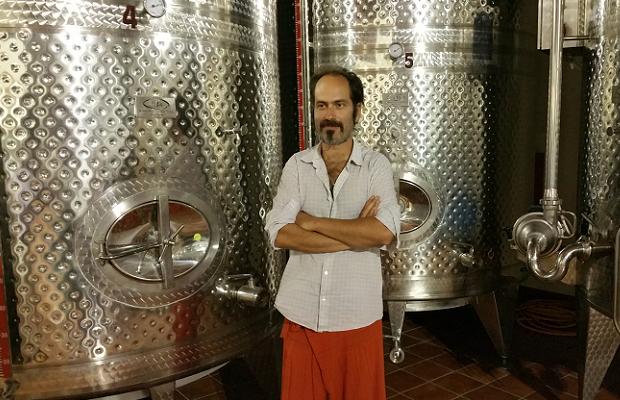
Panyiotis Panagianopoulos, Tetramythos Winery

Panyiotis Panagianopoulos, Tetramythos Winery

Oenologist since 1999 is Panayiotis Papagiannopoulos, a winemaker who may just have been separated from twin Frank Zappa at birth. Located at Ano Diakopto of Egialia, on the slopes of Mount Chelmos, the 14 hectares of vineyards (450-1,000m) are farmed organically (and have been since 1997). Bush vines make up 80 per cent and endemic varieties (85 per cent) cultivated (plus some expatriates) are Roditis, Malagousia, Sauvignon Blanc, Mavro Kalavryta, Agiorgitiko, Cabernet Sauvignon and Merlot. The total production is 13,000 cases with export to foreign markets (80 per cent) that exceeds peers by a wide margin.
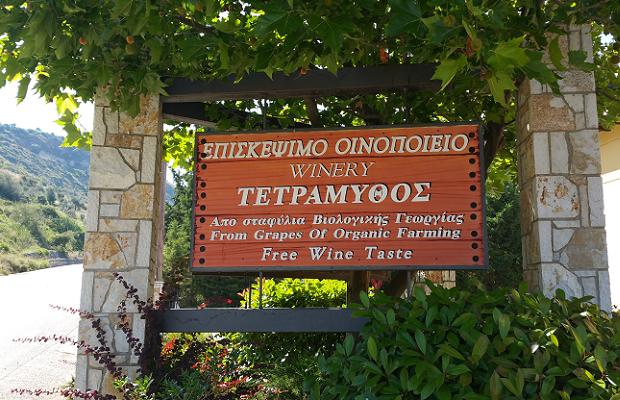
Tetramythos Winery

Tetramythos Winery

Tetramythos Roditis 2014, PDO Patras, Greece (SAQ 12484575, $15.75, WineAlign)

Pulled from four vineyards at 650-850m of altitude and from vines 19-42 years old. No skin contact though it shows a light, slight tinge of colour. Nearly platinum in its yellow hue, perhaps attributed to organics says Papagiannopoulos, Eighty per cent was achieved through natural ferment (with zero malolactic) plus “one tank for security.” Roditis can go clean or develop anti-austerity, texture, viscosity in the direction of a dirty projector. The Tetramythos glides “forward through the clover and the bergamot.” I can see what she’s seeing. Tasting like a leesy ripe peach, this is the best “basic” Roditis tasted in Achaia. Serious match of Aleria Restaurant‘s Sea Bass Tartare. Drink 2015-2020.  Tasted July 2015

Tetramythos Roditis 2014, PGI Peloponnese, Greece (WineAlign)

Here speaks the truth in endemic Roditis, raised in unconscious, wild ferment, unfiltered, forsaken to fining and treated to minimal sulphur. From 47 year-old vines, this most natural Peloponnese is made for the French market (that includes Quebec) with elevated acidity, deeper mineral, higher tang, pomp, circumstance and attitude. Latin, really, striking actually. Drink 2015-2018.  Tasted July 2015

Tetramythos Roditis 2014, PGI Achaia, Greece (WineAlign)

Roditis is here designated as the traditional Retsina, subjugated to wild yeasts in clay amphora and no sulphur during alcoholic fermentation. From 25 year-old vines out of a single vineyard and pine resin collected from trees on the edge of the vineyard. Post low and slow fermentation the wine rests on its lees for two months.  Such a wild and sauvage display of terroir; pine resin, beeswax, sealants and amphora. Like pure pine distillate without excessive herbaceousness and in subtlety of its own complacency. The palate follows the other roditis renditions and the pine again returns on the finish. 14,000 bottles made. Drink 2015-2019.  Tasted July 2015

Tetramythos Malagoussia 2014, PGI Achaia, Greece (WineAlign)

A single vineyard at an altitude of 750m guided by 30 hours of skin contact, for mouthfeel, to saddle the cool climate herbiage, needed for structure and for distance. Exudes poise, presence, precision, not oily but somehow creamy, glistening, this glow of malagousia. Expresses the longest hang time in the mouth, lingering like no roditis can or is willing to. Thanks to early picking to preserve acidity, the alcohol is low (12.4 per cent) and that acidity (7.2 g/L) above and beyond. Only here does malagousia keep this kind of flinty bite, in kind to a mid-September pick, keeping on the right side of soft and hot. I think this will live longer than you think.  Drink 2015-2020.  Tasted July 2015

Tetramythos Roditis 2008, PDO Patras, Greece (WineAlign)

A wine to fulfill the promise of my own personal vindication. I had asked Angelos Rouvalis about laying Roditis down for three to five years or more, to see where it may go and he said, “why?” Here is why. Has fan vaulted to the skies, urged by petrol and a symphony of mythology. Akin and within aromatic mineral reach of sémillon or riesling, with just a basal drip of ambrosial, gaseous honey. The green notes (of pea and nettle) are exaggerated but that is attributed to 2008 fruit that may have never been fully ripe. Drink 2015-2017.  Tasted July 2015
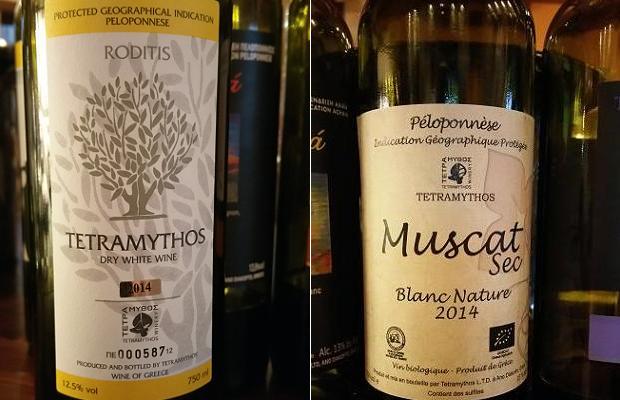
Tetramythos Roditis 2014 and Muscat Sec Blanc Nature 2014

Tetramythos Roditis 2014 and Muscat Sec Blanc Nature 2014

Tetramythos Muscat Sec 2014, PGI Peloponnese, Greece (WineAlign)

A slightly carbonic, reductive character – its natural protection, to keep the oxygen at bay, as if nouveau white Beaujolais. Combines bay laurel and beatific citrus, namely grapefruit after the banana blows off through the shutters of the cabana. Quite silky for muscat, of keys and zests citrus (major) and resin (minor). It may be sorry to leave you high and dry though there is no reason to feel a need to be weened off its charms. Far-out, groovy and compelling vin nature. Drink 2015-2018.  Tasted July 2015

Tetramythos Muscat Sec Blanc Nature 2014, PGI Peloponnese, Greece (WineAlign)

Nothing short of lucent, this friable, direct and crunchy raw muscat. Effusive of individual vowels and consonants, typically Achaian, extrapolated to Greek in its lambent and inventive simplicity. More glade than wax, it coats with orange and the spirit of lime. So different and yet so familiar, inevitably dry and straight as an arrow. Drink 2015-2018.  Tasted July 2015

Tetramythos Sauvignon Blanc Milia White 2014, PGI Achaia, Greece (WineAlign)

Not so many places are out there where sauvignon blanc grows at 1000m of altitude, so its got that going for it, which is nice. Add to that four months in new oak. What results is such a melon, citrus and high acidity tropical fruit mess. Wow is this piercing, almost over the top. Like sémillon this struts, in nod to the Hunter Valley. With time there is a varietal emergence. Eventually. Will age a spell. Drink 2015-2019. Tasted July 2015

Tetramythos Mavro Kalavryta 2014 (SAQ 11885457WineAlign)

A terrific example for a grape saved from extinction, Tetramythos owns 1.9 of a total four hectares of MK. Kudos for the effort especially considering the variety is thin skinned, slow to mature and difficult to cultivate. Saw nearly 20 days of skin contact because “the variety dictates the practice,” notes Konstantinos Lazarakis M.W. The fruit and bitters express a push-pull of terroir. One of two wineries making dry wines from the endemic variety, here the fresh red grape, the food friendly marker. Here confidently struts modern Achaian winemaking, from the ashes of naturalism and antiquity, the way Gamay or Loire Cabernet Franc are wont to do. Vibrant, with verve and a necessary natural funk. Herbal and with a rub of tomato skin, creamy, cool yet resinous, followed through from aroma to texture. Drink 2015-2018.  Tasted July 2015

Kotrotsos Moschofilero Erasmios 2014 and Tetramythos Mavro Kalavryta 2014

Kotrotsos Moschofilero Erasmios 2014 and Tetramythos Mavro Kalavryta 2014

Tetramythos Agiorgitiko 2013, PGI Peleponnese (SAQ 12178957WineAlign)

Raised in old oak barrels, it carries the wooden ship scent on the sea. Possessive of a world up in the wind, roofless, like an August cathedral and yet a grounding sense to burrow into earth. In all that sense it drafts like Nebbiolo indenture. Ferric and tannic, with end spice. Drink 2015-2018.  Tasted July 2015

Tetramythos Milia Red 2012, PGI Peloponnese, Greece (WineAlign)

A kaleidoscopic, cosmopolitan blend of merlot (66 per cent), cabernet sauvignon (20) and mavro (black) kalavrita (14) aged in 2nd, 3rd and 4th fill barrels. Here, again the use of Bordeaux varietals that cloud the vision of what the land wants to say. Sure it will speak in a language that resembles Terra Alta or some IGT but it has a nowhere man feel, a lack of somewheress and surely no word from the mouth of Papagiannopoulos. Very Mediterranean in feel, with a tapenade of black olive and caper. Drink 2015-2018.  Tasted July 2015

Tetramythos Cabernet Sauvignon 2011, PGI Aegialia Slopes (WineAlign)

A new Bordeaux language is created, in natural wild ferment, unfiltered and housed for 30 months in 2nd and 3rd fill barrels. A highly savoury cabernet sauvignon, with a lean and mean green streak. Tannic and very tight. Coated by a veneer and seething in teeth chattering acidity. Not for the faint of cabernet sauvignon heart and in need of double bottle time, in minimum two to one ratio of what it saw in wood. Much appreciation for the vision and the effort. Drink 2018-2021.  Tasted July 2015

Tetramythos Mavrodaphne Vin Naturellement Doux, Peleponnese, Greece (WineAlign)

As with so many of the Tetramythos line-up, this regional blend is the same but different. First it’s non vintage and second it is out of zone so not considered for PDO Mavrodaphne of Patras status. At 16 per cent alcohol and 58 g/L the sweet elixir spent nearly three years spent spinning in the excruciatingly slow centrifuge of natural fermentation. Traditional method adherence with the addition of organic, sun-dried raisins, “to increase the sugar levels.” The house quotient is three kilos of dried Black Corinth Raisin for every 100 L of must, in purport to increase the alcohol by one per cent. Here sweeps clean, sweet Mavro,  its port sensibility an aged, natural, dried fruit, nut and caramel melange. Pure beauty. Drink 2015-2025.  Tasted July 2015

Domaine Mega Spileo (Cavino)

The domain is set within a dramatically oriented steppe of an amphitheatre, in a bowl beneath the shadow of a 940m rock that houses the great Greek Orthodox monastery of Mega Spileo (Grand Cave). Nowhere else in the Chelmos mountains does monk viticulture resonate as it does here. The great vineyard (Megali Ambelos) perches above the Vouraikos Canyon at 800m of height. The winemaker for the wines of Cavino and Mega Spileo is Stelios Tsiris. Varieties grown since re-planting in 1999 include Mavrodafne, Mavro Kalavritino, Cabernet Sauvignon, Merlot, Syrah, Lagorthi, Assyrtiko, Malagousia and Riesling.

Mega Spileo Monastery

Mega Spileo Monastery

Roditis 2014, PDO Patras, Greece

A textured Roditis, its constant refrain one of herbiage, mineral, savoury bite and a direct pinch of austerity. Radiates fashioned with poise and meaning. Drink 2015-2017.  Tasted July 2015

Malagousia 2014, PGI Achaia, Greece

From a blend of three vineyards at 800m in altitude, this is a creamier, riper, more tropical take on the categorical grape. It’s tropical even, leaving peach to ascertain mango. Like a comfortable broth of warm emotions, this Malagousia belongs to the generality of varietal Greek persistence. Drink 2015-2018.  Tasted July 2015

Moschato 2014, PGI Achaia, Greece

Nearly bone dry (4 g/L RS) and well-nigh nicked by acidity (6.2 g/L TA) this is really a true expression of the Muscat Blanc à Petits Grains, an elegant cold pour into a glass on a breezy, sunny day. Until now Muscat in Achaia “could never look me in the eye” but the flurry of aromatics sing like a songstress in white lace. Its gaze is like lemon and olive oil and its tongue like the sweet wax on the rind. Here the Moschato path has been properly and soulfully taken. Rich in gold, like the kingdom of Agamemnon at Mycenae. Drink 2015-2017.  Tasted July 2015

Deus NV, Peloponnese, Greece

A blend of Moschato (80-90 per cent) and Sideritis, with a prodigious dosage to leave this sparkling wine larboard in the realm of 55 g/L of residual sugar. Translates to a tropical, custardy, sticky and waxy bubble that will repeatedly get you back in Achaia life again. Take a few sips “and I’ll drink and dance with one hand free.” You could really get stoned on this fizz. Drink 2015-2018.  Tasted July 2015

Deus Rosato NV, Peloponnese, Greece

Made from 100 per cent Syrah and slightly sweeter than the Muscat, here at 60 g/L RS. The lees, cheese and funk from Syrah turned to sparkling distracts from the sweetness, sending this to parts of southern France in meditative, Mediterranean, savoire savour faire. Raspberry and cranberry vie for sweet and sour supremacy and the wine actually, seemingly turns dry on the peppery, fizzy, tanky and spirited back side. Never backs down and the last conceit is one of tannin. So much more successful than the Moschato. Drink 2015-2019.  Tasted July 2015

Mega Spileo Moschato 2014 Deus and Deus Rose

Mega Spileo Moschato 2014 Deus and Deus Rose

Domaine Mega Spileo Grand Cave 2009, PGI Achaia

A dry vinified blend of Mavrodaphne (60 per cent) and Mavro (black of) Kalavritino that slumbers for 18-24 months (depending on who is offering the dissertation) in “squeaky clean” French oak. A pioneering bottle leading the charging trend to make dry wines from Mavrodaphne. Here so very layered, rich, ferric and in that vein, so very IGT. The oak is judged with a direct gaze into the eyes and density is furthered by demanding Daphne tannin, while flesh and elasticity is the work of the Kalavritino. Like a missile of tannic Syrah with Tuscan like cure in its veins and clotted plasma hanging on its dangling hook. Formidable to be sure. Drink 2017-2022.  Tasted July 2015

Domaine Mega Spileo Cabernet Sauvignon 2008, Peloponnese, Greece

An internationally stylized red that invokes the highest thoughts of all in, all out hedonism, more so than just about any varietal Bordeaux outside of Napa, Sonoma or the original mother land.

Thirty-two “boom shaka-laka-laka boom shaka-laka-laka” months in new French and american oak will do that, shouting “I want to take you Achaia” and in retort you should plead don’t leave me Achaia dry.

Looking back, in making decisions to make a wine like this, the thought would be “it’s the best thing that you ever had, the best thing you ever, ever had.” Fruit showtime is now fruit showing its age while oak is determined to suspend structure in purgatory. “Ain’t no valley low enough” so this style must have been tempting to have a go at the time, but times are changing. Ain’t no mountain Achaia enough? Not these days. Drink 2017-2022.  Tasted July 2015

Cavino Mavrodafne Reserve 2000 (Winery)

“We are about to experience one of the best underdogs of Greece,” says Konstantinos Lazarakis M.W. by way of introduction. The world had to wait 18 months plus seven years years for this to appear. A Port-style fortified red, fashioned from the 27 best judged oak barrels and finished in October of 2000. The mix is Mavrodaphne (70 per cent) and Black Corinth (30), expertly amassed and positioned at a time when using the 49 percent maximum allowance of dried raisin was the norm. Ahead of its time in that regards but also because of its rangy acidity, incredible acidity actually, something that gives this dessert wine the essence and spirit of raisin radio. That and a beautiful oxidation and it succeeds in wooing palates, not to mention fulfilling the promise laid bare by Mr. Lazarakis. Drink 2015-2020.  Tasted July 2015

Parparoussis

Achilleos str., 264 42 Proastio, Patras, Greece, 30 2610 420334, info@parparoussis.com
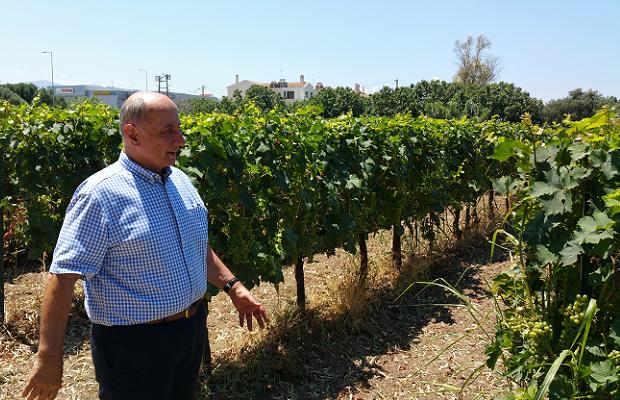
Antanassis Parparoussis and Moschato Vines, Domaine Parparoussis

Athanassios Parparoussis and Moschato Vines, Domaine Parparoussis

Founded in 1974 by oenologist Athanassios Parparoussis who works as winemaker while daughters   Erifili and Dimitra support on the business and marketing side. The winery is located in Patras and the property includes 10 hectares at Movri Achaias. Grapes are farmed organically and Parparoussis is one of only two vintners ion the region making wines from the rare and indigenous Sideritis. Parparoussis farms organically in principal but is not certified, nor is Athanassios concerned with the designation. It’s a matter of being devoutly pragmatic. “The soil is alive, so why kill it.”

Parparoussis Sideritis Dons De Dionysos 2014, Peloponnese, Greece (SAQ 11900995, $21.00, WineAlign)

The 2014 “gift of Dionysus” is herbal, arid, directly unassuming and fixed with a very savoury, nearly resinous pastel palate. The wind blows rosemary and lavender and truthfully it’s like a naturally cured red feeling in a white package. All lemon citrus at the tail. Drink 2015-2016.  Tasted July 2015

Parparoussis Rosé “Petite Fleur” 2014, PGI Achaia, Peloponnese, Greece

Just under 300 cases are made of this pale, lithe and prodigiously lithe blush wine, like the Dionysus, made from 100 per cent Sideritis. Skin maceration was performed overnight, “a one night stand,” while indigenous yeast was employed for a natural, dry vinification. The light and rust-directed antiquity of caste excess has caused an exaggerated herbal, namely oregano aroma. The overall feel is suppositious and may just be one of the great Rosé stories ever told. Drink 2015-2016.  Tasted July 2015
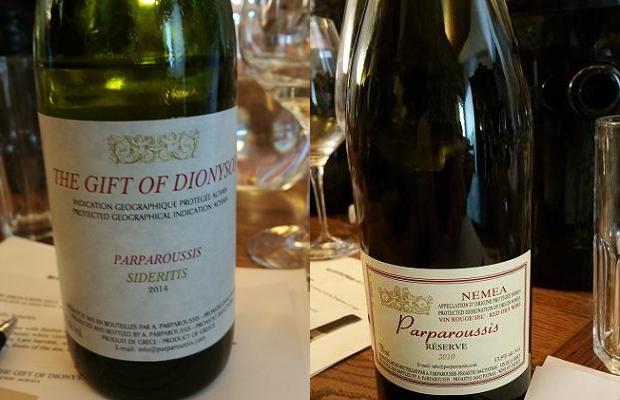
Parparoussis Sideritis Gift of Dionysus 2014 and Agiorgitiko Reserve 2010

Parparoussis Sideritis Gift of Dionysus 2014 and Agiorgitiko Reserve 2010

Parparoussis Les Dons de Dionysus 2010, PGI Achaia, Greece

Barrel Fermented blend of Assyrtiko (75 per cent) and Althorn (25). The first bottle is “not exactly as it should be,” oxidized and unpropitious, while the second pour much less so. In fact it tethers and teeters beautifully near that edge, on that razor the small creature walks, in a Dylan “what’s a sweetheart like you” way. So much more gumptive, anti-preemptive of depth, perception and possibility. Striking in its layering, stinging pierce of Assyrtiko with a suction of Althiri authority. Climbs upon itself and lingers in the air. “It’s done with a flick of the wrist.” Drink 2015-2020.  Tasted July 2015

Parparoussis Reserve Epilegmenos Oenos 2010, PDO Nemea, Greece

Further afield south in the Peloponnese comes this 100 per cent Agiorgitiko. The first bottle has a lactic-cheesy flaw, as if acetate of a mercaptan. One man’s flaw is another man’s history so the question does beg, was this meant to be? A winemaker’s intention? Apparently not. The second bottle, while still blessed of of a definite funk but one that is cleaner, unturned, a washed rind. So very dry. Drink 2015-2018.  Tasted July 2015
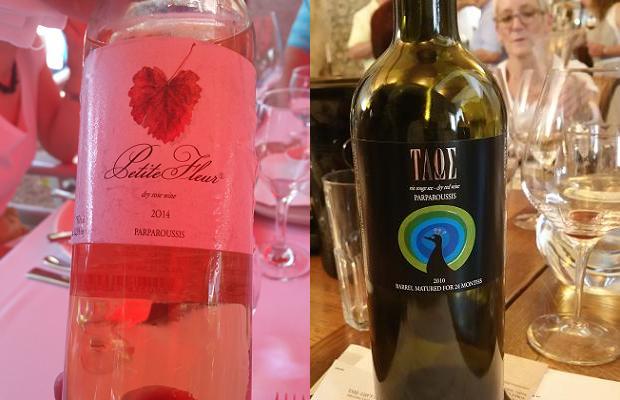
Parparoussis Rose Petite Fleur 2014 and Taos 2010

Parparoussis Rose Petite Fleur 2014 and Taos 2010

Parparoussis Taos 2010, PGI Achaia, Greece

A barrel fermented, dry vinified, 100 per cent Mavrodaphne. Naturally pitchy, high in acidity and purposed in tannin. A rare zero dilution at the hands of Black Corinthian Raisin and therefore not so high in alcohol, despite the richness of hue. Actually has a modern next tier level of complexity, complexion and aromatic intensity. Purple flowers and plum swirl in its circuitous, cycloid multiplicity. The savoury, resinous black bay laurel and chalky, cooked lentil, the grill and its smouldering charcoal are all in. Further resinous of bay oil on the back bitters and a very Tentura finish. Wild, sauvage, beautiful and built for the ling haul. Drink 2018-2025.  Tasted July 2015

Paparoussis Mavrodaphne of Patras Reserve 2003, PDO Patras, Greece

Vin Doux Nature poured from a 500 mL bottle, at 19 per cent, this is intensely nutty, of crème caramel and Cassis together as one. A marriage of godly sanctified vin santo cordial, with quite the balance from a brilliant vintage. There is heat that never burns, and a piquancy that offers no needed warning, Mavrodaphne of an aged, expertly developed expression. Such bitters at the finish end with wow. Drink 2015-2023.  Tasted July 2015

Paparoussis Muscat of Rio 2010, PDO Rio Patra

The sugar here is a strapping 160 g/L and the cost 15 euros for a 500 mL bottle. A vin de paille with so much more delicacy, structure and elegance and at only 13.5 per cent, a remarkable wine. Spice and relish is so smothered, coddled and pampered. The length is incredible. This is remarkable dessert wine with all tempos in balanace. Drink 2015-2030.  Tasted July 2015

Oenoforos (Rouvalis)

Selinous, 25100 – Aiyion, Greece, 30 2691029415, info@rouvaliswinery.gr.
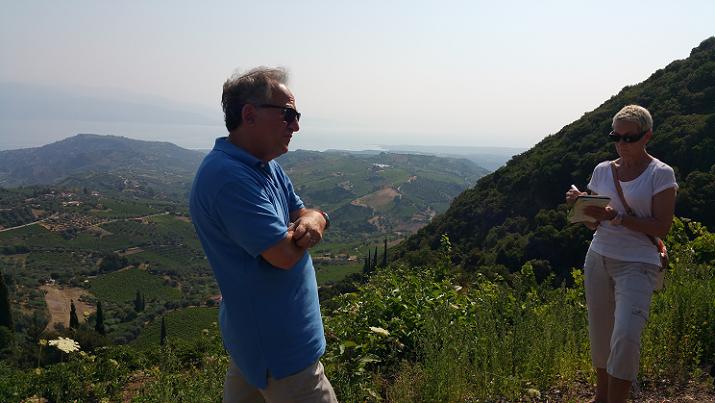
Aneglos Rouvalis and WineAlign's DJ Kearney

Aneglos Rouvalis and WineAlign’s DJ Kearney

Eonologist is Angelos Rouvalis, a winemaker with an encyclopedic knowledge of every hill and slope in the mountains above Patras and where each variety grows best. Established in 1990 by Rouvalis, a Bordeaux-trained winemaker, recognized internationally as a pioneer in the renaissance that has taken place in the Greek wine industry in recent years. In 1994 Yannis Karabatsos, an agricultural engineer and expert in Greek viticulture joined the winery. “The Oenoforos winery consists of five levels on the slopes of Aigialeia in the village of Selinous. It combines monastic simplicity with state-of-the-art technology.”

Oeneforos Roditis ‘Asprolithi’ 2014, PDO Patras, Greece (SAQ 978197, $16.50, WineAlign)

The “white stone” could be considered the Pinot Grigio of Greece though the pink-skinned variety grown here between 800-1000m is such a bleed of high altitude calcaire. An amalgamated, aromatic accumulation is all about citrus without the airs of pierce and secondary sandarac meets kedros that reminds of clementine. At 11.5 per cent alcohol and low pH it might confuse for Trocken Riesling if not for its classic herbiage and austerity. Drink 2015-2018.  Tasted July 2015

Oenoforos Chardonnay Ianos 2009, Peloponnese, Greece

So buttered and creamy, in condition of its two years in oak. Age has delivered corn to popcorn. It’s both unambiguous and atypically Peloponnese, if certainly symptomatic of Chardonnay in a diaspora that veers from its regional path. Like the oak of all clothed Chardonnays, expect the excepted and drink up. Drink 2015-2016. Tasted July 2015

Oenoforos Cabernet Sauvignon Ianos 2004, Peloponnese, Greece (SAQ 11607342, $22.95, WineAlign)

A current release, all in Cabernet Sauvignon 10 plus years down its road after two years in French oak. A bold and state-of-the art for its time cool-climate take, with a clear and ad hoc Sonoma-like intention, with attitude out of altitude despite ’04’s nothing but average growing season. Herbaceous and currant direct Cabernet with plenty of fruit that has remained true and in the bottle. Sweet scents, floral and red citrus and expressly, naturally Greek. Red fruit from red soil. Has a natural, slightly oxidative cure that has emerged out of that oak shell. Strikes as a wine that needed this extended held-back time to get to this place. The palate’s fruit is dried and saline now, with tannin insistent in persistence. Rich but not nearly so, a gently rolling and evolving Cabernet with life in it yet, though the raisin character suggests now is better than tomorrow. Not so much mythologically invented, as it is internationally purposed, so it’s more a matter of higher and lower. The wine’s universe is a flat disc with hills, touched at its rims by the vast dome of the heavens. Drink 2015-2016.  Tasted July 2015

Oeneforos Rosé Mikros Vorias 2014, Peloponnese, Greece

Syrah with Viognier and Roditis. A layer upon layer blush combing of dry extract over full extract. Another example of the region’s ability to achieve Rosé excellence and the practice should both be encouraged and expanded upon. Drink 2015-2016.  Tasted July 2015

Oeneforos Chardonnay-Sauvignon Blanc Mikros Vorias 2014, Peloponnese, Greece

The white blend representation for the house line of fresh and direct wines translates to “small northern wind,” and here the SB sticks out like an Achaian thumb, dominating the nose with grass and capsicum. It’s toasty and almost Pouilly-Fumé smokey mixed with a pinch of Fuissé. The identity quandary brings Galician Albariño to mind, seen in the spirited almost effervescent tinniness. Very lime palate and fast forwards to stage right, running all the way. Drink 2015-2016.  Tasted July 2015

Oenoforos Merlot-Cabernet Sauvignon Mikros Vorias 2014, Peloponnese, Greece

Rusty and cured, just not quite ripe red plum, from a 60-40 combo, with a healthy level of veneer. Has gumption, pierce and a citrus red bleed. Drink 2015-2018.  Tasted July 2015
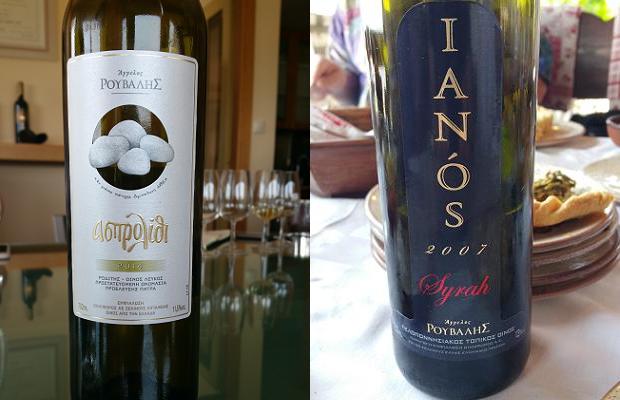
Oenoforos Asprolithi 'White Stones' 2014 and Syrah Ianos 2007

Oenoforos Asprolithi ‘White Stones’ 2014 and Syrah Ianos 2007

Oenoforos Syrah Ianos 2007, Peloponnese, Greece

Ferric, volatile, bretty but believe me when I say, all in a good way. The lingering meaty chew and porcine Mulligatwany is the expatriate Syrah equivalent of high gastronomy. A wild and wooly match to the Beef Stifado at To Katafygio. Drink 2015-2016.  Tasted July 2015

Antonopoulos Vineyards

25008 Vassiliko Chalandritsas, Patra, 30 2694061447, info@antonopoulosvineyards.com

The winery was founded by the late visionary winemaker, Constantinos Antonopoulos near the city of Patras in the northwestern of Peloponnese. Constantinos saw the vast, untapped potential of this diverse landscape, especially the mountainous region of Achaia and the unique winemaking opportunities it presented. A new up to-date winery has been built recently at Vasiliko, Achaia, where the majority of the winery’s vineyards are. Indigenous Greek varieties are the focus. All three Antonopoulos wines tasted at the winery Achaia Clauss were clearly achieved through very serious work. Though clean beyond the pale, they all exhibit slightly to more than leesy and all finish with so much salinity and limestone inflection. The only thing missing is the crustaceous accent.
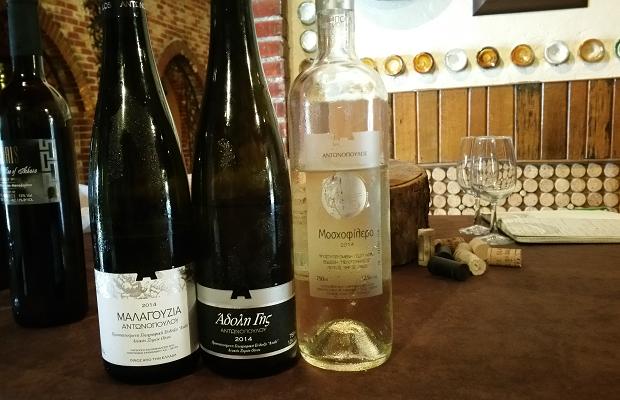
Antonopoulos Vineyards

Antonopoulos Vineyards

Antonopoulos Moschofilero 2014, PGI Arkadia, Greece

A rich, striking, citrus Moschofilero with a beautifully severe tannic tang and many layers, scraped from a stone’s bleed and a gaze into the rock’s mirror. A wine akin to a creation of a true alphabet, made complex like the dactylic hexameter in poetry or a rhythmic scheme. Drink 2015-2018.  Tasted July 2015

Antonopoulos Adholi This White 2014, PGI Achaia, Greece

Essential and pedigreed blend of Lohorthi 65 per cent), Chardonnay (20) and Roditis (15) that expresses increased aromatics much like Viognier. Nearly profoundly tropical but so very dry, like Assyrtiko in its cracking open but with the feel of wild yeast and the feign of barrel. Chalk it up to 800-900m clay-limestone speak and no more than that, creasing to a crisp effervescence without bubble, yet it does tingle of the tongue. Like it’s working all the while, then on to citrus on the end, in lemon and lime torque as if by Riesling. The Moschofilero might be Mycenaean Linear B and this the other, later Greek alphabet. Drink 2015-2018.  Tasted July 2015

Antonopoulos Malagousia 2014, PGI Achaia, Greece

From sand and clay vineyards in the region of Aghios-Athanasios at a height of 600-900m. Picked late near the end of September to early october and cocrete and thought the ferment is a stainless one, this Malgousia exhibits a natural yeasty funk commingling with moving texture and savour that incorporates grasses. The sting of nettle wins over the softness and spumes a hay fever of grass. A warming, adult of a wine, with some power to age. Drink 2016-2021.  Tasted July 2015

Acheon Winery

Korinthou 121, Aigio, Greece, 30 26910 28062, info@acheonwinery.gr.

Sosanna Katsikosta is Oenologist and General Manager while Katerina heads up business and marketing operations. The sisters are carrying on a winemaking tradition passed on to them from their late father. Konstantinos Katsikostas carried the torch from his father Luke who founded the winery in 1946 in the area of Palaiokamares of Aegio. Annual production of 2,000 cases. Katsikosta is desperately, passionately practicing, experimenting, trying to stir up vinous ghosts and find their way back to ancestry, to ways of elders, to bring to light what used to be and to establish an identity for the world to see.

Acheon Roditis 2014, PDO Patras, Greece

A quintessential “Fox” Roditis, from low yields (40 hL/L), 900 m above sea level, in organic balance at 12 per cent alcohol. A distinct stone tang, push, pierce and a slight tingle or fizz on the tip of the tongue. Highly concentrated out of an elevated dry extract, with mineral and lemon. One of the more expressive push-pull of fruit and mineral. For everyday consumption with a bit of honey in its two to three year future. Drink 2015-2018.  Tasted July 2015

Acheon Sideritis 2014, PGI Achaia, Greece

The nearly extant one, a rare variety, being revived, planted at low altitudes, with yields 70-75 hL/L. Aromatic and misunderstood, with a Savagnin character, a funky, musky skin, like leather but not as deep, yet something oddly tropical, like jackfruit, or gummy bear, dusty ginger, and resin, like thyme. Another variety being worked with to see what it can be and to link back to what once was. Really good acidity. Drink 2015-2016.  Tasted July 2015

Acheon Sideritis 2014 and Rose Fairytale 2014

Acheon Sideritis 2014 and Rose Fairytale 2014

Acheon Moschato 2014, PGI Achaia, Greece

A banana and metal White Muscat, with plenty of herbal qualities, terrific saline and stony acidity dominating the palate. A medicinal grapefruit chew, not of pith, but of skin. Arid as a grove in wind and finishing with good length. Very interesting. Drink 2015-2017.  Tasted July 2015

Acheon Laura Nera 2012, PGI Eigialia Slopes

Mavrodaphe and nothing but, vinified dry, subjected to no aging. The smell of bay laurel (thus the varietal name) and fashioned for freshness. Still in command of a musty emmision this one, a strange cure, like some cool-climate, winter hardy hybrids, like Maréchal Foch and Frontenac. Perhaps a touch warmer, like opening the doors to Pinotage without the toast and the oak to fill and sweeten the green, reductive gaps. Has the roadhouse blues so “Keep your eyes on the road, your hands upon the wheel.” Drink 2015-2017.  Tasted July 2015

Acheon Rosé Fairytale, Peloponnese, Greece

A semi-sweet Rosé composed from 90 per cent Muscat co-fermented with 10 per cent Mavrodaphne. Dessert of blush hue and sappy, leesy, medicinal bitters. Very orange rind and chlorite, somewhat port-esque but so much more a tisane of pekoe and cough elixir. Totally off the charts different. Really like nothing tasted before. Drink 2015-2016.  Tasted July 2015
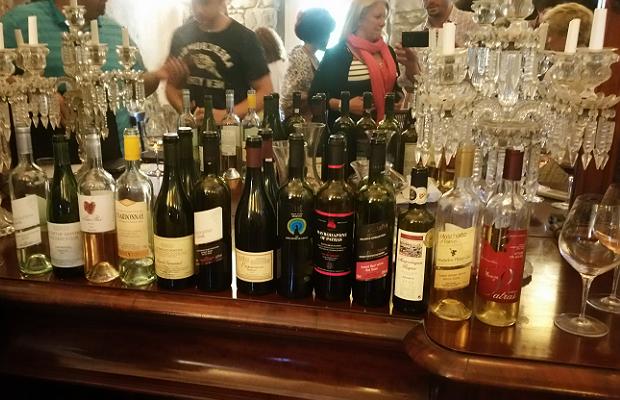
Wines of Parparoussis, Loukatos and Kontrotsos, Parparoussis Winery, Patras

Wines of Parparoussis, Loukatos and Kontrotsos, Parparoussis Winery, Patras

Kotrotsos

Vassiliko Achaias TK. 25008, 30 26940 61 900, vinko@otenet.gr. Winemaker is Giannis Kotrotsos.

Kotrotsos Erasmios Moschofilero 2014, Peloponnese, Greece

An unctuous, ambrosial Moschofilero, highly aromatic, of citrus and orange grove. A 12.5 appealing alcohol per cent and surround sound of acidity, good length and a bitter ending that follows a twinge of steely crick. Drink 2015-2018.  Tasted July 2015

Kotrotsos Muscat NV, PDO Muscat of Rio Patras

Also based on the 2013 vintage and c charging in at 15 per cent alcohol, here there is more rust, funk and metal, certainly not as fruit forward as expected. Sweetness is elongated, stretched and elastic, then snaps back to linear and upright. Drink 2016-2022.  Tasted July 2015

Kotrotsos Mavrodaphne NV, PDO Mavrodaphne of Patras, Greece The standard 15 per cent alcohol and in this plugged in, short fuse sweet wine is highly intense and lit caper green, dried fruit and a serious pasticcio of botanicals, distilled into a major excitative and concentrated sweetness.  The second bottle tasted has so much more life and character. Much more sweet floral attractiveness and the sweetness is less pronounced as a result. Goes from spice and piquancy to sweetness with the right transitory methodology, culminating in a great LBV Port finish. Nutty and spicy. Tremendous fruit forward expression.  Drink 2016-2024.  Tasted July 2015

Kotrotsos Chardonnay Oinos Aekos 2014, PGI Achaia, Greece

Combinbes barrel and resin for a full on savoury effect and so much noticeable, piercing grape tannin. Fierce, uncompromising, non-integrating invaluable invalid of tannin. So very cool climate savoury Chardonnay. Striking actually and a very acquired taste. Drink 2015-2016.  Tasted July 2015

Kotrotsos Agiorgitiko Erasmios 2012, Nemea, Greece An intoxicating perfume, of violets and charcuterie, floral and cure, vegetative and saline. Lactic, talcy, opaque and dusty, like Cabernet Franc from the coolest locale. Finishes saline again, chewy even. Drink 2015-2018.  Tasted July 2015

Karelas Winery

Georgios J. Karellas A.V.E.E, 41-43, Skagiopouliou Str., Patras, 262 22, 30 2610 321 000, karelas7@hotmail.com

Karelas Winery was founded in 1936 by Georgios Karelas. Using the native ‘Mavrodaphne’ grape, the company is renowned for it’s sweet, dessert style Mavrodaphne wine.

Karelas Pelagos 2013, PGI Achaia, Greece

Merlot and Mavrodaphne share the cure and the veneer of a strange bedfellow blend, the old and the new, the rust and the dust, the red and the black, the visitor and the been there done that. Tough acidity and tannin over red citrus fruit. Not shy. Drink 2016-2020.  Tasted July 2015

Karelas Achais 2013, PGI Achaia, Greece

Cabernet Sauvignon and Mavrodaphne smothered in more  obvious oak, though less tension and demand. A softer wine in using Cabernet over Merlot, ripened easier, better, with a second gear and then  into acidity mode. Again the cool climate veneer with a warm, savoury, minty middle. Drink 2015-2019.  Tasted July 2015
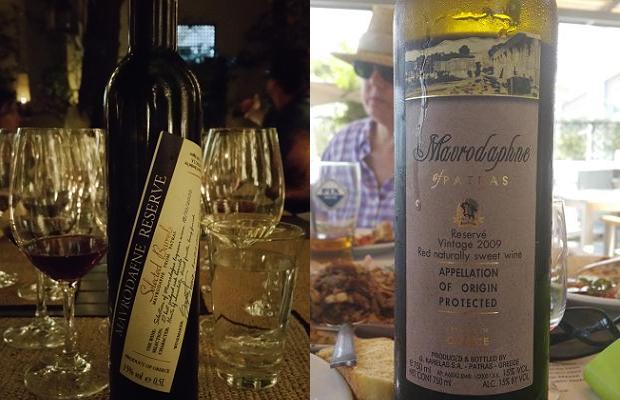
Mega Spileo Mavrodaphne and Karelas Mavrodaphe Reserve 2009

Mega Spileo Mavrodaphne and Karelas Mavrodaphe Reserve 2009

Karelas Mavrodaphne Reserve 2009, PDO Mavrodaphne of Patras, Greece

The only Mavrodaphne aged in highly seasoned toasted new French barrels. The standard weight bearing 15 per cent alcohol and a similar feeling as with previous kicks at the sweet Mavrodaphne can, but more red fruit and brighter raisins in the sun. The spice and liqueur here seem less spirited and combine for a more mature, seasoned, reasoned, direct and ultimately cleaner expression. Captain Jack (or George) will get you Achaia tonight “and take you to your special island.” Drink 2015-2022.  Tasted July 2015

Loukatos

Loukatos Bros, Β 3 & ΟΤ 24, Industrial Zone Patra 25018 Achaia / Patra, Greece, 30 2610 647588,  info@loukatos.com.gr

Perhaps most famous for their local production of spirits, namely Tentura and Mastic, Loukatos does a bang up job with dessert wines, especially in their handling of Muscat from Patras.

Loukatos Mavrodaphne NV, PDO Mavrodaphne of Patras, Greece

Vin de liqueur clocking in at 15 per cent alcohol. The dried roses and red flowers in liqueur link it to the likes of a Late Bottle Vintage Port. Wakes with a start, in sting and presence. Really lingers, tasting of blanched nuts and Halls mentholyptus. This batch was blended with 47 percent corinithian grape. The finish is so Manischevitz. Drink 2015-2023.  Tasted July 2015
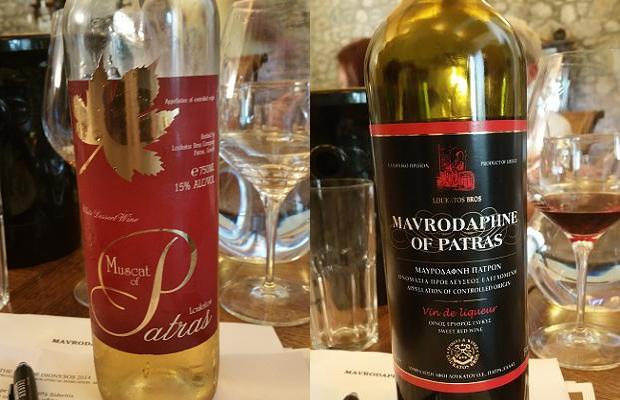
Loukatos Muscat of Patras and Mavrodaphne of Patras

Loukatos Muscat of Patras and Mavrodaphne of Patras

Loukatos Muscat NV, PDO Muscat of Patras (WineAlign)

A 15 per cent abv Vin de Liqueur largely based on the 2013 vintage. Very clementine and apricot nosed, impeccably balanced from viscous to intensity in grape, with nothing musty or musky about it, though there is a musk melon sense, a botrytis that is very clean. Another excellent, natural sweet Patras example of what Muscat can do, again at super low cost, with high flavour and here, more fruit forward than the Kotrotos. Drink 2015-2021.  Tasted July 2015

Hahalis (Chahalis) Mavrodaphne 2011, PDO Mavrodaphne of Patras, Greece

Spent one year in barrel, the Tentura Castro “The Castle” is raisined and resinous with so much heavy artillery and coats of armour. The macro intent so black and porous, oxidative but alive, heavy and warm in alcohol but spirited and shooting cupid’s arrows. Sweet and Amarone trophy in a sense, with licorice and spice unlike anything else. Idiosyncratic to the nth degree. Drink 2015-2021.  Tasted July 2015

Achaia Clauss Mavrodaphne NV, PDO Mavrodaphne of Patras, Greece

From a lot penned Bin 601 at the standard 15 per cent alcohol and acting like it came from a 100 year-old barrel, of sitting bull wisdom and Bavarian history. Much like port, like brandy spirits and liquorice melting into cinnamon and clove. Not so idiosyncratic but resinous, sappy and piquant. Once you come to know these wines they speak this very direct language. Drink 2015-2025.  Tasted July 2015

Patraiki Mavrodpahe NV, PDO Mavrodaphne of Patras, Greece

A direct, rich, full-bodied leathery red of fruit the same that soaks in simple, sweet liqueur. The most accessible, commercial macro-intention of the black laurel lot. Drink 2015-2020.  Tasted July 2015

Crisis? No one’s gonna bring Greece down, nor me neither, ’till I again reach Achaia ground.

Good to go!

http://www.winealign.com/profile/2058-mjg

Whites after Labour Day

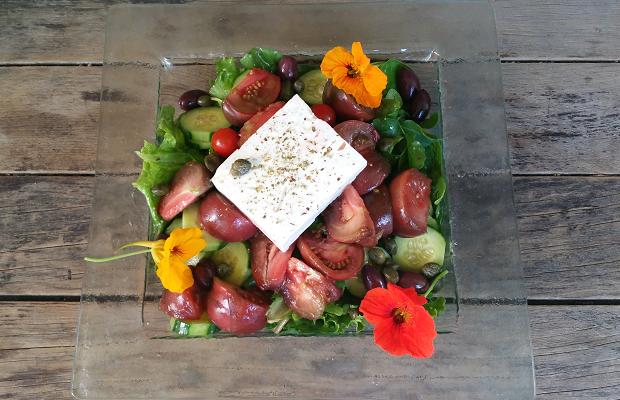
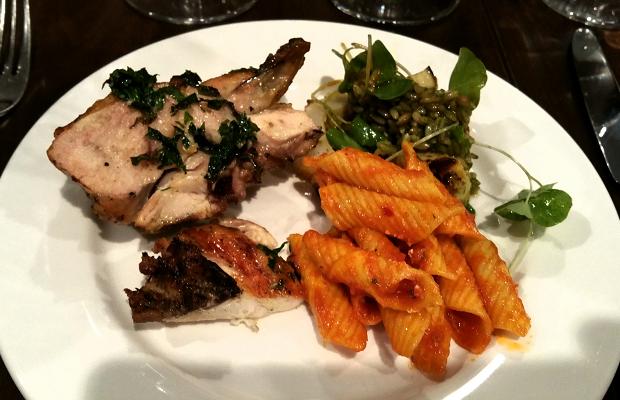
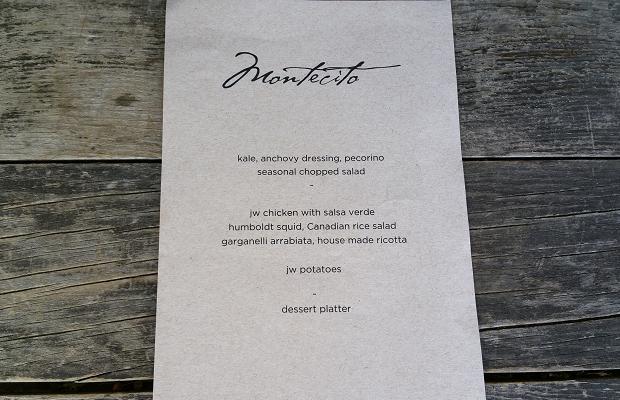
September salad

September salad

What is the only way to tell the difference between a wine geek and a wine snob? A geek will not drink just anything but will taste everything. In the name of science, of course.

Silly high society rules, like not drinking whites after Labour Day are the wine equivalent of late 19th century fashion precepts and as ridiculous as they may seem, you just can’t make this shit up. Just ask Google.

The first VINTAGES release of the new year (on the Hebrew calendar) or depending on your angle, the last of the summer (preceding Labour Day), is rich with excellent whites. There are 15 choices from September 5th that I highly recommend. Get them while they and it, are hot.

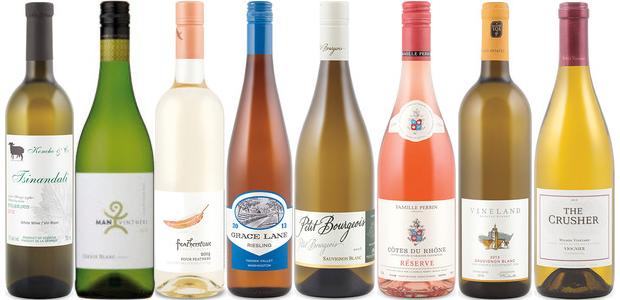
From left to right: Old Vines In Young Hands White 201, Dr. L Dry Riesling 2014, Domaine La Haute Févrie Sur Lie Muscadet Sèvre & Maine 2014, Thelema Sutherland Sauvignon Blanc 2013, Cave Spring Estate Bottled Chardonnay Musqué 2013, Flat Rock Riesling 2014, Boutari Santorini Assyrtiko 2014 and Bailly Lapierre Saint Bris Sauvignon Blanc 2014

From left to right: Old Vines In Young Hands White 201, Dr. L Dry Riesling 2014, Domaine La Haute Févrie Sur Lie Muscadet Sèvre & Maine 2014, Thelema Sutherland Sauvignon Blanc 2013, Cave Spring Estate Bottled Chardonnay Musqué 2013, Flat Rock Riesling 2014, Boutari Santorini Assyrtiko 2014 and Bailly Lapierre Saint Bris Sauvignon Blanc 2014

Old Vines In Young Hands White 2013, Doc Douro, Portugal (424374, $12.95, WineAlign)

Young winemakers, a country’s support, a new vernacular, simplicity and imaging in ode to old ways. The packaging and the intent is spot on. The wine follows suit. Arid, saline, savoury and elemental, like QBA Riesling or Peloponnese Kidonitsa. I’m digging and buying the style, both in clean winemaking and in appeal to a whole new world. Drink 2015-2017.  Tasted August 2015  @MichaelAndBrand  @winesportugalCA

Dr. L Dry Riesling 2014, Qualitätswein, Mosel, Germany (409680, $13.95, WineAlign)

Another sock it to me Dr. L, straight up, spot on, exactly what it purports to be. General index of Riesling expression. Read it, use it as a reference, calibrate your palate to where you want to go. Drink 2015-2016. Tasted August 2015  @drloosenwines  @Select_Wines  

Domaine La Haute Févrie Sur Lie Muscadet Sèvre & Maine 2014, Ac Loire, France (390625, $13.95, WineAlign)

Perfectly, typically, ostensibly and decidedly Melon for what it’s worth. The sea, its salt, a briny shell and crisp acidity for what ails. Simple, slightly spritzy, a touch balmy and ultimately refined, when cooled, with a mess of sea creatures. Odelay, “of elevator bones and your whip-flash tones.” Where it’s at. At your beck and call Muscadet. Drink 2015-2018.  Tasted August 2015  @LoireValleyWine  @oenophilia1

Thelema Sutherland Sauvignon Blanc 2013, Wo Elgin, South Africa (203877, $14.95, WineAlign)

Striking Sauvignon Blanc, minted by a flinty beginning, with perhaps the highest discernible level of sweet gooseberry on the nose that has ever been measured by the olfactometer. Hard to imagine such an inexpensive Elgin white to be so dramatically forthright in smile and open arms. Grapefruit of the pinkest, ripest most juicy crunch burst into flame flavours well-defined, not overbearing, properly bitter and in reprise, like a bite into juicy citrus with just perfectly ripe acidity. A new benchmark for value Sauvignon Blanc in South Africa. Raises the bar folks. Look to Elgin. Ask the producers to plant more. Impossibly long SB finish. Drink 2015-2018.  Tasted August 2015  @ThelemaWines  @WOSACanada  @WOSA_ZA  @EpicW_S

Cave Spring Estate Bottled Chardonnay Musqué 2013, VQA Beamsville Bench, Niagara Peninsula, Ontario (246579, $15.95, WineAlign)

As good as 2013 is a vintage for Niagara Chardonnay, relatively speaking it may be an even bigger quality boon for the aromatic Musqué. The level of depth, breadth and weight in this Cave Spring is new and improved. The florals are heightened, as if bottled in eau de. The parfum is an intoxicant and the flavours compressed, like roll up, like a Musqué napolean, of peach, plum and pear. Who knew? A fall necessity. Better than before. Drink 2015-2017.  @CaveSpring  @TheVine_RobGroh

From my earlier note of May 2o15:

Produced from the 77 clone, the vintage has heightened the high herbal and feigned sweetness aromatic pastis. The palate is extraordinarily viscous, with Yellow Muscat and Gewürztraminer attributes, not so out of the ordinary considering Cave Spring’s older world execution. Drives from lemon to mandarin, through almond pit and into peach. Always solid Musqué.
Last tasted May 2015

Flat Rock Riesling 2014, VQA Twenty Mile Bench, Niagara Peninsula, Ontario (43281, $16.95, WineAlign)

Talk about bottled up compression. Twist the screwcap and thwop! The cap nearly popped like a Champagne cork. This baby has energy and drive. The vintage is compressed and pile-driven as nosed by the density opposed by reticulated 9.5 per cent alcohol. This has Mosel tattooed on its being, from neck to bottom. A dead ringer for fine Kabinett, the tropical fruit in apricot and dragon reaching back to join Ontario, in apple and pear. A good flinty stone and raging acidity combine forces to exaggerate a Riesling reticulum in what is not the missive’s greatest ever vintage. Will live five to seven easy and just go for soda. Go ahead and quaff the hell out of this one, from 2015-2020, from bottles one through twelve. Tasted March 2015  @Winemakersboots  @UnfilteredEd  @brightlighter1

Boutari Santorini Assyrtiko 2014, Pdo Santorini, Greece (47985, $18.95, WineAlign)

A weighty Assyrtiko of breadth and gumption. The varietal salinity found virtually nowhere else is omnipresent and yet different of fruit in the hands of Boutari. Opulence beyond the Santorini norm and yet held back as if to say, “not yet, not yet.” There is a cool, wet patina as if by ruins slowly grown over at the bottom of the sea. A white swath of scraped rock paints the middle palate and is not removable. Can’t go wrong with a chilled bottle and a gaggle of calamari on the grill. Drink 2015-2017.  Tasted August 2015  @boutari  @KolonakiGroup  @Santoriniwines

Bailly Lapierre Saint Bris Sauvignon Blanc 2014, Burgundy, France (424655, $19.95, WineAlign)

Flint meets reduction in a Saint Bris plugged in both ways, AC/DC. Sauvignon Blanc of dirty deeds done dirt cheap. Quite savoury, spicy and cool up the nose like mint and eucalyptus ointment. Serious and strong, like Aligoté but with more verve and natural musculature. No shrinker here and very long, juicy and crazy for acidity. Such expression is rare for the hallowed if needfully paid further attention appellation. Show up anytime at my place with a bottle of Saint Bris, “We’ll have ourselves a ball.” Drink 2015-2018. Tasted August 2015  @BourgogneWines  @VinexxCanada

From left to right: Henry Of Pelham Estate Chardonnay 2013, Studert Prüm Graacher Himmelreich Spätlese Riesling 2009, Redstone Limestone Vineyard Sauvignon Blanc 2013, Pierre Sparr Mambourg Pinot Gris 2011, Hidden Bench Chardonnay 2013, Domaine Laroche Les Vaudevey Chablis 1er Cru 2012 and Dom Pérignon Brut Vintage Champagne 2005

From left to right: Henry Of Pelham Estate Chardonnay 2013, Studert Prüm Graacher Himmelreich Spätlese Riesling 2009, Redstone Limestone Vineyard Sauvignon Blanc 2013, Pierre Sparr Mambourg Pinot Gris 2011, Hidden Bench Chardonnay 2013, Domaine Laroche Les Vaudevey Chablis 1er Cru 2012 and Dom Pérignon Brut Vintage Champagne 2005

Henry Of Pelham Estate Chardonnay 2013, VQA Short Hills Bench, Ontario (268342, $19.95, WineAlign)

Sunlight is the key to this ripe Chardonnay, snatched from vines that grow on the most easterly of the Niagara Escarpment’s sub-appellation. Here Henry of Pelham calmly puts its hegemony over Short Hills Bench Chardonnay on display. The fruit layering is very impressive, compressed even, with just a spiced spirit injection from the barrel. The Estate Chardonnay is in a mid-range class of its own, this gatherer of heat days, hoarder in spring water retention, cleanser in sand and gravel drainage. The vintage just seems perfect for this niche bottling, balanced, primed to finespun texture, stretched for length and good to age at least five years.  Last tasted March 2015  @HenryofPelham  @SpeckBros

Studert Prüm Graacher Himmelreich Spätlese Riesling 2009, Prädikatswein, Mosel, Germany (409680, $21.95, WineAlign)

Blue slate in deep soil and steep, southwest-facing slopes elucidate the Graacher Himmelreich enterprise, quite possibly the most personal vineyard in the Mosel. Autonomy, astronomy, autocratic assuage and elemental tyranny are not for the Riesling faint of benevolence. The Studert Prüm Spätlese from the GH vineyard in 2009 is so very stubborn, stark and austere like matches struck on rocks, rocketing flares as if in a sci-fi action scene. It is possessive of a full, sweet and medicinal palate and enough energy if not the most balancing of acidities ever paired with the flint and the petrol. Good bitters and exceptional length will lead to many years of marbling evolution. Drink 2016-2024.  Tasted August 2015  @StudertPruem  

Redstone Limestone Vineyard Sauvignon Blanc 2013, VQA Twenty Mile Bench, Ontario (424648, $22.95, WineAlign)

If a Niagara Sauvignon Blanc could be endeared with the term ‘calcaire,’ Rene Van Ede’s Limestone Vineyard would lead the shortlist, not only because of the eponymous vineyard but because it oozes of the rock’s chalky chafe. Plenty of orchard fruit belies the lime, in an unoaked Chardonnay way and the wine makes full use of limestone’s hematic shed. This is one of the most stylish Sauvignon Blancs made in Canada, even if the average consumer were not able to recognize it as such. A winemaker from Sancerre would know it immediately and intuitively. Here a crushed reef of limestone memory permeates the wine from beginning to end. One of the more outstanding Sauvignon Blancs made in Ontario to date.  Tasted January 2015   @RedstoneWines

Pierre Sparr Mambourg Pinot Gris 2011, Ac Alsace Grand Cru, France (686451, $24.95, WineAlign)

Arid and direct, quite an ascending Pinot Gris, with almost unfindable residual and yet not the most distinct Grand Cru you are ever going to ponder. Has more weight and sweetness on the palate which tends to lychee, pineapple, apricot and lemon pith. Proper old school Mambourg. Drink 2015-2020.  Tasted August 2015  @AlsaceWines  @VinsAlsace  @ProfileWineGrp

Hidden Bench Chardonnay 2013, VQA Beamsville Bench, Niagara Peninsula, Ontario (68817, $28.95, WineAlign)

A best of both worlds Chardonnay; indicative of the giving vintage (in quality, not quantity, prestige, not prosper) and an Estate, house style with some cosmetics to enhance the consequence. Really typifies and explains what a Marlize Beyers Chardonnay is. Elegant, stylish, with perfect skin, tones, understated beauty and the soft vernacular of few yet precise words. The texture and feel of this Chardonnay is downy, lacey and so very understated. You simply can’t take your eyes off its charms and your palate away from its soft feel. A wine of character and poise. Drink 2015-2020.  Tasted August 2015  @HiddenBench  @BenchVigneron  @LeSommelierWine

Domaine Laroche Les Vaudevey Chablis 1er Cru 2012, Ac Burgundy, France (416057, $38.95, WineAlign)

Prudently flinty Vau de Vey, full of rocks, stones, cragges, broken pieces and slices of pure limestone. Such struck sensation could go too far but here it rises and lingers, tickles, fancies and plays, never bothering or acting with distraction. Quite remarkable and gentle of handling. Softer on the palate but still the limestone beats, with bitters. Just not enough circulating acidity in the end. Drink 2015-2020. Tasted August 2015  @DomaineLaroche  @BIVBChablis  @Select_Wines

Dom Pérignon Brut Vintage Champagne 2005, With Gift Box, Ac Champagne, France (280461, $219.95, WineAlign)

Surprisingly waxing en route to the oxidative side yet suspended in crystal animation. Apperceive the level of concentration, finesse and poise, a trinity of DPVBC not to be tested. These are serious, brooding, executively organized and effected bubbles. They are the real deal and they are not for everyman, either by price or for pleasure. They do not effect change or progress but they do speak of what has been, has worked and will not soon see any arresting waver. Another what it is moment in iconic Champagne. Drink 2015-2025.  Tasted August 2015  @MoetUSA  @ChartonHobbs  @Champagne  @ChampagneBureau

Good to go!

http://www.winealign.com/profile/2058-mjg

Till I reach Achaia ground

View of the mountains of Achaia from Tetramythos Winery and Homestay, Ano Diakopto of Aegialia, on the slopes of Mount Chelmos, Peloponnese

View of the mountains of Achaia from Tetramythos Winery and Homestay, Ano Diakopto of Aegialia, on the slopes of Mount Chelmos, Peloponnese

as seen on WineAlign

Man I wish I was there right now. Have you recently pondered or are you considering a visit to Greece? Have the sensational media reports of the last month cast a shadow of doubt on your travel plans? Are you worried about economic crises, ATM line-ups, looting and civil unrest? Don’t be. Do not fall victim as prey to dictum on what you or those who are telling you really do not know. You should go. Greece is just fine thank you very much. She welcomes visitors with open arms. This is what she wants and what she needs.

Crisis, what crisis? 

I am no John Maynard Keynes, have never rooted with Milton Friedman and can’t confidently say that my economic stars align with Paul Krugman, but on my recent trip to Athens and Achaia I saw nary a sign of unparalleled and utter economic disaster, of panic, anarchy or civil disobedience. I had many a conversation about government, taxes and the Euro. I learned that no is the new yes, “but whatever…” and that Greek wine aligns with the functions of the European union.

Write your problems down in detail Take them to a higher place

I am inclined to say, with indubitable and unequivocal doubt that Greece is the safest, most affordable and stupidly beautiful place on the planet. There is adventure, breathtaking vistas and scarcely, if commensurately discovered antiquity at every turn. And there is wine. Exceptional wine. Singular wine. Mythological wine. I can tell you five things I learned about the 21st century state of things Greece.

  1. Athens is a busy, hot, labyrinthian metropolis that somehow feels like an ancient village. It may just be the most unassailable and secure Gotham I have ever encountered. It did not leave me tired, on the contrary, it fuelled invigoration.
  2. Encounters with beautiful, nurtured and erudite folks along the course of a given day affords an equipotentiality to reaffirm faith in humans. Doors are always open.
  3. Bad governance may lead to civil jeremiad and global media strategies built upon the inevitable crumbling foundations of sensationalism and hyperbole, but Greece’s main concern is just that. Bad governance. Business carries on as usual, albeit with a noticeable reduction in smoking and petrol usage, but restaurants, cafes, coffee shops and shopping are not on hold. Centuries have seen such woe and yet Greece persists, remains and progresses. “Believe only half of what you see and nothing that you hear.” America may have long ago entered its Last Great American Whale period but Greece? Not even close. “They say things are done for the majority” and in the case of Greece, that just may be true. In a time of crisis, there are many business opportunists. Hard times? Grow better grapes. Can’t sell them at home? Export more than before and make better money.
  4. The combination of mountains, ocean, beaches and the symbiotic proximity of the appositeness is nothing short of mind-altering, awe-inspiring and soul-asservating.
  5. Forget the idea that Greek wine offers up some of the best values, anywhere. Consider that sort of posturing a given and or inconsequential in consideration of the adage that good wine is good wine, period, regardless of price. The wine producing regions of Santorini (Aegean), Thessaloniki/Naoussa (Macedonia) and Nemea (Peloponnese) have made wide inroads on the global scene. Yet how many of you have ever heard of Achaia and Patras in the northern Peloponnese? It is on the verge of breaking out. Obscurity no longer. Uncertainty be gone.

At the pass

Greece has been mired in waiting, or depending on your level of positivity and how to spin, poised to break out. The Greek wine industry is securely fastened in a place somewhere between the relic glow of early period brilliance and the cusp of legacy defining, career opus penning compositions. It is a work in process and the best is yet to come. The wines of Achaia are entirely indicative of this intellection. Antiquity is an amazing tourist attraction and in Achaia, as in the entirety of Greece, you can’t blink without stumbling upon a metaphorical doric this or an allegorical ionic that. Cradles of civilization just have a certain den xéro̱ ti and Greece is the world super-power. The question begs. How does this apply to wine?

Like so many wine producing nations not called France, Germany or Italy, Greece is poised for modern greatness but it has one distinct advantage. It lays ownership to some absolute conditions that easily separate it from emerging and developing, New World regions, but also from European peers. The first is obvious and that of course is a centuries old tradition of making wine. The second may come as a surprise, especially as it relates to wine. Mythology covets a paradigmatic relationship with Greek culture, however intangible it can be quantified. A visit to Achaia offers tantamount proof of such a notion. This from New Wines of Greece: “The fascinating archaeological sites with the notable museums and the grape-growing and wine-making history directly tied to the myth of Hercules are just some of the attributes that will appeal to those who indulge in wine tourism in the Peloponnese.”

Then there is the confluence from the slopes of Egialia, said to form the centre of the triangle of Ancient DelfiOlympia and Epidavros. It was not long ago that I connected the divine and the allegorical with Greek wine. I quote myself. “Me, I’ll concentrate on the divine mythology of Greek wine, of its place in the fractal world, how it can beautify and simplify, through recursion in dynamic systems, the bleak chaos of wine landscapes. Like the Morai, Greek wines are thread with motherly nurturing. For mere mortals, they direct fate from the birth of their drinking days to death. They are a highly independent bunch, unobstructed and driven by necessity.” It would be obtuse to ignore the hyper-reality of all these extraordinary things, to discount the divined revelation through profound symbols of religious myth. To see the analogy and pertinency with the mathematics of wine; pH, sugar, acidity and alcohol. Not exactly Pythagorean, certainly not Orphic, but mysterious somehow.

The Achaia advantage: From PGI to PDO and endemic varietals

The Peloponnese is located in the southernmost section of continental (western) Greece, its western and northern borders lining the Ionian Sea and the Corinthian Gulf. Homer called it Ampeloessa, meaning “full of vines.” The Achaian advantage is more than just a matter of slope and soil. The Nazi attrocities committed at Kalavryta will always be remembered as the darkest of Peloponnese days but neither war nor Phylloxera has truly interrupted centuries of growth and tradition.

Achaia is one of Greece’s largest wine regions and its 31 wineries accounts for approximately 10 per cent of the national wine output. The mesoclimate of Achaia is determined by a combination of mountain and sea. Erymanthos, Panachaikos and Chelmos range for vines at up to 850m though in Egialia grapes grow as high as 1050m. There are slopes here with a northern aspect, a factor which is not lost on the winemaker in search of cool-climate viticulture. The mountain man of Eigalia Angelos Rouvalis points to the hills and talks of  “a rare terroir, where facing north can achieve a significant drop in temperatures, creating specific vine balances, which is difficult to achieve in other places.” It is also here that the waters of the gulfs (Patras and Corinth) cool and temper the climate. Stronger winds ward off the warmer streams blowing up from Africa, creating a much cooler viticultural area than Patras.

The northern Peloponnese vineyards are divided into four distinct viticultural locales. In the east, in the areas of Egialia (Aegialia) and Kalavryta, the PGI Egialia wines are produced. Egialia’s temperate climate and northerly orientation on (250 to 850m) slopes are protected by the cool summer sea breezes of the Gulf of Korinthos (Corinth). Pausanias was a Greek traveler and geographer of the 2nd century AD, who lived in the times of Hadrian, Antoninus Pius and Marcus Aurelius. He referred to the villages of Egialia as ideal for cultivating vines. Egialia soils vary from white calcareous to fertile sandy loam with good drainage.

It is in Egialia that the endemic white (blush) and highly aromatic variety Roditis ripens ever so gently. The varietal take in the lower (450 to 500m), yet similar climate for the vineyards of Patras makes for wines of fuller body. Lower Patras slopes are positioned for another indigenous grape, the red varietal Mavrodaphne. Traditionally purposed for desert wine, modern usage of the “black” Daphne is happening for dry table wine, as is the black of Kalavryta (Mavro Kalavryta), from grapes grown on slopes close to the tourist town of Kalavryta. The coastal flatlands between Patras and Rio to the east are dominated by the white Muscat. The varietal watch is on for Mavro Kalavryta, a grape that performs like Gamay or perhaps Cabernet Franc. In the hands of a winemaker like Panayiotis Papagiannopoulos it will be a wine to help mark the act of Achaia’s second renaissance. Konstantinos Lazarakis M.W. sees it as “the best Gamay that is not Gamay.” This is a man who knows his audience. 😉 This is a grape that will define fresh and further down the Peloponnese road for red wines and begin to separate from itself from other red attempts. It’s future will see the establishment of plots into crus, to make simple fruity reds to drink and also more serious wines, to experiment and to use some older barrels and to envision the future when it has been given some age.

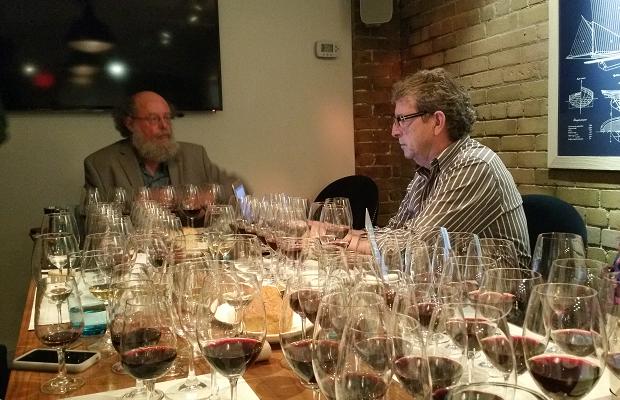
Konstantinos Lazarakis M.W. and Sofia Perpera, New Wines of Greece at the Sailing Club Restaurant, Patras

Konstantinos Lazarakis M.W. and Sofia Perpera, New Wines of Greece at the Sailing Club Restaurant, Patras

The four officially recognized PDO‘s are Muscat of Patras, Muscat of Rio Patras, Mavrodaphne of Patras and Patras. The first three are produced in the central and western section of Achaia. The local Muscat is known to the world as Muscat Blanc à Petits Grains and in Achaia as Moschidi. Under the regulations of both Muscat PDOs the wines may be vin naturellement douxvin doux or vin doux naturel. PDO Patras is made from 100 per cent Roditis, though there are several clones of this variety. Specific clones are generally chosen based on altitude, as each variant has been proven to work on particular slopes. The top wines are produced from a red Roditis, also known as Alepou. The PDO Mavrodaphne of Patras (Fortified, Vin De Liqueur) can be fashioned with up to 49 per cent dried and rehydrated Corinthian Raisin (Black Currant) in the mix.

Black Corinth Grapes

Black Corinth Grapes

Despite the fact that the predominant amount (almost 99 per cent) of Black Corinth ends up in a pouch full of currants, its agricultural significance continues to play a role in the sweet red Mavrodaphne of Patras. Top quality vineyards have historically been cultivated with the Black Corinth because they fetch as much as 300 per cent more money than wine grapes. The bizarre terroir-varietal-trade flow chart is changing for the better but the raisins remain a long way from extinction. Slopes that face the sun perpetuate the propagation. Then there is the unusual scenario of the earthquake factor. “In Patras we are either raisining or shaking,” quips Lazarakis.

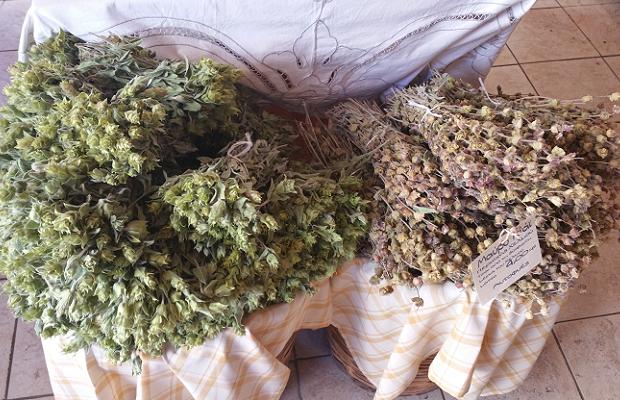
Kalavryta Mountain Tea

Kalavryta Mountain Tea

Other white varieties grown in the region include the extremely rare Sideritis (only two producers for the variety that shares a name in common with a flowering plant known as Greek Mountain Tea), Malagousia, Lagorthi, Chardonnay and Sauvignon Blanc. Other red grapes cultivated include Agiorgitiko, Xinomavro, Merlot, Cabernet Sauvignon and Syrah. The wines of Achaia are built upon an alcohol premise that keeps them stable, in balance and immune from oxidation. Their attitude fights the life work of Louis Pasteur and Jean-Antoine Claude Chaptal. If the wines lost some footing due to the trending towards bacteria and sugar mien, now, with the world peeling back from manipulated wines, the Achaian style is poised to grab their market share.

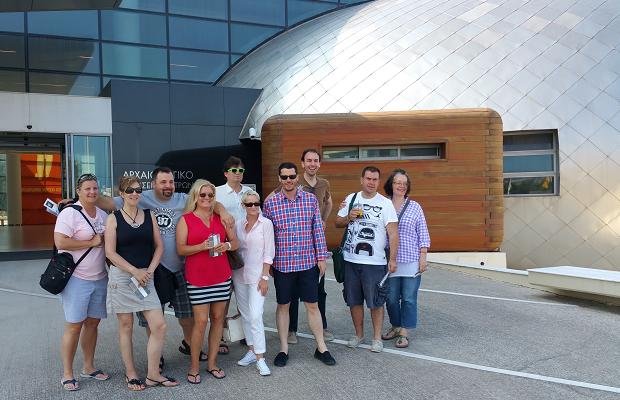
Accidental tourists at the Archaeological Museum of Patras

Accidental tourists at the Archaeological Museum of Patras


Tetramythos

8ο kil. Pounta-Kalavrita, Ano Diakopto, 25003, Greece, 2691097500 The most modern facility in all of Achaia, re-built after a fire destroyed the property more than 10 years ago. Owned and operated by the brothers Aristos and Stathis Spanos.

Panayiotis Papagiannopoulos, Tetramythos Winery

Panayiotis Papagiannopoulos, Tetramythos Winery

Oenologist since 1999 is Panayiotis Papagiannopoulos, a winemaker who may just have been separated from twin Frank Zappa at birth. Located at Ano Diakopto of Egialia, on the slopes of Mount Chelmos, the 14 hectares of vineyards (450-1,000m) are farmed organically (and have been since 1997). Bush vines make up 80 per cent and endemic varieties (85 per cent) cultivated (plus some expatriates) are Roditis, Malagousia, Sauvignon Blanc, Mavro Kalavryta, Agiorgitiko, Cabernet Sauvignon and Merlot. The total production is 13,000 cases with export to foreign markets (80 per cent) that exceeds peers by a wide margin.

Ano Diakopto of Egialia

Tetramythos Winery, Ano Diakopto of Egialia

Tetramythos Roditis 2014, PDO Patras, Greece (SAQ 12484575, $15.75, WineAlign)

Pulled from four vineyards at 650-850m of altitude and from vines 19-42 years old. No skin contact though it shows a light, slight tinge of colour. Nearly platinum in its yellow hue, perhaps attributed to organics says Papagiannopoulos, Eighty per cent was achieved through natural ferment (with zero malolactic) plus “one tank for security.” Roditis can go clean or develop anti-austerity, texture, viscosity in the direction of a dirty projector. The Tetramythos glides “forward through the clover and the bergamot.” I can see what she’s seeing. Tasting like a leesy ripe peach, this is the best “basic” Roditis tasted in Achaia. Serious match of Aleria Restaurant‘s Sea Bass Tartare. Drink 2015-2020.  Tasted July 2015

Tetramythos Roditis 2008, PDO Patras, Greece

A wine to fulfill the promise of my own personal vindication. I had asked Angelos Rouvalis about laying Roditis down for three to five years or more, to see where it may go and he said, “why?” Here is why. Has fan vaulted to the skies, urged by petrol and a symphony of mythology. Akin and within aromatic mineral reach of Sémillon or Riesling, with just a basal drip of ambrosial, gaseous honey. The green notes (of pea and nettle) are exaggerated but that is attributed to 2008 fruit that may have never been fully ripe. Drink 2015-2017.  Tasted July 2015

Tetramythos Roditis 2014 and Muscat Sec Blanc Nature 2014

Tetramythos Roditis 2014 and Muscat Sec Blanc Nature 2014

Tetramythos Muscat Sec Blanc Nature 2014, PGI Peloponnese, Greece

Nothing short of lucent, this friable, direct and crunchy raw Muscat. Effusive of individual vowels and consonants, typically Achaian, extrapolated to Greek in its lambent and inventive simplicity. More glade than wax, it coats with orange and the spirit of lime. So different and yet so familiar, inevitably dry and straight as an arrow. Drink 2015-2018.  Tasted July 2015

Tetramythos Mavro Kalavryta 2014 (SAQ 11885457WineAlign)

A terrific example for a grape saved from extinction, Tetramythos owns 1.9 of a total four hectares of MK. Kudos for the effort especially considering the variety is thin skinned, slow to mature and difficult to cultivate. Saw nearly 20 days of skin contact because “the variety dictates the practice,” notes Konstantinos Lazarakis M.W. The fruit and bitters express a push-pull of terroir. One of two wineries making dry wines from the endemic variety, here the fresh red grape, the food friendly marker. Here confidently struts modern Achaian winemaking, from the ashes of naturalism and antiquity, the way Gamay or Loire Cabernet Franc are wont to do. Vibrant, with verve and a necessary natural funk. Herbal and with a rub of tomato skin, creamy, cool yet resinous, followed through from aroma to texture. Drink 2015-2018.  Tasted July 2015

Kotrotsos Moschofilero Erasmios 2014 and Tetramythos Mavro Kalavryta 2014

Kotrotsos Moschofilero Erasmios 2014 and Tetramythos Mavro Kalavryta 2014

Domaine Mega Spileo (Cavino)

The domain is set within a dramatically oriented steppe of an amphitheatre, in a bowl beneath the shadow of a 940m rock that houses the great Greek Orthodox monastery of Mega Spileo (Grand Cave). Nowhere else in the Chelmos mountains does monk viticulture resonate as it does here. The great vineyard (Megali Ambelos) perches above the Vouraikos Canyon at 800m of height. The winemaker for the wines of Cavino and Mega Spileo is Stelios Tsiris. Varieties grown since re-planting in 1999 include Mavrodafne, Mavro Kalavritino, Cabernet Sauvignon, Merlot, Syrah, Lagorthi, Assyrtiko, Malagousia and Riesling.

Mega Spileo Monastery

Mega Spileo Monastery

Moschato 2014, PGI Achaia, Greece

Nearly bone dry (4 g/L RS) and well-nigh nicked by acidity (6.2 g/L TA) this is really a true expression of the Muscat Blanc à Petits Grains, an elegant cold pour into a glass on a breezy, sunny day. Until now Muscat in Achaia “could never look me in the eye” but the flurry of aromatics sing like a songstress in white lace. Its gaze is like lemon and olive oil and its tongue like the sweet wax on the rind. Here the Moschato path has been properly and soulfully taken. Rich in gold, like the kingdom of Agamemnon at Mycenae. Drink 2015-2017.  Tasted July 2015

Deus Rosato NV, Peloponnese, Greece

Made from 100 per cent Syrah and slightly sweeter than the Muscat, here at 60 g/L RS. The lees, cheese and funk from Syrah turned to sparkling distracts from the sweetness, sending this to parts of southern France in meditative, Mediterranean, savoire savour faire. Raspberry and cranberry vie for sweet and sour supremacy and the wine actually, seemingly turns dry on the peppery, fizzy, tanky and spirited back side. Never backs down and the last conceit is one of tannin. So much more successful than the Moschato. Drink 2015-2019.  Tasted July 2015

Mega Spileo Moschato 2014 Deus and Deus Rose

Mega Spileo Moschato 2014 Deus and Deus Rose

Cavino Mavrodafne Reserve 2000 (Winery)

“We are about to experience one of the best underdogs of Greece,” says Konstantinos Lazarakis M.W. by way of introduction. The world had to wait 18 months plus seven years years for this to appear. A Port-style fortified red, fashioned from the 27 best judged oak barrels and finished in October of 2000. The mix is Mavrodaphne (70 per cent) and Black Corinth (30), expertly amassed and positioned at a time when using the 49 percent maximum allowance of dried raisin was the norm. Ahead of its time in that regards but also because of its rangy acidity, incredible acidity actually, something that gives this dessert wine the essence and spirit of raisin radio. That and a beautiful oxidation and it succeeds in wooing palates, not to mention fulfilling the promise laid bare by Mr. Lazarakis. Drink 2015-2020.  Tasted July 2015

Parparoussis

Achilleos str., 264 42 Proastio, Patras, Greece, 30 2610 420334, info@parparoussis.com

Antanassis Parparoussis and Moschato Vines, Domaine Parparoussis

Athanassios Parparoussis and Moschato Vines, Domaine Parparoussis

Founded in 1974 by oenologist Athanassios Parparoussis who works as winemaker while daughters Erifili and Dimitra support on the business and marketing side. The winery is located in Patras and the property includes 10 hectares at Movri Achaias. Grapes are farmed organically and Parparoussis is one of only two vintners ion the region making wines from the rare and indigenous Sideritis. Parparoussis farms organically in principal but is not certified, nor is Athanassios concerned with the designation. It’s a matter of being devoutly pragmatic. “The soil is alive, so why kill it.”

Parparoussis Sideritis Dons De Dionysos 2014, Peloponnese, Greece (SAQ 11900995, $21.00, WineAlign)

The 2014 “gift of Dionysus” is herbal, arid, directly unassuming and fixed with a very savoury, nearly resinous pastel palate. The wind blows rosemary and lavender and truthfully it’s like a naturally cured red feeling in a white package. All lemon citrus at the tail. Drink 2015-2016.  Tasted July 2015

Parparoussis Rosé “Petite Fleur” 2014, PGI Achaia, Peloponnese, Greece

Just under 300 cases are made of this pale, lithe and prodigiously lithe blush wine, like the Dionysus, made from 100 per cent Sideritis. Skin maceration was performed overnight, “a one night stand,” while indigenous yeast was employed for a natural, dry vinification. The light and rust-directed antiquity of caste excess has caused an exaggerated herbal, namely oregano aroma. The overall feel is suppositious and may just be one of the great Rosé stories ever told. Drink 2015-2016.  Tasted July 2015

Parparoussis Sideritis Gift of Dionysus 2014 and Agiorgitiko Reserve 2010

Parparoussis Sideritis Gift of Dionysus 2014 and Agiorgitiko Reserve 2010

Parparoussis Taos 2010, PGI Achaia, Greece

A barrel fermented, dry vinified, 100 per cent Mavrodaphne. Naturally pitchy, high in acidity and purposed in tannin. A rare zero dilution at the hands of Black Corinthian Raisin and therefore not so high in alcohol, despite the richness of hue. Actually has a modern next tier level of complexity, complexion and aromatic intensity. Purple flowers and plum swirl in its circuitous, cycloid multiplicity. The savoury, resinous black bay laurel and chalky, cooked lentil, the grill and its smouldering charcoal are all in. Further resinous of bay oil on the back bitters and a very Tentura finish. Wild, sauvage, beautiful and built for the ling haul. Drink 2018-2025.  Tasted July 2015

Oenoforos (Rouvalis)

Selinous, 25100 – Aiyion, Greece, 30 2691029415, info@rouvaliswinery.gr.

Aneglos Rouvalis and WineAlign's DJ Kearney

Aneglos Rouvalis and WineAlign’s DJ Kearney

Eonologist is Angelos Rouvalis, a winemaker with an encyclopedic knowledge of every hill and slope in the mountains above Patras and where each variety grows best. Established in 1990 by Rouvalis, a Bordeaux-trained winemaker, recognized internationally as a pioneer in the renaissance that has taken place in the Greek wine industry in recent years. In 1994 Yannis Karabatsos, an agricultural engineer and expert in Greek viticulture joined the winery. “The Oenoforos winery consists of five levels on the slopes of Aigialeia in the village of Selinous. It combines monastic simplicity with state-of-the-art technology.”

Oeneforos Roditis ‘Asprolithi’ 2014, PDO Patras, Greece (SAQ 978197, $16.50, WineAlign)

The “white stone” could be considered the Pinot Grigio of Greece though the pink-skinned variety grown here between 800-1000m is such a bleed of high altitude calcaire. An amalgamated, aromatic accumulation is all about citrus without the airs of pierce and secondary sandarac meets kedros that reminds of clementine. At 11.5 per cent alcohol and low pH it might confuse for Trocken Riesling if not for its classic herbiage and austerity. Drink 2015-2018.  Tasted July 2015

Antonopoulos Vineyards

25008 Vassiliko Chalandritsas, Patra, 30 2694061447, info@antonopoulosvineyards.com

The winery was founded by the late visionary winemaker, Constantinos Antonopoulos near the city of Patras in the northwestern of Peloponnese. Constantinos saw the vast, untapped potential of this diverse landscape, especially the mountainous region of Achaia and the unique winemaking opportunities it presented. A new up to-date winery has been built recently at Vasiliko, Achaia, where the majority of the winery’s vineyards are. Indigenous Greek varieties are the focus. All three Antonopoulos wines tasted at the winery Achaia Clauss were clearly achieved through very serious work. Though clean beyond the pale, they all exhibit slightly to more than leesy and all finish with so much salinity and limestone inflection. The only thing missing is the crustaceous accent.

Antonopoulos Vineyards

Antonopoulos Vineyards

Antonopoulos Adholi This White 2014, PGI Achaia, Greece

Essential and pedigreed blend of Lohorthi 65 per cent), Chardonnay (20) and Roditis (15) that expresses increased aromatics much like Viognier. Nearly profoundly tropical but so very dry, like Assyrtiko in its cracking open but with the feel of wild yeast and the feign of barrel. Chalk it up to 800-900m clay-limestone speak and no more than that, creasing to a crisp effervescence without bubble, yet it does tingle of the tongue. Like it’s working all the while, then on to citrus on the end, in lemon and lime torque as if by Riesling. The Moschofilero might be Mycenaean Linear B and this the other, later Greek alphabet. Drink 2015-2018.  Tasted July 2015

Acheon Winery

Korinthou 121, Aigio, Greece, 30 26910 28062, info@acheonwinery.gr.

Sosanna Katsikosta is Oenologist and General Manager while Katerina heads up business and marketing operations. The sisters are carrying on a winemaking tradition passed on to them from their late father. Konstantinos Katsikostas carried the torch from his father Luke who founded the winery in 1946 in the area of Palaiokamares of Aegio. Annual production of 2,000 cases. Katsikosta is desperately, passionately practicing, experimenting, trying to stir up vinous ghosts and find their way back to ancestry, to ways of elders, to bring to light what used to be and to establish an identity for the world to see.

Acheon Sideritis 2014, PGI Achaia, Greece

The nearly extant one, a rare variety, being revived, planted at low altitudes, with yields 70-75 hL/L. Aromatic and misunderstood, with a Savagnin character, a funky, musky skin, like leather but not as deep, yet something oddly tropical, like jackfruit, or gummy bear, dusty ginger, and resin, like thyme. Another variety being worked with to see what it can be and to link back to what once was. Really good acidity. Drink 2015-2016.  Tasted July 2015

Kotrotsos

Vassiliko Achaias TK. 25008, 30 26940 61 900, vinko@otenet.gr. Winemaker is Giannis Kotrotsos.

Kotrotsos Mavrodaphne NV, PDO Mavrodaphne of Patras, Greece The standard 15 per cent alcohol and in this plugged in, short fuse sweet wine is highly intense and lit caper green, dried fruit and a serious pasticcio of botanicals, distilled into a major excitative and concentrated sweetness.  The second bottle tasted has so much more life and character. Much more sweet floral attractiveness and the sweetness is less pronounced as a result. Goes from spice and piquancy to sweetness with the right transitory methodology, culminating in a great LBV Port finish. Nutty and spicy. Tremendous fruit forward expression.  Drink 2016-2024.  Tasted July 2015

Karelas Winery

Georgios J. Karellas A.V.E.E, 41-43, Skagiopouliou Str., Patras, 262 22, 30 2610 321 000, karelas7@hotmail.com

Karelas Winery was founded in 1936 by Georgios Karelas. Using the native ‘Mavrodaphne’ grape, the company is renowned for it’s sweet, dessert style Mavrodaphne wine.
Mega Spileo Mavrodaphne and Karelas Mavrodaphe Reserve 2009

Mega Spileo Mavrodaphne and Karelas Mavrodaphe Reserve 2009

Karelas Mavrodaphne Reserve 2009, PDO Mavrodaphne of Patras, Greece

The only Mavrodaphne aged in highly seasoned toasted new French barrels. The standard weight bearing 15 per cent alcohol and a similar feeling as with previous kicks at the sweet Mavrodaphne can, but more red fruit and brighter raisins in the sun. The spice and liqueur here seem less spirited and combine for a more mature, seasoned, reasoned, direct and ultimately cleaner expression. Captain Jack (or George) will get you Achaia tonight “and take you to your special island.” Drink 2015-2022.  Tasted July 2015

Loukatos

Loukatos Bros, Β 3 & ΟΤ 24, Industrial Zone Patra 25018 Achaia / Patra, Greece, 30 2610 647588,  info@loukatos.com.gr

Perhaps most famous for their local production of spirits, namely Tentura and Mastic, Loukatos does a bang up job with dessert wines, especially in their handling of Muscat from Patras.

Loukatos Muscat of Patras and Mavrodaphne of Patras

Loukatos Muscat of Patras and Mavrodaphne of Patras

Loukatos Muscat NV, PDO Muscat of Patras (WineAlign)

A 15 per cent abv Vin de Liqueur largely based on the 2013 vintage. Very clementine and apricot nosed, impeccably balanced from viscous to intensity in grape, with nothing musty or musky about it, though there is a musk melon sense, a botrytis that is very clean. Another excellent, natural sweet Patras example of what Muscat can do, again at super low cost, with high flavour and here, more fruit forward than the Kotrotos. Drink 2015-2021.  Tasted July 2015

Old cask and young DJ Kearney at Achaia Clauss, Aigialia, Achaia

Old cask and young DJ Kearney at Achaia Clauss, Egialia, Achaia

Crisis? No one’s gonna bring Greece down, nor me neither, ’till I again reach Achaia ground.

Good to go!

http://www.winealign.com/profile/2058-mjg

Chase food pairings with Stratus

The Chase Restaurant's Pom-pom Mushrooms, braised bacon and peppery greens

The Chase Restaurant’s Pom-Pom Mushrooms, braised bacon and peppery greens

Master of assemblage and varietal maître J-L Groux sits at the head of the underground table while a busy lunch crowd fills in overhead at The Chase Restaurant in Toronto. Highly apropos not just because the Stratus winemaker is over-qualified to preside over the Niagara winery’s 10th anniversary tasting and dissertation on his wines. No, it’s because the posit perfectly illustrates the writer’s yet unspoken epiphany. Groux’s work under the Stratus Vineyards and its offshoot labels have made for some of Ontario’s great food matching wines.

Stratus 10-year anniversary tasting

Stratus 10-year anniversary tasting

Related – The Stratus-Momofuku continuum

It may not be obvious to most but Godello is not much of a food and wine pairing guy. Chef is a fan of great wine and food compatibility but not when generalities need define the directive and the prose. When it comes to the wines of Stratus, a pattern is emerging with incredible clarity. Momofuku, Select Bistro, The Chase. Three Toronto food destinations with high quotients of quality and progressive gastronomy. Three connections with Stratus. Three hits.

Stratus winemaker J-L Groux and WineAlign's David Lawrason

Stratus winemaker J-L Groux and WineAlign’s David Lawrason

Related – Select tasting through years of the Stratus Red and White

The wines are repeatedly discussed and assessed with assemblage and varietal tendency in mind. I have worked through the portfolio or a representative cross-section no fewer than six times in the past three years and yet for the first time the sound was one of a culinary vernacular, a voice heard out of ingredient and mise en place, a dawning of purpose.

The Chase Octopus, harissa, spiced merguez sausage, sauteed red onions

The Chase Octopus, harissa, spiced merguez sausage, sautéed red onions

Related – Stratus and Momofuku: Modernity incarnate

The Chase tasting was presented by the Stratus team of Groux, Charles Baker, Suzanne Janke and Nadia Skorupski. The exceptional lunch was prepared at the hands of Nigel Finley. Here are the notes on 18 wines poured.

Stratus assemblage and varietals

Stratus assemblage and varietals

Stratus White 2012, VQA Niagara Peninsula, Ontario (660704, $44.20, WineAlign)

In magnified aromatic persistence, on and over top of even two months earlier, in such a hyper-grapey way with terrific dry extract chained to tannin and humid minerality. The many months of leave in gentle oak is stating its technically procured, quote unquote de-classified case.

From my earlier note of April 2015:

In 2012 the blend is Chardonnay, Sauvignon Blanc and Riesling. Viognier was left out because according to winemaker J-L Groux “it did not work in blending trials.” The vintage has laid the foundation for the most density, and unctuous fruit for the Stratus White in what must be, ever. At the high aromatic end there is peppery beeswax, reverberating and echoing in scales and arpeggios. Like an open string singing warmly, the vintage, extraction and residuum combine for texture in mottled unction. Sapid lemon, more beeswax and lanolin mark the palate and then the White drifts into spaces occupied by smoky, back beats and bites. This has great pitch with a knowledge of the path to pleasure. Drink 2017-2025

Last tasted June 2015

Stratus White 2005, VQA Niagara Peninsula, Ontario (660704, $44.20, WineAlign)

The blend of Chardonnay, Riesling, Sauvignon Blanc, Gewürztraminer, and Sémillon with a not necessarily before announced whisper of Viognier was culled from vines “getting older, staying true to our technique,” recalls J-L Groux. The grapes were growing at the bottom of the vines which “made for a challenging wine.” The Gewurz acts in upwards accent to the others, its far-easter flavours speaking with scrunch. Concentration is in compression without density to soft spoken. The most unusual bunch location certainly had something to do with my aforementioned “whiff of terroir that blew away” and according to Groux “the year was very nice.” The Stratus White 2005, tasted again, as well.

From my earlier note of September 2013:

‘Twas a deadly vintage (worst frost in Niagara on the Lake) and the only one with smacking aromas from the vineyard floor. “A zoo growing season,” notes Groux, “with grapes hanging high and low.” Chardonnay leads the troops in ’05, in elevated acidity and earthiness from grapes picked “in a different type of environment, near to the earth.” Highly textured and mature, leggy fruit. Though its best years are behind (because the fruit will no longer support the oak), the Groux seven-year ageing goal has easily been reached. The whiff of terroir does blow away and the honey liniment and rose emerges. So much consistency, so rapidly developed. Amazing. Witness here the winemaking acumen out of an atypical vintage and confounding result.

Last tasted June 2015

Stratus Chardonnay 2012, VQA Niagara Peninsula, Ontario (Winery, $48.00, WineAlign)

As per the house promulgation, in Chardonnay, “still an assemblage process,” insists Groux, “no matter what we do.” Some grapes grown for Sparkling were added back in, for acidity, complexity and ultimately balance. That and though notably barrel burdened (a good, hard burden to bare) leading to a bargain, “the best I ever had.” Major key of whose who of Niagara fruit, power acoustic chords and 12-string harmonics. Drink 2015-2022.

From my earlier note of May 2014:

A change in direction is duly noted with J-L Groux’s 2012 Chardonnay, from fruit picked six weeks earlier than in 2010. The program is scaled back and the wine is more “typical” of the region, in weight, in barrel effect and in alcohol. Still quite defined by natural yeasts that “sometimes go a bit wild, but I’m getting better at it,” concedes the clinician of vinous letters. Those feisty microbes are difficult to work with, like dealing with a wine that lacks natural clarity. “You have to shut down the bacteria, teach the yeast to stop stealing the lees. In 2013 I really got it.” The ’12’s altered course is welcome and encouraged and the world should wait with bated breath for what ’13 will bring. Here the complexity of aromatics is matched only by the intensity of tropical fruit. Has balance and a soft, round feel. Again, more texture and aromatics than natural acidity. Classic J-L style. “It’s not about trying to imitate anyone. It’s about making the most interesting and most complex Chardonnay in Niagara.”

Las tasted June 2015

Stratus Chardonnay Reserve 2002, VQA Niagara Peninsula, Ontario (Winery, $48.00, WineAlign)

Even now its wick seems lit, a febrile wicker thatch of reed, bamboo and rattan, a little wicked even. Versatile like vin jaune, of oxidative rushwork, a product of a time when the regimen was all new oak. Preserved lemon and wax, late bitters within reason and with thanks, surprising freshness. Though the oak was overdone at the time, the slow food preservation has rendered the fat and left behind sharpness, even at 13 years of age.  Drink 2015-2017.  Tasted June 2015

Stratus Viognier 2012, VQA Niagara Peninsula, Ontario (Winery, $48.00)

The most tropical unction of seemingly all Viognier known to human kind, Stratus issue or not, at the hands of J-L Groux or any other aromatic junkie in the winemaking world. Hung like an ancient painting on a modernist gallery’s bright white walls. A pepper-laced, creamy white paste cuts through the similarly positioned texture. A quench of peach, apricot and nectarine sits on the palate, like an August fruit cup from Ontario trees, with a cut of nut pith. And lemon too. Drink 2015-2019.  Tasted June 2015

Stratus Red 2012, VQA Niagara On The Lake, Ontario (131037, $44.20, WineAlign)

The Stratus Red 2012 resides both in a virtuoso’s hollow and in a pantheon inhabited by some of Niagara’s great reds. The fact that such ripe phenology can anticipate and foretell to balance and freedom in the byplace of the blending process is nothing short of amazing. Sinuous and exact, of berries so indefatigable, layering raspberry over blackberry atop strawberry. Cedar and red citrus compound, without jamming the fluidity, but certainly accentuating the Fragaria vesca. Confident and fluid in movement, the ’12 neither shakes nor stirs and its acidity is flat out terrific. At this early point in its evolution it is showing as well as could be expected, or hoped for. Its core of fraises du bois will always be there. Time will be kind, gentle and patient. Drink 2015-2024.   Tasted April and June 2015

Stratus Red 2002, VQA Niagara On The Lake, Ontario (131037, $44.20, WineAlign)

Tasted from two bottles. The blend was Cabernet Franc (40 per cent), Merlot (37), Cabernet Sauvignon (16) and Gamay (5)…roughly. Gremlins from a closet in a funky way, in causation by time though for every thought of flaw there are 10 in depth and layering. The second pour is brighter and popping but if a master of time, partially, arguably so is considered, then the years have had their say. Both palates are alive, tense, terse and resonant in deep horns, where fog meets contrabass. The specs are interesting to note; 7.2 total acidity, pH at 3.19 and sugar (brix), 22.3. Says J-L Groux “we would never pick at that number today.” High acidity keeps it alive, this mix of fruit that is oxidized, nearing the suggestion of maderized and whiffing like 55-day, dry-aged beef. Only the second bottle offers up true savour and cooler instincts. Fascinating. Drink 2015-2016.  Tasted June 2015

Stratus Cabernet Franc 2012, VQA Niagara Peninsula, Ontario (Winery, $38.00, WineAlign)

A Cabernet Franc of settled, harmonious tones, of oak that sets sights and heights to heah, now integrated at such an early age. The grape succeeds and bleeds an exemplary, stalwart varietal suspension within the Stratus pantheon, a sanctuary where fiddles are yet played by other outfits across the region. Cabernet Franc will increase in the Stratus Red, for good measure and reason. This ’12 is simply smothered in an embarrasment of red fruit, smoky from raspy reds to plugged in currants. It is of a favour in flavour that reminds of Swedish berries, in modulated hög, though not in sweetness. Drink 2015-2021.  Tasted June 2015

Stratus Cabernet Franc 2005, VQA Niagara Peninsula, Ontario (Winery, $38.00, WineAlign)

Of a bygone era, an older style. Thicket or copse, but of a green, verdant, newby character. Like a shell, membrane or rim of shellac on an expressly full-bodied corpse. Smells like a grandfather’s old pipe, comforting and parched. Flavours have left piquant behind, settling with senectitude into orange and clove. Alive if well-aged and evolved. A push-pull of warmth and cool elasticity, humidity and savour. Drink 2015-2016.  Tasted June 2015

Stratus Cabernet Sauvignon 2012, VQA Niagara On The Lake, Ontario, (Winery, $55.00, WineAlign)

Few varietal Cabernet Sauvignon in Niagara stand out, firm and yet back from the pack. The Stratus is anything but “six and one, half dozen the other.” This prochaine exit strategy to the NSOR 2010 is an admirable follow, of dusty fill and grind of pepper, a touch of brine and “a cup of rhyme.” Structurally it is like a swan, elongated, muscular and elastic. It is elegant within a markedly rigid frame. It also flies freely, like a hummingbird. “You can crop it higher and it’s going to make good quality,” notes J-L. Hurrah. Another varietal success for Life’s Rich Paegent. Let it catch some R.E.M. to settle its tannins. Drink 2017-2022.  Tasted June 2015

Stratus Petit Verdot 2012, VQA Niagara Peninsula, Ontario (142638), $30.75, WineAlign)

Picked at nearly the same time as the ’12 Gamay and with prudent acidity preserving fashion – early. A variety that travels with happy expedience into sugar (26 brix) and maintains that aforesaid acidity without intrusion. A tightly spun PV, in need of five years easy to unwind and hopefully recoil. The wall of rigidity is woven in chalk and grain, the lift round, all-in, immediate and lingering. Then it comes back around again, ever-increasing the high tones of the wine. So very metagrobilizing genera, this ’12 Petit Verdot. Drink 2019-2024.  Tasted June 2015

Stratus Gamay 2012, VQA Niagara On The Lake, Ontario (Winery, $29.00, WineAlign)

“We try to treat Gamay as a noble variety,” says J-L Groux. This is the child of a short (three weeks) Stratus maceration. Today the nose indicates concentrated strawberry compote. Gamay of the most hue, tone and texture. “We don’t want to go back to the light years of Gamay.” This futuristic vintage (of two years in oak and high, high brix) sees to that concern. Subsequent vintages will scale back but won’t be “light, easy and breezy,” though they will shed the weight of raisin and fig.

From my earlier note of May 2015:

Esteem elevated by structure, matched in poise and presence mottled in smears of darker, richer black cherry. If a slight absence of brightness is sensed due to the syrupy compression, like New World, west coast Pinot Noir, the gleaning from acidity and tannin times perfectly the effluent escape.

From my earlier note of April 2015:

It may not be the most idiosyncratic Gamay in Niagara but the Stratus 2012 is without a doubt the most advanced and complex. Gamay fusion is on display, at once a bottle of Niagara’s finest pulchritudinous veneer and then a charcuterie board laid ample with cured bovine parts and sun-dried grapes. Maximum ripeness and then even later picking, to no one’s surprise, have led to this. Two years of ageing in neutral oak barrels has brought about a humid roundness and yet the centre is controlled by Oz-like mint and eucalyptus notes. The jam is gelid, as opposed to temperate. Rarely does Gamay go to such depths, of blackberry, chalk and grain, with an overlord of tannin. Quite serious stuff. Drink 2017-2020.

Last tasted April 2015

Stratus Sangiovese 2012, VQA Niagara On The Lake, Ontario (Winery, $42.00, WineAlign)

With no true recognition of, for or in cohort conscious decision to align with a clone, of Montalcino, Montepulciano or Chianti, this Stratus take on Sangiovese must go it alone. That said, so much modernity links it to some Tuscan brethren. “We have Italian winters that tell us our Sangiovese is not a crazy one,” explains J-L Groux. Nothing in this ’12 speaks of lightness, beets or simple, red fruit. Two years in French oak, blah, blah, blah leads to a Riserva style. This is not about making CC, simulating CCR, mimicking Gentile or copying Grosso. It’s about leaving a wine for two years to develop aromatic complexity and structure. “It’s a curiosity,” adds Suzanne Janke. Nail’s head, hit. Drink 2016-2019.  Tasted June 2015

Stratus Tempranillo 2012, VQA Niagara On The Lake, Ontario (Winery, $42.00, WineAlign)

In 2012 the J-L Groux take on the expatriate Spaniard is warm, rich, cake-driven and yet balanced in ways the 2010 was unable to exhort. This vintage appeases Groux’s ends of the earth search for aromatics, picking on them, executing vinification to encourage them and barrel-aging for the purpose of cementing them. The 2012 is an aromatic success. It exudes red fruit, flowers, baker’s kitchens and wet Niagara on the Lake earth. This is a clean and jerk Tempranillo, a bouquet to success. The palate, mouthfeel and mellow finish return the favour of 2010 when it was noted that the variety in this place is a stretch, overweening perhaps, certainly self-effacing if admittedly short of contumelious behaviour. Drink 2015-2019.  Tasted June 2015

Stratus Tannat 2012, VQA Niagara On The Lake, Ontario (Winery, $42.00, WineAlign)

“To me this is one of the most successful new varieties we are planting,” exclaims J-L Groux. In similar ways with Stratus varietal cousin Petit Verdot, acidity rules the roost. Smells like a just sliced open bag of organic earth, freshly neutral, funkless and emptying into a (first use) terra cotta pot. A rich, looking straight ahead expression. What it hides in fruit is lost to the brilliance of balance though plum is the operative hidden flesh and it will make a clearer impression when it steps clear of the tar and the tannin. This is pitchy sagacity, with poise and length. Drink 2016-2022.  Tasted June 2015

Stratus Syrah 2012, VQA Niagara On The Lake, Ontario (Winery, $48.00, WineAlign)

Once again, the tone climbs and hangs in the upper reaches, where structure lurks, preceded with intent by four plus weeks of maceration, followed by (sic) two years in oak. Some new, some old, to be technical and precise. Will be some time before this is able to shed the bathetic, syrupy aromatics and meaty, eat that soup with a fork texture. The concentration it treated and tempered with a pantomime shred of elegance. Not as Rhoneish as some other vintages (contemporarily not a bad thing) but this combines worlds in copacetic ways. Tomato and herbs crisped in good olive oil make for good gastronomy in this consumer-friendly, balanced Syrah. Drink 2016-2019. Tasted June 2015.

Stratus Malbec 2012, VQA Niagara On The Lake, Ontario (Winery, $42.00, WineAlign)

Unexpectedly floral, perhaps more than any other Stratus varietal red. That aroma bite strikes me as cool. Just a hint of fennel and coriander seed offer up an herbal hand of complexity. The texture advances to integrated, coming about with a softer red in tow, with less severe acidity than the others. More bitters on the finish as well. Less attitude, more fat, though decidedly rich. Drink 2015-2017.  Tasted June 2015

Stratus Wildass Rosé 2014, VQA Niagara Peninsula, Ontario (71712, $17.95, WineAlign)

A blend of Cabernet Franc and Merlot with some Sauvignon Blanc and Riesling added for lift and what J-L Groux admits is rendered “for the consumer.” This essentially marks the twain between sweet and dry, if not quite halfway then pretty darn close. Plenty of herbs and citrus nail the aromas on the proverbial head with more than a grapefruit or two on the half circle. A highly approachable, end-user friendly blush. Drink 2015-2016.  Tasted April and June 2015

Stratus Botrytis Affected Semillon 2012 at The Chase

Stratus Botrytis Affected Semillon 2012 at The Chase

Good to go!

http://www.winealign.com/profile/2058-mjg

Catch 22 wines

Godello's garden meets Greek Horaitiki

Godello’s garden meets Greek Horaitiki

Twenty two wines I tasted from the August 22nd release. Some are really good. So what’s the catch? Some not so much. As always, take a grain of salt and judge for yourself. Godello is not traditionally a site to explore the good, the bad and the ugly. The good news is that the worst of these 22 are actually quite well-made. The bad news is that each will only satisfy a certain kind of palate and a specific sort of temperament.

Something for everyone. LCBO 101. I hope you find something you like.

From left to right: Koncho and Co. Tsinandali 2012, Man Vintners Free Run Steen Chenin Blanc 2014, Featherstone Four Feathers 2014, Grace Lane Riesling 2013, Henri Bourgeois Petit Bourgeois Sauvignon Blanc 2014, Perrin Réserve Rosé 2014, Vineland Sauvignon Blanc 2013 and The Crusher Viognier 2013

From left to right: Koncho and Co. Tsinandali 2012, Man Vintners Free Run Steen Chenin Blanc 2014, Featherstone Four Feathers 2014, Grace Lane Riesling 2013, Henri Bourgeois Petit Bourgeois Sauvignon Blanc 2014, Perrin Réserve Rosé 2014, Vineland Sauvignon Blanc 2013 and The Crusher Viognier 2013

Koncho & Co. Tsinandali 2012, Kakheti, Georgia (412981, $12.95, WineAlign)

Boxy, foxy, contained, constrained, aromatics waiting to burst, in big timbre and quite spicy. A bit reductive and very juicy. Boisterous, wild-eyed expression. Drink 2015-2018.  Tasted August 2015  @GeorgianWineSoc

Man Vintners Free Run Steen Chenin Blanc 2014, Wo Coastal Region, South Africa (126847, $13.95, WineAlign)

Good texture and mouthfeel in this Chenin, dry but unctuous, direct and filling. Works coastal wonders in many ways. Drink 2015-2018.  Tasted August 2015  @MANVintners  @vonterrabev  @WOSACanada

Featherstone Four Feathers 2014, VQA Niagara Peninsula, Ontario (341586, $14.95, WineAlign)

Though Riesling dominant this is a shared experience, with cool climate Chardonnay and richly aromatic Gewurztraminer lifting spirits and exhaling breaths. The Sauvignon Blanc seems to add ripeness and juicy palate flow. A mouthful of ripe fruit to be certain and amenable beyond its pragmatic ways. One of the better value white blends and one to look at for Niagara Peninsula propensity within the context of designing an appellative blend. Drink 2015-2017.  Tasted August 2015  @featherstonewne

Grace Lane Riesling 2013, Yakima Valley, Washington (420737, $14.95, WineAlign)

Simple, straightforward, slightly spritzy Riesling with a full-blown lemon lime palate and a finishing set of bitter piths. Good length gives it life. Drink 2015-2018.  Tasted August 2015

Henri Bourgeois Petit Bourgeois Sauvignon Blanc 2014, Igp Vins De Pays Du Val De Loire, France (672345, $15.95, WineAlign)

A lithe and petite Sauvignon Blanc, balmy, touched by spice accents and a whisper of lemon/lime. Tart but not really striking or biting. Soft Sauvignon Blanc, quick and effortless. Drink 2015-2016. Tasted August 2015  @ChartonHobbs

Perrin Réserve Rosé 2014, Ac Côtes Du Rhone, France (719062, $15.95, WineAlign)

Pretty Rosé, arid enough though really juicy and presentable to a wide army of followers. Some tonic and even more brine. A late feeling of pickles and preserves. Better than many. Drink 2015-2018.  Tasted August 2015  @Beaucastel  @ChartonHobbs  @RhoneWine  @VINSRHONE

Vineland Sauvignon Blanc 2013, VQA Niagara Escarpment, Ontario (551168, $16.95, WineAlign)

Spicy vintage for the Escarpment, concentrated in many ways, for juicy fruit, capsicum and savoury herbs. A touch effervescent which does not detract, but rather adds a buoyant lifeline because the tart acidity is really something else. Fun with Sauvignon Blanc from up on the shelf. Drink 2015-2017. Tasted August 2015  @VinelandEstates  @benchwineguy

The Crusher Viognier 2013, Wilson Vineyard, Clarksburg, California (361964, $16.95, WineAlign)

Reductive Viognier, nice and fresh for a change, cool Clarksburg fruit thankfully kept shy and in absence of high alcohol, overly heated sunshine gluck. A bit of a mouth breather, tropical in a longan way and of enough though not striking acidity. Finishes overly bitter, in lime pith and a kind of nettle. Drink 2015-2018.  Tasted August 2015  @SebastianiWines  @Select_Wines

From left to right: Trivento Golden Reserve Malbec 2012, Pascal Jolivet Attitude Sauvignon Blanc 2014, Gérard Bertrand Côte Des Roses Rosé 2014, Paco & Lola Albariño 2013, Herdade Do Rocim Red 2011,S. Cristina Massoni Lugana 2014 and Gray Monk Pinot Blanc 2013

From left to right: Trivento Golden Reserve Malbec 2012, Pascal Jolivet Attitude Sauvignon Blanc 2014, Gérard Bertrand Côte Des Roses Rosé 2014, Paco & Lola Albariño 2013, Herdade Do Rocim Red 2011,S. Cristina Massoni Lugana 2014 and Gray Monk Pinot Blanc 2013

S. Cristina Massoni Lugana 2014, Doc Lombardy, Italy (200097, $17.95, WineAlign)

Tanky and metallic, coastal and postal for Trebbiano di Lugana. Quite herbal, reminiscent of Sancerre, with spice, nettle and linear length. Layered and structured white with a seriousness in its expression. Drink 2015-2020.  Tasted August 2015

Herdade Do Rocim Red 2011, Alentejo, Portugal (423574, $17.95, WineAlign)

A regional blend of Antao Vaz, Arinto and Roupeiro. Very cimmerian, rich and dense Alentejano, wildly berry delicious and yet fierce. Lots of oak, lots of optimism and plenty of swagger. Very spicy and toasty finish. Drink 2015-2019.  Tasted August 2015  @winesportugalCA

Paco & Lola Albariño 2013, Do Rías Baixas, Spain (350041, $18.95, WineAlign)

Concrete and tank Albarino, steely and mineral, cool and bristling. Turns to stone fruit on the palate, gets down to juicy and then ricochets off the walls, drawing salinity and pulverized limestone into the very linear finish. Such a calcareous, wound white wine, on a spindle, in a vacuous void of aggregate and steel. Drink 2015-2020.  Tasted August 2015  @pacolola  @azureau

Gérard Bertrand Côte Des Roses Rosé 2014, Ap Languedoc, Languedoc-Roussillon, France (373985, $18.95, WineAlign)

Dry, floral, medicinal, quite tight and angled, not angular Rosé. The sea salinity and briny strawberry confluence is quite striking. Doesn’t really linger so in the end it’s a bit of a simple quaffing Rosé but what of it? That’s right. Drink 2015-2016.  Tasted August 2015  @GBvins  @LanguedocWines  @FwmWine

Pascal Jolivet Attitude Sauvignon Blanc 2014, Loire, France (971887, $19.95, WineAlign)

A neat feat to stretch Sauvignon Blanc like this, in phyllo layers and like bitter greens braised to sweet tenderness. Savoury though the herbs are not the most recognizably cultivated, used or considered. Like winter savoury, or Spruce tip, edible seaweed even. All tossed lightly, gingerly in a citrus vinaigrette. Playful SB, at times tight and bracing and then generous, giving, forthcoming. Previous vintages have had more shine. Drink 2015-2020.  Tasted August 2015  @HalpernWine  @LoireValleyWine

Trivento Golden Reserve Malbec 2012, Luján De Cuyo, Mendoza, Argentina (588731, $19.95, WineAlign)

Heavy handed, much wood and chalky, full on bloody Malbec. Has Oz strength and gumption. Good lengthy finish. Drink 2015-2019.

From my earlier note of August 2014:

This Golden Reserve Malbec by Trivento is a juicy, dusty, fruit tree addition to the #WWAC14 flight and arrives just in the nick of time. Despite the dark fruit, it has no Drake spoken word conceit. It sings in classic Drake lullaby, with beefy meet pine forest aromas and so “you find that darkness can give the brightest light.” Tender refrains soften chalky, stalky wood and corresponding bitter chocolate. Big tannins on this balladeer. Has impressive stuffing.  @TriventoArg  @Select_Wines  @winesofarg

Last tasted August 2015

Gray Monk Pinot Blanc 2013, BC VQA Okanagan Valley, British Columbia (321612, $20.95, WineAlign)

Into another cool climate Pinot Blanc poster from Gray Monk, the standard bearer for the variety, in this price and stylistic niche, for anyone who cares or dares to join the bandwagon. Juicy stone fruit of a peach, yellow plum and nectarine fold, circular bites of acidity and mineral bleed and just a touch of tonic to tie it all together. Always great stuff. Length even better than in 2012. Drink 2015-2020. Tasted August 2015  @GrayMonkWinery

From left to right: Domaine De Rochebin Vieilles Vignes Bourgogne Pinot Noir 2013, Buena Vista Chardonnay 2013, Benjamin Bridge Nova 7 2013, Featherstone Onyx 2010, King Estate Signature Collection Pinot Noir 2013, Charles Baker Picone Vineyard Riesling 2012 and Cantina Del Pino Barbaresco 2010,

From left to right: Domaine De Rochebin Vieilles Vignes Bourgogne Pinot Noir 2013, Buena Vista Chardonnay 2013, Benjamin Bridge Nova 7 2013, Featherstone Onyx 2010, King Estate Signature Collection Pinot Noir 2013, Charles Baker Picone Vineyard Riesling 2012 and Cantina Del Pino Barbaresco 2010,

Domaine De Rochebin Vieilles Vignes Bourgogne Pinot Noir 2013, Ac Bourgogne, Burgundy, France (424275, $22.95, WineAlign)

Such a pretty red cherry, fine earth and cinnamon heart confluence on the aromatic front, with no palate or late tannin affront. The acidity seems particularly natural and fitting, the finish quick and efficient. Very good old world look at the world of Bourgogne. Drink 2015-2018.  Tasted August 2015  @BourgogneWines

Buena Vista Chardonnay 2013, Carneros, Sonoma County, California (67405, $23.95, WineAlign)

Cream in your coffee, sui generis housed and reductive Chardonnay with a chip on its shoulder. Aromatic rhythms are modulated by the barrel’s influence while flavours are pleasant though not wholly distinctive or full of character. Very directed Chardonnay and an exemplary regional example for the price. Will show better a year on. Drink 2016-2018. Tasted August 2015  @BuenaVistaWines  @TandemSelection

Benjamin Bridge Nova 7 2013, Gaspereau Valley, Nova Scotia (256289, $24.95, WineAlign)

Down $1 in price from this time last year.

From a bumper crop, there came to market 11,000 cases of this Nova Scotian feel good, faux-sparkling story. Winemaker Jean-Benoit Deslauriers’ Nova 7 dissimulation in bubbles is a true trick of the trade and though this white wine strikes as if it were a child of a warm vintage, there is a classic lightness of Rosé fizz being in its ever so slight effervescence. A singular wine in many hybrid incarnations, in Muscat ways, of pink Perle de Csaba, segmented and pressed for a sweet burst of grapefruit. It’s low (7 per cent) in alcohol, excellent in acidity, sweet and sour, citrus zesty, juicy and dry at the same time. Batch delineated and loyal to continence, though if the quantity creeps much higher that may come in to question. Grown up pink lemonade and so easy to consume.  Tasted June and July 2014, July 2015  @Benjamin_Bridge  @jbdeslauriers

Featherstone Onyx 2010, VQA Niagara Peninsula, Ontario (372433, $29.95, WineAlign)

Strikes as Cabernet Franc dominant and quite savoury so, slightly cured and richly layered. Merlot appeals and appears with its own distinct clarity, gift-wrapped with tidy flavours in refrain of Franc that acts like fruity Cabernet Sauvignon. The vintage is very in and though it’s warmer and coated with more wood than would best service its needs, this has settled into a really nice glass of red berry and plum red wine. Kudos to the blender and the patience afforded the result. Drink 2015-2018.  Tasted August 2015  @featherstonewne

King Estate Signature Collection Pinot Noir 2013, Oregon (984005, $34.95, WineAlign)

High quotient of ripeness, astringency below, earth above sprinkled and saturating. Quite an effusive design and rambunctious effort. All over the map. Big, bouncy and biting. Drink 2015-2018.  Tasted August 2015  @KingEstate

Charles Baker Picone Vineyard Riesling 2012, VQA Vinemount Ridge, Niagara Peninsula, Ontario (241182, $35.00, WineAlign)

This ripe Picone in 2012, not a surprise and ripping at the same time. The orchard stands out, the texture overlaid and the length outstanding. Picone in ’12 has presence of more immediate notice, standing firm and tall to be counted early and then, for years to come, often. Like juice bled from escarpment cragges, a speciality that is singularly Picone. Drink 2016-2022.

From my earlier note of June 2014:

A vintage that begged to be protected in the vineyard, meaning no leaf plucking and no thinning. A most excellent goal of (0.691895068 kg / m2), or 2.8 tons an acre was realized, as opposed to one in 2010. Heavy vigor slowed down the ripening (leaving that kind of tonnage on the vine), to an elongated balance. Comes from terroir Baker nods to as “a barren tundra,” which you don’t get down the hill. In 2012 there was no waste, no rot, no problems. Its residual climbs to 15 g/L but you’d never know it. There is a confit of citrus, a mellifluous sensation of preserved lemon. Total count is 600 cases.

From my earlier note of March 2014:

“Baker’s iconic child yet breathes in unsettled, spumous emission from out of a warm vintage. So primary and such a hard act to follow. Vanguard Vinemount Ridge, arid as the desert and citrus, carbonic tight. Treated with cool, cooler and colder methods to seek result and strike balance in an opulent, lees-appertained, tangy finish. A Picone that says I don’t live today, so it is told and canvassed, “uh, get experienced, are you experienced?”  Last tasted June 2014  @cbriesling

Cantina Del Pino Barbaresco 2010, Docg Piedmont, Italy (922880, $37.95, WineAlign)

Nebbiolo of intonation, modulation and stress, with a noticeable mid-life moment in volatility, in contrast to an enamoured aromatic loveliness in rose petal and candied flower. Dusty swirls and tight red fruit meets stark acidity. A Barbaresco such as this has historical advantage on its side but scares a bit in the present. A very fair price for a wine that has to be stashed away for at least three years for the angst to subside. Drink 2015-2018.  Tasted August 2015  @LeSommelierWine  @piemonte_italia

Good to g0!

http://www.winealign.com/profile/2058-mjg

Got August, go cottage, get wine

Fiore di Zucca Fritti (Fried Zucchini Flowers)

Fiore di Zucca Fritti (Fried Zucchini Flowers)

Let’s just cut to the chase. It has been more than three weeks since I’ve posted to Godello, thanks to a trip to Greece, Cool Chardonnay and my #eastcoastswing15. Let’s face it, I’ve left you hanging, waiting, wondering and perchance, livid at not having received a recommendation for summer wines since, well, since July 15th. As my Achaian friend Dimos is like to say, on repeat, “sorry about that.”

VINTAGES rolls out the smallest (by quantity) release of the calendar but I’ve got to say that per wine offer capita, the quality level is set to high. There is much to choose, from refreshing whites to grill worthy reds. Got, go, get.

From left to right: Espelt Viticultors Old Vines Garnacha 2013, Rosewood Süssreserve Riesling 2014, Domaine Lafage Côté Est 2013, Lone Birch Syrah 2013 and The Foreign Affair Sauvignon Blanc Enchanted 2013

From left to right: Espelt Viticultors Old Vines Garnacha 2013, Rosewood Süssreserve Riesling 2014, Domaine Lafage Côté Est 2013, Lone Birch Syrah 2013 and The Foreign Affair Sauvignon Blanc Enchanted 2013

Espelt Viticultors Old Vines Garnacha 2013, Do Empordà, Spain (422469, $14.95, WineAlign)

Such a formidable and concentrated liqueur dominates the nose on this heavily-textured Garnacha from maritime-influenced vines grown on decomposed granitic soils. Minor yet judicious oak works minor magic on the fruit for a feeling that is organza in sentiment if like fruit-roll up in reality. The couverture is quite natural and free-flowing, like waves lapping up a windless shore. Though flavours like liquorice, pomegranate and morello cherry are thought intrusive, the actuality here is simply Garnacha in pure, unadulterated form. This should be a late summer, early fall go to for BBQ, barbecue and grilling by all means possible. Gritty, grippy finish. Drink 2015-2020.  Tasted August 2015  @CellerEspelt  @DOEmporda  @EmpordaWine  @ChartonHobbs

Rosewood Süssreserve Riesling 2014, VQA Niagara Escarpment, Ontario (258806, $14.95, WineAlign)

If you have never sussed out the Rosewood adaptation on the deutsches sweetness enhancement technique for Riesling, it’s honey time you did. The vintage brings out the best in and of all worlds; texture, high-rising graceful aromatics, burgeoning acidity and wait for it…honey. Mellifluous honey. This vintage seems to throw a gallon of juice at the charge in ways previous vintages did not seem to do. This is very easy and yet direct on the palate. Look at this Riesling and note there is nothing to hide. “She is good to me and there’s nothing she doesn’t see,” so in ’14, “honey, I want you.” Drink 2015-2018.  Tasted August 2015  @Rosewoodwine

Domaine Lafage Côté Est 2013, Igp Côtes Catalanes, Languedoc-Roussillon, France (179838, $24.95, WineAlign)

Combines Grenache Blanc with Vermentino for an identity crisis of Italo-French proportions and in the end it reminds so much of a southern French take on Viognier. Aromatically precious, from white flowers and tropical fruit. Has a cool metal stir to keep it alive, punchy, vibrant and then acidity up the back side, flip-flopping about and turning “cartwheels ‘cross the floor.” A harum of flavours follows suit, as per the modern protocol. Though it’s merely a whiter shade of pale there is more than ample personality and whip to work up a frenzy, to mingle and to sit down with dinner. Drink 2015-2017.  Tasted August 2015  @DomaineLafage  @LaRegionLR

Lone Birch Syrah 2013, Yakima Valley, Washington (420695, $19.95, WineAlign)

A good, inexpensive, once upon a time in the west Syrah is hard to locate so when one like the Lone Birch comes along, it’s time to saddle up. The spice, pure fruit and smoky meat aromas are of an outdoor intoxicant kind, joined by notions of mesquite, lavender, creosote and thyme. The verbiage here is not so much green but more like the purple flowers that emerge late in the season. The chalky edge to the bright acidity makes for a fun texture to finish interplay. This is a great change in Syrah gears with horsepower and grace. Drink 2015-2019.  Tasted August 2015  @LoneBirchWines  @WINESofWA  @HHDImports_Wine

The Foreign Affair Sauvignon Blanc Enchanted 2013, VQA Niagara Peninsula, Ontario (389767, $19.95, WineAlign)

Appassimento-style Sauvignon Blanc is both curious and an open target for accusations of vivid excesses. The detractor will look for swift “walls of insincerity,” the complimenter will say “I was enchanted to meet you.” Foreign Affair’s take has been injected with a cocktail of intensity; steroidal, hormonal and from concentrate. All the juicy orchard fruits are there; plum, apple, pear, nectarine, lemon, lime and grapefruit. This passes the appassimento SB test, if only and commodiously because it spreads fruit like confiture on warm toast.  Tasted October 2014  @wineaffair

From left to right: L’école No 41 Semillon 2013, Rieflé Pinot Gris Steinert Grand Cru 2010, Dei Vino Nobile Di Montepulciano 2011, Easton Zinfandel 2012 and Domaine Pavelot Savigny Les Beaune Aux Grains 1er Cru 2012

From left to right: L’école No 41 Semillon 2013, Rieflé Pinot Gris Steinert Grand Cru 2010, Dei Vino Nobile Di Montepulciano 2011, Easton Zinfandel 2012 and Domaine Pavelot Savigny Les Beaune Aux Grains 1er Cru 2012

L’école No 41 Semillon 2013, Columbia Valley, Washington (982157, $24.95, WineAlign)

Sauvignon Blanc (13 per cent) adds buoyancy to the main attraction in this vanguard and reputable Columbia Valley pioneer. Quite toasty and marked by early nose-hair splitting and splintering barrel notes. Dare say reductive but not in a rubber sap run way. More like Sémillon-dominated Bordeaux, of big bones, cut through soluble rock, created a sinkhole that swallows up flavours, only to release them in geyser like fashion in later years. So with patience and age-time in mind, this Sem will have better years ahead, when the heavy (14.5 per cent) alcohol integrates and the lemon drop-butterscotch flavours mellow. Generous pH (3.2) and high Brix (24.2) were the product of a very warm vintage. Rounded by concentric circles of acidity and bitter pith tannin, this is very tropical, like Gewürztraminer, but more in mango than lychee. Needs five years minimum because the oak is overdone. Tasted March 2015  @lecole41  @WINESofWA  @TrialtoON

Rieflé Pinot Gris Steinert Grand Cru 2010, Ac Alsace, France (408229, $24.95, WineAlign)

Annick, Jean-Claude, Paul et Thomas Rieflé make their highly affordable Grand Cru Pinot Gris near Pfaffenheim in the southern stretch of the Vosges Mountains, on soils composed in limestone of marine origin intercalated with marls. This is rich, layered and spicy Pinot Gris, full on calculated with ripe, sunshine-laced fruit, orchards upon orchards of variegation and some, though not excessive tropical intentions. Has that distinct calcaire inflection that reminds of struck rocks, petrol and gardens giving off pretty smells at dusk. The finish is really long here so look for this to work well into the next decade. Drink 2016-2024.  Tasted August 2015  @RiefleLandmann  @TandemSelection     @AlsaceWines

Easton Zinfandel 2012, Amador County, California (328377, $27.95, WineAlign)

A ripe, buoyant and near flashy example of Zinfandel without any necessity for speed, heat or mountain jam. Fruit is steamy but you can touch it. Aromas can cut through what Zinfandel often hides, which is freshness. There is spice on the nose for sure but it’s an accent, not a deterrent for disguise. The palate is racy and alive and while there is some cure and dried fruit in the mix it stops well short of confiture. The tailing trail of minor exhaust propels, not halts the length. Really good vintage for the Amador Zinfandel. Drink 2015-2020.  Tasted August 2015  @rhonist  @TheZinfandelOrg  @bwwines

Dei Vino Nobile Di Montepulciano 2011, Docg Tuscany, Italy (285510, $27.95, WineAlign)

In terms of the modern Vino Nobile vernacular and even grander to a wider Tuscan vicissitude, Dei takes the reigns and offers zero apology for the way in which the wines talk their turkey. Clean, pure and plenty are the words to describe this Prugnolo Gentile, but also graceful and slender. Spoons out copious quantities of fruit and is yet chewy enough you might think of eating it with a fork. Has aromas that recall concepts both fresh and dry. Vino Nobile to gimme fiction, history and tradition. “Comes when you pirouette,” dances light and treading across the tongue, never hot and heavy, but stylish and pliantly balletic. Drink 2016-2021.  Tasted August 2015  @LeSommelierWine  @consorzionobile  @Strada_Nobile

Domaine Pavelot Savigny Les Beaune Aux Gravains 1er Cru 2012, Ac Burgundy, France (206136, $53.95, WineAlign)

Even in Burgundy there is a scarcity and rarity with which a particular bottle can please, impress and instruct, vintage after vintage. Pavelot’s Aux Gravains is pure Beaune, even if it is on the showy side of Pinot Noir. This is just plain and simple perfectly ripe and at the same time grippy with the grandest ‘G” that can be drawn. The cherry, earth and roots are smouldering and yet not remotely smoky. It smells like a cigar as it’s being rolled, with nary a green moment. The palate is chewy, cranky, pure again and racked by veraciously munching acidity. Naturally cured as well. Such a Pinot Noir is to be lauded. Drink 2017-2025.  Tasted August 2015  Vinifera Wine Services @DanielBeiles

Good to go!
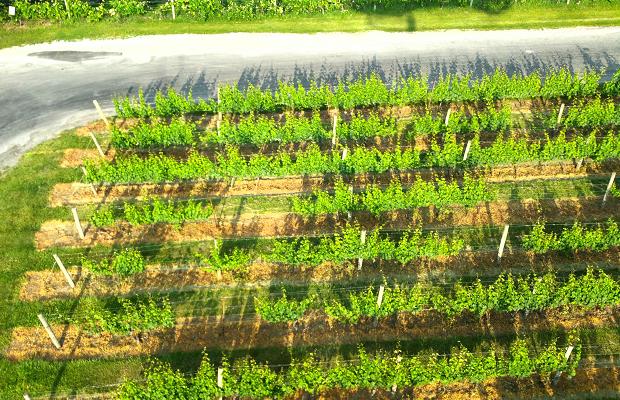
http://www.winealign.com/profile/2058-mjg

Seven summer wines for 7/7/15

Mixed summer grill

Mixed summer grill

There is just something about the 15th of July that marks transitions. Today we cast aside doubts, quandaries and hesitations. On this day we know summer has settled in. The 15th of July augurs the advent of true picnic days, where the air is filled with prolonged heat and the nights linger warm.

Like religious officials observing natural signs and avian behaviour towards an indictment of divine approval, we too find ourselves in judgment of our climatological surroundings. We look up at blue skies, feel the warmth of sun on our skins and declare that this is nice. Then we look for our wine to jibe with the ensemble.

I just returned from Achaia in the Peloponnese region of Greece. This was a voyage into wines and the diversity of geography matched with gastronomy. On and of this I will expand upon, but later. Today I look back at the VINTAGES July 11th release and give to you seven more wines that were most certainly chosen with July 15th, 2015 in mind. With maps that barely overlap and caution thrown to the wind. It’s all about the symmetry of summertide.

From left to right: Falesco Vitiano 2013, Juvé Y Camps Cinta Purpura Reserva Brut Cava 2011, Rosehall Run Cuvée County Pinot Noir 2011, Tawse Gamay Noir 2013, Salomon Undhof Kremser Tor Alte Reben Reserve Grüner Veltliner 2013, Dog Point Sauvignon Blanc 2014 and Hinterland Ancestral Sparkling 2014

From left to right: Falesco Vitiano 2013, Juvé Y Camps Cinta Purpura Reserva Brut Cava 2011, Rosehall Run Cuvée County Pinot Noir 2011, Tawse Gamay Noir 2013, Salomon Undhof Kremser Tor Alte Reben Reserve Grüner Veltliner 2013, Dog Point Sauvignon Blanc 2014 and Hinterland Ancestral Sparkling 2014

Falesco Vitiano 2013, Igt Umbria, Italy (950204, $15.95, WineAlign)

The modern Falesco is quite ancient actually, with rustic amore Umbrian aromas of roses and bitters laminiferous over red fruit and gritty like Barbera. Yet the funk is seemingly more Tuscan, mutton to briny and when all is done the Rosso acts in liquor like ways. Has great presence on the palate with fruity, almost cured flavours and the acidity has no issues rearing up to lift and place. This is quite complex if hyper at times. Length is quite good. Drink 2015-2018.  Tasted June 2015  @FalescoOfficial  @MarkAnthonyWine  @ImportWineMAFWM

Juvé Y Camps Cinta Purpura Reserva Brut Cava 2011, Do Cava, Catalunya, Spain (352864, $18.95, WineAlign)

A sensation of concrete and the finespun oxidative astuteness put this in appraisal of a very serious Cava. Spanish fizz in demand of mull, brood and consternation, for minutes on end, relating to and in consideration of the very idea that is Cava. Very expansive mousse. Has real fruit layered with barrel cream to purpose and finesse for the mouthfeel. The acidity and stratospheric electricity may not add up to it being the brightest shiner in the system but that does not detract from the most excellent flavour. Lingers with a pastry note painted by a pasty salve on the chewy finish and that end is elongated and so very proud. Drink 2015-2019.  Tasted June 2015 @juveycamps  @txelljuve  @ProfileWineGrp

Tawse Gamay Noir 2013, VQA Niagara Peninsula, Ontario (322545, $18.95, WineAlign)

Darker berries define the Paul Pender take on Gamay for Niagara and in ’13 there is a level of tension and girth not yet approached. This third Tawse Gamay is overt in attitude, connotative of Beaujolais Cru staging, an ovule of rebellion and a disposition just as though in the grips of Asmodeus. The Tawse effect is entrenched in clay and possessive of knowledge as if derived by an invitation only junket to the Gamay motherland. If the stance seems serious, the fruit is up to the task. A Gamay for now and fully capable of aging five or more years.  Tasted October 2014  @Tawse_Winery  @Paul_Pender

Salomon Undhof Kremser Tor Alte Reben Reserve Grüner Veltliner 2013, Kremstal, Austria (392332, $21.95, WineAlign)

Quite the packaging, like turn of the last century printing press and not only old school, but other planetary. Really ramped up Grüner, so beautifully unctuous and massively structured at a cost that does not make mortal sense. The palate coated with honey and a melt of white candied flowers mixed with a salty, calcareous talc grit in liquid velvet is just awesome. This is the bomb at the price and it will see to a riper, wizened age for 10 more years. Just a touch of separating bitters keeps it from $22 perfection. Drink 2016-2025. Tasted June 2015  @grunerveltliner

Rosehall Run Cuvée County Pinot Noir 2011, VQA Prince Edward County Ontario (225748, $22.95, WineAlign)

A lean and demanding vintage in which winemaker Dan Sullivan finds solace and freedom in aromatic wonderment. Only Rosehall Run divines and jacks rusty brightness in this way. Like dried cherries rubbed with white stripes of dusty calcaire and like grilled lavender oil, marinated blade steak. This is meaty despite its litheness and so very County, Sullivan style. In some ways this is Pinot Noir that is the hardest button to button but it charms with bending guitar notes and a crooning voice. Smitten is one term, paying attention is the other. Drink 2015-2021.  Tasted June 2015  @Rosehall_Run  @sullywine

Dog Point Sauvignon Blanc 2014, Marlborough, South Island, New Zealand (677450, $24.95, WineAlign)

What James Healy calls “the generic Marlborough style,” with flint and ever-present though much faded reduction, grapefruit and lime. The vintage (2014) was not cold at all so it lacks the verdure. There is subtle, gentle clementine and palate viscosity. The acidity is all about bringing balance. So fresh, spritely, lime-juicy and always essential.

From my earlier note of March 2015:

So orderly and aligned, from ripe picked fruit with fervent acidity and all proportions in perfect working order. Four months settling in bottle has only worked to reinforce positive opinions. Grassless and flinty but no discernible elemental vagary, certainly no sulphur. This Sauvignon Blanc may just be the most consistent in every vintage, not only stylistically but also for the hedging of probability bets for guaranteed Marlborough quality. This is a superb vintage for the pied-à-terre phraseology. Like school in fall, winter and spring, the Dog Point is all class.

From my earlier note of November 2014:

The prototypical Marlborough Sauvignon Blanc hitting all the classic numbers is right here in the Dog Point 2014. Low pH, high acidity, minuscule residual sugar and elevated aromatics. It’s ripe but ripped by citrus juice and zest. Like cubes of honeydew, bitter winter melon and dried lemongrass soaking in and flavouring a dish of briny scallop carpaccio with coarse sea salt and capers. The sapidity is palpable, the excesses vivid. I would avoid too much variegated gastronomy when sipping this wine. Opt for simpler fare because its talents would otherwise be mimicked and suppressed.

Last tasted May 2015  @DogPointWines  @TrialtoON

Hinterland Ancestral Sparkling 2014, VQA Ontario (426023, $25.00, WineAlign)

Not since ever has the Ancestral done such things. From baby maker to planned parenthood, with children now on the way. Yes Jonas and Vicky, you’re once seductive fizz has left the honeymoon and entered young progenitorship. Still reeks of lustful fruit but the structure has mellowed and taken a turn to programmed, mature decisions. The risks are down but the choices have worked out for the best. Ancestral is a product of a family couple after all. Drink 2015-2019.

From my earlier note of November 2014:

Just released today, the anterior sniff and first sip procure a sense of immediacy in declaration: This is Jonas Newman’s finest Ancestral to date. Amethyst methustos bled from Prince Edward County Gamay. If a continuing study on such sparkling wine were to be conducted in the méthode ancestrale diaspora, the anthropologist would lose time in the County. Say what you must about the method and the New World place, this elevates an old game, in fact it creates a new one. Strawberry is again at the helm with the sugar number high and balanced by three necessary portents of chemistry; low alcohol, savor and acidity. The finish is conspicuously dry, conditioning the palate to activate the phenotypic sensors. Hits all the right bells, traits, whistles and behaviour. Careful, it will make you want to go out and make babies.

Last tasted June 2015  @hinterlandwine

Good to go!

http://www.winealign.com/profile/2058-mjg

To Trius, by air

Niagara Falls from aboard Niagara Helicopters

Niagara Falls from aboard Niagara Helicopters

After the final day of preliminary round judging was wrapped and tied with a computer algorithm’s bow at the WineAlign National Wine Awards of Canada it was time to take to the skies. The judges and WineAlign cognoscenti embussed into autogiro cabins at Niagara Helicopters. With a quick and nearly non-discernible thrust we rose like knives through butter up into the Niagara sky. A zig over the cartoon city adjacent the horseshoe and American cascades and then a zag across the Whirlpool Golf Course later, the choppers headed for the Falls.

Flying to Trius with fellow #NWAC15 judges Nadia Fournier and John Szabo

Flying to Trius with fellow #NWAC15 judges Nadia Fournier and John Szabo

Viewing the tumbling wonders from this vantage point is a thing of extraordinary exhilaration. The two-dimensional flatness of the river careening towards a three-dimensional, 90-degree downward fall into the gorge below is a trompe l’oeil for the eyes. With nothing but a thin glass veil acting in separation, I would have thought that a Dolly Zoom effect might occur. On the contrary, from within there would be no semblance of Hitchcock technique in recession to simulate vertigo. The weightlessness and effortless glide is a situation akin to being a kid in a candy store. I highly recommend the experience.

Niagara Helicopter

Niagara Helicopter

Minutes later the helicopter did soar, headed east and descended upon the agricultural and viticultural wonder of Niagara-on-the-Lake. From high above, the acreage of vines looked like tiny peas all in a row. As the land crept up into view the dots came into focus and to see the canes and their early summer foliage as such a magnanimous maze from above is a perspective all should experience.

Niagara Falls, Ontario

Niagara Falls, Ontario

The elapsed time between landing at Trius and diving head first into a glass of Marco Piccoli‘s Jackson Triggs Entourage Grand Reserve Brut 2011, Méthode Traditionnelle, VQA Niagara Peninsula, Ontario (234161, $24.95, WineAlign) happened in the blink of a transmogrifying eye. A Sparkler or four, Chardonnay, Sauvignon Blanc and Pinot Noir or six and some quick tasting note scribbles later we were seated at a ridiculously long harvest table beneath the arbour and ready for dinner.

The vines of Trius Estates at Hillebrand

The vines of Trius Estates at Hillebrand

Winemakers and from several Niagara wineries were on hand to join us at Trius. J-L Groux (Stratus), Arthur Harder (Westcott), Adam Pearce (Two Sisters), Ann Sperling (Southbrook), Kent Macdonald (Henry of Pelham) and Marco Piccoli (Jackson Triggs) extrapolated on the passion of their work, in their wines and for Niagara as a community. Four courses and fourteen wines were touched, nosed, tasted and assessed. But for the Trius and by extension Peller staff, ushered by the grace of uncompromising and unparalleled generosity at the hands of Magdalena Kaiser and Joanna Muratori from Wine Country Ontario, this was an event to commit to heart and to memory. On a very personal note that night now belongs and rests in reminiscence within this log.

WineAlign team at Trius

WineAlign team at Trius

Peller Estates

Signature Series Sauvignon Blanc 2013, VQA Niagara On The Lake, Ontario (405043, $24.95, WineAlign)

The 2013 Signature Sauvignon Blanc carries forth from the ripe, mature, oxidative and intensely flavourful 2012. This next vintage cements the full-on style, even while it candies the fruit, seemingly in reaction to temperatures and precipitation that came and went with inconsistent extremes. There is a kid in a candy store, multi-coloured ribbon of taffy sensation, curiously antithetical to the rusty, yeasty, platinum scenting elixir. The effects of barrel fermentation (80 per cent) and concrete egg fermenter (20) dispatch has this Sauvignon stretching, pulling and elastically boomeranging about the glass. Magnetic to be sure, not always a success, but encouraged. Drink 2015-2018.  Tasted June 2015  @PellerVQA

Soubrook Whimsy! Orange 2014 and Westcott Vineyards Violette Sparkling

Soubrook Whimsy! Orange 2014 and Westcott Vineyards Violette Sparkling

Westcott Vineyards

Lillias Unoaked Chardonnay 2013, VQA Vinemount Ridge, Ontario (Winery, $20.00, WineAlign)

Winemaker Arthur Harder makes no bones, excuses or sets the goals too lofty in this second Lillia’s unplugged. “What you get is what you get,” from seven year-old estate, pristine fruit in 2013. Infrequent but texture stirring lees has mottled the nose with glycerin and avoirdupois while bottling early in the spring in advance of warm days has locked in freshness. Expression arrives by way of herbiage and lime. Continues where ’12 left off, further akin of Chablis. Drink 2015-2017.  Tasted June 2015  @WestcottWines

Sparkling Wine ‘Violette’, VQA Niagara Peninsula, Ontario (Winery, $24.95)

Like the aviatrix muse Violette, the inaugural Westcott sparkler is pioneering and flies out of the glass. Made in the Charmat method at Vieni Estate where bubbles are quickly becoming a thing, this is from the 2012 vintage, though it is not noted on the bottle. Come down from the high horse and embrace the nascent, lambent breezes of Violette. After all, texture is rarely negotiated in Charmat as it is in this lemon concentrated fizz. It finishes with a dash of good bitters. In these respects the Violette has earned her wings. Drink 2015-2018.  Tasted June 2015

Estate Chardonnay 2013, VQA Vinemount Ridge, Ontario (Winery, $26.00, WineAlign)

The barrel fermented and aged Estate Chardonnay spent 12 months in two-thirds new and one-third second fill wood. Lees stirring is slightly increased as compared to the unplugged. Again, it’s about aromatic intensity leading the way to palate density. By the sounds of Westcott’s comments “we’re pleased with its remarkable irony — dry and sturdy, yet creamy and rather curvy,” you might think the team was stirring with impunity. Not so. The Estate Chard does the dance of mild spice and butter on toast to reach a texture that would appease savages. Unavoidable and typical low yields from the Vinemount Ridge picked at the right moment and handled with caring tabula rasa are the spirit in this wine. Delightful and charming. Drink 2015-2020.  Tasted June 2015

Estate Pinot Noir 2012, VQA Vinemount Ridge, Ontario (Winery, $30.00)

Once again, from the challenging and commercially impaired soils of the Vinemount Ridge, a wine of richness, layering, intellect and intrigue. Riesling and Cabernet Franc are the axiomatic varieties to speak of the Ridge’s terroir but this Westcott reinforces the Pinot habitation, defined by Tawse (Quarry Road, Lauritzen and Laidlaw), now complimented by Big Head, Le Clos Jordanne, Vieni and Westcott. Natural soil given tendencies to ferric aridity, spice and limestone silk fill this Harder composition, softened by the warmth of the vintage. Concentration talks, a touch of VA walks and expected tannic grip secures the lustrous, dark cherry fruit. This is a stygian version of a VR Pinot Noir with tones that go for big and structure that supports the hyperbole. It should not be ignored. Drink 2016-2020.  Tasted June 2015

Ontario asparagus and hot smoked salmon

Ontario asparagus and hot smoked salmon

Stratus Vineyards

Tempranillo 2012, Niagara On The Lake, Ontario (Winery, $42.00, WineAlign)

In 2012 the J-L Groux take on the expatriate Spaniard is warm, rich, cake-driven and yet balanced in ways the 2010 was unable to exhort. This vintage appeases Groux’s ends of the earth search for aromatics, picking on them, executing vinification to encourage them and barrel-aging for the purpose of cementing them. The 2012 is an aromatic success. It exudes red fruit, flowers, baker’s kitchens and wet Niagara on the Lake earth. This is a clean and jerk Tempranillo, a bouquet to success. The palate, mouthfeel and mellow finish return the favour of 2010 when it was noted that the variety in this place is a stretch, overweening perhaps, certainly self-effacing if admittedly short of contumelious behaviour. Drink 2015-2019.  Tasted June 2015  @StratusWines

Cabernet Franc 2012, Niagara On The Lake, Ontario (Winery, $38.00, WineAlign)

A Cabernet Franc of settled, harmonious tones, of oak that sets sights and heights to heah, now integrated at such an early age. The grape succeeds and bleeds an exemplary, stalwart varietal suspension within the Stratus pantheon, a sanctuary where fiddles are yet played by other outfits across the region. Cabernet Franc will increase in the Stratus red, for good measure and reason. This ’12 is simply smothered in an embarrasment of red fruit, smoky from raspy reds to plugged in currants. It is of a favour in flavour that reminds of Swedish berries, in modulated hög, though not in sweetness. Drink 2015-2021.  Tasted June 2015

Beef Rib-eye and Pastrami beef shortrib

Beef Rib-eye and Pastrami beef shortrib

Two Sisters

Merlot 2012, VQA Niagara River, Ontario (Winery, $48.00, WineAlign)

“The river man runs, the river man runs.” With this turn a phrase and changing of a guard Merlot, winemaker Adam Pearce ushers in the new Two Sisters oeuvre, for the betterment of all. No longer over-produced yet still ambient, the ’12 sets the turntable for less oaky Sisters’ reds to come. With new barrels on the way out and older and ductile wood coming in, Bordeaux varieties in Pearce’s hands echo and play notes within notes, strum electric in mature chords, then finish with strings and saxophone brass. The 2012 is a true Niagara Riverman, adhering to intrinsic warmth and carrying with it the deep clay rich earth and a wild raspberry luxuriance. It will take seven to ten years to peel back the layers of uberty in this Noel cake Merlot from Niagara River. Drink 2017-2022.  Tasted June 2015  @2SistersVine  @KVH_Wine

Southbrook Vineyards

Whimsy! Orange Wine 2014, Niagara On The Lake, Ontario (Winery, $34.95, WineAlign)

The post blind-tasted discovery that Ann Sperling’s Orange was in fact a 100 per cent Vidal made perfect regional sense, something expertly opined at the time by Rick Van Sickle. Having poured the natural saffronage on tap at Barque Smokehouse for two months I was curious to view it through another lens, to see it tipped from bottle. It has settled now, the acidity squeegeed and rolled out a TA point or two. What was grapefruit in demand is now grape in fruit cup. Still viably fresh, it is now pretty, accessible, settled comfortably into its skin. The verve will yet persist through this temperate time in the temporal lobe. Drink 2015-2016.

From my earlier note of December 2014:

“We’ve been waiting to do small batch, stem fermentation,” Ann Sperling tells us as we have a good look at the lustrous, foggy glass of orange-yellow colour more micro-described as either croceate or gamboge. “Now we have the infrastructure to do so.” Stems add architecture (and a preservative effect), something that is otherwise compromised in a sulphite-free wine. This nameless natural wine was biodynamically-raised, indigenously-yeasted and freed from the constraints of temperature control. No wood was used, only stainless steel and glass carboys. The orange and natural classification comes by way of the complex ebullition (closest in style to the Collio hills wines of Josko Gravner), in colour, weight, elegance and the dichotomy of skin fermentation. Sperling used acumen derived from the concept at Argentina’s Versado, where skins are employed in a similar way when making Malbec with husband Peter Gamble. This young wine is filled with terpenes and is highly, desperately aromatic. Lemon curd is up front and centre. It’s got a tart tang and at (approximately) 11.8 per cent alcohol, the gravity is impossibly beautiful. Sperling’s take is “a fair reflection on the vintage” and it’s the mouthfeel that sets it apart. What’s the varietal make up, single or a blend? If the latter, was it co-fermented? Ann will only tell us that it was harvested over a two week period in October. The big question is will it receive VQA approval. Viognier and Pinot Gris should certainly be options but I’m not aware of Southbrook ever having employed their use. Sperling’s Whimsy! Winemaker’s White uses Muscat so perhaps we could go that direction but the aromatics don’t jive. Riesling is the simplest road to take and if the Southbrook Connect Organic White 2013 is any indication, the combined effect with Vidal could certainly steer this Orange ship. But If I were made to guess, to have some fun with concept, I would suggest that it’s a blend of white and red grapes, but Southbrook does not grow Pinot Noir so that should rule out Chardonnay as well. So I conjure up a song. “Well I had a dream I stood beneath an orange sky.” With a union of grape varieties standing by. Cabernet Franc and Sauvignon Blanc feed my Spidey senses, so under the auspices of that marriage, what we might have here is an offspring, a Cabernet Sauvignon. A very natural one. An orange one.

Last tasted June 2015

Poetica Chardonnay 2011, VQA Niagara On The Lake, Ontario (Winery, $49.95, WineAlign)

The 2011 has entered an uncommunicative phase though the soft tones and whispering harmony offer faint prefaces to honey and burgeoning viscocity. The next flip of the calendar will tell a story. Drink 2016-2021.

From my earlier note at Gold Medal Plates, Toronto, November 2014:

There is still a tough outer layer to crack. A poem of many stanzas has only just begun. Mute yet delicate, the stratified vineyard is the Poetica’s poetry; tight, yet forwardly futuristic towards the ephemeral and the aerified.

From my earlier note of July 2014 note:

Has integrated nicely though certainly persists as a big, lush Chardonnay. If there were splinters or sinewy bits they have melted away.

From my earlier note of May 2014:

The Poetica underwhelms at the present time, or perhaps hides in her youth. She’s a calm, buttery, mildly toasted, supportive softie and more accessible than her Sperling west coast sistren. Like a cool Chardonnay soffit hiding beneath a warm bench, the Poetica speaks not for the vintage but more for the current vineyard, a warm and hip spot in the Four Mile Creek appellation. The site remains (at least to me) understood but the unctuous aspect in texture and gathering sweetness with time in the glass will realize a richesse yet unseen. Poetica’s refrain is like “wind on the weathervane,” her tragically subdued fruit quiet, but able to travel long. Time will be the reveal, so be patient.

Last tasted June 2015

Poetica Red 2010, VQA Niagara On The Lake, Ontario (Winery, $54.95, WineAlign)

At the young adult age of five the Poetica ’10 has retreated and redacted from the heat of that scorching vintage, centred itself and found balance. Gravity no longer shackles the gathering, shaped from Cabernet Sauvignon (51 per cent), Cabernet Franc (31), Merlot (15) and Petit Verdot (3). The next Poetica (2012) used PV as an adjuvant, something the 2010 would now be singing along with were they to have known then what they know now. The ’10 now heli-glides, as if hovering in kind to a set of blades on high whirl, up to where energy is effortless and tension keeps the craft afloat. More of that intensity will continue for 18 months to two years, after which the blades will loiter and wind down for a five to seven years further finale. Drink 2016-2022.  Tasted June 2015  @SouthbrookWine  @AnnSperling

Southbrook Vineyards Poetica Red 2010 and 2012

Southbrook Vineyards Poetica Red 2010 and 2012

Poetica Red 2012, VQA Niagara On The Lake, Ontario (Winery, $54.95, WineAlign)

Now that the Poetica ’12 has seen release, it of course ironically submerges into slumber. The natural palate funk, chalk, talc and clay condensed grain are the gravity while pepper-savoury aromatics catalyze the supply. Credit time with future comings out. Drink 2020-2027.

From my earlier more of December 2014:

The Poetica Red ’12, slated for a Spring 2015 release, is amazing and intriguing on many levels. But for the fact that Petit Verdot (26.5 per cent) plays such a major varietal role, what must first be declared is the disseminated learning applied to this application. The dos and don’ts of previous (only produced in) warm vintage Poetica Reds will see a shedding of those don’ts in this 2012. Ann Sperling ushers in a new era for Niagara Bordeaux assemblage and if this wine is any harbinger, others will follow suit. Here celebrates a love for the land (environment), poetry and more specifically, Canadian poets. Chief Dan George, he of North Vancouver and the Hollywood screen, penned “Words to a Grandchild.” In it he wrote, “in the midst of a land without silence, you have to make a place for yourself.” Poetica Red ’12 will have done that when viewed retrospectively, 10-15 years from now. It will have grown old, but also wise. As for now it’s brooding, melancholy even. It’s all of that and this; endemic, entrenched, crenellated, ensconced and indoctrinated with Niagara knowledge. Has a dusty, earthy, even funky poetry. More depth than many, much realized acumen and will live long. Given 30 minutes of air it showed the ribbons of classic Niagara reds. All these concepts combine to see Poetica Red ’12 not so much as huge, but with depth and complexity.

Last tasted June 2015

Thirty Bench

Small Lot Benchmark Red 2010, VQA Beamsville Bench, Niagara Peninsula (winery, $60)

The landmark red from grit inducing Bench soils has added a splenetic pitch to its already peppery temper. Like “dry and wet ice, they both melt,” the modest Merlot plus two Cabs mix is in a frenetic, edgy place. Allow for three more years before having a new listen and taste. Drink 2018-2023.

From my earlier note of February 2014:

Indoctrinated Right Bank agglomerate built on 62 per cent Merlot, supported by equal parts Cabernet Franc and Sauvignon. Impressively warm and dusty, large, bursting berry dominated with a peppering dredge all around. So much flavour abounds, blanketed by a shaker full of vanilla spice, like “an endless ocean landing on an endless desert.” Still the Benchmark is modest, oaked (18 months) but not overly soaked, pure and in balance. The berry concentration renders it as a resident of the dark centre of the Niagara red blend universe.  Last tasted June 2015  @ThirtyBench

Trius Winery at Hillebrand

Trius Showcase 5 Blanc De Noirs 2009, VQA Niagara Peninsula, Ontario (420521, $55.00, WineAlign)

Auspicious opening for the top end, new Trius Sparkling wine, based on Pinot Noir (70 per cent) from Four-Mile Creek (Lawrie Vineyard), with support from Pinot Meunier (30). Five is the number of years slumbering on lees, a voyage into triage to transport this singular Niagaran into the stratosphere of the region’s pantheon. Arid, toasty and slightly oxidative as per the wild ferment, Craig McDonald style. The toast is spread with a tapenade of (more) lightly toasted nuts, tarragon, morel and earth. There is a feeling of berries, void of pigment, slightly tart and very fragrant. Also the not so pungent but forest emergence of basidiomycete fungus. Delicate, complex, creamy and simultaneously, so very dry. A wine to sip at a large gathering around an antique harvest table or deep into the next decade. Drink 2015-2028. Tasted May and June 2015  @TriusWines

Dinner menu at Trius

Dinner menu at Trius

Good to go!

http://www.winealign.com/profile/2058-mjg

Point, Dog Point

The wines of Dog Point Vineyard

The wines of Dog Point Vineyard

Dog Point Vineyard sits at the confluence of the Brancott and Omaka Valleys in Marlborough, New Zealand. Owned and operated by Ivan and Margaret Sutherland and James and Wendy Healy, the Wairau Valley vintners farm clay-loam soils sustainably and with organic, viticultural practices.

Sutherland and Healy are the men responsible for the success of the first iconic New Zealand brand, Cloudy Bay and together they left to form Dog Point in 2004. The name is in reference to the earliest European settlement of Marlborough, the sheep, their herders and the marauding dogs who prowled the scrub-covered hill overlooking the Wairau Plains. The early settlers called it Dog Point.

James Healy

James Healy

Dog Point produces Sauvignon Blanc which ranks amongst, if not tops the long list of New Zealand’s output, for quality, ubiquity and consistency.  The single-vineyard Section 94 Sauvignon Blanc takes the varietal intensity to another, barrel-influenced level. Chardonnay and Pinot Noir are made in a uniquely Dog Point style, neither emulating nor simulating Burgundy. This is the essence of the winery’s modus vivendi.

James Healy and viticulturist Nigel Sowman brought Dog Point’s wines to Toronto last week, to celebrate their 10th anniversary. I sat down with them at WineAlign, along with Trialto Group’s Richard Dittmar and fellow WineAligners Sara d’Amato and Steve Thurlow. Here are the notes on the 10 wines poured.

Nigel Sowman and James Healy

Nigel Sowman and James Healy

Dog Point Sauvignon Blanc 2014, Marlborough, South Island, New Zealand (677450, $24.95, WineAlign)

What James Healy calls “the generic Marlborough style,” with flint and ever-present though much faded reduction, grapefruit and lime. The vintage (2014) was not cold at all so it lacks the verdure. There is subtle, gentle clementine and palate viscosity. The acidity is all about bringing balance. So fresh, spritely, lime-juicy and always essential.

From my earlier note of March 2015:

So orderly and aligned, from ripe picked fruit with fervent acidity and all proportions in perfect working order. Four months settling in bottle has only worked to reinforce positive opinions. Grassless and flinty but no discernible elemental vagary, certainly no sulphur. This Sauvignon Blanc may just be the most consistent in every vintage, not only stylistically but also for the hedging of probability bets for guaranteed Marlborough quality. This is a superb vintage for the pied-à-terre phraseology. Like school in fall, winter and spring, the Dog Point is all class.

From my earlier note of November 2014:

The prototypical Marlborough Sauvignon Blanc hitting all the classic numbers is right here in the Dog Point 2014. Low pH, high acidity, minuscule residual sugar and elevated aromatics. It’s ripe but ripped by citrus juice and zest. Like cubes of honeydew, bitter winter melon and dried lemongrass soaking in and flavouring a dish of briny scallop carpaccio with coarse sea salt and capers. The sapidity is palpable, the excesses vivid. I would avoid too much variegated gastronomy when sipping this wine. Opt for simpler fare because its talents would otherwise be mimicked and suppressed.

Last tasted May 2015

Dog Point Sauvignon Blanc 2011, Marlborough, South Island, New Zealand (677450, $23.95, WineAlign)

Certainly showing some secondary characteristics in evolution and yet the composition is as close as a first cousin to the current 2014, with more than just thanks in part to identical yeasts. This has lees, “a feature of the 2011 wines,” notes James Healy. Time has magnified the flint but it has also stretched and elasticized it. The struck aromatic glint has passed and will continue to bob in slow motion. Dog Point in presentation of how and why Sauvignon Blanc can be enjoyed with age, over time.”Ain’t no reason to go up, ain’t no reason to go down. Ain’t no reason to go anywhere.” The late palate is lime, as per usual, but also lemon, in ’11, with a paraffin coating. “Time passes slowly and fades away.” Three to four more years for this SB. Drink 2015-2019.  Tasted May 2015

Dog Point Sauvignon Blanc 2008, Marlborough, South Island, New Zealand (677450, $23.95, WineAlign)

It must be said straight out that a wine such as this wins hearts and points for its longevity, if nothing else. The kudos is warranted tenfold especially because it’s a Sauvignon Blanc and one that has emerged unscathed and even star bright. From a warmer year and extended growing season. Bigger bunches resulted, like in 2014 and this has evolved with considerable spice, as if, but not by wood, yet less developed than the petrol and lanolin slinging ’11. This is a wine that unequivocally proves that Sauvignon Blanc can age, gracefully and properly. Has an almost indiscernible flinty reduction, which means it never really had it in any concerning level in the first place. A vintage-specific white, with Chenin-like feigned sweetness and lactic feel. Marvellous to note that the final taste can be nothing but Sauvignon Blanc so in the end, the flavour profile wins out. Drink 2015-2017.  Tasted May 2015

Dog Point Sauvignon Blanc Section 94 2012, Marlborough, South Island, New Zealand (325977, $42.95, WineAlign)

The Section 94 is, in the estimation of James Healy, “a particularly good Sauvignon Blanc block.” Planted in the 1990’s, the now wise old plot is churning out exceptional fruit with cold, cold acidity. Says Healy, with respect to the vintage,” we didn’t want to muck around with malolactic,” so the fruit notches naturally in barrel, with indigenous yeasts. “They won’t stop prickling for over a year,” adds Healy. Bottled at about 18 months, this is a wine given the full solids treatment and is more than obviously a major step up in Sauvignon Blanc complexity. Offers a feel like pebbles bobbing and popping around in the clot of the wine. Wood spice and so much grapefruit are the grumous layers, along with lactic, citric acidity. Time has thus far been very kind, the matchstick reduction now really subsiding in this subsidized white. Drink 2015-2019.  Tasted May 2015

Dog Point Sauvignon Blanc Section 94 2008, Marlborough, South Island, New Zealand (325977, $42.95, WineAlign)

It is interesting to note that 2012, from a cold vintage, has evolved with a lactic palate and yet this ’08 seems so very fresh. Petrol and developed, thickened honey in wax are the bees knees in here. While a touch lactic in its own right, the tapestry weaves into second, third and fourth layers. A Sauvignon Blanc that really offers the best of all worlds. The leesy, lactic-secondary and flint-tertiary feel is round and in surround. This is the most Bordeaux white of all in the DP-SB continuum, with presence, savoury herbiage and pointed, sumptuous flavours. Grapefruit and bitter, beautiful tonic orbiculates the finish. The unanimous conclusion is of a wine that is very much like Champagne, without the bubbles. Drink 2015-2020.  Tasted May 2015

Dog Point Chardonnay

Dog Point Chardonnay 2010 and 2012

Dog Point Chardonnay 2012, Marlborough, South Island, New Zealand (238568, $39.95, WineAlign)

The barrel, in and out of reduction, defines the yet early life stage of the ’12 Chardonnay. The count is 15 per cent new with heavy toast “because we just like that heavy toast flavour, just not too much of it,” notes James Healy. Fully malolactic, but a very late one, this slow-cooked Chardonnay, with matching matchstick acidity. In expression it is of a very cool-climate style with tons of lime and emulsified to a gemstone melt, green goddess consistency. A wine that could be a cousin to, share spirit with Paul Pender’s Vinemount Ridge Quarry Road, of “emerald shine, the gemstone tannic scrape.” The Dog Point etymology is two-thirds Mendoza clone and one-third Dijon 95, the former needing sugar to get ripe, but it provides the citrus and the acidity for the palate. Drink 2017-2020.  Tasted May 2015

Dog Point Chardonnay 2010, Marlborough, South Island, New Zealand (238568, $39.95, WineAlign)

Remarkably similar to the later 2012, tasted side by side, here with toast, nuts and grapefruit. It may be just a touch warmer, with more fruit yet still cool by nature. The ’10 is not as green, not as salient in polished stone feel, with less weight and girth. The sugars and bitters are increasingly integrated and push more direct, unbiased pleasure. Just a strike of flint ties it to the sibling Sauvignon Blanc. “Statues made of matchsticks, crumble into one another.” Marlborough Chardonnay is better than you think, love minus zero, no limit. It’s true if it’s been said. “She doesn’t have to say she’s faithful, yet she’s true like ice, like fire.” The Dog Point ’10 persists, bobs, rhymes, talk in and out of line. It finishes strong, in grapefruit, without sophistry or equivocation. Drink 2015-2018.  Tasted May 2015

Dog Point Pinot Noir 2012, Marlborough, South Island, New Zealand (329672, $49.95, WineAlign)

From vines now coming of age (12-13 years old) and an increase in stem inclusion (20 per cent). Ripeness consistency was achieved with the aid of shoot cutting/thinning. All this to arrive at the Dog Point Pinot’s place in its necessary evolution. A wine of black cherry and roses, dark, dusty, ripe, in depth of earth, concentric circles of fruit and acidity. Great length.

From my earlier note of April 2015:

Perfectly bright Pinot Noir while simultaneously deep, dark and recondite. Energetic in spirit, ripe and packed with barbed, piquant fruit sewed in threaded badges of spice. Perfumed as if by cinnamon and displacing rose petals. Like the scent of a crystal clear summer’s night, all warm, dry and of dried strawberry juice cracked paint. Grounded and fulfilling, of its own holes, in the mouth and finishes with a feminine touch. A thoroughbred, a filly, that trots on an on, long after it has crossed the finish line. Drink 2016-2021.

Lasted tasted May 2015

Dog Point Pinot Noir

Dog Point Pinot Noir 2008 and 2006

Dog Point Pinot Noir 2008, Marlborough, South Island, New Zealand (329672, $49.95, WineAlign)

Just a small amount of stem inclusion, a practice that will increase in subsequent vintages, helps to define structure and to a lesser extent, aromatics and taste. Yet the effect is has on tempering and mitigating sweetness is overt and protrusive. “That whole ripe stem thing…it’s a dog’s breakfast, ” says James Healy. Both he and vineyard manager Nigel Sowman have accepted and embraced the necessity of stem inclusion but as Sowman notes, “is there such a thing as a ripe stem, because you’re after sap, not astringency.” The stems here have balanced out the really ripe, jammy fruit. This ’08 is all about florals, of many flowers that offer invitation to then investigate the Pinot Noir morphology. This has turned to liqueur yet still cracks, pops and finishes with bitter, tangy and swelling cranberry. Drink 2015-2018.  Tasted May 2015

Dog Point Pinot Noir 2006, Marlborough, South Island, New Zealand (329672, $49.95, WineAlign)

In 2006 stems were not yet part of the practicum and though the wine remains very much alive it has lost a modicum of structure and a minor key of balance. The highest degree (though certainly not over the top) of paint, varnish and veneer emanates from the edges of the jammy fruit. This youngest and lower on the amicable scale for a Dog Point Pinot Noir is both sweet and sour. The depth (mostly due to very young vines) pales in comparison with even ’08 and the flavours are disparate but what is there is fun and so very Pinot Noir. Can be nothing but and is really the most Burgundian of the three (’06, ’08 and ’12) tasted. That said, it’s not necessarily a good thing because Dog Point does and should try to avoid emulation. The final assessment and most poignant note concerns how barely evolved this nine year-old Pinot sits. Tasted blind you would be hard pressed to guess closely at its age. “If we had an ’06 vintage today we would make better wines,” admits James Healy. A touch of cola and a grapefruit note hit the finish. A Dog Point thing. Drink 2015-2020.  Tasted May 2015

Good to go!
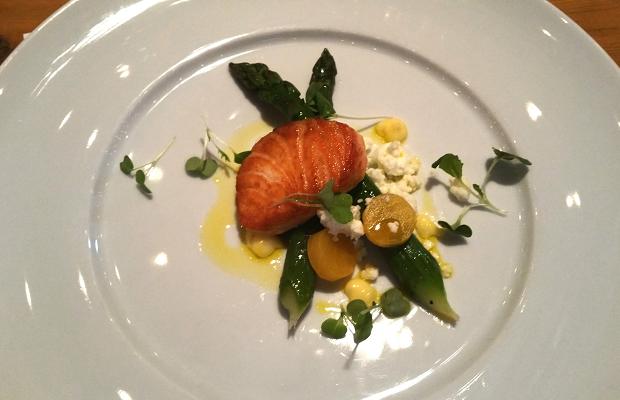
http://www.winealign.com/profile/2058-mjg

Shades of South Africa

From left to right: Vinum Africa Chenin Blanc 2012, Ken Forrester Reserve Chenin Blanc 2013, De Morgenzon Reserve Chenin Blanc 2011, Boschendal 1685 Shiraz/Mourvèdre 2013, Graham Beck The Game Reserve Shiraz 2012 and Kanonkop Pinotage 2012

From left to right: Vinum Africa Chenin Blanc 2012, Ken Forrester Reserve Chenin Blanc 2013, De Morgenzon Reserve Chenin Blanc 2011, Boschendal 1685 Shiraz/Mourvèdre 2013, Graham Beck The Game Reserve Shiraz 2012 and Kanonkop Pinotage 2012

A sit down at Montecito Restaurant last month engaged three flights of South African wines, introduced by master of presentation ceremonies Will Predhomme, who declared a federal truth politic. “This is meant for sommeliers but you journalists will get what you need out of it.” Mr. affable’s public service announcement held great meaning. Pour 15 wines from South Africa to a group of somms, journos and consumers to discover there will be something for everyone.

When execution and style is so varied from within one very large wine region, things can turn into dramaturgy verging on the absurd. At any sort of political theatre tasting comprising a range of disparate wines, three things need to go right. First the presenter must have a keen sense of the rug that ties it all together. Second, the support needs to be in place from the larger powers that be and third, the wines must be good. Three for three, first in the care of Jimson Bienenstock and the kitchen at Montecito, then with thanks to Wines of South Africa Canada and finally by way of succinct explanation via Mr. Predhomme.

Lunch at Montecito

Lunch at Montecito

A tasting like this, explained Predhomme, “is about expressing what South Africa is but with wines that are available in our market.” South Africa’s wine history, or at least how it exists in relation to the modern world, is quite young yet has advanced with incredible speed. Imagine that Chardonnay did not arrive until 1983 and had to be smuggled in. Some of the world’s finest Chardonnay is now made on South African soils.

Nelson Mandela’s release from prison and the country’s strive for democracy had a profound effect on the revolution, evolution and expedient rush to embrace modernity. Twenty one years later “South Africa as a whole is really starting to see where it fits,” says Predhomme, “though it will still take at least another generation to really figure it out.”

Home to 600 producers, the country exported 22 million litres in 1992 and 417 million in 2012. The U.K. is the number one buyer, followed by Holland and then Canada, who ranks number seven. “You can’t maintain this type of growth,” notes Predhomme, “but you can shape it.” This is why WOSA has set up shop in nearly a dozen countries.

Winegrowing regions of South Africa

Winegrowing regions of South Africa

South Africa is a geographical and geological land of wonder, of ancient soils and picturesque intrusions. Extreme examples include the shale and schist of Swartland that turns into dust and the granite domes of Paarl, which are 30 million years old. “Beginning of time stuff, but how does it impart into wine?” Taste fifteen wines and you will get a sense.

South Africa is barely older than Ontario in terms of the modern era of winemaking and yet it produces some 18,000 hectares of Chenin Blanc, double the amount in the Loire Valley. In Swartland the betide is nothing short of a Rhône revolution, with producers doing “whatever they want.” There are hot climate wines from dry-farmed table lands with bush vines similar to Mendoza, minus the Andes. A huge diurnal shift is taking place. Wines are coming from high elevations, where it’s hot but the nights are cool. New upcoming areas in cool, coastal areas, in places like Elgin, Bot River and Walker Bay’s Hemel-en-Aarde Valley have Sonoma like conditions, with maritime influences and fog. All of this adds to the diversity of the South African palette.

Montecito

Montecito

Whites Flight

Villiera Sauvignon Blanc 2014, Stellenbosch-Elgin, Western Cape, South Africa (Agent, $17.95, WineAlign)

Western Cape in the hands of winemaker Jeff Grier is all about varietal fruit, here Stellenbosch helped into blending-like ambition by young, spritely Elgin berries. A kitchen sink varietal nose gathers gooseberry and fig fruit, incorporates earthly elements (3.46 pH), medicines, sugars and tonics. The Sauvignon Blanc aspect is riper than most. Where the discombabulation comes is from atmospheric pressures, rescued in part by a candied (3.7 g/L RS) Granny Smith apple, pyrazine palate. The MOR alcohol (12.9 per cent) and final act of tart (6.3 g/L) acidity is the calling card to remember, acting as the twist, the tie and the rock. Drink 2015-2017.  Tasted April 2015  @villiera  @AbconWine

Vinum Africa Chenin Blanc 2012, Wo Stellenbosch, South Africa (739995, $15.95, WineAlign)

Robust, high-strung, wrapped tight Chenin Blanc that acutely pushes the limits of excitable fruit. The aromatic tonality causes salivation and the eyes to water, as the nose drifts upwards, like the feeling of looking straight into the sun set high against a perfect blue sky. Then the palate lifts to off-dry, sending tingling sensations rippling through, with a cool-climate Chardonnay like prickling. Some oak and crunchy mineral add a smack of Stellenbosch in this rangy white from Alex Dale from the Winery of Good Hope. Drink 2015-2018.  Tasted April 2015  @WineryGoodHope  @Noble_Estates

Ken Forrester Reserve Chenin Blanc 2013, Stellenbosch, South Africa (231282, $17.95, WineAlign)

The 2013 Forrester OV Chenin has less early, obvious and striking appeal but that does not take away from its persistent and indubitable quality. This is a most fine and elegant vintage, with a faint yet obvious quiver of honey. Yellow fruit and their flowers mingle with the fleeting sweetness, in the name of balance and purity. A slide from one moment effortlessly into another, through a waft, from a swirl. Though the fruit is harder to find, it’s a cause of placing the origin; something south Asian but not quite tropical sweet. Like Salak or Kumquat or Jack. So much mineral, tightly wound on a spindle, wound to unwind, unwinding to rewind. Drink 2016-2022.  Tasted April 2015  @KFwines  @Noble_Estates

De Morgenzon Reserve Chenin Blanc 2011, Stellenbosch, South Africa (339762, $29.95, WineAlign)

Even at four years of age, the wood aspect of this Chenin Blanc exaggerates rather then amalgamates. At the time, winemaker Carl van der Merwe held nothing back to fashion a white with considerable heft and weight. Alcohol (14.1 per cent) persists in linking with the barrel for a humid, toasty and sultry affair, cosigned by matching (7.7 g/L) sugar and acid tones. This is a prime example of a love/hate Chenin Blanc relationship. If you are on the varietal fence then the magnifications will drive you away. If Chenin Blanc and barrel fermentation are your splintered cup of tea then this will woo you with passion. The hyperbole of rocks, medicines, tonics, peats, elements (including iodine and heterocyclic aromatic organic compounds) are all here. It’s a veritable CB feast. Drink 2016-2020.  Tasted April 2015  @DeMorgenzonWine  @TandemSelection

Glenelly Cellars Grand Vin Chardonnay 2012, Wo Coastal Region, Stellenbosch, South Africa (382200, $19.95, WineAlign)

From out of Stellenbosch in the Idas Valley, on the southern slopes of the Simonsberg Mountain, opened in 2010 by May de Lencquesaing. State-of-the-art facilities give range and class to this whole cluster pressed Chardonnay, aged for 10 months in new and second fill 500L barrels and left for nine months on the lees. The intensity of chalk, remedy, tang and tart fruit volleys and assails in many ways. It hangs on the edge and teases. You can take the Chardonnay out of the Coastal Region but you can’t remove the ancient geology granite and schist, reinforced iodine aroma from the Chardonnay. Drink 2015-2018.  Tasted April 2015  @GlenellyWines  @HHDImports_Wine

Chenin Blanc

Chenin Blanc

Bordeaux Cultivars

Raats Family Cabernet Franc 2010, Stellenbosch, South Africa (Agent, $39.95, WineAlign)

From decomposed Dolomite granite soils and vines in that vigorous young adulthood range of 18 to 25 years. A Cabernet Franc of ripeness, extraction, warmth, picked at fully realized sugar potential and vinified nearly bone dry. No stranger to wood, it spent 18 months in French Vicard and Mercury oak barrels (25% new, 25% second, 25% third fill and 25% fourth fill). Was neither fined nor filtered. All tolled it is quite steroidal, highly ferric and plugged in. Transmits currants by frenetic current, by bush smoulder and melts with macerated cherries. What minor holes in the oak blanket that show through are patched with a thin veneer of pungent compound, decomposed stone and the effects of dry farming. The lack of irrigation trumps the iron gait and grit, limiting the solvent to minute drips and drops. This is a big, arid red with few tears and many years ahead. Drink 2017-2024.  Tasted April 2015  @RaatsWines  @TandemSelection

Kanonkop Cabernet Sauvignon 2010, Wo Simonsberg-Stellenbosch, South Africa (403964, $48.00, WineAlign)

A mouthful to be sure, this Simonsberg is a cup runneth over “red wine bowl” of a Cabernet. Such a ripe, rich, rapturous and varietally obvious wine, overflowing with red fruit (berries and plums) and gilded enough to beat the ferrous inference into submission. Just a dusty rub of greenery, a sage and charcoal aggregate residue that dissolves into the sappy juice and the rush of late acidity. Quite a clout of sauvage and garrigue in this modern red with a loyal, rustic swell. Drink 2016-2022.  Tasted April 2015  @KanonkopEstate  @Noble_Estates

Constantia Glen Three Cape Peninsula 2010, Constantia Valley, South Africa (Agent, $21.95, WineAlign)

A stone’s throw from of Cape Town comes this maritime red as close to cool-climate as you are likely to find in those environs. Two Cabs and a Merlot legato conjoin to continue the bent to modernist winemaking, with a twist of old world funk and soul. Smoky jazz beats darken the room filled with bright, ripe, con brio waves of concentrated fruit. Though this has the gauze and the grippy, firm, gritty B key blow of tenor sax, the cool middle tinkling keyboard bars temper the tension and the nerves. Bordeaux blend with a wall of sound and value to boot. Drink 2015-2020.  Tasted April 2015   @ConstantiaGlen  @TandemSelection  @constantia1685

Hartenberg Estate Cabernet Sauvignon 2011, Stellenbosch, South Africa (Agent, $35.00, WineAlign)

A healthy swath of oak (18 months in 60 per cent new and 40 in second fill French) buoys and blankets this deep, cimmerian Cabernet. The nose is quite candied and while floral too, those edibles are dipped in a frosty coating. There are separations between the lines of intention, at once all forest floor, truffle and mushroom and again sugary, sappy and like a stew. Lustrous and silky of texture, with a grain running on tension and a drying out on the finish. Big, brawny, toothsome and hot. Drink 2015-2019.  Tasted April 2015  @HartenbergWine  @hobbsandco

Villiera Cabernet Sauvignon 2012, Stellenbosch, South Africa (Agent, $18.95, WineAlign)

The nose is quite unusually pretty and floral. So much strawberry, of fruit and leaves. A cool and polished red with a late push of varietal ferrous on the back of the tongue. This has layer upon layer, wave over wave, a veritable cake and vegetable garden, a terrace of nightshades and beets. May not be everyone’s cup of multi-varietal Napolean but it is complex. Drink 2015-2020.  Tasted April 2015

Rhône/Blend/Indigenous

Boschendal 1685 S & M Shiraz/Mourvèdre 2013, Wo Coastal Region, South Africa (403667, $19.95, WineAlign)

From the hands of winemaker Bertho van der Westhuizen, this puts 70 per cent Shiraz from vineyards in the Faure area of Stellenbosch, Helderberg and Bottelary hills sites together with 30 per cent Mourvèdre from the Paardeberg area. Goes directly to a happy place so not quite the S & M you might have expected. The playful reverse psychology and complex fermentation regimen spins the world right around (80 per cent of the wine went into 300L oak barrels, a quarter each in 1st, 2nd, 3rd and 4th fill, while the remainder was left unoaked). The S & M spits out with a remarkable impression of weightlessness, of hovering inches above the ground. Like the gentle, almost awkward and swerving of a bouncing rubber ball, playful and innocent, into comfortable Rhône territory. Smoked berries, fine cherry and very persistent, in memory, forward and onwards. Drink 2015-2019.  Tasted April 2015  @BoschendalWines  @LiffordON

Boekenhoutskloof Syrah 2011, Wellington, South Africa (Agent, $69.95, WineAlign)

A ripe, plush, super annotated, developed and slowly developed aromatic layering that defies even South African logic. A smoky, slow-roasted Syrah seemingly only winemaker Marc Kent could procure, like a combined 24-hour brisket and an entire porcine roast in a pit of sand on Brendan Beach. And yet tell me this does not somehow smell like Curry? Like a full-on, whole spice ground, stratified Masala, of cardamom, dalchini, jaiphal and kalonji. This is Syrah of intense concentration, ripe hauteur, serious breadth and a sense to be Rhône without the bacon cure. Won’t be going anywhere, anytime soon. Drink 2018-2025.  Tasted April 2015  @TheWolftrapWine  @TandemSelection  @PorcupineWines

Graham Beck The Game Reserve Shiraz 2012, Wo Stellenbosch, South Africa (383570, $18.95, WineAlign)

The game is in The Game with musky scents from just charred roast venison and wild boar hide. Also modern, reminiscent of internationally-styled blends from Terra Alta or Montsant. The game works in smothering partnership with heavy, fully ripe and extracted fruit. This is a strong, big willed and boned $18 South African red that should help to alleviate old prejudices and is really quite seamless at the price. Almost tastes volcanic. Wood is used and used well, without pretence or obnoxious behaviour. Drink 2015-2020.  Tasted April 2015  @GrahamBeckWines  @VinexxCanada

Kanonkop Pinotage 2012, Wo Simonsberg-Stellenbosch, South Africa (Agent, $44.95, WineAlign)

Estate, pedigree and price raise all the bars of expectation for the grape with a modern crush on and for espresso and mochaccino. OK Pinotage, what have you got at $45? A deep red wine in demand to draw plenty of attention, to pluck strings with pizzicato and reverberation? The answer is yes and my attention is indeed captured. Light on chocolate, mocha, creme and nary a lissom or bouncing tone, but instead this Pinotage sings straight lines of red fruit. A stone temple of Pinotage, a pilot of its own fruitful flight. The Pinotage flavour, of tar in summer comes late, is more obvious, notable and grounded as the wine dries to its finish. This is one of the better, even great renditions to date. Bravo. Drink 2017-2022.  Tasted April 2015  @KanonkopEstate  @Noble_Estates

Bouchard Finlayson Hannibal 2012, Hemel-En-Aarde, Walker Bay, South Africa (Agent, $47.99, WineAlign)

The varietal potpourri is an Italian-French polygamous matrimony, a cross-section of colour, aroma and flavour that somehow comes righteously together. Call it a lavandino della cucina or évier de cuisine but either way you translate this mix is one of gastronomy and oenology, crafted, blended, sautéed and vinified. Hanibal is barrel matured for sixteen months after fermenting the different grapes separately, comprised of Sangiovese, Pinot Noir, Shiraz and Mouvedre, with Nebbiolo and Barbera. The culmination revolves on an axis bold as love, of Brett, funk and circumstance. A wildly natural wine, very 1960’s, smoky and with wafts so thick you need a fork to eat and goggles to see through the haze. A wicked blend of heaven and earth. Meaty, cured, sanguine and charred. Super-charged and running hot. Drink 2016-2022.  Tasted April 2015  @BouchFinlayson  @LiffordON

Good to go!

http://www.winealign.com/profile/2058-mjg