It was my fourth Gold Medal Plates Toronto as wine judge, culinary taster and olympic athlete groupie. In 2014 WineAlign partner, colleague, mentor and friend David Lawrason invited me to join the festivities and help decide which three wines should be crowned Gold, Silver and Bronze. Two weeks ago a panel of Ontario wine experts tasted, assessed, debated, deliberated and ultimately decided this year’s top three. David Lawrason, John Szabo M.S., Michael Vaughan, Margaret Swaine and Godello. The winner ran away from the pack but two through six were separated by one point increments. It was a photo finish for Silver and Bronze.
The 2017 Toronto event featured emcee Scott Russell of the CBC’s Olympic coverage. Russell was joined by dozens of Olympic medallists and future hopefuls. Blue Rodeo’s Jim Cuddy led the on-stage entertainment; Anne Lindsay, Danny Michel, Jeremy Fisher, Devin Cuddy and Sam Polley. The inimitable and eloquent James Chatto was once again at the head and the heart of the culinary judging panel with seats occupied by an illustrious five; Sasha Chapman, Anita Stewart, Christine Cushing, Amy Rosen and Chef John Higgins.
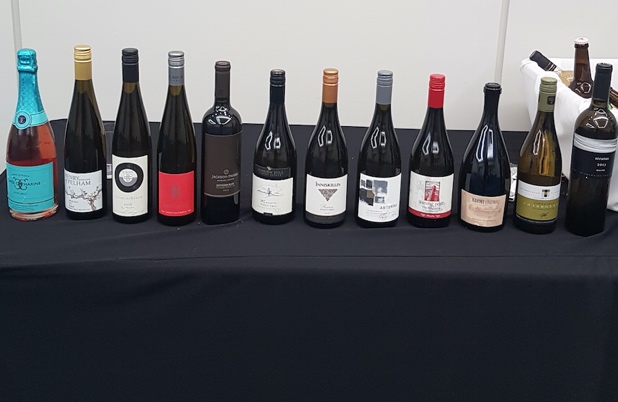
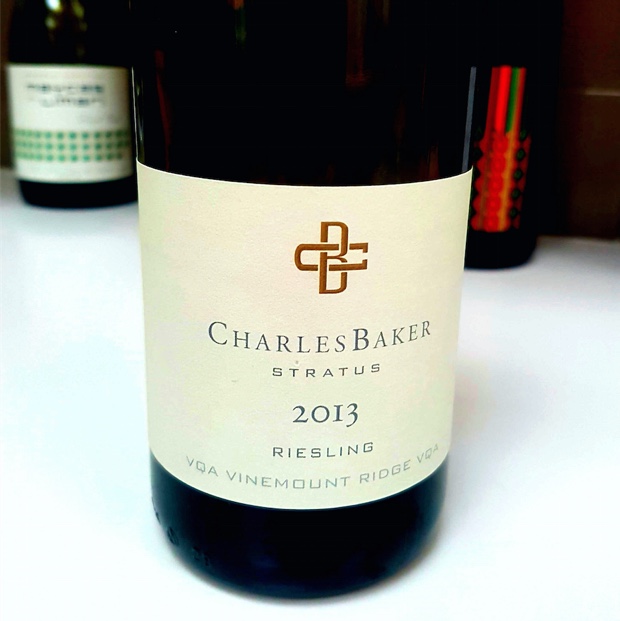
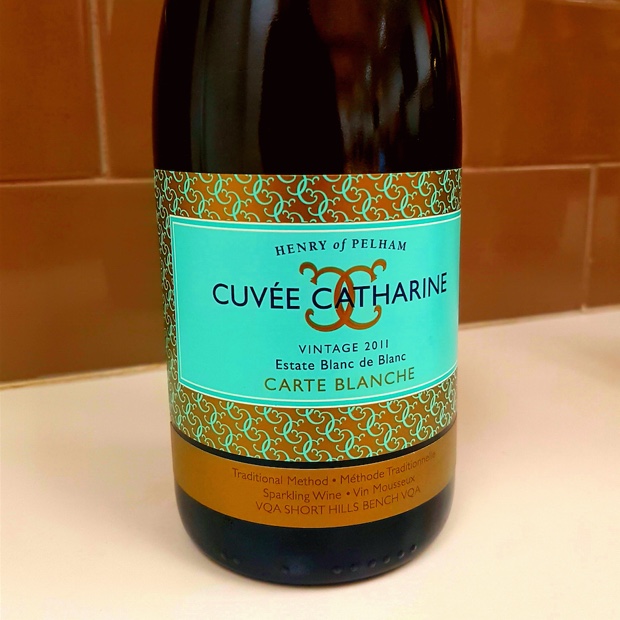
For a little bit of GMP history please click on this post I penned after that 2014 gala event. The culinary winners then were Gold Medal Plates Toronto 2014 bronze, gold and silver medal winning chefs Damon Campbell, John Horne and Jason Bangerter. The top three wines were Norman Hardie‘s Niagara Unfiltered Pinot Noir 2011, Hidden Bench Nuit Blanche Rosomel Vineyard 2012 and Creekside Estate‘s Iconoclast Syrah 2012. But what about 2017? My top seven in no particular order were Flat Rock Cellars Riesling Nadja’s Vineyard 2016, Ravine Vineyard Chardonnay Reserve 2014, Charles Baker Riesling B-Side 2016, Henry of Pelham Cuvée Catherine Brut Rosé, Stratus White 2013, Leaning Post Chardonnay ‘The Fifty’ 2015 and Tawse Chardonnay Quarry Road 2013. The actual medalists are listed below in David’s report.
National Wine Advisor David Lawrason’s Wine and Spirits Report
Nadja’s Tops a Bounty of Great Whites in Toronto
“The Gold Medal Plates campaign came to a booming 800-person conclusion at Toronto Convention Centre on November 16, and it included the largest selection of wines seen in any stop on the ten-city national tour. We judged 26 donated wines, beers, spirits and even a lavender mead, but it was a core of great Canadian white wines that caused the most excitement, and produced the winner of the evening.
The “Best of Show” Gold Medal went, by a very clear margin, to Flat Rock Cellars 2016 Nadja’s Riesling, from a single block of maturing vines in Niagara’s Twenty Mile Bench appellation. I was personally stunned by just how delicious, well-balanced and nuanced this wine is – in my mind it is the best vintage of “Nadja’s” ever produced. Other judges agreed – we all placed it as either our first or second choice. This beauty also took a rare Platinum Medal at 2017 National Wine Awards.
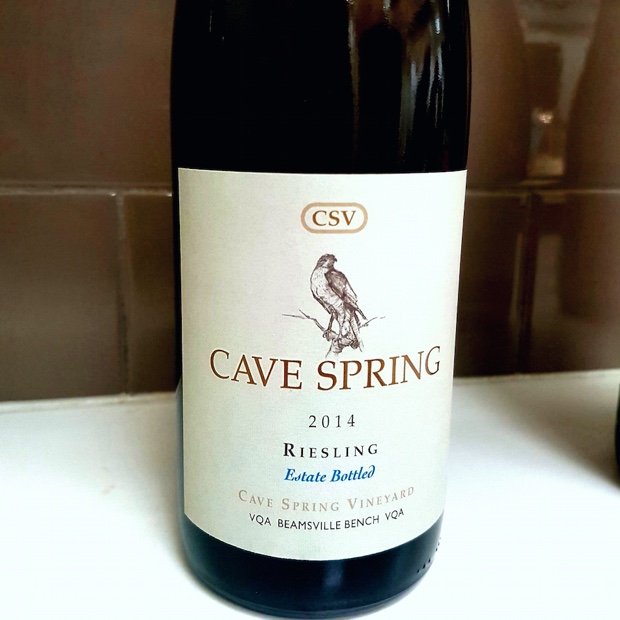
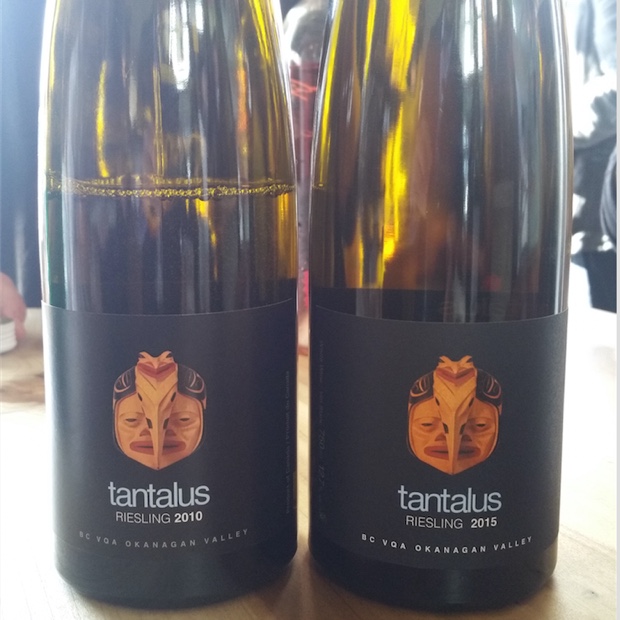
It will go on to compete for Gold Medal Plates Wine of the Year at the Canadian Culinary Championships in Kelowna in February, and it appears there will be a riesling showdown, as it will be tasted against rieslings from Tantalus, Cave Spring and Norman Hardie, plus six other wines.
For second and third place the voting in Toronto was more varied, and only one point separated the second, third and fourth place wines. The Silver Medal went to Mission Hill 2015 Merlot Reserve, a swarthy, plummy and ripe red from the Okanagan Valley. And the bronze medal went to Henry of Pelham Cuvee Catharine Brut Rose, a delicate refined pink sparkler with subtle berry aromas.
In very close 4th place came Tawse 2013 Quarry Road Chardonnay from Niagara’s Vinemount Ridge sub-appellation. I have become very familiar with this solid, complex Burgundian chardonnay as it was generously donated by Tawse to the Celebration in three cities this year. It was also a Platinum Award winner at the 2107 WineAlign National Wine Awards of Canada.
Tawse was one of three Gold Level sponsors. Mission Hill was a national sponsor as well, donating a variety Reserve wines to seven city events across the country, and stepping even higher in Toronto with smaller donations of their more expensive “Legacy tier” red Compendium 2013 and Perpetua 2015 Chardonnay.
Arterra Wines, the recently re-named company with several wineries in Canada, was a gold sponsor donating to six cities. In Toronto there was a selection of reserve whites and reds from Jackson-Triggs and Inniskillin, as well as a rare public showing of the new Arterra 2016 Chardonnay and Arterra 2016 Pinot Noir.
Toronto’s Silver Sponsor also donated to Ottawa. Cave Spring of Niagara donated their 2015 Cabernet Franc. Although better known as a riesling producer, Cave Spring is doubling down on its efforts to produce fine reds from Ontario’s most widely grown grape.
Flat Rock Cellars was one two Bronze level sponsors for the Toronto event, providing Nadja’s riesling for the VIP Reception and Celebration tables. The other was Henry of Pelham, which split their donation between the 2016 Old Vines Baco Noir and yet another strong 2016 Estate Riesling.
Among other notable and high calibre wines donated to the chefs, I gave my first-place vote to Stratus 2013 White, a very complex, now maturing, barrel aged blend of several white varieties. Ravine 2014 Chardonnay Reserve, another power white, also earned top-five votes. Leaning Post 2015 Mile 50 Chardonnay was a leaner style that paired well with Gold Medal Plates Chef Lorenzo Loseto’s winning dish. And riesling specialist Charles Baker chose the occasion to show his new, bracing B-Side Riesling.
Interestingly, no red wines were paired with chef’s creations this year, but there were two ciders, including the fine, crisp Brickworks CiderHouse Batch 1904 and a lighter cider called Pick Up 66 from Hoity Toity Cellars. Rosewood Cellars donated their exotic, fragrant Lavellener Lavender Mead, and Zirkova Vodka set up shop during the VIP Reception to sample Zirkova One, a vodka designed to be drunk “neat” and Together a version designed for cocktails.
The Best of Show judging is held prior to each event, as way to highlight the generous donation of beverage by Canada’s wineries, brewers and distillers. In Toronto I assembled four wine pros/sommeliers. Three are amigos at WineAlign.com and two are judges at the National Wine Awards of Canada; including Master Sommelier John Szabo, and wordsmith extraordinaire and former chef Michael Godel. Margaret Swaine is a veteran wine and travel writer, and the spirits columnist at WineAlign. Michael Vaughan publishes Vintages Assessments, a detailed critique of every wine released by the LCBOs Vintages stores.”
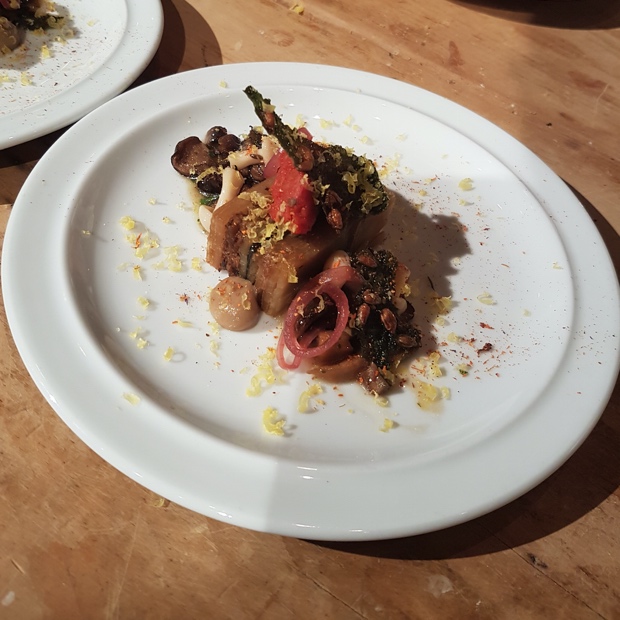
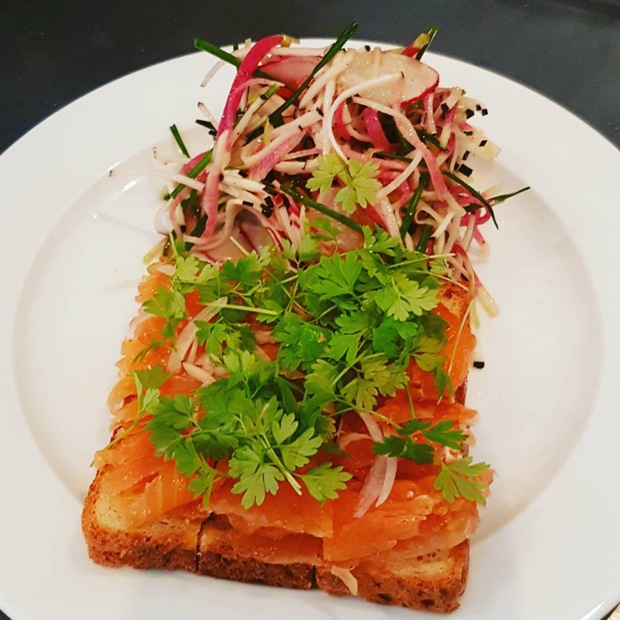
Chef Lorenzo Loseto’s @GoldMedalPlates winning dish @georgeonqueen paired by @brieish with @leaningpostwine The Fifty Chardonnay 2015. Congratulations Chef and the entire team.
Culinary Medals
Gold
Lorenzo Loseto George Restaurant
Pairing: Leaning Post Wines, 2015 ‘The Fifty’
Silver
David Lee Nota Bene
Pairing: Brickworks Ciderhouse, Batch: 1904
Bronze
Jesse Vallins Maple Leaf Tavern/PORT
Pairing: Tooth & Nail Brewing Company, AGRARIA Modern Farmhouse Ale
Nota Bene’s David Lee
Here are my tasting notes for the 20 wines entered at Gold Medal Plates 2017.
Henry Of Pelham Family Estate Winery Cuvée Catharine Brut Rosé, VQA Niagara Peninsula, Ontario (217505, $29.95, WineAlign)
A whole new base, a whole new wine, the departure point exacted by a new wisdom and understanding. But it’s somehow like looking in the mirror, reviving a good memory, going back to wine childhood. Consistency is your friend with non-vintage fizz and the Catherine(s) are the undisputed leader in the Ontario biz. Brings back the Niagara orchard of a take your pick red apple, lovely creamy texture, a mild blanch of nut and fresh baked bread. Terrific class and of its own accord. Drink 2017-2021. Last tasted at Gold Medal Plates Toronto, November 2017
With its fine, strawberry mousse is at the head of its Ontario class. Vanilla, Ida Red apple and bitter nut combine like a smooth, creamy, Mediterranean spread to dip the warmest, fresh-baked bread. Tasted December 2012
Henry Of Pelham Riesling Estate 2016, VQA Short Hills Bench, Niagara Peninsula, Ontario (557165, $17.95, WineAlign)
A rash of aromatics straight away and marked warmth verging to humidity. More weight, substance and depth than most vintages deal when youth is the tempo so this riesling plays the notes and the hand quick after the draw. What you nose, taste and feel is what you get, with lime, gassing up to petrol quickly and flavours already in developing mode. Five years of riesling together for the best of times, from beginning to end. Drink 2017-2021. Tasted November 2017
Vinyl records sound different because they are designed with grooves carved in that mirrors the original sound’s wave form. Their analog recording delivers a sensory feeling of warmth, an aural of texture, nuance and soul. There was a time when the hits spun over and over were also pressed onto the A-Side of 45 rpm singles. The discovery of a never before heard B-Side was a revelation because is was extra material from a favourite band and it was a great song. It meant the record was already too strong for that song to make the final cut and to choose it for a B-Side meant it would elevate the quality of the album. A well-chosen B was not an afterthought. This is the accomplishment of the first Charles Baker’s B-Side, for itself and for the vineyards of Ian and Picone. Baker digs about in the Niagara Peninsula’s escarpment dirt for young vine, not ready for prime time riesling fruit. If perchance it seems like cheating on his per se Vinemount Ridge Picone and Ivan bottles so be it but one look at him and he’ll say “Hey, hey, what can I do?” His 2016 B-Side delivers a spray bottle Zeppelin expressing heady aromas, high in the stratosphere and raining down upon the earth. The notes are an all in, breath of classic Baker riesling air, blanketing from up above and with a landscape that reeks of lime and quivers with classic agitation. The fruit is wild and full, the salty grit infiltrating and gripping the bloody omniscience of this package. What is this B-Side and where will it be lead? To the top of the ridge, from earlier harvests, younger fruit and higher yields. Scratch the single vineyard elitism, just listen to the song and raise one up, to getting ‘er done before the conceptual singular side one and side two, Ivan and Picone. The Beatles? Forget it. Led’s flip side to the ‘Immigrant Song’ A is the one. Drink 2017-2021. Tasted November 2017
Nadja, like the Bréton novel begins with the question, “Who am I?” A surrealistic trigger is incited by the first taste, with excitement running in many directions but like the book, Nadja’s non-linear structure is grounded in Twenty Mile Bench riesling reality. She is an elite varietal wine in 2016, excitable girl, gregarious, punchy and so bloody juicy. I don’t recall the last Nadja with so much up front zest fervency and writhing aromatic gait, “exploding international, the scenes, the sounds, and famously the feeling that you can’t squeeze ground.” The lime flesh and cordial infusion brings the flavours into a once tropical, twice bitten realm. The vintage delivers the electric version, the new pornographer for the vineyard and the song sung loud swan song for departing winemaker Jay Johnstone. Was it all for swinging you around? Drink 2017-2024. Tasted October 2017
Jackson Triggs Niagara Estate Sauvignon Blanc Grand Reserve 2015, VQA Niagara Peninsula, Ontario ($19.95, WineAlign)
Arterra’s JT sauvignon blanc is youthful and even a bit reductive, with wood notable and a real sauvignon blanc pungency. Its character and a bit of risk are tied up in the aromatics though it settles for mild-mannered and middle of the road on the palate. Drink 2017-2020. Tasted November 2017
Mission Hill Family Pinot Gris Reserve 2016, BC VQA Okanagan Valley, British Columbia (537076, $24.95, WineAlign)
Reserved to be sure and also still in pulse mode, with some tongue pin-pricking, not quite effervescent but moving in time. A bit of skin-contact hue and plenty of orchard fruit notes are present in both aromas and flavours. Solid gris that will improve in six months or so. Drink 2018-2021. Tasted November 2017
Inniskillin Okanagan Pinot Gris Reserve 2016, BC VQA Okanagan Valley, British Columbia ($19.99, WineAlign)
Noticeable skin-directed hue, chalky to soapy, with a taste that reminds of Topps hockey card bubble gum. Childhood memory revisited in pinot gris. Drink 2017-2018. Tasted November 2017
Arterra’s chardonnay comes from a famous Peninsula source, formerly made into just as famous wines by Le Clos Jordanne The site is on the Escarpment’s Bench above Jordan Village and this is the second vintage at the hands of Jackson-Triggs winemaker Marco Piccoli. Picks up where the fine and ambitious first vintage in 2015 left off but here with some light strike and reduction. You can just feel the buttered toast and kernels behind the flinty curtain, with blanched nut and some fine elasticity. Will benefit from a few more months in bottle to gather thoughts and flavours. Drink 2018-2021. Tasted November 2017
This is chardonnay that had a cup of coffee in the big leagues and was then moved to the fresh confines of stainless steel tanks soon after its 15 minutes of barrel fame. It’s a unique chardonnay specimen this Fifty, barrel fermented but not aged, a wine crafted with pragmatic reverse psychology so that it may solicit great appeal. If you’ve never tasted Ilya Senchuk’s entry-level foray into Peninsula chardonnay you’ve been missing out, but by starting here in 2015 there is certainly no harm, no foul. This is the most pleasing and palatable Fifty so far, barrel creamy, suety and magically malolactic on the nose. The flavours are cooler, of an anti-Senchuk subtlety and versatile food amenability. I can think of 50 reasons to pour this by the glass, at home, on a restaurant list or on a campsite under the stars. Drink 2017-2020. Tasted April 2017
The Reserve is 100 per cent estate fruit that spent 18 months in (50 per cent new) barrel. As it’s both barrel fermented and aged the variegation locks the fruit in so bloody tight so even now it’s reductive, smoky and flinty. A mineral chardonnay needs balance from over the top fruit and so track record, acumen and love will have it so. Marty Werner and Ben Minaker’s is a big, summery and gold platinum expression, very expressive, the two-lb steamed in seaweed lobster chardonnay, seemingly Meursault but just as likely from California. But as Ravine’s Reserve on the St. David’s Bench it is purely Niagara Peninsula. Fruit intensity, extract and controlled oxygenation shows off the best of what these men can do. It speaks to their efforts, knowledge accumulation, trials and finally to the culmination of their stamina. Drink 2018-2023. Tasted July 2017
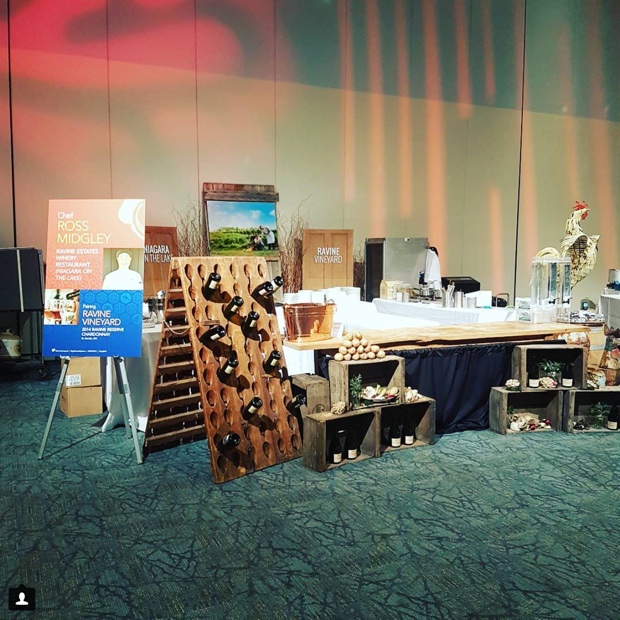
Small @RavineVineyard village looking pretty sweet at @GoldMedalPlates 2017 #gmp2017
When I tasted Quarry Road 2013 out of four barrels three years ago the purpose was to take in the nuances and see only the trees. I for one could not help seeing the forest through the trees and imagining percentages of each combining for the final blend. Neutral Mercurey wood looked over infant three year-old vines spoken here with surprising density, tang and tropical melon in both aroma and flavour. This sits on the front palate right now. The mineral Ceres qualifies older fruit as the pretty and the gemstone, essential for Quarry Road, the most like (Meursault) in Burgundy. This fruit transferred to stainless on the lees from September to March before going into bottle now renders to make Quarry the purest expression from the best vineyard. The CLL toast delivers the taut, not yet reductive wood tightening, then and again now, mainly on the finish. Compressed citrus notes are late arriving and even if it is splitting hairs, the oak really impacts the finish. The larger CLL toast Mercurey barrel reveals a fresher, more reductive, less oaky feel. All together we now have one of Paul Pender’s most accomplished to date and all chardonnays considered, one of the finest higher end values around. I think he would agree. Drink 2017-2024. Tasted May 2017
Mission Hill Perpetua 2015, BC VQA Okanagan Valley, British Columbia (Winery, $73.03, WineAlign)
Perpetua is a different sort of chardonnay for the Okanagan, with not completely obvious fruit and leesy notes that outdo the effects of wood, plus a lactic edge that also smothers the smoulder. This is not the toastiest of chardonnays but is does deliver a saltiness so ultimately the reference point is flint and stone, a.k.a. Chablis. A bit of crème frâiche adds to the dairy mystique. Perpetual chardonnay motion leads to persistence. Drink 2017-2022. Tasted November 2017
There can be little doubt that anticipation would haver to run high for the aromatic, elongated and coolest of Niagara white wine vintages, especially for the chardonnay, but also for the iconic, four-varietal (with sauvignon blanc, sémillon and viognier) blend. The five sensory tenets are solicited and provided for; salty, sour, sweet, briny and umami. The last is exotic and punchy, so this White does it all, speaks for it all and completes it all. It is the most designed and seamless their’s can be. Last tasted May and November 2017
In 2013 viognier is back in the varietal mix, in reprise of its earlier role in support of chardonnay, sauvignon blanc and riesling. A different sort of vintage here for the White, seemingly led by a circular turning of chardonnay and viognier, like a cat chasing its tail. This really goes round and round with no obvious signs of where it will stop. Quite fleshy and lime juicy with stone fruit flavours in righteous abound. Really amalgamated and seamless even for itself. It is here that I think of it as The White. Niagara’s White. Lake Effect™. Drink 2017-2022. Tasted November 2016
Wow the cherry pie delivers a healthy slice oozing in reduced cherry syrup. Could only by an effect created by some appassimento on pinot noir. It’s so concentrated, full of glycerin and sweet fruit. Were it not pinot made with some drying of the grapes it would be an amazing feat of growing, picking and pressing. A panoply of cherries wells in this ripe of ripest Marco Picoli red. Wow, as I said. Drink 2017-2019. Tasted September and November 2017
Cave Spring Cabernet Franc 2015, VQA Niagara Escarpment, Ontario (523001, $17.95, WineAlign)
As with the other Niagara Escarpment reds in the portfolio it is the limestone that stands out, in a good way, to bring about this mineral-red citrus cutting through the rich fruit. That stone-mineral note also does everything to temper and even mute what bitter-tonic-astringent notes might try to distract because that’s what capsicum-bell pepper is wont to do in cabernet franc. This is clean and focused, light and eminently quaffable juice. Drink 2017-2019. Tasted September and November 2017
Inniskillin Merlot Reserve 2014, VQA Niagara On The Lake, Ontario (Winery, $24.95, WineAlign)
This is really pressed and pushed merlot, cool and savoury, minty and spirited with lots of wood spice and equal amounts of tannin. The really tart finish dries out with grip and force. Drink 2018-2020. Tasted November 2017
Jackson Triggs Grand Reserve Meritage 2015, VQA Niagara Peninsula, Ontario (594002, $24.95, WineAlign)
Now here is a nice little bit of diesel of dust, with more than a fair shake of dark raspberries and a mix of chicory, nettles and chalky tannin. Pretty wondrous quality and complexity here. Drink 2018-2021. Tasted November 2017
Henry Of Pelham Baco Noir Old Vines 2016, VQA Niagara Peninsula, Ontario (459966, $19.95, WineAlign)
This is finely rendered baco noir, rich and tangy, with bright cherries and what just feels like beeswax. The most elegant baco noir ever made in Ontario and just foxy enough to be itself. Drink 2017-2019. Tasted November 2017
Mission Hill Merlot Reserve 2015, VQA Okanagan Valley, British Columbia (Agent, $24.99, WineAlign)
This is aromatically rich and lush merlot, with a full compliment of palate richness and silky tannins. For fans of the California style with all in hedonism and a side of nettle. Drink 2018-2022. Tasted November 2017
Mission Hill Compendium 2012, BC VQA Okanagan Valley, British Columbia (Agent, $86.25, WineAlign)
Compendium 2012 carries a great wealth of aromatics, very floral and rusty, with dried strawberries and so much more. A bit reserved on the palate but its elegance and seamlessness are special. Great length even while it’s just not that much of a concentrated beast. Drink 2017-2022. Tasted November 2017
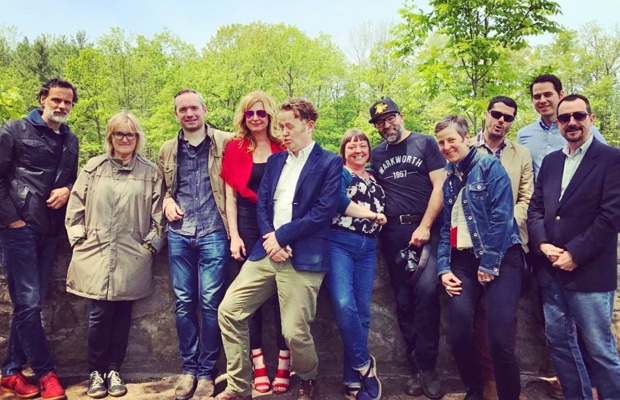
The Niagara crew getting a load of #BallsFalls in Jordan
In May of 2017 the 12th annual Terroir Symposium brought many magnificent folk to Ontario. They were dreamers, disruptors, international luminaries, thought leaders, visionaries, creative influencers, innovators, chefs, hoteliers, drink experts, writers and business leaders. With VQA Wines of Ontario and the Wine Marketing Association of Ontario as chaperone, a dozen of these invitees flew from Billy Bishop Airport to Niagara District Airport for an ante-Terroir Talk Sunday fun day in wine country immersion. I joined Robert Gilvesy, Fiona Beckett, Jeremy Bonia, Magdalena Kaiser, Jamie Drummond, Nikki Bayley, Dick Snyder, Ursula Heinzelmann, Christoph Thörle and Jim Poris for the excursion. In between return nine-seater shuttles we ran through flights at Flat Rock Cellars and Henry of Pelham Estate Winery. Who amongst us was not taken by these VQA wines and their unselfconscious excellence?
First a hot air balloon and now this!!!
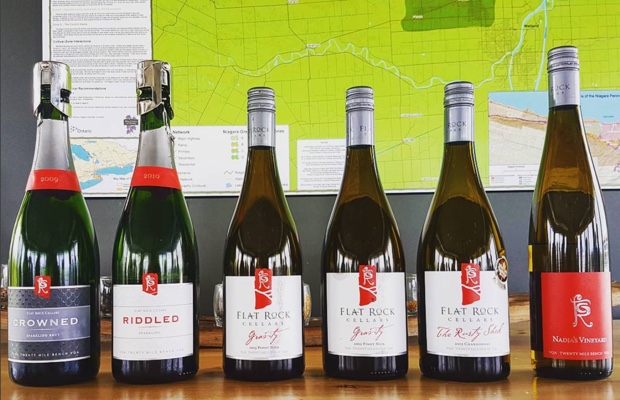
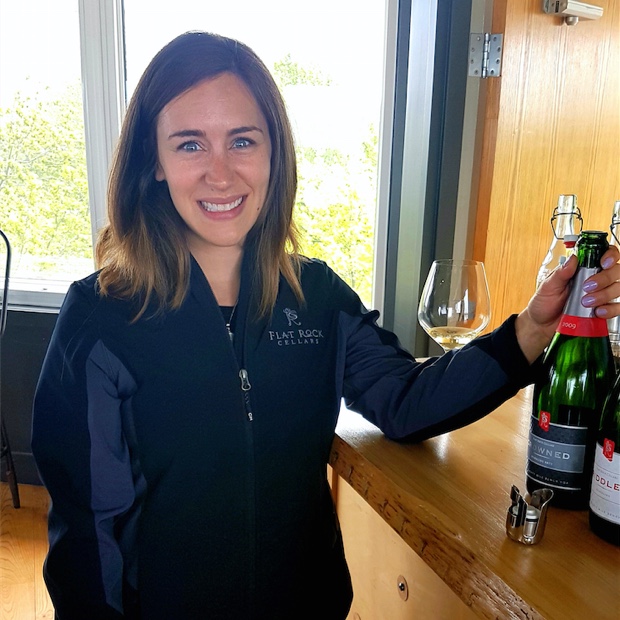
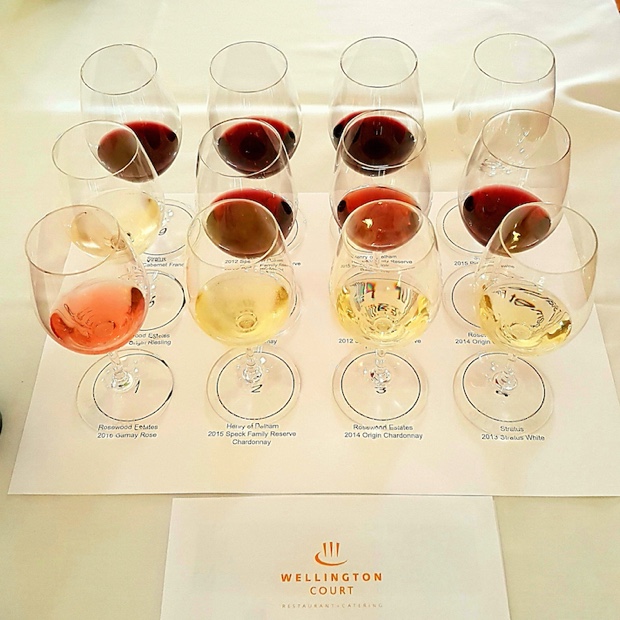
After a quick first pit stop at Ball’s Falls to show off Niagara’s famous escarpment limestone to the international contingent, we settled in at Flat Rock to taste six wines with Cellarmaster Allison Findlay. Next it was a dozen at Henry of Pelham Estate Winery with proprietor Daniel Speck, Ryan Corrigan of Rosewood Estates and Suzanne Janke of Stratus Vineyards. A blow your mind lunch was prepared on site by Wellington Court Chefs Erik Peacock and Cait Bermuhler. Here are the notes on the 18 wines.
Revisits with @Winemakersboots and a seven-year Crowned epiphany
Time makes a difference so here the extended lees age (six months further, to 60) takes Riddled to another level. Considering the cost and attention to time, in the broad realm of traditional method sparkling wine there are some that are given away. Riddled. A whole lot of biscuit warmth, sody saleratus, gingersnap, tart Ida Red apple, breadth and a smile-inducing creamy palate. There is more wisdom and calm from 2010 so do not come around demanding tension and over-exciteability. Think Grower’s Champagne with Ontario heart and soul, dedication and purpose. The extended arm of Madronich-Johnston love is here, this year. It won’t get much better than this. Great length. Drink 2016-2025. Tasted October 2016, March and May 2017 flatrockcellars@Winemakersboots@FlatRockCellars
Crowned ’09 was disgorged this spring after seven years on the lees, sealed under crown cap and sent to market with a crowning achievement in mind. Feather gingery, faintly oxidative, this Blanc de Blancs wafts in copper-veined breezes and fennel frond ahead of its palate piercing chardonnay intensity. It delivers a cooler climate interaction than the Riddled, with preserved lemon and please concentrate if you will on it as a wine of heavy forethoughts. What with it resting on its lees, in limbo this long out of practice, necessity and as a result, now fortuitous and of great luck. The animal was created early on and now anything less might be difficult to justify and accept. Plus the bar is raised for the entire Sparkling community. Here the perfect example of low, slow and minute by minute evolution. Only 500 bottles (plus one) were made. Drink 2017-2023. Tasted May 2017
Flat Rock’s ever involving vines (on 33 hectares planted in 2001 and 2002) enter a new phase with indicators blinking and refreshing in this 2013 Gravity Pinot Noir. Youthful adolescence and gregarious fruit expression initiated in 2010 and carried through the 2012 vintage. Those years saw to a world of astringency and tension relegated to mites in the rear-view mirror. The wine is now in a nexus cross-roaded with exigency holding pattern. To understand its confusion and survey fast forward to its future is not easy. Gravity is a bit large right now, seemingly advanced, but to me the fight is between that fruit abundant state and the return of, though eased by meditative Jedi tension. Gravity just needs a parachute to bring it back down to earth. That lifeline may not materialize in this 2013 but that does not take anything away from its discriminating and diagnostic tones. Brightness, astatic inflection and succulence. This vintage may suffer from some level of snafu but it will age, evolve and breath. That much fruit has to have some level of expectation. The follow up ’14 and ’15 will win the hearts of horses and men. Drink 2016-2021. Tasted October 2015 and May 2017
Seven months have softened and mothered Gravity’s adolescence in ways to now see it as the most feminine, certainly of the last four vintages. Pretty dabs, perfumes of natural conditioning, warm days and warm nights in the bottle. More accessible than previous takes and of a new modernity perceived. Sweet dreams and sweet fragrances, roses and cinnamon, nothing fancy here mind you, with no bite and no gathering moss. Cherries and vanilla, lavender and simple pleasures. Straight up Gravity, no pull down, no drag and no excess weight. At $30 and from the best barrels, this trumps $40-50 most locales not called Lowery, La Petite Vineyard, Central Otago, Hengst or Pfinstberg. From my earlier, March 2014 note: “In a vintage potentially muddled by warmth and a humidor of radio frequency, duplicating berry phenolics, Flat Rock’s Gravity remains a definitive, signature house Pinot Noir. In 2011, the head of the FR class from its most expressive barrels shared the limelight (and top juice) with the Pond, Bruce and Summit one-offs. In ’12, Gravity’s sandbox was its own. The style is surely dark, extracted, black cherry bent, as per the vintage. Yet only the Rock’s soil does earth in this variegate, borne and elevated by the barrel’s grain. There are no fake plastic trees in a Flat Rock Pinot. “Gravity always wins.” Last tasted October 2014 and May 2017
Flat Rock The Rusty Shed Chardonnay 2013, VQA Twenty Mile Bench, Niagara Escarpment, Ontario (1552, $24.95, WineAlign)
It’s as if this label had bided all this time to be the benefactor of 2013 fruit. This Rusty Shed, this 20 miler with the track record to age, a wine that sheds baby fat over a 10 year mineral through echelon stratum, in ways few other peninsula to bench chardonnay can do. This Jay Johnston handled surfer of a wine, buoyant and balanced, centred and able to withstand turbulence, oscillation and tidal sway. Here with sumptuous and spiralled fruit gaged in lode intervals and a tartness held in lope and line by a membrane of extract and tannin. Best ever. Showing well, repeatedly and to forecasted repute. Impressing critics and consumers alike. Bravo. Drink 2016-2025. Tasted June 2016 and May 2017.
This is an outlier for the Nadja’s Vineyard riesling, with deeper concentration and compression than before. More Mosel and less Twenty Mile in 2015, of light alcohol and an increase in off-dry, extract meets acidity. There have been Nadja’s with more air and exhale but I can’t recall one with such density in vitality. A great Nadja to be sure but of a deferential sort of character. Two or three years should bring it back into its self-imposed and created line. Drink 2018-2024. Tasted May 2016 and May 2017
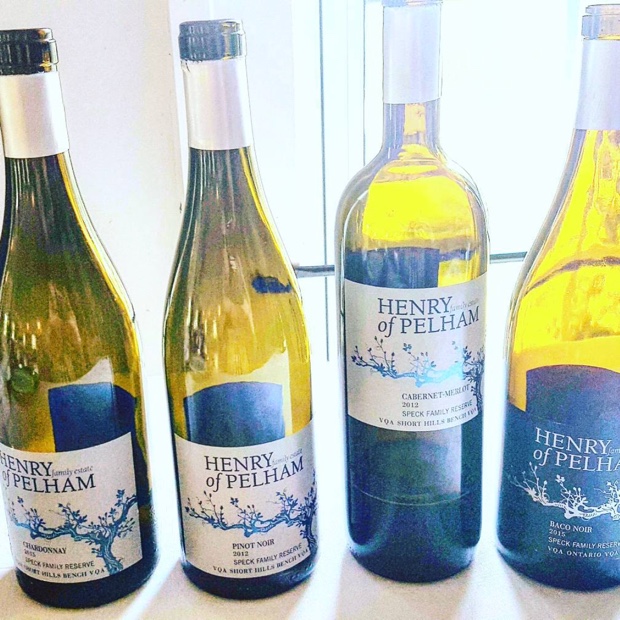
VQA wines at Henry of Pelham Estate Winery, May 2017
The inaugural gamay Rosé is from fourth leaf vines in the spot where the famous sémillon once lived. It delivers essential gamay aromas; strawberry modified with a tisane into raspberry and cherry, salinity clarified and fined. It’s lactic tonal, nicely tart and with a Beamsville mineral, very specific and just this emerald side of intense. Finished dry, but was allowed to go through three quarters malo to bring the cream and the layers. Finished by the incumbent winemaker Ryan Corrigan who once “lived out of a backpack and chased grapes,” committing in fleeting methodology, to northern and southern hemisphere harvests. In 2017 Niagara is all his. Drink 2017-2018. Tasted May 2017 rosewood wine@Rosewoodwine@rosewoodwine
Welcome to @rosewoodwine Ryan Corrigan. Gamay and Cabernet Franc are in fine hands.
Henry Of Pelham Speck Family Reserve Chardonnay 2015, VQA Short Hills Bench, Niagara Peninsula, Ontario (616466, $29.95, WineAlign)
Spice and toast more than anything else come to define the early life of the SPR ’15 chardonnay. Not overtly or overly fruit forward at this (nearing) two-year mark, but green apple, pear and the unusual tangy bite of south asian palm (Salak) snake fruit are just around the corner. This speaks to the phenolic grab and go, the hang time and then that barrel exploit comes through. The palate delivers sappy moments and then the weight of the wine is felt. If texture were quantifiable in aromatics, it would be the SFR that would provide such intellectual fodder to describe what that might feel like. The perfume is layered, chewy, unctuous and viscous. Another year should inflate the fruit and integrate the wood. Drink 2018-2021. Tasted twice, May and September 2017 henryofpelham@HenryofPelham@SpeckBros@henryofpelham
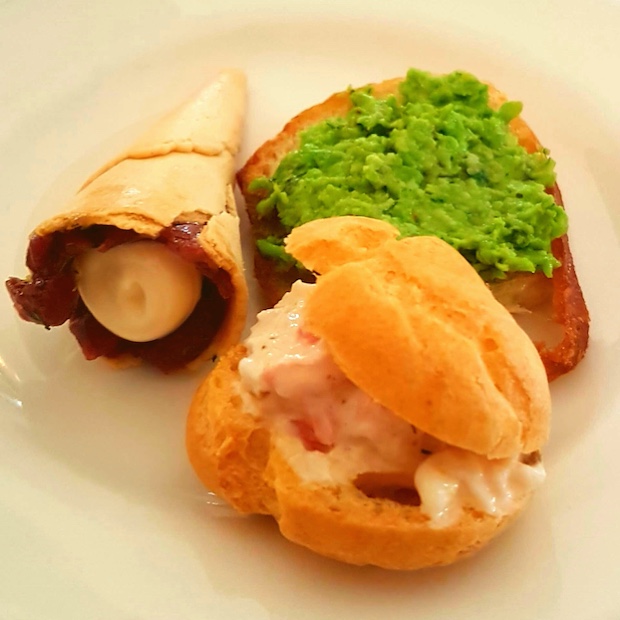
Wellington Court Chef Erik Peacock and Cait Bermuhler’s appetizer trio
Rosewood’s Origin 2014 is highly representative of Beamsville chardonnay, pacing a bridge that connects the cool of the climate and the nook in the escarpment’s abutting warmth of the overall Bench. The skins matter, as per the departing winemaking Ross Wise expertise, if only and alt-heightened in elevating texture, but even more so the rusty, soil tart, intensely wound and taut orchard fruit speciality. Drink 2017-2020. Tasted May 2017
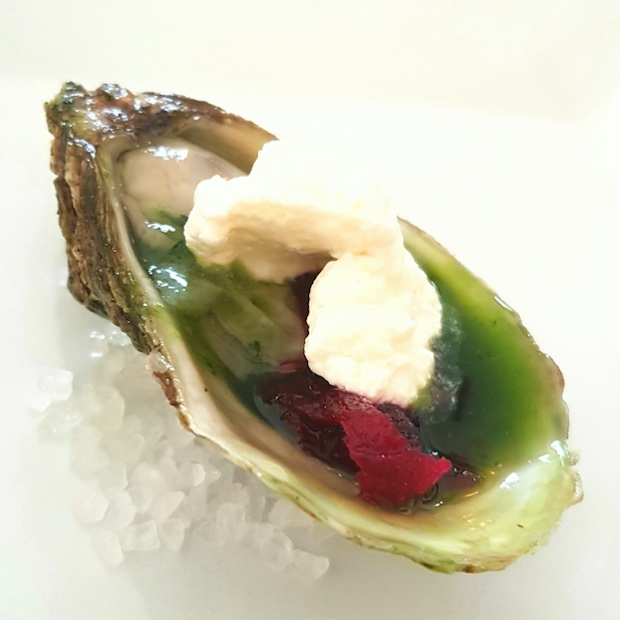
Wellington Court Chef Erik Peacock and Cait Bermuhler’s salt grass point oyster, beet mignonette, cucumber gel, horseradish foam
There can be little doubt that anticipation would haver to run high for the aromatic, elongated and coolest of Niagara white wine vintages, especially for the chardonnay, but also for the iconic, four-varietal (with sauvignon blanc, sémillon and viognier) blend. The five sensory tenets are solicited and provided for; salty, sour, sweet, briny and umami. The last is exotic and punchy, so this White does it all, speaks for it all and completes it all. It is the most designed and seamless their’s can be. Last tasted May 2017 stratuswines@StratusWines@StratusWines
In 2013 viognier is back in the varietal mix, in reprise of its earlier role in support of chardonnay, sauvignon blanc and riesling. A different sort of vintage here for the White, seemingly led by a circular turning of chardonnay and viognier, like a cat chasing its tail. This really goes round and round with no obvious signs of where it will stop. Quite fleshy and lime juicy with stone fruit flavours in righteous abound. Really amalgamated and seamless even for itself. It is here that I think of it as The White. Niagara’s White. Lake Effect™. Drink 2017-2022. Tasted November 2016
Smells like Bench riesling spirit. The energy comes from the über vineyard’s way of emission, gasseous and vital, linear, introspective and direct. This may just be the most aridity and brine ever teased from a Mima’s riesling, acidity coveting sugar notwithstanding, startling from beginning to end, with spirited shots of lime. Underrated and honest, the consistency of this riesling is possessive of great triggers and so beautifully defines the mineral Bench. Early suffocations blow off with ease and in the denoument there are crunchy stones, forever and always something to like. Mima’s never really needed an abundance of sugar for balance and kudos to that. Drink 2017-2022. Tasted March and May 2017
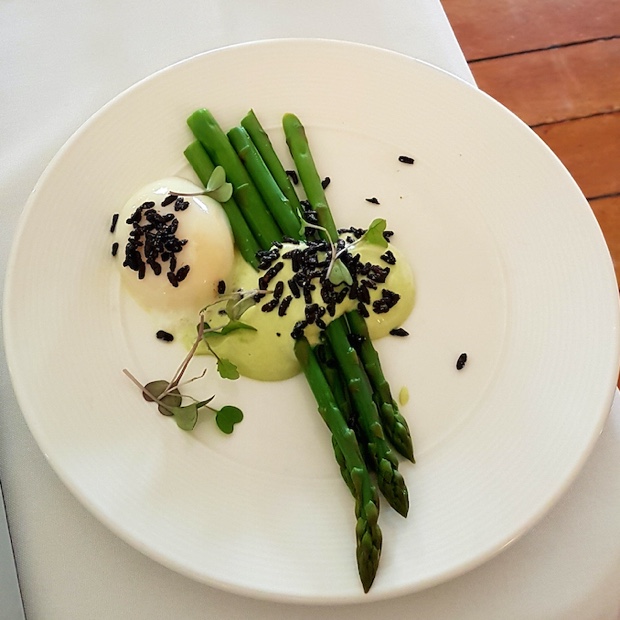
Wellington Court Chef Erik Peacock and Cait Bermuhler’s simcoe asparagus, ramp aioli, sous vide hen’s egg, puffed wild rice
When asked about his approach to gamay winemaker J-L Groux responds with “continuously with changes.” This is what takes place in 2014 with the barrel time cut back by a full year, now only nine months, if nothing else for to place ultimate emphasis on fruit. Sounds simple but it’s anything but in a Groux universe. His gamay now gifts fresh strawberry and raspberry, a slight 13 per cent alcohol spine and the uplifting effect of zero-noticeable steaminess, steminess, aggression or grass. In contrast to many overly and overtly ambitious Ontario gamay here Stratus enters the antithetical to harsh realm and instead occupies the amenable-ethereal void. Less pressing means smoother transitions and weightless chimera. This captures varietal and place with its coax of maximum fruit. The plantings are from 1992 and 2001 (with an imperfect memory that includes the possibility of 1985 too). Drink 2017-2020. Tasted twice, May 2017
Thanks for hosting Daniel. Cab-Merlot ’12 SFR @HenryofPelham is one for the ages @WineCouncilOnt @winecountryont
Henry Of Pelham Pinot Noir Speck Family Reserve 2012, VQA Short Hills Bench, Niagara Peninsula, Ontario (Winery, $34.95, WineAlign)
Always the elder, wise and delicate if elegant statesman for Ontario pinot noir. There is real demure and reserve, Speck family style and this dried red berry savour to both aromatics and flavour. Tart is an undercurrant and red currants run above. Right in its wheelhouse now, for a spell and then the slow fade will come. Drink 2017-2021. Tasted May 2017
Henry Of Pelham Speck Family Reserve Baco Noir 2015, VQA Ontario (Winery, $24.95, WineAlign)
From vines planted in 1984, a more than significant fact of experience, wisdom and acumen from this baco noir. Couple that with what is arguably the finest varietal vintage in many years makes this the collector bottle for the baco fanatic. The rubbery reductiveness is so nicely offset by the flowers, the red fruit and the delicious appeal. Easily the finest ever, by anyone and especially this most prominent house. Great ripe acidity and fine, fine tannin. Drink 2017-2024. Tasted May and June 2017
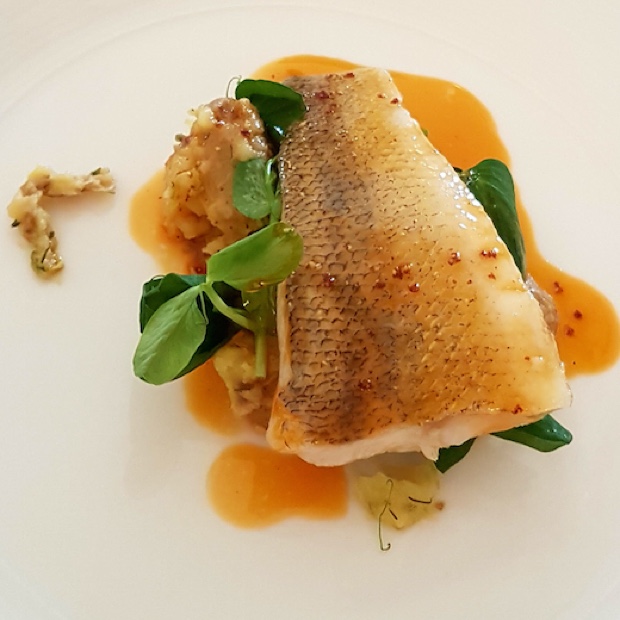
Wellington Court Chef Erik Peacock and Cait Bermuhler’s confit lake huron pickerel, fingerling potatoes, chorizo vinaigrette, celery, capers
It’s a deep, dark fruit, rich currant, pyrazine and savoury vintage for the Origin. It’s cabernet franc that brings strawberry, raspberry and ripe rhubarb to the table. It’s tart and layered, rich and even a touch hematic. Quite pure, red fruit driven and of finely tuned acidity. Never tries too hard, refuses to hide the naturally green character, does nothing to sheath or blanket and leaves the fruit to shine red, bright and vital. Drink 2017-2020. Tasted May 2017
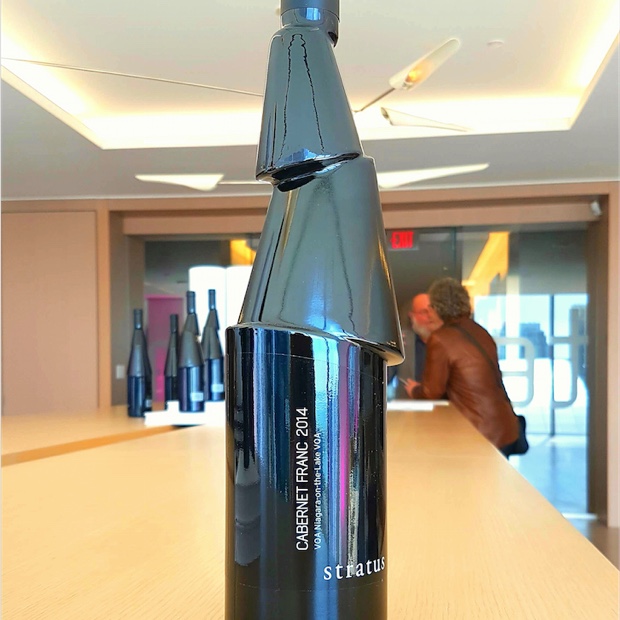
Stratus Cabernet Franc “Decant” 2014, VQA Niagara On The Lake, Ontario (Winery, $95.00, WineAlign)
“A designer’s hands are tied. They are only as good as their opportunities.” The words of the brilliant bottle designer Karim Rashid fully apply to the mirrored universe in which winemaker J-L Groux works, here with a deferential and ulterior cabernet franc, bottled with its lees. When I first tasted it in February (in advance of this auspicious release), its unfiltered state spoke of a hyperbole of perfume, marked by exoticism. The aromatics gave far east five-spice, star anise, cardamom, miso and incense, all natural by-products of its purposed ferment. More grain spoke out but also a roundness of tannin and a smoothness both coating and comforting. There was chocolate accentuated by the treatment, with thanks to those lees left in the bottle. The chopped up and constructed bottle catches the lees while the volume flows out and the function out of form mimics the thought of lees delivering structure and yet they are invisible, caught in a hidden net or nook, out of sight, out of mind. But it’s not about pouring. It’s about the hand, or the slight thereof. Then there is the copycat idealism of strata in the vineyard, of geology transferred to the bottle and kept there, like a ship perfectly preserved inside. This cabernet franc will age better, as is the plan, with thanks to the lees that you’ll never have to deal with. There were 110 cases made. Drink 2019-2029. Tasted twice, February and May 2017
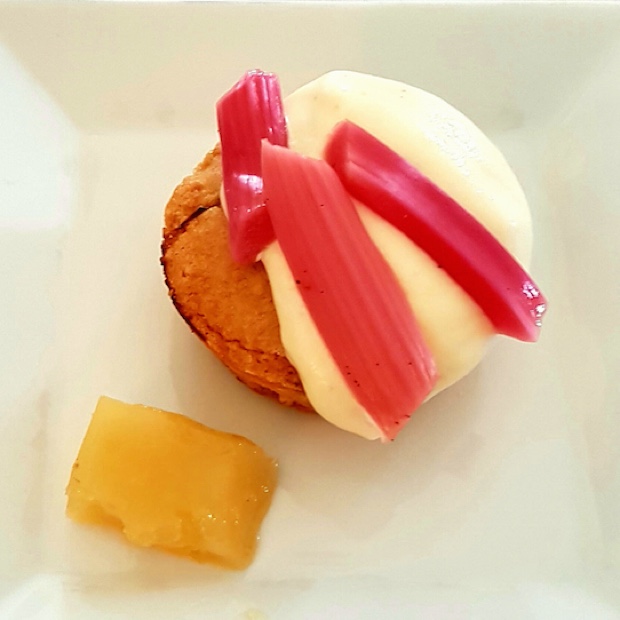
Wellington Court Chef Erik Peacock and Cait Bermuhler’s earl grey friand, poached rhubarb, vanilla mascarpone mousse
Henry Of Pelham Speck Family Reserve Cabernet Sauvignon/Merlot 2012, VQA Short Hills Bench, Niagara Peninsula, Ontario (616433, $39.95, WineAlign)
The warm 2012 is an ideal vintage for this very specific cabernets and merlot blend, a wine as deliberate and iconic to the Niagara effort as any that have come before or currently exist. The vintage falls into a line that remembers 1998 and 2002 (with a half wink for 2007 and three-quarters nod to 2010). The brightness of red fruit and the dusty grounding of that fruit into earth integrates quietly and when acidity joins, the balance is pitch perfect. The fineness of that acidity will allow the mild astringency and dark chocolate by barrel to melt with slow dripping ooze into proper and educated tannin. Is this Cabernet-Merlot Speck Family Reserve one for the ages? In a word yes and likely to rival that 1998 for a 15 year run through excellence. Drink 2017-2027. Tasted May 2017
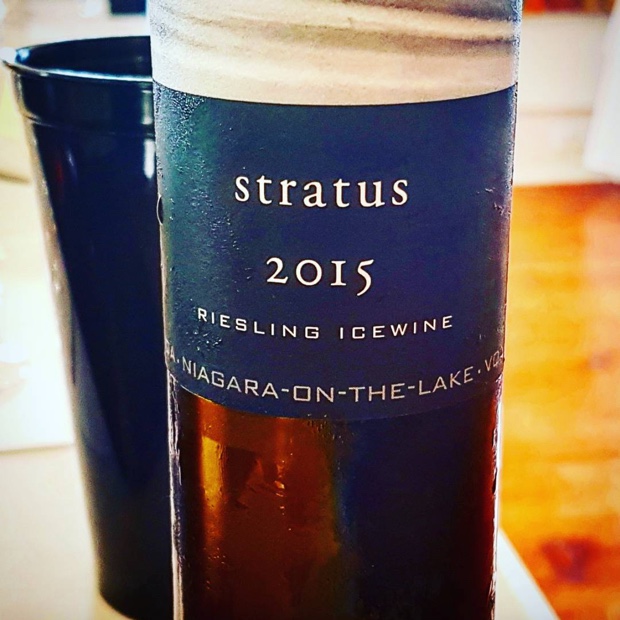
Run any machine on the harnessed marmalade energy of this @StratusWines Riesling Icewine #specialstuff #niagaraonthelake
Stratus Riesling Icewine 2015, VQA Niagara On The Lake (56671, $30.25, 200ml, WineAlign)
The Stratus Riesling Icewine 2015 simulates a true orange and apricot marmalade with a preserved lemon note and a bitter pitch edge. It actually goes into grapefruit a touch, develops unction as it fleshes in the mouth and never fattens or sweetens too much. A show off in triumvirate display of quality, beauty and rhythm. Drink 2019-2030. Tasted May 2017
The Ontario wine industry is the best kept secret in the world. That much I’ve said before and this. “Ontario winemakers have figured it out. The “world-class” comparative humanities of aging and longevity aside, the comprehensive and widespread phenomenon of excellence, regardless of vintage, is now an Ontario reality.”
Though it’s not always obvious at what time of year the event will happen, the annual get to know Ontario wines gathering’s 2017 parlay affectionately known as Taste Ontario Toronto was held a week ago today, on Monday, March. 6, 2017 at the Royal Ontario Museum. The number of Ontario vintners who have participated in Taste Ontario over the past five years seems as random as it is consistent. We’ve seen as few as 30, as many as 55 and 42 participants in 2017. I’ve been tracking varietal representation and this year considered a cease and desist order for placing a trending finger on the pulse of any given grape.
Chardonnay rules, plain and simple and call it risk aversion if you must but why should Ontario shy away from developing the coolest climate designation on the planet? Chardonnay works and if you’ve spent any quality immersion time in Chablis you’ll drop the fight and join the team. Gamay remains an important and viable alternative to big bad reds but please, enough with trying to dress this sheep in wolf’s clothing. Cabernet Franc is getting better all the time. With thanks to venn diagram circles drawn in and out of the Lincoln Lakeshore but also magically deep into the Prince Edward County limestone, the great Ontario hope is developing into what we thought it might be. Getable and structured red wine.
I don’t always taste Ontario but when I do I like to do it with Mike Di Caro. Mike grounds me and tasting by his side helps to keep my pulse at a healthy, wine tasting athletic rate of 40 – 60 beats per minute. Mike knows Ontario wine and never gets too high or too low. Tasting with him as Michael to his Mike I get to hang out inside the kind of discourse that delves into the ground, the makers and the market. Mike knows.
With so many other opportunities to taste Ontario wines throughout the year, last week’s staging afforded the chance to re-taste a great number. These new assessments are so important to understanding and gaining new perspective on not just how our wines age but also how they are affected by early reductive environment shock and their ability to change (for the better) after a mere six to 12 months in bottle. The first snapshots are not always the clearest. Taste Ontario also brings new wineries to the table. It’s now my job to pay them visits. Here are 50 ways to Taste Ontario.
Sparkling
Flat Rock Cellars Riddled Traditional Method Sparkling 2010, Twenty Mile Bench, Ontario (383315, $29.95, WineAlign)
Time makes a difference so here the extended lees age (six months further, to 60) takes Riddled to another level. Considering the cost and attention to time, in the broad realm of traditional method sparkling wine there are some that are given away. Riddled. A whole lot of biscuit warmth, sody saleratus, gingersnap, tart Ida Red apple, breadth and a smile-inducing creamy palate. There is more wisdom and calm from 2010 so do not come around demanding tension and over-exciteability. Think Grower’s Champagne with Ontario heart and soul, dedication and purpose. The extended arm of Madronich-Johnston love is here, this year. It won’t get much better than this. Great length. Drink 2016-2025. Tasted October 2016 and March 2017 @Winemakersboots@UnfilteredEd@brightlighter1@wine_gems
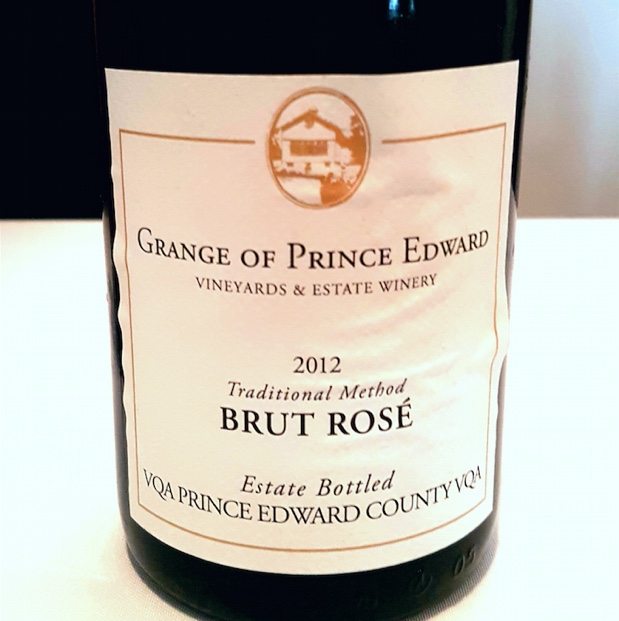
The Grange Of Prince Edward Vineyards & Estate Winery Traditional Method Brut Rosé 2012, VQA Prince Edward County, Ontario (Winery, $35.00, WineAlign)
Caroline and Maggie Granger have reset the compass and brought to market this original sparkling wine with a whimsical outré bounce in its step. It was a fortifying and henna-russet collecting 40 months time spent on the lees that to me has magnified and clarified the varietal expression. This is so pinot noir it gazes at itself in a mirror and vaporizes a telluric perfume replete with strawberry, dried cherry, peach and almond. Estate fruit shed of such lithe and delicate, near zero dosage animation tempts fate, digs into danger and elicits a nervy period of risk-reward. Reflection time is now and the oxidative Grange Brut Rosé walks a fine volatile edge and succeeds. Few sparkling wines can go gossamer this way and survive but like the finest spun web by a leggy creature cunning and wise, strength comes out of the most delicate weave. Science can be pretty cool. There were 150 cases made. Drink 2017-2021. Tasted March 2017 @grangewinery
Riesling
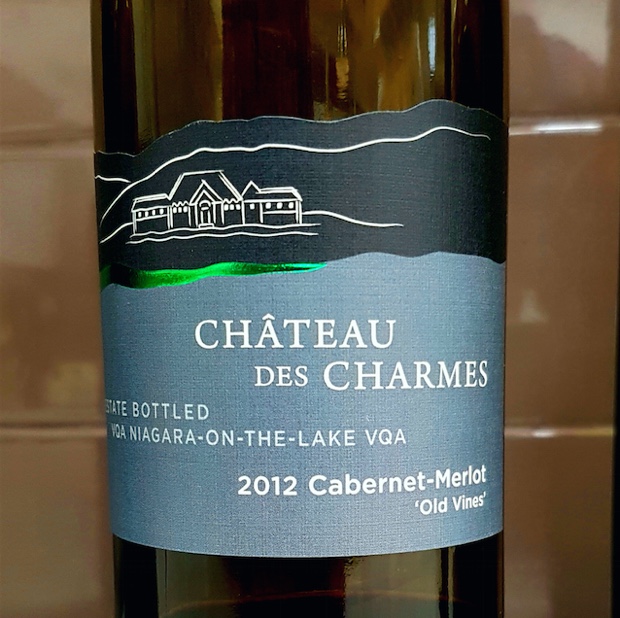
Château Des Charmes Riesling Old Vines, Estate Bottled 2014, Niagara On The Lake, Ontario (277228, $17.95, WineAlign)
The language in ’14 is cordial and effete, with ripe sweetness trumping the pulse of energy. The old vines deliver distinct impression, compression and phenolic bitterness. There is no mistaking this distinct wine and in the vintage its clarity is only eclipsed by its easy drinking compatibility. Enjoy early. Drink 2017-2019. Tasted March 2017 @MBosc
Virtual winery producer Kevin Panagapka continues his obsession with single-vineyard wines with this riesling grown just above and south of the brow of the Niagara Escarpment. Clay loam till soils with silt and shale face south along the long, one km wide, hummocky ridge and as per the vintage, a bit of simplicity is narrowed from good biodiversity. It all works towards simple pleasure, with sun-warmed fruit; pears, apples and such. Falls Vineyard grants top notch acidity and a bit of lime bitters for what is always a solid Vinemount Ridge expression. Drink 2017-2020. Tasted March 2017 @2027cellars
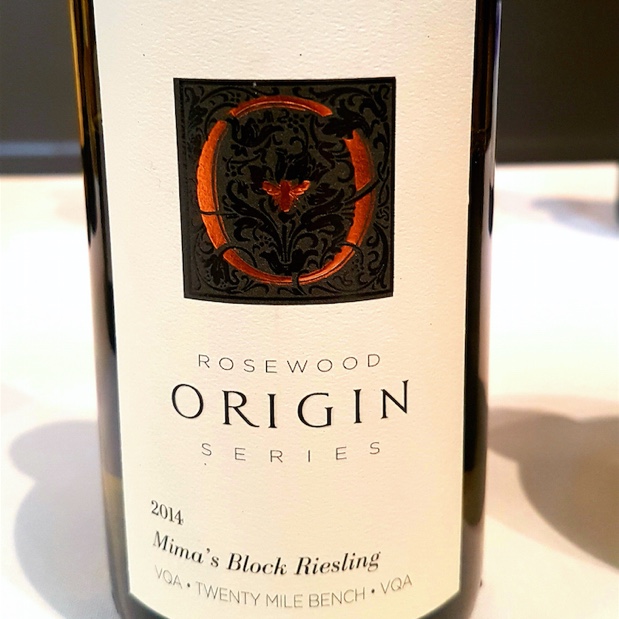
Smells like Bench riesling spirit. The energy comes from the über vineyard’s way of emission, gasseous and vital, linear, introspective and direct. This may just be the most aridity and brine ever teased from a Mima’s riesling, acidity coveting sugar notwithstanding, startling from beginning to end, with spirited shots of lime. Underrated and honest, the consistency of this riesling is possessive of great triggers and so beautifully defines the mineral Bench. Early suffocations blow off with ease and in the denoument there are crunchy stones, forever and always something to like. Mima’s never really needed an abundance of sugar for balance and kudos to that. Drink 2017-2022. Tasted March 2017 @Rosewoodwine
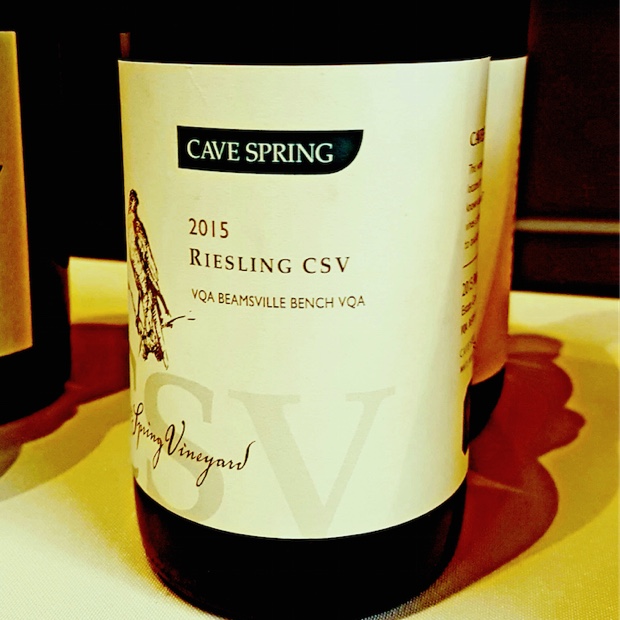
In a word, balance. Well two, balance and brilliance. CSV in 2015 takes the reigns from itself and stands firm. The fruit is in charge, the mineral a support system unparalleled and the minor celebratory sweetness a mere afterthought when it comes to rounding out the complexity. CSV is pretty darn back in ancient dolomite time travel and escarpments high great in 2015, uplifting, serious but yet not so. The numbers trip the light fantastic, fooling like gold and bones dry are seemingly preserved in karst but impossibly not. The sensoria apprised reel from the finest acidity it can possibly carry in its veritable truth. Deep lemon intent and a new wax vernacular speak the clarity of a wine that listens to its own expert advice. Might as well have made itself. CSV 2015 is one of the finest rieslings ever made from Ontario grapes. Drink 2019-2031. Tasted March 2017 @CaveSpring@TheVine_RobGroh
It would be hard not to make a most drinkable and full-fleshy chardonnay from the stellar vintage, especially with the omnipresent cool tempering from Beamsville bench fruit. Redstone does not disappoint though at first it may seem both reluctant and extremely taut. The flavours stretch out more than the aromatics which are flinty, woody and tart. They will relent and meld into the palate with some further bottle time. This is classic for the house braintrust and reminiscent of sketches drawn in some earlier vintages, like 2009. Drink 2017-2020. Tasted September 2016 and March 2017 @RedstoneWines
Henry Of Pelham Family Estate Winery Chardonnay Estate 2015, VQA Short Hills Bench, Niagara Peninsula, Ontario (268342, $19.95, WineAlign)
Perhaps by virtue of the language spoken by the 2015 vintage this chardonnay is hard to crack and touched with a minor, vitality-preserving note of reduction. It will yield to swirl and air, opening up many floral blossoms, notably apple and peach. Intensity is consistent for the Short Hills Blench vineyards stalwart, both for its locked in freshness and aromatic heavy breathing with thanks to dense clay soils and their “tossed up limestone.” Think cool-climate chardonnay with added layers of compression, fervent soil tang and as of yet unresolved (one-third) new French and North Ameriacn oak. Two to three years in process from two to three bottles per vine naturally translates and extrapolates to needing two or three more years in bottle to make it all come swimmingly integrated together. Drink 2019-2023. Tasted February and March 2017 @HenryofPelham@SpeckBros
Meldville Chardonnay First Edition 2015, VQA Lincoln Lakeshore, Ontario (Winery, $20.20, WineAlign)
Foremost a Derek Barnett perfume, rational from a generous barrel and irrational from the ripest fruit at a twain where each meet, both matter and neither dominate. Classic Barnett chardonnay viscosity, deep tang and the sweetest of dry extract. If this isn’t the most ambitious effort early in a re-invented career it would be hard to say what is but wisdom and experience count for more than a bottom dollar. Real length in real time will develop the vanilla, honey and liqueur well into this chardonnay’s tithe year. If singular isn’t the current descriptor now, it surely will be then. A new stylistic benchmark for Lincoln Lakeshore is born. Drink 2017-2023. Tasted March 2017 @meldvillewines
The vintage offered up a whole set of challenges, especially for chardonnay on the Lincoln Lakeshore. Right off the aromatic bat I sense a little extra wood on the nose but low-yielding, ripe and healthy fruit can handle that sort of vintage-related truth. The coolness of a preceeding winter’s anti-glaze is contravened by the barrel up front and personal on the nose. The palate is all about cool-climate relegation, resignation and the overall picture is painted in balance; advance, recede, attack and retreat. Finishes with love interest, commercial appeal. Pretty complex chardonnay. Drink 2017-2020. Tasted October 2016 and March 2017 @FieldingWinery@RichieWine@Heidi_Fielding
Mineralité is clearly nose-marked and cleverly marketed to celebrate rocks and soil, not barrel. The fruit seems plucked straight from the apple tree, crisp, tart and crunchy. Everything about this exacting Thomas Bachelder chardonnay screams foil to most else, from his wide reaching chardonnay domain and from the rest of the province. Other mettalurgical label referenced chardonnays still reek of oak and are too shy to distance themselves from the heart of the rocky matter. Thomas is serious about the moniker and goes at it with great intent. The vintage nearly, fully completely complies. Drink 2017-2021. Tasted March 2017 @Bachelder_wines@LiffordON
The fruit for Ann Sperling’s chardonnay Triomphe ’15 is sourced primarily from Saunders (Beamsville Bench) with auxiliary support out of Heather Laundry’s old vine Lincoln Lakeshore vineyard. There are older, non-clonal blocks with perhaps some Musqué mixed in so the aromatics fly, with no restraint applied by the wild ferment and (mostly 300L) neutral oak. This Triomphe is anything but reductive, a no stress chardonnay from such a far from sluggish, clean ferment. The simplicity and complicity explain how beauty is curated, from a vintage where reduction did not happen or beg to happen so why try to force it. The copacetic re-quiescence bears witness to classic Ann Sperling in such a vintage. Chardonnay of mellow smoulder, of old barrel spice and one to define a certain kind on a line of disparate and unique, cool climate, i4c selections. There are 800 cases made. Drink 2017-2020. Tasted January and March 2017 @SouthbrookWine@AnnSperling@PaulDeCampo@thesirengroup
@wismervineyards royalty, Craig, Thomas @Bachelder_wines & @normhardie (and delegate Peter @BouchardFinlayson ) talking north and south #vinelandbench
The ability of Craig Wismer’s Foxcroft Block to gift fruit, regardless it seems of vintage, is one of Niagara’s great stories. Even more special is how it allows each producer to own it and create value from differentiation. Kevin Panagapka works a decidedly reductive room with bees-waxy fruit from 2014 and of a wood creativity that deals more in spice than anything else. I really think this takes more risk than other Foxcroft efforts and they are numerous. The reward here is in the pudding, literally, in proofed fruit set up for unbreakable structure. The Sonoma glade and fog rings true in Bench-driven chardonnay speak while wood only creates a leesy stir. A very good vintage, as good as the previous two I would say and creates even more buzz for what will come next. Drink 2017-2021. Tasted March 2017 @2027cellars
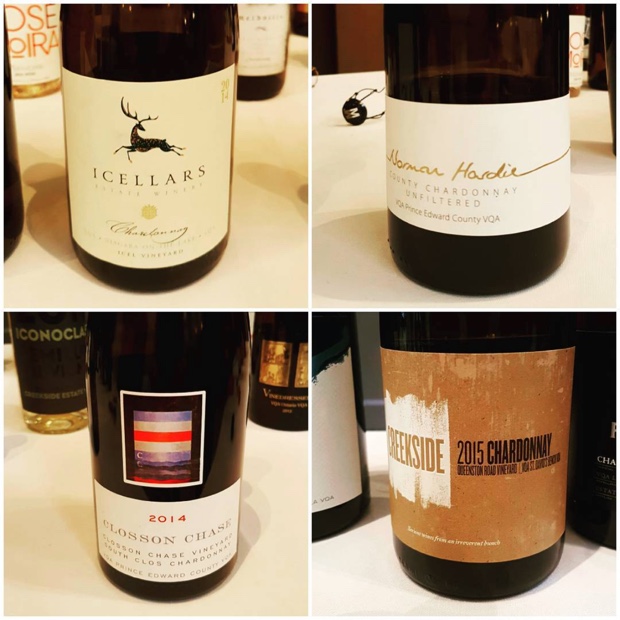
If classic Queenston Road Vineyard might be explained in one drop, try using the Creekside ’14 to do so. Riper than most Niagara fruit and easy as Sunday morning barrel influence come together for everything to gain. Here the chardonnay equivalent of reading a good book falls into lunch, followed by a mid-afternoon slumber. Mild notes of caramel and sandlawood come through on the lightly buttered rye toast palate. The only thing missing is a good slice of bacon. Drink 2017-2019. Tasted March 2017 @CreeksideWine
The vintage brings an excess of riches and richesse to the Queylus chardonnay entry point, a place you would be wise to begin your foray into high-level, carefully crafted, cool-climate wine. This 2014 offers up its tour-guide expertise as a representational bridge into what Thomas Bachelder, Kelly Mason, the Queylus team and lake-proximate, lower Bench chardonnay is all about. The vintage takes an ambitious departure for the house and yet it carries enough (short history of) tradition in its DNA to resemble past issues of itself. Such a balanced wine for you here, of ripe and tart fruit, elasticity, stretch, rebound and finally, great length. Drink 2017-2020. Tasted January and March 2017 @QueylusVin@Dandurandwines
13th Street Chardonnay Sandstone Vineyard Reserve 2013, VQA Four Mile Creek, Niagara Peninsula, Ontario (Winery, $29.95, WineAlign)
No surprise the vintage is a major plus for the Sandstone and the natural funk it owns. And I mean owns. Only Sandstone has such geological drive, not unlike chardonnay from South Africa’s Hemel-En-Aarde Valley. In 2013 there is a sweetness to the fruit mixed with a misty humidity and finally that falling over backwards with feet stuck in the clay and the calcaire. Wildness from J. P. Colas here and with attentiveness to place and time. Drink 2016-2021. Tasted at #i4c16, July 2016 @13thStreetWines
Adamo Estate Chardonnay Oaked Willms Vineyard 2014, Niagara On The Lake, Ontario (Winery, $31.00, WineAlign)
Adamo sources from the same vineyard that provides fruit for 13th Street’s Sandstone Reserve in the Four Mile Creek sub-appellation of Niagara-on-the-Lake. Planted in 1983, it is owned and farmed by Erv, Esther and Eric Willms. In its early stages the fruit acted and reacted as a lean, taut and tension fuelled chardonnay with party a sign of letting up. Eight months later the juicy flesh of orchard fruit pushes past the vintage’s grip and lets tis wine breath a sigh of relief. Chalk one up to yet another cool-climate, calcareous clay stuck moment in time. Drink 2017-2019. Tasted twice, at #i4c16, July 2016 and Taste Ontario, March 2017 @AdamoEstateWine
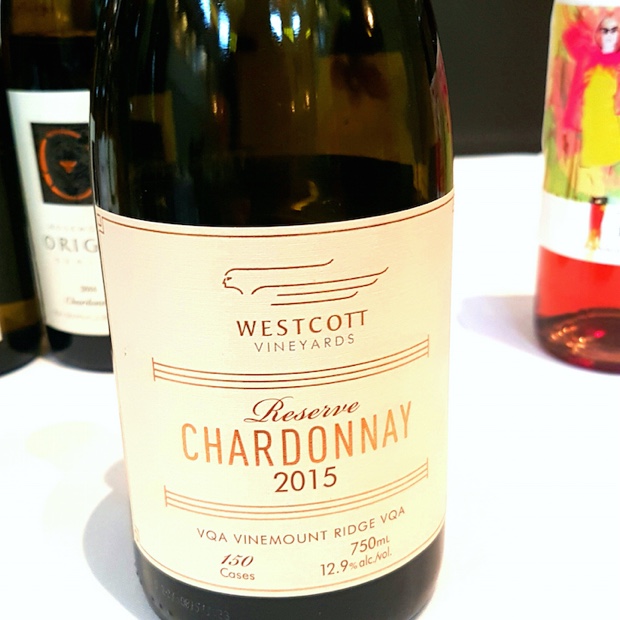
I don’t mean to skip forward and get ahead of Westcott’s aromatic propriety but knowing how a winemaker likes to celebrate texture and flavour sends me direct to a sip. That first taste reveals the sumptuousness of 2015 Vinemount Ridge fruit, ripe, savoury and fleshy peach-organized. Accomplishment number one for Arthur Harder and crew. An aromatic retrospective notices tradition and cool-climate reserve, as the name would suggest and then a full-on conversion moving forward, back to the present and into the variegated luxe of flavour gifted to mouthfeel. I love how this wine lingers with an almost analgesic sensation on the gums and up the sides of the mouth. If at moments it may seem too warm or right of balancing centre it is only because it has the gumption to test and heighten the senses. If any Peninsula chardonnay were a drug that could lead to addiction, Westcott’s ’15 is the one. Drink 2018-2023. Tasted March 2017 @WestcottWines
The aromatic hard to get personality is intriguing, not because of absence but due to a gentle wisdom and beautiful demure lurking behind the veil. I get the extract and the mineral quality inherent but need more. The palate gives more and more, especially a calcareous sensation and the lean qualities throughout are neither deficient nor bothersome. This is ambitiously market-introduced chardonnay created without getting ahead of itself and though the best the fruit has to offer is not quite coaxed, nothing has been added to distract or suppress what orchard fruit is there. Great appreciation is afforded the winemaker for keeping it simple, unadulterated and real. Drink 2017-2010. Tasted March 2017 @FoolAnd60Acres
Closson Chase South Clos Chardonnay 2014, VQA Prince Edward County, Ontario (Winery, $39.95, WineAlign)
Sometimes time matters. A year later the South Clos in 2014 has separated itself as the true Closson star, away from the CCV in ways it did not do in 2013, or before. The range of motion, aromas and flavours are dramatic and in beautiful flux, beginning with top notch orchard and stone fruit. The southern hill’s intense stony quality infiltrates before this opens up to reveal flavours as broad as the varietal spectrum will alow. If fruit slightly dehydrated, leather chewy and mille-feuille layered with fine, limestone wire interlocking are something of great appeal then chew on this South Clos for the next seven years. The texture and the length are wholly encouraging of the exercise. The score must change and the window be expanded. Drink 2018-2025. Last tasted March 2017 @ClossonChase
The 2014 CCV South Clos Chardonnay is imbued with less tension, more elegance and fully-aclimatized cool-climate bent. It’s a linear, calm and directed soul raised from Prince Edward County soil royalty. The vintage offers up low-crop, scrupulously cropped stable if unexceptional fruit. This from a portion of the vineyard with the ability to plateau what can otherwise get season’s growth-mired in the proverbial middle of the road. Though not so tart, nor tense neither, there is a sense of tannic zest. Cool and precise, this represents concrete work from incumbent winemaker Keith Tyers. Drink 2016-2021. Tasted February 2016
The man, the chardonnay @normhardie #princeedwardcounty ’14 #vqa #winecountryontario As sure as fire will burn There’s one thing you will learn Is things you have cherished Are things
Norman Hardie County Chardonnay Unfiltered 2014, VQA Prince Edward County, Ontario (Winery, $45.20, WineAlign)
So much locked in tight obscures the coaxing of a distinct and clear impression of Norman Hardie’s ’14 County chardonnay so I search for a reference point. There is danger in drawing comparisons between two single-vineyards and even more so Niagara to Prince Edward County, but I have to go there. Norman Hardie’s 2014 Niagara chardonnay is the rich and reductive, bullet-proof one. His extreme, hard as nails ’14 PEC counterpart may be the most mineral-focused ever produced off of County soils. The ferment spent 10 months in barrel plus 10 more in stainless steel and never fully completed malolactic. Chablis never had it so good. I can’t ever before recall this flirtatious and furtive combination conjoined by preserved lemon and ginger but also the smell of the apple orchard grinding through metal gears in the cider press. The magnitude of this ’14 chardonnay is felt even before the flavours begin their reveal because the layers of texture and tang are nothing short of remarkable. Hardie has gone for structure broke from this vintage reeling with impression, soliciting oyster, lobster and grand gustatory associations. There is so much going on, eliciting a response that imagines a change in direction and at least an unconscious metaphrasing of terroir. With this formidable chardonnay the idea of better or worse for Niagara versus PEC is finally laid to rest. Vintage rules. Drink 2018-2023. Tasted March 2017 @normhardie
Always Ontario’s outlier, eccentric and non-conformist chardonnay and I say this with complimentary, best of intention flattery. The 2013 vintage is simply chivalrous to chardonnay and in Poetica’s corner, a perfect calm case of preux meets elegante. Here is a chardonnay of inherent oxidative wisdom, from cloud cover, cool, long breaths of Niagara air well into the elongated autumn and the address for what I refer to as “the age apparent one.” The iconoclast Poetica ideal conforms because it is matched with equal breadth by richness of fruit and confirms the way Ann Sperling makes her signature wine. Tasted blind my first guess would put this at five years old because of the exuding warmth so 2010 might just be the order. A 2012 Bench chardonnay might have also been the answer. But with Poetica the promise is like Meursault with uptown fruit, honey, vanilla, caramel, a Niagara vapour and ethanol. Such a telling display that only Poetica can play. Drink 2016-2024. Tasted October 2016, January and March 2017 @SouthbrookWine@AnnSperling@PaulDeCampo@thesirengroup
With a string of no less than five well-executed and received pinot gris vintages tucked comfortably like brass in pocket, Malivoire’s pinot gris 2015 goes one step deeper. No pretender or pretension but yes with compression in ’15, noting melon and lime, white stone fruit, not dense but layered. More Alsace than before and poured blind would always and only be pinot gris. In the hands of Shiaz Mottiar the ’15 knows and says it. “Intention, I feel inventive. Gonna make you, make you, make you notice.” Drink 2017-2020. Tasted January and March 2017 @MalivoireWine@ShirazMottiar@GroupeSoleilTO
Meldville Sauvignon Blanc First Edition 2015, VQA Lincoln Lakeshore, Ontario (Winery, $20.20, WineAlign)
Not so much an aromatic sucess for sauvignon blanc though some faux botrytis in the guise of white peach and even mango is nosed. It is the palate that defines Derek Barnett’s First Edition and offers up description. Quite creamy in texture, tangy again from mango and then sharp and linear with the type of acidity that folds over itself to increase the notion and the effect that leesy textures creates. This lingers on the palate like a tropical pastille and sapidity is very real. It’s classic antithetical Niagara Peninsula sauvignon blanc and could not be confused with Marlborough, Elgin, Sancerre or any other varietal play in the great diaspora. Derek Barnett takes less risk here (as compared to his chardonnay) but at the same time perpetuates the marked differences in expression of NP sauvignon blanc. Drink 2017-2020. Tasted March 2017 @meldvillewines
Does not get much fresher in Viognier, anywhere. The tank has yet to leave the bottle which does not so much stand transfixed in shock as much as it buzzes like a fridge. Heady, radioactive, reductive and policed tight which I very much like. The expected flavours of peach and the pits are in while the texture thrushes inward and the linear, distillate character lashes out. Solid as a rock in a Niagara quarry. Drink 2016-2018. Tasted February 2016 and March 2017 @NyaraiCellars@TerroirLover
The Grange Of Prince Edward Vineyards & Estate Winery Pinot Gris Select 2015, VQA Prince Edward County, Ontario (Winery, $24.95, WineAlign)
If you are going to go for something you may as well go all in. Maggie Granger tells me the ’15 pinot gris saw 36 hours of skin contact. My math tells me that’s a 240 per cent increase over 2013 and 2014. As I said, all in. Now we have something that raises the stakes and despite some energy flatlining the sweet extract quality has never been finer. The Grange’s ’15 and its oxidative meets lactic and red berry-currant leafy personality is remarkably pure, clean, saline and yes, unusual. Add it should be because halfway there is nowhere. This succeeds because it crosses an imaginary line and fear is ignored. I can really imagine sipping this with pork liver mousse or cured Ontario fish, like rainbow or salmon trout. Drink 2017-2019. Tasted March 2017 @grangewinery
The Good Earth Viognier 2015, VQA Lincoln Lakeshore, Ontario (Winery, $24.95, WineAlign)
Some of Ontario’s best viognier fruit comes from these picturesque vineyards, fruit that shines with tangy delight and also takes on the weight of compression from the great clay below. I do feel the 2013 vintage was better suited to both the varietal but also the way winemaker Ross Wise procured viognier in the purest form with glassy clarity. It will be most interesting to see what incumbent consulting winemaker Ilya Senchuk does with 2016 fruit going forward. Here, from what could only have been the lowest of low yields, this aromatic and treacly textured viognier is seamless and full of peach flavour. It lingers with its phenolic ripenss well into the next minute. Highly recommended especially for its lack of waxy or bitter edges. Drink 2017-2020. Tasted March 2017 @goodearthtweets@goodearthNico
Stratus White 2013, VQA Niagara On The Lake, Ontario (660704, $38.20, WineAlign)
In 2013 viognier is back in the varietal mix, in reprise of its earlier role in support of chardonnay, sauvignon blanc and riesling. A different sort of vintage here for the White, seemingly led by a circular turning of chardonnay and viognier, like a cat chasing its tail. This really goes round and round with no obvious signs of where it will stop. Quite fleshy and lime juicy with stone fruit flavours in righteous abound. Really amalgamated and seamless even for itself. It is here that I think of it as The White. Niagara’s White. Lake Effect™. Drink 2017-2022. Tasted November 2016 and March 2017 @StratusWines
Gamay
Malivoire Gamay Small Lot 2015, VQA Beamsville Bench, Ontario (Winery, $19.95, WineAlign)
A change of pace is noted for gamay in 2015 and perhaps it takes itself to a place beyond. Seriously dark fruit (with more tannin showing up after some time in bottle than might have originally thought possible) is noted from just a nose on Malivoire’s 2015. The pressed extraction may turn out to be a process leading to greatly improved structure. This is not the gamay rising from riding on the go-go train but one more akin to Cru doctrine and demagogy. Flavours of black cherry and tart citrus lead to plenty of leafy and earthy savour. Look out Juliénas, here comes Small Lot. Drink 2017-2020. Tasted March 2017 @MalivoireWine@ShirazMottiar@GroupeSoleilTO
The fruit for this deeply coloured gamay is drawn from Tom Koscis’ vineyard, big batch fermented but with a minimalist sulphured approach. Gamay that went through full malolactic in barrel out of sheer necessity. Winemaker Paul Pender is a big fan of this great site, a place that gifts perfect colour and a soil’s funk that is spot on. This is gamay of a noticeable velvety texture. Something strikes as deja nosed and sure enough, this was Pearl Morissette’s fruit in 2013 and 2014. Wisely natural and so bright, gulpable, back up the truck gamay. So beautifully and perfectly dry and even a wee bite of tannin. Drink 2016-2018. Tasted April 2016 and March 2017 @Tawse_Winery@DanielatTawse@Paul_Pender
The Grange Of Prince Edward Vineyards & Estate Winery Gamay-Pinot Noir Select 2014, VQA Prince Edward County, Ontario (Winery, $24.95, WineAlign)
The ’14 is the first Grange gamay-pinot where the grapes were simultaneously picked and co-fermented. It’s a really ripe co-mingling and so much brighter than you’d think. “This is the vintage I was waiting for with this wine,” tells Maggie Granger. Clean, pure essence of raspberry dances on the nose and texture liquid chalky, lactic and taut. This wine also proves that this more than obvious bedfellow varietal combination makes more sense in the County than Bourgogne meetings of the kind. It remains to be seen if the Grange’s irreligious pagan pairing idea will catch on but if any vintage can spur the revolution, 2014 is the one. Drink 2017-2020. Tasted March 2017 @grangewinery
The Flat Rock has been a VINTAGES essential for several seasons and like any maturing pinot noir vineyard, four or five years are needed before quality is ensured. This wine has always provided quality but it is in 2014 where the stakes are raised. For the Twenty Mile Bench (and others Benches too) this vintage provides sweet extract, steadfast fruit, polished tannins and exceptional structure. Jay Jonhston did not mess with the cards, blended with acumen and has subsequently ran the table for his basic, normale, bring it to the (relative) masses pinot noir. It’s all you need to understand Flat Rock, The Twenty Mile Bench and the Niagara Peninsula. It’s essential. Drink 2016-2022. Tasted October 2016 and March 2017 @Winemakersboots@UnfilteredEd@brightlighter1@wine_gems
Parfum doles out the Bachelder perfume with great Beaune intent and whole bunch hints from this most celebrated 2014 Niagara pinot noir vintage. With potpourri so bright and wildly tonal there needs to be some firmness for balance and this is present with tonic injection and finishing grip. The overall impression is a broad brushstoke and wells with its tea-seeping pot of mild but effective tannin. With thanks to “de-classified” Lowrey and Wismer-Parke vineyard fruit an ideal launching point progresses for the Bachelder way and encourages Le Parfum to set the stage for further investigative play. Drink 2017-2020. Tasted March 2017 @Bachelder_wines@LiffordON
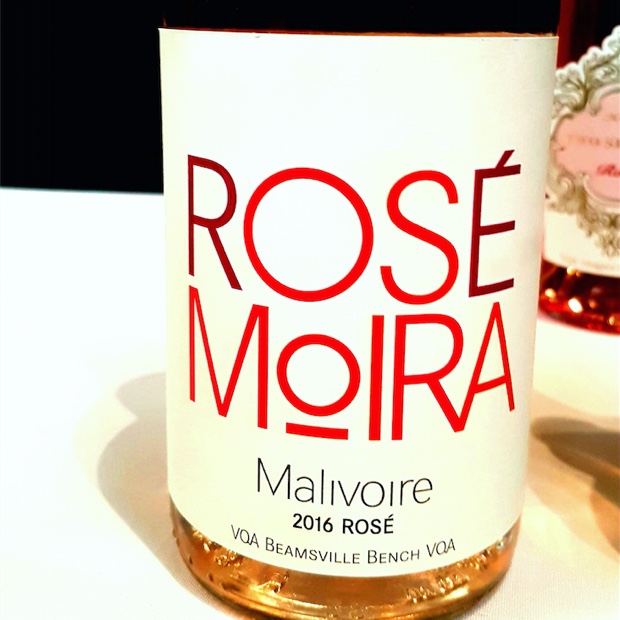
Hard to believe what I see, a hue not blush nor pink, but gris. That “if my eyes don’t deceive me there’s something going wrong around here.” Forget about Provençe, don’t think too hard about Vin Gris but concentrate only on what Shiraz Mottiar has acceded with Rosé for Moira in ’16. Light and lithe do not begin to explain the rub. Rocks and stones are what come through the good earth on the nose. Is this the blush equivalent of mineralité, away from chardonnay and into pinot noir? “Is she really going out with him?” But the pinot noir component is almost non-existent so what is the phenolic advantage here? Has this gone too far or not far enough? Don’t mistake the things I say. This is delicious, understated and fully underestimated Rosé. It will have great appeal to a specific cognoscenti population and who could not think to drink it any day of the week? Commercially considered however, it may not speak a universal language. Drink 2017-2021. Tasted March 2017 @MalivoireWine@ShirazMottiar@GroupeSoleilTO
The Good Earth Pinot Noir 2015, VQA Niagara Escarpment, Ontario (Winery, $24.95, WineAlign)
Moving away from the Lincoln Lakeshore and up on to the ledges of the Niagara Escarpment we find pinot noir taking on a decidly firm and stony aromatic profile. Fruit in 2015 is graced with phenolic ripeness though certainly submissive to the elevated mineral tones. The strawberry-cranberry spectrum is acquiesced and the winemaking has rendered this clean as a pinot noir popsicle whistle. Great simplicity and consumer complicity is gained. Drink 2017-2019. Tasted March 2017 @goodearthtweets@goodearthNico
You’re gonna want to make room for a whole cluster of these @SouthbrookWine #pinotnoir #triomphe #annsperling #laundryvineyard #organic #niagarapeninsula #vqa #beamsvillebench
Ann Sperling’s inaugural pinot noir for Southbrook makes swift, acumen accomplished first time work with Heather Laundry’s vineyard fruit. While her peers of the current generation begin to play and progressively experiment, Sperling helps to usher in the whole cluster brigade with her own 40 per cent packed, tiny berry ferment. This sterling effort takes Lincoln Lakeshore pinot noir to another dimension and Ann is confident the 115 clone is so perfectly suited to the ideal. This whole cluster thing with pinot expresses the floral lift and in turn a gift into elegance and purity. Ripeness and richness take turns without drifting into black cherry darkness. There is some chalky, earthy reduction that needs to mellow and it’s still a bit gritty, palpable of textural and even a bit mean. It won’t take long for this just recently released Triomphe to pirouette, assimilate and dutifully represent an unmitigated success for Sperling, in this her 11th vintage at Southbrook. Drink 2017-2019. Tasted January and March 2017 @SouthbrookWine@AnnSperling@PaulDeCampo@thesirengroup
Bright, high-toned Pinot Noir with rambling warm, St. David’s Bench red fruit aromas, out of the raspberry patch (thorns and thistles in) and off of the ripening pomegranate tree. Some rusticity and quarried character refracts within a mild tannic frame. Very floral and high on acidity. Blissfully and blessedly not over pressed and in fact rather well made. Yet another success employed by winemaker Kevin Panagapka with stylistic firm talon grip from out of the Queenston Road Vineyard. Drink 2016-2020. Tasted February 2016 and March 2017 @2027cellars
Thomas Bachelder has never had a problem with timing. His first pinot noir from the specific Wismer Parke Vineyard (labeled as such) comes from a veritable cracking jackpot of a great varietal vintage. If you need some geographical placement here, The Parke is contiguous to the Foxcroft and Wingfield sections of Wismer in the eight farm-strong holdings on and around the Twenty Mile Bench. It is here that Bachelder concentrates the microscope on a sectional-cordoned off Wismer micro-terroir and its precision-apportioned mineralogy mined for sidetracked and step out of the box focus. What The Parke delivers in 2014 is a sweeter extract than Wismer proper and one that is stationary, static and accessible. The overall grasp is a mouthful easy on the spice or rather subtle in attack after it has climbed in and out of its barrels. Most polls would place Lowrey at the pinnacle of Ontario’s pinot noir vineyards but Thomas Bachelder’s 2014 work with Wismer Parke establishes a new player on the shortlist. This is an exciting entry point and the future will be bright. Drink 2018-2024. Tasted October 2016 and March 2017 @Bachelder_wines@LiffordON
The pinot noir condition is really challenged with Icellars ’15, a wine that acts as ambitious as its sister chardonnay but the results filtered through just the opposite. The aromas are dusty, rusty, coppery and full of dried fruit, but also weathered leather and savour. The palate goes deep south, humid and balmy with red citrus, plenty of tonic and a finish left by bitter citrus pith. Incredibly firm and old-world schooled, way back to Burgundy from another era. Drink 2017-2019. Tasted March 2017 @FoolAnd60Acres
Great purity of Twenty Mile Bench fruit lightens the load, re-focuses, revives, prolongs and re-lives the magic. Sweet, salty and bitter combinative phenols in cohorts distinguish the layering effect of a Norm Hardie pinot noir, no matter the source but here distinct as the s-shaped micro-cilmate curves of 20 Mile blocks. Quite the cake creamy texture and silky mouthfeel for a Hardie pinot noir would indicate that alcohol has crept above the norm but the magic is never abandoned and always prolonged. Heat and alcohol “never there. You’re never there. You’re never ever ever ever there.” Under 12 per cent, every time. Drink 2017-2021. Tasted March 2017 @normhardie
A cabernet blend more franc than sauvignon because of the savour and the plugged in currant fruit. Though the aromatic tones are elevated and venturing into menthol territory, the structure provided by palate and finish ground this two cab blend into solid clay. Will drink well for up to five BBQ seasons. Drink 2016-2020. Tasted September 2016 and March 2017 @RedstoneWines
The Good Earth Cabernet Franc 2015, VQA Lincoln Lakeshore, Ontario (Winery, $21.95, WineAlign)
Just as cabernet franc is inherently wont to be this Good Earth celebrates a grape’s verdant habitual greenness of warming spring and fresh vegetal in waves that bring more advantage than not. Nicely tart and expressive of varietal ways, this is neither overly ambitious nor does it use wood to excessive advantage. With understated the great operative we are faces with cabernet franc allowed to go about its business, for under appreciated grace and the sort of electric and elastic length that goes on for days. Some will say too much of a good thing but if you know cabernet franc, it’s just right. Drink 2017-2019. Tasted March 2017 @goodearthtweets@goodearthNico
Can I be #cabernetfranc for a minute? @meldvillewines @grangewinery
The Grange Of Prince Edward Vineyards & Estate Winery Cabernet Franc 2013 Select, VQA Prince Edward County, Ontario (Winery, $24.95, WineAlign)
An extra year has paid great compliment to Caroline Granger’s ’13 cabernet franc, a wine of deeply aromatic and summer savoury dark fruit. Comparisons politically correct or not, this kind of County cabernet franc is so much more closely connected to Chinon than most from Niagara and it really combines cool-climate with limestone geology. What wood there was has melted and blended in with copacetic liquid chalky ooze, leaving this in a pure and pleasurable state of cabernet franc grace. A near perfect place. Drink 2017-2020. Tasted March 2017 @grangewinery
Henry Of Pelham Family Estate Winery Cabernet/Merlot Estate 2012, VQA Short Hills Bench, Niagara Peninsula, Ontario (395855, $24.95, WineAlign)
Exceeds elegant expectations with poise and presence, a Bordeaux blend so refined it pleases. Effectively restrained and remedies with tonic. Circulating acidity ranges while chocolate whips, but wholly within reason. Spice accents assist in the celebration (why not?) to effectuate this red’s firm grip and grasp of Claret reality. Drink 2015-2020. Tasted blind at WWAC15, August 2015, January and March 2017 @HenryofPelham@SpeckBros
The rare and elusive Ontario cabernet-syrah returns with Fielding’s 2014, from mostly Lowrey Vineyard fruit set in 20-25 per cent new barrel for 16 months. Neither a 2009 or a 2013 was produced because “it’s a priority, not an afterthought,” insists winemaker Richie Roberts. The ’14 is a (50 per cent) cabernet sauvignon, (30) syrah and (20) cabernet franc compendium, treated like a top tier Bordeaux-esque blend with a French-Niagara twist. This is sultry-smoky, curative and red fruit, earthy-dried salumi-salmagundi, holy gastronomy in a glass blend. The Fielding-Roberts wisdom and acumen are all over in a wine that will prepare you for every eventuality. Would undoubtedly pair famously with the rare and elusive king of game birds, le bécasse, with bacon and fleur de sel. Drink 2018-2024. Tasted January and March 2017 @FieldingWinery@RichieWine@Heidi_Fielding
Norman Hardie County Cabernet Franc 2015, VQA Prince Edward County, Ontario (Winery, $25.00, WineAlign)
Only 100 cases were made of Hardie’s 2015 County cabernet franc with thanks to a late spring frost. The impossible one is a destemmed, small basket press wonder that spent 11 months (one more than usual) in 30 per cent new (plus 70 neutral) 228L French barrels. The tartful dodger is slick, smart and spirited. Impossible because of its wood-smothered and smouldered upbringing and how it stays so lean, clean, stealth and low in alcohol. Some things are best left unexplained. Just take in the raspberry, cranberry and cool limestone, followed by the star anise and cassia red braised pork belly imagined, even if that’s just what dish would be so right alongside. Drink 2017-2021. Tasted March 2017 @normhardie
Meldville Cabernet Franc 2015, VQA Lincoln Lakeshore, Ontario (Winery, $27.00, WineAlign)
A beautifully sweet, savoury aromatic cabernet franc of verdant bright tones and such commissioned, defined red fruit. Character is at the forefront, both for attitude and complexity, gently pressed and in varietal synch. This is precisely why Lincoln Lakeshore is the right place to be with the cabernet franc you love. This has great tension without being too firm, gritty or tannic. Though this celebrates the bright and the fruity it is not without enough structure to carry it forward five plus years. Pyrazine or green notes are curiously absent and there nothing suffers as a result of their omission. Drink 2017-2022. Tasted March 2017 @meldvillewines
Southbrook Vineyards Cabernet Franc Small Lot “101” 2013, VQA Niagara Peninsula, Ontario (Winery, $34.95, WineAlign)
Gone is the Whimsy! idiom and preserved is the varietal freshman year class denotation. The “101” actually refers to the vineyard, a block in purport of aromatic restraint in a confident Cabernet Franc with more richness and tannin, not to mention raging acidity and acceptable volatility. There is lightness and brightness within the rigid tannic frame. The “101” vineyard shines while it broods. Dichotomous Cabernet Franc with an as yet undecided future. Drink 2017-2020. Tasted at Gold Medal Plates, November 2016, February and March 2017 @SouthbrookWine@AnnSperling@PaulDeCampo@thesirengroup
Without knowing much about the blend, the nose tells me cabernet sauvignon leads the way. Merlot and cabernet franc trail behind the tart, purple citrus and tobacco-verdant personality. The accumulation is quite chalky, wood-inflected and with the middle palate transparency this emits as another example of a big effort (like the pinot noir) with a shortfall because it gets ahead of itself. Would likely better be served with less pressing, structural dreaming and more easy going impression. I suppose the style has to justify the price but for value and enjoyment a prudent decision would choose instead to follow the lead set out with the estate’s chardonnay. Drink 2017-2019. Tasted March 2017 @FoolAnd60Acres
The time in bottle has eased up the tannic throttle, leaving Creekside’s ’12 in a pleasurable if not quite fuly accessible state. The great fruit vintage was deftly pressed, that much is clear, because as the wood subsides it is not astringncy and bitters sliding into its place. Cassis, cassia and black cherry are the aromas of ilk, in delivery at this time and followed up with cabernet sauvignon silk. This is rightfully and righteously chewy cabernet sauvignon and without a doubt just about as good as it gets for Ontario. Though the limbo bar starts low, Rob Power’s 2012 climbs under with great agility and raises the stakes for everyone else. Still, I’d hedge bets and wait two more years for further integration and a little bit of truffling to begin. Drink 2019-2025. Tasted March 2017 @CreeksideWine
Good quality fruit and equanimity from generous barrels define this ambitious effort. There is this underlying green streak that can’t be missed nor denied though it’s neither unexpected nor unusual. The texture runs quite complex, chewy and at times even crunchy, with enough structure to work towards a promising future. Wood and stemmy savour are certainly part of the mix but with time should integrate without much trouble. Drink 2019-2023. Tasted March 2017 @FoolAnd60Acres
Local best buys ahead of Taste Ontario and Cuvée, Kosher for Passover and searching for common ground
In advance of the fourth VINTAGES release of 2017 and just a shade post Valentine’s Day we find ourselves in anticipatory times. Here at the crossroads of February and depending on which overfed rodent’s shadow you align with, we may yet be faced with four more potential weeks of winter. Concerning ourselves with more important things, we turn to the Ontario wine industry’s lead in anticipation of Wine Country Ontario’s big month of March. Two seminal events lie in wait just around the corner, ahead of and into spring.
Taste Ontario! Toronto Trade and Media Tasting 2017 comes to the Royal Ontario Museum on March 6th and the 29th edition of Cuvée will happen in Niagara Falls. Brock University’s Cool Climate Oenology and Viticulture Institute (CCOVI) will host more than 800 guests at the Scotiabank Convention Centre for the Cuvée Grand Tasting on Friday March 24th.
After tasting at Cuvée in 2016 I noted how riesling and chardonnay have not relinquished any stronghold on their domination, nor should they anytime soon. I can’t help but feel and notice that winemakers continue to reach for the big red machine and wish upon an intangible Bordeaux star when they should be concentrating on fresh, gulpable cabernet franc and gamay. They should also take some risk-reward chances with these necessary, best Ontario option red varieties. Press less, reveal freshness and let natural ferments find low-alcohol impressions of impossible, ethereal beauty.
It’s not just a matter of what, but where. By sifting through leads in geography, in the orientation of escarpments, benches and lakeshore flats, in the gestalt of the archaeology of tomorrow, in the vineyard landscape of today we can perchance unlock the riddle of the what and the why for varietal planting. The end game is to unlock the mystery within the puzzle of terroir, to figure out what grapes will thrive and where they can be given the best shot at success. It is not just about what happens beneath the soil, but also what happens above, around, beyond and in the minds of growers and winemakers.
Passover is sill nearly two months away but ever the proactive agency, VINTAGES lays out the usual Kosher for Passover suspects in the February 18th release, some Mevushal (cooked or, flash pasteurized), some not. Let us first examine the concept and then, the cuisine. An understanding of the rules and laws that govern wine on Passover is on a need to know basis. There are really just three key variants of information essential to purchasing and consuming on Pesach. This applies to Jews and non-Jews alike.
Number one. Passover wine is specific to a Jew’s level of Kosher. From Reform, to Conservative, to Orthodox, all Jews have different variances of belief. A Reform Jew will likely drink any wine on Passover and then again, may not. But, he or she will almost certainly not require the bottle to be Mevushal. A Conservative may only drink Mevushal but in more cases than not, Kosher is good enough. An Orthodox Jew goes it only one way or the highway. Strictly Mevushal KFP, do not pass go, do not collect the Afikoman (the broken Matzah) money. Most Jews who appreciate a glass of good wine with dinner, and especially those who double as wine geeks avoid Mevushal wine at all costs, thought being, consuming heat-damaged wine is no way to go through life. That said, a good deal of the Kosher for Passover wines in our market are Mevushal (KPM) and some are really quite agreeable.
It’s quite simple, really. All wines labelled “Kosher for Passover” are kosher, but not all kosher wines are kosher for Passover. Further to that, wine does not become kosher by being blessed. It can be considered kosher (from the Hebrew; pure, proper) once it has complied with strict rabbinic criteria that render it acceptable for Orthodox Jews.
Few holidays put food under as much duress as Passover. The cooking is a science and an art unto itself, having to make use of Matzo, eggs and oil for eight days. It is a form of penitence, a tortuous walk through a culinary desert, at times horrific like a Fear Factor episode. Charred eggs, Haroseth, Chopped Liver, Kugel, Farfel Stuffing and desserts made with cake meal and Matzo Meal. Believe me, this chef has had nightmares.
Up until a year or two ago I noticed that Kosher wines seemed to have migrated bigger and bigger with each passing Lunisolar calendar year. Israel continued to race towards big, lush, often high alcohol reds. This trend could be seen as a masking or a compensating/mitigating strategy to oppose the rigours and past failings of making Kosher wine. It can also be viewed as a stylistic choice, to mirror what has taken place in Bordeaux, in California and in Australia for the past 20 years. For the first time, the reds on this VINTAGES release seem to collectively take an extraction and alcohol step back.
The Kosher contingent on the VINTAGES February 18th release continues to be Israel-focused, which is not a bad thing, but if you really want a better selection, head to one of three LCBO kosher boutique locations; 675 Wilson Ave., 180 Promenade Circle, Promenade Mall and 502 Lawrence Ave. W. It is here that the LCBO has stepped up their Kosher game.
As for scouring the best of the rest, WineAlign’s John Szabo laid down the low-down on Australia’s impressive showing in this release and found great value in a hodge-podge of VINTAGES value releases. I am searching for common ground and was quite impressed with two iconic southern French producers and their stellar-valued, pull no punches red and white. One hails from arid Côtes du Roussillon, the other off of old vines in Costières de Nîmes. Magic and lithe Oregon, endemic Greece and a most pleasurable drop of Sagrantino round out my shortlist. David and Sara shore up the global list with much needed and appreciated support with pertinent finds of their own.
While I sip and taste through Chianti Classico, Vino Nobile di Montepulciano and Brunello di Montalcino at Antiprime Toscane I hope you all find your gems from the February 18th release. See you in March for a taste of Ontario.
It’s only love when #french and #danish friends do dinner @michaelwuertz #herring #foiegras
I do like symmetrical things and prefer the irregular approach to writing and life. Method to madness is all in the perception and only really figured out when you learn to let your emotions run wild. You have to want to believe Godello as a writer knows what he’s talking about but you also need to trust the facts when you find them flooded into the seemingly unconnected mess of musical and multicultural references, veins and streams of consciousness.
Do you remember this commercial?
“You worked too hard and ate too much,
The cheesesteak made you green.
Let your aching head and stomach hear this message from old Speedy.”
Speedy here is voiced by the same guy (Dick Beals) that voiced Davey of “Davey and Goliath” and Ralph Phillips of “Looney Tunes.” Here we move forward, away from the mess and sting and sighs and slings of 2016, past the littering deaths of loved ones and icons, into the future that begins (in wine anyway), with the VINTAGES January 7th release. Forget the Alka Seltzer and listen up.
Drinking sparkling wine in January is a contagious and contiguous must for any self-respecting wine geek but who can afford Champagne after the bank-rolling of the holiday season? Fear not for alternative fizz is coming your way. So are tidy values for chenin blanc, viognier, grüner veltliner, malbec, negroamaro, tannat, graciano, sangiovese, garnacha, cabernet franc and syrah. You can also choose from five splendid blends from Dealu Mare, Valpolicella, Langhorne Creek, and Côtes Du Roussillon Villages. Please visit WineAlign for full reviews of these 17 in VINTAGES January 7th.
Budureasca Feteasca Regala 2015, Doc Dealu Mare, Romania (416800, $11.95, WineAlign)
Gérard Bertrand Grand Terroir Tautavel Grenache/Syrah/Carignan 2013, Ap Côtes Du Roussillon Villages, Languedoc-Roussillon, France (272575, $18.95, WineAlign)
I’m splitting up the teaser for the VINTAGES December 10th release into three sections; Canada, New World and Old World, if only for the old-school, nostalgic and compartmentalized way of things. First up are wines that stretch across the great Canadian divide, from all the way west to east, by way of Ontario, of course. Eight up, right now.
Can somebody get the pin? The ninth green at Summit Golf & Country Club
This will be the last weekend of play for most southern Ontario golf courses, or at least the ones who are smart enough to lock down and protect their precious 7,000 yards of turf from irreparable 2017 damage. For many players there are two seasons, golf and wine buying. Now that the exceptional 2016 year of 50-plus, sunshine-blessed rounds of 18 are done, the time has flipped over to loading up for the holidays and stocking the cellar.
My outward and inward nine recommendations from the VINTAGES November 12th release cover one and then the other. The front is marked by balance relative to par; wines of value, amiability, varietal purity and regional respectability. Just have a look at some of these iconic names: Delas, Catena, Trimbach, Gabbiano, Hedges and Cave Spring. The back takes swings into under and over par territory. Some are choices that polarize with buyers, critics and geeks. Are they worth the cash? Only you can be the judge. Along with some of Niagara’s greats are selections that include Chablis, Gran Selezione, Veneto and Napa Valley.
So put away the sticks and hit the stores. Here are my top 18 recommendations coming to VINTAGES this weekend.
Front Nine
Delas Viognier 2015, Vins De Pays D’oc Rhone, France (462465, $13.95, WineAlign)
Pretty darn textbook viognier in the broadest sense of the varietal word, aromatically waxy, tropical and medicinal. The low alcohol, high flavour and commercially managed acidity is balanced by cream and citrus. No more, no less, precise and managed with utmost professionalism. Drink 2016-2019. Tasted October 2016 #Delas@VINSRHONE@UNIVINS
Karavitakis Winery The Little Prince White 2015, Crete, Greece (465930, $14.95, WineAlign)
Here an interesting bit of local vernacular, Cretan style, with vilana (65 per cent) and vidiano (35) dishing up a distinctly and singularly endemic mineral impression by way of subtle hints from tropical fruit. The palate is rich, broad and marzipan creamy. The acidity is round and rambling, tying the whole kit and Crete kaboodle together. A worthy side venture into the Greek Aegean hinterland. Drink 2016-2018. Tasted October 2016 @karavitakiswine@VictoryWine@winesofcrete@DrinkGreekWine
The Young Vines is an orange to the Earth and Sky’s apple, of a change of fruit and a pace that is hot off the press. Yet it is not without some ancient wisdom. In some new world sites vines up to 15 years of age would be considered old growth adults. In a Greek vineyard like that of a Naoussan like Thymiopoulos, they are babies of the sun. The Xinomavro here is fresh, momentarily acts strikingly brazen, bracing and ultimately, blatantly beatific. With a glass of the young vines in hand to it I say, “it’s not the pale moon that excites me, that thrills and delights me. Oh no, it’s just the nearness of you.” Like Norah Jones in a glass, sultry, contemporary, lightly smoky, of a jazz aesthetic and a pop sensibility. And wild berries. So fresh, so good. Drink 2015-2019. Tasted May 2015
Parker Coonawarra Series Cabernet Sauvignon 2013, Coonawarra, Limestone Coast, South Australia, Australia (467571, $19.95, WineAlign)
The Coonawarra Series cabernet sauvignon is predominantly sourced from the Williams family vineyard (like that of the chardonnay) in Southern Coonawarra. There can be no separating Terra Rossa soil from what happens with (especially) cabernet sauvignon anywhere in the Coonawarra. Very cool and savoury cabernet with tart cranberry, currant and black raspberry aromas. Really crunchy, chewy and gritty wine with focus and grip. Drink 2017-2020. Tasted October 2016 @parkerwine@CoonawarraWine@Select_Wines@Wine_Australia
Catena Malbec 2014, Mendoza, Argentina (468066, 1500ml – $39.95, WineAlign)
High mountain vines bring more than altitude to Catena’s most commercially visible and successful malbec. In magnum format it accentuates the herbs and the dry, dusty qualities. In here there is sweetness but from tannin and extract. Acidity is the catalyst to make this sing a mountain hymn. Such proper winemaking brings rain. Love the format. Drink 2017-2020. Tasted October 2016 @LauraCatena@CatenaWines@ArgentinaWineCA@winesofarg@Noble_Estates
First and foremost it is the wood, or the lack of wood that stands out in the CCR 2013. It may be observed as a different kind of wood, less polished and more natural but what really wins out is the fruit. The cherries are surfeited by impressed tannin and linger with good tonic for a good length of time. Great restraint shown by winemaker Federico Cerelli. Drink 2018-2024. Tasted June 2016 @castgabbiano@chianticlassico#TreasuryWineEstates
Trimbach Riesling 2013, Ac Alsace, France (734517, $23.95, WineAlign)
What pray tell might you ask more than this from Alsace riesling? Could you, would you demand more immediate gratification? Might you request more purity and clarity of soil, rock and regional understanding? Is there a need to better define citrus and dry extract in any finer way? Trimbach has it down and few can pinpoint with fewer words and more direct impression. How things ought to be. A tight vintage though, so wait 18 months before embarking on chapter one. Imagine the Cuvée Frédéric Emile possibilities. Drink 2018-2023. Tasted October 2016 @trimbach@annetrimbach@WoodmanWS@AlsaceWines@ACT_Alsace@VinsAlsace @drinkAlsace
Hedges C.M.S. Cabernet Sauvignon / Merlot / Syrah 2014, Columbia Valley, Washington (948992, $23.95, WineAlign)
Copacetic and well-amalgamated vintage here for the Hedges CMS, a wine of deep singer-songwriter meets jazzy flavour and sensible grip. Though there are bitters and a display of fine if sweet tannic structure, this CMS hits not over the head or below the belt. Just a few jabs and a loving embrace. A blackstar Columbia Valley blend that flies past, like “seven tracks in 40 minutes and it’s musically distinct.” In this way it reminds me of Ben Greenman’s New Yorker piece, “The Beautiful Meaninglessness of David Bowie.” Or it makes me think of Bowie as so many Hedges wines do. It’s not that this wine offers no clear meaning but it dishes ambiguity in ways only it can do. Like the late glam star, it “can’t give everything. Away.” Or, as Greenman concludes, “unless, of course, that isn’t what it means at all.” Drink 2017-2020. Tasted October 2016 @hedgeswine@Noble_Estates@WINESofWA
Cave Spring CSV Riesling 2014, Cave Spring Vineyard, VQA Beamsville Bench, Niagara Escarpment, Ontario (566026, $29.95, WineAlign)
The vintage brings a concentration and a compression and the most fruit imaginable for the Beamsville bench and the CSV. How this iconic riesling solicits immediate attention and fruit-juicy love is really something and hasn’t been seen in a few years. The citrus is all flesh and juice, the mineral aspect full of tang. Unction and viscosity define the texture and the palate. Drink early and enjoy the hell out of this forward CSV riesling. Drink 2016-2021. Tasted October 2016 @CaveSpring@TheVine_RobGroh
There was this intuitive moment with Picone 2013 as if it was waiting on me. Not doting or soliciting, but waiting. I will admit to have been wondering, reeling and speculating. To peer or peek into what Mark Picone’s Vinemount Ridge vineyard would adjudge and then bestow Charles Baker’s riesling in 2013? Would it be a case of weight, hyperbole, a hang in the balance out of misjudged necessity? Nah. Picone is no longer a mature 20 year-old vineyard but now a wise old thirty year-old one. Picone 2013 is in fact a fun park mirrored image of itself, with haughty, aerified aromas and variegated, leaning to tropical fruit flavours, taut like a flock in line with the vintage. The riesling berries just seem to have imploded and the results that have followed are nothing if not intense. Imagine a Yogyakarta market and a two-wheeled, glass-cased push cart stacked with a pyramid of tart mangoes. The fruit had been picked just as the sugars had begun to run like sap and bleed sticky on the cracking skin. A mango is sliced and doused with the intensity of Java lime juice and then sprinkled with Laut Jawa salt. The flavours are searing, sweetly saline and quenching. Only this tart is this, where tart and acidity meet, intertwine and connect on an emotional level. Picone 2013. The first non-inoculated riesling at first and then touched up near the end. “The best vintage you could ask for in riesling,” notes Baker, “cloud-covered, a meeting of the minds, vibrant.” The arid, cranky one will live without fret for 15 years. Drink 2018-2028. Tasted twice, October 2016 @cbriesling@StratusWines
Louis Moreau Chablis Vaulignot Premier Cru 2014, Burgundy, France (525386, $36.95, WineAlign)
Vaulignot was created in 1976, one of the last Premier Crus to gain such status within the association. Note that Moreau’s nomenclature is Vaulignot instead of Vau Ligneau, but the meaning is exactly the same. Really round and rich Chablis with a relative and realistic purity specific to place. This alights as a sun-drenched and lemon waxy chardonnay with enough (thank you very much 2014) tension to keep it rolling right along. What Vaulignot brings to the Chablis table is stick to your tongue, mouth and ribs persistence and vitamin water mineral enhancement. In a way it is caught in the Chablis netherland between up front gregariously fruity and strikingly mineral/acidity piercing. Great length in this vintage. Drink 2016-2020. Tasted October 2016 @MoreauLouis1@vinsdechablis@purechablis@BourgogneWines@vinsdebourgogne
I would not have thought it possible but the ’12 TC Meritage is open for business. The fruit is near-perfect for what these parts of the Beamsville Bench can offer and the normal gnashing is frozen as if suspended, which it likely is. In its current state it is all berries and dusty tannins, ripe, ripe acidity and plenty of outright happiness. A wisely structured Terroir Caché from Marlize Byers as only she could coax and extend. Drink now (not) or wait five years. Points in between may be confounding. Drink 2020-2030. Tasted October 2016 @HiddenBench@BenchVigneron@MarkAnthonyON
Coyote’s Run Rare Vintage Pinot Noir 2013, VQA Four Mile Creek, Niagara Peninsula, Ontario (296863, $39.95, WineAlign)
A tart and robust vintage for the rare pinot noir, deeply ingrained into earth, sun and savour. This is distinctly varietal to Four Mile Creek with haute sapidity and exceptional length. The rusty accents inject piercing citric life into strawberry rhubarb pie. The tannins gnash their terrible teeth and the fruit hides for dear life. I’m not sure any Rare Vintage David Sheppard-ed pinot noir has ever delivered such mean structure. The next Niagara growing season should contribute to an ever more impressive showing because the fruit will almost certainly be up to the tyrannical task. Not to mention the coincidental crossroads 30th Sheppard vintage of making wines in Ontario. Meanwhile, from the cloudy, windy 2013 vintage his pinot noir will live long and prosper. Drink 2018-2025. Tasted October 2016 @coyotesrun
Henry Of Pelham Cuvée Catharine Carte Blanche Blanc De Blanc 2011, Méthode Traditionelle, VQA Short Hills Bench, Niagara Escarpment, Ontario (315200, $44.95, WineAlign)
t’s always a highly anticipated taste when a vintage dated Cuvée Catherine is on the table sidled and promoted with the bar raised to epic heights from a striking chardonnay vintage like 2011. With acidity a given as the elephant in the room the formidably elegant Blanc de Blanc glides ethereally to press upon the olfactory nerve major and then grace the palate with fine mousse, citrus and biscuits. This is a benchmark for Ontario and Canada with only Benjamin Bridge’s B de B styled Gaspereau Valley gemstone sparkler in the same elite league. Enjoy this now and for 15-20 blissful, fizz-friendly years. Drink 2016-2032. Tasted October 2016 @HenryofPelham@SpeckBros
Barone Ricasoli Castello Di Brolio Chianti Classico Gran Selezione 2012, Docg Tuscany, Italy (942607, $59.95, WineAlign)
A Chianti Classcio first borne in 1997 with the plan to create a maximum quality blend as an expression of the estate’s diverse terroir. A meticulous selection is combed from the estate’s vineyards, spread over 230 hectares of land. Though early on the fruit may have emerged out of good but not yet exceptional vineyards, nearly 20 years later the sangiovese (90 per cent) with cabernet Sauvignon and merlot (or perhaps petit verdot) adheres to grand vin excellence. The wood regimen is 18 months in tonneau followed by 18 in bottle. Perhaps you will not find a more accomplished, perfectly judged, matter of factly expressed Gran Selezione. Sangiovese in equality of spicing with fruit, acidity and tannin, perfectly integrated toast, wood impact and textural drive. Stefano Capurso admits this about the transition from Chianti Classico to Gran Selezione.”It’s a matter of compromise between what is needed for the small producers and the need to express through crus for the large ones.” Drink 2018-2025. Tasted May 2016 @barone_ricasoli@imbibersreport@chianticlassico
Only and distinctly Quintarelli, of that Negrar perfume and the kind of salumi cure no other producer can seem to procure. Though an infant and a baby to more mature vineyard selection Quintarelli adult bottlings, the Primofiore is full of exotics, of clove, cardamom, liquorice and meaty char. There is a sweetness to Quintarelli fruit and a remarkable resistance to astringency. This particular 2012 IGT is smooth and soothing. It is dangerously easy to consume. Drink 2017-2027. Tasted October 2016 #quintarelli@LiffordON
Stags’ Leap The Leap Cabernet Sauvignon 2012, Napa Valley, California (142844, $89.95, WineAlign)
Signature cabernet sauvignon from Stag’s Leap from the first of the dry Napa vintages is dusty and high-toned to a high degree. Pure berry distillate and a savoury linger lead off and yet the closemindedness is still a youthful issue. There is a beautiful sense of florality behind the veil of aridity and big room tannin and yet the fruit is so very ethereal when it comes to tasting. Yes the dinging acidity and dastardly tannin will be a constant reminder of structure but without over compensation from the barrel the DJ Kylo driving beat will always be helpful. Gorgeous wine from Christophe Paubert. Put it in the time machine. I’ll take that leap in the dark. Drink 2019-2027. Tasted October 2016 @stagsleapwines@SLDistrict#TreasuryWineEstates
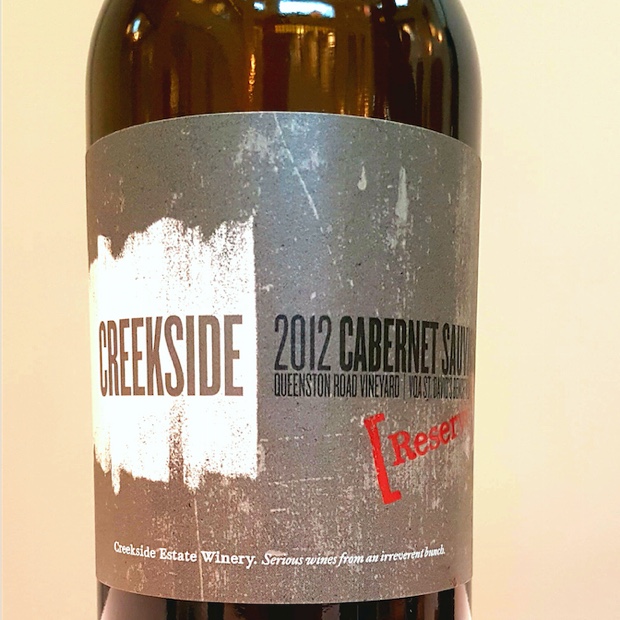
Forman Cabernet Sauvignon 2012, Napa Valley, California (143925, $160.00, WineAlign)
Forman’s 2012 is a big, vibrant, robust and dusty expression, full of fruit, more fruit and nothing but fruit. Though the price is exceptional, the combined stylistic and level of honesty is formidably forman-ible. It is a rare opportunity and execution indeed when sweetness is culled from extract without the necessities of manipulated winemaking, oak usage included. The naked purity of this wine from an exceptionally dry, ripe and efficiently evolved vintage leads this cabernet sauvignon down a long, purposed and grandiloquent road. Drink 2018-2030. Tasted October 2016 @rogcowines@NapaVintners#formanwines
dews and redos with @lassvet from @PearlMorissette
This much is clear to me and at least two friends of mine. Just because you think you’ve been there, done that and have tasted everything there is to taste you may need to pause and recalibrate the idea of assessment. Though your convictions are strong and your beliefs unwavering, you may not know all there is to know. If you feel one taste is enough to etch a life in stone then maybe its time to open up and allow a wine to blow your mind.
I sat down at Barque Smokehouse last month with Pearl Morissette’s Svetlana Atcheva, John Szabo M.S. and Gerardo Diaz to taste some things new and to re-visit some of Francois Morissette’s most iconic if controversial wines. We travelled from the Blackball Society through evo-revo-chardonnay-volution to atypical, outside the box skin ferments. Such a journey is not suggested for the faint of heart or the stubborn of mind. And as much as tasting with the winemaker himself is the shit, with or without necessary shotgun enlightenment from man Friday Brent (anomyces) Rowland, who would not avail to taste these wines alone with Svet?
In the house of Pearl Morissette there is no dogma and there are no demagogues. There is nature, DNA, terroir, “no premeditated outcome,” and the “obstinate pursuit of truth.” The deferential and antithetical ways of Pearl Morissette’s wines are well-known and documented. Even more reason to taste them again, and again. That they change is not what separates them from other wines, but how they change. Structure dictates that wine will both evolve and deteriorate with time in bottle. Francois Morissette’s wines don’t so much develop secondary and tertiary character this way but rather read like the lines on an EKG. The tenets of rhyme and reason do not apply. You can’t know them or think you have them figured out. Don’t even try, just go along for the ride. Seven wines were tasted with Svet that day. Here are the notes.
Pearl Morissette Cuvée Black Ball Riesling 2013, VQA Twenty Mile Bench, Ontario (416073, $32.20, WineAlign)
The only vintage to pass VQA (the subsequent 2014 failed), 100 per cent fermentation in foudres, full malo and not a moment of residual sugar, nada, niente, zero. It’s not oxidative nor does it offer up an electric shock as it may once have done. This milks texture, short of creamy and without oil. Has gained fruit if that is possible or moreso the fruit has now risen to the surface. The texture the catalyst has facilitated the rising. I really get Alsace, but the extended aging on the lees, without batonnage has caused an Alsace timing, post dumb, now rich, phenolic and out of hibernation. There has been no reabsorption of diffcicult properties and so the lushness of the vintage’s organoleptic fruit is all that remains. Well, not all but certainly the strongest aspect. Wonderful evolution. Drink 2016-2021. Tasted October 2016.
Let’s get something immediately out of the way. The wines of François Morissette are not meant to please curmudgeons, skeptics, contrarians or members of the wine media. This Riesling has no desire to kiss ass. This will not appeal to late harvest lovers, from Kabinett to Auslese. Is it ripe? Not quite. Is it different? Absolutely. This compares to almost nothing. Like a Champagne ginger, lime and bronze filings cocktail, the Blackball ’13 is so very developed and despite the colour, is a hyperbole in primary existentialism. That it has essentially no residual sugar and an achieved 11.5 per cent alcohol is a complication only the clinical doyenne has the answers to. Riesling in between dreams, “never knowing shocking but we’re nothing.” The Blackball has struck, is not yet stricken and will offer remote pleasure for another six months. Then it will deconstruct, dissolve and devolve into darkness and funk. Five years later it may emerge like a phoenix, jack up like a Rangen Riesling, into the ethereal. Will it happen. I couldn’t possibly tell you. We may never know. But I can say that then, and only then, will it truly tell its story. Tasted March 2015
A blend of 50 per cent chardonnay from the high density home vineyard and 50 per cent from the Lincoln Lakeshore Redfoot (Kocsis) Vineyard aged in demi-muids neutral oak. And yet I’m surprised, even stupefied by the guts and glory of wood on the nose, followed by the blanched nut, creamy palate. No new oak. None. From a Pearl Morissette category of wines not 100 per cent blue-blood pure and for wines that are purposed and destined to texture. This is more recognizeable as chardonnay than the Dix-Neuvième in that it is approached with less risk, hyperbole and umami. The aromas and flavours are supermarket fruit diagnostic, specific and open to put a finger on. I could actually sniff out grapefruit, apple and banana. I can sense a drop or two of honey. I can taste almonds and cashews. It all ends up in a recipe, albeit of the Francois Morissette variety. Think of this as the school of Pearl Morissette. Antithetical and impossible. Consumer-friendly. Really friendly. Welcome to the invitation of the diversification of Pearl Morissette. Drink 2016-2019. Tasted October 2016
The unidentified one, stoic, umami-laden, dangerous, in and out of reachable zones. Right now it’s hiding, slumbering, developing another gear and level of complexity. That will be a wine in the future without the aid of new oak (there was only 10 per cent in this stellar vintage) but will come about as a result of idealistic organoleptics. Last tasted October 2016
The greatest surprise is a skeptic’s dream, that is, no surprise. The vintage was a gift for chardonnay as we all know and so Francois Morissette does what a wise winemaker does. He lets the fruit from such conditioning speak on its own behalf. The less is more approach allows his fruit to do more than most, to condense into pure elixir of terroir, to inflate with airy, philosophical heir and to exhale a perfume so very, very Cuvée Dix-Neuvieme. Like marzipan but more umami and like stone fruit but crossed with the orchard. The palate and the texture speak of resolution after the revolution and the level of calm post chaos is quietly dramatic. Hypnotizing clarity is what it is. Drink 2017-2027. Tasted June 2016
Has this ’12 come around, come back to the land of high living, where the Jura meets the edge of life, polarizing, unidentified, and here me out, deal with it. Great compressed citrus, hard to opine curd and gelling ministrations. A machine of churning creamery and tense orchard fruit. A bit of buzzing, pulsing movement now, into the next honey territory. Wild sauvage. Amazing. Score increased as a result. Last tasted October 2016
The style has changed for this Chardonnay though it is now more in line with other Pearl Morissette varietal wines. The oxidative, natural bent has increased with anti-furor, succour and sublimity of a sordid sort. It remains to be seen what will happen because 10 years will be needed to fully denote the PM evolution, but what remains from the larder is true blue lemon that will turn, curdle and hold honey tight in five to six years time. Could be earlier considering the vintage. The flint and natural yeast are big on the nose while the palate is softer than most years. More like ’10, nothing like ’09 and yet full bodied to the maximum density it can be. So much flavour and yet at present the acidity plays anything but a vibrant tune. Story to unfold. Drink 2017-2022. Tasted June 2015
The Cuvée Blu is not about colour, it’s about working with the skins, from fully de-stemmed 50 per cent viognier and 50 riesling. A five week introduction for those partaking mate skins, pressed and racked straight away and aged in qvevri. Here as a Pearl Morissette engagement, highly phenolic, floral and terpenic. The aromatics are pretty and muddy, the texture fleshing as the star, acidity fully intact in surround of tang, compression and tactility. Very long linger of lemon curd, wax above the honey pot and a chew of the fermenting vessel itself, as if concrete wed adobe. An earthiness hard to define. Quite a bit of chalk, lime and thyme. Wild thyme and honey. Volatile acidity? No way. Simple wine expression in the amber-orange-natural compendium? Yes. No need for labels or sterotypes. Outside the box, round and sound, the fun found on the palate. 1100 bottles made. Drink 2017-2021. Tasted October 2016
Pearl Morissette Gamay Cuvée Mon Unique 2014, Lincoln Lakeshore, Ontario (Winery, $35.00, WineAlign)
Still reductive from a whole cluster fermentation in concrete followed by neutral demi-muid barrels. Pulsing and vibrating, firm and vibrant, with unreal ripe cherries, a consistency recognized and lauded, the wine having developed a second cru gear. The climb to another phenolic level is a pretty result of less funky fermentation and reduction lingering without air, on the nose, not the palate. The next go to gamay outpost. Must see gamay TV. There will be no ’15 but will return in ’16. Tasted October 2016
From my previous note:
In December of 2014 I counted the ’13 CMU Gamay as one of my mind-blowing wines of the year. Once again we are witness to the authentic, raw and natural impossibility of the wine, from 100 per cent whole clusters sent to cement fermenters. The hue is just impossible, the wine sulphur-free. That ’13 Gamay did not last. I tasted again this winter and it failed me. It may return. This ’14 will never leave. It is natural to the 14th degree and yet its rich, smokey chocolate centre and structure of pure physical stature will not let it slide, into a dumb phase or oblivion. This Gamay will strut. It already does. Drink 2015-2020. Tasted June 2015
Pearl Morissette Cuvée Madeline Cabernet Franc 2013, VQA Twenty Mile Bench, Niagara Peninsula, Ontario (Winery, $38.00, WineAlign)
In a word, striking, not for subtlety but out of sheer natural complexion. A concerted effort is needed to define the antithetical, whole cluster fermentation juxtaposed with Twenty Mile Bench varietal ripeness. Such an intense cabernet franc with a palpable sense of the earth from out of a 60 per cent (up 20 points from 2012) natural fermentation (in concrete open top fermenters plus 10 per cent new wood aging). The ripeness of fruit in cohorts is simply all in. No holes, ommissions or emissions. Very big right now at 12.2 per cent alcohol, of impossibilities and ambiguities, understatements and over necessitous demands. Specific and reeling. Cooler than most peers, spiced and linear. Taut and bracing, grippy, fine-grained, with tributary branches and brambles. Amazing. Needs three years. Drink 2019-2027. Tasted October 2016
Some folks in Ontario know quite a lot about the B.C. wine industry but they are few and far between. Wine professionals with decades of experience and those who have travelled extensively to the Okanagan Valley and Vancouver Island have their fingers pointed in the right western direction. But most of us living and imbibing here in Ontario are clueless as to the breadth of B.C.’s wine culture. It’s not our fault. Our government is keeping us in the dark.
Ontario still refuses to agree that it should not be illegal to carry or ship wine for personal use across provincial borders. That issue is at the forefront of what keeps Canada’s wine regions isolated from one another. The Canadian Vintners Association (CVA) recently met for their annual AGM in Kelowna, B.C. The CVA is the industry’s governing board that deals with national regulatory issues, standards and policies. The idea of direct to consumer interprovincial shipping was again tabled and discussed with five MP’s from Ontario and B.C. in attendance. WineAlign’s David Lawrason was there.
“The politicians and CVA members were most vocal about getting Canadian wine moving freely and directly across all provincial boundaries in Canada. Alas, there was no breakthrough to announce in terms of more provinces dropping their opposition, but I was surprised by how loud, frequent and public the CVA and its members, as well as the politicians, have become – insisting that action be taken sooner rather than later. There was a mood in the room.” Still Ontario consumers continue to be ignorant about the wines of British Columbia. It remains to be seen if the recent CVA meeting will help constitute a step forward.
Back in June we took the WineAlign National Wine Awards of Canada on the road and hunkered down in Penticton, British Columbia to assess and pick winners from over 1,500 Canadian produced wines. And we did so much more. First we paid a visit with The Wines of British Columbia for the Judgement of B.C. The second annual cage match was hosted by the B.C. Wine Institute and took place on Tuesday, June 21, pitting 12 B.C. Wines against 12 acknowledged global benchmarks. Riesling and Pinot Noir squared off, curated by DJ Kearney and judged by a who’s who of Canadian wine writers, critics and educators, along with international WineAlign Awards judges Dr. Jamie Goode and Elaine Chukan Brown.
Max Ferd. Richter Graacher Himmelreich Riesling Kabinett 2013 from the Mosel Valley, Germany placed first in the Riesling category, followed by two B.C. entries, CedarCreek Platinum Block 3 Riesling 2014 BC VQA,Okanagan Valley, B.C. and Wild Goose Stoney Slope Riesling 2013 BC VQA,Okanagan Falls, B.C. Three international Pinot Noirs medalled, Bouchard Père Premier Cru Beaune Clos de la Mousse Monopole 2012, Burgundy, France, Bachelder Oregon Pinot Noir 2012,Willamette Valley AVA Oregon, USA and Felton Road Bannockburn Pinot Noir 2014, Central Otago, New Zealand. B.C. Pinot Noir took the fourth, fifth, sixth, seventh and (tied for) eighth spots. “What was really interesting when I tasted through those 12 wines blind, I couldn’t pick out the BC Wines which tells me they belong in their peer group which is a ringing endorsement for BC Wine that we’re on the right track,” noted Dr. Jamie Goode.
Faultless evening @OKCrushPad above reproach and the wines beyond #nwac16
As the week progressed, the WineAlign judges paid visits to Okanagan Crush Pad Winery in Summerland, Culmina Family Estate Winery in Oliver, Tantalus Vineyards in Kelowna, Rustic Roots Winery with the Similkameen Wineries Association and Deep Roots Winery on the Naramata Bench. I tasted more than 100 wines over the course of the five days from the appellations of Okanagan Valley, Okanagan Falls, Oliver-Osoyoos, Golden Mile, Similkameen Valley and Naramata Bench. Whatever I thought I knew and understood about wines coming from B.C.’s diverse and variegated landscapes has been tossed out the window and diapason replaced with an entirely renewed subset of thought. It is even clearer to me now, from an Ontario perspective with limited access to B.C. wines and an even smaller vocabulary that here in this province we really don’t know shit about B.C. wines.
Exceptional eats @CulminaWinery in adroit by @Quintoquorto and @hooydonk_van
In talking and reflecting recently with Elaine Brown she told me how “Canada’s Provincial restrictions around wine have created what are essentially isolated sovereignties of wine. There is a lot of good wine made throughout Canada but speaking with wine lovers across the country I am impressed with how little access they have to wines from other provinces.” Brown hits the proverbial screwcap right on the head. In a country where distance makes community so difficult, the only way to seek unity is to tear down trade barriers and that is something our provincial government has outright refused to docket. As a result, the consumer in Ontario has little access to the diversity that the B.C. wine industry has to offer.
So much @WineBCdotcom amour in the @tantaluswine cellar last night #nwac16
One of the great B.C. revelations on the June trip was all about riesling. In his recent WineAlign column, Rhys Pender wrote the following. “It feels to me that the last few years have seen a really strong focus towards quality in BC. Not that good wines weren’t made, but most of the riesling seemed to be aimed at being a low price, broad crowd pleaser. More and more wines are a little pricier but a lot more intense and quality focused. This was evident in the recent judging of the National Wine Awards of Canada. To be honest, Ontario riesling has pretty much always been superior to BC in these competitions and while there were still many great Ontario wines, this year things were different and many of the best rieslings I personally tasted in my flights were from BC. Less simple, fruity wines and more serious, intense and concentrated examples. Seven of the top ten riesling overall were from BC this year including the Gray Monk 2013 Riesling which won a Platinum medal. An impressive showing.”
Another adumbrate scoop came outlined in out-of-the-box white varietals, with very interesting results by albariño, grüner veltliner, muscat ottonel and trebbiano. The same quality of wines made from these grape varieties can’t be found in Ontario, nor can the success of red blends from the Similkameen Valley and from single varietal reds in the Okanagan Valley as a whole. When B.C. winemakers begin to dial back the oak and take full advantage of ripe, fresh fruit, the world won’t know what hit them. In his National Wine Awards of Canada report, David Lawrason noted that “two B.C. wineries, Moon Cursor and Stag’s Hollow, are worth watching for their medal winning experiments with grapes like tempranillo, grenache and petit verdot.” Another nod to experimentation.
I liken the Okanagan to South Africa, a varietal playground where just about anything can achieve phenolic ripeness in almost any given vintage. B.C. has one distinct advantage and that is a cooler climate. It should be exploited to the fullest, in the name of balance and quality. Though I tasted many more, in the name of 5,000 words or (slightly more) brevity, here are notes on 40 wines tasted and reviewed in June.
Bartier Bros. Cabernet Franc Cerqueira Vineyard 2013, Okanagan Valley, British Columbia (Winery, $30.00, WineAlign)
A rich, savoury mess of red fruits comes clean if surreptitiously divided by barrel on the nose on this gently intended cabernet franc from the gentle Cerqueira slope. More than a modicum of concentration of dusty raspberry and some new leather jacket. Silky smooth mouthfeel and the condensed tangy extraction really pops up on the finish. Another crunchy, chewy, smoky, serious cabernet franc turning bitter and tough with alcohol and bramble on the finish. More freshness would be ideal so let it rest for two years instead. Drink 2018-2022. Tasted June 2016 @bartierbros
Bench 1775 Semillon 2015, BC VQA Okanagan Valley, British Columbia (Winery, $19.90, WineAlign)
A virtually bone-dry, stainless steel raised semillon that is quintessentially fresh and varietally correct though even more attentive to the Okanagan Valley. There is an abundance of fruit in the green mango/citrus realm and a je ne sais quoi spirit. All in all quite amenable and no reason to seek a future dripping with honey. The sense of anti-austerity, fruit over mineral reaction means drink it young. Drink 2016-2019. Tasted June 2016 @bench1775
Black Hills Viognier 2014, BC VQA, British Columbia (Winery, $25.00, WineAlign)
A very impressive viognier from a mother nature conspired vintage to make it shine. This is so very viognier as much as it is B.C. which is a great thing. White floral, viscous and split between honey suckle and white pepper-edged, green apple bite. Against all odds in a way and certainly a top example for the region. Drink 2016-2019. Tasted June 2016 @BlackHillsWine
Black Hills Nota Bene 2014, BC VQA, British Columbia (Winery, $52.09, WineAlign)
This Nota Bene can be espied as of the Okanagan Valley’s most ambitious reds filled with good notes, in winemaking conditioned real tones, as opposed to pure, simple acoustic ones. The Black Sage Bench blend of cabernet sauvignon (52 per cent), merlot (33) and cabernet franc (15) is pulled from two vineyards, Double Black and Sharp Rock. The proprietary junction is criss-crossed where rich chocolate takes up address at a certain genre of Napa ideology. Black Hills’ premium wine is big and full of brawn, backbone and guts. The three real tones played together express pronounced dissonances between many of their harmonics. Dissonance is related to (barrel developed) spice so I would think that a minimum of five years will be needed to connect and make seamless the overlapping harmonics. Drink 2019-2025. Tasted June 2016
Bordertown Living Desert Red 2013, Okanagan Valley, British Columbia (Winery, $25.00, WineAlign)
The first vintage of Mohan Gill’s 600 case merlot and cabernet franc blend is one of the more curious and engaging Osoyoos reds that is really worth some study. The 18 months spent in all new French wood should ring the alarms but instead it seems a combination of vaguely engaged and greatly spectatorial. Reduction and volatility strike an accord with the wood and the result is a rich, meaty, full on expression from which fruit emerges virtually unscathed. “It’s the first vintage,” shrugs Gill, “what else could I do?” More of the same Mohan. Drink 2017-2020. Tasted June 2016 @BordertownWine
CedarCreek Amphora Wine Project Desert Ridge Meritage 2014, Okanagan Valley, British Columbia (Winery, $60.00, WineAlign)
Winemaker Alexis Moore inherited the (Chianti sourced) clay amphora from former winemaker Daryl Brooker and this (second vintage) meritage is her first kick at the urn. The co-fermented, all natural, don’t even think about peeking and sneaking a taste blend is cabernet sauvignon (54 per cent), cabernet franc (35) and malbec (11). The hallmark desert notes of rich, caky and dusty are necessarily present but it is the preservation of red earth savour that gives this formidable flagon of magic juice its inimitable personality. Mature rows of fruit are to blame and thank for the just desert reward. Transferred to amphora the fruit is preserved in such a way no B.C. reds have ever really seen and the new territory is not so simple for making quick, on the spot judgements. I have thought about this wine for quite some time and the conclusion is positive for two important reasons. Spice and tannin. Together they combine for an infinite finish. Here is the crux of the vessel’s power, to preserve fruit and slowly release its charms within the structure provided. Drink 2018-2024. Tasted June 2016 @CedarCreekWine
CedarCreek Platinum Series “The Last Word” 2013, Okanagan Valley, British Columbia (Winery, $77.99, WineAlign)
The “Last Word” is at the pinnacle of CedarCreek’s Platinum Series, single-vineyard wines and only made in “nature conspired,” exceptional vintages. The biggest and baddest red is a “wine that leaves nothing left to say,” thus the moniker. The blend is cabernet sauvignon (34 per cent), merlot (32), cabernet franc (24) and malbec (10) in true Meritage style. Talk about big reds, talk about the passion. Plan on getting extra hours of REM sleep after a glass, after the punch, the ripest fruit, tempered chocolate, grip and after the heavy hitting acidity. Every crevice is filled in with a jangle of notes and few winemakers can find balance with such a wealth of material. There is simply no way not to make a bold, tannic statement. “Not everyone can carry the weight of the world” but CedarCreek has managed to grin and bear it. Drink 2018-2026. Tasted June 2016
Church & State Coyote Bowl Series Syrah 2013, BC VQA Okanagan Valley, British Columbia (Winery, $35.00, WineAlign)
Reductive, dark, stormy raging and off the charts spicy syrah but there is terrific ripe fruit and cool, cool savour. Edgy but tannic within range. After the violets come sweet purple palate fruit but it’s a feigning sweetness. Long drifts of acidity and tannin but again, like so many Okanagan peers the finish dusts with espresso and not the mocha. The spice lingers well after all else has resolved. Drink 2016-2020. Tasted June 2016 @ChurchStateWine
Clos Du Soleil Estate Reserve Red 2012, Similkameen Valley, British Columbia (Winery, $58.90, WineAlign)
The apropos named winery, the “Vineyard of the Sun,” describes British Columbia-Okanagan-Similkameen so well. That and what can happen when Bordeaux varietals are the recipients of proper sun-worshipping phenolic journeys is the crux to understanding and enjoying such a proper and righteous red. Tasting this Michael Clark characteristic fruit handling facture with Spencer Massie sheds enlightened light on the Clos du Soleil passion project and the red ability of the Similkameen Valley. Taken from the Estate Vineyard on the Upper Bench of the Similkameen Valley, the prettiest and most inviting nose pops up here, led by cabernet sauvignon and in usage of all five Bordeaux varietals. The best red fruit, the hint of mineral and sage, the aridity of the land, the restraint from wood. It’s all correct and truth be told. Solid red blend. Drink 2016-2022. Tasted June 2016 @ClosduSoleil@spencemassie
Corcelettes Menhir 2014, Similkameen Valley, British Columbia (Winery, $31.90, WineAlign)
It’s hard not be endeared into the red blend culture of the Similkemeen Valley and the variegation various positions occupy on the slopes of its benches. This ode in OZ style of cabernet Sauvignon (62 per cent) and syrah (38) is pulled from vines set on the rocky soils of the Corcelletes Middle Bench Vineyard. Though the herbal, savoury, currant and tobacco laced cabernet should dominate it does not with witness thanks to a more than peppery edge and black fruit ooze of the syrah. Only the Similkameen can bring such shared duality and find common ground like this in the overall B.C. genre. Like Beamsville in Ontario and with grace in wood usage, here the two varieties co-exist with copacetic simpatico. The ancient monolith believed to date back 2741-2488 BC on the Baessler family farm off the shores of Lac de Neuchatel, Switzerland gives this blend its name. This wine is no monolith, nor does it strike as ancient or antediluvian, but it does stand out as singular for the Similkameen and for B.C. Drink 2016-2021. Tasted June 2016 @corcelettes
Culmina Dilemma 2014, VQA Okanagan Valley, British Columbia (Winery, $35.65, WineAlign)
The road taken for this chardonnay should have led to rich, buttery and fat because the approach mimics a throwback west coast style. Alcohol, pH, new barrel usage are all generous but so is acidity. So this could have emerged huge but it’s impossibly restrained. The cool-climate metal factor sings with austerity and the gemstone crunch folds with richness. The Margaret’s Bench land speaks and gives so all tolled Culmina’s signature chardonnay is a study in heutagogical learning because it teaches knowledge sharing. This is chardonnay and in many ways, this is Burgundy. Chances taken have landed reward, if a bit unexpected, but certainly appreciated. Drink 2016-2019. Tasted June 2016 @CulminaWinery@CulminaSara
Culmina Merlot 2013, VQA Okanagan Valley, British Columbia (Winery, $31.00, WineAlign)
Red over green merlot to substantiate a vintage called better on the Golden Mile (Arise) Bench. Here is bone-dry, full malolactic, high acidity merlot, so very vacuous, inward, implosive and wild. The wood blankets with purpose in lieu of reckless abandon and because the fruit is just ripe enough to defend itself the return is an effusive one. Would love to taste this merlot in a best vintage with 20-25 per cent less new oak and a number close to this healthy 6.4 g/L of acidity. Now we’re talking, in tones red over green. Drink 2017-2021. Tasted June 2016
Culmina Unicus 2014, VQA Okanagan Valley, British Columbia (Winery, $31.05, WineAlign)
B.C. is a playground for experimentation, a place not unlike South Africa where phenolic ripeness is almost always accomplished yet it has a distinct advantage. Cooler sites and the availability, if embraced, of equally ripe acidity. So grüner veltliner, along with trebbiano, muscat ottonel, auxerrois, sylvaner and others should be investigated. Culmina’s work with grüner is fought properly, in a combination of concrete amphora, egg and steel, allowing varietal to share equal ground with terroir. A sense of some white-ish rhubarb here is noted in the most complimentary vegetal sense, along with white flowers and a dash or two of white pepper. This is a gustatory and gastronomic grüner with intensity and vitality that good slope Marlborough sauvignon blanc will similarly give. The difference here is the absence of searing citrus which is a good thing, all things considered. Drink 2016-2018. Tasted June 2016
Deep Roots Syrah 2014, Naramata, British Columbia (Winery, $34.00, WineAlign)
Tasted twice, first blind at #NWAC16 and then at the winery, this is syrah with a dual northern intent, more Naramata than Rhone though the bent is a soulful repent in the church of St. Joseph. Beautifully savoury and smoky, like a big meat and smoulder sandwich with great fruit and a silken texture. The peppery bite is a sure tell sign of well-made syrah. Drink 2016-2020. Tasted June 2016 @DeepRootsWine
Gehringer Auxerrois 2015, BC VQA Okanagan Valley, British Columbia (Winery, $13.29, WineAlign)
Despite the off-dry (11 g/L RS) directive because that is what auxerrois always wants to do and though the vintage brings much warmth, this persists as a delicate and fresh wine. Auxerrois as a grape variety is set in an imprecise past, shaded by myth, carried forward and planted decades ago in B.C. These old vines could tell stories but today its fruit expresses itself simply, with richness and with plenitude. I wouldn’t tie a cellophane bag around one and leave it in the cellar to revisit in 30 years. I’d rather hook some trout, pan roast it and work in some acidity. The auxerrois will compliment such a move just fine. Drink 2016-2018. Tasted June 2016 @GB_Wines
Haywire Chardonnay Canyonview Vineyard 2013, BC VQA Okanagan Valley, British Columbia (Winery, $22.90, WineAlign)
From the Summerland vineyard, raised in concrete and emerged with a semi-unoaked feel. There is a certain sort of sweet condense as if a tank and a barrel had merged. Clearly managed in the slow, micro-oxygenated way, with notes of curd, cream and whey. A chardonnay smoothie with many beneficial enzymes running wild, the yeasts working and munching away. Still retains a cool-climate feel regardless of the vat influence with top notch acidity and tannin to lengthen the chain. Drink 2016-2019. Tasted June 2016 @Haywirewine@OKCrushPad@brixandmortar
Haywire Pinot Noir 2014, BC VQA Okanagan Valley, British Columbia (Winery, $27.00, WineAlign)
From the steep limestone and granite Waters & Banks Vineyard, this is a limber, lissome and rusty pinot noir, gently pressed, caressed and left to find its own singular way. Reminds me of the salinity graced Willamette Valley, set upright and alert on the bright side of life. Their is a musky lime aroma and a lithe tartness that belies its mineral gifting. Well done. Don’t envision this losing its charm any time soon. Drink 2016-2020. Tasted June 2016
Hester Creek Trebbiano Old Vines Block 16 2015, BC VQA Okanagan Valley, British Columbia (Winery, $22.95, WineAlign)
From vines planted in 1968 which in itself is a wild and mind-blowing proposition. Trebbiano has well-adapted to the Okanagan Valley, or at least these two acres have and only fools would not try to get their hands on one of the 1100 cases produced. No it’s not Emidio Pepe nor is it your nonno’s trebbiano but it is a singular expression for B.C. Terrific acidity layers over rich and viscous stone-orchard fruit. Something creamy evolves, not like similar styled Okanagan viognier but in another realm. It’s a derivative sensation, like the way children look like their mothers, so the connection to Abruzzo is really there. This is a special proprietary moment and good on Hester Creek for brokering the proviso. I will agree to abide. Drink 2016-2020. Tasted June 2016 @HesterCreek
Hillside Muscat Ottonel 2015, BC VQA Okanagan Valley, British Columbia (Winery, $24.99, WineAlign)
Floral, as expected, but in contrast to the globally spoken style, this does orange blossom and mineral mining with equal and opposing ease. Acidity rings round, not overtly meaningful but nonetheless wild. From 30-plus year-old vines (circa 1982), to not find fun, joy and pleasure would be to miss every pertinent point. Hillside presents a provincial comic flick of a muscat phrase and does so with lighthearted resourcefulness and ingenuity. Drink 2016-2018. Tasted June 2016 @hillsidewines
La Stella Fortissimo 2014, BC VQA Okanagan Valley, British Columbia (Winery, $35.00, WineAlign)
In 2014 Fortissimo is mostly merlot with sangiovese playing a vital role along with a splash of cabernet sauvignon. This is found to be softer, more amenable and structured with bungalow sprawl. Bright, maximum juiced red berry fruit resemblance is anti-savoury, friendly, and ready to roll but still with some smoky spice. The 21 per cent sangiovese is significant (up seven points from 2013) so the Classico factor runs high. This is the alternative world case of Fortissimo where in some years you make Chianti Classico and in others, Gran Selezione. Though she may not consider 2014 to be her most accomplished Fortissimo, winemaker Severine Pinte will have to accept that she has procured a very elegant red blend. A Classico. Drink 2016-2020. Tasted June 2016 @LaStellaWinery
Laughing Stock Portfolio 2007, Naramata Bench, British Columbia (Winery, $52.95, WineAlign)
Poured from Magnum the LSV ’07 has resolved from cool vintage and micro-oxidation into cool-climate meets right bank stylistic personality. Soy, Chinese five-spice, cassia, balsamic, fig and a caramelization that lists to part vegetal and part demerara sugar. The palate is expressly vital still, carrying a torch that for a cabernet-merlot Okanagan blend is fun to reason with. Magnum is obviously a major plus for this nine-year advancement. Sweet with no noticeable heat finish. Drink 2016-2018. Tasted June 2016 @lfngwine
Maverick Syrah 2013, BC VQA Okanagan Valley, British Columbia (Winery, $35.00, WineAlign)
Winemaker Bertus Albertyn bottled a meagre 200 cases of this Golden Mile Bench sourced syrah after 18 months in three to four year-old French Oak. If you are a fan of fresh, well-spoken, confident and blessedly transparent syrah then look for the next vintage of this sold out beauty. So gauzy gossamer textured, peppery but of scant bite and driven by a northern, smoky beat. The cure and depth in its make-up nearly adds up to beefy but its form of athleticism is built upon the quiet politesse of its maker’s execution. The comparison must be made to septentrional Rhône and the lack of new oak is so appreciated. This is a wine to watch for. Drink 2016-2020. Tasted June 2016 @MaverickWinery
Moraine Gewürztraminer 2015, Okanagan Valley, British Columbia (Winery, $17.90, WineAlign)
Classic Okanagan Valley gewürztraminer with a touch of mute reserve relative to more forward peers. The aromatics pause at traditional exoticism then veer to pear and apricot. The palate concentrates the off-dry varietal tendency with a furthered spin out of the seed orchard and into the pit. Not necessarily a gewürztraminer with extended play acidity but highly pleasurable nonetheless. Drink 2016-2018. Tasted June 2016 @MoraineWinery
Moraine Riesling 2015, Okanagan Valley, British Columbia (Winery, $19.90, WineAlign)
Slightly airy and hyper-opiated riesling up to here, of burgeoning talent, suggesting what is yet to come from Moraine with respect to the great varietal Okanagan potential. On the off-dry scale this falls somewhere in the middle, going at it with heavy Mosel fuel. Quite intense with acidity to match. Hip riesling, “addicted to approval, addicted to the air. It was see if you like it or see you up there.” Drink 2016-2020. Tasted June 2016
Moraine Pinot Noir 2013, Okanagan Valley, British Columbia (Winery, $25.95, WineAlign)
Moraine’s Okanagan Falls pinot noir is lambent with great rust and conversely vapid in desert dust. The entire red fruit spectrum is seemingly sung and stung with range and breadth; cranberry-cherry-pomegranate-strawberry-raspberry, from tart all the way to sweet. Taut, tight and bracing. This will work with pairing pride for short to mid-term enjoyment. Drink 2016-2020. Tasted June 2016
Quails’ Gate Chenin Blanc 2015, BC VQA Okanagan Valley (Winery, $18.95, WineAlign)
The fruit hails from both Quails’ Gate Estate and Osoyoos vineyards. Tasted just three months after bottling, the sweet (whole bunch pressed) serenity of chenin blanc has already settled in with equal and opposing acidity in tact. An angle of bitters works the lush fruit (thickened by a small percentage of older wood) and weaves the two as one in this eager and enthusiastic young (albeit early sulphur persistent) white. A splash or two of sauvignon blanc helps in the ushering. Drink 2016-2020. Tasted June 2016 @Quails_Gate@@hobbsandco
Quails’ Gate Connemara 2014, BC VQA Okanagan Valley (Winery, $64.00, WineAlign)
The inaugural vintage and first ever Quails’ Gate Bordeaux-style blend is winemaker Nikki Callaway’s ode to her stage/cellar hand/winemaking time spent in Bordeaux. The cumulative of merlot (55 per cent), cabernet sauvignon (30) and cabernet franc (15) is formidable in its perplexing youth, taut, rigid and so very tannic. The minor’s current approach is virtually unapproachable but look for something to grab for, like perfectly ripe fruit or structure. The beatitude is easily found in these two essential components. You’ll then think “if you were another pretender, oh I’d pass you by,” but in the case of the Connemara, put in the effort and the time. The reward will come later. Drink 2018-2028. Tasted August 2016
Quails’ Gate The Boswell Syrah 2014, Okanagan Valley, British Columbia (Winery, $61.05, WineAlign)
Named in ode to grandparents, The Boswell is a deep, brooding and extreme-bodied syrah that is actually quite floral. Smoky, meaty, chewy fruit mixes with tar and roses in a heightened, variegated state. Rich and piqued by peppery spice and then the chocolate warmth settles in on the finish. Sip again and note that every pass circles back to the beginning. Though it nods to the northern Rhône and wells up like Barossa, you can’t take the Okanagan out of the Boswell. It wins every time. Would prefer to see this again in three years. Drink 2019-2025. Tasted June 2016
Stoneboat Vineyards Pinot Noir 2013, VQA Okanagan Valley, British Columbia (429332, $29.95, WineAlign)
I tasted this blind at #NWAC16 and with Larry Martiniuk that same week and both times was struck by the electric pinosity, density and beneficial volatility. The pre-integration period is apparent so I’d hazard a guess that 18 months more are needed to assimilate the 18 months spent in (20 per cent new) French oak. To whiff it’s like peat moss mixed with a cassia-cassis cocktail. Black cherry sweetish on the palate and quite spicy. This neon pinot is quite volatile and yet closed, but it carries a downy pilosity texture. Very west coast. Though I return to thinking it out of whack, still feeling the alcohol and wondering why it has to be so loud, the texture and the complexity always bring me back. The raindrops are alive. Drink 2018-2022. Tasted June 2016 @stoneboat@Noble_Estates
Synchromesh Riesling Storm Haven Vineyard 2015, BC VQA Okanagan Valley, British Columbia (Winery, $31.90, WineAlign)
If this riesling is sweet I couldn’t say. That is the first thought that comes to mind. From Alan Dickinson’s home property, this is his baby, an Okanagan Falls derived riesling that lives an entirely holistic existence. No spraying, none, nada, niente. Not ever. The wine could not get any cleaner. Purity is its cognomen. The vineyard is subject to the highest diurnal temperature swing than just about anywhere in the valley. That might explain the risk-reward probability factor. The technical specs are a triumvirate of implausibility; 46 g/L RS, 11.5 g/L TA and pH below three. What? This is the most impossible wine made in B.C. In its concentrated velocity it wheezes like something ancient. We could almost be drinking Greek debina or 20 year-old Alsatian auxerrois. Dickinson makes three passes over each of the two blocks so even if the hands are off, the meticulous picking breeds asepsis. Citrus such as found in the Storm Haven fruit does not happen very often, if rarely. It’s like citrus soma. Citrus unknowable out of determination unthinkable. Direct misunderstanding by indirect whimsy. And so the vintage offers good fun but not greatness. Imagine the possibilities. Drink 2018-2027. Tasted June 2015 @SynchromeshWine
Synchromesh Riesling For Shadows Vineyard 2015, BC VQA Naramata Bench , British Columbia (Winery, $23.00, WineAlign)
Like its brethren Storm Haven Vineyard, this Synchromesh draws blood from stone in holistic ways that few Canadian riesling seem to do. The Four Shadows is different in that it chooses wisdom over risk. A clear, clean and precise nose reveals lemon drop and a honey drip. Though the sugar is more noticeable than the SHV, the older world (Germanic) impression is filled with a sense of tradition. The vineyard is in fact of very high elevation on an extremely steep slope (think Mosel) of gravel and clay layered over fractured bedrock and granite. The sugar is also elevated (50.93 g/L) and the acidity lower (8.4 g/L) so what you get may seem to lower the impossibility factor. Don’t be fooled into thinking this a riesling of privilege and lassitude. It does not drip with sleep but rather rages with life. The stones seem to speak. And the riesling listens. Drink 2016-2022. Like its brethren Storm Haven Vineyard, this Synchromesh draws blood from stone in holistic ways that few Canadian riesling seem to do. The Four Shadows is different in that it chooses wisdom over risk. A clear, clean and precise nose reveals lemon drop and a honey drip. Though the sugar is more noticeable than the SHV, the older world (Germanic) impression is filled with a sense of tradition. The vineyard is in fact of very high elevation on an extremely steep slope (think Mosel) of gravel and clay layered over fractured bedrock and granite. The sugar is also elevated (50.93 g/L) and the acidity lower (8.4 g/L) so what you get may seem to lower the impossibility factor. Don’t be fooled into thinking this a riesling of privilege and lassitude. It does not drip with sleep but rather rages with life. The stones seem to speak. And the riesling listens. Drink 2016-2022. Tasted June 2016.Tasted June 2016
Tantalus Blanc De Noir 2013, Okanagan Valley, British Columbia (Winery, $31.90, WineAlign)
Winemaker David Paterson “squeezes it like Champagne” and lets it rest for six months in chardonnay barrels. Two years of triage and boom! Freaking elegant Blanc de Noir. Rusty, rosy, the absolute spot on ripe vernacular spoken, the right tart exposed. It’s curious and foreshadowed thinking to know that 100 cases have been set aside for a five to seven year disgorgement. D’ya think Paterson is high on the vintage? Tasted June 2016 @tantaluswine
A single block of Clone 93 pinot noir planted in 1985 is responsible for this breath of fresh Okanagan Valley Blanc de Noir. Fashioned with the omnipresent Tantalus acidity, this rages out with aridity, salinity and palpable tension. Only pinot noir can act like this, with layers of sous bois and fraises du bois. The age of the vines, the early-picked necessity and the allowance for needful and natural expression has resulted in a wine simply stressed as terroir and boîte. Carries the acidity and the tension across and through the palate. Finishes as dry as it started. Drink 2016-2020. Tasted April 2016
Tantalus Pinot Noir 2013, Okanagan Valley, British Columbia (Winery, $29.90, WineAlign)
The vintage was not shy to gift dark, optimum-achievement in phenolic fruit and along with that ripeness comes even deeper tonal intent. Red hyperbole is elevated by striking acidity, setting this Pinot Noir up for really high expectations. The palate does not disappoint. Flavours range from black cherry to charred meat making for a highly gustatory experience. Chewy and enjoyable describes the time spent with this wine. It will offer great pleasure in the short term. Drink 2016-2018. Tasted April and June 2016
Tantalus Riesling 2015, Okanagan Valley, British Columbia (Winery, $23.00, WineAlign)
Two months later things have changed and yet not at all. There are more tricks and inducements (as compared to 2010) but don’t be fooled because with a difficult (sweltering) vintage the wine makes you think you can get close. But you can’t. You are further away than you think mostly due to incredible citrus and wild rhythms swimming through raging riesling waters. Change of plans. Drink 2018-2024. Tasted June 2016
Well with the arena of aridity, salinity and sheer marketability, here is a showy Tantalus with super searing lemon flavours emerging out of great atmosphere and aromatic intensity. Some Riesling taketh away and some are mouth watering, like this. The stone fruit goodness attacks and sticks to the tongue like sap, then glides effortlessly down. Tantalus might make me think of things that are out of reach, “standing in water, but dying of thirst, this is my thanks and this is my curse.” Yet this early to market 2015 Riesling offers an antithetical view, ready, willing and able to please. Drink 2016-2019. Tasted April 2016
Tantalus Riesling 2010, Okanagan Valley, British Columbia (Winery, $22.90, WineAlign)
I’m thinking that no other B.C. riesling tries, trips and tricks with intense tribulation like the Tantalus, especially with a look back at this 2010 ripper. Though just now emerging from out of its saline crusted shell, the liquid stone injection will always render this a tantalizing wine so while it seems to open a door a part of it will always remain just out of reach. This 2010 can retrospectively be looked at as a genre defining riesling at the hands of an engaging young winemaker to be. Tasted June 2016
Tinhorn Creek Oldfield Series 2bench Red 2012, BC VQA Okanagan Valley, British Columbia (Winery, $29.99, WineAlign)
Naturally south Okanagan crunchy, chewy, spicy and taut red blend. From two benches, the Golden Mile (Tinhorn Creek Vineyard) and the Black Sage Bench (Diamondback Vineyard). This is quite a ripper in that magical $30 middle ground with power to impress as much as many peers two times the price. That said it certainly retains its tangy, two-step, red fruit freshness, with cool savour, like two mints in one. Kind of reminds me of Coonawarra, especially the Penfolds Bin 169, so perhaps when brought together there is a Bench similarity with the Terra Rosso soil. Or perhaps just a stab at clouds. Either way this 2012 takes over from the vital 2011 and runs with the baton. Drink 2016-2021. Tasted June 2016 @TinhornCreek@Andrew_Tinhorn@SandraOldfield
Upper Bench Zweigelt 2014, BC VQA Okanagan Valley, British Columbia (Winery, $25.00, WineAlign)
I’ve not had the opportunity to taste the go between 2013 but progression and evolution are found in the bright red fruit of this 2014 zweigelt from Upper Bench. The aromatics travel east and west, as if coast to coast and on a global trek. I get the foraged berries, baking scents and the felled evergreen mixed with fresh cocoa. I also sense garrigue, as well as jasmine in the early evening. Though the sugar is elevated (an insignificant 0.6 g/L up to 2.9) the wine was picked at lower brix (23.5 as opposed to 24.2) and so the acidity is given the chance to feign higher. The alcohol is hefty (14.4 per cent) but the overall balance is improved. Dialled back a bit but another notch or two would really do justice to the grape. Early consumption is still the order and fresher remains the promise. We’ll see what the warm 2015 vintage will bring. Drink 2016-2018. Tasted June 2016 @upperbench
Wild Goose Pinot Blanc Mystic River 2015, Okanagan Valley, British Columbia (Winery, $19.00, WineAlign)
A few clicks north of Oliver comes this maximum juice master of a pinot blanc, like a tart gooseberry cake with a warm, yeasty crust. It’s like autolytic sparkling wine without the bubble, foiled by a sauvignon blanc faux botrytis thing going on. The acidity is well suited to match the exuberant fruit. Roland Kruger points a finger to the vineyard (right along the south Okanagan River) to explain the aromatics. The addendum of 20 per cent barrel fermentation is the key that turns the textural screws. As far as pinot blanc goes, “it’s open mike, punk rock, (it’s natural), red, white and blue.” This Wild Goose. Drink 2016-2019. Tasted June 2016 @wildgoosewines
Wild Goose Gewürztraminer Mystic River 2015, Okanagan Valley, British Columbia (Winery, $19.00, WineAlign)
Wild Goose is proving to be a gewürztraminer leader in the Okanagan Valley not just for its adherence to rose petal and lychee varietal correctness but also for aromatic elegance. Terrific texture marks the ’15’s territory (a trademark of Wild Goose whites) and here you get drying wax still pliable and malleable. The aura is distinct and the wine so very amenable. Really well made Mystic River output. Drink 2016-2020. Tasted June 2016
Good night and many thanks @tantaluswine #kelowna #nwac16
It reminds me of Richard Yates at his early career, Revolutionary Road best, in tense humour, as noted by James Woods, “a celebrated indictment of suburban surrender.” Here we are, in 21st century Ontario, preparing to head to our suburban respite sanctuaries with tools, sundries and supplies in hand, only lacking one essential piece. Good wine. We turn to the LCBO, to VINTAGES, to the ceaseless recurrence of release and we find limbo. Last week? Next week? Why not now?
We are willing to submit and surrender but the shelves are stocked with 2nd tier choices, the wines of first degree excitement already having disappeared with the previous week’s first wave. So if you need wine suggestions for the Victoria Day weekend I’ll have to send you on a retroactive search through the May 14th VINTAGES release. “It’s a beautifully typical story of these times and this place.”
Why am I looking forward and into the eyes of May 28th? Well, I’ll tell you why. The finest collection of Canadian wines in some time gathered together at one communal table will become available, sadly just days after the May 24 three-day escape. These wines would have sold well, in droves actually, had VINTAGES made use of their excellence in advance. So, as a messenger for the stars, it is my duty to tell you about their upcoming presence in diplomatic conformity of early 21st century Ontario realism, on the LCBO stage. These be the 10 of them.
Jackson Triggs Okanagan Reserve Series Viognier 2014, BC VQA Okanagan Valley, British Columbia (445700, $15.95, WineAlign)
This 2014 Okanagan take on Viognier is an all out rich, ripe and boozy affair. Sparks fired by a cold play take the lead, singing with spice, marked by galangal and ginger in control over the wishful act of balancing extract. “And I saw sparks, yeah I saw sparks,” enough so for such a Viognier to be on your way. Sharply struck, in smithereens and yet epic for the price. Drink 2016-2018. Tasted May 2016 @JacksonTriggsBC@CBrandsCareers@winebcdotcom
Good unction for the un-oaked Jay Johnston procured Chardonnay, more green apple and early honey than before. This is the purity machine in motion, direct, spoken in a Bench vernacular and zagging like the rows of the vineyard. Still at $17 and not to be bypassed for anything that might think to stand in its way. Can you say petite Chablis? Drink 2016-2020. Tasted February 2016 and May 2016 @Winemakersboots@brightlighter1@UnfilteredEd
The bottle tells you about grapes handed the pink slip during post harvest deliberations, something not lost within its own ironic twist. When you have pink lemons you made pink lemonade, done here to great simulated effect. Tart is the operative, like a perfect square of gelid red citrus on a plate to foil briny sea morsel and verdant greens. With the right herbs and lettuces this pink grapefruit Rosé will handle itself with pairing irony and relative ease. Welcome aboard Sébastien Jacquey. Megalomaniac’s winemaking approach to Rosé never had it so good. Drink 2016-2018. Tasted May 2016 @MegalomaniacJHC
13th Street June’s Vineyard Riesling 2013, VQA Creek Shores, Niagara Peninsula, Ontario (147512, $19.95, WineAlign)
Continues to throw its weight about and has now engaged a phase of typical J-P Colas redolence and pungency. Strict adherence to Creek Shores citrus minerality injects the June for future time-lapse release, an internal ooze that will take years to push its way upwards to the surface.
From my earlier note of December 2014: 2013 was a perfect follow-up for Niagara Riesling, after a vintage where so many exceptional wines were made. The ’12 June’s by Jean-Pierre Colas was his best and with this repeat performance in ’13, the consistency of June’s vineyard is further cemented. Once again, the citrus injection is a Creek Shores thing, a vehemence not matched by other sub appellations. Where ’13 differs is its weight. There is a textural density improved upon and at the same time dragging on the freshness of the fruit. The trade-off will mean less immediate gratification in lieu of more flesh and bone for a longer period of aging. Given at least five years rest, the 2013 June’s Riesling will discover a Ribeauvillé like future.
Such a ripe and extroverted Pinot Gris, in a style created and honed by winemaker Richie Roberts, here in 2014 near its apex. Singular without feeling the pressure to induce rapture or revelation. Fleshy ripe, of peaches, plums and nectarines. Typically and expectedly fresh, juicy, industrious, vehement and good, spicy length. Always well-made, hitting essential, doctrinal Pinot Gris notes and so very food versatile. May I suggest a whole grilled fish, lemon and fresh herbs. Drink 2015-2018. Tasted May 2015 and May 2016 @FieldingWinery@RichieWine
Joie Farm A Noble Blend 2014, BC VQA Okanagan Valley (454793, $23.95, WineAlign)
The dial is turned up in the noble blend, an amalgamation of five grape varieties and nine vineyards. The inspiration and the intent is Alsace, the result lying somewhere in between. It is an inspired blend and it does resemble Alsace but in the end it’s all Joie Farm. Distinct from structure and connectivity, not to mention drinkability, with a shot of spice. Drink 2016-2020. Tasted May 2016 @JoieFarm
At first the 2013 Red alights in high tones juxtaposed by a chew of sultana, an odd entry for the Thirty Bench, carrying on for the first few minutes in the glass. There are sulphide notes, of red onion and yet after a few minutes they begin to resolve, caramelizing to sweetness, mixed with tannin. The transformation continues, playing new notes, of red rooibos tea and seasoned seaweed. Grilled onions and charred poblanos come on the palate. Currants finish off the profile. The emotive cabernet franc really dominates this blend and though at first difficult to crack, the eventuality is an equation figured as a true positive. Drink 2017-2021. Tasted May 2016 @ThirtyBench
This is more than an interesting look back into the Tawse time machine to compare where the Grower’s Blend now sits as compared to what it was like in its youth. Now into liqueur, of cherry and earth, no longer just a hint of what they wish to be. This shows the excellence of the 2011 vintage for Pinot Noir and the master blending acumen of winemaker Paul Pender. Drink 2016-2018. Tasted May 2016 @Tawse_Winery@DanielatTawse@Paul_Pender
Cave Spring Csv Riesling 2013, Estate Bottled, Cave Spring Vineyard, VQA Beamsville Bench, Niagara Peninsula, Ontario (566026, $29.95, WineAlign)
That flesh, that Kabinett flesh, fills the CSV in every crevice. In 2013 the residual sugar number lies between 15 and 16 g/L, and though the crop was bigger, it was still picked later than in 2012. The result is formidable corporeal concentration, consistency of house style and perhaps the only ’13 Niagara Riesling to imitate, perpetuate and extrapolate on the vintage that came before. This Cave Spring concentrates fruit and Escarpment into a powerful Riesling, streaming like charged particles through changing expressions. A lingering ascension hovers as it rises, until it slowly fades into the welkin, like a balloon that languidly gets lost into the blinding blue of a midday sky. Drink 2017-2025. Tasted April 2015 and May 2016 @CaveSpring@TheVine_RobGroh
Bachelder Nuits St Georges La Petite Charmotte 2013, Burgundy, France (357228, $58.95, WineAlign)
From the Nuits St Georges parcel that Thomas reaps, built on the premise of soil, structure and depth. The lithe beauty of this La Petite Charmotte block is lifted and held in the highest esteem in 2013, perhaps with even greater sensibility of character than out of what was an exceptional 2011. The Nuits iron power surge may have descended down a half level but the redolent Beaune balance is spot on. So very perfumed. That Bachelder perfume, expressed in Neaune craving and breadth. Drink 2017-2024. Tasted May 2016 @Bachelder_wines