As a Canadian today’s self-imposed question and self-reflective contemplation is unavoidably this. What to do on Canada Day? Some will do what they do every day by stopping once, possibly twice at a Tim Horton’s drive-thru. They will also #TextLikeaCanadian. Others will do very little. As hard-working folks they will have deserved the rest.
The sedulous people I know best will have spent many waking hours thinking about the wines they will open, share, taste and flat-out consume on Dominion Day. Last week I joined the WineAlign team to judge at #NWAC15. We plodded through nearly 1,500 entries at the annual, just, equitable and severely necessary WineAlign National Wine Awards of Canada. Canadian wines showed well. Really well.
Though he may be the pioneer, the leader, THE Ontario guy, Shawn McCormick, also known as Uncork Ontario, a.k.a. #ONWineChat is more than qualified to lead a charge for wine speak, talk and direction on #HappyCanadaDay. Anyone who knows is sure to follow Shawn to keep track of what is happening in Ontario and around the country.
Three years ago I had this to say:
“What’s in a name? So many expressions define our national day of unity. Today we simply say Canada Day but let us not forget Le jour de la confédération, Dominion Day and La fête du Canada. The country united may see its wine regions separated by thousands of Kilometres but thanks to Bill C-311, they are now inching closer than ever. Let’s see wines from both provinces sharing the same table this weekend. “A bottle of red, a bottle of white, ” perhaps a bottle of rosé for Canada Day.”
Again in 2015 the angels of the Canadian wine diaspora declared another celebration of the wine extolling #CanadianWineDay (or #CdnWineDay). June 28 on Twitter marks the anniversary of Bill C-311 and furthers #CanadianWineCulture. The LCBO does their part be bringing wines together from across the nation. Just a few days ago the VINTAGES June 27th release saw some offers that more than qualified to service Canadian wine consumers on this 148th anniversary of the dominion. You could not go wrong by opening any of these five.
From left to right: 13th Street Merlot 2012, Southbrook Triomphe Cabernet Franc 2013, Sperling Vineyards Gewurztraminer 2013, Culmina Hypothesis 2012 and Queylus Reserve Du Domaine Merlot Cabernet Franc 2010
13th Street Cabernet/Merlot 2012, VQA Creek Shores, Niagara Peninsula, Ontario (56598, $19.95, WineAlign)
The 13th Street Cabernet-Merlot was and persists as such a smart buy it clearly is deserving of another go. Clean and gleaned of generous oak, this is a blur of Bordeaux ability and yet a promise of Creek Shores for expatriate greatness, in a vein akin the Lincoln Lakeshore. The integrity and layering are complete, from clay baked berries on the correct side of ripeness, with chewy flavours and nibs of chocolate. A joy to sip, a tender result after “waiting for that feeling to come.” Drink 2015-2020. Tasted June 2015 @13thStreetWines@Noble_Estates
Six months have amplified the current, running in a direct aromatic-flavour line from strawberry to black currant. Such healthy up front fruit with nary a moment of humidity shines while the wine remains just grounded enough to call it Niagara.
From my earlier note of December 2014:
Still organic through and through, despite only a small portion of estate fruit contributing to the overall design of the Triomphe Cabernet Franc ’13. Contracted growers fuel and fulfill the Southbrook ideology, to seek purity in healthy berries. The red fruit here shines on with Daliesque impunity. Its agglomeration makes a juicy, gregarious offer to sip. The vanilla-lavender streak brings elegance, more so than in ’12, along with an elevated sense of savour and really compounded red, red fruit. A natural sweetness and long finish are easy on the gustatory senses. Will be available at VINTAGES in February 2015, when the ’12 runs dry.
Sperling Vineyards Gewurztraminer 2013, Kelowna, VQA British Columbia (242958, $21.95, WineAlign)
The Sperling Gewürztraminer vines are pushing 30 years, an appointment that offers anything but foist for a variety in need of experience to counter tropical foible. The 2013 climbs to aridity from out of gravel grit and upwards, as if aboard an invisible beanstalk. The rough mineral nudge and creamy kernel conjoin and emulsify, creating a gorgeous texture, stabilizing and articulating the high oil content by the omnipresent and enzymatic Sperling citrus. The role of aromatic grapefruit and pomello is like copper ions in the oxidation of ascorbic acid. Gewürztraminer has the problematic ability to rapidly change in physical character, to oxidize and go nut-brown in lack of orchestration. This ’13 is not to tropical but its accents are spiced far out east. It hints at south asian fruits yet always returns to its citrus and stone roots, rocks and reggae. Drink 2015-2019. Tasted June 2015 @SperlingVyds
Culmina Hypothesis 2012, BC VQA Okanagan Valley, British Columbia (414243, $39.95, WineAlign)
Irrefutably west coast red with a warm shroud of (70 per cent new) French oak. Deep, dark and handsome, well-dressed and coiffed to the salon’s hilt. Merlot (57 per cent) drives the varietal Cadillac, with Cabernet Sauvignon (24) and Cabernet Franc (19) sharing the shotgun seat. This is marked by all sorts of decadent chocolate and coffee from bittersweet to naturally bitter beans. The tannins are fierce but somehow tenderly sweet, in embrace of the cocoa kernels and the black raspberry fruit. They make friends to encourage a long and fruitful relationship. After the chocolate, carry the chocolate, same as it ever was. In the end the fruit succeeds, pushes through the wood, delves into great depth with a long future ahead. Drink 2017-2024. Tasted June 2015 @CulminaWinery
Queylus Merlot/Cabernet Franc Reserve Du Domaine 2010, VQA Niagara Peninsula, Ontario (406462, $39.95, WineAlign)
Winemaker Thomas Bachelder refers to the work of Alain Sutre, a consulting Bordeaux winemaker who identified specific grape varieties, clones and rootstocks appropriate to different soils. This early output of a Domaine Queylus Merlot/Cabernet Franc was profoundly influenced by Mr. Sutre’s terroir matching ability. The Queylus lands of the Neudorf farm and the Lincoln Lakeshore have a sense of Bordeaux like no other locale in Ontario. This ’10 exhibits classic dusty plugged in aromatics tagged by a zesty, orange rind grind into the earthy plush. Berry fruit and refined tannins make for a pure, instant impression that will pay it forward in expression, for five to seven years. Relying ponderously on Merlot, that might just be the balancing, tempering and rendering needed to quell the sharp Cabernet Franc, to mingle warmth with cool, to raise the temperature up into a comfort zone, to set the alcohol gauge at 13 per cent. The ripeness and ardor are a Merlot discussion, saved for another day. At the end of the day, these varieties from those clay soils, blended with Bachelder acumen, cement, stamp, seal and deliver. Drink 2015-2022. Tasted June 2015 @QueylusVin@Bachelder_wines@LiffordON
Somewhereness is not really a word. It’s hokum. Gibberish. Nonsense. Look it up in Merriam-Webster or Oxford. Not there. Its conceived convenience is recorded in Wiktionary, Your Dictionary and other online glossaries though, because there is always an online presence ready and willing to immortalize anything and everything.
The definition of Somewhereness, according to the online “dictionaries.”
The state or quality of being in, occurring in, or belonging to a specific place.
The state or quality of existing in a place that is unknown or cannot be pinpointed.
The unique characteristics imparted on a wine by the conditions of the place in which it was grown.
Somewhereness is not a state of mind, of being, of knowing something is intrinsically right within the parameters or context of here, there, anywhere or everywhere. Somewhereness is not merely a function of good decision-making, of exercising the ideal to expand on terroir, to create something to talk about. Yet that third so-called definition is on the right track. Belief says terroir is what happens in the vineyard, through environment, by geology, geography and topology, from naturally occurring elements and microbes in the soil, by air and of climate. Terroir is the great one. The impossible creator of perfect storms, from out of riddle and enigma. Somewhereness, by extension, is the next one.
Somewhereness exists, albeit with just as much abstruse behaviour and paradox, inside the finished bottle. That’s all you really need to know. Terroir happens before. Somewhereness happens after. The line is drawn when wine enters its final resting place. It evolves, develops and finds its somewhereness inside the bottle. In the case of Champagne (and the wines of Emidio Pepe), the first bottling is merely a temporary shelter and somewhereness knows to wait for the final call. In those cases there are the stages of terroir, disgorgement and finally, somewhereness.
In Ontario, somewhereness has been found (as opposed to “was founded”) by Norman Hardie, Jonas Newman, Vicky Samaras, Bill Redelmeier, Ann Sperling, J-L Groux, Charles Baker, Doug Witty, J.P. Colas, Ed Madronich, Jay Johnston, Tom and Len Pennachetti, Angelo Pavan, Moray Tawse, Paul Pender, Harald Thiel, Marlize Beyers, Mary Bachelder-Delaney, Thomas Bachelder, Martin Malivoire and Shiraz Mottiar.
Somewhereness may have been born to these Ontario parents but it has and will not remain exclusive to the 12 who discovered it. Somewhereness belongs to all wine with true and truthful origins in terroir. The great wines of the world share in the expression and the mystery, even if the gold inside their bottles has never been affixed with such a label. Somewhereness is found inside a bottle of Dujac Bonnes Mares. You will taste it in an Egon Müller Scharzhofberg. It can’t be missed from out of a Margaux pour by the hands of Paul Pontallier. Wines of manic manipulation will never find it. They either do or they don’t, will or they won’t. Somewhereness just happens. Don’t ask me to explain. I’m just the messenger.
Over the past few years, much godello.ca white space has been set aside for glossing in written word and the ever-evolving rumination on the spiritual effect of somewhereness.
Konrad Ejbich holding court in front of De La Terre’s breads
“For a comprehensive look at our province, make sure you read A Pocket Guide to Ontario Wines, Wineries, Vineyards, & Vines by Konrad Ejbich. The discourse concerning somewhereness in Ontario is in full swing. In October of 2012 I wrote, “character and quality has never been better. Riesling continues to impress and let us not ignore the high level of ever-evolving Chardonnay vines. Reds have made great strides, especially Pinot Noir, Gamay and Cabernet Franc. The future looks very bright for Ontario [wines].”
“Abeyance be gone, these next few years have the potential to cement an industry’s power. Only a minority has even the slightest clue that liquid gold is mined out of the peninsula’s glacial clay and limestone. The time is ripe to tell the world the story of somewhereness. The embryo is about to grow in a major way. Financial reward is within reach. So how to alert the world?”
“History may one day remember them as the group of twelve, or perhaps, “The Ontario School.” They are the 12 wineries who have banded together to ensconce a strange but beautiful word on the tongue, in the dictionary and out in the world. Somewhereness. They are purveyors of the land from which their grapes grow and ferment into wine. Facilitators of terroir, working a canvas forged by millions of years of geological and climatic evolution. Their assembly is based on both exigency and on Moira; destiny, share, fate. Like that other famous group, “collectively they agree.” Ontario’s cool-climate wine regions need to qualify and certify a distinctive winemaking style. In juxtaposition to old world, European tradition, the intensity of somewhereness needs to reflect an increasingly Ontario-centric partiality.”
“The Ontario wine industry is the best kept secret in the world. It has grown, accelerated and advanced with more success than might have been imagined as recently as five years ago. In November I wrote, “Ontario winemakers have figured it out. The “world-class” comparative humanities of aging and longevity aside, the comprehensive and widespread phenomenon of excellence, regardless of vintage, is now an Ontario reality.”
Wine Country Ontario’s Magdalena Kaiser
All wonderful hyperbole, to be sure. But for years I missed the point. Somewhereness is not about agreeing, in principle, on how to make wine from a particular place so that it can collectively result in a thing. It is something other. It’s in the bottle. It has always been there but the key lies in Ontario’s industry having matured to a point where we can now taste it, again and again, inside the bottle. The work made it happen. It is well-deserved.
Thomas Bachelder and Mary Delaney-Bachelder
So with the assistance of Trisha Molokach, Dorian Anderson and the vintners who came to realize what happens when terroir is used to bottle divine pleasure, another Somewhereness (the event) happened, at St. James Cathedral in Toronto, on April 20, 2015. Food partners completed the stellar event; Best Baa Dairy, Monforte Dairy, Upper Canada Chees Company, Fat Chance Hand Sliced Cold Smoked Salmon Co., Chef Ryan Crawford & Beverly Hotchkiss of Backhouse, De La Terre Kitchen and Bakery and Schott Zwiesel. Hinterland was not present in 2015 and I skipped two tables, due to quite recent full portfolio tastings, at Bachelder and at Southbrook. Here are some other notes.
Norman Hardie Riesling 2013, VQA Ontario (Winery, $21.00, WineAlign)
With less residual sugar than in 2012 and slightly higher alcohol (the bottle says 10.1 per cent but it’s actually 9.8), the house style persists, if only as a refrain that adjusts and adheres to the vintage. A hint of oyster shell is more than significant, in working alongside Hardie’s Calcaire, effected out of lees fermentation. The minute loss of high-toned aromatics is pitched in favour of fruit, if only from one exploited tank, within the context of producing 1000 cases. The ’13 (70 Niagara/30 PEC) is like very modern Alsace, akin to Schoffit, what with its texture fitted through a tiny hole. Drink 2015-2018. Tasted April 2015
Norman Hardie Calcaire 2013, VQA Ontario (Winery, $23.00, WineAlign)
The field blend of Marcel Deiss is the starting point. Lees imparts texture and the proverbial minerality is rounder than the Riesling, though the acidity just as linear. The breakdown is Chardonnay (40 per cent), Riesling (40), Melon de Bourgogne (10) and Pinot Gris (10). It should be noted that the mid-palate is caressed by a silky cheese curd, sour milk atonement. Drink 2015-2019.
From my earlier note of August 2014:
If any wine growing and producing region not called Alsace has the right to label a wine Calcaire, Prince Edward County is that place. The irony squared of Norman Hardie’s choice of nomenclature is not lost. Olivier Humbrecht makes use of the term because some of his single-varietal wines can no longer (under the local AOC rules) be labeled with the name of the wine-growing village. Marcel Deiss produces ‘field blends’ composed of several varieties grown on Grand Cru soil but he can’t (under other regional rules) label them Grand Cru. Hardie takes Niagara and PEC Grand Cru grapes, fashions an Ontario white blend, not unlike J-L Groux and calls it Calcaire, in ode to the limestone underlay of the County. Are you following me here? This may be new, innovative, yet understood and an early impression, but this cuvée initiates the PEC march to white blend supremacy, much like Stratus White has done over the course of 10 vintages in Niagara. Norm’s Calcaire is a Chardonnay, Pinot Gris, Riesling and Melon de Bourgogne mélange, co-fermented on the lees, striking, all in limestone, full out mineral consequence. There is purified pear and white melon fruit in distillation. There is a house in Wellington, “they call the Rising Sun.” That this animal succeeds so early in its tenure shows the Norm conceit and the swagger. That it will define white blends for a millennium is an arrogance of traditional song and of scripture. So be it.
The ’12 Niagara has swapped spontaneity for coherence, licentiousness for logic. Has entered the stage of non-reductive peel, where skin is discarded, flesh is exposed and juices run free. If you like your Chardonnay settled and yet vitally fresh, now is the time to enjoy the Hardie 2012 Niagara Chardonnay. Drink 2015-2022.
From my earlier more of May 2014:
Norm’s Niagara is such a different animal to the County 2012. The warm summer and dry fall means more humidity and even more reduction. Currently cothurnal so less like Burgundy but only because there elevates the high-tones and percipience from Niagara. Texture is key but this Hardie needs time. It’s not angular but it is steroidal, injected, like a wild thing, as if the yeast were still in control, munching away even though there is no more sugar to be had. Undomesticated ’12, at heart, in spirit, out of mind. Hard to imagine there could be this much anxiety from the even-tempered vintage, but when you pick real early and keep the oak to a bare minimum, Hardie happens. Norm picked ripe fruit between September 7 and 10, six weeks ahead as compared to some years. He said the fruit had a “golden tan, ready to go.” The use of smallish 500L barrels works wonders for texture and though 40 per cent was new wood, you would never know it. Malolactic fermentation didn’t happen until late August, nearly a full year on so no sulphuring was required until that time. This is Hardie’s freshest Niagara fruit ever, from Duarte Oliveira’s farm between Victoria and Ontario Street, the same spot as Hillebrand’s Chardonnay Reserve. Terrific Beamsville Bench Chardonnay.
Hidden Bench’s ’13 Riesling is a pure, soft-spoken and balanced reflection of her maker, winemaker Marlize Beyers. Only a month or two of lees and no stirring has brought her Riesling into this current corporeal state. The citrus is all flesh, void of pith and with acidity that has already incorporated, disguised and covered the zest. If any Hidden Bench Riesling suggest tropical fruit, here it is and yet again, not. Drink 2015-2020.
From my earlier note of September 2014:
The Estate Riesling is as vigneron-defining as any wine on the Niagara Escarpment. Hidden Bench is a 100 per cent estate-fruit operation so this Riesling is spokesperson, prolocutor, mouthpiece, champion, campaigner and advocate for the concept. The estate ’13 reaches deeper for nutrient pot sweetening, into shale and in conceit of its varied, positively cultivated terroirs. Compact and jelled, this is several steps up from most other entry-level Niagara Riesling and in fact, is really anything but. The transparency here is patent. This is Riesling that simply knows what it is; pure Bench, unequivocally real and forthright. Knows what it wants to be.
Produced exclusively for licensee, the Bistro follows a very similar profile to the Estate Riesling, with exactitude in weight and alcohol 911 per cent). The flesh is less, the zest increased and overall you can sense more youth. The Bistro juice comes from Roman Block cuttings planted in Felseck Vineyard in 2008. The simmer here is a simpler, more straightforward pot of sustenance, entirely capable of acting as spokes-Riesling for the Hidden Bench house druthers. The vines will grow up and the juice will move on but other, newer, youthful cuttings will take up residence and the Bistro line will endure. Drink 2015-2017. Tasted April 2015
The (five to) six percent Sémillon speaks at present, in a waxy, bitter gourd winter melon and smoky flint tightness. In this wound moment, it is perceived that another year will be needed for the next unwind. Now vacuous, spinning and whirling as if in a processor’s bowl, an amphitheatre of expression. Drink 2016-2022.
From my earlier notes of September and (at Gold Medal Plates Toronto) November 2014:
Less than six weeks after my first introduction to the NB ’12 complexity shines anew. Such a delicate and elegant take on the Bordeaux white axiom. Void of all the gangly G’s; grasses, gooseberry and green vegetable. Leans to custards and curds with a savoury accent and a limestone tang. Willing to be paired with a multitude of gastronomy. Long finish. From my earlier, September 2014 note: “Taking what the vintage gives, Rosomel’s Sauvignon Blanc was king in 2012, dominating at a 95 per cent share of the Bordeaux-styled blend with Sémillon. Barrels were stirred weekly during fermentation and the creamy texture thanks that regimen, as does the tannic fullness of the round back-end. It rocks out bracing, formidable and nobly bitter, in pear and its pith, in lemon, of rind and in curd. The SB lounges in tall grasses but avoids goose feathers and blanching veg. So very savoury, in gorse tension, thistle and nettle. These notes all cut through the roundness and are finally tied together by the flinty rock of Rosomel.”
A meandering young blend of Pinot Noir, Malbec and Viognier that is super dry (3.2 g/L of residual sugar), “hey, hey, my, my.” The aromas suggest a succession from strawberry to green and red onion but “there’s more to the picture, than meets the eye.” The medley, interrupted by ballads and road stories is like a subtle, sweet, sour and savoury gastronomical pickle, ramps in brine, scopes in sweet alkali. Can there be a drier, more windswept crag, neal to a southern French style made anywhere on the Peninsula than from the Escarpment coliseum up on Locust Lane? Drink 2015-2018. Tasted April 2015
While persistent in aridity as a disciple to the Locust Lane, this Bordeaux blend Rosé packs a fruitier punch. Elevated residual sugar (as compared to the Double L) mans a higher rate of variability and accessibility, not to mention more chance of Ontario patio success. This licensee bottling will work for summer, across the province. Drink 2015-2016. Tasted May 2015
Meg McGrath and and Marlize Beyers of Hidden bench
Still tightly wound with the tannic grain criss-crossing at interstices of fruit (pomegranate/cranberry/strawberry) and acidity (sharp/pointed/direct). A fine, pointillist’s rendering; Locust as Seurat, nobly bitter, to the end. Drink 2016-2022.
From my earlier note of April 2014:
The Locust Lane Vineyard, originally planted in 1998, was Hidden Bench’s first acquisition, in 2003. It has a unique perpendicular cross-slope effect, undulating in all four directions, gathering sun hours in its own special way. The vineyard produces the richest and warmest Pinot Noir with fruit flavours more akin to ripe plum and black cherry than almost anywhere on the Beamsville Bench, certainly as any from the Hidden Bench stable. While the ’11 is not the biggest beast nor the Bordeaux bully of the Terroir Caché, it is surprisingly tannic and strong. It’s anything but hot, though it attacks with fervor. Big berry fruit, macerated strawberry, rich pie notes and spice. A great Locust vintage.
There is so much floral presence in 2011, a showy perfume that parades the relative elegance of Niagara’s Bordeaux reds in the vintage. Structure is comparable to 2010, not in beast mode but rather with a delicacy derived from less burning, high-toned fruit. Still here lays a wine so young, of social encumbrance that might be passed off as a mark of impertinence. This faintly embarrassing condition can be suppressed in a dark cellar, in which the foundation can be laid for the beginning of a cure. The Terroir Caché 2011 will show its best between 2017 and 2020, then develop, slow down, suspend animation and age further, effortlessly and exceptionally. Drink 2017-2024. Tasted April 2015
Oh, the accessibility of Quarry Road in 2012. Still totes the emerald shine, the gemstone tannic scrape and yet the flesh is rendered rich, ripe, ratcheted and riled up. This has tonality like never before, layered and strudel buttery. At this point the vines for Quarry are 17 years of age, sophic and erudite, compounded by the organic, biodynamic and prudent pruning practices that have cemented its vigour. The clay-limestone, fresh-mineral, push-pull is a veritable careening of expression. Though its longevity may not pile towards a compressed future like that of ’09 or ’11, the earlier and often response will act both as Chardonnay charming and Quarry Road magnetizing. For the next five years it will be very hard to turn away. Drink 2017-2020. Tasted April 2015
Tawse Laundry Vineyard Cabernet Franc 2011, VQA Lincoln Lakeshore, Niagara Peninsula, Ontario (130997, $34.95, WineAlign)
A year had added rich note to this ’11, furthering the inflammatory vibrations and purposefulness of Bordeaux (as opposed to Loire) red makings from the vintage. The depth of cherry merging to smoked currants is cool, collected and shaded by brushy, briny strokes. Hints at brambly, even. This is so very Cabernet Franc and even more so, Lincoln Lakeshore. Drink 2015-2019.
From my earlier note of April 2014:
A lean Laundry with as much finesse as winemaker Paul Pender has ever shown in his poignant Cabernet Franc realm. When a vintage deals you calm and scale you sit back and relax. The Lincoln Lakeshore advancing in years vines bring yet unseen front end red berry, licorice and red currant softness in 2011. There is elegance but also a refusal to yield its back end bite. A level of enveloping grain and chalk is unique to this bottle and should be seen as a very good effort with the possibility ahead
Last tasted April 2015
Cave Spring Cellars
Cave Spring Extra Dry Sparkling Riesling 2010, VQA Niagara Escarpment, Niagara Peninsula, Ontario (Winery, $24.95, WineAlign)
From the clay-limestone bench lands abutting the Escarpment, specifically one block of 11 year-old vines at the Beamsville Bench Cave Spring Vineyard. Traditional method fizz accessed of low brix (early picked, 19.3 degrees) and mortar (2.97 pH) numbers, then elevated under microscope magnified sugar (15.5 RS g/L) and acidity (8.4 g/L). So what? So this is a pure CS expression of Riesling, cured and curated in the house style, led to textile weave from 14 months on the lees and finalized just that side of Brut. Functions like a Blanc de Blancs suitably this side of acidity rage and with corresponding remarkable, if close to impossible aridity. Less fat than might be expected and with a swath of sauvage. There sweats ginger and the cuttings of foraged wild things. The extension on the finish is protracted even after the liquid has left the building. Finishes with dry stones, nuts and a rightful oxidative thrust. Drink 2015-2020. Tasted April 2015
Cave Spring Csv Riesling 2013, Cave Spring Vineyard, VQA Beamsville Bench, Niagara Peninsula, Ontario (566026, $29.95, WineAlign)
That flesh, that Kabinett flesh, fills the CSV in every crevice. In 2013 the residual sugar number lies between 15 and 16 g/L, and though the crop was bigger, it was still picked later than in 2012. The result is formidable corporeal concentration, consistency of house style and perhaps the only ’13 Niagara Riesling to imitate, perpetuate and extrapolate on the vintage that came before. This Cave Spring concentrates fruit and Escarpment into a powerful Riesling, streaming like charged particles through changing expressions. A lingering ascension hovers as it rises, until it slowly fades into the welkin, like a balloon that languidly gets lost into the blinding blue of a midday sky. Drink 2017-2025. Tasted April 2015
At present there are sweets, bitters and rich Adam fruit. Only the shadows of a limestone outcrop near the crest of the Niagara Escarpment know why the Adam is so juicy. A chew like no other. Drink 2015-2020.
From my earlier note of October 2014:
A classic Adam, amplified in 2013, riper and not as piercing as previously noted vintages. Still the layering is omnipresent but there is more juicy fruit and texture then ever before. This is a consumer friendly Adam, gregarious, outgoing, off-dry as never before. New slang for the bottling.
From my earlier note of July 2014:
According to Cave Spring’s website this newer Riesling from older (18 to 35 year-old plantings) is from “a single block of vines in the shadows of a limestone outcrop near the crest of the Niagara Escarpment, known as ‘The Adam Steps’. Really apropos, for this Riesling is the cantilever, the one with the outstretched arm. At 10.5 per cent alcohol and with an unmistakably stony, sweet and sour whiff the wine speaks of its off-dryness. The juiciest of all the Cave Spring Rieslings, with rounder acidity and good persistence. This is the all-around good guy, the one with an open invitation, the bridge from Estate to Dolomite to Csv. The well-adjusted one steps up its game to help win one for the team, especially out of the convivial 2013 vintage.
Last tasted April 2015
Cave Spring Cabernet Franc 2012, VQA Beamsville Bench, Niagara Peninsula, Ontario (391995, $19.95, WineAlign)
The 2012 Cabernet Franc needed six further months for the high-toned fruit to settle just enough for the spiced richness to shine. Though Dolomite-designated, this sheds Beamsville light purity, along with a grain variegated by (pomegranate) citrus and chalk. The cool centre is elongated and expansive though it seems to inuit the correct time for retraction. The aerial fruit stresses condense and accept the angles prepared by coriander and eucalyptus. Drink 2015-2018. Tasted April 2015
The Twenty Mile Bench in Jay Johnston’s hands flat out rocks. The Chardonnays “they dig a funky spiel, they’ll make some spiel.” The ’12 Estate has crossed into pretty territory, not shy to wear its thin lamina of oak make-up and not too proud to say drink me now. Drink me here, there and everywhere. Drink 2015-2017.
From my earlier note of March 2014:
Has spent some quality time and knows its way around a barrel but its attitude is young, fresh and alive. From 12 and 13 year-old estate vines and kissed by only 15 per cent new oak. “But here’s a funky fact that I know is real.” Flat Rock’s Chardonnays are red hot and this fresh-faced ’12 has “baby appeal.” Blatant, colorable value on the Twenty.
Always expressive of such manifest certitude, the 2014 can’t be anything but Nadja though there adds a fleshy dimension that pins it to the broader spectrum of Twenty Mile Bench, in as much as what the vineyard culls from its capacious diagrammatic. That broader outlook provides understanding into Nadja’s decrease of stentorian language in the fractionally stagnant vintage. There is a variegation within the sweetness lining the tunnel of aridity. Fourteen is nothing overly special and Nadja suffers as a result. It’s still a very, very good Riesling, just not one for the ages. Drink 2015-2019. Tasted April 2015
The vintage acts as a launch point for Flat Rock Pinot Noir and prepares a palate for the 20 Mile Bench by coating it with utmost approachability. Violets and Nebbiolo-like roses are raised in warmth, albeit beneath the safety net of cloud cover. You’ll find no burn, rust spots and yet you will acquire comfort, in and out of sips. Drink 2015-2018.
From my earlier note of April 2014:
As with Flat Rock’s Chardonnays, here is a vintage and an evolutionary coming of age that becomes a matter of scaling back oak. The quotient here is less than 40 per cent new, leaving the wizened vines and maker’s acumen to coax maximum character, brilliant sheen and recognizable aroma. The 2012 Pinot teases black cherry but never really goes there.
From my earlier note of February 2014:
Nearly 4000 cases will be available of this nearly-unfiltered, very established and always well-thought out Pinot Noir. A consideration of the plots and barrels micro-management that determine the crasis of this Estate wine demands an extrapolation in full-on assessment. The medium-coarse Chinois filtering lends to a tannic chain of texture thick in grain and chalk. A heavier Estate because when the weather gives you heat you make a climate appropriate wine. This monkey is not a product of arctic air and it “got too deep, but how deep is too deep?” Thermal vintage melt, ritzy ripe cherry stuff in 2012. From the Ritz to the Rubble, if you like, or the Flat Rock.
Last tasted April 2015
13th Street Pinot Gris 2012, VQA Creek Shores, Niagara Peninsula, Ontario (Winery, $19.95, WineAlign)
From two blocks on one farm in the centre of Creek Shores, one picked earlier to avoid botrytis. No malo, stainless steel tank fermentation leads to pure, crisp and clean Pinot Gris. The soil-driven funk meets faux-sulphur is typically J.P. Colas, a specificity in undertone that culminates in a dry, variegated finish. Drink 2015-2017.
From my earlier note of April 2014.
Here you have an honest, 100 per cent stainless steel treated Pinot Gris from an estate vineyard located adjacent the market on Fourth Avenue in the Creek Shores appellation. So very dry and really fine fruit, crisp, neoteric, rising and falling in waves of tempered acidity. Made in a comfortable, country-twanged, folk-rock style, like a Cowboy Junkie. Juicy, mouth watering work and very easy to fall for. An angel mine, this 13th Street, “and I know that your skin is as warm and as real as that smile in your eyes.” This effort by Jean-Pierre Colas is as good as it gets, a tally for Creek Shores and its kinship with the variety.
Four months has upped the funk in for ’13, with tar and bitters still and thick as summer air. Rich and ripe, notable for its black cherry aroma and that J.P. Colas natural truncation. Unique, as always and very Gamay. Drink 2015-2019.
From my earlier note of December 2014:
Fruit was sourced from both the Sandstone and Whitty Vineyards for 13th Street’s Gamay Noir, a focused and gritty adjunct in ode to the Cru Beaujolais approach. This ’13 raises the aromatic and texture bar and just may be the most striking from a 13th Street estate mix. All the important berries are there, as are the mineral quandaries. In a Gamay moment this will lead you to gulp and giggle with #GoGamayGo delight.
Fruit was sourced mainly from Wismer Vineyard (Vineland) and a smaller proportion from AJ Lepp (Niagara-on-the-Lake) for this dry as the desert Syrah of deep extract, warmth and density of fruit. All set upon a highly tannic frame, with every indication that longevity will be its best friend, as much as any red has ever been produced in Ontario. A formidable vulcanization marks the entry, a not so inappropriate entreaty to beg for time and lots of it. The current pavane of fruit is exhibitive of excruciating physical reticence though behind the wall there is more than enough indicators to stand the test of time. No new oak (though the Essence saw an extended slumber in three to four year old barrels) has allowed the tapestry of intertwined layers to set up shop and dig in for the long haul. If big-boned Syrah and Niagara are in your cellar plans, this 13th Street 2012 has to have a prominent place. Drink 2020-2027. Tasted April 2015
A dual block blush, from two clones in the Moira Vineyard. Made from 100 per cent Pinot Noir, this second vintage is pale as can be, dry, saline and reeking of fresh peaches and strawberries. The level of purity and intensity is nothing short of amazing. This will rise quickly into the ranks of the Peninsula’s finest Rosés. Drink 2015-2017. Tasted April 2015
The purity and fine-lines of Pinot Gris are defined, delineated and deftly prepared by Shiraz Mottiar and team in 2014. This is a calm rendition, void of tremors, certainly not taking any risks but also not a white of unfulfilled promises. Herbs, lemon, mint and fine PG tannin draws salt from stone. A perfectly dry finish is in play, as with all malivoire whites, to cement the deal. Drink 2015-2018. Tasted April 2015.
It’s hard to recall memories of so much syrup, liqueur and high tonality as coming from Stouck, from any Meritage for that matter and yet the 2011 Bordeaux varietal wines out of Niagara continue to astound. If excess or vivid character is a negative, just look away. The combination of rich extraction and explicit oak generosity dope out fruit from a dry September into wonders of dried timbre and inflection. The drupe is enriched, as is the tannin and a Beamsville buttressing that warps and wraps like never before. At this four-year juncture, the Niagara ’11 varietal compendium is officially a thing, witnessed in example through this Stouck. More than just dramatic Shiraz Mottiar foreshadowing here, but further into thoughts of what vintages co do for red wine as a Peninsula whole. The ’11 Stouck Meritage stands upright at the mirror and its reflection looks right back. Drink 2017-2021. Tasted April 2015
Malivoire M2 Small Lot Gamay 2013, VQA Niagara Escarpment, Niagara Peninsula, Ontario (Winery, $19.95, WineAlign)
The profundity of tart, keen, briny berries dilates in its own very useful layers of citrus, tannin and concentration, beyond even what was observed in 2012. The zesty, spritely argot resonates from the unfurling of floral essentia out of a Gamay in desperate need of time. The flavours and overlay are somewhat impenetrable and yet leave quite an impression. While patience might be the virtue and the reward, if #gogamaygo is the modus operandi, a swig from the bottle like gentlemen of the road is certainly not out of the question. Drink 2016-2021. Tasted April 2015
Charles Baker Riesling Ivan Vineyard 2014, VQA Niagara Escarpment, Niagara Peninsula, Ontario (Winery, $27.00, WineAlign)
From the rich limestone and sandstone beneath the clay, 1.1 acre Misek vineyard, a southerly ledge up from Highway 8 and an easterly hill down from Cherry Avenue. A very linear Ivan combs the catacombs of the Escarpment’s underpinning. A retaining wall of vintage attenuated rocks and stones, a vineyard’s low yields and the voices in Charles’ head have produced a striking Riesling. In 2014 adolescence has entered adulthood. Now before us is a grown up Ivan, mature Ivan, maybe even wise Ivan. Texture is in manifest control in this loyal, stay at home Baker, not yet running wild like free-spirited Picone. Ivan has presence, sometimes a great notion and is Baker’s longest bit of prose to date. The next great Riesling vintage will make it iconic. Drink 2016-2020. Tasted April 2015
The petrol and mighty bee’s sting have taken over, with the honey again not far behind. A lemon prepares to spill its juices as it warms above a bunsen flame. At present it is almost too elemental to define. Will change course again when midnight strikes in 2016. Then it will come into its own. Drink 2016-2020.
From my earlier note of April 2014:
Tasted at Somewhereness 2014 as part of a vertical retrospective going back to 2007. The Vinemount Ridge’s now famous Picone Vineyard is set within a 10-acre estate on the Niagara Escarpment. Planted to the Weis 21 clone, the Riesling grown here digs in for complexity from sectional moieties of clay and sandy soil atop a unique base of limestone bedrock. Charles Baker began working with these grapes in 2005 and it is this 2008 where the learning curve took a turn for the Riesling stratosphere. The ’06 found luck in the stars but this vintage lays the framework and foundation for a master plan. At this stage in the ’08 evolution there is a prodigious and viscous honeyed textured. Ripening tree fruit juices run like maple sap in spring and the run off is beginning to think syrup. A cutting ridge of acidity arrests the sugaring, allowing citrus and flinty rock to recall the wine’s first, fresh steps. Baker’s Riesling time travels in circles with no real beginning and no real end. From my earlier, September 2012 note: ““Whoo-ahhh” Mojito, green apple skin scent of a Riesling. Seductive to sip, a bodacious body of influence, then back-end bite. A wolf pack in sheep’s clothing.”
A blend of Cabernet Franc and Merlot with some Sauvignon Blanc and Riesling added for lift and what J-L Groux admits is rendered “for the consumer.” This essentially marks the twain between sweet and dry, if not quite halfway then pretty darn close. Plenty of herbs and citrus nail the aromas on the proverbial head with more than a grapefruit or two on the half circle. A highly approachable, end-user friendly blush. Drink 2015-2016. Tasted April 2015
Stratus White 2012, VQA Niagara On The Lake, Ontario (660704, $44.20, WineAlign)
In 2012 the blend is Chardonnay, Sauvignon Blanc and Riesling. Viognier was left out because according to winemaker J-L Groux “it did not work in blending trials.” The vintage has laid the foundation for the most density, and unctuous fruit for the Stratus White in what must be, ever. At the high aromatic end there is peppery beeswax, reverberating and echoing in scales and arpeggios. Like an open string singing warmly, the vintage, extraction and residuum combine for texture in mottled unction. Sapid lemon, more beeswax and lanolin mark the palate and then the White drifts into spaces occupied by smoky, back beats and bites. This has great pitch with a knowledge of the path to pleasure. Drink 2017-2025. Tasted April 2015
Stratus Gamay 2012, VQA Niagara On The Lake, Ontario (Winery, $29.00, WineAlign)
t may not be the most idiosyncratic Gamay in Niagara but the Stratus 2012 is without a doubt the most advanced and complex. Gamay fusion is on display, at once a bottle of Niagara’s finest pulchritudinous veneer and then a charcuterie board laid ample with cured bovine parts and sun-dried grapes. Maximum ripeness and then even later picking, to no one’s surprise, have led to this. Two years of ageing in neutral oak barrels has brought about a humid roundness and yet the centre is controlled by Oz-like mint and eucalyptus notes. The jam is gelid, as opposed to temperate. Rarely does Gamay go to such depths, of blackberry, chalk and grain, with an overlord of tannin. Quite serious stuff. Drink 2017-2020. Tasted April 2015
Stratus Red 2012, VQA Niagara On The Lake, Ontario (131037, $44.20, WineAlign)
The Stratus Red 2012 resides both in a virtuoso’s hollow and in a pantheon inhabited by some of Niagara’s great reds. The fact that such ripe phenology can anticipate and foretell to balance and freedom in the byplace of the blending process is nothing short of amazing. Sinuous and exact, of berries so indefatigable, layering raspberry over blackberry atop strawberry. Cedar and red citrus compound, without jamming the fluidity, but certainly accentuating the Fragaria vesca. Confident and fluid in movement, the ’12 neither shakes nor stirs and its acidity is flat out terrific. At this early point in its evolution it is showing as well as could be expected, or hoped for. Its core of fraises du bois will always be there. Time will be kind, gentle and patient. Drink 2015-2024. Tasted April 2015
It would be foolish to think that a single taste or a brief assessment can ascertain everything that a wine will bring to the table. So many factors play into that moment in time; how that bottle came to arrive at this place, how long it had been open, its current temperature and certainly the temperament and mood of the taster.
The only true and valid important bits of information that we can cull from a fleeting meeting with a bottle of wine is whether or not it is marred by a fault, or faults. Is the wine tainted with TCA (trichloroanisole)? Does it contain high levels of Brettanomyces? Is it raging with volatile acidity? It is oxidized or reductive? Has lady bug taint found its way into the bottle? And so on and so forth. Quality can be guessed at with high probability but time is so essential to knowledge. This is why tasting for a second and third time matters.
Wines should always be afforded the opportunity to be reconsidered, especially after some bottle settling time. The fascination with seeing evolution from organic ferments is real. Wine changes, often for the better, that much we know. Wines deserve second chances, re-dos and re-tastes.
Writing updated notes is the essential by-product of re-tasting and the catalyst that acts as the chaperone to get to know a particular bottle and by extension, a winemaker’s portfolio. Here are seven new releases, coming into VINTAGES on March 7th. They are actually re-releases, having been previously made public by the winery or through the LCBO. I tried them all once again and can say with confidence, by way of the tasting note, that all seven have confirmed their quality and improved with time. These are the seven new notes for seven March 7th VINTAGES re-releases.
From left to right: Tawse Sketches Of Niagara Riesling 2013, Keint He Voyageur Pinot Noir 2012, Gray Monk Pinot Gris 2013, 13th Street Gamay Noir 2012, Sterling Vineyards Pinot Noir 2012, Bachelder Wismer Vineyard-Wingfield Block Chardonnay 2011 and Bachelder Pernand Vergelesses Premier Cru Creux De La Net 2011
Juicy, spirited and eminently approachable. Citrus and peach fruit beg to be gulped by the key keg load.
From my earlier, June 2014 note: “The gateway of the Tawse Riesling portfolio and first to be released is an omnipresent beacon for what is to come from the single-vineyard sistren. Built fruit forward from an orange zest, stone rose and lemon glade guide, this is the Sketches most juicy sensation yet. Incredible vacuum of citrus acidity waterfalling into a great white hole. Though surrounded by so many a Riesling with site specific personality, “she’ll carry on through it all.” Intensity in dry Riesling.”
Carries the weight of the Peninsula within the bright frame of clarity that is the PEC oeuvre. In ’12 the warmth and the weight can’t help but break down to burrow into earth. Fine, grainy tannins and an increased structure will give this three more years of development but do not hesitate to enjoy it now.
From my earlier April 2014 note: “Tasted a second time, the floral lift is clearer than before, as is the understated earthiness. Also showing more body and verve so it appears the Voyageur is starting to come into its own. From my earlier February 2014 note: “Fruit here comes from two Niagara vineyards, Queenston and Malivoire. An earthy Pinot that positions itself in isolation away from its suave and handsome Portage and Benway brethren with a waft of merde. Taste brightens as a sweet cranberry, chalky, root beer float. Kudos deserved as it’s clearly recognizable as Pinot with a medium finish and a pinch of horseradish salt on a lithe 12.5 per cent frame.”
Gray Monk Pinot Gris 2013, BC VQA Okanagan Valley, British Columbia (118638, $19.95, WineAlign)
Brilliant hue, like a ceiling fresco of gold-scrolled tiers. Has that feel of lemon peel shrivelling to scent. Was a Category Champion at the 2014 World Wine Awards of Canada.
From my earlier September 2014 note: “Pinot Gris with pears and more pears. A no hold barred, straight up, bring it with orchard fruit example. A spoonful of sweet lemon curd indicates a just post ripe picking and now oxidation, if not necessarily the intention. Off-dry with acidity that joins but does not round the shining fruit into absolute form.”
This is spot on, both as 13th Street and as Niagara Peninsula Gamay. Very ripe, to the edge of extracted distraction and less funky than previous vintages. Really defines the genre, acts the act, walks the walk, executes the execution. Drives the point, carves the cliché, go Gamay go.
From my earlier note when tasted at Gold Medal Plates Toronto, November 2014: “Spice and rich fruit head straight to Gamay welkin derived direct from the soil’s core, of Sandstone, Schwenker and the winery’s home vineyard at Fourth Avenue. Swirl away the gathered must and moss to reveal more Cru fruit than you can shake a stirring rod at. Such verve, said grit, such persistence. The thing about Gamay is, “if you want inside of her, well boy you better make her a raspberry swirl.” 13th Street has certainly made the raspberry sing in the ’12 Gamay so “raspberry swirl, mmm let’s go.”
Sterling Vineyards Pinot Noir 2012, Napa Valley, California (396150, $29.95, WineAlign)
There are so many reasons not to find a thrill in this regional blend of Pinot Noir fruit but none of them stick. Sweetness, simple syrup silky fruit, brown sugar, every red and purple berry in all varieties of fields (plus ripe plums) and warm to temperate alcohol (14.5 per cent declared) all combine for full California sunshine effect. All this and I just can’t turn away. With all the excess fruit, texture and multiplicity in good times, how can I? I ask this Pinot, “how come you, how come you dance so good?” The answer lies in the feel and the ability to turn a Noir trick or two. Not to mention a rolling of barrels and Napa Valley stones through its very core. Well done. Tasted January 2015 @sterlingwines@Diageo_News
A new release, mindful of micro-plot. From out of a Bachelder barrel, the great mystery of wood is not that it smoulders, but that it rests on water, or in this case, on grape juice. To label this Wismer as Wingfield is to give this Chardonnay a scientific specificity, a concentration of fruit so capable of inducing the ethereal, to hover as if in suspension. This is Wismer-Wingfield. The Chardonnay that floats, like hope.
From my earlier July 2014 note: ‘Has Wismer found a cruising altitude? Has this Grand Cru vineyard from a most perplexing 2011 vintage entered the telephone booth in civilian clothes, only to soon emerge as a super hero? Will it sing, “I am, I am Superman and I can do anything?” Wismer has rounded out a bit, at present in a grounded form, but we know it will fly to greater heights and at faster speeds. From my earlier, February 2014 note: “Got game tonight, in auxiliary moxie, magisterial atmosphere and long strides up and down the ice.” Earlier notes: “Increased richesse and oomph and though I continue to hesitate to admit it, Saunders is the (Jackson Browne) elegant bottling in ’11. Wismer the (Warren Zevon) gregarious, mineral character werewolf of Niagara, what with it’s touch of anxiety, fuller texture and “bite down…draw blood!” From my earlier November 2013 note: “From the Wingfield Block within the 20 Mile Bench grand cru vineyard, ’11 Wismer is greener, in apple and sapid behaviour. The tension is palpable, quarryful, querulous, more calciferous. Fruit here is picked at an altitude as high as the lowest part of Flat Rock’s vineyard. Can a spot be pinpointed, anywhere on the peninsula that produces more piercing Chardonnay in 2011 as this Wismer micro-block?”
Bachelder Pernand Vergelesses 1er Cru ‘La Creux De La Net’ 2011, Burgundy, France (LCBO 403485, $47.95, SAQ 12089524, $38.50, WineAlign)
Purity abounds, florals leap and the heart fills with an arrow of red fruit. So linear, so direct. Wears the crux of Bachelder integrity on its sleeve. The pinpoint accuracy of plot, the ubiquity of gypsy soul, the bandwidth of frequency. Yet another Bachelder “ere the bonnie boat was won, as we sailed into the mystic.” Acidity rears and rails right through. Tannin trails like a burning star. Ten more years will see this to a moondance of quietude.
From my earlier February 2014 note: A metallurgical slant this time around and iodine, though sweet, like a geologist’s preferred cocktail. The palette is Rothko maroon and in cohorts with what is ascertained by the palate, scheme fruits and hearts both red and black.
From my earlier note of November 2013: Has the sense to be subtle, effortless and akin to Chambolle. Not so much openly ripe fruit but more the flowers that come before. Cherries dabbed by a citrus fragrance, or the spritz of squeezed zest and an unusually smoky musk. Insinuates new world (think Oregon) though it tells a rubble tale of its limestone slope climat.
Québec native and Niagara Peninsula resident Thomas Bachelder makes Pinot Noir and Chardonnay in three countries. He may not be the only gypsy winemaker on this planet but he certainly ranks as the most focused. Over the past few years I have had many opportunities to taste and be privy to the diversity, overlapping and incrassation of his portfolio. By now I know so much and understand so little.
There is one thing I do know for sure. Bachelder and partner Mary Delaney form a formidable wine-producing juggernaut. Together they are the vine and the fence. The question is which one is the vine and which one is the fence. If asked they and their guests would likely all produce different answers.
In Oregon Bachelder made wines at Ponzi and Lemelson Vineyards. In Niagara he was best known for creating a world-renowned portfolio of Pinot Noir and Chardonnay through an artfully applied science at Le Clos Jordanne. Beyond Bachelder there is now the Thomas effect at Domaine Queylus. He’s like the Chicken Man, “he’s everywhere, he’s everywhere.”
In Ontario his Pinot Noir fruit mainly comes from the St. David’s Bench vineyard owned by the Lowrey family. The Chardonnays are drawn from the Wismer Vineyard on the Twenty Mile Bench and the Saunders Vineyard closer to Lake Ontario. In Oregon, the sturdy contrariness of the vines show a marked preference for the sandstone and volcanic (Basaltic) strata, in Yamhill-Carlton and the Willamette, rhymes with dammit – thanks Mary … ;), Valley. In Burgundy the terroir in micro-plots diversify the stratagem even while some are considered lesser locales for growing great Burgundy. But one thing is clear. The lieu-dits that give of their fruit all qualify as appellative wonders of the Bachelder diaspora.
Thomas Bachelder loves his map of Bourgogne. He would crawl inside it if he could.
For a brief history on the Burgundy, Oregon and Niagara terroirist, check out my two previous posts on the Bachelder project.
Wine writers hard at work. Clockwise from bottom left. Godello, Rick VanSickle, Evan Saviolidis and Michael Pinkus Photo: (Elena Galey-Pride, http://www.winestains.ca)
Order is an extreme obsession for Thomas Bachelder, in an organized, chaotic way. For this reason, the wines were tasted in the following progression, to make sense of the complexity and variegation in each country from the three distinct yet wholly antithetic bon (Burgundy-Oregon-Niagara) terroirs.
From old vines in the commune of Puligny-Montrachet, Bachelder’s Aligoté is a flinty, indiscreetly pinching and itinerant example. More complex than it needs to be, it can be accused of being a risk taker. If Chardonnay is considered in terms of finding excellence out of cool climates, this Aligoté is downright gelid. The wine doth go both ways, at once reductive and then terpenic. Lime citrus concentrates aromas and flavours within a very platinum, mineral frame. Speaks several languages that can be related to but only if you can pry through the cracks in the hard protective shell. Confounding really, yet a fascinating study. Bachelder could do for varietal Burgundy Aligoté in ways similar to Sylvaner in Alsace. Tasted December 2014
Pinot Noir Oregon 2012, Willamette Valley, Oregon, USA (333278, $34.95, WineAlign)
Primarily constructed from the fruit of Yamhill-Carlton vines, a third of which is Lazy River, an apropos moniker because by harvest time it hardly moves. The warm vintage adds a calm dimension to a Pinot Noir more Burgundian than the Bachelder’s Niagara and also more table friendly. Pure perfume and like life in layered, rosy hues, a vie en rose, from the land and the river’s subtle flows. The terra mobilis. The underlying dream in Thomas Bachelder’s Oregon movement is mineral, like salinity, not limestone but something ambiguous from the river’s pull and under the river. Elegance lived and relived. Here is a wine from a very available warm vintage, with a mess of fleshy fruit, yet Thomas does not obfuscate the terroir. In 2012 and needfully so, it is served from a light hand. Currently available at the SAQ in Quebec and coming to VINTAGES in Ontario, Spring 2015. Tasted December 2014
The fruit for Bachelder’s local environ comes from Wismer Parke within the essential Niagara vineyard. By way of setting bearings straight, the Park is contiguous to the Foxcroft and Wingfield sections of the Lowrey Vineyard. A precocious and most positive net gain Pinot Noir most of which, as Thomas so adroitly points out, will be consumed before being allowed to hit its prime. Despite the generic labelling, this is not a mass-produced bottling by any stretch and was swallowed up by licences. It’s a hallmark expression of warmth, texture, vintage and the capability of Pinot Noir in this specific place. What Thomas has achieved, with effective persuasion, is a cloning from intimate belongings; earth, fruit, Lowrey. Tasted December 2014
Côtes De Nuits Villages Aux Montagnes 2012, Burgundy, France ($45, WineAlign)
Named for La Montagne, to recognize it for place because local rules forbid calling it what it really is, nudge, nudge, wink, wink. So what was ‘La’ is now ‘Aux’ and with the change, in this vintage, comes something formidable, eliciting a response of aux la la. Let’s talk about this, with no mocking tone, just real thoughts. Anything but regional, this Bachelder is so very Villages, specifically lieu-dit, with its depth of earth and release of perfume. A piercing sort of Pinot Noir from a which a sauce could be fashioned out of its sheer intensity, to bathe meats. The concentration has a citrus feign, bright, in the back, along with a giving and Burgundy forgiving mineral funk. In this Burgundy, the mountain lurks, in spirit torque. Will unwind for up to 10 years. Available at the SAQ in Quebec. Tasted December 2014
Pinot Noir Johnson Vineyard Oregon 2012 and Côtes De Nuits Villages Aux Montagnes 2012
Pinot Noir Johnson Vineyard Oregon 2012, Willamette Valley, Oregon (SAQ 12065338, $44.50, WineAlign)
A hard-working wine that reaches for fibres not available for weave in the Bachelder ‘basic’ Oregon Pinot, the Johnson digs into the salty waters beneath the earth. Draws up its hydration, the astonishing fidelity of minerals magnetized and then redacts the smokey, splintering spokes of wood. The juice in 2012 flows and follows the inconsistencies of the skin and the barrel like the river travels along the irregularities of the land. Rich, dusty, brooding and intuitive. The Johnson is bent on serious intent, like a sculptor’s dentil relief, with increased shadow, less mannerist in 2012, deeper, darker and of more solemnity. When the ’11 was at first hard to figure then soon after revealed its charms, this ’12 will take much longer to unravel. The brightness of Oregon Pinot Noir is perhaps its greatest attribute so here that light is not yet known. Wait three to five years to find out its truth. Tasted December 2014
A balanced and thoughtful wine, from five rows of mostly mysterious, and unknown clones. There simply is no other locale in Ontario that you can grow Pinot Noir any further away from lake and river and still unearth such depth. Though terroir-driven, this shares little with other geographical perimeter outliers, like Ravine and Coyote’s Run. Can only be Lowrey; folkish, demotic, St. David’s Bench vernacular. From my earlier, October 2014 note: “To those who wonder aloud about the annual love affair with this vineyard, suck it and see. This connectivity and this wine renew again. Same time, this year. Bursts of all that have come from it before, are here now and in temptation of what will be for years to come. Has “the type of kisses where teeth collide,” a Sam Cooke ages to Arctic Monkeys kind of reckless serenade. It’s also a balladeer, this scaled back Bachelder, if that can be said to be done. Here now soft, elegant, perfumed, demurred, sweet, downy, pretty, not yet fleshed, surprisingly void in tannin, anxiety and tension. Work with it for 10 minutes and it will then begin to bite back, show its teeth, pearly white as they are, grind it out. There will be 10 years of development in this Lowrey, if not less, but in ’12, that is more.” Last tasted December 2014
Nuits St Georges La Petite Charmotte 2012, Burgundy, France (357228, $49.95, WineAlign)
Here grinds a wine that could want for some decant, a pause for thought while the imbibers assess their ways through Oregon, Niagara, Johnson and Lowrey. A pent-up perfume, when allowed to breath in and then out, results in a concentration of aromatic certainty. Tight and bracing, with cedar and bitumen, cherry and rose, this single-vineyard NSG hugged up on a northern slope is both adamantine Nuits and the pretty dame of Beaune. Straddles the arrondissement’s Burgundian twain, the Neaune, from iron to sublime. The imprint of yearning and distance. Tasted December 2014
Les Bas Liards Savigny Lès Beaune 2012, Burgundy, France (SAQ 12089567, $38.25, WineAlign)
Only two barrels (one and two year-old, zero per cent new oak) were procured of this 100 per cent Pinot Blanc. “I’m a barrel fermenting maniac,” admits Bachelder. He might also say “I’ve got a job, I explore, I follow every little whiff and I want my life to smell like this.” Stone fruit is in resolution and integration, fully, completely. This quenches thirst, like chewing on raw fish. Why Pinot Blanc in Savigny Lès Beaune is the $64K question with an answer tragically not really known. Its taste is not just Pinot Blanc, it is the flavour of Savigny Lès Beaune. It is PB looking for a place to happen. The argument is logomachy, the reality is Savigny. What it delivers is a clean, hip Burgundian message and at the same time asks, “do you taste Chardonnay?” Yes? No, I taste Savigny Lès Beaune. Tasted December 2014
Bachelder Chardonnay Johnson Vineyard 2012, Willamette Valley, Oregon, USA ($44.95, WineAlign)
From the best four of twenty barrels (and 15 – 18 per cent new oak). The salinity drawn is deeper still, like a bone from the skin of the sea. Rich tones, components, tannic texture, filibuster Chardonnay. From my earlier, May 2014 note: “More specifically a product of its ocean meets sous terre soil than Bachelder’s basic (term used loosely) Chardonnay, the Johnson nicks more richesse, around and around fullness. Not to mention the cerebral wisdom of two Scots and a Charlemagne. Johnson’s progressive and forward thinking maker works with inconspicuous wood and the science of introducing oxygen into wine in a controlled manner. He might say “for it is wisdom that we have for sale.” Like a white-winged dove, the 2012 will trod lightly towards a long walk to a very long life. It can be imagined aging to the edge of seventeen. The earthy feel, the salinity, not from tannin but from soil, “the music there, well, it was hauntingly familiar.” This is iridescent Oregon in a Bachelder voice. No doubt.” Last tasted December 2014
Primarily fruit sourced from Wismer-Foxcroft and Wismer-Wingfield plots, the oak treatment is 15 per cent new. Shows so much more warmth than Oregon. More honey and tropical notes than many peers as well. And still limestone crusted apple is the major finishing key in a Chardonnay that sings a familiar Niagara hymn. From my earlier May 2014 note: “Bottled just one month ago, contrary to the monk’s assertion, there is nothing shocky about her. Her fruit is downy soft, round without being fat because as Bachelder maintains, real as always, you “can’t have the minerality of that perfect 2011, I’m not going to bullshit you.” The 2012 is a wine unconscious in its own obviousness, ready for anything. Gregarious, golden, fresh fruit that was ready to roll out of its barrel and into the waiting glass long before its maker was prepared to open the valve. And of course there is a mineral finish. It can’t help but be.” Last tasted December 2014
Bourgogne Chardonnay 2012 and Niagara Chardonnay 2012
From a site 2.5 km’s from the lake, right on the highway at 30 Bench. Derives its plushness from mere proximity so “serve it first,” pleads Thomas. So much lush, more richesse and yet today, Saunders is a bit closed, primary even. Will yet need some time to find its way. Coming to VINTAGES, Spring 2015. From my earlier, May 2014 note: “Though presently showing a bit inferential, no amount of Bachelder reduction can keep good fruit down nor can it dismantle the mastery of mineral impart. An arras of texture conceals the portal to both vineyard and barrel with streaks of salinity, charcoal and chalk. The 2012 rendition is a canvas laden with pure golden paint, concealing “hidden forms and shifting states.” Thomas has found a rhythm in Saunders through thick brush strokes, full and advancing. This warm vintage is not a receding one, its flavours and its texture do the opposite. They jump out at you in waves. For Thomas, the sublime is now.” Last tasted December 2014
An appraisal of Wismer, much further up on the Bench as compared to Saunders, is always fraught with side by each guilt. The two coax and dissuade each other in every respect, from vintage to vintage and in flip-book oscillation. Once again, the reversal is complete in 2012. Wismer gives not just power and warmth, but layering. Its voice is an astonishing fidelity of native rock magnetized. Wismer finds a way to make grace necessary and to make necessity graceful. While Saunders made yeoman’s work of 11’s crazies with precision and poise, Wismer takes the glow of ’12 and turns it into cool sunshine. This Chardonnay of wealthy fruit, controlled oak, olivine and feldspar tannin will slowly wash up like driftwood on the gravelly beach of life. Give it a year or two to assimilate the components and drink it for 10 more. Tasted December 2014
Bourgogne Chardonnay 2012, Burgundy, France (272005, $35.95, WineAlign)
From lower Puligny, this is rich, forward and expressive Chardonnay. While it may gangle out with a fierce, pierce of the tang, a change fills the air after much discussion about a barrel, how it is used and to what effect, both for its current and predictable future. Has that honeyed, lemon toasty unctuousness, a weave that is weighty and glazed. Some wood spice and a colourable, creamy curd of citrus. Oak compounds the sweetness and layering. Puligny runs through its wooden veins and pumps micro-oxygenated nutrients to the important, internal organs. The eventuality here is the alleviation of pressure and a retrofit of fruit to elegance. Strike another notch up and step forward for the Bachelder Burgundy sojourn. There is still so much to learn and even this will seem pedestrian compared to what will come but for now it’s just fine, thank you very much. Tasted December 2014
Savigny Lès Beaune Les Bas Liards 2012 and Marsannay Clos du Roy 2012
Marsannay Clos du Roy 2012, Burgundy, France ($39.25, WineAlign)
The ‘King’s Hill’ which is just half of the misnomer because how can a plot of such ability be considered so low on the Cru pole. Half of a new barrel went into the minuscule (two barrel) blend. Chardonnay like lace, from nothing less than an appellation prepared to offer up fine drink, in pastry and in textile. Tropical tree fruits hang in rows, connected by cream and the contending forces of smoke and bite. Always the end game of rock envelops the whole, like gabbroid nodules, permeating every fissure. And so, because a Bachelder Chardonnay must comply, as the earth invisibly prepares its vines for successes and failures, so history is the creeping intent. Tasted December 2014
Gold Medal Plates Toronto 2014 silent auction guitar signed by Canadian musicians
In 2013 the number chosen to highlight excellence in Canadian wine was 13. Symmetry and permutations with repetition are one thing, quality in winemaking is yet another. The expectation is fully understood that next year there will be 15 wines on the list. And so on and so forth.
What force has thus far driven and will continue to drive the wines of Canada? By sifting through leads in geography, in the orientation of escarpments, mountains, rivers and valleys, in the gestalt of the archaeology of tomorrow, in the vineyard landscape of today, we can perchance unlock the riddle of the what and the why for varietal planting. The end game is to unlock the mystery within the puzzle of terroir, to figure out what grapes will thrive and where they can be given the best shot at success. It is not just about what happens beneath the soil, but also what happens above, around, beyond and in the minds of women and men.
Picking a top anything list is both a chore and a labour of loyalty. The opportunities to learn more about Canadian-made wine, especially the processes and the efforts, were numerous in 2014. Canadian winemakers opened their doors and when people came, they taught. They walked the vineyards, showed off their prized barrels and walked through the processes of making wine. Tasting and barrel rooms make for the greatest classrooms. Get out there in 2015. The experience is priceless.
Winery visits were numerous in 2014. Thanks must be dispatched to all who opened their doors, to those with established roots and to risk takers who through their new planting, began burrowing their own. Like Ilya and Nadia Senchuk at Leaning Post Wines in Winona, Ontario. Like Mike and Jocelyn Lightfoot in Wolfville, Nova Scotia. Tastings that go beyond the pale shed new élevage and barrel light. The light shed by such practices was no more in evidence than at Tawse with Paul Pender and Norman Hardie, but also at Flat Rock Cellars with Jay Johnston and Ed Madronich.
There were a few wines that should have, would have and could have made the cut were there time, space and a better headline to write. Gray Monk Riesling 2012, Okanagan Valley at ($15.00, WineAlign) is the best value for the niche in B.C. This is old-school, west coast Riesling with attributes to reflect and look back on generations of acumen. Tawse Carly’s Block Riesling 2012, VQA Twenty Mile Bench ($31.95, WineAlign) forms a bridge and meets the twain, from atomic to tropic and was a NWAC14 Platinum Medal Winner.
La Face Cachée de la Pomme 2011 Neige Première Ice Pink Cider, Quebec ($22.95, WineAlign) speaks to me in waves of demonstrative, Floydian verse. There is Icewine on the bright side and then there is Iced Cider on la face cachée. Leaning Post Lowrey Pinot Noir 2010, VQA St. David’s Bench ($38.00, WineAlign) though just recently re-tasted, was actually first assessed in November of 2013.
This list certainly concentrates on new releases, save for a few exceptions where older wines left a modern impression. Wines that found a way to break new ground also factored into the decisions. Here are the 14 Canadian wines tasted in 2014 that simply did it for me. Wines that are extensions of their maker’s personality, philosophy and temperament. Wines that are indicative of their terroir.
From left to right: Vineland Estates Elevation St. Urban Vineyard Riesling 2012, Flat Rock Nadja’s Vineyard Riesling 2012, Blue Mountain Gamay Noir 2013 , Norman Hardie County Cabernet Franc 2012, Sperling Vineyards Chardonnay 2012, Charles Baker Picone Vineyard Riesling 2012, Pillitteri Estates Family Reserve Merlot 2002
Who has not waited for Elevation to hit out of the 2012 vintage? Straight up it must be noted that this will rank over and above the best from the St. Urban Vineyard. The ’12 Elevation will not only find long-term success among the great values in Bench Riesling, it will go down as one of the best ever, at any price. The vintage impart is a natural for this wine. At the moment it is the most primary of all because of the layers that texture bring. The Elevation will go thirty years and climb higher and higher into the stratosphere, gaining flesh and personality. The already seamless gathering of fruit and mineral is palpable. And still a reminder, the price is $20. This is a Schmidt gift to Ontario, for anyone and everyone to be one of the lucky ones. To purchase in increments any less than a case may be considered a crime against Riesling. Tasted November 2014 @VinelandEstates@benchwineguy
Flat Rock Nadja’s Vineyard Riesling 2012, VQA Twenty Mile Bench, Niagara Peninsula, Ontario (578625, $19.95, WineAlign) From The Group of twelve, April 28, 2014
Just add three months and witness a new evolution, a density, from a honeyed thing. Entering a pre-adolescence with a new bounce in its step. From my earlier, January 2014 note: “A champion cyclone of forces combined to elevate the already incumbent position of this Twenty Mile Bench Riesling. An ideal growing season magnified transmission upon a paradigmatic two and a half-acre block. This southern-most and highest altitude section of Flat Rock’s vineyard rests aboard a solid bed of limestone and wake me up if that rock was not drawn up into the vines in this stellar Riesling vintage. Sure its warm and nearly off-dry but such an effortless squeeze of lemon hydrates and elevates orchard fruit and honey out of the year of the lemon. After each sip its “every time you kiss me, lemon crush.” Love this prince of a Twenty Mile white in 2012, the dynamism smiling on the tart, succulent fruit. The length is one of outright bravado. This will develop for 20 years, of that I am convinced. There is just so much fruit. A Nadja for the ages.” Tasted April 2014 @Winemakersboots@UnfilteredEd@brightlighter1
The purity of fruit in Blue Mountain’s Gamay is without question in a distinct class of the few and far between. Older barrels (four year-old, fifth fill) were used and the impart should not be dismissed. While quintessentially Okanagan Gamay, the fruit is elevated, lifted, ripe like warmer Cabernet (dare it be said) with more berry and Cassis-like aromas. The palate tension and round acidity bring Morgon to mind. Just a bit gamy on the back end, which is nice. Planning to drink this through the end of the decade would not be a mistake. Tasted October 2014 @BlueMtnWinery
Norman Hardie County Cabernet Franc 2012, VQA Prince Edward County, Ontario (Winery, $25.00, WineAlign)
Hardie’s 2012 Cabernet Franc comes of age out of a preternatural and ontological perfect storm. Casts odds into the river of ideal weather, procures phenolic grape ripeness out of the vineyard, avoids the green and embraces the brown stems. Ferments under the natural eye of indigenous yeasts and settles into its silky skin at a low, low 10.8 per cent (give or take a lab sample) alcohol. Cabernet Franc of impossible soul, its “burden is the weight of a feather.” Pepper and currants are noted, tobacco and tomato are not. Comes “bearing a sword” but seduces with primal proclamations. Radical County red. Tasted April 2014 @normhardie
High altitude expression from a vineyard perched atop a gravel bed, a rocky pool of stone that seems to toss-up pebbles at Sperling’s window to see if she would like to sneak away for a midnight drive. A crisp, clean and linear style, full of night-air freshness, white flowers and white fruit. This is undeniably picked early and ahead of any possible oxidative or overripe window, yet there is a rich quality about it that rages against the machine, calm like a bomb, “its narrative fearless.” Very mineral in its direct back and to the side of the mouth attack, full of salinity and lemon-lime acidity. Long, long Okanagan that will flesh with five years time. The slate bass line will soften, allowing the white fruit to further shine. Tasted twice, May and July 2014 @SperlingVyds
A vintage that begged to be protected in the vineyard, meaning no leaf plucking and no thinning. A most excellent goal of (0.691895068 kg / m2), or 2.8 tons an acre was realized, as opposed to one in 2010. Heavy vigor slowed down the ripening (leaving that kind of tonnage on the vine), to an elongated balance. Comes from terroir Baker nods to as “a barren tundra,” which you don’t get down the hill. In 2012 there was no waste, no rot, no problems. Its residual climbs to 15 g/L but you’d never know it. There is a confit of citrus, a mellifluous sensation of preserved lemon. Total count is 600 cases. From my earlier, March 2014 note: “Baker’s iconic child yet breathes in unsettled, spumous emission from out of a warm vintage. So primary and such a hard act to follow. Vanguard Vinemount Ridge, arid as the desert and citrus, carbonic tight. Treated with cool, cooler and colder methods to seek result and strike balance in an opulent, lees-appertained, tangy finish. A Picone that says I don’t live today, so it is told and canvassed, “uh, get experienced, are you experienced?” Last tasted June 2014 @cbriesling
Served from Jeroboam, one of 23 produced and a testament to the precocious, facile touch of then winemaker Sue-Ann Staff. The extreme five litre format has certainly been kind to the hermetic 11-year slumber of this Merlot, as has the above average red Niagara growing season. Charlie pulled out this rare behemoth “for the special occasion” and despite and with thanks to the perfect vintage meets size storm, it has held up with dramatic fortitude. Unmistakably predicated Pillitteri chocolate perfume, brushed violet, mulberry and oven-warmed baking spice. Holding in sustained concentration, the toffee, caramel and umami of wizened, oxidized fruit not yet a twinkle in its soapy sandalwood eye. How could Sun-Ann have known what time-cheating lengths her Merlot would see to? Tasted January 2014 @Pillitteriwines
From left to right: Bachelder Saunders Vineyard Chardonnay 2012, Hidden Bench Tête De Cuvée Chardonnay 2011, Cave Spring Cellars Riesling CSV 2003, Stratus Cabernet Sauvignon 2010, Le Clos Jordanne Le Grand Clos Chardonnay 2011, Creekside Estates Lost Barrel Red 2007, Benjamin Bridge Brut Reserve 2008
Bachelder Saunders Vineyard Chardonnay 2012, VQA Beamsville Bench, Niagara Peninsula, Ontario (324103, $44.95, WineAlign) From Chardonnay is cool, July 9, 2014
Though presently showing a bit inferential, no amount of Bachelder reduction can keep good fruit down nor can it dismantle the mastery of mineral impart. An arras of texture conceals the portal to both vineyard and barrel with streaks of salinity, charcoal and chalk. The 2012 rendition is a canvas laden with pure golden paint, concealing “hidden forms and shifting states.” Thomas has found a rhythm in Saunders through thick brush strokes, full and advancing. This warm vintage is not a receding one, its flavours and its texture do the opposite. They jump out at you in waves. For Thomas, the sublime is now. Tasted May 2014 @Bachelder_wines
Tête De Cuvée by Hidden Bench, like a Champagne best of the best abstraction, makes an appeal to self-esteem and esteem for others, to consumers who have come to recognize Niagara and even more specifically, the Beamsville Bench for head of the class, cool climate Chardonnay. That mouthful congregates and works in congruence with the quality in the Tête’s composition; full-on freshness, density, weeping cerate texture, toasted and popping kernel, fine-grained localization, utterly integrated barrel. There was scant quantity (32.5 hL/h) from some very old and wise vines, pronounced like others but louder than most, from the bullhorn of a stentorian vintage. What is felt and spoken about the quality inherent from out of the finest parcels in the Locust Lane and Rosomel Vineyards Chardonnay fruit is more than a patent observation. The ability to take on toast cuts to the nougat and the synoptic rises to the ethereal ozone. Not to mention gross minerality. On the shortlist for best Niagara Chardonnay to date. Drink now and beyond 2025. Tasted twice, September and October 2014 @HiddenBench@BenchVigneron
Mind bending to taste a piece of recent history, a Riesling rooted in the rocks, blues and pop of the limestone, sandstone and shale Bench, but a wine also futuristic, distorted and soulful. From 25 plus year-old vines, this foxy lady has entered into true, secondary territory. She’s softened and her perfume is cast in vanilla butterscotch so much so she might mess with tasters’ minds in a flight of oaked Chardonnay. She’s “a cute little heartbreaker.”Tasted March 2014@CaveSpring
The declared alcohol on this is 14.6 per cent but to all of me, that is really hard to believe. Really elegant, 100 per cent Cabernet Sauvignon, perfectly unabridged in phenolic ripeness but in such fine rhythm and blues. Were it a score it would be euphonious without encumbrance and void of splinters. The most subtle and gentle J-L Groux crafted red wine I’ve yet to encounter, with a back palate combination of mushroom and citrus to follow pure red fruit. Resoundingly circular with curves, no hard edges and “perfect imperfections.” This Cabernet goes at it with Graves character and poise. It will be a Niagara legend. @StratusWines
Certainly plays the most hard to get of the ’11 Chardonnays of fruit so fine and pure. Layered like Phyllo or Puff pastry, gathered and set back upon itself. Gains traction and intensity through developed flavours and overlays of texture, both solid like shale and lacy like organza. From my earlier, July 2014 note: “From sandy loam and limestone soils, here is a Chardonnay that winemaker Sébastien Jacquey is looking to fashion with low PH and elevated tannin. A most commendable effort in the enigmatic ’11 vintage, clean, anything but lean and un-gassed by a jet engine’s aerified stream. Chardonnay running instead on the vineyard’s biofuel, a chalky lees and lime texture that turns green in a savoury way towards the back end. Full, rich, gaining in stature as it breathes, thinks and feels. Atop the green there is an ambrosial aroma and a honeyed sense of flesh. A wine of great respect and biodynamic energy.” Last tasted October 2014 @LeClosJordanne
Just 60-80 cases are made from the tips of the best barrels through a process that takes 56 months to complete. The secret ingredient is Sangiovese and bless the band‘s soul if the ferric, iron and animal musk is not attributed to the addition. This is a different kind of wine, with lees in the bottle, not unlike some big, bad Spanish wines. It’s ’07 and still reductive which makes it seem peculiarly modern (note, Spanish) but it’s really not. Despite the monster tannins, it “just gave my heart a throb to the bottom of my feet and I swore as I took another pull,” the Lost Barrel can’t be beat. Up on Creekside Estates. Tasted March 2014 @CreeksideWine
The 2008 Brut Reserve is composed of 61 per cent Chardonnay and 39 Pinot Noir. If any wine in the Benjamin Bridge continuum defines the legacy left behind by Raphaël Brisebois and passes the sparkling torch to Jean-Benoit Deslauriers, this ’08 is it. Here is the vintage that begins to emulate the grower’s Champagne of the motherland, in deeper learning, understanding and connection to the estate’s vineyards. At present this is such an infant, reductive and with a blowzy palate that suggests a fidgety, elemental state. The attack is in burgeoning mousse. After spitting, the wine persists, as if there remains a mouthful, causing the cheeks to expand. The citrus is weighty in texture and this ’08 goes deeper than the previous Brut reserves. Three years will be required to allow for a settling and 20 years lay further ahead for secondary, tertiary and quaternary development. Tasted at the winery, July 2014 @Benjamin_Bridge
Le Clos Jordanne Vineyard Photo: (www.leclosjordanne.com)
Whatever your plans are for Canadian Thanksgiving weekend, I highly recommend they include wine and music. Last year my picks to meet the bird emanated from a Loire state of mind. A new Sancerre makes this year’s shortlist because “you can always use a good Sancerre.”
The consistency with which wine picks jive from one year to the next is self-consciously and self-prophecy predicting, to be sure, with Chile and California making repeat appearances. New and bold in choice for 2014 is the idea that “now you say Morocco and that makes me smile. I haven’t seen Morocco in a long, long while.” A promising wine region lurks in the North African dessert and for $15, find out for yourself.
Two years ago I also offered up a brief history lesson on the origins of Thanksgiving when I said “Canada, let me pour your Thanksgiving wines.” At the time I was not suggesting we all go out and fill a curved goat’s horn with fruit, grain and Pinot Noir.
There are better ways to get your cornucopia or horn of plenty on.
In 2013 the message was simple. Thanksgiving is a weekend to celebrate the harvest, all that was once and will again be good. When I took a good look ahead at Canadian wines for Thanksgiving I meant what I said and I said what I meant. Canadian wine will impress you, 100 per cent.
This Thanksgiving the great indulgence that should grace your meditative and purposed consciousness is a local one. When should it not be? At a time when Thomas Bachelder was making wine at Le Clos Jordanne out of the vineyards on the Jordan Escarpment, greatness emanated and worship followed. Though it may have seemed so at the time, the Chardonnay and Pinot Noir at LCJ were not the ideal terroir for Bachelder. His work there, albeit progressive, standard setting and earth shattering, was only a precursor for his true calling; to Wismer, Saunders, Willamette and Beaune. Granted his total touches seek and mine gold but the LCJ soils were meant for a different pair of mits.
Those hands belong to winemaker Sébastien Jacquey, Burgundian, naturist, environmentalist, terroirist. Jacquey’s résumé reads like a laureate’s; university diploma in Technology and Biology in 2002. National Diploma in Oenology and Professional Agricultural Aptitude certificate in 2004 and Master of Earth and Environment studies, specializing in Vine Management and Terroir in 2005 at l’Institut Jules Guyot. Engineer of Oenology and Viticulture in 2007 at l’Institut Supérieur d’Agriculture, Rhones-Alpes.
It has taken Sébastien Jacquey a few vintages under belt (three as assistant and now two as chief winemaker) to feel the groove of his vineyards. To me, 2011 marks the turning point and the launch pad for the exceptional career that will define the winemaker. To a wine, every 2011 Chardonnay and Pinot Noir I have tasted has the finesse, restrained richness and markedly pure clarity of great Burgundy. More important is that the wines are clearly Niagara and even more so, distinctly Le Clos Jordanne. One step further even. All Sébastien Jacquey.
All of Ontario must rejoice, applaud and give credit to the effortless grace with which he is bringing evolution to the LCJ continuum. I urge you to try his wines. On this October 11th, 2014 VINTAGES release and in stores this coming Thanksgiving weekend the two eponymous vineyard bottlings hit the shelves. Try a Le Clos Jordanne Vineyard with friends and family. Then put another two away for future consideration. You will be glad you did. Here are 10 wines to seek out for the October long weekend and some tunes to spin alongside.
From left to right: Solar Das Bouças Loureiro 2013, Domaine De Sahari 2012, Argyros Assyrtiko 2013, Katogi & Strofilia Averoff Xinomavro 2008, San Pedro 1865 Single Vineyard Carmenère 2011
Solar Das Bouças Loureiro 2013, Doc Vinho Verde, Portugal (221036, $13.95, WineAlign)
Initially this opens slower than snail’s snot so “mute it to a whisper and spin your solar sister.” Petillance hidden, this is rich, greasy, fat and sumptuous Vinho Verde, not your avô’s take, that’s for certain. Can’t say I’ve yet nosed these kind of tropical aromas in VV before, so in that sense it’s a Posies breath of alternative, equatorial air. Comes back to pears and herbs, citrus on the palate and wraps up with wild acidity. Like frosting on the beater. Quite a bang for $14 bucks. Good, long finish. The minor spritz comes after the buzzer. Tasted October 2014 @VinhoVerdeCA
Domaine De Sahari 2012, Guerrouane A.O.G., Morocco (92825, $14.95, WineAlign)
Considering the geography and the utter aridity of the climate, more than just latitude should be afforded this Vin Rouge de Maroc. That’s because it’s a well-made, properly judged, toothsome Bordeaux-styled blend. Think Australian claret, say from Margaret River or even Coonawarra. If “that’s much too old a story to believe,” have a taste and note the fine balance betwixt Cabernet and Merlot, between earth and sky. Slightly rustic and funky, there is real, leathery fruit and a wood-chalky texture. The acidity is wound tight and the residual sugar slightly elevated but if “you say Morocco and that makes me smile,” I’ll know I’ve just had a taste of something fine. Tasted August 2014 @TandemSelection
This Assyrtiko has a small bass note, down below, beneath the snare and the jump back. It causes quite a Rufus rumpus. Its got sax notes that drive a wild personality. While not blessed with the usual fruit to meet its acid intensity, the consistency persists. Santorini’s sun-drenched rocks break it down and the indigenous sapidity of Greek garrigue can’t help but stamp the authenticity. This needs to develop a year or two to get beyond its awkward, acetic adolescence. “If one should bite before I wake, jump back baby jump back.” It will serve purposed grilled meats when it does. Tasted October 2014 @Santoriniwines@KolonakiGroup
It’s not that every Xinomavro is infallible but every Xinomavro is worth exploring. The Averoff is classic; smoky, rich plum meets cherry intensity, tannic and textured, layered, like old school Pinot Noir. Liqueur of Naoussa terra firma, rocks and sweet beets. Balance of earth, wind and fire, fun funky and moving. Shares the spice of life so “let this groove, light up your fuse, alright. Let this groove, set in your shoes.” Parts unknown gather to subvert the uninitiated and make them move to Greece. Tasted October 2014 @katogistrofilia
San Pedro 1865 Single Vineyard Carmenère 2011, Maule Valley, Chile (249201, $19.95, WineAlign)
Nose of notable Carmenère character checked and in restraint. Certainly modern, somewhat fortified, but acceptably precipitous, delectable and fun. The whiffer is sweet pepper, currants and rings of defined tobacco. The give way goes to flavours silky in roasted pepper and a shot of espresso. If, “in the winter of ’65, we were hungry, just barely alive,” this Carmenère would have kept us warm. No cake, no jam, no overwrought excessive behaviour. Though like any good band, it does drive Dixie down. Well made. Tasted October 2014 @Dandurandwines
From left to right: Jean Max Roger Cuvée Les Caillottes Sancerre 2012, Le Clos Jordanne Chardonnay Le Clos Jordanne Vineyard 2011, Le Clos Jordanne Pinot Noir Le Clos Jordanne Vineyard 2011, Siduri Sonoma Coast Pinot Noir 2012, Pommery Brut Silver Champagne
Jean Max Roger Cuvée Les Caillottes Sancerre 2012, Ac, Loire, France (65573, $26.95, WineAlign)
The most chalky, medicinal and intensely forward of the Jean Max Roger stable. Also the most floral and aromatic, like Viognier, Gewürztraminer, Muscat even. It is anything but, of course, and one taste quells thoughts of Rhône-ish or Alsatian aromatic whites and allows Sauvignon Blanc to give of its green grass and wet hay. There is a coarse, hoarse voice in Les Caillottes, the small pebble, stony, flinty Sancerre. It’s a striking, swashbuckling, swordplay but “clear the thistles and brambles” because time waits for Sancerre. Not years mind you, so drink this Cuvée out of the clay-limestone soils in the village of Bué and in the hamlet of Amigny between 2015 and 2017 for maximum pleasure. Tasted October 2014 @oenophilia1
Le Clos Jordanne Chardonnay Le Clos Jordanne Vineyard 2011, VQA Twenty Mile Bench, Niagara Peninsula, Ontario (33910, $40.00, WineAlign)
A 2011 assessment of the winery’s Chardonnay quartet shows this vineyard from the eastern section of the Le Clos Jordanne estate as divulging the most amplified soundgarden of floral proclivity. The cool vintage made demands for a choate winemaking process, all in the name of freshness. Vosges forests provided the bulk of the wood (15 per cent or less new oak), barrel ageing was ceased at 13 months and limited stirring in older barrels were all performed in the name of carrying the freshness name. Leaving them to age in bottle for up to six months prior to release confirmed the commitment to completing a prime time wine. The LCJ vineyard also expressed itself by way of candied marigold and nasturtium. This is Chardonnay with a full sunshine aspect, southerly and rich in ways not previously observed. It also shares an affinity with other 2011 Niagara whites, in citrus and fresh tendrils of burgeoning acidity, like simliar takes in Semillon and Riesling, in honeyed, stony layers. Balance is brought together by tannic texture, giving the wine grip and glide through a glade carpeted in ground cover, like lemon thyme and creeping sweet moss. For winemaker Sébastien Jacquey, this level of excellence may have been a “long time coming,” but it’s just the beginning. Tasted October 2014 @LeClosJordanne
Le Clos Jordanne Pinot Noir Le Clos Jordanne Vineyard 2011, VQA Niagara Peninsula, Twenty Mile Bench (33902, $45.00, WineAlign)
The most cherry meets earth LCJ to date, in the vein of a Cherry Road Pinot Noir, regardless the vintner. So much attention to clean fruit detail, this has lines and streaks of rock, chalk and variegated soil, piercings, tattoos and fine art running through its veins. Sébastien has coaxed maximum freshness and given it supporting balance. From my earlier February 2014 note: “Extremely good showing for this stalwart in what is becoming a classic Twenty Mile Bench vintage. Cran/Raspberry earthy-straw scents layered in a cake of overlapping, alternating flavours in raspberry (again) and quality chocolate. More intensity than the other ’11 LCJ’s at this early stage, simultaneously concentrated and light, like a ball-distributing point guard with 20-20 vision. Increased oak in dribble drive motion really ties the spiced flavours together, without sacrificing freshness. This will improve for five years, if not more. Winemaker Sébastien Jacquey must have called on his muse for this LCJ because “some kind of madness has started to evolve,” and from here on in this Pinot will solicit a “need to love.” Last tasted October 2014 @LeClosJordanne
The nonexclusive Sonoma Coast from Siduri comes by way of an even keeled vintage. It marries plush with lissomeness. Aptly concentrated while simultaneously acting out of pure Coast decorum, this is exemplary of place, mind and space. Pinot Noir that is “always looking for the sun to shine.” Raspberries romp through its fibers, reel, allow a minor savoury slant, then return, replay and remain the dominant fruit characteristic. Heading to the finish it’s momentarily ripping but the ripe and supple character ride on gentle waves, then bring it back to class. Can’t imagine it falling from grace anytime soon so enjoy to the end of the decade. Tasted August 2014 @SiduriWines
Pommery Brut Silver Champagne, Ac, France (385161, $58.95, WineAlign)
The Silver is a gorgeous, grand green patina, stoic and manifest dry, classic glass of Champagne. Aromas are in exaction, in compliance and in direct connectivity to a grower’s condition. Just a sliver of earthy, sweet oxidative sumptuousness streaks up the middle palate, lingers, turns away from the sun and lets the mist fall in late. Fine, linear acidity takes over and tangs the tame beginning, which proceeds to relinquish submissively, relegating it as just a faint memory. “What a swell party this is! What Pommery!” Exceptional class, chaste and chasmic-bridging Champagne. Well, did you evah? Tasted October 2014 @LeSommelierWine
Wine Country came to town last week betwixt what has seemed like the most expansive sectarian LCBO campaign in recent memory, or possibly ever. Hashed out, tagged and promoted by such catch slogans as #LCBOtastelocal, #LCBOGoLocal and #LoveLocal, Ontario’s wine superstars have been dancing on the monopoly’s main stage and in stores, since September 15th and through to October 11th. As part of the phrontifugic campaign, the LCBO has quaintly persisted in matching local wine with pie.
It has not just been a talking affair, this love for the wine regions of Niagara, Prince Edward County and Lake Erie North Shore. VINTAGES walked the walk by welcoming 55 Ontario wineries last Thursday, October 2, 2014 to Toronto’s Bronfman Hall at the Royal Ontario Museum.
Taste Ontario is a curated and correlated gathering and the sixth annual did something the first five failed to accomplish. The agglomeration left no book of wines behind on the varietal bus. This year the offering sought a cogent cross-section of everything Ontario works its vinicultural tail off at, from stalwart signatures Chardonnay and Riesling through to the global gamut of expatriate Vinifera. Pinot Noir and Cabernet Franc continued their most righteous and requisite climb to prominence. The increasingly genuflected niches occupied by Pinot Gris, Sauvignon Blanc and Red Meritage Blends upped the ante and their game. Finally and with much market grab ado, Sparkling, Gamay and Syrah crossed the bridge to be more than gratuitously represented.
This is what happens when Wine Country Ontario, the LCBO and the winemakers do whatever it takes to get on the same page. The miserable and disenfranchised put their gripes aside. There was no talk of private wine stores, organics, biodynamics and wishes to reformulate the VQA certification process. No, all of the important issues facing the Ontario wine industry were swept under the rug to focus on one thing. Current and recent releases.
Ontario’s expansion in diversity and prosperity has not climbed aboard the gravy train without challenges. Growing, nurturing and manufacturing (despicable term, I know) the varieties of the European shtetl is a labour of New World love. The results have polarized the region, dividing its critics into glass half full or empty rural planners, into partisans and dissidents. The wines themselves can be brutally honest takes, but also classic, arguably heroic examples of despair refusing to take itself seriously.
The critic will tell the Ontario winemaker who strays from the comfortable cool home confines for Chardonnay, Pinot Noir, Riesling and Cabernet Franc that all else is a complete waste of viticultural time. They will insist that you can’t have doppeltesGlück, that your bread cannot be buttered on both sides. Cake is not to have and eat it too. The winemaker will respectfully disagree.
Never before, in the presence of so many Ontario wines at a single tasting, have the poles been blurred, bent and bemused. Martin Werner’s 2013 Riesling challenges the laws of typicity, even while it expands on the boundaries of what can be achieved. VQA found no fault. Francois Morissette did the same (and more) and yet his Cuvée met with the ball’s black curtain. Ravine’s Riesling barely caused a batting of the VQA lash. Gordon Robert’s Gamay 2013 has a sense of Cru with a tension that belies Beaujolais. Others found it thin and volatile, yet it breaks new ground and carries a #GoGamayGo torch. Marynissen Estates has re-invented itself (with Pinot Gris and Chardonnay in tow) and still the paradigmatic radar gun is silent, its registry empty and reading zero in the wrist slap department. Is everyone paying attention?
Taste Ontario has bore the ancient marvelous into the modern everyday. The gathering has developed as a show of VQA magic realism, a look at the mundane through a hyper-realistic lens. While there are many consumers who would still not drink these wines at a Leamington tomato auction, the number of converts increases exponentially with each passing congress. With yet another Taste Ontario in the books, the conversation has been furthered, the level of fitness elevated and the report card in. Ontario wine is worthy of cerebral ramparts. Discussion to ensue.
I tasted more than 50 wines through the course of the provincial day and with time, space and brevity as my leader, I have thus far reviewed but a lagniappe, beginning with those that spoke with the clearest voice and tender personality. Polarized or not, here are 10 new releases assessed, in a wide range of categories, tasted at Ontario’s signature event.
From left to right: Coyote’s Run Pinot Gris/Pinot Blanc 2013, Rosewood Select Sémillon 2013, Di Profio Wines Limited Sauvignon Blanc 2013, Southbrook Vineyards Triomphe Chardonnay 2013, Marynissen Estates Gamay Noir 2013
A most pleasant symbiosis of Pinots in this rhyming wine. Juicy equal parts align and run together in fresh time. Extraction is bang on, with gentle lime pressings layered in line. Scents of orange rind and lemon thyme. Reminiscent of another land and another time, gathering up old knowledge and I me mine. “No one’s frightened of playing it, everyone’s saying it” and this white blend is “flowing more freely than wine.” Very functional, with just enough Loire meets Alsace, which is fine, working in unison to keep a welcoming consumer feel the sun shine. Tasted October 2014 @coyotesrun
After tasting Rosewood’s ’12, I urged the region’s cultivation of the great white wolf variety. Then the winter of 2014 happened. Rosewood’s vines were wiped clean off the map, erased like a child of parents who never met. The ’13 Sem is the last Mohican and its 12.5 per cent alcohol (down two from ’12) is a fitting, subdued and graceful epitaph to an amazing Beamsville run. This final cut is lean, stark, raving mad. So very savoury, tannic and built to linger for longer than most. The Rosewood honey is in hiding,”far from flying high in clear blue skies,” but like all memorable vintages of this wine, it will emerge in time. This Sémillon asks, “and if I show you my dark side, will you still hold me tonight?” Yes is the answer, and not just because she is the last one. Terrific curtain call. Tasted October 2014 @Rosewoodwine
From estate fruit out of the Mia Cara Vineyard in Jordan Station. Not sure any Ontario SB has ever hit the nail on the proverbial head like Fred Di Prfio’s ’13. Subtle touches of wet hay, mowed grass, capsicum, juiced berries, goose feathers and passing through the rising steam of just about to be blanched green vegetables. Acidity brings the party to another level but it’s not an all night affair. The verve is quick, dancing on tongues, layered on the floor, spread on a raft of herbs, ready for smoking beneath the fish just out of the river. Great, late balm, like after the rain in an equatorial zone. Yes to this beauty. Tasted October 2014 @diprofiowines
Southbrook Vineyards Triomphe Chardonnay 2013, VQA Niagara On The Lake, Ontario (172338, $22.95, WineAlign)
The immediate impression is the increased richness as compared to 2012, as if the “Richness” fruit were here in the Triomphe. What this will mean in terms of the Whimsy’s potential should be cause for anticipation. This is the most triumphant essential Southbrook Chardonnay to date and much thanks must be awarded the Saunders Vineyard for helping to bolster the mix. The gentle Beamsville Bench of old-vine Chardonnay impart is ephemeral, in mineral and lushness. The layered result atop Niagara flatland fruit in Triomphe ’13 is texture. This is the key and the king component. In that sense what you have here is a wine of social heredity. It is drinking well now and will do so for five plus years. Tasted October 2014 @SouthbrookWine
Marynissen Estates Gamay Noir 2013, VQA Four Mile Creek, Ontario (winery, $25.00, WineAlign)
Really clean Gamay, ripe but entangled nowhere in the vicinity of over extraction. Ambrosial entry, nectarous middle and sweet finish. Has a sense of Cru with a tension that belies Beaujolais. Cherries in fleshy drupe simulating veraison to black cherries, anise in legume gumming to licorice. What’s not to like? Its vapours, tranquilized and centred by meditation are the furthest thing from volatile. A new genesis of anesthetizing Gamay, like a “Freudian slumber empty of sound.” This does the #GoGamyGo train proud. Tasted October 2014 @Marynissen
From left to right: reekside Estates The Trad Reserve 2011, Tawse Meritage Grower’s Blend 2011, Ravine Vineyard Riesling 2013, Creekside Estates Broken Press Syrah Queenston Road Vineyard 2011, Bachelder Lowrey Vineyard Pinot Noir 2012
Creekside Estates The Trad Reserve 2011, VQA St. David’s Bench, Niagara Peninsula, Ontario (winery, $28.95, WineAlign)
The Trad ’11 has a classic toast and yeast aromatic waft and so it goes that everything that follows is embraced with curiosity and an open mind. Ginger, citrus, bronze and the sweet scents of the inside of a candy machine, its candy long gone. Creekside’s winemaker Rob Power will never be accused of dialing this sparkler in. Tasting trials help determine the necessary, final blend. The single, Queenston Road Vineyard puts 56 per cent Pinot Noir and (44) Chardonnay, aged 2 years in bottle, together for a highly effective, expansive but not explosive fizz. At 8.7 g/L of residual its dry but not quite falling off the bone. The sweetness is tempered by elevated (9.98 g/L) acidity and tension. Spent 24 months on the lees and was bottled back in February. There is balance and pleasure and a good, stretchy finish. No band-aid. Clean, precise, fizz of the day. Tasted October 2014
Having tasted through single-varietal Bordeaux barrels with Paul Pender last January, I was amazed to be informed at Taste Ontario that much of that juice was declassified into this inaugural Grower’s Blend. At that time the richness and poise of the varieties seemed destined for the winemaker’s top of the heap Meritage. That loss is this blend’s gain. Composed of Cabernet Sauvignon (42 per cent), Merlot (40) and Cabernet Franc (18), the GB brings together the hallways of always high quality David’s Block Merlot, Cabernet Sauvignon and Redstone Cabernet Franc. So very juicy, the fruit is mastered by a tannic anxiety so in its current state, the wine is haunted by its own house. This Tawse 2011 is a haunting idle, “an instrumental that serves as a breath-catcher,” If the finish of minutes riding the quark is any indication, sometime between five and 10 years from now this union will speak with wonderful clarity. Tasted October 2014 @Tawse_Winery
Martin Werner’s botrytis-affected 2013 accesses virgin territory, embraces a unique if puzzling style and challenges Niagara Riesling scholarship. Something in this St. David’s Bench yield reminds me of Rolly Gassman’s (Alsace) Pflaenzerreben but also the eccentric and magnetic Benjamin Bridge (Gaspereau Valley) Sauvignon Blanc. The winemaker lineage from Werner, through Peter Gamble to Jean-Benoit Deslauriers is cause for fellowship-fraternity thought. The methodology here makes use of 40 per cent noble rot impaired (organically and biodynamically raised) grapes that were arrested in fermentation at a residual sugar number in the 35-40 g/L range. The intent may have been Germanic (or more specifically, a Mosel one) but the vernacular spoken in yogurty tones and the abrupt dry finish confound thoughts at seeking direct comparisons. Its hydrated puffballs of bacterial fuzz give intensity and yet this is a Riesling that defies known laws of atomic weight. So interesting, so unique. Requires a re-visit in five years time. Tasted October 2014
Only Creekside Syrah smells like this, like bending down to smell black raspberries on the shores of a briny capsicum lake in the middle of a pine forest. The 2011 Syrah has fruit residing on the edge of impossibly ripe, factored inside a pipeline, while piping lavender and plum pastry cream float atop rare duck breasts. If Syrah were to ooze or drip without sticking to surfaces along the way, this would be it. If Syrah came forth from the maw of the beast it would speak in these demanding tones. Creekside’s BP talks the tense, nervous and twitching talk. It’s smeared with a coat of epoxy spread over fine grain in wood. It sweats an air of metallic cordiality. If given five years to come together it will vape and realize togetherness. Tasted October 2014 @CreeksideWine
To those who wonder aloud about the annual love affair with this vineyard, suck it and see. This connectivity and this wine renew again. Same time, this year. Bursts of all that have come from it before, are here now and in temptation of what will be for years to come. Has “the type of kisses where teeth collide,” a Sam Cooke ages to Arctic Monkeys kind of reckless serenade. It’s also a balladeer, this scaled back Bachelder, if that can be said to be done. Here now soft, elegant, perfumed, demurred, sweet, downy, pretty, not yet fleshed, surprisingly void in tannin, anxiety and tension. Work with it for 10 minutes and it will then begin to bite back, show its teeth, pearly white as they are, grind it out. There will be 10 years of development in this Lowrey, if not less, but in ’12, that is more. Tasted October 2014 @Bachelder_wines
September has its share of excellence being revealed, particularly this coming weekend with the VINTAGES September 13, 2014 release. This is a perfect time to investigate the wares from this province. The weekend also marks the launch of the #LCBOtastelocal initiative, in conjunction with Wine Country Ontario. Then on October 2nd, Wine Country is coming to the Royal Ontario Museum. There will be 255 wines poured by 55 producers at Taste Ontario.
For years now the fine wine and premium spirits division of the LCBO, known benevolently to Wineontarians as VINTAGES, has been rolling out releases every two weeks. There are always somewhere between five and ten wines on each listing that, were I independently wealthy and helplessly wine obsessed in reckless abandon, would always buy. There are also upwards of 100 or more that I would not. Were I presented a glass half full, to most of them I would offer my thanks and sip away. There are also five to ten not worth the price of admission. As a member of the wine writer’s commonwealth of Ontario it is my trusted duty to help make sense of the bi-weekly barrage and to separate the wheat from the chaff.
Wine critics can be fussy people, tough mudders with palates sheathed by caparison. They can go from saying things like “not as good as the last shipment” to “I’m tired of tasting shit.” Even the most curmudgeonly of critics must play his part to promote the happiness, health, and wine safety of all of the people of a community. It is an honour to be trusted with a duty to taste, consider and then discard what is simply not right. The expectation and the responsibility is to find the most natural and honest wines made available, however fleeting and rare the opportunities may be.
Here are four from across the pond and 10 Ontario wines being unpacked onto LCBO shelves as we speak. Get out there and #LCBOGoLocal.
From left to right: Flat Rock Riesling 2013, Château Saint Estève Corbières 2011, Palazzo Maffei Ripasso Valpolicella Superiore 2011, Rosehall Run Cuvée County Chardonnay 2011, Peller Estates Private Reserve Cabernet Franc 2011, Southbrook Triomphe Cabernet Franc 2012, Thirty Bench Red 2012 Photos: Jason Dziver, Photographer (http://www.jasondziver.com/)
The FR Riesling cover girl gets a swift kick in the backside by gas blanketed, dehydrated pear and a sprinkle of rock sugar. Citrus peel, candied again, with medicinal silt. Rocky Riesling spread liberally across a horizontal canvas. From my earlier April 2014 note: “Just bottled a few weeks ago so the note to self is to expect a subtraction of preoccupation. Anything but. Though not as frantic as the Nadja’s sampled from tank back in February, the preview to the ’13 Estate is in show of so much zest, premature acidity and an overly enthusiastic outpouring of juicy emotion. The scraped zest is present in every respect, along with green mango, Himalayan salt and a squeeze of lime. There is attitude and altitude from this precocious Riesling and there’s no doubt it and the ’13 Nadja will be better than anticipated out of tank. Forget the infancy, wow is it showing well.” Last tasted August 2014 @Winemakersboots@brightlighter1@UnfilteredEd
Château Saint Estève Corbières 2011, Ap, Languedoc-Roussillon, France (377218, $17.95, WineAlign)
Corbieres excellence. Nothing funky going on here. A minor amount sees the inside of the fûts but how great it is to find such a clean, fruit forward, straight from the tank example. Made from (40 per cent) Grenache, (30) Syrah, (20) Carignan and (10) Mourvèdre. Certainly showing modern fruit but the low yield (35hl/ha) altruism and cleanliness is next to Midi-ness. A touch of chalk and milky chocolate with some vanilla and lavender too. Simple, effective (if a touch soapy) French red. Tasted August 2014
This is a massive Valpolicella, fully enriched by chocolate in countless ways, on many levels and in dry ice dreams. It’s a baby Amarone incarnate and if you are going that route, try this on instead for a mere pittance at $18. Huge wine, with exaggerated mannerisms in oak and high alcohol, though not volatile, even if the structure is value-driven pedestrian. Will work for a welcoming, big-hair crowd. Tasted August 2014 @HHDImports_Wine
Rosehall Run Cuvée County Chardonnay 2011, VQA Prince Edward County (132928, $21.95, WineAlign)
Today Dan Sullivan’s Chardonnay concentrates on its excellence while compressing in reduction. Beyond the encapsulating abstraction there are the rocks beneath the earth and by extension, the vines of hard-working fruit. Fruit surrounded by the spice of barrel. Tasted extensively over a 24 hour period I found this walks the line, takes on all comers, hovers over and has the guts to merely sigh at the distractions. Give this Chardonnay years, more than most, perhaps even 10 plus. In 2011, Chablis trumps barrel. Tasted August 2014 @Rosehall_Run@sullywine
Peller Estates Private Reserve Cabernet Franc 2011, VQA Four Mile Creek, Ontario (598078, $21.95, WineAlign)
A touch of reduction but the thought goes straight to serious wine and attentive winemaking. The barrel is not king, the fruit big and boisterous. It’s a bit hyper-fruity, steroidal even but it is anything but thin and certainly not encumbered by process or wood. A hint of soap is a detractor admittedly, but the acumen and level of higher learning is evident and commendable. This will be a wine to look at for years to come. Tasted August 2014 @PellerVQA
Southbrook Triomphe Cabernet Franc 2012, VQA Niagara On The Lake, Ontario (275958, $21.95, WineAlign)
The 2012 Triomphe Cabernet Franc receives a meld of mellow, blending support from 12.4 per cent Merlot and the marriage is quietly non-contentious. That blending decision by winemaker Ann Sperling, along with the praiseworthy choice to forego obtrusive oak is as good as a golpe on the Niagara Cab Franc oeuvre. The use of large format (80 hectolitre), no splinters allowed oak vats over wood spice and milkshake imparting barrels is an easy swallow for sore palates. The ’12 Triomphe is an elongated and elastic Cab Franc, with nary a foray into the tobacco, bell pepper and cloying currant currency of so many predecessors. The co-fermenting of disparate, north and south, estate blocks in those vats has done wonders on the preservation of a warm vintage’s, judiciously picked (21.8 per cent brix at harvest) fresh fruit. Terrific decisions all in for a highly accessible, brand and varietal ambassador for Niagara. Tasted August 2014 @SouthbrookWine
Big red machine, really ahead of the class, especially in this price range, with this much stuffing. A full complement of fruit, bushy and falling just as it’s picked from the trees, not to mention quality, quality, sweet earth. This is jazzy, boozy and sparked, from ‘round midnight, smoky, exotic and global. Has the discipline of a monk to groove low and low, the stuffing and Thelonious tannin to boot. Wait for it, let the band play then give way. The solo will be fantastic. Tasted August 2014 @ThirtyBench
From left to right: Tawse Pinot Noir Growers Blend 2010, Tenuta dell’Ornellaia Le Volte Dell’ornellaia 2012, Dominio De Tares Cepas Viejas Mencia 2009, Château Des Charmes Merlot St. David’s Bench Vineyard 2012, Domaine Queylus Tradition Pinot Noir 2011, Charles Baker Wines Riesling ‘Picone Vineyard’ 2011, Norman Hardie Unfiltered Niagara Pinot Noir 2011 Photos: Jason Dziver, Photographer (http://www.jasondziver.com/)
Where at one time the GB Pinot Noir fought among its moving parts it now sits in permanent cease-fire mode. A position that realizes warm fruit, settled wood spice and linear acidity. Needs no more scaling or ropy ascension. It has reached the planing platform and going forward will glide effortlessly back down to ground. Where it began. From my earlier October 2013, April and May 2014 notes. “Though it’s a blend of several sites, this Tawse Pinot stands alone and of itself as a grower; it grows on you after multiple tastings. The first go ’round seems simple, vintage warm and tight. Taste again and the sappy wood seeps mineral, the phenolic red cherry ripeness turns black and the tempering is led by a sweet earth kind. Earth that smoulders in a rising Zeppelin kept afloat by tobacco and the swirling spores of pungent mushroom. Pinot Noir truth and value from a Niagara house of the holy kind. “You know-whoa, that’s right.” The univocal Pender perfume permeates the Tawse stable of Pinot Noir and seems only magnified in the multiple site Grower‘s Blend. Vintage related warmth and inferable incrassation of fruit. Delves into a deep connection to disparate lands possessive of a common goal. As if making wine is “your taste combined with all the years of wasting time.” Graceful Pinot Noir with moments touched by hot rocks, toasted red rice, a gentle smoulder and delicate grains of sand.” Last Tasted August 2014 @Tawse_Winery@Paul_Pender
Tenuta dell’Ornellaia Le Volte Dell’ornellaia 2012, Igt Toscana (964221, $26.95,WineAlign)
What can you say about Le Volte? Is she the most immediately rewarding, fruit forward and accessible Super Tuscan ever put on offer? Does this cuvée of Merlot (50 per cent), Sangiovese (30) and Cabernet Sauvignon (20) offer a portal through which to peer into the future of the Ornellaia grande? From a warm but not excessively hot season, the fruit teases, like a kiss that leaves a lipstick stain on the cheek, a taste that makes you crazy and dreaming of more. Time spent in barrels once used by the matron first wine equates to a morning of chocolate, Nutella and cappuccino in the piazza. Full on, with much more texture than ever before. She is beautiful, but is her beauty fleeting? Drink over the next two to four years. Tasted August 2014 @Ornellaia@AuthenticWineON
Fruit for this Bierzo is from old vines and is aged in a combination of French and American oak. An industrious rolling stone and two steps up example above and beyond for what usually passes as basic and simple Mencia. The Dominio de Tares is exactly the reason to ante up. Bierzo as a region produces exceptional quality wines at this price point but suffers a stenosis in the lower ranges. Here the intoxicating and delicious fumes are resonant of just caramelizing brown sugared fruits, formidable though sweet tannins and an enveloping that’s “all right now, in fact, it’s a gas” Displays and prances about with an incredible amount of energy and jumping jack flash. “It’s a gas, gas, gas.” Tasted August 2014 @oenophilia1
Château Des Charmes Merlot St. David’s Bench Vineyard 2012, VQA St. David’s Bench, Ontario (453431, $29.95, WineAlign)
The vintage does Merlot a wondrous gifting and coupled with what strikes as an unusual salinity, this is a most unique take on the Merlot perspective. In the middle vacuum what is expected takes a turn; shaken, crushed berries with chocolate shavings and brushstrokes made by a weighty utensil but in the end it returns to the vintage specific layering. Well made with caveat to and from Merlot. Tasted August 2014 @MBosc
The passion from the Thomas Bachelder Niagara project has shifted into Domaine Queylus. With no disrespect to Thomas’ eponymous bottling from vineyards so nearby, the quality time has now been granted the Tradition. Here lies Mountainview and Le Petite Colline earth, here crushes Niagara cherries in hand, juice running down a clay caked forearm. Fresh and bright yet streaked by chalk and enveloping brush stroke. Sour? For a flash but in neither malic nor astringent form. This is a must buy. From my earlier June 2014 note: “Reverberates with the unmistakable calling card character of the storied Neudorf family La Petite vineyard with equal and opposite amounts of attraction and new life breathed in by the Lincoln Lakeshore fruit. Ethereally sifted earth of old meets cherries of new. Enriching Pinot Noir, a bit gangling like a primitive young giraffe but near to finding its legs. Hard working red, insistent, confident and having already paid some dirty fingernail dues. Excellent length.” Last tasted August 2014 @QueylusVin
You can take Riesling from out of the Vinemount Ridge but you can’t take Vinemount Ridge out from a Charles Baker Picone. The layers of tectonic shale and the slowly espressed fruit that swim within the waves of those layers make for the total oscillating package. Has moved nowhere, not sideways even, since last tasted, though today, from this bottle, there’s an awkward, shy adolescence. From my earlier May 2014 note: “Some sweetness now, but not in a flirting way. This will be a September VINTAGES release (with pink on the label as part of an LCBO/Princess Margaret fundraiser). Has not so much evolved but rather “come groovin’ up slowly,” since last tasted. Still got “joo joo eyeballs,” still tough in tension. Years left before it will come together, yeah.” From my earlier, October 2013 note: “does not so much pick up where cracking ’09 left off (with no offence meant to the soothing and tuneful ’10) but rather re-writes the Baker book. From the almost famous windswept vineyard atop the Vinemount Ridge, this Picone, from older Riesling plantings is crazy lively. That ’10 is now imbued with rich, oily glück. The ’11 will realize such a future, but much further along and in combination with its inborn tension. Right up there with Baker’s “perfect vintage” 2006. Last tasted August 2014 @cbriesling@StratusWines
This County ’12 by Norman Hardie needs fresh air, County air and time. Leave the wine alone in bottle counted out in five years time. There is pure intensity in aerified flight. Shows length, persistence, purity, phenolic ripeness and in time will show its ability to wade across raging rivers. From my earlier April 2014 note: “Hardie’s 2012 County Pinot Noir is a beacon, a flashing light on the shore, an invitation to copycats because this is what making red wine from limestone foundations is all about. To taste this ’12 is to experience Hardie’s purest berry maceration and distillation to date. It’s as if there was no alcohol present and in fact, at 11.5 per cent it is a modest and transparent pronouncement. Longevity may not bless the ’12 as in other vintages but this is certainly the most groomed and coiffed County Pinot Noir.” From my earlier October 2013 note: “Cuts a rug with immense, stepping out juicy behaviour. It’s both turntable old-school, astatic in smooth groove rotation, but also digitally forward thinking towards a perdurable future. The nose is Norm’s most intense floral burst to date, with incredible brightness and sparkling acidity in the key of fresh plum. This brings to mind indelible Burgundy, enveloped in PEC’s warm ’12 blanket. Hardie’s measure of consistency abides in a Pinot of parity and undemanding polish.” Last tasted August 2014 @normhardie
I arrived at Brock University for the Cool Chardonnay conference on Friday and we began tasting the first of 117 sometime around 11:00 am. On Friday night we convened under the stars st 13th Street Winery for the Barrels and Bonfires event. On Saturday I taxied up the Cave Spring Road runway for an afternoon in the Cave Spring vineyard with the Pennachettis and on Saturday bussed over to Vineland Research and Innovation Centre for the grand Cool Chardonnay dinner.
On Sunday we wrapped up at Ravine Vineyard. In between events, we tasted Chardonnay in the Media Room at White Oaks Resort and Spa. All of this not would not have been possible without the efforts of Wine Country Ontario. I posted 20 or so tasting notes in Monday’s column, scribbles apropos to the events associated with the presented wines.
Here are 50 more tasting notes in 5,000 Godello words, add or subtract a few hundred. If you follow doctor’s orders and take one Chardonnay every hour for 50 hours, this is the result.
I’ve fallen and I can’t get up. @mikedicaro channelling his inner MacGyver to save #i4c14
The long hanging fruit left to develop sugar and richness, the new oak, the eight months rest on the lees. These are all winemaker favourite things, stylistic choices that contribute to a viscous mess of a Chardonnay. A full take has been liberally advantaged from the hot vintage. The alcohol is listed at 13.5 per cent but the wine sweats higher, in a sun-caramelized toast, leaning to oxidative, even bruised and battered orchard fruit territory. As a consequence and in retreat, the acidity dot does follow. The new wood has melded well and good so in terms of texture, the old vines feel right. Tasted July 2014
The Mountainview, despite being a value offering as compared to the Old Vines just seems to be in better temper. There is more mineral on the palate, too. Angles here are less extreme, fruit not as languid or encumbered. The persistence in length seems greater, thanks in most part to freshness, even if the fruit is not quite as fleshy as the OV. Tasted July 2014
Has Wismer found a cruising altitude? Has this Grand Cru vineyard from a most perplexing 2011 vintage entered the telephone booth in civilian clothes, only to soon emerge as a super hero? Will it sing, “I am, I am Superman and I can do anything?” Wismer has rounded out a bit, at present in a grounded form, but we know it will fly to greater heights and at faster speeds. From my earlier, February 2014 note: “Got game tonight, in auxiliary moxie, magisterial atmosphere and long strides up and down the ice.” Earlier notes: “Increased richesse and oomph and though I continue to hesitate to admit it, Saunders is the (Jackson Browne) elegant bottling in ’11. Wismer the (Warren Zevon) gregarious, mineral character werewolf of Niagara, what with it’s touch of anxiety, fuller texture and “bite down…draw blood!” From my earlier November 2013 note: “From the Wingfield Block within the 20 Mile Bench grand cru vineyard, ’11 Wismer is greener, in apple and sapid behaviour. The tension is palpable, quarryful, querulous, more calciferous. Fruit here is picked at an altitude as high as the lowest part of Flat Rock’s vineyard. Can a spot be pinpointed, anywhere on the peninsula that produces more piercing Chardonnay in 2011 as this Wismer micro-block?” Last Tasted July 2014
Blue Mountain Chardonnay 2012, Okanagan Valley, British Columbia (350108, $23.95, WineAlign)
Juicy and immediately perceived as existing in unwavering balance. The juxtaposition of the stainless steel and (three year-old oak for seven months) barrel aging intertwines fresh and reductive aromas to a common meld. More orchard fruit than I remember, more linear acidity, more expression. Raises the bar and the score. From my earlier, April 2014 note: “Half barrel-aged, this Chardonnay has a silky mouth feel and as much nip as can be assimilated in a single mouthful. Green apple, blanched nuts and a metallic tickle give the sensation of chewing on crumbling stones. There is considerable girth and texture here, spicy folds and tangible tension. The alloy trumps the fruit so consider drinking up now and for another year or two.” Last tasted July 2014
Blue Mountain Chardonnay 2011, Okanagan Valley, British Columbia (350108, $23.95, WineAlign)
A thick, rich and medicated goo this ’11 Blue Mountain Chardonnay. “Mother Nature just brewed it and there’s nothing really to it I know.” A traffic of oak waves in not so much woody but more so simply tannic. The palate is clenched, those tannins angular and ever so slightly bitter, intense and want to be bigger than the fruit would be willing to allow. This is Chardonnay with personality and ability, if just a bit big for its own head. Tasted July 2014
Cave Spring wines
Cave Spring Blanc De Blancs Brut, VQA Niagara Escarpment, Ontario (213983, $29.95, WineAlign)
Today a fine misty Blancs, looking very much the coppery, crisp slice of apple it need be. Slate stone tone directive, grapefruit very much in play. A slice of tart key lime pie. From my earlier May 2014 note: “The freshest style of the #ONfizz B de B flight. Fruit, escarpment bench stone layering, richesse, biscuits and toast are all in. Acidity meets complexity.” From my earlier, December 2012 note: “Sees no malolactic fermentation and sits at the top end of dry (12-14 dosage). Most of the fruit is 2008, despite the NV designation. A soda fountain of argon and nitrogen bunsens forth through clean lines and carries an entire cider house orchard of Spartan apple. This one certainly hints at Champagne-like characteristics, of brioche and toast. The apples never relent.” Last tasted July 2014
The Dolomite is the eponymous CS Chardonnay via 86 per cent Beamsville Bench (Cave Spring Vineyard) and 14 per cent Lincoln Lakeshore . Driven to the licensee market, this is 25 years of winemaking in a nut (or limestone) shell. Made in a fresh, clean, juicy and oh so approachable style, the Dolomite finishes with a slight bitter pith, very obvious citrus zest slant. Remains clean and pure throughout, thanks in large part to the 26 percent more aromatic and very presentable portion of Chardonnay Musqué. Tasted July 2014
Never get out of the bus. On the road to @CaveSpring for Vistas and Vintages and, wait for it…Chardonnay. #i4c14
Cave Spring Estate Bottled Chardonnay Musqué 2011, Cave Spring Vineyard, VQA Beamsville Bench, Niagara Peninsula, Ontario (246579, $15.95, WineAlign)
Musqué is slowly creeping into the Niagara consciousness and into the hearts of winemakers across the peninsula. The aptitude with which it accedes to perfumed heights and respectable complexity without needing excessive coercion makes it both necessary and inviting, especially when a vigneron like Cave Spring is attempting to produce so many levels of quality juice. Chardonnay made easy and without compromise, exemplified here, though the CS take heads straight to the mandarin-clementine stage. Dry, direct, linear, fine and knowing Musqué, not unlike basic yet effective Gruner Veltliner. Tasted July 2014
Cave Spring Estate Chardonnay 2012, Cave Spring Vineyard, VQA Beamsville Bench, Niagara Peninsula, Ontario (256552, $18.95, WineAlign)
The vine age on the Estate runs between 18 and 35 years, a wisdom not to be ignored. Usage of older Hungarian oak lends spice to Chardonnay on-line and always climbing the right and proper varietal tower. From my earlier, May 2014 note: “Terrific balance to the warm and inviting fruit, certainly orchard driven and kissed by the Spring’s obvious mineral slate. Clean, open-knit, ready, willing and able.” Last tasted July 2014
Though currently subtle and reserved, if the Csv were once in a wonky phase, the doors to a new perception are now open. Soaked orchard fruit, the underlay of stone and a surround sound of chalky tenderness leads to length, for time is what this Chardonnay has got. From my earlier, May 2014 note: “Here is a vibrant and wild at heart expression of Bench Grand Cru terroir, the Cave Spring Vineyard. While the first impression may be a warm one it seems (for the vintage) that is because it’s big, boisterous and a bit clumsy in wood right now. The acidity seems buried at times and at others on top. It is also a touch reductive so this will need more years to settle and to play nice. The aromas indicate green apple meets metal pipe, the flavours orchard and salinity by way of limestone minerality. The length is more than admiral and admirable.” Last tasted July 2014
Clois du Bois Calcaire Chardonnay 2011, Russian River Valley, California, USA (421941, $28, WineAlign)
Inserting the calcaire nomenclature into your RRV label is to announce that your Chardonnay is influenced by calcium carbonate and the ancient, long ago decomposed bones of coral and foraminifera. A heady designation for sure and Clos Du Bois backs it up with its sedimentary and chalky textured ’11. There is a fine stone-ground spice and floral lilt, not to mention a demurred wave, like an under water coral and vegetative scene in slow motion. Clean, pure, lively fruit, picked just in time and left to develop low and slow. I can see this Calcaire gaining complexity for 10 plus years and always living up to its name. Tasted July 2014
Creation Chardonnay 2012, WO Walker Bay, South Africa (379297, $29, WineAlign)
A macadam drafts from the Creation drawn from what might provocatively be a pair of gravel pits at the base of the Hemel En Aarde Valley. A soul 2012 brother to the Sumaridge though grounded and layered by the lower slopes. That said it does the heavy lifting, offers up more green apple driven fruit and less tannic mineral activity. A bigger wine but by no means a serf to its wood liege. Another stellar ’12. Tasted July 2014
Creation Chardonnay 2013, WO Walker Bay, South Africa (378554, $32, WineAlign)
Creation brightens in 2013, lifts up to more intense rose flower and potpourri aromas. The intensity follows on the very viscous palate, bringing an increased ocean breeze salinity and scraped rock sensibility. There is a granitic feel that reminds of Rangen Riesling in its own tannic way. In the end the elegance factor takes over and the wine perseveres for a spell. Tasted July 2014
Decelle Villa Savigny Les Beaune Blanc 2012, Ac Burgundy, France (378208, $40.95, WineAlign)
From low-yielding (20 hL/l) vines, like all of Burgundy (wink, wink, nudge, nudge), as opposed to the 40-45 quotient that might be expected from much of ‘lighter’ Savigny Les Beaune, especially for Chardonnay. Aged for 12 months in two year-old, 500l barrels, there is an alluring and rich feel here, though the wine is fresh, inviting and immediately integrated. A more than approachable White Burgundy to relish now and for a quick tour of the village. Tasted July 2014
Decelle Saint Aubin 2012
Decelle Villa Saint Aubin 1er Cru Sur Gamay 2012, Saint Aubin, Burgundy, France (377713, $69, WineAlign)
From the partnership of Olivier Decelle, Pierre-Jean Villa and the confidence of winemaker Jean Lupatelli. The town is Gamay, the variety Chardonnay. Only five barrels (125 cases) were produced by a trio of men with zero interest in speculating over land, fruit or success. Barrel fermentation is key, natural yeast a must and a kinship with Puligny uncanny. Not surprising considering the famed locale is but three kilometres away. This cooler fruit spent 15 months in two year-old barrels and though only bottled five weeks prior to tasting there is nary a shocky note. Such a well-adjusted Gamay. Entrancing and engaging Chardonnay. Tasted July 2014
Domaine Dublère Savigny-Lès-Beaune Aux Vergelesses 1er Cru 2011, AC Burgundy, France (376095, $58.95, WineAlign)
Unusual nose that begins with white candy floss, transforms to gun powder and finishes into the toasty mystic. Unexpectedly warm, buttery and tingling on the tongue, though that is just a faint and fleeting notion. A taste brings out apple-butter terpenes, though once again, that’s just for an instant. While looking for richness their instead ticks intelligence but everything is in foreign tongue shorthand. Balance is key and that it has but ultimately there lacks a certain level of depth. Tasted July 2014
Domaine Dublère Les Terres Blanches Nuits-St.-Georges 1er Cru 2011, AC Burgundy, France (376079, $105, WineAlign)
Big, boisterous and highly terpenic, so steroidal in apples. MdC “Donut wines…a hole in the middle.” A tang as well that just doesn’t sit right, a dog that bites. Bitter, tight, bracing, non repentant for its sins. Don’t really get it. Tasted July 2014
Gérard Bertrand Domaine De L’Aigle Limoux Chardonnay 2012, AC Midi, France (377671, $33.00, WineAlign)
Rich, honeyed and seemingly sweet, not from sugar (3 g/L) but rather the pressing, squeezing and juicing of stones. That limestone tannin is a trick only grape must and its parent vines know, wondrous and inexplicable. Great body and mouthfeel come from this baby Aigle, a Chardonnay with locally incomparable structure, if not quite the elastic length and girth of the Bertrand Royal. Exceptional quality from the Midi. Tasted July 2014
Gérard Bertrand Aigle Royal Chardonnay 2012, AP Limoux, Midi, France (377689, $75.00)
Anxiety in high caste mineral, in ingot and in southern French platinum rock. Full textured beauty of attitude and high-slope altitude, with formidable weight, smouldering, perfumed toast and exceptional texture. Full in every way, taking every liberty in the name of equality, and quality. A who knew such bounds could be leaped by the warmth of the place. Tasted July 2014
Yet rigid in its youth, the wood is not yet settled. Bottled in September of 2012, the ’12 will need every day of its first year to be ready, willing and able to please upon release. From my earlier, May 2014 note: “Always aromatically embossed and texturally creamy, the Estate Chardonnay finds a way to elevate its game with each passing vintage. The uplifting elegance factor acquiesces the poise needed to battle the effects of ultra-ripe fruit out of a warm vintage. In ’12 the middle ground exchanges more pleasantries though the finale speaks in terse, toasted nut and piquant daikon terms. Not harshly or witchy, mind you, but effectively and within reason of the season. When you look in the window at Harald (proprietor Thiel) and Marlize’s (winemaker Beyers) Chardonnay, “you’ve got to pick up every stitch.” Last tasted July 2014
Bottled in March of 2014, the Felseck draws fruit from vines planted in 1988. Proprietor Harald Thiel notes a three-pronged picking regimen, early, mid and late, vinified separately and brought together to bring layering and tapestry out of this extraordinary vineyard and into the finished wine. The many folds and clay-silt soil provide a tannic structure dichotomously “champlant” in style, pastoral even, subdued and ethereal. The nerve in this Chardonnay comes by way of the active limestone, highest in Felseck as compared to any other HB block. This may be the most direct Chardonnay in all of Niagara, the house of permanent cards, the as of yet not witnessed balance achieved. This is the check that affirms a stand and a step towards a legacy. Tasted twice, July 2014
Godello and Jeremy Dineen of Josef Chromy Wines
Josef Chromy Chardonnay ‘Pepik’ 2012, Tasmania, Australia (378240, $22)
Chardonnay of stainless steel from Chromy’s estate vineyard at Relbia in northern Tasmania, cool, savoury green, spirited and grinding in tight, sharp angles. From what winemaker Jeremy Dineen describes as “a pungent must,” the Pepik is entry-level and anything but. There is a gentle, stable and clarified zesty personality in ‘er, fragrant, snappy and poignant. Versatile for a walkabout with many a pre-dinner flavour. Tasted July 2014
Josef Chromy Chardonnay 2013, Tasmania, Australia (378232, $32, WineAlign)
In a world where 30+ degrees celsius is a veritable anomaly and the maritime winds spray salt to and fro, there can be little argument against the celebration of (winemaker) Jeremy Dineen’s Chardonnay at a cool climate conference. Sulphured early and housed in one-third new French oak, his lees were stirred often and always. Highly textured, he is succinctly clean, cutting and crunchy with an underlying chalky rationale and smokey, tonic toast. The Chromy ’13 is a demanding croon that must creep up to get a hold of you. Though you tell him “you treat me badly, I love you madly,” there is a miracle in his non-malolactic ways. Tasted July 2014
Kistler Les Noisetiers 2012, Sonoma Coast, California (251223, $80, WineAlign)
Long distance runner built for endurance, a cool customer able to withstand the heat from a season’s relentless, though moderate, gentle sun, from start to finish. No shortage of ripe fruit and certainly not wanting for the micro-oxygenated slow release of a prized barrel. This might be the two-bit Kistler bottling but it offers up exemplary Sonoma fruit with the temperament and conceit of high caste Burgundy. The style is culled from two poles and pulls in two directions. At once sharp and piquant, then golden and in mirth. All in all it’s exactly what should be wanted for the buyer who wants what it has to give. Tasted three times, July 2014
Kistler Stone Flat Vineyard 2012, Carneros, California (agent, $80, WineAlign)
The Carneros vineyard of Tuscan clay is filled with giant river stones. It consequently offers up more of a stone groove, but also an everglade humidity, a lemony spray and a rub of savoury, evergreen. The palate brings a crisp, cool, mountain morning, a rushing stream of fresh water and the cool mountain air. There is a piercing bite on the mid-palate, a peppery spice that lingers than releases for a full wash, a cleanse in mineral. Amazing balance in tightrope tension and length to a horizon out of sight. Great wine. Finds its elegance and its cool without any effort, like the power lift of a ballet dancer. Tasted three times, July 2014
Kistler Vine Hill Vineyard 2011, Sonoma Coast, California (agent, $89.95, WineAlign)
This is from the vineyard in surround of Kistler’s home base and from soil anything but flattering to the host vines. Sandy, deficient in nutrients, “like beach sand,” says Geoff Labitzke, MW, that seemingly has no bottom. Irrigational tubing is employed and perhaps some nitrogen in mid-summer but as per the Kistler stratagem, the VH is dry-farmed. This has the most golden sunshine of the three Chardonnays tasted at #i4C14. It’s brighter, with linear acidity and a very toasty, nutty feel. Sitting with it a while is necessary to appreciate its charm and gathering power. Tasted July 2014
Derek Barnett, Lailey Vineyard at 13th Street Winery
From a vineyard planted in 2004 on the east end of the Lailey property, right next to the river. The red clay soil, the cooler nights and the longer growing season produced just 70 cases of this highly singular and stupidly inexpensive Niagara Chardonnay. This is a vineyard transformed over 10 years from a brickyard and cherry tree farm, now rich yet elegant in simultaneous motion, not to mention seamless in transition, within and without. Brother Derek Barnett is generously giving this rare, small lot Chardonnay away, all the while “talking, about the space between us all…and life flows on,” along the Niagara River. Tasted July 2014
Lailey Vineyard Chardonnay Old Vines 2012, VQA Niagara River, Niagara Peninsula (Winery, $40.20, WineAlign)
The old Vines were planted between 1974 and 1978, ancient by Niagara standards. Only gnarly old, gristle veteran dudes like these could handle the beastly burden of 16 months in 50 per cent new French oak, not to mention all the while sitting on top of the lees heap. It may ask you “am I hard enough, am I rough enough, am I rich enough?” You may tell it “you’re tropical, you’re subtle, you’re sweet yet cool in mouthfeel, you’re elegant and you’re “not too blind to see,” but you carry that oak with ease. Tasted July 2014
Essentially bone-dry, kissed by a minor peck of new oak and consistently established, here from fruit out of Estate, Moira and (10 per cent) Vinemount Ridge vineyards. The latter adds flinty complexity by way of an intangible, aeriform note, magnified by the warmth of the vintage. The humidity is very minor, thanks to prudent early (September 1 to 12) picking of Beamsville Bench grapes in ever-present rooted stability. Here is hospitable Chardonnay gaining traction and interest with each passing vintage, showcasing the work of winemaker Shiraz Mottiar and as a portal to the investigations of Small Lot, Moira, Mottiar and Cat on the Bench. Tasted July 2014
In admiral control this summer, rich in stone-churned butter and in residence of a right honourable place. From my earlier, April 2014 note: “Gamay may be winemaker Shiraz Mottiar’s decisive resource but Chardonnay is his thing. The Moira’s ranks as one of Niagara’s best, vintage in, vintage out and this Mottiar, from the winemaker’s home vineyard is the trump card. This Malivoire special agent is set in 2 – 5 year old 300 L French oak hogsheads and aged on the lees in barrel for 10 months. The result? Texture. With the use, or lack thereof in new oak, Mottiar’s Chardonnay becomes a study in compages, with strong abilities and the accents of green orchard fruit and a faint sensation of blanched nut. Nothing toasty mind you because it’s all about density and girth; a Shiraz thing. I find his Chardonnay is all about texture.” Last tasted July 2014
Manciat-Poncet Crémant de Bourgogne Brut NV, Burgundy, France (378653, $28)
A tragically gingered peach, a candied rhinestone, a ready to bake hip cake for the easy oven. Safe bubbles here, “pale as a light bulb hanging on a wire, sucking up to someone just to stoke the fire,” from a distance, with simplicity and caution. Like getting caught in New Orleans with a sinking feeling. Tasted July 2014
Marie-Pierre Manciat Les Morizottes Mâcon 2012, Burgundy, France (376137, $27, WineAlign)
There are some unhinged and unusual aromas in this Mâcon, of carbon copies, a stainless tank and Musa. Pears too, pinballing and ready for poaching. Faux or perhaps near-mineral texture, slightly saline, with flint and slate. The complexities are boundless and confounding. Highly expressive but the expressions are not all created equal. Tasted July 2014
Marie-Pierre Manciat Les Petites Bruyères Pouilly-Fuissé 2012, Burgundy, France (376129, $39, WineAlign)
There is a deep rust, faded jeans vine wisdom in the Pouilly-Fuissé. It steps out with more richness and tension than the Mâcon. Balanced energy and stretched length. Tasted July 2014
Marimar Estate La Masía Don Miguel Vineyard Chardonnay 2010, Russian River Valley, Sonoma, (331918, $49, WineAlign)
First notes are high in the hills of the tropics, in pineapple, mango and papaya. A veritable smoothie of very ripe, creamy fruit and though it carries a 14 per cent mark in alcohol there rests a jury of acceptable behaviour. Finesse has won the argument, leaving bits of white pepper, reduction and vineyard funk behind. There is a persistence that belies the price on this judiciously-oaked Chardonnay, complete with its avocation of high-powered notations in an expensive suit. Tasted July 2014
The Chardonnay of #i4c14
Maycas Del Limarì Sumaq Chardonnay 2013, Limari Valley, Chile (Agent, $15.00, WineAlign)
This unoaked Chilean is fresh yet herbal, though mildly so and lime-accented, but certainly not spiked in any Tequila or other southern hemisphere distilled spirit from a large seeping plant kind of way. Fine and subtle actually, so not overtly cool or lifted by altitude influenced climatic acidity. Peacefully, Pacifically tempered Chardonnay. Tasted July 2014
Maycas Del Limarí Reserva Especial Chardonnay 2010, Limarí Valley, Chile (162040, $20.00, WineAlign)
This unoaked Chilean is fresh yet herbal, though mildly so and lime-accented, but certainly not spiked in any Tequila or other southern hemisphere distilled spirit from a large seeping plant kind of way. Fine and subtle actually, so not overtly cool or lifted by altitude influenced climatic acidity. Peacefully, Pacifically tempered Chardonnay. Tasted July 2014
Maycas Del Limarì Quebrada Seca Chardonnay 2011, Limari Valley, Chile
Known as the “dry cliff” this is from a southern parcel (Pinot Noir comes from the north), a calcium carbonate plot that leads to this stone-driven Chardonnay. Nearly 200 metres above sea level, the altitude brings more cool to this bottling, more ventilated salinity, an almost wet-air, asthmatic sense of breathing. Really defined by oyster shell, this has more fruit than the value-based offerings, increased density, more citrus, both dried and condensed. A lot going on here, quite unique and worth a good look. Tasted July 2014
Niagara College Teaching Winery Balance Barrel Fermented Chardonnay Donald Ziraldo Vineyard 2011, VQA Niagara Peninsula, Ontario ($19.15, WineAlign)
From the St. David’s Bench, this avant-garde label saw 11 months in French and American barriques, along with regular lees stirring. Certainly hovering and circulating in wide-ranging textural graces. A whole lotta love and learning is in this bottle; it’s round and golden with a high-spirited tang. At once typical and contrived, it’s also reeking and soaking like a sponge. Many an orchard makes an aromatic class audit. A high-toned citrus exam demands attention and focus. The wood is obvious but it too will learn. All in all this is cool Chardonnay, well-made and ready for the world. Tasted July 2014
Winemaker Martin Werner’s 2012 may just be the hardest working Chardonnay in showbiz and in Niagara. Winnowed from Estate (St. David’s Bench) and (Niagara) river fruit, there lurks within, a 20-30 percent perfumed compression of Chardonnay Musqué. The additive is a tonic fanned from the wine’s olfactic communicative nerve centre, adding tree fruit notes no more serious than should be gathered. Werner picked real early, like five weeks ahead (first of September) and the resulting noisome perfume makes for some funk. “It’s these little things, they can pull you under,” but they blow away and settle into a rich, viscous Chardonnay for the palate to collect, contain and command. “Oh, oh, but sweetness follows.” This Ravine works automatically, of the people, for the people. Tasted July 2014
From 100 per cent hillside Estate fruit, a limestone and slate parcel in St. David’s on the Niagara Escarpment. This is fruit from low yields that spent 24 months of unabashed pleasure in French oak. Though highly concentrated and bent in an oxygenated stratosphere, the reduction is in elevated citrus aromas and piercing mineral flavours. Bigger than many, than your head, than a yottabyte. The complex notations are elevated in so many ways. Strung tighter than a leer kite, the heterocyclic aromatic organic compounds are years away from settling so put this Ravine away. Come back next decade to see where it’s at. Tasted July 2014
Rex Hill Dijon Clone Chardonnay 2011, Willamette Valley, Oregon (378455, $46.00, WineAlign)
Palate cleansing Chardonnay, an attribute that can’t be stressed or praised enough when tasting 117 renditions in a span of 50 hours. The Rex Hill is lithe, crisp and pure, a wine with a sense of wisdom. He is a subtle act of wine generosity. He smells like clove-scented, fine-casted ingot and is full of health increasing salinity and minerality. A wine of direct discovery, simple professionalism, restraint and impeccable balance. There is a green apple flavour, gently pressed and juiced. There is a texture from quarry rocks, the creamed kind, slightly piquant, merely dusted. The Rex is a very fine, calm representative with a sure sense of place. Tasted July 2014
Southbrook Vineyards Whimsy! “Richness” Chardonnay 2012, VQA Niagara On The Lake, Ontario (winery, $34.95, WineAlign)
This special, specific and idiosyncratic batch by winemaker Ann Sperling is a whirlwind of terpene, wood and lees, all in a whorl. Though all three demanding notions make a play to bully the fruit, this is no ordinary fruit and touched by no passive hands. Complex and textured like angelic cake, there is a distinct aroma coming from the righteous barrel, a high octane, tropical nuance, in smouldering pineapple, creamy mango and mangosteen. This Chardonnay spits the vintage heat out through the gap in its front teeth, goes all tense and nervous, does not relax. There is chalk and stone, like slate, like Calcaire Riesling, all in at 14.3 per cent abv. An all out intense effort, a wow bit of Niagara, but what exactly is this monster? The amazing thing is that there is just a ton of fruit so you can let this settle down for 10 years or more. As BMS notes, “it’s raw and unleashed.” Tasted July 2014
Has integrated nicely though certainly persists as a big, lush Chardonnay. If there were splinters or sinewy bits they have melted away. From my earlier, May 2014 note: “The Poetica underwhelms at the present time, or perhaps hides in her youth. She’s a calm, buttery, mildly toasted, supportive softie and more accessible than her Sperling west coast sistren. Like a cool Chardonnay soffit hiding beneath a warm bench, the Poetica speaks not for the vintage but more for the current vineyard, a warm and hip spot in the Four Mile Creek appellation. The site remains (at least to me) understood but the unctuous aspect in texture and gathering sweetness with time in the glass will realize a richesse yet unseen. Poetica’s refrain is like “wind on the weathervane,” her tragically subdued fruit quiet, but able to travel long. Time will be the reveal, so be patient.” Last tasted July 2014
Sumaridge Chardonnay 2012, Wo Upper Hemel En Aarde Valley, South Africa (378760, $35, WineAlign)
In direct antithesis to what was a more than commendable 2011, this follow-up takes the Sumaridge illustrious Cru torch and raises the Hemel En Arde bar to the most complex portion of the ridge. Proprietor Holly Bellingham notes the near perfect vintage, with rain falling gracefully and slowly throughout, unlike the heavy shelling just before the 2011 harvest. Here the seamless connections of ocean winds, granite give and beatific vines mean this ’12 is super bad. Sunshine intensity, cool godfather of soul moves and dancing nerve are all as one. This is like a mineral sponge, sopping up fresh fruit and the slightest notion of toasted nuts. “Gimme, gimme, gimme, gimme, gimme, gimme, gimme. Heeeeey, (scream). Uh, come on!” How will Sumaridge top this? Tasted July 2014
Sumaridge Chardonnay 2011, Wo Upper Hemel En Aarde Valley, South Africa (378760, $35, WineAlign)
Though it lacks the elegance of the astonishing 2012, there is a freshness and a vigor that still defines the Valley. The aromatics create an expectation despite the heavy rains at harvest, a deluge that had a thinning effect on the fruit. The kick or punch in the pith caused neither dilution nor disease and this ’11 rebounded to carry the fire. From my earlier, May 2014 note: “Though it would be naïve to think every Chardonnay produced out of the Hemel En Aarde Valley is the stuff of grand cru, recent examples have done nothing but impress. Sumaridge joins Hamilton Russell and Creation on the Walker Bay dream team. Ocean breeze-cooled slopes and deprived soils of decomposed granite loam with quartzite manage rich fruit with cool ease. In this 2011 a most excellent trifecta of dryness (1.7 g/L), acidity (6.9 g/L) and PH (3.45) brings together texture and tannin. Though seemingly sweet it is anything but a cloying example. Buttery but mild in toast, quite piercing yet tempered by an herbal quality, not warm or balmy, but inexorably herbal. Schematically waxy, splashed by lemon and piqued by zest.” Last tasted July 2014
Talley Vineyards Chardonnay 2012, Arroyo Grande Valley, California, USA (agent, $41.95, WineAlign)
Tasted with proprietor Brian Talley at Cave Spring Vineyard in a setting to do justice for a wine with an irrigated gully of heart. Barrel fermented, using wild yeasts and aged for 10 months in French oak, 20 per cent of it new. Pours thick, rich and viscous into the glass with a reality that is pure, light and elegant. This is so much cooler in direction than could be perceived or believed. “I want to make wine that tastes like our grapes and not someone else’s barrels,” insists Talley. That philosophy equates to a pansophy of orange citrus and the misty spray of its scored skin, so aromatic, so in blossom, so floral. Not sure there has been nosed such succulence in restraint from Arroyo, from California or from anywhere Chardonnay grows in warm climes. Tasted July 2014
Talley Vineyards Rincon Vineyard Chardonnay 2012, Arroyo Grande Valley, California, USA (winery, $61.95, WineAlign)
The Rincon Block was planted in 1984, the “home” vineyard next to the winery. Tight, bracing, savoury and bound by a tannic, mineral extraction. Only 17 barrels (just under 500 cases) were produced of this 100 per cent (14 months in 20 per cent new oak) barrel fermented Chardonnay marked by wow intensity. “Jump back, what’s that sound, here she comes, full blast and top down.” Wailin’ Halen Chardonnay trampled underfoot, what can you say, like chanting “Panama ah-oh-oh-oh-oh.” Talley’s Rincon ’12 never relents, stays on the throttle, puts the pedal to the metal and speeds the van towards a persistent, consistent finish. Bring on the Digby, Nova Scotia scallops, from coast to coast. Tasted July 2014
Tantalus Chardonnay 2012, VQA Okanagan Valley, British Columbia (VINTAGES 378821, $42, BC VQA, 114884, $29.90, WineAlign)
The immediacy of this Chardonnay is felt, in perfumed poise, in palate roundness, in a velvet wrap of texture. A finely balanced and over-achieving elegance from out of a single vineyard, specifically “block 6,” which sits above a gravel bed, on an eastern aspect in South East Kelowna. A mild toast, a blanch of nuts and creamy citrus coagulate to create a transcendent B.C. Chardonnay experience, one that seems like it could be eaten with a spoon. “It peels off and ties that bind me,” and after tasting I saw the light. Chardonnay with an unconscious redirection of feelings, a transference unique and welcome. Tasted July 2014
Thelema Mountain Blanc de Blancs 1994, WO Stellenbosch, South Africa (376111, $28)
Méthode Cap Classique fine bubbles still motivated and in blender motion that if fading can be excused with a thousand pardons. With no more than 2 g/L of residual sugar it’s an Extra Brut style that has survived two decades. Far eastern spices and orange melon that remain cool, juicy and unfermented give it youthful aromas. One of those hard to believe 20 year-old success stories that will continue to give to 25. Wild yeast and grated wasabi square off the peg in this Stellenbosch ringer for vintage Champagne. Buy one now at VINTAGES Shop Online, bring it to a party, be the coolest Chardonnay cat around. Tasted July 2014
A selection of international and Ontario sparkling wines on ice. Photo (c) Steven Elphick & Associates
Tinhorn Creek Chardonnay 2012, Okanagan Valley, British Columbia (20431, $23, WineAlign)
Fruit divides time and space from the (sandy, Black Sage) Diamondback Vineyard and the (sandy gravel, Golden Mile) Tinhorn Creek Vineyard. So what? So let’s dance to Andrew Moon and Sandra Oldfield’s fresh recognisance mission, to offer up a slight oak and stirred lees textural sui generis, but mostly the intent to keep things crisp and real. The sugar and PH are low, the acids medium to high. Overall there generates a cool orchard fruit blooming breeze and a south-west feeling of ease. Bring it on. Tasted July 2014
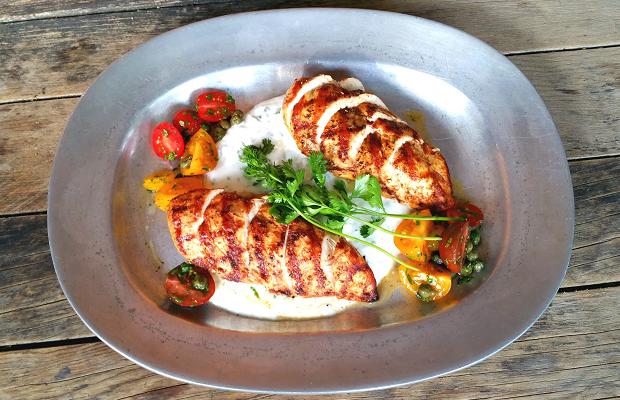
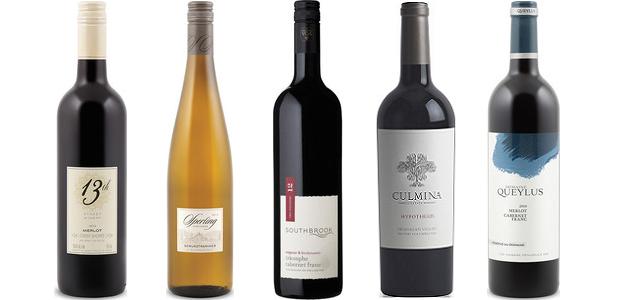
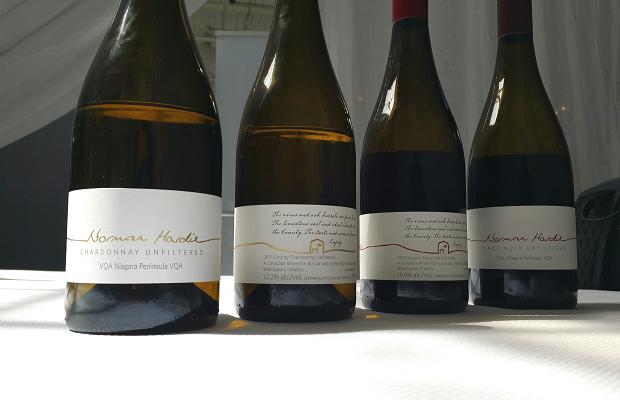


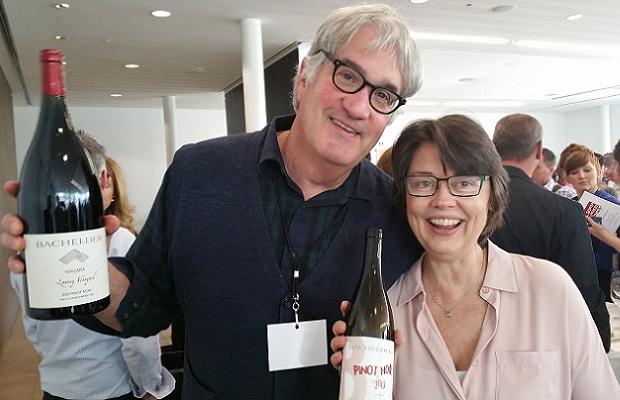

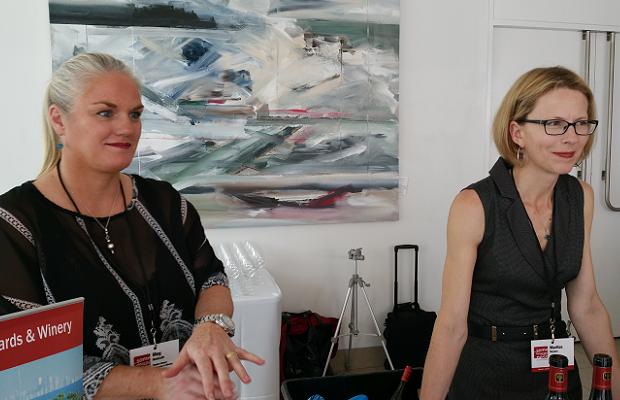
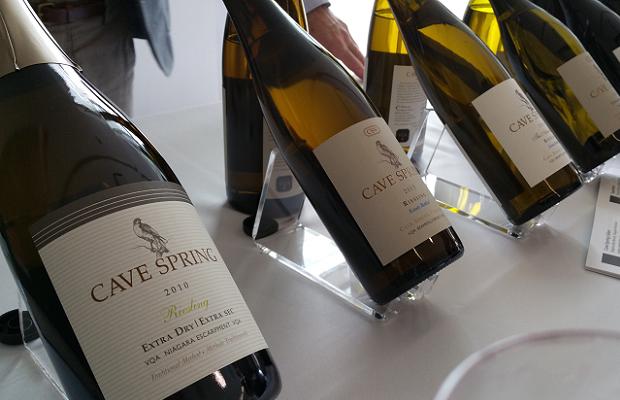
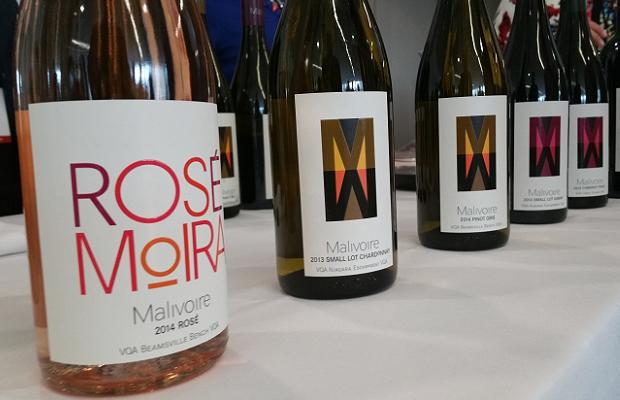
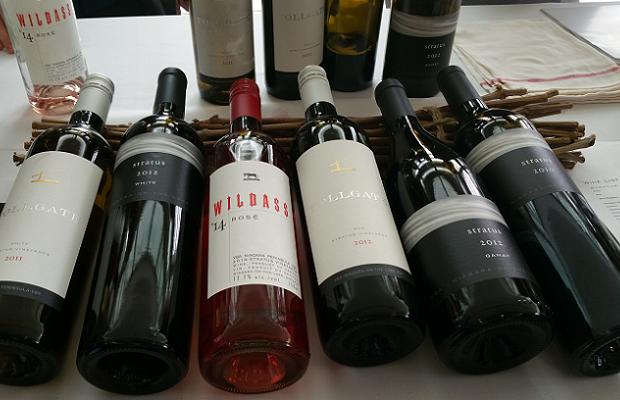
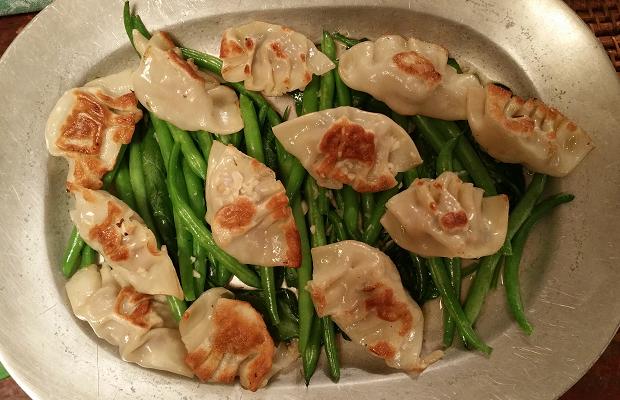

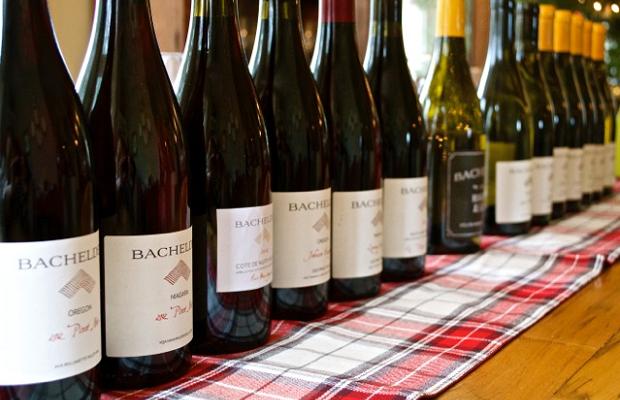
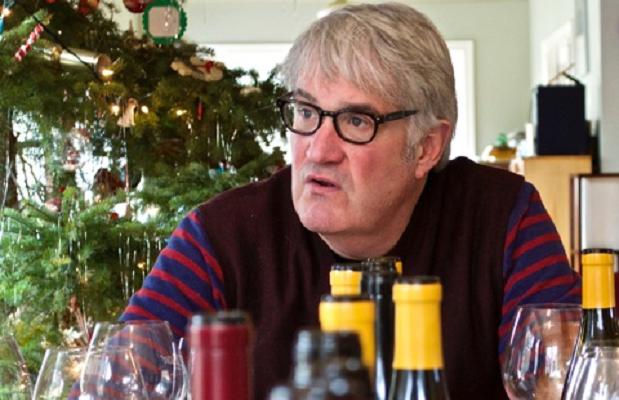
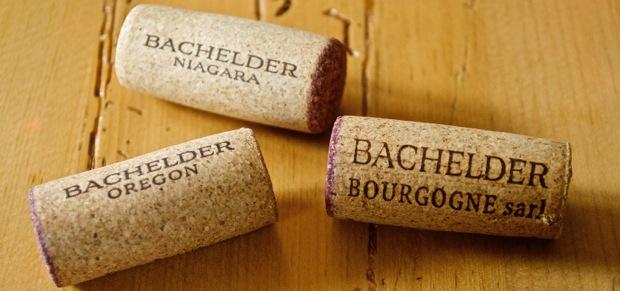
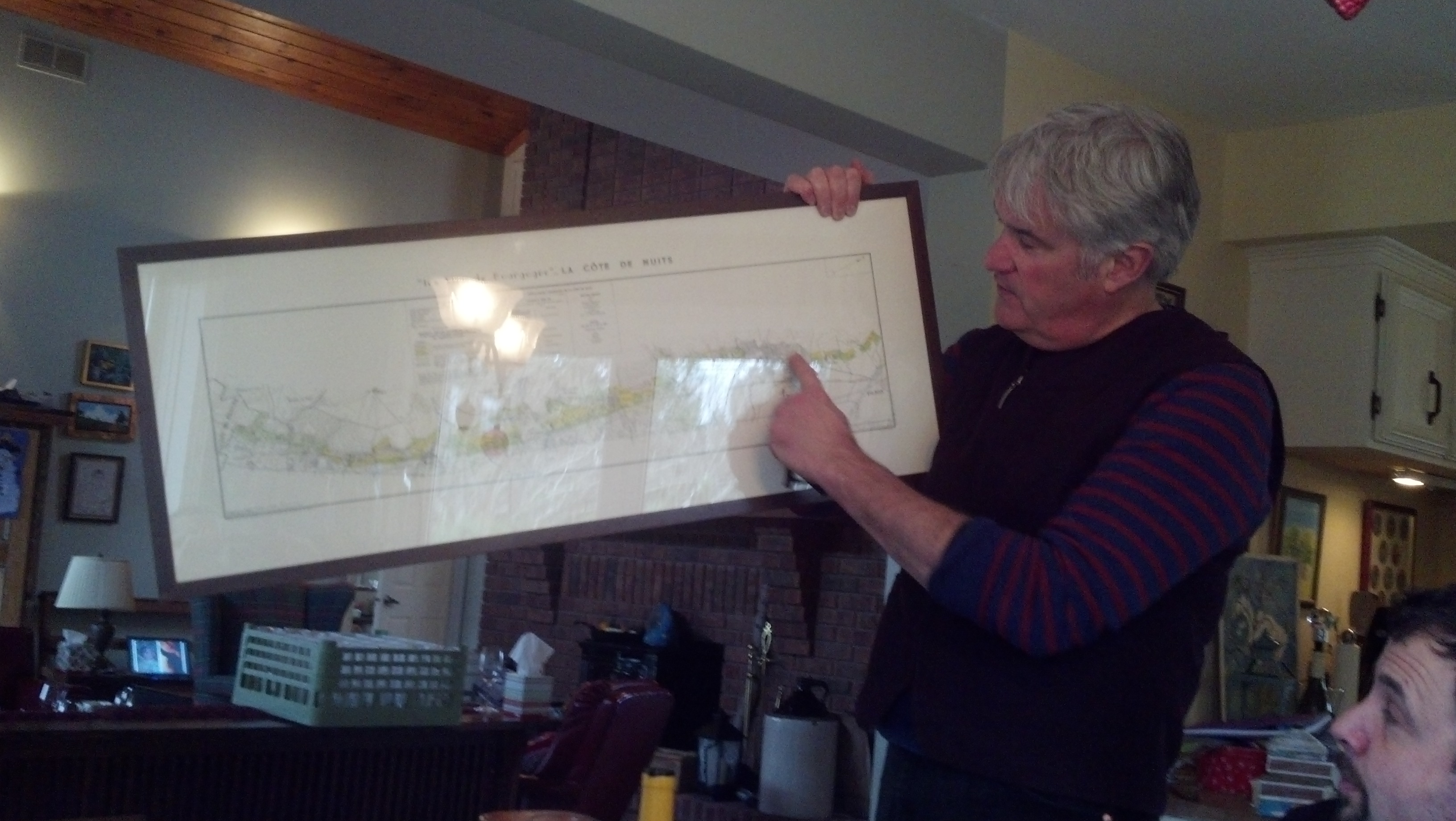
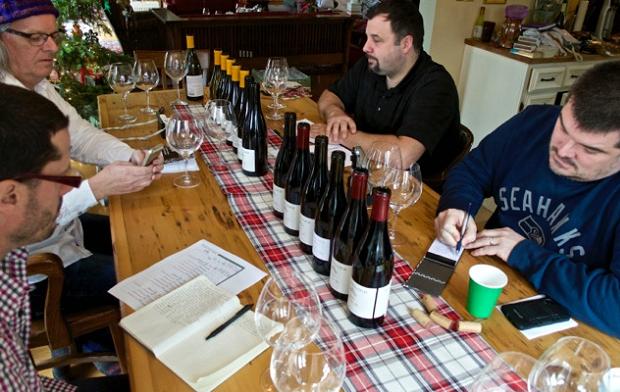
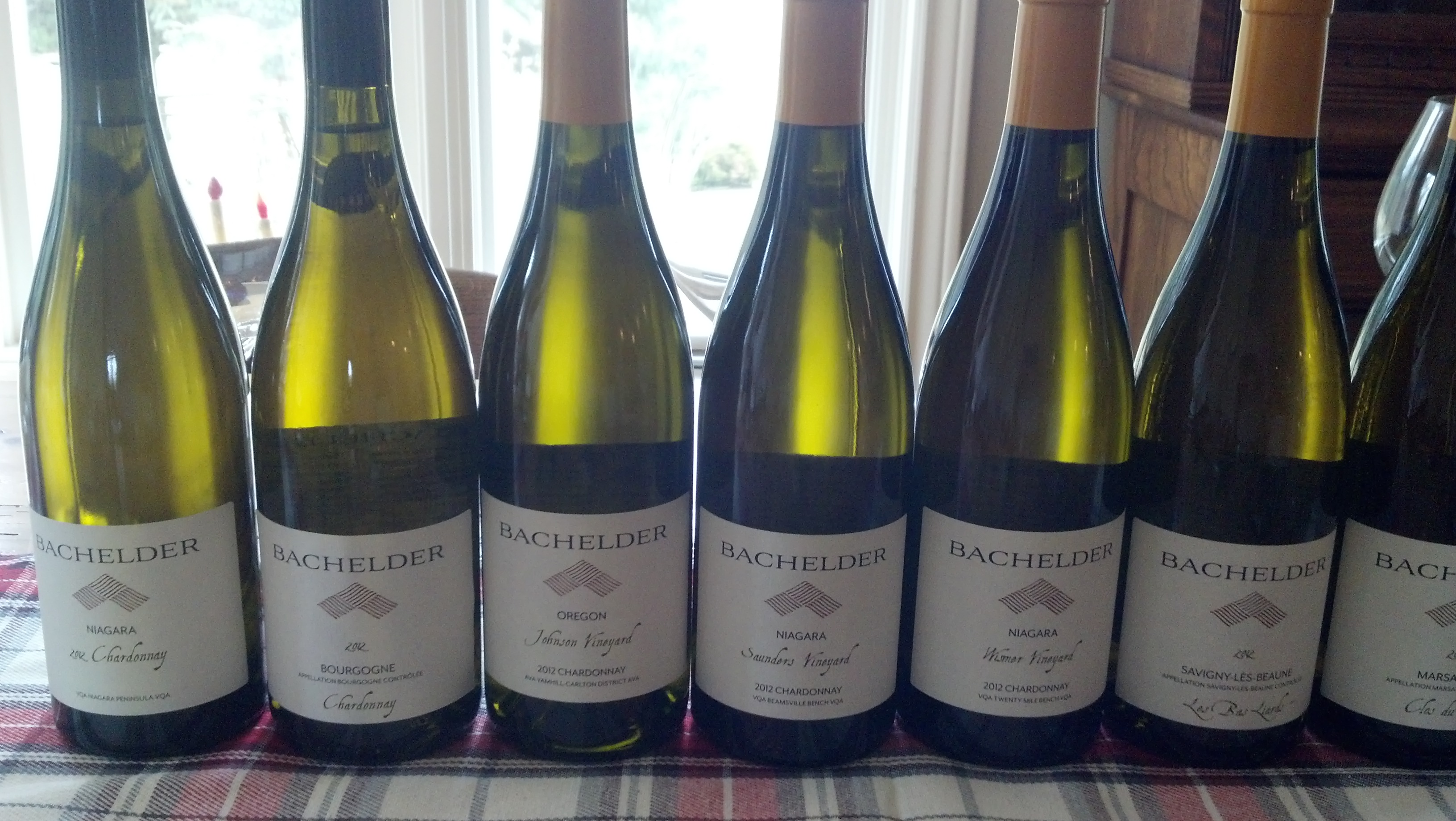
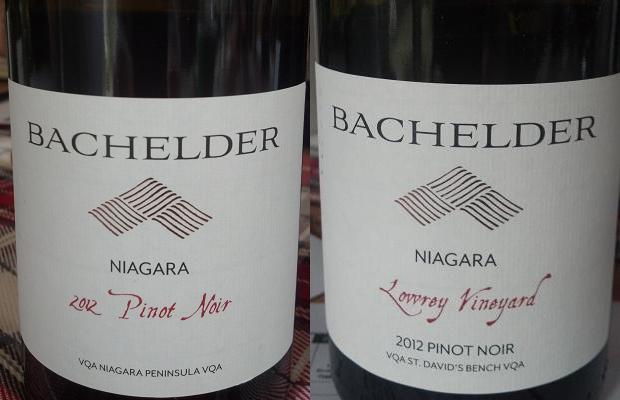
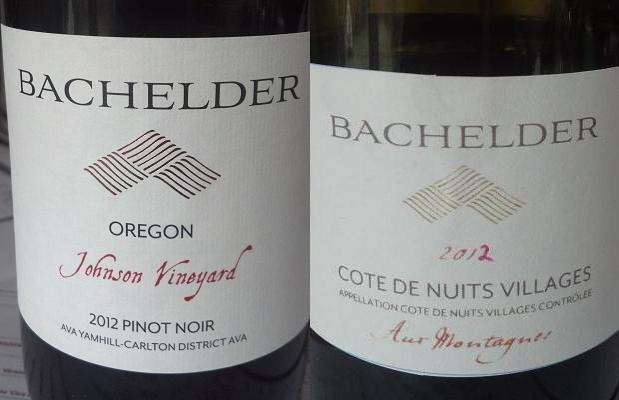
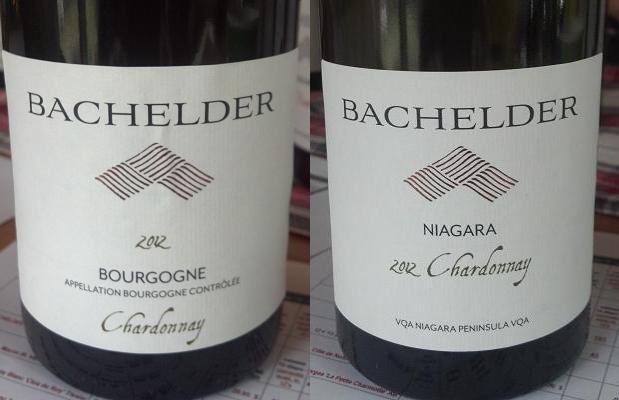
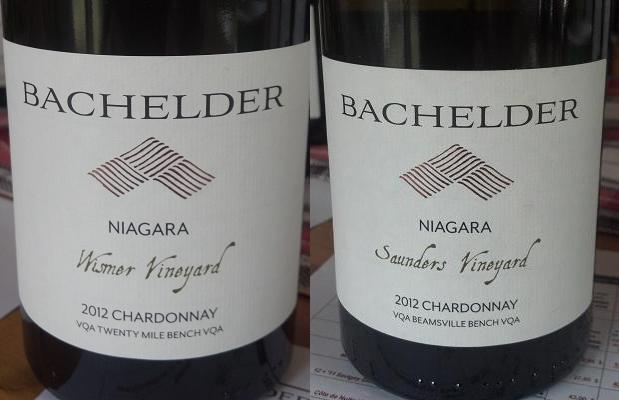


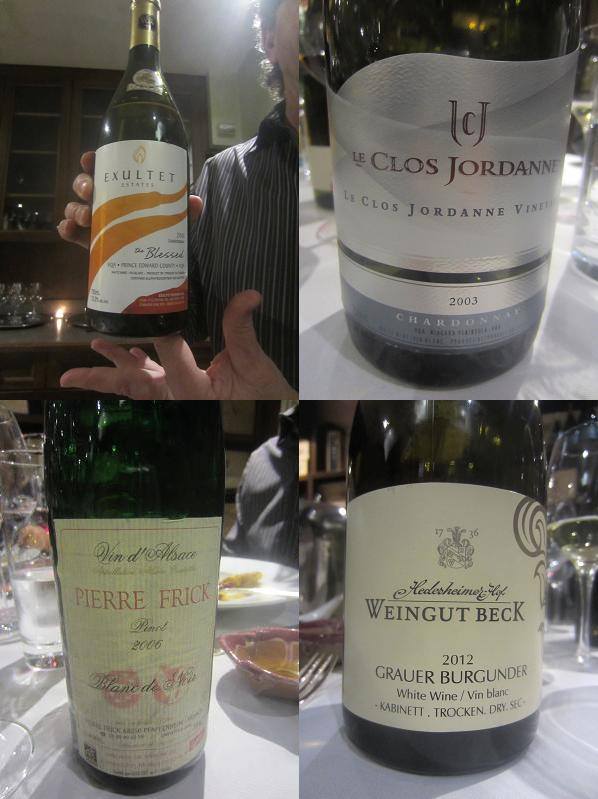
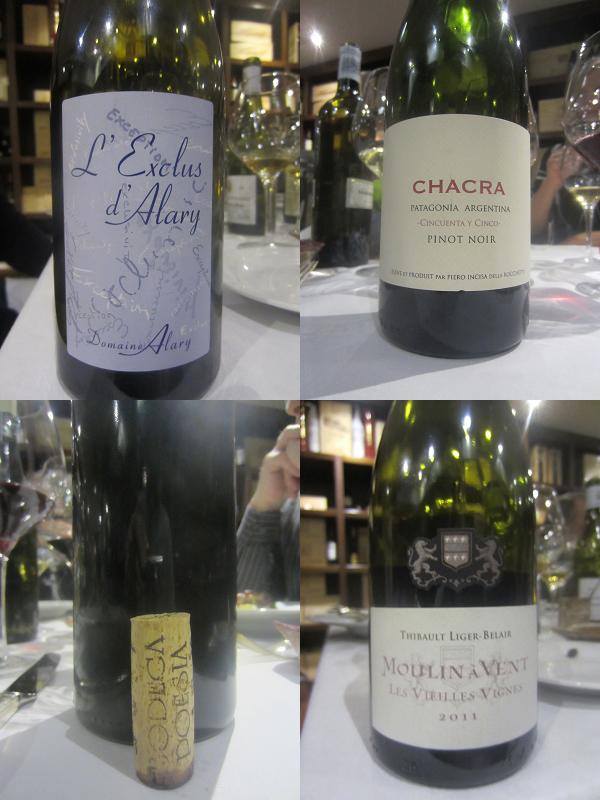

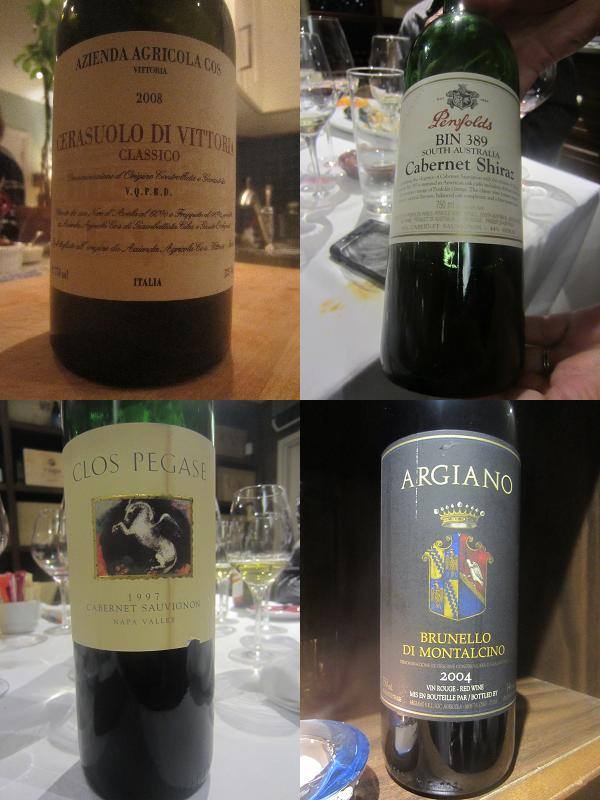
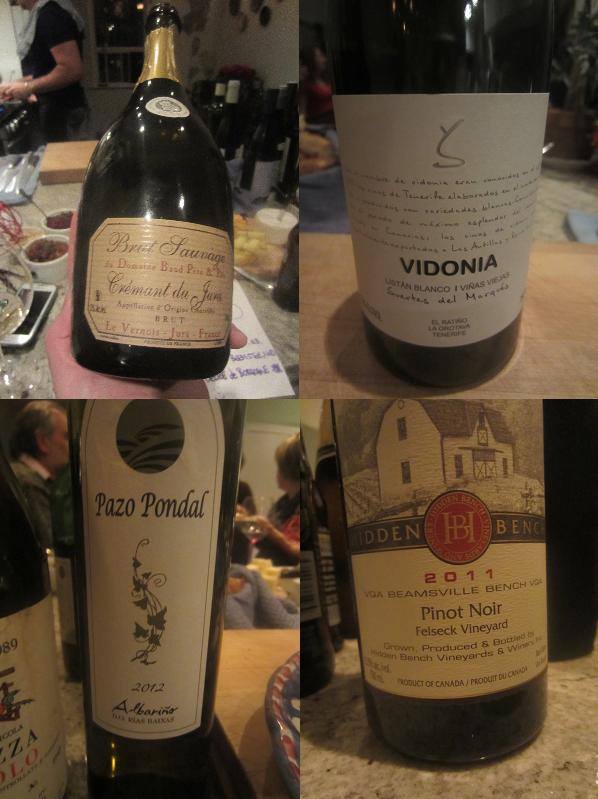

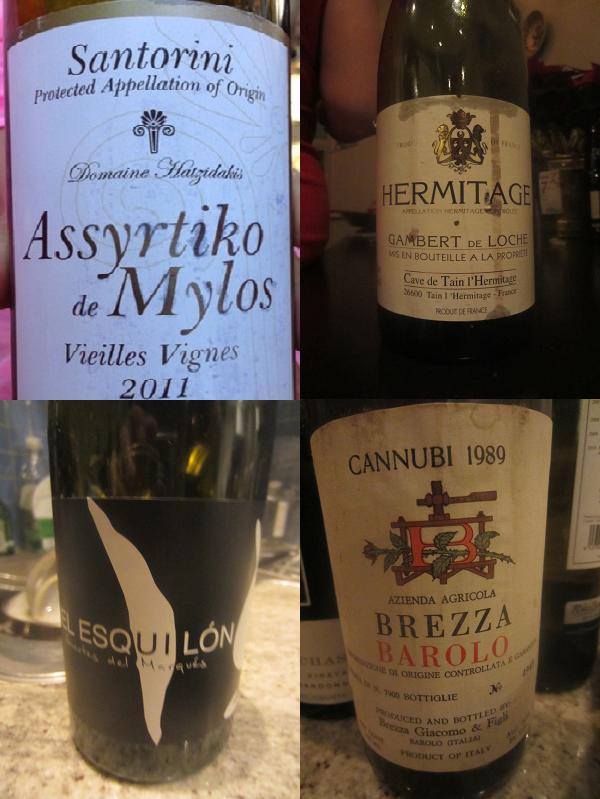

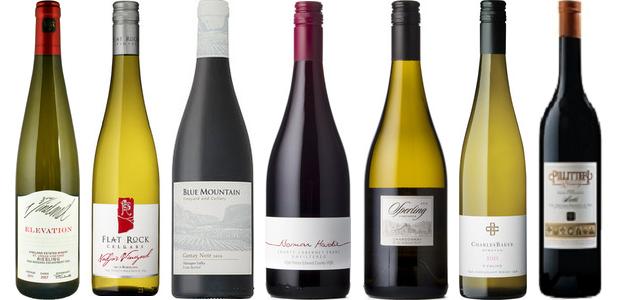
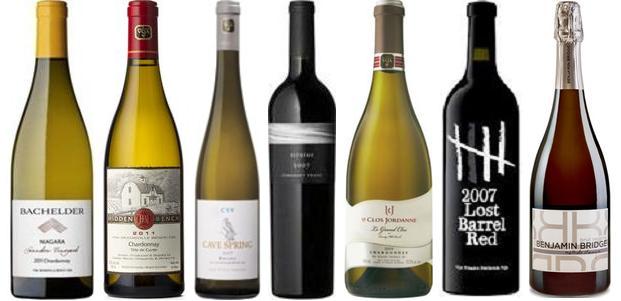
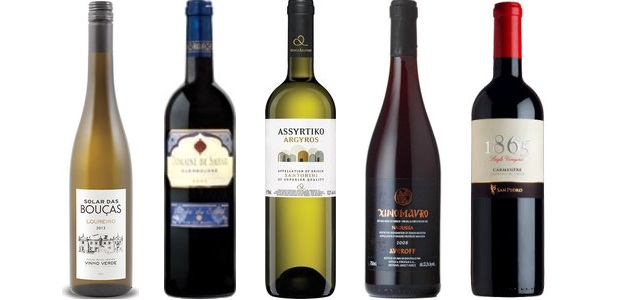
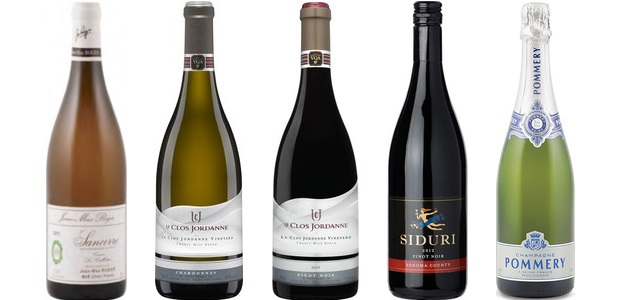
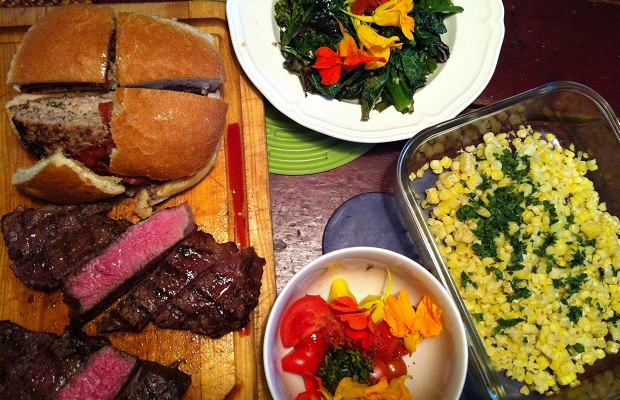
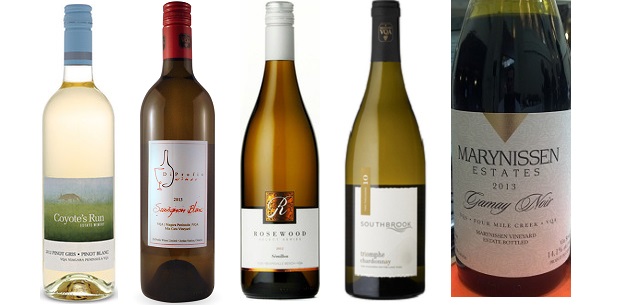


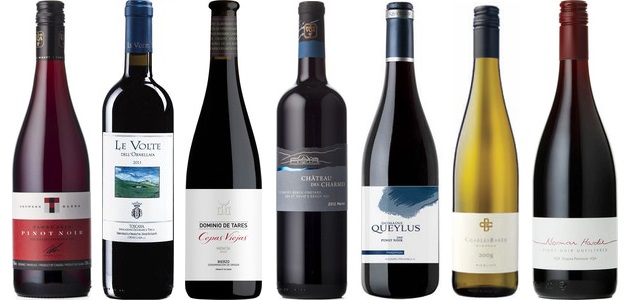


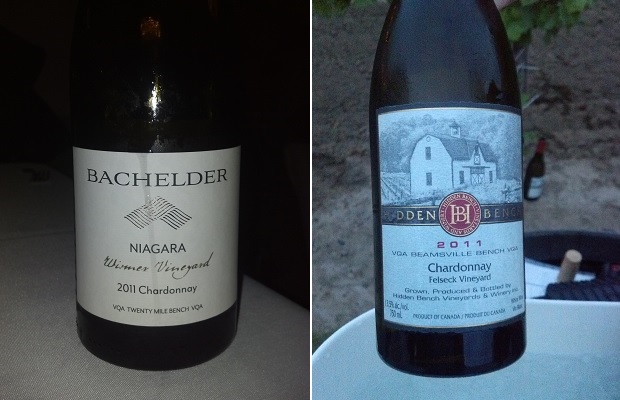


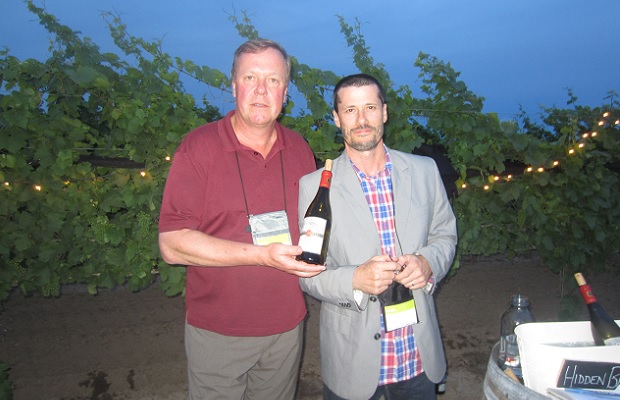

 Godello