Godello at Mondavi, February 2016 @CalifWines_CA @CBrandsCareers
I’m feeling a Mondavi shiver and a To Kalon shimmer coming on. Another anticipatory Mondavi experience is looming, a next week return venture to the iconic and archetypal Napa Valley winery. This will be my third deep delve into the wines of Robert Mondavi spread out over the past 15 months, after a February 2016 California visit and a June VINTAGES 50th Anniversary structured tasting and dinner. I thought it might be me that was the one getting around but clearly it’s the other way around.
THIS VINEYARD STOOD HEAD AND
SHOULDERS ABOVE THOSE AROUND IT
“The extraordinary quality of this wine originates in Napa Valley’s generous terroir. When I taste this, I’m reminded why Cabernet Sauvignon is the varietal on which Robert Mondavi built his reputation.” These are the comments of Genevieve Janssens, Director of Winemaking. I’d hedge my bets that Fumé Blanc should also fall under the auspicious umbrella of such a statement. Mondavi turned the ideal into copyright and it should be argued that Napa Valley Sauvignon Blanc would not be where it is today without the farming, research and development put in by generations of the Mondavi team.
Mondavi @CalifWines_CA @CBrandsCareers — at Robert Mondavi Vineyard.
No matter the varietal, the To Kalon Vineyard is where it all stems from, the rib from which the eponymous winery was born and the subsequent 50 years of wines that have comes from those storied vines. In 1966 Mondavi chose To Kalon as the epicentre of what would turn out to be a great big winemaking universe. “It was a vineyard with a distinguished history and a magical nature, ” he wrote. “Ideal soils, sunlight and rain – to my eye, the vineyard was a treasure.” Five decades of Fumé Blanc have sprung, along with more than a hundred renditions of Cabernet Sauvignon.
During that February 2016 visit we tasted through Napa, Oakville and Reserve Fumé Blanc and Cabernet Sauvignon. Carneros Pinot Noir and To Kalon Vineyard bottles were poured in the Margarit Mondavi Vineyard Room at dinner prepared by Chef Jeff Mosher, including the 1998 Cabernet Sauvignon Reserve.
Lorenzo Loseto predeliction @georgeonqueen Lobster, asparagus, quinoa, brioche #umami
Last June Mark De Vere MW led a masterclass in celebration of Mondavi’s 50th anniversary. The line up was outstanding bordering on ridiculous. Vintages of Cabernet Sauvignon starting at 2012 and going back through 2007, 1996, 1995, 1994, 1980 and 1975. The VINTAGES sponsored event and dinner at George Restaurant was prepared by the predilection of Executive Chef Lorenzo Loreto.
With 50 years of To Kalon and a specialized certification program up next, there is no better time than the present to publish these notes on 16 Mondavi wines tasted during these recent events and a few others that have found their way through the VINTAGES release program. Here they are.
Feeling a #mondavi shiver and a #tokalon shimmer #50thanniversary @RobertMondavi #markdevere
Robert Mondavi Fumé Blanc 2015, Napa Valley, California (SAQ 221887 $22.95, WineAlign)
The landmark 2015 is the culmination of five Mondavi decades spent elevating and differentiating sauvignon blanc, now in the its 50th vintage. The name fumé blanc and Mondavi are synonymous with one another in unequivocal signature, identical twin, trademark, signature fashion. Not just for Oakville, Napa Valley and California but anywhere and everywhere. You can throw in benchmark, Fodor’s or Lonely Planet guide, dictionary entry or whatever moniker you like. Mondavi’s is all this and in 2015 at its richest and adroitly balanced best. The nose is all ripe orchard fruit from seed to stone and the palate full of texture, acidity and length. The flavours repeat the apple-pear-peach-plum fodder with great tang and near-essential aridity. Great vineyards produce great sauvignon blanc and the rest is history. Drink 2017-2021. Tasted February 2017
Robert Mondavi Fumé Blanc Oakville 2013, Napa Valley, California (SAQ 13119254 $32.00, WineAlign)
The Oakville fumé blanc is a To Kalon gathering, the vineyard that surrounds the Robert Mondavi Winery. With so many “highest beauty” offerings it’s hard to keep track but this qualifies for the distinction with as much respect as any in the ever moving squall of the portfolio. Here from the geographic mean of the valley, a benchmark Bordeaux blend in bench abutment, composed of 89 per cent sauvignon blanc and (11) sémillon. This is only the third vintage and once in cohorts you note the elevated toast, struck flint and smoke. More citrus involves the senses, something almost rare for Napa Valley, in this way. With time (and please be encouraged to hang out for a while) the butterscotch joins the fumé party. The increased tense intention translates to excellent length. The sémillon makes a statement into the nicely bitter finish, with weight, stoicism and certainly the great potential for age. By way of comparison to the Napa Valley bottle there are 5,000 cases of this Oakville. Drink 2017-2022. Tasted February 2016
Robert Mondavi Winery Reserve Fumé Blanc To Kalon Vineyard 2012, Napa Valley, California (SAQ 225599 $44.75, WineAlign)
The To Kalon Vineyard Reserve produces 2500 cases (in a big year) and 2012 topped out at 1700. The vintage delivers more green apple and elastic elegance so good luck in your search for reduction, flint, toast and smoke. You should look to 2013 for such a deferential stylistic and make plans to embosom the two side by side 10 years onward. This is mostly sourced from the 1959 planted Robert’s Block within the larger vineyard, primarily gravelly and well-draining with some alluvial soil edged against the Mayacamas Mountains. The spice here is exceptional, with some anomalic Napa Valley mineral tang afforded by the sémillon blended into the sauvignon blanc. Drink 2017-2023. Tasted February 2016
Robert Mondavi Winery Reserve Chardonnay 2014, Napa Valley, California (492124, $44.95, WineAlign)
There is a richness defined in a Mondavi chardonnay that goes beyond the simple fact that the fruit is Carneros in origin. It’s a luxe composition because of that terroir and also because winemaker Genevieve Janssens is painfully shy to let the fruit speak on its own behalf. The crux and the key lies and turns right there because this is a Mondavi wine. Just as it is always noted with fumé blanc, chardonnay too develops this obeisant disposition, full of emotive ability and perhaps not exactly what you are want to expect, varietally speaking. This is singular for Carneros chardonnay and it’s all Mondavi. It’s both country kitchen in weekend baking mode and a walk in the ripening orchard. It’s a starred Michelin kitchen in baking fury, with a multiplicity of sugars caramelizing overtop a myriad of ramekins welling with tropical fruit. Finally, it’s a Mondavi acidity, elevated and integrated. It’s good chardonnay. Drink 2017-2022. Tasted April 2017
Robert Mondavi Pinot Noir Reserve 2013, Carneros, Napa Valley, California (SAQ 10219840, $60.50, WineAlign)
Some wise old conditioned and character building vines go into Mondavi’s pinot noir, “purchased from people who have better fruit than we do.” The Hyde Vineyard (40 plus year-old vines) and Rancho Carneros (which includes vines planted in 1979) bring the southernmost windswept part of Napa Valley into the pinot mix. This is optimum extraction in hyperbole, of fruit that runs the gamut from red to deeply dark. It is nothing if not a rich, concentrated and intensely flavourful pinot noir. There is a measure of stuffing to see it drink this way for at least five years from release. Drink 2016-2020. Tasted February 2016
Robert Mondavi 50th Anniversary Maestro Red 2013, Napa Valley, California (459933, $60.00, WineAlign)
Maestro the proprietary blend endows another legacy building notch onto the Robert Mondavi name. This is accomplished through the tenets of wisdom in winemaking as an extension from historic estate vineyards. To Kalon is always the rock and in order to make this 50th Anniversary blend there were sources drawn from throughout Napa Valley though mostly from the Stags Leap District. Merlot (59 per cent) is the pillar with cabernet franc (25), cabernet sauvignon (7), petit verdot (6) and malbec. It’s a true five varietal Bordeaux-styled affair with classic Mondavi elevated pH and acidity. The concept is taken from the image of Robert Mondavi as the maestro of the orchestra and of greater Napa Valley. The liquor of merlot provides the base wine, joined dusty and injected with power by jolts of espresso. It’s an interesting 50th anniversary choice of voice, antithetical to the dominant cabernet sauvignon reds that Mondavi is so famous for and the varietal he staked his reputation on. But rich and velvety helps the cause and the result. Drink 2017-2022. Tasted June 2016
Robert Mondavi Cabernet Sauvignon 2013, Napa Valley, California (255513, $37.95, WineAlign)
The aridity of 2013 has now translated into some lovely development in bottle that trials and tribulates with its wealthy pool of rich, ripe and silky chocolate texture. Such a typically reasoned Napa Valley explanation with 47 years under its increscent belt. Serious tannins need five years to seek settlement and to carry structure for to build a home for the ripe fruit. At 14.8 per cent alcohol there is much to fuel and keep the abode bathed in warmth, along with American oak in pancetta ooze, augmented by smoke and spice. Chewy and huge. Drink 2018-2024. Tasted twice, February and June 2016
Robert Mondavi Cabernet Sauvignon 1996, Napa Valley, California (459883, $73.00, WineAlign)
This 1996 is the 30th anniversary bottling at 20 years-old showing with impossible structure and beautiful possibilities still lay ahead. Though expecting it to push through to its 30th birthday is overly ambitious it will drink just like this, with freshness, bright red fruit and pitch perfect acidity for at least three more years. The pleasure it currently brings suggests this is what was meant to be, by design, of great fortune or just plain luck, so get it while it rests in this ethereal state. Those who paid nothing for it early on were the wisest of the wise and also lucky. This Mondavi ’96 would be a Left Bank killer in a Bordeaux blind tasting, teasing as it does with whiffs of Cassis and tobacco, plus a fortune in subtle perfume. The finish brings a note of baked bricks, almost like nebbiolo but the structure is all cabernet sauvignon. Drink 2016-2019. Tasted June 2016
Robert Mondavi Cabernet Sauvignon 1994, Napa Valley, California (459867, $73.00, WineAlign)
From a cool, oft times wet vintage with an elongated ripening season the under appreciated, under-valued and underestimated cabernet sauvignons of Napa Valley continue to get their say. This Mondavi ’94 will not be denied its voice, showing harmonious parts in symphony, of power, grip and elegance from To Kalon Vineyard fruit, amazing acidity and more than impressive longevity. Here now some notes of balsam wood, mushroom and soy have taken hold with more than just two years of extra time as compared to the silly fresh ’96, but the jig is not yet up. The combination of brown sugar and lingering mixed berry fruit is nothing but lovely. Drink up soon. Drink 2016-2017. Tasted June 2016
Robert Mondavi Cabernet Sauvignon Reserve 2012, Napa Valley, California (670463, $150.00, WineAlign)
Much of the fruit is brought to the Napa Reserve from the To Kalon Vineyard and it is rounded out with complimentary Napa and 16 months in 100 per cent new French oak. From a post 2011 hardship deliverance, more than welcome, hallelujah even vintage. Now a Mondavi return to floral posture above and beyond the Napa and Oakville bottle norms. So very pretty and powerful, out of saturation and into drought from which tannic structure is born. Full on fruit without borders, up to the top of the walls and back down in to the glass. With each sip the tannin builds and builds until the wall is constructed. There is no escape because the architecture is both classic and exceptional. Don’t be in a hurry. Struggle will only tighten the grip. Be patient and the next decade will deliver elegance and grace. Drink 2020-2027. Tasted February 2016
Robert Mondavi Cabernet Sauvignon Reserve To Kalon Vineyard 2012, Oakville, Napa Valley, California (670463, $150.00, WineAlign)
This is just the second vintage of the To Kalon Oakville Reserve (as opposed to the Napa bottling) from a vineyard where Robert Mondavi established his winery in 1966 and the next “great one,” after 2009. The To Kalon (western) Oakville Reserve is like the Gretzky of cabernet sauvignons, a generational player that only comes along once (or in wine terms, two or three times) a decade. The finest blocks and the “walk in the park” vintage conspired to make To Kalon a focal point once again, of both pH and acidity on the elevated scale, telling us that longevity will never come into question. The wall of tannin exhibited by the Napa Reserve is not duplicated here and so it is a different sort of structure that builds, with more black cherry rich fruit and coveted acescence, but also an absence refined, as if the French barrel hides, deftly woven into the fineness of grain. There is a dusty, ropey and slow developing rise in character, as if a low, barely audible rumble can be heard, or sensed. A waffling between great and outstanding is certainly understood but by the time we reach 2030 and add up the career statistics of this To Kalon I’m quite certain the jury will be out. Drink 2018-2031. Tasted February and June 2016
Robert Mondavi Reserve Cabernet Sauvignon 2007, Napa Valley, California (670463, $144.95, WineAlign)
Tasted at the nine year mark the vintage warmth has nowhere to hide and the fruit is coming within reason of raisin. A small percentage of petit verdot is part of this Mondavi development from fruit as rich, concentrated and extracted as any. The choices made here surely went a long way towards teaching what subsequent decisions were made with the aridity of 2012, 2013 and 2014. The dried fruit as syrup glazing the layers of cake melts into the decadence of barrel chocolate and a roundness of acidity so different that the 2012s. Some earthy, woodsy floor grounds this ’07 so that you are able to see fruit through the forest’s trees. Drink 2016-2019. Tasted June 2016
Robert Mondavi Reserve Cabernet Sauvignon 1998, Napa Valley, California (WineAlign)
Though sandwiched betwixt and gobsmacked between some infamous Napa Valley vintages (most notable 1995-7 and 1999) don’t look past this golden era 1998. To Kalon Vineyard is the source so right there is pretty much what you need to know about pedigree and potential. At this 17-18 years point in time a few drops of soy and a melt or two of caramel are noted in the ’98 Reserve’s development. Secondary affirmations and vintage structure bring out the purity of the herbaceous quality in cabernet sauvignon together with the slow evolution of a quiet, respectful wine. A tender and silky balsamic reduction chimes in though time is still a friend, willing and allowing the fruit to continue its natural path towards senectitude. I can’t find any reason to not seek tertiary character and continue to enjoy this over the next six years. Drink 2016-2022. Tasted February 2016
Robert Mondavi Reserve Cabernet Sauvignon 1995, Napa Valley, California (670463, WineAlign)
A few points of merlot were blended into this 21-year salute to Mondavi’s legacy, a cabernet sauvignon impossibly fresh and bright this deep into life. The acidity is not only persistent it’s downright captivating and spellbinding. With thanks to the vintage of course, after a wet spring and a long, cool summer. Few double digit decade retrospective looks into the Mondavi cabernet sauvignon anthology would deliver such clarity of fruit seemingly immune to the truffled passages of time. By dint of tradition and without any forced supervision wines like this govern themselves and yet this might be a larger consideration regarding the entire portfolio. Drink 2016-2021. Tasted June 2016
Say, friend – you got any more of that good Sarsaparilla? #thestranger #thebiglebowski #yeahthatsagoodone
Robert Mondavi Cabernet Sauvignon Reserve 1980, Napa Valley, California (WineAlign)
Mondavi’s 1980 Reserve comes from a time when Napa Valley cabernet sauvignon was made in an unidentified, free and indirect style. The young To Kalon Vineyard may have already known its iconic place but if the makers also knew they could not have so easily created such an early success for us to revel in 36 years later. This is now and still fresh, at least in the context of three dozen years in the bag, with that tied To Kalon triumvirate of acidity, tannin and structure seamless and unsevered. How many aromatic notes can be described? Sarsaparilla, root beer, baked bricks, tomato leaf, pipe tobacco, eryngii mushroom, potpourri and mocha are eight that come to mind and nose. It’s a juicy ’80, not so much in terms of fruit though further sips bring faint memories on the back palate. All this 36 years later manages to remove responsibility from the omniscient perspective of the winemaker and lay it comfortably and pleasurably in our hands and minds. So much thanks for this opportunity. Drink 2016-2017. Tasted June 2016
Robert Mondavi Cabernet Sauvignon Reserve 1975, Napa Valley, California (WineAlign)
Forty one years is a long haul for a wine to hang in there and I’m not sure more than a handful of 1975 Napa Valley cabernet sauvignon not plucked from the future iconic climat of To Kalon Vineyard could have survived this test of time. Even with the impressive longevity and lifeline ability this is now more curiosity than pleasure. Some might say at this stage the wine may be aimless but who can deny that it is also possessive of poised intelligence. From a vintage overshadowed by 1974, there is some old California Golden Seals hockey bag sweat in the aromatic mix along with savoury mulch and mushroom. There really is no fruit left to speak of, prune perhaps but no berries. The acidity still rips with some strength, swirling into the burnt caramel and all things considered this ain’t dead yet. It does show some Bretty notes that the 1980 does not and in the end the adage is true, spoken so eloquently by Mark de Vere MW. “Flavours you cannot replicate without time.” Drink 2016. Tasted June 2016
Godello at Mondavi, February 2016 @CalifWines_CA @CBrandsCareers
Cortonesi La Mannella Brunello di Montalcino Riserva 2010
Having just recently (two weeks ago) participated in Benveunto Brunello 2017 held at the Chiostro del Museo di Montalcino from the 17th to the 20th of February, I’m feeling the sangiovese groove, in multiple clones and tones. Less than a week after my return to Canada one of the prodigal sons of Montalcino arrived in Toronto for a presentation of his wines with local omnipresent agent/négoce Nicholas Pearce. Jonathan MacCalder hosted the get together at the cozy Yorkville haunt he calls work, affectionately known as Kasa Moto.
Tommaso Crtonesi holds Brunello court at Kasa Moto
A team of over-achieving and wild bunch sommeliers gave up the better part of a morning and early afternoon to talk sangiovese, Rosso di Toscana and the Rosso-Brunello idiom with the precocious and serenely wise Tommaso, a winemaker from Montalcino with an old soul, uncanny slash conscious ability and powers of concentration to bely his youth. With Nicholas Pearce, Michelle Ratzlaff, Krystina Roman, Christopher Sealy, Ian Thresher, Madeleine Hayles, Courtney Stebbings, Lauren Hall and the aforementioned Lenny Bruce of wine, we delved deep into the heart of the Montalcino matter. Sometime soon I will publish 100-plus tasting notes from the Benvenuto tasting but for now it’s all Mannella from heaven.
The future of Montalcino is in good hands @LaMannella #cortonesi @nicholaspearce_ #tommasocortonesi #ilpoggiarelli #sangiovese #brunellodimontalcino
Lèonus is sangiovese of natural and effortless appeal. With pocketed thoughts of Rosso and Brunello di Montalcino in mind you can extrapolate with elastic, proverbial stretch and easily wind up here. It’s simple really, straightforward and noted as a gulpable mouthful of rocks tumbling in wet concrete. The great round acidity equalizer acts for mostly northern Montalcino fruit plus 20 percent from the south. Tommaso Cortonesi comes at it with a threefold selection; at harvest, in fermentation and from élevage. It’s entry level so just drink it. The fruit is darker and deprived of firm astringency, spent four months in 3000L Slavonian oak and three months in bottle. For every day, especially with antipasti. Drink 2017-2019. Tasted February 2017
Cortonesi La Mannella Rosso Di Montalcino 2015, Docg Tuscany, Italy (Agent, $29.95, WineAlign)
The advance is a young winemaker’s approach, using fruit from the youngest vines but from the same vineyards used for Brunello production. Clonal selection permits early success from the fourth to fifth leaf for precocious wines off vines so young. Others may use vineyards dedicated to Rosso, so farmed with ulterior motive and expectation, neither better nor worse, but different. The old way was simply a matter in selection of grapes, something young winemakers are abandoning for now one or the other ways of making Rosso. Tommaso Cortonesi’s is luminous and bright within a frame of ascension in reference to the darker cherry sangiovese point spectrum, with three levels of variegated hue and aromatic profile. Char, fennel and fruit. Great structure, agreeable and yes, drinkable now Rosso. Drink 2017-2021. Tasted February 2017
Cortonesi La Mannella Brunello Di Montalcino 2012, Docg Tuscany, Italy (Agent, $70.95, WineAlign)
La Mannella, meaning the manna from heaven is a five hectare, five block vineyard in surround of the winery at the centre of the Cortonesi universe. A vineyard that is used exclusively for the production of the estate’s Rosso and La Mannella Brunelli. La Mannella (as opposed to I Poggiarelli) is a single block Brunello but not a “single-vineyard,” planted in 1985 and 1998 in a relative Montalcino colder northern clime. This emits and represents the epitome for floral sangiovese, a bouquet that speaks to violets and elegant, light purple fruit. The penetrability and explicability of purlieu is an act of focus and the cynosure of assessment. Brunello should be exacting, something you get and it must define itself in clear sangiovese-speak. Large slavonian oak for 36 months maintains and celebrates the perfume. The wood shows up late, in white peppery spice and that just have to lay on your tongue and swallow with sublime delight, liquid chalky finish. Drink 2019-2027. Tasted February 2017
Cortonesi La Mannella Brunello Di Montalcino I Poggiarelli 2012, Docg Tuscany, Italy (Agent, $95.95, WineAlign)
This is Cortonesi’s single-vineyard sangiovese from the warmer, southern part of Montalcino at 420m of elevation. Expectation allows for deeper, and darker yet the display comes without the La Mannella block crimson and cimmerian variegation, perhaps instead more like the single-brushstroke, dark side of dusk angle created by a fuzzy, warm blend of fiery colours. More Galestro soil influence here as opposed to clay at La Mannella and two years in part new French tonneaux followed by stainless steel vats. A deferential élevage to the one exercised with La Mannella and one to encourage depth and structure without too much power. Classic, modern, elegant and an apple to La Mannella’s orange. Drink 2019-2025. Tasted February 2017
Cortonesi La Mannella Brunello Di Montalcino I Poggiarelli 2011, Docg Tuscany, Italy (Agent, $95.95, WineAlign)
Looking rearward into the recent past what comes into near focus is the combination of liqueur and firmness, a handful for sure and yet it seems that time (even just an extra year or two in bottle) brings out that specific Cortonesi perfume. The tang and richness of concentrated acidity really elevates at this stage so that tannin begin its resultion so young and impressively so. This is not the big, bad Brunello but the one to make enjoyment haste. The length is exceptional with pretty tonic and bitter moments that pop in and out. Drink 2018-2029. Tasted February 2017
Cortonesi La Mannella Brunello Di Montalcino I Poggiarelli 2008, Docg Tuscany, Italy (Agent, $95.95, WineAlign)
If the argument was ever made to sway in the “yes it was and is” direction, this Cortonesi example from the exceptional vintage leads the parade with aromatics that go exotic and then return domestic. A spirit of the east, of bougainvillea and hibiscus plus a Montalcino gustatory aromatic spice. Then that return to fennel, a walk through flora Montalcino brush and sweet French tonneau spice. The liquorice is one bred out of aromatic acidity, like a fine chalky dusting of red crimson and ochre to purple powder on a plate next to a perfect charred slice of beef. Elegant sangiovese cuisine in a glass, deconstructed and all obvious in their parts but when you taste you pause and it all comes together. The flavours mingle and weave, of cherries and fruit leather, more mellowed spice, still lingering fresh, persistent and remarkably bright. Southern vineyard be damned, this is a cool, elegant and lithe drop. Harkens back to a mind’s eye and nose in memory of Brunello 1998, maybe a bit of 1999, but more like 1998. Drink 2018-2030. Tasted February 2017
Cortonesi La Mannella Brunello Di Montalcino Riserva 2010, Docg Tuscany, Italy (Agent, $202.95, WineAlign)
There are few Brunello vintages afforded more attention in the last 10-plus, certainly ’04 and ’06, increasingly better even from ’08 and looking forward towards what greatness will come in 2015. Yes but not solely magnified through the lens of patience and bottle time, from 2010 La Mannella has coupled upon and layered over itself like compressed fruit and puff pastry. Though it begs for drink now attention, another seven years will be needed before it can safely be labeled as uncoiled and to reveal all that is wrapped so tight. Rich is not the operative but unmistakeable as Cortonesi it is; that natural clay soil funk of resolution and fully hydrated chalk. This is to sangiovese as Les Preuses Grand Cru Chablis or Rangen Grand Cru Alsace are to Riesling. It carries in its pocket the absolute meaning and genetic responsibility of where it comes from, with a curative and restorative ability to get you lost. Drink 2019-2031. Tasted February 2017
I have spent the better part of these past eight months tasting, assessing, contemplating, excogitating, dreaming about and purchasing Chablis. I may have once believed that the rooted obsession incited by my visit to the kimmeridgian zone last July would cease and desist by the time the clock struck 2017. I was dead wrong. If ever there was a Chablis lifer transformed, you are looking at him.
Chablis Grand Cru can be found in the commune of Chablis on the right bank of the Serein River and the appellation comprises seven climats; Blanchot, Bougros, Les Clos, Grenouilles, Preuses, Valmur, and Vaudésir. “The terroirs, formed in the Upper Jurassic era, 150 million years ago, are composed of limestone and marl with Exogyra virgula, tiny oyster fossils. Chablis Grand Cru is one of the rare French AOC wines to make reference to its geology, notably the Kimmeridgean age.”
If at first you have not written enough about a particular subject, keep on writing. My first grand assessment took my olfactory and gustatory senses, emotions and tangent extrapolating explorations into 76 examples of Chablis and Petit Chablis. I followed that exercise with 92 reviews to cover all the Premier Cru tasted in Chablis and Auxerre back in July of 2016 and also those I have assessed in the months since. Finally I have come to the Grand Cru, a group of top echelon Chablis that caused more personal reflection and inner exorcism than I’d like to admit. The count is 54 wines reviewed. At last, again and again I must pay retrospective and forward thanks to @purechablis@vinsdechablis@BourgogneWines and @vinsdebourgogne.
Patrick Piuze Chablis Grand Cru Valmur 2015, Ac Burgundy, France (WineAlign)
The south-facing, Right Bank Grand Cru “Valley of Ripeness” parcel known as Valmur is from “val” which refers to “valley” and the French “mur,” which means “ripe.” Valmur and its great, late afternoon sun ensures phenolic ripeness unlike anywhere else, to accentuate the richness and the éclat. Yes there is this strong personality and guarantee of Grand Cru acidity but the creamy richesse is unparalleled for Chablis. Piuze recognizes both the place and the vintage and just lets this Valmur run free. What else should it be? Drink 2018-2023. Tasted July 2016 @patrickpiuze@LaCelesteLevure@LiffordON
Patrick Piuze Chablis Grand Cru Valmur 2012, Ac Burgundy, France (WineAlign)
Before launching into the Valmur 2012 first an exhortatory preface, or at least a contextual, cautionary tale from Patrick Piuze. “It will look a bit older, on the nose, because we tasted so many 2015s.” True, we have just sailed through 18 (plus one 2014) so this Valmur does seem “dressed-up” and boozy with alcohol but it’s OK because the acidity is divine. Evolution has done some rendering and I get the feeling Patrick was picking later then than he is now. The liqueur leads a remarkable cocktail of pure Valmur geology distilled, subservience to ends, almost now, but now quite. If this Piuze Valmur is a Chablis meme to an aramaic Belshazzar’s feast, the Mene, Mene, Tekel, Upharsin is clearly understood writing on the wall. Drink 2016-2021. Tasted July 2016 @patrickpiuze@LaCelesteLevure@LiffordON
Domaine Jean Collet & Fils Chablis Grand Cru Valmur 2014, Ac Burgundy, France (Agent, WineAlign)
Valmur under the spell and with classic Collet acumen is a tale of two parts told with seamless transitions. Two to three year-old Allier “Moyenne chauffe” barrels hold the central Grand Cru hill’s proud climat fruit for 12 months followed by five extra fortifying and corralling months. The Valmur clocks in at a minor but important and impressing half per cent extra of alcohol and you can nose the slow-release, micro-oxygenated wood. In part two there is this rich and expansive vacuum with definite taxing spice and of course that Collet-specific lemon acidity. The back end is dripping with citrus, taking the reins and leaving the wood behind. In another year or two the transition will complete for perfect symmetry. Drink 2018-2024. Tasted July 2016 #domainejeancollet
Sébastien Dampt Chablis Grand Cru Valmur 2014, Burgundy, France (Agent, WineAlign)
The Valmur is a négoce Grand Cru from Sébastien Dampt, so very rich with razor-thin mineral pastry, fruit and cream layered upon that mineral many times over. It is raised in some wood and some inox, resulting in a tiered tart wrought with some weight. This is really like sucking on a mouthful of rocks, at first, all saline and tangy. Then the custard and the (on the edge of) brûléed orchard fruit creams in. The tension hangs in that caramelized balance in a Grand Cru set from a very clean and vintage driven take on Valmur. Drink 2018-2022. Tasted July 2016 @SebastienDampt@LesVieuxGarcons
Domaine William Fèvre Chablis Grand Cru Valmur 2014, Ac Burgundy, France (Agent, WineAlign)
Valmur leaves an indelible mark because in 2014 this one is just so confident and impresses with purpose. The Grand Cru vineyard is located on the top of the hill, both east and southwest facing, with some clay and marl (as a vein into the kimmeridgian sub-soil). There is more richness in Valmur and here surely a by-product of stupidly low (25 hL/L) yields. This carries in its DNA the complex and multi-faceted variegation of Chablis soils intertwined, reticulated and defined. Will make itself readily available ahead of the other Fèvre Grand Cru because of its richness as an extension of soil and exposition. Drink 2017-2023. Tasted July 2016 @williamfevre_@WoodmanWS
Domaine Christian Moreau Chablis Grand Cru Valmur 2013, Burgundy, France (Agent, ON $74.00, BCLDB 116517, $60.99, WineAlign)
From winemaker Fabien Moreau and his tiny parcel of 50 year-old vines sandwiched between Vaudésir to the north and Les Clos to the south. A pittance (for Grand Cru) percentage of new oak is used for half of the fruit, eventuating in beautifully delineated bitter density and fresh dressed pith. Quite open for business at this early stage but so very complex and variegated. Upon a second go ’round you might think reductive when what you are really getting is cool fresh mineral, away from bitter and into the yet unresolved. Drink 2018-2022. Tasted July 2016 @ChristianMoreau@rogcowines
Domaine Jean Paul Et Benoît Droin Chablis Grand Cru Valmur 2013, Burgundy, France (SAQ 12280775, $71.50, WineAlign)
Benoît Droin has crafted an esteemed, highly amenable and juicy Valmur in effete for break of dawn business openness. The acidity is really quite round, more so than the Moreau and quite in contrast to the Premier Cru (Montmains and Vaillons) Droins. There is more pitch and assertiveness in Valmur to be sure, qualities to qualify its Grand Cru positioning though still surprising to note how well it drinks while young. It’s a funny vintage to be sure, with more weight, aromatic liquor and pooling viscosity than most. Droin’s Valmur will develop a bilateral petrol-honey secondary note before the decade strikes end. Drink 2016-2020. Tasted July 2016 #Droin
L’asperule Barbue, brûlée, légumes verts croquants, jus d’arêtes à l’ugli
Patrick Piuze Chablis Grand Cru Bougros 2015, Ac Burgundy, France (WineAlign)
The Bougros vines grown on the plateau and while the aromatics are a bit reserved (like those on the Piuze Terroir Découverte) this inward and recondite Grand Cru is an intense, raging from within Chablis. It is this collected and surrounded power that keeps Patrick’s Bougros so in control and while it is labeled at 12.5 per cent alcohol, Piuze admits that is maxes out at 12.2. This is significant when you consider what sort of sapidity plays out in the context of enigmatic behaviour. “You can’t have a duality between acidity and alcohol,” says Piuze. “I don’t want high alcohol.” What he wants is chaste tension and while 2015 is not the perfect vestal vintage to realize his plans, it stays the course nonetheless. Drink 2018-2023. Tasted July 2016 @patrickpiuze@LaCelesteLevure@LiffordON
Jean Marc Brocard Chablis Grand Cru Bougros 2014, Ac Burgundy, France (Agent, WineAlign)
Brocard’s Grand Cru Bougros ’14 is the most reductive Chablis tasted so far this week, striking, chiseled and young beyond youth. Saline and briny to the hyperbole of its younger siblings, the implosion of full extract is at once arid and then rich. This is a full-on pure and simply beautiful Bougros, precisely tart and very long. Will age gracefully into the middle next decade, with ease. In the hands of Brocard Bougros to the west is neither entry or exit point but more like the epicentre of the action. This 2014 is certainly a top example for the vintage and the Grand Cru. Wait three years for it to unwind. Drink 2019-2026. Tasted with Julien Brocard at the domaine, July 2016 @chablisbrocard@LiffordON
Domaine William Fèvre Chablis Grand Cru Bougros Côte Bouguerots 2014, Ac Burgundy, France (Agent, WineAlign)
Côte Bouguerots is the two point two hectare Domaine plot close to the river at the base of the Bougros Grand Cru hill. The extreme anti-steppe where only calcaire and kimmeridgian soils exist is the moonscape of Burgundy, bald, austere and machinery retarding. The ’14’s stark karst reality bleeds sea salinity, intense citrus and as much inferential mineral as this place can and ever will. Such a masculine assertion of Chablis predicated on this sort of fluidic geology and assortative power comes across in only so few. While the complexity is increased in Côte Bouguerots it is also like a vacuum within the greater clime, concentrating richness without fatness. This is, simply stated, a great white bottle of wine. The length goes on forever. Drink 2019-2030. Tasted July 2016 @williamfevre_@WoodmanWS
Domaine William Fèvre Chablis Grand Cru Bougros 2014, Ac Burgundy, France (Agent, $97.00, WineAlign)
If Bougros in 2013 is the outlier and the exit west away from the Grand Cru, the follow up 2014 turns that right around. In this terrific mineral meets acidity vintage Bougros strikes as the entry point into Grand Cru Chablis. The southwest facing climat launches the introductory impression of the Fèvre Domaine GCs, with idiosyncratic layers of citrus, namely lemon and lime. Fifty per cent of the Bougros (six of 12 hectares) lies calm and poised on the flat portion of the already mild slope, offering easier access and amenability. A launch point from where control is transferred from the operating system to the process and ultimately, the programmer. That would be winemaker Didier Séguier, he who takes a calm ferment and squeezes out its vital juices to render Chablis with all the attributes it has come to define. Drink 2017-2022. Tasted July 2016 @williamfevre_@BouchardPere@WoodmanWS
Domaine William Fèvre Chablis Grand Cru Bougros 2013, Ac Burgundy, France (Agent, $97.00, WineAlign)
The southwest facing Bougros is the furthest strip west of the Grand Cru climats at modest altitudes ranging from 130 to 170m. Bougros strikes me as the hardest to read and the outlier of the Grand Cru because it is less expressive of that necessary and contemplative Chablis mineral idiom but don’t be fooled into thinking it bourgeois or insignificant. That type off thinking will only look for trouble and lead to dire straits. “Sitting on a fence that’s a dangerous course.” Bougros of marl and clay is a clam before a storm Grand Cru. It is sneaky dangerous and long. The limestone permeate is integrated with deep intent. It fills all nooks but with nary an act of argumentation or attrition. The vintage is an expanding one, not so much one that leaves a direct impression as much as one of wide expression. The palate circulates with citrus and zest, more lime and grapefruit than others and in warmer tenses, native and prominent. One upon a time in the west. Drink 2016-2021. Tasted April 2015 @williamfevre_@WoodmanWS
Côte De Bouqueyreaux
Patrick Piuze Chablis Grand Cru Bougros Côte De Bouqueyreaux 2015, Ac Burgundy, France (WineAlign)
The Côte de Bouqueyraux terroir is a (45°) steep-sloping solid bedrock section of Bougros. It’s also a name referring to “how the monks are calling it” back in the pressoir day. “Bougueriot,” from the Latin “bucca” which gave the Old French “bouque” (shrunken). Or, Boquereau, which took its name from “bouque-eau,” (narrow passage by the water). Piuze made only 600 bottles in 2015 from this highly specified, laser-focused, riverine-simulated and disciplined Grand Cru vineyard. This is tasted 14th in the great caves breakfast Piuze rendezvous with Patrick and is unequivocally the most intense. And yet there is this creamy, nutty and tart stone tree-fruit character that adds a level of toothsome delight. Will chalk that up to 2015, from “a really sharp place,” coupled with the warm vintage. Drink 2018-2023. Tasted July 2016 @patrickpiuze@LaCelesteLevure@LiffordON
Patrick Piuze Chablis Grand Cru Bougros Côte De Bouqueyreaux 2011, Ac Burgundy, France (WineAlign)
At 45° in angle the steep (perhaps the steepest) Côte de Bouqueyraux dangles Bougros like bait on a line and is the farthest thing from a shrunken (from the French “bouque”) or shrinking violet. This 2011 is what Patrick Piuze refers to as “in between ’09 and ’15 in style; my style.” He puckers, shrugs and adds, “pretty good for a vintage that isn’t supposed to age.” Once again it is Piuze that looks at Chablis, at Grand Cru Chablis from the very recent past as a wine of THE past. Most vignerons would see a 2011 Grand Cru as an infant, barely evolved and far too young to even think about passing any real judgement. Pious is the most pragmatic, honest and transparent of them all. It is both refreshing and confounding. Either for Bougros or in sub-climat terms this Côte De Bouqueyreaux is in the sweet spot. Citrus fruit, saline-mineral innervation and a vintage-affected softening combine for this lime-sherbet palate. Will drink with perfect reason for three to four more years. Drink 2016-2020. Tasted July 2016 @patrickpiuze@LaCelesteLevure@LiffordON
Vos désirs, in a word, #vaudesir @purechablis #jeanfrancoisbordet @bivbchablis #domaineseguinotbordet
Vaudésir
Domaine Séguinot Bordet Chablis Gran Cru Vaudésir 2014, Ac Burgundy, France (Agent, WineAlign)
Jean-François Bordet’s Vaudésir tells a climat tale with the sort of precision and clarity that really explains the Cru comparative to Les Preuses and Les Clos. Bordet took over in 1988 so 25-plus years of experience later and with the exceptional vintage in pocket he has really locked into Vaudésir. The finesse that calmly breathes from SB’s fruit farmed on this double semi-circled, steep-sloping hill is certainly mellow, golden and mature. It’s also alive. Bordet makes use of 10 hL wood tanks for aging (12 months) plus six more in stainless steel. This has been in bottle six months, just long enough to reveal the intoxicating perfume, the power, rich texture and the elegance. In the present (or futur proche) Bordet’s ’14 Vaudésir will incite your desires, as it will say “je vais congelé vos désirs.” J-F shrugs and holds out his hands as he tells you this so after a glass (and an exceptional meal prepared by Eric Gallet at Le Bourgogne in Auxerre) some of your fantasies may come true. The effect may come with less jouissance than Les Preuses and not quite as much puissance of Les Clos but true power nonetheless. Drink 2018-2024. Tasted July 2016 @BordetJean@TheCaseForWine
Domaine Billaud-Simon Chablis Grand Cru Vaudésir 2014, Ac Burgundy, France (SAQ 11482703, $77.00, WineAlign)
For some producers Vaudésir is the pinnacle of their Chablis expression and yet here it seems the entry point as it leads in a tasting of four Grand Crus. From three parcels in the amphitheatre, one right at the top by the wood and two at the mid-way point on the hill. A direct, in your sight lines Vaudésir, so very lemon-lime push-pulled and densely tart. It’s taut but not sour, tight but not cringing from the tightening of the winch. The most masculine of Vaudésir perhaps with few equals though unwavering and unquestionable in its achievement of balance. The Inox secret is discarded (or complicated, depending on your vantage point) in favour of 100 per cent (15-16 years) old oak. This is Grand Cru after all. Drink 2019-2029. Tasted July 2016 @Billaud_Simon
Domaine Gérard Tremblay Chablis Grand Cru Vaudésir 2014, Ac Burgundy, France (Agent, WineAlign)
Here from Vincent Tremblay a nicely stinky (dare it be said) and reductive Vaudésir of major mineral compression and the combative exaggerated energies of weight, body and density. This is a powerful expression of the climat that sits atop the Grand Cru hill, unique in round shape and steep slope as if created as a natural and ancient amphitheatre. Tremblay cuts a white stony line right through his chemin des vaudésirs, as any self-respecting Grand Cru Chablis should. Drink 2018-2023. Tasted July 2016 #DomaineGerardTremblay
Domaine William Fèvre Chablis Grand Cru Vaudésir 2014, Ac Burgundy, France (226373, $110.00, WineAlign)
Vaudésir from Fèvre’s Didier Séguier is the consummate erudite expression from the amphitheatre-chiseled and curled Grand Cru. It is here where there simply is no clay, only the calcaire for the kimmeridgian, so its all about high mineral commission. All Vaudésir is meant for aging but this, this is something other. Séguier the winemaker is a generous fellow, a giver of Chablis, gift-wrapped in 50 per cent oak and tank equality (as he does for all GC). The vernacular spoken is very direct primarily because of the veritable bath of mineral which translates to salinity off the charts. It can be imagined without any real difficulty that the alleged ancient sea bed is in this one. It will be some years before any change is noted and many more until mindfulness reigns in a secondary geological observation. Drink 2019-2028. Tasted July 2016 @williamfevre_@WoodmanWS
Domaine Louis Moreau Chablis Grand Cru Vaudésir 2014, Burgundy, France (124354, $79.00, WineAlign)
Vaudésir in Moreau’s Chablis cellar spent a mere handful of months in one, two and three year-old oak barrels, destined to an end game of gentle spice, then followed up with 24 months in stainless steel. Concentration, resolute vitality and depth render the barrel nearly obsolete, allowing the desires of the Cru’s mineral to really shine through. All that said it is a decidedly feminine expression, delicate and with richesse, but ultimately calm. Will age with charm and grace. Drink 2018-2025 @MoreauLouis1
L’asperule L’abbaye de Citeaux, pommes sautées, raisins, opaline
Blanchot
Patrick Piuze Chablis Grand Cru Blanchot 2015, Ac Burgundy, France (WineAlign)
The Serein River’s Right Bank Grand Cru faces south with vines that average 40 years-old. Neutral barrels are employed for the Piuze Blanchot so that density is derived slowly, effortlessly and with GC corradiation. In the cathedral of Blanchot there is always a compression intro. of mille-feuille flint and citrus but few act with as much immediate amenability as this ’15. Seemingly warm and downy, things begin to increase with intricate complexity and the point of convergence is met where persistence begins, two years down the tractor road, to carry on into the middle of the next decade. Drink 2018-2025. Tasted July 2016 @patrickpiuze@LaCelesteLevure@LiffordON
Domaine Billaud-Simon Chablis Grand Cru Blanchot 2014, Ac Burgundy, France (401984, $115.00, WineAlign)
From the top right (eastern) aspect of the white stones Grand Cru, just across the valley from Montée de Tonnerre. This is a fuller, slightly richer Blanchot but still so direct, piercing and impressed stone-dominant. Great lemon zest shaved into juice and an amplitude rendering dollop of curd. The lemon-curated and curative house continues to flex its citrus style. Once again, the enigma of Inox barrel and old barrels used. Why pour this last of the four Grand Crus? I suppose it’s because the rich fruit versus exigent stone is the epitome of Chablis paradox, in retrospect and with further addendum to what seemed obvious at the time. Blanchot is the gate-keeper of Grand Cru middle ground. Drink 2019-2027. Tasted July 2016 @Billaud_Simon
Domaine Laroche Chablis Grand Cru Les Blanchots 2014, Ac Burgundy, France (Agent, WineAlign)
Four of Domaine Laroche’s total of six-plus Grand Cru hectares are in Blanchot and comprise one third of all holdings in this ancient kimmeridgian climat and its southeast exposure. “We are the ambassador of this Grand Cru,” informs Elodie Saudemont, noting the low and slow ripening processes on the eastern portion of the Cru. The white clay defines Les Blanchots, infusing a fine minerality that delivers a purported sense of fitness and fineness to this wine. In 2014 there is a delicate arabesque lacework and a certain salinity, explicit and inherent to Blanchot. Floral like no other Grand Cru, of stereotypical but percipient aromas that call to the air what can only be white flowers. Not that it’s any shock but the length is exceptional too. Drink 2019-2027. Tasted July 2016 @DomaineLaroche@SelectWinePros@Select_Wines
Une dégustation chez @DomaineLaroche originale, exceptionnelle et tellement informative. Merci beaucoup Elodie #vaudevey #lesmontmains #lesvaillons #montedetonnerre #chablispremiercru #chablisgrandcru #leclos #lesblanchots #reservedelobedience
Domaine Laroche Chablis Grand Cru Les Blanchots Réserve De L’obédience 2014, Ac Burgundy, France (Agent, WineAlign)
Réserve De L’obédience is a cuvée coalesced from the best of Les Blanchots barrels, those that show the greatest balance between fruit and acidity. The entire technical team takes part in the process, to the end for a wine with the most finesse. There is no true reference point for such a wine, that is unless you can close your eyes, travel back in time and conjure up some 9th century L’Obédiencerie or 13th century Saint-Martin monks working a pressoir. Grand Cru Chablis separates itself from the rest for good reason but because L’obédience is a cuvée consolidated from the best of Les Blanchots’ barrels this is something other, or rather it is a cuvée spotted in a light separate from the rest of the Chablis Grand Cru. An unusual amalgamation, beyond the idea of selecting the best plots, into the concept of selecting the best wines. Here the practice of lutte raisonnée ensures balance is profligate and etched in stone. The acidity is pitch-perfect, the fruit a metronomic peregrination from streaming to richness and back again. Multiple exposures and various levels of ripeness be damned, this Grand Cru skips over the tribulations of plots and vintage variation. The best is stolen and used for great purpose. And 2014 was a friend. Drink 2019-2029. Tasted July 2016 @DomaineLaroche@SelectWinePros@Select_Wines
Domaine Long-Depaquit Chablis Grand Cru Les Blanchots 2012, Ac Burgundy, France (Agent, WineAlign)
The Long-Depaquit treatment for Blanchots is with 25 per cent barrel. A real preserved lemon and just a hint of paraffin is replete with such elegance and finesse on the nose. Les Blanchots is at once soft but also of a sexy smoulder, like flint that has been sparked, extinguished and left with a lingering wisp. So beautifully wound and full of demurred grace. But don’t be fooled, there is a punch of acidity and underlying spirit. The house accounts for a meaningful if ponderous part of the Blanchot riddle, its centrism wrapped in a mystery, in a fruit versus stone enigma. Recondite, interwoven Chablis. Drink 2019-2025. Tasted July 2016 @Matth_Mangenot@Bichotwine#LongDepaquit
Down by the river with #raveneau #grandcru #blanchot #chablis @lafolieauxerre #2009 #francoisraveneau #thankful
Domaine François Raveneau Chablis Grand Cru Blanchot 2009, Burgundy, France
It would be misleading to address Raveneau’s Blanchot as chardonnay even as we know it as such because Raveneau produces wines as unique as door keys. They are so inimitable and each will only open the gate to its own unique perception. Blanchot is the southernmost of the seven Chablis Grand Cru climats and blankets the southeastern side of Les Clos. The Raveneau narration does not convey the notion of manifest feeling but instead splits the axiomatic atom of the climat. A sip and you are inside the Blanchot, gliding and passing through rock as if you are the ethereal and the wine is the solid foundation of thought, pathos and avowal. There are aromas that combine citrus and umami with a sweetness that can’t be denied or defined. The wine is just a child, complex, shy and yet unable to express both its meaning and power. But you try to get inside its head, stumbling over kimmeridgian rock replete with the smithereen-crushed shells of ancient fossils. This is a calm young Blanchot and you melt away while under its spell. Three more years should render its hidden meaning. Drink 2019-2034. Tasted July 2016
Restaurant La Folie, Auxerre
Les Preuses
Patrick Piuze Chablis Grand Cru Les Preuses 2015, Ac Burgundy, France (SAQ 12034902, $106.00, WineAlign)
Les Preuses faces west, the Grand Cru Patrick Piuze notes “is always last. You cannot beat Les Preuses in Chablis.” The crux of what Piuze is aiming to accomplish with Grand Cru fruit is motivated by this climat and explained like this. “We are early pickers, early bottlers and (patient observers of) late transformations.” Semi-getting on towards vieilles vignes of 35 years are grown in Kimmeridgian limestone and clay soil. La Voie Pierreuse (The Stony Path) is the Piuze GC muse and his tightly wound elucidation will take longer to unravel, flesh up and drink heartily than most. Even in 2015 there will be no immediate Les Preuses gratification but there will be valiance and stony reward. Eventually. Drink 2018-2028. Tasted July 2016 @patrickpiuze@LaCelesteLevure@LiffordON
Domaine Billaud-Simon Chablis Grand Cru Les Preuses 2014, Ac Burgundy, France (360834, $99.00, WineAlign)
What separates Chablis from chardonnay begins with these 65 year-old vines, with healthy yields (50 hL/H) that are perfect for the vintage from this stoic and iconic Cru. Here is the essentiality of Les Preuses, “the juice of the stone,” saline, crustaceous, briny and simply, utterly trenchant. This is the vraiment Preuses impression, a fossil entrenched in the chardonnay and subsequently on the brain and the senses. A straight jacket Chablis with length up Les Preuses, back to the river and then straight back up and away into the woods. Inox barrel (sic) and old barrels used. Drink 2020-2030. Tasted July 2016 @Billaud_Simon
Domaine William Fèvre Chablis Grand Cru Les Preuses 2014, Ac Burgundy, France (Agent, $123.00, WineAlign)
Les Preuses is comprised of two point five hectares in two plots held in the Fèvre Domaine, one east facing and steep, the second southwest, flat and deep. The memory of an old Roman stone road “Perreuse” lays beneath, as marker and sentinel to the ancient rocks and stones below. Les Preuses is a blend of the two plots, both equal in delivery of rich and mineral elegant fruit. No other Grand Cru offers such near-identical balance from blocks meant to compliment one another. It is this symmetry, mille-feuille layering and gainful repetition that dishes LP such a a different sort of singular variegation, not so much a vein but a 12-string strum over top one another. There is more length to speak clearly of and ultimate elongation in Les Preuses. It is simply citrus beautiful. A near-perfect record, from side A to side B. Play either one first because it always comes around full circle. Drink 2018-2027. Tasted July 2016 @williamfevre_@WoodmanWS
Domaine William Fèvre Chablis Grand Cru Les Preuses 2013, Ac Burgundy, France (Agent, $123.00, WineAlign)
There is a certain sense of romanticism that surrounds Les Preuses, a cinematic beauty in thinking about a two thousand year-old Roman road which ran below the current vineyard. “Perreuse,” meaning stone and tasted directly after Bougros offers a stark inherent and stylistic contrast and unfairly puts the western frontier Grand Cru to shame. In Les Preuses the fruit speaks with beautiful infancy and fanciful clarity. It’s fleshy, creamy soft and delivers Fèvre’s most markedly chèvre-like aroma. The palate replay indicates this climat is expressly possessive of true goût de terroir. The lines led by stone and friable marl deliver crisp and cool streaks, climbing to higher climes, over hills and collines. Even in the climate-confused 2013 vintage Les Preuses is top quality Chablis, above and beyond. Drink 2017-2023. Tasted April 2015 @williamfevre_@WoodmanWS
La Chablisienne Chablis Grand Cru Les Preuses 2013, Burgundy, France (Agent, WineAlign)
This particular concentrated salinity of Les Preuses is briny but not oyster briny, verdant but not savoury, tart but not piercing. The personality forged here is a calm before storm that will soon rage for three to five years and then settle into its predetermined gentile nature. A little bit of hay and popcorn feel is noted from more oak obviousness that couples with the vintage towards developing a richer style. In Ontario the equivalent ideal is like that of Tawse’s Paul Pender and when his wines age they remind me of Les Preuses. Here a great example of a Grand Cru in different hands and what impact the producer has on the specific expression for the terroir. Drink 2017-2022. Tasted July 2016 #LaChablisienne@vbartement@Vinexxperts
Grenouilles
Domaine Testut Chablis Grand Cru Grenouilles 2014, Ac Burgundy, France (Winery, WineAlign)
In 2014 Grenouille in Cyril Testut’s domain returns to the typical and the expected. Though he employs 17 per cent new oak this persists stylistically so very much in the same range as his Premier Crus. You get oak in the guise of a minor crème anglaise and even more spice, but a delicate one. Round acidity is pronounced and in surround of the fruit richness as per the Grenouilles climat and this is observed as a very dedicated wine to the oeuvre. Lower yields (than the PCs) at 45 hL/H and 50 year-old vines combine for full-on variegated effect. This shows off great length, in oscillation and circular return. Grenouilles is different and the appreciation here is for loyalty and adherence to what is necessary. It’s so simple. Application of “cuivres et boites et assemblage” was completed before bottling. Drink 2017-2025. Tasted July 2016 #DomaineTestut
Domaine Testut Chablis Grand Cru Grenouilles 2013, Ac Burgundy, France (Winery, WineAlign)
Some wines can be understood and disseminated just fine, but others are better vetted with the winemaker. Like this Grenouilles ’13, tasted at the domaine with Cyril Testut. The triad of vintage, climat and handling is made clear under Cyril’s supervision and explained with tacit and axiomatic clarity. “I like this vintage very much, difficult but very interesting.” Indeed it is vintage with good botrytis, not typical but so very interesting. In comparative literary and mythological ways it and Alsace Pinot Gris Grand Cru (and Hengst in particular) are construed to be running in parallel lines, with ripeness, metallurgy, orange blossom and tropical notes. But again there is a reigning in and a balance struck to stay away from the lychee, nectarine and mango spectrum. Minerality is still the king so you may allow yourself to be stationed in Beaune as well. I find great preoccupation in Testut’s Grenouilles ’13. It reads like few other Grand Cru. Drink 2016-2023. Tasted July 2016 #DomaineTestut
grandcru for breakfast, jambon persillé for lunch. C’est Chablis. Oh
La Chablisienne Chablis Grand Cru Château Grenouilles 2012, Ac Burgundy, France (Agent, WineAlign)
The smallest of the greats Château Grenouilles is Chablisienne’s Grand Cru (seven of 9.5 farmed hectares), situated below Vaudésir and sandwiched between (right) Les Clos, Valmur and (left), Bougros and Preuses. Grenouilles is the only estate in Chablis where grapes are picked, crushed, vinified and aged directly within the vineyard itself. Only in this Grand Cru and heightened by this increasingly understood ’12 vintage is a wonderful note of green fraises du bois and floor of the bois above Les Grenouilles. Then comes a palate pricked with darts of green apple and such tart density. Really inward, taut and determined Chablis. Poured at the domaine by Oenologist Vincent Bartement. Drink 2018-2022. Tasted July 2016 #LaChablisienne@vbartement@Vinexxperts
La Chablisienne Chablis Grand Cru Château Grenouilles 2011, Ac Burgundy, France (82974, $99.00, WineAlign)
Tasted with Oenologist Vincent Bartement at the domaine. The Grand Cru Grenouilles sits just above the D965 and the Serein River, with Les Clos and Valmur to its left, Bougros and Preuses to its right and Vaudésir above. It may be the least understood, least discussed and oft forgotten Grand Cru, in part because La Chablisienne farms and bottles a near exclusive (seven of the 9.5 hectares) quantity on the smallest of the Chablis Grand Cru. In a small vertical (that included ’12, ’10 and ’05) when you travel back a year ahead of that cracking 2012 there emerges a clear olfactive difference. The self-effaced “neologism with cloudy contours” whiffs into more herbology and perhaps some crustaceous notes. Certainly a raised funky beat. The gustative sensation salvos to more glycerin and although not as much texture, the age is offering a minor oxidative, liquid maize drip into perceived honey. As a consequence length is not as pronounced and if this ’11 is (at this stage) the most awkward of the three (consecutive vintages), it is also the most tactile and the most astute. Drink 2016-2021. Tasted July 2016 #LaChablisienne@vbartement@Vinexxperts
La Chablisienne Chablis Grand Cru Château Grenouilles 2010, Ac Burgundy, France (SAQ 12449930, $98.75, WineAlign)
In a retrospective examined through a line-up with ’12, ’11 and ’05 in the vertical mix the development of Château Grenouilles emerges with some new-found clarity. This ’10 offer insights in ways the follow up vintages are not yet able to, now a year into secondary notes. The 2010 funk du fromage is musky strong, at first, and then beautifully developed from and into metal-mineral. Wonderful texture from 2010 and very little of the corn liquor. None even. A terrific vintage and what seems to me a near-perfect expression of Les Grenouilles. The most distinction is unearthed and appreciated, a calming pause, poise and such perfect temperament. A wonderful wine. Drink 2016-2023. Tasted with Vincent Bartement, July 2016 #LaChablisienne@vbartement@Vinexxperts
La Chablisienne Chablis Grand Cru Château Grenouilles 2005, Ac Burgundy, France (Agent, WineAlign)
Château Grenouilles Chablis Grand Cru 2005 at 11 years-old is beautifully and slow-micro oxidatively evolved though in many ways suspended in animation and almost not at all. Closer to 2010 than the others (tasted along with ’11 and ’12) for sure, with compressed minerality and excellent glycerin woven into wonderful texture. There will be two to three more years of optimal drinking before a next level oxidation begins to break down the fruit and turn the mineral into mandarin orange mixed with coppery metal. Take advantage of this current open window. Drink 2016-2018. Tasted July 2016 #LaChablisienne@vbartement@Vinexxperts
Patrick Piuze Chablis Grand Cru Grenouilles 2009, Ac Burgundy, France (WineAlign)
Grenouilles is a Grand Cru that Piuze used to work with but does not anymore. This 2009 is close to achieving its full resolve, now waxy, oleaginous, briny and filled with the kind of glück usually reserved for older riesling, especially out of Alsace. Piuze discusses Grenouilles as “the most uni-dimensional” of all the Grands Cru, but he likes the way it has come to this point. If it has to be a one-trick perfect pony than so be it. Drink 2016-2017. Tasted July 2016 @patrickpiuze@LaCelesteLevure@LiffordON
Les Clos
Patrick Piuze Chablis Grand Cru Les Clos 2015, Ac Burgundy, France (SAQ 12034929, $106.00, WineAlign)
Piuze gathers equal and opposing Les Clos fruit from two parcels, first (and in dominance) in communality with Blanchots and then by Valmur. While not a perfect vintage for the grand Grand Cru by any stretch of the Chablis imagination, precision and clarity is a guarantee under the tutelage of Patrick Piuze. Hail was certainly a factor so quantity is sacrificed to quality, with herbs, bitters and spicy salinity the collective foil to early picked fruit. It’s a toss-up whether or not Les Clos is more successful than Blanchots and it remains to be seen if phenolics will drive the ageability machine, but Patrick’s caution and judgement should see this through to live another day. It is Grand Cru after all and deserves at least two years respect. Drink 2018-2024. Tasted July 2016 @patrickpiuze@LaCelesteLevure@LiffordON
Domaine Billaud-Simon Chablis Grand Cru Les Clos 2014, Ac Burgundy, France (Agent)
Here Les Clos is a magnified adaptive narrative of the Grand Cru, rich and full of ripe excess. Riper than most of the others, which is saying something. Magnetic, platinum mineral with very expressive fruit from Billaud-Simon’s take out of the grandaddy of all Chablis climats. The biggest bad boy of the flight and in the eyes of the world, textbook Grand Cru. Salinity, floral blossom airy and briny, though not quite expressive of the fossilized, ancient river trenchancy of Les Preuses. But again, Chablis at it old school, from very little shrouded or spice-driven wood, classic, cool-climate, mineral-driven Chablis. The summation confirms why it is poured after Vaudésir and Les Preuses but ahead of Blanchots. Drink 2018-2025. Tasted July 2016 @Billaud_Simon
Domaine Jean Collet & Fils Chablis Grand Cru Les Clos 2014, Ac Burgundy, France (Agent, WineAlign)
At first seemingly a different expression of Les Clos, both in aromatics and personality. There is this exoticism about Collet’s ’14, a perfume that imagines far east markets, of incense and peppermint. Then the terroir takes charge, of precious metals, platinum, gemstones and the Exogyra Virgula of the ancient soil’s shells. This combination of sweet fragrance and mineral contusion is intoxicating for a Les Clos. The Collet take is also neutral with respect to wood and unlike Valmur, lemon preserve appears nowhere on the forecasted radar. And yet there is more spirit here than many, if not quite as laser-focused as others. Drink 2018-2025. Tasted July 2016 #domainejeancollet
Domaine Laroche Chablis Grand Cru Les Clos 2014, Ac Burgundy, France (Agent, WineAlign)
Laroche’s (45 year-old) vines sit at the bottom of the slope where the ground ripples with an excess of limestone. Laroche build its Les Clos architecture through this super-structured mineral foundation, the use of enclosing shrubs for micro-biological bio-diversity and wood posts as opposed to iron. This Les Clos does not mess around. It’s a straightforward expression in mimic of a craftsman’s personality, i.e. technical director Gregory Viennois. As a portrait it makes a direct connection and an impression with extract, but also tannin and fruit of true Les Clos intensity. This is a truly engaging and laser Les Clos, of mouth watering acidity and repeatedly encouraging return sip-ability. Drink 2018-2024. Tasted July 2016 @DomaineLaroche@SelectWinePros@Select_Wines
Domaine Louis Moreau Chablis Grand Cru Les Clos 2014, Burgundy, France (Agent, WineAlign)
Moreau’s take on the grand-père Grand Cru is more obvious, showy and in exhibition of wood apparent musculature on the masculine side of the Grand Cru spectrum, not so much as spice but with volume and a broadening in mouthfeel. The mineral is tangy strong and will surely need a few years to settle into the rich fruit and savvy wood. This is really a baby as far as Les Clos is concerned and should not even be considered to be opened any time soon. The long road ahead will twist, turn and loop back into itself before Les Clos settles into the karst of its limestone landscape. Take the time to navigate the sinkholes and cavernous spaces and rewards in the name of miasma, massepain and miel will one day fill your glass. Drink 2020-2028. Tasted at the domaine with Frédérique Chamoy, July 2016 @MoreauLouis1
Domaine William Fèvre Chablis Les Clos Grand Cru 2014, Ac Burgundy, France (641381, $130.00, WineAlign)
The Fèvre holdings are not so much a cornering of the market but more so, let’s say, are representative as existing out of the creator and chair of the exchange. The four hectares owned, farmed and produced of the largest of the (25 hectare) Grand Crus confirms Fèvre as the largest producer of Les Clos. Fifty per cent of the noble and lofty locale was planted by William’s father in the 1940’s, at the top of the hill. This 2014 is prodigious, ponderous and cracking, because it is a Fèvre, due to the house approach for this stand alone vintage and simply by virtue of that vintage. Here you have the richest Les Clos of them all, perhaps, but the puissance is dramatic. There is more pith and density here than any other. It is simply a wow Grand Cru expression, searing, intense, layered, compact, compressed and very, very long. This is the most gregarious, strutting peacock of Chablis. Tasted at the domaine with Director Didier Séguier. Drink 2020-2035. Tasted July 2016 @williamfevre_@WoodmanWS
Domaine William Fèvre Chablis Les Clos Grand Cru 2013, Ac Burgundy, France (641381, $130.00, WineAlign)
Whereas Les Preuses persists as a player as part of its own height scaling process, Les Clos is already perched, permanently entrenched at the precipice. The permeate is integrated with a commotion of purity and clarity like no other. The stone is juiced like real lime in metronome time, with nothing but time on side to see this through 20 years of evolution. The richest fruit, laciest of organza overlay and highest degree of variegation has been gently coaxed from this storied Grand Cru by Director Didier Séguier. Top Les Clos from the challenging vintage. Drink 2017-2033. Tasted April 2015 @williamfevre_@WoodmanWS
Sébastien Dampt Chablis Grand Cru Les Clos 2014, Burgundy, France (Agent, WineAlign)
I find in this a different sort of Les Clos from Sébastien Dampt, a négoce Grand Cru that is more linear, taut and even a bit austere. I’d go so far as to say this is the most piercing Dampt and the most piercing Les Clos I’ve comes across. For Dampt the first Les Clos was 2010 and here is his fifth vintage the Sébastien stride has been compassed and effectuated. This Les Clos will live very long as the length is exceptional. Drink 2019-2029. Tasted July 2016 @SebastienDampt@LesVieuxGarcons
Sébastien Dampt Chablis Grand Cru Les Clos 2013, Burgundy, France (Agent, WineAlign)
Together with Sébastien Dampt I tasted two bottles of the 2013 Les Clos because he was not satisfied with the first. It was the side by side comparison of the two négoce Grand Cru that taught me things about the Cru, the vintage and Dampt. Initially speaking this can retrospectively be looked at as quite anti-2013 and as such more in line with the follow-up ’14. It alighted linear, taut and nearly as piercing. But unlike 2014 it was broad, soft and filled with French crème. Perhaps this first bottle was a bit frenzied and inculpably enzymatic. The second bottle tasted, reminded and reacted more like a ’13, ripe and near boozy, rich and expressive, with the spice so very pronounced. What is learned is Dampt’s unique ability to perpetuate a house style, despite the vintage and the Cru. Some things can’t be fought or changed so his is quite a big Les Clos but in 2013 not without his signature line. Drink 2018-2025. Tasted July 2016 @SebastienDampt@LesVieuxGarcons
La Chablisienne Chablis Grand Cru Les Clos 2013, Burgundy, France (Agent, $73.00, WineAlign)
The Chablisienne piece of Les Clos takes a fine and even a middle path with copacetic, inert cooperation interfaced between bled citrus and mined mineral. This is a very linear, direct, purely and precisely informative Les Clos. It speaks to the idea of consistency and to the expected despite coming out of a strange vintage. With a line clearly drawn into the dry, stone-flint, “mineral touch” Chablis directive it will take some time to develop its comfort level of flesh though fruit will always be the understudy. Drink 2019-2026. Tasted July 2016 #LaChablisienne@vbartement@Vinexxperts
Lamblin et Fils Chablis Grand Cru Les Clos 2013, Burgundy, France
Smoky, wannabe flinty Grand Cru with a creamy, malo feel. Like a scoop of Grand Cru gelato, with a real almond paste smoothed into marzipan finish. Clearly speaks with more wood finishing than most and rounds out the stones of Les Clos with polish and crown moulding. As a result I would expect this needs a year to integrate but not as long as the more mineral examples. The fleshing has already begun and oxidative notes will rear before too long. Will drink beautifully beginning in the summer of 2017 and for two plus years beyond. Drink 2017-2020. Tasted July 2016
Domaine Christian Moreau Chablis Grand Cru Clos des Hospices dans Les Clos 2013, Burgundy, France (Agent, $94.95, WineAlign)
The very specific flint from top to bottom slope off of three hectares of terroir brings a climat’s certain acidity from the soil and in the guise of a multi/micro-parcel tang. From macro-mineral to stone fruity not this specific anywhere so fine. Does not show and will not show fatigue any time sooner or later, after all, it never has to climb to the top of Les Clos. The length here is legendary. It will be tough to find a better example for the vintage, from Les Clos and into an examination more specific and so precise. Drink 2019-2033. Tasted July 2016
Domaine Long-Depaquit Chablis Grand Cru Les Clos 2012, Ac Burgundy, France (Agent, WineAlign)
Just because the richest of Grand Cru fruit can handle the added value, Les Clos receives a generous 35 per cent barrel fermentation. As per Les Clos the corpulence and amenability adds up to one grand and inviting Grand Cru Chablis. Always critically evident and full of joie de vivre, there is roundness on les Clos like no other Grand Cru and Long-Depaquit is front and centre to the end of that ideal. What separates this house’s style is the long and slowly evolving finish because and with thanks to the wood adding texture and cream to all aspects of its relationship with the largest Grand Cru. Drink 2018-2024. Tasted July 2016 @Matth_Mangenot@Bichotwine#LongDepaquit
Jean Marc Brocard Chablis Grand Cru Les Clos 2014, Ac Burgundy, France (Agent, WineAlign)
Les Clos in 2014 to be honest is surprisingly a much more approachable Grand Cru, especially tasted side by side with Bougros, with nary a reductive moment. Here is the broad approach, a rich style, consumer-friendly chardonnay with a willingness to please to no end. Everything about this wine is liquid gold, like a still Champagne, haute of couture and stylish beyond words. That sense of affluence in style, and poise drift away dreamily into a slow, languid drizzle of warm caramel. Les Clos is anything but austere in the hands of many but particularly here, with this Brocard. Drink 2017-2023. Tasted July 2016 @chablisbrocard@LiffordON
Jean Marc Brocard Chablis Grand Cru Les Clos 2007, Ac Burgundy, France (Agent, WineAlign)
Julien Brocard pours the Grand Cru Les Clos 2007 blind from magnum and the first impression is this seems to have at least 10 years on it, but it’s probably older than I think. My initial guess is 2002. From what most mainstream critics considered to be a classic stone-mineral vintage with average acidity, I am surprised by the density of mineral so culpable to its oxidative tendency but the acidity keeps it very much alive. The cork was not in the best shape so this clearly had an bomb effect on speeding up aging by five years. A 2007 that acts like a 2002 is not such a terrible thing. Drink 2016-2019. Tasted July 2016 @chablisbrocard@LiffordON
Grand Cru Moutonne Monopole
Domaine Long-Depaquit Chablis Grand Cru Moutonne Monopole 2013, Ac Burgundy, France (46706, $89.95, WineAlign)
The greatest of paradoxical moments is shared in confessional confidence with Moutonne because not just anyone can make a wine with the name and of such a singular distillation from within a venn diagram of places. While some lieu-dit in Chablis share affinities, territorial geography and climats with larger Premier Cru, it is only Moutonne that stands alone in the schematic drawn up for the Grand Crus. Though the Moutonne can’t help but take on the atypical characteristics of the 2013 vintage it also can’t escape from itself. Les deux visages are always relegated into the dichotomous and interconnected realm, of Les Preuses (five per cent) controlled with manifest destiny by Les Blanchots. Les Preuses’ fruit is feisty and must be heard and this is so necessary in the tropical and spicy vintage. There is no lychee here but there breathes some very ripe stone fruit and the great white geology of the Grand Cru. In spite of the vintage this is a beautifully managed Moutonne (fermented in 25 per cent barrel) with trenchant piquancy on the finish. Drink 2018-2025. Tasted July 2016 @Matth_Mangenot@Bichotwine#LongDepaquit
This may or may not have happened #raveneau #memory #monteedetonnerre
It has never been this difficult to narrow it down. This frenetic, fast and forward moving blur of a year has blistered the patterns of thought so much so that I seriously considered throwing the whole 16 in 16 down the drain and laying it all out there. “Here are the 42 mind-blowing wines of 2016…” and then this wave of clarity came over me like a cloudless afternoon in Chablis. I mean I tasted 50-plus Grand Cru Chablis this year. They could all be on this list.
I meant this just the way I wrote it. The simplicity of wine is a beautiful thing. A vine grows and produces grapes. That fruit is picked and ferments itself with help from yeast it just happens to carry in its luggage. Time passes and wine is made. No one had to invent it. The most basic example of shit happens.
As if to presumptuously bookend 2016 before it even began, that first post was apropos. New year, 16 new VINTAGES releases were not mind-blowing by any stretch of the waxing rhapsodic imagination but white space was filled. Like growing grapes in warm climates where just about anything can complete a phenolic journey, the possibilities are endless. So that I may feel comfortable quoting Godello again and again, multeity is the name of the game.
South Africa continued to occupy Godello for the early part of 2016 and that will never cease and desist. Hosting Andrea Mullineux at Barque Butcher Bar was one of the true highlights of the year. The landscape of South African wine is demarcated by ancient geology and by the geographical diversity of its regions, sub-regions and micro-plots. Varietal placement is the key to success. As I mentioned in previous articles, South African winemakers can grow anything they want, to both their discretion and their whimsy. The choice of what grows best and where will determine the successes of the future.
A new riesling on my radar was released in February. Creekside Estate Riesling Marianne Hill Vineyard 2014, Beamsville Bench, Ontario (443572, $19.95, WineAlign) and it paired beautifully with more foreshadowing than I’d like to admit.
Such a showing of 12 from Langton’s does @Wine_Australia proud. Formidable, exemplary #AussieWine #vintagewineconservatory
The Langton’s Classification: Excellent, outstanding, exceptional could have, would have placed 16 wines on this best of list were the rest of the planet not so adept at making wine. Like Wynns Coonawarra Estate John Riddoch Cabernet Sauvignon Limited Release 2010, Coonawarra, South Australia (466748, $99.95, WineAlign). Such a gathering of Australian wine delivers the preponderance of form, with the incantatory capacity of narrative to bring truth to light and fulness out of pleasure. The mantra repeated with Savouring the new Australia.
The #napavalley mustard is something else @CalifWines_CA #napa #califwine
Vintage to vintage nuance and the common thread of grothiness, or, @GrothWines in essence @TheVine_RobGroh #suzannegroth #napavalley #oakville #cabernetsauvignon
The most pertinent question now in my mind is this. Can European wine keep up with the fictionality of North American reality? Even these wines could not make this list, however great and exceptional they are. Anakota Helena Montana Vineyard Cabernet Sauvignon 2013, California (181131, $158.95, WineAlign), Forman Cabernet Sauvignon 2012, Napa Valley, California (143925, $160.00, WineAlign) and Groth Cabernet Sauvignon Reserve 1997, Oakville, Napa Valley, California (Agent, $179.95, WineAlign). Sometimes the answer still persists. All in the Primum Familiae Vini. And by the way, The LCBO keeps Kosher.
Much of what I taste is in a lab with no windows. That is because VINTAGES is a mimetic project, which is a few projects too many. We wine trackers and writers are akin to Cricetinae, perpetually running in a wheel or like Sisyphus, forced to roll an immense boulder up a hill, only to watch it roll back down. We read the bi-weekly catalogue, pre-taste the newest offerings, make our lists and check them twice. In every batch there are 10-15 wines that stand out, as much about bell curve positioning as absence of singularity. That is why attending varietal-centric events like The dawning of the age of Austrian wine and travelling the world is so important. Not too mention in my dining room In the Campania of Vini Alois.
To name a few excursions, I visited California in February, Vinho Verde in March, Chianti Classico in May, Chablis in July and Valpolicella in September. November in Paris I re-connected with Earth and sky. The take aways were extraordinary and flush with the relish of new discoveries and brand new days. Who can forget Ca’ La Bionda Vigneti Di Ravazzol Amarone Della Valpolicella Classico 1997? Italy in the fall reminded me that Franciacorta is the best kept sparkling secret on the planet. November is a sublime time to visit the province of Brescia and the cellars of Franciacorta. Meraviglioso! Meanwhile, Champagne has to be on the list, right? Lallier Cuvée Millésime Grand Cru Brut Champagne 2008, Champagne, France (Agent, $95.00, WineAlign) should be but again, space restrictions and there was this old bubble from the New World. Decisions, decisions.
Which brings me back to Canadian and more parochioally, Ontario wine. The Canadian wine renaissance is attributed to high-end, artisan winemakers like Norman Hardie and Thomas Bachelder. That’s the cool factor. The truth of the matter is that Canadian winemakers have realized and capitalized on the significance and exceptionality of their terroirs in regions such as Niagara, Prince Edward County and the Okanagan Valley. Journalists and buyers from around the globe know it and have begun to spread the Canadian gospel.
And now #cuvee2016 @CCOVIBrockU #vqa @winecountryont #scotiabankconventioncentre
This 16-strong list has much to do with the beg, Drink now or save it for later? I have spent the last 30 years considering wine in some respect. The last 15 much more so. The tries, trials, errors, tricks, and tribulations have taught me one thing. I prefer and receive much more instant gratification from drinking wines young but nothing compares to the insight and the exhilaration of partaking in older wines.
You never forget your first hunk of #kimmeridgian love @BIVBChablis @vinsdebourgogne #chablis #cotedelechet
The year’s greatest distraction came at the hands of Chablis and fair warning, twenty thousand words are coming soon. In 2016 I published three times, Chablis from Dauvissat to Vocoret, Looking for Chablis in Ontario?, Enlightened Chablis of Château De Béru and Paradox in Chablis. Chablis as a varietal concept, as opposed to and unlike anywhere else in the world, seemingly unrelated to chardonnay. How could these extraordinary Chablis not make the list? Domaine Laroche Chablis Grand Cru Les Blanchots Réserve De L’obédience 2014, Ac Burgundy, France (Agent, WineAlign) and Domaine William Fèvre Chablis Grand Cru Bougros Côte Bouguerots 2014, Ac Burgundy, France (Agent, WineAlign). Perhaps because I will soon publish Grand Cru hyperbole next month? That must be it.
Mirror to classicism, history and tradition. Purity from @valerialosi #querciavalle @chianticlassico #agricolalosi #sangiovese #granselezione #pontiganello
For the first time, I think ever, I gave some love to Rosé in the Days of wine and Rosés. I also fell for new dessert wines and these two tried hard but came up just a wee bit short for the list. Domaine Cauhapé Jurançon Symphonie De Novembre 2012, Southwest, France (470344, $38.95, WineAlign), Losi Querciavalle Vin Santo Del Chianti Classico 2000, Docg Tuscany, Italy (Agent, $95.00, WineAlign).
@grahams_port insanity via @abnermallity #onceinalifetime #piratesonapicnic #piratesv4point0 #sharingiscaring #1948 #finestreserve
Singolarità, qualità, diversità. Grazie di tutto @chianticlassico
In 2016, two words. Chianti Classico. The wines have embarked upon an ascension into their contemporary golden age. Image, perception and finalmente, reality, these are the truths all who feel the soul of Chianti Classico are in search of today. Today and moving forward, explaining to the world that Chianti Classico is not what you thought or think it to be. Colle Bereto Chianti Classico Gran Selezione 2011, Docg Tuscany, Italy (Agent, $67.50, WineAlign) was a side-revelation, as were so many others in Three days, eight estates, Chianti Classico and Gran Selezione, The most important red wine from Italy. And in a year when CC is all that seems to matter, Tenuta dell’Ornellaia Ornellaia 2012, Doc Bolgheri Superiore, Tuscany, Italy (722470, $195.50, WineAlign) and Fattoria Dei Barbi Brunello Di Montalcino Riserva 2004, Tuscany, Italy (Agent, $100.00, WineAlign) are but mere mentions in addendum.
David Pelletier, ‘Le Sommelier Fou’ and friends in Vinho Verde
200 yr old vines. 1300m above sea level @vignerietna @somesmartsomm #rosato #vinudilice 2008 #tastethelava #volcanic
I Vigneri Di Salvo Foti Vinudilice 2008, Igt Sicilia Rosè, Sicily, Italy (WineAlign)
So much about this introduction to volcanic Rosato falls under the category and melts into the realm of the impossible. Begin with Vigna Bosco planted to 10,000, (up to) 200 year-old bush-trained (Etnean alberello) vines per hectare in Bronte, Northern Etna. Consider the party goers, endemic alicante, grecanico, minnella and other minor if wholly obscure native varietals. Locate the vineyard at 1,300m above sea level. Tell me it’s not the highest in all of Europe. Go on, tell me. Tended by hand with the help of Ciccio the mule. No refrigeration, yeasts or filtration. Decanting and bottling follow the phases of the moon. Blush has never acted like this, suspended as if put into bottle yesterday, beautifully minutia funky, every detail in laser calm focus. There really is no reference point, not in the south of France or anywhere in Italy to prepare for such an intellection. Vinudilice is nestled in a wood filled with holly oak (quercus ilex or in Sicily, ilice) but in respect for its singularity I would hesitate to categorize or compartmentalize. In fact I would not use the term Rosé, or Orange or natural to realize a need for reason. I would simply taste the lava. Thank you SomeSmartSomm. Drink 2016-2018. Tasted April 2016 @ivigneri@somesmartsomm@WinesOfSicily
Not members Blasted Mechanism. With Chris Wilton and Vasco Croft, Aphros Wines, Vinho Verde
Loureiro of a fashion so rare for Portugal and this region, from a concrete pétillant-naturel style, vinified in stainless steel with wild yeasts and initially no additional sugar, then bottled with 20 grams of natural residual sugar, to alight the single fermentation conclusion. An 11 per cent contrariety of méthode ancestrale dialectic, like a lime-grapefruit cordial housing a dissolving lemon tablet. A bowie cut, boning and dressing of loureiro. This here the whole new way to take the grape, to send it sky-high and bring it down to the rustic roots of glam, sparkling funk. “Like to take a cement fix, be a standing cinema. Dress my friends up just for show, see them as they really are.” Vasco (Andy) Croft walking and his hunky dory pet-nat spinning an original tale of a time and a place, or perhaps a myth, like the rustic deity of the forest riding shotgun to Dionysus and his native war. Drink 2016-2018. Tasted March 2016 #aphroswine@LeSommelierWine
Oldest vines #barossavalley textures in #semillon and #grenache @cirillo1850wine @Wine_Australia #southaustralia #marcocirillo
Cirillo 1850 Ancestor Sémillon 2011, Barossa Valley, South Australia (Agent, $36.00, WineAlign)
A sémillon revelation is found in this Barossa Valley ancient, a wine procured from vines dating back more than 150 years. To discount that prodigious bit of calculated fortuity would be wrong on so many levels. The Cirillo family are guardians of what may be the oldest continuously producing grenache and sémillon vineyards in Australia and by logical extension, the world. Here the combination of dry extract, mineral depth and straight-lined (unsalted) salinity is beyond special. While the Hunter Valley garners the most attention for aging immortal sémillon, this Barossan will likewise escape, somehow, to live another more complicated and mysterious life. I would wait three years for some extract meets tannic sweetness to begin its development and then take it slow for another six to 10. Incredible find here in Ontario from Marco Cirillo. Drink 2019-2029. Tasted May 2016 @Cirillo1850wine@bokkewines@BarossaDirt
Brash Higgins Nero D’avola Amphorae Project 2015, McLaren Vale, South Australia (Winery, $55.00, WineAlign)
The renegade triumvirate of coagulation denotes the shock and awe of this outlier; McLaren Vale, Nero d’Avola and Amphora. Winemaker Brad Hickey and his nickname have taken the troika and created a beautiful monster. A non-oxidative, crunchy, spicy, toasty, chewy and tannic NdA in versicolour, mottled and florid in flavour. There is black and white pepper, cinnamon, zesty orange spritz and a clay influence (plus amphora) to waft one for the ages. The palate flaunts a tapenade of painfully brilliant chalky black olive. The swirl is chocolate and vanilla, mediterranean and meganesian. There should be zero attention paid to the unusual in its concept. This is both a pleasure to taste now and will evolve into something wholly other given enough time. At least 10 years to be sure. Drink 2016-2025. Tasted May 2016 @BrashHiggins@mclaren_vale@TheLivingVine
Rockpile Zinfandel Cemetery Vineyard 2013, Rockpile AVA, Sonoma County, California (Winery, US $47, WineAlign)
Look towards the other arm of Lake Sonoma and let your mind’s eye rest 250 feet higher than Jack’s Cabin Vineyard. The Cemetery plantation is a jagged, craggy outcropping with “a face uneven as a river jag and asperous as the mullein’s flannel.” The Mauritsons are Los Campesinos of Cemetery Vineyard in Rockpile. The rocks below resemble giant headstones along the Rogers Creek fault and you just have to believe all this immensity of geology impacts the vines. It does but don’t ask how or why, just settle into the cimmerian depth of zinfandel touched by black fruit, spice and the akimbo savour of glutamate and amino acid. Three further months in barrel (85 French plus 15 American) accentuates the spice, smoulder and espresso con crema texture. Ripeness of fruit, tannin and acidity are simply stellar out of this dramatic place. “You know us by the way we crawl and you know us by our cemetery gaits.” Drink 2017-2025. Tasted February 2016 @mauritsonwinery@sonomavintners
Though it may long ago have been considered the quintessential one, there may be no other Alsatian gewürztraminer more important than Weinbach’s Cuvée Laurence. The reasons are manyfold but begin and end with memory and legacy. This was daughter and sister Laurence Faller’s prized wine, the wine she put her name to, that defined her gracious winemaking in echo of the estate she worked. Her family has carried the torch and yet her touch is all over this wine. Calm, composed, balanced and ethereal. Laurence is a clear expression of the marly limestone soil beneath the lieu-dit of Altenbourg, located at the base of the great Grand Cru Furstentum vineyard. Where else do you find gewürztraminer of such delicasse, from which classic aromas (rose petal, creamy to boozy-syrupy tropical fruit) and impossible unction combine without ukase? Nowhere. The acidity does not act with impulse. No, it rings, supports and lingers. The extract is intense but out of mind. Exceptional vintage. Drink 2018-2033. Tasted October 2016 #domaineweinbach@AlsaceWines@drinkAlsace@ACT_Alsace@VinsAlsace
Alessandro Palombo is skeptical at first, one eyebrow raised but with the look of possibility on his face. Takes me very little time to acknowledge that this ’79 is very much alive, fruit not predominant (and surely some prune) but neither cooked nor bruised. The brown nose (earth and spice) purports a full concentration of anthocyanins, acidity still full in, dried fraises de bois, black liquorice, dirty leather and worth repeating, still very good acidity. Truffle, forest floor and then black olive tapenade on the palate. This is 70-80 per cent sangiovese with colorino and canaiolo and for 1979 it’s quite incredible. It should not have lasted this long. Antonio says that up to 10 per cent could have been malvasia blanca and trebbiano because at the time it was a field blend, co-planted with the sangiovese, which could explain some of the variegation in the colour. This is a Chianti Classico to lend credence to the idea of using multiple fruit, vegetal and animale descriptors when assessing an old wine. It’s also the reason why you put them away and open them with friends who’s eyes are wide open. Thank you Alessandro for the opportunity and for the connection to your grandfather Alberto. He was a very good winemaker. Drink 2016. Tasted May 2016 @LuiLuiano@chianticlassico
Château De Béru Chablis Clos Béru Monopole 2012, Ac Burgundy, France (Agent, $87.95, WineAlign)
In 2012, less density and iodine matchstick is on display in performance for the historic, south facing vineyard beyond the Château’s walls. From this her eighth vintage in the resurrection of the family’s estate wines, Athénaïs de Béru has assembled fruit from Kimmeridgian limestone in rapport with a vintage of portent and intent towards elegance. The acidity is much more linear (than 2013) and the limestone sensations less metallic. Here the feeling is more of a liquid chalk and the balance is much improved. Also less evolved, bright and a much more amenable of a bitter pith, more citrus (lemon and lime) and not as earthy. Longer finish too. What 2013 lacks this ’12 gains and vice versa. The comparative literature and parenthetical study is duly noted as apples to oranges so the wines are exempt of one another. Neither answer all the questions asked and both express their terroir from their time spent on it. This ’12 story will become clearer in another year or two. Drink 2017-2023. Tasted July 2016 #chateaudebéru@TheLivingVine@vinsdechablis@purechablis
“What is Rioja?” asks Telmo Rodríguez. He notes that Lopez-Heredia still manages small vineyards, Grand Cru and Premier Cru plots, but most Rioja houses are industrial. Their wines age in barrels in 100-150 year old wineries but have no sense of place, of origins, of an amazing vineyard. “I want to be radical. I believe it (Rioja) can be one of the most beautiful places in the world but I told my brothers it needed to go in a very particular direction. My brothers agreed.” So costs went up 35 per cent. They bought no grapes. “If you want to work properly in Spain, you have to be a hero.” You have to work the most difficult vineyards, where production costs are five times that of Grand Vin Bordeaux but the price sells for 10 times less. And so Telmo Rodríguez produces this Gran Reserva, a wine that adheres to a Rioja systematic but does so from a blind-eye turned, high density field-blend planting of tempranillo, garnacha, graciano, muscatel, viura and malvasia. A field blend, unlike Bordeaux but a local village farmed gathering of the best fruit. The 2009 is showing no age but the difference between 2010 Reserva and 2009 Gran Reserva is night and day. This makes the ’10 seem fresh, alive, open, almost simple. Here the variegation is distilled down to laser focus, as if the varieties all become one and most people would simply say tempranillo, but who has ever tasted and been dealt such a tempranillo? This is oozing of a liqueur like no other, rich, viscous, natural and dry-extract sweet. An expression of the best microclimates and their vineyard kin. Wait another five years to allow it to remember and tell its tale. Drink 2022-2034. Tasted September 2016 #Remelluri@TelmoRodriguez_@Noble_Estates
Dominus 1998, Napa Valley, California (212381, $176.95, WineAlign)
When I tasted the 1990 in 2012, hanging on to every thread of oscillation from death to life and back again was exhausting. The 2008 tasted that same year could not have been more life affirming. This ’98 is such a zoetic Dominus beast with an embarrassment of resplendent riches. It is everything 1990 wished it could have been and yet the light-hearted George Hrab geological funk reminds me of that wine. The 1998 trips on a trebuchet and I weep at its aromatic reverie. It is hypnopompic, a state immediately preceding waking up, whiffing the most beautiful Brett there ever was or could ever imagined to be. Volatility in a bubble, circumstantial, lost in a dream. Get lost in the butcher shop, the natural cure here, there, everywhere, curative and comforting. Porcine and rapturous, fruit perfect and entitled, structure supprting every note. If 1998 was both a curious and concerning vintage this wine lays those worries to rest. The fretting may have swayed feelings and been difficult to glide fingers across but the harmonics extend with ease. Finishes with staccato calm, a palpable exhale of breath and silence. Five more years will be like this and five more without threat. Drink 2016-2026. Tasted October 2016 #dominus@rogcowines#ChristianMoueix
Ridge Vineyards Monte Bello 2013, Santa Cruz Mountains, California (405332, $191.95, WineAlign)
From a serious drought vintage, dry, warm and demanding, the 2013 Montebello’s Draper perfume is as heady as ever, to such effect that after one whiff this is where daydreaming takes over consciousness. Montebello gets inside the head, with allegory, radio frequency waves and platonic thought, as if inside a cave. An 80 per cent Cabernet Sauvignon, Petit Verdot (8), Cabernet Franc (7) and Merlot (5) classic, lithe and restrained blend of sheer, utter exceptionality. The balance in 2013 is impeccable but dont be fooled into thinking this is not a big wine. The acidity is dramatic, the tannins fine and demanding and the amount of pure extract whorled and revelling. All in dark red fruit and a coolness through the mid-palate that threads like silk through fine stainless steel fibre. “This goes beyond me, beyond you.” Drink 2018-2030. Tasted May 2016 @RidgeVineyards@rogcowines@CalifWines_CA
Fino, Don P.X. ’86 and ’62 w: @sorgatoBTA @toroalbala @LeSommelierWine Magical, impossible, unchanging. Bucket list to revisit in 150 years #pedroximenez #bodegastoroalbala #montillamoriles #spain
Bodegas Toro Albalá Don P.X. Selección 1967, Do Montilla Moriles, Spain (491647, $199.95, WineAlign)
You know it’s a good month when you are afforded the opportunity to taste two Montilla-Moriles Pedro Ximenez oldies, first the Alvear Solera 1927 in Paris and now this Selección 1967 bottled in November of 2016. The vintage-dated PX are produced from sun-dried grapes fermented for two months to eight or nine per cent alcohol, at which point a distillate made from the same PX pressings is added to bring the wine up to 17 per cent. First in concrete vats and then a transfer into 50-150 year old American oak barrels. Only 630 bottles were filled in a PX of awakening and hope that finished at an indiscernible 17 per cent alcohol. Some dessert wines can be cloying Popskull but Bodegas Toro Albalá delivers yet another impossible and crazy dessert wine of heavy fuel, impeccable balance in the face of Lugduname breaching sweetness and aromas sin fronteras. The gamut glides through roasted nuts and dried fruits, from almonds and Van Gogh Museum memories of their abundant flowers plus pomegranate, apricot, peach, nectarine, damson plum and pistachio. So much pistachio!! In between there is orange marmalade, quince jelly and prune preserve. Plenty of acidity extends and narrows into a sharp, pointed tang. No matter how many times you try to empty the glass there is always more wine. Always another sip. Is it viscosity, a truco del ojo or trampantojo? Is there some kind of wizardry at play? Then finally, well, actually never, a finish with no end, or a pause in a never-ending 49 year-old (and counting) story. So where is the beginning? 1967. Drink 2016-2040. Tasted November 2016 @toroalbala@sorgatoBTA@MontillaMoriles@LeSommelierWine
Schramsberg Sparkling J. Schram 50th Anniversary Late disgorged 1999, Napa Valley, California (Winery $175 US, WineAlign)
In celebration of Schramsberg’s golden anniversary, 50 years after Jack and Jamie Davies revived the historic Schramsberg estate for the purpose of making the nation’s first chardonnay and pinot noir based, bottle-fermented sparkling wines. A North Coast (57 per cent Napa, 25 Mendocino, 15 Monterey and 13 Sonoma) blend of 74 per cent chardonnay and 26 pinot noir. Seventeen years have come to ginger, cumin, coriander and galangal in laminous, oxidative ingenuity, wholly arid in kicking up the aromatic dust. Flavours of pressed lemon, bitter brioche and then tannin, yes tannin. From a protracted year, picked as late as October 19th, disgorged in August of 2014 at a dosage of (very necessary) 11.5 g/L RS. Blessed with high natural acidity of 9.8 tA. How can I not concur with Hugh Davies. “What we’re really showing here is Napa Valley Chardonnay.” Drink 2016-2031. Tasted February 2016 @Schramsberg@TheVine_RobGroh
Down by the river with #raveneau #grandcru #blanchot #chablis @lafolieauxerre #2009 #francoisraveneau #thankful
Domaine François Raveneau Chablis Grand Cru Blanchot 2009, Burgundy, France (WineAlign)
It would be misleading to address Raveneau’s Blanchot as chardonnay even as we know it as such because Raveneau produces wines as unique as door keys. They are so inimitable and each will only open the gate to its own unique perception. Blanchot is the southernmost of the seven Chablis Grand Cru climats and blankets the southeastern side of Les Clos. The Raveneau narration does not convey the notion of manifest feeling but instead splits the axiomatic atom of the climat. A sip and you are inside the Blanchot, gliding and passing through rock as if you are the ethereal and the wine is the solid foundation of thought, pathos and avowal. There are aromas that combine citrus and umami with a sweetness that can’t be denied or defined. The wine is just a child, complex, shy and yet unable to express both its meaning and power. But you try to get inside its head, stumbling over kimmeridgian rock replete with the smithereen-crushed shells of ancient fossils. This is a calm young Blanchot and you melt away while under its spell. Three more years should render its hidden meaning. Drink 2019-2034. Tasted July 2016
A great pleasure and exercize in humility to taste with #vincentdauvissat in his cellar @BIVBChablis #humanity #chablis
Domaine René et Vincent Dauvissat Chablis Grand Cru Les Clos 2001, Burgundy, France (WineAlign)
Tasted from a bottle opened five days prior which is nothing really for a wine that can age easily for 30 years. It resides in a perfect state. Vincent concedes “over 20 there is nothing to be gained” and yet the still terrifically raging acidity would suggest this 15 year-old specimen is only halfway there. The texture is nothing if not persuasive. In 1931 Vincent’s father began this journey. Here 70 years later is a wine so perfectly intact, the lemon-waxy aspect almost on the edge of the hive. But not quite because of the taut bracing and tight embracing. There is a chew to this and Dauvissat shrugs. “What’s to say?” Nothing but a great piece of his history and his father’s legacy. If this wine is a sentimental tribute to a childhood village, it is never uncomplicated. Drink 2016-2031. Tasted July 2016
Catena Adrianna Vineyard Mundus Bacillus Terrae Malbec 2011, Mendoza, Argentina (Agent, $325.00, WineAlign)
In this extremely specific malbec from a diagnosed block of the Adrianna Vineyard we are graced with the micro-science of wine. And if you feel that using the name of an aerobic bacteria in the nomenclature is an odd choice, consider the mind of Dr. Laura Catena and her biological approach to viticulture. If we can understand and differentiate the microbes in the soil we can make better wine. It’s as simple as that. When wine is broken down to the biological level it becomes something entirely different and this is the road travelled by the Mundus Bacillus. Catena’s usage of 70 parcel pits per hectare has unearthed this single parcel within the vineyard, again completely different and the pinpointed microbial discussion initiates right here. The soil stakes a claim for this malbec only, certainly not in any way that tends to funk but surely as an impresario of soil. Talk about eugenics in the MBT because that science is compelling and can be related to in this wine. It can offer keys towards improving genetic quality of the vinous population. Here we are faced with rich and dusty, a mean streak of malbec intensity made elegant by earthly microbes. This section draws parallels to the (chardonnay) White Bones soil from which there transfers an excess of dry extract and tannin. Patience please for a malbec that will be long lived. Drink 2019-2027. Tasted November 2016
Inclined to think this block has the best microbes @CatenaMalbec @LauraCatenamd @Noble_Estates #perfectname #adriannavineyard #vinodeparcela #mundusbacillusterrae #catenazapata #winesofargentina #mendoza #gualtallary #tupungato
Argentina’s Bodega Catena Zapata is in the throes of self-professed “Three Revolutions.” The first was inspired by Napa Valley, a grand success story that convinced Nicolás Catena Zapata to pursue the consciousness of emulation. He made the decision to plant, cultivate and produce high quality cabernet sauvignon and chardonnay. He infused his high-end domestic red with malbec, initiating a long history for this wine and a technique many others would follow. The old Italian traditions were eschewed for the Calif-French style. Catena has long since brought that wine to the world. The first revolution has been realized.
The development of extreme high altitude vineyards are at the crux of Catena’s second revolution. “When we talk about making a high altitude blend, we are actually taking about making a high altitude family of blends,” says Dr. Laura Catena, by way of introduction to a small faction of Toronto media. Plant selections and cuttings are employed with geneology and lineage. “To me climate has always been defined by latitude. Altitude is an entirely separate component. It’s a fact. Different soils give different flavours. I think the explanation lies in the microbes. Terroir needs to be redefined with these elements.”
Which leads to the third revolution, the current obsession defined by vinous archaeology, as if the Catena team are searching for fossils and signs of ancient life in the soil of their Adrianna Vineyard. They are in fact looking for diversity, variance and permutations, what viticulturists like to call micro-terroir. They are seeking to prove a French theory which attributes 100 per cent wine quality to terroir. Research is the mode de vie and who better to lead the revolution than the Harvard University-educated, biologist and physician Dr. Laura Catena. She and Head Winemaker Alejandro Vigil, along with Fernando Buscema and Vineyard Manager Luis Reginato have created the “Catena Institute of Wine.” What treasures they unearth will unlock the secret to the third “vineyard lot” revolution.
Good morning @lauracatenamd #vinodeparcela #altitudewines #appellationwines
Their website reads “Leña Restaurante by Chef Anthony Walsh is an all-day dining destination, inspired by South American cooking, located at the corner of Yonge and Richmond.” Truer time-gastronomy continuum words are rarely spoken. We arrived early to meet Dr. Laura Catena, listened with great intent as she led us through nine appellation series and Adrianna Vineyard wines and then moved on to lunch. If ducking out early to catch an overseas flight were not an obstacle it would have added up to the better part of an all-day affair. I would have had no problem with that.
We are blessed in Toronto, this close-knit wine community of ours, with access to a never-ending flow of great wine. We are also graced by exceptional humans, wine purveyors, men and women who have assumed the thankless task of procuring the finest available products from around the globe, against all odds beneath the shadow of the world’s most tyrannical liquor system. Hats off to them.
On November 9th Craig de Blois, Richard Dittmar and Mark Coster of Noble Estates, three smarter than your average bear, stand up guys played chaperone to Argentina’s Dr. Laura Catena in Toronto for this media tasting and trade lunch. We journalists and sommeliers are all well-versed in the Catena portfolio. My WineAlign colleagues and I had recently sat down with winemaker Ernesto Badja for a full-on, wide-scale investigation into a large section of the portfolio. This extraordinary and climat-precise sit-down went much further, deep into the soil for a compendious look at the proselytism of Catena culture.
Much of the discourse with Dr. Laura Catena during this visit focused on the science of soil, of microbes, bacteria and block by block vineyard investigations. I would expand further but I’ll just have to ask you to read the tasting notes below. Each of the very specific wines poured by Dr. Catena is driven by a particular block or a structured pyramid of amalgamated plots and the notes must speak to the science behind each expression. No more questions here. Just read the notes.
Catena Vista Flores 2014, Mendoza, Argentina (Agent, $22.95, WineAlign)
The humidity of Vista Flores (where there is much more rainfall) makes for another level of compression and density in malbec. A very floral red, from violets and roses, mixed in with deep, dark fruit. The tannins are sous vide and subterranean, throaty, tobacco-laced and rigid. Gifts a soft peppery bite, fine dust, even finer tang, minty meets calcari feel. The purpose here is to elevate Catena’s cabernet sauvignon and malbec essentials into more curious consumer territory. Value here is strong and purposed so there is nothing to fear. Single vineyards are not always commercially sustainable but single terroirs are so much more likely so. This is the epitome of that concept for malbec in Mendoza. Drink 2016-2020. Tasted June and November 2016
Catena Paraje Altamira Malbec 2014, Mendoza, Argentina (Agent, $22.95, WineAlign)
Paraje Altamira refers to something that is distant, far away, separated, a terroir where plots and places are dotted, separated by one another by some distance. Here Catena procures the flesh of the land with a malbec that delves deeper into earth and clay and procures a fuller, riper rich berry that goes to blue and boys. Though the tones of aromatic intensity and acidity are elevated, the ceiling is finite and the malbec juice is brilliantly protected. The earthy, material funk is all in, in surround and prevalent even as it finishes with the effects of great soil structure variegations. There is modern nebbiolo meets South African schisty syrah from mineral, smoked meat and smoulder in here. It’s got tartare running through its blood. Wow. Drink 2018-2024. Tasted June and November 2016
Catena San Carlos Cabernet Franc 2014, Mendoza, Argentina (Agent, $19.95, WineAlign)
Here in 2014 the single terroir series cabernet franc by Catena heads in the right direction with elevated aromatic tones, so different than the malbec. Well enough aside and beyond just location, it seems San Carlos accentuates the acidity and the herbal conditioning to fruit, making it taste more like plum and pomegranate than berries. The barrel weighs yet does trod lightly on the ripe red fruit. There is great persistence in its gait, with additional black fruit from currants and berries. The pyrazines are low to almost noon-discernible. Drink 2017-2021. Tasted June and November 2016
Catena Agrelo Cabernet Sauvignon 2014, Mendoza, Argentina (Agent, $22.95, WineAlign)
The aromatics fly from this four vineyard blend, more than the malbecs and certainly with haute plaisir as compared to the cabernet franc. The far-reaching amalgamation comes by way of La Pirámide Vineyard in the Agrelo district of Luján de Cuyo, Domingo Vineyard in the Villa Bastías district of Tupungato, Nicasia Vineyard located in Altamira in the La Consulta district of San Carlos and the high-altitude Adrianna Vineyard in the Gualtallary district of Tupungato. Travels well beyond fruit into florals and a sense of one another’s cumulative soil. What happens in Agrelo’s soils reacts with cabernet sauvignon or rather it allows (or encourages) these vines to draw something other. Something that is deep into a richness of tang, not an elevated acidity but a round and circuitous one. Balance is unearthed (literally) and this wine is extremely fresh, in fact it’s bloody delicious. A bit dusty and a few drops of bitters fall into it late so there is a minor sense of char and tar. Lingers like cabernet can and should. Drink 2016-2020. Tasted November 2016
“Bones sinking like stones, all that we fall for.” @LauraCatenamd we live in a beautiful world when #chardonnay does this, and that #adriannavineyard #catenawines #bodegacatenazapata #gualtallary #tupungato #mendoza #vinodeparcela #whitebones #whitestones
Bodega Catena Zapata Adrianna Vineyard Chardonnay White Stones 2012, Mendoza, Argentina (Agent, $81.00, WineAlign)
The White Stones chardonnay from the altitude-aromatic-accelerating Adrianna Vineyard is part of Catena’s third revolution, in concert to understanding soil, led by Laura Catena, beginning here. From Laura’s passion for “parcelas,” micro-level soil locations, going back to an investigation that began in 2000. In a locale above a dried riverbed, leaving big rocks, limestone, sand and more rocks in various locations, with the use of 70 parcel bits per hectare showing what is where. Stones on the soil’s surface help to facilitate and create a micro-climate of warm days and very cold nights. From the outset it has to be said that no chardonnay from the southern hemisphere has ever intimated Burgundy as one smell and one taste as here it has done. It is noted as an impression deeply internalized from this single parcel within the vineyard. There are sticks and stones in elegant lines, subtle, demurred white flower aromas, lime-creamy fruit, petals and rock. A wow mouthfeel and flavour intensity. Wild-eyed acidity. All this could not have been laid clear, or bare, a year ago. Drink 2016-2020. Tasted November 2016
Bodega Catena Zapata Chardonnay Adrianna Vineyard White Bones 2012, Mendoza, Argentina (Agent, $110.00, WineAlign)
The flip side of the Adrianna Vineyard is the antithetical White Bones, also part of Laura Catena’s third revolution, investigating and culling acuity from soil through the breakdown of the “parcelas.” These micro-level soil locations were first dissected in 2000 for the purpose of deconstructing Adrianna’s block-by-block diversity. The Bones necessarily draws from the ancient riverbed below, from its single parcel limestone, sand and rocks within the vineyard, though it seems quite deferential to the White Stones. It’s somehow fleshier and corporeal, of similar sticks but less stones. More bones, like an arm outstretched from the crackling skin of the roasting bird or swine. More gastronomy in that sense, less cool-climate and limestone a mere twinkle, not a shard or karst stuck like a needle into that arm. But the palate returns to join the stones with citrus and intensity. Chardonnay of concentration and balance with the soil crumbling like bones, shells and fossils into what is best described as Chablis. Drink 2016-2021. Tasted November 2016
Nicolás Catena Zapata 2011, Mendoza, Argentina (396960, $110.00, WineAlign)
The epiphany came after Jacques Lurton told Nicolás Catena “your cabernet sauvignon reminds me of the Languedoc.” So Nicolás went back to Argentina and planted at 5,000 feet of elevation. History changed. So the coolest (others insisted “you will never ripen at this altitude”) site produces this dry, dusty, intense cabernet sauvignon, the kind you can’t deny is possessive of powers unable to resist oozing dark black currants, chocolate and spice. Try musing about holes on the palate and if you find one it’s black into which once entered reveals no exit point. The back is very chocolate driven, of dark cacao, bitterless and strong. Note the balanced intervals of structure by fine-line drawn architecture and see where this will travel. For 10 more years until the fruit begins to dry and shrivel to further intensify. The mind’s obsession keeps returning back to the middle palate that drives the machine. Drink 2018-2024. Tasted November 2016
Catena Adrianna Vineyard Fortuna Terrae Malbec Vino De Parcela 2012, Mendoza (Agent, $130.00, WineAlign)
Catena’s Adrianna has clearly emerged as its most important vineyard and its biological dissolution is spurred by Laura Catena’s medical state of being and an unpropitious thirst for viticultural, micro-level knowledge. The analogical thinking machine delves deep into soil locations from an investigation that began in 2000. This section of Adrianna draws aridity and subtlety (as opposed to power) from the subterranean riverbed, leaving the big rock and heavy clay impart to others. From this single parcel within the vineyard the surprisingly attenuated and reserved character creates a new order for malbec, from Catena and the single-vineyard entablature. Quite pretty, floral and less volatile than not just Catena’s way but Mendoza malbec as a thing. A natural cure in the flavour profile tends to salumi and comes late. But even more respect is awarded because the overall personality is achieved without shrouding, sheathing or smouldering. It’s a very transparent malbec of extreme clarity, engaging and inviting. Singular actually. Drink 2018-2025. Tasted November 2016
In this extremely specific malbec from a diagnosed block of the Adrianna Vineyard we are graced with the micro-science of wine. And if you feel that using the name of an aerobic bacteria in the nomenclature is an odd choice, consider the mind of Dr. Laura Catena and her biological approach to viticulture. If we can understand and differentiate the microbes in the soil we can make better wine. It’s as simple as that. When wine is broken down to the biological level is becomes something entirely different and this is the road travelled by the Mundus Bacillus. Catena’s usage of 70 parcel pits per hectare has unearthed this single parcel within the vineyard, again completely different and the pinpointed microbial discussion initiates right here. The soil stakes a claim for this malbec only, certainly not in any way that tends to funk but surely as an impresario of soil. Talk about eugenics in the MBT because that science is compelling and can be related to in this wine. It can offer keys towards improving genetic quality of the vinous population. Here we are faced with rich and dusty, a mean streak of malbec intensity made elegant by earthly microbes. This section draws parallels to the (chardonnay) White Bones soil from which there transfers an excess of dry extract and tannin. Patience please for a malbec that will be long lived. Drink 2019-2027. Tasted November 2016
Mysteries of #climat soil and orientation in #chablis and les #grandcru before the wood
There is little about Chablis that is not drawn up in contrasts. It begins with Left Bank versus Right Bank, the Serein River and the village of Chablis acting as the interface between. Petit Chablis giving way to the more important Chablis and then Premier Cru the varied and always impressive interloper separating the villages wines from the Grand Cru. Chablis as a varietal concept, as opposed to and unlike anywhere else in the world, seemingly unrelated to chardonnay.
Antithetical wrangling does not end there. The sequential order of a substantial Chablis tasting is a going concern. The winemaker’s eyes will roll with Bachelderism consternation and concentration into the recesses of his or her head before deciding which Premier Cru should be assessed before the next. The geological contexts of Kimmeridgian and Portlandian soils have to be taken into account, as do slope and exposition of the particular cru. The permutations are endless for a place with one grape variety and four kinds of white wine.
Thon, cocombre and crème d’anchois at Au Fil du Zinc in the Hôtel du Vieux Moulin in Chablis
Even the tenets of modern cuisine in Chablis and Auxerre are riddled with mysteries and a clash of cultures. Both Restaurant L’aspérule in Auxerre and Au Fil du Zinc in the Hôtel du Vieux Moulin in Chablis fuse Japanese cuisine with Burgundian gastronomy. As if the average inhabitant did not already enjoy a health advantage over the rest of the world’s population, such a paradigm shift only improves the probability of extolling the virtues of the French paradox.
The contraposition of Chablis is most often discussed in terms of fermentation. Oak or stainless steel? Chablis is repeatedly referenced as steely, invariably flinty and almost without fail in bone of contention annoyance as mineral cliché. The younger Petit Chablis and Chablis fermentations will never see the inside of a barrel (well, maybe a really, really old one) and wood is only employed as they move into Premier Cru, Grand Cru and increasingly, climats of highly regarded lieu-dits. The percentage of barrel ferments these days rarely exceed 25-35 per cent though in some cases 50 per cent is seen. In Chablis the words “new” and “oak” are never uttered together, or aloud.
The greatest paradox of all is written in stone along a few ridges and across the most important set of hills above the river. Deep-rooted, inveterate purlieu of geology in eight names; Les Preuses, Bougros, Vaudésir, Grenouille, Valmur, Les Clos, Blanchot and unofficially (depending on political affiliations), La Moutonne. Les Grand Crus of Chablis are singled out not only for their exceptional terroir and climat but also for the impossibility of what happens when fruit is pulled from their chardonnay vines. The Grand Cru are oracles in complex riddles, transcendent mysteries and the most enigmatic of all Chablis. I suppose it’s because the rich fruit versus exigent stone is the epitome of Chablis paradox. You will read this later on in a tasting note, but it begs repeating.
Domaine Billaud-Simon
I sit down to taste with winemaker Olivier Bailly and he apologizes that he will be pouring from half-bottles. I tell Olivier there is nothing for which to apologize. I wish more producers would pour from half-bottles. Their young wines show better, breath quicker and after they have emptied half of a half into my glass, one more tasting from that bottle and voilà, the bottle is finished. As we begin, Olivier shares a deep, innermost thought. “I have a secret. Inox barrels.” The Chablis paradox. Not only the paradox, but the enigma and the Catch-22. When you taste with 20 producers in just under a week you often see a pattern forming, of reasons how the Petit Chablis, Chablis, Premier Cru and Grand Cru are considered and in what order. Bailly’s method of linear madness is not revealed until the tasting is completed. Only then is a second paradox considered.
Between a rock and @Billaud_Simon #kimmeridgian #chablis #chablispremiercru #chablisgrandcru #fourchaume #montdemilieu #montedetonnerre #vaillons #vaudesir #lesclos #lespreuses #lesblanchots
Domaine Billaud-Simon Chablis Premier Cru Fourchaume 2014, Ac Burgundy, France (Agent, WineAlign)
Taken specifically from a block in the Vaupulent lieu-dit at the southern end of the larger Fourchaume. The style is rich but with mineral in the air, ethereal and intoxicating. Fourchaume does not always get to such precise and hovering heights. This is typically 2014 and elevated by citrus with extreme prejudicial clarity. Right in the linear wheelhouse. Long floral, waxy citrus finish. Drink 2018-2023. Tasted July 2016 @Billaud_Simon
Domaine Billaud-Simon Chablis Premier Cru Les Vaillons 2014, Ac Burgundy, France (330175, $39.95, WineAlign)
Composed from several lieu-dit in the Cru; Les Minots, Roncieres and two parcels each of high solar-powered Chatains and Sécher. A rounder, softer, fuller expression by sun and out of the open-mindedness provided by exposure. Here the house accentuation from stainless steel helps to preserve freshness and keep it at the maximum. A committal success in 2014 for a vintage that demands acidity and freshness, here buoyed by decisions and understanding. Exemplary Vaillons of lemon with a shot of lime injection. Drink 2017-2022. Tasted July 2016
Domaine Billaud-Simon Chablis Premier Cru Mont de Milieu 2014, Ac Burgundy, France (373548, $44.95, WineAlign)
Billaud-Simon’s vines are up the hill in front of the forest, with four plots that work their way south and west and of parcels 40-70 years of age. This has such air and pomp in its deep breaths with the most maleficent acidity and tension in its grip. As stirring a Mont de Milieu as you will find built on 40 hL/H yields of solid citrus meets yellow apple fruit. Terrific attraction and length. Superb. Classic unoaked Chablis. Can envision it unchanging for seven years followed by a slow walk into and through the preserved citrus museum. With fruit this clean it will petrify before it spoils. Drink 2019-2027. Tasted July 2016
Domaine Billaud-Simon Chablis Premier Cru Montée De Tonnerre 2014, Ac Burgundy, France (325241, $52.00, WineAlign)
Tasted at the domaine, from three parcels, Montée de Tonnerre, Pied d’aloup and Côte de Chapelot, climats up on the hill on the right bank close to the town of Chablis. Rounder (with 10 per cent old oak) than Mont de Milieu but still of terrific 2014 acidity, though noticeable with more orchard fruit to mingle with the stones. The tension increases with some time spent with the M de T and like well-structured Premier Cru Chablis will want to do, it lingers with a combination of tension and amenability. Part gentille Alouette and part Kimmeridgian flinty, this is a terrific example of the co-habitable duality of great Chablis. It is also indicative of the transformative restoration and direction of Billaud-Simon under the auspices of winemaker Olivier Bailly. I will let this bird rest for a couple more years and then a promise. “Je te plumerai.” Drink 2018-2025. Tasted July 2016
Restaurant L’aspérule #foiegras
Domaine Billaud-Simon Chablis Grand Cru Vaudésir 2014, Ac Burgundy, France (SAQ 11482703, $77.00, WineAlign)
For some producers Vaudésir is the pinnacle of their Chablis expression and yet here it seems the entry point as it leads in a tasting of four Grand Crus. From three parcels in the amphitheatre, one right at the top by the wood and two at the mid-way point on the hill. A direct, in your sight lines Vaudésir, so very lemon-lime push-pulled and densely tart. It’s taut but not sour, tight but not cringing from the tightening of the winch. The most masculine of Vaudésir perhaps with few equals though unwavering and unquestionable in its achievement of balance. The Inox secret is discarded (or complicated, depending on your vantage point) in favour of 100 per cent (15-16 years) old oak. This is Grand Cru after all. Drink 2019-2029. Tasted July 2016
Domaine Billaud-Simon Chablis Grand Cru Les Preuses 2014, Ac Burgundy, France (360834, $99.00, WineAlign)
What separates Chablis from chardonnay begins with these 65 year-old vines, with healthy yields (50 hL/H) that are perfect for the vintage from this stoic and iconic Cru. Here is the essentiality of Les Preuses, “the juice of the stone,” saline, crustaceous, briny and simply, utterly trenchant. This is the vraiment Preuses impression, a fossil entrenched in the chardonnay and subsequently on the brain and the senses. A straight jacket Chablis with length up Les Preuses, back to the river and then straight back up and away into the woods. Inox barrel (sic) and old barrels used. Drink 2020-2030. Tasted July 2016
Domaine Billaud-Simon Chablis Grand Cru Les Clos 2014, Ac Burgundy, France (Agent, WineAlign)
Here Les Clos is a magnified adaptive narrative of the Grand Cru, rich and full of ripe excess. Riper than most of the others, which is saying something. Magnetic, platinum mineral with very expressive fruit from Billaud-Simon’s take out of the grandaddy of all Chablis climats. The biggest bad boy of the flight and in the eyes of the world, textbook Grand Cru. Salinity, floral blossom airy and briny, though not quite expressive of the fossilized, ancient river trenchancy of Les Preuses. But again, Chablis at it old school, from very little shrouded or spice-driven wood, classic, cool-climate, mineral-driven Chablis. The summation confirms why it is poured after Vaudésir and Les Preuses but ahead of Blanchots. Drink 2018-2025. Tasted July 2016
Domaine Billaud-Simon Chablis Grand Cru Blanchots 2014, Ac Burgundy, France (401984, $115.00, WineAlign)
From the top right (eastern) aspect of the white stones Grand Cru, just across the valley from Montée de Tonnerre. This is a fuller, slightly richer Blanchots but still so direct, piercing and impressed stone-dominant. Great lemon zest shaved into juice and an amplitude rendering dollop of curd. The lemon-curated and curative house continues to flex its citrus style. Once again, the enigma of Inox barrel and old barrels used. Why pour this last of the four Grand Crus? I suppose it’s because the rich fruit versus exigent stone is the epitome of Chablis paradox, in retrospect and with further addendum to what seemed obvious at the time. Blanchots is the gate-keeper of Grand Cru middle ground. Drink 2019-2027. Tasted July 2016
Domaine Billaud-Simon Petit Chablis 2015, Ac Burgundy, France (Agent, WineAlign)
Well of course the difference is felt immediately, in simpler terms, affordably easy, accountable, preferential to commercial success. Acidity is prepared with necessary balance in advance of letting fruit run wild. This is waxy and pleasantly sour. A bit chewy as well. Nicely done. Classic unbaked chardonnay in every correct way. Drink 2016-2017. Tasted July 2016
Domaine Billaud-Simon Chablis 2015, Ac Burgundy, France (Agent, WineAlign)
Nicely crisp Chablis for the vintage, a bit lean and direct but with ripe acidity and balance struck. Straight to the Chablis point, with more lime than lemon and a minor bitter middle, ending with easy leaning angles. Commendable from dependable for 2015. Drink 2016-2018. Tasted July 2016
Domaine Long-Depaquit
Imagine waking up every morning to work in this dreamy place where the cup of pure chablis essence runneth over. The soft-spoken winemaker is the youthful Matthieu Mangenot, a man who seems too young to manage the storied domain without the guidance of a father, grandfather and several generations of Mangenot men behind him. But make no mistake for this is his domain and the wines are in the hands of a traditionalist with a penchant for modern musical Chablis. Matthieu’s Chablis are alternative, ambient, precise rock and roll pop songs and totemic, epic poems. They could be from the early eighties or as current as a Spotify playlist today. The paradigm shift and the paradox of Chablis in 2016 are dutifully represented in Mangenot’s work at Long-Depaquit.
Matthieu Mangenot, Domaine Long-Depaquit
Domaine Albert Bichot Chablis 2015, Ac Burgundy, France (391805, $19.95, WineAlign)
Tasted with winemaker Matthieu Mangenot at the Long-Depaquit domain, this is Chablis raised 100 per cent in stainless steel. Gifts the immediacy of mineral and acidity, from Chichée to the south of Chablis and also the eastern areas of Beru and Viviers. Higher altitudes where snow and then frost at the end of April 2016 will mean a tiny harvest but for 2015 the acidity is top-notch, despite the fat and easy vintage, with more mineral driven into the palate (with some perceived though feigning sweetness) and a real gelid glide down the backside. Drink 2016-2019. Tasted July 2016 @Matth_Mangenot@Bichotwine@DionysusWines#LongDepaquit
Domaine Long-Depaquit Chablis Premier Cru Les Lys 2014, Ac Burgundy, France (SAQ 10278920, $40.00, WineAlign)
An achievement in the richer style of Vaillons Premier Cru, broad and expansive, not entering the cortex with overarching acidity but rather good host invitation. A Bichot Burgundian stylistic really shows in Les Lys, not so much a wood attack but the lees and fullness is certainly felt. Acidity is late and round, encompassing and caressing. A softer 2014 and a good foil to other, sharper, more piercing brethren. Kept in 100 per cent stainless steel to preserve the acidity and the freshness. Even in 2014 this was necessary, for freshness and elegance. Certainly showing the most lifted and modern of the three Premier Cru on this day. Drink 2017-2020. Tasted July 2016
The barrel cellar at Domaine Long-Depaquit
Domaine Long-Depaquit Chablis Premier Cru Les Vaillons 2014, Ac Burgundy, France (19364, $34.95, WineAlign)
Immediacy from the specific stony soil of Vaillons, unmistakable, of tang in impression and such a broad mouthfeel. The presence of Vaillons is nearly always noble, sumptuous, modish and sensual. Extract and tannin are very much a part of the program. Ten per cent of the take saw time in oak, lending an ingrained smack of spice. I would not exactly call it lavish though it is certainly a Vaillons surfeited with fruit, sun and stone. Drink 2017-2021. Tasted July 2016
Domaine Long-Depaquit Chablis Premier Cru Les Vaucopins 2014, Ac Burgundy, France (SAQ 10845111, $41.25, WineAlign)
Vaucopins is drawn off of five hectares on really steep slopes on the Right Bank. It is neither Les Lys nor Vaillons but somehow an across the river genetic and amalgamated combination of the two. Though there is a wild side to Vaucopins it really streams the vintage. Natural and corporeal because the fruit is untethered but habitual in that it mimics the Grand Cru. Its south-facing cragges and outcrops bring warmth to the kimmeridgian and that is why Matthieu Mangenot treats its élevage like a Grand Cru. The result is a very concentrated Chablis from 15 per cent (older Bichot barrels) oak fermentation. Drink 2018-2023. Tasted July 2016
Domaine Long-Depaquit
Domaine Long-Depaquit Chablis Grand Cru Les Blanchots 2012, Ac Burgundy, France (Agent, WineAlign)
The Long-Depaquit treatment for Blanchots is with 25 per cent barrel. A real preserved lemon and just a hint of paraffin is replete with such elegance and finesse on the nose. Les Blanchots is at once soft but also of a sexy smoulder, like flint that has been sparked, extinguished and left with a lingering wisp. So beautifully wound and full of demurred grace. But don’t be fooled, there is a punch of acidity and underlying spirit. The house accounts for a meaningful if ponderous part of the Blanchot riddle, its centrism wrapped in a mystery, in a fruit versus stone enigma. Recondite, interwoven Chablis. Drink 2019-2025. Tasted July 2016
Domaine Long-Depaquit Chablis Grand Cru Les Clos 2012, Ac Burgundy, France (Agent, WineAlign)
Just because the richest of Grand Cru fruit can handle the added value, Les Clos receives a generous 35 per cent barrel fermentation. As per Les Clos the corpulence and amenability adds up to one grand and inviting Grand Cru Chablis. Always critically evident and full of joie de vivre, there is roundness on les Clos like no other Grand Cru and Long-Depaquit is front and centre to the end of that ideal. What separates this house’s style is the long and slowly evolving finish because and with thanks to the wood adding texture and cream to all aspects of its relationship with the largest Grand Cru. Drink 2018-2024. Tasted July 2016
Domaine Long-Depaquit Chablis Grand Cru Moutonne Monopole 2013, Ac Burgundy, France (46706, $89.95, WineAlign)
The greatest of paradoxical moments is shared in confessional confidence with Moutonne because not just anyone can make a wine with the name and of such a singular distillation from within a venn diagram of places. While some lieu-dit in Chablis share affinities, territorial geography and climats with larger Premier Cru, it is only Moutonne that stands alone in the schematic drawn up for the Grand Crus. Though the Moutonne can’t help but take on the atypical characteristics of the 2013 vintage it also can’t escape from itself. Les deux visages are always relegated into the dichotomous and interconnected realm, of Les Preuses (five per cent) controlled with manifest destiny by Les Blanchots. Les Preuses’ fruit is feisty and must be heard and this is so necessary in the tropical and spicy vintage. There is no lychee here but there breathes some very ripe stone fruit and the great white geology of the Grand Cru. In spite of the vintage this is a beautifully managed Moutonne (fermented in 25 per cent barrel) with trenchant piquancy on the finish. Drink 2018-2025. Tasted July 2016
Back in the savour again @Wine_Australia #SavourAus #history #evolution #revolution
Back in early February a group of Aussies were pulled from pocket, heralded with perspicacious aptitude by Mark Davidson and poured at the Vintage Conservatory for Toronto’s want to know wine community. The murmurs could be heard speaking the unspoken profound. I took coadjutant note. In late February I surmised that “the seminar offered a welcoming respite from my monthly treadle of reviewing. The Langton’s wines collectively commit to the idea that wine is a blueprint with entrepreneurial elements, an elixir akin to the maker’s inventive secret machines. It is always refreshing to taste wines that are not exaggerated or sentimental. These Aussies are representative of all this and more.”
“Such a gathering of Australian wine delivers the preponderance of form, with the incantatory capacity of narrative to bring truth to light and fulness out of pleasure.”
On the heels of that twelve strong Langton’s Classification Toronto tasting came another stellar gathering, this time expatiated as Savour Australia. Just when you think the best of the best had come to town, the best got better.
Ooh, no, not @VintageMD but yes, @johnszabo for #SavourAus @Wine_Australia
Wine Australia and her woman about town Anne Popoff gathered 28 producers from 14 regions at George Restaurant on May 16, 2016. The HER (history-evolution-revolution) trade seminar was presented by Master Sommelier John Szabo. The wines were nothing short of exceptional. Once again Australia delivered, not only in terms of quality but also with deferential diversity. Imagine the possibilities when the new effects of restraint and change begin to trickle down to less expensive and more commercially produced wines. Australia will become a new global force to be reckoned with. Here are my notes on the 12 seminar wines plus a few new finds.
Gotta say good on ya @Wine_Australia & @lesavoirvivre59 for today’s neoteric rainbow of #SavourAus
History
Kilikanoon Mort’s Block Riesling 2005, Clare Valley, South Australia (233791, $50.00, WineAlign)
From 45 year-old vines planted by Kevin Mitchell and dedicated to his father Mort, the Reserve Watervale riesling has entered Clare Valley 10 years plus of age nirvana. From pristine free-run juice, this is premium, intensely sun-juicy Riesling, notable for its key-lime aroma and flavour. A key to your citrus pie heart, it took all this time to bring out the complimentary toast. Racy, revelling riesling as a bone outstretched from the stone of Clare Valley soil. Drink 2016-2020. Tasted May 2016 @kilikanoon@ChartonHobbs@ClareValleySA
D’arenberg The Derelict Vineyard Grenache 2012, McLaren Vale, South Australia (Agent, $35.00, WineAlign)
From a vineyard abandoned and left for dead, with bush vines as old as 100 years revived and restored. No new French wood houses d’Arenberg’s delicately dangerous grenache fruit for 12 months. The intro guitar chords from these plants of arms outstretched are George Harrison generous and give fruit more sweet than dandy. Grenache can seem so sketched, lithographed, Warhol copied and godless, but from old vines handled with care it takes a more godly direction. Here there is a slow-settled sense of cure and a liqueur distilled as if by red soil into liquid mineral. It is also fresher than other old vines grenache, say from Aragon or the southern Rhône. “But it takes so long, my Lord.” In McLaren Vale, 100 years. Thank goodness this 2012 has been prepped to please beginning in 2016. Drink 2016-2022. Tasted May 2016 @darenbergwine@TashStoodley@imbibersreport@mclaren_vale
Hollick Ravenswood Cabernet Sauvignon 2012, Coonawarra, South Australia (Agent, $75.00, WineAlign)
No Coonawarra cabernet sauvignon can be considered without the signature, what Hollick’s Rebecca Poynter points out as the “GI,” the Geographical Indication. Registered back in 2003, the ideal demarcates exact boundaries and the deeper we try and understand the terra rossa soil and what it means for cabernet sauvignon, the more it seems that Classico should be added to discern the local varietal specification. First made in 1988 and only produced in exceptional vintages, Ravenswood (Lane) is the link between Hollick’s Neilson Block and Wilgha Coonawarra Vineyards. A bonny doon uprising of cool temperatures from the ocean and the terra rossa create a combined mineral-savoury undertone and a long, cool growing elegance. Iconic attribution, the marriage of old vines and best plots, 18 months plus 18 in bottle. All this to see depth in red plus black fruit, such developed acidity and in the end, bramble on. Drink 2017-2027. Tasted May 2016 @hollickwines@LiffordON@CoonawarraWine
St. Hallett Old Block Shiraz 2013, Barossa Valley, South Australia (Agent, $80.00, WineAlign)
An Eden and Barossa Valley blend from vines that range between 60 and 100 years old, the Old Block 2013 is perhaps the most exotic, romantic and profusely perfumed Shiraz in South Australia. The evocative and ambrosial mix of wild rose bud tisane, unlit Indonesian kretek tobacco and Eucalyptus Leucoxylon Rosea is herbaceous, spicy and ambrosial. You might expect a hammer on an anvil but a bridge between the two valleys conjoins the fruit, layers with balance and forms a silky and seductive story that is a great read into texture, from prime extraction and the lavender-vanilla seduction of new and old French oak. Drink 2019-2027. Tasted May 2016 @StHallettWines@Select_Wines@BarossaDirt
Evolution
Leeuwin Estate Art Series Chardonnay 2013, Margaret River, Western Australia (Agent, $99.95, WineAlign)
Young is the operative understatement, whilst toast and butter in peak pomade are equally opposed yet lifted by the blossoms of white flowers. What erudite reduction brings and how it stops time. The best barrel selections from powerful Block 20 fruit cause the commotion in a zero shame Chardonnay, philosophically captured though perhaps one step back from unabashed. Ripeness was clearly not an issue. Freshness balances all else. At present the youth is seemingly everlasting. The effects of a moderate climate and corresponding alcohol, in at 13.5 per cent, are edifying to the western tongue. The length is exceptional. In this opinion, classification easily and unquestionably upheld. Drink 2017-2025. Tasted February 2016 @Leeuwin_Estate@TFBrands@MargaretRiverWi
I love the smell of blood orange in the morning @SoumahWines @Wine_Australia #SavourAus #pinotnoir #yarravalley #singlevineyard
Souma Single Vineyard Pinot Noir 2015, Yarra Valley, Victoria, South Australia (Agent, $34.95, WineAlign)
Old sandstones, silky loam and minor clay nourish vines planted in 1994, “to a fruit salad,” explains Steven Worley and which eventually evolved into pinot noir. The Soumah Single-Vineyard wines are named after train stations (i.e. Bluestone, Hexham) and they refer to an eastern French didactic. The aromatics abound from 2015, in plethora of orange musk; first blossom, then zest and finally a liqueur. Pinpointed further it’s blood orange, studded with clove, then squeezed into a Mimosa. Early fruit phenolic ripeness, high-picked acidity, wild yeasts and some whole bunch (10 per cent) fermentation leads with freshness, tension and precision. In this pinot noir you can’t help but note the new world cure and pastis flavours in what is very much a treatment in old world homage. An Amaro note slides along the terrific length. Very expressive wine. I love the smell of blood orange in the morning. Drink 2016-2022. Tasted May 2016 @SoumahWines@vonterrabev@yarra_valley
Alpha Box & Dice Xola Aglianico 2011, McLaren Vale, South Australia (Winery, $45.00, WineAlign)
This first vintage of the grippy aglianico from a variety of growers and blocks is certainly multi-environmental and drinking with five-tear resolved, prescient acceptability. Owners Justin and Dylan Fairweather practice self-proclaimed vinous bricolage, laying down the ferment for four years in oak (none new) to heap a nosing of liquorice root with the clay still caked and clinging. A humidity this side short of damp relents to florals and then, as expected, a forceful tannic structure. The Xola is the winery’s study in wine duality, as per William Blake’s opposites of existence, masculine aglianico swaddled and softened in feminine wood, exhorting the concept of “complementary dualism.” Or, if you like, in Jim Jarmusch vernacular, “Exaybachay. he who talks loud, saying nothing.” This southern Italian varietal speaks with emphasis, as it does with minerality, from its original existence, “close to the ocean.” As it does here, “perfect for Mclaren Vale.” Drink 2016-2023. Tasted May 2016 @AlphaBoxDice@mclaren_vale
Shadow puppets @chefcmcdonald and @johnszabo talkin’ @Wine_Australia #SavourAus
Fowles Ladies Who Shoot Their Lunch Shiraz 2012, Victoria, South Australia (243592, $35.95, WineAlign)
Quite savoury shiraz, reductive, soil funky and forceful. A plum tart, mince meat pie, layer cake of variegation. Acidity circulates and the finish is very much on the toasty, peppery side of the Victoria understanding. Drink 2016-2019. Tasted May 2016 @LadiesWhoShoot@vonterrabev
Revolution
BK Wines Skin & Bones White 2015, Adelaide Hills, South Australia (Winery, $50.00, WineAlign)
With a nudge-nudge, wink-wink nod to the Jura, here savagnin finds oxidative, skin contact hope in the Adelaide Hills. Lobethal savagnin (98 per cent) plus a smidgen of chardonnay develops with wild yeasts, sees nine months bâttonage and 12 months in 100 per cent neutral French oak. Smell the sweet grass, while away with the mellow acidity and suffer no slings, arrows or consequence with nary a bite or a pop. Here balance is ushered by dry extract and tannin in a white Rhône-ish way, with tonic-herbal flavours of white cola and less than minor minerality. The skin contact is a plus, as is the lime finish. Drink 2016-2019. Tasted May 2016 @bkwines
Jauma Like Raindrops Grenache 2015, McLaren Vale, South Australia (Winery, $60.00, WineAlign)
Grenache as determined by theories of natural selection, like raindrops, as put forth by Jauma’s James Erskine, is here, like stolen kisses. The basic intent, the accidentally intentional purport, the let it be, three vineyard blend. All this for the attitude from cause and to the effect of dropping inhibitions and to drink this grenache without pause. The vineyards are Ascension, in the alluvial basin of the northern slopes of McLaren Vale proper; Genovese, the white beach sands of McLaren Flat and Wood, the sandy ironstone ridge of Clarendon. Yes it’s earthy but also very fruity. One hundred per cent whole cluster achieves a South-African Stellenbosch like cousin performance, but also akin to a similarly-crown capped Jean-Pierre Frick-ish natural Pinot Noir tendency. Here there forges more acidity, but also a banana boat of carbonic whirlpool-ness. This is a thirst wine, a quencher. Drink 2016-2018. Tasted May 2016 @JaumaWines@mclaren_vale@TheLivingVine
Ochota Barrels I Am The Owl Syrah 2015, Adelaide Hills, South Australia (Winery, $60.00, WineAlign)
Syrah like you’ve never tasted before, to send you spinning, from Taras Ochota, a.k.a. the “European Flying Winemaker.” Syrah from cool climate and of whole bunch fermentation. Syrah reductive and soil funky, of an achievement uncomplicated, simple, truncated and with near-zero intervention. Fresh, atypical, chewy, chunky, altitude-affected, naturliga syrah. Syrah that sees the failings and mistakes of others and can’t help but allude to a Dead Kennedys’ song, “for clean livin’ folks like me.” I am the owl. We are the beneficiaries. Not to lay down. Drink 2016-2019. Tasted May 2016 #OchotaBarrels@TheLivingVine
Brash Higgins Nero D’avola Amphorae Project 2015, McLaren Vale, South Australia (Winery, $55.00, WineAlign)
The renegade triumvirate of coagulation denotes the shock and awe of this outlier; McLaren Vale, Nero d’Avola and Amphora. Winemaker Brad Hickey and his nickname have taken the troika and created a beautiful monster. A non-oxidative, crunchy, spicy, toasty, chewy and tannic NdA in versicolour, mottled and florid in flavour. There is black and white pepper, cinnamon, zesty orange spritz and a clay influence (plus amphora) to waft one for the ages. The palate flaunts a tapenade of painfully brilliant chalky black olive. The swirl is chocolate and vanilla, mediterranean and meganesian. There should be zero attention paid to the unusual in its concept. This is both a pleasure to taste now and will evolve into something wholly other given enough time. At least 10 years to be sure. Drink 2016-2025. Tasted May 2016 @BrashHiggins@mclaren_vale@TheLivingVine
New Finds
Cirillo 1850 Ancestor Sémillon 2011, Barossa Valley, South Australia (Agent, $36.00, WineAlign)
A sémillon revelation is found in this Barossa Valley ancient, a wine procured from vines dating back more than 150 years. To discount that prodigious bit of calculated fortuity would be wrong on so many levels. The Cirillo family are guardians of what may be the oldest continuously producing grenache and sémillon vineyards in Australia and by logical extension, the world. Here the combination of dry extract, mineral depth and straight-lined (unsalted) salinity is beyond special. While the Hunter Valley garners the most attention for aging immortal sémillon, this Barossan will likewise escape, somehow, to live another more complicated and mysterious life. I would wait three years for some extract meets tannic sweetness to begin its development and then take it slow for another six to 10. Incredible find here in Ontario from Marco Cirillo. Drink 2019-2029. Tasted May 2016 @Cirillo1850wine@bokkewines@BarossaDirt
Oldest vines #barossavalley textures in #semillon and #grenache @cirillo1850wine @Wine_Australia #southaustralia #marcocirillo
Cirillo 1850 The Vincent Grenache 2015, Barossa Valley, South Australia (Agent, $30.00, WineAlign)
It may feel like a wine framed fresh from uncharted grenache territory but this “entry-level” Cirillo has charted old vines dating back 80 years. The estate’s Old Vine 1850 is resolved from vines time-worn to 160, considered the oldest for the varietal anywhere in the world. Here beautiful and gorgeous come directly to mind, as does silky and deep beyond commonplace grenache depths. Fine, sweet tannins and balancing acidity are the endearment to unblemished, hardly handled red fruit. Marco Cirillo is the benefactor and the facilitator of this old vine bounty and his edifying handling makes for grenache both winsome and with age ability. It should be considered for one and then the other. Drink 2016-2025. Tasted May 2016
Cirillo 1850 Steingarten Shiraz 2014, Barossa Valley, South Australia (Agent, $35.00, WineAlign)
Steingarten is an iconic Eden Valley Vineyard in name and nature for riesling but in Cirillo’s case it’s a matter of high altitude shiraz vines at the crossroads of the Barossa and Eden Valley ranges. Marco Cirillo’s handling involves open top fermenters, natural yeasts, basket presses and French meets American oak for 12 months. A stony, schisty distinction can’t help but compare to a northern Rhône, St. Joseph styling, with dark, pepper-laced fruit slipped into a velvet glove. Fresh and spirited, the tannins creep deftly and dutifully in, asking for patience and time. Drink 2018-2024. Tasted May 2016
Stonier Chardonnay 2015, Mornington Peninsula, Victoria, Australia (25353, $35.00, WineAlign)
The fresh, minimalist approach entices and offers up such pure, unadulterated excitement, with thanks to the Mornington Peninsula and vines that first took root in 1978. The Stonier chardonnay has been off the radar and always beautifully made but this vintage will turn and attract new heads. Unshakable, racy, fleshy and spirited, this represents more than mere cool climate chardonnay, it vociferates the major importance of such an exhilarative maritime clime. Chardonnay and pinot noir heaven. Drink 2016-2020. Tasted May 2016 @StonierWines@Select_Wines
No two wines from Sonoma County are the same. I believe that statement to ring expressly true and so should you. Jean-Claude Boisset saw the potential in Sonoma and created Boisset Family Estates with singular viniculturaliste swagger. Boisset Family Estates is led by Jean-Charles Boisset, who is also President of Boisset, La Famille des Grands Vins. Eight wineries make up the California collection, including DeLoach Vineyards. It was there that we tasted eight conspicuous examples of Pinot Noir and Chardonnay.
Mapping a cru systematic out of Sonoma County is a massive and seemingly boundless undertaking. This wine country section of Northern California is one of the most complex regions in the world, with valleys, plains, ridges, slopes and mountains of every aspect. There are more single-vineyard wines pulled from vines dotting micro-climatic, highly specific sites than anywhere in the world. Or so it seems. Unlike Burgundy, so many vintners farm and/or produce the only wine made from that specific parcel. The permutations of cru definition are multiplied 100-fold. The diagram is drawn with near-infinite numbers of circles and lines.
The multeity of style and the illimitable viticultural approach illustrates how Sonoma’s 16 AVA’s (American Viticultural Areas) are a study in variegation and variance. The multifarious geographical scope of coast, penetrating valleys and mountain ranch land conspire to design the impossibility of squeezing out clarity from a region in direct contrast to concepts that choose to exhort compounding synchronisms.
The last time I approached the Sonoma expostulation I talked of course about the fog. “Sonoma’s fog is a stern exertion of soda and salt and when its atomic dipoles get together to dance with ripe grapes and the puffy gaieties of yeast, the syntagmatic rearrangement in the region’s wines are all the merrier and made most remarkably interesting. Fog complicates and makes complex the ferments from Sonoma’s hills and valleys. The second fiddle status to Napa Valley’s hugeness is both ridiculous and absurd. Sonoma Chardonnay and Pinot Noir is already known for its kinetic inquisitiveness but other varieties are also gaining major traction. Cabernet Sauvignon, when ripened upwards of that fog and yet inextricably linked to the miasma, gains a level of synergistically precipitated elaboration that blows Napa out of the water.”
That still holds water but it’s just not that simple, nor is it a matter of direct comparison. Sonoma’s cool-climate condition is incomparable to other aptly-named wine regions, from Napa to Niagara. The coastal fog bank blows in, “accompanied by cold air capable of such rapid temperature shrinkage it can be measured by swings as much as 50 ºF. The manifest vital spark that runs through all of Sonoma County’s fiords and chords, spuming with an irrepressible puissance is that fog.”
When I returned from California in February I wrote “the most pertinent question now in my mind is this. Can European wine keep up with the fictionality of North American reality?” Unearthing discoveries from idiosyncrasy to heterogeneity is what people want and it’s not just rambling wine journalists or thrill-seeking sommeliers who are looking for wine-contrariety nirvana. Craft is in. Small batch, low-production, around the corner from nowhere, never heard of that is what sells. And Sonoma has got more than enough answers to last for centuries.
Which brings us to the discussion centring on Pinot Noir and Chardonnay, the varietal darlings of Sonoma County, especially when the vineyards that grow them are tied directly to the fog’s greatest chaperone, the Petaluma Wine Gap. The different strokes inherent to the Burgundian expatriates raised on the coast, on inbound slopes and on craggy ridges is mind-numbing. The thread that ties them together is related to the fog but it is not enough to formalize, generalize or philosophize a unifying theme. Bring the wines of DeLoach, Patz & Hall, Flowers and Hartford together in one room and you might expect some repetition. I found none, save for one mien of chiaroscuro connection. Creep out from that shadow and find a world of deference and difference, from Pinot to Pinot and from Chardonnay to Chardonnay.
In conjunction with California Wines Canada, The California Wine Institute, Sonoma Vintners and Boisset Family Estates, a group of Canadian journalists and sommeliers were invited to DeLoach Vineyards to taste four Pinot Noir and four Chardonnay. Here are my notes.
Flowers Camp Meeting Ridge Chardonnay 2013, Sonoma Coast, Sonoma County, California (416529, US $80.00, WineAlign)
Camp Meeting Ridge is what Director of Winemaking Dave Keatly considers a “remarkable site” with shallow soils, a product of volcanic and tectonic activity. Even with two plus years tucked away this persists as a tight, tense infant of a Chardonnay suspended within a reductive environment. The trenchant draught seems to emanate directly from the wildly imagined vineyard, with the scent of white flowers and ripping green fruits, from lime to mango. Focused, linear, compact, wound, wire patrolling Chardonnay. This was bottled 17 months after pick with a tank aging component, for phenolic structure and a healthy presentation of fruit. Certainly the most Burgundian (from Boisset Estates and in the greater Sonoma sphere) with engaging spice. Drink 2016-2024. Tasted February 2016 @FlowersWinery@rogcowines
Flowers Pinot Noir Estate Sea Ridge Vineyard 2013, Sonoma Coast, Sonoma County, California (328062, US $65.00, WineAlign)
Older vines (planted in 1998) provide the wisdom while winemaking (Dave Keatly) encourages atticism. A 50 degree, nine day cold soak, native fermentation and 18 months in (35 per cent) new French oak lay down the parameters. Post nurturing it’s all about time travel back to nature. Back to the organic and biodynamically farmed extreme (with elevations of 1,400 to 1,875 feet) Sea View Ridge Estate Vineyard. The site is antediluvian, a former sea bed where ridge tops are shallow and rocky, lower blocks are volcanic and high ones filled with broken sandstone and shale. Yields are naturally, unavoidably low. This Pinot Noir is defined not just by its elevation but also by its proximity to the coast. Sea Ridge is not on the label but will eventually be. The pleasure and maritime elegance is winnowed from the start. There is no need to wait for it. Quite amazing considering the young age of the vineyard. Very pure, almost impossibly so and yet, just a bit of sweetness softens and demures. A mineral driven and lithe red though the hue is not a harbinger for what will follow. The tannic structure will let this go at it with purpose and drive but without haste. Drink 2016-2023. Tasted February 2016
Patz & Hall Chardonnay Zio Tony Ranch 2013, Russian River Valley, Sonoma County, California (Agent, US $70.00, WineAlign)
Cool, infinitely linear Chardonnay that when considered in mind of Dutton Ranch and Hyde Vineyard, is prepossessed of a creamier, open-door policy. From an easy vintage to ripen, it was treated with grand respect, first with whole clusters and then small barrel fermentation, 100 per cent malolactic, sur lie. From fruit on a Frei Road farm owned by the Martinelli family, an east facing, rolling vineyard on the western hills of the Gravenstein highway. The soil is fluffy Goldridge,”like walking through flour, volcanic, porous and dusty up to the knees,” explains Donald Patz. Rarely does Chardonnay seem ferric but Zio Tony carries that metal from a feeling deep into that soil. The output is small, between 300-500 cases a year. The high acid site makes for Chardonnay incurrent as toasty and taut, tense and terse. The open door will be agape after its need for some time to unwind. Drink 2017-2022. Tasted February 2016 @PatzHall@TrialtoON
Patz & Hall Pinot Noir Gap’s Crown Vineyard 2013, Sonoma Coast, California (Winery, US $70.00, WineAlign)
From a vineyard with boundless potential, still young and procuring youthful wines. All necessary energies have graced this Pinot Noir, nothing has been left behind or filtered out. The sweetness on the nose is an intoxicant and a bit of reduction joins in, realized upon a sniff. There is anxiety in both its ripeness and its tannin though the acidity plateaus on an even stephen hep. The Gap’s Crown is furthest east of a set of four vineyard cousins, significant for its rocky hillside essence. Done up with 15 per cent whole clusters and indeed it’s not entirely fruity, anything but blackberry juice, leaning more to the savour and the chaparral. With thanks to the Petaluma Wind Gap bringing in all that cool air. The Sonoma Coast, fog, mineral, Patz & Hall style. They all “gather up strength, as thoroughfare gap. No distance, it’s the ride.” All towards a crowning achievement. Sometime early in the coming decade towards that end. Drink 2017-2024. Tasted February 2016
Hartford Court Chardonnay Fog Dance 2013, Green Valley of Russian River Valley, Sonoma County (Agent, US $65.00, WineAlign)
Though this coils in tight wind to a certain degree there is more cream, increased silken texture and a more obvious dose of newer oak. An all indigenous ferment, 16 months barrel fermentation and sur lie. There is a density of all the aspects; aroma, flavour and lees texture. Add the parlay of barrel feel and you get so much layered density and character for your money. The slightly southwest facing vineyard that runs down to Green Valley creek, “in a little bowl” is named Fog Dance says winemaker Jeff Stewart, “because it’s a lot sexier than Jones or Ross Road.” That or the time lapse view of the fog coming in over this 500 foot ridge top. The vines grow in a toupée of yellowish, fluffy soil, farmed organically, of no ferric adjunct and impelling citrus drive, but also exotic with a heavy accent. Like a margarita, yes, it has that too, thought the thought of Chablis runs in its RRV veins. Drink 2016-2020. Tasted February 2016 #hartfordfamilywinery@HartfordWines@RRVWinegrowers
Hartford Court Pinot Noir Fog Dance 2013, Green Valley of Russian River Valley, Sonoma County (Winery, US $65.00, WineAlign)
Pinot Noir from a hillside vineyard in full vaporous view and under the influence from the omnipresent swirling samba of Sonoma fog. Pine and black combine for an elevated, revenant-rich, full-bodied and warm expression. Also possessive of a reductive, almost rubber-accented note but on second thought, even more so of meaty and smoky flavour. From classic Goldridge soils, planted in the 1990’s, from the holy trinity of Dijon clones, 667, 777 and 115. The sidling saunter of a blood orange note separates itself from the rest. So very viscous and bone dry, this is a big Pinot Noir, even for Hartford. It could use another year in bottle to collect composure and then drink with style for five more after that. Drink 2017-2022. Tasted February 2016
DeLoach Vineyards Chardonnay Estate 2013, Russian River Valley, Sonoma County, California (Agent, US $50, WineAlign)
Rich and decadent, into some simplicity, supple, safe and yet savoury Chardonnay. The taster is aware of the lees, malo and barrel, all hyper present and apparent. From loamy soil with a clay layer two or three feet down, these are vines that must be controlled to keep the roots from descending too far. Beautifully presented Chardonnay with no smoke or mirrors, from whole clusters, native yeasts, 14-15 months and 40-50 per cent new oak. A classic drink young, glass half full expression. Drink 2016-2018. Tasted February 2016 @DeLoachVineyard@LiffordON
DeLoach Vineyards Pinot Noir Estate 2013, Russian River Valley, Sonoma County, California (Winery, US $70, WineAlign)
Eric Pooler grows Pinot Noir from 20 year-old vines in Huichica Loam for DeLoach on the Olivet Ranch Vineyard. This estate block is farmed organically and biodynamically and has been owned by Boisset Family Estates since 2003. The vegetal aspect of this Pinot Noir purports strength, umami flavours and an abstract celebration of the vineyard’s health from metabolic growth. From safflower through barley and into grapes, the structure and conditioning of this Pinot has travelled from medicinal, through cereal and now into fruit richness. Good 2013 ripeness and extraction passes through a toll of sweet and sour complexion. The reduction and meaty vinyl is in here as well. There is a definite thread running through the De Loach Estate, the Hartford Fog Dance and the Patz & Hall Gap’s Crown. Only the Flowers Sea Ridge doesn’t seem to have it. It is more than fog; it’s the Pinot Noir version of chiaroscuro, in which strong contrasts between light and dark affect the greater composition. Picked clone by clone, block by block, the last of which saw whole cluster fermentation, adding weight and tension. Drink 2016-2019. Tasted February 2016
Primum Familiae Vini tasting at Toronto’s Four Seasons Hotel, April 23rd, 2015
Can there be a more visceral wine experience than tasting some of the world’s greatest wine estates and all the while their principals just seem to only talk about history and family? Makes me think about parents, grandparents and children. About accomplishments, passing torches and smelling roses. Or something like that.
Perhaps it was the news of Etienne Hugel’s passing that was the impetus for me to relive this day, where giants gathered and mere mortals did their best to take in the magnitude of such a coterie of distinction. That afternoon gifted me and others their five minutes with Mr. Hugel, the epitome of Alsatian, a tireless ambassador for the Hugel brand, Alsace wines and the Primum Familiae Vini congregation of producers. Or maybe it was just the right time, a crossroads one year later where the confluence of circumstance and thought conjoined to let the notes come out.
Tastes of PFV
As a stark contrast to the increasingly agitating globalization of wine, the Primum Familiae Vini members stand out as leading wine families whose aim it is “to defend and promote the traditions and values of family owned wine companies, and ensure that such ideals survive and prosper for future generations.” The PFV is an international association of some of the world’s finest wine producing families from France, Germany, Italy, Portugal and Spain. Created in 1992, membership into the organization is by invitation only, with a maximum of 12 highly respected families contributing generations of expertise.
PFV
The PFV estate principals arrived in Toronto for an April 23rd, 2015 Press Lunch at the Four Seasons Hotel organized by wine ambassador Christophe Brunet. On hand were Hubert De Billy, Etienne Hugel, Laurent Drouhin, Egon Müller, Miguel Torres, Priscilla Incise della Rocchetta, Thomas Perrin, Allegra Antinori, Julien Beaumarchais de Rothschild, Pablo Alvarez and Rupert Symington. Each arrived to represent eleven of the world’s leading families that at the time of the tasting, made up the association: Marchesi Antinori, Château Mouton Rothschild, Joseph Drouhin, Egon Müller Scharzhof, Hugel & Fils, Champagne Pol Roger, Famille Perrin, Symington Family Estates, Tenuta San Guido, Miguel Torres and Vega Sicilia. Each family owns vineyard estates, is one of its country’s most prestigious producers, and enjoys an international reputation for its wines. Each year in turn, a member of the association is elected President. The 2014/2015 President was Alessia Antinori, while in 2015/2016 she was succeeded by Miguel Torres.
PFV wines
Primum Familiae Vini supports charitable causes, hosting gala dinners to raise funds for a local charity by auctioning a PFV Collection Case. The beneficiaries have primarily been focused on helping disadvantaged children, the handicapped and specialist hospitals including. Some of these beneficiaries have been Childhood Brazil, Brasil, San Patrignano Charity, Italy, Grapes for Humanity, USA, Somdetya Charity Fund, Thailand, Kidney Dialysis Foundation (KDF), Singapore, The Public Welfare of Bunkyo Ward, Tokyo and the The Toronto Foundation for Student Success. In total, over $325K has been raised.
Pablo Alvarez, Vega-Sicilia with Godello and Larent Drouhin, Maison Joseph Drouin
As you well know it’s all about the wine and the tasting note for Godello. The art of composing snapshots of wines tasted is a cathartic experience and the only way to bring about closure. It is a necessary process, cannot and will not be abandoned. The scores attached can stay put or go away. Neither relevant nor essential, scores are merely road signs on the exegetical path through wine. Once you pass them by their use is no longer needed.
My notes for the wines tasted are long and prosaic, even longer than most that I write, which says something about the profundity of such a tasting. That it took me the better part of a year to finalize my thoughts is not surprising. Until now I found no way to serve proper justice to these wines.
Primum Familiae Vini
Famille Hugel Riesling Jubilee 2010, Aoc Alsace, France (731448, $55.00, WineAlign)
The Jubilee’s style mirrors a reflection, of name, its maker and in the ripples it will gently spread as it progresses through time. Riesling that will eventuate to luxe, calme et volupté, like coming home after 50 years, resolved of sin, “in this year of jubilee each of you shall return to his property.” Hugel’s Jubilee is sourced from family-owned vines on the steep slopes of the Grand Cru Schoenenbourg above the village of Riquewihr. Terroir of great variegation; Keuper, marl, dolomite and gypsum, quaternary siliceous gravel, Vosges sandstone, Muschelkalk and periphery Lias marl limestones. The vintage is special, with no allowance for yields to climb and rife with sought after Riesling attributes. That of tannic intent, coursing coarseness of mineral condensation and repossessing acidity wrapped up in an enigma. Going forward it will gently give back but also remain rigid, slightly hidden, at times dormant, until such time when paraffin and honey take over. One of the finer Riesling cuvées of Alsace. Drink 2018-2022. Tasted April 2015 @FamilleHugel@HalpernWine@AlsaceWines@VinsAlsace@drinkAlsace
Super #champagne overture. I will always surrender. @Pol_Roger #sirwinstonchurchill 2002 #primumfamiliaevini
Pol Roger Cuvée Sir Winston Churchill Vintage Brut Champagne 2002, Champagne, France (SAQ, 12027016, $247.25, WineAlign)
From one of the great Champagne vintages of the last 20 years, the 2002 ode to the British Bulldog is full of French vigor and supernatant rationalism. In 2015 its hue is golden gingered and the fine mousse causes sensory skips in the heart’s beats. These bubbles pay attention and tease the most sensitive olfactory nerve endings. The brioche baking and crumbs toasting are still just mere twinkles in the aromatic eye. The year 1996 is on many tasters’ minds and this wine has no qualms telling a direct lineage tale. Can there be more proof than what is spoken in the structure of this young wine? The bitters are forged from compression, without weight and void of oppression. A pleasure to taste, this Champagne is a deactivated refugee from an ancient European dominion. It’s hard to imagine it ever being anything but elegant and cool. Drink 2016-2027. Tasted April 2015 @Pol_Roger@Champagne@HalpernWine
Scallop, kumquat, baby leek, caviar #fourseasonstoronto #julienlaffargue #primumfamiliaevini with #drouhin #chablis grand cru les clos 2012 and #egonmuller #riesling #scharzhofberger kabinett 1994
Joseph Drouhin Chablis Grand Cru Les Clos 2012
Joseph Drouhin Chablis Grand Cru Les Clos 2012, Burgundy, France (SAQ, 10998708, $88.00, WineAlign)
Drouhin’s Les Clos is Chablis incarnate. It delivers the importance of form and structure, with the incantatory power of storytelling to foresee the eventuality of its Moirai. It possesses the staying power to reveal the truth and reward with the fullness of gratification. Imagine pears, some dried and some fresh, pulverized and turned into gold stone. That is Les Clos. Barrels used are one to four years old and since 2004 there is no stirring of the lees. This determination arranges to opt for longevity of structure over immediacy in elegance. The enclosure is lacy organza, the interior filled with ripe fruit. Time (60 minutes) induces a mine of mineral wealth emergence, of shifting plates and rising outcrops from the quarry underfoot. Patience is required to bring all the moving parts in line. Drink 2017-2027. Tasted April 2015 @JDrouhin@BIVBChablis@BourgogneWines@FWMCan@Dandurandwines
Keep the car running. Magic 1994 #riesling from #egonmuller #primumfamiliaevini #scharzhofberger #rieslingkabinett
It must first be said that after 90 minutes in the glass the orange blossoms open in the early morning to release their spring fragrance into the room. In a conference room at Toronto’s Four Seasons Hotel. Now I don’t really know if the Scharzhofberg vineyard was actually planted by the Romans or if it was occupied by eighth century Trier St Marien ad Martyres monks. If following the French Revolution it was in the possession of the Duchy of Luxembourg I couldn’t say. I can equivocate, with irrefutable conviction that tasting Egon Müller’s 1994 twenty one years after its release confirms the vineyard’s reputation for housing irreverent Riesling. The arcade fire of remarkable hue, life-affirming aromatic energy and sky-lift brilliance is palpable. At 20 plus years the ideology, eventuality and passionate progression of purely distilled Mosel fruit is realized. Currently suspended in jet-trail animation, the sugars over gas of this Kabinett are quantitatively resilient. The relationship has seen a symbiotic feeding for longevity. Riesling of stoicism, classic prevalence and perfect balance. The specific Scharzhofberg tang has been revised to elevate a new order derivative recorded in every pure note. “There’s a weight that’s pressing down, late at night you can hear the sound.” Time held will move forward ever so slowly. Keep the car running. Drink 2015-2034. Tasted April 2015 #EgonMuller@germanwineca
Miguel Torres Mas La Plana 2010
Miguel Torres Mas La Plana Cabernet Sauvignon 2010, Penedès, Spain (129676, $59.00, WineAlign)
The Torres Mas La Plana explains to the world why Penedès is one of the most important Cabernet Sauvignon outposts on the planet. In deference to its moniker, flat is not the operative word. With such lifted exuberance, richness and depth of fruit, it must be dared said that Bordeaux wisdom speaks from its Spanish roots. If Mas La Plana can always be good, this vintage is great. The layering of wood over Penedès soil gives it spice and subterranean pungency; cinnamon, clove, truffle and morel. This wine is now an internationally-styled giant, an expatriate made French wine with Spanish flair. Layered, structured and so much special fruit. All about the fruit. Drink 2016-2023. Tasted April 2015 @TorresWines@dopenedes
The reds of lunch. #vegasicilia #moutonrothschild #sassicaia #solaia #chateaudebeaucastel #maslaplana #primumfamiliaevini
Château De Beaucastel Châteauneuf Du Pape 2005
Château De Beaucastel Châteauneuf Du Pape 2005, Rhône, France (711317, $89.95, WineAlign)
Expectations are high for 2005 and the opening notes of warmth, amenity and avail confirm the dream. Soon thereafter the Beaucastel plays hard to get, walks away and closes down. At this 10 year juncture its evolution is only matched by its elegance, especially considering the initial arterial ardor in mimic of the vintage. Resurfacing to conjure up character in aromatics, mint, eucalyptus, garrigue, coal and tar evince this pure Châteauneuf Du Pape. A wine of global receptiveness, the 2005 rendition tames the conception. There is very little about its personality that is parochial but rather it represents what it means to be a star, everywhere, omnipresent, for everyone. After 60 minutes it actually closes down again. This will be one of the longest lived Beaucastels. Drink 2017-2045. Tasted April 2015 @Beaucastel@RhoneWine@VINSRHONE@ChartonHobbs
Tasting the 2007 Solaia feels like looking directly skyward into the high noon sun with a semi-peeled orange in one hand, juices dripping, zest split and fragrant. Flowers bloom all around, cypress trees stand as sentries, sentient and giving off a savoury musk. The rosemary joins in, as do the lavender and the fennochio, because there is a breeze. Then there is only the pitchy darkness, the iron and the animale. This Solaia exudes sunshine, creme caramel and maturity. As per the style, especially in warmer vintages, Solaia always speaks of early evolved character though you know it will last for a very long time. This I have come to know, expect and believe. Drink 2015-2022. Tasted April 2015 @AntinoriFamily@HalpernWine
Now increasingly accessible, the ripe and ferric Sassicaia ’09 continues to roar but the gamy musk of the wild beast is on the subside. The tannins have begun to relent and yet no holes, empty spaces or time-outs are to be found. With 60 minutes of air time the fruit speaks of plum hyperbole and dried flowers fill the air. Ten more years lay comfortably ahead. Drink 2015-2025. Last tasted April 2015 #TenutaSanGuido@Smarent
Sassicaia 2009
From my earlier note of November 2012:
The raven brunette is anything but sappy or syrupy yet is impossibly viscous. Hints at ripe berries growing in the crags of maritime gravel and the most expected hits of sanguine, animal musk. A huge wine in the making, the adolescent hunter Sassicaia off-roads up a steep incline to go tell it on the mountain of tannin. Disappears into parts unknown and will only reappear as a mature adult. Look to 2025 and it may say “the perspective to say the very least, changes only with the journey.”
No cartoon. The real deal. Gehry lines. #chateaumoutonrothschild 2005 @PFvini #firstgrowth #paulliac #bordeaux #onceinalifetime #primumfamiliaevini
Château Mouton Rothschild 2005, Ac Pauillac, Bordeaux, France (SAQ 10654286, $965.00, BCLBDB, 649582, $1895.00, WineAlign)
Where to begin? That Cabernet Sauvignon can so facilely lay down the law, with deputy Merlot and deputized Cabernet Franc in support, that it can syncopate and elucidate the infinite, of soil information into warmth and depth, that is does so in such a wondrous way, well, that is the crux. Mouton of incredulous form, of a liqueur that is wholly unique, even to Bordeaux. An intoxicant and yes, funky, a distilled terroir, compressed, eschewing the fractional and essaying to integration. Reduced, layered and yet bereft of cheese, cloy or cake. Healthy as a community of organisms can be, wealthy in its archetypal discretion and drawn of an architectural line to ritualize structure. Precise, innate, insistent and balanced. The cleanest, purest and ripest fruit from 10 years ago had always and continues to cut an exegetical rug on one of the greatest dance floors of wine. An age exemplary Mouton in requiem of Italian sculptor Giuseppe Penone’s label design. After 60 minutes it neither closes nor shrinks away. Open for business. Drink 2015-2045. Tasted April 2015 #moutonrothschild
Vega-Sicilia Único 2004
Vega-Sicilia Único 2004, Ribera Del Duero, Spain (702852, $475.00, WineAlign)
In a room full of Primum Familiae Vini no iconic red stands out with more singular parlous deference than the 2004 Unico. Sitting next to Pablo Alvarez and seeing his immediate reaction speaks volumes about its place in time and how it is showing. Alvarez does not smile so much as he simply acknowledges the work put in. Unico is correct and it is priceless. Is Alvarez making a comparison in his mind? Is he thinking 1970 or perhaps 1994? It does not matter because this blend of Tempranillo (87 per cent) and Cabernet Sauvignon (13) obviates derivative characteristics and so exhibits a kind of synoptic insatiability. Its persona is simply me, myself and I. The liqueur is not Bordeaux or IGT. The aromatics are exotic to the nth degree. The succulence and sucking inward grape tension is old and wise but the wine has 30-40 years of undetected evolution ahead. There is no need for a longevity prayer, just let it be. My ears hear “mais qu’est-ce que c’est bon!” perhaps from Alvarez, or maybe it came from Laurent Drouin to my left. The youthful Unico is like Les Enfantastiques, it has the “no se que” and we can call it terroir, from place, soil, climat and culture. Something that advances this early and yet has gone nowhere should be impossible. The precocious wisdom is beyond years, has reached a point at 10 that is palpable and yet so far from what it may become. It should be left alone for five more to find out. Drink 2020-2055. Tasted April 2015 @Tvegasicilia@DORibera
1977 @grahams_port…Oh to live to 111 and re-taste in 2077. @PFvini #symington #symingtonfamilyestates #rupertsymington #port #vintageport #primumfamiliaevini
Graham’s Vintage Port 1977, Douro, Portugal (706663, $109.00, WineAlign)
The year 1977 was a huge one for the Douro and this Peter Symington vintage interpretation echoes the overemotionalism. The pitchy rim seems to be writhing, the aromatics roiling and my first thought is one of a houseguest that wishes he could escape an over vivid host. Vegetative freshness calms the savage beast; bouquet garni, garrigue and savoury herbiage from high yielding fruit. If cherries were roses and vice versa, they too would deter and distract. This VP has presence and distinction. It changes tempo, wades in the waters of age and treads with minimum effort. The toasted nut component is subtle, more than many and certainly in comparison to the modern era of Graham’s and others. The dry florals whiff as if the petals never dropped or ever will. The perfume drives upwards, to the ethereal. Nice little piece of Vintage Port history. Drink 2015-2022. Tasted April 2015 @grahams_port@winesportugalCA
At a loess for words. Exceptional multi-vintage #grunerveltliner tasting with thanks to @austrianwine
On Tuesday, October 27th, 2015 Grüner Veltliner supervened in Toronto. It was long past due for the community of Sommeliers, Media and Austrian advocates to convene for the purpose of a vertical tasting followed by an Austrian wine bar of product currently available in Ontario. An ausbreitung of the highest Grüner order. I was fortunate to be a part of the Spoke Club fest and thought it high time I said something about it.
The Austrian Wine Fair comes to Toronto’s St. James Cathedral, Library & Snell Hall on April 14th, 2016. The Austrian Wine Marketing Board and 30 Austrian vintners will be showcasing 165 wines, to media, trade and in partnership with WineAlign, to an evening reception for consumers.
The Schedule
Tutored Tasting for Sommeliers and Media, 11 AM – 12:30 PM.
Austrian Wines – A Taste of Culture, consumer tasting 4:30 PM – 6:30 PM. Only $55 for WineAlign members (regular cost is $60). Reserve your tickets here.
WineAlign’s John Szabo, MS has this to say. “Austria has a terrific culture of wine, producing and drinking. Beyond the world’s best Grüner Veltliner, you’ll also find astonishing Riesling, as well as more exotic white grapes with singular flavours. But it’s the Austrian reds – Blaufränkisch, St. Laurent & co. – that may shock you most, in tune with the zeitgeist of the modern drinker. I look forward to reconnecting with the folks who make them.”
For more information contact Birgitta Samarvarchian, toronto@advantageaustria.org, 416 967 3348. The closing date for registration is April 13, 2016.
Traditionally known for its white wines, few realize that one third of Austria’s vineyards are planted to red. At the Austrian tasting an educational seminar will feature flights of the three red aces, the indigenous grape varieties Zweigelt, Blaufränkisch and St. Laurent, plus a rare flight of Austrian Pinot Noir. Two years ago I concurred:
“The whites, mainly centered around the signature variety Grüner Veltliner, showed the mineral and salinity so necessary to the grape’s success. Reds made from Zweigelt and Blaufränkisch are Austria’s trump card, ready and willing to take on the world’s reds imbued of elegance and finesse.”
Back to that October tasting. Outside of making the trip to Vienna and forging an itinerary that includes no less than a dozen high profile producers who generously agree to crack open some older vintages, what other setting could present Grüner Veltliner in such light? The age ability recognition factor knocked another one off the bucket list and opened new doors to perception. If for no other reason, and there are many, he Austrian tasting coming to Toronto should not be missed.
On the road w: @zoltanszabo & @tonyaspler we concur. Expert overture @austrianwine #grunerveltliner via @johnszabo
Flight #1
Stift Göttweig Grüner Veltliner Göttweiger Berg 2014, Kremstal, Austria
Freshness, with a minimal amount of Co2, herbal certainly, with pears and stones. The fruit finale is up, up and away. Very flavourful, almost tropical Grüner.
Fritsch Grüner Veltliner Ried Steinberg Ruppersthal 2014, Wagram, Austria
Has a candied meets medicinal nose and more than its share of mineral to taste. Lingers with a sweetness that is not sugar. It’s a tang derived from grape tannin.
Weixelbaum Grüner Veltliner Reserve Ried Wechselberg 2013, Kamptal, Austria
Very ripe, so tropical to nose and smells like candy floss, like enticing spun sugar. Mouthfeel is more like unoaked Chardonnay. Global entry strategy for Grüner to take the market by fresh storm turns exit strategy without reason.
Edlmoser Grüner Veltliner Ried Himmel 2013, Wien, Austria
The mineral expression of the young Grüner. Elemental and metallic. Good range of motion, right side of the mineral tracks. Really fine tracking and length.
Liegenfeld Grüner Veltliner Ried Himmelriech 2013, Burgenland, Austria
Full-ish and bullish, especially in flight comparison. Quite the fruit monster here, with a sugarless sour candy sensation and savoury linger. An eastern European cough candy with enough subtlety to keep it from crossing any uncomfortable lines. The outlier.
Flight #2
Holzapfel Grüner Veltliner Smaragd Ried Achleiten 2012, Wachau, Austria
A tiny bit of botrytis giving off a mushroom and truffle note, perfect at this stage for a ’12 though it will likely increase going forward, possibly at the compromise of the stellar fruit and even deeper mineral passion play. This is an intense wine with acidity that may be waning but the wine cuts a deep and serious bowie wound. The lees really rules and reigns in the rest. Turns to cider after 10-15 minutes. Changes. “Oh, yeah, Mmm. Still don’t know what I was waitin’ for. And my time was runnin’ wild.”
Domäne Wachau Grüner Veltliner Smaragd Ried Kellerberg 2012, Wachau, Austria
Quite stoic, clear, clean, steely, like unoaked Chablis. Wondering where the lees are in this, how much and for how long because it has that distinct mineral tang that lees will give to a wine made like this. Exemplary but simple. Though the acidity is low so it finishes fat. Still, proper and simple.
FJ Gritsch Mauritiushof Grüner Veltliner Smaragd Ried Singerriedel 2012, Wachau, Austria
This has the candied nose, the tropical fruit and the lactic feel. Quite a mouthful of same flavours in repeat on top of the aromatics and an overall layered tang. Like those white blends again.
Leth Grüner Veltliner Ried Scheiben “1ÖTW” 2012, Wagram, Austria
Powerful loess in concentration, smells like scraped wet soft tuff-like rocks, almost powdery and not a fruit-driven Grüner. Better acidity than some and finishing bitters. The first to do so.
Allram Grüner Veltliner Reserve Ried Gaisberg “1ÖTW” 2011, Kamptal DAC, Austria
Age is creeping in, with a petrol and tannic note that take this into steep slope, white stoicism. The slate is really in, the acacia barrel giving a near-nutty note and certainly white flower distillate. Like eau de vivre. Got a spark.
Gas and stone again, with more verve and life. The first to give soil funk without sweetness or botrytis. A slight Co2 note, a spark, very mineral character. Old vines give concentration, rocks do tannin and acidity lingers nicely. Got stein. Old Riesling reduction and energy equals implosive energy. Flight #2 really speaks to the loess and here is it definitely on high.
Flight #3
Rudi Pichler Grüner Veltliner Smaragd Ried Wösendorfer Hochrain 2008, Wachau, Austria
A fine slow decline in grace, elegance, bald, striking. Here the reason not to fear and for any and all decisions to protract age from Grüner. There has been no discernible deterioration and without a doubt the cleanest fruit in its original state. No flaws. So in that sense an ageless wonder. Strikes as so much younger; colour, aroma, flavour, tannin and linger. Ageless.
Brundlmayer Grüner Veltliner Reserve Ried Lamm 2007, Kamptal DAC, Austria
Certainly showing age here, through all its components and has a sugary gaseous feel. Says Trocken so I wonder what the RS really is. Mineral and acidity are in great interplay. Good length. Really smart and necessary look into aged Grüner. Reductive torque from a top vineyard. The French paradox in analogy is Sémillon.
Hiedler Grüner Veltliner “Familienreserve” 2006, Kamptal, Austria
There was some dirty fruit here, past its prime, late harvest certainly, smelling of tropical fruit past ferment and into decay. But, there is acidity so there is life. Lots of bitters. Some volatility. In a way, The Frick of Austria. Heavy lees, acacia barrels. No fining, no filtration, some biodynamic principals applied to grape growing.
Malat Grüner Veltliner “Das Beste vom Veltliner” 1999, Kremstal, Austria
I find this so much fun at 16 years of age with burnt orange, caramel, white pepper, spices, and an elemental, aerified glory that is some kind of serious inhalant and intoxicant. Late harvest again, clementine segments of flavour, with citrus acidity and great mental acuity. Great bitters. This is on par with some aged Alsace, somewhere between Riesling and Gewürztraminer. Weighs in and integrates its 19 g/L of RS with distinction.
Flight #4
Herbert Zillinger Grüner Veltliner Reserve “Radikal” 2013, Weinviertel DAC, Austria
Oxidative, spontaneous ferment, leading to tang upon tang. The methodology has led to tannin in layers, some orange segment and bitters. Acidity is not striking and its aridity means drink this early.
Geyerhof Grüner Veltliner “wildlux” 2013, Kremstal DAC, Austria
I get terpenes, like cool-climate Chardonnay, well, more cool than Chardonnay and then it gains in salinity, sea salts, brine, groove but not necessarily mineral. Has real verve, life and yet again, not for age. Known for their natural winemaking.
Zillinger Johannes Grüner Veltliner “Numen” 2013, Osterreich, Austria
Amphorae wine, old vines, certainly oxidative, thick texture from lees, but there is acidity. Orange again and edgy, with a piercing limestone tang that runs directly through. Numen “natural spirit inhabiting a place or just natural genius (of spirit).” No external intervention.
Sepp Moser Grüner Veltliner Ried Schnabel “Minimal” 2013, Weinland, Austria
Here is the Alsatian Grüner, natural and with the addition of slow micro-oxidation of old barrels. Eighteen months seems almost on the lee side of time, as we find so much preserved lemon and a lack of Grüner impression. Certified biodynamic. “Will not meet the expectations of wine consumers today.” Dill pickle meets a tomato of volatility.
Wimmer-Czerny Grüner Veltliner “Pur” 2012, Wagram, Austria
Hard to believe this is only 2 g/L of RS. Real Muscat character in aromatics and again terpenes but with a naturally oxidative bent.
One in the April 2nd, VINTAGES release
Loimer Grüner Veltliner 2014, Dac Kamptal, Austria (142240, $21.95, WineAlign)
Flat out delicious Grüner Veltliner with a nice split between fruit and mineral, mas o menos, neither really leading the other. Citrus and a bit of an airy, gravel feel. Drink 2016-2019. Tasted March 2016 @LeSommelierWine@FredLoimer
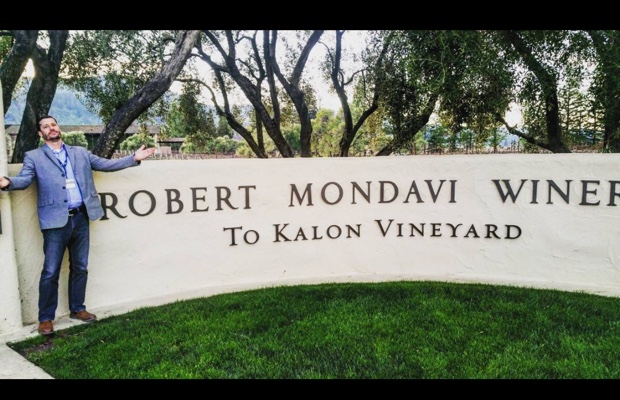
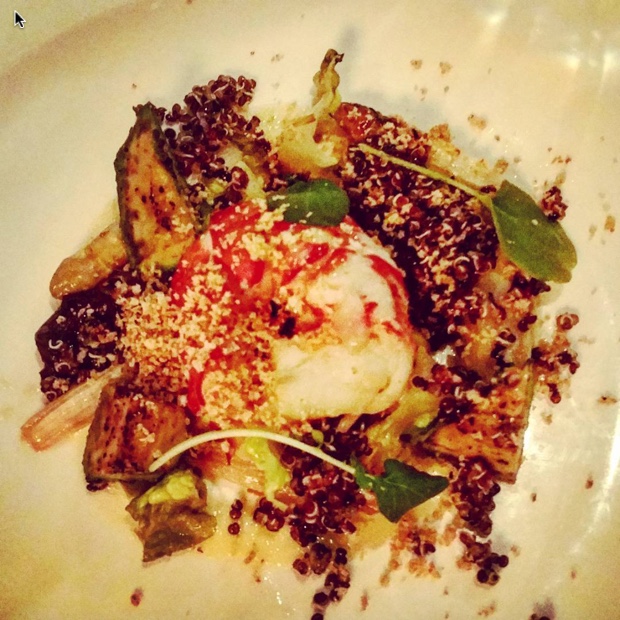
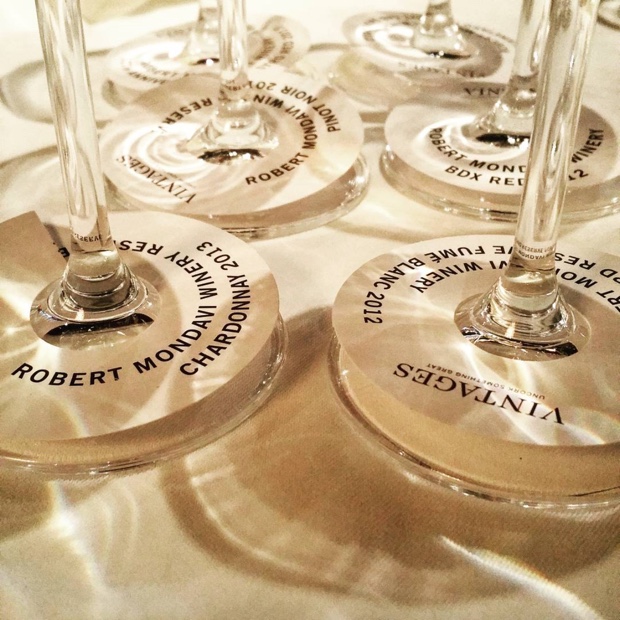

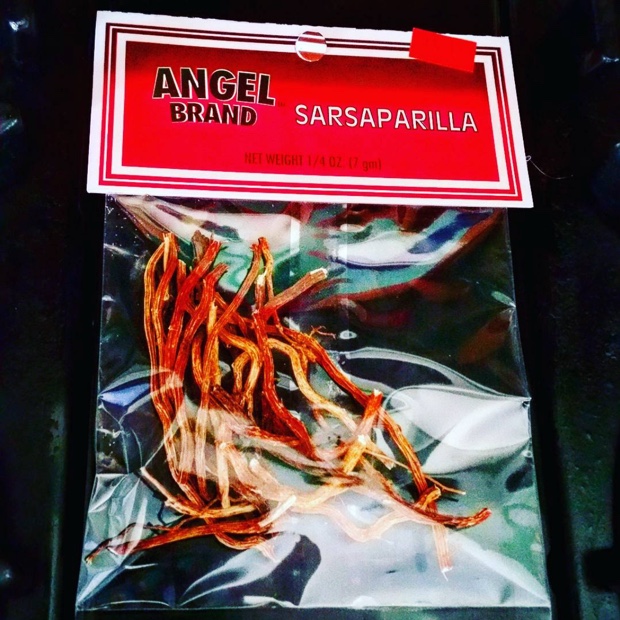
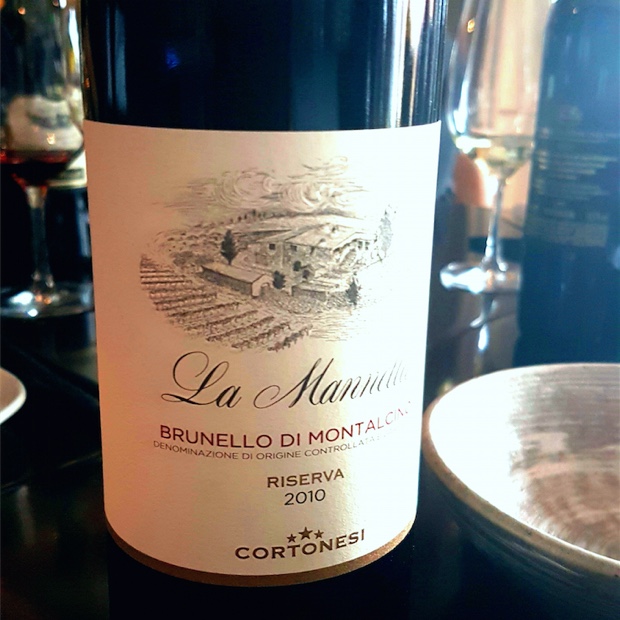
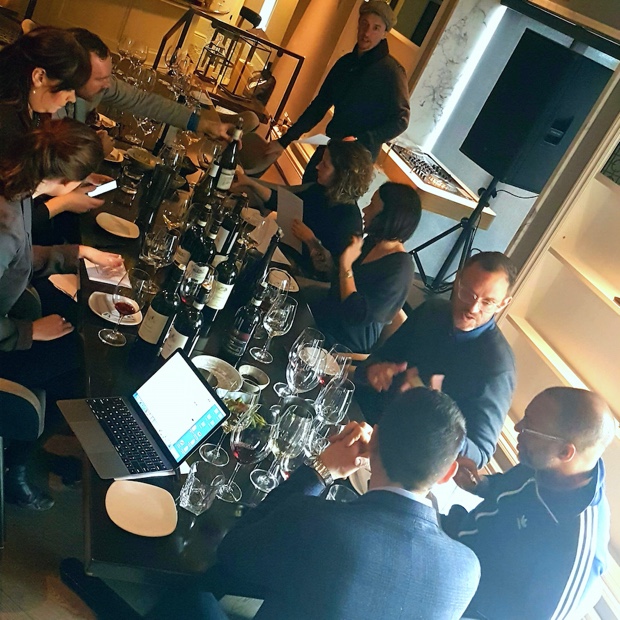
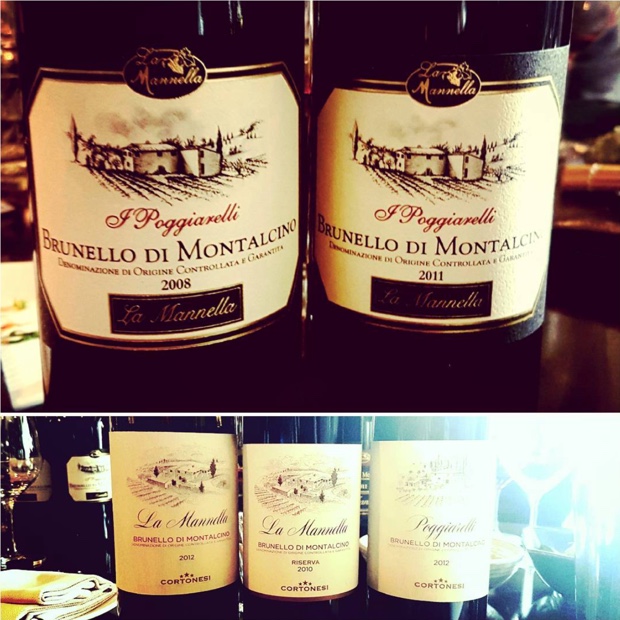
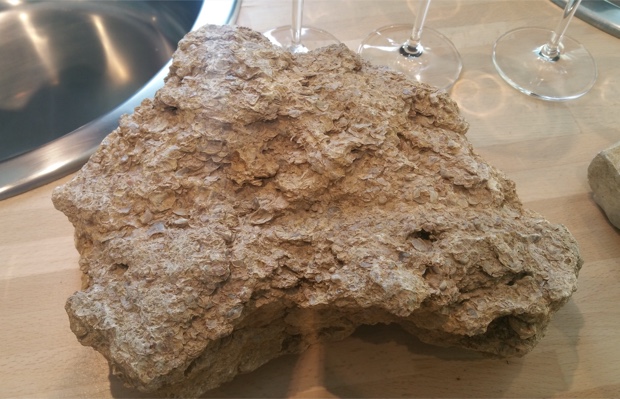
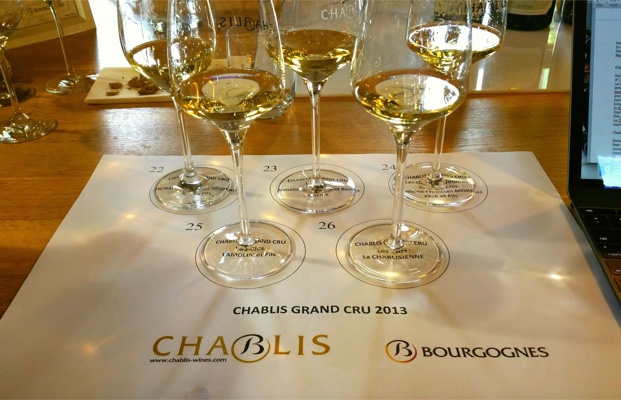
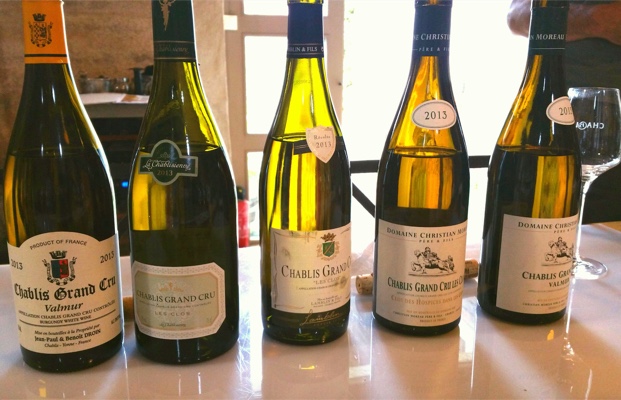
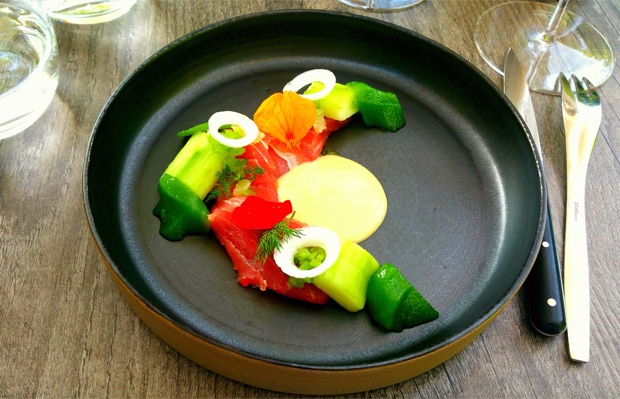
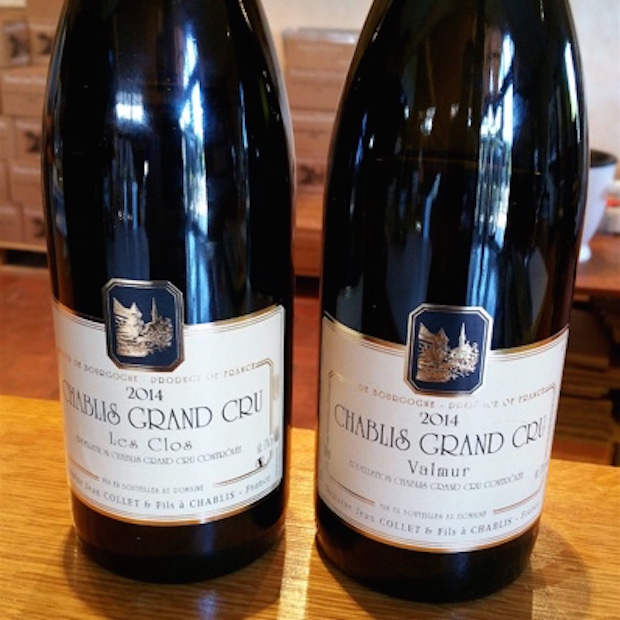
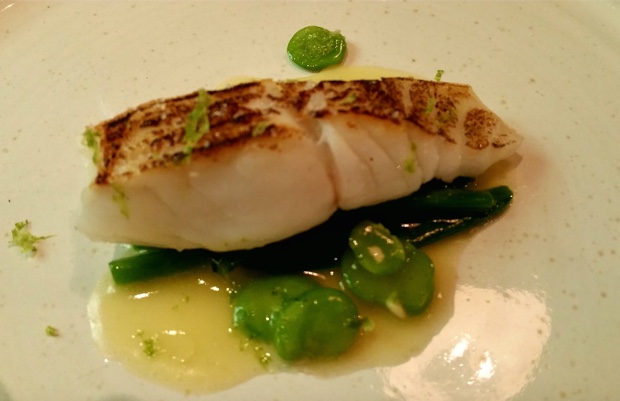
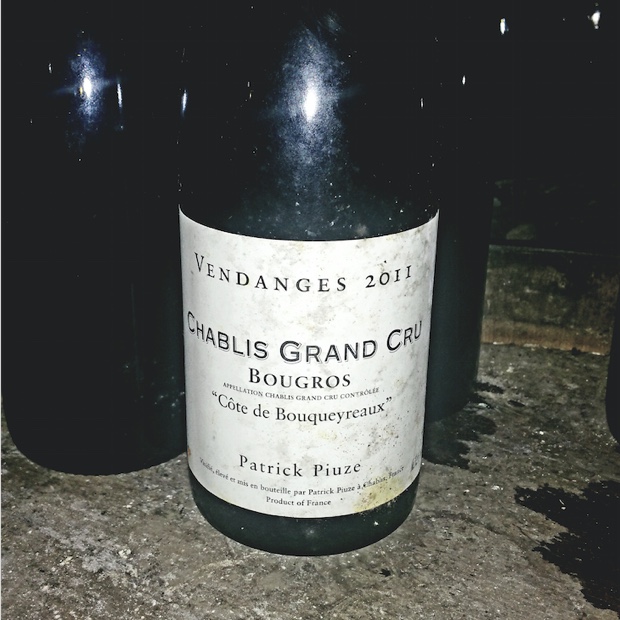
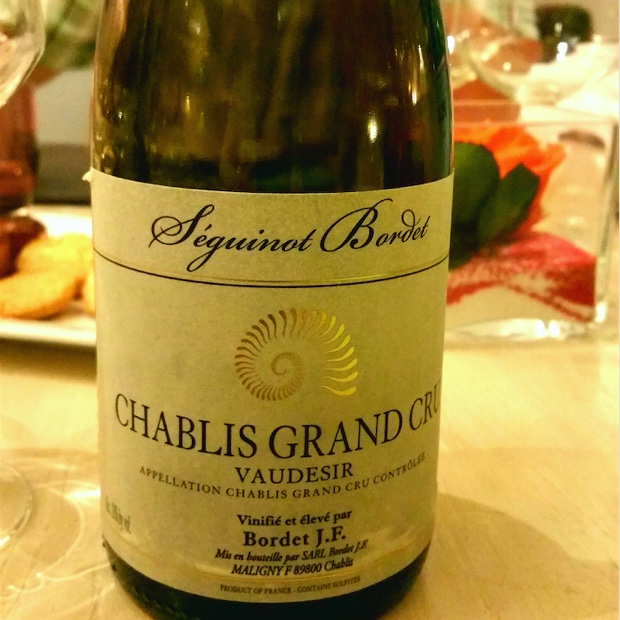
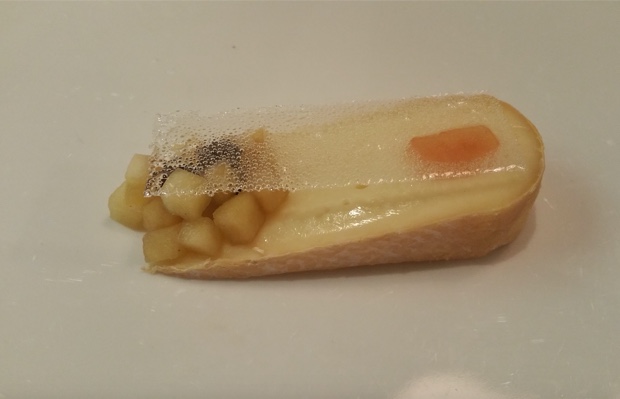
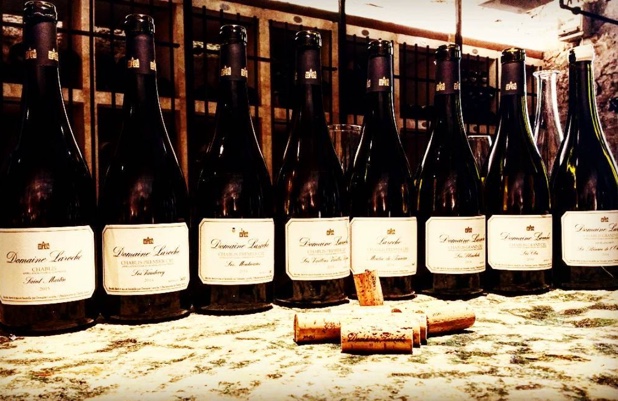
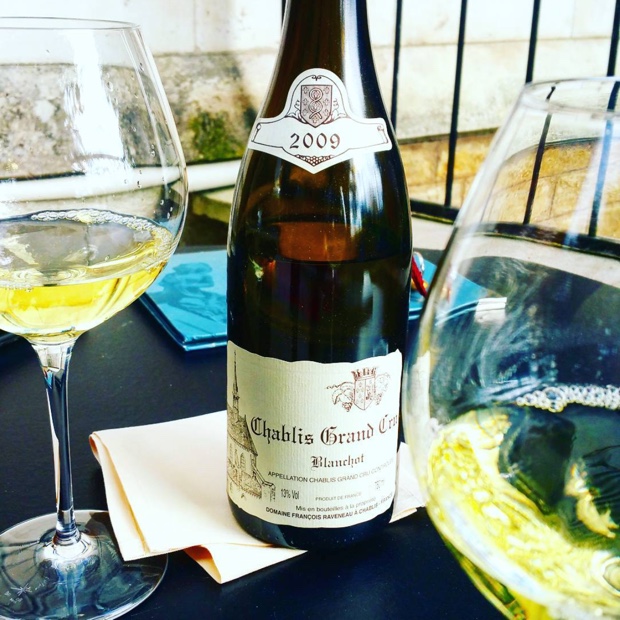
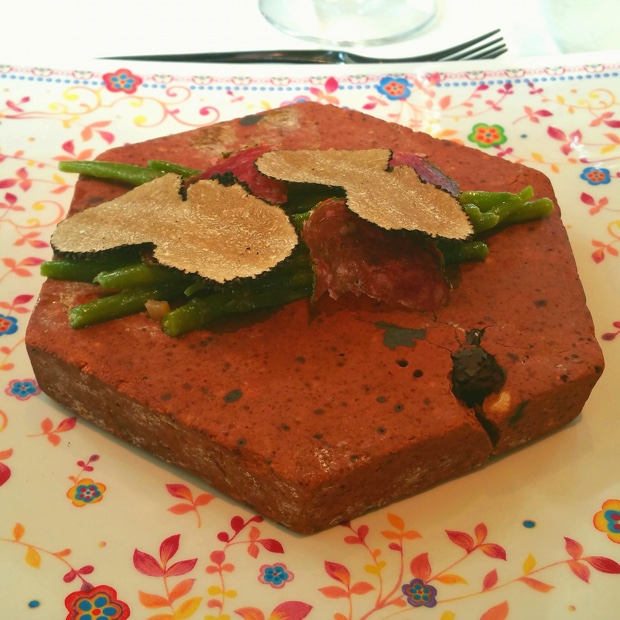

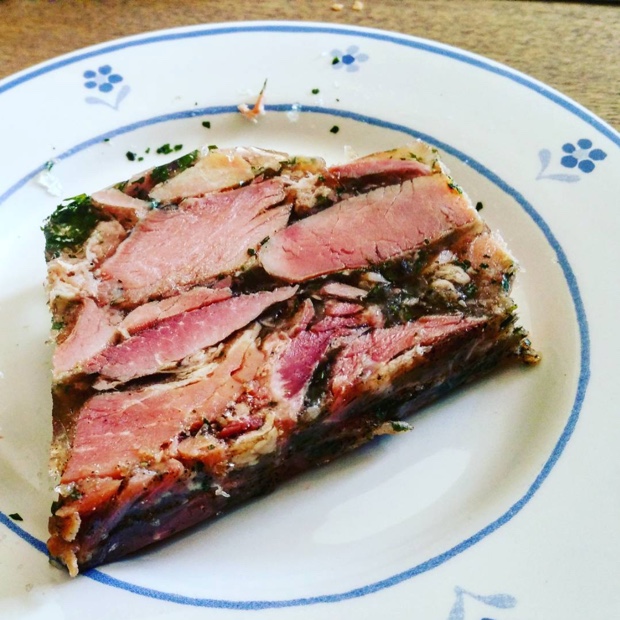
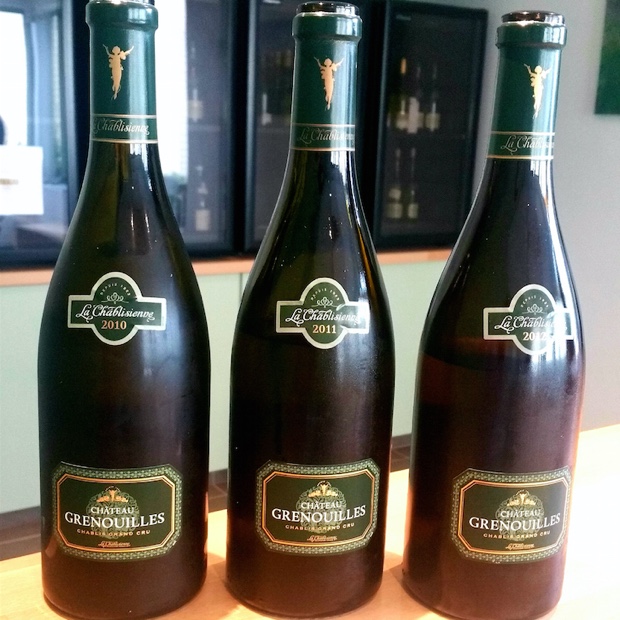
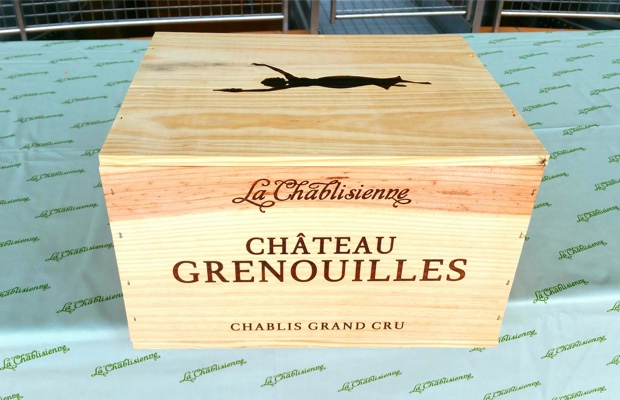
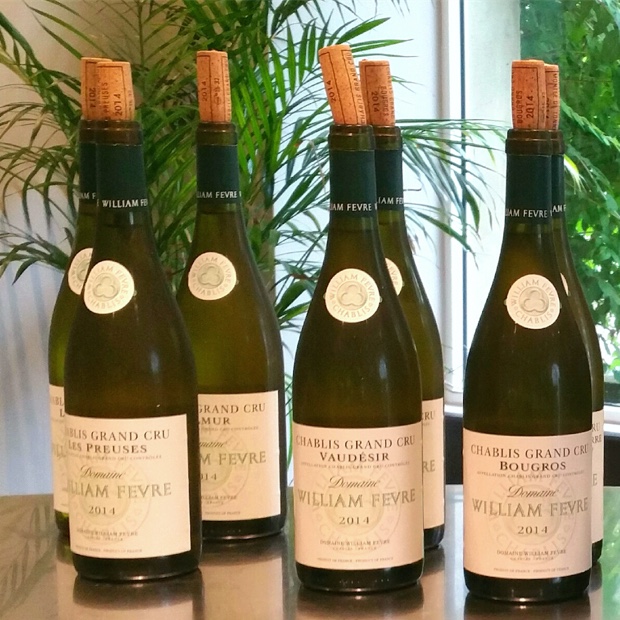

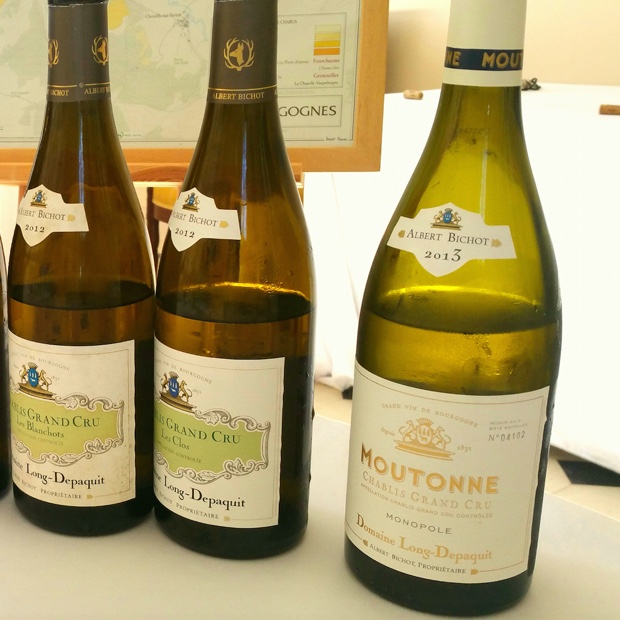
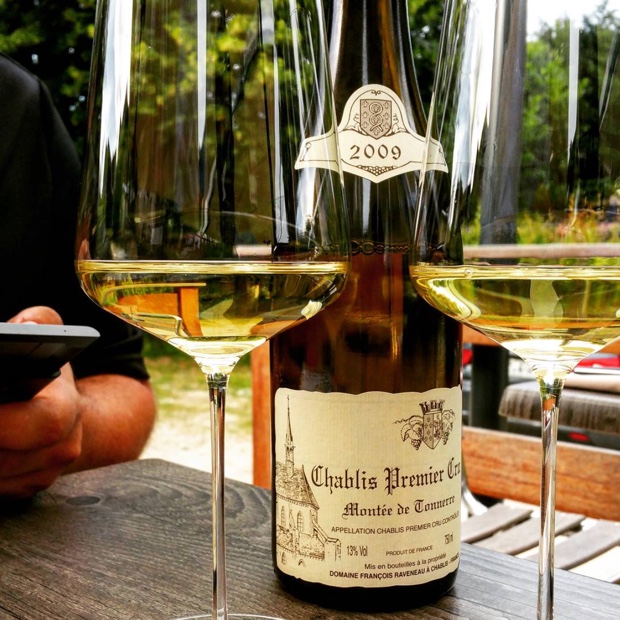
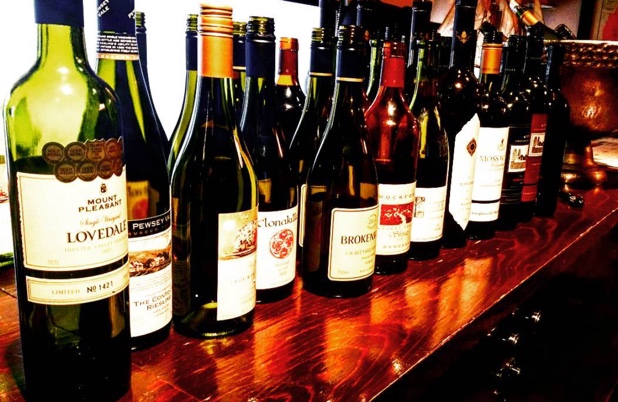
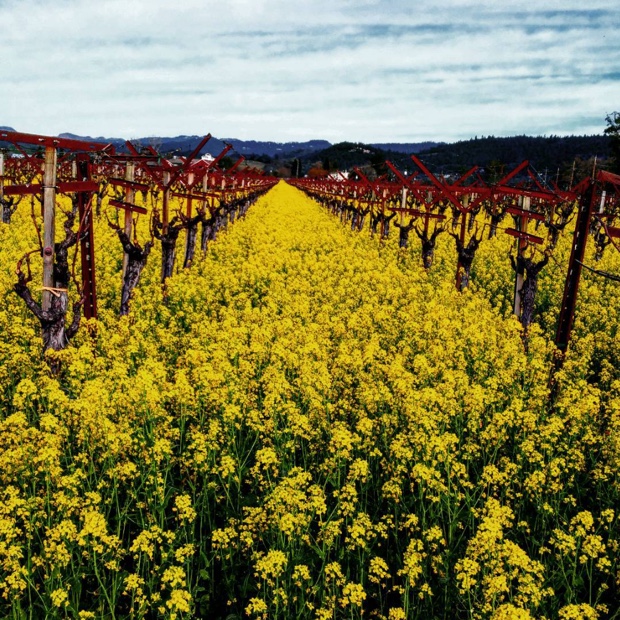


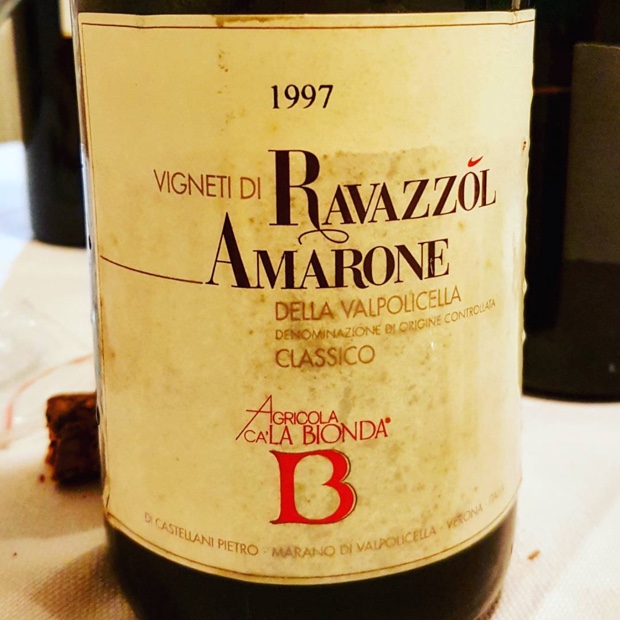


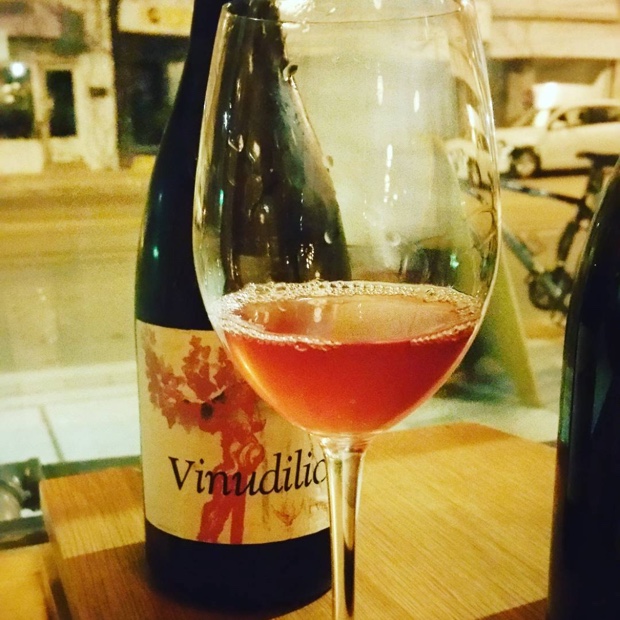






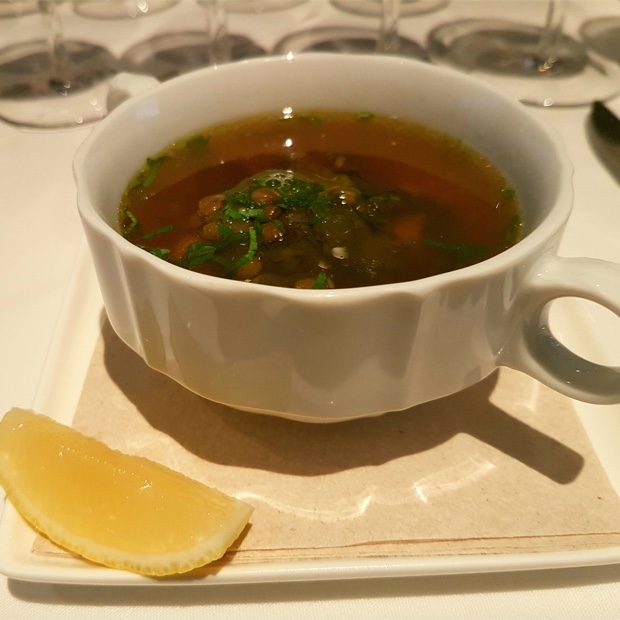
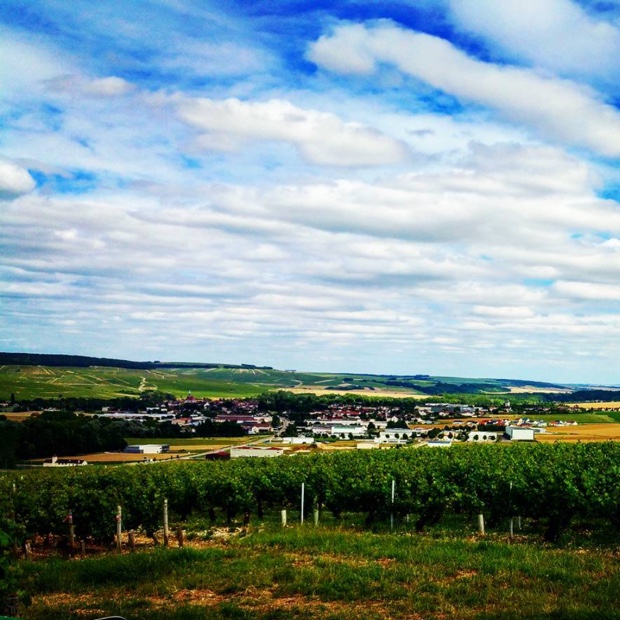
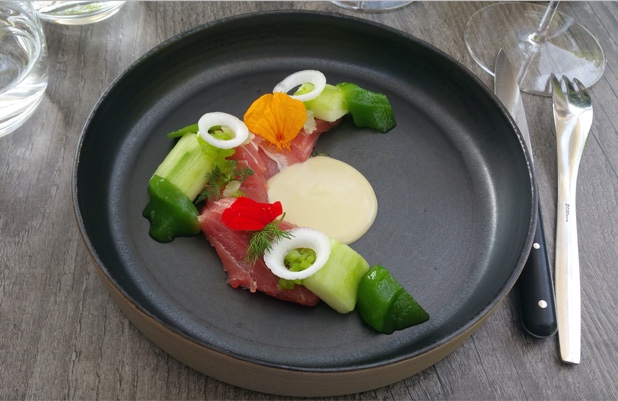

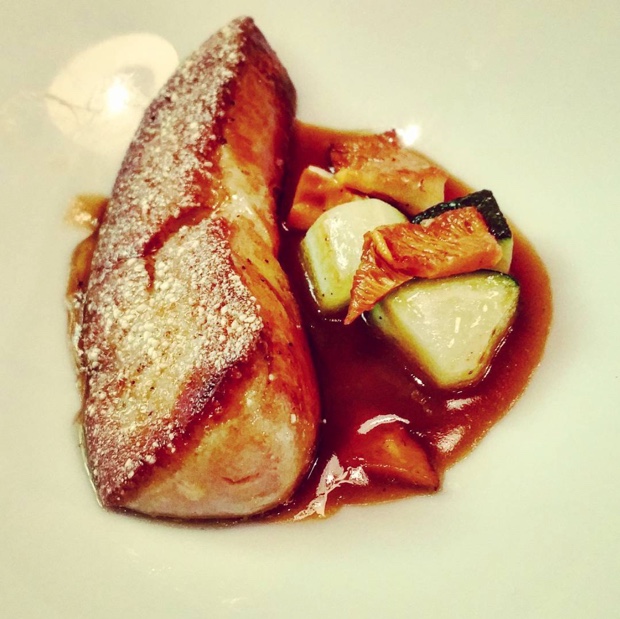

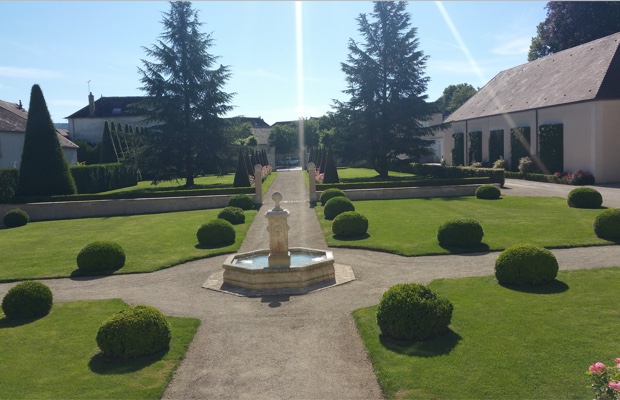
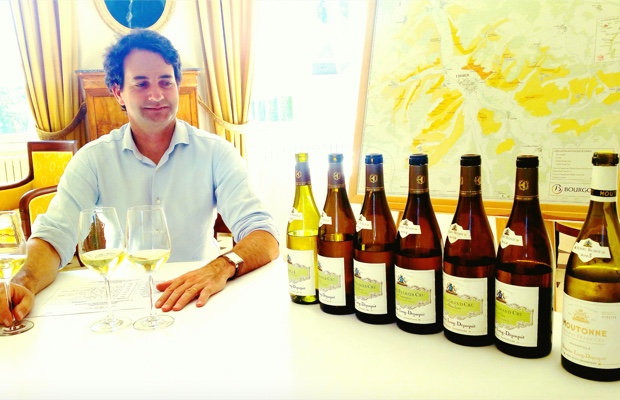

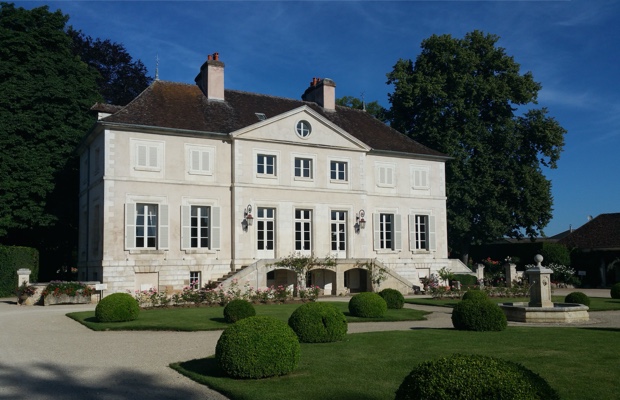
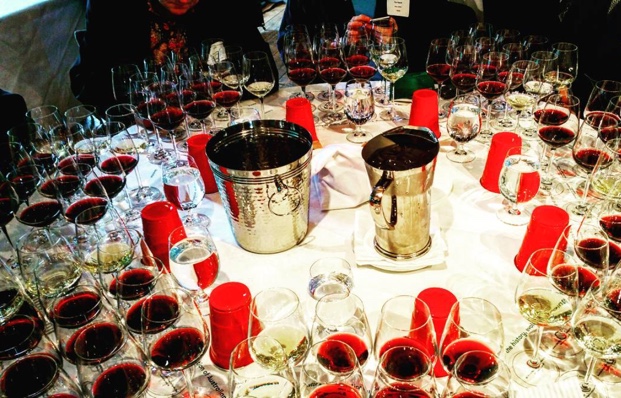


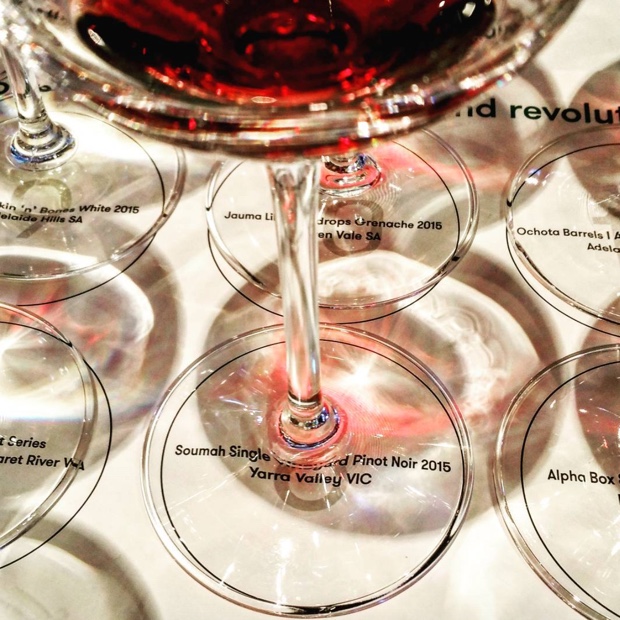
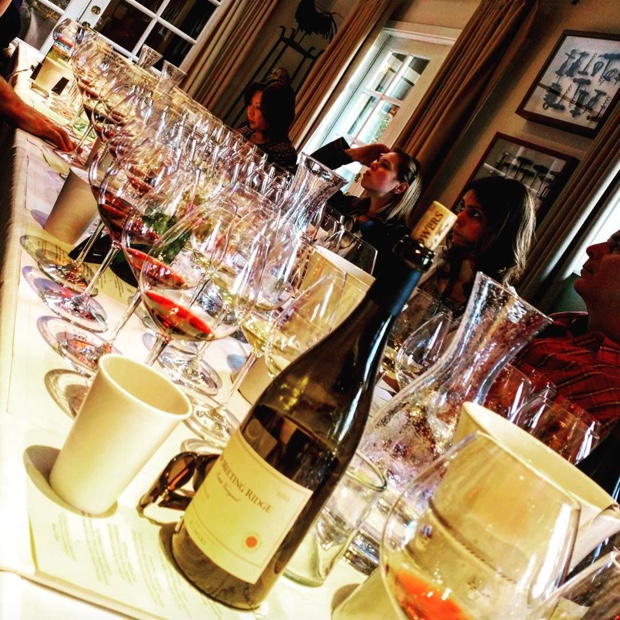
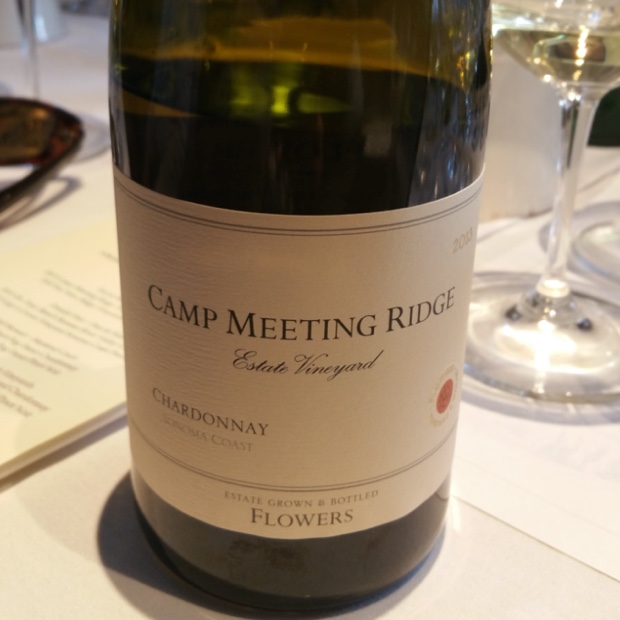
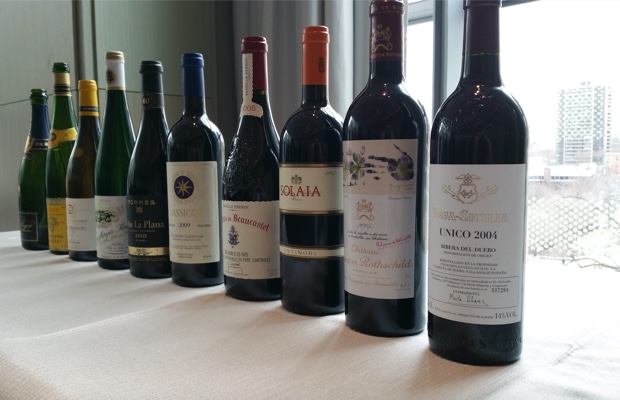
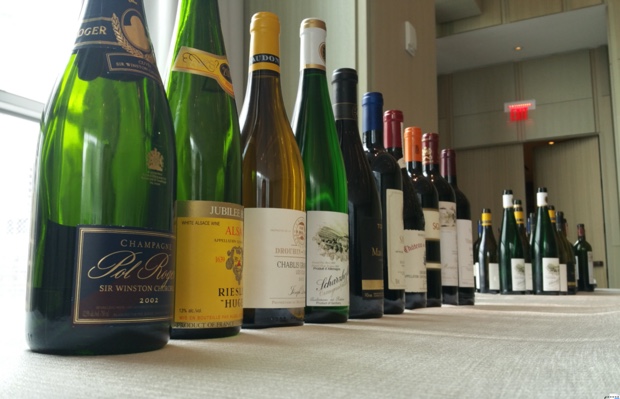
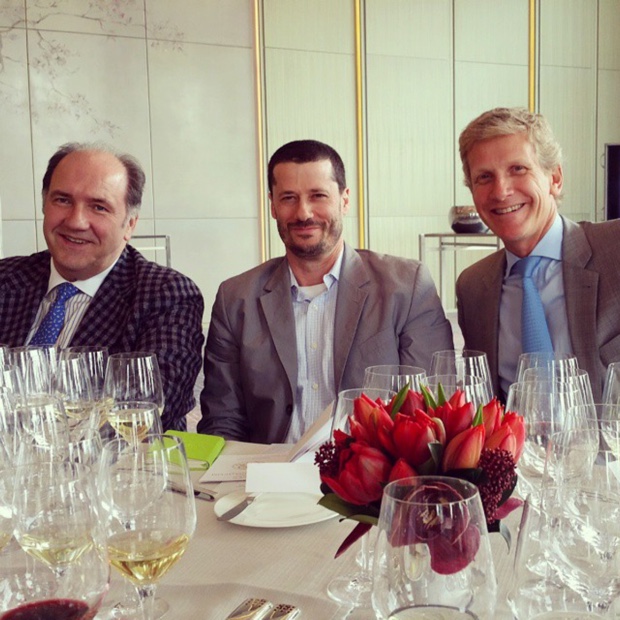
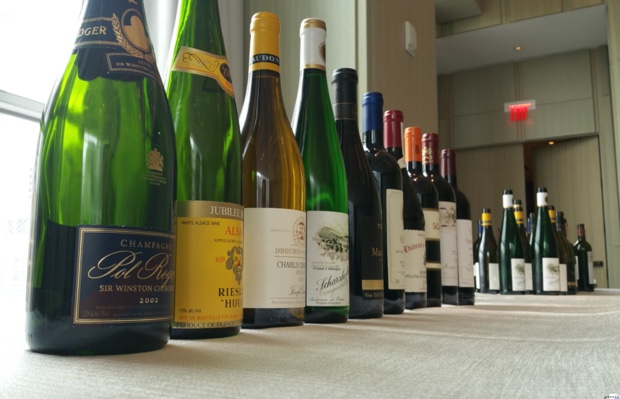
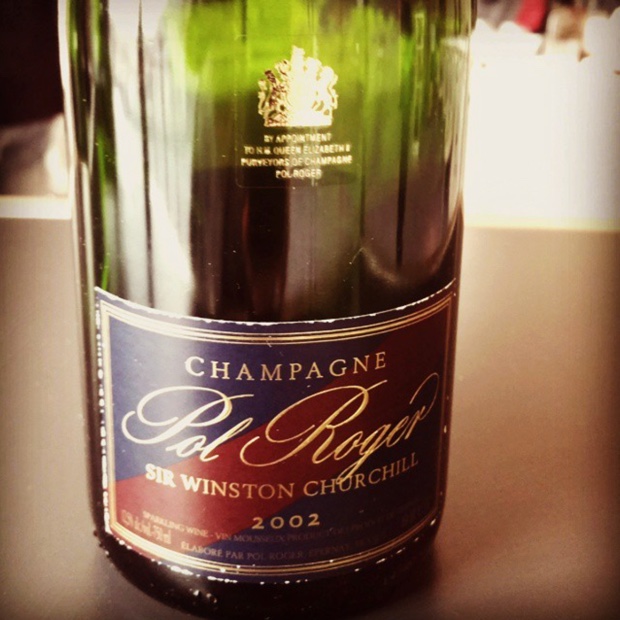
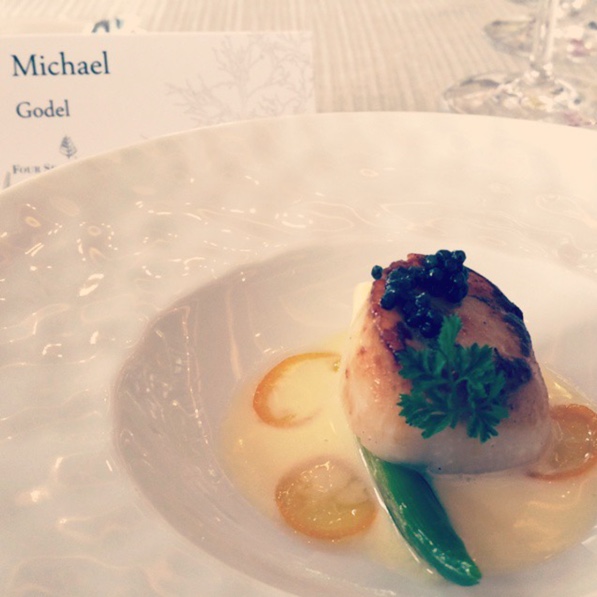
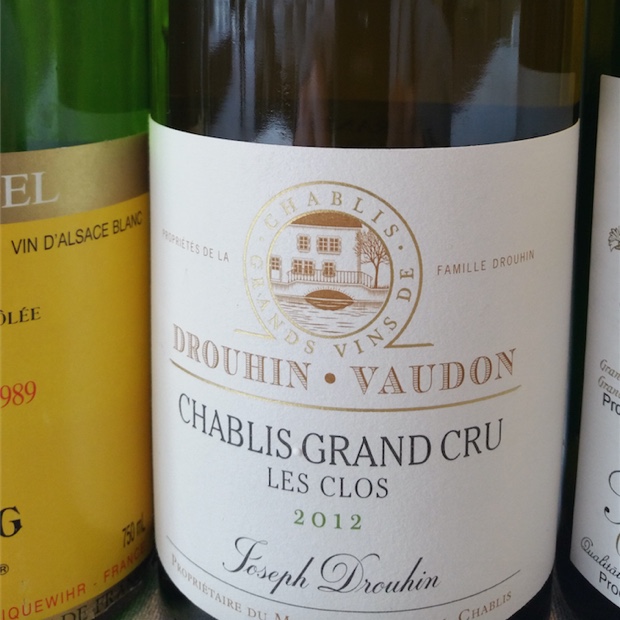


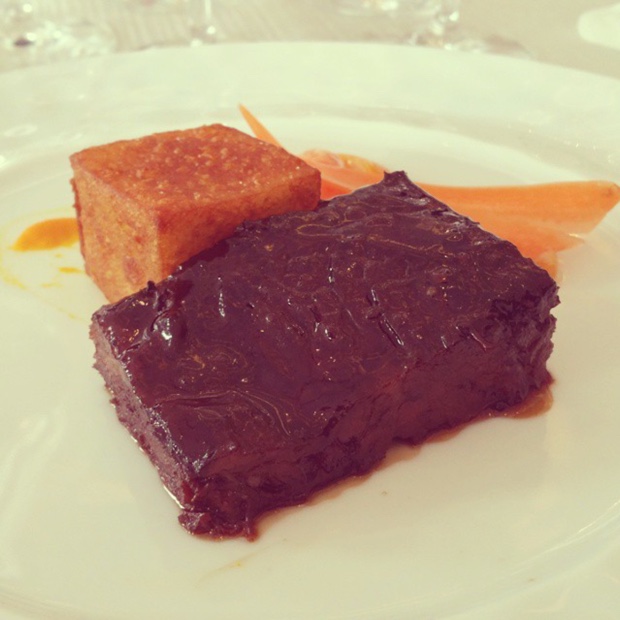
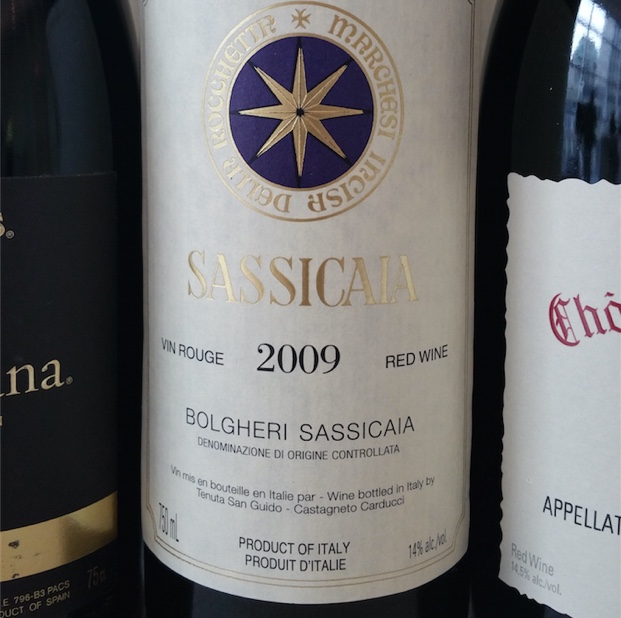
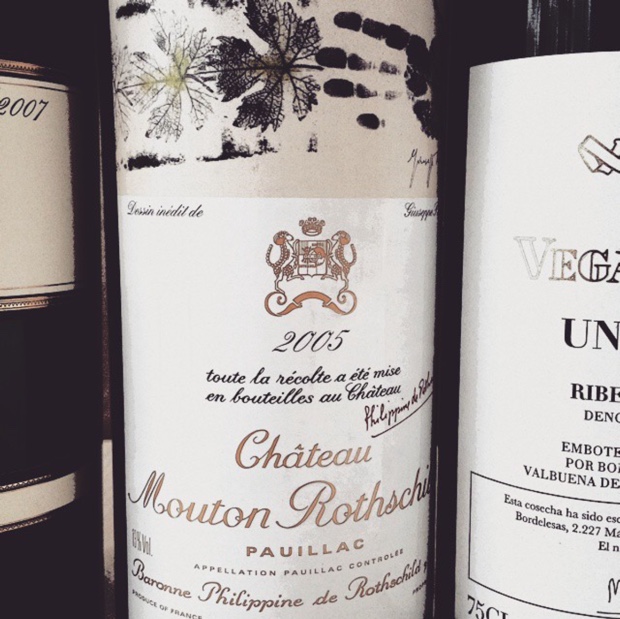



 Godello