All the wines of Sicily

Temple ruins of Giunone, Parco Valle dei Templi Agrigento

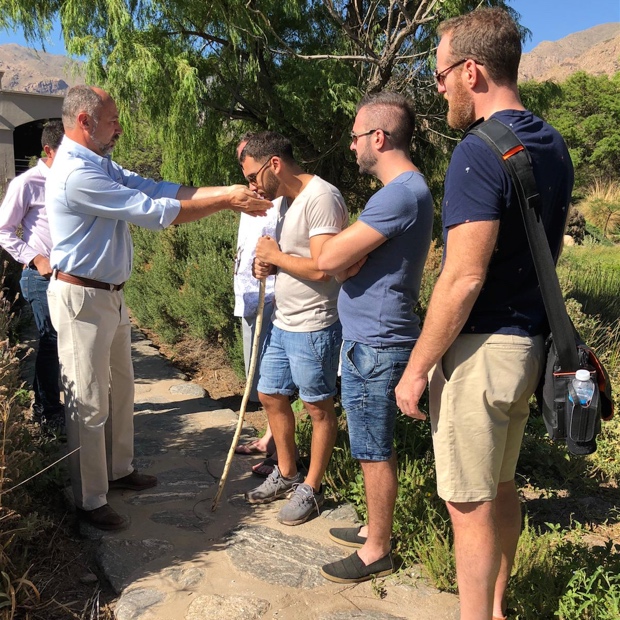
People get ready and listen up. Back in May of 2019 I paid a visit to the great and ancient, melting and wondrous pot of multiculturalism that is the island of Sicily. Sicilia en Primeur, a.k.a Anteprima Siciliana is one of Italy’s finest. JustSicily founder Giusi Macchiarella and her staff on a mission to be great provided my companions and I with an Enotour designed to make tracks through green pastures and winding roads mostly covering the eastern and southeastern sectors of the island. Though it flew by in an instant there was plenty of time afforded intensive investigations over backroads of Catania and Agrigento, replete with return engagements at four near and dear properties; Feudo Montoni, Tenuta Regaleali, Baglio di Cristo Campobello and Feudo Principe di Butera.

Related – Notes from 2019 Sicilia en Primeur

A walk through #villaromanadelcasale to see the exorbitant 4th century splendour of Roman nobility

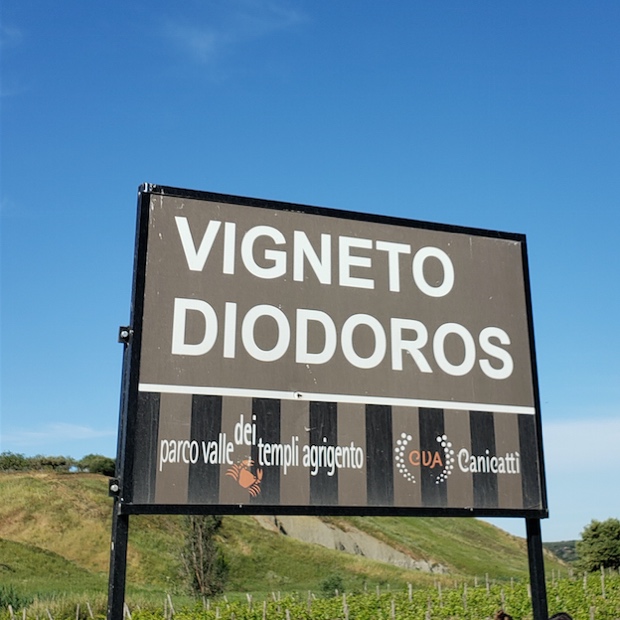
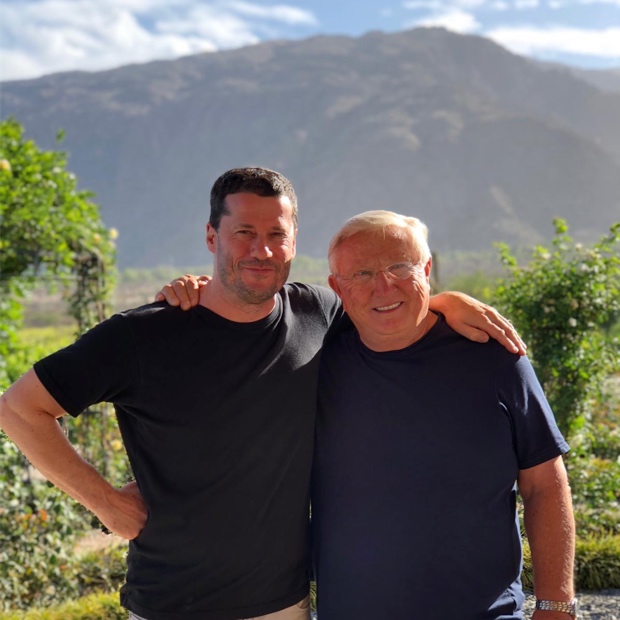
These visits reconnected me with some of Sicily’s smartest and greatest characters; Fabio Sireci, Melissa Muller, Alberto Tasca, Davide Bacchiega, Carmelo Bonetta, Rosario Ferro, Antonio Paolo Froio and Alessandra Zambonin. It also made cause to pause and be reminded of the important vineyards and wines for which these messengers are custodians; Vrucara, Barbietro, San Lucio, Campobello di Licata and Deliella. On this 2019 leg of the journey a new vineyard discovery called Diodonos told an old nero d’avola story for the Agrigento cooperative Canicattì beneath the temple ruins of Giunone. Perfect segue for a walk through Villa Romana del Casale to see the exorbitant 4th century splendour of Roman nobility.

A glorious finale in Ortigia at Castello Maniace with @siciliaenprimeur

After the 2018 Sicilia en Primeur I asked “have you ever felt so at home or been so comfortable travelling as you have been in Sicily? If you’ve not been then you might not understand what I mean. Sicily is Casa quantu stai e tirrinu quantu viri, “home for as long as you need to be and land as far as the eye can see.” I always assumed it would be the water to captivate me, but from endless seas of wheat to grapevines covering plains, hills and terraces, it would always be about the land.”

“You might also think this island in the southern Mediterranean would ripen grapes with the sort of ease akin to some of the world’s warmest climates, like South Australia or the Western Cape of South Africa. Oh that it were so simple. In Sicily they say, Austu e riustu capu i mmennu, “after August, winter starts.” Growing grapes is truly a matter of place. You need to be specific with your grape varieties and match them to your micro-climate, but also your soils. This is a Sicilian necessity.”

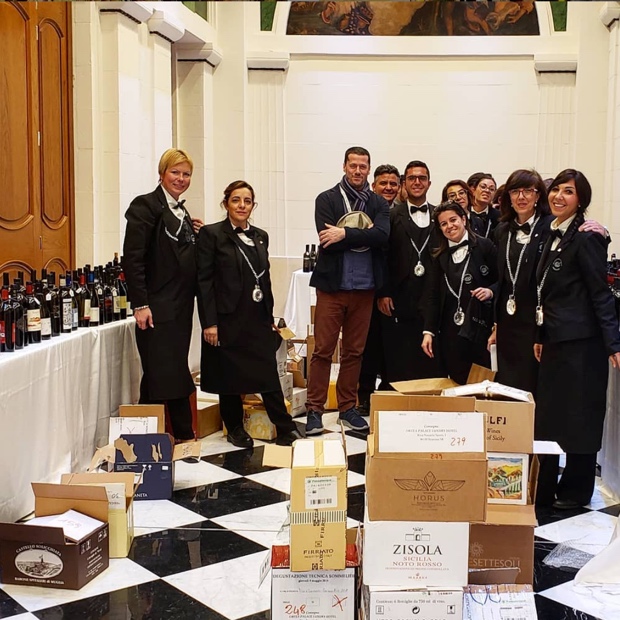
Calling it a day with the @siciliaenprimeur sommeliers @orteapalace

In Siracusa we tasted all the wines of Sicily over two glorious Ortigia days in the palace. I have split up my 136 tasting notes into 12 separate categories, five of which cover the winery visits. If you’d like to go straight to a particular section covered in this report, please feel free to skip forward and click the quick links for any of the following categories:

It’s on the way back home We’ll be there soon.

Sicily’s Viticultural Year: 2018

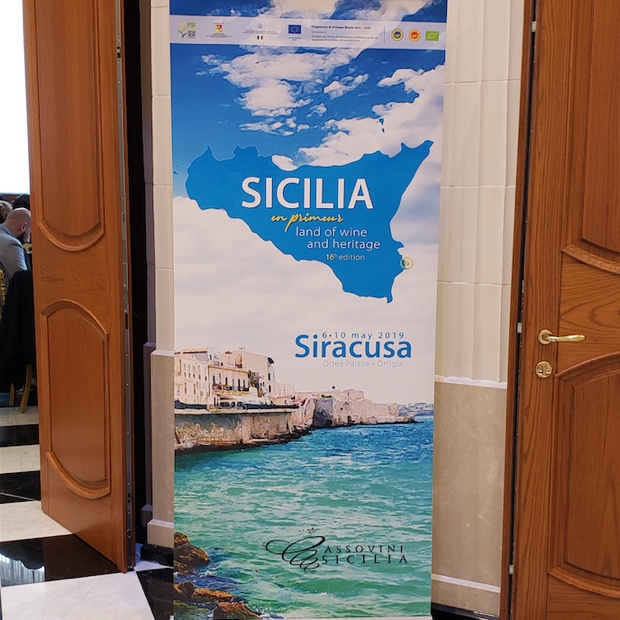
For those who keep such records, 2018 will go down as the fifth hottest year on the Mediterranean  Italian island since 1900. Sicilia en Primeur took place between May 6th and 10th, 2019 as Assovini Sicilia presented that peculiar vintage to 100 international wine journalists through three days of eno-wine tours and two more of anteprime in Siracusa. This sixteenth edition of Sicily en Primeur hosted 50 producers in the Ortea Palace Luxury Hotel of Ortigia, with more than 500 wines available to taste. The technical presentation was delivered by Mattia Filippi, winemaker and founder of Uva Sapiens. Five masterclasses were presented by five Masters of Wine; Vineyards with a sea view, Travelling through time, DOC Sicilia, Etna, a constantly evolving territory and Small Destinations, a great history.

#piazzadelduomo #ortigia #syracusa #sicilia

We learned three simple truths about the Sicilian wine industry because of the collective reaction to the heat brought forth by 2018. First, production numbers were consistent with 2017. Second, the other two wine production regions of Italy with similar horizontal exactitudes were Piedmont and Tuscany. Third, Sicily proved that staying true to core values, paying attention to quality and limiting yields in the name of productive balance puts the island’s denominations in a league with the country’s elite.

Related – Sicily in review

Sicily’s aromatic whites

In Sicily, the climate and especially the many micro-climates bless the island with levels of aromatic complexity that come straight off of the skins of the grapes, especially the whites. The winemaker attuned to and in tune with his or her terroir is not in search of fat wines because quite frankly, in Sicily they already have so much of everything. So the question begs, “why do they need more?” This fundamental approach is surely an existential one but also one that is highly practical and when followed always leads to some of the most truthful aromatic white wines on the planet. From catarratto, grillo and inzolia to carricante and zibbibo, Sicilian whites are simply killing it. Two prime examples are noted from May visits with Fabio Sireci at Feudo Montoni and Alberto Tasca at Tenuta Regaleali. Many others offered up thrilling discoveries, including those made by Planeta, Tornatore, Donnafugata and Rallo.

Fabio Sireci and Melissa Muller

Feudi Montoni

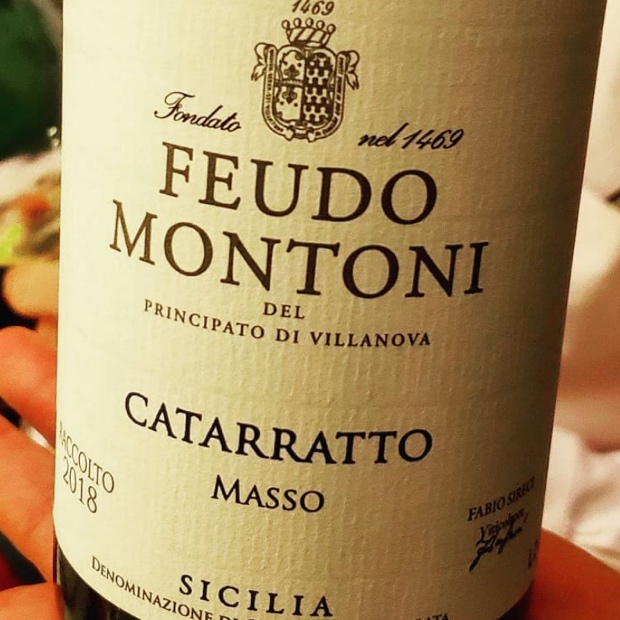
Feudi Montoni Catarratto Masso 2018, Sicilia DOC ($22.95)

Masso is the cru, “conglomerate stone,” from the soil. Fermented in cement, locked in for and with freshness, sapid and ultra fresh. In 2018 it rained every 10 days, including during harvest so the aromatics are an about face from 2017, a vintage that saw no rain from March to October. What was a relative tropical 2017 is now an herbal, verdant 2018, with aromatics filled by wild finnocchio, fava, honeysuckle, chick pea and lentil. So to speak. Great freshness and so linear, with more age potential. More lime in ’18 and sapidity but only having tasted ’17 will you heed to that belief. Drink 2019-2022.  Tasted May 2019.

Feudo Montoni Inzolia Dei Fornelli 2018, Sicilia DOC (539932, $22.95)

‘Tis a perfumed vintage for inzolia in Montoni’s world and while the length of time for its stay in stainless is not defined, it remains at service, ready when ready and different every year. If it’s floral so be it with thanks to the blooming heather or in this property’s case, the purple honeysuckle. Another indigenous wine extended from the pied de coup, wildly elegant and yet so simple. Will gain some honey and more flinty strike with a few years in bottle. “And we’ll all go together.” Drink 2019-2023.  Tasted May 2019

Feudo Montoni Grillo Timpa 2018, Sicilia DOC ($22.95)

Like the cattaratto and the inzolia the aromatics have turned 180 degrees in ’18 from the wet year, with linearity and direct to the senses notes. Still the fresh squeeze of lemon gets you quick, with smiling spirit. A wholly soulful grillo that will keep you woke and alive. Drink 2019-2022.  Tasted May 2019

Feudo Montoni Nerello Mascalese Rosé Di Adele 2018, Sicilia DOC ($22.95)

“For you Adele I will pull out all the thorns and put in roses.” This from Fabio Sereci’s father to his mother. Also symbolic for bringing a vineyard back to life. The only wine not named after a cru, but after mama, the mama, the only mama. The “roses of Adele.” The most sapid, herbal, linear and did I mention sapid Rosé in the these parts and any nearby and far away. Take nerello mascalese, grow it in the wilds of Feudo Montoni and this is the result, elegant, lengthy and certainly piu sale. Drink 2019-2021.  Tasted May 2019

Feudo Montoni Nero d’Avola Lagnusa 2018, Sicilia DOC (523738, $23.95)

The cru where the nero d’avola grows, the lazy one or better yet the smart one, intelligent one who is a late starter, but when he works he’s very good at what he does. Lagnusa. Also a grape gown in clay soils from which yields are low, once a negative now very positive in terms of quality. Some concrete aging and only a short contact with mostly (approximately 80 per cent) old barrels. Another factor of a vintage, herbal, dusty, so very fennel and aromatic enhancing legumes, non marmalata, far from dense, heavy or over the edge in any possible sense of reality. Just balanced in its slightly wild, feral, cured and elegant way. Drink 2019-2023.  Tasted May 2019

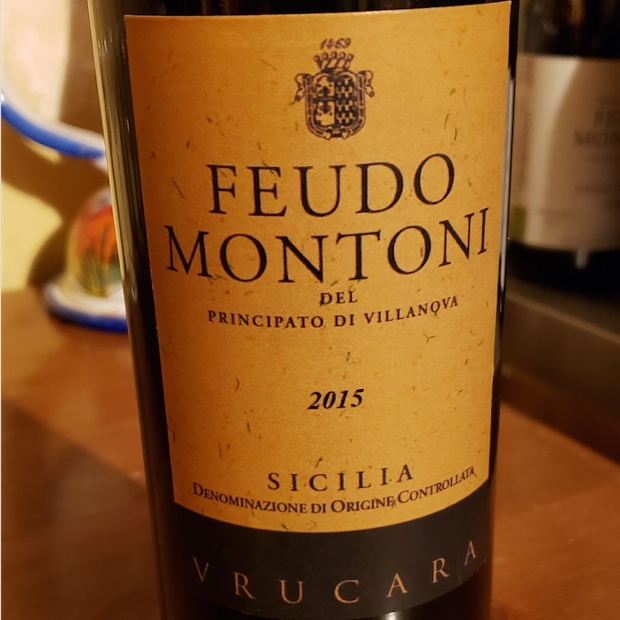
Feudo Montoni Nero d’Avola Vrucara 2015, Sicilia DOC ($58.00)

The en primeur nero d’avola, finished but so far from even hinting at a readiness. Wild strawberry and the dreams of aromatics to come; carob, liquorice, salumi and all the herbs. Grasses and magical things that grow in a Montoni natural world. Top quality acidity for 2015, reeling, supportive and wild. A truly structured wine and one that will resist growing old despite the passage of time. Drink 2020-2029.  Tasted May 2019

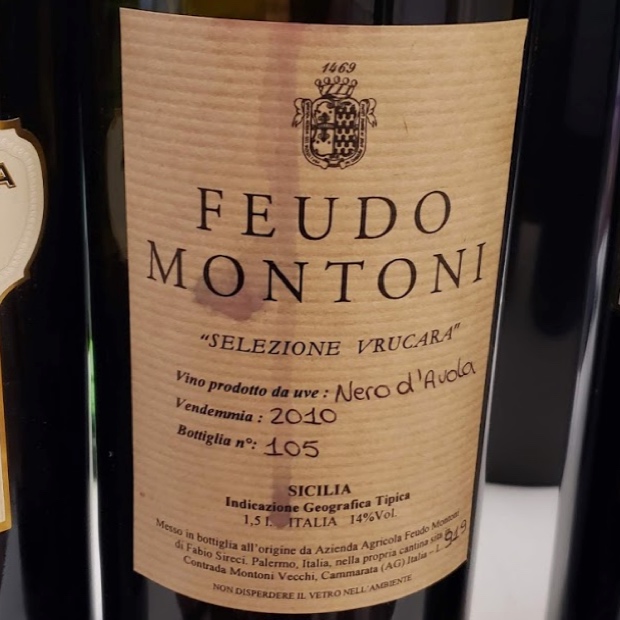
Feudo Montoni Nero d’Avola Vrucara 2010, IGT Sicilia

From Fabio Sireci’s pre-phylloxera vineyard in which some heritage nero d’avola with unparalleled root structures find water six to eight metres below the sand and clay layers. Some are as old as 120 years and still others have been raised by the Sireci method of propaginato, the bending of a heritage vine cane into the earth and then brought up as a new vine. The savoury here is fed by so many surrounding native plants, aromatic oils and how they share the terroir with the Vrucara vines. It’s a great wine, singular, mature and mellowing but done with such confidence and lessons learned. One of Sicily’s greatest wines of confidence and humility. Drink 2019-2025.  Tasted May 2019

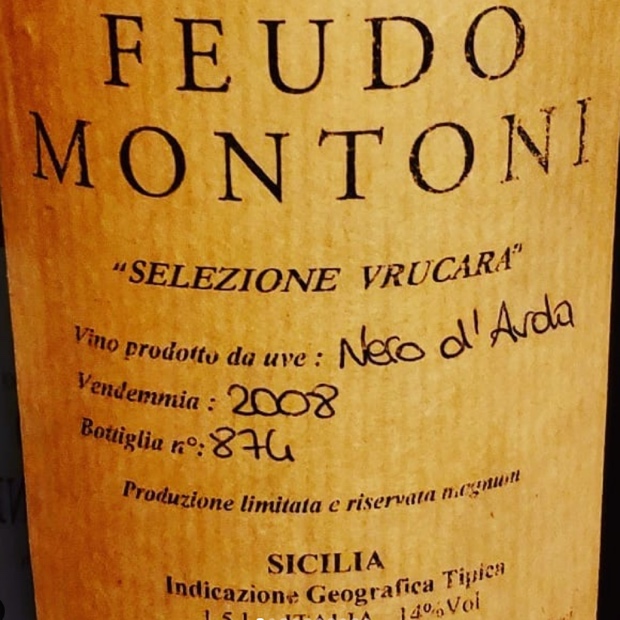
Feudo Montoni Nero d’Avola Vrucara 2008, IGT Sicilia

Still just a baby, curative youthful, high acidity very much in charge with an uncanny at present aroma of wild strawberry. Impactful wild fennel and roses still in bloom. Just the first stages of secondary character are upon the aromatics but structure controls the rest, all of whom still lay in wait around the next decade. We visited the queen by pickup at night where she sits on her throne, as she has for 120 years, with her children born by propaginato, over the course of all that time. Like a cavallo indonato or, if you like, non manzito. Untrained, not wanting to be fenced in, needing time to civilize, habituate and domesticate. We’ll all be long gone.  Last tasted May 2019

The answers are so simple and yet unanswered because magic is involved. You can understand the old vines and the way their fruit turns into wines that begin with ancient wisdom but move so little in the first seven years. What happens at 10 is the turning outward, to express the place and speak the dialect of the cru. The acidity is still high but is now in lift, with fruit at the height and en anergy that flows, really flows, moving across your palate with grace, grab and attention. A contiguous wine from start to finish, with intensity, impression and precision. The structure is come cavallo domato, like a trained horse. Dramatic nd’A but with no drama at all. Tamed and in respect of ancient vine, where it grows and what it wants to give. Ma zitto, a wine to keep you silent. Drink 2018-2029.  Tasted May 2018

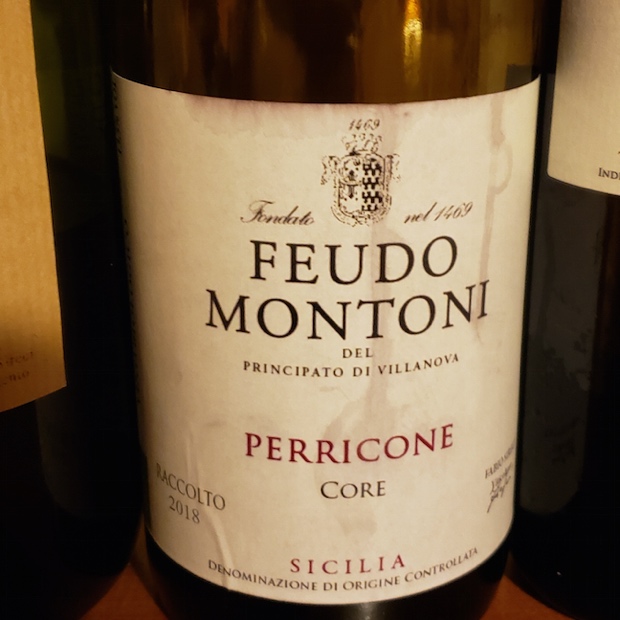
Feudo Montoni Perricone Core 2008, Sicilia DOC ($22.95)

The most interesting of grapes, known as guernaccia in this part of Sicily, “the grape of the farmer,” thick-skinned, disease resistant and perfect for making home made wine. Full phenolic perricone still has a green pit, picked late (in November), so Fabio cuts/crimps the vine very hard, blocking the flow of sap from the rootstock to the clusters, ostensibly creating an appassimento technique but in the vineyard, one week before harvest. Intriguing from bitter cocoa, through tobacco, carob, bokser and liquorice. You absolutely need lignification, brown stems, for whole bunch fermentation and add all this up, the grape, the techniques and the result is almost singular for any red wine in the world. Drink 2019-2025.  Tasted May 2019

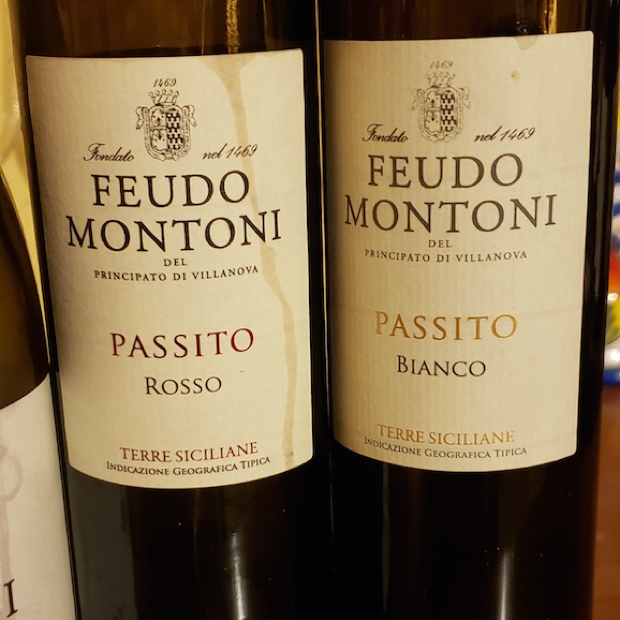
Feudo Montoni Passito Rosso, IGT Terre Siciliane

From nero d’avola and perricone. Upwards of 200 g/L of RS. That nero liquorice and carob is magnified, hyperbolized and liquified. The acidity brings stability and re-introduces the varietal centrifuge and microcosmic sense of place to the wine. This is like the place itself, centre of some people’s necessary universe, where everything goes on and on.  Drink 2019-2029. Tasted May 2019

Feudo Montoni Passito Bianco, IGT Terre Siciliane
From grillo with some cattaratto to elevate and manage acidity in a passito that is upwards of 136 g/L of RS. So much fruit goings on; gelid orange, caramelized orange, burnt pineapple and apricot. Just faintly nutty, surely unctuous and fine. Drink 2019-2029.  Tasted May 2019

So good to be back @tenutaregaleali with @albertotasca

Tenuta Regaleali

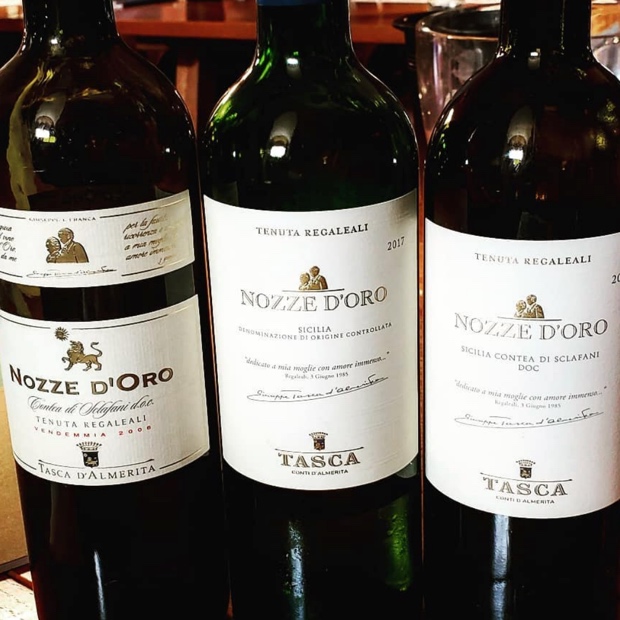
Tenuta Regaleali Nozze d’Oro 2017, Sicilia DOC

A wine with a nod in ode to Alberto Tasca’s grandparents and their 30th anniversary, made from inzoilia off of the old (back to 1966) Barbieto Vineyard and blended with sauvignon blanc grown at the highest site on the estate. From a hot and quick vintage the two aromatic varieties layer to create something intense and the connection to Bordeaux Blanc in style is somewhat an uncanny one. A seamless and straightforward white wine with top quality sweet acidity and exceptional food pairing ability. Drink 2019-2024.  Tasted May 2019

Tenuta Regaleali Nozze d’Oro 2014, Sicilia DOC

A cooler vintage makes for a flintier, tighter and more snappy white blend, from Barbietro Vineyard grown inzolia and sauvignon blanc. If the hot 2017 was thought to be a Bordeaux ringer than this will double down on that idea, in fact this makes that vintage seem downright tropical. Crunchy, sapid and in the truest sense of the word, so bloody mineral. Lovely bit of grapefruit like bitters with a note on ginger on the finish. Drink 2019-2028.  Tasted May 2019

Alberto Tasca

Tenuta Regaleali Nozze d’Oro 2006, Sicilia DOC

A remarkable study in longevity for a Sicilian white blend but you have to delve deeper and into the microcosmic world of the Tenuta Regaleali Estate. Flinty like 2014 though of some more humidity and also residual, semi-tropical fruit substance still relative within the subtext of a cool vintage. It’s like lime dousing mango and gooseberry in cooling mode out of the stufa. Still very flinty and implosive, spirited and gaining speed, if traction even. Impressive look at a 13 year-old joint between inzolia and sauvignon blanc, acidity and structural elegance. Drink 2019-2020.  Tasted May 2019

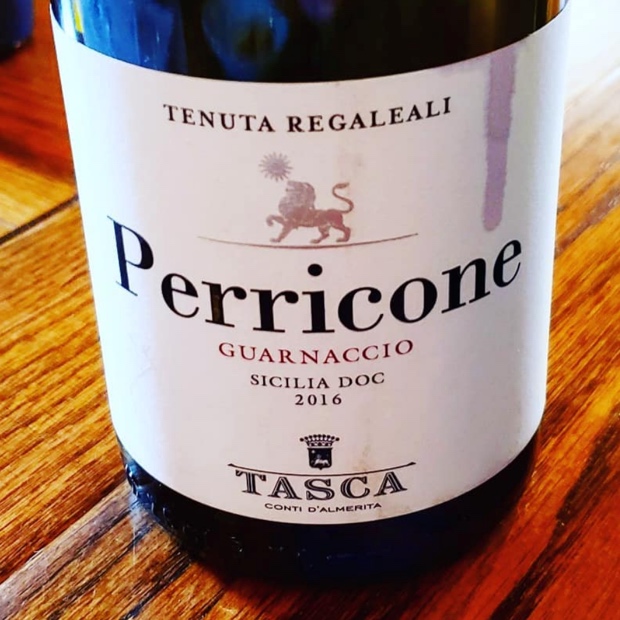
Tenuta Regaleali Perricone Tasca d’Almerita Guarnaccio 2016, Sicilia DOC

The artist also known parochially as guarnaccio is the magical grape variety of endemic proportions that only Sicilia can claim. A wine that will open doors to perception and change the way you see Sicily, not just because it’s different but because it’s exciting. Like cabernet franc with sweet basil, liquorice and sweet peppery plum. Just an ideal vintage, liquid chalky, high acid, full fruit complement and ideal extract. Crunchy like a mouthful of berry rocks.  Last tasted May 2019

Endemic perricone is the grape that has always existed at Regaleali, since 1954, in the historical San Lucio vineyard. The massal selection allowed for extending the vineyard, because believing in perricone (always known as Guarnaccio at the Estate) means respecting the winemaking past of western Sicily, which was rich in this grape. Because brother Rosso del Conte was always offering an age able wine, it was decided to bottle this varietal wine for freshness and possibility. It sees 12 months in 2nd and 3rd use barrique. The first vintage was 2012 and there is a sweet nuttiness about this grape made in this way, like marzipan or nougat, with currant red fruit and in a way, like cabernet franc but without any pyrazine intrusion. A note of carob or bokser joins in, advantageous acidity for buoyancy and a calmness without any real demand by tannin. So much pleasure and confidence. Too early in its tenure to know about aging solo but how can confidence not speak to an avowal of yes? Drink 2019-2026.  Tasted May 2018

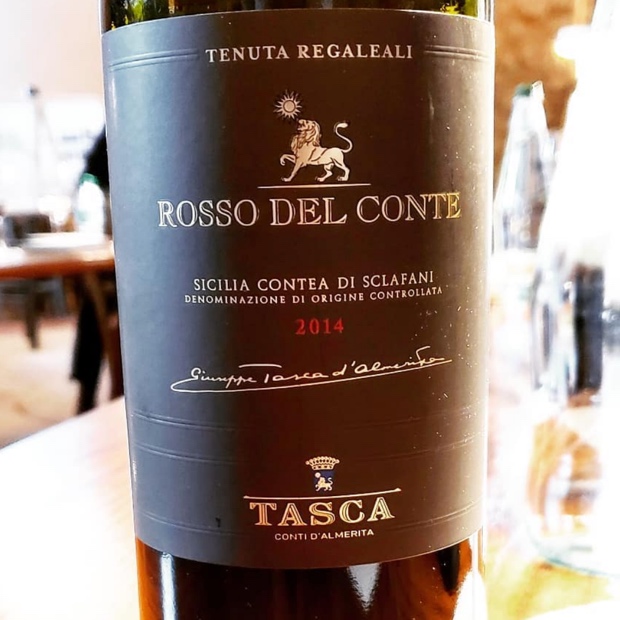
Tenuta Regaleali Rosso Del Conte Tasca d’Almerita 2014, Sicilia DOC

The famous blend of perricone and nero d’avola that does not tread into the danger zone of over ripeness and jam, keeping acidity and running with the devil, for the better part of 50 years. Extremely youthful wine, still reductive, still reeking of its multi-vegetal/floral scents of herbs, legumes, grasses and flowers that grow all around the infamous vineyard. The oak regime is still very much in charge of the fruit and so a vanilla-graphite film rests atop the syrah-like pepperiness of the endemic fruit blend. Should begin talking in a dialect that lends a sense of place in two or three more years time and will be a long-lived RdC. Drink 2021-2032.  Tasted May 2019

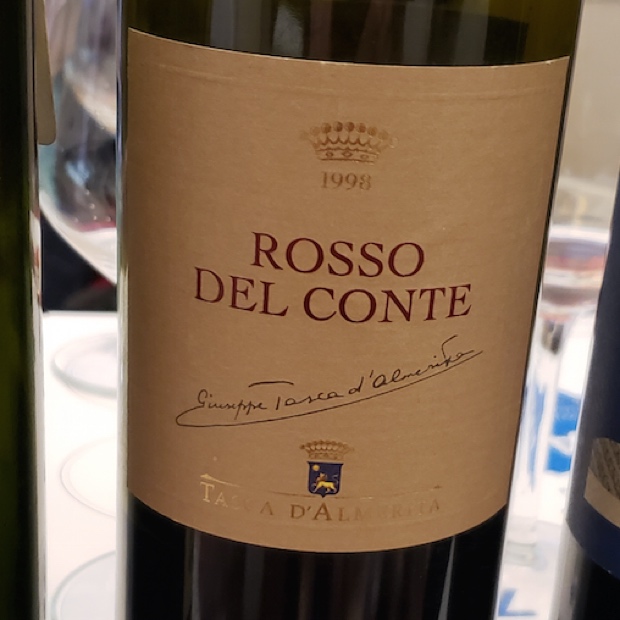
Tasca d’Almerita Rosso Del Conte 1998, DOC Monreale

The original Super Sicilian is a nero d’avola and perricone marriage though over the years they have swapped place in terms of which one leads. Still a secondary time and place, with fruit coming around again and again, especially at the finish. A perricone bulk head wonder with nero d’avola wings. Very much a creamy chocolate ending that while certainly a matter of oak it’s really quite dreamy and through a connection to earthiness it brings you back to the vineyard. Drink 2019-2021.  Tasted May 2019

Baglio Del Cristo Di Campobello

Baglio Del Cristo Di Campobello C’D’C Cristo Di Campobello Rosso 2018, Sicilia DOC

Proper Rosato, of chalk and a faint feign of sweetness, lithe in legerement, no more than two or three hours of free press run. An expression of nero d’avola, of currants and savoury but also sweet herbs. Perfectly salty and in salivation solicitation. That’s what you need and also because there is fruit, real nero d’avola fruit, inclusive of tiny wild strawberries. Only 8,000 bottles are made, out of an estate total of 300,000, in this the fifth year of blush production. Drink 2019-2021.  Tasted May 2019

Baglio Del Cristo Di Campobello Adènzia Bianco 2018, Sicilia DOC

The 50-50 grillo and inzolio blend that is the expression of white wine as a philosophy from the estate. A Sicilian dialect word that means “pay attention and take care, to the little details, to something or someone.” A soil enriched white blend with tang, silk, salt and richness. It reminds of some Western Cape chenin blanc with melon and sweet lime flavours filling up a frame built on white crumbling stone and aridity. Good persistence noted from a persistently wet year. Drink 2019-2021.  Tasted May 2019

Baglio Del Cristo Di Campobello Adènzia Bianco 2009, Sicilia DOC

Now a look at the 50-50 grillo-inzolio joint going back 10 years and a wine you might not expect to age this long. An estate credo for the dialectical expression that asks to “pay close attention, take care of the things and people you know and love.” Still carries some impressive energy mixed with some warmer fruit like banana and mango, dusted with dried herbs and fine chalky salt. The acidity persists cut with tonic. Better showing than than the 2008 poured here one year ago. Drink 2019-2020.  Tasted May 2019

Baglio Del Cristo Di Campobello Grillo Lalùci 2018, Sicilia DOC

And so grillo on its own from Campobello stands alone with a pulse and a stand up to be noticed personality that speaks to a relationship with the land. “A most representative white for us,” says Carmello, “a great variety with a great potential.” Literally translates to “the light,” in reference to times when economics and potential were in the dark. Also means “hope” in light at the end of the tunnel. Rich and sapid, implosive and saline, like peaches sprinkled with rock chalk and fresh basil. Very fresh, very young, at heart. It’s Papa Bonetta who says it best. “I’d like to make a toast with Lalùci, to think positive and see the light in every day of our life.” Drink 2019-2023.  Tasted May 2019

Baglio Del Cristo Di Campobello Grillo Lalùci 2013, Sicilia DOC

Two bottles are opened because one is just slightly deeper hued and showing an oxidative note. Each does to an extent which comes us no surprise for a six year-old white from grillo of micro-oxygenated life moments. It’s still reductive, smoky, flinty and like a Sicilian marriage between Bordeaux Blanc and Hunter Valley sémillon. The oxidative bottle is not nearly as smoky or expressive and while it’s not necessarily faulted the advancement must be a result effected by the quality of the cork. It’s actually quite flat in comparison with the sound bottle offering more richness meeting salinity and tension on the palate. More than curious, in fact this is a fascinating look at grillo. Drink 2019-2021.  Tasted May 2019

Baglio Del Cristo Di Campobello Laudàri Chardonnay 2017, Sicilia DOC

Tasted last year after only only week in bottle, now the reductive aspect and the equalizing barrel are front and centre in this youthful wine from a very warm and even more so, an extremely arid vintage. The chardonnay vines were planted back when no one wanted wines made from autochthonous grape varieties and here twenty some odd years later have become some important heritage vines for the estate. It’s chewy and structured chardonnay, will be improved in another year’s time and while may not live like some cooler vintage brethren, will still develop more interest. Drink 2020-2023.  Tasted May 2019

Baglio Del Cristo Di Campobello Adènzia Rosso 2017, Sicilia DOC

Silky red, fine, refined and thorough. The blend is 50-50 syrah and nero d’avola, raised in large 100hL barrels. Tini in Legno is the tradition, from tanks meeting barrel where the bottom and the top portions are stainless steel. This allow every aspect of the winemaking to be controlled and the technique combines the old and the new. No surprise this is as smooth as you might imagine. There’s a chalky terroir doubled down by the chalky grain of barrel running through the veins of this deep and warming red blend. Drink 2020-2023.  Tasted May 2019

Licata hospitality @cristodicampobello is always on point.

Baglio Del Cristo Di Campobello Lusirà Syrah 2016, Sicilia DOC

Lusirà is Syrah in dialectical Sicilian speak. From a micro-climate and a soil that can express syrah with elevated, aerified and intense aromatics. Fermentation in stainless steel and aging in French oak barriques, new, second, third and fourth passage. All blended back together and the result is rich, richer and richest. It’s a silken feeling, a peppery liquidity and good persistence. Highly modified and prepared syrah for pomp, pop and pleasure. Drink 2020-2025.  Tasted May 2019

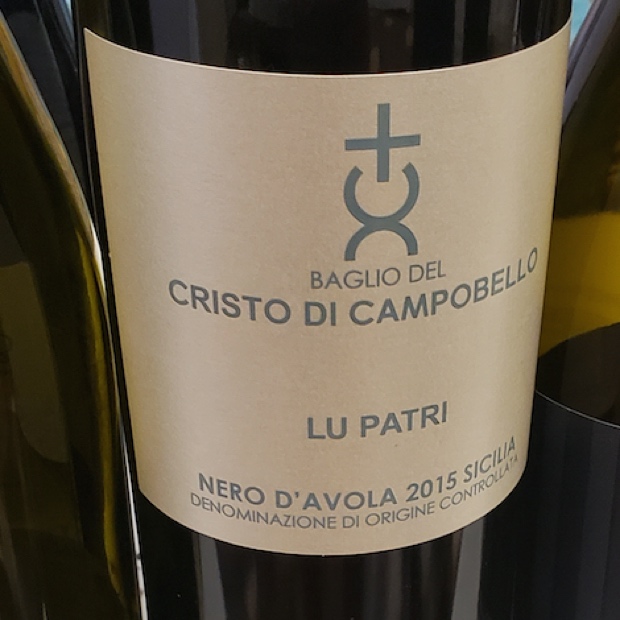
Baglio Del Cristo Di Campobello Nero d’Avola Lu Patri 2016, Sicilia DOC

“The father” is the ultimate red wine expression from Campobello for which all things endemic and traditional are drawn upon for the crafted nero d’avola. The process is the same as Lusirà Syrah, stainless steel fermentation and aging in barriques from one through four years old. Rich as nero d’avola can be, of sweetly endowed fruit and plenty of swagger. This nDa knows exactly what it wants to be, sticks to its guns and tells the world. Look at me, I am nero and I am proud. Drink 2020-2026.  Tasted May 2019

Baglio Del Cristo Di Campobello Nero d’Avola Lu Patri 2009, Sicilia DOC

The father, as opposed to “my father,” so that it celebrates all fathers. That and the fact that nero d’avola is the father of Sicilian grape varieties. A patriarchal wine and three different samples are poured. A bit oxidative and musty with some raisining fruit. More freshness and spirit with good acidity in the second but still showing similar to the first. The third is most similar to the first. They are all past their best but all show what nero d’avola can do if treated with hands off kid gloves. The 2016 is an example of the trending direction en route to finding the strange, kind and fine magic. In the end it grows on you to make you think of things that matter.  Last tasted May 2019

We tasted two bottles of Lu Patri 2009, the first being a bit muted, not very evolved, a character that could be described as one of slow micro-oxygenation. In the second a minute advancement and I agree with Carmelo that this is preferable, because by now it is clear that all of his wines get better with age. They are not that much fun when stuck inertia-like in their undeveloped youth. The evolution at this stage has brought wild cherry, part fresh (Yes!) and part dried. The acidity is linear up and down the sides of the mouth and the length exceptional. First wine with true chocolate and espresso ahead of the balsamico. The last supper nero d’avola. Truly. Drink 2018-2022.  Tasted May 2018

Canicattì

Canicattì Catarratto Aquilae 2018, IGP Terre Siciliane

From the contrada of Aquilata, municipality of Canicattì and the “hinterland” of Agrigento off of limestone and silty soils. The quickest and fruitiest catarratto there just might be, with straight to the point starlight fruit after just a few months of fermentation/aging completion. Like value vermentino or greco, straightforward of recognizable orchard and tree fruit. The minor complexity is like Eledrflower and blanched almond. Simple, fresh, clean and dry. 4.35 euro ex-cellar price. Drink 2019-2020.  Tasted May 2019

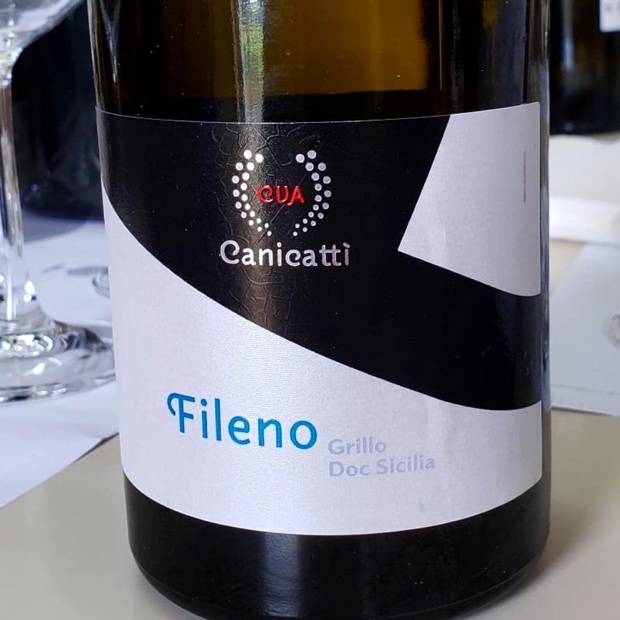
Canicattì Grillo Fileno 2018, Sicilia DOC

From the municipality of Canicattì and the “hinterland” of Agrigento off of limestone and silty soils. With some higher altitudes at play (up to 600m) this child of zibbibo and catarratto is a spiced, herbal and wildflower grillo, fresh and direct though quite expressive. There’s a fruit tincture meets tin cup sweetness elevated by arranged acidity and garnished by mint. Solid and very drinkable with a minor lemon pith bitter note on the finish. Drink 2019-2020.  Tasted May 2019

Dining with the boys of @cvacanicatti at #restaurantecaico in #valleditempi #agrigento

Canicattì Grillo Acquilae Bio 2018, Sicilia DOC

From the contrada of Aquilata, municipality of Canicattì and the “hinterland” of Agrigento off of limestone and silty soils. The organic one and like father catarratto it’s a quick ferment and ageing for easy, fresh, sapid and instant access. What is lacks in complexity as compared to the Fileno it more than makes up for it in acidity, clarity and ubiquitous amenability. No over-thinking needed or involved. Fry some small fishes and exhale. Drink 2019-2020.  Tasted May 2019

Canicattì Rosato Delicio 2018, IGP Terre Siciliane

From the municipality of Canicattì and the “hinterland” of Agrigento off of limestone and silty soils. The Rosé is 50-50 nero d’avola and nerello mascalese taken from younger vineyards and aged for four months. More about fruit than acids, although the latter’s presence is noted quite prominently. Strawberries, red delicious apple and currants meet sweet herbs and this is ultimately really well made Rosé with nary a bitter moment. Drink 2019-2020.  Tasted May 2019

Canicattì Nero D’avola Centuno 2016, Sicilia DOC

From the municipality of Canicattì and the “hinterland” of Agrigento off of limestone and silty soils. Saw 12 months in barriques and the graphite-eucalyptus notes confirm the newness of the aging. That said it exhibits some notable varietal character albeit in a lush, modern, oxy and forward manner. Clearly a wine made with a specific idea and executed plan in mind. Drink 2019-2020.  Tasted May 2019

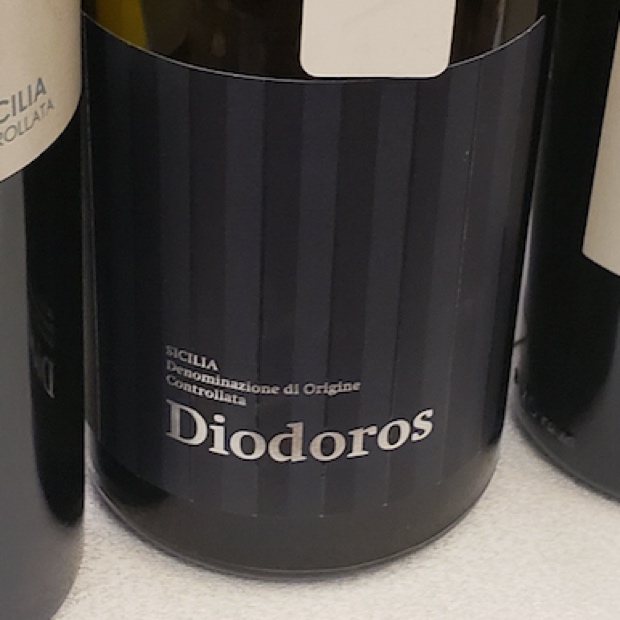
Canicattì Diodonos 2016, Sicilia DOC

Next vintage from the 2010-ish resurrected vineyard beneath the temple ruins of Giunone, off of sandy, alluvial soils at valley floor altitude. This is mostly nero d’Avola two months in tank and 10 in barrels, then six more before release. A sense of place truly comes through from this youthful 2016 with both sugar ripeness and phenolic ripeness walking hand in hand. The 10 per cent coming from nerello mascalese and cappuccio is nicely supportive for a wine that tastes like nero d’avola should. Balanced, bright, fruit full and structured. Drink 2021-2026.  Tasted May 2019

Canicattì Diodonos 2015, Sicilia DOC

From a once abandoned and now resurrected vineyard (around 2010) below the temple of Giunone, off of sandy, alluvial soils at valley floor altitude. Varietal nero d’Avola two months in tank and seven or eight in barrels, then six more before release. A sense of place is important because this carries more, albeit some dried fruit varietal character and in spite of 10 per cent coming from nerello mascalese and cappuccio. Chewy, fruit leather character and some finishing bitters. Goes all out for sugar ripeness, pressing and extraction with a minor green seeds astringent note. Drink 2020-2024.  Tasted May 2019

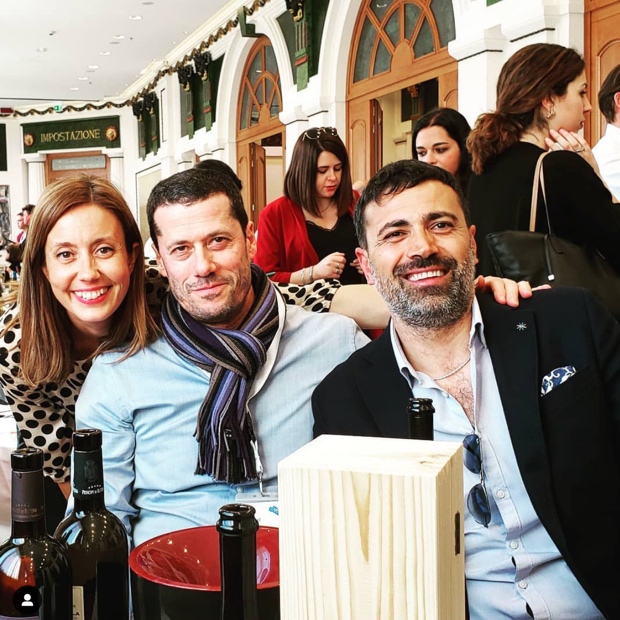
It is such a pleasure to travel across oceans, to talk, taste and learn with friends, colleagues and wine’s sharpest minds ~ at #siciliaenprimeur with @principidibutera @antoniopaolofroio and @alessandrazambonin

Feudo Principi Di Butera

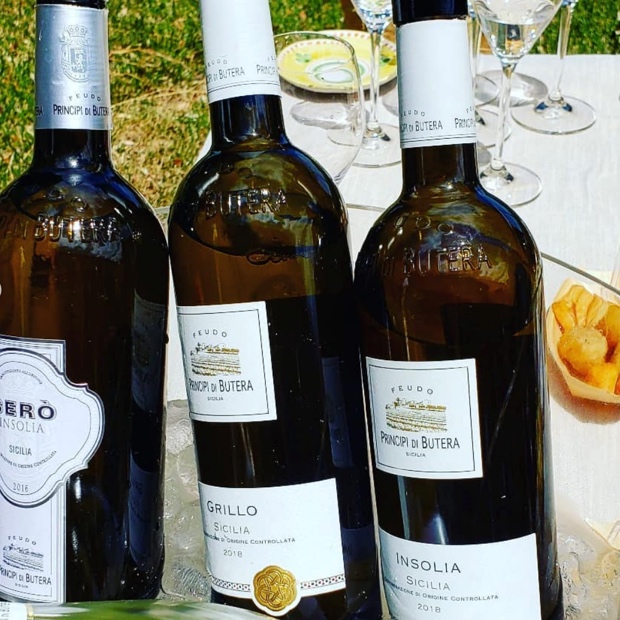
Feudo Principi Di Butera Grillo 2018, Sicilia DOC

The child of zibbibo and cattaratto, a recent story actually, from an agronomists’ experiment. This is “A” type of grillo, also know as the “green one,” as opposed to the “B’ used in sweet Marsala production. The green association is a sauvignon blanc one. The verdant character may be present but plays second and third strings to the freshness and the acidity. Implosive grillo and salivating quite frankly. Drink 2019-2021.  Tasted May 2019

Feudo Principi Di Butera Inzoila 2018, Sicilia DOC

A new soil which is both a blessing and a curse, a pain and a joy to work with. Quality comes from lower yields and specific soils. Here inzolia grazes into hyper-metallic and mineral territory, protected from the heat of the sun, in avoidance of saturated copper, sunflower and gilded gold. Very short skin-contact and nurturing care turn inzolia into this, sapid and even salty, expressive of the calcareous soil and the sea breezes coming from a mere eight kilometres away. Drink 2019-2023.  Tasted May 2019

Feudo Principi Di Butera Inzoila Séro 2018, Sicilia DOC

Serò is inzolia that saw some time in old barrels and also extra time in bottle. It has maintained its vineyard and atmospheric character while also carrying an oxidative note in opposition to the reductive sibling. Takes the varietal out of vintage and into something structured, with tonic spirit and implosive tang. This is surely something new for inzolia, to be taken seriously into something from a winemaker’s (Paolo Antonio Froio) imagination and beyond. The finish adds toasted chestnut and brown butter, not atypical for wines that pass through Bourgogne barrels. Drink 2019-2025.  Tasted May 2019

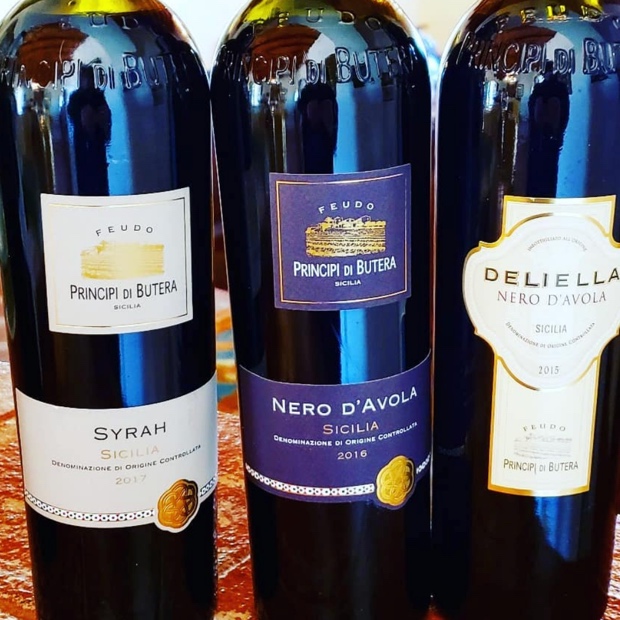
Feudo Principi Di Butera Syrah 2017, Sicilia DOC

The first red to harvest in August at a time with less of a probability to face climate stress. It’s rich, spicy, liquid chalky, peppery and finishing with a minor note of creosote or mesquite. The vintage only accentuates the character, concentrating floral aromas and fine-grained structure without compromise or consequence to über-heightened flavour. A third is put to 350L tonneaux and it shows, in depth of accent and overall composition. Drink 2020-2026.  Tasted May 2019

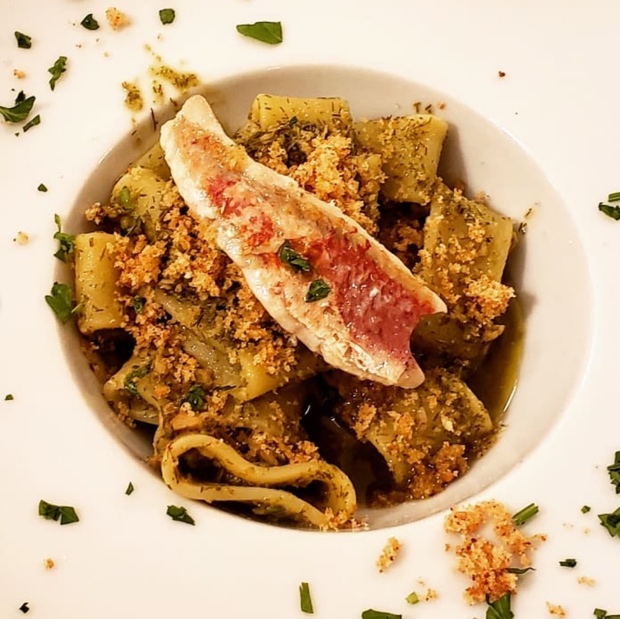
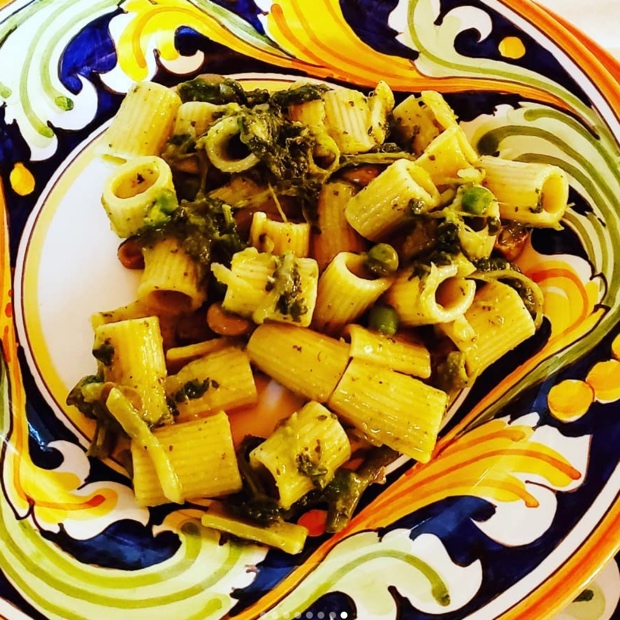
Butera Pasta

Feudo Principi Di Butera Nero d’Avola 2016, Sicilia DOC ($18.95)

Find another nero d’avola that smells like this. I dare you. It’s wildly floral, feral and meaty but not really a matter of sauvage. The fruit optimization and concentration is simply unparalleled and while extraction is ambitious this never gets into over mature berries and cherries. Right now there is strawberry and the just ripe cherry but not so far away are balsamico, tobacco, truffle and all things leather. Only large botti and no tonneaux are used, in respect to the terroir.  Last tasted May 2019

Really complex perfume, jumping from the glass, fresh, vital, from large plantings that make up more than 50 per cent of the agriculture. It’s both dark red fruit expressive and also herbal, of fennel and then a territorial limestone impression running through the fruit. Quite chewy and expansive in the mouth, all a result of stainless fermentations followed by older, larger barrels, 30 and 50 hL. Gives a broad, soft, elasticized and stretched palate texture with no departure from varietal and place. Very focused, clean, modern interpretation with no excesses, attitude or conceit, nor ambition neither. Drink 2018-2021.  Tasted May 2018

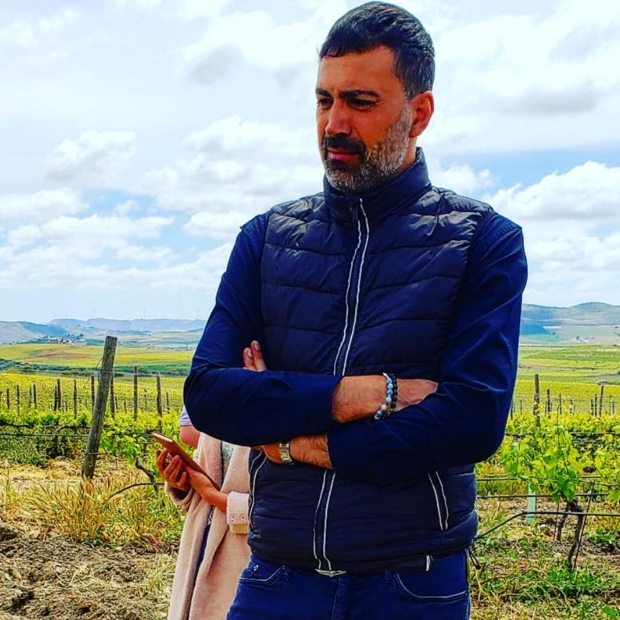
The man, the thinker, the legend- Antonio Paolo Froio @principidibutera ~ calcaire soils, focused wines, ocean breezes, calming vistas and @zoninwines hospitality. A perfect Sicilian storm.

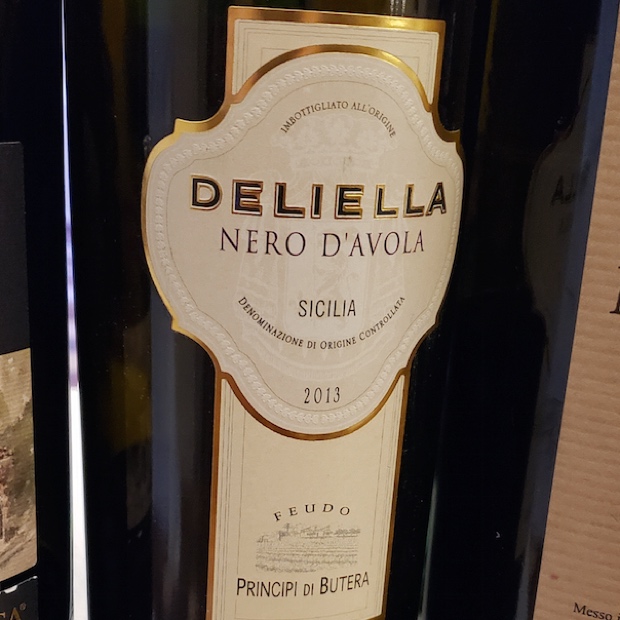
Feudo Principi Di Butera Nero d’Avola Deliella 2015, Sicilia DOC ($55.00)

Take everything you think you have come to know about a Butera nero d’avola and begin to multiply, extrapolate and exaggerate. High acidity and a mentholated accent work with the dark purple fruit. Did not think the “normale” was one dimensional but this makes that wine seem simple by comparison. Only the best berries are chosen and only those of the right size and dimension. Precision and focus define this structured wine first produced in 2000 and one that has the potential to age gracefully for up to 20 years.  Last tasted May 2019

Deliella is a selection in the vineyard, from edgy, prurient and analytical investigations in special vineyard blocks with maximum of five bunches per vine to find more concentration from each vine. It’s actually quite a taut and reserved nero d’avola with a slow release of aromatics and charm, dark liquid fruit chalky, structured and quite calm. Takes its time but the acidity carefully climbs up and down the sides of the mouth to stress its position in the overall architecture. Aged in 30 hL casks (and larger tonneaux) for 14 months. There will be some extended longevity here, not forever but likely five to seven years. Drink 2019-2024.  Tasted May 2018

Feudo Principi Di Butera Nero d’Avola Deliella 2013, Sicilia DOC ($55.00)

From a time before Antonio Paolo Froio took over the winemaking duties and yet you can’t help but notice the terroir in this single-vineyard nero d’avola. Blacker fruit than red and plenty of spice. Although the oak-aging is stronger than perhaps what needs the fruit persists, the acidity is vibrant and supportive and the concentration handles tannins with great ease. Love the way the caress in energy remains in charge and expressive over the palate. Still very youthful but if you’ve tasted more recent vintages it will then come as no surprise. Very capable wine. Drink 2019-2024.  Tasted May 2019

Sparkling Wines

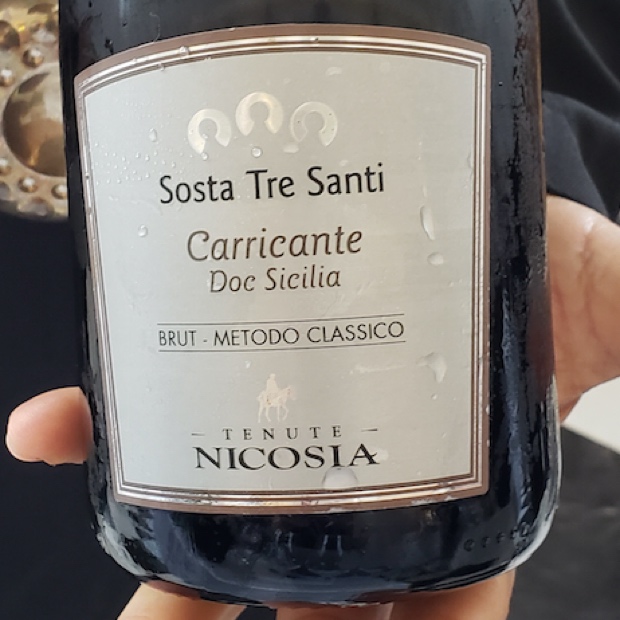
Cantine Nicosia Sosta Tre Santi Carricante Brut Metodo Classico 2016, Sicilia DOC ($55.00)

Varietal carricante from Catania province carrying true green character, lime over lemon and dried herbs. Great grape spirit, high elevation airy tension and flavours promising orange zest, spry and finishing fine bitters. Make use of this ambitious, finely leesy and refreshing sparkling wine as a most excellent aperitif. Drink 2019-2023.  Tasted May 2019

Cantine Nicosia Sosta Tre Santi Brut Metodo Classico 2014, DOC Etna ($55.00)

The use of nerello mascalese is certainly intriguing for traditional method sparkling wine, here from volcanic soil on Etna. The varietal character is not without its obviousness in light berry meets currant aromas and then the citrus aspect of red fruit takes over on the palate. Tart in just the right way, balanced and driving steady right down the middle of the road. Drink 2019-2022.  Tasted May 2019

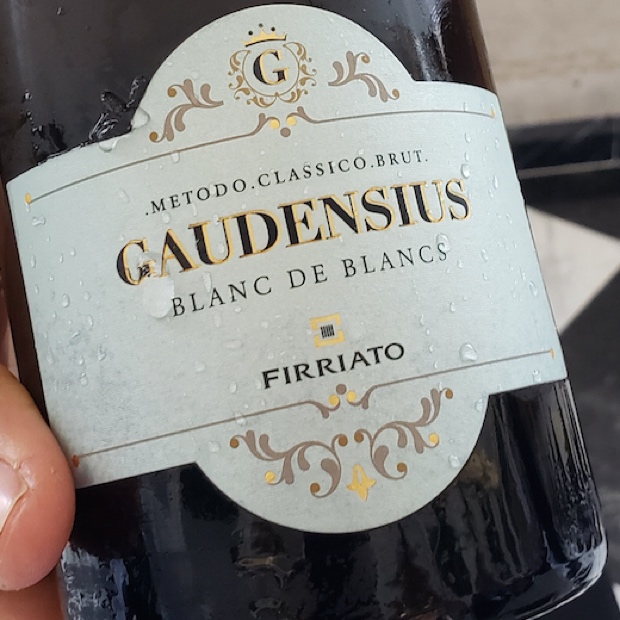
Firriato Gaudensius Blanc De Blancs, IGT Terre Siciliane

Labeled as B de B though a 50-50 carricante and chardonnay joint from Catania province with sulphur and citrus dominating the intensity on the nose. Leesy and creamy with some lemon pith for what adds up to a disparate and meandering sense of pleasure. Drink 2019-2021.  Tasted May 2019

Casa Vincola Fazio Grillo Spumante Brut, Sicilia DOC

Here grillo from Trapani delivers the basics, with some sugar residually noted and not entirely captured by quick acting fermentation and acidity. Very peachy as per the varietal, the technical guru’s instruction and the method. Drink 2019-2020.  Tasted May 2019

Sibliana Due Sorbi, Sicilia DOC

Trapani raised grillo supports a supple and fairly still bubble with concrete and lime aromas leading to a gain of ascension on a palate that comes as quite a pleasant and tension filled surprise. Goes herbal and tannic at the finish. A program with plenty of potential in need of more lees, more acidity and more time. Drink 2019-2021.  Tasted May 2019

Sibliana Grillante, Sicilia DOC

Grillo from Trapani in Grillante form is much more direct, dry, intense and ultimately refreshing. There’s a true lemon and lime spirit in this simple, effective and really well made, balanced and focused bubble. Drink 2019-2021.  Tasted May 2019

Tenuta Gorghi Tondi Palmarès Brut

Grillo of no specific production zone is a child of Trapani provincial heritage (Mazara del Vallo, south-western Sicily) and it’s one of the more leesy sparkling wines in Sicily. That and great acidity balance out the sweetness and the creamy consistency. Kind of goes for all out broke to layer and solicit pleasure, albeit with quite a whack of flavour packet concentration. Drink 2019-2021.  Tasted May 2019

Firriato Gaudensius Blanc De Noir, DOC Etna

Mount Etna, nerello mascalese and downright intensity are the triad of notation from a sparkling wine of great freshness and drive. The lime notes are there from start to finish and there’s a reductive and peppery green apple bite, with an amazing note of green nasturtium seed. This would pair so well with a salad augmented by salty chèvre or feta with nuts, seeds and fresh nasturtium. Like a Brut Zero from Franciacorta, in a way, with great length and potential right here. Drink 2019-2023.  Tasted May 2019

Feudo Principi Di Butera Nerlouce, DOC Sicilia

A 100 per cent Charmat method nero d’avola that was first produced in 2018 to initiate a sparkling wine program under the guide of winemaker Paolo Antonio Froio. The new traditional method program will launch in 2020 from the 2016 vintage and this “black light” is a careful play on words for a varietal wine made light, fresh, fruity and a touch sweet from the dark-hued red grape. It’s vibrancy is very useful for midday sipping under the Butera sun with a cool breeze and a view across the surrounding hills. It’s just the beginning of a long sparkling relationship ahead. Drink 2019-2021.  Tasted May 2019

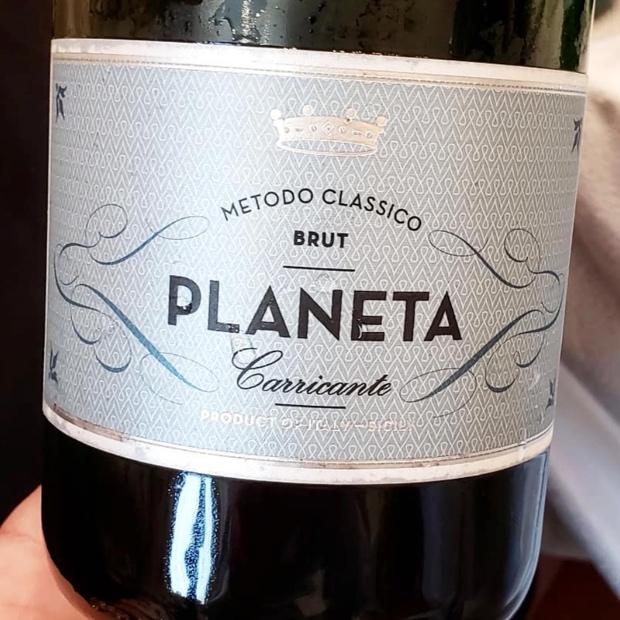
Planeta Carricante Brut Metodo Classico, DOC Sicilia

The varietal classic method sparkling wine come from the same vineyard as the Eruzione, picked around the 20th of September. First bottles were made in 2009 and first commercial release was 2010. Today the vintage (2015) is defined but actually on the back label. Stoic and sharp, attention grabbing and if short of eruptive, still blowing ash, smoke and pumice. So to speak of course but there is true intention, pet up tension and after a sip, release. Drink 2019-2022.  Tasted May 2019

Gurvinder Bhatia

Whites from Etna

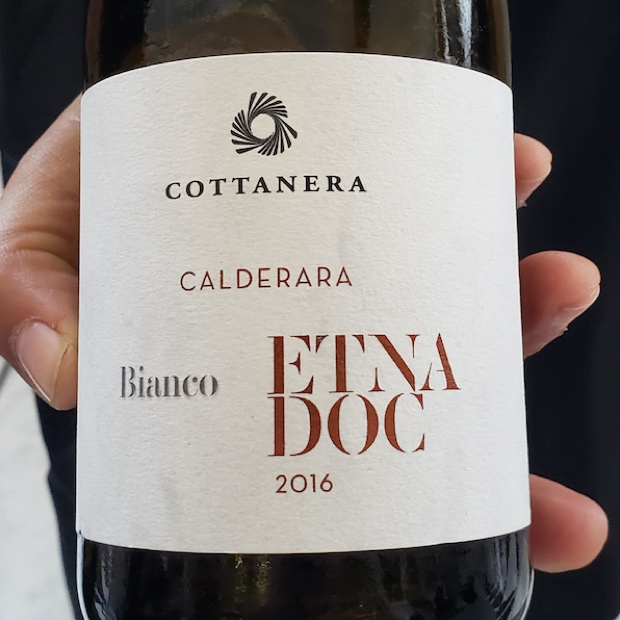
Cottanera Etna Bianco Contrada Calderara 2016, DOC Etna

Salty volcanic single cru Etna Bianco (at 750m) with a distinct lava-wild finocchio aroma that demands immediate attention. Also quite floral with as much of a sense of place in pocket as any carricante from anywhere on the volcano. Some tonic and ginger-orange bitters mark the back end in finale. Drink 2019-2024.  Tasted May 2019

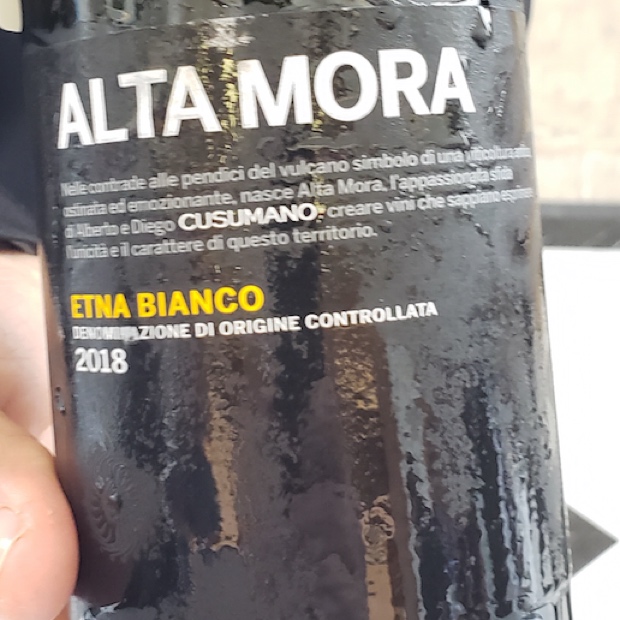
Cusumano Alta Mora Etna Bianco 2018, DOC Etna

Herbal, rich and lightly salty carricante with yeoman acidity and good soil derived tang. Quickly on the lime and savoury herb angle without equivocation. Basic really and perfectly serviceable. Drink 2019-2020.  Tasted May 2019

Gulfi Carjcanti 2016, IGT Terre Siciliane

Highly curious and salty savoury carricante from Gulfi, apposite to Etna Bianco in more than simple denominational ways. It’s flinty reductive, white peppery and bloody spirited stuff, a Ragusa white of parochial and carefully if rebelliously constructed purpose. The tart aspect is angular to implosive and the length a matter of exceptional extract and tannin, if not necessarily acidity. It’s a different sort and so worth the visit. Will age really, really well. Drink 2019-2026.  Tasted May 2019

Pietradolce Sant’Andrea Bianco 2016, IGT Terre Siciliane

This Catania Bianco is quite evolved in its own idiosyncratic way, with a barrel influenced note that still indicates reduction in a wine that has clearly seen its share of oxygen. The paraffin and beeswax are just ahead of what soon will be honey and lemon curd entangled romantically for soft lighting and music. A natural, in the local demure of dimly lit carricante for those who need to get lost in their wine. Drink 2019-2022.  Tasted May 2019

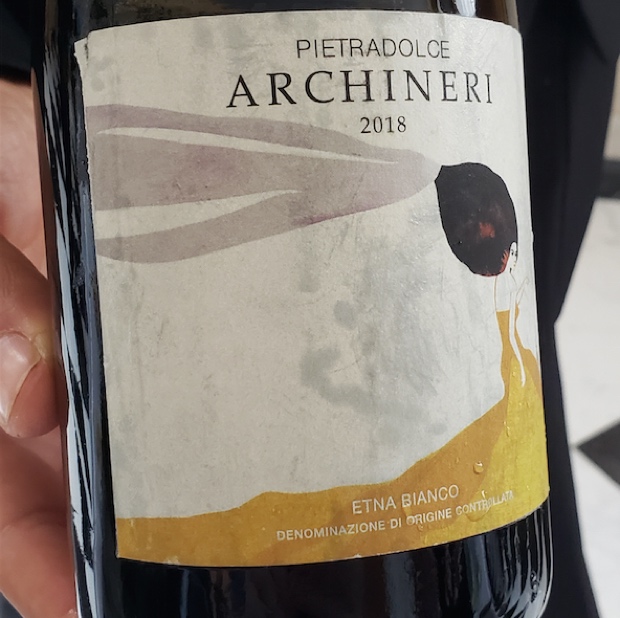
Pietradolce Etna Bianco Archineri 2018, DOC Etna

The Archineri cru brings the most laser-like and saltiest intensity to carricate from Etna. It’s a syringe filled with concentrated lemon and grape spirt injected into the utmost varietal conjecture that can be captured from this volcanic moonscape. Such a crunchy mouthful of lava, basalt and love. Drink 2019-2025.  Tasted May 2019

Pietradolce Etna Bianco 2018, DOC Etna

The Etna Bianco normale from Pietradolce shoots less of a laser shot into carricante and while it may be seen as rounder and more amenable than the Archineri and it is a perfectly knowable introduction to Etna Bianco. You should and will not be fooled for its honesty. It shoots from the hip and means serious Etna business. A must have for licensees and those who just want to share the volcano with friends, enemies and colleagues. Drink 2019-2022.  Tasted May 2019

Vivera Salisire Contrada Martinella Etna Bianco 2015, DOC Etna

Salsire is by now well accumulated in character from time and evolution to bring a lovely sense of that secondary expressiveness only carricante can do with idiosyncratic oath. It’s round and full of lemons in many respects; juice, curd and zest. Has come to where volcanic Etna can and will. It just is, that’s all there is and it’s alright. Drink 2019-2021.  Tasted May 2019

Alessio Planeta

Planeta Etna Bianco 2018, DOC Etna

Planeta’s Etna Bianco is the poster child, smiling face and sharp as a tack example, also carrying a smirk and an all pervasive knowing of what do to. This fruit and the way it is handled go hand in hand with what you want, need and desire from carricante, volcanics and winemaking. There is substance, a serious basaltic injection and more fruit than most white grape varieties are capable of giving without gushing, cloying or tropically distracting your attention. Such an ideal vintage too. Drink 2019-2023.  Tasted May 2019

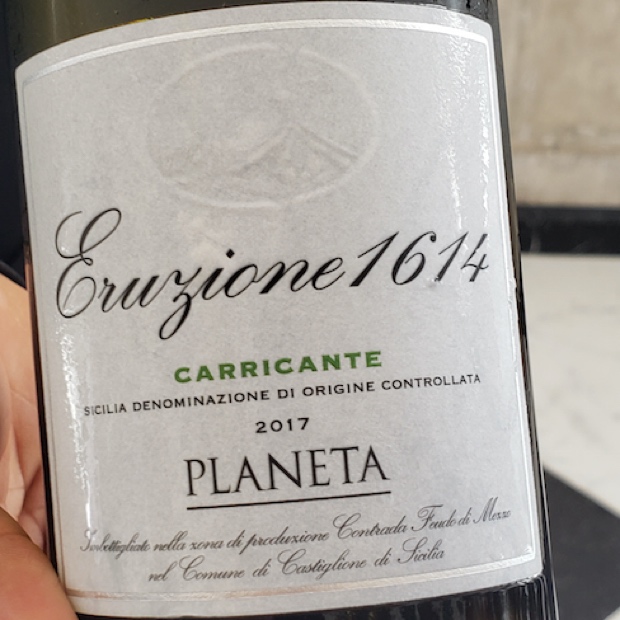
Planeta Eruzione 1614 Carricante 2017, Sicilia DOC ($42.99)

Eruzione lies in wait, impulsively structured, set marbled in state as an implosive carricante (with five per cent riesling) class of its very eruptive own. It is a mimic of its volcano, a wine spewing smoulder and gaseous aromatics surrounding a core of fruit so compact, connected, exacting and protected. Perhaps a misunderstood and even strange vintage advance but in a world’s away way the evolution will take time to unwind and reveal what lays behind. There is nothing like fantasy and musical sci-fi imagery in a wine of such mystery and we’re all better off to be caught up in the presence of this great unknown. We’ll find some things out when this casts in a future light so for now, just enjoy whatever laser light show and sonic beeps happen to come your way. Drink 2021-2029.  Tasted May 2019

Torre Mora Etna Bianco Scalunera 2018, DOC Etna

Scalunera is a new player steeped in Etna volcanic tradition from the house that Puccini built. The carricante fruit is highly augmented with complexities of almond pit, peach blossom and soft marzipan. It’s both herbal and fruity with these accents providing the salve greeting proviso to consumer pleasure. Can’t go wrong here. Drink 2019-2022.  Tasted May 2019

Firriato Le Sabbie Dell Etna Bianco 2018, DOC Etna

The blend of carricante and catarratto (60-40) from the sandy basalt on Mount Etna is a rounder and more herbal pesto expression with sweet verdant personality and very lime driven flavours. It’s the salsa verde of Etna with fine acidity and true salinity. Golden and purely pleasurable, if slightly metallic Bianco. Drink 2019-2021.  Tasted May 2019

Firriato Cavanera Ripa Di Scorciavacca 2016, DOC Etna

This Firriato carricante-catarratto blend (60-40) takes an about face turn away from the Sabbie sister and goes more linear, direct and intense. Still verdant but this time less herbal and more reductive, with green apple bite. A bigger and more focused and extracted Etna Bianco with more bones and further potential to develop beneficial bitters and secondary notes. Drink 2020-2024.  Tasted May 2019

Tornatore Etna Bianco Pietrarizzo 2017, DOC Etna ($34.00)

The cru Pietrarizzo concentrates fruit, style, cause and effect in a carricante (with 10 per cent catarratto) that really builds texture upon a core of stability. There’s a lemon layering as mille-feuille as any on the mountain from which mouthfeel and balance are well-afforded time, grace and place. This is the quintessentially responsible, responsive and remonstrative Etna Bianco. It’s giving, generous and free-spirited, taking cleanest fruit and bringing a Contrada’s specificity to light. Drink 2020-2027.  Tasted May 2019

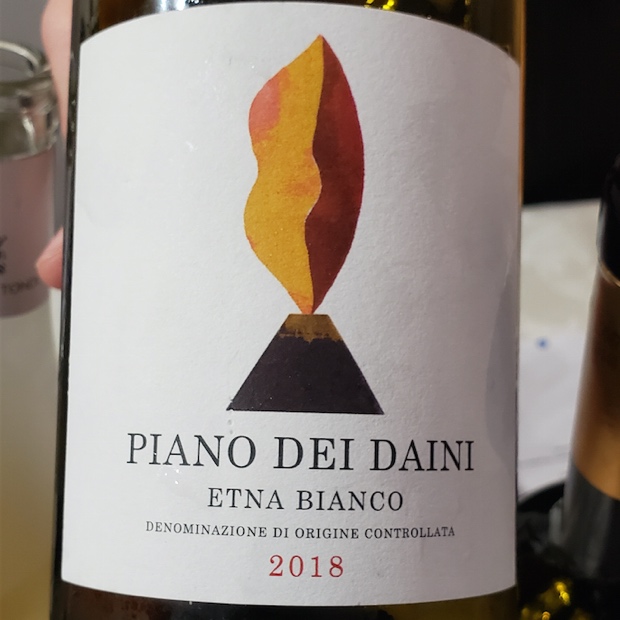
Tenute Bosco Piano Dei Daini 2018, DOC Etna

If any other Etna Bianco were considered round and generous previous to now, this from Bosco re-writes the script. The fruit is quelling, welling and so up front, mostly citrus in orientation but aromatically speaking this bursts from the glass. Extreme freshness with heavy prejudice towards immediate gratification brings you in and keeps you fascinated. A gregarious wine with a solid core and a karst from bones that bodes very well for the future. Drink 2019-2026.  Tasted May 2019

Tenute Bosco Etna Bianco 2017, DOC Etna

A blend of the two contrade (Santo Spirito and Pian dei Daini) made with 90 per cent carricante blended into by catarratto and inzolia. A triad of clean clarity, salty aromatics and confident fruit unction. Meyer lemon to peach and a metal-mineral set of moments. Basalt tang and pure intensity with persistence to just an amount you would ask for and to manage the bites you are enjoying from various depths plucked out of the sea. Drink 2019-2024.  Tasted May 2019

Assorted Whites

Rallo Bianco 1860 2017, DOP Sicilia

No member of the Rallo family remains a part of the winery yet that need not distract us from a catarratto out of the terroir in Patti Piccolo ad Alcamo,with luminous acidity plus low and slow developed phenolics. The fruit has come full growing cycle circle so that the pith is truly a part of the lushness that flirts with the tropical. Organic, perfectly bitter and so drinkable. Nothing neutral or boring here. Should develop a sense of caramelization by way of flinty, smoky and smouldering ways. Drink 2019-2025.  Tasted May 2019

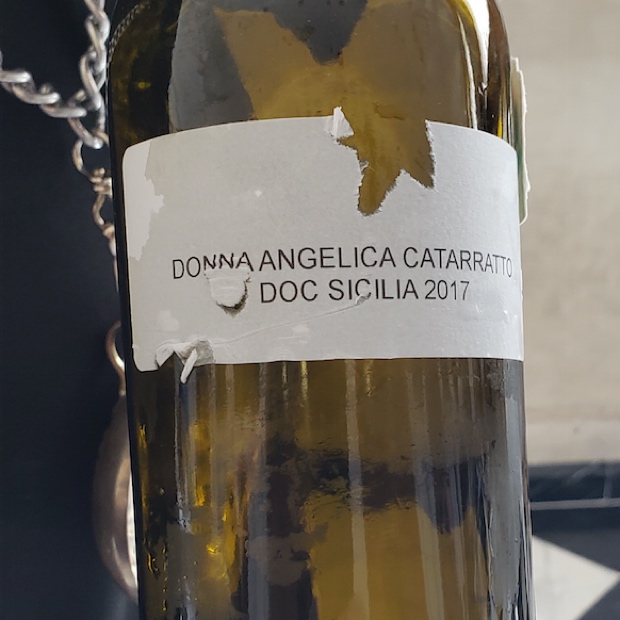
Assuli Donna Angelica 2017, DOC Sicilia

A sample somewhat metallic, oxidative and quite glycerin in texture, of catarratto, grillo and zibibbo in the production area of Mazara del Vallo. A completely different style of extraction, longer maceration and lots of richness. Certainly a style and one that will solicit a consumer who likes their fruit and their metals. Drink 2019-2021.  Tasted May 2019

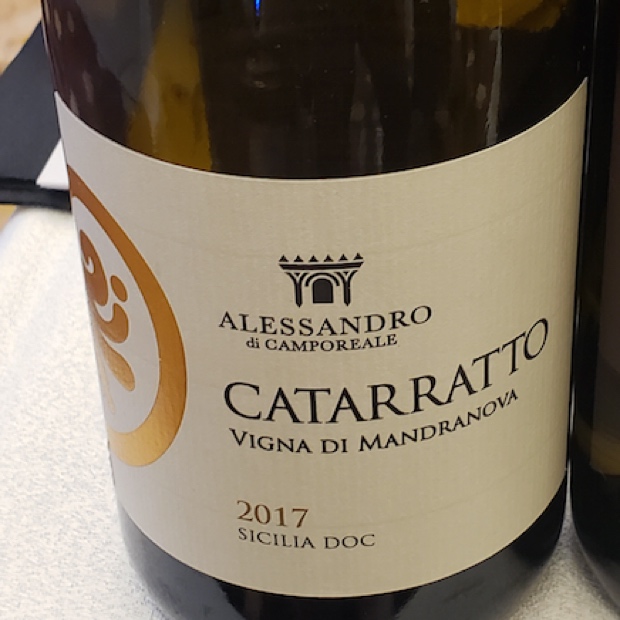
Alessandro Di Camporeale Catarratto Vigna Di Mandranova 2017, DOC Sicilia

The parent of garganega (Soave and Gambelara) is a firm, giving and well endowed in acidity catarratto from this single vineyard in Agro di Camporeale. Some wood aging adds tonic and marzipan to what began as a smoky varietal wine. The concentration can handle the movement through wood so that basalt, fruit and elemental fineness all get on the same page. Quite complex and morbido (in two languages) at the finish. Drink 2019-2021.  Tasted May 2019

Centopassi Terre Rosse Di Giabbascio R14 2014, IGT Terre Siciliane

From a warm area in San Giuseppe Jato on the northwest part of the island and a cooperative on lands confiscated from the mafia. Long aging adding up to nearly four years in tank plus barrel make for a tannic, evolved, metallic and soft catarratto. Full development and extract of all phenolics available in a wine predicated on winemaking above all else. Drink 2019-2020.  Tasted May 2019

Feudo Arancio Bianco Riserva Dalila 2017, DOC Sicilia

The blend is grillo (80 per cent) and viognier from Contrada Portella Misilbesi in Sambuca di Sicilia. Very yellow orange, quite muscat like with sauvignon blanc lime, floridity and florality. It’s like how that grape can seem botrytis affected because of the peach sweetness and noble rot sensation. Nothing exciting but surely has its place. Drink 2019-2020.  Tasted May 2019

Le Casematte Peloro Siclia Bianco 2018, DOC Sicilia

A blend of grillo and carricante, more than 60 per cent is grillo and yet the carricante develops the good and plenty complexity from high toned aromatics. A flinty and striking scintillant with laser sharp flavours. Lovely wine, focused, mineral, salty and fine. Drink 2019-2024.  Tasted May 2019

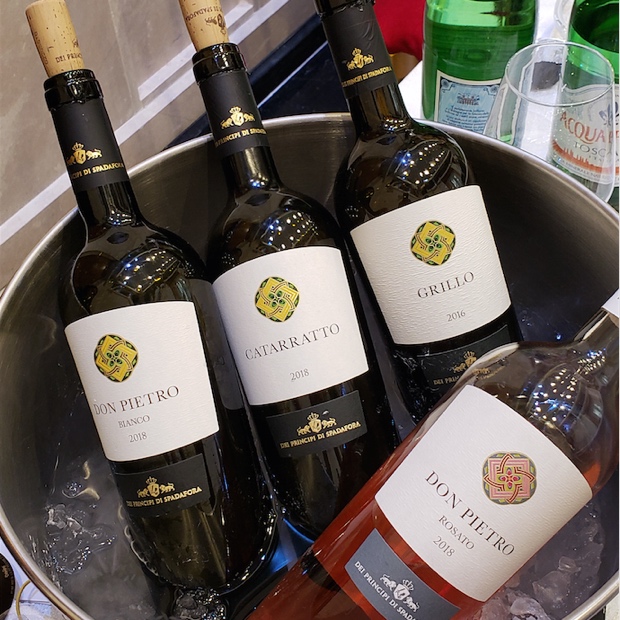
Dei Principi Di Spadafora Catarratto 2018, IGP Terre Sicilane

Out of northwest Sicily, of land and respect for nature first. An organic vineyard, 100 hectares, 215,000 bottles produced annually. From sand and marl, essentially argiloso, so a very Good texture, some peach and almond pit notes that are gentle and influential. Lovely wine. Drink 2019-2022.  Tasted May 2019

Dei Principi Di Spadafora Don Pietro Bianco 2018, IGP Terre Sicilane

A 50-50 split of catarratto and grillo, named for Enrica’s grandfather who first made this wine in 1993 and named it as such in 1994. The grillo adds sunshine but this is in fact more amenable and understandable with a different sort of mineral, here in alloy conglomerate accumulation. A beautifully arranged appellative blend. Drink 2019-2021.  Tasted May 2019

Dei Principi Di Spadafora Grillo 2018, IGP Terre Sicilane

Grillo is held back two years, one in concrete tank and one in bottle, to mitigate the potentially obstructive freshness though more so, like riesling, a little extra time will bring more balance and delight. There needs to be middle ground between the old oxidative grillo and the new must drink in the first six months style. This is the compromise but even better the right way to accomplish what’s right, proper and necessary, And one to age as well. Drink 2020-2025.  Tasted May 2019

Planeta Allemanda, Sicilia Noto DOC

A dry moscato (de Noto) that ranks as one of most aromatic you are likely to come across. While it is dry there’s a sweet and savoury tug at once herbal and then metallic enough to pique your interest straight up into the atmosphere. Drink 2019-2021.  Tasted May 2019

Planeta Alastro 2018, Sicilia Menfi DOC

A varietal sauvignon blanc from the unheralded and exceptional outpost of Menfi which just may be Sicily’s version of the wild, wild, west. This is a searing, straight-shooter, powerful, elegant, direct and unintentionally ethereal. There’s a punchiness, a fruit punch lag and great mineral thoughtfulness. All terroir right here. Or if you could make riesling in Sancerre, when done well, this is what it might be. Drink 2019-2023.  Tasted May 2019

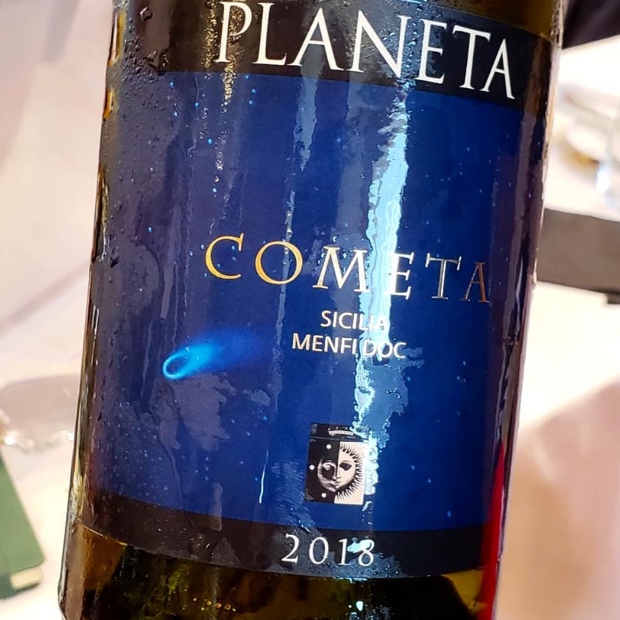
Planeta Cometa 2018, Sicilia Menfi DOC

Cometa has changed or rather in its youthful state of ultimate reductive freshness is so straight-laced, linear, tightrope walking along a razor sharp edge. There’s a tonic injection that helps to propel it forward and the envisioning projects two years ahead to see it develop some sweeter fruit notes, straight from the orchard’s hip. Watch for this special vintage of fiano, the ancient noble variety from Campania that Planeta’s braintrust took a well-advised flyer on in the 1990s. Drink 2020-2026.  Tasted May 2019

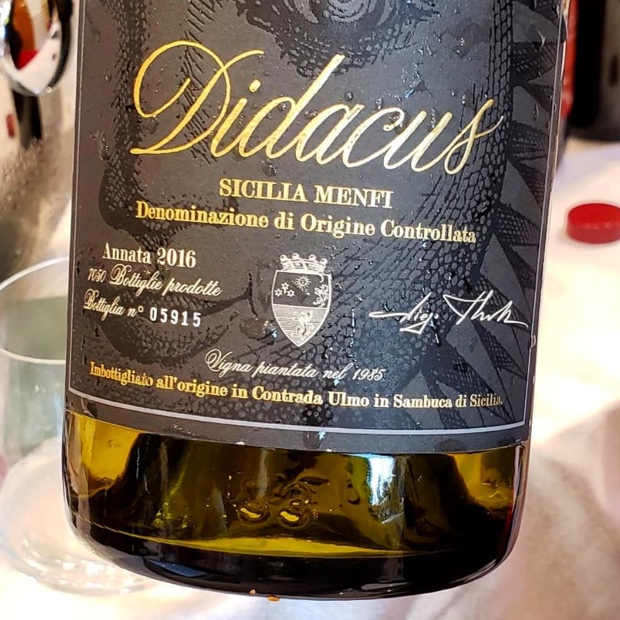
Planeta Didacus 2016, Sicilia Menfi DOC

The chardonnay dedicated to Diego Planeta, from the oldest Menfi vines, planted in 1985. The name Didacus is indeed Diego in Latin and the inherent plus inferred further meaning is as thought, a didactic one, which says something about many things. It speaks to the pioneer Mr. Planeta’s two-toned, ahead of its time work and to the way chardonnay takes Sicily into another realm and brings reductive freshness into buttery bites that ties two voices together. And they will speak as one. Soon. Drink 2021-2027.  Tasted May 2019

More dry #zibbibo please ~ tasting a diverse lot @siciliaenprimeur ~ terrific wines

Zibbibo

Donnafugata Lighea 2017, DOC Sicilia ($27.99)

Now into the lost art of grillo’s parent zibbibo, a once dominating Sicilian grape that can and will demand your attention when made this way. Like muscat with greater acidity and metal-magic ability, zibbibo carries fine lime and grapefruit bitters like the best of riesling and with a florality that intimates gewürztraminer. Just this example will tell you why some winemakers choose the skin-contact route with a grape that’s such a chameleon and able to maintain acidity plus structure without heading out to salve pasture. Prime example of that right here, finishing with a perfectly tart, just bit into green peach. Drink 2019-2023.  Tasted May 2019

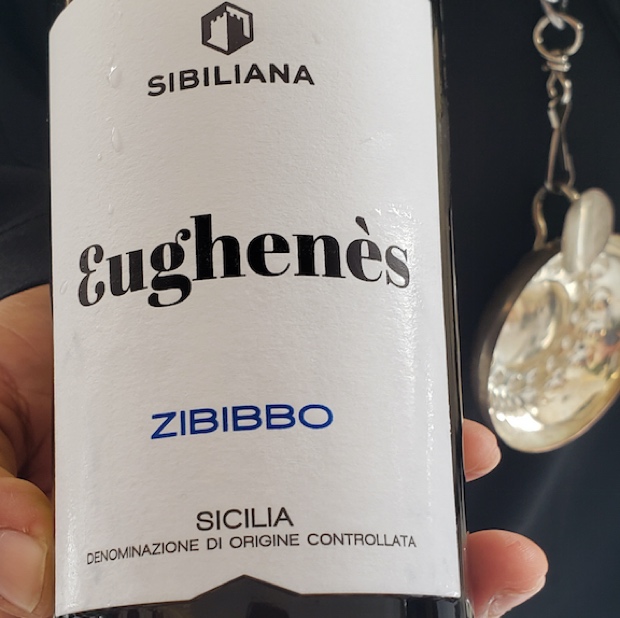
Sibliana Eughenes Zibbibo 2018, DOC Sicilia

Another example of dry zibbibo here with less petrol and floral notes but so much citrus fruit. Along with the lemon and lime comes that grapefruit and zesty orange. It’s amazing how it’s expressive of all this plus the kind of bitters that really tie the zibbibo room together. Some will find it challenging but the linger and length are nothing short of remarkable. Drink 2019-2022.  Tasted May 2019

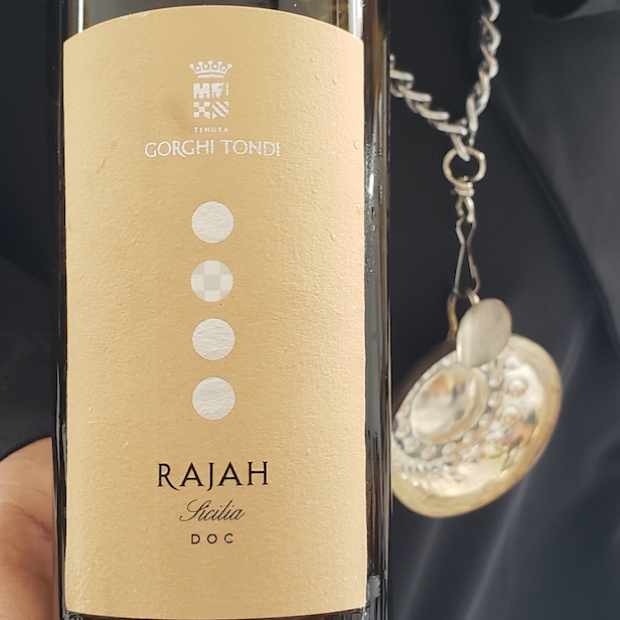
Tenuta Gorghi Tondi Rajàh 2018, DOC Sicilia

Yet again another sort of zibbibo and even within the dry spectrum we see the versatility and diversity of this disappearing variety. More verdancy, herbal pesto, honey dew melon and unction now, with the floral return in lily of the valley and then some drops of orange in a tincture of coriander, stem and hay. The grassiness here is more sauvignon blanc than riesling or muscat and yes, a new way to look at dry zibbibo. Drink 2019-2021.  Tasted May 2019

Rallo Al Qasar 2018, DOC Sicilia

The richest and sexiest of the five zibbibo tasted in this flight, of tropical, glycerin fruit and spicy white pepper. Surely less arid than the others, rounder and with added metallics. Drink 2019-2020.  Tasted May 2019

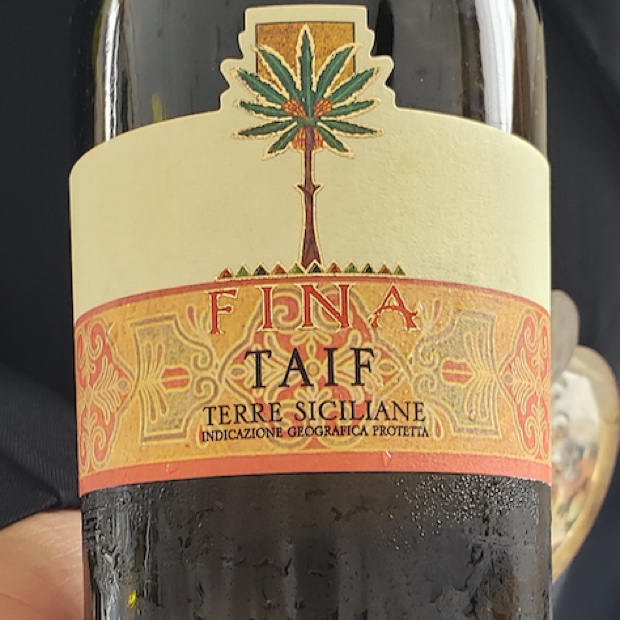
Fina Taif Zibibbo 2018, IGT Terre Siciliane

Taif is zibbibo from Trapani and once again it’s profile and style is unlike any of the other four tasted in this flight. Though linear, high in striking acidity and certainly lemon-lime focused it’s also an aromatic white of texture and mouthfeel. Brings the muscat nose and zibbibo palate capability together for balanced culpability. Just a terrific example of pleasure meeting structure for the next five years of tight and copacetic togetherness. Drink 2019-2023.  Tasted May 2019

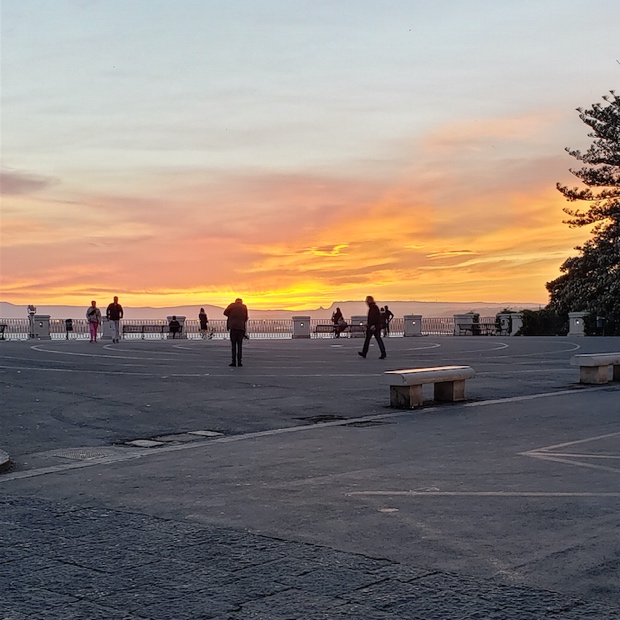
Sunset over Siracusa

Rosato

Spadafora Dei Principi Rosato Don Pietro 2018, IGT Terre Siciliane

A wild strawberry and mildly earthy-funky Roasto without any bones about who he, she or they happen to be, which coincidentally is nero d’avola of the quickest press for just a hint of varietal inclination. Tart, tight, salty and direct, the brain with knowable and nodding understanding. Serious and who cares at the same time. Drink 2019-2021.  Tasted May 2019

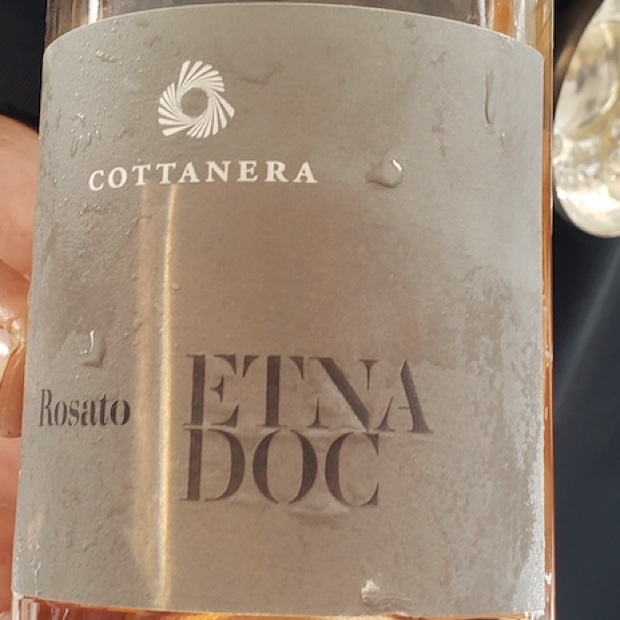
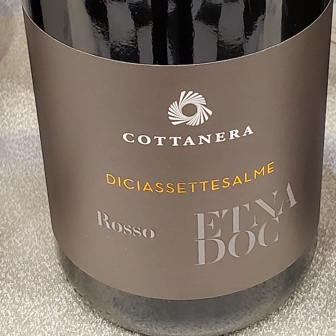
Cottanera Etna Rosato 2018, IGT Terre Siciliane

Well, now this is really something in nerello mascalese Rosato. It seems at first so fruity, amenable and commercial. The masses will love its fruitiness and what seems like the right amount of sweetness. Then it turns, salty and fine, complexities woven through the extract of time, tannin and crushed rocks sprinkled with lime. It’s chameleon ability to now reel in the the intellect and the discerning one is something to behold. Smart, funny and so charming. Drink 2019-2023.  Tasted May 2019

Tenuta Gorghi Tondi Rosa Dei Venti 2018, IGT Terre Siciliane

A lovely dry and herbal Rosato with a distinct rose petal aroma that leads to saltiness and real Provençal styling on the palate. It’s the way nerello mascalese can imitate, intimate and walk the walk of such a stylistic. Really well made in that regard. Drink 2019-2021.  Tasted May 2019

Tenuta Bosco Rosato Piano Dei Daini 2018, DOC Etna

Daini’s is recognizable nerello mascalese in Rosato styling and clothing with its tart aridity and fruit of a cranberry, currant and pomegranate vein. If that makes sense to you then read on. There’s a red citrus notation that some Rosés just seem to acquiesce and I tend to find it polarizing for those who like Rose. In this instance it can be imagined to work really well for grilled meats. That much I know. Drink 2019-2021.  Tasted May 2019

Tenuta Bosco Etna Rosato 2018, DOC Etna

Rosato from only the pre-phylloxera vines found in Santo Spirito and yes, this is Rosato from those grapes, albeit at the lowest part of the vineyard. The saltiest (within perfect reason) and great fruit concentration rosato that makes you wish you could have the bottle all to yourself. A natural extract sweetness that Rosé so rarely gifts. Just ideal. Drink 2019-2024.  Tasted May 2019

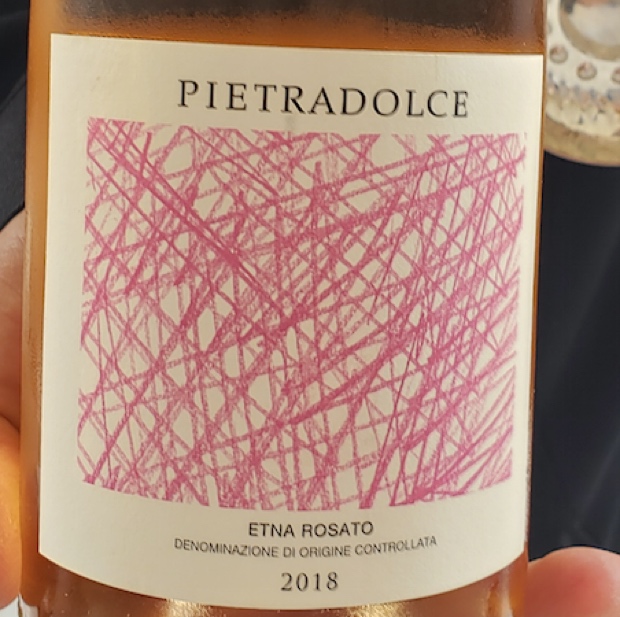
Pietradolce Etna Rosato 2018, DOC Etna

Pietradloce does Rosé with certain weight, not in density or heaviness but in magically drawn dry extract and grape tannin. Though it’s lithe Rosato made like a white wine from local nerello mascalese it comes across as a red because the unspoken and hidden possibilities in that extractive process bring trace minerals, elements and earth that most don’t find the way to do. Curious, expressive and with some serious potential. Drink 2019-2021.  Tasted May 2019

Pietradolce Etna Rosato 2017, DOC Etna

Perhaps less expressive as ’17 but equally salé with a touch of pepe bianco, or if you concentrate the fruit like this and gift such clarity, the delicasse is more pepperosa. Lovely, fine, special and ideal. Celebrates the young vines growing in the pre-phylloxera Santa Spirito vineyard. Drink 2019-2024.  Tasted May 2019

Torre Mora Scalunera Etna Rosato 2018, DOC Etna

Here is truly fruity, amenable and aromatic Rosato from nerello mascalese that walks the textured line. The components are all raised up on the bar; fruit, acids and also sweetness. It’s ostensibly made dry by its balance but the market is meant to be pleased with this style. And it will be. And more because the sneaking factor suggestive of structure raises the ceiling of potential. Drink 2019-2021.  Tasted May 2019

Donnafugata Sul Vulcano 2018, DOC Etna

Here Donnafugata serves up a serious yet humorously chic Rosato of more seamlessness when you consider the gathering of fruit, texture and acidity. This just has a way of tying the varietal and purgatorial room together with some method in its magic madness and the result is quite hypnotizing. It’s both gratifying and mystifying from a hermaphroditic wine that crosses between the poles. So for Sul Vulcano there is no mystery. As for the rest of us, there is plenty. Erstwhile will watch to see where this goes. Drink 2019-2024.  Tasted May 2019

Assorted Reds

Castello Solicchiata Cabernet Franc 2013, IGT Terre Siciliane

If you are not fascinated by what can happen when cabernet franc takes to the diaspora streets than clearly you are not a golfer. It is unfortunate that this particular bottle is a bit oxidized, not as a matter of age but just the bottle. And yet the captured acidity is still more than intact but it can’t make up for fruit that is at the edge; hints at cooked, roasted, torched and drying. Drink 2019-2020.  Tasted May 2019

Castello Solicchiata Cabernet Franc 2012, IGT Terre Siciliane

While the bottle of 2013 is not so sound this 2012 resides in a place of much better condition. The fruit ripeness persists with a drizzle of reduced balsamico and a lingering that really drives the point. There’s a real sense of crunchiness now rendering into chewy leather and liquorice. Highly instructive wine that is a true rarity in these parts around Catania. Drink 2019-2022.  Tasted May 2019

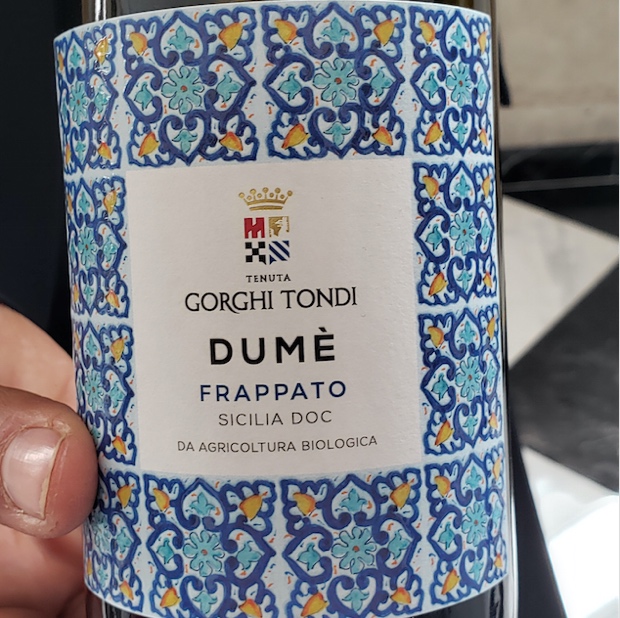
Tenuta Gorghi Tondi Dumé 2018, DOC Sicilia

This frappato from Trapani is a fruit bomb in the lightest and most acid-driven expression of the word. The light, airy and unencumbered brilliance is buoyant and responsive. This is clearly on the sour side of frappato and in a wholly intense and gastronomic way. Drink 2019-2022.  Tasted May 2019

Valle Dell’acate Frappato Il Frappato 2018, DOC Sicilia

Here is a richer and riper frappato that has been pressed for success and squeezed for every last good and plenty drop it can give. There’s a sour candy apple tartness to the fruit and nearly negligible tannin. Ready to drink anytime you are ready. Drink 2019-2020.  Tasted May 2019

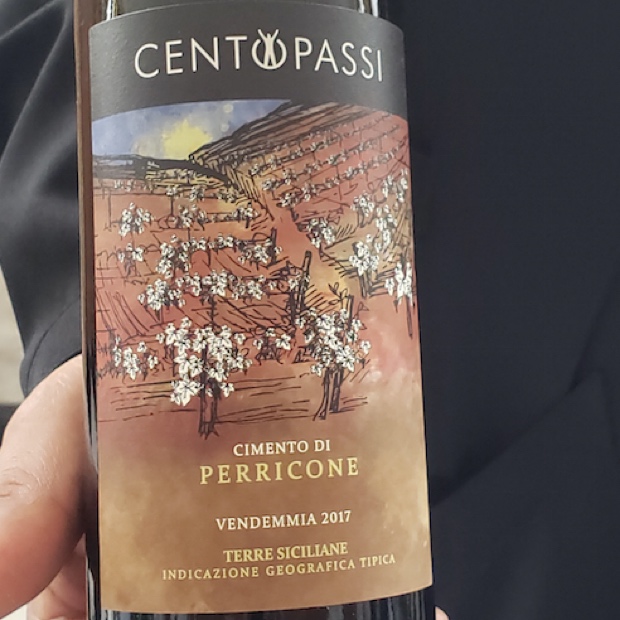
Centopassi Cimento Di Perricone 2017, IGT Terre Siciliane

Cimento is high glycerin and rich perricone in the garnacha realm, nearly into syrup and certainly at maximum fruit. Dark and blue blood fruit mysterious with pectic and fine-grained tannin. Really well made. Drink 2020-2024.  Tasted May 2019

Azienda Agricola Todaro Perricone Feotto 2016, DOC Sicilia

Rich, thick, unctuous and all pervasive glycerin perricone. Highly modern, extracted and wood modified red. Drink 2019-2021.  Tasted May 2019

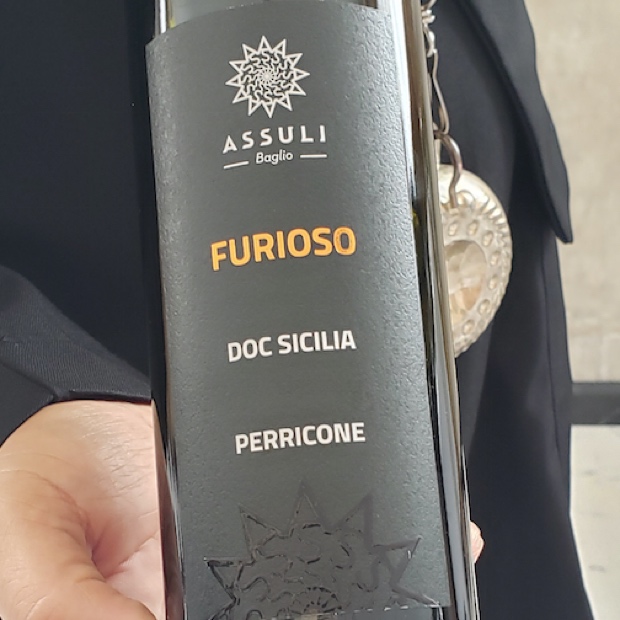
Assuli Furioso Perricone 2016, DOC Sicilia

The longest living variety in Italy, kept alive by a couple dozen producers that was at a time (in the late 19th century) the most planted variety in Sicily. From Contrada Carcitella in Mazaro del Vallo, far western Sicily. A varietal play with rocks, crunchy texture and highly parochial flavours; amaro herbal, blue pulpy fruit and quite forthright. Juicy, juicy wine. Drink 2019-2021.  Tasted May 2019

Todoro Shadir 2017, DOC Sicilia

Varietal nero d’avola from Contrada Feotto in San Giuseppe Jato in western Sicily on the north coast. Clay soils at 450m bring dark, rich and warmth for fig, raisin and caramelized sunshine. Not very expressive aromatically though finely tannic and chalky. Acidity is quite supportive though the toasted fruit is not so interested in what it might improve upon were it so accede. Drink 2019-2021.  Tasted May 2019

Baglio Di Pianetto Viafrancia Rosso 2014, DOC Sicilia

Contrada Pianetto in Santa Cristina Gela is the source for merlot (70 per cent) and cabernet sauvignon raised in controspalliera (cordone) trellising. Carries all the hallmarks of international varieties grown in foreign lands where it may or may not have found its way. The acidity is searing while the fruit fades into acetic ways. Chalky and grainy but very tart. Drink 2019-2020.  Tasted May 2019

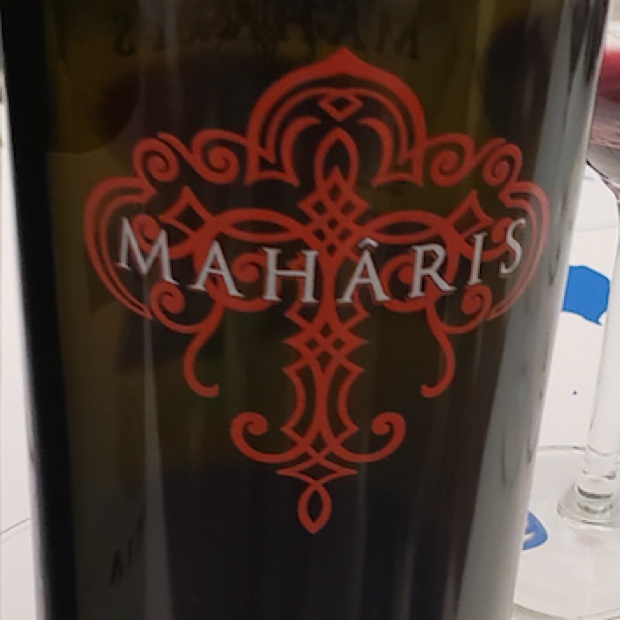
Feudo Maccari Maharis 2016, DOC Sicilia

From Contrado Maccari, in Noto with 100 per cent varietal syrah off of calcareous soils. Quite layered and expressive, peppery, high-toned and fruit liquorice leathery. Fragrant and crunchy at times too with savoury-sinewy, nearly resinous but just dialled back enough syrah style. The name comes from the watchtower built by the Arab inhabitants on this coast. Drink 2019-2022.  Tasted May 2019

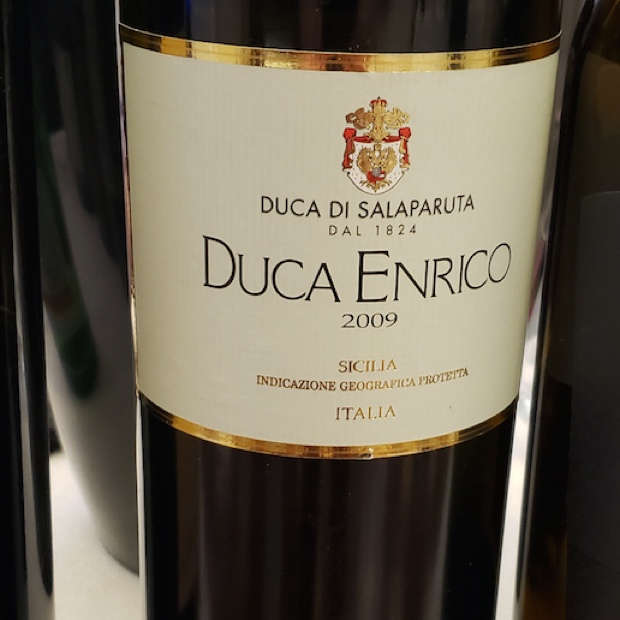
Duca Di Salaparuta Duca Enrico 2009, IGT Sicilia

This is just a lovely older wine with perfectly intact albeit transmogrified cherry fruit, uncanny as cherries dried, leathery and still somehow deliciously fresh. That it is nero d’avola, allevato ad alberello in Tenuta di Suor Marchesa in Riesi may or not bring further surprise but the tertiary qualities are nothing short of remarkable. Acids are still supportive and though the syrupy palate is advancing into marbella-like territory that earthiness just adds to the overall charm. As does the sweet smoulder of tobacco that comes at you in waves. Drink 2019-2021.  Tasted May 2019

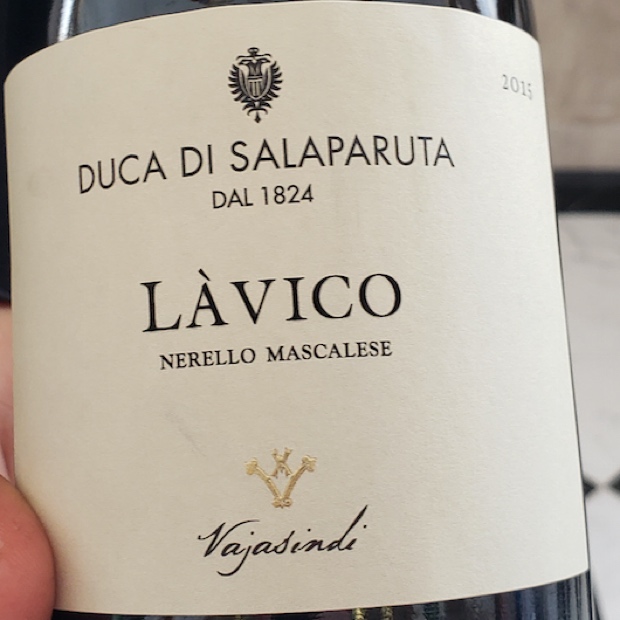
Duca Di Salaparuta Làvico 2015, IGT Terre Siciliane

Take a turn about face in such a nerello mascalese, not quite Etna and surely something other. There is a glycerin and wood structuring if mottled by a soothing coolness about this Rosso. It’s lavished with gilded texture and is very lengthy, like a dress on a mosaic depiction that runs the length of a 4th century Roman villa’s welcome hall. Another example of what a particular house in a particular place can do with nerello mascalese. Drink 2020-2029.  Tasted May 2019

Gulfi San Loré 2001, IGT Sicilia

Gulfi’s Vigna San Lorenzo is the source for this umami-marmite-vegemite-roasted vegetable-meat curative Alberello raised nero d’avola from Pachino/Eloro/Val di Noto. This is essentially Sicilian royalty winemaking from fruit concentration at its very optimum best. Twenty-four months in all the right vessels has extracted all the magical character in charm and possibility from and for the grape variety. The acidity is extraordinary and the balance just spot on. So much life and further potential lay ahead. Drink 2019-2026.  Tasted May 2019

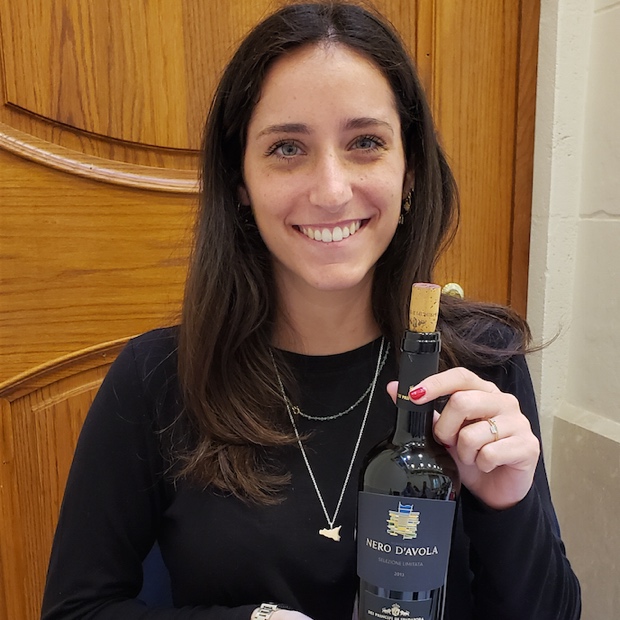
Spadafora Nero d’Avola Selezione Limitada 2013, IGP Terre Siciliane

“We like to wait, we’re in no hurry. When the wine is ready we release it.” So says Enrica Spadafora. This ’13 is the current release, six years forward. The aging has been done for you and this one needed the time, in fact the tannins are still demanding and in charge. The dark fruit has not dissipated a moment or lost a step. Has 10 years left easy. Delightfully structured nero d’avola of tension, purpose and definitive direction. Drink 2020-2025.  Tasted May 2019

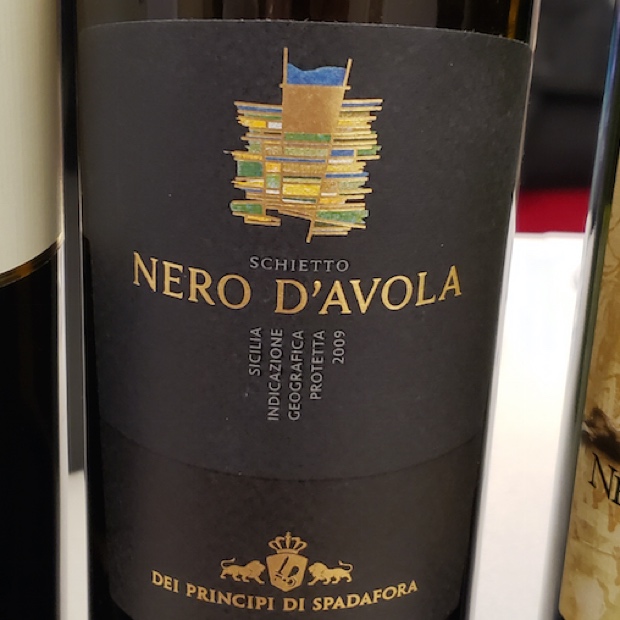
Spadafora Schietto Nero d’Avola 2009, IGT Sicilia

From Contrada Virzi in Monreale this is nero d’avola fuller and with more tart ability. While the aromatics are less curious or idiosyncratic there is a wet concrete character that suggest less oxygenation and freshness, though with it comes more unresolved tannin. From Sicily’s northwest with rich soil structure that translates into this nero d’avola heading towards the sunset. It’s really good though not necessarily magically complex. Drink 2019-2021.  Tasted May 2019

Leonardo di Bella and Enrica Spadafora

Spadafora Cabernet Sauvignon Selezione Limitada 2012, IGP Terre Siciliane

One of the few Sicilian wineries to not just bottle varietal cabernet sauvignon but to do so with such intention and to treat it with the same respect nero d’avola affords. From the island’s northwest and a small total output off of organic vineyards. So bloody smooth, of ribena and chocolate and one of the island’s great textural wines. Quite a Sicilian expatriate epiphany this one. Drink 2020-2025.  Tasted May 2019

Spadafora Syrah Sole dei Padri 2009, IGP Terre Siciliane

This 2009 is the current release, held back for the consumer as will all the reds. A 100 per cent syrah, 50 per cent seeing 25hL barrels, 25 per cent in barriques and 25 in stainless tank. High toned, of creosote, graphite and syrah’s distinct pepperiness. Travels far beyond nero d’avola and cabernet sauvignon in terms of reductive expressionism though without the dusty plum or black forest cake syrup glaze. The flavours here are singular and striking, needing even more time to integrate because the tannins are formidable. Drink 2021-2027.  Tasted May 2019

Donnafugata Mille E Una Notte 1996, DOC Contessa Entellina

An arch classic from Sicilia sud Occidentale and more specifically Tenuta Contessa Entellina. Of the oldest wines this is one of the highest tonality, not unlike older and older schooled nebbiolo from Barbaresco, in a queen’s throne sort of way. There is siply no way to argue that this wine did not deserve to be aged this way and to be waited on for such a moment of appreciation. Age worthy and load management indeed, with every resolution hoped for and expected. Brilliance and a benchmark, with a half decade of life still ahead. Drink 2019-2026.  Tasted May 2019

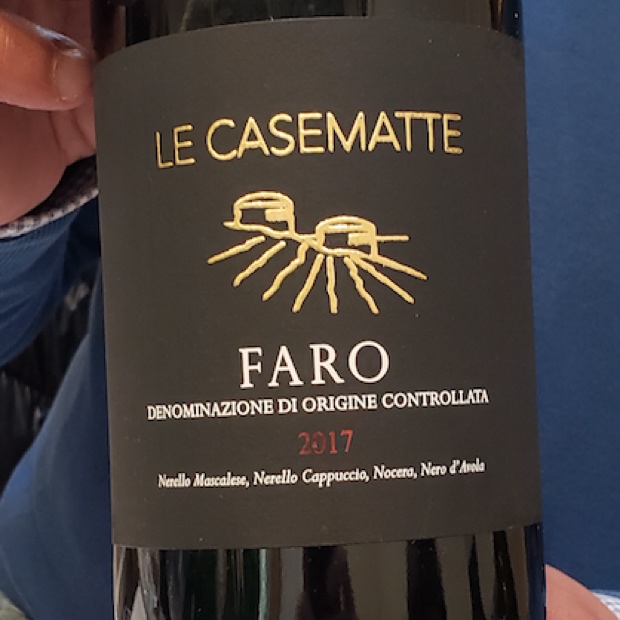
Le Casematte Faro 2017, DOC Sicilia

A four-poster blend of nerello mascalese (55 per cent), nerello cappuccio (25), nocera (10) and nero d’avola. Another wine from Gianfranco Vailati that smells and tastes like the sea, like the far northeastern corner on the strait of Messina to almost reach out and touch Calabria. Sea urchin again, great black fruit, acidity and fine tannin. Drink 2019-2027.  Tasted May 2019

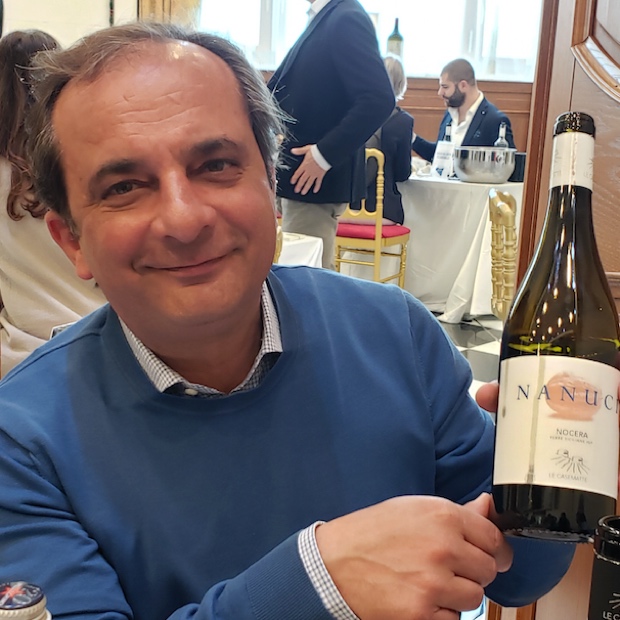
Le Casematte Nanuci Nocera 2017, IGP Terre Sicilane

A salty and marine, “ricci di mare,” totally and utterly uncanny in how it smells like sea urchin or perhaps Sicilian mussels and this is a red wine to drink with such an animal and to gaze out over the sea. Dark fruit and massive tannin from the native grape variety. Sit on this thymus one, take deep breaths and take in the vastness of life. Drink 2021-2028.  Tasted May 2019

Planeta Santa Cecilia 2016, DOC Noto ($75.00)

The flagship 100 per cent nero d’avola must be poured last because of the power and the fact that it’s not something so easily understood. If you were to try and taste other wines after this it would be like Eric Clapton going on after Jimi Hendrix. There’s a deep olive, blood orange, tar and ribena profile that you just know will seek out truffle, porcini, tar and roses. Welcome to the world of aging Sicilian wines and in this very specific world, nero d’avola from Noto. Drink 2022-2034.  Tasted May 2019

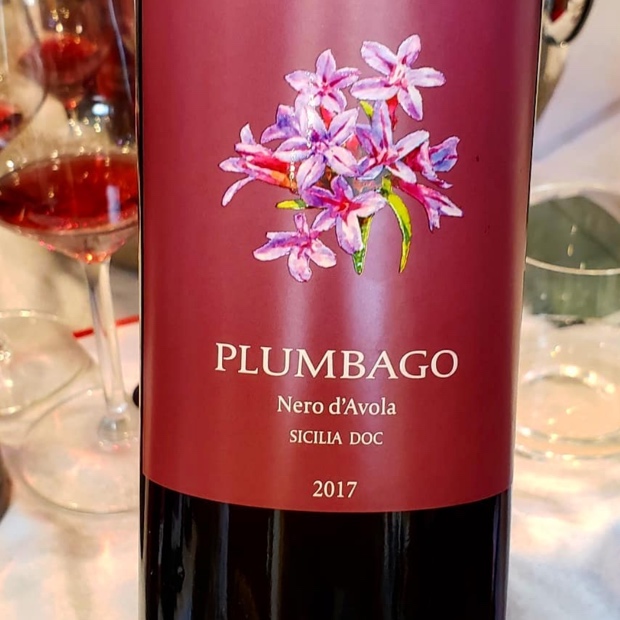
Planeta Nero d’Avola Plumbago 2017, Sicilia DOC

Young and chalky, a nero of very blue fruit, very much a Menfi d’avola, led to believe and also to act like it must from the place. The acidity demands mouth attention, not just up and down but also all around. There’s a certainty and a need for time, a waiting period for those grains of tannins to turn liquid, fill in the cracks and solidify as stalagmites and stalactites. Balance is already confirmed so the result will do the same. Drink 2021-2027.  Tasted May 2019

The blend in 2017 is 60-40, nero d’avola and frappato and if there was ever so much power before I’m not sure I’ve been there alongside. The nero loves warm vintages and so really takes grippy control of lighter and more submissive frappato, but conjoined they form a formidable fruit team. Peppery plum and pomegranate plus a tarry note on fresh roses that speaks to an idea that reminds of modern nebbiolo. Big structure in the first of two CdV’s. So much teen grape spirit here. Smells like it. Drink 2021-2028.  Tasted May 2019

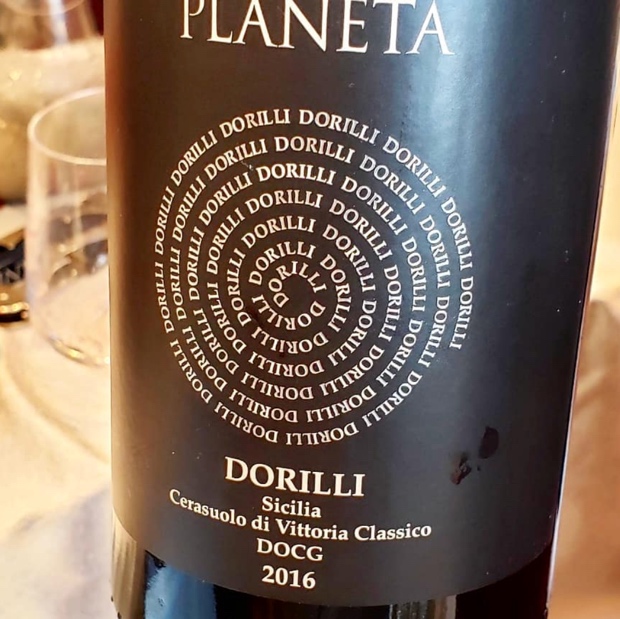
Planeta Cerasuolo Di Vittoria DOCG Dorilli 2016

The blend in 2016 is 70-30, nero d’avola and frappato with the addition of 12 months in old grandi botti, 25 and 36hL. If the CdV (non-classico) was considered to be firm, grippy and in charge then just get a load of the chalky, non-grainy tannins that mark the structure in this DOCG. The aromatics speak to time, as in what’s needed to settle the graphite, creosote and distilled extracts that well up in elemental tension. Great liquid smoke of peppery fruit permeates and percolates. This wine is alive, organically reverberating about while it tries to find itself and you.  Last tasted May 2019

Cerasuolo di Vittoria Classico is one thing, Dorilli 2016 is another matter altogether. The name of the estate marks the iconography of this Planeta blend, from a chosen vineyard carrying the dialectical tome of the river passing by. The old maps say Dirillo but through time this has changed, just like this Burgundian wine will draft through wake and evolve. There is a minor reduction here so it’s not as open as the normale though it’s offset by an extra year of aging for release 18 months after harvest. Blooming should happen some time in 2019 after the 70 per cent nero d’avola and (30) frappato begin to unfold out of itself for a full and layered Vittoria. Still there is the Cerasuolo fragrance from a guarantee by vintage and for texture. Drink 2019-2027.  Tasted May 2018

Planeta Nocera 2017, DOC Sicilia

This varietal rarity from Menfi is a tannic bruiser and while it often offers no respite at all, this vintage, warm as it was brings fruit nearly capable of standing up to the mother of all acidities and tannins. It’s like sangiovese, barbera and tannat all wrapped up in one big package; tart, tight, taut and of the most solid backbone. Black cherries and black olives through and through. Drink 2021-2026.  Tasted May 2019

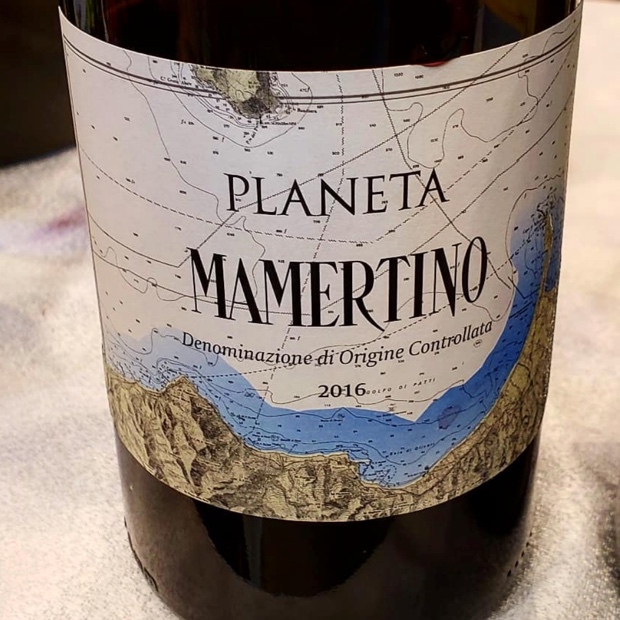
Planeta Mamertino 2016, DOC Sicilia

From Capo Milazzo the blend is 60-40 nero d’avola and nocera, so apposite to what such a blend will be with frappato instead, out of Vittoria. Here from a dry and relatively cool vintage though the vegetation period was fortunate with water filling the table beneath the surface. Richness preserved, ripeness exceeded and fine tannins resolving, nearly, almost, maybe. Drink 2020-2025.  Tasted May 2019

Reds from Etna

Pietradolce Etna Rosso Contrada Santo Spirito 2016, DOC Etna

Santo Spirito seems like it doles fruit that wants to solicit immediate gratification when in fact it’s been structured to advance only to this point. It teases that luxe fruitiness and then lashes at you with repeated whips of acidity and tannin. Much bigger, bolder and grippier than the first attack provides and so it just keeps coming at you in waves. Not a wine of first impression so be sure to take your time or it may just overwhelm you. Drink 2020-2027.  Tasted May 2019

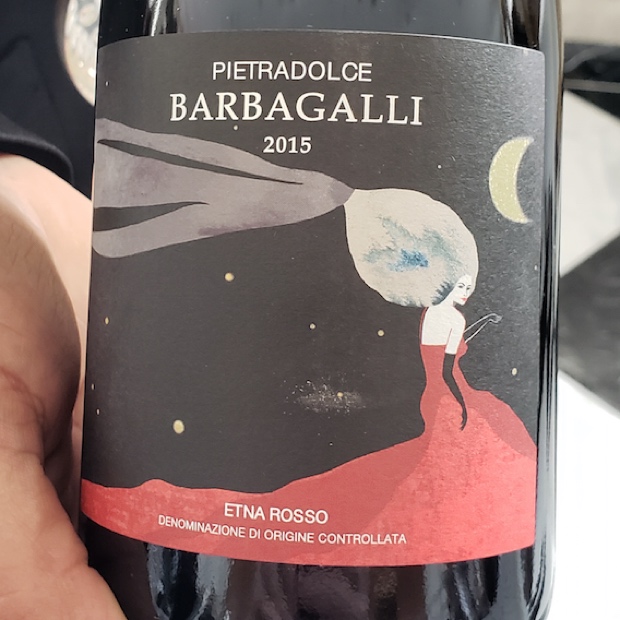
Pietradolce Etna Rosso Barbagalli 2016, DOC Etna

Barbagalli is not merely just a year older than Santo Spirito but it is a contrada to deliver the most fruit in the Piertradolce stable. There’s also an earthy underbelly impression, plus a richness and an unctuous stability that breeds sour edging over the sweetness of its fruit. Does not fool around in fact it’s structured to last a short lifetime, or 15 years at the very least.  Last tasted May 2019

The estate flagship Etna Rosso Barbagalli is taken from Contrada Rampante in the area that is known as “Barbagalli” in Solicchiata. This northern Etna 80 to 100 year-old pre-phylloxera vineyard delivers the most naturally earth-crusted, umami-laden expression in hyperbole, concentration and peak spiciness. There is a buzz about this nerello mascalese that the rest of the portfolio does not pulse with, neither outward through expressionistic energy nor inward, retracted and self-effacing by implosive feeling. The texture separates itself with multi-faceted tenor and a tremor of explosive potential that might strike at any time, anywhere, any place. This will turn into something ethereal, of that there can be little doubt. Drink 2022-2032.  Tasted May 2018

Tornatore Etna Rosso Pietrarizzo 2017, DOC Etna ($34.00)

Pietrarizzo comes with mentholated cool and savoury fruit that soothes the palate, this after having anaesthetized by way of the inhalant it provides. If you hang in there for 10 minutes or so it will exude lovely cherry and tisane notes before coming to grips with its firm constituent behaviour. The development over time shows the character of its building blocks for structure and longevity. Very fine wine indeed. Drink 2021-2028.  Tasted May 2019

Tornatore Etna Rosso Trimarchisa 2016, DOC Etna

Tornatore Trimarchisa in Rosso clothing is rich, luxe and luxurious nerello mascalese with darker fruit as compared to many,. The volcanic basalt is reductive and reduced like a lava demi-glacé for Etna Rosso of deep, dark and hematic-blood orange display. Impressive concentration and intensity with seven to 10 years of ideal Etna DOC exemplary drinking ahead. Drink 2020-2029.  Tasted May 2019

Tenute Rapitalà Etna Rosso 2016, DOC Etna

Here we climb right into the depths of the Etna Rosso glass in a structured nerello mascalese of hematic and ferrous red fruit. Plenty of depth, wood spice and high acidity, not to mention wound up, pent up and grippy tension. That’s the tannin speaking, fully extracted and presented to the fruit, which incidentally want no part of that anxiety at this time. The architecture is Roman and if not for an emperor, is at least at the level of nobility. Wait five years before returning to this place. Drink 2021-2028.  Tasted May 2019

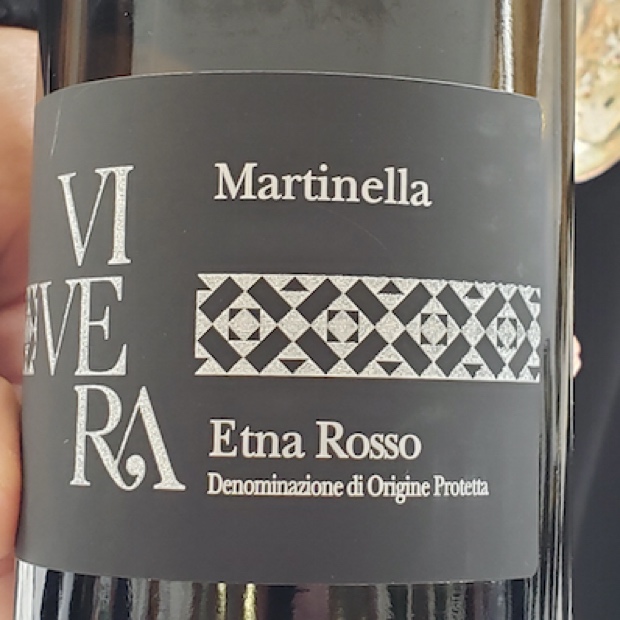
Vivera Etna Rosso Martinella 2013, DOC Etna

At nearly six years of age it’s a wonder this Martinella cru nerello mascalese from Vivera is till tight and reductive. It’s quite the spool of tannin this fruit layered with fine acidity is wrapped around. Good fruit concentration brings sour berries and sweet pomegranate into a pool where pectin and acids swirl with the fishes. Fine wine here. Drink 2021-2029.  Tasted May 2019

Cittanera Zottorino Etna Rosso Riserva 2013, DOC Etna

Cool vintage, late pick, some rain at harvest for nerello mascalese in Contrada Zottorino, Castiglione di Sicilia. Fruit driven aromatics still quite persistent now coming into flowers and spices. Acidity and freshness plus structure in line with Etna’s possibilities plus an affinity with more famous or more established Italian kin like nebbiolo and sangiovese. Very much alive, less advanced to taste and eight in the window. Drink 2019-2022.  Tasted May 2019

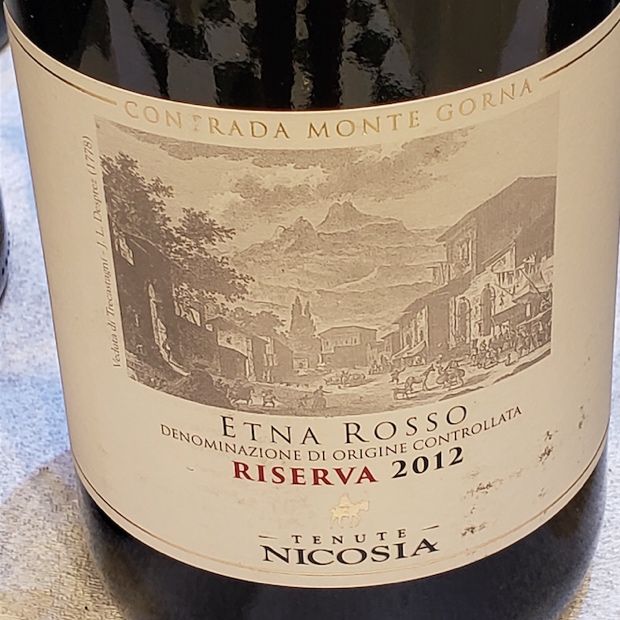
Cantine Nicosia Etna Rosso Riserva 2012, DOC Etna

From Contrada Monte Gorna in Trecastagni. Impressively youthful, still pulsating with original fruit and magically or if you will, skeptically un-evolved. Transparent and clear as a late summer afternoon sky with nary a moment of distraction. If only a perfect bottle it matters little because the showing speaks volumes about vintage, luck and acumen. Fruit rom start to finish but also a searing tartness on a sour spectrum that talks the varietal talk. If you love Etna Rosso this is a perfectly vibrant and classic example. Drink 2019-2024.  Tasted May 2019

Benanti Etna Rosso Rovittello 2014, DOC Etna

Rovittello cru is a structure gifting one and that much is obvious from Benanti’s 2014, a wine at five years that has yet to move an inch. This from an estate known well for the elegance and understated nature of their nerello mascalese. Sometimes the volcanics in the soils give you pomegranates and at other time they give you demi-glacé. This is a long and winding structured road Etna Rosso travelled one. It winds in and out of fruit, acidity and tannin so where it will emerge remains to be seen. I would imagine the truth will lie somewhere between five years and not more than 20. Drink 2021-2032.  Tasted May 2019

Benanti Etna Rosso Serra Della Contessa 2011, DOC Etna

From Contrada Monte Serra I Viagrande on the southeast volcanic slope soils of Etna. More evolution, looser and well into secondary character. Acidity keeps it alive while the fruit has moved into dried, leathery and browning personality. Quite earthy, nearly stewed and further along by a long shot. It’s both a glass of pleasure and also one of puddle mud. That said it’s charming and even if it may seem at least five years older than it really is, there is still something to get onside with, especially with a plate that might sing along. Drink 2019.  Tasted May 2019

Torre Mora Etna Rosso Càuru 2016, DOC Etna

Torre Mora Etna Rosso Càura is the entry level blend of nerello mascalese (85 per cent) and nerello cappuccio (15), meaning hot in the local dialect, taken off of younger vines 7-10 years old. Nicely floral and also a bit salumi curative, tangy and freshly volcanic. Chewy and persistent, somewhat youthfully rustic in the precocious ways of nerreli bambini on Etna’s slopes. Bodes well for what’s more to come. Future vintages from more mature vines will bring next level expressiveness. Count on it. Drink 2019-2023.  Tasted May 2019

Torre Mora Etna Rosso Scalunera 2015, DOC Etna

From Imboscamento (inside Rovittello, or hiding in the bush within), the next level blend is not even what the top tier Contrada specific wine will be, either next year of the one after that. Tier two is older vines in the 15-20 year range, with savoury basaltic notes typical of the cooler clime and quite high-toned like Marsannay. An uncanny connection to cooler limestone raised Bourgogne, like the lighting red fruit pinot noir, here in nerelli clothing. Says that this Etna Rosso comes from a place, from a very specific terroir. Drink 2020-2025.  Tasted May 2019

Cottanera Etna Rosso Diciassettesalme 2017, DOC Etna

Youthful to say the least and so the operative here is reductive, tight and unforgiving. A swirl, some air and some time releases the essential oils of a nerello mascalese out of a historic contrada with a great history of aging the wines. The fruit concentration is markedly given to the obvious and the fineness of acidity may be equalled by the high level of glycerin available. That said it’s a balancing act performed by going to the edges of all these places and peeling back to try again. This will age gracefully and consistently so that subsequent trips and sips provide new and improved information all along the way. Drink 2021-2032.  Tasted May 2019

Tenute Bosco Etna Rosso 2016, DOC Etna

The Rosso’s fruit is in Contrada Piano dei Dani, with 90 per cent nerello mascalese and 10 cappuccio. It’s ripe, bright, knowable and the fruit concentration reaches an apex of optimization without tempting fate, going over or pressing any problematic buttons. There’s a succulence with thanks to level-headed and easy-handed oaking so that the overall expression goes hand in hand with your wishful senses. Drink 2019-2026.  Tasted May 2019

Tenute Bosco Etna Rosso Vigna Vico Pre-Phylloxera 2015, DOC Etna

The litheness of this nerello mascalese from Mount Etna off of 100-plus years of age pre-phylloxera vines cannot be over-stated or overstressed. The light, ethereal beauty of this wine may very well transport you to a place, to a vacuum within a bubble that is a hidden world inside a biodome. Few words are available when a wine speaks to you such as this Vico does to me at this time. This impossibility of such fruit concentration is also implausibly understated, as are the tannins and the acidity, yet all align and intertwine along a perfectly rendered line. You recognize the automatic brilliance, for the people and from the place. You just know it when you taste it. If you can find this wine, if you ever get the chance to purchase a bottle or two, you owe it to yourself to act, for you and for anyone you might happen to share it with. Drink 2019-2035. Tasted May 2019

Tenute Bosco Etna Rosso Vigna Vico Pre Phylloxera 2013, DOC Etna

Allora e adesso. And so we travel back another vintage to when Vico was in its first vintage and the word Vigna was still on the label. Nothing else on the mountain smells like Vico, is as delicate while having fruit concentration that is so mysteriously connected to transparency, grace and structure. Though the vintage was difficult this is Etna Rosso of heritage and love that only this house can procure, from Sofia Bosco, the men and women in her crew. Drink 2019-2029.  Tasted May 2019

Tasting @planetawinery with @plantdependent

Planeta Eruzione 1614 Nerello Mascalese 2016, DOC Sicilia ($42.99)

Mainly nerello mascalese but there is in fact nine per cent nerello cappuccio. Not so much an eruptive vintage but certainly a rumbling one, a low murmur, gardening at night. This is imagined to be the nerreli red that would work in the garden, at night, under an Etna moon, no clouds (as if) and absolute quiet. Fruit concentration is outstanding, liquid pepperiness calming and yet grappling for you attention. The grip is easy but wrapped tight and the next five years will see very little movement. A beautifully textured Etna red with everything to look forward too.  Last tasted May 2019

Like the yellow lorry carricante thriller it is Etna Rosso incarnate that is portrayed in this Eruzione red lorry nerello mascalese (with nine per cent nerello cappuccio) from up the mountain’s 890m vineyards of (Contrada) Sciaranuova, but with some fruit from lower altitude at 600m. The vine age is part 2008 and part 20 year-old vines and a small section going back 90 years but just a small spot. The higher you climb for nerello macalese the more finesse you acquire. This Eruzione is swimming through lava with it, smoothed by plenty of silky texture, raspberry and chalky liquid tannin. Nerello, “you ain’t nothing but a true embrace. You ain’t nothing but a hidden face.” Your Planeta edition gets neither more refined, elegant nor focused. You’ve been descried as the “alternative classic” or the new light pinot noir. Maybe frappato, but not you, nerello mascalese. Let’s leave you out of the discussion. Leave you alone. Talk about the weather. Drink 2019-2025.  Tasted May 2018

Good to go!

godello

Twitter: @mgodello

Instagram: mgodello

WineAlign

Tasting Ontario at Canada’s Great Kitchen Party

Congrats to the winners at Canada’s @greatkitchenparty in Toronto last night. Repeat for @cbriesling and couldn’t happen to a nicer guy. Quality at an all time high for all the wines in the competition.

Related – Gold Medal Plates Toronto 2017

The artist formerly known as Gold Medal Plates is deep into its second tour under the auspices of the new and improved moniker Canada’s Great Kitchen Party. Four weeks ago the launching port for the magical travelling culinary, wine and musical tour was Toronto’s Metro Convention Centre and 12 cities later the cross-cultural palooza will culminate at the Canadian Culinary Championships in Ottawa, January 31st and February 1st, 2020.

The plates at Canada’s @greatkitchenparty are always some of the year’s best. Three from last night.

Related – Eighteen Canadian wines that rocked in 2018

On October 3rd, 2019 over 550 guests enjoyed an evening of celebration and elevation of Canadian culture in food, sport and music. The chefs came both to compete for their chance to be on the podium and to share their creative talent with the guests. Over 45 athletes from amateur, para and pro sports shared their stories and guests were on the dance floor enjoying the performance of some of Canada’s greatest musicians! It was an inspiring and impactful experience as the city united to provide Canadian youth the opportunity to be extraordinary in food, music and sport. We are proud to support Community Food Centres Canada, MusiCounts and B2ten.

Gold – Chef Keith Pears, Executive Chef at Delta by Marriott Toronto

Silver – Chef Frank Parhizgar, FK Restaurant

Bronze – Chef Renée Bellefeuille, Art Gallery on Ontario

My WineAlign colleague David Lawrason requested that I join his merry band of judges for the sixth straight year to assess, deliberate and conclude on the three podium wines of the competition. That we did are these were the results.

Here are my notes on all the wines tasted that evening.

Flat Rock Riddled Sparkling 2017, Traditional Method, VQA Twenty Mile Bench, Niagara Escarpment, Ontario (383315, $34.95)

Riddled ’17 is so bloody young and fresh it’s hard to let it into your life but you should and you must. Bright, startling nearly, greatly aromatic, crispy and yet perspiring with the most humidity and sunshine from a Riddled to date. Tense and nervous, can’t relax. Toasty and just plain fun. Drink 2021-2028.  Tasted October 2019

Mission Hill Reserve Pinot Gris 2017, BC VQA Okanagan Valley, British Columbia (537076, $22.95)

Very gris, lush and fulsome, dripping with orchard fruit juices and so well integrated. A balanced and tangy mess of fruit and ease into acidity.  Last tasted October 2019

Always puts some time, effort and pleasure in reserve so the moniker continues to hold true to Mission Hill form. The pulse of energy persists and it is that tongue-tying freshness that stands still though will be moving forward soon, in time. Seemingly a bit less skin-contact but so heady in apple, pear and white peach, yet always returning to that green mango-apple bite. Better gris goes deeper and beats before, so kudos to the Hill for the work. Drink 2020-2023.  Tasted April 2019

Chef Keith Pears

Charles Baker Picone Vineyard Riesling 2016, VQA Vinemount Ridge, Niagara Escarpment, Ontario (241182, $37.20)

Baker’s ’16 is the child of a great vintage’s phenolics and so without needing to concern oneself in wondering about ripeness or fruit quality it allows for a beeline straight to the tannic structure. That’s the crux of 2016, built upon a core that may as well be centred in the very heart of Colmar. Sugar may as well be nowhere and nothing because balance induces dreams utterly grounded in aridity. So reminded of Bernard Schoffit and The Rangen, austere yet entangled, lean and direct of sure, focused and precise. In the zone and will be for 12 blessedly slow developing years. Drink 2021-2030.  Tasted October 2019

Flat Rock Nadja’s Vineyard Riesling 2017, VQA Twenty Mile Bench, Niagara Escarpment, Ontario (381251, $19.95)

Warmth from Nadja in 2017, not humidity mind you but certainly juiciness, citrus squeeze and real tart behaviour. Not the acidity of some vintages but enough action to counteract the flat out rocking expressiveness of the fruit. Now you can drink this early while other more tightly constructed and yet uncoiled Nadjas move through their paces.  Lasted October 2019

Nadja has taken the anomaly of an inverted vintage and founded a striking riesling with laser quick reflexes. It’s a lean, lightning flinty and lime-powered one, stark in its intensity and drier than I can ever remember it being. The levels of grape tannin and extract are amazing and it really needs time to settle in. Let’s look at it again in 2019. Drink 2019-2022.  Tasted October 2018

Redstone Riesling Limestone Ridge South 2017, VQA Twenty Mile Bench, Ontario (381251, $19.95)

All about the lime, beneath the surface and above board. Juiced, filling up the flavours matched against the sugar. Well-balanced, tightly wound and grippy as you know what.  Last tasted October 2019

From the sizeable Limsetone Vineyard’s south portion, the 2017 does what good Bench riesling should. It delivers a gamut of citrus and orchard fruit, from apple to peach stone and yet communicates through a conduit of fine riesling acidity. This example cuts like a knife through creamy custard, in other words it drinks straightforward and with full calm at ease. Drink 2019-2021.  Tasted March 2019

Honsberger Chardonnay Schuele Vineyards 2017, VQA Lincoln Lakeshore, Ontario ($35.00)

Just four months has done the trick,. No simply fruitful with an ease of oak, little to less encumbrance from spice and very much having arrived, pitched and settled in the lovely to elegant camp. No longer overtly demanding in engagement or complexity and in this case all the better for it.  Last tasted October 2019

A mix of apple terpene and green pesto marks the nose before turning leesy, creamy and corn. Quite extracted, oaked and tannic so expect a chardonnay of ambition in request for settling time. That or some heady food to stand up and count together. Drink 2020-2023.  Tasted blind at NWAC19, June 2019

Domaine Queylus Chardonnay Reserve Du Domaine 2017, VQA Niagara Escarpment, Ontario ($34.95)

The Reserve is an impressive and bloody delicious chardonnay with all of its parts moving together and speaking straight from the Peninsula heart. Crunchy and luxe at once then the other, then synched, together. Ripe and developed but also green apple fresh, smart, in good humour and beautiful. This Queylus just has a glow about ‘er. Drink 2020-2025.  Tasted October 2019

Tawse Estate Vineyards Chardonnay 2013, VQA Niagara Peninsula, Ontario ($38.15)

The toastiest and most reductive of the Tawse chardonnays, above Quarry Road and well beyond Robyn’s. It may have once been the smooth one but not any more. Expect sharp, pointed and angular juts and struts. A sharp varietal Tawse that speaks a more pointed Bench vernacular than the Peninsula labelling would say. No matter for time has done little to crack the safe.  Last tasted October 2019

The rock of the compos mentis Tawse chardonnay is the Estate, as consistently composed as any in the high end Ontario tier. The simple plan leads to something ultimately complex, first by charitable dispensation by a vintage like 2013 and then from fruit synchronically pulled off of four iconically developing vineyards; David’s Block (39 per cent), Quarry Road (35), Hillside (14) and Robyn’s Block (11). The balance of fruit, mineral and barrel is impeccable with many thanks due to Paul Pender’s recondite investigative barrel program. The Estate chardonnay owes a great deal to French forests and variegated toasts, all of which show tongue and teeth in this wine. The layering here (and really fine lees) brings creamy tropical as well as crisp Ontario fruit. This is the most soothing of Tawse’s chardonnays with a developing sense of tart candied flowers melting into caramel. In other words, delicious. Drink 2017-2020.  Tasted April 2017

Hidden Bench Locust Lane Rosé 2018, VQA Beamsville Bench, Niagara Escarpment, Ontario (68833, $23.95)

What you want and need from Rosé out of Ontario or anywhere you might dream light, salty, richly fruitful and generously hued pink stuff. Dry and saline with a full gamut of rootsy and ripe fruit; strawberry, cranberry and pomegranate. So good.  Last tasted October 2019

Locust Lane is certainly one of Ontario’s top cru sites for Rosé and while that may sound like a wine style misnomer to some you’d better taste this before making any statements you’ll then want to retract. Winemaker Jay J. must thank his lucky Beamsville Bench stars to have the fortune to make Rosé with this fruit. He would also know not to screw it up so behold this saline, sapid, linear, natural, balanced and just bloody delicious wine. Along with Moira just a stone’s throw over a hill away there are some that just rise above and do so with great ease, like fruit fallen into the hand just before it had been plucked from the stem. That’s when you know Rosé had been grown, run and fermented just right. Drink 2019-2021.  Tasted June 2019

Thirty Bench Winemaker’s Blend Red 2017, VQA Beamsville Bench, Niagara Escarpment, Ontario (320986, $24.95)

Quite heady red here from Thirty Bench, full on dark red fruit in the raspberry merlot vein and just the right verdancy. It’s also sharp and spiced by botanicals that perk up your favourite amaro. Fun stuff from Emma Garner.  Last tasted October 2019

A plethora of mixed red fruits marks not just the entry but the entirety of the Red Blend. It’s a Bordeaux fashion in Beamsville clothing, of berries, plums and even a bit of fennel like addendum. Quite fruity, integrated and balanced, all in the name of amenability and drinkability. Drink 2019-2021.  Tasted August 2019

Mission Hill Reserve Merlot 2017, BC VQA Okanagan Valley, British Columbia (553313, $29.95)

Rich and heady to no surprise and plenty of instigating spice. Dives down and into the depths of dark fruit in the shroud of barrel where all sing along together. A bit of balsamic and the notion of impending umami. Drink 2020-2025.  Tasted October 2019

Trius Red (The Icon) 2017, VQA Niagara Peninsula, Ontario (303800, $24.95)

The Red Icon is everything Niagara can be in affordable red wine, magnified and hyperbolized to the nth degree. A huge icon if from a vintage in reverse and so the strawberry jam is right there, set up in the fruitiest way above the acids and the structure. Tannins won’t lie however and neither will 10 years of great drinking. Drink 2021-20230.  Tasted October 2019

Stratus Red 2015, VQA Niagara Lakeshore, Ontario (131037, $48.20)

Quite high-toned from a Stratus Red, fruit elevated and lifted by 2015 acids, trying to settle but not able to let gravity do its work. Crunchy and certainly grippy, firm and far from open. Last tasted October 2019.

Harvested over a week’s time in mid to late November from a warm if unremarkable vintage that followed a polar vortex winter, the just released 2015 Red is the five-headed Bordelais made from cabernet sauvignon, merlot, cabernet franc, petit verdot and malbec. If indeed perception is conceived to occur through five senses then all are needed to feel the fingers and toes of this assemblage. It’s also a matter of mathematical relevance, especially if you’ve tasted a few vintages of this most consistent appellative blend. And so standard deviation is relevant in assessment. From one Stratus Red to another we are looking at two sets of five different numbers that have the same mean but different standard deviations and it can be argued (because of the methodology), the same standard deviation but different means. If only J-L Groux knows the answer to the mean and standard of each Red set we can still look at this ’15 and note how it’s quite dusty and high-toned in its youth, with a richness that will eventually bring it all down to earth. It’s a chewy Red with some dried, leathery fruit, as per the mean, equal and opposing to the fresh and friendly, as per the standard deviation. As a matter of assemblage it’s as classic and recognizable as any in the accumulative history and also reminiscent of the past, like ’07, ’10 and ’12, to name just a few. With cabernet sauvignon at the head it tells us that ripeness is the virtue and comfort the result. By the way, the varietal breakdown of 40, 24, 23, 11 and 2 equates to a mean of 20 and a standard deviation of 14.40. For what it’s worth.  Drink 2019-2026. Tasted October 2018

Good to go!

godello

Twitter: @mgodello

Instagram: mgodello

WineAlign

Garage Wine Company redux

Derek Mossman Knapp – Garage Wine Co.

Sara d’Amato and I last caught up with and tasted the secrets of Chile’s deep interior with expatriate Etobican Derek Mossmnan Knapp three years ago yesterday, in September of 2016. I noted at the time that few have gone as deep and traced as far back “into the country’s heartland, oldest vines and ancestral traditions.” His wines from the Secano Interior are made by hand, naturally, in small lots parcel by parcel. Garage Wine Co. is still a matter of ploughs and manos en el suelo. Workers gain strength and energy from mugs of ulpo, toasted heirloom wheat flour with honey and water. This is a place where Derek tells us that one’s only real needs are “clippers, a hatchet, and a lifetime of experience to pass on.” Oxford commas sold separately.

Related – We take you now to garage wine in Chile

He continues to educate us. “Let’s make a mugrón” he says, a vine branch that is buried at the end so that a new plant is born. Like the Sicilian propaginare in Fabio Sereci’s Vrucara Vineyard. “This is regenerative agriculture. It’s not about finding a nice old man to support, but rather rolling your sleeves up and working elbow to elbow. The flavour is in the farming.” The work is relentless, essential, never-ending. “With seasonal cover-crops ploughed under no need for fertilizer,” he continues, “rastreando no es lo mismo y no incorpora nitrogeno de la misma manera.” Or, nitrogen will never incorporate as successfully by tracking. In Secano Interior there is only one way. The right way.

Contrary to common belief and heaps of marketing, the complexity of a wine most often comes from the farming.

Yes, the farming. A winemaker can aspire to creative angst and/or the never-ending and hopeless aspiration to attain the sublime but without the right, proper and tireless work ethic of agriculture there is no greatness. Tilling, hoeing, ploughing and straightening things out are the keys to the salvaes, the volleys, salutes, provisos and reservations for securing the possibility of making memorable wines.  Garage Wine Co. personnel are putting in the time.

País-Cariñena, Sémillon, Carignan Field Blend and Cabernet Franc. These are the four seminal bottles Derek brought along for Sara and I to taste at the WineAlign office. And it was good.

Garage Wine Co. País Cariñena Phoenix Ferment Single Ferment Series 2018, DO Secano Interior Cauquenes, Maule Valley, Chile (WineAlign)

“A wine that rose from the 2017 bush fires, quickly having ascended out of the ashes as something resurrected and reinvented.”We’ve gotta make a white from the reds,” tells Garage Wine Company founder Derek Mossman Knapp. A pressed whole with stems (like Champagne) field blend, or more succinctly a co-ferment of stacks, one on top of the other, país followed a few days later by cariñena. That said it was picked earlier, crisper and sharper in 2018. The acids are extraordinary and the melding of flowers, white and yellow are mimicked, extended and replayed by citrus and stone fruit flavours on repeat. Crazy smart and delicious, if never before tasted and understood. For interested parties, price would be 6.5 US ex-cellar. Drink 2019-2022.  Tasted August 2019

Garage Wine Co. Sémillon Isidore Vineyard Lot # F1 2018, DO Maule Valley, Chile (WineAlign)

Single vineyard white off of lands shepherded by ancestral farming. Isidore is the patron saint of the worker and this is a wine not ordinarily made. Now the decades of urban legend, blue blood in the veins and perverso (perversity) replace bulk wine from places with no paved roads (and valid D.O. paperwork) left behind for such an exercise. It’s both rich for sémillon (thanks to skins) and its sessions but the acids keep it grounded, flint-struck, stone-driven. Certainly reminded of Chris Alheit a continent away. Old vines are meant to deliver a sting for sémillon and though just shy today of what it will bite with again, there is an intensity in feeling to make you wish for sea creatures of brine, fat, citrus and bitters. That’s the vernacular it speaks and seeks. Price would be 11 US ex-cellar. Drink 2020-2026.  Tasted August 2019

Garage Wine Co. Lot #77 Carignan Field Blend Truquilemu Vineyard 2016, DO Maule Valley, Chile (WineAlign)

Here getting into the usage of lignified stems, first with a run through the de-stemmer, after which the brown and ripe ones are put back in. Avoids the candy floss of carbonic maceration while conversely encouraging more integration and camaraderie. Violet floral and expressly ripe with thanks to a few plants of malbec, país, mataro and tintara negro. So youthful and high-toned, plenty of fruit, more so intrigue and an old vines in old vineyards brushy herb savoury notation that permeates while hiding in the shadows. Why does this wine, not driven by anything in its plot, arouse in us such a powerful emotion, containing the entirety of what the wines is between a set of ineffable parentheses? It’s a unique structure, one that takes breaths and inhibitions away, as will others that do so, though not in any exclusive or elitist way. Seems right, big, structured, proper and just. Drink 2021-2029.  Tasted August 2019

Garage Wine Co. Cabernet Franc La Higuera Vineyard Lot #62 2014, DO Maule Valley, Chile (WineAlign)

“Just wet it!” they say in how to make this cabernet franc, as in the dry Martini, Hawkeye Pearce way. Just a wave over the ferment, avoiding too much wood and keeping it real. The fruit is ostensibly dark as a cimmerian night, with minor keys played by iodine, soy and balsamic, though ultimately the settling over five plus years will reveal a more natural state. It’s chewy inside and crusted enough to make it crunchy on the outside, a perfectly textured red like a steak charred and cooked rare inside meeting a proper cookie but in cabernet franc clothing. As you nose and taste it continues to refine, come into balance and also elegance. Imagine what those five years in bottle will effect. Drink 2022-2029.  Tasted August 2019

Good to go!

godello

Derek Mossman Knapp – Garage Wine Co.

Twitter: @mgodello

Instagram: mgodello

WineAlign

Riding red blends from Canadian frontiers

Ancient PEC red care of Geoff Heinricks

Ancient PEC red care of Geoff Heinricks

as seen on WineAlignRed Blends, White Blends and Sauvignon Blanc – Medal Winners from NWAC 2019

Some producers may be riding red blends all the way to the bank while others, including many winemakers simply love making them. Hearing about or looking at the broad term “red blends” causes many of us to think about wines that are big in every respect. Broad shouldered, big-bodied, long-legged, tannic and age-worthy.  As for how these wines are made we imagine a barrel room of oak casks filled with deep, rich and dark liquids made by winemakers and their science flasks layered by endless combinations of samples in varying percentages. This is in fact how most red blends are made. Barrel and tank samples of different grape varieties are pulled and with a conditional maximum amount of each kept in mind, the constituent samples are mixed and matched until the blend just feels to come out right. Add in a bit of chemistry for scientific balance and Red’s your uncle.

Red blends is employed as that highly scientific wine-speak term used to define one of the largest, broadest and most undefined categories in wine. There are blends established in the Old World emulated and mimicked from Argentina to South Africa, Australia, New Zealand, Canada and everywhere vinifera is grown. Bordeaux’s Left and Right Bank are most commonly copied but so too is the Southern Rhône. The triumvirate of cabernet sauvignon, cabernet franc and merlot lead the way while grenache, syrah and mourvèdre are the source of much imitation. Blending does not stop at such multi-varietal exactitude because the Australians (namely) decided that syrah/shiraz goes with everything and why not. The concept of admixture or fusion is becoming increasingly relevant and the norm for red blends made in Canada, especially in British Columbia and to a lesser extent in Ontario too.

Chef Albert Ponzo’s Gnocchi with Morels

Basically anything made with two or more grape varieties qualifies and in some cases a kitchen sink is amalgamated from literally dozens of locally planted options. To be honest the methodology categorically removes said wines from every other varietal class or division, in competition or otherwise. So the question begs. How do judges at the National Wine Awards of Canada assess, rate and ultimately dole out medals when the comparisons are all apples to oranges? How do we as a team decide which blends are most deserving in a sea of peers comprised of wholly different, antithetical and multifarious combinations?

The answer is complex but in the end not exactly rocket science. Truth be told the necessity of knowing the percentages in the blend is the mother of invention. This is because each wine is a sum of its combinative parts while success is predicated on the communal effort and seamlessness of the gathering. But more than anything and it’s certainly cliché to say, wines as blends must achieve balance and those that do will reap the most reward. News flash to corroborate that theory. Most varietal wines are blends too, made up of vineyard slash vessel percentages picked, mixed and matched by the winemaker. What really is the great difference?

Is there any wonder why Canadian winemakers love the category of Red Blends? At this year’s Nationals there are 105 medals awarded to a group of wines that in their collective make-up include just about every red (plus a white or two) grape varieties grown in Canada. Read that number again: 105! Three out of four Platinum winners are from British Columbia and 12 of 14 Silvers as well. As for Bronze, 60 are from B.C., 24 from Ontario and three are from Nova Scotia.

While it would be a joyous exercise to break down all the medal winning wines it would also be one that just might put you to sleep. So for the purposes of analytical brevity and for the fact that we have an unprecedented four Platinum winners in 2019, let’s stick to these exceptional wines. The Hatch Dynasty Red 2016 is syrah and malbec from the Hans Estate Vineyard in Osoyoos raised in all new French oak for 18 months. Yes, ALL new French oak. Noble Ridge Reserve Meritage 2016 from Okanagan Falls is essentially classic Left Bank Bordeaux led by merlot with cabernet sauvignon with minor amounts of cabernet franc plus malbec. Hester Creek Syrah Viognier 2017 from the Okanagan Valley is a stunner and steal for the price though truth be told could have very easily been awarded a similar accolade in the straight varietal category. Niagara’s Tawse Meritage 2015 is a three-pronged Bordeaux varietal mix of merlot, cabernet sauvignon and cabernet franc “with so much going on you might not understand what it’s trying to say.” It’s like Glossolalia but will surely live on through epochs of Canadian Meritage notability and infamy.

OK I lied. Some mentions and some love for the Golds as well. Out of Niagara the judges jumped for the merlot, cabernet franc and cabernet sauvignon in Marynissen Heritage Collection Red 2015 and the kitchen sink blend only Stratus Red 2016 can gift; cabernet franc, merlot, cabernet sauvignon, syrah, malbec, tannat and petit verdot. The hits keep on coming from B.C., especially strong in this category demarcated by grip, grit and strength. The following 12 began their journeys with a plethora of varietal combinations, spoke with great ability to reach the judges palates and all ended up Gold.

Note the seemingly infinite combinations is this diverse group. Maverick 2016 Rubeus, syrah, merlot, cabernet sauvignon and cabernet franc; Bench 1775 2016 Cabernet Franc MalbecCorcelettes 2016 Meritage Estate Vineyard, merlot, cabernet franc, cabernet sauvignon, malbec and petit verdot; Corcelettes 2016 Cabernet Sauvignon Syrah Menhir Estate Vineyard; Black Hills 2017 Addendum, merlot, cabernet franc, cabernet sauvignon; TIME Winery 2016 Meritage, merlot, cabernet franc, cabernet sauvignon; Mission Hill 2016 Quatrain, merlot, syrah, cabernet franc and cabernet sauvignon; Sandhill 2016 Single Vineyard One Small Lots Program Vanessa Vineyard, cabernet franc, cabernet sauvignon merlot and syrah; Moon Curser 2017 Dead of Night, syrah and tannat; Sun Rock Vineyards 2016 Red Meritage, merlot, cabernet sauvignon and cabernet franc; Red Rooster 2016 Golden Egg, mourvèdre, syrah and grenache; Nk’Mip Cellars 2016 Winemakers Talon, syrah, cabernet sauvignon, malbec, merlot, cabernet franc and pinot noir.

If you don’t see a clear and obvious pattern in these Red Blends be neither confused nor discouraged because this is how things function and in turn offer up so much possibility in fresher frontiers. In today’s garden of climate change affected vineyards it is Canadian winemakers who are the beneficiaries of a wild west, anything goes environment where mates can be made across varietal lines both renewed and re-invented. Embrace the diversity and let it ride.

We finish we a special red blend tasted with Maggie Granger in Prince Edward County.

Grange Of Prince Edward Bunny Wine 2016, VQA Prince Edward County ($65.00, 1500ml, WineAlign)

Bunny Wine is nothing if not playful, a field blend that tugs on conceptual heartstrings and has been doing so for 18 months. It has come into kairos, whether unexpectedly, by chance or by the intuition of the moment, it matters little. Bunny is an extension of three plus years of furry flirtations, in cuvées that have come before, of gamay and pinot noir, of passe-tout-grains. I’ve tasted barrel samples and now here we are at the real thing, “the milk of the gamay bunny, drinkers of spillage by tipsy monks. Even if you know little or care less about bunnies and monks it’s the truth even if it didn’t happen, based on memories and perception, just as a look back at that taste and this note will be. Seamless weaving here, between Bourgogne cousins, north and south, grippy and supple. Hard to tell one from the other and isn’t that the point? From the Victoria Block, four rows of pinot next to four of gamay, picked, fermented and crushed together. All thanks to fruit of exemplary patience. Drink 2019-2023.  Tasted June 2019

Good to go!

godello

Twitter: @mgodello

Instagram: mgodello

WineAlign

Don’t you, forget about IGT

San Francesco, Il Molino di Grace

Multiple visits to Tuscany over the past 36 months and more specifically to Chianti Classico have meant that nearly a thousand sangiovese have been opened for tasting opportunities. The tours have also acted to allow for benefactor moments, to present table wines made in part or in whole that either do not or have been chosen to not qualify for DOCG appellative status. These cases are purely opportunistic, in the name of IGT Toscana (and other typical geographical notations) for the purpose of impressing the merits from well-maturing vines of cabernet sauvignon, merlot, blends with sangiovese and other solo sangiovese wines of Chianti Classico producers.

The Galestro of Isole e Olena, Barberino Val d’Elsa

The idea of the IGT practice goes back four-plus decades, to a time when Bordeaux grape varieties began to infiltrate and populate Chianti Classico soils. So much of what was planted through the 90s remains and because only 20 per cent of a Chianti Classico can be filled by grapes other than sangiovese, in many cases it is the “international” varieties that fill in and those grapes still need to go somewhere. It is also a consideration that Chianti Classico aged in new oak barrels is a scarcity these days and so those vessels need to be used for something so ecco, it is IGT, big, small, super or baby that gets the nod.

Fontodi vineyards in the Conco d’oro, Panzano

In the mid to late 1970s Tuscany there developed a quick ascent of the Super-Tuscan, wines that eventually came to be called “IGT” as a by-product of a perfect bureaucratic storm. The micro-nationalistic wave of Denominazione di Origine Controllata (e Garantita) served Italy’s elite producers both a blessing and a curse because on one hand it afforded wines the highest level of (Italian) classification while on the other it added unbending restrictions on how those wines could be made. The rule breaking table reds thus became symbols of resistance, wines that told governments and consortiums where to go and in effect led to an eventuality of response, of a sweeping, money-grabbing movement across that region’s wine-producing territories.

Paolo de Marchi and Cepparello 1995

It was nigh twenty years later that authorities got wise to the situation and so Goria’s 1992 Law 164 was created, thus giving birth to the IGT designation. New monies began to line the government’s pockets. So much for rebellion though twenty years was plenty of time to establish and set up a group of famous wines for life.

The main reason for moving away from the appellation was the restrictive law that said you couldn’t make wine labeled as Chianti Classico if it contained 100 per cent sangiovese grapes. Later examples included Monteraponi when Michele Braganti changed from DOCG to IGT in 2012 because at 12.5 per cent alcohol it did not qualify for Chianti Classico and so it had to be Toscana Rosso. The great first wave began as Chianti Classico producers began to dismiss appellative laws by de-classifying their 100 per cent sangiovese. Fontodi’s Flaccianello delle Pieve and Isole e Olena’s Cepparello are two of the more famous examples. Outside the Classico territory and in other Tuscan lands there were others many consider to be the most rogue and famous of them all. Tenuta San Guido’s 1968 Sassicaia, Antinori’s 1971 Tignanello, 1986 Masseto and Ornellaia, first produced in 1985. But in 2019 the push for Chianti Classico’s Gran Selezione category to become a 100 per cent sangiovese appellative wine has sparked not only new debate but also great speculation. Will those once rebellious producers return their top wines and in many cases, single-vineyard sangiovese back to the appellation? Along with Flaccianello delle Pieve and Cepparello, the list of possible returnees might also include the following:

  • Badia a Coltibuono – Sangioveto
  • Carobbio – Leone
  • Castello di Querceto – Le Corte
  • Castello di Rampola – Sangiovese di S. Lucia
  • Fattoria Montecchio – Priscus
  • Il Molino Di Grace Gratius
  • Monteraponi – Baron’Ugo
  • Montevertine – Le Pergola Torte
  • Podere Campriano – 80 (Ottonta)
  • Podere La Cappella – Corbezzolo
  • Principe Corsini Le Corti – ZAC
  • Valdellecorti – Extra
  • Vignavecchia – Raddese

San Marcellino Vineyard, Monti in Chianti

In February of 2019 I tasted 21 assorted IGT wines, from Rosato to Bianco to Rosso. I’ve also added three others tasted a year ago that had not yet made it to print. These are my notes on that 24 strong, eclectic and impressive lot.

Rocca Di Montegrossi Rosato 2018, Toscana IGT, Tuscany, Italy (WineAlign)

Rosato from sangiovese raised from Chianti Classico galestro soils found in Monti in Chianti and only 30 minutes time through press. A 100 per cent sangiovese stunner with absolutely no excess, no onion skin, no oxidation, from all estate vineyards, including San Marcellino’s grapes that once would have been green harvested. Texture, sapidity and character are written down and expressed as a scientific problem out of which complexity sets all to high. One of Tuscany’s great Rosatos, made with great purpose, structure and food friendly to say the least. So good. Drink 2019-2022.  Tasted twice, February and April 2019

Lunch at Le Fonti

Le Fonti Di Panzano La Lepre Delle Fonti 2017, Toscana IGT, Tuscany, Italy (WineAlign)

Antipasti wine, house wine, smells like good salumi. The Lepre tank is all the juice from the vineyard blocks where the ripening isn’t perfect and also some pressed juice not used in Chianti Classico. Theoretically from “de-classifed” grapes but in good vintages it could very well be Chianti Classico from a quality standpoint, though wouldn’t qualify because it’s made with 30 per cent merlot. A top notch vintage for Le Lepre, juicy, somewhat tannic and finishing with seed-noted beneficial bitters. Drink 2019-2022.  Tasted February 2019

Le Fonti Di Panzano La Lepre Delle Fonti 2014, Toscana IGT, Tuscany, Italy (WineAlign)

Three years forward and the (70 per cent) sangiovese aromatics are eerily similar to the fresher and very forward 2017. Perhaps more salumi and certainly finnochio pronounced. Holding well with tannins resolved and this from the challenging 2014 vintage though truth be told it was the right one, of structure to carry a “second wine” like this forward. Drink 2019-2020.  Tasted February 2019

Vicky Scmitt-Vitali and Guido Vitali, Le Fonti in Panzano

Le Fonti Di Panzano Merlot 2016, Toscana IGT, Tuscany, Italy (WineAlign)

From vineyards planted in 1998 and 2000, this is the second vintage of the varietal hugger, with Le Fonti aromatics stronger than grape. It’s one year in barrel so in the baby Super Tuscan mold, fruity, juicy, lower in acidity and pretty much crushable. Easy and very proper. Drink 2019-2021.  Tasted February 2019

Le Fonti Di Panzano Fontissimo 2015, Toscana IGT, Tuscany, Italy (WineAlign)

Certainly crafted from an easier, less stressful vintage and the blend is about 55-60 per cent cabernet sauvignon, 35 merlot and 10-15 sangiovese. Still those Le Fonti aromatics, of salumi and fennel, but here also pepper, graphite, Cassis and chocolate. Very Tuscan so makes sense in such a vintage for the reference to be Toscana as opposed to the frazione within frazioni called Alta Valle della Greve. Very grippy meeting the expected liqueur elixir and black cherry meeting black currant. Acidity is quite fine, purposed and integrated. Impressed by the length. Drink 2020-2023.  Tasted February 2019

Le Fonti Di Panzano Fontissimo 2014, IGT Alta Valle Della Greve, Tuscany, Italy (WineAlign)

Fontissimo is a blend of merlot, cabernet sauvignon and sangiovese. A wine made in Chianti Classico to break in new barrels and to express territory through the ulterior processes of grape blending and winemaking. Here is where Guido Vitali and Vicky-Schmitt Vitali can work on their chops and hone their craft. Hello 2014, vintage of stars and bars, vintage of ages and for those who are paying close attention. Also, welcome to the highly specific Alta Valle della Greve. There’s a commonality for sure that is found in this valley but there is also a simplicity and a sense of place within a place within a place. Easy drinking actually. Drink 2019-2021.  Tasted February 2019

Iacopo Morganti, Il Molino di Grace

Il Molino Di Grace Gratius 2015, Toscana IGT, Tuscany, Italy (WineAlign)

Gratius is the Molino di Grace 100 per cent sangiovese table wine that resides with a dozen other territorial greats in that existentialist realm outside of the appellation. If and when it will become Chianti Classico DOCG remains to be seen but this 2015 sits on the side of tangy, tart and so bloody structured side and yes, the dominant notes are distinctly blood orange. Elongated and elastic it’s offers up a free and equitable look in the varietal mirror, productive in perfectly perpetual inertia, firm, grippy and motivated. Will come together in a few years time and drift ever so slowly for seven more. Drink 2022-2029.  Tasted February 2019

Podere La Cappella Oriana 2015, Toscana IGT, Tuscany, Italy (WineAlign)

“In my opinion it is young to drink,” shrugs Natascia Rosini. In fact it’s oft considered unusual to hold back white wines to drink, not just here but in Italy as a whole. Then again, who else makes vermentino from estate grapes in Chianti Classico. Salinity and sapidity reign in a shockingly good vermentino. Pear and herbal notes with richness that just put this over the top. Picked late at full maturity and kept in the cellar for two weeks (at four degrees) before pressing. Never failing San Donato vermentino. Drink 2019-2023.  Tasted February 2019

Podere La Cappella Oriana 1997, Toscana IGT, Tuscany, Italy (WineAlign)

The last time I was able to taste such a comparison was 2014 versus 1998, two under-appreciated cool and wet vintages. Now we look at warm years, 2015 and 1997, the latter at the time considered the greatest. Many sangiovese have failed and fallen but this vermentino, well, even if the colour and the nose are far evolved, the palate has plenty of life. Salinity and sapidity still rock and stone their way, with that marine wind from the sea rushing through, into the air and the soil of San Donato in Poggio. Hard to decide between this and ’98 because there is more flesh here (bringing a honeyed apricot), but sometimes lean is so nice. Such a special moment. Drink 2019-2022.  Tasted February 2019

Podere La Cappella Corbezzolo 2013, Toscana IGT, Tuscany, Italy (WineAlign)

From sangiovese planted in 1981 and 1982, a vineyard not certified as Chianti Classico so this wine can’t be called Gran Selezione. To say this is young and perhaps even being unaware of what it can be would be an understatement. It’s calm and powerful, elegant and ready to strike with force. Such identifiable, formidable, indestructible and yet malleable tannins. A mimic of the singular Colombino rock found only here in the territory, calcareous white stone both strong to build houses (and cellars) and schisty to break apart between your hands. Imagine how this will drink when it allows itself to break down in just the right way and at just the right time.  Last tasted February 2019

The Corbezzolo from vine and into bottle is 100 per cent sangiovese and in name “the fruit tree that produces a very tart berry for making jam.” This comes straight from the heart of the Rossini matter, out of the oldest vineyard planted in 1990-1991. It would be hard not too think on Podere La Cappella’s sangiovese as untethered to family, to meals and the kitchen’s hearth. The demi-glacé in Corbezzolo is deeper, richer, slower developing, of graceful, elegant and ethereal aromatics, even a bit exotic verging on quixotic. There is this far eastern temperament because the fruit seems to simmer with cool, jasmine-floral savour in a galestro clay pot. The acumen is variegated in the singular Corbezzolo concentration but this is not a factor of extract or density. Depth is sangiovese light, dancing from 2013, a gorgeous vintage that everyone will want a piece of. Drink 2020-2035.  Tasted February 2017

Podere La Cappella Cantico 2012, Toscana IGT, Tuscany, Italy (WineAlign)

As always 100 per cent merlot with a grafting connection to chardonnay and American rootstock. The vintage is a savoury one for the thirty-plus year-old IGT. It’s a very Mediterranean sensation, of black olive and balsamico, hematic ooze and woodsy floor. It’s actually still quite closed or perhaps it’s entered a dumb or quiet phase but don’t be fooled; there is powerful restraint and it may pounce anytime. Drink 2021-2029.  Tasted February 2019

Podere La Cappella Cantico 1999, Toscana IGT, Tuscany, Italy (WineAlign)

A beautifully advanced merlot from vines that would have been 17 and 18 years-old at picking time. If you’ve got a truffle dog, take this wine and go truffling because this merlot is at the head of that aromatic game for the territory. Such a creamy merlot, with plenty of necessary acidity and the freshness of truffle. Merlot as tartufo incarnate. Truly. Delicious. Drink 2019-2025.  Tasted February 2019

John Matta and John Szabo Vicchiomaggio

Castello Vicchiomaggio Ripa Delle Mandorle 2016, Toscana IGT, Tuscany, Italy (WineAlign)

Sangiovese (80 per cent) with cabernet sauvignon, all fruit and nothing but the fruit, plummy and with a nutty smokiness, but also manageable with simplicity from and for fruit. What works and gives from the basic and forthright IGT ideal. Drink 2019-2020.  Tasted February 2019

Castello Vicchiomaggio Ripa Delle More 2016, Toscana IGT, Tuscany, Italy (WineAlign)

Sangiovese (50 per cent), cabernet sauvignon (30) and merlot (20), from “the hill of the blackberry.” A rich, purple flower aromatic, liquid chalky, deeply rendered red. Done up in a combination of new and pre-used barriques. There’s a salumi feel, a musky pancetta and a silky smooth mouthfeel. Nearing glycerin but staying its clay-mineral coarse. Drink 2020-2024.  Tasted February 2019

Castello Vicchiomaggio Villa Vallemaggiore Poggio Re 2016, Maremma Toscana DOC Rosso, Tuscany, Italy (WineAlign)

From cabernet sauvignon grown on sandy soils in the warmer maritime area near Grossetto. The grapes comes from “the hill of the king,” and the attributes are so bloody varietal obvious. Cassis, ribena, blackberry, savour and spice. Chocolate and rosemary, tarragon and cinnamon. Very expressive and with good elevated acidity. Quite the tannic beast. Drink 2020-2025.  Tasted February 2019

Castello Vicchiomaggio FSM 2015, Toscana IGT, Tuscany, Italy (WineAlign)

From a project that began in 1995, this is 100 per cent merlot of a small, 3,000 bottle lot. It’s hard to decide if it’s more varietal or more Toscana so let’s just say it straddles the two with perfect ease. Youthful, big and warm, very Mediterranean with gariga, black olive, rosemary and dusty notes. Silky smooth however and finishes in balsamic, viscous and reduced. High quality merlot to be sure, with fine tannic structure. Drink 2021-2026.  Tasted February 2019

Amphora, Fattoria Montecchio

Fattoria Montecchio Priscus 2015, Toscana Rosso IGT, Tuscany, Italy (WineAlign)

The IGT is 100 per cent sangiovese of 1,200 bottles aged in 100 per cent terracotta amphora formed, forged and cured on the Montecchio property. Same must/juice as the Gran Selezione so the side by side comparison is the show. Winemaker Riccardo Nuti is interested in this investigation for family tradition, commercial continuity and passion project affirmation. Quick time on skins, fermented in terracotta tanks and racked into “amphora,” in this case elongated egg-shaped clay vessels for the next two plus years. The texture and the spice are higher, as is the volatility but the threshold is not in any danger of being breached. The tannins are more present, demanding and vivid. And I prefer them because they are just that more interesting. This is in fact a remarkable look at the relationship between grape, vessel, material, approach and place. Drink 2024-2033.  Tasted February 2019

Fattoria Montecchio Pietracupa 2016, Toscana Rosso IGT, Tuscany, Italy (WineAlign)

An IGT blend of sangiovese (60 per cent) and cabernet sauvignon with a percentage coming from San Donato in Poggio vineyards close by. Much deeper, bigger, broader and brooding as a blend with smooth silky consistency and fine silky tannins. Very oaky, completely mature and filled with the flavours that lie on the balsamic-chocolate-blackberry spectrum. Though the sangiovese character is lost it’s a real high-end charmer. Drink 2020-2027.  Tasted February 2019

Fattoria Montecchio La Papesa 2015, Toscana IGT, Tuscany, Italy (WineAlign)

A varietal merlot of high level ripeness and while it’s a bit overripe and certainly extracted the acidity is supportive, balancing and results in something charming. The tannins are soft and comforting with zero astringency so yes, think of this as a great big San Donato hug. Figs in reduced balsamico are the prevailing flavours, with lots of dark but not bitter chocolate coming through with the finishing next level morbido feelings. As big as it may seem to some palates it’s actually quite easy to drink. Drink 2019-2024.  Tasted February 2019

Monte Bernardi Tzingarella 2017, IGT Toscana Centrale, Tuscany, Italy (WineAlign)

A Bordeaux blend from young vines in frost spots and high humidity places not really suitable for sangiovese. The blend is merlot, cabernet sauvignon, cabernet franc and canaiolo. So what is it? Well for one thing it’s the “daughter of the gypsy,” and then it’s a high acid, taste of place before anything else red blend. High tonality, ripe purple fruit and and a boatload of currants. No pyrazine, well perhaps just a bit. Low alcohol for such an animal, remarkably so and once again it’s a great matter of sapidity. Just a hit of chocolate late, as per the grapes which needed to have a say. Drink 2019-2023.  Tasted February 2019

Monte Bernardi Tzingana 2015, IGT Toscana Centrale, Tuscany, Italy (WineAlign)

The “Gypsy,” from the old Greek, or in Italian, gitano or tzigane. This gypsy is the old vine version, of 50 years, top grafted on a sangiovese/malvasia/canaiolo/trebbiano vineyard planted by the previous owner in the late 80s. It’s made from merlot, cabernet sauvignon, cabernet sauvignon and petit verdot (but no canaiolo) and also no sangiovese because tells Michael Schmelzer, there is no cannibalizing the Chianti Classico. This is deeper, richer, lower in acidity, still sapid but not as pronounced and higher in finishing chocolate. The wood needs a year more of integration. Drink 2020-2027.  Tasted February 2019

Luca Martini di Cigala, San Giustro a Rentennano

San Giusto A Rentennano Percarlo 2013, IGT Toscana, Tuscany, Italy (WineAlign)

Percarlo IGT Toscana 2013 is the current vintage of the 100 per cent sangiovese that began in the 1980s when it was forbidden to label such a beast as Chianti Classico. “Percarlo is his identity so he will not come back,” insists Luca Martini di Cigala. Made from the smallest bunches and a selection of the best fruit, yet still from the same vineyards albeit blessed of more from tufo soil. Percarlo carries the same San Giusto richness and acidity working in silky tandem and the tannins are the most plush, which they’d have to be to match the high level of glycerin. Formidable and exceptionally refined sangiovese. Drink 2019-2028.  Tasted February 2018

San Giusto A Rentennano Percarlo 2005, IGT Toscana, Tuscany, Italy (WineAlign)

Once again you would have no idea that any time may have passed, not just because the hue has yet to morph but because the aromatics and fresh gelée are one in the same, together as they have always been. The purity and exquisite texture also conspire for a sublime intertwine and then out of this comes the acidity, trailing like a comet. The tannins are still so strong and so the smoky spirit and intensity of variegated flavour persists, gets reprimanded and is held out for all to taste. Here the maximum coaxed from the grape is acceded above and exceeded beyond. Drink 2019-2035.  Tasted February 2018

Poggio Scalette Il Carbonaione 2015, IGT Alta Valle Della Greve, Tuscany, Italy (WineAlign)

Il Carbonaione is from the finest sangiovese on the Ruffoli property, a Chianti Classico vineyard declassified, with vines as old as 90 years but in reality, not exactly 100 per cent sangiovese. Some post-phylloxera ungrafted vines and many co-planted with no record of origin perhaps or likely place mammolo, colorino, canaiolo, malvasia, trebbiano and even occhiorosso in five to ten per cent amongst clones of sangiovese. The nose is like the Chianti Classico magnified, reduced, compressed and elevated. The florals rival the Lamole but they are more into potpourri and the acidity is super, super fine. The only comparison might be in acidity like Luca’s San Giusto a Rentennano, with the sandy soil base and the saltiness but the tannins here are set upon broader shoulders. With much less stone worked in the soil you lose the chalky grain streak but gain this broader complexity. With such beckoning and burgeoning acidity the vinatge is put on a great pedestal and the possibility seriously exists for two decades of aging. Ruffoli’s 400-600m elevation, with a long growing season (sometimes seeing pick times up the second week of October) means the full and complete phenolic ripeness is wholly realized. Not to put too much stock in here but 13.5 per cent alcohol. Just sayin’. Drink 2020-2034.  Tasted February 2018

Good to go!

godello

San Francesco, Il Molino di Grace

Twitter: @mgodello

Instagram: mgodello

WineAlign

Making tracks in Argentina

Where there’s smoke there’s Godello

Deeper varietal discussion about Argentina’s terroir diversity, 128 images and 118 more wines reviewed

As first seen on WineAlign

Old torrontés vineyards at El Esteco, Cafayate Valley, Salta

A November 2018 journey to Argentina did so much more than simply introduce me to that great country’s wines. That trip was a bold reminder that travelling to the source is precisely how we leave our preconceptions behind and allow for new education to change and alter our thoughts. The people behind the product are the real story and meeting so many of Argentina’s amazing people has transubstantiated my personal Wines of Argentina psyche. I hope for your wine sake you all will find the opportunity to experience what I have, but failing that many have taken part in a short term solution. 

The author in Cafayate, Salta, Argentina

Related – High altitude heliophiles in Argentina

Not too long ago I published that article about a trip that was indeed exactly what the title says. A Masterclass across Argentina. Visits to Mendoza and Salta helped me to gain a deeper understanding of solar radiation and high altitude wines. WineAlign has now finalized the WineAlign Exchange Argentine Wine Masterclass 12-pack. Those who have not made immediate plans to travel to Argentina they have instead signed up to have that country’s remarkable wines come to them instead.

Baby pork, apple, pineapple, Azafrán, Mendoza

In November I had the favourable and fortuitous opportunity to travel around with the team at Wines of Argentina and now WineAlign has teamed up with WOFA to bring 12 carefully curated wines to the Ontario consumer. The box holds 12 archetypal examples (malbec and much more), selected in unanimous accord by the WineAlign crü of critics, through tastings in Argentina and at our offices. Quality in all regions of Argentina has never been higher so the pool from which to pick was deep and wide. This is the invitation to taste the diversity of high-altitude vineyards.

El Esteco, Cafayate Valley, Salta Province

For those who see Argentina as a unilateral place of malbec, malbec and more malbec, think again. New plantations from 1200m to 2200m have characterized the need to qualify the variegate and highly diverse terroirs of Mendoza. There are now more than 1,000 hectares of cabernet franc and 18,000-plus of cabernet sauvignon. Yes there are 42,000 of malbec but that’s two-thirds and not necessarily increasing. Wouldn’t you have thought that number to be much greater? I certainly did. WOFA Educator Joaquin Hidalgo calls it “big noise from some nuts,” which loosely translates to “don’t believe everything you read or hear.” In fact 85 per cent of malbec is grown in Mendoza and there are great ulterior terroirs out there. The key is to seek and create new styles of malbec. Notes Hidalgo, “if we use the variety to create terroir diversity it will be a great benefit.”

Canadians, Tupungato and the Andes

Only 2,249 of 21,000 plantable hectares in Guatallary are full with vines. Huge potential is still out there but water/irrigation is a limiting factor.  As are ants (again, who knew?) and the foxes who chew through irrigation lines. So farmers put out water to satiate them. They must also deal with the Zonda, hot and dry winds that often come off of the eastern slopes of the Andes. Through all these challenges there is more and more talk about moving to an elegant way of producing wines. “Argentina can produce better wine. The more you talk about oak not being the thing to notice the more its shows how oaky the wines really are. The idea is to offer fruity, not so oaky wines.”

Beef tartar, egg yolk, pickles, soy, Azafrán, Mendoza

Conversations with winemakers, agriculturalists, estate directors and export managers bred a consistency of attitude and expectation across the country. And yet each encounter meant and led to something different. Dinner with Winemaker Gabriel Bloise of Chakana, Josefina Alessio of Ernesto Catena and Andrej Razumovsky of Alpamanta focused on alternative varietals, new, innovative and alternative winemaking styles. Razumovsky talked about the rains of 2016 and how harvest was three full weeks late. “Everyone was nervous,” tells Andrej, “with so much rot but the yields were so low and yet the grapes we picked were so healthy.” Strike another notch for organic and biodynamic grape growing.

Enjoying a Salta in Salta

In Agrelo Finca Decero has predicated it’s success on a massive single vineyard called Remolinos but smaller production projects are the new norm. It has lead to growing cabernet franc (plus tannat and syrah) and the recent addition of larger barrels is leading to wines of more florals ands overall complexities. “We’re trying to separate what we perceive is different,” explains CEO Juan Marcó. “This means increased micro-vinifications of specific blocks and plots as part of the larger single-vineyard.” Decero “from nothing” also has 15 hectares of planted petit verdot, which accounts for at least five if not close to 10 per cent of the total in Argentina.

Ani Lucero and Marilyn Demandre, WOFA

In Cafayate, Salta Province it is the Amalaya/Colomé agriculturalists, winemakers and oenologists, (including Jorge Noguera. Thibaut Delmotte, Rafael Racedo and Javier Grané) who know about the “expectation of a miracle,” especially with respect to finding water, but for here, the miracle is to be able to grow grapes and make wine. The prized vineyard El Adrenal literally means “sunny place.” and its altitude brings the sun direct to the vines. El Esteco’s Agriculturalist Rosario and Winemaker Alejandro Pepa showed us sun-kissed criolla and torrontés vines vines of 70 years or more. The moonscape of Piattelli Vineyards is where John and Arlene Malinski’s team produces exceptionally concentrated wines out of the desert; Agriculturalist Santiago Acosta, Winemakers Valeria Antolín and Javier Saldaño, Consulting Oenologist Roberto de la Mota.

With the Women of WOFA in Mendoza

I tasted upwards of 150 wines in my week spent in Argentina. That first report covered 37 wines from 37 producers. They were the 37 that struck me as being exceptional, ahead of the curve or simply the perfect sort of examples to speak about climate, soil and of course, altitude. The following 118 tasting notes expand on so much of what Argentina does best. Crafting quality wines at high altitudes, from Patagonia to Mendoza and Salta.

Melon soup, prawns, cucumber, Azafrán, Mendoza

Sparkling Wines

Chakana Vino Espumante Nuna Vineyard NV, Luján De Cuyo, Mendoza, Argentina (Agent, WineAlign)

This biodynamic Brut is a chardonnay-sauvignon, 60-40 split of ambient yeasts and natural acidities. A dry Brut at 4 g/L dosage made in the Charmat Method. Full and I mean full mousse effect, light on the sweet sweats and a nectarine, peach and pear profile. Creamy character and so good alongside melon soup with cucumber and prawns. It seems so perfectly arid and right in balance. Drink 2018-2019.  Tasted November 2018  chakanawines  oeno2   @chakanawines  @oenophilia1  @bodegachakana  @ConnexionOenophilia

Josefina Alessio, Alma Negra and Ernesto Catena Wines

Domaine Alma Negra Brut Nature NV, Mendoza, Argentina (Agent, WineAlign)

A traditional method Rosé and while Josefina Alessio insists “we don’t confess on grape varieties,” this is in fact a pinot noir and malbec sparkler of eight to as much as 16 months on lees. The grapes comes from uncertified biodynamic vineyards in the production zones of Vistaflores, Tunuyán, Mendoza (3,608 feet) and Gualtallary, Tupungato, Mendoza (4,265 feet). An implosive bubble, all about energy and a side-step, two-step into texture. Raspberry is everywhere, as if it could be nerello mascalese sidling up to malbec. Low pH and just about dry adds up to red fruit, lime and overall zest. Drink 2018-2020.  Tasted November 2018  domainealmanegra   Alma Negra  Ernesto Catena Vineyards

Quebrada de las Conchas

Amalaya Brut Nature, Valle De Cafayate, Salta, Argentina (Winery, WineAlign)

A charmat method sparkling wine made from riesling (80 per cent) plus torrontés. A fizz of cloudy demure and a leesy funk directed by the warm climate at 1,750m in sand near La Mercedes. Also smells of lime doused guava and orange blossoms from the torrontés. Simple with notable sweetness, creamy and just tart enough to offer balanced fun. Drink 2018-2019.  Tasted November 2018  bodegaamalaya  hesscollection  liffordgram  @AmalayaBodega  @HessCollection  @LiffordON  @bodegaamalaya @hesscollection  @liffordwineandspirits

Canadians in Tupungato

Whites

Familia Schroeder Alpataco Chardonnay 2018, Patagonia, Argentina (629428, $16.95, WineAlign)

No oak, only stainless steel and all cool, southern Argentina climate in this Paul Hobbs Patagonia outpost chardonnay. Fresh and green apple delicious, simple and crisp. Really crisp. Like a bite into an edgy tart nectarine with slight green note. Beautifully salty and grippy, like Petit Chablis. Would be just perfect to kick back with a half dozen oysters. Drink 2018-2021.  Tasted November 2018  schroederwines   @SchroederWines  Familia Schroeder

Andrej Razumovsky, Alpamanta

Alpamanta Breva Estate Chardonnay 2016, Luján De Cuyo, Mendoza, Argentina (Agent, WineAlign)

This is biodynamic produced chardonnay that saw 13 months in oak foudres after a slow fermentation, no malo and then, no filtration. “Typical of the  area,” says Austrian born Andrej Razumovsky and yet his run is a mere 2,000 bottles. From a vintage where “it rained like Europe,” 1200mm, six times the norm. High acidity is the result, very dramatic but all the while propping up and celebrating fruit. Rich, viscous and forward, full of pulse and energy. Drink 2018-2021.  Tasted November 2018  alpamanta  rogersandcompanywines  @Alpamanta  @rogcowines  @alpamanta  @rogcowines

Carla Castorina, Trapiche

Trapiche Chardonnay Costa & Pampa 2016, Chapadmal, Buenos Aires, Argentina (Agent, WineAlign)

Costa & Pampa is Trapiche’s south Atlantic foray into a new appellation down on the coast southeast of Buenos Aires. Their chardonnay is a rich, youthful, precocious and grippy one, crisp and guaranteed to sell you on quality and possibility. Terrific first look. Drink 2018-2020.  Tasted November 2018  trapichearg  trapichewines  philippedandurandwines  @TrapicheWines  @Dandurandwines   @TrapicheArgentinaInt  @VinsPhilippeDandurand

Fish at Luigi Bosca

Casarena Chardonnay Owen’s Vineyard 2015, Agrelo, Mendoza, Argentina (Agent, WineAlign)

From Agrelo down south of Luján de Cuyo and next to Casarena’s other single vineyards, Lauren and Naoki. Owen’s is named after a grandchild, one of four. Nice and properly reductive, the work her from winemaker Leandro Azin shows a learned ambition, a nod to Bourgogne and a grounding in greater Mendoza chardonnay need. It’s a tart, angular and yet fleshy chardonnay, urgent and delicious, welling in grape tannin, extract and acidity. Drink 2018-2021.  Tasted November 2018

Federico Landrone, Andeluna and Damian Rubin, Bodega Bianchi

Andeluna 1300 Chardonnay 2018, Tupungato, Mendoza, Argentina (Agent, $16.99, WineAlign)

Represents and sets the imagination free to accept the Andean rain shadow, masl manifesto “vines touching the sky.” An fresh, crisp, clean and cool unoaked chardonnay of exceptional clarity and superb value. Apple bite with a similar note by pear from a soil-climate-altitude driven white with purity and finally, acidity. Drink 2018-2020.  Tasted November 2018

Snacks at Domaine Bousquet

Familia Zuccardi Q Chardonnay 2017, Mendoza, Argentina (232702, $18.95, WineAlign)

Zuccardi’s Tupungato chardonnay is a best of both worlds effort, from Gualtallary and El Peral, one giving the sun and the other layering over with freshness. Ferments done up all in concrete then the usage of some older (third and fourth use) barrels. Feel the fruit and the acidity as interchangeable parts plus a true sense of varietal purity. Very orchard apple, taut and pretty, polished and petit, as in Chablis. Drink 2018-2021.  Tasted November 2018

Snacks

Famiglia Bianchi Chardonnay 2017, San Rafael, Mendoza, Argentina (1461, $18.95, WineAlign)

A 50-50 stainless steel-barrel raised chardonnay with as much bite as any. Reductive and creamy with bitters and crackling acidity. The oak is very present, not so much in texture but certainly in palate character. Tart and finishing with further bitters. Drink 2018-2019.  Tasted November 2018

Boys at Finca Decero

Susana Balbo Signature Barrel Fermented Torrontés 2016, Uco Valley, Mendoza, Argentina (384339, $19.95, WineAlign)

Sees four to six months of barrel and plenty of lees stirring. Tells the truth to say it’s all about texture so that it separates itself from a sea full of achromatic torrontés. The idea is to tame and temper both the terpenes and the florals. It succeeds in this regard and is in delivery of a very viscous wine. Still floral but very textural. Drink 2018-2019.  Tasted November 2018

Restaurante El Rancho, Cafayate

Colomé Estate Torrontés 2018, Calchaquí Valley, Salta, Argentina (357913, $15.95, WineAlign)

There is no substitution for altitude and temperature fluctuations to manage the balance in torrontés. Yes it’s floral but also driven by tonic, white fruit and acidity. It’s also fleshy and creamy from fruit like guava and peach but the aridity and altitude dry this into a fierce creature home from a hot climate. Better than ever, with more concentration from the vintage. Drink 2018-2020.  Tasted November 2018  bodegacolome  hesscollection  liffordgram  @BodegaColome  @HessCollection  @LiffordON @bodegacolome  @hesscollection  @liffordwineandspirits

Winemaker Ramiro Balliro, Bodega DiamAndes

Bodega DiamAndes de Uco Viognier 2017, Uco Valley, Mendoza, Argentina (SAQ 11963806, $23.35, WineAlign)

Thirty percent of the French oak used is new on fruit from the foothills of the Andes at 1100m. Warm alcohol on the nose and the intensity of a white flower distillate. Very vanilla, a minor heed of oak spice and more dry extract than many, viognier or otherwise. “Blue girls come in every size, some are wise and some otherwise, they got pretty blue eyes.” The genesis of Uco Valley viognier in solar radiated ripples and minor bitters rippling effect. Drink 2018-2021.  Tasted November 2018  bodegadiamandes  maitredechai_ca    @maitredechai  @diamandes  Francis Dubé

Domaine Bousquet

Atamisque Serbal Viognier 2018, Tupungato, Valle Du Uco, Mendoza, Argentina (Agent, WineAlign)

A viognier high on citrus and notable for tangerine though curiously more about flavour than aromatics. Sharp, tangy and calcareously salty with proper sour edging and plenty of energy at the entry level. Drink 2018-2020.  Tasted November 2018

Crudo, Domaine Bousquet

Domaine Bousquet Sauvignon Blanc 2017, Tupungato, Mendoza, Argentina (Agent, WineAlign)

Particularly fresh and vibrant expression with some energy created by residual CO2 still pulsing in the bottle. Quality acidity encapsulates a wealth of fruit from apples through peaches. Mild pungency and ultimately a right proper way of expressing sauvignon blanc. Drink 2018-2020.  Tasted November 2018  domainebousquet  @domaineBousquet  @DomaineBousquetUSA

Bousquet, Tupungato

Salentein Sauvignon Blanc Portillo 2018, Valle De Uco, Mendoza, Argentina (Agent, WineAlign)

Described as fashioned through the matter of “nieve carbonica,” carbonic snow, to prevent oxidation, like using dry ice on garganega to protect and preserve freshness. Quite fresh in fact right here, pure and precise. Somewhat stoic even for a wine that believe it or not was first produced in 2009. Where is this in our market? Drink 2018-2019.  Tasted November 2018  salenteinbodega  azureau  @BodegaSalentein  @azureau  @BodegasSalentein  @BodegasSalentein

Empanadas at Luigi Bosca

Luigi Bosca Del Alma White Blend 2018, Wine of Argentina (WineryWineAlign)

“From the soul,” which is a base of chardonnay (30 per cent) blended with sauvignon blanc (30) viognier (20) and riesling (20). Some carbonic pulse to this metallic and simple blend of extreme freshness. Really good acids, melon flavours and a true tang at the finish. Citrus tablet and pears too. Drink 2018-2019.  Tasted November 2018  bodegaluigibosca  fwmcan  @LuigiBoscaBodeg  @FWMCan  @BodegaLuigiBosca  @FWMCan

Empanada, Restaurante El Rancho, Cafayate

Amalaya Blanco De Corte 2013, Valle De Cafayate, Salta, Argentina (Winery, WineAlign)

The signature, entry-level white blend is torrontés (85 per cent) with riesling. When you think about torrontés as being one of the most floral white grapes this is exactly what you expect. The riesling manages the potpourri with a splash of stone, acidity and ultimately freshness. Drink 2018-2019.  Tasted November 2018

Caminito, Buenos Aires

Fincas Las Moras Sea Creatures Lady Blanc (De Blancs) 2018, San Juan, Argentina (Agent, WineAlign)

A curious concoction of trebbiano, chenin blanc and viognier from Tulum in the lower valley of San Juan. White flowers and white fruit fill the air while citrus and grape spirit flavour bring high favour to the fresh and crunchy spirit. Also some verdancy and in the end really likeable. Drink 2018-2019.  Tasted November 2018

A toast in Cafayate

Casa De Uco El Salvaje Blend De Blancs 2017, Valle De Uco, Mendoza, Argentina (Winery, WineAlign)

A three-pronged blend and élévage from sauvignon blanc, chardonnay and torrontés raised with concrete, oak and steel ferments. Sweet fruit in layers, quite floral and triply aromatic, easy, balanced and with resdiual sugar mitigated by near equal acidity. The new appellative Uco Valley blend. Peak effect. Drink 2018-2019.  Tasted November 2018  casadeuco  @CasadeUco  @CasadeUco

Snacks at Bodega DiamAndes

Masi Tupungato Passo Blanco 2017, Mendoza, Argentina (Agent, WineAlign)

The connective tissue is altitude at 1,100m to tie pinot gris (60 per cent) with torrontés done up with some dried grape appassimento styling. High ion dry extract, creeping up there in glycerin and though low in acidity it’s quite rich, stylish and persistent. Drink 2018-2019. Tasted November 2018  masitupungato  masicanada  @MrAmaroneMasi  @MasiWineExperience  

Jamon at Bosca

Luigi Bosca A Rosé Is A Rosé Is A Rosé 2018, Wine of Argentina (553032, $19.95, WineAlign)

Drawn from Maipu, 60 per cent pinot noir with (40) pinot gris. Lithe, rusty, low in alcohol, tangy and fresh. Very citrus, very vin gris, very serviceable and lovely in its saltiness. Solid. Drink 2018-2019.  Tasted November 2018

BBQ at El Esteco

El Esteco Blanc de Noirs 2015, Valle De Calchaquí, Salta, Argentina (Agent, WineAlign)

A table wine raised 50-50 in concrete eggs and stainless steel, Rosé by nature, freshness wholly preserved and tannins very much apart of the mix. Ever bearing for strawberries and with a real lemon citrus bend. The dry extract-tannic effort is more than notable. Drink 2019-2023.  Tasted November 2018

Malbec

Familia Schroeder Saurus Select Malbec 2017, Patagonia, Argentina (379313, $34.95, WineAlign)

A malbec from which only the highly concentrated dry-skin maceration is sent straight to 225L barrels for fermentation. The time was a precise one, eight months plus one week and taken out on November 22nd. The Hobbsian obsession of full out expression is on full display, with fruit bombing the senses in hyper-real layers of bright intensity. Locked in, big, bountiful and moving. Gets in and attacks the olfactory nerves with purpose, like smelling salts, as only Patagonian malbec can do. A truly polished wine. Drink 2019-2024.  Tasted November 2018

With Rocío Campoy Morist, Alta Vista and Carla Castorina, Trapiche

Trapiche Medalla Malbec 2016, Uco Valley, Mendoza, Argentina (547869, $17.00, WineAlign)

This grippy middle tier Uco malbec is rich in chocolate and spice supplied by generous oak and 40-plus year-old vines. Earth is the catalyst for character a bit scorched and also lending a particular brand of Mendoza funk. Certainly malbec of a combined wisdom and personality to separate itself from other high-volume lots. Drink 2018-2020.  Tasted November 2018

Fuego Blanco Malbec Flintstone 2016, Do Valle Del Pedernal, San Juan, Argentina (Winery, WineAlign)

More or less at 1,500m and 800 kms south of Salta from the extreme climate of San Juan, here’s a brooding, able-bodied and highly hematic malbec. The glass is a bit reductive-effluent so work with it but it’s really quite stubborn and an earthy-worthy malbec with a bit of green meets paratrophic funk. Lower alcohol, pH and acidity, higher learning and curiosity.Then again it’s 70 per cent fermented in concrete egg so that explains quite a bit. Drink 2018-2021.  Tasted November 2018  fuegoblancowines  Fuego Blanco

Don Julio, Buenos Aires

Bodega Del Fin Del Mundo Reserva Malbec 2017, San Patricio Del Chañar, Neuquen, Patagonia, Argentina (Winery, WineAlign)

A warm location, even in Patagonia, low in altitude. At 350m and a wine that explains why malbec is planted everywhere, because it’s one that matches latitude and altitude to climate. Moderate alcohol and acidity comes explosively out of high pH and the overall feeling of sweet fruit, more fruit and all fruit. A very familiar and comforting red. Drink 2018-2022.  Tasted November 2018  findelmundowines  @BodFinDelMundo  Bodega Del Fin del Mundo

Caminito, Buenos Aires

Lamadrid Single Vineyard Gran Reserva Malbec 2015, Agrelo, Luján De Cuyo, Mendoza, Argentina (375485, $25.95, WineAlign)

Middle of the numbers road in every way, alcohol, acidity and pH. MOR in so many stylistic and emotional response respects. It’s sweetly fruity, somewhat salty, full, rich, thick and perched comfortably in balance right on the median line. Drink 2018-2022.  Tasted November 2018  lamadridwines  @LamadridEstate  Lamadrid Estate Wines

Beef tartar, egg yolk, pickles, soy, Azafrán, Mendoza

Hector Durigutti HD Reserva Malbec 2016, Paraje Altamira, San Carlos, Uco Valley, Mendoza, Argentina (322735, $34.95, WineAlign)

From a 1955 planted vineyard at 1,150m. Rich but also salty, really giving you the feeling of ripeness and elasticity. It’s made in just a minor reductive way that supports the fruit and then in terms of tannin goes through this chalky texture influx for structure. So very interesting. Drink 2019-2025.  Tasted November 2018  hectordurigutti  duriguttiwinemakers  @HectorDurigutti  @DuriguttiWines  Hector Durigutti  DURIGUTTI Winemakers 

The boys of Ama Always, Michael Mizzi and Alexander Raphael

Finca Decero Malbec Remolinos Vineyard 2015, Agrelo, Luján De Cuyo, Mendoza, Argentina (195677, $25.99, WineAlign)

From the vineyard of mini whirlwinds that twirl on a site where many of these little gusts of air stir up the bare earth into dancing spiral forms. More floral than both the syrah and the cabernet sauvignon. Violets certainly come to mind. Smooth and the flavour is almost candied rose petal with oak integration providing a finishing spice. Very smooth wine. Drink 2018-2021.  Tasted November 2018

Bodegas Sottano Malbec Classico 2017, Mendoza, Argentina (WineryWineAlign)

“The idea of this line of varietal wines is drinkability, to maintain freshness and fruitiness,” explains Christian Magnenat. Sottano’s is simple, correct malbec, of dark red fruit, balanced, drawn from many disparate, moving and amalgamated vineyard parts. From here, Agrelo, Uco Valey and others. Slightly astringent finish. Drink 2018-2019.  Tasted November 2018  bodegasottano  @bodegasottano  @bodega.sottano

Roasted rabbit, bacon, black radish, Azafrán, Mendoza

Vicentin Blend de Malbecs 2016, Mendoza, Argentina (299735, $19.95, WineAlign)

The core wine of Vicentin, it’s dark, hematic and so very sheathed in many barrels of all shapes, sizes and origins. Full and completely structured malbec constructed out of 60 per cent (on average) new barrels. Again the palate takes it to a better place, namely because of texture and then the concentration takes over with some bitters on the finish. Yes it surely is a power pumped wine. Drink 2019-2022.  Tasted November 2018

Mark Bradbury

Vicentin Colosso V 2015, Mendoza, Argentina (WineryWineAlign)

This 100 per cent malbec is all resinous oak, soupy umami aromas and syrupy flavours. Cedar, rosemary, tobacco and really high toned acidity. It’s kind of akin to a Chuck Wagner meets Rioja with plenty of residual sugar. Drink 2019-2022.  Tasted November 2018

Bodegas Sottano Malbec Judas 2015, Mendoza, Argentina (WineryWineAlign)

A blend of malbecs that was a single-vineyard wine. Quite resinous and sinewy, of great depth, some violet florality and much ado about high-toned acidity meeting deep woody notes. Once again more astringency but balanced by the smooth consistency. Clearly a step up in ambition and quality. Drink 2019-2022.  Tasted November 2018

Beef at Bosca

Luigi Bosca La Linda Private Selection Old Vines Malbec 2016, Luján De Cuyo, Mendoza, Argentina (WineryWineAlign)

The PS or Private Selection puts a focus on young wines of fresh fruit character. From the oldest vines (35 years-old) in La Linda, the highest area of Luján de Cuyo. A smoky, charred, grilled herbs and garriga multiplicity in character. It’s true Criolla plant garrique, bushy and fragrant with dark raspberry fruit, juicy acidity and spicy bite. All in balance. Drink 2018-2022.  Tasted November 2018

Bosca Empanadas

Luigi Bosca Malbec DOC 2016, Luján De Cuyo, Mendoza, Argentina (452672, $18.95, WineAlign)

The DOC was established in 1989 and this icon of a malbec was first produced in 1991. From Luján de Cuyo fruit, remarkably rich and emblematic for the whole of Mendoza Province. Just what you expect, need and could ever want without an ounce of pretence or ambition. Drink 2019-2023.  Tasted November 2018

Tortilla at Bosca

Luigi Bosca Terroir Los Miradores Malbec 2016, Uco Valley, Mendoza, Argentina (132340, $32.95, WineAlign)

From 70 year-old vines in Valle de Uco with lowest of low yields so that one vine does not even function to produce a whole bottle. From the same genetic cutting materials, massal selection of the DOC malbec, but with obvious concentration and specificity. So much more floral, of a baking spice and a fruit intensity that truly is the bomb. An implosive wine with modesty, purity and a 40 per cent oak housing. Big and balanced with great structure and tannins that invoke seven senses. Put some aside and we’ll have some further discussions in 10 years. Drink 2021-2029.  Tasted November 2018

Yann Janvier – snap (c) @marylinedemandre

Domaine Bousquet Malbec 2018, Tupungato Valley, Mendoza, Argentina (160952, $13.95, WineAlign)

Draws fruit from Paraje Altamira and Gualtallary, no oak, simply in stainless. Fresh and equally savoury, relative concentration and simple in effusive red fruit. Really negligible tannins and a sweet as opposed to astringent finish. Perhaps the best vintage ever for this entry-level malbec. Drink 2018-2020.  Tasted November 2018   domainebousquet  @domaineBousquet  @DomaineBousquetUSA

Flank Steak, Domaine Bousquet

Domaine Bousquet Malbec Grande Reserve Vino Orgánico 2015, Tupungato Valley, Mendoza, Argentina (WineryWineAlign)

The top tier malbec is a full barrel seasoned one though no new oak, with five per cent each cabernet sauvignon, merlot and syrah blended in. Reduction and spice are dominant but true blue black fruit layers, lingers and lurks. High-toned overview above and beyond the cimmerian aspect so it’s just a matter of time before the slope adjusts and the fruit takes control. Violets meet deep savour with mid-term age probability a real opportunity. Quite taut and spicy, a true testament to mixing fruit from Tupungato and Guatallary. Drink 2019-2025.  Tasted November 2018

Julianne Pons, Bodega DiamAndes

Bodega DiamAndes de Uco Malbec 2013, Uco Valley, Mendoza, Argentina (404145, $23.25, WineAlign)

Harvested between March 18th and April 16th, this style of malbec is certainly gone for broke in 30 per cent new French oak for 12 months. There is less savour and more sweetness in both the fruit and the tannins and while it’s certainly the typical and the archetypal for the Uco Valley, it’s not quite as complex as the cabernet. It’s splitting hairs to say so but to be honest this is the wine to drink now and for three to five years while the cabernet and its great structure will go longer. Drink 2019-2022.  Tasted November 2018

Beef, Restaurante El Rancho, Cafayate

Amalaya Malbec 2017, Valle De Calchaquí, Salta, Argentina (Agent, $19.99, WineAlign)

The flagship red in the Amalaya/Donald Hess property in Salta from high altitude in the northern Calchaquí Valley is a rich and concentrated wine heading towards these eastern foothills of the Andes mountain range. Dominated by malbec with cabernet sauvignon (10 per cent) and (5) petit verdot. Rich, succinct and driven by solar radiated concentration. Drink 2018-2019.  Tasted November 2018

With Marilyne Demandre, WOFA Canada in Salta Province

Colomé Malbec Lote Especial La Brava 2016, Valle De Calchaquí, Salta, Argentina (Agent, $29.99, WineAlign)

From a mainly sandy soil with small gravel pebbles at 1,700m and one of three site specific Colomé malbec investigations. The combination of flavour concentration and saltiness is exceptional in a wine fully equipped with solar radiation, acidity preserving temperature fluctuations and altitude enlivening libido. The combination of fruit layering and tannic structure is nothing short of remarkable. Drink 2019-2024.  Tasted November 2018

Smelling the Garrigue at Amalaya

Colomé Malbec Lote Especial El Arenal 2016, Valle De Calchaquí, Salta, Argentina (575290, $29.95, WineAlign)

The vineyard here is at 2,600m and the first vineyard purchased by Donald Hess, in a place and at an altitude that did not yet exist in Argentina. So the question is what does an added 300m (and 900 as compared to La Brava) bring to malbec? The answer is simply more of everything but especially concentration. This is smoother and more silk-textured, with less high-tonality and more Napa like consistency. It’s certainly the richest and most consumer friendly. Drink 2019-2024.  Last tasted November 2018

El Arenal is the pinpointed location for Colomé’s deep, dark and delicious malbec, especially for the Calchaquí-Salta locale. A warmth by vintage and richness by extraction has matched the saltiness of the air and the aridity of the place. The lengthy finish is notable and fruit persevering. Drink 2019-2023.  Tasted September 2018

Quebrada de las Conchas

Colomé Estate Malbec 2016, Calchaquí Valley, Salta, Argentina (477315, $24.95, WineAlign)

The Estate gathering draws from all three Lote Especial vineyards (La Brava, Colomé and El Arenal) plus fruit from Altura Maxima at 3,100. Bring them all together and the broadest expression with the middle ground concentration and the fullest texture is realized. It’s a cooler, more savoury malbec with a balance of richness and high tonality. Drink 2019-2022.  Tasted November 2018

Canadians at Tres Cruces

Bodega Colomé Malbec Autentico 2017, Calchaqui Valley, Salta, Argentina (Agent, WineAlign)

This malbec is drawn from 2,300m of altitude and the vineyard of oldest vineyards raised with no oak, only stainless steel. The idea is “the typical malbec from the Valle de Calchaquí.” The vineyards are pre-phylloxera and the wine is naked to the world, fresh and floral, salty, tangy, tart and quite intense. It’s even more rugged and rustic than expected but rich and full of possibilities. Peppery too in a reductive meets carbonic way. Drink 2019-2024.  Tasted November 2018

Steaks at Don Julio

Colomé Malbec Altura Maxima 2015, Calchaqui Valley, Salta, Argentina (Agent, WineAlign)

From the Donald Hess farm purchased in 2005, with plantings between 3,000 and 3,200m of altitude. The extreme nature of this (and some of Argentina’s) highest of estate vineyards means frost and hail are very much apart of the challenge. And when you taste it side by each with the three Lote Especial malbecs you see that it is something very different indeed. The floral aspect is dramatic and the flavours the most intense. The saltiness and high tonality are off the charts. This will age for two decades without pause. Drink 2021-2033.  Tasted November 2018

El Esteco

El Esteco Malbec 2016, Valle De Calchaquí, Salta, Argentina (Agent, WineAlign)

From two terroirs, Punco and Cafayate, aged in second and third passage oak barrels. Like blackberries and Yerba Seca, a native savoury brushy herb that grows in this cactus populated desert. So reminds of sage pointed reds from the Okanagan Valley, albeit with more brine. Drink 2018-2021.  Tasted November 2018  bodegaelesteco  philippedandurandwines  @ElEstecoWines  @Dandurandwines  @elestecowines  @VinsPhilippeDandurand  

With John Malinski, Piattelli Vineyards

Piattelli Vineyards Reserve Malbec 2017, Cafayate Valley, Salta, Argentina (Agent, WineAlign)

Malbec at 6,000 feet on a gentle rising slope in Cafayate is aged for nine months in only American barrels. Few malbec are clothed with as much barrel class in a Rioja way as this and no French is used, namely because of cost in a much larger production wine. The oak is done to bury the pyrazines and it works like a charm. Drink 2018-2021.  Tasted November 2018

New Piattelli Vineyards planting in the high altitude desert of the Calchaqui Valley

Piattelli Vineyards Gran Reserve Malbec 2016, Cafayate Valley, Salta, Argentina (Agent, WineAlign)

In this version of Piatelli’s high altitude malbec the components are all bigger, stringer, faster and of specs where pH, alcohol, glycerin and also acidity are all elevated. The Grand Reserve sees both American and French oak and for 13 months time. The Spanish connection, whether it be Ribera del Duero or Montsant is evident in polish, silky texture, vanilla and liquid graphite. Very sweet black cherry, pencil shavings and even a note of cigar. Chalky, earthy finish. Drink 2019-2023.  Tasted November 2018

Altos Las Hormigas Malbec Clásico 2017, Mendoza, Argentina (Agent, WineAlign)

Approximately 20 per cent of the fruit comes from the Uco Valley with the yeoman’s work provided by vines grown in Luján de Cuyo. What the house considers as a good vintage with a great 2018 looming on the horizon. At present a bit peppery-rubber stamped reductive so truly a baby with grip and concentrated liqueur. Strange in how it reminds of Western Cape syrah and ultimately solicits an expression of wow. Drink 2019-2022.  Tasted November 2018  altoslashormigas  @ALHmalbec  @ALTOSLASHORMIGASWINERY

At Luigi Bosca

Navarro Correas Reserva Malbec Selección Del Parcelas 2017, Mendoza, Argentina (Agent, WineAlign)

The reserve malbec story is a three-fold one, from three blocks each no bigger than two hectares; La Consulta (San Carlos, Uco Valley), Los Árboles (Tunuyán, Uco Valley) and Agrelo (Luján de Cuyo). Each adds their own piece into the puzzle, from florals through red fruit to cool savour. Adds up to a layered malbec big in fruit, acidity and bones. Drink 2019-2022.  Tasted November 2018

An excited Yann Janvier eyeing dinner at Luigi Bosca

Pascual Toso Malbec 2016, Mendoza, Argentina (35170, $14.25, WineAlign)

If you are looking for a malbec on the spectrum that is brighter and lighter with properly and wisely integrated wood into that effulgent fruit, here is your $14 best bet. The Mendoza malbec tenets of smoky and spicy are quite subtle and fruit stands out, ushered along by a calming and supportive energy. Drink 2018-2019.  Tasted March and November 2018

Fritters at Bosca

Viña Cobos Felino Malbec 2017, Mendoza, Argentina (118067, $19.95, WineAlign)

A blend of several properties’ fruit though 70-80 per cent comes from vines growing in 40 vineyards situated in Luján de Cuyo. A big sweet fruit and high acidity bomb meeting at the intersection of grip and freshness. The blend of sites amalgamates and mediates to spread great malbec love for all to share. Drink 2018-2021.  Tasted November 2018

Salad at Luigi Bosca

Viña Cobos Bramare Malbec 2016, Uco Valley, Mendoza (123729, $39.95, WineAlign)

Not the easiest vintage to deal with but the low quantity of fruit availability surely means quality of the highest order and a malbec here that could never be accused of flat, peppery or fat. The Luján de Cuyo fruit from four farmed estate vineyards is 100 per cent all in for a true to terroir malbec that even Paul Hobbs can’t override, no matter how hard he and his team might try. The accessibility playing field is levelled by an intensity built by alternating stratifying layers of acidity and structure. Smoke, smoulder, spice and then patience move from availability through need. Drink 2020-2027.  Tasted November 2018

Mark Bradbury and Marilyne Demandre, Buenos Aires

Bodegas Bianchi Finca Los Primos Malbec 2018, Mendoza, Argentina (572123, $12.40, WineAlign)

Made from 100 per cent San Raphael fruit on alluvial soils with clay. Leads to great malbec depth plus surely hematic pulse and strength. It’s red fruit albeit highly concentrated, extracted, intense, spicy, smoky and full. Drink 2018-2020.  Tasted November 2018

Andeluna Malbec Altitud 2016, Gualtallary, Tupungato, Uco Valley, Mendoza, Argentina (Agent, $25.99, WineAlign)

Fruit is 100 per cent Gualtallary and yes Altitud is a factor of a rise towards the Andean wall. More than altitude this malbec carries attitude, in good solid grip and firm intensity. A very meaty malbec, pitchy and sure of itself in every respect. These Tupungato soils give way top some pretty heady and deeply satisfying red fruit, especially malbec. Drink 2018-2022.  Tasted November 2018

Bodega Atamisque Serbal Malbec 2018, Tupungato, Mendoza, Argentina (444737, $15.95, WineAlign)

Simply stated pinot noir of strawberry red fruit, a fluff of spice and ultimately easy to comprehend. Highly drinkable stuff that speaks a varietal language with obviousness and without complication. Nothing more needs top be said. Drink 2018-2019.  Tasted November 2018

Zuccardi Polígonos 2016, San Pablo, Uco Valley, Mendoza, Argentina (568915 $29.95, WineAlign)

The Vinos de Montaña line from Zuccardi employs the name Poigomnos to refer to the many sides of a vineyard, also mimicked by Seb Zuccardi in his drive to celebrate micro-vinifications and the new diversity of Mendoza terroirs. The soils are alluvial and very stony, an elemental-mineral transference fact that needs to be contemplated and copnsidered within the context of a malbec effect and from this place in San Pablo, Uco Valley. This is in fact a different sort, from pyrazine to pepperoncino, dry, tannic and unique in its new spark of dark fruit. Quite remarkable for its ulterior motive and unique way of speaking for both the specific place and the estate. Drink 2019-2025.  Tasted November 2018   zuccardivalledeuco  szuccardi  dionysuswines  @ZuccardiWines  @FamiliaZuccardi  @SebaZuccardi  @ZuccardiValleDeUco  @DionysusWinesTO

Cecilia Carrasco, Zuccardi and Julia Halupczok, Finca Sophenia

Zuccardi Concreto Malbec 2017, Paraje Altamira, Uco Valley, Mendoza, Argentina (455774 $39.95, WineAlign)

Concreto as noted and understood is a malbec raised only in concrete and not a barrel, stave or chip to be found anywhere near the purity of this fruit. Paraje Altamira is the pinpointed location and one of the Uco Valleys great new frontiers at 1,100masl. The spot is a spectacular alluvial fan laid out beneath the Andes and a certain depth meets richness of red fruit abounds, accented or rather accentuated by Zuccardi’s use of concrete vats. A very fine liqueur is the result and if the ’16 was thought to be luxe, this next step (and warmer, more nurturing vintage) brings malbec into luxury, bordering on hedonism. But it’s pure, exacting and transparent. Drink 2019-2023.  Tasted November 2018

Finca Sophenia Estate Wine Malbec 2017, Tupungato, Mendoza, Argentina (Agent, WineAlign)

All estate fruit from vineyards at 1,200masl surrounding the winery in Gualtallary. Winemaker Julia Halupczok brings out the sweetest red fruit of simple purity and pleasure, augmented with mild oak spice. Gracious, generous and in the end, grateful for such a malbec. Drink 2018-2020.  Tasted November 2018

Salentein Reserve Malbec 2017, Uco Valley, Mendoza, Argentina (640854, $17.95, WineAlign)

Located at one of Mendoza’s highest altitude terroirs at upwards of 1,300m in the Uco Valley. Mostly older (third use) barrels bring a combination of peppery reduction and oak accented spice. Actually a bit quiet to begin and then the fits, jolts and sparks begin to announce the presence of pent up energy and near aggression. This will take a couple of years to settle, unfold and allow the protected fruit to speak up. That it will, with good grip and even better structure. Drink 2019-2022.  Tasted November 2018

Cabernet Franc

Zuccardi Cabernet Franc Polígonos 2017, San Pablo, Uco Valley, Mendoza, Argentina (Agent, $29.95, WineAlign)

The Polígonos exploration is a many vineyard sided affair and the altitude is significant at 1,300m from San Pablo in Valle de Uco, Mendoza. A relatively early pick preserves nigh high acidity and the alcohol is beautifully restrained. Just a hint of dusty, pyrazine edgy fruitiness drives the machine and keeps this pulsing with terrific energy. Both food amenability and aging potential here are excellent. If it’s verdant that’s a compliment to local character. Drink 2019-2024.  Tasted November 2018  zuccardivalledeuco  szuccardi  dionysuswines  @ZuccardiWines  @FamiliaZuccardi  @SebaZuccardi  @ZuccardiValleDeUco  @DionysusWinesTO

Rocío Campoy Morist, Alta Vista

Alta Vista Premium Cabernet Franc 2016, Mendoza, Argentina (609081 $17.95, WineAlign)

The estate’s highest vineyards are the source for this beautifully pungent cabernet franc and strike another notch on the varietal card for growing this is in the right spots in Mendoza. It’s a dark fruit expression with high and mighty acidity to find equitable footing. The tangy, tart and intense acidulated liquidity really drives the point even if the woody aspects are just a bit up and above what would make this nearly complete. So drinkable and offering up great interest nonetheless and completely understandable for its style. Drink 2018-2022.  Tasted October and November 2018  bodegaaltavista  hhdwines  @bodegaaltavista  @HHDImports_Wine  @BodegaAltaVista  @HHDImportsInc

Trivento Cabernet Franc Golden Reserve Black Edition 2017, Altamira, Uco Valley, Mendoza, Argentina (AgentWineAlign)

Made by winemaker Germán Di Césare there is a respect for land (alluvial, sand and some lime) but also for varietal. It’s well-endowed, juicy, plummy and full flavoured though it’s oaky tendencies are quietly respectful as well. The tone of the wine hums and resonates with ambience in complete control. It’s really quite fine and just about to enter its perfectly integrated, resolved and balanced window. High acidity example and wouldn’t hurt to settle for just a few more months. Drink 2019-2022.  Tasted November 2018  triventoarg  triventoarg  #escaladewines  @Trivento   @TriventoArg  @TriventoCanada

Bodega Andeluna Cabernet Franc Pasionado 2015, Gualtallary, Tupungato, Uco Valley, Mendoza, Argentina (Agent, $54.99, WineAlign)

Classic Uco terroir at high altitude (1,300m) that mixes alluvial soils with sand, limestone and here loam make for a pretty subtle rendition in terms of cabernet franc. That’s especially true when you consider the small vessels used (225L barrels) and much of it new. You feel the wood in vanilla and berry coulis, a bit of spice and liquified graphite. Quite a molten flow this cabernet franc and with demanding quality in its tannins. Drink 2018-2023.  Tasted November 2018 bodegaandeluna  stemwinegroup  @BodegaAndeluna  @StemWineGroup  @BodegaAndeluna  @stemwine

snap (c) @marylinedemandre

Escorihuela Gascón Pequeñas Producciones Cabernet Franc 2016, San José De Tupungato, Mendoza, Argentina (Winery, WineAlign)

At just under 1,100m this from Matias Ciciani is Mendoza tradition in a varietal glass. There is a later picked, well-extracted feel to the fruit, with a dried component, though plenty of freshness is maintained. It feels like oxygen was introduced to this at the correct time and so it’s developed, ready but also protected from advancing too quickly. Lovely wine with some firm grip and tension inits structure. Drink 2018-2021.  Tasted November 2018  escorihuelag  @Escorihuelag  Escorihuela Gascón

Godello post masterclass on cabernet sauvignon and franc with Viña Cobos winemkaer Andreas Vignoni

Viña Cobos Bramare Cabernet Franc Chañares Estate 2016, Los árboles, Tunuyán, Valle De Uco, Mendoza, Argentina (Winery, WineAlign)

At just under 1,200m, off of well-drained alluvial soils with a good presence of larger stones and pebbles. From an El Niño season of extra rainfall, this is still certainly polished and endowed with a fully rendered liqueur. The varietal character is there though early on it’s behind the veil of wood. Big structure, concrete architecture and timeless really. The Chañares Estate in Los Árboles is clearly capable of delivering one of Argentina’s great cabernet franc terroirs. While this is surely an impressive Uco Valley red the story of varietal and place is yet to truly be told. Drink 2018-2022.  Tasted November 2018  vina.cobos  awsmwest  @VinaCobos  @AuthenticWineON  @vinacobos  @awsmon

Filet Mignon, pumpkin and white chocolate purée, criolla sauce with black olives, pan-seared potato and sea asparagus, Finca Decero

Finca Decero Cabernet Franc Mini Ediciones Remolinos Vineyard 2017, Agrelo, Luján De Cuyo, Mendoza, Argentina (AgentWineAlign)

The simple and emotional response to this special effort is more cabernet franc, in Remolinos, Agrelo, Luján de Cuyo please. Varietal notability for sure with more than ample barrel smoothing and gentle spice character. Tannins are bigger and more grippy than you might think. Plenty of age potential here. Drink 2019-2024.  Tasted November 2018

Vicentin Dorado Cabernet Franc 2016, Mendoza, Argentina (WineryWineAlign)

Labeled the “Tiger of the Rivers” it reeks of American oak, welling with vanilla, lavender and graphite. Couldn’t pick this out as a cabernet franc blind because all varietal notes, Loire, Mendoza or anywhere are hidden behind the Silver Oak meets Rioja sheathing. The palate is an improvement with good savoury flavours, even a squeeze of fresh pomegranate but the acidity is a conundrum. Where are the realities of place? Drink 2018-2020.  Tasted November 2018  vicentinfw  @carotizio ‏ Vicentin Wines

Vicentin Banda de Los Tres Sucios Se Busca Vino/Sin Tomar El Tramposo Cabernet Franc Peligroso E Imparable 2016, Mendoza, Argentina (WineryWineAlign)

Now 18 months in barrel, the name is the Cheater and the band of three; cheater, smuggler and renegade. It’s all oak and more oak with almost no cabernet franc character. It’s red fruit with green, tobacco and concentrated variabilities. Mostly French and some (20 per cent) American oak. Not much linger or staying power in terms of the finish. Whimsy without equitable substance. Drink 2019-2022.  Tasted November 2018

Carrot at Decero

Argento Reserva Cabernet Franc 2016, Mendoza, Argentina (Agent, $18.99, WineAlign)

A beautiful freshness here without too much barrel sheathing, in and out of second and third passage wood. A gainfully employed and effective franc, true to varietal, crunchy and quite serious for value. Incidentally Argento is from the owners of Uruguay’s Bodega Garzón, Chianti Classico’s Dievole and Montalcino’s Podere Brizio. Drink 2018-2020.  Tasted November 2018  bodegaargento  profilewinegroup  @BodegaArgento  @ProfileWineGrp  @bodegaargento  @ProfileWineGroup

Cabernet Sauvignon

Familia Schroeder Saurus Cabernet Sauvignon 2016, Patagonia, Argentina (Agent, $21.95, WineAlign)

After tasting a few examples of the Paul Hobbs influence on these Patagonian wines it is quite clear just how evident there is this smooth consistency of style. Big time ripe fruit, darkening as per varietal and here a sense of cured salumi, all in, no holds barred and also fully developed and rendered texture. That factor times purity allows this to lean linear almost into elegant. Warm, comforting and then with rendered spice. Drink 2019-2023.  Tasted November 2018

Pascual Toso Cabernet Sauvignon Alta Barrancas Vineyards 2016, Mendoza, Argentina (261958, $33.95, WineAlign)

How deep is the impact from the altitude out of this part of Mendoza? Deep as it is wide, from every corner abutting and always facing the wall of the Andes. Even at a low steppe like Maipú. Plenty of barrel style here, mixed with a cool vintage and so the pH is low in such a tricky year. Acidity is high and it’s pretty darn fresh considering the oak. From 700-800m, very floral and so all the parts are somewhat confounding yet also remind of Rioja tempranillo. This needs a few years to settle down. Drink 2020-2026. Tasted November 2018  pascualtoso  eurovintage  @PascualToso  @Eurovintage  @pascualtosowinesargentina  @Eurovintage

Aldo’s, Buenos Aires

Familia Schroeder Cabernet Sauvignon Saurus 2017, Patagonia, Argentina (Agent, $21.95, WineAlign)

Schroeder is a Paul Hobbs Patagonia outpost and across the board they are truly smooth, cool and polished wines. Tasted after the pinot noir and malbec we see by now the consistency of style and with great evidence. Big time ripe and dark varietal fruit, salumi accents, all in, no holds barred and a cool factor with texture times purity. It finds its way through the ooze to act linear and come out quite elegant. In the end it warms and brings much comfort, finishing with a rendering and lingering spice. Drink 2019-2023.  Tasted November 2018  schroederwines  @SchroederWines  @stemaren  @BodegaFamiliaSchroeder

Tasting at Sottano

Sottano Reserva De Familia Cabernet Sauvignon 2016, Mendoza, Argentina (324707, $24.95, WineAlign)

Sottano’s cabernet sauvignon exhibits less of an oak influence or exaggeration, especially not a hinderance or a matter of make up. Smells like cabernet sauvignon with loads of ribena and black currant on top of each other and then the oak really takes over. Half of the grapes are estate and the other half Altamira in Uco Valley. Not so much a terroir investigation as it is a thing of Mendozan assemblage. It’s far from elegant but it is creamy smooth and velvety, if not the best wine thus far in the portfolio. Drink 2019-2024.  Tasted November 2018  bodegasottano  @bodegasottano  @bodega.sottano

Dessert at Decero

Susana Balbo Cabernet Sauvignon Signature 2016, Uco Valley, Mendoza, Argentina (260919, $19.95, WineAlign)

From a wet year but locales with good exposure and drainage fared quite well. Regardless here is a rich, grippy and powerful cabernet sauvignon (with five per cent franc), of high natural acidity and cumulative depth. The parcels are Uco Valley and Los Arboles just below Gaultallary. Chocolate is cut by a rocky streak from fruit grown over a dry river bed with stones, quite the opposite from Agrelo. It’s a veritable expression of a unique set of alluvial and stony soils. Excellent work to bring out a sense of place. Drink 2019-2022.  Tasted November 2018  susanabalbowines  profilewinegroup  @sbalbowines  @ProfileWineGrp  @SusanaBalboWines  Susana Balbo  @ProfileWineGroup

With Soledad Juncosa, WOFA

Sophenia Cabernet Sauvignon Synthesis 2014, Gualtallary, Tupungato, Uco Valley, Mendoza, Argentina (AgentWineAlign)

A wine made by Julia Hulupczok and Matiás Michelini. From a wild vineyard upwards of 1,300m where ripening is a challenge and tannins can be formidable. There’s a greenness to be sure and yet also a subtle grace about it. A different structure, impossibly dichotic and surely one you would not have found in Argentina just 10 years ago. Drink 2018-2024.  Tasted November 2018  fincasophenia  @FincaSophenia  @Juliahilux  @FincaSopheniaWines  Julia Halupczok

Viña Cobos Bramare Cabernet Sauvignon Marchiori Estate 2015Perdriel, Luján de Cuyo, Valle de Uco, Mendoza, Argentina (Agent, $119.00, WineAlign)

At 1,000m few other cabernet wines out of Valle de Uco will deliver such concentration and polish. It’s also huge in acidity, grippy tannin and overall structure. Almost two-thirds new oak is used and the fortunate thing is really the highest quality fruit able to withstand this woody onslaught. Deep soils work hard for vines less than 25 years old, the upper strata built of clay-loam to sandy-loam and the substrata of river-washed cobbles and round stones. It was an early ripening vintage with harvest temperatures above the historical record. Not surprising to receive such a massive, not so much brooding but more like a swagger of attitude in a cabernet that can go the distance. Drink 2020-2027.  Tasted November 2018  vina.cobos  awsmwest  @VinaCobos  @AuthenticWineON  @vinacobos  @awsmon

Lunch, El Esteco

Bodega El Esteco Finca Notables Cabernet Sauvignon 2015, Calchaquí Valley, Salta, Argentina (WineryWineAlign)

In addition to a more “generalized” cabernet sauvignon, which is so odd to say when you consider the extreme altitude as its source, nevertheless this is the other one from El Esteco and Peñaflor. A single-vineyard draw from an “Alturas” block at 1,700m in the Valles Calchaquíes from winemaker Alejandro Pepa, the lowest of yields, off of deep loamy and sandy soil. Very tart, tight, taut, almost reductive, peppery and really herbal cabernet sauvignon. A true mildly sweet liqueur bitters red, of dark fruit and iodine. Drink 2018-2021.  Tasted November 2018  bodegaelesteco  #mondiaalliance  @ElEstecoWines  @Mondia_Alliance  @elestecowines  @mondiaalliance

Finca El Origen Reserva Cabernet Sauvignon 2015, Uco Valley, Mendoza, Argentina (128991, $15.95, WineAlign)

Grapes are taken from La Esperanza in Vista Flores at 1,200m. Very spicy cabernet sauvignon, with some verdant pyrazine and also high toned, smoky bites and lots of chocolate. Very different winemaking style and from notable pH into edgy, volatile acidity with some dried fruit, raisin character. Drink 2019-2022.  Tasted November 2018  fincaelorigen  chartonhobbs  @Fincaelorigen  @ChartonHobbs  @fincaelorigen  Charton Hobbs Canada

snap (c) @marylinedemandre

Trapiche Cabernet Sauvignon Terroir Series Editíon Limitada Finca Laborde 2013, La Consulta, San Carlos, Mendoza, Argentina (Winery, WineAlign)

At nearly 1,000m and a very high-toned cabernet with grippy acidity and still raging tannins. The 18 months in barrel will take at least three times that amount to integrate, settle and slip into a balanced state of grace. So I’d look to 2020 or so before imagining that transformation to have really begun. Chocolate is all over the finish, in fact it begins deep in the recesses of the mid palate. Drink 2020-2027.   Tasted November 2018  trapichewines  trapichearg  philippedandurandwines  @TrapicheWines  @Dandurandwines  @TrapicheArgentinaInt  @VinsPhilippeDandurand  

Juan E. Marcó CEO, Finca Decero

Finca Decero Cabernet Sauvignon Remolinos Vineyard 2015, Agrelo, Luján De Cuyo, Mendoza, Argentina (195677, $23.99, WineAlign)

Deep fruit meets savour and takes the time to enjoy a cup of coffee. In cabernet sauvignon you get a sense of the barrel but also the shrubs that grew here before the vineyard was planted. It’s a very transparent varietal wine that acts like a window to the terroir. A bit chewy and yet also soft for a very pleasant mouthfeel. Perfectly lengthy in the grown at altitude varietal way. Drink 2018-2022.  Tasted November 2018

Marilyn Demandre, DiamAndes

Bodega DiamAndes de Uco Cabernet Sauvignon 2015, Uco Valley, Mendoza, Argentina (WineryWineAlign)

Harvested on April 22nd. A gone for it style of cabernet sauvignon in 30 per cent new French oak for 12 months, fully purposed alcohol and ripeness at the threshold of the Andes’ foothills. Big wine, full malo, extracted and concentrated. This is cabernet sauvignon for real, in the big league, time and place. It could only be Valle de Uco. Truly. Drink 2020-2027.  Tasted November 2018

With Yann Janvier, El Esteco

Bodega El Esteco Finca Notables Cabernet Sauvignon 2015, Calchaquí Valley, Salta, Argentina (WineryWineAlign)

The pyrazine factor runs high though in red bell pepper as opposed to green and the sweet fruit is very cherry, tangy, tart and in hard candy form. The closest comparison would be Australian, namely Langhorne Creek or Adelaide Hills, with a bit of Coonawarra in its rosa feel. Deeply savoury. Drink 2018-2023.  Tasted November 2018

Piattelli Vineyards

Piattelli Vineyards Reserve Cabernet Sauvignon 2017, Cafayate Valley, Salta, Argentina (Agent, WineAlign)

From the high altitude vineyards in Cafayate aged in both French and American barrels. It’s a polished and highly correct cabernet from the most arid of world climates, where at up to 2,000m solar radiation is the real deal. Ripe, savoury and adjustable in every way. The savoury verdancy is the complexity that raises the bar for this particular varietal wine. Drink 2018-2021.  Tasted November 2018

Argento Cabernet Sauvignon Reserva 2016, Mendoza, Argentina (164764, $18.95, WineAlign)

Like the cabernet franc the treatment is a stainless ferment followed by a three-quarter aging in older (two and three year-old barrels) plus one-quarter kept in steel. Luján de Cuyo and Ugarteche are the sources for this reductive, hematic and highly savoury cabernet sauvignon. There’s a depth in its character and an ability of mildly if notably structured tannins. Trades the sister franc’s freshness for grip. Drink 2019-2022.  Tasted November 2018

Paul Madden

Navarro Correas Alegoría Cabernet Sauvignon Gran Reserva 2015, Agrelo, Mendoza, Argentina (AgentWineAlign)

From Agrelo’s rising flats in the 900m range and a true varietal wine of Cassis and Ribena with plenty of brushy savour. Plenty of spice, tobacco smoulder and freshly ground peppery jolts from a winemaker who really likes wood and knows how to use it. Drink 2019-2022.  Tasted November 2018

La Mascota Cabernet Sauvignon 2017, Cruz De Piedra, Mendoza, Argentina (292110, $15.50, WineAlign)

From Maipú a cabernet notched into stainless steel followed by 50-50 French and American wood of second and third passage. Delicate red fruit is treated to a shift towards reduction, of graphite and vanilla, spice and red liquorice. Sweetly fruity and silky smooth. Drink 2018-2021.  Tasted November 2018

Finca Sophenia Estate Wine Cabernet Sauvignon 2017, Tupungato, Mendoza, Argentina (Agent, WineAlign)

Transparently varietal wine and yet just like the malbec; 100 per cent estate vines in Gualtallary, sweet red fruit, gerenous and gracious. The conclusion quickly ascertained is of a winemaker asking for the terroir to be given its due. This 1,200m place talks the talk and walks the walk. It’s lightning struck red fruit, tart, with currants and a liquid chalky feel. Drink 2018-2020.  Tasted November 2018

Other Reds and Blends

Familia Schroeder Saurus Select Pinot Noir 2017, Patagonia, Argentina (55442, $23.95, WineAlign)

Sauras makes reference to fossilized dinosaur bones found at the winery right at the surface of the Patagonian terroir. Schroeder’s is effusive pinot noir with a cured salumi character, from a dry and windy place where rainfall is curiously scarce. It has that lack of watering, needing to struggle personality. There is a lovely bit of dusty volatility and an acidity-tension pull. Sweet red fruit, indicative of strawberry and a maritime moment of ripeness make for a perfect entry into the regional ideal. Drink 2018-2022.  Tasted November 2018

Bodega Atamisque Serbal Pinot Noir 2018, Tupungato, Mendoza, Argentina (AgentWineAlign)

Simply stated pinot noir of strawberry red fruit, a fluff of spice and ultimately easy to comprehend. Highly drinkable stuff that speaks a varietal language with obviousness and without complication. Nothing more needs top be said. Drink 2018-2019.  Tasted November 2018  bodegaatamisque  #MCOwines    Bodega Atamisque

Finca Decero Syrah Remolinos Vineyard 2015, Agrelo, Luján De Cuyo, Mendoza, Argentina (AgentWineAlign)

Remolinos Vineyard is the place of the “tiny whirlwinds,” grown on bare land where only wild shrubs grew. At 3,500 feet (1,050 meters) it is Agrelo’s highest plateau and its syrah is round, full and welling with some iodine and a hematoma of dark fruit. Soft actually with a proper balance in acidity and unaggressive tannins. An absence of meaty, charred or cured character is noted. Quite a pure expression of the vineyard, in a Hobbsian style, at least in terms of syrah. Drink 2018-2021.  Tasted November 2018  fincadecero  liffordgram  @FincaDecero  @LiffordON  Finca Decero  Lifford Wine and Spirits

Yann Janvier

Finca Decero Petit Verdot Mini Ediciones Remolinos Vineyard 2014, Agrelo, Luján De Cuyo, Mendoza, Argentina (Agent, $44.99, WineAlign)

The fruit is different here, almost tropical and certainly developed. Plum, pomegranate, apricot and quince, even persimmon, hung to dry and allowed to turn intensely fruity-tangy-leathery with time. Great acidity, big time grip and lots of forward thinking purpose. Drink 2020-2025.  Tasted November 2018

Tourists in BA, with Paul Madden and Marilyn Demandre

Colonia Las Liebres Bonarda Clasica 2018, Mendoza, Argentina (Agent, WineAlign)

Vines are grown in the Pergola method to protect the vulnerable bonarda from direct sunlight. Organic (though label certification will begin on the 2019 label). Early ripening and in fact was picked on February 23rd for a deeply rendered and pitchy red with briny acidity and subtle, if fine and supple tannin. Drink 2018-2021.  Tasted November 2018

Finca Decero Amano Remolinos Vineyard 2014, Agrelo, Luján De Cuyo, Mendoza, Argentina (270975, $79.99, WineAlign)

The top wine of the estate, the great blend driven by malbec (approx. 66 per cent), with (25) cabernet savignon and smaller percentages of petit verdot and tannat. Lots of clonal material from B1 and B2 malbec blocks in one of the biggest, broadest and most hematic wines around. Smooth, polished and clearly the hedonistic one of the line-up. For the owner, the owner’s cronies and every restaurant list that sells iconic, big bottles. Big, bold flavours as king of the hill at the top of the heap. Drink 2020-2027.  Tasted November 2018

Bodegas Sottano Reserva Blend 2016, Mendoza, Argentina (WineryWineAlign)

“The influence of oak is meritorious,” it is said at the tasting table, in this case 12 months in new and second use barrels, plus several months more in bottle before release. All three oaks are employed; 60-70 per cent French plus American and Hungarian. Includes up to 20 per cent cabernet sauvignon and franc. Also contains malbec from Vista Flores. The aromas are violets, all berries, bitters and simple syrup. Polished and built as a liqueur of a red blend that solves the business equation of supply and demand, in fads and through trends, for what the average consumer is out to buy. A go large red for big box upscale restos, i.e. Milestones and Keg. Drink 2018-2021.  Tasted November 2018

Pablo Cúneo, Head Winemaker, Luigi Bosca

Luigi Bosca La Linda Private Selection Smart Blend Cabernet Sauvignon, Syrah & Tannat 2016, Luján De Cuyo, Mendoza, Argentina (WineryWineAlign)

This Private Selection blend is deeply rendered, hematic with unaggressive pyrazine and pepper purée, so much pepper in every shade and crunchiness. Black fruit everywhere with capsicum bite. Smoky again and the tannat shrinks away in no way at all. Grippy tannins and in the end, a variegated amaro meets roasted bell pepper liqueur. Drink 2019-2023.  Tasted November 2018

With Gabriela Millan, Luigi Bosca

Luigi Bosca Gala 2 DOC, Luján De Cuyo, Mendoza, Argentina (542647, $36.95, WineAlign)

A Bordeaux blend of two cabernets and merlot, a wine that was first made in 2001. From Vistalba Carodilla y Las Compuertas in Luján de Cuyo. There is a wild berry and peppery aspect, as Bosca wines are always want to be and do. Bountiful and hedonistic but in a very different way than the old vines malbec, now more liqueur and satin texture, with caressing tannins at the iron hand wearing a velvet glove. Drink 2020-2027.  Tasted November 2018

Luigi Bosca

Luigi Bosca Finca Los Nobles Cabernet-Bouschet “Field Blend” 2013Las Compuertas, Luján de Cuyo, Mendoza, Argentina (WineryWineAlign)

A field blend that combines cabernet sauvignon with bouschet which is considered an ancient clone of cabernet franc. The smokiness and spice are now joined by a Dry Creek Valley like dried fruit and bramble character. It’s so rich and the oak is really felt. Needs time though it will go umami-oxidative before these fine but demanding tannins fully settle in. It remains to be seen if that perfect optimum balancing point is really possible but it would be so much fun to wait one out and try. Drink 2021-2028.  Tasted November 2018

Beef Tenderloin at Luigi Bosca

Luigi Bosca Icono 2011, Las Compuertas, Luján de Cuyo, Mendoza, Argentina (WineryWineAlign)

The blend is malbec (57 per cent) and cabernet sauvignon, in push-pull, touch and go, ying and yang, fraternal twin relationship struggle. The most liqueur, fructose-pectin personality is how this rolls with texture and viscosity. Once again here is the Bosca peppery character and with more structure meets age probability than any wine in the portfolio. With two years further (than the Field Blend) it is beginning to show its settling but there are at least three more to go before the window will really be open. Will travel in to balsamic and other savoury-umami notes when it does. Drink 2021-2028.  Tasted November 2018

Flank Steak, Domaine Bousquet

Domaine Bousquet Gaia Red Blend Vino Orgánico 2017, Tupungato Valley, Mendoza, Argentina (WineryWineAlign)

The earth is a malbec (50 per cent), syrah (45) and cabernet sauvignon blend. The syrah brings pepper, clove and further edgy baking spice to the red-black fruit malbec. Quite concentrated and while the wood is not over the top it is tipping a bit ahead of all else in a wine trying hard in striving for balance. Juicy and hot at the same time, with high pH and just enough acidity to make it work well with anything pulled from the grill. Drink 2018-2022.  Tasted November 2018  

DiamAndes Gran Reserve Malbec/Cabernet Sauvignon 2013, Uco Valley, Mendoza, Argentina (295063, $32.95, WineAlign)

The signature red of the estate this is three quarters malbec to one quarter cabernet sauvignon set for 18 months in 100 per cent French oak, 50 per cent new. To say this is lush and ambitious would be an understatement but there is no questioning the quality of the agriculture, the fruit and the use of deep pockets technology. There is also humility within this classic modernism though not yet a true indication of soul. The fineness and the precision are so apparent which leads to believe that the human element noted will mean the epiphanies are coming soon. So much potential to become one of Argentina’s great red blends. Drink 2019-2022.  Tasted November 2018

Quebrada de las Conchas

Amalaya Gran Corte 2016, Valle De Calchaquí, Salta, Argentina (Agent, WineAlign)

Malbec is blended with cabernet franc for a most concentrated red of high solar intersection and arid climate where latitude brings ripeness and altitude brings balance. This is the more raisin and dried fruit red in the portfolio. Drink 2018-2019.  Tasted November 2018

Pork Steak, Restaurante El Rancho, Cafayate

Colomé Lote Especial Tannat 2016, Calchaqui Valley, Salta, Argentina (575308, $28.95, WineAlign)

As noted in the last vintage tannat is the Calchaquí Valley unicorn. What Colomé seeks is something different and on its own tannat acts with deeper rock salt intent. It’s such a concentrated and severely tannic wine, even more so than in 2015. And that is its trump card and speciality. Needs five years to play nice. Drink 2022-2027.  Tasted November 2018

El Esteco

El Esteco Merlot Fincas Notables 2015, Valle De Calchaquí, Salta, Argentina (Agent, WineAlign)

Also from the same 1,700m of altitude in the Calchaquí Valley here merlot takes on the land and arid climate with tomato leaf and red pepper purée. Also quite briny in a southern French, overlooking the Mediterranean way. Quite evolved and a bit oxidative though with high acidity. Unique and ulterior look at merlot. Drink 2018-2021.  Tasted November 2018

Lunch at El Esteco

El Esteco Tannat Fincas Notables 2015, Valle De Calchaquí, Salta, Argentina (Agent, WineAlign)

Then there is the tannat effect, tannic effect and the way in which this winery has figured it out. High temperatures, sunshine and altitude can lead this varietal to great heights provided the farming is done right. The freshness is miraculously preserved and though the spice and the tannins are off the charts there is some early noted blackberry and white chocolate grace to its character. These parts will help it stay palatable through its evolutionary processes. Drink 2021-2027.  Tasted November 2018

Under the Criolla, El Esteco, Cafayate

El Esteco Altimus Icon Wine 2015, Valle De Calchaquí, Salta, Argentina (Agent, WineAlign)

Altimus “the highest” is a matter of both altitude and the best selection of a harvest’s grapes. Malbec always leads with cabernet sauvignon in support though the other constituents may come from a myriad of other varieties, including and in no particular order cabernet franc, petit verdot, merlot, syrah, tannat and bonarda. Meticulous is the operative word for Altimus, the rolled into one icon, flagship and signature wine of the estate, a Salta blend that speaks to heights, solar radiated intensity and the hand to voice experience of winemaker Alejandro Pepa. Ripe, polished and ultimately no expense spared. Argentina’s other hedonism expressed, apposite to Mendoza in every respect, untamed, without reins and unlimited in potential. The pace may need to change but the power here will simply not be denied, like love lying bleeding in hand. Drink 2020-2026.  Tasted November 2018

Bad Brothers Wine Experience, Cafayate

Piattelli Vineyards Reserve Malbec/Tannat 2017, Cafayate Valley, Salta, Argentina (Agent, WineAlign)

Equal parts malbec and tannat from the high altitude vineyards in Cafayate aged for six months in both French and American barrels. The oak takes no time to announce its presence and the fruit is bold, firm, strong and solid as the granite rock beneath its vines. Big bones and components, of pH, in alcohol, some glycerin and all the necessary adjustments. Strong but fine-grain tannins make for a long finish. Drink 2019-2021.  Tasted November 2018

Piattelli Vineyards

Piattelli Vineyards Arlene Series Blend 2016, Cafayate Valley, Salta, Argentina (Agent, WineAlign)

The flagship wine of the estate and named in honour or proprietor John Malinski’s wife, the blend is dominated by malbec (70 per cent), accentuated by (20) cabernet franc and (10) cabernet sauvignon. It’s both ambitious and scarce, spending 18 months in French and American oaks after some concrete egg fermentation. It’s the best of the best, hand picked berry by berry, painstakingly so by a team of daybreak to dusk workers. Again the dials are set on high, with generous pectic-glycerin and generous acidity. Napa Valley in a Chuck Wagner vein is the ideal but the profile couldn’t be further from that proprietor’s blend  truth. Only 560 cases were produced of this flashy malbec blend with its skin pulled taut and mid-section laced tighter than an impenetrable corset. Plastic surgery in a bottle. Drink 2020-2025.  Tasted November 2018

Tupungato

Susana Balbo Brioso 2016, Agrelo, Mendoza, Argentina (Agent, WineAlign)

Brioso might mean enérgico or spirited and this ideal is magnified by “what you can do in a difficult vintage.” Estate single vineyards bring cabernet sauvignon (53 per cent), cabernet franc (24), malbec (16) and petit verdot (13) together for a serious blend. It’s not the round and velvety vintage but rather one so linear, vertical, direct and grippy. Big and structured though quite in balance. Drink 2019-2026. Tasted November 2018

Caminito

Navarro Correas Juan De Dios Gran Vino De Corte 2013, Agrelo, Mendoza, Argentina (Agent, WineAlign)

An ode to a pioneer whose work dates back to the year 1798, when Juan de Dios Correas planted the first vines in the land of Mendoza. This is the estate’s icon/flaghship wine, blending cabernet sauvignon (82 per cent) with malbec and lending a woodworker’s hand for 18 months in barrel. Spice runs linear and long, flavours stretch elastic and acidity points the fruit towards a far away horizon. With low pH and moderately generous alcohol this is a wine from which the winemaker (Gaspar Roby) needs to have paid great attention ion the vineyard. And he does, that much is clear, as witnessed by pitch perfect ripeness. Drink 2019-2025.  Tasted November 2018

Mark Bradbury – snap (c) @marylinedemandre

Viña Cobos Cocodrilo Corte 2016Mendoza, Argentina (Agent, WineAlign)

This Paul Hobbs Mendoza foray began in 1999 and the crocodile is a cabernet sauvignon based blend (76 per cent) from estates and vineyards in Luján de Cuyo and Valle de Uco. The former terroir is fed by the snow-melt of the Andes through the Mendoza River at altitudes ranging from 945-1,100m. The latter’s soils are alluvial, with a subsoil of clay, sand, silt and rock. The supporting varieties are malbec (10 per cent), merlot (nine) plus bits of petit verdot and cabernet franc. Cocodrilo is all Cassis, rich and concentrated, meant to showcase place, grape and the great possibility/potential of the relationship. As the kingpin in a proprietary blend the cabernet brings blunt smoky and spicy accents, with black currants running through. Meet the new big boss blend, same as the old boss, won’t get fooled again. Drink 2019-2022.  Tasted November 2018

Bad Brothers, Cafayate

Fincas Las Moras Paz Malbec 2016, San Juan, Argentina (520486, $18.95, WineAlign)

Paz is a 50-50 two cabernets joint from Tulum in San Juan at 650m. A multitude of peppers abounds, red fresh and dried mixed with red berry fruit. Savoury, rich and cool, nearly interchangeable with a similar style on the other side of the Andes. Drink 2018-2021.  Tasted November 2018 and March 2019  fincalasmoras  univinsetspiritueux  @FincaLasMoras  @UNIVINS  @fincalasmoraswineryCA  

Alexander Raphael in Tupungato

Unanime Gran Vino Tinto 2014, Uco Valley, Mendoza, Argentina (466938, $29.95, WineAlign)

The unanimous winemaking decisions about beguiling fruit drawn off Uco Valley sites makes this malbec (60 per cent), cabernet sauvignon (25) and cabernet franc (15) blend a big and generous proposition. That and the heavy times spent in oak for twenty months add up to some serious girth, grip and density. I can’t see this thick and lush concoction moving even an inch in the next few years and it may need seven or more to begin its earliest settling period. Dramatic foreshadowing at its best makes us think there will be interesting times ahead. Drink 2021-2027. Tasted October and November 2018

Outdoor Tasting, Domaine Bousquet

Famiglia Bianchi Nebbiolo Malbec 2015, San Raphael, Mendoza, Argentina (Agent, WineAlign)

In San Raphael (and including Las Paredes) off of soils of sandy loam and a 50-50 varietal split. Hematic and ferric at the same time, of tar and ripe cherries. Again the extractive factor is not shy, nor is the resulting concentration. Finishes full and downy, with weight and warmth. Drink 2018-2019.  Tasted November 2018

Yann Janvier and Godello – snap (c) @marylinedemandre

Andeluna Pasionado Quatro Cepas 2015, Gualtallary, Tupungato, Uco Valley, Mendoza, Argentina (Agent, $59.99, WineAlign)

The four-poster blend from Gualtallary is led by malbec with support by cabernet sauvignon, merlot and cabernet franc. It’s a big wine filled with extractive liqueur, generously oaked in both French and American wood. Acidity keeps it humming even while it smokes in its cooking ways. Polished and elevated by altitude-driven freshness to mitigate the concentrated fruit and spice welling away in syrupy constitution. While formidable now it will soften and turn into something velvety smooth and rich in chocolate. As for now you’d better locate some salty protein and a decanter. Drink 2020-2026.  Tasted November 2018

Andes, DiamAndes

Masi Tupungato Passo Doble Malbec Corvina 2016, Mendoza, Argentina (620880, $14.95, WineAlign)

Malbec (85 per cent) plus appassimento augmented corvina spent nine months in French oak. So the question begs, why the methodology and Tupungato? The first answer is easy. Masi. The second is about mountains and weather, the Andes and dry heat. The best substitute for Veronese hills are here in the Uco Valley and the result in 2016 (a cool and wet year) means more savour than raisin and more freshness than aridity. If warmer vintages were carefully crafted to mimic 2016 it would all be smooth sailing. Drink 2018-2020.  Tasted November 2018

Clos de Los Siete

Clos De Los Siete 2013, Uco Valley, Mendoza, Argentina (622571, $23.95, WineAlign)

Three years further and the skies have now opened to retrospectively reveal a fresher vintage. There is a transference now into some dried fruit with sour edging but spoken with that renewed sense of freshness. The ’13 blend is 53/23/12/8/4 for malbec, merlot, syrah, cabernet sauvignon and petit verdot. Th elevation of vineyards with their Andean backdrop is noted bow, if not before and so proof that the Clos is a wine of structure and needed patience. Five years is now the harbinger, 10 the ultimate goal.  Last tasted November 2018  closdelossiete  philippedandurandwines  @closdelossiete  @Dandurandwines   @closdelossiete  @VinsPhilippeDandurand

Big and bigger, as always, wholly ripe, rich and raging with acidity. Yet somehow the Clos de los Siete finds a way to charm its way through the dark forest and into hearts. Flavour abounds, firmness rules and the finish lasts. Drink 2016-2019.  Tasted October 2016

Good to go!

godello

Where there’s smoke there’s Godello

Twitter: @mgodello

Instagram: mgodello

WineAlign

Single estate ethos of Grandes Pagos de España

April 10th, 2019

Grandes Pagos de España Masterclass

The Chef’s House, George Brown Community College

Moderator: Sara d’Amato, WineAlign

When the excess of large wine production volumes leaves territorial and personal value systems behind there arises a need for a new ethos. The task of defending terroir and diversity then falls into the hands and expressions of small, like-minded producers. In the case of Spanish wine regions like Jerez and other iconic locations this progressive fight against big box and collective commercialism becomes a matter of great necessity.

Which brings us to the early 21st century story of Grandes Pagos de España. The Spanish supergroup gathers to collectivize their specialized, idiosyncratic and cathartic efforts and voices of some thirty-plus wine producers, all working together to “defend the personality and distinctiveness of their unique wine estates, in order to promote and expand this culture around Spain.” Grandes Pagos de España is borne of a growing concern towards the monoculture of wine production and for a wave of cultural emotion to protect the excellence of wines made as Vino de Pago.

Pago, from the Latin pagus speaks to a physical location, as in a hamlet (like the Italian borgo), or a rural estate (as in the Spanish finca), yet it also refers to a specific category within Spanish wine law. Vino de Pago is therefore an entity for wines produced from highly specialized, single estates. “Grandes Pagos de España is an association of Spanish wine producers dedicated to upholding and promoting the ethos of producing high-quality, single-estate wines and maintaining all that is entailed in their production.”

This tasting brought together 17 wines from 15 appellations; DO Jerez, DO Cava, DO Montilla Moriles, DO Txakoli de Álava, Vino de España, DOP Rueda, DO Pago de Arinzano, DO Navarra, Vino De La Tierra De Extremadura, DO Alicante, DOC Rioja, Vino De La Tierra de Castilla Y León, DOQ Priorat, DO Ribera del Duero and DO Toro. Here are my notes on the 17 seminar wines, along with further examples from Valdespino (Grupo José Estévez) and Pago de Vallegarcía Family Estate

White Wines

Valdespino Single Vineyard Fino Dry Sherry Inocente, DO Jerez, Spain (Agent, $25.95, WineAlign)

The terroir is Albariza white sandy soil, very high in calcium carbonate off of 800 hectares divided into 18 vineyards. The palomino base wine starts at 12 degrees alcohol and after aging increases to 15. Oak aging develops the character. This is Fino that slides over to the really arid line, surely still very salty and briny but it’s the drying character that is just extraordinary. The complexity for the price is almost unbeatable and it is fully accountable for enzymatic activations borne out of necessary and dominant personality traits. Stands for what it believes in and owns it. Just wow. Drink 2019-2028.  Tasted April 2019  valdespinosherry  azureau  @valdespinojerez   @azureau  @valdespinosherry  Azureau Wines & Spirits

Gramona Ill Lustros Gran Reserva Brut Nature Cava 2008, DO Cava, Spain (Agent, $60.00, WineAlign)

In Gramona, very close to Barcelona, from a six generation family. The interest here is the ageing, to keep the personality of endemic varieties like xarel-lo and to see how lees aging develops character, but still keeping the nature it was afforded by terroir. Cork aged (not crown cap), riddled and disgorged by hand. Can see up to 60 months of lees aging and is a Brut Nature, no dosage added Cava. Made from macabeo, xarel-lo, chardonnay and pinot noir. Dry and cognitively speaking a child of slow rearing, development and maturation. Fruit very much alive, exotically normal, passionately exemplary and purposefully forward. An absolute benchmark for vintage Cava of age and for years more development. Drink 2019-2027.  Tasted April 2019  gramona1881  brixandmortarwineco   @Gramona1881 @brixandmortar  @GRAMONA  @brixandmortarwineco

Alvear Pedro Ximenez 3 Miradas Vino De Pueblo 2017, DO Montilla Moriles, Spain (Agent, $22.95, WineAlign)

From the south of Spain, going back to 1729 and the second oldest wine in the area. A wine based in the vineyard, as opposed to the cellar, unusual for the place. A blend of the best parcels at high altitudes (500 to 620m), on Albariza white chalky soils. The 3 Miradas project is sourced from three plots, La Viña de Antoñín, El Garrotal and Cerro Macho. This acumulation of pedro ximenez is really toasty, nearly flinty, always striking, like lightning. Palate fruity, in white peach and yellow plum, dry, mildly tart and very friendly. As much a still wine as it is a Fino, with help from skin-contract and a very important entry into the category, for the uninitiated and those who look to pair it with nibbles, bites and first courses. Drink 2019-2021.  Tasted April 2019  bodegas_alvear  fwmcan   @Bodegas_Alvear   @FWMCan  @BodegasAlvear  @FWMCan

Astobiza 2017, DO Txakoli de Álava, Spain (Agent, $21.95, WineAlign)

From northwestern Spain, in Basque country, from ondarrabi zuri and tzkriota. A verdant and herbal txakoli, lively and fresh. Classic lemon and lime, tight, taut and intense. Exactly what it’s meant to be. Drink 2019-2020.  Tasted April 2019  astobizawine  azureau  @Astobizawine  @azureau  @Astobizawine  Azureau Wines & Spirits

Mustiguillo Finca Calvestra Merseguera 2017, Vino De España, Spain (Winery, WineAlign)

High altitude at 800m on dolomitic limestone is the home of this merseguera raised in Acacia barrels. Quite fresh and lively with high floral aromas and definite texture added by the choice of wood. Obscures the focus of the land at times but stays true to endemic character in conjunction with that honeyed raising. Will likely develop further complexities along that vein. Drink 2019-2022.  Tasted April 2019  bodegamustiguillo  @Mustiguillo  @Bodega.Mustiguillo

Belondrade Y Lurton Belondrade 2017, Do Rueda, Spain (Winery, WineAlign)

Pebbles over clay and limestone at 750m of altitude is the spot for this 100 per cent verdejo with generous addendum from oak aging. Very creamy, with vanilla and caramel notes, definite spice and yet somehow delicate and recognizable. The wood comes around and around, again and again. Nutty, buttery and soft. Drink 2019-2022.  Tasted April 2019  belondrade.vinos  @Belondradevino  @BelondradeBodega

Propriedad De Arínzano Gran Vino 2014, DO Pago De Arínzano, Spain (Agent, $69.00, WineAlign)

The first Pago from Navarra, in the Cantabrian Mountains in the north of Spain. Arínzano is unique as an estate for having the terroir recognized as the first to gain such status in the north of Spain. The Gran Vino is varietal chardonnay, in 50 per cent new French oak for one year. Nothing is spared to equip this rich, lush and ambitious chardonnay with all the necessary tools for international infiltration. Combines nutty spice with freshness in less than subtle layering and shows very good length.  Drink 2020-2024. Tasted April 2019  pagodearinzano  markanthonyon  @pagodearinzano  @MarkAnthonyWine  @pagodearinzano  @MarkAnthonyWine

Julian Chivite Colección 125 Blanco 2016, DO Navarra, (Agent, $70.00, WineAlign)

Chivite’s 372 years of Spanish winemaking history accounts for the company’s ability to combine tradition and forward thinking, something this ambitious chardonnay certainly draws upon. The Legardeta Estate is found in Villatuerta with great influence from the continental-Atlantic climate. This is varietal chardonnay with real bite and nuttiness, green apple, tart peach, green mango and shots of tonic. Eleven months in French barrels though not overtly new and over-exacting. Well made chardonnay with true blue cool-climate tones. Drink 2019-2022.  Tasted April 2019  chiviteestates  churchillcellars  @ChiviteEstates  @imbibersreport  @ChiviteEstates  @imbibersreport

Red Wines

Palacio Quemado La Zarcita 2016, Vino De La Tierra De Extremadura, Spain (Agent, WineAlign)

A wine that straddles the Mediterranean and the Atlantic, with influence by both. Duelling weather patterns, clay, limestone and rocks all work for tempranillo, garnacha and in this case, touriga nacional, trincadeira, and alicante bouschet. The varietal kaleidoscope is accented by really toasty oak influence as much as terroir and those two salty ocean breezes. That salt mitigates the char and the roasted character of the fruit. So much here for $23 and time will soften the blow. Drink 2021-2025.  Tasted April 2019  @PalacioQuemado  fwmcan  @FWMCan   @PalacioQuemado  @PalacioQuemado  @FWMCan

Enrique Mendoza Estrecho 2015, DO Alicante, Spain (Winery, $46.00, WineAlign)

A one hundred per cent varietal monastrell from unirrigated old-vines grown on beach-sandy soil with some clay and limestone about. Dealt with gently in winemaking, no pumpovers and all hand work. Really fresh and though so grippy and firm it’s all about fruit. While it saw 15 months in French oak the fruit is well-preserved and full of spirit. Drink 2019-2025.  Tasted April 2019  bodegasemendoza @BodegasEMendoza  @BodegasEnriqueMendoza

Finca Valpiedra Reserva 2012, DOCa Rioja, Spain (Agent, $46.99, WineAlign)

Mainly tempranillo (90 per cent), with graciano and maturana tinta on terraces in the Cantabrian Mountains with stones by the river. The aging is 22 months in new French barrels, with at least 22 more needed even now to settle into its skin. Really tangy and direct, grippy and graphite rich. A wild ride in Rioja, broad, rangy, ropey, impressive and long. Drink 2021-2029.  Tasted April 2019  fincavalpiedr stemwinegroup  @FincaValpiedra  @StemWineGroup  @FincaValpiedra  @stemwine

Pago de Vallegarcía Family Estate Hipperia 2016, Vino De La Tierra De Castilla y León, Spain (Agent, $59.95, WineAlign)

This may be one of the most interesting Bordeaux blends you have never tried, in Right Bank style, aromatically led by cabernet franc. The fruit layers are compressed, variegated, finessed and fine. Only new French oak gathers these Bordeaux grape varieties and wraps them up in scorch and toast, early earthy and savoury. The wood is well-heeded and omnipresent but the red fruit never relents. Graphite and pencil lead dominate but altitude (900m) keeps things minty cool and somehow, some way remarkably fresh. Spice and florals again. Highly floral wines despite the strength and grip. Certainly dirt-earthy but this should settle and pass, leaving fruit to cross over into anew era. Big wine, big bones and big hopes and dreams. Drink 2021-2028.  Tasted April 2019  pagovallegarcia  azureau  @P_Vallegarcia  @azureau  @PVallegarcia  Azureau Wines & Spirits

Mas Doix Salanques 2016, DO Priorat, Spain (Agent, $74.95, WineAlign)

The stark reality of near-impossible, non-irrigated growing conditions makes perfect sense for producing this old-vine garnacha (80 per cent) with carignan and syrah. One taste and you would be sleeping to miss this as one of the world’s great old-vine garnacha expressions. Wound around a finger of freshness, with the sort of grip that will take two decades to release. Multiply the 14 months of oak aging by 20 at the very least. Drink 2020-2035.  Tasted April 2019  masdoixwinery rogersandcompanywines  @masdoix  @rogcowines  @masdoix  @rogcowines

Abadia Retuerta Pago Negralada 2016, Vino De La Tierra De Castilla Y León, Spain (Agent, $130.00, WineAlign)

From the winery in Sardón de Duero, close to Valladolid. A varietal tempranillo make in small quantities and in French barrel for 17 months. Pure, elevated, floral, regaling and über-responsive by expression back inwards through impression for tempranillo. Some of the sweetest varietal fruit found anywhere in Spain. Ethereal in its own special way by Ángel Anocibar and Pascal Delbeck fromn this very special project. Drink 2022-2032.  Tasted April 2019  abadiaretuertaledomaine  halpernwine  @arledomaine @HalpernWine  @AbadiaRetuertaLeDomaine  @halpernwine

Bodegas Mauro Cosecha 2016, Vino De La Tierra De Castilla Y León, Spain (Agent, $54.95, WineAlign)

Less than five per cent syrah adds to great quality tempranillo, with increased freshness over 2015. This is the flagship of the winery, at altitudes in the 800m range, off of sand and clay. Though 16 months of French and American oak (only 20 per cent new) brings plenty of sheathing, swagger and texture there is some really great freshness to this wine. Altitude and agriculture are to thank, plus the magic of place. It results in great acidity and one of those tempranillo that absolutely needs to be made this way. It’s correct, excellent and long. Drink 2019-2025.  Tasted April 2019  bodegas_mauro rogersandcompanywines  @rogcowines  @bodegasmauroysanromanygarmoncontinental  @rogcowines

Aalto 2016, DO Ribera Del Duero, Spain (Agent, $47.95, WineAlign)

A wine of remarkably expressive florals, violets and roses, plus bougainvillea and more. High Ribera altitude and calcareous clay are the conduit but also the 50 per cent new French and American wood. Compound the effect with berry to graphite on the palate and a textured presence that is unrelenting and in the end you have a formidable if magical connection. Sometimes it’s hard to believe there is so much going on like here, from Ribera del Duero. Drink 2021-2028.  Tasted April 2019  aaltowinery  noble_estates

Bodegas y Viñedos San Román 2015, DO Toro, Spain (Agent, $64.95, WineAlign)

The local tinta de toro and garnacha grow on acidic soils, low in calcium and blessed with magnesium. The style is far from shy and if 24 months was needed to bring such magnanimous fruit to fruition, 10 times that will be needed to see it settle. I wouldn’t consider drinking this massive 100 per cent tinta de toro (tempranillo) without hours of decanting air or 10 years of bottle time. Black fruit, balsamic syrup and structure are all in. This is not the rustic ancient or even recent times Saint Román. It’s modern, beautiful and bigger than can be imagined. Drink 2022-2035.  Tasted April 2019  bodegas_sanroman rogersandcompanywines  @rogcowines  @rogcowines

More from Pago de Vallegarcía Family Estate

Pago de Vallegarcía Family Estate Petit Hipperia 2015, Vino De La Tierra De Castilla y León, Spain (Agent, $34.95, WineAlign)

From the expression “land of horses,” with merlot and petit verdot, plus cabernet franc and sauvignon. Roasted, cured, in salumi and earthy crust. A bit reductive but just a curtain drawn ahead of high-toned and enthusiastic aromatics. Spice and florals again. Highly floral wines despite the strength and grip. Drink 2020-2023.  Tasted April 2019  pagovallegarcia  azureau  @P_Vallegarcia  @azureau  @PVallegarcia  Azureau Wines & Spirits

Pago de Vallegarcía Family Estate Syrah Montes De Toledo 2016, Vino De La Tierra De Castilla y León, Spain (Agent, $47.95, WineAlign)

This syrah is just one striking example in the international varietal portfolio of Spanish oil and gas entrepreneur Alfonso Cortina. His choices are largely because the DO is not one of the very knowable ones for indigenous varietals. Sourced from low nutrient soils in the Toledo hills in which calcium carbonate needs to be added and acting as catalyst to this formidable syrah, originally planted in 1999. In warm years such as this ’16 it’s co-fermented with viognier, essentially because the proximity of harvest times allow for the get together. Floral and formidable, with liquid chalky character, full on berry aromas and flavours, plus a spicy finish. Class, culture and structure are all here, to be sure. Drink 2020-2035.  Tasted April 2019

Pago de Vallegarcía Family Estate Viognier 2017, Vino De La Tierra De Castilla y León, Spain (Agent, $44.95, WineAlign)

A 100 per cent varietal, 30 per cent in oak fermented viognier. Quite viscous, boozy and metallic. Big viognier, obviously connected in style to Condrieu, Bold, classy and structured, high glycerin and tannin. Needs settling time. Drink 2020-2027.  Tasted April 2019

More from Pago de Valdespino

Valdespino Uva Palomino Fino Ojo De Gallo 2016, Vino De La Tierra Cadiz, Spain (Agent, $24.95, WineAlign)

The “eye of the rooster” is a still wine from Fino territory, 100 per cent drawn from Macharnudo Alto, at 140m the highest spot in the area. As 100 per cent palomino it is not a common wine to be sure, noses like Fino but markedly arid in that regard, white chalky, direct, lime to ginger, a better to best tonic and in its highly idiosyncratic way, pretty amazing. A benchmark for dry palomino without a doubt. A throwback to the ancients, when still wine was king and to show how the grape tastes, naked, unadulterated, nutty, nearly yeasty and fine. Consumer warning: It’s a very specific cup of palomino tea. Drink 2019-2022. Tasted April 2019  valdespinosherry  azureau  @valdespinojerez   @azureau  @valdespinosherry  Azureau Wines & Spirits

Leyenda Pedro Ximenez Sherry, Jerez De La Frontera, Spain (Agent, $15.95, WineAlign)

Entry-level Fino, fermented under the (yeast) flor, finished at 15 per cent alcohol. Typical simple, basic and forward Jerez de la Frontera Fino, classic in every way and so proper. Almonds, green olive and spice, with still some fruit notes, like orange and dried lemon. What you need with salty snacks. Drink 2019-2023.  Tasted April 2019

Valdespino Manzanilla Deliciosa, Sanlúcar De Barrameda, Jerez, Spain (Agent, $25.95, WineAlign)

Deliciosa is made from palomimo grown at the Pago Miraflores in Sanlúcar de Barrameda. The enologist is Maribel Estévez (daughter of owner José Estévez) and her Manzanilla is produced by a Solera system consisting of seven scales (six plus a Solera row). Here is a true step up in serious salinity and age accumulated character, from six years of sapidity gaining accountability. The brine here is on the saline side but without searing, iodized or ionized happenstance. It’s just linear and so perfectly orchestrated. You need to taste this. Drink 2020-2029.  Tasted April 2019

Good to go!

godello

Twitter: @mgodello

Instagram: mgodello

WineAlign

Chianti Classico Fall 2018: September and November, 25 estates, 150 wines reviewed in 18,000 words

Sangiovese is the future – Montefioralle, Greve in Chianti

The Chianti Classico Collection preview takes place this coming Monday at Stazione Leopolda in Firenze. There will be upwards of 200 producers on hand pouring their new Annata, Riserva and Gran Selezione in reserve. That means it must be time for me to publish all the wines I tasted in Chianti Classico in advance of this coming Anteprima.

In September and November of 2018 I paid visits to 25 Chianti Classico estates, tasted, assessed and reviewed 150 wines. I’ve published five articles on some of those visits, for the most part and in particular with respect to properties I had not previously visited. I also dropped two posts, one on the Chianti Classico website so succinctly translated into Italian by the Consorzio del Vino Chianti Classico’s Silvia Fiorentini. This was no simple or easy exercise for Silvia as any of you who know the meandering style of my prose. The second was in English, as I had originally composed, set up on Godello.

Related – as seen in Chianti Classico Magazine, translated into Italian – Il sogno Canadese del Chianti Classico abbraccia il più nobile dei Sangiovese Italiani

Related – Chianti Classico’s Canadian dream

Castelnuovo Berardenga

Here are the 150 wines tasted and assessed in Chianti Classico September and November 2018, listed in alphabetical order.

Antinori

The many mind-bending architectural splendors of @marchesiantinori in @chianticlassico

Marchesi Antinori Villa Antinori 2017, IGT Toscana, Tuscany, Italy (SAQ, 12392574, $17.80, WineAlign)

All fruit and aromatics. Mostly trebbiano with malvasia. Simple, functional, direct and traditional. Emblematic of the family and the name Antinori. Drink 2018-2020.  Tasted November 2018  marchesiantinori  halpernwine  markanthonyqc  @AntinoriFamily  @HalpernWin e  @MarchesiAntinori  @halpernwine

Antinori Pèppoli Chianti Classico DOCG 2016, Tuscany, Italy (606541, $19.95, WineAlign)

Not unlike the Villa Antinori in concept and white it is the red Peppoli Annata from the 1985-1987 purchased eponymous estate, it similarly acts as spokesperson, or export manager if you will. Roses and dried flower floral, light, fresh, from a vintage gifting more fruit than many. It’s a Mercatale Val di Pesa specificity albeit on the largest possible stage and size while straddling both the communes of San Casciano and Greve in Chianti. Drink 2018-2021.  Tasted November 2018

Villa Antinori Chianti Classico Riserva DOCG 2015, Tuscany, Italy (512384, $29.95, WineAlign)

Not so much a vineyard/estate wine as an Antinori wine, based on selection. It’s sangiovese with a small percentage (10 per cent) of merlot. The majority of the grapes comes from the recently acquired Tenuta di Sansano estate. The Riserva is the artist simply known as “Villa” and is fruitier, juicier and less liqueur concentrated than many Riserva. It’s approachability is immediate with thanks to its freshness. Sweet and mild tannins are persistent. Drink 2018-2022.  Tasted November 2018

Marchese Antinori Chianti Classico Riserva DOCG 2015, Tuscany, Italy (512384, $42.95, WineAlign)

Produced only from grapes that come from the Tignanello Estate. Here sangiovese with 10 per cent cabernet sauvignon, From second and third used barrels that came from Solaia and Tignanello IGT. A much bigger, broader further structured Riserva as compared to “Villa,” now with some ferric intensity and grip. Drink 2018-2021.  Last tasted November 2018.

Antinori’s is a deep and satisfying Riserva with dark fruit taken from Mercatale Val di Pesa vineyards at the estate’s Tenuta Tignanello. It’s very juicy and forthright, readier than many though the acidity is quite strong. This is heavily influenced by wood spice and there is no turning away from its spikes and charms. Quite dark and intense, no doubt due to the vineyard location between the Greve and Pesa river valleys and between the two villages of Montefiridolfi and Santa Maria a Macerata. Drink 2019-2023.  Tasted February 2018

Badia A Passignano Chianti Classico Gran Selezione DOCG 2015, Tuscany, Italy (384552, $49.95, WineAlign)

Instantly recognizable archetype of the continuum in Chianti Classico excellence and one of the original seven Gran Selezione. Badia a Passignano comes to life in 2015 with the generosity of fruit that not all in the top of the pyramid category will exhibit as best in show. The classically styled tenets of structure, acidities and tannins are qualified fine as fine can be. Purposefully produced to be this way, to dot every I, T and traditional Italian restaurant wine list. Very fine. Drink 2019-2025.  Tasted November 2018

Barone Ricaosli, Gaiole in Chianti

Barone Ricasoli Torricella 2016, IGT Toscana, Tuscany, Italy (Winery, WineAlign)

Comprised of 80 per cent chardonnay with sauvignon blanc. In the past it was a blend that included malvasia, going back as far as 1927. Some oak aging, no malolactic, the sauvignon blanc enters just at the final stage of the final blend, after the chardonnay has rested for 10 months in tonneaux. Direct, lean, mineral, composed and in no way strict as a Gaiole chardonnay. And yet here it is. Reduction comes back to bring it full circle. Drink 2018-2024.  Tasted September 2018  ricasoli1141  francescoricasoli  churchillcellars  @ricasoli_1141  @imbibersreport  @ricasoli1141  @imbibersreport

Barone Ricasoli Chianti Classico DOCG 2016, Tuscany, Italy (3962, $23.95, WineAlign)

Barone Ricasoli Roncicone 2015, IGT Toscana, Tuscany, Italy (Winery, WineAlign)

This is the next single-vineyard focused sangiovese in the Brolio portfolio and part of the new era, project and study intensification. Years of analysis, of soils and diversity of vineyards prepares us to look at various interpretations so that we may try to follow along and understand. This site is the marine deposit soil type with more presence of clay, richness of the organic earth and a big oak tree. And yet it’s a leaner expression, earthier, tannic and savoury. Not quite Alberese but the structure is chalkier, yet not in a purely calcareous way. Sharp, lifted and nearly explosive. Really needs time. Drink 2022-2030.  Tasted September 201

Barone Ricasoli Chianti Classico Gran Selezione DOCG 2015, Tuscany, Italy (942607, $59.95, WineAlign)

This is the flagship Chianti Classico established in 1997, always the man, the most important and expensive wine of the estate. It’s also the first to shun the Super Tuscan commodities, eschewed to establish a Chianti Classico at the top of the game. Pioneer for a place that was once and can forever be great, now travelling retroactively back to the future of fame. In this context it surely makes sense that it then moved forward into the Gran Selezione category going back to 2007, always priced near the top. This generous and mostly easy vintage brings together classic Brolio cherries and acidity with powerful, linear and soliciting 2015 tannins. Draws you in, ties you up and keeps you around for the long run. Drink 2021-2029.  Tasted September 2018

Two soils of Bibbiano

Bibbiano Chianti Classico Gran Selezione Vigna Del Capannino 2013, DOCG Tuscany, Italy (Agent, $43.95, WineAlign)

Today Vigna Del Capannino 2013 is a powerful rider, a.k.a. the racer Gianni Bugno, 1990 overall winner ]and of nine stages at the Giro d’Italia plus four for the Tour de France. The interaction is forceful and the wine is deeply herbal, minty and with an amaro finish. Averna leads to tobacco with naturally curated and gifted elegance.  Last tasted September 2018  bibbianowines  lesommelierwine  @bibbianowines  @LeSommelierWine  Bibbiano Chianti Classico  Le Sommelier, Wine Agency

The Chianti Classico Gran Selezione Vigna Del Capannino 2013 is monstrous, from ’58 and ’62 sangiovese grosso vines put in by Giulio Gambelli, then grafts from that material for masale propagation in 1999 and the 2000s. The departure from Brunello is here, a huge, muscular, dare it be said Bibbianaccio of the sangiovese Bibbiano family, in GS form, thick, tannic, brooding, exceptionally structured, robust and 15 years away from announcing its true plans. This bottle is subdued however slightly from a spot of TCA but not enough to warrant skipping on past. Wow. Drink 2021-2032.  Tasted September 2017

Buondonno, Castellina in Chianti


Buondonno Rosato Podere Casavecchia Alla Piazza 2017, IGT Toscana, Tuscany, Italy (WineryWineAlign)

Early picked, high acidity and surprisingly good phenolic Rosato with the highest level of tang albeit within balance. Full of red citrus, lime and grapefruit. Crazy good to drink. Drink 2018-2020.  Tasted September 2018  #buondonno    #casavecchiaallapiazza

Buondonno Lèmme Lèmme, da Vecchie Viti Maritate 2016, Podere Casavecchia Alla Piazza, IGT Toscana, Tuscany, Italy (WineryWineAlign)

From an old bush vine vineyard planted in 1936 to many varieties; sangiovese, canaiolo, colorino, malvasia, trebbiano and many others forgotten, misplaced and unknown. Even the older folks are not entirely sure, if they ever were, and who today still refer to them asuva di rignano. Approximately 1000 bottles are made from this place in a wine that is tart, tight, tannic and high in ancient wisdom. A true blue field blend of acidity that wraps up exceptionally wise and naturally resonant black fruit and olive tapenade. It’s the Tuscan equivalent of old field blends, especially Californians like Ridge Vineyards but like an Etruscan version of such an idea. Goes into a ceramic tank, with porosity like oak but to preserve the fruit and not hinder it with spice. Just the grapes and nothing but the grapes. Piano, piano, lèmme, lèmme. Drink 2019-2025.  Tasted September 2018

Buondonno Chianti Classico DOCG 2016Podere Casavecchia Alla Piazza, Tuscany, Italy (WineryWineAlign)

Virtually sangiovese, perhaps a few points of canaiolo, maybe not. From what Gabriele considers a strange vintage because it’s 6.7 per cent acidity is something that hasn’t been seen in 25 years. But it’s also 15 per cent alcohol and so for this day and climate warming age, it emerges beautifully balanced. You’d never know it, the fruit standing firm upright and supremely confident. Sees time in a mix of botti, tonneaux and barriques, none of the vessels new. Brightest of cherries, linear direction, dry but sweet tannins. Purity of fruit is in the elite company of the territory, within the style. This will age for 20 years and become something calm, demurred and extraordinary. Drink 2020-2032.  Last tasted September 2018

Gabriele Buondonno and Valeria Sodano bought the Castellina in Chianti farm known as Casavecchia alla Piazza in 1988, a plot that clearly appeared on the maps of the “Capitani di Parte Guelfa” in 1549 and is marked as the “place of Lionardo Buonarroti,” nephew to Michelangelo. Their Chianti Classico is 90 per cent sangiovese, plus merlot and syrah from a place Michelangelo once wrote to his uncle “I would rather have two barrels of Trebbiano than eight shirts.” Clearly pulled of of a special terroir, Buondonno’s organic Annata is pretty and purposed, with fresh tart strawberry and an intensity of acidity. It’s very long, unrelenting, showing some focus above and beyond. Drink 2019-2023. Tasted  February 2018  #buondonno  #buondonno

cabernet franc comparative where you’d least expect it ~ Toscana vs Niagara ~ #buondonno vs #interloper ~ #castellina vs #niagaraonthelake ~ @ravinevineyard

Buondonno Cabernet Franc Casavecchia Alla Piazza 2016, IGT Toscana, Tuscany, Italy (WineryWineAlign)

Planted in 1999 in the Vigna di Sotto, the lower vineyard, from Guillaume, because merlot was ordered and they also sent 400 plants of cabernet franc. First vintage was 2015, here now in number two it’s beginning to express itself, however small the batch. It really is cabernet franc, a bit verdant, spicy, more spiced really, completely unlike sangiovese but clearly from this property, in Castellina but on the far western side of the Panzano Conca d’Oro. It’s chewy, chalky (in liquid form) and tannic. Needs a few years to come together. Drink 2018-2021.  Tasted September 2018

Buondonno Chianti Classico Riserva DOCG 2015Podere Casavecchia Alla Piazza, Tuscany, Italy (WineryWineAlign)

Sangiovese with a small amount of canaiolo, 25 days outdoors fermentation and then into a mix of botti, tonneaux and barriques, 10 per cent new. From the estate vineyards of Casavecchia, Sicelle and Sicellino. The latter planted in the 1970s with exposure to the North-East. This fruit from a cooler site will be essential to the assemblage going forward. Such an accomplished Riserva out of 2015, clearly designed to tell the Castellina-Panzano straddling story, with rich, structured fruit and a intention to travel far. Full, wise, stratified, variegated and weighty, in at 15.5 per cent. Drink 2020-2028.  Tasted September 2018

Buondonno Bianco Alla Marta Podere Casavecchia Alla Piazza 2016, IGT Toscana, Tuscany, Italy (WineryWineAlign)

Marta is Gabriele’s daughter and hers is essentially a skin-contact white, orange or amber wine if you prefer the nomenclature. The concept stems from Podere Casavecchia Alla Piazza’s goat cheese and the Buondonno goat cheese making master. Hers is clean as a whistle, with more trebbiano than malvasia, 10 days on the skins, qualifying as skin-contact so let’s keep it there and resist the temptation to call it orange. It’s beautifully and mildly tannic, full of acidity and dry as the desert. Light on the oxidation and volatile acidity. From vines planted in 1974, then 42 and now almost 45 years old. So proper and just right, really, truly, honestly, humbly and born of a person’s tremendous work ethic. Drink 2018-2024.  Tasted September 2018

Podere Campriano, Greve in Chianti

Podere Campriano Chianti Classico DOCG 2015, Tuscany, Italy (Winery, WineAlign)

From the sandy soils with great Galestro prevalence on the steep, east bank of the Greve River. Same soil profile as Montefioralle across on the west bank but the weather is so different; less humidity, more diurnal temperature fluctuations but also extreme conditions. Never easy to farm here and the wines are proficiently perfumed. Simple and never boring, of purity and nuance by land that can’t help but speak to all that it has to say. The texture is one of softness, caressing and really just pure speciality in delight. Finesse and delicasse. Drink 2018-2023.  Tasted September 2018   poderecampriano  @ElenaCampriano  Elena Podere Campriano Lapini(Podere Campriano )  Elena Lapini

Podere Campriano Chianti Classico Riserva DOC Le Balze Di Montefioralle 2014Tuscany, Italy (Winery, WineAlign)

Varietal is the populist notion once again, as only a solo act, out of a purity by one hundred per cent sangiovese. From land once covered in forest, of a magically, or eerily a same soil profile as the other Greve in Chianti bank, sandy and rich in Galestro. The Riserva profile gives this more depth and even a certain next level of extraction, but it’s more about fruit-earth-rock layering and variegation. What comes from this side of the tracks is spice interwoven through dusty and bushy aromatics and then, the liquid palate texture derived from the rendering of that spice. Drink 2019-2024.  Tasted September 2018

Podere Campriano Chianti Classico Riserva DOC Le Balze Di Montefioralle 2015, Tuscany, Italy (Winery, WineAlign)

Just put to market, the vintage will surely have so much to say and that it in fact already does, with a combination of perfume and spice. Still dusty, with fennel and endemic herbs, teas and brushy plants. There’s a raspberry to dried currant fruitiness that ’14 doesn’t have, also more mid-palate flesh and overall juiciness. A different sort of structure, still with long capabilities but will likely go into a drier fruit profile after the seven year mark. Elena Lapini is a very busy agriturismo and viticoltore proprietor these days and if these most recent 100 per cent sangiovese from two sides of the Greve river tracks are any indication, she’ll be busier than ever before. Drink 2019-2025.  Tasted September 2018

It is said let @chianticlassico be elegant and @poderecampriano obliged ~ #greveinchianti #montefioralle #altavalledellagreve #sangiovese #chianticlassicoriserva

Podere Campriano 80 (Ottonta) IGT Alta Valle delle Greve 2013, Tuscany, Italy (Winery, WineAlign)

From Elena Lapini’s grandfather’s 1980 planted vines, a “table wine” that is 100 per cent sangiovese from those 35 year-old vines. It’s on the fruity spectrum while coming from roots burrowed deep into the Galestro. A serious, intense, wise and composed sangiovese, with more mid-palate liqueur and viscosity. This could technically be classified as Gran Selezione, like Carobbio’s Leone (as an example), but that just might confuse. And so by 2015 it may be labeled Riserva, a second Riserva. Or perhaps further down the road with a dozen archetypal others and come back to the appellation with a mention of Alta Greve in tow. Who’s to say? Drink 2019-2025.  Tasted September 2018

Capannelle, Gaiole in Chianti

Capannelle Chardonnay Oro Bianco 2015, IGT Di Toscana, Tuscany, Italy (Winery, WineAlign)

Only made in stainless and only bottled in magnum format. Clean, stony, high acid and really classy from a house that has been making chardonnay since 1988 and this unoaked rendition since 1988. Extremely linear but what is most accomplished about it is texture and the lack of medicinal florality. I would never confuse this for Chablis but only because it’s so unlike anything else. Drink 2019-2026. Tasted September 2018  capannelle  @Capannellewines

Capannelle Chardonnay 2015, IGT Di Toscana, Tuscany, Italy (Winery, WineAlign)

The “traditional” chardonnay, aged for six months in 20 per cent new oak. Now thirty years into this white wine movement there is a concern and a professionalism so perfectly understood, that much is obvious. Someone back in the 1980s understood the rocks, the acidity and the potential for chardonnay in Gaiole. Not Bourgogne but Gaiole. Galestro raised chardonnay with a real elemental push, stretched phenols and acidities. Drink 2019-2026.  Tasted September 2018

Capannelle Chianti Classico Riserva DOCG 2014, Tuscany, Italy (Winery, WineAlign)

The aromatics on the ’14 Riserva are expressly Gaiole, of the Galestro, the dusty, stony vineyard, the altitude and the forest. It’s more than savoury but into frutta di bosco, wild herbs and evergreen. It really is a Gaiole scent, in the air, fresh and spirited. It will turn to balsamico and porcini, of that I am convinced. Texture is also zonazione specific, to these heavily wooded hills surrounding and protecting these vines. Texture is smooth, not silk but glycerin, light and nearly ethereal. Drink 2019-2026.  Tasted September 2018

Capannelle Chianti Classico Gran Selezione DOCG 2013, Tuscany, Italy (Winery, WineAlign)

This first edition of Gran Selezione for Capannelle is an amzing combination of authenticity and polish, with Gaiole’s infamous acidity and herbology combining to deliver a promise of today and for the future. The estate produces no Annata because winemaker Simone has always felt that the acidity here would be over the top in the freshest wines of the year. This Gran Selezione confirms the ideology but the near future may change the plan. Meanwhile kudos for waiting before making Gran Selezione and matched to Tagliatelle con Funghi Porcini. Drink 2020-2026.  Tasted September 2018

Capannelle Solare 2011, IGT Di Toscana, Tuscany, Italy (Winery, WineAlign)

Sangiovese (80 per cent) is blended with malvasia nera, bringing Gaiole’s altitude, acidity and dried herb scents along by the conduit of malvasia’s body and weight. Very Cappanelle, very Gaiole and very savoury in accent to really fine, evolved and ready to enjoy. A traditional blend of grapes that attempts to bridge the gap between regional Chianti Classico and Drink 2018-2022.   Tasted September 2018

Cappanelle Solare 50 & 50 2015, IGT Di Toscana, Tuscany, Italy (Winery, WineAlign)

The project goes back a few decades with Avignonesi in Montepulciano, blending their Cortona (La Selva) merlot (also used for Desiderio) with the sangiovese of Capennelle. It’s the softest wine of this estate, seemingly or at least perceptively set at 50 per cent acidity. It’s a joint venture between wineries that goes back 30 years and that’s not nothing. Drink 2018-2020. Tasted September 2018

Carpineta Fontalpino

Montaperti, Carpineta Fontalpino, Castelnuovo Berardenga

Fontalpino Chianti Classico DOCG 2015, Tuscany, Italy (275859, $24.95, WineAlign)

From Castelnuovo Berardenga in the hands of Filippo and Gioia Cresti. Their new direction is moving towards a cru project, truly and entirely. The Fontalpino Annata is sangiovese of the broadest expression and it’s a very fully rendered red fruit. So much promised, especially from 2015 and so much delivered. The wisdom and the understanding are wholly realized, recognized and welcomed. Sets us up for the cru 15s and 16s to come. Drink 2018-2020. Tasted November 2018  carpinetafontalpino  gioiacresti  filippocresti  grape_brands    @CarpinetaFontalpino  Gioia Cresti  Filippo Cresti  

Fontalpino Chianti Classico DOCG 2016, Tuscany, Italy (275859, $24.95, WineAlign)

This Fontalpino is the best of both worlds Chianti Classico for the estate and here it comes smiling along with the biggest vintage breath of sigh, calm and release. It’s a bigger wine than ’15, felt in part that way because of its youth. Still the generosity and the confidence but certainly the wisdom. This broad estate expression is meant to be consumed early and as far as looking for early drinking Annata pleasure is concerned, Gioia and Filippo Cresti’s 2016 is one to make as much use of as is humanly possible. Drink 2019-2021.  Tasted November 2018

Fontalpino Chianti Classico DOCG Montaperto 2015, Tuscany, Italy (AgentWineAlign)

The cru that is Montaperto is higher in elevation and marked by a fit of pure Galestro on the edgy limestone side of soil. And so it’s a lightning red fruit red, of a style that is both place and grace. There is a certain way of it being so effusive and in its own way elegant. The finessed one of the three cru in an obvious display of itself. Pure, pretty and delicate. Drink 2018-2021.  Tasted November 2018

Fontalpino Chianti Classico DOCG Montaperto 2016, Tuscany, Italy (AgentWineAlign)

In Montaperto the finessed one you will note with great immediacy that 2016 is a perfectly ripened vintage, both for sweet fruit and more so from specialized cru-heady phenolics. All might be for naught were it not accompanied by the finest up reach in acidity. Here sangiovese is preached with utmost structure and ability. The accomplishment attains a level of clarity and transparency despite or perhaps in spite of the tactile habituation and architectural conditioning in its bones. Conclusion? Just gorgeous sangiovese juice of pure limestone expression. Drink 2020-2029.  Tasted November 2018

Fontalpino Chianti Classico DOCG Dofana 2015, Tuscany, Italy (AgentWineAlign)

Comes from a combination of many soils; limestone, clay and tufo. There is a prevalence of all the Chianti Classico stones; Galestro and Alberese but it’s just the greatest confluence that makes for their grippiest sangiovese. And that said it’s magically delicate. The red berries darken but only because the framework of organized Castelnuovo design insists on taking the fruit deeper, into the fabric of the earth and it speaks to one word; cru. Such a structured sangiovese. Drink 2019-2026.  Tasted November 2018

Fontalpino Chianti Classico DOCG Dofana 2016, Tuscany, Italy (AgentWineAlign)

The variegation of soils; sand, clay, stone and tuff will have great effect on any sangiovese but see what delivers when you pull grapes from the Dofana cru and out of 2016. It’s a confluence of everything that matters, for tradition, land and the people who make the wine. The fruit is here right from the start and although the tannins are strong and sharp they are so refined and come equipped with fruit made available from the very beginning. Really direct sangiovese. Drink 2021-2028.  Tasted November 2018

Filippo e Gioia Cresti

Fattoria Carpineta Fontalpino Do Ut Des 2013, IGT Toscana, Tuscany, Italy (Agent, $39.95, WineAlign)

What “do they give” from this one-third each combination of sangiovese, cabernet sauvignon and merlot? As compared to the DOCG sangiovese there is more height, aerified nature and just plain attitude to the IGT. Sources are various vineyards around the estate which sit on the border between Chianti Classico and the Chianti Colli Senesi. In subsequent vintages the sangiovese will be dropped and replaced by petit verdot. Partly because it’s too important to take it away from the cru CCs but also because this IGT is and needs to be separated. It’s just different, darker, more of a liqueur, with less finesse and more ferric depth. The answer? “”I give and give.” Drink 2018-2020.  Tasted November 2018

Castellinuzza E Piuca Chianti Classico DOCG 2016, Tuscany, Italy (Winery, WineAlign)

From Greve in Chianti, the sangiovese di Lamole here is strong, youthful, firm and pure. Bright red fruit so typical of the frazione indicates limestone for cherries. Also a salumi of Mortadella and yes, that sort of connection is imaginable and possible. Very fresh with big acidity from the cool night air at 550m above sea level. The inclusion of 10 per cent canaiolo only accentuates the sapidity and the terraced sense of place. If it were a rider it would be Felice Gimondi, precocious and gregarious, a rookie who was a 1965 Tour de France winner in his first try. Drink 2018-2022.  Tasted September 2018  castellinuzza.chianti.classico    @poderecastellinuzza

Castello Di Monsanto, Barberino Val d’Elsa

Castello Di Monsanto Chardonnay Collezione Dai Vigneti Di Monsanto 2016, IGT Toscana, Tuscany, Italy (Winery, WineAlign)

Planted first in 1976, one third of the fruit sees tonneaux and is then blended after seven months with the stainless portion. Quite rich, vaporous and viscous, intensely mineral. Very lemon, vehemently tangy, gold liquid chalky. Subversively Tuscan chardonnay. Drink 2018-2020.  Tasted September 2018   castellomonsanto  @castelmonsanto  @castello.dimonsanto

Castello Di Monsanto Chianti Classico DOCG 2016, Tuscany, Italy (Winery, WineAlign)

Annata of 90 per cent sangiovese with both canaiolo and colorino, traditional, loyal and streaked by the Galestro qualified off this ridge extended out of San Donato in Poggio. Juicy, fresh and forward, expressive of the vintage, not so muscular. Sangiovese like going home and crawling into the bed you slept in as a child. Drink 2018-2021.  Tasted September 2018

Castello Di Monsanto Chianti Classico Riserva DOCG 2015, Tuscany, Italy (719864, $34.95, WineAlign)

The blend is the same as the Annata (sangiovese with 10 per cent canaiolo and colorino combined) but the execution different. It begins in January, where lots are tasted blind and the process begins to decide which barrels will be destined into Riserva. Barriques are also used though like the Annata’s tonneaux, none are new. What separates this is more than fruit, it’s the exceptional and specific acidity. In here Galestro talks with effluent and affluent ability. No matter the modern glow there is always a timeless beauty so you can still place this in the oldest of sangiovese worlds, with the finer tannic talents showing through. Drink 2019-2023.  Tasted September 2018

Castello Di Monsanto Chianti Classico Riserva DOCG Il Poggio 2013, Tuscany, Italy (719864, $85.00, WineAlign)

The cooler, cloudy vintage has been taking its time to emerge and 2018 is now live, in the present and in the flesh, ready for its time. This is confirmed by the grand artist known as Riserva from perhaps the most iconic hill in all of Chianti Classico. Still bright, effusive and not fully ready to let its tannin melt away. The sangiovese component is in the 90-95 per cent range, again with canaiolo and colorino coming around to complete the whole. The tension persists and the tannic structure in this “Selezione” is much tighter than the Annata or the first, non terroir specified Riserva. Still hard to believe how grippy this is. A soon to come epiphany with the 1968 helps to explain Il Poggio’s phenomenon. As a racer Monsanto’s Riserva 2013 is Marco Pantani, greatest climber of a generation, with so much grandiosity, potential and possibility, straight to the top of Il Poggio. Drink 2020-2030.  Tasted September 2018

Castello Di Monsanto Chianti Classico Riserva DOCG Il Poggio 2001, Tuscany, Italy (719864, $85.00, WineAlign)

Fascinating 17 year look back into where sangiovese from this Barberino Val d’Elsa Galestro began and to where it has travelled. The acidity still rages and the sweetness of this fruit continues to burst and pop, one berry at a time. What a structured wine this was and persists to be, with a mid-palate coating to speak of time and place. Age has brought even more grip, certainly variegation, in hue and temper. Though these next seven years will be the very best, there will be at least 10 more after that out of which curiosity, interest and pleasure are all a guarantee. Drink 2018-2025.  Tasted September 2018

50 years ago this #chianticlassico entered the world. Suffices to say 1968 was a pretty good year ~ @castellomonsanto

Castello Di Monsanto Chianti Classico Riserva DOCG Il Poggio 1968, Tuscany, Italy (719864, $85.00, WineAlign)

“A good, not an outstanding vintage, with some vines affected by botrytis,” explains Laura Bianchi, though truth be told she’s relating the information from stories and legends. You can taste it, in a sweetness that reminds of quince and apricot. Plums are dusted with white pepper, sherry drizzles over sugar plums and in the end, acidity continues to shine. It’s still a dramatic drop of sangiovese, with longevity preservation going back to the era (1962-1969) when the wines were aged in chestnut barrels. This at 50 years of age is so alive, time encapsulated, dew sweetened, ethereal. Drink 2018.  Tasted September 2018

Castello di Querceto, Greve in Chianti

Gallo Nero, Castello di Querceto, Greve in Chianti

Castello Di Querceto Chianti Classico DOCG 2016Tuscany, Italy (680496, $24.95, WineAlign)

Essentially sangiovese with a few percentage points of canaiolo and colorino. Aged in grandi botti, 1500L and 2000L. This is the epitome of the black raspberry-currant, dusty, high acid sangiovese. A traditional poster child for Chianti Classico Annata and for the generosity of the 2016 vintage. In the end it’s firm and grippy stuff.  Last tasted September 2018  castellodiquerceto  @CastQuerceto  Castello di Querceto

Castello di Querceto’s Greve in Chianti 2016 is perfumed by just a lovely fresh fruit nose, a mixed bowl of berries, juices yet running, plump, swelling, dusty and sanguine. Certainly on the riper end of the spectrum and with a finishing moment of bitters. Drink 2018-2021.  Tasted February 2018

Castello Di Querceto Chianti Classico Riserva DOCG 2015Tuscany, Italy (650754, $35.95, WineAlign)

Classically styled 2015, honest, pure and welling with extracted sangiovese depth. Acidity, grip and then tension all consistently woven from and beyond Annata, but it too is silky smooth,with a liquid liquorice ooze. Smooth bitter balsamic finish. Drink 2020-2024.  Tasted September 2018
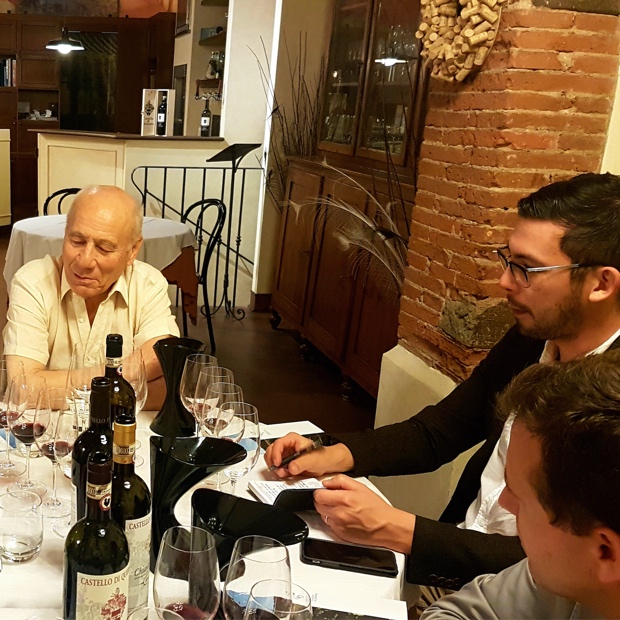
Castello Di Querceto Chianti Classico Gran Selezione DOCG 2014Tuscany, Italy (938738, $47.95, WineAlign)

Il Pichio makes reference to the old name of the land housing the vineyard. It’s the same sourcing and winemaking for what was Riserva reinvented now as Gran Selezione. Big extraction, concentration and rendering, from low yields (700-900g per vine). Amazing consistency, old school, deeply hued, so very structured, conservative. The thread running through is as obvious as any, as sangiovese for Chianti Classico. Drink 2021-2027.  Tasted September 2018

Castello Di Querceto Le Corte IGT Colli Delle Toscana Centrale 2012Tuscany, Italy (Winery, WineAlign)

From the 120 year-old vineyard planted by Alessandro Francois’ grandfather, this too is 100 per cent sangiovese with Querceto’s ultimate level of silky smooth consistency and deep purity. It’s a very perfumed sangiovese with tannins matching the texture though they are not shy to assert their power and grip. “Because the soil on this side of the valley is special,” he notes, but tough on the wines when they are still young. The seven or eight year mark is really the place to start. Drink 2021-2029.  Tasted September 2018

Cecchi, Castellina in Chianti

Cecchi Chianti Classico DOCG Storia Di Famiglia 2015, Tuscany, Italy (540922, $17.95, WineAlign)

Fresh cherry and also dusty, plus savoury and accented with acidity. Variegated fruit, ripe, riper and approaching the maximum ripe, managed by adjustments necessary to find the balance. A developed tang unique to this accumulation. Keep the pasta pairing simple.  Last tasted September 2018  famigliacecchi  

It’s an amazing story in a glass this Storia di Famiglia. It’s a long family history with Chianti Classico roots as long as any and it shows. This ’15 is quite classico for the vintage with exceptional fruit and it takes every if full advantage of the year’s generosity. So much so the fruit is darkened to black, perhaps of raspberry but surely at optimum phenolics. There is a corresponding minor Bretty meets acetico notation but also the richness of reduced balsamic, tar and candied roses. It’s almost truffled and figgy, not quite, but it will go there in a year or two. Lots of interest and character for $18. Drink 2018-2020.  Tasted April 2018

Cecchi Chianti Classico Riserva DOCG Di Famiglia 2015, Tuscany, Italy (Winery, WineAlign)

Profile very consistent to the Annata if ostensibly fortified by the extra time in large barrel. The similarity of varied ripenesses makes for a layering, like red cherry trifle with alacrity and high acidity. Drink 2018-2021.  Tasted September 2018

Cecchi Chianti Classico Gran Selezione DOCG Valore Di Famiglia 2015, Tuscany, Italy (Winery, WineAlign)

The consistency continues for the Famiglia story, from Storia Annata through Riserva and into Valore Gran Selezione. The fruit for all three Castellina in Chianti 2015s shows many layers of ripe stylistics and it it this Gran Selezione that shows the most evolution, leaning into a world where balsamico, fig, raisin and lifted aromatics live. The classicism here is noted, the tradition occupied and the conservatism understood. Drink 2019-2023.  Tasted September 2018

Cecchi Villa Cerna Chianti Classico DOCG Primocolle 2015, Tuscany, Italy (573501, $19.95, WineAlign)

The aromatics dole out sweet sangiovese candy and also a rose petal potpourri with fruit not only bled from a uniform ripeness but also a soil-gifted freshness that can’t be denied. This is red fruit, marl lifted sangiovese, bright, lightning tart and extracted, though just rightly so. The palate brings an extra level of fresh, like biting into a peach or a red plum with ideal acidity. Lovely example of traditional Annata set in a modern world. Drink 2018-2021.  Tasted September 2018

Cecchi Villa Cerna Chianti Classico Riserva DOCG Primocolle 2015, Tuscany, Italy (Winery, WineAlign)

Riserva from Villa Cerna is wildly lifted and edgy sangiovese climbing skyward with unresolved volatility. This high level of freshness and pulse is the conduit for red, red fruit not yet ready to be first to speak. This follows the trail blazed by the Annata but with the highest of acidities. It’s not typical for Riserva (if there is such a thing) but it is an example of one that needs a few years to settle into its tight, tart and energetic skin. Long finish confirms the plan. Drink 2020-2025.  Tasted September 2018

Cecchi Villa Rosa Chianti Classico Gran Selezione DOCG 2015, Tuscany, Italy (Winery, WineAlign)

These are not the richest and most extracted Chianti Classico and they are truly driven by acidity, a Castellina acidity to be sure, edgy, expected or not. The red fruit is direct and linear lightning, not overly complex and certainly true to consistent form. It’s actually quite amazing to note this form of sangiovese structure as being very specific to commune, very close to the Valore Gran Selezione and recognizable for place as much as any in the entire territory. This will evolve slower than the Valore, in fact I can’t see it changing all that much in the next five years. Drink 2019-2026.  Tasted September 2018

Tenuta Cinciano, Poggibonsi

Tenuta Cinciano Chianti Classico DOCG 2016, Tuscany, Italy (Winery, WineAlign)

The Annata is 100 per cent sangiovese from 8-12 months in the largest of the estate’s Slavonian oak barrels. An estate who’s oenologist (Stefano Porcinai) who knows clonal selection as well as any in the territory having worked as lead on the Consorzio’s 2000 project. Not to mention training systems and rootstocks. Each vineyard is planted to the right clone matched to the soil and Cinciano has it all; sand, clay, marl, Galestro, marine fossil and sediment, Alberese. Rich red fruit so lifted, edged by blood orange, so red citrus, pomegranate and though wood is in play it’s really about florals and spice. So sharp and tight with plenty of fruit to match the introductory and important tannins.  Last tasted September and October 2018  fattoriacinciano  @fattoriadicinciano

Cinciano is 100 sangiovese from chalky Poggibonsi vineyards at 250-350m of elevation. Youthfully speaking this ’16 sits en retard, reductive and only seems to want to breathe as a deep inhalant of argilo sangiovese. This CC is an even bigger than the average, broader and scope encompassing expression to taste with an impressive ferric intensity. The potential is great. Drink 2019-2025.  Tasted February 2018

Tenuta Cinciano Chianti Classico Riserva DOCG 2015, Tuscany, Italy (Winery, WineAlign)

Riserva comes from the oldest vineyard, averaging 45 years old on soils of more Alberese stone than any other on the property, right in the middle belt, middle slope on a southern exposure. Structure and tannin support intense rich purple fruit but fruit with the great lightning streak and searing acidity of Alberese and what it means. It’s harvested later and with great confidence, made with completely different intention. This goes into smaller Slavonian barrels for longer but it is expressly a matter of expression on behalf of the vineyard. Drink 2021-2028.  Tasted September 2018

Tenuta Cinciano Chianti Classico Selezione DOCG 2014, Tuscany, Italy (Winery, WineAlign)

Only in 2014 the decision was made to use the oldest vineyard’s fruit to blend in with the best grapes to make this 100 per cent sangiovese Gran Selezione because there was not enough quantity to make the Riserva. Floral, mineral, a taste of grapes, sangiovese purity. It’s rich as Gran Selezione should be, with heavy fruit and fine tannin but the oak is merely a spice agent. The clonal selection meeting the later harvest brings a breadth, depth and broad shouldered set of tannin, aggressive but in control. Another unique wine with a connection to the sister and the brother. Same father and mother to be sure. Juicier, with morbido fruit and serious tannin. Drink 2022-2030.  Tasted September 2018

Absolutely lovely, lively and pure sangiovese from Stefano and Andrea @fattoriacinciano ~ coming home with these beautiful @chianticlassico for sure!

Tenuta Cinciano Pietraforte 2012 IGT Toscana, Tuscany, Italy (Winery, WineAlign)

A blend of 40 per cent each merlot and cabernet sauvignon with sangiovese. Aged in French oak barriques and tonneaux, all new. Massive fruit accumulation, ripe and generous, wood all around but very much part of the package, some earthy Brettiness and huge acidity. Enormous wine that may need as much as five more years to settle. Drink 2021-2029.  Tasted September 2018

Colle Bereto, Radda in Chianti

Colle Bereto Brut Rosé Vino Spumante di Qualita Metodo Classico, Tuscany, Italy (Winery, WineAlign)

First disgorgement was November 2008, now 10 years later, this particular bottle was disgorged just two months ago. Skin is maintained with juice for only one night, from 100 per cent pinot noir. Having spent three years on lees this is rich, toasty, biscuit-riveting, red citrus, currant and fine aridity sparkling wine. Beautifully dry, direct and purposed. Drink 2018-2022.  Tasted September 2018  colleberetowinery   @NokhrinWines  Azienda Agricola Colle Bereto  Azienda Agricola Colle Bereto

Colle Bereto Chianti Classico DOCG 2015, Tuscany, Italy (Agent, $31.95, WineAlign)

From the vintage for which the “Dream Machine” is first used, where stems are kept intact and the tramoja (corkscrew) is no longer employed and stems are not disrupted, broken, or led to bitterness. So polished, full, extracted, silky and classy.  Last tasted September 2018

From Radda in Chianti and one of Chianti Classico’s great young, forward thinking winemakers Bernardo Bianchi the wisdom is easily noted, deduced, accepted, considered and abided. Red fruit with an earth’s dusty, cracked crust allows for smells like fresh tiles and the just mixed mortar but that fruit is aching to burst forth. Very seamless for a young Chianti Classico, so this building will stand strong and last through the centuries, which in wine years equates to seven, maybe ten. Terrific sweet acidity, life-affriming sapidity and vitality. As good as young CC gets with the longest, pitch perfect tang in elongation, drift and persistence. Drink 2018-2025.  Tasted at Anteprime Chianti Classico Collection, February 2017

Colle Bereto Chianti Classico Riserva DOCG 2014, Tuscany, Italy (Agent, WineAlign)

The highest quality of polished tannin receives sangiovese’s and more specifically Radda’s raddese acidity, from this shared amphitheatre of a valley for a Riserva silky smooth, integrated and blessed of a Colle Bereto liqueur. Forget Brunello di Montalcino for a while and concentrate on this haut level of sangiovese. Textbook fashion, Vuitton level quality. Drink 2020-2028.  Tasted September 2018

Bernardo Bianchi @collebereto in #raddainchianti @chianticlassico

Colle Bereto Chianti Classico DOCG Gran Selezione 2014, Tuscany, Italy (Agent, $67.50, WineAlign)

The level of richness and further climb up the polished ladder eases onto a cloud with whispering tannin. The Dream Machine is the source of the tannin whisperer and we all listen with the greatest intent. Bernardo Bianchi is the messenger, interpreter and storyteller for this vineyard in the theatre’s warmest spot. The tannins stop here and take a rest. The most accomplished, polished and commercially, fashionable to accountable Chianti Classico. Drink 2020-2028.  Last tasted September 2018

Colle Bereto’s is a Radda in Chianti single-vineyard expression from La Vigna del Convento which lies at the foot of the former Il Convento di Radda, now Casa Chianti Classico. The Galestro soil is surely the catalyst for this 23 year-old block. There is no substitute for the acumen and the hard work that develops such a wise and mature Gran Selezione. Firm, no shortage of virility, fine acidity, finer tannin and exceptional length. Drink 2020-2030.  Tasted February 2018

Colle Bereto Pinot Noir Il Cénno 2015, Tuscany, Italy (Winery, WineAlign)

Interesting how pinot noir translates from these Radda soils, as much parochial and territorial as it may try to be varietal. There is a wild berry meets feral posit tug that confirms the equality and the symbiosis. Generous and delicate, more so than the sangiovese from this estate, which may or not be a sign. Il Cénno. Drink 2018-2022.  Tasted September 2018

Colle Bereto Merlot Il Tócco 2015IGT Toscana Rosso, Tuscany, Italy (Winery, WineAlign)

The first vintage was 2000, after making sangiovese from the vineyard, exclusively for Pinchiori in Firenze, then moving forward to celebrate a varietal other, a merlot. Now merlot is a different animal, softer, fruit sweeter and quite beautifully tender, finessed and lifted. Only the acidity of Radda separates it from itself, “such a mass of motion, do not know where it goes.” Here the most polished and effete merlot in the territory, perhaps or just because, cries Il Tócco, “I have the touch.” Drink 2018-2023.  Tasted September 2018

Dievole, Castelnuovo Berardenga 

Dievole Chianti Classico DOCG 2016, Tuscany, Italy (283101, $23.95, WineAlign)

This third vintage of fermenting in concrete egg tank presents fruit pulled off of vines nestled into a heavily forested property housing five singular sets of vineyards. Though officially part of the Castelnuovo Berardenga commune, Dievole has much in common with Radda because of the effect of those woods on the growing environment. Generosity is not in mimic of wide open space but due to atmospheric depth and breadth. This ’16 marks not just a return but a proclamation of prominence.  Last Tasted September 2018  @dievole  profilewinegroup  @Dievole  @ProfileWineGrp  dievole  Profile Wine Group

The Dievole Annata stands out for 2016 with the sweetest noted fruit, bright, ripe and pulsating. Wow and oh my has this got a bounce in its step. While certainly tart and intense it’s possessive of more pure joy than many, easily avoiding the trappings of over-extraction and over-pressing. Some may find this too electric but what reason could there be not to get excited by such an abundance of sangiovese energy? Drink 2019-2024.  Tasted February 2018

Dievole Chianti Classico Riserva DOCG Novocento 2015, Tuscany, Italy (213926, $37.95, WineAlign)

The generosity of sangiovese’s philanthropy is always inherent but not always respected. So, when a Riserva like this from Dievole is given its sun, all is good in Vagliagli, Castelnuovo Berardenga and Chianti Classico. This vintage and this wine celebrate time, timing, place and commune with style. It’s rich, almost opulently so and balanced, credibly so. It’s deep, elastically elongated so. Notice real fruit boasting of an ideologue’s honesty and traditional results in as much as you’d hope for and even expect. Exemplary is one thing but the steps towards new pioneering make Dievole an estate from which to use words like leader and benchmark. Hard not to see this as a top estate example for Annata. Drink 2020-2026.  Tasted September 2018

Dievole Chianti Classico Gran Selezione DOCG Vigna Disessina 2015, Tuscany, Italy (AgentWineAlign)

Dievole’s Castelnuovo Berardenga Gran Selezione takes the single-vineyard route to express the category. Disessina is the highest vineyard block where the soil turns to a Macigno (sandstone) base littered with soft rocks that lends the originality of a sensory perfume expressly written in a Dievole vernacular. Here the liquid rose petal aroma is rendered through the fine silty earth so that it’s both berry fruity and duff ethereal where delicious lives. The delicate world is an occupation somewhere between dream and reality. The most approachable meeting place is a Gran Selezione middle ground that more examples might want to explore so that greater understanding might exist on the market today. Drink 2020-2027.  Tasted September 2018

Fèlsina

Bella mattina @felsinawines

Fèlsina Vino Spumante Di Qualità Brut Metodo Classico, IGT Toscana, Tuscany, Italy (AgentWineAlign)

This was reviewed before here although from a bottle disgorged a year earlier and from fruit primarily sourced out of 2014.

The sparkling program is taking flight, here from 60 per cent sangiovese, (20) chardonnay and (20) pinot noir. There is really no commercial reason to make this wine (only 9,000-12,000 bottles are produced) so it’s done just for fun, experimentation and learning. It’s a gingery and toasty sparkling wine, remarkably rich with thanks to a 2015 vintage that provided some pretty solid early ripening. The first vintage was essentially 2009, or mainly fruit from that initial attempt. This is 28 months on lees, disgorged in May 2018 and no dosage. Lemon squeeze over baked apples and toasted hazelnuts. Lovely of a certain style. Drink 2018-2020.  Tasted November 2018  felsina_wines  liffordgram  @felsinawines  @LiffordON  @felsina  @liffordwineandspirits

Fèlsina Vino Spumante Di Qualità Brut Metodo Classico 2012, IGT Toscana, Tuscany, Italy (AgentWineAlign)

The vintage was a forceful one although as an early harvested sparkling wine (the chardonnay especially, but even the sangiovese) it carries some ripeness and certainly acidity. The gingered notes are met with plenty of far eastern spice and a mild citrus bitterness. Again the toastiness is a major factor to bring energy and vigour into an arid sparkling wine’s environment of impression and tastiness. Drink 2018-2022.  Tasted November 2018

Fèlsina Chardonnay I Sistri 2016, IGT Toscana, Italy (Agent, $41.99, WineAlign)

The first vintage was 1987, from chardonnay grafted onto Bolgheri trebbiano. “The sisters” refers to the ancient Egyptian instrument known as “sistro” which was agitated by a sound in echo of agriculture. There are 20,000 bottles produced, of and for sunshine, by history, with high level 2016 ripeness and a mellow acidity. Takes a step back from ’15 with more cellulose, unction and conjunctive character. Drink 2018-2020.  Tasted November 2018


Chiara Leonini, Fèlsina

Fèlsina Berardenga Chianti Classico DOCG 2016, Tuscany, Italy (730788, $39.99, WineAlign)

The ’16 continues to be a young and viscous sangiovese, rich in liquorice liqueur and 240,000 to 250,000 bottles are produced from all aspects of the estate. It’s a transparent remark on the Castelnuovo Berardenga varietal vernacular. Tasted November 2018

From the great wide Berardenga open Fèlsina’s is just the Annata to tell us how these snowflakes are all just a bit different from one another, each with a new vintage, redefined temper, starting from singular points of soil interest. The greatest purity and unbridled joy in Chianti Classico sangiovese is found in the young Annata and it is Fèlsina’s that tells a full story. The curative wisdom and variegated stratum as told by thick as thieves though stretched and elastic fruit is just amazing. Drink 2019-2026.  Tasted February 2018

Fèlsina Berardenga Chianti Classico Riserva DOCG 2016, Tuscany, Italy (230722, $38.95, WineAlign)

In 2016 the Riserva is a layered affair with plenty of salumi variegation, of fat and protein well integrated and as a meaty wine it truly expresses the musculature of the terroir. Sangiovese from Castelnuovo Beradenga is many things but it is never copied or emulated like this. Drink 2019-2025.  Tasted November 2018

Fèlsina Berardenga Chianti Classico Riserva DOCG 2015, Tuscany, Italy (230722, $38.95, WineAlign)

Once again I find Fèlsina’s 2015 sangiovese fresher than their ’16, or rather I should say that the ‘16s are possessive of so much structure that they will need more time in bottle than the transparent ‘15s. And yet here you will find the proof that 100 per cent sangiovese from Fèlsina’s Castelnuovo Berardenga soils need time and in fact solicit more patience than most. This combination of generous and gregarious fruit meeting formidable structure is a product of the commune, the micro-terroir and certainly the house style. The ’15 Riserva is recommended with the caveat to insist that a buyer be warned to exercise great restraint. Drink 2019-2027.  Tasted November 2018

Fèlsina Fontalloro 2016, IGT Toscana, Tuscany, Italy (Agent, $101.99, WineAlign)

Fontalloro is a two-headed Toscana red grape creature that comes from vineyards straddling the border between both the Chianti Classico and the Chianti Colli Senesi denominations. It combines sand, silty loam and river pebbles with the limestone and marl of Alberese and Galestro. Here 2016 is accessed with righteousness, purity and high tonality. The acidity is elevating and bright, making for red fruit that shines. Spicy tannins speak to its structure. Drink 2020-2029.  Tasted November 2018

Fèlsina Fontalloro 2015, IGT Toscana, Tuscany, Italy (Agent, $101.99, WineAlign)

The thematic is nearly complete, first for the argument that Fèlsina wines need more time in bottle than most in the territory but also how stylistically they are brighter in 2015. The red fruit from this Chianti Classico/Chianti Colli Senesi mash-up sings from and on behalf of the vintage. It’s a complete wine, from fruit and through acidity into its formidable structure. As for its place in the Super Tuscan-Gran Selezione discussion it’s really an apples to oranges subversion because of not being 100 per cent Classico fruit. Fontalloro stands firm, grippy, alone and should always be given its privacy and space. Drink 2019-2027.  Tasted November 2018

Fèlsina Chianti Classico Gran Selezione DOCG Colonia 2013, Tuscany, Italy (Agent, $208.99, WineAlign)

How Colonia can not be looked upon and discussed as a pioneer would be beyond comprehension. The artist formerly known as IGT or Super Tuscan changed gears and re-joined the band back in 2009. This is the most Riserva of vintages and therefore a perfect sidle up to the Gran Selezione stage. It sings and plays its no wasted notes with confidence, clarity and sangiovese noise. It’s a huge wine with swagger and confidence, not to mention huge amounts of spicy beats. Not an easy wine to appreciate this young. As a rider it equates to Fausto Coppi, Campionissimo, L’Airone (The Heron), patient, calm, tranquil and able to climb uphill. State of grace. Drink 2021-2032.  Tasted November 2018

Fattoria Di Fèlsina Chianti Classico DOCG Pagliarese 2016, Tuscany, Italy (AgentWineAlign)

Pagliarese is an older “brand,” from a time gone by, in an area close to Castel’inVilla. The land is 21 hectares (of Fèlsina’s 90) and was once under the consulting auspices of Giulio Gambelli. It was purchased by the Poggialli family in 1995 with the idea to bring the brand back to Chianti Classico prominence. This is the second vintage of the Chianti Classico, of 90 per cent sangiovese with canaiolo and mammolo. The soils are sandier so expect a simpler structure and fruit. It’s a beautiful example of straightforward CC with transparent red fruit. Approximately 20,000 bottles are made. Drink 2018-2021.  Tasted November 2018

Fattoria Di Fèlsina Chianti Classico Riserva DOCG Pagliarese 2016, Tuscany, Italy (AgentWineAlign)

Pagliarese is an older “brand,” from a time gone by, in an area close to Castel’inVilla. The land is 21 hecatares (of Fèlsina’s 90) and was once under the consulting auspices of Giulio Gambelli. It was purchased by the Poggialli family in 1995 with the idea to bring the brand back to Chianti Classico prominence. This is the first vintage of the new revival and in Riserva form takes the red fruit and magnifies its intensity. It’s classic 2015 from Fèlsina with brightness and intensity. Approximately 20,000 bottles are made. Drink 2019-2023.  Tasted November 2018

Fontodi, Panzano in Chianti

Consorzio Vino Chianti Classico President Giovanni Manetti, Fontodi, Panzano in Chianti

Related – Fontodi’s one hundred per cent sangiovese

Fontodi Meriggio 2017, Colli Toscana Centrale IGT, Italy (AgentWineAlign)

The last vintage from which amphora will play only a small role (20 per cent) because in 2018 the number will be 50. Some barrel aging delivers the texture but ultimately freshness and a respite from sun for a rest in the shade. This is the meaning of Merrigio, where the mind takes a break and rids itself of stress.“Everyone thinks sauvignon blanc should be a reductive wine,” says Giovanni Manetti, but it can be wine of complexity, from a vessel and a lees time that can give it richness, especially on the mid-palate. This grows at the bottom of the Conca d’Oro where warm days meet much cooler nights and that diurnal fluctuation delineates fresh developing abilities. From a hot and dry vintage and it’s fresh, popping, yellow fruit focused and with very mature, proper and dedicated acidity. I’ll take a bottle, in the shade. Drink 2018-2022.  Tasted September and November 2018   #Fontodi  rogersandcompanywines    @rogcowines  Az. Agr. Fontodi

Fontodi Chianti Classico DOCG 2015, Tuscany, Italy (933317, $36.95, WineAlign)

More acidity, structure and body comes from Panzano and also a clean and distinct purity. Still working through its liquid chalk, no more than a year away from entering the next phase of its life.  Last tasted September and November 2018

If balance were the ultimate end to all sangiovese means then one nose into this Annata 2015 tells us most of what we need to know. When Giovanni Manetti talks of 2015’s great acidity we may not have been able to inuit or ultimately know what he meant, at least as far as the peer into the collective lens of other wines. Through Manetti’s Panzano focus we now understand. The integration, inclusion and open-armed grande abbraccio of Fontodi’s 2015 talks of fineness, precision, elegance and soft-spoken power. There is the finest of sangiovese dust and the circling of tannic wagons enveloping optimized fruit and bringing the entire family in this wine together. It’s a great vintage for Fontodi.  Drink 2019-2025. Tasted February 2018

Fontodi Chianti Classico Filetta Di Lamole DOCG 2015, Tuscany, Italy (Agent, $35.95, WineAlign)

From Giovanni Manetti’s cousin who has documentation that the family has been in Lamole since 1049. The vintage takes this old vines project to another level, with an inherent understanding of the natural order of Panzano translated over for things specific to Lamole. The Annata from Fontodi’s Conca d’Oro vineyards is cleaner, more easily understood, less dramatic, natural. Lamole is a clean funk that is bred from mountainous terroir, feral and wild.  Last tasted September and November 2018

Lamole, though still wild west and yet underdeveloped is clearly the next important Chianti Classico sub-sub-zone terroir. With so much untapped potential it is Giovanni Manetti’s of Fontodi that speaks the earliest, clearest truth about such capabilities. Not that we want to see too quick an exploit of this unique micro-climate and geological wonder but the insatiable thirst of curiosity begs to know. What earth gets into, inside and beneath this sub-strata is dramatic and so bloody personal. It’s a thing of forest floor, rock interface, space and sky, all encompassing, with the filtered, dappled light of sangiovese all pervasive and ethereal. Great chalk and dust particles visible to the naked eye in those streaks of lightning acidity and fine tannin swirl to lightness of being. Though 2014 is a sangiovese of great brood, flavour and commercial appeal, now there is greater potential. This ’15 is perhaps the first Fontodi of Lamole that has crossed into the true reality of the territory. Drink 2019-2025.  Tasted February 2018

Fontodi Dino IGT Toscana Centrale 2015, Tuscany, Italy (AgentWineAlign)

Here the sangiovese taken from the higher elevation section of the vineyard in the Conca d’Oro just below the village of Panzano. Named after Giovanni Manetti’s father, Dino is aged for a minimum nine months on skins in amphora and not just any but in the “orci,” with Fontodi clay made by the Manetti family. Dino is a reflection on life and the lessons learned through the generations and for Manetti it’s about a modern look using ancient tools. The polymer chain development of tannins is completely different, here with an early and on repeat cycle occurrence of oxygenation, along with several layers of protection. Such unique tannins and structure aboard great richness and yet intrinsically in proviso of necessary freshness. It’s so chewy and almost crunchy but in an airy nougat or savoury meringue meets panetone kind of way. Dino stands singular, sturdy and go it alone. Drink 2020-2027.  Tasted November 2018

Fontodi Flaccianello della Pieve IGT Toscana Centrale 2015, Tuscany, Italy (Agent, $147.95, WineAlign)

A wine with its roots in 1981, amidst the birth of the Super Tuscans during strict regulatory times. First made as a breaking the rules reaction to be the finest wine from the estate. It could be a Chianti Classico, which is how it is made and de-classified the day before bottling. Born, raised and rebelling just before it goes out to the world. It will come back to the appellation, along with Percarlo, Tignanello, Cepparello, Fontalloro and many others, when the solution is agreed upon and the time is right. “I’m a dreamer,” says Giovanni Manetti. He’s not the only one but he is the one to imagine the possibilities and the changes. Flaccianello the 100 per cent sangiovese is the finessed, salty and sexy one although in 2015 there is no love lost between its vintage and its soul. The quality of the tannins are some of the best ever. Such a strong character for the pure IGT and although some 15s are overly generous, Fontodi’s are stronger, bolder, polymerized and in exhibition of greater intensity. Even Flaccianello needs much more time, however, beginning in 2013 the time in small barrels was reduced and here by 2015 it’s 18, no longer 24 months. Astringency be gone and fruit quality so high the result is a eureka one, with perfume in aromatics brought to the highest quality. Finally Giovanni, you are on to something. Drink 2021-2034.  Tasted September and November 2018

The boys at Fontodi


Fontodi Chianti Classico Gran Selezione DOCG Vigna Del Sorbo 2015, Tuscany, Italy (Agent, $85.95, WineAlign)

From the rocky parcel of 50 year-old vines, planted facing south by southwest. The fruit concentration is obvious, a rising tide of high quality consciousness that raises the bar for all. The tannins are exceptional in their tight-grained coiling, wound like fishing wire around a spool. Some of Fontodi’s darkest cherry fruit is here, along with real genuine leather and a chef’s purposely dehydrated fennel powder meant to foil and compliment a deeply rendered demi-glacé, slicking out from beneath the arrosto di cinghiale. The 2015 Vigna del Sorbo is a meaty wine, il corso principale del pasto. Drink 2021-2032.  Tasted November 2018

Fontodi Chianti Classico Gran Selezione DOCG Vigna Del Sorbo 2014, Tuscany, Italy (Agent, $85.95, WineAlign)

As a racer the ’14 Vigna del Sorbo might as well be Giuseppe (Beppe) Saronni, winner in 1978 of three stages in the Giro d’Italia, 24 overall and champion in 1979 and 1983. In 1982 he won the world cup with Paolo Rossi. Sorbo is a global sangiovese, the people’s “campione,” beloved sprinter, collaborator and legacy definer. Today the sangiovese from Fontodi’s Conca d’Oro vineyard smells like rabarbaro (rhubarb), black cherry and cut grass. Beautiful combination.  Last tasted September 2018

The older vines are between 52 and 54 years old, the first vintage being 1985 and until 2011, contained some cabernet sauvignon, vines that have since been pulled out. The now site-specific, 100 per cent sangiovese Vigna del Sorbo may have been muscular in 2012 but no such hyperbole exists in 2014. The vintage determined this and despite the deep black cherry chalkiness the true spirit and stripped down honesty of sangiovese is in display. Purity has returned, floral like an artistically-rendered natural, realist and perpetual field of flowers in bloom, in installation, of violet light and rose-scented glass. I can imagine drinking this for decades, with its albarese-galestro saltiness and effortless concentration. Sometimes sangiovese never relents and at the same time never tires. Meraviglioso. Drink 2020-2038.  Tasted September 2017

Fontodi Chianti Classico Riserva Vigna Del Sorbo 2004, Tuscany, Italy (AgentWineAlign)

Carries 10 per cent cabernet sauvignon with the old vines sangiovese and at this 14 year stage it’s now into the denouement of its secondary character, a period that still has three to four years remaining. Umami ushered with no rush or rapid heart rate on the pulse of acidity begins its full swing, with mushroom and truffle on the horizon. The destination is still a matter of parts unknown further on down the road. Quite a firm vintage by tannin still leaving its grip on the plum meets wild strawberry fruit. Drink 2018-2028.  Tasted September 2018

Fontodi Chianti Classico Riserva Vigna Del Sorbo 1993, Tuscany, Italy (AgentWineAlign)

The vines in 1993 would have been half the age they are now and this from a cooler, slightly wet but not too rainy a season. A slow-ripening vintage with high acidity. The wines were tight and rigid for many years and tannins mostly unrelenting. This from around the time that the vineyard was beginning to show how it would turn out something different every vintage and so a young Giovanni wanted it to be a single-vineyard wine. This is fresh with striking acidity during all stages of its enjoyment. It’s airiness shows at the very beginning and then returns full circle, upon and with linger at the finish. The earthiness runs through but also plays second to the liqueur and especially that acidity. The direct explanation comes from the maker himself. “The fresh finish (of the 1993 wine) should be the trademark of Chianti Classico wines.” Drink 2018-2024.  Tasted November 2018

Isole e Olena, Barberino Val d’Elsa

Isole e Olena Chianti Classico DOCG 2016, Tuscany, Italy (704346, $34.95, WineAlign)

Was finally bottled in July, to be released in February. “I like 2016, it’s a very different vintage.” As usual there is 15 per cent canaiolo mixed in. Why Canaiolo? “Because it’s from here. And it’s a late ripening variety like sangiovese, and also not heavy and jammy like merlot.” Canaiolo is like sangiovese in that it must be selected and used in very particular ways. Paolo’s is actually a darker depth of fruit from 2016 while the spice is so much more sophisticated. There is so much wisdom now, more than even before and a calm, settling depth about this wine.  Last tasted November 2018    #isoleeolena  @HalpernWine    halpernwine  Isole e Olena  @halpernwine

Chianti Classico 2016 is composed of 80 per cent sangiovese, (15) canaiolo and (5) syrah, which since the 1980s has always held a spot, in fact it may have been as much as 10 two plus decades ago. Paolo de Marchi explains.”Syrah in my opinion, was really about thinking, about blending in an earlier ripening variety.” It also added colour, not for quality necessarily, but for pleasure. “If I were a consultant I don’t think I would recommend to plant it anymore.” But Paolo loves it, its bright acidity and lower pH, and loves the warmth. You can feel the liquid peppery hug from the combination of canaiolo and syrah in the constitution of this CC and now a new texture evolved from a traditional one, clearly passed on through generations. It is spoken in the clarity of this 2016, but it has taken decades to arrive here. Finessed, soft tannins and an effulgent acidity wrap fruit chewy and yet very crisp. Singular again and alone but quicker to please, at least for now. Perhaps it too will shut down in 2019. Perhaps not. Drink 2019-2028.  Tasted February 2018

The Galestro of Isole e Olena, Barberino Val d’Elsa

Isole e Olena Chianti Classico DOCG 2016, Tuscany, Italy (704346, $34.95, WineAlign)

Confirms the spice that is so layered by Galestro and Alberese but also 15 per cent canaiolo. It’s sangiovese, place of origin, San Donato and the accumulation of grapes grown in this set of ridges in and around Olena. Certainly more of a sour-sapid note in this ’15, a higher tone and more effusion than ’16. At least in terms of Isole e Olena.  Last tasted November 2018

Paolo de Marchi’s Annata is not exactly the most typical ’15 because of its unabashed sapidity, still a bit reductive out of origins in freshness incarnate, with acids burgeoning and expanding in the mouth. Liquorice and carob flavours climb on top of the lingering smell of balsam wood. Full and expansive, intense and bigger than many though a right-proper texture it most certainly delivers. “This is only one-third of the potential of the vintage,” says De Marchi about how it is showing a year and a half in, now imploding and beginning to shut down. This seems to be the trend in Paolo’s wines, fresh and vibrant just when and after being bottled, then protective of themselves before turning into something beautiful once again. This will develop into a decades long lived Chianti Classico. Drink 2020-2033.  Tasted February 2018

Isole e Olena Cepparello 2015, IGT Toscana, Tuscany, Italy (25650, $108.95, WineAlign)

Many believe you can’t go home again and this 100 per cent sangiovese is one of the original locals, along with 11 (or more) Super Tuscans that in many ways are no longer, nor for arguments’ sake should be. As such Cepparello is one of the wines destined to lead a literary, intellectual or at least historical return that says you can go home again. Home to Chianti Classico and specifically here, Olena as part of San Donato. This is an exceptional Cepparello, seamless, blessed of pure, perfectly phenolic fruit, unblemished, stylish and with pitch perfect acidity. What else can be done here that is hoped for, wished for, dreamed of or wanted? Feels like home. Drink 2020-2032.  Tasted November 2018

Isole e Olena Chianti Classico Gran Selezione DOCG 2013, Tuscany, Italy (AgentWineAlign)

Gran Selezione as a matter of assemblage. “It can come from one of two ideas in your heart but why don’t we take the experience of the Super Tuscan and shift the quality of the blend. To fix the ups and down of sangiovese?” The words of Paolo de Marchi. “What is Chianti Classico? It is the beauty and the transparency of the acidity. I’m trying to solve the idea of Gran Selezione myself. I don’t have answers yet.” He continues. “I’m not at war with anybody anymore, as long as there is quality.” So 2013 is simply that, 2013, exaggerated with great hyperbole from Paolo de Marchi’s world. It’s identifiable as such, perfectly sour in seamless connectivity to itself and then place from where it came. Intense and architectural structure.  Last tasted November 2018

When the Gran Selezione 2013 was in the conception stage there was “the search to integrate the experience of Super-Tuscan into the research of sangiovese.” The acidity is even higher in this ’13 than the same vintage Cepparello, because of 90 per cent sangiovese. Something textural is ganache oozing, connected to an espresso-noted and tobacco waft, followed by such spice. This is a moist intense expression of GS, likely needing 10 years to settle in. Long and exciting, plugged in and pulsating. Drink 2022-2032.   Tasted February 2018

Isole e Olena Chianti Classico Gran Selezione DOCG 2010, Tuscany, Italy (AgentWineAlign)

According to Paolo de Marchi Gran Selezione “has to be a wine of Super Tuscan roots, set in a Chianti Classico setting.” Just a little bit more than 80 per cent sangiovese with cabernet sauvignon and syrah. The acidity and transparency is Chianti Classico while the gentler touch is in a way, not. This turns the entire Gran Selezione idea on its head. It’s the antithetical one, in opposition to what or where the category seems to be going but at the same time fully entrenched within the ideal and the rules. It’s a rich and complex liqueur, truly red cherry and new leather, truly high-toned and truly a matter made by a master of assemblage. Truly Gran Selezione. From and for a moving target, out of vineyards and through the cellar. At least in terms of today. The enigma, the past and the future. Puts the question before the answer.  Last tasted November 2018

Isole E Olena Gran Selezione 2010 graces a factor in which “the blend lifts up the quality,” a noble venture or undertaking that balances the angles and trips into light. The reductive one is, as per the firm and grippy vintage, tannic and taut, wound still in the present, with the carob and the savour. The minty one, in a way, and with graphite and creosote. Very sapid, tight and intense. The most brooding of the four (’15, ’13 this and ’06). Drink 2021-2030.  Tasted February 2018

Istine

Walking on Alberese with Angela Fronti in her @istine_raddainchianti and #cavarchione Gaiole in Chianti vineyards ~ #chianticlassico #vignaistine #vignacavarchione

Istine Chianti Classico Vigna Istine 2015, DOCG, Tuscany, Italy (WineryWineAlign)

That this Vigna Istine is so different than what comes later out of 2016 shows how this particular site will offer up the most diversity, complexity and multiplicity over a stretch of vintages. Here from 2015 the flowers are in full bloom and the acidity stretching upwards with lift and light. It’s a lovely insight into the beauty of edgy volatility when managed so right. Love how this walks an edge of danger to form a liaison between vineyard, through maker to glass.  Last tasted September 2018

Istine Chianti Classico is made by Angela Fronti out of vineyards set quite high between 480 and 550m, on the road that runs from Radda to Castellina in Chianti. From a great variegation of soils; Alberese, marly limestone, Galestro and some light presence of quartz. A rich red limestone ruby sangiovese is the result, collecting to a mild but notable unctuous liqueur, manageable acidity and tannin. This sharp and correct CC is lovely, well made, so proper. Drink 2017-2020.  Tasted September 2017  istine_raddainchianti  angela_fronti    @istineraddainchianti

Istine Chianti Classico DOCG Vigna Istine 2016, Tuscany, Italy (WineryWineAlign)

Eponymous winery vineyard facing northwest, surrounded by forest at 550m, rocky, steep, full of both Galestro and Alberese, bottled in May 2018 and will be sent to market in January 2019. The dusty, savoury and structured one, from the steep slope and if there is a vineyard that delivers more black olive tapenade and wild earthy complexity, please let me know. This needs time, loads of precious time to get into a charming place. It’s a matter of layers waiting to peel back, air and breath. It’s also a thing of powerful beauty, linear, direct and vines that breathe in the forest and bathe in the morning sun. Harvested third week of October, a month before 2017 and two weeks before what will be in 2018. Submits a new voice into the modern lexicon of Chianti Classico. Drink 2021-2028.  Tasted September 2018

Istine Chianti Classico DOCG Vigna Casanova Dell’Aia 2015, Tuscany, Italy (WineryWineAlign)

Casanova Dell’Aia is the vineyard closest to the village of Radda, thickened by much more clay, facing due south. The mineral being Alberese in limestone chunks and so there is this combination or richness and rocks but through a marked earthiness. The flowery aromatics are certainly there but again, bound up in the notes prepared, presented and presupposed by the soil. It’s rounder to be sure by the direction of vineyard, but also vintage driven. In the end it’s nothing if not handsome, fulsome and looking to achieve a relationship with a char outside and medium rare in, cut two inches thick. Drink 2018-2022.  Tasted September 2018

Istine Chianti Classico Docg Vigna Cavarchione 2016, Tuscany, Italy (WineryWineAlign)

A dramatic vineyard somewhat a distance from Istine (25 minutes return as far as the car drives). Really rocky, full of Galestro and Alberese, bottled in May 2018 and will be sent to market in January 2019. There is a richness to Cavarchione that comes sooner but it’s also a taut and herbal affair with a lower grumbling of acidity than Istine. Ripe and deeply rendered fruit abounds, in waves that build, as if they might accumulate into a tsunami of sangiovese aromatics. It’s also floral, of violets and roses. Sweet balsamic and fine tannin will take this deep. Drink 2020-2027.  Tasted September 2018

Istine Chianti Classico Docg Vigna Cavarchione 2015, Tuscany, Italy (WineryWineAlign)

Time has clearly helped to open up the aromatics of this more generous vintage gifting wine and yet despite this thought I have to say that the vintage variation in Angela Fronti’s wines are not afforded so simple an explanation. Thinking about the differences, comparisons and contrasts in her three single-vineyard sangiovese is truly a complicated matter. All that said this is beginning to drink with beautiful pulchritude and gentility. Also with Gaiole’s acidity, savoury and intense.  Last tasted September 2018

Angela Fronti produces three single-vineyard Chianti Classico, this being the one from Vertine in Gaiole. She began vinifying her three parcels separately in 2012 but also makes a general Annata and a Riserva that combines the three. The real passion comes through in these single expressions and Cavarchione might just be the the most impressive, at least in this vintage, even if it happens to be the outlier so far from the Istine estate. Precocious wisdom born of age-old dispensation is what drives this sangiovese, just as it does in the Vigna Istine (between Radda and Castellina) and the Vigna Casanova dell’Aia (near Radda). Cavarchione shows deep wisdom, perfect impression and with an eye looking forward for a terroir reveal. It’s an intensely calm sangiovese and while this is not as immediately drinkable as the Annata ‘normale’ it is not far from warming up and bringing the heat. Drink 2019-2024.  Tasted February 2018

Monte Bernardi Chianti Classico DOCG Retromarcia 2016, Tuscany, Italy (Winery, WineAlign)

Retromarcia is like the Swahili pole, pole, a reminder to us all to slow down, gear down, chill out, take it easy. This Annata has been a 100 per cent, Panzano in Chianti estate grown sangiovese since 2010. The fruit is some of the sweetest and purest sangiovese out there, with a scent of anise, a whiff of tobacco. It’s unequivocally molto frutto, with glycerin texture, especially for the frazione annd also nosing spiced floral notes. Fresh, light in the tannic department, light in weight and also in alcohol (13.5). Just a joy to drink. As a match to an Italian racer it’s a sprinter, Gino Bartali, Cavaliere di Gran Croce, Gino the Pious, 1950 winner in San Remo. Drink 2018-2021.  Tasted September 2018  michaelschmelzer  #montebernardi  @montebernardi  @Michael_MonteB  @montebernardi  Michael Schmelzer 

Azienda Agricola Montefioralle, Montefioralle-Greve in Chianti

Montefioralle, Greve in Chianti

Montefioralle Chianti Classico DOCG 2016, Tuscany, Italy (Winery, WineAlign)

Harvested at the end of September from the warmest and most gracious gifting vintage. Stock in colour may be unnecessary but oh so beautiful this one, deeply hued, rendered of a purple that’s really just perfect. Grace in acidity meets depth of fruit and such polish. There is nothing rustic about this and yet the perfumed meets spice profile is exacting and pure for this Montefioralle terroir, which incidentally is three hectares of planted vineyards. Silk in sangiovese, honest and pure. Drink 2019-2025.  Tasted September 2018  montefioralle  @MontefioralleWi  @montefioralle  Lorenzo Sieni

Montefioralle Chianti Classico DOCG 2015, Tuscany, Italy (Winery, WineAlign)

“The year, in my opinion, was too hot,” explains Lorenzo Sieni. “We don’t have perfect tannin in this vintage.” At least not for the Annata made from younger vines. More than one year in bottle now, still nervy but the levels of phenolic ripeness and juiciness are exceptional. More firmly structured than many ‘15s because of the place, the altitude and the solar exposure. Striking acidity brings about the balance. Drink 2019-2024.  Last tasted September 2018

Perhaps this vintage is necessary to gain an understanding of Montefioralle or perhaps it was always there and a connection just needed to be found. The inhalant of elemental abstraction is remarkable and singular so let us open the discussion about the interest and in fact the necessity for Montefioralle. Just gorgeous from a fruit perspective, dusty and rising in tone with breaches considered and levels touched but never crossed. The risks are many with the rewards justified, palpable and great potential comes as a result. Check out Montefioralle. This tells you why. Drink 2019-2025.  Tasted February 2018

Montefioralle Chianti Classico Riserva DOCG 2015, Tuscany, Italy (Winery, WineAlign)

So very young and powerful, just a few months in bottle. Primary and beautifully perfumed with the liquified deep fruit chalk of the frazioni and a hit of exotic spice. An intensity that ’14 just did not show and the polish we know to be the kind mastered out of Montefioralle by this passion project house. The liqueur is again one of textured silk, a viscosity to nearing the vanishing point of glück and in the end, total domination. Drink 2019-2024.  Tasted September 2018

Montefioralle Chianti Classico Riserva DOCG 2014, Tuscany, Italy (Winery, WineAlign)

“The only way to increase the quality was to decrease the quantity,” is Lorenzo Sieni’s explanation of the vintage. Plenty of cutting (40 per cent) led to 1,800 bottles produced, “but I’m very proud of the result.” True liqueur and it’s actually begun to show some secondary character, dried fruit and a hint of porcini and such, certainly not typical but that was this vintage. Intense perfume, high liqueur, incense, peppermint and smells of salons and apothecaries. A wild Riserva ride. Drink 2018-2022.  Last tasted September 2018

Montefioralle is a deeply felt sensation of sangiovese preservation bringing everything that is Montefioralle within Greve with power and grace. Such fruit wealth is remarkable for 2014, distinct from its geological birthing and powerful to the end. Oh how this celebrates a zone within a zone. Drink 2019-2025.  Tasted February 2018

Montefioralle VinSanto del Chianti Classico DOCG 2014, Tuscany, Italy (Winery, WineAlign)

From trebbiano and malvasia at a sugar content of 129 g/L, soft, lighter, in balance with its acidity. Nothing heavy or cloying, noting peaches and apricots, perfect for a bite of biscotti. Only three years of aging, the minimum, for a light and fresh VinSanto. Thanks to Carlo in his element inside the Vinsantaia. Drink 2018-2022.  Tasted September 2018

Monteraponi, Radda in Chianti

#monteraponi #raddainchianti

My first visit with Michele Braganti and Alessandra Deiana @monteraponi in Radda takes me back to the genesis of the Chianti Classico script. Though having often told many tales of others, I was perhaps not ready to assimilate this level of understanding until this time. Things do now in fact make more sense than they did before and many new tales will be told.

Monteraponi Chianti Classico DOCG 2016, Tuscany, Italy (Agent, $42.60, WineAlign)

Michele Braganti’s 2016 Annata is 95 per cent sangiovese with canaiolo, certified organic, off of the youngest (9-15) year-old vineyards. “Here is Radda,” he insists. Generally speaking at Monteraponi “the stone is highly rich in stone,” which sounds like a proverb and believably so, plus the altitude does not allow for Michele to make powerful wines. It’s cold here, even in September it can be five degrees at night. Acidity comes from structure and the fruit walks like un funambolo, a tightrope walker. It’s both linear and climbing uphill. This is red limestone lightning sangiovese of absolute purity, transparency, honesty and connectivity. To the land. Drink 2019-2029.  Tasted September 2018  monteraponi  deianaalessandra1  @Monteraponi  @Cavinona  @Monteraponi  @cavinona

Monteraponi Chianti Classico Riserva DOCG Campitello 2015, Tuscany, Italy (Agent, $109.27, WineAlign)

From the Campitello cru, an existing vineyard inherited by Michele Braganti’s father when he purchased Monteraponi in 1974. A sangiovese (90 per cent) existential storditore with canaiolo and colorino. From Alberese and Galestro soils, the combination of which is not lost on the veritable intuitions of multiplicity. It makes for the most structured of these wines. Multiply the purity and the direct connection to place and this is Campitello. The only Riserva anywhere in the territory to deliver this particular combination of transparent, luminescent lightning red fruit and structure. Drink 2020-2028.  Tasted September 2018

With Michele Briganti

Monteraponi Baron’Ugo 2015, IGT Toscana Rosso, Tuscany, Italy (Agent, WineAlign)

Michael Braganti changed from DOCG to IGT in 2012 Why? The simple fact of rule because at 12.5 it did not qualify for Chianti Classico and so it had to be Toscana Rosso. He was a very famous man this barone named Ugo, placed in heaven, not hell, by Dante Alghieri because of what he did for Florence. The Chianti farmhouse of Monteraponi once belonged to Earl Ugo, Marquis and Governor of Tuscany. The vineyard was planted by Michele’s father in 1974, copying the grapes of Campitello; sangiovese, canaiolo, colorino, trebbiano and malvasia. It’s just the vineyard that separates it, that and the Bourgogne bottle. Purity again, of place. Drink 2020-2028.  Tasted September 2018

Ormanni, Barberino Val d’Elsa and Poggibonsi

The answer to what is @chianticlassico could very well start with these pure sangiovese of #fattoriaormanni ~ #poggibonsi #barberinovaldelsa

Ormanni Chianti Classico DOCG 2015Tuscany, Italy (Winery, WineAlign)

The traditional meets the modern, forward and progressive at a crest, a poggio point from a one year aging in large cask meets used barrel. Precise and pinpointed best describes this savoury sangiovese of ripe fruit that is elongated by elastic phenolics and tannins. The altitude (400m), windswept vineyards and locale make for late ripening. And so a warm and generous vintage like 2015 is so in control, more consistent and wise from this estate. Drink 2019-2022.  Tasted September 2018

Ormanni Chianti Classico Riserva DOCG Borro del Diavolo 2015Tuscany, Italy (435149, $42.95, WineAlign)

Fruit from the Borro del Diavolo vineyard and from the nearby Montignano vineyard see only small barrels, new and 2nd fill are used to age the Riserva. Extremely useful and far from any open door at this mark so first thoughts say don’t even try to go there now. The vineyards are teeming with both Galestro and Alberese so the structure is both fortified and elastic. This is Riserva built on grape and terroir, purely, inextricably, truly Barberino Val d’Elsa on the edge of Poggibonsi. Transparent, savoury, grippy and serious. After 20 minutes the fruit seems to sweeten and allows this to open itself up for consumption. Two years will see to it blooming immediately upon opening. Drink 2020-2028.  Tasted September 2018  #fattoriaormanni  rogersandcompanywines    @rogcowines  @fattoriaormanni  @rogcowines

Ormanni Chianti Classico Gran Selezione DOCG Etichetta Storica 2012Tuscany, Italy (Winery, WineAlign)

A very wise, established, traditional, clean and advancing sangiovese in Gran Selezione clothing. There is a deep understanding and a subtlety in this wine, from a warm yet firm vintage, just now softening, integrating and getting ready to show its true abilities. This from a vintage for drinking and for waiting. So sweetly savoury, crisp, juicy, chewy and cerebral. Drink 2019-2027.  Tasted September 2018

Ormanni Canaiolo IGT Toscana Vino Biologico 2017Tuscany, Italy (Winery, WineAlign)

Fresh to a startling point, juicy, crisp and liquid chalky. Simple and effective acidity with negligible tannin. You can see how canaiolo would add juiciness and another level of savoury to sangiovese. Drink 2018-2020.  Tasted September 2018

Fattoria Pomona

Fattoria Pomona Piero Rosso IGT Toscana 2016, Tuscany, Italy (WineryWineAlign)

The work of Monica Raspi, veterinarian transformed into winemaker, her mother Inga, on a property housing an abandoned brick factory deserted after the owner lost money to horses. The founder was Bandini, great grandfather who purchased the estate after it sat empty between the 50s and 80s. The work is rounded out by Monica’s husband Enrico, Rheumatologist and cook, he of a palate extraordinaire. Here in Castellina in Chianti where fruit from the lowest part and youngest section of the vineyard offers its pure, raspy, bright red cherry sangiovese, richer than you might expect and of “hair combed just right.” It’s IGT that “came out with its soul untouched.” One day it will finish growin’ up and become Chianti Classico. Drink 2018-2020.  Tasted September 2018  fattoria_pomona    @fattoriapomona

Fattoria Pomona Chianti Classico DOCG 2016, Tuscany, Italy (WineryWineAlign)

Essentially 100 per cent sangiovese, from the better and higher part of the vineyards planted in 2004 and 1998. From hot days, cold nights and eight months in barrel. Beautiful. Fruit, fruit and more fruit. Calcareous marl and Alberese stone interchangeable for the make up the vineyard and the house, with pietraforte, quartz, everything all in, together in conglomerate. In the end, combined with organic farming and low pH, there is a salty vein running through the deeply rendered red fruit. Sapidity unique to this vineyard. Perfect with caponata, carpione and pecorino. This Annata needs to be drawn from every part of the estate because it’s terroir is one of the most variegated in all of the territory. Drink 2018-2022.  Tasted September 2018

Fattoria Pomona Chianti Classico Riserva Bandini DOCG 2015, Tuscany, Italy (WineryWineAlign)

From the last of the vineyard planted in 1987, now ripped out in 2018 mainly because of it having grown older and tired and having come into a time of lowest of the low production. ’Twas the Vignavecchia. This takes the conglomerate of soil and intensifies the sangiovese, by way of 15 months in grandi botti, then transferred to concrete for nine months before bottling. “Needs to be more elegant, not heavier,” insists Monica Raspi. That it is, in balance, far from dense and weighty, pretty, in pulchritude, with not a whisper noted by the wood. Wonderfully, respectively and gently rendered Riserva. In 2016 it becomes just Pomona. Drink 2019-2027.  Tasted September 2018

Principe Corsini – Le Corti

With @principecorsini at Le Corti and the many varied shades of his sangiovese. The genesis of San Casciano, right here, as always, right now.

Principe Corsini Le Corti Chianti Classico DOCG 2015, Tuscany, Italy (400861, $26.95, WineAlign)

“A gate vintage,” smiles Duccio Corsini, wryly I might add. Nice in quantity and quality. Aged in concrete vats, from 95 per cent sangiovese, with colorino. The rich, dark, handsome and polished blend. The level of spice is quite amazing when you consider there is no wood involved.  Last tasted September 2018  principecorsini  artisanal_wine_imports  @PrincipeCorsini  @ArtWineGuru  Principe Corsini  Artisanal Wine Imports

Duccio Corsini’s sangiovese is the amenable one in the name of Villa Le Corti 2015, rich and fully developed, chalky and chewy as only San Casciano can be, There is extraction with a purpose towards a rendering of the most modern expression leading to great appeal. The fine-grain in the structure will help to lead this down an even and timely developing path. Drink 2018-2022.  Tasted February 2018

Principe Corsini Le Corti Chianti Classico Riserva DOCG Cortevecchia 2015, Tuscany, Italy (429117, $47.95, WineAlign)

“The old court” Riserva from the modernist’s gateway vintage is another ’15 from Duccio Corsini up there in quantity and certainly quality. Aged in grandi botti the 95 per cent sangiovese is augmented by a traditional colorino, as per the usual law laid out by these courts. Similar spice to the Annata though expanded and sonorous, despite such a different élevage, here out of large barrels. The texture adds to the ideal, going wide and thickening into a consistency likely or at least imaginatively bled from a river stones terroir. Here the land augments well-extracted, full-on San Casciano hillsides fruit. Youthful remains the understatement, possibilities the attenuazione. Drink 2021-2028.  Tasted September 2018

Principe Corsini Le Corti Chianti Classico Gran Selezione DOCG 2015, Tuscany, Italy (429109, $69.95, WineAlign)

“A gate vintage,” informs Duccio Corsini, “nice in quantity and quality.” Aged in tonneaux, 80 per cent sangiovese and (20) merlot. Don Tommaso has been intense and brooding in the past but now here things have climbed to another level. The fruit extraction is optimum, dense and intense. The fine chocolate coated dark fruit swirls into concentrated acidity and welcomes silky, bejewelled tannin. There’s a smoothness unlike any other in San Casciano and rarely matched anywhere in the greater territory. Drink 2022-2030.  Tasted September 2018

Principe Corsini Le Corti ZAC IGT Toscana 2015, Tuscany, Italy (WineryWineAlign)

Zac is the most important wine in Le Corti’s portfolio, a 100 per cent sangiovese that will always serve to remember the light of family and San Casciano life. It could be speculated that the greatest attention is paid to this by Prinicipe Duccio Corsini, the most pragmatically cerebral of all Chianti Classico winemakers. “Think of Don Tommaso with no merlot and taste ZAC,” he asks. From Gugliaie Vineyard, a single cru, and brother, or in this case sister to Don Tomasso’s Gran Selezione, Zia-Anna-Corisini, sister to Duccio’s grandfather. Without merlot it is truly naked, edges not rounded, acidity making for a mouth watering rise, spray and fall, then into the cognizance of ultima purity unearthed. It’s a pure San Casciano expression within the context of a Gran Selezione culture, but in the end it is the fruit of a Cru to come as a child would and will always conjure the best of memories. Innocent, pure and sweet. Drink 2020-2029.  Tasted September 2018

Tenuta Marsiliana Birillo 2016, IGT Costa Toscana Rosso, Tuscany, Italy (WineryWineAlign)

This Maremma estate owned by Prinicipe Corsini – Le Corti (of Chianti Classico) is a hot and dry climate, mainly flat though with a wash down of metallic red iron soil through the fields. Aged one year in barrel the liqueur is lush, welling, oily and parochially incredible. The blend for anywhere is 60 per cent cabernet with (40 merlot). Fresh, high acidity, iron fisted but not in or of tannin. High value quotient. Drink 2018-2020.  Tasted September 2018

San Felice, Castelnouvo Berardenga

San Felice Chianti Classico DOCG 2016, Tuscany, Italy (282996, $19.95, WineAlign)

Sangiovese with colorino and pugnitello. The little fist bunches once included for added colour but that is no longer the need. It is now the quality of the tannin and ulterior complexities that keep it in the blend. The top quality vintage is a spice machine giver, tight, fruity, tart and intense.  Last tasted September 2018  borgosanfelice  chartonhobbs  #BorgoSanFelice  @ChartonHobbs  Borgo San Felice

Particularly standard and middle road taken sangiovese, expressive of ripe annata 2016 fruit, tart and pressed to weight. Filled in and ready for the earliest enjoyment is clearly the intent, from fruit taken full advantage and tannin kept to a minimum. Just a touch of verdant berry intertwine is noted. Drink 2018-2020.  Tasted February 2018

San Felice Chianti Classico Riserva DOCG Il Grigio 2014, Tuscany, Italy (716266, $28.95, WineAlign)

Here 100 per cent Sangiovese from Castelnuovo Berardenga comes across with vintage quality tannin, tight and locked shut, still and not ready to emerge, even at this four year mark.  Last tasted September 2018

Not an easy vintage to create the archetype Riserva Il Grigio but if you are partial to the savoury, slightly cedary, high-toned and charmingly low alcohol exception to the modern Chianti Classico rule then you’ve come to the right place. This sangiovese is as old-school as it gets for San Felice and props are afforded for listening to the vintage wind and coming forward as a messenger for the words whispered by those atypical breezes. This is balanced and correct, taking no prisoners and holding no conference. It’s an as is CCR with confidence and grace. Drink 2018-2022.  Tasted May 2018

San Felice Chianti Classico Gran Selezione DOCG Il Grigio 2014, Tuscany, Italy (403477, $48.95, WineAlign)

The Gran Selezione is minimum 80 per cent sangiovese plus indigenous varieties only, including pugnitello. Very firm, dusty, multi-variegated, tart red fruit and serious in structure. Il Grigio hyperbole in complete mimic of the Riserva with a half year’s extra aging. Might gift an extra three or fours years longevity. Drink 2019-2024.  Tasted September 2018

San Felice Chianti Classico DOCG Poggio Rosso 2007, Tuscany, Italy (SAQ 11213191, $46.25, WineAlign)

Poggio Rosso was the appellation sangiovese that turned into Gran Selezione in 2011, in the second year of the category and creating a second for the estate. The first year having been only one produced from a separate selection. Really developing at this point, with balsamico and mushroom notes coming from the warm vintage after spring frosts and the result being a small crop. Spice notes really exaggerate the cherries and the tannin is quite sweetly intense. Chalky chocolate finish. Drink 2018-2021.  Tasted September 2018

San Felice Vigorello IGT Toscana 2013, Tuscany, Italy (726463, $64.00, WineAlign)

Was a varietal sangiovese for 14 years and is now 35 per cent pugnitello, (30) cabernet sauvignon and merlot plus (5) petit verdot. It’s quite reductive, big, bouncy and settling into a hedonistic place. Very tannic, full of peppery chocolate, demanding and then there is this tobacco, mentholated and graphitic cool quality, complex and intense. Drink 2021-2029.  Tasted September 2018

Tenuta Perano

Welcome #lambertofrescobaldi @frescobaldivini to Chianti Classico. So many reasons to smile ~ incredible vineyards #alberese #galestro #steepslope #gaioleinchianti #tenutaperano #peranoestate #collinedigaiole


Tenuta Perano Chianti Classico DOCG 2015, Tuscany, Italy (Agent, WineAlign)

The second harvest (though the first to enter the market) for Frescobaldi’s Tenuta Perano in Gaiole is a fortuitous one and you have to see these steep vineyards for yourself to believe what possibilities there can be. The unusual situation of a simultaneous release alongside the same vintage Riserva is necessary and understood because the ’14 fruit was de-classified and sold off. Chianti Classico Annata is proper when this much freshness abounds, with high acidity and Gaiole savour. So very and bloody Gaiole and I say this with blood orange in mind. There is also a forested nod and a wink in affinity over the hills to Radda but this remains secure in its Gaiole clothing. The angles, slopes and aspects of Perano’s steepness are echoed in the way this sangiovese ambles across the palate, expanding and contracting as sangiovese likes to and will often do. Temperature fluctuations will also impart this sense of breaths taken in and out. Great intrigue here and with no surprise why Frescobaldi coveted this impressive property. Drink 2018-2022.  Tasted September 2018  frescobaldivini  philippedandurandwines  @FrescobaldiVini  @Dandurandwines  @FrescobaldiVini  @VinsPhilippeDandurand

Tenuta Perano Chianti Classico Riserva DOCG 2015, Tuscany, Italy (Agent, $35.00, WineAlign)

In Riserva the essence of this Gaiole location is continued to be captured, along with a strong Frescobaldi identity instituted for an early defined Perano style. It’s a severe set of vineyard landscapes here and appropriating the place is necessary to making quality sangiovese. The sanguinity and orange citrus aspects speak of the white limestone and chalkiness in the soils, here accompanied by a Riserva glaze, slightly caramelized and charred al forno. The fruit multiplied by earth richness is properly rendered and texturally you can imagine this to feel like elastic pizza dough. Acidity is everything, the key to success and the director of the project. As it should be with sangiovese, Chianti Classico and this place. The focus begins right away with vintage number one and so the future of Gaiole is ensured inclusive with the talents of Frescobaldi. Truly. Drink 2019-2023.  Tasted September 2018

Terrabianca, Radda in Chianti


Terrabianca Chianti Classico Riserva DOCG Croce 2014, Tuscany, Italy (Winery, WineAlign)

Croce is 100 per cent sangiovese 15 months in Slavonian oak and six months in bottle. The richest 2014 CCR in the region or at least the one dying for trying. Smooth and velvet chocolate ganache, with savoury edging accenting a full extractive complement. Big sangiovese. Drink 2018-2021.  Tasted September 2018   terrabianca_winery  profilewinegroup    @ProfileWineGrp  @ProfileWineGroup

Terrabianca Campaccio IGT Toscana 2013, Tuscany, Italy (Agent, $39.95, WineAlign)

Aromas are wild in this sangiovese, cabernet sauvignon and merlot from Radda in Chianti blend aged for a year in French and American oak. The potpourri of Chinese five-spice, clove, violet and mint is extraordinary, Rioja like. It’s a massive nose with an endless supply of scents. Incense and peppermint. Drink 2020-2026.  Tasted September 2018

Terrabianca Campaccio Selezione IGT Toscana 2011, Tuscany, Italy (Agent, $56.00, WineAlign)

The Super Tuscan formerly known as Campaccio Riserva rested for two years in small barrels (French and American) plus one year in bottle. The Radda in Chianti blend of sangiovese, cabernet sauvignon and merlot repeats the potpourri of wild and exotic aromas though with greater glaring hyperbole. The acidity too is exaggerated but funnily enough, not the tannin. The extra year in wood and the specificities of the vintage are to thank. Drink 2018-2025.  Tasted September 2018

Val Delle Corti, Radda in Chianti

A result of our manic research on the quintessential search for #sangiovese in Radda and @valdellecorti. Roberto Bianchi’s sangiovese, now with even more consciousness.

Val Delle Corti Lo Stranieri Rosso IGT Toscana 2015, Tuscany, Italy (WineryWineAlign)

This 60 per cent sangiovese and 40 per cent merlot is bottled to celebrate the estate’s merlot plantings with sangiovese as its host. Now in production for six years (planted in 2000 and then in 2008). “Non complicato,” and that it is, only for IGT, now developed well enough to produce good fruit, a passion play and for pane, salumi, with Radda acidity, “right between the eyes.” Drink 2018-2021.  Tasted September 2018

valdellecorti  @ValdelleCorti  @valdellecorti

Val Delle Corti Chianti Classico DOCG 2016, Tuscany, Italy (WineryWineAlign)

Just bottled and I mean just bottled, a sangiovese of bright red to purple fruit with a 30-40 per cent assistance by what Roberto Bianchi employs through fermentation called “piemontazino,” or macherazione carbonica a capello son merso.” Leaving 30-40 per cent of the fruit in stainless steel tank on skins for three to four months. Tames the Raddesse acidity for the Annata and makes it more than drinkable. In 2016 it’s crushable, back up the truck gulpable. Beauty in sangiovese “questa, è radda.” This, is Radda. Drink 2019-2023.  Tasted September 2018

Val Delle Corti Chianti Classico DOCG 2015, Tuscany, Italy (WineryWineAlign)

“I like the ’15 very much,” says Bianchi and it has been in bottle one year. Classico. Annata. Radda. Holds approximately three per cent canaiolo, as in every year. “We can be good and smart and cunning as we want but the factor of luck is absolutely important.” Climate change affords enormous advantage but the element of luck is key. Lots of luck here. Bright red fruit, so much energy, so much life. Drink 2018-2023.  Last tasted September 2018

Roberto Bianchi’s 2015 is a reserved and restrained aromatic Chianti Classico but there is a subliminal Galestro or Macigno message being delivered here and it would seem to be a grey to darker calcareous rock expression. The fruit is quiet but felt plummy and tart on the palate. This is a bit older schooled but surely carries great presence and length. A rich thorough finish concludes that ride through the mineral life.  Tasted September 2017

Val Delle Corti Chianti Classico Riserva DOCG 2015, Tuscany, Italy (WineryWineAlign)

The 45 year old vines are responsible for this single cru, 100 per cent sangiovese that while older is yet bolder than the barrel sample tasted of 2016. Here you feel the hottest weeks of the summer, less elasticity, fluidity and fluency than that 2016. And yet it is so intuitively elastic, fluid and fluent in mineral rich, marly limestone soil. Here from the Corti Valley on the east facing slope above the river below. Richness, weight and red fruit so specific to this place meets the Radda acidity head on but can’t help but be submissive and respectful. Pure expression of estate, valley and commune. Truly. Drink 2020-2029.  Tasted September 2018

Val Delle Corti Extra IGT Toscana 2014, Tuscany, Italy (WineryWineAlign)

Extra is “a result of our manic research on the quintessential search for sangiovese in Radda and Valdellecorti,” explains Roberto Bianchi. A Riserva of the Riserva, from Chianti Classico vineyards, first done in 2013, now with “even more consciousness.” The formula is a matter of selecting results of barrels that have really done something special. In the future it may come from a cru vineyard, up above the cantina, where the cypress trees grow with a history of producing great sangiovese. Planted in 2017 in the old terraced way to prevent erosion with heat resistant clones to mitigate stress in drought and better for water retention. Here from the challenge of 2014, it is certainly smoother, richer and expressive of more accomplished fruit, with an extra year in really old barrel. Still the acidity. Perhaps when the cru is ready this will become the estate’s Gran Selezione? The future is wide open. Drink 2021-2030.  Tasted September 2018

Vignavecchia, Radda in Chianti

Big love for the #fiasco of @vignavecchiafattoria and even bigger love for the passion, tradition and quality of the sangiovese. Grazie Orsola ~ #raddainchianti

Vignavecchia Chianti Classico DOCG 2016, Tuscany, Italy (WineryWineAlign)

Tasted with Orsola Beccari in Radda in Chianti, from a just about ready barrel sample. The dusty rose and violet perfume, pretty and savoury of a particular Vignavecchi localitá nose. This is the Macigno and the Alberese speaking, of elegance woven through structure. Lovely purity. Drink 2020-2027.  Tasted September 2018  #vignavecchia    @VignaVecchia

Vignavecchia Chianti Classico DOCG 2015, Tuscany, Italy (WineryWineAlign)

Almost no movement in a wine that reached an accord and a fruit-acidity-tannin agreement early in its tenure. It’s still there and not evolving yet. Amazing considering no oak was used. Drink 2019-2025.  Last tasted September 2018

Sometimes there comes along a sangiovese of seriousness and classic nature to explain some things, particularly about the commune and the ground underfoot. Vignavecchia’s is such a Radda in Chianti animal, rooted in mineral traced earth, fruit seeping in its own bled liqueur and the chains of acidity and tannin strung together with inexplicable seamlessness. The fine exquisite character of this sangiovese is a testament to honesty, purity and clarity. This house just travels from strength to strength, with no break in the accord. Drink 2019-2025.  Tasted February 2018

Vignavecchia Chianti Classico Riserva DOCG Odoardo Beccari 2014, Tuscany, Italy (478875, $33.95, WineAlign)

“It’s not a very complicated or complex Riserva,” tells Orsola Beccari. Right of passage is second, third and fourth use barrels, with a small percentage (10ish) of merlot. It’s tight and reductive, at the peak of Radda acidity, perhaps not with fully uniform ripeness and so it is the lack of density that delivers the charm to match the Radda perfume. Paints another Vignavecchia picture. Drink 2019-2025.  Tasted September 2018

Vignavecchia Chianti Classico Riserva DOCG Odoardo Beccari 2011, Tuscany, Italy (478875, $33.95, WineAlign)

There’s almost a Burgundian comparison, the perfume and power, like Volnay, not masculine, but athletic. Like the climbing Cashmere goat, always walking uphill, not up and down, until it will arrive at where it needs to graze and breathe. No oscillation, just a rising. Come on up. Very representative, of Orsola, Odoardo, Vignavecchia and vintage. More impressive than ever before.  Tasted September 2018

A consistent and terrific follow-up to 2010 from old vines in Radda in Chianti, this is warm and creeping north (or south depending on your explanatory orientation) from deep, religious aromatics. Fresh slices of fennel bulb and wet concrete are rich, wet, juicy and vaporous. Sweet acidity and tannin join spicy red fruit from what is ostensibly the most unctuous and deeply tangy sangiovese you are likely to ever taste. This is quite something else, both hedonistically indulgent and propitiously wild and engaging. You had better like it hot and bothered, fleshy, gregarious and sexy. This really has it all. Drink 2017-2024.  Tasted February 2017

Vignavecchia Chianti Classico Gran Selezione DOCG Odoardo Beccari 2014, Tuscany, Italy (AgentWineAlign)

With 10 per cent canaiolo, just from the first, many terraced, closest to home estate vineyard. This has changed since last February, however minor, softened even. Aged in Grandi Botti, 8,000 bottles produced. Will be one of the great 2014 Gran Selezione.  Last tasted September 2018

Vignavecchia’s Odoardo Beccari is the obstinate one showing the first major number of reduction or at least it acts this way relative to nine other examples. Perhaps an opinion is skewed by having been in awe of recent examples or maybe its just a hunch or a feeling but this is stylistically found to be closer to Riserva and further from Gran Selezione. That is said in the most positive way. Still the soil is everything and the fruit abides. Crazy tannin here overtop serious acidity. Remains six years away, at least, from opening to charm and enjoyment. The structure is founded in deep classicism. Just remarkable sangiovese. Drink 2022-2030.  Tasted February 2018

The author Godello in Radda in Chianti

Vignavecchia Raddese IGT Colli della Toscana Centrale 2014, Tuscany, Italy (AgentWineAlign)

In the past it was not possible to produce 100 per cent sangiovese as CC and so Raddese was born, like so many other IGT. It could in fact now be Gran Selezione, but it is simply Raddese, from Radda, a local, from this place. It’s a selection, 4,000 bottle lot, the best bunches of the year, champion sangiovese of the season. It’s like Leone, Flacianello, etc, a lieu-dit like name, as an administrative word to create an estate gathered representative of the people who make wine in this place. Raddese. Very pretty wine, softer than the Chianti Classicos and the finest Radda acidity. Drink 2018-2025.  Tasted September 2018

Vignavecchia VinSanto del Chianti Classico DOCG Casuario 2009, Tuscany, Italy (Agent, 375 mL,  WineAlign)

A beautiful and aggressive Vin Santo. Dried herbs; rosemary, thyme and marjoram. Figs and apricot, with great sweetness and several conjugating dense acidities. Still quite primary, caramelized with great savour and working through some awkward moments towards a connubial future. Drink 2020-2030.  Tasted September 2018

Villa di Geggiano

Villa Di Geggiano Bandinello 2017, IGT Toscana Rosso, Tuscany, Italy (Agent, $24.95, WineAlign)

A 60/20/20 sangiovese/syrah/ciliegiolo mix, two weeks in stainless and a few months in old wood. The concept of design is to create fruity and ask to be consumed when young. Beautiful acidity from a southern, warmer clime possessive of necessary ventilation and a micro-climate where frosts and hail seem to pass on by. A tiny micro conca d’oro climate within a larger area typified by a great variegation in the soil; Alberese, schisty Galestro, limestone and clay with some sand. An extra level of interest is piqued by a rhubarb and black cherry meeting. Only 15,000 bottles were produced in 2017. Drink 2018-2021.  Tasted September 2018  villadigeggiano  andreaboscu  barrelselect  @VilladiGeggiano  @BarrelSelect  @villadigeggianowinery  @barrelselect

Villa Di Geggiano Chianti Classico DOCG 2015, Tuscany, Italy (Agent, $35.95, WineAlign)

It is noted that Geggiano’s terroir delivers a dark hue and deep profile but not the weight and thick constitution that might be thought to accompany or expect. It’s 100 per cent sangiovese and it does clock in at 15 per cent, though not surprising considering the vintage and the southerly location. A bit of new French tonneaux but mostly older, for 12-14 months. High acidity and elasticity takes this into balance. Delicious sangiovese comes from place and respect and Geggiano’s carries forth with tonality and depth. First wholly varietal wine in this vintage.  Last tasted September 2018

Geggiano’s particular corner of Castelnuovo Berardenga delivers the gift of calm and collected, deeply fruity and sneaky, streaky, stony sangiovese. It gets neither more subtle nor more appreciable than these wines and in 2015 there is warmth indeed but also a cool sliver of mineral truth. This Chianti Classico does not guess at its ways and intentions, it commits to them with implicit and intuitive, life affirming strength. Great length, really great length. Drink 2019-2024.  Tasted February 2018

Villa Di Geggiano Chianti Classico Riserva DOCG 2012, Tuscany, Italy (WineryWineAlign)

The 2012 is the current release because they (Geggiano and sangiovese) need time in the bottle. They simply keep a firm grip on their youth for quite an extended period of time. Riserva for the Bianchi-Bandinelli brothers is a matter of the best vines and the better barrel samples. Creosote and graphite really come from this nose, with tapenade, blood orange and violets. It’s almost more red fruit than the Annata “but that’s alchemy,” says Alessandro BB. This is a great example of work done alongside sangiovese oenologist Paolo Vagaggini, to transfer the variegate of the vineyard, through the conduit of time, into the glass. Still so young with great chains of stretched tannins, to be better in three more years. Drink 2020-2031.  Tasted September 2018

Four words for you babe- Mi-cro Cli-mate ~ #castelnuovoberardenga ~ Riserva ’09 by @villadigeggiano ~ #initforthelonghall

Villa Di Geggiano Chianti Classico Riserva DOCG 2009, Tuscany, Italy (WineryWineAlign)

Tasted alongside the 2012 there is a marked humidity and warmth of vintage and now three years on the balsamico and chocolate are really beginning to emerge. Certainly more strength and depth, the chains of tannin and command are breaking down and the wine is entering its next stage of life. Warm, silky smooth and soothing. Drink 2020-2027.  Tasted September 2018

Volpaia, Radda in Chianti

Castello di Volpaia Chianti Classico DOCG 2016, Tuscany, Italy (953828, $30.95, WineAlign)

Sangiovese simply stated is the fresh maker from the vintage that speaks to a maximum loud and clear pronouncement. Here Volpaia takes ripeness and wraps it up in a shell of protection that can and will not be broken. You can absolutely smell the freshest of red fruits in this ’16 and it’s a feeling that never dissipates. Always a benchmark for Radda and the greater territory. Drink 2019-2025.  Tasted November 2018  castellodivolpaia  rogersandcompanywines  @volpaia  @rogcowines  @volpaia

Castello di Volpaia Chianti Classico Riserva DOCG 2014, Tuscany, Italy (705335, $41.95, WineAlign)

From the vintage out of which no single vineyard wines were made. All of them are here, in this Riserva. With high elevation comes later picking and so because the weather turned beautiful in late September and early October it allowed hang time and more developed phenolics. And so here there is length, elongated loveliness and very restricted, properly managed, pent up aggression. It’s real and will age with some wavering here and there, for a decade or more, before really going into a secondary state you may or may not be interested in drinking. I for one will always be.  Last tasted November 2018

Volpaia Chianti Classico Riserva 2014 is expressly reductive with layers of beautiful fruit laid comfortable and resting below. The glycerin texture and fine, fine tannins tell us the life of this CCR will be long, slow developed and over time will become more beautiful than imagined. Benvenuto to the blessed nature of Macigno terroir exorcized properly, in allowance of place to hold court and fruit to slowly dance upon its stage, rhythmically and harmoniously together. This takes every advantage of a vintage that will build structure if you let it. Wait for Volpaia’s ’14 because two plus years from now the florality will floor you. So pretty. Drink 2019-2026.  Tasted September 2017

Castello di Volpaia Chianti Classico Riserva DOCG 1991, Tuscany, Italy (WineryWineAlign)

From back in the days of the old Chianti Classico and the rules when white grapes were allowed in the mix and here they are very present. There persists a fresh fruit construct even while earthy, umami, forest floor secondary notes are very much in play. Opened for hours ahead but not decanted, there develops a wild strawberry note that reeks of at once maceration and then, leather. The acidity is there but on a linear plane so not necessarily upholding its end, but that matters not because the persistence is unwavering. Drink 2018-2020.  Tasted November 2018

Castello di Volpaia Chianti Classico Riserva DOCG 1988, Tuscany, Italy (WineryWineAlign)

This return to a time in Chianti Classico when rules were lax and white grapes were permitted to mingle and variegate with the reds. This ’88 is amazingly floral, older earthy of course but alive with flowers so blessedly perfumed. The acidity is striking for thirty years, vibrant, eyes to the world and showing little sign of walking away from the theatre. It’s a testament to everything Volpaia has worked for and all that it can be. This will drink so well for five to seen more years. Wait 20 minutes and boom, fennocchio! And toffee, even a bit of caffé. Drink 2018-2024.  Tasted November 2018

Castello di Volpaia Chianti Classico Gran Selezione DOCG Coltassala 2015, Tuscany, Italy (Winery, $60.00, WineAlign)

Perfumed and powerful but quite frankly I can’t see any development since February of 2017. The fruit is out, up and in full control of its destiny. A long life ahead confirmed.  Last tasted November 2018

Welcome to the new age for Chianti Classico Gran Selezione longevity, meaning this is one to go further, deeper, well into the Radda in Chianti night. In answer to the question of category content, Coltassala was a Riserva (labeled as IGT) until the ’14 vintage (and there is no ’14 GS), always with five per cent mammolo, from the plot co-planted at the end of the 1960s. Then the vineyard was grafted in the late 70s (before Coltassala was created) in the early 80s. “Coltassala is a question of what was in this vineyard” notes Giovannella Stianti Mascheroni. Most interesting is how this Chianti Classico carries 10 times the acidity of the Annata and the Riserva, in great tension and demand, dominating and to be honest, is quite distracting. It’s nearly an impossible proposition of structure but from a night when a 1987 Riserva showed zero signs of decline, anything is to be believed. Coltassala is truly a body of work to represent this 500m vineyard and Volpaia with the highest nobility. Drink 2022-2032.  Tasted February 2018

Castello di Volpaia Chianti Classico Gran Selezione DOCG Il Puro 2011, Tuscany, Italy (Winery, $150.00, WineAlign)

Il Puro is as you would imagined it would be, the pure one, a 100 per cent sangiovese made from 25 different and combined clones. It’s a project concerned with protecting and preserving the genetic diversity of 60 years involved with the local and endemic varietal relationship. It’s all happened in Volpaia’s single vineyard Casanova. Quite bright and high-toned, there are layers upon layers of sangiovese-ness in a quite seamless package. It’s round, warm, soothing and welling with liquorice. Velvety tannins and so a lithe, liquid structure for optimum early to mid-years consumption. Drink 2018-2024.  Tasted November 2018

Good to go!

godello

Sangiovese is the future – Montefioralle, Greve in Chianti

Twitter: @mgodello

Instagram: mgodello

WineAlign

Searching for great heart in South Africa

A view of the Simosnberg from Amazink Live in Kalmandi Township

Heritage and diversity in South Africa

as seen on WineAlign

Takeaways from Cape Wine 2018: Bot Rivier, new generation pinotage, regional spotlight on Robertson, Méthode Cap Classique, heritage vines, post revolution Swartland, wot varietal? and kuier

The last time I travelled across the Atlantic and down to the southern tip of Africa was in the warm days of September when I took in the three days of Cape Wine 2015. Beyond the Cape Town commotion of the triennial wine fair there was the added bonus of an expansive, wayfaring wine-lands itinerary. A deep understanding of the Western Cape’s wine landscape came to light, though at the time it seemed like being caught up in some kind of cultural and constitutional revolution. A return engagement with South Africa this past September changes but also cements the notions considered and the lessons learned. South Africa’s scene has now found itself comfortably cast in a post-revolution, full on republic state of wine. Allow me to expand.

I’m searching for the spirit of the great heart
Under African sky

A deeper understanding

After my return three years ago I suggested that “what separates South African vignerons from the rest of the world is a playground mentality and their confident executions in consummation of those ideals. The soils and the weather are nothing short of perfect…the place is a veritable garden of viticulture eden…a certain kind of comparison presents South Africa as the wine equivalent of the wild west. In the Western Cape, anything goes. The landscape of South African wine is demarcated by ancient geology and by the geographical diversity of its regions, sub-regions and micro-plots. Varietal placement is the key to success. As I mentioned, South African winemakers can grow anything they want, to both their discretion and their whimsy. The choice of what grows best and where will determine the successes of the future.”

It’s satisfying to note that three years later the adages, analytics and perspectives remain constant with that initial intuition and yet the changes in mentality meeting execution are far greater than such a short passage of time could normally afford. Winemakers in South Africa are learning everything there is to know about making wine and from every corner of the world. Some are travelling to the sources for the knowledge while others are simply experimenting at home every day to get there. There is no style of wine that isn’t being attempted. I’ll say it again. “Natural fermentation, skin contact and carbonic maceration have infiltrated the winemaker’s psyche. Fresh, natural, orange, amber, caliginous and tenebrous have established Cape footholds with enzymatic force.”

The year 2018 will be remembered for many things but at the top of that list are resilience and tradition. After months and months on end of near catastrophic drought the country and in turn the wine producers have found a way to survive and to thrive. Thanks must be afforded the pioneers and those with the most experience, in other words, the people who have been through and seen it all. As a result it is the icons and archetypes of South African wine that stole much of this year’s spotlight. Though they are the antithesis of the young and free-spirited, the lines have begun to blur, or at least overlap in terms of who is who in the winemaking mise en scene. Three years ago these pirates with pirate eyes and pirate smiles made some good wines but a good deal of them were dirty, funky and flawed. Wine geeks gushed because of the cool, natural and revolutionary factor. It was a time of protest and free spirit. Once upon a time in the wild Western Cape. As the boomers have grown older their winemaking has matured and become wiser. There is no abandoning the call for uprising, subversion and experimentation but there is a concerted effort to fashion wines that are a pleasure to drink. Isn’t that the point? In 2018 it seems that everyone has it figured out. South African wines are cleaner by ‘n landmyl, with more purity, transparency and honesty than ever before. Their epiphany is now ours as together we synchronically enter this new world of deeper understanding.

No one does a media package like @wosa_za for @wosacanada peeps. thank you for getting me very ready to tackle @capewine2018

So much to think about

It began at the Spier Hotel in Stellenbosch, home to Spier Wine Farm and Vineyards. It was unseasonably cold with the kind of crisp night air that just makes you think about acidity. The vines were infants at this time in the southern hemisphere vineyards but I could not help but imagine the 2019 harvest possibilities as having forged their beginnings with these early spring conditions. Next stop was Bot Rivier, first with a farm to table experience at Wildekrans Wine Estate. A quick stop to hang with the baboons at Sir Lowry’s Pass and a move to Kalmandi Township.

Performers at Amazink Live

This was a truly South African experience of ‘Ubunti’ at Amazink Live‘s township braai with the local entertainment troupe and a big bottle format of Smiley, Silvervis and Terracura with Ryan Mostert and Samantha Suddons. The fifth season of performance took place in what is called “a place of unity,” a safe space for all guests and groups. Amazink’s manager Zinthle explained that this club offers “a change in the perception of townships, the name alone means “it’s a nice home.” Kunandi Umalaba indeed. “It’s nice to be here.”

On to Roberston for three quick visits with Graham Beck Wines, Springfield Estate and De Wetshof Estate Wines. Then a night under the African sky, a 24-hour out-of-body experience at Sanbona Game Reserve and over to L’Avenir Farm for Pino Pistols – the next generation of pinotage young guns. The next morning at the Cape Town International Convention Centre for the start of three jam-packed days of Cape Wine 2018. An evening that can never be forgotten covered the classics – a regional four-decade vertical tasting with eight iconic producers. The trip culminated with lawn bowls in Malmesbury with the Swartland Swingers, artists formerly known as The Swartland Revolution.

Sundowners, Sanbona Game Reserve

Three years after that 2015 Cape Wine experience it’s duly noted how both flow and focus mean that the game is changing. The notion of planting whatever you feel like wherever you feel it just because it will ripen is evolving. Specialization, especially with respect to varietals like chenin blanc, cinsault, grenache and pinotage is the wave of the future and with this furthered isolation of micro-plots and terroir for these very specific grape varieties. Narrowing the focus, figuring out what works best and why. It’s the Burgundian way and indeed the way all great wine regions make their mark. The heritage seekers and protectors know what’s what. Old vines, especially dry, bush-farmed vineyards are the backbone of South Africa’s diversity and possibility.

Were South Africa not so far away from the rest of the wine-consuming world I truly believe it would blow every other wine region out of the proverbial water of supply and demand. South Africa’s wines represent the finest quality to price ratios in the world and there is plenty of product to go around. Lying a continent (and an ocean) away from both Europe and North America is an obstacle that will always be too distant to overcome but the global economy’s ability to coalesce and encourage trading of goods from the furthest of poles is only going to increase. If this upwards and positive trend is to continue the current wave of nationalist political tendencies must be curtailed, if only so that we as consumers can continue to enjoy the wealth of extraordinary wines that need to be exported out of South Africa.

Chef Gregory Henderson, Wildekrans Wilde Forage, Bot Rivier

New age of diversity: Bot Rivier

Bot Rivier is south-east from Cape Town, sandwiched from south to north between Hermanus and Stellenbosch. “From the top of the Houw Hoek Pass, one gets the first glimpse of the vast, rolling hills and big sky of the Bot River area, where real people make real wine.” This is the credo of the family of wineries that farm and produce in the area. There are 12 members of the wine-growing association, all within a 10km radius of one another. At Wildekrans we participated in a ground foraging experience alongside Chef Gregory Henderson. Beaumont Wines, Gabriëlskloof, Paardenkloof, Villion and Luddite Wines led us through a blending process to make a wine from samples supplied by all six. Four groups attempted the exercise to mixed reviews. Said Luddite’s Niels Verburg. “We gave you six beautiful wines and you gave us four bad ones back.” Their wines were significantly better.

Beaumont Family Wines Hope Marguerite 2017, WO Bot Rivier-Walker Bay, South Africa (Agent, $35.00, WineAlign)

The vintage clarity speaks to an unbelievable old vines imperative and in this case a stage presence imperative to scrape, zest and juice all the lemons, tangerines and peaches in the world. The fruit quality and integrity conjures a continuum where distant memory fast forwards to present day reality. ‘Tis an extraordinary time to taste chenin blanc in its modern vernacular, of so many styles with Sebastian Beaumont’s so high on the pyramid. The The 2017 accomplishment includes further complex compliments, dried pineapple, lemon peel and an herbal wonder powder. This is the sauce. “This is the day, your life will surely change. This is the day, when things fall into place.” Soul mining for chenin blanc. Drink 2019-2026.  Tasted September 2018

Villion Family Wines Syrah 2017, WO Western Cape, South Africa (WineryWineAlign)

A moment’s pause to consider the aromatics is unavoidable because the mid-palate complex notions swirl dramatically out of glass, through the mouth and straight into the mind. This with thanks in kind to more than half of the juice having matured for eight months in (36 per cent new) 300 and 400L French barrels. The fruit was not lost in fact it’s uncanny how mandarin orange it is, plus this old vine (30 years and older) mineral-flint strike to round out the third and most expected aspect of the total oeuvre. Rich, unctuous and structured is a great way for chenin blanc to go through life. Drink 2018-2021.  Tasted September 2018  villionwines  @VillionWines  @VillionWines

Wildekrans Wine Estate Chenin Blanc Barrel Select Reserve 2017, WO Bot Rivier, South Africa (WineryWineAlign)

From winemaker Braam Gerricke his chenin blanc layers and variegates richness and spice. There is nothing simple about the designation or the result, very much in the vein of old vines and barrel licked chenin with great expectation. The ceiling climbs high for this type of execution and with some age for this, followed by some adjustments for the rest the future looks very bright. These are wines poised to climb into another Cape echelon. Drink 2018-2022.  Tasted September 2018  wildekrans  @WildekransWines  @Wildekrans

Gabriëlskloof Syrah The Landscape Series on Shale 2016, WO Bot Rivier, South Africa (WineryWineAlign)

On Shale is forged of a single-vineyard, Bokkeveld site on the Gabriëlskloof property that makes for a stand apart syrah without comparison. A wild ferment encourages idiosyncratic, ferric and hematic tendencies of what can happen on this section of Western Cape geology. The theoretical possibilities from such shale do for syrah what Cape granite and Malmesbury shale won’t, making abstract connections liquid chalk bled through mudstone in the form of herbal amaro syrup. You notice it in the consistency too, so pure, so sappy oozing and in its very intuitive way, extroverted fine. Drink 2018-2021.  Tasted September 2018  gabrielskloof_  @Gabrielskloof  @donniewine  @Gabrielskloof

Luddite Shiraz 2014, WO Bot Rivier, South Africa (WineryWineAlign)

Just a few years offers up so many more clues as to what is going on in Niels Verburg’s shiraz world. First of all the 24 months in barrel and the 24 months in bottle are structure building and basically tell us to stay away for an equally further amount of time. Not that you wouldn’t want to taste one or two along the way but time is the necessity. This is shiraz held back to “gain a balanced potential.” Meanwhile, no other Cape shiraz smells like this. Niels talks about the mattress of curry the khoi bushmen used to lie upon to raise them up above the ground and away from the insects. The plants known as “kerrie” have a very particular herbal-savoury scent, certainly present in Luddite’s shiraz and even more pronounced with a few years of time gone by. It’s exotic, an herbal-spice line trod with floral undertone and in part certainly a cause to that vineyard presence of the curry bush. Texture is fine spun silk, integrated and then comes exquisite acidity to complete the picture. Drink 2019-2027.  Tasted September 2018  luddite_wines  @LudditeWines  @ludditewines

Paardenkloof Estate Cabernet Sauvignon 2017, WO Bot Rivier, South Africa (WineryWineAlign)

Planted in 2002, it was 2006 that proprietor Mohseen Moosa first produced this cabernet sauvignon on the mountain that separates Bot Rivier from the Hemel-en-Aarde, three to four kms from the sea, as the crow flies. The cooling breezes help to coax, coddle and accentuate the varietal tendencies, “to promote the primary fruit of the vineyard,” tells Moosa. Beneficial balance and restrained intensity define this wine, from pockets of spice through ultra-violet floral rays. Pleasing fruit meets designate structure for the most solid of South African cabernets. Fine chalky tannins and all in all, really accomplished. Drink 2020-2027.  Tasted September 2018  paardenkloof  @PaardenKloof  @PaardenKloofEstate

Chardonnay vineyard in Robertson

Regional spotlight: Robertson

The Robertson Valley is a singular and vast South African landscape, a place of wide open spaces and skies. It’s the ideal location for many things, including growing chardonnay and pinot noir for Méthode Cap Classique sparkling wines. It’s also possessive of the finest limestone soils in the Capelands which means chardonnay thrives and the ceiling for pinot noir can only raise higher. Pockets of sand and clay are also ideal for Bordeaux varietals; cabernet sauvignon and sauvignon blanc. The history, meticulousness and confidence of Robertson’s winemakers is more than evident. Springfield’s Abrie Bruwer was quick to remind us all “we’ve revolutionized (winemaking) three times over already and nobody’s noticed.” Robertson remains under the radar but know this. Old world defines the collective oeuvre.

Springfield Estate Sauvignon Blanc Life From Stone 2018, WO Robertson, South Africa (Winery, WineAlign)

What a jolt in how there’s a quick flash of Sancerre and then bam, straight back into a Robertson reality from the rockiest of parcels. The juice is kept at negative three degrees celsius to preserve the sheer freshness of the fruit. It’s not so radical but it’s also not done. What is does is prevent the flavours from disappearing into the enzymatic wind. They’ve been at this process for 11-12 years, seven of them with the entire crop. It’s about keeping the entirety of the lees suspended to buoy and ready the fruit for fermentation, at 13-16 degrees. The fruit is so variegated, at first mostly stone and the towards tropical tendencies, on the back of acidity wise and mature.  Drink 2018-2023. Tasted September 2018  springfieldestate  @springfieldwine  @springfieldestate

De Wetshof Estate Unwooded Chardonnay Bon Vallon 2018, WO Robertson, South Africa (403675, $22.95, WineAlign)

The unwooded chardonnay from de Wetshof is a fascinating wine because it’s one of the very few in the style that needs some time to settle down and in. From the good valley at the lowest point between slopes there is more searing orchard and citrus fruit meeting pure, unaffected by wood nuttiness than a list that includes all of Robertson and perhaps the entire Western Cape. What is pulled from this limestone terroir and without any barrel time is almost impossible but wholly remarkable. It’s also consistently constructed vintage after vintage by the commitment to craft by the family de Wet. Drink 20189-2022.  Tasted September 2018  dewetshofwines  @DeWetshofWines  @dewetshofwines

Graham Beck Prestige Collection Cuvée Clive 2012, Méthode Cap Classique, Robertson, South Africa (Agent, WineAlign)

Clive is Graham Beck’s most prestigious and important cuvée, what méthode cap classique cellarmaster Pieter Ferreira calls “a respect to Champagne. While previous incarnations were wines of “best selection” the 2012 chardonnay and pinot noir are drawn from a single-vineyard for the first time. Stand in the tasting room and there it spreads out below, on soil riddled with limestone to equip this crisp and arid sparkling wine with all the necessary attributes. Bronze-parched apple and dried quince are noted. Sentiment and data from a 10 year study project of varietal, lees and aging are collected and come to this; a toast demure, a love divine, a wild control. Brilliant sparkling wine and undoubtedly a South African gem. Drink 20189-2027.  Tasted September 2018  grahambeckbubbly  vinexxperts  @GrahamBeckSA  @Vinexxpert  @grahambeckmcc  @Vinexx

L’Avenir Wine Estate and Country Lodge

Pino Pistols – The next generation of Pinotage young guns

Heritage in South Africa is not just reserved for chenin blanc. “You know what old vines can give you,” says L’Avenir’s winemaker Dirk Coetzee. “We’re here to discuss a pinotage revolution. We’re here to discuss the next generation of pinotage.” Stellenbosch is host to the greatest concentration of Western Cape plantings and over the last ten years it has grown by 52 per cent. “Once we start making authentic product people will start thinking and the product will speak for itself.” In fact it has moved from being the sixth to the third most planted grape varieties. Beyerskloof winemaker Ani Truter adds, “what I tasted in the 80s was not pinotage, it was sabotage. It took 2,000 years for Burgundy to be successful. Don’t worry, it won’t take that long in South Africa.” Only a Châteauneuf-du-Pâpe winemaker could pay a compliment with such direct proposition.

David Sadie continued the analysis with his take on soil and cellar as being the reasons for making good and bad pinotage. “If you look at a bad pinotage today you can look at the cellar and not at the cultivar.” This in explanation for how pinotage has improved and is moving on from rubbery, toasted and burnt flavour profiles. “It’s about site selection, planting in the right areas.” It’s also about pH levels. “Your attention to hygiene is really important, it’s pH driven.” And finally, Jacques de Klerk of Radford Dale.” They used to be made at high alcohol levels and the margin for error was very precarious. It comes down to over extraction and over use of oak.” The times they are a-changin’.

Beaumont Family Wines Pinotage Sixty Barrels 2015, WO Bot Rivier, South Africa (Agent, WineAlign)

So interesting to taste this seminal pinotage by Sebastian Beaumont side by each with his 2009 “normale.” The same 1970s planted vineyard is employed, here from two blocks, one 44 years of age and the other being a spritely 21. The salty note on the aromatic top is faint, hidden beneath massive fruit ability, but it depends (of course it depends), on vintage. This one is full of wealthy possibilities and stealth opportunity, especially when the salt rises to the surface in thew clay. That clay effect is a fulsome one, really notable from 2015 to claim fruit, stash it away in reserve and wait for structure to build, crest and relent. Many years will pass as a result of this pinotage process. This is how you build varietal wealth and worth. One of South Africa’s finest. Drink 2019-2027.  Tasted September 2018  beaumontwines  @Beauwine  @Smallwinemakers  @beaumontfamilywine  @smallwinemakerscollection

L’Avenir Pinotage 2016, WO Stellenbosch, South Africa (Agent, $14.95, WineAlign)

When it comes to pinotage there are few producers capable of delivering the triumvirate of quality, honesty and ignoring of sickly trends. There is no mocha in L’Avenir’s take on the mistaken identity grape. In this case it’s like you’d expect pinotage to be but also completely unexpected because it takes classic relief, alters the perspective and turns the architectural rendering on its head. Pinotage needs to keep you on your toes, confuse with trompe l’oeuil drawn trickery and offer up great surprise. That’s what makes it special. Here richness is met head on by tannin, dusty fruit by bold acidity and spice mix at the gate of intensity. Just imagine the possibilities in the estate’s single block. Drink 2019-2022.  Tasted September 2018  lavenir_wine_estate  selectwinemoments  @LAvenirWines  @SelectWinesTO  @LAvenirEstate  @SelectWinesCanada

Beyerskloof Pinotage Diesel 2015, WO Stellenbosch, South Africa (Winery, WineAlign)

The bush vines are in the 20 year range on gravelly Oakleaf and Klapmuts soil for this highly credible example of what is possible with pinotage, especially in Stellenbosch. This is nothing but a structured red, housed in 100 per cent new French oak barrels for 20 months. After maturation, only 20 barrels were selected out of a possible 300. The fruit is richer, the texture denser and the extraction at the top end of the ideal. There is more of everything here, including savour and it’s anything but reductive or ball bouncy. Big, roasting, boasting and blasting with an exceptional level of quality. Drink 2019-2023.  Tasted September 2018  beyerskloof  churchillcellars  @Beyerskloof_  @imbibersreport  @Beyerskloof  @imbibersreport

B. Vintners Pinotage Liberté 2017, WO Stellenbosch, South Africa (Agent, $41.99, WineAlign)

Two oceans facing granitic soils at 250m are the impetus to raise this Cape dialectical, Atlantic meets Indian pinotage. It’s also a whole bunch matter, something that in increasingly important in the varietal lexicon. The plantings are east-west in orientation to avoid overbearing sun exposure, which is really a thing in pinotage and often the culprit for its unwanted “thickening.” Baking spice is all over the notes and fruit purity is duly counted. A very characterful red, spicy, smoky and just plain pleasurable, if on the confident side of all things being equal. Nice work between cousins Gavin Bruwer and Bruwer Raats. Drink 2019-2024.  Tasted September 2018  raatsfamilywines  liffordgram  @RaatsWines  @LiffordON  Raats Family Wines  @liffordwineandspirits

Radford Dale Pinotage Frankenstein 2015, WO Stellenbosch, South Africa (AgentWineAlign)

It took a few decades for someone to give Shelleyan props to Dr. Abraham Penold of Stellenbosch University,1925 grafter of cinsault and pinot noir to create pinotage. It’s a literary sidestep of a stretch to compare the science to Mary Shelley’s creature created by mismatched donors, but more than that it’s a cheeky shout out for a varietal often mistaken for a monster. Winemaker Jacques de Klerk grabs fruit from the white marl at the foot of the Helderberg Mountain for a pinotage troika of intention, ability and expectation. Three properties born of terroir, house and winemaker. All are on the same page written by an unspoken agreement to not abuse or confuse this grape. Frankenstein is smoky, curative, red raspberry ripe, right proper and built to last. Drink 2019-2026.  Tasted September 2018  radford_dale  reveriechenin  noble_estates  @Radforddale  @deklerkjacques  @Noble_Estates  @RadfordDaleWine  @NobleEstates

Pinotage winemakers at L’Avenir

Kanonkop Pinotage 2015, WO Simonsberg-Stellenbosch, South Africa (Agent, $44.95, WineAlign)

Vines are between 30 and 60 years of age for this prototypical ode to how things were and going forward can almost certainly be in the world of pinotage. Wrinkled, gnarled, grizzled old veteran vines, the Gordie Howe of the genre, Mr. pinotage if you will. Trees of a vinous sort, able to shake of draughts and new wave mochafied drafts, with a hat trick of checks, balances and grit. These vines are the past but more importantly are the future, typified and exemplified in this kind of pinotage, a modern classic made from a place by a maker who knows what’s what. Smoky red fruit with this uncanny variegation of hue, cloudy transparency and complexity of character. Drink 2019-2025.  Tasted September 2018  kanonkopwineestate  noble_estates  @KanonkopEstate  @Noble_Estates  @Kanonkop  @NobleEstates

David And Nadia Pinotage 2017, WO Swartland, South Africa (Winery, WineAlign)

David and Nadia Sadie’s pinotage is quite possibly and purposefully the lightest there is, clocking in at an impossibly low 12 per cent. It is both the next and other tier for the varietal reconnaissance with vanguard clarity and an honesty to speak of wine made under serious drought conditions. Bright red fruit and that low alcohol make it at once crushable but then sneaky structured. A maturity of vine, maker and grape conspire for such a dichotomy of bemusement though to be fair you could blindly be convinced that you were tasting lithe and ethereal northern Rhône syrah. The mixed magical condition certainly makes you take a step back and a seat to think. It’s a good conundrum and an excellent way to be drinking pinotage. Drink 2019-2027.  Tasted September 2018  davidandnadia  @DavidandNadia  @DavidandNadia

Wildekrans Wine Estate

Wildekrans Wine Estate Pinotage 2017, WO Bot Rivier, South Africa (WineryWineAlign)

A cooler, herbal and uniquely floral pinotage from Braam Gerricke. Bush vines grow on a shady site of small acreage and at altitude for the valley. Pinotage of chalky liquidity from you which you feel the oak and a real sour-sorrel tang. Was in barrel for 15 months and it will need a year or two to fully integrate, than drink well for four or five more years after that. Terrific persistence and length.  Drink 2019-2023. Tasted September 2018  wildekrans  @WildekransWines  @Wildekrans

Graham Beck Winery, Robertson

Méthode Cap Classique

Plain and simple, Méthode Cap Classique (MCC) is a South African term indicating a sparkling wine made in the traditional method (the same way Champagne is made), by which a secondary fermentation takes place inside the bottle. That said, there is nothing simple about MCC and who would argue that as a category it produces some of the finest, most complex and diverse sparkling wines in the world. It’s also very much a wine about terroir. As it stands, MCC has to age on the lees for a minimum nine months to be labelled as such. “We’re making wines that develop too quickly,” insists Paul Gerber of Le Lude. Gerber believes the minimum should be raised to 15. “Sparkling wine is not a terroir wine? Please. This is completely untrue.” As for sugar dosage he’s like a cook in the kitchen. “Dosage is like seasoning. If you do it properly you don’t taste it.” It is Graham Beck’s Pieter Ferreira that has put in the time and the research over 20-plus years to really understand the category but more importantly the potential. “You are always looking to express terroir,” he says. “For Brut we have to extend (the less aging time) to 60 months. So there is no lipstick or eye shadow.”

Le Lude Vintage Cuvée Méthode Cap Classique 2012, WO Franschhoek, South Africa (Winery, WineAlign)

Le Lude’s winemaker Paul Gerber assembles two non-vintage Bruts, blended each vintage for a house style. The fruit is primarily Robertson with some addendum out of Franschhoek. The first vintage was indeed 2012 and this chardonnay (80 per cent) plus pinot noir comes sweet herbal straight out of the riddle with a sultry, piqued spiciness. Already showing a hint of secondary notation by way of a honeyed nougat melted into the soft and delicate mousse. Still plenty of intensity and drive with citrus in whole represent by lime, fresh and juicy. Less red fruit (much, much less) and more white flower with the idea of yellow and green fruit. Stylish, persevering and precise. At 2.6 g/L it’s perfectly albeit sparsely seasoned and mature with Champagne confidence. Drink 2019-2027.  Tasted September 2018  leludemcc  @LeLudeMCC  @LeLudeMCC

L’Avenir Brut Méthode Cap Classique 2017, WO Stellenbosch, South Africa (Winery, WineAlign)

L’Avenir Estate’s Méthode Cap Classique is mainly pinotage with some chardonnay and arrives in the glass as a light and nearly delicate bubble. It’s a succulent, sweet rusty, lively enzymatic sparkling wine with an opinion and a plan of action. Pleasurable to sip from a definite MCC teachable moment. Drink 2018-2020.  Tasted September 2018  lavenir_wine_estate  selectwinemoments  @LAvenirWines  @SelectWinesTO  @LAvenirEstate  @SelectWinesCanada 

Genevieve Brut Blanc De Blancs Méthode Cap Classique 2014, WO Bot Rivier, South Africa (WineryWineAlign)

Genevieve is Cap Classique made by Melissa Nelsen and was first made in 2008, released in 2010. Now with 2014 the lees aging time is 48 months with total output in the 12,00-13,000 bottle range, up from the 5,000 of that first vintage. The goal is 20,000 in the very near future. It’s essentially blanc de blancs, 100 per cent chardonnay as a wise, calm, mature and elegant traditional method sparkling. Just lovely. Drink 2018-2021.  Tasted September 2018  #melissagenevievenelsen  @Genevieve_mcc  

Graham Beck Brut Zero 2012, Méthode Cap Classique,Robertson, South Africa (435453, $23.95, WineAlign)

Slanghoek pinot noir (77 per cent) meets limestone-Robertson chardonnay for a driest of the dry sparkling wine that spent 60 months on the lees. Beck’s attack for the Brut Zero “is based on the philosophy of grower’s Champagne,” notes Pieter Ferreira and as such it surely ranks as one of the more mineral-toasty bubbles in the entire Cap Classique category. No sugar added during dosage allows the land to speak. There is a deeper intuition beyond flint-struck, something categorically chalky while delicate and flavour wise it’s simply limon-delicieux. The fineness is noted and the vintage too, from which the team saw enough to make use of the highest quality juice for a tête de cuvée wine. High ceiling for aging here. Drink 2018-2024.  Tasted September 2018

Wildehurst Méthode Cap Classique NV, WO Swartland, South Africa (Winery, WineAlign)

Sheree Nothangel’s sparkling Cap Classique is composed of chenin blanc and chardonnay (56/44), at 4 g/L dosage after 24 months on the lees. This is the third year of the program and the first stage speaks to a style that acts in delicasse incarnate. Just lovely and creamy in which lemon billows with elastic solids as curd and there is a real feel of fine lees. Though downy it too is lifted but not explosive by acidity. Drink 2018-2021.  Tasted September 2018  wildehurst  @WildehurstW  @wildehurst

Avondale Wines Armilla Blanc De Blanc 2011, Méthode Cap Classique, WO Paarl, South Africa (451930, $34.95, WineAlign)

The first vintage was 2003 for the Armilla blanc de blanc, now out of 2011 and having spent six years lees post whole bunch pressing. It’s a naturally fermented chardonnay of which two per cent saw some older barrel. After two years of coarse lees aging there began this formidable bringing of citrus and sharp apple bite. The following four on fine lees delivered the integration of acidity ahead of the gainful accumulation of toasted brioche. Richness at its best for this Méthode Cap Classique, of preserved lemon, fine aridity (under 5 g/L RS) and high acidulation (over 9 TA). Terrific MCC. Drink 2018-2024.  Tasted September 2018   avondalewinesa  @Avondalewine  @RareEarth_Wines  @AvondaleWines  Rare Earth Wines & Spirits

Godello with André “The Giant” Morgenthal, Old Vines Project and Scott Zebarth in Stellenbosch

Heritage vines

It may be argued that South Africa’s most important work is being done through the Old Vines Project. “Old vines make wines with a unique character. Wines that reflect the vastness of our South African landscape – our harsh climate, our old and sometimes fragile soils, and our complex culture. They reflect the decades of growing in one place, in the unyielding sun, the cold winter rain, the storms and winds, on a mountain, on a plain somewhere and then producing these delicate but powerful wines.

The Old Vine Project wants to preserve vines older than 35 years by creating an awareness of the heritage of old vines. Winemakers can certify their wines as ‘Old Vine’ and the public will knowingly buy wines that are made from the many ancient and sometimes forgotten patches of vineyards. Through membership the wine drinker will be able to follow the history of these wines and see where they come from – the exact slope or site, the winemaker, the soils and the stories of each.”

It begins with Rosa Kruger, viticulturalist and long time champion of the Cape’s oldest plantings. Using funding from businessman and winery proprietor Johann Rupert, Kruger founded the project in 2016, cementing formal something that had been in the works since 2002. In 2018, the OVP launched its plaques, held tastings and developed certification seals. Kruger has tirelessly promoted the qualities of the Cape’s 2618 hA of old vines. Today the larger than life André Morgenthal instructs, educates and directs on behalf of the Old Vines Project.

Chris Alheit makes an archetypal wine from the poster child vineyard for this intense old block by block pre-occupation, called La Colline in Franschhoek. So what do heritage vines mean to the makers of wines that carry this luggage? “For a clear South African identity you must use old vineyards to call it Cape heritage wine,” insists Alheit. He and more than 40 producers are making wines from a dozen regions housing further dozens of heritage blocks. These are the history and lifeline of South African varietals. It’s not just about keeping old things alive. The Western (and Northern) Cape is one of the few places in the world where old vines continue to produce extraordinary fruit to make beautiful wines. It’s not just about where you come from, it’s also about where you are going. These are just a few of these examples.

Alheit Vineyards Sémillon La Colline Vineyard 2017, Franschhoek, Western Cape, South Africa (WineryWineAlign)

“Qu’est-ce que c’est?” From a vineyard housing both light and dark-skinned sémillon and if there are others in this world I am not privy to the information. The resulting wine is 85-90 per cent blanc and 10-15 gris. La Colline was planted in 1936 on the southern slope of Dassenberg and is now farmed by grandson Anton Roux, a direct descendant of the Huguenot refugee Paul Roux who arrived in Franschhoek in 1688. The vines stretch up the hill from 310-350m and it is the fruit from the middle slope that is best to leave for picking long after the chenin blanc. This is the indispensable fruit used in Alheit’s Cartology. Thick skins elevate the natural talking tendencies, from a super healthy pH for drupe of apposite attack and confusing like great whites you would not or should not compare it to. Chris Alheit’s invades your head’s consciousness with this amazing depth for sémillon, with no definable context, pretence or precedent. The impossibility is totally unique in the world and yet utterly South African. It’s both tense and nervous but somehow I can still relax. Psycho Killer sémillon.  Drink 2020-2028. Tasted September 2018  chrisalheit  gsoleil123  @ChrisAlheit  @GroupeSoleilTO  Chris Alheit  Groupe Soleil Fine Wines

Chris and Suzaan Alheit

gentle humans, givers, terroiristes, magical wine purveyors ~ suzaan and @chrisalheit ~ thank you for the enlightenment ~ #capewine2018 #zoocrew

Alheit Vineyards Chenin Blanc Magnetic North 2017, WO Citrusdal Mountains, South Africa (WineryWineAlign)

Also from the Citrusdal Mountains SAVA, a.k.a the viticultural area also known as the Skurfberg, a 10 minute drive away at 550m, again red sand and clay. The vines are ungrafted chenin blanc on its own roots but the soil here is an even deeper red, more so than Huilkrans and so now that white hematic thing is happening. Like red blood cells carrying elements, nutrients, ferrous unction and a pulse of power as opposed to the calm in the white of Huilkrans. This is the tenor to the baritone, rich in its crazy depth of fruit and always seared, marked and injected with trace elements. Does it all on its own. There is no winemaking going on here, only a moving target, of intensity and mystery. The vineyard lies a few degrees off true north from the Alheit cellar, poetically licensed as their “Magnetic North.” Drink 2019-2028.  Tasted September 2018


Mullineux Old Vines White 2017, Unfiltered & Unfined, WO Swartland, South Africa (556597, $37.95, WineAlign)

Predominately chenin blanc with grenache blanc, sémillon gris, clairette and viognier, ushered by natural yeasts and encouraged through malolactic fermentation. The new age textured acidity is accessed without a stir and a highly textured affair it is. The composure rests in seamless mille-feuille layering while vested in slow-developed, all you could dream about in a cape effect white wine. Welcome to the cumulative in Andrea Mullineux’s Old Vines bottling. While Granite and Quartz make pinpointed investigations this is the one to educate us all on what Western Cape and more specifically Swartland chenin blanc blends are capable of discerning. The weight is powerful and weightless, the effort strong and effortless. Amazing really. Drink 2019-2025.  Tasted September 2018 and January 2019  mullineuxwines  nicholaspearcewines  @MullineuxWines  @Nicholaspearce_  @MullineuxWines  Andrea Mullineux  Chris Mullineux  Nicholas Pearce

Huis Van Chevallerie Filia Brut Nature Kap Klaissque NV, WO Swartland, South Africa (Winery, WineAlign)

Filia is the daughter of the Paardeberg, a self-described and cheeky Swartland Kap Klassique chenin blanc made by Christa Von La Chevallerie, dogter to Juergen and the Nuwedam Farm just off the R45 outside Malmesbury. Not just any sparkling wine mind you. Although the early stages of this old vines project from the (mainly) 2015 vintage only gives 18 months on the lees it also provides 1974 planted chenin blanc, for shits, giggles and shut the front door attitude. For Christa it’s a matter of “how far I can go with (the combination of) chenin and lees.” Clearly just the entry point here, with an announced mix of richness and tension, not yet knowing what can and will happen. The coast is clear, the chenin blanc is ready, willing, able and the winemaker will stop at nothing to make this bubble in her own image and way. Look out sparkling world. Drink 2018-2022. Tasted September 2018  christalachevallerie  @HuisChevallerie  @ChevallerieZA  Christa Von La Chevallerie

Natte Valleij Cinsault 2017, WO Darling, South Africa (Winery, WineAlign)

Malmesbury formation is the ground beneath the feet of these 1978ish planted bush vines. Milner calls them “the most isolated block in our collective…on a lonely hill surrounded by wheat fields and too many gates to remember.” The élevage is back into concrete egg here because the Darling fruit asks or even demands it. Alex is wanting the florality of violets to be celebrated and “put into a time capsule,” from one amazing environment to another. The egg is asked to capture that. It also brings texture and salve in the form of orange pastille, warmed and lingering. Of the four single investigative cinsault this is the most accomplished, with tannin and structure. Die koppie. Drink 2019-2022.  Tasted September 2018  nattevalleij  @nattevalleij  @nattevalleij

Savage Wines Red 2015, WO Western Cape, South Africa (Agent, $54.99, WineAlign)

The kitchen sink is nearly full with syrah, grenache, cinsault and touriga nacional in a back to the farthing future beginning that was the first and now reminds of the regional ideal. While all of Duncan Savage’s other wines will already have evolved, in ’17 this will become a 100 per cent varietal syrah, in the name of fine tuning and a furthering of regional identity. The Red is the most perfumed, also elegant and delicate with a sneaky beauty in its phantom power. Really clocks in and knocks you upside like powerful. Like modern nebbiolo though you’d never really know it unless you were unafraid to ask. Who are you? Drink 2019-2025.  Tasted September 2018  #savagewines    #savagewines

The Heldeberg from Stellenbosch

Post revolution Swartland

They are no longer the Swartland Revolution but now the Swartland Swingers, a free and easy collective of South African winemakers who have this winemaking thing figured out. There is a swagger about these women and men who make wine from dry-farmed bush vines set into some of this planet’s craziest antediluvian soils. Their wines collectively have a very purposed focus but what they have more than anything else is flow.

Badenhorst Secateurs Chenin Blanc 2018, WO Swartland, South Africa (Agent, $23.00, WineAlign)

While Adi Badenhorst also produces some über fascinating and ultra-expensive chenin blanc (Klip Klop, Golden Slopes and Piet Bok se) the Secateurs, also known as pruning shears or “snoeiskêr” is the glue and the rock in his entire portfolio. It’s one of the original upscale chenin blanc to crack the North American market and open the portal to the rest of South Africa’s bush vine world. Some great old vines help usher this into its echelon and while it strikes with leaner and more direct lines than (especially) the textured Golden Slopes, it still exhibits its own palate wealth. A little bit of this, a little bit of vat, skin-contact, stainless and concrete ushers along the variegation so that feeling balances the fresh spirit of this steen. Salty rock and sweet basil come through at the finish. Drink 2018-2022.  Tasted September 2018  aabadenhorst  hannekebotha  wynbefok  noble_estates  @AABadenhorst  @Noble_Estates  Adi Badenhorst  @aabadenhorst  @NobleEstates

David And Nadia Grenache 2017, WO Swartland, South Africa (Winery, WineAlign)

For grenache the focus David and Nadia exert is on the red-brown schistous soils of the Kasteelberg, masculine terroir if you like (or will) as a brother to the Paardeberg where they make chenin blanc the order. About half the ferment is whole bunch, plenty enough for grenache and also six amazing weeks on skins. I can only imagine what the room began to smell like with this triumvirate of soil, varietal and execution happening. No other grenache anywhere in the world shows this type of terroir purity, or at least with such unequivocal and parochial relevance. The raspberry notes are uncanny and the transparency of transference is both light and in total control. Who knew so much character and structure could be coaxed from something desperately delicate. It’s like a spider’s web with bonds unbroken, capable of snaring the physical and the emotional while always remaining inherently meta. Aragon nor Rhône this is not, ethereal it is. Drink 2018-2027.  Tasted September 2018  davidandnadia  @DavidandNadia  @DavidandNadia

Porseleinberg Syrah 2012, WO Swartland, South Africa (Winery, WineAlign)

If you would like to explore the pinnacle of richest restraint where South African syrah goes out to concrete then look to this off of Porcelain Mountain made by the phantom himself Callie Louw. A Riebeek Kasteel phenomenon was born out of a Boekenhoutskloof drive and it is the magical glycerin texture that behooves us to think, feel and linger with this top quality example. It’s also reticent, of great humility, needing no attention or introduction. It may be syrah of a certain aloof quality and yet the intensity unparalleled deserves all the accolades it may and will receive. Remembered, remarkable, stoic, unchanged and unchained. Drink 2019-2033.  Tasted September 2018  #porseleinberg #callielouw  #porseleinberg

Terracura Wines Red 2016, WO Swartland, South Africa (Winery, WineAlign)

Contributions are solicited, paid for and received from five different vineyards on three different terroirs in the Swartland; two on Riebeek schist, two on Paardeberg granite and one on Malmesbury ferrous clay. What does is all mean or add least add up to? It’s not Jamet dammit though it may be the most Cornas like because of the deep liqueur in this fruit. Also due in part to the Rhônish funk which gets into the mind of assessment in ahead of Western Cape terroir. It’s a combination of absolute perfection and downright absurdity. The olive brine and meaty cure are there, as is the tannin, like deep, dark sunken eyes. Ryan and Samantha don gothic costumes and zombie make-up, “with white lipstick and one thing on their minds.” Full moon syrah fever. Make a wine like this and you are no longer innocent winemakers. Nothing petty about that. Drink 2019-2023.  Tasted September 2018  terracura  ryanthewinegeek  vinevenom  @RyanTheWineGeek  @Sammelier  Samantha Suddons  Ryan Mostert  @terracurawines

Mullineux Syrah Granite 2016, WO Swartland, South Africa (Agent, $152.95, WineAlign)

Moving in a muy from the seven vineyard syrah and into a Swartland side site committed to granite this is one of three Mullineux syrah specificities, the other being Schist and Iron. Granite is drawn of a single parcel of 19 year-old dry land, bush vines grown in the decomposed granite of the Paardeberg. Andrea Mullineux makes use of a 100 per cent whole cluster ferment and moves into larger (500L) barrels, all aimed at freshness and aromatics. Granite provides a flavour profile that is juicier, fuller, spicier and more provocative than the others but oh to be smitten by tannins so exceptional. There is a taste of blackberry incarnate, a fluidity of seamless transitions and length for Paardeberg days. Brilliant vintage for one of South Africa’s most important red wines. Drink 2021-2033.  Tasted September 2018  mullineuxwines  nicholaspearcewines  wosa_ca  @MullineuxWines  @Nicholaspearce_  @MullineuxWines  @WOSACanada  Andrea Mullineux  Chris Mullineux  Nicholas Pearce  @WOSACA

Donovan Rall

Rall Wines AVA 2017, Swartland, South Africa (WineryWineAlign)

The red blend carrying his daughter’s name is Donovan Rall’s 2.5 hectares sourcing from the schistose section of 18 year-old planted vines. This is consistent with many of the vineyards he works with, from dry land conditions, cause he’s the Schist Man. It’s varietal syrah of 1000 bottles, a true cimmerian beast, from struggling vines, between 50-60 whole bunch (as opposed to 100 in the RED). Pure ferric initiative, real hematic following. The glycerin, candied flower and aged balsamico is almost IGT, of Cortona but really more so in a mind’s eye memory of Cornas. Freshness is preserved and structure is infinite. Great, great acidity. One of the Cape’s greatest achievements in syrah. Drink 2020-2032.  Tasted September 2018

Verticals

Anyone who chose not to attend Cape Wine’s eight wineries, four decades retrospective missed out on a tasting of a lifetime. Time was tight and so the ability to taste all eight and take proper notes in a walk-around format was challenging so here are five of the eight represented. Regrets to Vilafonté, Kanonkop and Warwick for the miss and here’s to hoping another opportunity will be afforded again someday.

How to have an epiphany. Taste 25-30 year-old #southafrican white wines. Case in point @kleinconstantia sauvignon blanc

Klein Constantia Blanc De Blanc 1987, Constantia, Western Cape, South Africa (Winery, WineAlign)

Poured by Managing Director Hans Astrom in Cape Town alongside 1994 and 2009. Planted in 1979, the inaugural vintage and the first South African sauvignon blanc was 1986. The 1987 was not labelled as sauvignon blanc but rather as B de B because of the botrytis-affected vintage. Honeyed but not in the way you might expect, not pushed by a petrol-fuelled sweetness but instead as the action of an old world inspired mash-up. Like Loire Jolivet Sancerre meeting Huet Demi-Sec chenin blanc head on. The collision explodes into a smoky smoulder with textural consequences. It’s a bees-waxy ethereal treading of chaotic spaces between worlds. The astral travel must have twisted through three decades of nether to arrive at this place, with the low pH vineyard soils to thank. And the magic, despite or perhaps in ode to the ’87 botrytis. In the end aridity wins and the wine drinks so proper, perfect and fine. Drink 2018-2020.  Tasted September 2018  kleinconstantia  halpernwine  wosa_za  @KleinConstantia  @HalpernWine  @hansverbier  @WOSA_ZA  @KleinConstantia  @halpernwine

Hamilton Russell Vineyard Pinot Noir 1986, WO Walker Bay, South Africa (999516, AgentWineAlign)

Anthony and Olive Hamilton Russell went above and beyond in their interpretation of what is means to pour at a varietal tasting by including not only this first HR vintage but also sharing one of only three remaining bottles left in this world. Were the 1997 and 2000 perhaps better structured wines? Likely and even probably yes, but there’s something magical about a first effort. The innocence, hopes and dreams are all in there, along with the honesty and the sincerity. Believe it or not the acidity is still in full flight even if the fruit has vacated the premises and turned to duff. If you’ve ever reached your hands into the Hermanus earth, inhaled in the sense of place and perhaps a lick of stone then you might imagine what this ’86 is like. A combination of plant oils, geosmin and petrichor preserved just long enough before it’s too late. Anthony and Olive timed the opening of the bottles produced to last just long enough. Drink 2018.  Tasted September 2018  olive_hamilton_russell  noble_estates  @OliveHR  @Noble_Estates  Olive Hamilton Russell  @NobleEstates

Paul Cluver Pinot Noir Seven Flags 2008, WO Elgin, South Africa (AgentWineAlign)

In a word meraviglioso, or as they say in Afrikaans, wonderlike. Paul Cluver’s 10 year-old Elgin whispering pinot noir is one to prove something very important. The get together of place, varietal and producer reaches a tri-point of agreement, all vintages being equal, at the 10 year mark. Here from this 2008 we intuit the apex, of tessellate beat and three points where two lines meet. We’ll allow for a give or take of one to two years, duly noted in this vertical that includes 2009, 2013 and 2015 but for 2008 the number 10 finds itself at a pinnacle of evolution. If you appreciate aged reds, developed pinot noir and wise South African wine than here you are. A glass of plum pudding elastic, textured and exemplary in entanglement; notable fruit, fine acidity and tannin of “streel.” An earthy intensity sprinkles over the finale. Drink 2018-2022. Tasted September 2018  paulcluver  paulcluverwines  @paulcluver  @paulcluverwines  Paul Cluver

Meerlust Rubicon 1991, WO Stellenbosch, South Africa (Agent, 64329, WineAlign)

Some vintage are surely more special than others and while Meerlust has blessed many of them with a speciality of Bordeaux inspired wine dissertation it is this 1991 that stands erect in a critical test of time. This was tasted during the second of two estate verticals afforded in one calendar year, the first having being drawn from 2010-2003, 1996 and 1984, with this second string consisting of 2015, 2009, 2001, 1991 and 1984. The fruit is both in original form and yet also dehydrated; rusty raspberry, bokser and orange peel. Still a tightness and a faint ramification of tannin but plenty of staying power. A top quality vintage no doubt. Drink 2018-2022.  Tasted September 2018  meerlustwine  liffordgram    @LiffordON  MEERLUST ESTATE  @liffordwineandspirits

Sadie Family Palladius 2011, WO Swartland, South Africa (SAQ 13098449, $88.00, WineAlign)

Though the upstart 2016 may well go on to become the best of the lot in a vertical that includes 2005, 2009 and 2014 there is no denying the way this 2011 draws you into its lair of fineness. “An incredible year,” says Eben Sadie and one during which the move was made to aging in foudres. Made for an instant alteration into the new texture and what Sadie notes as “starting to dial in.” This is by now one of the Western Cape’s most accomplished and paradigmatic appellative white blends and while certainly dogmatic it has earned the right to be so. A blend of 33 per cent chenin blanc, (16) roussanne, (11 each) grenache blanc and sémillon blanc plus sémillion gris and palomino, (6 each) viognier, clairette blanche and verdellho. What’s it all add up to? Layers and layers of stratified South African geology, history and potential. The ’05 and the ’09 show what was possible and this 2011 shows what is. Drink 2018-2027.  Tasted September 2018  sadiefamilywines  @SadieFamilyWine  The Sadie Family Wines

The 1980s called. They want their culture back.

Wot varietal?

“We’re no longer trying to make chenin taste like sauvignon blanc or chardonnay, or Huet for that matter,” noted Chris Mullineux. “The grape variety has been in the country for more the 350 years, since the 1650s and it can withstand warm and dry conditions and perform really well.” No discourse on new versus old in South Africa can be addressed without first looking at the modish dialectal of chenin blanc. The combination of bush and old vines, coupled with indigenous ferments and skin contact addresses has elevated the stalwart, signature grape to its current reality. That said the wines now being made in South Africa do not solely rely on the current chenin fashion and instead offers up a diverse lot of varietal, region and style.

Alheit Vineyards Cartology Bush Vines 2017, WO Western Cape, South Africa (Agent, $49.95, WineAlign)

Cartology exists in a vacuum without peers, in part because it charted and mapped a course ahead of the curve. The 2017 refuses to rest on laurels and pushes the destination even further away so that the journey still remains the thing. Chris and Suzaan Alheit employ 11 dryland bush (30-80) year-old parcels and the whole addition proposes an adage of place and not idea. This is Cartology, a snapshot of time and place. The smaller amount of eighty year-old sémillon is from La Colline in Franschhoek, while the 30+ year old chenin blanc is grown in Skurfberg, Perdeberg, Bottelary Hills and Kasteelberg. If Cartology was this rich before I cannot say and only Chris, Suzaan and the Cape can make this wine. Only them and in these places. Best to date. Drink 2019-2027.  Tasted September 2018  chrisalheit  gsoleil123  @ChrisAlheit  @GroupeSoleilTO  Chris Alheit  Groupe Soleil Fine Wines

Rall Wines Cinsault Blanc 2017, Wellington, Western Cape, South Africa (WineryWineAlign)

The fruit comes from a 32 year-old, tiny 0.2 hectares of certified vines and the only remaining vineyard planted to the varietal. Like red cinsault this thing drops acid as fast as anything else. What you will taste is only the grape, on the skins three days for phenolic pulling and then straight into the clay. Seven months only, not too far and so freshness is preserved. Not just spirit but mouthfeel with the lightest frame and 10.5 per cent alcohol, with nice dry tannins. It’s like a shout out louds very loud matter of “nothing is hard cause something always comes out.” Lemon like you’ve never experienced before, leaning lime, like clairette and grenache blanc, but then again no. It’s just this. Donovan Rall managed 1005 bottles. Drink 2018-2022.  Tasted September 2018  #Rallwines    @RallWines

Smiley Chenin Blanc NV, WO Swartland, South Africa (Winery, WineAlign)

Poured from magnum as one does with a non-vintage, Swartland chenin blanc inspired by the white Rioja of Tondonia and the idiosyncratic whites of the Jura. Although these originals are most obvious as Ryan Mostert’s first loves of oxidative sensitivity and specificity his Smiley stylistic has surely changed him so that the point in space is in constant flux. And so his is now the precedent because the revolutionary pioneering (along with several of his peers) has established South Africa, which includes Smiley at the forefront as the new reference point. We qualify this by saying that its own way Smiley is a fixed point that stays still and does not move. Drawing on four or five vintages the chenin blanc is blended on the flor, of skin-contact and it’s really all about layers of texture, not to mention “no holds barred.” It’s not nearly as far out there as you’d expect in fact it used to be and is now so much closer to centre. Some might argue against such a compromise but it’s not one at all. It’s made clean, with focus and determination to vinify something bloody great to drink. It’s a Champagne supernova cuvée. Drink 2018-2023.  Tasted September 2018  ryanthewinegeek  vinevenom  @Silwervis  @RyanTheWineGeek  @Sammelier  Samantha Suddons  Ryan Mostert

Blackwater Wines Palomino Pleasure Garden 2017, WO Swartland, South Africa (Winery, WineAlign)

Francois Haasbroek goes retro with his first try at varietal palomino, turning it out ambient and atmospheric, tasted here like listening to the Big Thing exactly thirty years on. The Duran Duran of chenin blanc for Swartland is also known as fransdruif or vaalblaar, meaning “White French.” Haasbroek sources his fruit by way of vines grown on shale with Table Mountain sandstone. Clocks in at a light radio’s just over 12 per cent alcohol and there was no fining. It’s a micro-terroir 0.85 hectare block and this 2016 as mentioned is the first kick at the can. Textured, natural, talc silky, with notes of orange zest, kelp, algae and sea spray. Gets creamy with lovely lemon preserve. Palomino is not chenin blanc but it can be coaxed into charm and “if there’s secrets, she has to be party, to every one of them.” We too are listening in. Drink 2018-2022.  Tasted September 2018  shot_of_time  @Blackwaterwine   @BlackwaterWine

Lowerland Colombard Vaalkameel 2017, WO Prieska Noord Kaap, South Africa (Winery, WineAlign)

Lowerland is the small northern exposure from Alette de Beer and Bertie Coetzee. Forget just about everything you think you know about wines from South Africa and settle in for something completely other. Drive 1000 kms north to a place 1000m above sea level, where the summers are hot and winters see temperatures of -10 celsius. Vaalkameel, the “pale camel” is not a reference to the wine’s hue but a note to mimic the local flora. Comes through in the most unique herbal way and so the thickets of horny bushes must have their garrigue say. Some natural grasses (no cover crops) line the rows of this arid and wild viticultural frontier where late summer rainfall and the Orange River supply all that is required. Lime citrus and moments of pith are coaxed into the cool, almost gelid but certainly textured fruit by whole bunch master winemaker Lukas van Loggerenberg. Only 1,000 bottles were made of this trés cool white. Drink 2018-2021.  Tasted September 2018  bioboertie  vanloggerenbergwines  alette.waterboer  lowerland_wines  @CoetzeeBertie  @AletteWaterboer  Bertie Coetzee  @LowerlandFarm  Alette De Beer

Avondale Wines Cyclus 2014, WO Paarl, South Africa (295220, $29.95, WineAlign)

The blend is one-third roussanne with smaller parts of chenin blanc, chardonnay, viognier and sémillon. Barrel fermented in bigger barrels plus 20 per cent in amphora with the whole bunch component. Toasty, first from the roussanne and then what the sémillon brings. Texture is quite silky and the acidity primps, prompts then lifts the richness of fruit. Such a smart mastering of the South African art of Cape assemblage. Drink 2019-2025.  Tasted September 2018  avondalewinesa  @Avondalewine  @RareEarth_Wines  @AvondaleWines  Rare Earth Wines & Spirits

De Wetshof Estate Pinot Noir Nature in Concert 2017, WO Robertson, South Africa (Winery, WineAlign)

For a chardonnay focused estate the question posed to Johannes de Wet is why pinot noir? “Because my father loves pinot,” is the straight answer. The brothers grow it on the rockiest soils up the slope seven kms from the winery above and beyond the limestone blocks where the whites thrive. It’s truly uncharted territory, away from the clay and into the hard Robertson granite. “Quite ideal for a variety that is so hard to get right,” muses de Wet. This is beautiful purity of fruit taken from vines that really only see the morning sun. A direct wind and afternoon shadows supply the acidity from what may be the coolest spot and also the steepest. “It’s one of the best/worst decisions we’ve ever made,” continues de Wet. “We don’t make any money but we love doing it.” Clean, linear, striking and in the end, just because. Drink 2018-2022.  Tasted September 2018  dewetshofwines  @DeWetshofWines  @dewetshofwines

Momento Wines Tinta Barocca 2017, WO Western Cape, South Africa (Winery, WineAlign)

In 2017 there are three equal sources for Momento’s tinto barocca; one-third each Swartland, Stellenbosch and Bot Rivier, all old, dry-farmed bush vineyards. The vintage saw 26 barrels made with 20 per cent whole bunch in the mix. “A tribute to old vines in South Africa explains Marelise Niemann.” Surely not the only one, but certainly the unique gatherer of the grape variety off of three distinct soils. Like making an estate Brunello or highest quality Bourgogne AOC, drawing from three apposite yet complimentary micro-terroirs to provide fruit, acidity and structure. The tannin accumulation submits to the possibilities of that structure and in turn, age ability. Brilliant. Drink 2020-2028.  Tasted September 2018  momento_wines  @momentowines  Marelise Niemann

Savage Wines Cinsault Follow The Line 2017, WO Western Cape, South Africa (Agent, $50.99, WineAlign)

Follow the Line investigates, celebrates and extrapolates the unbridled intensity of cinsualt defined, vital, incarnate. A small, seven points of Darling syrah is blended in for pure, spicy and red ropey fruit forward freedom. The full on fruit front is a pulsing current of currants and dried herbs but it’s also sneaky tannic. A creeping, seemingly idle ne’er-do-well this one but do not be fooled. Picked early and ready to explode. Wait for it, follow the line to the blood red shoes, “dancing with the lights on.” Wait for the fire like this cinsault of total excitement. Drink 2019-2026.  Tasted September 2018  #savagewines    #savagewines

Craven Wines Syrah The Faure Vineyard 2017, WO Stellenbosch, South Africa (Winery, WineAlign)

Like the sister Firs this Faure Vineyard site is also 21 years of age, east facing towards the Heldeberg, with rocks in the soils. The name is more than familiar to Jeanine Craven, who was a Faure before she merged with Mick. What really separates this place is the marine air, three kilometres from the sea, as far as the African Black Oystercatcher flies. Again the planning involves whole cluster pressing and on skins seven days, to make pure syrah. Separated by 15 kms the Faure is antithetical to the Firs, salted by the sea and of a furthered intensity in a different form. It’s near searing, linear, grippy and with acidity lifting everything. Really juicy, pushed by a wow factor, clean, no funk and so much spice. Drink 2019-2027.  Tasted September 2018   cravenwines  @cravenwines  Jeanine Craven  Mick Craven

Lismore Syrah Estate Reserve 2017, WO Greyton, South Africa (Winery, WineAlign)

Samatha O’Keefe’s excellent work with sauvignon blanc, chardonnay, viognier and pinot noir using Elgin, Walker Bay and 2003 planted estate fruit is one thing but this first go it alone syrah from the home vineyard takes a breath, blows a mind and melts a heart away. The Cape’s south coast at Greyton is the new frontier and as O’Keefe admits, “I drove down a dusty road and the rest is history.” While the ’16 syrah made use of half Elgin fruit it is this next wonder of cool-climate South Africa where you need to simply open your eyes and do the math. Steep slopes, prevalent shale and diurnal temperature fluctuations egress to varietal necessity and bring the proverbial Hermitage house down. A wine where together winemaker and taster share a moment of epiphany, for her one of many, for me my first. “All I did was learned to let the terroir speak for itself and to stop making South African shiraz.” Purity, transparency, honesty and paradigm shift all wrapped into one enigmatic yet emblematic syrah. Pay great attention to Greyton. This is South African syrah. Drink 2019-2029.  Tasted September 2018  lismorewine  greytontourism  @lismorewine  @LoveGreyton  @LismoreWine  Samantha O’Keefe  @GreytonTourism

Van Loggerenberg Wines Graft 2017, WO Stellenbosch, South Africa (Winery, WineAlign)

Lukas van Loggerenberg remembers his oupa with this tongue in cheek reference for a red blend of cinsault and syrah (55/45) sourced from granitic soils on in the Polkadraai Hills. Grafting, whether it be vines or winemakers is what keeps tradition, hard work ethic and biological diversity alive. Lukas is a larger than life pragmatist methinks and he’s all about putting things together, in place, with the best fit possible. Not so much a master of assemblage as much as one of oversized zen. The two varietal vineyards are 800m apart and separated by 200m of elevation. They are Lenny and George, two parcels joined at the whole bunch hip and for 11 months in French oak. They only add up to 660 bottles. The Mediterranean styling is evident, in black olive, garrigue (or fynbos), pepperoncino and cimmerian darkness. Richness is met by an earthbound ropiness though it’s ripeness is belied by pique, punch and peppery klip. A big and wow tannic finish, but it’s a sweet one. Drink 2019-2027. Tasted September 2018  vanloggerenbergwines  @LukasvLogg  Lukas van Loggerenberg  

Ken Forrester Grenache-Syrah 1999, WO Stellelenbosch, South Africa (Winery, WineAlign)

There ain’t a whole helluva lot of precedence from which to go on in deciding what’s going on here save for sitting next to Ken himself and taking in that devilish smile. What an honour to have him pour a spot of this 19 year-old tea into your glass. I suppose it could be considered the older sibling to the Gypsy and elder to Renegade but really it’s just a Rhône blend from another era and mother. Smoke, pepper, spice and mild meanderings remind us of innocent but also difficult times for making wine in the Western Cape. This just feels like sundown in Stellenbosch, of a demurred and soft glowing light, a breeze that picks up and falls away, a stillness in the air. No man made light, at night very bright. A good feeling this wine doth give. Drink 2018-2019.  Tasted September 2018  kenforrestervineyards  fmcwine noble_estates  @KFwines  @Noble_Estates  @KFwines  @NobleEstates

Kuier

Good to go!

godello

A view of the Simosnberg from Amazink in

Twitter: @mgodello

Instagram: mgodello

WineAlign

High altitude heliophiles in Argentina

Bodega DiamAndes, Uco Valley, Mendoza, Argentina

As seen on WineAlign – A masterclass across Argentina
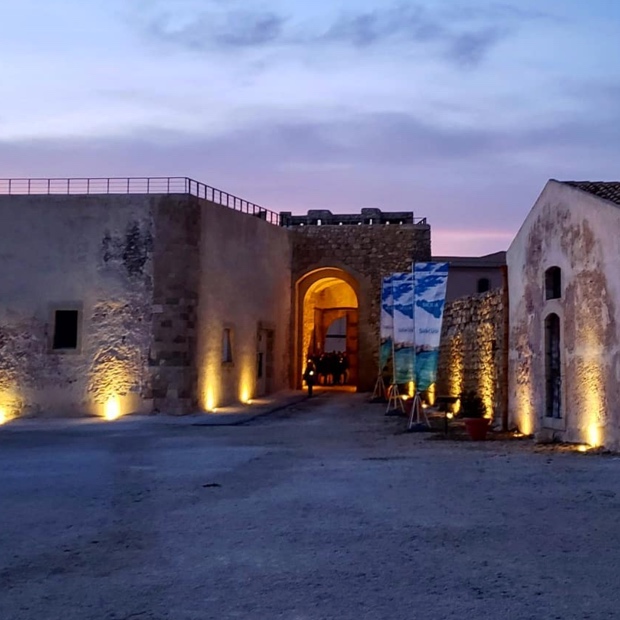
For the malbec, cabernet sauvignon, syrah, cabernet franc, criolla, torrontés and chardonnay of Argentina the present day vernacular promoted by the party line tells us “altitude defines a singular type of wine.” Most of the country’s wine lands are located on soils perched at impressive heights, at least with respect to sea level. To the naked eye the vineyards of Mendoza are of a perfect design to act as a collective poster child for a flat earth society manifesto, but looks are deceiving. The gentle climb from that province’s eponymous city centre at 750 meters above sea level to the rain shadow wall of the Andes Mountains is a subtle gradation that transfers vineyard elevations up to and exceeding well over 1,000 further metres. Say what you will about Mendoza’s absence of switchback ridges tracking rolling or angled foothills. Solar radiation is very real here and the effect of elevation on grape growing is a highly critical component of viticultural matters.
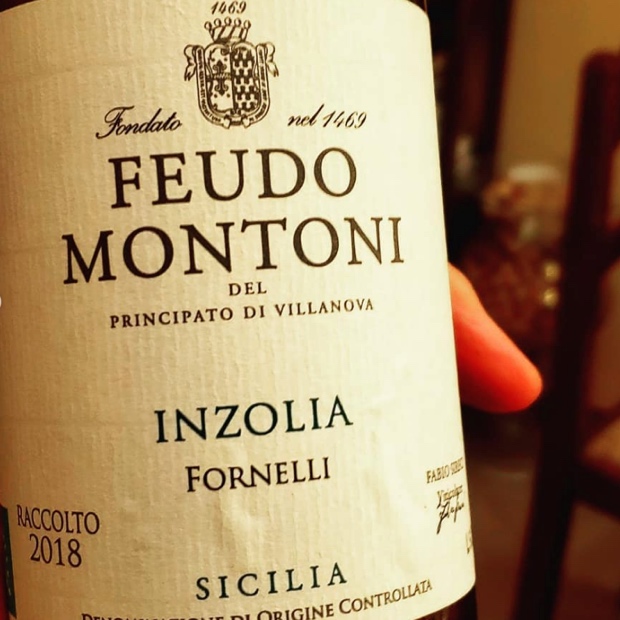
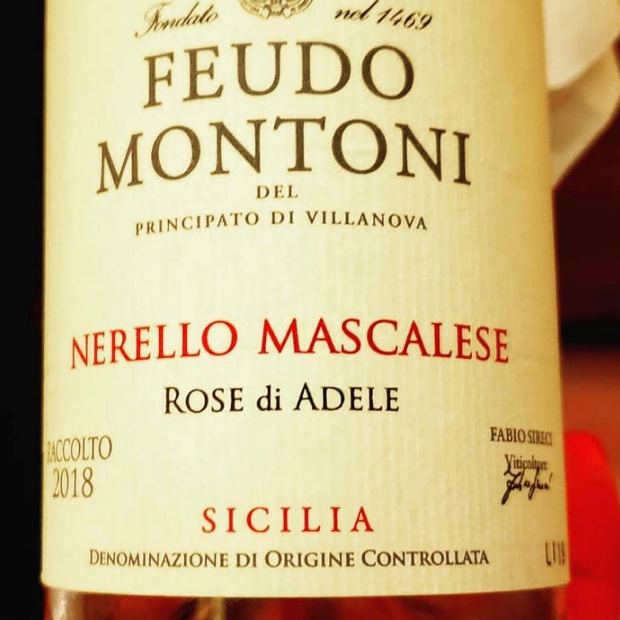
Joaquin Superman @hidalgojoaquin offers #CndsInArg a dissertation on high altitude terroir @winesofarg ~ @aldosvinoteca

It was only weeks ago that I had the favourable and fortuitous opportunity to travel around with the team at Wines of Argentina. Ontario’s WOFA representative Liz Luzza introduced me to her Quebec counterpart Marilyne Demandre. Together we were joined by Mark Bradbury, Bar Manager at The Bicycle Thief, Halifax, Nova Scotia, Yann Janvier, Le Sommelier Moderne in Montreal, Michael Mizzi, Co-Owner and Alexander Raphael, Bar Manager AMA Always, Toronto and Paul Madden, Director of Purchasing, Crowfoot Wines & Spirits, Calgary, Alberta for a group traverse across the South American country. We were led with the guidance of WOFA’s exceptional on the ground team; Soledad Juncosa, Sofia Brazzolotto, Paula Valle, Analia Lucero and Romina Ruiz. We did not make Lionel Messi’s acquaintance but we did experience first hand in Caminito and at the Buenos Aires Aeroparque Jorge Newbery the first leg of the Copa Libertadores final. I can only begin to explain the cacophony of roars when goals were scored during the intense rivalry between Boca Juniors and River Plate. The November trip took in Buenos Aires (including Recoleta Cemetery), Mendoza City, Luján de Cuyo (Agrelo), the Uco Valley (Gualtallary and Tupungato) and Salta Province (Cafayate and Calchaqui Valley). The journey will always be considered as a masterclass across Argentina because that is precisely what it was.

Recoleta Cemetery, Buenos Aires

It began at a Buenos Aires institution, Aldos Restorán & Vinoteca for a dissertation on high altitude terroir through the savant Argentine eyes of Joaquin “Superman” Hidalgo. Joaquin did more than merely explain the effect of altitude and solar radiation, he also poured an extraordinary cross-section of the country’s malbec from Jujuy to Patagonia, Tucuman-Catamarca to Gualtallary-Tupungato, Uco Valley.  In the Palermo neighbourhood of Buenos Aires we convened at that city’s most coveted mecca for beef consumption, the exulted Don Julio Parilla, where we were schooled on the wines of Familia Schroeder and Patagonia. Later that night it was a wholly unexpected, antithetical and epiphanic tasting of white, pink and orange in Mendoza at Azafrán Resto with principals from Chakana Wines, Alpamanta and Ernesto Catena’s Domaine Alma Negra.

#tastingroom writing #tastingnotes @bodegadiamandes ~ #valledeuco #cdnsinarg @winesofarg

A visit to Finca Decero opened the window to the Agrelo advantage along with the wines tasted belonging to Alta Vista, Altos Los HormigasArgento, Susana Balbo and Trapiche. This was followed by a stop at Vicentin/Sottano. At Bodega Luigi Bosca it was head winemaker Pablo Cúneo who unlocked some secrets hidden inside the soils of Luján de Cuyo, with help from pours by Bodega CasarenaBodegas Navarro CorreasFinca Las MorasMascota Vineyards, Pascual Toso and Vina Cobos. Then we entered the Tupungato, Uco Valley portal at Domaine Bousquet along with the wines of Bodega Andeluna, Bodega Atamisque, Bodegas Bianchi, Familia Zuccardi and Finca Sophenia. The incomprehensible wall of beauty provided by the snow-covered Andes acted as the backdrop to the al fresco tasting room at Bodega Diam Andes. It was here that we gained a deeper understanding of the mountain connection to Clos de los Siete and Vista Flores-Valle de Uco wines. The wines of Bodega Piedra NegraCasa de Uco, Masi Tupungato and Bodega Salentein helped usher these sub-appellative Mendoza wines into the light.

Salads in Argentina are exceptional

Before heading north we were met at our Mendoza hotel by Viña Cobos winemkaer Andres Vignoni for a seminar and tasting of cabernet franc and cabernet sauvignon. As a general rule cabernet franc is planted in dry Argentine climates, in Winkler Zones 11 and 111. It has nicely adapted to high altitudes (900m+) and its prominence began spreading after 1990, especially in Luján de Cuyo where 34 per cent of the country’s vines are grown. The varietal boom has really swelled in the last 18 years. Studies show that its best maturity is at 1000-1200m, with hot spots being at Los Arboles, San Pablo, Gualtallary, Agrelo, La Consulta and Paraje Altamira. The country’s third most planted red grape variety is cabernet sauvignon, historically raised in a “Bordeaux meets Rioja school,” with long barrel aging and traditionally grown in Maipu and Luján de Cuyo. The varietal has migrated to cooler spots, where greater freshness is being chosen ahead of over maturation, not to mention less/smaller use of new barrels. Sub-zone favourites are Las Compuertas, Perdriel, Agrelo, Cruz de Piedra, Gualtallary, La Consulta, Paraje Altamira, Cafayate and Santa Maria.

Godello post masterclass on cabernet sauvignon and franc with Viña Cobos winemkaer Andres Vignoni

From Ciudad de Mendoza Airpark we shuffled off to Salta, destination Cafayate. The drive took us though the desert monuments of Quebrada de las Conchas. The next day there was a fast, furious and fascinating look at Cafayate and Valle Calchaqui high altitude terroirs through the Donald Hess Bodega Colome and Bodega Amalaya lens. At Bodega El Esteco was walked beneath the 70 year-old criolla and torrontés vines. In the afternoon heat of Cafayate’s 30-plus degree early Spring sun we walked the limestone rocky desert moonscape of Piattelli Vineyards with proprietor John Malinski. A visit to Cafayate and the Valles Calchaquies would have been incomplete without a Bad Brothers Wine Experience. My understanding of Argentina’s fringe, edgy and extreme high altitude wines was confused until I met Agustín Linús and his Sunal malbec. Terruños de extrema indeed.

Snowy Andes backdrop makes Godello happy ~ snap (c) @marylinedemandre

One of the highest vineyards in Argentina is in Salta Province, 1,200 kms north of Mendoza. It is called Altura Máxima and it sits perched at 3,100 meters above sea level. Whaaat? It is one of the most extreme vineyards in the country, but not the only one. There are 20 or more, carved out of desert sand and rock where terroir is made up of climate, soil and in these extreme locations, the machinations of man. Climate is highly variable so rainfall and heliophany (the energy of the sun reaching the soil) and temperature are the most important factors. So when we speak of climate in Argentina we have to attach the altitude to the problem. The equation is always modified by the effects of altitude. Not to mention atmospheric pressure. Altitude in relation to temperature. For every 155m of linear rise, in temperate zones the average temperature of a point on the map drops by one degree. This effect is called vertical thermal gradient and the cause is due to atmospheric pressure. And then, with every 1,000m of linear rise, solar radiation increases by 15 per cent. In order to be more resistant to light, the plants produce more polyphenols. There is a proven relationship between UVB and a higher concentration of polyphenols and abdisic acid. In the end it’s a matter of cool climates with a great intensity of sun. Stress conditions at 1,500m or higher results in lower yields, high polyphenols, higher acidity and ultimately a marked variance of character. Explains Joaquin Hidalgo, “mastering the terroir is a challenge that involves another way of managing the vineyard.”

New Piattelli Vineyards planting in the high altitude desert of the Calchaqui Valley

The production and consumption of wine in Argentina dates back to over four hundred years ago when the first specimens of Vitis Vinifera were brought to the Americas by the Spanish colonizers in the early 16th century. Early in the 1900’s, the vineyard area had reached 519,800 acres but between 1982 and 1992 extensive uprooting of vineyards was undertaken and 36 per cent of the existing vineyards were removed. In the early 1990s a new era began for the Argentine wine industry. The arrival of Neoliberalism in the national economy led to the implementation of a model of adjustment and the incorporation of Argentina into the global market. With a population of 42 million inhabitants and a territory that is four times larger than France, Argentina is one of the world’s nature reserves. Privileged with outstanding natural richness and extraordinarily diverse landscapes, Argentina boasts high mountains and plains, lush vegetation and extreme deserts, forests and steppes, glaciers and waterfalls.

Stunning #cafayate morning in the 60-70 year-old #criolla and #torrontes vines @bodegaelesteco in Salta

This wealth of natural ecosystems includes vast, highly productive grape growing regions stretching at the foot of the Andean strip, to the West of the country, from latitude 22° south to latitude 42° south. The cultivated area covers more than 538,071 acres. The vineyard area of Argentina covers 545.737,99 acres (2017). From the total area just 502.895,78 acres are able to vinify. The breakdown is 56 per cent red, 19 white and 25 Rosé. The leading red varieties are malbec (36), bonarda (16), cabernet sauvignon (13) and syrah (10). For whites it is torrontés (25), chardonnay (16), sauvignon blanc and chenin blanc each (5).

Canadians in Argentina at the Devil’s Throat in Salta Province ~ #quebradadelasconchas

Today, despite a skyrocketing national inflation rate, the wine industry continues to thrive. While certainly not immune to the economic crisis, exports are growing and the wines from Argentina are evolving to meet global demands. I tasted upwards of 150 wines in my week spent in Argentina. This report covers 37 wines from 37 producers. These are 37 that struck me as being exceptional, ahead of the curve or simply the perfect sort of examples to speak about climate, soil and of course, altitude.

Mendoza shuffle with some fine examples and cross section of terroirs to represent #winesofargentina ~

Malbec

Bodega Amanecer Andino Malbec Reserva Quebrada De Humahuaca 2017, Tumbaya, Jujuy, Argentina (Winery, WineAlign)

From a new location for growing grapes, at 2,200 metres of altitude, very close to Bolivia. Even if malbec is not necessarily the most interesting varietal to grow at this altitude, it is the most elastic variety and will always work. The pH (3.77), the acidity (6.6 g/L) and the alcohol are all set to high but it does not come across like any other malbec any of us have ever tasted. Full bodied and very fresh, really salty, a malbec so affected by altitude. So bloody interesting. Drink 2018-2022. Tasted November 2018  amanecer.andino  @BodegaAmanecer 

Agustín Lanús Wines Malbec Sunal Ilógico 2017, Tucuman Catamarca, Calchaqui Valley, Salta, Argentina (Winery, WineAlign)

The wine is drawn from vineyards in Pucará Salta, Lucaratao Salta, Amaicha del Valle Tucumán and Hualfin Catamarca. Real body and richness, savour and verdancy. The touch is delicately salty, with medium acidity and a constrained power. Really fine balance. The length is forever, a fact proven by an opened bottle showing exemplary freshness a full eight days later. Everything in Argentina might claim to be drawn away from high altitude but this from Agustín Lanús at 2,800m plus is the real deal. Drink 2018-2022.  Tasted twice, November and December 2018  agustinlanuswines  @agustin_lanus  Agustín Lanús  

Tinto Negro Vineyard 1955 Malbec 2013, La Consulta, San Carlos, Uco Valley, Mendoza, Argentina (Agent, B.C. $81.99, WineAlign)

The most important factor in Altamira is not the altitude but the soil. It’s at 1000m but from the cooler, southern part of the Uco Valley. Very high pH (3.8) and well-managing acidity. This wine has it all; great fruit, savour, sweet viscosity, freshness, acidity and structure. Not to mention fine tannins and polyphenolic textural beauty. A high altitude and a place that keeps its cold air. Forget about how much oak and what the alcohol may be. The clay and the cool factor keep it all real. Drink 2019-2025.  Tasted November 2018  bodegatintonegro  thewinesyndicate    @winesyndicate  @thewinesyndicate

Catena Zapata Malbec Adrianna Vineyard River Stones 2015, Gualtallary, Tupungato, Uco Valley, Mendoza, Argentina (132340, $95.59, WineAlign)

In a line up that includes malbec from all walks of Mendoza life as well as some extreme altitude northern examples this is the first wine with a somewhat reductive quality, locked in freshness and very high acidity. It’s a wine of exceptional qualities. There is a highly intellectual and sensory balance executed through perfectly ripe fruit, that fine acidity and even more fineness in tannins. A beautifully linear wine that can come full circle if need be. This is a malbec that creates moisture in your mouth, never drying or taking anything away. A wine that is changing the way we are dealing with the idea of different terroirs in Argentina. Drink 2020-2027.  Tasted November 2018  catenawines  lauracatenamd  noble_estates  @CatenaMalbec  @LauraCatena  @Noble_Estates  @bodegacatenazapata  @NobleEstates

Luigi Bosca Terroir Los Miradores Malbec 2016, Uco Valley, Mendoza, Argentina (132340, $32.95, WineAlign)

From 70 year-old vines in Valle de Uco with lowest of low yields so that one vine does not even function to produce a whole bottle. From the same genetic cutting materials, massal selection of the DOC malbec, but with obvious concentration and specificity. So much more floral, of a baking spice and a fruit intensity that truly is the bomb. An implosive wine with modesty, purity and a 40 per cent oak housing. Big and balanced with great structure and tannins that invoke seven senses. Put some aside and we’ll have some further discussions in 10 years. Drink 2021-2029.  Tasted November 2018  bodegaluigibosca  fwmcan  @LuigiBoscaBodeg  @FWMCan  @BodegaLuigiBosca  @FWMCan

Domaine Bousquet Malbec 2018, Tupungato Valley, Mendoza, Argentina (160952, $13.95, WineAlign)

Draws fruit from Paraje Altamira and Gualtallary, no oak, simply in stainless. Fresh and equally savoury, relative concentration and simple in effusive red fruit. Really negligible tannins and a sweet as opposed to astringent finish. Perhaps the best vintage ever for this entry-level malbec. Drink 2018-2020.  Tasted November 2018   domainebousquet  @domaineBousquet  @DomaineBousquetUSA

Trapiche Malbec Terroir Series Finca Orellana de Escobar Single Vineyard 2012, La Consulta, San Carlos, Mendoza, Argentina (178145, $39.95, WineAlign)

One of several malbecs in the Trapiche portfolio here the collaboration with the grower is exulted in this the 10th years of the Terroir Series. Every year the best three combinations of fruit and grower are chosen to represent the range. Sixty-one year old vineyards deliver minty herbal savour and a chalky liquidity in surround of spicy cherry fruit. Plummy too with ferric purity and big, big structure. Drink 2019-2025.  Tasted November 2018  trapichearg  trapichewines  philippedandurandwines  @TrapicheWines  @Dandurandwines   @TrapicheArgentinaInt  @VinsPhilippeDandurand

Rocio Campoy Morist with Alta Vista’s Alazarine

Alta Vista Malbec Single Vineyard Alizarine 2013, La Compuertas, Luján de Cuyo, Mendoza, Argentina (Winery, WineAlign)

Of three Alta Vista single-vineyard wines this is 100 per cent malbec and one of the richest, deeply textured and chocolate driven examples. From a warm vintage it’s not quite mature, even drying a bit though the fruit seems to just get more dense, intense and leathery. Justified elevation extrapolation makes for a classic malbec with some idiosyncratic Compuertas moments. Smooth, fully rendered and giving everything at this very stage. Drink 2018-2021.  Tasted November 2018  bodegaaltavista  hhdwines  @bodegaaltavista  @HHDImports_Wine  @BodegaAltaVista  @HHDImportsInc

Argento Malbec Single Vineyard 2016, Paraje Altamira, Mendoza, Argentina (Agent, $24.00, WineAlign)

Argento terroir exploration is from Finca Las Cerezas, “the cherries” and lo and behold, it’s really that fruit incarnate. A reductive malbec to be sure and so very fresh, from a soil rich in limestone which tells us something about the speciality of this nook in Paraje Altamira. The red fruit receives a lightning strike from the cool stone touch and there is a salty vein that lifts the cherry up and into a whole other realm. Really quite beautiful this charming little number. Drink 2019-2025.  Tasted November 2018  bodegaargento  profilewinegroup  @BodegaArgento  @ProfileWineGrp  @bodegaargento  @ProfileWineGroup

Altos Las Hormigas Malbec Terroir 2016, Uco Valley, Mendoza, Argentina (366005, $22.95, WineAlign)

Three quarters of the terroir malbec is aged in concrete with the fourth in 3000L French foudres. The total aging time is 24 months, the last six of which were in bottle before release. Here is the smooth malbec with balancing and defining sour acids on edge and uplifting. The fruit is nicely integrated into this structure with a fine set of tannins to grant some pretty good potential. Wait a year and let the magic happen. Drink 2019-2023.  Tasted November 2018  altoslashormigas  @ALHmalbec  @ALTOSLASHORMIGASWINERY

Casa De Uco Malbec Vineyard Selection 2015, Los Chacayes, Tunuyán, Uco Valley, Mendoza, Argentina (WineryWineAlign)

Considered their top expression from calcareous rocky soils this is the third incarnation of a malbec with some differences, turns and twists. Winemaking choices of 20-30 per cent whole bunch and partial carbonic macerations are extended to most of the chosen lots. You can feel the firm grip of the layered tannins on fresh, reductive and candy shell fruit. Concrete initiates the balance, there is no new oak to distract and enough acidity to keep it vibrant. There is a combination of energy and finesse on this malbec standing up to be noticed and counted. It’s both solid and expressive, real, emotive and truly curious. Drink 2018-2020.  Tasted November 2018  casadeuco  @CasadeUco  @CasadeUco

Extreme altitude malbec of Bodega Colomé

Bodega Colomé Malbec Lote Especial Colomé 2016, Calchaquí Valley, Salta, Argentina (Agent, $29.95, WineAlign)

Takes what is established by brother La Brava (and then El Arenal) and amplifies ideal. Now up to an altitude of 2,300m the dichotomous relationship between thermal amplitude and diurnal variegation is magnified, which can only mean more hyperbole. More concentration of fruit in equal extraction but with the extra 600 meters of altitude the tones are higher, the fruit more variegated and with a dried component out of the idea of some desiccation at harvest. It also seems saltier and the structure different, tighter and strung like a racket with ready to fray tension. One of the wildest malbec rides on the planet. Drink 2020-2028.  Tasted November 2018  bodegacolome  liffordgram  @BodegaColome  @LiffordON  @bodegacolome  @liffordwineandspirits

A flock of producers gather to educate on the multiplicity of munificent Mendoza ~

Syrah and Red Blends

Bodega Finca las Moras Gran Syrah 2015, San Juan, Argentina (Winery, WineAlign)

From the three main valleys of San Juan; Tulum, Zonda and Pedernal at altitudes of 650, 800 and 1300 meters above sea level. Ripeness from the lower valleys meets peppery spice and herbology of the highest, with freshness lying somewhere in between. The effects of diurnal temperature swings and thermal radiation pile one on top of another for a highly variegated yet mostly seamless syrah. The queen mother of San Juan syrahs with plenty of swagger. It shouts floral rose then switches into bohemian rhapsodies of musky, ferrous and hematic waves. Really meaty and intense with major chord, mood and tempo swings. “Is this the real life? Is this just fantasy?” Drink 2019-2022.  Tasted November 2018  fincalasmoras  @FincaLasMoras  @fincalasmoraswineryCA

Finca Decero The Owl & The Dust Devil Remolinos Vineyard 2015, Agrelo, Luján De Cuyo, Mendoza, Argentina (Agent, $36.95, WineAlign)

The multi-level, purposed and floral flight of fancy red blend. A mix of real facts and a story; near equal parts malbec and cabernet sauvignon, with petit verdot and tannat. Must contain at least 30 per cent of the last two outlier varietals and in the end this completes the estate style, of big, smooth, polished reds that are completed through micro-vinifications of many single-vineyard blocks. More tannin and grip here. Drink 2019-2023.  Tasted November 2018

DiamAndes Gran Reserve Malbec/Cabernet Sauvignon 2013, Uco Valley, Mendoza, Argentina (295063, $32.95, WineAlign)

The signature red of the estate this is three quarters malbec to one quarter cabernet sauvignon set for 18 months in 100 per cent French oak, 50 per cent new. To say this is lush and ambitious would be an understatement but there is no questioning the quality of the agriculture, the fruit and the use of deep pockets technology. There is also humility within this classic modernism though not yet a true indication of soul. The fineness and the precision are so apparent which leads to believe that the human element noted will mean the epiphanies are coming soon. So much potential to become one of Argentina’s great red blends. Drink 2019-2022.  Tasted November 2018  bodegadiamandes  maitredechai_ca    @maitredechai  @diamandes  Francis Dubé  

Salentein Numina Spirit Vineyard Gran Corte 2015, Uco Valley, Mendoza, Argentina (543405, $35.00, WineAlign)

The goal for Salentein’s Gran Corte “is to produce a wine with the grapes from the first vineyards planted in 1996” and so only these find there way into the Numina line. The blend in 2015 is malbec (68 per cent), cabernet sauvignon (12), cabernet franc (8), merlot (7) and petit verdot (5). It’s a true Bordelais five varietal ideal albeit with malbec at the fore. It see 16 months in total though 10 are go it alone and then six all housed all together. This quintuples down on the rich liqueur, all in spice and hyperbole of violet florals. Though currently liquid chalky and slightly gritty you can imagine the integration especially because the oak use is not new. A really nice wine on the road to becoming something fine. Drink 2019-2024.  Tasted November 2018  salenteinbodega  azureau  @BodegaSalentein  @azureau  @BodegasSalentein  @BodegasSalentein

Bodega Atamisque Assemblage 2015, Tupungato, Uco Valley, Mendoza, Argentina (483032, $45.95, WineAlign)

The blend of malbec, cabernet sauvignon, merlot and petit verdot is fruit drawn from sites between 1,100 ands 1,300m and sees 14 months in 100 per cent new French oak. This being a wine made by forcing square pegs into one round hole in what amounts to an all for nothing, all in one treatment. It’s really something to note that despite all this the fact remains that red fruit abounds, fresh and pure with an accent of spice but no real overdo of make-up. There is elongated grace and generosity, like a Rhône blend with charming warmth and a fine smoulder. Drink 2019-2025.  Tasted November 2018  bodegaatamisque  #MCOwines    Bodega Atamisque

Masi Tupungato Corbec 2015, Uco Valley, Mendoza, Argentina (AgentWineAlign)

A blend of 70 per cent corvina with malbec treated to upwards of 25 per cent appassimento for 20 days. Spends 18 months in French oak. All about the baking spices, the unbounded limits of glycerin texture and specifically cinnamon all over the back pages. So rich and a ringer like no other for the Veneto motherland. Drink 2019-2024.  Tasted November 2018  masitupungato  masicanada  @MrAmaroneMasi  @MasiWineExperience  

Clos De Los Siete 2015, Uco Valley, Mendoza, Argentina (622571, $23.95, WineAlign)

This was tasted side by side by each with the 2013 and the 2006 so quite fortuitous in terms of relativity and imagination. The blend in ’15 is high in malbec predominance (68 per cent), with merlot, cabernet sauvignon, syrah and petit verdot. Four wineries made contributions to this vintage (of a possible seven) and as per the dictum it’s a blend of blends created by Michel Rolland. It’s Rolland’s inceptive imagination that brought this special project into the Uco Valley landscape and though the assemblage can be up to seven-fold the possibility to age for a value-priced wine is quite impressive. This ’15 is richly endowed and structured, chalky and just plain excellent. Drink 2019-2024. Tasted November 2018  closdelossiete  philippedandurandwines  @closdelossiete  @Dandurandwines   @closdelossiete  @VinsPhilippeDandurand

Tasting through the Uco Valley

Cabernet Franc

Zuccardi Cabernet Franc Polígonos 2017, San Pablo, Uco Valley, Mendoza, Argentina (Agent, $29.95, WineAlign)

The Polígonos exploration is a many vineyard sided affair and the altitude is significant at 1,300m from San Pablo in Valle de Uco, Mendoza. A relatively early pick preserves nigh high acidity and the alcohol is beautifully restrained. Just a hint of dusty, pyrazine edgy fruitiness drives the machine and keeps this pulsing with terrific energy. Both food amenability and aging potential here are excellent. If it’s verdant that’s a compliment to local character. Drink 2019-2024.  Tasted November 2018  zuccardivalledeuco  szuccardi  dionysuswines  @ZuccardiWines  @FamiliaZuccardi  @SebaZuccardi  @ZuccardiValleDeUco  @DionysusWinesTO

Trivento Cabernet Franc Golden Reserve Black Edition 2017, Altamira, Uco Valley, Mendoza, Argentina (AgentWineAlign)

Made by winemaker Germán Di Césare there is a respect for land (alluvial, sand and some lime) but also for varietal. It’s well-endowed, juicy, plummy and full flavoured though it’s oaky tendencies are quietly respectful as well. The tone of the wine hums and resonates with ambience in complete control. It’s really quite fine and just about to enter its perfectly integrated, resolved and balanced window. High acidity example and wouldn’t hurt to settle for just a few more months. Drink 2019-2022.  Tasted November 2018  triventoarg  triventoarg  #escaladewines  @Trivento   @TriventoArg  @TriventoCanada

Bodega Andeluna Cabernet Franc Pasionado 2015, Gualtallary, Tupungato, Uco Valley, Mendoza, Argentina (Agent, $54.99, WineAlign)

Classic Uco terroir at high altitude (1,300m) that mixes alluvial soils with sand, limestone and here loam make for a pretty subtle rendition in terms of cabernet franc. That’s especially true when you consider the small vessels used (225L barrels) and much of it new. You feel the wood in vanilla and berry coulis, a bit of spice and liquified graphite. Quite a molten flow this cabernet franc and with demanding quality in its tannins. Drink 2018-2021.  Tasted November 2018  bodegaandeluna  stemwinegroup  @BodegaAndeluna  @StemWineGroup  @BodegaAndeluna  @stemwine

Zuccardi, Andeluna, Sophenia and Bianchi

Cabernet Sauvignon

Familia Schroeder Cabernet Sauvignon Saurus 2017, Patagonia, Argentina (Agent, $21.95, WineAlign)

Schroeder is a Paul Hobbs Patagonia outpost and across the board they are truly smooth, cool and polished wines. Tasted after the pinot noir and malbec we see by now the consistency of style and with great evidence. Big time ripe and dark varietal fruit, salumi accents, all in, no holds barred and a cool factor with texture times purity. It finds its way through the ooze to act linear and come out quite elegant. In the end it warms and brings much comfort, finishing with a rendering and lingering spice. Drink 2019-2023.  Tasted November 2018  schroederwines  @SchroederWines  @stemaren  @BodegaFamiliaSchroeder 

Tasting at Sottano

Sottano Reserva De Familia Cabernet Sauvignon 2016, Mendoza, Argentina (324707, $24.95, WineAlign)

Sottano’s cabernet sauvignon exhibits less of an oak influence or exaggeration, especially not a hinderance or a matter of make up. Smells like cabernet sauvignon with loads of ribena and black currant on top of each other and then the oak really takes over. Half of the grapes are estate and the other half Altamira in Uco Valley. Not so much a terroir investigation as it is a thing of Mendozan assemblage. It’s far from elegant but it is creamy smooth and velvety, if not the best wine thus far in the portfolio. Drink 2019-2024.  Tasted November 2018  bodegasottano  @bodegasottano  @bodega.sottano

Susana Balbo Cabernet Sauvignon Signature 2016, Uco Valley, Mendoza, Argentina (260919, $19.95, WineAlign)

From a wet year but locales with good exposure and drainage fared quite well. Regardless here is a rich, grippy and powerful cabernet sauvignon (with five per cent franc), of high natural acidity and cumulative depth. The parcels are Uco Valley and Los Arboles just below Gaultallary. Chocolate is cut by a rocky streak from fruit grown over a dry river bed with stones, quite the opposite from Agrelo. It’s a veritable expression of a unique set of alluvial and stony soils. Excellent work to bring out a sense of place. Drink 2019-2022.  Tasted November 2018  susanabalbowines  profilewinegroup  @sbalbowines  @ProfileWineGrp  @SusanaBalboWines  Susana Balbo  @ProfileWineGroup

Sophenia Cabernet Sauvignon Synthesis 2014, Gualtallary, Tupungato, Uco Valley, Mendoza, Argentina (AgentWineAlign)

A wine made by Julia Hulupczok and Matiás Michelini. From a wild vineyard upwards of 1,300m where ripening is a challenge and tannins can be formidable. There’s a greenness to be sure and yet also a subtle grace about it. A different structure, impossibly dichotic and surely one you would not have found in Argentina just 10 years ago. Drink 2018-2024.  Tasted November 2018  fincasophenia  @FincaSophenia  @Juliahilux  @FincaSopheniaWines  Julia Halupczok

Masterclasses on cabernet sauvignon and franc with Viña Cobos winemaker Andreas Vignoni

Viña Cobos Bramare Cabernet Sauvignon Marchiori Estate 2015Perdriel, Luján de Cuyo, Valle de Uco, Mendoza, Argentina (Agent, $119.00, WineAlign)

At 1,000m few other cabernet wines out of Valle de Uco will deliver such concentration and polish. It’s also huge in acidity, grippy tannin and overall structure. Almost two-thirds new oak is used and the fortunate thing is really the highest quality fruit able to withstand this woody onslaught. Deep soils work hard for vines less than 25 years old, the upper strata built of clay-loam to sandy-loam and the substrata of river-washed cobbles and round stones. It was an early ripening vintage with harvest temperatures above the historical record. Not surprising to receive such a massive, not so much brooding but more like a swagger of attitude in a cabernet that can go the distance. Drink 2020-2027.  Tasted November 2018  vina.cobos  awsmwest  @VinaCobos  @AuthenticWineON  @vinacobos  @awsmon

Bodega Casarena Cabernet Sauvignon Owen’s Vineyard 2015, Luján De Cuyo, Valle de Uco, Mendoza, Argentina (578062, $44.95, WineAlign)

Casarena’s Owen’s Vineyard is their special place, the key piece to this sector of the Luján De Cuyo puzzle. It’s importance is quite particular for the Napa Valley like repositioning of (Bourgogne) chardonnay and (Bordeaux) cabernet sauvignon. It’s a dry micro-climate with intense solar exposure and though not “mountain” fruit per se the wines draw upon matters of heliophany dictated by elevation. The Italian pergola-styled planted vines are old, some laid down as far back as 85 years in time. This approximately $30 US wine is a stunner, bloody beautiful in the darkest of Morello cherry red fruit that seems to macerate in its own liqueur. It is indeed reductive which only accentuates its freshness and there is a bountiful amount of acidity in support. Honest, apasionado, vehemente and intenso. Drink 2019-2023.  Tasted November 2018  bodegacasarena  noble_estates  @BodegaCasarena  @Noble_Estates  @BodegaCasarena  @NobleEstates

Filete at Luigi Bosca

Pascual Toso Cabernet Sauvignon Alta Barrancas Vineyards 2016, Mendoza, Argentina (441907, $32.95, WineAlign)

Alta is a huge cabernet sauvignon needing air, still very reductive in a hard protective shell sort of intense way. There can be no argument about these aggressive or rustic tannins needing time to integrate and settle. All the structural components are part of the note taking and note to self to add to the Mendoza cabernet sauvignon discussion. This example may not be the first but it does sit at the lead in terms of showing a real cool, minty herbal streak and a distinct amaro finish. Big, big wine with plenty of upside. Drink 2020-2027.  Tasted November 2018  pascualtoso  eurovintage  @PascualToso  @Eurovintage  @pascualtosowinesargentina  @Eurovintage

The next @winesofarg is naturally skin-contact orange, rosé and white. Pure, nervy, crystal examples of great interest from @chakanawines @alpamanta and @domainealmanegra

White, Orange and Rosé

Domaine Alma Negra Blanco Producción Limitada 2017, Vino Argentino, Bebida Nacional, Argentina (Winery, WineAlign)

From Ernesto Catena this is the second secret blend, a naranja vintage of the hide and seek, now you see a vino blanco, now an orange wine behind the mask. Maximum 500 cases are produced of this truly flexible white-ish orange, as it should be, as anyone’s guess and at the winemaker’s whimsy. “This comes from a place where you move away from knowing everything before you ever made a wine” explains Josefina Alessio on Ernesto’s behalf.  It’s meant to shake foundations and commit to things with blind and innocent intent. It’s a precocious orange, clean, pure, crisp and matter of fact. Smells like honey the drizzled over a tart slice of peach. The telling of varietal is kept hush but my money is on the likes of chardonnay, perhaps pinot gris and/or some torrontés. Nine months on skins, six in old barrels. Clarity and dumb luck precision with a pineapple dole of citrus, always in balance. Can’t believe it’s neither reductive nor oxidative and virtually tannin free. A 15 euro ex-cellar beauty. Drink 2018-2022.  Tasted November 2018  domainealmanegra  noble_estates    @Noble_Estates   @ernestocatenavineyards  @NobleEstates

Chakana Estate Selection Torrontés Naranja Edicion Limitada 2018, Gualtallary, Tupungato, Uco Valley, Mendoza, Argentina (Agent, WineAlign)

This literal orange torrontés from only free run juice spent seven months on skins in 500L barrels. No additions, including sulphur but “we’re not interested in saying this is a natural wine,” insists winemaker Gabriel Bloise. “Because we’re not interested in the natural movement, but it is our pleasure.” Floral spice is a factor of “maceratión prolongada” as is the green melon, pomello and caviar. Takes torrontés to an entirely new level, in so many positive ways, with a salve, plenty of tannin and notice me character. Kudos for the exploration, for a team that’s clearly on to something and a winemaker acting on techniques that clearly float his boat. Drink 2018-2021.  Tasted November 2018  chakanawines  oeno2  @chakanawines  @oenophilia1  @bodegachakana  

Alpamanta Rosé Syrah Breva 2018, Luján De Cuyo, Mendoza, Argentina (Agent, $42.95, WineAlign)

To call this a Rosé is to miss the point methinks. “In 2017 we decided to approach a new philosophy of wines,” explains Ukranian/Austrian/Dane/Argentine Managing Partner & CEO Andrej Razumovsky. It’s a perfectly lithe red wine made through the use of syrah picked real early direct to ferment in cement eggs for 11 months. The complete absence of second pressed grapes speaks not only to the method but also the teacher. “It goes well with intestines and seafood,” says Andrej. Now at a whopping 1,600 bottles made, which is in fact a great increase from the first vintage. Number two was a rainy one so six or seven months was not a sufficient amount of time to get this to its happy place. Pear, lemon and grapefruit are anti-red fruit notes but give it a good agitation to stave off reduction and then the wine just bursts with strawberry, fine bitters and endless aromatics imagined. It’s destined for danger and deliciousness because you really feel that you are drinking something that is alive. Not just from acidity, but like power breakfast juice that you would die for every morning. Killer stuff. Drink 2018-2020.  Tasted November 2018  alpamanta  rogersandcompanywines  @Alpamanta  @rogcowines   @alpamanta  @rogcowines

Navarro Correas Chardonnay Gran Reserva Alegoria 2015, Agrelo, Mendoza, Argentina (WineryWineAlign)

From Agrelo the Alegoria is chardonnay with true blue reduction and real apple bite. Spent six months in first and second use oak, now nicely aged with lemon-lime and orange zestiness. Toasty and quite wild from an ambient yeast ferment and shockingly crazy good. Drink 2018-2022.  Tasted November 2018  bodeganavarrocorreas  @BodegaNavarroCorreas

Bodega Piedra Negra Pinot Gris Reserve Vino Organico 2017, Los Chacayes, Uco Valley, Mendoza, Argentina (Winery, WineAlign)

New to the François Lurton portfolio and for the market is this pinot gris in classic older world mode. It’s really fine, spirited and with a creaminess that is suggestive of experimentation. There is some oak treatment but also some time spent in concrete egg. With no compromise to acidity there is a lieu-dit specificity and completeness so that it expresses fruit in a wholly different way than grigio and all other white wines in Argentina. Kudos to Lurton for going the distance and spending some cash on a product to separate itself from the pack. It’s a pinot gris we want to drink but also one to watch for not too distant sidesteps into something changed. Drink 2018-2021.  Tasted November 2018  bodegapiedranegra  @BgaPiedraNegra  @BPNvdu

Bodega El Esteco Torrontés Old Vines 1945 2018, Valle De Calchaquí, Salta, Argentina (Winery, WineAlign)

From the original plantings of torrontés, as far back as 1945 but mostly vines in the 60-70 year old range. As saline and diamond sandy as it is floral but just as expressive as any. Very direct, linear, again that salty component which you could call mineral but also full-fleshy like Rhône varietal wines in new world climes. Could pass for high acidity driven whites from California or Washington state. Drink 2018-2022.  Tasted November 2018  bodegaelesteco  #mondiaalliance  @ElEstecoWines  @Mondia_Alliance  @elestecowines  @mondiaalliance

Piattelli Vineyards Reserve Torrontés 2018, Cafayate Valley, Salta, Argentina (Agent, $14.95, WineAlign)

Trained at Piattelli in Pergola, the ancient Mediterranean varietal is protected from direct sunlight and thrives in this desert where herbs of every imaginable kind grow wild and the aridity meets elevation and solar radiation. Piattelli’s is quite high in dry extract and concentration, ripeness and a maintained necessary acidity. This is the icon wine of the estate and few equal its magic in this vintage. It’s fresh, crunchy, crisp and explodes with tropical fruit. Bodes well for the ’18 reds. Drink 2018-2022.  Tasted November 2018  piattellivineyardsarg  piattellivineyardsusa  @piattelliusa  @PiattelliVineyardsARG  @PiattelliVineyardsUSA

La Mascota Chardonnay Unánime 2017, Maipu, Mendoza, Argentina (Winery, WineAlign)

Grown at 1,300m “the pet” chardonnay is given a name meaning “unanimous” meaning it’s a wine from and for people who all feel the same way. The wine was raised 50/50 in concrete egg and large (500-1000m) oak foudres. It’s a very tannic chardonnay, with a salve texture, spice and lemon-vanilla molten creaminess. Plenty of texture and bite, not over the top but certainly ambitious to quite successful. Drink 2019-2022.  Tasted November 2018  mascotavineyards  univinscanada  @UNIVINS  @MascotaVineyards  @UnivinsCanada

Good to go!

godello

Bodega DiamAndes, Uco Valley, Mendoza, Argentina

Twitter: @mgodello

Instagram: mgodello

WineAlign