A steamy August in Washington

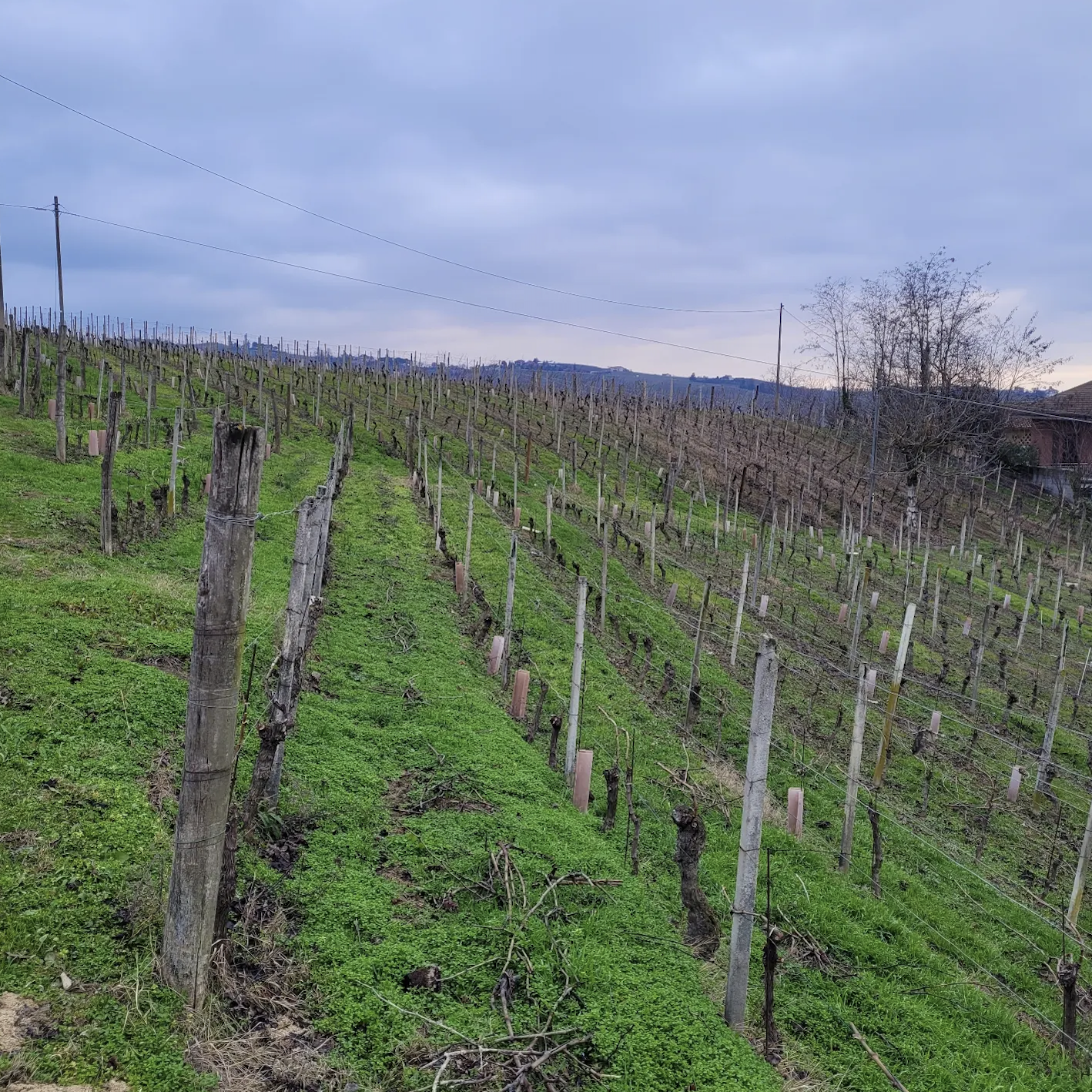
Hot red August sun in the Walla Walla Valley

In August of 2023 a small group of intrepid Canadians traipsed through the wilds of Washington’s wine country in search of the new but found so much more. A fine fettle of wine producers and estates fill up the eastern landscape, fully encapsulating the industry with the experienced, quaint, artful, zealous, time-tested, animated and cerebral. The trip was a hunt in persistence, finding it all, revelling in its mottled and striped splendour, sitting back to admire the people and the scenery. Smoke taint was on everyone’s mind but clear skies dominated imagination. The journey was winding, snaking contiguously like the Columbia, Yakima and Walla-Walla Rivers, working an itinerary through the Tri-Cities, Yakima Valley, Red Mountain, Walla Walla, Woodinville and finally to finish in Seattle. The weather ranged from 90 to 115 degrees Fahrenheit (32-46 Celsius for the rest of the metric world), fires burned far off in the distances near Spokane and widespread in British Columbia. The air was thick as pea soup though there was no fog and spirits remained high. Unwavering you might say, always ready for road-tripping, to reach further, for action and of course tasting.

The group convened in Richland, one of three city-siblings conjoined at the aggregate network of urban communities that include Pasco and Kennewick. On day one we took in the Yakima Valley and Red Mountain AVAs with J. Bookwalter Winery, Palencia Winery, Goose Ridge Estate Vineyard & Winery, Col Solare and Hedges. Day two down to the Walla Walla Valley AVA with SMAK Wines, Gramercy Cellars, Valdemar Estates, L’Ecole N° 41 and Woodward Canyon Winery. Morning of day three still about town in Walla Walla, at Seven Hills Winery, House of Smith and Vital Wines. Further south to The Rocks District of Milton-Freewater with Rotie Cellars and in the haze of the evening an oasis harvest party at Spring Valley Vineyard. Day four and onwards to the Yakima Valley AVA with Tirriddis, Sonder Wines, JB Neufeld and 14 Hands Winery. Day five more of the Yakima Valley AVA and then on to Woodinville, first with a blending experience and tasting at Chateau Ste Michelle, culminating at Airfield Estates. A long finale of a drive over the Cascade Mountains, a change in scenery and more profoundly weather ,with clear blue skies and sunshine in Seattle.

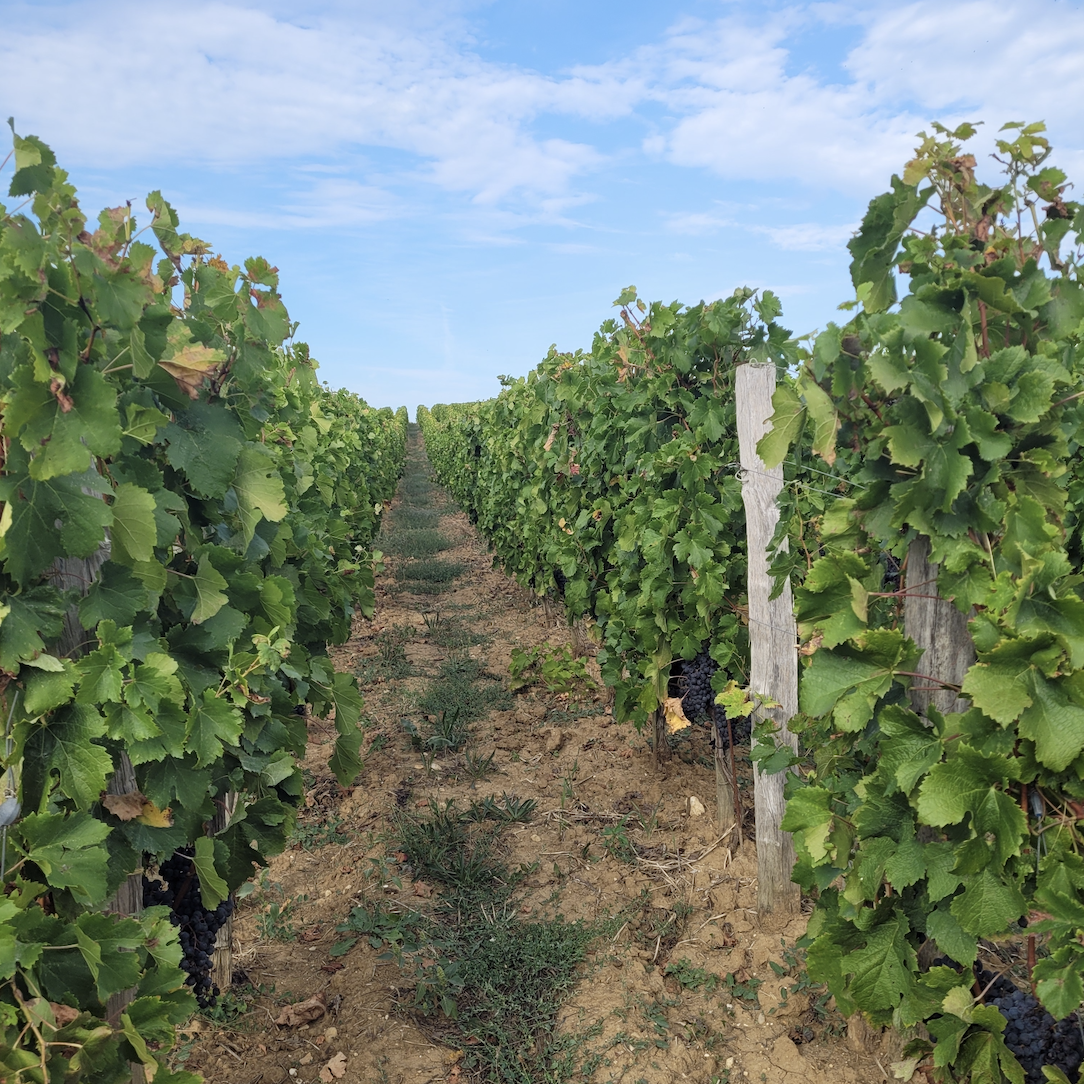
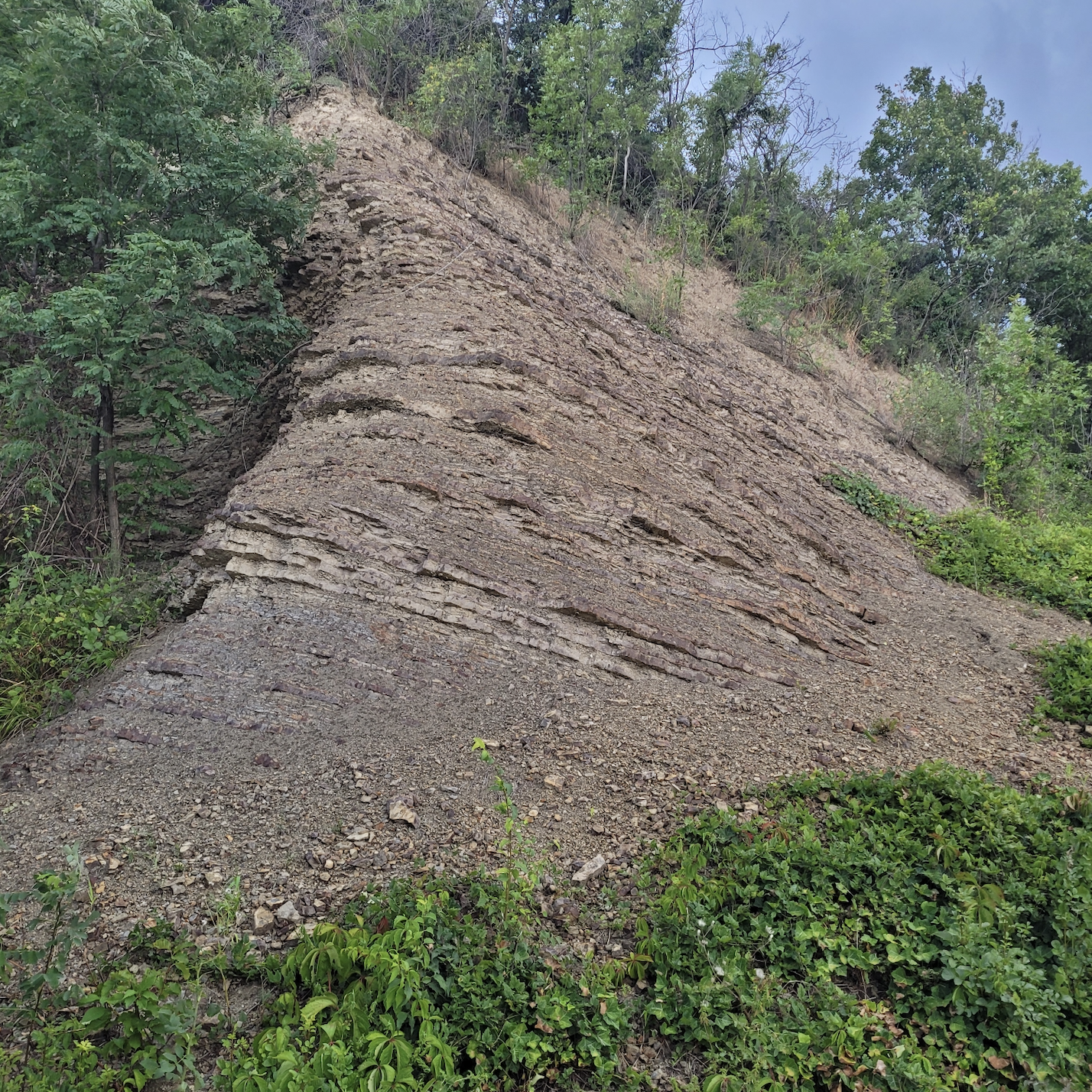
Lunar landscape in the Walla Walla Valley, akin to a Wes Anderson set of “parched gulch and arid plains.”

Grape cultivation in hostile climates

Cultivating wines in much of Washington is not a native exercise. Most of the southern part of the state is desert and nothing comes easy. There are many vistas akin akin to a Wes Anderson set of “parched gulch and arid plains.” This reminder comes by way of Christophe Hedges. “To plant a vineyard we just have to thin out a few sage bushes. Vine-growing is not a natural practice.” Yet Hedges also reminds that practicing biodynamics is not commonplace, but it is natural and so the Vineyard Manager reigns have fallen to 26 year-old Kayla Braich. Christophe insists she is the most knowledgable biodynamic expert in the Columbia Valley. “Hiring an old white guy to do biodynamics would not have worked.” At Hedges, Sarah Hedges Goedhart tells how Portuguese varieties are a focus, especially touriga nacional (but also tinta cáo and sezão) for their heat and drought resistant, terroir-driven qualities. They are late flowering and developing but also deal with the stress of extreme climate events better than the Bordeaux varieties. “Red Mountain is a small-knit community,” says Christophe. “We hope the way we are farming will be the direction of the future.”

Justin Neufeld talking Yakima, Rattlesname Hills and Red Mountain

“We’ve made wine in Spain for the past five generations, and we plan to make wine in Walla Walla for five generations to come.” — CEO Jesús Martínez Bujanda, 5th Generation at Valdemar Estates

Justin Neufeld finds the cabernet sauvignon from Red Mountain more granular and austere. Vibrant yet one-dimensional as compared to the (relatively) cooler climate sites of the Yakima Valley. There are different wind patterns here and the tannic profile becomes softer, chalkier and ultimately more elegant, with a true red fruit personality. Yakima lends to more “blended” cabernets, in particular as it pertains to structure, also more aromatic complexity and classic varietal style. Herbal, red fruits, herbaceous and vegetal character. More acid driven. Much of Yakima’s style is because of landscape orientation. Here the ridges run east to west where the cataclysmic glacial lake outburst Missoula Floods peaked at 1,200 feet. There is also the Stuart Range in the Enchantment Basin which hosts a granite soil profile while wrinkles in the central crust resulted in basaltic, south facing slopes. Meanhwile Neufeld is one of a few producers to discuss the fires and potential for smoke taint. He comments that 2023 reminds him of 2007 when there really was no issue on the grapes.

“My sisters and I grew up with the understanding you don’t farm for this generation, you farm for the next one” – Bill Monson, President, Goose Ridge Vineyards

Heritage Vineyards

Old vines are key to the tenets of quality and success for growing regions worldwide. There are parts of Europe and also grape varieties that suffer from increased disease pressure and low fruit vigour but there are also locations, especially in warmer and more southern climates that host century vines still in positive rotation. South America, Australia and South Africa especially celebrate the heritage and age of old vines that keep on giving. While there are some vines and wineries populating the wet, mild climate of western Washington, it is the greater fields of Washington State’s warm and predominately desert climate playing host to many special blocks, many of them planted in the 1970s and 1980s where the finest expressions of the region’s terroirs are produced. Still dozens of others are coming on strong and on their way to joining the heritage account. Not to be forgotten is the high quantity and profound importance of own (as opposed to grafted upon) rootstock in Washington’s vineyards.

  • Airfield, Arnaut Boushey, Canoe Ridge Estate, Cold Creek, Dubrul, Moxee, Olsen, Phil Church, Rainmaker, Red Willow, Rosa Hills, Rothrock, Two Blondes and Upland vineyards in the Yakima Valley
  • Hyatt, Outlook, Portteus, Morrison, Stonemark and Whisky Canyon in the Rattlesnake Hills
  • Bacchus, Dionysus, Double D, Evergreen, Galitzine, Klein, Lawrence, Lewis Estate, Phinny Hill, Sagemoor, Stoneridge, Sundance, Tapteil and Wallula Gap of the Columbia Valley
  • Andrews, Champoux, Discovery, Lake Wallula, Mach One, Palengat, Sorella and Zephyr Ridge in Horse Heaven Hills
  • Clifton Bluff, Desert Wind, Fox Estate, North Ridge, Riverbend, Rosebud, StoneTree and Weinbau in the Wahluke Slope
  • Beautiful Powerline, En Chamberlin, Ferguson, Forgotten Hills, Heather Hill, Hidden Northridge, Leonetti, Loess, Pepper Bridge, Powerline, Serra Pedace, Seven Hills, Spring Valley, Sur Echalas, Woodward Canyon and Yellow Bird in the Walla Walla Valley
  • Mill Creek and Upland in the “North Fork” (of the Walla Walla River)
  • Bel’Villa, Cara Mia, Ciel du Cheval, Grand Ciel, Hedges, Jolet, Kiona, Kingpin, Klipsun, Les Gosses, Magdalena, Quintessence, Shaw, Upchurch, Terra Blanca and Weather Eye on Red Mountain
  • Ancient Stones, Holy Roller, Lafore, (Freewater, River and Rotie) Rocks, SJR in The Rocks District of (of Milton-Freewater)

These are but a shortlist with many more qualified and soon to qualify vineyards coming into their own. Heritage means more than grapevines, succinctly iterated by Bill Monson, President of Goose Ridge Vineyards. “My sisters and I grew up with the understanding you don’t farm for this generation, you farm for the next one.” CEO Jesús Martínez Bujanda of Valdemar Estates may be newer to the Washington wine scene but he echoes the sentiment. “We’ve made wine in Spain for the past five generations, and we plan to make wine in Walla Walla for five generations to come.”

Canadians and Kate at Spring Valley Vineyard

Syrah and Rhône varieties rising

Washinton State’s reputation has above all else been built on Bordeaux varieties but the present and the future see syrah and other Rhône grape varieties taking up more airspace, vineyard acreage and mind. The reds in syrah, grenache, mourvèdre, cinsault, carignan and counoise; The whites in marsanne, roussane, viognier, grenache blanc, clairette blanche and picpoul. On this last trip the Rhônes and varietal syrah were poured, discussed at length, waxed rhapsodic upon and just plain celebrated at Airfield Estates, Hedges, Gramercy Cellars, Rôtie Cellars, SMAK, Sonder, Spring Valley Vineyards, Valdemar Estates and Vital Wines. The Rhônes are taking hold and growing exponentially in the Yakima Valley, on Red Mountain, upon the Royal Slope and throughout the Walla Walla Valley, especially at the Oregon border in the Rocks District of Milton-Freewater. Plantings began in the mid-1908s in the Red Willow Vineyard of Yakima Valley.

Team Canada at House of Smith

WAugust in Washington

This WAugust trip to Washington wine country was made possible by the erudite folks at the Washington State Wine Commission, both in that spectacular state and also here in Canada. Just two months earlier a full-on participatory Pacific Northwest Wine event took place in Toronto and some added notes can be found at the end of this lengthy report. Three great humans work tirelessly (amongst many others behind the scenes) on behalf of the state’s more than 1,000 wineries, large and small. Keep in mind that Washington is the second-largest wine producing state in the United States, with over 1,050 wineries making over 17 million cases of wine, contributing more than $8 billion in annual in-state economic impact. That is a profound breadth of ground to cover for the small WSWC team. Chris Stone is Deputy Director and Kate Salisbury is International Marketing Manager. Chaperones Salisbury and Claudie Lamoureux of Washington State Wine for Canada were charged with the on point, on time task for five fulfilling and over-achieving days. Hard to say which of their characters or abilities were tops – driving prowess or durability, kindness, patience or grace. All of the above and it is imagined that Godello’s fellow travellers would wholeheartedly agree; Alana Lapierre, Angela Aiello and Mandi Roberston. In any case there was everything to experience, much along the lines of the varied and diverse wineries, AVAs and personalities encountered. Of conglomerates and boutiques, generational families and new blood, the established and the start-ups, pedagogues and rock stars, boffins and balladeers. There was much wine poured and these are the 135 tasting notes.

J. Bookwalter

Columbia Valley AVA

J. Bookwalter

John Bookwalter was a graduate of UC Davis Vineyard Management program and farmed some of Washington’s most famous tracts, Sagemoor, Bacchus and Dionysus. In 1982 he started J. Bookwalter, making approximately 2,000 cases of white wines. In the 90s he started the reds program and 2023 marked the 40th harvest. Chance Cruzen is winemaker and happens to be a big fan of Iggy Pop.

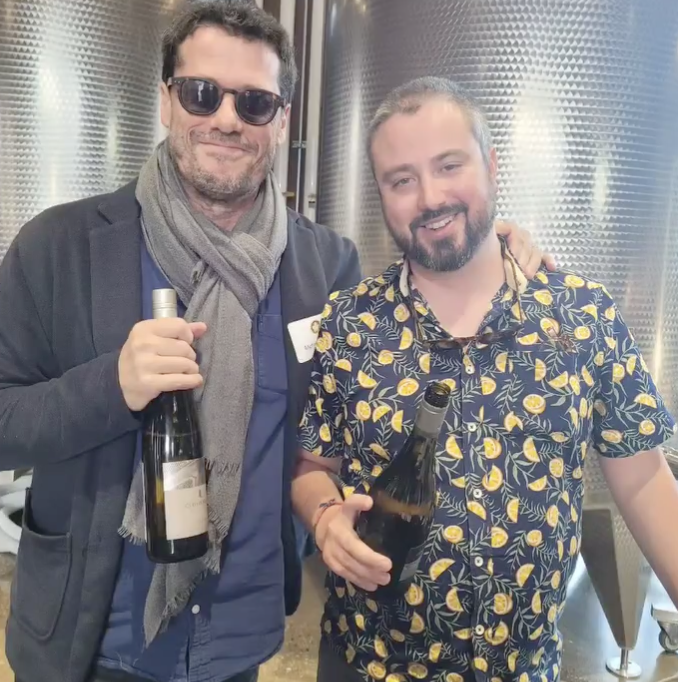
With the boys of J. Bookwalter

J. Bookwalter 3rd Edition 2019, Columbia Valley AVA

Flagship white, Bordeaux idiom, based on sémillon (63 percent) with sauvignon blanc (20) and muscadelle (19). The sém is both anchor and driver, dominating the aromatics and that speaks to how well this has been managed and blended. They keep the faith, act as catalyst for integration of both the varietal trilogy and the wood. John Bookwalter was known to say “choose your wood like you would choose a picture frame.” Equally important is the creation of consequence between flowing grace and bracing tension. Good strong mid-palate, tight and focused, length is outstanding. Proper flagship appellative white blend. Drink 2023-2027.  Tasted August 2023

J. Bookwalter Merlot Readers 2020, Columbia Valley AVA

Mainly merlot but not exclusively, with small amounts of cabernet sauvignon, malbec and cabernet franc for good support, measure and spice. The oak is noticed, the tannins powdery yet silky enough to make this über sippable. Still a bit gangly to be honest with some white peppery piques on the aromatics and so another year will surely send this merlot to be in a place it was intended to be. A few grams of residual sugar plump it up and then chocolate, a next effect by barrel aging which only serves to make this a truly silken, creamy and yet acid retentive red wine. Produces up to 1,500 cases. Drink 2024-2027.  Tasted August 2023

J. Bookwalter Conflict 2020, Columbia Valley AVA

Conflict, aged on lees, bottled 18 months after harvest. A great vintage save for some smoke that drifted in from fires all over the west, though really less dramatic here in the Columbia Valley than many other places. Pretty taut red that has not yet released its true aromatic charm, in fact it could be another 18 months before that really begins. The Readers Merlot is a much earlier proposition and the more diverse varietal meets barrel make-up with style intendment to make this a more structured and powerfully restrained merlot-dominant proprietary blend. Good yields though and a juiciness here that says the type of acidity in Conflict is quite different to that of Readers. This shows real potential, luxe as it is and all parts are prepared thoughtfully, with blood sweat and tears, yet neither by pretence nor blind ambition. Drink 2025-2029.  Tasted August 2023

J. Bookwalter Cabernet Sauvignon Readers 2020, Columbia Valley AVA

Rounded out by five percent syrah and petit verdot, with thanks to a most important grower/vineyard, that being Dionysus. A richer, thicker and more unctuous red (as compared to merlot) but fruit concentration is on par. That said the warmer Dionysus site can’t help but deliver this kind of glycerin viscosity and so the blackberry-Cassis dominance will not be denied. Can’t miss the silky syrah and petit verdot depth that put this in the kind of red best defined as full and substantial. Refined and finessed enough, never overarching or reaching, best now and for a few to five years forward. Drink 2023-2027.  Tasted August 2023

J. Bookwalter Cabernet Sauvignon Protagonist 2020, Columbia Valley AVA

Change of pace, in a way, from Conflict to Protagonist because for the first time there is an Italian (think Bolgheri) like stylistic coming through. Dusty, chalky and powdery tannins are evident, even in the face of fulsome and concentrated fruit. Juicy to the nth degree, ridiculously delicious and then a chocolate plus espresso crema all over the back end. The cumulative effect by fruit, terroir, climate and barrel aging make this climb to a rich and creamy finale pretty much unavoidable. Some sweetness follows and after some REM sleep there will be a long, melodic and jangling future for this Columbia Valley red. Drink 2024-2028.  Tasted August 2023

Vic Palencia

Palencia

Victor (Vic) Palencia’s grandfather was a first generation immigrant from Spain (to Mexico) and he is first gen. American, so the symmetry, from Valencia to Palencia, is something to hang a northwest hat on. Vic started in Walla Walla in 2012 after taking a flyer and to realize a dream. As a first generation immigrant it cements the legally forming “sueno” even deeper. Thus the “Monarcha” brand, “earning my wings,” says Vic. “If you drink two bottles, cabernet and merlot side by side, you can fly.” A symbol for lifestyle, easy drinking wines and then the Palencia label, more serious, exulting Washington State’s diversity of grape varieties grown. The label depicts his father holding a shovel, “always working the land.” Palencia is located in Kennewick.

Godello foreground, background Vic Palencia

Palencia Sparkling Albariño

Charmat method, sweet and salty, like nuts and caramel corn but leaner and tighter as per the grace by variety. Simple stuff with good energy.  Tasted August 2023

Palencia Albariño 2022, Columbia Valley AVA

Says Columbia Valley but really should be called Ancient Lakes located in northwest Washington. But Columbia is more recognizable and so here we are. If it smells like albariño and tastes like albariño well, you know the rest but truthfully this is a less herbaceous and more mineral example. And so Ancient Lakes it is. The terroir is hardpan calcareous limestone, good for drainage and reduction of hydric stress with sandy loam of up to 19 inches above. Pretty good albariño for dessert lands so far from a coast – but the place is definitely the reason. Nice little CO2 buzz about it as well which is so varietally correct. Drink 2023-2025.  Tasted August 2023

Palencia Malbec Monarcha 2019, Columbia Valley AVA

From Vic Palencia and family in Kennewick with Columbia Valley fruit, 14 months in wood. Nice little char and smoulder on sweetly salty and sour-edged fruit. Higher acidity than many malbecs and also valley wines so this wants and needs food. Mojo bowl anyone? Drink 2023-2025.  Tasted August 2023

Palencia Cabernet Sauvignon Monarcha 2019, Columbia Valley AVA

From the Richland Hills in the Columbia Valley where thicker skins and high quality fruit translate to unction and developed tannin. Cassis and Ribena mix, tart and candy hearts sour, in a good place right here and right now. Some powder in those tannins but resolution is just about complete. Drink 2023-2025.  Tasted August 2023

Palencia Petit Verdot 2017, Wahluke Slope AVA

Part of the El Viñador line which is essentially Reserve style but the name is more specific and indicative of what it means to grow and make these kinds of varietal wines. From fruit grown on the Wahluke Slope AVA. Structure and mouthfeel justify the reasoning and the result, especially the tannic intensity and power at the yet to relent finish. Wood thickens, spices and sweetens the last third of this petit verdot which is really unlike any other, grown anywhere and produced as a solo artist. Drink 2024-2027.  Tasted August 2023

Palencia Syrah El Viñador 2019, Red Mountain AVA

Red Mountain fruit and signature varietal effort but also style that Palencia seems most comfortable with. This is because the balance, restraint and finesse are at their collective finest in this kind of handsome and sturdy wine. Still some chalky and powdery tannin but overall the harmony and seamlessness are pretty spot on. Ready to go and please. Drink 2023-2026.  Tasted August 2023

Top notch Paella at Palencia

Palencia Carmenère 2019, Red Mountain AVA

Sourced from the hottest region in Washington, that being Red Mountain and picked quite late. Nothing green about this carmenère, in fact it’s fruit and wood are thick as thieves, the tannins silken and the capsicum or jalapeño non-existent. Chewy like chocolate liquorice and very much a wine made for those who like it rich, luxe and thick. Drink 2023-2024.  Tasted August 2023

Palencia Albariño El Viñador 2022, Columbia Valley AVA

The founding vineyard for albariño at Palencia’s reserve line is as advertised more concentrated, focused and finessed. From various harvests each fermented separately for 30 days in Hungarian oak puncheons then blended together before bottling. Aiming for a Galician style though truth be told you can take the albariño out of Galicia but you can’t take the Columbia Valley out of this albariño. Warm, rich and unctuous, in the end. Drink 2023-2024.  Tasted August 2023

The Tirriddis Boys – Matthew Doutney, Gabriel Crowell and Andrew Gerow

Tirriddis

Tirage … Riddle … Disgorge. Tirriddis, acronym of sorts for three sparkling wine producing friends (Andrew Gerow, Gabriel Crowell, and Matthew Doutney) who celebrated the end of school with Gimonnet and Janz Champagne, fried chicken and chips. All attended Washington State University for viticulture and oenology. Their collective motto is “if we fail, we can always move back in with our parents. “Wine is a super architectural art form,” explains Gerow. “We’re really just trying to define Washington – defining typicality that really doesn’t exist yet.” First base wine were made in the Fall of 2020.

Tirriddis House Gris, Columbia Valley AVA

House tier is all about distribution, for restaurants and export in a fun and recognizable style. Here 100 per cent pinot gris, creamy aromatics, mousse as well, the sweetest of all the Tirridis wines at 11 g/L. Looks at reeling in a Prosecco crowd that can’t afford $50 sparkling wines. Sees 12 months on the lees and it is traditional method so expect some autolysis, mild oxidation and ultimately great energy. Drink 2023-2024.  Tasted August 2023

Tirriddis House Brut, Columbia Valley AVA

More than 50 percent of the base wine is original (from the fall of 2020) and is essentially chardonnay with a few percentage points of albariño. Tirridis for tirage-riddle-disgorge (clever) and the sugars are hidden behind the acidity. Raises a bar for the vital scintillant nature of grapes farmed for wines that transfer energy like sparks jumping from hydro pole to hydro pole. Similar creaminess and mousse to the pinot gris but the orchard fruit here is different than that peachy stone. Who would dare not pour this as a warm home welcome or by the licensee glass? Tastes like unbaked Washington with tight bubbles. Drink 2023-2024.  Tasted August 2023

Tirriddis House Rosé, Columbia Valley AVA

One-quarter each cabernet sauvignon, syrah, merlot and chardonnay, not unusual for Washington per se though no real frame of reference from the sparkling diaspora neither. Celebrates red fruit, from currants through plums and this surely comes across drier than it is, not quite the 12 g/L of pinot gris but this is pretty taut and wound for Rosé bubbles. Drink 2023-2025.  Tasted August 2023

Tirriddis Brut Rosé, Columbia Valley AVA

The second rendition of the Brut Rosé, three parts, in triage two years, of cabernet sauvignon, syrah and chardonnay. One-third each means less red fruit so more of a currant current and the yeasty feels step up sooner and for longer. Still a scintillant intensity of vitality and energy plus some bitters this time around. Anything but a soft, upturned Brut style and saying this is a tasting room profile is pretty much spot on. Just feels like the teaching moment and in turn signature for the boys’ intonement of style. Drink 2023-2026.  Tasted August 2023

Tirriddis Washington Blend, Columbia Valley AVA

Everything but the kitchen sink though in actuality it is anything but because it’s not the last lot to be put together each season. A blank slate concept that intends to represents the region in an unapologetic way. Fruity first, of merlot, riesling, pinot gris, cabernet sauvignon, chardonnay, viognier and syrah. Neither Blanc nor Rosé but a rainbow of multifariousness and truth be told this is seamless fizz, a Venn diagram of varietal and geography, of potential, diversity and exceptionality. Drink 2023-2025.  Tasted August 2023

Tirriddis Blanc De Gris, Columbia Valley AVA

Third rendition looking for pure honeycomb and the guys feel they nailed it on number three, or at least set themselves upon a path to get it right there when number four comes to fruition. Why more sparkling producers do not refer to a varietal sparkling pinot gris in these terms is beyond me. It just fits. Creamy yes, with botanicals and bitters but the pear coulis flavour is uncanny. This goes a bit to herbal and preserved lemon foamy (and acidity is a bit subdued) but it’s close, oh so close. Can’t wait for rendition number four. Drink 2023-2024.  Tasted August 2023

Tirriddis Blanc De Blanc Stonemark Single Vineyard 2020, Rattlesnake Hills AVA

First single vineyard sparkling wine, all chardonnay, small plantings in the Rattlesnake Hills AVA, 1,600 feet of elevation, of brushy savour and direct hits of more than one kind of citrus. The concept is a growers’ one – with obvious connotations. Elevation is clearly the driver because this is about acidity and high intensity, all pervasive and above all else in what this site wishes to give. Poured from Magnum, extended triage. Lemony, tight, zesty and just about zero dosage. Can see this living six or seven years. Drink 2023-2028.  Tasted August 2023

Riley Miller, Sonder

Sonder

Established in 2016 by Riley Miller. Low-Fi, non-intervention, but not natural wines. Inspired by his time in the McLaren Vale. The initial production in 2016 was 100 cases – today about 3,000 cases. A thinker, but not too hard, yet still a man of wonder. Likes to consult the Dictionary of Obscure Sorrows, from which the realization is concluded that everyone around you has a complex life, as much as your own – but we can’t comprehend half of it. “We are like monkeys flying on a rock through space.” Observe Miller conduct a wine tasting for visiting journalists and you can imagine the inner workings of a modern day winemaking production. Riley’s bottles are anything but some kind of toad swindle. They are made for all of us, including those who don’t know it yet.

Sonder Rosé Cinsault 2022, Columbia Valley AVA

Trying to capture a Provençal style, 24 hours of skin contact, gently extracted and truly crushable. Lightly tart, basic, simple, unadorned. Native ferment. Truly cinsault to be honest. Drink 2023-2024.  Tasted August 2023

Sonder Grenache Blanc 2022, Columbia Valley AVA

Big chunk of the fruit comes from Boucher Vineyards and a smaller portion out of the Rattlesnake Hills. Warm and mature though high elevations keep it fresh and again the naked nature of a Riley Miller wine make this immediately crushable. Unadulterated, no make up and local. Drink 2023-2024.  Tasted August 2023

Sonder Roussanne 2022, Columbia Valley AVA

True expression of grape, not necessarily “perfect” wines, nor is there any reason to want them to be but they are representative of site and Washington. Neutral oak, tropical notes, fresh papaya and pineapple syrup, tart and textural with thanks to some stirring. Drink 2023-2024.  Tasted August 2023

Sonder Field Blend 2022, Columbia Valley AVA

Orange, mostly viognier with some marsanne and roussanne, six weeks on skins, six months in neutral oak. Grapes that don’t really bring the orange but instead the partly cloudy pineapple juice hue. A wine that challenges why orange is the ubiquitous term because funk and melting salve are not the thing. Spice yes and litchi, also grapefruit and the most mild of bitters. Has that anesthetic feel on the palate. Third iteration of this wine. Drink 2023-2024.  Tasted August 2023

Sonder Co-Ferment 2022, Columbia Valley AVA

A co-ferment of grenache and picpoul, first time trying, served chilled, “a patio pounder.” Watermelon Jolly Rancher insists Riley Miller, 11.5 percent and as crushable as wine can possibly get. Juice. Water, pink, alcohol. Drink 2023-2024.  Tasted August 2023

Sonder Red Field Blend 2022, Columbia Valley AVA

Mostly counoise and grenache with some cinsault, viognier and roussanne. A couple of weeks on skins, co-fermented with some whole cluster and carbonic maceration. Simple, drinkable, low alcohol, currants and red berries, sweet acidity, a moment of balsamic and charred herbs. The grapes almost combine for a cabernet franc or even lightly smoky cannonau meets carmenère effect. Nothing else like it and better for that. Drink 2023-2024.  Tasted August 2023

Sonder Grenache 2022, Yakima Valley AVA

Rarely made grenache by method and style “as close to pinot as is humanly possible” says Riley Miller. Picked early, 20 percent whole cluster, Western Cape stylistic, light, low alcohol, fresh and shadowy, suggestively if sneaky tannic. Drink 2023-2024.  Tasted August 2023

The Orcas Project Nebbiolo Andrews Vineyard 2022, Horse Heaven Hills AVA

“The Orcas Project is a collaboration between some of the most talented winemakers in the Northwest and a collection of Orcas Island artists. The idea to combine these two groups of people was born on the island and continues to expand throughout the Northwest. Each winemaker that is part of The Orcas Project is paired with an artist and represented by a different label.” Riley Miller’s is pseudo carbonic for which 50 per cent whole cluster is added back on top – makes for a grippy if light and effusive style. Cherry, candy apple and onion skin. Picked early as if for Rosé and frankly reminds of Cerasuolo. Fine bitters, good balance and a bit of roasted nightshade char. Cinnamon heart finish. Drink 2023-2024.  Tasted August 2023

Kinnikinick Red

Chateau Ste Michelle

Chateau Ste. Michelle is Washington State’s oldest winery, and many of Washington’s most famed winemakers got their start with the Estate. Ste Michelle is also the largest producer of Riesling in the world, and has winemaking partnerships with two international vintners: Col Solare is an alliance with Tuscany’s Piero Antinori and Eroica Riesling is a partnership with the Mosel’s Ernst Loosen. As part of the visit, the Canadian team was treated to a Blending Experience.

Chateau Ste. Michelle & Dr. Loosen Riesling Eroica 2022, Columbia Valley

More than a hint of residual sugar yet the driest style for CSM and though the relationship is with Ernie Loosen this is not Mosel style. Fruit is sourced primarily from the Evergreen Vineyard to bring Eroica into its proverbial and ironic sweet spot. The “hero” is in ode to the winery’s varietal roots and a Beethoven reference. Bit of residual CO2, high acid and truly tart. Balanced vintage, vital and energy elevating. Will be one of Eroica’s better agers. Drink 2023-2027.  Tasted August 2023

Chateau Ste. Michelle Riesling Indian Wells 2022, Yakima Valley AVA

Much like Eroica there is a residual CO2 buzz and at least twice if not three times the number (here eat 30 g/L) of residual sugar. Quite rich, luxe and opulent with just a few sites left to create this round and sweet style. High Kabinett or low Spätlese in a sense but without the supporting acid. More Mosel here and yet also quite a lot more phenolics and tonic. For a consumer that likes sweet wines but can be drawn into riesling, followed by some less sweet varietal examples. Some wine producing and drinking habits never die. Drink 2023-2025.  Tasted August 2023

Chateau Ste. Michelle Chardonnay Canoe Ridge Estate 2019, Horse Heaven Hills AVA

Relatively rich and luxe chardonnay style, sweetly buttery, soft and creamy. No real bite but just easy, amenable and though considered a cooler spot with better acidity than some it’s still as round as chardonnay gets. Softens more and more as it slides down and feeds away. Drink 2023-2024.  Tasted August 2023

Chateau Ste. Michelle Cabernet Sauvignon Indian Wells 2020, Columbia Valley AVA

Reds are the main focus at Indian Wells and while the style is opulence, this cabernet sauvignon is surely designed to be consumed ASAP. Tannins are present yet sweetly soft and wood soaks up everything, then returns it with semi-sweet chocolate. A quarter is new American oak and 20 percent is French. Soft with some sweetness, macerated plums and that ever pervasive chocolate. Hugely consumer friendly. Drink 2023-2025.  Tasted August 2023

Chateau Ste. Michelle Merlot Canoe Ridge Estate 2018, Horse Heaven Hills AVA

A third new French and seven percent American wood truly sheathes, thickness and wraps merlot up in a nurturing flannel blanket for merlot that has softened into an almost ideal drinking state. The 2016 was much more tannic and though some omnipresent balsamic shows here it’s more reduced, sweeter and less high-toned. Lower acid here, at 4.8. Warm and caressing vintage for the palate and our emotions. Drink 2023-2025. Tasted August 2023

Chateau Ste. Michelle Cabernet Sauvignon Cold Creek Vineyard 2019, Columbia Valley AVA

Cold Creek Vineyard is a very successful vintage for cabernet sauvignon, more finely tannic and higher in acid than 2016. The energy is special, the harmony between fruit, acid, tannin and wood far superior to other seasons and also other growing sites. Yes there is luxe fruit, concentrated and substantial but the combination of harvest and winemaking makes for an exceptional combination out of 2019. Drink 2024-2028.  Tasted August 2023

Chateau Ste Michelle Syrah Limited Release Organic 2020, Horse Heaven Hills AVA

Deep purple, fruit sweetness from über ripeness and a clarity or cleansing feeling for naturally curated and orchestrated syrah. So profoundly bright new world in style and effect, delicious to the nth degree and openly gratifying. Drink up.  Tasted June 2023

14 Hands Winery

14 Hands

Chateau Ste Michelle property located in Prosser.

14 Hands Pinot Gris 2022, Columbia Valley AVA

Clean, fresh, soda feel that puts the style in gris though there’s not much separating it from grigio, either from the Columbia Valley or across the pond delle Venezie. Vague melon and honeyed flower blossoms but when all is said and done this easiest to get at pinot gris from the grand Columbia Valley is a simple glass of white ubiquity. Drink 2023-2024.  Tasted August 2023

14 Hands Roussanne Marsanne The Reserve 2022, Rattlesnake Hills AVA

Crisp Rhône white blend with a small percentage of wood to give it a wisp of smoulder that combines with some lees stirring for a creamy mid-palate. Higher in pH than some of this sort of Yakima ilk to result in elevated sapidity, a toothsome quality and finally piquant bite. Quite a bit of sulphur to work through but no worry because being structurally sound and very “reserve” in style the fruit and the composure will rise and win in the end. Give this some air, a swirl and agitation to coax out the charm. Just a 350 case production. Drink 20224-2027.  Tasted August 2023

14 Hands Stampede 2018, Columbia Valley AVA

Stampede is 14 Hands’ self-declared “bold red wine” and while the marketing sounds like something in the realm of BBQ sauce this is really impressive for the price. Essentially syrah with some petit verdot “to give it some shoulders” tells winemaker Keith Kenison who has been with the winery since its inception. French oak dominant translating as lavender, jasmine and vanilla, the latter a tincture that permeates much of the aromas and flavours. Yes it’s confected but also rich and unctuous for $15 (US). Drink 2023-2025.  Tasted August 2023

14 Hands Cabernet Sauvignon The Reserve 2019, Horse Heaven Hills AVA

Led by cabernet sauvignon and labeled as such though there are supports from both cabernet franc and merlot. A protein cabernet, meaning it drinks with strength and pairing it alongside entrée portion meats, preferably red will do it best justice. Carries that full barrel feeling in surround of a swell (mainly black) fruit and incredible richness, feeling like sweetness, but the wine is bone dry. Wood resin, syrups, up and into a whole other level of concentration. The most refined and luxurious of the 14 Hands reds (or whites) that competes with top Washington and also some heavier priced California examples. Drink 2024-2028.  Tasted August 2023

Goose Cap AVA at Goose Ridge Vineyards

Goose Gap AVA

Goose Ridge Vineyards

Goose Ridge in Richland and adjacent to Red Mountain is unique in that it is the owner of its own (Goose Gap) AVA, approved three years ago. The first planting of cabernet sauvignon was 25 years ago in 1998 and today there are a total of 2,500 acres of vines. The Monson family dates back to the early 1900s when M.L. Monson brought his family to the Yakima Valley. Taylor is the fourth generation, dad and two sisters (Bill, Molly and Valerie) are the third. The family is equally famous for cultivating Cosmic Crisp Apples (that don’t brown), developed with Washington State University and the first to grow them. The visit in the vines and through the facility culminated in a quick tasting of four wines though the setting was not conducive to formulating proper tasting notes.

Red Mountain

Col Solare

Located on Antinori Road in Benton City is the Château Ste Michelle Red Mountain partnership with Tuscany’s most famous family. A tour with Col Solare’s hospitality team reveals the bond with the mothership. “Antinori dictates what we do and the style of wines they want us to make.” There are no problems, only solutions and fixing issues like re-planting problematic cabernet sauvignon blocks is in the process of a three-year plan. “The only wine we make here that the Antinoris care about is cabernet sauvignon – so it has to be great.” The new winemaker is Stephanie Cohen, a Michigan graduate in Chemical Engineering. Cohen worked in New Zealand, Margaret River and Napa Valley, where she met Marcus Notaro, first winemaker at Col Solare. Stephanie went to Oregon, then Columbia Crest, then arrived at Col Solare three years ago. She was appointed head winemaker on July 1st, taking over from Darel Allwine. “Do we love what Stephanie is doing? Short answer is yes.”

The vintage brings about three major changes; label, style and price. The Col Solare had been in the $75-85 range going on 10 years but now it’s about Antinori wanting something “better.” In every respect ’19 is certainly darker and richer, of an impenetrable hue and structure. An Italian cabernet sauvignon, as close to Bolgheri Guado Al Tasso as Col Solare has ever been, but this holding pattern will almost surely be temporary. A Red Mountain interpretation from small (blueberry-sized) berries, raised with low vigour off of soils of sand and silt. Aged 22 months, not quite but pretty close to 100 percent new oak. Racked every three or four months, to eliminate slag and to refine, refine, refine. Aids in tannin transformation and eliminates the need for fining. A cabernet of great depth, of Cassis, mint and graphite. Luxe character, finesse, if not the level of fantasy wished for – but this new is the first of the new. By 2020 invention should meet vision for the next level of Col Solare quality. Drink 2025-2030.  Tasted August 2023

Col Solare Cabernet Sauvignon 2018, Red Mountain AVA

Essentially cabernet sauvignon with five percent franc while only 2015 and 2020 have been 100 percent. From the hottest wine-growing AVA in Washington state, with basalt below the soil surface, irrigated six to eight inches per year. Early picked and in 2023 this will likely start on or around the 20th of August, to finish off what has been “a really weird year.” There are 4,040 total acres in an AVA considered one of seriously high quality. Col Solare has been growing here since 2011 but not enough to meet production numbers and so six Red Mountain contract growers are involved. The average case number is 5,000 for a cabernet sauvignon as suave as it is rich though 2018 is the last of an era, because 2019 will mark changes to concentration, detail and price. Meanwhile the ’18 is equipped with the finest powdery tannins. Truth is there can be no denying the quality levels of fruit, wood and tannin. All relatable to uncompromising labour, time put in and attention to detail. It’s all too perfect. Drink 2024-2029.  Tasted August 2023

Col Solare Merlot 2019, Red Mountain AVA

Though 2019 was marked by an unusual Spring in a cooler and by extension leaner year it’s a relative thing and so Col Solare has still made a very substantial wine. This label falls under the auspices of the Component Collection, a “Tenuta” expression mainly intended for the Wine Club. All estate fruit, built on the premise of perfume ostensibly if allegedly a Washington state desert opportunity exaggerated on Red Mountain. Intense violets with blue fruits that merlot will express at these magnified levels when allowed to. Still tight as far as structure is concerned but thankfully three-plus years have allowed for some wood integration and tannic settling. A fruit emergence is underway and frankly encouraged, more so than the cabernet, if here in merlot not quite as polished as a wine. The finish shows the rusticity and austerity of the tannins while the quality of the chocolate is nothing if not impressive. Drink 2024-2029.  Tasted August 2023

With Sarah Hedges Goedhart and Christophe Hedges

Hedges

“Our driving force is for our wines to have a Red Mountain quality,” is basically the first sentence uttered by proprietor Christophe Hedges. “I don’t know if we’re trying to be authentic but we are following our mother’s lead, that if you are going to do something, do it correctly.” Anne-Marie Liégeois grew up in Ossey-les-Trois-Maisons, in Champagne, France. She married Tom Hedges from Richland, Washington in 1976. Their first wines were sold to Sweden in 1997. The first vineyards on Red Mountain in the Yakima Valley were planted in 1989 and 1990 and the winery-Chateau was built in 1995. Christophe returned in 2012 and is National Sales Director while sister Sarah Hedges Goedhart took over full-time winemaking in 2015. This coincides with the first certified label under the biodynamic program which began back in 2008. Goedhart says there’s no formula ever. “We’re just trying to be guided by what the grape’s want to be. Blending is the hardest part.”

Sarah Hedges Goedhart and Christope Hedges

Hedges Le Blanc Déscendants Liégeois Dupont 2021, Red Mountain AVA

A program that began in 2014, use of older barrels, some lees contact and bâttonage. A niche wine from Rhône grapes (namely marsanne with viognier), because whites at this level just don’t sell all that much. Even as brix levels rise the pH on this wine remains quite static and so as an aromatic white this remains pungently salty and avoids the starchy. Richer than expected and dutifully harmonious, clearly a wine of class, beauty and understatement. Lemon and orange peel, really nutty and slightly toasty, with only 400-500 cases made from just one hectare. It will change a lot and get brinier and brinier, becoming even better with stronger aged cheeses and many things cured. Drink 2023-2028.  Tasted August 2023

Hedges Family Wines CMS Made With Organic Grapes 2022, Columbia Valley AVA

The “American” version label, minimally sulphured and just bottled a week ago. A “farm” style wine, crunchy and sitting right there with a local sense of terroir, northwest, Columbia Valley, very different than what comes from Red Mountain. That said it has more Red Mountain fruit than Columbia Valley. The blend is 48 percent cabernet sauvignon, (44) merlot and (8) syrah, subjected to very, very little new wood. Fresh and clean with an iodine and wet concrete note, almost Western Cape in style. Spice and intensity speak about house style with a broad stroke on a painted picture. Drink 2023-2025.  Tasted August 2023

Hedges Family Estate Red Wine 2021, Red Mountain AVA

A blend off all the vineyards on Red Mountain (Hedges, Jolet, Bel’Villa, Magdalena and Les Gosses), berries about half the size of what comes from Columbia Valley. A higher pH place with less water conversion and more evaporation. Yields are smaller by half and extraction levels the opposite with thicker skins and when ripe, also crunchier seeds. The ’21 blend is 55 percent cabernet sauvignon, (26) merlot, (9) syrah, (6) cabernet franc, (3) malbec and (1) petit verdot. Aged in 62 percent American and (38) French wood. Rich, luxe, concentrated and fixated on its home, that being these five blocks on the Red and frankly the palate feels intoxicated or anesthetized by the command of attention and purpose dictated by place. A top vintage, without a doubt. Drink 2024-2032.  Tasted August 2023

Hedges Family Estate Le Haute Cuvée 2018, Red Mountain AVA

This is 99.77 percent cabernet sauvignon and the rest, well does it matter? A cuvée that goes back to 1987 and here a Hedges professed, native ferment instructed great vintage. Lots of different cabernet sauvignon components make up this prominent and confident biodynamic wine. Red to black fruit, a noted brininess, higher acidity, seemingly lower pH, saltiness and dusty Christmas spice. The potential here runs long and deep, without weight and still some iodine, balsamic and minty freshness. Shot of espresso conclusion that speaks to another level of tannic dust and combust. Drink 2024-2032.  Tasted August 2023

Hedges Family Estate Touriga Nacional 2018, Red Mountain AVA

Quite possibly the future of Red Mountain, at least for Hedges, having planted three Portuguese grapes some time ago. Their heat resistance and ability to adapt preps them for next level climate extreme to come. Aged in 100 percent neutral American barrels and coming away liquid chalky, dark and feigning vague sweetness. Drips and oozes with Red Mountain iron, iodine and though truly opaque, there is this transparency of pace and place that cannot be hidden. Drink 2023-2027.  Tasted August 2023

Déscendents Liégois Dupont Syrah Les Gosses Vineyard 2020, Red Mountain AVA

No mention of Hedges on the front label but instead Anne-Marie’s family name because you have to respect your history. And the vineyard is hers, planted in 2006 then certified biodynamic in 2019. A block that winemaker Sarah Goedhart runs through with several different picks, some falling on one side and some on the stylistic other, than blended back in together. Its richness is anything but gratuitous, the depth descendent and built upon the idea or concept of gravitas. Full, complete and a most satisfying mouthful. Drink 2025-2033.  Tasted August 2023

Déscendents Liégois Dupont Syrah Les Gosses Vineyard 2019, Red Mountain AVA

Rich, thick and finely layered syrah from the distinct entity that is Red Mountain with its not to be missed meaty, mineral, sanguine, ferric rich, red earth character. There is an underlying chalkiness here and one that will surely determine a long life ahead, as witnessed by the linger and hang around ability of of a syrah on a clear and present mission. Drink 2024-2029.  Tasted June 2023

Déscendents Liégois Dupont Le Rosé Les Gosses Vineyard 2022, Red Mountain AVA

A kitchen sink Rosé blend led by syrah (42 percent) with (21) mourvèdre, (18) cunoise and (14) grenache. Aromatic as much as syrah is want to go, for us and so the Rhône gang’s get together works so bloody well. There is a sanguine character with thanks to the mountain’s soil and the movement here is classical, strings reverberating, flowing, rising and falling, no real cresencedo but a softening and fade. Just lovely stuff. Drink 2023-2025.   Tasted August 2023

Hedges Family Estate Red Mountain Reserve 1999, Red Mountain AVA

The artist formerly known as Red Mountain Reserve became Le Haute Cuvée with the 2012 vintage. Hedges was both ahead of their time (because the word Reserve was already losing its wine world lustre) and respectful of family history by labelling in a Champagne or at least a French vernacular. Here is a nearly 24 year-old red blend that has aged remarkably well and though thinking miraculously was a momentary thought – there is no miracle but something more profound at play. The Mountain for one thing and a family at least a decade ahead of the curve. Early Washington organics, no reverse osmosis, no mechanical filtration and no lobotomizing a bottle of red wine. Yes the secondary notes are present and they are settled in a state of absolute proprietary grace. Very little trace of tannin, nor any barrel that is but a superfine mountain induction that makes for a silky feeling in the mouth. There is a chance this will live another 24 years but the fruit is already leaving and so 12 should be the maximum with half that the truest and most honest recommendation. Drink 2023-2027.  Tasted August 2023

Hedges Family Estate Syrah Bell Villa Vineyard 2012, Red Mountain AVA

Tasted from magnum (bottle 110 of 200 to be exact) and shocked (in a redacted moment) by how fresh and non-advanced this wine persists to be. This syrah is from a vineyard that was the second one planted on Red Mountain and what we are faced with is a 15 year-old block that was so far ahead of its time. Tasting this 10-plus years after vintage feels like fiercely re-reading an old Tom Robbins novel, celebrating the proper work of the past and predicting what will be essential in the future. The search back then begets syrah in hot climates now. Getting the sage brush but now, now the fungi have come about, though not the kind that grow in a western rainforest. More like that which emerges from a burn site. In any case the impression is syrah from a beautifully stark place. La belle de campagne. Drink 2023-2026.  Tasted August 2023


Walla Walla

SMAK Wines

SMAK Wines is the first Asian woman owned and operated winery in Walla Walla producing exclusively Rosé. “Rosé to me is more than just a beverage, it is a lifestyle. I wanted to bring this lifestyle here and so SMAK was born.”- Fiona Mak, Owner & Winemaker.

SMAK Sangiovese Spring 2022, Walla Walla Valley AVA

SMAK Wines is the work of Fiona (Sui Wah) Mak and sangiovese is made just like the pinot gris, save for how it exults the high acid and sharp nature of sangiovese. Still so light and rainwater clean, not quite petrichor but yes, a Rosé that drinks like water. Back up the truck for this glug-glug, glou-glou, grape witches fantasy of Rosé. Salty. Drink 2023-2025.  Tasted August 2023

SMAK Pinot Gris Summer 2022, Walla Walla Valley AVA

I mean not all that different than the sangiovese if lighter, lower in acid and well, summery. Light, bright, tender, carefree, unadorned and even saltier, to be honest. Just what you need, whether you know it or not and well before you even know your needs are needed. Salty magic as koan. Koan of Rosé. Drink 2023-2025.  Tasted August 2023

SMAK Syrah Autumn 2022, Walla Walla Valley AVA

Made with syrah and its autumnal personality, barrel fermented in neutral wood, some malolactic and so not the usual but rather a Rosé with some extra nuance, spice, texture and fantasy. No lewd or ambitious stylistic departure from Spring and Summer, just a bit more grounded, of blush gravitas, creaminess and something needed to be explained. Rosé smackdown without any undesired anxiety or tension. Drink 2023-2025.  Tasted August 2023

SMAK Syrah Bubbly Blend Winter 2022, Walla Walla Valley AVA

Fizz Rosé by syrah with some addendum by grenache and a few extra grams of residual sugar to keep the harmony and faith alive. Nice little bit of naturalization in the way the wine sits on the palate and melts like a caramel and lemongrass salve. Red currants and again, coming across dry and just tannic enough to keep things moving forward. Would like another half gram of acid for best energy and more length. Drink 2023-2024.  Tasted August 2023

SMAK Cabernet Franc Rosé Abstract #1 2022, Walla Walla Valley AVA

There is just something about cabernet franc that when it’s made into Rosé (and made well) the grape variety is more recognizable than almost any other. Fiona Mak has captured grape and what just has to be place with a level of calm and hypnotism that Rosé rarely sees. Drink a glass, get your Rosé buzz on, feel OK for the rest of the day. Drink 2023-2025.  Tasted August 2023

SMAK Pinot Noir Rosé Abstract #2 2022, Walla Walla Valley AVA

Gotta say this might be the best use of pinot noir in Washington, light, salty and without distraction to cause any overthinking. Closer to the sangiovese than any of the others and with an extra layer of volatility, sharpness and tang. Drink 2023-2025.  Tasted August 2023

With Brandon Moss, Production Winemaker – Gramercy Cellars

Gramercy Cellars

The story of Gramercy Cellars began with a Manhattan-based sommelier tasting and becoming inspired by Washington State wines. He sells everything to move across the country to make his own. Master Sommelier Greg Harrington and production winemaker Brandon Moss are the mad scientists, experimental music makers, open-minded and forward thinking team.  They are intuitive and paying attention to the extremities of climate events. Fully aware that 2020 was a brutal smoke year and so 25 percent was balked out after remediation. “Mourvèdre can handle it” tells Moss, but “cabernet franc and pinot noir simply can’t.” Elizabeth Tommasino at Oregon State is researching “columns” that neutralize smoke taint without stripping varietal from wines.

Gramercy Cellars Picpoul Pét Nat

Sparkling picpoul, low pH, high acidity, aromatically neutral and boom, Pét-Nat. Left on its lees for something like 10 months before being disgorged and so yeasty is the understatement. Graffiti labeled, an element of Gramercy Park, NYC ode. Smells like chèvre and preserved lemon, minutely funky and well, extremely French. Weirdly so and the yeasty-bready ready quality is more sourdough than anything else but also this dry-aged beef note that purists will really love. This is how you make wine without excess sulphur, cultured yeasts and for the purpose of re-fermentative ideals. Drink 2023-2025.  Tasted August 2023

Gramercy Cellars Picpoul 2022, Walla Walla Valley AVA

Not a whole helluva lot of picpoul made in the United States and especially in hot climates but it ripens late and the acidity can be maintained – that said you need a lot of heat to get it ripe. This may not be the Languedoc and the lean, salty, low pH style without lees weight or drive puts this in a league of its own. Vines were planted in 2013, clusters are loose and massive, the wine it makes is acid-driven, fresh and simple. Pencil lead, cinnamon heart and fennel pollen. More complex than you might think. All lemon and lime on the finish. Drink 2023-2025.  Tasted August 2023

Gramercy Cellars Viognier 2022, Columbia Valley AVA

Sourced from Lake Chelan for a cooler climate base and then the Gramercy vineyard called Forgotten Hills in the Walla Walla Valley. The WW fruit is all barrel fermented while the Lake fruit is only treated to forty percent. The complete opposite of the typically recent warm vintages and so don’t come looking for tropical fruit and fresh roses. Think orchards, of pear and then that douse of lime with a salty finish. Summertime temperatures in later September brought weight and closure to this ’22 viognier. Might still be a tad lean but phenolics are solid and balance is not to be questioned. This is viognier for those who don’t always love viognier. Thank you warm October. Drink 2023-2026.  Tasted August 2023

Gramercy Cellars Mourvèdre “L’Idiot Du Village” 2020, Columbia Valley AVA

Varietal, from Olson Vineyard west of Red Mountain up on the north ridge, back hill of Benton City. Hot for ripeness though not quite Red Mountain hot. Fermentation and aging in concrete with more barriques involved and then a racking back to concrete. Nearly 60 percent whole cluster because the vintage said so and biting into the stems directed such a decision. First vintage was 2009 and along with 2010 it was a GSM-C blend but over time (and as a result of a trip to Bandol) the weird blend was dropped in favour of making mourvèdre, a.k.a. the true Washington rock star. Peppery but no char, herbal though never herbaceous, red fruit strong without any unnecessary tension or power. Kind, soft and nurturing for the grape. Terrific use of whole bunch, proper and grape related. No bitterness, no smoke taint. Clean as it gets. Pretty much ready to pop and pour. Drink 2023-2026.  Tasted August 2023

Gramercy Cellars Syrah Forgotten Hills 2019, Walla Walla Valley AVA

On the Blue Mountain side of Walla Walla, picked early in most parts of the state but not until October in Forgotten Hills, set down below in an ancient riverbed in the valley. De-stemmed in 2019 because of some mild issues and very much a red fruit juicy, lighter character of syrah with peppery liquidity and little to no sharp bites of tang. Crunchy stuff, relatively low in Rotundun and made to respect the vintage which did not want the makers to keep the bunches whole. Nothing aggressive here, fruit always winning. A fifth of the tannic austerity that the (whole cluster component) brought to the 2017. Drink 2023-2026.  Tasted August 2023

Gramercy Cellars Syrah Forgotten Hills 2017, Walla Walla Valley AVA

Nothing wrong with a little bit of age on a syrah that has come into its own with thanks to the powers that be so that we can enjoy the fruits and the result of great labour. The present matters and yet there is a tension and even tannic austerity that asks for even moie time. Such a well crafted syrah, as meaty and coursing as it is fruity or getable, in fact there are few that can match the wound intensity, focus and restrained power as this by Gramercy denotes. Drink 2024-2032.  Tasted June 2023

Gramercy Cellars Syrah Lagniappe 2019, Yakima Valley AVA

From Red Willow Vineyard in the Yakima Valley near the town of Wapino. The first Washington syrah vineyard planted in the 1980s by David Lake, a Master of Wine, with Mike Sauer, in 1987. The old block is called Chapel Hill and this is 100 percent whole cluster syrah, completely apposite to Forgotten Hills even though it’s the same vintage. Aromatic concentration, full bodied nature and a naturally sweet meets savoury personality that is quite frankly intoxicating. Lagniappe as Frangipane, something wild and free, a crushed rock and berry entanglement and something profound. Really tight and precise. “Wait, did you hear that?” What’s the music playing? Somewhere down the Crazy River? Drink 2025-2032.  Tasted August 2023

Valdemar Estates

In 1889, Joaquin Martínez Bujanda began the family winemaking tradition in Oyón, a small town in Northern Spain. His son, Marcelino, and his grandson, Jesús, followed in his footsteps. Jesús’ son, Don Jesús Martínez Bujanda, created Bodegas Valdemar in the 1980s. His son, Jesús Martínez Bujanda (5th generation), is the current CEO of the family’s winemaking business, and his sister, Ana Martínez Bujanda, is the Cheif Operations Officer for Bodegas Valdemar. Jesús fell in love with the Walla Walla Valley while he was a student at the University of Washington. His passion for winemaking and for the valley led him to create Valdemar Estates.

Valdemar Estates Chardonnay 2021, Columbia Valley AVA

Clearly a top chardonnay site and the luxe character is evident, as is the acid, freshness and piqued intensity. The look here is texture, playful movements and interactions between parts so think down south but back to the motherland and south from there. Valdemar paired this with beets, mango and pistachio – my that does work. The finale on this chardonnay is warm and spiced, a harmony of seasoning after fruit and wood subside. Drink 2023-2026.  Tasted August 2023

Valdemar Estates Cabernet Sauvignon Entre Nosotros 2020, Columbia Valley AVA

“This is our entry level cabernet sauvignon (at $44),” tells Jesús Martínez Bujanda, “but it is the most important wine that we make at the winery. It has to over deliver.” And so the introduction (with some merlot and petit verdot) is the wine that acts as the entry drug and bridge to the top end wines that a Rioja producer thinks creates exceptional wines out of not only the Walla Walla Valley, but also the greater Columbia Valley. You can immediately feel and tell that a Rioja mentality infiltrates the place but how could it not? The chalkiness of the tannins are remarkably fine and the spicy character actually pricks and piques the palate. Purple fruit, creosote, graphite and wood that will take a few years to melt in. The fruit is equipped to handle it. Drink 2024-2028.  Tasted August 2023

Valdemar Estates Cabernet Sauvignon Klipsun Vineyard 2020, Red Mountain AVA

Immediately noticeable as a cabernet sauvignon from a warmer site, fruit rich and concentrated, doubly substantial and even further developed as richly tannic. Fully, completely substantial and laden with finest grains of tannins in chains every finer, braided as tight as is seemingly possible. Dusty but a thick, duff like matter, coating every minute part of the palate. There are no holes or moments of lag but only heavy set fruit, supportive acids and those massive tannins. Terrific work from winemaker Marie-Eve Gilla and not sure there is a better cabernet sauvignon made anywhere in Spain. Drink 2023-2029.  Tasted August 2023

Valdemar Estates Syrah 2020, Walla Walla Valley AVA

Here Syrah comes from the hottest districts in North America, known as The Rocks, an ancient riverbed on the Washington-Oregon border filled with basaltic cobbles. Valdemar owns a portion and this is arguably THE PLACE to grow syrah in the west. Floral with high level black pepper for classic syrah-Rotundun style. Meaty, with iodine and charcuterie but with no compromise to fruit concentration. A substantial wine in all respects, tannic and well extracted, again across all parts of regard. It can be imagined that the style will change over the next few years as finesses continues to hone in on just what the Rocks wants to give out of vintages ever diverse.  Last tasted August 2023

Full on pitchy dark fruit swells from Valdemar, layered, chewy and ropey, like liquorice of many splendored flavours. Full on ripeness and natural sweetness by way of expression without any compromise or conceit of structure. An earlier drinking example though also one that will do well for up to five years because the fruit is just that deep. Drink 2024-2027.  Tasted June 2023

L’Ecole No. 41

The old Frenchtown school operated until 1974 and was bought in 1977 with the idea of turning it into a winery. First harvest and official founding was in 1983. Marty Clubb is celebrating his 40th Anniversary. Jean and Baker Ferguson founded the winery in 1983, well before there was a wine industry in Washington. Third in Walla Walla, 20th in the state. Marty was winemaker from 1989 and today its Mark Trafanelli, since 2018. Now 50,000 cases, increasing by 1,000-1,500 every year since 1989. Cabernet is into its 50th leaf, merlot close, chenin blanc next and first sémillon was on Sagamore, also the Wahluke Slope. Not a lot off new plantings and so the overall amount is declining. They make upwards of 30 percent in the state and even more than that in chenin blanc. The school at 500 ft is in a cold frost belt so the older vineyards are planted at 800-900 ft and the new Ferguson Vineyard on basalt is at 1,500. Climate change has improved winter weather ability while diurnal temperature changes can add up to 40 degrees Fahrenheit.

With Marty Clubb, L’École 41

L’École No 41 Chenin Blanc 2022, Walla Walla Valley AVA

Older than 35 years of age and so like the Western Cape OVP the labelling is old vines. Akin to old bones but with experience, resistance to weather issues and creating high level concentration. Some of the fruit comes from the Newhouse family’s vineyard with century vines, sour rot dirty laundry and all. Clones probably came up from Dry Creek Valley in California and my if this does not strike a balanced accord between dry and sour, concentrated and tart. Just woollen enough to mimic the Loire and act nothing like California. Length is more than impressive. Drink 2023-2026.  Tasted August 2023

L’École No. 41 Sémillon 2022, Columbia Valley AVA

Comes across as having some sweetness but be fooled once because it’s glycerol that gives the impression, so truth be told the sensory give is astral and incidentally Van Morrison’s seminal track from the eponymous record is playing in the tasting room as the wine is poured. The 2022 shows some early flint and petrol, balanced by the texture developed as a result of extra lees time. Another push-pull example of a L’École No. 41 white off of vines with experience. Just the right amount of tonic and bitters pop at the finish.
“To be born again
In another world
In another world
In another time.”
Drink 2023-2028.  Tasted August 2023

L’École No. 41 Chardonnay 2022, Columbia Valley AVA

A good chunk of this fruit comes from the original block on a crested hill of the larger Evergreen Vineyard. Dear Mr. Fantasy, pour me some chardonnay, from ice age silt and sand, stones and minerals that when respected, treats a consumer to this kind of salty-sapid harmonic chardonnay. All barrel fermented, all French and 20 percent new. I mean it’s an amount and style truly Burgundian with some tropical fruit because it is 2022 and yet acidity is crisp with green apple bites to balance what is also creamy texture. Middle road compared to the chenin and sémillon but also so perfectly professional. Drink 2023-2026.  Tasted August 2023

L’École No. 41 Merlot Black Label 2020, Walla Walla Valley AVA

The original estate red, the only one made in the 1980s and still the one that delivers earthy and herbal tones. The 18 percent cabernet franc (plus drips of malbec and petit verdot) creates the verdant and forest floor notes. Good red to red-black fruit from 2020 with highest level phenols and a sweet, pretty persuasion. A couple of glasses and then the melatonin sets in, followed by a near guarantee of REM sleep. “It’s what I want, hurry and buy.” Drink 2023-2027.  Tasted August 2023

L’École No. 41 Cabernet Sauvignon Black Label 2020, Walla Walla Valley AVA

“We have a lot of old vine cab,” says Marty Clubb, which indeed drives the machine, but there no real reason to name that on the label. Minimum age is 30 with many over 50 for a 100 percent cabernet sauvignon, all picked in October. Rich, viscous, unctuous and most important – experienced. Chalky and the barrel brings both good dark chocolate and dusty espresso to the finish. Age this five years. Drink 2024-2027.  Tasted August 2023

L’École No. 41 Merlot White Label 2020, Walla Walla Valley AVA

The highest level for merlot has Bordeaux Right Bank in mind and here the mix of windblown loess topsoil and basalt takes the grape up to where great minds and ambition want to meet. Huge fruit vintage, thick as thieves with structure twice pointed and the overall result is a big and cellaring potential merlot. Drink 2025-2030.  Tasted August 2023

With La Leggenda, Ange Aiello

L’École No. 41 Cabernet Sauvignon White Label 2020, Walla Walla Valley AVA

Less than 2,000 cases are made of the three vineyard (Seven Hills, Pepper Bridge and Ferguson) sourced cabernet sauvignon. Here comes the Cassis and herbal-savoury note with dried fruit moments red to purple and finally an impressive set of varietal meets site(s) circumstances. Averages out at 35 percent new wood and yes the fruit receives the wood with open arms. Long and age-worthy, longer than the merlot. Drink 2025-2032.  Tasted August 2023

L’Ecole No. 41 Apogee Pepper Bridge Vineyard Proprietary Red 2020, Walla Walla Valley AVA

The 31st vintage of Apogee. From the central part of the valley where cool air seems to be blowing through at all times. Heat accumulation is lower, hang time longer and the site is picked in late October, just ahead of the first frost. Planted in what would a millennium ago have been wher there were ice age flows. This is 56 percent cabernet sauvignon, (28) merlot, (12) malbec and (4) cabernet franc. The site tends – to more leather-tobacco and here it is also horse saddle noted which is Bordeaux in mimicry. The soil derived from ice age flows is what we extend in belief as being the reason. Why not? Serious character and complexity, finest tannins of the estate’s Bordeaux reds and from 2020 likely a 15 year run to come. Maybe longer. Drink 2025-2035.  Tasted August 2023

L’École No. 41 Perigee Seven Hills Vineyard 2020, Walla Walla Valley AVA

A proprietary name imagined by Martin Clubb’s father-in-law to explain site which is at high elevation on the south side of the valley planted in 1980. The soil is 15 feet of wind-blown loess sitting atop another 15 feet of ice age flow. Extended maceration is the treatment for this proprietary blend which is composed of the free run portion of the juice because both the cabernet sauvignon and petit verdot showed hints of smoke taint. Perigee incidentally is the closest spot in the moon relative to the earth. A super moon in lay-person’s terms. The blend is 54 percent cabernet sauvignon, (24) merlot, (12) cabernet franc, (6) malbec and (4) petit verdot. Rich and smouldering, thick black currant almost syrupy but so high in glycerol and what impresses but also harmonizes this red is its sweet and bracing acidity. Makes the smoulder unimportant though it will always be there in the shadows. Drink 2025-2032.  Tasted August 2023

L’École No. 41 Ferguson Vineyard 2020, Walla Walla Valley AVA

The basalt vineyard with hardened-fractured, three-dimensional cube of rock that breaks or fragments to the touch. Also iron rich clay and this is the only place in Washington State with soil like this. The third of three estate proprietary reds that buds early and are picked late. Grapes are thick-skinned and the conversion rates mean rich fruit, high acidity and length. Blend here is 59 percent cabernet sauvignon, (24) merlot, (7) cabernet franc, (6) malbec and (4) petit verdot. Picks at an acidity level off the charts and then settles so that pH is low, but not crazy low. First vintage was 2011 and believe it or not Phylloxera was found in the vineyard. New plantings are helping to keep things moving swimmingly along. Rich berries of three colours, dusty meets chalky tannins and all the dark chocolate and espresso of great and fine ilk. Huge wine and that’s exactly what it wants and is surely touted to be. Drink 2025-2034.  Tasted August 2023

L’École No. 41 Syrah 2020, Walla Walla Valley AVA

“What’s the sense of changing horses in midstream” and so syrah is poured last, with 1+2 percent grenache and mourvèdre. Some stem addition (20 percent at the bottom of the totes) to make sure a bit of Mediterranean black olive and caper note slide on in. Black pepper necessity and more barrel than some but well integrated and no doubt also seasoning to add more of what skins and stems have already given to the fruit. A sanguine note, hematic streaks, blood on the tracks. Spicy and fulsome, a very substantial syrah that like the Bordeaux reds will also age quite well. Acumen and top vineyards ensure this will be. Syrah, you’re a big girl now. Drink 2024-2029.  Tasted August 2023

The Cellar at Woodward Canyon

Woodward Canyon Estate Vineyard

Family owned, by Rick and Darcey Small. Selena Kritsonis runs hospitality and husband Sager Small is vineyard manager. Kevin Mott is the winemaker. 8,000 cases in total

Woodward Canyon Estate Vineyard Chardonnay 2022, Washington State

First planted in 1978, barrel effect dialled back over the years, now 20 percent new wood and no malolactic whatsoever. All estate fruit with the newer (north facing, refreshening) block planted back in 2011. Pretty spot on classic ode to the motherland style that sees ripest fruit without freshness limitations meeting just enough wood for softness, creamy texture and overall Washington State high caste ubiquity. Truly proper and correct for sense of place and intendment. Vague impression of sweetness says quite a bit about fruit quality and style. The length is impressive. Drink 2023-2026.  Tasted August 2023

Woodward Canyon Estate Vineyard Merlot 2020, Walla Walla Valley AVA

Estate fruit at the western edge of the Walla Wally Valley, two blocks used, 25 year-old Clone 3 old vine and also the younger Clone 181. The most western vineyard in the AVA, drier and warmer, a climate as much akin to red Mountain as it is to the Blue Mountains area of the WWV. Warm and dry vintage, lower than average yields and nearly 50 percent new wood, French and Hungarian. Pushing 15 percent alcohol yet holding both that and the wood with esteem. Aromatically spicy, dusty fennel pollen, tannins as well. Fine acids and chalky like so many, especially from vineyards west of this valley. Two-toned in all these respects, cooler herbal Amaro notes meeting warm and developed richness. Lots of ganache on the back end of this wine. Drink 2024-2029.  Tasted August 2023

Woodward Canyon Estate Vineyard Cabernet Sauvignon Artist Series #29 2020, Washington State

Flagship wine from vines averaging 35 years with each label painted by a different West Coast artist. The vineyards are four-fold; Woodward Canyon Estate, Sagemoor, Weinbau and Wallula Gap. Nearly 40 per cent new wood, French and American, actually cab-dominant (76 percent) with other Bordeaux grapes involved. The rest are (12) petit verdot, (5) cabernet franc, (4) merlot and (3) syrah. Shows less wood than the merlot and more variegate red fruit. Also more espresso and less chocolate because the red berries really stand apart. Something candied comes late, like cinnamon hearts meeting reduced balsamic. Would match well with flank steak and chimichurri with slow roasted aubergines. Drink 2024-2028. Tasted August 2023

Woodward Canyon Estate Vineyard Cabernet Sauvignon Old Vines 2020, Washington State

Originally called “Dedication Series” and first made in 1981. Oldest cabernet blocks are chosen from three vineyards; Woodward Canyon Estate, Sagemoor and Weinbau. This sees 100 percent new French wood and just three percent each petit verdot and malbec bring grip and spice to the cabernet. So much wood to integrate, melt and assimilate before a wine of this luxe nature and fullest concentration can pour with any real charm and grace. Huge fruit and creaminess, The 1972 Sagemoor fruit (equivalent to Bacchus for other producers) is the experienced anchor and overall the wine does act out as a heritage passion play with age-worthiness at the highest level for the estate. It’s unctuous and thick, again in delivery of that vague impression of sweetness though that number is not listed on the technical sheets. Those who love the fullest of full cabernet sauvignon should keep this in their hearts along with any number off much higher prices iterations from Napa Valley. Drink 2025-2033.  Tasted August 2023

Seven Hills Winery

Casey McClelland is the founder, of Celtic roots (thus the logo). 1980 planted founding vineyard, established winery in 1988, was originally setup in Milton-Freewater (in Oregon). Moved into the Whitehouse Crawford Building in Walla Walla in 2000. #5 winery in WWV. Yvonne Davis is the tasting room manager. Purchased in 2016 by Crimson Wine Company. Winemaker Bobby Richards is the Washington Organization Winemaker (WOW), overseeing both Seven Hills and Double Canyon.

Yvonne Davis, Seven Hills Winery

Seven Hills Winery Sauvignon Blanc 2022, Walla Walla Valley AVA

A little bit of everything adds up to a complete and straightforward package of sauvignon blanc that’s as crisp and sapid as it is predicated on fruit. Clean and tidy, ideal as correct would be from and for a desert climate. Chill well is the operative phrase to make this stand out and satisfy. Drink 2023-2025.  Tasted August 2023

Seven Hills Winery Rosé 2022, Walla Walla Valley AVA

A Rosé of cabernet franc splashed by malbec and petit verdot for what is about as much clean flavour to come from the combined grapes and this valley as you are ever going to find. Currants and tart cherries, sweet Genovese basil and just a perfect crabapple. This is spot on Rosé with red citrus running through even vein and artery of a wine of pulchritude and toothsome bite. Drink 2023-2026.  Tasted August 2023

Seven Hills Winery Merlot 2020, Walla Walla Valley AVA

The word on merlot perpetuates because you know the mention in “that movie” and while many characters in Walla Walla make mention of it, well frankly merlot is terrific in this AVA. Especially when it’s made with the fruit-centric, spice cupboard and graceful restraint as it is by Seven Hills. Do you even notice the wood? Not nearly or so much and everything about the grape, including its smooth state of being and gracious personality are captured, in fact doubly so from the warm and dry vintage. Don’t drink f-in merlot you say? Drink this you ignorant perpetuator of stereotypes. Drink 2024-2028.  Tasted August 2023

Seven Hills Winery Merlot Seven Hills Founding Vineyard 2018, Walla Walla Valley AVA

Rock star vintage. Someone up above or below gave you great grapes and said don’t mess it up. Gotta say that the pedigree established by Casey McLelland down through all the winemakers and team at Seven Hills have figured out how to do much more than not screw up. Forget about the name of the variety for a while, close you eyes and taste this wine. Plush and ripe, all those dusty and chalky elements shaken, not stirred and emulsified like few other. Now concentrate and exult the name, say it aloud and tell the world. Seven Hills knows and does merlot. Really darn well. Bloody ‘ell this is delicious. Drink 2023-2027.  Tasted August 2023

Double Canyon Cabernet Sauvignon 2021, Columbia Valley AVA

Owned by the Crimson Wine Company, along with Seven Hills Winery, winemaking overseen by Bobby Richards. Blends fruit from two appellations, Red Mountain and Horse Heaven Hills for a truly two-toned cabernet sauvignon as fruity as it is sweetly herbal. Cassis and Amaro, balsamic and caramelized fennel, flavour compounds running amok, hither and thither. Nothing black fruit thickness and wood make-up about it here – just fruit, great acid, haute grip and medium bodied goodness. Drink 2024-2028.  Tasted August 2023

Double Canyon Cabernet Sauvignon 2018, Horse Heaven Hills AVA

Back in 2018 just two years after this brand became part of the Seven Hills world there was only HHH fruit from the hills where wild horses did once upon a time run free, including through the vineyards. Important and quintessential vintage for this part of the Columbia Valley’s reds, well pretty much anywhere in eastern Washington. Cassis still persists, as do sweet herbals and savoury elements, less brushy than Walla Walla, now silkened and smooth. Grip has dissipated and the cabernet might still show a bit of chalky tannin but it is drinking right in the heart of its window. Drink 2023-2026.  Tasted August 2023

Seven Hills Winery Pentad 2020, Walla Walla Valley AVA

For Seven Hills all rules and roads lead to Pentade, “the sum of five,” narrowed down from six, carmenère included in 2020, not cabernet franc. Always cabernet sauvignon dominant, label designed by Ian Boyden, paint made holistically from minerals, alloys and metals. Grace under pressure, richness without rush, no hesitation and confidence throughout. Important and audited acids, fruit auditioning for tannin that controls but like a parent for all the nurturing reasons. Noteworthy for its stage presence and deft abilities to impress without ego. Drink 2023-2032.  Tasted August 2023

Seven Hills Winery Cabernet Sauvignon Seven Hills Founding Vineyard 2020, Walla Walla Valley AVA

Signature varietal wine, for all it’s meant to be and for reasons that matter in every profound way. Not quite as rich and fortified as Pentad but equally grippy and of fine karst to bone structure, both by bright acids and trenchant tannins. Cassis reduced and herbs sweetened like no other wine in the portfolio. Top vintage for this wine. Truly. Drink 2024-2029.  Tasted August 2023

Seven Hills Winery Cabernet Sauvignon 2021, Walla Walla Valley AVA

The “distribution” cabernet sauvignon, as opposed to the high-end signature Seven Hills Founding Vineyard iteration, here a year younger and from a more challenging vineyard. Makes for high caste aromatics if neither the concentration, acumen or confidence of the SHFV. Teaching varietal wine, epitomizing vineyard fruit, health and estate style. Everything that cabernet sauvignon should and shall be for SHW and why decisions have been made for these positive consequences to follow. Proper and satisfying. Drink 2023-2026.  Tasted August 2023

House of Smith

Charles Smith grew up in Sacramento, one of 6 children. Went to Copenhagen with his girlfriend, booked and managed bands, most notably The Breeders of Denmark. Moved to Bainbridge Island, opened a bottle shop. Came to Walla Walla and he met the OG winemakers, borrowed equipment and was gifted some grapes. K Vintners K Syrah was born in 1999, 230 cases, was given a 250,000 loan form the bank, House wine with Costco was created and sold two years later to Precept wines. Then the came Charles Smith wines, five labels including Kung Fu Girl, 10 years went past, sold to Constellation Brands for 124 million dollars, name was changed to House of Smith and the rest is history.

Substance Sauvignon Blanc Sb 2021, Columbia Valley AVA

Just 10 per cent barrel fermented seems insignificant when you consider the amount of tropical fruit ripeness on this sauvignon blanc. Fresh and clean, zesty and though that fruit is healthy and luxe, the wine is also linear. The right stuff people. Drink 2023-2025.  Tasted August 2023

Substance Chardonnay Ch 2020, Columbia Valley AVA

Minor yet significant barrel addendum for what is again seriously ripe Columbia Valley fruit making for almost indiscriminately edible chardonnay you can’t help but ruminate and chew. Fulsome, light butterscotch and an unexpected salve dissolve upon then palate. Natural feel. What’s happening here? Drink 2023-2024.  Tasted August 2023

Sixto Chardonnay Moxee 2019, Washington State

Moxee is the name of the vineyard, a high elevation site in the Columbia, near to the Yakima Valley. the Charles Smith team is looking for acids and mineral, less butter and essentially a Burgundian feel. Nine months in concrete and nine more in 20 percent new wood. Barrel reduction as flint but also minor sulphide yet to integrate or blow off, some butterscotch but the elements and minerals do well to harmonize acids sweet enough to mimic and carry the fruit. Good intentions but 18 months of elévage can’t help but hide site more than it should. Drink 2023-2025.  Tasted August 2023

Sixto Chardonnay Frenchman Hills 2019, Washington State

Right next to Stoneridge Vineyard at 1,650 feet of elevation, cooler, frost free, nine months in concrete and a further nine months in 21 percent wood. Yes Sixto is a reference to Sixto Rodriguez who was lost to the world on August 8th. A story of renewal, second chances and regeneration, a.k.a. vines planted back in the 1970s by Château Ste. Michelle, abandoned and resurrected by Charles Smith. More than technically old vines, much higher acid than the Moxee, still rich of vintage fruit but this one bites, piques and attacks with white peppery jolts. This is an exciting wine to drink while watching Searching for Sugarman. Serious quality in old vines chardonnay. Drink 2023-2026.  Tasted August 2023

Sixto Chardonnay Rosa Hills 2019, Washington State

Sees the most French wood after nine months in concrete and so expect more butterscotch and golden pineapple, compounded as a result of lower elevation in the Yakima Valley. No doubt the most complete and developed of the three single site chards, no apologies and in Rosa’s case none necessary because varietal nirvana in the style is acceded. “In the sun, in the sun, Mary.” Driving chardonnay, rising slowly, incrementally, resinous and substantial. Weightier, bass drum and line, droning in the end. Drink 2023-2025.  Tasted August 2023

Substance Pinot Noir Pn 2021, Washington State

Of 200 acres planted nine years ago the intention was to make a single block pinot. Syrah makers were in charge and so the learning curve was heavy and long. Seven years later this entry level pinot noir brings ripeness, that much is clear but also vanilla-lavender ubiquity. The use of Evergreen Vineyard fruit does bring extra pop and oomph because syrupy savour and vinous character needs some infiltrate lift. Works fine if with noted make-up and overworking involved. Drink 2023-2024.  Tasted August 2023

CasaSmith Sangiovese Cinghiale 2021, Wahluke Slope AVA

In 2013 Charles Smith began working with North Ridge Vineyard in the Wahluke Slope AVA where barbera and primitivo are also planted and they too came with the contract. Rosebud Vineyard (88 percent), and (12) Wahluke Slope. Eight months of neutral oak, Vino de Tavola style and concept, fresh, crunchy, “scorreviole,” as it must be. Fine work, representative of northern exposure, glug-glug, really respectful and well made. Shocked that it comes away away at 15 percent alcohol. No heat, so bravo to the team. Drink 2023-2025.  Tasted August 2023

Substance Cabernet Sauvignon Cs 2021, Columbia Valley AVA

Pulled from nine different vineyards and this is House of Smith’s wine that keeps the light on. Hums and grooves like a 1970s vibe, Marc Boland’s T-Rex to be exact. Some sweetness and also volatility but both are the kind that make a consumer feel like they are tasting something complex and upscale when really what’s in the bottle is a $14 Costco wine. No matter because it’s Neo-varietal cabernet sauvignon that the masses should choose above critters and California reds with 24 grams of residual sugar. Drink 2023-2024.  Tasted August 2023

K Vintners The Creator 2019, Walla Walla Valley AVA

A three pound bottle. Why? “Charles wanted to make a statement.” He also wanted to make something new from the state of Washington, not that cabernet-syrah has never been done, “but not to the extent that this team set out to do. From Powerline Vineyard in the Walla Walla, cabernet sauvignon at 73 percent with (27) syrah and the fine thing about this blend of moderate (13.5 percent) alcohol is finesse and powerful restraint, a Killers wine that “doesn’t look a thing like Jesus.” There’s only one creator and Charles Smith is not they, but this wine so reminds of classic Western Cape Blends where the most ancient geology gifts this earthy, reductive and savoury character. This is a very good red blend in spite of the sustainably egregious heavy bottle. Drink 2024-2027.  Tasted August 2023

Vital Wines

Non-profit offering financial support for vineyard workers. Everything is donated, including the grapes. Ashley Trout is the founder, winemaker at Brook and Bull. All tasting room staff are volunteers so thank you to Renée and Thomas for donating their time and knowledge.

Vital Wines Rosé Valdemar Estate Seven Hills Vineyard 2022, Walla Walla Valley AVA

Made with grapes grown and also winemaking donated by Valdemar Estate, of 80 percent mourvèdre and (20) syrah. Lots of spice here, candied aromatics too, not a shock considering the dominant grape and the tart fruit gains your immediate and keeps attention. Tastes like Rioja Rosado, oddly enough. Drink 2023-2024.  Tasted August 2023

Vital Wines The Given 2019, Columbia Valley AVA

Four-part Rhône-ish blend, based on 60 percent syrah with (25) grenache, (13) mourvèdre and (2) cinsault. The blend changes every year and so the donations are also in flux. Major spice, a cupboard full dominates the aromas, namely cinnamon, clove, nutmeg, all dusty and soaking in balsamic. Sensing American oak as if Rioja in style though the grapes all harken the Rhône. Chock full of flavour and relatively easy drinking with fruit both dark and floral. Whatever tannins were involved have fallen away. Drink 2023-2025.  Tasted August 2023

Vital Wines Syrah 2020, Walla Walla Valley AVA

Fruit is donated from The Rocks District in the southern Walla Walla AVA, basaltic cobbles that do syrah like no other terroir on earth. It’s really true that only The Rocks scents syrah like this, meaty and Rotundun peppery but also a speciality of flowers that simply do not come from anywhere else. A varietal-place sensation like sangiovese from Lamole in Chianti Classico, a perfume that is the place. “What can I get you?” Syrah on the Rocks, please.” Drink 2024-2028.  Tasted August 2023

Vital Wines Cabernet Sauvignon 2019, Red Mountain AVA

Made with fruit donated out of the Red Mountain AVA and there is no real shock to feel the warmth, thickened stew consistency and shaken texture. Full, oaky and designed for those who like it big and unctuous with just a bit of sweetness in their cabernet sauvignon. Very much southern Washington in style, chock full of flavour if not the most finessed iteration off of Red Mountain. Drink 2023-2025.  Tasted August 2023

Vital Wines The Visionary 2019, Walla Walla Valley AVA

Bordeaux blend from grapes donated out of the Ciel du Cheval Vineyard farmed by Seven Hills Winery, among others. Led by 60 percent merlot, with (27) cabernet franc, (12) petit verdot and a splash of cabernet sauvignon. First vintage with the proceeds going toward eye exams and glasses for vineyard workers who are unable to afford them. Quite the aromatic and also classic Walla Walla blend, thick, viscous and buoyed by pretty impressive acidity. Coffee, dark berries, lavender, graphite, dustiness, balsamic and a merlot-ness that is truly AVA dictated. Well made considering the grapes donated are always in flux and most of the wines are a first kick at the can kind of experience. Drink 2024-2027.  Tasted August 2023

Rotie Rocks Vineyard

Rôtie Cellars

Sean Boyd moved here in 2003, started the Rotie Rocks Estate winery in 2007, with no distribution. Only selling from the cellar door and in Seattle. Originally a geologist working in oil and gas, from Tacoma. Was the winemaker at Waters, fell in love with the Rocks District in Milton-Freewater at the confluence of Washington and Oregon. Property had been devoted to red delicious apples which were subsequently ripped up and planted to Rhône varieties, modelled after Beaucastel. Six square (5.9) mile sub-AVA and essentially the only American AVA with just one soil type. Each year a new vintage of the Northern and Southern red and white blends are released, one a “rounded trifecta” of grenache, syrah, and mourvèdre, the other a play on that other threesome, viognier, marsanne and roussane.

The Rocks (District) at Milton-Freewater

Rôtie Cellars Southern White 2022, Walla Walla Valley AVA

Half viognier with (30) roussanne and (20) marsanne, more than estate vineyards with some Blue Mountain foothill area viognier and roussanne coming in form that cooler clime. Partially barrel-fermented, minty cool, green eggs and ham fantasy, essentially dry so if there is a gram, that sweetness does little to effect the blend. Sapid white, neither tropical nor searing but somewhere comfortably in between. The barrel ferment on the viognier does induce longan fruit with a douse of marsanne lime that extends the flavours over a good length of time. Drink 2023-2026.  Tasted August 2023

Rôtie Cellars Southern Blend 2022, Washington State

A take on southern Rhône G-S-M with acid addendum and zest from cinsault. Somewhere in the vicinity of 60 percent Rocks District fruit with the remainder coming from the gorge that separates Washington from Oregon. The vineyard is literally on the river’s edge. A good portion is put into concrete (large cube) fermentation for 25 days, followed by neutral wood. That grip just has to be The Rocks but also a rush or whoosh of flavour that seems so very Gorge relatable. Curious metal motion mineral country twang, somewhat of a Chris Stapleton meets Lucinda Williams punchy anxiety that can’t help but grip the palate. Meaty, charred nightshade finish. Drink 2024-2028.  Tasted August 2023

Rôtie Cellars Northern Blend Rotie Rocks Estate Vineyard 2022, The Rocks District of Milton-Freewater, Oregon

The Côte Rotie mimic with five percent Viognier co-fermented with two different clones of syrah. Sees 15 percent French oak and is really the only Rôtie wine that sees some new wood. Agriculturally speaking it is the method of goblet head-training that makes for more efficient use of sap flow while fruit at 24 inches above the ground concentrates power. Also with winter help by “stoning up” from the basalt is The Rocks’ version of burying canes. Here a cobblestone cause and effect, of iodine, potassium and uranium, three pillars of these rocks that deliver wet stone, struck flint and balsatic tapenade. That crusty black olive sensation doubles down on aromatics and then the palate with shocks to the system like jumping across power lines in fits of sparking light. Impressive work here. Drink 2024-2029.  Tasted August 2023

Rôtie Cellars Rosé 2022, Washington State

Namely syrah with (15 percent) mourvèdre but the free run can’t come from more than an hour of skin contact because this is pale as it gets Rosé for syrah. Nearly vin gris, salty as F and purposed grown but also that acidity with the mourvèdre coming from The Gorge. Another sku is made with grenache called Stonewall Rosé that supports LGBTQ programs. Whistle as you sip this back because it delivers a one-two coordinated cool savour-grip punch. You can age this. Drink 2023-2026.  Tasted August 2023

Rôtie Cellars Northern White 2022, Walla Walla Valley AVA

Apposite to the Rhône with 60 percent roussanne and (40) marsanne, all about yellow flowers and texture, lemongrass sabayon and basaltic saltiness. This speaks as much about Etna Bianco in terms of volcanic saltiness as it does Rhône varieties so c’mon – this is all about The Rocks, right? This is the launching point for the whites of this place, even while syrah, grenache and mourvèdre are the true signatures. Drink 2023-2027.  Tasted August 2023

Rôtie Cellars Big G Rotie Rocks Estate Vineyard 2020, The Rocks District of Milton-Freewater, Oregon

Just the second vintage of the grenache from the Olives Vineyard back away from the Rocks district, just recently planted in 2015 now coming into play, likely real soon to be what will be talked about as “into it’s own.” Concrete ferment and used puncheons, unadorned, red fruit high caste and naked as the day a grape is born. Crystal clear transparency, and while many would wonder what drives this crystalline wine, the fact is concentration and power, not to mention depth are all in play. Don’t be fooled, this is indeed a glass of raw meat and red flowers.  Drink 2024-2028. Tasted August 2023

Rôtie Cellars Dre 2020, Columbia Valley AVA

From the benches or “cliffs” of Wallula Vineyard, depending on who you talk to, of naturally formed terraces with elevation changes along and above the river’s gorge. The Boomerang Block produces mourvèdre and it is a seriously dramatic place. Doctor my eyes this Dre is somewhere between America’s premier (male) singer songwriter and the OG Hip Hop man, from both of which there are no artists not influenced by one or the other. Exaggerations are key to making sure people understand the uniqueness and potential of future iterations of a varietal wine that one day may just blow your mind. Drink 2024-2028.  Tasted August 2023

Rôtie Cellars Bubbly Rosé 2021, Washington State

Not from any particular AVA, “just for fun, don’t overthink it.” Traditional method has been done here but this is forced carbonation (as in Charmat) method, all about the peaches and herb. Peach iced tea and just bloody delicious juice. That’s all folks. Drink 2023-2024.  Tasted August 2023

Rôtie Cellars Grenache Blanc 2021, Washington State

From the Olson Vineyard owned by Prosser in the Yakima Valley, also pulled by Gramercy. Made in a sharp, high acid, zesty lemon and lime style. Fresh, extremely refreshing that turns a bit tropical with weight at the finish. Apricots and nectarines after that zesty citrus. Drink 2023-2025.  Tasted August 2023

Winemaker Kate Derby, Spring Valley Vineyard

Spring Valley Vineyard

Washington State is rife with winerys and locations as unique to one another as anywhere in the world but Springfield Valley Vineyard is a universe unto itself. It may be Walla Walla Valley but the drive in and out is akin to riding shotgun in the Rover tumbling over and through a lunar landscape. The winery and vineyards are an oasis on the bright side of the moon and a harvest party setting next to the massive weeping willow is something to experience. Winemaker Kate “Crushinit” Derby is the granddaughter of Spring Valley Vineyard owners Dean and Shari Corkrum Derby and great-great-granddaughter of Spring Valley founder Uriah Corkrum. In 1993, Shari and Dean Derby planted the first grapes at Spring Valley and their first vintage was 1999. Derby works closely with Serge Laville and Carlos, longtime ranch manager. In the summer of 2007, 66 acres of new vineyards were planted. Today, Spring Valley Vineyard consists of 111 acres of grapevines including merlot, cabernet sauvignon, syrah, cabernet franc, petit verdot, and malbec.

With Carlos and Kate at Spring Valley

Spring Valley Vineyard Viognier 2022, Walla Walla Valley AVA

A short stay in barrel lends a lees creaminess to what is ostensibly true mineral stage presence for a viognier essentially borne out of a veritable oasis in the midst of a grand desert. Healthy alcohol just under 14 percent that integrates and balances within the overall master plan filled with fruit, salinity, fresh flowers, sapidity, botanical tonic and gentle bitters. A subtly exotic beauty, understated and if viognier could be expressive of humility then this by Kate Derby and team is just that. A joy to be around. Drink 2023-2026.  Tasted August 2023

Spring Valley Vineyard Frederick Red Wine 2017, Walla Walla Valley AVA

Ode to Frederick Corkrum born in Spring Valley in 1900 to Katherine and Uriah. Classic Bordeaux blend and traditional (SVV) styling based on cabernet sauvignon with merlot and cabernet franc, aged for up to 30 months in barriques, stainless steel and neutral 500L puncheons. Notably warm growing season results in a mature, gently oxidative, well-seasoned and fully reasoned red as nurturing and easy to sip as it is polished, calming, non-plussed and refined. Always the tobacco and dry-brushy native plants mixed with dark fruit and a local savoir-faire that is unmistakable. Gentle giant of a red blend clearly made by this undulating corner of the Walla Walla Valley. Drink 2023-2025.  Tasted August 2023

Spring Valley Vineyard Katherine Corkrum 2017, Walla Walla Valley AVA

Varietal cabernet franc, 100 percent, named in honour of Katherine Corkrum, wife to Uriah, a native of Wales who immigrated to Walla Walla Territory in 1897. She and Uriah had four sons, including Frederick Corkrum. Current winemaker Kate Derby is current generation Katherine and there’s just this feeling that KD and CF share an affinity for one another. The silken quality of both the fruit and tannins align to keep this 2017 living, breathing and gifting no matter the maturity or advanced nature of its present state. Acidity was and still persists as a catalyst to lift and carry the notions of Walla Walla, but more importantly the varietal Spring Valley Vineyard site. This is cabernet franc that tells you to slow down, smell the roses and sip without any rush at all. Make this glass and that bottle last. Drink 2023-2025.   Tasted August 2023

Brooke and Justin Neufeld

Yakima Valley

JB Neufeld

J and B, Justin and Brooke, partners who produced their first vintage in 2008. The Yakima Valley is the state’s oldest AVA and says Justin, “in my opinion the most diverse terroir.” Especially for cabernet sauvignon and “by focusing on one variety is forces me to concentrate on the nuances of sites.” For Neufeld this means the Rattlesnake Hills and the upper valley.

JB Neufeld Sauvignon Blanc 2022, Horse Heaven Hills AVA

Straight away and without any doubt Justin Neufeld’s is bloody delicious sauvignon blanc. Aromatic enough, hopping on the palate, creamy mouthfeel yet sharp and clearly optimum of ripeness. Harmonic and long, fresh, clean and a finale with a lovely sweet herbal push. Impressive for grape and state. The 2020 was the first (at 250 cases) and 2022 is the third vintage, of 600 cases. Drink 2023-2026.  Tasted August 2023

JB Neufeld Cabernet Sauvignon 2021, Yakima Valley AVA

“I want the Yakima Valley cabernet sauvignon to be a gateway wine,” explains Justin Neufeld. “A solid introduction to our style and friendly to many palates.” Here he makes use of lots of upper valley fruit for a variegated aromatic representation of the entirety of the Yakima. Some merlot here to help soften the overall expression and temper cabernet’s inherent austerity. Getting roasted nightshades in eggplant and red pepper, a lighter or subtle Cassis aspect, richness without thickening and luxury though never density. Truly proper Yakima Valley and by extrapolate extension, Washington State cabernet. Drink 2024-2028.  Tasted August 2023

JB Neufeld Cabernet Sauvignon Ciel du Cheval 2020, Red Mountain AVA

A wine that is evolving into a blend with increased amounts of merlot and petit verdot because Red Mountain’s cabernet sauvignon is more austere and gritty than that of the upper Yakima Valley. Then again it’s all about Justin Neufeld’s “feel” in any given year. Classic Red Mountain and clearly JB’s biggest wine, especially on the palate where structure and specifically tannins come in thick waves, more balancing Kelvin than monster rogue. The chalkiness is indeed of an unctuous type and the approach here is spot on, maximizing fruit without barrel or aggressiveness getting in the way. No faults, nor VA nor Brett neither, no distraction or misguided orientation. Some native ferment involved but not in any early inducing secondary or tertiary potential. This is piloted cabernet sauvignon, make no mistake, insured and respectful, harmonic and solid. The backing vocals are very important, reminiscent of the Rolling Stones if more Bernard Fowler than Mary Clayton, which puts Ciel Du Cheval in less raw, more contemporary cabernet sauvignon times. Drink 2025-2033.  Tasted August 2023.

JB Neufeld Cabernet Sauvignon Two Blondes Vineyard 2021, Yakima Valley AVA

From Justin and Brooke Neufeld who first bottled their cabernet sauvignon in 2008. “In my opinion the Yakima is the state’s most diverse terroir,” explains Justin. “By focusing on one variety it forces me to concentrate on the nuances of the sites here in Rattlesnake Hills and the Upper Valley.” A cooler clime for a less granular if also reduced austerity as compared to what comes from Red Mountain. Here the ridges run east to west and Two Blondes is as cool a site as there is the Upper Valley where the cataclysmic glacial lake outburst Missoula Floods peaked at 1,200 feet. Early concrete raising for a cabernet of place above all else, conspicuously aromatic with a whole helluva lot of things (and love) going on. Famously and indelibly connected to the winemakers who created it. A cerebral cab that makes you perk up, ponader and pay attention. The wood factor is quite present, the wine is so young and this feeling of delicasse, grace and repose are on the indigo horizon. Should take about three years time to get to a point of heartsease and another three to gain serenity. Drink 2025-2033.  Tasted August 2023

JB Neufeld The Old Goat 2021, Yakima Valley AVA

Fruit taken entirely from Red Willow Vineyard located as far west as you can get in the Yakima Valley AVA, up against the Cascade Mountains. A true child of the rain shadow effect and compacted soils layered atop with volcanic ash originally spewed out by Mt. Saint Helens. In fact this is the only place in the state where this exists, in several layers, including material from the 1980 eruption. So much more than the (Mongolian) loess that has blown in to the east and through much of the Yakima. There is a charming aromatic set of tar, tobacco and ash notes, again those charred nightshades and here some balsamic reduction. The quality of the fruit has much to do with the combined acumen of OG grower Mike Sauer, his son Jonathan and the collaboration with MW David Lake. Their first vintage together was 1979, the year they met. This Old Goat is not “an elderly man who is disliked, especially for being mean to or disapproving of younger people,” but is in fact a big red, high in acid and of greater structure than the other Valley cabernets made by the Neufelds. The blend is 67 percent cabernet sauvignon with (33) merlot, just recently released. Drink 2025-2033.  Tasted August 2023

Airfield Estates

Fourth generation, all in the Yakima Valley, now with 130 acres of grapes, 20 different varieties grown, the agriculture dating back to 1907. In 1968 the family began growing grapes, one of the first pioneer commercial wineries and the first vintage was 1971. Was purchased back for $1by Lloyd Miller who was an aviator in WWII. Marcus Miller is current generation and winemaker (with Travis since 2017).

Airfield Estates Lone Birch Pinot Gris Estate Grown 2022, Yakima Valley AVA

Fresh and clean, baking soda nose, easy, herbal, pear and direct. Palate brings the stone fruit, yellow-green aromatics and pretty much essential Yakima Valley pinot gris. Drink 2023-2024.  Tasted August 2023

Airfield Estates Sauvignon Blanc 2022, Yakima Valley AVA

Really warm days with thankfully cool nights maintains freshness and knowable Washington acidity of a side palate up and down attack. Green herbs, gooseberry and a cut grass moment or two. Handsome, muscular yet not too taut and all in all very proper. A varietal workhorse exemplary for Yakima and Washington. Drink 2023-2026.  Tasted August 2023

Airfield Estates Rosé of Sangiovese 2022, Yakima Valley AVA

More than interesting use of sangiovese for a place where not too much Rosé is produced and quite aromatic at that. Red citrus, high acid cherry and pink grapefruit, some RS and plenty of fruit that indicates a full’s day run and a grape relationship with great red potential. Almost Cerasuolo in style – from elevation, cool nights and high level interest. Drink 2023-2025.  Tasted August 2023

Airfield Estates Merlot 2021, Yakima Valley

“A super interesting vintage and not in a good way,” tells Alexandra Lafontaine, “because it was cool in eastern Washington. But the grapes hung longer and escaped smoke-taint free.” True and yet there’s just that back palate char showing up, though the rest of the soft, nurtured and silky parts are highly credible and important to distinguish merlot for the Yakima Valley. Drink 2023-2025.  Tasted August 2023

Airfield Estates Lone Birch Syrah 2021, Yakima Valley AVA

Great meaty, iodine and crusted earth nose for a syrah cold soaked for 17 hours, on skins 13 days. Dual inoculation, 15 percent new wood, aged 11 months in assorted French vessels. Truly syrah with a minor amount of palate sweetness while the acids are solid and the balance well struck. Smoked meat finish with extinguished tobacco and roasted nightshade char. Drink 2023-2025.  Tasted August 2023

Airfield Estates Syrah 2020, Yakima Valley AVA

Clearly a step up from the Lone Birch on all fronts though not as noticeably meaty and earthy on the nose. Still a smokehouse smoulder but this falls into demure character without needing to be recognized as immediately one thing or the other. Fruit is deeper and feels more macerated though this is anything but a luxe and connected vintage. Wood also more in charge and yet not far away, meeting well with vineyard fruit (next to the famous Boucher block) and sometime next winter this will begin to drink at its best.  Last tasted August 2023

Extreme ripeness of syrah being, some meatiness and that kind of iodine meets sanguine quality but mostly fruit, more fruit and then that aforementioned notion, like rare roast beef. Delicious wine with a mineral streak, not overly complex but enough to bely a creeping towards and into jammy flavours.  Drink 2024-2026. Tasted June 2023

Airfield Estates Runway 2020, Yakima Valley AVA

Aviator ode red blend by way of a marketing perspective in 55 percent cabernet franc and (45) merlot though the blend will change from year to year with cabernet sauvignon often in the mix. Full on new wood at 85 percent but also a month of concrete to just elevate the freshness, if ever so slightly. Holds its wood quite well which is pleasantly surprising but it’s big, luxe and bold no doubt. Good buy – true Yakima Valley. Real discovery. Will be in November Classics, though only ten cases. Drink 2024-2027.  Tasted August 2023

Airfield Estates J. Lloyd Miller 2020, Yakima Valley AVA

Ode to the company’s founder in a blend of 60 percent cabernet sauvignon with (22) merlot, (16) cabernet franc and (2) petit verdot. Signature, small production wine of 250 cases. Despite the warm vintage and obvious luxe styling there is grace, charm and lovely harmony in this wine. Sees 22 months in all new French wood, integrated beautifully and just about ready to go. Some 1968 planted vines are party of the fruit source. Silky smooth and there is absolutely no austerity or heat. No ego. It deserves to be well-rated and will surely be seriously pleasing to a discerning Bordeaux blend loving consumer. The quality is high and the winemaking prowess impressive. Coming out in a Classics release in March 2024, though only five cases. Drink 2024-2028.  Tasted August 2023

Other wines tasted in Toronto, June 2023

Hilltop Wines Ltd. Terra Blanca Syrah Arch Terrace 2019, Red Mountain AVA

Estate Vineyard in syrah that leans mineral and ferric like few others – in fact the elemental surge from Red Mountain soil is felt in the most thorough of palpable ways. The intensity keeps a palate mindful of place and though fruit is no slouch or second fiddle played, one can’t help but feel the earth move beneath this syrah’s feet. So bloody and a mouthful of powdery rocks. Just wow. Drink 2023-2030.  Tasted June 2023

Hilltop Wines Ltd. Terra Blanca Syrah Signature Series Block 8 2018, Red Mountain AVA

Going back another season and into Block 8 for syrah with an ulterior example that delivers a blood orange and plum fruit combination, much more so than the Estate. Acids are sharp, tang is a major factor and this really hits the high notes. Great length as well though without the hematic and ferric swirls. Drink 2023-2027.  Tasted June 2023

Hilltop Wines Ltd. Va Piano Syrah 2019, Walla Walla Valley AVA

Serious syrah business, thick, ripe and liquid chalky. Some tart edging and also mineral intensity but fruit is explosive and seemingly unrelenting. Big-boned and structured for what should be a long life ahead with a fleshiness that will not be denied. Intensity is off the proverbial charts for a wine of this kind of stature and price. Quite impressive and nearly ready to boot. Drink 2024-2029.  Tasted June 2023

Good to go!

godello

Hot red August sun in the Walla Walla Valley

Twitter: @mgodello

Instagram: mgodello

WineAlign

Visceral, volcanic Hungary

Balaton

From almost any vantage point up on the Szent György-Hegy one can’t help but engage in the act of starting to smile and in a really subtle way. There’s a Hungarian word for that called elmosolyodik. Mosoly is the word for smile, but to elmosolyodni is something less obvious, usually reserved for something you don’t do right away, meaning you realize something is funny or heartwarming and so in the end you find yourself smiling. Taking the liberty here to make use of the abstruse word because no matter the moment, who could not smile when surrounded by these landscapes. From up aboard the majestic Saint George Hill and downward in descension the vistas are inspiring. They keep your gaze locked in tight as the vines (especially in mid-summer) spread out through villages and across to the shapes of other emerald volcanic hills that dot the peripheral horizons.

View of Lake Balaton from the peak of the Szent György-Hegy

Starting to write an article about any wine region is always difficult because while visiting said region is at the time a special experience, returning back to it months later presents a serious challenge to the intellect. The Lake Balaton region is no exception and so making headway might best be served by another usage of a Hungarian word. Here is where szöszmötöl seems to offer the best approach. The conjugated verb could be interpreted as “to do something lengthily and with uttermost care.” Sounds right up Godello’s alley and so what may begin with frustration, lack of initiative, or suffering from writer’s block will eventually somehow lead to being prone to szöszmötöl, that is to wax rhapsodic, not forever, but every once in a while. As in right now.

With Robert Gilvesy

Before continuing on it must be noted straight away that much of what will follow is thanks in full to the planning by WineAlign partner John Szabo M.S. and the Canadian-Hungarian architect-wine producer Robert Gilvesy. Gilvesy has made his home and last three decade’s of work on the Saint George Hill going back to the early 1990s. Behold a 2023 seasonal round-up message from Robert:

“Round and round and round we go, following the seasons, the cycles, and nature’s whims, and with this, finally our wines sleep. Our wines sleep, but they are alive, and they will greet you with the vibrance and life that you have come to know in our wines. 2023 was a season of changes and challenges, with great new faces on our team and high disease pressure in the vineyards. Since our inception in 2012, I do not remember a growing season with such intense downy mildew pressure, assisted by rains and humidity which started before flowering and stayed with us through the end of July. After being surprised with such early infections, and playing catch-up most of the summer we had ideal conditions from August through the end of a small but well-conceived harvest. Our reinvigorated crew performed marvellously, and we look forward to building with them in 2024. Pruning has started and we will continue through the winter of 2024.  At the same time I will be visiting some very fine wine fairs: Haut les Vins, Paris and Haut les Vins, Düsseldorf, not to mention Alois Lageder’s  SUMMA in April. Don’t worry, I will send out notices with details very soon should you like to visit. I would like to thank you all for working with us, and following not just our seasons, but how our wines have developed over years. Our love of our terroir, and our volcanic landscape has only deepened and so we will continue send you an honest, and natural expressions of this in our wines.”

Lake Balaton from the Szent György-Hegy

For four days at the end of July 2023 a small group of wine writers, including Godello traveled across Slovenia, originating in Collio, arriving at the Szent György-Hegy in the dead of night. Magyarórszág csapat, a.k.a. Team Hungary took to the volcanoes around Lake Balaton like ducks to water and dove headfirst into the wines from Balatoni, Badacsony, Szent György-Hegy, Csobánc, Káli Basin and Somló. Mostly volcanic, all so very real, of grape varieties endemic to, suitable for and just plain native for these verdant hills. These are the notes on 65 wines tasted over those four fateful days in July.

Gilvesy Winery

Robert Gilvesy’s home and winery sit on a former Esterházy estate on the Szent György Hill. Mount Saint George is an ancient and little known volcanic butte in Europe’s Pannon basin. The Hegymagas-based facility and 13 hectares of vineyards are poised at this prime location in an area shaped by eight million year-old volcanoes that would have ceased erupting between four and five million years ago. The cellar was erected circa 1680 by the Lengyel family and was later part of the noble Esterhazy estate. In 2012, the renovation and modification was completed just in time for the 2012 harvest. All Gilvesy vineyards have been organically cultivated since 2014. Soils are eroded basalt and tuff integrated in Pannon loess, sand or clay. Varieties cultivated are  riesling, furmint, olaszrizling and sauvignon blanc. The place is home to, as described by Gilvesy, “ancient, crumbling edifices, witness to a violent history, but now so bucolic, and natural.”

Gilvesy Brut Nature Méthode Traditionnelle 2017, Szent György Hegy, Balatoni, Hungary

Toasty as few other sparkling wines made from furmint are or really can be in Balaton. The first varietal harvest (of an overall vigorous and usually generous amount) is taken for the BNMTSGH in the first week of September. A late green harvest if you will, not about percentage but about properly thinning out the vines. The 2017 vintage saw to 3,000 bottles which is the ceiling “for the market.” Natural ferment, fine lees through March/April and then shipped off to Garamvári sparkling wine house. The subtle aspects of autolysis and aldehydes are shadows and mysteries, never rising to the surface or making themselves clear but you feel them gliding through air, following the layers of fruit, texture, truth and soul. Lovely bitters and tonics on the finish, just there and just right. In other words the terroir of Szent György-hegy. Drink 2023-2026.  Tasted July 2023

Gilvesy Bohém Balatoni Cuvée 2021, Balatoni, Hungary

Robert Gilvesy’s Bohém blend no longer uses pinot gris (as mentioned in March) and tasting it four months later while looking out at Lake Balaton only romances the flavours and exults the wine. How could it not? The appellative excellence speaks to all the winemakers in the area and says it’s time. Time to join the party and make a white blend that represents estate.  Last tasted July 2023

The blend in 2021 is olaszrizling (a.k.a. welschriesling), riesling and sauvignon blanc with pinot gris no longer involved. No doubt a botanical aspect ups the complexity game away and beyond the simple norms of white blends marked by citrus and stone fruit. They are in the mix but the herbal tonic and fine bitters elevate the cuvée to speak rightly and spritely for Balaton, the Szent György Hill and Robert Gilvesy’s oeuvre. This wine is an institution now and deserves plenty of attention. Drink 2023-2026.  Tasted March 2023

Gilvesy Sauvignon Blanc Volcanic & Basalt 2022, Szent György Hegy (Mount Saint George), Balatoni, Hungary

Stainless steel and all wild ferment by way of a starter (Pied de Cuve) from the home-based Szent György-Hegy a.k.a. Mount Saint-George). No this is not the vintage of the century for Balaton but there is no doubt that sauvignon blanc is becoming one of his most consistent wines. A minty-herbal cool sensation and citrus distillate, concentrated and so well balanced for a pleasurable flavour profile while also inducing saliva to wish for more and more sips. An improved wine with the changes that begun in 2019 making for a much more complete example of sauvignon blanc. Drink 2023-2027.  Tasted July 2023

Gilvesy Pixu Saba Szüretlén 2022, Szent György Hegy (Mount Saint George), Balatoni, Hungary

The use of 15 percent whole bunch through fermentation (inclusive of three days of skin contact) on this next and ulterior level sauvignon blanc plays a prominent role and puts a positive spin on the Pixu. More than flinty reduction (which is incidentally low key) but mainly a matter of texture because the palate awakens with excitement, like a child bounding out of bed for Saturday morning cartoons. But such a crunchy wine can almost be heard as the palate swirls and bites down on the cracklings of the wine. Lemon pith finish reminds that this natural SB makes decisions of its own accord. Drink 2023-2028.   Tasted July 2023

Gilvesy Pixu Olaszrizling 2022, Szent György Hegy (Mount Saint George), Balatoni, Hungary

Third vintage (2020 was skipped) for the olaszrizling of no maceration but the use of a really old 52L foudres and two German spiedl (concrete) eggs were employed and then…nothing much after that until bottling with only some sulphuring late when oxidation was sensed. Followed by a small amount, after not filtering, before bottling. And so the linear and vertical variety is turned textural, citrus preserved and chewy. Like savoury sour lemon chews rolled in ginger crystals. The petrol future will be like none you’ve ever encountered in olazriesling. Drink 2023-2029.  Tasted July 2023

Gilvesy Pixu Furmint 2022, Szent György Hegy (Mount Saint George), Balatoni, Hungary

Vinification essentially identical to the olazrizling; that is large old foudres, two concrete eggs, minor sulphuring and no filtering. Yet furmint comes leaning and angling with more notable oxidative sways, golden hue, metallic moments, phenolic elasticity and early petrol emission. Feels like there is still some malolactic magic going on and the wine will be a vastly different animal six months to a year from now. Crafty little thing this furmint, acidity doing its thing and textural like lemon curd swirled into mascarpone. Drink 2024-2027.  Tasted July 2023

Gilvesy Pixu Cross 19 + 21, Szent György Hegy (Mount Saint George), Balatoni, Hungary

Two old barrels of furmint, one from 2019 and the other 2021 are put together, one because each orange segment needed a kick from the other and two because they were both stable ferments that could marry to make an even more stable union. This is delicious wine, no matter what it actually is or people perceive it to be. The idea of orange upon orange is Rothko-esque but truth is orange (the wine) is a primary thing and orange (the colour) is a secondary one, made by combining red and yellow, which is essentially what skin-contact wine happens to be. As for volatility it is at the edge but anyone who wants to win the argument that this is above and beyond is only fighting to win. In the end 19 plus 21 is forty. Drink 2023-2026.  Tasted July 2023

Gilvesy Pixu Kadarka 2021, Szent György Hegy (Mount Saint George), Balatoni, Hungary

First vintage form the vines’ third leaf planted right on the Saint-George hill. A vigorous variety, historically grown in Hungary but also certainly here, best produced in a light and bright style, picked ahead of its tendency to go jammy. Nothing here suggests that, nor oak-influence, nor heavy ambition neither. Just fruit, ih so natural and the aroma is the uncanny scent of watermelon (namely the rind). A convincingly pure kadarka so fruit driven, balanced and impossibly juicy. Hard to get simpler or more refreshing than this. Newsflash: Kadarka has a place on this mountain. Drink 2023-2025.  Tasted July 2023

Gilvesy Volcanic & Basalt Furmint Rajnai Rizling Olaszrizling 2021, Szent György Hegy (Mount Saint George), Lake Balaton, Hungary

Co-fermented furmint and olaszrizling with other ferments of rajnai riesling mixed in, up to 50 percent oak on some of the furmint and in the end there are varietal layers but vintage is really what’s on display. Yet another appellative white blend that speaks to place and sure there is a specificity that a cool and balanced vintage brings but this style considers place more than anything else. Complex while much more finessed and precise than what might be imagined and also a joy to sip. Acid, layers of tart and taut, highly local fruit and boom – SGH incarnate. Drink 2023-2026.  Tasted July 2023

Gilvesy Rajnai Rizling 2021, Szent György Hegy, Balatoni, Hungary

The most straightforward, juicy and crunchy of Robert Gilvesy’s wines is this rizling of the Rajnai type. Dry style and luxe for the variety, lemon and lime plus an ideal vintage from which to capture the essence of this hill above Lake Balaton through the lens of the grape. Hard to imagine the wine with more energy and vitality than what 2021 has to offer. Drink 2023-2026.  Tasted July 2023

Gilvesy Rajnai Rizling 2017, Szent György Hegy, Balatoni, Hungary

Nearly all the grapes come from different clones, blocks and harvests out of the Varadi Vineyard. Most of the vines were planted in 2014 and so it’s just amazing how by 2017 the vines were already getting into the Szent György-hegy groove. The location is down left or southeast from Csaba Török’s 2HA Estate terrace. There is no doubt that 2017 has developed into a fuller expression of rajnai rizling but also one leaving behind a vapour trail. Last tasted July 2023.

The immediate sensation is that of two-toned texture, like a faux sweet and savoury green apple creation, a bite through a crisp candied shell and then the creamy pulp inside. Two basalt vineyards, old Tarányi and young Váradi meet from off of the Saint George hill on lake Balaton. The palate delivers a snap of fruit and this mildly bitter tonic aridity and that variegation is due to staggered picking and stacking. In the end the alignment and balance find the first stages of fine accord. With greater experience more finesse is sure to come. Drink 2018-2022.  Tasted December 2018

Gilvesy Rajnai Rizling Tarányi 2020, Szent György Hegy, Balatoni, Hungary

Old vines over 50 years of age (planted sometime in the 1970s), right below the estate, just nine rows and once belonging to the cooperative. Named after a landowner from the 1920s (or 30s) connected to the local governmental administration. Crunchy as only a Gilvesy rizling can be, lime doused, acids so bloody intelligent and making sure fruit is put into flight. Aged in steel, Austrian Stockinger cask and Flex-Cube. There is no doubt that the single vineyard Tarányi delivers a richer and luxe expression of rajnai rizling but also one of flint, petrol and scintillant emission. This flashes across the palate like a supernova and lingers long after the wine is gone. That is powerful rizling. Drink 2024-2030.  Tasted July 2023

Gilvesy Sauvignon Blanc Mogyorós 2019, Szent György Hegy, Balatoni, Hungary

Single vineyard on the north side of Saint George Mountain for a varietal wine but what the world needs to know about Robert Gilvesy’s sauvignon blanc is that it tastes nothing like any other. Matured in Hungarian wood, luxe, mature, rich and just plain exceptional. Full and layered with elderflower that creeps in and out with ascent that distracts while enhancing the yellow fruit. Must be tasted to be understood how unique this truly is and how it celebrates this volcanic hill. Drink 2023-2028.  Tasted July 2023

Gilvesy Furmint Váradi 2019, Szent György Hegy, Balatoni

Single vineyard furmint from the vineyard planted just five years earlier and so ready so quick, as with the rizling from the same place. Anyone who thinks they know furmint and also they who know nothing about the great Hungarian grape must have a moment with Gilvesy’s finessed and precise work that truly expresses what grape and place will conspire to create. Furmint is “well-acquainted with the touch of the velvet hand,” and Gilvesy’s is that hand. Like happiness, furmint is a warm gun and when treated to the volcanics of the Szent György Hegy it becomes the eighth track on the white wine album of the Balatoni. Special does not begin to describe this fantasy. Drink 2024-2029.  Tasted July 2023

Vineyards at Szászi Birtok

Szászi Birtok

Endre Szászi is one of the original winemakers of the Badacsony wine region. His family vineyard was established in 1999 with twp hectares, organic from the start, certified since 2003, now 20. Balontoni olazriesling is key, also grown in Zigliget and at the hills called Kesthely which are the Balaton Uplands where the soils mix with limestone. Main vineyards are here on the basalt hill and at Siglikat with other plots at Hajagos and Lesencetomaj, All wild fermentation, only bentonite for fining with filtration. Also natural wines, first Orange released in 2019. Daniel Friedrich is viticulturist and in charge of sales, amongst other things.

Szászi Birtok Zenit 2022, Badacsony

Zenet is a Hungarian crossbreed of bouvier and ezerjó, put to direct press, all parts in steel. Runs similar to sauvignon blanc and here a warm vintage with up to (one percent) higher alcohol than normal. Usually blended yet here we are – 13.2 in ’22, lemon zest big time and yet there is something about zenit that puts it in a l’acadie vein. Pick it on time and you get this low pH and high acid speciality. But the window is wider, up to 10 days. Crunchy and clean, a refresher that serves a great purpose. Drink 2023-2024.  Tasted July 2023

Szászi Birtok Rozsakö 2022, Badacsony

Rózsakó translates as “rose stone,” a crossbreed made in the Balaton agricultural centre in the 1960s, between kéknyelü and budai zöld. The kéknyelü was the first mentioned variety in the area but hard to grow because it only produces female flowers and so another variety must be grown nearby, thus budai sold. Low yielding, late flowering and producing truly salty volcanic flavours. Only steel fermentation and aging, up to eight months. No miss in terms of acid and rózsakó is also aromatically gregarious. Lots of lime here and also phenolic grip. It was first accepted as a local appellative variety in 2002. Drink 2023-2025.  Tasted July 2023

Szászi Birtok Kéknyelü 2022, Badacsony

Only 38 hectares total planted in the area of this local variety that Srászi also uses but in a crossbreed called rózsakó that sees the grape blended with budai zöld. More lemon drop with viscosity in a varietal wine that’s more about texture than the others. A warm vintage like 2018 and 2020 with high ripe fruit flavours and slightly lower acidity. Just a drinkable white wine in all respects, without distraction and finishing with the slightest amount of lovely pith bitters. The soils high in potassium make for high pH to give the sapid element and unctuous drift. Drink 2024-2027.  Tasted July 2023

Szászi Birtok Kéknyelü 2019, Badacsony

Cooler vintage for the kéknyelü and considered a best or favourite for Srászi and likely in its best condition right now. Has developed something new, akin to petrol but very different than what happens in riesling or perhaps sémillon. A winemaker’s vintage and style, also now lemon creamy against the salty (especially as compared to 2022) backdrop and length is clearly more impressive. The caress is created by wood, 500L and none of it even close to new, some as old as 20 years. Drink 2023-2026.  Tasted July 2023

Szászi Birtok Szent György Hill Olaszrizling 2021, Badacsony

From eight hectares on the Szent György-Hegy (Saint George Hill), south slope facing the lake and every parcel is picked over two or three times. Top picks that is and the rest goes to the larger quantity white blend. Does not get cleaner and more crystal transparent, a popular wine found in many Budapest restaurants, easy to comprehend and less phenolic than riesling. Nothing fussy or precious, much like the grape itself and how it grows so easily. Neutral in a way but expressive and predicated on a squeeze of sweet lemon. Drink 2023-2025.   Tasted July 2023

Szászi Birtok Olazsrizling Szent György Hegy Rókaluki Vineyard 2021, Badacsony

From the vineyard just in front of the winery, rókaluki meaning “foxhole,” considered part of the Szent György-Hegy. Off of low-yielding vines and whole bunched pressed to restrict the phenolics which can spoil the wine with bitterness if left to its own devices. Next level richness but also intense juiciness with more colour and reduced citrus. Also sweet herbs here, basil namely but make no mistake the drink-ability factor runs equal if not higher to the cuvée of olazriesling. Almost tropical flavours but no botrytis involved. Clean, focused and precise from a wine that all wine savvy Canadians should know and get to love. Drink 2023-2026.   Tasted July 2023

Szászi Birtok Blanc De Noir Brut Nature 2020, Balatoni

Made from pinot noir with no local appellative PDO and nearly all the sparkling wine made at small wineries are not traditionally labelled this way. Just 1,000-1,500 bottles made, first was from 2010, fruit picked late August in the Kesthély limestone hills. On the lees for six months in steel and transferred for two more years before disgorgement. Lovely in so many respects, without malo and just lemon creamy enough to create a true level of textural satisfaction. Really nice without saying too much and speaking softly. Drink 2023-2025.  Tasted July 2023

Szászi Birtok Nyerspezsgö (Brut Nature) Furmint 2020, Balatoni

Made from furmint but you can’t put it in on the label because still/table PDO wines have cornered the appellative market nor can it have a PDO or PGI working title because the wine is not bottled in the region. Ferment takes more time to settle in as bubbles so this raw example is still quite young. Autolytic and protectively, if gently oxidative, gingery and of downy feather feels. Quite fresh as compared to the pinot. More twist and torque, grip and circumstance. Disgorged in February of 2023 and so upwards of 30 months on lees like the pinot noir Brut Nature. Similar production number, of 1,000-1,500 bottles. Drink 2024-2027.  Tasted July 2023

Szászi Birtok Pet Nat Cabernet Sauvignon 2022, Balatoni

Endre Szászi wanted to make a Rosé Pét-Nat and with no pinot noir to employ it was cabernet sauvignon as the next grape up. Planted in front of the estate, a half hectare and one more to the east, with some of the fruit (for 6,000 bottles) being made into still Rosé. Same picking time and fermentation with just a few litres or so (for 2,000 bottles) pulled off for Pét-Nat. “Quite popular at the lake,” tells Daniel Friedrich and it is only sold at the cellar door. Strawberry to cherry flavours, inexpensive, charming and simple fun. Low sugar too, at 3.5 g/L. Drink 2023-2025.  Tasted July 2023

Szászi Birtok Csokászölö 2022, Balatoni

Csóka is a type of bird, literally “coot bird” but that does not tell us much. Actually a Jackdaw, in the crow family and the csokászölö variety is quite rare in Hungary, with only six family holding plantings. From the Szent György-Hegy, bottled as a varietal wine, hard to grow, not produced in every vintage, perhaps 60 percent of the time. Similar to kadarka, light, phenolic with some character traits that are shared with pinot noir. Makes 500-700 bottles per year. Sweetly fruity, gummy berry in a sense, 2022 ripe, playful and of a charming grace. An affinity with gamay, as far as the csóka flies. Drink 2023-2025.  Tasted July 2023

Szászi Birtok Cserszegi Narancsbór 2022, Balatoni

A unique variety crossing between irsai-oliver and traminer, made into an unfiltered orange wine, spiced and spicy, salt and pepper seasoning, uniquely gastronomic. Amazingly clean, without faults, the furthest possible from acetic or bacterial. Just the right hit of tart and textured, terpenes involved, bright, perfumed and grounded. Made primarily for a partner in Korea, about as random as it gets but alliances can be forged between the strangest of bedfellows. It can be imagined as working well with Korean food where kimchi is involved. Sees seven months on lees, bottled by hand. It’s bloody delicious, acids are delicate yet properly arranged, unabashedly and honestly Orange. There were 2,000 bottles in 2022, a year where the (other Orange) Zeus was not able to be produced. Drink 2023-2025.  Tasted July 2023

Csobánc hill

Villa Tolnay

Since 2004 Philipp Oser has been the owner and chief-winemaker of Villa Tolnay winery. Oser’s cantina is located at the foot of the Volcanic Csobánc hill and is actually the former residence of the famous Hungarian actress Klari Tolnay. Csobánc is one of the unique and peculiar monadnocks of Tapolca Basin, a coffin-shaped mountain befitting (especially) of riesling and olazriszling.  Atop the grassy plateau there rests the ruins of Csobánc Castle and a 360 degree view can be had over the Balaton Uplands. While some volcanoes in the area have conical or pointed peaks but Csobánc, like Badacsony and Szent György-hegy bear a flat plateau. The soil and terroir at Csobánc is volcanic basalt soil with ancient Pannonian sea sediment, on 23 hecatres for cabernet franc, cabernet sauvignon, chardonnay, merlot, olaszrizling, pinot noir, rajnai riesling, sauvignon blanc and zold veltilini (grüner veltliner).

Villa Tolnay Zöldveltelini GV Grüner Veltliner Selection Balatoni 2022, Csobánc

A mix of a 50 year-old plot and a more recent (eight year-old) planting and some of that old fruit went into a premium bottling. Takes up to six harvests separated because of variable ripening. Over time it has made sense to bring all the picks, tanks and barrels together to make this selection. Phenolic, herbal and luxe grüner, lime douse throughout as a seamless account filled with fruit, basaltic tension, texture and grip. Finishes properly salty and long. Drink 2023-2027.  Tasted July 2023

Villa Tolnay Olaszrizling Csobáncz Welschriesling Balatoni* 2022, Csobánc

“Even if olaszrizling is not considered a class “A” variety it can be a great expression of terroir,” says Philipp Oser and it should be added, in more than one way. If you compare to Steirmark this is picked a bit earlier but extracted to make it a be richer iteration – and yet find the 12.5-13.0 alcohol by volume sweet spot. The terroir is a mix of basalt and sedimentary layer of powdery white sand left over from the ancient Panonian Sea – brings that fine limestone acidity to the wines and they come out specifically salty. It’s the combination and yes, this begins rich and finishes lean and salty. Further away from Lake Balaton so cooler there and less humid following lower sun refraction as compared to the volcano vineyards down by the water. Class A or not this should never, ever by used to spritz it up. No fröccs from this olaszrizling. Drink 2023-2026.  Tasted July 2023

Villa Tolnay Balatoni Rajnai Rizling Csobáncz 2022, Csobánc

From a vintage that was too dry and yet this entry into Villa Tolnay’s rizling does well to make a layered tripartite mix from purchased sandstone-soil fruit (south shore Balaton) mixed with Badascony (hill) and the Csobánc hill’s basalt. A lovely entry plus mid-palate middle weight grip of phenols and preserved citrus, well balanced between creamy and crunchy. Fruit and succulence work together for gratification and this easy glide down the gullet. No need for esoteric complexity but just enjoyment. Drink 2023-2026.  Tasted July 2023

Villa Tolnay Csobáncz Rizling Rajnai Kápolna-Domb Balatoni *** 2020, Csobánc

Premium single rizling, varietal and vineyard, from the start an understood haute level of aromatic concentration with seamless transition to feeling the same coming off of the palate. Incidentally the “Z” is added to the hill’s name because of labelling laws and so it becomes a proprietary name from a monopole. Intensity of citrus from the chapel hill (Kápolna-Domb) with a nod to Burgundian philosophy. The two best (1200 and 1800L) casks are chosen for this top expression. Length to the top of the Csobánc and back down. Drink 2023-2029.  Tasted July 2023

Hidden Treasures/A Moric Project NR3 Feat. Villa Tolnay Balaton 2020

A micro-négoce project where Roland seeks producers to bottle wines under the label and Hungary’s contribution includes Philipps’s two-part varietal wine – blending riesling and furmint, nearly half and half. “The idea is fTükör Balaton ** 2020, Csobáncirst of all, for us and for the region, the furmint could be the Panonain riesling,” tells Philipp. “I’m convinced here at lake Balaton, some great rieslings are being produced.” All estate selections, complimentary, especially after some bottle aging because the furmint fruitiness mixing with the riesling’s saltiness marry so well together. The salty and sapid elements are strongest, the fruit laying lower but it does create the mid-palate texture and structure. Drink 2023-2026.  Tasted July 2023

Villa Tolnay Furmint Tükör Balaton ** 2020, Csobánc

Pure furmint from the two estate blocks, only separated by a small road, right by the cantina but considered a single vineyard wine. Certainly less aromatically expressive but the basaltic terroir is beautifully expressed like aligoté as it pertains to Bourgogne. Low pH and high acidity yet far from a scintillant sear with relatively neutral citrus and tart stone fruit. Compressed and confident. Drink 2023-2025.  Tasted July 2023

Villa Tolnay Tenger Fehér Cuvée Weiss ** 2022, Csobánc

In Hungarian meaning “the sea,” Villa Tolnay’s white cuvée, for an audience that appreciates a white appellative style. Always 40 per cent-ish chardonnay withy rizling, olaszrizling and grüner veltliner. “With this wine we cover a much bigger surface,” says Philipp Oser. And still the mineral, basaltic terroir and winemaking acumen is shown. Never a cuvée of leftovers, a window into Philipp’s philosophy, experience and soul. Perhaps a Burgundian style with barrel fermentation involved with malo and lees for a creamy, quite getable and amenable style. Very lemon oriented, like Mâcon-Villages, seamless, balanced and much finer than expected. Would drink this everyday. Drink 2023-2025.  Tasted July 2023

Villa Tolnay Furmint Méthode Traditionelle Extra Brut Balatoni 2020

A 24 months on lees sparkling furmint from the volcanic Csobánc hill. Young vines picked on point to make this delightful, expressive, fashionable and delicious bubble. Mousse is full, fruit matters and acidity meets salinity at a point to put this in great steading. Couldn’t be happier if there were other grapes involved because there is no need – the hill, the maker and the style all get together for quietly simple and energetic distinction. Drink 2023-2026.  Tasted July 2023

Káli Kövek Borászat Winery

Káli Kövek Borászat Winery

Borászat means “winemaker’s” and Szabó Gyula is the winemaker of Káli Kövek Borászat Winery in the Káli Basin of the Balaton uplands. Most of his graoes come from the slopes of  volcanic buttes made up of basalt fragments mixed with clay and brown earth. Structurally speaking the volcanic tuff and sedimentary rocks create soils of rich mineral and fossil content. A very Mediterranean climate with more than 2,000 sunshine hours yearly.

Káli Kövek Olaszrizling Rezedal PDO Válogatás 2022, Káli Basin

A varietal olaszrizling from the Káli Basin of terroir mixing volcanic origin with limestone. From winemaker Gyula Szabó. This doubles down on the saltiness like few other – a searing and dual-stony example that so reminds of aligoté in its most intense form. Perfect gateway entry into the grape and place. Drink 2023-2025.  Tasted July 2023

Káli Kövek Monoszló Jufhfark Pangyér Dülö 2022, PDO Káli, Káli Basin

Just 1,000 bottles produced of this rare Hungarian variety for which five producers maximum take on, aged in Inox and wood. Growers’ fruit, 30 year-old vines, sour lemon character, intense and salty style, salivating and soliciting the need for more. Crunchy stuff, tart and maximum tang acceded. Drink 2023-2025.  Tasted July 2023

Káli Kövek Zôld Veltlini 2022, PDO Káli, Káli Basin

A grüner veltliner from the volcanic “black hill” estate grapes, 30-plus year-old vines harvested later, yet short of late to get into sweetness territory. Wild ferment, notable lees effect to counteract the basaltic saltiness and piercing quality shown with extreme direct hit by the olaszrizling and juhfark. Feels a miles away from Austria and surely the terroir trumps anything that grüner should be or at least for this sideways clone. Drink 2023-2025.  Tasted July 2023

Káli Kövek Furmint 2021, PDO Balatonfüred Csopak, Káli Basin

From the parcel (Dülö) called Kütfoi on the volcanic black hill (Halom-Hegy) in the village of Dörgisce and difficult to work with because the grape likes and tends to develop non-noble, as in the non-beneficial botrytis. A full mouthful of furmint that fleshes and develops before showing its stripes and mature charm. Most fascinating wine!! Develops an oily fatness with time to only increase the curiosity. Drink 2024-2027.  Tasted July 2023

Káli Kövek Köveskál Olaszrizling Fekete Hegy Töltés Dülö 2021, PDO Balatonfüred Csopak, Káli Basin

Varietal olazrizing from estate fruit out of the village of Köveskál and a parcel called Töltés Dülü on the volcanic hill of Fekete. Richer than the cuvée for sure with some next level aromas for one, of white to yellow blossoms, followed by tart white peach flesh. There is some fantasy with this olaszrizling, sharp, tart and built aboard lemon-lime citrus flavours. Drink 2023-2026.   Tasted July 2023

Káli Kövek Szentbékkálla Pinot Noir Rosé Oreghegy Dülö 2021, Káli Basin

A pinot noir Rosé fermented in barrel and no red was made so this is the only pressing of that fruit. Szentbékkálla (village) is the western part Öreghegy-Dülö of the black (Fekete) hill. Massive flavour from grapes destined for red wine, if not in the next vintage, surely the one after that. A 2021 Rosé of strawberry flesh and great acid intertwine that delivers such a satisfying stylistic experience. Fully formed in hue, aromas, flavour and finish. Drink 2023-2025.   Tasted July 2023

Laposa Birtok

The winery’s origins (back in 1978) are a merger between two families, a barrel maker (József Laposa of the Laposa family from Budapest) and a winemaker (Eleonóra of the Barabás family from Badacsony). Located on the side of Badacsony hill making mostly white wines, working with traditional, local grape varieties. The biggest plots are in Badacsony, Csobánc and Köves-hill. Production is approximately 500,000 bottles a year with a focus on welschriesling, rhine riesling, pinot gris, kéknyelű, furmint and juhfark.

Laposa Pezsgö Habléany Anno 1888 Methode Charmat Balatoni Brut

Pure furmint, Charmat Method, green fig, creamy and them’s fighting acids to seek some balance. Refreshing, wine bar creative and serviceable with distinction. Drink 2023-2024.  Tasted July 2023

Laposa Pino Szürkebarát Badacsonyi 2022

A multi pinot assemblage but from just one half hectare (of the gris) in Szürkebarát. The label’s Pi symbol is shown to represent all the different pinots. Simple and fresh, clean, quietly stainless steel reductive style through there are no flint or sulphide elements anywhere in the aromatic mix. Carries some fine bitters to give it just enough complexity to be more than just a simple sipping pi. Drink 2023-2024.  Tasted July 2023

Laposa Kéknyelü Badacsonyi 2022

The kéknyelü was one of the first mentioned varieties in the area but hard to grow because it only produces female flowers and so to pollinate another variety must be grown nearby, thus something like budai sold is used. Low yielding, late flowering and producing truly salty volcanic flavours. Only 80 hectares exist and they are all here in Badascony. Fermented in steel, 70 per cent of which is sent to 35 hL barrels, bottled the spring after vintage. From two parcels on two hills, one being Basacsony and the neighbouring one. In better years they are separate bottlings but here they are blended. Semi-aromatic, buoyed by lees and tasting like preserved lemon. Drink 2023-2024.  Tasted July 2023

Laposa Olaszrizling 4Hegy Badasconyi 2022

Varietal olaszrizling from four hills, they being, harvested and fermented separately, put to four barrels. The flagship wine of the winery’s 30 hectares, here a mid-range olaszrizling. Surprisingly ripe and luxe example though the mid-palate does not quite keep up with the initial peach and longan beginning. Returns to form, acids stretch out the fruit and the finish carries forward. Drink 2023-2025.   Tasted July 2023

Laposa Olaszrizling Kápolna Badasconyi 2017

From a single block on the Csobánc, a.k.a. the “chapel hill” (without the add-on Z because it is in the official appellation) and next to Villa Tolnay. Concentration, low-yielding single sites vines and of course age have conspired to bring this into a petrol-phenolic space where grip and unction coincide. There is some fine and taut spin to this olaszrizling, quite fine and precise to be sure. In the window now and should drink beautifully for two-plus further seasons. Lovely example of the grape from Badasconyi. Drink 2023-2025.  Tasted July 2023

With Csaba Török, 2HA

2HA

Csaba Török is the proprietor of 2HA Vineyard and Winery in the Badacsony wine region aboard the Szent György Hill on the north side of Lake Balaton. Török started with two hectares (thus the name)and is now cultivating a four hectare organic vineyard. One of the smallest operations and one that guarantees all the vines are farmed with special, personal treatment, further reflected in the wines that are produced. Csaba is a huge proponent of red varieties, including shiraz, merlot and sangiovese. This is clearly antithetical to most of the white wines made by producers on a number of basaltic terroirs but the future may just be red. One never knows.

2HA Olaszrizling Szent György Hegy 2022, Badacsony

From two of Csaba Török’s oldest sets of vines, bottled three weeks ago, harvested in late September, aged in old 225L barrels, malolactic always encouraged. No filtration and since the beginning (which was 2007) this is the way his wines have been made. Hard to find more texture captured and says Török, “this is my style, whether people like it to not. I don’t like the others.” To be honest there is something hypnotic about the energy in this olaszrizing, a buzz that you feel by tasting it. And this is the entry level wine because everyone raises this variety on the Szent György-hegy. Drink 2023-2027.  Tasted July 2023

2HA Pinot Gris “5” Szent György-Hegy 2021, Badacsony

A little bit of skin contact for the pinot gris, half a day maybe but Csaba Török likes this and would probably do more if there was room in his small press. If this aroma has ever come from pinot gris before it would be good to know where and when. Only 400 bottles (of a usual 2000) were produced because of a green harvest mistake and so imagine the high levels of acidity, ripeness, concentration and heterogeneity in the aromas, flavours and accents. It all comes forward and trips the palate with fantastic if unprecedented Basasconyi effect. Was harvested on the 15th of August, with alcohol at 13.5 percent alcohol and the most magical conversion rate in the place. Drink 2023-2026.  Tasted July 2023

2HA Pinot Gris Orange Szent György-Hegy 2022, Badacsony

Skin contact but not all that long (less than 10 days), not long enough to truly get to Orange and yet that’s the name. Still the colour is truly candied or watermelon pink. Implosive and inwardly intense, layering within and upon itself with an almost pint noir character and sensibility that confuses the palate and the senses. How is this orange wine? In theory and practice perhaps but the result, effect and reality is something completely other. One of the most unique wines made anywhere in the world. Oh the fascination and the humanity! The changing climate does mean that its shelf life is diminishing (as proven by an August 15th pick) but for now the present is exciting. It’s all pinot in the end. Drink 2023-2026.  Tasted July 2023

2HA Cabernet Szent György-Hegy 2022, Badacsony

Labeled cabernet but it’s only cabernet franc and just proves that Csaba Török is a more highly evolved thinker than everyone else in the world. Smells precisely like franc or as it were, cabernet. Green in the best way, herbal in the sweetest matter and herbaceous as the savoury beast it needs to be. Wood is the spice and the accenting addendum, not the driver nor the star. Tar and char but fruit is the heart of the matter. Excellent and yet far from his best red wine work. Drink 2023-2026.  Tasted July 2023

2HA Shiraz Szent György-Hegy 2019, Badacsony

“Shiraz is a big challenge for me every year,” tells Csaba Török. “You have to catch it at exactly the right time.” Csaba feels this is a perfectly prime vintage and the style may be considered in a Swartland vein but dig deeper, concentrate and note the specific gamey-meatiness that’s much more Euro. The skins are not old man wrinkled and so the peppery spice and chalky underlay are more northern Rhône if you need to make a connection. This is blood sausage coagulation and iodine intensity from syrah called shiraz because it’s just another name. Drink 2023-2027.  Tasted July 2023

2HA Sangiovese Szent György-Hegy Tabunello 2019, Badacsony

A self-professed and yet clearly the sangiovese specialist aboard the Szent György-Hegy. A play on words with the nod more than obvious but the connection ends there. Tuscany maybe but Brunello? Not so much. The wood is 40 percent new and medium toast, the style high acid, sour edged and more than unique. Once again a look at a grape from a place that’s unlike anything else with very little reference point. Meaty like the shiraz and yet the acetic notions are voiced with varietal and local knowledge. Drink 2023-2025.  Tasted July 2023

2HA Merlot Szent György-Hegy Courage 2011, Badacsony

Called “Courage” because merlot needs nobility and saying that it makes this deserving of some praise. This was the second vintage and the last made by Csaba Török. After that it began to be blended with other grapes like the cabernets. A bit foxy and chalky but it has aged quite well, in fact it’s going strong with nary a true set of secondary circumstances. Drink 2023-2025.  Tasted July 2023

PAP Wines

PAP wines is a small biodynamic winery making self-professed “vins de garage” style wines. It was founded by Aron Molnár and Karina Vissonova, who cultivate 4.8 hectares of vineyards with biodynamic methods. Pap is located on the south and southeast slopes of Mount St. George (Szent György-hegy) and their credo reads as “our job is to bottle this truth.” Their small selection is up to 8,000 bottles, crafted with low intervention and containing very low to no sulphites and no additives. The wines are matured in oak barrels on lees, unfiltered at bottling. They specialize in pinot noir and a ‘Bazalt’ cuvée, szürkebarát (pinot gris) and olaszriszling, as well as kéknyelü, hárslevelü, szürkebarát and olaszriszling for skin-contact wines.

Pap Wines Balatonmeleki Szürkébarat Tuff Szent György-Hegy 2022, Badacsony

A pinot gris from the tuff soils on the shores of Lake Balaton of just what feels like perhaps just one day of skin contact, aged in barriques, unfined and unfiltered. Unfeigned natural wine so to speak, lemon curd in all respects, phenolic and welcoming. Refreshing and textural, clean and juicy. Drink 2023-2025.  Tasted July 2023

Pap Wines Balatonmeleki Hárslevelü Jumis Szent György-Hegy 2022, Badacsony

A varietal hárslevelü, descendent of furmint grown on the shores of Lake Balaton. Skin contact, not forever but a few too three or fours days it feels, orange in a way and then again just a local pinot gris. Really clean and emptying into the complex basin of light and refreshing whites of hue, distinction, sweetly natural and ripe phenolics. Almost crunchy but more gliding and sliding across the palate with salty goodness. Drink 2023-2026.  Tasted July 2023

Pap Wines Balatonmeleki Olaszrizling Or(e) Szent György-Hegy 2022, Badacsony

Aromatically distinct to potentially challenging with an aldehydic accent from olaszrizling grown near the shores of Balaton. Like Manzanilla with green olive brine, full on sapidity and in most respects so apposite to the salty pinot gris and truly saline hárslevelü. Drink 2023-2024.  Tasted July 2023

Pap Wines Balatonmeleki Kékmelü-Olaszrizling Don’t Tell Mama Szent György-Hegy 2021, Badacsony

The blend is a macerated joint between kékmelü and olaszrizling from the north side of Lake Balaton that seeks the cool factor and finds it, but the wine while salty and a product of organic, natural wine and no sulphites credo, well, the je ne sais quois is yet out of reach. Love the idea and the flavours but perhaps an extra level of intensity and fantasy would seal the deal. Drink 2023-2024.  Tasted July 2023

Pap Wines Balatonmeleki Pinot Noir Szent György-Hegy 2021, Badacsony

Natural, organic (not certified), unfined, unfiltered and in 2021, a very promising vintage as it happens, delivering a ripe pinot noir. High acid, intensely acid structured and tart to the nth degree. It’s cool climate but the vintage brings the phenolics and also the juiciness of all angles, sharp tang and length. Drink 2023-2025.  Tasted July 2023

Pap Wines Balatonmeleki Bazalt Szent György-Hegy 2021, Badacsony

A cuvée from the very good 2021 for the natural producer, built on cabernet franc (and likely kékfrankos) with a proper combination of ripeness and acidity. Sweet fruit and that level of acidity caught between beauty and intensity to create some fantasy and magic. This hill holds a future for red grapes and in particular kék, also hopefully kadarka but cabernet franc is surely the grape of least risk involved. Good work no doubt, rich enough to gain attention and as clean as so many would prefer in the context of “natural” wines. Drink 2023-2026.  Tasted July 2023

Somló Hill

Somló

Somló is an 832 hectare wine region (530 planted top vines) in Veszprém county, in the North-West of Hungary and is the smallest of Hungary’s 22 wine regions. Juhfark, a native grape that survived the phylloxera epidemic, is planted almost exclusively in Somló. Two modern day winemakers chose quality, they being Imre Györgykovács and Béla Fekete, opening a new Somló renaissance after decades of obscurity. Much is happening today and new winemakers are very interested in this singular volcanic hill. The 432m high Somló hill is surrounded by a flat terrain, formed four to five million years ago as a result of a volcanic eruption. The terroir is basalt and volcanic ash tuff, while the lower areas are mainly loamy loess. On this visit we were graciously hosted up on the hill’s cantina to a most informative and quite frankly comprehensively representative tasting by Eva Cartwright, long time procurer of Somló wines.

With John Szabo M.S. and Eva Cartwright at Somloi

Somlói Vandor Pince Celli Dunántülu Juhfark 2021, Somló

From the volcanic Somló hill, stand alone away from the dozen or so others in the Balatonyi and a field blend despite the label announcing the variety as juhfark. Taut, high acidity that feels upwards of 8 g/L and mixed with 13 percent alcohol to incite this doubling down of local intensity. Salty and the sapid, then back aging before feeling warm and peppery into the finish. Drink 2023-2025.  Tasted July 2023

Tornai Juhfark Grófi Top Selection 2020, Somló

Varietal juhfark from the volcanic Somló hill and a best possible iteration from Tornai that will not tear love apart. A quality juhfark to be very sure, sapid and viscous, mature and with enough glycerin to really coat the palate. Must try interest here, like a cross between chenin blanc and viognier. Drink 2023-2026.  Tasted July 2023

Tornai Furmint Apátsági Top Selection 2020, Somló

Varietal furmint from the volcanic Somló hill where this grape thrives, as it does in many basaltic Balaton area collines but something extra seems to exist here. Compound complexity and interest, fully formed ripenesses and then textures, substantial fruit and a sweet saltiness streaking through. Some glycerol fantasy as well in spite of the sweetness provided by the wood. Drink 2023-2026.  Tasted July 2023

Tornai Hárslevelü Grófi Top Selection 2020, Somló

Varietal hárslevelü from the volcanic Somló hill and a definite cheese intonation which directs what to do for best pairing results. Only 12.5 percent alcohol but there is grip, flesh and structural hang, so be impressed if you dare. More interesting than the furmint, less oak textural-glycerol cloy and yet not quite the substance of the juhfark, in the end. Impression times three here, viognier-like power and full to the very, slightly nutty two bitter end. Drink 2023-2026.  Tasted July 2023

Fekete Pince Hárslevelü Somlóí 2018, Somló

Varietal hárslevelü with some age on ‘im and a Manzanilla notation now, briny and green olive sharp. Taut still but surely moving along and interest in terms of what to eat (chicken Kiev comes to local mind) and so the intersect involves phenols, petrol and fried chicken and cheesy ham goodness, a.k.a. “Gordon Blue.” In the zone for certain reasons and anyway marching forward so make sure their is food and the wine is chilled. Drink 2023-2025.  Tasted July 2023

Fekete Pince Furmint Somlóí 2020, Somló

Varietal furmint that shows the youth of Somló with a similar Manzanilla profile and phenolic grip but quite youthful here – yet to transfer power to next level food pairing necessity. The volcanic hill is not one to deliver fruity wines and yet complexity, as you will duly note right here, runs dramatically and fantastically high. Which grape between the two (including hárslevelü) is better suited to the hill and a true Balatonyi palate? Drink 2023-2029.  Tasted July 2023

Fekete Pince Juhfrark Somlóí 2019, Somló

Somló is simply the home of juhfark, a grape identified from and matched to the volcanic hill in ways others can’t quite get. Aromatics may not be the thing of expectation but they are filled with delectable fantasy and dream on from there forward. This is citrus unknown, not lemon or the type to think in terms of grassy extras but it’s something inviting, invigorating and shameless. What is this? Hard to say but it’s hyper real and curious. Drink 2024-2030.  Tasted July 2023

Fekete Pince Cuvée Somlóí 2019, Somló

A Cuvée from the hill known as Somló and likely a mix of four varieties planted there, they being hárslevelü, furmint, juhfrark and olaszrizling. While all three varietal wines from this volcanic place are special in their own right, layer and stack them in a cuvée for something truly other. And special. This has the ilk, glycerin, phenolics, resins, salts, sapid sways and complex flavours. Truth to the idea once again for the Balatonyi that appellative white blends can really tie the basins together. Drink 2023-2026.  Tasted July 2023

Good to go!

godello

Balaton

Twitter: @mgodello

Instagram: mgodello

WineAlign


Twenty-three mind-blowing wines of 2023

Chianti Classico Collection, Stazione Leopolda

Composing a year-end, these are the most thrillin’ wines tasted in the last 12 months list is kinda akin to scribbling up a little warble, if you get the director’s drift. The question begs, what’s the cause, what’s the meaning and ultimately why bother? Reminiscences are part of the human condition and while there is little amusement however in watching a wine critic taste wines, there just may be some interest in reading said list, checking it twice and coming to a personal conclusion as to which choices are worthy, and which are merely nice.

Related – Twenty-two mind-blowing wines of 2022

Nebbiolo Prima 2023

You will find a notable cadent shift in this year’s melody away from there being a substantial number of older wines chosen as having been the year’s most exciting. Not to mention a concentration of certain grapes and their OG places. It’s just, well, natural. For 2023 more of the choices are directed towards hopelessly romantic youthful wines in their extant moments still years away from entering their right proper drinking windows. No shortage of opportunities in 2023 to taste top examples – Of sangiovese, nebbiolo, nerello mascalese, nero d’avola, pinot noir, cabernet sauvignon, merlot, cabernet franc, grenache, syrah, chardonnay, riesling, assyrtiko and chenin blanc – Are but a range within the lion’s share of varietal moments.

Related – Twenty-one mind-blowing wines of 2021

Sicilia en Primeur

Old wines can elicit epiphanies but a conscious effort is made to include as many current vintages as possible, provided they represent a winery’s best of the best. This is the state of winemaking today because deeper understanding, the consummate use of technology and a passionate willingness to always improve are qualifying so many of the world’s finest wines at poll positions to a greater degree than before. There is little surprise that Italian wines coexist in highest favour if only because the author spends more than 25 percent of a 365-day timeframe in that country. Italy’s long, deep and intimate relationship with success is a serious attraction and so being afforded the opportunity to taste 2,000 Italian wines in a calendar year will almost certainly result in experiencing no less than 50 thrilling examples. A Bordeaux trip in September to 25 growth properties could and should rightly deliver wines to dot this list. Same could be said for many other palate awakening wine regions worldwide. All this and yet overall travels and tastings were less diverse and more focused in 2023. The author is known to follow the work.

Related – Twenty mind-blowing wines of 2020

L’Etna, Sicily

Act one: Nebbiolo Prima. Act two: Two weeks later, the Chianti Classico Collection. Act three: Three months later, Sicilia en Primeur and a Canadian Sommelier boot camp with Chianti Classico. Act four: Summer in Paris with Lambrusco, judging at the Nationals in the Okanagan Valley for WineAlign, shooting video in Florence, up to Collio and Hungary and finally 113 degrees in the smoky shade of Washington. Act five: Europe all fall, from Bordeaux to Monferrato, Chianti Classico to Montalcino, Piedmontazine Alta Langa and back to Chianti Classico. These decisions are not taken lightly, nor are they apocryphal fabrications, but they are Godello’s 23 mind-blowing wines of 2023.

Coppo 1892 Piero Coppo Riserva Del Fondatore 2013, Alta Langa Riserva DOCG, Piedmont, Italy

The 2013 vintage is the turning point to this 60 percent pinot noir and (40) chardonnay becoming and being labeled Alta Langa, recently disgorged in 2022. Previous disgorgements were labelled Vino Spumante di Qualità. Now into wildly vivid and famous complexity, toasty yes but there’s a crème frâiche and an almost strawberries and cream component. Eonologists GianMario Cerrutti, Guiliermo Grasso and Vittorio Pescarmona conspired to see this age 85 to 90 months on the lees, almost unprecedented around Asti. Has hit its stride, in the right place between crunchy and the kind of sparkling wine that you begin to ruminate with in the mouth. Cerebral wine in every respect. Drink 2023-2027.  Tasted January 2023

Hermann J. Wiemer Riesling HJW 2020, West Seneca Lake, Finger Lakes

Upper echelon aromatic stage presence, stoic and static as riesling must be if it wants to set a gold standard. Dry entry that sides and morphs into natural sweetness of peach and Forelle pear, almost lime cotton candy scented. From the original vineyard planted in 1976 closer to the lake where tender varieties excel. The elastic extension and tension together coexist as long as Seneca runs from the snow belt to Watkins Glen. Drink 2023-2030.  Tasted April 2023

Vineyards of the Szent György Hegy, Balatoni

Gilvesy Rajnai Rizling Tarányi 2020, Szent György Hegy, Balatoni, Hungary

Old vines over 50 years of age (planted sometime in the 1970s), right below the estate, just nine rows and once belonging to the cooperative. Named after a landowner from the 1920s (or 30s) connected to the local governmental administration. Crunchy as only a Gilvesy rizling can be, lime doused, acids so bloody intelligent and making sure fruit is put into flight. Aged in steel, Austrian Stockinger cask and Flex-Cube. There is no doubt that the single vineyard Tarányi delivers a richer and luxe expression of rajnai rizling but also one of flint, petrol and scintillant emission. This flashes across the palate like a supernova and lingers long after the wine is gone. That is powerful rizling. Drink 2024-2030.  Tasted July 2023

Related – Nineteen mind-blowing wines of 2019

Vassaltis Gramina Cuvee Des Vignerons 2021, PDO Santorini, Greece

Of course 100 per cent assyrtiko, picked and collected between six and eight AM, straight into the press, stainless steel vinified, no cooling, no passing go, no collecting 200 drachmas. All about preserving essential freshness, finesse and elegance. Spontaneous fermentation, a year on lees, in bottle six months. It is right here where we are to understand why Yiannis Valambous gave up a life 14 years ago that was not focused on Santorini, chose to return and altered his history. Santorini once a place of summers spent without purpose or tension is now all encompassing, focused on assyrtiko and for good reason. It is the variety to which all white grapes now aspire. Gramina sheds distraction and focuses on purity and 2021 is a great vintage. It celebrates assyrtiko from where it thrives and conveys that all important message of place. After tasting the Vassaltis Cuvée Des Vignerons 2021 winemakers around the world will ask their farmers to plant the grape in the place where they are. They will do so because even a fraction of this excellence will be worth pursuing. Drink 2023-2033.  Tasted February 2023


Ulmo Chardonnay

Planeta Didacus 2020, Sicilia Menfi DOC

From Vigneto Maroccoli, The Didacus home where vines were planted in 1997 and 1998. The connection with chardonnay “Classico” is obvious but whole bunch fermentation and seriously selected oak barrels change the complexion and even more so the spice cupboard of this high caste wine. It may seem that Didacus would fare at its best in the warmest of vintages but it does not really need the extra sunshine and ripeness. Didacus gets there quite easily thank you very much and so the slightly cooler and more classic 2020 is ideal for a wine of exceptional depth and weight. Harmony is the result. Che equilibrio! Drink 2023-2028.  Tasted May 2023

Related – Eighteen mind-blowing wines of 2018

With Sarah Goedhart and Christophe Hedges

Hedges Family Estate Red Mountain Reserve 1999, Red Mountain AVA, Yakima Valley, Washington

The artist formerly known as Red Mountain Reserve became Le Haute Cuvée with the 2012 vintage. Hedges was both ahead of their time (because the word Reserve was already losing its wine world lustre) and respectful of family history by labelling in a Champagne or at least a French vernacular. Here is a nearly 24 year-old red blend that has aged remarkably well and though thinking miraculously was a momentary thought – there is no miracle but something more profound at play. The Mountain for one thing and a family at least a decade ahead of the curve. Early Washington organics, no reverse osmosis, no mechanical filtration and no lobotomizing a bottle of red wine. Yes the secondary notes are present and they are settled in a state of absolute proprietary grace. Very little trace of tannin, nor any barrel that is but a superfine mountain induction that makes for a silky feeling in the mouth. There is a chance this will live another 24 years but the fruit is already leaving and so 12 should be the maximum with half that the truest and most honest recommendation. Drink 2023-2027.  Tasted August 2023

J.B. Neufeld Cabernet Sauvignon Two Blondes Vineyard 2021, Yakima Valley AVA

From Justin and Brooke Neufeld who first bottled their cabernet sauvignon in 2008. “In my opinion the Yakima is the state’s most diverse terroir,” explains Justin. “By focusing on one variety it forces me to concentrate on the nuances of the sites here in Rattlesnake Hills and the Upper Valley.” A cooler clime for a less granular if also reduced austerity as compared to what comes from Red Mountain. Here the ridges run east to west and Two Blondes is as cool a site as there is the Upper Valley where the cataclysmic glacial lake outburst Missoula Floods peaked at 1,200 feet. Early concrete raising for a cabernet of place above all else, conspicuously aromatic with a whole helluva lot of things (and love) going on. Famously and indelibly connected to the winemakers who created it. A cerebral cab that makes you perk up, ponader and pay attention. The wood factor is quite present, the wine is so young and this feeling of delicasse, grace and repose are on the indigo horizon. Should take about three years time to get to a point of heartsease and another three to gain serenity. Drink 2025-2033.  Tasted August 2023

Heitz Cabernet Sauvignon Trailside Vineyard 2008, Napa Valley, California

As Trailside Vineyard from Heitz will always do, is it the acid that is preserved. This was the case in both the ’06 and the ’07 but back in 2008 the aromatics were expressed in extra level florals, savoury elements and a charming layering of swarthiness. Five years of bottle aging before release plus nine more since have gathered the necessary elements and when you nose but then taste this wine you just know that it is Heitz, by style and out of a context that speaks to what the vineyard is want and purposed to say. Fine position, time and place right here, right now, ready, willing, able to please and without any moment of equivocation. Might just stay this way for another five, perhaps even ten years. Drink 2023-2031.  Tasted October 2023

Related – Seventeen mind-blowing wines of 2017

Spottswoode Estate Cabernet Sauvignon 2002, Napa Valley, California

Opened after a near 20-year stay in the cellar and just a few days after tasting the 2010 and 2020 with Beth Weber Novak in Toronto. The vintage has not been considered as one to hold as long as either 2001 or 2003 but there can be no questioning this 2002’s longevity on this very day. Inventiveness without reinvention because this scents as fresh as it must have been at the essence of its very nascence. All that can be crushed to express in aromas for which imagination conjures berries, stones, clay and flowers. Spottswoode ’02 defines a Napa Vally posit tug between power and grace while existing in a controlled state of confidence and calm. A wine that gently, privately seduces the palate, body and mind into the gentlest slumber of our lives. Drink 2023-2028.  Tasted October 2023

Graci Etna Rosso DOC Arcurìa Sopra Il Pozzo 2018

The southwest corner of Graci’s Arcurìa cru is Vigna Sopra Il Pozzo, identified as a most important block within a larger vineyard already qualified as something of great Etna Versante Nord value. Challenging season and every iota of energy captured and encapsulated inside a nerello mascalese of supreme freshness. The palate is the profound matter of this wine’s supreme expressive nature, with soft, graceful and subtly powerful tannins. An Etna Rosso that lays in waiting, not to pounce but to slowly and persistently keep hold of our attention. No density from Sopra Il Pozzo ’18 but compact layers of slow-release tension – and also energy. Drink 2024-2035.  Tasted May 202

Girolamo Russo Etna Rosso DOC Piano Delle Colombe 2020, Sicily, Italy

Piano delle Colombe is a single block (or vineyard if you like) identified within San Lorenzo aged in tonneaux and barriques. Not a different take on the contrada but one that considers some rows of nerello mascalese whose separated vinifications have consistently performed well (and more often than not better) in many consecutive vintages. Concentration and hyper purity is incredulous, encouraged to the point of hyperbole by the vintage. Would say yet another Girolamo Russo ’20 that opens the floodgates of Etna Rosso fruit potential so that this waterfall of beauty crashes over the palate. Which in turn abides if only because it has no choice or else be drowned in fruit. Submit and be graced with a fineness of structure that can only feel the condition of greatness. Texture and finish are tops. Drink 2025-2038.  Tasted May 2023

Il Poggio, Castello di Monsanto, San Donato in Poggio

Castello Di Monsanto Chianti Classico Gran Selezione DOCG Vigneto Il Poggio 2018, San Donato In Poggio, Tuscany, Italy

There can be little doubt that Gran Selezione is the wine to explain style from a place within a place, that being Monsanto’s Il Poggio Vineyard inside the UGA of San Donato In Poggio. Il Poggio is four things; famous, respected, stunning and structured to design formidably age-worthy sangiovese. Stylistically speaking this Gran Selezione is so very different than Riserva because older-school austerity and unrelenting tannic structure keep fruit locked in tight while also interpreting place with pinpoint precision. But 2018 is a warm and accumulating vintage and so all things being equal there are strong determining factors for the fate of this place. Highly aromatic, tripping with light, energy and the science of the soils, of Galestro and schisty fragments that must be a part of the make up, from stones through vines and vines to fruit. This Monsanto Selezione smells like the place’s dust kicked up by heels and hands dragged through the dirt. With 2018 in bottle there could be an argument that San Donato in Poggio’s are some of the richest of all the UGAs, but this is Monsanto where destiny is all. Drink 2025-2037.  Tasted February and May 2023

Related – 16 mind-blowing wines of 2016

Fèlsina Chianti Classico Gran Selezione DOCG Colonia 2009, Castelnuovo Berardenga, Tuscany, Italy

Colonia Vineyard is a short jog up the hill past Rancia and through the woods. In 1966 Domenico Poggiali found a cellar set into the “tufa” hills of his Fèlsina estate. It was small, built of stone and with a wide brick vault. It was a start. In 1967 he chose to plant Colonia in an impossibly challenging and extreme Alberese limestone rocky location. He used dynamite because that was the thing at the time but it was soon outlawed and made clearing the land near impossible. Twenty-four years later Giovanni Poggiali resumed the project and planted its first vines in 1993, just before Domenico passed away. Colonia 2009 is La Prima, the first Gran Selezione and this look back is one to recall roots (tethered to 2006), familial traditions and passing of the Chianti Classico torch. This vintage separates and leaves its original designations in the rear-view mirror. At 14 years of age it remains austere but austere can be beautiful. As here, with severe and chiseled features though the savoury elements differ from Rancia. More resinous evergreen and forested aromas but also a chalkiness that speaks directly out of the Alberese. The thing is Colonia remains still young and fresh, while the powdered mineral persists unresolved. One of the most fascinating retrospective looks at aged Chianti Classico. Drink 2023-2036.  Tasted October 2023

Il Molino di Grace

Il Molino Di Grace Gratius 2019, Toscana IGT

Gratius will make a very high quality Gran Selezione and the time is nigh to accord it the designation. All the qualities are inherent and intrinsic to the coming status, namely concentration, finest silken grains of texture and balancing tannin. Come now, the future is poetic and gracious.  Last tasted October 2023

Choosing not to compare Gratius to Chianti Classico at any level, let alone Gran Selezione, is wise and for several reasons. For one thing the blending in of canaiolo and colorino changes dynamics by setting and settling acidity, elevating pH and stabilizing colour. For more reasons check out the manual but here are the Coles notes. Gratius delivers two-toned liquorice, more direct solar radiated brightness, finer and yet less immediately understood structure and a chewiness that sets it apart. What matters is here is that Gratius is the representative for the single San Francesco vineyard and so it is a profound IGT ready, willing and able to become a wine graced with the Gallo Nero and labeled as Panzano. Two new Austrian casks will conceive 3,900 bottles going forward and the future is all about DOCG quality at the highest appellative level. Drink 2024-2030.  Tasted February 2023

Isole E Olena Cepparello 2021, Toscana IGT, Tuscany, Italy

Paolo’s first tasting of this finished 2021 Cepparello since bottling back in May is this right here. The frost vintage, namely on April 7th, with secondary buds on the Cordone vines being the source of most of the wine’s fruit. Not a disaster at Isole e Olena, maybe 35 percent loss in total but the quality was high and so less Chianti Classico was made. “That wine is less about the vintage for us,” says de Marchi and so this as the decision made to cope with the small crop. Once again (and since forever) Paolo employs the aromas and proteins inducing method of soft maceration, long délestage and skins connected back with already half fermented juice. The ’21 is a wine of “frescezza” and yet saying freshness does not do the description justice. There is tension and a nervous energy buzzing from Cepparello 2021 and one to really hold your attention. There may be no Italian word for texture but were there one that made any real sense it might be the dramatic threads of “weft” from this 2021 youthful work in progress. This will be a Cepparello for the ages, Buy it and bank on it. Drink 2026-2040.  Tasted December 2023

Related – 15 Mind blowing wines of 2015

Casanova Di Neri Brunello Di Montalcino DOCG Tenuta Nuova 2019, Tuscany, Italy

Tenuta Nuova is something next level and you know this from the moment you put nose to glass. It consumes the senses straight away with its intoxicating perfume as deep as it is strong. Muscular in that regard and exponentially so at the intersection of palate and structure. The stuffing, intensity, power and layers are what we call “off the charts” and there are but a few vintages that create, instil and then leave this kind of impression. Drink 2027-2038.  Tasted November 2023

Take a moment, reflect even before this has even begun, focus the senses and prepare for a long connection with a 2019 from Andrea Costanti. A Brunello di Montalcino that graciously requests full attention paid because vineyard, experience and vintage have taken no liberties as it pertains to what is the necessary requiem. Aromatic wealth void of force and punch without gratuity comes out of the glass like an apparition gliding through the halls of a medieval edifice. They are sweet, flowing and casually swift. The palate and mouthfeel are one in the same – in most wines made everywhere around the world this is simply not the case. Acidity is right and it is bloody correct – whatever that means but in this case it’s true. Costanti tannins are always their best self but then there are 2019 tannins which elongate with elastic ease, always stretching forwards and return they will though it is hard to say when that will happen. It just does not happen on the finish, which is something impossibly so. Who would not wish to be frozen in this youth, impeccably fresh, limber and athletic? May act this way with generosity and charm for decades. Drink 2026-2040.  Tasted November 2023

Biondi Santi Brunello Di Montalcino Riserva DOCG Tenuta Il Greppo 1988, Tuscany, Italy

It is very important to be reminded that Biondi-Santi is the original but also the estate that practiced early harvesting before just about anyone else. At the time the sangiovese grosso vines from the estate BBS11 clone (mainly intended for Riserva) would have been 25 years of age and while considered then and also now as a great vintage it is worth noting that in 1988 the final alcohol was 11 percent. When the estate style is reflected upon there is just something about the continuity which begins with the 1980s and especially the 1985 forward to the later part of that decade, all the way through to 2018 more than thirty years later. Yes there is in fact a connection despite the gap, the huge change in climate and the challenge to maintain identity. The last point is key because the contiguous teams focus on this ahead of all else. The ’88 now shows dried red fruits but also the wild strawberry and then frutta di bosco that are the hallmarks of an older Brunello that has not fallen over into the porcini and truffle zone. Not Biondi-Santi because wood was never the axis nor the focus and fruit was always carefully selected before being gently coaxed to arrive at this kind of secondary level. No matter the age the style persists as fresh red fruit, with fine acids more than alive and a specific succulence specific to place. Il Greppo the estate – which means the people abided by their charge to preserve this heritage. The original endowment of Montalcino. Respect. Drink 2023-2027.  Tasted November 2023

Related – Mind blowing wines of 2014

Cantina Del Pino Barbaresco DOCG Ovello 2017, Barbaresco, Piedmont

The 2017 is part of a life’s work and now legacy defining Barbaresco by Renatto Vacca of Cantina del Pino who three years ago was lost to the nebbiolo, Barbaresco, Piedmontese and Italian world, but most of all to his adoring family. For now and wishfully forever there is Aldo Vacca of Produttori del Barbaresco who will not just transition but consult in perpetuity to this great estate. In the meantime Renatto’s 2017 Ovello from the Grand Cru vineyard overlooking the Tanaro River is sumptuous, silken textured, fruit maximized and elegance incarnate. Easy to be romantic in this situation but also wistful and somber – yet the wine speaks so clearly and emphatically it’s all that matters at this very moment. These are complete, distinct and forward carrying tannins to take Ovello ’19 deep into this and well further through the next decade. Solo cose belle Cantina del Pino. Drink 2025-2034.  Tasted January 2023

Pio Cesare Barolo DOCG Ornato 2019, Serralunga d’Alba, Piedmont

Tasted with Cesare Benvenuto in Alba from the Serralunga cru and a vintage of round fruit set against a backdrop of understated if surely intense tannin. A year for which a winemaking team had to reset and not push anything too hard, lest there creep in notes of volatility and astringency. Jam as well and the report on Ornato by Pio Cesare speaks nothing of these things. A softness in the beginning and also a state of grace with the force of structure waiting in the wings, respectfully and knowing now is the merely the time for introductions. Some fruit from 1947 planted vines takes part in this nebbiolo play and the rest seem to follow, fill and support, dutifully in the tradition of this menzione. Though those vines are hard to define in how they affect overall concentration there is the unspoken aspect of experience and strength. Of character which leads to probability to say this Ornato will live long and prosper for decades. Another stunner from the world of Pio Cesare. Drink 2026-2039.  Tasted January 2023

Cavallotto Tenuta Bricco Boschis Barolo Riserva DOCG Bricco Boschis Vigna San Giuseppe 2017, Castiglione Falletto, Piedmont

Not entirely sure why there is a need or desire to show a Riserva 2017 from a cask sample but frankly this feels ready to be in bottle. The aromatics are resolved, the fruit laid in a state of preparedness and the nebbiolo character intact, with tact and in display of its varietal guarantee. No other 2017 exhibits this much acidity and while some might see it as edgy to verging on volatile, the reminder is this. Bricco Boschis, Castiglione Falletto and an old school soul for Barolo that will outlast them all. What a glorious Barolo, without holes and one hundred percent in charge of its emotions. Ours submit to the character of this great nebbiolo. Drink 2025-2040.  Tasted blind at Nebbiolo Prima, January 2023

Château Troplong-Mondot Premier Grand Cru Classé 2019, Saint-Émilion, Bordeaux, France

First vintage where the malolactic fermentation was done 100 percent in tank before being racked to barrel. Some simultaneous spontaneity overlapping with alcoholic fermentation but more often than that there will be control to have them happen one after the other. The fact that 35 percent of the vineyards at the top of the hill are filled with the hardest clay anywhere in Bordeaux, coupled with limestone all over creates the most mineral quotient around. This transmits as contained and controlled power, especially from the generously wooded 2019 but my goodness the saline freshness, chalky quality and silken tannin wrap up the fruit with a ying-yang of nurture and grip. Whether you are familiar with, an expert on or just arriving at a Troplong Mondot Grand Cru Classé for the first time – it just doesn’t matter. This 2019 will blow your mind. Drink 2025-2039.  Tasted September 2023

Château Les Carmes Haut Brion Grand Vin De Graves 2018, AC Pessac Léognan, Bordeaux, France

Extremely different vintage but not like ’17, here with much darker, riper and developed fruit. Freshness would have to have been a challenge but at 13.5 percent alcohol and high pH there comes this ulterior freshness with texture imposed by great and forceful will. More active infusion earlier on because there was so much colour and extraction on hand from a vintage where the blend was nearly the same as that of 2017. That being 38 percent cabernet franc, (35) cabernet sauvignon and (27) merlot. There really is no other chateau that creates this style, a mix of salt and pepper seasoning over blue to black fruit and in 2018 the whole bunch inclusion was 60 percent. If you are buying high end Bordeaux from 2018 then Château Les Carmes Haut-Brion is the place to be, though it’s likely sold out wherever you may live. Just about nothing else in the Left Bank finds this level of quality, balance and success. The whole bunch “infusion” methodology controls the heat and excess of the vintage to deliver finesse, precision, restraint and honesty. Drink 2025-2038.  Tasted September 2023

Good to go!

godello

Twitter: @mgodello

Instagram: mgodello

WineAlign

Twenty-three Canadian wines that rocked in 2023

What makes a list? The question is like asking what makes a Martini dirty or how much VA is too much in sangiovese? There are some things in life that aren’t certain and others that are. The porcino is the king of all Italian mushrooms, just as the morel is in Ontario. This much is true. A young wild leek is best sautéed as briefly as possible in soft scrambled eggs while an older bulbous ramp should only be pickled. Chicken of the Woods mushrooms are the most striking fungi of them all and chanterelles are the only true frutto del bosco. Composing a best of list is not like these things but something other that takes time, a year’s accumulation of thought and above all else, patience. When more than 1,000 Canadian wines are tasted in a calendar year, narrowing it down to 23 feels like a weighty sense of responsibility and a profound task.

Related – Twenty-two Canadian wines that rocked in 2022

Related – Twenty-one Canadian wines that rocked in 2021

We are so far past discussing the merits or collective quality of wines produced in Canada. Canadian wines rock. They rock you like a hurricane, rock this joint and this town. They rock and roll all night, around the clock and the casbah. They are a rock and roll star, a rock and roll fantasy, old time rock and roll, a rock lobster and just a singer in a rock and roll band. Canadian wine is still rock and roll to me. Got it? This annual agglomeration gets easier to create and harder to define. In no particular order, in other words one through 23 are not systemized in any ascending or descending order. They are arranged to begin with this country’s most successful style of wine, that being sparkling, followed by riesling, chardonnay, pinot noir, cabernet franc, red blends and Icewine. These are Godello’s 23 Canadian wines that rocked in 2023.

Related – Twenty Canadian wines that rocked in 2020

From the Naramata Bench

Tantalus Blanc De Blancs Traditional Method 2020, VQA Okanagan Valley, British Columbia

Truly noses as blanc de blanc made from only chardonnay, orchard fruit suspended in sparkling animation. Gingery and rightly oxidative while tightly wound, grippy and ready for anything that is to follow. Flesh from the fruit of the trees fallen in to the hand even before it was picked from the stem. Croccante, succulent, a scintillant raciness in every respect, satisfying and long. Would really like to see this again after the decade strikes ten. Drink 2023-2032.  Tasted blind at NWAC2023, June 2023

WineAlign National Awards of Canada judging in the Okanagan Valley

Hinterland Les Étoiles 2018, VQA Prince Edward County, Ontario

Traditional Method and the archetype for making bubbles to speak on behalf of a very specific terroir whilst using estate grown Prince Edward County chardonnay and pinot noir. Hinterland is THE PEC version of Grower’s Champagne because Jonas Newman and Vicki Samaras spend more time with their vines than anything else. Considering how many waters their toes dip into that says something and Les Étoiles means business. It is a serious sparkling wine, with intense flavours and the kind of backbone most fizz can only dream of hanging their flesh upon. The 2018 is precocious and wise yet the exploits of its behaviour have only just begun. So taut, so tightly wound and yet so bloody generous. Fresh and with gingery oxidative moments but ultimately in control and introspectively complex. Re-visit as often as possible for up to 10-plus years. Drink 2023-2030.  Tasted March 2023

Henry Of Pelham Cuvée Catharine Carte Blanche Estate Blanc De Blancs 2017, Traditional Method, VQA Short Hills Bench, Niagara Escarpment, Ontario

Consistently crafted as a Blanc de Blancs that sees 60 months on the lees from estate grown chardonnay. From a varietal growing season so ideally destined for sparkling wine because a cool and wet spring plus summer emerged in late August to hot days and cool nights through October. In the middle of that spell is the chardonnay pick for sparkling and as good, complex and riveting as this arch-classic Ontario bubble may have been beforev- well bring on 2017 for next level complexities. Tasty, piquant and toothsome, of toasty brioche like never before and this swirl of creamy fruits and exotic seasonings. Feels like aged Growers’ Champagne and the fact that it is from Niagara makes it all that much more satisfying. Plenty of crunch, succulence and acid-driven energy from a meticulous bubble. The benchmark for local. Drink 2023-2027.  Tasted November 2023

Related – Nineteen Canadian wines that rocked in 2019

Okanagan Valley

Blue Mountain Reserve Brut R.D. 2014, VQA Okanagan Valley, British Columbia

Always pleased to welcome the BR R.D. into a glass and here is an old but a proverbial goody, that being 2014 and consumers must be reminded just how special this research and development is to determine the excellence of Blue Moutnain’s indagative sparkling wine. A blend of chardonnay and pinot noir, the first 10 percent more than the last with some of the most restrained, reserved and demure aromatics in the Okanagan Valley. All ways to say this is lovely, quietly generous and so settled to gift pleasure above all else. A most complex game of citrus and orchard fruit, distillate by nature, expertly seasoned with fine sea salt, white pepper and lemongrass powder. Such a gift nine years after vintage at a ridiculously reasonable price. Drink 2023-2027.  Tasted November 2023

Trail Estate Pinot Noir Sparkling (P.N.17) 2017, VQA Ontario

Here flies from the glass a sparkling gambit that has to be winemaker Mackenzie Brisbois’ most conventional wine. Just pinot noir and from an inverted vintage that gets better and better with time. A 2017 of wildly fantastical aromas and gravitas that make every aspect, component and iterated moment shine. This is a scintillant of excitation that delivers succulence we richly desire from Ontario sparkling wine. The mix of heady perfume, intensity of palate raciness and texture sliding into structure is truly something. If you are not put into an absolute tizzy and hypnotized by this fizz you may not be paying attention. Drink 2023-2028.  Tasted November 2023

Simon Rafuse, Blomidon Estate

Blomidon Estate Winery Brut Blanc De Blancs 2016, Nova Scotia

A 2016 Bland de Blancs that saw 60 months on the lees. Super aromatic and expressive as if breezes were blowing through, Fundy winds with sea kelp and wet clay. Ideal phenolics in an idealized B de B that surely captures place, especially in a vintage like this, but truth is tells Simon Rafuse, “extreme climate event weather in Nova Scotia is making vintage cuvées nearly impossible.” Much of the fruit here comes from the estate block on the bay north of Port Williams, a sandy site that makes for more gentle, elegant and abiding chardonnay. Using old barrels helps to fatten and flesh up that fruit. Seems like an ideal match for the scintillant style of traditional method Nova Scotia sparkling wine. Super fun and energetic bubble. Drink 2023-2027.  Tasted at i4C, July 2023

Related – Eighteen Canadian wines that rocked in 2018

Lightfoot & Wolfville estate vines overlooking the Minas Basin

Lightfoot & Wolfville Cuvée Evelyn, Nova Scotia

Pinot Noir 85% Chardonnay 15%. If a bit too oxidative in tendency confirmed by the preserved lemon, well it also supports an ambitious style (reminiscent of top, top Cap Classique) that defines this traditional method, pinot noir controlled sparkler. Amazing toasty quality and just the right level of acid sourness to electrify and stretch in the finest nimble way while maintaining balance. Just has to be a top tier cuvée for this house. Drink 2023-2028.  Tasted blind at NWAC2023, June 2023

Godello and Taylor Whelan, CedarCreek Vineyards

CedarCreek Pinot Noir Rosé Platinum South Kelowna Slopes 2022, BC VQA Okanagan Valley, British Columbia

As perfumed as it can ever get for Rosé with a salutary seasoning to elevate flavours up into a complex level of vinous gastronomy. Just scents like ripe pinot noir set up for food matching where plates like tamarind-glazed duck tacos, lemon thyme roasted game birds or anything spit grilled (a.k.a. al pastor) would willingly sidle alongside. Can handle a side of pickled onion, beet or turnip and also the truth. What a terrific use of Home Block and Simes vineyard pinot noir fruit, a white-like wine of protected aromatics, lees addendum, not to mention how blessed it is by a beautiful autumn that made sure Rosé could also be graced by true Okanagan phenolic ripeness. Perfect storm of a Rosé and we should all be thankful for the happenstance. Will age more than a bit as well. Drink 2023-2027.  Tasted June 2023

Vineland Estates Riesling Elevation St. Urban Vineyard 2022, VQA Niagara Escarpment, Ontario

Credit know-how, track record and pedigree – all those essentials of a producer with varietal experience from THE place in this country where it all began. Yes, all this matters but step forward and know that Vineland Estates uses modern technology in both their farming and also winemaking practices in ways no one else seems to equal. So what does this mean for this archetype of an Ontario riesling? So much. St. Urban 2022 is the cleanest, freshest and most luxe yet, simply put it’s all about pinpointed accuracy, finesse and well, great science. The fruit is crisp, the acids purposed and the finish long, silent, salient and salty. This will age alongside some of the best, with noticeable phenolics in tow, making for sapid moments too. Drink 2023-2032.  Tasted September 2023

Related – 17 Canadian wines that rocked in 2017

Gabriel Demarco, Cave Spring Cellars

Cave Spring Riesling CSV 2019, VQA Beamsville Bench, Niagara Escarpment, Ontario

From the first 2019 CSV holds the intangible riesling cards and feels well-ripened, despite the vintage not being one of the warmer ones up on the Niagara Escarpment. Truth is CSV ’19 wears its phenolics on both sleeves as noted in the botanical resins, melon skins and stone fruit pit aromas. Already possessive of a subtle petrol kiss and acidity of a clear and present high number. Nothing dangerous mind you and the phenol-acid relationship in the wine is quite static, stoic and immovable, at least in this stage of early youth. Will mature quicker than some though the mineral quotient will always ride shotgun. CSV 2019 feels like healthy drinking. It will likely assist in averting the damage of cells resulting from free-radical oxidation reactions and also promote anti-inflammation capacity. More than riesling. Drink 2024-2030.  Tasted April 2023

Tawse Riesling Carly’s Block 2020, VQA Twenty Mile Bench, Ontario

Stoic, cool, gelid and reserved riesling in the vein of a cool climate though the palate richness suggests a warmer vintage. High sugar and also equally so in acid, well-balanced and bespoke where the relationship between grape and geology is ideally matched. This is extremely well made. Finish is extraordinary, with tremendous grip. Drink 2024-2032.  Tasted blind at NWAC2023, June 2023

ed. The 2007 Carly’s Block tasted in July during a visit to Redstone Winery also rocked for 2023. One of Paul Pender’s great works indeed.

Charles Baker

Charles Baker Riesling Picone Vineyard 2019, VQA Vinemount Ridge, Ontario

Crisp and crunchy but more importantly indelibly phenolic and with all parts moving as one, in synch and so incredibly harmonic. Symphonic riesling from the fabulous Baker boy out of 2019 and with this amount of time now passed, increasingly uncovering proof that it is indeed a vintage for the ages. Texture and intensity with shots of umami are created as a result of that stamp of particular Vinemount Ridge ripeness. Drink 2023-2032.  Tasted April 2023

Related – 16 Canadian wines that rocked in 2016

August Chicken of the Woods

Westcott Chardonnay Block 76 2020, VQA Vinemount Ridge, Ontario

The 2020 may be as ideal as it gets for chardonnay across most sub-appellations of Niagara and Block 76 from Westcott up on the Vinemount Ridge proves the theory in so many ways. The statuesque musculature and moment frozen in time visage is something else from a chardonnay so stoic, confident and the kind of act sure attitude that speaks to farming and winemaking cohesiveness. From Garrett Westcott to Casey Kulczyk – there are no holes in this chardonnay. The barrel is huge and yet subtle, the fruit pristine and treated to precision, finesse and at the end of the day, Westcott family love. Benchmark for vintage, ridge and estate. Drink 2023-2028.  Tasted August 2023

Hidden Bench Chardonnay Felseck Vineyard Unfiltered 2020, VQA Beamsville Bench, Ontario

Estate chardonnay is a cracker 2020 for Hidden Bench and along comes single-vineyard Felseck to crank up the volume for something off the charts. The aromatic bites and flavour washes deliver a Beamsville Bench wall of varietal sound. This is driven, single-vineyard minded and stubborn chardonnay to put symphonies of sound in our heads. Like massed pianos, guitars and string arrangements from which pervasive aromatic perfume and transonic flavour intensity collect to personify cool climate Bench chardonnay. The farmer, maker and proprietor may not be the fruit themsleves, but Felseck 2020 is most definitely their wine. Drink 2023-2028.  Tasted July 2023

Leaning Post Chardonnay Senchuk Vineyard 2020, VQA Lincoln Lakeshore, Ontario

Not just the next vintage of the Senchuk homefront chardonnay but potentially one that will be talked about for a decade in retrospective tastings and longer. Whether or not a bottle is present, the reverberations will percolate through the ages. Not just a matter of varietal stuffing created by soils rich in clay and alluvial alloy in which stones feel pulverized into the textural fabric of this wine. You can chew this like taffy and feel the juices run as it liquifies and spreads across the palate. Hovering acidity keeps all the fruit covered, then lifted and placed just where you want this cleanest and purest of Lincoln Lakeshore fruit to be. We are all impressed and those who are not should be mystified due to reasons misunderstood. Drink 2023-2028.  Tasted July 2023

Related – 15 Canadian wines that rocked in 2015

Chardonnays of i4C 2023

Rosehall Run St. Cindy Chardonnay 2020, VQA Prince Edward County

The ode goes to Cindy Zwicker Reston, Rosehall Run co-founder and the honour is more about good deeds and love than it is just about name. St. Cindy is no small gift of a label and the good thing is Dan Sullivan’s work puts the saint in the Cindy. Few Prince Edward Country chardonnays were able to avoid ripening, softening, elevated alcohol and loss of tension but double R’s Cindy is the balanced one. Yes it is ripe and also rich but even more important is the pitch perfect seasoning, grip retention and finest moments where extract and tannin collide. This is really, really good chardonnay. The kind of stuff taught in chardonnay winemaking school but riffed upon in the real world. What else needs to be said? Drink 2023-2026.  Tasted March 2023

Grimsby Hillside Vineyard

Bachelder Chardonnay Frontier Block Grimsby Hillside Vineyard 2021, VQA Lincoln Lakeshore, Ontario

Vintage number three from Grimsby Hillside Vineyard and now more specific by way of a split, with the Frontier Block as the plot within the larger plot, along with that of Red Clay Barn. Drilling down into this historical vineyard that has risen as fast as any New World terroir, just about anywhere these sorts of things are measured. Here named for the final frontier, that being the “last terroir” in Niagara and who knows, maybe it will soon be the first rolling off of everyone’s lips. GHV-FB 2021 is a force, that much is clear from the first look. Or nose, for what matters. Cool and stony style from a wide open space where limestone, shale and gravels conspire to create something new and with absolute potential. It’s already arrived thank you very much and while words like luxe and opulent do not come to the tip, others like succulent and scintillating do. Just something so real and right at your doorstep, vivid beyond chardonnay compare, a stealth fish swimming in clear waters. Truly complex for chardonnay and it must be noted, unlike any other in the world though at the same time feeling like something you’ve known your whole life. Make an exception to delve into this exception because when it comes to chardonnay, this is what we need. Remarkable clarity and distinction, precision extraordinaire and a wine to cast nets far and wide to secure as many bottles that could be found. Drink 2024-2032.  Tasted December 2023

Ramps of 2023

Stanners Pinot Noir The Narrow Rows 2020, VQA Prince Edward County, Ontario

Warmest of vintages and yet as only pinot noir (especially from PEC) is want and capable of doing there is no dramatic rise in alcohol. Conversions will be conversions and they are almost always magical as it pertains to the County. The specificity of the Narrow Rows elicits a varietal human response like few, if no others out of the County and that means love. The wave of fruit effortlessly tumbling into sweet acidity and structure fitting like a glove makes all parts happy, singing and generous. They do their work with chivalry, philanthropy and love. The vintage is a conundrum for PEC reds but the Narrow Rows and subsequent actions will be judged as right in the future, in part because of the block and in part because the Stanners team abides by what this pinot noir needs to be. A top pinot for 2020 Prince Edward County. Drink 2024-2029.  Tasted March 2023

Related – 14 Canadian wines that rocked in 2014

Judges of the 2023 WineAlign National Wine Awards of Canada

Privato Tesoro Pinot Noir Woodward Collection 2020, BC VQA Okanagan Valley, British Columbia

Inviting, sexy and rising in high spirit, song sung hitting the high notes and a pinot noir that rocks from the first. The perfume is just so very brushy hillside or escarpment and perhaps a bit northerly in location. Crunchy and succulent, judiciously oaked and spiced. mid to more than that in weight, impressive concentration without density and length – such never-ending length. This is the right pinot for the people. Drink 2024-2032.  Tasted blind at NWAC2023, June 2023

Thomas Bachelder

Bachelder Old Eastern Block Lowrey Vineyard Pinot Noir 2021, VQA St. David’s Bench, Ontario

For Lowrey Vineyard go east young man, the east is the best – or at least east is oldest, planted in 1984 by the family for the legend Karl Kaiser. The lineage of alliances runs from Kaiser at Inniskillin with Jaffelin (now Rémoissenet), through Le Clos Jordanne and Bachelder forays into Oregon. Today the eastern block of old vines have passed their 35 year mark which means they are truly heritage, not only for Niagara but for anywhere in the world. A glacial heritage too, with limestone being a determining factor to make pinot like this seem soil-driven, mineral-bent and shaped by millennium. Bachleder’s job is to not fuck it up and though he never does, for 2021 he finds another gear. One that is measured and paced for pinot noir – which is exactly what it needs and wants. The sweetness and purity of both fruit and acidity is seamlessly braided to spin a wine that will surely be timeless. Truly special and deserving of much love so give it. Success? Did it come out? All his wines come out. Drink 2025-2033.  Tasted December 2023

The first Morel of 2023

Thirty Bench Cabernet Franc Wild Cask 2020, VQA Beamsville Bench, Ontario

Full and splendid varietal expression with such a distinctly captured frank-ness in concentration that really sets the Bench on fire. All the fruit imaginable with help from ant ideal growing season and then the salt and pepper seasoning that sees wood do what’s right and also necessary. The linearity and even-keeled notions of this Thirty Bench are just so measured, persistent and incremental. Will age gracefully over 10 years time.  Last tasted April 2023

If at first this may seem like middle road taken for grape and vintage, of medium specs all the way through, keep coming back to this wine. From fruit through acidity and into tannin there is harmony, seamlessly woven and without falter. Good pH balance connectivity to structure so that the cabernet franc doles in sapidity as much as anything else. Right amount of chalkiness and a temperament that is really quite fine. No mind that oak persists as a factor just on the right side of heavy for now. Should show beautifully in another year’s time and with (Bench) distinction for many years to follow. Equal parts salty and sapid is always great combination. Drink 2024-2028.  Tasted blind with the Experts’ Panel, April 2023

Related – 13 Canadian wines that rocked in 2013

Stratus White Label Red 2020, VQA Niagara-on-the Lake, Ontario

The blend for Red is always vintage dependant but can’t say there is any shock to see cabernet sauvignon art 40 percent taking the 2020 lead. Next there is cabernet franc (27), followed by merlot and malbec (13 each) and finally petit verdot (7). Six weeks of picking between the merlot and the cabernet sauvignon with specs in the end right on par with that (latter) varietal wine. Meaning magnanimous, ambitiously structured and of a potential to see the 2020, 20th anniversary Red as becoming one for the Stratus ages. Certainly more juiciness and also fun (and pleasure) but make no mistake. These tannins bite back, the wood is far from integrated and years will be required to see this make good on its promise. Drink 2025-2032.  Tasted September 2023
Peller Estates Riesling Icewine Andrew Peller Signature Series 2019, VQA Niagara Peninsula, Ontario

Densely concentrated and from the beginning an impressive balance in accord between sugars and acids so that the two move swimmingly along from the start through to a long lingering finish. One sip and the Icewine becomes one with your palate, hangs on, repeats upon itself and as far as that kind of attraction is concerned you welcome the linger. Special dedication and technique here to be sure. 179 gL RS and 10.5 percent abv.  Last tasted January 2023

Good to go!

godello

Twitter: @mgodello

Instagram: mgodello

WineAlign

Another fine Collio experience

The year 2024 will mark the 60th anniversary of the Consorzio Tutela Vini Collio. This important milestone of commitment, promotion and valourization of Collio wines and territory will surely be well celebrated.  Last July I returned to the northeastern Italian wine region bordered by Austria, Slovenia and the Isonzo River. The Collio DOC vineyards must be on hillsides to qualify for appellative status and these sites on Ponca terroir are what separate the Collio wines from Friuli as a whole, but more specifically the most proximate DOCs of Friuli Colli Orientali and Friuli Isonzo.  It takes its name from Friulian dialect, from a particular sandstone with alternating layers of marl, the composition of which originated millions of years ago. The low-level organic (but rich in mineral elements) Ponca is coloured blue-gray beneath the earth’s surface but turns yellow-brown after exposure to air. The mix of of marl and sandstone can be equated to Flysch and many producers prefer this less parochial term to describe the unique geology. 

I had previously visited the hills of the Collio DOC in late spring of 2019,  in are area but one to a few kilometres from Slovenia and also Adriatic coast. It’s no wonder that its white wines are highly aromatic and unique to a shared concentration of mito and geography. They stand alone in European character from out of soils variegated by sand, clay and rock to give them their distinct personality. What is certain about Collio wines is their distinctive phenolic quality. They are intrinsically tied to their villages which dot the landscape that forms a half-moon around Slovenia, though with not a lot of variety in the soils. Climate is highly variable however and if a line were drawn from east to west you would pass from warmer to cooler.

The view from Casa delle Rosa Estate, Dolegna del Collio

Chardonnay and sauvignon are grown to the west, ribolla gialla to the east, malvasia and friulano in their particular pockets and pinot grigio everywhere. The overall territory’s connectivity encourages the production of appellative blends. I for one have made new space for them. Collio is in fact one of Europe’s most fascinating wine regions, a white wine specialist located in the Gorizia Hills of the Friuli-Venezia Giulia region. The amphitheatre of Collio vineyards follow a line along the western border of Slovenia in the northeastern corner of Italy. It is here where centuries of a mélange of multicultural histories meet in a venn diagram of multifarious Italian, Slovenian and Austro-Hungarian mythology.

The Ponca of Collio

The 2023 July visit began at Castello di Spessa in Capriva del Friuli. There are places that alone express the deep historical and human value of a territory. The Spessa Castle is one of those places and Collio is that territory. Dinner with the board of Consorzio Tutela Vini Collio took place at Tavernetta al Castello.

Risotto at Tavernetta al Castello

The first full day at Borgo Gradis’ciutta was introduced by PromoTurismo FVG, followed by a Collio DOC tasting that led by Richard Baudains that focused on native grapes; Ribolla Gialla Collio DOC, Friulano Collio DOC and Malvasia Collio DOC. Dinner with the producers took place at Locanda all’Orologio in Brazzano di Cormòns. The second day focused on three more DOCs; Pinot Grigio Collio DOC, Sauvignon Collio DOC and Collio Bianco DOC. Lunch followed at Hosteria da Monia and dinner with producers at Casa delle Rose winery. We paid estate visits at Tenuta Villanova, Tenuta Borgo Conventi, Villa Russiz and Gradis’ciutta.

Tortelli at Locanda All’Orologio, Brazzano-Cormòns

Richard Baudains is THE master Collio educator. “Go inside the area and the tradition and don’t worry so much about the grapes,” tells Baudains. Cuvées or field blends can fall within the DOC, or not. There are a total of 1,500 ha planted, as opposed to 1,700 in Soave and 1,900 in Macon and a production of 6.5 million bottles, as opposed to 10 in Soave. This is an indication to lower yields and significantly so. In fact it represents 11 per cent of Friuli-Venezia-Giulia and three per cent of total Italian production. There are 16 DOC mono-varietals and two DOC blends. More than 95 per cent are white wines, made by 350 growers, 180 bottlers and one cooperative on an average 4.0 ha of planted space. The lead is pinot grigio at 26 per cent, followed by sauvignon (19) and friulano (15). The latter endemic grape declined dramatically and was in fact at 50 per cent just a couple of decades ago. The rest include ribolla gialla (7.5), chardonnay (9), pinot bianco (4) and malvasia (2.5).

With the Sommeliers at Borgo Gradis’ciutta

In May 2019 I tasted through upwards of 100 examples of various Collio DOC with nine “neighbourhoods” as their collective source; Brazzano Di Cormòns, Capriva Del Friuli, Cormòns, Dolegna Del Collio, Farra d’Isonzo, Gorizia, Mossa, Oslavia and San Floriano del Collio. Sauvignon and Collio Bianco were most concentrated upon. In July of 2023 we began with those two wildly diverse first Consorzio Collio tastings led by the legend Baudains. The tastings were well orchestrated by our Sommeliers, the Consorzio’s Lavinia Zamaro and La Fede, a.k.a. Federica Schir. On this trip I tasted 116 examples of Collio DOC (and two Venezia-Giulia IGT). They are broken down as follows: (10) malvasia, (12) ribolla gialla, (23) friulano, (22) sauvignon, (22) pinot grigio, (17) Collio Bianco, (10) other varieties and (2) IGT. Here are the notes.

Malvasia

Bracco 1881 Malvasia La Mont-Brach 2021, Collio DOC

Classic malvasia really, from a cool site, lemon-waxy, beeswax mainly, tang, tart edginess and fine bitters. Spice and incense. Clicks every box on the expected varietal list and the length here is quite good. Picks up steam and fleshes well. Drink 2023-2026.   Tasted July 2023

Gradis’ciutta Malvasia 2022, Collio DOC

Curious how both ribolla gialla and friulano by Gradis’ciutta are open-knit, airy and fast friendly while malvasia is more closed and demure. Fulsome on the palate however and silky, cool, herbal and then finishing with drifting downy softness. Bitters arrive right at the finish. Drink 2023-2025.  Tasted July 2023

Livon Malvasia Soluna 2021, Collio DOC

Anything but showing as a shy variety in this Soluna by Livon, sharp of tang and keen of spirit. Intensity of lemon in every which way but loose. Lots of finishing pith. A bit over the top. Drink 2023-2024.  Tasted July 2023

Pascolo Malvasia 2022, Collio DOC

Quietly confident malvasia from Alessandro Pascolo with an immediately gratifying set of aromas bred and bled from the vineyard mixed with winemaking for great compliment. Clean lees create a positive lactic effect while the flavours are traditionally sweet and sour. Lots of wine here, some waxiness and smoulder, intensity and drive. Drink 2023-2026.  Tasted July 2023

Podversic Malvasia 2019, Collio DOC

Long maceration on the skins much like the ribolla gialla and the friulano, as is Damian Podversic’s house style. Most pronounced with this grape and does in fact stifle the aromas while elevating the salve effect, tannic presence and intensity on the palate. Big wine from beautiful grapes and yes, this style is his reason for being and making wine. Salty (with caramel) to a wild degree with forest brush all throughout. Drink 2023-2026. Tasted July 2023

Pighin Malvasia 2022, Collio DOC

So much more flesh in malvasia, both on the nose and the palate, especially in an example that gathered this much sun and achieved admirable ripeness. This is how it Pighins, with juicy lemon and then flavour intensity, finishing at fine beliers and saltiness. Accessible and professional. Drink 2023-2025.  Tasted July 2023

Subida di Monte Malvasia 2021, Collio DOC

Surely the most reductive of the malvasia and a barrel style to imagine flint, paraffin and mineral smoulder. Quite successful in this regard, ambitious perhaps and working the glass with diligence for great effect. Bitters and tonics, grip if controlled with its intensity in near perfect tact. Wood (tonneaux) needs to melt and settle in. Drink 2023-2025.  Tasted July 2023

Tenuta Stella Malvasia 2021, Collio DOC

In line with Stella’s ribolla gialla and also friulano in which a whole lot of wine and complexity hides behind the curtain of sauvage and stinky cheese. As malvasia it’s surely unique, curious and a taste that most would consider acquired. Goat hide and wild flavours of make us want more and the wine creates a true salivation of the palate. If only the yeasts were got under control. Drink 2023-2025.  Tasted July 2023

Villa Russiz Malvasia 2021, Collio DOC

Five months have wrought wonders on the ’21 malvasia which now expresses itself with not just clarity but great spirit. A force of varietal nature and right in the proverbial zone, fresh, dancing, full and bursting with intensity.  Last tasted July 2023

Though the history of malvasia and Collio is long and storied the number of producers bottling the grape as a solo artist and not in Collio Bianco is dwindling from year to year. The grape is indeed an ambassador of the denomination and can effect wonders in the bottle. This comes from a purposeful to potentially profound vintage and you can really feel the gravitas in the density and volumetric properties of this unique white wine. The relationship between place and variety takes it where nowhere else does, into extra viscosity and unction, limpid waters where texture enriches and enlivens the liquidity of the wine. Note the booziness (at 14.5 per cent) and the low yet notable level of residual sugar. Fulsome and all in, in the end. Drink 2023-2026.  Tasted February 2023

Vosca Malvasia 2022, Collio DOC

Chewy malvasia with more phenolics and bitters up front. Steady and of a continuance to palate with notes on repeat. Quite metallic and sapid. Higher pH no doubt. Drink 2023-2024.  Tasted July 2023

Ribolla Gialla

The Ribolla Gialla is probably the only truly local variety, first cited in 1299. Thick skinned, low sugar, high acidity, late picked and prefers the higher, stony sites. Has lost favour because of competition by sauvignon but it’s under a revival. Even some experimentation in sparkling iterations. Hardy and vigorous, later budding and so less prone to frost. Sugars move slowly and acids remain forever. For the variety there are 100 bottlers, 1300 hectares which makes the average holding only 13! The largest is approximately 40.

Attems Ribolla Gialla Trèbes 2021, Collio DOC

Owned by Frescobaldi, warm site and early picked. The first and likely most reductive of the first 10 ribolla gialla, a bit mephitic to be honest and agitation is necessary. Lots of fine wine behind the veil, intense, implosive, layered and stony. The most mineral driven expression and a wine to attract a very specific crowd.  Drink 2023-2026.   Tasted July 2023

Cantina Produttori Cormòns Ribolla Gialla 2022, Collio DOC

Cool, gelid, stoic, even serious ribolla gialla. The citrus is not so much preserved as it is like savoury lemongrass gelato, less aromatic and also no sweetness but just gives the feeling of being satiny and cold. No lees, malolactic or obvious complexity. The grace and elegance are noted but also less risk, middle road taken, solid varietal weight and effect overall. Drink 2023-2025.   Tasted July 2023

Castello Di Spessa Ribolla Gialla Yellow Hills 2021, Collio DOC

From Capriva di Friuli and one of the oldest family-run wine companies in the Collio DOC. There are 30 hectares in Collio and 70 in Isonzo DOC, split between Capriva and Cormons. A varietal ribolla gialla that speaks to the colour of the hills when the grapes are golden at harvest. Stays on the lees until March, is then racked off and put to bottle where is remains for a further nine months before release. Lees but a resolved, mature and sweetly fruit integrated one. Phenolic though again maturity in that regard so no metallic or botanical sensation derived. More than enough freshness, a nutty quality because of the aging and also a finish part lemon waxy and part herbal. Drink 2023-2025.  Tasted July 2023

Gradis’ciutta Ribolla Gialla 2022, Collio DOC

An aromatically floral ribolla and also one at the higher end of the phenolic scale. Quite an alloy of cool, sapid-licked slick of sensations derived. Less lemon and more lemongrass and so here is a wine to pair so well with Vietnamese cuisine. Drink 2023-2025.  Tasted July 2023

Humar Ribolla Gialla 2022, Collio DOC

Cooler feelings and herbal, preserved lemon and aromatic texture. Balance and full connect between aromas and flavours, slick and silken, nothing out of whack and seamless integration. Nothing overt or standing out but it is this togetherness that sees all parts working as one. Drink 2023-2025.  Tasted July 2023

From a cooler site near to Slovenia. The least intensity in terms of aromatics, reticent in a way and yet unleashed. Different story on the palate with a real sour lemon flavour and intensity of tang. Out of balance in more than one regard. Drink 2023.  Tasted July 2023

Podversic Ribolla Gialla Damijan 2019, Collio DOC

Age and maturity come quick to ribolla gialla and combined with 30 days skin contact in maceration makes for a golden orange wine. Classic tisane, part orange citrus and part aromatic tuber. Add in the aging inside big 25 hL barrels leading to a softness but also a fullness of texture. This is ribolla gialla in confident balance, clean, sure and respectful of itself and those who drink it. Not really an orange wine at all and were it considered in the genre, well it would surely be a top example of that, with nary a moment of oxidation or volatility. Drink 2023-2026.  Tasted July 2023

Tenuta Borgo Conventi Ribolla Gialla 2022, Collio DOC

Some more colour and even later picked maturity than the average ribolla gialla. Carries texture and weight into a deeper feeling as well, still a metal sensation but not nearly as phenolic as some, seemingly counterintuitive but there it is. Well judged and executed example in the face of hanging long and pressing with fervour. Drink 2023-2025.  Tasted July 2023

Tenuta Stella Ribolla Gialla 2021, Collio DOC

Natural fermentation, 15 days maceration on the skins, cellar temperature, aged in old tonneaux. Some funky lees noted off the top, like crème frâiche and aging citrus. Minor TCA. Palate emits a minor bacterial note. Nothing egregious but present nonetheless.  Tasted July 2023

Tenuta Villanova Ribolla Gialla 2022, Collio DOC

No wood, only stainless steel and like all Collio wines they remain on the lees for a couple of months longer than those of Isonzo. Does not get much fresher or palate cleansing than Villanova’s, from clay soils gifting aromatic balance, shared affinities between florals, lemon drop citrus, phenolics and what clean lees are want to deliver. The lovage herbal note is sweetly pungent though the transition to palate changes with more intensity than expected. The flavours are favourable and potentially memorable. Some sweet and sour mix and then the metallic note so prevalent in Collio. Des there is an extra layer as compared to Isonzo, namely because the two hills where the grapes are grown are layered with stratified-stony Ponca soil, unlike the clays of the Isonzo plains that surround them. Really satisfying wine. rink 2023-2025.  Tasted July 2023

Villa Russiz Ribolla Gialla 2021, Collio DOC

Confident and concentrated ribolla gialla, layered and full of complimentary but also supportive parts. Fruit and stone in cohorts, minor reduction and major texture. Maximum ripeness for the grape. A wine that surely celebrates place. Feels like the top single varietal expression for the house. Drink 2023-2026.Tasted July 2023

Vosca Ribolla Gialla 2022, Collio DOC

More aromatics here in a complex olfactory weave of citrus, sweet herbs and marine saltiness. Feels earlier picked and the acidity confirms this notion. Definitely the crunchiest and saltiest example if a bit of extra lees and or malolactic quality felt as well. Drink 2023-2024.  Tasted July 2023

Friulano

Then there is friulano, the opposite of ribolla gialla, thin skinned, low acidity and not fussy. Will grow anywhere. Harvest gap times are much wider and yet a wet September can be challenging. In dry conditions it will usually hang well into September.

Branko Friulano 2022, Collio DOC

From Igor Erzetic who changed the old vines over to Guyot in 2005, five years after taking over the vineyard. His father was Branko and the varieties cultivated are chardonnay, pinot grigio, sauvignon and this friulano. Use of wood is for seasoning, not for “dominance.” Igor is looking for mineral and especially sapidity, but in the end he is happy with harmony. His 2022 is fully phenolic, botanical, sapid and savoury. So very friulano. Drink 2023-2025.  Tasted July 2023

Cantina Produttori Cormòns Friulano 2022, Collio DOC

A bit of funky lees on the cooperative’s friulano, unexpected because their wines are usually squeaky clean. Lemongrass, pungency of herbs and yogurt are there, followed by some lemon sherbet and a soft mouthfeel. Slides away slow and easy, finishing with true sauvignon-esque style. Drink 2023-2025.  Tasted July 2023

Castello di Spessa Friulano Rassauer 2021, DOC Collio

Doesn’t get much more phenolic than this grippy aromatic friulano from Castello di Spessa in Captiva del Friuli and ripeness is clearly one of its virtues. Tasted blind and with the white pepper shakes this could be grüner veltliner, in particular from the Wachau. Lots going on here in a varietal wine that speaks to low yields, proper hillside plantings and attention to detail. Drink 2023-2026.  Tasted July 2023

Draga Friulano Miklus 2018, Collio DOC

Five years is long enough to get a sense of what aging friulano can bring to the table and the Miklus by Draga tells a winding, evolving and fascinating story. Perhaps some botrytis here, noted in the saffron and the preserved lemon plus much more wood aging put this in an entirely different ethos. Drink 2023-2025.  Tasted July 2023

Fantinel Tenuta Sant’Helena Friulano Rijeca 2022, Collio DOC

Some maturity here and not perfectly clean fruit. Shadowy mephitic and lean. Not correct. Overly bitter and also tannic.  Tasted July 2023

Fruscalzo Friulano 2021, Collio DOC

From the village of Ruttars in the municipality of Dolegna del Collio. Waxy, in fact the first of its ilk when you’d expect so much more but Collio friulano is not truly of the paraffin kind. Salty, with botrytis-induced saffron but also a good flavoured Solvenian salt. Tart but in control and all the while built with fine bitters to bring it all together. Drink 2023-2025.  Tasted July 2023

Gradis’cutta Friulano 2022, Collio DOC

More fleshy accumulation and later picked ripeness gained for credibility in the Gradis’cutta friulano and without hesitation. Streak of mineral salt and simply balanced throughout. Textbook friulano, clean, refreshing, neither too lean nor too fat. Drink 2023-2025.  Tasted July 2023

Humar Friulano 2022, Collio DOC

Old vines, good site. Lemon in so many ways dominate the nose, drops of candy, juice and a phenolic grip by the pith. Full and even expansive on the palate, fatter and creamier than most Collio friulano. Good acid here as well so there really is a lot going on, perhaps needing a few more months to integrate and come together. Tannic and proper, not technical and with plenty of potential. Drink 2024-2027.  Tasted July 2023

Kurtin Friulano 2021, Collio DOC

Most interesting aromatic profile, the first to bring about key lime and sweet basil. The cool gelid feeling begins here and carries over to the palate. Tonic and salty character in a balanced wine that is surely indicative of a vintage’s promise as evidenced by the seamless transitions in the wine. Drink 2023-2026.  Tasted July 2023

Livon Friulano Manditocai 2021, Collio DOC

Single site, cru or just fantasy name but regardless you can feel the concentration on the nose. Pencil lead, wild fennel and other savoury to brushy elements make this stand out from the pack. The wood could use just a bit more integration but it will get there. Salty, lemony and intense palate with linearity and length. True vibrancy and the fine bitters really tie it all together. Manditocai means “bye-bye tocai.” Cheeky. Drink 2023-2026.  Tasted July 2023

Pascolo Friulano 2022, Collio DOC

A cornerstone of Alessandro Pascolo’s production, the anchor in his Collio Bianco and here what feels like much of his most important varietal fruit. Equally aromatic and playful on the palate, dancing as friulano should for energy and refreshment. Clean and caught in just the right moment between linearity and fleshiness. A few grinds of white pepper and really great length. Top example. Drink 2023-2026.  Tasted July 2023

Pighin Friulano 2022, Collio DOC

Clean, fresh, lemony and open-knit friulano with every moment intent on thirst-quenching, satisfying and refreshing feelings. Just that most minor finishing hint of phenolic grip and white pepper but this is a fleshy and “grasso” friulano. Drink 2023-2025.  Tasted July 2023

Podversic Friulano Nekaj 2019, Collio DOC

Longer maceration time on the skins, likely as much as 30 days and combined with a couple of extra years of age puts this in full maturity. Not as expressive and energetic as the ribolla gialla but still just as clean and without any off-putting natural funk. The salve feeling and layered tang is stronger, both a result of phenolic grip and deeper or more density of tannin. Surely stands apart from the rest. Not exactly the best grade for this style. Drink 2023-2025.  Tasted July 2023

Ronco Blanchis Friulano 2022, Collio DOC

Just ever so slightly effervescent energy buzzes from the Blanchis “hill” friulano in a cool, gelid and faux sweet example. Certainly ripe and phenolic, well mad despite the hot vintage because it strikes overall accord between what could have been disparate parts. A touch of botrytis here. Drink 2023-2025.  Tasted July 2023

Russiàn Friulano 2022, Collio DOC

Less open and surely not a gregariously aromatic friulano while the palate tells an entirely different story. From a closed to widely open circumstance, first shy and then dancing, tripping the tongue and expressive of many sweet, sour and salty flavours. Rijstaffel in the mouth. Drink 2023-2025.   Tasted July 2023

Subida di Monte Friulano 2021, Collio DOC

From Pradis and typical as it is aromatically lean, not so much closed as not so forthright. Sapid and stoic, pH a bit higher here as well and less indicative of the vintage. More flesh and expressiveness on the palate, almost peachy but there is an unripe greenness about it. Drink 2023.  Tasted July 2023

Tenuta Borgo Conventi Friulano 2021, Collio DOC

Quiet and reserved, holding back the years, perfume and tears. Crisp, clean and crunchy friulano, lean and refreshing. Part salty and part sapid, working both sides of the varietal room. Herbal and herbaceous, very much like green sauvignon. Drink 2023-2024.  Tasted July 2023

Tenuta Stella Friulano 2021, Collio DOC

Spontaneous ferment, good time on the lees and then in old, large barrel. Oxidative to a degree and freedom felt through and through. Vociferous, some slightly funky lees and most certainly a naturally conceived and executed friulano with great wandering purpose. Fleshy and flighty, fanciful and full of varietal fantasy. Drink 2023-2025.  Tasted July 2023

Tenuta Villanova Friulano 2022, Collio DOC

A certain aspect of typically Collio friulano stands out on this semi-aromatic front and that would be the blossom perfume, orange namely but also something from wood. Really middle road taken friulano and fleshy, of plump raisins and melon, even a hint at litchi. Could be the slightest bit of botrytis but it comes across neither sweet nor funky. Glycerin, medium-bodied, sweet acidity and concentration with thanks to a warm and hot summer. Low rainfall yet grapes were healthy and their adaptability translated to their expression and personality. A wine that is a truthful and respectful tribute to the region. Drink 2023-2024.  Tasted July 2023

Villa Russiz Friulano 2021, Collio DOC

Still working through its kinks of reduction and enzymatic motions, alive, dancing and kicking. Improving with every passing moment, developing further complexities, advancing towards an end game. Just about at that moment.  Last tasted July 2023

As with the kindred Bianci there is unction and viscosity dictating the character of the friulano, more so than pinot bianco yet less than the über thick and textural malvasia. This one seems to find the middle ground and glides through with more ease, gently sliding over the palate yet not leaving any salve or residual tape behind. Middle of the road is proper and good in this case when you think on things as scenarios of good, better and best. Drink 2023-2025.  Tasted February 2023

Villa Russiz Friulano 2019, Collio DOC

Friulano from 2019 persists and remains in ideal tact, fruit and phenols intertwined, together, intact. The taciturn is apprised for grape variety and place, also inseparable and moving in tandem. Really floral example, vinous and reeking of the endemic grape it has to be, here, now and for always. Sweetly natural, cool and in the open window. Drink 2023-2026.  Tasted July 2023

Vosca Friulano 2021, Collio DOC

Cool and metallic, especially in the friulano range, gelid and not overly perfumed. A truly sapid iteration, likely higher in pH and less so in terms of usual acids. Lean to a degree and really quite refreshing. Drink 2023-2025.  Tasted July 2023

Zorzon Friulano 2022, Collio DOC

Phenolic friulano, cool and stoic, not aromatic in any fruity or floral way. Juiced and zested lemon all over the palate, a bit one dimensional in that regard and still emitting sulphides yet to blow away. Drink 2023-2025.   Tasted July 2023

Villa Russiz in Capriva del Friuli

Sauvignon

“In Collio the blanc is omitted and the commitment to brevity allows for their prized and undemocratic sauvignon to co-exist in a über particular vacuum occupied by friulano, malvasia and ribolla gialla. These Gorizia Hills so proximate to Slovenia and the Adriatic coast make for whites of the highly aromatic ilk, unique to a shared concentration of mito and geography. They stand alone in European character from out of soils variegated by sand, clay and rock. These thoughts and claims do justice to sauvignon with both equal and in relation to the aforementioned coveted grapes, opposing justice.

Related – Collio sauvignon’s varietal independence

“The biggest variable is site,” told Richard Baudains, a consideration in astute support of his earlier prelude for Collio Bianco when he said “go inside the area and the tradition and don’t worry so much about the grapes.” Somewhere in the mechanism of Collio sauvignon there is a device that simulates the gestalt of a storm. A switch, however personal, that reacts to and perhaps assimilates after tasting to find oneself stunned, as if spun in that vacuum that forms in the immediate wake of an historic turn. Or in this case, a varietal one.”

Ascevi Luwa Sauvignon 2022, Collio DOC

The aromatics in this sauvignon blanc come out of nowhere, first with tin fruit cup pear and peach, followed by a savouriness best described as blatant black liquorice. Or aniseed but regardless there is no denying the fruit meets Glycyrrhiza Glabra as Sambuca liquor effect of this wine. The yeasts and lees are surely part of the delivery but how can terroir not be pointed out? To be discussed. Drink 2023-2025.  Tasted July 2023

Attems Cicinis Sauvignon 2021, Collio DOC

Cicinis, from Latin meaning “squirrels” and solo sauvignon from a single vineyard planted for this purpose. A Collio wine from Friuli-Venezia Giulia and specifically Capriva del Friuli where the variety does as well as anywhere in the entirety of Italy. For varietal wines and also at the heart of many Collio Bianco blends but here the artist sings a cappella with richness and layering in its voice. A white wine of fine bitters, implosive tang and structure. Very curious, wholly unique. Last tasted November 2023

Pretty fruity number this Cicnis by Attems (owned by Frescobaldi by the way) and by the by you won’t find a much more up front and drinkable example. House style so similar to the other varietal wines made by Attems, attractive to all, clean and teachable for Collio from hill to hill. Drink 2023-2025. Tasted July 2023

Branko Sauvignon 2022, Collio DOC

This just has to be the most understandable and recognizable of Collio sauvignon and despite a bit of green char because of the vintage there can be no further elements needed to describe what that concept means. Concentration, hillside brush and grasses, humidity and the dampness of a place that gets into the bones of a wine. True karst bled from the skeletal Ponca of geology and a skillet filled with fungi, herbs and mineral salts. More than correct. Drink 2023-2027.  Tasted July 2023

Castello Di Spessa Sauvignon Segrè Capriva Del Friuli, 2021, Collio DOC

Unique aromatic profile on the Segrè by Castello di Spessa, of brushy savour and a dry concrete or at least Ponca geological sensation. Also a buzz on the palate, that ever so slight refreshing feeling given by CO2 akin to a Styrian style that’s really inviting. Really fine energy and vitality, the power of Capriva del Friuli, with oscillations between lean linearity and fleshy substance. Shows off 2021 with distinction. Drink 2023-2026.  Tasted July 2023

Fantinel Tenuta Sauvignon Sant’Helena 2022, Collio DOC

Faux sugary capture, not unusual for Collio sauvignon, sweetly scented and then quite sharp in flavour. Tart and just fleshy enough to deliver as much ripeness as the vintage can, but 2022 is 2022 and the green streak is unavoidable. Drink 2023-2025.  Tasted July 2023

Gradis’ciutta Sauvignon 2022, Collio DOC 

A soapy cilantro start which if you are like the card carrying members who relish the aroma, well than this sauvignon begins well and bodes for much promise. The palate does in fact deliver flesh, mineral and stone fruit in waves. Some green as well but no matter because the hills are alive with sauvignon blanc. Drink 2023-2025.  Tasted July 2023

Humar Sauvignon 2022, Collio DOC

Feels like some skin contact here, definite later harvesting and no lack for pressing the sauvignon blanc bejeezers to make a pretty vinous if nearly resinous example. Acids are surprisingly fine and the wine finds enough balance amongst the green fleshed fruit with some in veraison skins. Drink 2023-2025.  Tasted July 2023

Kurtin Sauvignon 2022, Collio DOC 

A bit taut and aromatically reticent but know that the curtain pulled aside will reveal a fruit filled landscape and a vintage reality. Mineral salts, savoury herbs and yet to know fascinations. A stoic and confident sauvignon right here, upright, linear and surely of one of the more successful but also promising Collio styles. Drink 2023-2026.  Tasted July 2023

Livon Sauvignon Valbuins 2022, Collio DOC

The skins of stone fruit lead and so the Livon exhibits more ripeness than any of the 2022s, regardless of grape variety. A bit taut this one and so a good swirl will see the windows open and the energy released. Some structure and grip will see this Valbuins sauvignon live on. Drink 2023-2026.  Tasted July 2023

Marcuzzi Sauvignon 2021, Collio DOC

Consistent style here from Marcuzi, full on skin contact, not just for pinot grigio but also for sauvignon blanc. More tisane and salve texture this time and with this variety, ogf caramel and grapefruit but also lees layered throughout. This is the dude’s style. Like Champagne with no bubble. Drink 2023-2024.  Tasted July 2023

Ronco Blanchis Sauvignon Mossa 2022, Collio DOC

Much hidden behind a reductive wall, more than a veil and seeking more sauvignon than this. Acetic notes emerge and so something is amiss. Made with a predominance of French clones, a vertical expression, diversity of fruit, some buzz on the palate and a sort of Kiwi finish, but one that really goes on. Drink 2023-2026.  Tasted July 2023

Russian Sauvignon 2022, Collio DOC

Truly salty sauvignon, lean and green, some sulphide activity unresolved and direct, in your face, attack upon the palate. What else is there to say? Drink 2023-2024.  Tasted July 2023

Sturm Sauvignon 2022, Collio DOC

Interesting and curious sauvignon, not so much an aromatic stunner but more like an unripe mango in search of some lime. Juicy but not truly concentrated and the herbology is quite sweet, like basil and yet the citrus element does arrive from the mid-palate forward and through the finish. Which is incidentally salty and so complexity does build to culminate in a proper example of Collio sauvignon. Drink 2023-2025.  Tasted July 2023

Subida di Monte Sauvignon 2022, Collio DOC

Quiet, no true varietal aromas available and then vinous, grape, simple, uncut and uncomplicated. Nothing to shout about for sure. Drink 2023.   Tasted July 2023

Tenuta Villanova Sauvignon 2021, Collio DOC

Substantial and up front with a clear and present intention to extoll the immediately gratifying Collio nature of this style in sauvignon blanc. More floral than tropical and good aromatic concentration from old vines. Few show the pyrazine as this does, also white pepper and intensity of varietal. Good expression of the hills above Isonzo. Drink 2023-2025.  Tasted July 2023

Tenuta Borgo Conventi

Tenuta Borgo Conventi Sauvignon 2022, Collio DOC

Somewhere between eight and 12 vineyards with different harvest dates add up to this seamlessly layered sauvignon. Paolo walks the vineyards, tastes the grapes and makes his decisions on where to harvest and when. Every pick is fermented separately, the average on skins time is a night or so and the blends are made once fermentations are finished. Freshness incarnate, lemon drop, naturally sweet fruit and high acidity. As professional a sauvignon from Collio as there could possibly be, of clarity, purity and amenability. Drink 2023-2026.  Tasted July 2023

Tenuta Borgo Conventi Sauvignon 2021, Collio DOC

Cool, composed, taut and not quite open sauvignon blanc, though there is clearly something special waiting in the palates’ wings. This exudes confidence and concentration without equivocation and so terroir, that being the hills of Mossa And Gorizia, is responsible for the promise and potential. Properly structured sauvignon blanc and surely a distinct Collio expression. Drink 2023-2026.  Tasted July 2023

Tenuta Borgo Conventi Sauvignon 2017, Collio DOC

The many vineyards of variegate, wide time frame picks prepare this sauvignon for early freshness and moderate structure, allowing it to stay focused through to this near six year mark. Some maturity for sure and a mild mustiness, yet persistent because of high extract and finely defined accents. Good seasoning makes sure to see this drinking well enough in 2023. Should stay this way for another year or so. Drink 2023-2024.  Tasted July 2023

Tenuta Borgo Conventi Sauvignon 2013, Collio DOC

Warm and ripe vintage, full and substantial fruit, more than decent acidity and a good long run to stay in the secondary zone for this length of time. More phenolic than expected, hanging grippy with the lingering fruit in its leathery yet still juicy second stage. In better shape than the bottle of ’17 tasted side by each. Drink 2023-2024.  Tasted July 2023

Villa Russiz Sauvignon 2021, Collio DOC

From the word go the extra layer of ripe flesh is noted on this sauvignon blanc and at the “normale” level, as opposed to the “De La Tour,” which is the estate’s sauvignon blanc selection. Still there is no miss or lack for substance and ample everything involved, including sweet herbal perfume, lees, oiliness and natural sweetness of fruit. Impressive wine if just not the chosen one for Villa Russiz, though the length is excellent. Drink 2023-2025.  Tasted July 2023

Villa Russiz Sauvignon De La Tour 2008, Collio DOC 

The Villa Russiz selection, from the top sauvignon cru, chosen from the De La Tour vineyard with the oldest block having been planted in 1982 (and others in 1987). Pour this without knowing the vintage and you might think somewhere between 2015 and even 2018 but 2008? Dios mío man. Fruit shining and fresh like yesterday before yesterday, ripe, ripped, muscular and of a power that shows grip without force, ripple minus tension. The tension is in the structure but it’s elastic and the wine adjusts to every stretch and pull. One of those impossible wines. Magic. Drink 2023-2028.  Tasted July 2023

Zorzon Sauvignon 2022, Collio DOC

Green and herbaceous though nothing over the top in that regard. Fine enough if much like inexpensive Touraine with a tacky finish. Drink 2023.  Tasted July 2023

Pinot Grigio

In Collio, pinot grigio is surely at the lowest end of varietal importance and while trying to take it as seriously as the top grapes is not a thing, no one is going to make a bad pinot grigio, even for commercial purposes. Across the river in Isonzo it’s a different story and the variety has been very good to many producers. Back in Collio the top vineyard sites are given to ribolla gialla, friulano, malvasia and to an extent also sauvignon. The thing is pinot grigio is not fussy and will grow just about anywhere

Angoris Pinot Grigio 2022, Collio DOC

On the skins for a few hours for coppery hue and rustic elements creating early interest. Not very aromatic though it feels like some complexity waits in the shadows. Peach skin, lime, even lemongrass and then true sapidity. Well done. Drink 2023-2025.  Tasted July 2023

Ascevi Luwa Pinot Grigio 2022, Collio DOC

Simple, flaccid and soft pinot grigio. No real aromatic profile save for a nutmeg or cinnamon note with mild scented apple skin. Peach tisane and sapid. Easy, phenolic and then a mineral finish. Drink 2023-2024.  Tasted July 2023

Branko Pinot Grigio 2022, Collio DOC

Reminds more of the Grigio’s made in other parts of northeastern Italy and so Collio does not stand out in terms of this wine’s personality. A gram or two of residual sugar works in cohorts with the salty and sapid elements of the wine to create a near fleshy and balanced experienced, this in spite of some underripe green notes in the wine. Successful enough, in the end. Drink 2023-2024.  Tasted July 2023

Cantina Produttori Cormòns Pinot Grigio 2022, Collio DOC

Fresh, upbeat and some unresolved sulphides needing agitation to blow off. Just an hour or two of skin contact brings an added element of phenolic surprise without risk and with warranted reward. A technically spot on pinot grigio if not a particularly curious one of any sort of untamed personality. Drink 2023-2025.  Tasted July 2023

Castello Di Spessa Pinot Grigio Joy 2021, Collio DOC

Aromatics led by the uncanny scent of cotton candy and a banana-ester element. Good thing these aromatics, so that the neutral demons of pinot grigio are exorcized but something more herbal, sapid or even salty would better serve the notion of complexity. Felt like Rosé with some residual sugar, more than noticeable wood and not quite balancing acidity. Joyous if just a bit of cloy. Drink 2023-2024.  Tasted July 2023

Draga Pinot Grigio 2022, Collio DOC

No lack for time spent on skins to turn out coppery hue and stewed red fruit notes. Strawberry yes but also red currant, pomegranate and rhubarb. A mess of a salad and that’s the heart of this pinot grigio’s matter. Stays in balance with just enough acidity and in the end it’s almost a Rosato though the vinyl note on the finish suggests just a bit of acetic volatility. Drink 2023-2024.  Tasted July 2023

Fantinel Tenuta Sant’Helena Pinot Grigio Rocciaponca 2022, Collio DOC

Salty iteration, less phenolic grip and bite while primarily of a neutral, non-aromatic effect. Tarragon and just a faint hillside bushiness. Good vibrancy on the palate, again salinity and admirable intensity. Still quite neutral though there is a nice balancing effect created by late arriving bitters. Drink 2023-2025.  Tasted July 2023

Fruscalzo Pinot Grigio 2022, Collio DOC

More skin contact than most – this much we know from the hue somewhere between platinum and copper. Neutral aromatics, perhaps a steely situation. Definitely a matter of phenolics and sapidity, just a hint of strawberry to stewed rhubarb. Simple and innocuous, in the end. Drink 2023-2024.  Tasted July 2023

Gradis’ciutta Pinot Grigio 2022, Collio DOC

A few hours on the skins delivers the platinum gold hue for pinot grigio with purpose, above and beyond the neutral average. Some CO2 buzz on the palate, yeasty, tannin and extract as well. That said the salinity is a step ahead of the sapidity and so phenolics are kept in check. Does eventuate at that sort of botanical end, but with subtlety and fine balance. Drink 2023-2025.  Tasted July 2023

Humar Pinot Grigio 2022, Collio DOC

Ripe and extracted, especially for 2022. Really into peach, without any noticeable citrus and no oak to cover or obfuscate the obvious estate style. Lees however, which subdues the vibrancy. Captures the sapid grip and delivers a simple plan, executed without equivocation. Drink 2023-2024.  Tasted July 2023

Kurtin Pinot Grigio 2022, Collio DOC

Peel back the skin contact curtain and this pinot grigio by Kurtin is aromatic indeed, in fact there are more fruit, mineral and elemental scents than most. Great fruit in fact with subtle and shadowy phenolics, botanicals and bitters. Beautifully made and a joy to sip. Drink 2023-2025.  Tasted July 2023 

Livon Pinot Grigio Braide Grande 2022, Collio DOC

Livon, Livon likes its grigio. They make a lot they say. They spend their days smiling, with success, the neutral grape will play. Simple. Tart, herbal, a good tug between salty and sapid. Middle road taken and well made. Drink 2023-2024.  Tasted July 2023

Marcuzzi Pinot Grigio 2019, Collio DOC

Oxidative. Long skin contact, raisins and figs, wood-induced caramel as well. Orange, peach and pomegranate. A made wine, void of place and certainly a conundrum. Feels like a sparkling base wine laden with autolysis and phenols. A pinot grigio with a statement, a winemaker’s art if misconceived and yet to find its aesthetic.  Tasted July 2023

Pighin Pinot Grigio 2022, Collio DOC

Something next level in the aromas – in fact the nose delivers in a way that most pinot grigio do not. A concentration that intimates florals and the scrape of citrus skins – a few of them. More salty than sapid and then fine natural sweetness indicating fruit concentration with a streak of stony salinity running through. Surely a pinot grigio of lower yields and more attention paid to agricultural details. Drink 2023-2026.  Tasted July 2023

Ronco Blanchis Pinot Grigio 2022, Collio DOC

Herbaceous for pinot grigio, not green but definitely up there with a faux pyrazine elemental airiness. Also some CO2 buzz to lighten and refresh so that energy and vitality are elevated. Carries that white peppery grüner veltliner feeling and then finishes at juniper in the G & T botanical way. Drink 2023-2025.  Tasted July 2023

Russian Pinot Grigio 2022, Collio DOC

Longest amount of skin contact here, not orange per se but akin to Rosato or en route to such an idea out of the rub from a white or green grape. Quite rustic and ropey, salty and faux sweet, surely tart and also phenolic. Builds character because the palate delivers fun and fruity flavours, in part with help from some extra CO2. Much better in the end than what first seemed impossible early on. Drink 2023-2025.  Tasted July 2023

Subida di Monte Pinot Grigio 2022, Collio DOC

Neutral in every respect, separated from the skins with haste, fermented in neutral vessels and not a moment of lees anywhere to be found. Carbon filtered to keep the wine as innocuous, ambiguous and clean as possible. Fait accompli. Drink 2023.  Tasted July 2023

Sturm Pinot Grigio 2022, Collio DOC

Simple, salty and relatively neutral as far as pinot grigio from Collio is concerned. Energy all around in the sense that the grape and place do this professional style better, if only because vineyard quality, lower yields and makers with the acumen to do great things all conspire for an elevated varietal experience. Drink 2023-2025.  Tasted July 2023

Tenuta Borgo Conventi Pinot Grigio 2021, Collio DOC

Reductive and agitation does help to put this in proper vintage steading. It would seem like not perfectly clean lees mar the entry and first transition though the wine straightens itself and gets to where it needs to go. Some sour moments and fine in the end.  Tasted July 2023

Tenuta Villanova Pinot Grigio 2021, Collio DOC

No real skin soak and yet full fruit comes across out of an ideal vintage to make pinot grigio with the added bonus of Collio vineyards. Fleshy, technically clean and sound, a joy to sip and all around winner, now matter the reason for wanting or needing a glass. This will suit everyone’s needs. Drink 2023-2025.  Tasted July 2023

Villa Russiz Pinot Grigio 2021, Collio DOC

Sound, proper and expectations filled for Collio pinot grigio without any noticeable winemaking actions taking centre stage. No Malo, lees, skin contact or otherwise distractions from good and clean vintage fruit purposed to a reliable and well conceived drinking wine. Really proper, flesh and bone in the mix and admirable length too. Drink 2023-2025.  Tasted July 2023

Villa Russiz Pinot Grigio 2010, Collio DOC

In a lovely state of oxidation, caramel and phenolics now sweetened and fattened, acids still intact and the wine hanging like a flag blowing softly in a breeze. Honeyed but the fruit still leave s a dry impression; like one of those infused and savoury kinds with mellifluous texture. Freshness and what feels like cooler vintage. Drink 2023-2025.  Tasted blind at the estate, July 2023

Robert Princic of Gradisciutta

Collio Bianco

The Collio Bianco is surely the place where each producer finds its artistic and territorial expression, but it also determines their expertise at blending. At Gradis’ciutta in San Floriano del Collio we practiced as “Apprentice Winemakers” for a morning and made our own Collio Bianco blends. Godello’s was coined “Stranieri” for obvious reasons, number one being that he was an interloper in this Collio Bianco game. His blend was led by ribolla gialla at 40 percent, followed by friulano (30), pinot grigio (18) and finally malvasia (12). It seems his concep[tualiztion differed greatly than that of the Gradis’ciutta 2022 Collio Bianco. Their’s was based on pinot grigio, chardonnay and sauvignon with some riesling and so the indigenous varieties like ribolla gialla and friulano are neither anchors nor supporting cast members. Other grapes allowed from those grown on the estate can be müller thurgau, picolit, riesling italico, riesling and traminer aromatico. The first and last of those cannot exceed a total of 15 percent of the blend. 

Blending Collio Bianco at Gradis’ciutta

A producer’s top varietal expression can be labeled as Collio Bianco, including with the use chardonnay though there is a trend towards only using endemic varieties to make the Bianco. “Collio Bianco is both business card and calligram. Though the autochthonous varietal triumvirate of ribolla gialla, friulano and malvasia are the bones of Collio’s body politic, international grape varieties like pinot bianco, sauvignon and chardonnay add much to act as representatives of the heart, head, mind, body and soul of the producers. Ultimately it is the Collio Bianco that have emerged as front runners for spokes-wines of the place. The appellative white blends unite and really tie the territorial room together. An immersive week spent in the small Friuli-Venezia-Giulia outpost of Collio will change you, that much is true. The primary takeaway concerned wines of performance without obstacles, fluid achievements free of interruption, representing the vital energy and élan of their territory. Unbeknownst to many they are filled with an unfamiliar blissfulness, for how all will be realized.” 

Related – Varietal artistry of Collio Bianco

Collio Bianco blends

Angoris Langòr Collio Bianco DOC 2019

Simple, well made and effective Collio Bianco if much more phenolic than most. Likely a matter of friulano at the lead and malvasia very much a part of the mix. Solid, spicy, not perfectly clean, salty and not really traditional. Drink 2023-2024.  Tasted July 2023

Bracco 1881 Collio Bianco DOC La Mont Brach 2022

The blend in ’22 is 50 percent friulano plus (25 each) ribolla gialla and sauvignon, all from one vineyard in the southern most part of Collio. Oriented northeast where the winds come through the valley in Brazzano for a cooler site within. Still the typical Ponca soils and specifically the Flysch of marine origin in Cormons. Special sort of citrus, an inward intensity and a mix of white grapes making for many layers. No compression but rather a breathable porousness so that the wine feels light and airy. Drink 2023-2026.  Tasted July 2023

Bracco 1881 Collio Bianco DOC La Mont Brach 2021

Stoic, high confidence if humble and classic Collio Bianco that is just about as linear as it is predicated on quality hill-raised fruit. Just seems to get it and deliver the authentic experience for the appellation. A clear reflection of human touch and land by way of a blend to tell a relatable story. Structure is also present for several years of aging. Drink 2023-2027.  Tasted July 2023

Cantina Produttori Cormòns Collio Bianco “Da Uve Autoctone” 2021, Collio Bianco DOC

Only made from endemic varieties and the Produttori wears it on its sleeve by declaring this on the bottle. Da Uve Autoctone, meaning ribolla gialla, friulano and malvasia, the holy trinity and the ones to speak of the Ponca soils. Clean, apple, vintage-relatable, juicy and fleshy. Dictionary entry right here. Drink 2023-2025.  Tasted July 2023

Gradis’ciutta Bràtinis Collio Bianco DOC 2022

Based on pinot grigio, chardonnay and sauvignon with some riesling and so the indigenous varieties like ribolla gialla and friulano are neither anchors nor supporting cast members. From vineyards in Bratinis and Zavognica, juicy as it gets and made lively by the specific Ponca soils prevalent in these two growing areas. Fruit is indeed yellow, blossoms are in bloom and exoticism is the way of this Bianco blend. For enjoyment, not cellaring. Drink 2023-2025.  Tasted July 2023

Gradis’ciutta Bràtinis Collio Bianco DOC 2018

A Collio Bianco aged well should come to this. Lightly caramelized, balanced and refined. That is the case for Bràtinis, a blend pulled from three plots; Bràtinis, Zavognza and Ruttars at elevations ranging from 150 to 180m, all on Ponca soils. Lovely gelid lemon curd, an oily fatness and spice, plenty of salt and pepper spice. Luxe and balanced. Drink 2023-2026.  Tasted July 2023

Gradis’ciutta Bràtinis Collio Bianco Riserva DOC 2017

Riserva sees a minimum of 20 months in wood, as per the disciplinare of the Collio Consorzio. A fully formed, resolved and now mature 2017 here with flesh but also green apple crunch and bite. Quite spiced and peppery, tart, tight and high acid. Really interesting Collio Bianco! Drink 2023-2025.  Tasted July 2023

Korsič Collio Bianco DOC 2021

Maturing quickly, falling into oxidative behaviour and like green apple sauce at this early stage. Also aldehydic, phenolic and olive oil fruity. Not certain this was the intention but generous wood and warm vintage fruit have aligned for this kind of character. Drink 2023.  Tasted July 2023

Livon Collio Bianco DOC Solarco 2021

Well integrated, mostly seamless and properly structured Collio Bianco here from Livon with notable wood accents, nutty spice and a vanilla-caramel swirl. Nothing big in that regard mind you but the style is duly noted. Feels dominated by sauvignon, not surprising considering Livon sits right in the heart of that varietal country. Drink 2023-2025.  Tasted July 2023

Pascolo Collio Bianco DOC Studio Di Bianco 2019

Lovely and authentic style of Collio Bianco from Alessandro Pascolo, fruit ripe, fleshy, layered and properly integrated. A style with oak done so well, not lacking for energy and incorporating all its elements with distinction. That includes soils and place, which is Ruttars…but also riesling. Petrol comes across. Not to mention some age that will beget more age worthiness. Drink 2023-2026.  Tasted July 2023

Picech Jelka Collio Bianco DOC 2017

Notable oxidative lean and downward dive here from a six year-old Collio Bianco. Vanilla, oh so much vanilla, caramel and even nutty butterscotch. Has seen its best days fall by the wayside.  Tasted July 2023

Ronchi Rò Collio Bianco DOC Bon Frut Blanc De Blanchis Riserva 2019

Bon Frut, a play on words meaning both “good son,” (figlio) in dialect and also good fruit. Really ripe and well layered mix of the endemic and obvious sauvignon, juicy as Collio Bianco can be. Intersect of tart and tang, natural fruit sweetness and proper salt and pepper seasoning. Drink 2023-2027.  Tasted July 2023

Ronco Blanchis Collio Bianco DOC Blanc De Blanchis Riserva 2019

Apple juice, pyrazine and simplicity to nose. More interest and complexity on the palate with salty and also sapid moments though certainly juicier than it is phenolic. The grip is not a tannic one but rather built on extract and pressed fruit. Powerful yet refined in that regard. Solid wine with plenty of energy. Drink 2023-2025.  Tasted July 2023

Tenuta Borgo Conventi Collio Bianco DOC Collio Luna Di Ponca 2020

Built on 70 percent friulano with chardonnay and malvasia, from four vineyards of all four expositions. Each vineyard is harvested with several passes, terraces at the base of the hill in the north, east and west coming off first. Baskets are chilled and three to four hours skin contact in the press. A few days or a week later the middle hills are taken, save for the south exposition. Only one or two nights skin contact on this fruit. The last pick is taken when the skins have browned, picked quickly and these grapes are in precarious shape. Three set of tanks withy three different wines. The seeking of three pillars to eventually be layered, of freshness, roundness and aftertaste. All three are there, golden hue and aromatic piquancy, warm and viscous, up there at 14.3 percent abv and liquid peppery, with beeswax and paraffin. Drink 2023-2026.  Tasted July 2023

Tenuta Borgo Conventi Collio Bianco DOC Collio Luna Di Ponca 2019

Flinty, barrel fermented style like Bourgogne (Meursault especially) in an ambitious Collio Bianco that would not surprise if it were made with a healthy amount of chardonnay. Good use of wood, fulsome and able-bodied, well integrated once you get past the initial gun smoke reduction. Long finish puts this in good steading for some positive aging to happen. Drink 2023-2027.  Tasted July 2023

Tenuta Stella Collio Bianco DOC 2021

Reductive and a bit stinky to be honest and a consistency of style for the house. Pyrazine, esters and also a wooly fuzziness. Mossy, lactic and peaty. Dios mio. Drink 2023-2024.  Tasted July 2023

Tenuta Villanova Cucco Wine 2022, Venezia-Giulia IGT

By now simply classic Friulian skin-contact white wine, peach tea colour, guaranteed to represent the category, as sure as the sun will rise and set. Three-varietal “bianco” called Cucco, as in the “darling” or “favourite,” made from malvasia, pinot grigio and friulano. Extremely clean example, ideal for those who like skin macerated whites and also for those who think they don’t. There is a natural sweetness of fruit and more than enough citrus to instil energy from start to finish. Villanova gets this style down and it simply turns out right. Drink 2023-2025.  Tasted October 2023

Villa Russiz Collio Bianco DOC Maisha 2021

First question to ask is whether the varieties matter or should such a wine simply express as a sum of its parts. Well I can tell you there is much happening here and there is a feeling of compression, weight and especially alcohol. A bit heavy, caramelized, stewed even. So much wood and maturity as well, oxidative, warm and soft. Like well-oaked chardonnay for full-bodied red wine lovers who choose to drink white wine. Could very well be a 12-plus year-old Beringer Private Reserve. Drink 2023.  Tasted July 2023

Villa Russiz Maisha Collio 2016, Venezia-Giulia IGT

A mix of friulano (60 percent) and at the time also likely ribolla gialla, the artist fast forward five years to 2021 where it will become Collio Bianco DOC (and also include malvasia). Feels like the white of 15 years ago were less botanical and phenolic, or perhaps that’s how long it takes to shed that grippy quality, but ’16 lands right in between. A creamy vintage that persists like this, obviously a ripe one and more friulano in character than ribolla, by far. This style is not made any more and the Collio Bianco that has replaced it is higher in both quality and also style.  Tasted July 2023

Other varieties – Pinot Bianco, Chardonnay, Merlot and Pinot Nero

Related – Vertical tasting of Pinot Bianco at Marco Felluga Russiz Superiore

Korsič Merlot Del Collio 2020, Collio DOC

Fabian Korsič is on San Fernando di Collio, there since 1969, first having bottled in 2011. There are six hectares, of merlot but also pinot grigio, chardonnay, ribolla gialla, malvasia and friulano. The future holds varietal cards and a Collio Bianco. The merlot comes frpon one hectare, was a steel ferment then aged in barriques and tonneaux, 20 percent new. Hard to imagine a constructed merlot more elegantly composed, full and concentrated. Fruit execution, structure complimentary and serving the fruit with reverence. Nothing out of place and will age gracefully for up to 10 years. Oak so well judged so that the sweetness outpaces austerity and also astringency. As impressive as it gets for merlot from Collio. Drink 2024-2028.  Tasted July 2023

Castello Di Spessa Pinot Bianco Santarosa 2018, Collio DOC

A solo pinot bianco, one of the varieties that owner Loretto Pali took a risk to plant and develop, much to the suspicions of some local farmers and producers. Look at where this grape has come in Capriva del Friuli and this may just be the place where it is most favoured. Lemon in many ways, some density, luxe character and unctuousness. Big yes to pinot bianco. Drink 2023-2026.   Tasted July 2023

Castello Di Spessa Pinot Nero Casanova 2018, Collio DOC

The other grape admitted by and invested in by owner Loretto Pali is pinot nero treated with respect and even reverence, especially for Collio. Here the plantings are less than one percent of the total and to be honest this example is as dense and developed as any, in spite of the challenges, namely ripeness, rain and humidity. Well-pressed and as a result both high toned and also austere at the finish. Liquorice, tar and density. Still needs another year in spite of the vintage going back to 2018. Drink 2024-2027.   Tasted July 2023

Castello Di Spessa Merlot Torriani 2018, Collio DOC

One of the two red grapes grown for a long time in Collio is merlot, along with cabernet sauvignon. What was always the everyday wine in the bars and restaurants is under new command, especially at Castello di Spessa. Quite a good vintage to eek out raspberry fruit but like the pinot nero, also liquorice and tar which speaks to place being stronger than variety. Chewy merlot, some strength and grip, resolving and pretty much ready to go. Drink 2023-2026.   Tasted July 2023

Tenuta Borgo Conventi Chardonnay 2019, DOC Collio

Hard to compare chardonnay to any of the more local grapes, including sauvignon and so on its own its level is high, of buttery richness and luxe fruit from an accumulation of warm vintage sunshine. Well made, chewy and with enough acid to keep it alive and well. Solid work with a slightly nutty to metallic finish. Drink 2023-2025.  Tasted July 2023

Tenuta Borgo Conventi Merlot 2013, Collio DOC

Warm, end of secondary life, edging and easily hinting towards the tertiary. Dried raspberry and a chalky Ponca underlay that shows the terroir right now, even if it lay beneath the wood before. The wood flavours are still apart of the mix and so the style and winemaking are clearly still on display. Drink 2023-2024.  Tasted July 2023

Villanova Merlot 2020, Collio DOC

The vineyard is Ronci San Giovanni, “the other hill,” a terroir with the same Ponca soil composition. The only Villanova red produced in the Collio DOC and spends two years between tonneaux and barriques. Idea is elegance meets structure and you know something, both are imagined with some easy fantasy. The berries are bluish red in flavour and acids are cool, sweet and supportive of a truly supple wine. Drink 2023-2026.  Tasted July 2023

Villa Russiz Chardonnay 2019, DOC Collio

It may be chardonnay and some of the vines may date back several decades but close your eyes and imagine this to be one of several white varieties raised in the Russiz hills; tells us how the Ponca terroir, Capriva micro-climate and time have all worked towards this means. That must be appreciated, talked about and celebrated. Drink 2023-2025.  Tasted July 2023

Villa Russiz Cabernet Sauvignon 2013, Collio DOC

The cabernet sauvignon vines went in the ground in 2001 and here sit it’s grapes fermented into wine, comfortably and persistent in 2023. Impressive stature, in its second decade, poured 10 years after vintage. Chalky still, clearly structured and there must have been some fine summer through harvest weather to prepare this fruit for the kind of life in longevity it is clearly showing. The wood must have been problematic and overbearing for a while but it and the tannin have subsided to make way for the acids to be the current catalyst to buoy fruit and make this a current cabernet of undeniable pleasure. More magic from Villa Russiz. Drink 2023-2026.  Tasted July 2023

At Villa Russiz with Serena Delorenzi and Kennya Da Cruz

Villa Russiz Pinot Nero 2008, Collio DOC

Though 2008 pinot noir can’t hold a candle to the same vintage of sauvignon there is no doubt that it too has survived well going forward 15 years. Some caramel for sure, a tar and candied rose sensation, liquorice, herbal char and acids still moving with sharp edging. Good though not optimum shape yet all things considered a remarkable bit of longevity. From a 1994 planting.  Tasted July 2023

Good to go!

godello

Twitter: @mgodello

Instagram: mgodello

WineAlign

Rediscovering Lambrusco – In the Eiffel Tower

Tour d’Eiffel

Giving meaning to anything requires vision, especially if the object of attention is a grape or a wine, from a place, assigned to one particular calendar day. Press releases inundate our inboxes on what seems like a weekly basis, asking us to celebrate a day dedicated to world this or world that. Not easy to get on board or find the passion, climb onto that train or get behind whatever the marketing case (or cause) may be. Then along comes World Lambrusco Day. Whoever heard of such an animal? What is this concept, this idea of surrendering an entire day in exultation of esoteric sparkling virtues? But the subject is Lambrusco! Wines created from real plants possessive of functional virtue, made from a family of twelve indigenous black grape varieties, out of six designations espousing Modena and Reggio Emilia provinces, from the plains to the hills. World Lambrusco Day: Yes indeed. Different, suggestive of something diverse, entirely significant. The press releases succeed in attracting full attention. But wait, there’s so much more.

Gabriele Gorelli MW and Godello

The Place

Within the region of Emilia-Romagna is the Emilian landscape, home to Lambrusco and six growing zones where summers are hot and humid, winters too and fog often drapes the land. The two provinces of Modena and Reggio-Emilia are where the gentle rolling foothills of the Apennines play host to the 12 varieties of grapes. While the trend in the Modena area is to focus on a single variety, the Reggiano area traditionally uses a blend of different varieties.

(c) Consorzio Tutela Lambrusco

The Varieties

They are, in no particular order, Lambrusco di Sorbara, Lambrusco Grasparossa, Lambrusco Salamino, Lambrusco Foglia Frastagliata, Lambrusco Barghi, Lambrusco Maestri, Lambrusco Marani, Lambrusco Montericco, Lambrusco Oliva, Lambrusco Viadanese, Lambrusco Benetti and Lambrusco Pellegrino. Of special interest is the fact that Sorbara is a sterile male variety while the Salamino can actually fertilize in order to perpetuate the Sorbara.

(c) Consorzio Tutela Lambrusco

The Disciplinare

  • Lambrusco di Sorbara DOC: 60 percent minimum Lambrusco di Sorbara, (40 maximum) Lambrusco Salamino, (15 maximum) 
    other Lambrusco
  • Lambrusco Grasparossa di Castelvetro: 85 percent minimum Lambrusco Grasparossa, (15 other) Lambrusco and Malbo Gentile
  • Colli di Scandiano e di Canossa: Colli di Scandiano e di Canossa Lambrusco – 85 percent minimum Lambrusco Maestri, Lambrusco Marani, Lambrusco Salamino, Lambrusco Barghi (jointly or separately), 15 percent maximum Malbo Gentile, Marzemino, Croatina, Sgavetta, Termarina, and Perla dei Vivi; Colli di Scandiano e di Canossa Lambrusco Grasparossa – 85 percent minimum Lambrusco Grasparossa, (15 maximum) Lambrusco Marani, Lambrusco Montericco, Ancellotta, Malbo Gentile and Croatina; Colli di Scandiano e di Canossa Lambrusco Montericco – 85 percent minimum Lambrusco Montericco, (15 maximum) Lambrusco Marani, Lambrusco Grasparossa, Lambrusco Salamino, Malbo Genitle, Ancellotta and Croatina

  • Lambrusco Salamino di Santa Croce: 85 percent minimum Lambrusco Salamino, (15 maximum other) Lambrusco, Ancellotta, and Fortana

  • Modena DOC: 85 percent minimum Lambrusco Grasparossa, Lambrusco Salamino, Lambrusco di Sorbara; Lambrusco Marani, Lambrusco Maestri, Lambrusco Montericco, Lambrusco Oliva, Lambrusco a foglia frastagliata (jointly or separately), (15 maximum) Ancellotta, Malbo Gentile, Fortana
  • Reggiano DOC: Reggiano DOC Lambrusco – 85 percent minimum Lambrusco Marani, Lambrusco Salamino, Lambrusco Montericco, Lambrusco Maestri, Lambrusco di Sorbara, Lambrusco Grasparossa, Lambrusco Viadanese, Lambrusco Oliva, Lambrusco Barghi (jointly or separately), (15 maximum) Ancellotta, Malbo Gentile, Lambrusco a foglia frastagliata, Fogarina; Reggiano DOC Lambrusco Salamino – 85 percent minimum Lambrusco Salamino, (15 maximum) Ancellotta, Lambrusco Marani, Lambrusco di Sorbara and Malbo Gentile

Lambrusco Masterclass in the Salon Gustave Eiffel (c) Consorzio Tutela Lambrusco

The Consortium

The Consorzio Tutela Lambrusco is responsible for the protection of Lambrusco wine, a role not taken lightly because these are oft imitated wines and styles, because they are popular and they are great. Ancrestale, a.k.a. Pét-Nat styled Lambrusco is as old as dirt and there is an argument to be made that the original Lambrusco was in fact a Pét-Nat. The French may lay claim to many things but Ancestrale method sparkling wine? That one is up for debate. The CTL is a protective organization representing 70 wine producers. There are approximately 16,600 hectares of vineyards total in the two provinces, of which approximately 10,000 are dedicated to Lambrusco with a production exceeding 40 million bottles of Lambrusco DOC in 2022. To add to these figures, there are approximately 100 million bottles of Lambrusco Emilia IGT that fall under the protection of the Consorzio Vini Emilia [Emilia Wines Consortium]. Fun fact however because the Consorzio was only just created in January 2021 with the merger by incorporation of three Emilian wine consortiums: Consorzio Tutela del Lambrusco di Modena, Consorzio per la Tutela e la Promozione dei Vini DOP Reggiano e Colli di Scandiano e Canossa and Consorzio di Tutela Vini del Reno DOC. Claudio Biondi is the President, Davide Frascari is the Vice President, and Giacomo Savorini is the Director.

Frédéric Anton, chef of Le Jules Verne Restaurant, young Austrian prodigy Philip Rachinger and the Japanese-Argentinian duo of Chiho Kanzaki & Marcelo Di Giacomo

Frédéric Anton, chef of Le Jules Verne Restaurant and members of his team, young Austrian prodigy Philip Rachinger and the Japanese-Argentinian duo of Chiho Kanzaki & Marcelo Di Giacomo (c) Consorzio Tutela Lambrusco

Export

Germany and the United States are the markets with the highest volumes. China and Japan are the leading energing markets, followed by South America, Mexico and Brazil, as well as the United Kingdom. Overall, between DOC and (above all) IGT, about 60 percent of production leaves the country. Come on Canada!

100-Point Tomato by Chef Frédéric Anton, Jules Verne Restaurant

World Lambrusco Day

The first edition of World Lambrusco Day was completed in collaboration with APT Servizi Emilia-Romagna and held on June 21 in Paris. Now you get to find out the more – the big reveal. WLD23 was held in the Tour d’Eiffel and it was called Rediscovering Lambrusco: Terroirs, Styles, Savoir-Faire,” with guests in attendance from Taiwan to the United States, from Brazil to Canada. Yes Canada, which meant Gurvinder Bhatia and Godello. A Masterclass hosted by Gabriele Gorelli M.W. in the Salon Gustave Eiffel, a.k.a. the Gustave Eiffel Reception Room allowed international media the opportunity t taste through 14 examples of Lambrusco following Gorelli’s masterful overview of the region. The class concluded with a cutting of a 24-month old Parmigiano Reggiano because that makes so much sense and the Reggiano Consortium was there to partner with Lambrusco. The journalists were also able to sample Parmigiano Reggiano at three different stages of maturity – 24, 48 and 101 months – and to taste another local speciality, Aceto Balsamico Tradizionale di Modena DOP (Traditional Balsamic Vinegar of Modena PDO). The icing on the proverbial Emilian cake was a dinner up to the second floor in the Jules Verne Restaurant. Lambrusco wines were paired with an original menu cooked by the eight hands of four international chefs: Frédéric Anton, chef of Le Jules Verne Restaurant, young Austrian prodigy Philip Rachinger and the Japanese-Argentinian duo of Chiho Kanzaki & Marcelo Di Giacomo.

All of this was possible as a result of a collaboration with event partners APT Servizi Emilia-Romagna, the Modena Chamber of Commerce, the Reggio Emilia Chamber of Commerce and Unioncamere Emilia-Romagna. Then there are the Consorzio staff who made the events in Paris become a reality; Chiara Cecchetto, Alice Camellini, Fabio Ferrari and Chiara Crepaldi.  World Lambrusco Day events are scheduled to take place every three years so next up will be New York, in 2026. Hosting WLD triennially and not every year is not only brilliant but also the reason why our undivided attention will focus on Lambrusco whenever it calls. Brava!

Masterclass with Gabriele Gorelli MW

Gorelli’s Masterclass

“Italy’s first Master of Wine Gabriele Gorelli‘s charge was to introduce Lambrusco’s new path because it does in fact continue to hold an image as being a rustic, traditional and even ancient wine tethered to the past. The Masterclass was an eye-opener, suggestive of an epiphany if possibly verging on a revelation. The mix of Ancestrale, Traditional and Italian method sparkling wines all made with the range of red Lambrusco varieties showed more than mere diversity, it presented a rough, rowdy, tumble and exciting mix to express an infinite number of future possibilities. The traditional method way of making Lambrusco was all but abandoned when the tank method arrived but producers are marking its return. The current results are astounding and offer a perfectly right and proper foil to the many cherry red, off-dry and simpler iterations so ideally suited to Emilia formaggi and salumi.  Then there are the Ancestrale, they of wild yeasts and the addition of same vines’ grape must to create the secondary fermentation. The results are dry, low alcohol and high acidity wines creating a new truth and vernacular for Lambrusco. 

The Wines

Francesco Bellei E C. Lambrusco Di Sorbara DOC Puro 2013

Traditional method Lambrusco and an example that represents the tiniest of production, so really an experiment for the region. Zero dosage to make it even more particular but also a 2013 vinified like a white wine that spent eight years on the lees. There is an argument to be made that Lambrusco was in fact a Pét-Nat travelling the world so this is not all that unusual – kind of original if you think about it. Aromas are quite Pét-Nat yeasty, low pH and high acid play the act of dichotomous control and if served just a bit warm there is an herbal quality with vibrancy set on high. Highly phenolic, citrus zesty and sharp, sharp, sharp. Nothing has really changed in all this time nor is there any thought that anything will happen, anytime soon. Really tight stuff. The maximum production is 5,000 bottles and this vintage is only 1,000 total. Drink 2023-2029.  Tasted June 2023

Cavicchioli Lambrusco Di Sorbara DOC Rosé Del Cristo 2020

Traditional method, a way of making Lambrusco that was all but abandoned when the tank method arrived but here is an example of its return to form. Spends 36 months on the lees and is anything but an experiment with an average product of 40,000 bottles. Low in alcohol at 11 percent, nearly negligible sweetness with impressive acidity and just what a producer wants in an extra, extra Brut style with low pH. Fruit is really everything in a red vinified sorbara, of currants and pomegranate with mint the dominant herbal character. Shy in a way but inviting and quite frankly there is an aged Reggiano rind note that really makes it interesting. Impressively fine. Drink 2023-2027.  Tasted June 2023

Chiarli Lambrusco Di Modena DOC Quintopasso Rosé 2017

Truly classic producer with a cuvée consisting of fruit drawn off different vineyards from clones cultivated specifically by the estate through its own massale selection. A creamier and more professional wine, “reaching an increasing latitude of palates” with some sweetness, mostly natural, big acidity and more delicacy with pH that persists. Elevated red citrus, or rather a combination of lemon and blood orange with 36-40 months of lees again really bringing the texture. Drink 2023-2025.  Tasted June 2023

Colours of Lambrusco (c) Consorzio Tutela Lambrusco

Silvia Zucchi Lambrusco Di Sorbara DOC Avvincente 2018

Bone dry traditional method Lambrusco, contemporary style in that the lack of sweetness, generous acidity, generosity of (12.5 percent) alcohol and even colour will draw in eyes and therefore also palates. There is a smokiness, almost a char to it, tannic as well, extracted and pressed to seek gravitas and in a way it’s just a bit closed. Spends 36 months on the lees and truth spoken here involves the idea of a really modern Lambrusco, a forward thinking one and that this surely is. Perhaps unusual because of the poly-phenolic and tannic character but this will change, find sous bois, frusta di bosco and other complex elements. Drink 2024-2028.  Tasted June 2023

Paltrinieri Lambrusco Di Sorbara DOC Radice 2021

Ancrestale, a.k.a. Pét-Nat styled Lambrusco made from sorbara, here from grapes grown in the narrow strip between the Secchia and Panaro rivers. Wild yeast and then the addition of same vines’ grape must creates the second fermentation with the result being a dry, low alcohol (11 percent), really high (just about 10) acidity and a new truth created then spoken way for Lambrusco. Clean, pink grapefruit sharp yet generous, expansive and with an herb selvatica quality. Defines sapidity for sorbara and its DOC. Not to mention an ideal vintage for making top quality Lambrusco from the healthiest grapes. Anyone who could not drink the you know what out of this Lambrusco is clearly not paying attention. Drink 2023-2026.  Tasted June 2023

Venturini Baldini Lambrusco Di Sorbara DOC Cadelvento

Here a bit of a blend, dominated by sorbara and with 15 percent grasparossa made in the Charmat method for sparkling wine. Hard to not imagine the first scent as cotton candy in a good way, sweetness present yet subtle and as Lambrusco must be, this is yet another example of sapidity so essential in the wines. Almost chalky, calcari of feel and yet not exactly salty. Definite tannic punch, helped and urged on by the grasparossa. Drink 2023-2025.  Tasted June 2023

Pezzuoli Lambrusco Di Sorbara DOC Frizzante Pietrarossa

Charmat method and true red vlnification with an extended maceration, extracted, elevating sugars to meet acidity times pH for clean, red berry, gummy bear effect. Some carbonic here to maintain freshness, keep the poly-phenolic distraction to a minimum and maximize fruitiness. Drink 2023-2025.  Tasted June 2023

Ventiventi Lambrusco di Modena DOC La Vie 2022

From the broader DOC of Modena and a most modernized estate looking to bring Lambrusco to a next and next after that generation. Low alcohol, running up the sugars and maintaining excitability. Called La Vie for a reason, soft, round, extracted and creamy, pink all the way, certainly attractive to a want to join the party kind of audience. Drink 2023-2024.  Tasted June 2023

Medici Ermete Lambrusco Reggiano DOC Concerto 2021

Made from 100 percent palomino even though it’s origin is Lambrusco Reggiano DOC. Concerto is always an intense wine, here from Reggio Emilia – Tenuta la Rampata. Crunchy dark red fruit, ripe and fleshy, some smoulder and then boom – fruity, salty, tannic and mouth-coating. Terrific breadth and density under the auspices of proper balance, everything elevated though of a powdery quality liquifying and finding equilibrium. Drink 2023-2026.  Tasted June 2023

Cantina Di Carpi E Sorbara Lambrusco Salomon Di Santa Croce DOC Dedicato Ad Alfredo Molinari

From the municipality of Modena in the northerly parts, Santa Croce area and a fantastic combination of freshness and fierceness. The Gabriele Gorelli described savoir-faire Lambrusco style with sorbara as a true protagonist for red macerated sparkling wine of true parochial sapidity. There is density here but also intensity. A bit vivid but no matter really. Drink 2023-2024.  Tasted June 2023

Lombardini Lambrusco Reggiano DOC Lambrusco Brut

Charmat method yet longer maceration and so both tannins and herbal Amaro signs emerge with less energy, freshness and depth. Big and bruised, almost brooding, definitely a pouch of fruit, char, caper pickling and dark fruit intensity. Drink 2023-2024.  Tasted June 2023

Tenuta Galvana Superiore Lambrusco Grasparossa di Castelvetro DOC Cà Imperatore

From older (45-plus) year-old vineyards on clay with higher pH and lower acidity for a dense if rounded palate like Lambrusco. Not salty by any stretch but certainly heavy set in terms of fruit and its extraction. Drink 2023-2024.  Tasted June 2023

Zanasi Scietà Agricola Lambrusco Grasparossa di Castelvetro DOC Bruno Zanasi

Serious tradition involved here, from the Grasparossa area and a real herbaceous, almost cabernet franc character. Flavour recalls dark cherries and especially cherry pits, while also herbal and vinous but the sugar is at the higher point for Charmat method Lambrusco, harvested for increased phenolic presence and culpability. Or Beaujolais perhaps, generous enough of acidity and really elevated pH for this sapid-phenolic expression that is what it is. Drink 2023-2024. Tasted June and August 2023

Albinea Canali Lambrusco Reggiano DOC Foglie Rosse

From vineyards in the Reggio Emilia areas of Canossa and Scandiano with three Lambrusco varieties in the blend; salamino, marani and lancellotta. Some dirty funk on the nose, phenolic, vinous and tannic but everything is quick and done. Rustic and tight, hard to avoid because that’s what these grape varieties are. That said these are grapes and wines that are capable of adapting to a changing climate, more so the many. Drink 2023-2024.  Tasted June 2023

Also tasted in Toronto

Venturini Baldini Marchese Manadori Lambrusco Secco DOP Reggiano

Charmat method and one of the drier examples in that style. Piney resinous but balanced because the lesser sugars, lower pH and higher acids all conspire to act out a really harmonic Lambrusco. Ample fruit in the red, red berry way with a note of wild strawberry and all the greens mixed in make for as complex an Italian Method Lambrusco as you are likely to find. Fine work and result that just about justifies the premium price. Last tasted August 2023

This organic Lambrusco is dry and tannic, with blackberry fruit meeting an earthy to chalky underlay for real elevated style. Lambrusco does not always show this level of complexity but the cherry, violet and tobacco notes swirl to entice and invite. So much more than a sipping sparkling wine into one where some serious food pairing thought should be encouraged. Begin with great prosciutto and parmigiano and nothing could go wrong. Or the best Mortadella you can find. Drink 2022-2025. Tasted October 2022

Good to go!

godello

Tour d’Eiffel

Twitter: @mgodello

Instagram: mgodello

WineAlign

Sicilia en Primeur Part Two: Icons and Archetypes

Isola Bella, Taormina

The 2023 edition of Sicilia en Primeur was held in the second week of May, culminating with tastings, masterclasses and dinners in the extraordinary seaside hilltop village of Taormina. The annual event is made possible by Sicilia DOC, Assovini Sicilia and AB Comunicazione. I spent the better part of five days visiting producers aboard L’Etna, followed by tasting through many more of the mountain’s wines by way of the Assovini and AIS Sommelier assisted table-side service. During the Anteprima one of those absolute masterpieces of a masterclass was held during which 11 of Sicilia’s greatest wines were poured. In addition to those reflections here are my notes on 33 more wines tasted with Feudo Montoni, Azienda Agricola Cos, Serra Ferdinandea, Principe Di Butera and Planeta.

Related – Sicilia en Primeur 2023 Part One: L’Etna

“Questione di Stile – Icone del vino Siciliano,” with Fabio Rizzari and Giampaolo Gravina

Planeta Chardonnay 2018, Sicilia DOC

Planeta loves a challenge and 2018 presents such a problem but great wines are born in the face and of and by facing of adversity. Wines that age, including a bread and butter chardonnay and so this 2018 is a poignant choice for a Masterclass on Sicilian icons. Questioning why a wine made in this quantity would be like wondering why Château Pontet-Canet or Ornellaia should be chosen for Bordeaux or Tuscan seminars. They are the place and Planeta’s track record speaks for itself. There must be freshness and wood effected structure. There has to be salinity and sapidity, spice and a blessedly elastic lees contract between fruit and texture. Generosity just has to be balanced by tension. Eccoci. Planeta with chardonnay, for the longest time now a truly Sicilian thing. Drink 2023-2028.  Tasted May 2023

Benanti Etna Bianco Superiore DOC Pietramarina 2016

Persistently taut and stoic Etna Bianco with the six-plus years forward emergence of flint and light paraffin smoulder. Just now into these secondary notes though still very much a wine in detention of original freshness. Compact, especially with respect to acidity and if overall just a bit lean there is no doubt that Pietramarina as a contrada is well represented and spoken about in a language correct, precise and understood. Drink 2023-2026.  Tasted May 2023

Barone Di Villagrande Etna Bianco Superiore DOC 2013

Yet another Etna from 2013 well into its tenure but showing with more than a moment of original freshness. Barone di Villagrande’s surely shows more maturity than some others and the substantially rich fruit is impressive considering the cool vintage of no real exceptional climatic disturbance. No doubt this drinks like a well aged carricante-based Bianco and there is really nowhere for this wine to go. That said the beauty is in this glass, golden, buttery, ready and finishing at a sapid point with the notion of lemon crème brûlée.  Tasted May 2023

I Palari Faro DOC 2014

High-toned, dusty, balsamic now very much in stride. A Sicilian red in the ways of tradition but also akin to so many Italian wines of ancient stylistic ilk. Fruit is no longer the point or the heart of Faro’s 2014 matter but the vintage told us as much from the beginning. Maturing with haste and because we are privy to tradition there is beauty in what is learned.  Tasted May 2023

Azienda Agricola Cos Cerasuolo Di Vittoria Classico 2010

More than fully mature obviously, but what has disappeared is less important than what has beed gained. A truly fascinating tisane caused by the natural reactivity and elemental transformation between nero d’Avola and frappato. Dried orange and carob, pomegranate and rooiibos, then a palate swagger that truly grabs attention. Though calm, evolved and earthy aromatically speaking there is so much more dynamic activity in the flavours. Terrific showing for a wine of this age. Drink 2023-2025.  Tasted May 2023

Firriato Nero d’Avola Ribeca 2008, DOC Sicilia

If any expectations would imagine this Ribeca to be past prime and falling off a cliff well they would not be correct. Dusty and acetic? Yes. Aromatics truly a reflection of wood aging? Absolutely. More than this however because like other structured reds from famous wine regions made at a time when barrels were everything (think Rioja and Bordeaux), the stylistic works the same type of thread. Graphite, dried red currants, tar, chocolate mint and balsamic. All these notes play an old world symphony so soothing to people who yearn for such antiquity. So yes, iconic. Drink 2023-2024.  Tasted May 2023

Tasca d’Almerita Rosso Del Conte DOC Sclafani Bagni 1999

Few Sicilian reds can age like Rosso del Conte. Full stop. Case in point full of great hyperbole is this 1999 from Tasca. Twenty-three or four years notwithstanding there is some fresh (original) fruit in pulse still carrying on with more than ample structural parts keeping the shape of the wine alive. Yes the earth and the climatic conditions of the warm vintage are essential notions of a red blend and all parts speak clearly, succinctly and in an arch classic Rosso del Conte vernacular. Truly Sicilian, worthy of any and all accolades thrown its way. A pleasure and a privilege to be afforded a glass. Drink 2023-2026.  Tasted May 2023

Tenuta Rapitalà Cielo d’Alcamo 2017

Wildly aromatic passito equipped with all the marmalata, coulis, confiture and granita that could be gathered in a concentrated dessert wine. Lemon, orange, apricot and fig, the yellows, oranges and greens to present the entire spectrum of local fruit but one so specifically exotic to Sicily. Chewy, viscous and then this savoury diversion in vanilla and carob. Highly complex specimen and one so very grounded in tradition. Drink 2023-2029.  Tasted May 2023

Donnafugata Ben Ryé Passito Di Pantelleria 2016 (375ml)

The highest echelon of aromatic Passito for Sicilia has to be Ben Ryé, a super saturated, concentrated and island specific dessert wine of its very own accord. A wine intrinsically tied to Pantelleria, inimitable and residing at what must be named as brilliance. Winds represent the particular composite, marine air are the resolution for grapes gifting unparalleled sweetness made harmonically whole by equal and opposing forces. Acids of course but also intensities unnamed and undefined. Exotic fruits of course but it is balance and potential that truly dictate Donnafugata’s 2016 Ben Ryé Pantelleria Passito. Drink 2023-2036.  Tasted May 2023

Pellegrino Marsala Vergine Riserva DOC Nº 167 Single Barrel 2001

Single Barrel means penultimate selection and focus for Marsala and if the concept might seem contradictory to the usual appellative exercise then just put a nose into this glass. Explosive, enigmatic and what those in the know would likely call allucinante. An indelible stamp of place from a wine so dry, tannic and immovable it can be imagined to live not just another 22 years but at least 22 or 44 after that. Richessse and structure, part dessert and part fino style, flavours that linger for minutes. Rare and inspiring. Drink 2023-2045.  Tasted May 2023

Florio Marsala Semisecco Superiore Riserva DOC 2001

Marsala is many things and as Semiserio Superiore Riserva the level of richness and complex accumulations makes this a most gastronomic dessert wine. Sweet yes though beautifully fresh, filled with fruit and flower aromas, more fruit, nuts and distillate flavours, all tolled and agglomerated as something so hard to follow. Meaning there is so much happening on both the nose and palate it seems impossible to keep pace. Then there are the added aspects of what wood aging brings and the package is simply extraordinary. Wraps up an iconic tasting with flying colours. Drink 2023-2037.  Tasted May 2023

Related – Notes from 2019 Sicilia en Primeur

With Feudo Montoni’s Fabio Sireci and Melissa Muller

Feudo Montoni

Feudo Montoni Inzolia Dei Fornelli 2022, Terre Siciliane IGT

Fornelli (the oven) is the name of the cru, of clay soils on the only western facing slope. Fabio Sireci’s is one that raises the bar for a grape so used to be blended, but this variety grows in the middle of nowhere, of its own biotype, unlike the well-known inzolia. The white grapes grow on the higher reaches of Montodi’s slope and they soak up the radiance, expand and flesh out, achieving a compactness of fresh fruit with fine acidity. Warm vintage, registered as some of the highest temperatures in Europe, ever. But healthy vines and this biotype survived and made great wine. It’s the place and it’s in the hands of Sireci. Drink 2023-2026.  Tasted May 2023

Feudo Montoni Catarratto Masso 2022, Terre Siciliane IGT

Catarratto (and inzolia) are the children of a grape that came from Calabria and by now the biotype is Montoni. Cool and gelid Catarratto, silky for the grape and in fact this is a very vinous example. Also affected by the warm season, more sun and richness than before but always in balance. As here. Drink 2023-2025.  Tasted May 2023

Feudo Montoni Grillo Sicilia DOC Timpa 2022

We must remember that grillo was created in Provara as a cross between catarratto and moscato zibbibo in the 1860s just 20 kilometres from Montoni. And yet in grillo there is the citrus, so much more so than either inzolia or catarratto and the grape is shall we say, “less Montoni” than the others. That said it’s a greener hue and aromatic type where as the rest of the island is more so “yellow.” Still as grillo there is more substance, cool freshness and layered acidity. Drink 2023-2026.   Tasted May 2023

Feudo Montoni Nerello Mascalese Rosé Di Adele 2022, Terre Siciliane IGT

Not that nerello mascalese is rare but here we are with Rosato and a richer Montoni because ripeness happened well and also early in the vintage. Still so beautifully pale and salty, taut as per usual and yet gifting more fruit than stone. Drink 2023-2025.  Tasted May 2023

Feudo Montoni Lagnusa Nero d’Avola 2021, Sicilia DOC

No worries about a warm vintage because Fabio Sireci’s Nero d’Avola vines grow in one of the healthiest of environments on ideal soils. Freshness is the finest and so real, with succulent acids and such a groove for a wine of substance, history (both genetic and familial) and experience. Drink 2023-2028.   Tasted May 2023

Feudo Montoni Nero d’Avola Sicilia DOC Vrucara 2019

The museum vineyard with the oldest of genetic Nero d’Avola material and a really special vintage for this arch historic Montoni wine. The richest set of succulent circumstances, all the way through and though fruit is as substantial and full as it has ever been, while the other parts are just about as impressive. The depth is important, as is the way this nero breathes in and out. Drink 2025-2034.   Tasted May 2023

Feudo Montoni Nero d’Avola Terre Di Elio 2021, Terre Siciliane IGT

Named after Fabio Sireci’s father and now his eldest son, a nerello mascalese that Elio loved, not a competition with Etna but the preservation of a grape with the history of a place. Sees no wood, only aging only in concrete, maintaining freshness and this special piece of Montoni. The vines are just about the same age as Vrucara’s nero, and here as the child of Calabrese sangiovese there is red cherry, fresh leather and savoury verdancy that is truly distinctive. Floral and naturally sweet, neither stony nor meaty but like great caponata, with a saltiness like small caper and light black olive. Such a beautifully subtle wine. Drink 2023-2026.   Tasted May 2023

Feudo Montoni Perricone Core 2021, Terre Siciliane IGT

Related to garnacha…or not so much but at Montoni it is picked last, in late October or early November. A grape that must be “pinched,” between the branches and the bunches, to stop the flow of water, an almost light-lite example of appassimento done the vine, for concentration and varietal appeasement. Quite viscous, a bit musky, chalky and of a structural style that is nothing like nero d’avola. Certainly more like grenache than cannonau and you have to tame the fruiting, like a wild horse because it wants to run free. Drink 2023-2028.  Tasted May 2023

Azienda Agricola Cos

Azienda Agricola Cos Metodo Classico 2009

The experimental phase ran from 2009 and 2016, tasting along the way and then in 2019 the decision was made to create a sparkling wine program whereby aging on lees would be 18, up to a maximum 24 months. This however is one hundred percent frappato, of no tirage, disgorged in 2022 so essentially on the lees for 12 years. This is the first vintage and not an easy wine to make considering the temperatures are still quite high at harvest time. Traditional method and at the time no skin contact, meaning it passed through a pneumatic press. The bubble comes through on the palate after a really quiet beginning and to say this is settled without being overtly mature would be a real understatement. Current release. Like the Dalai Lama, “the flowing robes, the grace, bald… striking.” Drink 2023-2025.   Tasted May 2023

Azienda Agricola Cos Cerasuolo Di Vittoria Clasisco DOCG 2020

Always 60-40 nero d’avola and frappato, fermented in concrete and aged for a year in really old barrels. A truly balanced vintage with no heat spikes or too much rain. Classic Cos volatility, exactly as expected, reigned in by sweet acidity and an unadulterated truth. A bit too much it must be said, perfect for those who relish in these sorts of desires and challenging for those who do not.  Tasted May 2023

Azienda Agricola Cos Rosso DOC 2019

From a vintage of declassified Vittoria fruit because it was just too hot, an excessive heat, lowering alcohol and raising acidity. Seems counterintuitive but truth is this does ride with high activity, major lift and tonality. More frappato than nero d’Avola works well, to be honest. Extreme savour, fruity enough but really verdant and wild. Drink 2023-2026.  Tasted May 2023

Azienda Agricola Cos Cerasuolo Di Vittoria Classico DOCG 2018

A fresh and cold harvest with some rain at pick time and a challenging time overall. A really lovely, chalky-waxy 60-40 nero d’Avola-frappato mix that keeps lift and volatility in check. Distinct Cerasuola and yet closer to the norm, whatever you want to decide that may be. As elegant and suave as a Cos Cerasuolo can be. Drink 2023-2026.   Tasted May 2023

Azienda Agricola Cos Cerasuolo Di Vittoria Classico DOCG 2016

Dry vintage, not particularly hot but this would not necessarily be discussed in cool ways. Holding well, closer to 2020 in style and temperament than 2018, likely to live longer but the volatility is in charge. The palate is where the Brettanomyces is noticed – but it too is manageable. Drink 2023-2024.   Tasted May 2023

Azienda Agricola Cos Cerasuolo Di Vittoria Classico DOCG 2013

A warm vintage and for much of Sicily a truly surprising one. A vintage of great longevity seemingly everywhere and across all spectrums of varieties and styles. Here as Cerasuolo with nero d’Avola and frappato the relationship between the two is near equal and they are in symbiosis this time around. Cleaner than the vintages to come, showing with restrained force, elegance and energy. Drink 2023-2026.   Tasted May 2023

Azienda Agricola Cos Cerasuolo Di Vittoria Classico DOCG 2010

More than fully mature obviously, but what has disappeared is less important than what has beed gained. A truly fascinating tisane caused by the natural reactivity and elemental transformation between nero d’Avola and frappato. Dried orange and carob, pomegranate and rooiibos, then a palate swagger that truly grabs attention. Though calm, evolved and earthy aromatically speaking there is so much more dynamic activity in the flavours. Terrific showing for a wine of this age. Drink 2023-2025.  Tasted May 2023

Azienda Agricola Cos Cerasuolo Di Vittoria DOC 2000

Showing every minute of its age in a wise, delicate and sottosuolo way. The earth is wet and humid, peaty and as a textural wine the fruit is silk threaded through the acidity, which is in fact remarkable. Yes it’s quite oxidative but the energy and dried fruit qualities are more than intriguing, but also inviting.   Tasted May 2023

Azienda Agricola Cos Cerasuolo Di Vittoria DOC 1999

Clearly another warm vintage, more or less the same or less than 2000 but there is more freshness from a season “worked more in an normal way.” Liquorice, rhubarb, wild strawberry, soy, carob and all dried, desiccated, implosive, acids still sharp enough and oddly some lingering tannin. Fascinating really.  Tasted May 2023

Serra Ferdinandea

Serra Ferdinandea Rosato 2022, Sicilia DOC

From the two red grapes grown on the property, syrah and nero d’Avola, 70 and 30 percent and while it is obvious that the family’s connection would be to the south of France, this Rosé seeks more than that. Now in the third vintage and things have certainly changed with a wine of more phenolics and also structure. À point, timely and what strikes as a Rosato that speaks to you but does by needing to make a statement. No aggression or tension but yes subtlety in the context of restrained power. Drink 2023-2026.  Tasted May 2023

Serra Ferdinandea Bianco Sicilia 2022, DOC Sicilia

Mix of 50-50 grillo and sauvignon blanc, for now the only two white grapes and making up a third of the 17 hectares total. The most recent planting was 2021, the first back in 2015. All about freshness and salinity with just a bit of wood thanks to 25 percent, none of it new. The wood is present by only in subtle and oscillating tones on the mouth. Some phenolic presence yet again, not overdone or even remotely aggressive. A bit buttery at the finish, graced by piquancy and the sort of scorrevole that drifts slowly away. Drink 2023-2025.  Tasted May 2023

Serra Ferdinandea Rosso Sicilia 2022, DOC Sicilia

Equal parts syrah and nero d’Avola, straightforward, clean and with the idea being to make the purest iteration that exults two very important grapes. Increasing the concrete involvement though this is all done in wood with subsequent vintages to go in that cemented direction. Already croccante so imagine the freshness and crunch going forward. Purple violets, light chalkiness and what feels like sandy soil-effected freshness. Piquant and toothsome. Delicious. Drink 2023-2025.  Tasted May 2023

With Irene Milazzo of Principi di Butera

Principe Di Butera

Principe Di Butera Nero d’Avola Metodo Classico Rosato Extra Brut

Not labeled as such and this is the first vintage release but the vintage is in fact 2019. Twenty four months on the lees and this being the beginning to introduce the wine but subsequent vintages that will likely age longer. Extra Brut so right around 6-7 g/L with explosive acidity so the balance is spot on. Orange and lemon, no pith and less bitters to speak of. Really clean and good length. Drink 2023-2026.  Tasted May 2023

Principe Di Butera Nero d’Avola Metodo Classico Rosato Pas Dosé

From the 2018 vintage and so 36 months on the less without any added dosage at the time of secondary bottling. Pure nero again and no skin contact so essentially a blanc de noirs. Surely different than the first iteration that was tasted four years previous. This really shows how successful it can be to make a dry sparkling wine and still have fruit, acid and body all share the same harmonious space. Really fine and successful. Drink 2023-2026.  Tasted May 2023

Feudo Principi Di Butera Insolia Sicila DOC Séro 2017

“I love you,” in old Greek. Varietal inzolio picked in the second week of September under a full canopy that protects the fruit from too much sun and potential oxidation. Half and half steel and wood, quite fresh and spirited considering the vintage (hot and dry) and the age (five-plus years). Made in a reductive style and then aged on the fine lees so two methods have protected the wine from oxidation. Even the hue is clear platinum. Lovely showing for a wine that should be past prime when it is in fact fresh and frankly delicious.  Last tasted May 2023

Seró is 100 per cent insolia, a selection of finest limestone parcels subjected to a very cold and extended maceration. Table sorting selection eliminates the smallest and least effective berries and then, a soft crush. Certainly an increase in texture and ripeness with both phenolic and sugar/alcohol but still comes across as the leaner, less tangy and oxidative style typical of winemaker Antonio Paolo Froio’s directive. Also an increase in tropical fruit aromatics. The aim is for a certain amount of longevity and this should extend three to four years though more than five would be a stretch. It’s a trial and the curiosity factor is one full of intrigue. Drink 2018-2020.  Tasted May 2018

Principe Di Butera Insolia Sicilia DOC Carizza 2022

Caress, Carizza, a delicate touch and this is the concept. Freshness incarnate, cool and gelid. Like lemon and elderflower granita. Drink 2023-2025.   Tasted May 2023

Feudo Principi Di Butera Nero D’avola Sicilia DOC Deliella 2016

The top drop for nero d’avila and the reason for growing, studying and developing Sicily’s most important grape. Grippy and from a most ideal vintage, especially for the grape and this label. Freshness and now wood subsiding to reveal so much more than just that fruit. So sultry and smouldering, a wisp of smokiness, violets all over and a piquancy that carries the fruit for a minute or more. Easily five if not up top 10 years left at a high level of crunchy freshness. Drink 2023-2031.  Tasted May 2023

Principe Di Butera Coriduci Passito, Terre Siciliane IGT

In Sicilian dialect the translation is sweetheart which is surely apropos for a sweet Passito made only with moscato giallo. Marmalata and succulence in a wine of great surprise, lemon curd with only just mild zesting and yet very much exotic, with kumquat and passion fruit. Definitely a cheese wine. Drink 2023-2029.  Tasted May 2023

With Planeta’s Patricia Tóth and John Szabo

Planeta

Planeta Metodo Classico Carricante 2019, Sicilia DOC

Vintage dated, disgorged in February of this year, 28 months aging on the lees. Holds the the citrus cards of no other Sicilian fizz, implosive, inwardly intense and striking a match on flint. Marches on the palate with obvious trenchant purpose and refuses to give up the protest. Nor should it allow the mouth to relax because there’s a revolution and a party going on. Ten years in the making since the carricante of Sciaranuova first burst onto this scene. Drink 2023-2026.  Tasted May 2023

Planeta La Segreta Il Bianco 2022, Sicilia DOC

Intense June and July with dry heat but August settled down and the weather cooperated through harvest. That lovely fresh lemon that squeezes juiced energy through the entirety of tasting this Bianco. Not complex but fucking delicious. Drink 2023-2025.  Tasted May 2023

Planeta Bianco Alastro 2022, Menfi DOC

A mix of 85 percent grecanico and (15) sauvignon blanc. Changes gears from La Segreta and allows complex notions to fly in, unhindered and undeterred. Lemon and pistachio gelato, savoury and dry. This is also flicking delicious. Drink 2023-2026.  Tasted May 2023

Planeta Grillo Terebinto 2022, Sicilia Menfi DOC

It may be grillo but Terebinto is more stoic and serious than Alastro and so do not sleep on Planeta’s work with this workhouse grape. No one else coaxes this much compaction and compression of energy out of flowery grillo. The tension is palpable. Drink 2023-2026.  Tasted May 2023

Planeta Fiano Cometa 2021, Sicilia Menfi DOC

Cometa takes every iota of sunshine from 2021 and converts to energy in ways that really have not been noted before. A specialized Bianco sealed at the edges by a progressive winery’s efforts to ensure its latest vintages are in fact their best. Three years in wood, two sizes of Botti Grandi. Part richesse and part searing intensity that meet right at the middle where piquancy and harmony are known to exist. Cometa 2021 does exactly this. Drink 2023-2027.  Tasted May 2023

Planeta Chardonnay 2021, Sicilia DOC

In Sicily there are some wines that do the yeoman work and carry the weight of a producer’s world but none do so at the quality and also quantity levels like that of the Planeta chardonnay. The 2021 is obviously one of the more substantial and impressive examples of this arch classic Planeta wine that really is the centre of its Menfi universe. For all five Planeta estates in fact and know that you can count on this varietal wine whenever times might feel hard. Age ability is a five-letter word – spelled C-H-A-R-D. Drink 2023-2029.  Tasted May 2023

Planeta Didacus 2020, Sicilia Menfi DOC

From Vigneto Maroccoli, The Didacus home where vines were planted in 1997 and 1998. The connection with chardonnay “Classico” is obvious but whole bunch fermentation and seriously selected oak barrels change the complexion and even more so the spice cupboard of this high caste wine. It may seem that Didacus would fare at its best in the warmest of vintages but it does not really need the extra sunshine and ripeness. Didacus gets there quite easily thank you very much and so the slightly cooler and more classic 2020 is ideal for a wine of exceptional depth and weight. Harmony is the result. Che equilibrio! Drink 2023-2028.  Tasted May 2023

Good to go!

godello

Isola Bella, Taormina

Twitter: @mgodello

Instagram: mgodello

WineAlign

Irresistible South Africa

Fynbos, Vergelegen Estate

Irresistible South Africa of exceptional quality at every price level, LCBO limited time offers and lingering memories of another unforgettable Cape Wine

as seen on WineAlign

This feature was commissioned by Wines from South Africa

Eight months have passed since my last great journey to the wine lands of South Africa’s Western Cape and memories nor great heart have faded even just one bit. The Cape’s beauty is everywhere, breathtaking beauty, at every turn, in vineyards, across estates and especially in people that give their all to craft some of the world’s most special wines. That is why the coming weeks present an opportunity by way of an increased presence and access because Wines of South Africa and the LCBO teem up once again. Prepare to be smitten by an offer of a set of Cape wines that collectively speak to both quality and value. Undervalued already, these limited time offers (LTOs) deliver a diverse set of varietal wines and appellative blends at prices 50 percent below what these wines are worth. To pass them by and not take advantage would be crazy. These are your summer wines, laid out like a shilling dinner and only a fool would scuffle past without purchase.

The LCBO’s Destination Collection includes the “Discover the Wines of South Africa” promotion headline that reads “with a 350-year winemaking tradition, South Africa blends high-quality production with eco-friendly practices, making it one of the most exciting and earth-friendly wine regions around.” Truth spoken. The LCBO’s Limited Time Offer (LTO) Program provides suppliers and stores with an opportunity to build excitement and awareness while offering a discount on selected products. Rates to the supplier or agent are charged based on the full reduction in retail for the number of units sold at the LTO price. Mandatory Pre-printed LTO (flat rate) signage costs are $1,500.00 per product, per Promotional Turn. To qualify for the program, a minimum discount of five percent or $1.00 per package (whichever is less) must be offered at retail. The maximum discount allowed is 20 percent off the regular retail price. Limited Time Offers start on the first Monday and end on the last Sunday of each Promotional Turn. The Wines of South Africa P4 offer is an opportunity for customers to spend a total of $30 on any South African wines to receive 40 APP (Aeroplan Points) and runs from Monday, June 19th through to Sunday, July 16th. See below for a WineAlign crü Buyers’ Guide to current LCBO and VINTAGES Essentials LTOs for South African wines.

Godello and Szabo in Hermanus

John Szabo MS and I were in the Cape together back in October of 2022 and over at WineAlign he has penned a piece he calls “Investment grade South African wines for the cellar.” It will be worth your time to open up a separate tab to read up on John’s outlook. As he explains here, “which, ounce for ounce, consistently overdeliver on sheer quality and pleasure for the price. Add in longevity and the capacity to develop and improve over many years, and you have the recipe for investment grade wine, especially if you consider it an investment in future pleasure and care less about re-selling the wines down the road for profit.”

Ernie Els Estate, Stellenbosch

Reminiscences are part of everyday life but anyone who has traveled through South Africa will find those particular recollections as strong and vivid as any. Back in February I penned my post-Cape Wine 2022 article Seeing Western Cape stars: A guide to Cape Wine 2022 with a recounting of regenerative and creative farming, old vines, new frontiers, 80 recommended current releases and the deliciously addictive South African snack known as braai brekkies. Despite that post’s lack of brevity there was simply no way to fully package 11 days of tasting, eating, conversing and trekking in the Western Cape. Not to mention how much time it truly takes to fully assimilate and gain a deep understanding of what was seen, heard and felt on that trip. I am no stranger to extensive travel but there is no wine producing country that gets under your skin and keeps you perpetually energized like South Africa. Fatigue and jet lag are non issues but being anxious about missing something or skipping moments where the incredible are guaranteed to happen – now these are real issues. So allow me some latitude to recall and expand on some quintessential Cape moments. After two unforgettable visits in 2015 and 2018, the third Cape Wine expedition is now cementing into the stuff of legend.

Celebrating Rosa Kruger in Cape Town

The certification system for of Old Vines

It begins, as it must, with South Africa’s cast of characters, the beloved Old Vines Project’s André Morgenthal, original concierge of Wines of South Africa and Rosa Kruger, progenitor of the OVP. As I previously noted, “Over the past 20 years viticulturist (Kruger) has focused on discovering, classifying, cataloguing and certifying heritage vineyards. It was a great pleasure to chat with Kruger at a Wines of South Africa ceremony and tasting at Cape Wine 2022, which celebrated her 2022 Decanter Hall of Fame Award. And also with the legend (Morgenthal), orchestrator of the tasting of old vines wines. It is remarkable to see how many estates and producers have come on board — to celebrate and show off the wines they are making from 35-year-old (and older) dry-farmed bush vines. Many vines are even pushing or exceeding the century mark.” With thanks to André and Rosa there was an evening’s opportunity to taste dozens of certified old vines examples, many of which were covered in my last report. Here are but a dozen more worth knowing.

Chenin Blanc Data

Signatory authority Chenin Blanc

As for chenin blanc, if you are a grower, producer or winemaker in the Western Cape, signing a contract for yourself with chenin blanc, well then you’re good to go. Sign away. Planting, resurrecting, reviving, perpetuating and extenuating chenin blanc vine circumstances  to make varietal wines is like finding and selling gold. Since 2011, local chenin blanc sales have doubled, including an 11 percent increase between 2021 to 2022, while total exports (packaged and bulk) have nearly tripled in that 11-year span, also with an 8.5 percent gain from ’21 to ’22. These increases have occurred because the chameleon can play in any sandbox and become anything a consumer wishes it to be – this despite total planted hectarage having decreased 10 percent since 2011. Name a grape tied to a place’s success anywhere near equal to the symbiotic relationship between chenin and the Western Cape? Please don’t say malbec and Mendoza. The future will always be chenin blanc, worldwide and especially here in Canada. Canadians have embraced and fallen sick in love. If you are already one of them, or even if you are yet to have sipped the Kool-Aid, there is always a next level chenin blanc waiting for you.

Old Vines Chenin Blanc, Ken Forrester Vineyard

Zeroing in on sites in reds and whites

Soon enough it will be ten years since I first referred to growing anything and everything in the Western Cape as being akin to a viticultural “wild west.” The ancient geology split between decomposed granites, Malmesbury, Bokkeveld or Witteberg shales and Table Mountain sandstone make for the most diverse and paradoxically hospitable grounds where the varietal spectrum is encouraged. The morphology of my personal understanding grew to look at land and vine as something more focused and the map of varietal matched to place began to take shape. Writing here in 2023 brings white and red varietal wines, plus the coalescence into appellative blends into pinpointed accuracy where winemakers make their mark based on experiential decisions. Heritage vineyards are nearly always key, magical conversion rates create situations unparalleled, but the very presence of rampant sustainable and regenerative agriculture is what truly separates and indeed defines the wine production of South Africa. The Western Cape faces never-ending challenges because of isolation, climate extremes and internal political struggle but I have written this before. “The (wines) are too good to miss, not just a handful but hundreds of outstanding examples. Quality has risen exponentially, virtually across all places of origin, including new frontiers. The stars are out, and they are aligned.” I give you 30 further examples; varietal whites and reds, white and red blends, plus one dirty little secret.

With Adi Badenhorst

Varietal Whites

A.A. Badenhorst Chenin Blanc The Golden Slopes 2021, WO Swartland

Bottled mid January and released in May. Single vineyard, quick ferments, high fructose content avoided, no sulphur needed until just before bottling. From plantings going back to 1968 and through the 1970s, the Golden Slopes had usually been aged in foudres but now so much more in concrete “to preserve that raciness as long as possible.” A true cracker scintillant of chenin to be sure yet with all the ripeness in phenols plus stone fruit texture possible. A capture of the 2021 Swartland chenin blanc vintage without repose. “This is really all about vineyard,” insists Adi Badenhorst “and the way we like to farm.” There is a dream, to sit on the Golden Slopes beneath the stars while sipping a glass of 2021. Preferably in 2025. Drink 2023-2029.  Tasted October 2022

Alheit Vineyards Chenin Blanc Nautical Dawn 2021, WO Stellenbosch

Nautical Dawn as a single vineyard chenin blanc is drawn from a Paardeberg Mountain site with a view to the seaside and breathes out a defining wind that consistently blows through. Gusts of sodium run through this wine like no other member of the chenin blanc/old vines/Alheit temple. This is clearly a well established portent as elemental pierce, rehearsed without pause and arbitrarily close to the true value of the established parameter, in vintage after vintage. Lends this wine its distinct and cracker personality in a manner that is tight, bracing and complexly wound. Nautical Dawn carries itself with attitude and is a chenin blanc more than sometimes expressed as a great notion. From 2021 the values of place, experience and process concur to express inclination and ultimately belief. In Chris and Suzaan Alhet’s words, but even more so by their actions. Drink 2024-2030.  Tasted October 2022

Craven Wines Pinot Gris 2022, WO Stellenbosch

Jeanine and Mick Craven’s Stellenbosch pinot gris continues to thrive and evolve by way of its base soil, that being the Koffieclip complex which is more and more proving to be where this grape thrives. A bit of skin contact, maybe six or seven days, unchanged for several vintages now but this is anything but a white wine made like a red. This and aging in concrete are two of the great things about the method, but not the necessity of creating crazy fresh and crushable pinot gris. This is that but also something other, with sneaky structure and underlying mischief to make sure the years ahead will bring about new fascinations. This is a wine that has come a long way. Truly, as memory knows this to be true. Drink 2023-2027.  Tasted October 2022

Crystallum Chardonnay The Agnes 2021, WO Western Cape

Five vineyards are contributors including three from the Hemel-en-Aarde-Ridge and older barrels nurture profound fruit for this the 15th vintage of a wine that first appeared in 2007. Perfectly staged, striped and reductive chardonnay, cracker piqued, peppery without any discernible overt pepper or capsicum. Wow, this hits the spot. Terrific “entry” chardonnay from Peter Allan and Andrew Finlayson. Drink 2022-2025.  Tasted October 2022

David And Nadia Sadie Wines Plat’bos Chenin Blanc 2021, WO Swartland

At a tasting where everything is Old Vines Project certified there must be something extraordinary about a wine to stand out from a crowd of greats. David and Nadia Sadie are in fact turning heritage vines chenin blanc (amongst other varietal explorations) into content born of context harboured though never paraded. They are rhythmic and scientific with just enough fantasy and romanticism, but never too much. Plat’Bos stands above Skaliekop and Hoë Steen because 2021 asks it to do so, not because it is better or more important, but it is surely chenin blanc profound. The 1981 Swartland planting is in the steady zone, shed of the mercurial and in ’21 so very linear yet salty of the earth in its sombre-sepulchral tone. There is reduction here because the poor soil nutrients demand that this chenin begins this way. The levels of tension and intensity are most elevated, sufficing to say as high as any from the Western Cape. Attention is paid unwavering to detail, sequencing is in order, purity incarnate, grape and place together pristinely kept. In Plat’Bos 2021 the palate is taken down to the whipping post by a wine built to endure. Given time there will be calm, healing and reward in the end. Drink 2024-2036.  Tasted October 2022

Megan Mullis and Sharon Parnell, Domaine des Dieux

Domaine Des Dieux Sauvignon Blanc Reserve 2018, WO Hemel-en-Aarde Ridge

From the start farming is opposite to chardonnay, exercised as Guyot pruning for a desire to increase yields as per what the variety will give and quality abides. Considered in unequivocal terms, this may just be the most, if perhaps the only Hemel-en-Aarde Ridge and in fact the whole of the Western Cape’s sauvignon blanc that truly intimates Pouilly-Fumé. The mix of macerated fruit cup juiciness and subtle if gentle smoulder delivers the mimicry, a wet rock struck kiss and kindest nurturing, finishing at lit paraffin. The winemaking lends reason to grow, raise and perpetuate sauvignon blanc right here on this ridge, in perpetuity. So long as the handling is as careful as it is here, to create varietal beauty incarnate. Drink 2022-2026.  Tasted October 2022

John Szabo MS, Anthony and Olive Hamilton-Russell and Godello

Hamilton Russell Vineyard Chardonnay 2021, WO Hemel-en-Aarde Valley

The uncanny taste of indelible memory stamped South African chardonnay defines this wine though there is a candied aromatic feel in this iteration. Chewy texture, elastic and stretched, creamed centre, fluid and generous. All lemon and lime up front and then recoiling, returning and finishing the same way.  Last tasted October 2022

A new return to a manageable vintage of warmth and generosity in which the beauty of Hemel-en-Aarde chardonnay comes across with sweeping charm, just as a vista will take in the scroll of hills, mountains and eventually fall, 100 kilometres away into the sea. The taut nature, tight control and expertly wound fruit behaviour follows a line of HR acidity like never before. The magnificence of the balance occupied by parts so known like home is what emanates from this chardonnay and the gracious people who make it. Can’t think of much better in South Africa. Drink 2023-2028.  Tasted July 2022

Huis Van Chevallerie Palomino Old Vines Spookberg 2021, WO Piekenierskloof

At harvest Christa von La Chevallerie is asked by the farmer “would you like three tonnes of palomino?” Who could say no to Spookberg, story of two wine lovers scouting the Swartland looking for the perfect old vines to tell stories the past? Know this about Christa von La Chevallerie. She is a Geisenheim-trained winemaker who checks her acid and pH numbers by sleeping in the vineyard, when others are on holiday. Christa knows the climate is changing and ever-menacing droughts are never the same twice. “Look at the sky and cry,” she says but fear not, for there is a way. The Spookberg recalls a castle and yes, ghosts as well and the parcel sits atop decomposed granite, direction Cederberg. Bloody great varietal wine because the fruit comes from this place, off of old vines and their destiny to Christa was all. The fino character is conditioned by both pH and acid in balanced conversion both mighty and releasing as sapid seriousness. No skin contact to mess things up, half de-stemmed, fermented in 400kg open bins. Wrapped, cooled and those whole bunches float on. They wait while the maker makes self-instructive demands. “Just have your hands on it and don’t be distracted by what you’re busy with. Keep the quality control.” These handsome old vines gift the best of both worlds; substantial South African fruit told as truth but also a quirk of idiosyncrasy because well, palomino. No interference, only a clear night’s signal and a varietal wine treated with respect.”They don’t like lava lamps.” Drink 2023-2028.  Tasted October 2022

Le Bonheur Chardonnay 2022, WO Stellenbosch

Winemaker William Wilkinson is responsible for amassing a healthy quantity of this Stellenbosch chardonnay which makes the quality all that more impressive. Much of the fruit gains cooling benefit from the shadow of the Klapmutskop (Klapmuts Hill) which serves to extend the ripening season. Hard to get more lemon curd, zest and freshness than this with an undercurrent of fynbos that will never be denied. Clarity is one thing, length on a $16 chardonnay another. Will arrive in VINTAGES December 16th. Buy it up. Drink 2023-2025.  Tasted June 2023

Leeu Passant Chardonnay 2020, WO Stellenbosch

Chris and Andrea Mullineux started the project in 2013 with the help of viticulturist Rosa Kruger. “New” vineyards were unearthed and rehabilitated through four solid years of re-pruning, re-training and re-working of the soils. Then the wines could begin being made. A deconstruction and reconstruction, now seven years in and entering the opening gambit of true maturity stage for what is one of South Africa’s most unique heritage collections. Leeu means lions, a reference to a meandering walkabout, personified in these wines. They are made in the Franschhoek winery, certified organic, coming of age in their foray into regenerative agriculture, which says Andrea Mullineux, “in the southern hemisphere also means cultural and worker sustainability practices.” The 2020 is as fine a reductive but mainly lightning acidity charged chardonnay as a vineyard can determine. Located in the upper mid-slopes of the Helderberg facing the Strand with a clear view of False Bay. That said or perhaps out of necessity this is made in an oxidative way, which makes sure to keep the flinty and salty faith alive. The ’20 is possessive of fibres, threads, strings and wires braided to make a layered whole. Finesse and sophistication co-exist in a vacuum where waves crash upon one another in great open space, with no shore for to finish. If you would like to experience chardonnay in a way you’ve not likely done before than swim all the way out, well offshore, all in, all the way to this place. Turn around and off into the deep distance, gaze upon the strand. Drink 2022-2028.  Tasted October 2022

Momento Wines Grenache Gris 2021, WO Voor Paardeberg

Voor Paardeberg and its decomposed granite make for a wonderland from which to pull grenache in blanc and also gris. The vineyard is but nine years old and sits peerless in South Africa but to no surprise it is Marlise Niemann who finds it and makes it her own. Seven days on skins to accentuate the already grey-pink hue but even more so the pull of red citrus and other fruit aromatics; strawberry, rhubarb, sumac, pomegranate, pink lady apple skin and then the savoury greens of nightshades, in mildly spicy capsicum and wandering inveterate tomato. Old wood for 10 months is the obvious and right choice to maintain, prolong and extend these scents and create the taciturn of Momento gestures so befitting Marlise’s wines. Salty, taut and fresh but likely only a few more months away from blooming. Still there is enough grip with intensity to hold its flush for two or three years. Oh my does this country need more grenache gris and though it is very slow to propagate in the nursery Marlise will plant more on her farm when it becomes ready. Drink 2023-2027.  Tasted October 2022

Rall Wines Cinsault Blanc 2021, WO Swartland

Fifth vintage, from a single 0.2 hectare vineyard and the first from a time when Donovan Rall just got the grapes for the first time. Here now 1,300 bottles, a “huge” quantity, all raised in amphora from Hout Bay, “a crazy potter,” tells Rall. Not as porous and a tighter, reductive environment. Delivers the benefit of true concrete but through the texture of clay. This wine is about heritage, manifested in texture and salinity. And of course the Swartland. “I’ve never worked with conversion rates this low,” says Donovan and this cinsault is a testament to the excellence and magic of the vintage. With no compromise to flavour, tannin, acidity and length.” The low alcohol at 11.8 is brilliant as no push to ripeness was needed to achieve these heights. Drink 2023-2027.  Tasted October 2022

Jeanine Bruwer, Springfield Estate

Springfield Estate Albariño 2020, WO Robertson

Huge surprise to happen upon albariño but here it is, planted in 2010 “because we had to,” explains Jeanette Bruwer, “after a trip to Uruguay where we tasted the coldest bottle of wine anywhere.” Allow me to translate that as refreshing and I believe only Springfield Estate and Newton-Johnson are raising the Minho variety. These Robertson vines are from Hemel-en-Aarde cuttings, now comprising 16 hectares. Clay and granite are the impetus to imagine this salty and quenching albariño that sees a cold maceration, free run, pulled away at day 14 and left at negative four degrees. Only tank for four months and reminiscent of making moscato d’Asti in that suspended gelid animation way – save for finishing much dried and at higher alcohol. Cleanest juice determines the refreshment and this may be the Cape understatement of the year. Amazing case study! Drink 2022-2024.  Tasted October 2022

Varietal Reds

Hamilton Russell Ashbourne Pinotage 2020, WO Hemel-en-Aarde Valley

“There is a pinotage renaissance happening here and elsewhere,” are the words of Anthony Hamilton-Russell. He and winemaker Emul Ross make this example that is a one of a kind signature wine that’s just about as readily recognizable as any in South Africa. Wood is in the background, plum fruit and acid up front, structure present from start to finish. Comes in at just under 13 per cent alcohol out of a vintage where the yeast conversion rates were down across the Western Cape. Yields are 7.19 hL/L, ugly economics to be sure but this is the nature of quality pinotage to speak with great heart about the varietal matter. It’s the back end of this wine where the magic happens, but first a slow incline, then the plateauing before a subtle pause commits towards a long future ahead. Drink 2023-2029.  Tasted October 2022

Kleine Zalze Grenache Vineyard Selection 2021, WO Stellenbosch

Quite ripe and heady grenache, chewy, clean and well extracted. Torque, as they say, a full 360 degree swing with balanced follow through. Hard not to note the Rhône influence and mimicry though in the end that Western Cape inimitability. Full grenache for your wishes and use of hard-earned cash. Meet the truth and real honour in this dedicated varietal wine. Drink 2023-2027.  Tasted October 2022

Porseleinberg Syrah 2018, WO Swartland

The large vineyard is situated in the SE corner of the Swartland, above the Berg River. The Porseleinberg is a bit older so there is some sandstone with the granite or schist below. It’s sedimentary metamorphic with weathered, worn away soils, and hard, harsh, poor growing conditions. There is this feeling that 2018 has begun evolving just a slight amount out of a vintage that is all about red, red fruit with a plethora of tannins and extract off the charts. This vintage was set up to be a beast of one, a perfect storm of climate interacting with the moonscape. Hard not to be in accord with Callie Louw – it will last 50 years. There’s no doubt. Small berries with the most intensity in the skins. Picked at 14.3, warm vintage but so implosive, from drought condition, rain in late October and November, totalling 221mm. The tannins are of the longest and most exquisite chain imaginable. A pulpy syrah with a magnesium mineral-salty finish. Drink 2024-2045.  Tasted October 2022

Craig Wessels, Restless River

Restless River Pinot Noir Le Luc 2021, WO Hemel-en-Aarde

Supremely, super-satisfyingly and aromatically saturated with all red fruits imaginable, of berries, stone and citrus. Blessed of high and layered tones, reaching a whole new level in terms of both composition and production. Layers pinot noir tracks upon tracks of perfume and flavour to create a richly symphonic sound. A wine of heightened awareness and a sensory grab to elicit awe by way of stunning melodies and lyrical themes. Sensory and musical, the Hemel-en-Aarde vinous equivalent of Pet Sounds, only instrumental, not wholly unexpected but surely fascinating and emotional. Something special indeed and likely RR’s best to date. A glass is such sweet happiness. Drink 2022-2028.  Tasted October 2022

Reyneke Syrah Biodynamic 2020, WO Stellenbosch

Biodynamic and therefore 100 per cent estate fruit, a child of a fully submerged cap, sans pumpovers to create soft extraction, minimalist breakdown of the must and in the end a most gentle elevation in hue, aromatic perfume and poignancy. The glycerin texture and utter silk texture recalls wines like (Piemonte’s) Vajra and (Chianti Classico’s) Val delle Corti. There’s just something in this syrah-nebbiolo-sangiovese triumvirate vein that healthy grapes and adherence to maceration by way of capello sommerso winemaking will shed. Thinking on this as meaty is too basic as there are feelings of roasted nightshades, black olive tapenade and garrigue brush that consider syrah’s motherland and more so this sector of Stellenbosch. Complex and sink one’s teeth into. Drink 2024-2027.  Tasted October 2022

Saurwein Pinot Noir NOM 2021, WO Elandskloof

Jessica Saurwein’s profound (OM and NOM) pinot noir program is driven and focused, from two locations, the other being the Hemel-en-Aarde Ridge of Hermanus at Walker Bay. Here the site is the Kaaimansgat Vineyard in the Elandskloof Valley located at Villiersdorp. NOM, as in the ability to change from animal to plant, something the world cries for, needs and will have, eventually, out of necessity. But Saurwein is clearly both hopeful and nostalgic, “like an Adam and an Eve, waterfalls, the Garden of Eden.” Her talking pinot noir could very well be drawn from the heads of Sonoma Coast heights, from a place of warm days, fog and cold nights. Elandskloof is such a place, where phenolics are written in naked terms, like pictographs in ancient caves. The ripeness tells a detailed story of two and half hectares of fruit in recall of a varietal story, of plants given to a winemaker who knows and treats them well. What else could they ask for? Purity and beauty are everything and if Kaaimansgat is not quite the same ethereality as that from the valley they call heaven and earth, so be it. The mouthwatering acidity, fleeting and transparent condition of this pinot noir is perfect.”We used to microwave. Now we just eat nuts and berries. You got it, you got it.” Drink 2023-2026.  Tasted October 2022

Storm Wines Pinot Noir 2020, WO Hemel-en-Aarde Valley

It was a happy accident that pinot noir was planted here upon the Hemel-en-Aarde Valley’s Bokkeveld Shale in a zone which shares great affinity with Bourgogne’s Côtes de Nuits. In addition to Storm the decision benefitted Hamilton Russell and Bouchard Finlayson, amongst others. The soil composition and specialized geography makes for a different style of pinot noir, from fine grains of soil layered with clay and decomposed granite. Just seems to liquify in varietal form replete with a ying-yang of natural sweet and savoury complements, but also inner silk threading and an outer layer of botanical sweat. Unique, fundamentally different, with ample tension and an impressive amount of potential. Drink 2023-2027.  Tasted October 2022

White Blends

Avondale Cyclus 2019, WO Paarl

White blend, driven by roussanne (30 per cent), with chardonnay, chenin blanc, viognier and sémillon. Round about 75 per cent whole bunch pressing, pressed off to old (500L) French barrels. Ages on the lees for 12 months. It’s about oxygen, texture and mouthfeel, with an orange wine out of clay amphora Georgian Qveri involvement, three months on skins and stalks, basket pressed and back into the clay. About 25 per cent. Adds another layer of texture, weight and minus all the the adjectives, connotations and negatives. Length without tonic, elasticity and spice without bitters. So well managed and executed. Drink 2023-2028.  Tasted October 2022

Mullineux Old Vines White 2021, WO Swartland

A style of South African white wine essentially started by Eben Sadie with Palladius back at the turn of the century. “Right away in 2001 when I first tasted it,” says Chris Mullineux, “it just made so much sense for the Swartland.” Adding some verdelho now, has only been the Swartland for 10 years but it’s really creeping in all over the Cape. It adds up to 14 percent alcohol, 9 TA and grippy phenolics to add force with some softer and generous white wines in the blend. This is vintage number 14 so if you like to think about things in lucky 7s then do the math and see this on the heels of what just must have been a most terrific 2014. The Granite and Schist ’14 Syrahs are pieces of Swartland heaven.  Last tasted April 2023

The chenin blanc involved is from vines up to 70 years old, two times into heritage status, refined in nature. here not a matter of more density but yes increased extract. Also contains viognier, clairette blanche, grenache blanc sémillon gris and verdelho. Crunchy as old whites come, especially this one, with just that righteous and ripping amount of alighted flintiness, lightning strike and claps of granite thunder. About two thirds are grown on the fine sandy, decomposed granite while schist, iron and quartz add grip, flesh and roundness. Full and layered composition of greatness. Drink 2023-2028.  Tasted October 2022

Sadie Family Palladius Liberatus In Castro Bonae Spei 2020, WO Swartland

Palladius, like Mev. Kirsten is a matter of the highest level of fruit concentration, extract and tannin but what separates is the flesh and the beauty noted so early on. Of chenin blanc, grenache blanc, viognier, roussanne and marsanne with palomino, sémillon gris, sémillon blanc, verdelho, clairette and colombard form 17 vineyards. Always the same 17 and it will become more once the experimental vines and blocks come to fruition. There are four co-plantations within and the wine is a mixed appellative and multifarious varietal bonanza of diversity and complexity. What a puzzle, maze and layering of so many different parts. How this works only Eben Sadie (and perhaps also his viticulturist, agriculturalist, winemaker, boys, electrician and plumber know). But does it matter? It finds you, grabs your palate, senses and shoulders, shakes your foundation and never relents. Drink 2024-2036.  Tasted October 2022

Red Blends

Beaumont Wines New Baby 2019, WO Bot Rivier

New Baby was released in June of this year and 2015 was the first vintage of a truly Cape conceptual wine. It was launched as a way to combine the idiosyncrasies and potentially complimentary personalities of different white grape varieties on the farm. In 2019 the lead is chenin blanc at 40 per cent with (30) sauvignon blanc plus smaller amounts of chardonnay, sémillon and colombard. They were all planted by Sebastian Beaumont’s father from 1974 onwards. The style and notion follow the line established by Hope Marguerite. “My mother said every vintage was like giving birth to a new child,” explains Beaumont. “Once you do something it’s hard to shake.” Yet another brilliant white appellative blend to define the Cape’s idiomatic meets wild west psyche and only in South Africa do the interpretations emerge like this. All in barrel and the vapour trail is palpable, especially in the flint and smoulder that come from the Bordeaux grapes. New Baby pops, piques, kindles and snaps, raises the senses and is just a perfect conceptual creation. Hard not to love this bloody wine. Drink 2023-2030.  Tasted October 2022

Blackwater Wines Sophie MMXX 2020, WO Western Cape

A new sku for Francois Haasbroek, inspired by old red Cape blends, not just a trend these days but a resurrection of style that is in fact new and improved fashion. Sophie is named after Francois’ daughter born in 2020, joining the Bot Rivier grenache named for her older brother Daniel. She is half and half Stellenbosch cabernet sauvignon plus Darling cinsault, affectionately reminiscent for a time when wines like these could be made and aged forever. “A classical blend,” tells Haasbroek though I’m not privy to any made in a 50-50 ratio with these two varieties. Nevertheless this maiden Blackwater voyage comes from three barrels of 30 per cent new wood. “Because it doesn’t get distracted by seeping up oak,” insists Francois and he is likely correct though we need to see where this travels. Long into the night it is suggested with fruit purity, strong facial features, good bone structure and an eye towards the future. Drink 2024-2029.  Tasted October 2022

La Motte Hanneli R 2015, WO Western Cape

The name of Hanneli Rupert, owner of La Motte. A blend of 58 percent syrah, (32) grenache and (10) petite sirah, full, more rounded than the Pierneef syrah and showing more barrel as well. The syrah comes from Elim and Franschhoek, the grenache from Walker Bay and the petitye sirah also from Franschhoek. Though truthfully speaking there is fineness, grace and elegance in the context of a big and fruit-centric wine. Acids are sharp, with iodine and this kind of concentrated pomegranate flavours. In the end there are waves of chocolate, not entirely bittersweet, succulent notions and clearly next level. Drink 2024-2028.  Tasted October 2022

Radford Dale Black Rock 2014, WO Swartland

Will admit to having a love-hate relationship with this wine which at times shows incredible beauty and at others goes straight over the top. The 2014 eight years forward is divine. A southern Rhône styled blend, composed of up to six varieties but does not have to every time out. Syrah often leads though not in this vintage because grenache showed the most promise for what needs to happen in this blend. Not the hottest of seasons and so in the context of South Africa there is red juiciness and a level of ethereal unlike itself, especially looking ahead to examples like ’17 and ’19. The carignan really surprises, but then again the vines are pushing 50 so their contribution is experientially significant. The ’14 has morphed, likely gone through dumb, swarthy and awkward stages but is now gentle and subtle in its testing meanderings. The fine and incrementally structured elements are clearly manyfold but now really coming together. A rager and a ranger, with some legs on it, still youthful and I will follow it anywhere. Drink 2023-2028.  Tasted October 2022

Savage Wines Are We There Yet 2021, WO Malgas

Duncan Savage continues his relationship with these blocks of touriga nacional and syrah planted by David Trafford back in the early 2000s on sites where Sijnn Wines produce the most fantastic red blends. Driving to Malgas from Stellenbosch or Cape Town often elicits an “are we there yet” cry because there are stretches on dusty back roads that feel like a journey to the ends of the earth. The southern most point in Africa more like it and Savage makes use of a few percent here and there with regards to blending grapes that change a wine’s perspective from year to year. He concedes that 2021 was a big sun, big canopy one, yet also following the droughts to create something beautiful and beneficial. Control is exercised and the mix carefully contorted for a red of nimble elasticity and then a Tetris effect occurs. Time and attention paid to tasting and thinking about Are We There Yet begins to pattern our thoughts, mental images and dreams. We are hooked and will be on this line for quite some time. Drink 2024-2029.  Tasted October 2022

Sijnn Red 2016, WO Malgas

Second vintage for Charla Bosman’s tenure at Sijnn and here her confidence shows in both the stunning aromatic profile and broad shouldered structure. The nurturing and comfort speak to a winemaker in the early subconscious stages of becoming a mother and a force of winemaking nature. Perfectly swarthy here and it’s really all about tannin management, controlling fermentation temperatures, whole bunch additions, punchdowns and easing extractions. “Channelling freshness but still staying true to the intensity that we have,” confirms Bosman. The quality of this red fruit with a touch of blue, acids of a natural nature and the suppleness of tannins makes this a wonder to behold. So many years of life still lay ahead. Drink 2022-2032.  Tasted October 2022

Something Other

Ken Forrester Dirty Little Secret Vin Blanc #3, WO Piekenierskloof

Seeds were sown for an auspicious beginning in 2015 when the inquisitive winemaker Shawn Mathyse was looking, asking questions about and in serious consideration of natural wines. His skeleton in the vat is an assemblage of chenin blanc out of a single vineyard Piekenierskloof site planted in 1939. There is some clairette blanche mixed in though according to the regulations it qualifies as chenin blanc. Four or five vintages are amalgamated from this sandiest of sandy soil, non-irrigated bush vine site. This is the third iteration which includes the vintages of (2017 through 2020). Scents and tastes of old chenin, clover honeyed, waxy and flint struck. The definition of natural wine the Ken Forrester way. Drink 2022-2025.  Tasted October 2022

Beauty in Hermanus

Buyers’ Guide to current LCBO and VINTAGES Essentials LTOs for South African wines

Whites

K W V The Vinecrafter Chenin Blanc 2022, WO Western Cape
Boschendal The Pavillion Chenin Blanc 2022, WO Western Cape
Spier Bay View Chardonnay 2022, WO Western Cape
Nederburg Sauvignon Blanc The Winemaster’s Reserve 2022, WO Western Cape
The Wolftrap White Blend 2022, WO Western Cape
With Love From The Cape Chenin Blanc 2022, WO Western Cape
Boschendal 1685 Chardonnay 2021, WO Coastal Region
Ken Forrester Old Vine Reserve Chenin Blanc 2021, WO Stellenbosch

Stellenbosch

Reds

Boschendal The Pavillion Shiraz Cabernet Sauvignon 2019, Pays d’Oc, Languedoc, France
Fairview Goats Do Roam Red 2021, WO Western Cape
The Wolftrap Syrah Mourvedre Viognier 2021, WO Western Cape
Porcupine Ridge Syrah 2022, WO Swartland

Good to go!

godello

Fynbos, Vergelegen Estate

Twitter: @mgodello

Instagram: mgodello

WineAlign

We are all Asti

    Moscato vineyard, Castiglione Tinella

We search the world’s most famous regions for the most profound and moving wines but are caught up by a mix of pedigree and marketing, so often not truly making the connections. We are bought and sold, invested in the attractive and oft times the austere. Beauty is everywhere and sometimes right under our noses, yet are we not blinded or at the very least distracted by confidence and power? These thoughts can be applied to many things but as it pertains to wine there is a clear message. Open your heart, mind and palate to seek what others pass over, to experience what is real. And so en route to Alba for Nebbiolo Prima I first made way to the land of moscato. There and for the third time in four years I visited with seven prominent producers to further an education and understanding about a most important wine. Moscato d’Asti. Why? Simply because we are all Asti.

Moscato, Castiglione Tinella

Related – Asti DOCG 2022 – Special Report

In October of 2022 I hosted three events in Toronto to pour, speak about and celebrate the precocious joy of Moscato d’Asti. A sommelier lunch and consumer event, both held at Barque Smokehouse shared 18 examples of the lightly sparkling, low alcohol, impeccably balanced, multi-styled, food-friendly and Piedmontese heritage wines. More than 100 professionals and wine lovers chose to experience the wonders of these refreshing wines. Why? Once again the answer is the same. We are all Asti.

Monferrato Hills, Piemonte

I visited the region in December of 2018 and also 2019, then returned again this past January, to reconnect with the land and the people who share an imperative to keep heritage alive, but today growers and producers do so much more than merely follow tradition. New vinification and filtration techniques not only create the cleanest Moscato d’Asti ever made but also equip the wines with better aging potential than before. Moscato d’Asti does age well, in fact I tasted several examples of three to four year-old wines mired in a dumb phase but also seven to 10 year old wines that having now re-emerged, were drinking with giddy delight.

Filtration system, Matteo Sorìa

These moscato producers are 100 per cent all in. Many may make other wines but when it comes to Moscato d’Asti there are no distractions from any other grapes; not barbera, dolcetto, nebbiolo, chardonnay, etc. Some are experimenting with dry iterations while others are practicing long lees aging to craft complex moscato as traditional method sparkling wine. The permutations are endless and while promise is everywhere there is no deviation from the original. Every producer makes one because they could not imagine abandoning their heritage.

Ristorante Curia, Acqui Terme

With moscato one needs to avoid bacteria and fermentative aromas at all costs. Allows the machinery and modern technology to purify, cleanse and determine the purity of these wines though they are all made from hand-picked grapes. They are the cleanest wines in the territory but also expressive of their place, from Canelli to Castiglione Tinella to Strevi. In some cases each year a percentage of the last year’s must is integrated into the current vintage and so in the case of Matteo Soria, each time there is 15 per cent from two years previous, and three, and so on. It’s like a Solera in effect with a decreasing percentage of a previous vintage within the whole of current must amounts.

Carciofi Fritti at Ristorante Curia, Acqui Terme

The following are tasting notes on 18 Moscato d’Asti tasted in Piemonte back in January, 2023. The producers did of course share other wines and so those 28 reviews are included at the bottom of this report. A huge thank you to the Consorzio dell’Asti, to Direttore Giacomo Pondini, Martina Bukavec and my chaperone Paola Baldi. Ci vediamo.

Azienda Agricola Ghiga Enrico Moscato d’Asti DOCG 2022

Davide Ghiga finished oenology school in Alba 2014, his brother in 2009. They are really the only young winemakers making a go of it in Castiglione, the first generation to make wines here, since 2012. Their uncle’s grapes were sold off to cooperatives before then and while barbera, dolcetto and nebbiolo have gained importance, the true heritage is still moscato. Freshness and high aromatic intensity are on full open display, as it must be with a varietal wine that bleeds this place, that being Castiglione Tinella. There are several exposures available, starting with the northern grapes and moving around the exposure wheel, east and west picked next and south the last, where sugars are high and acidity low. Pressed, three musts chosen from, kept at 0-1 degrees celsius, unfermented at this time. Blended, filtered, natural yeasts eliminated, back to zero degree holding tanks. Now in late October early November the vinification starts, selected yeasts are used, for 10-12 days, honing in on and fixing the aromatics and CO2. Done at 14-15 degrees with pressure at one bar. Followed by filtering again and tartaric stabilization at negative four or five degrees. Ready to bottle. Sugar at 120 g\L, acidity between 5.5 and 6, alcohol at five per cent. Tough work but someone has to do it. Spot on moscato in low alcohol, light fizz style with stone fruit and citrus aromatics on full display and in utmost control. Labour of love sets up true Ghiga success. Drink 2023-2026.  Tasted January 2023

Cantina Alice Bel Colle Moscato d’Asti DOCG Le Casette di Alice 2022

A truly airy, frothy and easy moscato and yet the tannins of 2022 are there, as always across the board in this vintage. High acidity matches to the 120 g\L of sugar and 5.5 per cent alcohol. So much pear, soft and broken down by citrus with fresh white flowers. This is the straightforward and getable Md’A in all respects. Drink 2023-2024.  Tasted January 2023

Cantina Alice Bel Colle Moscato d’Asti DOCG Paiè 2020

The cooperative of Alice bel Colle comprises 350 hectares spilt between 200 moscato, 100 brachetto, 50 barbera plus small amounts of dolcetto and chardonnay. There are approx. 100 members and more than 2,000,000 annual bottles are produced. “Our idea is not to grow too much, otherwise we will lose quality” says President Claudio Negrino who oversees the Cantina along with Vice President Bruno Roffredo. Moscato d’Asti as Paiè is a contra style to the normale, a bit of age added on and yet shy of the dumb phase that is sure to follow. There is more concentration and density on the nose with fresh herbs, sage mainly and even white balsamic. Paiè is a small valley with a warmer micro-climate and the potential for over ripeness. This brings more sugar (140 g\L of RS here), body and stage presence. Stylistically this will attract a different consumer who wants to think about things a bit and also appreciates a bigger wine that matches to more specific cuisine. The suggestion here is of course dessert but also spicy coconut curries. Drink 2023-2026.  Tasted January 2023

Cantina Alice Bel Colle Asti DOCG Dolce Metodo Classico

Disgorged in 2015, seven-plus years on the lees and unmistakably white balsamic in aroma. The flowers and orange skin are now candied, the fennel slowly braised with Vidalia to bring out the sweetness. One of the most curious examples of using the moscato grape variety for a style of wine never really having been afforded the opportunity to try. Now a toasty expression fuelled by linalool that has turned to smouldering paraffin and camphor oil. Fine bitters though the sweetness still triumphs in the end. Nothing like this at all, a wine of experience and to experience, wholly unique. Drink 2023-2025.  Tasted January 2023

Bera Moscato d’Asti DOCG 2022

Walter Bera started the company in the 1970s with moscato grapes and it has always been a very important wine. His son Riccardo Bera tells that “this is pretty much the history of the winery when only a few guys were making moscato.” This is about the 1970s, along with Roman Dogliotti and others making this style of wine without the help of current technologies to keep the wines clean and safe from spoilage. Here in 2022 the wine is fresh off the charts and announcing its charm without equivocation. Approximately 130 g/L of RS, 6 of tA and five per cent alcohol. Again from 2022 tannin is involved, calling card of the vintage, not common but not impossible. Age some. They will drink well after four years and up to at least 10. Approximately 70,000 bottles made, half of what is made at Bera. Drink 2023-2028.  Tasted January 2023

Bera Moscato d’Asti DOCG Su Reimond 2022

Not a cru but a lieu-dit and literally below “Reimond’s house.” More concentration, doubling down on dry extract and also tannin because this is 2022. Aromatics are also intensified and yet so are the sugars but also the herbals in a soapy cilantro way. More idiosyncratic behaviour and specialized style. Not better than the classica, just different. Great curiosity and potential in any case. Drink 2023-2026.  Tasted January 2023

Coppo 1892 Moscato d’Asti DOCG Moncalvina “Canelli” 2022

The name Canelli is the key because going forward it may be the only name on the label. In a short time “Moscato d’Asti” could very likely be stricken from the front of the bottle. A wine of heritage and the hardest to produce, here at 2.5 bars of pressure and topped with specially designed Diam corks. The naturally occurring sugar is 245 g/L with upwards of 6 g/L of TA and 5 percent alcohol. Perfectly balanced, true, precise and honest moscato. Or shall we say, “Canelli.” Drink for a year, pause for the next three and then for five to six more after that. Drink 2023-2029.  Tasted January 2023

L’Armangia Moscato d’Asti DOCG Canelli 2017

Behold the moscato art meets science of Ignazio Giovine. Aromatics that temporarily disappeared into the Moscato d’Asti black hole are just now beginning to reemerge. The primary linalool beauty of years one and two went away and hid in the next 24-30 months but here they are again, albeit with new found interest and the beginnings of what naturally sweet moscato design is magically renowned to do. Now the peaches, apricots and nectarines, all them stone fruits and lemon segments are gelled, candied and crystallized. Renewed interest is the spark and imagination takes over, wonderment towards what might happen next. Will it be lemongrass tea, diesel emissions, petrol trails, strong scented terpenoids or cyclic ketones? Guesses are premium and another two years should answer the questions with real answers. Drink 2023-2027.  Tasted January 2023

L’Armangia Moscato d’Asti DOCG Canelli 2015

Ignazio Giovine’s 2015 has entered the zone where all great aged moscato from Canelli lands are want to go, that is to say their aromatics have re-emerged, been re-invented and replace or rather re-imagine what they were to begin with. The lemon factor runs high from this vintage, more verbena herbal than grassy and the green plant matter is exotic evergreen, oily and strong-scented, to touch and nose. Lots of petrol fuelling and vapour trailing in this ’15 and in many ways the secondary aromas are just the beginning. Still the best years are now up towards the nearing horizon. Drink 2023-2024.  Tasted January 2023

L’Armangia Moscato d’Asti DOCG Canelli 1998

Perhaps not the finest 1998 bottle version of what was surely a stellar vintage for Canelli moscato with full on oxidative notes, caramelization and all the lemon tisane that can be imagined on a naturally sweetened fizzy Asti white wine. Noting the excellence of the acidity and the gingered-apple-lemon crème brûlée tells much about what a perfectly sound bottle would offer. If ever the chance might arise again but alas not because Ignazio Giovine says this is it. Ah well, a great showing nonetheless. Drink 2023.  Tasted January 2023

L’Armangia Mesicaseu Vino Da Uve Stramature Bianco (375ml)

Aromatic perfume is a floral wave far exceeding that of Moscato d’Asti to little surprise considering the later harvest and serious fruit concentration. Lemon and rose hip tea, mandarin orange, cranberry and dried fruit, namely persimmon and apricot. Tannins, boozy flavours, more lemon and spices, spicy if crisp bite, herbals running like Amaro through veins. Tar and roses. Major curio dessert wine this one. Drink 2023-2027.  Tasted January 2023

Marenco Moscato d’Asti DOCG Scrapona 2022

Andrea Costa sets the table. “Strevi is always different from the rest of the Moscato d’Asti areas. You can really see the difference.” Leaner aromatics while conversely bolder in mouthfeel and fatter of structure. Limestone soil makes for fine acidity that is characteristic of this southern area, closer to the Appenines. The palate is full, wide and of a breadth impressive indeed that acts as a great distraction from the level of sweetness. And then comes that 2022 tannin, because of Strevi more forceful than most. Drink 2023-2025.  Tasted January 2023

Marenco Moscato d’Asti DOCG Scrapona 2017

Now going back five years and the winemaking no different then, just as it is still today. Though some 2017s are not yet showing a return to aging and development this from Strevi is just beginning its next level evolution and the fascination is upon us. Evergreen and petrol in cohorts, dried lemongrass and some sort of sweet and sour solvent. Grassy and chamomile plus the aromatic skin of “cedro,” aka fine strips of cedar bark. Great mouthfeel and persistence from what may be a vintage that will age quicker than some but for the next three-plus years it will do what we hope from aging moscato. Drink 2023-2026.  Tasted January 2023

Marenco Moscato d’Asti DOCG Scrapona 2012

Now we are really getting somewhere with an older moscato that is not only holding well but just a few minutes in the glass and everything begins to change. This bottle is in great shape, the hue of moscato brilliant golden yellow and the aromatics shining just like the wine’s hue. Sweet straw and lemon curd, like aged Icewine from riesling and the vintage just must have provided great balance. Acidity remains perfectly in tact and the tact of this wine is it’s seamlessness, unwavering, still holding a perfect line. Bravo. Buonissimo. Life yet to live. Drink 2023-2026.  Tasted January 2023

Matteo Sorìa Asti Brut DOCG NV Bric Prima Bella Sparkling Wine

Actually Extra Brut because there is only 1 g/L of residual sugar and in fact Matteo Sorìa is the only one making Asti Sparkling as bone dry. Maintains the aromatic profile of moscato from here in Castiglione Tinella but the profile is wholly, utterly and distinctly unique. A balanced Asti with slightly higher alcohol at 12 per cent though this is in reality 12.7 and yes, dry as the desert. Fennel seed, rosemary and yet never tart at all. Sees six to eight months on the lees with higher acidity at 6.3 g/L and this is what Sorìa is looking for. First disgorgement of this style and it has my attention. The only change going forward will be to keep extending the lees aging, albeit slowly, slowly. A reminder that it’s a tank method sparkling wine. Drink 2023-2025.  Tasted January 2023

Matteo Sorìa Cascinetta Asti DOCG Cascinetta NV

The area was called Cascinetta and also the name of one of Matteo Sorìa’s brands. This is the sweeter sparkler at 140 g\L with 7 g\L of total acidity and 7.0 percent alcohol. Also non-vintage so therefore a mix of at least (but up to 15 per cent) two or three older vintages. All for the purpose of consistency in style and a consumers’ taste. Sugar is quite hidden, flavours are very stone fruit and acidity rules the day. Looong finish, so clean and quite precise for this style of fizzy wine. Drink 2023-2025.  Tasted January 2023

Matteo Sorià

Matteo Sorìa Cascinetta Moscato d’Asti DOP

Bottled last week so yes this is about the freshest moscato you will ever find. Intensity of florals and aromatics off the charts and also here lower sulphites than most, with thanks to the newest of filtering technology used in the winery. Passes though 1.0, 0.65 and 0.45 micron filters and finishes with just 150 g\L of sulphites. The flowers and the stone fruit on the nose are matched by the white chalky-clay soil that determine what kind of moscato comes from Matteo Sorìa. Perfectly executed sweeter style. Drink 2023-2025.  Tasted January 2023

Matteo Soria Moscato d’Asti DOCG Soria 2012

Ten years old and bottled February 2013. A warm vintage with a great deal of rain and wow has this wine stood the test of time. The bubbles are preserved, it feels drier and the appearance is of a wine only a year or two old. Drier because the acidity is high and after 10 years that acidity hasn’t changed. Probably 120 g\L of sugar and the aromas are so beautifully preserved as well, though they have certainly morphed with some crème frâiche now, but also lemongrass, Vietnamese herbs and the beginning of petrol. Yet to express any solvents or waxiness. That may be coming, not soon but down the road. Incredible freshness. Magic. For now and it remains to be seen what can be gained from 10 more years of aging. Drink 2023-2028.  Tasted January 2023

Cantina Alice Bel Colle Cuvée Tresessanta Blanc De Blancs Pas Dosé 2018, Alta Langa DOCG

The alcohol is a bit high (at 13.5 per cent) due to “a bureaucratic problem,” explains President President Claudio Negrino, having obtained the appellative status a bit tardy and so the harvest was delayed, otherwise it would not have been called Alta Langa DOCG. Makes for more gastronomy in a few ways, even it it’s not perfectly suitable to be drunk own its own. All moscato, aged 36 months on the lees in the richest of possible moscato employed ways, like candied ginger, salty kewpie mayo and seasoned sushi rice in a bottle. Carries a metallic note as well, like viognier, but the acidity is really good. Also a golden hue and beneficial bitters. Drink 2023-2025.  Tasted January 2023

Cantina Alice Bel Colle Moscato Secco 360 degrees Collezione Filarej, DOC Piemonte

The label depicts a description, of standing at the top of the unnamed hill though it may be affectionately called “Belvedere,” a beautiful panoramic view, 360 degrees, overlooking the village itself. Here a dry moscato that has been made at Alice bel Colle for more than 10 years, well before the DOC was created. Still perfumed with more linalool than a dry example would usually emit and the sugar here is 3-4 g\L, essentially insignificant as it pertains to this grape. Once again there is as much a viognier feeling gained as there is moscato and that is fully attributed to a strong aromatic profile predicated on phenolics which masks the alcohol (at 14 per cent). Clearly a wine that benefitted from expert temperature control during fermentation to capture perfumes and avoid bitterness. A style of wine on the rise, modern and contemporary. Drink 2023-2025.  Tasted January 2023

Acqui Secco DOCG Monte Ridolfi Lupus Glorioso 2020

A dry version of brachetto and so an agreement they would be called simply “Acqui,” as opposed to “Brachetto d’Acqui,” which is the sweet version. Not a rule but a marketing choice made by the members of the Consorzio. Avoids consumer misconception. Again the aromatics are captured despite the dry factor and like the moscato concept there is a modernity and a sense of innovation involved. Red fruit with all the right moves, black cherry and just that fine little bit of bitterness from the stone. Fineness of tannin and long on the finish with good natural sweetness and impressive balance. Simple and not complex but quite satisfying. All stainless and some concrete tanks for a good level of freshness though interesting in that there is no real salumi or meaty skin muskiness. Really clean and focused. Drink 2023-2024.  Tasted January 2023

Cantina Alice Bel Colle Dolcetto d’Acqui DOC 360 Degrees Collezione Coste Di Muiran 2021

Not a wine of a single vineyard dolcetto but from a specific area out of which grapes are chosen. Bit of a funny barnyard aroma mixed with very ripe strawberry with some musky fruit skin leatheriness. Much lighter than Dogliani versions and yet also fruitier than those from the Monferrato Hills further west from Alice bel Colle. Smells like pizza dough in action, still a bit raw yet getting somewhere. Also mulberry bush, Ribena and yet good acidity keeping the grip and also balance in play. Solid and characterful, yet another wine of gastronomy. Fine bitterness upon the chewy finish. Drink 2023-2025.  Tasted January 2023

With Claudio Negrini, President – Cantina Alice bel Colle

Cantina Alice Bel Colle Barbera d’Asti DOCG 360 Degrees Collezione Al Casò 2021

Al Casò faces south-southeast heading from Alice bel Colle towards Nizza, very close, on the right, of vineyards somewhere between young and old, right in the sweet spot. Lions of cherry here, a variegation of ripenesses, in reds and green but mostly concentration. Selected from many small parcels, 95 per cent collected by hand. Fermentations are kept separate and blended after. Expressive of barbera’s acidity but also stringent behaviour, kept in check though surely present in this wine. There is a real presence and persistence and so the wine improves with time spent getting to know its grippy charms. Drink 2024-2026.  Tasted January 2023

Cantina Alice Bel Colle Barbera d’Asti Superiore DOCG Alix 2019

The flagship red for the cooperative Cantina Alice be Colle and almost counterintuitive because there is immediate brightness and effusive behaviour straight away. Alix was the ancient name of the village and there were at the time two roads running up and down the hill that formed an “X.” As in going to the X, to the village, now called Alice bel Colle. Now up to 15 per cent alcohol though it wears it well and the aromatics are surprisingly open-knit. Intensely or more so the kind of tart that is truly implosive, reflexive and recoiling. Wood is all about spice and structure, not overwhelming though unavoidably in charge. Ample purity which bequeathes originality and in the end a thank you to the calcareous-quartz soils. Drink 2024-2027.  Tasted January 2023

Cantina Alice Bel Colle Brachetto d’Acqui DOCG Le Casette Di Alice NV

The cousin of Moscato Casette, like-minded in sweetness and purpose though brachetto’s key ingredient is more particular, from strawberry to rose, depending on the vintage. An herbal vintage which doesn’t necessarily choose one over the other but brings in the leaves of both. Acidity is maintained and freshness guaranteed. This is quite open and lively with a scrape of orange zest that brightens the finish. Drink 2023-2025.  Tasted January 2023

Bera Brut Alta Langa DOCG And DOP 2016

Disgorged in late November from a wine that has been made the same way since the 1980s, 70 per cent chardonnay and (30). Walter Bera’s father Sisto had been growing pinot noir and chardonnay going back even further so he was one of the pioneers, like Carlo Gancia. The ’16 spent 48 months on the lees and this is the last bottle of this disgorgement. Grown on white chalk in the Langhe so yes there is some lightning in here with just 4 g/L of dosage, vintage related but that’s the median point overall. So much flavour, with mid-palate and structure, yet round and so getable. Drink 2023-2026.  Tasted January 2023

Bera Dolcetto d’Alba DOC 2021

“Dolcetto has been in our roots for a very long time, on a very historical piece of our land,” tells Riccardo Bera, from a Neive vineyard, once planted as the king of the Langhe as the most important grape. It fetched more money than nebbiolo. It was currency. Today it’s the easiest wine, low in structure and acidity, but also austerity and it’s the perfect match for local food. This ’21 smells so primary, as if it were from the tank and yet it’s more than a year old. Incredibly fresh, bursting with red fruit of every ilk, flesh and size. Supremely aromatic and Riccardo’s brother Umberto is the new gen oenologist keeping the old traditions alive. A week on skins, stainless steel only, some tannin that is Neive but not nebbiolo austerity at all. Perfect mid-weight dolcetto. Drink 2023-2026.  Tasted January 2023

Bera Barbera d’Alba Superiore DOCG La Lena 2019

Lena was the name of Riccardo Bera’s great-grandmother, as in Sisto’s mother. Aged in 25 hL casks, the fruit coming from Neive, same area as the dolcetto. Actually Gaia Principe, halfway between the villages of Neive and Barbaresco. Just fresh enough to stay happy and healthy even while temperatures rise and fruit concentrates exponentially. The structure here separates this from other barbera while the wood never dominates. Well thought out, considered, never hastily conceptualized or actualized but made well to deliver persistence and more than ample amenability. Drink 2023-2028.  Tasted January 2023

With Riccardo Bera

Bera Barbaresco DOCG Serraboella 2019

The western cru close to Neive village, exposition to the west, from the lower section at 350m. Planted 15 years ago with the intention to make classic “Villages” Barbaresco but the fruit from 2016 changed the family’s perspective. That vintage was the first cru label and here from the fourth consecutive the refinement time is 24 months in grandi botti, part Slovenian and part Austrian oak. Tannic to be sure yet not quite what you’d call austere. Greatly structured wine and still far from readiness. “That’s the young baby we’re talking about,” says Riccardo. “It’s the cru that surprises me.” Great aromatic presence and fine chalky liquidity running through. Drink 2025-2032.  Tasted January 2023

Bera Barbaresco Riserva DOCG Rabajà 2015

Rabajà faces southwest and this fruit comes right from the heart, only bottled as Riserva. Vines in and around 40 years of age and three years spent in Grandi Botti. Aromatically you intuit glycerin and as a Barbaresco there is clearly more acumen and experience from plants that first gave this wine life out of the 2011 vintage. Tannins are even more compact than Seraboella, trying to expand but they just keep weighing down and won’t fully relent. Layering of red fruit and they are beautiful layers but each one carries tannin of ilk upon ilk. This is Barbaresco of sapidity as a quotient of acids and pH working in cohorts. The palate attack is quite fantastical. Give this another year. Drink 2024-2033.  Tasted January 2023

Bera Barbaresco Riserva DOCG Basarin 2012

Basarin is home to much older vines, upwards of 65 years-old and is one of the steepest vineyards in Barbaresco. A snake of a vineyard and very challenging to work. South exposure, warm for sure and a soil composition higher in chalk than clay but not too dissimilar to Rabajà. Herbaceous notes come from Basarin and “when I was young, every time I went to the tank I had this feeling,” tells Riccardo Bera. The first vintage out of which the tannins are nearly resolved and yet the fruit persists in near whole and perfect freshness. A nebbiolo in wonderful condition and while the vintage was hot there might have been a different result. This is almost, not quite but nearly ready, as far as optimum or perfect windows are concerned. Liquorice here, a touch of tar and well, “most of this job for us is to start with the best grapes you can. The quality is in the vineyard. A good winemaker can keep the 10. A five you cannot fix.” Ten it is. Drink 2023-2032.  Tasted January 2023

Bera Barolo DOCG Mosconi 2017

From this vintage the fruit is not 100 per cent Bera and just shortly thereafter the Bera family purchased a portion of the famous Monforte cru. This is the first and only trial vintage before the purchase but the focus was on acquiring a piece. Straight away the dry and brushy vintage while some red fruit freshness persists. Some austerity yet starting, to advance, mature and soften. The reconciliation and full recovery may be a year or two away but this nebbiolo is showing the signs. Quality precursor to what is coming form the new plantation and Bera’s full control of their own Mosconi Barolo destiny. Drink 2024-2028.  Tasted January 2023

Coppo 1892 Brut Rosé Clelia Coppo Metodo Classico Vino Spumante Di Qualità 2019

Assemblage of chardonnay with only five per cent pinot noir in a cuvée named for Luigi Coppo’s grandmother. Just five per cent but red fruit really defines this traditional method sparkling wine. Red currants and a hint of strawberry, sweetly leafy and mildly tart. Drink 2023-2025.  Tasted January 2023

Coppo 1892 Piero Coppo Riserva Del Fondatore 2013, Alta Langa Riserva DOCG

The 2013 vintage is the turning point to this 60 percent pinot noir and (40) chardonnay becoming and being labeled Alta Langa, recently disgorged in 2022. Previous disgorgements were labelled Vino Spumante di Qualità. Now into wildly vivid and famous complexity, toasty yes but there’s a crème frâiche and an almost strawberries and cream component. Eonologists GianMario Cerrutti, Guiliermo Grasso and Vittorio Pescarmona conspired to see this age 85 to 90 months on the lees, almost unprecedented around Asti. Has hit its stride, in the right place between crunchy and the kind of sparkling wine that you begin to ruminate with in the mouth. Cerebral wine in every respect. Drink 2023-2027.  Tasted January 2023

Coppo 1892 Monteriolo 2020, DOC Piemonte

Mainly stainless steel with 10 per cent barriques. Reductive and yet wildly exotic, so much so the protective shell can’t seem to hold back the aromatics. Of minerals and elements, tropical fruit and wet stone. Turns flinty or rather encourages this note, followed by lit paraffin and finally a hit of lemon pith plus fine bitters. Everything in moderation, subtlety and restraint. The dream of generations continues. Drink 2023-2026.  Tasted January 2023

Coppo 1892 Monteriolo 2015, DOC Piemonte

Chardonnay at seven years is extraordinary, from the limestone and clay of Castelnuovo Calcea with all the hints of the early days now emerging into the secondary machinations so wished for in Nizza-Monferatto area chardonnay. Of solvents and camphor, paraffin and flintiness stretched elastic for miles and miles. Structured wine of sapidity which is once again the correct and beautiful way for chardonnay to complete its raison d’être. That and freshness so persistent. Drink 2023-2025.  Tasted January 2023

Coppo 1892 Chardonnay Monteriolo Riserva Della Famiglia 2017, DOC Piemonte

A warm and dry vintage for concentration to be guaranteed but looking forward to 2022 the lack of winter snow and spring/summer rain will make for a much more difficult proposition. This is not only beautiful as an aged chardonnay but also impressive in its Riserva style concentration. Takes the waxiness, phenolic meets solvent tonic and citrus to an entirely next level. Chardonnay and 2017 make for an ideal and lasting marriage in Nizza Monferrato. Drink 2023-2026.  Tasted January 2023

Coppo Barbera d’Asti Nizza DOCG Pomorosso 2019

A Barbera d’Asti from the highest level from Nizza where the soils are key, of fine and friable clay with sparkling mineral content above a layer of nearly pure though porous limestone to raise barbera no other Asti area is able to procure. Castelnuovo Calcea and Vinchio bring the grip and stage presence, mainly from old vineyards. The Pomorosso is a cuvée and while structurally speaking this is a very serious wine, there is a portion from near Agliano Terme that brings a roundness and ultimately balance. The components of acidity and tannin are strongest but they do not dominate as might be expected. There is a juiciness and fine if sharp red fruit presence part plum and part red berry plume. Pomegranate shares the spotlight and this is a very generous vintage. Surprisingly accessible. Agreeable and yet age worthy to. Drink 2023-2028.  Tasted January 2023

Coppo Barbera d’Asti Superiore Nizza DOCG Riserva Di Famiglia 2015

Notably evolved yet right in that secondary zone where things have become really interesting. Pine forest, limestone and espresso, a veritable caffè of barbera with juicy black cherries and finishing dark chocolate. A vintage where the wood is really felt and these are the final days of excellence. Thank goodness for top barbera acidity. Drink 2023-2025.  Tasted January 2023

With Davide Ghiga

Azienda Agricola Ghiga Enrico Dolcetto 2021, Monferrato DOC

The first of the Ghiga red grapes to be harvested and here from Monferrato the alcohol is still coming in at 13 per cent. Meat scented, a salumi skin but mostly freshness because this zone is still one of the lucky ones. Fruit is fleshy but again the skins are so much a part of determining style; musky plum and minerals cut by an almost raspberry tang. Lovely but complex dolcetto. Liking the length here. Production is approximately 2,000 bottles per year. Drink 2023-2024.  Tasted January 2023

Azienda Agricola Ghiga Enrico Barbera d’Asti DOCG 2021

Barbera from a very particular terroir that manages freshness really well because the soils of Costigiole and the winds that come in from the mountains create temperature wings and a maintenance of cooling acidity. A world away from barbera raised in Alba, here at 13.5 percent alcohol and no wood involved in the aging process. Fruit at the centre with great Scott acidity in the range of six to 6.5 g\L. Drinks in many ways like the dolcetto but there is more depth and even some tarry character involved. The vines are 40-50 years of age and it is both concentration and intensity that are provided. Also herbal, like Amaro and in the end a balanced effort. This is the wine for Bollito Misto. Truly. Drink 2023-2026.  Tasted January 2023

Azienda Agricola Ghiga Enrico Barbera d’Asti Superiore DOCG Dodici Lune 2019

In Superiore barbera gets special wood treatment, now and since 2016 with two foudres, two barriques and one tonneaux sitting like little Buddhas in a small aging room dedicated to this wine. The rest in those vessels is for one year and another in bottle. The wines are racked in tank to make the blend, usually in June or July. Fruit from the zone (località) of San Michele in Costigiole d’Asti, as always and one of the coolest barbera zones pretty much anywhere in Piemonte. Superiore is a 20-25 per cent selection of the best barbera grapes and the quality in terms of concentration but also purity is evident in this fine vintage of this fine wine. Acidity always high, especially from this place and “this is our style right now,” tells Davide Ghiga. Around 2,000-2,300 bottles annually. Drink 2023-2028.  Tasted January 2023

Marenco Rosato Acqui DOCG Ma Ré 2021

Ma Ré as in Marenco and also “Ro-Sé.” An experimental Rosé (third try) labeled Acqui which under the new understanding puts it on the drier side and spends a maximum of 48 hours on the skins. This puts it in similar vinification methodology to the sweeter Brachetto d’Acqui. That said fermentative temperatures don’t need to be cold because immediate gratification is the point of the exercise. Dry and salty, 2-3 g\L of RS, very tisane, namely bergamot, then pomegranate, orange and rose petal. Really nice Rosato. Drink 2023-2025.  Tasted January 2023

Moscato Secco Ma Mù 2021, DOC Piemonte

Ma Mù (which carries a Champagne story), is local dialect to speak about the grape moscato and this is also experimental in that dry iterations are neither traditional nor normal. Yet here we are with the grape and the sugar fermented away to finish at 13 per cent alcohol. Barrel fermented on the lees for six months, made to last, to age a few years. Able to capture and maintain the origins of varietal aromatics and so the result is almost pinot gris in temperament, a little bit salty and simultaneously white floral. Citrus is all juice and the terpenes stay in control. This is the second vintage though the first was problematic due to reduction. This 2021 is clean and precise. Drink 2023-2025.  Tasted January 2023

Marenco Barbera d’Asti DOCG Bassina 2021

Classic and traditional, never a thought of barriques, not even botti but only stainless steel and concrete. Modern and yet big enough to speak the language of red wine that thinks on its feet and walks a confident walk. “We have two advantages that makes better barbera than 10 years ago,” tells Andrea Costa. “One is climate which maintains acidity and the second is how we think better in both the vineyard and in the cellar.” Expressively juicy and bright, with roundness and mouth filling qualities. What we like to call generous and perfectly without astringencies. Clean as a whistle. Drink 2023-2026.  Tasted January 2023

Marenco Barbera d’Asti Superiore DOCG Ciresa 2019

The Superiore ages in botti for 18 months and the expression is much bolder, sanguine, accented by a number of herbs and spices. Caper and dill, tobacco, pine tree, balsamico, black cherry and persistent in its intensity. Needs air and agitation because the wood and the time have conspired for a bit of reduction that must be encouraged to leave the glass. It will if you have the patience and you will because there are charms and structural components worth waiting for. Drink 2024-2027.  Tasted January 2023

Marenco Barbera d’Asti Nizza Riserva DOCG Zana

Zana is a cru in Castiglione (recently mapped out by Alesssandro Masnaghetti), high in elevation and the barbera here from Nizza ages 18 months in barriques and tonneaux. Does not show its wood so readily and in fact the fruit aromatics are quite pronounced. The air and breathability from elevation definitely help to keep the windows open in a barbera that should by all accounts be closed and unwilling. Not the case as this sky brightens and the wine shares its charms. Good structure here because of high ranking acidity leaning part sweet and part sour into the tannins. More singularity from Marenco, this time for Nizza. Drink 2024-2028.  Tasted January 2023

Marenco Albrarossa Piemonte DOC 2019

Aged in the larger (15 hL) barrel, this time from a variety that has just one or two biotypes. Bottom line is that albarossa is dark matter, tarry, like heavy fuel and the wood only serves to accent what’s already there. Like petit sirah but in Piemonte, or perhaps malbec/tannat from Cahors but truthfully it’s what it is, of its own accord. But acidity here is all Monferrato meets Strevi and this kind of cimmerian red wine is an own character and style. Great acidity here that gives barbera a run for its money. A bit dill pickle and peppery reductive so give it some air. Drink 2024-2027.  Tasted January 2023

Marenco Brachetto d’Acqui DOCG Pineto 2022

Pineto, the name of the church across the way. “This wine just needs people to open the bottle and drink it,” not to compare or think about anything else in the world. “It’s so unique” says Andrea Costa. Less muscle as compared to moscato, some tannin aka tisane from a day on skins and just the way of the grape. The grapes were heavier in 2022 because of the skins and thus the tannic sensation is gained. Strawberry and orange zest, cranberry and basilico. An ideal brachetto right here. Drink 2023-2026.  Tasted January 2023

Good to go!

godello

Moscato vineyard, Castiglione Tinella

Twitter: @mgodello

Instagram: mgodello

WineAlign

Nebbiolo Prima Previews: Barolo DOCG 2019, Barolo Riserva DOCG 2017 and Retrospectives

Nebbiolo in Alba, Piemonte

What makes Barolo so special? We know of its great aging potential but how do we taste at an anteprima and decisively determine which will go the distance, while forecasting that others will presumably fail? What are the rules of qualification with so many intangibles involved? Well it begins, as it must, with location. The Langhe, plural form of Langa, a Piedmontese way of saying “a long and low-lying hill.” Reference to an area that lies to the south and east of the Tanaro River in the provinces of Cuneo and Asti. All of the Barolo growing area can described in a knowable and specific way, even if the morphology changes from north to south and west to east. Drawing a diagonal line from the northeast down to the southwest can define the two soil epochs of Barolo; from between Roddi and Grinzane through Castiglione Falletto down through Barolo and to Novello. This line will separate the epochs of soil, the Tortonian from the Serravallian, both of which were formed millions of years ago. The Barolo on either side will not be the same, that much we know to be true, but make no mistake. All nebbiolo raised and produced as Barolo need time in the bottle.

Nebbiolo Prima 2023

Related – Barolo DOCG previews and retrospectives: 2016, Riserva 2014, 2006 and Riserva 2004

Try not to discriminate too much between the T and the S, the west and the east. They are all sisters and brothers, kin cut from similar cloth, of shared DNA and are always family. The western Tortonian soils of La Morra and Barolo may be less compact, more fertile and their Barolo needing less time to shed astringencies caused by formidable tannin. As a general rule Serralunga d’Alba, Monforte and Castiglione Falletto might hold more Serravallian cards with terroir that is dense and compressed, causing more structure, higher alcohol and body. In the end Barolo is Barolo. Concentrate more on the subtleties of the classified cru, not to choose the excellence of one over another but to seek understanding in the adjunctive mentions and the wines associated with each locality. Associated to each cru are the producers, of varying pedigrees and successes – here is where we the pursuers uncover the truth and heart of the Barolo matter.

Godello with the Sommeliers of Nebbiolo Prima 2023

Blind tasting adds a whole other dimension, but wines do not lie. Don’t we just feel it – when greatness is in the glass? Taste one, or several hundred examples over the course of just a few days – the learning curve is the same. There is certainty in knowing what it is to be a well-structured nebbiolo. The eponymous Barolo village lends its name though there are eleven (and their environs) that can make nebbiolo carrying the name: The others are La Morra, Monforte, Serralunga d’Alba, Castiglione Falletto, Novello, Grinzane Cavour, Verduno, Diano d’Alba, Cherasco and Roddi. These villages and their surrounding kingdoms play collective host to the profoundness of a grape married to place – forever bound, unfettered, undeterred and unbreakable. Nebbiolo and in turn Barolo are encapsulated by the soils, hills, winds and genius loci of the Langhe. Barolo owns the title of “Grand Italian Wine” and for good reason.

Related – Barbaresco DOCG previews and retrospectives: 2017, Riserva 2015, 2007 and 2005

Barolo’s official DOC recognition happened in 1966 and in 1980 the DOCG followed. With each passing vintage the most common talking points and focus of both journalist and sommelier investigations has become individual vineyard names, a.k.a. sorì, cru or Menzione Geografica Aggiuntiva (MGA).  There are more than 100 officially recognized MGAs in Barolo. At the most recent Nebbiolo Prima 40 journalists from around the world tasted hundreds of Barolo, primarily by way of a sommelier-poured, blind-tasting setting. As it pertains to those daily sessions, the tastings were organized first by village and then cru from each of the 11 villages home to their own famous holdings. Launched in 1996 and in 2010 re-baptized as Nebbiolo Prima, this is the international preview of the new releases of Barolo, Barbaresco, and Roero.

One of Alba’s most traditional antipasti and must supper at feeding holes is Ristorante Lalibera ~ Carne crudo along with six top Langhe producers and life was Grande!

In La Morra the MGAs include Arborina, Boiolo, Bricco Luciani, Brunate, Capalot, Casa Nere, Castagni, Cerequio, Gattera, Gianchi, La Serra, Marcenasco, Rocche dell’Annunziata, San Giacomo, Serradenari, Silio and Torriglione. Barolo’s are Albarella, Boschetti, Bricco delle Viole, Buon Padre, Cannubi, Castellero, Coste Di Vergne, Fossati, Monrobiolo Di Bussia and Sarmassa. In Castiglione Falletto there are Altenasso, Bricco Boschis, Brunella, Monprivato, Parussi, Pira, Rocche Di Castiglione, Scarrone and Villero. In Serralunga d’Alba the cru include Boscareto, Brea Vigna Ca’ Mia, Briccolina, Broglio, Cerretta, Gabutti, Gianetto, Lazzarito, Marenca, Margheria, Meriame, Ornato, Parafada, Prapò, Sorano and Vignarionda. Monforte d’Alba holds the vineyards of Bricco San Pietro, Bussia, Bussia Dardi Le Rose, Bussia Vigna Fantini, Castelletto, Castelletto Persiera, Castelletto Vigna Pressenda, Ginestra, Vigna Sorì Ginestra, Gramolere, Le Coste Di Monforte, Mosconi, Perno, Pressenda, Rocche Di Castelletto and Treturne. From Novello there are Panerole, Ravera and Sottocastello Di Novello. Verduno holds Monvigliero and San Lorenzo, Roddi is home to Bricco Ambrogio and Raviole is within Grinzane Cavour.

I Tajarin in Alba is a rite of passage. This is the beautiful “40 tuorli” al sugo di salsiccia at Osteria Arco ~ Paired perfectly with Piedmontese wine people and their wines

The 2019 vintage is a special one and though it has been described as “conventional,” were there an argument over its merits, well that might lead people to think someone is having a really bad week. When bright, effusive and fresh nebbiolo are conversely met with the hardened walls of formidable structure – could this be the making of a perfect storm? Pay deep attention to these wines and feel the enormity of passion, intuit some immediate gratification and realize great potential for longevity. These 2019s are Barolo with every bit of necessary stuffing to age, not unlike 2016 and yet so many examples are blessed with a piquancy of beautiful, pure and finessed fruit. Sure it can be a challenge to taste hundreds over a few days period of time but thank goodness these wines are filled with so much fruit. It was a pleasure and indeed a privilege to partake in tasting and assessing this vintage. The 200-plus tasting notes below tell the vintage story, or at least my interpretation of it.

With Ana Schneider

The opportunity to taste so many Barolo and pay visits with dozen of producers was made possible by the organization of Albeisa and the leadership of President Marina Marcarino. The Consorzio Albeisa was founded to promote the wines of the Alba area to the world. Twenty seven years of Nebbiolo Prima has acted as the official international preview for the nebbiolo of Barolo, Barbaresco, and Roero, “with the objective of heightening and promoting the winegrowing heritage of the Langhe and Roero, lands beloved and known throughout the world.” During this January week one of my life’s greatest pleasures was to meet and converse with Anna Schneider from the Instituto per la Protazione Sostenibile delle Piante ~ Schneider presented microvinicazione findings with ancient Piedmontese grape varieties from the Cantina Sperimentale for the Università di Torino, Dipartimento di Scienze Agrarie, Forestali e Alimentari dell’Università degli Studi di Torino and Albeisa Wines. Next order of business is to find funding so that Anna can build a certification program for heritage vineyards in Piemonte in a similar fashion to what Rosa Kruger has done with the Old Vine Project in South Africa. Though some farmers and producers will insist that nebbiolo no longer thrives after 40-plus years there are always exceptions to rules and also differences of opinion. Not to mention other grape varieties that do in fact succeed on their over forty old vines. There is life after 40 and Anna knows this.

Barolo Retrospectives

This 27th edition of Nebbiolo Prima was a special one because it finally brought writers and producers back together in Alba. In 2021 and 2022 there were no anteprime for international guests. Keep in mind that not all producers participate in Nebbiolo Prima, for a myriad of reasons and so consider this report as a relevant snapshot of those that did. Return to these pages at a future time to seek out reporting on the nebbiolo of Barbaresco and Roero. As for Elio Altare, Azelia, Ceretto, Domenico Clerico, Elvio Cogno, Aldo Conterno, Giacomo Conterno, Corino, Gaja, Bruno Giacosa, Elio Grasso, Mascarello, Giuseppe Mascarello, Massolino, Alfredo Prunotto, Rivetto, Luciano Sandrone, Paolo Scavino, Mauro Sebaste, Aldo e Riccardo Seghesio, Mauro Veglio and Roberto Voerzio, here’s to looking forward to having visits with them and their wines. Alas my Barolo notes from Nebbiolo Prima are now transcribed and here for the taking. There are 229 reviews in total; 184 Barolo DOCG 2019, 19 Barolo Riserva DOCG 2017, 14 Barolo DOCG 2009, two Barolo Riserva DOCG 2007 and 10 assorted library wines.

Albeisa Wines

Barolo DOCG 2019

Bricco Maiolica Barolo DOCG Del Commune Di Diano d’Alba Contandin 2019

Immediately recognizable as pure, authentic and honest Barolo. A certain sense of nebbiolo ubiquity but more than that, up and into a realm occupied by some experienced and aging vines, classic fermentation and elévage. A Diano d’Alba concern for respect and a vintage sweetness in fruit meeting high acidity that makes this a perfect Barolo for five to maximum 10 years. Respect. Drink 2024-2029.  Tasted blind at Nebbiolo Prima, January 2023

La Carlina Barolo DOCG Castello 2019, Grinzane Cavour

A bit of volatility off the top, high tonality, pitch and voice but also a percentage of overripe fruit in this scattered nebbiolo. Tart and crunchy, acids and dried notes in fruit and herbs not quite seeing eye to eye. Some grit here. Drink 2024-2026.  Tasted blind at Nebbiolo Prima, January 2023

Cascina Cappellano Di Veglio Luigi Barolo DOCG Raviole 2019, Grinzane Cavour

Calm, mature, settled and knowable nebbiolo, a Barolo made with an eye in all directions from a producer that knows many things. At the top of which is the natural world and yet this carries the feels of an example that is equally estate as it is place. I’ve a mind to believe the other wines made here are very similar is style, stature and disposition. Acids and tannins both run high and in charge. Drink 2024-2028. Tasted blind at Nebbiolo Prima, January 2023

Agricola Fratelli Broccardo SSA Barolo DOCG I Tre Pais 2019, Più comuni

In the ways of bright, airy, high and mighty nebbiolo comes this Barolo of no particular mention of a few communes gathered together and set into ubiquitous stone. Tart, salty, thin-skinned, lightly pressed and minty cool. A savoury and saline example for food only in the early days of its tenure. Acids trump tannins at every step. Drink 2023-2026.  Tasted blind at Nebbiolo Prima, January 2023

Abbona Di Abbona Marziano e C. Barolo DOCG 2019, Più comuni

A nebbiolo of weight that resides down below, bracketed at the lower rungs of the overall ladder, fruit mature and maximized where ripenesses gather. Fulsome and brooding, acids also running amok, keeping the beat though fruit lays low. No rise or tempo changes on the horizon. Drink 2024-2027.  Tasted blind at Nebbiolo Prima, January 2023

Grimaldi Bruna Barolo DOCG Camilla 2019, Più comuni

Fine if middle road taken Barolo, surely knowable as well kept and properly raised nebbiolo, yet something so simple. A good weight and classic temperament no doubt, heady aromas of roses and tar, structural aspects in synch, a gathering of fruit here and there layered with purpose, by intention, for right and just reason. Architectural and respectful nebbiolo. Drink 2024-2028.  Tasted blind at Nebbiolo Prima, January 2023

Cordara Ornella Barolo DOCG Debutto 2019, Più comuni

A combination seen, nosed and tasted many times before, that being high acid intensity and mature fruit. A factor of muscle memory, of creating Barolo from nebbiolo without allowing for change. That said this is a very youthful wine and time will be kind because the large wood aging will slow down the fruit and reign in the volatility. As a mature Barolo it will drink with proper tradition. Drink 2025-2029.  Tasted blind at Nebbiolo Prima, January 2023

Francone Di Francone Fabrizio E C. Barolo DOCG 2019, Più comuni

The immediacy elicits a nod or two in knowing something is correct but also respectful from this nebbiolo. Something traditional but also accepting off technology and change. The fruit is variegated, at once mature but then also effusive. The acids are forceful though in two parts and one side is restrained. Overall there is a true Barolo feel that speaks to an amalgamation of good vineyards processed by a forward thinking wine team. Results in high quality done right. Not just correct but proper and promising. Drink 2025-2030.  Tasted blind at Nebbiolo Prima, January 2023

Marengo Mauro Barolo DOCG Angela 2019, Più comuni

Volatile off the charts and dried fruit. Hard acid and tannins dry out like roses in a hot desert wind.  Tasted blind at Nebbiolo Prima, January 2023

Parusso Armando Di Parusso F.Lli Barolo DOCG Perarmando 2019, Più comuni

Definite Ribena and tart red fruit straight away. Dextromethorphan stirred into sauvage. Chorizo too. Drink 2024-2025.  Tasted blind at Nebbiolo Prima, January 2023

Pio Cesare Barolo DOCG Pio 2019, Più comuni

Closed aromatics, needs air and agitation, not reductive but unrelenting. Roses come first, brushy herbs next, rosemary mainly and then the fennel. Quite a taut, arid and grippy nebbiolo, traditional to be very sure and needing years to resolve. Will always be rustic and loyal to years of repetition. In this instance that is perfectly great. Drink 2026-2032.  Tasted blind at Nebbiolo Prima, January 2023

Sarotto Barolo DOCG Briccobergera 2019, Più comuni

Brighter and more of a hello take a look at what I’ve got to show nebbiolo with an aroma like rose petals swimming in rosewater. Some volatile grip behind the pretty secrets yet the two seem to be working in cahoots so keep on going. Palate takes the appropriate next step and wells with a pool of red fruit, submerged cap macerated for what feels like a few weeks or possibly more. Creates texture with some creaminess and though wood lends a few extra drops of vanilla there is an overall feel of integration and a gift-wrapped result. Drink 2025-2030.  Tasted blind at Nebbiolo Prima, January 2023

Spirito Agricolo Ballarin Barolo DOCG Tre Ciabot 2019, Più comuni

Off-putting if auspicious start with an aromatic wave of greens and reds, ripenesses mixed and volatile compounds circling. Hard and brittle tannins will never abate. The wine is what it is.  Tasted blind at Nebbiolo Prima, January 2023

Diego Morra Barolo DOCG Zinzasco 2019, Più comuni

Zinzasco translates as “gypsy” and is actually a Barolo named for the trails that link the family’s holdings both in Verduno and La Morra. A mix of vineyards from the two communes provides the fruit that sees a 25 day soak followed by 24 months in a mix of grandi botti and tonneaux. All about aromatics, high and mighty ones with a wave of florals, by lilies and lilacs. Fine and of a presence that’s just accessible enough in terms of nebbiolo and Barolo. Feels like a restaurant list bottling, classic and affordable. Drink 2024-2028.  Tasted January 2023

Vigneti Luigi Oddero E Figli Barolo DOCG 2019, Più comuni

Reticence but lights are on ahead. Extremely youthful with sharp acids and biting tannin. Needs so much time but there is fine lightning fruit waiting to flesh and release. Still this will always be a nebbiolo of excitability, unchecked and unkempt aggression. Drink 2026-2032.  Tasted blind at Nebbiolo Prima, January 2023

Vite Colte Barolo DOCG Paesi Tuoi 2019, Più comuni

Dark and brooding fruit with firm and grippy structural comports. The tannins are admittedly a bit gritty and the overall feel here is a seriously grippy wine though one can’t help but feel that time will bring about both resolution and ruggedly handsome features. Muscular yet in control if just a bit gangly and unkempt in youth. Drink 2026-2032.  Tasted blind at Nebbiolo Prima, January 2023

Bruna Grimaldi Barolo DOCG Bricco Ambrogio 2019, Roddi

Fruit ripeness and maturity noted off the top in aromas that recall liquorice, dried roses and braised fennel. Aromatic but an evolved sensation translating directly onto a palate that delivers more of the same. The parts that prop and lift are solid and do much the same work. So yes everything is on the same page for a nebbiolo as Barolo from the slope that is Bricco Ambrogio in Roddi that will drink just like this for three to four years. Catch it in this early-ish window. Drink 2024-2028.  Tasted blind at Nebbiolo Prima, January 2023

Lodali Walter Barolo DOCG Bricco Ambrogio 2019, Roddi

High tonality juxtaposed against a backdrop of maturity puts this right into the pool occupied by Barolo for drinking young and a must with food. Then again there are some gangly and gurgling tannins that need resolution so the best bet would be to wait two years and drink for two-plus more after that. Drink 2025-2028.  Tasted blind at Nebbiolo Prima, January 2023

Verduno

Bel Colle Barolo DOCG Monvigliero 2019

Youthful and as a consequence quite reserved on the nose. Nothing musty though not forthright neither so time and fortitude are required to eek, coax and pull out the charm. That Monvigliero speciality awaits with a current scrape of orange zest and some other red citrus that teases and indicates what is likely to come next. That would be flesh that hangs on solid if nimble bones from a cru that gifts, given time is granted. That is a must because today’s quiet will beget tomorrow’s happiness. Drink 2025-2033.  Tasted March 2023

Bosio Family Estates Barolo DOCG Monvigliero 2019

Hard not to see, nose, taste and assess this as classically Verduno with layered if compact assets to speak of Monvigliero with kindness. A skilled winemaking joint between mature fruit and solid architectural bones for Barolo of near immediacy. A year or two will bring everything together but this is not a nebbiolo in need of resilience or renaissance. It will always impress and do so for a very long time. Crunchy then chewy. This is the shit for the cru. Drink 2025-2034.  Tasted blind at Nebbiolo Prima, January 2023

Castello Di Verduno Barolo DOCG Monvigliero 2019

Certainly tows the Monvigliero in Verduno line with classic ripeness meeting winemaking restraint, though this does seem to tip in the direction of the over, not the under. That is to say there is some mature fruit. Notes that inch into the leathery and the drying. As such the chasm widens and the volatility stands out but the combination of reserve and grip will see some genuine improvement over time. Drink 2025-2030.  Tasted blind at Nebbiolo Prima, January 2023

Morra Diego Barolo DOCG Monvigliero 2019

Higher and brighter for Verduno Monvigliero with lighting strikes from out of the acid skies and fruit strung really tight. A serious wine that does not smile and likely will not for years to come. Not an ideal balance now – yet still there is great hope because of place within place. Qualified Barolo in any case and will have its moment in the sun. Drink 2025-2029.  Tasted blind at Nebbiolo Prima, January 2023

Alessandria Fratelli Barolo DOCG Monvigliero 2019

Classically formulated, iterated and capitulated Monvigliero out of the commune of Verduno. The fruit has found optimum fruition and so the phenolic gain is both positive and proper. Matched well are the bones by extension from karst that sets the tone for grip while the seasoning is so very saline-mineral and white pepper. Beautiful Barolo in so many respects and yes, Monvigliero is a really fine cru leading to many fine wines. There is more gravity to this tannic situation out of which a firm handshake guarantees a deal struck to satisfy our wishes. This is tops and will drink with distinction for years to come. Drink 2025-2036.  Tasted blind at Nebbiolo Prima, January 2023

Burlotto Comm.G.B. Barolo DOCG Acclivi 2019

Ubiquitous Verduno here in nebbiolo, a step up from Langhe to be sure but surely the base kind of wine for Barolo. Hopefully some young Monvigliero fruit and perhaps just a precursor to the possibilities of these Verduno vines becoming grander and grander over time. In drink now terms this is very good nebbiolo in fact if I were sitting down with a plate of Tajarin tonight I’d happily have a glass. Drink 2023-2026.  Tasted blind at Nebbiolo Prima, January 2023

Diego Morra Barolo DOCG San Lorenzo Di Verduno 2019

Not sure if San Lorenzo di Verduno elicits this sort of response to nebbiolo but the lift and anti-gravitas in this example sure sets it apart form Monvigliero. Quite tart and full of tang, tannins a bit gritty and angular. Needs two years and the wood has to melt, especially the high vanillin factor that stands out right now. Drink 2025-2028.  Tasted blind at Nebbiolo Prima, January 2023

Pelassa Daniele Barolo DOCG San Lorenzo Di Verduno 2019

A much more accomplished and finer iteration of San Lorenzo di Verduno to be sure, with a better connection between ripenesses and the way they stack but also layer. Tones run a just a bit high but the brightness and juicy fruit is well managed, and also appreciated. Drink 2024-2027.  Tasted blind at Nebbiolo Prima, January 2023

La Morra

Cascina Del Monastero Barolo DOCG Annunziata 2019

Quite mature in terms of fruit with a red berry to mandarin orange positioning and yet the structural parts are gritty-chalky, less experienced and not quite in synch. Remembering how young and precocious a wine like this can be is important because what notes ring out today will surely change, perhaps not tomorrow but a day or two later. Keep the possibilities in mind and imagine what might be. Drink 2025-2029.  Tasted blind at Nebbiolo Prima, January 2023

Curto Marco Barolo DOCG Arborina La Foia 2019

Welcome to the first of La Morra with Arborina and its deep inhalant aromatic depth like few other Barolo. The cru-commune relationship depicts very serious nebbiolo that does not so much brood as it does weigh down with gravity, especially with the site specific La Foia. That said there is an orange zest and pomegranate feeling from this fruit to juxtapose and lift so that the weight of structure will not keep this Barolo down. This is certainly a style and one appreciated by many with its subtle swarthiness and pushing limits of what is pure in the arena of clarity. There is no denying the honesty and interpretation of soil. That is abundantly clear. Drink 2025-2033.  Tasted blind at Nebbiolo Prima, January 2023

Curto Marco Barolo DOCG Arborina 2019

No two Barolo are the same, not even when raised and nurtured from the same cru, though there must be some similarities involved. La Foia and more general Arborina does in fact deliver the juxtaposition of density and lift and so when opposites attract there is great success. This achieves said goal by combining great ripeness with swarthy lift and does so with beauty more than brawn. Hard not to be wooed by a wine that acts this natural and in a way that says it could be nothing else. The thread runs through and the concept seems clear. Drink 2025-2030.  Tasted blind at Nebbiolo Prima, January 2023

Curto Marco Barolo DOCG Arborina 2019

No two Barolo are the same, not even when raised and nurtured from the same cru, though there must be some similarities involved. La Foia and more general Arborina does in fact deliver the juxtaposition of density and lift and so when opposites attract there is great success. This achieves said goal by combining great ripeness with swarthy lift and does so with beauty more than brawn. Hard not to be wooed by a wine that acts this natural and in a way that says it could be nothing else. The thread runs through and the concept seems clear. Drink 2025-2030.  Tasted blind at Nebbiolo Prima, January 2023

Bovio Gianfranco Di Bovio Alessandra Barolo DOCG Arborina 2019

Same Arbonina flesh and La Morra bones yet here a bit leaner and less weighty. The acidity runs higher and so volatility sets the pace though that gently swarthiness of Arborina is absent from the mix. Fine and grippy Barolo if just a bit too tart and angular to be blessed. Drink 2024-2027.  Tasted blind at Nebbiolo Prima, January 2023

Camparo Barolo DOCG Boiolo 2019

Here from Boiolo in La Morra the nebbiolo is stretched yet not elastic, linear and pulled as taut as it gets, like skate laces for full stability. No real joy here I’m afraid and while young Barolo is rarely about that ideal there must be great fruit and seamless structure to make it work. This carries just a fraction of both. Drink 2024-2026.  Tasted blind at Nebbiolo Prima, January 2023

Spirito Agricolo Ballarin Barolo DOCG Bricco Rocca 2019

Bricco Rocca surely gains solar radiation from a fully exposed hillside because this 2019 Barolo exhibits all the ripeness that would have been possible in this vintage. Long, low and slowly capitulated phenolics for an already wise and mature nebbiolo that will drink well for a good number of years. We’re not talking decades but one to be sure. Tannins are a bit rustic but they do the trick and put this in good steading. Drink 2024-2030.  Tasted blind at Nebbiolo Prima, January 2023

Marengo Mario Di Marengo Marco Barolo DOCG Brunate 2019

Quite closed and after tasting a few dozen 2019 Barolo it’s actually quite surprising that more are not like this Brunate. Or perhaps that is the cru in this vintage (and others) because time is a factor and so much of it will be needed to see a nebbiolo like this find its way. The bones, weight and substance are all there with potential running high, if at the moment desperately dry. Like to see this agin in five years time. Drink 2026-2034.  Tasted blind at Nebbiolo Prima, January 2023

Sara Cortese, Mauro Molino Wines

Mauro Molino Barolo DOCG 2019

Perhaps because it was such a top quality growing season yet it feels like the classico Barolo was not compromised by all the best fruit being partitioned to the cru Baroli. Three La Morra vineyards make substantial contributions, including Béri and Conca planted in 1982. Molino’s La Morra was unaffected by the September hail that fell on other parts, including Bricco Luciani within the commune. Big French casks were used, of 50 HL for 18 months. As silky smooth as this is also glycerol of texture, fruit naturally sweet, shiny and fortified, likely as much as this cuvée has even shown. Elegant, suave and the sort of tannins that scroll across the palate. Drink 2024-2028.  Tasted January 2023

Mauro Molino Barolo DOCG Bricco Luciani 2019

The Bricco Luciani vineyard was in fact struck by the hail of September 5th to result in the necessity of reducing yields. The cru is situated south of the Molino property with a southeast exposure and its important fruit sees a mix of big barrel and also barriques. There were only 4,100 bottles made of this most elegant and perfumed nebbiolo that while some smaller wood brings an element of unresolved early seasoning, well the matters of finesse and haute style are unrelenting in their override. This young Barolo is a wine of two parts but given five to seven years it will transmogrify into something spiritual, with the potential for telling a religious Bricco Luciani story. Drink 2027-2037.  Tasted January 2023

Vietti Barolo DOCG Brunate 2019

Funky off the top with cheese rind and a note of reduction. Big and ripe but needs plenty of air and preferably agitation to realize the charm. Which is in fact the case though truth is the tannins are brutal and will likely never be what we would call unrelenting. Fortunately so much fruit rides along. Drink 2025-2031.  Tasted blind at Nebbiolo Prima, January 2023

Enzo Boglietti Barolo DOCG Brunate 2019

On the lighter and less brooding side of La Morra’s Brunate with red fruit in a tart berry meets citrus kind of way. Like raspberries and pomegranates with all the greens involved, rosemary and dried fennel too. Tight wine, neither harsh nor astringent but rustic and so very young. Drink 2025-2030.  Tasted blind at Nebbiolo Prima, January 2023

Alessandria Marilena Barolo DOCG Capalot 2019

Not exactly an open-knit and giving example of La Morra Brunate but there is surely a skeletal framework for which the fruit to hang upon, take its time to work through the kinks and flesh out. There is no doubt that the future will be much brighter than the present for a nebbiolo that must be given time to figure it all out. Seeing the forest through the trees is key because cask and structure are barriers and will be for these first five-plus years. Drink 2026-2032.  Tasted blind at Nebbiolo Prima, January 2023

Alberto Burzi

Burzi Alberto Barolo DOCG Capalot Vecchie Viti 2019

High level ripeness noted straight away so despite the omnipresence of tannin there is surely a drink relatively sooner rather than later aspect to this Barolo. The intensity of tart flavours will not be denied and finding the right food partner is seriously key. There must be protein and also fat. Salt as well. It’s simple math. Drink 2024-2030.  Tasted blind at Nebbiolo Prima, January 2023

Crissante Alessandria Barolo DOCG Capalot 2019

High quality emits and rigs form fruit destined to meet structure for classicism in Barolo. Right proper nebbiolo here and while the palate may seem a touch restrained the wine is just tight, as young Barolo so often is. The structure is strong and the flesh available will hang around for as long as it takes to see a resolution. Even if the fruit lays low in a dumb-like phase it will show resilience and come back to the party. Represents Caplet well with all parts in touch, including the savoury and mineral. Drink 2025-2031.  Tasted blind at Nebbiolo Prima, January 2023

Enzo Boglietti Barolo DOCG Case Nere 2019

Casa Nere is both fruity and rustic, pretty and traditional. There is some VA in the wake off that fruit but it is in check so as not to fully distract from the goal. That would be mid-term aging and the kind of Barolo you want to bring out at dinner five to seven years post release or eight to 11 after vintage. Look just ahead of 2027 for this to begin its prime time at the table. Drink 2026-2030.  Tasted blind at Nebbiolo Prima, January 2023

F.Lli Casetta Di Casetta Ernesto E C. Barolo DOCG Casa Nere 2019

So very primary, almost carbonic in terms of aromas and so seeing far afield is the only way to make judgement on such a nebbiolo. The tannins are so bloody tight and they double down on the sanguine, blood orange aspects of this still reverberating Barolo. Looks like it will morph into something proper but the jury will be out for several years time. Drink 2026-2032.  Cask sample tasted blind at Nebbiolo Prima, January 2023

Cascina Cappellano Di Veglio Luigi Barolo DOCG Castagni 2019

Completely unique profile in nebbiolo for Barolo from the cru of Castagni which for all intents and purposes is a singular estate’s block of soil. Liking the chalky constitution and gentle swarthiness of this nebbiolo and while the tannic thrust is tough on the palate there is plenty of fruit in a ripe and substantial way to keep up with the plan. Should resolve into a Barolo worthy and revered. Drink 2026-2032.  Tasted blind at Nebbiolo Prima, January 2023

Michele Chiarlo Barolo DOCG Cerequio 2019

From Cerequio there is a notable swarthiness and wooly character, this without even taking a sip. There is also a great and compact set of moist red fruit out of a most aromatic nebbiolo. Stands out from a pack and so the cru is wet to be heard. Youthful and grippy but these are tannins of a polished ilk that match the wealth of the perfume. A Barolo of all parts elevated and characterful, without a doubt one that will soon become charming and even gregarious. Impressive stature here. Drink 2026-2036.  Tasted blind at Nebbiolo Prima, January 2023

Molino Mauro Barolo DOCG Conca 2019

The Conca cru out of La Morra delivers a lean, light and über transparent nebbiolo for a very specific style of Barolo. Red citrus from currants to pomegranate and really tart acidity. Though the grittiness in liquid chalky tannins will eventually dissolve, this Conca will show its best in the mid term. After the end of this decade there will likely only be the acid structures left to direct the palate. Drink 2025-2030.  Tasted blind at Nebbiolo Prima, January 2023

Crissante Alessandria Barolo DOCG Del Comune Di La Morra 2019

Reductive though not super distractingly so and fruit ripe enough if variegated by combinative sources. Crunchy and just a bit astringent if a promising look ahead where tannins are resolved and the wine offers some love. Won’t ever be showy or gregarious – but time will be helpful and kind. Drink 2025-2029.  Tasted blind at Nebbiolo Prima, January 2023

Alessandria Marilena Cristian Boffa Barolo DOCG Del Comune Di La Morra 2019

A bit closed and hidden as far as aromatics are concerned with just a peak of red rose, orange tisane and grated ginger. More like horseradish and so something occludent is in the way of what should be precluding. Tart and full on tang with middling tannin make for a wine to drink after the clock strikes 2024 and for just a few lean years after that. Not much fleshy substance here I’m afraid. A bit dusty. Drink 2024-2028.  Tasted blind at Nebbiolo Prima, January 2023

Cordero Di Montezemolo Barolo DOCG Bricco Gattera 2019

A smooth sailing season, weather consistent from start to finish, aside from the hail and the frost of September 5th. That was no disaster and the rest of September was perfectly fine. A nearly perfectly ripening in both pace and accumulation, picked on the 11th of October. A terrific Barolo, compact but not compressed, just the right amount of natural sweetness at all three levels; fruit, acid and tannin. That structure is again compact though nothing indicates weight or density but yes, plenty of gravitas. Beautiful nebbiolo and while it will travel long, it’s also nearly ready. Drink 2024-2034.  Tasted January 2023

Carlo Revello & Figli Barolo DOCG Giachini 2019

Giachini is the first of the 2019 nebbiolo to be really present and emit prettiness. Also the first strawberry scented Barolo and so the cru is surely the source of such a red fruit stride. While the structure is anything but formidable there is a lithe white peppery pique and mild grip to see this drink well for let’s say up to five-plus years. If the price is right the buy in is really good. Drink 2024-2029.  Tasted blind at Nebbiolo Prima, January 2023

Burzi Alberto Barolo DOCG La Serra 2019

La Serra lines up in a similar weight and vein to Giachini by an aromatic profile that is nothing but pretty with sweet perfume coming from fruit described as just the same. A bit more oomph and minty savour though subtle and just like spice or seasoning upon raw salty protein. Also a gentle swarthiness with that naturally woolly texture coating the palate to protect from a medium-plus intensity of tannin. This is a very promising Barolo. Drink 2025-2032.  Tasted blind at Nebbiolo Prima, January 2023

Poderi Marcarini di Bava Luisa & C. Barolo DOCG 2019

Reductive off the top and mature to indicate something problematic. Definite bottle issue here. Second bottle is much improved with great substance in spite of a lean and implosive profile. This nebbiolo carries proper and real grip with a profile so honest and transparent you just know that reality means producer, cru and soil are all important. Really young and must be collared to see where it will go. Drink 2025-2032.  Tasted blind at Nebbiolo Prima, January 2023

Aurelio Settimo Barolo DOCG 2019

Energy as if a matter of semi-carbonic, an extremely useful contribution and gainfully swarthy. Tannins are fierce and the tension in this wine is serious. No doubt six months to a year will do wonders in terms of giving a more open impression of what is to come but make no mistake. The structure of this nebbiolo is massive and the fruit surely capable of keeping up with the Joneses. Drink 2026-2037.  Tasted blind at Nebbiolo Prima, January 2023

Pietro Rinaldi Barolo DOCG 2019

Middle of the road in all respects, first of red fruit with orange edginess and tension off the top. It’s a direct hit of nebbiolo, knowable and unequivocal with the cherries, tar, rose and herbs. Benchmark for ubiquity and tannins that back up the exercise for a five year run. Drink 2024-2029.  Tasted blind at Nebbiolo Prima, January 2023

Cantina Stroppiana Barolo DOCG San Giacomo 2019

Less of a direct hit but more like a kick in the side from classic La Morra perfume, savoury flavour and grip by tannin. Drier and dustier for nebbiolo which carries and expresses its very own style of ubiquity and this is a poster child for the like. The back end feels some weight and so the wine will likely begin to decline sooner than some. More lightness of being and laser focus would help but alas that is not this. Drink 2024-2029.  Tasted blind at Nebbiolo Prima, January 2023

Carlo Revello & Figli Barolo DOCG 2019

While some La Morra attack with direct nebbiolo hits and others come from the sides there are some that split the twain. This nebbiolo would be that kind. Somewhat restrained aromas but the cherry, rose, tar and sweetness of herbs are there, albeit stuck behind a repealable veil of structure. Give this two-plus years and the curtain will be pulled away to reveal the wine this wants to be. Shows both good purpose and potential. Drink 2025-2031.  Tasted blind at Nebbiolo Prima, January 2023

Monfalletto Barolo DOCG 2019

Darker, richer and quicker resolved fruit with drying yet ample tannins. A bit off a disparate nebbiolo for which the parts are far apart and need time to return to centre. Not certain they will ever meet at the exact middle. Drink 2024-2028.  Tasted blind at Nebbiolo Prima, January 2023

Renato Ratti Barolo DOCG Marcenasco 2019

Really quite classic nebbiolo right here with high-toned red fruit in a red citrus and slightly dusty way, though more than enough charm to see the right, joyous and correct way. Tannins are a bit angry but that is not shocking and they will begin to subside after just a few years of time. Liking the transparency and honesty though would never see this as a rich and luxe example of La Morra. Drink 2026-2030.  Tasted blind at Nebbiolo Prima, January 2023

Dosio Vigneti Barolo DOCG Del Comune Di La Morra 2019

Lovely little nebbiolo here, sweet and sour fruit with a great tang and some of the easiest tannins of the vintage. Bring on the Chinese food! Drink 2023-2026.  Tasted blind at Nebbiolo Prima, January 2023

Aurelio Settimo Barolo DOCG Rocche Dell’Annunziata 2019

A swarthy and humid Barolo with the smell of fresh cut cedar, and the fresh savour of an evergreen forest. Incredibly savoury nebbiolo unchained and without restraint so viewed at the stage as a hyperbole of cru, that being Rocche dell-Annunziata. Good quality tannins here so the wine will live long and prosper. The style is exaggerated and you just may find it to your liking. Drink 2026-2033.  Cask sample tasted blind at Nebbiolo Prima, January 2023

Gagliasso Mario Barolo DOCG Rocche Dell’Annunziata 2019

A much more intense and serious nebbiolo from the Rocche dell-Annunziata cru is this right here with a variegation of tannins matched by substantial fruit with as much grip as anything else. Massive construction of Barolo with all the stuffing imagined for twenty years of living. Packed with insulation and the wine will never get cold or suffer from the elements. So well protected. Drink 2026-2037.  Tasted blind at Nebbiolo Prima, January 2023

Rinaldi Francesco & Figli Barolo DOCG Rocche Dell’Annunziata 2019

Very primary but the fruit is substantial and yet there is that cilantro soapiness that Barolo sometimes shows about the spicing of said fruit. Tannic yes but not over the top. Linear and focused so it remains to be seen where this will travel. Drink 2026-2031.   Tasted blind at Nebbiolo Prima, January 2023

Very primary and how could it not be as a barrel sample and yet there are more resolved parts in this Rocche dell-Annunziata than others tasted from bottle. Expressive of a proper woolliness meeting chalky tannic presence to set this up for some good nebbiolo living. Chewy and drying at the same time. Drink 2026-2035.  Cask sample tasted blind at Nebbiolo Prima, January 2023

Ratti Barolo DOCG Serradenari 2019

High volatility creeping up into an acetic vein though this feels like a batch issue, not a problem with a particular bottle. Pine forest and wet straw, green tannins and harsh pepperiness. Some improvement on the palate and then finishing with astringent notes. Drink 2024-2025.  Tasted blind at Nebbiolo Prima, January 2023

Dosio Barolo DOCG Serradenari 2019

Woolly and swarthy to begin, dusty red fruit in the citrus style of La Morra and here more specifically Serradanari. Dried cherries and also roses but substantial and the acids work to flesh them out, lend them solubility to become fresh again. Interesting nebbiolo, improving in the glass and becoming something worth following. Drink 2024-2029.  Tasted blind at Nebbiolo Prima, January 2023

Rizieri Barolo DOCG Silio 2019

Silio from La Morra is simple and effective as nebbiolo for Barolo of a tart, tang-filled and sharp tannic ilk. Not the most complex or diversified example but effective nonetheless. Drink 2024-2028.  Tasted blind at Nebbiolo Prima, January 2023

Gagliasso Mario Barolo DOCG Torriglione 2019

Torriglione delivers a macerated cherry sensation as a lovely elixir of naturally sweet fruit. As a nebbiolo there is something intangible that reminds of a Piero from Talenti in Montalcino. Yes there are rare moments when nebbiolo and sangiovese converge, even if 99 times out of 100 they are more likely to diverge. This is lovely and spirited Barolo worth saving and cellaring. Drink 2025-2034.  Tasted blind at Nebbiolo Prima, January 2023

Novello

Abrigo Giovanni Di Abrigo Giorgio Barolo DOCG Ravera 2019

Proper and balanced right away as Ravera yet with a pine-savoury edginess running through. Liquid chalky and just a bit sour-edged. Drink 2024-2028.  Tasted blind at Nebbiolo Prima, January 2023

Fratelli Broccardo Barolo DOCG Ravera 2019

Heady aromatic front, big-boned and fully engaged with the vintage. Quite sanguine and ferric, of iodine and balsamic. So much gravity and intensity, drying tannins and trenchant purpose. A magnanimous Ravera with much to prove. Drink 2026-2032.  Tasted blind at Nebbiolo Prima, January 2023

Abrigo F.Lli Barolo DOCG Ravera 2019

Prettier fro Ravera with plenty of substantial fruit beginning and ending with cherries. Good intensity, not too much mind you and a nice sour edginess that keeps coming in waves, returning again and again. Good persistence from this nebbiolo, purposed and focused no doubt. Drink 2024-2029.  Tasted blind at Nebbiolo Prima, January 2023

G.D. Vajra Barolo DOCG Ravera 2019

Ravera is arguably the most important Novello cru and the eight iterations tasted blind at Nebbiolo Prima show just how challenging it is to make a memorably great Barolo. A great number are impressive and then there is this take by the Vaira family. Their section of the cru might just deliver the richest and most unctuous fruit. Coupled with a season up there with the finest of seasons could result in something too ripe and upfront. “Al contrario, anzi, non così in fretta.” No shortage of generosity but team Vaira has written a perfectly paced nebbiolo song. An ode to 1975 classic rock but also something so new, modern and pure. The fruit is all pro, the structure no con. No adversity or issues with tannin because the chains are so strong and suave. Drink 2025-2034.  Tasted January 2023

Grimaldi Giacomo Di Grimaldi Ferruccio Barolo DOCG Ravera 2019

Swarthy and high volatility upon sour dark cherry fruit. Crabapple and red onion skin as well. Fruit is a bit too mature. Drink 2024-2026.  Tasted blind at Nebbiolo Prima, January 2023

Vitivinicola Cagliero Barolo DOCG Ravera 2019

Bright, natural sweet and sour juxtaposed fruit of a balanced and consistent aromatic emission, with equal and persistent qualities exhibited by the palate. Yet there is something so savoury and edgy about the flavours, like lit tobacco of mild astringency. Close but no cigar. Drink 2024-2028.  Tasted blind at Nebbiolo Prima, January 2023

Marengo Mauro Barolo DOCG Ravera 2019

Comes out like nebbiolo should albeit on the lithe and transparent side, of cherry fruit with a plumpness that’s more plum seasoned by cracked black pepper. Swarthy and salty, woollen and fuzzy. Unique to be sure. Drink 2025-2028.  Tasted blind at Nebbiolo Prima, January 2023

Vietti Barolo DOCG Ravera 2019

Fine liquor of nebbiolo unlike any other in a flight adding up to 80-odd Barolo and so curiosity is piqued at attention. Lovely gelid consistency in a wine of great implosive intensity that should take a decade or more to unravel. The charm and excitability are strong. Look forward to returning again and again. Drink 2025-2035.  Tasted blind at Nebbiolo Prima, January 2023

Piazzo Comm. Armando Di Piazzo Marina Barolo DOCG Sottocasetello Di Novello 2019

Cool, savoury and a bit boozy from ripe fruit, like macerating cherries in a simple syrup solution. Rich and unctuous with sweet acidity and tannins quite similar though they attack with fervour. Solid if a bit out of balance. Drink 2024-2029.  Tasted blind at Nebbiolo Prima, January 2023

Grimaldi Giacomo Di Grimaldi Ferruccio Barolo DOCG Sottocastello Di Novello 2019

Quality nebbiolo fruit to be sure, straight away and with confidence. Liquid chalky and also peppery, herbal and with an Amaro finish. Drink 2024-2028.  Tasted blind at Nebbiolo Prima, January 2023

With Francesca Vaira

Serralunga d’Alba

G.D. Vajra Di Vaira Aldo Barolo DOCG Baudana 2019

You have to believe this Baudana was made for us, and I mean all of us to enjoy Barolo 2019 earlier than many of its peers. The nose is so smooth and inviting, the palette equally so and crunchy fresh. This is simply a fine composition that tells everything that needs to be known about the vintage. Red fruit just mature enough to be ready and structure determined by vintage, never trying too hard and ideal for the next five years. Drink 2024-2028.  Tasted blind at Nebbiolo Prima, January 2023

Batasiolo Barolo DOCG Palladino Boscareto 2019

Boscareto doles Serralunga d’Alba with comfort and relative ease in nebbiolo of dark red fruit (think black cherry) and just the faintest hint of dustiness, like the skins of a red plum. Everything is just so – ripeness, acids, savoury bits, herbals and tannins. All in the right place at essentially the same time. Drink 2024-2027.  Tasted blind at Nebbiolo Prima, January 2023

Brovia Barolo DOCG Brea Vigna Ca’ Mia 2019

Higher in tone, not exactly brighter but there’s an aromatic rise that comes from this, yet still what feels like typical Serralunga d’Alba. Roses and orange skin, a note of balsamico. Quite a taut and yet to yield example. Drink 2025-2028.  Tasted blind at Nebbiolo Prima, January 2023

Batasiolo Barolo DOCG Briccolina 2019

Plenty of tradition in this Briccolina, if nothing else that is abundantly clear. Dark ripeness for the most part and that fine line walked between most excellent fruit and a swarthiness to remind that these vines grow in soil. Not to mention the wine is made in such a way so as to promote the relationship between the vineyard, the cellar and all that develops from out of a natural world. Plenty of potential and a wine for those who like a bit of sauvage. Drink 2025-2032.  Tasted blind at Nebbiolo Prima, January 2023

Schiavenza Di Pira Luciano Barolo DOCG Broglio 2019

Broglio is a truly tart and tightly wound example of Serralunga d’Alba but with tell-tale fruit that just feels like it could only represent the hills of this commune. Dustier than some others and like a wire wrapped and circling the spool, pulled so tight there can be no imminent release. Or anytime soon for that matter. That said you feel the effect of this intense juice on your palate for a good long time. Should age with the best of them. Drink 2025-2030.  Tasted blind at Nebbiolo Prima, January 2023

Luigi Baudana Barolo DOCG Cerretta 2019

Considered the fruit’s pitch and depth this is a nebbiolo in which acidity is tops and surprisingly so. “Always from Ceretta” says Francesca Vaira. “Even if it is a very leafy vintage.” Truly, as noted in the savoury streak running through, surely not atypical for Ceretta cru. Red berries shading to black yet bright, shining and luminescent. Lovely version of Ceretta with a fine balance between that which is tart and naturally sweet.  Drink 2024-2032.  Tasted January 2023

Germano Ettore Di Germano Sergio Barolo DOCG Cerretta 2019

More than somewhat reductive Ceretta, of earth and fruit kept hidden for the time being but also a real mineral notation, or at least something that makes us think that to be the case. What lays beneath are classic notes, rose petals and tar, orange scrape and aromatics as if by ginger or the smoulder of spice on curing and smoking meats. There is a strong crust and slow developed Barque as a skin on this nebbiolo and in 2019 Serralunga d’Alba terms it will likely take as long to open up as any from the commune. Drink 2026-2033.  Tasted blind at Nebbiolo Prima, January 2023

Garesio Barolo DOCG Cerretta 2019

Lighter and brighter for Ceretta from Serralunga d’Alba, fruit well developed and already showing a maturity for earlier access. Quite tart, high in acid and tannins feeling drying yet not so very long-chained. Drink 2024-2026.  Tasted blind at Nebbiolo Prima, January 2023

Davide Fregonese Barolo DOCG Cerretta 2019

Straight away as much a feeling gained as being a nebbiolo from the greater whole that is Serralunga d’Alba though Ceretta focused this is and with time in the glass will open to reveal its particular specificity. A bit of cheese rind here, some deeper or more earthy grounding and a moment of brooding. Tannins are quite grippy and the wine will take its time. Drink 2025-2029.  Tasted blind at Nebbiolo Prima, January 2023

Giovanni Rosso Barolo DOCG Cerretta 2019

The consistency of Cerreta cru is quite remarkable and here another example that carries the weight and class with equal distinction. Tighter or at least as tight as any in its class, tannins immediately known to be grippy and in charge. A wine to wait on and wait for years because its far from ready. On the far side of 2019 in that regard and so remains to be seen if full beauty waits on the other side. Drink 2026-2032.  Tasted blind at Nebbiolo Prima, January 2023

Fontanafredda Barolo DOCG Del Commune Di Serralunga D’alba 2019

Plain and simple the straight and narrow goods from Serralunga d’Alba with fruit part dark cherry and also plum dusty. Acids crunch in part because there are dried herbs and bits of tar in the nether with tannins grippy but also a bit hard. Middle of the road example that also needs a few years to settle in. Will always drink as a dry and taut nebbiolo. Drink 2025-2029.  Tasted blind at Nebbiolo Prima, January 2023

De Simone Roberto Barolo DOCG Del Comune Di Serralunga d’Alba 2019

Perfectly light to mid weight Serralunga d’Alba in the most generalized and understood way. A good combination of commune vineyard fruit to create a layering that is pretty much seamless and proper though there are bits here and there that flash and spark. Lovely level of tart and fruit tang, mild earthiness and just as it began it then finishes with medium intensity tannins that follow suit. Drink 2024-2027.  Tasted blind at Nebbiolo Prima, January 2023

Franco Boasso Barolo DOCG Margheria Del Commune Di Serralunga d’Alba 2019

Just a bit of a different sort of Serralunga d’Alba iteration coming from this non-specific commune nebbiolo with fruit as dark and mature as it gets for the greater sense of place. Deep inhalant of nebbiolo with more tar than roses and fruits both orange and red compacted one upon another, again and on repeat. So much up front including the tannins and it just feels like a fully pressed wine with everything coming at you, all at once. Drink 2024-2026.  Tasted blind at Nebbiolo Prima, January 2023

Negro Angelo & Figli Di Giovanni Negro Barolo DOCG Del Comune Di Serralunga d’Alba 2019

Once again the commune delivers its up front values with all parts equally on display if in the style of all in, with haste, straight from the word press. Leathery and earthy red to blackening fruit and all the acid-tannin structural demand, without waiting or holding back. This means the concepts of taut, tart and tang are compacted upon each other while drying notes bind it all together at a quick and forceful finish. Drink 2024-2027.  Tasted blind at Nebbiolo Prima, January 2023

Enrico Serafino Barolo DOCG Del Commune Di Serralunga d’Alba 2019

A brighter and more effusive Serralunga d’Alba here, nice level of woolly aromatics that entice and linger so that you choose to spend more time on the nose of this intriguing nebbiolo. A gentler touch it feels, a press and likely cappello sommerso methodology that coaxes the right kind of perfumes and creates correct textures. This is simply a lovely and elegant iteration of commune fruit without stress, but with just the right amount of tension. Drink 2024-2028.  Tasted blind at Nebbiolo Prima, January 2023

Giovanni Rosso Barolo DOCG Del Comune Di Serralunga d’Alba 2019

The sort of truly straightforward, expected and knowable multi-vineyard commune example is this from Serralunga d’Alba, without equivocation or fail. A just reward in nebbiolo, dark cherry in fruit, leathery and wise, tense yet never tired. Interest runs high and yet thinking too much about how it was made or for what purpose is simply unnecessary. Cellar for three years, pop and pour with a pasta course, preferably under a sauce of salssicia ragù. Drink 2025-2028.  Tasted blind at Nebbiolo Prima, January 2023

Franco Boasso Barolo DOCG Gabutti 2019

Dry, earthy and a bit brittle in terms of structure but if you know you know and this is a prime example of a Barolo mired in a place that is ten years before its time. The bones are solid, the intensions altruistic and the confidence ahead of the pack. Gabutti is the cru in Serralunga d’Alba and seeing the forest for the trees is essential in knowing what will become. This moment is truly a “dumb” phase and greater things lay ahead. Trust the process. Drink 2026-2033.  Tasted blind at Nebbiolo Prima, January 2023

Garesio Barolo DOCG Gianetto 2019

Gianetto is lithe and greatly perfumed as a nebbiolo from Serralunga d’Alba that is truly about beginnings with less attention paid to the greater picture. The fruit is naturally sweet but also quite tart and so there is a slight acetic elevation involved. Tannins are both dusty and brittle. Wait a year and then make use quickly after that. Drink 2024-2026.  Tasted blind at Nebbiolo Prima, January 2023à

Here Lazzarito delivers a one-two pinch of fruit and also perfumes, of red berry and orange, of fresh rose and lilac. Quite a deep aromatic front followed by true depth and intensity on the palate. Big wine for Serralunga d’Alba, layered, compact and generous yet just airy enough to allow breaths of fresh acidity and essential oils to lubricate and elasticize the parts. There should be a long and prosperous life ahead for this special nebbiolo. Drink 2025-2034.  Cask sample, tasted blind at Nebbiolo Prima, January 2023

Casa E. Di Mirafiore & Fontanafredda Barolo DOCG Lazzarito 2019

Tart aromas, dark in violet light, a nebbiolo of chiaroscuro, shadows and hidden meaning. Perceived and felt with hunger and emotion but the wine requests that you take your time to gain an understanding of its meaning. Patience and attention paid will lead to the truth but also time as the factor for arriving at that place. There is profundity here, that much is apparent and it’s incumbent on you to reach said nirvana. Lazzarito will abide. Drink 2026-2035.  Tasted blind at Nebbiolo Prima, January 2023

Pira Luigi Di Gianpaolo Pira Barolo DOCG Marenca 2019

Unusual nose for Serralunga d’Alba and perhaps just a sign of early maturity. In fact that is the case and this Marenca speaks in a language that says drink now. Softest tannins of any in the commune from 2019 but no faults, no issues and pretty good wine for right now. Drink 2023-2024.  Tasted blind at Nebbiolo Prima, January 2023

Pira Luigi Di Gianpaolo Pira Barolo DOCG Margheria 2019

A perfectly reasonable and well seasoned Margheria from the commune of Serralunga d’Alba brings a handsome and lean yet muscular tone to nebbiolo. The aromatics are neither shy nor running with haste and draw you in for more. Traceable actions, emotions and notions upon the palate make you realize this to be something consistent, persistent and quite fine. Nothing earth shattering but defined as truly responsible and beautifully plausible Barolo. Drink 2024-2028.  Tasted blind at Nebbiolo Prima, January 2023

Manzone Gian Paolo Barolo DOCG Meriame 2019

Mariame is true to Serralunga d’Alba commune yet idealistic as its own cru as first noted in aromas running this way and that. Earthy fruit and a cheese rind that repeats with a lactic creaminess. Structure is one of grip and relent meaning there are tannins but they do soften early. The drinking window follows this course. Drink 2024-2027.  Tasted blind at Nebbiolo Prima, January 2023

Manzone Gian Paolo Barolo DOCG 2019

Not the most open-knit or prominent aromatic front so pause and see what will be. A demi-classic Serralunga d’Alba perfume does come forth in the rose, orange, cherry and tar way but it’s both faint and uninspiring. Palate follows suit though admittedly improves upon the proposition. Solid wine in the end. Drink 2024-2027.  Tasted blind at Nebbiolo Prima, January 2023

Vico Luigi Barolo DOCG 2019

A bit of a soft, lean and dishy dilute nebbiolo with no real grip or concentration. Not representative of Serralunga d’Alba in any meaningful manner. Drink 2023-2025.  Tasted blind at Nebbiolo Prima, January 2023

Pio Cesare Barolo DOCG Ornato 2019

Tasted with Cesare Benvenuto in Alba from the Serralunga cru and a vintage of round fruit set against a backdrop of understated if surely intense tannin. A year for which a winemaking team had to reset and not push anything too hard, lest there creep in notes of volatility and astringency. Jam as well and the report on Ornato by Pio Cesare speaks nothing of these things. A softness in the beginning and also a state of grace with the force of structure waiting in the wings, respectfully and knowing now is the merely the time for introductions. Some fruit from 1947 planted vines takes part in this nebbiolo play and the rest seem to follow, fill and support, dutifully in the tradition of this menzione. Though those vines are hard to define in how they affect overall concentration there is the unspoken aspect of experience and strength. Of character which leads to probability to say this Ornato will live long and prosper for decades. Another stunner from the world of Pio Cesare. Drink 2026-2039.  Tasted January 2023

Palladino Barolo DOCG Ornato 2019

It all begins with Ornato in that the perfume is quite serious with an amazing display of ferric, hematic and smoked meaty notes. Really deep set of Serralunga d’Alba circumstances established in fruit, earth and stone for a wine of great and trenchant meaning. Structurally that is with backbone, essential acids and the kind of stuffing to see this travel with potential, possibly for decades. Controlled chalkiness and slightly heavy use of wood though that too will help see it live forever. Drink 2026-2035.  Tasted blind at Nebbiolo Prima, January 2023

Palladino Barolo DOCG Parafada 2019

Parafada being pretty and generous is no mistake for a nebbiolo predicated on perfume. Orange zest, cherry skin, red apple too. Not the most demanding set of structural circumstances right here and sometimes that is just fine. Drink this cru nebbiolo from Serralunga d’Alba sooner than Ornato. Drink 2024-2028.  Tasted blind at Nebbiolo Prima, January 2023

Vico Luigi Barolo DOCG Prapò 2019

Lovely aromatic stance exerted by this Prapò out of Serralunga d’Alba with fresh cut flowers unlike most others and a depth of fruit to match the perfume. High quality work put in and continued in the cellar makes this shine without any volatility whatsoever. Perhaps a bit soft and barrel creamy upon the palate but a most amenable nebbiolo no matter how you slice this Black Forest cake. Drink 2024-2027.  Tasted blind at Nebbiolo Prima, January 2023

Davide Fregonese Barolo DOCG Prapò 2019

This second of two Prapò out of Serralunga d’Alba is much like the first, pretty of perfume, floral and fruit juicy. The palate is bit tighter and the backbone more upright. Sacrifices some of that first encountered lithe amenability for grippier nebbiolo connections. Drink 2025-2028.  Tasted blind at Nebbiolo Prima, January 2023

Le Cecche Barolo DOCG Sorano 2019

Sorano is a lean and tannic nebbiolo from Serralunga d’Alba with some acetic tones and dusty tannins. Not a lot of joy early on and while time is an ally it will always remain tight and not what we would refer to as generous. Drink 2025-2029.  Tasted blind at Nebbiolo Prima, January 2023

Terre Del Barolo Arnaldo Rivera Barolo Vignarionda 2019

Great initial swarthy launch into an aromatic display like a weather front rolled in and hovering over the earth. Vignarionda opens up and rains on earthy fruit in a nebbiolo that can’t be missed or ignored. Dark cherry, tar and some iodine to ferric tendencies. The palate shows more savour and wood, a spice factor but also a hollowness up the middle. Needs just a bit more stuffing though the wine never overworks or tries too hard. Drink 2024-2028.  Tasted blind at Nebbiolo Prima, January 2023

Barolo

Fratelli Serioe Battista Borgogno Barolo DOCG Albarella 2019

Herbal aromatic Barolo commune fruit puts Albarella in a cru of its own and speaks a particular vernacular. One of seasoning and then come the chains of tannin, marching in one by one. In a line, ready to battle. The rusticity in this wine speaks to the traditional, to big casks and loyalty. Drink 2025-2030.  Tasted blind at Nebbiolo Prima, January 2023

Gomba Cascina Boschetti Barolo DOCG Boschetti 2019

Boschetti is simply beautiful, an aromatic stunner of rose bushes and red fruit so well seasoned and fortified to go on forever. While the nebbiolo in this glass is indeed something too behold it is also one contained within a bubble of great structure to see charm released ever so slowly with all signs pointing to this taking place over two plus decades. The first signs of release are five away. Drink 2027-2038.  Tasted blind at Nebbiolo Prima, January 2023

G. D. Vajra Albe Barolo DOCG 2019

Albe a Barolo of four cru, fruit source quadruplet of directions, like looking all four ways an intersection for nebbiolo that speaks four languages and answers four questions. Albe is the window into the 2019, accessible and inviting, fruit times four, all of which explain what a vintage has been from then moment fruit reach maturity and was picked. The precursor and foreshadow into all else to come. Muscular yet supple and with an aim to please. Tannins are nurturing and potential will be longer than imagination will allow. Drink this for up to 12 years. Drink 2024-2030.  Tasted January 2023

G.D. Vajra Di Vaira Aldo Barolo DOCG Bricco Delle Viole 2019

Senses and palates are put on immediate notice for Bricco delle Viole because from out of 2019 the Barolo cru delivers something to stop us in our tracks. The confidence and restraint are more than admirable as they conspire for beauty and of course excellence. Purity of fruit, consistency in temperament and length to last a short lifetime are the combined quotient in this very special nebbiolo. Honesty and execution for Barolo incarnate. Drink 2026-2037.  Tasted blind at Nebbiolo Prima, January 2023

Marengo Mario Di Marengo Marco Barolo DOCG Bricco Delle Viole 2019

This second of two Bricco delle Viole cru nebbiolo is deeper and darker or perhaps better assessed as quicker to explain its purpose from the 2019 vintage. The fruit exudes confidence and the wine wants you to know this, sans restraint. Acid to tannin structure do much of the same and the wood seasons everything to the max. Will live long though there will always be level of austerity involved. Drink 2026-2034.  Tasted blind at Nebbiolo Prima, January 2023

Fratelli Serioe Battista Borgogno Barolo DOCG Cannubi 2019

Uncanny aroma of chocolate mint to say that wood is equal to cru in this Cannubi from Barolo commune. Seems to be a mix of cask and smaller barrels – likely some new barriques in this elévage. Also quite a note of evergreen and even clove. This is a maker who cares about their program and wants their wine to speak in this language. Fruit is a bit suppressed, tannins are quite dusty, acids strong. Drink 2024-2027.  Tasted blind at Nebbiolo Prima, January 2023

Cascina Adelaide Barolo DOCG Cannubi 2019

Fine and spiced if a touch reductive nebbiolo with notable wood off the top as well. A Cannubi concerned with spicing and seasoning, generously salted and of a marked peppery kick. Fruit really shows well on the palate and the mouthfeel does well to express the generous nature of the cru. Long and rewarding to tell us time is the ally and this Barolo will outlast a great many others. Drink 2025-2035.  Tasted blind at Nebbiolo Prima, January 2023

Poderi Luigi Einaudi Barolo DOCG Cannubi 2019

Reticent, not reductive but somewhat closed. That said there is a creaminess to the aromatics, a lactic note and seasoning by scraped orange zest. Lots of wood here and a wine that speaks a language of honour and tradition. Dries a bit but is honestly par for the nebbiolo-Barolo course. Drink 2024-2028.  Tasted blind at Nebbiolo Prima, January 2023

Rinaldi Francesco & Figli Barolo DOCG Cannubi 2019

Nicely aromatic Cannubi, more so than the others in a flight of five, perfumed in floral ways and fruity to a great degree. Quite insular, implosive and tart after that with real tightness and tension upon the palate. Will live a good decade or more post haste in a period of quiet and resolution. Drink 2026-2032.  Tasted blind at Nebbiolo Prima, January 2023

E. Pira E Figli Barolo DOCG Cannubi 2019

Classic Cannubi, perfumed and structured, rose to violet, acids and tannin. All of the above, heightened and then grippy, intense and ultimately long. Trenchant response to vintage for a nebbiolo of focus and reality. Drink 2025-2035.  Tasted blind at Nebbiolo Prima, January 2023

Barale F.Lli Di Barale Sergio Barolo DOCG Castellero 2019

Odd entry, like play dough or yes indeed past water. Weak and pasty. Not great.  Tasted blind at Nebbiolo Prima, January 2023

Giacomo Fenocchio Barolo DOCG Castellero 2019

Closed, lean, green and woody. Not a lot of fruit joy. Evergreen, brushy savour and so the character lies in these traits. A treatise between earth and stone, barrel and nebbiolo. What it is. Drink 2024-2026.  Tasted blind at Nebbiolo Prima, January 2023

Camparo Barolo DOCG Coste Di Vergne 2019

Strong aromas, cru specific indeed, a Coste di Vergne speciality, hearty nebbiolo, heady and with healthy grip. No lack of substance or control in fact this Barolo takes the bull by the horns and rides astride. No fear here. Drink 2025-2032.  Tasted blind at Nebbiolo Prima, January 2023

Cantine Dei Marchesi Di Barolo Barolo DOCG Del Comune Di Barolo 2019

High-toned, acetic edgy and youthfully gritty nebbiolo from the ubiquity of the Barolo commune. Bones are strong and tradition runs high so appreciate this nebbiolo for what it is. The real deal. Drink 2025-2030.  Tasted blind at Nebbiolo Prima, January 2023

Borgogno Barolo DOCG Fossati 2019

Top quality fruit, substantial and layered if also compressed and compact. Classicism incarnate, nebbiolo scents captured in every respect, fruit oil the naturally juicy sweet side and herbals equally so. Lovely palate mouthfeel, smooth and ever so slightly creamy, a suave texture derived and ready for what comes next. That being tannins as agreeable as all parts come before and the final context is a beautifully composed Fossati with great days ahead. Drink 2025-2035.  Tasted blind at Nebbiolo Prima, January 2023

Barale F. Lli Di Barale Sergio Barolo DOCG Monrobiolo Di Bussia 2019

Wood in every respect, vanilla and lavender, cloying and over the top. Evergreen and mint. Too much distraction.  Tasted blind at Nebbiolo Prima, January 2023

Bric Cenciurio Di Pittatore A E A Barolo DOCG Monrobiolo di Bussia 2019

An herbal nebbiolo from Monrobiolo di Bussia, amaro like, cool and sweetly bitter. Aromatically speaking that is and then comes the darkness of night in the way of tannin, just after a real tang on the central palate. A winner of three parts, though not all together. Drink 2024-2028.  Tasted blind at Nebbiolo Prima, January 2023

Borgogno Barolo DOCG 2019

No cru or MGA mention from this solid nebbiolo of traditional scents and taciturn behaviour. Good bones, chilled features and just enough freshness to handle the tannins in attack. Drink 2024-2029.  Tasted blind at Nebbiolo Prima, January 2023

Bric Cenciurio Di Pittatore A E A Barolo DOCG Del Comune Di Barolo Pittatore 2019

Once again a proper nebbiolo aromatic attack with no mention of MGA but here a clear and present pronouncement of commune. Barolo fruit for Barolo sake out of a vintage that complies and abides. Crunch and crust, earth and dust, fine lines and finer tension. Drying to a degree and the wood is just a bit over seasoned though time will help alleviate any pain. No undue stress in the end. Drink 2024-2028.  Tasted blind at Nebbiolo Prima, January 2023

L’Astemia Pentita Barolo DOCG 2019

The other nebbiolo from Barolo, fruit on the orange spectrum, juiced and zested, very much a sangiune and ochre citrus proposition. Also quite woody, vanilla and creamy on the palate, tannins serious. Quite dried out by the time the fruit has gone away but that is the nature of nebbiolo from a vintage like 2019. Time will begin the healing. Drink 2025-2029.  Tasted blind at Nebbiolo Prima, January 2023

Roberto Sarotto Di Cavallotto Aurora Barolo DOCG Audace 2019

So much wood and no fruit as a result, or at last hidden beneath the sappy drip of vanilla and lavender.  Tasted blind at Nebbiolo Prima, January 2023

Viberti Giovanni Barolo DOCG Buon Padre 2019

Tight and reductive, dark black cherry behind a wall of freshness and herbaceousness. Good acid-tannin structure and potential because there is a substantial amount of fruit kept safely tucked away. A top level nebbiolo without cru affiliation from Barolo. Drink 2024-2030.  Tasted blind at Nebbiolo Prima, January 2023

Cavalier Bartolomeo Barolo DOCG San Lorenzo 2019

San Lorenzo cru in Barolo commune brings forth solid nebbiolo drupe with fine acids and more wood than some. That said the barrel seasoning in spiced terms is proper and supportive though the dried herbs and resins do compound over time. And so time is needed to soften these things but not too much because there is a softness on the other side of this wine. Drink 2024-2028.  Tasted blind at Nebbiolo Prima, January 2023

Brezza Giacomo e Figli dal 1885 Barolo DOCG Sarmassa 2019.

Reductive yet fruit juicy with a caper and dill acid addendum for a Barolo from Sarmassa that begins all over the map. Plenty of intensity and aromas to tell before transitioning to ample conditioning and substance upon the palate. So much going on in this wildly expressive wine and time will tell to see the settling, integration and positive consciousness. Drink 2025-2030.  Tasted blind at Nebbiolo Prima, January 2023

Cantine Di Marchesi Di Barolo Barolo DOCG Sarmassa 2019

The connective tissue between one Sarmassa to the next seems on display as here the early notes perceived go blood orange and also savoury caper. Yet this stays the citrus course with greater confidence and the juiciness of this nebbiolo is really quite special. Exhibits the right kind of tart and also a liquid chalkiness to speak of the earth, light clay and stone, in that sweet spot where fruit and tension collide. Tops for the cru and one that heeds the vintage with great distinction. Drink 2025-2033.  Tasted blind at Nebbiolo Prima, January 2023

Virna Borgogno Barolo DOCG Sarmassa 2019

The third of three Sarmassa exhibits the most barrel in fact it throws the toasted oak full force into the tobacco and roasting meat aromatics without holding back. Vanilla and spices, clove nut also nutmeg and cinnamon. Can imagine a fresh autumn evening with pumpkin and beef stewing side by side with this nebbiolo. Über classic Barolo.  Tasted blind at Nebbiolo Prima, January 2023

Castiglione Falletto

Cavalier Bartolomeo Barolo DOCG Altenasso 2019

Altenasso presents a specialized and unique profile of a nebbiolo nosing of flowers fresh and dried but also fruit like persimmon and apricot. Chewy fruit, leathery, dried roll up and the similar ilk. Tannins are chalky and a bit gritty but they will melt, coordinate with the other parts and the transitions will surely smoothen. Nice wine, mid-term aging potential recognized and a good fit for Barolo. Drink 2024-2029.  Tasted blind at Nebbiolo Prima, January 2023

Cavallotto Tenuta Bricco Boschis Barolo DOCG Bricco Boschis 2019

A barrel sample from Bricco Boschis and one of the more mature in this category, most parts resolved at least to a degree where seeing the goal is possible. Good connection between fresh and dried fruit, a bit leathery and certainly some maturity here. The tannins too though they are quite chalky and will take another five plus years to mostly resolve. There is a bit of Brett here, not egregious but definitely present. Drink 2024-2028.  Cask sample tasted blind at Nebbiolo Prima, January 2023

Boroli Barolo DOCG Brunella 2019

Nice immediate depth noted in this Brunella cru from Castiglione Falletto commune, a nebbiolo of aromatic weave in texture out of design. Black cherry and also a dark blood orange, berry to citrus, no real earthiness at all. More evolution is felt on the palate as well as some unresolved sulphite. Lends a peppery kick and the wine is a bit out of sorts. Offer it some time. Drink 2024-2027. Tasted blind at Nebbiolo Prima, January 2023

Monchiero Fratelli Barolo DOCG Del Comune Di Castiglione Falletto 2019

A nebbiolo from the commune of Castiglione Falletto with notable wood off the top and drying parts, in part because of the overuse of that oak. Simple wine from some solid fruit sources compromised by the producer’s cru divisioning. Drink 2024-2026.  Tasted blind at Nebbiolo Prima, January 2023

Anna Maria Abbona Barolo Docg Del Comune Di Castiglione Falletto 2019

Good fruit and bones, a nebbiolo of traditional quality and yeoman work done up from a vintage that encouraged such an operation. Wood felt more on the palate in vanilla to chocolate with dried herbs and clay to finish. Pretty traditional stuff. Drink 2024-2027.  Tasted blind at Nebbiolo Prima, January 2023

Sordo Giovanni Barolo DOCG Monprivato 2019

From Monprivato and the kind of aromatic juices that need be encouraged as often as possible. The roses and orange citrus, earthy sweetness and no wood to speak of. There are no let downs or pauses in this cru’s interpretation of Castiglione Falletto nebbiolo, only seamless transitions and beauty throughout. The tannins are just that correct mix of sweetness and tension, tactile and the taciturn. Yes, yes, please! Drink 2025-2036.  Tasted blind at Nebbiolo Prima, January 2023

Boroli Barolo DOCG 2019

Some evolution already with maturity of fruit in a raisin inflection. Tannins are equally mature and there are some sour notes overall. Drink up.  Tasted blind at Nebbiolo Prima, January 2023

Bovio Gianfranco Di Bovio Alessandra Barolo DOCG Parussi 2019

Lithe and citrusy, yet another blood orange cru for a vintage that seems to coax such notes without hesitation. Tart, tang, direct hits of acid and tannins doing much the same. Solid wine from the Parussi cru though not one to age forever. Drink 2024-2028.  Tasted blind at Nebbiolo Prima, January 2023

Rosoretto Barolo DOCG Parussi 2019

Once again Castiglione Falletto supplies a citrus stylistic through here there is as much pink grapefruit as there is blood orange. Seems lighter on the nose than on the palate as the texture goes a bit resiny and glycerin. Wood is a factor as noted by the chocolate and spices coming at the finish. Drink 2024-2027.  Tasted blind at Nebbiolo Prima, January 2023

Brovia Barolo DOCG Rocche Di Castiglione 2019

Rocche di Castiglione shows immediate structure from backbone and strong grip in ways the other Castiglione Falletto nebbiolo don’t seem to do. Darker fruit integrates cherry into the blood orange citrus and wood sidles on along with equal and opposing force. A seasoned and spiced nebbiolo yet one with good tannic structure and the ability to age. Drink 2025-2032.  Tasted blind at Nebbiolo Prima, January 2023

Monchiero Fratelli Barolo DOCG Rocche Di Castiglione 2019

The second of two cru wines from Castiglione Falletto in the Rocche di Castiglione MGA is even darker of fruit and headier than the first. As are the acids and also the tannins, fierce and holding quite the level of structural tension. This is a formidably assembled and constructed nebbiolo and one that can surely live two decades or more. Drink 2026-2037.  Tasted blind at Nebbiolo Prima, January 2023

Terre Del Barolo Arnaldo Rivera Barolo DOCG Rocche Di Castiglione 2019

This third iteration of Rocche di Castiglione is an anomaly in that the fruit is neither dark nor are the bones of this wine as upright and strong as the other two wines. That said there is a different sort of depth in here, more aromatic, more fruit up front and also an earth derivation that really speaks too this sense of cru in the commune of Castiglione Falletto. The wine falls off a bit when it comes to mouthfeel because the tannins really dry out and suck moisture away. Solid wine though and much more traditional in several ways. Drink 2024-2028.  Tasted blind at Nebbiolo Prima, January 2023

Bava Barolo DOCG Scarrone 2019

Scarrone is lighter of style for the commune of Castiglione Falletto and there is a great deal of barrel involved to decide the overall nebbiolo character. Chalky and with some grittiness, even a bit brittle I dare say. The ripeness is the heart of the matter and so time is an ally. Drink 2024-2028.  Tasted blind at Nebbiolo Prima, January 2023

Giacomo Fenocchio Barolo DOCG Villero 2019

Incredible uncanny scent of liquorice or as it is said fennel from this Vilierio cru nebbiolo out of the commune of Castiglione Falletto. The aromas persists and the flavours only accentuate the initial notes. Then come dried fruit in pods, like carbon and bokser, finishing at drying herbs and tannin. Traditional work here to be sure. Drink 2024-2027.  Tasted blind at Nebbiolo Prima, January 2023

Poderi E Cantine Oddero Barolo DOCG Villero 2019

A fine and loyal Viliero comes from this herbal and clay-earthy nebbiolo with Castiglione Falletto backbone and utmost certainty for decades of aging. The elévage for this cru-designate wine is beautifully purposed, neither old-school nor modern and just expertly designed straight in between. Fine example that works the glass with excellence. Drink 2025-2032.  Tasted blind at Nebbiolo Prima, January 2023

Monforte d’Alba

Cascina Sot Di Sanso Maurizio Barolo DOCG Del Commune Di Monforte D’Alba 2019

Interesting note of candied or almost crème brûlée of orange in a nebbiolo from Barolo del Comune di Monforte d’Alba. Rich and concentrated, fruit dark and almost mysterious what with its chiaroscuro effect. The structure is very middle of the road and the tannins are peppery so yes this will be a fine mid term Barolo but nothing to imagine as existing in a bubble to visit twenty years forward. Drink 2024-2028.  Tasted blind at Nebbiolo Prima, January 2023

Icollirossi Barolo DOCG Del Comune Di Monforte d’Alba 2019

Dark cherry, equally citric and somewhat dusty nebbiolo comes from quality if quantified fruit sources adding up to ubiquitous Monforte d’Alba. A solid nebbiolo as Barolo, qualifying with exemplary distinction and just enough naturally curated swarthy character to give this wine its own personality. Tannins really dry away so give this two years minimum. Drink 2025-2030.  Tasted blind at Nebbiolo Prima, January 2023

Diego Conterno Barolo DOCG Del Commune Di Monforte d’Alba 2019

There are rich and dark Monforte d’Alba Barolo and then there is this example, lighter, transparent and unencumbered. Cherries are red, leather is fresh and and oranges are juiced into the wine. Dry and savoury, roses also arid and the wine just keeps saying “let me be, drink me later.” Drink 2025-2030.  Tasted blind at Nebbiolo Prima, January 2023

Anna Maria Abbona Barolo DOCG Bricco San Pietro 2019

Bricco San Pietro marches to a funky beat, apposite to many, akin to some of older heart and soul. It’s rhythms are unique, aromatics heady and flavours wild. Dark of berry fruit, sharp of acids and middling by tannin to speak of style but more so cru. Good fun, danceable Barolo, not one for the ages. Drink 2024-2028.  Tasted blind at Nebbiolo Prima, January 2023

Diego Pressenda Barolo DOCG Bricco San Pietro 2019

Brawny, haute and heady Bricco San Pietro in this glass so full, all in, concentrated and spoken of a matter of fact mind. Intensity of fruit intertwined with equally gregarious acidity, crunchy as nebbiolo, arrived in modernity, wine of open heart and mind. That said it’s a wine of solid construction and utilitarian architecture, built to impress and serve the people. Should do this well and with pride for a decade. Drink 2024-2031.  Tasted blind at Nebbiolo Prima, January 2023

Le Cecche Barolo DOCG Bricco San Pietro 2019

Heady nebbiolo from Bricco San Pietro if more restrained then some others of its Monforte d’Alba cru ilk. Some swarthy peppery piques on the aromatics though subtle enough to stay in check. Cool savour mixed with black cherry does indeed put this in modern stance that is also grounded, balanced and hard to knock over. Really sturdy Barolo. Drink 2024-2029.  Tasted blind at Nebbiolo Prima, January 2023

Podere Ruggeri Corsini Barolo DOCG Bricco San Pietro 2019

Big austere Barolo here from Monforte d’Alba in the cru of Bricco San Pietro with more than demanding tannins in fact they are the entire early attraction. Hard to see the fruit through the structure and the forest in a Barolo still stuck in wood. Extremely arid and tough. Drink 2025-2029.  Tasted blind at Nebbiolo Prima, January 2023

Costa Di Bussia Tenuta Arnulfo Barolo DOCG Bussia 2019

Unusual aromatic entry, part pine forest and part Castelmagno cheese. Either something is amiss or the nebbiolo here just comes out a little differently. The palate improves on the situation with some fruit sweetness and the tannins are relatively amenable, at least as far as youth and nebbiolo are concerned. Wait two years and drink for seven. Drink 2025-2031.  Tasted blind at Nebbiolo Prima, January 2023

Agricola Gian Piero Marrone Barolo DOCG Bussia 2019

Boozy nose on this Bussia with austere tannins that skulk, command and numb the wishful fruit. There is just too much extraction of structure for the purple-violet gang to find sweetness anytime in the near future. Ambitious and such trenchant desire puts this Bussia in a league of its own. Fearing that the waiting will be a minimum seven years before any real charm or natural fruit will begin to emerge. Drink 2026-2036.  Tasted blind at Nebbiolo Prima, January 2023

Cascina Adelaide Barolo DOCG Bussia 2019

A fine and flirtatious Bussia here from the swinging esses of a valley that snakes through Monforte d’Alba for nebbiolo you just need to know more about. A great and soulful swarthiness initiates the kind of character to speak of a natural approach and an abiding of cru. Cool, savoury-sour-sweet and also umami balance with no lead taken and all aspects working in cohorts. A nebbiolo to revisit again and again, to make friends with, to know for life. Drink 2025-2038. Tasted blind at Nebbiolo Prima, January 2023.A fine and flirtatious Bussia here from the swinging esses of a valley that snakes through Monforte d’Alba for nebbiolo you just need to know more about. A great and soulful swarthiness initiates the kind of character to speak of a natural approach and an abiding of cru. Cool, savoury-sour-sweet and also umami balance with no lead taken and all aspects working in cohorts. A nebbiolo to revisit again and again, to make friends with, to know for life. Drink 2025-2038.  Tasted blind at Nebbiolo Prima, January 2023

Podere Ruggeri Corsini Barolo DOCG Bussia 2019

Darker of fruit and gainful of acidity, a Bussia that challenges tradition and accepts climate for how it will affect what is to come. A nebbiolo of strength across all parts and divides, moving through times of tension, built to last. It’s a different sort in certain respects and it deserves attention. It is part of the future. Drink 2025-2031.  Tasted blind at Nebbiolo Prima, January 2023

Poderi Colla Barolo DOCG Bussia Dardi Le Rose 2019

Tart, orange tang, strong pressed and juiced nebbiolo out of Dardi Le Rose within Bussia. Bones are stronger than they might have first seemed to be and this 2019 heeds the vintage quite well. Nothing too cumbersome up front and a Barolo that builds with time. Par for the course and age-able while also acting just about agreeable as a wine from this vintage can be. Drink 2024-2030.  Tasted blind at Nebbiolo Prima, January 2023

Poderi Fogliati Barolo DOCG Bussia 2019

High-toned Bussia, more than most, almost volatile but just hanging in long enough with fruit to match the air. Crunchy nebbiolo, tart and with great implosive intensity. Lingers for one of the longest cru finishes of the lot. Drink 2025-2032.  Tasted blind at Nebbiolo Prima, January 2023

Rinaldi Giuseppe Barolo DOCG Bussia 2019

Orange off the top, a juice in which the roses swim and the cherries macerate. Lithe and transparent, Bussia light if you will or better yet a part of Bussia in vintage that directs such a transparency of style. Crisp and pure, one of the more focused Barolo from Monforte d’Alba although the wood is just a bit over onto the density defining way of this nebbiolo. Just the slightest lighter hand would have elevated this ’19 into the utter ethereal. In the meantime the wine will age very well because it’s so well balanced. Drink 2024-2035.  Tasted blind at Nebbiolo Prima, January 2023

Amalia Cascina In Langa Barolo DOCG Bussia Vigna Fantini 2019

Rich and intense nebbiolo with more pinpointed dry accuracy as coming from Vigna Fantini within the larger Bussia. Doubles down on itself, concentrating a faction of the cru out of which there are glycerin citrus notes from head to tail, nose to palate. The parts are well synched in Fantini while the tannins persist with a fine elemental chalkiness though they are not overly demanding. A really fine example of a place within a place no doubt. Drink 2024-2033.  Tasted blind at Nebbiolo Prima, January 2023

Sara Vezza Barolo DOCG Castelletto Persiera 2019

Tart, and if there is some red fruit sweetness it stretches thin, dishy and somewhat dilute. Soapy like some would imagine cilantro and simple. Lacks concentration, clarity and ultimately structure. Drink 2024-2026.  Tasted blind at Nebbiolo Prima, January 2023

Comm. G.B. Burlotto Barolo DOCG Castelletto 2019

Closed as far as a Monforte d’Alba Barolo is concerned which increasingly seems to be a trait of the cru Castelletto. There feels to be some classic Barolo scents behind the veil, namely roses and cherries, tart, light and juicy. Good appellate, applet and palate presence to be sure, nothing extraordinary or out of the ordinary but balanced and promising. Will surely benefit from the bottle. Drink 2025-2032.  Tasted blind at Nebbiolo Prima, January 2023

Conterno Fantino Barolo DOCG Castelletto Vigna Pressenda 2019

Funky and lactic Castelletto, orange rind and cheese crust too, tang in waves and acids very much the director of this nebbiolo cru’s attempt. Lean in the middle stages and austere at the finish. Drink 2024-2027.  Tasted blind at Nebbiolo Prima, January 2023

Fortemasso Barolo DOCG Castelletto 2019

Right, correct and proper Castelletto straight away, giving forth great richness of fruit and basically in delivery of all the finest attributes this cru could have from the vintage. Exemplary of 2019 without total struggle and this is nebbiolo that seems so comfortable in its own skin. Good chewy middle palate and welcoming throughout. Drink 2024-2029.  Tasted blind at Nebbiolo Prima, January 2023

Raineri Gianmatteo Barolo DOCG Castelletto 2019

The darkest of Castelletto fruit with full on Monforte d’Alba sun-grabbed extraction. Concentration is the result for a richness of nebbiolo fruit at the height of cru heights. Does it all up front and then tapers off, descending into denouement quicker than some but the ride was pleasurable. Pretty classy wine all in all if not one to age with for a decade. Drink 2024-2029.  Tasted blind at Nebbiolo Prima, January 2023

Cascina Chicco Ginestra Barolo Riserva DOCG 2016

A wise, mature and resolved Barolo that now sits in a lovely state of nebbiolo calm and interprets “the nobility of the soil,” this according to Fabio Faccenda. Ginestra does indeed breathe of its micro-climate, in particular the Ligurian winds that blow through to influence vine cycles. A lovely state of grace at this stage for Ginestra, surely a Barolo with a full coat of barrel, integrated, seasoned and pretty much seamless at this stage. Dark chocolate and liquid cocoa mark the finish. Ready to go. Drink 2023-2027.  Tasted January 2023

Conterno Fantino Barolo DOCG Vigna Sorì Ginestra 2019

Ginestra is of a higher tonal calling, black cherry fruit magnetized by balsamic and sweet leather. Opens up the olfactory like few others with peppery colts and volatile peaks. Cool and expansive through the middle though the void is filled with an austerity of variegate tannin. Not all perfect phenols here to speak of cru by way of vintage. Drink 2024-2029.  Tasted blind at Nebbiolo Prima, January 2023

Fratelli Alessandria Barolo DOCG Gramolere 2019

Gramolere is a lean, tart and tannic Barolo with little fruit joy up front. Quite tight, tough and austere, old school and herbal. Only time can heal the early wound and yet a wine of reserved fruit up front is not likely going to find heaps of natural sweetness later on. But it will always be Barolo. Drink 2025-2030.  Tasted blind at Nebbiolo Prima, January 2023

Amalia Cascina In Langa Barolo DOCG Le Coste Di Monforte 2019

Good bones and solid fruit give this Le Coste di Monforte Barolo the grounding and the tools to do right by vintage and carry a nebbiolo torch. This is precisely what 2019 has delivered and here the acceptance translates to exemplary mid-weight Barolo. It is especially proper because the tannins are just about spot on. Very good work. Drink 2024-2030.  Tasted blind at Nebbiolo Prima, January 2023

Diego Conterno Barolo DOCG Le Coste Di Monforte 2019

From 2019 and just a bit of a shift to the left with a sour-edginess that is a bit distracting while tannins are jilted austere in the other direction. Time will be of some assistance but things are just a bit off centre. Still there is a reasonable vintage sentiment drawn and for nebbiolo more than enough to go on. Drink 2024-2030.  Tasted blind at Nebbiolo Prima, January 2023

Diego Pressenda Barolo DOCG Le Coste Di Monforte 2019

Deep and seasoned nebbiolo takes full advantage of 2019 for this well pressed and therefore concentrated Barolo. Well representative of Le Coste di Monforte though not to be the longest ager of them all. Good acidity and quality tannins are supportive if a bit verdant overall. Drink 2024-2028.  Tasted blind at Nebbiolo Prima, January 2023

Abbona Di Abbona Marziano e C. Barolo DOCG Pressenda 2019

A cask sample and one quite ready it seems as witnessed by the gregariousness of the aromas. Part dark cherry and part swarthy, full formed and intense. Tight Barolo for Monforte d’Alba, of strong voice and deep intention. Drink 2025-2029.  Tasted blind at Nebbiolo Prima, January 2023


With Giorgio Boschis

E. Pira & Figli Barolo DOCG Mosconi 2019

Lovely aromatic swirl from this Monforte d’Alba Barolo, a nebbiolo of liquorice and black cherry but more than that a full on swell of that fruit mixed with high acidity and heavy tannin. A big example, all in while also well-balanced, especially considering the concentration, extraction and heft. If it seems to miss the deft touch of some cru wines that’s youth talking and this surely impresses in so many respects. Drink 2025-2035.  Tasted blind at Nebbiolo Prima, January 2023

Cascina Chicco Barolo DOCG Rocche Di Castelletto 2019

A bit of restraint on this Barolo that wants to be aromatic, no reduction per se but definitely a closed initialization. Plenty of attitude and swagger, confidence and knowhow. Dark cherry fruit for sure and a cool almost minty middle before relenting to a forceful and capable set of tannins. Proper and very correct example from Monforte d’Alba to represent Barolo, nebbiolo and 2019 with great distinction. Drink 2024-2030.  Tasted blind at Nebbiolo Prima, January 2023

Parusso Armando Di Parusso F. Lli Barolo DOCG Mosconi 2019

Aromas are heady and a bit dank, of creosote, graphite and other wood-derived resins that dominate the front. Wet pine and also cedar, orange chocolate and too much oily to sappy intensity. Quite out of whack.  Tasted blind at Nebbiolo Prima, January 2023

Poderi Fogliati Barolo DOCG Treturne 2019

Solid and correct Barolo from Monforte d’Alba, purely and expressly nebbiolo if a bit over-extracted, boozy and even jammy. Good chewy dark cherry and liquorice though of a sour set of flavours. Persimmon and fig, some over maturity and sliding forward with haste. Drink 2023-2026.  Tasted blind at Nebbiolo Prima, January 2023

Réva Barolo DOCG 2019

Nice citrus display, red and orange, into pomegranate and currants. Tart Barolo with vintage tang, idiomatic of Monforte d’Alba and solid throughout. Getting the roses and the tar, all the right moves, a vintage wine that does things with great correctness. Drink 2024-2029.  Tasted blind at Nebbiolo Prima, January 2023

Cantina Del Nebbiolo Barolo DOCG Perno 2019

Lovely example of 2019 Barolo with the ethereal aspect of Perno in Monforte d’Alba though also a wine with a highly perceptible presence of wood. The juxtaposition of bright red currant and rosy fruit against vanilla and spice is currently a disparate proposition though time will do wonders to bring the parts together. Will flesh out as a result and surely be a very different wine five-plus years down the road. Drink 2024-2030.  Tasted blind at Nebbiolo Prima, January 2023

Raineri Barolo DOCG Perno 2019

Repeatable style it feels, as Perno though fruit here is a darker reddish orange with some earthiness involved. Leads to an easier tumble with the acids in particular but also the level of barrel involved. Integrates well at this early stage and the prospects for a clean and seamless future looks good indeed. Great structure here and a Barolo from Monforte d’Alba that should live well. Drink 2025-2031.  Tasted blind at Nebbiolo Prima, January 2023

Schiavenza Di Pira Luciano Barolo DOCG Perno 2019

Funky and separately volatile, overheated and while trying to be a lithe and transparent Perno there is no hiding from the acetic meanderings and wood spice in full on smoulder. Ends up being tart, tight and austere. Drink 2025-2027.  Tasted blind at Nebbiolo Prima, January 2023

Sordo Giovanni Barolo DOCG Perno 2019

A verdant evergreen dominated Perno from the top, wet pine forest and cool savoury herbals, even a shot or two of Amaro. Similarly styled on the palate, chewy liquorice, blanched fennel and more of the same on repeat. Very tannic. A wine with character though one that is of an idiosyncratic kind. Drink 2024-2028.  Tasted blind at Nebbiolo Prima, January 2023

Barolo Riserva DOCG 2017

Barolo

Gomba Barolo Boschetti Riserva DOCG 2017

If Riserva smells like Riserva and Riserva acts like Riserva then it must be Riserva. The wisdom in aromatics from experience determine this 2017 as it must, in controlled concentration and of a maturity that speaks to grounding, not evolution. And yet this is just so very 2017 in the earthy but also edgy behaviour, somewhere between rustic and glorious. Clearly haute conditioning for the vintage and a Barolo from Boschetti cru that will live as long as any. Drink 2023-2033. Tasted blind at Nebbiolo Prima, January 2023

Viberti Giovanni Barolo Riserva DOCG Bricco Delle Viole 2017

Bricco delle Viole and 2017 are stand alone and though we are seeing this two years advanced from current vintage 2019 Barolo there is something about this Riserva that speaks to it having always been this way. Swarthy and woollen that is, but so bloody characterful and with chalky tannins yet to resolve. This is a Barolo of strength that moves with elasticity, bending and stretching, working its muscles and biding time. Another year or so and there will be more elegance involved. Truly complex Barolo Riserva indeed. Drink 2024-2031.  Tasted blind at Nebbiolo Prima, January 202

Brezza Giacomo E Figli Barolo Riserva DOCG Sarmassa Vigna Bricco 2017

Sarmassa as Riserva is quite intense from 2017, aromatically speaking, indicating a concentration and compacting of rose petals and sweet herbs. A handsome nebbiolo, firm and reserved, wearing a serious face and clearly built for long aging. Perhaps as long as any 2017 Riserva will. Drink 2024-2034.  Tasted blind at Nebbiolo Prima, January 2023

Castiglione Falletto

Cavallotto Tenuta Bricco Boschis Barolo Riserva DOCG Bricco Boschis Vigna San Giuseppe 2017

Not entirely sure why there is a need or desire to show a Riserva 2017 from a cask sample but frankly this feels ready to be in bottle. The aromatics are resolved, the fruit laid in a state of preparedness and the nebbiolo character intact, with tact and in display of its varietal guarantee. No other 2017 exhibits this much acidity and while some might see it as edgy to verging on volatile, the reminder is this. Bricco Boschis, Castiglione Falletto and an old school soul for Barolo that will outlast them all. What a glorious Barolo, without holes and one hundred percent in charge of its emotions. Ours submit to the character of this great nebbiolo. Drink 2025-2040.  Tasted blind at Nebbiolo Prima, January 2023

Giacosa Fratelli Barolo Riserva DOCG Scarrone Vigna Mandorlo 2017

Scarrone out of Castiglione Falletto is a deep one from 2017, of extreme ripeness and an almost brooding character with baritone voice. Very tannic on top of deep, dark and cimmerian fruit, compact and of more density than most. Nothing left to resolve (for the most part) and these next five years will be the best. Drink 2023-2027.  Tasted blind at Nebbiolo Prima, January 2023

Rosoretto Barolo Parussi Riserva DOCG 2017

Parussi as Riserva 2017 is the most fruit juicy and accessible of them all. Red berries in the wild strawberry to raspberry with great sour tang and fine supportive acidity. Structure is one and done so drink this wine sooner rather than later. Drink 2023-2025.  Tasted blind at Nebbiolo Prima, January 2023

La Morra

San Biagio Barolo Riserva DOCG Bricco San Biagio 2017

Barrel sample so take it with a grain of salt through five-plus years in there should always be plenty to learn and figure out. Bricco San Biagio presents a lithe and transparent nebbiolo, regardless of appellation and this one is all red roses, many of them in a drying state. Lots of perfume but not tremendously complex. Some dried herbs and tannin doing the same. Further time in cask will not do this nebbiolo any favours. Drink 2024-2027.  Tasted blind at Nebbiolo Prima, January 2023

Rocche Costamagna Barolo Riserva DOCG Rocche Dell’Annunziata 2017

Once again the resolution is in while the chances for revolution are past. Full and purposed Riserva here from Rocche dell-Annunziata, plenty of formidable tannin and the kind of exercise to speak of traditional values. Wait one more year but the nebbiolo here is well on its way. Time to bottle! Drink 2024-2028.  Tasted blind from a cask sample at Nebbiolo Prima, January 2023

Monforte d’Alba

Cascina Sot di Sanso Maurizio Barolo Riserva DOCG Bricco San Pietro 2017

Grippy, firm and tannic Riserva 2017, transparent and yet elevated in glycerin, minty cool and dried herbal savoury. Yes, particularly tannic stuff here from Bricco San Pietro in Monforte d’Alba, fruit more than ready, structure always in charge. Must have traditional Piedmontese cuisine to make this one sing. Drink 2023-2027.  Tasted blind at Nebbiolo Prima, January 2023

Costa Di Bussia Tenuta Arnulfo Barolo Riserva DOCG Bussia 2017

And then there is Bussia, big and broad, muscular yet of a wide berth and shoulders stretching far and wide. Complexity of aromatics as classic as they come, tar and roses, cherries and leather. Perfectly repeatable on the palate, even keeled despite its tension and grip. A Barolo that is so bloody real and knowable, not one of fantasy and imagination. For the true collector. Drink 2024-2034.  Tasted blind at Nebbiolo Prima, January 2023

Ettore Fontana Barolo Riserva DOCG Bussia 2017

Here the lightest and most transparent nebbiolo known to the Langhe in that triad of origin, for Barolo Riserva DOCG 2017 out of Bussia in Monforte d’Alba. See right through this lithe one and use creativity in imagination to consider just how beautiful it surely has too be. The enchantress, the elegance of elegance, body, flesh and bones all perfect and in synch, a relationship between all, as one. A nebbiolo for which place of origin and vines have forged a union to last forever. There is neither rush to begin drinking nor haste to see the future. Drink 2025-2040. Tasted blind at Nebbiolo Prima, January 2023

Cantina Stroppiana Barolo Riserva DOCG Bussia 2017

Bussia is the largest of the crus and so there is no surprise that nebbiolo comes away quite different from producer to producer. This Barolo Riserva DOCG 2017 is a darker, richer and more mature one though it’s not necessarily a question of ripeness. Extraction yes and also maceration. Expect both in this ’17 but also some drying tannins, peppery piques and a moment of unresolved sulphites. Really gets into the olfactory. A touch problematic and still needs to settle down. Drink 2024-2028.  Tasted blind at Nebbiolo Prima, January 2023

Franco Conterno Cascina Sciulun Barolo Riserva DOCG Bussia 2017

Yet another Bussia unlike the others, here with some mature Barolo Riserva DOCG 2017 fruit and a gentle woolliness. Quite tart and chalky, rustic to a pretty notable degree. Tannins are still gritty. Drink 2024-2026.  Tasted blind at Nebbiolo Prima, January 2023

Fortemasso Barolo Riserva DOCG Castelletto 2017

Haughty aromatic Castelletto from out of Monforte d’Alba commune matched by a fulsome, glycerin and dark berry set of flavours. A 2017 that’s all in with great ripeness and a cool evergreen middle. Warms at the finish and feels a bit elevated in alcohol but finds peace in maintaining balance. Drink 2023-2027.  Tasted blind at Nebbiolo Prima, January 2023

Anselma Famiglia Barolo Riserva DOCG Adasi 2017, Più Communi

Deep, broad, wide breadth of more than one commune’s fruit composition, classic dark and modern fruit-styled Barolo. In terms of Riserva DOCG 2017 this fulfills the appellate warrant with concentration if not complexity. It will impress on a professional level if not a cerebral one. It’s good don’t get me wrong but not a nebbiolo of either fantasy or soul. Drink 2023-2026.  Tasted blind at Nebbiolo Prima, January 2023

Negretti Barolo Riserva DOCG Bricco Ambrogio Indio 2017, Roddi

An impressive Barolo Riserva DOCG 2017 because of its balance between concentration and structure with a wildly fresh berry set of aromatics. A Bricco Ambrogio nebbiolo in full open bloom right now, much of its structure exorcized and with acidity marching along every step of the way. A modern iteration drinking really well though with edgy tannins that seek salty protein for best results. Ready for Roddi. Drink 2023-2027.  Tasted blind at Nebbiolo Prima, January 2023

Serralunga d’Alba

Enrico Serafino Barolo Riserva DOCG Briccolina 2017 

Briccolina out of Serralunga d’Alba is on the fulsome, opaque and ropey side of nebbiolo and yet there is a litheness of being that allows it to breath quite freely. In others words a Barolo Riserva 2017 spoken though modern vernacular, far away from ancient Piedmointese dialect. Suave and smooth, liquid chalky and just nearing the opening gambit of its play. Drink 2024-2029.  Tasted blind at Nebbiolo Prima, January 2023

Réva Barolo Riserva DOCG Lazzarito 2017

Lazzarito is a conundrum as a cru because the nebbiolo from its Serralunga d’Alba soils can make for strange wines and also those that are simply brilliant. It is the Bourgogne of Barolo, fickle, challenging and of highest potential. This Riserva 2017 finds the great track, in delivery of fine and beautiful fruit, sweetest acidities and essential underlying structure. Both gorgeous and built to last. Extreme modernity too. Drink 2025-2035.  Tasted blind at Nebbiolo Prima, January 2023

Barolo Riserva DOCG 2007 and Barolo DOCG 2009

Marchesi Di Barolo Barolo Riserva DOCG 2007, Barolo

Nearly 16 years of age, not exactly a cool or middle of the road vintage and so great showing here from Marchese di Barolo. Impeccably orchestrated nebbiolo in fact with no cru mention but the level of freshness is impressive. Hard to believe in a way, but hey if anyone could have been capable it would be the Marchesi via the famiglia Abbona. Dark raspberry and cherry with sweet reduced balsamic and great persistence. Everything at the right pace in its right place. “Pace!” Drink 2023-2027.  Tasted at Nebbiolo Prima, January 2023

Casa E. Mirafiore Barolo Riserva DOCG 2007, Più Communi

Age is very apparent, tartufo and balsamic well engaged and freshness a thing of the past. The aspect of this Barolo Riserva 2007 that keeps the pace is acidity and a liquid chalkiness of the tannin, even a bit grainy still. Will gain complexity and interest with another few years as those last two aspects soften, but fruit will always be a thing of the past. Drink 2023-2025.  Tasted at Nebbiolo Prima, January 2023

Brezza Giacomo E Figli Dal 1885 Barolo DOCG Cannubi 2009, Barolo

A most unique aromatic emission from Brezza’s 2009 Barolo which is truly indicative of traditional winemaking in an era old enough to be considered historical. Very nutty aromas now, roasted chestnut and toasted hazelnut, still chalky and acids working the wine. A faint linger or at least a reminiscence of fresh fruit but mostly kernel and earth at this point. Drink 2023-2024.  Tasted at Nebbiolo Prima, January 2023

Casa E. Di Mirafiore Barolo DOCG Paiagallo 2009, Barolo

Quite typical for 13-14 year old Barolo with secondary drifting into tertiary aromas of nuts, earth and spiced vegetals. The mouthfeel here is exceptional and the wood has done well to create this feeling. Some emotion in this wine. Drink 2023-2024.  Tasted at Nebbiolo Prima, January 2023

Giacomo Fenocchio Barolo DOCG Cannubi 2009, Barolo

Giacomo Fenochio’s Cannubi is something completely different as it is compared to the other ‘09s and shares a moment or two with its own style looking forward 10 years to the Anteprima 2019. The fruits are all there; cherry, plum and orange, macerating in their combined juices and so to be such a fruity wine at this age is something special. Spice and balsamic as well but no real secondary push. Lots of wood though with chocolate all over the finish. For the style this has been done really well. Drink 2023-2026.  Tasted at Nebbiolo Prima, January 2023

Marchesi Di Barolo Barolo DOCG Sarmassa 2009, Barolo

Sarmassa remains in very good shape from the 2009 vintage though the warmth has advanced the fruit even beyond that of the 2007 Riserva, all from non specified Barolo commune vineyards. The tartufo has begun too take hold of the aromas, along with wood derived accents like soy and older tar. Smooth as silk to no real surprise and a nebbiolo to drink with braised beef cheek or classic tajarin. Drink 2023-2025.  Tasted at Nebbiolo Prima, January 2023

Virna Di Borgogno Barolo DOCG Cannubi 2009, Barolo

And now for something completely different. Barolo DOCG 2009 by Virna di Borgogno is the nebbiolo of highest tonality, of volatility that persists without fully taking over the wine. The tannins are also amazingly persistent all the while there just really isn’t much fruit left in the mix. So much curiosity here. Drink 2023-2024.  Tasted at Nebbiolo Prima, January 2023

Cavallotto Barolo DOCG Bricco Boschis 2009, Barolo

Bricco Boschis by Cavollotto is a wild thing, a savage of nebbiolo that no other 2009 can touch. By far the most complex Barolo of this retrospective tasting and while it may seem even a bit peppery and woolly there is so much going on you simply do not know where to begin. I would wager that this Barolo is less than halfway into its tenure and the best is yet to come. Drink 2023-2029.  Tasted at Nebbiolo Prima, January 2023

Aurelio Settimo Barolo DOCG 2009, La Morra

Fine, mildly funky and surely earthy older Barolo here from Aurelio Settimo of the most traditional and abiding kind. All the expectations are met and aromas extended. From balsamic to soy, toasted nuts to caramelized orange. Very complex, very classy stuff. Plenty of life yet to live. Drink 2023-2026.  Tasted at Nebbiolo Prima, January 2023

Gagliasso Mario Barolo DOCG Rocche Dell’Annunziata 2009, La Morra

Quite evolved, creamy and a seriously oaky 2009 Barolo. Sweetness in a way like no other. Drink 2023.  Tasted at Nebbiolo Prima, January 2023

Mauro Molino Barolo DOCG Conca 2009, La Morra

Plum fleshed and spiced, tart and sweet as well, a hallmark of 2009 and when nebbiolo was made this way. Lots of wood and yet that fruit persistence melds well with how much time was spent inside, but also in the kind of barrels used. Showing beautifully and drinking equally so. Drink 2023-2025.  Tasted at Nebbiolo Prima, January 2023

Cascina Chicco Barolo DOCG Castelletto 2009, Monforte d’Alba

All chocolate and in so many respects a wine of wood and not much else. At this stage the 2009 Barolo from Cascina Chicco out of Monforte d’Alba’s Castelletto is out of fruit and nearly out of time. Drinks like old wines bathed in barrel will, beautiful for family and friends. Drink 2023-2024.  Tasted at Nebbiolo Prima, January 2023

Famiglia Anselma Barolo DOCG Le Coste Di Monforte 2009, Monforte d’Alba

Still a touch off reduction which is always quite amazing considering how many years gone by should have left this aspect behind. Toasted nuts and smoked meat define the tone in a nebbiolo from Monforte d’Alba that carries its Le Coste cru as a reminder of speciality until today. Famiglia Anselma’s 2009 is showing with haute distinction and kudos to the deft touch. This is an older Barolo in great shape. Drink 2023-2027.  Tasted at Nebbiolo Prima, January 2023

Paolo Manzone Barolo DOCG Meriame 2009, Serralunga d’Alba

Meriame by Paolo Manzone still exhibits some red cherry and plum fruit so that is a great positive for a 13-14 year-old Barolo. The persistence in balance and relationship between fruit and acidity is commendable with help by tannins that have all but finished their yeoman work. Finishes with just a few grains but for the most part this wine sings as it was meant to do. Drink 2023-2025.  Tasted at Nebbiolo Prima, January 2023

Sordo Giovanni Barolo DOCG Gabutti 2009, Serralunga D’alba

Sordo Giovanni’s 2009 from Gabutti cru has hit the soft caramel and toffee stage with nary a moment of fruit lingering in the nether. Nuts and spice are there along with pretty persistent tannins, no doubt as a by-product of this hard, rocky and antediluvian terroir on the angular side of Barolo. Still needs years though as mentioned there won’t be fruit around when the time comes to that fruition. Drink 2023-2026.  Tasted at Nebbiolo Prima, January 2023

Fratelli Alessandria Barolo DOCG Monvigliero 2009, Verduno

Behold the excellence and power of Monvigliero to plod across nearly a decade and a half of time and emerge with vital energy and fruit, untamed and unscathed. This is terrific nebbiolo from Fratelli Alessandria and it’s in a really terrific place. Great showing! Drink 2023-2026.  Tasted at Nebbiolo Prima, January 2023

Library vintages

Cavalier Bartolomeo Barolo DOCG Altenasso 2018

A mix of Castiglione Falletto soils in clay, tufo and calcari prepare this Altenasso for its 24 month stay in grandi botti. A big and broad shouldered nebbiolo, quite glycerin of consistency and well adapted in the face of chaos, challenge and finally the heat of the vintage. Wasn’t simple or easy and the complexities here are a reflection of the stress but the final equation sees a Barolo both clean and pure. Five spice powder makes for some exotica and the tannic texture echoes that dusty and fluffy tufo feeling. Drink 2024-2028.  Tasted January 2023

Burzi Alberto Barolo DOCG 2018, La Morra

In 2018 Alberto Burzi decided not to bottle any single vineyard nebbiolo and so all that important fruit has been committed to the classico. All from La Morra vineyards, some vines 85 years of age and other in the 35-40 range. Saw 35 days of cappello sommerso maceration, a technique normally reserved for Capalot, Roncaglie and La Serra. Alberto’s is truly stylish Barolo because he made the right decisions. This ’18 is rich yet elastic and proportionally in balance. Consider it a super cru example of La Morra. Drink 2024-2030.  Tasted January 2023

E. Pira & Figli Barolo DOCG Via Nuova 2018

Via Nuova is a blend of three communes fruit: Serralunga, Monforte and Barolo, the latter of which is the home cantina for Chiara and Giorgio Boschis. Winemaking is the same as the Langhe nebbiolo though the Barolo spends two years in 50-50 cask and barriques. From a really warm season and so “2018 is for drinking immediately,” says Giorgio, though that would not likely have been the case six months to a year ago. Has now moved ahead with expedience and prowess, sitting in that proverbial state of elegance and grace. This despite the race to ripeness, inclusive of tannins so sweet, sound and worthy. Drink 2023-2027.  Tasted January 2023

Alberto Cordero

Cordero Di Montezemolo Barolo DOCG Bricco Gattera 2018, La Morra

Alberto Cordero explains how a particular clone provides the smallest of berries raised on the Gattera hill at the centre of his Cordero Di Montezemolo estate. “A really challenging vintage,” remembers Cordero, “rainy in April and May, impossible to walk in the vineyards, very unstable. In June, so much mildew. Then good, dry and hot for the rest of the season. In the end it was stability and balance that exerted the all important influence on richness and juiciness. Clear, equanimous Barolo, of fruit and grip connected by glycerin and sweetness. Not overtly tannic and is already beginning to resolve. From an early 2023 vantage point this nebbiolo is precisely classic. Surely a success created by the work put in, especially in the vineyard back in the early part of the season. Drink 2023-2028.  Tasted January 2023

With Riccardo Bera

Bera Barolo DOCG Mosconi 2017, Monforte d’Alba

From this vintage the fruit is not 100 per cent Bera and just shortly thereafter the Bera family purchased a portion of the famous Monforte cru. This is the first and only trial vintage before the purchase but the focus was on acquiring a piece. Straight away the dry and brushy vintage while some red fruit freshness persists. Some austerity yet starting, to advance, mature and soften. The reconciliation and full recovery may be a year or two away but this nebbiolo is showing the signs. Quality precursor to what is coming form the new plantation and Bera’s full control of their own Mosconi Barolo destiny. Drink 2024-2028.  Tasted January 2023

Cavalier Bartolomeo Barolo DOCG Fiasco 2016, Castiglione Falletto

Only 700 bottles were produced of this first and still only example of Cavalier Bartolomeo’s Riserva called Fiasco. The word can of course mean the same in English but could also refer to a flagon, carafe or as many remember, the straw wrapped bottles of Chianti. Would think the reference here is more about tension and classic nebbiolo structure out of a vintage overflowing with such features. Only the newest, freshest and toastiest barrels were used yet there is an impressive integration of parts. The mention of Fiasco is fantasy but the fruit source is the same Altennaso cru as that “menzione” Barolo. High calcareous soils lend a lightning streak and strike to this very wooded nebbiolo with great distractive ability. Quality is apposite to quantity in a Barolo of truly singular nature. Drink 2025-2032.  Tasted January 2023

Pio Cesare Barolo DOCG 2016, Più Communi

A blend of five villages (50 percent Serralunga with Monforte d’Alba, La Morra, Grinzane and Novello) and seven total vineyards. “Please do not call this fucking normale,” pleads Cesare Benvenuto and he’s not joking. There is in fact nothing regular or ubiquitous about this serious and trenchantly purposed cuvée. No pedantic character but instead a going concern of Barolo places. Only 7,000 bottles are made so do the math and understand the problem. Poignancy and nebbiolo so pretty. “For me, from my heart and taste,” says Benvenuto, “in my point of view this is the way to make true Barolo.” Hard to argue when the years have aided and abetted, brought this 2016 to a place where you can feel what makes this vision a reality. Good to go and almost surely for another 10 years in much the same way. Remove the emotion and accept the science. Drink 2025-2032.  Last tasted January 2023

A blend of communes for true estate blending business. Rich and developed dark fruit that goes for broke right from the word go. Also major tannins of mean business and some final bitters. No turning back from this one. Drink 2022-2026.  Tasted January 2020

Agricola Marrone Barolo DOCG Bussia 2016

Three years later and Bussia is still a baby. There may be some signs of advancement but they are whispers and so it remains status quo for this most statuesque Barolo. So fresh, so stable.  Last tasted January 2023

Welcome to Bussia. This is the prudent one, far from promiscuous and very promising. Hides everything and is not so fast to give anything away. The textural components are all together; chew, crunch, soft and crackling. Grooves slowly and changes tempo. Not sure which way it will go but its subtlety and its impression will not be denied. From Monforte d’Alba. Drink 2022-2029.  Tasted January 2020

Agricola Marrone Barolo DOCG Pichemej 2009

A cuvée of two vineyards, Bussia and Santa Maria, from Monforte d’Alba and Barolo. The word means “more than better” in local Piedmontese dialect and for the Marrone sisters Pichmej is their grandfather Carlo’s Barolo. Spends 30 months in grandi botti to emerge silky and smooth, especially with conditioning having brought this nebbiolo into what is now a fully mature stage. Has entered the drying moments of its fruit years and overall the evolution of tenure is pretty much complete. A lovely position to be in. Drink 2023-2026.  Tasted January 2023

G. D. Vajra Albe Barolo DOCG 2008

A vintage that was picked late and to this day wells with freshness and tension. So intact, tactful and nosing of tar, candied rose petal and liquorice. Frozen in a perfect moment of time, just musky enough to think about roasted meats and also caramelizing vegetables. A thank you to Isidoro Vaira for bringing out this older Barolo that clearly shows challenging it is to assess wines like these when they are so young.  Last tasted January 2023.

“Lovely smelling red though at first blind I’m not sure I’d place a heavy bet on it turning up same suit Nebbiolo. Wait, something Piemontese this way comes on the flop; dried roses, nearing potpurri, though covered in a grainy melt of chocolate and wood. A river of tannin and mouth cleansing acidity rounds out the flush. At $40 it’s a good red, if not a fine Barolo.  Tasted February 2014

Good to go!

godello

Twitter: @mgodello

Instagram: mgodello

WineAlign