Giving Grand Cru Pinot Noir d’Alsace its due

The Vineyards of Domaine Albert Mann<br /> photo (c) https://www.facebook.com/albertmannwines "Pinot Noir, like Riesling, is a mineralogist."

The Vineyards of Domaine Albert Mann
photo (c) https://www.facebook.com/albertmannwines
“Pinot Noir, like Riesling, is a mineralogist.”

You won’t find a rare or carefully considered older vintage of Pinot Noir tasted and discussed at a Millésimes Alsace Master Sommelier class. Nor will it be featured in a magazine article’s varietal spotlight on the great wines of the region. The world may ignore the potentiality and the well-established roots of the expatriate Burgundian in Alsace, but there are winemakers who know. The future of the grape with a long history is already entrenched in the Alsace progression.

Pinot Noir is the only red grape variety authorized in Alsace. The official marketing and regulatory board for the region, Le Conseil Interprofessionnel des Vins d’Alsace (CIVA) recognizes the trenchant antiquity. “What is today considered a novelty in the region is in reality a legacy of the past that is becoming increasingly successful.” According to the Wine Society, the oldest recorded grape variety in Alsace is in fact Pinot Noir, predating Riesling by at least seven centuries.” That exaggeration aside, records dating back to the 16th century indicate that the grape variety was stored in Abbey caves and poached in tithes by the Church.

Out in the diaspora the affirmation of what best indicates Burgundy is the requiem for respect. Oregon, Central Otago and certain pockets of (cooler) California are well into their seasons of repute. Yet sometime around 10-15 years ago the $60 Sonoma Pinot Noir became serious fashion. Thanks to darlings like Kosta Browne, the sky became the limit, in California and elsewhere. A host of producers joined the ranks of the rich and famous. Looking back now, the black cherry bomb initiative temporarily cost the New World its mojo.

Those growing pains have worked to great advantage. Today you have to be better and fashion elegant Pinot Noir to attract an audience and become a hero. This goes for Sonoma County, Napa Valley, Santa Maria Valley, Santa Barbara, the Willamette Valley, Marlborough, Martinborough, Nelson and Otago. This applies to the Okanagan Valley and South Africa too. Niagara and Prince Edward County have followed suit. Vignerons like Norman Hardie, Thomas Bachelder, Moray Tawse and Harald Thiel understand what needs. Their wines have ushered in a $40-plus Pinot Noir era in Ontario. But Alsace? Please. Today a reckoning about Pinot Noir incites nothing but a series of car wrecks along the wine route from Thann to Marlenheim.

Burgundy and Bordeaux do not accept varietal expatriate inclusions. So, why should Alsace? For one, global warming. Say what you will about that load of scientific horse crap but the biodynamic culture that permeates much of Alsace is in tune and well aware of temperature change and ripening schedules. More and more growers are picking their whites earlier, to preserve freshness and acidity, not to mention the conscious decision to cheat botrytis and elevated residual sugar. Embracing Pinot Noir is on many of their minds. Some are ahead of the curve and have already made some exceptional wines. Many examples from the first eight years of the 21st century are showing beautifully in 2014. Phillipe Blanck poured a very much alive 1991. How many Alsace wineries can lay claim to one of those in their cellars?

It’s common knowledge to an Alsatian cognoscenti that white wines drive the mecca. Riesling, Pinot Gris and Gewürztraminer and their associations with the Grand Cru and lieu-dits are the it vines. Vendanges Tardives (VT or, Late Harvest) and Sélection de Grains Nobles (SGN, or selection of noble berries) sit on thrones of glory. Even traditional varieties like Auxerrois and Muscat continue to outshine and suppress the possibilities for Pinot Noir.

Pinot Noir has yet to receive any proper respect both in and outside of Alsace. Can there be justice served in a wine region where a noble variety must share nomenclature with a bottom feeder like Pinot d’Alsace, which is not really a Pinot at all. The scavenging white blend draws attention while making unsubstantiated use of the Pinot prefix. Pd’A need only contain a small percentage of any type of Pinot (Blanc, Auxerrois, Meunier or Noir) in conjunction with other white Alsatian varieties. According to wikipedia:”Lack of acidity and complexity often prevent Alsatian Pinot Noir from achieving anything more than pleasant, easy drinking, quality levels.” Them’s fighting words.

That faux Pinot sideshow is really a whole lot of nothing. The real terror is that if you grow exceptional quality Pinot Noir on Grand Cru terroir in Alsace you can’t label it as such. If you produce Riesling in the Hengst, you are good to go. If you grow Pinot Noir in any of the storied “male horse,” vineyards, the resulting wine, with respect to the variety, is only considered lieu-dit and must be labeled as such. This is the Alsace Grand Cru taboo.

As part of his recent three-part report on Alsace, British journalist Tom Cannavan covers some of the wines of the Grand Cru Hengst. Cannavan so rightly notes that “the problem is, not only is Pinot Noir ineligible for Grand Cru status, but the name Hengst cannot even appear on the label.” He did sample some basic Pinot examples and wondered aloud about the injustice being a non-sequitur. He missed the boat. Case in point Domaine Albert Mann. Back that up with Pinot Noir made elsewhere by Pierre Blanck, Jean-Pierre Frick and Mélanie Pfister, among others.

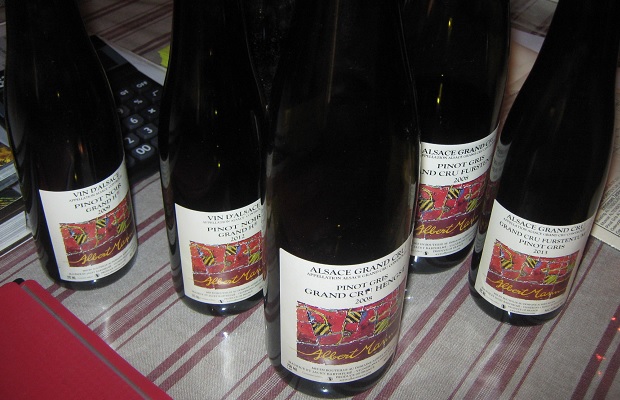
Maurice and Jacky Barthelmé of Domaine Albert Mann shirk the system with the use of a simple letter, an “H” or a “G” in place of Hengst and Pfersigberg. Philippe Blanck of Paul Blanck & Fils does the same thing with an “F” for Furstentum. It’s a wink-wink, say-no-more kind of approach. A grand parade of life-giving packaging. The brothers Barthelmé and Mr. Blanck know what excellence lies in their Pinot Noir holdings and understand the bright red future for Alsace. “Pinot Noir, like Riesling, is a minerologist,” insists Maurice. Don’t think of the brothers as pioneers so much as pragmatists. CIVA has surely taken note and despite the resistance to add Burgundy to the charges, change is inevitable. The Pinot Noir eyes never lie.

Here are two dozen Pinot Noirs tasted in Alsace during a week in June.

Domaine Albert Mann

@Smallwinemakers

Diversity of the parcels of land, disseminated and however subtly intertwined, which are the particularity of the domaine

François Bruetschy

Pinot Noir (and Pinot Gris) of Domaine Albert Mann

Pinot Noir (and Pinot Gris) of Domaine Albert Mann

Pinot Noir Clos De La Faille 2012

Though geologically speaking this Pinot Noir out of 1997 plantings in calcaire and redstone soils is a fault on the hill of nature, as a wine it shows no discernible impropriety. This represents a tectonic shift for Alsatian Pinot Noir, a lithe and floral wine of articulation and an eye opener to prepare for the intensity of Mann’s Grand letters. It’s a lightly woven, silky soft Pinot, with a furrowed brow and the necessary Mann clarity of responsibility. Density is through a looking-glass, a gateway to Alsace and what future varietal decorum may be achieved.

Pinot Noir Les Saintes Claires 2012

From calcareous soil and still the Albert Mann zealous clarity, with similar intensity and protracted density. There is a lacuna permeated by a hint at black cherry but the ken is never fully realized. At 13 per cent abv and with a set of fine, sweet tannins (even more so than La Faille), these 20 year-old vines have procured a piled Pinot Noir.

Pinot Noir Les Saintes Claires 2010

A top-notch (though cool and late harvested from a small crop) vintage for Mann (and Alsace) Pinot Noir, here the calcareous parcel at Sigolsheim above an old monastery called “Les Clarisses.” Some early rot and bottle reduction have both been stabilized as the wine peels off the rust and goes mellow, in full humanizing and sensual mystery. “How great the wine is when you can see the vintage, ” chimes Maurice. Controlling the effects of both nature and fermentation seems no biggie to the brothers Barthelmé. The act is of such minor tragedy, the climax characterful and sacred. A tingle of eastern spice twitches over bright fruit and a certain florality, materializing what can only be described as obvious commitment. It’s all about the journey.
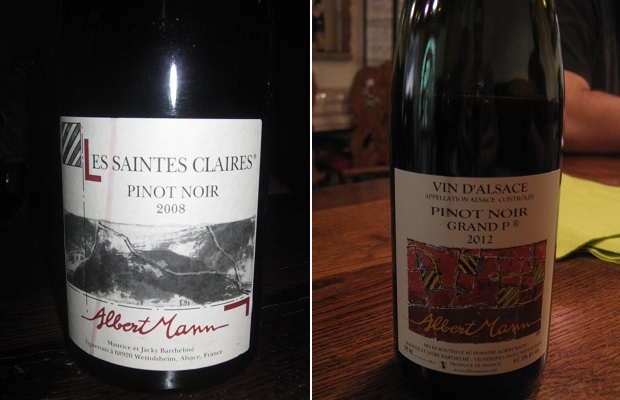
Domaine Albert Mann Pinot Noir Les Saintes Claires 2008 and Grand P 2012

Domaine Albert Mann Pinot Noir Les Saintes Claires 2008 and Grand P 2012

Pinot Noir Grand “P” 2012 (Tasted from a 375 mL bottle)

From a blend of plantings (1975 and 2004) in Wintzenheim limestone-sandstone soils on the Grand Cru Pfersigberg. Whole bunch pressed grapes (60 per cent) saw a range of oak; 25 per cent new, 50 one-year old and 25 older barrels. A light filtration was used to combat some reduction. This P is a touch ferric, not unlike Volnay but also because of the vintage. The vines in ’12 were subject to cool, then humid, then dry weather. The flux makes for a full floral display, from iron through to roses, but the wave stays linear and rigid. In its youth, the P is calm and on a level plain along its ECG-considered PQRST journey. It will soon spike past Q, up to R and then settle in for the long haul. Will hit its glide at S and T at the end of the decade.

Pinot Noir Grand “P” 2011

From what Maurice Barthelmé describes as a “paradoxical vintage” that started out dry and turned rabidly humid. This has huge personality, less refinement but more delicacy than the Hengst. Once again it’s a touch reductive and that tenuity is in the form of cured meat. The style here emulates Burgundy more than any of the P’s, much more than the H’s and worlds beyond the Failles and the Claires. The iron gait exceeds ’12 with a railroading layer of grand P funk. A chain of earth-resin-tannin has “got the knack,” jumps up, jumps back, does the locomotion with “a little bit of rhythm and a lot of soul.” The 2011 Pfersigberg is unlike any other Alsatian Pinot. It requires plenty of air and even more time to unwind. Look for it to become a classic 20 years after release.

Pinot Noir Grand “P” 2009 (Tasted from a 375 mL bottle)

In the ’09 you can smell how five years of bottle time (slightly accelerated by the small format) brings Pfersigberg Pinot fruit into a Grand Cru station. This is in the zone and just about as perfect an example can be to represent the young cottage industry that is Alsace Pinot Noir. Five more years would send it into philosophical complexity. The classic “P” reduction is there, with amazing structure from the palate. Wonderful funk, the proverbial Brett-esque creature of Pfersigberg, along with cherry and resin of pine. Wonderful animal.

Pinot Noir Grand “H” 2012 (Tasted from a 375 mL bottle)

From a south-facing plot in Wintzenheim on the Grand Cru Hengst. The soils are deeper, the clive made of consolidated clay or marly limestone and sandstone. All aspects of the Pinot Noir here are enriched by the density of nutrition; extract, spice and tannin. Any thoughts of overripe character in any way are thwarted a circular saw of energy that cuts through the cake, breaking it down with extreme prejudice. Tasted at 9:00 am this is a wake up call of the highest order. Notes Maurice Barthelmé, “this must be planted in calcaire soil.” Strike another notch on the Grand Cru petition.

Pinot Noir Grand “H” 2009, 

Typically Hengst, with a whiff of reduction, though never as pronounced as the Pfersigberg. In the ’09, which was a star-caste vintage, the “H” stands for high. As in hue, extract and phenolics. It could be imagined that Syrah were blended in (Maurice said it) and like its namesake (German translation), “Hengst is a stallion.” The reduction is (sic), as Eleven Madison Park’s Jonathan Ross noted, “favourable flavour. A creaminess comes from grape tannin, not oak.” This is meaty Pinot Noir, seeking out rare flesh, in beef or game. It will travel well and live for a decade or more.
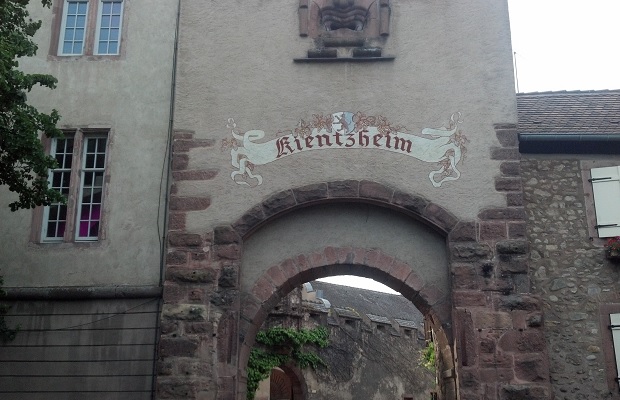
Kientzheim, Alsace

Kientzheim, Alsace

Pinot Noir 2008

This vintage preceded forward seasons that brought out warm, fully ripe and optimal phenol-realized fruit. From Maurice Barthelmé’s vineyard, between Mambourg and Furstentum, in Kientzheim. Clear, clean and precise. This was perhaps a bit ambitious in its oak soak from a year that Maurice considers “difficult and early,” but the parcel never lies and what a parcel it is. “Pinot Noir, like Riesling, is a mineralogist, ” says Barthelmé. This is Mann’s purest Pinot, if a touch under ripe, but that is the key. Whole bunch pressing and the oak envelopment has created a round flavour lock and Maurice feels he needs 10 more years to master this technique. Though this may have been the early stages in the development of the Mann Pinot candidacy, by 2018 it will reign in Alsace.

Paul Blanck & Fils

@rogcowines

“We’re looking for authenticity. Not wines of impression, but wines of expression.

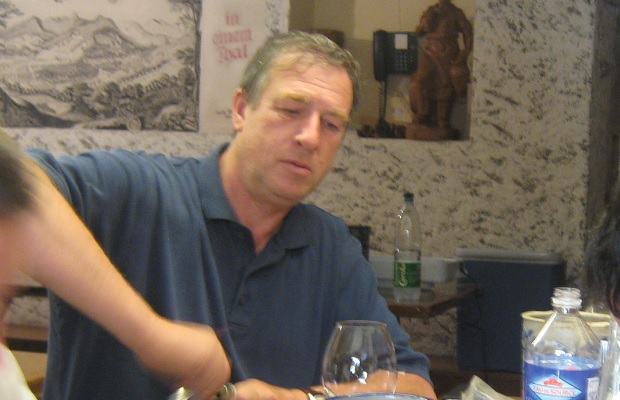
Philippe Blanck

Phillipe Blanck, Domaine Paul Blanck & Fils

Philippe Blanck, Domaine Paul Blanck & Fils

Pinot Noir 2012

From granite and gravel soils, the former bringing a bitter component, the latter what Philippe Blanck calls “a facile aspect.” Dark fruits, like black cherry and plum are flecked with pepper and cloaked in a silky robe. “Almost a sort of texture wine,” considers Blanck. The bitterness is beautiful and offers a window of proof towards the ageing capabilities of Pinot Noir in Alsace. “Everybody has an idea of what is a Pinot Noir in the world,” says Philippe. “This is a classic one. And they age crazy.” Classic vintage too. From now and for 10 years.

Pinot Noir 1991

From 20-year old vines (at the time) and a low-yielding (20 hl/ha), cold vintage. The wine was not filtered and 13 years on remains very much alive. Retains the unmistakable smell of Fragaria Vesca, fraise de bois, the herbaceous and wild alpine strawberry. Mix in a metallic, iron and wine tinge and still viable tannins and you’ve got yourself a wonderfully aged Alsace Pinot. An example to encourage a future for the grape variety in Alsace. “So may the sunrise bring hope where it once was forgotten.” Blanck said “nothing to prove, just to experiment. Some wet, moldy berry in here.” Roasted game lends a note as well to this upward, over the “mountain wine.”

Pinot Noir “F” 2009 

The F is for Furstentum, the Grand Cru on the northern slopes of the Weisbach valley split between the communes of Kientzheim and Sigolsheim. The soil is marl. Philippe Blanck insists “we’re looking for authenticity. Not a wine of impression, but a wine of expression.” Here is cherry set on high, bright and exploding, with savoury wild herbs and direct linear of acidity. Authentic yes, silky no. Can age for 10 more years and somewhere along that line the direction will find a more approachable intersect.

Domaine Pfister

Pinot Noir 2009

From a vintage Le Conseil Interprofessionnel des Vins d’Alsace (CIVA) called “precocious” and of irresistible wines. Mélanie Pfister’s ’09 comes from the calcareous Clos Bamhauer, went through two weeks maceration in Inox and then spent a slow 18 months in Burgundy barriques. Incredibly fragrant, with a rich density and a charge of wood spice. Its black cherry waft brings Burgenland to mind, that and the elastic, silty grit by way of some vines grown on gravelly soil. What sets it apart from everywhere else not called Burgundy is the lack of any sort of varnished note. Purity prevails.

Domaine Zind-Humbrecht

@TrialtoON

Pinot Noir 2012

To Olivier Humbrecht, the location and managing the ripeness of Pinot Noir is key. “You can’t hide green character in Pinot Noir,” he asserts. Fruit comes from the Heimbourg vineyard, from west-facing slopes out of marl and limestone. This is a cooler, later ripening position with a draught between the hills. At 13 per cent alcohol it is pleasantly ripe but not as rich and intense as 2009. Still ripe enough for positive and effective phenols. Tannins are present and accounted for, wrapping a veil over the chalky, chewy, slighted coated fruit. The mineral is felt in texture coming from what is a simple, proper and elegant palate.

Domaine Pierre Frick

“Wine is not intellect, it’s emotion.”

Jean-Pierre Frick
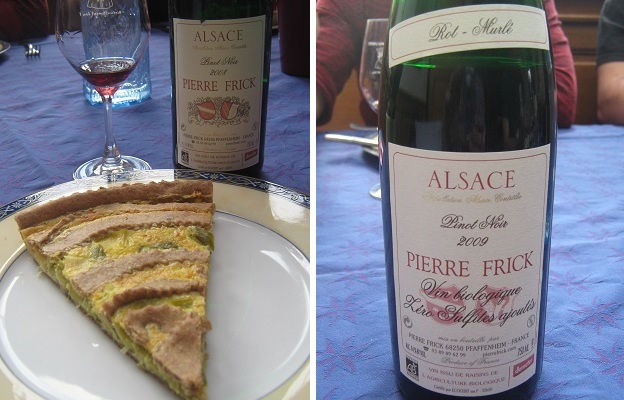
@LeCavisteTO

Pierre Frick Pinot Noir 2008 and 2009

Pierre Frick Pinot Noir 2008 and 2009

Pinot Noir Rot-Murlé 2009

This block is literally le muret rouge or, the red stone wall. From brown, ferric (ferrugineux), hard calcaire soils. In 2008 you could not write organic on the label (this changed with the 2012 vintage) so Frick sub-labeled the bottle Vin Biologique Zéro Sulfites Gioutés. Natural wine. Rustic, full of horns on acidity. The combination of clay, marl and the fact that the plot benefits from extended late-afternoon sun all lead to vigor, rigor and rigidity. This is Jean-Pierre Frick’s thickest and most Romantic brushstrokes. Richly textured like a Gaugin portrait of the The Schuffenecker Family. Post-impressionist Pinot Noir.

Pinot Noir 2008

From the Strangenberg lieu-dit, a hill parcel known as la colline aux pendus. Soil composition is hard, durable brown calcaire. After a quick whiff of farm droppings blow off, Jean-Pierre Frick’s Pinot Noir reveals a bright, light and feminine side. It is now blessed by gentle, resolved tannins. The generous spirit, kind heart and gentle soul of this Pinot offer nothing but calm pleasure. Its coat has not even a trace of primer. It is simply thoughtful and considerate. The iron minerality persists but with static and clinging trace fibers. A wine perfectly suited for a middle course at today’s table.
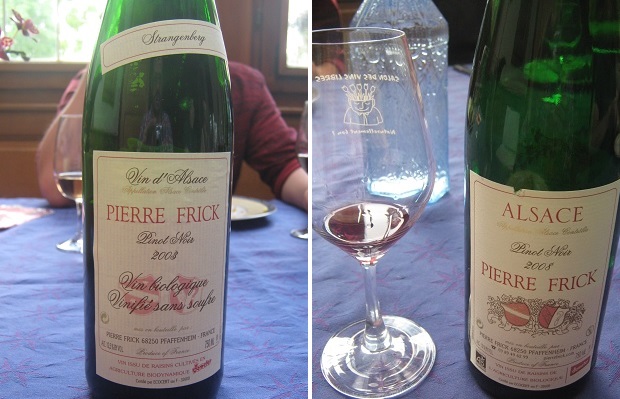
Pierre Frick Pinot Noir Strangenberg 2003 and Pinot Noir 2008

Pierre Frick Pinot Noir Strangenberg 2003 and Pinot Noir 2008

Pinot Noir Strangenberg 2003

Sub-label notes this ’03 as Vin Biologique Vinifié Sand Souffre. Years before it was fashionable or righteous to farm and vinify organically and without sulphites, Jean-Pierre Frick was looking to the stars. The Strangenberg is a very dry part of Alsace, Mediterranean in climate. This is earthy Pinot, like reds from Corbières or Sardinia, with its mutton-funky and roasted game aromas. Here is proof that non-sulphured wine can age, with the simple equation of fruit, acidity and tannin. It’s actually hard to believe so much tannin can emit from the collines of Haut-Rhin in Pinot Noir. Crazy actually. There is an underdeveloped green note along with some roasted and cooked flavours so peak has been reached. When left for 30 minutes in the glass the tannins begin to dry out. Like southern French and Italian reds, another 10 years would bring caramel, soy, figs and raisins. Either way. now or then, this Frick will also be interesting.

Domaine Schoenheitz

Pinot Noir Linzenberger 2013 (Barrel Sample)

Spent six months in one-year old (Allier forest) barrels. Bright, tight, full-on red cherries. A quick, fun, pure expression, clean and full of cherry. A two to three-year Pinot Noir.

Pinot Noir Sainte Gregoire 2012

From the Val Saint Grégoire lieu-dit, the historic name of the Valley of Munster (before the Protestant reform). The soil is decomposed granite rich in micas. Leans warm and extracted but with a high-toned, spiced coat tension. A generalization would place it more New World than Old, verging to black cherry, though again, the spirit is high. In contrast the yields were low (17 hl/ha) from the Cru, let alone the top-level of output from such a low yielding vintage. “When nature isn’t generous the yields go down fast,” confirms Dominique Schoenheitz. Good balance and well-judged.

Gustave Lorentz

@AmethystWineInc

Pinot Noir La Limité 2009

From the lieu-dit Froehn on the edge (the limit) of the Grand Cru Altenberg de Bergheim. Such a spicy florality and the underlay of calcaire from what is ostensibly hard limestone and Jurassic Lias marls meet one another in a geological confluence of fossils, red ferruginous soil and hard rock. A slow 12-month accumulation to fermentation has brought this Pinot Noir to land’s end. It bares un uncanny resemblance to the Prince Edward County Pinot Noir ’12 by Norman Hardie. Over exposure to sun, wind and everything else nature delivers gives this wine its vigor, its core strength and its vibrant personality.

Edmond Rentz

Pinot Noir Piece de Chene 2011

The Rentz take on Pinot Noir grows up in oak for 14-18 months, from a mix of new and used (no older than four years) barrels. The style is decidedly rich Pinot of a sweet tooth with a soft spot for quality chocolate. Spice supplements of orange and cinnamon, along with ethical acidity bring forth a wine bien charpentée, agreeable and ready for PDQ consumption.

Domaine Paul Zinck

@liffordretail

Pinot Noir Terroir 2012

Flat out fresh, mineral Pinot Noir. Only 100 cases were produced from a chalk and clay single parcel, on the Grand Cru Eichberg. GC yes to Phillipe Zinck, “but not official.,” Very little barrel influence here, in fact two-thirds of the Terroir was fermented in stainless steel, “to keep the mineral.” The cherry scents has tinges of plum, licorice and black olive, but just around the periphery. It’s otherwise bright and fresh with a quiescent streak throughout. Excellent.

Domaine Boyt-Geyl

Pinot Noir Galets Oligocène 2010

From the village of Beblenheim, this Pinot Noir gets the moniker from deposits of Oligocène of the tertiary period consisting of conglomerated rock on a base of marl. Jean-Christophe Bott considers the low-lying grapes of this terroir on lower slopes to be Grand Cru (in quality). Picked early to avoid resinning, cooked or jammy flavours, the wine was matured in (one year-old) barriques for 14 to 18 months. Quite earthy and spiced explicitly by cinnamon, though delicious, this is Pinot that flirts with what Bott wants to avoid. Served with a good chill it harmonizes its intent.

Good to go!
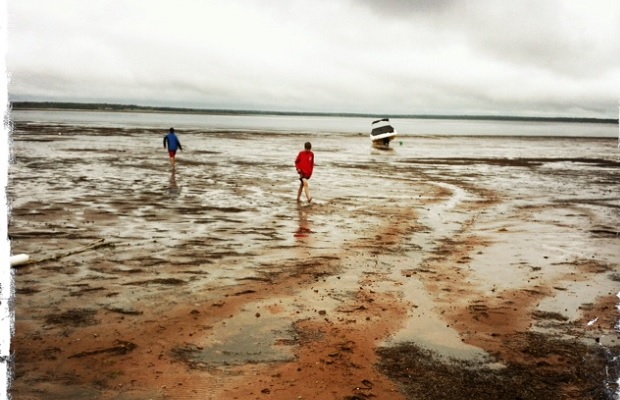
 

The tides that bind: East Coast swing

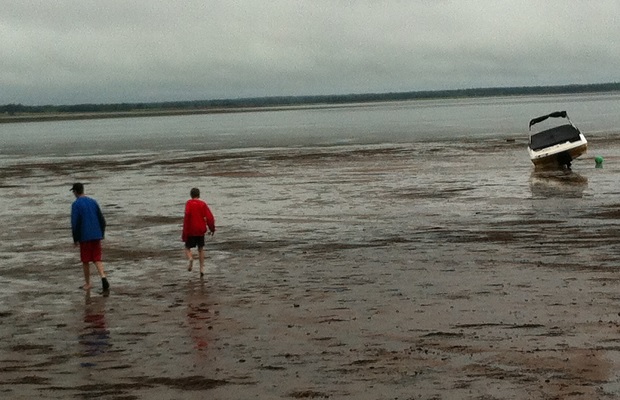
Tide's Out, Big Cove, New Brunswick

Tide’s Out, Big Cove, New Brunswick

Tides. The Maritimes. The new viticulture.

Headed out for the East Coast, pulled by a great maritime tide, family in tow. To a cape and back. Ontario-New York-Massachusetts-New Hampshire-Maine-New Brunswick-Nova Scotia-New Brunswick-Quebec-Ontario. The voyage imagined as a whole is revealed as an ebb that rides a crest outward bound for the tip of Cape Breton Island. A drive to reaches with no ability to seek accessory in further extensions. The inward sail as a retreat back to the Big Smoke, requiring returns equal and proportionate to the outward gains. Each day the tides carried us to promulgate layovers, to begin flowing again each seriate day, at the hour of its reversal.

Corneybrook Falls, Cape Breton Island

Corneybrook Falls, Cape Breton Island

Some tides 101. Tides are the periodic rise and falling of large bodies of water. They are created because like magnets, the Earth and the moon are attracted to each other. The gravitational force of the moon is one ten-millionth that of earth, but when you combine other forces such as the earth’s centrifugal force created by its spin, you get tides.  The sun is important as well, but in minutia as compared to the moon.

Water is what the Earth holds on to and every day (well, actually in a span of 12 hours and 25 minutes), there is a period between two high tides. Spring tides occur during the full moon and the new moon. Neap tides occur during quarter moons.

Tide out, Big Cove, Northumberland Strait

Tide out, Big Cove, Northumberland Strait

Are you in or are you out?

On the Northumberland, very free, and easy

Tide in, on the Northumberland, very free, and easy

Of all the impressive vistas, formidable rock faces and seemingly endless, edge of the world bodies of water to perpend, way out and beyond on the east coast of Canada, none feast more blatant than the Bay of Fundy. Each day 160 billion tonnes of seawater flows in and out of the Bay that intersects Maine, Nova Scotia and New Brunswick. Nowhere else in the world resembles the scabrous shorelines, islands and waters of this wondrous place.

Now you can’t break the ties that bind
You can’t forsake the ties that bind

The Bay of Fundy lies in a rift valley known as the Fundy Basin and is home to the world’s biggest tides, highest in the Minas Basin, Nova Scotia. “The uniqueness of the Fundy tides can be attributed to three factors, the shape and size of the bay, the substantial amount of water that flows in and out of the bay, and the gravitational pull of the moon, which pulls the water towards itself, causing a bulge on the ocean surface.”

The Flower Pot Rocks

The Flower Pot Rocks

In a quirk of geographical fate, the amount of time it takes an incoming wave to get to the end of the Bay of Fundy and return to the ocean coincides with the time between high and low tides – 12.4 hours. “Like a father pushing his daughter on a swing, the gentle Atlantic tidal pulse pushes the waters of the Bay of Fundy-Gulf of Maine basin at nearly the optimum frequency to cause a large to-and-fro oscillation.” The galance is simply awesome.

Grand Manan Lighthouse

Grand Manan Lighthouse

Nicknames abound. Its waters near St. John and west to Grand Manan Island are known as the “aquarium without walls,” and the shores near the 1984 dinosaur bones unearthed at Parsborro harbour are called “nature’s jewel box.” It’s the winemakers of the Gaspereau Valley who conspired to coin the most significant moniker. Fundy is hereby known as “Tidal Bay.”

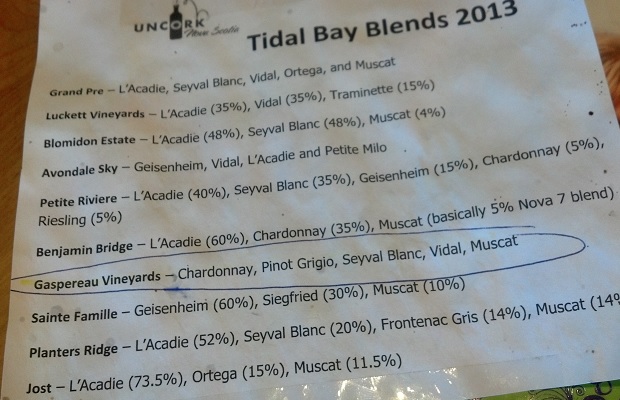
Tidal Bay Blends 2013

Tidal Bay Blends 2013

Tidal Bay is the first wine appellation for Nova Scotia and is crafted from carefully selected varieties, produced exclusively by (now) 12 wineries. To be labeled Tidal Bay, maximum brix levels and minimum acidity (9 g/L) must be reached. Pressing takes place by bladder or basket, all in the name of a “regionally recognizable local style.” The 100 per cent Nova Scotian blends “pair well with seafood and ocean views.” Though essential to the maritime wine oeuvre, the Tidal Bay wave remains young and the wines a work in progress. I will connect with the full range in a year or two, perhaps on it 15th birthday, in 2017. Here are three tasted in July.

Gaspereau Vineyards Tidal Bay 2013

Gaspereau Vineyards Tidal Bay 2013

Gaspereau Vineyards Tidal Bay 2013 (Winery, $21.99)

Aromatics are the show in this cool breeze blend. Combines Seyval Blanc, Vidal Blanc, Pinot Grigio, Chardonnay and (13 per cent) mitigating and rounding Muscat. In character of what it sets out to define, this 2013 Tidal Bay concentrates Nova Scotia brightness with tight acids and a clear, stain removing shout into the machine. A warm streak of Fundy salinity soothes the savage cool-climate beast.  @gaspereauwine

L’Acadie Vineyards Estate L’Acadie 2011 (Winery, $21.99)

Made from Nova Scotia’s most promising L’Acadie Blanc variety in combination with Chardonnay. Winemaker Bruce Ewart coaxed maximum freshness and a consolidation in balance. Chardonnay gives body but does not steal the show. Acids are prominent yet never treacherous. Though not technically an example of  Tidal Bay, the sexy, waxy, saline and bright personality make it distinctly Nova Scotia. Tasted at the Governors Pub, Sydney.  @lacadiewine

Luckett Vineyards

Luckett Vineyards

Luckett Vineyards Tidal Bay 2013 (Winery, $20.00)

Heterocyclic aromatics go bonkers in this blend of Traminette, L’Acadie and Vidal Blanc. Smells like ready to ripen Sauvignon Blanc, grassy, high in citrus and spiked by capsicum. An ear-to-ear smile of brightness and acidity drives the blend and you might ask it, “you walk cool, but darlin’, can you walk the line?” In the Nova Scotian world of Tidal Bay, Pete Luckett’s take can do just that and so it will not break the ties that bind.  @luckettvineyard

And when we are strangers, wherever we go,
There’s always a side that we still do not know;

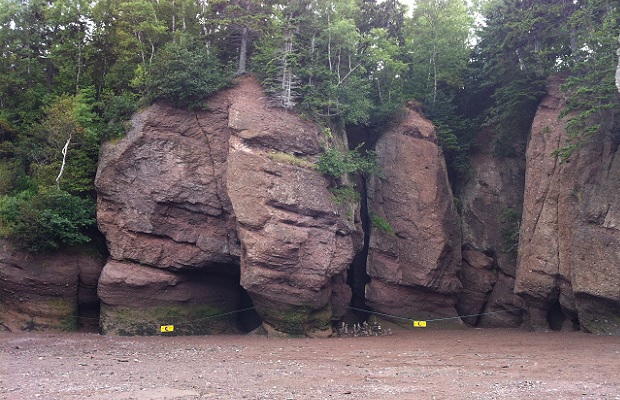
Hopewell Rocks, New Brunswick

Hopewell Rocks, New Brunswick

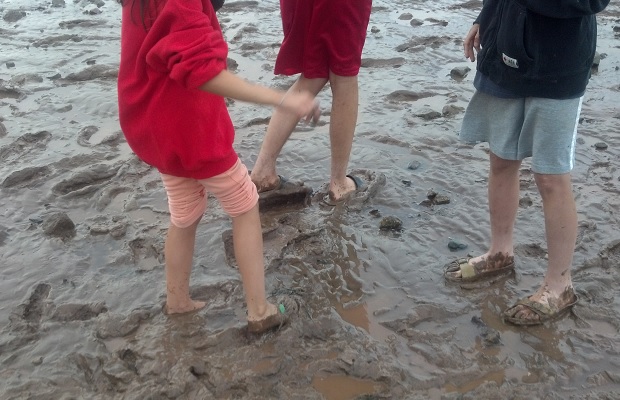
Tidal bores, red mudflats, flowerpot rocks, sea caves, the largest whirlpool in the Western Hemisphere, all impossible irregularities that belong to the Bay of Fundy. So what? The muddy beaches and chocolate rivers might be characterized by the Acadian expression, “Quelle baraque!” or, they might induce chills, “gorziller,” hallucinations even. When a moment is taken, they become unique, quirky barometers to re-calibrate the mire of mundane repetitious behaviour and one’s dizzying and insignificant place in this great big world.

The fascinating geology of the natural rock formations at the Hopewell Rocks, on the Bay of Fundy, is a history worth learning.

Chocolate coastline, Bay of Fundy, New Brunswick

Chocolate coastline, Bay of Fundy, New Brunswick

and some days I am a door wide open,
shouting to the wind, singing to the sea.

Chase Lobsters, Port Howe, NS

Chase Lobsters, Port Howe, NS

Shake’s head. Emerges from the dream. Begins to put the pieces together. Memories of a long trip. An east coast swing.

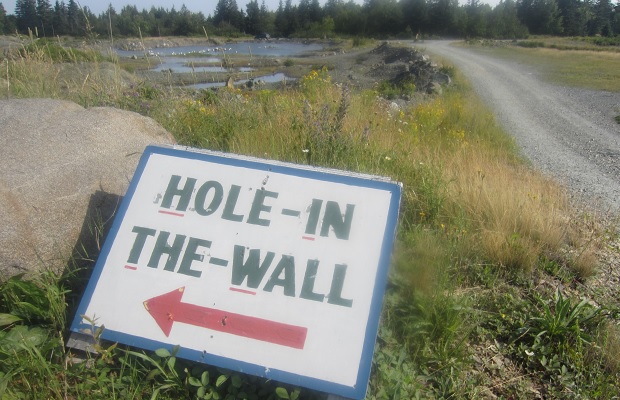
Hole in the Wall, Grand Manan, New Brunswick

Hole in the Wall, Grand Manan, New Brunswick

From Black’s Harbour to Grand Manan Island, through St. John’s and up to Big Cove by Baie Verte. A Northumberland Straight traverse past Port Howe, Am Baile Mór, Inverness, a jog up to Cheticamp and Corneybrook. Around the Cabot Trail of Cape Breton Island, a sidetrack to Bay St. Lawrence and Meat Cove, then a decussate and a zig-zag of the fiords to mark an “X” in Sydney.

Cooking lobster on Grand Manan

Cooking lobster on Grand Manan

Up the heart of the province, past Truro, down the Annapolis Valley and a u-turn back up and into Wolfville. It is there, in the heart of the Gaspereau Valley, that the essence of Nova Scotia’s wine industry walks out from beneath the fog to reveal itself in an elongated moment of clarity.

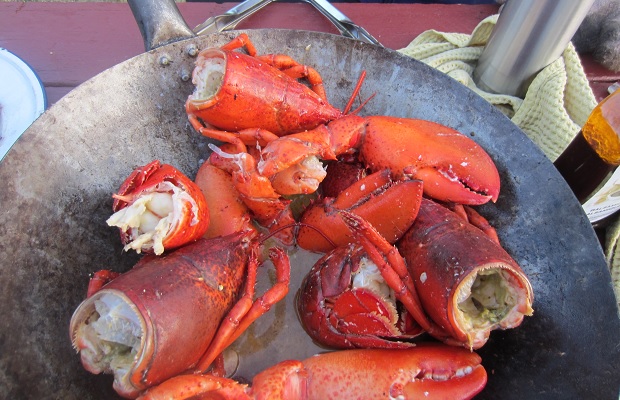
Campfire lobster supper

Campfire lobster supper

The tractive is a thing to and of itself. The pauses to gather at points along the process remember lobsters roasting over an open fire, a cottage visit with new-found friends, a hike into the cavern of a waterfall and a swim in a tidal river. Memories are made in rites of passage, though in the end, like the photographs, they too will be demurred by time. Indelible stamps they are, cemented in commitment to reaching and by necessity, descending summits. A  road trip to the eastern part of Canada realizes the bigger plan. The key is making it safely home, before the tide rolls in.

Next up will be the wines of the Gaspereau Valley, inextricably linked by a prodigal son come home in the name of Peter Gamble. Until then, take it slow and easy, on the East Coast.

East Coast cottage country

East Coast cottage country

Good to go!


Three release love for the last long weekend

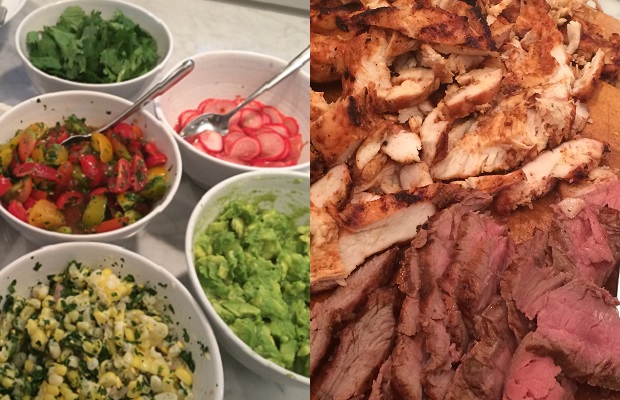
Taco Night

Taco Night

Good things come in threes and once in a calendar blue moon the LCBO’s VINTAGES wine release cycle rolls out that magic number. There can be no better month than August for the cosmic confluence to occur, particularly when the 31-day stretch hovers and encompasses two Canadian long weekends.

The fundamental postulate of accepting abetment to be ushered down a path of vinous enlightenment and the subsequent pleasure derived from having matched recommended bottles to the meals of summer is a priceless thing indeed. Make the connection enough times and behold the sense of empowerment. The beneficiary then becomes the facilitator. A torch is passed and the gift pays forward. Say what you will but no other wine program offers this type of retail-critic-consumer relationship. This is the beauty of the VINTAGES program. Bordeaux futures don’t count. That’s a racket.

The three August releases of the 2nd, 16th and 30th, though encumbered by a sea of suffusion, are also filled with excellence. Here are nine wines to consider for the final (gasp) summer long weekend of 2014.

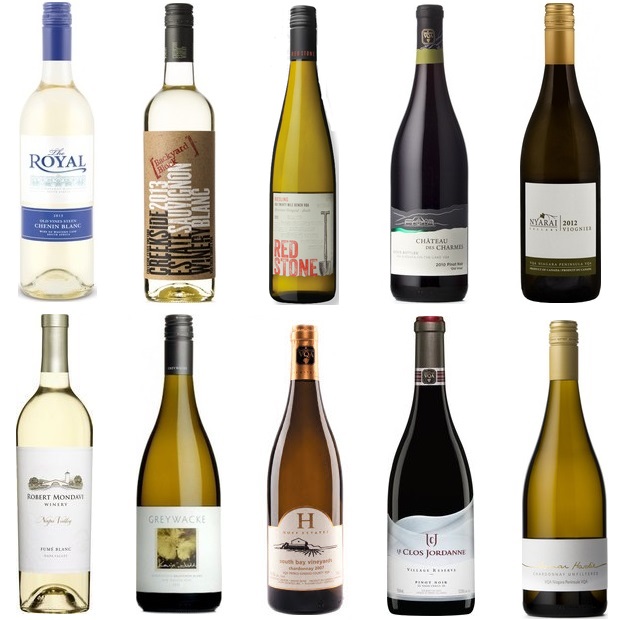
Clockwise, from left to right: The Royal Old Vine Steen Chenin Blanc 2013, Creekside Backyard Block Sauvignon Blanc 2013, Redstone Limestone Vineyard South Riesling 2012, Château Des Charmes Estate Bottled Old Vines Pinot Noir 2010, Nyarai Cellars Viognier 2012, Robert Mondavi Fumé Blanc 2012, Greywacke Sauvignon Blanc 2013, Huff Estates South Bay Chardonnay 2010, Le Clos Jordanne Village Reserve Pinot Noir 2011, Norman Hardie Niagara Unfiltered Chardonnay 2012, (c) Jason Dziver, www.winealign.com

Clockwise, from left to right: The Royal Old Vine Steen Chenin Blanc 2013, Creekside Backyard Block Sauvignon Blanc 2013, Redstone Limestone Vineyard South Riesling 2012, Château Des Charmes Estate Bottled Old Vines Pinot Noir 2010, Nyarai Cellars Viognier 2012, Robert Mondavi Fumé Blanc 2012, Greywacke Sauvignon Blanc 2013, Huff Estates South Bay Chardonnay 2010, Le Clos Jordanne Village Reserve Pinot Noir 2011, Norman Hardie Niagara Unfiltered Chardonnay 2012, (c) Jason Dziver, http://www.winealign.com

The Royal Old Vine Steen Chenin Blanc 2013, Wo SwartlandSouth Africa (376871, $13.95, WineAlign) From the VINTAGES August 2, 2014 Release

While other expat varieties ride in to town, “see the glory, of the royal scam” and dupe new consumers into thinking greatness has immigrated here, Chenin Blanc in South Africa, like Malbec in Argentina, is the real deal. That an example like this Steen old vines can offer ten degrees of advanced proficiency in steely, dan-like refrain is a testament to the necessity of its promotion. Chenin Blanc is the grape for Swartland, for Stellenbosch, for the Western Cape, for South Africa. It comes equipped with energy, “wearing coats that shined, both red and green, colors from their sunny island, from their boats of iron.” It works many sides of the wine pairing practicum, for protein fleshy and flaky, for vegetables prepared in many ways. The Royal is textured and even if the tale is told with quick and efficient pluck, at $14 per play, what more is there to say.  Tasted August 2014  @oenophilia1  @kysela

Creekside Backyard Block Sauvignon Blanc 2013, VQA Creek Shores, Niagara Peninsula, Ontario (341792, $17.95, WineAlign) From the VINTAGES August 30, 2014 Release

A Creek Shores SB that bridges the gap between spring and summer fruit. From a year in which the choice was made to not blend off into the estate bottling. Recognizable Creekside aromatics stand out in a more than obvious mineral deposit and grapefruit zest way. Here the band plays across The Great Divide so “just grab your hat, and take that ride.” Will be a VINTAGES August 30 release.  Tasted February 2014  @CreeksideWine

Château Des Charmes Estate Bottled Old Vines Pinot Noir 2010, VQA Niagara On The Lake, Ontario (256834, $17.95, WineAlign) From the VINTAGES August 30, 2014 Release

The CdC Pinot schematic is never predicated on pectin or reduction but rather the pungent molasses of earth. What better vintage (until the 2012 comes our way) can there be to accentuate the warmth of the St. David’s Bench (within a Pinot Noir plat) and to elevate sylvan fruit for complex results? The raisining is within reason and concentrates botany, not plums or figs. The somewhat elevated (7.0 g/L) residual comes across in tannin and texture so forgiveness is granted. Bigmouth (critic) strikes again, “oh…sweetness, sweetness,” but “I was only joking.” The Old Vines Pinot brings about smithy balance, of brix, treacle, iron, acidity, rusticty and mortar. It should be considered as good a value at $18 as any basic Bourgogne rouge.   Tasted August 2014  @MBosc

Redstone Limestone Vineyard South Riesling 2012, VQA Twenty Mile Bench, Ontario (381251, $21.95, WineAlign) From the VINTAGES August 16, 2014 Release

This inaugural Riesling foray from atop the Twenty Mile Bench out of the Limestone Vineyard is a sister to the Tawse exploration from same. The comparisons end right there. Paul Pender’s take is kinetic, frenetic and electric. Redstone winemaker Rene Van Ede tends to and lends from a reconnaissance that heralds Mosel. His first, fixed take is off-dry (in obvious ubiquity) with circular acidity. The co-agitation is early picked at low brix, with realized high residual sugar (36.4 g/L) and low alcohol (10 per cent). Toothsome, with a ying/yang, lemon/lime, push/pull. The case load is formidable for a first go ’round (1000 plus) yet paddled through limestone acreage with effortless strokes.  Tasted May 2014  @RedstoneWines

Nyarai Cellars Viognier 2012, VQA Niagara Peninsula, Ontario (378414, $21.95, WineAlign) From the VINTAGES August 2, 2014 Release

Look, I get it. Wine is made from grapes so why command a host of other fruits to offer context for aromas and tastes? Just have a moment with Steve Byfield’s “virtual” Viognier 2012. Virtual tree meets stone fruit. Smells just like a ripe peach. The flavour bears an uncanny resemblance to apricots. Virtual my Equus africanus asinus. The winery is virtual, the Viognier anything but. Speaks a Condrieu varietal truth by way of Niagara’s Redfoot vineyard. Carries a soil-driven, mineral-flecked, microscopically-oxidized metal tang so essential to invigorating Viognier. Blessed stuff from a Shona’s humble hands.  Tasted twice, March and June 2014  @NyaraiCellars

Robert Mondavi Fumé Blanc 2012, Napa Valley, California (221887, $23.95, WineAlign) From the VINTAGES August 2, 2014 Release

A nod to the typical White Bordeaux blend with 87 per cent Sauvignon Blanc and 13 Semillon. Another vintage that shows the direction taken by the winery is a righteous one. Drawn in chromatic patina, characterized by an oxidized style and with extreme arid prejudice. Though it’s a storied expression of warm Napa Valley it bears an uncanny resemblance to a wild yeast affected, cool climate Sauvignon Blanc style, with extended lees contact. There is ripe pear and some chalk, excellent tang, faux sugars and stretched out length. Served well chilled is a plus, accentuating the zest and mineral components. Very good showing and vintage for this iconic wine.  Tasted April 2014  @CBrandsCareers

Greywacke Sauvignon Blanc 2013, Marlborough, New Zealand (164228, $24.95, WineAlign) From the VINTAGES August 2, 2014 Release

With caution to what is likely a captain obvious comment, the suggestion here is that this (former Cloudy Bay winemaker) Kevin Judd Sauvignon Blanc makes perfect use of the over thruster to travel back in time. A time in the late 90’s/early 2000’s when Marlborough SB was the white bomb. Might it be more than obvious to ask for some briny Pacific oysters to accompany and match the elegance in salinity of this Woodbourne, Renwick and Rapaura fruit amalgamation? Potent, if distilled Marlborough delivering excellence here, with a notion of sweetness, not of a suffering palate, but in aromatics. The late summer garden by the sea, in a stiff mineral breeze and in ripening, southern hemisphere tree fruit. The grasses are somewhere else, there are no speed limits and no undesirable tang. The Greywacke is refined, perhaps to a fault, but prime and worth every bit of its dime.  Tasted August 2014  @greywacker

Huff Estates South Bay Chardonnay 2010, VQA Prince Edward County, Ontario (88955, $29.95, WineAlign) From the VINTAGES August 2, 2014 Release

The oak repeal in decreased new barrel impact allows the County to speak in the clearest of voice. As it should, from a South Bay landscape and terroir as rugged and dramatic that can be found anywhere Chardonnay is made in Ontario. There is a honeyed unctuous and viscous feel to the South Bay ’10, no doubt a result of its middle filled in by a meritorious and pure lees. Limestone wraps up the fruit in a clean, crisp and pure package.  Tasted April 2014  @HuffEstatesWine

Le Clos Jordanne Village Reserve Pinot Noir 2011, VQA Niagara Peninsula, Ontario (33894, $33.00, WineAlign) From the VINTAGES August 2, 2014 Release

Something’s missing, or rather something is happening here. The LCJ omnipresent warm Pinot coat of harm is conspicuous in its absence, or has it been reigned in? This 2011 is so much more friendly, more soft-spoken, expertly judged and picked ripe fruit richer than before. Plenty of tang and tannin but the pronouncement is in a savoury basil/chervil kind of way. Not just another high made by just another crazy guy. A most excellent, bright, roxy Village Reserve, full of atmosphere and ambient music.  Tasted February 2014  @LeClosJordanne

Norman Hardie Niagara Unfiltered Chardonnay 2012, VQA Niagara Peninsula, Ontario (184432, $39.20, WineAlign) From the VINTAGES August 30, 2014 Release

 Norm’s Niagara is such a different animal to the County 2012. The warm summer and dry fall means more humidity and even more reduction. Currently cothurnal so less like Burgundy but only because there elevates the high-tones and percipience from Niagara. Texture is key but this Hardie needs time. It’s not angular but it is steroidal, injected, like a wild thing, as if the yeast were still in control, munching away even though there is no more sugar to be had. Undomesticated ’12, at heart, in spirit, out of mind. Hard to imagine there could be this much anxiety from the even-tempered vintage, but when you pick real early and keep the oak to a bare minimum, Hardie happens. Norm picked ripe fruit between September 7 and 10, six weeks ahead as compared to some years. He said the fruit had a “golden tan, ready to go.” The use of smallish 500L barrels works wonders for texture and though 40 per cent was new wood, you would never know it. Malolactic fermentation didn’t happen until late August, nearly a full year on so no sulphuring was required until that time. This is Hardie’s freshest Niagara fruit ever, from Duarte Oliveira’s farm between Victoria and Ontario Street, the same spot as Hillebrand’s Chardonnay Reserve. Terrific Beamsville Bench Chardonnay.  Tasted May 2014  @normhardie

Good to go!

Walking an Alsace mile in their Riesling shoes

Riesling, (c) Cassidy Havens, http://teuwen.com/

Riesling, (c) Cassidy Havens, http://teuwen.com/

Riesling happens. It brokers the nescient consumer with the gift of grape enlightenment. It plants an organoleptic ear worm, urging a leap of faith to discover, to seek out the world’s most versatile, divergent and tractile wine. Riesling comes in so many shapes and sizes and that is why it is so difficult to offer up one’s trust, because if you don’t know,  you never know what you are going to get. Dry, sweet, late harvest, dessert, racy, round, or a combination of it all?

Related – In a Grand Cru state of mind

Alsace is distinguished by a very specific set of vinous attributes. No other area in France is as dry and only Champagne is further north in latitude. In typical climatic years, the aridity of the summer months, followed by the humidity of the fall fosters the development of a beneficial fungus called Botrytis cinerea, better known as noble rot, which concentrates the sugars and preserves acidity. The catch is that not every vintage works to guarantee the pourriture noble. When conditions are prime, some producers insist on picking before it sets in. Others think of it as gold. Pierre Gassmann of Rolly Gassman says all of his wines are noble rot wines, but he calls them Riesling.

A trip to Alsace and a week of tasting with producers opens the door to Riesling perception. I begin my Haut-Rhin road to Riesling perspicacity with and the women of . Twenty-eight are poured, including eight from the exceptional 2000 vintage. The full day that follows at Millésimes Alsace with SOPEXA and CIVA enriches the trenchancy to act as Riesling 101 for the winemaker visits to come.

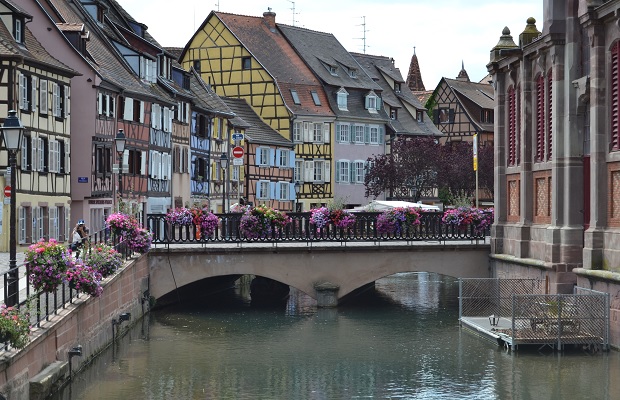
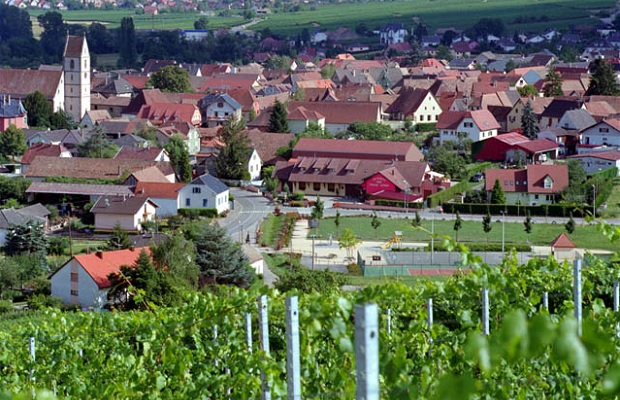
Colmar, Alsace, photo (c) Cassidy Havens, http://teuwen.com/

Colmar, Alsace, photo (c) Cassidy Havens, http://teuwen.com/

To set the record straight, there has always been dry Riesling made in Alsace. There have also been white wines made in blatantly off-dry styles. Bringing the two poles together in seamless coordination is no easy task. The duality in character of combining straightforward, linear acidity and bright, sometimes exotic fruit is a concept, though in sweet emotive intention, that remains buoyant in the persevering air of aridity. It helps to define the transformative trend towards dry Alsatian Riesling.

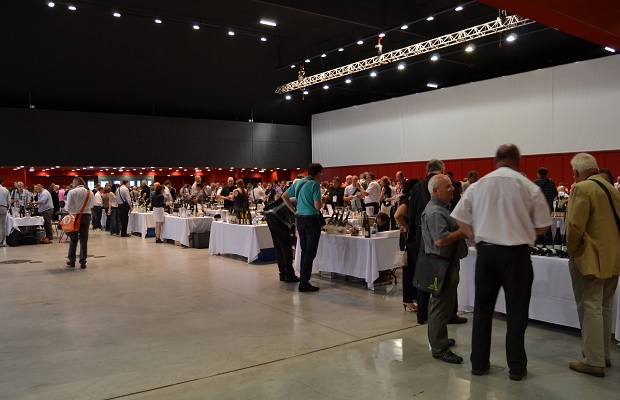
Millésimes Alsace 2014, photo (c) Cassidy Havens,  http://teuwen.com/

Millésimes Alsace 2014, photo (c) Cassidy Havens, http://teuwen.com/

Here are Rieslings from a wide range of Alsatian Grand Cru and lieu-dits (single vineyard, named), in 31 flavours.

Maison Rolly Gassman

Riesling Réserve Millésime 2012 (61715, Wineworld Importers & Exporters Ltd, WineAlign)

“All are noble rot wines, but we call them Riesling.” This is the irony from the mouth of Pierre Gassman, especially in consideration of this, the driest in his portfolio. For so many Riesling, 12 g/L of residual sugar would ring like a morning alarm but the Réserve Millésime, a limestone chalky and buzz tangy Riesling, acts as if it’s super dry. This is the 9-plus g/L of acidity talking and the calcaire soil, though some clay gives it weight and grounding. A Gassman Riesling as dictionary entry to define the dichotomous behaviour of Alsatian Riesling. A perfect example that should taste sweet but does not. An impossible yet beautiful act of vinous science.

Riesling Silberberg De Rorschwihr 2010 (WineAlign)

The Silverberg is the “silver mountain,” a Grand Cru not unlike Zind-Humbrecht’s Clos Windsbuhl and located at Gassman’s home base, the Haut-Rhin village of Rorschwihr. This has to be the producer’s most impossible Riesling. The lab results of 16 g/L sugar, 13 g/L acidity, 2.86 pH and 14 per cent alcohol mean that it is not really wine at all. But it is, a linear drip of liquid silver with a direct hit of lemon-lime-orange-grapefruit solution carried within a membrane of viscous honey. Specs be damned, this is bone dry with a speeding, direct citrus laser hit. Riesling with its very own Gassman dialect known as the muschelkalk sound.

Riesling Kappelweg de Rorschwihr Vendanges Tardives 2000

If you’ve ever had the good fortune to spend any quality time with Gassman’s wines you will cop no advanced character from this late harvest mineral expression in bitterness unchained, yet restrained sumptuous VT. A clear entry pauses to smell the quince, apricot and white flowers. The ultimate resolve is a long aftermath tinged by an (80 per cent of the vines, highest in the Gassmann holdings) noble bitterness. The vines are also some of the oldest, dating back to 1942. Oiled density and excellent length define this Riesling though it’s hard to figure whether or not it acts like a reduction sauce or a spiked tipple. One does not taste and mull a VT like this without pause or cause to wonder. Not an easily understood wine by any stretch of reality so book a flight of fancy and enjoy the ride. One of many exceptional Rieslings from the 2000 vintage in which cloying is simply not an issue. Hard to imagine more versatility from this level of residual sugar to work alongside hors d’oeuvres, fish and the cheese plate.

Riesling Kappelweg de Rorschwihr Vendanges Tardives 2010

Kappelweg offers up fruit in matronly, door is always open generosity and maximum concentration as much as any terroir in Alsace. From 50 per cent noble rot affected at a resounding yet justly calculated 42 g/L residual sugar number, this baby-faced, early rock ‘n roll Riesling gives off its habitual white flower scent. A product of blue clay (closer to the sea) and a of a botrytis mined with calcaire in mind. “When you have Kappelweg, you have noble rot,” resigns Pierre Gassman. With a Gasmann Riesling “it’s one for the money, two for the show.” With Kappelweg it’s “three to get ready, now go, go, go!” The king of Riesling in blue suede shoes.

Riesling Pflaenzerreben de Rorschwihr 2000

The Pflaenzerreben translates as ‘plants de vignes’, or even more simplified as the ‘vineyard’!  From the Rorschwihr blue clay with silt and Muschelkalk limestone soils, the ’00 is still a baby. Yellow flowers blow from a complex nose, along with waxy, medicinal tones. The aromatics are high, which helps to subdue the noticeable (19 g/L) sugars. More aid comes by way of the Calcaire tannin and a six to eight-hour slow pressing, “ensemble,” notes Pierre, with no separation and a resulting “tout doucement” clear juice. The wonders of 2000 emit from the Gassman oeuvre.

Riesling Pflaenzerreben de Rorschwihr 2010

Here is Riesling that resides on two sides of the notorious Alsatian, sugar-acid ubiquitous fence. Pflaenzerreben reads like a veritable ECG. There is both citrus-spiked negative deflection as well as a sweet (16 g/L) elegance in positive deflection. The calcaire chalk posits the tug, the struggle between the poles. He/she admits “once a man, like the sea I raged, once a woman, like the earth I gave.” In the end this cinema show of a Riesling has “in fact more earth than sea.” One of the Genesis Rieslings of Alsace.

Domaine Maurice Griss

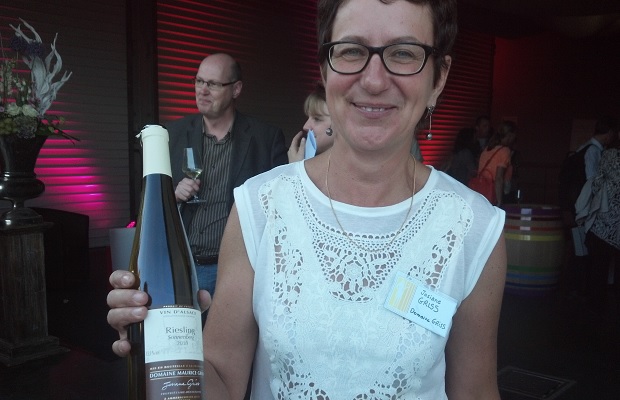
Riesling Sonnenberg 2010

An all rock, all out mineral wild thang from Josiane Griss, As dry as it gets (5 g/l sugar), as piercing as can be handled (10 g/l acidity) and in a state of aerified (12.8 per cent) alcohol. From granite terroir, near the top of a south-facing slope with high sun exposure. Though ’10 was not a particularly warm vintage, the high tartaric levels and late picking, slow developed berries post glorious September has everyone talking classic, for the ages. Impeccable balance here and a fortuitous match to Tarte flambée with salmon, leeks, basil pesto and cream. If asked the question, “how long have you been a Riesling,” the Sonnenberg would surely answer simply, “from creation.”

Josiane Griss with Riesling Sonnenberg 2010

Josiane Griss with Riesling Sonnenberg 2010

Domaine Pfister

Riesling Tradition 2012

Though Pfister continues to forge this Riesling from six micro-plots in the Silverberg lieux-dit, the name Tradition takes over, as a stylistic ode from 8th generation winemaker Mélanie Pfister to her father André. Built upon a solid permeate in limestone, the residual is dastardly low, in the 7th generation vintner’s way. Beautifully dry, somewhat misunderstood in its youth, in need of time.

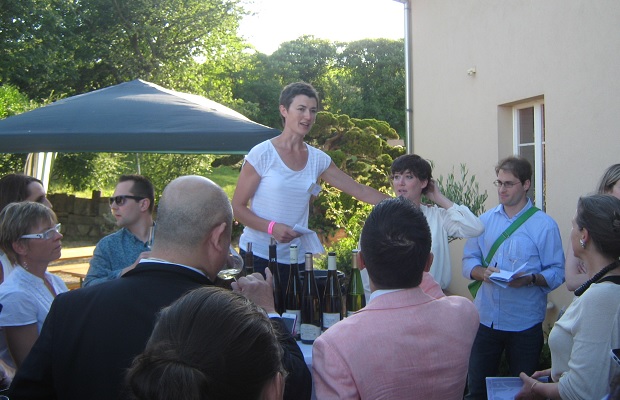
Mélanie Pfister introducing the wines for Divines d'Alsace

Mélanie Pfister introducing the wines for Divines d’Alsace

Riesling Grand Cru Engelberg 2012

The “Angel’s Hill,” a south-facing and third most northern Grand Cru in Alsace. The Pfister take is reserved with extreme umbrage, an arid tug between brix and acidity, a fragment of what it may become, a portal into a Riesling analect. There are ripe phenols to be sure and a gentle, lingering calm. This will need years to develop. Right now it’s all lemon, lime and flinty stone with no periodic oscillation.

Riesling Grand Cru Engelberg 2011

Here comes the Pfister mindset out of a warm vintage, picked early in September. Go figure the still bracing acidity trumps it’s still beating heart. A slight sense of sweetness lies therein but the obvious minimalist tradition persists. Lacks the length of ’12 and offers nearer gratification. This is an example of why acidity is not the number one catalyst for success and for aging, so ’11 will both be like and unlike ’12.

Riesling Grand Cru Engelberg 2010

The ’10 is altogether different. There is petrol on top, pumping invisible ozone with an elemental intention. The welkin adds richness and viscosity, though for Pfister that is merely relative as compared to say…Gassmann. The ’10 is a fastball and it is hard not to get caught looking. Vinified bone dry (2 g/L) and due to the difficulty of the vintage, Mélanie left it on the lees for two years. The result is a perceived sweetness chaperoned by texture. Will require 10 years minimum.

Riesling Grand Cru Engelberg 2000

Beautifully dry, primary still, laden with citrus. Though not as gorgeous as some, this bridges the gap and emphasizes the Pfister Engelberg opus. It is amazing that it is yet to show any discernible evolution and every indication says it will live on forever. Or at least 15-20 more years.

Riesling Grand Cru Engelberg 1990

Here lies the crux of the Pfister vinous chrestomathy, like a literary work that cannot, in principle, ever be considered finished. From the third in a trilogy of great vintages, the ’90 has ego to spare, remaining so young and unresolved. The aroma profile is floral, almost medicinal and with a pronounced clotted cream note, the wise Cru remains youthful and nearly primary. Five minutes in glass does bring texture and an aged cheese taste, like Tomme fermière des hautes Vosges.

The wines of Domaine Pfister

The wines of Domaine Pfister

Caves François Schmitt

Riesling Grand Cru Pfingstberg 2012

The Grand Cru lies at an altitude ranging between 250 and 350 metres. The sub-soil is made up of calcareous sandstone and micaceous sandstone (Muschelkalk at the base and Bundsandstein at the top). Vines were first planted in the 1950’s. Paradis is a historical plot of land at the very heart of the vineyard, on one of the steepest areas. The ’12 Paradis by father and son François and Frédéric enters a sweetness zone without a sacrifice or surrender in loyalty to linear acidity. Peregrine fruit, in full feathery display is enraptured by tartaric of the highest degree. There is citrus atop rocks, a persistence and a perseverance that never relents.

Riesling Grand Cru Pfingstberg 2000

The ’10 GCP is yet a baby and in hallmark readiness of its necessary terroir. The petrol note remains a faint feign though its imminent presence is known. Such intense aridity, citric perforations, notes of wet concrete, highborn bitterness and unerring balance. Strength is supplied by sandstone and limestone. As much of a treat in classic 2000 Riesling as one might ever hope to be poured.

Cave François Schmitt, http://www.francoisschmitt.fr/

Cave François Schmitt, http://www.francoisschmitt.fr/

Vins Jean-Baptiste Adam

Riesling Grand Cru Kaefferkopf 2010

The radiation here is mind-blowing. The citrus dartle, the rows and columns of acidity in geometrical patterns, the angles obtuse and abstruse. Such a tense and immature Riesling with a late gas attack and oxygen depleted atmosphere. Wow is the operative word though it remains to be seen if this will ever latch on to any gravitational pull or circle the cosmos for eternity. This Kaefferkopk dances in the dragon’s jaw, lies “up among the furs where it smells so sweet,” and it’s got me wondering where the lions are. Wow.

Riesling Grand Cru Kaefferkopf 2000

Tasted from magnum. Incredibly atomic with a vineyard flinty stink that exhumes and exudes the benevolent bitterness of time. Has that vineyard dirt aroma and the wisdom of age. Something about this screams terroir, through earth caked stones, struck matchstick, wildness and purity.

Ginglinger-Fix

Riesling Vieilles Vignes 2012

The domain is family run since 1610 and biodynamic since 2009. Pheromones have been used since 1996 and they were one of the first villages to do so. Proudly announced as “vendanges à la main,” or, hand-picked grapes. This VV ’12 is bone dry, citrus in laser focus and a product of the calcaire solis with a pink quartzite quarry behind the village. The multitude of rock gives lightness in texture to this ’12 of wizened vines. This is a great example of Alsace Riesling emulated by VQA Bench Riesling in Niagara.

Riesling Goldert Grand Cru 2012

Here is rich example made by Éliane Ginglinger in Voegtlinshoffen. The Grand Cru vineyard gives as mush calcaire tang as any in the region, feigning oxidation but it’s really a most pronounced salinity. A piquant and forward Riesling with a whiff of violet. Further along in development than many ’12’s, the Goldert will be ready for prime time in two to three years.

Riesling Goldert Grand Cru 2011

The single-vineyard focus in ’11 is striking but not as piercing as some. The elegance factor here is a breath of Eguisheim air. Increased in poise, savoury accents and a florality that brings to mind chamomile tisane. At 13.5 per cent alcohol there is strength in balance.

Riesling Goldert Grand Cru Vendanges Tardive 1998

A late harvest VT scaled astern to a mere 14 g/L in sugar. Has developed such a deep golden hue, this muliebrity representative who proclaims sapidity in staunch mineral behaviour. Remarkably elegant and crisp for her age, the Goldert VT shows nothing particularly sweet about her. No conceit either, intense yes, but very fresh. Were I a proclaimer I would surely sing “I would walk 500 miles and I would walk 500 more, just to be the man who walked a thousand miles to fall down at your door.” I’m gonna be wanting another go at this ’98 next time I find myself in Alsace.

Domaine Jean-Marie Haag

Riesling Weingarten 2010

From a south-facing slope and sandstone soil, Haag’s Weingarten shows good potential for aging. “A grower’s vintage,” notes Myriam Haag. “A winemaker’s vintage,” one that required acumen and experience. There is a dry elegance about this grainy white, an imperial brackishness and a sense of  “écrou bougie,” or candle nut. Will age and needs to.

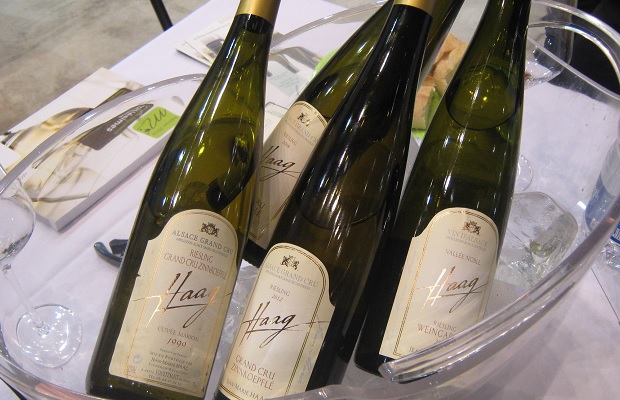
Riesling Grand Cru Zinnkoepfle Cuvée Marion 1999

Shows rich, viscous complexity with the sensation of star anise and menthol. There is a fumée discernment, an oily, nutty and spicy feel.  Singular and enticing, like a chestnut dessert, layered with mousse, sabayon and toasted dust.

Riesling Grand Cru Zinnkoepfle 2011

Luxuriance abounds from this ’11, elevating the oft-pierced variety to levels of lavishness and prodigality. Though it takes wing in petrol, it’s really just the spoken texture and flavours of the bleeding rocks. Bitters abound too but is this not what you want from Grand Cru Riesling? Fine, ritual, yet highly modern stuff.

Riesling Grand Cru Zinnkoepfle 2012

An enervating wine with richness bled from rocks and a finishing noble bitterness. The orchard fruit here is very ripe, more so than much of the 100+ Rieslings tasted over the course of a Colmar week. Marked by green apple, citrus and a middle-slope calcaire limestone (with sandstone on the edges) pierce. Such direct freshness and palate texture from that silty rock. A slow release wine, similar to the Zinnkoepfle 2008, a Riesling now in its secondary stage of development.

The wines of Domaine Jean-Marie Haag

The wines of Domaine Jean-Marie Haag

Domaine Valentin Zusslin

Riesling Grand Cru Pfingstberg Vendanges Tardives 2000

Here the noble rot has produced a Riesling thick in gluck and bright, golden sunshine fruit. Clearly protected from rain and wind by the Massif forest above, the 2000 has not yet relinquished the warmth in the bottle, along with a confected concoction of marmalade and blanched nuts. Though it has been bequeathed a slight mineraliztion with 14 years time, there is weariness to the fruit. Now is the window for maximum enjoyment.

Domaine Sipp-Mack

Riesling Grand Cru Osterberg 2012

The Osterberg Grand Cru is situated in Ribeauvillé and the Riesling is characterized by a stratified tartaric acidity. The ’12 is neither linear nor round, but layered instead and is a pure analogue of that rich style, with a slight residual subsidy. Extended hang time seems the bent so ripeness follows. The fruit is bulky and beefy though in a white veal way. If overall there is a curtailment in grip and outright anxiety the ’12 Osterberg will age unhurriedly for 10 years.

Riesling Grand Cru Rosacker 2000

The comparison with the other seven GC 2000’s on the table is hard to avoid so this one would make me think it leans late harvest. The Rosacker too is young and primary, teases and feigns VT but don’t be fooled by its unctuous sunshine. The dry quotient is extreme, despite the nuts. It is viable and rocketing in an elemental chew of salted stones. The finish is long and beautifully bitter.

2000 Rieslings

2000 Rieslings

Domaine Barmès-Buecher

Riesling Grand Cru Hengst 2000

Under the direction of winemaker Geneviève Barmès, energy is the primary distinction of the domain’s wines, exemplified by this all out mineral Hengst. Carrying forth a tradition initiated by Francois (Geneviève’s late husband), biodynamic farming brings out an autonomy to define that energy and here specifically a stark, terrific bitterness so prevalent from the Hengst Grand Cru. Not so much a study in bright fruit, the flesh is one of stone texture, flinty accents and an awe-inspiring, old school funk. Very serious Riesling. Not for the faint of white.

Domaine Stentz-Buecher

Riesling Grand Cru Steingrubler 2000

The Steingrubler soils are some of the most complex and variegated in all of Alsace. Marno-calcaires and argilo-sableux incorporates calcaires oligocènes and smaller areas of fine granite. The smorgasbord of terroir makes for an elemental potpourri impart, a bitter limestone tablet dissolving as it rolls through a gasoline alley. The bitters are everywhere, in underlay, in overlay, in granitic streaks. Having entered secondary life, this 2000 is “goin’ home, running’ home,” back to where it was born. It may be said that this particular Riesling represents its terroir as much as any that can be assessed. A steward of place.

Good to go!
 

The meaning of Chardonnay: You’ve gotta be cool to be kind

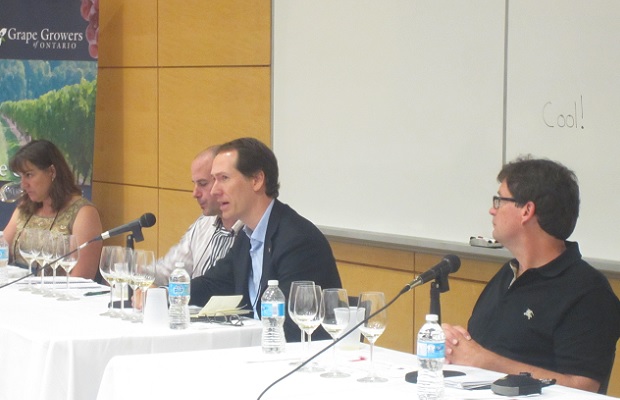
The School of Cool at #i4c14, Brock University: Studying Chardonnay with Zoltan Szabo, Mike di Caro and Godello,

The School of Cool at #i4c14, Brock University: Studying Chardonnay with Zoltan Szabo, Mike di Caro and Godello, photo (c) Kaitlyn Little

Tell me, why Chardonnay? Who can explain the exultantly singular science behind the world’s most wontedly planted, easily recognizable and widely endorsed white grape variety? How can something that seems so commonplace consistently blow people’s minds and convince them to have a go, over the course of a weekend in venues scattered about the Niagara Peninsula, at more than 100 samples in 50 hours? Where else is it possible that the fruit of one vine can be the sole proprietor to lead such a fervent tailgate of amaurotic yearning? What is the meaning of this Chardonnay?

The quest begins in Burgundy, centre of the Chardonnay universe, home to the icons, built upon centuries of micro-plotting and the act of influencing patrons, friends and enemies. At this point in history, success out of French vineyards is a given, blatant and obvious. Chardonnay’s foray into the global diaspora and subsequent boon is yet another matter.

Related – ‘I4C’ a future filled with Chardonnay

The most recent Cool Chardonnay conference is the parochial focus of attention so for the sake of local argumentation, lets connect a line direct from Burgundy to Niagara. Peninsula winemakers (along with those from Prince Edward County and British Columbia’s Okanagan Valley) draw inspiration and knowledge from the mother land. The fourth annual #i4c14 celebration in July is the stuff of Chardonnay dreams because of the cool visions of vignerons like Thomas Bachelder, Harald Thiel, Norman Hardie, Ann Sperling and Peter Gamble, Martin Malivoire, Ed Madronich, Bill Redelmeier, Doug and Karen Whitty and Moray Tawse. Not to mention the foresight of Niagara’s biggest players; Inniskillin Wines, Peller Estates (Trius), Stratus Vineyards, Chateau des Charmes, Vineland Estates and Cave Spring Cellars.

To give Chardonnay its due and to build a stage from which it can parade about, belting out its songs, there must first be assembled a team of passionate folks. In addition to the winemakers and winery proprietors there is an army of volunteers. Their contribution is immeasurable. This group is led by the #i4c14 concierge; Dorian Anderson, Trisha Molokach, Britnie Bazylewski, Elena Galey-Pride and Wine Country Ontario’s Magdalena Kaiser. Thanks must always be given to Barbara Tatarnic of Brock University, along with CCOVI director Debbie Inglis and Marketing and Communications Officer Kaitlyn Little. Event chair Del Rollo brings the A-game, as does Peter Bodnar-Rod, life giver to Everyman and every Chardonnay. The ambassadors of cool are lead by a team of sommeliers; Bruce Wallner M.S., Will Predhomme, Mark Coster, Serge Janjic, Emily Pearce, Sheila Flaherty, Lindsay Groves, Brett Fraser, Heather MacDougall, Bob Latham and Peter Lavoie.

The generosity of the event hosts come to praise Chardonnay. Wine Country Ontario, Brock University, The Grape Growers of Ontario, White Oaks Conference Resort & Spa, 13th Street Wines, Cave Spring Cellars, Tawse Winery, Flat Rock Cellars, Southbrook Vineyards, Henry of Pelham Estate Winery, Peller Estates Winery, Malivoire Wine Company, Reif Estate Winery, Vineland Research & Innovation Centre and Ravine Vineyard. The LCBO and VINTAGES join the party, setting aside time and space at the same time to sell some cool Chardonnay.

The School of Cool,  Photo (c) Elena Galey-Pride — at Brock University.

The School of Cool,
Photo (c) Elena Galey-Pride — at Brock University.

The weekend begins on Friday, July 18th with #TheSchoolofCool at Brock University. Luminaries are flown in to speak on behalf of the great grape. Tim Atkin (MW), Christy Canterbury (MW), W. Blake Gray (wine journalist, cool climate advocate) along with eleven panelists (winemakers, growers and researchers) of cool climate viticulture and winemaking explore, debate, provoke and disseminate.

John Szabo opens the Chardonnay Camp 2014 at Brock Univeristy Photo: Michael Godel

John Szabo opens the Chardonnay Camp 2014 at Brock Univeristy
Photo: Michael Godel

Three interactive sessions feature this global panel of experts. Renowned Master Sommelier John Szabo is the chair and most in control moderator of the panels. Here at Chardonnay Camp he is talk show host, politically motivated comedian and all-knowing Yoda wrapped into one Renaissance man package. Szabo notes that “quality, at the top end has diversified, especially in Burgundy.” He then wants to know “who is an acid lover?” The answer to that question is the first clue towards an understanding of the meaning in (cool) Chardonnay. “Does anyone here regret planting any variety? No? Nobody? Everything works in Ontario.” The sportive tone succeeds in marking a first strike for the grape guest of honour. As does his notation that “the panel is chosen to speak on the zeitgeist topics of Chardonnay.” A walk-around tasting of all 117 bottles being poured at the 2014 event following the sessions helps to build early Friday momentum.

Cool Chardonnay Camp Photo: Michael Godel

Cool Chardonnay Camp
Photo: Michael Godel

Tim Atkin begins. “We are here to have fun.” The British journalist spends his time defending the oft maligned variety, insisting that “the target of Riesling lovers should not be Chardonnay. It should be Pinot Grigio.” Atkin reminds that Chardonnay is still the fastest growing white variety in the world but that “even worse things have befallen this noble grape variety. It’s a victim of its own ubiquity and adaptability.” What makes it so special then? “Chardonnay expresses place, as well as production, terroir as well as technique.”

Grower Matthias Oppenlaender: “I like growing Chardonnay. It adapts to the different soil conditions in the sites I own. But I like drinking it even more.” The panelists debate Techno vs. Tech-No. Atkin’s take? “Recreating balance is a bad practice. All these things (manipulations in the winery) are fine if they are done sensitively. Overripe plus water equals bad.” Jeremy Dineen of Josef Cromy Wines in Tasmania says “wine should taste from a place, but also from a time.” His idea of technology “is to try to make my life simple. It’s a hell of a lot easier to plant in the right spot.” On reverse osmosis: “Technically, yes. Ethically, no.”

The panel seems to think it interesting that consumers consider that wine should be a natural and non-manipulated product, but food can be handled and bastardized in unlimited ways and be called gastronomy. First of all…consumers…really? Wine geeks, more like it. Secondly, wines comes from one ingredient: Grapes. Well, three if you count yeast and sulphur. Food composition is contrived out of a plethora of ingredients. Manipulation and over-handling is the norm, not the exception. Wine should follow the exact opposite course.

Manipulations, according to former Henry of Pelham winemaker, now of Niagara College Ron Giesbrecht include sorting, spraying, osmosis, acidification, de-acidification, overripe diluting, wood chips, adding tannin…the list goes on. He admits that “some degree of finessing and correction is OK. Add sometimes, but not any time.” Shiraz Mottiar of Malivoire is a purist. “When it comes to techno, I like (the ideas) of Calvin Harris (anyone get that…?). Add as little as possible, that’s my position. It would be unjust to the consumer to create something awkward and unusual.”

Giesbrecht brings out base wines with the addition of “winemaking tricks.” One is lactic, lean, mean and filled with cheap acidity. Another is terpenic, gum leesy and full of rounder acids. A third is volatile, medicinal, sacchariferous. A fourth is done very lightly, yet thin. Oak chips, micro-barrels, gum Arabic, these are all tricks of the trade and they all lead to faults.

Session two discusses Yield and Context. Mattias Oppenlaender discusses the Ontario opportunity of growing grapes for the high end, quality market. “If I grow Pinot Noir at (only) two tons per acre, it’s pretty difficult to make it economically viable.” Dr. Jim Willwerth, CCOVI Brock University adds, “in Ontario it’s important to have low yields from late ripening varieties. Vine balance is the key.” Willwerth cautions against stereotyping the vine vigor quotient. “Lower yields to highest quality is not a direct linear relationship. We know it’s not the case.”

Yet Dimitri Bazas of Maison Champy in Burgundy concedes that zero yields is not the best. “You can make good Premier Cru wine with yields of 40-45 L/hl. Szabo then asks, “and you can taste the quality difference based on these number?” Bazas replies, “yes, yes I can your honour.” Matthew Lane of Peter Lehmann in Australia adds a trump card. “There’s an old vine factor that has to be considered when talking about yields.” Lane believes you can extract quality from fruit at higher yields. Like Willwerth, he believes in the ‘Sesame Street’ word of the day. “If you’ve got a warm year and vine health, you can get great balance.”

Christy Canterbury reminds that crop yields are relative from variety to variety. Chardonnay in general is low (two to three tons per acre) as compared to Pinot Grigio and Riesling. “Perfect. An MW position there,” chides Szabo. Canterbury leads the room through four Chardonnays of various yields.

Maison Champy Corton Charlemagne Grand Cru 2011, Burgundy, France (377705, $215.00, WineAlign)

Opposites attract and this urges the fruit-wood compendium forward in a direct, unabashed way, followed by a sledgehammer clubbing of formidable acidity. The yield for this 12 barrel salute to upper echelon Burgundy is 30 hl/L. There are waves of richness that jab, poke and stamp their way into your Chardonnay heart. Pierces and injects by way of a hypodermic, splintered syringe filled with creamy, smoky oak. The balance is currently upended though there can be little doubt bottle age will calm the high extract and lead it to a calmer future.  Tasted July 2014

Maison Champy Pernand Vergelesses En Caradeux Premier Cru 2011, Burgundy, France (344143, $49.95, WineAlign)

The technical specs (sugar, acidity, PH, natural alcohol) on this PV are very similar to Champy’s Corton Charlemagne. The yield out of marl and limestone soil was 50 per cent (45 hl/L) higher and the fruit was picked seven to 10 days ahead of the CC. There exudes plenty of peeling citrus perfume in sunshine and some essential oil release, in wood, though it is by no means excessive. Very much citrus stoked, also reeking in green apple, forest glade, even more sunshine. Holds a tight, angular texture. Needs time to flesh and convert those phenols into gold. Most attractive is its subtlety and balance, from shoot to bottle. A Chardonnay very cool for school.  Tasted July 2014

Peter Lehmann H&V Eden Valley Chardonnay 2012, Eden Valley, Australia (agent, $20.00, WineAlign)

Surprisingly green, herbal and cool spirit driven Chardonnay. There’s a lime spark and texture woven by shavings of slate and chalk. Pure, ripe fruit, picked prudently early, means for a tang and a half, in all the right back of the mouth ways. The nervous energy component gives the wine a divine fit, “sends a permanent shiver down my spine.” Clean expression out of the Eden Valley and so well made.  Tasted July 2014

Trius Winery Showcase ‘Single Barrel’ Heubel Estate Chardonnay 2011, VQA Niagara Peninsula, Ontario

Though the soil for this rare and tiny production Chardonnay is sandy-loam, the mineral component is both pronounced and uncanny. A difficult vintage for the variety, wet, not so warm, noted by winemaker Craig McDonald, “we didn’t really get a summer.” He concedes that the wine was an experiment, “mainly out of curiosity, as a collaboration with the grower.” Like so many Niagara ‘experiments’ this Trius will teach and pave roads to a tart, direct, firm tartaric future. A wine that will act as a beacon for forward thinking ideas on thinning, canopy management and how the viticulturist must “dial into the frequency of what the vineyard is saying.”  Tasted July 2014

Chardonnay panel with Ann Sperling, Sébastien Jacquey, Miguel Torres Maczassek and W. Blake Gray Photo: Michael Godel

Chardonnay panel with Ann Sperling, Sébastien Jacquey, Miguel Torres Maczassek and W. Blake Gray
Photo: Michael Godel

Session three, The Living Vine: The Viticultural Continuum begins with W. Blake Gray. “If I buy an Ontario Chardonnay that you say has protected the earth but it’s not (organically) certified, I don’t know what that means.” In the world according to Gray, talk is cheap. Harald Thiel believes organics and biodynamics are much more complicated, beyond certification. “What is the buffer between organic/biodynamic vineyards and conventional ones,” he asks. “In Burgundy the rows are one metre apart. One sprays next to another.” Livelihoods are affected, compromised and yet who is policing the offenses?

Miguel Torres Maczassek admits “my family is a bit divided on organic and biodynamic but I am a great defender of organic viticulture.” Torres agrees and expands on Thiel’s concerns. “Being organic today is not enough. Organic needs to make an evolution. The problems are not the same anymore.” Sébastien Jacquey of Le Clos Jordanne: “Organic, biodynamic, sustainable. It’s about making wine that expresses something. We all need to work together.” Then John introduces Ann Sperling of Southbrook and Sperling Vineyards. “Ann, let me guess where you stand.” It is no secret that Sperling is a Canadian leader in this hotly debated field. “Biodynamics is something that allows me to connect with the vineyards.” Enough said.

Christy Canterbury wants to know who pays for the cost of lab analysis for wines looking for an organic affidavit. “The producer,” insists Sperling. “The consumer,” think many in the room. Four more wines are poured.

Le Clos Jordanne Le Grand Clos Chardonnay 2011, VQA Niagara Peninsula, Twenty Mile Bench, Ontario (34561, $65.00, WineAlign)

From sandy loam and limestone soils, here is a Chardonnay that winemaker Sébastien Jacquey is looking to fashion with low PH and elevated tannin. A most commendable effort in the enigmatic ’11 vintage, clean, anything but lean and un-gassed by a jet engine’s aerified stream. Chardonnay running instead on the vineyard’s biofuel, a chalky lees and lime texture that turns green in a savoury way towards the back end. Full, rich, gaining in stature as it breathes, thinks and feels. Atop the green there is an ambrosial aroma and a honeyed sense of flesh. A wine of great respect and biodynamic energy.  Tasted July 2014

Sperling Chardonnay 2012, VQA Okanagan Valley, British Columbia (378570, $31, WineAlign)

High altitude expression from a vineyard perched atop a gravel bed, a rocky pool of stone that seems to toss up pebbles at Sperling’s window to see if she would like to sneak away for a midnight drive. A crisp, clean and linear style, full of night-air freshness, white flowers and white fruit. This is undeniably picked early and ahead of any possible oxidative or overripe window, yet there is a rich quality about it that rages against the machine, calm like a bomb, “its narrative fearless.” Very mineral in its direct back and to the side of the mouth attack, full of salinity and lemon-lime acidity. Long, long Okanagan that will flesh with five years time. The slate bass line will soften, allowing the white fruit to further shine.  Tasted July 2014

Southbrook Poetica Chardonnay 2011, VQA Niagara Peninsula (366500, $50, WineAlign)

Has integrated nicely though certainly persists as a big, lush Chardonnay. If there were splinters or sinewy bits they have melted away.  From my earlier, May 2014 note: “The Poetica underwhelms at the present time, or perhaps hides in her youth. She’s a calm, buttery, mildly toasted, supportive softie and more accessible than her Sperling west coast sistren. Like a cool Chardonnay soffit hiding beneath a warm bench, the Poetica speaks not for the vintage but more for the current vineyard, a warm and hip spot in the Four Mile Creek appellation. The site remains (at least to me) understood but the unctuous aspect in texture and gathering sweetness with time in the glass will realize a richesse yet unseen. Poetica’s refrain is like “wind on the weathervane,” her tragically subdued fruit quiet, but able to travel long. Time will be the reveal, so be patient.  Lat tasted July 2014

Miguel Torres Milmanda Chardonnay 2011, Conca de Barbera, Spain

Milmanda was part of a route of medieval castles that gave shelter to Christians during the time of the Reconquest. This is the estate’s top varietal bottling, a warm honeybee of a Chardonnay. The toast is set on high, the malolactic pull in elastic heaven and the lemon/lime in curd form. From deep clay soil, this is the least cool of the lot and though harvested early (late August), the oak quotient steals the show.  Tasted July 2014

Barrels and Bonfires at 13th Street Winery, Photo (c) Steven Elphick & Associates

Barrels and Bonfires at 13th Street Winery, Photo (c) Steven Elphick & Associates

On Friday night the host is 13th Street Winery for Barrels and Bonfires. The credo is this: “Join the twelve winemakers who congregated around that fated bonfire in 2009 as they celebrate their vision as its come to life five years later.” Many more than 12 pour their wines from barrel tops in the heat of a July evening while the band plays. Meanwhile in another part of 13th Street’s town, Peter Bodnar-Rod holds court with an impromptu blind tasting. I fail miserably. Thanks Peter.

Niagara's own PigOut Roasters, Image (c) Sherry Galey Photography

Niagara’s own PigOut Roasters, Image (c) Sherry Galey Photography

13th Street’s B & B party is a resounding success, complete with a pig roast by Niagara’s PigOut Roasters and a setting to combine casual, pastoral and The Hamptons, all in one stunning piece of real estate.

Godello with Zoltan Szabo, Tony Aspler, Mike Di Caro, Ben Macphee-Sigurdson and Nicholas Pearce,  Photo (c) Steven Elphick & Associates

Godello with Zoltan Szabo, Tony Aspler, Mike Di Caro, Ben Macphee-Sigurdson and Nicholas Pearce,
Photo (c) Steven Elphick & Associates

Chef Therese deGrace of Good Earth Food and Wine, Photo (c) Steven Elphick & Associates

Chef Therese deGrace of Good Earth Food and Wine, Photo (c) Steven Elphick & Associates

Dinner at 13th Street Wines,  Photo: Michael Godel

Dinner at 13th Street Wines,
Photo: Michael Godel

On Saturday a group of winemakers convene at Camp Cave Spring for some Chardonnay and mobile Pizza oven fun. Kistler, Talley, Maycas Limari and Cave Spring also do the #i4c14 unthinkable. They pour something other than Chardonnay. Shocking! Pinot Noir and Riesling are on hand. What a refreshing, if fleeting change. Thanks is owed the Pennachetti families, winemaker Angelo Pavan, Rob Groh from The Vine and the culinary team at the Stratford Chef School.

https://twitter.com/mgodello/status/490511793802866689

Stratford Chefs Mobile Pizza Oven Photo: Michael Godel

Stratford Chefs Mobile Pizza Oven
Photo: Michael Godel

Talley Vineyards Pinot Noir 2012, Arroyo Grande Valley, California, USA 

The Estate Pinot is composed of fruit from three vineyards, Rincon (50 per cent), Rosemary’s (47) and Las Ventanas (3), then fermented for 13 months in 20 per cent new French oak barrels. Typically, even quintessentially California Pinot Noir with a developed, nearly candied palate made more complex by the earth of the Arroyo Grande Valley. Very ripe black cherry, some tar and plenty of warm spice. The alcohol reads 14 per cent but it manages to reflect a cool image in the mirror. Refined if expected Pinot Noir.  Tasted July 2014

Talley Vineyards at Cave Spring Winery

Talley Vineyards at Cave Spring Winery

Kistler Pinot Noir 2012, Russian River Valley, California (330274, $77.95, WineAlign)

In yet another outstanding vintage Kistler flaunts its Pinot acumen, leaving other RRV neighbours to mire in a sickly, sweet and dusty trail of cola, syrup and black ash. Kistler’s take is rooted in wisdom, in plenitude and also restraint. “We remove any berries that are overripe,” announces Geoff Labitzke. This ’12 is singing, pinging and binging in red cherry. Picked in the cool of the night with a big crew, the RRV Pinot is tart, tight, intense and pure. The finish leaves with a slightly tannic, chalky residue, yet one that will integrate with five plus years time.  Tasted July 2014

Kistler at Cave Spring Winery

Kistler at Cave Spring Winery

Cave Spring Riesling ‘The Adam’s Steps’ 2013, VQA Beamsville Bench, Niagara Peninsula, Ontario (26372, $24.95, WineAlign)

According to Cave Spring’s website this newer Riesling from older (18 to 35 Year-old plantings) is from “a single block of vines in the shadows of a limestone outcrop near the crest of the Niagara Escarpment, known as ‘The Adam Steps’. Really apropos, for this Riesling is the cantilever, the one with the outstretched arm. At 10.5 per cent alcohol and with an unmistakably stony, sweet and sour whiff the wine speaks of its off-dryness. The juiciest of all the Cave Spring Rieslings, with rounder acidity and good persistence. This is the all-around good guy, the one with an open invitation, the bridge from Estate to Dolomite to Csv. The well-adjusted one steps up its game to help win one for the team, especially out of the convivial 2013 vintage.  Tasted July 2014

Cave Spring Wines

Cave Spring Wines

On Saturday night the scene changes to the big show. Vineland Research and Innovation Centre is the host once again for the Cool Chardonnay World Tour Grand Tasting & Dinner. In civilized fashion, it launches with bubbles and oysters by Katrina Steeves and Mike Langley, Tide and Vine Oyster Company.

Katrina Steeves and Mike Langley, Tide and Vine Oyster Company Photo (c) Steven Elphick & Associates

Katrina Steeves and Mike Langley, Tide and Vine Oyster Company
Photo (c) Steven Elphick & Associates

Saturday’s menu featured the Vineyard Chefs: Adam Hynam-Smith of el gastrónomo vagabundo, Andrew McLeod, Jason Parsons of Peller Estates Winery, Justin Downes of Vineland Estates Winery, Ryan Crawford of Gastrohomestead, Paul Harber of Ravine Vineyard Estate Winery and Craig Youdale of The Canadian Food and Wine Institute. The selection of pies for dessert were from the 13th Bakery & Marketplace and Whitty Farms.

Saturday Menu at Vineland Research Station

Saturday Menu at Vineland Research Station

Saturday dinner, Photo (c) Steven Elphick & Associates

Saturday dinner, Photo (c) Steven Elphick & Associates

Dick Snyder and Magdalena Kaiser at Vineland Research Station

Dick Snyder and Magdalena Kaiser at Vineland Research Station

On Sunday, the Cool Chardonnay weekend wrapped up at Ravine Vineyards, with one last chance to taste a Chardonnay or 117, if for some reason there remained an elusive bottle.

keep the cool i4c love!, Photo (c) Sherry Galey Photography — at Ravine Vineyard Estate Winery.

keep the cool i4c love!, Photo (c) Sherry Galey Photography — at Ravine Vineyard Estate Winery.

Events at #i4C14 are made possible by Wine Country Ontario, LCBO, Grape Growers of Ontario, Vineland Research and Innovation Centre, White Oaks Resort & Spa, Cool Climate Oenology and Viticulture Institute, Vines to Vintages Inc., Riedel Canada, Kerry Ingredients, Hope & Harder, A1 Label, The Canadian Food and Wine Institute, Richard Marazzi Design, Rempel Electric, cellar•tek, Lakeview Vineyard Equipment Inc., Winestains, Hunter Bottling, Special Event Rentals, Q water, De La Terre Kitchen, Dairy Farmers of Canada and Leslie Stowe Fine Foods.

The quantity of Chardonnays made available to taste through the course of the weekend was officially announced at 117. A number of them were wines that I have previously tasted and reviewed. Some I felt compelled to re-taste and update. For the sake of those I did not redo, I am including them here as contributing members of the Cool Chardonnay weekend and the links to their corresponding tasting notes, published at WineAlign.

13th Street June’s Vineyard Chardonnay 2012, VQA Creek Shores, Niagara Peninsula

Bachelder Oregon Chardonnay Johnson Vineyards 2012, Yamhill Carlton District

Bachelder Niagara Chardonnay 2011, VQA Niagara Peninsula

Bachelder Oregon Chardonnay 2011, Willamette Valley

Château Des Charmes Estate Bottled Chardonnay Musqué 2012, Estate Bottled, VQA Niagara On The Lake

Flat Rock The Rusty Shed Chardonnay 2012, VQA Twenty Mile Bench, Niagara Peninsula

Le Clos Jordanne Village Reserve Chardonnay 2011, VQA Niagara Peninsula

Norman Hardie Unfiltered Chardonnay 2012, VQA Niagara

Norman Hardie County Chardonnay Unfiltered 2012, VQA Prince Edward County

Stratus Chardonnay 2012, VQA Niagara On The Lake, Niagara Peninsula

Tawse Quarry Road Chardonnay 2011, VQA Vinemount Ridge, Niagara Peninsula

Returning back to the original question, what is the true meaning of Chardonnay? It’s really quite simple. You’ve gotta be cool to be kind.

Stay tuned for tasting notes on 50 more #i4C14 Chardonnay. Coming soon.


Good to go!
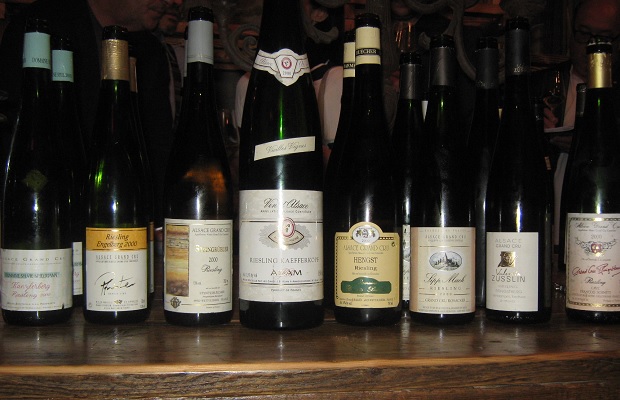
https://twitter.com/mgodello

A day in WineAlign life: 15 new releases from Ontario and B.C.

East Coast Lobsters Photo: Michael Godel

East Coast Lobsters
Photo: Michael Godel

Yesterday I settled in at the WineAlign offices with the critics crew (David Lawrason, John Szabo, Steve Thurlow and Sara D’Amato) to taste some new releases. I chose to focus on British Columbia because of all the wines that cross my path, those from out west seem to be the few and the far between. Some Ontario wines not yet investigated were open and available so I worked through a handful of them as well.

Here are my notes, posted to WineAlign, gathered together here, in one place.

Southbrook Connect White 2013, Rosehall Run Hungry Point Unoaked Chardonnay 2013, Blue Mountain Pinot Blanc 2013, Blue Mountain Sauvignon Blanc 2013, Westcott Lillias Unoaked Chardonnay 2012

Southbrook Connect White 2013, Rosehall Run Hungry Point Unoaked Chardonnay 2013, Blue Mountain Pinot Blanc 2013, Blue Mountain Sauvignon Blanc 2013, Westcott Lillias Unoaked Chardonnay 2012

Southbrook Connect White 2013, Ontario (249078, $14.95, WineAlign)

Gone from the blend in 2013 is the Reimer Vineyard Gewürztraminer, essentially replaced with an increase of Vidal. A solid dose of Riesling and a smidgen of Sauvignon Blanc round out the blend. The sum of the parts means a stoic and supine white wine, submissive and malleable, ready for anything it needs to be. That it’s organic is a matter of good choice though not necessarily a contributing factor to this simple drinker’s personality. This is not a wine from stressed vines nor will it ever be in any sort or state of distress. Quality yet round acidity keeps it buoyant and free from any excess oxidation, allowing the flavour of basic orchard fruit with a lemon squeeze to shine. Perfectly good juice.  Tasted August 2014

Rosehall Run Hungry Point Unoaked Chardonnay 2013, VQA Prince Edward County, Ontario (Winery, $19.95, WineAlign)

What is so striking about Dan Sullivan’s unaoked Chardonnay is the classic and unmistakeable County perfume that can only be his. No matter the grape, a Sullivan white is a cold play of pear and citrus, made most obvious when oak is not around to confuse. A Rosehall white is always the most glycerin-textured in the County and Sullivan’s light touch ensures this PEC Chard is made in the vineyard. There is a lightness in its being but it is one of the better unoaked wines made in the region.  Tasted August 2014

Blue Mountain Pinot Blanc 2013, Okanagan Valley, British Columbia (winery, $17.90, WineAlign)

Incredibly youthful Pinot Blanc, still in possession of its infant’s smell. A combination of baby powder and unadulterated sweat, in other words, a recent sulphuring and bottle unsettling. Peering beyond it is nearly quintessential B.C. PB. Hints of green apple, tangy white candy, lemon basil and lime sherbet make for a savoury-sweet appetizer in a glass. Got verve this Blue Mountain and when it relaxes by early fall it will be as versatile a shot of pure white wine adrenaline as you could ever hope to find. Will bring simple cohabitation pleasure to a wide range of food, from raw to smoked, from marinated to reduced.  Tasted August 2014

Blue Mountain Sauvignon Blanc 2013, Okanagan Valley, British Columbia (Winery, $18.90, WineAlign)

Upfront, come and get me, juicy expression of Sauvignon Blanc, free of encumbrances. Avoids grass and spice, reaching instead for tree fruits, both stone and orchard. A bit ambiguous for that reason, acting less varietal and more Okanagan, but that is a very good thing. Has terrific sapidity and more than admirable length. A touch of distracting, caustic herbal intensity on the finish.  Tasted August 2014

Westcott Lillias Unoaked Chardonnay 2012, VQA Vinemount Ridge, Ontario (Winery, $20.00, WineAlign)

You may ask who is Westcott and what is Lillias? They are Grant and Carolyn Westcott, a new player in the Chardonnay market and Lillias is a most unique expression from the Vinemount Ridge appellation. There is a grape spirit sensation, a limestone-influenced lemon-lime chord and a moscato-like medicinal glade component. Though it’s a bit scattered, unsure whether its softer or harder and running anyway, anyhow, anywhere, the personality is certainly on display. Though it “don’t follow the lines that been laid before,” there is always room for a new kind of Chardonnay, one that pushes boundaries and lays new tracks. Winemaker Arthur Harder has it all happening here; viscous fruit, citrus zest, limestone impart, milky texture, minute oxidation and rapturous acidity in a Chablis vein. The most serious unoaked Chardonnay, if not yet everyone’s cup of tannin. Auspicious beginning.  Tasted August 2014

Laughing Stock Pinot Gris 2013, Laughing Stock Blind Trust White 2013, Upper Bench Zweigelt 2012, Laughing Stock Viognier 2013, Upper Bench Pinot Noir 2012

Laughing Stock Pinot Gris 2013, Laughing Stock Blind Trust White 2013, Upper Bench Zweigelt 2012, Laughing Stock Viognier 2013, Upper Bench Pinot Noir 2012

Laughing Stock Pinot Gris 2013, BC VQA Okanagan Valley, British Columbia (123604, $22.00, WineAlign)

This Pinot Gris will get you high and the question is will it leave you dry. Laughing Stock’s whites are not shy, elevated in alcohol (here 13.8 per cent) and full-out striking in texture and tannin. The wondering here is if there may be enough dry extract so to keep the wine fresh, lively and willing to bend. Or, will it dry out and leave you hanging, with a head full of radio fuzz and wanting more fruit. This is a surly and brazen attempt at slightly botrytized Pinot Gris, with enough grit and grind to set it apart from a cloud of every day juice. It’s just a bit tough and overdone in my opinion.  Tasted August 2014

Laughing Stock Blind Trust White 2013, BC VQA Okanagan Valley, British Columbia (123604, $25.00, WineAlign)

Two Pinots (Blanc and Gris) and nearly a fifth of Viognier conjoin to conspire in cohorts for this well-defined B.C. white. Put your trust in winemaker David Enns as he leads you on this trip around the Okanagan through the eyes of co-existing white grapes. The first steps are those of spice and tree fruit pith, the second steps are those of good medicine. Dogged persistence brings near closure and a desire for another sip. Tasted August 2014

Upper Bench Zweigelt 2012, BC VQA Okanagan Valley, British Columbia (Winery, $25.00, WineAlign)

Of all the international varieties to plant and attempt to establish a cottage industry in B.C., Zweigelt should certainly be near the top of the list. The grape lends well to the cool climate and the altitude. It grows well in sandy and loam soils, especially with some gravel content. Penticton should become a haven for Zweigelt. Upper Bench’s take is overtly flavourful, sweet-smelling and easily approachable. It’s respectably dry (2.3 g/L residual) and appropriately balanced with good acidity. The flavours of black cherries come directly to mind. There’s the rub. Like many New World (and even some Austrian) Pinot Noir, the dark fruit flavours of ripe fruit, while they may taste delicious, lead the wine down a road of immediate gratification and a short stay. Personally I would like to see subsequent vintages picked earlier and at lower brix (here at 24.2) for a fresher and more vigorous take on Zweigelt. There is much promise in this program.  Tasted August 2014

Laughing Stock Viognier 2013, BC VQA Okanagan Valley, British Columbia (B.C., $26.00, WineAlign)

Of all the big whites in the Laughing Stock range, this Viognier fits the style and ragged glory pursuant the course. This hits the mark with flying colours, a rich and juicy wine full of peach flavours punching along with orchard fruit and white flower aromas. This is really crunchy and vigorous Viognier, with a kick of pepper along with some highly tropical moments along the way. Long finish to what will be 10 years of evolution. Tasted August 2014

Upper Bench Pinot Noir 2012, BC VQA Okanagan Valley, British Columbia (Winery, $28.00, WineAlign)

This is a lovely, fragrant and boisterous Pinot Noir with a warm heart and a balanced personality. Notes of orange and cherry blossom circle around the black cherry centre with just a hint of dusty chocolate. That is the 14 months in 30 per cent new French oak talking, adding a bit of sinew, but mostly dusty cocoa flavours and fine-grained tannin. A well made Pinot Noir with that wood adding a finishing touch of spice strung along the linear acidity.  Tasted August 2014

2027 Cellars Cherry Avenue Vineyard 2012, Laughing Stock Vineyards Amphora Vrm 2013, Laughing Stock Blind Trust Red 2012, 2027 Cellars Pinot Noir Queenston Road Vineyard 2011, 2027 Cellars Pinot Noir Queenston Road Vineyard 2012

2027 Cellars Cherry Avenue Vineyard 2012, Laughing Stock Vineyards Amphora Vrm 2013, Laughing Stock Blind Trust Red 2012, 2027 Cellars Pinot Noir Queenston Road Vineyard 2011, 2027 Cellars Pinot Noir Queenston Road Vineyard 2012

2027 Cellars Cherry Avenue Vineyard 2012, VQA Twenty Mile Bench, Ontario (Winery, $30.00, WineAlign)

There are a scant 105 cases made of this Cherry, a site close to a similar national Pinot Noir made by Paul Pender at Tawse. The vineyard encourages a scrap of the vinous kind between earth and its manifest cherry-scented fruit. Cherry seems to hold back its charms and ask that patience be the virtue. “Loose lips sink ships,” so “can we show a little discipline” and leave it alone? The ripeness is certainly here but what is most promising is the lack of heat, the absence of volatility and the wall of pure fruit. Though a bit subdued this is a much more approachable, not quite as serious and all around friendly expression of Twenty Mile Bench Pinot Noir. The price is more than reasonable for the quality in the glass. Wait three years and watch it age easily to 2020.  Tasted August 2014

Laughing Stock Vineyards Amphora Vrm 2013, Okanagan , BC VQA Okanagan Valley, British Columbia (agent, $30.00, WineAlign)

Here blends one-third each Viognier, Rousanne and Marsanne, a veritable Rhône orgy in wild fermentation, aged on the skins in terra-cotta and amphorae. While I would not go so far as to call it an “orange wine,” I will use the “N” word to describe its agrarian ways. As natural as anything you are likely to taste out of B.C., this is a most untamed experiment and should not be missed. It verges on oxidation but refuses to climb over the edge. It’s floral, spicy and crowded. The texture is chalky and so full of rusty, clay rubbed streaks. Everything about this is unkempt and exotic, including the never cease and desist fermenting lychee and longan feel. Hard not to be wowed by this blend’s presence.  Tasted August 2014

Laughing Stock Blind Trust Red 2012, BC VQA Okanagan Valley (B.C., $30.00, WineAlign)

“Past performance is not an indicator of future returns.” A statement on the bottle insists that full trust be afforded the winemaker, his whimsy and the blending choices made from vintage to vintage. Not unlike a similar program that Ann Sperling employs at Southbrook, albeit not nearly as brash or brazen in attitude. The ’12 BT has the swagger and the oomph. A powerhouse of a Cabernet-based blend, full of B.C.’s finest black fruits and teeth gnashing tannins. Is this wine too serious for its own good? I don’t think so but it is no shrinking violet (though it smells like some, in a very modern Maremma or even Nebbiolo way). Thick juice, ramped up and yet delicious if too much young syrup to work past one full glass. Time will sooth the savage beast but it will never be a pussycat.  Tasted August 2014

2027 Cellars Pinot Noir Queenston Road Vineyard 2011, St. Davids Bench, Niagara Peninsula (Winery, $35.00, WineAlign)

There is definite gregarious character to this Pinot Noir and it finds a positive, altruistic methodology in its gathering of some obvious Niagara traits. Increased ripening from its Queenston Road Vineyard on the warm St. David’s Bench is its most obvious pronouncement. A shyness from out of what is an enigmatic Pinot vintage walks with the later harvest, dusty and earthy fruit. Most of all it can’t help but be Niagara Peninsula Pinot Noir, albeit in high caste and hyper-sensitive attention to detail. There is cola, rust, cherry, paint and extreme acidity. It’s hot, actually. Would like to see where this goes with anti-volatile time. Methinks a settling will happen. Tasted August 2014

2027 Cellars Pinot Noir Queenston Road Vineyard 2012, St. Davids Bench, Niagara Peninsula (Winery, $35.00, WineAlign)

A highly perfumed Pinot Noir from winemaker Kevin Panagapka in 2012, complete with an exotic spice box of aromatics; potpourri, roses, cassia, clove and aamchur. The profile hydrates to a mulled simmer as the wine is once again warmed by the vineyard’s ability to ripen, exaggerated in ’12 but with more grace, bringing its personality in line with its modest (13 per cent) alcohol. The cherry flavour veers black with a paste of tar and charcoal, but again, the psyche is smooth and elongated. Long finish to this Queenston which should see it sing to 2018 and beyond. Tasted August 2014

Good to go!
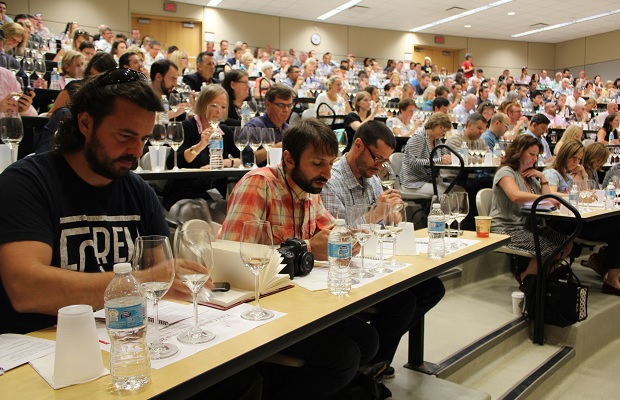
https://twitter.com/mgodello


The froth on Crémant d’Alsace

Colmar Canal PHOTO: Cassidy Havens, http://teuwen.com/

Colmar Canal
PHOTO: Cassidy Havens, http://teuwen.com/

The production of fizz by way of secondary fermentation in bottle is nothing to be ignored in Alsace. More than one in every five wines forged from the region’s vines is filled with bubbles. Most recently (in the past 18 to 24 months), certain things have come to light. A salient spike has been witnessed, with Sparkling wine increasing from 15 to more than 20 per cent of the region’s annual wine production. This means that Alsace now ranks second in France with a yearly production of more than 30 million bottles.

Six grape varieties are permitted for the production of Crémant d’Alsace; Auxerrois, Chardonnay, Pinot Blanc, Pinot Gris, Pinot Noir and Riesling. Chardonnay can only be used for Crémant and only Pinot Noir may be fermented to bottle a Rosé. More rules must be followed like grapes having to come from vines into its’ 3rd growing season and wines must rest a minimum nine months on the lees before bottling. Most lay longer, which helps to define this genre of Crémant’s creamy texture, matched in contrast by its stony, flinty and mineral style.

The effervescence of Crémant d’Alsace is known as prise de mousse. Basic wine is bottled with liqueur de tirage for second fermentation. Bottles are left to rest sur latte. Autolysis occurs and the dead yeast is removed by way of remuage. After aging on the fine lees, bottles are turned, deposits form in the collar, brought to the freezing point, evacuated by carbonic gas and replaced in volume by liqueur de dosage or liqueur d’expedition which yields a Crémant d’Alsace of three styles; Brut, Sec, or Demi-Sec. A balanced vintage for sparkling in 2012 yielded 270,000 hl of Crémant d’Alsace.

During my week in Alsace and with thanks to the Conseil Interprofessionnel des Vins d’Alsace (CIVA) I was able to taste more than 30 producer’s Crémant. Here are my notes on 14.

Crémant d'Alasace at Domaine Steuntz-Buecher

Crémant d’Alasace at Domaine Steuntz-Buecher

Jean-Marie Haag Crémant d’Alsace, tasted at Domaine Stentz-Buecher with Les diVINes d’Alsace

Exemplary bubbles from Soultzmatt in la Vallée Noble, 20 km south of Colmar, from out of clay-limestone soils. Grapes here are Pinot Blanc, Pinot Auxerrois, Riesling, Pinot Gris and Pinot Noir. A close-knit aridity and platinum tang are pronounced in an idiomatic lees-inflected language with a lightly oxidized lilt. A retaining wall of freshness and a slice of bitter honey-almond tart round out the complexity, intended or not, with elevated levels of Pinot vibrations making themselves known. Calls for a must return to see if it’s a one-off or a truly significant house style. Drink alongside a salty buffet.

Valentin Zusslin Crémant D’Alsace Sans Souffre Brut Zero, tasted at Domaine Stentz-Buecher with Les diVINes d’Alsace

The old vines blend from Clos Liebenberg is predominantly Pinot Auxerrois (95 per cent) with minor amounts of Chardonnay and Pinot Gris. It’s important to note the non-sulphur designation in that the not insignificant practice takes the wine to another level of Crémant sophistication. There is a savoury nut character to the Auxerrois but never in a fat, round or blanched way. The caryopsis are not like an almond but more like a roasted pistachio upon the mid-palate. Moving forward it’s like the smell of a nut-based, warm cereal. It’s quite intoxicating and lingers well into the finish.

Louis Hauller Crémant D’Alsace, tasted at Domaine Stentz-Buecher with Les diVINes d’Alsace

From 100 per cent Chardonnay, this is a fine, subtle, stylish, finessed and elegant interpretation that is a different sort of Alsace discrimination. Spent 11 months on the lees and sports more citrus than most others. Subtle bubbles here, with less froth and more Chardonnay character. Very good length.

Sipp Mack Crémant D’Alsace Rosé, tasted at Domaine Stentz-Buecher with Les diVINes d’Alsace

The smell of strawberry cream and the crème fraiche sapidity by way of sudoric lees. Fun and characterful if a bit of an ancestral taste.

Restaurant Le Théâtre, Colmar

Restaurant Le Théâtre, Colmar

Albert Mann Crémant D’Alsace Brut 2011, tasted at Restaurant Le Théâtre, Colmar with Albert Mann’s Marie-Thérèse Barthelme

A four-squared Pinot affair, in Blanc (66 per cent), Auxerrois (16), Noir (12) and Gris (6). This from a bottle that had just been disgorged one week prior to tasting. Out of clay-limestone and sand soils in vineyards from Kientzheim and Wettolsheim. Like album art, the Mann label is a crucial, sixth sense aspect of the wine experience. The 2011 Crémant is the artwork of François Bruetschy, “like a turnstile of fireworks while projecting fine sparks.” The 2011 Mann is very fine, misty, delicate, wistful and waiting in longing for an amuse bouche of mackerel with choucroute in a can. The wine makes me long for a walk in the vines.  @albertmannwines

Mackerel and Choucroute, Restaurant Le Théâtre Colmar

Mackerel and Choucroute, Restaurant Le Théâtre Colmar

Gustave Lorentz Crémant D’Alsace, tasted at Restaurant Le Théâtre, Colmar with George Lorentz

Though the label denotes this as non-vintage, the blend of Chardonnay, Pinot Noir and Pinot Blanc is essentially from the 2011 vintage. This is what Lorentz describes as 2nd-tier house sparkling, with more ripeness in this bottle. That fruit maturity is all apple, with a minor note of oxidation and the full effect of 16 months on lees felt through texture. Once again the inclusion of Chardonnay takes the Crémant schematic condition to another level. Bring on the top-tier.

Louis Sipp Crémant D’Alsace Rosé, tasted at Restaurant Le Théâtre, Colmar with Etienne Sipp

The Sipp Crémant comes from various parcels in Ribeauvillé, from Weinbaum, Sulz and Rengelsbrunn. Etienne tells us it is made from Pinot Noir and Pinot Noir, playfully mocking the AOC’s rule that only that variety can be used for sparkling Rosé. Sipp’s Pinot is grown in mainly heavy and deep clay soils. Picked at optimum ripeness, this is fizz that has spent 18 months aging in bottle after not having gone the way of malolactic fermentation. The result is a dry, dense, savoury and layered Pinot Noir Rosé. This third Crémant in a group with Mann and Lorentz proves that though tonight is not a competition, we see that all three have won.

Hummus, La Table de Gourmet, Riquewihr<br />

Hummus, La Table de Gourmet, Riquewihr
PHOTO: Cassidy Havens, http://teuwen.com/

Paul Zinck Crémant D’Alsace, tasted at La Table du Gourmet, Riquewihr with Phillippe Zinck

An efficient, sparkling requiem for success in a blend of three vintages and varieties; Pinot Noir (60 per cent), Chardonnay (30) and Pinot Blanc (10). A soft receptive, inviting and proper amalgamation in which mousse apropos peach and soft French cream delight without needing to be tough or street savvy in any way. Crémant giving like une crème de luxe, to sip with Hummus, La Table de Gourmet style and with nary a difficult moment.

Domaine Bott-Geyl Crémant D’Alsace Cuvée Paul-Edouard Brut Millésime 2007, tasted at La Table du Gourmet, Riquewihr with Jean-Christophe Bott  @JLBrendel   

Jean-Christophe Bott’s may be the most complex and intriguing bottle of Crémant you would have a chance to taste in the course of a week in Alsace. Bott gathers top quality Pinot Blanc, Chardonnay and Pinot Noir from growers then lays the fruit low for four years on their lees. The rich and sunny vintage is vinified in what is really an Extra Brut style without any dosage whatsoever. This is small production Alsatian bubbles (2500+ bottles) disgorged in 2011 and in very early stages of development. The acidity stands in upright attention while the fruit submits to wait. The rocks and salinity raise upwards to march in extreme lengths. A sublime match to an Amuse Bouche of Cured Watermelon, pistachio, basil and mustard flower.

Foie Gras at Restaurant L'Épicurien, , Colmar

Foie Gras at Restaurant L’Épicurien, , Colmar

Charles Baur Crémant d’Alsace, tasted at Restaurant L’Épicurien, Colmar with Arnaud Baur

After its second ferment this blend of Pinot Blanc (40 per cent), Auxerrois (40) and Chardonnay (20) spent a compages-inducing 24 months on the lees. This is Baur’s main cuvée for Crémant, always made from two vintages, in this case 2009 and 2010. Most definitive and classic for the appellation. Falls within the aromatic white fruit/white flower spectrum with flavours that tease ripe Mirabelle, apricot and peach. Soft, elegant, feminine, demurred and clean. Baur’s take is a Catherine wheel of Alsatian bubbles with “all the things you dream while spinning ’round.”

Audrey et Christian Binner Crémant d’Alsace KB, tasted at Restaurant L’Épicurien, Colmar with Christian Binner 

Binner’s exotic-scented sparkling is from Kayserberg, “the emperor’s mountain,” next to the Schlossberg Grand Cru site. Old vines out of colder parcels more appropriate for making Crémant consist of Auxerrois, Pinot Blanc and Pinot Gris. The terroir here is granitic and poor in soil, if that is what it can be called. The house style is quite oxidative and distinctively earthy, as if the rocks were breaking down into a fine, funky soil remineralization. The most terpenes yet from bubbles tasted in Alsace, with a bruised apple hematoma, a pickle of some colonialist kind and a spice cupboard to fill a curry recipe. In the end this is unusual, yet vivid and jazzy fizz.

Schoenheitz Picnic<br />

Schoenheitz Picnic
PHOTO: Cassidy Havens, http://teuwen.com/

Vins Schoenheitz Crémant d’Alsace Millesimé 2007, tasted on the steep slopes of the valley of Munster with Dominique, Henri and Adrien Schoenheitz

Primarily focused upon Pinot Auxerrois and righteously so, with just a 10 per cent buoyancy from Pinot Blanc. The combination of striking Auxerrois fruit grown on the estate’s (400-500m) high altitude steep slopes and a memorable Alsace vintage is just deadly. The varietal choice in low acidity out of a vintage with character and temper here translates to aridity (1 g/L residual sugar) and long on lees texture. Like a Ron Sexsmith ballad, a listen, one look at its bronze patina, one taste and you will “see the forest for the trees,” because there’s gold in them hills. Perfect timing to break out an all-natural, no dosage ’07, marked by gratuitous acidity and mountain verve. An auspicious start to a picnic in the hills.  @VinsSchoenheitz

Pierre Frick Crémant d’Alsace 2013, tasted at Domain Pierre Frick with Jean-Pierre Frick

Jean-Pierre Frick poured two just bottled yet raw examples meant to set a perspective table for the 2013 finished wine that followed. The 50/50 Pinot Blanc et Noir (NV and 2013) were both picked ripe (nearly overripe), pressed direct and treated with nothing, nada, niente, zilch, rien. No sulphites, yeast or sugar. With zero dosage and opening too soon in evolution, these bottles were marked by arrested fermentation. The absence of the second fermentation meant for a flat, oxidative result. The experiment may have meant no Crémant but it helped to organize, define and ultimately assess the ’13. Same minimalist method but with a secondary ferment, this bottle (though warm) offered high citrus and biting, forceful, sharp acidity. When returned to an hour later and from a cold bottle, the wine was much brighter and atomically fresh. Frick’s method and style mean his sparkling must spend a minimum one year in bottle before it can be sold.

Casks at Jean-Pierre Frick

Casks at Jean-Pierre Frick

Pierre Frick Crémant d’Alsace 2012, tasted at Domaine Pierre Frick with Jean-Pierre Frick

One of JP’s “funny wines.” Once again, no sulphur but this time with natural yeasts. Notated by a slight coppery, salmon tinge and minimally oxidative, though in no way over the top. “My idea was a dry Crémant but he’s not dry. C’est la vie.” To Frick this is a wine for young and really old people. Toasted brioche, buttered toast and almond extract are joined by a late arriving, very interesting, savoury sweetness. The finish smoulders, with that ever-bearing herbiage adding another layer. This Pinot Noir and Pinot Blanc split comes in at 12.5 – 13.5 per cent alcohol. Frick doesn’t really know. “I write 13 per cent because I just have to put something on the bottle.”

Good to go!
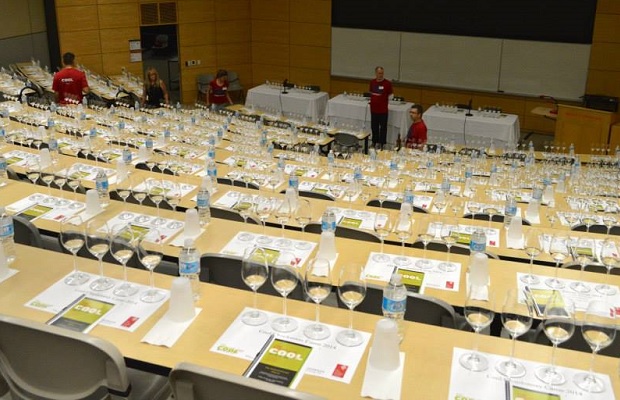
What ya drinkin’?

Grilled Flank Steak

Grilled Flank Steak

There’s no time for preamble. VINTAGES rolls out another long list of wines for the weekend. All your summer bases are covered. The Pinot Noir from New Zealand are really, really good. There are whites from Greece, Niagara and South Africa to not only try but embrace. Two Ontario reds will satiate the grill. Here is a list of eight wines to look for right now.

From the left and clockwise: Argyros Atlantis White 2012, Tawse Sketches Of Niagara Riesling 2013, Featherstone Gewürztraminer 2013, Featherstone Gewürztraminer 2013, Redstone Vineyard Reserve Cabernet Franc 2010, Hamilton Russell Chardonnay 2012, Staete Landt Paladin Pinot Noir 2010, Hidden Bench Terroir Caché Meritage 2010

From the left and clockwise: Argyros Atlantis White 2012, Tawse Sketches Of Niagara Riesling 2013, Featherstone Gewürztraminer 2013, Featherstone Gewürztraminer 2013, Redstone Vineyard Reserve Cabernet Franc 2010, Hamilton Russell Chardonnay 2012, Staete Landt Paladin Pinot Noir 2010, Hidden Bench Terroir Caché Meritage 2010

Tawse Sketches Of Niagara Riesling 2013, VQA Niagara Peninsula, Ontario (89029, $17.95, WineAlign)

The gateway of the Tawse Riesling portfolio and first to be released is an omnipresent beacon for what is to come from the single-vineyard sistren. Built fruit forward from an orange zest, stone rose and lemon glade guide, this is the Sketches most juicy sensation yet. Incredible vacuum of citrus acidity waterfalling into a great white hole. Though surrounded by so many a Riesling with site specific personality, “she’ll carry on through it all.” Intensity in dry Riesling.  Tasted June 2014  @Tawse_Winery

Argyros Atlantis White 2012, Greece (371658, $17.95, WineAlign)

Assyrtiko is the rock but the composition is altered by smaller parts of Aidani and Athiri. Softer, warmer and much more approachable than the Santorini, not quite so stony but with more intense juice. A modern take on the ancient game. The palate lays out the uneven, tannic and rocky road to the amphitheatre. A long walk on carefully arranged boulders. A salt bath in warm springs. The wines of Argyros do so much to bring Greece to the world. Citrus finish and more salty mineral.  Tasted June 2014  @KolonakiGroup

Featherstone Gewürztraminer 2013, VQA Twenty Mile Bench, Niagara Peninsula, Ontario (64592, $19.95, WineAlign)

Such a pretty and elegant take on Gewürztraminer, of flowers white and in bloom, nuts blanching away. A structural, searing tightness to the mineral laced fruit will develop yet unrealized tannin and tension. There may be nothing gangly or highly viscous about it and its style is nearly, completely dry. Notes of orange zest and lychee pit. Very clean. Elan, ecrue, pearl.  Tasted June 2013  @featherstonewne

Clos Henri Bel Echo Terroir Greywacke Pinot Noir 2012, Marlborough, South Island, New Zealand (159137, $22.95, WineAlign)

“It is a special joy for the Bourgeois family to make Pinot Noir in New Zealand.” That statement is one you just gotta love. The Henri Bourgeois clan clearly have a whole lotta love for the climate, soils, people and the possibilities the terroir presents for his dedication towards restrained, elegant Pinot Noir. Though this teases with highly modern and juicy elements, almost, dare I say, Sonoman, there remains a rooted, savoury sense of the earth. Takes a page out of Burgundy’s book and plants it in Marlborough. Plums, cherries, smoke, spice, some tannin and for the price, nearly impossible structure. Angles and bitters persist but beneath a wealth of fruit. “Keep a coolin’, baby.” The price is impossible. Great value.  Tasted June 2014  @ClosHenri

Redstone Vineyard Reserve Cabernet Franc 2010, VQA Lincoln Lakeshore, Ontario (381244, $29.95, WineAlign)

Would I not be remiss to ignore the Tawse Laundry Vineyard by way of comparison? With the Redstone, the sister winery puts forth the same amicable fruit with charred meat accents yet minus the hyper-specific Pender perfume and wisdom. Here is an ocean in between the waves. I came in to taste Redstone with an open mind, even “bet against the company again. They tried to redefine everything that I know and love. Gotta know you’re mine.” Winemaker Rene Van Ede has fashioned a delicious Cabernet Franc that speaks in a clear 2010 voice. A war on drugs. Though it bears no teeth of conceit there is a very positive funk and sanguine notes make a play, but ultimately submit to an overall red currant, sweet bell pepper and tobacco realm. The pyrazine ring compound binds many types of pepper, cracked, swelling and swollen. A long and rich elixir without the oak needing to be heard. It does not shout but whispers. Unmistakable Pender mentored Rock ‘N Roll Cabernet Franc. Really well made. Tasted twice, March and June 2014  @RedstoneWines

Hamilton Russell Chardonnay 2012, Wo Hemel En Aarde Valley, South Africa  (931006, $34.95, WineAlign)

From what is rapidly developing as a (if not already engraved in stone) Grand Cru site in the Hemel En Aarde Valley, 2012 is a vintage that comes to greater strength from strength. Every aroma, every nuance is characterized by elegance and elasticity. Romantic Chardonnay, so representative of real love, of mineral, of most excellent barrels, ripe fruit and deft touches. Hamilton Russell takes South African Chardonnay to an entirely higher level. “Thought I’d been in love before, but in my heart, I wanted more. Seems like all I really was doing was waiting for you.”  Tasted June 2014  @TrialtoON

Staete Landt Paladin Pinot Noir 2010, Marlborough, South Island, New Zealand (376731, $36.95, WineAlign)

Though the Paladin is four years in it still retains its barrel baby fat. The rich red fruit tower reels behind a slightly reductive must and a compromise of toast and splinters from18 months spent in a mixture of 25 per cent new and 75 older French oak barrels. There is a whole surrealist street gang of fruit lurking in shadows of a de Chirico drama. I can sense the ripe plums and the cherries ready and willing to bake in the proverbial pie, and though blisteringly dry (less than 1 g/L residual sugar), it will always see potential by way of total acidity (6.1g/L). Will realize a seamless transition to mid-life anxiety while the fruit simmers away in a cauldron of that fine acidity. Ruud Maasdam’s Pinot Noir is of the scuola metafisica kind.  Tasted June 2014  @StaeteLandtWine  @liffordretail

Hidden Bench Terroir Caché Meritage 2010, VQA Beamsville Bench, Niagara Peninsula, Ontario (505610, $38.20, WineAlign)

The richest Terroir Caché to date, making use of its barrel in judicious but never obnoxious ways. Huge Bench wine, needs 10 years for sure. From my earlier, April 2014 note: “No other Niagara red and for sure no alternative Peninsula Bordeaux blend exists in such a vacuum of dichotomous behaviour. Act one is an out-and-out boastful, opulent show of Rococo. Act two a gnawing and gnashing by beasts. The pitch and pull of the Terroir Caché 2010 optates and culls the extraordinary through the practice of extended délestage, what Hidden Bench notes as “a traditional method of gently draining the wine and returning it to tank with its skins during fermentation.” The ’10 is about as huge as it gets, highly ferric and tannic. Still chemically reactive, you can almost imagine its once small molecules fitfully growing into long chains. Berries of the darkest night and he who should not be named black fruit are confounded by minerals forcing the juice into a cold sweat. Will require a minimum of 10 years to soften its all-powerful grip.” From my earlier March 2013 note: “has rich, voluptuous Napa Valley written all over it. Sister Merlot dominant, Beamsville Bench sledge monster. Plumbago, mineral, blackberry and coffee in a wine that will be the ringer in a blind tasting 10 years on. Harald may be saying “this is our family jewel.” Mr. Thiel, you make good wine”  Last tasted June 2014  @HiddenBench  @BenchVigneron

Good to go!

The South Coast is clear

Lake Erie

Lake Erie

It would be a stretch to expect anyone living more than 100-km away from Port Dover to know much about Ontario’s newest and next viticulture hot spot, Ontario South Coast Wines. The same concession might apply to most journalists working with regular intensity and immersion within the Ontario wine industry. OSCW should not be confused with its brethren further west, the wineries that make up the Lake Erie North Shore appellation. Ontario’s southwest? Wine route? You may ask yourself, how did I not know about this place? How can this be?

This is the area most likely to be Ontario’s next VQA-qualified appellation. Cool-climate remains the most apt descriptor, no different from LENS to the left and Niagara to the right, but this pocket of the lake is blessed of a specifically warm-ish micro-climate. The name itself presents as a bit of a misnomer, “Ontario South Coast Wines,” its geographical location set upon a ridge overlooking the north-east shore of Lake Erie running east from just west of Long Point, through Port Rowan, St. Williams, Turkey Point, Normandale, Port Ryerse and to Port Dover.

To agree with the emerging region’s calling card, simply draw a bunch of parallel and converging lines south from Lake Huron, through the Highway 401 straddling communities of London, Kitchener and Cambridge. Continue southeast past the Highway 403 delta of the Brantford area and through the Highway Three corridor towns of  Waterford, Courtland, Delhi and Simcoe. Spread out along the Eco-nature park-beach community-rugged coast and now you’ve got your bearings. This is the wine country of Norfolk County.

All aboard the Kayloe PHOTO: http://www.ontariosouthcoastwine.com/

All aboard the Kayloe
PHOTO: http://www.ontariosouthcoastwine.com/

Better still, follow the lead of Magdalena Kaiser-Smit of Wine Country Ontario and climb aboard the Kayloe, a 65-foot boat run by Nomada Charters and take a three-hour Lake Erie tour from the water, with a dozen or so local wineries on board and get to know the people and the place. Listen to Mike McArthur, President of the Grape Growers Association speak about 1996, the transition year for the area. Realize how an agricultural community that once housed tobacco farms make a communal decision to transform with the times and switch to grape growing. Hear him talk about the great history of viniculture in the least known of Ontario wine landscapes, a place where grapevines were spotted as early as the late 1600’s.

The boat trip and the wine speak mean nothing here without the idea of hospitality to accompany the local ferments, wines made not just from grapes, but from a wide variety of fruits. There are approximately 130 acres under vine in Grey and Norfolk counties. Nine wineries are located in Norfolk, with seven currently open for business. Liz Campbell and Trevor Taylor of F.W. Knechtel Food Catering make use of local asparagus, mushrooms and Lake Erie Perch to bring matching and meaning to the wines.

Outboard BBQ

Outboard BBQ

Fruit wines are an integral part of the South Coast experience so I decided to begin and end on high glucose notes. Berries have half the natural sugar content as grapes so cane sugar is added to give the yeasts enough convertible material to raise the alcohol to stable levels for longer preservation. Blueberry Hill was my first stop, a St. Williams winery that ferments with the hybrid Vidal, along with cranberries, raspberries and of course, blueberries. The wines are pure, distilled fruit expressions, with tart notes and flavours of the heart. Their straight-up blueberry is the best of the lot.

The uncontested Norfolk leader is Burning Kiln Winery and not just from a quality standpoint. Burning Kiln has positioned itself as a marketing and appellative promotional leader with Doug Beatty (formerly of Colio Estate Wines) as its spokesman, front and centre. Winemaker Andrzej Lipinski (formerly of Vineland Estates, Legends Estates, DeSousa, Fielding Estate, Megalomaniac, Foreign Affair and Organized Crime, now of Colaneri Estate and his own label, Big Head Wines) is an established Ontario master. His experience with the appassimento method is perfect for BK’s old tobacco kiln employment for drying grapes. Assistant winemaker Patti Fixter authored a feasibility study on Norfolk County’s Sand Plain and its ability to host a viable, sustainable viticultural industry. The winery is progressive, adventurous and ostensibly single-handedly responsible for putting South Coast on the current Ontario wine road map.

Burning Kiln Tank Samples

Burning Kiln Tank Samples

Doug Beatty brought some tank samples aboard. The springy and herbal 2013 Horse & Boat Riesling carries 20 g/L of residual sugar “to punch back the acids.” This is part of BK’s Green Kiln Series. A 2013 Savagnin tank sample carries similar texture but in elevated glycerin. The metal on top of that mouth feel really come forward to balance the residual and the alcohol (which is dramatically indiscernible). Grassy Sauvignon Blanc-like aromas and a very Jura palate are the hallmarks of a South Coast take in a wine that is such a baby.

The Harvest Party White tank sample gathers Chardonnay (59 per cent), Gewurztraminer (21), Riesling (18) and Pinot Gris (2). A chewy, textured, kitchen sink blend that stings of limestone, an herbal balm and a late edgy metallic bite. The Chardonnay 2013 tank sample spent 18 months in foudres. Reminds of a Lenko treatment, from fruit 50 per cent estate and 50 Niagara. Thin but linear and focused, with very good length, a crunch of green apple and round herbiage.

The 2011 Kiln Hanger from tank follows the same process at the ’10 from a less than scorching vintage but will arrive in bottle at 15.8 per cent alcohol. Only 400 cases will be produced from a cat-like specimen, still chewy, a chunk of major Cabernet Franc change. Higher in acidity and cool plums than in 2010, this is no shrinking Norfolk violet. Will show more style and less humidity than that ’10.

Burning Kiln Savagnin ‘Stick Shaker’ 2012, VQA Ontario (367144, $24.95, WineAlign)

What BK refers to as dry white Vin de Curé, or the “Parish Priest’s,” this is their take on the Jura’s Vin de Paille (Straw Wine). The South Coast may have a wine tradition that dates back to the 1600’s but Savagnin does not go back by the Ontario centuries.  At 14.9 per cent a heavy feeling would be expected but to the contrary, the SS is light as a feather, like a CSN ballad. Aromatically muted, the warmth of the vintage comes through in the textural density of the palate. Expressive and chewy like all of the Burning Kiln portfolio. A wine from two of only 10 total acres planted in the province. Though we may be “gasping at glimpses of gentle true spirit,” here’s to helplessly hoping Savagnin takes root and flourishes in Ontario.

Burning Kiln Harvest Party Red 2013, VQA Ontario (Winery, $15.95, WineAlign)

From an overall 50/50, Estate/Niagara blend. The composition is Syrah (49 percent, all Niagara), Cabernet Franc (42 per cent) and Cabernet Sauvignon (9). Reminds of Fielding’s Fireside Red in approachability and blending acumen. Though an understudy, the softness of the Cabernet Sauvignon is duly noted as a foil to the clay/kiln effect from the piquant Cabernet Franc. Some chalk and even more chew, in the beginning this is just mostly fresh and wild with low, obtuse angles.

Burning Kiln Cab Frank 2012, VQA Ontario (Winery, $24.95, WineAlign)

Named for the vineyard manager at Burning Kiln, Frank DeLeebeck was a tobacco farmer for more than 20 years. From 50/50 Estate/Niagara, 100 per cent kiln dried grapes for 10-14 days. This is CF all about concentration and a bridge from old tobacco to New World winemaking. Here kilns are the vehicle to transport the winery’s wines to the New World. Though this rich, cakey Cabernet Franc turns sweet on the finish, there is terrific acidity and admirable length. Holds its 14.3 per cent alcohol well. A unique appassimento.

Burning Kiln Strip Room Merlot/Cabernet Franc 2012, VQA Ontario (Winery, $24.95, WineAlign)

A 50/50 Estate and Niagara fruit split, classic Right Bank-styled blend of Merlot (55 per cent) and Cabernet Franc (45), kiln dried for 8-14 days. There is strength in alcohol (14.3 per cent) yet calm, dry reserve in (4.5 g/L) residual sugar. The aromatic profile is the most flirtatious of the BK stable, with the bruising and crushing of so many berries. There is a plum softness given by the Merlot, along with chalk, grain, vanilla and coconut from the generous six-month, three (French, Eastern European and American) oak layering. Like quality satellite St. Emilion, with so much noticeable tobacco.

Burning Kiln Kiln Hanger 2010, VQA Ontario (Winery, $59.95, WineAlign)

A 100 per cent Cabernet Franc, 100 per cent Kiln dried red made in two batches. Ages 32 months in Eastern European and American oak, half held back for this, The Sequel. Altogether there are 335 cases made of this huge, 15.9 per cent alcohol behemoth. The second coming furthers the already wealthy concentration with Alice anxiety and anaesthetizing mouth filling richesse. Here layers anything but a simple matter of loaded, dusty cocoa, decadent chocolate and creamy mocha. “I couldn’t tell if the bells were getting louder,” the entire cooperage preaching of “fanatical exposers on corners prophecy.”  Huge wine. Love it to death.

At Quai du Vin there are vineyards planted in 1970 by Redi and Roberto Quai. Today Jamie Quai makes the wine at the St. Thomas winery with the wisdom of those vines and the respectful touch of a winemaker with a minimal interventionist approach. Jamie Quai is concerned with the unearthing of micro-plot nuances in the Norfolk terroir. Quai du Vin farms 20 acres and has been open for business since 1990.

Quai du Vin

Quai du Vin

Quai du Vin Chardonnay 2012, Ontario (winery, $13.50)

From 15 year-old vines on the Sparta Moraine and what Jamie Quai calls “a field blend.” Though the soils are all heavy clay, there is a clay meets stone textural balance, surely thanks to five or six months lees contact. Like well-made southern Burgundy, the chosen yeast heightens the autolytic chain, allowing the flavours to veer tropical but not overly so. A Chardonnay that fell in love with a well-judged barrel while conceptualizing “good botrytis,” resulting in exceptional complexity for a song. Will drink beautifully through 2016.

Quai du Vin Red, Signature Series 2012, Ontario (winery, $12.50)

A blend of Marechal Foch (40 per cent), Baco Noir (30) and Merlot (30) from a host of appellations; Beamsville Bench, Niagara Peninsula, Sparta Moraine Acres and Elgin County-North Shore Lake Erie. This has a thick brushstroke brought on by a predominance within the conglomerate of heavy clay. Unexpectedly tannic, chewy, with a sweet chocolate brownie finish. Not to mention tomato and the plant’s savoury leaf. The first vintage that Merlot made the cut in lieu of usually employed Cabernet Franc.

Quai du Vin Merlot 2012, Ontario (winery, $16.00)

Made from the same Merlot fruit in the Signature Red. Spent just over a year in barrel, the wine is still very primary and aromatically speaking, highly dusty. A painted note, green tea and rusty dry fruit are wrapped in an early reductive, nearly volatile note. Chewy, splintered, with grit, conceit and solid work. Note: Only 25 per cent of the vines will likely have survived the winter of 2014.

Villa Nova Estate Winery Mystery of Hrio 2013, Ontario (winery, $11.95)

A dry white made from three (numbered) hybrid grapes developed at Vineland Research Station.

Villa Nova Estate Winery Trout Fly Riesling 2012, Ontario  (winery, $12.50)

From 100 per cent Estate vines planted in 1996, this has that roots gathered mineral salinity from sandy loams so reminiscent of the Burgenland’s dry Rieslings. That Austrian run-off minerality is uncanny and when foiled by the old vines glycerin texture, the end result is quite a study in Simcoe complexity. A small amount of Traminer lifts the Riesling, along with some lees usage. Amazing discovery.

Villa Nova Estate Winery Pinot Noir 2012, Ontario  (winery, $15.95)

From Estate grapes planted around the year 2000. Lithe, pretty and certainly very Pinot. Like Kiwi Pinot in that the flesh is permeated by varnish. Wraps together cherry, pomegranate, cranberry and wet earth. If an Old World comparison might be made it would be to Mercurey, as it’s light, highly floral, with a break in the mid-palate and a stretched finish. “We’ve always ended up with light Pinot,” says winemaker and mad scientist Phil Ryan. That’s a good thing.

Villa Nova Estate Winery Norfolk Red 2013, Ontario  (winery, $11.95)

From Niagara and Norfolk (Marechal Foch, Baco Noir and Chambourcin) grapes. A hybrid party.

Villa Nova Estate Winery

Villa Nova Estate Winery

Frisky Beaver White 2012, VQA Ontario (345629, $13.95, WineAlign)

The all Niagara fruit blend is Vidal (75 per cent), Riesling (15) and Gewurztraminer (10). It’s considered VQA “Ontario” because Dover Vineyards awaits a viticultural designation. The irony here is that it may as well be labeled Niagara. This is clean and easy stuff, low in alcohol (11.2 per cent), elevated in sugar (18.4 g/L) but balancing in total acidity (5.6 g/L). Overall it has texture and tannic ability. Not a stressful blend by any stretch, it’s Pinot Gris like in Alsatian attitude with a juicy, peppery pear fruit tendency.

Smoke & Gamble Gewurztraminer Süssreserve 2011, Ontario (winery, $21.95, WineAlign)

Unfermented (11.8 per cent) appassimento juice is added back in for aromatic and textural effect. Semi-tropical and semi-dry, in pineapple and green apple but not lychee. This is Musqué in scent, clean, pure and true. From 100 per cent Norfolk fruit.

Smoke & Gamble Merlot Reserve 2011, Ontario (winery, $21.95, WineAlign)

A wild at heart Merlot, brooding, serious, deep and full. Caramel and chocolate, ginger spice and ripe plum. Coat, paint, coat, repeat. Alcohol is big (14.4 per cent) but well-integrated and whatever perceived sweetness there may be (4 g/L) is mitigated by a leafy, savoury edge.

Smoke & Gamble Cabernet Franc Appassimento 2010, Ontario (winery, $21.95, WineAlign)

Here is the deepest, post-modern wine made anywhere in the province. Reeking of rich, candied violets smothered in dark chocolate. Chalk and talc in licks and a dense, chewy mid-palate. A massive (14.5 per cent) wine with so much chocolate dust and thick glycerin. A stable of so many big attributes and in only winemaker Robert Gill ‘s second year dealing with the Amarone-style methodology. “The first year I was scared, I’ll admit.”

Golden Leaf Estate Winery Vidal 2012, Ontario (winery, $14.25)

From estate vines. Juicy, white peach and nectarine aromas, metal angles, straight up distillation of pure grapes.  Low brix and solid PH give it tannic thrust.

Golden Leaf Estate Winery Riesling 2012, Ontario (winery, $15.95)

Estate fruit (100 per cent). Sweet and with aromatic energy. Off-dry all the way. Leans Mosel in kindred spirit. Orchard fruit and excellent acidity. Slightly bitter-tinged finish, but in a noble way.

Golden Leaf Estate Winery Baco Noir 2011, Ontario (winery, $18.20)

A cheese in lees inflected BN, not the brooding and pitchy type. Some elegance, in as much as Baco Noir can show. Yet unusual because of that yogurt drip. Good acids, floral tones and citrus.

Golden Leaf Estate Winery Chambourcin 2011, Ontario (winery, $18.20)

Once again, all the lees, cheese and citrus , but also sweet and sour with some soy and caramel. Tight and racy Chambourcin, certainly as complex and accomplished as any this side of Michigan.

Golden Leaf Estate Winery Pinot Noir 2012 (Tank Sample)

High cranberry and dry earth bring this right back to Burgundy basics. Rosehip and sandalwood from old oak wrapped in sweet tannins. A bit of sinew and braised bouille. The coat is on.

Golden Leaf Estate Winery Merlot 2012 (Tank Sample)

From Niagara (De Moura Vineyards) fruit. Chalk in limestone, chocolate and a medium wood toast. Some green tannin, tea for sure but also some sweet tannin. Also roasted, charred red meat.

We wrapped up with some of the most righteous fruit wines one could ever hope to taste by way of Wooden Bear L Winery Inc.  Kim Ludwig’s wines are full of wildflowers, citrus expression and great balance. Her Gay-La Apple wine from 100 per cent Gala apples is like savoury Sauvignon Blanc, with angles in metal, low acidity but it’s dry and crisp. Her Sangria in a bottle has a liqueur-like taste, a slightly reductive, good bitterness and so much spirit. Not to mention tons of grapefruit.

Planting palm trees in Port Dover

Planting palm trees in Port Dover

All is good out on the water and we made it safely back to Port Dover, just in time to watch the annual planting of the palm trees. You can’t make this stuff up.

Good to go!
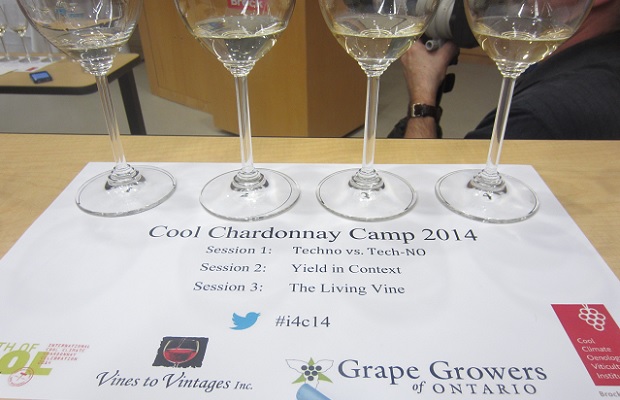
A go long weekend wine list

Pâté en Croûte, Niedermorschwihr, Alsace, France PHOTO: Michael Godel

Pâté en Croûte, Niedermorschwihr, Alsace, France
PHOTO: Michael Godel

The first long weekend of the 2014 summer is on the way. A fortuitous confluence of the calendar means a longer than usual respite from the tribulations of work, construction and city angst. Bottom line is with four straight days of nothing you’re going to need more wine. Last weekend’s VINTAGES release was filled with admiral and admirable choices, short on Canada’s finest mind you, but long on global composition.

Here are ten wines tasted, reviewed and given the Godello stamp of approval.

Clockwise from left to right: Angels Gate Mountainview Riesling 2009, Château De Gaudou Grand Lignée Malbec/Merlot 2010, Creekside Estates Laura's White 2012, Muriel Reserva 2008, Scacciadiavoli Montefalco Rosso 2009, Tamaya Syrah Gran Reserva 2011, Domaines Schlumberger Les Princes Abbés Pinot Gris 2011, Domaine Karydas Naoussa 2009, Bachelder Saunders Vineyard Chardonnay 2011, St. Supéry Rutherford Merlot 2010

Clockwise from left to right: Angels Gate Mountainview Riesling 2009, Château De Gaudou Grand Lignée Malbec/Merlot 2010, Creekside Estates Laura’s White 2012, Muriel Reserva 2008, Scacciadiavoli Montefalco Rosso 2009, Tamaya Syrah Gran Reserva 2011, Domaines Schlumberger Les Princes Abbés Pinot Gris 2011, Domaine Karydas Naoussa 2009, Bachelder Saunders Vineyard Chardonnay 2011, St. Supéry Rutherford Merlot 2010

Angels Gate Mountainview Riesling 2009, VQA Beamsville Bench, Niagara Peninsula, Ontario (373175, $16.95, WineAlign) From the VINTAGES June 21, 2014 release

Riesling that could dry tears. Just seems to write the Bench book. Dry and drier, numb and number. Though hard to see past the stark aridity there cries and froths forth a spirited and significant citrus zest.  A Riesling to be told, “don’t tell me you don’t know the difference, between a lover and a fighter.” The cry lingers for a Costello verse or three, then tiptoes away in everyday refrain. Drink up.  Tasted May 2014  @angelsgatewines

Château De Gaudou Grand Lignée Malbec/Merlot 2010, Ac Cahors, Southwest, France (370239, $18.95, WineAlign) From the VINTAGES June 21, 2014 release

This southern French ArtPop blend of Malbec and Merlot will sell through a boat load of bottles if the post-modern palate gets a hold of its velvety crush and ambient oak overture. Decidedly more Malbec than Merlot in approach though the latter does offer softness and dusty grain. Wood spice and tobacco are fervent and ardent suppliers of good, peppery fun. A red meat, outdoor grill wine if there ever was one, its aridity only eclipsed by its ladylike modernity. If it went deeper toward le zone des buts it would merit more applause. As it is, geeks, critics and pop culture freaks will go gaga for it.  Tasted May 2014  @wineonline_ca

Creekside Estates Laura’s White 2012, VQA Niagara Peninsula, Ontario (121764, $18.95, WineAlign) From the VINTAGES June 21, 2014 release

With a tilt of the head to 90 degrees the bottle is assessed and the glass contemplated. She’s a flirt, a gregarious girl this Laura, so orchard driven and with a perfumed attraction. From my earlier, February 2014 note: “Laura’s White combines Sauvignon Blanc, Pinot Gris, Chardonnay, Riesling and Gewürztraminer in a kitchen sink blend that sees a bit of oak. What’s notable about the ’12 is the omission of two highly aromatic components, the previously employed stalwarts Viognier and Chardonnay Musqué. The adage is justified in that you take what the vintage gives you. If it gives you lemons, (shift tangents) you let the busy aromatics of more flavourful grapes (like Chardonnay) do the floral work. Laura’s ’12 will be a standout for the concept, a revivalist blend to help bring back some religion to the region’s renditions. Coming to VINTAGES in June.” Last Tasted May 2014  @CreeksideWine

Muriel Reserva 2008, Doca Rioja, Spain (276030, $19.95, WineAlign) From the VINTAGES June 21, 2014 release

Call it tradition or simply forget the pleasantries and call a Bret a Brett. This old-school Tempranillo oozes character and the vineyard layering of a quilted past, never mind that it’s such an inexpensive young stud. Big, ripe red fruit, the stable’s terra mierda and iron rust. If you like a funky red with coarseness and a bit of age under its saddle, not to mention a penchant for the past, then this Rioja is for you.  Tasted May 2014

Scacciadiavoli Montefalco Rosso 2009, Doc Umbria, Italy (372458, $21.95) From the VINTAGES June 21, 2014 release

Rockin’ it old school goes this Montefalco with more terroir than fruit, more vine earth than crush. Great spice, old wood notes, licorice and stretched bitterness. A gritty, coarse, fun and combative wine. If there are fruits they are very red. Such tension. Great value.  Tasted May 2014

Tamaya Syrah Gran Reserva 2011, Limari Valley, Chile (374306, $21.95) From the VINTAGES June 21, 2014 release

Sweet candied bacon and cool mountain scents. Salinity, tight and wonderful. Big, brawny, minty mountain herbs and greenery. Tobacco. Complex.  Tasted May 2014

Domaines Schlumberger Les Princes Abbés Pinot Gris 2011, Ac Alsace, France (21253, $22.95, WineAlign) From the VINTAGES June 21, 2014 release

Always exceptional value in Pinot Gris, picked on time and before any real discernible level of botrytis can set in. While it would never be considered truly dry, the round white tannins and salinity from volcanic subsoil in Schimberg’s Guebwiller valley give this bottling good structure, density and muti-national flavours. This vintage seems a bit softer though it is never a high acid monster. Juicy orchard fruit leading layers of flesh and zest grow better with time and develop a sweetness which stems from the purity and quality of the fruit.  Tasted May 2014  @VinexxCanada

Domaine Karydas Naoussa 2009, Dop Naoussa, Greece (272013, $26.95, WineAlign) From the VINTAGES June 21, 2014 release

Spicy Xinomavro, a veritable bonfire of Greek humility and good fortune in cinnamon, clove, anise, wood-spice, wood smoke and tobacco. Intriguing and worthy of its place. Not a young fresh red fruit-styled Xino but more so a deeper, earthy and smouldering one. A touch of matchstick and even more campfire. Great acidity and wow length. Yes sir.  Tasted May 2014  @KolonakiGroup

Bachelder Saunders Vineyard Chardonnay 2011, VQA Beamsville Bench, Niagara Peninsula, Ontario  (324103, $44.95, WineAlign) From the VINTAGES June 21, 2014 release

Yet another look at the Saunders ’11 confirms its tapestry of texture and its density. A Boulangerie’s roll of perfect, flaky puff pastry filled with a honey drizzled nougat and marzipan filling. Very bright, full-on sunshine driven Chardonnay. From my earlier February 2014, November and July 2013 notes: “Saunders is quiet right now, in cool waiting and in display of the most elegance I’ve encountered from any Bachelder Chard, at anytime, anywhere. Background spice, backing vocals are in the isolated spotlight. This I am keying on as much as any note, in any wine here tonight. Not giving it up as easy as before. Extra swirl time required. Will re-visit in the summer. Right, Thomas? From my earlier July and November 2013 notes: “From Beamsville, right beside 30 bench, has a texture, a depth and a mouth feel in ’11 that bounds and leaps towards the ethereal. A dancing stag, displaying, performing a mating ritual dance. Melons, ripe and fleshy are in this Saunders. “What’s carrying this wine is site, site and site.” A great clay slice of the Beamsville Bench. From my earlier note: ”Takes the baton from Wismer ’10 in a transfer of power, tension and excitement. Clarity of textural fruit is driven by Beamsville Bench clay-silt soil. Highly dependent on yeast chains, sticking, spreading and expanding. Savoury, buttered stones show negligible encumbrance due to vines that will not carry an excess of new oak.”  Last Tasted May 2014  @Bachelder_wines

St. Supéry Rutherford Merlot 2010, Napa Valley, California, USA (376939, $58.95, WineAlign) From the VINTAGES June 21, 2014 release

Enormous Merlot in sonic youth, pushing ripeness boundaries but with so much natural fighting and balancing acidity. If you like dusty, cake-layered, oak oil-sweating, sweetly viscous bleeding Merlot, well, this is for you. It has all the stuffing with its huge fruit and big acidity, not to mention formidable tannins. Imbued in “shards of sweet shine of voice and flute.” This will go long, something like 20 years, into a dripping dream, slowly and gracefully integrating its largesse, all the while being generous for all that time.  Tasted May 2014  @StSupery


Good to go!