Rocking out with the 2014 WineAlign World Wine Awards of Canada

WineAlign World Wine Awards of Canada 2014

WineAlign World Wine Awards of Canada 2014

The results are in. Closure has come. Category champions and Judge’s picks are now live.

The highly regarded WineAlign World Wine Awards of Canada is categorized and justified as a “must enter” for winemakers and vintners who want to be a part of a genuine, above-board wine competition. For consumers in Canada it is a place to discover the best value wines available on the market today. Say what you will about the concours concept. The straightforward WineAlign offer implements an expertly designed bracket to ultimately crown a covey of thoroughly deserving champions. Wines are carefully scrutinized, judged with fair play and at times, brutal honesty. Each wine must impress the judges more than once. “Up to the task” is never in question. At “The Worlds,” the best minds are on the job.

Related – He spits, he scores: 2013 World Wine Awards of Canada results

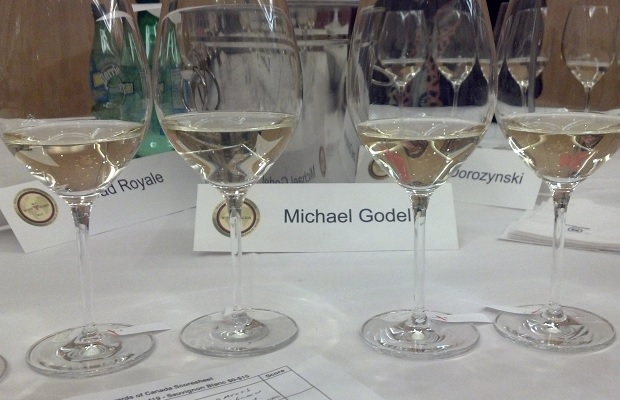
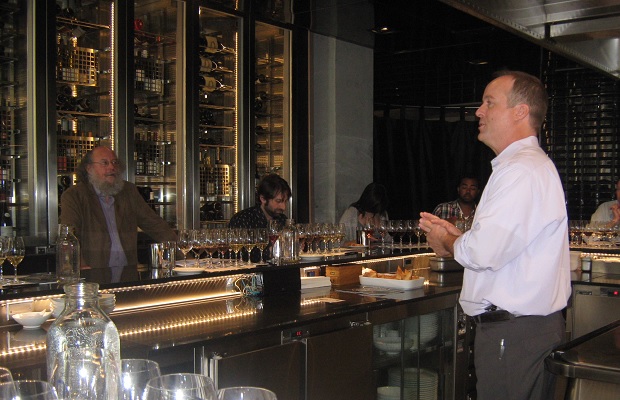
Panorama of judging and wines at WWAC14 Photo: Jason Dziver (www.jasondziver.com)

Panorama of judging and wines at WWAC14
Photo: Jason Dziver (www.jasondziver.com)

It was the week of August 18 to 22. Eighteen critics, two czars, a tech guy, a database custodian, a logistics steward, “her bitch” (sic) and a dedicated team of volunteers gathered to administer vinous justice for 1000 (give or take) hopeful wines. The tasting road was long yet filled with much success. Never have so many wines with the intention of offering value and simple pleasure shown so well and with so much grace.

Head judge Anthony Gismondi talks with Rhys Pender MW, Steve Thurlow, DJ Kearney and Godello Photo: Jason Dziver (www.jasondziver.com)

Head judge Anthony Gismondi talks with Rhys Pender MW, Steve Thurlow, DJ Kearney and Godello
Photo: Jason Dziver (www.jasondziver.com)

In today’s WineAlign WWAC14 results dissertation, Anthony Gismondi tells us that “nothing has value unless you give it some.” The awards are about assessing daily drinkers, wines that the repeat consumer look for often, especially the bargains. They are for consumers first, of and for the common people. For the wineries, agents and writers, the competition is effectuated without bias. “The tastings are computerized from start to finish allowing wineries, agents or retailers to enter, pay, and eventually track their results online.” 

In 2014 my position is this. Oak and cheap tricks are on the way out, at least when it comes to wines submitted to the WineAlign World Wine Awards of Canada. Sugar, wood chips, agar agar, artificial colour, manipulated flavour, reverse osmosis and added acidity are trade practices reserved for wines out there in the fast food stratosphere. The judges at the WWAC14 were fortunate to be granted immunity from having to taste and assess such a most unnatural lot. These awards represent and foster an altruistic commonality between vigneron and critic. Make an honest wine and it will be judged with honourable intent.

WWAC14 Judging Panel

WWAC14 Judging Panel

The writers and judges that make up the panels evaluate wines under $50 that are sold somewhere in Canada in the year of the competition. Entries are judged in flights along with similar varietal wines in three price categories; under $15, $15 to $25 and over $25. Starting with the 2014 awards all wines entered will not only be posted on WineAlign with bottle images, but reviews will be included as well (many in both French and English). Again in 2014, orchestration was overseen by one of North America’s most respected wine critics, Vancouver Sun columnist and WineAlign Partner Anthony Gismondi, aka The Spitter.

Panel of judges DJ Kearney, Godello and Rhys Pender MW Photo: Jason Dziver (www.jasondziver.com)

Panel of judges DJ Kearney, Godello and Rhys Pender MW
Photo: Jason Dziver (www.jasondziver.com)

Some startling results came out of this year’s tastings. Who would have ever put money on Carménère under $15 not only showing well, but blowing the collective minds of no less than five critics? Should Malbec in the $15-25 range, half of which are made by large and recognizable houses, have impressed with so much structure and restraint? A group of eight red blends under $15 were all good, five of them garnering very good scores. That same concept group of $15-25 were nearly all exceptional. Southern Italy fared with top value results in the under $15 category. Syrah/Shiraz $15-25 really surprised, as did Cabernet Sauvignon, Pinot Noir and Chardonnay in the same range. Not to mention a flight of five fruit wines, four of which scored between 85 and 88. Not bad. All this can be attributed to one basic premise. WineAlign does not attract more producers than other concours. It attracts better ones.

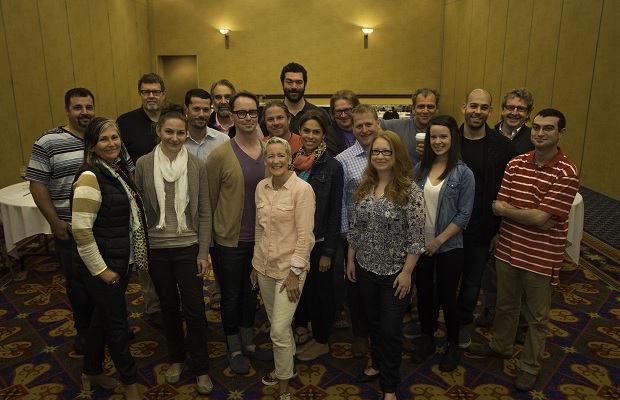
WWAC14 judges Photo: Jason Dziver (www.jasondziver.com)

WWAC14 judges
Photo: Jason Dziver (www.jasondziver.com)

As in 2013, this year I was invited to join the other 17 judges in Mississauga, Ontario. Fortune is measured by the company one keeps. The 2014 judges were David LawrasonSteve Thurlow, Sara d’Amato, Bill Zacharkiw, Dr. Janet Dorozynski, Rémy Charest, Craig Pinhey, Rhys Pender, MWDJ Kearney, Treve Ring, Brad RoyaleJulian Hitner, Evan SaviolidisBruce Wallner, MSMichelle Bouffard, Emily Maclean, Adam Hijazi and Jake Lewis.

Released today, here are the results from #WWAC14, presented by WineAlign. Wines were awarded for the categories of Top Value WinesBest of CountryCategory Champions and Judges’ Choice. In addition to the work of the judges, the Worlds were really made possible by Head Wineaux Bryan McCaw, along with Earl Paxton, Jason Dziver (Photography), Carol Ann Jessiman, Sarah GoddardMiho Yamomoto and the volunteers.

2014 World Wine Awards of Canada Results

WWAC14

WWAC14

Each judge was asked to write reviews on a specific cross-section of wines they were a part of assessing during the competition. Here are my notes on 30 wines tasted blind, across a wide range of categories, in August of 2014 at #WWAC14 and the songs they inspired.

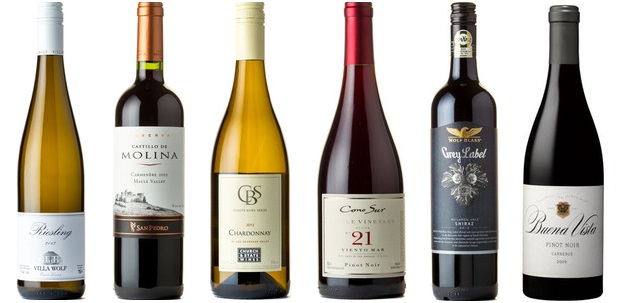
Category champion wines from left to right: Villa Wolf Riesling 2013, Castillo De Molina Reserva Carmenère 2012, Church & State Coyote Bowl Series Chardonnay 2012, Cono Sur Single Vineyard Block No. 21 Viento Mar Pinot Noir 2012, Wolf Blass Grey Label Shiraz 2012, Buena Vista Pinot Noir 2011

Category champion wines from left to right: Villa Wolf Riesling 2013, Castillo De Molina Reserva Carmenère 2012, Church & State Coyote Bowl Series Chardonnay 2012, Cono Sur Single Vineyard Block No. 21 Viento Mar Pinot Noir 2012, Wolf Blass Grey Label Shiraz 2012, Buena Vista Pinot Noir 2011

Cabernet Sauvignon $15-25

Wolf Blass Gold Label Cabernet Sauvignon 2012, Coonawarra, South Australia, Australia (606939, $24.95, WineAlign)

Funny thing about Cabernet Sauvignon, “sometimes they rock and roll, sometimes they stay at home and it’s just fine,” Wolf Blass makes all kinds. This Coonawarra GL seems to do both. It’s ripe and presumptuous, rocks in the glass but also has good, homebody, varietal tendency. It has a heart that’s on fire, a wolf parade of iron, sanguine tension and tannin, but also hung walls of home woven tapestry texture. The core of fruit, earth and tar cries out for prey. The finish is long and returns, back to base Blass.

Icewine – Riesling-Gewurz-Apple

La Face Cachée de la Pomme 2011 Neige Première Ice Pink Cider, Quebec (39305, 375ml, $22.95, WineAlign)

“Breathe, breathe in the air” of intensity, in apples. One hundred squared apples on top of one another. Never mind the few bruised and oxidative ones because the fresh and concentrated mass smothers those minor notes. Pink and ambient, the major sweetness and top-notch acidity speak to me in waves of demonstrative, Floydian verse. Here you will find a Québécois response to “there is no dark side in the moon, really. As a matter of fact it’s all dark.” There is Icewine on the bright side and then there is Iced Cider on la face cachée, “balanced on the biggest wave.”

Mission Hill Family Estate Reserve Riesling Icewine 2013, Okanagan Valley, British Columbia (winery, 375ml, $59.95, WineAlign)

A vanimated astral week’s of emotion is met by an animal musk, both hard to define. There is a high quotient of lemon, in curd, zest and pith. The sweetness is tempered by nudging acidity though it lingers long. All Riesling Icewine has to do “is ring a bell and step right up” so despite the electric Kool-Aid sugar syrup moments, this one spins and twirls, as Riesling does, just like a ballerina.

Inniskillin Niagara Estate Riesling Icewine 2012, Niagara-on-the-Lake, Niagara Peninsula, Ontario (601021, 375ml, $69.95, WineAlign)

Here sweetness, acerbity and a slightly advanced character are brought into balance by high grape sugar intensity and real linear acidity. Long and elastic, medicinally pretty and sacrosanct with seasoned complexity. Tasted this one and “felt a spark.” Tasted it twice and it tingled to the bone. What begun as a bob between evaluations ended with a simple twist of fate.  WWAC 2014 Category Champion

Pinot Noir $15-25

Villa Maria Private Bin Pinot Noir 2011, Marlborough, South Island, New Zealand (146548, $21.95, WineAlign)

Deep earth and black cherry combine for the most extraction in the $15-25 Pinot Noir flight. There’s dust in them hills as the wine acts as if it were borne of the mountains. Has attitude in altitude. All things considered, the fruit is clean and crisp, perhaps a hair over the overripe line. The cool temperament and temperature in the cold room aid in giving it some love. From my earlier, January 2014 note: “That Villa Maria can make 80,000 cases of Pinot Noir this proper is nothing short of remarkable. Aged in French oak for 8-10 months. As Pinot like as could be hoped for considering the case amount. Every drop must go through Malolactic fermentation. Winemaker Josh Hammond and crew insist upon it, though it’s nothing but painstaking cellar/lab work. The Pinot character initially shines, with loads of plum and black cherry, but there is a momentary lapse. But, “if you’re standing in the middle, ain’t no way you’re gonna stop.” So, the definitive Marlborough ectodermal line painted through the in door speaks quickly and leaves by the out door. From a smoking gun, rising like a Zeppelin. Large volume, big production, drinkable in the evening Pinot Noir.”  Last tasted August 2014  WWAC 2014 Judges’ Choice

Unsworth Vineyards Pinot Noir 2012, Vancouver Island, British Columbia (winery, $$23.90, WineAlign)

Now here we’re talking about a Pinot Noir from a another mother. It heads generously into fragrances not yet nosed in this flight of $15-25 Pinot Noir. Exotic byrne of a perfume on high alert; jasmine, violets, roses and Summer ‘David’ Phlox. Exquisite, fresh and bright. There is tang and tannin. Vibrancy to raise eyebrows. Also wild sage, wild fruit, an animal on a walk in a virgin forest. So much Pinot Noir is hairy, this one is “living on nuts and berries.”  WWAC 2014 Judges’ Choice

Malbec $15-25

Trivento Golden Reserve Malbec 2012, Mendoza, Argentina (agent, $19.95, WineAlign)

This Golden Reserve Malbec by Trivento is a juicy, dusty, fruit tree addition to the #WWAC14 flight and arrives just in the nick of time. Despite the dark fruit, it has no Drake spoken word conceit. It sings in classic Drake lullaby, with beefy meet pine forest aromas and so “you find that darkness can give the brightest light.” Tender refrains soften chalky, stalky wood and corresponding bitter chocolate. Big tannins on this balladeer. Has impressive stuffing.  WWAC 2014 Judges’ Choice

Red Blends over $25

Tinhorn Creek Oldfield Series 2 Bench Red 2011, Okanagan Valley, British Columbia (winery, $29.95, WineAlign)

Wonderful, tangy red fruits define this well-structured Bordeaux blend. Cool and concise, it plays a tight riff and bangs a drum slowly. Comfortable on a big stage, it charges into a funky break and whips a crowd into a frenzy. So much energy from a band of five varietal friends, complimenting each other’s playing with mutual respect. Does the two Bench two-step and steals the show. “Celebrate we will because life is short but sweet for certain. We’re climbing two by two, to be sure these days continue.”

Vin Parfait Red 2012, Adelaide Hills, South Australia, Australia (350512, $29.95, WineAlign)

Circuitous mounds of round, stone ground aromas in coffee, Goji berry, red licorice and red ochre. A Jackson Pollock Expressionist splatter of notion and motion, flirtations and tension. Tempranillo, Shiraz and Grenache in does it, or will it come together beyond the abstract? Number 8 did. This one s’got to too.

Number 8, 1949 by Jackson Pollock www.jackson-pollock.org

Number 8, 1949 by Jackson Pollock
http://www.jackson-pollock.org

Grenache $10-20

Castillo de Monseran Garnacha 2013, Cariñena, Aragon, Spain (73395, $9.95, WineAlign)

A slightly cooked character is evident but within reason. Despite the heat it’s a bit of an arctic monkey, with tomato and cherry sprinkled over by Queso Fresco and followed up with a slice of blueberry pie. Simple yet effective, pleasant palate. There is some heat and tension from the tannins and “I’d like to poke them in their prying eyes,” but they do relent. The length is more than appropriate, given the tag. Only question is, “will the teasing of the fire be followed by the thud?” At $10, who really cares. Represents excellent value.

Artadi Artazuri Garnacha 2013, Navarra and Basque Country, Spain ($19.50, WineAlign)

Garnacha from the old world west with incredible citrus bursts, like orange blossoms and the spirit of the zest. A spritz from a lemon too. A smoulder of burning charcoal with a spit-roasting goat adds to the roadside attraction. Palm branches help to create the smoke. This is exotic and creative stuff. Finishes with a dessert note of bitter plum. Velada, “you got yourself a 1, 2, 3, 4, 5 star reaction.” Really unique red.  WWAC 2014 Judges’ Choice

http://grooveshark.com/#!/s/Roadside+Attraction/33YBUM?src=5

Sauvignon Blanc Under $15

Caliterra Tributo Single Vineyard Sauvignon Blanc 2013, Leyda Valley, Region de Aconcagua, Chile (283648, $14.95, WineAlign)

A step up from multi-site, southern hemisphere Sauvignon Blanc with direct intentions, all the right moves and in all the right places. So much going on in both its aromatic and textural world. Wax, lanolin and Bordeaux-like temperance and consistent with the growing SB trend, “the grass is getting greener each day.” Decent one republic attack on the palate though nothing fantastic. Has heart and Sauvignon Blanc soul.  WWAC 2014 Judges’ Choice

Southern Italy Under $15

Grandi Muri Primitivo Promovi Salento 2013, Puglia, Italy (agent, $13.50, WineAlign)

A red-veined Primitivo, with the savoury blood of Swiss Chard and hoisin and red bean paste coarsing through it. Smells like spicy and sweet Hunan dishes, sweet sweat and sour, but it is not a matter of oxidation. It’s a caramelized soy sensation but written in reverse. Spoon this over cereal, ice cream, charred beef, anything. It’s got Chinese five-spice powder and coriander. Like a bowl of most excellent Pho. Fantastic exotics. “We’re gettin’ you raw and it feels real good.” Rocking Primitivo.  WWAC 2014 Judges’ Choice

Shiraz/Syrah $15-25

Layer Cake Shiraz 2012, South Australia, Australia ($24.99, WineAlign)

Unquestionably warm but with restraint. That may be perceived as a bad, obvious and reprehensible dichotomous comment but in transparency it speaks truths. Shows good savour and sapidity. It’s an aurulent burnt orange and smoked pineapple offering, blanketed in dusty chocolate and syrupy to a certain extreme. It’s long, creamy, silken and covered further in darker chocolate. “True colors fly in blue and black, bruised silken sky and burning flag.” Warm but you too will indubitably see the pleasures in its layer cake.  WWAC 2014 Judges’ Choice

White Blends Under $15

Pelee Gewurztraminer Riesling 2012, Lake Erie North Shore, Ontario (109991, $10.95, WineAlign)

A ray of golden sunshine. The glade and the classic Gewurz attributes are here and highly floral. Rose petals soaking in good medicine. This could be my beloved monster. Such a dry example. She wears “a raincoat that has four sleeves, gets us through all kinds of weather.” Match with BBQ’s eels. Not for everyone but it works.  WWAC 2014 Judges’ Choice

Shiraz/Syrah Over $25

Wolf Blass Grey Label Shiraz 2012, McLaren Vale, South Australia, Australia (390872, $29.95, WineAlign)

This is the most accomplished and wise drop of Shiraz tasted at the WineAlign #WWAC14. A hit of snowy sulphur shows just how much growing up it needs. Such a precocious and heady example. A thick, gluey mess of fruit, unsettled and in rapture within its tannic walls. The voilets and the rest of the garden rules really tie the room together. Shiraz entrenched, grown and raised, “where the nettle met the rose.” For five years later and on patrol for ten more after that. Wow.  WWAC 2014 Category Champion  WWAC 2014 Best of Country

Jackson-Triggs Niagara Estate Delaine Syrah 2011, Niagara Peninsula, Ontario (86553, $32.95, WineAlign)

Here blows a fine, exuberant and expresive muzzle with ambrosial flavours. A garrigue and olive dirty martini with sweet drops pf berry syrup. Juniper and conifer verdure meet inklings of berries. There is a sense of mushroom and truffle which can go either way, but here it brings paradigmatic character. Like words added to an intense Billy Preston instrumental. This may “take your brain to another dimension. Pay close attention.” Dark, brooding and out of space. A prodigy and a real deal in cool climate Syrah.  WWAC 2014 Judges’ Choice  WWAC 2014 Best of Country

Cabernet Sauvignon $15-25

Kaiken Ultra Cabernet Sauvignon 2012, Mendoza, Argentina (135202, $19.95, WineAlign)

A genesis in clean fruit of high extract order is linear, direct, forceful and in Cab conceit. A narcissistic brooder with ripples of underbrush and underworld scents. Thinks highly of itself, demands attention, seeks followers, stares into a pool. “The face in the water looks up and she shakes her head as if to say, that it’s the last time you’ll look like today.” With a few more reflecting and reflective refrains this Cabernet will realize a softness, turn away from the mirror and settle into its skin.  WWAC 2014 Judges’ Choice

Lake Sonoma Alexander Valley Cabernet Sauvignon 2012, Napa – Sonoma – Mendocino, California, United States (Agent, $26.99, WineAlign)

From the outset this engages the imbiber simple because it acts as though its one time tension has been massaged and released. The flat feeling is there, though not detracting, because of an inherent notion that there was and still can be beautiful fruit. It just needs “that spark to get psyched back up.” A rapping modern facade is the cover page for earth savoury meets candied M & M flavour, docile, downy glycerin Cabernet texture, with acidity and tannin waning. Was serious, now friendly and will be late leaving the party.  WWAC 2014 Judges’ Choice

Chardonnay $15-25

Kendall Jackson Avant Chardonnay 2013, Mendocino County, California, United States ($19.00, WineAlign)

This may be a winner. I love the immediacy of its fruit, the antebellum tension and just a kiss from the barrel. You know its there but in subtlety, class and as background noise. The aromas of citrus, beeswax and honey and all accents to clean orchard fruit. This has the most balance in a flight of eleven verry tidy Chardonnay in a consumer-driven $15-25 price bracket. Lady spirited and at times a bit anxious, or perhaps not yet entirely comfortable in its skin, this is nonetheless best in show.  WWAC 2014 Judges’ Choice

Carmenère Under $15

Castillo De Molina Reserva Carmenère 2012, Valle del Maule, Region del Valle Central, Chile (Agent, $14.95, WineAlign)

The first thought on this Carmenère is the scaling back of new oak, lifting it above the crowd in an under $15 flight. The freshness factor makes for a whole new animal, or botanical rather. This has candied jasmine, pansy, bergamot and nasturtium. It’s a veritable salad of candied edibles. The middle palate is marked by Mentholatum and the finale is persistent in acidulated action. What a warm, mazzy gift of a Carmenère, a star of a Chilean red that would be welcome, just like flowers in December. “Send me a flower of your December. Save me a drink of your candy wine.”  WWAC 2014 Category Champion

Chardonnay Over $25

Church & State Coyote Bowl Series Chardonnay 2012, Okanagan Valley, British Columbia (winery, $26.90, WineAlign)

Quiet, muted, beautiful and reserved. This is the “iconoclastic and restlessly innovative” style of a wine that bravely explores other territories of pop Chardonnay. Anything but fashioned in an in your face style, this one is in it for the Hejira, the journey and the time. Ripe yellow apples and pears and then come the lees. Could pass for unoaked Chablis. The appreciation and gathering are a style that should be used more.  “No regrets coyote,” you just come “from such different sets of circumstance.”  WWAC 2014 Judges’ Choice  WWAC 2014 Top Value Wines

Stags’ Leap Winery Chardonnay 2012, Napa Valley, California, United States (655381, $34.95, WineAlign)

Has hallmarks of essential fruit from a top notch vintage, the most complexity and schooling. The reduction is pure essence of grape must, with no fault to either the vine or the maker. Every wine’s “screwed up in their own special way.” A rmineral tannin gets on top early like a Ramones riff, stays for dinner and repeats in refrain. The crisp and mister punchy orchard fruit is kissed by wood. Sucks face. The texture is seamless and verve excellent, by acidity and forward to pronounced length.  WWAC 2014 Judges’ Choice

Sparkling

Delouvin Bagnost N/V Brut, Champagne, France (agent, $42.75, WineAlign)

Tends to a trend in sweet aromatic beginnings which is nothing but endearing. A leesy pear and ris de veau nose split by a bowie and filled with pearls of sugary syrup. To taste there is the metallic gaminess of uncooked other white meat. Sweet meat, sweet thing. The gathering sensation is an elemental display of ethereal, aerified climatic conditions. Though made in an oxidized style, the complexity of character is not to be denied.  “Runs to the center of things where the knowing one says, boys, boys, its a sweet thing.” In the end the burst of energy is invigorating and heart piercing.  WWAC 2014 Judges’ Choice

Pinot Noir Over $25

Cono Sur Single Vineyard Block No. 21 Viento Mar Pinot Noir 2012, Valle de San Antonio, Region de Aconcagua, Chile (agent, $19.99, WineAlign)

You can always pick out the wines made from unique, little feat sites, wherever in the world they may have been raised. Even when they stink up the joint, smell like a 16 year-old hockey change room or like candied paint poured over fresh cedar planks, they stand out like beacons of Pinot amon din. Lord of the Pinot rings here that’s “been kicked by the wind, robbed by the sleet…baked by the sun,” fire lit, rosemary branches and oxtail smoldering and simmering over fresh cut ash from a deciduous forest. Cool mint and pine. The most savoury things of fantasy imagined. Wild ride in and most willin’ Pinot Noir.  WWAC 2014 Category Champion

Buena Vista Pinot Noir, Carneros 2011, Napa Valley, California, United States (304105, $24.95, WineAlign)

This is really quite impressive Pinot Noir. Fastidiously judged if bullish fruit having way too much fun, causing varietal envy amongst other price category peers. Clearly fashioned from stocks of quality fruit, providing an environment for the coming together of many red berries and the earth of contigious vines. All roads lead to a grand palate marked by exotic, spicy and righteous fleet of wood tones. I wonder if I’m in over my head and tell it “your mood is like a circus wheel, you’re changing all the time.” Quite something this MacPinot specimen and though I wonder if it’s a bit too much, it always seems to have an answer and it sure feels fine.  WWAC 2013 Category Champion  WWAC 2013 Best of Variety $15 – $25  WWAC 2014 Category Champion  WWAC 2014 Top Value Wines

Tinhorn Creek Oldfield Series Pinot Noir 2010, Okanagan Valley, British Columbia (winery, $29.99, WineAlign)

The grace of time has ladled felicity upon this left coast Pinot Noir. What once were harsh and mephitic stuck in a cola can kind of smells have been released and are just a faint memory of their once formidable, terrible teeth gnashing remains. Twas root beer that fouled the air but now the saline sea and verdure of hills speaks in clear vernacular. The sailor has “sailed across weeks and through a year,” met with wild things, to now return home and offer up her Pinot Noir, to be enjoyed with supper that is still warm.  WWAC 2014 Judges’ Choice

Riesling Under $15

Villa Wolf Riesling 2013, Pfalz, Germany (agent, $14.95, WineAlign)

This has a lovely, head of its class, nearly value-driven exquisite nature and aromatic richness. In consideration of the price bracket, the sulphur is trumped by that radio dialed in richesse. Exotic Riesling specific fruit. A crisp apple meets a ripe pineapple. A wolf at the door, “out pops the cracker, smacks you in the head.” Decent acidity, better length, good bitters.  WWAC 2014 Category Champion

Red Blends Under $15

Miguel Torres Sangre de Toro 2012, Cataluña, Spain (6585, $12.95, WineAlign)

This Garnacha and Carignan blend works a stoned immaculate contrivance as well as any red blend under $15 you are ever likely to upend. “Soft driven slow and mad, like some new language.” The action is effective, properly conceived and opens the doors to value-based perception. Perhaps a bit thin but the lack of wood and sweetener is a breath of fresh air. What it lacks in girth it makes up for with complexity, in notes of graphite, fennel and sea air. Lovely little Mediterranean red.  WWAC 2014 Judges’ Choice

Good to go!

https://twitter.com/mgodello

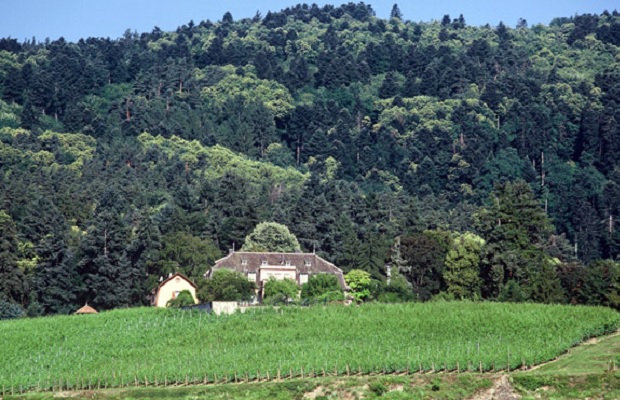
The cru chief of Alsace: Zind Humbrecht

Le Clos Windsbuhl de Hunawihr PHOTO: http://www.zindhumbrecht.fr

Le Clos Windsbuhl de Hunawihr
PHOTO: http://www.zindhumbrecht.fr

Were Olivier Humbrecht, MW a Rock ‘N Roll star, he would be the guy, the man, the boss, the one everyone wants to hang around. He’d be invited to every benefit concert, like No Nukes at MSG, Live Aid, Live 8 and a Tribute to Heroes. He would sing the biggest parts on the raise awareness and relief funds records like We are the World. He would headline every star-studded gathering to celebrate an influential musician’s career, like that of George Harrison, Roy Orbison, Chuck Berry and Bob Dylan.

Olivier Humbrecht is a winemaker. He’s also smart, France’s first Master of Wine, rooted in his region’s history and hyper aware of every nuance in each terroir. He’s an extreme scientist, biologist, geologist, viniculturalist and viticulturalist. Olivier Humbrecht is a student of many Alsace genres, techniques and methods. He’s a bit of a perfectionist. So are many Alsatian winemakers. But Olivier also has the charisma, the persona and the drive to strive for bigger and better. People want to be near that.

The rock star complex manifests itself at a tasting of the Zind-Humbrecht portfolio. Olivier has laid 14 wines on the cellar room table for a group of eight journalists and sommeliers. After leading the group through the lot, he checks his watch and sees there are a few minutes left in the allotted time. He opens two more bottles, then two more. Time is up. The group must press on. He opens another. Just one more, “for perspective,” he says. He can’t stop. The adrenaline is pumping. One more encore. Just one more Sélection de Grains Nobles…

Domaine Zind-Humbrecht is well-known to the world, considered the consummate professional vigneron d’Alsace. The wines are immaculate to a fault; pure, precise considerations out of a multitude of variegated and diverse terroirs; of those around the winery’s home in Turckheim, Wintzinheim, in Gueberschwihr, Thann and in Hunawihr. The Grand Cru holdings of Brand, Hengst, Goldert and Rangen de Thann provide the stuffing for exceptional produce but can any other winery in Alsace lay claim to so many exceptional wines from their lieu-dit and single-vineyards not classified Grand Cru? The trifecta phenomena of the Zind-Humbrecht hill parcels, “Les Clos”; Häuserer, Windsbuhl and Jebsal may as well be Grand Cru squared. The wines from these most worthy soils are dreamy and in top vintages, impossibly perfect.

Most vintners in Alsace are connected to a village, have vineyard holdings surrounding or on slopes leaning upwards from the town. Many crush and ferment in caves beneath their homes right there in the ancestral village. Above ground Zind-Humbrecht is more modern than most, in many ways the embodiment of the 21st century Alsatian facility but Olivier’s wines are deeply connected to Turckheim, the village closest to a large proportion of his vines. The region’s regulatory board decision to eliminate a village like Gueberschwihr from being used on a Riesling label is both curious and counter-productive. Olivier is an island here, not having found any other producer’s support to keep such a designation alive. The irony is not lost. A winemaker incredibly passionate about soil having to label his wine by that very concept and against his will.

I had the opportunity to taste with Olivier Humbrecht on two occasions, thanks to CIVA and SOPEXA, at the winery and at the Millésimes Alsace trade event on Monday, June 16th, 2014. Humbrecht’s brain is in constant churning motion. He will never rest and settle for the status quo. He has learned everything and has everything yet to learn.

Biodynamic farming is at the nucleus of Zind-Humbrecht’s practicum and by now spoken as an apothegm, not ad nauseam. Olivier notes that Colmar, the vinous hub of Alsace and just down the road from Turckheim, is the driest town in France. “We are in a region that in the past we had to fight for ripeness. This is not the case anymore. I have not had to chaptalize in 20 years.” Global warming has had a great effect on phenols but Olivier stands firm on timing. Plants, including grapevines, have very specific life cycles, from flowering to ripening. “I will be ready for picking September 1st,” he insists, “regardless of the weather.”

On varieties, Muscat D’alsace remains “important and fantastic.” Humbrecht insists on keeping it viable and alive. “Reds are trendy,” but not significant to Zind-Humbrecht, adding up to less than one per cent of total production. Ninety per cent are single-varietal wines. Riesling persists as the core variety. It’s a grape that hates to ferment so noble rot should be avoided, because it arrests fermentation.” For Riesling to succeed? “You need a majority of tartaric acid, slowly, coolly, through the cold of winter, to achieve proper malic acid, to achieve good Alsace Riesling. Basically you don’t even want to know it’s happening.”

Olivier is an ally to both phenol and tannin. “Phenols in white wine is something that is always neglected,” he says, and “I do appreciate tannins in white wine, especially in low acidity grapes like Gewürztraminer.” Too many people do not understand the aging capabilities in the wines of Alsace. “We’ve gotten rid of too many phenols in white wine,” he complains. “We love the anti-oxidants, which will not allow the wines to age well, with no protection against oxidation.”

The phenol-tannin-sugar-acidity sequence only succeeds when PH is in the mix. “PH is more important than acidity. Low PH is a guarantee for good evolution in bottle, and good phenols.” That said, skin contact is to be avoided in Humbrecht’s world. “Alsace already has high aromatics so contact is contradictory.” It can lead to the inclusion of green phenols which would be detrimental to making sound wine. Ripe phenols come from the vines and Olivier continues to refer to structure and acidity as a direct consequence of what happens in the vineyard.

The ZH processes include high density planting, hand harvesting, gravity feeding, cold cluster pressing and the use of wild (indigenous) yeasts. The total annual output is approximately 300,000 bottles from 40 hectares, a capacity reached in the mid 1990’s. “We are not interested in getting any bigger,” concedes Humbrecht.

The last piece and going forward of the Zind-Humbrecht puzzle concerns vintages. “Vintages are very important and different in Alsace,” says Olivier. “2014 is very precocious.” Flowering was done the first week of June, almost two weeks ahead of the norm. This is similar to 2003 and 2011. “We made a lot of mistakes then, because it was the first time we had this.” The plan is to adapt to the climate by cooling down the soil, with more grasses to retain moisture. They will also let more branches grow to restrict sun and more canopy management. Biodynamic farming at work.

Olivier Humbrecht and Godello PHOTO: Cassidy Havens, http://teuwen.com/

Olivier Humbrecht and Godello
PHOTO: Cassidy Havens, http://teuwen.com/

Here are notes on the 20 Zind-Humbrecht wines tasted in Alsace on Monday June 16th and Wednesday June 18th, 2014.

Pinot Noir 2012

To Olivier Humbrecht, the location and managing the ripeness of Pinot Noir is key. “You can’t hide green character in Pinot Noir,” he asserts. Fruit comes from the Heimbourg vineyard, from west-facing slopes out of marl and limestone. This is a cooler, later ripening position with a draught between the hills. At 13 per cent alcohol it is pleasantly ripe but not as rich and intense as 2009. Still ripe enough for positive and effective phenols. Tannins are present and accounted for, wrapping a veil over the chalky, chewy, slighted coated fruit. The mineral is felt in texture coming from what is a simple, proper and elegant palate.

Muscat Goldert 2012

Like any self-respecting winemaker in Alsace, Olivier Humbrecht is intent on keeping Muscat d’Alsace alive with hopes that someday it will once again thrive. The white and red coloured, longer ripening, small berry Muscat Petite Grains receives minor (one or two per cent) support from grapey, soft and aromatic Muscat Ottonel. Raised from olitic limestone and marl soil, this Muscat is blessed with terroir inducing greater acidity and a dichotomous, silty ripeness, like a green, unripe Sauvignon Blanc. One has the sense that in this unique vintage the noble variety may age with an almost unexpected stride through the years.

Riesling Terroir d’Alsace Vin Sec 2012

This is the most basic and tenable wine in the Zind-Humbrecht portfolio. For the uninitiated it is an ideal embarkation point from which to engage the dry elegance and saline minerality of Alsatian Riesling. This “entry-level” effort is from 11 year-old vines, a slow ripening vintage and the stark reality of granite soils. The ever-present Humbrecht honesty and richness is here but in its most subtle (and only 2 g/L residual sugar) scale. Quick notes of lime, chalk and ginger. Olivier says it is made for the Brasserie or the Gastropub market. Never mind that it’s the most junior of his Rieslings. Nobility begins here with this reassuring, air-dried, easy to understand wine.

Riesling Herrenweg de Turckheim 2012

Here rolls the rock of the ZH stable. From gravelly, well-drained, poor soils around the winery. The citrus factor is front, centre and in surround sound but a natural richness and sweetness brings balance. This means the wine will gracefully incline through to a dry yet fruity future. A savoury austerity will increase the ageing quotient, in addition to the omnipresent mineral flavours by way of old (47 year-old) vines that burrow deep in the gravel, providing grit and strength, especially in drought vintages.

Riesling Calcaire 2012

The artist formerly known as Gueberschwihr is no longer. The new regulation regarding the production of village wines became effective with the 2011 harvest so, alone in its support for the quality of wine for the village, Humbrecht had no choice but a switch to the Calcaire nomenclature. From richer, cooler, alkaline soils. A touch more sugar (8 g/L) than the Turckheim counterparts, this also has higher acidity. Technically not so dry but this is the elevated, though not quite astronomical PH talking. It is dry enough to be considered Sec. Momentarily stuck in the proverbial petrol and mineral fence. The door will open shortly, to the ZH airy density and so physically speaking, this will taste drier as it ages. Even if “all this science I don’t understand,” I do know “it’s gonna be a long, long time” before the Calcaire comes down to earth and settles into its skin. Ten years to be sure. Rocket man.

Riesling Clos Häuserer 2012

Also Turckheim in origin (specifically Soedlen) but from marl soil atop really aggressive limestone from just under the Grand Cru Hengst’s nose. One of the highest in PH, this is austere and currently shut tight within a dry (4 g/L sugar) free lime zeppelin drum. Though aromatically mute, the mineral density on the palate is striking, like a reduction of half and half spread on sourdough toast. The 18 month lees program is most noticeable here and this Riesling will be led towards a petrol induction future. When it gets there, a taste will bring you into the Häuserer of the holy. The deep marl soil on top of calcareous Oligocene mother rock will speak and it will ask  “are you dizzy when you’re stoned?”

Riesling Brand Grand Cru 2012 (SAQ 11532951 $73.00, WineAlign)

There is a roundness to the Brand, in beautiful calming aromatics in defiance of the hard biotite granite, black and white mica soils. The pure mineralized clay silica brings heat to the land, with a high surface exchange quotient, not so different from the Schlossberg. This is precocious and precious Grand Cru that demands the wisdom and the fortitude of old vines, of a minimum 25-30 years of age. Zind Humbrecht’s average 66! With two per cent noble rot in the mix the wine reaches for more sugar (11.5 g/L) out of its desperately low yields. There is a high mineral ripeness and a tropical tingling, in melon and clementine.

Riesling Clos Saint Urbain Rangen de Thann Grand Cru 2012 (SAQ 12133871 $101.00, WineAlign)

The Thann is a 22-hectare, low yielding Grand Cru. The terra is volcanic and dark sedimentary soil, very steep and homogeneous. The high mineral altitude and poor attitude means the Zind Humbrecht ambition is aromatically challenging to assess, even if to taste it’s so obviously exquisite in concentrated depth. Such a rich, intense grapey nose but the flint smothers the smoky smoulder that should be present. A tight, angular and sobering expression, more isometric and idiosyncratic than anything tasted to this point. An island in the line-up. Not the most loveable Rangen, like its name, which is too old to even know its meaning.

Riesling Heimbourg 2012

From the village of Turckheim, the vines are planted on the steepest aspect of the marl covered, oligocene limestone slope. More noble rot present here than in the Brand, resulting in, naturally higher sugar (15 g/L), richer fruit and a deeper hue. “The sweetest Riesling we’ve made in 2012,” admits Olivier. A most interesting specimen too, an upside down cake in alternating layers of apricot and crushed rocks. The flavours are high-toned, not necessarily tropical, but lush.

Riesling Clos Windsbuhl 2011, Alsace, France (agent, $80.00, WineAlign)

“Vintages are very important and different in Alsace,” notes Humbrecht, exemplified by this blasted 2011 in contrast to all the ’12’s at these tastings. Here the fruit leans in the most elevated petrol direction, from a warm year and an earlier harvest. A younger evolution is taking place, showing immediate and gratified balance. The terroir is cool, rocky limestone with shells, similar to Burgundy. The clos is a gently sloping, six-hectare parcel. Overall it’s anti-floral, wet chalky creamy and striped by linear acidity. Only 4.5 g/L of sugar. These last two numbers mean nothing if you don’t recognize the PH because there are different acidities in wine. Here the acidity walks the fine line, side by side with its partners.

Riesling Clos Windsbuhl 2007

From a different era, this was fermented bone-dry, dire, with less than 1 g/L of residual sugar. A Riesling to show just how tight the Zind-Humbrecht band was back then and it is just beginning to communicate in its mid-life, mineral voice. If as a lieu-dit subject it was once “incommunicado,” with no comment to make, this has changed. The notes are layered and together, the mid-palate extraordinarily full, the length in reverberating, extended play. Here in today’s communique he’s come clean, having moved on from the strict, straits style, once spun unbending. The experience of great players and exceptional monopole (Grand Cru deserving) terroir has given the ’07 Windsbuhl the foundation to realize a classic Riesling.

Pinot Gris Calcaire 2012

Fruit comes from the Heimbourg, providing pure limestone effect and a great nutty character. The sugar is nothing to forget about (10.6 g/L), here already commissioned and integrated. Provides support for Olivier’s declaration that “if anything should happen to a wine, it should be before you bottle it.” Much more accessible than the fastball-curveball-changeup, out of the strike zone ’11. Here it’s all down the middle,  juicy, hittable fastballs.

Pinot Gris Rotenberg 2012

The Rotenberg’s shallow, red soils (located on top of the Hengst) bring a whole new set of parameters to Pinot Gris, in stark contrast to the Calcaire. Two bottles were poured. A two-day old sample showed settled and mellow flavours. A new bottle was crackerjack reductive, leesy and with a shocky aridity so unusual for Pinot Gris. The soils bring concentration, here magnified and compressed by the hastened moment. All the hallmarks of the Zind-Humbrecht style are there, if suppressed; tang, herbiage and a spicy spike. Very dry (4 g/L) and really invigorating white wine.

Pinot Gris Clos Saint Urbain Rangen de Thann Grand Cru 2012 (SAQ 11545233 $74.25, WineAlign)

The noble grape in this Muschelkalk (calcareous) vineyard comes through in high concentration, with an increase in noble rot from very low yields (12 hl/L). There was hail here in 2012, just after flowering, not a devastating storm but enough to minimize quantity. The sweetness (35 g/L) is heightened and uncompromising yet always mitigated by intense mineral activity. The richest and most unctuous wine of the morning (to this point) with direct, pure ripe tree-fruit flavours. This is a Pinot Gris that remains firm against the dangers of oxidation and it will develop smoky and toasty aromas. The structure is what I would call remarkable but not exceptional. Time will tell. Here the wait needs to be a minimum five years and then to drink well past 2025.

Gewürztraminer Calcaire 2012

As of the 2011 vintage, the Wintzenheim bottling became the Calcaire, for village designation (or lack thereof) reasons. Fruit here in 2012 is mostly (not necessarily typically) from the Hengst Grand Cru vineyard. The marl and limestone leads to a very typical Alsatian and even more typical Zind-Humbrecht Gewürztraminer. Full on glycerin, creamy, perceptibly sweet and protracted wine. Even at 35 g/L it is tempered by high tannic animation, as much as in Burgundy. Skin tannins are much more interesting than those from oak because they elevate the acidity by way of contrasting balance to the sugar. This is why they succeed.

Gewürztraminer Hengst Grand Cru 2012

From old vines of the Hengst, the yield is half of the Calcaire, the concentration raising the bar in the opposite direction. The residual number is the same but the sugars are more complex, intensely natural and variegated. The texture and flavours cover a creamier, wider spectrum and even though some typical rose petal/lychee components are noted, they remain submerged beneath the piquancy and the richness. This Hengst will gain flesh and weight as it ages, elevating the potential for late harvest sensations and alcohol.

Gewürztraminer Clos Windsbuhl 2012

The Muschelkalk calcareous, southeast facing slopes of this Clos employ slightly cooler temperatures and the stretched elasticity of slow-ripening to bring a sense of balance and poise to Gewürztraminer. The same can’t be said for Riesling on the same site, at least not in 2012. The Windsbuhl here speaks in more sweetness and less alcohol. “If you can see the differences of terroir in Gewürz,” says Olivier, “then you won’t see it in Riesling.” Here is an example that backs up one of his most telling axioms. “It’s the phenols of the grape that make it age gracefully better.” Age it will. Drink this beginning in 2020 and through 2040.

Gewürztraminer Vendanges Tardives Hengst Grand Cru 2011

A wine not often made because of the dry climate in this Herrenweg vineyard. The gaining of full botrytis expression only happens once in every five or six years and when it does, this eager and vivid sweet wine is the result. Harvested at high ripeness and proportion (50 per cent) of noble rot, with a quick (one month) fermentation to achieve a sweet balance (vin liquoreux) not that far from some SGNs. At 102 g/L it is obviously quite sweet though once again, with acidity, PH and exceptional phenolic character it strikes a balance. I don’t normally imagine late harvest wines to speak in terms of elegance or restraint and I’m not sure those are the most apt descriptors here. Yet the Hengst is as subtle as it gets for the genre and never enters the arena of the cloyingly sweet and absurd.

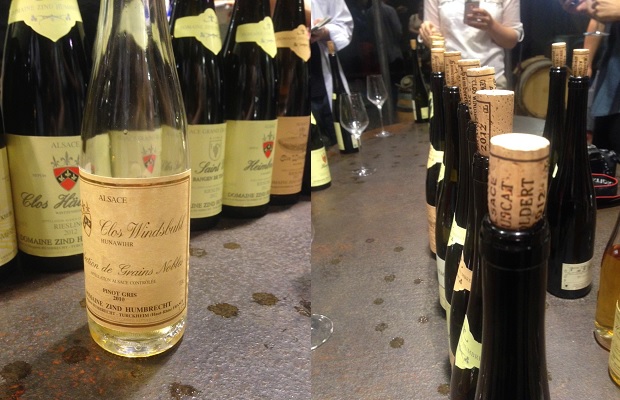
Pinot Gris Clos Windsbuhl Sélection de Grains Nobles 2010 and the tasting table PHOTO: Cassidy Havens, http://teuwen.com/

Pinot Gris Clos Windsbuhl Sélection de Grains Nobles 2010 and the tasting table
PHOTO: Cassidy Havens, http://teuwen.com/

Pinot Gris Clos Windsbuhl Sélection de Grains Nobles 2010

The residual on the 2010 Windsbuhl is remarkably high, this as a result of its long but (not compared to 2009) fermentation. From a historic vintage, with top-notch acidity (the goal was 16 g/L) and clean, precise botrytis. With the complexity and structure provisos of the Muschelkalk calcareous terroir and (43 year-old) vines, this exceptional dessert wine was given all the tools necessary for success. A parabola of a dessert wine, one sip and “we barely remember who or what came before this precious moment.” Attacks the mouth with an unparalleled sugar/acidity/tannin continuum. The flavours bring to mind quince, apricot and creamy mangosteen in out of control concentration. There is a reason sweet wines like these are so rare and receive such high praise. Exceptional fruit of uncompromising quality and a winemaker’s reverence are the reasons. Olivier Humbrecht prepared this 2010 to succeed and to live for decades. Drink from 2025 to 2055.

Pinot Gris Clos Jebsal Sélection de Grains Nobles Trie Spéciale 2009

A south-facing, very steep slope of grey marls and gypsum. A vineyard that yielded a miniscule 10 hl/H. A stratospheric residual sugar quotient (in the realm of 500 g/L) and incredulous acidity to prevent the development of the yeasts. A fermentation that finally finished in the late winter of 2012. A wine aged in demi-guid. Selection of grapes of a botrytis so pure and dry. These are the specs of a wine I may never taste again. Olivier concedes he “really tries not to obtain the highest sugar concentration possible” but this 2009 is a “monster of a wine.” It will take forever to assimilate and digest the sugar. Unctuous, lush, rich and gorgeous does not do it justice. Pure distillation of fruit and stone, accented by spice, wild herbs and flowers. Like an injection of pure, Pinot Gris adrenaline. All this from dry extract, slowly rehydrated with magic pixie dust and the wonders of the natural world.  Will live for a century and then some.

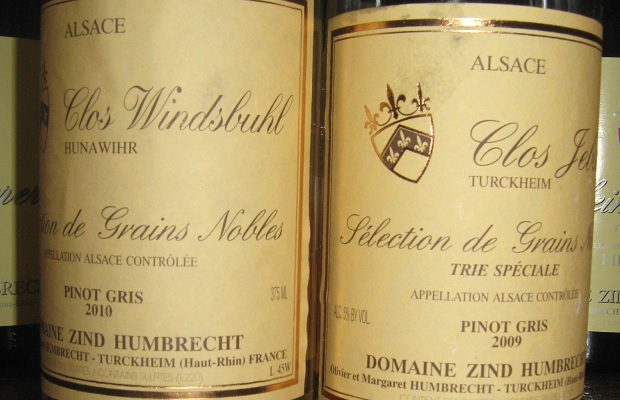
Pinot Gris Clos Jebsal Sélection de Grains Nobles Trie Spéciale 2009

Pinot Gris Clos Windsbuhl Sélection de Grains Nobles 2010 and Pinot Gris Clos Jebsal Sélection de Grains Nobles Trie Spéciale 2009

Good to go!

What ya drinkin’?

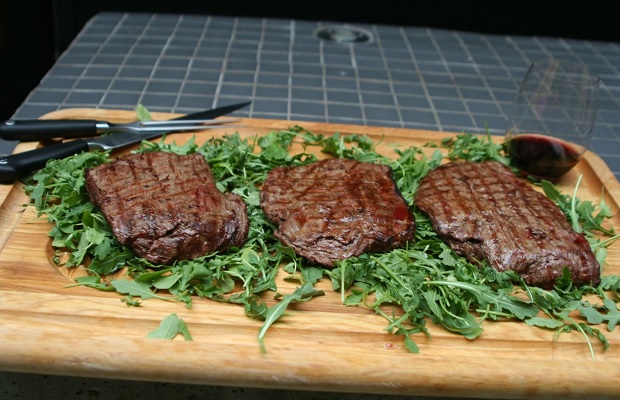
Grilled Flank Steak

Grilled Flank Steak

There’s no time for preamble. VINTAGES rolls out another long list of wines for the weekend. All your summer bases are covered. The Pinot Noir from New Zealand are really, really good. There are whites from Greece, Niagara and South Africa to not only try but embrace. Two Ontario reds will satiate the grill. Here is a list of eight wines to look for right now.

From the left and clockwise: Argyros Atlantis White 2012, Tawse Sketches Of Niagara Riesling 2013, Featherstone Gewürztraminer 2013, Featherstone Gewürztraminer 2013, Redstone Vineyard Reserve Cabernet Franc 2010, Hamilton Russell Chardonnay 2012, Staete Landt Paladin Pinot Noir 2010, Hidden Bench Terroir Caché Meritage 2010

From the left and clockwise: Argyros Atlantis White 2012, Tawse Sketches Of Niagara Riesling 2013, Featherstone Gewürztraminer 2013, Featherstone Gewürztraminer 2013, Redstone Vineyard Reserve Cabernet Franc 2010, Hamilton Russell Chardonnay 2012, Staete Landt Paladin Pinot Noir 2010, Hidden Bench Terroir Caché Meritage 2010

Tawse Sketches Of Niagara Riesling 2013, VQA Niagara Peninsula, Ontario (89029, $17.95, WineAlign)

The gateway of the Tawse Riesling portfolio and first to be released is an omnipresent beacon for what is to come from the single-vineyard sistren. Built fruit forward from an orange zest, stone rose and lemon glade guide, this is the Sketches most juicy sensation yet. Incredible vacuum of citrus acidity waterfalling into a great white hole. Though surrounded by so many a Riesling with site specific personality, “she’ll carry on through it all.” Intensity in dry Riesling.  Tasted June 2014  @Tawse_Winery

Argyros Atlantis White 2012, Greece (371658, $17.95, WineAlign)

Assyrtiko is the rock but the composition is altered by smaller parts of Aidani and Athiri. Softer, warmer and much more approachable than the Santorini, not quite so stony but with more intense juice. A modern take on the ancient game. The palate lays out the uneven, tannic and rocky road to the amphitheatre. A long walk on carefully arranged boulders. A salt bath in warm springs. The wines of Argyros do so much to bring Greece to the world. Citrus finish and more salty mineral.  Tasted June 2014  @KolonakiGroup

Featherstone Gewürztraminer 2013, VQA Twenty Mile Bench, Niagara Peninsula, Ontario (64592, $19.95, WineAlign)

Such a pretty and elegant take on Gewürztraminer, of flowers white and in bloom, nuts blanching away. A structural, searing tightness to the mineral laced fruit will develop yet unrealized tannin and tension. There may be nothing gangly or highly viscous about it and its style is nearly, completely dry. Notes of orange zest and lychee pit. Very clean. Elan, ecrue, pearl.  Tasted June 2013  @featherstonewne

Clos Henri Bel Echo Terroir Greywacke Pinot Noir 2012, Marlborough, South Island, New Zealand (159137, $22.95, WineAlign)

“It is a special joy for the Bourgeois family to make Pinot Noir in New Zealand.” That statement is one you just gotta love. The Henri Bourgeois clan clearly have a whole lotta love for the climate, soils, people and the possibilities the terroir presents for his dedication towards restrained, elegant Pinot Noir. Though this teases with highly modern and juicy elements, almost, dare I say, Sonoman, there remains a rooted, savoury sense of the earth. Takes a page out of Burgundy’s book and plants it in Marlborough. Plums, cherries, smoke, spice, some tannin and for the price, nearly impossible structure. Angles and bitters persist but beneath a wealth of fruit. “Keep a coolin’, baby.” The price is impossible. Great value.  Tasted June 2014  @ClosHenri

Redstone Vineyard Reserve Cabernet Franc 2010, VQA Lincoln Lakeshore, Ontario (381244, $29.95, WineAlign)

Would I not be remiss to ignore the Tawse Laundry Vineyard by way of comparison? With the Redstone, the sister winery puts forth the same amicable fruit with charred meat accents yet minus the hyper-specific Pender perfume and wisdom. Here is an ocean in between the waves. I came in to taste Redstone with an open mind, even “bet against the company again. They tried to redefine everything that I know and love. Gotta know you’re mine.” Winemaker Rene Van Ede has fashioned a delicious Cabernet Franc that speaks in a clear 2010 voice. A war on drugs. Though it bears no teeth of conceit there is a very positive funk and sanguine notes make a play, but ultimately submit to an overall red currant, sweet bell pepper and tobacco realm. The pyrazine ring compound binds many types of pepper, cracked, swelling and swollen. A long and rich elixir without the oak needing to be heard. It does not shout but whispers. Unmistakable Pender mentored Rock ‘N Roll Cabernet Franc. Really well made. Tasted twice, March and June 2014  @RedstoneWines

Hamilton Russell Chardonnay 2012, Wo Hemel En Aarde Valley, South Africa  (931006, $34.95, WineAlign)

From what is rapidly developing as a (if not already engraved in stone) Grand Cru site in the Hemel En Aarde Valley, 2012 is a vintage that comes to greater strength from strength. Every aroma, every nuance is characterized by elegance and elasticity. Romantic Chardonnay, so representative of real love, of mineral, of most excellent barrels, ripe fruit and deft touches. Hamilton Russell takes South African Chardonnay to an entirely higher level. “Thought I’d been in love before, but in my heart, I wanted more. Seems like all I really was doing was waiting for you.”  Tasted June 2014  @TrialtoON

Staete Landt Paladin Pinot Noir 2010, Marlborough, South Island, New Zealand (376731, $36.95, WineAlign)

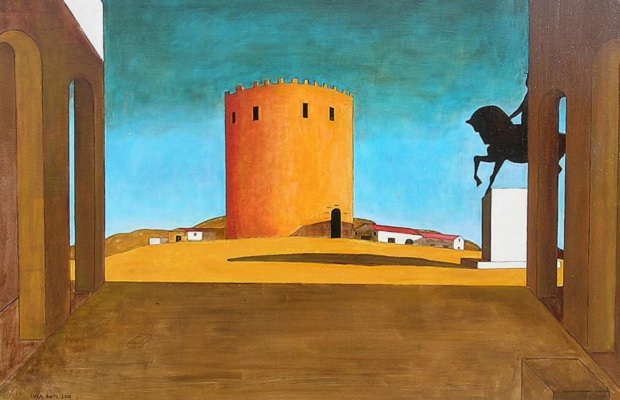
Though the Paladin is four years in it still retains its barrel baby fat. The rich red fruit tower reels behind a slightly reductive must and a compromise of toast and splinters from18 months spent in a mixture of 25 per cent new and 75 older French oak barrels. There is a whole surrealist street gang of fruit lurking in shadows of a de Chirico drama. I can sense the ripe plums and the cherries ready and willing to bake in the proverbial pie, and though blisteringly dry (less than 1 g/L residual sugar), it will always see potential by way of total acidity (6.1g/L). Will realize a seamless transition to mid-life anxiety while the fruit simmers away in a cauldron of that fine acidity. Ruud Maasdam’s Pinot Noir is of the scuola metafisica kind.  Tasted June 2014  @StaeteLandtWine  @liffordretail

Hidden Bench Terroir Caché Meritage 2010, VQA Beamsville Bench, Niagara Peninsula, Ontario (505610, $38.20, WineAlign)

The richest Terroir Caché to date, making use of its barrel in judicious but never obnoxious ways. Huge Bench wine, needs 10 years for sure. From my earlier, April 2014 note: “No other Niagara red and for sure no alternative Peninsula Bordeaux blend exists in such a vacuum of dichotomous behaviour. Act one is an out-and-out boastful, opulent show of Rococo. Act two a gnawing and gnashing by beasts. The pitch and pull of the Terroir Caché 2010 optates and culls the extraordinary through the practice of extended délestage, what Hidden Bench notes as “a traditional method of gently draining the wine and returning it to tank with its skins during fermentation.” The ’10 is about as huge as it gets, highly ferric and tannic. Still chemically reactive, you can almost imagine its once small molecules fitfully growing into long chains. Berries of the darkest night and he who should not be named black fruit are confounded by minerals forcing the juice into a cold sweat. Will require a minimum of 10 years to soften its all-powerful grip.” From my earlier March 2013 note: “has rich, voluptuous Napa Valley written all over it. Sister Merlot dominant, Beamsville Bench sledge monster. Plumbago, mineral, blackberry and coffee in a wine that will be the ringer in a blind tasting 10 years on. Harald may be saying “this is our family jewel.” Mr. Thiel, you make good wine”  Last tasted June 2014  @HiddenBench  @BenchVigneron

Good to go!
The South Coast is clear

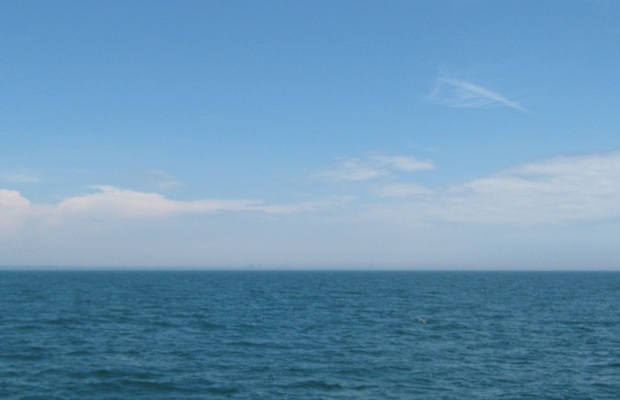
Lake Erie

Lake Erie

It would be a stretch to expect anyone living more than 100-km away from Port Dover to know much about Ontario’s newest and next viticulture hot spot, Ontario South Coast Wines. The same concession might apply to most journalists working with regular intensity and immersion within the Ontario wine industry. OSCW should not be confused with its brethren further west, the wineries that make up the Lake Erie North Shore appellation. Ontario’s southwest? Wine route? You may ask yourself, how did I not know about this place? How can this be?

This is the area most likely to be Ontario’s next VQA-qualified appellation. Cool-climate remains the most apt descriptor, no different from LENS to the left and Niagara to the right, but this pocket of the lake is blessed of a specifically warm-ish micro-climate. The name itself presents as a bit of a misnomer, “Ontario South Coast Wines,” its geographical location set upon a ridge overlooking the north-east shore of Lake Erie running east from just west of Long Point, through Port Rowan, St. Williams, Turkey Point, Normandale, Port Ryerse and to Port Dover.

To agree with the emerging region’s calling card, simply draw a bunch of parallel and converging lines south from Lake Huron, through the Highway 401 straddling communities of London, Kitchener and Cambridge. Continue southeast past the Highway 403 delta of the Brantford area and through the Highway Three corridor towns of  Waterford, Courtland, Delhi and Simcoe. Spread out along the Eco-nature park-beach community-rugged coast and now you’ve got your bearings. This is the wine country of Norfolk County.

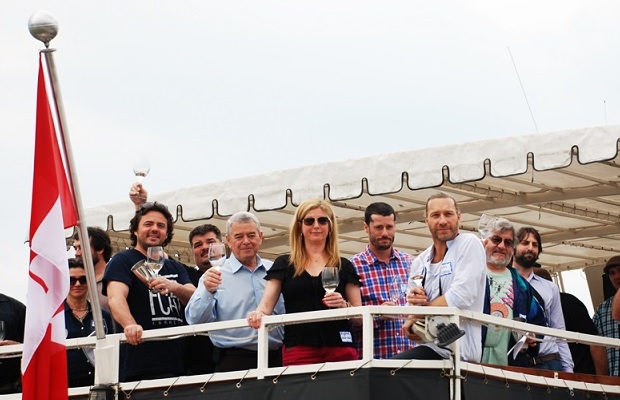
All aboard the Kayloe PHOTO: http://www.ontariosouthcoastwine.com/

All aboard the Kayloe
PHOTO: http://www.ontariosouthcoastwine.com/

Better still, follow the lead of Magdalena Kaiser-Smit of Wine Country Ontario and climb aboard the Kayloe, a 65-foot boat run by Nomada Charters and take a three-hour Lake Erie tour from the water, with a dozen or so local wineries on board and get to know the people and the place. Listen to Mike McArthur, President of the Grape Growers Association speak about 1996, the transition year for the area. Realize how an agricultural community that once housed tobacco farms make a communal decision to transform with the times and switch to grape growing. Hear him talk about the great history of viniculture in the least known of Ontario wine landscapes, a place where grapevines were spotted as early as the late 1600’s.

The boat trip and the wine speak mean nothing here without the idea of hospitality to accompany the local ferments, wines made not just from grapes, but from a wide variety of fruits. There are approximately 130 acres under vine in Grey and Norfolk counties. Nine wineries are located in Norfolk, with seven currently open for business. Liz Campbell and Trevor Taylor of F.W. Knechtel Food Catering make use of local asparagus, mushrooms and Lake Erie Perch to bring matching and meaning to the wines.

Outboard BBQ

Outboard BBQ

Fruit wines are an integral part of the South Coast experience so I decided to begin and end on high glucose notes. Berries have half the natural sugar content as grapes so cane sugar is added to give the yeasts enough convertible material to raise the alcohol to stable levels for longer preservation. Blueberry Hill was my first stop, a St. Williams winery that ferments with the hybrid Vidal, along with cranberries, raspberries and of course, blueberries. The wines are pure, distilled fruit expressions, with tart notes and flavours of the heart. Their straight-up blueberry is the best of the lot.

The uncontested Norfolk leader is Burning Kiln Winery and not just from a quality standpoint. Burning Kiln has positioned itself as a marketing and appellative promotional leader with Doug Beatty (formerly of Colio Estate Wines) as its spokesman, front and centre. Winemaker Andrzej Lipinski (formerly of Vineland Estates, Legends Estates, DeSousa, Fielding Estate, Megalomaniac, Foreign Affair and Organized Crime, now of Colaneri Estate and his own label, Big Head Wines) is an established Ontario master. His experience with the appassimento method is perfect for BK’s old tobacco kiln employment for drying grapes. Assistant winemaker Patti Fixter authored a feasibility study on Norfolk County’s Sand Plain and its ability to host a viable, sustainable viticultural industry. The winery is progressive, adventurous and ostensibly single-handedly responsible for putting South Coast on the current Ontario wine road map.

Burning Kiln Tank Samples

Burning Kiln Tank Samples

Doug Beatty brought some tank samples aboard. The springy and herbal 2013 Horse & Boat Riesling carries 20 g/L of residual sugar “to punch back the acids.” This is part of BK’s Green Kiln Series. A 2013 Savagnin tank sample carries similar texture but in elevated glycerin. The metal on top of that mouth feel really come forward to balance the residual and the alcohol (which is dramatically indiscernible). Grassy Sauvignon Blanc-like aromas and a very Jura palate are the hallmarks of a South Coast take in a wine that is such a baby.

The Harvest Party White tank sample gathers Chardonnay (59 per cent), Gewurztraminer (21), Riesling (18) and Pinot Gris (2). A chewy, textured, kitchen sink blend that stings of limestone, an herbal balm and a late edgy metallic bite. The Chardonnay 2013 tank sample spent 18 months in foudres. Reminds of a Lenko treatment, from fruit 50 per cent estate and 50 Niagara. Thin but linear and focused, with very good length, a crunch of green apple and round herbiage.

The 2011 Kiln Hanger from tank follows the same process at the ’10 from a less than scorching vintage but will arrive in bottle at 15.8 per cent alcohol. Only 400 cases will be produced from a cat-like specimen, still chewy, a chunk of major Cabernet Franc change. Higher in acidity and cool plums than in 2010, this is no shrinking Norfolk violet. Will show more style and less humidity than that ’10.

Burning Kiln Savagnin ‘Stick Shaker’ 2012, VQA Ontario (367144, $24.95, WineAlign)

What BK refers to as dry white Vin de Curé, or the “Parish Priest’s,” this is their take on the Jura’s Vin de Paille (Straw Wine). The South Coast may have a wine tradition that dates back to the 1600’s but Savagnin does not go back by the Ontario centuries.  At 14.9 per cent a heavy feeling would be expected but to the contrary, the SS is light as a feather, like a CSN ballad. Aromatically muted, the warmth of the vintage comes through in the textural density of the palate. Expressive and chewy like all of the Burning Kiln portfolio. A wine from two of only 10 total acres planted in the province. Though we may be “gasping at glimpses of gentle true spirit,” here’s to helplessly hoping Savagnin takes root and flourishes in Ontario.

Burning Kiln Harvest Party Red 2013, VQA Ontario (Winery, $15.95, WineAlign)

From an overall 50/50, Estate/Niagara blend. The composition is Syrah (49 percent, all Niagara), Cabernet Franc (42 per cent) and Cabernet Sauvignon (9). Reminds of Fielding’s Fireside Red in approachability and blending acumen. Though an understudy, the softness of the Cabernet Sauvignon is duly noted as a foil to the clay/kiln effect from the piquant Cabernet Franc. Some chalk and even more chew, in the beginning this is just mostly fresh and wild with low, obtuse angles.

Burning Kiln Cab Frank 2012, VQA Ontario (Winery, $24.95, WineAlign)

Named for the vineyard manager at Burning Kiln, Frank DeLeebeck was a tobacco farmer for more than 20 years. From 50/50 Estate/Niagara, 100 per cent kiln dried grapes for 10-14 days. This is CF all about concentration and a bridge from old tobacco to New World winemaking. Here kilns are the vehicle to transport the winery’s wines to the New World. Though this rich, cakey Cabernet Franc turns sweet on the finish, there is terrific acidity and admirable length. Holds its 14.3 per cent alcohol well. A unique appassimento.

Burning Kiln Strip Room Merlot/Cabernet Franc 2012, VQA Ontario (Winery, $24.95, WineAlign)

A 50/50 Estate and Niagara fruit split, classic Right Bank-styled blend of Merlot (55 per cent) and Cabernet Franc (45), kiln dried for 8-14 days. There is strength in alcohol (14.3 per cent) yet calm, dry reserve in (4.5 g/L) residual sugar. The aromatic profile is the most flirtatious of the BK stable, with the bruising and crushing of so many berries. There is a plum softness given by the Merlot, along with chalk, grain, vanilla and coconut from the generous six-month, three (French, Eastern European and American) oak layering. Like quality satellite St. Emilion, with so much noticeable tobacco.

Burning Kiln Kiln Hanger 2010, VQA Ontario (Winery, $59.95, WineAlign)

A 100 per cent Cabernet Franc, 100 per cent Kiln dried red made in two batches. Ages 32 months in Eastern European and American oak, half held back for this, The Sequel. Altogether there are 335 cases made of this huge, 15.9 per cent alcohol behemoth. The second coming furthers the already wealthy concentration with Alice anxiety and anaesthetizing mouth filling richesse. Here layers anything but a simple matter of loaded, dusty cocoa, decadent chocolate and creamy mocha. “I couldn’t tell if the bells were getting louder,” the entire cooperage preaching of “fanatical exposers on corners prophecy.”  Huge wine. Love it to death.

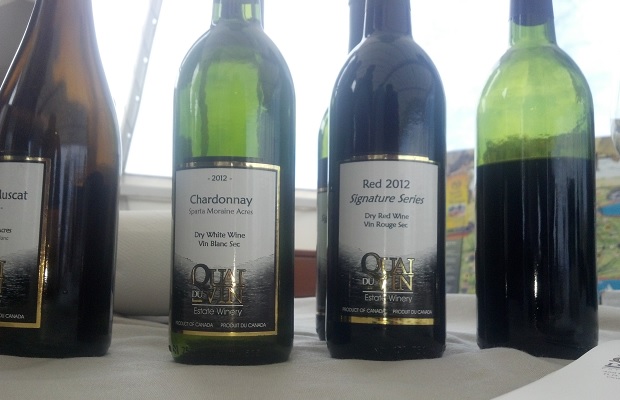
At Quai du Vin there are vineyards planted in 1970 by Redi and Roberto Quai. Today Jamie Quai makes the wine at the St. Thomas winery with the wisdom of those vines and the respectful touch of a winemaker with a minimal interventionist approach. Jamie Quai is concerned with the unearthing of micro-plot nuances in the Norfolk terroir. Quai du Vin farms 20 acres and has been open for business since 1990.

Quai du Vin

Quai du Vin

Quai du Vin Chardonnay 2012, Ontario (winery, $13.50)

From 15 year-old vines on the Sparta Moraine and what Jamie Quai calls “a field blend.” Though the soils are all heavy clay, there is a clay meets stone textural balance, surely thanks to five or six months lees contact. Like well-made southern Burgundy, the chosen yeast heightens the autolytic chain, allowing the flavours to veer tropical but not overly so. A Chardonnay that fell in love with a well-judged barrel while conceptualizing “good botrytis,” resulting in exceptional complexity for a song. Will drink beautifully through 2016.

Quai du Vin Red, Signature Series 2012, Ontario (winery, $12.50)

A blend of Marechal Foch (40 per cent), Baco Noir (30) and Merlot (30) from a host of appellations; Beamsville Bench, Niagara Peninsula, Sparta Moraine Acres and Elgin County-North Shore Lake Erie. This has a thick brushstroke brought on by a predominance within the conglomerate of heavy clay. Unexpectedly tannic, chewy, with a sweet chocolate brownie finish. Not to mention tomato and the plant’s savoury leaf. The first vintage that Merlot made the cut in lieu of usually employed Cabernet Franc.

Quai du Vin Merlot 2012, Ontario (winery, $16.00)

Made from the same Merlot fruit in the Signature Red. Spent just over a year in barrel, the wine is still very primary and aromatically speaking, highly dusty. A painted note, green tea and rusty dry fruit are wrapped in an early reductive, nearly volatile note. Chewy, splintered, with grit, conceit and solid work. Note: Only 25 per cent of the vines will likely have survived the winter of 2014.

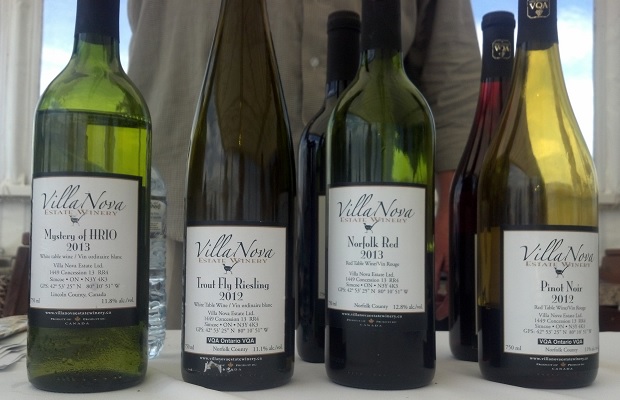
Villa Nova Estate Winery Mystery of Hrio 2013, Ontario (winery, $11.95)

A dry white made from three (numbered) hybrid grapes developed at Vineland Research Station.

Villa Nova Estate Winery Trout Fly Riesling 2012, Ontario  (winery, $12.50)

From 100 per cent Estate vines planted in 1996, this has that roots gathered mineral salinity from sandy loams so reminiscent of the Burgenland’s dry Rieslings. That Austrian run-off minerality is uncanny and when foiled by the old vines glycerin texture, the end result is quite a study in Simcoe complexity. A small amount of Traminer lifts the Riesling, along with some lees usage. Amazing discovery.

Villa Nova Estate Winery Pinot Noir 2012, Ontario  (winery, $15.95)

From Estate grapes planted around the year 2000. Lithe, pretty and certainly very Pinot. Like Kiwi Pinot in that the flesh is permeated by varnish. Wraps together cherry, pomegranate, cranberry and wet earth. If an Old World comparison might be made it would be to Mercurey, as it’s light, highly floral, with a break in the mid-palate and a stretched finish. “We’ve always ended up with light Pinot,” says winemaker and mad scientist Phil Ryan. That’s a good thing.

Villa Nova Estate Winery Norfolk Red 2013, Ontario  (winery, $11.95)

From Niagara and Norfolk (Marechal Foch, Baco Noir and Chambourcin) grapes. A hybrid party.

Villa Nova Estate Winery

Villa Nova Estate Winery

Frisky Beaver White 2012, VQA Ontario (345629, $13.95, WineAlign)

The all Niagara fruit blend is Vidal (75 per cent), Riesling (15) and Gewurztraminer (10). It’s considered VQA “Ontario” because Dover Vineyards awaits a viticultural designation. The irony here is that it may as well be labeled Niagara. This is clean and easy stuff, low in alcohol (11.2 per cent), elevated in sugar (18.4 g/L) but balancing in total acidity (5.6 g/L). Overall it has texture and tannic ability. Not a stressful blend by any stretch, it’s Pinot Gris like in Alsatian attitude with a juicy, peppery pear fruit tendency.

Smoke & Gamble Gewurztraminer Süssreserve 2011, Ontario (winery, $21.95, WineAlign)

Unfermented (11.8 per cent) appassimento juice is added back in for aromatic and textural effect. Semi-tropical and semi-dry, in pineapple and green apple but not lychee. This is Musqué in scent, clean, pure and true. From 100 per cent Norfolk fruit.

Smoke & Gamble Merlot Reserve 2011, Ontario (winery, $21.95, WineAlign)

A wild at heart Merlot, brooding, serious, deep and full. Caramel and chocolate, ginger spice and ripe plum. Coat, paint, coat, repeat. Alcohol is big (14.4 per cent) but well-integrated and whatever perceived sweetness there may be (4 g/L) is mitigated by a leafy, savoury edge.

Smoke & Gamble Cabernet Franc Appassimento 2010, Ontario (winery, $21.95, WineAlign)

Here is the deepest, post-modern wine made anywhere in the province. Reeking of rich, candied violets smothered in dark chocolate. Chalk and talc in licks and a dense, chewy mid-palate. A massive (14.5 per cent) wine with so much chocolate dust and thick glycerin. A stable of so many big attributes and in only winemaker Robert Gill ‘s second year dealing with the Amarone-style methodology. “The first year I was scared, I’ll admit.”

Golden Leaf Estate Winery Vidal 2012, Ontario (winery, $14.25)

From estate vines. Juicy, white peach and nectarine aromas, metal angles, straight up distillation of pure grapes.  Low brix and solid PH give it tannic thrust.

Golden Leaf Estate Winery Riesling 2012, Ontario (winery, $15.95)

Estate fruit (100 per cent). Sweet and with aromatic energy. Off-dry all the way. Leans Mosel in kindred spirit. Orchard fruit and excellent acidity. Slightly bitter-tinged finish, but in a noble way.

Golden Leaf Estate Winery Baco Noir 2011, Ontario (winery, $18.20)

A cheese in lees inflected BN, not the brooding and pitchy type. Some elegance, in as much as Baco Noir can show. Yet unusual because of that yogurt drip. Good acids, floral tones and citrus.

Golden Leaf Estate Winery Chambourcin 2011, Ontario (winery, $18.20)

Once again, all the lees, cheese and citrus , but also sweet and sour with some soy and caramel. Tight and racy Chambourcin, certainly as complex and accomplished as any this side of Michigan.

Golden Leaf Estate Winery Pinot Noir 2012 (Tank Sample)

High cranberry and dry earth bring this right back to Burgundy basics. Rosehip and sandalwood from old oak wrapped in sweet tannins. A bit of sinew and braised bouille. The coat is on.

Golden Leaf Estate Winery Merlot 2012 (Tank Sample)

From Niagara (De Moura Vineyards) fruit. Chalk in limestone, chocolate and a medium wood toast. Some green tannin, tea for sure but also some sweet tannin. Also roasted, charred red meat.

We wrapped up with some of the most righteous fruit wines one could ever hope to taste by way of Wooden Bear L Winery Inc.  Kim Ludwig’s wines are full of wildflowers, citrus expression and great balance. Her Gay-La Apple wine from 100 per cent Gala apples is like savoury Sauvignon Blanc, with angles in metal, low acidity but it’s dry and crisp. Her Sangria in a bottle has a liqueur-like taste, a slightly reductive, good bitterness and so much spirit. Not to mention tons of grapefruit.

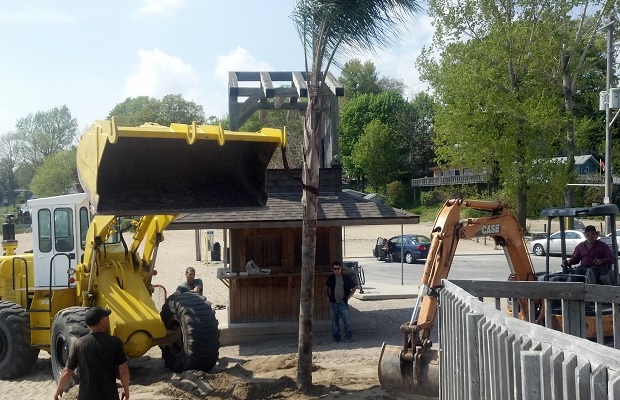
Planting palm trees in Port Dover

Planting palm trees in Port Dover

All is good out on the water and we made it safely back to Port Dover, just in time to watch the annual planting of the palm trees. You can’t make this stuff up.

Good to go!
A go long weekend wine list

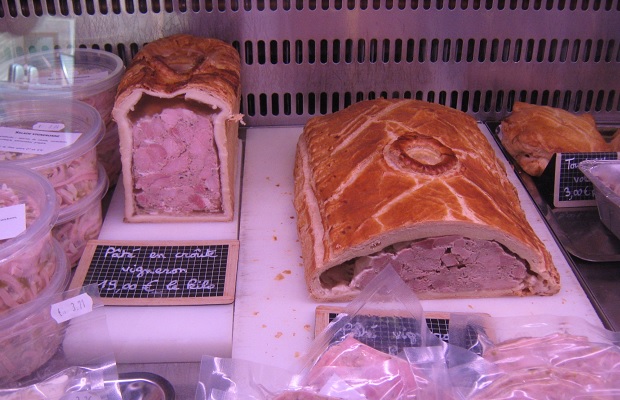
Pâté en Croûte, Niedermorschwihr, Alsace, France PHOTO: Michael Godel

Pâté en Croûte, Niedermorschwihr, Alsace, France
PHOTO: Michael Godel

The first long weekend of the 2014 summer is on the way. A fortuitous confluence of the calendar means a longer than usual respite from the tribulations of work, construction and city angst. Bottom line is with four straight days of nothing you’re going to need more wine. Last weekend’s VINTAGES release was filled with admiral and admirable choices, short on Canada’s finest mind you, but long on global composition.

Here are ten wines tasted, reviewed and given the Godello stamp of approval.

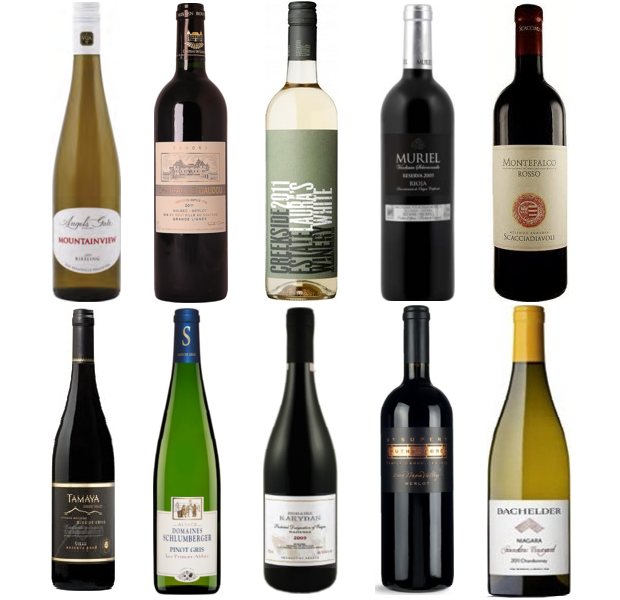
Clockwise from left to right: Angels Gate Mountainview Riesling 2009, Château De Gaudou Grand Lignée Malbec/Merlot 2010, Creekside Estates Laura's White 2012, Muriel Reserva 2008, Scacciadiavoli Montefalco Rosso 2009, Tamaya Syrah Gran Reserva 2011, Domaines Schlumberger Les Princes Abbés Pinot Gris 2011, Domaine Karydas Naoussa 2009, Bachelder Saunders Vineyard Chardonnay 2011, St. Supéry Rutherford Merlot 2010

Clockwise from left to right: Angels Gate Mountainview Riesling 2009, Château De Gaudou Grand Lignée Malbec/Merlot 2010, Creekside Estates Laura’s White 2012, Muriel Reserva 2008, Scacciadiavoli Montefalco Rosso 2009, Tamaya Syrah Gran Reserva 2011, Domaines Schlumberger Les Princes Abbés Pinot Gris 2011, Domaine Karydas Naoussa 2009, Bachelder Saunders Vineyard Chardonnay 2011, St. Supéry Rutherford Merlot 2010

Angels Gate Mountainview Riesling 2009, VQA Beamsville Bench, Niagara Peninsula, Ontario (373175, $16.95, WineAlign) From the VINTAGES June 21, 2014 release

Riesling that could dry tears. Just seems to write the Bench book. Dry and drier, numb and number. Though hard to see past the stark aridity there cries and froths forth a spirited and significant citrus zest.  A Riesling to be told, “don’t tell me you don’t know the difference, between a lover and a fighter.” The cry lingers for a Costello verse or three, then tiptoes away in everyday refrain. Drink up.  Tasted May 2014  @angelsgatewines

Château De Gaudou Grand Lignée Malbec/Merlot 2010, Ac Cahors, Southwest, France (370239, $18.95, WineAlign) From the VINTAGES June 21, 2014 release

This southern French ArtPop blend of Malbec and Merlot will sell through a boat load of bottles if the post-modern palate gets a hold of its velvety crush and ambient oak overture. Decidedly more Malbec than Merlot in approach though the latter does offer softness and dusty grain. Wood spice and tobacco are fervent and ardent suppliers of good, peppery fun. A red meat, outdoor grill wine if there ever was one, its aridity only eclipsed by its ladylike modernity. If it went deeper toward le zone des buts it would merit more applause. As it is, geeks, critics and pop culture freaks will go gaga for it.  Tasted May 2014  @wineonline_ca

Creekside Estates Laura’s White 2012, VQA Niagara Peninsula, Ontario (121764, $18.95, WineAlign) From the VINTAGES June 21, 2014 release

With a tilt of the head to 90 degrees the bottle is assessed and the glass contemplated. She’s a flirt, a gregarious girl this Laura, so orchard driven and with a perfumed attraction. From my earlier, February 2014 note: “Laura’s White combines Sauvignon Blanc, Pinot Gris, Chardonnay, Riesling and Gewürztraminer in a kitchen sink blend that sees a bit of oak. What’s notable about the ’12 is the omission of two highly aromatic components, the previously employed stalwarts Viognier and Chardonnay Musqué. The adage is justified in that you take what the vintage gives you. If it gives you lemons, (shift tangents) you let the busy aromatics of more flavourful grapes (like Chardonnay) do the floral work. Laura’s ’12 will be a standout for the concept, a revivalist blend to help bring back some religion to the region’s renditions. Coming to VINTAGES in June.” Last Tasted May 2014  @CreeksideWine

Muriel Reserva 2008, Doca Rioja, Spain (276030, $19.95, WineAlign) From the VINTAGES June 21, 2014 release

Call it tradition or simply forget the pleasantries and call a Bret a Brett. This old-school Tempranillo oozes character and the vineyard layering of a quilted past, never mind that it’s such an inexpensive young stud. Big, ripe red fruit, the stable’s terra mierda and iron rust. If you like a funky red with coarseness and a bit of age under its saddle, not to mention a penchant for the past, then this Rioja is for you.  Tasted May 2014

Scacciadiavoli Montefalco Rosso 2009, Doc Umbria, Italy (372458, $21.95) From the VINTAGES June 21, 2014 release

Rockin’ it old school goes this Montefalco with more terroir than fruit, more vine earth than crush. Great spice, old wood notes, licorice and stretched bitterness. A gritty, coarse, fun and combative wine. If there are fruits they are very red. Such tension. Great value.  Tasted May 2014

Tamaya Syrah Gran Reserva 2011, Limari Valley, Chile (374306, $21.95) From the VINTAGES June 21, 2014 release

Sweet candied bacon and cool mountain scents. Salinity, tight and wonderful. Big, brawny, minty mountain herbs and greenery. Tobacco. Complex.  Tasted May 2014

Domaines Schlumberger Les Princes Abbés Pinot Gris 2011, Ac Alsace, France (21253, $22.95, WineAlign) From the VINTAGES June 21, 2014 release

Always exceptional value in Pinot Gris, picked on time and before any real discernible level of botrytis can set in. While it would never be considered truly dry, the round white tannins and salinity from volcanic subsoil in Schimberg’s Guebwiller valley give this bottling good structure, density and muti-national flavours. This vintage seems a bit softer though it is never a high acid monster. Juicy orchard fruit leading layers of flesh and zest grow better with time and develop a sweetness which stems from the purity and quality of the fruit.  Tasted May 2014  @VinexxCanada

Domaine Karydas Naoussa 2009, Dop Naoussa, Greece (272013, $26.95, WineAlign) From the VINTAGES June 21, 2014 release

Spicy Xinomavro, a veritable bonfire of Greek humility and good fortune in cinnamon, clove, anise, wood-spice, wood smoke and tobacco. Intriguing and worthy of its place. Not a young fresh red fruit-styled Xino but more so a deeper, earthy and smouldering one. A touch of matchstick and even more campfire. Great acidity and wow length. Yes sir.  Tasted May 2014  @KolonakiGroup

Bachelder Saunders Vineyard Chardonnay 2011, VQA Beamsville Bench, Niagara Peninsula, Ontario  (324103, $44.95, WineAlign) From the VINTAGES June 21, 2014 release

Yet another look at the Saunders ’11 confirms its tapestry of texture and its density. A Boulangerie’s roll of perfect, flaky puff pastry filled with a honey drizzled nougat and marzipan filling. Very bright, full-on sunshine driven Chardonnay. From my earlier February 2014, November and July 2013 notes: “Saunders is quiet right now, in cool waiting and in display of the most elegance I’ve encountered from any Bachelder Chard, at anytime, anywhere. Background spice, backing vocals are in the isolated spotlight. This I am keying on as much as any note, in any wine here tonight. Not giving it up as easy as before. Extra swirl time required. Will re-visit in the summer. Right, Thomas? From my earlier July and November 2013 notes: “From Beamsville, right beside 30 bench, has a texture, a depth and a mouth feel in ’11 that bounds and leaps towards the ethereal. A dancing stag, displaying, performing a mating ritual dance. Melons, ripe and fleshy are in this Saunders. “What’s carrying this wine is site, site and site.” A great clay slice of the Beamsville Bench. From my earlier note: ”Takes the baton from Wismer ’10 in a transfer of power, tension and excitement. Clarity of textural fruit is driven by Beamsville Bench clay-silt soil. Highly dependent on yeast chains, sticking, spreading and expanding. Savoury, buttered stones show negligible encumbrance due to vines that will not carry an excess of new oak.”  Last Tasted May 2014  @Bachelder_wines

St. Supéry Rutherford Merlot 2010, Napa Valley, California, USA (376939, $58.95, WineAlign) From the VINTAGES June 21, 2014 release

Enormous Merlot in sonic youth, pushing ripeness boundaries but with so much natural fighting and balancing acidity. If you like dusty, cake-layered, oak oil-sweating, sweetly viscous bleeding Merlot, well, this is for you. It has all the stuffing with its huge fruit and big acidity, not to mention formidable tannins. Imbued in “shards of sweet shine of voice and flute.” This will go long, something like 20 years, into a dripping dream, slowly and gracefully integrating its largesse, all the while being generous for all that time.  Tasted May 2014  @StSupery


Good to go!
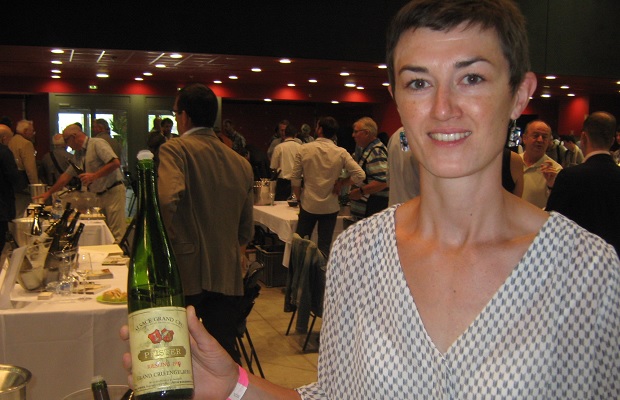
In a Grand Cru state of mind

Grand Cru Riesling, Alsace

Grand Cru Riesling, Alsace

I have been in Alsace now just over 48 hours and already feel as though I have been introduced to a lifetime of wine. Yet with every taste of the Alsace pansophy I am reminded just how long the unfathomable road to the region’s enlightenment remains to be. The combination of nuance, complexity and acuity of the Alsatian wine spirit may have no equal. Some highlights of the first two days in Alsace with SOPEXA and CIVA.

Domaine Steuntz-Buecher

Domaine Stentz-Buecher

What a way to be introduced to Alsace in 2014. Les diVINes d’Alsace, an organization of 70 industry women and Domaine Stentz-Buecher rolled forth a genealogical pedigree of Alsace past and present with food station matching in the winery’s garden and in the barrel rooms. First Crémant, then whites of many incarnations; Pinot Gris, blends, Gewürztraminer and many, many Rieslings. The final prize at the end of a long scroll of grand achievements were Grand Cru Riesling from the vintage 2000. The eight acted out a Grand Cru finale of generous spirit via and the women of

Louis Haller Brut Crémant D'Alsace / @diVINeSDaLSACE

Louis Haller Brut Crémant D’Alsace / @diVINeSDaLSACE

Les vigneronnes Mélanie Pfister and Carolyn Sipp introduced the three year-old organization, the winemakers, winemaker’s wives and sommeliers that form the membership of l’Association des Femmes de la Vigne & du Vin d’Alsace. “We are feminine but not feminism,” quipped Sipp. The idea began in 2009, following in the footsteps of similar women in the Rhône, Bourgogne and the Southwest of France. Women who have banded together to promote their region’s wines.

Laurence Hauller showed the 100 per cent Chardonnay Louis Hauller Crémant d’Alsace, a fine, subtle, stylish, finessed and elegant interpretation of Chardonnay that is a different sort of Alsace discrimination. Eliane Ginglinger presented her bone dry, citrus in laser focus Ginglinger Riesling Vieilles Vignes 2012. Myriam Haag offered up Domaine Jean-Marie Haag’s Riesling Grand Cru Zinnkoepfle 2011, an enervating wine with richness bled from rocks and a finishing noble bitterness. Myriam Schmitt brought her Domaine François Schmitt Riesling Grand Cru Pfingstberg 2012 that though in sweet emotive intention remains buoyant in the persevering air of aridity. It defines the transformative trend towards Dry Alsatian Riesling. Josiane Griss of Domaine Maurice Griss’ Riesling Sonnenberg 2010 if asked the question, “how long have you been a Riesling” would surely answer simply, “from creation.”

Grand Cru Riesling 2000

Grand Cru Riesling 2000

The Riesling Grand Cru from 2000 were a varied and electric bunch. The Caves François Schmitt Riesling Grand Cru Pfingstberg 2000 is a baby still and in hallmark readiness of its necessary terroir. The Domaine Sipp-Mack Riesling Grand Cru Rosacker 2000, also young and primary teases and feigns late harvest but don’t be fooled by its sunshine. This chew of salted stones has a long, long finish. the show stealer was the Magnum of Riesling Grand Cru Kaefferkopf 2000 by Vins Jean-Baptiste Adam. Incredibly atomic with a vineyard flinty stink that exhumes and exudes the benevolent bitterness of time. Wildness and purity.

Godello and Pierre Gassman of Rolly Gassman

Godello and Pierre Gassmann of Rolly Gassmann

The main event of Monday, June 16th was the Millésimes Alsace, the professional trade fair for Alsace, Wines. Nearly 90 exhibitors showed off their terroir, in Crémant d’Alsace, Riesling, Pinot Gris, Gewürztraminer, Pinot Blanc, Sylvaner, Auxerrois, Muscat and Pinot Noir. A morning Master Class seminar featured eight world-class Sommeliers leading the room through seven “typical” Alsace wines. Maison Rolly Gassmann’s Riesling Kappelweg de Rorschwihr Vendanges Tardives 2000 is late harvest mineral expression in bitterness unchained yet restrained.

Trimbach Cuvée Frédéric Emile 1990 and Domaine Weinbach Gewurztraminer Furstentum 1994

Trimbach Cuvée Frédéric Emile 1990 and Domaine Weinbach Gewurztraminer Furstentum 1994

The afternoon Master Class covered older vintages. Trimbach Riesling Cuvée Frédéric Emile 1990 lays in an evolution that has come to a balance in weightlessness. Domaine Weinbach Gewürztraminer Furstentum 1994 has a tannic impression and smells like flowers from warmer France. Caroline Furstoss reminded everyone that it is “an expression of a daughter.” Impeccable balance.

Mélanie Pfister

Mélanie Pfister

The third of a most excellent Alsatian vintage trilogy was represented by Domaine Pfister’s Riesling Grand Cru Engelberg 1990. With a clotted cream note the wise Cru remains youthful and nearly primary.

The wines of Jean-Marie Haag

The wines of Jean-Marie Haag

Domaine Jean-Marie Haag’s Riesling Cuvée Marion 1999 showed rich, viscous complexity with the sensation of star anise and menthol.

Kuentz-Bas Riesling 1983 and Domaines Schlumberger Riesling Grand Cru Kitterlé 1945

Kuentz-Bas Riesling 1983 and Domaines Schlumberger Riesling Grand Cru Kitterlé 1945

The high point of the day came with a rare and beautiful chance to taste the Domaines Schlumberger Riesling Grand Cru Kitterlé 1945. The heart and the hearth. Just the thought of producing this wine at that time is unfathomable. There are no superlatives to do it justice. This must end on that note. More on the Kuentz-Bas Riesling 1983 another day.

Good to go!
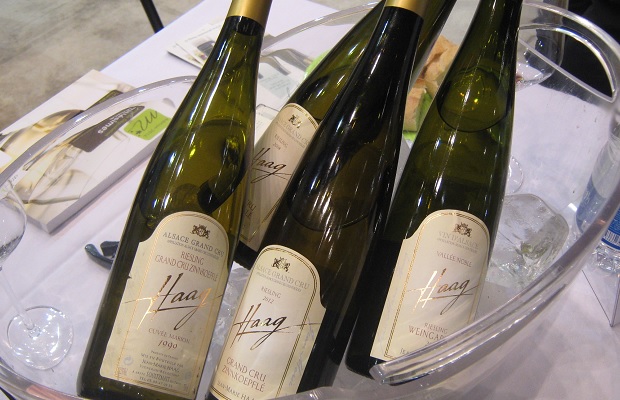
The Stratus-Momofuku continuum

Momofuku Daisho Toronto's Beef Brisket (McGee Farms, ON)

Momofuku Daisho Toronto’s Beef Brisket (McGee Farms, ON)

The wines of Stratus Vineyards and the cuisine of Momofuku Toronto. On Monday, May 26th and for the second straight year they conspired together in a beautiful collision of mutual beneficence. The single varietal mad science of winemaker J-L Groux and the singular, multifarious snacks of Momofuku Daishō. The food and wine play leaves wine writers satiated, thankful and speechless.

Stratus Single Varietal Tasting at Momofuku Daisho

Stratus Single Varietal Tasting at Momofuku Daisho

Related – Stratus and Momofuku: Modernity Incarnate and Select tasting through years of the Stratus Red and White

This 2014 media lunch dubbed Stratus, the right to free assemblage forged yet another treat of the highest order, once again with the necessity in participation of Charles Baker, Suzanne Janke and Sarah Walker of Stratus, along with Momofuku Beverage Director Jonathan Gosenhauser, Service Director Steve De Sousa, Assistant FOH Manager Nicholas Papadatos and the Daishō team.

An introduction by Charles Baker of Stratus Wines

An introduction by Charles Baker of Stratus Wines

Wildass Rosé 2013, Niagara On The Lake, Ontario (Winery, $16.95, WineAlign)

At 13.9 per cent the kitchen sink blend is unwittingly light on its feet, with uplifting floral and stony scents. The patronage seems as though it could be a shot (or more) of an aromatic white addition like Viognier. This ’13 is a new approach to the Wildass Rosé, a metallic meets orange and berry citrus flavour explosion. Will be an August VINTAGES release at this modest and honest tag, certainly more accessible than in years past.

Stratus at Momofuku Daisho

Stratus at Momofuku Daisho

The single varietals

Sauvignon Blanc 2011, Niagara On The Lake, Ontario (Winery, $29.00, WineAlign)

Technically Niagara Lakeshore but labeled Niagara on the Lake, winemaker J-L Groux insists this is the anti-New Zealand Sauvignon Blanc, a truism to get behind in this ’11’s more tropical style. “Depending on the year we adapt to the climate,” so here J-L’s classic boxwood seeking stands out. The combination of picking time and barrel aging on the lees has everything to do with style. The Stratus hangs (picked October 11th) and hangs out (641 days in French oak). Shows off the most metal mineral that Niagara can give to the variety, from a season with a totally rainy spring and fall but a torrid summer in between. “On whites it was certainly a better year to work with,” though the lack of acidity is due to a wet fall. It’s high-octane, “I’m not running after alcohol. I’m picking on aromatics. If I’m making barrel aged Sauvignon, I have to be patient, otherwise it’s not worth putting in barrel.” Nutty, toasty and full. The middle reaches for the end in an elastic and stretched full chain and connection. Rounder as opposed to acidic, it’s character comes by way of a periodic, numbers game in aromas. Zero hay, high phenols, very ripe.

Chardonnay 2012, Niagara On The Lake, Ontario, (Winery, $48.00, WineAlign)

A change in direction is duly noted with J-L Groux’s 2012 Chardonnay, from fruit picked six weeks earlier than in 2010. The program is scaled back and the wine is more “typical” of the region, in weight, in barrel effect and in alcohol. Still quite defined by natural yeasts that “sometimes go a bit wild, but I’m getting better at it,” concedes the clinician of vinous letters. Those feisty microbes are difficult to work with, like dealing with a wine that lacks natural clarity. “You have to shut down the bacteria, teach the yeast to stop stealing the lees. In 2013 I really got it.” The ’12’s altered course is welcome and encouraged and the world should wait with bated breath for what ’13 will bring. Here the complexity of aromatics is matched only by the intensity of tropical fruit. Has balance and a soft, round feel. Again, more texture and aromatics than natural acidity. Classic J-L style. “It’s not about trying to imitate anyone. It’s about making the most interesting and most complex Chardonnay in Niagara.”

Sémillon 2011, VQA Niagara On The Lake, Ontario, (Winery, $32.00, WineAlign)

The warmth of those July and August days has brought a combination of grapefruit and honey to the 2011 Sémillon, a highly aromatic vintage. Typically you don’t have very high acidity with this variety and though this was a difficult vintage to work with, here it teases late harvest, straight from the hip. The in-glass progression scales back and walks the wire with semi-high (6.9) acidity. “With illusions of someday, cast in a golden light,” the ’11 Sémillon will need time to marshal the erudition of (627 days) in barrel. At present the tragically declared fact that 24.6 brix equates to 11.6 per cent alcohol might just be lauded as another conversion rate, ahead by a century.

Sangiovese 2010, Niagara On The Lake, Ontario, (Winery, $42.00, WineAlign)

A variety that can be picked much earlier than others, like Cabernet Sauvignon and Cabernet Franc. Do the aromatics do Sangiovese? Yes, but in a mutated, concentrated and highly floral, expressive way. Clean, clear and embossed by surprising freshness and purity. The notes of typicity involve red fruits and a scorch of the earth. Handsome Sangiovese actually, anything but rustic and of a middle fleshing that threshes to mulct a citrus note on the end. This effort shows the most promise of the three expatriates (along with Tempranillo and Tannat) vying for J-L Groux’s new slang, varietal attention.

Tempranillo 2010, Niagara On The Lake, Ontario, (Winery, $42.00, WineAlign)

Were Rioja to come and take over Niagara this introduction would succeed in fulfilling expectations but not necessarily dreams. I will confess that it functions in ways California (where it’s simply too warm in places like Paso Robles and Santa Barbara) does not. Likewise Australian takes (“cool” Victoria and New South Wales) have yet to convince. Niagara’s climate is not such a stretch (though in most vintages too wet), but in 2010 the conditions were ripe for this experiment. The wine is admittedly lumbering, backward and chunky. It has that dusty, nearly funky nose, but it should be extolled in the name of character. High on vineyard aromatics and the density of wood, in ways so much more defined than the Sangiovese. Strangely Riojan and tasted blind would make for a curious ringer. Not huge by any stretch and blessed with good acidity and persistence.

Tannat 2010, Niagara On The Lake, Ontario, (Winery, $42.00, WineAlign)

The wooden slumber (555 days) in 50 per cent new oak is just what the dark-skinned grape doctor ordered for the Niagara debut. You know it will be pitchy and tannic but the goal is to be looking for some striking acidity and balance of concentration. Violets are prominent in the highly floral aromatics. There is certain density and fine structure and so while Tannat is an integral Stratus assemblage variety it shows here that it can be very expressive and long on its own. Perhaps the equal of Malbec for Niagara and with great potential.

Malbec 2011, Niagara On The Lake, Ontario, (Winery, $42.00, WineAlign)

If the Stratus 2010 Malbec’s blue note belted out Philly Soul, the delicacy and structure of the ’11 plays a softer sound, a Stax, Memphis Soul. Stylish, funky and uptown without conceding to pop. Active but with less brawn and higher acidity than previous years. An and now aromatic session of so much tobacco and even more cigar box, in wafts, waves, puffs, billows and club clouds of smoke. A soul jam of black fruit, Booker T. finger roll acidity and tannin.

Cabernet Franc 2010, Niagara On The Lake, Ontario, (Winery, $42.00, WineAlign)

Some white pepper dust, not too much mind you, works with the sun “and that’s what makes Cabernet Franc find its ripeness.” That it has in spades here in ’10, giving it fullness without raisins, density without being plugged in. A rich and near berry chalk sample but finely judged. This is one of the best SV’s J-L has made. Incredible aromatics. From my earlier April 2014 note: “Patient as ever with the cool-climate, slow and low ripening Cabernet Franc, winemaker J-L Groux stuck with belief, regardless of the warm 2010 vintage. The Stratus single varietal space and time continuum of let it hang (though not to December), 20ish months of aging, nearly half in French oak barrels, has brought forth the most dense and luxe Cabernet Franc to date. “It’s never old school, all brand new,” with Groux so this red swells in wholly pure black currant fruit and is as big as it gets for J-L, which is saying something. This beastie boy will age over a 20-year period. Style is the thing, and yes, the aromatics.”

Cabernet Sauvignon 2010, Niagara On The Lake, Ontario, (Winery, $55.00, WineAlign)

The declared alcohol on this is 14.6 per cent but to all of me, that is really hard to believe. Really elegant, 100 per cent Cabernet Sauvignon, perfectly unabridged in phenolic ripeness but in such fine rhythm and blues. Were it a score it would be euphonious without encumbrance and void of splinters. The most subtle and gentle J-L Groux crafted red wine I’ve yet to encounter, with a back palate combination of mushroom and citrus to follow pure red fruit. Resoundingly circular with curves, no hard edges and “perfect imperfections.” This Cabernet goes at it with Graves character and poise. It will be a Niagara legend.

Gewürztraminer 2012, Niagara On The Lake, Ontario, (Winery, $29.95, WineAlign)

Early harvested and vinified with the least amount of winemaker intervention, this is Gewürztraminer left to find its own way. In 2012 the natural sugars speak in clear and clean tones without needing too much attention. Has the most off-dry sensibility yet. It’s very floral, nearly medicinal and tacking. A zigging and zagging Gewürz, wavering, weaving, oscillating between its personalities, on one hand new and progressive, on the other, a nod to Alsace. There is really nothing dry about it. Dense on the palate, this Stratus single white varietal is textured and quickly making friends.

Mosaic Late Harvest 2013, Niagara Lakeshore (375ml), Ontario, (Winery, $25.00, WineAlign)

The 2010 was the first and only one made at the time. When asked if he would make one again, J-L Groux replied “perhaps.” Well, three years later the 2013 enters considerably drier than that ’10 but full of stone tree fruit. The profile here is so different, now Gewürztraminer (78 per cent) dominated, with less residual assistance from Riesling (17) and Sémillon (5). The aromatics are medicinal and ashen before the attack turns so palate sweet, in marmalade and with a finish of noble bitterness.

Mystery Pour

Botrytis Affected Sémillon Late Harvest 2012, Niagara On The Lake, Ontario

Tasted blind this non-clarified sticky is high on grapefruit for sure, smells (for a fleeting moment) a bit like cat pee, is decidedly smoky and once again, is grapefruit all in. Stony sauternes, Niagara style. This can be used to great advantage. With 70 plus g/L of residual sugar and 7.9 of total acidity the sugar-acid continuum is expertly lucky. The grapes were picked on December 14th, causing another exclamation of WTF? Really delicious. Really.

Botrytis Affected Sémillon Late Harvest 2012

Botrytis Affected Sémillon Late Harvest 2012

Following the single-varietal tasting, Momofuku Daisho rolled out eight signature dishes.

Spring Radish Salad, sherry vinegar, chive, crispy yuba

Spring Radish Salad, sherry vinegar, chive, crispy yuba

Spring Radish Salad, sherry vinegar, chive, crispy yuba

Snap Pea Salad, horseradish, jowl bacon, lily bulbs

Agnolotti, asparagus, ricotta, black truffle

Whole Speckled Trout (Kolapore, ON), morels, ramps, smoked buttermilk

Whole Speckled Trout (Kolapore, ON)

Whole Speckled Trout (Kolapore, ON)

Stratus White 2010, VQA Niagara On The Lake, Niagara Peninsula, Ontario, (660704, $44.00, WineAlign)

From my September 2013 note: “Sends me immediately towards Bordeaux, in neo-marmalade, but also buoyed in perfume and body by 25 percent Viognier. “This variety worked so well in the vineyard in 2010,” notes Groux. Niagara honey and near-botrytis via Semillon and Sauvignon Blanc void of grass, full of vigor. A sharp note, neither metallic nor mineral, but a combination of the two is present in this so very concentrated ’10. Of a warm vintage (self-explanatory) fully picked by October 23. Though loaded with early Spring maple sap, foie gras and appley terpines, its sharp and framed by “tannic” tang and protracted length.”  Last tasted May 2014

Beef Brisket (McGee Farms, ON), steamed buns, crab mayonnaise, green papaya slaw

Broccoli, lap cheong, black vinegar, tea egg

Nugget Potatoes, togarashi, kewpie, spiced ham

Stratus Red 2010, VQA Niagara On The Lake, Niagara Peninsula, Ontario, (131037, $44.00, WineAlign)

Tasted again, I do declare this to be the reigning bomb of Ontario red blends. Showing even better than I judged it two weeks ago. Intense ruby meets claret in every facet of its make-up. Rouge tomate, fresh and racy at the same time, with just enough chalk to lengthen the chain. You can actually imagine the hum in the clang and rhythm of its magic. Fleet of foot, mac-nanimously rendered red blend. “Chain keep us together, running in the shadow.” From my earlier note: “A study in restrained, gilt-edged use of only 15 per cent new oak during assemblage, especially with Cabernet Sauvignon in the lead and so prudent considering the extreme warmth of the vintage. Cabernet Franc imparts simple but intense spice. Red talented, fresh finesse, the oak in support as a James Dean, cherry stained leather jacket. De facto fresh, with just enough trenchant acidity.”  Last tasted May 2014

Tart, ricotta, honey apricots


Good to go!


Take them home, County wines

County in the City PHOTO: Michael Godel

County in the City at the Berkeley Church

Life is old there, older than the trees,
Younger than the mountains, blowing like a breeze

Can you think of an island (leaving Australia, Tasmania and New Zealand out of the discussion) of greater interest anywhere for growing grapes and making world-class wine? Prince Edward County’s just a shade more than 1000 square kilometers, 800 kilometers of shoreline and tiny 22,000 population is that place. It’s geology and climate eerily mimics that of Burgundy. A superficial layer of limestone peppered clay loam hovers above penetrable layers of larger limestone. Fissures in that bedrock allow vines to reach deep into its crevices. It’s a veritable mineral wonderland.

Related – You can lead a county to the city

Huff Estates Photo: Michael Godel

Huff Estates

More than 30 wineries dot the land and water interspersed honeycomb of a wine trail. Pinot Noir and Chardonnay are the obvious cornerstone varieties but unique Riesling, Cabernet Franc and Pinot Gris have joined the attention gaining fray. Ontario’s finest Sparkling wine is being made at Hinterland. Vintners like Rosehall Run and Keint-He Winery exemplify top to bottom consistency. They and others like Lacey Estates are involved in the yeoman’s ambassador work, in the field, at tastings or through social media. Smaller production houses like The Old Third Vineyard, Hubbs Creek and Exultet Estates are sought after by those who know.

Stanners

Stanners

The County returned to the city on April 3, 2014 to showcase a cross-section of their wares at Toronto’s Berkeley Church. The usual suspects continued to impress, yet the collective needs to embrace the Sparkling example set by Jonas Newman and Vicky Samaras at Hinterland. If White Cap and Ancestral are any beacon to be drawn towards, plantings of Vidal, Riesling and Gamay should be employed in earnest in the turning towards pressure in the bottle. Lighthall’s Glen Symons gets it, as does Frédéric Picard, with his Cuvées, not to mention Bill Turnbull and his 3630 Bubbles. True, Casa Dea has the shy Dea’s Cuvée and the Grange makes a Sparkling Brut and a Riesling (346726, $24.95). But the questions begs, is fizz just another word for everything to lose in the County?

Here are notes on 23 wines tasted. The soundtrack to these PEC Wines includes Foo Fighters, Cracker, Nine Inch Nails, Modest Mouse, REM, Sufjan Stevens, The Beatles and Dire Straits.

From left to right: Casa Dea Riesling 2011, Huff Estates Winery Off Dry Riesling 2012, Harwood Estate Pinot Gris 2012, Lighthall Progression Sparkling Vidal 2012, Norman Hardie Riesling 2012, Huff Estates South Bay Vineyards Unoaked Chardonnay 2012, Karlo Estates Lake On The Mountain Riesling 2012

From left to right: Casa Dea Riesling 2011, Huff Estates Winery Off Dry Riesling 2012, Harwood Estate Pinot Gris 2012, Lighthall Progression Sparkling Vidal 2012, Norman Hardie Riesling 2012, Huff Estates South Bay Vineyards Unoaked Chardonnay 2012, Karlo Estates Lake On The Mountain Riesling 2012

Casa Dea Riesling 2011, VQA Prince Edward County, Ontario  (winery, $16.95, WineAlign)

Pours and perches in the glass dry and stoic, as if bled from concrete or amphora. Swirled or not this fighter begins to rumble in a growing momentum of tang and acidity, as if it were being fed by sugar and feeding on yeast. So primary, like a sample in thief, yet already circling in complexity. A spike of spicy sweetness, a delicate dressing of aglio e olio, a chiffonade of basil on top. The County does this style of dry Riesling at this price in ways no one in Niagara can. This is no foo but rather a “blessing in disguise. Believe it or not, hands on a miracle.”   @casadeawinery

Huff Estates Winery Off Dry Riesling 2012, VQA Ontario (155606, $17.95, WineAlign)

Note the VQA Ontario designation, meaning the fruit is a combination of PEC and Niagara. The former brings limestone to the table while the latter weight and substance. Typically soda-driven and spatially atomic in maximum thrust. Turns towards the lake with sweet emotion and sails off into the sunset. Multi-purposed, works to great summer afternoon effect, especially with the waves of the bay lapping at the shore.  @HuffEstatesWine 

Harwood Estate Pinot Gris 2012, VQA Prince Edward County, Ontario (Winery, $18.00, WineAlign)

Light, airy, delicate and nearly ethereal Pinot Gris that takes few chances, instead choosing an acquiescence with life’s simple pleasures. The vanilla of Gris, malleable, agreeable and ready to pair with whatever comes its way. A minor spike of Hillier minerality gives accent to pears and its blossoms.

Lighthall Progression Sparkling Vidal 2012, VQA Ontario (Winery, $20.00, WineAlign)

A most non-pretentious sparkler that holds a pertinacious attitude towards anything but serious fun. From estate Vidal grapes that has seen a second fermentation using the Charmat Method, Lighthall’s ’12 picks up right where its solid ’11 left off. Picked early to preserve freshness and acidity, the Progression is big on tart green apple preserved by a squeeze of lemon. Chill it, refresh with it, serve it up and bring the house down.

Norman Hardie Riesling 2012, VQA Ontario (131169, $21.00, WineAlign)

Twenty Mile Bench in Niagara borrows 30 per cent County fruit to complete Hardie’s cracker Riesling. Low in alcohol (9.1 per cent) and residual, bound by jacked up acidity and tension. Pale platinum with an old-school aromatic sentiment that “fruit is rusting on the vine,” and flavours recalling that “the fruit is calling from the trees.” A masonic force of winemaking, “like being low, hey hey hey like being stoned.”  @normhardie

Huff Estates South Bay Vineyards Unoaked Chardonnay 2012, VQA Prince Edward County, Ontario (Winery, $21.95, WineAlign)

The Huff Chardonnay bent has seen a shift as strong as South Bay’s prevailing winds, away from the weight of barrel ferment to a clean, Chablis-like style. The ’10 might just have been the turning point and though they now make two versions, this ’12 is the cementing of the attitude. What is most amazing is that the texture, aromas and feel remain those of an oak-influenced wine. Huff manages the linear consistency without the need to encumber, toast or char the purity of its glade, glycerin and citrus fruit. Only Prince Edward County’s limestone soil can effect this kind of nine inch nails drive into Chardonnay without oak and only Huff can do it with this kind of elegance. A wine “less concerned about fitting into the world.” Do not miss this singular effort.  @HuffEstatesWine

Karlo Estates Lake On The Mountain Riesling 2012, VQA Prince Edward County, Ontario (Winery, $22.00, WineAlign)

Karlo’s take is Riesling in torsion, barrel fermented & aged in older (six-year) French Oak. The program adds wax and herbal mucilage to what otherwise would have been a frenetic study in bone chilling acidity. This unique and neo-progressive intuit invites a global Riesling symposium to the County to learn something old and something new within this single bottling. Riesling with attitude that’s got glycerin and a medicinal meets floral, pear extract meets candied lilac viscidity. Though so young, it seems wise, with an anamnesis for old Mosel, a coolant aroma and a taste that recalls white sangria. Yes, it’s different and eclectic. Anti-bracing stuff, not for everyone, but everyone should be for it.

From left to right: Stanners Vineyard Riesling 2011, Closson Chase The Brock Chardonnay Unfiltered 2011, Lighthall Vineyards Gewurztraminer 2012, Karlo Estates Chardonnay C.H.O.A. 2012, Norman Hardie County Cabernet Franc 2012, Huff Estates South Bay Vineyards Chardonnay 2010, Closson Chase Vineyard The Loyalist Chardonnay 2012

From left to right: Stanners Vineyard Riesling 2011, Closson Chase The Brock Chardonnay Unfiltered 2011, Lighthall Vineyards Gewurztraminer 2012, Karlo Estates Chardonnay C.H.O.A. 2012, Norman Hardie County Cabernet Franc 2012, Huff Estates South Bay Vineyards Chardonnay 2010, Closson Chase Vineyard The Loyalist Chardonnay 2012

Stanners Vineyard Riesling 2011, Vinemount Ridge, VQA Ontario  (winery, $23, WineAlign)

This is the inaugural Riesling release for Stanners, from a single Vinemount Ridge plot. If it were not so winged-footed it might gain more positive repute from the appellation’s quarry effect, but in time and with experience, Colin Stanners will settle the grassy aromas into the limestone demand. For now it remains effortless and balanced with a dismounting of acidity and well provided apple and lemon flavours.  @StannersWines

Closson Chase The Brock Chardonnay, Unfiltered 2011, Niagara River, VQA Ontario (Winery, $24.95, WineAlign)

The 2011 Brock has settled into its Niagara River appellative skin, having now been in bottle 18 months. Working with fruit from 300 kilometres away increases the unknown quotient, magnifying the adage that you have “one chance to get everything right,” Closson’s ’11 is neither modest nor is it a mouse but it is less frenetic than it acted when tasted repeatedly last year. The hard deposits have oozed into liquid metal gold and the ripe orchard fruit has mellowed into a creamy pudding with a hint of spice. I don’t see the Brock as a very public wine, but more from a maker, for friends, from habit, for family. A wine that you need to get to know, to patronize with repeated listening’s, to accept.   @ClossonChase

Closson Chase The Brock Chardonnay, Unfiltered 2012, VQA Niagara River, Ontario (Winery, $24.95, WineAlign)

The 2012 Brock was only sulphured and bottled a month ago so it’s quite shocky and shaky. Still in the REM sleep stage, the ’12 is not quite ready to reveal the warmth so generously granted by the Niagara River appellation’s extending growing season. The ripe tropical fruit notes are there, if subdued and the omnipresent minerality will rear its rocky head before too long. This Brock will see a lifting “but gravity is holding” it down for now. Look to see the weights fall away late in 2014 “and in review,” you will have noted “the air was singing,” all the way to 2020.

Huff Estates Gamay 2012, VQA Prince Edward County, Ontario (winery, $25, WineAlign)

If $25 seems a premium to pay for Ontario Gamay, consider all that is on offer in winemaker Frédéric Picard’s take on the friendly French grape. Picard caddies for 13th Street (Niagara) fruit, vinifies it bone-dry with the minimalist edge of 14 months in 15 per cent new French oak.  The fruit is so very ripe, in raspberry and gritless, creamy blueberry. Like savoury adult ice cream, silky smooth and with nary a hint of chalky grain. Well-designed and consumer-friendly as any Gamay has ever graced the Ontario consciousness. So you’ve “got that going for you, which is nice.” Shack up with Huff’s Gamay treat.

Lighthall Vineyards Gewurztraminer 2012, VQA Ontario (Winery, $25.00, WineAlign)

Proprietor Glen Symons sources his fruit for this unctuous Gewürztraminer from Vineland at the base of the Escarpment’s steps. Highly tropical and exaggerated by the warm summer of 2012 to the point of candied, but with an edge. Just restless enough to divine temptation for further sips which when multiplied, relax the palate rather than excite it. The flavours turn nutty, waxy, even and calm. A mistral wind blows through in a breezy finish.

Karlo Estates Chardonnay C.H.O.A. 2012, VQA Prince Edward County, Ontario (Winery, $25.00, WineAlign)

It should be assumed that the four types of wood used to house this warm and inferential Choa (cherry, hickory, oak and ash) would smother and smoulder other aromatic suitors but those woods are actually quite subtle. The other woods, as in forest, backyard and compost are the acute players. The Choa goes from fromage to funky, from an enzymatic leesy feeling to inner, inward innards. It barks of a dogged persistence, I will give it that. Most definitely singular of style to be sure and will need a few years to settle down.

Norman Hardie County Cabernet Franc 2012, VQA Prince Edward County, Ontario (winery, $25.00, WineAlign)

Hardie’s 2012 Cabernet Franc comes of age out of a preternatural and ontological perfect storm. Casts odds into the river of ideal weather, procures phenolic grape ripeness out of the vineyard, avoids the green and embraces the brown stems. Ferments under the natural eye of indigenous yeasts and settles into its silky skin at a low, low 10.8 per cent (give or take a lab sample) alcohol. Cabernet Franc of impossible soul, its “burden is the weight of a feather.” Pepper and currants are noted, tobacco and tomato are not. Comes “bearing a sword” but seduces with primal proclamations. Radical County red.

Huff Estates South Bay Vineyards Chardonnay 2010, VQA Prince Edward County, Ontario (Winery, $29.95, WineAlign)

The oak repeal in decreased new barrel impact allows the County to speak in the clearest of voice. As it should, from a South Bay landscape and terroir as rugged and dramatic that can be found anywhere Chardonnay is made in Ontario. There is a honeyed unctuous and viscous feel to the South Bay ’10, no doubt a result of its middle filled in by a meritorious and pure lees. Limestone wraps up the fruit in a clean, crisp and pure package.

Closson Chase Vineyard The Loyalist Chardonnay 2012, VQA Prince Edward County, Ontario (Winery, $29.95, WineAlign)

The licensee only Loyalist is the micro-embodiment of the Deborah Paskus style. Rich, compact and built to satisfy a need for lush, nearly tropical Chardonnay. From a vintage that saw bud reducing spring frosts and resulting yields of only one tonne per acre. The oak influence comes to it with a scaled back embracing, allowing the County’s rock bent to connect and form a bond with the acidity’s bracing intent. Perhaps the profits will suffer from the year’s miniscule crop, but the level of quality will making it all right.

From left to right: Stanners Vineyard Pinot Noir 2011, Karlo Estates The Fifth Element Petit Verdot 2010, Closson Chase Pinot Noir K.J. Watson Vineyard 2011, Norman Hardie County Unfiltered Pinot Noir 2012, Norman Hardie Unfiltered Niagara Pinot Noir 2010, Norman Hardie Unfiltered County Chardonnay 2012

From left to right: Stanners Vineyard Pinot Noir 2011, Karlo Estates The Fifth Element Petit Verdot 2010, Closson Chase Pinot Noir K.J. Watson Vineyard 2011, Norman Hardie County Unfiltered Pinot Noir 2012, Norman Hardie Unfiltered Niagara Pinot Noir 2010, Norman Hardie Unfiltered County Chardonnay 2012

Stanners Vineyard Pinot Noir 2010, VQA Ontario (winery, $30, WineAlign)

A year later has softened considerable and thinking of laying down in softer pastures.  From my earlier, April 2014 note: “Combines 60% (horizontal) County fruit with 40 per cent (vertical) Niagara (Lincoln Lakeshore) grapes in balance and with finesse. Simply apply the distance formula to figure out the length of the hypotenuse. Bridging the kilometres that lie between, though inadmissible to some, comes by way of a deft winemaker’s vision and touch. Plum good, mineral rich and perceptibly tannic without breaching a threshold of varnish. Cherry toffee speaks of the sunshine and indicates time is of the essence. Will look forward to full-on County issue for 2013 in the hands of Cliff and Colin Stanners.”  Last tasted April 2014

Stanners Vineyard Pinot Noir 2011, VQA Prince Edward County (winery, $30, WineAlign)

After wetting their Pinot Noir feet with a few vintages that coalesced Niagara and County fruit, this is the first go it alone release for Stanners. It’s yet another effortless and quiet handed response to impressionist County fruit. A noticeable step up from what came before, this has primary balance, secondary (floral) aromatics and tertiary brightness. Like Hillier lavender, drying on the rocks in the waning afternoon sun.

Karlo Estates The Fifth Element Petit Verdot 2010, VQA Ontario (Winery, $33.00, WineAlign)

Mounds of respect are due any Ontario winemaker that decides to tackle single-varietal Petit Verdot, especially in a climate-forsaken locale like the County. Richard Karlo tackles such a struggle between good and evil, looking to elevate this fifth most important Bordeaux grape (not Malbec?) to great PEC heights. His dark, brooding wine of massive extraction starts off into the toffee, the after dinner mints and a suck of coffee cream through a wood straw. Twiggy, angular, resinous and wired, the wine then turns incredibly floral, in violets, from boron to aether and then returns to its roots. The rebound is to acidity, freshness and tang. An intriguing wine that “used to be angry young man” but the evolution it shows in glass bodes well for its future. Give it three to five years to achieve quintessence. “I’ve got to admit it’s getting better, a little better all the time.”

Closson Chase Pinot Noir K.J. Watson Vineyard 2011, VQA Niagara River, Ontario (Winery, $34.95, WineAlign)

Only 165 cases were produced of this Niagara born Pinot Noir. Discreet and unpretentious in every facet of its being. Like the colour of beautiful Rosé, the Watson causes such small-scale tannic pain. Though elegant and lithe, don’t be fooled. It’s not Burgundy. It’s Deborah Paskus. It’s Closson Chase. Profoundly appointed, in mind of those who mind. A signal to the understanding and knowledge of what the variety is and from this place. Clarity comes from an intensity in flowers, quality from a high sense of purpose.  Really fine.

Norman Hardie County Unfiltered Pinot Noir 2012, VQA Prince Edward County, Ontario (125310, $35.00, WineAlign)

Hardie’s 2012 County Pinot Noir is a beacon, a flashing light on the shore, an invitation to copycats because this is what making red wine from limestone foundations is all about. To taste this ’12 is to experience Hardie’s purest berry maceration and distillation to date. It’s as if there was no alcohol present and in fact, at 11.5 per cent it is a modest and transparent pronouncement. Longevity may not bless the ’12 as in other vintages but this is certainly the most groomed and coiffed County Pinot Noir.

Norman Hardie Unfiltered Niagara Pinot Noir 2010, VQA Niagara Peninsula, Ontario  (208702, $39.00, WineAlign)

The calcareous clay, the edgy stone, the molt of the earth. Dense, cluttered and clamorous fruit. A different animal then what walks the County. Magnanimous Pinot Noir full of fruity flesh and medieval attitude. From my earlier, October 2013 note: “That Norman Hardie can make Pinot Noir in Prince Edward County that could never be confused with any other makes it that much more incredulous to nose this Niagara cousin and know it can only be his. A barb on the very verge of ripe, tart cranberry and as smoky a nose as Hardie’s Pinot wants to be. Strawberry and raspberry red beret. Ashes to ashes but not funk to funky, we know Hardie is a Pinot junkie. Still, this is a warm and melodious example with only one coat of primer. Impressive.

Norman Hardie Unfiltered County Chardonnay 2012, VQA Prince Edward County, Ontario (184432, $39.00, WineAlign)

Norman Hardie’s uncanny ability to coax hyperbole at the lowest alcohol levels is again blatantly apparent in this climatically epochal, yet restlessly cool County Chardonnay. Recalling and expanding on the exceptional ’08, the tonality, texture and motion are achieved by way of a) early picking, b) indigenous yeasts, c) arrested fermentation, d) lees and e) moxie. The dire straits of the vintage wants to exaggerate the fricassee, the roasted nuts and the chemical flow but who might argue against the gape at Burgundian reduction? She’s a roller girl this ’10, taking chances. She skates away, “making movies on location,” all in the name of learning ahead of the curve.

Good to go!
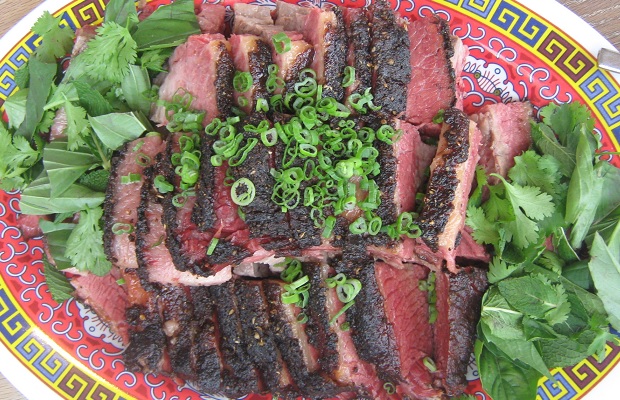
Up on Creekside Estates

Creekside Estate Wines Photo: Eric Vellend

Creekside Estate Wines
 Photo: Eric Vellend

It was the weekend of Godello’s excellent Cuvée adventure, a Niagara winepalooza that included the Brock University Cool Climate Oenology and Viticulture Institute’s Expert’s Tasting. On the road to The Falls there happened an extensive tank, barrel and vertical go round at Flat Rock Cellars and then, with chef riding shotgun, the next essential stop came up on Creekside Estates, a seventeen year-old Jordan winery on 4th Avenue.

Creekside Estate Winery
2170 4 Ave. Jordan Station, ON L0R 1S0
1 (877) 262-9463 or (905) 562-0035

@CreeksideWine

Creekside was founded in 1997 by owner Laura McCain on a 15-acre vineyard at the 4th Ave. site. The early days of the winery saw an attitude towards varietal antidisestablishmentarianism, with Sauvignon Blanc and Shiraz at the forefront of production. Daring to be different from the start, Creekside has carved an antithetical, Niagara Peninsula religious wine belief, slightly devious, with a manifesto towards creating wickedly good wines.

Creekside Estate winemaker Rob Power Photo: http://www.creeksidewine.com/

Creekside Estate winemaker Rob Power
Photo: http://www.creeksidewine.com/

In the early days there was winemaker Rob Power and mad scientist partner in crime Craig McDonald, now the chief of what happens in bottle at Trius. Powers graduated in the first oenology class out of CCOVI and began his vinous stirring with Creekside, a post he continues to develop, never-resting on earlier laurels. Back then the two cubs fermented and blended together, with caution swirling tohu vavohu in the wind. Some of those Meritage blends from the early 2000’s were brilliant strokes of luck, or as winemaker’s like to call it, hard work. Or destiny, or god’s favour. The Creekside credo has never wavered. Being overly serious is not an option. Having made decisions such as purchasing the unparalleled Queenston Road Vineyard on the St. David’s Bench on its side, Creekside thrives by an exhibition of capricious behaviour, adroit winemaking and the rope savvy marketing of veracious and affordable wines.

Assistant winemaker Yvonne “Cellar Monkey” Irvine and Director of Sales, Marketing and Necessary Evil Matt “Semi-Illustrious Career” Loney ushered a tasting of 12 Creekside wines. Here are the notes.

Creekside Estates Winery Photo: http://www.creeksidewine.com/

Creekside Estates Winery
Photo: http://www.creeksidewine.com/

Sauvignon Blanc 2012, VQA Niagara Peninsula, Ontario (620724, $13.95, WineAlign)

Leans and veers to the tropical side, no doubt as a result of a record-setting sugar vintage, but this ’12 manages to finish very dry. The arid descent follows a warm and fuzzy peach feeling, set about by some skin contact and buoyed by citrus and zest. Front yard value.

Backyard Sauvignon Blanc 2013 (Tank Sample), VQA Niagara Peninsula, Ontario (341792, $17.95, WineAlign)

A Creek Shores SB that bridges the gap between spring and summer fruit. From a year in which the choice was made to not blend off into the estate bottling. Recognizable Creekside aromatics stand out in a more than obvious mineral deposit and grapefruit zest way. Here the band plays across The Great Divide so “just grab your hat, and take that ride.” Will be a VINTAGES August 30 release.

Sauvignon Blanc Reserve 2012, VQA Niagara Peninsula, Ontario (142570, $26.95, WineAlign)

Seven barrels make up the Reserve, ferments new (four) and old (three), leading to a richer, fatter and spicier style. Dreamy really, as matchstick and flint join the fray in a Pouilly-Fumé way. That pierre à fusil is exaggerated by the warmth of 2012, with an elevated tang, rendering the flavours even more akin to Old World, Loire Sauvignon Blanc. Close your eyes and when you awake, “when you believe, you will relieve the only soul that you were born with, to grow old and never know.” The Creekside band created an old SB soul in ’12.

Laura’s White 2012, VQA Niagara Peninsula, Ontario (121764, $18.95, WineAlign)

Laura’s White combines Sauvignon Blanc, Pinot Gris, Chardonnay, Riesling and Gewürztraminer in a kitchen sink blend that sees a bit of oak. What’s notable about the ’12 is the omission of two highly aromatic components, the previously employed stalwarts Viognier and Chardonnay Musqué. The adage is justified in that you take what the vintage gives you. If it gives you lemons, (shift tangents) you let the busy aromatics of more flavourful grapes (like Chardonnay) do the floral work. Laura’s ’12 will be a standout for the concept, a revivalist blend to help bring back some religion to the region’s renditions. Coming to VINTAGES in June.

Viognier Estate Reserve 2011, VQA Niagara Peninsula, Ontario (22058, $29.95, WineAlign)

A 60-80 cases annual production from the Queenston Road Vineyard is not nothing because “ya take what ya need and ya leave the rest.” Aside from a miniscule addition out of stainless steel tank, this is all neutral barrel fermented fruit. Reigned in, less boozy and subordinate in oleaginous slide than in the sweaty years. Translation? A superlative vintage. The night they drove a whopping six rows of old ’11 Dixie Viognier fruit down for crushing the band began to play. This, knowing full well there would be no dirty peach martini, but rather a perfumed dropper distilling flowers, wildflower honey and wild tarragon. Rises and falls to verse like a Richard Manuel keyboard march with length to match the Queenston Road.

Rosé 2013 (Tank Sample), VQA Niagara Peninsula, Ontario (winery, $15.95)

A Cabernet Sauvignon (71 per cent) and Cabernet Franc (29) full-on saignée Rosé with colour balance given by way of the CF bleed. An arid entry creeps to sweet with a pause amongst the whispering pines, finishing tinny and with a breath of fresh herbs. Niagara Rosé can get lost sometimes, in extract, hue and a candied, sinking feeling. This is a scaled back vintage which is more than a good thing, so there’s no waiting, “until it all goes round…the lost are found.”

Syrah 2012, VQA Niagara Peninsula, Ontario (121764, $15.95, WineAlign)

A healthy 3,200 cases are managed and executed with ease from mostly estate fruit. Certainly warm in this vintage, dare I say, like McLaren Vale. If it must not be said, too bad, but it’s also a bowl of fresh berries with a rocky Rhône intent. Terrific tar and ash finish.

Cabernet Shiraz Estate 2011, VQA Niagara Peninsula, Ontario (305300, $16.95, WineAlign)

A traditional Oz combination of Cabernet Sauvignon (55 per cent) and Shiraz (45), clearly new world in style, as Yvonne Irvine says, like “trying to make a big, rich, unctuous Shiraz.” The question could be posed, “temptation stands just behind the door, so what you want to go and open it for?” This one goes right to the jawbone with serious backbone and streak of acidity. Not to mention chalk, grain and a Shiraz solo. The American oak accent is clear and the tannins say wait two to three years, please. The fruit may, or may not comply.

Laura’s Red 2010, Queenston Road Vineyard, VQA St. David’s Bench, Niagara Peninsula, Ontario (117906, $19.95, WineAlign)

It’s funny, more than any other wine tasted, this Laura has that Niagara varnish other Creekside reds seem not to possess. “Stock up in the big years” suggests Matt Loney, and “consolidate in the tougher ones.” It could be argued that you can make more interesting wines in the lean years but this blend of Cabernet Sauvignon, Merlot, Syrah, Malbec and Petit Verdot lays a claim to seriousness, if needing at least three years to settle down. There is much cassis, sweet oak, iodine and a milk/dark chocolate swirl. Complexity for sure if just a bit huge within its own skin.

Merlot Reserve 2008, VQA St. Davids Bench, Niagara Peninsula (winery, $34.95, WineAlign)

Here is a wine that is aging gracefully, works with and fits into the vintage, Merlot as objet d’art, grown in stature as if by wizened verdigris. Smells like Goulash or Côte de boeuf à la Bordelaise, even cured meat. Might also be considered in terms of funk, a note sometimes brought on by Hungarian oak. Tons of red fruit, pencil, anise and “the smell of the leaves, from the magnolia trees in the meadow. King Harvest has surely come.” Few Ontario reds succeeded in ’08 like this Queenston Road stunner and few will live as long. Another classic by the band.

Cabernet Sauvignon Reserve Queenston Road Vineyard 2010, VQA St. David’s Bench, Niagara Peninsula (winery, $34.95, WineAlign)

Impeccable correctness in terms of the variety from a year where the heat giveth and the heat taketh away. Works Cabernet properties properly, embracing and minimizing oak without pretending it’s not there. This red is expressly lush and oak driven, as it should be, it being Cabernet and all. Leaves its appendages out for a Mediterranean pedicure, a glaze of Cassis, black olive and black cherry dug in a chair entrenched in the warm confines of the St. David’s Bench.

Lost Barrel Red 2007, VQA Niagara Peninsula (46470, $65.00, WineAlign)

Just 60-80 cases are made from the tips of the best barrels through a process that takes 56 months to complete. The secret ingredient is Sangiovese and bless the band‘s soul if the ferric, iron and animal musk is not attributed to the addition. This is a different kind of wine, with lees in the bottle, not unlike some big, bad Spanish wines. It’s ’07 and still reductive which makes it seem peculiarly modern (note, Spanish) but it’s really not. Despite the monster tannins, it “just gave my heart a throb to the bottom of my feet and I swore as I took another pull,” the Lost Barrel can’t be beat. Up on Creekside Estates.

Good to go!

Bottles, barrels, tanks and a vertical

Flat Rock Vineyard, Twenty Mile Bench, Niagara Peninsula

Flat Rock Vineyard, Twenty Mile Bench, Niagara Peninsula
Photo: Brian Barton

as seen on canada.com

Listening to Flat Rock Cellars’ winemaker Jay Johnston rattle off the numbers and particulars of his 2013 Pinot Noir harvest you can’t help but survey the odds of something preternatural. Vintage speculation for 2013 in Niagara has met with tempered interpretation, a play down on the effects of weather and generalizations that it was just another normal meets classic year. Nothing to see here. You sure about that?

This according to VQA Ontario. “2013 was an interesting year with some significant weather variations through the growing season…weather conditions during the 2013 season were quite variable…with some isolated late frosts in Niagara…temperatures through September and October were slightly higher than normal but October was wet putting pressure on harvest schedules and many wineries worked long hours to optimize harvest strategies around the weather.” Sound the alarm?

Flat Rock’s vineyard is a wondrous bit of topography. Peer out from the conclave tasting room and witness a rolling set of undulating and breaking waves, ascending, descending and demarcating the landscape. Let Ed Madronich point out individual plots and blocks. Imagine each sub-section of the vineyard as its own little hermetic world, with its own soil biology and guided by its own little set of rules. Now taste Pinot Noir tank samples from 19 disparate parcels. Internalize, disseminate, deconstruct and reconstruct. As if you were the master of single varietal assemblage. Mind blowing actually. Nerdy, but mind-blowing.

House and Home Food Editor Eric Vellend and I sat down with Johnston and Madronich at the winery for a comprehensive look at those ’13 Pinots, fresh out of their infancy and just beginning to offer a glimpse of what they will be. A total of 185 tonnes were harvested at a more than modest 24 to 24.5 brix, a sugar quotient effectuated by timing as much as sunshine. Nineteen chapters delineate the story, in 160 barrels and in the end there will be two wines. The 2011 Block Series experiment will once again go unrepeated, though Jay notes a return could be considered for 2014.

2013 Vintage Flat Rock Pinot Noir Samples

PHOTO: Eric Vellend
Flat Rock Cellars Pinot Noir samples from the 2013 vintage

The tank room was very cold on this last day of February 2014 (you don’t say) so Johnston brought up the samples in what can only be described as a highly classified, secret society of winemakers, high-tech way; in plastic water bottles and Erlenmeyer Flasks. The goal was to offer a representation of the fingerprint of the vineyards and the fermentation management through full composite blends of each batch. We tasted through eight of the 19. The first three are from batches that end up in the Flat Rock Estate Pinot Noir. Clonal selections are noted in brackets.

Flat Rock Cellars 2013 Tank Samples

PHOTO: Michael Godel
Flat Rock Cellars 2013 Tank Samples


South (115)

Tang at the forefront, a mineral streak, red berries and a lingering whisper of citrus squeeze from recent (X-mas) sulphuring.

Horseshoe (777)

Dusty and also juicier, from an icy, polar beginning to come back around, calm down and seek a softer, common (to South) end.

Road (777)

Beastly, meanest sucker of the three, speaking with the most rock. The only one (of the first set of three) with some funk.

Monster (A blend of clones)

Funkadelic funky but also the fresh maker. Cherries and high-toned perfume, a feral hint in a leafy, good compost way.

Pond (667/777)

Most like cousin Monster, with increased ferrous activity and striking as the most recognizable to be Flat Rock Pinot Noir, even at only four months of age.

Mountain (667)

The darkest hue yet, with more smoke, heavy rock and a fuller structure.

Bruce/Summit

Bottom and top of the (west) vineyard collide with a mineral tie connecting the two. Grit and toughness here, depths of Mordor and Prunus Serotina, cherries gone black. The combo effect confuses the fruit, rendering the B/S the least subtle and distinctive.

Bruce West

Back to dust but also tang and bigger tannins. Vines with less vigor and smaller berries to thank.

These eight samples all begin in antipodal and far away places but come together to seek common ground. As a window to the outlook for 2013 I can say with unequivocal doubt that if these wines were in bottle they could all be enjoyed right here and now. Pinot Nouveau. They are possessive of a computation in complexity to each tell an individual story. It would be hard to figure Jay and Ed waiting a full 12 months to see them into bottle, especially from the showy blocks. Look for Flat Rock to knock some off to racking in late spring to preserve their amazing level of freshness. The 2013 vintage looks to offer immediate gratification. Its longevity remains to be seen.

Vineyard view, Flat Rock Cellars

PHOTO: Michael Godel
Vineyard view, Flat Rock Cellars. Note the warmest rows.


Notes on (not yet released) 2012′s and 2013′s

Pinot Noir 2012, VQA Niagara Peninsula (1545, $18.95, WineAlign) VINTAGES Essential

Nearly 4000 cases will be available of this nearly-unfiltered, very established and always well-thought out Pinot Noir. A consideration of the plots and barrels micro-management that determine the crasis of this Estate wine demands an extrapolation in full-on assessment. The medium-coarse Chinois filtering lends to a tannic chain of texture thick in grain and chalk. A heavier Estate because when the weather gives you heat you make a climate appropriate wine. This monkey is not a product of arctic air and it “got too deep, but how deep is too deep?” Thermal vintage melt, ritzy ripe cherry stuff in 2012. From the Ritz to the Rubble, if you like, or the Flat Rock.  88

The Rusty Shed Chardonnay 2012, VQA Twenty Mile Bench, Niagara Peninsula (1552, $24.95, WineAlign)

There will be 660 cases of this barrel cherry-picked, now iconic Bench Chardonnay. The warm vintage called for a combo-malo approach, part batch all in, part arrested development. Gravity influenced top down blending also work to seek a svelte elegance and this ’12 really straddles the humid line. Thinks to be ribald but remains chaste, only allowing a kiss from the barrel and a caress from the rocks beneath the soil. Accept immediate but know that deferred gratification is the hallmark of this bottling.  89

Nadja’s Vineyard Riesling 2013, VQA Twenty Mile Bench, Niagara Peninsula  (578625, $19.95, WineAlign)

From a sample just pulled from the tank. Jay Johnston’s concept for Nadja is to create many fermentations together, using 2000L tanks and some barrels. The ferments are arrested when they achieve balance and then blended. Nadja still has her young fizz on and she’s exaggerated in Metallica meets a wondrous kind of sour. Already showing an unfurling of (mostly citrus) fruit but also spice and hurried depth. Frantic Riesling, will she “stop to warm at karmas burning, or look ahead, but keep on turning?”  89-90 

Pinot Noir Rosé 2013, VQA Twenty Mile Bench, Niagara Peninsula (39974, $16.95, WineAlign)

Tasted from a tank sample. The 2013 Rosé marks a change in direction and approach. No longer a one-dimensional, typical method blush made by saignée, bled off cold soaks, the ’13 goes at it half and half through skin fermenting. As soon as the skins dry out they are removed. The result (though not really apparent four months in) will be aridity with the sweet balance arriving by way of a six to seven percent sulphured dose of Gewürztraminer. The sample swims both upstream and down, through waves of salinity and dulcitude. Will lay claim to being one of the more interesting Rosés from the vintage.  87-88

Red Twisted 2012, VQA Twenty Mile Bench, Niagara Peninsula (86918, $19.95, WineAlign)

Tasted from a barrel sample, this singular Bench brew of Syrah, Merlot and Pinot Noir. After 14 months in barrel, all separated at birth, the varieties were blended in mid-January and will be bottled this March. Yet unsettled, there is a level of unctuousness and cake layering. A big red for the believers, for those who lust for big reds. Currently showing its wood, freshness, acids and potential for balance.  87-88

Sparkling Brut 2006, VQA Twenty Mile Bench, Niagara Peninsula (0238311, $35.00, WineAlign)

Tasted with proprietor Ed Madronich at the winery. This was Flat Rock’s first ever Sparkling wine made in a challenging vintage. The base wine was fermented dry and sent to neutral barrels. Sugar and yeast were added after eight months and it then entered the bottle. Newer vintages may see time stretched to 20 months. At this stage it is very much alive, showing the whole orchard and nothing but the orchard, albeit with some fallen fruit. Some sugar lingers but not enough to pull it from dry. With time the orchard gives to grapefruit. In the end it’s big and biscuitous. Says Madronich, “Our wines can go 15 years, no problem.” We’ll see about that.  89 

Unoaked Chardonnay 2007, VQA Twenty Mile Bench, Niagara Peninsula (68015, $16.95, WineAlign)

Tasted with proprietor Ed Madronich at the winery. Six and a half years have done this unoaked Chardonnay six and a half years of wonder. Green herbs and apple jam spread on a whole wheat cracker. To believe there is not a day of oak on this wine is to bury one’s head in the sand and begin again. It’s that stubborn Bench limestone doing the fooling. “We have great soil,” grins Ed. A few minutes and a few more swirls in it begins talking in the vernacular of Chablis, in a matchstick tone. It’s also fleshing as it goes. Six plus years and $17? “It’s crazy.”  90

Flat Rock Cellars Rusty Shed Vertical

PHOTO: Eric Vellend
Flat Rock Cellars Rusty Shed Vertical


Rusty Shed Chardonnay Vertical 2011-2006,  VQA Twenty Mile Bench, Niagara Peninsula (1552, $24.95)

Barrel fermented, barrel aged, gravity fed. No other Niagara winery can offer up a vertical like this, in this price range. If there is another, let me know and I’m there.

2011 (WineAlign) Conspicuous by its texture from a mild to middling vintage “when you picked before or after the rain.” Though combined, the antechamber of acidity and good cheer trumps the mudroom of funk and doldrums. A Guns ‘n Roses vintage, a pull in two directions, with a potential for breakdown. “Ev’rything was roses when we held on to the guns.” A soft, buttery note tempers the tang and yet that tang lifts the fruit. The tension is what sets the ’11 up for a classic run.  91

2010 (WineAlign) Increased sugar from a hot year with early ripening. Picking decisions played a crucial role, the prudent winery avoiding the heat of the day. This was key to preserving freshness and acidity. Though the aromas are soft and muted, the palate is lush and plush with a mid-section of adolescent body fat.  89

2009 (WineAlign) A slow and even ripening season culminated with a warm and dry harvest. Ideal harvest conditions. This ethereal ’09 has that late harvest come of age feel but is unwavering from a dry sense of humour. Acting as fresh as the day it was bottled, ole’ blue eyes is in ownership of the best of all the surrounding vintages. It was a very good year for the old Rusty Shed, like “life as vintage wine from fine old kegs, from the brim to the dregs and it poured sweet and clear.” A classic crooner, with wood now neutral and supportive, that will last alongside fruit, to the autumn of its years.  91

2008 (WineAlign) From a cooler, wetter, “Burgundian” vintage. Noticeable terpenes and delineated streaks in the aroma, palate continuum. Like mild cider in a diluted but not watered down way. A matter of elegance and refinement. The oak integration may be the most calming yet and the wine has maintained its freshness. A vintage to measure with clonal ancestors and distant cousins if not Flat Rock siblings.   90

2007 (WineAlign) From a very warm and dry vintage with low yields. Dichotomous, with clean fruit working with and against some barrel and earthy notes. Was a tough year to “manage acidity and freshness,” a fight that was paramount to success. Flint and matchstick also work this ’07, as much like Riesling as Chablis so in that sense this is reminiscent of the Unplugged. In another way, the earth says this is as much of a Brett-influenced vintage as any.  89

2006 (WineAlign) Like the 2007, this has that golden hue so it appears that seven to eight years is the marker for the apogee of consumption. A vintage tough on reds, good on whites. Though not high on opulence, the ingot sheen is like fool’s gold and the trickery works to great effect. A fortune is won in patience because this elegant ’06 eventually sheds its rust, gives up fresh apple and palate cleansing acidity. A show of age and propriety.  90

One more for the road.

Pinot Noir 2003, VQA Niagara Peninsula (WineAlign)

Less than a case is left of this first Pinot Noir made by Ed Madronich. At the time Flat Rock made just 500 cases, including two Rieslings (Estate and Nadja) plus two barrels (43 cases) of Chardonnay. From a cool vintage, 11 years on this Pinot is reddening to maroon, with sour cherry flavours submitted to earth. A hint of soy and toffee. Herbaceous, young vine minted, accented by dill and mushroom. Holding on and showing that older vintages had (not known at the time) depth and structure. Creamy texture if not the cleanest Pinot ever made. First world problem.  88

Good to go!