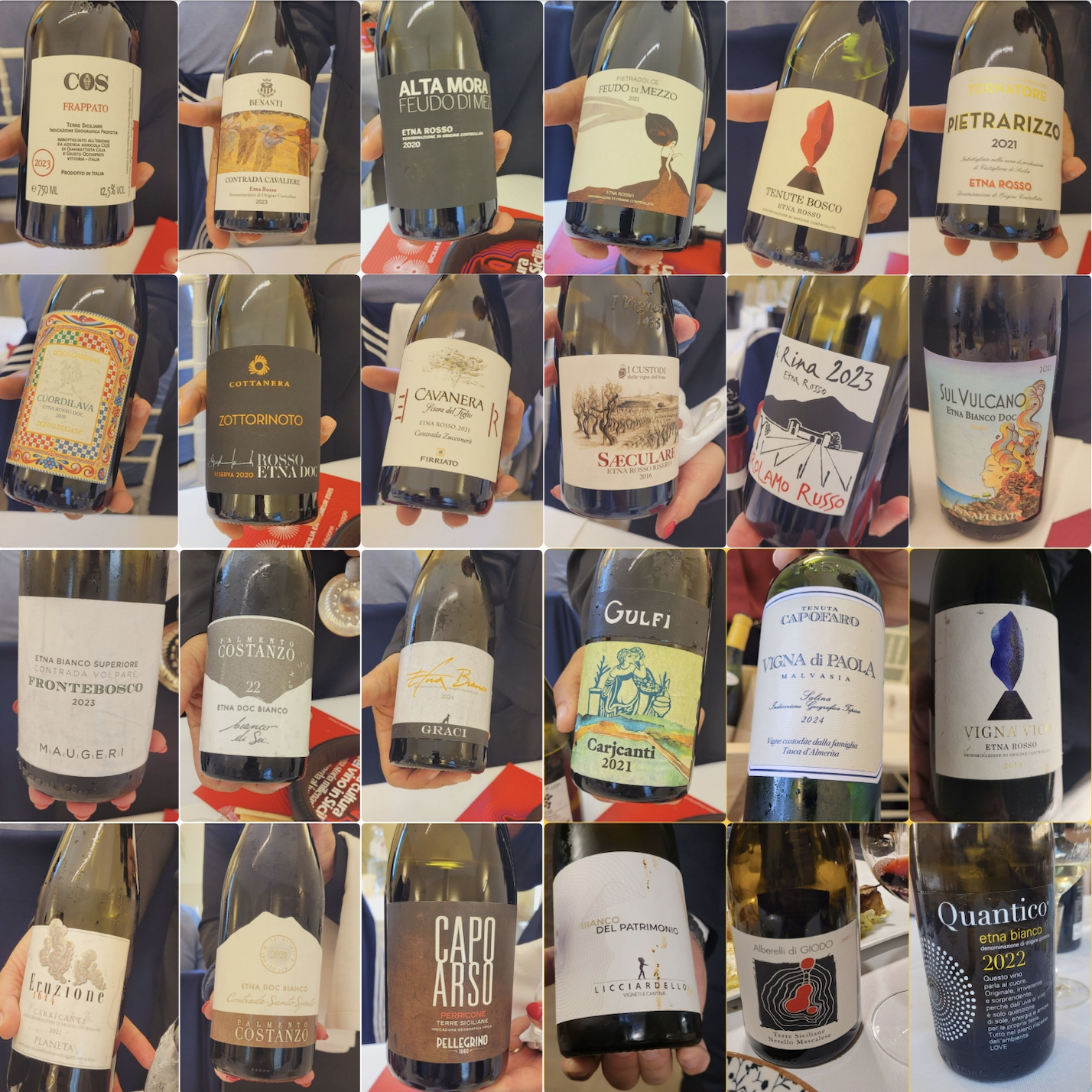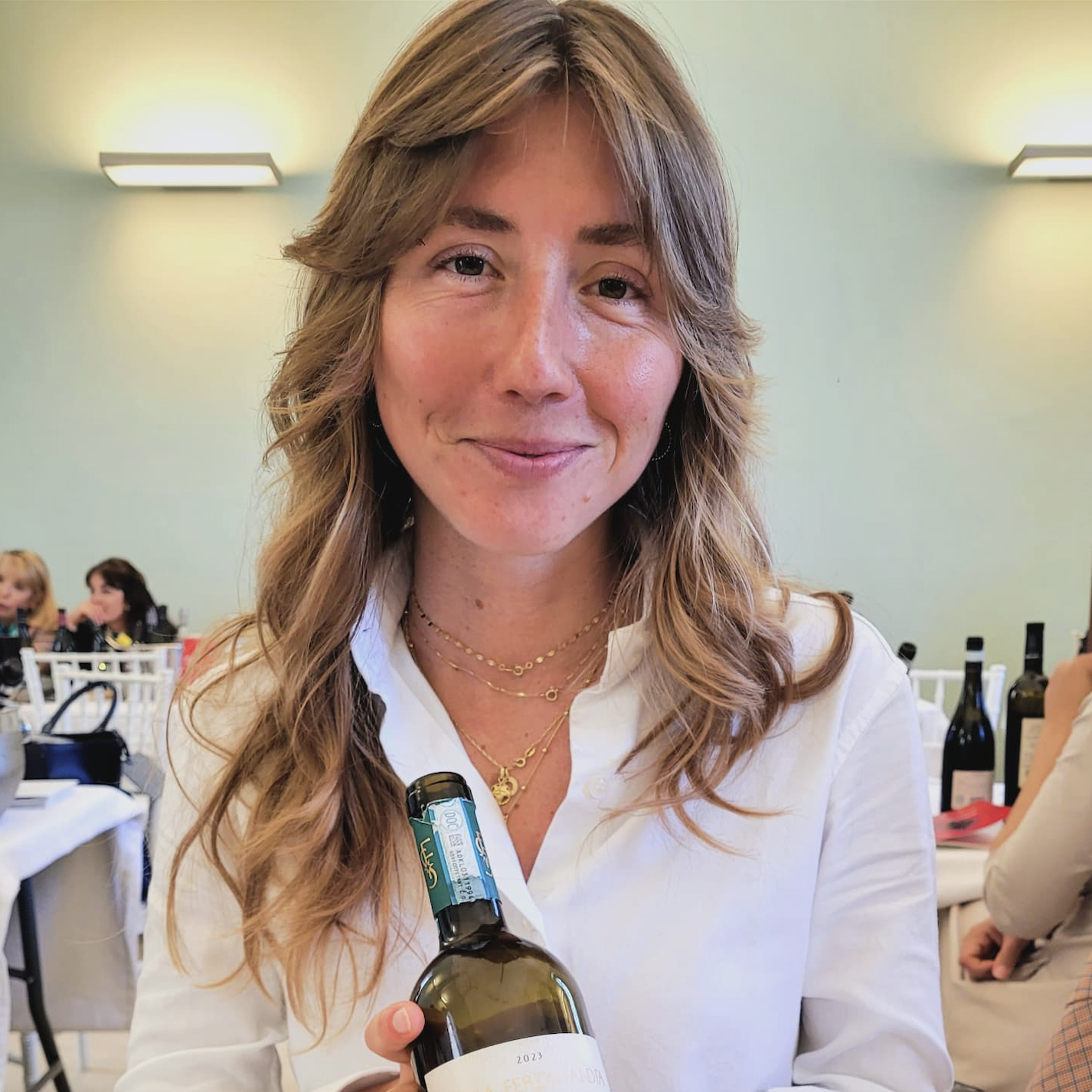
De Rigueur Sicilia en Primeur 2025

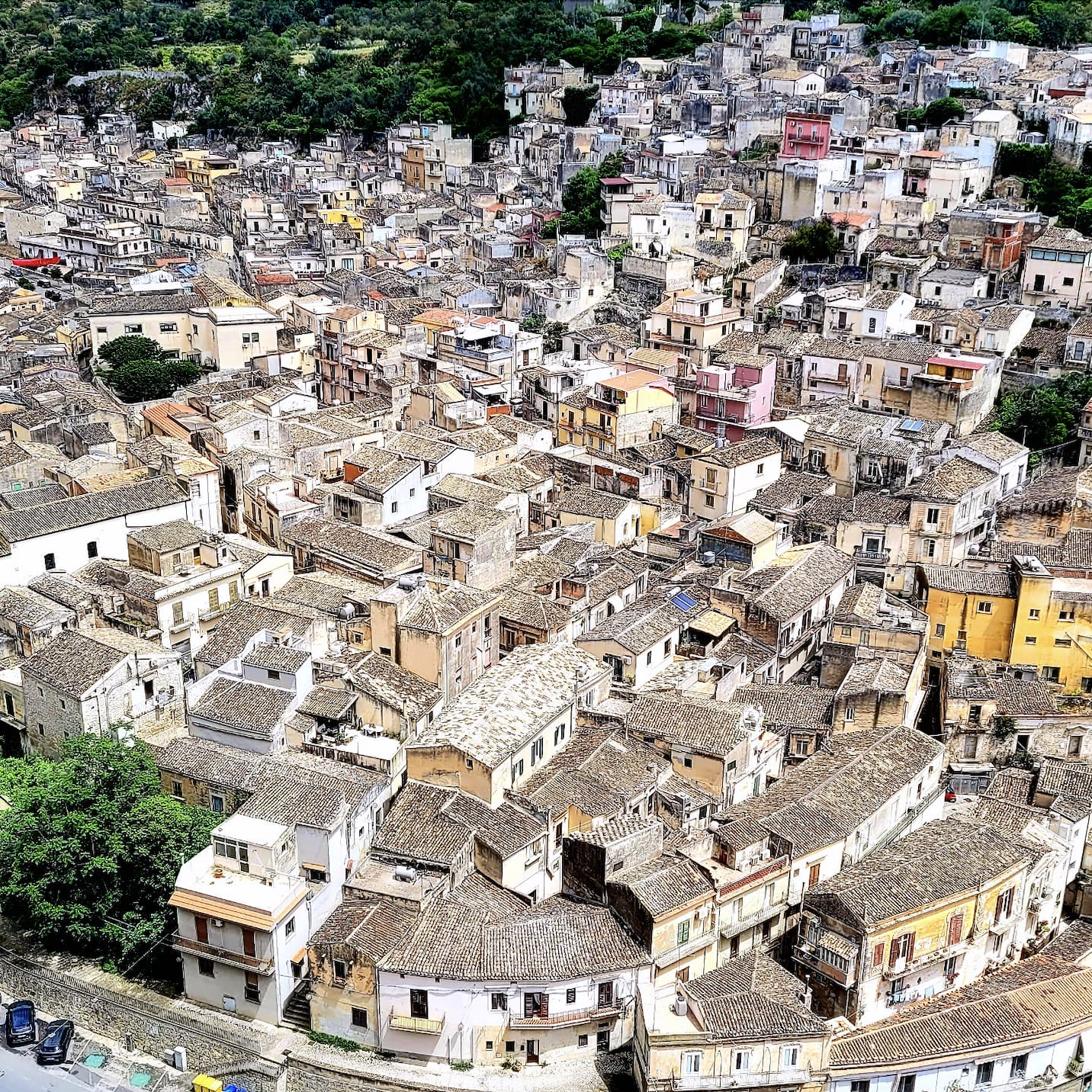
Modica

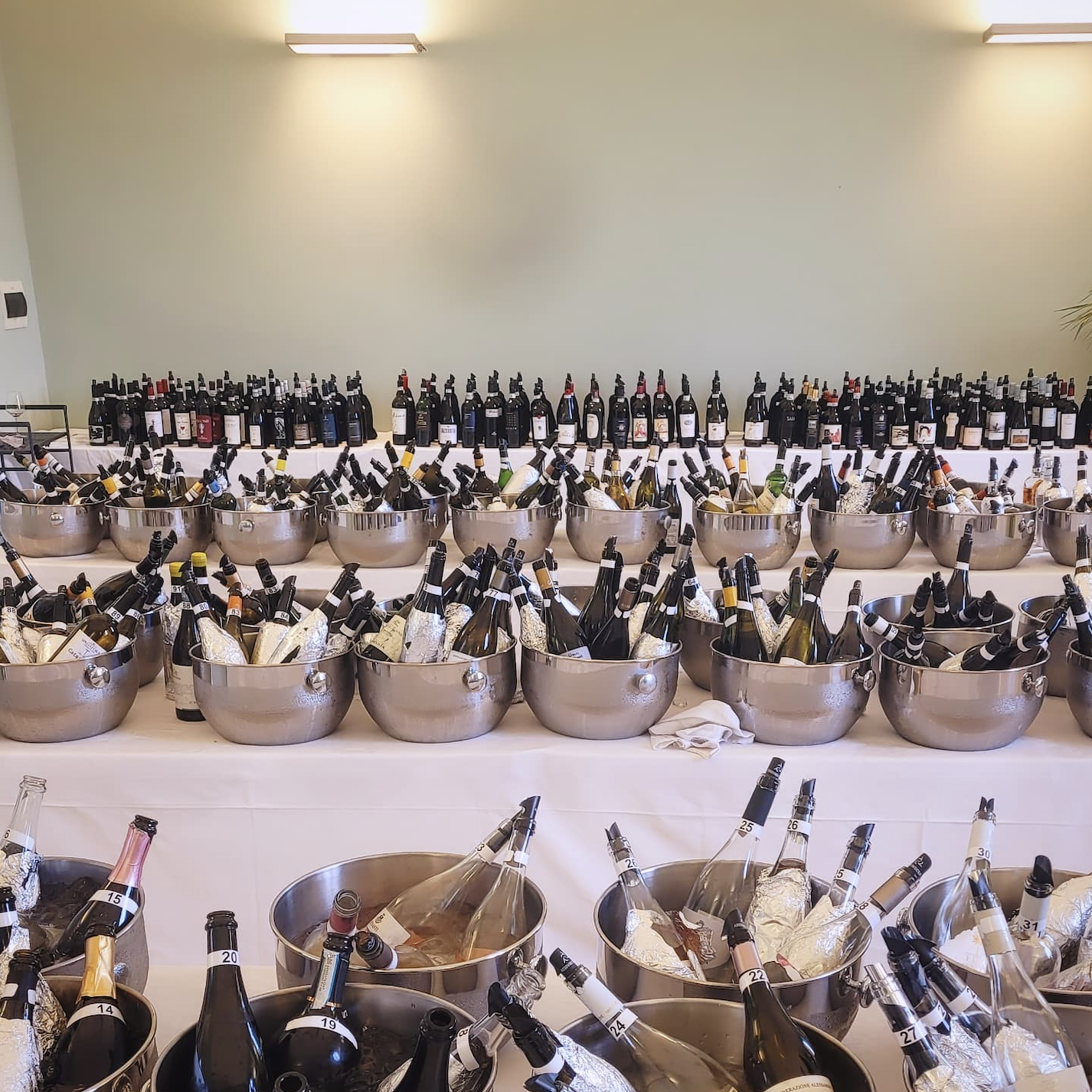
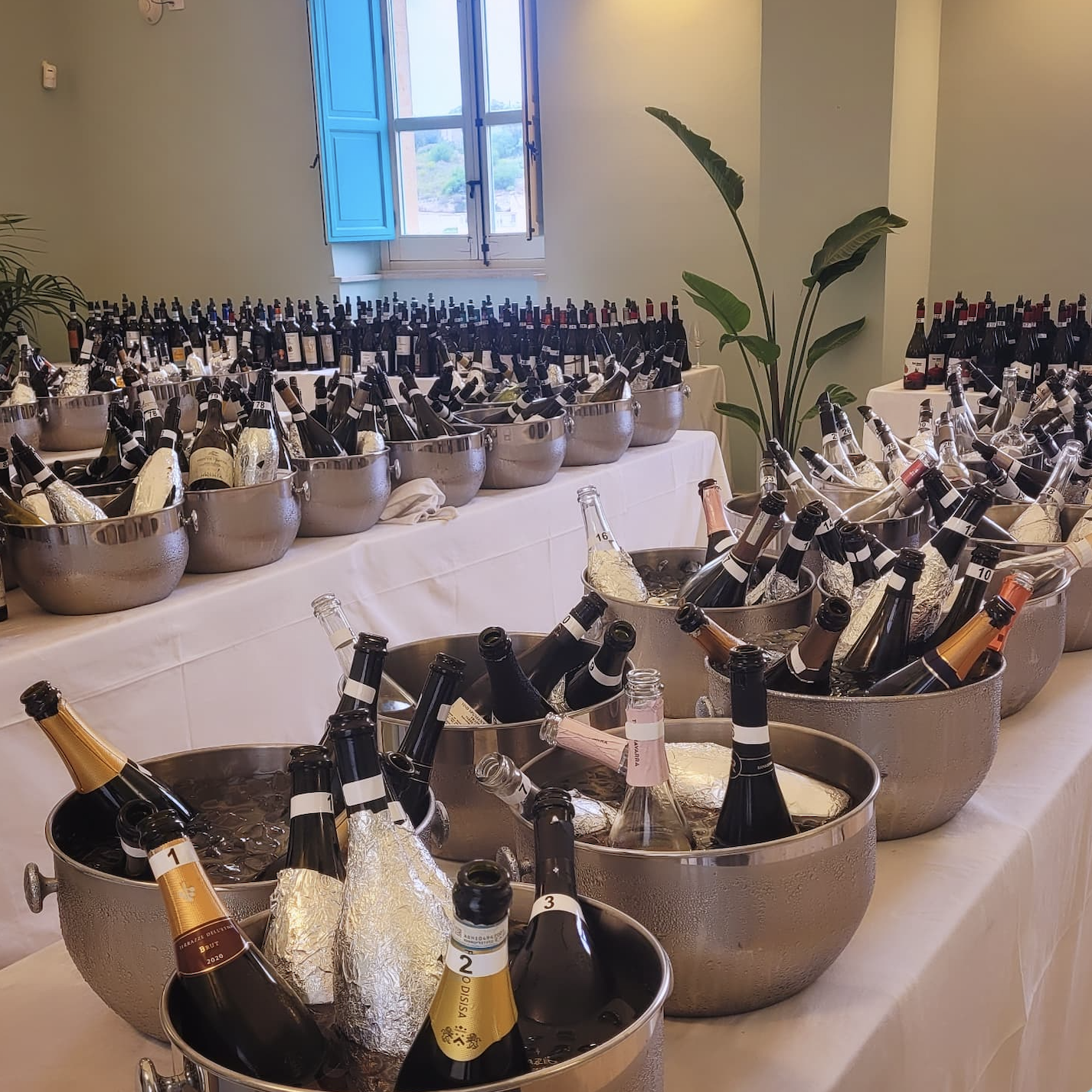
From May 6th through 10th, 2025, the 21st Sicilia en Primeur signalled the annual return of Assovini Sicilia’s proper, correct and yes, also decorous event. Journalists from all over the world arrived by invitation only for a week during which de rigueur was encouraged and for best results, most definitely required. A strict precision needed in adhering to the dictates of weather, cultural fashion, tasting and taking in the final night gala at a luxurious palazzo. The 21st edition’s title “The Culture of Wine in Sicily: A Thousand-year Story that Looks to the Future,” was defined by Mariangela Cambria, President of Assovini Sicilia as “the culture of wine today also translates into a culture of travel.” This is why the abiding delegation of 100 journalists were focused on this essential part of this journey, with their charge to bring the message back home. They came from Italy and many parts of Europe (France, Poland, Sweden, Germany, Norway), also from non-EU countries (Canada, USA, Japan, China, South Korea, Israel, Brazil, and the United Kingdom). Together they engaged in a collective etiquette to celebrate Sicilian wine, food and culture, inclusive of gorging on piping hot finger foods between en primuer tastings at lunch under a hot Modica sun because in Sicily, eating Arancini with your hands is de rigueur.

Neapolis Archaeological Park

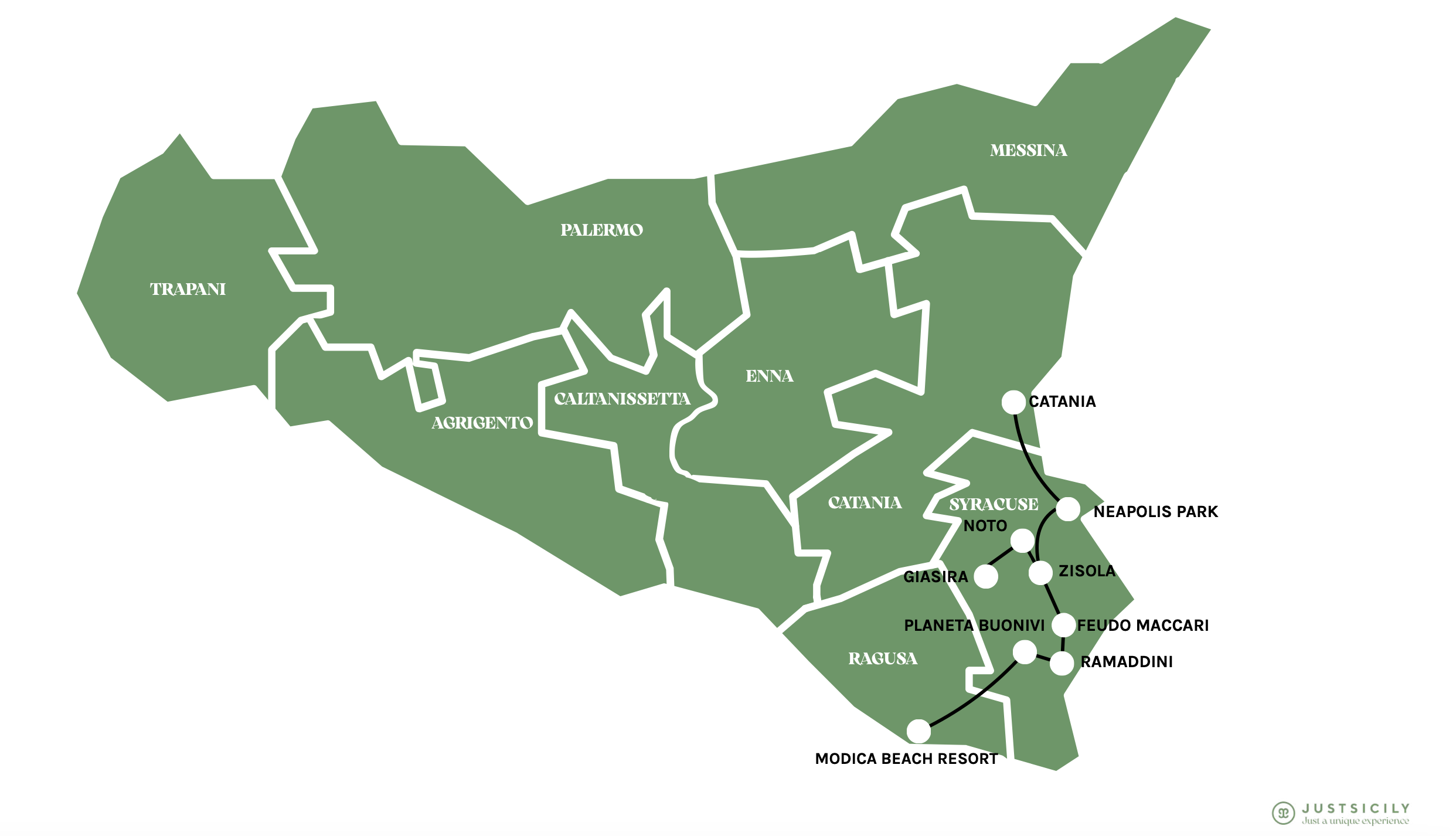
As always the Sicilian Ante-Antreprima sees groups of international journalists making pilgrimages to wineries geographically positioned within a particular quadrant on the largest Mediterranean island. In 2025 Godello joined Zedcomm’s Lucia Boarini and JustSicily’s Marcos del Rio, along with journalists Fernanda Roggero (Sole 24 Ore), Christer Byklum (Mywinesandmore), Giuseppe Lauria (Weinwisser), David Ransom (The Connected Table) and Matthias Stelzig (Weinwelt) for an Enotour around the area of Noto. The group took in the ancient urban ruins of the Neapolis Archaeological Park, the seaside village of Marzamemi, Noto city (Including a caffè and dolce at Corrado Assenza’s Caffè Sicilia) and a stay at the beautifully charming and calming Villa Giulia Hotel. Visits were paid at Zisola, La Giasira, Ramaddini, Feudo Maccari and Planeta. When all was said, tasted, travelled, assessed, satiated and done, the group then joined the rest of the journalists fresh off of their own tours for the two-day Sicilia en Primeur at the Castello dei Conti di Modica.

Godello in Noto

Assovini Sicilia was founded in 1998 by Giacomo Rallo, Diego Planeta and Lucio Tasca and today has 101 member companies producing approximately 900 labels. After a day of technical tasting everyone convened at the Teatro Garibaldi in Modica for more de rigueur talks, including a discussion about “the culture of wine understood as informed and conscious drinking,” led by Dr. Sara Farnetti, Ph.D in Pathophysiology of Metabolism and Nutrition. Master of Wine Andrea Lonardi spoke on the “S factor: The uniqueness of the Sicilian wine continent.” Words from Dario Stefàno, President of the Wine and Oil Tourism Centre (Lumsa University) and Antonello Maruotti, Professor of Statistics (Lumsa University) concerned “The south innovating through events, e-commerce and new hospitality models for wine tourism.” Then finally it was Alessio Planeta, President of the SOStain Sicilia Foundation, speaking about “the sustainable future of Sicilian wine.”

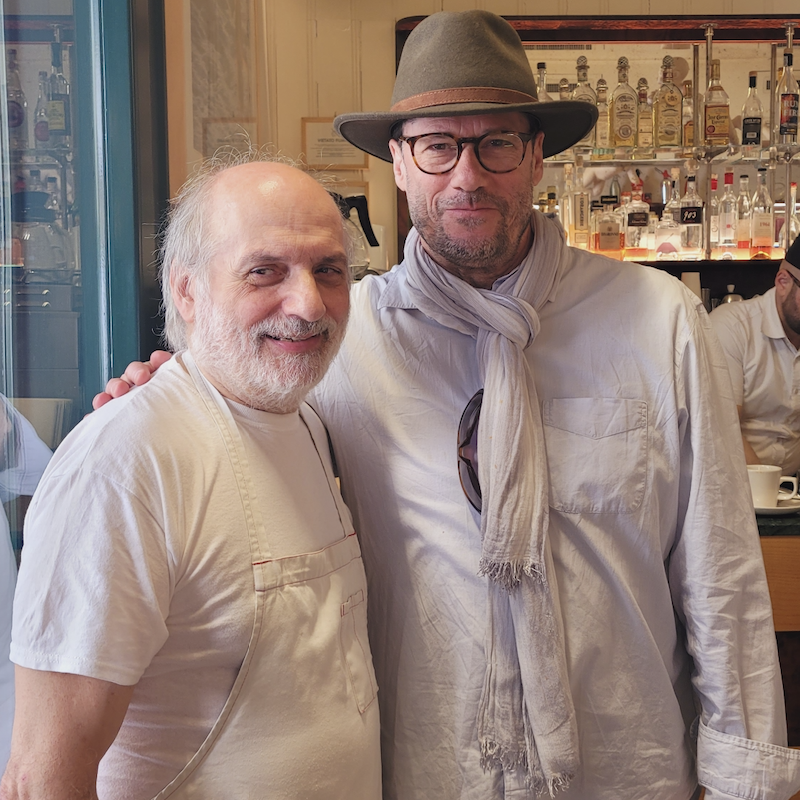
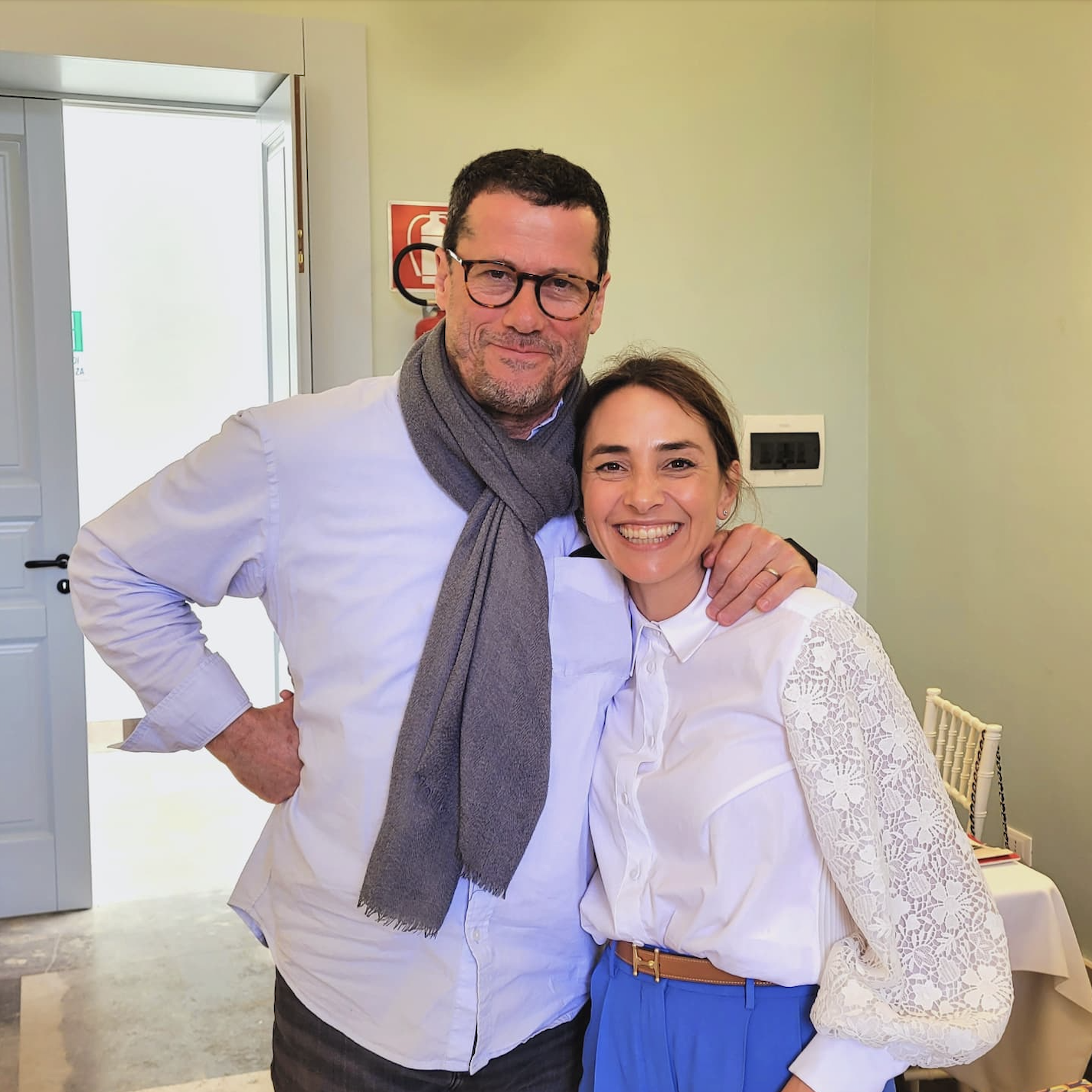
With Corrado Assenza – Caffè Sicilia, Noto

The event concluded on the 10th of May, again at the Castello dei Conti, with tastings of wines from the 57 Assovini Sicilia producers. As always Godello wishes to thank the professional and gracious organization of Zedcomm’s Cecilia Zanasi, Delia Demma, Martina Romeo, Lucia Boarini and Michele Marmino; JustSicily’s Giusi Macchiarella, Giuliana Palazzolo, Giuliana Licata di Baucina, Silvia Mantegna, Marcos del Rio and Federica Matranga; Assovini Sicilia’s Liliana Rosano. These are Godello’s 188 tasting notes from Noto visits at Zisola, La Giasira, Ramaddini, Feudo Maccari and Planeta, along with the wines tasted at Castello dei Conti.

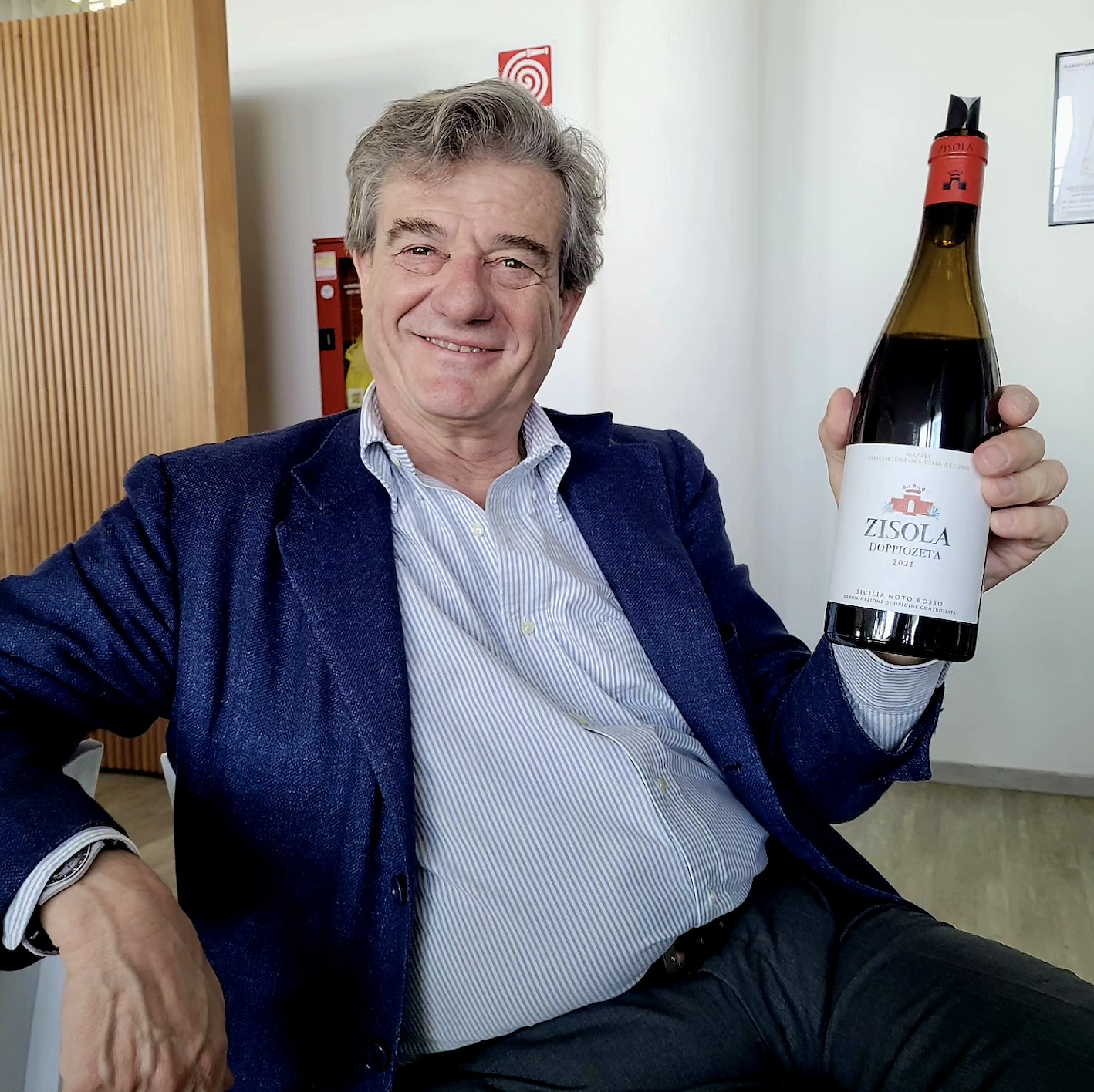
Filippo Mazzei at Zisola

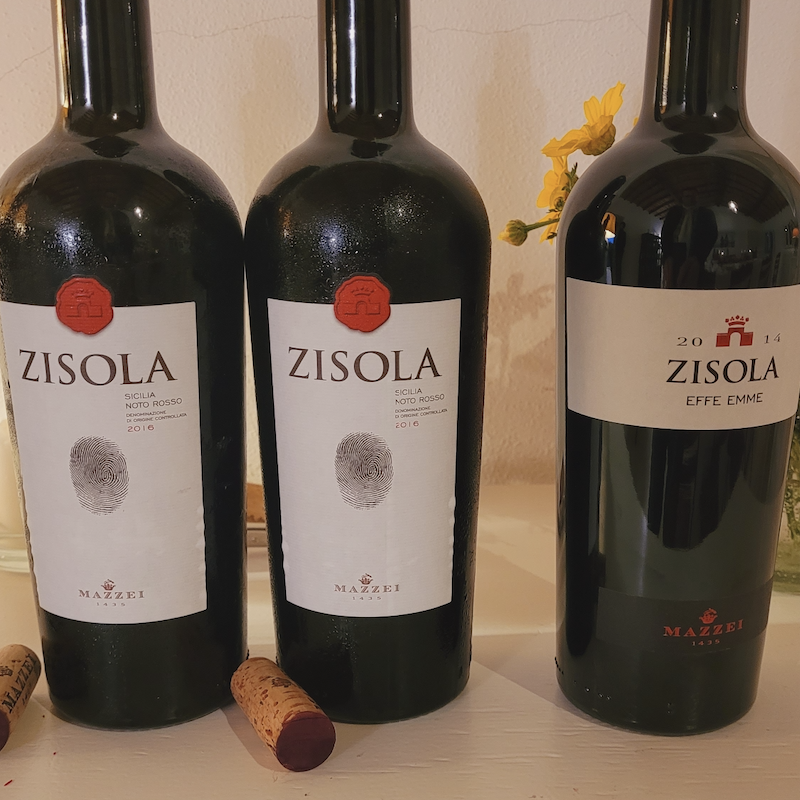
Zisola

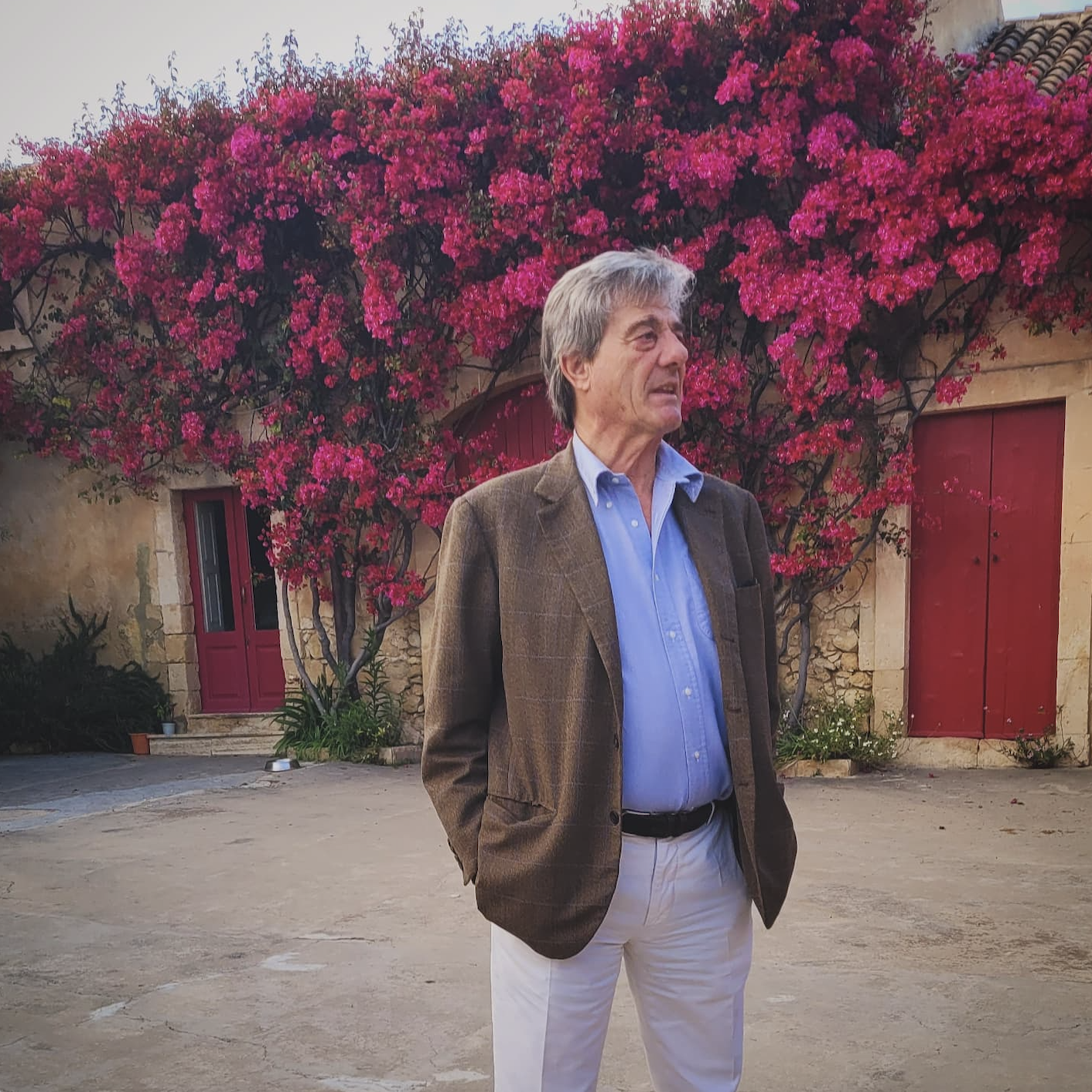
Filippo Mazzei and family have spent 20 years managing the biodiversity of Zisola, where lemon, pink grapefruit, clementine and almond trees line the vineyard. These are white soils though in Sicily they do not reflect the sun and raise temperatures, as they do in Tuscany. “This kind of soil can keep humidity for a long time,” explains Mazzei. “Even in July and August we don’t have A/C at Zisola.” The first plantings were 20 hectares of nero d’Avola plus one each of  syrah and petit verdot. Later on grillo and catarratto, all within six to seven kms of the sea and three to Noto. There are now 25 total hectares of vines and the fermentation cellar was built in 2004.

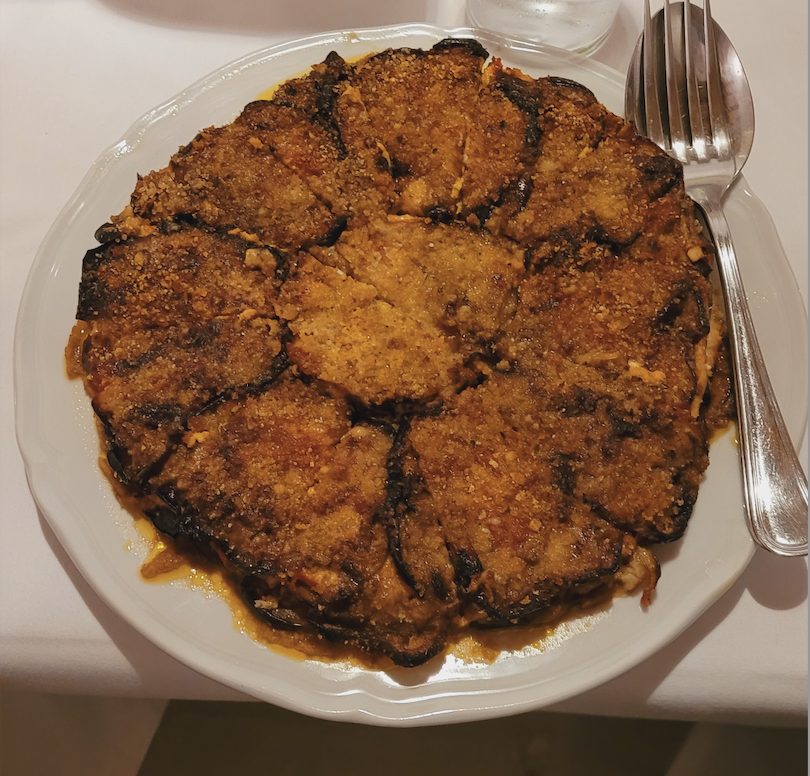
Zisola’s Parmigiana di Pesce Spada

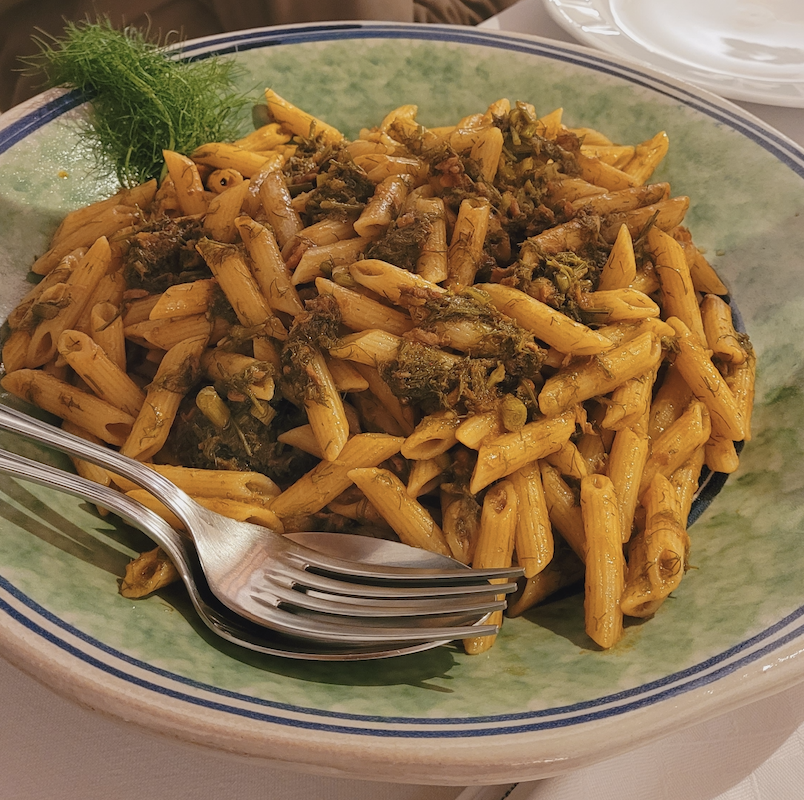
A visit to Zisola will surely include a walk through one of Sicily’s great vineyard blocks followed by a tasting of highest calibre wines. A word of encouragement will say that three dishes might also show up on the table. Parmigiana di Pesce Spada, Penne con Finnochietto and Gelo di Limone. Should you be so lucky, karma would not be a b@%&h. Karma would be calm, neutral, reasonable and generous.

Zisola Azisa Grillo Sicilia DOC 2024

Zisola is not a place where there is a tradition for white wine and there is just one hectare of grillo planted. The name is an extension from Azisa which can translate as “beautiful.” A small percentage is fermented on skins for 36 hours, “to increase body” says Filippo Mazzei. Balances well with the freshness and waxy-aerosol style for a white that screams citrus with a combination of lemon and especially clementine. Surely owing to the plethora of fruit trees growing about the vines. A rarity for Zisola, not only Sicilia and truly a saisfying wine. Drink 2025-2026.   Tasted May 2025

Mazzei Zisola Bianco Contrada Zisola 2023, Terre Siciliane IGT

The most unique of the Zisola wines is this white catarratto made like a red, fermented on skins for three months in “cocciopesto” (as opposed to calling it what we know as amphora), a medium specific to the area. The third vintage for a sku started with the purchase of the vessels in 2021 and each are completely different, a matter of happenstance and not conscious changes or alterations. The 2023 is bloody delicious, suggestively salty, in delivery of an agreed upon “guarantee” of verticality, crazy complexity and something peculiar. Hard to describe and yet also a factor of Alberello (bush) vine training. The grillo is so very clementine but catarratto is more lemon, pink grapefruit and a finishing kiss of almond. Aging should bring about real curious transformations. Drink 2025-2029.   Tasted May 2025

Mazzei Zisola Bianco Contrada Zisola 2022, Terre Siciliane IGT

A glimpse into how catarratto can begin to age and truthfully (yet also technically) nothing has yet happened. A citrus explosion, lemon first and last with great freshness and intensity. Clean and though it may be a new breed of Noto white wine it already shows an ensconced maturity with a precocious character belying its years.  Last tasted May 2025

The second vintage of a 100 percent catarratto from plants that went in back in 2015 on white calcareous soils. Only bush vines and at first made into a blend with grillo. The change was made to do some skin contact and aging in amphora. Really that simple and that is the advantage, no overdoing or distraction in trying to impress. But this does just that, with vibrancy and succulence. Really taut, lemon tight, nearly but not quite piercing. Will change after three years and get honeyed. Reminds of really young Hunter valley sémillon. Top echelon decisions and so bravo Filippo Mazzei and team. Drink 2024-2028.  Tasted May 2024

Zisola Sicilia Noto Rosso DOC 2022

The flagship, calling and business card from 80 percent of Zisiola’s 25 planted hectares, a nero d’avola made in the freshest of Sicilian styles. Clocks in at 12.5 percent, picked early (September 8th) for brightness and well-captured high(ish) acidity. You can feel a bit of wood (from one-third new) and there is no doubt that 20 years into this Mazzei tenure what now matters has been figured out to make nero in the way it should be made. Climbs to the current peak and while better wines are sure to come, this 2022 hits the proverbial and varietal nail on the head.  Last tasted May 2025

Zisola is a project for Filippo Mazzei that began with a 700 km drive around Sicily accompanied by Diego and Alessio Planeta. Noto was chosen because of the biodiversity of the flora, to Filippo not unlike Tuscany. He also fell in love with the old Baroque town and could see a comparison between nero d’avola and sangiovese. “The decision was made based on a feeling.” The 2022 is so much fresher than the nero of 15 years ago, not to mention the balance accrued by way of alberello trained vines. Open up the dictionary and here it is. Drink 2024-2027.  Tasted May 2024

Mazzei Zisola Sicilia DOC Noto Rosso 2016

Seven years later and keep in mind that Zisola is the nero d’Avola made in the largest quantity and not the Rosso destined for extended aging. But in can and 2016 is a perfect example of potential. The lustre and energy are waning though there is little secondary character, just now softening with amiable pleasantries on offer.  Last tasted May 2025

Tasted with Filippo Mazzei in Palermo, Noto Rosso is nero d’avola from the Cantina in Sicily owned and operated by the Castellina in Chianti estate that produces Fonterutoli. A stainless ferment is followed by 50 per cent aging in stainless and 50 in 2nd and 3rd passage oak barrels, It’s a perfectly rich and plummy nero with great red liquorice tang and a distinction to celebrate pure, honest commerce. Very nero, very Noto. Drink 2018-2021.  Tasted May 2018

Zisola’s Penne con Finnochietto

Zisola Effe Emme Petit Verdot Sicilia DOC 2021

Effe Emme is varietal petit verdot from just one hectare planted, the album rock radio red of Zisola and monogram for Filippo Mazzei. He might prefer to see this PV stitched as if by tailored cloth but the spicy aromas, exotic bouquet and volatility suggested frankly indicate something more progressively oriented. The wood is generously, suggestively and importunely employed to exaggerate notes for extended play. Requires some further aging to settle the barrel and finish the score.  Last tasted May 2025

Varietal petit verdot planted in 2004, only 1.5 hectares, just about at the very beginning of Zisola. Incredibly chalky to say that it really speaks for the calcaire but time has come to effect changed so that the vines have come into balance. As petit verdot Effe Emme is not as dark and concentrated as it once was. Really showing its colours, what it is, a child of limestone soils. “Effe Emme,” F.M., long-play radio, well-spoken, one who tells things as they are, Filippo Mazzei. Drink 2024-2027.   Tasted May 2024

Zisola Effe Emme Petit Verdot Sicilia DOC 2014

Second look ten-plus years forward for petit verdot that would have come off of not yet 10 year-old vines at Zisola. Showing most of its age, a smoky varietal red with truffle and a held reserve of concentration and persistent local Balsamico. Violet aromas as well, they are the beauty of perfume while the wine drifts into liquid chalkiness. On the decline but interest still holds and will do so for another 12-18 months.  Last tasted May 2025

A 100 per cent petit verdot, 4,000 bottles made, big structure and at 15 per cent a massive wine. Needed to be held back an extra year and still needs two more years in bottle to soften, release and re-integrate. Big boned, spicy, wood massive and intense. Hematic with welling black fruit. Drink 2020-2027.  Tasted May 2018

Zisola Doppiozeta Sicilia Noto Rosso DOC 2021

Doppiozeta is at least twice as concentrated and focused as compared to the nero d’Avola “classico,” Cru in origin on the more calcareous soils of the estate, picked just two days after the bulk of the nero and yet acidity is not insignificantly higher. Owing to the limestone but also 50m higher in elevation which surely brings just that extra amount of wind. The style of Doppiozeta is ever evolving and this 2021 marks a height of freshness and drinkability, but with a seriousness and focus to share space with top quality nerello mascalese, sangiovese and nebbiolo. Would give the ’21 another year to realize its true potential.  Last tasted May 2025

Yes another fine Doppiozeta nero d’avola from the Mazzei family and their Sicilian estate. Crispy exterior, chewy interior, spice and herbs as accents, salt and pepper seasoning, chalky tannic, reasoned and knowably fine. Consistently well raised, made and delivered, signed and sealed as a really good wine. The freshness is always there and the acidity so ideally suited to grape and style. Drink 2025-2030.  Tasted May 2024

Zisola Doppiozeta Sicilia Noto Rosso DOC 2017

Many hot vintages have powered through Italy as of late, including 2017 and yet Sicily was not that way, not in Noto, not anywhere. And so there is a fine and persistent freshness to Doppiozeta for ’17. A seductive sweetness from a time when the nero d’Avola was made in a more extracted, concentrated and barrel-aged way. Nevertheless in 2025 the wine is showing with distinction. Drink 2025-2027.  Tasted May 2025

Mazzei Zisola Achilles 2021, Terre Siciliane IGP

Just one hectare of syrah as part of the original plantings at Zisola for one of three ultra distinct varietal reds. The most hematic meets sanguine is in a way the closest cousin to all that famous Mazzei sangiovese made way up yonder in Tuscany. In other words the syrah here seems to take on a mineral-elemental feel as notable as any red wine in Sicily. Deeply serious, concentrated and in 2021 also structured, namely because of the season. Also uniquely southeastern Sicilian and yes a few years having passed in bottle has resulted in some movement, though barrel and secondary notes are both just barely detectable. Drink 2026-2031.  Tasted May 2025

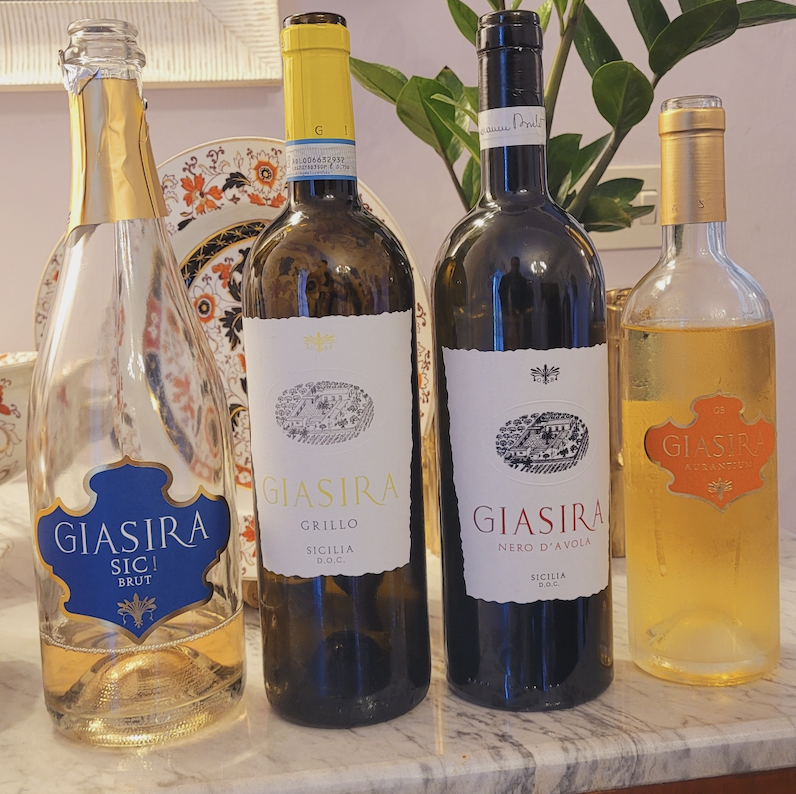
La Giasira

La Giasira is Piedmontese Giovanni Boroli and his wife Veneta Isabella dating back to to 2004. The estate is 130 hectares with 13.5 under vines, of grillo, moscato, catarratto, nero d’Avola and nerello mascalese. They produce 60,000-70,000 bottles annually from vines grwoing in 10-30 cm of soil atop pure limestone bedrock. Tilling happens maybe once a year on this site at 250m above the Telaro Valley (within the Noto Valley), 20 km to both Noto and Modica, equidistant between the Ionian Sea and Sicilian Channel.

La Giasira Bianco 2024, Terre Siciliane IGT

A blend of chardonnay, moscato bianco and catarratto, picked earlier than just about ever, begun in the last week of July. From serious calcareous soils for just 5,000 bottles of Noto area clarity fermented and aged in just Inox tank. Aromatic, all in citrus and freshness captured despite or maybe thanks to the early pick. Bit of almond both floral and raw, the scents of roses and blossoms from clean start to salty finish. Drink 2025-2027.  Tasted May 2025

La Giasira Grillo Sicilia DOC 2023

The grillo stands apart and alone in style when tasted side by each with the catarratto and bianco blend. Here the focus is all fruit, lemon and stone fruit, ripe and fleshy, juices running for a very full and refreshing expression. A capture of southeastern Sicilian sunshine, many heat days accumulating in this juicy grillo. Pour it cold and drink it long. Drink 2025-2027.  Tasted May 2025

La Giasira Keration 2023, Terre Siciliane IGT

Varietal catarratto made with specifically catarratto lucido, just 8.000 bottles (of 60,000-ish total) from the thin soils above limestone bedrock at Giasara. Just stainless steel for six months and three in bottle ahead of release. Noticeably different to the Bianco blend, a decrease in floral citrus and jasmine, an increase in fruit (including the smell of spun sugar) and accompanying viscosity. Immediate level of gratification from a wine with luxe mouthfeel. Drink 2025-2028.  Tasted May 2025

La Giasira Keration 2022, Terre Siciliane IGT

Tasted side by side with the 2023 and the consistency is more than obvious, namely by mouthfeel and viscous feel. A citrus yet reminding of bergamot in curd or granita form. Really persistent white, lingering for a minute with a moment of almond at the finish. More sapid than salty, even more so than the still truly fresh 2023. Drink 2025-2027.  Tasted May 2025

La Giasira Rosato 2024, Terre Siciliane IGT

Made with 100 percent nerello mascalese from the early pick of vines planted back in 2006. If it smells and tastes like mascalese than it must be mascalese, of roses and tart red berries, here salted and finishing at rhubarb. Rosé that quenches by doing what it should for a simple and specific purpose. Ends on a sapid botanical note. Drink 2025-2027.  Tasted May 2025

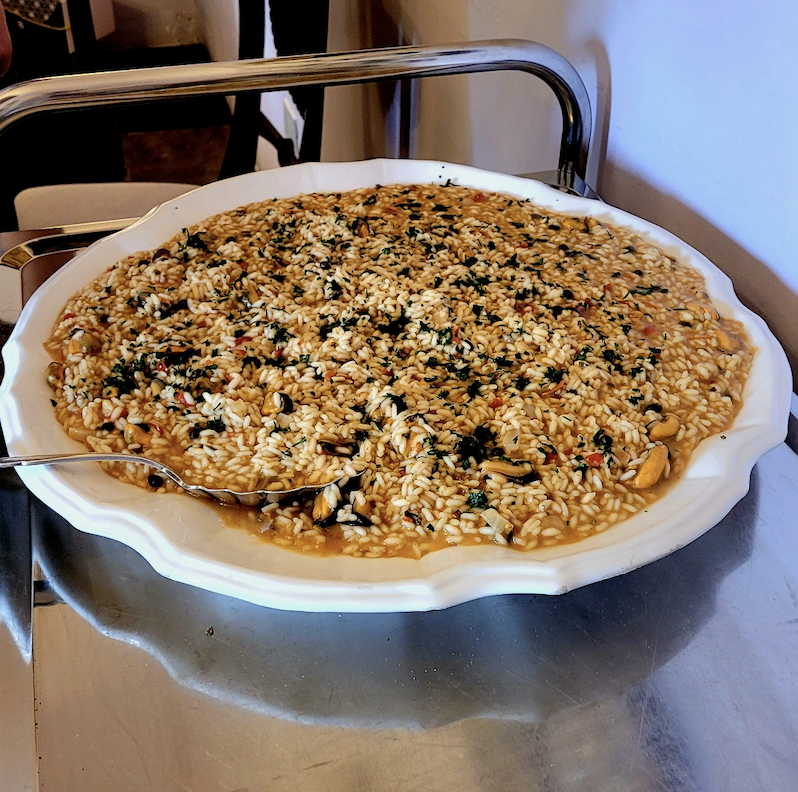
Unbelievable Risotto con Pesce at La Giasira

La Giasira Morhum 2023, Terre Siciliane IGT

Morhum is 100 percent nerello msacalese off of hybrid Cordone Speronato/Guyot trellised vines planted in 2006, aged nine months in (25 hL) botte grande. Several intensities noted, first floral and then an implosive tart palate style with more than impressive controlling acidity. Surely picked early extending forth to fineness and a finesse wound up in the tension. Tannins are fine and also wound tight for a light yet currently aggressive nerello mascalese. Drink 2026-2029.  Tasted May 2025

La Giasira Nero d’Avola Sicilia DOC 2021

One of ten small production skus, here at 6,000 bottles of nero d’Avola raised on Cordone Speronato trellising and the serious calcareous geology at Giasira. Spends 12 months in botte grande, followed by six months in bottle ahead of release. Current vintage and so six months is more like 30 to mature a tannic nero d’avola ready and drinking in balance, just as its 13.5 percent alcohol frame would want. Forget the big, wooded and thick nero you may know and see the nebbiolo meets pinot noir forest for the Noto nero trees. The conceptual origin is kind of obvious, that being Piemonte so that here you might almost believe this to be a cool climate red. For Giasira the pick is later than most of the rest of the farm, in the last 10 days of September. There is some verdancy but it works and in all the right ways, finishing with good and proper tension. Drink 2025-2028.  Tasted May 2025

La Giasira Nero d’Avola Sicilia DOC 2018

More than a notable amount of persistent freshness yet now a whole lot of exotic spice going on. Getting cardamom and cinnamon (but no clove) from a nero d’avola now at the epitome of “morbido,” in this case smooth as opposed to soft. The nose shows development if not age in terms of oxidation or secondary character. More maturity on the palate with dried bokser pod and carob. In other words classic for nero d’Avola from a warm climate made just six years ago with more wood and concentration, though nothing like some other very wooded peer examples. Drink 2025-2027.  Tasted May 2025

La Giasira SIC! Spumante Metodo Classico Brut Rosato, Terre Siciliane IGT

Just nerello mascalese aged 24 months and finished below Brut with what feels like just a few grams of residual sugar. Quenching and not so serious while in delivery of great satisfaction. The clarity is palpable for such a clean sparkling wine. Taste this nerello bubble with a risotto blessed with fresh mussels and capers for a true gustatory experience. Drink 2025-2027.  Tasted May 2025

La Giasira Passito di Noto Sicilia DOC 2022

A passito from grillo not produced in every vintage, citrus zesty and aerosol though teasingly dry on the nose before unveiling its sweetness and tang on the palate. Lemon gelée with the bite of granita and truth be told the limestone of Giasira’s soils surely effect the dessert wine as much as the dry whites and reds. Nice botanical edgy finish too. Drink 2025-2030.  Tasted May 2025

Sicilia en Primeur Enotour 11 – Noto

Ramaddini Perla Marina Vino Spumante Brut, Terre Siciliane Bianco IGT

Charmat method sparkling wine made with the local moscato di noto, soup sugary, neutral and vague selvatica meets macchia aromas. Sweet but in a typical Brut way and number with more than vague bitters at the finish.  Tasted May 2025

Ramaddini Grillo Nassa Sicilia DOC 2024

Nassa, a fishing reference for the catching of fish (owing to the nearby seaside), a 100 percent grillo grown in the Rammadini Contrada up in the hills four kilometres away from the cantina and five from the sea at Marzamemi. Lemon through and through, pith and seeds included for a bitter tonic of grillo, yellow and also green. High vigour and yields make for an insipid, vapid and diluted white wine.  Tasted May 2025

Ramaddini QuattroVenti 2024, Terre Siciliane Bianco IGT

A blend of chardonnay and catarratto aged in wood and the notes waft out immediately, like smoke from a chimney. The aromas are problematic, as a baked potato which indicates the challenge of diethyl acetate. The palate does not improve much and the vanilla overpowers the fruit.  Tasted May 2025

Ramaddini Nero d’Avola Sicilia DOC Noto Nere 2022

A varietal nero d’Avola aged in 70 percent steel and (30) barriques as smoky and vanilla-toasty as the whites. Surely some residual sugar fills in the holes and mellows the greenness in the wine. Waxy, sappy and syrupy.  Tasted May 2025

Team JustSicily

Ramaddini Syrah Sicilia DOC Noto Nere 2022

Purely syrah as smoky and toasted as the nero d’Avola to a point where distinguishing one from the other is like trying to identify the difference between identical twins Richard and Geoff Saunders back in high school. I wonder if the syrah can write nero d’avola’s Math exam and nero can go sub in for a date with syrah’s girlfriend? But seriously there is nothing to distinguish this as Sicilian syrah, nor is their any charm, or joy to be found.  Tasted May 2025

Ramaddini Patrono Nero d’Avola Riserva Sicilia DOC 2021

Longer wood aging and the signature varietal nero d’avola that takes Rammadini’s work to the next level. Not necessarily a wine that speaks to more attentive farming but instead to more attention in the cellar. The philosophy concentrates on how the wines are made and aged with the most focus on Patrono and it shows. The notes of vanilla, lavender, red berry and white chocolate shake exert themselves with impunity. You can age this for a few years and see it mellow into a soft, creamy, thickened and emulsified red. Drink 2026-2028.  Tasted May 2025

Ramaddini Al Hamen Passito di Noto Sicilia DOC

Strange mix of marmalade and diesel in a moscato passito as botanical as it is gaseous. If apricot was a metal and orange slices were urinal pucks. Flawed.Can’t fathom what happened here.  Tasted May 2025

Feudo Maccari

Feudo Maccari

The Sicilian exploration of Tuscany’s Moretti family of Tenuta Sette Ponti. As with several other Noto area estates, Maccari was set up 25 years ago  on 200 hectares with 65 planted to vines, most trained to Alberello (medio).  Much like the others the location is heavily influenced by limestone soils set halfway between the Ionian and Mediterranean seas. There are predominantly nero d’Avola and grillo, but also seven hectares of syrah. The company also farms 11 hectares on L’Etna (called Etnae), namely in the Contrada Santo Spirito.

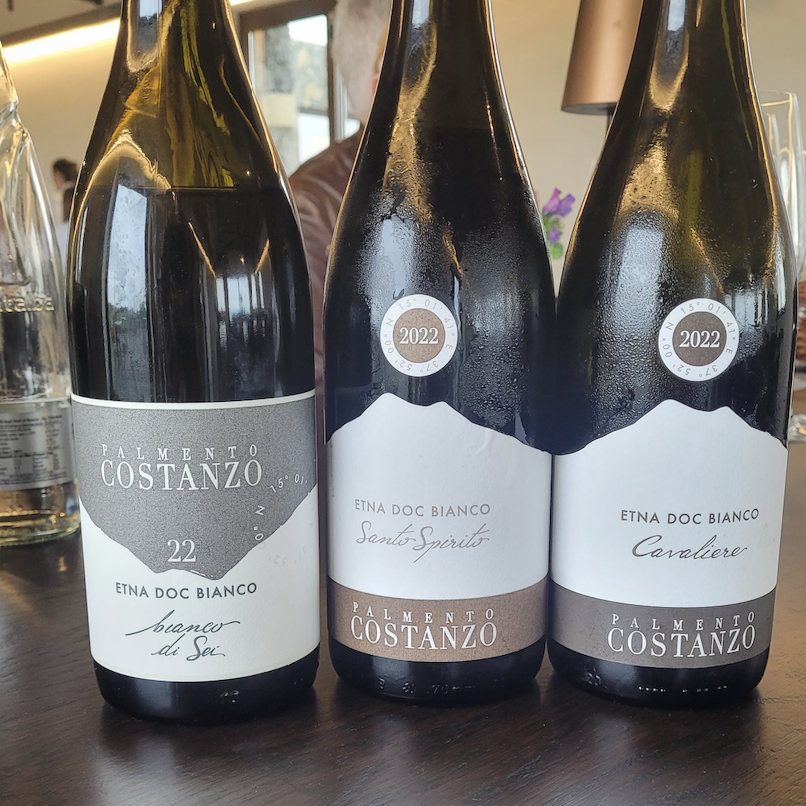
Feudo Maccari Anima Lucente Etna Bianco DOC Contrada Santo Spirito 2024

Anima Lucente is the only Maccari Etna Bianco, made with 85 percent carricante and (15) minella grown in a 700m, 60-plus year-old “garden vineyard,” on Passopisciaro bush vines. Natural ferment, half in steel and half in ”blanched” second passage French wood. Just bottled a few weeks ago and already the wood is easily integrated, subtly specialized without so much as a toasty, vanillin or buttery trace. Racy Etna Bianco from head to tail, judged, interpreted and translated as a garden blend should. Quite edenic for the ilk and of dreams realized. Not the most complex, nor does it need to be but it’s so hard not to be seduced through to the mineral-metal finish. 10,000 bottles produced. Drink 2025-2029.  Tasted May 2025

Feudo Maccari Anima Vulcano Etna Rosso DOC Contrada Santo Spirito 2022

Red counterpart to the white Anima Lucente, moving from luminescent to charcoal volcanic in Rosso that spends only a reasonable and amply fortifying eight months time in barrel. Perfectly professional, seasoned, stylized and straight up the middle road taken for the DOC and more importantly but also specifically the contrada of Santo Spirito. Speaks in the clearest double “S” vernacular, explains and delivers just what is expected and frankly wanted from a contrada-specified Etna Rosso. Acids are in synch with the rusty grit split between fresh and dried elements. Stamp of guarantee. 3,000 bottles. Drink 2025-2029.  Tasted May 2025

Feudo Maccari Animardente Etna Rosso DOC Contrada Santo Spirito 2022

Slightly higher elevation also from the Passopisciaro contrada of Santo Spirito, here at 750m and same vine age in and around 60 years. This time the qualifying suffix “ardente” refers to passion or a burning for something, that surely being the raising of impressive Rosso from out of the Etna lava stone flows. The reference also elicits the heat and colour of the magma fused with the current orange-hued basalt. A more serious Etna Rosso of depth and tannic intensity, doubly structured and needing time. The botanical feels mixed with structural elements more than grip the palate, hold on tight and show no immediate sign of letting go. Give this two more years. 3,000 bottles. Drink 2027-2032.  Tasted May 2025

Feudo Maccari Animantica Etna Rosso DOC Contrada Santo Spirito 2022

From the owners of Tuscany’s Tenuta Sette Ponti. Animantica, a compounded abbreviation of anima and mantica, i.e. “soul and divination.” A spiritual combination for the smallest of Etna Rosso productions from Contrada Santo Spirito. Exhibits the freshness and accessibility of Anima Vulcano juxtaposed against the tannic frame and freight of Animardente but the expression is subtle, restrained and without the ardent flaunt of necessity. The vines here are 100-plus years pre-phylloxera grown in the “garden vineyard,” inclusive of some (white) minella. Rosso as graceful as any on the Etna and therefore fully qualifying as mountain wine. The tannins are suave and fluid to see a “divinazione” of 10 years or more. Just 800 bottles. Drink 2027-2036.  Tasted May 2025

Feudo Maccari Grillo Sicilia DOC Olli 2024

Olli, part of grillo read backwards and a local name for the grape. A reminder how it arrived as a cross between catarratto and zibibbo, developed by Baron Antonio Mendola of Favara. Clean, fresh, ripe and accessible to all, for all the correct reasons and any time at all. Yellow fruit and flowers, some sapidity and the easiest drinking white anywhere from Sicily. Vines averaging 20 years bring the knowhow and concentration. Drink 2025-2026.  Tasted May 2025

Feudo Maccari Family and Friends 2023, Terre Siciliane Bianco IGP

The wine once made for, you guessed it, family and friends that first became a commercial label with the 2012 vintage. Vineyard is now more than 20 years old with grillo vines growing in sand and limestone. The label advocates “only the best grapes” and the amenability meets style of this varietal wine suggests that to be the honest truth. A lemon intensity in concentration and bursting fleshy segments are juicing through the entirety of the wine. Again a sapid (as opposed to salty) element, not quite botany or “macchia” but savoury nonetheless. Hides the 14.5 percent alcohol frame with ease. Drink 2025-2027.  Tasted May 2025

Feudo Maccari Vigna Firraru Family and Friends 2023, Terre Siciliane Bianco IGP

The most important grillo comes from the black-soiled clay vineyard above the cantina, a.k.a. Fabbro, from Sicilian dialect the name Firraru describes the colour of that terroir. Alberello vines are 20 years of age (as with all the grillo plantings) and now having come into their zone. A ferric element emerges as per the soil to separate this grillo from the other Family and Friends varietal white. Even more sapid, metallic surely and length increases. The French wood, richness and generous alcohol all impress while doing their part in well rehearsed integration. Drink 2025-2028.  Tasted May 2025

Feudo Maccari Rosé di Neré Sicilia DOC 2024

More than obviously stuck to Provençal style guns with a Rosato made with nero d’Avola softly hued, pale and simple. Just two hours of skin contact plus five months of aging in steel. A lees effect, however soft and in restraint though consistently designed and presented with the Feudo Maccari sapidity up front. Showing some true to from nero notes, of ripe berries and sweet herbal savour. Well made and reachable for all. Drink 2025-2026.  Tasted May 2025

Feudo Maccari Sicilia DOC Neré 2022

A mix of nero d’avola vines young and old, of 10 and over 30 for the signature varietal business card of a red wine. Dusty and notable Balsamico with a local nickname for the most important variety, not only for Noto but all of Sicily. Neré is more restrained and quaffable than ever before, with crusted, skin musky fruit and high acidity. A wine to chill and spill without thinking too much on anything at all. Drink 2025-2026.  Tasted May 2025

Feudo Maccari Sicilia DOC Saia 2022

Saia comes from Arabic, a word making reference to centuries old rainwater collecting irrigation canals and the first label produced by Feudo Maccari in 2002. These are the oldest estate bush vines, now more than 30 years of age with the eyes, canes and fruit of experience. More obvious depth and layers to nero d’Avola as Saia, a treasure trove and trough filled with fruit and accompaniments in complexity. A nero adorned but also soft with some pruning of the fruit while still amply structured. Not grippy or with tension per se but in control and able to age. Drink 2025-2029.  Tasted May 2025

Feudo Maccari Nero d’Avola Sicilia DOC Sultana 2022

A single vineyard nero d’avola from white limestone soils of 20-plus years that sees 10 months in tonneaux, coming out in the 15 percent alcohol range. Just one hectare like Guarnaschelli and aromatically speaking the most mineral-elemental and therefore salty nero d’avola for Feudo Maccari. Genuine depth and ideal push-pull posit tug between fresh and dried elements with a chalky understreak that speaks to the brown skeletal soil and its limestone content. A wine made in the vineyard, as they say, exaggerating and celebrating the local Balsamico and singular savoury improvisations. “Autentico.” Just 1,000 bottles made. Drink 2026-2033.  Tasted May 2025

Feudo Maccari Nero d’Avola Sicilia DOC Guarnaschelli 2022

A single vineyard nero from black volcanic soils of some 60 years that sees 10 months in tonneaux, coming out in the 15 percent alcohol range. Just one hectare like Sultana and the terroir directs the result. Greater intensity and grip but also a converse style due to the ulterior elements that come from basalt as opposed to limestone. There is a richness to the mix of dried and fresh fruit, Balsamico and macchia, a layering that continually delivers more and more. The clarity and finesse from Guarnaschelli do well to balance and smoothen both the new wood and elevated level of alcohol. Just 1,000 bottles made. Drink 2027-2035.  Tasted May 2025

Feudo Maccari Syrah Sicilia DOC Mahâris 2022

From seven hectares of syrah, the second label produced at Feudo Maccari, first vintage 2005. The name refers to Arab watch towers along the sea coast and it is the wine “that symbolizes the meeting of different styles and cultures.” In other words syrah brought to Sicily and how it has prospered, with FM being one of the pioneers in terms of scale and time having worked with the French variety. Then again the legend of Marcus Aurelius, Syracusa and the variety have by now become one to make this one of the island’s own. The 2022 is full and wooded, seasoned to the hilt and within good reason because this is what the grape wants from Noto. Fruit and structure are tied by sweet acidity as much as they are by tannic freight. Full wine and one to impress. Drink 2026-2032.  Tasted May 2025

With Santi and Alessio Planeta in Noto

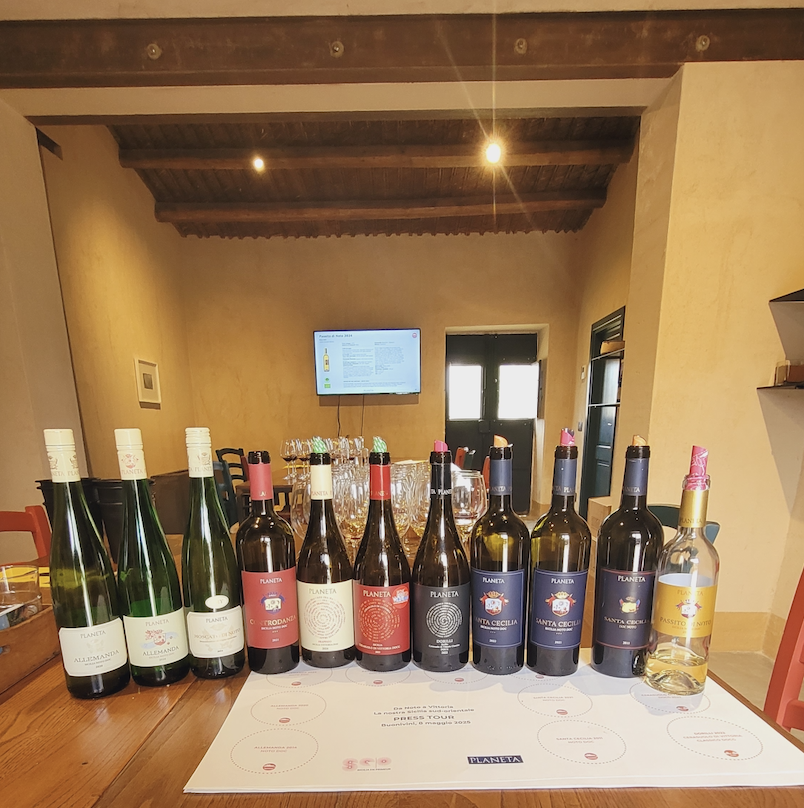
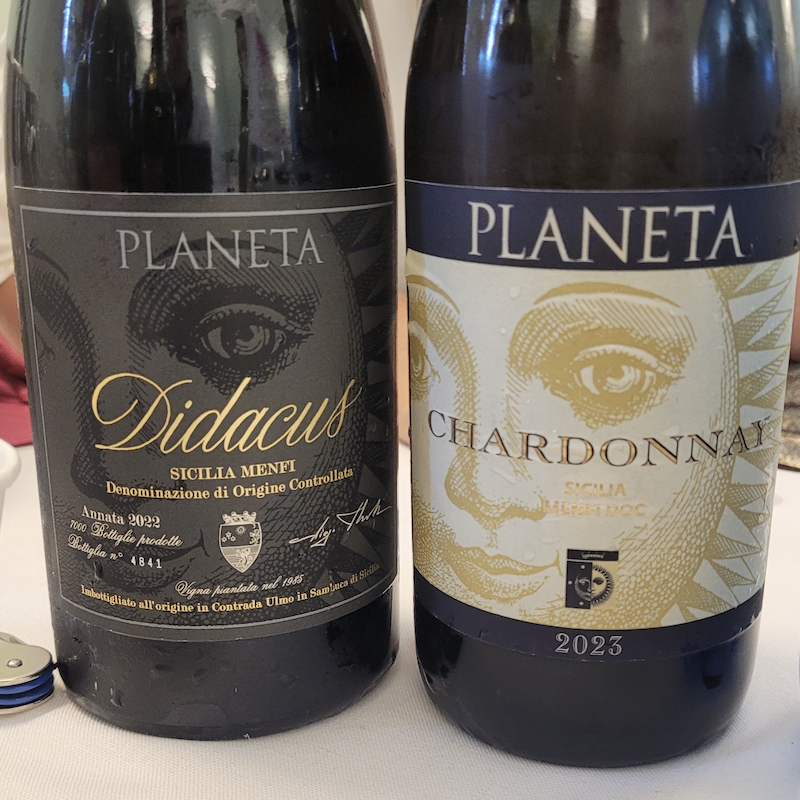
Planeta

Diego Planeta. Pioneer, visionary and a man who considered the entire island an agricultural playground where anything was possible. The Planeta family has Spanish origins and roots dating back five hundred years. Diego Planeta was the former president of the Settesoli Cooperative and founder of Planeta winery. His passing in 2020 left an irreplaceable hole but 15 cousins, including Alessio, Francesca and Santi Planeta are the beneficiaries of their uncle’s plans and legacy. Five family members run the day-to day operation and more than 200 vinicultural, viticultural, administrative and marketing artisans share in the collective vision. Today they work, farm sustainably and reap the benefits of five distinct estates but more than that they bring the fruits of these locations to the world. No other producer in Sicilia does this, not with the scope and breadth they do.

Noto is the birthplace of nero d’Avola, graced with calcareous soils like Jerez and Champagne, not really comparable to anywhere else. Noto is close to Vittoria in how the wines come to be but it’s a mobile texture, silken and with velvety tannins. The soft hills of Buonivini are blessed by soft breezes arising from the meeting of two seas, ideal for nero d’Avola and moscato, but also almonds, carobs and olives, symbolic plants of the Mediterranean location. The three vineyards are agliastro, buonvini and zuppardo on 45 hectares, acquired piece by piece, today producing the DOC wines Santa Cecilia, Moscato di Noto and Passito di Noto.

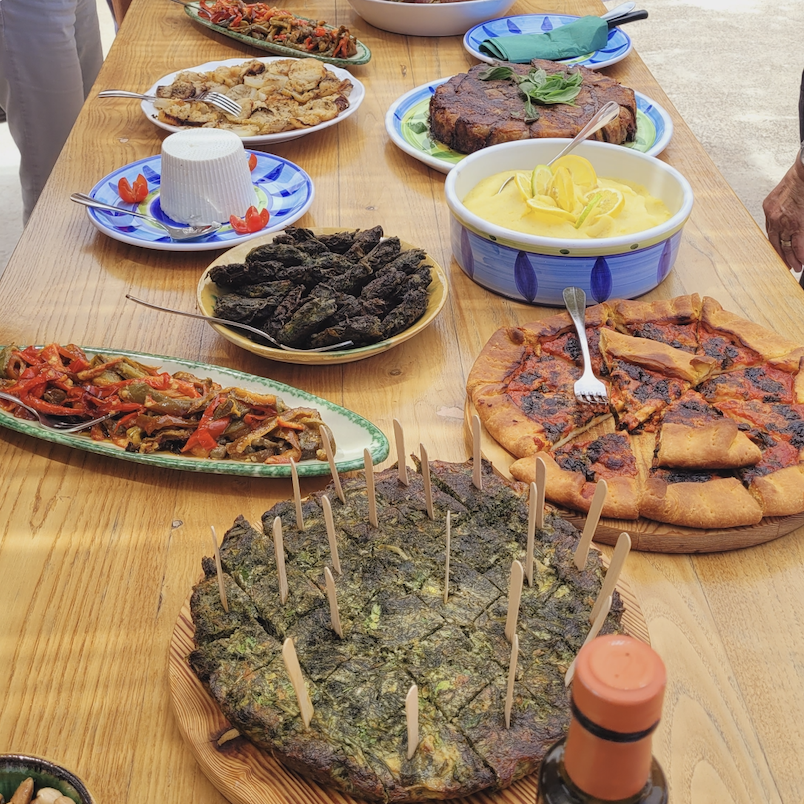
Country lunch at Planeta, Noto

Planeta Noto DOC Allemanda 2024

Always the (totally) dry moscato from Noto, white grape that has been a focus for Planeta not quite but almost since the beginning. From the Bounivini – Agliastro vineyards built of lime, soy marl and whitest of white chalk. A low production vintage because of drought and small berries though the aromatic variety translates as high and expressive as ever. Freshness and botanicals meet at the middle where citrus predominates. No questioning the quality and intensity for what must be viewed as a singular style and effect of white wine. Never searing and of a sapid notion that seems too bely the calcari, but that is exactly why this moscato works as a dry white wine. If you like top echelon dry palomino then this will induce interest along a similar line. Drink 2025-2029.  Tasted May 2025

Planeta Noto DOC Allemanda 2020

A fine Sicilian vintage with ideal climatic conditions and looking back four years you get some evolution in the way you might think about what happens with dry sémillon or riesling. Now an arriving mix of honey and petrol to compliment the concentrating mandarin and lime blossom notes. In a way it feels like a sweetness is developing but that is a faux reality because there is literally no sugar in this moscato. Testing 2020 in 2025 seems just about right – another year and things will really go secondary. Drink 2025-2027.  Tasted May 2025

In the Noto cellar with Alessio Planeta

Planeta Noto DOC Allemanda 2014

More than 10 years have passed and forget secondary because tertiary has come to town. Fully developed maturity between the honey and petrol, sapidity strong and metal savoury, everything having coalesced into a finished and now finishing wine. This is where moscato will go, here with distinction because of how clean and competent it bagged character all those years ago. Drink 2025.  Tasted May 2025

Planeta Nero d’Avola Noto DOC Controdanza 2021

The first vintage of this specialized dance in Noto was 2016 and here five years later we begin to see the balance and personality really showing forth. Also from where and how the heavy presence of white limestone grabs ahold of nero d’Avola’s soul and hauls it straight down to the ground. All the carob and some liquorice define the flavours of Controdanza for a full and satisfying experience, replete with fine acidity and elastic intensity. Drink 2025-2028.  Tasted May 2025

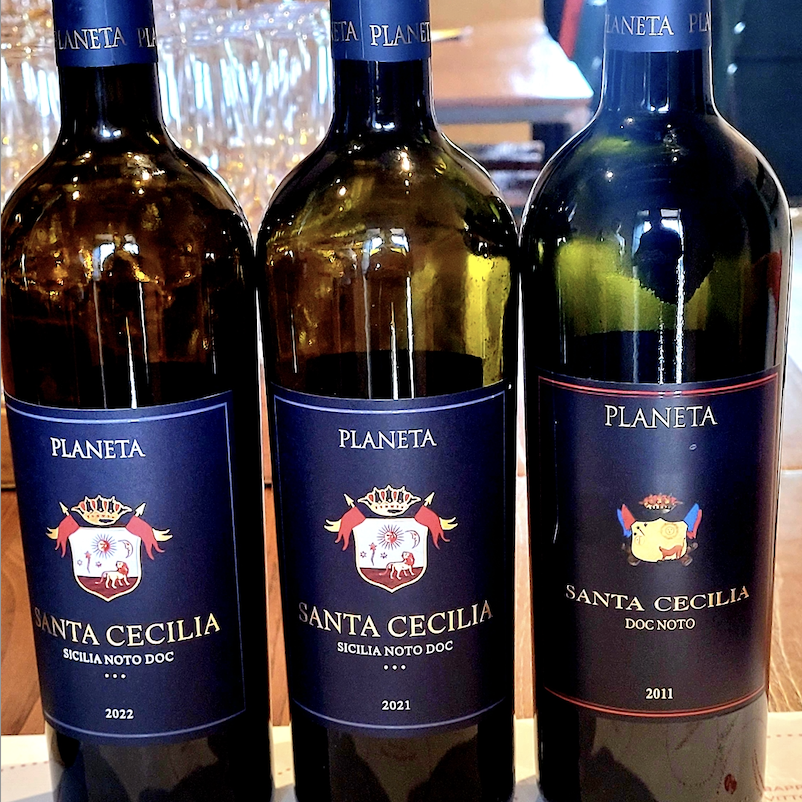
Planeta Santa Cecilia Noto DOC 2022

A preview yet to be released but a finished wine bottled a year ago. The first vintage (as a reminder) was 1997 and 50 percent is aged (12 months) in new wood, the rest of the nero d’Avola in used barrel. Two parcels of the Zuppardo and Agliastro they are, both contributing to the mille-feuille layers that deliver wave after wave of varietal flavour, character and soul. They are the most importantly identified white (calcareous) soils chosen for this flagship varietal red in the Planeta world. Santa Cecilia owns a chalkiness in its tannic profile that feels singular, non-inimitable and willing to take 10-15 years to fully transform. The 2022 is a prime example of a latest vintage produced serving as its best. Drink 2027-2035.  Tasted May 2025

Planeta Santa Cecilia Noto DOC 2021

Not much movement as of yet, save for a moment of carob, naturally honeyed with caramel and earthiness. Speaks to ripeness as much as maturity. The acids from 2021 are at the fore right now, loudest of clamour and opening the window for clarity and the complex fruit component coming into focus. Yes there is a minor feeling off secondary character but just in infancy to suggest three more years in this stage.  Last tasted May 2025

Such a fine iteration of nero d’avola as Santa Cecilia, a 2021 more mature and open than before but is that not what it should be? Fruit so naturally curated, sweet and generous to speak of a great potential and long future. Fine acidity as well while also necessary and yet as the wine sits on the palate those credible and knowable quality of nero tannins remind of Cecilia’s past. Anyway this is both handsome and beautiful, vulnerable and strong. Fluid and confident, loving and powerful, with a spoonful of Noto nourishment to last a very good long time. Drink 2025-2034.  Tasted May 2024

Planeta Santa Cecilia Noto DOC 2011

Now well into secondary with plenty of tertiary having come to take over the personality of Santa Cecilia 2011. Still there is some freshness of fruit and especially how acidity affects the development of original elements transforming into later life pleasure. Now showing as a perfectly gorgeous 13-14 year-old nero d’Avola from a second stage understanding within the overall Planeta idiom.  Last tasted May 2025

Santa Cecilia from 2011 is a special nero d’avola, balanced in silent but sweetly deadly acquiescence of Noto’s white chalky soils. Her tannins are abundant and smooth, running in one direction and so it’s a wonder how un-evolved and yet so involved this nero d’avola is equipped to believe about and with great kindred spirit with itself. That it presents this youthful and yet to advance is a thing magical and sincere. Inner strength is one thing but outward beauty is the real deal. Or is it the other way around? Either way they combine for one of Cecilia’s greatest acuity and remainder of structure. Drink 2018-2026.  Tasted May 2018 and April 2022

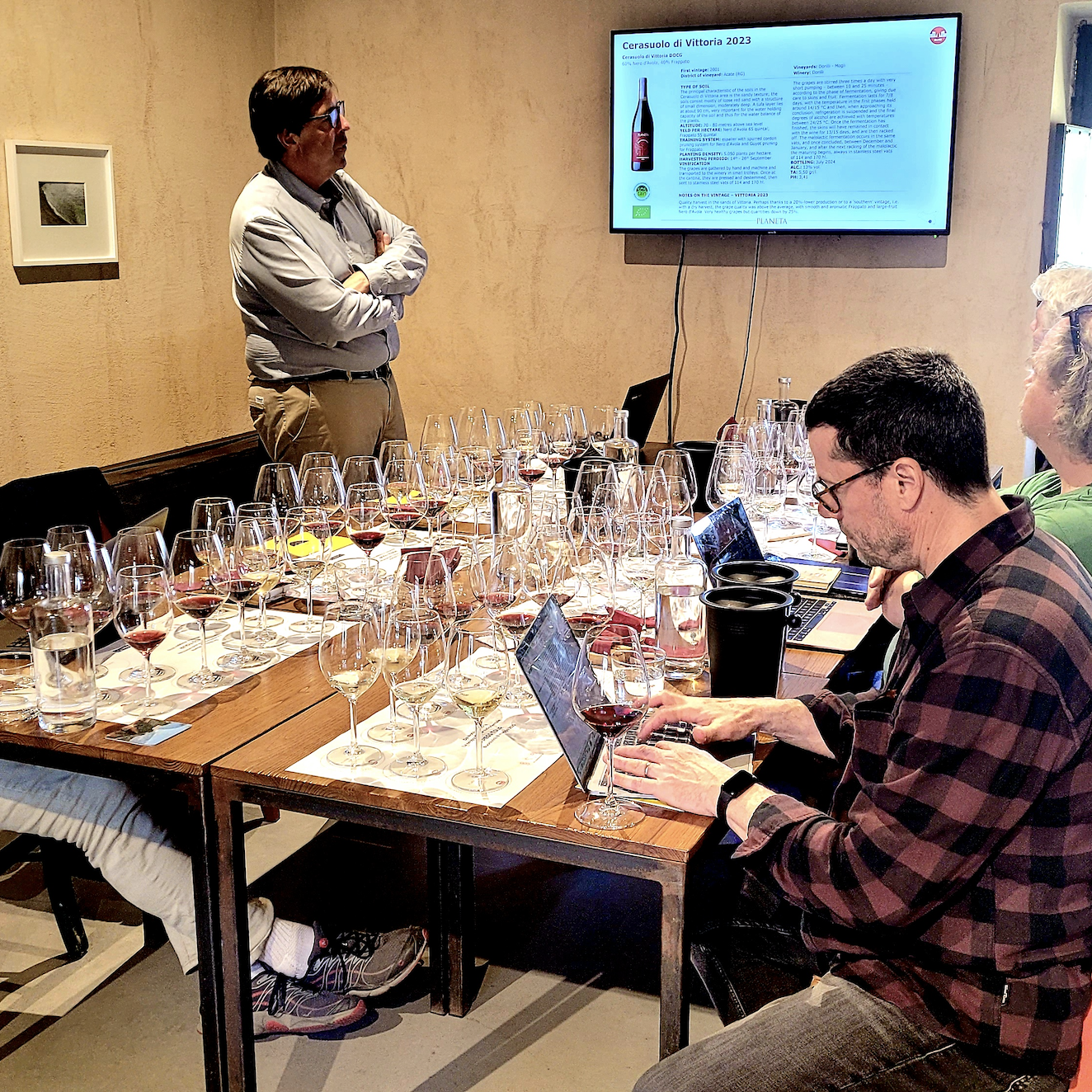
Tasting at Planeta, Noto


Planeta Frappato Vittoria DOC 2024

Great freshness and red berry fruit define frappato for Vittoria, “a grape that is magic and if you plant it outside of Vittoria it is not so interesting,” explains Alessio Planeta. “In my opinion.” The aromas and flavours of the grape are expertly preserved, here bursting and the herbal or savoury aspect is so much sweeter from Vittoria, noting like basil or chervil. What matters is the soil’s origin, that being marine and when the grape is frappato the handling simplifies so that the freshness, fleshiness and simple beauty is exulted. This may be simple but it’s also brilliant. Low alcohol (12.5 percent) and above average pH matched by just below tart acidity to result in fragrance and balance. Drink 2025-2028.  Tasted May 2025

Planeta Frappato Vittoria DOC 2023

The first vintage of Planeta’s Cerasuolo Di Vittoria was 2001 from the area of Acate and vineyards of Dorilli and Mogli. Acidity just a bit higher than varietal frappato and pH conversely lesser. The effect of nero d’avola leads to this wine’s balance between fresh fruit and linear structure. Quantity was down 20-ish percent in 2023 and concentration feels elevated, corresponding to healthier levels of quality and tannic structure. Not always a 60-40 nero d’avola to frappato but that does seem to be the comfort zone, although Alessio Planeta is not adverse to a much higher number for the nero. I mean this is just perfectly balanced, juicier than ever and subtly structured for a five-plus year run. Drink 2025-2030.  Tasted May 2025

Planeta Cerasuolo di Vittoria Classico DOCG Dorilli 2022

Dorilli is the single-vineyard nero d’Avola residing at the pinnacle of Cerasuolo for Planeta. Brighter and upwardly airy to ethereal than ever before, here with a 10 percent increase of the nero d’Avola from the classico Cerasuolo and yet alcohol, acidity and pH are almost always aligned within a tightly defined spectrum. This regardless of how much of each grape are employed which tells us that soils and place, clay-limestone soil and Vittoria are the greatest determining factors for results. That being lithe, fresh and frankly also exciting. Cru Beaujolais lovers must not turn away from Cerasuolo, not when it is made in this style. Drink 2026-2032.  Tasted May 2025

Planeta Passito di Noto DOC 2024

From Noto’s Buonavini winery/vineyard and also that of Agliastro and their whitest of white limestone terroir. Lemon and mandarin incarnate in any way your imagination can conjure, from curd through gelée to granita. Pure and focused, clean and all about the fruit. The best thing you could do is put a glass of this Passito next to a plate of Sicily’s finest master pastries made by Corrado Assenza at Café Sicilia. Drink 2025-2032.  Tasted May 2025

Planeta Nocera Sicilia DOC 2023

A world unto itself with few peers making the yeoman work of nocera production and yet this grape holds plenty of potential. It may be ancient and perceived as rustic but in the hands of Planeta it’s tamed and gifted as something easy, satisfying and quite complex. You can drink this with ease and without tension, its fruit more musky and leathery than say frappato but with nary a meant of drying, tough chew or earthiness. This 2024 is youthful and got right for a varietal teaching moment that also delivers a true sense of pleasure matched by pace.  Last tasted May 2025

One of the very few pleasantly made varietal nocera on the island and the only one presented here at the ’24 Anteprima. Surely found to exist along similar lines to nero d’Avola, with a touch more rusticity, also chewy liquorice and leathery fruit character. The 2023 is a good if not high acid nor rather tannic vintage, assembled and delivered for earlier drinking than some. Drink 2024-2026.  Tasted May 2024

All the wines of Sicilia en Primeur

Sparkling

Alessandro di Camporeale Método Classico 2020

Solo catarratto, vibrant, exciting, exploding, 36 months on the lees. Crazy flavours on your palate. Ginger and smoulder. Drink 2025-2026.  Tasted May 2025

Alessandro di Camporeale Método Classico 2017

This is the second vintage and for a catarratto that spent 72 months on the lees it’s actually mind-blowing. The wine is crisp, crunchy, salty, expansive, vertical and frankly exceptional. Next up 96 months? Drink 2025-2030.  Tasted May 2025

Cantine Fina Pas Dosé 2019

A proper smoulder leads off for this 70 percent chardonnay and (30) pinot noir blend finished clean and unadulterated. No dosage? No problem because of the toasty, umami-savoury, macchia-laden, of plants identified and also those not. Palate exhibits some peanut shell which speaks to a momentary temperature drag in the processing but with all the exotics running amok there is terrific interest nonetheless.  Last tasted May 2025

A mix of chardonnay and pinot noir, 70 and 30. Toasty style, sharp and focused, 36 months on the lees to give it aromatic volume from the get go. Certainly not an oxidative style, far from it and the middle ground for Bruno Fina’s sparkling program that began with 24 months and has progressed to 60 on yeast time. More volume on the palate and even fleshiness than expected to suggest that Fina is a natural at making sparkling wines. No wood – only stainless steel. Experimentation has come thus far and perhaps wood aging is coming in the future. Wishing for more length but the linger is full and positive. Drink 2024-2027.  Tasted May 2024

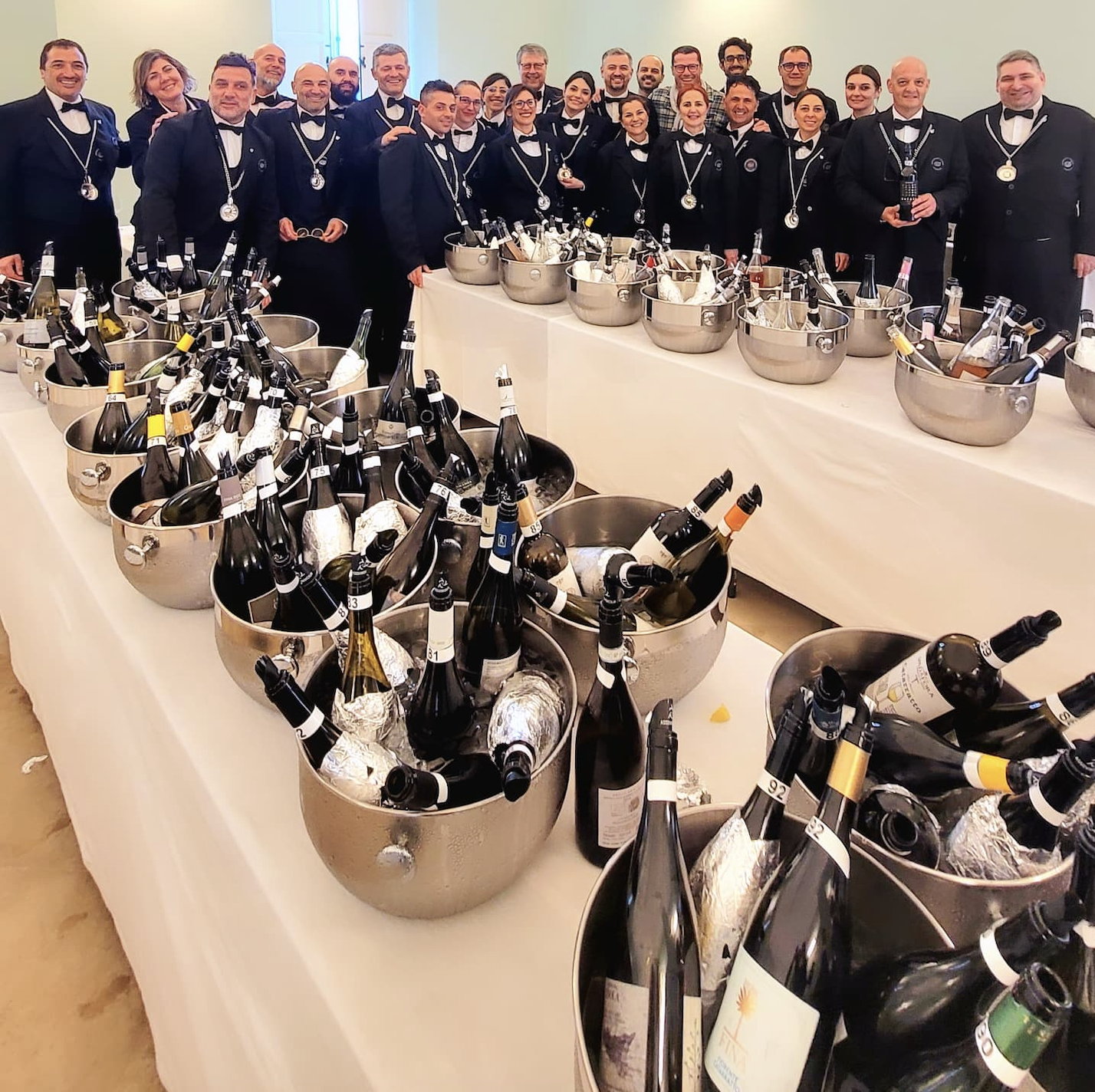
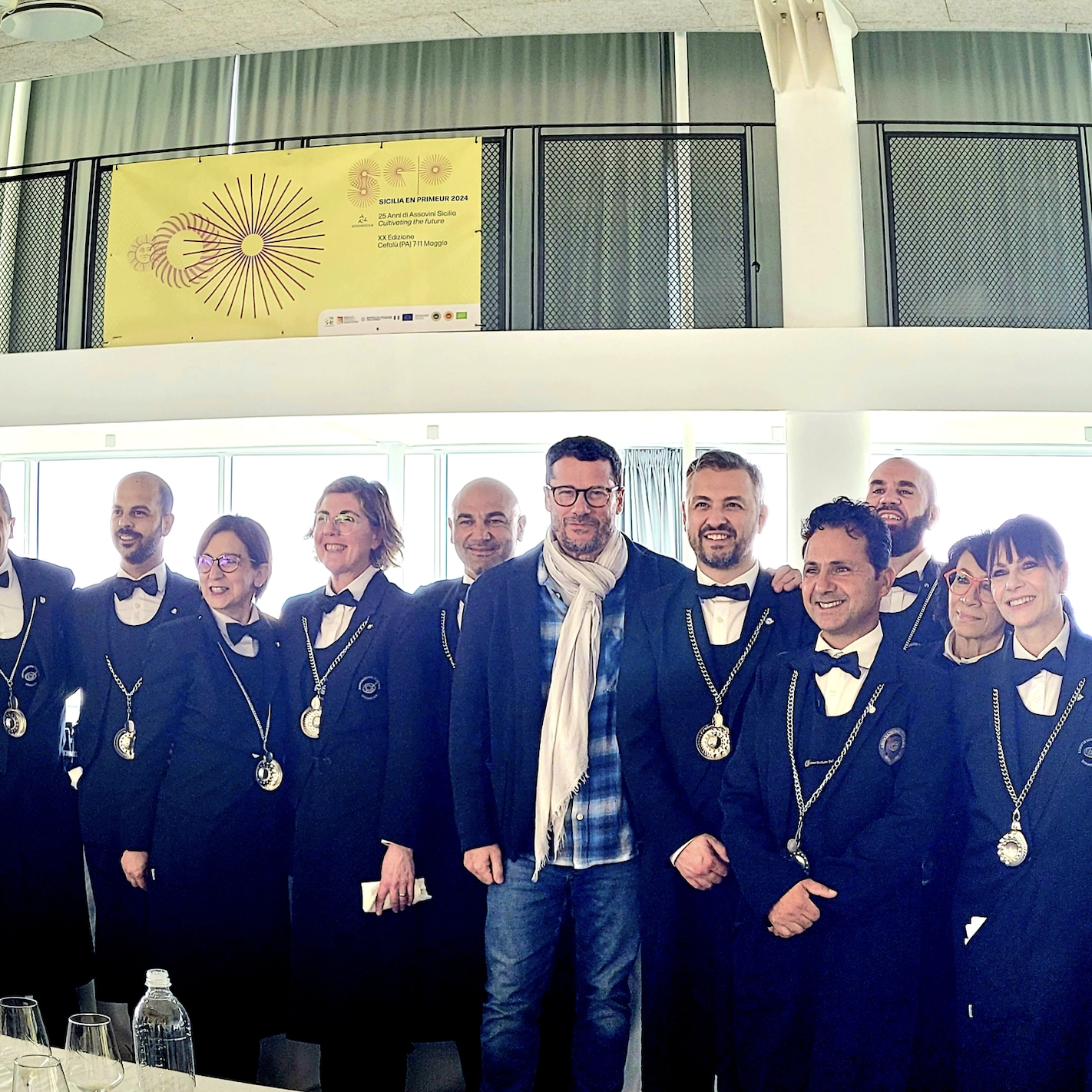
With the Sommeliers of AIS Sicilia

Fazio Brut Blanc de Blancs Erice DOC

Concentrated and pulpy fruit forward fizz from chardonnay picked at higher ripeness than most. Feels like Cuvé Close style, big fruit and carbonation doing their best to get together. Simple and juicy-frothy with neither issue nor complexity. Drink 2025-2026.  Tasted May 2025

Feudo Dsisa Rene’ Sicilia DOC 2017

Über reductive and reactive chardonnay sparkling not perfectly clean. Not quite bitterness in the flavours but more like toasted almond skin. Medium toast and mid-level persistence. No excitement or positive linger neither. Drink 2025-2026.  Tasted May 2025

Principe di Butera Metodo Classico Nero d’Avola Pas Dosé 2019

A classic method sparkling wine 36 months on the lees, charged and excited, rich and buttressed for full mouthfeel with bubbles that elevate the game. Harvested in the second part of August also off of plants that were first planted 27 years ago. The higher parts richer in limestone are used for the Pas Dosé and those in the valley clays more for Brut. Drink 2025-2028.  Tasted May 2025

Principe di Butera Metodo Classico Nero d’Avola Rosato Extra Brut 2019

A 24 months on lees after a couple of hours on the skins for Extra Brut with some sugar but nothing gratuitous and vines growing in the lower parts where limestone gives way to clay. Smooth, really with uplifting acidity and rusty red fruit character. Professionalism incarnate and ideal stylish personality for Sicilian sparkling wine. Drink 2025-2028.  Last tasted May 2025

Not labeled as such and this is the first vintage release but the vintage is in fact 2019. Twenty four months on the lees and this being the beginning to introduce the wine but subsequent vintages that will likely age longer. Extra Brut so right around 6-7 g/L with explosive acidity so the balance is spot on. Orange and lemon, no pith and less bitters to speak of. Really clean and good length.  Tasted May 2023

Tenuta Ferrata Etna DOC Spumante 2021

Fine fizz work with the local nerello mascalese stripped of skin muskiness and replaced with a volcanic savour so distinctly if discreetly basaltic in nature. What should sparkling wine from L’Etna do? This actually, with linger and persistence. Grows on the palate and finishes with edible fungi, umami in nature, all in all a positive result for those who are carriers of that “other” positive sensory gene. Drink 2025-2028.  Tasted May 2025

Tenute Nicosia Sosta Tre Santi Etna Brut DOP “Sessantasei” Método Classico 2018

Quiet, admittedly demure entry, of nerello mascalese and the trenchant intention to develop all three essential tenets of sparkling wine. Aromas, textures and flavours are all slowly and incrementally enhanced by serving a long time period upon the lees. In the vicinity of six years for this bubble and dio mio, man how things have come to a combination of curiosity and softness. Spicing yes, but texture is key, mouth-filling, reaching all corners and edges through a lengthy journey resulting in rolling waves, oscillations and blanketing couverture. Substantial sparkling with grace. Drink 2025-2028.  Tasted May 2025

Terrazze Dell’Etna Blanc Brut 2020

Reductive and flinty bubble unique to Etna with a can’t miss the chardonnay character. A sharp and crunchy bite into a just picked yellow apple. Balanced and softening on the palate for one of the most tenable blanc sparkling wines ever to try from a mountain producer. Drink 2025-2027.  Tasted May 2025

Rosato

Benanti Etna Rosato DOC 2024

High aromatic substance, tree fruit blossoms, fruit forward with concentration. Stone fruit, nerello mascalese skin muskiness, though never pungent. Caught at reputable ripeness for Rosato, its verdancy a matter of natural extension, acidity never sharp, nor failing. Palate luxe and soft though the savour persists and it all falls into place for the category. Drink 2025-2026.  Tasted May 2025

Cantine Fina Rosato Hanami 2024, Terre Siciliane IGT

Rosé of merlot and syrah, lithe and salty, a vague earthy funk that comes from a mix of soil and how these grapes interact as such. First vintage was 2019 and the path is getting clearer. The tang is extremely high which makes for a slightly vivid example out of this vintage. Drink 2025-2026.  Tasted May 2025

Cottanera Etna Rosato DOC 2024

As straightforward, generous and fruit-centric as Etna Rosato can be, open for all blush needs. Summer is a glass as they say and no, Etna Rosé was not like this just 10, or perhaps even five years ago. Yet here they are and come to the world with all the fulfillments the genre could offer. Plenty good and good for plenty of reasons. Drink 2025-2026.  Tasted May 2025

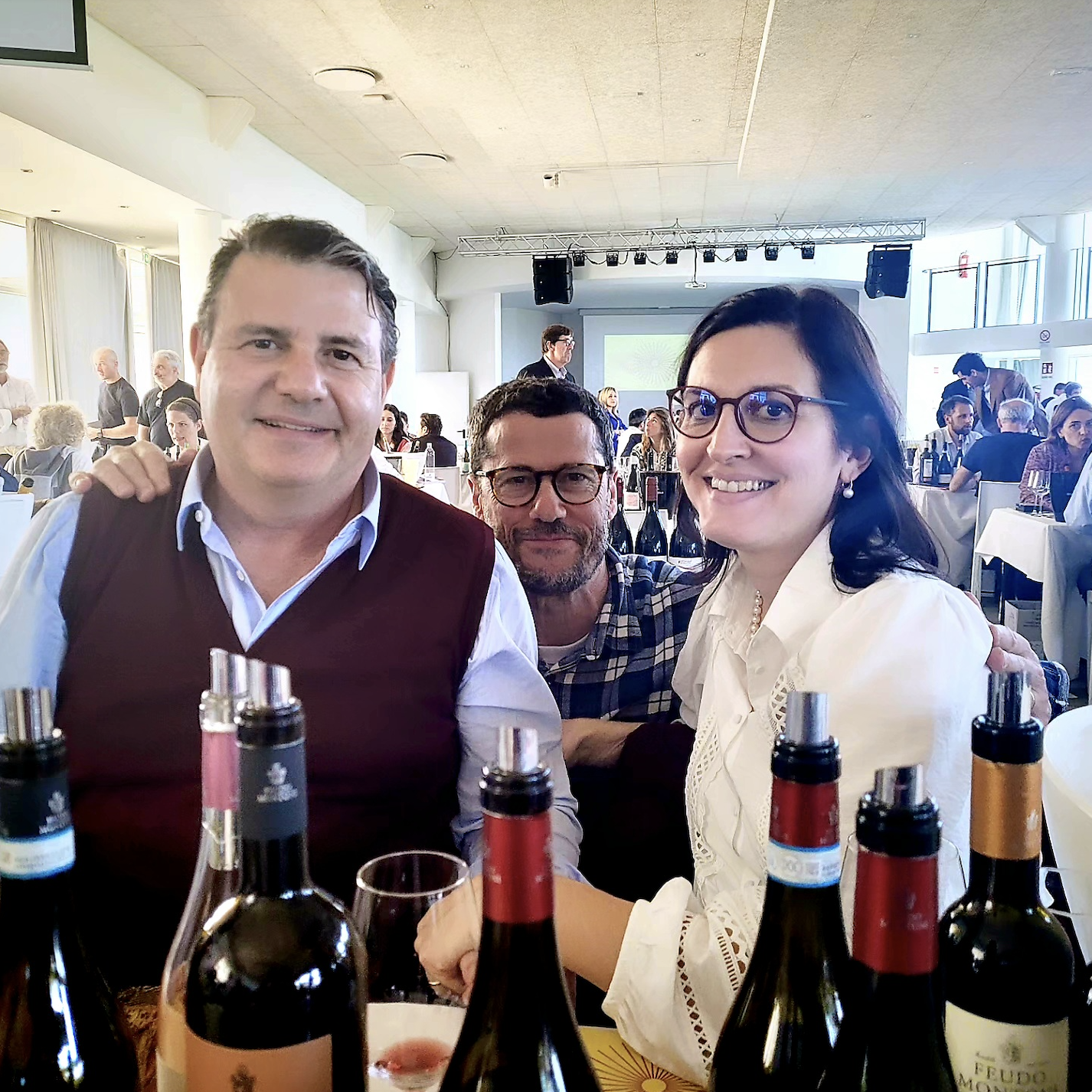
Feudo Montoni Rosé di Adele Nerello Mascalese 2024, Terre Siciliane IGT

Intense nerello mascalese aromatics, of floral red berry bloom perfume and into savoury flavours, of all that lives and breathes in a natural Sicilian world. Perhaps a smaller crop and size of berry is the reason for these results but regardless the concentration alters the ’24 course of a Montoni Rosato. Would love to sip this alongside any of the many eggplant preparations by Montoni’s Melissa Muller. Drink 2025-2027.  Tasted May 2025

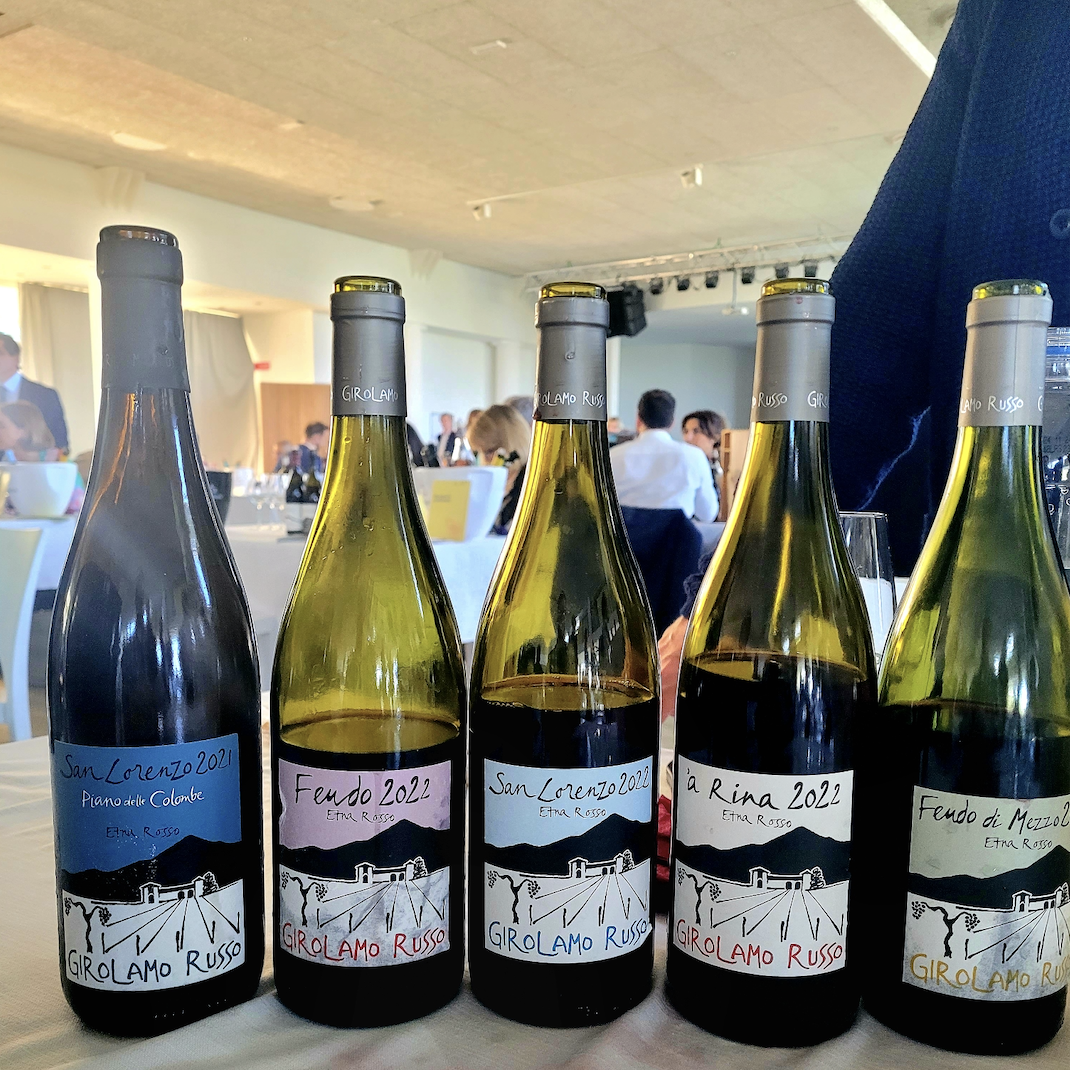
Girolamo Russo Etna Rosato DOC 2024

Finely composed and balanced Rosato from Giuseppe Russo, ideally mixing ripe nerello mascalese with sweetly captured acidity. You can sip his 2024 and feel the composure straight away, plus enough generosity and grace befitting of all the wines in the strongest of portfolios. Here Rosé is a gift because the fruit is precious in that it should rightly have become Rosso. Drink 2025-2027.  Tasted May 2025

Planeta Rosé Sicilia DOC 2024

A mix of nero d’Avola with syrah and sauvignon blanc for more spark and sharpness which Rosato by Planeta most definitely has. Crisp bites, herbal, some macchia and provider of thirst quenching abilities. Drink 2025-2026.  Tasted May 2025

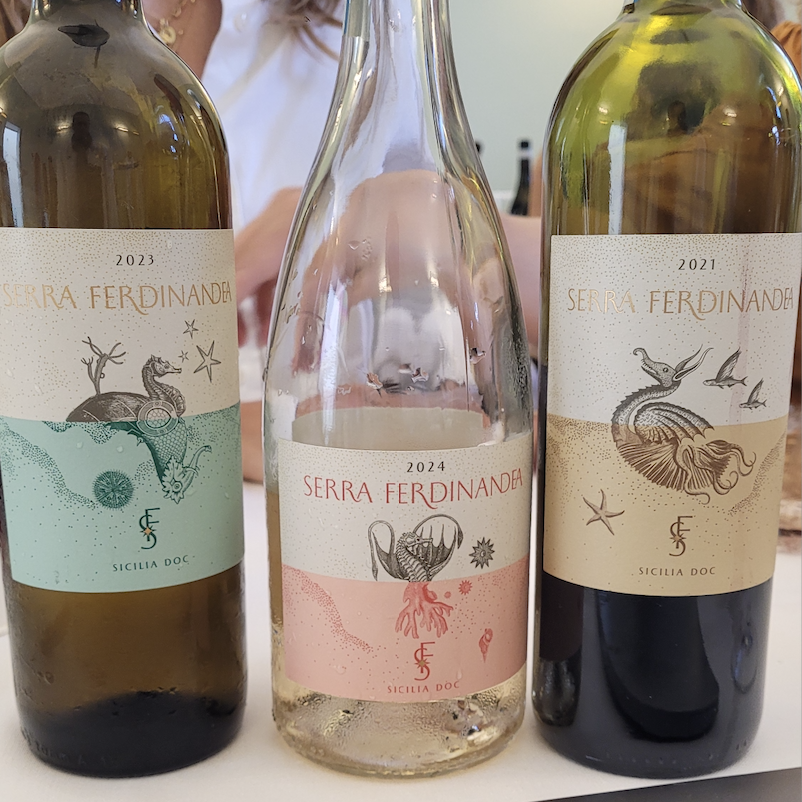
Cecilia Carbone – Serra Ferdinandea

Serra Fernandinea Rosato Sicilia DOC 2024

It rained on the 9th of May and then not again until the 19th of August. Picked between the 11th and 14th of August (with Ferragosto in between) and with this in glass most will have no idea it’s even Rosé. Vin gris is the look but not the intention because when you press nero d’Avola it’s a matter of minutes between this and colour. Remember the owners are Provençal and in southern Sicily the same effect is desired. That would be lithe, salty, fresh and with unlimited spirit. The spirit and nature of the place. As this does and is just that. First scent speaks to Rosato of a distinct and singular nature, like a marine breeze blowing in and through the macchia-mediated and reconciled fruit of the vine. Of nero d’avola used for all essential Rosé purposes under the southwestern Sicilian sun. Not entirely sure if the yields were lower in 2024 (they likely were) but the high levels of concentration and sneaky controlled energy put this in a new echelon for a Serra Ferdinandea Rosé. Would make for both a curiosity and a scientific test to age this two years and see what new impact comes about. Only the independent variable of time changes and the conclusion should rightly seek and mount higher ground. Drink 2025-2027.  Tasted twice, May 2025

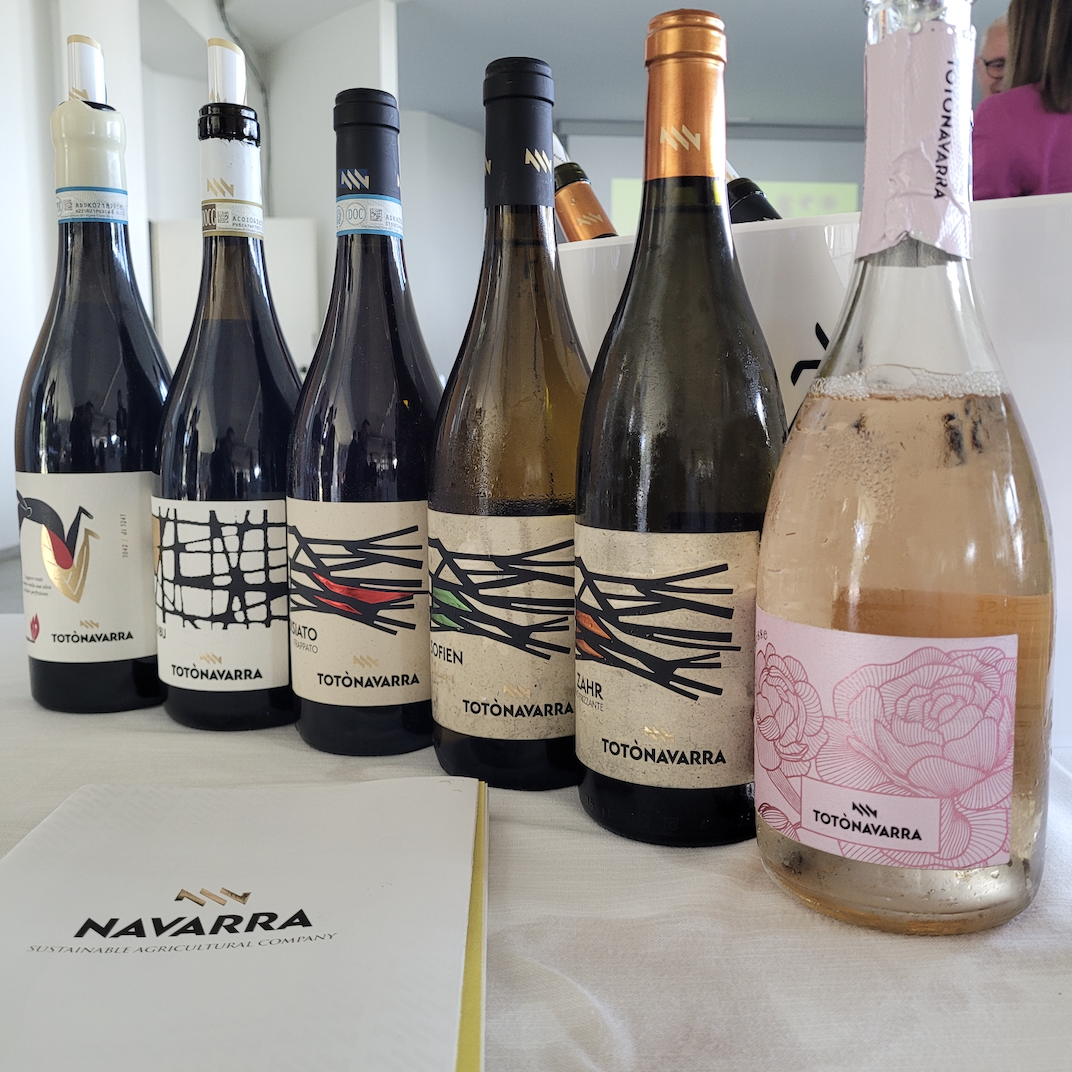
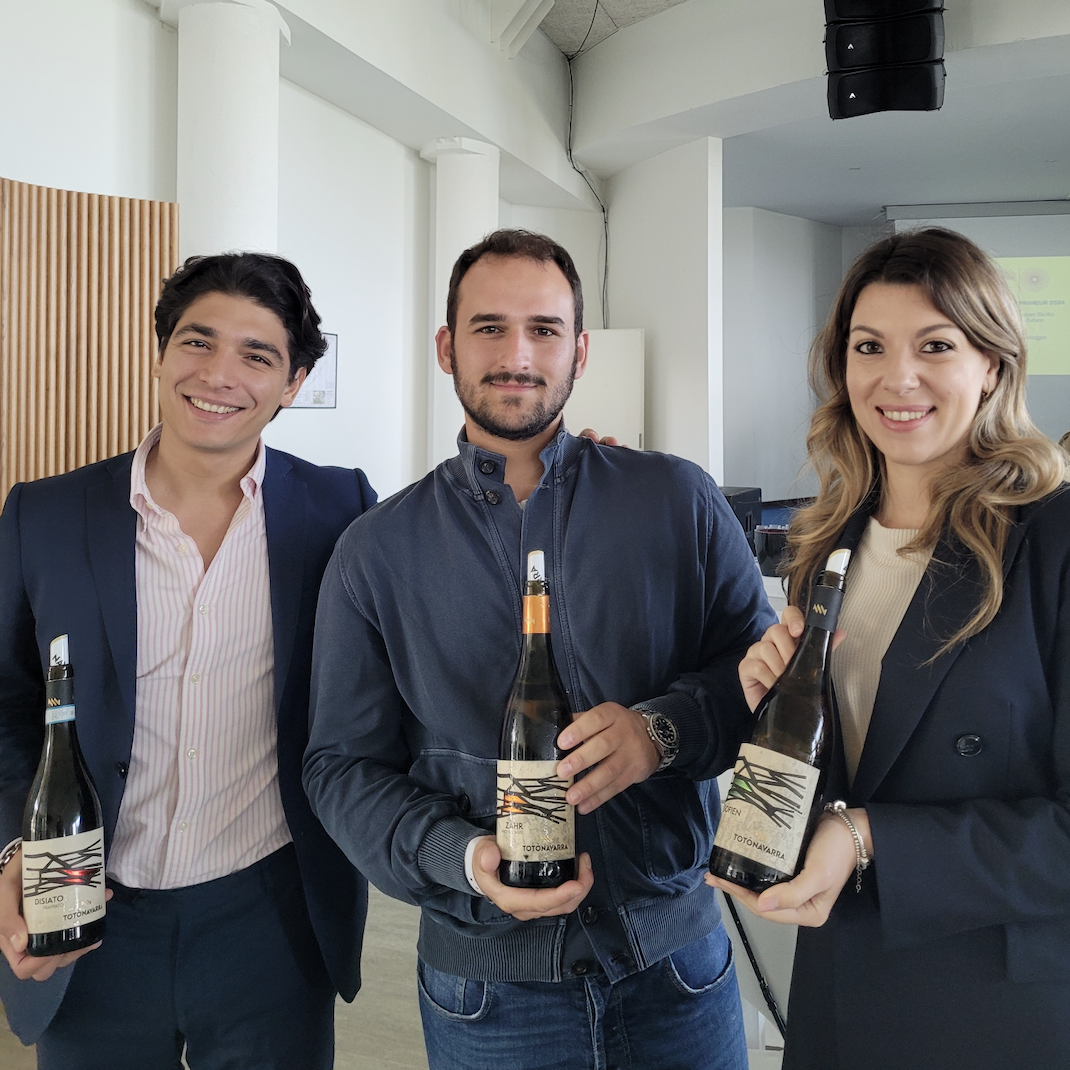
Tenute Navarra Rosemosse 2024, Terre Siciliane IGT

Full outward wave of red berry fruit, a capture of frappato in fizz, its mousse creamy and soft. Strawberries in cream, a shortcake because of some faux autolysis and pretty much just really simple. Holds a place for reasons like Valentine hearts and others that represent an amenability to all. Drink 2025-2026.  Tasted May 2025

Terra Costantino Etna Rosato DOC deAetna 2024

Fine mix of fruity and also savoury elements, all understated and trickling forward, low and slow. If a fruit were needed to be invoked it would be white cherries, conjured from a quick soak and maceration before stripping away nerello mascalese skins while capturing both their perfumes and a modicum of their structure. For Etna this is the Provençal style albeit with volcanic properties instilled and made whole by natural processes. Come for the fruit, stay for the minerals. Drink 2025-2027.  Tasted May 2025

Rosso

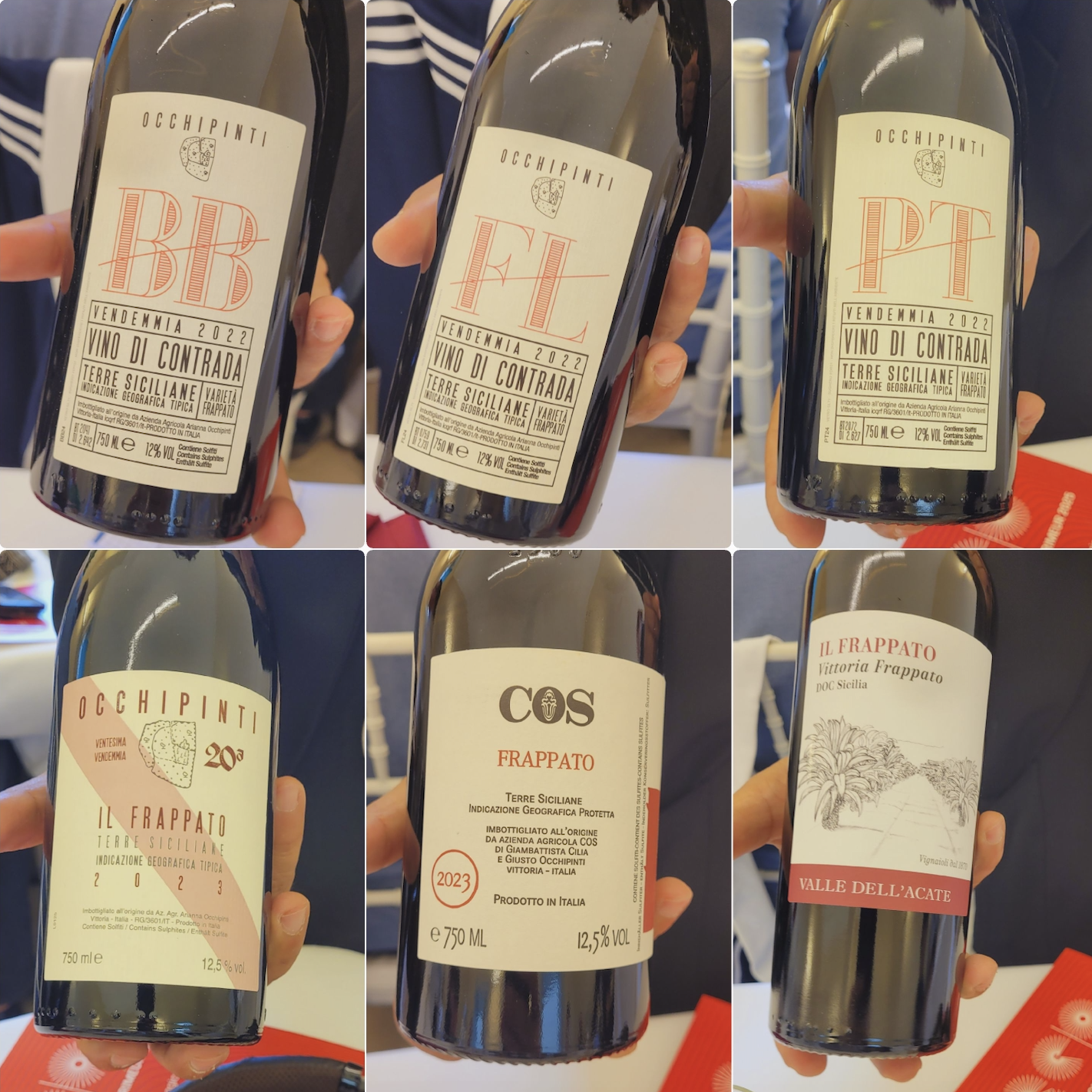
Arianna Occhipinti BB Frappato Vino di Contrada 2022, Terre Siciliane IGT

BB, a.k.a Bomboliere feels like the OG for a contrada-designate frappato in the Vittoria occupied Occhipinti world, a varietal expression from the home front with more experience and acumen to treat all things equal, they being available and worthy of leaning against and leading towards ultimate balance. As here from a fine and rocking 2022, crunchy exterior and chewy interior, a Balsamico crust and mix of fruits captured within. Though the Villages frappato is the most accessible it is this BB that ranks as the most well-rounded and if there is any austerity it won’t cause any psychosocial pain. Yet BB is tannic enough to age, stirs up emotion and is truly representative as a best of all worlds wine, more so than either the FL or PT. Drink 2025-2033.  Tasted May 2025

Arianna Occhipinti FL Vino di Contrada Frappato 2022, Terre Siciliane IGT

Not all of Arianna Occhipinti’s three contrada originating frappato are created equal and FL (Fossa di Lupo) is the one with most up front and forward extending fruit. The fruit comes from just 15 year-old alberello frappato out of Arianna’s original six hectare vineyard. This from the outstretched arm of generosity, more like the Villages label than either the BB or the PT. More obvious as frappato and still there is some structure, high acid pulse, saltiness and earthy to funky beats. Likely owing to this soils of brown sand over limestone rock. Then again FL is cleaner and more understandable with varietal clarity, that which speaks to terroir, obviously and without equivocation. Drink 2026-2030.  Tasted May 2025

Arianna Occhipinti PT Vino di Contrada Frappato 2022, Terre Siciliane IGT

One of three contrada frappato for Occhipinti and immediately obvious how different (at least this PT, or Pettineo) is from the Villages label. Structured with impunity and its immunity keeps maturity at bay. Hard to believe how tight an expression this is when you consider the grape, but this contrada means serious terroir business. Of crucial significance is the fact that the less than one hectare parcel is home to the oldest (60-plus years) frappato vines in all of Vittoria. The vines grown on fine orange sand over tufa (a porous limestone) and the grapes are harvested ahead of both BB (Bombolieri) and FL (Fossa di Lupo). There is a volatility in PT that for some will be challenging to understand, though should patience be exercised than all will eventually be resolved and subsequently revealed. Drink 2027-2032.  Tasted May 2025

Arianna Occhipinti Frappato 2023, Terre Siciliane IGT

Frappato the solo artist is Arianna Occhipinti’s “Villages” red, a mix of contrada fruit for her classic or classico expression marking the entry point into her multifarious varietal world. The most crunchy and yet juicy frappato imaginable, high in intensity come to the world with open arms and in turn the world should embrace this wine. If your goal is either to introduce this most getable of grapes and/or a keen desire to enter the varietal gates then Occhipinti’s is the one. Come on in. Drink 2025-2029.  Tasted May 2025

Arianna Occhipinti Grotte Alte 2020, Cerasuolo di Vittoria Classico DOCG

Were Grotte Alte tasting blind you would not be judged for thinking you might have Brunello di Montalcino in your glass and from a producer with ancient wisdom crossed and forward thinking. A true terroir-driven Balsamico marks the entry and the construction is a bit severe which means the tannins are austere. Volatility swirls like sangiovese but here are nero d’Avola and frappato co-mingling in their rarefied air. Some will find the grip and the volatile elements severe and yet others will check their egos to wait and allow these grapes to be ratified and conjoined after years of settling and care. Choose the latter and great reward will follow. Drink 2027-2033.  Tasted May 2025

Cantine Fina Vitraolo Vino Rosso 2023, Terre Siciliane IGT

A purely Sicilian red wine, something of history, culture and remembrance, of freshness and sheer drink-ability. Tart for certain, that and a chewy character but without weight or density. The fiercest passion in an authentic, austere and rustic red. This despite a challenging vintage of heat, humidity and low yields. Drink 2026-2029.  Tasted May 2025

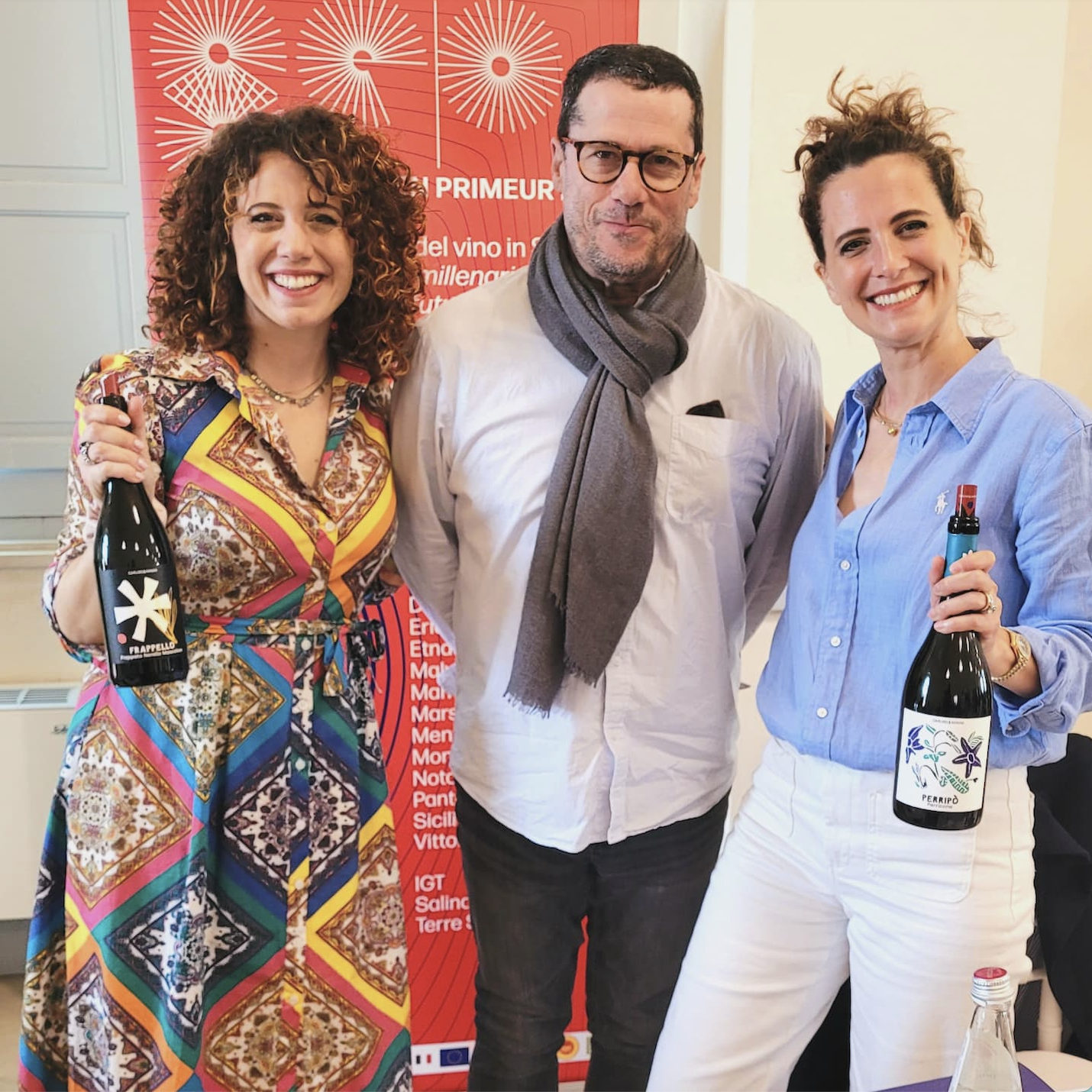
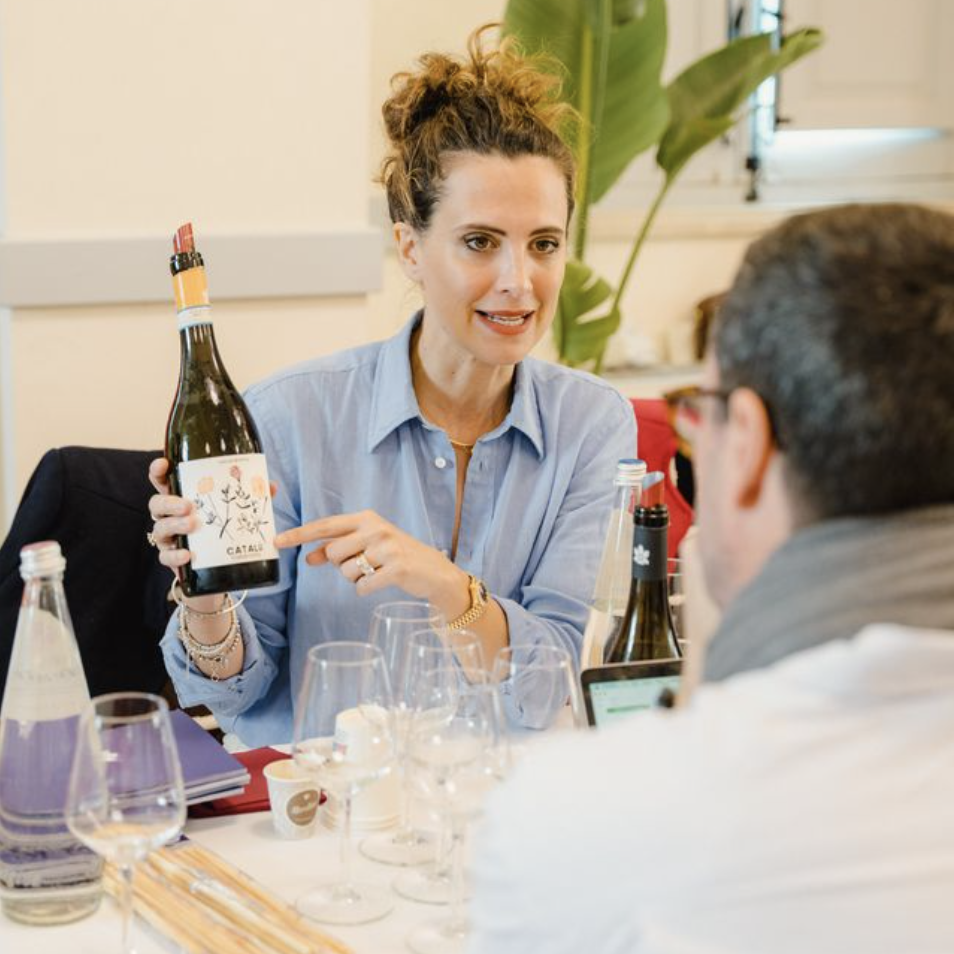
With Giovanna and Rosanna Caruso – Caruso e Minini

Caruso & Minini Perricone Perripo’ 2022, Terre Siciliane IGP

The pretty dabs of perricone perfume come easy out of the dialectical sounding and expressive Perripo’ because, well clarity and purity. Plump and juicy raisin to plum with more freshness than leathery feels and sneaky structure partially shrouded beneath. Proper varietal effort, vintage fun, in and out, especially with fine and gifting 2022 as the source. Really something unique, finishing at a local Balsamico, especially like mint. Drink 2025-2028.  Tasted May 2025

Caruso E Minini Frappello 2023, Terre Siciliane IGT

A blend of frappato and nerello mascalese, first vintage was 2004, now 20 years later, same strong colour contrast from the first to less out of the last. Tannins are the opposite and so the wine has remained the same. Gustatory in every way, “the wine for everybody,” says Giovanna Caruso. From a vintage “non facilisimo,” she says because of heat but Caruso E Minini’s growing zone sees strong winds to help maintain freshness in spite of the temperatures. Full and satisfying with really sweet acidity. Drink 2025-2027.  Tasted May 2025

Tasting with Giovanna Caruso – Caruso e Minini

Caruso E Minini Nero d’Avola Sicilia DOC Vuvalà 2022

The solo nero d’avola from western Sicily where strong winds and sea air make for some of the saltiest on the island. Persistent keeper of faith and fruit freshness when it really wants to dry out and head into the local Balsamico. It does not but stays a most hospitable marine airy course. The vines also grow in round stones (very similar to Rhône Galets) which keep the soils cool. Delicious and dreamy for nero. Drink 2025-2027.  Tasted May 2025

Caruso E Minini Nino Rosso 2015, Terre Siciliane IGT

Four grape blend made in appassimento, a.k.a Amarone style in honour of grandfather and his red suspenders. Persistent and somehow still showing some fresh fruit despite the austerity and aridity created by the methodology. A juicy explanation to remind just how fine things can be when attention to detail and passion put collective hearts into making a wine. The mix is nerello mascalese, perricone, frappato and nero d’avola for just 7,636 bottles produced. Drink 2025-2030.  Tasted May 2025

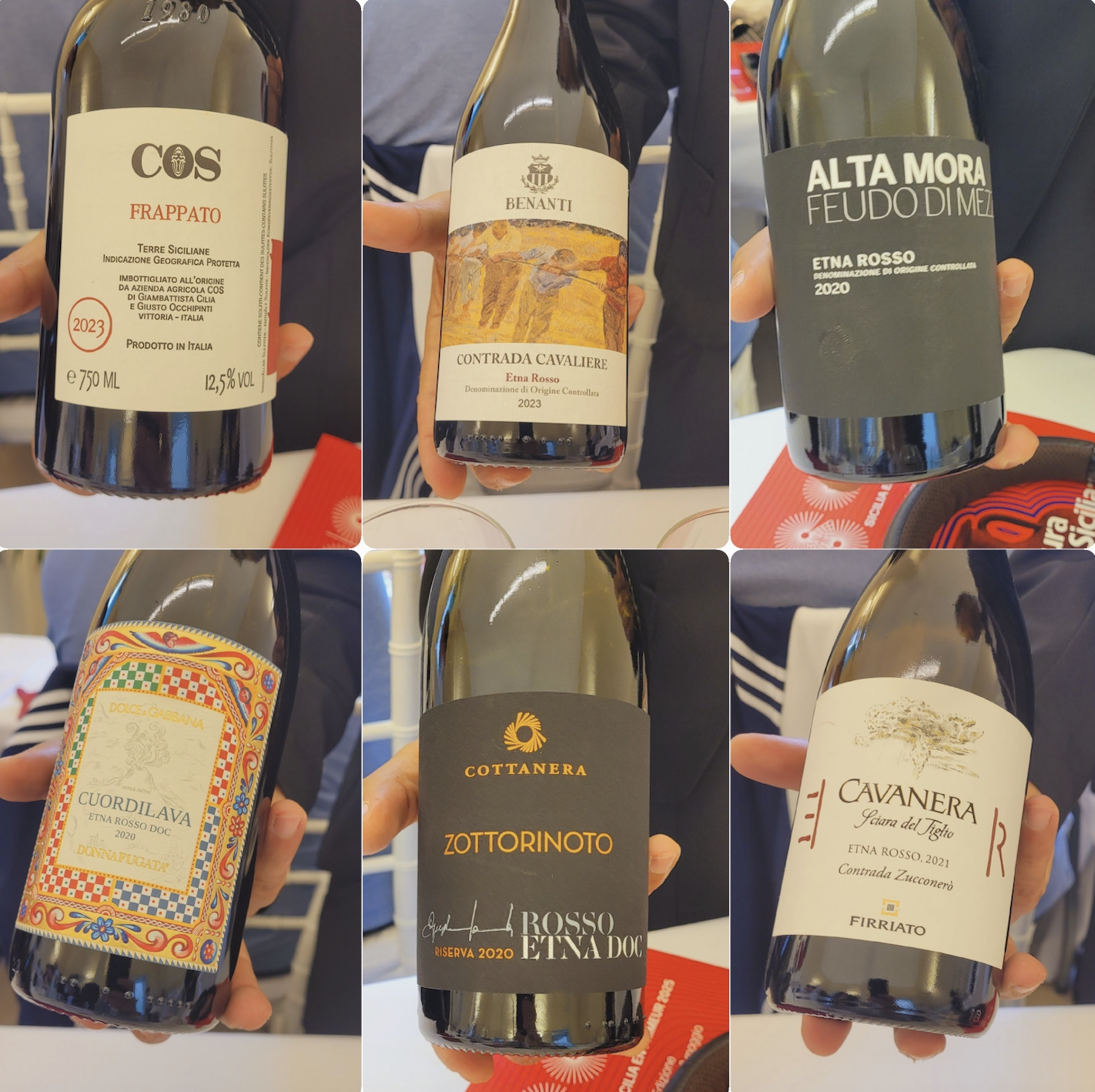
Cos Frappato 2024, Terre Siciliane IGT

Beautifully clean, fragrant and fruit blossom perfumed frappato of immediate and seductive engagement. A whirl of controlled volatility, sweet acidity and carry over to palate flavours in mimic of the florals up front. All the fruit that could be desired, of a focus and a finesse to bely any pre-conceptualized DOC limitations and simply a varietal red you will want to taste and drink on a consistent basis, by the glass, to share with others and as a varietal teaching moment for what is possible. Drink 2025-2028.  Tasted May 2025

Cos Cerasuolo di Vittoria Classico DOCG 2022

Unexpectedly, remarkably and acceptingly fruit forward Cos Cerasuolo for which 60 percent nero d’Avola and (40) frappato occupy the same place and time. Sharing the stage of open generosity and to elicit immediate gratification. Welling with fruit (as opposed to bursting), expressive of skin muskiness and layered for notable purpose. That is to gift the DOCG by way of introduction and without challenge, neither by grip nor out of austerity. Drink 2025-2027.  Tasted May 2025

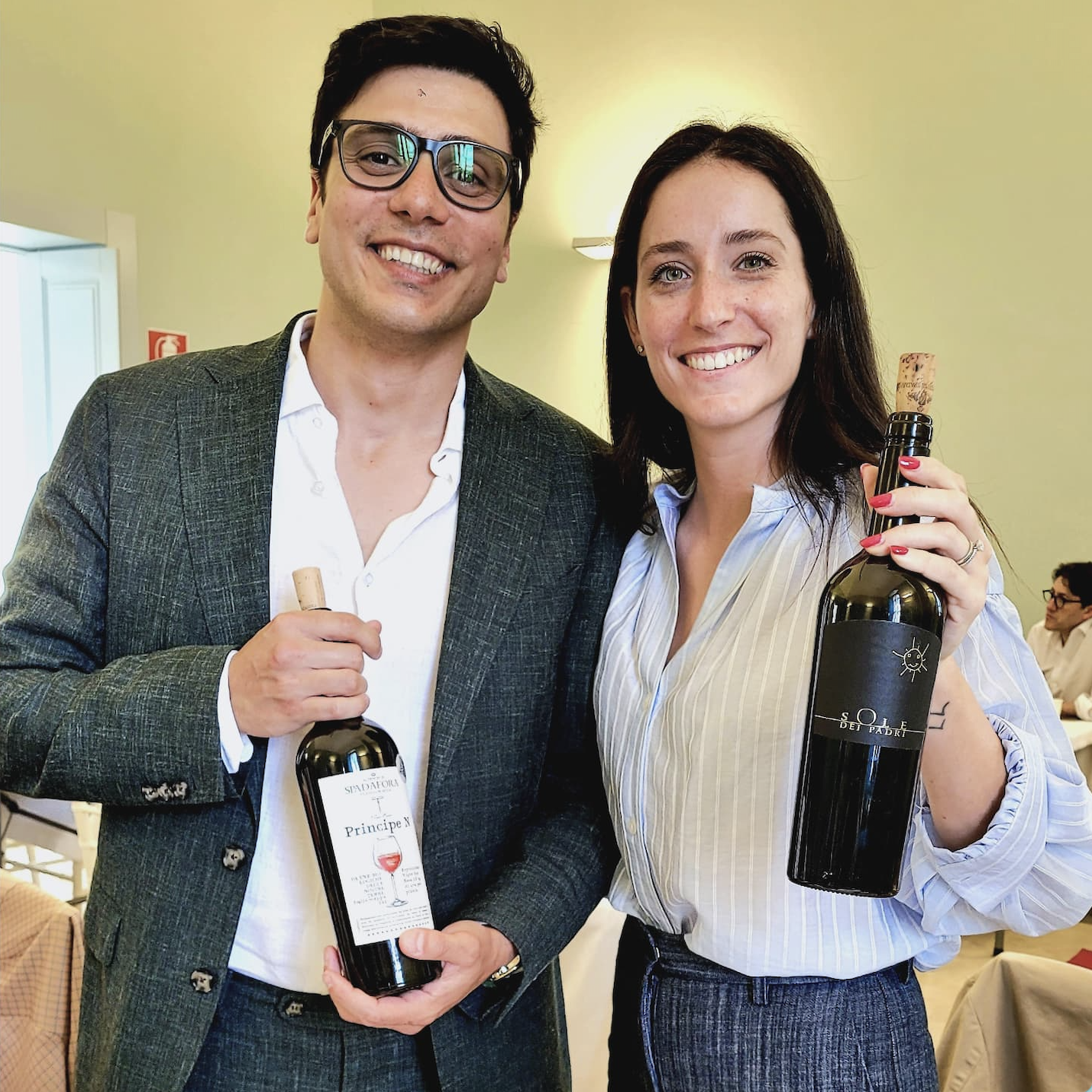
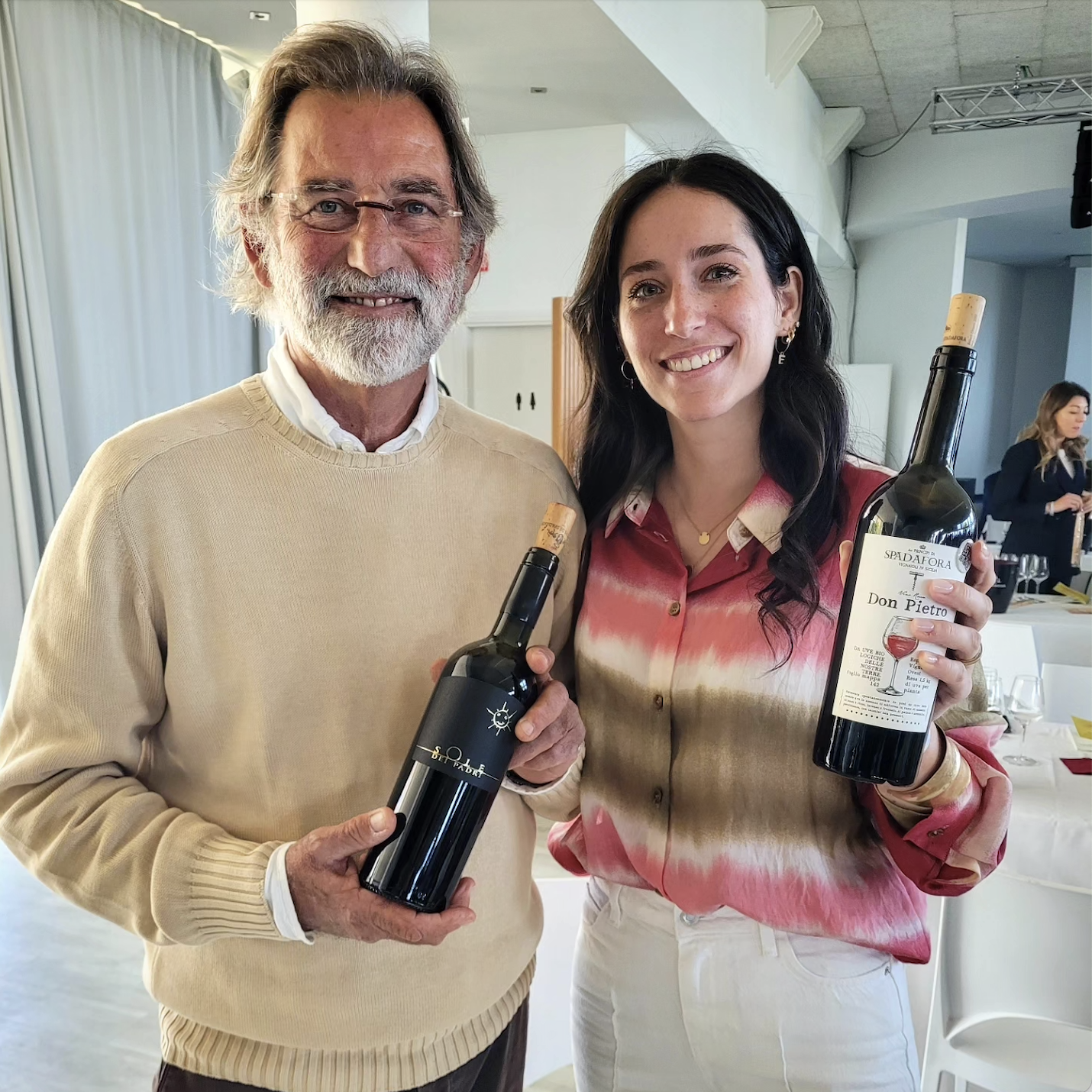
Gabriele Di Paola and Enrica Spadafora – dei Principi di Spadafora

Dei Principi Di Spadafora Vignaioli In Sicilia Principe N 2022, Terre Siciliane IGT

Only nero d’avola from concrete followed by steel though still not quite as expressive as it should be because of having just being bottled. From Spadafora’s central location towards the western half of Sicily of classic nero fruit from red through black, high acidity, intensity and spirit. Can’t wait to see what happens after another year (and even better two-plus) in bottle. Drink 2027-2031.  Tasted May 2025

Dei Principi Di Spadafora Sole dei Padri 2012, Terre Siciliane IGT

The first vintage of a signature red one year in bottle, only syrah from the highest vineyard on top of the hill at 450m. Very exposed with direct sun which would have been a challenge for nero and so, syrah. Richness at the height for grape and style, woody still and this is 2012 but freshness will persist and the wine will integrate. This may sound absurd but truth is truth and Spadafora likes old wines. As will you.  Last tasted May 2025

Sees one year in barriques and the rest in tank, bottled in July of 2022. Lengthy aging but just a short wood stay so don’t come expecting heavy vanilla, lavender or other French barrel notes. Come instead for the florals, spices, spiciness, liquid pepper, but no smoke. Chalky, tannic and all soil-related, created and driven. Can last for another 10 years. Clean and varietally obvious though not the iodine-meaty syrah kind. Perfume and texture are everything. Balsamico and mint at the finish. ”La terra,” shrugs Francesco Spadafora. Drink 2024-2034.  Tasted May 2024

Firriato Perricone Ribeca Sicilia DOC 2019

Singular styled perricone, about face and in complete opposition to those from both central and western Sicilia. Here more related to macchia and Balsamico, brushy, herbal, botanical, verdant and dusty. A stand alone and idisosyncratic varietal red that teaches so much about the triad of place, style and effect. You only need to taste to believe and be aware that this is the sort of Sicilian red to surely show up in masterclasses through time. Drink 2026-2029.  Tasted May 2025

Gulfi Cerasuolo di Vittoria Classico DOCG 2020

The aromas are all fruit skins, of 70 percent nero d’Avola and (30) frappato musky and dried fruit grippy. The aging time in bottle has done the work to bring this Cerasuolo into the initial stages of secondary character which means the ideal drinking window is right where you stand with bottle in hand. With thanks to steel and neutral oak there is just enough freshness and vibrancy to make it work. Drink 2025-2027.  Tasted May 2025

With Anna Ruini – Pellegrino 1860

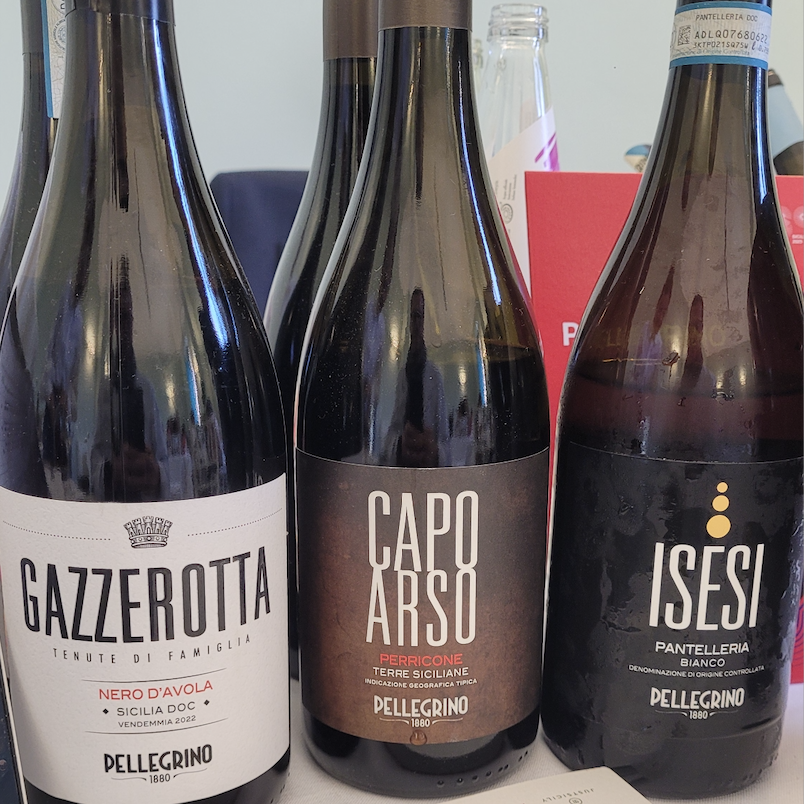
Pellegrino 1880 Perricone Capoarso 2022, Terre Siciliane IGT

And then, and now welcome to perricone from western Sicily at the hands of a producer with a long and winding history of research, development and investigation into varietal wines. Here this combination of spice masala and richness, low and slow developed flavours and macchia. A savoury event run through and many complexities to discover.  Last tasted May 2025

A varietal perricone, a.k.a pignatello, always strong and spicy, best raised in richer soils. Pellegrino’s is simply, unequivocally and unmistakably true to the variety, of a rustic edge and yet here undeniably pure as it not only should, but will be. Not a tannic example, nor is it particularly long, but it does what wants and needs. Drink 2024-2026.  Tasted May 2024

Pellegrino 1880 Nero d’Avola Sicilia DOC Gazzerotta 2022

From Pellegrino’s main estate near to Mazara del Vallo and Campobello di Mazara with views across the sea to Pantelleria. Rich, chalky and seriously spicy nero at the height of intense heights. A wine that needs time to settle into its skin and be good to itself. One made for good times ahead. And BBQ. Just sayin’. Drink 2026-2029.  Tasted May 2025

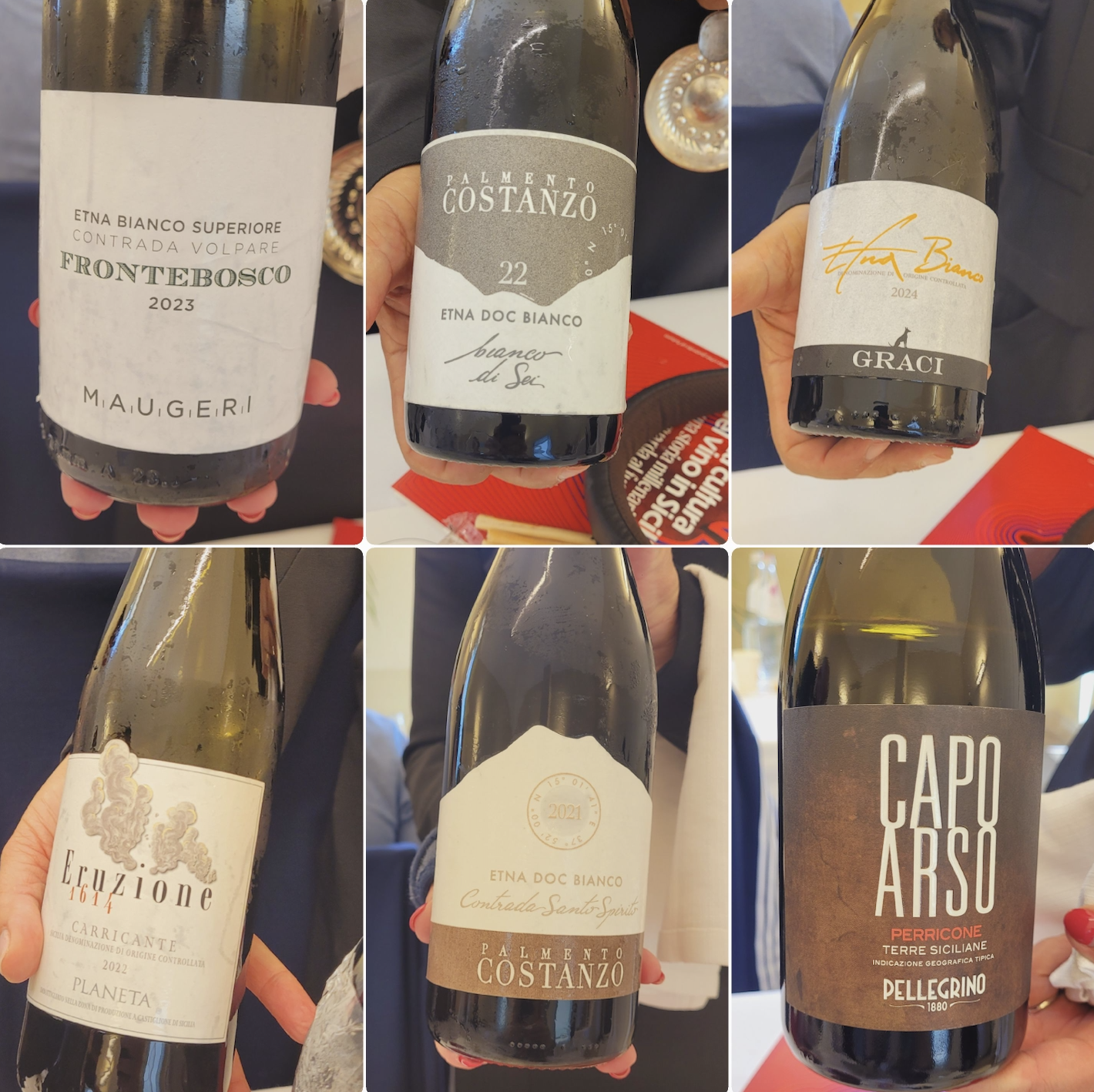
Planeta Eruzione 1614 Nerello Mascalese 2021, Terre Siciliane IGT

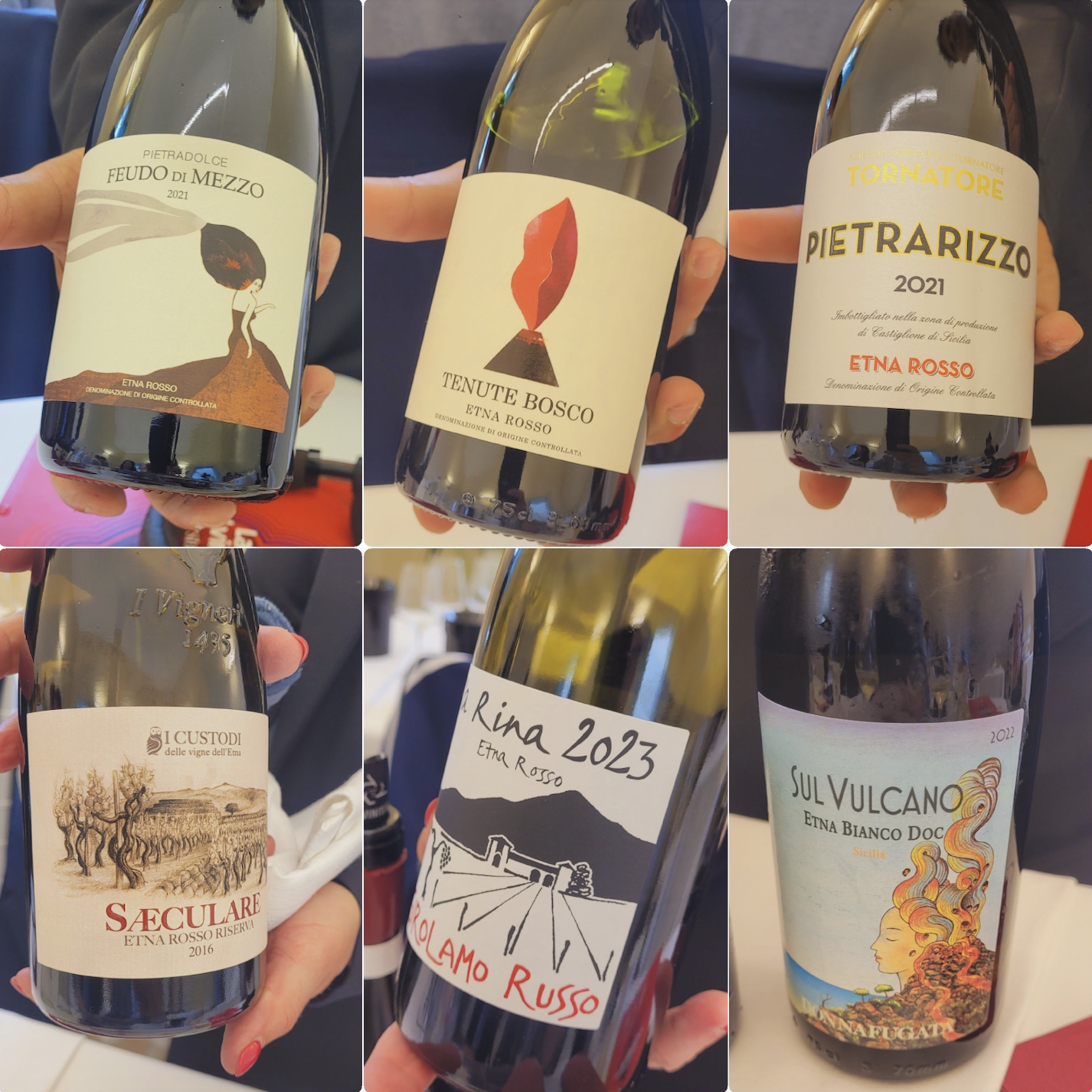
To be sure a different vintage than Feudo di Mezzo 2023, with two years in bottle and yet elevation (between 840 and 890m) does everything to create, install and define freshness for nerello mascalese aboard L’Etna. Time, barrel and place have come together and the volcanic sense of earth and rock is inseparable from the varietal fruit, even from a 2021 that in some other cases is having a time maintaining its distinction. Eruzione is a lone wolf, a nerello as if by blood dripping from the animal’s mouth. Drink this with iron-rich meat – Fegato, either as Pâté or skewered and grilled. Drink 2025-2031.  Tasted May 2025

Planeta Nero d’Avola Sicilia Menfi DOC Plumbago 2022

If only because tasting with the team at Planeta is equal parts revelation and comedy, it’d hard not to think about and invoke finning things. Like “I want you to cut down the mightiest Plumbago in the forest…with a herring!” But not too big. But this is the biggest of the Plumbago because the vintage gave great heat and therefore the Plumbago shrubbery could not help but take over the entirety of the savoury elements in this nero d’Avola. Full on Menfi Balsamico, or an otherwise named local macchia, like fragrant hay, a.k.a. Plumbago. Drink 2025-2031.  Tasted May 2025

Principi di Butera Inzolia Serò Sicilia DOC 2018

Varietal insolia and from the central Sicilian producer having long ago made the decision to see a white variety that should and can age. Made in a reductive way, now into full on flint and smoulder, a lit paraffin note meeting something petrol-like in the wild ways of sémillon. Surely as curious as it is inviting and while by itself there is this feeling of curiosity it’s all in fine and helpful fun to enjoy when the timing is right. Which can be said for 2018 right now and so a good choice to pour at Sicilia en Primeur 2025.  Last tasted May 2025

A new soil which is both a blessing and a curse, a pain and a joy to work with. Quality comes from lower yields and specific soils. Here insolia grazes into hyper-metallic and mineral territory, protected from the heat of the sun, in avoidance of saturated copper, sunflower and gilded gold. Very short skin-contact and nurturing care turn insolia into this, sapid and even salty, expressive of the calcareous soil and the sea breezes coming from a mere eight kilometres away. Drink 2019-2023.  Tasted May 2019

Serra Ferdinandea Rosso Sicilia DOC 2021

Still from a time when the team was working with young vines and not yet having reached the point where they could express the true nature of Serra Ferdinandea. Of syrah set to elevation and nero d’Avola, the latter planted in the windiest and driest place. This for fruit meeting backbone and the hope they will find each other, layer, integrate and create spemthing special in their shared space. The style is invoked even if the full finesse is not yet found. Oh so close to what really matters and whole bunches used in 2022 will help encourage this next level of reality. Rosso at stage one is primary, a work in progress and a harbinger for what is to come. Just a bit woody and chalky-grainy at this time. Drink 2026-2028.  Tasted May 2025

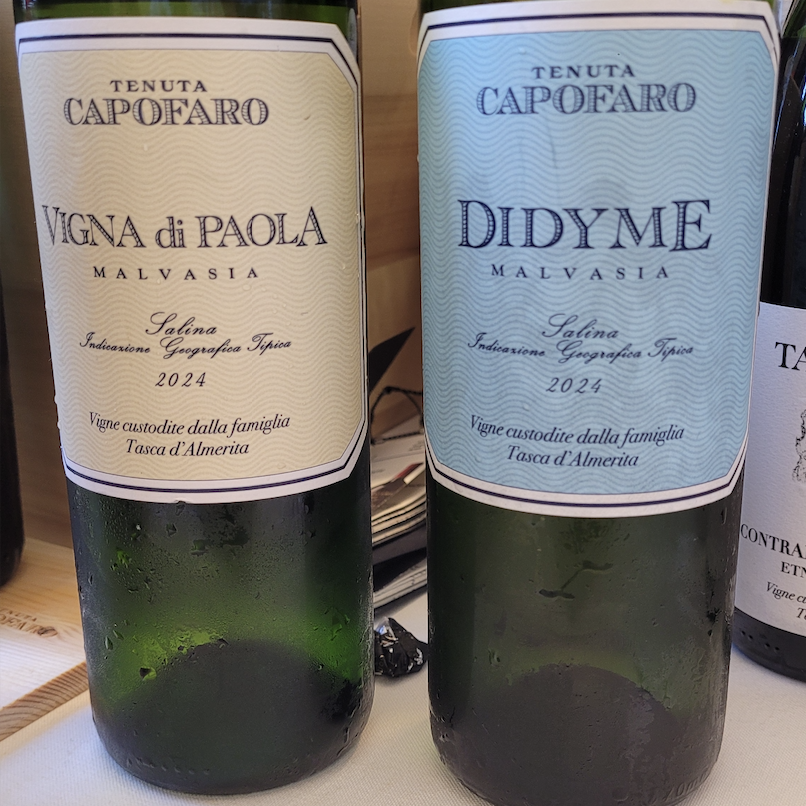
Tasca d’Almerita Tenuta Regaleali Rosso Del Conte 2020, Sicilia Contea Di Sclafani DOC

One of Sicily’s most famous red blends with a track record for aging, of nero d’Avola and perricone out of Tasca’s grand Vigna San Lucio. The large block was first identified and isolated in 1959, now 60 years into its tenure. Aging is multifold, in chestnut barrels, Slavonian cask and small French wood. This 2020 is officially the 50th anniversary of the Rosso del Conte label with one of the most developed richness of them all, all the while maintaining its recognizable grace and every subtle aspect its always meant to express. Poise and focus but also impressive fitness. Will age two decades. Drink 2026-2036.  Tasted May 2025

Tenuta di Castellaro Nero Ossidiana 2022, Terre Siciliane Rosso IGT

From Massimo Lentsch’s Lipari Island winery with the seedless grape corinto (well actually one central seed) which means high acidity, low pH and also tannin. Not to mention lessening of alcohol that barely reaches 13 percent. A spoonful of nero d’avola augments but changes the sharp and basaltic obsidian nature of the wine. Sees 18 months in cask and you can serve this lightly chilled. This due to the relative low tannic profile and elevated acidity which also means juicy, summery and fresh. Don’t let the colour fool you. Drink 2025-2028.  Tasted May 2025

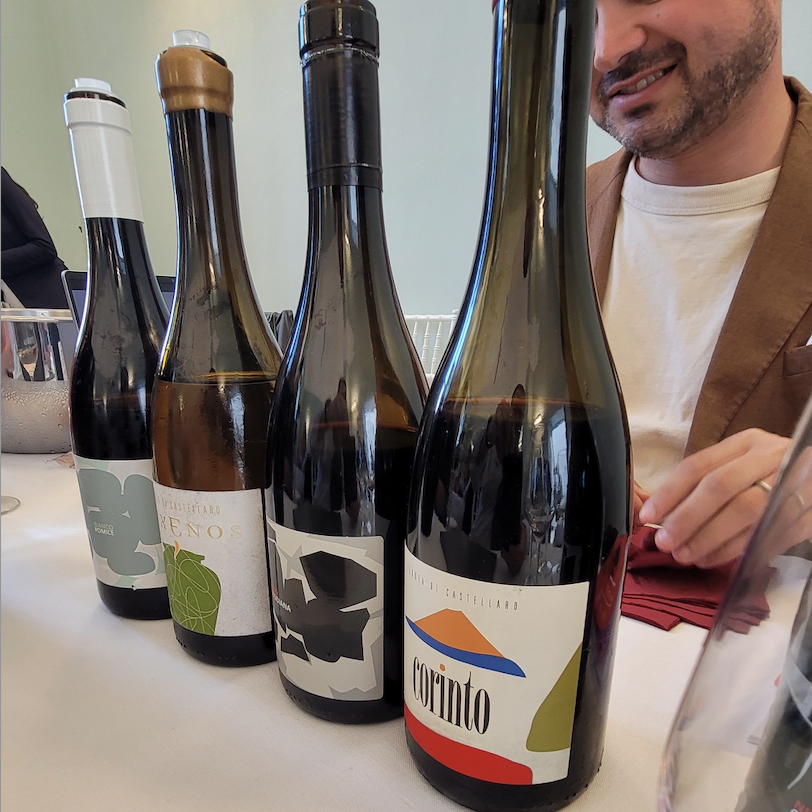
Tenuta di Castellaro Corinto 2021, Terre Siciliane Rosso IGT

Pure corinto, seedless and more straightforward than Ossidiana but both are made for drinking cool, fresh and long. A bit more rusticity and also richness because there is some (third passage) tonneaux aging involved in the maturation. More tannin but still nothing austere or causing any real tension. Just 3,000 bottles made of this unique Lipari red. Drink 2026-2029.  Tasted May 2025

Tenute Navarra Disiato Frappato Sicilia DOC 2024

Riper fruit, dark and later picked, rusty edging for black cherry style. Easy style of frappato but surely readied sooner and with more colour needs than fruit substance as compared to many. No sense holding onto any of these bottles. Drink up. Drink 2025-2026.  Tasted May 2025

Vall Dell’Acate Frappato di Vittoria Frappato 2024, Sicilia DOC

Extremely fruit evident and forward, distinctly frappato as its varietal source, a dictionary entry and open window into its Vittoria world. Crunchy red, of pomegranate, cranberry and red crabapple, tart and juices flowing for thirst quenching activities. Open the wine glossary to “F,” scroll down to frappato and this wine may very well be there to explain what it is you are tasting. Drink 2025-2027.  Tasted May 2025

Vall Dell’Acate Frappato Vigna Bidone Sottana – Vino di Contrada Vittoria Frappato DOC 2024

The single vineyard slash contrada wine is a different beast as compared to the Vittoria DOC “Villages” label because it really is a tannic beast. The fruit chosen must surely be blessed with a certain ability to work with austerity and depth in its tannins. Vigna Bidone Sottana is both harder to approach and currently unclear to comprehend. A crusted exterior holds importance within, of fruit and acidity in layered composure and intendment, each working through machinations together and for a later, greater purpose. Needs a year, better yet two to come together and begin to express itself. Drink 2027-2032.  Tasted May 2025

Bianco

Alessandro di Camporeale Catarratto Monreale DOC Mandranova 2020

From the cru called Mandranova in Monreale and a a little portion of tonneaux used to induce flesh but also texture and expand the possibility for some time in bottle. Ambitious to a degree but there is no taking the place out of the wine. Stone fruit pulpy, sapid, sweetly herbal and with citrus meandering through lemon, lime and mandarin. Check back in two years. Drink 2025-2028.  Tasted May 2025

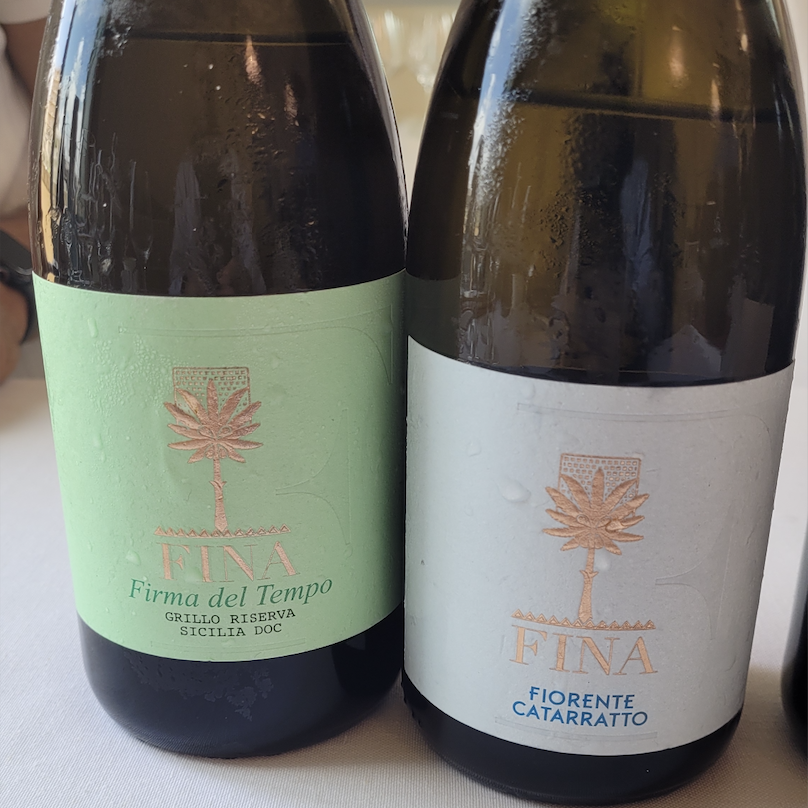
Cantine Fina Catarratto Fiorente 2024, Terre Siciliane IGT

From the most northern zone for Fina and yet distinctly western Sicilian in origin, style and effect. A bounce back vintage for the winery and ideal for the grape to express its sense of place. Crunchy and salty, mineral and satisfying. Drink 2025-2028.  Tasted May 2025

Tasting with Sergio Fina – Cantine Fina

Cantine Fina Grillo Firma del Tempo Sicilia Riserva DOC 2023

A stand out and alone grillo because Riserva and therefore we intuit part of the ferment being sent to wood. An ambitious way to approach the variety, to give it the chardonnay touch for a fuller, richer and even buttery expression. French barrel but still there is the marine saltiness and sandy soil inscriptred sapid character. You can take grillo out of Trapani but you can’t take Trapani out of the grillo. Drink 2025-2029.  Tasted May 2025

Cantine Fina Grillo Kebrilla Sicilia DOC 2024

The second of two grillo, also raised partially in steel and part in French wood. The younger and fresher one, with green apple bite, more sapidity, less wood and similar styling. Crunchy and with green Chile capsicum bite on the back end. Just a bit overdone yet without the concentration of Riserva. Drink 2025-2027.  Tasted May 2025

Caruso e Minini Grillo Lillo Sicilia DOC 2024

Hard not to see this as vehemently Western Sicilian grillo, from the sea and the winds for a slice of experience but also one that assimilates some skin musky aromatics to enhance the grillo fruit. Ideal mix of salinity and sapidity with some metal at the finish. Never a wrong time for a sip of Lillo. Drink 2025-2027.  Tasted May 2025

Giovanna and Rosanna Caruso – Caruso e Minini

Caruso e Minini Catarratto Catalù Sicilia DOC 2024

Not only unique for catarratto but authentic and existing right at the heart of the concept of ARCA, “associazione regionale catarratto autentico.” The story of grape coming from place with its marine airy and salty entry morphing through rusty fruit, citrus, fennel and finally into a sapid, botanical finish. Drink 2025-2028.  Tasted May 2025

Dei Principi di Spadafora Vignaioli in Sicilia Catarratto 2024, Terre Siciliane IGT

The catarratto is timeless and you can drink it any time of the day. Literally and expalins Enrica Spadafora, “in our area the freshness of the land is what determines what comes from the grape and place.” A bit tannic however, sneakily so and things will change if you allow them to. Drink 2025-2028.  Tasted May 2025

Dei Principi di Spadafora Vignaioli in Sicilia Don Pietro Monreale Bianco 2024

Only catarratto which qualifies as a varietal wine for the Monreale denomination, no longer inclusive of grillo, from concrete to steel in terms of fermentation and maturation. The feeling of skin contact is palpable even though it is just four days because a salve texture and tannic profile settle into the palate. Still the acidity and freshness are preserved for a balanced varietal wine. Drink 2026-2029.  Tasted twice, May and June 2025

Dei Principi di Spadafora Vignaioli in Sicilia Principe G 2021, Terre Siciliane IGT

Just grillo and six months on lees for body and spirit with time having brought about some maturing notes to create great varietal curiosity, like preserved pears or peaches and a settling on the palate. Persistent but not of a waxing energy per se. Plenty of texture and flavour to mull over, on and about. Drink 2026-2029.  Tasted May 2025

Feudo Montoni Inzolia Sicilia DOC Fornelli 2024

A rebound vintage but at Feudo Montoni consistency is king because Fabio Sireci will never force a square peg into a round hole. The 2024 season was an easier fit to produce varietal wines as he sees fit, here with that great mix of the salty and the sapid. Just spot on and poured at the right temperature inzolia is just so, so good. Drink 2025-2028.  Tasted May 2025

Feudo Montoni Catarratto Sicilia DOC Masso 2024

Sharp catarratto, cut through fruit and palates like a knife, a specific mineral that of course is a bit saline but in catarratto it’s really all about sapidity. Fabio like his whites with some austerity and this is the white that has the most, with bitter almond notes come out in the aroma, as marzipan at the finish. This can age, you better believe it. Drink 2026-2031.  Tasted May 2025

Feudo Montoni Grillo Sicilia DOC Timpa 2024

More aromatic than catarratto, not quite moscato floral but scenting yellows and whites, a honeysuckle imagined with lemon citrus blooms. Still ’24 grillo is taut with vague austerity (thought not catarratto austerity) and as with all the Montoni whites the grillo too is so very linear and vertical. Drink 2025-2029.  Tasted May 2025

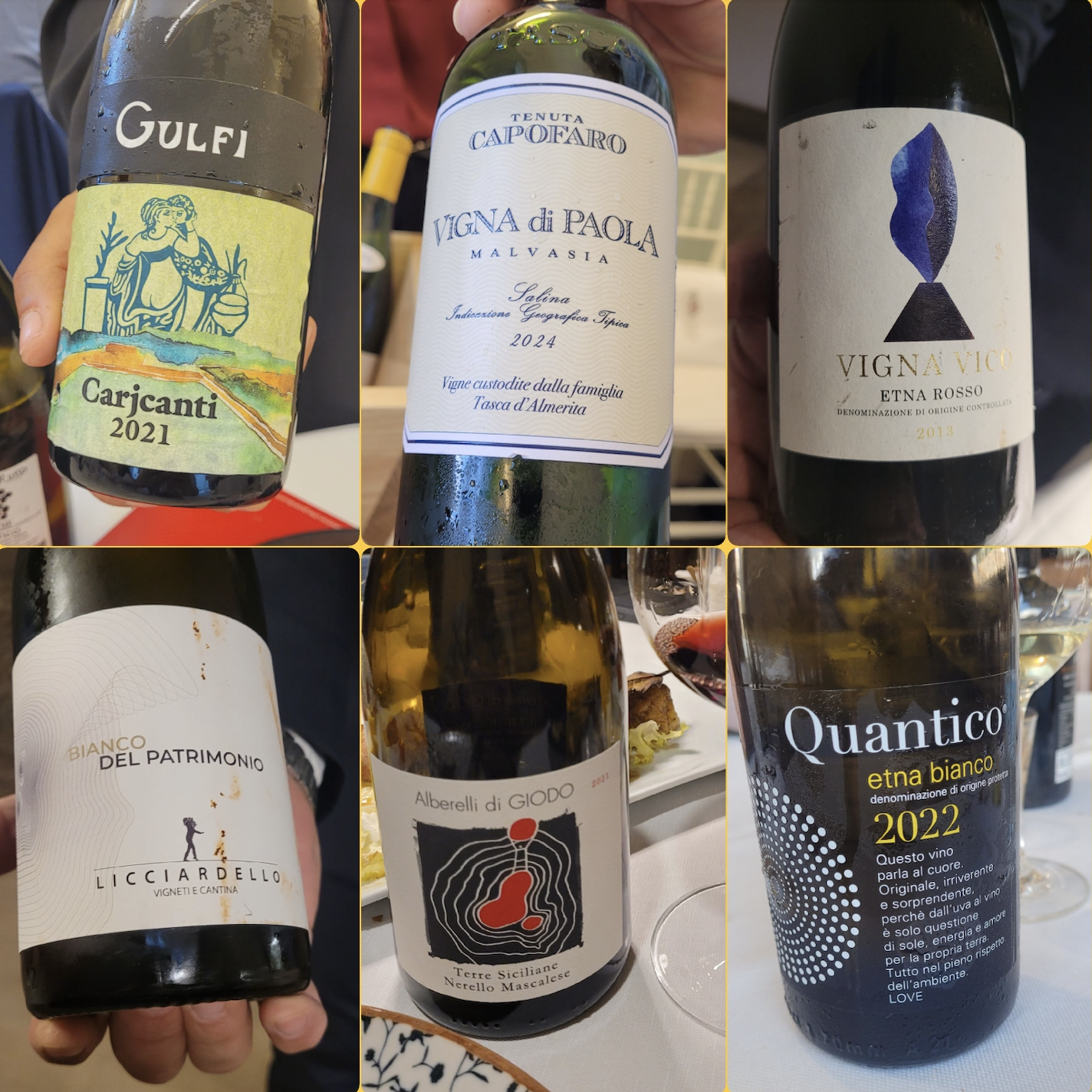
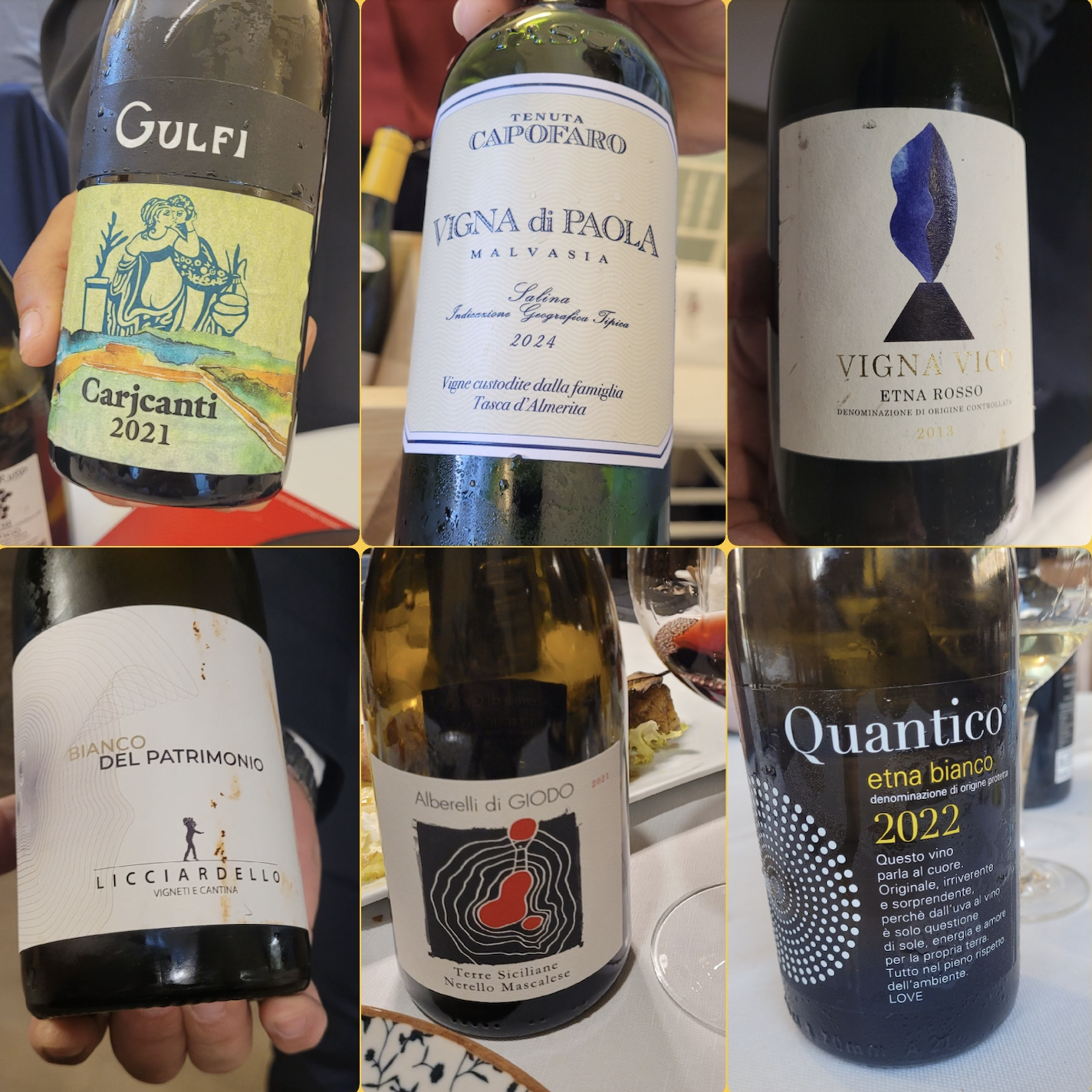
Gulfi Carjcanti 2021, Terre Siciliane IGT

From the wine with the dialectical name for carricante and a beautifully bittered tincture that speaks to sunshine for fruit first and volcanic feels second. They come together but will only improve their relationship with tome in bottle. Drink 2026-2029.  Tasted May 2025

Pellegrino 1880 Grillo Sicilia Superiore DOC Senarià 2023

Senarìa means “cold” for a clone of grillo planted in 1980 ’s since been propagated by Pellegrino for more hectarage. The only grillo produced as a superior in Sicily with age and clonal specificity creating the identifiable DOC. Almost like serious chardonnay in style and effect, a Burgundian bite and crispy character that’s part unexpected and part intense. The richness comes from the palate, as it should for a two-part experience growing and will continue to grow in stature. Drink 2025-2028.  Tasted May 2025

Pellegrino 1880 Isesi Pantelleria Bianco DOC 2022

A Bianco in which zibbibo is the key with altitude and exposition to the winds being the catalyst. Different plots in several contrada are chosen as contributors of their varietal fruit expressed as a white wine that should and will age for years. Falls into the semi-aromatic, cousin in style to moscato sort of way and the tannins lay really low. They are the underscore, the horizontal backbone that fruit but also acidity glide over and develop their motion. This is a wine of journey, never static and one to look forward to tasting when it passes five to ten years of age.  Last tasted May 2025

Pellegrino 1880 Vergine Marsala Riserva DOC Single Barrel Nº 018 2005

Vergine means marsala fortified with soy alcohol and as Riserva (2005) it means more than 20 years of aging. Mainly grillo with (30 percent) catarratto and inzolia, limited production, 2,163 bottles and finished at 19.5 percent alcohol. The sugars developed could imagine honey, brown sugar or maple syrup but they are so much more complicated and therefore unnamed. Also fruit like apricot and pineapple but think moire exotically or better still just admit that something unusual and ethereal is happening. The palate is dry as the desert, the flavours, brown butter nutty, intense and spicy. This is not a dessert wine by any stretch of the imagination but something much more gustatory and ready to receive culinary inspiration. Drink 2025-2040.  Tasted May 2025

With Planeta winemaker Patricia Tóth

Planeta Eruzione 1614 Carricante 2022, Sicilia DOC

At a time it was the high elevation and now it’s really more about the established appellative functionality that dictates the specific DOC labelling of Eruzione 1614. There are varietal carricante on L”Etna and there is Eruzione, a Bianco as definitive to tell an old story and relay the message of soil, stone and place. The 2022 is exceptional, rising and seemingly hovering above the ground, something very hard to do for fruit grown on volcanic terroir! Yet here is this levitating Etnese, a Bianco of weightlessness and incredible acidity. Will drink well for five years, in another terrific alternate state for five more and then who knows what magic through five more after that. Drink 2027-2037.  Tasted May 2025

Planeta La Segreta Bianco Sicilia DOC 2024

Ninety percent of the blend is three-fold, of grillo, grecanico and chardonnay, plus 10 percent “others” which includes the aromatic viognier. All adds up to one of Sicily’s most drinkable whites and there can be no argument there. Cool, chill, kick back, sip and relax. Here, there and everywhere. Put on the Beatles or whatever makes you tick. Just drink it. Drink 2025-2027.  Tasted May 2025

Planeta Chardonnay Sicilia Menfi DOC 2023

Warmth begets riches and yet 2023 is not the warmest of Ulmo vintages but chardonnay has so much experience, developed vine age and proven track record to get into this full and substantial place. Without fail and the fans of this large production Sicilian pioneer will again be granted their wish. Chardonnay is big and it is grand, with the benefits of barrel and sun, all in balance. Drink 2026-2029.  Tasted May 2025

Planeta Chardonnay Sicilia Menfi DOC Didacus 2022

For Didacus chardonnay rises to the island’s highest level because it receives the respect and elévage it so deserves. Hard to find a vintage as firm and as tight as 2022, weather related of course with heat units having come fast and intense, but also elongated through to the earliest pf picking times. That would be the first week of September and thankfully so because acidity keeps the dream alive. Didacus is drinking at peak right now – do not sleep on it’s power or potential and find a way to get there now.  Last tasted May 2025

Production began in 1995 while the vines are now nearly 45 years of age. In the southwest part of Sicily, in the Ulmo area around the village of Menfi where a corridor of wind, “our favourite friend,” tells Santi Planeta, blowing through between the lake and the sea. Through vines growing between 100 and 450m, breathing cool life, especially in the summer. The 2022 vintage saw plenty of rain though not concentrated at any particular time and so the constant events of moderation were something remarkable considering how often extreme climate events are increasingly more prevalent. The coming vintage of 2023 and 2024 will be affected by them, mostly because there was no rain. This chardonnay is impeccably balanced between fruit and acidity, acidity and texture, texture and tannin. The progression is seamless, the result precise and anyone who does not the recognize the experience and continued work put in may not be paying close attention. That’s fine but know just how special a (relatively) large production, semi-cool climate chardonnay this truly is. Planeta’s year-to-year consistency is truly impressive. Drink 2024-2028.  Tasted at i4C, July 2024

Serra Ferdinandea Bianco Sicilia DOC 2023

A 50-50 split between grillo and sauvignon blanc from a season with drama because of early heavy rains and yet there no Perenospera (mildew) developed up on the vineyard’s hills. In this vintage the directness and linearity of the sauvignon takes control but this is also the style, from clean maceration for a capture of saline intensity to keep fleshy and golden maturity at bay. The grillo plays along but never speaks up or steps out of place. Drink 2025-2027.  Tasted May 2025

Tasca d’Almerita Tascante Chardonnay C’Eragià 2022, Sicilia DOC

Etna chardonnay made with French wood completely un-toasted out of Rampante where a chardonnay vineyard already existed when Alberto Tasca bought the estate. The wood is virtually unnoticeable, lemon attacks the palate and the energy is simply great. Graceful while volcanic spirit adds the intangible pizzazz. Drink 2026-2029.  Tasted May 2025

Tasca d’Almerita Fondazione Whitaker Grillo Mozia 2024, Sicilia DOC

Grillo from Mozia island off the coast of Trapani and Marsala, the only important variety and 40 year-old vines for the most unique expression of the grape. An ancient expression if you will and quite possibly the saltiest of them all. Some will find this sharp and austere but there is sneaky richness and intensity that belies the sear and strike of the grillo. Drink 2026-2029.  Tasted May 2025

Tasca d’Almerita Tenuta Capofaro Malvasia Vigna di Paola 2024, Salina IGT

Saltier and more vertical of the two Salina malvasia, less fleshy but also juicy character, instead a more briny caper measure and mix of marine elements. Volcanics come into the soul of this malvasia with impunity and the mineral austerity is nothing short of intense. If Didyme intoxicates it is this Vigna di Paola that takes full control of your senses. Drink 2026-2029.  Tasted May 2025

Tasca d’Almerita Tenuta Capofaro Malvasia Didyme 2024, Salina IGT

Iron volcanic sands make for vines and grapes that develop a relationship only Salina will own, different even than Lipari and in terms of malvasia there is nowhere else in the varietal diaspora where it comes way like this. A mineral that gets in you, an intoxicant that runs through the veins and causes a true stoning. Imagine capers and ricotta, shrimp and lime. It’s all there in sweet, salty and semi-aromatic intensity. Drink 2026-2029.  Tasted May 2025

Tenuta di Castellaro Bianco Pomice 2024, Terre Siciliane Bianco IGT

A blend of malvasia (della Lipari) and carricante as an extremely youthful and so in certain ways playing the part of a 2024 preview although it’s a finished wine. There really is nothing like this, nine months on lees with bâttonage every month. Consider this as “Etna Bianco plus” with more marine influence, a spirited buzz about it and a fleshiness matched by this mix of flint and isle mineral feel. Just bloody delicious. Drink 2026-2029.  Tasted May 2025

Tenuta di Castellano Eúxenos 2022, Terre Siciliane IGT

Just malvasia di Lipari, ”lightly” fermented on skins in one cacciopesto amphora, a lightly permeable type for just 1,800 bottles. Simulates an imagining of a history of sunken greek amphora and so a message is felt and transmitted for making a wine that just needed to be made in reference to the lore. Ultra textural and a fascination with fate that requires one to abandon a perspective firmly embedded within a knowable methodology of winemaking culture. Drink 2026-2029.  Tasted May 2025

Tenuta Regaleali Catarratto Sicilia DOC Buonsenso 2024

Intensity and concentration of sweetly herbal and salty fruit with persistence as much as any varietal wine in Sicliy. Happens to be catarratto, one so full, expansive and linear. Drink 2025-2028.  Tasted May 2025

Etna Bianco

Benanti Etna Bianco DOC Contrada Cavaliere 2023

Cavaliere as a contrada white is getable and found in mid course for carricante of middle weight, fleshiness and structure. In other words a balanced Etna Bianco that has arrived early and readied for consumption ahead of the other single place wines. The metallic notes are purely basaltic and while fruit is plenty pleasant it’s not really the lead driving factor. Cavaliere is specific and noted for that. Drink 2025-2028.  Tasted May 2025

Benanti Etna Bianco DOC Contrada Rinazzo 2023

Rinazzo as a contrada Etna Bianco is surely more reserved and stoic especially as compared to (Cavaliere), as if it were let’s say Vaucopins and Cavaliere were Beauroy. Unnecessary wine region comparisons aside there is a richesse and a golden sun meets volcanic mineral accumulation to set Rinazzo aside. Definitely its own Bianco, at once structured and then feeling mature. Feels like a wine having arrived and yet not quite there. Makes for another great and curious Etna Bianco study in contrada-designed peculiarities. Drink 2025-2030.  Tasted May 2025

Benanti Etna Bianco DOC Contrada Monte Serra 2023

There is Cavaliere, Rinazzo and then there is Monte Serra. Hard to imagine three Etna Bianco from the same producer could each act so different. Monte Serra is the reductive and hard to access carricante, stuck in the basalt, shut tight and currently immovable. Not exactly expressive nor seemingly looking to act so any time soon. Would give this a year to sort out its thoughts and reconcile its differences between parts. That said the distribution of weight in Monte Serra’s design creates a sense of stability and harmony in its architecture. Thinking further we’d all consider waiting two years to see a release of the magic and fantasy. Drink 2026-2031.  Tasted May 2025

With JustSicily’s Federica Matranga

Cottanera Etna Bianco DOC 2024

First ’24 out of the gates, clean, open, fragrant and fresh. Apple juiced and as readied in simplicity without fuss, obfuscation or muss, in as much as it seems possible from Etna Bianco. The time to drink is now. Drink 2025-2026.  Tasted May 2025

Cottanera Etna Bianco DOC Contrada Calderara 2023

Next level interest and complexity comes from this Etna Bianco out of the Contrada Calderara where reds shine and whites like this are golden proud. Equanimous mix of stone fruit and volcanic savour come together and do so with seamless ease. For someone who wishes to experience the next level above and beyond regional or say “Villages” Etna Bianco it is this carricante that will help show the way. Drink 2025-2029.  Tasted May 2025

Cusumano Alta Mora Etna Bianco DOC 2023

Rich, luxe et volupté carricante for the sort to seduce and reel in hundreds of new varietal consumers. Also that which should surely please many who have already attended the party. More than ample freshness, crisp bites, orchard fruit, mineral sparks and finishing bitters. Drink 2025-2027.  Tasted May 2025

Donnafugata Etna Bianco DOC Sul Vulcano 2022

Oh so specific style of Etna Bianco from carricante tucked into the volcano and scenting like a garden wet with rain. As if petrichor soaked into basalt, effusive and smelling like nothing ever before, especially when the Ginestra joins the mix. Crunch and sway, crisp apple bites and varietal oscillations. Top vintage for this Donnafugata Etnese white, clean and yet leesy, complex and inviting. Drink 2025-2029.  Tasted May 2025

The team of Generazione Alessandrio

Generazione Alessandro Etna Bianco DOC Trainara 2023

Of 85 percent carricante and (15) catarratto near Lingualossa which being on the eastern slope increases the marine influence. Push-pull posit tug between the volcanic and the botanical or perhaps they are actually one in the same. Clean and focused Etna Bianco in any case. Drink 2025-2028.  Tasted May 2025

Girolamo Russo Etna Bianco DOC Nerina 2024

Rich and fulsome, as concentrated as Nerina will ever be and surely a factor of tight, small and low yielding bunches. These as a sub-factor from a condensed vintage of heat units and less water accumulated in each berry. Nerina as Etna Bianco 2024 travels right up the rising angles of the palate, gets into that nook at the top of the jaw before receding into full golden fleshiness. Drink 2025-2028.  Tasted May 2025

Girolamo Russo Etna Bianco DOC Feudo 2023

Feudo as the cleanest of Russo’s carricante, crisp and of a contrada clarity for whole rounded expressiveness. Good clean lees living from 2023 Feudo with segments of lemon and white grapefruit providing a plethora of fresh citrus flavour. Nothing herbal or savoury about it, just the facts, of fruit and mineral.  Last tasted May 2025

New Bianco for Giuseppe Russo, a selection of 100 percent carricante from three hectares within the Feudo di Mezzo vineyard and contrada. Feudo is not San Lorenzo but it is something remarkable in its own right. More botanical and phenolic but also a level of citrus preserve not noted anywhere but Feudo. Crazy level of implosive citric intensity and taut character. The behaviour is so different to San Lorenzo with flavours that mean business in the most impressive way imaginable. Intensity off the charts, concentration so impressive, energy that builds and builds. Drink 2024-2029.  Tasted May and September 2024

With Giuseppe Russo and Alberto Graci

Graci Etna Bianco DOC Muganazzi 2023

Graci’s Muganazzi is a true blue contrada Bianco from stone, of mountain reduction by way of its processes. The palate gets past the wall of aromatic sound to tell us what we need to know, or at least part of what the future holds. This is serious and protractive carricante, cased in a hard protective shell, waiting to be released. Crispy and encrusted but time will do what’s necessary. There is a great an substantial amount of fruit which is what matters most. And of course the volcano. Drink 2027-2033.  Tasted May 2025

Graci Etna Bianco DOC Arcurìa 2023

Apposite to Muganazzi is Arcurìa, a contrada carricante with more immediate flesh and plenty of backbone in support. Arcurìa is also the truly leesy Etna Bianco, built on the yeasty stuff and more akin to wooded Chablis than almost any other. This reminds of Fourchaume if such a comparison could be tolerated, but either way the wine is built to last. Drink 2026-2031.  Tasted May 2025

I Custodi delle Vigne dell’Etna Bianco DOC Ante 2021

Smoky from its reductive and flint stone struck moments, the fruit not only behind but well back with volcanic sand after a rain wedged expressively in between. Everything about Ante screams volcanic Etna, in stone, rock, sand, mineral and elemental style. A must try to begin believing. Drink 2027-2032.  Tasted May 2025

I Custodi delle Vigne dell’Etna Bianco DOC Imbris 2020

I Custodi is the kind of place to raise cariccante and Imbris the kind of label to speak in Etna Bianco clarity. The cool-climate factor and style might make you think the area is cold as hell but oh,no,no,no and Imbris is a kind of rocket man. The 2020 holds such a beautiful combination of lees driven fruit and volcanic mineral so there is no doubt a new age is upon this estate. The wines have been working towards this moment and here they are. Beautiful and inviting, welcoming and fine.  Last tasted May 2025

Varietal carricante at 800m fermented in steel, put to barrel and then one year in bottle. So much corporeal flesh on the body of a seriously developed Bianco. Has come into a fine place but my goodness so much texture, citrus and length. Drink 2024-2027.  Tasted May and September 2024

Maugeri Etna Bianco DOC Superiore Contrada Volpare 2023

Confident, cool and still presently stoic holding on to a controlled, yet to open the gates and be released intensity. Perfectly clean lees living within a structure of carricante built for pleasure and also aging. Really fine work from Contrada Volpare with many years of expressive reveal still to come.  Last tasted May 2025

Youthful is the understatement and Volpare the name, so say it loud. This is indeed singular Etna Bianco, as they should be but some are in a league of their own, as Mugeri’s eastern wines clearly are. The estate has taken it to the next level with an ascension of elevated mountain fortuity but also depth determined by terroir which can only be transmitted when agriculture abides. Abides because the maker makes it happen and Volpare delivers generously while also with precision and finesse. Leave this for 18 months or more to settle the relationship between rocks and acidity. After tasting Frontebosco and also Frontemare you realize the latter is the true catalyst to propel this cuvée selection. Drink 2026-2032.  Tasted September 2024

Maugeri Etna Bianco DOC Superiore Contrada Volpare Frontebosco 2023

Seemingly an understatement made but its only by the music this Etna Bianco will be free. No doubting more finesse, focus and precision from the carricante out of the vineyard facing the forest, an herbal cooling coming in, upping the botanical feels, its development low, slow and perhaps still far away. The taut nature of Frontebosco means the requiem to await what’s coming should be at least a year. Last tasted May 2025.

Versante est which separates Mugeri from not just the north but also the south and the future will surely look to this area for greatness. Not only Volpare contrada but a section within, here called Frontebosco, as in facing or in front off the forest and so the herbals here within are assumed to be elected by the nearby woods. Makes for freshness but also a fruit fleshiness that the more general Volpare does not show. A full, substantial and impressive Etna Bianco that might just appeal to everyone. Superiore indeed. Drink 2025-2033. Tasted September 2024.

Maugeri Etna Bianco DOC Superiore Contrada Praino Frontemare 2023

From the first to the sea we now receive the carricante out of the vineyard facing the Ionian, a stiff breeze blowing through, keeping the sails taut and the speed up, all the while a finish line yet far away. More lees coming from Frontemare mixing with sea spray for an Etna Bianco tight as they come, yet airy and rising. Would wait two more years for parts to come together and waves to calm down. There will be smooth sailing ahead.  Last tasted May 2025

Frontemare, “facing the sea,”as opposed to Frontebosco, “facing the wood.” As such this would be east facing from Etna’s east sector and so the block with the view creates a unicorn of an Etna Bianco as fascinating as it seemingly gets. The most crisp, crunchy, fresh and intense of Mugeri’s whites, citrus squeezed throughout and long as the zig-zagging wind of a single road down to Catania and into the sea. Just wow, with layers upon layers to unreel, unfurl and unroll for a long aging period ahead. Drink 2026-2034.  Tasted September 2024

Palmento Costanzo Etna Bianco DOC Bianco di Sei 2022

Perfectly expressive carricante from 2022 for a vintage not always caught at optimum, however the Costanzo team’s relentless.  Last tasted May 2025

A cuvée of all parcels from different contrade, including the homefront Santo Spirito, along with Cavaliere. On average 90 percent carricante with (10) catarratto. Only raised in stainless steel, persistently fresh and if any region in the world might be compared with it would be Chablis AOC, direct, salty, smart and widely purposed.  Tasted September 2024

Just have to say wow because Bianco di Sei comes equipped with a level of intensity that was not quite expected from 2022. Not so much a volume or an explosion aromatically speaking but an extreme set of eccentricities that crash aboard the palate. Likely needing some rest and down time to integrate because the level of extract here (including volcanic activity) is simply off the charts. Etna incarnate, pointed and exciting. Drink 2025-2029.  Tasted May 2024

Palmento Costanzo Etna Bianco DOC Contrada Santo Spirito 2022

In reality these last three or four years have always been warm but ’22 was frankly very good, warm yet without any real challenges. What drives this carricante is an unwavering focus and persistence, a balance from start to finish without dips or oscillations. The relationship between Costanzo and Santo Spirito in Bianco is seamless, now seven years into their partnership.  Last tasted May 2025

High level aromatic volume and concentration from Santo Spirito ’22 and we know right away that this wine knows exactly who it is, where it comes from and where it wants to go. Volcanic salts are also present on the nose from a Bianco of great stage presence and such a smart textural weave that gains every bit of the palate’s confidence. The connection is prescient, reaction calming and conclusion poignant. This is how you make and present Contrada-specific Etna Bianco. Drink 2025-2033.  Tasted September 2024

Palmento Costanzo Etna Bianco DOC Contrada Santo Spirito 2021

High spirit from the Contrada specific blocks to speak on behalf of local saints and soils. Volcanic vernacular, citrus and herbal, gelid cool, leesy clean and indefatigably healthy. Fine carricante for 2021 and a vintage that is sometimes confounding. Not here in an expressive and beautifully made example. So very 1879 in terms of volcanics and therefore Santo Spirito tells the story.  Last tasted May 2025

Note the colour of the lava soil on the label, lighter brown for Santo Spirito, from the contrada vineyard at 700m on the northern slope that comprises one out of three “islands within the island” of L’Etna. Still just an infant, implosive and insular, wound so tight, yet to explode. Give this another year, just as the first taste had indicated for months prior.  Tasted September 2024

A fine vintage and and even finer Contrada, that being Santo Spirito where carricante (and 10 percent cattarrato) are given every soil, geological and micro-climatic advantage. There is an accumulation of ripeness and stone cool mineral groove from location and acumen that make this move with incremental ability. It will slowly define itself over along period of time that will be fascinating to watch every step of the way. Drink 2025-2032.  Tasted May 2024

Palmento Costanzo Etna Bianco DOC Contrada Cavaliere 2022

The most recent bottling for the cru Bianci and this out the contrada vineyard down slope from Palmento Costanzo. Perhaps not the tension of Santo Spirito and surely more richness yet still the balance between fruit and the structural parts. Cavaliere is remarkable for its quality consistency year in and year out. Unwavering Bianco. Drink 2025-2028.  Tasted May 2025

Palmento Costanzo Etna Bianco DOC Contrada Cavaliere 2021

Very different to Santo Spirito, riper and richer, more cumulate golden sun, lees still a major factor in the overall expression. Just a touch of reduction, tart with tight lines and increased juxtaposition between stylistic parts. Not as focused as Santo Spirito but surely seductive and generous.  Last tasted May 2025

Note the colour of the lava soil on the label, darker brown for Cavaliere, from the contrada vineyard at 700m in the southwest “island” of L’Etna. A different expression to that of Santo Spirito, volumetric in terms of aromatics and less austere or rather locked tight. Here more sapid and botanical, less basaltic salinity and fleshier early on. More fruit forward, pulpy stone fruit like, amenability run higher and the Contrada-designate Bianco to drink while waiting for Santo Spirito to mature. Drink 2024-2027.  Tasted September 2024

Pietradolce Etna Bianco DOC Archineri 2023

Archineri as a Bianco is really open and expressive, delicious and generous from the word go and ready to please. Clean lees, a cool basaltic factor and white peachy stone fruit. The citrus is a bit neutral yet surely supportive and helpful in the overall feel of the wine. Really good quality and clean winemaking results in a wholly accessible and aiming to please white from L’Etna. Drink 2025-2027.  Tasted May 2025

Tasca d’Almerita Tascante Etna Bianco DOC Contrada Sciaranuova 2022

Lees shows to be so integral and essential in the early development of Tascante’s Etna Bianco 2022 from the very important Contrada Sciaranuova. There is a play of current confusion while this youthful because the parts inside are bigger than the house that fits them. Expanding from within and needing more room to grow, to shed its weight even after eight months time.  Last tasted May 2025

Vinified and aged in Slavonian Grandi Botti, “to preserve the verticality and freshness of the carricante” explains Tasca d’Almerita agronomist Michele Brusaferri. Plays hard to get and acts demure inside the halls of its aromatic silence but you know that the elevation and fine basaltic soil are the portents of Tascante’s main Contrada Sciaranuova that will see to conditions for change. Though soft you feel the wood, present with confidence yet the thread of cool, herbal and botanical rins from Buonora into this Bianco. Fruit will soon peek through and announce a scintillant’s arrival, blossoms too, namely orange and then to salty lime later on. Just takes some air, agitation and swirl to coax out the excitement and up into the stratosphere. Turns out to be crunchy and seriously salty Etna Bianco, like flakes of Maldon or Slovenian platinum for what can best be described as living the high seasoned life of Etna Bianco. Structure is there and so this should age quite well. Drink 2025-2031.  Tasted September 2024

Tasca d’Almerita Tascante Etna Bianco DOC Buonora 2024

Both the good hour and bonaire as from the French and carricante just about as fresh as you will ever experience. Fresh and fleshy, fleshy and delicious, delicious and satisfying. Just what you desire on the 12th of May at 650m above sea level aboard L’Etna. Drink 2025-2028.  Tasted May 2025

Terra Costantino Etna Bianco DOC deAetna 2023

The term “deEetna” comes from a Latin pamphlet dated to 1494 expressing the sacredness of the oenological universe. Terra Costantino’s is one of the finer examples for 2023 by way of a blend led by carricante plus (15 percent) catarratto and (5) minnella. Ripening to fruition happened in the last ten days of September off of vines averaging 20 years. Yes to the palpable feeling of gainful concentration in juxtaposition to a fine and chiseled example with more wiry flesh hanging tuat on the mineral frame. Really well composed. Drink 2025-2029.  Tasted May 2025

Tornatore Etna Bianco DOC 2024

The straightest and fullest of Etna Bianco expressions with all in clean lees bulking up the substantial aspects of the wine. This is the entry point, the gate for which to walk through into the ever expanding idiom that is Etna Bianco. Start here and then explore the rest.  Last tasted May 2025

The vintage is represented in a most viscous way. Almost an oily character to 2024, indicative of the variable vintage with September having delivered some much needed warmth and sunshine for full phenolic grape development. A sapid iteration, botanical notes pervading and in the end it is texture that drives this Bianco machine. Drink 2025-2028.  Tasted March 2025

Tornatore Etna Bianco DOC Pietrarizzo 2022

Full on sun cumulate carricante from Pietrarizzo for what is surely as ripe and calculated an expression as they come. Full advantage taken of 2022 fruit for all that can be wanted from a Contrada Bianco example.  Last tasted May 2025

Pietrarizzo is both available and confident, not idiosyncratic like Zottorinotto and also richer of fruit. There is an herbal and botanical way about this cru Bianco with splashes of catarratto bringing seasoning to the carricante. A bit spicy and even humid though the fruit is the thing and the volcanics an accent making for even more spice entertained. Such a solid Contrada based Bianco. Drink 2024-2028. Tasted and September 2024

Tenute Tornatore Etna Bianco DOC Zottorinotto 2021

No comparison between Pietrarizzo and Zotorinotto, first of course because of location but in this case also dramatically caused by vintage. The 2021s are not holding up with the same stage presence as wished for last year and the year before. In fact they’ve transformed into this idiosyncratic space. No different here with a carricante of reductive meeting wet stony elements. Feels like some diesel creeping in, not petrol per se (akin to TDN) and smoky rather than smouldering. A bit of a strange advance with likely something new again on the horizon.  Last tasted May 2025

Of Tornatore’s cru-designated Bianci it is Zottorinotto that acts the most reductive and hard to crack. Great shell of protection and disguise, needing agitation and better still time. That said the 2021 is also fully formed, developed and very much ready to get at – make sure to aerate, decant if you can and allow the pleasures to be released. Drink 2024-2026.  Tasted May 2024

Etna Rosso

Benanti Etna Rosso DOC Contrada Monte Serra 2023

Strong aromatic presence and pulse for Monte Serra 2023, mildly and effectively reductive holding parts known and unknown. Not to say the aromas are stifled because they burst if within a bubble and yet to explode without. The epitome of nerello macalese filling our hopes, thoughts and dreams with anticipation. Cuts from stone some dreams of its own and though restrained it keeps a watch over the distance with a look to the future. Monte Serra is always an Etna Rosso with the grip and structure to look farther on, to hold back the fruit and preserve it for later days. The 2023 is balanced and prepared for longevity – that much is clearly true and in view. Drink 2027-2032.  Tasted May 2025

Benanti Etna Rosso DOC Contrada Cavaliere 2023

Tasting Monte Serra and Cavaliere 2023 side by side reveals much about place of origin because while the former looks farther on, the former engages today. A nerello masaclese that makes us see where we’ve both been, reaches us with immediacy and in turn we pay close attention. So much fruit interned so early, so little time to realize just how much is right there in this glass. It’s just that not opening and consuming bottles in the present will be hard to avoid. Drink 2025-2029.  Tasted May 2025

Cottanera Etna Rosso DOC 2023

Knowable bricks and mortar nerello mascalese as Etna Rosso and dictionary entry for the DOC. Sweet vintage fruit, competently concentrated, simply and effectively structure. Does what needs and does it very well. Drink 2025-2027.  Tasted May 2025

Cottanera Etna Rosso Contrada Feudo di Mezzo DOC 2021

Feudo di Mezzo of clout, expressiveness of largesse from the fullness of its old vines nerello mascalese fruit. Still a bit of a reductive nut to crack, a force field to break through, a softening needed to find full pleasure in the wine. A 2021 neither too hard nor to soft, the Goldilocks vintage as they say though the pressure is still applied. This FdM should come into its best years in six months or so. Drink 2026-2031.  Tasted May 2025

Cottanera Etna Rosso DOC Contrada Zottorinoto 2020

Give Zottorinoto an extra year an it will express itself with utmost generosity and here the Contrada’s Rosso is more than ready to go. Fruit sweeping and swelling across the plate, acids mellowed and tannins as well. As drink now a Rosso for the Contrada, as compared to any or all of this ilk on the mountain. Drink 2025-2027.  Tasted May 2025

Cusumano Alta Mora Etna Rosso DOC Feudo di Mezzo 2020

Dusty and Balsamic terroir expression, especially for Etna Rosso and also Feudo di Mezzo. A high acid style to compliment and even more so extenuate the circumstance of nerello mascalese. A specific style as well and one that garners attention, namely because its persistence and length are really quite outstanding.  Last tasted May 2025

Middle ground traveled and promise delivered for the large Feudo di Mezzo as Contrada sizes come, with fruit able to defend itself against generous wood though all parts launch a collective attack on the senses and palate. Big Rosso for Etna, strong boned and willed with the intention to impress. Drink 2025-2028.  Tasted September 2024

Donnafugata Etna Rosso Courdilava Dolce & Gabbana DOC 2020

Red stone fruit skin’s aromatic musk, pulpy to chewy within and fresh enough to keep a leathery character at bay. More tannin than expected and in fact they build quickly – this despite some four plus years having had the chance to settle the score. Still quite grippy and with a level of tension needing to subside. Impressive Etna Rosso. Drink 2026-2029.  Tasted May 2025

Donnafugata Etna Rosso DOC Fragore Contrada Montelaguardia 2021

Noticeable ulterior as an expression of Etna Rosso in comparison to the Dolce & Gabbana Donnafugata label. A fullness of nerello mascalese pressed, dressed and prepared for success. Clearly one to serve up and explain the nature but also importance of a single contrada wine, lacking for nothing and of layers far from being shed. Give time because otherwise this wine will attack with impunity and not let go. Drink 2026-2030.  Tasted May 2025

Firriato Cavanera Etna Rosso DOC Contrada Zucconerò Sciara del Tiglio 2021

Grainy if fine in that respect from specialized and decomposed volcanic sands that lend a very specific profile to Etna Rosso. Also quite ripe and so the palate holds a liquorice, leathery fruit chew character which speaks to drinking sooner rather than later. No doubt a singular wine and one that screams for best food accompaniment. The duck at Cavanera Wine Resort is ideal. Drink 2025-2028.  Tasted May 2025

Generazione Alessandro Etna Rosso DOC Croceferro 2023

Only nerello mascalese off of the northeastern slope of Etna and the place where the iron cross, therefore Croceferro sits in the vineyard. A rich and tannic nerello with a tease of immediate gratification but the austerity in this tannins reminds that time will be the operative and necessity for best results. Drink 2026-2029.  Tasted May 2025

Generazione Alessandro Etna Rosso DOC Scaramantica Vigna Vecchia 2021

Oldest vines are 80 years of age and nerello macacesle is joined by several others for a true Etnese field blend. Increases the fruit immediacy with concentration but even more so the tonic profile with fine-grained ruling and austerity that requests time, plenty of time. Seriously structured Etna Rosso no matter how you slice it. Drink 2026-2029.  Tasted May 2025

Girolamo Russo Etna Rosso DOC San Lorenzo 2022

Open for business, fruit and acids intertwined at their combined sweet heights. Good palate spiciness and a riveting sense of energy. Liquid chalky tannins still in transformation, likely to finish their movements in another year or so. But don’t hesitate as San Lorenzo is drinking beautifully right now.  Last tasted May 2025

The gifts of San Lorenzo are of a slow release ilk the other cru and vineyards of Girolamo Russo are not, but this from 2022 is so full of riches it brings early joy. A great pleasure to have a glass even now with gregarious perfume and readied flavours, of red berries, liquid chalky to candied palate swaths and immediacy from this bottle of wine. San Lorenzo shows off the most glyercol and silken texture – it’s almost candied but of course it’s not. Spicy on the back side, sneakily structured and all the while with a glass we’re feeling fine. Can only improve and integrate with a couple of years time. Drink 2025-2030.  Tasted May and September 2024

Girolamo Russo Etna Rosso DOC San Lorenzo Piano delle Colombe 2022

If San Lorenzo is drinking at early peak right now then Piano delle Colombe should rightly be close behind. Yes in one sense and that would be more intensity of fruit concentration but then again no, because of this landslide of grippier tannin. There is no argument about seeing 2022 as a top Etna Rosso vintage and still the wood on 2022 Piano delle Colombe persists without melting or dissolving in. Some might find a bit too much while others will beg to strongly differ. The 2022 is right there where elements should rightly want to connect, intersect and layer. Perhaps not right away but in time, which will only embolden this Rosso with the wisdom and grace it is destined to express. Wait and anticipate seeing its reflection in the snow covered mountain. Drink 2026-2032.  Tasted May 2025

Girolamo Russo Etna Rosso DOC A Rina 2023

Put a ring around A Rina because no other Russo Rosso comes into view any sooner. None exhibit this level of juicy, luxe and getable richness and none shall pass, not for any reason at all. A Rina is a full and substantial nerello mascalese out of 2023, with the most liquidity come after dissolving grains of tannin for earliest drinking. No reason to wait. Drink 2025-2028.  Tasted May 2025

Graci Etna Rosso DOC 2023

A reminder about origin, they being estate vineyards at 650-750m and aging of 18 months in concrete though this ’23 feels as though at least one big barrel was involved. Not quite as linear and serious an Etna Rosso as the previous 2022 surely was and still is. Youthful yes but more chew than crispiness in 2023, ripeness and sweetness in acidity. No reduction, open for business and read to rock. Drink 2025-2028.  Tasted May 2025

Graci Etna Rosso DOC Arcurìa 2022

Spicing, spacing and perfume define Arcurìa with equal an opposing reflections for signs of Etna Rosso perfections and imperfections. Arcurìa from 2022 is showing quite the amount of barrel at this early stage, notes indicative of spice and challenge. Fruit is up to the task, metered, rising and falling in waves, there to speak of the open and closed spaces. All this to say the journey will end up in reflection in regards to a Rosso drinking forward for eventual gratitude. Drink 2026-2031.  Tasted May 2025

Graci Etna Rosso DOC Arcurìa Sopra Il Pozzo 2020

The piece of Arcurìa needing two extra years of aging and settling time is Sopra Il Pozzo, ad esempio a me piace il sud. Or the north as it applies to this slope of L’Etna and this piece is expressive of the sweetest spicing over fruit as any on the mountain. Yes the southern section is also liked but here Pozzo is an Etna Rosso of wood that needs to melt in, puddle below and allow a rising of fruit. That it will with the nerello mascalese climbing the firm backbone of this 2020 with fine and upstanding repose. Impressive and structured for a very long life still laid out ahead. Drink 2026-2034.  Tasted May 2025

I Custodi delle Vigne dell’Etna Rosso DOC Aetneus 2020

Fascinating study in Etna Rosso because these from I Custodi are different, stand out and alone nerello mascalese with (20 percent) nerello cappuccio. More than just the cappuccio but soil and location add up and amount to what’s in this glass. A certain kind of dried fruit, rich and leathery, studied and mature, weighty but without density. Now a settled wine with heavy mineral presence, a volcanic factor specific to I Custodi and when mixed with the winemaking style it all comes out a very certain way. Do you like it? Try it and find out. Drink 2025-2028.  Tasted May 2025

I Custodi delle Vigne dell’Etna Rosso DOC Saeculare 2016

The consistency of style from one I Custodi Etna Rosso to another is remarkable, to a wine, in all the wine. Yes the 20 percent nerello cappuccino is partly responsible for the semi-rustic, chewy dried fruit character but look further, or rather deeper into fine decomposition of basaltic soil. Location of course but whether you have 2020 or this 2016 in glass they all seem to be at nearly the same maturity. As here with Saeculare although it’s particular grip and structure see it age longer than Aetneus and this is prime time for tasting and in turn drinking this label. It will seem mature to some but know that this is the way and style of the house. Drink 2025-2027.  Tasted May 2025

Palmento Costanzo Etna Rosso DOC Nero di Sei 2021

Fine verticality even from Rosso di Sei because, well 2021 and also the lava. Feels firmer than eight months ago and as a result may live even longer.  Last tasted May 2025

Nero di Sei 2021 comes quicker to the point with near-immediate gratification because of vintage and also by way of the team allowig and even encouaging this to happen. Or abided more like it, with red berry fruit aromas that nerello mascalese can gift when the conditions are right. This is not to say that 2021 will fade into early light because it is in fact equipped with volume, concentration and backbone. A truly exceptional vintage that will appeal to all. Drink 2025-2030.  Tasted September 2024

Palmento Costanzo Etna Rosso Doc Contrada Santo Spirito Pre Phylloxera 2021

Not that the wine isn’t tight but my goodness how the tension is matched by fine verticality from Rosso with an intensity of volcanic chalkiness so specific to Santo Spirito’s 1870 lava. When vines are pre-phylloxera they have a true connection to the actual eruption and basalt because the lava had barely cooled when the first grapes appeared on the vines. A “no lo so” factor in this nerello mascalese character cools the Rosso so that herbal and stony notes prevail and persist, long after the wine has passed over the palate. A remarkable wine (isn’t it always) and another near perfect vintage. Drink 2027-2037.  Tasted May 2025

With Fosca Tortorelli

Pietradolce Etna Rosso DOC Barbagalli 2020

Grand and expressive, epically proportioned, factor of a remarkable vineyard brought to life through the coursing of its nerello mascalese. Hard to imagine an Etna Rosso so fine and linear could be considered crushable but this is Barbagalli and its vines more experienced than just about any aboard L’Etna. Crushable as a fleeting feeling but everything is truly in place, all parts inclusive of fruit, minerals, elements and constructions right where they should formulate. The last of the wine is no such thing because the weights, measures and taciturn moments linger for seemingly ever. Wowed and energized by Barbagalli. Drink 2027-2039.  Tasted May 2025

Pietradolce Etna Rosso DOC Archineri 2021

A different and singular animal for Pietradolce is Archineri, chewier and more palate workable than the rest of the Rosso portfolio. Lots of wood still noted on the 2021, changes yet to take effect, not here, not anywhere. Not tight as much as unable to come to be on the other side. Remains to be seen where this road will lead. To be honest it’s a bit resinous but youth is rebellion and maturity will come to experience.  Drink 2027-2030. Tasted May 2025

Pietradolce Etna Rosso DOC Rampante 2021

Effusive perfume from Rampante 2021, more floral than Pietradolce’s other reds, tannins sweeter and less austere. An approachable character though we know that structure is built for a long and full experience. The most immediately recognizable balance and still time will be kind to this Rosso. Air is on side now, time as well for 10 years forward. Drink 2025-2033.  Tasted May 2025

Pietradolce Etna Rosso DOC Feudo di Mezzo 2021

Some dried fruit and a maturity in the feels of Feudo di Mezzo 2021 but oh my goodness what a charming, graceful and lovely bit of nerello mascalese love in this bottle. Opens slowly and I also feel like their is some sort of obfuscation but the truth is the truth and FdM ’21 is in a very good and right place. Drink this while Rampante and Archineri work through their challenges. Drink 2025-2029.  Tasted May 2025

Pietradolce Etna Rosso DOC Santo Spirito 2021

From the opening salvo Santo Spirito is notable for its restraint and a closed aromatic tilt still very much a factor involved. Like Archineri, floral along with Rampante and so residing either in-between or as a combination of the two. A Rosso of layers, stepping stones taken up towards its eventual plateau. The barrel is melting here so slowly, the fruit fills full and substantial, the power less than intense and the energy still rising, Wait some more and then some more after that. Drink 2027-2031.  Tasted May 2025

Planeta Etna Rosso DOC Feudo di Mezzo 2023

First vintage as a solo Feudo di Mezzo and labeled this way. Not that this Contrada ever creates the darkest nerello mascalese but 2023 is at the peak of lithe, airy and transparent. The vintage takes over from the Contrada with ever-persistent and linear consistency controlling its volcanic destiny. Without density or extravagance, not in any shape or form but instead a fineness that seeks no desperate gratification. Will it age? Of course it will. These are really old vines growing in volcanic rocks, though if perhaps not for decades.  Tasted a second time, May 2025

Full and substantial Etna Rosso for Planeta and 2023, a challenge accepted and met, the effect positive and gaining. Spicing is essential, cumulative macchia also a matter of great importance with layers yet to be peeled away. The reveal is coming, let’s say after another 12-18 months, at which time we will speak of fruit leading and tannin trailing. Grande. Drink 2026-2030.  Tasted May 2025

Tasca d’Almerita Tascante Etna Rosso DOC Contrada Pianodario 2020

Varietal nerello mascalese only grown at 790m in Contrada Pianodario raised for one year in large Slavonian cask. This Etna Rosso is exactly what nerello mascalese is today. It may take a consumer three of four times and vintages before they get it but once they do they will never go back. High acid, transparency, brightest of red fruit, no rusticity and refined tannins. Delicate and at the same time serious. Just keeps getting better each time.  Last tasted May 2025

Lighter of body but not aroma as it now enters with the volume turned up, a feeling of idiosyncrasy and high-level curiosity. Wild and exotic spicing owing to a 17th century lava flow now in a state of degradation to make certain the nerello mascalese growing in its sands are the recipient of its mineral profile.  Tasted September 2024

High-toned, spirited and transparent nerello mascalese from Tasca’s L’Etna Tascante out of Contrada Pianodario. Red berry shine, acids excited and fruit a willing participant. Tarragon and Basil herbal, so very basaltic stony and truly a wine of place. Crunchy and ever so slightly resinous with balsamico mixing into the sweetness of fruit and acidity. Drink 2024-2029.  Tasted May 2024

With Sofia Ponzini – Tenute Bosco

Tenute Bosco Etna Rosso DOC 2022

Spiced and lifted aromatics create an effect to deliver Etna Rosso with linearity, grace and stature. Scan a room and you will not miss this nerello mascalese because its confidence, poise and presence stand out in a crowd. Beautiful in a post classic way, part demure and beyond a doubt unmissable. Barrel that needs to settle down and in will do so in two years time and see five-plus years of ideal drinking after that. Brava Sofia, as always. Drink 2027-2032.  Tasted May 2025

Tornatore Etna Rosso DOC 2022

Straight shooter this Etna Rosso, accessible and amenable to all, now and for all the right reasons. Fruit first, ripe and delicious, aromatically charged and energizing the entirety of the wine. Rosso for Rosso’s sake, crunchy and palatable with great toothsome character, A guarantee and stamp of quality in the most professional of Etna Rosso ways. Unwavering consistency from Tornatore. Drink 2025-2028.  Tasted May 2025

Tornatore Etna Rosso DOC Pietrarizzo 2021

Etna Rosso as Pietrarizzo is nothing short of expressive, energetic and impressive. Fruit comes in waves, in and out of every pore and this “etichetta” exhibits finer and sweeter acidity than so many peers. Commercially viable for a lifted Etna Rosso to explain much about the mountain’s nerello mascalese. Quite fine, true substantial and very composed.  Last tasted May 2025

If Tornatore’s classico Etna Rosso is the most understandable and straightforward 2021 DOC entry point there could be than we should expect Pietrarizzo to hyperbolize that idea. Exaggerate and also exist in a vacuum where great acidity and sneaky formidable structure combine for all that could be wanted and needed. Such is the case and with the estate’s glide into maturity because ripeness happens and getting to the point always in season. Fine work, as always, expected and desired. Should be ready, fully and completely in the late winter months. Drink 2025-2029.  Tasted October 2024

Tornatore Etna Rosso DOC Trimarchisa 2018

A cumulative experience in Etna Rosso, fruit three ways, acids and tannins in and out off every layer, a wine to imagine all the mountain can deliver. Tart, tight and substantial, all the nooks filled with elements fruity and minerally volcanic. As they should be. Drink 2026-2029.  Tasted May 2025

Good to go!

godello

Modica

Instagram

Facebook

Report and reviews from the 2025 Chianti Classico Collection

At the Chianti Classico Collection 2025

Warm days have awoken the vines in Tuscany, the defiant 2025 Ontario winter has been reluctant to end, Spring has not sprung and 45 days have past since the 32nd edition of the Chianti Classico Collection came to another decisive and triumphant conclusion. Sustainability was the central theme in 2025 with talk of a new commitment by producers in their move towards a “sustainable future and respect for the region.” As always sangiovese remained the star for two-days of intensive tasting and continuing education studies with never enough thanks afforded to the organization of the Consorzio Vino Chianti Classico and execution of the Tuscan sommeliers. The most recent vintages showed off their prowess to a macroscale contingent of fully attentive international journalists seated at the Stazione Leopolda tasting tables for two immersive days. Between 2016 and 2024 recurrent hyperbole has been expressed on these Godello pages about the consistent forward strides made by Chianti Classico producers and still their passion and ethic persists. Chianti Classico wines have never acceded the level they are at right now, reputation is at an all-time high and the peak is far from reached. Should you either be blind to the obvious or just beginning to realize the importance of the Gallo Nero, fear not because the best is yet to come.

Related – Harvest report 2024: Retro Chianti Classico

Godello tasting at The Chianti Classico Collection 2025

Hai le fette di salame sugli occhi

A short note from Consorzio Vino Chianti Classico President Giovanni Manetti on US tarrfis: “We are particularly concerned about the repercussions that the 20% tariff imposed on imports could have on the export of our wines, and we must have faith that the choice made by the Trump Administration will be addressed as soon as possible by our Italian and European leaders. Us producers will now have to work together to shoulder the heavy economic burden that will result from the imposition of these tariffs on the U.S. market.  We will continue on, though, strong in our conviction that the American consumers who have always loved and enjoyed Chianti Classico will remain loyal to our quality wines, the Black Rooster, and to our unique region that’s present in each of our bottles.”

Chianti Classico Collection 2025

What to expect from 2024 Chianti Classico?

Near the end of 2024 Godello speculated on the quality of  the 2024 vintage, but also how it may resemble some blasts from the past. “The summer of ’24 was typically hot and dry but all that changed after September 7th because in some parts of the region nearly 400 ml of rain fell over the following seven weeks. Unprecedented amounts of water, well at least if you look back at the previous 30 years. August of 1995 saw rain like that and previous to that there was plenty of precipitation and cool harvest temperatures in 1991 and 1993. Fast forward again to 2024 and the the constant deluge of mid-September through to late October ends up becoming the cruelest stretch. Days on end when tractors are unable to enter the vineyards, harvest crews repeatedly pause on stand by because picking wet grapes is a cardinal sin and prayers are made for two straight days of sunshine to happen anytime and anywhere. From Greve to Castellina, San Donato in Poggio to Castelnuovo Berardenga, Vagliagli to Gaiole, San Casciano to Radda, in Montefioralle, Panzano and Lamole. Bunches are dropped because tight sangiovese clusters encourage the development of mold from within and the waiting game is excruciating for many. Patience is the greatest virtue and yet sugars are developing slowly, like the old days, piano-piano, as they like to say. In the end a classic vintage in the ways of days of old is declared, with phenolic ripeness achieved because of the longest hang-time since 1993, the same year Juventus’ Roberto Baggio scores five goals in seven international matches for Italy. Drinkable sangiovese, elegant, ripe, low alcohol and a good number blessed with sneaky structure. Producers are pleased with the freshness and ethereal beauty. The tank samples are bloody delicious. Pure sangiovese. Retro Chianti Classico.”

Related – 100 Years of Chianti Classico and Collection Previews 2024

“First and foremost on so many producers minds are the alcohol levels topping out at 13.5 percent. If you see 14.0 abv on a bottle in 2026 or beyond you can bet the actual number is just above that 13.5 Mason-Dixon line and in some cases 13.5 could in actuality be just a shade above 13.0. Lighter wines as a general rule, but age-worthy because of phenolic ripeness, at least in cases where producers waited, waited some more and picked as late as possible. Expect to see straight through the transparent hues of Chianti Classico sangiovese for 2024, to sense, taste and feel the brightest and potentially sweetest acidities, then finally the silkiest if also most elastic tannins. The 2024 acids will be the catalyst for aging these sangiovese. Anyone under the age of 50 will have likely never experienced a Chianti Classico vintage like 2024 and potentially never will again.”

Related – Chianti Classico 2023: A year in review

With Michaela Morris at Stazione Leopolda, Chianti Classico Collection 2025

A reminder that any Chianti Classico anteprime report on the Florence Collection must make clear that it is always a multi-vintage presentation. Also incumbent on a journalist is to express the importance of understanding the Annata in terms of what kinds of wines will come from a same vintage Riserva and Gran Selezione. The three appellative wines are intrinsically connected and so the Annata will foreshadow the future. There are producers who choose to present their just bottled Annata each February, if only because they qualify for what can be released under Consorzio rules, which in this case means the 2023s and this year unfinished tank samples account for 35 percent of that season’s total. The bulk (meaning nearly three out of every four) Annata made available to taste are from 2022, 2021 and 2020. The assessment of the campione is more of a trial and error exercise because hit or miss raw samples are so often challenging to get a read on. For the 2025 Collection it is safe to say that the 2022 Annata are to be considered as the current vintage. They are a powerful lot and though lower in quantity, they arrive in stark contrast to 2021s of truly exceptional quality. The 2022s are stringently stubborn, requiring time and several producers choose to keep their wines behind, to give these next releases a few more months in the bottle.

The 2025 Collection also marked the 50th Anniversary of the Chianti Classico DOP Olive Oil Consorzio and included a record number of Black Rooster exhibitors. There were 2018 wineries presenting 790 labels to the press, industry professionals and general public. In addition to the Collection presentation in Firenze, this most recent trip also included visits made with producers within the territory. As a follow-up, a second report will publish next week to include the wines tasted at those estates. There were 544 wines available at the sommelier-assisted tables and the following are 185 reviews covering all 11 UGAs for the three appellative levels of Chianti Classico DOCG tasted over two consecutive days in the Stazione Leopolda at the February 2025 Chianti Classico Collection.

Gagliole Chianti Classico DOCG Rubiolo 2023, Nessuna Unità

Campione: Juicy as they come and while a sample it is simply too early to fully assess the full extent known of this very forthright Rubiolo 2023. A pure sangiovese of high fruit content red and juicy, open and generous, nearly ready to express itself. Another six months and this could not only be bottled but rearing to please.  Tasted at The Chianti Classico Collection, February 2025

Istine Chianti Classico DOCG 2023, Nessuna Unità

Campione: Really full and substantial sangiovese if like many 2023 barrel samples there is a tightness about its aromatics. Not close fisted like other vintages but also not completely open or generous either. Tannins are a bit grippy and their muscular pipes must come down from the mountain and relax before any sort of joy can be found. And it will.  Tasted at The Chianti Classico Collection, February 2025

Istine Chianti Classico Riserva DOCG Levigne 2021, Nessuna Unità

LeVigne, Riserva from the Istine vines in Radda plus Gaiole to create Angela Fronti’s full scale selection. LeVigne and the reason why these vineyards all need to be the best they can be, to justify a Riserva label, especially now that each of the three are giving fruit to produce Gran Selezione. No severe loss for Riserva although it may take a few years for allocations to truly be figured out so that this wine will continue to stay at peak.  Last tasted at The Chianti Classico Collection, 2025

After experimenting for a few years this is Angela Front’s first use of whole bunches intero, approximately 20 percent in the mix, to wildly aromatic acclaim. Seriously, for better, worse or best, of a floral intensity now announced, with immediacy and the flavours burst, pop and finally explode upon the palate. Wholly complex notions and diversions that take you, here, there and everywhere. Dios mio Batman! Fronti has mixed in different percentages of whole bunch, 10 at first, 50 in the fermentative middle and 40 at another to arrive at the average of 20 and the final result is something extraordinary. You simply can’t look or turn away. The energy is palpable and infectious. Drama! Emozione. Drink 2025-2032.  Tasted February 2024

Castellina

Banfi Chianti Classico DOCG 2023, Castellina

Juicy, soft, amenable, drinkable to each and every degree. That is the point and the exclamation. Just the faintest hint of grainy texture and vanillin by wood that will integrate with six more months in bottle. Drink 2025-2027.  Tasted at The Chianti Classico Collection, February 2025

Brancaia Chianti Classico Gran Selezione DOCG 2022, Castellina

Big bones and a wave of exotic perfume defining the vintage and for Castellina. I mean it’s Gran Selezione and so 2022 is really young. Feels like the wine is still refining while it stiff arms your palate to ward off the tackle and so surely too early to be tasting. Speaks to the idea of a window opening before a some other number UGA ‘22s but the time is far from nigh. Drink 2026-2032. Tasted at The Chianti Classico Collection, 2025.

Buondonno Chianti Classico DOCG Podere Casavecchia Alla Piazza 2023, Castellina

Warm and inviting aromatic condition with this high elevation part of Castellina’s eastern ridge effecting a combination of sweet volatility and cool factor. A curious and potentially profound juxtaposition provided time chooses to sooth the grip and force that exists in the earliest stages of this wine. Just sangiovese and meaningful, raw and powerful, boozy to a degree but know that this place makes this kind of Chianti Classico. Return two years from now for the opening salvo. Drink 2027-2033.  Tasted at The Chianti Classico Collection, February 2025

Buondonno Chianti Classico Riserva DOCG Casavecchia Alla Piazza 2022, Castellina

Big and bountiful, rich and powerful while always just restrained enough to feel the natural beauty in the face of fruit meeting alcohol brawn. The place determines the result and 2022 could do nothing but make a big Buondonno as Riserva. A wow factor mélange of fruit and fine-grained tannin looking for the catalyst of acidity to control this manifest destiny. Two years rest will secure the result. Drink 2027-2033.  Tasted at The Chianti Classico Collection, February 2025

The beautiful family of Marta Buondonno

Capraia Chianti Classico DOCG 2023, Castellina

Wood off the top with a blush of make-up in vanilla, lavender and almond paste. Coats the palate with a salve and while the hope could be for a soft and creamy sangiovese – the wine does not come to that. Drying and chalky but in a liquid grainy way. Drink 2025-2026.  Tasted at The Chianti Classico Collection, February 2025

Capraia Chianti Classico Gran Selezione DOCG Effe 55 2021, Castellina

Spices all over the nose, baking and those that define the stews and braises of Toscana. A truly woody Gran Selezione, grabbing our attention, letting us know it’s there for the taking. Tannins do dry out at the finish but do not wait because the fruit will not improve or get any younger. Drink 2025-2027.  Tasted at The Chianti Classico Collection, 2025

Casale Dello Sparviero Chianti Classico DOCG 2022, Castellina

A most pure and surely glycerol sangiovese with (five percent) canaiolo as soft and creamy as they come from Castellina, or anywhere in the territory. Generous and amenable, a veritable mouthful of fruit and wood softened and melted into the fabric of the wine. Very modern, plush and easy. Drink 2025-2027.  Tasted at The Chianti Classico Collection, February 2025

Casale Dello Sparviero Chianti Classico Gran Selezione DOCG Paronza 2019, Castellina

Paronza 2019 has bided time and allowed itself to mature into an adult version of Gran Selezione. Now mature and settled, caramelizing into secondary character and showing like a sangiovese having entered its postmodern age. Chewy, of liquorice and dried persimmon, its acidity expressed in the reduced Balsamico way.  Last tasted at The Chianti Classico Collection, 2025

Unique example with aromatics unlike any other but for now they are mostly caused by the stay in wood. Vanilla yes but also what feels like the effects of American oak. Coconut like Rioja mixed with Napa Valley but sangiovese is rendered “different” because, well sangiovese. Needs two years to come fully together and will outlive many, darkening and thickening as it matures. Drink 2026-2032.  Tasted October 2024

Castagnoli Chianti Classico DOCG 2022, Castellina

A grand mix of aromas, in part from the surround of forest and the other a vineyard exposition at elevation and open to the elements. A lightning strike of sangiovese as bright and intense as any you will find in the whole of the territory but that is the crux of this Castellina situation. Intensity thy name is Castagnoli.  Last tasted at The Chianti Classico Collection, February 2025

Great example of juiciness and acidity in the face of a dry, concentrated and hydric-stressed vintage. Alternatively crispy but there is some reserve-style, reductively backward actionability and yet conversely also forgiving character. Tart and expressive with two years needed to integrate and complete this picture. Drink 2026-2031.  Tasted February 2024

Castellare Di Castellina Chianti Classico DOCG 2023, Castellina

Well made, drink early sangiovese with acidity in tow behind fruit though just sapid enough with thanks to (five percent) mitigating canaiolo. A thoughtful and well judged Annata with 2023 bones and flesh for open season Chianti Classico hunting. Get at Castellare now because it offers more than most without the necessary requiem for aging. Drink 2025-2027.  Tasted at The Chianti Classico Collection, February 2025

Castellare Di Castellina Chianti Classico Riserva DOCG 2022, Castellina

Solid construct in Riserva form from Castellare, rich and fulsome, dark fruited, red-faced and fine. Elegant sangiovese, so well thought about and crafted, spicy, spiced and open. Drink 2025-2029.  Tasted at The Chianti Classico Collection, February 2025

Castello Di Fonterutoli Chianti Classico Gran Selezione DOCG 2021, Castellina

High tonality, brightness and also lightness of red, red fruit though this sample of the 2021 Castellina Gran Selezione houses some Brettanomyces. Sweet fruit and acidity though tannins are somewhat hard as a result. Hoping for some relief after time brings all the elements together.  Last tasted at The Chianti Classico Collection, 2025

This Gran Selezione is in fact 2021, shown here as an anteprima because the rules allow (after January 1st), but it surely won’t be released on the market anytime soon. The hold on the fruit is serious and the wine is still ground into a masala paste without having rehydrated, settled and showing what it should become. Nevertheless there is plenty of substance and tonic weight to rely on for a Gran Selezione that shall provide, like 2016, but also with modern timing in pocket. Drink 2026-2032.  Tasted February 2024

Castello La Leccia Chianti Classico DOCG 2022, Castellina

Fine liquid elixir of sangiovese without adornment or distraction in this pure example of Castellina Chianti Classico. Simple and so bloody effective for what the Annata needs to express and how they should attract a willing audience. Drink without any care in the world. Drink 2025-2027.  Tasted at The Chianti Classico Collection, February 2025

Cecchi Chianti Classico DOCG Storia Di Famiglia 2022, Castellina

The story of a family – this to explain the reasons behind a Chianti Classico Annata of accumulation, of the years and a season. Warm and peach fuzzy, red cherry stylish with a hint of citrus pit bitters and acidity as cracker sharp as ever. A touch lactic and therefore tang is the operative word.  Last tasted at The Chianti Classico Collection, February 2025

Campione: Tight, reductive, a swirl of glycerol syrupy red fruits held in a tight acid embrace. This will be rich and also emulsified sangiovese made doubly thick and ready to impress one or two years from now. Take note and be ready. Drink 2025-2027.  Tasted February 2024

Cecchi Chianti Classico Gran Selezione DOCG Valore Di Famiglia 2021, Castellina

Taut and still somewhat reductive Gran Selezione from Castellina, not yet ready to calm, settle and release. A red fruit profile quite intense and acidity doing much the same. Needs to chill, relax and integrate, melt in its upfront barrel and come away with a new attitude, in new light. Drink 2027-2031.  Tasted at The Chianti Classico Collection, 2025

Fattoria Pomona Chianti Classico DOCG 2022, Castellina

Still working through its motions and machinations, this for a sangiovese from Castellina that fits the vintage profile, of fruit darker than almost any since 2016. Quite tannic, still a bit grainy and the impressive stature by structure is in charge. Big for Pomona, likely higher in alcohol than many, not a throwback by any stretch and drying at the finish. Give this time, plenty of precious time and look to better days ahead . Drink 2026-2032.  Tasted at The Chianti Classico Collection, February 2025

Gagliole Chianti Classico Gran Selezione DOCG Gallule 2021, Castellina

Riserva may be on its own but it already reveals much about itself. The separate entity that is Gran Selezione (from Castellina, not Panzano) does the opposite with wood so very much upfront and a tannic touch weighing down as freight below. As full a wine as Gagliole will make, however the barrel holds all the current cards. Comes away creamy and there needs to be some integration to get where it wants to go. Drink 2027-2033.  Tasted at The Chianti Classico Collection, 2025

Lornano Chianti Classico DOCG 2022, Castellina

There has never been a Lornano Chianti Classico with more upfront dark fruit and manageable structure as this out of the 2022 vintage. Nothing previous has acted so open and generous as this Annata, nor have we not had to wait for so short a time for grip and tannin to subside. Perhaps they were never fully there? Well no, the wine shows the stuffing of a warm and fulfilling year but there are few from Castellina that act this way. What sorcery is this pray tell? So curious and frankly also delicious. Drink 2025-2029.  Tasted at The Chianti Classico Collection, February 2025

La squadra – Casale Dello Sparviero

Nardi Viticoltori Chianti Classico DOCG 2022, Castellina

Sangiovese with five percent colorino and canaiolo first produced in 2014 now with the image of Siena’s skyline on the label. Soils are clay with some limestone and for Giacomo “the 2022 is better in the mouth.” Aged in a mix of Tuscan, Slovenian and French oak, “essential for aromatic complexity.” Now just in bottle for a bit more than a month, expressive of fruit in a broad way and the tannins are present in two parts, of softness and then in fine grains. Nardi picks on skin and alcohol – not on the pips. He insists they don’t necessarily have to be crunchy and brown. Surely a reaction to climate change and because he wants to make a wine of drinkability. Makes sense in Castellina and yes, there is more than ample ripeness in his 2022. Well done, Giacomo. Drink 2025-2028.  Tasted February 2025

Nardi Viticoltori Chianti Classico Gran Selezione DOCG Vigna Del Pino 2021, Castellina

The first vintage was 2016, the following vintage was so hot and dry but Nardi did the yeoman work and made a truly drinkable wine. The 2021 is blessed of the good if basic red fruit vintage, here with more polish and refinement as compared to the Annata. You can feel the passion and the piety in this work. Drink 2025-2028.  Tasted February 2025

Piemaggio Chianti Classico DOCG Le Fioraie 2020, Castellina

Campione: A 2020 and still not bottled which can only be for two reasons. Either the wine has been a serious challenge to clean up or the tannic structure is so formidable as to be the requiem for further time. In any case there is some noted volatility but no major faults or issues with sweet fruit, equal acidity and yes the backbone of the wine is sangiovese serious. Upright, vertical and the tannic profile demanding. Needs more time.  Last tasted at The Chianti Classico Collection, February 2025

Campione: Tight, peppery but only slightly reductive and quite fresh. Breathable and no oxidative moments as with so many samples taken from cask. Still the wine is far from shwoing any semblance of openness or readiness.  Tasted February 2024

Querceto Di Castellina Chianti Classico DOCG l’Aura 2023, Castellina

Herbal entry, a pesto of sweet greens swirled into tomato and tart fruits for another unique 2023 when many others feel cut from a similar cloth. In any case the unction runs deep and the flavours too, the acidity keeps pace and the structure is solid, if not the kind that measures quite the same. Adds up to a promising mid-term Annata. Drink 2025-2028.  Tasted at The Chianti Classico Collection, February 2025

Rocca Delle Macìe Chianti Classico DOCG 2023, Castellina

Unsurprising as a 2023 already bottled and ready for the market. Prèt a porter, fruit set up to talk the Maciè talk without hesitation and for all to take in right here, right now. Acids are soft and sweet, tannins never there. Drink 2025-2027.  Tasted at The Chianti Classico Collection, February 2025

Rocca Delle Macìe Famiglia Zingarelli Tenuta Le Maciè Chianti Classico Riserva DOCG Sergioveto 2022, Castellina

Indubitably Famiglia Zingarelli as a Riserva and for that matter any or all of their sangiovese. A mix of ripest fruit available at Le Maciè put to great barrel for thickening effect. This is the sort of Riserva you can chew on, swirling around the palate with creamy, red berry goodness. There are no holes or moments taken off, just a seamless and consistent wine from start to finish. Drink 2025-2028.  Tasted at The Chianti Classico Collection, February 2025

Rocca Delle Macìe Chianti Classico Gran Selezione DOCG Sergio Zingarelli 2021, Castellina

Really quite amazed at how approachable the Sergio Zingarelli Gran Selezione 2021 is acting this early in its tenure. A great vintage no doubt and yet not necessarily a sangiovese with it’s back against the wall, nor is there any reason to fear it’s tannic presence. No, fruit is king, generous and beautiful. A fine and fortuitous example that leads with its best foot forward, open and likely to stay this way for a few years. Drink 2025-2031. Tasted at The Chianti Classico Collection, 2025

Tenuta Di Bibbiano Chianti Classico DOCG 2022, Castellina

Visibly luminescent, highly aromatic and distinctly seasoned for 2022 Chianti Classico Annata. Crisp and vocal, crunchy and liquid chalky, squared at its corners, yet not far away from softening, rounding and curving those edges. Tannins are still firm and in command.  Last tasted at The Chianti Classico Collection, February 2025

Arch classic Bibbiano for Annata, fresh, impeccably clean and open, more so than most 2022s. No reduction, oxidation or volatility but a pleat of substance and noble power. The acids of ’22 improve upon ’17 and ’18, tannins follow suit and all is known to be on the right track. Drink 2025-2028.  Tasted February 2024

Tenute di Bibbiano Chianti Classico Gran Selezione DOCG Vigne Del Montornello 2021, Castellina

Montornello shows its stripes and flavours, wearing its emotions on the sleeves of its structure with all the vineyard notions in tow. Magnificent array of colours, aromas and flavours, in reds, blacks and blues, never relenting, welling up from a well of mineral and elemental happenstance. Big vintage for this Gran Selezione. Drink 2027-2032.  Tasted at The Chianti Classico Collection, 2025

Tenuta Di Lilliano Chianti Classico DOCG 2022, Castellina

Youthful and yet reductive, lightly white peppery infiltrate through the red rose floral bouquet. Syrupy in mouthfeel with high level tang and a fullness welling for the palate and low down at the finish. Lots of glycerin and a slight paste feel at the finish. Drink 2026-2028.  Tasted at The Chianti Classico Collection, February 2025

Tenute Squarcialupi La Castellina Chianti Classico DOCG Cosimo Bojola 2022, Castellina

The work of next generation winemaker Cosimo Bojola and his natural of natural procurements, the firsts from ’21 and ’20 with their classic earthy funk – but no more, The clean and crisp clarity out of 2022 is a cause for sense of wonder and the precocious abilities of said maker are in plain view. Fruit is securely ripe, tannins are severely restrained and the orange citrus acidity does the rest. The risk has clawed back to a safer space which sterilizes the wine just a touch. The best is still to come and yet with 2022 you have to give credit because it’s due. Bravo Cosimo. Drink 2025-2033.  Tasted at The Chianti Classico Collection, February 2025

Tregole Chianti Classico DOCG 2023, Castellina

In bottle from 2023 and so not a sample but for a maker who picks relatively late (often well into October) the time spent before bottling is less than many. And so come expecting some awkward moments, even from the beginning because the wine has just not settled and transformed into what it will be. Not for a moment and many will be confounded if tasted this early. Revisit in eight months time.  Tasted at The Chianti Classico Collection, February 2025

Tregole Chianti Classico Gran Selezione DOCG 2021, Castellina

The world of Tregole comes to the Gran Selezione appellation with late harvested fruit for it to translate as a fuller and more concentrated wine. More tannic freight then Annata and Riserva combined, now weighing in with trenchant and layered intention. Needing time to settle and find its way, this 2021 from Sophie Conte is some kind of unexpected tour de force. Drink 2026-2031.  Tasted at The Chianti Classico Collection, 2025

Villa Trasqua Chianti Classico DOCG 2021, Castellina

A Castellina Annata always held back and aged longer than most, at least one year and released as much as two later than the current 2023s coming to market. With thanks because my goodness the tannic profile is a tight and immovable one. Getting there slowly, nearly in stride and the wine should offer its height of pleasure by this time next year. For now there should be a lean cut of beef on the grill, a baseball top sirloin if you will, rested and sliced rare alongside. Drink 2026-2030.  Tasted at The Chianti Classico Collection, February 2025

Castelnuovo Berardenga

Carpineta Fontalpino Chianti Classico DOCG 2023, Castelnuovo Berardenga

Campione: Reductive and über primary with a sweet volatility in charge of the aromas. So very much in the house style where fruit is large and structure larger. There is no reason to expect the world and pass early judgement because there is little to see here in terms of a finished wine. Time needs to pass before it finds its way.  Tasted twice at The Chianti Classico Collection, February 2025

Carpineta Fontalpino Chianti Classico Gran Selezione DOCG Montaperto 2020, Castelnuovo Berardenga

Mineral, material, meaningful and of a clarity that Dofana does not show nor declare in 2020. Montaperto is clean living, sharp and focused Gran Selezione. Ripeness secured, acidity rising and tannins seething like a slow-simmered sauce, never rushed and developing complexities. A fine GS that shows the way for this Castelnuovo Berardenga terroir though still needing a few years to realize its potential. Drink 2027-2034.  Tasted at The Chianti Classico Collection, 2025

Castell’In Villa Chianti Classico DOCG 2020, Castelnuovo Berardenga

To taste a Castell’In Villa this early seems unusual to say the least and maybe even wrong. These are some of Chianti Classico’s longest lived wines, even at the Annata level and yet…and yet there is joy, light and promise right from the start. Hard to believe but here we are in the modern world and the house rolls with the changes – with no compromise to structure. Drink 2026-2032.  Tasted at The Chianti Classico Collection, February 2025

Castell’In Villa Chianti Classico Riserva DOCG 2019, Castelnuovo Berardenga

Well settled and comfortable within its Riserva Skin, softening and yet acidity persists at every turn. The driver is just that, sweet and salty, lightly caramelizing the deep red fruit into a state of its maturing accord. Feels like sangiovese from a warm southerly Chianti Classico location surrounded by all the macchia brush and herbs that a forest will provide. The development here tells us this will not be the longest aging Riservas from this estate. Drink 2025-2031.  Tasted at The Chianti Classico Collection, 2025

Castello Di Bossi C. Berardenga Chianti Classico DOCG 2022, Castelnuovo Berardenga

A clear reflection of the house style and the coolest, smoothest and silkiest iteration of Castelnuovo Beradenga. Elevation helps, as does riposte fruit caught at ideal maturity, but also the hands of knowledge, calm demeanour and experience. Bossi’s is such a well-judged, layered and syncopated sangiovese, Bio and proper, come to the world with great effect. Drink 2025-2028.  Tasted at The Chianti Classico Collection, February 2025

Castello Di Bossi Chianti Classico Gran Selezione DOCG 2021, Castelnuovo Berardenga

Bossi’s 2021 is truly a different animal as compared to its Riserva, less forthright, not quite as open or soliciting of immediate gratification. A vertical solo sangiovese expression, seriously structured and needing time. That said there is a brightness and citrus aspect that’s quite invigorating. Drink 2026-2031.  Tasted at The Chianti Classico Collection, 2025

Castello Di Bossi Berardo Chianti Classico Riserva DOCG 2021, Castelnuovo Berardenga

Lovely perfume from Bossi’s Riserva and a 100 percent sangiovese that immediately attracts in just this way. A deep well of red fruit rises, coats and then fills the palate for what is simply definitive Riserva for Chianti Classico. No lack for tannins here neither and so come back year after year for five or more for the enhanced and continued experience. The work of a winemaker honing his or her craft is more than apparent. Drink 2026-2031.  Tasted at The Chianti Classico Collection, February 2025

Fèlsina Berardenga Chianti Classico DOCG 2023, Castelnuovo Berardenga

An early release 2023, realizing its potential ahead of usual to mark a minor shift in design and expression from Fèlsina. Never missing the evergreen note always prevalent in these sangiovese of southeastern Castelnuovo Berardenga and Chianti Classico. A touch dusty and with the Balsamico of the località, though never shocking and really quite expected. Drink 2026-2030. Tasted at The Chianti Classico Collection,  February 2025

Fèlsina Chianti Classico Gran Selezione DOCG Colonia 2021, Castelnuovo Berardenga

There have been great Colonia made over the past 12 years but does it not just feel like Giovanni Poggiali and his intelligent team have been waiting for 2021 to come along and take this cru to another level? The can’t ever miss style and macchia notes are present and accounted for, but here in the most hyperbole of ways. An exaggeration of riches, a highest level of fitness and fullness not yet uncovered. The 2021 is an amazing wine, minty and white chocolate woody but always evergreen and cool in the face but also as a compliment to its warming heart. Virtuoso performance by ’21 Colonia, a Gran Selezione with the nurturing care of Pietro Pettinaio, in the school of Giuseppe Collignon and Domenico Beccafumi, all in the name of Castelnuovo Berardenga. Drink 2027-2036.  Tasted at The Chianti Classico Collection, 2025

Losi Querciavalle Chianti Classico DOCG 2022, Castelnuovo Berardenga

There’s something happening in Castellina from 2022 because there are wines with darker fruit and more depth than most of the Chianti Classico UGAs. Here with grip and this feeling of sangiovese liqueur exaggerated in colour and heft by the 10 percent colorino in the wine. Quite the extraction and the tannic presence for a profile bigger than Losi of the past. Another curious ’22 Castellina that can’t be ignored. Drink 2026-2029.  Tasted at The Chianti Classico Collection, February 2025

San Felice Chianti Classico DOCG 2022, Castelnuovo Berardenga

Quite the silky Castelnuovo sangiovese seasoned with salt, pepper and spices by 10 percent altri vitigni and there is no doubt the team led by Leonardo Bellaccini have found the sweet spot with this vim, relish and vigour 2022. Fruit and structure, one, the other, then back again for more. Incredible considering the quantities produced. Drink 2025-2028.  Tasted at The Chianti Classico Collection, February 2025

Tenuta Di Arceno Chianti Classico DOCG 2023, Castelnuovo Berardenga

Campione: Quite forward and understandable as a sample, fruit certainly full, ripe and still a touch dusty. Not exactly rigid though not yet malleable in terms of mouthful and certainly structure. Well reasoned and so will round out into a good Annata, seasoned and understandably forward. Drink 2025-2027.  Tasted at The Chianti Classico Collection, February 2025

Tolaini Chianti Classico DOCG Vallenuova 2023, Castelnuovo Berardenga

Nothing else scents like a Tolaini Chianti Classico, no matter the appellative level and in Annata the florals, mint and chocolate are at the height of heights. As is the luxe showiness, strut with feathers extended and beauty for all to see. Tannins are fierce and extensive, not to mention stretched far and long. Wholly impressive at this appellative level. Drink 2027-2032.  Tasted at The Chianti Classico Collection, 2025

With Gregorio Boscu Bianchi Bandinelli – Villa di Geggiano

Villa Di Geggiano Chianti Classico DOCG 2021, Castelnuovo Berardenga

Intensity from an ultra specific località with its descending fluvial screes between two hills. A microclimate unlike those on either side for which the sangiovese receives a mineral deposit all its own and 2022 brings the metal forward in full and proper distribution. Cuts through the fruit with sapid intent while fine if persistent tannins surround the whole. Best to let this ’21 sit for a couple of years. Drink 2027-2032.  Tasted at The Chianti Classico Collection, February 2025

Villa Di Geggiano Chianti Classico Riserva DOCG 2020, Castelnuovo Berardenga

Big vintage for Geggiano’s south-westerly Castelnuovo location transmitted through Riserva with all the fruit, and more. All the silky, cool and gelid feels there could and would ever want to be. Intensity of minerals, Alberese namely and who could not feel this mouthful of metal, gemstone and elements in the mouth. How could you possibly miss it? Sangiovese that stays with you for minutes on end. Drink 2025-2032. Tasted at The Chianti Classico Collection, 2025

Gaiole

Badia A Coltibuono Chianti Classico DOCG 2022, Gaiole

Not exactly closed yet not particularly expressive and so maybe the wish would be for this 2022 from Badia a Coltibuono to wait another year ahead of release. Still it has aged in bottle a year longer than some ‘23s now being presented and time will shift the gears for the wine to express its Coltibuono località. The savour and acidity of forests, elevation and mixed indigenous varieties accenting sangiovese delivers another ultra-specified Chianti Classico Annata. Close your eyes, conjure and recall BdC’s of the past and the 2022 will fall right into line. It could not have been made by just anyone nor have come from anywhere else. Drink 2026-2031.  Tasted at The Chianti Classico Collection, February 2025

Badia A Coltibuono Chianti Classico Riserva DOCG 2020, Gaiole

A bit seductive this Riserva from Badia a Coltibuono, it should be supposed because of the vintage and fruit stands up to counted with more immediacy than memory will try to recall. Ripeness to the edge and lingering, suggestive of maturity but in a holding pattern. Liquorice on the palate and again this sort of palaver involved, but then the wine steps back once again. An immediate gratification, in other words a phrase not ever used before to describe a Coltibuono Riserva but there it is and so this vintage is more ready to drink. Drink 2025-2028.  Tasted at The Chianti Classico Collection, 2025

Bertinga Chianti Classico DOCG La Porta Di Vertine 2022, Gaiole

The door to “Vertine,” a località within Gaiole that Luca Vitiello and his Bertinga team have chosen to exult, explain and present to the world. Their’s brings more fruit and modern styling to Gaiole and in turn to the whole that is Chianti Classico. A ready for drinking, juicy and openly generous, 100 percent sangiovese for every reason to believe. Drink 2025-2028.  Tasted at The Chianti Classico Collection, February 2025

Cantalici Chianti Classico DOCG Baruffo 2022, Gaiole

A new epoch for Cantalici’s Baruffo begins with this feeling of a transition having happened. Not just because of the clean, cool and ultra clear modernity but also the absence of barrel, or the feeling that wood sheds little importance into this wine. Only sangiovese, expressly Gaiole and yet new for the UGA, or at least different. There is substantial chew in texture that reminds of liquorice and because of aromas meeting style, but also a chalky tannin underneath. No bitters at the finish confirm the change in direction where less has become more. Drink 2026-2029.  Tasted at The Chianti Classico Collection, February 2025

Castello Di Ama Chianti Classico Riserva DOCG Montebuoni 2021, Gaiole

A mouthful of acidity, tannin and mineral direct and defining Ama’s Montebuoni 2021, a wine not yet mature enough to say the window has opened. Quite woody at this age while the dark fruit is so very substantial and so time is needed to melt them into one another. That acidity and seriousness of Balsamic quality speaks to the Gaiole origin as the source for this level of appellation. Drink 2026-2030.  Tasted at The Chianti Classico Collection, February 2025

Castello Di Ama Chianti Classico Gran Selezione DOCG San Lorenzo 2021, Gaiole

San Lorenzo the concept comes from the vineyard with that name and now the ideal conceives of Gran Selezione as a wine to speak for all of Ama’s Gaiole. The vintage is renowned to be important and so arrive expecting fullness of everything involved, but also a fortress yet to be breached. A tough one indeed still at this stage with verticality and immovability. Needs at least two more years. Drink 2027-2032.  Tasted at The Chianti Classico Collection, 2025

Castello Di Ama Chianti Classico Gran Selezione DOCG Vigneto Bellavista 2020, Gaiole

Bellavista is first and foremost the Gran Selezione only made in select vintages, inclusive of 20 percent malvasia nera and also the one of ripest fruit with a view. The depth in 2020 is serious, the wine at once grounded and then acidity of a Gaiole nature kicks in to lift and see this Bellavista rise. Full and beautiful, seamless, orchestrated by a master of decades and artistic appreciation while delivering a modernist’s virtuoso performance. Drink 2027-2035.  Tasted at The Chianti Classico Collection, 2025

Castello Di Cacchiano Chianti Classico DOCG 2022, Gaiole

Southerly directed Gaiole, Monti in Chianti sangiovese with the bits of malvasia and colorino lending colour and spice accent with liquorice and bokser pod for a dried herb, leathery fruit and botanical iteration. Nicely balanced affair with ample freshness and a settled disposition. Drink 2025-2028.  Tasted at The Chianti Classico Collection, February 2025

Castello di Meleto Chianti Classico DOCG 2022, Gaiole

Just five percent merlot softens the sangiovese with many vineyards of the 130 hectares in total contributing. Usually the youngest vines and also some of the plots that experience the warmest climate for the season. Ages 15 months, half in cement and half in large (really old) French cask. No tannic impart and this is about as correct, clean, acid retentive and well adjusted a Chianti Classico as you are want to find. Warm vintage yet freshness and fruit quality is knowably ripe and easy. Less savoury and more fruit centric than in years past.  Last tasted February 2025

Intensity of red fruit, almost searing while this young and immovable but surely a far cry from overly pressed or done. Surely a matter of Gaiole and vintage with Meleto sure to respect and deliver what it’s meant to bring. Another ’22 that must be waited on, again confirming how different these are to 2017. Drink 2025-2029.  Tasted February 2024

Fattoria San Giusto A Rentennano Chianti Classico DOCG 2023, Gaiole

Campione: I mean of course its tight and yet to resolve but this sample by San Giusto shows more wealth of upfront fruit than could have been expected. Darker fruit than 2022 and also 2021, closer to 2020 but once again the individual character of modern vintages can’t be denied. Feels a bit serious at this very early stage but substance at this level will mean a wine that will be held in high regard.  Tasted at The Chianti Classico Collection, February 2025

Fattoria San Giusto A Rentennano Chianti Classico Riserva DOCG Le Baròncole 2022, Gaiole

Campione: Unsettled sample here from San Giusto, chalky and finely grainy at this earliest of stages. Just a glimpse into what 2022 will become, years further down the road. Can’t really recall a sangiovese from the house showing wood like this but the vintage will show more taciturn moments in wines built to last. Far more tannins present than noted in the last several years, a freight of weight tethered to the fruit, keeping it low and below.  Tasted at The Chianti Classico Collection, February 2025

Romantic dinner for two

Le Miccine Chianti Classico DOCG 2022, Gaiole

Sharp and clean while oh so 2022 but how could it not be? Well to be honest Le Miccine gets the vintage so bloody correct because the mix of fruit and body come together as one. There is no doubt this Annata is just where maker and place wanted it to be so kudos to both for abiding by their mutual bond. Drink 2025-2028.  Tasted at The Chianti Classico Collection, 2025

Campione: Stewed and pruned. Oxidative barrel sample that gives no indication as to the quality or any sense of what the finished wine will be. Palate tells a better story though it’s challenging to fit the pieces together when the launch point is problematic. An example that speaks to avoiding tasting samples.  Tasted February 2024

Marchesi Frescobaldi Chianti Classico Gran Selezione DOCG Tenuta Perano Rialzi 2020, Gaiole

In Gran Selezione terms for Chianti Classico Rialzi is about as singular as it gets. Just drive up the road from La Villa in Radda, into Gaiole and through to Perano to know what you are dealing with. Olive trees, cypress, pine, other evergreens, rosemary, sage and brushy greens on your left give away to the single Rialzi Vineyard on your right. All that verdancy translates into these 25 year-old, cordone speronato vines for a very specific Balsamico, drawn from the greens, through the experienced vines and into the fruit. The vineyard was called “I Rialzi,” literally “the lifted up,” or now “the steps, or terraces. Lamberto Frescobaldi always insists “the vineyard matters most,” and in this case that is simply true. Aromatic confusion in a way but more so volume, palate tension and also vintage. Incidentally warmer than 2019, lending more volumetric credence and tending towards a bigger iteration of Gran Selezione. Feels more like the Rialzi of expectation and the kind of structure to go on and on. Drink 2026-2033.  Tasted October 2024 and at The Chianti Classico Collection, February 2025

Podere Ciona Chianti Classico DOCG Proprieta Gatteschi 2021, Gaiole

Freshness incarnate from the small single hillside Gaiole estate, a quintessential extension from a forest località, whole and fulfilled of its own accord. As equanimous as any Chianti Classico that exists. Silk-threaded and sumptuous from the first through filamented acidity and elastic texture. Tannins are fine, unobtrusive and acquiescing. Drink 2025-2030.  Tasted at The Chianti Classico Collection, February 2025

Ricasoli Brolio Chianti Classico DOCG 2023, Gaiole

Francesco Ricasoli sets the 2023 up by describing it as “crispy,” which translates as freshness but who could not think of Brolio ‘23 as juicy. Classic black cherry for this label of 600,000 bottles encompassing all five soil types, 250 hectares and everything that is collected, layered and transcribed as the Ricasoli estate. Drink 2025-2027.  Tasted February 2025

Campione: Youthful, still a bit reductive in a sweet bell peppery way, herbal amaro yet to stretch and let the fruit speak first. Good fruit however, substantial and showing Gaiole’s abilities for 2023.  Tasted at The Chianti Classico Collection, February 2025

Ricasoli Chianti Classico Riserva DOCG Brolio 2022, Gaiole

Riserva is truly the extension of Annata, from across the entirety of the Ricasoli estate and aged longer. Accedes to more concentration but still the Ricasoli style must be attended to; sharp, clean, drinkable and a provider of joy. This much is true and yes, the clarity is on display, so obvious in its openly generous and frank transparency. If there were rustic aspects 10 years ago they have long since left the building. It has been a matter of fine tuning, vintage after vintage. Drink 2025-2028.  Tasted February 2025

Rocca Di Castagnoli Chianti Classico DOCG 2023, Gaiole

Another ready to rock 2023 Annata and if any commune slash UGA is set up to deliver early it feels like Gaiole is the one. The naturally matured fruit and especially sweet acidity mixes with plush tannins that need not grip the wine but inserted allow for ease and drinkability. In fine form with a real neural swirl throughout. Drink 2025-2028.  Tasted at The Chianti Classico Collection, February 2025

Rocca Di Montegrossi Chianti Classico DOCG 2022, Gaiole

Still in rapid pulse mode, agitative, unsettled and excited. High tones and fruit working from left to right, red to black, low to high. Croccante and crackling to the nth degree, rigid and vertical, structured as Annata can be but with a light, bright and transparent Burgundian like character. Remembering tasting this from barrel and not surprised to see this as the next stage result. Drink 2026-2030.  Tasted at The Chianti Classico Collection, February 2025

With Federico Pini and Riccardo Bucciolini – Torcibrencoli

Greve

Carpineto Chianti Classico DOCG 2023, Greve

Indelible stamp of the house, estate style present, accounted for and oft repeated, again as here, in perpetuity. For 2023 there is a deeper well of sweet fruit that hides the macchia and so a less savoury Carpineto is the result. Quite fine and openly generous this early to allow access ahead of most contemporaries Drink 2025-2027.  Tasted at The Chianti Classico Collection, February 2025

Carpineto Chianti Classico Riserva DOCG 2021, Greve

Consistently a matter of dark fruit, dusty qualities and Balsamico swirled into reductive syrup. Maximum ripeness from 2021 while località and winemaking style make sure to remind of every vintage that came before. There is no mistaking a Carpineto wine, exaggerated in Riserva and doubly so as Gran Selezione. Without any shadow of a doubt. Drink 2026-2029.  Tasted at The Chianti Classico Collection, February 2025

Carpineto Chianti Classico Gran Selezione DOCG 2021, Greve

The dusty song reminds of the same and in such a Carpineto way, from Annata to Riserva and straight through to Gran Selezione. Also from vintage to vintage and expect the top from 2021. That it delivers in terms of fruit if just some overripeness and yet still the acidity, Balsamico and as a combinative result, also here Amaro. Drink 2025-2030. Tasted at The Chianti Classico Collection, 2025.

Castello Di Querceto Chianti Classico DOCG 2023, Greve

Rich and unctuous 2023 from the Dudda Valley, still quite tight, yet layered and fibrous. A fabric of place quilted into a tapestry of fruit and acidity with tannins at the edges to roll up and lock it all in. Should unravel, reveal its textures and brighten with time. Will be welcomed. Drink 2026-2029.  Tasted at The Chianti Classico Collection, February 2025

Castello Di Vicchiomaggio Chianti Classico DOCG Guado Alto 2023, Greve

One of the earlier released and drinking sangiovese is this from Greve in all its accessible and amenable glory. Classically styled with red fruit that speaks to what so many know and understand as Chianti Classico. Crisp and ultra fruity, like a bite out of a perfectly ripened piece of stone fruit, juices dripping with natural sweetness in overload. So well judged and made. Drink 2025-2028.  Tasted at The Chianti Classico Collection, February 2025

Castello Vicchiomaggio Chianti Classico Riserva DOCG Agostino Petri 2022, Greve

Classic Vicchiomaggio styling for an up the middle Riserva road with ripest fruit and sweet acids before the softest and mildest tannins say hello. Easy, creamy, generous and correct. Drink 2025-2028.  Tasted at The Chianti Classico Collection, February 2025

Castello Vicchiomaggio Chianti Classico Gran Selezione DOCG Le Bolle 2021, Greve

Time has done well to bring Le Bolle into a fine light and this from a Gran Selezione never pushy, heavy or tense. Does not demand too much form our palates and gives senselessly of itself. Quality wine in good temper and very much alive. Last tasted at The Chianti Classico Collection, 2025.

Le Bolle, the name of the cluster of houses in a specific locality and therefore in the register inside the frazione of Greti within the commune of Greve. A Gran Selezione single vineyard of just sangiovese, initially made in 2006 and first presented as a GS at VinItaly in 2019. More aromatic volume and power than La Prima but also a smooth as silk sensation on the nose and also on the palate. Stylish, certainly more woodiness and perceived sweetness because the tannins are in fact ripe and the mouthfeel classically scorrevole. Longer and more persistent from a GS that represents the house style. Drink 2025-2033.  Tasted October 2024

Podere Poggio Scalette Chianti Classico DOCG 2022, Greve

Wildly aromatic Annata from Jurji Fiore’s Greve UGA (hill of) Ruffoli Annata for Chianti Classico individuality. Fruit is on the darker side of the hill’s spectrum to speak for 2022 and not only ripneness, but how things ended up to be. Complex and structured, vertical, mineral and zested by dark citrus, inclusive of the imagined feeling of juiced pomegranate. So well made, unforced, non-plussed and yet to reach its peak. Drink 2026-2031.  Tasted at The Chianti Classico Collection, February 2025

Querciabella Chianti Classico DOCG 2022, Greve

Now here is a 2022 that shows us the greatness of the finest agricultural work, followed by studious attention in the cellar. Adds up to am Annata that truly abides by what the last 10 years have all been about. There is a balance and flow to this 100 percent Ruffoli sangiovese that some ‘22s struggle to find. Fruit first and foremost but then this proper mix of acidity and tannin, neither demanding more than the other and both supportive. So well managed and executed Annata, nearly ready to drink. Drink 2026-2032.  Tasted at The Chianti Classico Collection, February 2025

Richiari Porciglia Chianti Classico DOCG 2021, Greve

First vintage of the “regular,” non single vineyard Chianti Classico was 2009. An Annata conceived from vines between 250 and 350m at the base of Greve’s Ruffoli hill. A perfectly correct Classico, dark of fruit, easy to enjoy, fine though never tart, acidity spot on and smooth. Clean as there could be and a clarity that speaks to style, precise winemaking and place. Made with 95 percent sangiovese with (5) canaiolo. Drink 2025-2028.   Tasted February 2025

Richiari Porciglia Chianti Classico DOCG Il Paccio 2020, Greve

The single vineyard Classico from the oldest vineyard of 40 years where Alberese and Pietraforte predominate the soils. Not made in every vintage because, well quality and passion matter dearly to brothers Leonardo and Alessandro. You can clearly see the choices passed down from father Emilio and the stubbornness to only make quality wines with the season dictating the choices. Made in ’20, skipped in ’21 (though Riserva was made) and aged for six months in 15hL Botti after fermentation in stainless, followed by one year in cement vats. Il Paccio the name is just what every generation called this vineyard and place but no one really knows why it is called this. Such a proper Classico and representation of the designation “cru” because there is something so specific and distinct about this sangiovese (with eight percent canaiolo) in its sapid style. Ready to drink though you can see this aging five more years without any real change and certainly zero decline. Drink 2025-2030.  Tasted February 2025

Terreno Chianti Classico DOCG Le Tre Vigne 2022, Greve

Le Tre Vigne, two in Greve and the third in Montefioralle, three individualistic places, three separate geological entities drawn upon, gathered and collected for great Annata complexity. A liquid chalky, openly assuming and stand up to be noticed three vineyard set that struts but does not sit down, or still. Exercise some patience to allow it all to come together. Drink 2026-2029.  Tasted at The Chianti Classico Collection, February 2025

Torcibrencoli Chianti Classico DOCG Maria Giaconda 2020, Greve

The boys of Torcibrencoli have not only found something special for Gran Selezione but also the kind of sangiovese in Annata that takes their work to another level. Dark fruit of depth and breadth for this northerly Greve location and a saline undercurrent to cut through the drupe. Amazing work from young winemakers feeling their way through this appellative world.  Last tasted at The Chianti Classico Collection, February 2025

Still a sample because it won’t released until next year but it is a finished wine. A vintage of quality though not completely there in terms of quantity. Unfortunately the next three years will be even smaller but things will turn around in 2024. Les flesh as compared to 2019 but the linear quality seems highly appropriate and the backbone will serve this wine well. Some austerity in the tannins to resolve but they are part of the trenchant plan. A masala of spice defines the finish. Drink 2025-2030.  Tasted October 2024

Lamole

Castellaccio Chianti Classico Riserva DOCG 2019, Lamole

In the hands of young Davide Bottai after the work from Lorenzo Bottai and Federico Lozzi. A light, bright, nearly ethereal Chianti Classico now with vines growing up at the highest part of Lamole above 700m with Monte San Michele looming overhead. This is impressive sangiovese from Lamole deserving of attention. Drink 2025-2029.  Tasted at The Chianti Classico Collection, 2025

Castellinuzza E Piuca Chianti Classico DOCG 2023, Lamole

Campione: There are Classico and then there are Lamole Classico which this emphasizes with a capital “L” as a cool, savoury and airy sangiovese. With a few percentage points each of endemic varieties canaiolo and malvasia which do effect an alteration with their ability to inject complexity into sangiovese. There is liquorice and Amaro, herbal pesto and a liquid chalky underbelly that speaks in the clearest of sandstone soil voices. Proper and reflective of 2023.  Tasted at The Chianti Classico Collection, February 2025

Castellinuzza Proprieta Cinuzzi Chianti Classico DOCG 2021, Lamole

So much more modernity from 2021 in the Cinuzzi label for this faction of the Castelinuzza Lamole cartel with more glycerin and softness on the mid-palate than seemingly ever before. Can’t previously recall this much ripeness and in this style yet here we are with a sweetly generous and warming 2021. Get at it. Drink 2025-2026.  Tasted at The Chianti Classico Collection, February 2025

I Fabbri Chianti Classico DOCG Terra Di Lamole 2021, Lamole

Susanna Grassi’s 2021 continues to be the vintage of record and the extra year in bottle has done wonders to see her sangiovese (with 10 percent canaiolo) come through its period of transition. Aromas have concentrated, flavours conjoin with fleshiness and the wine now fully justifies the nomenclature. Terra di Lamole, master of its own terroir, terraces peeking upwards from 550m to 600-plus for a destiny above. Red fruit intensity elevated by the quintessential Lamole perfume forever and always. Terra di realtà, Lamole di cuore. Drink 2025-2029.  Tasted at The Chianti Classico Collection, February 2025

I Fabbri, Chianti Classico Riserva DOCG 2020, Lamole

Full sangiovese for I Fabbri, high acidity working alongside Lamole perfume with a feeling of wood because of the vintage. Quite a bit of earth on the nose in 2020, spice cupboard and liquorice. Unique for a Susanna Grassi sangiovese and nothing soft or light about it. So curious! Drink 2026-2030.  Tasted at The Chianti Classico Collection, 2025

I Fabbri Chianti Classico Gran Selezione DOCG 2020, Lamole

Like Riserva there is a wealth of fruit in I Fabbri’s Gran Selezione but this time the Lamole minerals strike first and fast. They take aim to inject an elemental jangling into fruit and coupled with the local perfume there is this wild at heart feeling about the wine. Major happenings in 2020 GS, complexities found throughout, bound up in the book of Lamole and with length from Greve to Casole and back. Drink 2027-2035.  Tasted at The Chianti Classico Collection, 2025

Montefioralle

Castello Di Verrazzano Chianti Classico DOCG 2022, Montefioralle

Worthy exercise to taste 2022 next to the settled 2021 because you see how much bolder this next vintage really is. Silky sangiovese impurezza as it is said, warm and sun-ripened at elevation with a look to the Chianti Mountains due east. A syrup of fruit and acidity swirled and seductive, acids purely Montefioralle and a balance discovered throughout. Deeper and darker fruit, sinking into brooding and a sangiovese that will need time to shed it’s weight and rise up again. The acidity will see to that rising and when the weather warms in 2027 this Verrazzano will begin to drink as it should. Fine Annata and one that resembles the Gran Selezione, albeit as parts of the appellative whole. Drink 2027-2031.  Tasted twice, at the winery and at The Chianti Classico Collection, February 2025

Conte Capponi/Villa Calcinaia Chianti Classico Gran Selezione DOCG Vigna Bastignano 2021, Montefioralle

One of three Capponi Gran Selezione and in 2021 this just has to be the succulent one with the most up front mastery. Easy to understand, full and persuasive, flowing, languid and long. Bastignano is the sangiovese that takes it all in stride, of verse flowing into refrain, a composition never delivering a moment of gratuity. There without forcing anything, balanced as they come, earlier drinking than the other grippier Selezione. Drink 2026-2032.  Tasted at The Chianti Classico Collection, 2025

Conti Capponi/Villa Calcinaia Chianti Classico Gran Selezione DOCG Vigna Contessa Luisa 2021, Montefioralle

Contessa Luisa, closer in style to Bastignano then to Fornace with more glycerol and silken texture. Also a metal-mineral cloud burst through, like ink in slow motion, injected into water. Fruit feels purple or nearly so and here again the 2021 vintage is full of fruit so ripe and expressive. Memories of discussing the April frost and the state of Chianti Classico with Sebastiano Capponi flood back with a taste of Contessa Luisa. Such a fine Gran Selezione. Drink 2027-2033.  Tasted at The Chianti Classico Collection, 2025

Conti Capponi/Villa Calcinaia Chianti Classico Gran Selezione DOCG La Fornace 2021, Montefioralle

The grandest statement of the three Capponi Gran Selezione is made by La Fornace, of the vineyard nicknamed “the furnace,” a place where solar radiation, especially in a vintage like this brings all the fruit out to play. More tension than the others, a greater demand made on our palates and a sapidity unlike the rest. Serious Selezione, perhaps less finessed and one to savour for years, but not quite yet. Drink 2028-2034.  Tasted at The Chianti Classico Collection

With Neri Capponi

Maurizio Brogioni Chianti Classico DOCG H’Amorosa 2023, Montefioralle

A rare reductive 2023 though nothing serious, however there is a candied shell in surround of cherry/red candy apple fruit. Wood imparts vanilla and it’s hard not to feel a sense of syrupy style. A bit cloying while admittedly flavourful. Drink 2025-2027.  Tasted at The Chianti Classico Collection, February 2025

Montefioralle Chianti Classico DOCG 2022, Montefioralle

Quite the rich and famous sangiovese to lead the Montefioralle charge with dark fruit for 2022 and more character than in many of its neighbouring UGAs. A liqueur of fruit and acidity in great swirl for Chianti Classico unction. Namely sangiovese with (five percent each) canaiolo and colorino, full and substantial, tannic primarily at the finish. Drink 2025-2028.  Tasted at The Chianti Classico Collection, February 2025

Viticcio Chianti Classico DOCG 2022, Montefioralle

Quite the full and substantial fruit-filled ’23 from Viticcio, an estate on a Montefioralle roll. Still taut and chalky but there is great promise from this set of presented probabilities. A relished effort that will lead to a just reward. Drink 2026-2028.  Tasted at The Chianti Classico Collection, February 2025

Viticcio Gran Selezione Chianti Classico DOCG Prunaio 2019, Montefioralle

Prunaio is beginning to resolve, to see a next level of integration and a drinkability not too far away. Fruit is persistently fresh, acids sweet and fattening, structural parts in play though without any austerity or great tannin. There is some mind you, but in good control and working well alongside the pleasurable parts of this Gran Selezione. Fine work here in 2019 from Vitticio. Drink 2024-2028.  Tasted October 2024 and at The Chianti Classico Collection, February 2025

Shenanigans at Enoteca Baldi, Panzano

Panzano

Cafaggio Chianti Classico DOCG 2022, Panzano

For 2022 this represents perfectly fit and proper sangiovese with balance accorded and afforded all the way through. A wine of Panzano riches but also tannic austerity connected by the acidity made available and captured to strengthen the overall bond. A Cafaggio vintage that impresses with its mix of fortitude and charm. Drink 2026-2029.  Tasted at The Chianti Classico Collection, February 2025

Ca’ Di Pesa Chianti Classico DOCG Burrone 2022, Panzano

Grippy and glycerin sangiovese from 2022, a reflection of Panzano through more recent times, here magnified out of Ca’ di Pesa’s corner. An exaggeration of warm vintage riches confiscated and expressed in this near simple Galestro syrup sangiovese. Wood is still an early factor and needs to dissolve into the fabric of this wine. Give it more time. Drink 2026-2028.  Tasted at The Chianti Classico Collection, February 2025

Fattoria Rignana Chianti Classico DOCG 2022, Panzano

Consistent with the warmth and specificity of red fruit from 2022 that just keeps on keeping on. It’s uncanny how many Annata of the vintage are juiced from the same sangiovese vine, expressed as citrus in the most ripe and pith spiced way. Not a bitterness per se and nothing like black cherry but there’s something so distinct and unprecedented about the sangiovese, at least not as a profile that has come around in the last ten years. Drink 2025-2028.  Tasted at The Chianti Classico Collection, February 2025

Fattoria Rignana Chianti Classico Riserva DOCG 2021, Panzano

One of the only Chianti Classico using cabernet franc (at 10 percent) to spice up sangiovese. This is Rignana’s use of the Loire (but in Tuscany) more so Bordeaux-styled grape variety for great sense and full expression. Brings another kind of verdancy and spiciness to Riserva and also to Panzano. More than curious, always sumptuous and for 2021 resulting in a great combination.  Drink 2026-2030.  Tasted at The Chianti Classico Collection, 2025

Fontodi Chianti Classico DOCG 2022, Panzano

Just only recently bottled, a 100 percent sangiovese from a very hot season and the challenge faced because of a devastating hailstorm that occurred on the night of August 15th. Thirty hectares (of 105 total) were lost to this rarest, once in a century happening. “It was revolting,” says Bernardo Manetti, “if you smelled the grapes after the hail.” The approach for 2022 became one of lower extraction and less aging, the wines taken out of wood in July after just nine months. The severely reduced crop yielded this concentration and inedible stamp of Conca d’Oro richness with a fine tannic presence and ripeness at peak both adding to the compaction of the wine. Drink 2026-2031.  Tasted February 2025

Fontodi Chianti Classico DOCG Dino 2022, Panzano

Dino is the sangiovese fermented and aged in amphora, from the southwest facing vineyard lower down in the Conca d’Oro overlooking the Chianina stables. A strangely low alcohol wine at 13 percent “and we don’t fully know why,” says Bernardo Manetti, but it is in fact a cooler site where temperatures really drop down in the night. Bottled in June of 2024 after three months of maceration and just a year and a half of aging. Always the push-pull between earthy and musky, as here with high poly-phenolic character. There is a presence to the 2022 with thanks to the lithe frame housing fleshy red fruit. Drink 2025-2029.  Tasted February 2025

Fontodi Chianti Classico Gran Selezione DOCG Pastrolo 2022, Panzano

Like Dino (in amphora) the aging time in wood for Pastrolo is shorter and so this 2022 put to bottle in June of 2024. From the Lamole (UGA) vineyard pruned in a variation of alberello or goblet training style but the vines run higher due to Pastrolo’s steep terraces. The soils are unique, marine in origin and called marna di macigno, in other words a Galestro type of cracked or flaky manifestation, but in this case from sandstone. The grace and harmony of ’22 Pastrolo is soothing with a delicasse that no other Gran Selezione will ever show. It’s remarkable from this more than warm vintage and the 14.5 percent alcohol is barely perceived. This will wake you up, especially if you are tasting in the first part of the morning. Thank you Pastrolo. I needed that. Drink 2027-2035.  Tasted February 2025

Fontodi Chianti Classico Gran Selezione DOCG Vigna del Sorbo 2022, Panzano

A finished wine because today is bottling day and what serendipity to taste it on the day. Vigna Del Sorbo is one of the vineyards that escaped the August 16th hail because it’s on the other side of the (Conca d’Oro) valley. Full quantity as a result, approximately one-third matured in new wood, the second year spent in older cask. Freshness captured and as always Vigna del Sorbo is the spiciest of the Gran Selezione but also the one of the three with the finest, if grainiest tannic profile. This after an aromatic wave of floral and mineral before giving way to a sangiovese that integrates with impunity. You’ve got to figure that the age of the vines are responsible for handling the heat of 2022. Drink 2027-2036.  Tasted February 2025

Fontodi Chianti Classico Gran Selezione DOCG San Leolino 2022, Panzano

Just being bottled as we speak and the quietest opening pronouncement as compared to Pastrolo (Lamole) and Vigna del Sorbo (Panzano – Conca d’Oro). This from the terraces below and in surround of the Pieve up on the hill where Alberese soil predomimates, unique to Fontodi because schisty clay (with Galestro), Pietraforte (calacreous sandstone conglomerate) and Marna di Macigno (marine sandstone) define the other wines. The Alberese limestone makes for a crispier and more croccante sangiovese, magnified in 2022 and while this is also quite tannic the catalyst to exaggeration is made by the highest acidity of the three. Vinoso but even more succulenza, a very specific character that is San Leolino. In fact this Gran Selezione will take longer to come together, but again the vintage dictates and solicits this response. Drink 2028-2037.  Tasted February 2025

Gagliole Chianti Classico Riserva DOCG 2021, Panzano

Pietraforte conglomerate sandstone in full relatable regale suggests a most mineral Riserva from Gagliole for 2021. A Riserva of its own accord, owing less of a connection than some to the estate’s Annata or to Gran Selezione. Mainly because the former works with Castellina fruit and the latter is more block specific. Riserva from Panzano comes replete with exciting acidity and a blues note that bend…and hangs. Fruit in the middle with great confidence and tannins on the periphery. As good as it gets.  Last tasted at The Chianti Classico Collection, 2025

Truly youthful Riserva from Gagliole and a representation of 2021 that we as tasters simply want to drink. The nose delivers sweet mineral sensations drawn through Pietraforte stone and simply rendered juiciness with negligible to almost no noticeable barrel. Spicy and tart, tannic and linear, vertical and built for the perfect space between Annata, Gran Selezione and big boy IGT. This is what we call the sweet spot. Drink 2025-2032.  Tasted February 2024

Il Molino Di Grace Chianti Classico DOCG 2023, Panzano

Tasted as a Campione (sample) just five days ago and now the finished blend just bottled is in remarkably ready condition. As far as 2023 is concerned the combination of freshness and structure are about as connected as it gets. A Pietraforte meets Galestro mineral juiciness that bleeds terroir, Panzano and the purity of sangiovese. No reduction, nor volatility neither. An Il Molino di Grace Chianti Classico cleans up really, really well. Drink 2026-2032.  Tasted at The Chianti Classico Collection, February 2025
Il Molino Di Grace Chianti Classico Riserva DOCG 2021, Panzano

A bit closed, not locked in or shut tight but quiet, in waiting, always the hardest part. Not the palate however, expressive, shot through with acidity, quite intense and with a few minutes passing the aromatics begin to come around. What is that scent? What perfume is that? A Panzano savour, Balsamico, Pietraforte as active rock in transference to sangiovese. Sneaky tannins and conspicuous if clear-cut structure, elegant wine, not ready, a true Riserva. Would that it were a blast from the past but manifested clean, crisp and modern. Tops for Molino di Grace at this appellative level.  Last tasted February 2024 and at the Chianti Classico Collection, February 2025

Campione (Sample): Riserva is high quality in 2021 though lessened in quantity thanks to an angry April frost around Easter time. Nothing much has changed in that Riserva takes the best fruit from special vineyards including that of Al Bosco. Very youthful so bottling in November or December may by necessary but there is tension, a twitchiness and an aggressive personality that speaks to top level structure. This will age very well. Smaller production of 18,000 bottles. Drink 2026-2033.  Tasted October 2023

Il Palagio Di Panzano Chianti Classico DOCG 2021, Panzano

Just sangiovese from the Panzano perch where Pietraforte runs through the ridge and only these sangiovese reek and taste of this particular mineral-rich sangiovese blood. As here with one that takes this thought to a high level from the vintage. Still quite a bit of structure here.  Last tasted at The Chianti Classico Collection, February 2025

The crunchiest and most piqued of Panzano vintages is juicy and peppery in the hands of Il Palagio di Panzano. Just ever so slightly reductive and in that space caught inside a hard shell, acids and tannins circulating like protons around the atom. Drink 2024-2027.  Tasted February 2024

Geology of Panzano

Le Cinciole Chianti Classico DOCG 2022, Panzano

A vintage predicated sangiovese as much as any and evev more so one that speaks to Panzano’s reaction to the season. There is a tendency to extract just a bit too much but Le Cinciole hits the proverbial nail on the head. The capture is precise, restrained and the wine acts undeterred. This to say it shows balance and potential, especially for Annata. Drink 2026-2030.  Tasted at The Chianti Classico Collection, February 2025

Le Cinciole Chianti Classico Gran Selezione DOCG Aluigi Campo Ai Peri 2020, Panzano

Panzano expression incarnate, red fruit ripe and silken without glycerol gratuity and flirting with untethered gravity. A richness while also barrel work lending a creamy mouthfeel that still needs to soften further, integrate the associated spice and see this become a Gran Selezione of parts develop into the whole. Just some austerity in the structure stands in the way. Drink 2026-2032.  Tasted October 2024 and at The Chianti Classico Collection, February 2025

Le Fonti Di Panzano Chianti Classico DOCG 2022, Panzano

Juicy and forthright 2022 as much as any in Panzano and perhaps the 10 percent (9 + 1) merlot and cabernet sauvignon are to thank for the softening of this wine. Without their additions this might be one serious and tough nut to track. As it stands there is great structure involved and the expert blending has led this ’22 in a very proper direction. Drink 2025-2028.  Tasted at The Chianti Classico Collection, February 2025

Le Fonti Di Panzano Chianti Classico Gran Selezione DOCG 2021, Panzano

Le Fonti’s is a 100 percent sangiovese from east facing Panzano vineyards with all the morning sun captured for Gran Selezione of truly effusive character. Tannins are a bit in charge however and there needs to be a reckoning sometime soon. A wealth of flavour, touch of mocha and so much more. Drink 2027-2032.  Tasted at The Chianti Classico Collection, 2025

Monte Bernardi Chianti Classico DOCG Sangió 2022, Panzano

The unmistakable touch and feel of a Monte Bernardi sangiovese here from 2022, up in the air where rare and vacuous receive the fruit of a most passionate and discerning labour. Sangio’ is Annata born in the fields and nowhere but, cumulate of proper but also determined decisions to make full use of every grape available. Once in the cantina it fends for itself because it is equipped to do so and yes this is the most natural of wines in the way you would ask for it to be. Acids are elastic but will become even more so as the sangiovese stretches, fleshes and finishes its giretto.  Last tasted at The Chianti Classico Collection, February 2025.

Fourth vintage of Sangio’, second of two Annata made by Michael Schmelzer, namely from the younger nine hectare parcels grown at the highest elevation. Brighter and yet chalkier than Retromarcia, though increasingly less of an almost “Riserva” style that the Retro M. has become. Delivers that blood orange sensibility in sangiovese. Tannins feel less experienced and stylish but the potential (looking ahead five-plus years) is nevertheless striking. Drink 2024-2027.  Tasted again, February 2024.

A windy place between 550 and 600m above Panzano a few kms northeast of the estate, a wine with a less serious name but not so in terms of the classicism that defines cool climate sangiovese. Crunchy or as it is said croccante, a beautiful and important use of (10 percent) stems, profoundly Monte Bernardi and the sort of tannins that grab hold of the senses, hold on tight, smiling and we in turn nod knowingly each moment along the way. A cooler yet sunny place, Alberese limestone helping to maintain the acidity and 16 months aging (barrels but skewed more towards concrete) so that in the end the wine you want to drink flows consistently from the bottle.  Tasted February 2024

Monte Bernardi Chianti Classico Riserva DOCG 2022, Panzano

Purity and natural beauty for this Panzano Riserva. Something primary about it to be sure but c’mon it’s 2022 and the wine has barely touched the sky. Down to earth yes but bright and of a purple fruit exclusive to this estate and label. Monte Bernardi’s tastes like none else, in a class of its own and a sangiovese (with five percent colorino) such as this will change your mind about how to grow, ferment and bottle Chianti Classico. Just those three tenets of the process. Especially when they are as clean and pure as this. Drink 2026-2032.  Tasted at The Chianti Classico Collection, February 2025

Renzo Marinai Chianti Classico DOCG 2021, Panzano

High quality fruit, ripe and luxe, expressive as any and thankful we all are for the wait. A 2021 kept a year (and in many cases two) longer than much of the rest, well executed in composition and all this in light of just a bit too much wood still on top. Nevertheless this will resolve and a very good Annata will impress with its wealth of fruit and complex character. Drink 2026-2029.  Tasted at The Chianti Classico Collection, February 2025

Tenuta Casenuove Chianti Classico DOCG 2021, Panzano

Another beautiful season, not at the beginning because of the April 7th frost which delayed development by a month – though in the end the wines showed with great balance. In part because of less bunches and bunch weight per plant but also because of a great September rain that followed a hot summer for the latest finish to harvest in recent times – September 25th. Everything in this wine moves in unison, all parts working together for a polished and luxe example of Chianti Classico. Drink 2025-2028.  Tasted February 2025

Radda

Arillo In Terrabianca Chianti Classico DOCG Sacello 2022, Radda

You can feel the warmth and lack of precipitation from the vintage, not quite 2017 aridity but the Macchia and Selvatica are surely present in every aspect of the wine. A mix of brushy and rosemary character, dried herbs and still the Raddese acidity keeps the fruit buoyed and alive. Drink 2025-2028.  Tasted at The Chianti Classico Collection, February 2025

Arillo In Terrabianca Chianti Classico Riserva DOCG Poggio Croce 2021, Radda

Just the second Chianti Classico Riserva turned out under the new ownership at Terrabianca and quite the refined example here from 2021. There is beauty and restraint, far, far less wood than in the past and a transparency that keeps things open, lithe and airy. Though the acidity is high in zest and piquancy there is a softness about how it presents on the palate. It results in a wine ready to drink but there is no hurry because it will stay focused like this for a few years yet. Drink 2025-2029.  Tasted at The Chianti Classico Collection, February 2025

Arillo In Terrabianca Chianti Classico Gran Selezione DOCG Terrabianca 2020, Radda

Some Gran Selezione 2022s are hitting the market and 2021 is the current main stage for the appellation but still there are estates staying focused on 2020. Like the new team at Arilla that must have watched this wine like a hawk over its aging tenure. Finally arrived and settled it has, not into maturity per se but ready to open and be consumed. Loving the captured acidity, so distinctly Raddese though not from the UGA’s upper reaches. A structural composition unto itself. Drink 2025-2030.  Tasted at The Chianti Classico Collection, 2025

Brancaia Chianti Classico DOCG 2023, Radda

More fruit and developed substance than the average and also compared to recent Brancaia Annata. The 100 percent sangiovese child of a long, slow, gentle and cumulative maceration to result in the most modern and seductive Chianti Classico. A pour of Brancaia’s 2023 Annata will be the one to convince world markets just how far the territory has come in the last 10 years. Definitive for the current state of the Gallo Nero. Drink 2025-2029. Tasted at The Chianti Classico Collection,  February 2025

Brancaia Chianti Classico Riserva DOCG 2022, Radda

The most exotically perfumed Riserva in the territory, at least from 2022, with the scents of lemongrass, fenugreek and in the oddest way the aromatics that create a Thai Curry. Unusual? Yes. Seductive? Absolutely. Feels like a percentage of American wood and 20 percent merlot are the answers to the questions and still the seduction is real. If you like Rioja Riserva this will be right up your alley and if you can appreciate the different than you should also be pleased. Drink 2025-2028.  Tasted at The Chianti Classico Collection, February 2025

Caparsa Chianti Classico DOCG 2021, Radda

Bright and beaming, bursting with Raddese frescezza for a 2021 Annata now knocking on the door of success mode after nearly the right amount of extra time in bottle. Still quite crunchy, sure as Caparsa herbal and tannins not quite yet justified. Plenty of reserve in the tank for an Annata yet to fully reach its peak. Drink 2026-2030.  Tasted at The Chianti Classico Collection, February 2025

Castello Di Albola Chianti Classico DOCG 2023, Radda

Youthful early release of Albola’s Annata, still tight and yet focused, crisp, crunchy and as they say, croccante. Crushable but not quite yet because the rocks have yet to pulverize and melt into the fabric of this 100 percent sangiovese. Truly Radda considering the quantity and worthy of you $20 bill. Drink 2026–2028. Tasted at The Chianti Classico Collection,  February 2025

Castello Di Albola Chianti Classico Riserva DOCG 2022, Radda

A ripe and dark fruit organized Riserva with high skin to pulp feeling in the musky perfume and husky flavours filling the mouth. Plenty of texture and tannin involved in the make-up and positioning with wood a factor and age ability the promise. Solid construct in a fine if recognizable Riserva contract. Drink 2026-2029.  Tasted at The Chianti Classico Collection, February 2025

Castello Di Fonterutoli Chianti Classico Gran Selezione DOCG Badiòla 2021, Radda

Much darker, compressed and more seriously compacted of substantial fruit defining Badiòla’s Radda character as compared to the less distinct Castellina label. Here a Gran Selezione from a terrific concave vineyard next to the 11th century church with a view to die for. Richesse and sweet acidity, a note of forest Balsamico and full palate fills without pause. Top drop for the family Mazzei. Drink 2027-2035.  Tasted at The Chianti Classico Collection, 2025

Castello Di Radda Chianti Classico DOCG 2022, Radda

Distinct and recognizable for this south-central westerly part of Radda with an herbaceous edge to the scintillant of red fruit. Charged and semi-electric, black cherry stone bitterness to the fruit’s back side and the presence of quality tannins made edgy by bits of green. Drink 2026-2027.  Tasted at The Chianti Classico Collection, February 2025

Castello Di Volpaia Chianti Classico DOCG 2023, Radda

Campione: Quite a youthful mouthful of fruit and tannin from Volpaia’s serious 2023, long macerated and viscous with time so necessary to settle it all down. Even the 10 percent merlot does little to soften the Raddese intensity at a time when the wine is yet to be put to bottle. Poetry of crunch and chew, botanicals and tonic, things all needing time. Drink 2027-2031.  Tasted at The Chianti Classico Collection, February 2025

Castello Di Volpaia Chianti Classico Riserva DOCG 2022, Radda

Truth for 2022 is Riserva as only Volpaia can gift, that is to say with restraint and respect for vintage. Perfumed yet never gratuitously so and the barrel work is done with a slightly heavier hand than in recent years past. Effects balance for a 100 percent sangiovese that feels cool, gelid, mineral and elastic. The wood does well to integrate the parts for Riserva without airs with thanks to its micro-oxygenating effects. Drink 2026-2030.  Tasted at The Chianti Classico Collection, February 2025

Volpaia Chianti Classico Gran Selezione DOCG Il Puro 2021, Radda

The refinement of Il Puro is apparent from the start for a sangiovese as Gran Selezione 100 percent worthy of its grape and name. The pure one is Volpaia perfume incarnate, cool and floral, Chianti Classico spice masala developed low and slow, acidity as unctuous as any but always di Volpaia. Hypnotizing elements make this wine go straight to your head though there is clarity of thought. Also beating of hearts because of its philanthropy. The focus and finesse are grand, the hypnotic effect causing a loss for words. Il Puro 2021 is a thing of great beauty – what else needs to be said? Drink 2029-2040.  Tasted February 2025

Castello Monterinaldi Chianti Classico DOCG 2022, Radda

Fine fruit-centric Annata from southeast Radda’s Monterinaldi with a gentle easing in and glide on through. Plum and orange citrus work the room to keep the energy up. Bigger than 2019, on par with 2020 and consistently extended from 2021. That’s the way you do it and like it. Uh-huh, uh-huh. Drink 2025-2028.  Tasted at The Chianti Classico Collection, February 2025

Castello Di Monterinaldi Chianti Classico Riserva DOCG 2020, Radda

Clean and bright, a 2020 Raddese acidity sharp and focused, so very different and as a whole in the vintage this sangiovese is day for night unlike the wines of nearby Panzano. As effusive and lithe as they come though wood is detected and not quite consumed. Still the light touch is noted and appreciated.  Last tasted at The Chianti Classico Collection, 2025

For Monterinaldi Riserva resides between Classico and Classico Vigneto Boscone and picking happens between the two, though Boscone is an entity all on its own. This fruit usually comes from middle elevation. Riserva sees Botti and it’s just so obvious because there is more texture and compaction, not necessarily concentration but certainly tight grained layering because of the use of wood. So curious that even with wood this feels less barrel affected than most so Riserva. Monterinaldi’s is still a fresh and sapid sangioivese. Crunchiest Riserva in the territory, bar none. Drink 2025-2029.  Tasted February 2023

Castello Monterinaldi Chianti Classico Gran Selezione DOCG 2020, Radda

A much more mature, fruit fulfilling and also barrel-affected sangiovese from Radda’s Monterinaldi for 2020. The wood speaks boldly yet within reason and under the bar. As with Riserva the requiem of time will aid but also abet the highest quality fruit wishing to be chaperoned through. The feels here are high and airy, acidity remains in charge yet also requiring some settling. The 2020 represents an early ideological approach for the category and might be viewed as a youthful work in progress. Drink 2027-2033.  Tasted at The Chianti Classico Collection, 2025

Colle Bereto Chianti Classico DOCG 2022, Radda

Knowably visible vivid seasonal style presented in the way of 2022, that is to say of dark fruit in a citrus vein, tart and intense but also a lactic quality involved. A different vintage, certainly warm but also one with a singular profile. Not a dried brushy or herbal one but something different, unique and without any obvious precedent. Unlike all previous vintages from this house. Still this from Radda is, well Raddese. Drink 2025-2028.  Tasted at The Chianti Classico Collection, February 2025

With Angela Fronti at Enoteca de Giusti, Firenze

Istine Chianti Classico Gran Selezione DOCG Vigna Istine 2021, Radda

Now labeled Gran Selezione. Here the Radda vineyard for Istine delivers all the Alberese and more in one of the more salty sangiovese you will ever taste. Like squeezing the limestone rocks for the juice to run into the grapes. The entirety of the wine tastes, notes and feels this way, It’s truly uncanny, lending definition to Gran Selezione as lithe and transparent as any Bourgogne. Vigna Istine need not be powerful and brawny – it’s musculature comes from finesse, determination and core strength.  Last tasted at The Chianti Classico Collection, 2025

There can be little doubt that of the three Istine wines that could be Gran Selezione it is the homefront Vigna Istine that quietly settles upon the palate with the most elegance and grace. That and a private austerity, yet nothing to do with asilita, loosely translated as “skininess.” No, there is flesh and body but in an elastic and layered way. Then a return to the elegance and the grace. This is Istine of elevation and Alberese soils. Not labeled Gran Selezione. Drink 2026-2034.  Tasted February 2024

L’Erta Di Radda Chianti Classico DOCG 2023, Radda

Campione: In the ways of L’Erta di Radda you will note the sapid streak through saline waters but more than ever there is the most naturally sweet and pulpy fruit swelling in mouthfeel for what has to be Diego Finnochi’s finest hour. The potential on 2023 Annata is as strong a guarantee as any of the vintage and in his tenure. Tasted at The Chianti Classico Collection, February 2025

Poggerino Chianti Classico DOCG 2023, Radda

The Perenospera (resulting in downy mildew) vintage but Piero Lanza only lost 10 percent of his production. Yes – he fared much better than many in the region. He remembers the 24th of June, at the time of the festival of San Giovanni in Florence. “I woke up on the 24th, a foggy morning, I went in the vineyard and everything was white. We sprayed and managed it.” The 2023 is only sangiovese, of 15 different clones and vineyards, a sweetly herbal example, oh so glycerin textured, holding more Bugialla (Riserva) fruit because none was made in 2023. Freshness from concrete aging mixes with wood spice for an easy drinking, balanced and well made Classico. Just recently bottled in December 2024. Drink 2025-2028.  Tasted February 2025

Tenuta Di Campomaggio Chianti Classico DOCG 2023, Radda

Campione: A barrel sample and the question is whether or not this should have been pulled for assessment. Does the choice help or hinder the estate? The open fragrance and specific Radda località perfume in this case answers the question with an emphatic yes, though it still depends on the finish of the wine. Again there is generosity and length, an extension of ripeness in all aspects of the cuvée and so again, yes. The issue is awkwardness and a middle palate section that feels gangly but all living things grow up and mature, as will TdC’s 2023.  Tasted at The Chianti Classico Collection, February 2025
Tenuta Di Carleone Chianti Classico DOCG 2022, Radda

Tenacious freshness initiates this 100 percent Raddese sangiovese of blooming perfume caught at the pinpointed moment of its opening salvo. The beauty inherent is a factor of many things but who could not think that acumen is the impetus and the driver. Of plants and place, people and maker. The it factor can be affirmed with unequivocal doubt for this to be one of the top and critical Annata for 2022, expressed with a clarity and a focus at the height of all these aforementioned ideals. Drink 2025-2033.  Tasted at The Chianti Classico Collection, February 2025
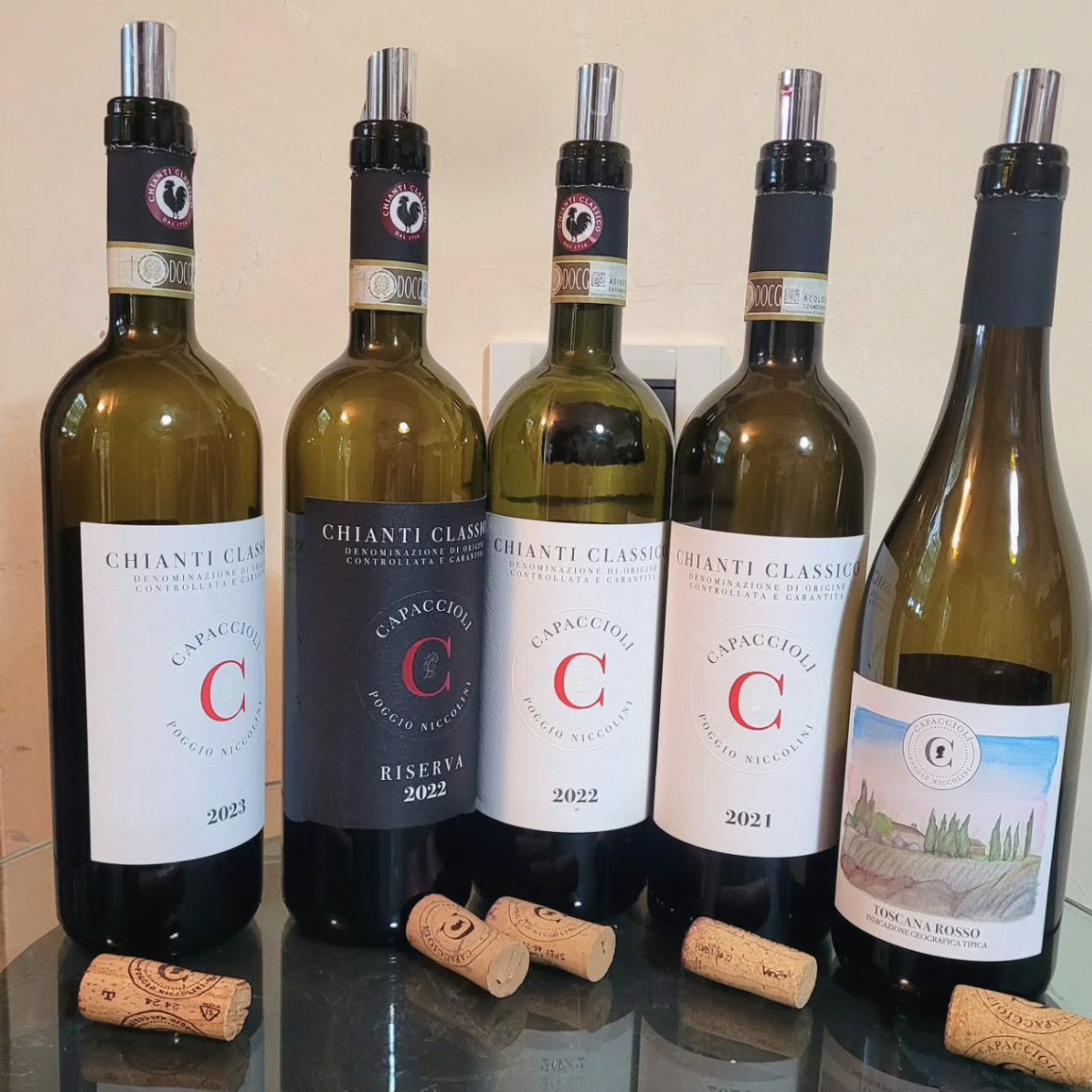
Val Delle Corti Chianti Classico DOCG 2022, Radda

Val delle Corti, Raddese to the core, still unknown to many but those who know are keenly aware of the fineness in these Chianti Classico. Roberto Bianchi’s 2022 is not as sleek and silken as some long macerated wines he has made before and it’s also quite tannic for Val delle Corti. In that sense I think newcomers to his work will see this as more classically Chianti Classico sangiovese and so a new breed of consumer will join the parade. Line up people – this should also not be missed. Drink 2026-2032.  Tasted at The Chianti Classico Collection, February 2025

Val Delle Corti Chianti Classico Riserva DOCG 2021, Radda

Full wealth of macerated sangiovese, nothing but the gold from old vineyards planted 50-plus years ago in high elevation and steep-sloped Radda. As textured in its silken robes as ever and also any, acids in line, fineness from entry to exit. Here the confluence of elevation, a vintage’s climate happenstance, worked to be cut from a new cloth and to the future coincide. No accident but a fully executed plan from a producer who gets it. Drink 2027-2036.  Tasted at The Chianti Classico Collection, 2025

San Casciano

Antinori Chianti Classico Riserva DOCG Villa Antinori 2022, San Casciano

Villa Antinori label for Chianti Classico Riserva is far less consistent, or rather its consistency is not as refined as the Marchese label. More of a forced nature which is to say winemaking and styling take precedence over seasoning and complexity because of altre varietà complementari that round out the sangiovese. More palate paste, red crayon, liquorice and balm in this wine. Especially because of the vintage. Drink 2025-2027.  Tasted at The Chianti Classico Collection, February 2025

Antinori Chianti Classico Riserva DOCG Marchese Antinori 2022, San Casciano

Consistency thy name is Chianti Classico Riserva, Antinori – Marchese Antinori. Close you eyes and imagine 2020, 2019, 2018 and now 2022. The repetition and same level of quality persists and educates about the power, the ability to refine, rinse and repeat. Liquid red gold, gemstone sangiovese with the mysterious addendum defined as altre varietà complementari. Could there be merlot and/or cabernet sauvignon? Likely. Endemic varieties as in colorino, canaiolo and malvasia? Probably. All adds up to the naturally sweet, accumulation of fruit, acid and tannin, come together at the hands of a top notch winemaking team. Drink 2025-2028.  Tasted at The Chianti Classico Collection, February 2025

Marchesi Antinori Chianti Classico Gran Selezione DOCG Badia A Passignano 2022, San Casciano

The Gran Selezione of 2022 are at the top of the perfume heap, exotically charged and seriously effusive. Case in point Badia a Passignano with its waves of tropical spice mixed with Amaro botanicals. Chewy mouthful of spicy fruit, liquorice and a touch of tar. Liquid chalky, structured for aging and looking ahead for truffles. Drink 2027-2032.  Tasted at The Chianti Classico Collection, 2025

Azienda Agricola Mori Concetta Chianti Classico DOCG Morino 2023, San Casciano

Young and brawny, tannic beyond the pale because truth be told this ’23 still feels to be in a Campione setting. As such the volatile elements, syrupy fruit, reduction and intensity are a bit over the top. Judgment of assessment must be stayed to allow for this wine to become more “finished” than it is in the current state.  Tasted at The Chianti Classico Collection, February 2025

Baciate Me Chianti Classico DOCG Avvenne 2020, San Casciano

“Kiss me,“ a play on words for the three men who own the winery, including Le Chiuse and Castello di Meleto oenologist Valentino Ciarla and a vineyard he purchased in San Casciano during Covid. Avvenne loosely translates as “please let me have some more of something, but in one word” and truthfully that is how you will feel after a glass of this wine. It’s is a sangiovese with some canaiolo of very old vines, truly San Casciano with a feeling of the local “macchia” and a natural wild quality, of great temper matched by restraint. The wine rolls and oscillates in waves, acts juicy, very aromatic, light, at times dusty and yet the texture is flowing. Never sharp and just the right balance from a super tiny production. Drink 2025-2029.  Tasted at Le Chiuse in Montalcino, February 2025

With Stefano Marinari and Federico Pini

Calcamura Chianti Classico DOCG 2023, San Casciano

Campione: Primary, exciting and confounding in its profundity. A mouth full of sangiovese (plus 10 percent) canaiolo as if bled direct from the crush and run-off of San Casciano river stones. The aromatics are twisted and entangled, nearly strangled yet the palate expresses with intense platitudes. Oxymorons and misunderstandings commit to seeing a Chianti Classico of greatness when the wine will be bottled, settled and set free.  Tasted at The Chianti Classico Collection, February 2025

Calcamura Chianti Classico DOCG 2022, San Casciano

Now in the third vintage for Calcamura the aging is only in tonneaux, two Slavonian and one French. Only sangiovese from a vineyard in the middle of nowhere but a località called Poggio ai Grilli. Could that be the name of a coming Gran Selezione for Stefano and Andreita? The Annata will be a grand total of 430 bottles that spent a year in Slavonian tonneaux and one in ceramic Tava terracotta. A light touch for a San Casciano sangiovese for which acidity is tempered with 10 percent canaiolo to affect a sangiovese between salinity and sapidity. A wine made by experienced hands not trying to coax too much from the rockiest river stone soils available to anyone in the whole of Chianti Classico. Never ambitious, always respectful and a feeling gained from out of the receded waters (so to speak) to make Annata as pinot noir Burgundian, nebbiolo Piedmontesino or nerello mascalese Etnean as any in the entirety of the territory. A more precise and verging on profound Chianti Classico with that terrific combination of drinkability and structure. Drink 2025-2030.  Tasted twice, at Borgo Machiavelli and The Chianti Classico Collection, February 2025

Capaccioli Poggio Niccolini Chianti Classico DOCG 2023, San Casciano

Campione: Truly primary and still quite a reductive element in charge of the wine. As with other 2023 samples there is not enough in the aromas to really set the tone but the palate delivers a luxe wealth of fruit and texture. Acids are running high, mighty and amok while the overall structure seems poised to see this Annata get set for a long and fruitful run.  Tasted at The Chianti Classico Collection, February 2025

Capaccioli Poggio Niccolini Chianti Classico DOCG 2022, San Casciano

Beautifully perfumed Riserva from Capaccioli in 2022 with experienced fruit from an old vineyard knowing just what to do. Exotically charged with aromatics by seed and tuber, star anise to galangal for a south by south east Asian spice bouquet. The ripenesses are necessary to keep up and all three do their part, if also the bidding to secure longevity. That will be the case for Riserva that should drink dutifully for up to 10 years time. Drink 2026-2032.  Tasted at The Chianti Classico Collection, February 2025

Castelli Del Grevepesa Castelgreve Chianti Classico DOCG 2023, San Casciano

Lactic and confected, liquid chalky and tart. Hard in the end. Tasted at The Chianti Classico Collection, February 2025

Castello Di Gabbiano Chianti Classico Riserva DOCG 2021, San Casciano

Rich, full and creamy, acidity sweet and supportive while tannins don’t seem so interested in causing a stir. A no fuss nor muss Riserva that fills the mouth and the heart. The five percent merlot feels significant, bringing another element of softness to a sangiovese eager to please. Drink 2025-2027.  Tasted at The Chianti Classico Collection, 2025

Castello Di Gabbiano Chianti Classico Gran Selezione DOCG Bellezza 2021, San Casciano

High and mighty, bright and airy, marked by macchia and a bit of reduction. Herbaceous for sangiovese like Loire cabernet franc and so curious this way. Crunchy and really quite fun withs sneaky structure for a really good Bellezza – different but good. Drink 2026-2031.  Tasted at The Chianti Classico Collection, 2025

Cigliano Di Sopra Cigliano Di Sopra Chianti Classico 2023, San Casciano

The brightest star shines from San Casciano with this ray of carbonic light, admittedly with a touch of Brettanomyces but one that hides in the layers, nooks and crannies of the wine. A 2023 and oh, so very young which says the wine will be cleaned and clean itself up given enough time. This is the natural world in sangiovese and Chianti Classico so be neither surprised nor alarmed because the risk-reward is palpable and should you accept the terms the price is worth the pay. Drink 2026-2030.  Tasted at The Chianti Classico Collection, February 2025

Cigliano Di Sopra Chianti Classico DOCG Vigneto Branca 2022, San Casciano

Riserva exists in a similar vein as Annata though it is chosen form the identified block known as Vigneto Branca. Let’s face it, the approach, the precocious idealism and the intention are the same. This sangiovese needs time, to settle and flesh so that the nervous notes fall into line. The natural world again approached and infiltrated is something many love to join and be a part of the unbridled fun. Still others are troubled by the naked aggression and willingness to let wines be wines. This is that, non-plussed nor deterred and unencumbered by the constraints of faculty and pedagogical education. Drink 2026-2032.  Tasted at The Chianti Classico Collection, February 2025

Conte Guicciardini Belvedere Campòli Chianti Classico DOCG 2022, San Casciano

Work in progress which means vineyards recently updated en route to becoming vines that will produce higher quality sangiovese. Also agriculture and winemaking assimilating the movement to prepare for Chianti Classico of a much improved, inching up to higher order. This is a next step but still one of the first for an estate on the precipice to deserving much greater attention.  Last tasted at The Chianti Classico Collection, February 2025

Solo sangiovese from “a normal vintage,” fruit from young vines not yet come into their own, aged for one year in large 25 hL French cask. Grapes are harvested at Belvedere Campòli, delivered to be processed and vinified at Castello di Poppiano and coming soon is a cellar project to the Chianti Classico property. Quite pure and yet savoury with the finest grainy structure laying below the pulpy red fruit. Missing a point of acidity to say that ripeness comes first. A factor of vintage and therefore necessity.  Drink 2024-2026. Tasted October 2024

Belvedere Campóli Guicciardini Campoli Chianti Classico Gran Selezione DOCG 2020, San Casciano

Belvedere Campóli’s ownership is Guicciardini of Castello di Poppiano – Chianti Colli Fiorentini and Massi di Mandorlaia – Maremma – Morello di Scanzano. Francesco Guicciardini was an Italian historian and statesman, a contemporary and critic of Niccolò Machiavelli and considered one of the major political writers of the Italian Renaissance. The Belvedere Campóli estate dates to 1915, was abandoned after the end of the mezzadrie system and purchased by Italian historian and mathematician Niccolò Guicciardini and family in 2015. They have been restoring and replanting vineyards since 2020. From the single vineyard called Tabernocolo, set just below the large forest above and indicative of the chapel on the estate. Identifying the vineyard as the one to define Chianti Classico as Gran Selezione was paramount while the aromas and palate notes remain so perfectly consistent with both the Classico and Riserva. Steps up the concentration, the mineral and elemental aspects drawn from the Pietraforte and the cool, almost minty savour in the flavours. Drink 2024-2028.  Tasted October 2024 and at The Chianti Classico Collection, February 2025

Fattoria Di Luiano Chianti Classico DOCG 2023, San Casciano

Open, fragrant, savoury and of a lovely oxidative style from 2023 that brings this sangiovese to a welcome and ready place, even before it might have needed be. But it and we are happy to have it drink with such ease because sometimes Annata must be a defender against tannin and time. The 10 percent merlot demos well to soften the blows and arrows of sangiovese’s San Casciano seriousness, with thanks and praises. Drink 2025-2028.   Tasted at The Chianti Classico Collection, February 2025

La Sala Del Torriano Chianti Classico DOCG 2022, San Casciano

High quality fruit from La Sala’s San Casciano vines for 2022 with a mix of warmth and a cool factor that cuts comfortably through. Some imaginative red crayon and liquorice notions put this in a bit off a rigid place to say that time is the requiem for the wine to flesh into the juicy sangiovese it wants to be. Loads of potential here. Drink 2026-2030.  Tasted at The Chianti Classico Collection, February 2025

Poggio Torselli Chianti Classico DOCG 2022 Il Contadino Cusano, San Casciano

The 2022 Annata and ’21 Riserva/Gran Selezione are the first set of wines to be made strictly as 100 percent sangiovese. As a reaction to the 2021 season’s severe reduction of yields there was no Annata produced and so this is the follow-up to the previous 2020. A new age of style and quality really begins with this vintage, of such sweet Balsamico character in a Chianti Classico of equally positive acidity and simple, if fine tannins. Great length on the Annata and a pleasure to drink.  Last tasted February 2025

Campione: Second vintage with oenologist Carlo Ferrini with a different process and yes the difference is immediately obvious. New tonneaux and 30 hL botti now housing the Annata, old barriques tossed out the window and the new balance is felt in the most palpable way. Rosso di Montalcino comes to mind and while that comparison may seem sanctimonious or anti-Classico, well just taste the style and level of quality. Juicy, blood orange in that regard and pretty much a finished wine. Stands up to be noticed. Drink 2024-2027.  Tasted February 2024
Poggio Torselli Chianti Classico Riserva DOCG 2021 Il Contadino Cusano, San Casciano

The new brand “Il Contadino Cusano” takes flight in 2021 with Riserva (and no Annata produced) because of frost-related reduced yields. An exaggeration of the local Torselli Balsamico and also really tightly wound acidity matched with equal force by grippy tannins. This is a different wine than the Torselli Riserva of the past, now with greater vibrancy and energy. At this stage the wines are made by Alessandro Campatelli with consultancy assistance by Carlo Ferrini. Something special begins and brews with ’21. Drink 2026-2030.  Tasted February 2025

Villa Le Corti  – Principe Corsini Chianti Classico DOCG 2023, San Casciano

Not atypical for 2023 with blood orange juiced sangiovese of a high and mighty if also glycerol order and the intensity of savoury-herbal-higher acid (for San Casciano) tang. Fulsome and layered by all these aspects still unsettled and needing time. There is nothing ordinary happening here, in fact this is the sort of Chianti Classico that will wake you up should you fall into a slumber. Drink 2026-2030.  Tasted at The Chianti Classico Collection, February 2025
Villa Le Corti – Principe Corsini Chianti Classico Gran Selezione DOCG Don Tommaso 2021, San Casciano

Don Tommaso is Gran Selezione of the ripest order, satiny and elastic, metallic and sapid. A river stone vineyard reasoning, fullness of darkening tart acidity and serious tannins from 2021. Minty cool, Amaro herbal and again serious. Drink 2027-2032.  Tasted at The Chianti Classico Collection, 2025

San Donato In Poggio

Casa Emma Chianti Classico Riserva DOCG Vignalparco 2021, San Donato In Poggio
Hello Riserva 2021 from Casa Emma’s important Alberese stone-strewn Vignalparco that delivers the fortune of fruit and structure to a dark red-black sangiovese moving right of centre with all its accumulated glory. All the blood orange and serum right there on display and for the taking, unfettered and ready for action. Big Riserva with a soft heart, generous, open and free. Consistency in Riserva thy name is Vignalparco. Drink 2025-2028.  Tasted at The Chianti Classico Collection, February 2025

Casa Emma Chianti Classico Gran Selezione DOCG 2021, San Donato In Poggio

Though extremely youthful you can do nothing but imagine the rocky soils of Casa Emma from this excitable 2021. Lighter in hue, brighter and transparent by comparison to Riserva Vignalparco – which leads to the determining element and factor for calling this a Gran Selezione a most elegant wine. So stony mineral from the quantifiable Alberese found in these San Donato in Poggio hills. Drink 2027-2033.  Tasted at The Chianti Classico Collection, 2025

Castello Di Monsanto Chianti Classico DOCG 2023, San Donato In Poggio

Campione: Feeling another level of concentration from Annata which tells us two things: First is that Monsanto escaped the challenges of 2023 unscathed and second that the quality of their generous quantity of fruit was exceptional. Though this is but a sample and way too early to really capitulate there is no doubt just how blood orange citrus mixed into red fruit San Donato in Poggio this sangiovese truly is. The five percent canaiolo adds some drops of tonic while the colorino brings it all forward in technicolour.  Tasted at The Chianti Classico Collection, February 2025

Castello Di Monsanto Chianti Classico Riserva DOCG 2021, San Donato In Poggio

Another Riserva of a unique set of circumstances, so floral and gauged by the stoniness of soils. Rich and unctuous, high acidity in place, fruit set up for success and tannins clearly lining the floor below. Beauty incarnate, the proviso of sangiovese perfumes returning again and again, sip after sip, promising and providinf all that we ask for. Drink 2026-2032.  Tasted at The Chianti Classico Collection, 2025

Castello Della Paneretta Chianti Classico DOCG 2021, San Donato In Poggio

No shocker to find this San Donato in Poggio 2021 in a state of freshness, openness and availability without impediments, obstacles or borders. Just the fruit and a sweetness of acidity to match its ripeness stride for stride. Delicious as they say and ready to roll.  Last tasted at The Chianti Classico Collection, February 2025

Singular aromatic profile for Castello della Paneretta’s 2021 Annata, superbly perfumed if with a Ribena infiltrate cutting through the florals. More than obvious red fruit, especially citrus from the likes of blood orange and noticeable wood on the palate, Dries out and separates form the whole so be patient with this wine. Drink 2025-2029.  Tasted February 2024

Fattoria Di Montecchio Chianti Classico DOCG 2022, San Donato In Poggio

Indelible stamp of Montecchio and incredible substance of fruit, darkening in the way of black cherry with nary a moment of bitterness. Adds much glycerol and unction into that fruit as much as ever from this estate. Taut acidity and fine lines with backbone as structure does its work to provide the basis for longevity. Drink 2026-2032.  Tasted at The Chianti Classico Collection, February 2025

Fattoria Le Masse Chianti Classico DOCG 2022, San Donato In Poggio

Wow! Something so different for 2022, of dark fruit but like something out of Chambolle, silken and so bloody complex you wonder where to turn. First you must sidestep the sweet and tender volatility and once that happens there are fruit and mineral notes clashing, mingling, singing and smiling. Dio mio, man this Le Masse is a mouthful to consider. Drink 2026-2032.  Tasted at The Chianti Classico Collection, February 2025

Martina and Alberto Fabbri – Il Poggiolino

Il Poggiolino Chianti Classico DOCG 2022, San Donato in Poggio

The vineyards at Il Poggiolino may reside at moderate elevations between 250 and 350m but there are no south by southwest expositions and so in a hot vintage like 2022 the freshness remains a guarantee. Just three percent colorino goes a long way to raise up character of a Classico that only sees concrete and stainless steel for aging. Sweet acids match the fruit stride for stride and what you want is what you get – A level of drinkability that represents Classico and this northwest corner of San Donato in Poggio. Drink 2025-2028.  Tasted February 2025

Il Poggiolino Chianti Classico Riserva DOCG 2021, San Donato in Poggio

A terrific vintage and yes many estates in Chianti Classico lost production to the April frost but at Il Poggiolino the maximum loss was 10 percent. And so come for the quantity and stay for the quality. Rich and concentrated, lightly chalky with a clay and stony feeling. Structure asks that we wait a year before opening the window and set this sangiovese with three percent colorino for aging through to the end of the decade. Drink 2026-2030.  Tasted February 2025

Il Poggiolino Chianti Classico Gran Selezione DOCG Le Balze 2021, San Donato in Poggio

From a north by northeast vineyard up on the hill overlooking the winery which may have been a expositional detriment 20 years ago but no longer. The change of climate puts this steep single vineyard sangiovese in great light today and so welcome to the third in a row of vintages that may just shock as to its character and quality. Le Balze 20 years ago was organized as large terraces and in Tuscany you say “le balze,” when you take a giant leap. This Gran Selezione has improved and grown by leaps and bounds in the last few years to join other greats to reside near the top of the appellative pyramid.  Last tasted February 2025

Another perfumed and expressive Le Balze comes with as much if not more pulp and flesh a la mode than those San Donato in Poggio Gran Selezione that have come before. The depeche florals are Spring bloom fresh, the volume set at ideal pitch and you just need to keep putting glass to nose because, well you just can’t get enough. Richness is never compromised but it is belied by the beauty of a tannic caress about as graceful and gracious as there are. This is Il Poggiolino’s finest GS to date and that is saying a lot. “Just like a rainbow.” Drink 2025-2034.  Tasted October 2024

Isole E Olena Chianti Classico DOCG 2022, San Donato In Poggio

Crunchy sangiovese from Isole e Olena and the first vintage of the new era, blended and finished by the next team of winemaking. The ten percent canaiolo serves this 2022 well, striking a sapid chord to infiltrate what feels like super salty sangiovese with a decidedly lime-elemental strike. Almost piecing but the toothsome quality keeps things moving swimmingly along. The blend shifts from its original form and yet the DNA will not be denied. Genetics are strong and many years will have to pass by before the memories are forgotten. Drink 2026-2030.  Tasted at The Chianti Classico Collection, February 2025

Podere La Cappella Chianti Classico DOCG 2022, San Donato In Poggio

Intensity of aromas so high and mighty for 2022 but also the tang, acidity and fine grainy texture to speak for San Donato in Poggio. Few ’22 Annata are this intense and implosive with the most blood orange juicing of any in the area. Ten percent merlot or not, all the aspects of this wine are at the high end of the spectrum and time is the requiem to bring them back down to a place of comfort. Drink 2026-2030.  Tasted at The Chianti Classico Collection, February 2025

Podere La Cappella Chianti Classico Gran Selezione DOCG Corbezzolo 2019, San Donato In Poggio

Going back a few years to look at the inaugural Podere La Cappella Gran Selezione, a wine that joins the appellative fray for the first time out of a high quality vintage. The artist formerly labeled as IGT was last made in 2016 and here three years later it joins the Chianti Classico pyramid’s highest distinction. More barrel than the past and therefore spice, espresso and finally structure are really in. So much so you will still have to wait on the wine to integrate. First showing and the future will surely see to greater results. Drink 2027-2030.  Tasted at The Chianti Classico Collection, 2025

Quercia Al Poggio Chianti Classico DOCG 2023, San Donato In Poggio

Heavy Chianti Classico at this earliest of stages and one wonders why it needed to be rushed to b bottle. Nothing open or nurturing about it, so primary and hard to access. Needs to be revisited several months if not at least eight to 12 from now.  Tasted at The Chianti Classico Collection, February 2025

Tenuta Cinciano Chianti Classico Gran Selezione DOCG 2019, San Donato In Poggio

Still tightly wound and somewhat reductive with a skin to pulp ratio resinous effect in place. Still much to wait for and to receive from what will surely be a giving and abiding Gran Selezione that acts out a distinguished and defined San Donato in Poggio sangiovese style. Comes from relatively low elevation vineyards at 250m of medium textured soils, Alberese based, stony with some low-lying clay. Drink 2025-2029.  Tasted October 2024 and at The Chianti Classico Collection, February 2025

Vagliagli

Bindi Sergardi Tenuta Mocenni Chianti Classico DOCG La Ghirlanda 2022, Vagliagli

The times it takes for a Chianti Classico estate to perfect a formula for turning sangiovese into beauty is long and those who figure this out make wines like these. Annata from estate vineyards treated and handled with the gentlest of touch, low and slow, collated through processes that identify the vintage, tempering and refining its challenges. Presenting La Ghirlanda which expresses its own balance involving fruit, texture and weight, making use of acidity to distract from tannin and find a wine that drinks proportionally from now through to the end of its tenure. To the next decade. Drink 2025-2031.  Tasted at The Chianti Classico Collection, February 2025

Bindi Sergardi Chianti Classico Riserva DOCG I Colli 2020, Vagliagli

Riserva of experience and layering, a   of fruit and acidity intertwined, interchangeable and complimentary. One then the other taking turns at the wheel, got each others’ backs, defending from tannins coming forward sweet yet fierce. Full and substantial in most every regard but especially those parts that exemplify optimum ripeness. No lack for beauty and grace – never a doubt or question. Drink 2026-2031.  Tasted at The Chianti Classico Collection, 2025

Bindi Sergardi Chianti Classico Gran Selezione DOCG Mocenni ’89 2019, Vagliagli

Mocenni 89 is a special Gran Selezione, open, ethereal and generous. And it is just now entering its window of beauty with new surprise at every turn.  Last tasted October 2024 and at The Chianti Classico Collection, February 2025

Tenuta Mocenni presides at one of the higher points in the Vagliagli UGA at 500m with vineyard blocks impounded with great Alberese stones and outcroppings of Galestro. The south facing amphitheater is one of Chianti Classico’s most impressive sites and sights. The latest vintage is not yet released and there is no shock how youthful and tightly wound you will find this 2019 to be. The one that follows will proudly display the UGA on the front label. More than just a few years of time in more than one kind of vessel has equipped this major potion of fruit with ample layers of structure in a Gran Selezione so bloody big, substantial and beautiful. Will most definitely require five to seven years of unwinding. Drink 2025-2034.  Tasted October 2023 and February 2024

Borgo Scopeto Chianti Classico DOCG 2022, Vagliagli

Tighter Chianti Classico than many from 2022, acids wound around fruit and less of a softening from merlot plus colorino than in some vintages past. More dried herbal savoury than the Vagliagli norm, dimming of the brightness and not quite one cast into the great wide open. Brushy and Mediterranean like Vagliagli will be. Drink 2025-2027.  Tasted at The Chianti Classico Collection, February 2025

Cantine Bonacchi Chianti Classico DOCG 2023, Vagliagli

Sweet perfume, a mix of fresh berries and Amaro, high in glycerin, quite concentrated and fully completely red, red wine. Juicy 2023, as seems to be the vintage case. Classic acidity and mild tannin make for early drinking. Drink 2025-2027.  Tasted at The Chianti Classico Collection, February 2025

Dievole Chianti Classico DOCG Petrignano 2022, Vagliagli

Warmth of a vintage becomes and begets something different in Chianti Classico. The season is different than any of the last 10 and really just be looked at within the parameters of itself. There is this blood orange and red citrus feeling that can’t be shaken, incrementally different from one UGA to the next and yet consistently run through the entirety of the territory. Has there been another vintage so consistently perceived since 2014 or 2013? This wine speaks to that. Drink 2025-2028.  Tasted at The Chianti Classico Collection, February 2025

Dievole Chianti Classico Riserva DOCG Novecento 2022, Vagliagli

Big-boned Novocento from Dievole put of 2022, dark of fruit and very mineral. Shows the warmth of the season in its grip after a palate that can’t help but be full and satisfy. Truly mouth-filling, sapid, not particularly high in acidity and long. Drink 2026-2030.  Tasted at The Chianti Classico Collection, February 2025

Dievole Chianti Classico Gran Selezione DOCG Vigna Sessina 2021, Vagliagli

Vigna Sessina leads with its structure without apology or hesitation, of a palate attack taking hold straight away. A whole mouth of crushed rocks, very much in the way of packed and tannic Châteauneuf-du-Pâpe, warming and coating in mouthfeel. So full and substantial without a moment’s softening. Drink 2027-2034.  Tasted at The Chianti Classico Collection, 2025

Good to go!

godello

At the Chianti Classico Collection 2025

Instagram

Facebook

Abruzzo, from the mountains to the sea

Ausonia (Atri, Teramo)

In the last days of February and first days of March the focus zeroed in on Montepulciano d’Abruzzo, “flagship grape of our region,” in the words of Franco D’Eusanio, Vice-President of the Consorzio Vini d’Abruzzo. The Abruzzo Wine Experience served a threefold purpose, to present the Anteprima Colline Teramane DOCG, a Montepulciano d’Abruzzo DOC preview and allow journalists to make visits with regional producers. Success was achieved in all three ways, from insight into Colline Teramane’s specificities, Montepulciano d’Abruzzo DOC’s continuing evolution and the hyper-intense passion, dedication and growth experienced through the work of several Abruzzo estates.

Colline Teramane Montepulciano d’Abruzzo is Abruzzo’s only DOCG appellation. Situated on the border with Marche, in the hills around Teramo, it was previously a sub-zone of Montepulciano d’Abruzzo DOC, elevated to DOCG status in 2003. “Colline Teramane is not just an appellation for Montepulciano grapes,” explains Enrico Cerulli Irelli, former president of the Consorzio Colline Teramane, “but it is a designation that indicates a territory where people, traditions, environment, and history have defined viticulture and with it, the unique identity of the wines. Today, this excellence becomes the flagship in the world of the outstanding quality of Abruzzo wines.”

Abruzzo Program

While being naturally predisposed to viticulture may not separate Abruzzo from dozens of other Italian wine regions, what has thus far challenged its global market share will only make it stronger. Rome (and Italy’s most used, largest airport) is only a few hours away and anyone with half an ability to read a map can clearly find it smack dab in the central part of Italy. Yet Abruzzo finds itself isolated, both literally and conceptually,  located between the Adriatic Sea and the massifs of Gran Sasso d’Italia and Majella, within which three National Parks and more than ten national and regional reserves are situated. The region can be divided into two zones: the mountainous interior, which constitutes over 65 percent of the entire regional territory, along with the coastal area with its wide hilly belt. A traveller could find weeks of interest in these hills and along hundreds of kilometres of Adriatic shoreline and still somehow Abruzzo is considered “out there.” There is the rub; the region should and going forward will in fact attract an adventure seeker yet once inside its ropes the more obvious and accessible tenets of its offerings will be revealed. This will trickle down to more conventional tourism, both that which is associated with wine and also not, and before too long Abruzzo will become known to all.

The climate of the region is Mediterranean along the coast, with sea breezes moderating temperatures. It becomes more continental as one moves towards the hilly and mountainous areas, and with increasing altitude, temperature variations become more pronounced. The average level of precipitation is good, less on the coast and more abundant inland.

Godello in Atri with unidentified cat

Montepulciano d’Abruzzo is undoubtedly the most representative among the Abruzzo grape varieties. Numerous historical documents demonstrate that the grape has been present in the region since the mid-1700s, where it found its ideal terrain. Cultivated in the past in the Valle Peligna (province of L’Aquila) and in the inland hills of the province of Pescara, since the 1950s its cultivation has spread throughout the entire coastal hilly belt, and today it constitutes the main red grape variety of the region. Alone, it represents over 80 percent of the total denomination wines produced in Abruzzo and is among the top three DOC wines produced in Italy. Montepulciano d’Abruzzo DOC is obtained solely from vineyards located in hilly or plateau terrain, whose altitude must not exceed 600 meters above sea level, exceptionally up to 700 meters for those facing south; the surface area on which it is cultivated is around 17,000 hectares. It is almost exclusively obtained from grapes of the same variety. With approximately 800,000 hectoliters bottled (2023 data), it is established as one of the top DOC wines produced in Italy.

Abruzzo wine dinner at Hotel Cristalo, Giulianova

The Consorzio Tutela Vini d’Abruzzo is a non-profit associative body tasked with the protection, promotion, and overall care of interests related to the denominations it oversees. It was established in 2003 by Decree of the Ministry of Agricultural, Food and Forestry Policies (MiPAF) and over the past three years its membership has grown by 20 percent, reaching the current count of 220 members, representing over 4,000 producers of DOC and IGT grapes. The Consortium oversees compliance with the regulatory discipline of the denominations, formulates any proposals for updating it, and coordinates the work of the production sectors to enhance the individual denominations. The Consortium protects the wines with the Designation of Controlled Origin:

  • Colline Teramane DOCG
  • Montepulciano d’Abruzzo DOC
  • Trebbiano d’Abruzzo DOC
  • Cerasuolo d’Abruzzo DOC
  • Abruzzo DOC
  • Villamagna DOC

Starting from the 2024 harvest, with the entry into force of the “Abruzzo Model,” all IGT wines will be grouped under the single Terre d’Abruzzo IGT designation. Starting from the 2023 harvest, the subregion “San Martino sulla Marruccina” has been introduced, joining the existing subregion “Terre dei Vestini,” “Teate,” “Terre dei Peligni,” and “Alto Tirino.” The most significant novelty is the introduction of the distinctive label Superiore, aimed at highlighting productions characterized by stricter production criteria and intended for refinement for important and distinctive reserve productions of the various provincial territories. Only for the Superiore designation will it be possible to highlight on the label references to smaller and more identity-affirming territories such as provincial ones and, in the future, even more restricted ones like Additional Geographical Units, until, of course, the individual mention of a Vigna. Both the Superiore and Riserva categories will be required to feature on the label the provincial subregions of Colline Pescaresi, Terre de L’Aquila, and Terre di Chieti.

Godello with the AIS Sommeliers

Obvious thank you from the heart to the team at Consorzio Tutela Vini d’Abruzzo and IEM Communications out of Verona and Miami, but also to the AIS Sommeliers and La Squadra Abruzzese; Francesca Granelli, Fosca Tortorelli, Simone Roveda and Daniela De Morgex. A good number of Godello’s blind tasting notes came about as a result of careful panel deliberation and collaboration. Here are 140 notes from three days of tasting and touring in Abruzzo.

The Visits

Guardiani Farchione (Tocco da Casauria, Pecara)

Guardiani Farchione Passerina 2023, Colline Pescaresi IGT

A substantial summer white at 13 percent alcohol, dry, phenolic and floral. Green figs, low acid, mineral-metallic savoury and a good match with fatty meats of fish. A passerina with some connection to volcanic soil with an orange note – no zest but a juicing and quite the botanical finish. Drink 2024-2025.  Tasted February 2024

Guardiani Farchione Pecorino Abruzzo Superiore DOC 2023

If it can be the favourite grape of the migrating sheep then why not ours as well, here from the short wood aging in old wood, experimental for some, incidental for others. A honeyed-beeswax note, not surprisingly phenolic and botanical but also woolly, of both gravity and fantasy considered. A thread of spring herbs and juniper late. Not a rich pecorino but one with a little bit of experience. Drink 2024-2026.  Tasted March 2024

Guardiani Farchione Mille Papaveri Rosso 2023, Colline Pescaresi IGT

A stronger version of the Cerasuolo normale, a ten day soak that brings montepulciano closer to montepulciano, away from the pale and the delicate. A modern experiment that appeals in a retrospective way to the older way of ordering and drinking red wines in Abruzzo. Quite classic gummy bear fruity of red and blue berries, dry and far from savoury. Fruit essence captured because of the extended maceration and really quite focused to deliver with unapologetic consistency. Glou glou montepulciano and so very clean. Drink 2024-2026.  Tasted March 2024

Paolo and Giampaolo Guardiani

Guardiani Farchione Tenuta Del Ceppete 74 2018, Montepulciano d’Abruzzo DOC

Commemorates the year of the first bottled wine for the company by Paolo’s father. Sees two years in cement and 12-18 months in barriques, depending on the season. Another crystal clear varietal wine from Guardiani Farchione. Structured and tannic, long contact with the skins (10-plus days), full textured, cocoa to mocha, meant for (sheep) arrosticini every day you go that way. With a side of sformato you may just rise up to Abruzzo heaven, or in this case the Tocco version of it. Don’t even think of taking any of this for granted. As for the skewers, “any less than five would be a capital sin.” Would like to see this ’18 develop another gear, for energy and integration. Drink 2025-2026.  Tasted March 2024

Cantina Terzini (Tocco da Casauria, Pecara)

Cantina Terzini Trebbiano d’Abruzzo DOP 2023

From Tocco da Casauria, of clay soils in an old volcanic area and vines trained by Pergola at 350m. Only steel, clean, sharp and suitable. A serviceable white whenever for hot days when a cool glass is needed to quench a thirst. Fresh as fresh can be, helped by Pergola Abruzzese “roof over a house” training. Drink 2024-2025.  Tasted March 2024

Cantina Terzini Pecorino d’Abruzzo DOP 2023

Pecorino grown in the valley between two massifs, the Maiella and Morrone where day for night temperature swings are great and consistent winds will blow. The endemic Marche grape continues to gain traction in Abruzzo and the history goes back to Benedictine monks in the 1200s. Pale and spicy, quite a lot of intensity for pecorino and again very botanical, a specific Abruzzo style that seems exaggerated in Tocco di Casauria. Not lacking for energy and the very reason why Terzini uses pecorino to make sparkling wine. Drink 2024-2025.  Tasted March 2024

Cantina Terzini Cerasuolo d’Abruzzo DOP 2023

Skin-contact for six to eight hours, followed by six months in stainless steel. True Cerasuolo, made from only montepulciano grapes, finished at 14 percent alcohol. Clean, crisp, fresh and proper. Just that hint of phenolic grip and spiciness but more subtle than pecorino and stylish in its very respectful Cerasuolo way. Good intensity and what the appellative wine needs to be. Drink 2024-2026.  Tasted March 2024

Cantina Terzini Abruzzo Rosé DOP 2023

Sparkling montepulciano and in a way Cerasuolo but only at 12 percent alcohol, as fresh as it is savoury and drier than many sparkling Rosé, especially those made in the Italian method. Can’t be more than 10-ish g/L of RS and the acidity is superb. Still a bit phenolic which might turn the sugar crowd away but there is without a doubt good character and energy. For those who simply like sparkling pink – it’s really that simple. Drink 2024-2025.  Tasted March 2024

Cantina Terzini Montepulciano d’Abruzzo DOP Dumi’ 2022

Domenico Terzini, grandson of Domenico Sr., took the reigns in 2009 and brother Roberto runs the business side of the family winery. Dumi’ is Sr., a pet or nickname in Abruzzo. As in ”Dumi” come here.” Sees juts a few months in wood after stainless steel aging, just a kiss for texture and a year or three of longevity. Reductive in both a rubbery and peppery way, needing agitation to release both floral and fruity charm. Swell of dark fruit and liquorice, mint and heavy fuel phenols. Strong tannins, big time bitters and time is needed in every way. Must be tannin season. Can only imagine what 12-18 months in tonneaux might do. Drink 2025-2028.  Tasted March 2024

Cantina Terzini Montepulciano d’Abruzzo DOP Vigna Vetum 2020

Essentially a Reserve montepulciano, but also a single vineyard or cru. Oldest vines of more than 60 years of age, thus the Latin name. A year in steel and another in barriques. When you think about the recent past of grape and place this is probably just what you would imagine; dark and stormy, rich and oaky, full and substantial fruit, warming and all those wood notes very much in charge. Vanilla, lavender, spice cupboard, tobacco, mocha, perceived sweetness and a softness despite the dense presence of tannins. Energy is fine if not invigorating. Solid example for five-plus years. Drink 2025-2028.  Tasted March 2024

Federico Faraone

Faraone (Mosciano Sant’Angelo, Terame)

Faraone Metodo Classico dal 1983 Dossagio Zero 2021

As with the first bottles made in 1983 by Federico’s father the grape is passerina, first chosen and still the top for Bianco because of pH and acidity on par with Champagne. This means 3.0-3.10 in a good season, as opposed to pecorino which is more like 3.30-plus, meaning closer to a red wine. On the lees for 24 months, mild toasty quality, impeccable balance really and dry as it gets because you can find richness without dosage from the grape and place. Acidity is admirable though just a point one or two below what would really see this sail into scintillant territory. Drink 2024-2026.  Tasted March 2024

Faraone Metodo Classico dal 1983 Rosé 2019

Made with sangiovese, 100 per cent and one of the very few like this in Abruzzo. First trials began in 2010 and 2017 was the first production for selling. The sangiovese sees 48 months on the lees and while there is a rustic earthy quality there is also higher acidity and surely double the complexity as compared to the passerina bianco. Crisp enough but also a sparkling of body and a sense of what can be considered soul. Interestingly it is a sip of the sangiovese and a return to the passerina that makes the Bianco’s acidity seem greater. Counterintuitive but true. Meanwhile there are some fine phenolic bitters on the finish of the sangiovese. Drink 2025-2028.  Tasted March 2024

Faraone Trebbiano d’Abruzzo DOC 2022

Properly fresh and conversely phenolic trebbiano but neither character overwhelm or dominate in any way or sternly towards one another. More scented than many, not what should be considered perfume but more in the vein of plants you brush by in between vineyard rows and on the lower steps of hillsides in the mountains. Pencil shavings and while the grape may seem “neutral” this young it does suggest hints of what may come a few years down the road. Good acidity and low pH for teasers of the sea but please, only in season. Drink 2024-2029.  Tasted March 2024

Faraone Trebbiano d’Abruzzo DOC 2019

Just beginning to develop and express some nuance and next stage character but in the hands of Federico and Faraone this is really just a baby. Now the citrus steps up and rises to the fore to make us think that acidity has risen but phenolics have lessened, or at least our perception of them. A mild lemon preserve, a balance so consistent with the 2022 tasted side by side and then an about face to the side by each comparison with 2013. Drink 2024-2027.  Tasted March 2024

Faraone Trebbiano d’Abruzzo DOC 2013

After 10-plus years the perception really changes and the arena now entered is entirely re-designed and thoughts must be re-written. Fully and completely in delivery of secondary notes, by vanilla, not wood derived but naturally vegetal and other verdant sensations having joined the fray. Paraffin and a roasted parsnip character, not quite caramelized but heading in that direction. The age has surely brought secondary notes while freshness would have been finer just two or three years ago. Suggests that seven or eight years is the sweet spot. Drink 2024.  Tasted March 2024

Faraone Montepulciano d’Abruzzo Colline Teramane DOCG 2007

A fine vintage for the area, in particular for montepulciano and the juiciness but also fleshy character is about as high as it gets, especially as compared to 2016. It’s almost incredulous how fresh and far from evolved this is for 2007 – it’s a weird magic that’s seems virtually impossible, to note considering this was made by Federico’s father who did not study oenology and learned by his own experience. Successful showing with fresh fruit intact and sweet secondary notes just in their infancy. Drink 2024-2028.  Tasted March 2024

Faraone Montepulciano d’Abruzzo Colline Teramane DOCG 2016

From 2016 but about as close to a recent release as it gets for Faraone because extra time in botti is the order of necessity for Federico, just as it was for his father before. Refinement in 30-35 year old cask that ever so slowly develops this relationship between grape and its home. Kinds of reminds of Ca’Bionda in Valpolicella, thoughtful, soulful and simply a representation in respect to the exact place from whence it came. Nothing curious about this but something so real and we are given the opportunity to taste exactly what montepulciano from this pinpointed part of the Colline Teramane must be. Controlled and restrained in every way with many years left in its sure to be long life. Lower production because of Perenospera brought on by May rains and so no surprise how high the quality runs because of a warm and dry summer. Drink 2024-2028.  Tasted March 2024

Orlandi Contucci Ponno (Roseto degli Abruzzi, Teramo)

Orlandi Contucci Ponno (Roseto degli Abruzzi, Teramo)

Orlandi Contucci Ponno Pecorino d’Abruzzo Superiore DOC 2022

Will hit the market after May the year following vintage, with higher in acidity in this part of the Colline Teramane, now acid driven but with a year or two the citrus will almost surely morph into fruit more tropical in nature. Already there because as a 2022 the early stages of maturity have already begun to form. Good sapidity but lower level phenols than some other similarly composed and minded examples. Bit of balsamico-gariga at the finish. Drink 2024-2025.  Tasted March 2024

Orlandi Contucci Ponno Trebbiano d’Abruzzo DOC Podere Corte della Corte 2022

More phenolic than the pecorino, less salinity and higher sapidity, herbal in a different way, sweeter and less dried conditions. Impeccably balanced using 90 percent trebbiano d’abruzzo with (10) passerina, clearly in the hands of a team most comfortable with this appellative wine. Half fermented in steel and the other in cask with the result another clear and present indication of equality and balance. Clean, no toast and filtered with great technology to deliver a crystalline varietal experience. Should age a year and possibly up to three longer than the pecorino. Drink 2024-2026.  Tasted March 2024

Orlandi Contucci Ponno Cerasuolo d’Abruzzo Superiore DOC Vermiglio 2022

Super dry Cerasuolo from the montepulciano grape, again extremely clean but also here with the subtlest CO2 buzz. Macerates for seven or more hours and is then separated from the skins. The next steps are white wine method fermentations, allowing for classic appellative colour and most importantly the floral and fruit musky capture of aromas. Soft and stylish, fresh, clear and smoothy sapid. Clinical and precise with a mild cherry stone bitter finish. Drink 2024-2026.  Tasted March 2024

Orlandi Contucci Ponno Liburnio 2016, Colli Aprutini Rosso IGT

Based on cabernet sauvignon (70 percent), with (15) malbec, (10) cabernet franc and (5) petit verdot. Liburnio as in Liburnium, along with Corsica. Ages in barriques for three years, followed by the bottle for two more. Sure the richness is the most prominent feature and matter but the ageing has brought this Bordelais-esque wine into a fine place. Softened for the most part, a spice cupboard masala emulsified into the overall silky texture and acidity still pretty much the energy that keeps the wine keeping on. Drink 2024-2027.  Tasted March 2024

Orlandi Contucci Ponno Colline Teramane Montepulciano d’Abruzzo DOCG Podere la Regia Specula 2020

Ages for minimum 12 months in 20hL botti of Slavonian wood, a high level and quality vintage by estate and appellation standards, warm and dry – but here affected by TCA. Requires a re-taste.  Tasted March 2024

Orlandi Contucci Ponno Colline Teramane Montepulciano d’Abruzzo Riserva DOCG 2018

Barriques and tonneaux for 24 months, now showing the softness of age, the montepulciano in dried leathery fruit notes beginning to replace the fresh plum and berries of the wine. Drink 2024-2025.  Tasted March 2024

Orlandi Contucci Ponno Montepulciano d’Abruzzo DOCG 1999

Corks were replaced five years ago but this particular bottle was already infected with TCA and so could unfortunately not be saved.  Tasted March 2024

Ausonia (Atri, Teramo)

Ausonia Bruco Pet-Nat 2022, Colli Aprutini Bianco Frizzante IGP

The work of Simone and Francesca (Franca) Binelli from Lombardia, he the pharmacist who studied oenology in Florence, she the mechanical engineer. “Natural is the best way to make wine, but not all natural wines are the best,” explains Simone. Their Pét-Nat is made from trebbiano, all in yeasty though quite clean with a raw dough aspect to what must be seen as a unique Abruzzese iteration. Kind of tastes like a Japanese Orin Apple, a connection not often found but there it is. Really drinkable and getable for the genre. Drink 2024-2025.  Tasted March 2024

Ausonia Trebbiano d’Abruzzo DOP Apollo 2022

The name Ausonia is from the original name for Italy, as in Auson, sone of Ulysses and father of the Ausone people. The Apollo line trebbiano is only made with fruit from the youngest vineyard, coming away sharp, fresh and phenolic trebbiano, as per the usual, but the biodynamic aspect sure plays a role in its fruit and crisp, just picked vegetable personality. More than most this is a representation of vintage for these particular vineyards. Inherently natural and characterized this way. Drink 2024-2025.  Tasted March 2024

Ausonia Pecorino d’Abruzzo DOP Machaon 2022

A Canadian connection with Ausone, the name being assigned to one of three 1920s Class “A” Intermediat San Pietro 2022e emigrant and refrigerated cargo carrying ships that sailed from England to Pier 21 in Halifax. The winery’s name however is actually a connection with Italy’s original name. In any case this is wholly unique and excellent pecorino, once again organic and biodynamic through spontaneous fermentation, with only stainless steel aging. Sharp and tight, sweetly tart and clean, fresh and sparked. Great energy and the kind of natural pecorino to pour alongside and eat with sharp salty cheeses and afternoons of the same, all the live long day. Drink 2025-2028.  Tasted March 2024

Ausonia Trebbiano d’Abruzzo DOC Apollo – San Pietro 2022

The trebbiano aged in fermented without skins in cask and aged in Austrian. A “French” style of trebbiano, first made in 2020, creamy and also tart, spiced and high acid, well captured, kept and energy refuses to wane despite the wood. Actually brings out the aromatics in the grape and the older vines deliver concentration from the cru most important planted in 1984. About as special for trebbiano as it gets from the Colline Teramane. Drink 2024-2028.  Tasted March 2024

Ausonia Cerasuolo d’Abruzzo DOP Apollo 2022

Fabulous Cerasuolo, full hue, aroma and flavour profile that gives and gives some more. Rich in poly-phenolic compounds with intensities that never relent. Truly generous and fresh, sparked and clean as Cerasuolo to the limit of enhancement for naturally curated montepulciano. Drink 2024-2027.  Tasted March 2024

Ausonia Pecorino d’Abruzzo DOP Machaon 2022

Sees 10 days of maceration, followed by amphora for 11 months and while this follows suit for so many expected attributes with respect to natural wine aged this way – well the purity of fruit and clean character are at the top of the game. Sure the phenols and the fine bitters are very much a part of the mix but believe it or not a few years of age to resolve the tannins might do more good than bad. Will lead to a pecorino that would be considered affinamento, with the development of refinement and glissade. Drink 2025-2028.  Tasted March 2024

Ausonia Montepulciano Bruco 2022, Colli Aprutini IGP

The sister to the Bianco Frizzante but not sparkling, in fact just the youngest vines and shortest maceration for the most glou-glou montepulciano on the planet. Super juicy and no thought required. Grape juice that’s just about fun.  Tasted March 2024

Ausonia Montepulciano d’Abruzzo DOP Apollo 2021

Aged in concrete and a part stays some months in barrel. Just bottled and now released so yes the youngest stage to taste this finished wine. Crisp, croccante and crunchy, of fresh liquorice, tart and juicy. Quite a pure and unadulterated expression, some verdancy and fresh herbs, still a bit austere because the tannins need time to resolve. Drink 2025-2028.  Tasted March 2024

Ausonia Montepulciano d’Abruzzo Riserva DOCG Apollo 2021

Amphora montepulciano from which you will feel the oxidation and while the effort is clearly yeoman it would hard to not see this as a work in progress. Bitters and herbs are exaggerated, spices are smoky and the fruit feels charred. Roasted nightshades and real austerity but there are some juicy and energy redeeming qualities. Will feel more generous once the dust settles. Drink 2025-2028.  Tasted March 2024

Ausonia Montepulciano d’Abruzzo Riserva DOCG Apollo 2019

Though also organic and biodynamic this is most certainly the most conventional of all the wines made by Simone and Francesca Lodi. Rich, woody, caky and equipped with serious austere tannins. Not the easiest vintage for a montepulciano and Abruzzo but this does well to capture grape and Riserva style. Really well. Drink 2025-2031.  Tasted March 2024

Tasting team Abruzzo

A baker’s dozen dinner wines

Barba Pecorino Collemorino 2023, Colli Aprutini IGT

Just a 60 days stay on the fine lees but that works to great fresh advantage for Barba’s properly herbal and still truly fleshy pecorino. Catches and captures the variety’s Abruzzese essence with a posit tug effected between salty and creamy. Delightful example. Drink 2024-2026.  Tasted February 2024

San Lorenzo Pecorino d’Abruzzo DOC 2023, Teramo – Castilenti

Oily and phenolic, somewhat brooding or as much as this can happen with pecorino. A resemblance with viognier or perhaps more akin to some verdicchio at the elevated style where ripeness and alcohol become the discerning factors. Drink 2024-2025.  Tasted February 2024

Tenuta I Fauri Pecorino d’Abruzzo Vino Biologico 2022, Chieti

Perfectly ideal and comfortable middle ground with two varietal feet firmly planted into the ground for pecorino gifting the holy trinity – Salinity, sapidity and roborant herbology. This translates as a combined feeling gained that is at first phenolic, followed by creamy, oily and finally grippy pecorino. The salts are elementally mineral, drawn up and into a wine expressive of Chieti, from the mountains to the sea. Botany, grapes and seasoning in the glass. Drink 2024-2026.   Tasted February 2024

Bossanova Trebbiano d’Abruzzo DOC Contraguerra 2022

Same skin-contact style as before and a similar result though the acetic quality is tamed from 2022. A tisane effect now, which is in fact something proper as it pertains to making skin-macerated whites but once again this lacks the necessary lustre and medium-scintillant behaviour that makes the genre successful. I am a big fan of Bossanova’s montepulciano work but the orange idiom feels forced and not (yet) quite understood.  Tasted February 2024

Nicodemi Trebbiano d’Abruzzo DOC Cocciopesti 2021, Notaresco

Raising takes place in clay pots for trebbiano of character and style. Not to mention colour, texture and a sapidity elevated to the nth degree. High phenolic presence which means a grippy treb, metallic and famously Abruzzese personality. Drink 2024-2026.   Tasted February 2024

Cerulli Spinozzi Trebbiano d’Abruzzo DOC Torre Miglioro 2021, Canzano

A trebbiano of a developing idea and story, rich and rising to the edge of phenolic danger, without crossing over. Sapidity in droves, precious gem and metal sheen, some reduction but again things settle themsleves in the face of potential adversity. All things considered this is quite successful and certainly more interesting than Cerulli Spinozzi’s Gruè trebbiano. Drink 2024-2026.   Tasted February 2024

Tenuta Terraviva Trebbiano d’Abruzzo Superiore DOC Mario’s 48 2022, Colline Teramane – Tortoreto

Some reduction requiring resolution but there is breadth, a broad swath of fruit and necessary stuffing to set this up well. The grip and also balance say drink now but also look to see what’s coming around the next few corners. Fulsome, fleshy enough but also grounded. The potential is there. Drink 2024-2027.   Tasted February 2024

Masciarelli Trebbiano d’Abruzzo Superiore DOC Castello Di Semivicoli 2020

Tasting 28 months later and this trebbiano has resolved into a straight shooter. Simple, easy and little complexity. Still a serviceable example.  Last tasted February 2024

Candied florals in sugary perfume as if white cotton candy or a confectioners’ marshmallow vein. Soft, downy and light, smooth and suave trebbiano. Drink 2021-2022. Tasted October 2021

Bucciacatino Trebbiano d’Abruzzo DOC Biologico 2022, Chieti – Vacri

Another straight shooter of varietal mineral truth, plant extracts and elements run through. Some flesh to back it up for quality trebbiano of easy accessibility. Drink 2024-2026.   Tasted February 2024

Le Vigne Di Faraone Cerasuolo d’Abruzzo DOC 2023, Terame – Giulianova

Terrific by appellation standards, so proper and extremely satisfying. Fruit, acids, tannin and flesh are all onside. Not just arch classic but the sort of Cerasuolo to consider eliminating the use of montepulciano grapes for red wine. Sorry, not sorry and funny, not funny because when the varietal result is this delicious meeting the profound, well you understand the hyperbole. Drink 2024-2028.   Tasted February 2024

Ciavolich Cerasuolo d’Abruzzo DOP Fosso Cancelli 2021, Loreto Aprutino

Transparently scintillant and lithe example of montepulciano as if from another era, yet so clean and modern for today. Sharp Cerasuolo of excitement, seductive because its eyes never wander and it wears high-level emotions of generosity and empathy on its sleeves. Yet it is somehow troubled, unstable in youth and for a 2021 Cerasuolo you would have thought’d should be past the tense and nervous stage. But it is not and that is surely part of the fascination. Cheese note on the nose (ha ha pecorino) with lightning quick reflexes to extol the virtues of fruit combined with sweet acidity for excitations and exultations of a higher order. In the end Fosso Cancelli acts out a passion play for an appellative dichotomy wrapped inside a paradox. Drink 2024-2028.  Tasted February 2024

Stefania Pepe Trebbiano d’Abruzzo DOC Pepe Bianco 2020

Natural smoulder and flint struck, a glissade of trebbiano made from old vines requiring a listen because its speaks in passionate tones. Flint monster in fact, that smoulder in surfeiting seduction, full on willing, able to please yet 2020 is still not quite ready. For some the unresolved sulphides and smokiness will give a heavy feeling but where is the hurry? There is a glou-glou effect behind the veil and given another year there should be no distraction. There is sex appeal inherent do don’t be shy or this will will walk all over you. Just try to enjoy the rapture. Drink 2024-2027.   Tasted February 2024

Abruzzo Wine Experience

Colline Termane

Bossanova Montepulciano d’Abruzzo DOCG Il Bossa 2022, Colline Teramane – Controguerra

Inviting straight away. Spices and chalk on the nose, complexities bounding with immediacy for a smart, tart and fresh montepulciano announcing its arrival. Lots of wood though that feeling of older and bigger format very much involved. Classic liquorice and unlit tobacco, spices again and again, long through to the finale. No denying the quality of the tannins. Drink 2026-2030.  Tasted February 2024

Tenuta Terraviva Montepulciano d’Abruzzo DOCG Terraviva 2022, Colline Teramane – Tortoreto

More than notably reductive, at the top for such a distinction with montepulciano locked in oh so tight. Spiced and lit to the hilt, almost flinty with some unresolved sulphides as well. Wood a major factor and time essential to see development and evolution take this somewhere positive. Quite frankly feels like a barrel sample still. The jury is out and in the end may very well (or not) be hung. Drink 2026-2029.  Tasted March 2024

Barba Yang Montepulciano d’Abruzzo DOCG 2022, Colline Teramane – Roseta degli Abruzzi

Brightness and freshness at the foremost of importance and clarity reels high for what has to be a montepulciano to drink both early and then four to five easy years of sliding, gliding and effortlessly developing maturity. A hint of semi-carbonic pulse, a buzz of energy and notes through chalky tannin that suggest waiting a year or two. My if this dopes not resemble Cru Beaujolais, especially Fleurie with the bold and floral notes. Not particularly typical at this stage but so curious and perhaps still a factor of campione (tank sample). Drink 2025-2029.  Tasted March 2024

Fosso Corno Montepulciano d’Abruzzo DOCG Il Grande Silenzio 2021, Colline Teramane – Roseta degli Abruzzi

Weedy, dill pickles and nettles – surely problematic, either from the wood or a moment of danger near the latter stages of alcoholic fermentation.  Tasted March 2024

Cerulli Spinozzi Montepulciano d’Abruzzo DOCG Gruè 2021, Colline Teramane – Canzano

Fine if reserved, reductive, stoic and its freshness locked in tight. Aromas are caught behind the walls of acidity, tannin and reduction though the latter is nothing more than a thin veil of currency. Great acids actually and fine-grained chalky tannins, nearly ready to open and reveal the true florals of the wine. Wood is important here but it is good quality and used judiciously. Could very well still be fermenting. Drink 2026-2030.  Tasted March 2024

Tenuta Antonini Montepulciano d’Abruzzo DOCG P. 121 2021, Colline Teramane – Ancarano

The barrel first and foremost, indicative of American oak, of vanilla, lavender and coconut, not unlike Rioja Reserva. Lacks the body politic and stuffing to keep up with the wood. In the end that’s all there will be. That said there are fans of the style. Drink 2026-2028. Tasted March 2024

Velenosi Montepulciano d’Abruzzo DOCG Versosera 2021, Colline Teramane – Controguerra

If a montepulciano could be classified and considered as classically modern than this would fit that ideal to a “T.” Or a “V” in this case, for valedictorial conduct and victory. Rich and delicious, full and substantial, wood used generously and also properly for a fine weave of fruit and vessel in easy intertwine. Drying at the finish yet floral and naturally sweet berries without pause or distraction. A prime and proper Colline Teramane Montepulciano d’Abruzzo DOCG with just that small hint of danger-inducing oxidation, though also one that speaks for all in a truly fruitful way. Drink this now because that oxidative suggestion will develop within two years. Drink 2025-2027.  Tasted March 2024

Ausonia Apollo Montepulciano d’Abruzzo DOCG 2021, Colline Teramane – Atri

Quiet, youthful and reserved, reminiscent of old school styles prevalent in recent past epochs but truthfully they can be well made and delivered examples of montepulcioano. As here with quality fruit, nothing mind-blowing but the weight and balance are well maintained. Simpler than some, not perfectly clean and yet made with heritage and traditional purpose. Drink 2026-2029.  Tasted March 2024

Emidio Pepe Montepulciano d’Abruzzo DOCG 2021, Colline Teramane – Torano Nuovo

Nothing else noses like this montepulciano and what is also perceived is the extreme youth of such an example. Gifts with shadowy hints and generous ideas but the sensations yet to come are manyfold, if quite possibly infinite. Fruit source just feels tops and selection so much more stringent than just about any in the appellation. Tannins are about as tight as any in all of Abruzzo and the interplay between fruit and structure is both playful but also gripped by an intensity of tension. A few sips gathers the swarthiness of the vintage but time will elasticize and disperse the parts. The potential here is great and if this is not looked upon as a top vintage today there will be times over the next 25 years where that opinion is challenged. Drink 2027-2039.  Tasted March 2024

Fattoria Nicodemi Notari Montepulciano d’Abruzzo DOCG 2021, Colline Teramane- Notaresco

Fine, straight-faced, laces tied tight, lean and linear issue of montepulciano as Colline Termane for Montepulciano d’Abruzzo DOCG. Cool, salt-licked, stony and also vertical. Will not live past this decade but will soon begin to offer up a soothing and cool glass in the short term. Drink 2025-2028.  Tasted March 2024

San Lorenzo Montepulciano d’Abruzzo DOCG Antares 2021, Colline Teramane – Castilenti

Aromas of red onion skin and pickling spices. Vintage directed and the sort of montepulciano that has listened to the season’s wind to deliver just what was on order. Fruit juicy, punchy and simple, if also pleasing, serviceable and effective. All parts that follow are equal and consistent with the first. Drink 2024-2026.  Tasted March 2024

Abbazia di Propezzano Montepulciano d’Abruzzo DOCG 2021, Colline Teramane – Morro d’Oro

Reductive, tart and woolly, working through fermentative machinations with both manic and lactic undertones. Needs to settle and function confidentially within itself, though time will also dry out the fruit. Try to find the sweet spot two or three years down the road. Drink 2025-2027.  Tasted March 2024

Cioti Alarius Montepulciano d’Abruzzo DOCG 2021, Colline Teramane – Paterno

Fresh, semi-carbonic, still in a bubble gum and candy floss time frame. Tart and simple, wood not such a distraction though the montepulciano tannins cannot be ignored. Their drying and savoury qualities are not so in synch with the fruitiness and will never fully come together. Drink 2025-2027.  Tasted March 2024

Tenuta Morganti Nina Montepulciano d’Abruzzo DOCG 2021, Colline Teramane – Torano Nuovo

Much interest to start if also demure but there are florals and sweets natural red fruit scents that do invite further inquiry. The palate is furry, woollen and just that right amount of swarthy so again, curiosity runs high to look for complexities and fascinations to come. Chewy and tannic, in fact this is montepulciano that you truly sink your teeth into. Will mature and oxidize with beauty and old soul character to drink with distinction several years forward. Pay attention to the signs and see what lays ahead. Drink 2026-2032.  Tasted March 2024

Cantina Strappelli Montepulciano d’Abruzzo DOCG 2020, Colline Teramane – Torano Nuovo

Super reductive to block receptors and hide away potential. There are hints of beauty and charm back there but a warm and grippy vintage is reluctant to give away too much, too early. Firm and also marked by ripe acids that control and also keep the fruit’s emotions in check. The potential for great positivity and true to appellation drinking should not be ignored nor denied. This will find its way. Drink 2026-2031.  Tasted March 2024

Fosso Corno Montepulciano d’Abruzzo Riserva DOCG Orsus 2020, Colline Teramane – Roseta degli Abruzzi

A Riserva of montepulciano that relies on the barrels for most of its character and while the further aging time in vessels should develop more structure (and will) there is a bit too much distraction involved. Once again it is a Rioja-like stylistic that comes to mind and that is not a great look for Abruzzo. Drink 2025-2027.  Tasted March 2024

Tenuta Terraviva Montepulciano d’Abruzzo Riserva DOCG Terraviva 2020, Colline Teramane – Tortoreto

Floral, candied nose, tart and distracting because of the way wood interposes against the simplicity of fruit. Odd in many ways, relatively clean yet oddly fermentative in its freshness seeking way. Unusual Riserva style and hard to understand. In the end the tannins are brittle and crumble under pressure. Drink 2025-2028.  Tasted March 2024

Fattoria Nicodemi Montepulciano d’Abruzzo Riserva DOCG Luì 2020, Colline Teramane – Notaresco

No real surprise from grape and appellation because substance is next level and acids well heeded to support and drive the point forward. There is a lot of wood to resolve but it too helps and acts as a catalyst to make all parts of this montepulciano feel naturally sweet and connected. The style is normal and the execution well accomplished. A clean 2020 with plenty of life ahead. Drink 2025-2031.  Tasted March 2024

Illuminati Montepulciano d’Abruzzo Riserva DOCG Pieluni 2019, Colline Teramane – Controguerra

Plenty of wood and somewhat forced upon the fruit and our senses in that regard though this will serve an important purpose moving forward. Fruit quality is quite fine if not yet feeling precise and the style is one of winemaking to create a structured wine that will last a good long time. But the style will always be front and centre for a montepulciano by way of the Colline Termane’s professional construct. Tastes like a $60 J. Lohr Red, at the peak of Abruzzo commerciality and impressive all the same. Drink 2025-2027.  Tasted March 2024

Barone Cornacchia Montepulciano d’Abruzzo Riserva DOCG Bizzarro 2019, Colline Teramane – Torano Nuovo

No surprise that Riserva for montepulciano is so much about up front wood from a wine going back to 2019 that delivers this swaying kind of feeling. Tang, tart and controlled intensity of parts moving together in ways that just seem better and more tightly gathered than many. It’s a style and one issued on repeat but some producers do this better than others. As here because the acidity is forceful yet sweet and the culminating balsamico note clearly indicates a sense of place. That would be Torano Nuovo and here the sub-zone is promoted through a fine 2019. Drink 2025-2030.  Tasted March 2024

Centorame Castellum Venus (Campione Vasca) Montepulciano d’Abruzzo Riserva DOCG 2019, Colline Teramane – Atri

Going back four and a half to five years with a still reductive montepulciano though cleaner than it at first seemed. Dark, cool, sweetly savoury fruit with tobacco, liquorice, fennel, espresso and finishing spice. Plenty of character and complexity but also a linear traction and tractive ascent. Grips the rungs and the tracks without hover or disconnect to express fruit and place (that being Atri) with distinction. Drink 2025-2031.  Tasted March 2024

San Lorenzo Montepulciano d’Abruzzo Riserva DOCG Escol 2019, Colline Teramane – Castilenti

An oaky feeling from the start with American notes of coconut and here also blanched nuts. The fruit wants to shine through, of currants and pomegranate, culminating at a proper balsamico shudder but the wood is all over this mess of fruit. Wholly distracting from start to finish. Drink 2025-2027.  Tasted March 2024

Fattoria Giuseppe Savini Montepulciano d’Abruzzo Riserva DOCG 2019, Colline Teramane – Castilenti

As fresh and fruit forward as Riserva for montepulciano will be to tell us maturity and resolution have arrived – with thanks to simply and judiciously used wood. Yes, a simple and easy drinking Teramane example but thankful it neither reeks nor swells with barrel overuse. Drink 2024-2026.  Tasted March 2024

Cantina Colonnella Montepulciano d’Abruzzo Riserva DOCG Barocco 2019, Colline Teramane – Colonnella

Oddly carbonic for a Riserva level appellative montepulciano but sometimes the style will dominate the aromas no matter how or why. Presents a bubble gum fruitiness and also leathery compaction with fruit the main factor in the wine. Sweet acids to be sure and while a consumer might be unaware of what they are drinking, many will find delight. That said you have to know that to other local producers an eyebrow of concern would be raised in reaction to the style. Drink 2025-2027.  Tasted March 2024

Montori Montepulciano d’Abruzzo Riserva DOCG Fonte Cupa 2019, Colline Teramane – Controguerra

Quite thick, rich and emulsified montepulciano with all parts integrated, resolving and coming together. Fine acidity is this 2019, leading the construction and fully entrenched as catalyst for the quality Colline Teramane fruit. Clean and proper, ready to drink and willing to please for two-plus years or more. Drink 2024-2027.  Tasted March 2024

Cantina Strappelli Colle Trà Montepulciano d’Abruzzo Riserva DOCG 2019, Colline Termane – Torano Nuovo

Dio mio so much up front and in charge wood on this 2019 Riserva made in the ways of grand Italian selections, trying in a most sincere attempt to access old school charm and grace. Succeeds to a pick the best barrels degree, yet neither fruit source nor a true sense of place are in play. More about style, structure and winemaking and yet there is no denying the precision and clarity of the execution. Has its place and many will find the neo-classicism in its ways. Drink 2025-2028.  Tasted March 2024

Biagi Ipnosi Montepulciano d’Abruzzo Riserva DOCG 2018, Colline Termane – Colonnella

Chewy and caky example of montepulciano that clearly indicates Riserva style with more than a marked presence of French wood. Vanilla, lavender and emulsified elements to create a swirl of floral, fruity and woody elements. No shock to find such an example and many will be comfortable with this glass. Drink 2025-2028.  Tasted March 2024

Terre di Chieti

Azienda Till Montepulciano d’Abruzzo DOC Lupus 2022, Terre di Chieti – Casoli

Open, fragrant, floral and naturally sweet fruit forward montepulciano. Clean and bright, fresh as the day it was born and bottled, stopping only it seems for a few months in steel. Ideal entry point with hints at but no real showing from and for wood. Drink 2024-2026.  Tasted March 2024

Tenuta I Fauri Montepulciano d’Abruzzo DOC Baldovino 2022, Terre di Chieti

Extremely youthful with that natural feel by carbonic pulse, fresh and gassy fruit and sweetly reductive. Simple in a way but so getable and appealing to a naive and willing crowd. Something lactic about it and for those set in their ways this may act uncomfortably primary but the glou-glou style will woo and kill it with the bottle shop crowd. Drink 2024-2025.  Tasted March 2024

Tenuta Ulisse Montepulciano d’Abruzzo DOC Ulisse 2022, Terre di Chieti – Crecchio

Openly fragrant, clean and inviting, fresh bouquet of just cut flowers and sliced red fruit. No wood soak to consider as a distraction so really just fruit and nothing but the fruit. Freshness incarnate urged forward by equally clean and even racy acidity. Drink 2024-2026.  Tasted March 2024

Cantina Cerretano Montepulciano d’Abruzzo DOC Angizia 2022, Terre di Chieti – Orsogno

A bit closed yet über fresh, spirited and lifted montepulciano. Perhaps a short stay in barrel this time because the spices and textures are also raised to move alongside the red and blackberry fruit. Well made and an excellent entry point. Drink 2024-2026.  Tasted March 2024

Cantina Frentana Montepulciano d’Abruzzo DOC Frentano 2022, Terre di Chieti – Rocca San Giovanni

Fresh, fruity, slightly candied and easy montepulciano to once again explain the high fructose and bright content provided by 2022. Solid entry level activity right here. A hit of Amaro bitters at the finish. Spot on. Drink 2024-2026.  Tasted March 2024

Cantina Tollo Montepulciano d’Abruzzo DOC Insetti Bio 2022, Terre di Chieti – Tollo

Tight and reductive though not far from its impending release. Crisp and crunchy, tart and salty, even with a slight botanical bite as well. Solid with just a kiss of barrel for texture and structure. Will age a year and then drink well for three more. Drink 2025-2028.  Tasted March 2024

Vigneti Radica Montepulciano d’Abruzzo DOC Vigneti Radica Bio 2022, Terre di Chieti – Tollo

Lighter and brighter village example from Tollo, tart and even sour-edged red berries with very minimal (if any) wood influence. An herbal side here, verdant and a bit rustic but there is plenty of bright energy and succulence in the mix. Noting the wood more on the palate with a caky and even chalky feel that is also surely provided by the distinct terroir. Drink 2025-2028.  Tasted March 2024

Jasci & Marchesani Montepulciano d’Abruzzo DOC Bio 2022, Terre di Chieti – Vasto

Classic perfume and style, salty upfront for montepulciano with florals part fresh and part dried. Rich as need be, full and substantial on the mid palate and then a return to savoury and also salty at the finish. Really good barrel usage and integration. Clean and classic. Will age a bit. Drink 2025-2029.  Tasted March 2024

Cascina del Colle Montepulciano d’Abruzzo DOC Ducaminimo 2022, Terre di Chieti – Villamagna

More spices and spiciness on the nose than almost any of the montepulciano 2022s, more wood noted as well though integrated into both fruit and acidity. A well designed and executed package from a well-formed example, if not as big in terms of vintage expectation. Excellent drive and length. Drink 2025-2030.  Tasted March 2024

Famiglia de Cerchio Montepulciano d’Abruzzo DOC Valle Maris 2022, Terre di Chieti – Villamagna

Lighter, brighter, leaner and also lifted montepulciano from 2022, liner and vertical, salty and conversely sapid. A crunchy wine that needs time to resolve its chalky tannins and mildly bitter Amaro back side. Potential is good though hard to shake the feeling that wood usage is just a bit heavy handed. Drink 2026-2029.  Tasted March 2024

Casal Thaulero Montepulciano d’Abruzzo DOC Orsetto Oro 2021, Terre di Chieti – Ortona

Rich if also a bit forced, a montepulciano 2021 of fruit not up to snuff and so wood fills in the holes. Just feels like a made wine with overbearing intervention. Drink 2024-2025.  Tasted March 2024

Fantini Group Montepulciano d’Abruzzo DOC Casale Vecchio 2021, Terre di Chieti – Ortona

Basic, clean and sharp montepulciano, heavy wood and a spoonful of medicine. Contrived and very “made.”  Tasted March 2024

Nododivino Montepulciano d’Abruzzo DOC Monovarietale 2020, Terre di Chieti – Ortona

Problematic aromas, medicinal and artificial. Sweet, of confection and powdery accents. Basic and serviceable in a pinch.  Tasted March 2024

Cantina Frentana Montepulciano d’Abruzzo DOC Torre Vinaria 2020, Terre di Chieti – Rocca San Giovanni

Perfumed if obtusely so, not exactly floral but something exotic, dried and spiced. The whole cupboard here, a masala of many aromas and flavours that for now confuse the overall plan but when the wine resolves there will be better understanding. A rich proposition and a complex one at that. Drink 2025-2027.  Tasted March 2024

Olivastri Montepulciano d’Abruzzo DOC La Grondaia 2020, Terre di Chieti – San Vito Chietino

Reductive and tart, tight and nutty. Lots of wood involved but thankfully there is a brightness and an energy provided by the acidity. Finishes at balsamico and that is a fine way to leave off. Length is very good. Drink 2025-2027.  Tasted March 2024

Fonetico Montepulciano d’Abruzzo DOC Cocca di Casa 2020, Terre di Chieti – Vasto

The entry is neither floral nor fruit perfumed but there is a musky skin and salumi scent that provides interest. The barrel work is high level and well used, not yet integrated but the acidity does the yeoman to move things swimmingly along. A fine example of mid-weight for mid-term aging and complexity developing with a few years in bottle. A bit commercial with smokiness and toasted nuts, but ultimately solid. Drink 2025-2028.  Tasted March 2024

Cascina del Colle Montepulciano d’Abruzzo DOC Mammut 2020, Terre di Chieti – Villamagna

Solid, oaky, toasty, tobacco lit and also reductive montepulciano. Really spicy and charred on the palate. Almost feels like they could be secretly growing carmenère in Abruzzo. Absurdities aside there are aspects of this montepulciano that excite and riase eyebrows, of holy roasted peppers, verdancy and char. Drink 2025-2027.  Tasted March 2024

Colline Pescaresi

Cantina Zaccagnini Montepulciano d’Abruzzo DOC Il Vino dal Traghetto Bio 2022, Colline Pescaresi – Bolognano

Artificial, bland and lifeless. No biodiversity, complexity or life to be found. The result of what happens in a vineyard translated into wine.  Tasted March 2024

Contesa Montepulciano d’Abruzzo DOC Contesa 2022, Colline Pescaresi – Collecorvino

Perfectly fruity, fine and lifted montepulciano. Quiet, simple and introductory to speak of grape and place. Teachable, educational and spot on at the level it intends to discuss. Drink 2024-2026.  Tasted March 2024

Talamonti Montepulciano d’Abruzzo DOC Modà 2022, Colline Pescaresi – Loreto Aprutino

Basic, clean, vaguely complex, conversely tannic and utilitarian montepulciano. May not express a true sense of place but does confidently and properly speak for the greater good. Drink 2024-2025.  Tasted March 2024

Tenuta Arabona Montepulciano d’Abruzzo DOC Mia Natura Bio 2022, Colline Pescaresi – Manoppello

Fresh, mildly carbonic, spiced, white peppery, fragrant and generous. Mild oak work and usage, sliding and gliding across the palate, gracious texture and well defined finish. Very solid and proper example. Drink 2025-2028.  Tasted March 2024

Chiusa Grande Montepulciano d’Abruzzo DOC Vinosophia 2022, Colline Pescaresi – Nocciano

Really notable for the juicy and succulent character and clearly montepulciano treated with the respect it deserves to shine. The wood is indeed felt in mouthfeel but only for a moment before a full on wet of the appetite occurs. Arrosticini happens next.  Last tasted March 2024

Light and fresh, expressly clean and impressively so, inviting to a fine varietal degree without any real wood distraction. More so on the palate but as an entry level or a half step up from there this does the trick to envier, invite, entice and deliver correct responses. Nocciano for the early win. Drink 2024-2026.  Tasted February 2024

Tenuta Pescarina Montepulciano d’Abruzzo DOC Torre Bio 2022, Colline Pescaresi – Spoltore

Reductive and a bit dirty, crisp and also a note of char. This is not clean wood nor does it do the fruit any favours.  Tasted March 2024

Chiusa Grande Montepulciano d’Abruzzo DOC In Petra 2021, Colline Pescaresi – Nocciano

A bright and perfumed montepulciano, tart and expressive but mostly on the nose. A good chalkiness and more substance coming later with a gap up the middle thankfully not filled in by wood. Yeoman work from 2022 which may not be the grandest vintage of the last five, yet here still well represented. Drink 2025-2027.  Tasted March 2024

Ciavolich Montepulciano d’Abruzzo DOC Divus 2020, Colline Pescaresi – Loreto Aprutino

First montepulciano of swarthy interest from a flight 27-in strong and while some may feel the brittle possibilities there can be no doubt that character and potential exist in this bigger 2020. Rich and expressive, the Brettanomyces a potential danger but for now we’ll accept the rest of the wine as something into which we are curious to partake. Drink 2025-2028.  Tasted March 2024

Caprera Montepulciano d’Abruzzo DOC La Vasche 2020, Colline Pescaresi – Pietronico

Fine, caky and well developed example of montepulciano, wood used too a high degree but already beginning to integrate without issue. A medium-bodied and good acid inflected example that serves a purpose, to exult grape and place as well as can be reasoned, seasoned and expected. Drink 2025-2028.  Tasted March 2024

Tenuta Pescarina Montepulciano d’Abruzzo DOC Mascolino 2020, Colline Pescaresi – Spoltore

Full disclosure Montepulciano, rich and full vintage developed fruit, high toned and expressive. A whole whack of fruit, acidity and tannin combining for the whole package delivered. Drink 2025-2030.  Tasted March 2024

Teramo

Barone di Valforte Montepulciano d’Abruzzo DOC 2023, Teramo – Silvi

As much fruit perfume and palate presence as any with high acidity, lift and only the gentlest amount of swarthiness. This will appeal to both lovers of clean wines and also natural wine aficionados that look for the cleaner examples. Drink 2025-2028.  Tasted March 2024

Centrorame Montepulciano d’Abruzzo DOC Scuderie Ducali 2023, Teramo, Atri

Touch of reduction but also confection from wood in a montepulciano that will need some time to develop charm and hopefully also some grace. Drink 2025-2028.  Tasted March 2024

Velenosi Montepulciano d’Abruzzo DOC Prope 2022, Teramo – Ancarano

Fruit at the fore, berries in full force, perfumed if not exactly floral and wood very much in the mix if not wholly aligned with the fruit. Perfectly reasoned and seasoned example that serves great purpose in the short term. Drink 2025-2027.  Tasted March 2024

San Lorenzo Montepulciano d’Abruzzo DOC Aldebaran 2022, Teramo – Castilenti

Fruity and aromatic with fruit pulp and skin perfumes that really stand at the fore. Full flavour and wood well integrated without spiciness or caky spice. Good seasoning if not high complexity. Drink 2025-2028. Tasted March 2024

Biagi Montepulciano d’Abruzzo DOC 2022, Teramo – Colonnella

Medicinal and artificial. Smoky and caky textured. No joy in Colonnella-ville.  Tasted March 2024

Cantina Collonella Montepulciano d’Abruzzo DOC Parhelia 2022, Teramo

Reductive and peppery, slight rubbery feel and plenty of wood though the lift meeting drying sensation speak to potential. Though the tannins are severe and even austere there is something strong that indicates more charm a few years down the road. Remains to be seen. Drink 2025-2031.  Tasted March 2024

Illuminati Montepulciano d’Abruzzo DOC Riparosso 2022, Teramo – Controguerra

Brighter than some but simpler than many. Clean, fresh and unexciting. No complexities to speak of, nor austerity in the tannins neither. Chill a bit for just a good glass of montepulciano. Drink 2024-2026.  Tasted March 2024

Tenuta Morganti Montepulciano d’Abruzzo DOC Dolcenera, Affinamento in Anfora 2022, Teramo – Controguerra

Lovely brightness and freshness from a wine that expectation might have see it being moved or leaning in another direction but grace and charm are tops for this montepulciano. So much beauty and a wine that holds your attention for as long as you are willing to abide. Drink 2026-2033.  Tasted March 2024

La Quercia Montepulciano d’Abruzzo DOC Peladi 2022, Teramo – Morro d’Oro

Solid work with oak for fruit of a big if not grand vintage and as 2022 is concerned this finds the way. The way with lots of wood but fruit, acidity and tannins are all sweet to the edge of energy from which the palate draws invigoration. Nothing incendiary or enervating here but instead a wine that works the glass and room with style. Drink 2025-2030.  Tasted March 2024

Orlando Contucci Montepulciano d’Abruzzo DOC Rubiolo 2022, Teramo, Roseto degli Abruzzi

Reductive in a part rubbery and part peppery way, with cool fruit and austere tannins. Lots of wood to resolve and scores to settle. Another montepulciano for which the phrase “remains to be seen” must be employed. Drink 2025-2029.  Tasted March 2024

Centorame Montepulciano d’Abruzzo DOC San Michele 2021, Atri

Reductive and tight, clean and pure behind the shell and a montepulciano with plenty of notable French oak. Seasoned and spiced but also spicy. There will be many fans of the style. Drink 2025-2028.  Tasted March 2024

Cirelli Montepulciano d’Abruzzo DOC Anfora 2021, Atri

Simple, clean and very fruity without strings or exceptionalities. Basic and far from complex. Drink 2024-2025.  Tasted March 2024

Fattoria Giuseppe Savini Montepulciano d’Abruzzo DOC Rondineto 2021, Morro d’Oro

Off-putting aromas to indicate microbial activity. Problematic and not correct.  Tasted March 2024

Cantina Strappelli Montepulciano d’Abruzzo DOC 2021, Torano Nuovo

Quite tight and reductive for 2021, not yet having moved through its workings surely inner and implosive in design. A crunchy and crisp example for which the wood is a great helper but acidity is the true driver. No the mid-palate is not fully formed but surely this will be an example that needs to be re-tasted again and again to see how it is progressing and will continue to do so. Drink 2026-2032.  Tasted March 2024

San Lorenzo Montepulciano d’Abruzzo DOC Casabianca 2020, Castilenti

Big montepulciano, muscular and intense, full frontal, fit substantial and ready for anything that comes its way. Good if not exceptional acidity, lots of sweetening wood and then bigger tannins. An ambitious example that needs years to mature and will surely show truffle and possibly also porcini in its future. Drink 2026-2031.  Tasted March 2024

Illuminati Montepulciano d’Abruzzo DOC Ilico 2020, Controguerra

Tight yet not reductive, rich and oak caky, textured with tart edginess and really tight tannins. Austere even but there is plenty of substance involved. A big wine that’ll have broad appeal once it integrates and settles down. Drink 2026-2030.  Tasted March 2024

Podere San Massimo Montepulciano d’Abruzzo DOC Colle Rosso 2020, Giulianova

Decaying matter.  Tasted March 2024

La Quercia Montepulciano d’Abruzzo DOC La Quercia 2020, Morro d’Oro

Reductive and truly savoury but specifically tomato – the leaves and also a thick-skinned cherry variety. Tannins are brittle and so there is a yeasty aspect that creates this issue. What to make of this chaotic montepulciano? Drink 2025-2026.  Tasted March 2024

Barone Cornacchia Montepulciano d’Abruzzo DOC Casanova 2020, Torano Nuovo

An improvement aromatically speaking for the oft challenging and sometimes tragic 2020s. Plenty of substantial fruit and richness though also some bitters and rusticity. This is montepulciano that flies all over the map and the question is where will it land? Likely in secondary character that feels mushroom, brothy, earthy and tannic. Drink 2025-2028. An improvement aromatically speaking for the oft challenging and sometimes tragic 2020s. Plenty of substantial fruit and richness though also some bitters and rusticity. This is montepulciano that flies all over the map and the question is where will it land? Likely in secondary character that feels mushroom, brothy, earthy and tannic. Drink 2025-2028. Tasted March 2024.  Tasted March 2024

Cataldi Madonna Montepulciano d’Abruzzo DOC Malandrino 2022, Terre dell’Aquila – Ofena

Now here flies out a perfume not yet nosed in 50-plus previous examples of montepulciano from Abruzzo. But also a strange advance of flavours that feel lost in time, therapeutic and curative. Shows that iron and iodine quality. Hard to find the true joy, especially in this youthful stage. Sit on this montepulciano for at leats a year – it surely represents its place. Drink 2025-2028.  Tasted March 2024

Cataldi Madonna Montepulciano d’Abruzzo DOC Girovago 2021, Terre dell’Aquila – Ofena

Fulsome, substantial, full-bodied and all in montepulciano with fruits, acidities and sweet tannins all in line. A perfect storm of the holy trinity and trilogy that will see the best of all worlds for 2020 from Terre dell’Aquila. Surprising and what joy to come across this special wine. Drink 2026-2033.  Tasted March 2024

Cataldi Madonna Montepulciano d’Abruzzo DOC Tonì 2021, Terre dell’Aquila – Ofena

Briny and salty with other reductive assets set this up for a different sort of advance. Hard to see the forest through the herbaceous trees and spices run amok but once again time will almost certainly be the ally. Not to mention the catalyst to explain how such a montepulciano is surely one to define its location. Drink 2025-2028.  Tasted March 2024

Inalto Montepulciano d’Abruzzo DOC Campo Affamato 2020, Terre dell’Aquila – Ofena

Really tight and full on in Riserva-plus style that will need years to integrate, resolve and ultimately mature. More than most. Yes there is plenty of wood and also a swarthiness about the volatile compounds circulating around fruit but my goodness the stuffing and therefore potential are great. Come back in four years. Drink 2027-2034.  Tasted March 2024

Tenuta i Fauri Montepulciano d’Abruzzo Riserva DOC Vigna Santa Cecilia 2020, Terre di Chieti – Chieti

Lighter and brighter than some Riserva but just as substantial in terms of fruit and acidity than any from the 2020 vintage. Really chalky and still austere as far as tannins are concerned, but there is some great and purposeful reasoning to see this live a very long life. Drink 2026-2033.  Tasted March 2024

Pasetti Montepulciano d’Abruzzo Riserva DOC Testarossa 2020, Terre di Chieti – Francavilla al Mare

True purpose for bright varietal fruit matched against serious structure put this Riserva in promising steading because the fruit is pitted up towards the wall of tannin. Holy moly is this a serious and potentially impressive wine. Again the facts are facts and the rest remains to be seen. Drink 2027-2035.  Tasted March 2024

Casal Thaulero Montepulciano d’Abruzzo Riserva DOC Duca Thaulero 2020, Terre di Chieti – Ortona

A bit of pickling here, more spice than brine but nevertheless the seasoning is markedly driven by wood. The fruit is strong and for the most part stands up to the task but the middle palate wanes and so wood wins in the end. Drink 2025-2029.  Tasted March 2024

Citra Vini Montepulciano d’Abruzzo Riserva DOC Caroso Limited Edition 2020, Terre di Chieti – Ortona

Rich and caky, a very barrel directed example of montepulciano that for Chieti does in fact do well to fill in the mid palate. Ultimately black forest cake in style and as an example that will live long if not far away from secondary and even tertiary notes taking centre stage. Drink 2026-2029.  Tasted March 2024

Masciarelli Montepulciano d’Abruzzo Riserva DOC Marina Cvetic ISKRA 2020, Terre di Chieti – San Martino sulla Marruccina

Mamma Mia all oak and very little else. The fruit tries to poke through the woody and woollen clouds but fails to express itself with any truly credible opposite of confusion. Will become more and more about wood as time goes by. Drink 2026-2029.  Tasted March 2024

Famiglia De Cerchio Montepulciano d’Abruzzo Riserva DOC Colle Maggio 2020, Terre di Chieti – Villamagna

Unique aromatic perspective, especially for Chieti because the barrel is not the first thought as it pertains to the approach for Riserva style wines. Still there is black forest cake and heavy berry-mocha-chocolate with a toasty aspect that overtakes the rest. A smothered montepulciano. Drink 2026-2028.  Tasted March 2024

Cantina Zaccagnini Montepulciano d’Abruzzo Riserva DOC Il Vino dal Tralcetto 2020, Colline Pescaresi – Bolognano

Reductive and mephitic, a dark and dank basement where the air can’t ever clear.  Tasted March 2024

Talamonti Montepulciano d’Abruzzo Riserva DOC Tre Saggi 2020, Colline Pescaresi – Loreto Aprutino

Proper Riserva nose, rich and lifted, oak so full and in charge but fruit stands up and alongside. A firm, grippy and intelligent example if again an impressive amount of wood involved. Can’t help but see this as a top style for Riserva for a fine example of vintage (2020) and place (Colline Pescaresi). Age worthiness is a certain guarantee. Drink 2026-2034.  Tasted March 2024

Fosso Corno Montepulciano d’Abruzzo Riserva DOC 2020, Teramo – Torano Nuovo

Stinky, reductive and dill pickle juice overrun.  Tasted March 2024

Citra Vini Montepulciano d’Abruzzo Riserva DOC Ferzo 2020, Teate – Ortona

Tannic as you know what with austerity and toasted wood notes all over the fruit. Will this ever find the light? To a decent extent yes. Drink 2027-2032.  Tasted March 2024

Nododivino Montepulciano d’Abruzzo Riserva DOC Torrepasso 2020, Teate – Ortona

Plenty of lift from montepulciano as Riserva with heavy fuel delivered in tanker after tanker by the barrels. The soy, varnish and heavy espresso is almost out of control. Tertiary character is just around the corner. Drink 2024-2026.  Tasted March 2024

Contesa Montepulciano d’Abruzzo Riserva DOC Chiedi alla Polvere 2020, Terre dei Vestini – Collecorvino

Cool, minty-savoury, very wood seasoned and reasoned for what can only act like a heavy set of fuel. Fruit and barrel will conspire for a decade-long run. Drink 2025-2033.  Tasted March 2024

Marramiero Montepulciano d’Abruzzo Riserva DOC Inferi 2020, Terre dei Vestini – Rosciano

As rich, dense and concentrated as montepulciano will get. Heavy oak-driven style in the wooded, brewed soy, dark ganache of chocolate and mocha way. If you have come looking for a quick varietal fix with fruity transparency than thjis will seem so very over the top because of barrel usage and just too much for whatever fruit you would like to see expressed. If you want texture and structure than this will satisfy greatly, but not before another three years have passed. Drink 2026-2032.  Tasted March 2024

At Prowein with Valentina di Camillo, Tenute I Fauri

Tasted at Prowein with Valentina Di Camillo

Tenuta I Fauri Passerina Vino Biologico 2023, Colline Teatine IGT

Campione: Grandfather abandoned these vines because of low production and they were re-planted 20 years ago on clay-calcareous soils with a great skeleton of limestones. Delivers salty notes but as a coincidence because these are not vines by the sea, closer to Chieti, 15 kms away from the water. Raised in concrete vats, holdovers from Valentina’s grandfather and restored to modern standards. Lost 85 percent of production to Perenospera with only this pecorino and Cerasulo being made. A wine of right choices and direction, what with passerina being the future. Drink 2024-2026.  Tasted March 2024

Valentina di Camillo, Tenute I Fauri, Prowein 2024

Tenuta I Fauri Passerina Baldovino 2023

Campione: At 14 percent in alcohol and so light, bright, balanced and beautiful. This is the cuvée of all 14 plots of montepulciano and my goodness this is what you want to drink. “No matter what my mom cooks,” says Valentina, “especially gnocchi al sugu.” This is the energy from Cerasulolo you need. There it is, doing its job. Subtle almond aftertaste for a 7,000 bottle production that usually reaches 15. Drink 2024-2026.  Tasted March 2024

Good to go!

godello

Ausonia (Atri, Teramo)

Instagram

Facebook

The contempo pull of Sicilia en Primeur

A journey through the wine-lands of Sicilia is fluid and casual, yet timeless. The island’s contempo rhythms are their own and while each and every region is characterized, in fact stamped by a distinguishing mark or feature, there is a kinship that connects, especially through its people. A nearness of relations from east to west, an imperturbable sense of self-possession juxtaposed against the unspoken rule of being collectively Sicilian. The wine community acts exactly this way, feels irrefutable defined by characteristics of the present period and its modernity shines. People of poise, assurance, self-confidence, culturally and mosaically grouped together through a historic parade of travellers, occupiers, settlers and traders through time, yet belonging to the same contemporary age, living in the same period of time. Behold the contempo pull of Sicilia en Primeur.

Eastern slope on Etna, in the town of Milo where only here the Etna Bianco can be labeled with the addendum “Superiore.” From young five year-old carricante vines grown on Alberello at 650m by Fabio Stantino and his family where the conditions are more humid, namely because of the closer proximity to the sea. Cool, gelid and stylish. The kind of Etna Bianco with that mineral, gemstone quality while also one of the more yellow-fleshed fruit pulpy examples juiced by Sicilian orange. Gets white pepper and mango powder exotic at the humid finish. Drink 2024-2028. Tasted May 2024

Tenuta Di Fessina Etna Bianco DOC A’Puddara 2021

From Biancavilla at 900m just at the upper limit of the DOC. Sands, rocks, all volcanic for 100 percent carricante. Quite herbal, of thyme and bay laurel, but also the local Ginestra. Intense tang and thick acidity – creating great salivation and yet the palate lightens in the second half of the wine. You can feel the 12 months in cask because of lees and oxidative movement, for complex notions and preservation. Drink 2024-2027.  Tasted May 2024

Le Casematte Grillo Pharis 2022, Sicilia DOC

From Faro on the northeastern part of Sicily where the humidity concentrates and the breezes blow higher. A varietal grillo, quite peachy and freshness important because acidity more than keeps pace. Clean and an afternoon delight of a Sicilian white wine. The tonneaux adds texture and extends the fruit while never adding compaction. Very well rounded and made. Drink 2024-2026.  Tasted May 2024

Tenuta di Castellaro Eùxenos 2021, Terre Siciliane IGT

In the territory of Lipari in the (active) volcanic Aeolian where malvasia rules acroos the 160 hectares of the islands. Fertile soils, like a mix of Etna and Pantelleria. All malvasia (delle Lipari) grown at 350m on sandy basalt soils, of a natural fermentation and a deep golden hue because of a healthy maceration, followed by 10 months in amphora. Delicate perfume, orange blossom, dried white fig, dried and candied citrus before finishing at white pepper. A smoulder and easy character from beyond primary aromas mixing with the volcanics that not only characterize, but define this wine. Length is outstanding. Drink 2024-2027.  Tasted May 2024

Tenuta Ferrata Etna Rosso DOC Frevi 2020

From the area of Castiglione at 680m with 100 percent nerello mascalese. Aging in grandi botti for two years and then 10 months in bottle before release. A richness of style, liquorice and dried tree pod fruit, the wood very much in play and acidity less intense than many. A liquid chalky presence on the palate, still needing another year to resolve. Chewy example, confident and a slow delay of fruit, which is never really all that fresh. Drink 2024-2026.  Tasted May 2024

Tenute Bosco’s Sofia Ponzini and Godello together again

Tenute Bosco Etna Rosso DOC Vigna Vico Pre Phylloxera 2017

From Sofia Ponzini in the area of Passopisciaro and her cru vineyard called Vico. Own-rooted, pre-phylloxera vines, more than 100 years old, nerello mascalese and also cappuccio. A reminder that 2017 was cooler than most of Italy, especially the centre and north, but still generally sunny and warm on Sicily, including aboard L’Etna. Just now beginning to open and emit its magnificent perfumes, followed by a textural weave of vinous fabrics and finally the much expected, energizing and aligning archetypal volcanic saltiness. Drink 2024-2030.  Tasted May 2024

Mario Paoluzi – I Custodi Delle Vigne Dell’Etna

I Custodi delle Vigne dell’Etna Etna Rosso DOC Aetnus 2011

From Castiglione di Sicilia and specifically Muganazzi where 80 percent nerello mascalese and (20) nerello cappuccio are grown in volcanics but also tufo and pumice. Gamey aroma mixed with the threefold mix for a highly particular balsamico. Ample new (one-third to be precise ) tonneaux which gives this Etna Rosso full on spice meets smoulder to leather-weatherize fruit and finish at drying tannins. Though nearly 13 years of age the wine has not fully resolved, though the fruit is now past peak. Drink 2024-2026. Tasted May 2024

Valle dell’Acate Vittoria Frappato DOC Vigna Bidone Sottana 2023

From the dry black silt and sandy/stony soils of southern Sicily in Acate at sea level. Perfumed, clean, soft tannins and all about its fruit. The single vineyard designation gives focus and direction because this really ancient Sicilian grape owns true potential. Vigna Bidone Sottana comes from old plant material, a 1.88 hectare plot that will only improve and instruct its vines to offer up complexity with more time. A launching point frappato for anyone who wants to know what pleasure can be had from this grape. Drink 2024-2026.  Tasted May 2024

Feudi Del Pisciotto Versace Nero d’Avola 2021, Terre Siciliane IGT

The territory is Niscemi at 200m on red sandy soils for nero d’Avola that sees a healthy 20 days of maceration. Chewy, an inward and implosive turn of fruit and acidity intertwined. Barrique aged, archetypal nero d’avola that’s quite expected, of lifted aromas, dark fruit and peppery piques. Classic liquorice and a herbaceousness that the grape often shows, ot unlike cabernet franc. Layers of tannin equop this ’21 with a decent potential for aging. Drink 2024-2027.  Tasted May 2024

Candido Nero d’Avola 2021, Sicilia DOC

From Camporeale in the western side of Sicily, of nero d’Avola at 400m with no wood aging, only stainless steel. Openly fragrant and varietally obvious, a bit pressed which brings some greenness, pine resin and rosemary with natural tannins. Mix of ripenesses in the tannins which can feel austere and rustic. Honest and real continental example of nero d’avola. Dries out at the finish. Drink 2024-2026.  Tasted May 2024

Duca di Salaparuta Triskelè 2021, Sicilia DOC

A unique area for nero d’Avola, from Riesi and Butera heading into Western Sicily. Specifically from the The Suor Marchesa Estate, of clay and calcareous soils at 350m with aging in new and second passage barriques. The wood is very much involved, of grainy texture, waves and layers of spice, toasty and salty. Rich and high acid as well to keep the energy up. This must resolve and integrate further, which will happen in two-plus years though after five it will surely arrive into mushroom and truffle. Drink 2025-2028.  Tasted May 2024

Tenuta Gorghi Tondi Grillodoro Late Harvest “Noble Rot” 2018, Sicilia DOC

A rare botrytis-affected dessert wine for modern day Sicilia, a grillo allowed to reman on the vines longer than any other in southwestern Sicily. Mid-October through early November, a few bunches at a time picked and brought in over at least a two week period. Not a Passito, more Sauternes as an example and finishing at 140 g/L of residual sugar. Late harvest berries sent to wood, acidity more than perceived and in fact preserved, persevered and prepared to lead the fruit. Pineapple and apricot, quite fresh considering the agricultural method and also the aging style. Perfectly clean, honeyed, a touch waxy on the palate with corresponding saltiness, gently tannic with lemon iced tea. Will age really well. Drink 2024-2032.  Tasted May 2024

Tableside tasting at Sicilia en Primeur

Related – Notes from 2019 Sicilia en Primeur

Related – L’Etna and Parco Statella saved my Sicilian quarantine

Godello with the AIS Sicila Sommeliers

Related – All the wines of Sicily

Related – Sicily’s varietal concentration: Measuring an island’s wealth in grape varieties, a journey through its winelands and tasting Sicilia en Primeur

Tableside tasting at Sicilia en Primeur

En Primeur Sommelier Tastings

Spumante

Castellucci Miano Brut 2023, Terre Siciliane IGT 

Distinctly catarratto with a lime twist and boundless energy. Scintillant style, high tempo, treble off the charts and length to boot. Just a lovely ceremonial bubble for happy occasions. Drink 2024-2026.  Tasted May 2024

Firriato Gaudensius Metodo Classico Pas Dosé, Terre Siciliane IGT

So very curious and suggestive of glorious sparkling which is about as light in colour as any found anywhere this style is made. Not just Sicily and the near absence of skin contact time puts this is a singular space amongst peers, especially on Sicily with nerello mascalese. Drinks with ease yet also a controlled intensity of emotion. Drink 2024-2026.  Tasted May 20244

Principe Di Corleone San Loé Brut 2018, Terre Siciliane IGP

Quiet and demure, crunchy and mounting momentum after first sips. Gains traction and stars to presume a great stage presence before lingering effortlessly. Just a bit of sweetness distracts but this is both a well made sparkling and consumer rounding one. Drink 2024-2026.  Tasted May 2024

Spadafora Brut Nature Metodo Classico Enrica Spadafora 2018, Vino Spumante Di Qualità

Stays on lees for 36 months, Pas Dosé because all the wines are dry and that is the estate’s firm direction. Freshness yes but grape and slight gingery-oxidative character are the complexities urged forth by the grillo grape. Calming sparkling wine, all in order, pleasing and yes also complex. Drink 2024-2027.  Tasted May 2024

Tenute Navarra Frappato Spumante Rosemosse 2023, Terre Siciliane IGP

Located in Butera within Caltinasetta, started in 2019 on an estate that had been abandoned for 30 years. Of 175 hectares, 18.5 are planted, 15 in production. Almonds, olives also part of production. Charmat method, soft press and after five months it spends two months on lees. Straight frappato, extra brut style and so 4 g/L of RS, tart, very strawberry, big energy groove and patterning on repeat. Tends and trends to the higher level on the Brut scale in terms of residual sugar yet early picked varietal acids keep the pace and faith. Drink 2024-2025.  Tasted May 2024

Tenute Navarra Zahr Bianco Frizzante 2023, Terre Siciliane IGP

Zahr the flower from Arabic, a sparkling wine using grillo and chardonnay made at low pressure (max. 2.7 bars) and so not exactly by Charmat style, finishing at 12 percent alcohol and low residual sugar. Floral in every way, citrus is lime and the persistence very high for how this is made. Light bubble, easy and enjoyable. Spritz it up! Drink 2024-2025.  Tasted May 2024

Tenute Nicosia Sosta Tre Santi Etna Brut Sessantamesi Metodo Classico 2016, Etna DOP

Reductive style, maturing, now in the middle road in terms of fruit and energy, high acidity yet also sugars running that way. A big and openly gregarious expression for a consumer who likes it sweet, sour, intense and wild.  Last tasted May 202

Tenute Nicosia Sosta Tre Santi Brut Rosato Metodo Classico 2021, Etna DOP 

Quite a dry, rusty and rosy Rosé sparkling, clean and fresh. Drink 2024-2026.   Tasted May 2024

The view from Splendid Hotel La Torre, Mondello

Rosato

Alessandro Di Camporeale Etna Rosato DOC Vignazza 2023

Funky, earthy and cheese rind, herbal and acidulated roasted peppers. Notable onion skin and red apples. Not the most balanced work with nerello mascalese. Drink 2024.  Tasted May 2024

Baglio Di Pianetto Viafrancia Rosé 2023, Terre Siciliane IGT

Full, rich and substantial Rosé for those who wish for some pulp and flesh. An excess of red berry riches, proper acidity, only a pinch of residual sugar and persistence to satisfy in the end. Drink 2024-2026.  Tasted May 2024

Cottanera Etna Rosato DOC 2023

From Rosso vineyards, looking for freshness and very little sugar but also low alcohol. Only steel, three months, bottled in February. Rich of fruit, salty, crunchy and for Rosato also complex. Tons of flavour, strawberry and some leafy savour. Drink 2024-2025.  Tasted May 2024

Feudo Montoni Nerello Mascalese Rosé Di Adele 2023, Terre Siciliane IGT

The ripest vintage and so picking early was necessary but Montoni is in the enviable position of elevation and also ventilation where crosswinds from Africa and the Mediterranean meet. In this place and of a warm vintage there is early ripeness but also thankfully phenolic development so that fleshy fruit, sweet and ripe acidity, then finally phenolic maturity all come into place. This bodes well for nerello mascalese as Rosé. There will be no one who does not find this delicious. Drink 2024-2026.  Tasted May 2024

Le Casematte Etna Rosato DOC Rosematte 2023, Terre Siciliane IGT

There is this style of Rosé made with nerello mascalese that just says light, dry, breezy an easy – this would define that to a “T.” The plus of all the fruit imagined and needed, a touch of sweetness and simplicity from start to finish. Drink 2024-2025.  Tasted May 2024

Palmento Costanzo Etna Rosato DOC Mofete Rosato 2023

Equally fruity and vegetal, of red berries and peppers, a tartness and also lactic cheese note. Herbal as well and so complexity as Rosato if on the acquired taste side of style. Crunchy and salty, briny to a degree, naturally wild and free. Drink 2024-2025.  Tasted May 2024

Serra Ferdinandea Rosato 2023, Sicilia DOC

Next step taken for Rosé on the south coast at Menfi with this upright and linear ’23 inching towards the profound. A balance and a confidence with 100 percent nero d’Avola that defines the idiom and begins to perfect the workmanship. Satisfying and also delicious, inciting the salivary glands and asking for more. Will gain interest and intersect with further complexities after 18 months further time in bottle. Drink 2024-2027.  Tasted May 2024

Spadafora Il Nostro Rosato 2023, Terre Siciliane IGP

Colour, which is quite dark is just from the skins, no pressing, fermented in concrete and aged in steel. A Tavel hue, natural and appreciated, without pith, tonics or bitters. Top quality mix of the salty and the sapid, the rich and the stony. Could drink a bucket full because of its 100 percent nero d’Avola flavour, honestly and balance. Drink 2024-2026.  Tasted May 2024

Torre Mora Etna Rosato DOC Scalunera 2023

About as light and airy as it gets for Rosato, crunchy and salty, simple, easy and available. Chill, get at it and enjoy the fullness of a day. Drink 2024-2026.  Tasted May 2024

From Mangia Pollina Beach Resort

Etna Bianco DOC

Alta Mora Etna Bianco DOC 2022

Nice and smoky Etna Bianco from Alta Mora though the fruit is equally adamant about gaining your trust. The smoulder equalized by the pulpy flesh of fresh bites into orchard fruit and a touch of finishing spice. Not the most complex but surely robust for the category.  Last tasted May 2024

Solid and well made Etna Bianco in the ways of respect and tradition, ample, fulsome, substantial and structured for a wine that will drink well three-plus years forward. Citrus mainly, both lemon and lime, cool, not quite minty but surely like fresh summer basil and then a pinch of salt at the finish. Drink 2023-2026.  Tasted May 2023

Benanti Etna Bianco DOC Contrada Cavaliere 2022

Reserved, not reductive but neither open nor gregarious. A smoulder of volcanics and wood aging, just an aromatic wisp of flint and notable verdancy. The greens are also driven by the place and Cavaliere gives in just this way. Low, slow and with a time lapse release of controlled power. Really quite remarkable Etna Bianco from this contrada. Drink 2025-2032.  Tasted May 2024

Benanti Etna Bianco Superiore DOC Contrada Rinazzo 2022

The Bianco carricante of Rinazzo are so very different to (especially) Cavaliere, namely because of humidity but also due to closer proximity to the sea. Here is a Superiore example, allowed to be labeled this way in the eastern area (of the village of Milo) and Bennati’s is richer, fuller and also more textural. Not just a case of lees but the aforementioned micro-climate really makes the case. A fine and impressive iteration indeed. Drink 2024-2028.  Tasted May 2024

Cottanerà Etna Bianco DOC 2023

Campione: From three Contrada, carricante 100 percent, no issues with mildew because of an agronomist’s intensity of focus to root it out. Harvest in the first week of October and this comes away rich and full, so very developed and quite fruit explosive. Seven months of lees and stirring is very much in play this way. Fresh and full – just the way so many will find their love for this Etna Bianco. Drink 2024-2026.  Tasted May 2024

Cottanerà Etna Bianco DOC Calderara 2022

Calderara vineyards are 40-45 years of age and the harvest happens a week later, in the second week of October. Cement and large casks, 60-40, 10-12 months, brought back together and bottled. Saltier than the Bianco because the vineyard is so full of lava stone, a 100-plus year old eruption with brown basaltic stone. Very focused and precise though more power than 2021. Drink 2025-2029.  Tasted May 2024

Donnafugata Etna Bianco DOC Isolano 2021

About as curious and unique as it gets for Etna Bianco with this by Donnafugata at impressive elevation from a place called Isolano. The vintage delivers great sunshine and therefore ripeness for a maximum amount of fruit development that because of an extra year in bottle has now come to a place of generosity. More tang than saltiness and very ready to drink. Drink 2024-2026.  Tasted May 2024

Firriato Cavanera Etna Bianco DOC Balza Delle Poiane, Contrada Zottorinotto 2022

Some reduction from a specific cru and designation, that being Cavanera Balza delle Poiane within the northerly contrada of Zottorinotto. Herbal as well, fresh sprung spring glade of ferns and wild allium, trillium and the local Ginestra. Plenty of substantial fruit and truthfully so much going on. As far as Etna Bianco is concerned this should be considered a big wine, the kind that can be enjoyed by lovers of full-bodied chardonnay. Drink 2024-2029.  Tasted May 2024

Godello and Giuseppe Russo

Girolamo Russo Etna Bianco DOC Nerina 2023

Only Nerina, San Lorenzo and Feudo were made in 2023 due to a challenge from rain, mildew and less fruit availability. No worries about quality however and Nerina is about as full pulp-fleshy and developed as it has ever been. The acids travel up and down the sides of the palate in the ways of striking Etna Bianco and here Russo finds the road back, each and every time. Drink 2024-2029.  Tasted May 2024

Girolamo Russo Etna Bianco DOC Feudo 2023

New Bianco for Giuseppe Russo, a selection of 100 percent carricante from three hectares within the Feudo di Mezzo vineyard and contrada. Feudo is not San Lorenzo but it is something remarkable in its own right. More botanical and phenolic but also a level of citrus preserve not noted anywhere but Feudo. Crazy level of implosive citric intensity and taut character. The behaviour is so different to San Lorenzo with flavours that mean business in the most impressive way imaginable. Intensity off the charts, concentration so impressive, energy that builds and builds. Drink 2024-2029.  Tasted May 2024

Girolamo Russo Etna Bianco DOC San Lorenzo 2023

San Lorenzo as Bianco from Giuseppe Russo is not like other Etna Bianco because well, San Lorenzo. Wow is the operative because no other EB gives like this. Beyond flesh and stone but something that defines what the two can effect, layered so invisibly and magically together. It seems impossible to believe that extract and conversions could come together this way, urged and supported buy some of the mountain’s finest quality of acidity and white grape tannins. This must be the place, eh? Carricante with 10 percent catarratto and grecanico makes it happen. Drink 2025-2033.  Tasted May 2024

Graci Etna Bianco DOC 2023

A mix of all four contradas; Muganazzi, Arcurìa, Feudo di Mezzo and Santo Spirito. A mix of Mediterranean scrub and vibrancy, looking for that balance between and finding it. Really fine precision and salinity, length is outstanding for villages level Bianco. Drink 2024-2027.  Tasted May 2024

Graci Etna Bianco DOC Arcurìa 2022

Some wood on Arcurìa that the Classico Etna Bianco does not receive and so this is not as lean, nor is it vertically the same. Citrus mixes with mineral, some austerity and magic that makes this more complex. Crisp however, but fleshy because the concentration and the contrada want this wine to end up this way. Drink 2025-2030.  Tasted May 2024

Graci Etna Bianco DOC Muganazzi 2022

“A wine of mystery,” says Alberto Graci, “very intriguing for me.” Flinty and scrubby at the same time, energy and vibrancy laying in waiting, a buzz behind the curtain and a soil purposed into the 100 percent carricante that Graci’s team and now also we know the wine will want to explode with flavours a year, or more rightly two from now. So tight but you can feel it, the linear nature looking ahead and time will bring about something social form that mystery. Unquestionably one of L’Etna’s finest ’22s. Drink 2026-2035.  Tasted May 2024

I Custodi Delle Vigne Dell’Etna Etna Bianco Superiore DOC Imbris Contrada Caselle 2020

Varietal carricante at 800m fermented in steel, put to barrel and then one year in bottle. So much corporeal flesh on the body of a seriously developed Bianco. Has come into a fine place but my goodness so much texture, citrus and length. Drink 2024-2027.  Tasted May 2024

Nicosia Etna Bianco DOC Contrada Monte Gorna Biologico 2023

Quite rich and developed considering the youth and also a minor cheese rind lactic note in what feels like Etna Bianco working through its machinations. A bit awkward to be honest and a little bit of time should see some coming together. Then again the window is tight and so the time is just a bit ahead of now. Drink 2024-2026.  Tasted May 2024

Palmento Costanzo Etna Bianco DOC Bianco Di Sei 2022

Just have to say wow because Bianco di Sei comes equipped with a level of intensity that was not quite expected from 2022. Not so much a volume or an explosion aromatically speaking but an extreme set of eccentricities that crash aboard the palate. Likely needing some rest and down time to integrate because the level of extract here (including volcanic activity) is simply off the charts. Etna incarnate, pointed and exciting. Drink 2025-2029.  Tasted May 2024

Palmento Costanzo Etna Bianco DOC Contrada Santo Spirito 2021

A fine vintage and and even finer Contrada, that being Santo Spirito where carricante (and 10 percent cattarrato) are given every soil, geological and micro-climatic advantage. There is an accumulation of ripeness and stone cool mineral groove from location and acumen that make this move with incremental ability. It will slowly define itself over along period of time that will be fascinating to watch every step of the way. Drink 2025-2032.  Tasted May 2024

Pietradolce Etna Bianco DOC Archineri 2022

Archinieri comes at us with that Pietradolce mix of confidence and generosity because well, vineyards and expertise. A Bianco that must be great because the makers demand top quality from field to table and all the markers here are present, defined and accounted for. Ideal reasoning, seasoning and style. Drink 2024-2028.  Tasted May 2024

La leggenda Patricia Tóth – Planeta

Planeta Eruzione 1614 Carricante 2021, Terre Siciliane IGT

New label alert for Planeta’s 100 percent Passopisciaro carricante that celebrates, codifies and contemporizes the Etna eruption of 1614. Incredible intensity and roll in the hay of varietal beauty with striking acidity for what may just be the most brilliant shine ever noted in this emotional wine. Emozione indeed, of a respect for plants and place, of volcanic flows and their craggy rocks, of florals, herbals and all that lives and loves. The extra year in bottle intensifies, stratifies and solidifies both experience and intent. So fucking bon. Drink 2024-2033.  Tasted May 2024

Tenute Bosco Etna Bianco DOC 2023

The ’23 Etna Bianco artist formerly known as Piano Dei Daini comes out of a hard vintage because of rain in June with some Perenospera issues, “but the carricante can handle the attack” explains Sofia Ponzini. No loss of fruit, harvest and vinification all together very much in a field blend way. The ten percent endemic varieties settle the carricante, neutralize its power and make for a most wholesome but always elegant Etna Bianco. A rinse of salty sea air meets Macchia Mediterranea. Sofia ends up happy but admits the wine needs bottle time, to sleep a bit, calm the energy and the power. Vibrancy is needy, crunchiness too, feel of the volcano so crucial and so all that is great but the drippy phenolic presence needs taming. That’s what time will effect. Drink 2025-2032.  Tasted May 2024

Terra Costantino Etna Bianco DOC Contrada Blandano 2019

A few years now in bottle and so this 2019 has developed next level style, further character and stage presence. Honeyed and luxe, acids sweetened with a lively if sour edge and then comes that extract that urged the totality from the start. A fine and confident wine with time on its side and a healthy perspective for Etna Bianco as the kind to serve at dinners and tastings all over the world. Drink 2024-2026.  Tasted May 2024

Tornatore Etna Bianco DOC 2022

Classic Etna Bianco style that has come to be defined as “mountain wines” driven by volcanic soils. Here a rounded example with no sharp points, edges or spikes, fruit quotient run higher than most, riper and developed for immediate gratification. Substantial to every degree, acidity as sweet as it comes and everything so very up front. As good an introduction to the genre, idiom and place as there can be.  Last tasted May 2024

Extreme unction and notable lees usage though keep in mind this is 2022. As young, impressionable and not quite out of the gangly stage as an Etna Bianco can act. Laden with lemon, much of it fresh squeezed, some unresolved phenolics (and aldehydes) and a shield of early structure or elastic membrane that is yet to slide away and reveal the full nature of what will surely be a cracker wine. Would much prefer to taste this a year from now. Drink 2024-2028.  Tasted May 2023

Tornatore Etna Bianco DOC Pietrarizzo 2022

Pietrarizzo is both available and confident, not idiosyncratic like Zottorinotto and also richer of fruit. There is an herbal and botanical way about this cru Bianco with splashes of catarratto bringing seasoning to the carricante. A bit spicy and even humid though the fruit is the thing and the volcanics an accent making for even more spice entertained. Such a solid Contrada based Bianco. Drink 2024-2028.  Tasted May 2024

Tornatore Etna Bianco DOC Zottorinotto 2021

Of Tornatore’s cru-designated Bianci it is Zottorinotto that acts the most reductive and hard to crack. Great shell of protection and disguise, needing agitation and better still time. That said the 2021 is also fully formed, developed and very much ready to get at – make sure to aerate, decant if you can and allow the pleasures to be released. Drink 2024-2026.  Tasted May 2024

Torre Mora Etna Bianco DOC Chiuse Vidalba 2022

An Etna Bianco on the extreme volcanic side because the aromas and flavours just feel like sucking on a mouthful of basaltic lozenges. Cool, gelid and distinctly mineral on the outside, liquid ethereal and almost mentholated within. Don’t come looking for a burst of fruit, not by citrus, stone nor orchard though there is this green melon note coming late. Nor is this a high acid example, but also not so very botanical. Just bloody volcanic – which speaks to Chiuse Vidalba. Drink 2024-2028.  Tasted May 2024 

Torre Mora Etna Bianco DOC Scalunera 2023

Varietal carricante from Etna’s northern slope with just about as knowable and definable an Etna Bianco as there can be. This is Scalunera, of perfumes and fruit flavours yellow and green, crunchy and caught at the peak of freshness. What you call a dictionary entry that will be enjoyed by all – to great satisfaction. Drink 2024-2027.  Tasted May 2024


Other DOC and IGT Whites

Donnafugata Passiperduti 2023, Sicilia DOC

Only grillo from Sicily’s west-central hinterland surrounded by hills and then the seas. Freshness and phenolics, lemon, grapefruit and botanicals, the things that grow around vineyards and up through the slopes. A crispy and lemon zested grillo like no other, made to order for grilled fish. Drink 2024-2026.  Tasted May 2024

Feudo Montoni Catarratto Masso 2023, Terre Siciliane IGT

What catarratto will do when a grower and winemaker like Fabio Sireci gets it into his hands – to offer perfumes of white flowers and flavours of green fruits, always fresh and delicate. Persistence and linger, the way it should and wants to be. One of Sicily’s most honest and consistent white wines. Drink 2024-2027.  Tasted May 2024

Feudo Montoni Inzolia Dei Fornelli 2023, Terre Siciliane IGT

Feudo Montoni’s will always be one of the most harmonic, restrained and yet phenolic-gripped meets mutli-floral/fruity inzolia of the island. The citrus intensity, a zesting of lemon and lime made liquid to seal the cracks puts this ’23 in a state of grace. Must try varietal wine if not the ideal vintage because of warmth that begot early ripening. Drink 2024-2026.  Tasted May 2024

Feudo Montoni Grillo Timpa 2023, Sicilia DOC 

Only Fabio Sireci’s grillo comes forward this way, with an equal combination of full fruit determination and linear capacity. The mix of Sicilian exoticism and knowable character puts this at a varietal level to bely the island capabilities of the lion’s share. Not surprising considering the pick begins in late August and finishes early in September. Freshness yes but so much more, first from natural matter and then because skipping past the noise to arrive here confirms Sireci’s intelligence to make a grillo understood in the hands of instinctive tasters and consumers. Drink 2024-2027.  Tasted May 2024

Masseria Del Feudo Grillo Hermosa 2022, Sicilia DOC

Ideal middle of the road grillo example, white and yellow florals, lemon segmented and juiced, herbal and direct. A good chill on a warm day, some fried calamari and all will be right in the world. Drink 2024-2026.  Tasted May 2024

Mazzei Zisola Bianco Contrada Zisola 2022, Terre Siciliane IGT

The second vintage of a 100 percent catarratto from plants that went in back in 2015 on white calcareous soils. Only bush vines and at first made into a blend with grillo. The change was made to do some skin contact and aging in amphora. Really that simple and that is the advantage, no overdoing or distraction in trying to impress. But this does just that, with vibrancy and succulence. Really taut, lemon tight, nearly but not quite piercing. Will change after three years and get honeyed. Reminds of really young Hunter valley sémillon. Top echelon decisions and so bravo Filippo Mazzei and team. Drink 2024-2028.  Tasted May 2024

Mazzei Zisola Azisa 2023, Sicilia DOC

Only stainless steel, short contact with the skins, made in a very traditional way. Perfectly arranged, straightforward and simple, of lemon citrus and white flowers by grillo that by now presses the idiom into Sicily’s concept of island time. Crunchy and just ever so slightly pith bitter, lemon again and again, unrelenting in style and quick by design. Drink 2024-2025.  Tasted May 2024

Planeta Terebinto Grillo 2023, Sicilia Menfi DOC

Ripeness, juicy forthright quality and all in interface with what feels like every pore for both aromas and with the palate. The Terebinto, a.k.a Cyprus Turpentine never takes a break nor moves absently around. There is purpose in every aroma and flavour, not as an attack, but as a dance. This grillo gets better and better every year. Shiny happy leaves and people. Never out of time for this grillo. “Put it in the ground. where the flowers grow, gold and silver shine.” Drink 2024-2027.  Tasted May 2024

Planeta Bianco Alastro 2023, Menfi DOC

Varietal sauvignon blanc and not just any but from a southern Sicilian shore where the sea winds and scrublands are simply different to the Mediterranean side. All that matters conjoins for a whole new way to see the grape. Crispy and crunchy, salinity running amok and oysters or crunchy fried fishes (hopefully) waiting on the table. Drink 2024-2026.  Tasted May 2024

With the legend, Alessio Planeta

Planeta Allemanda 2023, Sicilia Noto DOC

It’s a moscato bianco but not the kind you think, in fact it’s not only bubbles that are missing from Planeta’s Noto example. Extract and tannin rise above sweetness and fruit though there is plenty of ripeness noted in the latter. Ripe vintage, perhaps less quantity, but quality fruit makes for a balanced moscato. Drink 2024-2026.  Tasted May 2024

Planeta Fiano Cometa 2022, Sicilia Menfi DOC

The sole varietal fiano at Anteprima Siciliane 2024 and of course it is Cometa by Planeta which stands the test of island time. Alas and always the subtle smoulder, struck flint but a moment in time and a crunchy quality to supersede the herbs and the lime. Full vintage, well-developed for a fiano that will ready itself a year ahead of its average time. Cometa cometh with palates standing by the ready. Drink 2024-2028.  Tasted May 2024

Planeta Didacus 2021, Sicilia Menfi DOC

Always the richest example of chardonnay with most honeyed flavours, spice cupboard and savoury eccentricities. The selection considers only the best, they being the ripest bunches with that uncanny ability to collect as mature, almost evolved feeling from its fruit to be converted into a magical example of Menfi. So much sunshine, luxe and refulgence, almost so bright you gotta wear shades sort of chardonnay. A top vintage because acidity, extract and tannin all layer in heaps. Drink 2024-2028.  Tasted May 2024

Principe Di Corleone Ridente Angelica 2023, Sicilia DOC

Cool, ethereal, minty, salt-licked and kissed, stoic and proud. Herbal and botanical, of bay laurel and thyme, lemon preserve and the morning juice. Some may find the tonic a bit gin-washed but who should not love these flavours and the style all the same? Drink 2024-2027.  Tasted May 2024

Francesco and Enrica Spadafora

Spadafora Bianco 2023, Terre Siciliane IGP

From vineyards Between 200-400m, a place of sandy soils where freshness is the order for catarratto and yet there is some tropical fleshiness about the ’23 by Spadafora. Would not exactly say salty but more so a split between salinity and sapidity because there are some phenolic moments in this wine. Harmonious and just complex enough to rise above the norm. Drink 2024-2026.  Tasted May 2024

Spadafora Don Pietro Bianco 2023, Terre Siciliane IGP

Named after Francesco Spadafora’s father (and Enrica’s grandfather) who started the winery in 1993. A bit higher in acidity than the straight catarratto because of the inclusion of grillo and so a higher saltiness, succulence and energy. This is expressive of attitude in such a good way. Will gain interest after a couple of years. Drink 2024-2027.  Tasted May 2024

Spadafora Grillo Principe G 2023, Terre Sicilane IGP

For the grillo the plants are kept to a relative minimum vigour but cutting away the “moustache and the tail” while keeping the interno. Ferments in concrete, ages in steel and just a few months on lees. Remarkably if subtly flinty, smouldering and textural, simply from land and grape, coming together for a really unique effect. It’s truly Spadafora, their place and how they allow this quality to speak. Drink 2024-2028.  Tasted May 2024

Spadafora Siriki Orange 2017, Terre Siciliane IGP

Grillo on skins for 30 days, now nearly seven years of age yet freshness somehow persists. Surely owing to clean lees and how they lay to present themselves as they continue to ready their host. Enrica Spadafora explains how she and her father were wanting to have a different style of orange and also this is grillo, not your every day average variety for the style. Was structured and has now settled, though there are some tannic moments drying the palate in the end. Impressive all in all, seemingly ambitious, but the result is there. Drink 2024-2026.  Tasted May 2024

Tenute Navarra Sofien 2023, Terre Siciliane IGT

Half and half grillo and chardonnay, as with all the wines they are called “Totò Navarra,” first and last name of the owner and you can’t just use Navarra because well, Spain. Totò, as in Salvatore. Fruit, flowers, simple, sunshine and some chardonnay backbone, but just clean and fresh which is just what is needed. Fine and easy yet acidity and persistence are essential and the finish more sapid than salty. Drink 2023-2025.  Tasted May 2024

Etna Rosso DOC

Cottanerà Etna Rosso DOC Diciassettesalme 2022

Solo nerello mascalese, made with the grapes from all three Contradas, 10 months in steel, followed by six months in bottle. Dictionary entry though it’s just the first vintage of this specific Rosso without Cappuccio. These are nerello plants grafted onto the old cappuccio and to be honest there is more purity and focus this way. Spicier, in a way and more energy. Will take a few vintages to find its solo artist stride. Drink 2024-2027.  Tasted May 2024

Cottanerà Etna Rosso DOC Contrada Feudo Di Mezzo 2020

Only nerello mascalese from 35 year-old vines, big barrel for 14 months. Even though Feudo di Mezzo is the largest Etna Nord contrada there is such consistency and a thread of wine effect that runs through the 20-plus producers. Cottanerà heeds and abides by the vineyard to produce a balanced FdM worthy of the name. Drink 2024-2027.  Tasted May 2024

Cottanerà Etna Rosso Riserva DOC Zottorinoto 2019

Plants are 85 years of age on four hectares but this wine is a selection from three tonnes of grapes to make only 1,800-2,000 bottles. Riserva, so it remained in cask for two years plus two more in bottle. Depth, breadth, spices and richness, the most full bodied and textural Rosso, tannins sweet and long-chained with time still needed to resolve all that is here. Drink 2026-2032.  Tasted May 2024

Girolamo Russo Etna Rosso DOC ‘A Rina 2022

A very warm and dry vintage making for a taut, chalky and savoury nerello mascalese (with 10 percent cappuccino). This next ‘a Rina takes off where 2021 left off and only Feudo is as consistent an Etna Rosso as this. Chalky red cherry, a leathery aspect and drying tannins that speak about 2022 in both toasty and positive ways. Crisp ’22, of bay and liquorice, salty volcanics and good length, though not in the league of Feudo and San Lorenzo. Drink 2025-2030.  Tasted May 2024

Girolamo Russo Etna Rosso DOC Calderara Sottana 2022

The juiciest of all the ‘22s for Giuseppe Russo and if also the least structured there can and should be no complaints. Reeking of and oozing nerello mascalese flavours so cherry red, fresh, clean and particular. There are no others like this – the level of energy without unnecessary heated intensity is remarkable. Drink 2024-2029.  Tasted May 2024

Girolamo Russo Etna Rosso DOC San Lorenzo 2022

The gifts of San Lorenzo are of a slow release ilk the other cru and vineyards of Girolamo Russo are not, but this from 2022 is so full of riches it brings early joy. A great pleasure to have a glass even now with gregarious perfume and readied flavours, of red berries, liquid chalky to candied palate swaths and immediacy from this bottle of wine. San Lorenzo shows off the most glyercol and silken texture – it’s almost candied but of course it’s not. Spicy on the back side, sneakily structured and all the while with a glass we’re feeling fine. Can only improve and integrate with a couple of years time. Drink 2025-2030.  Tasted May 2024

Girolamo Russo Etna Rosso DOC Feudo Di Mezzo 2022

The allure of Feudo is real, the consistency of its fuxed expression divine and the work in Giuseppe Russo’s world a conduit to access the sublime. Sure there is a quiet restraint at this early stage of 2022’s tenure but how could we miss the high levels of fruit and structure combining for purpose and potential? A big and full Feudo from the variable vintage, chewy and layered, stratified volcanics making sure that when maturity comes there will always be mineral. What a Feudo indeed. Peak of Feudo freshness out of the embers and smoulder of a warm season. The secret is Etna and this section of the vineyard. Drink 2026-2036.  Tasted May 2024

Girolamo Russo Etna Rosso DOC Feudo 2022

From the highest section in the Feudo di Mezzo vineyard, bush vines, very old. Delivers ultra light and conversely powerful di Mezzo freshness, but from this elevation at a much higher rate and with an extension of vibrancy plus energy. More verticality and sweetness of nerello fruit like almost no other. Resides in a state of grace upon the palate and though it hovers just a millimetre above, there still feels like the fruit, acidity and finest tannin are collectively making full contact. Remarkable. Drink 2026-2036.  Tasted May 2024

Girolamo Russo Etna Rosso DOC San Lorenzo Piano Delle Colombe 2021

Laying down expectation can be a dangerous thing, but can’t be helped some times. Knowing Giuseppe Russo and the Piano delle Colombe block of the San Lorenzo vineyard will induce and send thoughts down such a path from a 2021 that not only matches but exceeds what was thought to be possible. Aromatically positive signs and the deliverance of a fleet of nearly perfected ripenesses come to such a consummated fruition are come upon by way of unconscious results. Optimal not optimum, because there is no such thing, but only the attainable which in this case is superlative balance. Harmonies of all parts, out of field to bottle, through every rise, depression and plateau, from start to finish and everything in between. The critical moments are found, like cooking a perfect steak, pushing your finger into its soft middle fleshy belly and feeling the exact spring back desired. A greta or pearl of a nerello mascalese, a highway tune, “so sweet, so fine, so nice, all mine. “I prefer ’21,” admits Russo. Smart man. Drink 2024-2036.  Tasted May 2024

Alberto Graci

Graci Etna Rosso DOC 2022

From estate vineyards at 650-750m, fermented and aged for 18 months in concrete though once in a while a little bit of big barrel is used. Linear, stoic, restrained and serious Etna Rosso for Rosso’s sake but also trenchant intention. Crispy and crunchy, vertical and youthful. Fresh, even a bit reductive , so peppery and a year away from that open window. Drink 2025-2029.  Tasted May 2024

Graci Etna Rosso DOC Arcurìa 2021

The home vineyard, great vintage and that should not be questioned because frankly it simply can’t be denied. If nothing else the intensity of purpose comes through from the start. More depth and crunch, further concentration and breadth, still austere and working through its tasks, machinations and intentions. Big wine from 2021. Drink 2026-2033.  Tasted May 2024

Graci Etna Rosso DOC Arcurìa Sopra Il Pozzo 2019

Longer maceration because these are stems that ripen better than anywhere else and so Alberto Graci tastes and decides how long to go. Usually 60 days and 2019 was right around that number. You can feel them, mostly though not 100 percent ripe and yet that savoury-verdant note works so well to create a spice mix and seasoning that extends the breadth of the fruit. Do not come here for heavy concentration or weight because there is restraint but also expect some austerity. Really needs time and will eventually settle into it’s technicolor skin. A compact wine that will deliver a slow release of energy. Drink 2026-2035.  Tasted May 2024

I Custodi Delle Vigne Dell’Etna Etna Rosso DOC Pistus 2022

From L’Etna’s northern side at Contrada Muganazzi, only stainless aging, no wood and thank you very much. I Custodi Delle Vigne Dell’Etna have been working with this contrada since the beginning (2007) though Pistus the label dates to 2012. Some volatility though just a hint and not too distracting, Amaro herbal and very complex. Big wine though fresh, crispy and crunchy, with good freshness. Serious lift to this Etna Rosso. Drink 2024-2027.  Tasted May 2024

Palmento Costanzo DOC Etna Rosso Nero Di Sei 2020

Spicy and floral, aromatically crisp and taut, wood a factor with plenty of seasoning. A bit sappy and edging into tang with flavours quite sharp and also dense but time will settle the score for all parts involved. A big and inky version of Nero di Sei and one to really sink your teeth into. Wait two years to do so. Drink 2025-2028.  Tasted May 2024

Palmento Costanzo Etna Rosso DOC Contrada Santo Spirito

Evolving nicely, now nearly ready to go, fruit still fresh enough and structure beginning to subside. A full bodied Etna Rosso from Santo Spirito in delivery of what the contrada and the vintage held in hand. Drink 2024-2027.  Tasted May 2024

A vintage out of which the pre-phylloxera was produced from the contrada so just imagine the possibilities as they come from this all in for the vintage nerello mascalese. Feels like an extended maceration because the glycerol and unctuous textural pool are both at the crest of Etna Rosso heights. Oranges and cherries but more than anything old vines spirit and what just happened from out of these volcanic sands carried through to century and a half vines is something wholly and unequivocally other. Hints at balsamic reduction but the tannins and also acids are so fresh and so years is what it will take to take this anywhere new. The finest chalkiness imitates the soil and puts this in a league with some of Italy’s most important red wines. Up to you too decide which they are or don’t bother at all. Drink 2025-2034.  Tasted May 2023

Pietradolce Etna Rosso DOC Rampante 2020

The most developed for Rampante with a spicy 2020 aromatic entry, concentrated and refined while residing on the darker red fruit side of the line. Lift, balsamico gariga, bay laurel, crunchy and herbal. So very complex and as far as Etna nerello mascalese goes there is more savoury depth from this by Pietradolce. Full-bodied in all these regards, breadth and volume guaranteed. Drink 2024-2030.  Tasted May 2024

Pietradolce Etna Rosso DOC Santo Spirito 2020

The 2020 nerello mascalese from Contrada Santo Spirito is a meaty and gamy bruiser, sanguine and yet lifted with some fine volatility to nose. The right amount because the aromatic volume, palate depth and tannic freight are all equal partners working towards a common goal. That would be a full-bodied Etna Rosso with the stuffing and planning to age very well. Drink 2025-2031.  Tasted May 2024

Pietradolce Etna Rosso DOC Barbagalli 2019

A unicorn Etna Rosso and here from 2019 there has been some development though the wine is still ways away from full integration. Talking formidable structure, inclusive of tannins of a tight and variegated grain, running crosswise and painless because they usher fruit and urge acidity to always be a part of the fray. A total weave of Rosso sentiment, bringing emotion and pleasure without fail, to exult a vineyard as special as any in the world. One only need to stand over it to understand its power, insistence on restraint and the keys to unlock potential. Will turn heads and remain in light for a good long time. “Facts are nothing on the face of things. “Still waiting, still waiting, still waiting, still waiting.” Drink 2026-2037.  Tasted May 2024

Planeta Etna Rosso DOC 2022

Not a contrada specific Etna Rosso but more than 70 percent comes from Feudo di Mezzo in Passopiciaro. As juicy and glycol notable Rosso as there has ever been and silken would best describe the quality felt aboard the more than pleased and nurtured palate. Another wine that improves each vintage under the guidance of Patricia Tòth, in part because her favourite dogs hang around that winery next to the vineyard. Also because her experience and abilities have come to a most profound place. Love the spice masala on the finish. Drink 2025-2033. Tasted  May 2024

Planeta Eruzione 1614 Nerello Mascalese 2020, Terre Siciliane IGT

From the single vineyard in Passopisciaro, site of some of the oldest lava flows on Etna, the 1614 volcanic spill. Another high glycerol event as nerello mascalese because this is what this vineyard must effect upon fruit and 2020 abides. Of course it does but also delivers the kind of Rosso that does not beg for years of waiting. The tannins are sneaky but not austere, the acidity so sweet you would like to spoil it as dessert. More precise than the Etna Rosso (mainly from Feudo) but clearly nella famiglia.  Last tasted May 2024

Brightest and highest of scintillant nerello mascalese at impressive elevation on soils developed from the mountain’s 1614 eruption, in other words ancient but still young by world standards. Each and every lava flow resulting in volcanic soils is different on Etna and this 406 year-old tract is unequivocally responsible for Planeta’s 2020 style. Sure the winemaker might have a say but her job is to let the vineyard speak which she does as well as any artista/professionalista on the mountain. Buon lavoro PT. Stupendo. Drink 2024-2032.  Tasted May 2023

Tasca d’Almerita Tascante Etna Rosso DOC Contrada Pianodario

High-toned, spirited and transparent nerello mascalese from Tasca’s L’Etna Tascante out of Contrada Pianodario. Red berry shine, acids excited and fruit a willing participant. Tarragon and Basil herbal, so very basaltic stony and truly a wine of place. Crunchy and ever so slightly resinous with balsamico mixing into the sweetness of fruit and acidity. Drink 2024-2029.  Tasted May 2024

Tenute Bosco Etna Rosso DOC 2021

Big French tonneaux, second passage and older for eight months. No recipe but that is this vintage, not as powerful as 2022 and Sofia sees it like 2016, but perhaps a different kind of balance, though not as ideal as 2016. The restrained power of the volcano runs throughout and you really feel it. Remarkable Etna Rosso in balance and of a grace that speaks to all there can be. What these wines are want to express and how they carry themselves, non-plussed, confident and free. The ripeness factor at the top of what is normal and beautiful without excess or greed. Sweetness of acidity and form-fitting structure but neither curves nor angles are exaggerated, nor drawn with any concentric circles or sharp lines. The wine flows and reaches the limits of what is right and proper. Just that much and no more. And we say thank you. Drink 2024-2030.  Tasted May 2024

Tornatore Etna Rosso DOC 2021

The most understandable and straightforward Etna Rosso there could be, mature and layered, of riches and earth, fruit and soil all in the mix. A volcanic paint by numbers canvas of realism and beauty, easily accessible and generous to a perfectly reasonable degree. Entry point for the DOC and once in, never to look back. Drink 2024-2026.  Tasted May 2024

Tornatore Etna Rosso DOC Pietrarizzo 2020

Some very ripe fruit here from Tonatore’s Pietrarizzo Rosso in the ways of late picking and good solid pressing. Makes for a chewy nerello mascalese that will ready itself for consumption quite a bit earlier than quite a bunch of its peers. Plenty of flavour and attraction for a wine that should be consumed over the next three years.  Last tasted May 2024

North slope of Etna cru of nerello mascalese put to 50hl foudres, blended and then settled in concrete ahead of bottling. Consistently one of the finer Rosso values in Contrada-specific Etna and here the fruit ripeness and maturity is as fulsome as it ever gets. Makes for a drink really early proposition and provided that advice is followed there will be perfume, heady flavours and good acidity in your glass. A wine to lead off high-end tastings and dinners here, there and everywhere. Drink 2023-2025.  Tasted November 2023

Other DOC and IGT Reds

Arianna Occhipinti Il Frappato 2021, Terre Siciliane IGT

Candied floral aromas, of pansies and nasturtium namely with a lift so very suggestive. There is a note of Brettanomyces yet at a subtle level and while the effect is slight the palate trails into a momentary lapse of brittle tannin. Still the beauty and the natural smile of this frappato are intoxicating and we simply will not turn away. Drink 2024-2027.  Tasted May 2024

Castellucci Miano Frappato 2022, Terre Siciliane IGT

Not the most openly fragrant frappato with red berries the most notable entry but no real overt sense of florals. Sweetly herbal, cherry drop and then sweet basil before the palate feels the full true nature of the wine. Cool and gelid with a mint to bay layer herbal feel for a wine well made if pressed just a smidgen past prime. Drink 2024-2025.  Tasted May 2024

Donnafugata Frappato Bell’Assai 2022, Vittoria DOC

Straight ahead Vittoria frappato, floral and striking, citrus up front part green and part red, like cranberry and pomegranate with a chiffonade of tarragon. Some chewy quality here, of liquorice and fruit leather, flavour profile high and acidity cool, tart and fine. Gets better with each subsequent sniff and sip. Drink 2024-2027.  Tasted May 2024

Donnafugata Floramundi 2022, Cerasuolo Di Vittoria DOCG

Lifted, high spirit and tone, herbal, juicy and citrusy for the frappato-nero d’Avola Cerasuolo di Vittoria blend. On the light and transparent side of such an appellative joint which suggests more frappato and also choice of style. Light and linear, suggestively tannic and a great food wine for that meat to fish overlapping. Liquid chalky and lengthy. Drink 2024-2027.  Tasted May 2024

Feudo Montoni Sandwich – Between Fabio Sireci and Melissa Muller

Feudo Montoni Nero d’Avola Terre Di Elio 2022, Terre Siciliane IGT

A very good vintage for the variety though her recent tasting from tank causes Melissa Muller to say that ‘23 “will be even more vertical.” That said the ’22 is not your average, every day nerello mascalese, not by any stretch of the Sicilian imagination. Fully formed, attractive and finding no obstacle to hinder leaving its impression. Balanced throughout, without equivocation, fruit followed by acidity, stepping back to fruit before than fast forwarding two steps to really fine tannins. Lightens as it moves and finishes pretty much where it started. Drink 2024-2028.  Tasted May 2024

Feudo Montoni Perricone Core 2022, Terre Siciliane IGT

A perricone from Fabio Sireci of as much substantial fruit up front as the winemaker has ever put together. Aromatic volume gives way to palate and mouthfeel where depth and breadth really take centre stage. Big in terms of fruit presence though not the most structured ever. Drink 2024-2027.  Tasted May 2024

Feudo Montoni Nero d’Avola Lagnusa 2022, Sicilia DOC

Lagnusa may be hard to say but it is never hard to drink and enjoy to fullest extent of Sicilian nero d’Avola law. Or joy because its mix of local savoir faire, freshness and understated structure make it as ideal a five to seven year wine as any on the island. One of those crunchy exterior, chewy interior neros that remain constant from start to finish. Grace, charm and honesty incarnate. Drink 2025-2030.  Tasted May 2024

Feudo Montoni Nero d’Avola Vrucara 2020, Sicilia DOC

Increasingly the use of sun-dried stems are added back in after some time, like sweet wood notes that alter Vrucara’s physiology for the best. The number is 20-25 percent in 2020. If there are weak vintages of Feudo Montoni’s Vrucara they are yet to be revealed and this 2020 resides near the top of the island’s nero d’Avola chain. Just walk the vineyard, in fact just hear the history and explanations from Fabio Sireci’s mouth and you will understand. Richness meets structure for balance at the vanishing point as if we sit at the bottom of the hill looking upwards from the vineyard, up to the Baglio and then the sky. The fruit is special from 2020, already showing the first subtle hints of maturity and the tannins are perhaps the sweetest ever designed. When Vrucara hits the five year mark it will entrench itself as one of Sicily’s finest drinking red wines for five more. It’s abilities transcend grape and island to last for five more after that before starting its slow five to ten year declension. Is there better value in top grade nero d’Avola from Sicilia? Drink 2025-2035.  Tasted May 2024

Zisola definitely suits Filippo Mazzei

Mazzei Zisola 2022, Noto Rosso DOC

Zisola is a project for Filippo Mazzei that began with a 700 km drive around Sicily accompanied by Diego and Alessio Planeta. Noto was chosen because of the biodiversity of the flora, to Filippo not unlike Tuscany. He also fell in love with the old Baroque town and could see a comparison between nero d’avola and sangiovese. “The decision was made based on a feeling.” The 2022 is so much fresher than the nero of 15 years ago, not to mention the balance accrued by way of alberello trained vines. Open up the dictionary and here it is. Drink 2024-2027.  Tasted May 2024

Mazzei Zisola Achilles 2020, Terre Siciliane IGP

Just a 5,000 bottle production, not released until it sees an extra year in bottle. “Planted from the very the beginning,” because explains Fiippo Mazzei, “syrah was fashionable at the time, but then the Bordeaux varieties went in.” A very structured wine, also showing the wood more than the nero but concentration is so full and the wine just as grippy that it needs the fortification. A solid construct that will unfold after five to 10 years of time. Befitting its name. Drink 2025-2030.  Tasted May 2024

Mazzei Zisola Doppiozeta 2021, Noto DOC

Yes another fine Doppiozeta nero d’avola from the Mazzei family and their Sicilian estate. Crispy exterior, chewy interior, spice and herbs as accents, salt and pepper seasoning, chalky tannic, reasoned and knowably fine. Consistently well raised, made and delivered, signed and sealed as a really good wine. The freshness is always there and the acidity so ideally suited to grape and style. Drink 2025-2030.  Tasted May 2024

Mazzei Zisola Effe Emme 2021, Sicilia DOC

Varietal petit verdot planted in 2004, only 1.5 hectares, just about at the very beginning of Zisola. Incredibly chalky to say that it really speaks for the calcaire but time has come to effect changed so that the vines have come into balance. As petit verdot Effe Emme is not as dark and concentrated as it once was. Really showing its colours, what it is, a child of limestone soils. “Effe Emme,” F.M., long-play radio, well-spoken, one who tells things as they are, Filippo Mazzei. Drink 2024-2027.  Tasted May 2024

Planeta Frappato 2023, Vittoria DOC

About as fruity and openly floral as frappato will be to say that the style continues to evolve in the most positive way. Without distraction and encumbrance, set to aim, be received and please, without biting or striking back. There is some lift in Planeta’s 2023, in part because youth is a rebellious time to be frappato, but we know this too shall pass and the wine will settle without struggle. The fruit will remain and the song continue to play the same. Drink 2025-2029.  Tasted May 2024

Planeta Nocera 2023, Sicilia DOC

One of the very few pleasantly made varietal nocera on the island and the only one presented here at the ’24 Anteprima. Surely found to exist along similar lines to nero d’Avola, with a touch more rusticity, also chewy liquorice and leathery fruit character. The 2023 is a good if not high acid nor rather tannic vintage, assembled and delivered for earlier drinking than some. Drink 2024-2026.  Tasted May 2024

Planeta Santa Cecilia 2021, Noto DOC

Such a fine iteration of nero d’avola as Santa Cecilia, a 2021 more mature and open than before but is that not what it should be? Fruit so naturally curated, sweet and generous to speak of a great potential and long future. Fine acidity as well while also necessary and yet as the wine sits on the palate those credible and knowable quality of nero tannins remind of Cecilia’s past. Anyway this is both handsome and beautiful, vulnerable and strong. Fluid and confident, loving and powerful, with a spoonful of Noto nourishment to last a very good long time. Drink 2025-2034.  Tasted May 2024

Planeta Didacus Cabernet Franc 2018, Sicilia Menfi DOC

Now in release mode at near six years past vintage and believe when you hear that six more are needed to fully develop the structural intensity so that all parts get to working as one. For now feel the positivity of varietal fruit so obvious and layered, concentrated and confident, but in truth there is a submission to the tannins. They are grainy and chalky, not austere, but yes aggressive. Be patient – this Didacus is a 20 year wine. Drink 2026-2036.  Tasted May 2024

Spadafora Vignaioli In Sicilia Principe G 2023, Terre Sicilane IGP

The freshest of Spadafora’s nero d’Avola where acidity runs high, tannins lower and lighter wines are produced (in an area considered best for syrah). Fresh yes but there is a mild amount of Brettanomyces here, nothing striking but present. Natural wine lovers may just find this to their liking. Drink 2024-2025.  Tasted May 2024

Spadafora Vignaioli In Sicilia Don Pietro 2020, Terre Siciliane IGP

A blend of nero d’Avola, merlot and cabernet sauvignon (40,30,30), aged in only concrete and steel for freshness first. Chalkiness arrives second with thanks surely to soil and here some Brett but also volatility that is a bit distracting. Again it’s just a fractional amount but it is there, however less so than the solo nero d’avola. Drink 2024-2026.  Tasted May 2024

Spadafora Vignaioli In Sicilia Syrah 2021, Terre Siciliane IGP

Fermented in concrete and aged in steel, the freshest syrah that can be made to drink quickly, easily and without hesitation. Cleaner and fresher than the entry nero d’Avola with meatiness and mild peppery grip, though no real density to speak of. Great classic example for all red wine needs. You can chill this one. Drink 2024-2026.  Tasted May 2024

Spadafora Vignaioli In Sicilia Syrah Sole Dei Padri 2012, Terre Siciliane IGP

Sees one year in barriques and the rest in tank, bottled in July of 2022. Lengthy aging but just a short wood stay so don’t come expecting heavy vanilla, lavender or other French barrel notes. Come instead for the florals, spices, spiciness, liquid pepper, but no smoke. Chalky, tannic and all soil-related, created and driven. Can last for another 10 years. Clean and varietally obvious though not the iodine-meaty syrah kind. Perfume and texture are everything. Balsamico and mint at the finish. ”La terra,” shrugs Francesco Spadafora. Drink 2024-2034.  Tasted May 2024

Spadafora Vignaioli In Sicilia Merlot Schietto Selezione Limitada 2016, Terre Siciliane IGP

First vintage though merlot has been growing for many years and so after many trials it has been decided to make a solo effort. Proper, merlot-ness straight away, fruity and verdant. Clean and the land gives the life, breathes of fresh air and soil earthiness that runs complex if dry through the wine. Fine merlot, chic, suave and rewarding. Drink 2024-2029.  Tasted May 2024

Spadafora Vignaioli In Sicilia Nero d’Avola Schietto Selezione Limitada 2016, Terre Siciliane IGP

Ferments in concrete, ages in steel and 50 percent goes to barrel before going back to tank. Pretty much seven-plus years in total. Maturing and while there are some drying oxidative notes in dried fruit and herbs there is also freshness, acidity and energy. True nero d’Avola locution imagined as Riserva comparable with many other Italian wines, while harmony and style really tell the story. Very, very well made wine with great further potential for aging. Drink 2024-2030.  Tasted May 2024

The team at Totò Navarra

Tenute Navarra Disiato 2023, Sicilia DOC

Dark sandy soils and also light clay to effect frappato more towards the lighter side. Raised only in stainless steel, maintaining ultra freshness, clarity and my goodness this is so drinkable. Top acidity with simple tannin, far from grippy though it’s there, “to wash the mouth.” Crunchy and easy. Drink 2024-2026.  Tasted May 2024

Tenute Navarra Maribu 2022, Cerasuolo Di Vittoria DOCG

The classic mix of nero d’avola and frappato, here in 2022 the blend is 50-50 when sometimes it can be 70-30 or 60-40. A vintage where the two work seamlessly together and frappato carries more meaning than it often will. All sorts of berries, one after another, an apothem of a Cerasuola from which drinkability meets structure pretty much halfway there. A linear blend that travels from its centre to the midpoint of one of its sides. Really fine, of top quality freshness and clarity. Tonnino Guzzo is a winemaker who obviously keeps an immaculate cellar and makes the cleanest wines. Drink 2024-2028.  Tasted May 2024

Tenute Navarra Battichié 2021, Sicilia DOC

Battichié, a lullaby that Totò’s mother Maria used to sing to him when he was a child. One year in French barriques, one in steel and then followed by another in bottle. Truth is the grape and soils do show through, even while this remains so youthful, once again proving a winemaker’s acumen and ability. No over use of wood, still clear and fresh with more pieces to the varietal puzzle already there yet still to develop. Ten year nero d’avola for sure. Drink 2025-2032.  Tasted May 2024

Good to go!

godello

The view from Mangia Pollina Beach Resort

Instagram

Facebook

Eyes on Bolgheri’s future

Bolgheri

The allure of the Etruscan Coast, its accessible inland plateau, emerald wine-growing hills and what is affectionately referred to as La Macchia Mediterranea have attracted great investment into Bolgheri. The region’s most famous reds are known to be big, luxe, bold and structured, most commonly as blends of cabernet sauvignon, cabernet franc and merlot. In many cases these Bordelais treatises are accented with additions of syrah, petit verdot and on rare 21st century occasions also by sangiovese. The most endemic of Tuscan grapes predates the expatriate varieties with its own parochial, rich and important history. Vermentino now makes up 10 percent of all plantings and that number is sure to increase in earnest because of the need for climate adaptation and a demand to satisfy changing consumer tastes.

Foraging for Porcino, Castagneto Carducci

Just a shade under 1,000 hectares planted to vines in Bolgheri produce nearly 500,00 hectolitres or more than 550,000 cases annually. The DOC for Bianco and Rosé wines were written into Italian law in 1983, followed by Rosso in 1994 as Bolgheri Rosso DOC and Bolgheri Superiore DOC. At the same time Sassicaia was awarded its own sub-zone, Bolgheri Sassicaia DOC and then partitioned as a separate DOC in 2013. The Consorzio di Tutela Bolgheri e Bolgheri Sassicaia was founded in 1995 and is responsible for the protection of DOC Bolgheri and DOC Bolgheri wines. No other key Italian wine consortium is as compact and teams up as harmoniously with 73 members strong whose vineyards represent 99 percent of the territory’s overall hectarage.

Finding Puppole (or Mazze di Tamburo) in Castagneto Carducci

Bolgheri’s demarcated growing area is concurrent with the political boundaries of the Municipality of Castagneto Carducci in the province of Livorno, with the exception of the stretch of coastline west of Via Ulvino Aurelia. The area’s construct is akin to a natural amphitheater with the Colline Metalifere to the east that gradually slopes downwards towards the coastline so typical of the Ligurian sea’s platform push. Here the cause and effect is two-fold; Flysch (an alternating sequence of sedimentary limestones, sandstones, and shales, the beds of which are thin, regular, and alternating) is this frazione‘s ace up the sleeve. That and the Galestro (schisty clay with friable white, grey, blue and charcoal rocks) typical of the greater territory are the soils with which all of these producers have in their vineyards to some varying degree.

La Macchia Mediterranea at Castagneto Carducci

Thickset forests cover the hillsides and anyone who has had designs on foraging for autumn mushrooms or simply chosen to have a walk will concur with having experienced the woven thicket that must be stealthily navigated to make any real progress through the dense brush. This veritable Tuscan jungle serves a great and refreshing purpose, that is to maintain and protect a complex ecosystem and breathe great life into vines (and olive trees) sharing valuable space and resources. The tiered hillsides slowly descend towards the central arena marked by a flat if ever so gently sloping terrain (in a way reminiscent of Mendoza) where most of the vineyards grow. The distance from vine to water is anywhere from six to 13 kilometres as the crow flies, where the Tyrrhenian sea is dominated by the Tuscan archipelago and Corsica visible at a vanishing point upon the horizon.

Elena Brachini – Tenuta San Guido

Tenuta San Guido, its founder Marchesi Mario Incisa della Rocchetta, Marchesi Nicolò Incisa della Rocchetta and current Consorzio Vice-President (as well as Primum Familiae Vini President) Priscilla Incisa della Rocchetta will always reside at the heart of Bolgheri. The Grand Vin Sassicaia was first released on the market with the 1968 vintage and today continues to act as benchmark for the region’s wines. The Consorzio President is Guado al Tasso’s Albiera Antinori of Marchesi Antinori and the other Vice-President is Le Macchiole’s Cinzia Merli. In 2023 Godello visited Bolgheri on two occasions. The first in late May, to gregarious Grattamacco and grand Tenuta Argentiera. The second in early November, to the Bolgheri unicorn estate of Podere Il Castellaccio, movimentata Le Macchiole, veramente un azienda enorme Tenuta San Guido and again to Grattamacco.  These are the 32 wines tasted on the occasion of those two excursions.

The view from Grattamacco

Grattamacco

The organically certified Grattamacco estate originally founded in 1977 on that Maquis shrub-land as Bolgheri’s second winery became part of the Colle Massari Group in 2002. Siblings Maria Iris and Claudio Tipa are Grupo Colle Massari, proprietors of four Tuscan properties; Montalcino’s Poggio di Sotto (2011) and Tenuta San Giorgio (2017), along with Montecucco’s Castello Colle Massari (1998) and Bolgheri’s Grattamacco with its perfect view of the Castello di Castiglioncello. Bolgheri’s modern wine production may be less than 100 years old but its rise has been swift, its potential a gold mine and Grattamacco has marked its presence from the earliest days. 

Hills above Grattamacco

The name Grattamacco or Gratta Macca translates as “scratched iron.” When Colle Massari purchased 12 new hectares at Casa Vecchia it was sangiovese that was planted straight away, while a full cellar renovation followed 11 years later, in 2013. The endemic Tuscan grape variety sangiovese is well-suited to the estate’s unique Galestro and Flysch soils with their alternating sequences of sedimentary limestones, sandstones and shales. That orogenic belt’s design now helps to breathe light and elegance into the region’s full-bodied Bordeaux blends made with cabernet sauvignon, cabernet franc and merlot. Grattamacco’s are thankfully not the most powerful of Bolgheri’s wines but they are its truly sapid outliers, indelibly stamped with the sangiovese, a sense of place and no compromise to acidity.

Tasting room at Grattamacco

Grattamacco also constructs Bolgheri’s unicorn wine, made from vermentino off of the first such local vines planted in 1986 and this white wine has not only changed the landscape for the grape in Tuscany’s coastal areas, it promises to be its future. Vermentino ages in new Chassagne Burgundy barriques and with the rapidly changing climate there will be more wineries choosing to eschew the likes of problematic merlot for vineyard space dedicated to the virtues of vermentino.

Davide Torchio at Grattamacco

With 29 hectares in production Grattamacco’s labels comprise four wines: Vermentino Bolgheri DOC, Bolgheri Rosso DOC, L’Alberello Bolgheri Superiore DOC and Bolgheri Superiore DOC. The cellar is marked by stunning stained glass designed by Michael Zyw. Famed oenologist Luca Marrone and winemaker Davide Torchio’s usage of a peristaltic pump system, the Piedmontese technique of cappello sommerso and natural fermentations are what give the reds their advantage and silken textures. The sangiovese is the tie that binds, the catalyst to raise the perception of acidity in Bolgheri reds of grace, charm and greatness.

In the Grattamacco Cellar

Grattamacco Vermentino Bolgheri DOC 2021

A reminder that this is vermentino from the oldest such vines in Bolgheri. Storied vineyards blessed by a terroir of “argilla bianca.” The chalk in the soils is crucial to the personality of this wine, lending en elemental salinity because magnesium is much more prevalent than sodium. In fact the lees creaminess and alcohol are what effect the balance and without their inflations this might be too “salty” a vermentino. Meanwhile this 2021 always seems to be in its right place.  Last tasted October 2023

Good rains in February and March, dry all the way through and then some rains in the middle of September to delay harvest, for the better, to achieve a great ripeness level for vermentino. Such fruit changes the landscape for the grape in Bolgheri and the wood (one new and seven used barrels, all from Chassagne) lends just a popping or piquing of spice on the back of the palate. An exotic or tropical and cloudy fermentation transforms into the cleanest and fleshiest fruit gathering with essential structure to see the best years in fact lay ahead. That being three of four years forward. But drink it now. Why not and what could go wrong? Wait 30 minutes and it may just smell like roasted rosemary potatoes. Drink 2023-2027.  Tasted May 2023

Enoteca Tognoni, Bolgheri

Grattamacco Vermentino Bolgheri DOC 2013

If you happen to pop a bottle of the historic 2013 vermentino from Bolgheri’s original varietal wine do not be bemused by a little bit of mustiness. Open the closet and window to let the two airs mix before passing judgement. Perhaps a moment of cacchi (persimmon) like botrytis marks the next entry but what is most prevalent is the white clay-limestone-schist smoulder of fruit and soil that conspire with 10 years gone by to affix this vermentino into a lovely situation. Acidity fixed is acidity persistent. This is not a perfect wine but it does open a portal into Bolgheri vermentino looking retrospectively in ways no other can offer. Drink 2023-2024.  Tasted November 2023

Grattamacco Bolgheri Rosso DOC 2022

Bolgheri Rosso is first and foremost a vineyard selection, mainly from the youngest vineyards but also a first pass/pick out of the older blocks. There may also be some vats destined for Superiore that are shifted to the Rosso. A challenging follow-up to what was a very good 2021 but 2022 is up to the task, especially because the cabernet franc thrived in this vintage and it does not end up in the Superiore. This franc comes from vineyards new and old, suitable for the bigger wine but with respect to style and tradition it only ends up here. Even at just 25 percent the franc speaks loud and clear. The merlot makes up (30) with cabernet sauvignon and sangiovese rounding out the rest. The fact remains that this ’22 is a seriously structured Rosso, more than that ’21 and this tells us how much high quality fruit is diverted here, not to mention the increasing maturity of those younger vines. Succulent and top tier acidity puts this in high steading. It stands to be counted and counts out time. Will drink with distinction for five to seven years easy. 120,000 bottles produced. Drink 2024-2030.  Tasted October 2023

Grattamacco Bolgheri Rosso DOC 2021

The fruit first Bolgheri Rosso is 30 each cabernet sauvignon and merlot, (25) cabernet franc, (10) sangiovese and (five) petit verdot. Could age longer than when it is released (after one year in September) but cellar master Davide wishes it could rest another year. So very “Mediterranean” and in the early stages the red fruit is strong, overpowering the spices and pushing the merlot too up front. With age the franc especially and its aromatics will emerge, as they are just about imposing their will right now. The sangiovese is the tie that binds, the catalyst to raise the perception of acidity and make it all happen. The cabernet sauvignon will linger and last above all else, sending this “Classico” through the years, with its sweet tannins in tow. Drink 2024-2029.  Tasted May 2023

Grattamacco L’Alberello Bolgheri Superiore DOC 2021

Same blend percentages as 2020, of 70 percent cabernet sauvignon with (30) franc and so youthful to make the 2021 seems like it’s just as big a vintage but we just know the balance tells us otherwise. Freshness on steroids, rich in cherry fruit depth mixed with the Flysch earth and dried herbs weaponizing the berry liqueur. Savoury, serious and needing to be re-tasted next fall to really gain an understanding of aspects more than predicated on potential. Meanwhile these tannins are fine-grained, chained, intentional and propositional. Drink 2026-2034.  Tasted at Prowein, March 2024

Luca Marrone – Grattamacco

Grattamacco L’Alberello Bolgheri Superiore DOC 2020

Two cabernets involved, head-pruned, two hectares of 16 year-old vines in a single vineyard. Alberello training is unique and essential for the future of the sauvignon (70 percent) and franc, field picked and co-fermented, built on acid structure with a liquidity spiced by black pepper and what just feels like Sardegnan mirto. Beautiful if just ever so slightly rustic field blend. Drink 2024-2028.  Tasted May 2023

Grattamacco L’Alberello Bolgheri Superiore DOC 2013

Impossibly near perfect shape for this field blend’s amelioration 10 years forward from 2013 to 2023 with Grattamacco’s cabernet franc, cabernet sauvignon and petit verdot. Belive the idea that secondary character is only a recently transacted transition, acidity has not been suppressed and tannins have only sweetened. The succulence and continued speculation serve notice that no supplication is necessary to see the best in this Rosso, also because energy is never compromised, not for a moment. This bottle is in excellent shape. Drink 2023-2027.  Tasted November 2023

Mushrooms of Castagneto Carducci

Grattamacco Bolgheri Superiore DOC 2020

The “skinny” vintage, surely not as fleshy as the bookending years on either side but also the sneaky one, possibly destined to outlive them all. Very Mediterranean aromatics, something akin to garrigue but cleaner and less vegetal. Both crunch and chew, a combination of before and after, ying and yang. All right and no wrong in 2020, tight and closed now but given 20 minutes the wine will open up, better yet taste it the next day, even without sealing the wine overnight. Tannic structure exceeds the promise of Rosso and also Alberello though there is no compromise to acidity. Truly sapid. Made with 65 percent cabernet sauvignon and near equal parts between sangiovese and merlot. Drink 2024-2028.  Tasted May 2023

Grattamacco Bolgheri Superiore DOC 2013

L’Alberello 2013 shows energy and exuberance but what of Superiore? Two feet in the soil that’s what but not only is this Rosso as fresh as the day it was conceived, it’s also mature and wise, experienced even beyond its 10 years from vintage. If L’Alberello is a teenager than Superiore is a young adult, both perfect compliment to one another. Tasted side by each they both work wonders with the fresh porcini of the current vintage. Drink 2023-2028.  Last tasted November 2023

So fortuitous and surely fascinating to travel back ten years for a look at the Rosso Superiore. Where does it stand in terms of freshness, verticality and longevity? This is the wine simply referred to as “Grattamacco,” spokesperson and flagship, spinal label to tell the story of this place and the ColleMassari dedication. Unfortunately there is some TCA and so the tannins are brittle and dry. 120,000 bottles produced.  Tasted October 2023

With Cokie Ponikvar and Jeremy Bonia – Agriristoro La Cesarina, Castagneto Carducci

Grattamacco L’Alberello Bolgheri Superiore DOC 2020

No doubt time is the catalyst towards explaining more and more subtleties, idiosyncrasies and eccentricities of an Alberello-trained field blend like this creative and singular red by Grattamacco. Really showing its chalky structured personality six months later and this shows how it’s working through its adolescence. Six further months should see that chalkiness liquify and create the most stunning textured example of Bolgheri Superiore. When all is said and done, peccato di gioventu” Rushing belongs to humans, but nature will always follow its own pace.  Last tasted October 2023

Two cabernets involved, head-pruned, two hectares of 16 year-old vines in a single vineyard. Alberello training is unique and essential for the future of the sauvignon (70 percent) and franc, field picked and co-fermented, built on acid structure with a liquidity spiced by black pepper and what just feels like Sardegnan mirto. Beautiful if just ever so slightly rustic field blend. Drink 2024-2028.  Tasted May 2023

Agriristoro La Cesarina, Castagneto Carducci

Grattamacco Bolgheri Superiore DOC 2020

Was released in April 2023, just ahead of the last tasting and now six months forward there is no movement, literally not an iota. What is noticed is the presence of a certain saltiness, predicated on the vineyard where magnesium is stronger than sodium and so the Grattamacco elemental salinity energizes without obstacle. For oenologist Luca Marrone this vintage sides more to cool then warm and you can’t rush its progress. As predicted the tannins and overall architecture of the Superiore is the most formidable of all the Grattamacco wines, not to mention the one wound taut with great and measurable tension. You can cut it with a knife. Be patient, as a taster that is not a luxury afforded, but as a buyer it is a must.  Last tasted October 2023

The “skinny” vintage, surely not as fleshy as the bookending years on either side but also the sneaky one, possibly destined to outlive them all. Very Mediterranean aromatics, something akin to garrigue but cleaner and less vegetal. Both crunch and chew, a combination of before and after, ying and yang. All right and no wrong in 2020, tight and closed now but given 20 minutes the wine will open up, better yet taste it the next day, even without sealing the wine overnight. Tannic structure exceeds the promise of Rosso and also Alberello though there is no compromise to acidity. Truly sapid. Made with 65 percent cabernet sauvignon and near equal parts between (15) sangiovese and (20) merlot. Drink 2024-2028.  Tasted May 2023

Alessandro Scappini – Podere Il Castellacio

Podere Il Castellaccio

Attention Ontario sommeliers and agents. Speaking directly to you. These beautiful wines from Podere Il Castellaccio are the freshest in Bolgheri, most made from endemic varieties; sangiovese, pugnitello and foglia tonda. Top echelon work from Alessando and Enrica Scappini. In the Bolgheri area their’s is a vineyard with forty years of history and only they are protecting varieties that have disappeared from local winemaking. Their work concentrates on salvaging these ancient varieties because they are inextricably linked to the tradition of Tuscan wine so specific to Bolgheri.

Forest above Podere Il Castellacio

Podere Il Castellaccio Ardiglione Vermentino 2022, Costa Toscana IGT

A coastal vermentino that is a blend of three components, skin maceration, some aging time in wood and also amphora. Scents of the not far away sea and the green hills combine for a sweetly herbal, subtly phenolic and in the end salty vermentino. The vineyards are closer to the sea than the red vines and this second vintage of Castellaccio’s white is a win. There is also this white balsamic and pine nut character that is so very local. True identity of place and that is so crucial to the success of this kind of wine. Yet another reason to opine on how vermentino will be such an important part of Bolgheri’s future. The wood and the clay refining will see this age for a few extra years to become something even more interesting later on. Drink 2023-2027.  Tasted November 2023

Dinostro, Podere Il Castellacio

Podere Il Castellaccio Dinostro Sangiovese 2021, Toscana IGT

Alessandro Scappini’s grandfather grew endemic varieties here in Bolgheri where thaye have been cultivated since the 1960s. They may not jive with the last forty years of what Bolgheri has concentrated upon but Scappini considers them the heritage of this place. They are sangiovese, pugnitello and foliotonda. These are the original peasant grapes of the poderi and their DNA has been preserved to plant more vines. There is no doubt that a Bolgheri red like this is expressive of more identity and heritage than what the Bordeaux grapes can even fathom to deliver. There just feels to be a connection with the wines of Roberto Stucchi (Badia a Coltibuono) because this feels like sangiovese growing with forests all around, green in the ways of flora, but not ripeness. There is a rustic notion here but again it’s more of a country one and this sangiovese is indeed elegant. There is Gaiole and there is Bolgheri. The affinity is kind of uncanny don’t you think? The difference is the Mediterranean (or Ligurian) feeling gained, of resinous green herbs, evergreen and the sea. This is the tightest of all Il Castellaccio’s wines, high in acidity, seriously tannic though they are neither brooding nor baritone. Not austere neither but they are serious and they are profound. That said the fruit is like red lightning, a strike of intensity from that which is tart and also über fresh. This captures the essence of Castagneto Carducci. Drink 2024-2028.  Tasted November 2023

Valénte – Podere Il Castellacio

Podere Il Castellaccio Valenté Vitigni Autoctoni 2019, Toscana IGT

As particular a red blend as there is in all of Bolgheri, first because it’s not a DOC wine and also not just any IGT. It is a blend of the three endemic local varieties grown by Alessandro’s grandfather on the estate since the 1960s. They are sangiovese, pugnitello and foliotonda, the middle of which is connected to and revered with equal level at San Felice in Castelnuovo Berardenga. In total the average age of all three sets of vines is 50 years. The ferments see two weeks of maceration, raising the glycerin levels before the wine ages in large Slavonian cask and concrete. Acids are in control and this glaringly logical, local blend may be from 2019 but its persistent freshness is undeniable. Truly important work for Bolgheri. Drink 2024-2027.  Tasted November 2023

Somatico – Podere Il Castellacio

Podere Il Castellaccio Somatico Pugnitello 2021, Toscana IGT

Truly rare varietal pugnitello with just 300 or so hectares of vineyard planted in all of Italy. The vines are 50-plus years of age, Guyot trained and growing in mineral soils of Galestro outcroppings coming from schist. Deep hue and such a spicy red (though truly purple) Bolgheri example. Chalky though silken in its liquidity and and tannic presence that’s so unlike sangiovese, in fact there’s something more akin to cabernet sauvignon or franc in this wine. This is spezzatura by way of pugnitello, something that would likely be planned and crafted but the result just feels effortless and so very real. Drink 2025-2031.  Tasted November 2023

Orio – Podere Il Castellacio

Podere Il Castellaccio Orio 2022, Bolgheri DOC

Moving away from autochthonous varieties and now into the denominational wines with the three varietal blend of 60 percent cabernet franc, (30) merlot and (10) syrah. Vines are 10-20 years of age and aging happens over 12 months in second passage, 500L tonneaux. There is a temptation to automatically think that the French grapes will take away from the place and the resulting wine to be so different than those made from endemic varieties. But you can’t take the place out of any of Alessandro Scappini’s reds and so the evergreen, brushy herbs, balsamic and sea air are all in this wine. So is extra richness and peppery piques or bites with tobacco moments and chalky ground espresso on the finish. Drink 2024-2030.  Tasted November 2023

Il Castellacio – Podere Il Castellacio

Podere Il Castellaccio Il Castellaccio 2021, Bolgheri DOC

The Superiore is a two-part harmonic bend of mostly cabernet franc plus pugnitello from the Alberello-trained vines up on the hill of a terroir known as “cisto di galestro di scheletro. Sees a year in both barriques but also clay amphora which puts this in a whole other Bolgheri light. The French wood certainly lends a richness, depth and spice cupboard set of elements but the texture accedes a new manifest destiny because of the clay. The biggest though not what should be looked at as a baddest red wine, on the contrary the freshness is captured as with all of Il Castellaccio’s wines. The length on this wine is exceptional, exceeding all of the others and so it is deserving of the flagship calling. Profundtà e lunghezza. These are the elements that set this apart. Drink 2025-2033.  Tasted November 2023

Old vines at Le Macchiole

Le Macchiole

There have been opportunities in Ontario to taste the Bolgheri wines of Le Macchiole over the years, but now there is greater understanding after this first visit with agronomist Elia Campolmi, winemaker Luca Rettondini and proprietor Cinzia Merli. Decades of commitment and the development of 10 vineyard plots around the denomination see the fruition of their work today best explained as modestly profound. The estate plots travel from the sea to the hills of Castagneto Carducci at 220m of elevation on 32-33 total hectares.

Cinzia Merli – Le Macchiole

Puntoni Vineyard was planted in 1994 and Vignone in 1999, both to cabernet franc, syrah and merlot, Casanuovo went in the ground in 1998, to cabernet franc and syrah; Casanuovo 2 in 2009 to cabernet franc, chardonnay and sauvignon blanc; Casanuovo 3 in 2013 with cabernet franc and cabernet sauvignon. Sommi Vineyard was planted in 2015 with all four red varieties. Casavecchia and Ulvino are more recent plantations, back in 2016, the first only with syrah, the second to cabernet franc, merlot, chardonnay and sauvignon blanc. Livrone Vineyard dates to 2020, only to cabernet franc. Finally it was Quercione (syrah and cabernet franc), Lamentano (syrah and cabernet franc) and Vallone (merlot) back in 2021.

Elio Campolmi – Le Macchiole

An optical sorter was introduced in 2023 and the cement vats date to 2003. Some Cappello Sommerso (Piedmontese-style submerged cap) is used in some of the fermentations. Pours included a mini vertical of Paleo (cabernet franc), Scrio (syrah), Messorio (merlot) and Bolgheri Rosso. Fascinating to witness the transformation from argile stratificata and salty sea breezes into these wines of tension and emotion.

Le Macchiole Bolgheri Rosso DOC 2021

What Cinzia Merli introduces as “our Bolgheri blend, a wine that is the “Classico” for the denomination.” Blends the four red varieties of Le Macchiole’s 32-33 hectares of vineyards, led by 55 percent merlot, then (15-20 each) cabernet franc and sauvignon, rounded out with (10) syrah. One of the more suave and refined Bolgheri Rosso from anywhere in the denomination with an aromatic tug between fresh roses and balsamico. Silky and yet for what feels like the first time is it’s perfume, structure and freshness that do everything to make mouthfeel the lesser of this wine’s many sensations. Plenty of emotion however and while this is a very drinkable wine it’s so much more than that. The syrah grows on the hill where it receives even more marine saltiness on its skins then it would were it planted on the flats. And so it acts as both salt and pepper seasoning the merlot and cabernets. Everything is elevated and captured in this vintage, culminating in a thorough and captivating Rosso. Drink 2024-2028.  Tasted November 2023

Paleo – Le Macchiole

La Macchiole Paleo 2021, Toscana Rosso IGT

Bottled quite recently, around six weeks ago so this is kept in mind. That said the cabernet franc (especially) of Le Macchiole may be the most aromatic of all in Bolgheri so there is little shock this youthful 2021 is right there from the beginning. Yes it needs some air and agitation but it’s also 2021, an impressively structured vintage that dresses and acts as linear and vertical as any of the recent past. The tannins are all fruit and no wood, as are the spices and seasonings. Fruit is a hyperbole of itself, a double entendre of 2020 multiplied upon itself to entertain as 2021. Exotic and salty, depth of entangled clay out of which friable rock sears into memory and cuts through like a diamond for a red Bolgheri wine indelibly stamped from place. The potential here is palpable, to create feelings and elicit emotions but in the end the salinity really incites tension and tang. Wow vintage of Paleo. Drink 2026-2034.  Tasted November 2023

La Cantina – Le Macchiole

La Macchiole Paleo 2020, Toscana Rosso IGT

Paleo takes up where the Bolgheri Rosso leaves off and exaggerates perfume, not quite times 10 but surely to a few squared degrees. The red to purple fruits, fresh roses and balsamic are hyperbolized and made beautiful to great end. Add in elements reminiscent of pencil lead, graphite and dried wild herbs but here the 100 percent cabernet franc is what Cinzia Merli calls movimentata. Paleo was once blended with cabernet sauvignon and sangiovese but is today a solo act from the various cabernet franc plots collectively acting varietally intense if also obvious as it gets. The key is to find equilibrium In the wine’s density and 2020 could not have been the easiest to decipher. Warm vintage overall, especially in concentrated times if thankfully ideal through harvest. The wood is generous and important but it is already melted, integrating and at this stage acting as seasoning for welcoming cabernet franc. Will be ready for the commercial market in March of 2024. Drink 2025-2030.  Tasted November 2023

La Macchiole Paleo 2013, Toscana Rosso IGT

Nearing 10 years of age and showing remarkable freshness from a wine that at the time was 100 percent cabernet franc, dating back to 2001. There is zero surprise to find this wealth of generous aromas because, well this is a wine made by the aromatic genius that is Le Macchiole. Very special in that varietal is not only captured but exulted, made the star and preserved for decades so that wines live long and stay true to their nature. A vintage of heat but also really long maturation, of mature tannins and wood usage in 2013 that was of a heavier toast and much more involved. Everything began to change beginning with the 2015 vintage but the truth is the kind of toast and sweetness of oak back then did in fact serve this wine well so that it can show the way it does today. He who would complain for a lack of freshness would not be paying attention to detail. Interestingly this vintage finished at 15 percent alcohol while the 2020 and 2021 fall in at 14, give or take. Drink 2023-2026.  Tasted November 2023

Cabernet Franc – Le Macchiole

Le Macchiole Scrio 2020, Toscana Rosso IGT

Once again the wines from 2020 were a challenge but as long as the work was put in every day from vineyard through cellar it would become the friend of any willing and committed producer. This is Le Macchiole’s strength, with a team from field to table that worked so bloody hard to make are freshness and aromatic beauty stand front and centre in the wines. The exotic perfume of Scrio screams from the glass, of cinnamon, nutmeg out of 100 percent syrah that is the micro of micro productions. It’s syrah of Bolgheri so anything but easy though the salty skins from sea breezes blowing across the hills where it his cultivated make for a most uniquely seasoned varietal wine. The terroir is argilla stratificata out of which Galestro from schist manifests at the surface of the soils. Imparts a richness cut by slaty mineral in the syrah. Most curious and unlike any that you might think you already know. The rotundone is there but it comes with a twist. Will be ready for the commercial market in March of 2024. Drink 2025-2029.  Tasted November 2023

Vineyard map – Le Macchiole

La Macchiole Messorio 2020, Toscana Rosso IGT

Combine the aromatics of Bolgheri Rosso, Paleo and Scrio to arrive at Messorio because the fresh roses, balsamic and exotic spicing are all here in this 2020. But there’s more, of fresh herbs and dried hillside brush before you realized you’ve been nosing this wine for 10 minutes without having yet taken a sip. Then the linearity meeting richness of flavours, palate attack and texture all add up to the most accumulation of any wine inLe Macchiole’s profile. Graced by and soaks up more new wood than any of the other wines yet receives it all so well, integrates the barrel into the fruit of the wine’s labour and exacts structure like no other. An impressively composed, compressed, accumulated, vertical and intense 100 percent merlot that delivers grape, place and handling with substantial distinction. Finishes with a return of fruit freshness to reinforce the idea about a Messorio that will travel far and long. Will be ready for the commercial market in March of 2024. Drink 2025-2034.  Tasted November 2023

Tenuta Argentiera

Tenuta Argentiera

The name Tenuta Argentiera derives from ancient Etruscan silver mines and the peninsula’s first metallurgy. The wine estate is a project that began in 2000 by the Fratini brothers at the southern end of the Castagneto Carducci area on the site of the ancient Donoratico Estate. Formerly the summer home of the notable Serristori family of Florence, the estate has been owned by Stanislaus Turnauer since 2015. The southwest oriented vineyards are 23 years old, on 84 hectares of a total 150 of the estate. Soils are generally Flysch and calcareous marine in origin. Today there are six base wines, down from what was once 40, namely because the team have qualified the cabernets and merlot into their cru sections. The syrah goes into 30,000 bottles of Rosé. Federico Zileri is Chief Executive Officer, Leonardo Raspini is General Manager, Massimo Basile is Sales & Marketing Director, Fabio Fedeli is Direttore Commerciale Italia and Nicolò Carrar is the Winemaker.

The vineyards of Tenuta Argentiera

Tenuta Argentiera Poggio Ai Ginepri 2021, Toscana IGT

Amazing freshness for a warm place, 40 percent each merlot and cabernet sauvignon, (15) cabernet franc and (5) petit verdot. Rich and herbal cool, not mint but certainly other locally scented verdancy. Fruit just seems to come away sweet and succulent. Tannins are never austere or even dry, the wine is all about these varietal aromas, even their green parts. Great vintage. A wine that just works on every level for so many markets. Drink 2023-2026.  Tasted May 2023

Tenuta Argentiera Villa Donodoratico Bolgheri Rosso DOC 2021

Tasted side by side with Ai Ginepri, here with 45 percent cabernet sauvignon, 40 merlot and 15 split between cabernet franc and petit verdot. From a much more complex soil and merlot grows with the aid of water retention that also serves to exte the ripening season. The greens are still here but they should be and must be celebrated. They come from the geological flysch system of these old soils. So much texture and a cupboard of spice but also a structure that will begin to really open in two, better still three years time. The transparency of red fruit is a direct result the vintage and while it is young. Drink 2025-2030.  Tasted May 2023

La Cantina, Tenuta Argentiera

Tenuta Argentiera Bolgheri Superiore DOC 2020

A “vintage with two souls,” first drought and not so much heat but then quick ripening in August, especially at the lower elevation growing merlot. September rains arrived and changed the ripening of cabernet sauvignon. Very ripe merlot and “classic” pyrazine cabernet sauvignon. Reds and greens and back again. But the delay of the cabernet made for elastic stretched tannins and combined with the merlot resulted in a true marriage of disparate parts. This is the sneaky one. Drinking well already and will so for 20 more years. Drink 2024-2030.  Tasted May 2023

Tenuta Argentiera Bolgheri Superiore DOC 2017

Such a challenging vintage and yet Bolgheri found a way to succeed, as seen especially in this Superiore. Humidity was maintained in the soils despite no rain and yes, more than impressive freshness has been preserved. Acidity is not the best ever but it does perform solid yeoman works to extend the life and energy in this blend of 60 cabernet sauvignon, (35) merlot and (5) cabernet franc. A most floral vintage which is exciting and enticing. Drink 2024-2028.  Tasted May 2023

Tenuta Argentiera Bolgheri Superiore DOC 2015

A celebrated vintage in Tuscany and most certainly Bolgheri while 2015 ages gracefully with the greens still intact. ripe but not too ripe and more than ample acidity. The blend is 55 merlot, (35) cabernet sauvignon and (10) cabernet franc. The palate is where the acidity and piquancy really attack the back of the sides of the mouth. Great ambling length. Drink 2024-2027.  Tasted May 2023

Tenuta Argentiera Ventaglio, Toscana IGT 2019

Amazingly aromatic varietal cabernet franc. Spice cupboard, liquorice, tar, roses and so much black tea and also olive. Herbal cool, some Amaro, the cabernet franc so specific to the place and the respect it so righteously deserves. No need to compare to anything Right Bank because the Franc does not act like this anywhere else but it is duly suited to these calcareous-flysch soils. Drastic and dramatic wine, vivid and full of energy, pulse and even some hypnotics. Great, great vintage. Wait one more year. 4,000 bottles are made from just one hectare. Drink 2025-2034.  Tasted May 2023

Barrels at Tenuta San Guido

Tenuta San Guido

The estate is 250 hectares in total, veramente un azienda enorme, with approximately 100 hectares under vine.  A place famous not only for Sassiccaia but also Ciocco e Duna, le cicogne (storks) di Bolgheri.  Each of the vineyards are cultivated specifically for the three estate wines, Le Difese, Guidalberto and Sassiccaia. Sangiovese is only used in Difese with cabernet sauvignon, cabernet franc and merlot for Guidalberto and Sassiccaia. The history is of two Antinori marrying two Incise (cousins) and this is why the two families have been linked for so long, especially for international distribution of their wines. Niccolò Antinori was at the centre of the transformation to major business activities. 

Carlo Paoli – Tenuta San Guido

Each vineyard is a small parcel completely surrounded by forests and so harvest takes a long time, up to four weeks, usually moving from east to west, from the sea to the hills. Sassicaia is transferred back and forth between barrels for a settling of the sediments, to clean the wines and thus to eliminate filtration before bottling. This system went into effect withy the opening of the new cellar in 2008. Carlo Paoli, Tenuta San Guido’s General Manager and Production Manager has been with the estate since 2009. 

La Difese, Guidalberto and Sassicaia

Tenuta San Guido Le Difese 2022, Castagneto Carducci, Toscana IGT

The modernist blend of Tenuta San Guido and while it is considered by many as an IGT of thirds, the truth is 50 percent or more sangiovese qualifies Le Difese as its own entity, also because the vineyards that supply the fruit are cultivated specifically for this purpose alone. Carlo Paoli certifies 2022 as a vintage of excellent and harmony, no matter the heat because growing conditions, especially at harvest time were more than ideal. The ability to pick grapes over a month long period identified parcels and secured acidity to make ripe if balanced wines. There is an energy and a fervour to Difese, a spry aspect and a lovely swirl of liqueur present and fortuitous as Bolgheri in the wine. The season’s warmth puts the sangiovese in blood orange territory and overall there is a serious juicy quality to the drinkability of ’22. Also the sensation of black olive and just that right amount of structure to carry this forward for an appropriate four to six years. Approximately 150,000 bottles are produced. Drink 2024-2028.  Tasted November 2023

Tenuta San Guido Guidalberto 2021, Toscana IGT

No movement to speak of in fact the wine has gone a step or two backwards as compared to 70-odd days ago. At this time the knowledge of great structure and verticality are kept in mind to explain the grip, impenetrability and drying skins at the finish. Walk away and don’t come back for at least a year and preferably more.  Last tasted February 2024

Hard not to see 2021 as a unique vintage and while Guidalberto may be viewed more as a second wine to Sassicaia then Le Difese is a third, there is a distinct feeling that it stands alone, especially out of a vintage like 2021. A season of warmth but after staggered starts before arriving at a fine conclusion. A vintage quite proper for Bordeaux varieties within a context that requires both ripeness and acidity to be captured. Those acids are very present in a Bolgheri (as IGT) wine that wears the local balsamic notes on its sleeve. That and a gentle swarthiness but also a sense of structure that is pliable, extendable and elastic so that the vision of this wine could very well be that of a decade and a half. Guidalberto Gherardesca planted the cypress trees on the estate, which incidentally stands alone and away from Sassicaia, so even more reason to see this as a separate entity for Tenuta San Guido. Not forgotten is the constantly engaging perfume of Guidalberto, yet another reason to imagine the many possibilities and transformations that lay ahead. Drink 2025-2036.  Tasted November 2023 in Toronto and November 2024 at Tenuta San Guido in Bolgheri.

Tenuta San Guido Sassicaia 2020, Bolgheri Sassicaia DOC

The cabernet sauvignon dominated Sassicaia is more demure and reserved in 2020, or at least that’s how it acts at this near three year mark post vintage. Less perfumed at this stage than the 2019 was showing when assessed in September of 2022 but there are shadows and meanings hidden in the chiaroscuro that will surely begin to emerge with the first warm days and weeks of 2024. Still there is great structure and architecture in the 2020 Sassicaia from its 27th vintage as a Bolgheri Sassicaia DOC to set this grand vin up for decades of slow, sure and incremental evolution. Succulence is noted in both the fruit and then of course the acids to remind us that Sassicaia is always the most elegant, secure and divined example of Bolgheri. It’s presence as an own DOC entity is not taken lightly nor is there any gratuity, certainly not from the 2020. As a vintage it seems 2020 was misunderstood early but as time goes by the excellence comes into focus one wine at a time. The advantage of making an example from something like Sassicaia explains so much and there will be a great future, likely past 2040 for this grand dame of Bolgheri. If Guidalberto 2021 is any indication, that Sassicaia will be one for the epochs. Drink 2025-2040.  Tasted November 2023

Good to go!

godello

Bolgheri

Twitter: @mgodello

Instagram: mgodello

WineAlign

A September to remember in Bordeaux

Château Montrose

As you will see over the coming 20,000 words in this report, the trip summarized is not your average, every other week excursion to another wine region in Europe. No, this lengthy article will in fact describe a personal opus, an epic, once in a lifetime journey to Bordeaux. A five-day fantasy traipsing through the clay and gravels on both banks of the Gironde Estuary to come away fed, nurtured, nourished and experienced in the history, breadth and depth of the place. May as well just list the properties straight away because the itinerary is what need be considered legendary. In Pauillac – Château Mouton Rothschild, Château Latour, Château Pichon Baron, Château Haut-Batailley, Château Lynch Bages and Château Pontet-Canet. Saint-Julien – Château Léoville Poyferré and Château Lagrange. Saint-Estèphe – Château Cos d’Estournel, Château Phélan Ségur and Château Montrose. Margaux – Château Margaux and Château Brane-Cantenac. Pessac Léognan – Château Les Carmes Haut-Brion and Château Haut-Bailly. Saint-Émilion – Château Bellefont-Belcier (Vignobles K), Château Cheval Blanc, Château Pavie-MacQuin, Château La Confession and Château Troplong Mondot. Pomerol – Château Clinet and Château La Croix St. Georges. Visits, meals and great wines shared with two prominent négo0ciants – Nathaniel Johnston & Fils and Compagnie Médocaine des Grands Crus. A sum total of 22 properties with more than 50 estates’ wines poured and tasted. 

Just a boy and a 1966 Haut-Bailly

Selective histories and size matters

We begin with the large, rich and famous. With the 1924 vintage, a then 21 year-old Baron Phillip de Rothschild launched the program of having each bottle of Château Mouton Rothschild’s label designed by a different (and very famous) artist. The estate is comprised of 700 hectares in Pauillac, also in ownership of 40 with Château Clerc-Milon. At Mouton 80 percent is cabernet sauvignon, with (16) merlot and (4) cabernet franc. Mouton Cadet was created in the 1940s. Château Phélan Ségur was originally owned by and Irishman and purchased in 2018 by a wealthy Belgian who made his fortune in containers (Europe and Africa). There are 114 hectares total, 40 of vines split up into four plots, two up to the furthest northern edge of Saint-Estèphe and two further south nearer to the Gironde estuary. Incidentally no relation to Calon-Ségur. The newest ownership at Château Montrose dates to 2006, by Martin and Olivier Bouygues who came from Telecomm and poured significant investment into the property. 

The view from Château Pichon Baron

Château Batailley is at the southern border of Pauillac, across the road from Lynch-Bages, abutting Saint-Julien and it is the tower that marks the entry into the appellation. It was acquired by the Cazes family in 2017 with Jean-Charles now at the head. The name Batailley comes from the fight during the 100 years war between the French and the English. The chateau was separated in 1942 and the western part became Batailley, nearly 100 years after the 1855 classification. Was owned by the Bourie family and is now the only classified (5th) growth that became one before being split in two. Speaking of classifications, no discussion considers a paradox as great as that of Château Haut-Brion and Château Les Carmes Haut-Brion. One is classified while the other is not and yet the latter sits on a property occupied by the former but is arguably one of the finest terroirs in the entirety of Bordeaux. One only has to taste the last five vintages of that Grand Vin to wonder how it can possibly not be qualified as a classified growth. The modern turning point for it’s current status and affairs can be traced back to 2010 when its was purchased by Patrick Pitcher. Another Péssacc-Léognan estate is Château Haut-Bailly with vines dating back to the 1400s and today’s über modern facility was built by the Wilmer family, bankers from Buffalo (New York) who purchased the estate 20 years ago. The property is home to some of the first vines planted after Phylloxera, some now as old as 120 years. 

Louis Gaspard and Godello at Cos d’Estournel

Bordeaux’s total plantings are approximately 100,000 hectares and in Saint-Émilion the average vineyard holding is between five and six. That makes Vignoble K’s Château Bellefont-Belcier seem large at 23. Still that size is just half of Château Quintus with their 45 hectares – that puts it in large company. In Saint-Émilion the land decides the classification, not the estate which is the rule in the Médoc and across appellations on the Left Bank. If you add land in Saint-Émilion you have to make a different label and vinify in a separate cellar. Vietnamese-born Peter Kwok has started at Château Haut-Brisson, moved through Pomerol and Castillon and now owns Château Bellefont-Belcier along with Château Tour-Christopher. Each of the estates are a small unit, independent and self-functioning. 

The village of Saint-Émilion

It was December 15, 1998 when the Château Cheval-Blanc estate was sold to LVMH Chairman and Belgian Businessman Bernard Jean Étienne Arnault. He is the founder, chairman and CEO of LVMH Moët Hennessy Louis Vuitton, the world’s largest luxury goods company. The land has likely been producing wine since before the 100 Years War, possibly as early as the 1400s. It had been purchased and designated as a chateau in 1832, which in terms of historical Bordeaux is relatively late. The owner was ahead of his time having designed drainage systems from the 1830s to the 1850s to deal with the heavy clays. The name Château Pavie Macquin comes from a combination of the place and the legend Albert Macquin, an agricultural engineer who popularized grafted plants which would save the vineyard after it was ravaged by phylloxera. Pavie Macquin was classified as the first Grand Cru Classé Saint-Émilion. “If you underscored the classification,” says current generation proprietor Cyrille Thienpont. “then the explanation was bad.” The last classification brought together Pavie Macquin and Pavie Macquin-Decesse, not just Pavie Macquin and Pavie. Château Troplong-Mondot is owned by an insurance company called SCOR.

Union des Grands Cru de Bordeaux President Ronan Laborde of Château Clinet

From the 11th until just a century ago the L’Eglise de Pomerol was located right at the site where Union des Grands Cru de Bordeaux President Ronan Laborde’s Château Clinet sits today. Pomerol’s size is 815 hectares shared between 120 producers and bottlers though some do sell in bulk to Bordeaux wine merchants. You can’t age or bottle wines outside of Pomerol and agents must also buy finished wines to label it as such. The word Clinet comes from the name of a seeded fruit that existed in the time of Christ, as did vines in the area. Most production is much smaller as compared to Saint-Émilion and the Médoc, the exception being Pétrus at 35,000-40,000 bottles and prices are highest in the appellation. The two complimentary varieties of merlot and cabernet franc dominate though Clinet farms 25 percent of their vines to cabernet sauvignon. Vines planted in 1950 that survived the (-20 degrees celsius) 1956 February freeze are still in production, in top shape, give small berries and are rarely susceptible to mildew. Laborde notes a true salty-mineral quality in Clinet’s cabernet sauvignon.

With Alice Leuret and Guillaume Pouthier, Château Les Carmes Haut Brion

Heterogenous terroirs, varietal adjustments and climate events

Using the name Bordeaux and the word elevation in the same sentence may seem like an oxymoron but all things being relative the search for subtleties begins with the unseen changes in landscapes. A “butte” is as small a mountain as you might find and yet still proffer up an indication of elevation. “Cos” is a small hill from Old French, though no Google search (without a qualifier) will tell you that. The name Cos (with the S pronounced) refers to a “hill of pebbles” in Gascon dialect and the name Cos d’Estournel was given in 1810 by Louis-Gaspard d’Estournel. At Château Les Carmes Haut-Brion seven of the 15 “city” hectares are defined as a “Cos.” In the 16th century this was the site of Château Haut-Brion. At the time the owner gifted the property to the order of the Carmelites Blanches. There may or may not have already been a “Cos” then.  In Pauillac soils are arid, of sand and gravels and just a small amount of limestone and clay at the 26m high “mountain of Pauillac.”

Château Pichon Baron’s Pauillac terroir includes clay and also chalk beneath which makes for two-way conversions of both water retention and drainage. Château Phélan Ségur’s northern blocks are truly gravelly overtop heavy clay subsoils, more clay than those closer to the Gironde. The clays are really helping with the challenge of extreme heat days (18 of them over 40 in the summer of 2023) by maintaining water and freshness. At Château Tronquoy the soils are really gravelly with larger stones like Châteauneuf-du-Pâpe, a truly unique terroir for Saint-Estèphe. More clay composition at the surface in the Tronqouy soils as opposed to sister property Montrose (and also Dame de Montrose) where that clay lays lower, below the sand and gravels. Château Les Carmes Haut-Brion’s city vines do not cool down like the 35 hectares found in the countryside though they are are still within the limits of Pessac-Léognan. The Bordeaux city vineyards are generally three degrees warmer, especially at night and the Grand Vin is produced from these vines. The blue clay here is special, much less “sticky” than Pauillac and integral to the ripening and development of the cabernet franc. Horses are used in the vineyards to reduce the amount of tilling, tractor and machinery disruption. 

Saint-Julien terroir at Château Lagrange

Château Montrose is 85 hectares planted closest to the estuary of vines that in terms of vigour are truly self-regulating. No bunch thinning is necessary, especially for highly concentrated cabernet sauvignon. This part of Saint-Estèphe on average runs a week to 10 days behind for harvest times. There are 40 hectares, 21 under vine, 19 still to be planted, 65/35 cabernet sauvignon and merlot. Studies in dug hole pits has convinced the team to add a small portion of petit verdot, to make up two percent of the overall mix. Redevelopment has been ongoing seen 2017 though the Bourie has already reconstructed the winery. Château Haut-Batailley in Pauillac started covering between rows with cover crop between in 2020. 

Godello in Saint-Émilion

In the area of the Saint-Émilion chateaus occupied by Quintus, Pavie and Ausone the soils are mainly clay-loam with limestone near or on top of the surface. At Château Bellefont-Belcier terraces have been constructed because of the higher limestone content. The vineyards of Château Cheval Blanc are a result of how the tertiary period left behind a salty limestone plateau which extends from Cognac through the Right Blank along the Gironde Estuary to central France. The retreating river left behind gravels that were dragged over each other and so Cheval Blanc is a heterogenous terroir that is a mix of sand, clays and gravels. CFO and commercial director Arnaud de Laforcade talks about “the big principle” when he says “we accept and celebrate the variability between plots to create the character of Cheval Blanc.” The cabernet franc and malbec planted at Cheval Blanc was a Right and Left Bank mix but that changed after Phylloxera with the switch to merlot. Much of Pomerol, including the soils of Château Clinet are clay with gravels layered on top.  It is well known that merlot is the child of cabernet franc but only recently another genetic parent was (re)discovered through a variety called Magdeleine Noire des Charentes, named after the birds that arrived first to eat mature Bordeaux grapes.

Harvest at Château Latour

Arnaud de Laforcade pontificates about cultivational philosophy. “We need to rely on ourselves and so all propagating and massal selection is done on the estate – kept to the estate.” A block of 1930 merlot is still in production and in fact any block that makes it into the Grand Vin can’t be uprooted. Of great importance is soil health. “Even if vines are based on poor soils, they shouldn’t be dead soils.” Cover crops are key, to maintain harmony, despite the competition. Clover’s penetrating roots are good for aeration and reduce the need for tilling. White radish for the bees, re-seeded every Spring. Only a shallow till is done in the Fall but not under the vines for fear of increasing humidity and inciting mildew. Trees are planted on rootstocks and pruned in line with the vines. All these tools are current ones and could very well updated in 30 years, possibly less. Bottom line is monoculture is no longer acceptable. Organics and biodynamics are encouraged but the reality is that no solutions are 100 percent perfect. “People who say they will be mildew free because of all these methods are dreamers,” is de Laforcade’s conclusion.

Cabernet Sauvignon in the gravels of the Médoc

Different soils and sub-soils within the 45 hectares at Quintus lead to an agricultural approach that is almost “Bourguignons,” meaning a rank and file of estate, village and cru. Same applies to Château Pavie and Château Ausone. No wonder the hills and areas occupied by these estates are sometimes (quietly) referred to as the “Burgundy of Saint-Émilion.” Château Pavie Macquin’s terraced vineyards planted to 80 percent merlot and (20) cabernet franc are marked by a three-toned mix of clays; white at the top, mixed in the middle and brown down below. Pavie Macquin faces the village of Saint-Émilion with 15 hectares at the border which means the clays are laid overtop limestone. At the top the clay measures 14 cm and at the bottom the clay layers with limestone and “tender” limestone. A breezy place which means less mildew and disease pressure but also later harvests compared to the plateau of Saint-Émilion. 

The Saint-Émilion vineyards of Château Troplong Mondot

Chief Executive Officer of Château Troplong-Mondot Aymeric de Gironde introduces the non-eroded soil. “The real specificity is in the clay,” he explains. “It has been measured in square meters per gram.” An original clay, created at the same time as the rocks. The plateau is neo-clay, created by the disintegration of the limestone. Troplong-Mondot  is original clay, not sin, a perfect pocket like Pétrus and so much more dense than that of their immediate neighbours. Its so dense it’s hard as rock. “At Troplong-Mondot natural density comes for free,” laughs de Gironde but he’s dead serious. “Here we don’t have to do much at all, if anything we have to be careful not to extract too much power.”  The soils remind of Macigno del Chianti or better yet Formazione di Silano so prevalent in creating structured Chianti Classico sangiovese. “We’re now the first to harvest in the area,” says Aymeric. “We cultivate the differences of parcels and build the wines by blending.” The mix is 85 percent merlot, (13) cabernet sauvignon and (2) petit verdot. He has been with TM for six years. “Tasting 1998 and 2004 were great indicators to me for what to do in the vineyard.” On the property of Château Phélan Ségur a weather warning system is in place and the estate heads up a Saint-Estèphe program to release weather balloons in the face of hail storms. Hard not to be reminded of Angelo Gaja who more than 20 years ago was sending helicopters equipped with weather altering technology into the skies above Barbaresco. In the Médoc hailstorms are increasingly problematic and when they strike they can be devastating to a season’s crops. 

Changing fermentations, elévage and varietal designs

Château Mouton Rothschild’s approach is unique because alcoholic and malolactic fermentation are completed simultaneously over three weeks. Aging is one year in barriques, followed by 50 percent new beyond.  There were 92 different block vinifications during the 2022 harvest at Château Montrose. Malolactic begins directly after the alcoholic fermentation – they are contiguous, not simultaneous.  At Château Les Carmes Haut Brion the new chapter is written through winemaker Guillaume Pouthier’s infusion methods whereby whole berries and whole bunches are layered mille-feuille style for a new kind of submerged cap way of keeping juice at the top and the most gentle way of breaking down skins without any crush. At Château Cheval Blanc the prefernce is to do all fermentations in concrete vats, remove the skins at the initial alcoholic fermentation and not to handle things simultaneously. The cellar master’s job is to make everything “fine,” not more. 

Harvest team at Latour

Château Phélan Ségur’s yeast program pays homage to its bacterial history – isolated yeasts strains are propagated from l’Enclos, the heart of the vineyard and historical Phélan plot, then used to ferment only that plot, in that vintage. “The initial results were exceptional , tells Managing Director Veronique Dausse, “and so in the subsequent vintage it was done with other plots in the north.” After three years of comparing to commercial yeasts the realization was had that vintage does not effect outcomes and that indigenous yeasts create more consistent typicity, so long as a cocktail of yeasts are employed from plot to plot, as well as no cross contamination between fermentations. Some merlot in the south have been added this year to be part of the experimentation. 

Lunch at Pichon Baron

At Château Margaux less and less merlot is being used and so new plantings are mostly cabernet sauvignon but increasingly also cabernet franc. Not yet certified but fully organic practices have been followed since 2019. Depending on the vintage Château Les Carmes Haut-Brion’s new oak usage is 70-80 percent. Château Bellefont-Belcier’s technical director Emmanuelle Fulchi d’Aligny insists on cellar conditions that are clean, clean, clean and low, low, low fermentation temperatures. The wine was classified in 2006, ferments are partially pressed, free-run juice is key, concrete tanks stabilize the wines and they use just 30 percent new oak. Troplong-Mondot’s Aymeric de Gironde uses cold macerations and one-third pumpovers through the course of a day. 

Please don’t call them “Second Wines”

“Calling them second wines is a mistake,” insists Château Haut-Brion’s Guillaume Alexandre Marx, “and it always has been.” All one has to do is consider the farming. “It’s the same as it is for the Grand Vin. Several “other” wines were tasted at chateaus along both the Left and Right Banks and while terms like second and third were conjured, the nomenclature has long since drifted away from these kinds of notions. Today they encompass labels like Château Lacoste Borie, Duluc De Branaire Ducru, Le Dragon De Quintus, Les Forts de Latour, Les Tourelles de Longueville, Les Griffons de Pichon Baron, Pauillac, Verso, Echo de Lynch Bages Famille J M Cazes, Pavillon de Léoville Poyferré, Les Fiefs de Lagrange, Pagus De Lagrange, Les Fleurs du Lac, La Dame de Château Montrose, Margaux de Château Margaux, Pavillon Rouge de Château Margaux, Margaux de Brane Henri Lurton, Baron de Brane Henri Lurton, Le “C” des Carmes Haut-Brion, Haut Bailly II, “G” d’Estournel, “Lions de Sudiuraut,” Les Tours de Belcier, Mondot de Troplong Mondot, Le Petit and Indie de Monbadon. There are dozens more but these are but the examples tasted in the last year.

Château La Croix St. Georges

Older vintages and 150 tasting notes

The collective theme of the last 15 months seems to have focused on maturing, yet far from tiring Bordeaux vintages. Many pours have come from the 2014, 2012 and 2011 vintages. Less than heralded ones it has oft been noted though today the three are drinking beautifully. Hard not to be privy to the notion that the chateaus pouring these wines are in that requiem period of needing to sell some cases sooner rather than later, but the other truth is when wines are showing well they open more doors more than close them.  Skeptics would say the opposite but truth is truth and the ’11s and ‘14s especially are in a special place. The terroir is truly there. How do we know? Freshness and transparency. Is that not exactly what to expect from a high quality wine of Bordeaux? At a Domaines Clarence Dillon tasting in Toronto last year Guillaume Alexandre Marx chose 2012 because “it is a vintage I love and it has now entered into it’s drinking window.” Coincidentally speaking the vintage is also one that equates quality with quantity, meaning they are sure to impress and there is still some product to be sold. Other vintages are either not ready, are much scarcer or just don’t meet the quality. Old Bordeaux are the sort to hover right there with rhythmic, syncopated and metronomic pace. Wines that maintain composure with aromatic perfume and the sweet development of acidity while tannins are essentially and fully resolved.

Looking out over Pauillac from Château Lynch-Bages

In September 2023 the vintages being poured were mainly 2019 and 2018, though a few 2021s and  2020s as well, while the overall range was greater than what is generally offered out of most regions worldwide. The 18’s are Bordeaux of a warm vintage (though ’19 and ’20 took it further) but there is just something about the wines on the 9’s, especially on the Left Bank. Lush, enveloping productions, in Pauillac so luxuriant they gloss over aesthetic differences between varieties and seamlessly ties them together. For Saint-Julien the wines are chewy, both the wood and also tannin are grand, though also sweet, enticing and overall quite amenable. As for Saint-Éstephe well the wood is big, grip is formidable and tannins remain mired in the gravel and clay, not nearly wanting to release the fruit for accessible play. But the concentration and precision are wholly impressive and the impression left is serious indeed. Not a complicated year but the wines are stiff, know how important this life is and what it will be. A top ranking vintage for Bordeaux as a rule but for Saint-Estèphe the glory is real. For Péssac-Léognan a crazy concentrated and also spicy vintage, of savour, county character, salt and pepper seasoning. Beautiful rusticity, fine chalky tannins and length down a long gravel road. 

In Saint-Émilion there is this mouthful of fruit freshness, sharp and pointed acidity that culminates in major tannin adding up to seriously proper tension. The cabernet franc leads, fills, expands and creates what can only be described as an explosion upon the palate. When merlot hits right it transmits as contained and controlled power, especially from the generously wooded 2019s but my goodness the saline freshness, chalky quality and silken tannin wrap up the fruit with a ying-yang of nurture and grip. As for Pomerol, more variegation but every layer is deeper and richer than the last. If 2018, 2020 and 2021 build and build then 2019 is compact, not dense but composed of many films upon films and there is this pressed leathery fruit aspect indicated by the aromatic wealth. People will swoon and die for this kind of luxe Pomerol and the tannins are dutiful, carrying the weight and extending the life of 2019 for what will be many years to come. All this to say stock up on 2019. The following are 150 reviews for wines tasted in Bordeaux back in September 2023, along with three previous 2022 visits from producers and négociants in Toronto. 

Pauillac

Château d’Armailhac 2017, AC Pauillac

A blend of 67 cabernet sauvignon with (22) merlot, (7) cabernet franc and (4) petit verdot. Warm vintage and dry for the most part but June saw some rain so Bordeaux fared quite well as compared to many parts of Europe. Early flowering and equally early harvest meant concentrated and quick to ripen grapes. You can feel some desiccation but freshness still finds a way to persist. As per 2017 the acids are sharp, pointed and intense. Not a dusty Pauillac per se but one that castes a long shadow with high tones. Ready to drink, requiring food that seeks acidity and good for a few years yet. Drink 2023-2027.  Tasted September 2023

Château Clerc Milon 2016, AC Pauillac

Both winter and spring were wet but then the faucets turned off, all the way to harvest and through 2017. More than half the annual rainfall came in that spring and yet the vintage is looked at overall as being a dry one. The mix in 2016 is 55 percent cabernet sauvignon, (29) merlot, (13) cabernet franc, (2) petit verdot and (1) carmenère. The merlot grows on cooler ground near the Gironde and it falls into line between the dominant sauvignon and the cumulative support of the herbal, pyrazine, tannic and toasty group. No doubt this is about as rich, luxe and substantial as it gets for Clerc Milon. Berries and espresso coagulate and coexist in a vacuum of sweet acidity and also tannin. Still tight and dropping hints of grip, power and force, yet to dissolve or dissipate, not even in the slightest. Big and stylish. Is it a C-M for the ages? Quite possibly, allegedly and ostensibly. Drink 2025-2033.  Tasted September 2023

Château Mouton Rothschild 2015, AC Pauillac

No doubt an excellent vintage, even or especially by Château Mouton Rothschild standards with the all important balance between heat units, water and elongation for even ripening and ultimately balance. The 2015 is cabernet sauvignon dominant at 82 percent with (16) merlot and (2) cabernet franc. Just a pup this full, concentrated and mighty Pauillac but also so elastic, pliable, supple and surely generous. The acids are in utter control, an encapsulation of a vintage that wants to give but knows better and so it plays hard to get and we exercise patience. This is the Bordeaux equivalence of the Italian croccante, as a crisp, almost crunchy and markedly stony red. The soil tells the true story and then there is this matter of power matched equally by restraint for harmony of Mouton style. Never precious, always elegant, classic and stylish, great beauty incarnate without trying to impress, not even for a moment. Will age ever so slowly over three decades and likely live for another three or more, above and

Château Latour 2018, AC Pauillac

No fruit from Latour’s L’Enclos are used for the second and this third wine, only the more recently acquired plots in other parts of Pauillac. In this vintage a higher amount (12 percent) of petit verdot joins the cabernet sauvignon and merlot, bringing more peppery spice to the very fruity, especially for the vintage blend. As fresh as has been tasted for 2018 and drinking really well straight away. That said the structure is more than adequate and five more years easy remain for this level and epoch of consumption. Thirty minutes of air brings out more and more fruit. Drink 2023-2029.  Tasted September 2023

Château Latour Les Forts de Latour 2017, AC Pauillac

Certainly much more taut and also firmer than the ’18 Pauillac with both the warmth and also the acid capture of the 2017 vintage. A more savoury Latour as well with just splashes of petit verdot and cabernet franc as salt and pepper seasoning to the nearly two-thirds cabernet sauvignon with merlot. Minty Pauillac this Les Forts, cool and juicy but as mentioned, still really tight. Classy wine all around with a more linear construct that will seek three more years of development. Dusty cocoa and espresso at the finish. Drink 2024-2032.  Tasted September 2023

Château Latour

Château Latour Grand Vin 2011, AC Pauillac

The Grand Vin in 2015 is almost exclusively cabernet sauvignon (at 97.1 percent) with (2.6) and merlot and a quick splash of petit verdot. It’s clearly a more varietal focused Grand Vin than most, celebrating L’Enclos of Latour at the eastern and southern end of Pauillac. Vines that share terroir with Leoville Las Cases and here it just feels like perfection is the goal. OCD and non-compromised focus to make the purist, most complete Pauillac that is possible. This may have been one of the lesser heralded vintages in Bordeaux but as Latour it remains locked in tight, far from letting go and sure of its constitution, but also ambition. There are no flaws in this wine, the suit is tailored, the hair perfectly coiffed and the etiquette on point. Drink 2026-2038.  Tasted September 2023

Château Pichon Baron Pauillac 2019, AC Pauillac

Not considered a “third wine” for Château Pichon Baron but one composed by selected plots of Pauillac. Primarily merlot (80 percent) with 20 cabernet sauvignon. More than ample and substantial vintage for such a wine and in fact this is likely just about as rich and luxe as it gets for Pauillac. Chalky, liquid grainy and still churning through its inner workings for a CBP3 to drink just about as soon as you are wanting to enjoy one. Good acidity as well, semi-sweet and flirtatious. Drink 2023-2027.  Tasted September 2023

Château Pichon Baron Les Tourelles de Longueville 2019, AC Pauillac

Deuxième Vin du Château. Majority of cabernet sauvignon at 63 percent, from the terroir west of the state near Château Batailley. The merlot component is 32 percent, followed by (4) cabernet franc and (2) petit verdot. Certainly more grip and intensity as compared to the Pauillac but no less fruit in fact more plushness and layering are involved. The tannins here are just a bit austere and currently demanding so give this another year or two before readying glasses, a tasting and dinner that involves this ’19 Tourelles. Drink 2025-2032.  Tasted September 2023

Château Pichon Baron

Château Pichon Baron au Baron de Longueville Grand Vin 2018, AC Pauillac

A challenging vintage for many but this is a glorious 2018 from the word go, perfumed and Pauillac pretty as per what Château Pichon Baron just has to be. Since 2012 the wine is shortened as simply Château Pichon Baron to eliminate any confusion with the property that includes the Comtesse. From terroir that includes clay and also chalk beneath which makes for two-way conversions of both water retention and drainage. A crunchy Pauillac, like a mouthful of berries and gravel to indicate how far away this wine is from integrating and fully liquifying into its sure to arrive silky smooth mouthful and mouthfeel. Tannins are full and still in their infancy but the fruit is exceptional for the vintage. Drink 2026-2039.  Tasted September 2023

Château Pichon Baron Les Griffons de Pichon Baron 2016, AC Pauillac

Griffons is sold through the Place de Bordeaux négociants with more cabernet sauvignon (the young vines not suitable for Pichon Baron) as opposed to Les Tourelles de Longueville which is a parcel selection, mainly of merlot. Dark fruit, richer than many second wines and a true mini Pichon with truer to life chalky structure. Grippy and intense, full throttle and as Bordeaux very much a serious wine that falls into a fine line designed and led by the Grand Vin from Pichon Baron. Very fine. Drink 2024-2030.  Tasted September 2023

Château Pichon Baron au Baron de Longueville Grand Vin 2014, AC Pauillac

Must be be said that this ’14 is showing with remarkable freshness while also full concentration that now slides and glides over the palate. Aromatically on par, as luxe and smooth with blessedly immaculate acidity, all aligned to speak for a maligned vintage that is high time it were universally declared as exceptional. Longevity makes up a great part of the equation and while nine years is a sneeze for top end Bordeaux it should never be taken for granted. The preserved freshness, an absence of crispy or crunchy bites and instead just this ease up on the palate. Adds up to a wine of distinct and philanthropic expression. Drink 2023-2036.   Tasted September 2023

Château Pichon Baron au Baron de Longueville Grand Vin 2009, AC Pauillac

A wine that the team says was always approachable from the very beginning. There is just something about the 9’s in Bordeaux and especially Pauillac. The Abbey Road of Bordeaux, expressive of persistent peak freshness at this 13-14 year mark and will continue to show a similar ilk plus remarkable longevity for that many years more. Lush, enveloping production, a Pauillac so luxuriant it glosses over aesthetic differences between the wine’s varieties and seamlessly ties them together. Nary a moment’s secondary character and from a consciously cerebral point of thought this makes little to no sense. Yet there are times when vintage, appellation, estate and the universe conspire in the most magical of ways. “He say one and one and one is three” and so 2009, Château Pichon Longueville Baron and Pauillac “come together, over me.” Drink 2023-2036.  Tasted September 2023

Château Haut-Batailley Verso 2022, Pauillac

Most perfumed recent bottling in fact the aromatic concentration is the best of a string of vintages between 2017 and this 2022. Pine evergreen again but most floral as well. Palate concentration as well, richly textured, layered and substantial from start to finish. Great variegate red fruit and without a doubt one of the finest Verso from Haut-Batailley from the Cazes family since taking control of these vineyards in 2017. Drink 2025-2030.  Tasted September 2023

Château Haut-Batailley Verso 2021, Pauillac

Only in this vintage we find cabernet sauvignon at 40 percent with more (60) merlot and it really shows in the doubling down verdancy of the wine. Pine forest and solvent, roasted and toasted elements, some weedy-vegetal aspects and even a bit of reduction. Tart, tight, intense and far from relenting, either by austerity or chains of tannic command. Wait two years to allow some wood integration and the promise of a fleshing by the fruity parts. Drink 2025-2029.  Tasted September 2023

Château Haut-Batailley Verso 2020, Pauillac

The first vintage made by current technical director Julien Galland and a notable change in style from what came before. More up front fruit and roundness, not soft because how can it be and the toasty elements are in line with the three previous vintages. Warm vintage but no 2018 here, yet somewhat weedy in that there is always a level of verdancy in these Verso labels. Chewy, with liquorice and some partially dried, leathery fruit. Well made for sure. Drink 2024-2028.  Tasted September 2023

Château Haut-Batailley Verso 2019, Pauillac

Clearly a next step up in understanding of what this fruit means at Haut-Batailley with great help from the generosity and ease of 2019. Increased richness, concentration and layers of structure create a new oeuvre for a Pauillac that now begins to mean serious business. The nose is exuberant in delivery of much warmth, umami and spice before morphing into major stage presence with respect to mouthfeel. Minty cool savour again and some toasted elements. A thread of barrel style really runs through these three wines between 2017 and 2019 but the last one also happens to brings the fruit. Drink 2024-2029.  Tasted September 2023

Château Haut-Batailley Verso 2018, Pauillac

A per the vintage the results across Bordeaux and even within Pauillac are variable, here with a slight stemmy character that comes across in variegate reds and greens. Much richer and developed on the palate with wood well integrated, spices running amok and a fine chalkiness. Very different to the 2017, lower in acid and yet the smoky, roasted fruit and toasty elements are consistent. Quite complex for 2018 and still rising towards its crescendo. Drink 2024-2028.  Tasted September 2023

Château Haut-Batailley Verso 2017, Pauillac

The first vintage under the auspices of the Cazes family after purchasing the property in March of 2017. Only cabernet sauvignon (60 percent) and merlot, palate soft but with those perfectly elevating ’17 acids and wood that still sits up front with the fruit. Righteous verdancy, savoury and cool, of mint and a moment’s note of eucalyptus. Smoky in this regard and into roasted nightshades from a Pauillac that holds no cabernet franc. Unique 2017 in all respects, with good energy and toasty red fruit. A curious case of beginner’s experience. Drink 2023-2026.  Tasted September 2023

Château Haut Batailley Grand Vin 2022, AC Pauillac

Spends 16 months in (65 percent) new barrels from six different coopers. The richest of all the Batailley wines, bar none, incredibly tannic and indelibly stamped with these vines and this appellation like no other. So many unresolved issues here, tannins so implosive and insular coiled so tightly around the fruit. Rich and generous but you’d hardly know it when you feel the extenuating circumstances of major structure. Drink 2027-2035.  Barrel sample tasted September 2023

Château Haut Batailley Grand Vin 2021, AC Pauillac

The aim is 65 percent cabernet sauvignon with merlot and when the 2019 petit verdot plantings come into play they will take up approximately four percent of the blend. The 2021 is a bit of a verdant one, with fruit variegate between reds and some greens, liquorice and plum, evergreen savour and leathery fruit. Chalky in 2021, some tannic austerity and time needed to resolve all the parts. Drink 2025-2030.  Tasted September 2023

Château Haut Batailley Grand Vin 2020, AC Pauillac

The first vintage of the Grand Vin made by current technical director Julien Galland is a major step up from the Verso label with a fine perfume and a most impressive level of concentration on the palate. An almost chewy Pauillac, of liquorice and so many red fruit aromas but even more so flavours. Impressive showing and a really stoic, partially impenetrable, far from showy and yet truly generous Batailley. Drink 2025-2032.  Tasted September 2023

Château Haut Batailley Grand Vin 2019, AC Pauillac

The best of recent vintages (perhaps until the ‘22s come along) because fruit generosity is at the peak and balance is far more obvious amongst all the parts. Perfumed in ways that neither 2017 nor 2018 were able to accomplish and no trail away or off as it pertains to the texture and stage presence of the palate. Smooth and silken, tightly grained, compact and in charge. Really well made and true to the holy trinity of vintage, terroir and appellation. Drink 2025-2033.  Tasted September 2023

Château Haut Batailley Grand Vin 2018, AC Pauillac

Whereas the finest fruit from 2017 was surely allocated to the Grand Vin it seems like 2018 was more of a split. This because of the challenge of vintage, hot and bothered and so there is a close affinity with the younger Verso sibling. Thicker on the palate, rich with a wood-influenced mix of chocolate and café. Some stem-weedy character is consistent with the Verso and here also some heat on the finish. Drink 2024-2028.  Tasted September 2023

Château Haut Batailley Grand Vin 2017, AC Pauillac

The first year of the Haut-Batailley Fifth Growth classified Pauillac under the guise of the newly owned Cazes family. The typical spice in both aroma and also on the palate that is both Batailley and also Pauillac. You can sense the vintage acids straight from the nose whereas the mouthfeel sparks in fits because of the reaction between terroir and season. Quite fine for 2017 and chalky, tart and tight as well. This will continue to age and drink well. Major step up from the Verso bottling. Drink 2024-2029.  Tasted September 2023

Château Lynch Bages Echo de Lynch Bages Famille J M Cazes 2016, AC Pauillac

The second wine of Lynch Bages has been named thus since 2008 though it existed for three decades before that. Like Ormes de Pez this is a very good Left Bank vintage and so Pauillac is also a place of great potential. Still a very young wine though minty and cooler with sweet acids singing in their vocal range of increased verbosity and generosity. This E de LB will do nothing but please beginning this year and will stay the course for a few more. The real secondary notes will likely begin in 2025 or 2026. Drink 2023-2030.  Tasted September 2023

At Château Lynch Bages with Jean-Charles Cazes

Château Lynch Bages 2014, AC Pauillac

Here again comes the sleeper vintage, unassuming and under the radar, now coming into its own across the Left Bank. A Bordeaux that speaks in a local vernacular, liquid chalky and grainy, still churning through inner workings and coming together for pleasure and beauty. Yet another estate pouring 2014 and for good reason because perhaps any time ahead of now the vintage may not have shown as well as it is now. Skeptics would say the opposite but truth is truth and the ‘14s are in a special place. The terroir is truly here. How do we know? Freshness and transparency. Is that not exactly what to expect from a high quality wine of Pauillac? Drink 2023-2029.  Tasted September 2023

Château Lynch Bages 2003, AC Pauillac

Memory recalls and speaks of a very warm Bordeaux vintage but appellation matters and for Lynch Bages the northerly Pauillac location fared very, very well. No tertiary as of yet, only the maturing mid-points of secondary life. Hovering right there with rhythmic, syncopated and metronomic pace. Maintains its composure with aromatic perfume and the sweet development of its acidity while the tannins are essentially and fully resolved. Ideal to drink now as a mature Pauillac and should stay in this zone for up to five more years. Drink 2023-2026.  Tasted September 2023

Château Lynch Bages 1995, AC Pauillac

Mon dieu what a spicy nose on the Lynch Bages 1995! Limestone chalky mineral bites as well, with cinnamon, nutmeg, clove and still thriving acidity. Served as a pairing with salty (extra vielle) Mimolette and the old hard orange cheese works magic with the spice cupboard of the LB95. Yes the wine is also rich and chocolaty but the lack of tertiary qualities and persistence of freshness are what makes for the extraordinary match. Classic Bordeaux abilities and experience on full display with cool northerly Pauillac character. Drink 2023-2028.  Tasted Sepetmber 2023

Château Pontet-Canet 2014, AC Pauillac

The second last vintage where a second wine was produced as that was eliminated after the 2015 vintage. Biodynamic since 2004, Demeter certified since 2010. This being the 5th vintage and here again the window for tasting 2014 from Pauillac because they are simply wines that needed time. As do all but the near nine year mark seems to be the sweet spot and this perhaps even a bit further ahead having been poured from a half bottle. Love the perfume and the acidity, both sweet and vibrant, up there at the height of appellative heights. No stringency but there is some power and the finish is a pure, contiguous continuation of a primed and balanced expression. Still just a wee bit of unresolved chalkiness at the finish so there is some work yet to be done. Drink 2023-2032.  Tasted September 2023

Saint-Julien

Château Léoville Poyferré Pavillon de Léoville Poyferré 2017, AC Saint-Julien

Second wine of Château Léoville Poyferré that used to include fruit from the Moulin Riche vineyards but is now exclusively from Poyferré estate. The blend in 2017 begins with 58 percent cabernet sauvignon, followed by (27) merlot, (9) cabernet franc and (6) petit verdot. Two weeks of harvest began on September 20th and while this does not come crashing over the palate or clamp down with a wall of tannin it does instead fill and grip like one wishes it would. This after six years from harvest and with settled balance. A fine wine in a fine place wth sweet balsamic acidity and just that right amount of polish. Drink 2023-2027.  Tasted September 2023

Château Moulin Riche 2016, AC Saint-Julien

A late or maybe better said classic harvest, from October 5th to 20th with nearly two-thirds cabernet sauvignon plus (26) merlot and (11) petit verdot. A vintage so very rich in wood, texture and spice. Carries a lot of wood and does so very well but the ambition mimics or rather falls into line with the Grand Vin of Château Léoville Poyferré. No cabernet franc and it shows, with an absence of pyrazine and roasted nightshade but instead more decadent chocolate ganache and fine, fine coffee. Finishes long and strong. Should very well last a good bunch more years. Fulsome and a Bordeaux on the edge of Saint Julien with focus and trenchant purpose. Drink 2023-2029.Tasted September 2023

Château Léoville Poyferré 2015, AC Saint-Julien

Harvested in classic timely fashion, from the 24th of September through October 10th and the blend is eerily similar to the ’16 Moulin Riche. The difference being there is some cabernet franc (3 percent) with (6) petit verdot. This is indeed a St. Julien that saw, soaked up and made use of its barrels, in the most substantial and luxe way. Chewy appellative wine, spiced and more floral than expected. Acids are exceptional for 2015 and tannins are certainly no slouch. A big LP pressed to both sides, each running longer than 40 minutes. Drink 2025-2034.Tasted September 2023

Château Léoville Poyferré 2014, AC Saint-Julien

The blend is 60 percent cabernet sauvignon, (35) merlot, (3) cabernet franc and (2) petit verdot. The underrated and understated vintage strikes again though it feels like St. Julien matures a little bit quicker than Pauillac. There are some leathery and drying fruit secondary notes with the very beginnings umami of truffle and cèpe. In lovely condition and ready for consumption. Drink 2023-2028.Tasted September 2023

Château Léoville Poyferré 2010, AC Saint-Julien

Warm vintage and while it really shows it’s also quite floral, lifted and refined. ’Twas an 18 day harvest culminating on October 18th with the finished blend at 56 percent cabernet sauvignon, (34) merlot, (7) petit verdot and (3) cabernet franc. So much wood and hard to believe how little this has matured but also how much the structure needs to allow fora settle. A truly magnanimous and blanketing vintage, a flannel of warmth and nurture for a wine’s thick and unctuous texture. Return in 18 months to two years to see what’s what and where it’s at. Drink 2024-2034.Tasted September 2023

Château Lagrange

Château Lagrange Les Fiefs de Lagrange 2019, AC Saint-Julien

The second wine of Château Lagrange that came about because until 1982 all the best plots created the grand vin. A second wine needed to be created for the remainder of the grapes, thus the first vintage was 1983. The next stage happens with Mattieu Bordes and his wish to separate the plots themselves, for the first and second wines. And so there is more Les Fiefs made and the average vine age pulled for this wine is 30 years-old, with some 55-60 year-old vines participating in the final blend. Lowest blocks below the slope are here, more importantly because of the composition of those soils. A high caste, highly thoughtful and thorough Les Fiefs that made up 70 percent of the vintage’s total production. The blend in 2019 was 53 percent cabernet sauvignon, (44) merlot and (3) cabernet franc. True red fruit 93vintage, of the sweetest acids, now wholly approachable and in a great window of accessibility and responsibility. Freshness persists, hot vintage or not (aren’t they all) and easily the finest second wine Lagrange has ever produced. Drink 2023-2029.   Tasted September 2023

Château Lagrange Grand Vin 2019, AC Saint-Julien

Smaller quantity because more Les Fiefs (with a higher amount of merlot) was made out of 2019 and so this 40 percent of production was a blend of 80 percent cabernet sauvignon with (18) merlot and (2) petit verdot. Another 2019 that can actually be consumed now or maximum two years from now. Should but will almost for sure go another 15 years. A chewy ’19 and both the wood and also tannin are grand, though also sweet, enticing and overall quite amenable. A special third growth wine to be frank and sure, not to mention great value as compared to others in Saint-Julien that cost 2.5 or three times the price. Brilliant stuff that’s affordable and happy to please. Drink 2024-2035.  Tasted September 2023

Château Lagrange Grand Vin 2018, AC Saint-Julien

Very warm vintage (though ’19 and ’20 took it further) and so expect richness, concentration and also layers of tannin. Truthfully speaking the acidity climbs the ladder and perches at this very high level to match, buoy and elevate that fruit. A vintage of small berries with 45 percent skins and (55) juice that could not be heavily extracted. Which it was not and so there really is very little austerity, though there is tension and grip. This was the highest level of VA ever (so only at 0.59 g/L) but compared to the 0.4-0.5 usual number it is noted indeed. Th alcohol is 14.76 but it feels like 14, or even less. Especially if the wine is just so slightly chilled and because the wood on Lagrange never interferes with its bright and pure red fruit. So feel free to give them a bit of a chill. Less wood (at only 60 percent new) and it shoes in the best, fresh and easiest going way. By the way the blend out of 2018 was 67 percent cabernet sauvignon with (28) merlot and (5) petit verdot. Drink 2024-2032.   Tasted September 2023

Château Lagrange Les Fleurs du Lac 2016, AC Bordeaux

A second wine to the top white Médoc made by Château Lagrange and here at seven years of age. The blend is 60 sauvignon blanc and 20 each sémillon and sauvignon gris, in delivery of citrus namely but more than one variety and at this point quite fleshy and gelid. Showing some maturity but how could it not and there is some exoticism and fantasy here. That includes mango and passion fruit but the wine shows its lees with distinction. Acids are present and persistent though nothing that could be called excitable. Pretty solid second wine in white clothing. Drink 2023-2025.   Tasted September 2023

Château Lagrange Grand Vin 2010, AC Saint-Julien

Huge perfume from this 75-25, cabernet sauvignon-merlot Lagrange which was (at the time) the second highest amount of cabernet sauvignon in a grand estate wine. There is some pine evergreen in this vintage and tasted blind I would suggest a cooler vintage, perhaps 2014 but there is more concentration and a tighter grain of tannin. Amazing freshness and persistence so despite some ‘10s being mature and advanced this is really fresh. Liquorice, a meatiness almost charcuterie but not quite and plenty of fresh fruit. Drink 2023-2029.   Tasted September 2023

Château Lagrange Grand Vin 2003, AC Saint-Julien

An older vintage of Château Lagrange composed of 57 percent cabernet sauvignon with (33) merlot and (10) petit verdot that has more than stood the test of time. Especially because 2003 was warm but this is as about as fresh a vintage wine, especially for Saint-Julien, as there surely was ever made. The red fruit, the liquorice like the 2010 and more elasticity here. Incredible that it has remained this fresh, vital and energetic. Truthfully. Drink 2023-2027.   Tasted September 2023

Saint-Estèphe

Château Cos Labory 2018, AC St Estèphe

The last acquisition by Michel Reybier (owner of Châteay Cos d’Estournel) and a property of 35 hectares with southwest slopes (as opossed to those of northeast at Cos). “The idea,” explains Géraldine Giroux “is never to swallow Labory into d’Estournel but to commit to keeping and making it a terroir driven wine that will compliment.” The 2018 is a gritty, tough, grippy and well, classic Saint-Estèphe of a linear and upright style. The purchase happened in April of 2023 so the wine is still very much one of its previous owners, they being the three brothers and custodians of the estate. Production will be kept at 80-90,000 bottles with the style moving into one that will be modernized, more easily accessible and less oak-aged. Plenty sturdy this ’18, local, parochial and austere. Needs two years to arrive at its first destination. Drink 2025-2031.  Tasted September 2023

Duck, Château Cos d’Estournel

Château Cos d’Estournel 2014, AC St Estèphe

Indelibly stamped with its particular Saint-Estèphe DNA and to be honest at nine years of age still an impenetrable and immovable force. An earliest stage of development, crawling through infancy, likely because there was much less rain in this part of Bordeaux and so picking choices/times were more about the team’s discretion. Freshness persists, as do spice notes and tobacco. Balanced yet tight, not rigid but instead elastic despite its impenetrability. Silken, like liquid cocoa, high-toned, with a surety of confidence and high quality fruit. The purity makes us trust what it will become and how this ’18 will slowly evolve over the next two decades. Drink 2025-2038.  Tasted September 2023

Château Le Crock 2017, Saint Estèphe

From a property purchased in 1903 by the family that owned Poyferré, meaning the sister after the estate was split from Léovile Las Cases post French Revolution. Minty cool, tart, tight and burgeoning with 2017 acidity. Not as fine as either Moulin Riche and obviously not close to Château Léoville Poyferré but the quality, winemaking and yeoman work are perfectly commendable. Le Crock should be there to pair with what’s in your pot. Drink 2023-2026.   Tasted September 2023

The gravels of Phélan Ségur

Château Phélan Ségur 2022, AC Saint-Estèphe

Barrel Sample – Hard not to hear the excitement over the 22s and though this is an en primeur tasting it is is already blended from a neutral barrel. Divine attention and distinction here and worthy of being praised as the best Château Phélan Ségur there has likely ever been made. At least in very modern times and a wine that is the result of new ownership, direction and experimentation, especially indigenous yeast strain work. Lots of wood yes but also fruit off the charts, a sexy swarthiness, sweet acids and equally elegant tannins. This will woo, attract and impress but please, allow it to settle in. Drink 2026-2038.  Tasted September 2023

Château Phélan Ségur 2021, AC Saint-Estèphe

A challenging one but oh so very perfumed, spiced to the hilt and aromatically chalky. Some verdancy, a real savoury element but not like the umami of 2014. Unique vintage, three quarters cabernet sauvignon with (21 percent) merlot and (4) petit verdot. Pine or cedar boughs, take your pick but evergreen is a thing. Really young and far from showing any maturity, to no surprise but my this is a tight but surely focused Bordeaux. Says colleague John Szabo M.S., “très flatteur.” Drink 2025-2034.  Tasted September 2023

Château Phélan Ségur 2020, AC Saint-Estèphe

It seems already that 2020 shares some affinity with 2015 in that beauty, warmth, substantial fruit and accessibility are all apart of this beautiful package. Just a bit more than half cabernet sauvignon wth (42 percent merlot) and (2 each) petit verdot and cabernet franc. Not as warm a vintage and maybe not quite ready but it’s surely getting close. Carries that Château Phélan Ségur feeling that is not just Saint-Estèphe but truly speaking of and from this two-toned terroir. Drink 2025-2031.  Tasted September 2023

Château Phélan Ségur 2019, AC Saint-Estèphe

The blend in 2019 is 56 percent cabernet sauvignon with (42) merlot and (2) cabernet franc and while there is a tightness that persists there is no lack for heavy fruit and fuel. The wood is big, grip is formidable and tannins remain mired in the gravel and clay, not nearly wanting to release the fruit for accessible play. But the concentration and precision are wholly impressive and the impression left is serious indeed. Not a complicated year but the wine is stiff and knows how important it is and what it will be. No gamble here – age this 10-12 years and it will become as fine a Château Phélan Ségur as ever, especially in this new Belgian ownership-led era that began just a year earlier. Drink 2025-2036.  Tasted September 2023

Château Phélan Ségur 2018, AC Saint-Estèphe

The blend in 2019 is 57 percent cabernet sauvignon with (43) merlot straight away and of the last five vintages this is expressive of the least amount of fruit concentration. As such the wood shows greater and with more chocolate, espresso and spice. Huge wine but not across all of its constituent parts, but time is surely needed to see it soften. Food wine as well, a must because the fruit deficiency will require salty protein. A leathery and cedar-woody Château Phélan Ségur but they are all their own children so treat this with as much love as all the rest. Drink 2025-2029.  Tasted September 2023

The Canadians with Château Phélan Ségur Managing Director Veronique Dausse

Château Phélan Ségur 2017, AC Saint-Estèphe

The blending is always more or less 55 percent cabernet sauvignon and (45) merlot. A precise, direct and understood Saint-Estèphe as the story is told and explained by Château Phélan Ségur. High aromatic concentration and intensity but also wood that has yet to fully integrate into the heavy fruit elements of this still fresh and pulsating wine. Acids are felt on a palate that sends you back for a perfume in reprise, with violets and a whiff of unlit if also sweet tobacco leaf. The most complex of the three wines tasted together (with ’15 and ’14) because it’s both beautiful and austere. Needs just another year, whereas the ’14 asks for two and the ’15 already easily ready to go. Drink 2024-2033.  Tasted September 2023

Château Phélan Ségur 2015, AC Saint-Estèphe

A normal vintage with a bit more cabernet sauvignon (at 57 percent) and a finish to harvest after the most beautiful August and September. Fulsome and substantial Saint-Estèphe, accessible even now so therefore an earlier to drink vintage that attracts plenty of international attention. Still the DNA indeed links it to both 2014 and 2017 to tell us that vineyards and terroir are ultimately what make this wine. Drink 2023-2028.  Tasted September 2023

Château Phélan Ségur 2014, AC Saint-Estèphe

In 2014 the blend was more cabernet sauvignon dominant at 65 percent but harvest had to happen late to make sure ripeness gained as much as possible. Quantity declines but 2014 is the sleeper vintage, especially in this appellation and the wine is still shy, closed and yet to truly emerge. Tannic and a bit austere with some verdancy though it’s a really unique and grippy kind of savoury. A Château Phélan Ségur of true umami, unique and intriguing, a wait and see what it still may become kind of Bordeaux. Give it another year, preferably two. Drink 2025-2031.  Tasted September 2023

Château Montrose

Château Montrose La Dame de Château Montrose 2012, AC Saint-Estèphe

Back in 2012 the blend was 76 percent merlot and (24) cabernet sauvignon, the merlot coming from the western terraces and also those closest to the river. Not considered a second wine but a separate entity, mainly because it is one of those rare high-end merlot dominant wines on the West Bank. Horsey with Brettanomyces present which was likely a vintage specific thing and now that the aromas are well into the secondary it really stands out. Great texture, riveting actually if also making for some hard and brittle moments but the palate does not express the fault as much. Will be a difficult wine for some because of the funk though many will enjoy the 50-60 day aged prime rib aspect to the wine. Would have shown its best a few years back though complexity is more than exemplary. Drink 2023-2025.  Tasted September 2023

Château Montrose La Dame de Château Montrose 2017, AC Saint-Estèphe

A merlot (49 percent) and cabernet sauvignon (43) with (4 each) cabernet franc and petit verdot form what was simply, unequivocally and surely a lovely vintage, especially in Saint-Julien and here in Saint-Estèphe. Might have been hot in Italy and warmer in Bourgogne but not in Bordeaux. All that said this ’17 is really pretty, so very floral of iris and violet, blue to black fruit as per this appellation and the chalkiness has now come into this most ideal liquidity. A sharp, simply beautiful, elegant and palate skimming Dame of true glissade. Drink 2023-2027.  Tasted September 2023

Château Montrose 2019, AC Saint-Estèphe

Top ranking vintage for Bordeaux as a rule but for Saint-Estèphe the glory is real. A passionate Grand Vin in total control of its senses and emotions, the florals adding red roses to the violets and then also some red fruit to complete the whole spectrum possible. As upfront and immediately gratifying as a Montrose could possibly be and yet the reigns must be pulled back because getting ahead would be wrong. That said there is more beauty and accessibility on the palate while the acids strike that amazing accord between sweetness and tight intensity. They are in control along with lace-pulled tight tannins that loosen and then tighten again. They tease and then pull back so that the palate and senses are managed, encouraged to not be too excited and look to the future. The ’19 Montrose expresses no highs or lows and is simply a semi-salty wine of perfume, colour, self-reflection and response. Drink 2026-2039.  Tasted September 2023

Château Montrose 2012, AC Saint-Estèphe

The eleven years have brought about the early workings and meanderings of secondary character and there is some funk involved, if fractious as compared to La Dame. Here cabernet sauvignon at 62 percent leads, with (32) merlot, (4) cabernet franc and (2) petit verdot. The Grand Vin comes from the central terraces of the estate between the plots on the river and the merlot to the east. True blue florals and that classic blue to black Saint-Estèphe fruit. Still quite tannic though they are softer and sweeter than they must have been, even just two or three years ago. In the end it’s hard not to see this 2012 as beauty incarnate. Drink 2023-2032.  Tasted September 2023

Château Tronquoy 2019, AC Saint-Estèphe

Used to be Château Tronquoy-Lalande but the L was dropped in 2019. Different winemaking team but sharing information, research and philosophy with older sibling (and same ownership) Montrose. Soils are really gravelly with larger stones like Châteauneuf-du-Pâpe, a truly unique terroir for Saint-Estèphe for wines that punch well above their (lack of) classification. Monsieur Tronquoy was a royalist and thus the new packaging-labelling plays on the national blue colour. The blend in 19 is 50 percent merlot, (44) cabernet sauvignon and (6) petit verdot. More clay composition at the surface in the Tronqouy soils as opposed to sister property Montrose (and also Dame de Montrose) where that clay lays lower, below the sand and gravels. Freshness and major perfume, a gloriously floral Saint-Estèphe from the most generous of vintages. Violets and roses, berries and currants, just a mess of flowers and fruit. Not without a chalky tannic presence so another year will help bring it all together. Like a Premier Cru Santenay as a Bordeaux from clay that really comes to play. Highest end production resulted in 90,000 bottles out of 2019. Drink 2024-2028.  Tasted September 2023

Château Ormes De Pez 2016, AC Saint Estèphe Cru Bourgeois

The land was purchased in 1942 by Jean-Charles Cazes’ grandfather, after first investing and farming in 1939. Having just tasted the 2009 Château Ormes de Pez this 2016 comes with acquired knowledge. Knowing now what was not known before, that being excellence will most surely come 13-14 years post vintage, when that year was a top quality one. A king harvest, fresh as can be for a decade and a half and so the dusty and tannic nature of this ’16 is nothing to fear. The wine will begin to settle soon and reveal the great fruit of the season. High acid and leathery, balsamic quality and chalky, high in energy and also truly concentrated. Full, complete and of major potential. Drink 2025-2033. Tasted September 2023.

Château Ormes De Pez 2009, AC Saint Estèphe Cru Bourgeois

Not every chateau will have crafted and created such aromatic delicacy and satiny texture out of very good 2009 vintage but this by Château Ormes De Pez is one such example. An impressive back vintage showing for the property acquired by Jean-Charles Cazes’ grandfather in 1942. Drink 2023-2026.  Tasted September 2023

Cellars at Château Margaux

Margaux

Château Margaux Margaux de Château Margaux 2017, AP Margaux

First vintage was 2009 and today it’s the third of four wines made at Château Margaux, all created with estate fruit. Big fruit concentration and a notable chalkiness, limestone aromatic and also texturally speaking. Chewy Margaux, of two-toned liquorice and then what just feels like how we imagine graphite to translate into Bordeaux. Again it is 2017 that delivers great acidity while the substantial fruit variegates, mostly in fresh notes but with moments of leathery dried and skin musky as well. Third wine perhaps but truly persistent and leaving a lasting impression. The blend is 64 percent cabernet sauvignon, (32) merlot and (4) petit verdot. 13.5 percent alcohol. Drink 2023-2027.  Tasted September 2023 

Château Margaux Pavillon Rouge de Château Margaux 2015, AP Margaux

The getable season, especially now in an eight year past vintage state, fruit still as fresh as can be. That said the wood in dark chocolate and macchiato tones delivers full blanketing coverage while also locking this 2015 in a state of immovability. Will become something so very fascinating as a mature 2015 with notes that imagine stewed plums and shoe polish but again there is the current if always in flux state of affairs for a wine that will change quite a lot over the next five years. 14 percent alcohol. Drink 2023-2029.  Tasted September 2023

Château Margaux 2011, AP Margaux

Twelve-plus years forward and talk about tight, but also precision and passion. High acid vintage and more merlot than more recent times so expect a verdancy and also a softness in the fruit that variegates into the next level organza of the cabernet sauvignon. The 2011 has yet to truly advance further forward into secondary territory but the hints are there and the moment seemingly imminent. The vintage is linear, upright and minty cool, here in Margaux as it was similarly in Pauillac, but what separates in this appellation are the florals, violets namely and also Cassis. Long and persistent Margaux, rich if elastic. 13 percent alcohol. Drink 2023-2036.  Tasted September 2023

The tower at Château Brane Cantenac

Château Brane-Cantenac Margaux de Brane Henri Lurton 2021, AC Margaux

Referred to as the third wine for Château Brane-Cantenac but really more like a licensee level of quality, for opening today and tomorrow. Mostly young vines and from everywhere, meaning it’s the only one of the three that is a selection. No matter because is carries the DNA of the place and at this stage in the estate’s evolution is part of the newer winemaking and agriculture. More cabernet in this vintage and there are faint memories of a vintage’s tannins and truly a wine deigned for by the glass pours, always representative of Margaux. Drink 2023-2026.  Tasted September 2023

Château Brane-Cantenac Margaux de Brane Henri Lurton 2020, AC Margaux

The third wine from Château Brane-Cantenac meant for restaurants with the DNA and current quality of the estate’s evolution. Mostly young vines fruit but what is essentially a selection of all the plots and blocks. Makes use of the “plateau,” an area closer to the D2 where vines produce fruit that can be consumed early. The round introduction and with an extra year of age it really is in that ideal window. Higher percentage of merlot while this 2020 carries more tannin than the 2021 and so this extra year really matters – but the wine will drink well for another three years. Drink 2023-2026.  Tasted September 2023

Château Brane-Cantenac Baron de Brane Henri Lurton 2021, AC Margaux

Barone is the second wine for Henri Lurton and his Château Brane-Cantenac, aged in barriques, 20 percent new for approximately two years. Coming from two terraces, three and five (primarily) levels of the plateau not only recognized by the estate but also other Margaux estates that share these levels of terroir. This from 2021 is remarkably substantial of fruit, much more so than the Margaux de Brane but they are both easy and lovely wines. The tannins are quite fine here and the quality high from a really perfumed Margaux of that classic purple fruit. Only this appellation carries this quality and character, neither red, nor blue nor black but a mélange of all three. Drink 2023-2028.  Tasted September 2023

Château Brane-Cantenac Baron de Brane Henri Lurton 2020, AC Margaux

More cabernet sauvignon from 2020 and therefore a real grip, restrained power and extraction matched or fold by richness. Might only be three or four percent but trust that it makes a difference. The tannins in this second wine for Château Brane-Cantenac are in charge and there is more tension than 2021 which goes against the fresh maturity of the wine. This specific plateau parcels’ blend looks at terraces three and five and makes them sing in harmony, though another year (or two) would be helpful to settle the grip (which to someone who has been there reminds of 1996), bring things together. Drink 2023-2029.  Tasted September 2023

Château Brane-Cantenac Grand Cru Classé Henri Lurton 2021, AC Margaux

A whole other matter above and beyond the 2021 Margaux de Brane and Baron de Brane, third and second wines respectively for Château Brane-Cantenac. The Margaux DNA and tannin come from terroir is up front, in charge and so very serious for the estate. Fine, fine grains in chains of structure dictate the whole but the parts really begin with perfumes that are purely, expressly and for some, ostensibly Margaux. Liquid chalky already and more than hinting at the beauty and balance that are surely positioned at the not too distant horizon. Truly pretty, perfumed and charming Margaux, wise and knowing what needs to happen, which is great harmony before too long. Drink 2025-2034.  Tasted September 2023

Château Brane-Cantenac Grand Cru Classé Henri Lurton 2020, AC Margaux

This previous to (2021) vintage of the Château Brane Cantenac is a bit more closed and grippy but also less perfumed as compared to that following Grand Vin. That said the DNA combination of Margaux perfume and a palette of cool fruits mixed into a beautiful purple florality bring a quality of fruit that is more than just a little bit distinct. Nothing vegetal or earthy about this, nor could there be, especially considering the appellation. The winemaking fully respects what must be done, to extract gently (if with more vigour than the 2nd and 3rd estate wines) because the top plots and blocks supply the necessary drupe and fodder for top quality, harmony and balance. Reps the property with distinction and also finesse. This needs three more years to integrate and show its best. Drink 2026-2036.  Tasted September 2023

Château Marquis de Terme – Cuvée 1762 2018, AC Margaux

Pricing matters and it should be noted that the 2018 Château Marquis De Terme 2018 is $80 at the SAQ and the 2019 available at the LCBO is $86.85. This may be considered a “lesser” vintage (and 2019 is certainly a top quality one) but there can be some amazing diamonds in the proverbial Bordeaux rough when scores and/or hype are downgraded. Especially if a 4th Growth like this Margaux is expressive of low-level duff and earthy flavours. Which is the case here and it is recommended to both decant and allow time in the glass to urge forward, coax and draw out the famous Margaux perfume. Who could not love a high acid vintage and one equipped with sneaky structure? This is the Marquis’ quiet stature and joker of a playing card, to deliver subtlety and potential when many think it’s just not there. This will surprise many naysayers and at the price represents about as low risk a purchase as there is in growth Bordeaux.  Last tasted January 2024

Hard to deny the Margaux style and content with a perfumed and silky Bordeaux that deals in appellative realities. Liquid chalky tannins for a classified growth right in the centre of that appellation and a wine that refers to the year when the Marquis de Terme first began to produce a cuvée. True cabernet sauvignon based Margaux, very much in common with Brane Cantenac but also Rauzan-Ségla and Château Margaux. A finessed 2018 from a warm vintage, focused and just as precise as exception would demand. Put it aside for two more years before knowing that the brightness and freshness of its charm will surely come forth. The blend is 77 percent cabernet sauvignon with (18) merlot and (5) petit verdot. Drink 2025-2033.  Tasted September 2023

City vineyard at Château des Carmes Haut Brion

Pessac Léognan

Château Les Carmes Haut-Brion Le “C” des Carmes Haut-Brion 2019, Pessac-Léognan

Not made from the city Clos vineyard but from the 35 hectares in the countryside of Pessac-Léognan. A mix of 60 percent cabernet sauvignon, (38) cabernet franc and (2) pest verdot made with a maximum of 30 percent whole bunch, only on the cab but also on a portion of the cabernet franc and the petit verdot (in warm vintages), as this surely was. A crazy concentrated and also spicy vintage. Two years in (30 percent new) wood plus six months in concrete vat. A lovely combination of 13 percent alcohol restraint and high (3.6-3.7) pH for a wine of salt and pepper seasoning, Pessac savour and country character. Beautiful rusticity, fine chalky tannins and length down a long gravel road. Will age quite well, likely beyond expectation. Drink 2024-2030.  Tasted September 2023

Château Les Carmes Haut Brion Grand Vin De Graves 2018, AC Pessac Léognan

Extremely different vintage but not like ’17, here with much darker, riper and developed fruit. Freshness would have to have been a challenge but at 13.5 percent alcohol and high pH there comes this ulterior freshness with texture imposed by great and forceful will. More active infusion earlier on because there was so much colour and extraction on hand from a vintage where the blend was nearly the same as that of 2017. That being 38 percent cabernet franc, (35) cabernet sauvignon and (27) merlot. There really is no other chateau that creates this style, a mix of salt and pepper seasoning over blue to black fruit and in 2018 the whole bunch inclusion was 60 percent. If you are buying high end Bordeaux from 2018 then Château Les Carmes Haut-Brion is the place to be, though it’s likely sold out wherever you may live. Just about nothing else in the Left Bank finds this level of quality, balance and success. The whole bunch “infusion” methodology controls the heat and excess of the vintage to deliver finesse, precision, restraint and honesty. Drink 2025-2038.  Tasted September 2023

Château Les Carmes Haut Brion Grand Vin De Graves 2017, AC Pessac Léognan

In 2017 the whole bunch number was 45 percent for 42 percent cabernet franc, (35) cabernet sauvignon and (23) merlot. The second vintage of winemaker Guillaume Pouthier’s infusion methods whereby whole berries and whole bunches are layered mille-feuille style for a new kind of submerged cap way of keeping juice at the top and the most gentle way of breaking down skins without any crush. More reductive a vintage but subtly so and some amphora (10 per cent) is involved as well. The spongy blue clay and gravel top soil puts this is true blue aromatic status and a state of blissful violet perfume, but also light. Those ’17 acids are even higher here from the city vineyard than even Pauillac and Saint-Julien, rising to a crescendo where cabernet franc truly sings and tells a Pessac-Léognan story from within the Bordeaux city limits. With a little bit of noted, accepted and desired greenness it requires saying. As balanced as 2017 is want and will ever hope to be. Drink 2024-2033.  Tasted September 2023 

Château Haut-Bailly

Château Haut-Bailly Haut-Bailly II 2021, Grand Vin De Bordeaux, Pessac-Léognan

Haut Bailly II began in 2018 and the third wine is called HB, allowing for a selection to be made for the II. Late-ish harvest from September 27th to October 11th for a blend of 70 percent merlot, (25) cabernet sauvignon, (3) cabernet franc and (2) petit verdot. A self-professed “come a long way” vintage that would not have made it this far without the attention and protection paid to the vines. A vintage of “reaction and adaptability,” because nature threw curveballs, even more so than it had in recent weather times. Frost namely and the loss of quantity, coupled with realizing that quality is everything comes to allow create this rich and powerfully restrained Pessac-Léognan. A true second wine, savoury, verdant, red fruit namely of plum, then liquorice and finally pomegranate, acids kept while pH riding high. Well thought out, designed and structured for a half life as compared to the Grand Vin that delivers substance and purity in its own, downright way. Drink 2024-2028.  Tasted September 2023

Lunch at Haut Bailly

Château Haut-Bailly Haut-Bailly II 2020, Grand Vin De Bordeaux, Pessac-Léognan

No salt and pepper from cabernet franc and petit verdot in 2020 but instead a direct messaging from (54) merlot and (46) cabernet sauvignon. A strong, firm, dusty and grippy example from a vintage of near excess but also one that allowed a winemaking team with all the finest implements to fine tune, chisel and tool the inner workings and outer-plating of an estate’s second wine. This would in fact be the cat’s meow for many an estate’s first from a 2020 that delivers far more texture and chalky inner belly than the following 2021. More grip is persistent and longevity looks into the next decade. There is a mineral aspect in this (and to an extent also the 2021) that suggests a calcium carbonate component in the clay soil. Drink 2024-2032.  Tasted September 2023

Château Haut-Bailly 2021, Grand Cru Classé, Pessac-Léognan

As with the II the 2021 is a child of a (these days) later harvest from September 27th to October 11th for a blend of 65 percent cabernet sauvignon, (22) merlot, (10) petit verdot and (3) cabernet franc. Frost and other extreme weather demands meant only one thing: Put in the maximum vineyard work to prepare the vines for quality over quantity in ways other easier seasons may not request. The DNA of a contiguous Haut-Bailly vineyard will come through regardless of which grape leads but a cabernet sauvignon dominant Grand Vin means ulterior aromatics, textures and flavours – not to mention tannins. These are three times over, first in red fruit perfumes, followed by refined liquid chalky textures and finally those super fine tannins. Very mineral – strikingly so, for Pessac-Léognan and frankly all of Bordeaux. There is a stability, persistent consistency and pervasive thoughtfulness to a mindful wine like the 2021. It stands to as one of the region’s best. Drink 2025-2037.  Tasted September 2023

Château Haut-Bailly 2020, Grand Cru Classé, Pessac-Léognan

Like the 2021 this 2020 is led by cabernet sauvignon at 52 percent but more merlot interacts and the seasoning comes from (3 each) cabernet franc and petit verdot. Deeper and darker fruit for sure, more extraction, concentration and also trenchant intention. Grippier tannins, bigger and broader of shoulders and the wine is far, far away from entering its settled, integrated and fleshy zone. For now there is much to go on, certainly to let the imagination run wild and yes, reinvention is the foundation from which this 2020 seeks excellence, approval and distinction. There is great promise here but be patient because structure holds no punches and time heals all rifts. Drink 2026-2040.  Tasted September 2023

Matthieu Laborde, Château Lagrange

Haut-Médoc

Château Lagrange Pagus De Lagrange 2020, Haut-Médoc

A warmer vintage, even besting 2018 and a blend of 58 percent cabernet sauvignon with (42) merlot. Different set of aromatics than Saint-Julien for sure, here floral and simple with very little oak aging. Just a month or three in older barrels (they are only used for up to four years at Lagrange and then sold to (owners) Santori in Japan for Whisky). Fresh and fruity with good acid and also temper. Lovely, easy and all the while with the expertise, technology, cleanliness, clarity and perfection seeking ideology of GM and winemaker Mattieu Bordes at Lagrange. Drink 2023-2026.  Tasted September 2023

Château du Taillan 2018, AC Haut-Médoc Cru Bourgeois Exceptionnelle

Ranked as Cru Bourgeois Exceptionelle in 2018, one of the top 13 Cru Bourgeois which competes against the 1855 Cru Classification. Owned by five sisters and one of the five, that being Armel Cruzes is the winemaker. A terroir that is mainly clay with merlot at the lead (70 percent) plus (20) cabernet sauvignon and (10) cabernet franc. ‘Tis is truly pleasurable Bordeaux, perfumed, liquid chalky and a lovely mix of fresh finesse and mature charm. Just that fine bit of swarthiness and grip at the back end. Give it one year and enjoy for five more, at the base minimum. Drink 2024-2028.  Tasted September 2023

Médoc

Château Cos d’Estournel “G” d’Estournel 2019, AC Médoc

G is for Goulée and this is not a second wine but rather a label for a vineyard in the northern side of Médoc close to the Gironde. Fruit comes first while dusty tannins and high acidity range in ways the Grand Vin from Saint-Éstephe does not. Plum peppery on the palate, sumptuous and also a high-toned balsamic sensation gained. The mid-palate could do well with more substance but then again not because the Médoc honesty is enough to put this and us in a playful mood. Drink 2023-2026.  Tasted September 2023

Château Castera 2016, AC Médoc Cru Bourgeois

The oldest property in the northern part of the Médoc, dating back to the 13th century, a big thing to say and possibly even true. Just smells like cabernet sauvignon, marked for the place, knowable and obvious beyond reproach. The said the blend has 65 percent merlot with (5 each) cabernet franc and petit verdot. Not quite half new wood and yet it takes centre stage with the sauvignon. This may be seven years old but it could use a few more – although the hither tannins and thither austerity will outlast what freshness of fruit would like to do the same. Drink 2025-2027.  Tasted September 2023

Bordeaux Blanc

The current vintage of the Blanc is full of fruit east and west meaning more than the orchard but also that which is rich, exotic and quixotic. Gooseberry and passion fruit come to the imagination and even the sharp acidity of kiwi. Pretty sharp and pointed White Bordeaux, beautifully balanced between fruit and acids, extract and tannin, juicy forwardness and trenchant structure. That extract is truly impressive and the tannin at the tops for seeing this wine age well for another decade at the very least. 1,000 cases are produced. Drink 2023-2033.  Last tasted September 2023

Pavillon Blanc is Château Margaux’s “baby,” a wine with a 300 year history with records indicating that red and white grapes were picked separately. Named Pavillon in the 1920s and not a second wine like the Rouge. Essentially varietal sauvignon though there are 100 vines of sémillon in just a few parcels. A continuance like few others and only 10-12,000 bottles are made. A matter of flint be design, of smoulder through elemental chemistry and something riper than what is normally thought of as sauvignon. These were Mr. Pontallier’s wishes, with a mineral finish to create a “vin de garde.” Liveliness, vibrancy and length all guarantee this dream.  Tasted September 2022

Château Suduiraut Vieilles Vignes Grand Vin Blanc Sec 2021, Bordeaux Blanc

First vintage was 2020 which is admittedly the more premium vintage of the top dry white produced off of Sauternes terroir. The bottom line is how the terroir has proven and is éefitting going back more than 20 years for dry white wines. Of course as a rule the lion’s share of sémillon goes to sweet Sauternes and sauvignon blanc to table wines but the blend here is actually higher in sém. Average vine age is 65 years for a production of 2,000 bottles. Hard to find a more premium white from and old and classic terroir in the Pauillac area. The acidity and salinity are interchangeable and matched dutifully while also impressively to extract and tannin. A very serious and precise wine that stands firm and upright, extends in linear fashion, grips the palate and unwaveringly so. Drink 2024-2029.   Tasted September 2023

Château Tronquoy Blanc de Tronqouy 2019, AC Bordeaux Blanc

“Typically” Saint-Estèphe though not legally allowed to be labeled as such and one of the only Blanc parcels in the appellation. Tronquoy is on the top of this “hill” planted to 80 percent sémillon and (20) sauvignon gris. No blanc. Planted 16 years ago (2007) and a unicorn in the middle of their red vineyard. Fermented and then also aged for 12 months in barrel in what could surely be called a Bourgogne style but this kind of wine is just now or recently coming into its own. The acids are higher and more in charge than expected and the wine is not nearly so fat or densely textured. Expressive and captures attention with high extract and also tannin. Some tension and definitely fantasy here, no malolactic having occurred and a white that should age well for five to seven years. Perhaps longer. Only 4,000 bottles produced. Drink 2023-2028.  Tasted September 2023

Château Lynch Bages Blanc De Lynch Bages 2022, Bordeaux Blanc

Bordeaux Blanc from just outside the appellation of Pauillac but labeled as Bordeaux because there is no white appellation in the Médoc. Based on sauvignon blanc with (22) sémillon and (11) muscadelle for a steely, fresh and salty example. A touch waxy, certainly full of yellow citrus out of a fresher climate furthest away from the river. Cooler climate that is, less ripening but the high acidity and energy are what drives the white machine. Drink 2023-2026.  Tasted September 2023

Château Brane-Cantenac Henri Lurton Blanc 2022, Bordeaux Blanc

A tiny production of only 3,600 bottles and all allocated to one négociant, from a block close to the cantina, first made in 1999. The appellation could perhaps be considered as Haut-Médoc but only because it comes from a cooler spot on clay between gravelly blocks but it is in fact labeled as simply Bordeaux Blanc. True and rich, aged in big barrels with plenty of bâttonage for sauvignon blanc and (30 percent) sémillon. Quite rich and opulent, creamy with a salty streak and in retention of better acids than might have been expected. Savoury honeyed and a white caramel while elastic and lengthy in ways the BB stylistic does not always accede. No there is not a lot of this wine made anywhere in the appellations and so the rarity increases the perception of excellence but this spicy little number is balanced and makes an impression indeed. It’s always such a pleasure to taste high quality Bordeaux Blanc. This is everything 99 percent of California white wines wish they could be. Drink 2023-2029.  Tasted September 2023

Vines at Château Cheval Blanc

Château Cheval Blanc Le Petit Cheval 2021, Bordeaux Blanc

The best kept secret in Bordeaux is the white wine from Château Cheval Blanc, a volumetric and fleshy white that spent 22 months in wood. Nothing sharp or austere, from plots on newer plantations in the vineyard purchased in 2006, once planted to merlot. This may not be the most archetypal Bordeaux Blanc but give it ten more years and surely that will change. Opulent Blanc in fact, inoculated and controlled to the finest science, sometimes stirred, sometmes not but surely fattened and fleshed by the barrels, including some big demi-muid vessels that also micro-oxygenate and make this wine as round and fruit-centric as could be wished. Meanwhile the energy is impressive, parts in shadows slowly emerging and it may just be the most chiaroscuro white wine anywhere, in Italy or France. It’s both anaesthetizing and hypnotizing, able to age, flavoured and textural of a truly fine caramel. Still the suggestion has to be made to drink this as fresh as possible, for best results. Drink 2023-2030.  Tasted September 2023

Château des Clauzots Bordeaux Blanc 2021, AC Graves

Important to know that Graves is one of the largest appellations in Bordeaux, starting in the north with Pessac-Léognon’s gravels. Thirty kilometres south of Sauternes is where Clauzots is located, a gravelly terroir with limestone, ideal for sauvignon blanc in Saint-Pierre-de-Mons. This is 70 percent SB with (25) sémillon and (5) sauvignon gris. No wood, six to eight months on lees and what is just fresh, no premature oxygenated and sweetly herbal Bordeaux Blanc. Citrus profile and quite a juicy little number. Drink 2023-2026.  Tasted September 2023

Château La Maroutine Bordeaux Blanc 2022, AC Bordeaux

Old vines at 40 years of age in the Premières Côte de Bordeaux that have been in the family since the French Revolution. The blocks are in Saint Germain de Graves in the south part of the Entre De Mers appellation. Half and half sauvignon blanc and sémillon, no wood, short aging on lees. Simple, fresh and smart if also juicy stone fruit with a squeeze of citrus. There is a tisane element and also notes botanically tonic. Higher pH, less in terms of salinity and simple. Correct. Drink 2023-2024.  Tasted September 2023

Sauternes

Château Pichon Baron “Lions de Sudiuraut” 2022, AC Sauternes

The blend is 54 percent sauvignon blanc and (45) sémillon aged 50 percent in vats and 50 in barrels (20 percent new) for six months. This dry table wine from the Sauternes area is unique and remarkably tannic though the extract is modest by comparison. Light grapefruit, more like pomelo and a bite into a pear while only deep concentration into imagination could conjure blanched nuts or earthiness. Fresh and lively enough while best pursued and consumed as early as possible while the freshness of the fruit is in line with the concentration. Drink 2023-2026.  Tasted September 2023

Château Suduiraut 1er Grand Cru Classé Sauternes 2013, AC Sauternes

The vines are 35 years old and proximate to Château d’Yquem, mainly sémillon with (10 percent) sauvignon blanc. Dates back to the Count Blaise de Suduiraut who restored and replanted the vineyard after it was destroyed by the Duke d’Epernon in the 1600s. A sandy-clay soil of 92 hectares within the 200 that comprise Suduiraut. Ages for 18 to 24 months in French cask. The spice and also elastic spiciness on the fruit is extraordinary and the volume is equal to the task. Apricot, lemon and orange-red tea flavour a gelid and pliable texture without any drying or leathery aspect. A good botrytis year and this is not only pure but so cool. Drink 2023-2033.  Tasted September 2023

Château Bellefont-Belcier Technical Director Emmanuelle Fulchi d’Aligny

Saint-Émilion

Château Bellefont-Belcier Les Tours de Belcier 2019, AC Saint-Émilion Grand Cru

The second wine of Château Bellefont-Belcier, best when chosen in the vineyard though further decisions are surely to have been made in the cellars. This vintage predates current technical director Emmanuelle Fulchi d’Aligny and this is also one of Saint-Émilion’s most amenable, ripe and generous wines. The cabernet franc is quite mature and fulsome, obvious in its varietal character and perhaps not climbing the highest peak, yet still acting as a vertical wine. Crunchy and knowable, a really fine example of a second wine from a very specific terroir. Drink 2023-2026.  Tasted September 2023

Château Haut-Brisson 2020, AC Saint-Émilion Grand Cru

From 18 hectares spread around the Bellefont-Belcier area/side of Saint-Émilion, 90 percent merlot with (10) cabernet franc. An opaque Right Bank red coming off of gravels, clay and some sand but not the limestone as with some of the area’s terraces and nearby slopes. A lighter soil resulting in a lighter merlot that shows its verdancy and sharp red fruit without hidden imagery or pretension. Savoury in minty cool and piqued bites of red fruit and spice. Not much structure at first though the tannins do sneak up, while really fresh and with good if never wild spirit. Drink 2023-2026.  Tasted September 2023

Château Tour Saint-Christophe 2020, AC Saint-Émilion Grand Cru

The estate purchased by Vignobles K’s Peter Kwok who originally came from Vietnam by way of Hong Kong and one of the more impressive clay and limestone terraced vineyards in Saint-Émilion. The property lies over the hill (and as the terroir goes) so very far away from Bellefont-Belcier in that it makes its presence known with so much more strength and vigour. It can’t and will not hide and while winemaker technical director Emmanuelle Fulchi d’Aligny had only come on board for the blending there is no doubt here fingerprints are here, if only because the cuvée allows and encourages the terror to speak with utmost clarity. Et voilà, a huge identity that this who knows will recognize it immediately. Top cabernet franc expression, freshness and so far away from round and fat. Typical, especially aromatically speaking and then quelled surprise on the palate. A wine of Saint-Émilion identity from these terraces and soils. A wine of this kind of richness and tension is important but wait for Emmanuellle to take it further. She undoubtedly will. Drink 2025-2032.  Tasted September 2023

Château Bellefont-Belcier 2020, AC Saint-Émilion Grand Cru

Impressive capture of 2020 with more than ample fruit and also acidity because the wood is restrained in a well-managed style. This is cabernet franc from Saint-Émilion in a nutshell, a bubble of terroir where clay, sand and gravels conspire to create a pretty serious if elegant example. A wine of exhalation because it breathers easy no matter the warmth and alcohol potential of the vintage. Comes across at 14.5 percent so for those who look for richness and more full-bodied Right bank Bordeaux then this is a perfect place to realize those dreams. Really well made with Emmanuelle Fulchi d’Aligny’s imprint in the blending only but that will change when the 2022 comes around. Drink 2025-2033.  Tasted September 2023

Château Cap d’Or 2019, Saint-George, AC Saint-Émilion

From the rarest appellation of Bordeaux with only 192 hectares of vineyards. Also happened to be the first place where the Romans planted vines in the area of the Gironde. The “golden cape,” of south exposure in this satellite appellation that was created in 1932. The same properties of Cap d’Or and also St. George estates were purchased in 2014 by Jean-Philippe Janoueix of La Confession and La Croix St. Georges. A different vintage to ’18 in that while ripe and substantial this does not express as much flesh and up front fruit. Feels tighter and less gregarious, not yet ready to express what there will surely highlight when time allows for that to happen. Wait a year or more. The blend is 80 percent merlot with (10 each) cabernet sauvignon and franc. Drink 2024-2028.  Tasted September 2023

Dinner at La Confession

Château Cap d’Or 2018, Saint-George, AC Saint-Émilion

From the rarest appellation of Bordeaux with only 192 hectares of vineyards. Also happened to be the first place where the Romans planted vines in the area of Gironde. The “golden cape,” of south exposure in this satellite appellation that was created in 1932. The estate was purchased in 2014 by Jean-Philippe Janoueix of La Confession and La Croix St. Georges. Much richer than you think, clay and mineral chalky with thanks to limestone and from a warm vintage though time has been kind and the wine is really opening well. Fruit is tops and standing on the tips with tension beginning to fall away. Generally speaking the blend is 80 percent merlot with (10 each) cabernet sauvignon and franc. Drink 2023-2025.  Tasted September 2023

Château Cap Saint George 2019, Saint-George, AC Saint-Émilion

From the rarest appellation of Bordeaux with only 192 hectares of vineyards. Also happened to be the first place where the Romans planted vines in the area of Gironde. The “cape,” of St. George, without the “S” to remind of the British connection. From a south exposure in this satellite appellation that was created in 1932. The St. George estate was purchased in 2014 by Jean-Philippe Janoueix of La Confession and La Croix St. Georges. Like the Cap d’Or the general blend is 80 percent merlot with (10 each) cabernet sauvignon and franc. Deeper, richer and more structured wine than the Cap d’Or, tannins grippier and everything tighter, chalkier, more fine-grained and further away from opening. Drying quite a bit at the finish. Wait two years at the very least. Drink 2025-2030.  Tasted September 2023

Château La Confession Famille Joseph Janoueix Propriétaire 2019, AC Saint-Émilion

Made from two thirds merlot and one third cabernet franc from only five hectares very close to Pomerol. The brand was created in 2001 and then Jean-Philippe Janoueix’s first vintage was 2007. A dynamic brand that has been developed by JPJ and here in 2019 the terroir comes to full and substantial fruition. A true blue vintage for these vineyards and this appellation on a collision course that culminates here with a very special mix of the two right bank grapes. Such a mouthful of fruit freshness, sharp and pointed acidity that culminates in major tannin adding up to seriously proper tension. This fills, expands and creates what can only be described as an explosion upon the palate. Magnanimous wine that will soon begin to express itself under total control. Drink 2025-2035.  Tasted September 2023

Château Cheval Blanc Premier Cru Grand Classé A 2011, AC Saint-Émilion

Classic, meaning one that allows the vintage to binate and express itself. Dry start, slightly warmer than average, later season with botrytis pressure and as a total result a season of variability and spontaneity. Selection was key, to eliminate rot and while quantity was down, quality high when good choices were made. Far from the most opulent Cheval Blanc, cool savour and florals that remind of iris or violet but nothing in the face or exceptionally out of place, or character. Concentration yes but no density, nor are there any stops, fits or starts. Youthful and aromatic though there is some movement in the flavours. A plum pudding developing, again the savour that reminds of mint family herbals but also an unknown umami, perhaps even truffle. Harmonious wine, softening and nurturing, surely a result of a soft, powdery soil akin to tufo, overall a wine that is the epitome of what is often referred to as “lovely.” Drink 2023-2029.  Tasted September 2023

Château Pavie-Macquin

Château Larcis Ducasse Famille Gratiot-Araume 2018, AC Saint-Émilion 1er Grand Cru Classé

A joint between Nicolas Thienpont and this their 17th vintage for a classic Saint-Émilion on the hill shared by Pavie of mixed clay layers with hard calcaire in a very specific cool soil for merlot and 14-16 percent cabernet franc. Reeks of white mineral stone and perhaps not as unctuous and luxe as the Pavie (and Macquin) wines but the line extends deep into a vanishing point for true mineral perspective. Less than 10 hectares provide ripe fruit that cuts through the rocky quality with streaks of blues and purples. In a very good place at this near five year mark and showing no signs of slowing down. Very classy and well put together. No pretension, just real and understated. Drink 2024-2033.  Tasted September 2023

Vines at Pavie Macquin

Château Pavie-MacQuin Famille Corre-Macquin Propriètaire 2018, AC Saint-Émilion Premier Grand Cru Classé

The first vintage made by Nicolas Thienpont was 1995 for a Saint-Émilion that received classification in 2006. Grafted plants helped keep material in the vineyard after Phylloxera and today the three clays of white, red and brown plus two types of limestone (hard and “tender”) all layer throughout the blocks for this very juicy and mineral Right Bank wine. The dominant merlot is met with cabernet franc for a few reasons, namely aromatic complexity but also palate expansion and textural elaboration. Opens up and variegates with thanks to the grape and perhaps the future might see more splashes to fulfill the wants and needs of its legion of fans. Big wine, big vintage and big results, all within balance. A truly likeable wine that will never disappoint. Drink 2026-2037.  Tasted September 2023

Aymeric de Gironde, Chief Executive Officer Château Troplong-Mondot

Château Troplong Mondot Premier Grand Cru Classé 2020, AC Saint-Émilion

It might be thought that following up 2019 would be a most difficult, if not impossible task but shed the temptation to make comparisons because all Troplong Mondot wines of the last six years need be assessed and enjoyed each on their own merit. A truly grounded and intense 2020, high caste, vibrant and a dancer, not light but yes graceful on its feet. The saltiness on this 2020 from the combination of limestone and (35 percent hard clay rock in the vineyards) translates to fine tannin and a finish that is pure chalk. Perhaps not to live as long as 2019 with as much pure joy through the decades but that finish will never be anything but a true chalky display, of sensation and emotion. Drink 2025-2036.  Tasted September 2023

Château Troplong Mondot Premier Grand Cru Classé 2019, AC Saint-Émilion

First vintage where the malolactic fermentation was done 100 percent in tank before being racked to barrel. Some simultaneous spontaneity overlapping with alcoholic fermentation but more often than that there will be control to have them happen one after the other. The fact that 35 percent of the vineyards at the top of the hill are filled with the hardest clay anywhere in Bordeaux, coupled with limestone all over creates the most mineral quotient around. This transmits as contained and controlled power, especially from the generously wooded 2019 but my goodness the saline freshness, chalky quality and silken tannin wrap up the fruit with a ying-yang of nurture and grip. Whether you are familiar with, an expert on or just arriving at a Troplong Mondot Grand Cru Classé for the first time – it just doesn’t matter. This 2019 will blow your mind. Drink 2025-2039.  Tasted September 2023

Château Troplong Mondot Mondot de Troplong Mondot 2018, AC Saint-Émilion Grand Cru

The only wine made as a varietal one, that being merlot to celebrate the chalkiness of the limestone soil. No new wood yet 60 percent used barrel and the rest remains in stainless steel tank. This ’18 is the second vintage of this iteration, before being a true second wine of all the fruit that did not make it into the top wine. Just smells calcareous and the palate delivers this minty cool sensation with a calcari saltiness, silken texture (including the tannins) and absolute class. So drinkable and kept back until it’s ready to drink so therefore the current vintage on release is 2020. The fact that it’s 14.5 percent alcohol is not a factor because pH is perfectly low, in and around 3.42. Precise, clean and no guesswork here. Clarity for merlot incarnate. Drink 2023-2027.  Tasted September 2023

Château Troplong Mondot 2017, AC Saint-Émilion Grand Cru

Sounds like a broken record yet here we are again with a terrific example of 2017 Bordeaux, a vintage maligned early if just because of the scare by an April frost. In fact the syncopation between fruit and acidity equals quality in an effortless symbiosis and 2017 shows the experiential joy Bordeaux has discovered in modern times. This Toplong-Mondot is just that as it enters the sweet zone right here and now at the six year junction. The tannins are nearly resolved or at least shed of any austerity while the acids are simply plugged in, rock and roll, like the Who in 1971, bursting with energy. Sip enough 2017 in 2023 and 2024 and you too won’t be fooled again. “A change, it had to come. We knew it all along. We were liberated from the fold, that’s all.” Freshness wins in the end. Drink 2023-2028.  Tasted September 2023

Château Troplong Mondot 1998, AC Saint-Émilion Grand Cru

A vintage when (at that time) consulting oenologist Michel Rolland was for some reason or another unavailable and the team picked (cough, cough) early, or at least earlier than would have been dictated. And so…the rest is history and freshness. Yes, a good to great vintage has now been the secret out of the bag for at least a decade and this ’98 is drinking beautifully in 2023. A Premier Grand Cru Classé of charm, nurturing to the palate, attentive, regal and distinctive. The umami of the vineyard’s hard clay rocks is spoken through merlot with its two cabernet counterparts. That stony argille is bled into the blood of this very particular hill of Saint-Émilion by way of perfectly ripe fruit picked just when it needed to be so that it could still be enjoyed today. Drink 2023-2028.  Tasted September 2023

Château Pailhas Vieilles Vignes 2018, AC Saint-Émilion

Family estate in the village of Saint Hippolyte and essentially a Villages wine from a limestone and small gravels terroir. Mix of 80 percent merlot with (20) cabernet franc, hot vintage and seriously fruit expressive. Half and half concrete plus barrel aging for a year, perfect gateway drug into the Grand Vin possibility and still very youthful for 2018. Punches above its weight in that and other regards, especially the fineness of tannin. Should age well for six to eight years. Drink 2025-2030.  Tasted September 2023

Château Église d’Armens 2018, AC Saint-Émilion Grand Cru

Owned by Domaines Comte de Malet Roquefort and also produced by the same technical team as Château La Gaffèliere. Big and heavy extraction and so the tannins but also the malic acidity is a bit pushed. Not much joy here it would seem.  Tasted September 2023

Saint-Émilion

Lussac-Saint-Émilion

Château Haut La Grenière 2020, AC Lussac-Saint-Émilion

Vines getting into their golden age (at 35 years), taking merlot (75 percent), (20) cabernet franc and (5) cabernet sauvignon into experienced and well documented territory. Warm vintage with a truly rich aromatic profile, immediately seductive and surely enticing. Silky smooth and with well integrated if generously issued and incorporated concrete plus stainless stainless aging. Tons of fruit, fresh and that charcuterie feel. Drink 2023-2025.  Tasted September 2023

Pomerol

Château Clinet 2021, AC Pomerol

Just bottled in July and this is the first opening of a finished bottle. Nothing extreme about the weather conditions with lower alcohol than recent vintages, at 13 percent which is just unheard of in these days. Less merlot and the cabernet sauvignon commits at 25 percent, higher ever in modern times at Clinet. Youthful is the understatement and this ’21 needs minutes of swirling and even some agitation to release its aromatic grace. Man this is tightly wound and just as the berries tasted on the sorting table just now at the ’23 harvest revealed there is a salty-mineral quotient in the wine. Precise and focused as much as any Pomerol, chilled and of a sleek design, like an Italian race car or charcuterie slicer. Spices are so integrated, graphite is in and if there are verdant notes they are sweetly savoury and the finish never wavers from the direct line taken at the moment the lights tuned from red to green. “We have always wanted to make a wine showing the specificity of the location.” The words of Clinet’s and the Union des Grands Crus de Bordeaux’s Ronan Laborde. Drink 2026-2040.  Tasted September 2023

Château Clinet 2019, AC Pomerol

The 2019 is poured last in a mini flight with 2017 and 2021 because it is the highest in alcohol, written at 14.5 percent (though is actually 14.65 to be exact). That’s the vintage and the colour straight away tells the story of concentration while the cabernet sauvignon component is 20 percent. Approximately 80 percent new wood but this fruit is pristine and fulsome so receiving that much wood was far from an issue. More variegation but every layer is deeper and richer than the last. If 2021 builds and builds then 2019 is compact, not dense but composed of many films upon films and there is this pressed leathery fruit aspect indicated by the aromatic wealth. You can actually smell berries of several genus and the cabernet sauvignon brings the Cassis. Hard to say whether this is expressive of more finesse and precision than the 2021 but what it surely delivers is extreme philanthropy. People will swoon and die for this kind of luxe Pomerol and the tannins are dutiful, carrying the weight and extending the life of 2019 for what will be many years to come. Drink 2024-2039.  Tasted September 2023

Château Clinet 2017, AC Pomerol

Similar vintage to 2021 though higher in alcohol and while there were Spring frosts around there were none here in this part of Pomerol. Enough water, never too much heat and harvest in the third week of September. The blend is 92 percent merlot with (8) cabernet sauvignon and this fruit is just so perfectly and naturally sweet. Of corse four settling years makes a huge difference and the new oak is less than 2021 (and other recent years), here at 70 percent. The juiciness is off the charts, the acidity so bloody fine, as are the tannins, for Clinet just as tight and embracing in equal terms. So obviously picked at exactly the correct maturity. This ’17 builds and builds, just now approaching its first stages of maturity but the finish indicates some still unresolved moments. About two years away it would seem. Drink 2025-2035.  Tasted September 2023

Château Clinet 2016, AC Pomerol

Exceptional vintage for both quality and quantity, led as always by merlot but Clinet is one of the more cabernet sauvignon supportive houses on the Right Bank of Bordeaux. To define the estate style a 20 percent (more of less) mix helps to deliver the terroir. Good acidity persistence for a ’16 just now looking to get things moving forward and so the window is opening to let some air in and fill the room with freshness. That fresh character is über persistent, urged on by the inventiveness of the vintage acids to establish a fine Clinet, super-focused and more than generous. Drink 2023-2034.  Tasted September 2023

Château Clinet 2005, AC Pomerol

Seems like a truly mature Clinet at first but within minutes there is a re-grouping of the aromatics and the wine’s finer senses for a renewed freshness coming from an aromatic burst. Still you can’t miss the Pomerol umami in truffled and cèpe moments as sweet as they are pungently earthy. Holding very well, a swath of chocolate ganache and the operative word is holding because the wine as reached its apex. Calm, gentle, graceful and clearly a style from another time while distinctly proper in retrospective view. Drink 2023-2026.  Tasted September 2023

Château La Croix St. Georges Famille Joseph Janoueix Propriétaire 2019, AC Pomerol

A tiny production of 1,500 bottles from winemaker and proprietor Jean-Philippe Janoueix is from Pomerol surrounded by neighbours that include Le Pin. An about face example as compared to La Confession that may lie within the auspices of St.-Émilion but for all intents and purposes could also be thought upon as Pomerol. Rich and opulent but so under control and in balance, not to mention high, haughty and contemplative level elegance. Such a baby and taking every advantage of the vintage which must be looked at as exceptional. The finesse and precision here is more than obvious, in fact it’s downright laser focused. Mon dieu this works the glass, palate and senses with outright trenchant ability, acumen and ultimately elastic tension. Drink 2026-2039.  Tasted September 2023

Château Lafleur Des Rouzes 2020, AC Pomerol

Classic Pomerol blend at 80 percent merlot with (20) cabernet franc, 16 months in 70 percent, three levels of mixed wood. Dark fruit, quite dark actually, with wood a factor, a big factor. A cool, savoury, brushy aromatic profile and minty, certainly a cause of a specific terroir. This is north Pomerol on the border with Lalande de Pomerol, not far from Clinet. Plenty of interest to be sure. Drink 2025-2031.  Tasted September 2023

Château Petit-Village Le Petit 2020, AC Pomerol

Le Petit is the second wine of Château Petit-Village, an estate with ties to the knights and Frères Hospitaliers of Saint-John of Jerusalem, first to cultivate vines in Pomerol. Merlot at 75 percent with (18) cabernet franc and (7) cabernet sauvignon coming from deeper gravels with sand, clay and what’s called crosse de fer (iron pan). A small property that was once owned by Guillaume Clarke and family of Médocaine on the plateau of Pomerol in a triangle angled by Château Le Pin, Château Pétrus and Château Le Conseillante. Lost in the shadows of these famous estates but deserving of being raised up. A varietal wine of 100 percent merlot, acids piquing and carrying the wine forward to a focused finish. Fresh, full of fun, creativity and while the wood is very much in charge there is an Amaro-herbal quality that truly drives the wine – with that acidity in full flash and fantasy. Drink 2025-2033. Tasted September 2023.

Lalande-de-Pomerol

Château Ame De Viaud – Cuvée des Capucins 2020, AC Lalande-de-Pomerol

A ferric quality with pyrazine and charred/roasted nightshade flavours. Nothing truly exemplary for Pomerol and satellites and something overly mature about the whole affair.  Tasted September 2023

Tearrces at Château Bellefont-Belcier

Castillon Côtes de Bordeaux

Château Le Rey Les Rocheuses Parcelles no. 5 et 6 2020, AC Castillon Côtes de Bordeaux

From Castillon with an area of limestone and then another with deep clay. Two wines are produced, one from each terroir and this is the limestone, housed in a Bourgogne-shaped bottle. Sees 12 months in (10 percent new) oak, made with 80 percent merlot and (20) cabernet franc. Les Rocheuses, a “rocky area” which happens to be limestone. A more serious wine as compared to its clay terroir-raised Les Argilleuses which is looked at for fruit, fun and early consumption. Les Rocheuses is rich and also startling, lightning of reflexes and so bloody tart. Blood orange, high acidity, peppery going down and impressively long. Tannins yes but they are not too forceful. Drink 2024-2027.  Tasted September 2023

Château Le Rey Les Argilleuses 2022, AC Castillon Côtes de Bordeaux

Just bottled in March which was just a short elévage away from harvest because the purpose is to share a bottle with friends. The clay-based terroir delivers this very fruity but also peppery and almost chalky-spicy Bordeaux. This is easy and so very licensee friendly that with a chill will not hide the liveliness and the berries are all over the palate. Would you know it’s Bordeaux, perhaps not but does it really matter? Not for a moment. Drink 2023-2025.  Tasted September 2023

Domaines Janoueix

Château De Monbadon, Indie de Monbadon 2021, AC Castillon-Côte de Bordeaux

Monbadon refers to a fortress in the time of the Northmen, Normandy vikings that protected Paris from other northern Vikings. The fortress was built by the British who were born in France and spoke French, specifically the grandson of William the Conqueror. Indie is the knight that built the fortress. There were 25 hectares and Jean-Philippe Janoueix kept but 10, here for a second wine that is 55 percent cabernet franc (locally referred to as bouchet) with 45 merlot. Elévage in amphora, concrete and 500L cask. Organic property and a truly aromatic style with some piques and valleys, from terroir with both clay and limestone. A well balanced mix of the two if leaning chalky and the 25 year-old vines are in their prime. Loving the green and the freshness of red fruit. With the Indie there is every reason to believe that this Monbadon is something you can put a little bit of a chill upon to make it drink with the most elegance and also joy. Tannin but nothing so demanding. Don’t forget, “where there’s smoke there’s Indie.” Drink 2023-2026.  Tasted September 2023\

Jean-Phillipe Janoueix

Château De Monbadon 2021, AC Castillon-Côte de Bordeaux

A fresh vintage with great acid, tension and freshness for the cabernet franc and merlot blend from Jean-Philippe Janoueix’s newly acquired and minted fortress and vineyards of Monbadon. Longer elévage in barriques (more of it new as well) and also amphora. Decisions are made in the cellar as to what goes to Indie and also to this to seek more grip and structure. No great departure from the Indie because the terroir (clay and plenty of limestone) plus agriculture (organic and a search for quality) are the same. Further exaggeration of the pyrazine, verdancy, red fruit and increased tension in this more important or shall we say serious of the two wines. Chill this as well though wait two years before beginning to drink the bottles. Drink 2024-2027.  Tasted September 2023

Château Rochers de Joanin 2019,  AC Castillon Côtes-de-Bordeaux

Now nearby to Saint-Émilion with 80 percent merlot and (20) cabernet franc though just 20 percent barrel and quite a tannic Bordeaux from a rich and generous vintage. Fine grained tannin that makes the fruit seem the same and so there is some austerity in the second half of the wine. Just a touch drying for the vintage, still needing some time. Drink 2024-2026.  Tasted September 2023

Côtes de Bordeaux

Château Puygeraud Héritiers Famille Thienpont 2018, AC Francs Côtes de Bordeaux

Cyrille’s grandfather Nicolas on his father’s side (whose father was George Thienpont) is now in charge of this top estate located in Francs Côtes de Bordeaux on the outskirts of Saint-Émilion. The family name is from Belgium, meaning “10 pounds.” Mainly merlot with 10-15 percent cabernet franc. A soft and juicy satellite Bordeaux with full flavours and at this point, in spite of the warm vintage, fully resolving into softening tannins. A lovely drop in all respects. Drink 2023-2026.  Tasted September 2023

Château La Prade Nicolas Thienpont 2018, AC Francs Côtes de Bordeaux

A family estate belonging to Cyrille’s father Nicolas Thienpont in Sainy-Cibard on a limestone plateau beneath the clays, purchased in 2000. Like all the family’s wines it is merlot that anchors with approximately 15 percent cabernet franc to develop aromas, expand flavours and chill the tannin. Only 3,000 cases are made for a Francs Côtes de Bordeaux with a distinct calcareous chalkiness while also easy going in its just now beginning to mature style. Drink 2023-2027.  Tasted September 2023

Château Alcée Nicolas Thienpont 2018, AC Castillon Côtes de Bordeaux

From three hectares acquired by Nicolas Thienpont in the Côtes de Castillon near the Monbadon Castle. Another limestone plateau with clays on the hillsides, now 6.5 hectares and in this wine a matter of varietal merlot. Pure mineral merlot and verdant, an elemental savour that takes its character from white rock more than red clay but the latter does resolve through the stone to bring enough juiciness. Base and necessary though it should be noted that this is a satellite appellation Bordeaux for lovers of the region as a whole. More freshness than either of the Francs Côtes de Bordeaux estate wines and likely to age a little bit longer. Might even wait a year to open the first bottles. Drink 2024-2028.  Tasted September 2023

Château Puygeraud Bordeaux Blanc Héritiers Famille Thienpont 2018, AC Francs Côtes de Bordeaux

From an appellation where both sweet and dry whites can be made, here in a sauvignon blanc with (10 percent) sémillon. Light, linear, flinty and with true barrel spirit yet not at all fleshy and round. More to the Bordeaux Blanc point then most with a gooseberry and grapefruit mix, though no red tart citrus component. A bit tannic and truly dry. Drink 2023-2025.  Tasted September 2023

Château Les Charmes-Godard Nicolas Thienpont 2018, AC Francs Côtes de Bordeaux

Fermented and aged in large (500L) barrels, 15 percent new year by year. A mix of 63 percent sémillon with (21) sauvignon blanc and (6) sauvignon gris. More serious, fleshy, fat and round as compared to the Puygeraud Bordeaux Blanc with orchard fruit struck by flint and a finish of savoury white caramel. Chewy white this time around and even more tannic, not to mention higher in extract as well. The sémillon takes centre stage and makes its presence well known. Rich, juicy and substantial. This well age well – it has come to this point from 2018 without stress or blemish so four more is more than a reasonable possibility. Drink 2023-2027.  Tasted September 2023

Côtes-de-Bourg

Château Relais de la Poste 2020, AC Côtes-de-Bourg

Post as in an old post office on the Right Bank where limestones mix with gravels for merlot with (10 percent each) cabernet sauvignon and cabernet franc. Stony and gravelly smells with well ripened fruit that stands up to be counted. Classic Right Bank beauty with dark red-black fruit and a fine chalkiness. Moment of pancetta. Acids do their yeoman work. Really good wine from a solid terroir. Drink 2023-2027.  Tasted September 2023

Bordeaux

Château La Maroutine 2019, AC Bordeaux

Family estate to 1789 in Saint Germain de Graves, specifically Côtes de Cadillac though not labeled as such. Based on merlot with (20) percent cabernet sauvignon, now wood and while fruit rises high it does so with some horsey character. The funk is not terroir but winemaking and in this bottle it is problematic. High in Brettanomyces and so both texture and tannin harden and tighten.  Tasted September 2023

Tasted in Toronto back in 2022

With Ivanhoe Johnston of Nathaniel Johnston Négociants

Duluc De Branaire Ducru 2016, 4e Cru, AC Saint-Julien, 2nd wine of Château Branaire-Ducru

Not as much range as Château Branaire-Ducru, nor the full density of top Saint-Julien yet steady in terms of style. Perfectly mid-weight and from a top vintage in terms of classicism and balance. “What Bordeaux should aim for,” explains Ivanhoe Johnston. Showing some truffled maturity and Johnston adds that “a second wine like this should be available and ready to serve.” It does just that by gifting pleasure and soliciting opinion – one that agrees with the goal, cause and effect. Drink 2022-2026.  Tasted July 2022

Château Lacoste Borie 2016, AC Pauillac, 2nd wine of Château Grand Puy Lacoste

The second wine of Château Grand-Puy-Lacoste, yet another matter connected a top quality vintage in the mid-term of its activities. Fineness and balance from a deuxième well travelled and quite quick to arrive at subtle truffled secondary character. Also notable for its earth-driven set of circumstances, aromatics well concentrated and expressive of moderate alcohol (at 13.5 percent). The nose is stronger than the palate in that regard and the wine equalizes as a factor of the two. The palate holds that bend but not break, stretched elastic kind of feeling, with chalkier tannin as compared to say a Duluc by Branaire-Ducru. Sturdier structure here for longer aging juxtaposed against a reality so very upfront to characterize the overall fairness of this wine. The 75 percent cabernet sauvignon has much to do with this, but no doubt also a factor of Pauillac being the more structured appellation. Drink 2022-2028.  Tasted July 2022

Château D’Aiguilhe 2012, AC Côtes De Bordeaux Castillon

A systematic vineyard blend made up of 80 percent merlot and (20) cabernet franc, showing well with a push-pull, fruit-acid relationship. Unique vintage with this sort of freewheeling acidity mixed with present maturity stemming from high cumulate concentration. A metered matter of truffled infusion, really dark fruit, tar, iodine and fruit hematoma. Also fragrance, a juicy perfume and truly all that could be wished for out of a ten year-old Côtes De Bordeaux Castillon. The mid-palate is now just a bit stretched, to no great surprise, further reflected in the quick to resolve finish. Drink 2022-2024.  Tasted July 2022

Château Les Carmes Haut Brion Grand Vin De Graves 2016, AC Pessac Léognan

A massively concentrated, palate expanding and expressive Pessac-Léognan with one foot firmly planted in the Left Bank and the other pointed towards the Right. This 2016 is the first of its own kind, initializing the “infusion’ method, gently pressed, making use of a consistently wet and submerged cap. Perhaps a nod to Piemonte but not an exact iteration of “cappello sommerso” fermentation style. Built upon 40 percent each cabernet franc and merlot with (20) cabernet sauvignon, all parts in synch if not quite ready to open up. Acids and tannins are firm and tight, both equipped to handle the qualitative level of 2016 fruit. All are in view and just another one or two years will see to the first great moments. Compare Les Carmes to Haut-Brion at three or four times the price to see that clarity and equality are real. Drink 2024-2031.  Tasted July 2022

Château Troplong Mondot Premier Grand Cru Classé 2018, AC Saint-Émilion

The first vintage post Michel Rolland era, moving away from über ripeness and into greater freshness. So, now quite a new, updated and contemporary expression of the unique Saint-Émilion terroir. Also what négociant Ivanhoe Johnston refers to as “a new human interpretation,” with a new consultant (Thomas Duclot) on board. Hotter vintage, especially compared to 2015 yet most certainly a fresher wine. Terrific perfume, even if it’s still in a state of demure so use imagination to unlock doors of both perception and possibilities. The emotion is more than aromatics because purity and finesse are special. A renewed style and perigee beginning but we get a pretty good sense of what this is all about. By the time 2019 rolls around our minds and palates will surely be blown.  Drink 2022-2033.  Tasted July 2022.

Château Troplong Mondot Premier Grand Cru Classé 2015, AC Saint-Émilion

The 2015 is a wine that provides a high amount of alcohol (at 15.5 percent) from a warm, though not sweltering vintage. The Troplong-Mondot ace in the hole are its special soils, the Bordeaux equivalent of Silex if you will, high in calcium carbonate and so this is Saint-Émilion with a greater percentage of cabernet sauvignon. The hill ripens later than many parts of the Right Bank appellation which means even in hot seasons the hang time extends and therefore phenolics are well developed. A dense, concentrated and flavour-packed 2015 of an intensity knowable and impressive as this era of Troplong-Mondot. Drink 2022-2030.  Tasted July 2022

With Thomas Burke, Commercial Relations Manager, Château Margaux

Château Margaux Pavillon Rouge 2009, AC Margaux, 2nd Wine Of Château Margaux

A rue savoury character now, fennel or sage, but a Pavillon Rouge that has a-romanticized of a slow Bordelais confit. A double decant and the wine is aided by a further 30 minutes in the glass. Keep in mind that a few decades ago this fruit would have been used for the Grand Vin but prices of land and production were not what they are today. Quality runs high to justify changes and decisions made 13 years prior. Drink 2022-2034.  Last tasted September 2022

Persists as a wine of intellectual perfume and expressionist tannin. While the bouquet is quick to open you can’t help but wonder how much more it will bloom when the integration touches the apex and works in perfect union with the velvet elegance of that plush tannin. The wine never forgets to remind you of the earth from whence it came and the natural funk that always pervades its air. The length is unwavering and linear to a vanishing point perspective.  Tasted March 2018

From a wine that “used to be a tool,” comments Paul Pontallier to a “second wine” out of an incredible vintage “at least as good, or better than the four previous vintages of the first wine.” Them are fighting words and no sooner are they more truthfully spoken then over a swirling glass of the wine that has improved the most at Château Margaux. The Pavillon Rouge ’09 is indeed the best in modern times, in part due to immaculate selection and because it makes up just one third of the total red grape production at Margaux. In the 1980’s it was the opposite but with a third wine now pushed to the European and Japanese restaurant market beginning in this vintage, Pavillon is now a grand brand, in a connected and assiduous way as never before. There are 100 lesser ’09 Bordeaux that fail to assimilate the wood and the crush of density, not to mention the tannin and Expressionist brushstroke. Pavillon manages a suppression of the admiral elements, including the scientific ones. The fruit is deeper, riper, with more brooding levels of pectin and anthocyanin. An earthy funk makes a late appearance on a finish of extended length to indicate where this Pavillon will range, forward 25-30 years and back to a 1989 type of history.  Tasted April 2014

Château Margaux, Grand Vin Du Château Margaux 2004, AC Margaux

Tasting a Pavillon Rouge five years this ’04’s junior is an invitation to prepare the palate for the Grand Vin and one nose into this Margaux and you know the table is set up for near perfection. The accents, accoutrements and accessories are aromatically heightened yet this 2004 is anything but a showy vintage. Still exists and persist as a promising and that is not something usually said about an 18 year-old wine. It’s on the ideal trajectory and despite some hints at secondary character the freshness leads the experience. Damp earth, clay-crusted truffle and crisp morning forest air are all part of the journey. Sweetness of fruit, acids hyper real and just the way they need to be, wood tannins just about having melted away. In a really fine place right now. Drink 2022-2033.  Tasted October 2022

Château Margaux, Grand Vin Du Château Margaux 1989, AC Margaux

In retrospect a glass of 1989 Château Margaux is what the evolution of this estate’s wines just are. The palate weight and rigid texture are still recessing up which says that primary fruit has not left the bottle. It’s astounding and the vibrations continue, alerting the senses to the energy of this 1989’s acids. Then there is the alignment with the tannins, almost ideal, or at least as close as it gets. In fact it would be hard to imagine a better combination of invigoration and balance. Innervision churning meets extraversion refinement. Advanced and precocious while the omnipresence of measurable phenolics and elements of concentration solicit great emotion. A wine that is perfect in in finest moments. Drink 2022-2044.  Last tasted October 2022

You never want to say that a vintage was perfect but in this case, the vintage was perfect. It seems impossible but the tannins are both present and even a bit drying so at least for this bottle there will be so much residual fruit at the end of the tunnel. Only those tannins seem altered from four years ago because the fruit and the flowers are exactly the same. What rises above, around and in darts between is the fineness and intensity of implosive acidity. Structure in this 1989 is forged by bars of steel as reinforced spikes in the concrete. It may never truly break down.  Tasted March 2018

The 1989 Château Margaux wears the response to a mondo Bordeaux axiom on its sleeve. Are First Growth wines made for people who want darts of instant pleasure?” Twenty years earlier and now like the 2009, here is a quintessential and exemplary vintage, from day one of bud break to the last day of harvest. Its appraisal as anything but incredible is to assassinate it as if it were the Franz Ferdinand of Bordeaux. The examination 25 years later sees a mellow funk meet a peerless and sublime perfume. A wine cast in utmost density, complexity and length. It noses strength, warmth verging on heat but only for a fleeting moment, to gain attention. The iconic wine has reached the first major peak, up a ways from base camp. In this second phase of young adulthood it looks with conceit to the top of the mountain, seeing 25 to 50 more years on the climb. Mr. Pontallier regrets he won’t be around to taste this wine at full maturity. Moi aussi. The fruit lingers in its full, original state, from the moment it passes lips and for minutes onward. Violets trump roses. Château Margaux 1989 is from a vintage that offers the blessing of ethereal balance. Hear her sing, “Ich heisse Superfantastisch!”  Tasted April 2014

Domaines Clarence Dillon in Toronto November 2022

With Guillaume Alexandre Marx , Commercial Manager and Jean Philippe Delmas, GM of Château Haut Brion

Château Quintus 2012, AC Saint-Émilion Grand Cru

Quintus, as in “fifthly,” denoting that which has to do with fives. Going back to 2012 this would be the second vintage of the now cabernet franc dominated right banker with a red currant profile for a wine that is Haut-Brion’s fifth child. Knows where it stands in the pecking order behind top growths HB and La Mission Haut-Brion under the auspices of Domaines Clarence Dillon and out of the merger between the former Château Tertre-Daugay and Château L’ArRosée. It was actually merlot based back in 2012 (at 80 percent) and it shows in the savoury, minty cool verdancy that still today directs its behaviour. Also suave and of a vague sweetness for a wine that today seems like it was always wise beyond its years. Drink 2022-2026.  Tasted November 2022

Château Quintus Le Dragon De Quintus 2012, Saint-Émilion Grand Cru

As much a “Villages” expression as it is a second wine from a property sectioned and delegating fruit purposefully this way. Takes its name from the dragon statue that towers above the terroir of Saint-Émilion, perched high upon the promontory where the estate is located. A more stretched and elastic iteration of merlot and Quintus from that era with freshness just about as impressive as the more prominent sibling is showing at this stage. A transformative viewing in retrospect that speaks to great work put in early in this estate’s tenure. Obviously a pursuit of Saint-Émilion quality and not something most people might be aware of. Drink 2022-2024.  Tasted November 2022

Château La Mission Haut-Brion Grand Cru Classé De Graves 2012, AC Pessac Léognan

All five Bordeaux grapes interact and intertwine for what was clearly set up in the most generous of 2012 ways from that high (15 percent) alcohol vintage. Now fully settled into its skin, flesh and big bones for a Bordeaux truly representative of the musculature and power that Pessac-Léognan will show, compounded in a bigger vintage. In a great plcae at the 10-year mark in fact it probably won’t ever get better than this. There is a slight mustiness on the palate so just that hint of fault but seeing past it is not a challenge with so much wine on offer. Darkest of fruit, day for night, in violet light and tragically hip. Drink 2022-2028.  Tasted November 2022

La Chapelle De La Mission Haut Brion Grand Cru Classée 2012, AC Pessac-Léognan

A bit stoic and not quite as open-knit or expressive as the 2012 La Mission. Chewier, with grainier tannin after texture also variegated as perceived in mouthfeel though the strength and also power of the warm vintage is duly noted. A child of that time with elevated alcohol and bigger bones than most, still compact and sturdy. Just opening slightly yet still concerning itself with integration practices because the wood is in charge, of chocolate mainly and those tannins still bear their teeth. Eventually the suave personality emerges, with the sourness of tamarind and currants that (20-ish percent) of merlot and splashes of cabernet franc provide to the sweet Cassis of cabernet sauvignon. Drink 2022-2027. Tasted November 2022

Château Haut Brion Premier Grand Cru Classé 2012, AC Pessac-Léognan

Highly perfumed vintage, much more so than La Mission or La Chapelle de la Mission, namely because of highly impressive stature borne from top drop concentration. An extraordinary spice masala of aromas and each nose brings a return to violets and roses. Impeccable balance between fruit and structure, first and foremost because of terroir but also the mastery of pre-aging assemblage. The spices have integrated and aged well, now revealing new aromas, secondary ones but in a gastronomical, as opposed to a dried way. The wine has evolved, morphed into something mature but not what would be considered evolved. An Haut-Brion that will not really be looked at in terms of secondary character until it’s 20th birthday, especially because some austerity persists in the tannins, causing some shy or reticent character. Drink 2022-2033.  Tasted November 2022

Clarence Dillon Clarendelle Red 2012, AC Bordeaux

Impressively perfumed – not Haut-Brion aromatic intensity but in the arena for sure. Still some fresh red fruit after 10 years and the key to unlock the door is on the table. Like all the 2012s in the Clarence Dillon portfolio there is power and grip and also a spice cupboard filled to the brim. More acceleration here to be sure and the wood has begin to separate even while it has dissipated. Som time in glass really speeds up the secondary stance, making for curiosities but also causing age to creep in. Soy and mint, still some elegance, led by merlot and a fine expression for the variety. Drink up.  Tasted November 2022

Good to go!

godello

Château Montrose

Twitter: @mgodello

Instagram: mgodello

WineAlign

A steamy August in Washington

Hot red August sun in the Walla Walla Valley

In August of 2023 a small group of intrepid Canadians traipsed through the wilds of Washington’s wine country in search of the new but found so much more. A fine fettle of wine producers and estates fill up the eastern landscape, fully encapsulating the industry with the experienced, quaint, artful, zealous, time-tested, animated and cerebral. The trip was a hunt in persistence, finding it all, revelling in its mottled and striped splendour, sitting back to admire the people and the scenery. Smoke taint was on everyone’s mind but clear skies dominated imagination. The journey was winding, snaking contiguously like the Columbia, Yakima and Walla-Walla Rivers, working an itinerary through the Tri-Cities, Yakima Valley, Red Mountain, Walla Walla, Woodinville and finally to finish in Seattle. The weather ranged from 90 to 115 degrees Fahrenheit (32-46 Celsius for the rest of the metric world), fires burned far off in the distances near Spokane and widespread in British Columbia. The air was thick as pea soup though there was no fog and spirits remained high. Unwavering you might say, always ready for road-tripping, to reach further, for action and of course tasting.

The group convened in Richland, one of three city-siblings conjoined at the aggregate network of urban communities that include Pasco and Kennewick. On day one we took in the Yakima Valley and Red Mountain AVAs with J. Bookwalter Winery, Palencia Winery, Goose Ridge Estate Vineyard & Winery, Col Solare and Hedges. Day two down to the Walla Walla Valley AVA with SMAK Wines, Gramercy Cellars, Valdemar Estates, L’Ecole N° 41 and Woodward Canyon Winery. Morning of day three still about town in Walla Walla, at Seven Hills Winery, House of Smith and Vital Wines. Further south to The Rocks District of Milton-Freewater with Rotie Cellars and in the haze of the evening an oasis harvest party at Spring Valley Vineyard. Day four and onwards to the Yakima Valley AVA with Tirriddis, Sonder Wines, JB Neufeld and 14 Hands Winery. Day five more of the Yakima Valley AVA and then on to Woodinville, first with a blending experience and tasting at Chateau Ste Michelle, culminating at Airfield Estates. A long finale of a drive over the Cascade Mountains, a change in scenery and more profoundly weather ,with clear blue skies and sunshine in Seattle.

Lunar landscape in the Walla Walla Valley, akin to a Wes Anderson set of “parched gulch and arid plains.”

Grape cultivation in hostile climates

Cultivating wines in much of Washington is not a native exercise. Most of the southern part of the state is desert and nothing comes easy. There are many vistas akin akin to a Wes Anderson set of “parched gulch and arid plains.” This reminder comes by way of Christophe Hedges. “To plant a vineyard we just have to thin out a few sage bushes. Vine-growing is not a natural practice.” Yet Hedges also reminds that practicing biodynamics is not commonplace, but it is natural and so the Vineyard Manager reigns have fallen to 26 year-old Kayla Braich. Christophe insists she is the most knowledgable biodynamic expert in the Columbia Valley. “Hiring an old white guy to do biodynamics would not have worked.” At Hedges, Sarah Hedges Goedhart tells how Portuguese varieties are a focus, especially touriga nacional (but also tinta cáo and sezão) for their heat and drought resistant, terroir-driven qualities. They are late flowering and developing but also deal with the stress of extreme climate events better than the Bordeaux varieties. “Red Mountain is a small-knit community,” says Christophe. “We hope the way we are farming will be the direction of the future.”

Justin Neufeld talking Yakima, Rattlesname Hills and Red Mountain

“We’ve made wine in Spain for the past five generations, and we plan to make wine in Walla Walla for five generations to come.” — CEO Jesús Martínez Bujanda, 5th Generation at Valdemar Estates

Justin Neufeld finds the cabernet sauvignon from Red Mountain more granular and austere. Vibrant yet one-dimensional as compared to the (relatively) cooler climate sites of the Yakima Valley. There are different wind patterns here and the tannic profile becomes softer, chalkier and ultimately more elegant, with a true red fruit personality. Yakima lends to more “blended” cabernets, in particular as it pertains to structure, also more aromatic complexity and classic varietal style. Herbal, red fruits, herbaceous and vegetal character. More acid driven. Much of Yakima’s style is because of landscape orientation. Here the ridges run east to west where the cataclysmic glacial lake outburst Missoula Floods peaked at 1,200 feet. There is also the Stuart Range in the Enchantment Basin which hosts a granite soil profile while wrinkles in the central crust resulted in basaltic, south facing slopes. Meanhwile Neufeld is one of a few producers to discuss the fires and potential for smoke taint. He comments that 2023 reminds him of 2007 when there really was no issue on the grapes.

“My sisters and I grew up with the understanding you don’t farm for this generation, you farm for the next one” – Bill Monson, President, Goose Ridge Vineyards

Heritage Vineyards

Old vines are key to the tenets of quality and success for growing regions worldwide. There are parts of Europe and also grape varieties that suffer from increased disease pressure and low fruit vigour but there are also locations, especially in warmer and more southern climates that host century vines still in positive rotation. South America, Australia and South Africa especially celebrate the heritage and age of old vines that keep on giving. While there are some vines and wineries populating the wet, mild climate of western Washington, it is the greater fields of Washington State’s warm and predominately desert climate playing host to many special blocks, many of them planted in the 1970s and 1980s where the finest expressions of the region’s terroirs are produced. Still dozens of others are coming on strong and on their way to joining the heritage account. Not to be forgotten is the high quantity and profound importance of own (as opposed to grafted upon) rootstock in Washington’s vineyards.

  • Airfield, Arnaut Boushey, Canoe Ridge Estate, Cold Creek, Dubrul, Moxee, Olsen, Phil Church, Rainmaker, Red Willow, Rosa Hills, Rothrock, Two Blondes and Upland vineyards in the Yakima Valley
  • Hyatt, Outlook, Portteus, Morrison, Stonemark and Whisky Canyon in the Rattlesnake Hills
  • Bacchus, Dionysus, Double D, Evergreen, Galitzine, Klein, Lawrence, Lewis Estate, Phinny Hill, Sagemoor, Stoneridge, Sundance, Tapteil and Wallula Gap of the Columbia Valley
  • Andrews, Champoux, Discovery, Lake Wallula, Mach One, Palengat, Sorella and Zephyr Ridge in Horse Heaven Hills
  • Clifton Bluff, Desert Wind, Fox Estate, North Ridge, Riverbend, Rosebud, StoneTree and Weinbau in the Wahluke Slope
  • Beautiful Powerline, En Chamberlin, Ferguson, Forgotten Hills, Heather Hill, Hidden Northridge, Leonetti, Loess, Pepper Bridge, Powerline, Serra Pedace, Seven Hills, Spring Valley, Sur Echalas, Woodward Canyon and Yellow Bird in the Walla Walla Valley
  • Mill Creek and Upland in the “North Fork” (of the Walla Walla River)
  • Bel’Villa, Cara Mia, Ciel du Cheval, Grand Ciel, Hedges, Jolet, Kiona, Kingpin, Klipsun, Les Gosses, Magdalena, Quintessence, Shaw, Upchurch, Terra Blanca and Weather Eye on Red Mountain
  • Ancient Stones, Holy Roller, Lafore, (Freewater, River and Rotie) Rocks, SJR in The Rocks District of (of Milton-Freewater)

These are but a shortlist with many more qualified and soon to qualify vineyards coming into their own. Heritage means more than grapevines, succinctly iterated by Bill Monson, President of Goose Ridge Vineyards. “My sisters and I grew up with the understanding you don’t farm for this generation, you farm for the next one.” CEO Jesús Martínez Bujanda of Valdemar Estates may be newer to the Washington wine scene but he echoes the sentiment. “We’ve made wine in Spain for the past five generations, and we plan to make wine in Walla Walla for five generations to come.”

Canadians and Kate at Spring Valley Vineyard

Syrah and Rhône varieties rising

Washinton State’s reputation has above all else been built on Bordeaux varieties but the present and the future see syrah and other Rhône grape varieties taking up more airspace, vineyard acreage and mind. The reds in syrah, grenache, mourvèdre, cinsault, carignan and counoise; The whites in marsanne, roussane, viognier, grenache blanc, clairette blanche and picpoul. On this last trip the Rhônes and varietal syrah were poured, discussed at length, waxed rhapsodic upon and just plain celebrated at Airfield Estates, Hedges, Gramercy Cellars, Rôtie Cellars, SMAK, Sonder, Spring Valley Vineyards, Valdemar Estates and Vital Wines. The Rhônes are taking hold and growing exponentially in the Yakima Valley, on Red Mountain, upon the Royal Slope and throughout the Walla Walla Valley, especially at the Oregon border in the Rocks District of Milton-Freewater. Plantings began in the mid-1908s in the Red Willow Vineyard of Yakima Valley.

Team Canada at House of Smith

WAugust in Washington

This WAugust trip to Washington wine country was made possible by the erudite folks at the Washington State Wine Commission, both in that spectacular state and also here in Canada. Just two months earlier a full-on participatory Pacific Northwest Wine event took place in Toronto and some added notes can be found at the end of this lengthy report. Three great humans work tirelessly (amongst many others behind the scenes) on behalf of the state’s more than 1,000 wineries, large and small. Keep in mind that Washington is the second-largest wine producing state in the United States, with over 1,050 wineries making over 17 million cases of wine, contributing more than $8 billion in annual in-state economic impact. That is a profound breadth of ground to cover for the small WSWC team. Chris Stone is Deputy Director and Kate Salisbury is International Marketing Manager. Chaperones Salisbury and Claudie Lamoureux of Washington State Wine for Canada were charged with the on point, on time task for five fulfilling and over-achieving days. Hard to say which of their characters or abilities were tops – driving prowess or durability, kindness, patience or grace. All of the above and it is imagined that Godello’s fellow travellers would wholeheartedly agree; Alana Lapierre, Angela Aiello and Mandi Roberston. In any case there was everything to experience, much along the lines of the varied and diverse wineries, AVAs and personalities encountered. Of conglomerates and boutiques, generational families and new blood, the established and the start-ups, pedagogues and rock stars, boffins and balladeers. There was much wine poured and these are the 135 tasting notes.

J. Bookwalter

Columbia Valley AVA

J. Bookwalter

John Bookwalter was a graduate of UC Davis Vineyard Management program and farmed some of Washington’s most famous tracts, Sagemoor, Bacchus and Dionysus. In 1982 he started J. Bookwalter, making approximately 2,000 cases of white wines. In the 90s he started the reds program and 2023 marked the 40th harvest. Chance Cruzen is winemaker and happens to be a big fan of Iggy Pop.

With the boys of J. Bookwalter

J. Bookwalter 3rd Edition 2019, Columbia Valley AVA

Flagship white, Bordeaux idiom, based on sémillon (63 percent) with sauvignon blanc (20) and muscadelle (19). The sém is both anchor and driver, dominating the aromatics and that speaks to how well this has been managed and blended. They keep the faith, act as catalyst for integration of both the varietal trilogy and the wood. John Bookwalter was known to say “choose your wood like you would choose a picture frame.” Equally important is the creation of consequence between flowing grace and bracing tension. Good strong mid-palate, tight and focused, length is outstanding. Proper flagship appellative white blend. Drink 2023-2027.  Tasted August 2023

J. Bookwalter Merlot Readers 2020, Columbia Valley AVA

Mainly merlot but not exclusively, with small amounts of cabernet sauvignon, malbec and cabernet franc for good support, measure and spice. The oak is noticed, the tannins powdery yet silky enough to make this über sippable. Still a bit gangly to be honest with some white peppery piques on the aromatics and so another year will surely send this merlot to be in a place it was intended to be. A few grams of residual sugar plump it up and then chocolate, a next effect by barrel aging which only serves to make this a truly silken, creamy and yet acid retentive red wine. Produces up to 1,500 cases. Drink 2024-2027.  Tasted August 2023

J. Bookwalter Conflict 2020, Columbia Valley AVA

Conflict, aged on lees, bottled 18 months after harvest. A great vintage save for some smoke that drifted in from fires all over the west, though really less dramatic here in the Columbia Valley than many other places. Pretty taut red that has not yet released its true aromatic charm, in fact it could be another 18 months before that really begins. The Readers Merlot is a much earlier proposition and the more diverse varietal meets barrel make-up with style intendment to make this a more structured and powerfully restrained merlot-dominant proprietary blend. Good yields though and a juiciness here that says the type of acidity in Conflict is quite different to that of Readers. This shows real potential, luxe as it is and all parts are prepared thoughtfully, with blood sweat and tears, yet neither by pretence nor blind ambition. Drink 2025-2029.  Tasted August 2023

J. Bookwalter Cabernet Sauvignon Readers 2020, Columbia Valley AVA

Rounded out by five percent syrah and petit verdot, with thanks to a most important grower/vineyard, that being Dionysus. A richer, thicker and more unctuous red (as compared to merlot) but fruit concentration is on par. That said the warmer Dionysus site can’t help but deliver this kind of glycerin viscosity and so the blackberry-Cassis dominance will not be denied. Can’t miss the silky syrah and petit verdot depth that put this in the kind of red best defined as full and substantial. Refined and finessed enough, never overarching or reaching, best now and for a few to five years forward. Drink 2023-2027.  Tasted August 2023

J. Bookwalter Cabernet Sauvignon Protagonist 2020, Columbia Valley AVA

Change of pace, in a way, from Conflict to Protagonist because for the first time there is an Italian (think Bolgheri) like stylistic coming through. Dusty, chalky and powdery tannins are evident, even in the face of fulsome and concentrated fruit. Juicy to the nth degree, ridiculously delicious and then a chocolate plus espresso crema all over the back end. The cumulative effect by fruit, terroir, climate and barrel aging make this climb to a rich and creamy finale pretty much unavoidable. Some sweetness follows and after some REM sleep there will be a long, melodic and jangling future for this Columbia Valley red. Drink 2024-2028.  Tasted August 2023

Vic Palencia

Palencia

Victor (Vic) Palencia’s grandfather was a first generation immigrant from Spain (to Mexico) and he is first gen. American, so the symmetry, from Valencia to Palencia, is something to hang a northwest hat on. Vic started in Walla Walla in 2012 after taking a flyer and to realize a dream. As a first generation immigrant it cements the legally forming “sueno” even deeper. Thus the “Monarcha” brand, “earning my wings,” says Vic. “If you drink two bottles, cabernet and merlot side by side, you can fly.” A symbol for lifestyle, easy drinking wines and then the Palencia label, more serious, exulting Washington State’s diversity of grape varieties grown. The label depicts his father holding a shovel, “always working the land.” Palencia is located in Kennewick.

Godello foreground, background Vic Palencia

Palencia Sparkling Albariño

Charmat method, sweet and salty, like nuts and caramel corn but leaner and tighter as per the grace by variety. Simple stuff with good energy.  Tasted August 2023

Palencia Albariño 2022, Columbia Valley AVA

Says Columbia Valley but really should be called Ancient Lakes located in northwest Washington. But Columbia is more recognizable and so here we are. If it smells like albariño and tastes like albariño well, you know the rest but truthfully this is a less herbaceous and more mineral example. And so Ancient Lakes it is. The terroir is hardpan calcareous limestone, good for drainage and reduction of hydric stress with sandy loam of up to 19 inches above. Pretty good albariño for dessert lands so far from a coast – but the place is definitely the reason. Nice little CO2 buzz about it as well which is so varietally correct. Drink 2023-2025.  Tasted August 2023

Palencia Malbec Monarcha 2019, Columbia Valley AVA

From Vic Palencia and family in Kennewick with Columbia Valley fruit, 14 months in wood. Nice little char and smoulder on sweetly salty and sour-edged fruit. Higher acidity than many malbecs and also valley wines so this wants and needs food. Mojo bowl anyone? Drink 2023-2025.  Tasted August 2023

Palencia Cabernet Sauvignon Monarcha 2019, Columbia Valley AVA

From the Richland Hills in the Columbia Valley where thicker skins and high quality fruit translate to unction and developed tannin. Cassis and Ribena mix, tart and candy hearts sour, in a good place right here and right now. Some powder in those tannins but resolution is just about complete. Drink 2023-2025.  Tasted August 2023

Palencia Petit Verdot 2017, Wahluke Slope AVA

Part of the El Viñador line which is essentially Reserve style but the name is more specific and indicative of what it means to grow and make these kinds of varietal wines. From fruit grown on the Wahluke Slope AVA. Structure and mouthfeel justify the reasoning and the result, especially the tannic intensity and power at the yet to relent finish. Wood thickens, spices and sweetens the last third of this petit verdot which is really unlike any other, grown anywhere and produced as a solo artist. Drink 2024-2027.  Tasted August 2023

Palencia Syrah El Viñador 2019, Red Mountain AVA

Red Mountain fruit and signature varietal effort but also style that Palencia seems most comfortable with. This is because the balance, restraint and finesse are at their collective finest in this kind of handsome and sturdy wine. Still some chalky and powdery tannin but overall the harmony and seamlessness are pretty spot on. Ready to go and please. Drink 2023-2026.  Tasted August 2023

Top notch Paella at Palencia

Palencia Carmenère 2019, Red Mountain AVA

Sourced from the hottest region in Washington, that being Red Mountain and picked quite late. Nothing green about this carmenère, in fact it’s fruit and wood are thick as thieves, the tannins silken and the capsicum or jalapeño non-existent. Chewy like chocolate liquorice and very much a wine made for those who like it rich, luxe and thick. Drink 2023-2024.  Tasted August 2023

Palencia Albariño El Viñador 2022, Columbia Valley AVA

The founding vineyard for albariño at Palencia’s reserve line is as advertised more concentrated, focused and finessed. From various harvests each fermented separately for 30 days in Hungarian oak puncheons then blended together before bottling. Aiming for a Galician style though truth be told you can take the albariño out of Galicia but you can’t take the Columbia Valley out of this albariño. Warm, rich and unctuous, in the end. Drink 2023-2024.  Tasted August 2023

The Tirriddis Boys – Matthew Doutney, Gabriel Crowell and Andrew Gerow

Tirriddis

Tirage … Riddle … Disgorge. Tirriddis, acronym of sorts for three sparkling wine producing friends (Andrew Gerow, Gabriel Crowell, and Matthew Doutney) who celebrated the end of school with Gimonnet and Janz Champagne, fried chicken and chips. All attended Washington State University for viticulture and oenology. Their collective motto is “if we fail, we can always move back in with our parents. “Wine is a super architectural art form,” explains Gerow. “We’re really just trying to define Washington – defining typicality that really doesn’t exist yet.” First base wine were made in the Fall of 2020.

Tirriddis House Gris, Columbia Valley AVA

House tier is all about distribution, for restaurants and export in a fun and recognizable style. Here 100 per cent pinot gris, creamy aromatics, mousse as well, the sweetest of all the Tirridis wines at 11 g/L. Looks at reeling in a Prosecco crowd that can’t afford $50 sparkling wines. Sees 12 months on the lees and it is traditional method so expect some autolysis, mild oxidation and ultimately great energy. Drink 2023-2024.  Tasted August 2023

Tirriddis House Brut, Columbia Valley AVA

More than 50 percent of the base wine is original (from the fall of 2020) and is essentially chardonnay with a few percentage points of albariño. Tirridis for tirage-riddle-disgorge (clever) and the sugars are hidden behind the acidity. Raises a bar for the vital scintillant nature of grapes farmed for wines that transfer energy like sparks jumping from hydro pole to hydro pole. Similar creaminess and mousse to the pinot gris but the orchard fruit here is different than that peachy stone. Who would dare not pour this as a warm home welcome or by the licensee glass? Tastes like unbaked Washington with tight bubbles. Drink 2023-2024.  Tasted August 2023

Tirriddis House Rosé, Columbia Valley AVA

One-quarter each cabernet sauvignon, syrah, merlot and chardonnay, not unusual for Washington per se though no real frame of reference from the sparkling diaspora neither. Celebrates red fruit, from currants through plums and this surely comes across drier than it is, not quite the 12 g/L of pinot gris but this is pretty taut and wound for Rosé bubbles. Drink 2023-2025.  Tasted August 2023

Tirriddis Brut Rosé, Columbia Valley AVA

The second rendition of the Brut Rosé, three parts, in triage two years, of cabernet sauvignon, syrah and chardonnay. One-third each means less red fruit so more of a currant current and the yeasty feels step up sooner and for longer. Still a scintillant intensity of vitality and energy plus some bitters this time around. Anything but a soft, upturned Brut style and saying this is a tasting room profile is pretty much spot on. Just feels like the teaching moment and in turn signature for the boys’ intonement of style. Drink 2023-2026.  Tasted August 2023

Tirriddis Washington Blend, Columbia Valley AVA

Everything but the kitchen sink though in actuality it is anything but because it’s not the last lot to be put together each season. A blank slate concept that intends to represents the region in an unapologetic way. Fruity first, of merlot, riesling, pinot gris, cabernet sauvignon, chardonnay, viognier and syrah. Neither Blanc nor Rosé but a rainbow of multifariousness and truth be told this is seamless fizz, a Venn diagram of varietal and geography, of potential, diversity and exceptionality. Drink 2023-2025.  Tasted August 2023

Tirriddis Blanc De Gris, Columbia Valley AVA

Third rendition looking for pure honeycomb and the guys feel they nailed it on number three, or at least set themselves upon a path to get it right there when number four comes to fruition. Why more sparkling producers do not refer to a varietal sparkling pinot gris in these terms is beyond me. It just fits. Creamy yes, with botanicals and bitters but the pear coulis flavour is uncanny. This goes a bit to herbal and preserved lemon foamy (and acidity is a bit subdued) but it’s close, oh so close. Can’t wait for rendition number four. Drink 2023-2024.  Tasted August 2023

Tirriddis Blanc De Blanc Stonemark Single Vineyard 2020, Rattlesnake Hills AVA

First single vineyard sparkling wine, all chardonnay, small plantings in the Rattlesnake Hills AVA, 1,600 feet of elevation, of brushy savour and direct hits of more than one kind of citrus. The concept is a growers’ one – with obvious connotations. Elevation is clearly the driver because this is about acidity and high intensity, all pervasive and above all else in what this site wishes to give. Poured from Magnum, extended triage. Lemony, tight, zesty and just about zero dosage. Can see this living six or seven years. Drink 2023-2028.  Tasted August 2023

Riley Miller, Sonder

Sonder

Established in 2016 by Riley Miller. Low-Fi, non-intervention, but not natural wines. Inspired by his time in the McLaren Vale. The initial production in 2016 was 100 cases – today about 3,000 cases. A thinker, but not too hard, yet still a man of wonder. Likes to consult the Dictionary of Obscure Sorrows, from which the realization is concluded that everyone around you has a complex life, as much as your own – but we can’t comprehend half of it. “We are like monkeys flying on a rock through space.” Observe Miller conduct a wine tasting for visiting journalists and you can imagine the inner workings of a modern day winemaking production. Riley’s bottles are anything but some kind of toad swindle. They are made for all of us, including those who don’t know it yet.

Sonder Rosé Cinsault 2022, Columbia Valley AVA

Trying to capture a Provençal style, 24 hours of skin contact, gently extracted and truly crushable. Lightly tart, basic, simple, unadorned. Native ferment. Truly cinsault to be honest. Drink 2023-2024.  Tasted August 2023

Sonder Grenache Blanc 2022, Columbia Valley AVA

Big chunk of the fruit comes from Boucher Vineyards and a smaller portion out of the Rattlesnake Hills. Warm and mature though high elevations keep it fresh and again the naked nature of a Riley Miller wine make this immediately crushable. Unadulterated, no make up and local. Drink 2023-2024.  Tasted August 2023

Sonder Roussanne 2022, Columbia Valley AVA

True expression of grape, not necessarily “perfect” wines, nor is there any reason to want them to be but they are representative of site and Washington. Neutral oak, tropical notes, fresh papaya and pineapple syrup, tart and textural with thanks to some stirring. Drink 2023-2024.  Tasted August 2023

Sonder Field Blend 2022, Columbia Valley AVA

Orange, mostly viognier with some marsanne and roussanne, six weeks on skins, six months in neutral oak. Grapes that don’t really bring the orange but instead the partly cloudy pineapple juice hue. A wine that challenges why orange is the ubiquitous term because funk and melting salve are not the thing. Spice yes and litchi, also grapefruit and the most mild of bitters. Has that anesthetic feel on the palate. Third iteration of this wine. Drink 2023-2024.  Tasted August 2023

Sonder Co-Ferment 2022, Columbia Valley AVA

A co-ferment of grenache and picpoul, first time trying, served chilled, “a patio pounder.” Watermelon Jolly Rancher insists Riley Miller, 11.5 percent and as crushable as wine can possibly get. Juice. Water, pink, alcohol. Drink 2023-2024.  Tasted August 2023

Sonder Red Field Blend 2022, Columbia Valley AVA

Mostly counoise and grenache with some cinsault, viognier and roussanne. A couple of weeks on skins, co-fermented with some whole cluster and carbonic maceration. Simple, drinkable, low alcohol, currants and red berries, sweet acidity, a moment of balsamic and charred herbs. The grapes almost combine for a cabernet franc or even lightly smoky cannonau meets carmenère effect. Nothing else like it and better for that. Drink 2023-2024.  Tasted August 2023

Sonder Grenache 2022, Yakima Valley AVA

Rarely made grenache by method and style “as close to pinot as is humanly possible” says Riley Miller. Picked early, 20 percent whole cluster, Western Cape stylistic, light, low alcohol, fresh and shadowy, suggestively if sneaky tannic. Drink 2023-2024.  Tasted August 2023

The Orcas Project Nebbiolo Andrews Vineyard 2022, Horse Heaven Hills AVA

“The Orcas Project is a collaboration between some of the most talented winemakers in the Northwest and a collection of Orcas Island artists. The idea to combine these two groups of people was born on the island and continues to expand throughout the Northwest. Each winemaker that is part of The Orcas Project is paired with an artist and represented by a different label.” Riley Miller’s is pseudo carbonic for which 50 per cent whole cluster is added back on top – makes for a grippy if light and effusive style. Cherry, candy apple and onion skin. Picked early as if for Rosé and frankly reminds of Cerasuolo. Fine bitters, good balance and a bit of roasted nightshade char. Cinnamon heart finish. Drink 2023-2024.  Tasted August 2023

Kinnikinick Red

Chateau Ste Michelle

Chateau Ste. Michelle is Washington State’s oldest winery, and many of Washington’s most famed winemakers got their start with the Estate. Ste Michelle is also the largest producer of Riesling in the world, and has winemaking partnerships with two international vintners: Col Solare is an alliance with Tuscany’s Piero Antinori and Eroica Riesling is a partnership with the Mosel’s Ernst Loosen. As part of the visit, the Canadian team was treated to a Blending Experience.

Chateau Ste. Michelle & Dr. Loosen Riesling Eroica 2022, Columbia Valley

More than a hint of residual sugar yet the driest style for CSM and though the relationship is with Ernie Loosen this is not Mosel style. Fruit is sourced primarily from the Evergreen Vineyard to bring Eroica into its proverbial and ironic sweet spot. The “hero” is in ode to the winery’s varietal roots and a Beethoven reference. Bit of residual CO2, high acid and truly tart. Balanced vintage, vital and energy elevating. Will be one of Eroica’s better agers. Drink 2023-2027.  Tasted August 2023

Chateau Ste. Michelle Riesling Indian Wells 2022, Yakima Valley AVA

Much like Eroica there is a residual CO2 buzz and at least twice if not three times the number (here eat 30 g/L) of residual sugar. Quite rich, luxe and opulent with just a few sites left to create this round and sweet style. High Kabinett or low Spätlese in a sense but without the supporting acid. More Mosel here and yet also quite a lot more phenolics and tonic. For a consumer that likes sweet wines but can be drawn into riesling, followed by some less sweet varietal examples. Some wine producing and drinking habits never die. Drink 2023-2025.  Tasted August 2023

Chateau Ste. Michelle Chardonnay Canoe Ridge Estate 2019, Horse Heaven Hills AVA

Relatively rich and luxe chardonnay style, sweetly buttery, soft and creamy. No real bite but just easy, amenable and though considered a cooler spot with better acidity than some it’s still as round as chardonnay gets. Softens more and more as it slides down and feeds away. Drink 2023-2024.  Tasted August 2023

Chateau Ste. Michelle Cabernet Sauvignon Indian Wells 2020, Columbia Valley AVA

Reds are the main focus at Indian Wells and while the style is opulence, this cabernet sauvignon is surely designed to be consumed ASAP. Tannins are present yet sweetly soft and wood soaks up everything, then returns it with semi-sweet chocolate. A quarter is new American oak and 20 percent is French. Soft with some sweetness, macerated plums and that ever pervasive chocolate. Hugely consumer friendly. Drink 2023-2025.  Tasted August 2023

Chateau Ste. Michelle Merlot Canoe Ridge Estate 2018, Horse Heaven Hills AVA

A third new French and seven percent American wood truly sheathes, thickness and wraps merlot up in a nurturing flannel blanket for merlot that has softened into an almost ideal drinking state. The 2016 was much more tannic and though some omnipresent balsamic shows here it’s more reduced, sweeter and less high-toned. Lower acid here, at 4.8. Warm and caressing vintage for the palate and our emotions. Drink 2023-2025. Tasted August 2023

Chateau Ste. Michelle Cabernet Sauvignon Cold Creek Vineyard 2019, Columbia Valley AVA

Cold Creek Vineyard is a very successful vintage for cabernet sauvignon, more finely tannic and higher in acid than 2016. The energy is special, the harmony between fruit, acid, tannin and wood far superior to other seasons and also other growing sites. Yes there is luxe fruit, concentrated and substantial but the combination of harvest and winemaking makes for an exceptional combination out of 2019. Drink 2024-2028.  Tasted August 2023

Chateau Ste Michelle Syrah Limited Release Organic 2020, Horse Heaven Hills AVA

Deep purple, fruit sweetness from über ripeness and a clarity or cleansing feeling for naturally curated and orchestrated syrah. So profoundly bright new world in style and effect, delicious to the nth degree and openly gratifying. Drink up.  Tasted June 2023

14 Hands Winery

14 Hands

Chateau Ste Michelle property located in Prosser.

14 Hands Pinot Gris 2022, Columbia Valley AVA

Clean, fresh, soda feel that puts the style in gris though there’s not much separating it from grigio, either from the Columbia Valley or across the pond delle Venezie. Vague melon and honeyed flower blossoms but when all is said and done this easiest to get at pinot gris from the grand Columbia Valley is a simple glass of white ubiquity. Drink 2023-2024.  Tasted August 2023

14 Hands Roussanne Marsanne The Reserve 2022, Rattlesnake Hills AVA

Crisp Rhône white blend with a small percentage of wood to give it a wisp of smoulder that combines with some lees stirring for a creamy mid-palate. Higher in pH than some of this sort of Yakima ilk to result in elevated sapidity, a toothsome quality and finally piquant bite. Quite a bit of sulphur to work through but no worry because being structurally sound and very “reserve” in style the fruit and the composure will rise and win in the end. Give this some air, a swirl and agitation to coax out the charm. Just a 350 case production. Drink 20224-2027.  Tasted August 2023

14 Hands Stampede 2018, Columbia Valley AVA

Stampede is 14 Hands’ self-declared “bold red wine” and while the marketing sounds like something in the realm of BBQ sauce this is really impressive for the price. Essentially syrah with some petit verdot “to give it some shoulders” tells winemaker Keith Kenison who has been with the winery since its inception. French oak dominant translating as lavender, jasmine and vanilla, the latter a tincture that permeates much of the aromas and flavours. Yes it’s confected but also rich and unctuous for $15 (US). Drink 2023-2025.  Tasted August 2023

14 Hands Cabernet Sauvignon The Reserve 2019, Horse Heaven Hills AVA

Led by cabernet sauvignon and labeled as such though there are supports from both cabernet franc and merlot. A protein cabernet, meaning it drinks with strength and pairing it alongside entrée portion meats, preferably red will do it best justice. Carries that full barrel feeling in surround of a swell (mainly black) fruit and incredible richness, feeling like sweetness, but the wine is bone dry. Wood resin, syrups, up and into a whole other level of concentration. The most refined and luxurious of the 14 Hands reds (or whites) that competes with top Washington and also some heavier priced California examples. Drink 2024-2028.  Tasted August 2023

Goose Cap AVA at Goose Ridge Vineyards

Goose Gap AVA

Goose Ridge Vineyards

Goose Ridge in Richland and adjacent to Red Mountain is unique in that it is the owner of its own (Goose Gap) AVA, approved three years ago. The first planting of cabernet sauvignon was 25 years ago in 1998 and today there are a total of 2,500 acres of vines. The Monson family dates back to the early 1900s when M.L. Monson brought his family to the Yakima Valley. Taylor is the fourth generation, dad and two sisters (Bill, Molly and Valerie) are the third. The family is equally famous for cultivating Cosmic Crisp Apples (that don’t brown), developed with Washington State University and the first to grow them. The visit in the vines and through the facility culminated in a quick tasting of four wines though the setting was not conducive to formulating proper tasting notes.

Red Mountain

Col Solare

Located on Antinori Road in Benton City is the Château Ste Michelle Red Mountain partnership with Tuscany’s most famous family. A tour with Col Solare’s hospitality team reveals the bond with the mothership. “Antinori dictates what we do and the style of wines they want us to make.” There are no problems, only solutions and fixing issues like re-planting problematic cabernet sauvignon blocks is in the process of a three-year plan. “The only wine we make here that the Antinoris care about is cabernet sauvignon – so it has to be great.” The new winemaker is Stephanie Cohen, a Michigan graduate in Chemical Engineering. Cohen worked in New Zealand, Margaret River and Napa Valley, where she met Marcus Notaro, first winemaker at Col Solare. Stephanie went to Oregon, then Columbia Crest, then arrived at Col Solare three years ago. She was appointed head winemaker on July 1st, taking over from Darel Allwine. “Do we love what Stephanie is doing? Short answer is yes.”

The vintage brings about three major changes; label, style and price. The Col Solare had been in the $75-85 range going on 10 years but now it’s about Antinori wanting something “better.” In every respect ’19 is certainly darker and richer, of an impenetrable hue and structure. An Italian cabernet sauvignon, as close to Bolgheri Guado Al Tasso as Col Solare has ever been, but this holding pattern will almost surely be temporary. A Red Mountain interpretation from small (blueberry-sized) berries, raised with low vigour off of soils of sand and silt. Aged 22 months, not quite but pretty close to 100 percent new oak. Racked every three or four months, to eliminate slag and to refine, refine, refine. Aids in tannin transformation and eliminates the need for fining. A cabernet of great depth, of Cassis, mint and graphite. Luxe character, finesse, if not the level of fantasy wished for – but this new is the first of the new. By 2020 invention should meet vision for the next level of Col Solare quality. Drink 2025-2030.  Tasted August 2023

Col Solare Cabernet Sauvignon 2018, Red Mountain AVA

Essentially cabernet sauvignon with five percent franc while only 2015 and 2020 have been 100 percent. From the hottest wine-growing AVA in Washington state, with basalt below the soil surface, irrigated six to eight inches per year. Early picked and in 2023 this will likely start on or around the 20th of August, to finish off what has been “a really weird year.” There are 4,040 total acres in an AVA considered one of seriously high quality. Col Solare has been growing here since 2011 but not enough to meet production numbers and so six Red Mountain contract growers are involved. The average case number is 5,000 for a cabernet sauvignon as suave as it is rich though 2018 is the last of an era, because 2019 will mark changes to concentration, detail and price. Meanwhile the ’18 is equipped with the finest powdery tannins. Truth is there can be no denying the quality levels of fruit, wood and tannin. All relatable to uncompromising labour, time put in and attention to detail. It’s all too perfect. Drink 2024-2029.  Tasted August 2023

Col Solare Merlot 2019, Red Mountain AVA

Though 2019 was marked by an unusual Spring in a cooler and by extension leaner year it’s a relative thing and so Col Solare has still made a very substantial wine. This label falls under the auspices of the Component Collection, a “Tenuta” expression mainly intended for the Wine Club. All estate fruit, built on the premise of perfume ostensibly if allegedly a Washington state desert opportunity exaggerated on Red Mountain. Intense violets with blue fruits that merlot will express at these magnified levels when allowed to. Still tight as far as structure is concerned but thankfully three-plus years have allowed for some wood integration and tannic settling. A fruit emergence is underway and frankly encouraged, more so than the cabernet, if here in merlot not quite as polished as a wine. The finish shows the rusticity and austerity of the tannins while the quality of the chocolate is nothing if not impressive. Drink 2024-2029.  Tasted August 2023

With Sarah Hedges Goedhart and Christophe Hedges

Hedges

“Our driving force is for our wines to have a Red Mountain quality,” is basically the first sentence uttered by proprietor Christophe Hedges. “I don’t know if we’re trying to be authentic but we are following our mother’s lead, that if you are going to do something, do it correctly.” Anne-Marie Liégeois grew up in Ossey-les-Trois-Maisons, in Champagne, France. She married Tom Hedges from Richland, Washington in 1976. Their first wines were sold to Sweden in 1997. The first vineyards on Red Mountain in the Yakima Valley were planted in 1989 and 1990 and the winery-Chateau was built in 1995. Christophe returned in 2012 and is National Sales Director while sister Sarah Hedges Goedhart took over full-time winemaking in 2015. This coincides with the first certified label under the biodynamic program which began back in 2008. Goedhart says there’s no formula ever. “We’re just trying to be guided by what the grape’s want to be. Blending is the hardest part.”

Sarah Hedges Goedhart and Christope Hedges

Hedges Le Blanc Déscendants Liégeois Dupont 2021, Red Mountain AVA

A program that began in 2014, use of older barrels, some lees contact and bâttonage. A niche wine from Rhône grapes (namely marsanne with viognier), because whites at this level just don’t sell all that much. Even as brix levels rise the pH on this wine remains quite static and so as an aromatic white this remains pungently salty and avoids the starchy. Richer than expected and dutifully harmonious, clearly a wine of class, beauty and understatement. Lemon and orange peel, really nutty and slightly toasty, with only 400-500 cases made from just one hectare. It will change a lot and get brinier and brinier, becoming even better with stronger aged cheeses and many things cured. Drink 2023-2028.  Tasted August 2023

Hedges Family Wines CMS Made With Organic Grapes 2022, Columbia Valley AVA

The “American” version label, minimally sulphured and just bottled a week ago. A “farm” style wine, crunchy and sitting right there with a local sense of terroir, northwest, Columbia Valley, very different than what comes from Red Mountain. That said it has more Red Mountain fruit than Columbia Valley. The blend is 48 percent cabernet sauvignon, (44) merlot and (8) syrah, subjected to very, very little new wood. Fresh and clean with an iodine and wet concrete note, almost Western Cape in style. Spice and intensity speak about house style with a broad stroke on a painted picture. Drink 2023-2025.  Tasted August 2023

Hedges Family Estate Red Wine 2021, Red Mountain AVA

A blend off all the vineyards on Red Mountain (Hedges, Jolet, Bel’Villa, Magdalena and Les Gosses), berries about half the size of what comes from Columbia Valley. A higher pH place with less water conversion and more evaporation. Yields are smaller by half and extraction levels the opposite with thicker skins and when ripe, also crunchier seeds. The ’21 blend is 55 percent cabernet sauvignon, (26) merlot, (9) syrah, (6) cabernet franc, (3) malbec and (1) petit verdot. Aged in 62 percent American and (38) French wood. Rich, luxe, concentrated and fixated on its home, that being these five blocks on the Red and frankly the palate feels intoxicated or anesthetized by the command of attention and purpose dictated by place. A top vintage, without a doubt. Drink 2024-2032.  Tasted August 2023

Hedges Family Estate Le Haute Cuvée 2018, Red Mountain AVA

This is 99.77 percent cabernet sauvignon and the rest, well does it matter? A cuvée that goes back to 1987 and here a Hedges professed, native ferment instructed great vintage. Lots of different cabernet sauvignon components make up this prominent and confident biodynamic wine. Red to black fruit, a noted brininess, higher acidity, seemingly lower pH, saltiness and dusty Christmas spice. The potential here runs long and deep, without weight and still some iodine, balsamic and minty freshness. Shot of espresso conclusion that speaks to another level of tannic dust and combust. Drink 2024-2032.  Tasted August 2023

Hedges Family Estate Touriga Nacional 2018, Red Mountain AVA

Quite possibly the future of Red Mountain, at least for Hedges, having planted three Portuguese grapes some time ago. Their heat resistance and ability to adapt preps them for next level climate extreme to come. Aged in 100 percent neutral American barrels and coming away liquid chalky, dark and feigning vague sweetness. Drips and oozes with Red Mountain iron, iodine and though truly opaque, there is this transparency of pace and place that cannot be hidden. Drink 2023-2027.  Tasted August 2023

Déscendents Liégois Dupont Syrah Les Gosses Vineyard 2020, Red Mountain AVA

No mention of Hedges on the front label but instead Anne-Marie’s family name because you have to respect your history. And the vineyard is hers, planted in 2006 then certified biodynamic in 2019. A block that winemaker Sarah Goedhart runs through with several different picks, some falling on one side and some on the stylistic other, than blended back in together. Its richness is anything but gratuitous, the depth descendent and built upon the idea or concept of gravitas. Full, complete and a most satisfying mouthful. Drink 2025-2033.  Tasted August 2023

Déscendents Liégois Dupont Syrah Les Gosses Vineyard 2019, Red Mountain AVA

Rich, thick and finely layered syrah from the distinct entity that is Red Mountain with its not to be missed meaty, mineral, sanguine, ferric rich, red earth character. There is an underlying chalkiness here and one that will surely determine a long life ahead, as witnessed by the linger and hang around ability of of a syrah on a clear and present mission. Drink 2024-2029.  Tasted June 2023

Déscendents Liégois Dupont Le Rosé Les Gosses Vineyard 2022, Red Mountain AVA

A kitchen sink Rosé blend led by syrah (42 percent) with (21) mourvèdre, (18) cunoise and (14) grenache. Aromatic as much as syrah is want to go, for us and so the Rhône gang’s get together works so bloody well. There is a sanguine character with thanks to the mountain’s soil and the movement here is classical, strings reverberating, flowing, rising and falling, no real cresencedo but a softening and fade. Just lovely stuff. Drink 2023-2025.   Tasted August 2023

Hedges Family Estate Red Mountain Reserve 1999, Red Mountain AVA

The artist formerly known as Red Mountain Reserve became Le Haute Cuvée with the 2012 vintage. Hedges was both ahead of their time (because the word Reserve was already losing its wine world lustre) and respectful of family history by labelling in a Champagne or at least a French vernacular. Here is a nearly 24 year-old red blend that has aged remarkably well and though thinking miraculously was a momentary thought – there is no miracle but something more profound at play. The Mountain for one thing and a family at least a decade ahead of the curve. Early Washington organics, no reverse osmosis, no mechanical filtration and no lobotomizing a bottle of red wine. Yes the secondary notes are present and they are settled in a state of absolute proprietary grace. Very little trace of tannin, nor any barrel that is but a superfine mountain induction that makes for a silky feeling in the mouth. There is a chance this will live another 24 years but the fruit is already leaving and so 12 should be the maximum with half that the truest and most honest recommendation. Drink 2023-2027.  Tasted August 2023

Hedges Family Estate Syrah Bell Villa Vineyard 2012, Red Mountain AVA

Tasted from magnum (bottle 110 of 200 to be exact) and shocked (in a redacted moment) by how fresh and non-advanced this wine persists to be. This syrah is from a vineyard that was the second one planted on Red Mountain and what we are faced with is a 15 year-old block that was so far ahead of its time. Tasting this 10-plus years after vintage feels like fiercely re-reading an old Tom Robbins novel, celebrating the proper work of the past and predicting what will be essential in the future. The search back then begets syrah in hot climates now. Getting the sage brush but now, now the fungi have come about, though not the kind that grow in a western rainforest. More like that which emerges from a burn site. In any case the impression is syrah from a beautifully stark place. La belle de campagne. Drink 2023-2026.  Tasted August 2023


Walla Walla

SMAK Wines

SMAK Wines is the first Asian woman owned and operated winery in Walla Walla producing exclusively Rosé. “Rosé to me is more than just a beverage, it is a lifestyle. I wanted to bring this lifestyle here and so SMAK was born.”- Fiona Mak, Owner & Winemaker.

SMAK Sangiovese Spring 2022, Walla Walla Valley AVA

SMAK Wines is the work of Fiona (Sui Wah) Mak and sangiovese is made just like the pinot gris, save for how it exults the high acid and sharp nature of sangiovese. Still so light and rainwater clean, not quite petrichor but yes, a Rosé that drinks like water. Back up the truck for this glug-glug, glou-glou, grape witches fantasy of Rosé. Salty. Drink 2023-2025.  Tasted August 2023

SMAK Pinot Gris Summer 2022, Walla Walla Valley AVA

I mean not all that different than the sangiovese if lighter, lower in acid and well, summery. Light, bright, tender, carefree, unadorned and even saltier, to be honest. Just what you need, whether you know it or not and well before you even know your needs are needed. Salty magic as koan. Koan of Rosé. Drink 2023-2025.  Tasted August 2023

SMAK Syrah Autumn 2022, Walla Walla Valley AVA

Made with syrah and its autumnal personality, barrel fermented in neutral wood, some malolactic and so not the usual but rather a Rosé with some extra nuance, spice, texture and fantasy. No lewd or ambitious stylistic departure from Spring and Summer, just a bit more grounded, of blush gravitas, creaminess and something needed to be explained. Rosé smackdown without any undesired anxiety or tension. Drink 2023-2025.  Tasted August 2023

SMAK Syrah Bubbly Blend Winter 2022, Walla Walla Valley AVA

Fizz Rosé by syrah with some addendum by grenache and a few extra grams of residual sugar to keep the harmony and faith alive. Nice little bit of naturalization in the way the wine sits on the palate and melts like a caramel and lemongrass salve. Red currants and again, coming across dry and just tannic enough to keep things moving forward. Would like another half gram of acid for best energy and more length. Drink 2023-2024.  Tasted August 2023

SMAK Cabernet Franc Rosé Abstract #1 2022, Walla Walla Valley AVA

There is just something about cabernet franc that when it’s made into Rosé (and made well) the grape variety is more recognizable than almost any other. Fiona Mak has captured grape and what just has to be place with a level of calm and hypnotism that Rosé rarely sees. Drink a glass, get your Rosé buzz on, feel OK for the rest of the day. Drink 2023-2025.  Tasted August 2023

SMAK Pinot Noir Rosé Abstract #2 2022, Walla Walla Valley AVA

Gotta say this might be the best use of pinot noir in Washington, light, salty and without distraction to cause any overthinking. Closer to the sangiovese than any of the others and with an extra layer of volatility, sharpness and tang. Drink 2023-2025.  Tasted August 2023

With Brandon Moss, Production Winemaker – Gramercy Cellars

Gramercy Cellars

The story of Gramercy Cellars began with a Manhattan-based sommelier tasting and becoming inspired by Washington State wines. He sells everything to move across the country to make his own. Master Sommelier Greg Harrington and production winemaker Brandon Moss are the mad scientists, experimental music makers, open-minded and forward thinking team.  They are intuitive and paying attention to the extremities of climate events. Fully aware that 2020 was a brutal smoke year and so 25 percent was balked out after remediation. “Mourvèdre can handle it” tells Moss, but “cabernet franc and pinot noir simply can’t.” Elizabeth Tommasino at Oregon State is researching “columns” that neutralize smoke taint without stripping varietal from wines.

Gramercy Cellars Picpoul Pét Nat

Sparkling picpoul, low pH, high acidity, aromatically neutral and boom, Pét-Nat. Left on its lees for something like 10 months before being disgorged and so yeasty is the understatement. Graffiti labeled, an element of Gramercy Park, NYC ode. Smells like chèvre and preserved lemon, minutely funky and well, extremely French. Weirdly so and the yeasty-bready ready quality is more sourdough than anything else but also this dry-aged beef note that purists will really love. This is how you make wine without excess sulphur, cultured yeasts and for the purpose of re-fermentative ideals. Drink 2023-2025.  Tasted August 2023

Gramercy Cellars Picpoul 2022, Walla Walla Valley AVA

Not a whole helluva lot of picpoul made in the United States and especially in hot climates but it ripens late and the acidity can be maintained – that said you need a lot of heat to get it ripe. This may not be the Languedoc and the lean, salty, low pH style without lees weight or drive puts this in a league of its own. Vines were planted in 2013, clusters are loose and massive, the wine it makes is acid-driven, fresh and simple. Pencil lead, cinnamon heart and fennel pollen. More complex than you might think. All lemon and lime on the finish. Drink 2023-2025.  Tasted August 2023

Gramercy Cellars Viognier 2022, Columbia Valley AVA

Sourced from Lake Chelan for a cooler climate base and then the Gramercy vineyard called Forgotten Hills in the Walla Walla Valley. The WW fruit is all barrel fermented while the Lake fruit is only treated to forty percent. The complete opposite of the typically recent warm vintages and so don’t come looking for tropical fruit and fresh roses. Think orchards, of pear and then that douse of lime with a salty finish. Summertime temperatures in later September brought weight and closure to this ’22 viognier. Might still be a tad lean but phenolics are solid and balance is not to be questioned. This is viognier for those who don’t always love viognier. Thank you warm October. Drink 2023-2026.  Tasted August 2023

Gramercy Cellars Mourvèdre “L’Idiot Du Village” 2020, Columbia Valley AVA

Varietal, from Olson Vineyard west of Red Mountain up on the north ridge, back hill of Benton City. Hot for ripeness though not quite Red Mountain hot. Fermentation and aging in concrete with more barriques involved and then a racking back to concrete. Nearly 60 percent whole cluster because the vintage said so and biting into the stems directed such a decision. First vintage was 2009 and along with 2010 it was a GSM-C blend but over time (and as a result of a trip to Bandol) the weird blend was dropped in favour of making mourvèdre, a.k.a. the true Washington rock star. Peppery but no char, herbal though never herbaceous, red fruit strong without any unnecessary tension or power. Kind, soft and nurturing for the grape. Terrific use of whole bunch, proper and grape related. No bitterness, no smoke taint. Clean as it gets. Pretty much ready to pop and pour. Drink 2023-2026.  Tasted August 2023

Gramercy Cellars Syrah Forgotten Hills 2019, Walla Walla Valley AVA

On the Blue Mountain side of Walla Walla, picked early in most parts of the state but not until October in Forgotten Hills, set down below in an ancient riverbed in the valley. De-stemmed in 2019 because of some mild issues and very much a red fruit juicy, lighter character of syrah with peppery liquidity and little to no sharp bites of tang. Crunchy stuff, relatively low in Rotundun and made to respect the vintage which did not want the makers to keep the bunches whole. Nothing aggressive here, fruit always winning. A fifth of the tannic austerity that the (whole cluster component) brought to the 2017. Drink 2023-2026.  Tasted August 2023

Gramercy Cellars Syrah Forgotten Hills 2017, Walla Walla Valley AVA

Nothing wrong with a little bit of age on a syrah that has come into its own with thanks to the powers that be so that we can enjoy the fruits and the result of great labour. The present matters and yet there is a tension and even tannic austerity that asks for even moie time. Such a well crafted syrah, as meaty and coursing as it is fruity or getable, in fact there are few that can match the wound intensity, focus and restrained power as this by Gramercy denotes. Drink 2024-2032.  Tasted June 2023

Gramercy Cellars Syrah Lagniappe 2019, Yakima Valley AVA

From Red Willow Vineyard in the Yakima Valley near the town of Wapino. The first Washington syrah vineyard planted in the 1980s by David Lake, a Master of Wine, with Mike Sauer, in 1987. The old block is called Chapel Hill and this is 100 percent whole cluster syrah, completely apposite to Forgotten Hills even though it’s the same vintage. Aromatic concentration, full bodied nature and a naturally sweet meets savoury personality that is quite frankly intoxicating. Lagniappe as Frangipane, something wild and free, a crushed rock and berry entanglement and something profound. Really tight and precise. “Wait, did you hear that?” What’s the music playing? Somewhere down the Crazy River? Drink 2025-2032.  Tasted August 2023

Valdemar Estates

In 1889, Joaquin Martínez Bujanda began the family winemaking tradition in Oyón, a small town in Northern Spain. His son, Marcelino, and his grandson, Jesús, followed in his footsteps. Jesús’ son, Don Jesús Martínez Bujanda, created Bodegas Valdemar in the 1980s. His son, Jesús Martínez Bujanda (5th generation), is the current CEO of the family’s winemaking business, and his sister, Ana Martínez Bujanda, is the Cheif Operations Officer for Bodegas Valdemar. Jesús fell in love with the Walla Walla Valley while he was a student at the University of Washington. His passion for winemaking and for the valley led him to create Valdemar Estates.

Valdemar Estates Chardonnay 2021, Columbia Valley AVA

Clearly a top chardonnay site and the luxe character is evident, as is the acid, freshness and piqued intensity. The look here is texture, playful movements and interactions between parts so think down south but back to the motherland and south from there. Valdemar paired this with beets, mango and pistachio – my that does work. The finale on this chardonnay is warm and spiced, a harmony of seasoning after fruit and wood subside. Drink 2023-2026.  Tasted August 2023

Valdemar Estates Cabernet Sauvignon Entre Nosotros 2020, Columbia Valley AVA

“This is our entry level cabernet sauvignon (at $44),” tells Jesús Martínez Bujanda, “but it is the most important wine that we make at the winery. It has to over deliver.” And so the introduction (with some merlot and petit verdot) is the wine that acts as the entry drug and bridge to the top end wines that a Rioja producer thinks creates exceptional wines out of not only the Walla Walla Valley, but also the greater Columbia Valley. You can immediately feel and tell that a Rioja mentality infiltrates the place but how could it not? The chalkiness of the tannins are remarkably fine and the spicy character actually pricks and piques the palate. Purple fruit, creosote, graphite and wood that will take a few years to melt in. The fruit is equipped to handle it. Drink 2024-2028.  Tasted August 2023

Valdemar Estates Cabernet Sauvignon Klipsun Vineyard 2020, Red Mountain AVA

Immediately noticeable as a cabernet sauvignon from a warmer site, fruit rich and concentrated, doubly substantial and even further developed as richly tannic. Fully, completely substantial and laden with finest grains of tannins in chains every finer, braided as tight as is seemingly possible. Dusty but a thick, duff like matter, coating every minute part of the palate. There are no holes or moments of lag but only heavy set fruit, supportive acids and those massive tannins. Terrific work from winemaker Marie-Eve Gilla and not sure there is a better cabernet sauvignon made anywhere in Spain. Drink 2023-2029.  Tasted August 2023

Valdemar Estates Syrah 2020, Walla Walla Valley AVA

Here Syrah comes from the hottest districts in North America, known as The Rocks, an ancient riverbed on the Washington-Oregon border filled with basaltic cobbles. Valdemar owns a portion and this is arguably THE PLACE to grow syrah in the west. Floral with high level black pepper for classic syrah-Rotundun style. Meaty, with iodine and charcuterie but with no compromise to fruit concentration. A substantial wine in all respects, tannic and well extracted, again across all parts of regard. It can be imagined that the style will change over the next few years as finesses continues to hone in on just what the Rocks wants to give out of vintages ever diverse.  Last tasted August 2023

Full on pitchy dark fruit swells from Valdemar, layered, chewy and ropey, like liquorice of many splendored flavours. Full on ripeness and natural sweetness by way of expression without any compromise or conceit of structure. An earlier drinking example though also one that will do well for up to five years because the fruit is just that deep. Drink 2024-2027.  Tasted June 2023

L’Ecole No. 41

The old Frenchtown school operated until 1974 and was bought in 1977 with the idea of turning it into a winery. First harvest and official founding was in 1983. Marty Clubb is celebrating his 40th Anniversary. Jean and Baker Ferguson founded the winery in 1983, well before there was a wine industry in Washington. Third in Walla Walla, 20th in the state. Marty was winemaker from 1989 and today its Mark Trafanelli, since 2018. Now 50,000 cases, increasing by 1,000-1,500 every year since 1989. Cabernet is into its 50th leaf, merlot close, chenin blanc next and first sémillon was on Sagamore, also the Wahluke Slope. Not a lot off new plantings and so the overall amount is declining. They make upwards of 30 percent in the state and even more than that in chenin blanc. The school at 500 ft is in a cold frost belt so the older vineyards are planted at 800-900 ft and the new Ferguson Vineyard on basalt is at 1,500. Climate change has improved winter weather ability while diurnal temperature changes can add up to 40 degrees Fahrenheit.

With Marty Clubb, L’École 41

L’École No 41 Chenin Blanc 2022, Walla Walla Valley AVA

Older than 35 years of age and so like the Western Cape OVP the labelling is old vines. Akin to old bones but with experience, resistance to weather issues and creating high level concentration. Some of the fruit comes from the Newhouse family’s vineyard with century vines, sour rot dirty laundry and all. Clones probably came up from Dry Creek Valley in California and my if this does not strike a balanced accord between dry and sour, concentrated and tart. Just woollen enough to mimic the Loire and act nothing like California. Length is more than impressive. Drink 2023-2026.  Tasted August 2023

L’École No. 41 Sémillon 2022, Columbia Valley AVA

Comes across as having some sweetness but be fooled once because it’s glycerol that gives the impression, so truth be told the sensory give is astral and incidentally Van Morrison’s seminal track from the eponymous record is playing in the tasting room as the wine is poured. The 2022 shows some early flint and petrol, balanced by the texture developed as a result of extra lees time. Another push-pull example of a L’École No. 41 white off of vines with experience. Just the right amount of tonic and bitters pop at the finish.
“To be born again
In another world
In another world
In another time.”
Drink 2023-2028.  Tasted August 2023

L’École No. 41 Chardonnay 2022, Columbia Valley AVA

A good chunk of this fruit comes from the original block on a crested hill of the larger Evergreen Vineyard. Dear Mr. Fantasy, pour me some chardonnay, from ice age silt and sand, stones and minerals that when respected, treats a consumer to this kind of salty-sapid harmonic chardonnay. All barrel fermented, all French and 20 percent new. I mean it’s an amount and style truly Burgundian with some tropical fruit because it is 2022 and yet acidity is crisp with green apple bites to balance what is also creamy texture. Middle road compared to the chenin and sémillon but also so perfectly professional. Drink 2023-2026.  Tasted August 2023

L’École No. 41 Merlot Black Label 2020, Walla Walla Valley AVA

The original estate red, the only one made in the 1980s and still the one that delivers earthy and herbal tones. The 18 percent cabernet franc (plus drips of malbec and petit verdot) creates the verdant and forest floor notes. Good red to red-black fruit from 2020 with highest level phenols and a sweet, pretty persuasion. A couple of glasses and then the melatonin sets in, followed by a near guarantee of REM sleep. “It’s what I want, hurry and buy.” Drink 2023-2027.  Tasted August 2023

L’École No. 41 Cabernet Sauvignon Black Label 2020, Walla Walla Valley AVA

“We have a lot of old vine cab,” says Marty Clubb, which indeed drives the machine, but there no real reason to name that on the label. Minimum age is 30 with many over 50 for a 100 percent cabernet sauvignon, all picked in October. Rich, viscous, unctuous and most important – experienced. Chalky and the barrel brings both good dark chocolate and dusty espresso to the finish. Age this five years. Drink 2024-2027.  Tasted August 2023

L’École No. 41 Merlot White Label 2020, Walla Walla Valley AVA

The highest level for merlot has Bordeaux Right Bank in mind and here the mix of windblown loess topsoil and basalt takes the grape up to where great minds and ambition want to meet. Huge fruit vintage, thick as thieves with structure twice pointed and the overall result is a big and cellaring potential merlot. Drink 2025-2030.  Tasted August 2023

With La Leggenda, Ange Aiello

L’École No. 41 Cabernet Sauvignon White Label 2020, Walla Walla Valley AVA

Less than 2,000 cases are made of the three vineyard (Seven Hills, Pepper Bridge and Ferguson) sourced cabernet sauvignon. Here comes the Cassis and herbal-savoury note with dried fruit moments red to purple and finally an impressive set of varietal meets site(s) circumstances. Averages out at 35 percent new wood and yes the fruit receives the wood with open arms. Long and age-worthy, longer than the merlot. Drink 2025-2032.  Tasted August 2023

L’Ecole No. 41 Apogee Pepper Bridge Vineyard Proprietary Red 2020, Walla Walla Valley AVA

The 31st vintage of Apogee. From the central part of the valley where cool air seems to be blowing through at all times. Heat accumulation is lower, hang time longer and the site is picked in late October, just ahead of the first frost. Planted in what would a millennium ago have been wher there were ice age flows. This is 56 percent cabernet sauvignon, (28) merlot, (12) malbec and (4) cabernet franc. The site tends – to more leather-tobacco and here it is also horse saddle noted which is Bordeaux in mimicry. The soil derived from ice age flows is what we extend in belief as being the reason. Why not? Serious character and complexity, finest tannins of the estate’s Bordeaux reds and from 2020 likely a 15 year run to come. Maybe longer. Drink 2025-2035.  Tasted August 2023

L’École No. 41 Perigee Seven Hills Vineyard 2020, Walla Walla Valley AVA

A proprietary name imagined by Martin Clubb’s father-in-law to explain site which is at high elevation on the south side of the valley planted in 1980. The soil is 15 feet of wind-blown loess sitting atop another 15 feet of ice age flow. Extended maceration is the treatment for this proprietary blend which is composed of the free run portion of the juice because both the cabernet sauvignon and petit verdot showed hints of smoke taint. Perigee incidentally is the closest spot in the moon relative to the earth. A super moon in lay-person’s terms. The blend is 54 percent cabernet sauvignon, (24) merlot, (12) cabernet franc, (6) malbec and (4) petit verdot. Rich and smouldering, thick black currant almost syrupy but so high in glycerol and what impresses but also harmonizes this red is its sweet and bracing acidity. Makes the smoulder unimportant though it will always be there in the shadows. Drink 2025-2032.  Tasted August 2023

L’École No. 41 Ferguson Vineyard 2020, Walla Walla Valley AVA

The basalt vineyard with hardened-fractured, three-dimensional cube of rock that breaks or fragments to the touch. Also iron rich clay and this is the only place in Washington State with soil like this. The third of three estate proprietary reds that buds early and are picked late. Grapes are thick-skinned and the conversion rates mean rich fruit, high acidity and length. Blend here is 59 percent cabernet sauvignon, (24) merlot, (7) cabernet franc, (6) malbec and (4) petit verdot. Picks at an acidity level off the charts and then settles so that pH is low, but not crazy low. First vintage was 2011 and believe it or not Phylloxera was found in the vineyard. New plantings are helping to keep things moving swimmingly along. Rich berries of three colours, dusty meets chalky tannins and all the dark chocolate and espresso of great and fine ilk. Huge wine and that’s exactly what it wants and is surely touted to be. Drink 2025-2034.  Tasted August 2023

L’École No. 41 Syrah 2020, Walla Walla Valley AVA

“What’s the sense of changing horses in midstream” and so syrah is poured last, with 1+2 percent grenache and mourvèdre. Some stem addition (20 percent at the bottom of the totes) to make sure a bit of Mediterranean black olive and caper note slide on in. Black pepper necessity and more barrel than some but well integrated and no doubt also seasoning to add more of what skins and stems have already given to the fruit. A sanguine note, hematic streaks, blood on the tracks. Spicy and fulsome, a very substantial syrah that like the Bordeaux reds will also age quite well. Acumen and top vineyards ensure this will be. Syrah, you’re a big girl now. Drink 2024-2029.  Tasted August 2023

The Cellar at Woodward Canyon

Woodward Canyon Estate Vineyard

Family owned, by Rick and Darcey Small. Selena Kritsonis runs hospitality and husband Sager Small is vineyard manager. Kevin Mott is the winemaker. 8,000 cases in total

Woodward Canyon Estate Vineyard Chardonnay 2022, Washington State

First planted in 1978, barrel effect dialled back over the years, now 20 percent new wood and no malolactic whatsoever. All estate fruit with the newer (north facing, refreshening) block planted back in 2011. Pretty spot on classic ode to the motherland style that sees ripest fruit without freshness limitations meeting just enough wood for softness, creamy texture and overall Washington State high caste ubiquity. Truly proper and correct for sense of place and intendment. Vague impression of sweetness says quite a bit about fruit quality and style. The length is impressive. Drink 2023-2026.  Tasted August 2023

Woodward Canyon Estate Vineyard Merlot 2020, Walla Walla Valley AVA

Estate fruit at the western edge of the Walla Wally Valley, two blocks used, 25 year-old Clone 3 old vine and also the younger Clone 181. The most western vineyard in the AVA, drier and warmer, a climate as much akin to red Mountain as it is to the Blue Mountains area of the WWV. Warm and dry vintage, lower than average yields and nearly 50 percent new wood, French and Hungarian. Pushing 15 percent alcohol yet holding both that and the wood with esteem. Aromatically spicy, dusty fennel pollen, tannins as well. Fine acids and chalky like so many, especially from vineyards west of this valley. Two-toned in all these respects, cooler herbal Amaro notes meeting warm and developed richness. Lots of ganache on the back end of this wine. Drink 2024-2029.  Tasted August 2023

Woodward Canyon Estate Vineyard Cabernet Sauvignon Artist Series #29 2020, Washington State

Flagship wine from vines averaging 35 years with each label painted by a different West Coast artist. The vineyards are four-fold; Woodward Canyon Estate, Sagemoor, Weinbau and Wallula Gap. Nearly 40 per cent new wood, French and American, actually cab-dominant (76 percent) with other Bordeaux grapes involved. The rest are (12) petit verdot, (5) cabernet franc, (4) merlot and (3) syrah. Shows less wood than the merlot and more variegate red fruit. Also more espresso and less chocolate because the red berries really stand apart. Something candied comes late, like cinnamon hearts meeting reduced balsamic. Would match well with flank steak and chimichurri with slow roasted aubergines. Drink 2024-2028. Tasted August 2023

Woodward Canyon Estate Vineyard Cabernet Sauvignon Old Vines 2020, Washington State

Originally called “Dedication Series” and first made in 1981. Oldest cabernet blocks are chosen from three vineyards; Woodward Canyon Estate, Sagemoor and Weinbau. This sees 100 percent new French wood and just three percent each petit verdot and malbec bring grip and spice to the cabernet. So much wood to integrate, melt and assimilate before a wine of this luxe nature and fullest concentration can pour with any real charm and grace. Huge fruit and creaminess, The 1972 Sagemoor fruit (equivalent to Bacchus for other producers) is the experienced anchor and overall the wine does act out as a heritage passion play with age-worthiness at the highest level for the estate. It’s unctuous and thick, again in delivery of that vague impression of sweetness though that number is not listed on the technical sheets. Those who love the fullest of full cabernet sauvignon should keep this in their hearts along with any number off much higher prices iterations from Napa Valley. Drink 2025-2033.  Tasted August 2023

Seven Hills Winery

Casey McClelland is the founder, of Celtic roots (thus the logo). 1980 planted founding vineyard, established winery in 1988, was originally setup in Milton-Freewater (in Oregon). Moved into the Whitehouse Crawford Building in Walla Walla in 2000. #5 winery in WWV. Yvonne Davis is the tasting room manager. Purchased in 2016 by Crimson Wine Company. Winemaker Bobby Richards is the Washington Organization Winemaker (WOW), overseeing both Seven Hills and Double Canyon.

Yvonne Davis, Seven Hills Winery

Seven Hills Winery Sauvignon Blanc 2022, Walla Walla Valley AVA

A little bit of everything adds up to a complete and straightforward package of sauvignon blanc that’s as crisp and sapid as it is predicated on fruit. Clean and tidy, ideal as correct would be from and for a desert climate. Chill well is the operative phrase to make this stand out and satisfy. Drink 2023-2025.  Tasted August 2023

Seven Hills Winery Rosé 2022, Walla Walla Valley AVA

A Rosé of cabernet franc splashed by malbec and petit verdot for what is about as much clean flavour to come from the combined grapes and this valley as you are ever going to find. Currants and tart cherries, sweet Genovese basil and just a perfect crabapple. This is spot on Rosé with red citrus running through even vein and artery of a wine of pulchritude and toothsome bite. Drink 2023-2026.  Tasted August 2023

Seven Hills Winery Merlot 2020, Walla Walla Valley AVA

The word on merlot perpetuates because you know the mention in “that movie” and while many characters in Walla Walla make mention of it, well frankly merlot is terrific in this AVA. Especially when it’s made with the fruit-centric, spice cupboard and graceful restraint as it is by Seven Hills. Do you even notice the wood? Not nearly or so much and everything about the grape, including its smooth state of being and gracious personality are captured, in fact doubly so from the warm and dry vintage. Don’t drink f-in merlot you say? Drink this you ignorant perpetuator of stereotypes. Drink 2024-2028.  Tasted August 2023

Seven Hills Winery Merlot Seven Hills Founding Vineyard 2018, Walla Walla Valley AVA

Rock star vintage. Someone up above or below gave you great grapes and said don’t mess it up. Gotta say that the pedigree established by Casey McLelland down through all the winemakers and team at Seven Hills have figured out how to do much more than not screw up. Forget about the name of the variety for a while, close you eyes and taste this wine. Plush and ripe, all those dusty and chalky elements shaken, not stirred and emulsified like few other. Now concentrate and exult the name, say it aloud and tell the world. Seven Hills knows and does merlot. Really darn well. Bloody ‘ell this is delicious. Drink 2023-2027.  Tasted August 2023

Double Canyon Cabernet Sauvignon 2021, Columbia Valley AVA

Owned by the Crimson Wine Company, along with Seven Hills Winery, winemaking overseen by Bobby Richards. Blends fruit from two appellations, Red Mountain and Horse Heaven Hills for a truly two-toned cabernet sauvignon as fruity as it is sweetly herbal. Cassis and Amaro, balsamic and caramelized fennel, flavour compounds running amok, hither and thither. Nothing black fruit thickness and wood make-up about it here – just fruit, great acid, haute grip and medium bodied goodness. Drink 2024-2028.  Tasted August 2023

Double Canyon Cabernet Sauvignon 2018, Horse Heaven Hills AVA

Back in 2018 just two years after this brand became part of the Seven Hills world there was only HHH fruit from the hills where wild horses did once upon a time run free, including through the vineyards. Important and quintessential vintage for this part of the Columbia Valley’s reds, well pretty much anywhere in eastern Washington. Cassis still persists, as do sweet herbals and savoury elements, less brushy than Walla Walla, now silkened and smooth. Grip has dissipated and the cabernet might still show a bit of chalky tannin but it is drinking right in the heart of its window. Drink 2023-2026.  Tasted August 2023

Seven Hills Winery Pentad 2020, Walla Walla Valley AVA

For Seven Hills all rules and roads lead to Pentade, “the sum of five,” narrowed down from six, carmenère included in 2020, not cabernet franc. Always cabernet sauvignon dominant, label designed by Ian Boyden, paint made holistically from minerals, alloys and metals. Grace under pressure, richness without rush, no hesitation and confidence throughout. Important and audited acids, fruit auditioning for tannin that controls but like a parent for all the nurturing reasons. Noteworthy for its stage presence and deft abilities to impress without ego. Drink 2023-2032.  Tasted August 2023

Seven Hills Winery Cabernet Sauvignon Seven Hills Founding Vineyard 2020, Walla Walla Valley AVA

Signature varietal wine, for all it’s meant to be and for reasons that matter in every profound way. Not quite as rich and fortified as Pentad but equally grippy and of fine karst to bone structure, both by bright acids and trenchant tannins. Cassis reduced and herbs sweetened like no other wine in the portfolio. Top vintage for this wine. Truly. Drink 2024-2029.  Tasted August 2023

Seven Hills Winery Cabernet Sauvignon 2021, Walla Walla Valley AVA

The “distribution” cabernet sauvignon, as opposed to the high-end signature Seven Hills Founding Vineyard iteration, here a year younger and from a more challenging vineyard. Makes for high caste aromatics if neither the concentration, acumen or confidence of the SHFV. Teaching varietal wine, epitomizing vineyard fruit, health and estate style. Everything that cabernet sauvignon should and shall be for SHW and why decisions have been made for these positive consequences to follow. Proper and satisfying. Drink 2023-2026.  Tasted August 2023

House of Smith

Charles Smith grew up in Sacramento, one of 6 children. Went to Copenhagen with his girlfriend, booked and managed bands, most notably The Breeders of Denmark. Moved to Bainbridge Island, opened a bottle shop. Came to Walla Walla and he met the OG winemakers, borrowed equipment and was gifted some grapes. K Vintners K Syrah was born in 1999, 230 cases, was given a 250,000 loan form the bank, House wine with Costco was created and sold two years later to Precept wines. Then the came Charles Smith wines, five labels including Kung Fu Girl, 10 years went past, sold to Constellation Brands for 124 million dollars, name was changed to House of Smith and the rest is history.

Substance Sauvignon Blanc Sb 2021, Columbia Valley AVA

Just 10 per cent barrel fermented seems insignificant when you consider the amount of tropical fruit ripeness on this sauvignon blanc. Fresh and clean, zesty and though that fruit is healthy and luxe, the wine is also linear. The right stuff people. Drink 2023-2025.  Tasted August 2023

Substance Chardonnay Ch 2020, Columbia Valley AVA

Minor yet significant barrel addendum for what is again seriously ripe Columbia Valley fruit making for almost indiscriminately edible chardonnay you can’t help but ruminate and chew. Fulsome, light butterscotch and an unexpected salve dissolve upon then palate. Natural feel. What’s happening here? Drink 2023-2024.  Tasted August 2023

Sixto Chardonnay Moxee 2019, Washington State

Moxee is the name of the vineyard, a high elevation site in the Columbia, near to the Yakima Valley. the Charles Smith team is looking for acids and mineral, less butter and essentially a Burgundian feel. Nine months in concrete and nine more in 20 percent new wood. Barrel reduction as flint but also minor sulphide yet to integrate or blow off, some butterscotch but the elements and minerals do well to harmonize acids sweet enough to mimic and carry the fruit. Good intentions but 18 months of elévage can’t help but hide site more than it should. Drink 2023-2025.  Tasted August 2023

Sixto Chardonnay Frenchman Hills 2019, Washington State

Right next to Stoneridge Vineyard at 1,650 feet of elevation, cooler, frost free, nine months in concrete and a further nine months in 21 percent wood. Yes Sixto is a reference to Sixto Rodriguez who was lost to the world on August 8th. A story of renewal, second chances and regeneration, a.k.a. vines planted back in the 1970s by Château Ste. Michelle, abandoned and resurrected by Charles Smith. More than technically old vines, much higher acid than the Moxee, still rich of vintage fruit but this one bites, piques and attacks with white peppery jolts. This is an exciting wine to drink while watching Searching for Sugarman. Serious quality in old vines chardonnay. Drink 2023-2026.  Tasted August 2023

Sixto Chardonnay Rosa Hills 2019, Washington State

Sees the most French wood after nine months in concrete and so expect more butterscotch and golden pineapple, compounded as a result of lower elevation in the Yakima Valley. No doubt the most complete and developed of the three single site chards, no apologies and in Rosa’s case none necessary because varietal nirvana in the style is acceded. “In the sun, in the sun, Mary.” Driving chardonnay, rising slowly, incrementally, resinous and substantial. Weightier, bass drum and line, droning in the end. Drink 2023-2025.  Tasted August 2023

Substance Pinot Noir Pn 2021, Washington State

Of 200 acres planted nine years ago the intention was to make a single block pinot. Syrah makers were in charge and so the learning curve was heavy and long. Seven years later this entry level pinot noir brings ripeness, that much is clear but also vanilla-lavender ubiquity. The use of Evergreen Vineyard fruit does bring extra pop and oomph because syrupy savour and vinous character needs some infiltrate lift. Works fine if with noted make-up and overworking involved. Drink 2023-2024.  Tasted August 2023

CasaSmith Sangiovese Cinghiale 2021, Wahluke Slope AVA

In 2013 Charles Smith began working with North Ridge Vineyard in the Wahluke Slope AVA where barbera and primitivo are also planted and they too came with the contract. Rosebud Vineyard (88 percent), and (12) Wahluke Slope. Eight months of neutral oak, Vino de Tavola style and concept, fresh, crunchy, “scorreviole,” as it must be. Fine work, representative of northern exposure, glug-glug, really respectful and well made. Shocked that it comes away away at 15 percent alcohol. No heat, so bravo to the team. Drink 2023-2025.  Tasted August 2023

Substance Cabernet Sauvignon Cs 2021, Columbia Valley AVA

Pulled from nine different vineyards and this is House of Smith’s wine that keeps the light on. Hums and grooves like a 1970s vibe, Marc Boland’s T-Rex to be exact. Some sweetness and also volatility but both are the kind that make a consumer feel like they are tasting something complex and upscale when really what’s in the bottle is a $14 Costco wine. No matter because it’s Neo-varietal cabernet sauvignon that the masses should choose above critters and California reds with 24 grams of residual sugar. Drink 2023-2024.  Tasted August 2023

K Vintners The Creator 2019, Walla Walla Valley AVA

A three pound bottle. Why? “Charles wanted to make a statement.” He also wanted to make something new from the state of Washington, not that cabernet-syrah has never been done, “but not to the extent that this team set out to do. From Powerline Vineyard in the Walla Walla, cabernet sauvignon at 73 percent with (27) syrah and the fine thing about this blend of moderate (13.5 percent) alcohol is finesse and powerful restraint, a Killers wine that “doesn’t look a thing like Jesus.” There’s only one creator and Charles Smith is not they, but this wine so reminds of classic Western Cape Blends where the most ancient geology gifts this earthy, reductive and savoury character. This is a very good red blend in spite of the sustainably egregious heavy bottle. Drink 2024-2027.  Tasted August 2023

Vital Wines

Non-profit offering financial support for vineyard workers. Everything is donated, including the grapes. Ashley Trout is the founder, winemaker at Brook and Bull. All tasting room staff are volunteers so thank you to Renée and Thomas for donating their time and knowledge.

Vital Wines Rosé Valdemar Estate Seven Hills Vineyard 2022, Walla Walla Valley AVA

Made with grapes grown and also winemaking donated by Valdemar Estate, of 80 percent mourvèdre and (20) syrah. Lots of spice here, candied aromatics too, not a shock considering the dominant grape and the tart fruit gains your immediate and keeps attention. Tastes like Rioja Rosado, oddly enough. Drink 2023-2024.  Tasted August 2023

Vital Wines The Given 2019, Columbia Valley AVA

Four-part Rhône-ish blend, based on 60 percent syrah with (25) grenache, (13) mourvèdre and (2) cinsault. The blend changes every year and so the donations are also in flux. Major spice, a cupboard full dominates the aromas, namely cinnamon, clove, nutmeg, all dusty and soaking in balsamic. Sensing American oak as if Rioja in style though the grapes all harken the Rhône. Chock full of flavour and relatively easy drinking with fruit both dark and floral. Whatever tannins were involved have fallen away. Drink 2023-2025.  Tasted August 2023

Vital Wines Syrah 2020, Walla Walla Valley AVA

Fruit is donated from The Rocks District in the southern Walla Walla AVA, basaltic cobbles that do syrah like no other terroir on earth. It’s really true that only The Rocks scents syrah like this, meaty and Rotundun peppery but also a speciality of flowers that simply do not come from anywhere else. A varietal-place sensation like sangiovese from Lamole in Chianti Classico, a perfume that is the place. “What can I get you?” Syrah on the Rocks, please.” Drink 2024-2028.  Tasted August 2023

Vital Wines Cabernet Sauvignon 2019, Red Mountain AVA

Made with fruit donated out of the Red Mountain AVA and there is no real shock to feel the warmth, thickened stew consistency and shaken texture. Full, oaky and designed for those who like it big and unctuous with just a bit of sweetness in their cabernet sauvignon. Very much southern Washington in style, chock full of flavour if not the most finessed iteration off of Red Mountain. Drink 2023-2025.  Tasted August 2023

Vital Wines The Visionary 2019, Walla Walla Valley AVA

Bordeaux blend from grapes donated out of the Ciel du Cheval Vineyard farmed by Seven Hills Winery, among others. Led by 60 percent merlot, with (27) cabernet franc, (12) petit verdot and a splash of cabernet sauvignon. First vintage with the proceeds going toward eye exams and glasses for vineyard workers who are unable to afford them. Quite the aromatic and also classic Walla Walla blend, thick, viscous and buoyed by pretty impressive acidity. Coffee, dark berries, lavender, graphite, dustiness, balsamic and a merlot-ness that is truly AVA dictated. Well made considering the grapes donated are always in flux and most of the wines are a first kick at the can kind of experience. Drink 2024-2027.  Tasted August 2023

Rotie Rocks Vineyard

Rôtie Cellars

Sean Boyd moved here in 2003, started the Rotie Rocks Estate winery in 2007, with no distribution. Only selling from the cellar door and in Seattle. Originally a geologist working in oil and gas, from Tacoma. Was the winemaker at Waters, fell in love with the Rocks District in Milton-Freewater at the confluence of Washington and Oregon. Property had been devoted to red delicious apples which were subsequently ripped up and planted to Rhône varieties, modelled after Beaucastel. Six square (5.9) mile sub-AVA and essentially the only American AVA with just one soil type. Each year a new vintage of the Northern and Southern red and white blends are released, one a “rounded trifecta” of grenache, syrah, and mourvèdre, the other a play on that other threesome, viognier, marsanne and roussane.

The Rocks (District) at Milton-Freewater

Rôtie Cellars Southern White 2022, Walla Walla Valley AVA

Half viognier with (30) roussanne and (20) marsanne, more than estate vineyards with some Blue Mountain foothill area viognier and roussanne coming in form that cooler clime. Partially barrel-fermented, minty cool, green eggs and ham fantasy, essentially dry so if there is a gram, that sweetness does little to effect the blend. Sapid white, neither tropical nor searing but somewhere comfortably in between. The barrel ferment on the viognier does induce longan fruit with a douse of marsanne lime that extends the flavours over a good length of time. Drink 2023-2026.  Tasted August 2023

Rôtie Cellars Southern Blend 2022, Washington State

A take on southern Rhône G-S-M with acid addendum and zest from cinsault. Somewhere in the vicinity of 60 percent Rocks District fruit with the remainder coming from the gorge that separates Washington from Oregon. The vineyard is literally on the river’s edge. A good portion is put into concrete (large cube) fermentation for 25 days, followed by neutral wood. That grip just has to be The Rocks but also a rush or whoosh of flavour that seems so very Gorge relatable. Curious metal motion mineral country twang, somewhat of a Chris Stapleton meets Lucinda Williams punchy anxiety that can’t help but grip the palate. Meaty, charred nightshade finish. Drink 2024-2028.  Tasted August 2023

Rôtie Cellars Northern Blend Rotie Rocks Estate Vineyard 2022, The Rocks District of Milton-Freewater, Oregon

The Côte Rotie mimic with five percent Viognier co-fermented with two different clones of syrah. Sees 15 percent French oak and is really the only Rôtie wine that sees some new wood. Agriculturally speaking it is the method of goblet head-training that makes for more efficient use of sap flow while fruit at 24 inches above the ground concentrates power. Also with winter help by “stoning up” from the basalt is The Rocks’ version of burying canes. Here a cobblestone cause and effect, of iodine, potassium and uranium, three pillars of these rocks that deliver wet stone, struck flint and balsatic tapenade. That crusty black olive sensation doubles down on aromatics and then the palate with shocks to the system like jumping across power lines in fits of sparking light. Impressive work here. Drink 2024-2029.  Tasted August 2023

Rôtie Cellars Rosé 2022, Washington State

Namely syrah with (15 percent) mourvèdre but the free run can’t come from more than an hour of skin contact because this is pale as it gets Rosé for syrah. Nearly vin gris, salty as F and purposed grown but also that acidity with the mourvèdre coming from The Gorge. Another sku is made with grenache called Stonewall Rosé that supports LGBTQ programs. Whistle as you sip this back because it delivers a one-two coordinated cool savour-grip punch. You can age this. Drink 2023-2026.  Tasted August 2023

Rôtie Cellars Northern White 2022, Walla Walla Valley AVA

Apposite to the Rhône with 60 percent roussanne and (40) marsanne, all about yellow flowers and texture, lemongrass sabayon and basaltic saltiness. This speaks as much about Etna Bianco in terms of volcanic saltiness as it does Rhône varieties so c’mon – this is all about The Rocks, right? This is the launching point for the whites of this place, even while syrah, grenache and mourvèdre are the true signatures. Drink 2023-2027.  Tasted August 2023

Rôtie Cellars Big G Rotie Rocks Estate Vineyard 2020, The Rocks District of Milton-Freewater, Oregon

Just the second vintage of the grenache from the Olives Vineyard back away from the Rocks district, just recently planted in 2015 now coming into play, likely real soon to be what will be talked about as “into it’s own.” Concrete ferment and used puncheons, unadorned, red fruit high caste and naked as the day a grape is born. Crystal clear transparency, and while many would wonder what drives this crystalline wine, the fact is concentration and power, not to mention depth are all in play. Don’t be fooled, this is indeed a glass of raw meat and red flowers.  Drink 2024-2028. Tasted August 2023

Rôtie Cellars Dre 2020, Columbia Valley AVA

From the benches or “cliffs” of Wallula Vineyard, depending on who you talk to, of naturally formed terraces with elevation changes along and above the river’s gorge. The Boomerang Block produces mourvèdre and it is a seriously dramatic place. Doctor my eyes this Dre is somewhere between America’s premier (male) singer songwriter and the OG Hip Hop man, from both of which there are no artists not influenced by one or the other. Exaggerations are key to making sure people understand the uniqueness and potential of future iterations of a varietal wine that one day may just blow your mind. Drink 2024-2028.  Tasted August 2023

Rôtie Cellars Bubbly Rosé 2021, Washington State

Not from any particular AVA, “just for fun, don’t overthink it.” Traditional method has been done here but this is forced carbonation (as in Charmat) method, all about the peaches and herb. Peach iced tea and just bloody delicious juice. That’s all folks. Drink 2023-2024.  Tasted August 2023

Rôtie Cellars Grenache Blanc 2021, Washington State

From the Olson Vineyard owned by Prosser in the Yakima Valley, also pulled by Gramercy. Made in a sharp, high acid, zesty lemon and lime style. Fresh, extremely refreshing that turns a bit tropical with weight at the finish. Apricots and nectarines after that zesty citrus. Drink 2023-2025.  Tasted August 2023

Winemaker Kate Derby, Spring Valley Vineyard

Spring Valley Vineyard

Washington State is rife with winerys and locations as unique to one another as anywhere in the world but Springfield Valley Vineyard is a universe unto itself. It may be Walla Walla Valley but the drive in and out is akin to riding shotgun in the Rover tumbling over and through a lunar landscape. The winery and vineyards are an oasis on the bright side of the moon and a harvest party setting next to the massive weeping willow is something to experience. Winemaker Kate “Crushinit” Derby is the granddaughter of Spring Valley Vineyard owners Dean and Shari Corkrum Derby and great-great-granddaughter of Spring Valley founder Uriah Corkrum. In 1993, Shari and Dean Derby planted the first grapes at Spring Valley and their first vintage was 1999. Derby works closely with Serge Laville and Carlos, longtime ranch manager. In the summer of 2007, 66 acres of new vineyards were planted. Today, Spring Valley Vineyard consists of 111 acres of grapevines including merlot, cabernet sauvignon, syrah, cabernet franc, petit verdot, and malbec.

With Carlos and Kate at Spring Valley

Spring Valley Vineyard Viognier 2022, Walla Walla Valley AVA

A short stay in barrel lends a lees creaminess to what is ostensibly true mineral stage presence for a viognier essentially borne out of a veritable oasis in the midst of a grand desert. Healthy alcohol just under 14 percent that integrates and balances within the overall master plan filled with fruit, salinity, fresh flowers, sapidity, botanical tonic and gentle bitters. A subtly exotic beauty, understated and if viognier could be expressive of humility then this by Kate Derby and team is just that. A joy to be around. Drink 2023-2026.  Tasted August 2023

Spring Valley Vineyard Frederick Red Wine 2017, Walla Walla Valley AVA

Ode to Frederick Corkrum born in Spring Valley in 1900 to Katherine and Uriah. Classic Bordeaux blend and traditional (SVV) styling based on cabernet sauvignon with merlot and cabernet franc, aged for up to 30 months in barriques, stainless steel and neutral 500L puncheons. Notably warm growing season results in a mature, gently oxidative, well-seasoned and fully reasoned red as nurturing and easy to sip as it is polished, calming, non-plussed and refined. Always the tobacco and dry-brushy native plants mixed with dark fruit and a local savoir-faire that is unmistakable. Gentle giant of a red blend clearly made by this undulating corner of the Walla Walla Valley. Drink 2023-2025.  Tasted August 2023

Spring Valley Vineyard Katherine Corkrum 2017, Walla Walla Valley AVA

Varietal cabernet franc, 100 percent, named in honour of Katherine Corkrum, wife to Uriah, a native of Wales who immigrated to Walla Walla Territory in 1897. She and Uriah had four sons, including Frederick Corkrum. Current winemaker Kate Derby is current generation Katherine and there’s just this feeling that KD and CF share an affinity for one another. The silken quality of both the fruit and tannins align to keep this 2017 living, breathing and gifting no matter the maturity or advanced nature of its present state. Acidity was and still persists as a catalyst to lift and carry the notions of Walla Walla, but more importantly the varietal Spring Valley Vineyard site. This is cabernet franc that tells you to slow down, smell the roses and sip without any rush at all. Make this glass and that bottle last. Drink 2023-2025.   Tasted August 2023

Brooke and Justin Neufeld

Yakima Valley

JB Neufeld

J and B, Justin and Brooke, partners who produced their first vintage in 2008. The Yakima Valley is the state’s oldest AVA and says Justin, “in my opinion the most diverse terroir.” Especially for cabernet sauvignon and “by focusing on one variety is forces me to concentrate on the nuances of sites.” For Neufeld this means the Rattlesnake Hills and the upper valley.

JB Neufeld Sauvignon Blanc 2022, Horse Heaven Hills AVA

Straight away and without any doubt Justin Neufeld’s is bloody delicious sauvignon blanc. Aromatic enough, hopping on the palate, creamy mouthfeel yet sharp and clearly optimum of ripeness. Harmonic and long, fresh, clean and a finale with a lovely sweet herbal push. Impressive for grape and state. The 2020 was the first (at 250 cases) and 2022 is the third vintage, of 600 cases. Drink 2023-2026.  Tasted August 2023

JB Neufeld Cabernet Sauvignon 2021, Yakima Valley AVA

“I want the Yakima Valley cabernet sauvignon to be a gateway wine,” explains Justin Neufeld. “A solid introduction to our style and friendly to many palates.” Here he makes use of lots of upper valley fruit for a variegated aromatic representation of the entirety of the Yakima. Some merlot here to help soften the overall expression and temper cabernet’s inherent austerity. Getting roasted nightshades in eggplant and red pepper, a lighter or subtle Cassis aspect, richness without thickening and luxury though never density. Truly proper Yakima Valley and by extrapolate extension, Washington State cabernet. Drink 2024-2028.  Tasted August 2023

JB Neufeld Cabernet Sauvignon Ciel du Cheval 2020, Red Mountain AVA

A wine that is evolving into a blend with increased amounts of merlot and petit verdot because Red Mountain’s cabernet sauvignon is more austere and gritty than that of the upper Yakima Valley. Then again it’s all about Justin Neufeld’s “feel” in any given year. Classic Red Mountain and clearly JB’s biggest wine, especially on the palate where structure and specifically tannins come in thick waves, more balancing Kelvin than monster rogue. The chalkiness is indeed of an unctuous type and the approach here is spot on, maximizing fruit without barrel or aggressiveness getting in the way. No faults, nor VA nor Brett neither, no distraction or misguided orientation. Some native ferment involved but not in any early inducing secondary or tertiary potential. This is piloted cabernet sauvignon, make no mistake, insured and respectful, harmonic and solid. The backing vocals are very important, reminiscent of the Rolling Stones if more Bernard Fowler than Mary Clayton, which puts Ciel Du Cheval in less raw, more contemporary cabernet sauvignon times. Drink 2025-2033.  Tasted August 2023.

JB Neufeld Cabernet Sauvignon Two Blondes Vineyard 2021, Yakima Valley AVA

From Justin and Brooke Neufeld who first bottled their cabernet sauvignon in 2008. “In my opinion the Yakima is the state’s most diverse terroir,” explains Justin. “By focusing on one variety it forces me to concentrate on the nuances of the sites here in Rattlesnake Hills and the Upper Valley.” A cooler clime for a less granular if also reduced austerity as compared to what comes from Red Mountain. Here the ridges run east to west and Two Blondes is as cool a site as there is the Upper Valley where the cataclysmic glacial lake outburst Missoula Floods peaked at 1,200 feet. Early concrete raising for a cabernet of place above all else, conspicuously aromatic with a whole helluva lot of things (and love) going on. Famously and indelibly connected to the winemakers who created it. A cerebral cab that makes you perk up, ponader and pay attention. The wood factor is quite present, the wine is so young and this feeling of delicasse, grace and repose are on the indigo horizon. Should take about three years time to get to a point of heartsease and another three to gain serenity. Drink 2025-2033.  Tasted August 2023

JB Neufeld The Old Goat 2021, Yakima Valley AVA

Fruit taken entirely from Red Willow Vineyard located as far west as you can get in the Yakima Valley AVA, up against the Cascade Mountains. A true child of the rain shadow effect and compacted soils layered atop with volcanic ash originally spewed out by Mt. Saint Helens. In fact this is the only place in the state where this exists, in several layers, including material from the 1980 eruption. So much more than the (Mongolian) loess that has blown in to the east and through much of the Yakima. There is a charming aromatic set of tar, tobacco and ash notes, again those charred nightshades and here some balsamic reduction. The quality of the fruit has much to do with the combined acumen of OG grower Mike Sauer, his son Jonathan and the collaboration with MW David Lake. Their first vintage together was 1979, the year they met. This Old Goat is not “an elderly man who is disliked, especially for being mean to or disapproving of younger people,” but is in fact a big red, high in acid and of greater structure than the other Valley cabernets made by the Neufelds. The blend is 67 percent cabernet sauvignon with (33) merlot, just recently released. Drink 2025-2033.  Tasted August 2023

Airfield Estates

Fourth generation, all in the Yakima Valley, now with 130 acres of grapes, 20 different varieties grown, the agriculture dating back to 1907. In 1968 the family began growing grapes, one of the first pioneer commercial wineries and the first vintage was 1971. Was purchased back for $1by Lloyd Miller who was an aviator in WWII. Marcus Miller is current generation and winemaker (with Travis since 2017).

Airfield Estates Lone Birch Pinot Gris Estate Grown 2022, Yakima Valley AVA

Fresh and clean, baking soda nose, easy, herbal, pear and direct. Palate brings the stone fruit, yellow-green aromatics and pretty much essential Yakima Valley pinot gris. Drink 2023-2024.  Tasted August 2023

Airfield Estates Sauvignon Blanc 2022, Yakima Valley AVA

Really warm days with thankfully cool nights maintains freshness and knowable Washington acidity of a side palate up and down attack. Green herbs, gooseberry and a cut grass moment or two. Handsome, muscular yet not too taut and all in all very proper. A varietal workhorse exemplary for Yakima and Washington. Drink 2023-2026.  Tasted August 2023

Airfield Estates Rosé of Sangiovese 2022, Yakima Valley AVA

More than interesting use of sangiovese for a place where not too much Rosé is produced and quite aromatic at that. Red citrus, high acid cherry and pink grapefruit, some RS and plenty of fruit that indicates a full’s day run and a grape relationship with great red potential. Almost Cerasuolo in style – from elevation, cool nights and high level interest. Drink 2023-2025.  Tasted August 2023

Airfield Estates Merlot 2021, Yakima Valley

“A super interesting vintage and not in a good way,” tells Alexandra Lafontaine, “because it was cool in eastern Washington. But the grapes hung longer and escaped smoke-taint free.” True and yet there’s just that back palate char showing up, though the rest of the soft, nurtured and silky parts are highly credible and important to distinguish merlot for the Yakima Valley. Drink 2023-2025.  Tasted August 2023

Airfield Estates Lone Birch Syrah 2021, Yakima Valley AVA

Great meaty, iodine and crusted earth nose for a syrah cold soaked for 17 hours, on skins 13 days. Dual inoculation, 15 percent new wood, aged 11 months in assorted French vessels. Truly syrah with a minor amount of palate sweetness while the acids are solid and the balance well struck. Smoked meat finish with extinguished tobacco and roasted nightshade char. Drink 2023-2025.  Tasted August 2023

Airfield Estates Syrah 2020, Yakima Valley AVA

Clearly a step up from the Lone Birch on all fronts though not as noticeably meaty and earthy on the nose. Still a smokehouse smoulder but this falls into demure character without needing to be recognized as immediately one thing or the other. Fruit is deeper and feels more macerated though this is anything but a luxe and connected vintage. Wood also more in charge and yet not far away, meeting well with vineyard fruit (next to the famous Boucher block) and sometime next winter this will begin to drink at its best.  Last tasted August 2023

Extreme ripeness of syrah being, some meatiness and that kind of iodine meets sanguine quality but mostly fruit, more fruit and then that aforementioned notion, like rare roast beef. Delicious wine with a mineral streak, not overly complex but enough to bely a creeping towards and into jammy flavours.  Drink 2024-2026. Tasted June 2023

Airfield Estates Runway 2020, Yakima Valley AVA

Aviator ode red blend by way of a marketing perspective in 55 percent cabernet franc and (45) merlot though the blend will change from year to year with cabernet sauvignon often in the mix. Full on new wood at 85 percent but also a month of concrete to just elevate the freshness, if ever so slightly. Holds its wood quite well which is pleasantly surprising but it’s big, luxe and bold no doubt. Good buy – true Yakima Valley. Real discovery. Will be in November Classics, though only ten cases. Drink 2024-2027.  Tasted August 2023

Airfield Estates J. Lloyd Miller 2020, Yakima Valley AVA

Ode to the company’s founder in a blend of 60 percent cabernet sauvignon with (22) merlot, (16) cabernet franc and (2) petit verdot. Signature, small production wine of 250 cases. Despite the warm vintage and obvious luxe styling there is grace, charm and lovely harmony in this wine. Sees 22 months in all new French wood, integrated beautifully and just about ready to go. Some 1968 planted vines are party of the fruit source. Silky smooth and there is absolutely no austerity or heat. No ego. It deserves to be well-rated and will surely be seriously pleasing to a discerning Bordeaux blend loving consumer. The quality is high and the winemaking prowess impressive. Coming out in a Classics release in March 2024, though only five cases. Drink 2024-2028.  Tasted August 2023

Other wines tasted in Toronto, June 2023

Hilltop Wines Ltd. Terra Blanca Syrah Arch Terrace 2019, Red Mountain AVA

Estate Vineyard in syrah that leans mineral and ferric like few others – in fact the elemental surge from Red Mountain soil is felt in the most thorough of palpable ways. The intensity keeps a palate mindful of place and though fruit is no slouch or second fiddle played, one can’t help but feel the earth move beneath this syrah’s feet. So bloody and a mouthful of powdery rocks. Just wow. Drink 2023-2030.  Tasted June 2023

Hilltop Wines Ltd. Terra Blanca Syrah Signature Series Block 8 2018, Red Mountain AVA

Going back another season and into Block 8 for syrah with an ulterior example that delivers a blood orange and plum fruit combination, much more so than the Estate. Acids are sharp, tang is a major factor and this really hits the high notes. Great length as well though without the hematic and ferric swirls. Drink 2023-2027.  Tasted June 2023

Hilltop Wines Ltd. Va Piano Syrah 2019, Walla Walla Valley AVA

Serious syrah business, thick, ripe and liquid chalky. Some tart edging and also mineral intensity but fruit is explosive and seemingly unrelenting. Big-boned and structured for what should be a long life ahead with a fleshiness that will not be denied. Intensity is off the proverbial charts for a wine of this kind of stature and price. Quite impressive and nearly ready to boot. Drink 2024-2029.  Tasted June 2023

Good to go!

godello

Hot red August sun in the Walla Walla Valley

Twitter: @mgodello

Instagram: mgodello

WineAlign

Seeing Western Cape stars: A guide to Cape Wine 2022

Hemel-en-Aarde

Regenerative and creative farming, old vines, new frontiers, 80 recommended current releases and braai brekkies

The phenomenon known as “seeing stars” is a common description for disturbances of vision, in seeing bands of light, prisms, sparks or flashing lights. The scientific name is photopsia, a fleeting state most often caused when temporary pressure is placed on the eye, like what happens when you sneeze or bump your head. Seeing stars has also become a symbol of positivity, happiness or renewal. A recent trip to South Africa’s Cape Wine 2022 brought about the literal meaning of the saying as it pertains to celebrity. Wine celebrity that is — and while most Cape personalities carry themselves in complete opposite character to that of an Afrikaans bekende persoon (famous person), their wines on the other hand might bring on that condition called photopsiaThe individual flashes of light called phosphenes may cause dreaminess, giddiness and being weak in the knees. Spend nearly two weeks in South Africa for the Cape Wine fair and you are more than likely to find yourself seeing Western Cape stars.

Related – What comes next for the wines of South Africa?

Old Vines FMC Vineyard, Stellenbosch

The Old Vine Project

In today’s Western Cape, discussions must begin with the entity known as The Old Vine Project. Over the past 20 years viticulturalist Rosa Kruger has focused on discovering, classifying, cataloguing and certifying heritage vineyards. It was a great pleasure to chat with Kruger at a Wines of South Africa ceremony and tasting at Cape Wine 2022, which celebrated her 2022 Decanter Hall of Fame Award. And also with the legend André Morgenthal, orchestrator of the tasting of old vines wines. It is remarkable to see how many estates and producers have come on board — to celebrate and show off the wines they are making from 35-year-old (and older) dry-farmed bush vines. Many vines are even pushing or exceeding the century mark.

He is in fact larger than life – André Morgenthal, The Old Vines Project

“The old method is always the best, because…how did it get so old?” The words of La Motte’s Edmund Terblanche — and yet South Africa is really all about balancing the past with the present. This is why the PIWOSA group — Premium Independent Wines of South Africa — chose the thematic “something old and something new” for their event at Klein Constantia. Old will always be new again, reiterates Andrea Mullineux when she describes the Leeu Passant Old Vine Cinsault Lötter as “a national monument — that must be ripened. Either that or it’s sauvignon blanc and apricots.” Or worse — just apricots.

Preservation is key to the South African wine industry and heritage sites are the assets and the advantage. Chris Alheit is adamant about protecting heritage sites. “I mean, how can you not see this as a Cape treasure? As an ancestral site?” Thus, Alheit’s sémillon, once called La Colline, is also worthy of “monument” status — and though it may not seem to represent the literal definition of a “memorial stone or a building erected,” it does pay homage “in remembrance of a person or event.” In this case, the farmer — and every season of sémillon attempting to seek its fruition for the past 85 or more. Francois Haasbroek of Blackwater uses the term zeitgeist and, yes, the definition is equivocated through the idea of Western Cape single-vineyard wines from off the beaten path, small-parcel sites.

John Szabo MS, Roas Kruger, Godello and the photo bomber

So why are old vines important? Simply put, they are valued for acumen and complexity. They have moved past the imbalance and gawky stage, having achieved life experience, and now possessing profound things to say. Ten years ago, the Old Vine Project considered one per cent of planted vineyards as old, but the truth is 50 percent of old vineyards can be rejuvenated. Most are set into decomposed granite soils, in some instances colluvial as well. These tracts are really old and weathered, predating microbial life. The vineyards dot a landscape occupied by granite plumes exposed above the surface; where below the surface magma cooled ever so slowly and so there is now much more diversity in the life and texture of the rock. Some will wonder how the wines grow on the granite. Physically, the decomposed granite is very friable, and the soils are sandy, two to three meters deep. Roots can dig down, resulting in a bigger canopy — and under that dappled light (as opposed to daytime/nighttime sun), the grapes are able to retain acidity.

Related – Searching for great heart in South Africa

Chenin Blanc

Chenin Blanc and decomposed granite soils

The artist formerly known as Steen, now simply “chenin,” is as complex as chardonnay, with acidity like sauvignon blanc but never searing. For a passionate winemaker like Andrea Mullineux, the grape holds nostalgic qualities. In the Western Cape there are 17,000 hectares planted, more than double that of the Loire. From the 1960s to the ’80s, Lieberstein (a mass market, kitsch wine that launched a sort of South African renaissance) was the most successful wine brand. So much so the government put out a call to plant more chenin in the 1990s.

“When you have old bush vines, you’re going to get chenin blanc that harnesses sunlight, a thickening of the skins and an accumulation of full phenolic character — a taste of sunshine,” says Mullineux with that wry and sly smile. “Granite is the only soil that can give you this super reductive style with great energy,” explains Donovan Rall, who picks his chenin blanc early. “What we learned through the drought years is you don’t have to pick things as you were traditionally taught.”

Andrea and Chris Mullineux

As for recent vintages, 2019 had warm days and cool nights, allowing vines to relax and recover acidity. Then 2020 was very temperate with little diurnal temperature fluctuation, leading to quick yet relatively even ripening. In 2021 the season was cool but dry, though not with drought-like conditions seen in 2018. Veraison only finished in the second week of — quite opposed to previous years when picking was completed by the second or third weekend of that month. Yet 2021 allowed for more precision picking and quite a relaxed harvest.

In 2021 and 2022, vineyards in the Swartland achieved that elusive ideal of full phenolic ripeness. “We say phenolic ripeness, but we call it psychological ripeness,” notes Mullineux. “At least with respect to basing on numbers.” The ripening schedule follows a path starting in Roberston (which is inland), followed by Paarl, Franschhoek and the Swartland, then the coastal regions with Stellenbosch being one of the last, just ahead of Elgin, Wellington, Hermanus and Hemel-en-Aarde.

As for the Hemel-en-Aarde and chardonnay, Chris Albrecht from Bouchard Finlayson indicates that elevation on their side of the valley where fog and humidity settle at the lower levels play a direct role in viticulture and especially the ripening seasoning. Shallow shale soils overlaid with heavy clay is also a factor in determining grape maturity. The Valley has a plateau with an underbelly delivering unique sets of tannin, structure and acidity that, when mixed with sandstone and clay soils, makes for this aspect of how chardonnay sets up for individualistic display.

Related – Memories of South Africa in 60 notes

Fynbos, Vergelegen, Stellenbosch

The venn diagram of organic, biodynamic, sustainable and regenerative farming

Soils in South Africa are ancient and varied. There are three main types along with derivatives:

  • Decomposed granites (oakleaf, tukulu, hutton and clovelly)
  • Malmesbury, bokkeveld or witteberg shale (glenrosa, swartland, klapmuts and estcourt)
  • Table Mountain sandstone (fernwood, longlands, westleigh and dundee)

Still other soils are major contributors to farming styles and the wines they beget. Alluvial, koffieklip, silica quartz, kaolinite clay, river gravels, klipheuwel conglomerates and shales, limestone and malmesbury clay are but a few. Then there are the plutons, dome-like intrusions of igneous magma into the earth’s crust which occurred at great depths and consequently cooled slowly, resulting in a coarse crystalline (granitoid) texture. These plutons have subsequently been exposed by erosion, resulting in mountains or hills such as those in Paarl and Perdeberg and the hills in Darling. In some cases, the exposed domes have been flat-topped by erosion and then covered with sandstone deposits, and have then again been eroded, resulting in sandstone on a granitic base, such as can be found in the Table and Simonsberg mountains. We must also point out the incredible Breede River Region’s characteristic calcareous loam soils and their association with bokkeveld and witteberg shales, dwyka tillite and enon conglomerate. In this part of the Cape it is Malgas that is the only South African wine area with significant alkaline soils.

Johan Reyneke, Stellenbosch

Between the 1970s and ’90s, many of the old vineyards in the fancy regions like Stellenbosch and Costantia were ripped out to plant cabernet, merlot and pinot noir. This was not the case in the “sleepy” Swartland where many old vines, especially of the bush variety, remained untouched. Today a less obtrusive pruning method is employed on “goblet,” which means smaller canopies, lower yields and less water requirements. This method reduces susceptibility to wood rot and also Esca, one of the complex of “trunk diseases” (along with Botryosphaeria dieback, Eutypa dieback, and Phomopsis dieback) caused by wood-infecting fungi.

“We’re figuring this out and it’s getting fun now,” says Callie Louw. But Louw is the anti-hero, the man who focuses on one large entity. “Working with all these little bits of grapes here and there is not sustainable,” he says, and so 90 hectares produces 850 tonnes of grapes with 85 per cent going into (Boekenhoutskloof) Chocolate Block. “We don’t need to offset climate change with varietal adaptation. We just need to farm better. The problem doesn’t go away. Cover cropping, activate your place, get things growing, the whole profile is run in the top four inches. Below is the bank, the reservoir, the thing that makes the money is on top. Stop tilling! Leave that stuff on the top of soil. It just burns. Keep the active things alive. Increase the carbon in your soil by one per cent and the water will increase by 50.”

With Callie Louw, Porseleinberg

At Vergelegen Wine Estate in Somerset West it is environmental manager Eben Olderwagen who shows how abrasive yellow vine trunk wraps are employed to repel geckos and slugs in lieu of spaying. This sustainability action is part of Vergelegen’s track record as a wine estate renowned for its biodiversity and commitment to environmental sustainability. (Vergelegen is owned by mining company Anglo American.) The recent completion of an extensive programme to rehabilitate eroded watercourses is now the stuff of Western Cape legend. Five sites saw the removal of invasive alien species like Blue Gum trees (between 2004 and 2018) and the replanting of some 15,000 indigenous plants that were housed temporarily while the programme was underway. The 12 million Rand project has saved rehabilitated wetlands and Lourensford Alluvium Fynbos vegetation, which could have been badly affected by sediment washing onto the area. In addition, it has halted sediment contamination of the Lourens River, part of which runs through the estate. Rare vegetation discovered by botanists on the property thought to be extinct has been preserved within the hills and valleys of the 2,000-hectare nature preserve. In 2009 a major fore swept through and burned much of the vegetation, but this is actually beneficial to the fynbos which needs a good burn every 12-15 years for proper rejuvenation. No municipal water is used on the property as water from the Helderberg Mountain is captured in two damns. Vergelegen lays claim to now being the most leaf-roll virus free in the Western Cape.

Johan Reyneke

“Land caring, land sharing and making quality wine” is Reyneke’s tripartite platform and both story and also that of the cows is like a tree with different branches. The animals graze in high density, moving throughout the year from block to block. They graze and return microbes back into the soil, through their waste and create humus. Vines are fed by this regenerative activity. Dandelions are planted to attract pests so they will leave the vines and roots alone. Downy mold is managed with metabolic enzymes of copper, not always successful on its own but fighting alongside the humus offers a much better chance of control. Not to mention brix levels are raised because of this type of farming. Land sparing essentially means that if you have ecologically endangered endemic plant species you must leave them to live in conjunction with your vines. Don’t reduce them. And for goodness sakes don’t till.

Chenin Blanc, Reyneke

Thankfully by this point roughly 90 percent of farmers in the Western Cape have converted to no-tillage systems to improve the efficiency of crop production. Reyneke also plants new vineyards on contoured angles to control winter water flow but also erosion so that the flow will reach the property’s two dams. There are the fynbos “corridors,” between the blocks to allow wild animals a chance to remain in nature. This all adds up to creative farming mixed with regeneration and sustainability. The first seven years of this policy have all been about renewing the soils and each year the goal is to plant between five and seven new hectares, with 30 on schedule to go in over the next five years. “It begins with organics (which is sustainable), then graduate to biodynamics (which is self-sufficiency) but there is a constant struggle between caring and common sense.”

In other words decisions have to be made, economic ones, to support family, workers and the farm. “People have different tools during different epochs to deal with reality. Science is not about being certain and sometimes it’s about being doubtful. I’m never sure 100 per cent.”

These are the words of Jolandie Fouché of Wolf and Woman Wines: “As shared custodians of the lands that house these vineyards, we also ensure that we partner with growers who farm sustainably in order to produce top-quality grapes without compromising the environment, and the vineyards themselves, in the long run.” And there is Marlise Niemann who recreates the taciturn through gestures so befitting her Momento wines. They like so many of the Western Cape endure for their balance between place and adventure, as well as remaining grounded through their maker’s independence and relationship with the tracts they choose to interpret.

Related – Around the Cape in 50 wines

Agulhas

Appellative blends in red and white

There are reasons why many Western Cape winemakers increasingly turn to accounts spoken in stacked varieties through appellative blends. Not because it can be a French thing to do in the ways of Châteauneuf-du-Pâpe but because it makes for wines possessive of immense character.

“We need these wines and to pay a lip service to them is essential,” says Adi Badenhorst. “As a winemaker or in any homestead job you are always influenced by where you grew up and who you worked with. In the Swartland these are the varieties that were there.” Badenhorst’s ideas are echoed and expanded upon by Duncan Savage. “All the wines are directly connected to their sites,” he says. “That shouldn’t change too often. The farms are big here so you can’t afford to own 50 hectares.” Thus, a winemaker and producer like Savage picks their plots and develops their relationships with their fruit over long periods of time.

After the Cape Wine trade fair, we rode over dirt and dust to what felt like The Western Cape’s version of the outback, to arrive near Malgas up above the Breede River just 15 kilometres in from the Indian Ocean at South Africa’s most southern tip. This is the remote and “insane” home of Sijnn Wines (pronounced “sane”) where visionary David Trafford saw the future a few hours away from Arniston and Cape Agulhas. The beautifully shaped and hued river stones (aka, puddings) and Bokkeveld Shale are perhaps the world’s greatest impetus for developing Rhône varieties à la Châteauneuf-du-Pâpe.

Yet this is South Africa and so chenin blanc, verdelho, touriga nacional, trincadeira and cabernet sauvignon also thrive despite the poorest of soils. Winemaking in the hands of Charla Bosman sees a prodigy and savant at one with the land so that the progression from 2015 vintage through wines resting in barrel today may as well be a decades long discovery.

Related – Welcome to South Africa’s Capelands

With Charla Bosman

Why South African producers must sell their wines abroad

There can be no begrudging people who might imagine South Africa as a growing area of sunshine, heat, and potentially high-alcohol red wines. That is why they must be shows how so many phenolically ripe red wines lock in at a low, low 11.5 to 12.5 percent alcohol that seemingly only the Western Cape can affect for grape varieties like cinsault and grenache.

“I’ve never worked with conversion rates this low,” says Donovan Rall, and his cinsault is a testament to the excellence and magic of vintage. “With no compromise to flavour, tannin, acidity and length.” The low alcohol at 11.8 is brilliant, as no push to ripeness was needed to achieve these heights. Mick and Jeanine Craven manage to create this impossibility with cabernet sauvignon, while still delivering ripeness, generosity, and peace of mind. Another bit of voodoo magic from a place and a maker that knows what’s what.

Cape Town

The need to export, to reach as many new customers in as many countries as possible is the challenge for South Africa’s producers. The Cape Winelands are oceans and continents away from most markets and that remains a serious obstacle, not to mention being situated at the southern-most tip of Africa. The isolation was devastating during Covid, compounded by governmental decisions rooted in prohibition, isolationism, and fear. But the world has re-opened to South Africa and seeking representation beyond Europe is necessary, including finding markets in Canada.

Says Eben Sadie: “There is now a healthy competition between producers. There are vineyards that I planted 10 and 15 years ago that I can now say great things about. It’s in the glass. It’s kind of our time now. We have 3,000 people in this country buying fine wine. Guys who are willing to pay $50 to $60 a bottle for wine. We are all selling locally to the same group of guys. The local market is brutal.”

Related – Once upon a time in the Western Cape

How the Western Cape was won

Cape Wine 2022 was my third trip to South Africa’s winelands between 2015 and 2022. That first congress in 2015 opened my eyes to the possibilities of a wild west experience where the planet’s most ancient soils and geography were able to host grape varieties from all over the world. It seemed like anything could ripen anywhere agriculturalists chose and winemakers wished for. Three years later it was understood that what and where you plant was the key to producing great wines of a sort being made nowhere else in this world. This last journey changed everything again and now it is the coalescence of heritage vineyards, magical conversion rates, sustainable and regenerative agriculture that separates South Africa from all the rest. The Western Cape may be an isolated wine industry and exporting the most challenging of any wine producing nation, but these wines must make it onto our shores. They are too good to miss, not just a handful but hundreds of outstanding examples. Quality has risen exponentially, virtually across all places of origin, including new frontiers. The stars are out, and they are aligned.

Braai Brekkies, Franschhoek

Godello’s 80 recommended current releases

Cap Classique

Anthonij Rupert L’Ormarins Cap Classique Blanc De Blancs 2017, WO Western Cape

Drought vintage no matter nor adversity for this 100 per cent chardonnay aged four and a half years on the lees. Palate presence and texture synthesis but also a really sharp bubble of aromatics in lemon zest, ginger and spice. Elegant and sensory, of sips drift worthy for daydreaming and calm. A blanc de blancs of sanguine personality, extroverted, social and active so that you don’t have to be. Good times when a Cap Classique can do it all, leaving you to enjoy, relieve stress and relax. Seventh iteration heaven from a program that began back in 2017. Drink 2022-2026.  Tasted October 2022

With Johnathan Grieve, Avondale Wines

Avondale Armilla Blanc De Blanc 2015, WO Paarl

From the tradition of Méthode Cap Classique Armilla is a Blanc de Blancs in 100 percent chardonnay, seven years total on the lees, 90 percent in stainless steel, (10) in big French for one year in barrel. Two of the years on the coarse lees were in tank and all is natural. First vintage was 2003. The only thing that has really changed is the extended lees aging but not the moorish acidity extending the freshness and eliciting a keen sense of brioche. The 3 g/L dosage is negligible and so from start to finish Armilla retains its aridity, is never stark but always balanced. More sugar would make it big and fat and see it lacking brightness which frankly is this B de B’s calling card. Resides at the upper echelon for Cap Classique. Cracker stuff. Drink 2022-2029.  Tasted October 2022

Jordan Wines Blanc De Blancs Special Cuvée 2017, WO Stellenbosch

A brilliant all in chardonnay Cap Classique from 22 year-old vines growing on Glenrosa and Hutton soils abutting the Stellenbosch Kloof. A Mediterranean climate here, only 24 kms from the ocean at False Bay. Breezes channel in from the West Coast’s Benguela current and it’s not just a repeated adage to say that the Atlantic winds translate into crazy open-air freshness in Jordan’s scintillant of a white sparkling wine. Spends a nurturing 54 months on lees and this bottle is from the second disgorgement, just now in October of this year. First vintage was 2015 and this is just the second for a B de B bubble that will join the ranks from MCC through to CC’s finest. Sharp yet delicate, intensely focused, precise, with citrus squalls and in the end a treat and a dream. Drink 2022-2027.  Tasted October 2022

Le Lude Brut Reserve Cap Classique NV, WO Franschhoek

I mean, just classic. Citrus juiced and a ripeness in this particular cuvée, always ahead of the curve and also the Rosé. Nothing taking for granted, sharp and superlative acids causing the chardonnay to flourish, intensity heightened as far as one could wish. Even keeled, never expressing highs to high or lows to low.  Last tasted October 2022

The blend is with pinot noir but in this sister cuvée to the Brut Rosé it’s really about what chardonnay is going to bring to the MCC table. The dosage is just slightly higher than the Rosé, here at 6.5 g/L and 24 months on its lees. Here the shift is towards more richness, almost counterintuitive when you think about blanc vs. rose but Paul Gerber is on to something big. There is a plum compote luxe note stirred into the citrus and so both ends of the fruit spectrum are involved and incredible. “You must taste the sun in the fruit,” insists Gerber, sparkling wine or not and so with verve, intensity and balance this travels to terrific and back. Drink 2018-2022.  Tasted September 2018

The Drift Estate Penelope Cap Classique 2017, WO Overberg Highlands

Penelope by Bruce Jack is 100 percent touriga nacional, first ever in existence as sparkling wine, likely not just in South Africa but anywhere in the world. Also a single vineyard Cap Classique and as crazy a perfect storm of variety and methodology as there has ever been, almost outdone by Jack’s ice bucket and Penelope story when the earth stopped. Go to the website for more details. This CC is raging though the specs are not exceptional and so some sort of Cape voodoo is happening here. The farm is too cold to really get a ripeness converting above 11.5 percent alcohol so sparkling it is and the 20 year-old vines deliver the necessary fodder for top notch sparkling Rosé. Goes all currants and ginger, rooibos and fynbos. As it must. Drink 2022-2025.  Tasted October 2022

Old Vines

Alheit Vineyards Sémillon Monument 2021, WO Franschhoek

The artist formerly known as “La Colline” received a name re-branding in the previous vintage yet the source and the song remain the same. That being the 1936 planted (and registered) heritage sémillion vineyard but the farmer passed away in 1938 so the block could actually be as much as two decades older. “Diversity is a matter of having the genetic material to do it,” explains Chris Alheit “and though there may be drifts away from the original DNA, there will always be that connection.” Oldest indeed within the quadrangle composed of Paarl, Wellington, Franschhoek and Stellenbosch. “I mean how can you not see this as a Cape treasure? As an ancestral site?” Thus the new moniker and though it may not seem to represent the true definition of a “memorial stone or a building erected” it does in fact pay homage “in remembrance of a person or event.” They being the farmer and every season of sémillon attempting to seek its fruition for the past 85+ seasons. As for 2021 the imprint just feels like a culmination, of fruit speaking in historical terms and bound to structure, of acid, tannin and extract all constructed as confidentially as ever there has been afforded the opportunity. The 2021 Monument is a rock as profound and important as any sémillon anywhere. “Yeah, people don’t you listen now? Sing along, Oh. You don’t know what you’re missing, now.” Drink 2024-2035.  Tasted October 2022

Bellevue Estate 1953 Pinotage 2017, WO Stellenbosch

A remarkable wine to have the opportunity to taste from vines aged 64 at the time of this vintage and interpreted by winemaker Wilhelm Kritzinger. Bush vines, their yields less than one tonne per hectare (in drought years, of which there are many), upwards of 1.75 in the best of times. The location is Bottelary in Stellenbosch and Bellevue seeks gradual extraction, not quite a full on délestage but the whole lot is transferred from vessel to vessel. The normal press time is seven days and this rare pinotage is always fermented fully dry. Sees 23 months in well versed and rehearsed wood for what is tops in terms of experienced and developed pinotage. Secure in character, prepped and purposed in personality, in delivery of the bloody and the iodide, part soil and part ocean water. A metabolic wonder, converter of energy, meticulously made. Total pro with a whole lotta good dark salted chocolate upon the finish. Drink 2023-2027.  Tasted October 2022

Penny Noire, Cape Town

Boekenhoutskloof Sémillon 2019, WO Franschhoek

Tasted with Lynton Kaiser of Boekenhoutskloof and this three vineyard sémillon blend out of this vintage elicits the kind of looks and gestures requiring no words. The 1936 Franschhoek planted La Colline provides half the fruit (with a good portion having mutated into sémillon gris) and the other 50 percent coming from a 1942 site set into the ancient Franschhoek Riverbed, but also including a few points of muscat out of a block planted in 1902. Concrete eggs house 30 per cent of the ferment and neutral barrels do the yeoman work to keep this cuvée in a primary state for what will likely be a minimum eight to 10 years. The bones are hard and unbreakable to indicate structural propriety and so seeing a decade pass is a near guarantee before next level complexities and brilliant complications will appear. For now there is intrigue, the promise of lemon curd, beeswax, toasted lemongrass and the sort of exotic herbs you’d tear into a bowl of aromatically charged southeast Asian broth. Top and benchmark in so many ways, easily deserving of its reputation. Drink 2026-2035.  Tasted October 2022


David And Nadia Wines Chenin Blanc Hoë Steen 2021, WO Swartland

Hoë-Steen is one of four single vineyard chenin blanc from a terroir in the “which one of these things is not like the rest” set of propositions. Planted in 1968 to see it recently cross the half century mark and soils are unique, especially as it pertains to chenin blanc. They are red iron oxide clay, rich and deep, location west of Malmesbury direction Darling. The label reads chenin but truth is a few other surviving vines here and there are in the yard, including discoveries of riesling (crouchen blanc), false pedro, palomino, sémillon and clairette blanche. And who does not appreciate the heritage and concept of a field blend? They’ll call them zinfandel in Sonoma but many are layered of a similar ilk, with the likes of grenache, alicante bouschet, petite sirah, mataro and others playing in the band. Hoë-Steen’s adept water retention and cool temps below the surface put this dry-farmed SV in a place of slower phenolic development and longer growing seasons. The effect on chenin is enchanting, divinatory even and never what you fully expect. Round is not the thought because the trinity of fruit, acid and tannin touch all points, in sequence and exact intervals. The wine can keep time and also plays in fills between the lines. It is symphonic, the whole package, in synch. Drink 2023-2034.  Tasted October 2022

Nicole Kilian, Keermont Wines

Nicole Kilian, Keermont Wines

Keermont Chenin Blanc Riverside 2019, WO Stellenbosch

Keermont is the Stellenbosch farm of Mark and Monica Wraith with their four children. Alex Starey takes care of the vineyards and is the winemaker. This 2019 Riverside was tasted at the Old Vines Project evening with Nicole Kilian who happens to be an American married to a Canadian and their work is purely South African. The 1971 planted single vineyard is the third oldest chenin plot in Stellenbosch. The ’19 was barrel fermented and spent a year in well seasoned oak. The result is purity incarnate, from old vine chenin that has endured nearly 50 years and it just seems like this is the kind of wine that makes itself. The barrels add subtle smoulder and bright luminescence but nothing in terms of density or maturity. A beautiful thing when chenin glides like this and one that will surely sail slowly towards the sunset. Drink 2022-2027.  Tasted October 2022

Ken Forrester

Ken Forrester The FMC Chenin Blanc 2021, WO Stellenbosch

Really different vintage as compared to 2019, here the FMC is a matter of something definably sapid which would indicate the pH being slightly higher while the acidity is just a bit levelled. The wood elicits density and as a result there is a depth to 2021 that stands apart. Fruit concentration while special is not the solo driver because pH, natural fruit sweetness and texture are what make ’21 shine. The youthfulness will confuse the situation and it would seem that eight to 10 years will be needed to settle this score, like Kabinett riesling, Hunter Valley sémillon or any number of Cape old vines chenin blanc. Drink 2024-2031.  Tasted October 2022

Cinsault is the grape planted after phylloxera, which started its devastation around 1900. The idea was essentially to replant all that was lost. The Franschhoek vineyard went in back in 1932, placed upon the mid-slopes, close to but not quite on the valley floor. The Mullineuxs started leasing the block in 2014 and are committed through 2034. This is higher up in these foothills facing west and produces some of the darker cinsaults in the Western Cape, relatively speaking, but especially in contrast to the Wellington (Basson) vineyard. Ethereal and elegant in spite of the shade, more fruit substance and also textural elements. Lötter is the one in this regard, effusive and generous, a wine of soul, soil, history and heritage. A cinsault in the prime time of its epic journey as Andrea Mullineux describes its host as “a national monument that must be ripened. Either that or it’s sauvignon blanc and apricots.” There are two hectares of really healthy and hardy plants, once nearly lost to the sands of time. Drink 2022-2028.  Tasted October 2022

Old Road Wine Company Sémillon Grand Mère 2020, WO Franschhoek

From the vineyard known as La Colline, a high density Franschhoek plot planted back in 1936. Chis Alheit also uses some of this sémillon and now calls his old vines “Monument.” The Old Road Company chooses the name “Grand Mère” which is precisely what the incredible heritage block is for vineyards that have stood the test of time. Crops at a mere three tones per hectare and delivers the most steely and flinty sémillon on the planet. La Colline is southeast facing at 350m, housing unirrigated bush vines and experienced to the effect that a winemaker must not try to dictate its direction. Grapes are left on the skins overnight and 30 percent are allowed to run through a wild ferment. Barrel maturation in mostly older French oak on the primary lees with regular stirring induces a coagulation of creamy texture to offset the striking metal sensation in the wine. On the boozy side but the vintage and the vineyard truly dictate the course. Will age really well, likely well into the next decade. Drink 2023-2032.  Tasted October 2022

Ferdie and Elizma Visser

Olifantsberg Chenin Blanc Old Vine 2022, WO Breedekloof

From Ferdie and (winemaker) Elizma Visser in the Western Cape Breedlekloof (part of the Breede River Valley) at 450m above sea level. The soils are sansdstone and shale with rich alluvials and river rocks for a complex earth from which 1982 planted (certified) old bush vines deliver this exceptional chenin blanc. Olifantsberg was established in 2003 and in just two short decades this producer has connected with their surroundings so tactfully as witnessed in this varietal wine. Now here is something you need to know about, of purity by chenin and a s much rich texture you will ever encounter. Comes equipped with all the minerals and elements of this diverse terroir darting and dodging flesh to preserve and heighten freshness. So Chablisienne in chenin blanc terms, at Premier Cru level and rising. Wow. Drink 2023-2029. Tasted October 2022

Roodekrantz Chenin Blanc Old Bush Vine 2021, WO Paarl

The 1974 vineyard is dry-land, bush vine on deep decomposed Malmesbury shale with more rocky parts than clay-based underlay. “One of the more sought after blocks,” says Marius Burger. “A fight for just a few rows.” He and winemaker Danie Morkel have been interpreting this chenin blanc fruit since 2017, to make this 2021 number five. The vineyard inclines with quite the ungraded slope so it’s hard to pick it right. “Parts of the vineyard have creaky bones in the mornings but we’ve man aged to get it right by now.” This is chenin of a brilliant tenor, bass note placed just below the treble, finding equalization. The fruit shows tempo, mixing with texture to share likeminded frequencies with rhythm and pitch. Just a focused chenin blanc handled by the drogaman wholly respectful of a vineyard’s 47 years of experience. Drink 2024-2029.  Tasted October 2022

The Sadie Family Die Ouwingerdreeks Mev. Kirsten Wyn Van Oorsprong Stellenbosch Die Sadie Familie Wyne 2021, WO Swartland

The vines that supply Mev. Kirsten Wyn are the oldest chenin blanc in the country, out of Stellenbosch and planted in 1905. In 1947 every second row was pulled out to make room for tractors and the configuration still exists this way. “If South Africa has a true apex white Grand Cru vineyard then this is it” insists Eben Sadie. Facts are facts are you just can’t accede these levels of power, concentration, extract and tannin anywhere else. The nose communicates as an intoxicant of sublime forces and these grapes bestow chenin blanc 2021 are those that transcend fruit, deliver ethereality and a heightened sense of awareness. An awakening from necessary tension, crisis and personal freedoms, existential off the charts, poetic and epic. One hundred and sixteen stanzas recorded, in the books and the finest verse written right here in the most recent vintage. If enlightenment is to be gained from chenin blanc in the Western Cape, Mev. Kirsten would provide the fodder. “The grail. End of fucking story” concludes Sadie. All hail. Long live the queen. Drink 2025-2040.  Tasted October 2022

Chenin Blanc

David And Nadia Sadie Wines Plat’Bos Chenin Blanc 2021, WO Swartland

At a tasting where everything is Old Vines Project certified there must be something extraordinary about a wine to stand out from a crowd of greats. David and Nadia Sadie are in fact turning heritage vines chenin blanc (amongst other varietal explorations) into content born of context harboured though never paraded. They are rhythmic and scientific with just enough fantasy and romanticism, but never too much. Plat’Bos stands above Skaliekop and Hoë Steen because 2021 asks it to do so, not because it is better or more important, but it is surely chenin blanc profound. The 1981 Swartland planting is in the steady zone, shed of the mercurial and in ’21 so very linear yet salty of the earth in its sombre-sepulchral tone. There is reduction here because the poor soil nutrients demand that this chenin begins this way. The levels of tension and intensity are most elevated, sufficing to say as high as any from the Western Cape. Attention is paid unwavering to detail, sequencing is in order, purity incarnate, grape and place together pristinely kept. In Plat’Bos 2021 the palate is taken down to the whipping post by a wine built to endure. Given time there will be calm, healing and reward in the end. Drink 2024-2036.  Tasted October 2022

Rascallion The Devonian 2021, WO Swartland

A small production of 100 percent Swartland chenin blanc from old vines planted between 1968 and 1982 and at this price ($32 CDN) it solicits an “are you kidding me?” reaction. Bloody rich and concentrated yet so balanced without any slide into metallic or boozy character. Expertly managed with all connective tissue tied to the decomposed granites of the Swartland, blessed of true expressive nature, pulsating and alive. The energy is buzzing and its impressive in the way it grabs, demands and keeps attention. So hard to turn away or think about anything else. Drink 2022-2026.  Tasted October 2022

Theunis Kruger

Fram Chenin Blanc 2020, WO Piekenierskloof

Theunis Kruger’s natural chenin blanc from a 1987 or 1988 planted vineyard comes away in one pick and is put to large (15 year) old foudres of 300-400L. He and we agree that this represents the most important grape (Theunis uses the word “best”) and yet they are not all created equal, including this coming from Citrusdal Mountain. Cracks the whip and works the palate like it means business, knows what wants and also what needs. The race of acidity will carry forward for quite some time. Drink 2022-2027.  Tasted October 2022

Holden Manz Chenin Blanc Reserve 2019, WO Stellenbosch

Spent nine months on lees, fruit from 43 year-old vineyard on the Simonsberg side of the Helderberg Mountain. A bit further up the valley en route to Franschhoek. Made since 2010 (by Gerard Manz) with a rich and viscous meets metallic chenin. High level of concentration in a high-caste style. No lack of barrel accentuation and well made. Drink 2023-2027.  Tasted October 2022

Kleine Zalze, Stellenbosch

Kleine Zalze Chenin Blanc Vineyard Selection 2021, WO Stellenbosch

Wouldn’t call this ulterior but there is something curiously upticking, visceral and unique as it pertains to Stellenbosch chenin blanc. Not simply a matter of richness but a varietal wine that elicits a rise of emotion, especially out of flavours and textures with barrel fermentation acting as the catalyst. Buzz of energy yes but also a buttery syrup sensation derived and you could just pour this over your morning pancakes. Not because of sweetness but instead complexity, stylish personality and as they say, deliciousness. Also looking for some fatty protein so pulled duck leg and blueberry on those flapjacks and a glass of chenin blanc will do nicely thank you very much. If you want a chardonnay alternative with less apples and brioche this is the way to go. Drink 2022-2026.  Tasted October 2022

L’Avenir Estate Chenin Blanc Single Block 2021, WO Stellenbosch

Notably concentrated by naturally sweet chenin blanc fruit inclusive of the 1971 planted Stellenbosch vineyard. As a comparison to the Far and Near chenin it’s as if everything accentuates and comes into clearer view. Feels a touch advanced and mature beyond its short time after harvest and my if this just speaks the varietal language of Stellenbosch. If you like the normal then you will come to appreciate the reserve, aka the Single Block. Drink 2022-2025.  Tasted October 2022

Miles Mossop

Miles Mossop Wines Chenin Blanc Chapter Two 2021, WO Swartland

From deep Paardeberg granite soils and a series of wines from Miles Mossop predicated as chapters; three being chenin blanc and four with sauvignon blanc, both out of Stellenbosch. This Swartland chenin is the signature for Mossop, from a 1971 planted vineyard, top section of the block, bordering and abutting the fynbos. A chenin of outspoken freshness, high yet taciturn acidity, old vine intensity, concentration and know-how. Experience quantified generates specificities quantized to beget excitement. Chapter Two is an experiential success simply because it is based on top chenin fruit from heritage vines done right. Drink 2023-2027.  Tasted October 2022

Mullineux Chenin Blanc Schist Roundstone 2021, WO Swartland

Roundstone, aka “ronde steen or rondklip” in Afrikaans but the farm is known by its English name. Another Western Cape account for struggling grapes while here the matter involves smaller canopies, clusters and grapes. The vineyard begets and raises a child of the land’s stony “dakteëls,” roof tiles where everything slides and so the tannins accentuate to procure wines of a certain toughness. This child is street smart and battle ready, got into a few fights in the early days, now able stand up for itself no matter the attack or the scene. Aromatically speaking there is a cheese rind scent in the dry comports of extreme aridity, resulting in intensity and directivity. A slightly higher pH makes this the sapid one, sliding across the palate with its über fresh scathe. This will age with the best of them, more like structured reds but so very capable as chenin blanc. Drink 2024-2034.  Tasted October 2022

Donovan Rall

Rall Wines Noa 2021, WO Swartland

The first, named after Donovan Rall’s daughter born during the pandemic. From 2.1 hectares of chenin blanc planted in the Paardeberg in the 1960s on the finest decomposed sandy granite soil. “Granite is the only soil that can give you this super reductive style with great energy,” tells Rall and he cropped to yield at three tonnes per hectare. Picked super early at high acid and low pH (3.28 in 2021, after malo) at the high point of the vitality vortex. Moving away from texture and into the business of lightning and mouth-watering succulence from a chenin so electrically plugged in. All this for only 12.0 per cent. “What we learned through the drought years is you don’t have to pick things as you were traditionally taught.” The decision made was at least two weeks as compared to 15 years ago, climate change aside. Truth. Drink 2022-2029.  Tasted October 2022

Reyneke Chenin Blanc Biodymnamic 2021, WO Stellenbosch

Biodynamic, estate farmed, from vines planted in 1974 and 1976, part of the certified Old Vines Project. Surely it is old vines at the source coupled with the principled biodynamic exercises to make for an enlightened and heightened precision in a chenin blanc of purity and trenchant estate desire. Concentration, varietal hyperbole and a reflection of what the farm wants to share are the drivers and we the passengers abide. There is no doubt that this Reyneke exists (with distinction) within the vacuum of what is working and creating haute quality chenin blanc. Success is measured by dint of hard work and respect for all things natural, including humans, animals and plants. This paints a picture and sculpts a figure of fine granite. Drink 2022-2028.  Tasted October 2022

With Adi Badenhorst

White Blends

A.A. Badenhorst Kalmoesfontein White Blend 2021, WO Swartland

There are reasons why many Western Cape winemakers increasingly turn to accounts spoken in stacked varieties through appellative white blends. Not because it can be a French thing to do in the ways of Châteauneuf-du-Pâpe but because it makes for wines possessive of immense character. Adi Badenhorst makes use of at least 10 different grapes and you’ll need to read the bottle to know what they are. But seriously chenin blanc is joined by grenache gris, grenache blanc, marsanne, clairette, verdelho, roussanne, sémillon, viognier and palomino, Stacked, layered, integrated and in a vintage as rich as ’21 also acidified just ever so slightly. Says Adi. “We need this wine and to pay a lip service to them is essential.” White Blends they are the walrus. “I am he as you are he as you are me and we are all together.” Sees one year in foudres and one in concrete. Only in South Africa and as here so very noteworthy from the Kalmoesfontein Farm at the base of the Paardeberg do these extract and alcohol conversion rates create magic. Decomposed stone infused, citrus and DNA of granite manifested as a swirl of orange, lemon and lime, tea and cordial fulfillment. Swartland grape varieties combining for brilliance in genius, epically so. Drink 2023-2030.  Tasted October 2022

Alheit Vineyards Cartology Bush Vines 2021, WO Western Cape

The question is posed to Chris Alheit but he says the lighter and lighter (including alcohol) wines are not a matter of intentional design nor aesthetic choice. Farming and the use of grand-sized blending tanks in the mid four to six months increases stability, mobility and consistency well ahead of bottling. Clarity is ensured, true clarity and more purity plus “the guarantee to present the best version of that vintage.” In the end the chenin blanc plus (20 per cent sémillon) Cartology 2021 seems to be the most effusive, sharp and translucent to date, this despite a group of on repeat parcels varying in output from vintage to vintage and quite significantly so. This is primed and ready if perhaps ready to begin peaking as early as next Spring. Drink 2023-2027.  Tasted October 2022

B Vintners Vine Exploration Company “B” Haarlem To Hope 2021, WO Stellenbosch

Cousins Bruwer Raats and Gavin Bruwer Slabbert created Bruwer Vintners Vine Exploration Company in 2014 to celebrate family and Cape heritage through a joint venture. Haarlem To Hope 2021, from the motherland to the Cape of Good Hope, a blend of nearly 70 per cent chenin blanc with just about (30) sémillon plus bits of muscat blanc and muscat d’Alexandrie. All from Polkadraai Hills where Raats’ extraordinary Eden chenin is from. All four blocks of vines are old and Bruwer had to convince a neighbour not to rip them out. The chenin is barrel fermented, the sémillon harvested early and the blend is laden with this amazing glück, a textural component indescribable using any other word. “B” is for everyone involved; Bruwer, Gavin’s mother’s maiden name and the history of the Bruwer Huguenots. Impressed by how this never drifts into oiliness or liquid metals but finds balance between all parts. The texture could be called sumptuous but in any case the two plus two varietal get together walks up and down both sides of a two-way street. Drink 2022-2026.  Tasted October 2022

With Sebastian Beaumont

Beaumont Wines New Baby 2019, WO Bot Rivier

New Baby was released in June of this year and 2015 was the first vintage of a truly Cape conceptual wine. It was launched as a way to combine the idiosyncrasies and potentially complimentary personalities of different white grape varieties on the farm. In 2019 the lead is chenin blanc at 40 per cent with (30) sauvignon blanc plus smaller amounts of chardonnay, sémillon and colombard. They were all planted by Sebastian Beaumont’s father from 1974 onwards. The style and notion follow the line established by Hope Marguerite. “My mother said every vintage was like giving birth to a new child,” explains Beaumont. “Once you do something it’s hard to shake.” Yet another brilliant white appellative blend to define the Cape’s idiomatic meets wild west psyche and only in South Africa do the interpretations emerge like this. All in barrel and the vapour trail is palpable, especially in the flint and smoulder that come from the Bordeaux grapes. New Baby pops, piques, kindles and snaps, raises the senses and is just a perfect conceptual creation. Hard not to love this bloody wine. Drink 2023-2030.  Tasted October 2022

Christa Von La Chevallerie

Huis Van Chevallerie Springhaas Vin Blanc 2019, WO Coastal Region

Springhaas is the South African hare, a medium-sized terrestrial and burrowing rodent. Despite the name, it is not a hare. Springhaas the white appellative blend is from Voor-Paardeberg, of 40 percent chenin blanc, (33) viura and (27) verdelho. Many winemakers get their “specs” from these vineyards, including Thorne & Daughters. This is Christa Von La Chevallerie’s concept wine but also a signature of who she is. The viura is also used for her Hummingbird sparkling. “It’s from the mountain and people know it,” she says and what she means is this is bloody good juice. “It’s my six dollar version of something fun. Others can play on top of it.” Well it jumps and hops so there’s that, also fine bitters, lime, a fino moment and a sweet brininess that makes you want more. What a fantastic finish, drink enough of it and it goes all refreshing and satisfying. But you’re upset when it’s gone and it makes you realize that you’re also hungry. The chenin from decomposed granite releases the acidity and is the impetus for excitement. Just enough takes the lead to establish balance. Springhaas will have you realize with relief that this is not an invitation to small Pedetidae murder but an alliterative description of an appellative deliveroo. “Here, hare, here.” Drink 2022-2026.  Tasted October 2022

Franco Lourens

Lourens Family Wines Lindi Carien 2021, WO Western Cape

The influence on and reasons are numerous for Franco Lourens to make this white appellative blend. It begins working alongside Chris Alheit and a little wine called Cartology, develops out of a need to pay for an engagement ring, solicits the assistance of old vine chenin, old for South Africa verdelho plus wisened teens named colombard, grenache blanc and palomino. Finally, it’s success and payout get the ring, marries the girl and the wine remembers it all, named after Franco’s bride, Lindi Carien Lourens. The Stellenbosch verdelho (35 per cent), Swartland chenin blanc (21) and colombard (19), Piekenierskloof grenache blanc (18) and 1972 planted palomino (7) are all expertly judged and delineated in 2021. Five days of skin-contact on the GB does just enough to solidify and texturize the entirety but otherwise it’s “lazy winemaking” says Franco for a wine first made in 2016. Oak is old while the package is just as tight and seamless as a WAB can be, especially in the WC. The layers of components really do like one another, that much is obvious and yes, “all my wines have come a long way,” says Lourens. “I try to tighten the bolts and the screws every year.” These are snug in 2021. Indeed. Drink 2022-2027.  Tasted October 2022

With André Morgenthal and Charla Bosman

Sijnn White 2020, WO Malgas

This 2020 is the first vintage to bring verdelho into the mix with chenin blanc (the OG variety planting in 2004) and roussanne. The Iberian grape takes this intrepid White to a side-stepping, new era level. The first of its ilk and a bit clumsy whilst this young and impressionable but my how this will change perception and forward thinking with respect to Malgas blending. The White iterations from 2017-2019 are stellar wines and represent peak performance for their time. But change and growth are good and necessary, otherwise things get stale, even in this crazy outpost of a wine-growing place. There is much to learn from the 2020 first kick at this new can and there can be no doubt winemaker Charla Bosman will take little time to morph this new identity into something mind-blowing. Drink 2024-2028.  Tasted October 2022

Vergelegen G.V.B. White 2021, WO Stellenbosch

A Bordeaux blend of 78 percent sémillon with (22) sauvignon blanc and likely the most dominant blend in this regard anywhere in the Western Cape. The sém portion is usually 50-60 and here from 2021 the standing firm, upright and out is on fully skeletal display. There can be no mistaking the fynbos and on a grander scale the estate farm in this wine. Peaches and cream dictate the fruit aromatics before the sémillon kicks into pedal to metal overdrive, ushering in resins, essential plant oils and strength of character acidity. This was bottled at the end of 2021 and just recently released. Subsequent vintages will be under the reigns of new winemaker Luke O’Cuinneagain whose track record includes stints at Château Fieuzal, Cave Dietrich, Château Angelus, Screaming Eagle, Rustenberg and Glenelly. Drink 2022-2026.  Tasted October 2022

Red Blends

A.A. Badenhorst Kalmoesfontein Red Blend 2021, WO Swartland

Five grape varieties and as Badenhorst is wont to do they are all co-fermented. As a winemaker or in any homestead job you are always influenced by where you grew up and who you worked with. Tells Adi, “in the Swartland these are the varieties that were there.” And so this is Saint-Éstephe meets Cornas, rustic yet pure, ripe and ripped. No make up and it preaches the Badenhorst philosophy. The elévage is 80 percent in concrete with (20) new casks. Turned out to be a pretty tannic vintage, maybe even as a surprise to Adi. “There’s oxygen here.” The most structured of all these wines and clearly one that can age, with thanks to amazing vineyards. Drink 2024-2032.  Tasted October 2022

Glenelly Estate Reserve Red Blend 2016, WO Stellenbosch

Based on Bordeaux varieties and the fruit is almost second wine styled as if Lady May the Glenelly grand vin is Paulliac and this Reserve Red is La Croix Ducru Beaucaillou. Or something along those lines. Here we receive top ecehlon Cape cabernet sauvignon with merlot and petit verdot but the side-swiping catalyst is the generous and liquid peppery splash of syrah, the energizer and impetus to really make this Meritage go. Rich and chocolaty, financed and very clever, warm and woollen. Yes it reminds of Bordeaux in Western Cape earth but that syrah changes everything. Or adds actually, activates notions and sentiments only Stellenbosch and environs are want to do. Creates a new yet old-hearted heritage. Drink 2023-2027.  Tasted October 2022

Kanonkop Paul Sauer 2019, WO Stellenbosch

Abrie Beeslaar is the winemaker of this Cape icon of a Bordeaux blend in 2019 composed of 75 percent cabernet sauvignon, (14) cabernet franc and (11) merlot. Beeslaar notes that the carry over of drought is still felt through this ’19 pulled from dryland vines aged 30 years on average and growing in decomposed granite, Hutton and Clovelly. Obviously youthful as to the point of immovable but in a modern world Paul Sauer speaks clearly and the vernacular is as understood as it has likely ever been. Tasted alongside the ’91, ’97, ’09 and ’14 you can see a shift in style over the course of nearly three decades or rather an adjustment to keep up with wants and needs. Change does indeed match the times and while this blend is about as structured as any in the Western Cape there are more handsome qualities and even a moment or two of immediacy. Not exactly gratification because the tannins are a force but things seem measurable. The middle palate is full and flavourful, giving off this cool sensation. Many years of excellence lay ahead. Drink 2025-2035.  Tasted October 2022

Meerlust Rubicon 2017, WO Stellenbosch

From a drought vintage yet there can be little doubt that in farming these Bordeaux varietal vineyards almost every bunch, however small they may have been, came out fresh and healthy. Rubicon 2017 is all perfume, of violets and berries, currants and Cassis as a by-product of distilling these varieties down. Still youthful and feeling a bit boozy though the complexities and acidities have yet to arrange, layer and align. The intensities are a bit haphazard and there are so many programming features running on overdrive. A look deep back for a comparison might be 1991 and if there is truly a connection then the future for this vintage is so very bright. Drink 2023-2033.  Tasted October 2022

Duncan Savage

Savage Wines Red 2020, WO Stellenbosch

Still called “Red” but since 2017 this artist formerly known to blend with grenache, cinsault and touriga nacional no longer seeks that meritage effect. For good reason because the syrah fruit is tops and under this command it transforms into magic. The idea of cuvée persists but the concept is that of mono-layering, single varietal stacking, syrah on syrah upon syrah. The progression come to this makes perfect sense for a signature wine to define what Savage wines is and needs to explain. This wine is unreal, fully formed and seamless, of a structural indemnity that shifts risk from one party to another, from one layer of syrah to another so that the whole is always protected. Might seem or feel like an impossibility but when one part has the back of the rest and the engineering covers the whole, then the architecture is solid. A beautifully tough and grippy syrah is the result, never gritty or swarthy but so very fine-tuned. Drink 2025-2030.  Tasted October 2022

Springfield Estate The Work Of Time 2016, WO Robertson

Based on the concept that “time is the lost element in today’s winemaking, can be so precious – yet it is free.” Time for a 1992 planted vineyard to reach a level of maturity to make a great wine and so the first vintage is 2001. Time in barrel and bottle, two plus four, then released with the work having already been done. Ready to drink? Not so fast. Time is not of the essence but for the patient. The grapes are cabernet sauvignon, cabernet franc, petit verdot and merlot for a truth be told in woollen, swarthy and sauvage personality, needing two more years to begin breathing and exhaling the true character of their gathering. Bonded together they will be one flesh and fleshy they will be, fruit and animal, of a vibrancy to speak of cape heritage through red blends. Chalky tannins and high acidity also need to cooperate but in the end this will surely become something really special. Drink 2024-2030.  Tasted October 2022

With Eben Sadie and John Szabo MS

The Sadie Family Die Ouwingerdreeks Columella Liberatus In Castro Bonae Spei Vindemia 2020, WO Swartland

Less syrah (40 per cent as opposed to what used to be 80), with grenache and mourvèdre plus more tinta barocca now in Columella. Results in an even firmer, linear, direct in your face and on the palate kind of red blend. Tannic to the bone, a karst now painted on, slowly to weather and be stripped away, eventually to dry as a charcuterie board of salumi, savoury jam and tart pickle. Eben Sadie feels this stylistic cuvée in his bones, down to his core and know this. Big extraction and heavy oak treatment is not part of the program. For the highest degree of complexity accumulated it would be best to hide this ’20 away and return in 10 years. At the very least. Check in after four or five and there will be great reward if not the kind of next level, millennia or epoch. Drink 2026-2037.  Tasted October 2022

Agulhas

Varietal Whites

Ataraxia Chardonnay Earthborn 2020, WO Hemel-En-Aarde Ridge

Snap, crackle, dried green apple skin dusted and pop with white pepper bite. Savoury-herbal by a typically endemic site where terroir is clearly the driver for this particular chardonnay. Vineyards of fruit counteracted by salinity. Drink 2022-2025.  Tasted October 2022

Bosman Family Vineyards Chardonnay 2021, WO Upper Hemel-en-Aarde

Persistently reductive, brown butter nutty and softly aromatic. The notable (13.9 per cent) alcohol accentuates the 15 per cent settled juice aged in Burgundy barrels for six months to make this feel generously wooded. Richer palate and furthered intensity. Tasted as part of a 15 chardonnay flight in perspective at L’Avenir. Drink 2022-2024.  Tasted October 2022

Bouchard Finlayson Chardonnay Missionvale 2021, WO Hemel-en-Aarde Valley

Pure citrus entry, all parts involved, juice, zest and pith. Well lees aged during its tenure with sweet fruit scents, flavours and naturally occurring caramelization. Old school, less cool and yet herbal minty through the mid stage, then ranging quite long and far. One of the more complex chards with depth and warmth provided by the valley floor. Drink 2022-2025.  Tasted October 2022

Braai Brekkies in Arniston

Cap Maritime Chardonnay 2020, WO Upper Hemel-en-Aarde

Cap Maritime is the Upper Hemel En Aarde chardonnay work of Boekenhoutskloof’s Marc Kent. A classic cool climate chardonnay, whether by place or vintage, or perhaps a combination of the two. This jumps out as one made in the most wholesome and also dedicated way, smooth and consistent, surely a factor of an estate’s terroir. Perfectly seasoned and reasoned for great effect. Cool all the way. Drink 2022-2024.  Tasted October 2022

Creation Chardonnay 2020, WO Hemel-en-Aarde Ridge

Quite buttery and rich, fully formed, styled and developed as chardonnay in a cool yet at times foggy and humid climate. A fine mix of toast and texture, energy and appeal. Drink 2022-2024.  Tasted October 2022

Zoo Crü – Cape Wine 2022

Crystallum Chardonnay Clay Shales 2021, WO Hemel-En-Aarde Ridge

Clay Shales is what Bourgogne not called Grand Cru strives for. That would be stage presence, which is a character trait that less than one per cent of the world’s chardonnay can say it displays. Andrew and Peter Allan Finlayson have mined platinum with this 2021 of a what’s in a name codex for Bokkeveld Shale meets clay soil. Single vineyard chardonnay of one hectare producing only 2,000 bottles is deserved of cru status when it takes a producer’s profound to an entirely new level. Hilltop site, windy as fuck and you can sense the breeze blowing through to mitigate and balance an unreal level of richness and concentration. Not just this but an equality by a tautness that commands respect but also relaxes to let the fruit exhale and express. Clay Shales is an important matter of a single Hemel-en-Aarde ward, a ridge supreme upwards and its makers standing two metres tall, upright and looking over the pack. Chardonnay at the pinnacle for Crystallum’s studio work, conveying much without overstatement. It is almost impossible to imagine any Western Cape chardonnay discussion without it. Drink 2024-2030.  Tasted October 2022

Megan Mullis and Sharon Parnell, Domaine des Dieux

Domaine Des Dieux Chardonnay 2019, WO Hemel-En-Aarde Ridge

The mansion of the gods and can’t help but think of a childhood cartoon memory (Asterix) but there is nothing childish or cartoonish about this splendid chardonnay. By a long shot the most reductive of the 12 thus far in this blind tasting flight. Holding back the years and tears, a chardonnay of deem, deed and demand, explaining little, not interested in giving in, clearly designed for longevity. Impressive and of secrets we wish to know. “Hoping for the arms of mater, get to me the sooner or later, oh.” Drink 2023-2027.   Tasted October 2022

Godello in Hemel-en-Aarde

Hasher Family Wines Chardonnay Marimist 2020, WO Upper Hemel-En-Aarde

Richly aromatic, emitting the perfume of fresh yellow flowers like few in a 15 strong chardonnay flight from the Hemel-en-Aarde. No let down on the palate in fact texturally this lays it all out, with more fruit and wood interaction than most in an evolved, developed and symbiotic way. Fulsome wine, ready, willing and able. Drink 2022-2024.  Tasted October 2022

Braai at La Motte

La Motte Sauvignon Blanc Pierneef 2021, WO South Coast

Pierneef, a reference to the well-known painter. Includes 10 per cent sémillon and the earliest vineyards were planted in the 90s. Pinpointed sharpness in sauvignon blanc and although there is a sense of pungency the urgency of freshness and spirit are the shit. Comes from Agulhas in the Cape’s South Coast which is the most southern vineyard in Africa, perhaps the coolest there is in the Western Cape. There is indeed a Sancerre sentiment here but stands apart, alone, of its own accord. From a growing contract of 25 years, rented, a management contract paid and grapes taken. Drink 2022-2025.  Tasted October 2022

Christo Kotzé, L’Apogée

La Vierge Chardonnay Apogée 2018, WO Upper Hemel-En-Aarde

Though a 2018 the primary notes prevail in this chardonnay from a cool marine climate. Young vines (eight years of age) on the plateau’s argillaceous Bokkeveld Shale and sea breezes are at the tops of influence. Closed, taut, yes reductive but more so a case of youth, unforgiving and ungiving while in that state. A mildly warming and nutty white caramel indicate change is coming as they carry on and over into a chardonnay expressive of great length. High caste and style though the climax or pinnacle of potential is far from realized. Drink 2022-2025.  Tasted October 2022

Natasha Williams, Bosman and Lelie Von Saron

Lelie Van Saron Chardonnay 2021, WO Upper Hemel-en-Aarde

Exceptional and artistically precocious work here at the hands of Natasha Williams, cool and linear, of less barrel than most. A bit taut and tightly wound. Piqued, liquid white peppery, no caramelization, brown butter nuttiness or toast in any shape, style or form. Not the longest finish though also never sharp – nor abrupt neither. Solid construction, plenty of citrus, proper and distinct. Drink 2022-2024.  Tasted October 2022

Lomond Wines Sémillon Seven Rows 2019, WO Cap Agulhas

Must be nice to farm and produce in a climate where you can consistently grow and then gift straight sémillon and this from Lomond is about as credible as they come. Obvious richness mixes with herbology in sweetness but most of all the effect comes from barrel fermentation in 500L tonneaux. Lean is not the operative though mineral and elemental surely are, not merely salty but marine influenced at the southern most point on the African continent. It’s something so much more, notorious even, unique, curious and all in. Intensely woven as sémillon will ever get and the real interest is to see how this ages. Great intrigue. Drink 2022-2026.  Tasted October 2022

Hemel-en-Aarde

Newton Johnson Family Vineyards Chardonnay 2021, WO Upper Hemel-En-Aarde

Newton Johnson’s is self-professed vibrant chardonnay to rival Bourgogne as well as anywhere in South Africa. Their 2021 raised in the ward of the Upper Hemel-En-Aarde shows so much more than taut mineral activity and is yet so far from anything remotely tropical. Rather it resides on the barrel fermented side of things where fruit richesse and oak fuelled beauty get together in a whirl and swirl of lees and acid, forming a cone of chardonnay in centrifuge, oily and silky at the same time. There are some juicy terpene moments upon tasting and so a disparate moment or two will happen before the warmth of this chardonnay nurtures as it trickles down upon the finish. Feels preserved in great balance and of citrus in oxygenated motion. Drink 2022-2026.  Tasted October 2022

Craig Wessels

Restless River Chardonnay Ava Marie 2020, WO Upper Hemel-En-Aarde

To meet and taste with Craig Wessels is to know him because he wears his wines on his sleeve and allows them to do the talking. They in turn speak on behalf of a breeze swept place aboard the plateau of the Upper Hemel-En-Aarde. There is a wee bit of (Tuscan) amphora addition and yet its effect is only sensed in the shadows of this understated chardonnay. Named for Wessels’ daughter with fruit hermetically contained and protected the minute it left the small, profound and single two hectare vineyard. A bit demure, pretty and classic, less ambition and need for immediate recognition but clearly confident without attitude or overt display. Almost convinces of the simple, amenable and how remarkably easy it is to get with, but that is indeed the beauty and subtlety of this wine. Fine wine. Made that much more indelible after tasting a 2015 from Magnum with Wessels over lunch at Hamilton Russell. Drink 2023-2028.  Tasted October 2022

Jessica Saurwein

Saurwein Riesling Chi 2022, WO Elgin

CHI is the riesling work of Jessica Saurwein, German-South African, naturalist and champion of both riesling (Elgin) and pinot noir (Hemel-en-Aarde Ridge). The word carries two meanings, translated as “life force” and also the first three letters of CHIUTA, an African rain god. These are spiritual connections that reflect the individualism of the producer and also her wines in the how, where and why they are of a magic produced by the garden. Saurwein’s 2022 is a beautifully balanced riesling of invisible pulse that feels akin to how mushrooms might communicate with one another using electrical impulses. You could imagine attaching a soundboard and speaker through electrodes to the vines to measure spikes in signal activity. Just as a scientist would connect to hyphae and hear them talk. But I digress and in this glass this mix of 11.5 per cent alcohol, 11.5 g/L RS, 7.5 g\L TA and less than 3.0 PH equates to a rich yet linear riesling of full flesh and healthy bones. A riesling aching to explain itself, how it is grounded while also soulful, hovering in weightlessness and ethereal. This may seem like a quiet, standalone organism of a wine but is in fact a complex weave of language transmitting soil, geology and place. It’s really quite special and Jessica Saurwein seems poised to be the Cape winemaker who will translate substrate behaviour with clarity through the language of wine. Drink 2023-2029.  Tasted October 2022

Southern Right Sauvignon Blanc 2022, WO Cape Coast

The fruit origins are threefold, as are the soil types. Walker Bay (47 percent), Hemel-en-Aarde (43) and Elgin (10) and a sauvignon blanc layering by way of clay-rich shale, decomposed granite and Table Mountain sandstone. Dry, medium to elevated acidity, low pH and moderate alcohol adds up to marine air freshness and what proprietors Anthony and Olive Hamilton Russell will say is “tensile character and a marked, saline minerality.” The Hemel-en-Aarde Valley contributes as much as any fruit source in terms of having a say, not dominant per se but leading in its confident way. A track record as solid as any of its ilk to deliver an intensity of flavour and that freshness overload, together thick as thieves, drinking at peak, right now. With four-plus years in bottle a next level flinty magic and fruiting genius will occur, like tooth fungi from mycelium when conditions run ideal. The vintage guarantees such a transition into secondary character will happen. Drink 2022-2027.  Tasted October 2022

Hemel-en-Aarde

Storm Wines Chardonnay Storm Vrede 2021, WO Hemel-en-Aarde Valley

Vrede is literally “peace,” as chardonnay so named and raised on clay-rich Bokkeveld shale soil in the valley where fog and humidity settle at the lower levels to play a direct role in viticulture and especially the ripening seasoning. The soils are shallow overlaid heavy clay and who could dispute this geology acting vehemently as a factor? Rich and golden, reductive yet apple fleshy yellow and cream textured. Protected beneath a savoury-candied shell then later accented by herbaceous rhizome spice. Continues with ever consistent persistence, unrelenting, direct, linear and perhaps while this youthful also just a bit woolly and wild. Must check this out on repeat for the first three-plus years. Tiny production of just 125 cases (of 12). Drink 2023-2026.  Tasted October 2022

Tesselaarsdal Chardonnay 2021, WO Hemel-en-Aarde Ridge

The juice is up front, the wine opening for immediate gratification, ready and willing to please. Charged though here in a first dimension without any knowable access to further ones available. Quite tart and spirited though on a one way street with a finite finish. Super high acid, early picked and a touch green. Drink 2022-2024.  Tasted October 2022

Whalehaven Chardonnay Conservation Coast 2020, WO Upper Hemel-en-Aarde

Slow to reveal, unwind and prepare itself for the great revelation, in tact and a chardonnay of firmness and useful tactility. The kind of tact is so apposite to wines that tack or are in fact tacky as this is anything but. The lees are a bit sticky and so there are some thicker glück moments. Drink 2022-2024.  Tasted October 2022

Varietal Reds

Beeslaar Wines Pinotage 2020, WO Stellenbosch

Abrie Beeslaar came from Kanonkop so the acumen with respect to pinotage is more than obvious. Beeslaar works with vines planted at the grape’s origins on the north side of Stellenbosch. There are few if any with this type of natural sweetness in the fruit, with thanks to the pinpointed location on the line of decomposed shale that runs up to Stellenbosch mountain. Passes through this pinotage with peaking fruit power and stone intensity. Despite 40 per cent new oak (and you feel the wood) there is a lovely peeking swarthiness about this pretty wine. Drink 2023-2027.  Tasted October 2022

Blackwater Wines Cinsault Zeitgeist 2019, WO Darling

Francois Haasbroek makes use of the same Darling block of fruit as Duncan Savage in his cinsault called “Follow the Line.” This used to be called “Hinterland” but Haasbroek has changed the name to “Zeitgeist” and yes, the definition is equivocated through the idea of Western Cape single-vineyard wines from off the beaten path, small-parcel sites. Recall that “the defining spirit or mood of a particular period of history as shown by the ideas and beliefs of the time” is exactly what winemakers consider and exact from these varietal blocks. Francois goes at it with 60 per cent whole cluster and 100 percent concrete fermentation. Results in notable up front fruit with age-prepared softness and a marbling nearly unrivalled in Cape cinsault. Like protein of perfect ratio turning to butter the moment it hits the heat of the pan, this is the effect that transpires when the wine slides across the palate. Cinsualt of bandwidth from dry-farmed bush vines growing on Table Mountain sandstone for indelible grace. Drink 2023-2028.  Tasted October 2022

Boschendal Pinot Noir Appellation Series 2020, WO Elgin

Taken from vines growing at 500m on a what’s what of soil types; Heavy red clays, Table Mountain sandstone, Bokkeveld shale, Tukulu and Silica quartz with underlying Kaoline clay. An extreme slope and a place where baboons take what they want and wine is made from the remainder. Serious solar radiation juxtaposed against the coolness of what lays beneath the surface to result in dichotomous pinot noir, blessed of purely Elgin-styled red fruit, richness and tension fighting for supremacy. Earthy enough, element driven, aged in mostly 500L wood, to augment and not infiltrate. Could benefit from another six months of settling. Drink 2023-2026.  Tasted October 2022

Jeanine and Mick Craven

Craven Wines Cabernet Sauvignon 2021, WO Stellenbosch

Mick and Jeanine Craven’s cabernet sauvignon grows right next to the chenin blanc site on mainly granite with some clay underneath. Fermentation includes 70 per cent whole cluster; why…why not…wait…with cabernet sauvignon? Mick shoots that mischievous look and that explains the choice because he gets it. He understands his fruit from Karibib Vineyard site planted in 1999 on these Polkadraai decomposed granites. The whole bunch number was far less in 2020 so maybe if he knew then what he knows now it would have been higher. Maybe not. Notable stem savour but one so piquant, toothsome and then a woolliness but one subtle enough to speak in just a whisper. There feels a syrah comparison but deliciousness in this cabernet comes without iron and closed fisted punches. Kind of Loire franc in its verdant character but again, there really is no reference, nor sauvignon connections neither. Clocks in at a low, low 12.5 per cent alcohol that only the Western Cape can effect for this grape variety while still delivering ripeness, generosity and peace of mind. Another bit of voodoo magic from a place and a maker that knows what’s what. The conclusion? Finesse. Drink 2023-2029.  Tasted October 2022

Gabriëlskloof Syrah Whole Bunch 2021, WO Bot Rivier

Now in the hands of Hemel-en-Aarde’s Peter Allan Finlayson of Crystallum and the third vintage of treating Bot Rivier syrah to all in, whole bunch fermentation. All the perfumes that can be pulled might just fill up a small room to do for syrah what only this place can in fact do. The carbonic maceration lasted for ten days before being pressed, taken off the lees and aged in steel tanks for eight months. Clarity, purity and aromatics flown off the charts. You can decide what they are to you but know their omnipotence will draw full attention. Creates a magically sweet, succulent and serious elixir, pretty and poetry in motion, serving up the Bot with sultry sensations. Quite something really. Drink 2023-2026.  Tasted October 2022

With Anthony Hamilton Russell and Johan Reyneke

Hamilton Russell Pinot Noir 2021, WO Hemel-En-Aarde Valley

It has come to the point where we want to distinguish stylistic differences between Ridge, Valley and Upper in the Hemel-en-Aarde and if any pinot noir is capable of creating some kind of definition than Hamilton Russell’s would be the one. From 2021 this feels like a light and ethereal kind, tight and restrained but not backward, which can always be a possibility. Valley pinot is less obvious, slower to reveal, incrementally opposite to the Ridge and apposite to the Upper, both of which are showier, less complex and quick to speak. Anthony talks about less solids being left in the tank (since the mid to late 2000s) to result in a greater ability to diversify in barrel. The great solids epiphany came in 2020, 10 years after the “malo epiphany.” When the Ridge pinots show more persistent tannic structure it can create wines of disparate character while the Upper will usually offer the most perfumed intensity. This is more aromatic than most from HR, gorgeous even, as “Burgundian” as ever there has been. Yet Hamilton Russell from the Valley seeks equanimity and slow maturation, never peaking too early or looking to deliver immediate gratification. Patience is the request, even in a “lighter” vintage. This from ’21 is no exception. Drink 2024-2029.  Tasted October 2022


Iona Pinot Noir Kloof Monopole 2019, WO Elgin

Andrew Gunn’s Kloof single-vineyard is the only one on the mountain and he alone makes this Elgin pinot noir from that fruit, thus the Burgundian monopole terminology. There are 12 blocks planted in 1998 and 2010 overlooking the Atlantic Ocean so the wind effect is more than imagined to create the taut tightest, finessed and saltiest on the local (and very parochial) scene. When pinot acts this alive it opens your eyes, nose and palate to a vitality capable of inducing invigoration. A fine example at elevation no doubt with great promise and eventually elegance with thanks to Iona’s focused attention and listening to the winds. Drink 2022-2026.  Tasted October 2022

Niels Verburg

Niels Verburg

Luddite Shiraz 2019, WO Bot Rivier

This is the 20th vintage for Niels Verburg’s Luddite shiraz and what he calls “a survivor.” Each time it arrives there is this newfound, newly generated freshness in revival, no matter the season. The 2019 is the last of the drought vintages from which only 5,800 bottles were made for a sku that can be as high as 30,000. Garrigue aka Fynbos, iodine, Velddrif salts, Imphepho and Nasturtium. Lively and jumps right out of the glass. “Quintessential vintage,” smiles Verburg, released a bit early “but this ’19 is really good.” Producers who do it right work this way and this one reels you in though is surely also age worthy. Drink 2023-2032.  Tasted October 2022

Kaapzicht Pinotage 2021, WO Stellenbosch

Known for a more traditional style, heavy and round, self-professed by winemaker Danie Steytler. Jokes aside this from Bottelary Road is indeed a dense and thickly consummate pinotage, liquid chalky and structured for a long, slow-cooked and extended warranty. Not that Steytler is trying to coax, extract and demand too much but place and climate do conspire anyway. The endgame is far away, for now embittered in black liquorice and taut intensity. Drink 2024-2029.  Tasted October 2022

Restaurant at Kleine Zalze

L’Avenir Wine Estate Pinotage Single Block 2020, WO Stellenbosch

From winemaker Dirk Coetzee, from a registered single vineyard planted in 1994. Smooth, refined and swelling with ample tannin. The more “Bordeaux” within the pinotage pantheon, of graphite and Ribena, a righteous greenness, modern perhaps yet earthy, already showing some soy, balsamic, fungi and truffle. Drink 2022-2025.  Tasted October 2022

With Marlise Niemann

Momento Wines Grenache Noir 2020 WO Swartland

This grenache noir is Momento’s OG because Marlise Niemann worked in Spain and in 2010 decided to put her faith in this grape. As always low yielding bush-vines in the Swartland grown on its ancient decomposed granite soil are the source and there are few Western Cape examples as beautiful as this. Any origin for that matter because Niemann and the Paardeberg have become soulmates and her choice of one-third whole bunch pressing is spot on. Creates a crust or barque on top of the ferment that carries through to the wine. Cold soak of four days and punchdowns exaggerate the sweetest fruit of sing-song temperament, a varietal Carole King, woven tapestry of longing and love. If you need a restart of your joie de vivre than this is the wine to pour. Aside from its undeniable winemaking genius, the grenache noir endures for its balance between place and adventure, as well as remaining grounded through its maker’s independence and relationship with the Swartland. Drink 2023-2028.  Tasted October 2022

Mullineux Syrah Granite Jakkalsfontein 2020, WO Swartland

Jakkalsfontein, “where the dogs spring,” perhaps eternal because granite soils are a gazillion years old and the Mullineuxs have been working with the vineyard since 2014. Whole cluster to the max, open top large vats allowing release and punchdowns keeping that elusive concept of stems working in the success side of trial and error. After that it’s all about tannin polymerization and then refinement. Grandstanding tannins indeed, a vintage of manyfold layers, of warm days and cool nights especially towards harvest, where acid will improve upon tannin . Will be most interesting to watch this one age. Should be a grand granite year. These are true Swartland tannins. Drink 2025-2033.  Tasted October 2022

With Alex Milner

Natte Valleij Cinsault 2021, WO Stellenbosch

In 2018 I tasted four different cinsault from Alex Milner and at the time the Darling stood apart. Feels like four years later he has grown to fully appreciate this 1972 Stellenbosch vineyard with deeper understanding and cinsault intuition. This site with its views of Table Mountain and False Bay is picked the latest and in 2021 finished at a mere 11.5 percent alcohol. It is the litheness of glycerol and grace in texture over the palate that makes this far from conventional cinsault tick. That is where the magic happens with thanks to concrete “barrel” aging and guaranteed freshness captured. Tannins are whispers, sweet nothings that melt in the mouth upon contact though they will linger for a few years yet. As soft spoken a cinsault as there is, even by Western Cape standards. Drink 2022-2026.  Tasted October 2022

Paul Cluver Pinot Noir Seven Flags 2015, WO Elgin

Increasingly considered a great vintage in Elgin, backed up by this showing at seven years of age. The 115 grows on shale with Koffieklip and in ’15 the whole bunch number was 50 percent. Settled now and in a most ideal drinking way, with nearly five years remaining for more expressive things to say.  Last tasted October 2022

The most floral vintage of the Seven Flags and the first with clones 115 and 667 brought into the blend. This to create new concepts and levels of complexity with vines old, new and next level involved. The intermixing leaves us with a sensation involving many layerings; fruit, acid and structural. The fruitiness and fresh flower gatherings presents an aperture of severe harmony and adds up to a bunch of aesthetic yeses. Give it a year or two to integrate. Drink 2020-2027.  Tasted September 2018

Porseleinberg Syrah 2020, WO Swartland

It begins with a right proper rant from farmer, BBQ smoker and winemaker Callie Louw. “We don’t need to offset climate change with varietal adaptation. We just need to farm better. The problem doesn’t go away. Cover cropping, activate your place, get things growing, the whole profile is run in the top four inches. Below is the bank, the reservoir. The thing that makes the money is on top. Stop tilling. Leave that stuff on the top of soil. it just burns. Keep the active things alive. Increase the carbon in your soil by one per cent and the water will increase by 50.” Then to the current release at hand. Porseleinberg syrah 2020 is aged in 90 percent foudre and (10) concrete egg. “A nice vintage,” says Louw, “still stuck in a drought but the first year with average rainfall, just about 400mm.” Healthy canopies, just right there, picking without stress. From 2020 about 70 per cent is from one site and while the soils are consistent, the aspects, gradients and all else bring minor variegation, seasoning and spice.“The success of this is a complete fluke. I literally do nothing with the grapes. I realize I do fuck all.” And yet the consistency of the process prevails; of working with syrah like this, whole bunch, no pump-overs and just a belief in the farming. Not sure many 2020s are the shit but this folks and my friends is. South African wine is not all the same. Drink 2020 sooner, the delicious factor will ride. Drink 2024-2032.  Tasted October 2022

Bruwer Raats

Raats Family Wines Pinotage Liberte 2020, WO Stellenbosch

From Polkadraai, picked early to help establish a deeply South African sentiment or even manifesto that allows pinotage to separate itself and announce its uniqueness as a wine unlike anywhere else in the world. These are the thoughts of Gavin Bruwer Slabbert. If you attempt to compare this to a Raats cabernet franc there are so few similarities and in fact here pinotage gains stature, swagger and momentum in ways the Bordeaux family of varieties can only wish for. At what cost you ask and that is a worthy query. Traditional beauty perhaps but even pinotage’s lies in the eyes of the beholder. Thick skins and fleshiness abound to announce their estimable arrival. Drink 2023-2028.  Tasted October 2022

Radford Dale Freedom Pinot Noir 2021, WO Elgin

Proprietor Alex Dale takes inspiration from Nelson Mandela’s memoir “A Long Walk to Freedom” as he sees his adopted South Africa as the place where agriculture and winemaking have given him his. The first organic pinot noir from this Elgin outpost for Stellenbosch producer Radford Dale and what winemaker Jacques de Klerk calls “a transitory vintage.” Meaning Elgin Ridge was the original owner and the farming is now fully under RD’s command. This ’21 is glaring and striking in primary freshness, so youthful it feels like bottling happened only yesterday. Chalky tannic, of a formidable density but stone cold salty, like Sonoma Coast and a wedge of Délice de Bourgogne. This is, in the parlance of our times endearingly referred to as “C’est bon, fuck!” Drink 2024-2028.  Tasted October 2022

Testalonga El Bandito Mourvedre Monkey Gone To Heaven 2021, WO Swartland

Craig and Carla Hawkins make many skus, almost all small lot from the Swartland and it feels like there is no true rhyme or reason to the portfolio. That is why Monkey Gone to Heaven is the poster for their work, a Pixies song reference Black Francis (Frank Black) has said was named because it “just sounds neat” and also “it wasn’t like we thought we’d get played on the radio.” Perhaps Craig (aka El Bandito) approaches his work in a similar way. Hawkins goes at is as natural as anyone out there but believe it when he insists he’s simply making wine from grapes. What do people think? Whatever. Are the wines niche, raw or mainstream? Don’t really know. Making a statement on environmental concerns? Probably not. We do know this varietal mourvèdre is 100 per cent whole bunch fermented for nine days in open tanks, pressed and aged in 500L foudres. Wild and full on ambient malolactic fermentation. The winking winemaking equivalent of “If man is five…Then the devil is six…Then God is seven.” Actually less intense and grippy than the Queen of Spades Tinta Amarela and also surprisingly perfumed. Even a bit pretty, of different aromatic and volatile lift, apposite in structure, soliciting an arousal of trenchant imagination. What is this? Sarcasm, Kaballah and good grapes. Drink 2023-2026.  Tasted October 2022

Waterkloof Wine Estate Pinotage Last Of The First 2021, WO Stellenbosch

“We like to make wine we like to drink,” tells Nadia Barnard-Langenegger, based in Somerset West. The block for this wine is part of the first commercial one planted in South Africa, on a cool, east-facing bush vine block planted in 1994 to clay and some decomposed granite. In conversion to organic. “I want to taste what I taste in the vineyard, stones and freshness.” The name is Last of the First because there are no others planted on the Skurfberg. Another terrific example of the new pinotage of flesh, savour, lithely bitter liquorice and high acidity. Definite quality once again. Drink 2024-2027.  Tasted October 2022

Wolf And Woman Wines Pinotage 2021, WO Swartland

From Jolandie Fouché and old vines planted in 1973 on truly sandy (meaning zero clay) Paardeberg soils. Fouché’s journey has run the gamut, from matriculating to earning her stripes in the South African industry. And one of her dogs is named cinsault. “Sometimes I’m more wolf than woman and I need to stop apologizing for my ways.” Hers is a most perfumed pinotage, thanks to bush vines with big canopies whereby the vine is mostly in the shade, that and more than ample whole bunch fermentation in a carbonic vein. Less oxygen and no new wood lengthen, extend and create a drift that so few wines of this idiom are able to achieve. WAWW is pinotage of elegance incarnate, not without inherent tannin, yet silken no doubt. Drink 2024-2028.  Tasted October 2022

Good to go!

godello

Hemel-en-Aarde

Twitter: @mgodello

Instagram: mgodello

WineAlign

Twenty-two Canadian wines that rocked in 2022

Godello taking in the spirit of Grimsby Hillside Vineyard

I am a forager. I forage in the natural world, for plants in their season, pulled from the soil, from earth to pan, for medicinal teas, to preserve by drying or pickling, whatever the most appropriate case may be. Wild herbs, allium and beneficial greens are prized but mostly I use my mycological senses by looking for signs beneath my feet as to where the mycelium below will choose to fruit as fungi above. I look for the saprobic and the decomposer but also the mushroom that works through symbiosis, to aid and abet other species while receiving something beneficial in return.

Laetiporus Sulphureus, aka Chicken of the Woods

I am a forager of wines as well, perhaps not in the same spiritual or personal way, but as I do with the forest I try my best to listen and become one with the vine, to imagine what it will beget, that being quality grapes and eventually honest wine. Vinifera success in Canadian vineyards is a recent phenomenon and there are plants more suited and native to our land but we should and will continue to pursue both realities.  This is not a manifesto about natural wine, no far from it, but it is a confession. I love great wine, well made wine, wine in balance. I am open to all wines and like the fungi I choose to eat or to ignore, I can’t be sickened by something I choose not to taste. I taste what I trust and drink what I must. Most often it take years of research and seeing the same fruiting body appear in the same location with consistent markings to make the decision to eat that mushroom. That is why wines of history, pedigree and consistency are the greatest and most exciting. They have earned the recognition. Others gain reputation much quicker and they too deserve the kudos but the choice comes down to the individual. I just want the wines I choose to rock. Canadian wines, yeah they rock.

Hypomyces Lactifluorum, the Lobster Mushroom

Nova Scotia wines at Obladee Wine Bar in Halifax

Related – Twenty-one Canadian wines that rocked in 2021

The full scale return to not only tasting but rallying around Canadian wine began in earnest back in June of 2022. In a span of less than 30 days there were judges’ panel assessments and events during the WineAlign National Wine Awards of Canada, To July and 10 days spent in Nova Scotia wine country followed by a glorious weekend in Niagara for the i4c Canadian Cool Climate Celebration. Get back to Cool Chardonnay was the impetus and the reminder how much we Canadian wine folk respect one another and truly enjoy each other’s company. How great was it to interact once again, to taste with and experience the verities of vignerons and winemakers? To gather Insights, illuminations and incidentals from illustrious voices. To enter discourse with thought provocateurs who question sense of place, who consider vines and their relationship with the land. To reconnect with old friends forging new directions, seek flights of fancy and return to places always familiar, like coming home. The road ahead may still be uncertain but onward we will go.

Godello and Pender

Related – Twenty Canadian wines that rocked in 2020

Devastating news and especially the loss of a friend takes time to process. At the time I did not know what to do but suddenly the words poured forth, in one take and so in February I penned The Walrus is Paul. I miss Paul Pender. He was not my closest bud nor was I his but there will always be a hole in our lives without him. The thing about sadness is that it never goes away, but the trick is to remember the people we loved in a way that helps us through another day. “Paul Pender humanized everything in his life and all that he touched. He never expressed any dismay at comments I may have made about wines not being perfect, nor did he exalt in high scores or praise for wines about which I may have gushed or waxed rhapsodic. He was always zen, even-keeled, grounded and humble. Paul was the personification of gravitational constant, THE universal gravitational constant, a constant of gravitation. His presence and being related force to mass and distance, and he lived his life within the law of gravitation. I hope he taught everyone to be this way and that we can all go forward with his wise, sage and calm demeanour, safely tucked into our own lives. Thank you Paul. I love you, man. You are the walrus.”

Seafood by Godello, Kejimkujik National Park, Nova Scotia

Related – Nineteen Canadian wines that rocked in 2019

This might just be the 10th annual list and another spot is in fact added each year but the process just keeps getting tougher to complete. According to WineAlign I reviewed more than 3,000 wines in 2022, which means I tasted at least 3,500, if not more. The number of Canadian wines is likely one third, say 1,500 examples tasted this past year, in great part because at least one-third of that number is tasted at the Nationals. The process of nailing down this summary comes out of a shortlist of 100-plus that were what would be considered exciting. The exercise must be one that filters, fines and refines again and again so that every wine is reviewed and re-considered on repeat. I find it near impossible to make final decisions these days and yet somehow feel compelled to continue the discipline.  Thank you to all; associates, colleagues, wine professionals and especially friends who poured, for every sip and taste, with heartfelt thanks. Especially to the WineAlign Crü; David Lawrason, John Szabo M.S., Sara d’Amato, Steve Thurlow, Megha Jandhyala, Bryan McCaw, Sarah Goddard, Miho Yamamoto, Carol-Ann Jessiman and Heather Riley. Godello gives you 22 Canadian wines that rocked in 2022.

With The Thinker, Jean-Benoit Déslauriers, Benjamin Bridge Vineyards

Benjamin Bridge Glooscap First Nation X Rosé 2021, Nova Scotia

Benjamin Bridge Glooscap First Nation X Rosé is first a wine. A lithe, 10 percent alcohol and bone-dry vision in pale pink hue, described by thinker Jean-Benoit Déslauriers as blessed “with a softness from within.” My family and I taste along and become privy to why this project means so much more. The Rosé marks a turning point for Benjamin Bridge and is crafted neither for reconciliation nor to undue the past. Instead the path leads forward, for mutualism, cooperation and respect. A harbinger towards a more balanced future. Meaning is gleaned for the team after a decade-plus of grape growing now widened to include 13,000 years of sustainable and synergetic preservation of an ecosystem. Twenty years ago the BB understanding was of vineyards producing grapes exclusively focused on the sensory profile of wines, how they reflected the terroir and stacked up against Europe. Yet the Mi’kmaq have lived in balance within this unique ecosystem for millennium and the goal is to return to this symbiosis. It may take another 13,000 years and while subsequent generations will not be obligated to complete the work, neither are they free to desist from it. This Rosé establishes a “Ni’tap,” a relationship as ally-ship and friendship between Benjamin Bridge’s McConnell-Gordon family and Glooscap First Nation; Elder Lorraine Whitman, President of the Native Women’s Association of Canada and Advocate for the rights of Indigenous women, girls & gender-diverse people; her daughter Zabrina Whitman and Chief Sidney Peters. Glooscap First Nation X Rosé is a direct product of climate change with no need to soften the sear of acidity by backsliding into residual sugar. Do not forget the effect created by the air pump that is the Bay of Fundy that allows the vines to always take their time and manage a slowly gained phenolic development. The Bay means Rosé can indeed be forged this way. Dry and bright, aligning ortega, gamay and riesling in such a pointed and profound aromatic Sikunme’katik (Gaspereau) Valley way. The connection to Nova Scotia is real but very much a singular notion. The fact that modern agriculture has erased what really happened in this valley, as it pertains to vines and this terroir it is the kind of commentary that is “by definition profoundly inaccurate.” This is the charge of Déslauriers and all who take this path forward. Indigenous plants were in fact replaced with European plants so BB makes a clear point. How can it be said that these wines capture the essence of this terroir? The argument is compelling and will eventually change again, after 13 or 13,000 more years, or perhaps somewhere in between. In any case the wine is grand and the prospects even greater. Bravo all around. Drink 2022-2025.  Tasted July 2022

Mackenzie Brisbois, Trail Estate

Trail Estate ‘Oh Julius’ Skin Fermented White 2021, VQA Ontario

A plus or minus 10 days skin contact for 59 per cent riesling, (35) gewürztraminer and (5) muscat that drinks with full submission, symbiotically speaking. The wine gives and our palates lay down, receive this effortless elixir and allow it to pass on through, no questions asked, no wondering why. Something like 550 cases are made of this wild-fermented, Benchlands (Wismer) fruit-sourced quencher, aka refreshing drink. Easy enough in the tart citrus vein, no lacking for energy and in turn, our interest. Weird? No not really. Cool? Ticks all the boxes for what the kids are all making these days, but this is more a case of being made by and for kids at heart who are adults with kids of their own. At 10.4 per cent alcohol, no acetic meanderings nor cider-y complications neither. Well that just about wraps it up in a big natural bow and guarantees a good time. Drink 2022-2023.  Tasted June 2022

Canoe Trip cooking

Blue Mountain Blanc De Blancs R.D. 2013, VQA Okanagan Valley, British Columbia

The research tells us chardonnay and time conspire for beauty while development reminds how years upon years upon lees directs a Blue Mountain R.D. into sublimity and profundity. A vintage to recall, reflect upon and surely celebrate, to mull over its integrated and subtle spices, controlled energy and slow time release of responsibility. A sparkling wine of nature that has become one of nurture, now a perfectly posit tug between edginess and oxidation, tension and generosity. They call this the sweet spot. Raise a glass to recently disgorged. Drink 2022-2026.  Tasted November 2022

WineAlign judges at Stratus Vineyards

Stratus X Trials Blanc De Blancs 2012, VQA Niagara-on-the-Lake, Niagara Peninsula, Ontario

Looking back two years the bar was set so very high as noted when we first began tasting the culmination of years put in towards this Sparkling program. Far be it for Stratus to regress or work in reverse but they are now grooving further back in lees cumulative time and out there comes a chardonnay spent what must be nearly 10 years on those lovely yeasts. Trials they were and fruition they have become. It’s not so much the toasty and beautifully oxidative-fino nutty character. The impression digs deeper than green olives in brine and sweet pear compote, it grabs us by the emotive heartstrings and holds us close. In fact it’s not unusual for B de Bs ’12 X Trials to be loved by anyone. There’s just something about the subtleties and the open invitation, to love and be loved. “Whoa oh, oh whoa, oh oh, oh oh!” Drink 2022-2026.  Tasted November 2022

Sunset over The Twenty Mile and Beamsville Bench

Flat Rock Cellars Nadja’s Vineyard Riesling 2020, VQA Twenty Mile Bench, Niagara Peninsula, Ontario

Distinct mineral and petrol aromatic riesling rising, up into the stratosphere. in no hurry to come back down. Cracker citrus and acidity, tart and fuelled by intensity with no boundaries nor atmospheric pressures or deadlines neither. Sugars and structure are one in the same, seamlessness is the result and everything falls into its right place. The poster child, educator and pioneer. Drink 2023-2027.  Tasted blind at NWAC2022, June 2022

Felseck Vineyard

Hidden Bench Riesling Felseck Vineyard 2017, VQA Beamsville Bench

Not quite but just about 20 year-old vines as of this stellar 2017 vintage and a benchmark Bench riesling of all that has been developed, given, remains and jazz. A stoic propellant and scintillant of fineness, fruit in ample preserve, acids convergent and power releasing ever so slowly in perfect pace. Pitch is spot on, balance ideal and direction effortlessly forward. The Mario Lemieux of riesling. Drink 2023-2032.  Tasted February 2022

The family with Josh Horton and Rachel Lightfoot, Wolfville, Nova Scotia

Lightfoot & Wolfville Chardonnay Small Lots Oak Knoll Vineyard Stainless Steel 2020, Nova Scotia, Canada

“People have always said we need to make a stainless steel version,” says winemaker Josh Horton, to lighten the room and the mood. This being the first go at it, protocol kept very similar to the oaked (Ancienne), by wild ferment, aka “brown” maceration. Gone to bottle quicker (eight months after pick) and this will be slowed down in the future. Absolute tightness and freshness, purity of chardonnay as expressed in a juiced lemon and almost no reduction. A chardonnay of isolated terroir, specificity and one helluva beautiful experiment. Drink 2022-2024.  Tasted July 2022

Thirty Bench Small Lot Chardonnay 2020, VQA Beamsville Bench, Niagara Peninsula, Ontario

Really quite primary, an undisclosed while pleasingly reticent chardonnay from Emma Garner of gratitude and grace. The first because it thanks the Beamsville terroir and the second because it does so with soft spoken respect. A mélange of different fermentation batches, each small and precise come together for the final sumptuous and restrained blend. The tenets of fruit, acid and what ties them together is just about as seamless and easily layered as any of a Bench ilk and idiom. Not a chardonnay of style but instead stylish, not chic but surely sung with notes held, seemingly forever. Drink 2023-2028.  Tasted July 2022

Grimsby Hillside Vineyard

Ilya and Nadia Senchuk, Leaning Post Wines

Leaning Post Chardonnay Grimsby Hillside Vineyard 2019, VQA Lincoln Lakeshore, Niagara Peninsula, Ontario

Delicate, bright and efficacious wine from a north facing nook of the Escarpment vineyard in the narrowest spit of land between the rock face and the lake. Once the viticultural labrusca home of Parkdale Wines and now owned by the Franciosa family. A special wine occupying a place in my family’s history and heart. Apposite to Wismer in that there are more piques and peaks in and out, up and down, hither and thither in this singularly focused chardonnay. Pay attention to nuance, to barrel as well as it speaks in extra density because the terroir encourages the ambition. Remarkable structure despite how short a relationship there has been between maker and farm. The instant brilliance creates an effective and then profound buzz, a desired effect and the future is WIDE open. Drink 2022-2027.  Tasted June 2022

Melissa Marotta-Paolicelli, winemaker Adam Pearce and Angela Marotta

Two Sisters Chardonnay 2020, VQA Beamsville Bench, Niagara Peninsula, Ontario

With part in part thanks and a nod to the experimental minds and vineyard management acumen at (then) Parkdale Wines, back in 1959 Bill Lenko took a flyer on vinifera in the form of chardonnay. Today Two Sisters is the primary beneficiary of Niagara’s oldest chardonnay vines and this primo vintage extolls the virtues of those wise plants and their concentrated fruit. Still showing balance and tenderness, never mind the barrel beauty, bullocks or beast, in fact it all comes together in seamless fashion because the fruit is indefatigably remarkable. Winemaker Adam Pearce heeds the directive, does nothing to get in the way and what is delivered comes away with such a sheen and energetic burst it just may blow your mind. This is the finest result to date, a lightly reductive, subtly lees inflected, full fruit captured chardonnay. All of its lines run parallel, incline up the same slope, coextend in collateral company and with time will eventually relent for the great transversal. The fruit will cross over both acidity and backbone, resulting in the ultimate complex equation. Drink 2023-2028.  Tasted August 2022

The fishy work of Ryan Crawford (Ruffino’s and Bar Bea), Raoul Duke of Chefs


Bachelder Hill Of Wingfield Chardonnay 2020, VQA Twenty Mile Bench, Niagara Peninsula, Ontario

Hill of Wingfield, as opposed to the flatter portions of the large chardonnay expanse and one can’t help but conjure up vineyard monikers like “Hill of” Corton, or even Grace. Ancient and modern tracts can be descried by farmers and writers so with Thomas Bachelder as the guide we too can play this game, by extension and in a most semi-serious way. Everything is derivative and by association anyway so Hill of Wingfield it is. Same lush, luxe and top of the pops richness as Wismer-Wingfield yet here with some reduction and an almost candied shell of protection. Nearly impossible and yet every reason to believe that vintage, grape, block and maker can combine to execute such a phenomenon of chardonnay. No understatement or restraint here, nor were any grapes harmed in the due process. My goodness what gumption, ambition and monkified execution. You gotta believe in the truth! Drink 2023-2028.  Tasted December 2022

With Shiraz Mottiar and the uni, I mean photo bomber Anthony Gismondi

Malivoire Gamay Courtney 2020, VQA Beamsville Bench, Niagara Peninsula, Ontario

Youthful is the understatement when coming at this 2020 Courtney but my how juicy, meaty and pinpointed a gamay it truly is. There have been serious and fully formed Courtneys before but never have the assets in fruit, mouthfeel and acid-tannin structural interplay grabbed attention like this young and in charge ’20. Adds up to big, boisterous, ripe to the hilt, of zero austerity and so much possibility. Drink 2023-2027.  Tasted April 2022

Meyer Pinot Noir McLean Creek Road Vineyard Old Block 2020, BC VQA Okanagan Falls, British Columbia

Plenty of substance fills the aromatic glass in this immortality jam of substance, acid and textural intensity. Good red fruit if turning to act youthfully grainy in its unresolved structural demand, especially as it lands on and then scrapes over the palate. Dutifully solid wine, nothing to some and to others a pearl needing time. High arcing, a factor of indefinite continuation for pinot noir existence and “he who forgets will be destined to remember.” For such a delicate (aromatic) and working (palate) pinot noir it carries more than ample finishing strength, energy and power. “And I wish to hold on, too, but saw the trapdoor in the sun.” Drink 2023-2028.  Tasted blind at NWAC2022, June 2022

Closson Chase Pinot Noir South Clos 2020, VQA Prince Edward County, Ontario

As a reminder the South Clos Vineyard is six hectares of Prince Edward County Hillier clay loam and shallow crumbled limestone overlying fractured limestone. A top site (within the limit of vinifera capability) where chardonnay and pinot noir present as viable as any combo in Canada. Bring on a warm gift of a vintage like 2020 and the possibilities suddenly become endless. The site is always a place of high pH and allowable root penetration but 2020 just tops the show. The intensities are boundless in a most youthful and exuberant South Clos pinot noir that clearly act as the embodiment of one for the ages. Never before have acids tasted so sweet and tannins wept such tears of joy. South Clos is the culmination of decades put in, torches passed, hard work and experimentation. A victory for the 2020 season and perhaps the beginning of a Keith Tyers’ led dynasty. Drink 2024-2032.  Tasted November 2022

With Chef Michael Olson

Bachelder Pinot Noir Wismer Parke “Wild West End” 2020, VQA Twenty Mile Bench, Niagara Peninsula, Ontario

Wismer-Parke’s western section on Victoria Avenue just up from Highway 8 is planted to what Thomas Bachelder refers to as a mystery clone of pinot noir “whose identity is lost to the mists of time.” Twenty-one years to be exact at the meter of this vintage yet in nostalgic ways that kind of statement feels like something dating back to the 1950s or ’60s. Either way it’s long enough to make one wonder and wonder why. There’s a whole lot of “duh duh dun dun dun dah,” and “bah ah bah ah dun dun dun bah” then “beh do beh do,” followed by “bah doo doo bah,” and finally “wop, wop, wop, wop, wop” in this pinot noir. Why? Because this beast of the east is so strong-willed, immoveable and timeless with unparalleled layering and nuance. Doo Wop tannins in total control, winning out over dark fruit in black olive, fennel and tarry tones playing second fiddle. Why is there more oomph and grip to this savoury flavoured pinot noir of scrub and scorrevole across the palate?” The answer my friend is blowing in those mists and in the time you must give to see this wine come to its fruition. Wismer-Parke Wild West End may not necessarily save your soul, but it will make your soul worth saving! Drink 2024-2029.  Tasted December 2022

PEC wines

Rosehall Run Pinot Noir St. Cindy Unfiltered 2020, VQA Prince Edward County, Ontario

In 2004 and 2005 the first County Rosehall Run vineyards pinot noir fruit were given the name Cindy but between ’06 and ’19 the name JCR defined the estate’s best fruit. With a vintage as great as 2020 in vessel Cindy was anointed once again as saint of the top pinot noir. The ripeness and extract here are in fact the finest ever from these PEC lands so the choice was and remains perfectly clear. What the JCR misses in terms of tension is here fully trenchant and oblique, angles run in slants, musculature neither parallel nor perpendicular to the long axis of structure or bones. This is fascinating wine geometry and anatomy, clearly regimented yet offset and in the end, simply wondrous. Drink 2024-2030.  Tasted October 2022

Le Vieux Pin Syrah Cuvée Violette 2015, BC VQA Okanagan Valley

Five years after first tasting Cuvée Violette blind the opportunity arises for an up front and centre moment with bottle, label and glass. Though this syrah would have been more than satisfying before it must be said that its peak performance is in fact NOW. Takes an aromatic leap of faith and suspends at that Black Sage Bench/Dead Man Lake syrah apex where violets and pepper drip their eau de parfum down upon dark varietal fruit. There are many a more expensive Okanagan syrah but there are none as benchmark to combine age-worthiness with price as this Severine Pinte stunner. I for one am thankful to taste this vintage again and at its best.  Last tasted December 2022

Let’s put up our hands so we know who we are, we who expect three P’s in syrah; perfume, pepper and pulchritude. This syrah is possessive of all three. It’s quite the dark purple beauty but also savoury, reeking of black olive and brushy garrigue. The wood is exercised with admirable restraint and then there is this fineness of tannin. A very pretty, seamless and structured syrah of great length. Drink 2018-2023.  Tasted blind at #NWAC17, June 2017

Creekside Broken Press Syrah Reserve Queenston Road Vineyard 2016, VQA St. David’s Bench, Niagara Peninsula, Ontario

Good years have got behind this syrah with a touch of viognier so that five-plus in there’s an open window through which to find the heart of this wine. A democratic vintage, fruit at peak, elongated and built to last, last longer than anyone who knows not what capability is in store for this wine. The tannins are just beginning to wane and with great acumen they have melted into the karst of what is truly a special BP vintage. A minimum five years remains and quite possibly 10. Drink 2022-2028.  Tasted April 2022

CedarCreek Winemaker Taylor Whelan

CedarCreek Syrah Platinum Jagged Rock 2020, BC VQA Okanagan Valley, British Columbia

Inky and cimmerian, full syrah extraction, maceration, skin contact fermentation and finally, thankfully and for the win, concentration. All adds up to as big as it gets, with iodine, soy and yet this amazing floral indemnity that tells the whole story, but also one that celebrates a truly special site. Yes the tannins are omnipresent but they are reasonable, metered, mattering and real. So very polished. Drink 2025-2029.  Tasted blind at NWAC2022, June 2022

Vines in the Similkameen

Corcelettes Talus 2020, BC VQA Similkameen Valley, British Columbia

Talus makes balanced work of all fine main Bordeaux varieties, led by merlot (40 per cent) and cabernet franc (35), with (20) cabernet sauvignon, (3) malbec and (2) petit verdot. The names refers to the Talus “slides” that accentuate each mountainous side of the Similkameen Valley and the wine slides across the palate in equal, opposing and proportionate waves. Mostly a precise ripeness of fruit but also some passionate acids and truly purposed tannins. The merlot does seem to stand out with its verdant, creamy and downy character as it pertains to soaking up some barrel. There is a notable amount of quality dark chocolate here and still all parts just seem to synch up. Proper Meritage indeed. Drink 2024-2028.  Tasted September 2022

Black Hills Nota Bene 2020, BC VQA Okanagan Valley, British Columbia

The blend for the Black Hills flagship red in 2020 is 42 percent cabernet franc, (33) cabernet sauvignon, 24 (merlot) and (1) petit verdot. Merlot fared very well in 2020 and yet the team chose franc as the anchor, why, well it seems for structure over beauty and longevity over immediacy. This vintage is quite a remarkable example because all of these aspects show up, repeat, shuffle, reorganize and collectively speak a Black Sage Bench truth. Hard to imagine a more seamless set of red blend circumstances or astrological linearity. The stars do in fact align for this bright constellation of an Okanagan wine. Drink 2024-2030.  Tasted November 2022

Phantom Creek Phantom Creek Vineyard Cuvée #24 2019, BC VQA Okanagan Valley, British Columbia

At the top of the heap and pops for Phantom Creek is the red blend cuvée from the homestead vineyard and a wine denied absolutely nothing. The finest of the best is grown, nurtured and gathered with equally prized vessels providing the nurturing environment. There are some silky, suave and stylish red wines in this portfolio but nothing compares to the desire in Cuvée #24. These are the richest fruit sets, sweetest acids and silkiest tannins, none more important than the other and all working towards a common goal. That being beauty and longevity which the wine surely boasts. The only question is cost and a decision to be made to decide if the extra $60-100 dollars buys more wine and age-ability. The answer is yes, it surely does but is this “perfect” style the kind you like, want, need or deserve. Only you can be the judge of these things. Drink 2024-2035.  Tasted November 2022

Good to go!

godello

Godello surveys Grimsby Hillside Vineyard

Twitter: @mgodello

Instagram: mgodello

WineAlign

L’Etna and Parco Statella saved my Sicilian quarantine

Quarantine Passegiata

A few weeks back I experienced humanity in the vacuum of a chat with a man as proficient a listener as he is eloquent as a speaker. As for his writing prowess well, any words I can conjure only drift in mimic of what rhythms his melodies play. I am of course talking about Andrew C. Jefford. I recited my Covid story to the British born, France habituating composer about my quarantine up aboard the northern slopes of L’Etna and in kind he tuned in with great intent. The next day, after clearly having further considered my experience, the writer encouraged my going public with a recounting of the tale.

Parco Statella by night

Working through a bout of Covid-19 has been for each of us a personally possessive experience. We had all spent months and for some the better part of two years assimilating information, growing concern and formulating speculation as to what would happen when we contracted the virus. We also wondered how we might affect others. My turn involved only a few close connections, first my fostering and nurturing Sicilian hosts and chaperones at Planeta Winery. Then, aboard the mountain, the gracious and obliging staff at Shalai in Lingualossa. And finally the man so effing effable that is winemaker Giuseppe Russo. Sorry for the viral transfer Giuseppe. Cute sorry smiley Vector Art Stock Images | Depositphotos

Il Guercio

Let us back track for just a couple of paragraph’s moment. Travelling companion, beautiful friend, articulate writer and persuasive speaker Michaela Morris and I are having lunch with Il Guercio, the one and the only Sean O’Callaghan at Osteria Le Panzanelle in Lucarelli, Radda in Chianti. It’s the first truly warm day of March and so Nada Michelassi creates a table for us on the terrace. Sean hails from the U.K. and is asked to peek indoors on a distinguished and clearly famous solo British diner but he returns after not immediately recognizing the man. A moment later, as if having silently swept in like an apparition, he’s standing over our table. “May I join you?” he inquires, a chair is pulled up, a glass of Tenuta di Carleone is poured and introductions are made.

Sean O’Callaghan, Jeremy King, Michaela Morris and Godello

He is Jeremy King, London’s most famous restauranteur and we are treated to a story of his 44 million euro court predicament with investors. Sean takes a bite of Tagliata and he is suddenly choking, up desperately and stumbling over the stones, grabbing at his throat, liquids evacuating wherever they can find an outlet, terrified face turning blue. Still seated, legs crossed and calm as a hindu cow, Mr. King asks, “would you like me to do the Heimlich maneuver on you?” Sean shakes his head up and down hard, the towery King gets behind him and with one hoomph! the steak is dislodged and expectorating details aside, Sean falls back into his chair in heaving breaths. He’s fine. Saved. Left to live another day and enjoy another plate of Tagliata. King is back in his chair, story immediately in resume. Four days later I’m in Catania testing positive, alerting Michaela and Sean who in turn, both test positive with 24 hours. Coincidence? Perhaps. Fair trade? Absolutely. Like it or not Michaela Morris, Sean O’Callaghan, Nada Michelassi and Jeremy King, we are all inextricably linked for the duration of our times.

It was the Tagliata

Related – The five estates of Planeta earth

Which brings us to Sicilia and more specifically, L’Etna. My adventures with the candid and talented Patricia Tóth are visually chronicled and well documented in my previous article. After testing positive in Catania the winemaker picked up the necessary provisions of sustenance and medication then drove back up the mountain to the volcano’s northern slope. There at Parco Statella I passed my isolation for 11 days, albeit in one of the universe’s most spectacular, spiritual and enlightening locations. A few days of feeling quite unwell beget short walks and then full on treks through the forests and vineyards of this edenic playground. Friends were made and relationships forged with three sheep. two horses, a donkey and several sweet dogs. I ambled through the landscape in a Covid fog as easily as children might slip into their weariness like the soothing water of a warm bath. The effort of subterfuge was no match for Parco Statella’s beauty.

Verdant Parco Statella

Only came outside to watch the nightfall with the rain. I heard you making patterns rhyme

As the symptoms waned and the sun continued to warm Versante Nord there arrived, a case at a time, the wines of Etna producers, first Planeta and Donnafugata, followed by a stream of others. I began to taste and write in earnest, soaking up the innate imperfections and precise perfections of Etna Bianco, Rosso and variations on the parochial theme. Then there was the care provided by Manuela Scala, a plate of provisions here, a sublime slice of cake there. These gestures nourished some withered essential part of myself as I sat on the weathered wrought iron chairs at the table in Parco Statella’s piazzetta. I would fall gratefully on a perfect slice of cake, on this human gesture of connection and to know fortune smiles upon us. On the morning of my departure a caffé in Manuela’s presence made cause for true emotion and then, with the wind circling L’Etna and over the stones of the courtyard I was gone.

Una fetta d’amore

In the Planeta article I detailed the wines of Menfi-Ulmo, L’Etna, Noto, Vittoria and Capo Milazzo. Please click on the link to that post (above) to review those 45 wines. Here are 55 more tasting notes from Girolamo Russo, Emiliano Falsini, Donnafugata, Graci, Calcagno, Scirto, Eduardo Torres, Tascante, Vigneti Vecchio and Azienda Agricola Sofia. The wines on L’Etna that helped saved my quarantine.

With Giuseppe Russo

Girolamo Russo

Girolamo Russo Etna Bianco DOC Nerina 2021

Giuseppe Russo’s Etna Bianco honours his mother Nerina. Made from younger plants, including some planted three or four years old, but only carricante. That said Giuseppe will likely also plant some more grecanico in the San Lorenzo Vineyard because he likes the linearity and verticality it gives to the carricante. The Nerina is a startling and invigorating Bianco, as fresh, available and precocious as any on Versante Nord, or likely anywhere on L’Etna for that matter. A seven days a week wine for which there can be no reason not to engage. Drink 2022-2027.  Tasted March 2022

Girolamo Russo Etna Bianco DOC San Lorenzo 2020

From the single vineyard at 730-740m of elevation and vinified in tonneaux. The 2009 was the first vintage of San Lorenzo Bianco for a wine that leads amongst the 80-90 thousand total bottles made by Giuseppe Russo from 18 hectares. A strong selection from the plants of carricante with cattaratto and grecanico. The carricante are the oldest and they provide the breadth in the mouth, the texture in unction and the presence that really makes you feel the vineyard. The difference between it and Nerina is really in the selection of the grapes. Giuseppe wants his whites to speak for his territory, here to be a bit more generous and 2020 obliges first because it was easier and second because it is such a vintage specific to the white wines. Such beauty and emotion is purity and life. No stress and a wine you want to drink. Drink 2022-2028.  Tasted March 2022

Girolamo Russo Etna Rosato DOC 2021

Only nerello mascalese partly because cappuccia has more colour but also less body, acid and tannin than mascalese. And so the mascalese is the red Rosato variety, especially in Etna’s northern sector. Yes of course this is salty Rosé but that’s a given and hardly the point. Why does Giuseppe make it? Because it’s molto versate, literally “very poured” but meaning always worthy of consumption. For food, especially in summer and at low alcohol. He also believes it can age in fact he’s tasting some older Rosato here and there as witnessed by bottles laying around. Trust when it is said that Etna Rosato is a special breed. Indeed. Drink 2022-2025.  Tasted March 2022

Girolamo Russo Etna Rosso DOC ‘A Rina 2019

First made in 2005 as the initial vintage for Giuseppe Russo and from more than one vineyard, inclusive of fruit from some of the younger vines as an assemblage of micro-vinifications. In terms of maceration Giuseppe only does 15 days, nothing close to the Piedmontese ways with nebbiolo, even if he adores those wines. So much freshness, red fruit forward vintage but also a linearity because these wines always carry some of this emotion. ‘a Rina can be consumed just about when you want to but carries a sort of structure that is subdola, sneaky enough to see it go long. Drink 2023-2029.  Tasted March 2022

Girolamo Russo Etna Rosso DOC Feudo 2019

Many generations have been here but the story really begins with Giuseppe’s grandfather Giovanni Massimino, who planted the vineyard Feudo. Diversity of the vines is a profound part of the growing on these terraces, especially with the old vineyards, in Feudo 70-80 years old and also some as old as 100. Nerello mascalese with five per cent nerello cappuccio from a single vineyard cru and here 20 days maceration, five days longer than the on skins time for ‘a Rina. Again a vintage that Giuseppe Russo is a big fan of, rich and luxe to a great degree yet broad and deeply spiced. The depth and complexity are quite profound. First vintage was 2006 for a Rosso that needs the bottle in the ways of great grapes all over Italy. Drink 2024-2032.  Tasted March 2022

Home cooking by Tóth and Russo

Girolamo Russo Etna Rosso DOC San Lorenzo 2019

Giuseppe Russo’s father purchased San Lorenzo but Girolamo never bottled and sold off all the grapes. In 2003 Girolamo passed away. Giuseppe has worked with Emiliano Falsini from Toscana since 2005 and continues through to today. The selection is mainly from the vineyard’s highest point and it is in fact the largest at Girolamo Russo, making up seven of the 18 total hectares. Such a crunchy nerello mascalese though with plants up to 100 years old there are likely some other varieties mixed in for what is ostensibly a field blend. Also volcanic chalky (if there really is such a thing) and the one that reeks but also tastes of orange, mainly blood orange. While San Lorenzo may lack the richness of Feudo it does so much in terms of finezza and this after so much perfume. Fantastic vintage. Drink 2025-2035.  Tasted March 2022

Parco Statella fixer-upper

Girolamo Russo Etna Rosso DOC San Lorenzo 2017

From a vintage that was very warm, like the rest of Italy and you’d not be fully paying attention were you not to notice this in the wine. You have to wonder when the fruit was picked and indeed though the alcohol was high in September it was Giuseppe Russo who waited well into October to pick his grapes. They are ripe through and through, even if the weight lays low and intensity runs high. This is by far the biggest wine of five Rosso tasted but at its height there is balance and togetherness. Brilliance in the face of adversity, covered in spice is a beautiful thing. Drink earlier than some vintages but also be surprised as to where this may go. Drink 2022-2027.  Tasted March 2022

Girolamo Russo Etna Rosso DOC Calderara Sottana 2018

A label that was started in 2007 and from a contrada on the perimeter of the Russo property. From a very difficult vintage and a wine completely different from both Feudo and San Lorenzo, also because the contrada is so very different. A much more lifted Etna Rosso, edgy with some volatility but the kind that you can imagine settling in with this carefully picked, selected, sorted and vinified fruit. There is a wildness about this fruit that is specific to place but also the tannins that are spicier, grippier and forceful. This one really wakes you up and keeps you on your toes. Mi sveglia! I am awake! Drink 2025-2032.  Tasted March 2022

With a roof right over our heads

Emiliano Falsini

Feudo Pignatone Etna Rosso DOC 2020

Feudo Pignatore, from Emiano Falsini, the name of the contrada on L’Etna’s north side. A vintage a bit like 2018, difficult though not quite in the league of that challenge. Beautifully perfumed, youthful for sure and quite compact. Crunchy Rosso, red fruit in the currant and pomegranate vein, high acidity and showing its barriques though as a lithe, transparent and lifted wine it does so with great ease. Creates a cinnamon heart type spiciness and then you feel the wood on the back end. Very curious contrada Rosso. Drink 2024-2029.  Tasted March 2022

Covid penicillin

Feudo Pignatone Etna Rosso DOC Davanti Casa 2020

Feudo Pignatore, the name of the contrada on L’Etna’s north side and the small cru/single vinyeyard Rosso. This is the selection, smaller quantity from Emiliano Falsini and a whole ‘nother expression altogether, here the wood and fruit conspiring for a frutta di bosco experience but also one with toasted coconut. Barriques and tonneaux are used and because the fruit is deeper and richer there is more depth, doubled down concentration and a feeling of that wood, earlier and throughout. This will need much time and there is definitely an affinity with nebbiolo this time around. Drink 2025-2032.  Tasted March 2022

Donnafugata

Donnafugata

Pantelleria

Donnafugata Lighea 2021, DOC Sicilia

Lighea, Sicilian for “light” is varietal zibibbo (a.k.a. muscat of Alexandria) grown on the Island of Pantelleria off the southwestern Sicilian coast. Not unexpectedly high in citrus both juiced (lemon and orange) but also floral with orange blossoms the obvious, ostensible and uncanny notation. So bright and popping, brimming with pressed acidity and waxy, spritzed, airy and vaporous of sea spray. Sun, afternoon and vacation are three words that easily come to mind. Drink 2022-2024.  Tasted April 2022

Donnafugata Ben Ryé 2019, Passito Di Pantelleria DOC

Ben, as in “son of” and Ryé, a Sicilian riff on the concept of making strong mocker from the wheat grass. Think of grapes instead, in this case zibibbo (muscat of Alexandria) grown off the southwestern coast of Sicily on the Island of Pantelleria. Passito di Pantelleria DOC is one of the world’s great sweet wines, found only on this windswept promontory where the grapes concentrate, drink in the sea and express a view to which only this place commits. The warmest of vintages develops and comprises these particular sugars into something surreal. Extraordinary orange-ginger crème brûlée, perfectly embittered and made viscous in the most natural of ways. Layers of dedication and spice, health affirming herbs, respiratory fixing drops and sweetness captured, effortlessly and to gift plaisir. Apricots ripe and glazed, zen zero limone, giusto intenso. Nearly perfect. Drink 2025-2039.  Tasted April 2022

Donnafugata Vineyards

Contessa Entellina Estate

Dolce & Gabbana Rosa Rosé 2021, DOC Sicilia

Donnafugata makes two Rosato, one from Etna and this on the northern side of the Contessa Entellina Estate. A blend of nerello mascalese and nocera, two apposite varieties, one being the Dolce and the other Gabbana. Together they combine for exotic fragrance but also sweet candied florals, cottony feels and salty streaks right on through. Healthy acids easily deal with, mitigate and assimilate whatever sugars might want to express themselves but truthfully they only come out in the aromatics, rising at dusk and bleeding into night. Can’t think of a time when this Rosato would fail to please. Drink 2022-2024.  Tasted April 2022

Contrada Statella

Donnafugata Anthìlia Bianco 2021, DOC Sicilia

What’s in a name? Anthilìa is the name given to the city of Entella on the top of the Rocca in Roman times. As a Bianco it is composed of the local (Contessa Entellina Estate) lucido, known in other parts of Sicily as catarratto, blended with other unnamed autochthonous and international varieties. Regardless of the bit parts there is no questioning Anthilìa’s tart, tight and citrus to mineral posit tug of Sicilian style. There is an herbal quality in sweet basil or chervil typology but lemon-lime meeting salty stones halfway is really where it’s at. Beck and call, “a place we saw, the lights turn lo. The jigsaw jazz and the get-fresh flow.”  Drink 2022-2025.  Tasted April 2022

Donnafugata Sur Sur 2021, DOC Sicilia

Sur Sur is varietal grill0 from Donnafugata’s Contessa Entellina Estate in southwestern Sicily. More lemon and less mineral as compared to Anthilìa though sunshine is at an all time high. Sur Sur as in “On On” or in Italian Su Su. Like the lights and more to the point the sun, filling and lighting up this grillo. Light up the grill and throw on some fishes, large shrimps, even a squid or three. Sur Sur will compliment, alight and walk astride. Drink 2022-2024.  Tasted April 2022

Donnafugata Sherazade Nero d’Avola 2020, DOC Sicilia

Sherazade, or Scheherazade is the fictional wife of a sultan and the narrator of the tales in the Arabian Nights. The Nero d’avola is taken from western Sicily’s Contessa Entellina Estate and nearby vineyards. Mixed cultures’ spice and exotica are the aromatic potpourri this calls home and nothing else scents as this. Nothing else is also so inviting, casting its varietal line and reeling you in to inhale, sip, smile and exhale. Red wine as aperitivo, unencumbered, calming and even a little bit divine. Track three, The French Dispatch, Alexandre Desplat. Drink 2022-2025.   Tasted April 2022

Donnafugata Tancredi 2017, Terre Siciliane IGT

Tancredi, that exceptional Italian name is a blend of cabernet sauvignon, local nero d’Avola, tannat and ”other grapes,” field-ish so to speak, born in Donnafugata’s place of origin, Contessa Entellina Estate. Deeper in barrel, fruit substance, time and thought. All varieties well put, organized and once in conflagration now smouldering seamlessly together. What may have been an ignited engine of brush, tar and pressed juices is still tight and intense, raging in acidity and just now emerging with local style. Plenty of savour too, a western Sicilian kind, challenging the olfactory, making a concerted request for more time. Bordeaux, Madiran and Santa Margherita di Belice mixed, matched and melded together. Drink 2023-2027.  Tasted April 2022

Parco Statella by day

Donnafugata Mille E Una Notte 2018, Rosso Sicilia DOC

Mille E Una Notte (1001 nights), a collection of Middle Eastern folk tales compiled in Arabic during the Islamic Golden Age, a.k.a. the Arabian Nights. A Contessa Entellina Estate near Santa Margherita di Belice blend of nero d’Avola, petit verdot, syrah and in the typical Donnafugata field blend idiom, also inclusive of “other grapes.” The deepest and most profound if brooding and structured of the estate’s reds while also hauntingly familiar, succulent and beautiful. Clearly one of Sicily’s most age-worthy red wines, reeking of roses and steaming in highlands acidities. To say tasting 2018 this early in its tenure does little to open the gates of knowledge or pleasure would be a vast understatement but these many nights hint at hidden treasure, meaning and the aforementioned beauty. A serious wine with endless time laid out ahead. Drink 2025-2034.  Tasted April 2022

L’Etna

Donnafugata Sul Vulcano 2019, Etna Rosso DOC

The Rosso from L’Etna’s northern slope near Montelaguardia is essentially nerello mascalese though there is a small percentage of cappuccio involved. From vineyards adjacent the stunning Parco Statella to the east of the village of Passopisciaro. Alberello-trained vines mix with volcanic rock terraces, grazing sheep and the wild ferla. Really quite precise varietal, location and lava coming together in a Rosso that exhibits the limit of Etna’s volcanic savour. Really brushy and herbal, fruit singing a ripe acid song, slinging arrows of basaltic intensity, creating a true to form and peace experience. A broad brushstroke of Etna Nord and yet one with vim, victory and relish. Drink 2023-2028.  Tasted April 2022

Donnafugata Sul Vulcano 2019, Etna Bianco DOC

Sul Vulcano, below L’Etna on the north slope, 100 per cent estate grown carricante adjacent the Parco Statella in Montelaguardia. Classic varietal profile, at once rich and then salty, volcanic soils and elevation so very present, buoyant and presenting this dramatic white wine. Richer and riper than some, vintage related and directed to be sure. Not so much croccante as much as being scorrevole for carricante, mid-palate and aromatic twin split between pomelo-mandarin and ferla-broom. Some structure here so wait a year and drink through the decade. Drink 2023-2029.  Tasted April 2022

Vineyards adjacent Parco Statella

Donnafugata Fragore Contrada Montelaguardia 2019, Etna Rosso DOC

The single vineyard Fragore is an Etna Rosso out of the Montelaguardia contrada that announces itself with an ascoltami ruggire, in other words a roar. But a quietly controlled one, like a lion resting, expressing its content with the moment, using voice to engage, not warn. Take the Etna Rosso normale, improve and compress upon it multi-fold, concentrate all that savour, hillside naturalism and herbology, take things to an entirely unimaginable next level. This is the roar of Fragore, in control of emotions and sensibilities. Like a passegiata through Parco Statella on a windy Etna Spring day. An impressive vintage if just a bit barrel controlled, intimating fine chocolate and dusty espresso, needing time to integrate. Drink 2024-2031. Tasted April 2022

Vittoria

Donnafugata Floramundi 2019, Cerasuolo Di Vittoria DOCG

As per the Sicilian DOCG a blend of nero d’avola and frappato grown in the southeastern sector, the latter made deeper and more profound by the former. What may be lost in sheer consumer attack-ability is gained through strength and vigour. Cerasuolo is meant to concentrate but also percolate, simmering two complimentary varieties in liquid layers, increasingly volumetric and akin to new thought music in a red blend of moods. No Donnafugata’s does not exist by dint of such pressed heights because it persists in airy, openly fragrant and flute singing tones. A best of both worlds appellative juncture is met, acquiesced and compressed. Give it time or simply air to enjoy. Drink 2023-2026.  Tasted April 2022

Donnafugata Bell’Assai 2020, Vittoria DOC Frappato

Pure frappato from southeastern Sicily, fragrant and perfumed to the proverbial hilt and so bloody inviting. The freshest of summer strawberries, violets at peak and if aromatics could talk they would say hello. Juicy and justifiably tart, those peppery florals candied, inclusive of pansy and nasturtium. A veritable bouncing, fanciful and buzzing throttle frappato yet so easy to sip back. Inspiring. Drink 2022-2025.  Tasted April 2022

Graci

Graci Etna Bianco DOC 2021

Graci’s viticultural epicentre is Contrada Arcurìa but they also grow in four other Etna north communes. The all-purpose Bianco is 85 per cent carricante with (15) catarratto harvested mid-October (on average) and raised in only stainless steel for nine months, on the lees. My how those lovely lees drive this wine, texturizing the local grapes and directing all the traffic. Rarely does an Etna Bianco recall Chablis but here is one in all glory and reminiscence. Fresh, luxe fruit round and abounding, mild yogurt to crème frâiche character derived by the infiltrations of those positive yeasts. Just salty enough to remind of the place in a generalized and beneficial way. Drink 2022-2024.  Tasted April 2022

Parco Statella friends

Graci Etna Rosato DOC 2021

Etna Rosato comes from 100 per cent mascalese and the only grapes harvested in September. Just a soft press, no skin contact maceration and ultimately a salty, easy, light and rustic rose coloured meeting flavoured mingling with texture Rosato. Just what you want to drink in the sun, anytime after 11:00 am, preferably with the volcano looming above. Or anywhere the sun might hit in your place of living. Meets the non-plussed demands of delicious and satisfying, two most important blush ideals. Drink 2022-2023.  Tasted April 2022

Graci Etna Rosso DOC 2020

From Alberto Graci in Passopisciaro, with vineyards in five contrade, Feudo di Mezzo, Santo Spirito, Mugnazzi, Arcurìa and Barbabecchi. A spontaneous varietal nerello mascalese in every way, from fermentation through emotive spirit. Smells like L’Etna by way of 18 months spent in grandi botti (tini), fruit skin musky, salumi curative and mint-scented without being minty. Fine acid crunch and fruit persistence, intensity yet in control, driven and determined. Clearly top echelon Rosso untethered to any one specific tract of contrada soil. Drink 2023-2027.  Tasted April 2022

Graci Etna Bianco DOC Arcurìa 2020

Arcurìa is central to Graci’s farm and work, a contrada location on L’Etna’s northern slope at 600 to 700m of elevation. For Bianco only carricante is used, harvested mid-October, half in small wood and half in stainless, 12 months on lees followed by 12 in bottle. As a cool and windy place it refreshes, revitalizes and breathes great air into the carricante, joining forces with the multifarious volcanic soils to instil great salinity and ariosità in the Bianco. Even though it sees longer lees aging as compared to the normale there is less frâiche and more freshness but also depth, determination and desire. Great bite, snap and acutezza. Drink 2023-2027.  Tasted April 2022

Graci Etna Bianco DOC Muganazzi 2020

Mugnazzi is Graci’s secret weapon property, five and a half hectares in Passopiscaro, once owned by Ettore Majorana, the “brilliant and mysterious gentleman.” Three of those are planted to carricante at 700m, harvested around the same time as Arcurìa, destined to shake, rattle and roll this Etna Bianco. Takes the grape and volcano to the next level, both in mineral salinity but also luxuriousness of substantial, fleshy and concentrated fruit. The most aromatic of the bianci, orchard and even exotics mingling with sea, lava and air. There is no end or conclusion to this Mugnazzi for it is both inspiring and one to take a breath away. Very special Etna Bianco indeed. Drink 2024-2029.  Tasted April 2022

Graci Etna Rosso DOC Arcurìa 2019

Arcurìa is the homefront contrada location, flagship vineyard, late harvested nearing October’s finish and 100 per cent nerello mascalese. In the middle of 600 and 700m, on five types of layered volcanic mille-feuille, connected to the village of Passopisciaro. The best mascalese plants and rows are chosen for this single contrada Rosso, an Etna that takes the cumulative Rosso to a higher level of focus, preciseness and northerly understanding. This IS Graci, fruit and cure like a recipe passed down through generations, even if Alberto Graci is the family pioneer, at least in this place. Lightly chalky tannins present a structured notion for a Rosso that must be, has to be, can only be Arcurìa. Textured to settle on the palate and fortified just enough to explain something extra about the land. Drink 2024-2028.  Tasted April 2022\

Walking on basalt

Graci Etna Rosso DOC Feudo Di Mezzo 2019

In Feudo di Mezzo a wholly antithetical experience is had, ninety degrees to the west from full on northerly Arcurìa, ancient and early vines of 80 years or more growing at 600m, sharing the already tiny 1.5 hectare space with free and sky reaching nerello cappuccio growing as alberello. The oppositional character does not end there, what with the finer soils, less volcanic variegation and earlier to ripen location. And so the (95 per cent) nerello mascalese plus cappuccio Rosso is blessed of fruit breadth, round, circulating and enriching acidity, not to mention luxurious tannins. Feudo di Mezzo makes for some of the volcanic idiom’s most generous and lavish Rosso with this by Graci up there with the best. Longer maceration and full acceptance of the large barrels make this a most impressive Rosso to gain and gather friends. Drink 2023-2027.  Tasted April 2022

Jimmy

Graci Etna Rosso DOC Arcurìa Sopra Il Pozzo 2017

Sopra il Pozzo describes a special portion of the signature Arcurìa vineyard (and contrada of the same name), a block “above the well,” 100 per cent nerello mascalese picked in the last week of October. Treated to the same maceration and elévage as the Rosso for the same spontaneous style and time as Feudo di Mezzo. However Sopra il Pozzo’s refuse soil composition is different and requires patience in the name of time, due to its alternating layers of decomposed volcanics in stone and coarse sand. This is a section of recast material and the corresponding mascalese is both emasculated and chivalrous. The degree to which layers of fruit, mineral and umami incorporare and completare is finite and contiguous yet also lengthy, scorrevole and endless. There is rare Etna glycerin texture and perfectly timed acid tang. tempismo perfetto. Grande. Drink 2024-2032.  Tasted April 2022

Calcagno

Calcagno Etna Bianco DOC Ginestra 2020

Ginestra, a.k.a Genista aetnensis, the Mount Etna broom. A no wood, only stainless Etna Bianco spent time on lees and yet freshness of airy and open character abounds. And so a saltiness and a mineral wealth mix with typically lime blossom floral and spicy scents. Classic unadulterated and naked carricante, citrus streaking, tight, tart and satisfying. Could drink and relish this Bianco seven days a week. Drink 2022-2024.  Tasted April 2022

Calcagno Etna Bianco Superiore DOC Primazappa 2019

Primazappa comes from the commune of Milo, incidentally the only Etna area where it is allowed to bottle as Etna Bianco Superiore. A varietal carricante off of 30-40 year-old vines grown on both alberello and spalliera at 850m, picked in late September. The volcanic soils are quite weathered, decomposed and sandy, with a decided micro-mineral effect on this wood-aged and seriously flinty Bianco. Takes on a whole new appellative and stylistic meaning, clearly designed to age and enter another new Bianco world apart. Simultaneously smouldering and buzzing with mineral salts, fleshing if not yet quite fleshy. The curiosity and potentiality factors in this Bianco are developing and climbing off the charts. A bit wild now, it should settle into something really special. Drink 2024-2028.  Tasted April 2022

Sicilian blood orange for what ails

Calcagno Etna Rosato DOC Romice Delle Sciare 2020

Romice refers to a Sicilian grass species and delle Sciare literally “of skiing” so clearly a Rosato referencing the flora and also the high Etna slopes. A north side, salty, sapid and pink pink citrus slinging nerello mascalese, infinitely fulfilling and drinkable. Acids sling right along and balance is had by all, including sugars and fragrant fruits. Drink 2022-2023.  Tasted April 2022

Calcagno is the life work of Franco, Gianni and Giusy Calcagno, two brothers and a daughter, first vintage being 2006, now a full grown concern. From the Contrada Calderara the mixed soil consists of black pumice and basalt. Perhaps made most famous by Cottanera but never sleep on the passion and torch passing into this generation of Calcagno hands. Cherries and red fruit in concentration could never be dismissed and in fact must be celebrated in a nerello mascalese of sweet intoxication. I really wanna know this Rosso, I really wanna go with this mascalese, my sweet Calderara. Fresh and grounded, effusive and espansivo, meeting at both poles, one mission gained. Implosive Rosso from the famiglia and one to savour after many other wannabes have walked heavy in their soles and commercialized their souls. Drink 2023-2027.  Tasted April 2022

Terroir

Calcagno Etna Rosso DOC Arcurìa 2019

Arcurìa contrada is a late October harvested cru for nerello mascalese grown at elevations between 600 and 700m, on five types of multi-layered volcanic soils associated with the village of Passopisciaro. The Calcagno profile is consistent with Calderara in red fruit as if cherries especially are prominent and yet sour-savoury and botanical tonic elements change the complexion of this particular Rosso. Less generous and effusive if more serious and even structured results. No, not the same wine at all, even if it is distinguished as being from Calcagno. Drink 2024-2028.  Tasted April 2022

Calcagno Etna Rosso DOC Feudo Di Mezzo 2019

Feudo di Mezzo is neither Calderara nor Arcurìa, here much smaller plots of alberello vineyards with their twisted and ancient vines 60, 70 even 80 years or more growing at 600m.The nerello msacalese often shares space with less dominant and texture thickening cappuccio but most notable is the salumi and red fruit skin musk aromatics of these Rosso. There is nothing like Feudo di Mezzo, characterful, distinct, knowable and just plain funky. In a 70s bass beat way, not quite G.Q. but perhaps Love Train style. Calcagno’s is really special FdM, reaching for greatness and making itself noticed. Don’t sleep on this cru “‘cause if you miss it, I feel sorry, sorry for you, well.” Drink 2023-2028.  Tasted April 2022

Scirto

Scirto Don Pippinu Bianco Carricante 2019, Terre Siciliane IGT

From the Contrada Feudo di Mezzo and also Contrada Porcaria, at 650m on L’Etna’s north slope, planted in the 1930s. Soils are black volcanic sand, sub-acidic, skeletal, rich in potassium and poor in organic matter. Don Pippinu is a name attributed to Giuseppe Scirto’s grandfather and the wine is made from carricante, catarratto and white minnella. Ages for 10-12 months in steel and in the bottle. Just a raw white assemblage with no strings attached save for 100 years of history and a little bit of skin contact. No volatile distraction to speak of but yes this wine settles on the palate like a dissolving citrus, chamomile and orange blossom salve. Not loathe but perhaps reticent to use the word natural though how else to explain this thing of delicasse, elixir of kind heart and vial of virility. Acids are purely substrata drive, flavours layered by lava and mixed white grapes so in touch with one another’s realities. Peak performance happens late, often and with persistence. Drink 2022-2027.  Tasted April 2022

Scirto All’Anticas Vino Della Tradizione Nerello Mascalese 2019, Terre Siciliane IGT

The term is “Rosso della Tradizione” or “Vino della Tradizione,” in other words Rosato. You have to look at and consider tradition where a certain style of Rosato is concerned and in Etnean terms this is a wine that must also be looked at under a Rosato lens. Still a matter of ungrafted 80-100 year old nerello mascalese (here with some cappuccio) subjected to 36 hours of skin contact. Where this diverges from a wine like the Don Pippinu Rosso is in the foggy, murky, uncharted, uncooked and untested waters of varietal sensitivity. And aromatics, here rising, inciting and inviting investigation. There is also a matter on minor Brettanomyces not present in the other Scirto wines. So yes tradition is on display, as is an unbending relationship for which control and sulphuring are not going to happen. Terrific aromatic display, mostly floral but also old vines and volcanic induced fruit substance but the palate is a world apart and to its own. That said it oscillates, wavers and delivers new complexities each and every time sipped. Curiosity takes on a whole new meaning. Drink 2022-2025.  Tasted April 2022

Un’altra fetta d’amore

Scirto Don Pippinu Rosso Nerello Mascalese 2019, Terre Siciliane IGT

Scirto is the work of Giuseppe Scirto and Valeria Franco near Passopisciaro, with grapes since 2010 and from vineyards inherited from their grandparents. They have vines in Feudo di Mezzo and Porcaria, mainly nerello mascalese. Don Pippinu comes from a tiny plot of ungrafted 80-100 year old nerello mascalese and nothing off of the north slope of Mount Etna resembles what’s in this glass. Throws a light sediment, its hue is orange sky pastel at dawn and a flirtatious volatility marks the nose. Opens to an earthy if wild berry fragrance and then the salty-geological basaltic rock energy alights, if of a purpose to wake up the palate. Do not be fooled into any commercial space or domain for this is a natural expression of the Feud di Mezzo zone. Not on purpose mind you but a Rosso that is precise and as was unintentionally intended. So much beauty in the complexion of its flaws, a taste into the mirror of what is necessary and also possible. Wouldn’t age this too long but can think of many, many wine geeks who could crush the bottles of such a quietly provocative Rosso. Drink 2022-2026.  Tasted April 2022

Scirto A’Culonna Rosso Nerello Mascalese 2018, Terre Siciliane IGT

monument in the centre of the nearby village of Passopisciaro. The volcanic stone was a three-sided carved obelisk indicating directions, to and from Milazzo, Taormina, Randazzo and Palermo. La Colonna was also the meeting place where peasants stopped for a chat and at the same time sold their wine. For Giuseppe Scirto and Valeria Franco it is predominantly nerello mascalese with some cappuccio picked in early October. Fermentation is done in stainless steel tanks using only natural yeasts, then aged 12 months in large and small used oak casks. Not filtered or fined with minimal use of sulphur at bottling. Clearly the most textural, glycerin and fruit pretty Rosso in Giuseppe Scirto’s Siciliane shed, flowers distilled into perfume, curious berry caramels swirling through the flavour profile. The swarthiness while there is perfectly seasoned and in check, the lasting impression is good, intuitive and reasoned one. A’Culonna is the bomb. Drink 2023-2030.  Tasted April 2022

Eduardo Torres

Eduardo Torres Acosta Viticoltore Versante Nord Uve Bianche 2020, Bianco Terre Siciliane IGT

The white counterpart to the “north slope” cousins is this from old vineyards in six different districts: Pietramarina, Allegracore, Piano Daini, Friera, Zucconero and Marchesa. The red nerello mascalese dominates but the vines are always inclusive of 10-15 per cent white grapes. In this case half minnella (Bianca) equalized and complimented by (50) other endemic varieties, as in carricante, catarratto, inzolia and grecanico. Fine sands of volcanic ash are the product of various and recent lava eruptions. The “Uve Bianche” expresses purposeful clarity and seriously rich Etna intendment, giving away a fleshy and controlled lees-effected texture. The weave has melted and so the seamlessness with which this drinks is second to none. A white of glaze and shine, implosive acid zing and explosive flavour bursts. It’s bloody delicious, so expertly assembled and crafted, professionally and yet subtly designed. Saying yes to this glass is akin to being paid for telling people what you already know. Drink 2022-2026.  Tasted April 2022

Eduardo Torres Acosta Viticoltore Versante Nord Nerello Mascalese 2020, Terre Siciliane IGT

Versante Nord, literally “north slope” is nerello mascalese (plus 15 per cent “varietà locali,” in other words nerello cappuccio and friends) from old (50-plus years) vines of the Pietramarina districts in Verzella, Capreri in Castiglione di Sicilia, Zucconero, Piano Daini in Solicchiata, Allegracore in Randazzo and Friera in Linguaglossa. The land is obviously volcanic, of mixed stones, sand and ashes from eruptions, several quite recent. Natural farming and fermentation, picked in the first two weeks of October and a 15 day, free to its own devices skin maceration. This gives the VS a raw feeling but truth be told the Rosso perfectly straddles the lines between the exposed and the sheltered, the volatile and the calm. Tart yet sweetly scented red fruits, edging to pomegranate but also a woven fabric in the mouth that suggests chalkiness, bend-ability and structure. Persistence is the surname, braiding the middle and “ascesa” the given. Drink 2023-2029.  Tasted April 2022

Eduardo Torres Acosta Viticoultore Quotan Vino Di Contrada Piede Franco 2020, Rosso Terre Siciliane IGT

Quotan as in “quota” is an apt moniker, a part or personal share, easily discerned for producers on L’Etna and what land they have to use. The wine comes from an old vineyard in Piede Franco, in the Contrada Nave, on the northwest slope of the volcano. Quota N is also the name of the vineyard, Q being the stamp of locally known “roads quota nave.” A most unique assemblage, of half nerello mascalese, 20 per cent grenache and (30) uve bianche, of grecanico, carricante and coda di volpe. Allegedly if obviously lighter, brighter and airy finer than Versante Nord, multi citrus strewn and waxy with both yellow and red citrus giving it all away. Neither Rosato nor full on Rosso, nor somewhere in between but residing all on its own. Not a structured wine but wouldn’t put 10 years past it without something interesting happening, eventually leading to curiosity and pleasure. Crushable in any case, like semi-soft lemonade in the best way. Drink 2022-2026.  Tasted April 2022

Tascante

Tascante Etna Rosso DOC Contrada Pianodario 2019

The vineyard was planted at 775m in 2010 in the contrada of Pianodario, one of four on the northern slope of Mount Etna, between the villages of Montelaguardia and Randazzo. Characterized by a degrading morphology from south to north on volcanics 15,000 and 4,000 years old. It is believed that the substrata is between 40,000 and 30,000 years of age. Pure nerello mascalese here is one of the latest picked in the last days of October, treated to a year in large Slavonian cask. Imagine sangiovese from somewhere like Montalcino but in this varietal world the lightness of being is palpable but also so accepting of the wood. If ever a mascalese from Etna were spoken in pure Sicilian blood orange terms this would be it. Tart yet never sour nor do you feel the acids in any sharp or inflammatory way. Really just purity and clarity, a well seasoned glass that comes from ripe fruit meeting nurturing barrel with the result being one of energy and spirit. Drink 2023-2027.  Tasted April 2022

Tascante Etna Rosso DOC Contrada Sciaranuova 2019

Sciaranuova is located between the villages of Montelaguardia and Passopisciaro at 730m and is one of the four contrade (districts) farmed by Tasca on northern Mt. Etna. The terraces of nerello mascalese were planted in 2008 and are generally harvested a week earlier than Piandorio. Less intense, more calming, acids not as sharp and fruit more developed in a Rosso of great stage presence and nurturing feel. Acts with less emotion and more control, delivers the kind of perfume that makes you close your eyes to consider and inhale. Pure wild strawberry and while surely airy and stone-cut there is always something of ease about this wine. Spice in the form of nutmeg and then cinnamon heart give a light white peppery edge but all turns to liquid, seamlessly integrated and finishing long. Drink 2023-2030.  Tasted April 2022

Tasca’s Tascante vineyard

Tascante Etna Rosso DOC Contrada Rampante 2019

This third of three Contrade Rosso farmed and bottled by Tasca on Etna is from a vineyard at 740m between Solicchiata and Passopisciaro. Same volcanic geological time period (between 15,000 and 4,000 years old) but a bit of a swing here towards the east, direction Feudo di Mezzo. Some really old vines exist here and Tasca’s are planted in 2000, making them eight to ten years older than Piandario and Sciaranuova. Also picked a bit earlier, stylistic tighter, wound and wrapped, like a rounded Napoleon or mille-feuille with so much to unravel, uncover and discover. Neither blood orange nor strawberry here but rather currants and pomegranate, with underlying botanical tonics and a layer of organza material. Increased curiosity, elevated enigma and mysteries to unfold. Wait longer on Rampante. Drink 2024-2028.  Tasted April 2022

Contrada Rampante


Tascante Etna Rosso DOC Contrada Sciaranuova 2017

Northwesterly Sciaranuova at 730m is found between the villages of Montelaguardia and Passopisciao. These gently sloping terraces of nerello mascalese went in the volcanic soil in 2008 and harvest usually occurs in the second to last week of October. One nose of 2017 and one understands about vintages and also time. If 2019 Sciaranova feels like a nurturing and health affirming nerello mascalese than 2017 writes the proverbial book on the subject. The warmth of the season is to thank but so is two extra years of settling in bottle time. A fleshing and a reckoning have taken place but so have a refreshing and an awakening. It could be thought that ’17 would not have shown this fragrant, open and vital just a year ago but now, well something of a next level rejoicing has occurred. The ’17 is in a right honest, pure and giving place. It should remain here for three, possibly even five years deeper. All this bodes so well for the most excellent ’19. Drink 2022-2027.  Tasted April 2022

Vigneti Vecchio

Vigneti Vecchio Etna Doc Rosso Sciare Vive 2020

From Solicchiata on the northeastern slope and the work of Carmelo Vecchio, mainly nerello mascalese with 10 per cent indigenous varieties (including minnella, inzolia, carricante, grecanico, catarratto and malvasia.) As per the disciplinare there can be up to 10 white grapes and in this living, scorrevole sledding Sciare Vive they bring lift, refreshment and a glide across the palate. Takes a page out of the Crasà book with some meaty juices but here they run rare, show little cured meat character and just bloody enliven the energy and spirit of this wine. There is some sneaky structure lurking but my you could really sip the you know what out of this blessed Rosso. Youthfulness does show through in a minor amount of austerity at the finish so let this ’20 rest a while. Drink 2023-2027.  Tasted April 2022

Vigneti Vecchio Etna DOC Rosso Crasà Contrada 2019

Carmelo Vecchio and Rosa La Guzzaone farm one hectare of nerello mascalese in Crasà Contrada near Solicchiata on L’Etna’s north slope. Picked later in October, a wild ferment and a quick two week maceration on skins. Adds up to a stylish and perfumed Rosso, vibrant, pulsating and alive. The aromatics are curiously akin to the tightest lambrusco but with running meat juices, tonic, savour and pinpointed local accuracy. Cured meats too, impulsive and implosive fruit internment, definite block of a Contrada’s location intendment, trenchant in many purposed splendour. This Rosso means business and directs its own traffic. No affection or heirs, only truth out of Crasà effectuation. Drink 2023-2029.  Tasted April 2022

Azienda Agricola Sofia

Azienda Agricola Sofia Etna Rosso DOC La Vigna Di Gioacchino 2020

The eponymous north Etna winery is run by Carmelo Sofia, son to Gioacchino who was born in 1953 in Castiglione di Sicilia. Dad had inherited vineyards in Solicchiata where the Piano dei Daini Contrada is located. Carmelo now has three hectares, two on that volcanic soil and one on clay in the Pietramarina Contrada, just outside of the village. This is vintage number four, all nerello mascalese grown at 600-700m. La Vigna di Gioacchino comes from Piano dei Daini and also Pietramarina, averaging out at 25 years, picked middle of October. Short skin contact, aging in concrete and as a result a level of kept freshness, but also the living, breathing feeling of cured meats and musky red fruit skins. No overt or purposeful structure but a true, honest and highly enjoyable Rosso experience. Drink 2022-2026.  Tasted April 2022

Azienda Agricola Sofia Etna Rosso DOC La Vigna Di Gioacchino 2019

The 2019 was Carmelo Sofia’s third vintage in bottle, here from the label dedicated to his father Gioacchino and drawn from the two parcels he farms on Etna’s north slope. Both the volcanics of Piano dei Daini and the clay of Pietramarina Contrada contribute but in 2019 they are so entangled, meshed and together. A terrific vintage to match flesh against bone, substance versus karst and meaty depth in tandem with mineral sway. A brighter and more lifted Gioacchino as compared to 2020, sure it’s got another year under belt but here the layers coordinate and open. Ready for business. Drink 2022-2026.  Tasted April 2022

Lava Flow of L’Etna eruption, 1981

Azienda Agricola Sofia Etna Rosso DOC Contrada Piano Dei Daini 2020

L’Etna’s north slope is the face of Contrada Piano dei Daini, here being the second vintage for which Carmelo Sofia decided to bottle as a single vineyard Rosso. The block is 65 year-old Alberello nerello mascalese that remains in contact with the skins a half week longer than Gioacchino and again there is no wood, only concrete for aging. Piano dei Daini straddles two worlds like few Etna Rosso can; swarthiness and clarity, lift and precision. Hard not to feel the volatility but it’s just so perfectly judged at the edge of the precipice in teasing, flirting and sly fashion. Whether intentional or nor it matters little because the ability to please both sides of that debate make this a deliciously risky and rewarding nerello mascalese. Confident and obvious, swagger and humility. Drink 2023-2028.  Tasted April 2022

Azienda Agricola Sofia Etna Rosso DOC Contrada Piano Dei Daini 2019

The Contrada Piano dei Daini is on L’Etna’s north slope and Carmelo Sofia first made the decision to bottle a single vineyard/commune Rosso from the oldest (65 year-old) Alberello nerello mascalese in the previous ’18 vintage. Stays in contact with the skins a few days longer but again no wood is used, only concrete for aging. This went to bottle in September of 2021 but it still exhibits a reticence and hesitation to lift. The fruit is leathery and you feel a hidden musk pungency, a fruit meets salumi skin so typical of this vineyard and the volcanic strata it breathes upon. Great potential here, a year and a half away it would seem, before the florals, flavours and highlights begin to align and alight. Drink 2024-2029.  Tasted April 2022

My friends are so lazy

Azienda Agricola Sofia La Vigna Di Gioacchino 2021, Terre Siciliane Bianco IGT

Carmelo Sofia’s Bianco scents of a singular set of circumstances and aromas, in part taken from 60-70 year-old Alberello carricante with a few percentage points of catarratto, minella and inzolia. Drawn from Piano dei Daini (volcanic) and also Pietramarina (clay) on the northern Etna range, picked late in September and staying in touch with the lees for the full five months in tonneaux. The crème frâiche quality and lemon curd viscosity are not as in charge as first thought with some (four months) of steely stainless extra time making sure to keep freshness and juicy behaviour a clear and present part of the style. Battles the urge to swirl in yogurt and comes away clean, chewy but clean. Seems like a work in progress to a certain extent, four years into its tenure, with great focus and precision to come. Drink 2022-2024.  Tasted April 2022

Arrividerci bella Sicilia

Good to go!

godello

Quarantine Passegiata

Twitter: @mgodello

Instagram: mgodello

WineAlign