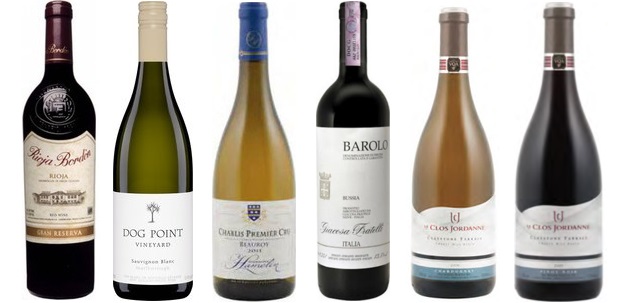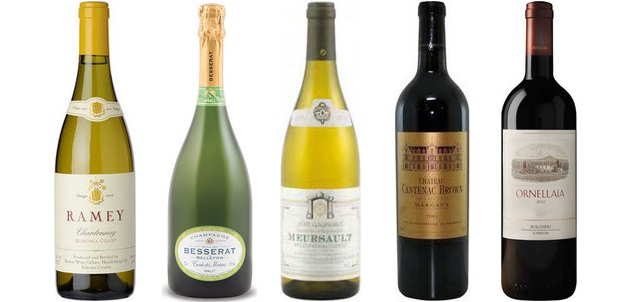
Fourteen wines that should be on your restaurant list

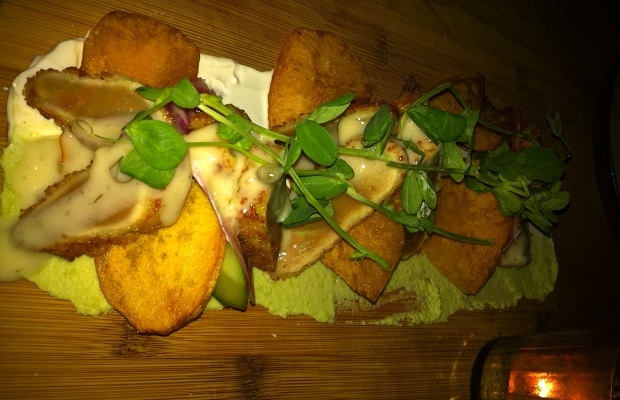
Fish and Chips at Small Town Food Bar

Fish and Chips at Small Town Food Bar

I taste a lot of wine. Lots of wine. Were I to manage a restaurant list with room for everything that deserves a place to call home, to share with the world the honest and the natural, a long list I would indeed create. The wine list at Barque Smokehouse I build is predicated on that premise but you can count on two hands the number of wines we offer by the glass. Necessity is our master.

Related – A resolution to drink honest wine

At the start of 2014 I penned that column and looking back eight months later, the ideas put out within that post-ice storm, mild January day apply to the concept of formulating a restaurant wine list. For the most part, a wine card should endorse the virtuous and the sincere. “Honest wine is juice that conveys the salient facts of a grape’s life. For a bottle of wine to be on the up and up it must not be disguised by the unnatural ways of artificial intervention nor should it make itself so available as to be obvious. Fruit should reside in the realm of the sequestered and the sacred. I am not alone in hoping for table wines to be stirring, gripping, unsweetened and unencumbered by an excessive coat of oak. My hard-earned dollars should earn the right to be stimulated .”

If your job title includes choosing what wine is poured at your restaurant, you should never dial it in. VINTAGES releases more than 100 new wines every two weeks. If 95 are what you might consider wantonly microdontic or overly tangential in influence, so be it. Five new wines every two weeks is more than enough to keep your list rocking, rolling, current and fresh. In Ontario the choices are many and the options endless. If driving the construction-riddled streets of Toronto is for you the time spent equivalent of root canal surgery in a Chilean coal mine then call an agent, request a tasting and let the cases be shipped to your doorstep.

“Wine only recognizes two temporal states. Fermentation and party time.” Be creative, read Tom Robbins, listen to the Tom Tom Club, mix it up a little, try new wines and add a spark to your wine program. Give it the genius of love. Guests just want to have fun. Here are 14 new releases, from VINTAGES and through some really terrific agents here in Ontario.

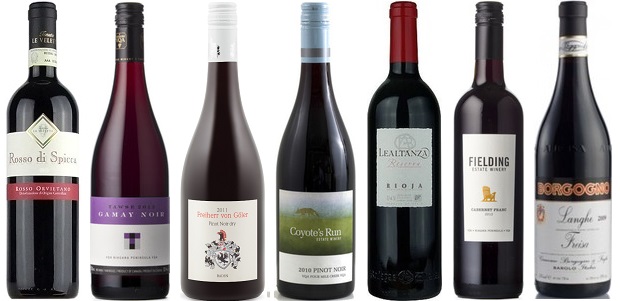
From left to right: Tenuta Le Velette Rosso di Spicca 2012, Tawse Gamay Noir 2013, Freiherr Von Göler Pinot Noir 2011, Coyote's Run Pinot Noir 2013, Lealtanza Reserva 2009, Fielding Estate Cabernet Franc 2012 and Borgogno Langhe Freisa 2012

From left to right: Tenuta Le Velette Rosso di Spicca 2012, Tawse Gamay Noir 2013, Freiherr Von Göler Pinot Noir 2011, Coyote’s Run Pinot Noir 2013, Lealtanza Reserva 2009, Fielding Estate Cabernet Franc 2012 and Borgogno Langhe Freisa 2012

Tenuta Le Velette Rosso di Spicca 2012, Umbria, Italy (Agent, $16)

The “Spicca” family owned the farm where the vines now grow. For a Rosso, from Umbria, Toscana or Piemonte for that matter to stand out (spicarre), it must have something unique and noticeable. Le Velette’s understated Umbrian blend of Sangiovese and Canaiolo is all about aromatics. Spicy cherries, leather and cinnamon with an underlying petrichor that seemingly bleeds fresh piquant juice straight from concrete. Like the oil exuding from lavender and rosemary growing out of the fissures of cracked terracotta over clay, after a warm summer rain. The palate gives a wee bit of spirited spritz and pizzazz. All this for $16 and change for a finishing espresso.   Tasted October 2014  @Noteworthywines

Tawse Gamay Noir 2013, VQA Niagara Peninsula, Ontario (322545, $18.95, WineAlign)

Darker berries define the Paul Pender take on Gamay for Niagara and in ’13 there is a level of tension and girth not yet approached. This third Tawse Gamay is overt in attitude, connotative of Beaujolais Cru staging, an ovule of rebellion and a disposition just as though in the grips of Asmodeus. The Tawse effect is entrenched in clay and possessive of  knowledge as if derived by an invitation only junket to the Gamay motherland. If the stance seems serious, the fruit is up to the task. A Gamay for now and fully capable of aging five or more years.  Tasted October 2014

Freiherr Von Göler Pinot Noir 2011, Qualitätswein, Baden, Germany (390971, $18.95, WineAlign) From the VINTAGES October 11, 2014 Release

You can take the Spätburgunder out of the nomenclature but you can’t take the nomenclature out of the Spätburgunder. The porcine dry, crunchy bits are front and centre, the pig offal under the crust. This is Baden red wine of a bitter and surprisingly sweet palate nature, a modern take on old male Pinot pattern baldness. So worth trying towards gaining a deeper understanding of varietal diversity.  Tasted October 2014  @HalpernWine

Coyote’s Run Pinot Noir 2013, VQA Niagara Peninsula, Ontario (53090, $19.95, WineAlign)

The Estate bottle represents a balanced amalgamation of terroirs with essential Niagara On-The-Lake Pinot Noir aromas, accents and distinction. Highly floral, thanks in kind to the red Trafalgar clay loam of the Red Paw Vineyard, as much as it has and will ever be. Extracted with reserved prejudice, with props to the dark Toledo clay loam of the Black Paw Vineyard, showing as a robust and retentive treacle, rich in tangy licorice and cherry pie. Much flavour is found in this Pinot Noir, so it will be well deserving of accolades and sales. If the sweetness prevails it is only because the fruit is shepherded in clean and Shepparded with blending acumen.  Tasted October 2014  @coyotesrun

Lealtanza Reserva 2009, Doca Rioja, Spain (208223, $20.95, WineAlign) From the VINTAGES October 11, 2014 Release

Old, old school Rioja ramped up, given a natural injection of rock brine and garriga then sent out to play. Rarely does Lealtanza give so much fresh conjecture, so much considered condensation and dense consideration. Soft and muddled palate, mottled rocks seeping berries and an accent of candied tomato leaf. Funky finish keeps it real.  Tasted October 2014  @ProfileWineGrp

Fielding Estate Cabernet Franc 2012, VQA Niagara Peninsula, Ontario (36194, $21.95, WineAlign)  NWAC14 Silver Medal Winner

A dusty and gilded Cabernet Franc from one of the warmest Niagara vintages in recent memory. Vivid in Bench specific varietal tendency, as if the berries on the black currant bush were ripening and bursting in the late afternoon sun, right into the glass. A blueberry by you CF, spiced by the faint childhood memory of grandfather’s unlit pipe on the coffee table. There have been more tense and exciting Cab Franc’s by Richie Roberts but none so suave and grown-up as this 2012.  Tasted September 2014  @FieldingWinery  @RichieWine

Borgogno Langhe Freisa 2012, Doc, Piedmont, Italy (388660, $24.95, WineAlign) From the VINTAGES October 11, 2014 Release

Don’t worry Mr. Parker, this rare chance at assessing a Langhe made from the Freisa grape will not join the 100-point club but I can say with certainty that this take is anything but “totally repugnant.” Borgogno’s Freisa is rustic, with dried figments of raisin and fig, though zero notes of reduction. More dried fruit, in carob and licorice with biting, spicy notes and the seeping of black tea leaves. The whole Mediterranean potpourri seethes in altitude and attitude. A dry and sensual red with enveloping chalk and acidity. Perhaps “Bobbo” Butch Cassidy should give this Langhe a whirl.  Tasted August 2014  @TrialtoON

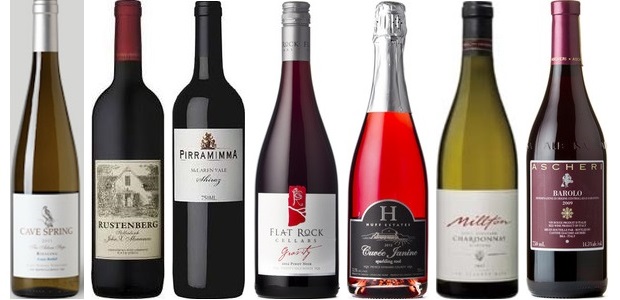
From left to right: Cave Spring Riesling ‘The Adam’s Steps’ 2013, Rustenberg John X Merriman 2011, Pirramimma Shiraz 2011, Flat Rock Gravity Pinot Noir 2012, Huff Estates Cuvée Janine 2012, Millton Opou Vineyard Chardonnay 2009, Ascheri Barolo 2010

From left to right: Cave Spring Riesling ‘The Adam’s Steps’ 2013, Rustenberg John X Merriman 2011, Pirramimma Shiraz 2011, Flat Rock Gravity Pinot Noir 2012, Huff Estates Cuvée Janine 2012, Millton Opou Vineyard Chardonnay 2009, Ascheri Barolo 2010

Cave Spring Riesling ‘The Adam’s Steps’ 2013, VQA Beamsville Bench, Niagara Peninsula, Ontario (26372, $24.95, WineAlign)

A classic Adam, amplified in 2013, riper and not as piercing as previously noted vintages. Still the layering is omnipresent but there is more juicy fruit and texture then ever before. This is a consumer friendly Adam, gregarious, outgoing, off-dry as never before. New slang for the bottling.  From my earlier, July 2014 note: “According to Cave Spring’s website this newer Riesling from older (18 to 35 year-old plantings) is from “a single block of vines in the shadows of a limestone outcrop near the crest of the Niagara Escarpment, known as ‘The Adam Steps’. Really apropos, for this Riesling is the cantilever, the one with the outstretched arm. At 10.5 per cent alcohol and with an unmistakably stony, sweet and sour whiff the wine speaks of its off-dryness. The juiciest of all the Cave Spring Rieslings, with rounder acidity and good persistence. This is the all-around good guy, the one with an open invitation, the bridge from Estate to Dolomite to Csv. The well-adjusted one steps up its game to help win one for the team, especially out of the convivial 2013 vintage.”  Last tasted October 2014  @CaveSpring

Rustenberg John X Merriman 2011, Stellenbosch, South Africa (707323, $24.95, WineAlign) From the VINTAGES October 11, 2014 Release

Despite the colour as dark as monster’s gore this is a relaxed X Merriman, not overly painted or rubbed by charcoal and rubber tree plant. The Bordeaux-styled blend of Cabernet Sauvignon (55 per cent), Merlot (37), Petit Verdot, Cabernet Franc and Malbec from South-West slopes of the Simonsberg Mountain, Stellenbosch opens its tight angled gates to reveal a cool centre, with juicy, rich, iced espresso, though in decomposed granite grit it’s tannic as hell. Makes judicious use of its (41 per cent) new and (59 per cent) 2nd and 3rd-fill 225L French oak barrels, along with balance in alcohol (14.3 per cent) integration. Solid South African red with just enough primal activity to pleasantly alter the temperature in the brain, without causing concussion or grey matter to go totally askance. Will drink well into the next decade.  Tasted October 2014  @WoodmanWS

Pirramimma Shiraz 2011, Mclaren Vale, South Australia, Australia (987784, $24.95, WineAlign) From the VINTAGES October 11, 2014 Release

A Pirramimma in the new vein from a warm and rich vintage. So hard to scale back when nature gives you this much fruit. Though 15 per cent is hardly a twinkle in its alcohol eye, there is only so much elegance that can be coaxed from this kind of hedonism. It’s big, juicy and just so alive. As simple as a candle, without magic and void of mystery. It will range hither and thither for 10 years before it makes the long, slow journey back home.  Tasted October 2014  @bwwines

Flat Rock Gravity Pinot Noir 2012, VQA Twenty Mile Bench, Niagara Peninsula (1560, $29.95, WineAlign)

Seven months have softened and mothered Gravity’s adolescence in ways to now see it as the most feminine, certainly of the last four vintages. Pretty dabs, perfumes of natural conditioning, warm days and warm nights in the bottle. More accessible than previous takes and of a new modernity perceived. Sweet dreams and sweet fragrances, roses and cinnamon, nothing fancy here mind you, with no bite and no gathering moss. Cherries and vanilla, lavender and simple pleasures. Straight up Gravity, no pull down, no drag and no excess weight. From my earlier, March 2014 note: “In a vintage potentially muddled by warmth and a humidor of radio frequency, duplicating berry phenolics, Flat Rock’s Gravity remains a definitive, signature house Pinot Noir. In 2011, the head of the FR class from its most expressive barrels shared the limelight (and top juice) with the Pond, Bruce and Summit one-offs. In ’12, Gravity’s sandbox was its own. The style is surely dark, extracted, black cherry bent, as per the vintage. Yet only the Rock’s soil does earth in this variegate, borne and elevated by the barrel’s grain. There are no fake plastic trees in a Flat Rock Pinot. “Gravity always wins.”  Last tasted October 2014  @Brighlighter1  @Winemakersboots  @UnfilteredEd

Huff Estates Cuvée Janine 2012, Prince Edward County, Ontario (Winery, $29.95, WineAlign)

Looks can be deceiving so much so Janine might look as is she were leading a bubble to red dye number 40. Not the case, rather the expressive hue is winemaker Frédéric Picard’s colourful bleed from 100 per cent Pinot Noir fruit. So, it must be sweet and tasting cloyingly like a bowl of sugared strawberries. Again, not so. Janine’s aromas are very berry and her texture is certainly cheese and crème fraiche-inflected from a 12 month lees mattress, but dry she goes. Much demonstrative behaviour and perspiring humidity comes from vintage warmth and here results in layering. Janine is an earthy, funky squared sparkler, with nothing shy or demurred about her, but all of the outwardly screaming smells and tastes are in check. Strawberry cream and shortcake cease from wrapped tight acidity coming in from the backside. Big bubbles.  Tasted October 2014  @HuffEstatesWine

Millton Opou Vineyard Chardonnay 2009, Gisborne, North Island, New Zealand (92478, $30.00, WineAlign)

From estate fruit on a single vineyard planted in 1969 on the Papatu Road, Manutuke, Gisborne. On Waihirere soils of heavy silt and Kaiti clay loam. A most mineral driven Chardonnay thanks in part to some Riesling in the mix. This varietal symbiosis, along with a co-planted orange grove gives what James Milton calls “the sharing of astrality.” The five year-old biodynamic Opou does whiff orange blossom, along with crisp green apple and the wet rocks of a summer rain. Quite full on the palate with a bite of black pepper and olive oil drizzle over toasted Ciabatta, smeared by churned, salted butter. The length indicates five more relish piqued years and five furthermore in slow decline.  Tasted October 2014  @TheLivingVine

Ascheri Barolo 2010, Piedmont, Italy (341107, was $35.25, now LTO $32.25, WineAlign)

Standard issue Barolo of a canonical character so bankable as Nebbiolo and nothing but. Classic Piemontese funk comes wafting out, along with licorice in as many ways as can be described; anise, Sambuca or fennel. The palate is creamy and slightly sweet, accented with pepper and a dusty, grainy sensation. This is Barolo of old with a cough syrup confection, wild herbs and grit. It could not be mistaken for Malbec though its disjointed ways could use some finesse and polish.  Tasted October 2014  @liffordwine

Good to go!

A Bordeaux family of wines

Château Léoville Las Cases of Domaines Delon http://www.domaines-delon.com/en/accueil.html

Château Léoville Las Cases of Domaines Delon
http://www.domaines-delon.com/en/accueil.html

Finding recherché in the classicism of a family run wine business is obscured by today’s speculative boardroom market of classified growths, futures and the wheeling of the négociant. When Bordeaux comes to town the connection is by and large a sterile one. How refreshing it is when the introduction is made in terms of kith, kin and tradition. The Delon family has been in the Bordeaux game since the middle ages. The estate of Château Potensac has been in Jean-Hubert Delon’s bloodline “since time immemorial.” The Delon holdings include Château Nenin (Pomerol), Potensac (Médoc) and Château Léoville-Las Cases (Saint-Julien).

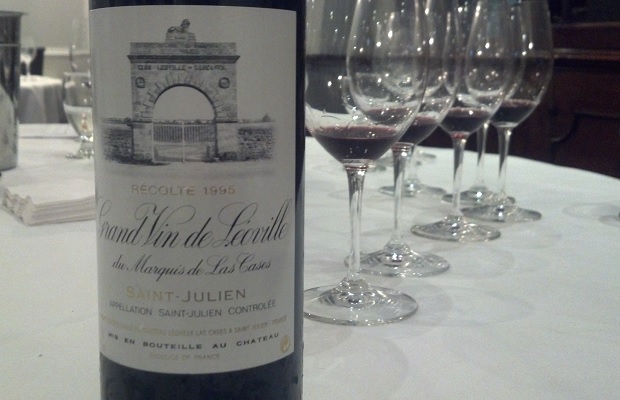
Château Léoville-Las Cases 1995

Château Léoville-Las Cases 1995

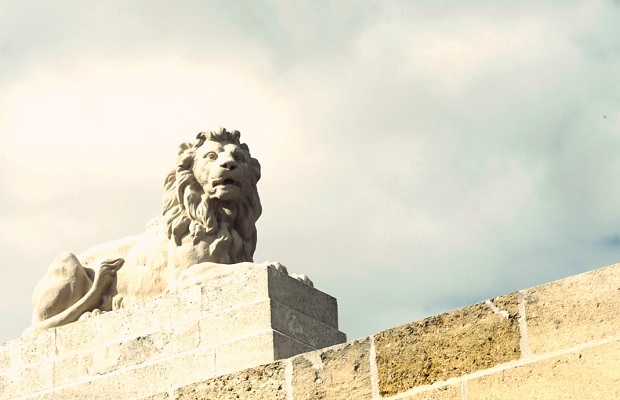
Léoville-Las Cases or “LLC,” as it is affectionately known, is one of the oldest Médoc properties and though it has always played 2nd Growth fiddle to its elite Classified Growth neighbours, Las Cases is anything but second class. The terroir, micro-climate, vines, ripening potential, history, track record and wine acumen of Léoville-Las Cases is equal to those of Lafite Rothschild, Latour, Margaux, Haut-Brion and Mouton. It might be considered the fifth major (or, in wine, the sixth), like the PGA’s Player’s Championship. Of the players, for the players. In fact, the estate is like an island green of itself, unique, accessible, of the people and for the people. LLC attracts an elite field but its success is shared and enjoyed by a level of consumer who may never afford or even come to taste a bottle of First Growth wine.

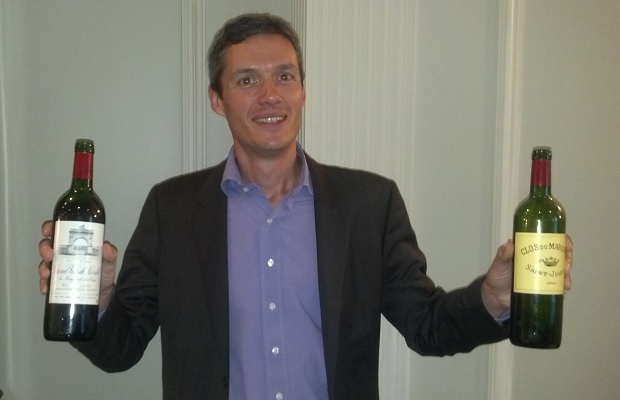
Pierre Graffeuille, Commercial Export Director, Domaines Delon

Pierre Graffeuille, Commercial Export Director, Domaines Delon

Pierre Graffeuille (Commercial Export Director) came to Toronto’s National Club on Wednesday, September 24, 2014 to present and to pour a cross-section of the Delon group of wines. Mr. Graffeuille was quick to point out “we do not want to make blockbusters.” The wines of Potensac, Clos de Marquis, Nenin and Léoville-Las Cases are meant for “lunches and dinners, not for tastings.  We focus on elegance, not concentration.”

The Delon philosophy is based on “a continual and incontestable search for excellence.” The ontology is shared and spread throughout the 550 acres of production between the three properties. VINTAGES is sharing the Delon belief with an extensive offering from the properties, including a long vertical of LLC.

Château Potensac is situated in the north Médoc, close to Saint-Estèphe and is possessed of a similar terroir. Set on 200 acres, the vines average at 40 years-old, with some plots exceeding 80. The plantings are Merlot (50 per cent),Cabernet Sauvignon (35) and Cabernet Franc (15). Soils are clay limestone/small gravel and the density of 8000 vines/ha is congruent with classified growths. Traditional Médoc élevage is 1/3 new French oak for 12-14 months.

Château Nenin is 0ne of the largest estates in the appellation of Pomerol. It comprises 80 acres on the Pomerol plateau, land of clay with gravel and more clay underneath in sub-soil. Nenin’s neighbours include Château Trotanoy and Le Pin. The vines are now at 25 years in average, young by Pomerol standards but with huge potential. The acreage was originally planted to Merlot (78 per cent) and Cabernet Franc (22), though little by little the Franc is increasing with each passing vintage. “For freshness,” notes Pierre. The Nenin élevage is generally 30 per cent new French oak for 14-18 months.

Château Léoville-Las Cases has been in the Delon family since the 19th century and represents the heart and more than 60 per cent of the former (17th century) estate. The famous walled enclosure houses the most prestigious plot just below the (Gironde) river that separates it from Château Latour in Paulliac. This geographical allusion is key to understanding the LLC oeuvre. The wines are the amalgamated embodiment of and yet are neither Saint Julien nor Paulliac. The vines grow within a plot that brings the Venn diagram circles of both appellations into play. Once again, Las Cases is the island of Bordeaux, in fact, it is the archipelago of wine estates. It draws detail, deed and qualification from without, then internalizes all within. Even the Clos de Marquis, from vines grown on soils of more sand and less clay gathers and concentrates its holdings. The Clos combines “2nd wine” conceptualization with affordability in unparalleled ways. It is a benchmark for the intellection in Bordeaux.

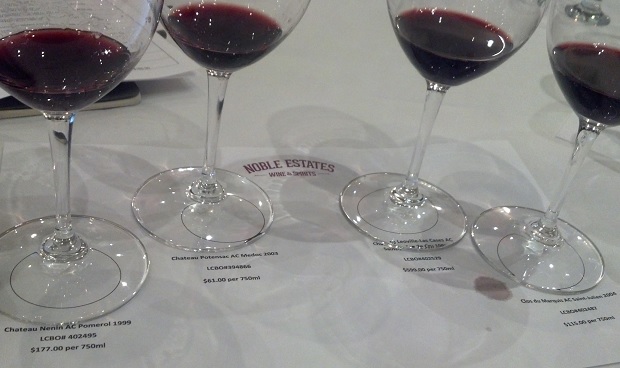
With thanks to the markedly too legit to quit Mark Coster and Noble Estates, the pleasure was had to taste four wines from the Domaines Delon. Here are the notes.

Domaines Delon: Château Nenin 1999, Château Potensac 2003, Château Léoville Las Cases 1995, Clos Du Marquis 2004

Domaines Delon: Château Nenin 1999, Château Potensac 2003, Château Léoville Las Cases 1995, Clos Du Marquis 2004

Château Potensac 2003, Ac Médoc, Bordeaux, Left Bank, France (394866, $61.00, WineAlign)

What with its congruence to Saint-Estèphe terroir amplified by the humidity of the 2003 vintage, Potensac mines the gene pool for pure, unadulterated Médoc. The breakdown in ’03 is equal parts 41 per cent Cabernet Sauvignon and Merlot with Cabernet Franc rounding out the holy Bordeaux trinity. Certainly atypically warm in vintage, it has marinated and maintained its push vs. pull of freshness and warmth. Smells of black fruit, licorice, scrub brush and is no doubt really ripe with the heat still in control. Chalk, grain and mineral layers dominate the piquant palate. Finishes with capers and olives on top of small stones. The limestone is really prominent. Has hit its cruising speed and will stay there for a projection of three more years.

Clos Du Marquis 2004, Ac St Julien, 2nd Wine Of Château Léoville Las Cases, Bordeaux, Left Bank, France (402487, $115.00, WineAlign)

Ten years have got behind this baby Château Léoville Las Cases from the estate’s vineyard silted of more sand and less clay than that of the 2nd Growth’s esteemed enclosure. Composed of Cabernet Sauvignon (57 per cent), Merlot (38) and small rounding out amounts of Cabernet Franc and Petit Verdot, the Marquis enters with quite a bass note and plucky twang. It lives on the dark side of the fruit spectrum, with notable Cassis, black currants and a funk progression in the tonic minor. A savoury spike which has Mediterranean pique, richness and wood spice ticks in rhythmic metronome and lingering cool notes. Prickly in woody funk. Cool, herbal funk. There is a late great push to stretched length. Clos de Marquis “you are young and life is long and there is time to kill today.” Drinking well at 10 and will live for 10 more.

Château Nenin 1999, Ac Pomerol, Bordeaux, Right Bank, France (402495, $177.00, WineAlign)

From one of the largest estates in the appellation, the Nenin’s terroir is clay with gravel and more clay underneath in the sub-soil. The layered richness is apparent as far back as this ’99, an early vintage fashioned from Merlot (88 per cent) and Cabernet Franc (12). These are numbers that would gradually invert in future vintages. As per the LLC practicum, this spent 14-18 months in 30 per cent new French oak. This 15 year-old Nenin is earlier generation softer in style, lush and mellow. There are plums mixed with a Right Bank truffle, which, with time and shelled terroir, has come out to play. Now that the wine is a teenager, it wears the vineyard funk as its make up. A shadow of soft red fruit and a shave of fungi are accented by some wood relish. Age is this Merlot’s best friend. The fruit has dissipated but certainly remains in the audience, just not quite at centre stage.

Château Léoville Las Cases 1995, Ac St Julien, Bordeaux, Left Bank, France (402529, $599.00, WineAlign)

This 2nd Growth, Grand Vin is a product of nurturing and environment, a study in 12 superb soil subsets, from sand to clay to stone. From mature, edified vines split between Cabernet Sauvignon (70 per cent), Cabernet Franc (16) and Merlot (14). The LLC ’95 is grounded and centered on its highly confident axis while swirling within a centrifuge of inwardly concentrated, ripe but not ripest fruit. Merlot here is the anchor, Cabernet Sauvignon the mast. This is a relationship of pure linear fruit meets acidity. The full and fresh attack is refined with soft-pedaled tannins. It’s neither St. Julien nor Paulliac. It is Las Cases. No other Bordeaux is such an island, a distinctly personal expression, an event of its own. This is a window to the greatest vintages, a portal to extend to the benchmarks of 1996, 2000, 2005 and 2009, but also to step into the history of physiological cortex, to gain insight into previous legendary vintages, like 90, 89 and 82. The ’95 is silky, caressing, rapturous enveloping in a reverse osmosis of fruit and acidity, acidity and tannin. Another sip notices the layering, the grain left in tannin, the lingering richness of the fruit. The absolute sweet caress.

Good to go!

Thirteen wines ‘ere Friday the 13th

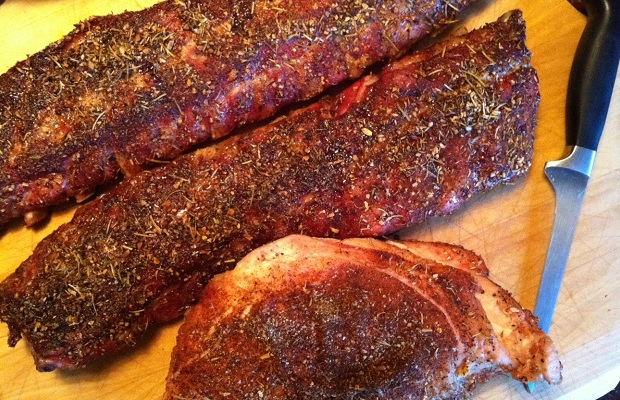
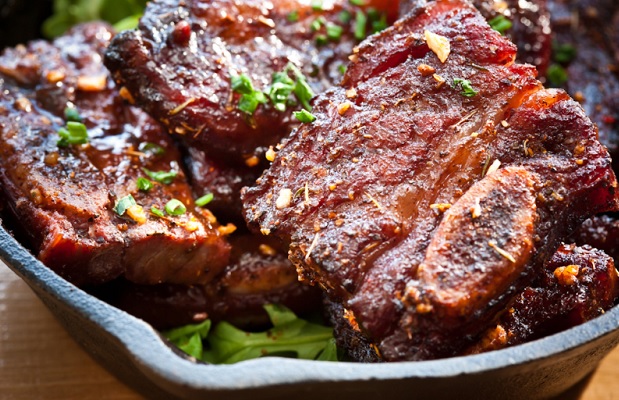
Ribs meet Turkey PHOTO: Michael Godel

Ribs meet Turkey, rubs by Barque Smokehouse
PHOTO: Michael Godel

The last four times the calendar’s folklorique confluence brought a Friday and the 13th of a month together occurred in December and September of 2013, July and April of 2012. On that April Friday the arbitrariness shared a birthday with the sinking of the titanic. That kind of anti-kismet “does not bode well for the superstitious kind.” So once again, if you are one of the many inflicted with paraskevidekatriaphobia then tomorrow may not be your favourite day. If you also suffer from oenophobia, I feel for you.

Here are thirteen things that make me think of the number thirteen.

  1. Apollo 13. Moon mission gone bad.
  2. Thirteen years ago this week Radiohead went to No. 1 on the UK album chart with their album Amnesiac.
  3. The Leviathan, Thomas Hobbes, Chapter XIII: “The weakest has strength enough to kill the strongest.”
  4. Thirteen Days, The Movie. John F. Kennedy and the Cuban Missile Crisis.
  5. Friday the 13th in Port Dover, Ontario.
  6. The song “13” by Big Star.
  7. The 13 Principles of Jewish Faith.
  8. 13th Street Wines.
  9. The thirteenth man. How the Saskatchewan Roughriders lost the 2009 Grey Cup.
  10. June 13th, 1913. The New York Yankees win their 13th game of year after losing 36 games.
  11. The 13th Amendment to the US Constitution abolishing slavery and segue to the great Nelson Mandela, who died on December 5, 2013.
  12. Steve Nash. Dan Marino. Wilt Chamberlain. Mats Sundin. Godello.
  13. 13” the name of the new album by Black Sabbath.

Nice list. Of even greater importance is choosing some wine for the fitful 13th day of June and for Father’s Day on the weekend that follows. Thirteen wines ‘ere Friday the 13th, for and with dad.

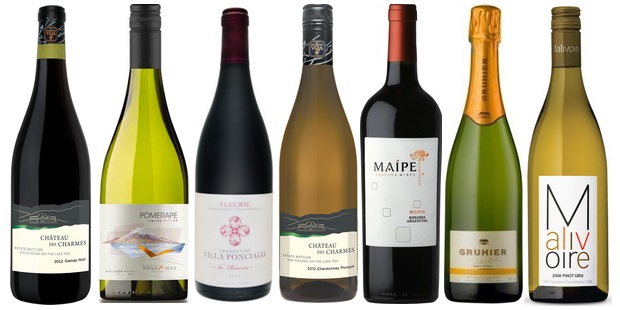
From left to right: Château Des Charmes Gamay Noir 2012, Volcanes De Chile Pomerape Limited Edition Sauvignon Blanc 2011, Villa Ponciago Beaujolais Villages 2012, Château Des Charmes Chardonnay Musqué 2012, Chakana Maipe Reserve Bonarda 2011, Gruhier Extra Brut Crémant De Bourgogne 2010, Malivoire Pinot Gris 2012

From left to right: Château Des Charmes Gamay Noir 2012, Volcanes De Chile Pomerape Limited Edition Sauvignon Blanc 2011, Villa Ponciago Beaujolais Villages 2012, Château Des Charmes Chardonnay Musqué 2012, Chakana Maipe Reserve Bonarda 2011, Gruhier Extra Brut Crémant De Bourgogne 2010, Malivoire Pinot Gris 2012

Château Des Charmes Gamay Noir 2012, VQA Niagara On The Lake, Ontario (57349, $12.95, WineAlign) LCBO General List

Give this vibrant crush of boyish red fruit a slight chill and with this pinnacle ideal vintage, at this ridiculously right price, go hither and convince a world of Gamay naysayers to get on board. Never mind the many years of “uninspired, drenched and tired” Gamay beach songs and tired voyages. Never mind the bad rap and out of tune harmonies thrust upon the world by dull vintages and bulk fruit. This CdC Gamay continues to breach the value quotient. Here is fresh, pure, unadulterated adult’s juice. It cruises from harbour with a clove-studded orange spritz and sets out past a rocky jetty to open seas. “Sail on, sail on sailor.”  Tasted June 2014  @MBosc

Volcanes De Chile Pomerape Limited Edition Sauvignon Blanc 2011, Leyda Valley, Chile  (371138, $14.95, WineAlign) VINTAGES June 7, 2014 release

So very peppery and Ají Cristal notes come from this warm weathered Chilean Sauvignon Blanc, indicating a Leyda Valley specificity that can’t be denied. So much unctuous character swallows whole the herbiage and schmaltz, as does the rapid fire acidity. Powerful SB, not subtle, not understated. There is no shortage of fruit, with nettles and a volcano in current eruption. It’s as if it would plead, “spider got eight legs and I got two. This guitar got six strings, what about you, well, what do you got?” So much going on, with more palate tingling white pepper, bending notes and angles. Jacks from ballad to wailing guitar, from rhapsodic to metallic. A Sauvignon Blanc with fly farm blues. I think it has an appeal to a red wine drinker who wants to drink a big white and I think it will age quite well, something like five to seven more years.   Tasted May 2014  @WoodmanWS

Villa Ponciago Beaujolais Villages 2012, Ac, Beaujolais, France (325134, $15.30, WineAlign) LCBO General List

When this Villages Millésime was mentioned for the purpose of offering a contrast to Ponciago’s La Réserve, it was honestly assessed as having “paint and tar notes.” When considered on its own merit it’s all about softness, perfume and poise. Pure red berry fruit just seems encased in a web of gossamer texture, it’s that pleasant to drink. Though it may lack the stuffing of La Réserve and Les Hauts Du Py, at $15 and change this is the real deal in Beaujolais. Even more impressive in consideration to the challenges of the vintage.  Tasted June 2014  @WoodmanWS

Château Des Charmes Chardonnay Musqué 2012, VQA Niagara On The Lake, Ontario (640516, $16.95, WineAlign)

Clone 809 strikes again. The pioneering Bosc family tells the usual oak suspects to stay clear of their pure St. David’s Bench meets Seven and Seven Vineyard fruit so the intensity of flowers and blanketing minerality can speak with utmost clarity. Never mind all that, this ’12 is the most tropical Chardonnay Musqué yet made by CdC. Its heart is a drum, “free as a driving wheel, circling around your iron will.” OK, so that Seven and Seven soil makes for alloy heaven. Just ring this clone and she will be at your beck and call.  Tasted May 2014  @MBosc

Chakana Maipe Reserve Bonarda 2011, Mendoza, Argentina (361212, $18.95, WineAlign) VINTAGES May 24, 2014 release

Bonarda is on the rise and threatening to challenge Malbec in Mendoza, especially when it poses with such an obvious, rich and cakey Andean attitude. This example is clearly culled from a state of the art production facility because despite the slightly funky, gritty, tense and nervous layering and radio fuzz, it shows such a polished quality. Picked & mixed by real humans, this is varietal desert euphoria paradise, full of plum drive and chocolate coating.  Tasted May 2014  @Oenophilia1

Gruhier Extra Brut Crémant De Bourgogne 2010, Burgundy, France (375428, $18.95, WineAlign) VINTAGES June 21, 2014 release

The Grahier is an exhilarating, extremely arid, purposed blend of Pinot Noir (60 per cent) and Chardonnay (40). Though technically Extra Brut (less than 6 g/L residual sugar) this highly stylish Crémant teases with a perceived ripe orchard fruit sweetness. Versatility comes across in every spice and toast-driven bubble, for a cocktail pour, to blend into a cocktail or to match a wide range of dinner flavours. So useful and so smart. Offers up unparalleled value in Bourgogne sparkling.  Tasted June 2014  @Oenophilia1

Malivoire Pinot Gris 2012, VQA Beamsville Bench, Niagara Peninsula, Ontario (591305, $19.95, WineAlign) VINTAGES June 7, 2014 release

Malivoire presents a Pinot Gris in good temper, better balance and even greater controlled anxiety to add grit on top of the sweet, spicy pepper and lightly pickled palate. Really approachable, workable and elastic in extended length.  Tasted May 2014  @MalivoireWine

From left to right: Creekside Estates Laura’s Red 2010, Nyarai Cellars Viognier 2012, William Fèvre Champs Royaux Chablis 2012, Thirty Bench Red 2011, Smith Madrone Chardonnay 2011, Brokenwood Maxwell Vineyard Semillon 2007

From left to right: Creekside Estates Laura’s Red 2010, Nyarai Cellars Viognier 2012, William Fèvre Champs Royaux Chablis 2012, Thirty Bench Red 2011, Smith Madrone Chardonnay 2011, Brokenwood Maxwell Vineyard Semillon 2007

Creekside Estates Laura’s Red 2010, Queenston Road Vineyard, VQA St. David’s Bench, Niagara Peninsula, Ontario (117906, $19.95, WineAlign) VINTAGES June 7, 2014 release

Wonderfully balanced blend with a bit of wood spice, plenty of good character and tannin. Tense fruit, layered and tight. Tighter than I last tasted it. Must be the accumulation. From my earlier, February 2014 note: It’s funny, more than any other wine tasted, this Laura has that Niagara varnish other Creekside reds seem not to possess. “Stock up in the big years” suggests Matt Loney, and “consolidate in the tougher ones.” It could be argued that you can make more interesting wines in the lean years but this blend of Cabernet Sauvignon, Merlot, Syrah, Malbec and Petit Verdot lays a claim to seriousness, if needing at least three years to settle down. There is much cassis, sweet oak, iodine and a milk/dark chocolate swirl. Complexity for sure if just a bit huge within its own skin.  Last tasted May 2014  @CreeksideWine

Nyarai Cellars Viognier 2012, VQA Niagara Peninsula, Ontario (Winery, $21.95, WineAlign) On the card at Barque Smokehouse  @barquebbq

Look, I get it. Wine is made from grapes so why command a host of other fruits to offer context for aromas and tastes? Just have a moment with Steve Byfield’s “virtual” Viognier 2012. Virtual tree meets stone fruit. Smells just like a ripe peach. The flavour bears an uncanny resemblance to apricots. Virtual my Equus africanus asinus. The winery is virtual, the Viognier anything but. Speaks a Condrieu varietal truth by way of Niagara’s Redfoot vineyard. Carries a soil-driven, mineral-flecked, microscopically-oxidized metal tang so essential to invigorating Viognier. Blessed stuff from a Shona’s humble hands.  Tasted twice, March and June 2014  @NyaraiCellars

William Fèvre Champs Royaux Chablis 2012, Burgundy, France (276436, $22.05, WineAlign) LCBO General List

The Champs Royaux from mainly purchased fruit may be the runt of the Fèvre litter but it’s no austere duck soup and this despite the challenging vintage. Chalk another win for organic viticulture, here again worked to great effect. The practice encourages acidity levels to consistent ends aligned with ripe fruit and year in, year out betterment of the wines. The ’12 Champs Royaux exudes the idea of classic unoaked and flinty Chablis, as well as seawater and the smell of a lit halogen bulb. Elemental without being metallic, it blinks from a citrus flash before finishing balmy and warm.  Tasted June 2014  @BourgogneWines

Thirty Bench Red 2011, VQA Beamsville Bench, Niagara Peninsula, Ontario (320986, $24.00, WineAlign)

The consistency and subtlety in red wine of the earth in this perennially approachable Bench wine can’t be overestimated. Really high quality red purity is ascertained from this blend, its spicy, tangy, moving parts coming together to unionize the fruit. Just enough tension to keep traffic moving, with Merlot really doing its yeoman’s work, Cabernet Franc as sweet and expressive as it can be without going over to the shaken, splintered and mocha chocolate dark side. This is always red and red-fruited. Ready, willing and will offer pleasure for five to seven years.  Tasted May 2014  @ThirtyBench

Smith Madrone Chardonnay 2011, Spring Mountain District, Napa Valley, California, USA (363556, $39.95, WineAlign) VINTAGES June 7, 2014 release

Holy reductive toast Napa man. Aromas of buttered toast, glade, duck fat and pencil graphite, which I must say is one stellar note. Flavours of ripe Mutsu (specifically) apple and a resinous chew of late autumn sweet forest needles. Yes the toast is high but so is the quality. Don’t blame the barrel, he’s just the messenger. A great Chardonnay for shellfish and molluscs of the briny kind. Linger on in your golden yellow eyes.  Tasted May 2014  @SmithMadrone

Brokenwood Maxwell Vineyard Semillon 2007, Hunter Valley, New South Wales, Australia (371484, $47.95, WineAlign) VINTAGES June 7, 2014 release

A lifelong search for great Sémillon is fraught with peaks and valleys. Finding greatness is so rare it’s blue. The Hunter Valley in New South Wales beckons for a rush to strike gold. Many roads lead nowhere and others, like the dusty lane up to Brokenwood’s Maxwell Vineyard, lead to OZ. This young one has barely broken bread, or even a sweat. Sémillon of primary concern, like a tank sample. Varietal beauty as a cryogenically frozen specimen inundated by the table, the whole periodic table and nothing but the table. Guided by a laser beam of focus, great intent and expectations. Bob’s your uncle this David to the world’s white wine Goliaths. Son of racing studs and mares. Wow Sémillon. Not a faint moment about or in it.  Tasted May 2014  @Brokenwood

Good to go!

Take them home, County wines

County in the City PHOTO: Michael Godel

County in the City at the Berkeley Church

Life is old there, older than the trees,
Younger than the mountains, blowing like a breeze

Can you think of an island (leaving Australia, Tasmania and New Zealand out of the discussion) of greater interest anywhere for growing grapes and making world-class wine? Prince Edward County’s just a shade more than 1000 square kilometers, 800 kilometers of shoreline and tiny 22,000 population is that place. It’s geology and climate eerily mimics that of Burgundy. A superficial layer of limestone peppered clay loam hovers above penetrable layers of larger limestone. Fissures in that bedrock allow vines to reach deep into its crevices. It’s a veritable mineral wonderland.

Related – You can lead a county to the city

Huff Estates Photo: Michael Godel

Huff Estates

More than 30 wineries dot the land and water interspersed honeycomb of a wine trail. Pinot Noir and Chardonnay are the obvious cornerstone varieties but unique Riesling, Cabernet Franc and Pinot Gris have joined the attention gaining fray. Ontario’s finest Sparkling wine is being made at Hinterland. Vintners like Rosehall Run and Keint-He Winery exemplify top to bottom consistency. They and others like Lacey Estates are involved in the yeoman’s ambassador work, in the field, at tastings or through social media. Smaller production houses like The Old Third Vineyard, Hubbs Creek and Exultet Estates are sought after by those who know.

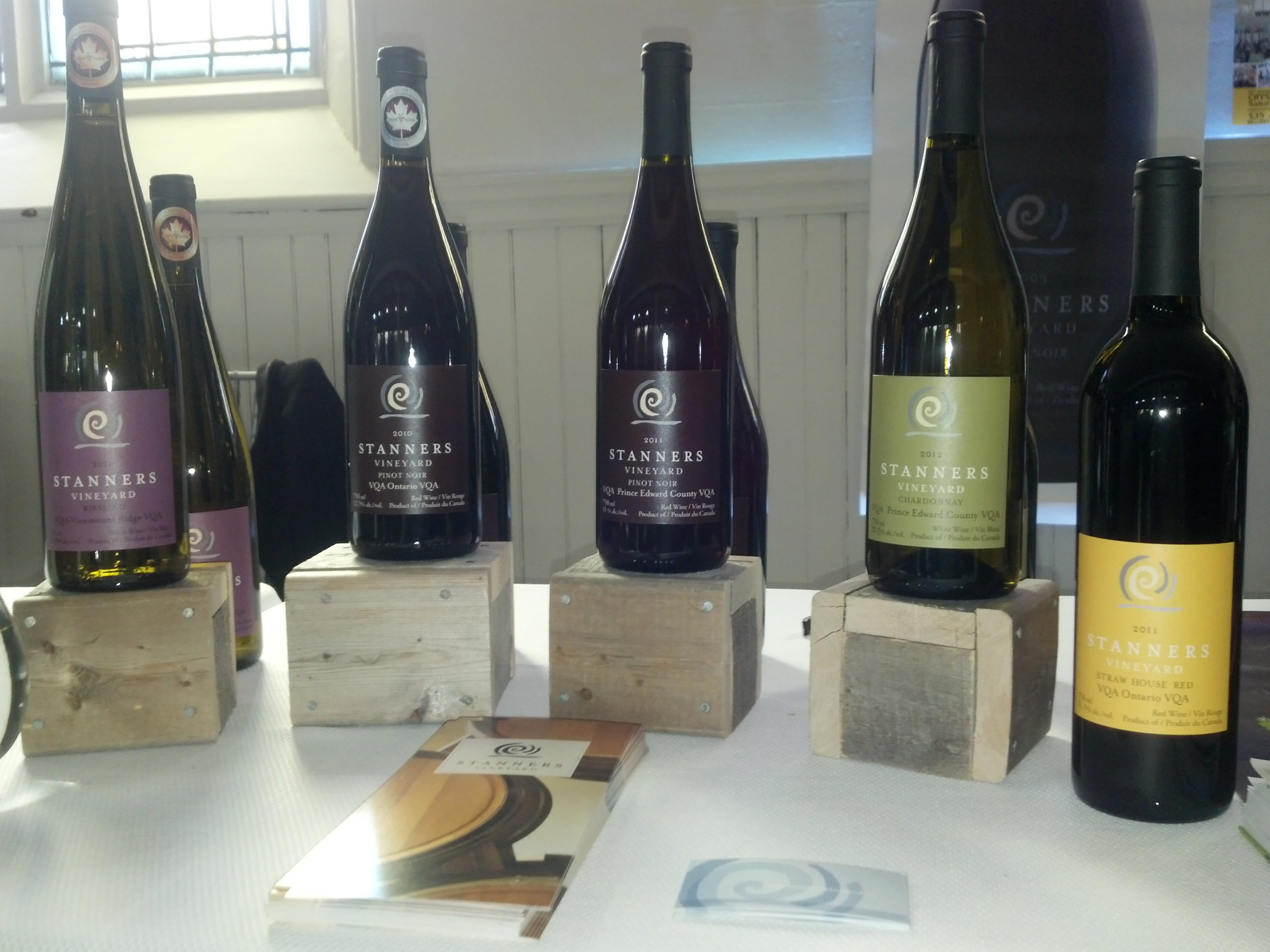
Stanners

Stanners

The County returned to the city on April 3, 2014 to showcase a cross-section of their wares at Toronto’s Berkeley Church. The usual suspects continued to impress, yet the collective needs to embrace the Sparkling example set by Jonas Newman and Vicky Samaras at Hinterland. If White Cap and Ancestral are any beacon to be drawn towards, plantings of Vidal, Riesling and Gamay should be employed in earnest in the turning towards pressure in the bottle. Lighthall’s Glen Symons gets it, as does Frédéric Picard, with his Cuvées, not to mention Bill Turnbull and his 3630 Bubbles. True, Casa Dea has the shy Dea’s Cuvée and the Grange makes a Sparkling Brut and a Riesling (346726, $24.95). But the questions begs, is fizz just another word for everything to lose in the County?

Here are notes on 23 wines tasted. The soundtrack to these PEC Wines includes Foo Fighters, Cracker, Nine Inch Nails, Modest Mouse, REM, Sufjan Stevens, The Beatles and Dire Straits.

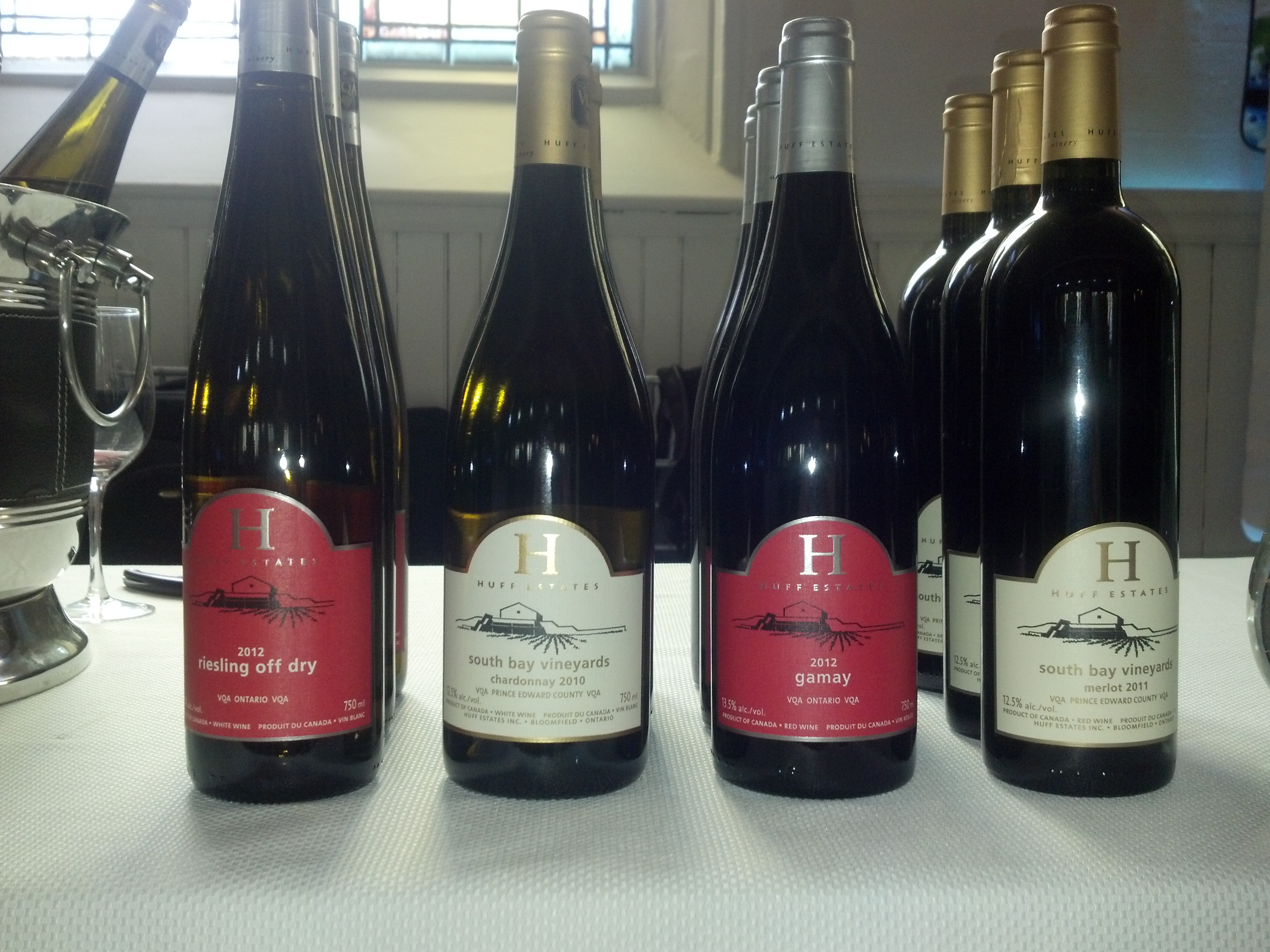
From left to right: Casa Dea Riesling 2011, Huff Estates Winery Off Dry Riesling 2012, Harwood Estate Pinot Gris 2012, Lighthall Progression Sparkling Vidal 2012, Norman Hardie Riesling 2012, Huff Estates South Bay Vineyards Unoaked Chardonnay 2012, Karlo Estates Lake On The Mountain Riesling 2012

From left to right: Casa Dea Riesling 2011, Huff Estates Winery Off Dry Riesling 2012, Harwood Estate Pinot Gris 2012, Lighthall Progression Sparkling Vidal 2012, Norman Hardie Riesling 2012, Huff Estates South Bay Vineyards Unoaked Chardonnay 2012, Karlo Estates Lake On The Mountain Riesling 2012

Casa Dea Riesling 2011, VQA Prince Edward County, Ontario  (winery, $16.95, WineAlign)

Pours and perches in the glass dry and stoic, as if bled from concrete or amphora. Swirled or not this fighter begins to rumble in a growing momentum of tang and acidity, as if it were being fed by sugar and feeding on yeast. So primary, like a sample in thief, yet already circling in complexity. A spike of spicy sweetness, a delicate dressing of aglio e olio, a chiffonade of basil on top. The County does this style of dry Riesling at this price in ways no one in Niagara can. This is no foo but rather a “blessing in disguise. Believe it or not, hands on a miracle.”   @casadeawinery

Huff Estates Winery Off Dry Riesling 2012, VQA Ontario (155606, $17.95, WineAlign)

Note the VQA Ontario designation, meaning the fruit is a combination of PEC and Niagara. The former brings limestone to the table while the latter weight and substance. Typically soda-driven and spatially atomic in maximum thrust. Turns towards the lake with sweet emotion and sails off into the sunset. Multi-purposed, works to great summer afternoon effect, especially with the waves of the bay lapping at the shore.  @HuffEstatesWine 

Harwood Estate Pinot Gris 2012, VQA Prince Edward County, Ontario (Winery, $18.00, WineAlign)

Light, airy, delicate and nearly ethereal Pinot Gris that takes few chances, instead choosing an acquiescence with life’s simple pleasures. The vanilla of Gris, malleable, agreeable and ready to pair with whatever comes its way. A minor spike of Hillier minerality gives accent to pears and its blossoms.

Lighthall Progression Sparkling Vidal 2012, VQA Ontario (Winery, $20.00, WineAlign)

A most non-pretentious sparkler that holds a pertinacious attitude towards anything but serious fun. From estate Vidal grapes that has seen a second fermentation using the Charmat Method, Lighthall’s ’12 picks up right where its solid ’11 left off. Picked early to preserve freshness and acidity, the Progression is big on tart green apple preserved by a squeeze of lemon. Chill it, refresh with it, serve it up and bring the house down.

Norman Hardie Riesling 2012, VQA Ontario (131169, $21.00, WineAlign)

Twenty Mile Bench in Niagara borrows 30 per cent County fruit to complete Hardie’s cracker Riesling. Low in alcohol (9.1 per cent) and residual, bound by jacked up acidity and tension. Pale platinum with an old-school aromatic sentiment that “fruit is rusting on the vine,” and flavours recalling that “the fruit is calling from the trees.” A masonic force of winemaking, “like being low, hey hey hey like being stoned.”  @normhardie

Huff Estates South Bay Vineyards Unoaked Chardonnay 2012, VQA Prince Edward County, Ontario (Winery, $21.95, WineAlign)

The Huff Chardonnay bent has seen a shift as strong as South Bay’s prevailing winds, away from the weight of barrel ferment to a clean, Chablis-like style. The ’10 might just have been the turning point and though they now make two versions, this ’12 is the cementing of the attitude. What is most amazing is that the texture, aromas and feel remain those of an oak-influenced wine. Huff manages the linear consistency without the need to encumber, toast or char the purity of its glade, glycerin and citrus fruit. Only Prince Edward County’s limestone soil can effect this kind of nine inch nails drive into Chardonnay without oak and only Huff can do it with this kind of elegance. A wine “less concerned about fitting into the world.” Do not miss this singular effort.  @HuffEstatesWine

Karlo Estates Lake On The Mountain Riesling 2012, VQA Prince Edward County, Ontario (Winery, $22.00, WineAlign)

Karlo’s take is Riesling in torsion, barrel fermented & aged in older (six-year) French Oak. The program adds wax and herbal mucilage to what otherwise would have been a frenetic study in bone chilling acidity. This unique and neo-progressive intuit invites a global Riesling symposium to the County to learn something old and something new within this single bottling. Riesling with attitude that’s got glycerin and a medicinal meets floral, pear extract meets candied lilac viscidity. Though so young, it seems wise, with an anamnesis for old Mosel, a coolant aroma and a taste that recalls white sangria. Yes, it’s different and eclectic. Anti-bracing stuff, not for everyone, but everyone should be for it.

From left to right: Stanners Vineyard Riesling 2011, Closson Chase The Brock Chardonnay Unfiltered 2011, Lighthall Vineyards Gewurztraminer 2012, Karlo Estates Chardonnay C.H.O.A. 2012, Norman Hardie County Cabernet Franc 2012, Huff Estates South Bay Vineyards Chardonnay 2010, Closson Chase Vineyard The Loyalist Chardonnay 2012

From left to right: Stanners Vineyard Riesling 2011, Closson Chase The Brock Chardonnay Unfiltered 2011, Lighthall Vineyards Gewurztraminer 2012, Karlo Estates Chardonnay C.H.O.A. 2012, Norman Hardie County Cabernet Franc 2012, Huff Estates South Bay Vineyards Chardonnay 2010, Closson Chase Vineyard The Loyalist Chardonnay 2012

Stanners Vineyard Riesling 2011, Vinemount Ridge, VQA Ontario  (winery, $23, WineAlign)

This is the inaugural Riesling release for Stanners, from a single Vinemount Ridge plot. If it were not so winged-footed it might gain more positive repute from the appellation’s quarry effect, but in time and with experience, Colin Stanners will settle the grassy aromas into the limestone demand. For now it remains effortless and balanced with a dismounting of acidity and well provided apple and lemon flavours.  @StannersWines

Closson Chase The Brock Chardonnay, Unfiltered 2011, Niagara River, VQA Ontario (Winery, $24.95, WineAlign)

The 2011 Brock has settled into its Niagara River appellative skin, having now been in bottle 18 months. Working with fruit from 300 kilometres away increases the unknown quotient, magnifying the adage that you have “one chance to get everything right,” Closson’s ’11 is neither modest nor is it a mouse but it is less frenetic than it acted when tasted repeatedly last year. The hard deposits have oozed into liquid metal gold and the ripe orchard fruit has mellowed into a creamy pudding with a hint of spice. I don’t see the Brock as a very public wine, but more from a maker, for friends, from habit, for family. A wine that you need to get to know, to patronize with repeated listening’s, to accept.   @ClossonChase

Closson Chase The Brock Chardonnay, Unfiltered 2012, VQA Niagara River, Ontario (Winery, $24.95, WineAlign)

The 2012 Brock was only sulphured and bottled a month ago so it’s quite shocky and shaky. Still in the REM sleep stage, the ’12 is not quite ready to reveal the warmth so generously granted by the Niagara River appellation’s extending growing season. The ripe tropical fruit notes are there, if subdued and the omnipresent minerality will rear its rocky head before too long. This Brock will see a lifting “but gravity is holding” it down for now. Look to see the weights fall away late in 2014 “and in review,” you will have noted “the air was singing,” all the way to 2020.

Huff Estates Gamay 2012, VQA Prince Edward County, Ontario (winery, $25, WineAlign)

If $25 seems a premium to pay for Ontario Gamay, consider all that is on offer in winemaker Frédéric Picard’s take on the friendly French grape. Picard caddies for 13th Street (Niagara) fruit, vinifies it bone-dry with the minimalist edge of 14 months in 15 per cent new French oak.  The fruit is so very ripe, in raspberry and gritless, creamy blueberry. Like savoury adult ice cream, silky smooth and with nary a hint of chalky grain. Well-designed and consumer-friendly as any Gamay has ever graced the Ontario consciousness. So you’ve “got that going for you, which is nice.” Shack up with Huff’s Gamay treat.

Lighthall Vineyards Gewurztraminer 2012, VQA Ontario (Winery, $25.00, WineAlign)

Proprietor Glen Symons sources his fruit for this unctuous Gewürztraminer from Vineland at the base of the Escarpment’s steps. Highly tropical and exaggerated by the warm summer of 2012 to the point of candied, but with an edge. Just restless enough to divine temptation for further sips which when multiplied, relax the palate rather than excite it. The flavours turn nutty, waxy, even and calm. A mistral wind blows through in a breezy finish.

Karlo Estates Chardonnay C.H.O.A. 2012, VQA Prince Edward County, Ontario (Winery, $25.00, WineAlign)

It should be assumed that the four types of wood used to house this warm and inferential Choa (cherry, hickory, oak and ash) would smother and smoulder other aromatic suitors but those woods are actually quite subtle. The other woods, as in forest, backyard and compost are the acute players. The Choa goes from fromage to funky, from an enzymatic leesy feeling to inner, inward innards. It barks of a dogged persistence, I will give it that. Most definitely singular of style to be sure and will need a few years to settle down.

Norman Hardie County Cabernet Franc 2012, VQA Prince Edward County, Ontario (winery, $25.00, WineAlign)

Hardie’s 2012 Cabernet Franc comes of age out of a preternatural and ontological perfect storm. Casts odds into the river of ideal weather, procures phenolic grape ripeness out of the vineyard, avoids the green and embraces the brown stems. Ferments under the natural eye of indigenous yeasts and settles into its silky skin at a low, low 10.8 per cent (give or take a lab sample) alcohol. Cabernet Franc of impossible soul, its “burden is the weight of a feather.” Pepper and currants are noted, tobacco and tomato are not. Comes “bearing a sword” but seduces with primal proclamations. Radical County red.

Huff Estates South Bay Vineyards Chardonnay 2010, VQA Prince Edward County, Ontario (Winery, $29.95, WineAlign)

The oak repeal in decreased new barrel impact allows the County to speak in the clearest of voice. As it should, from a South Bay landscape and terroir as rugged and dramatic that can be found anywhere Chardonnay is made in Ontario. There is a honeyed unctuous and viscous feel to the South Bay ’10, no doubt a result of its middle filled in by a meritorious and pure lees. Limestone wraps up the fruit in a clean, crisp and pure package.

Closson Chase Vineyard The Loyalist Chardonnay 2012, VQA Prince Edward County, Ontario (Winery, $29.95, WineAlign)

The licensee only Loyalist is the micro-embodiment of the Deborah Paskus style. Rich, compact and built to satisfy a need for lush, nearly tropical Chardonnay. From a vintage that saw bud reducing spring frosts and resulting yields of only one tonne per acre. The oak influence comes to it with a scaled back embracing, allowing the County’s rock bent to connect and form a bond with the acidity’s bracing intent. Perhaps the profits will suffer from the year’s miniscule crop, but the level of quality will making it all right.

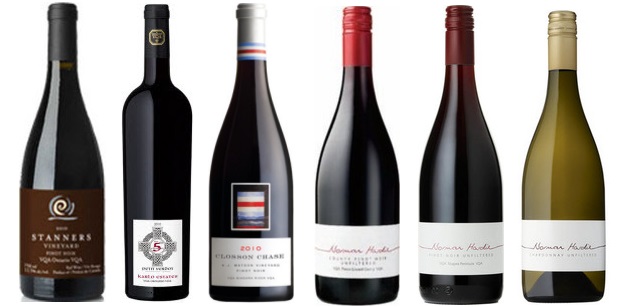
From left to right: Stanners Vineyard Pinot Noir 2011, Karlo Estates The Fifth Element Petit Verdot 2010, Closson Chase Pinot Noir K.J. Watson Vineyard 2011, Norman Hardie County Unfiltered Pinot Noir 2012, Norman Hardie Unfiltered Niagara Pinot Noir 2010, Norman Hardie Unfiltered County Chardonnay 2012

From left to right: Stanners Vineyard Pinot Noir 2011, Karlo Estates The Fifth Element Petit Verdot 2010, Closson Chase Pinot Noir K.J. Watson Vineyard 2011, Norman Hardie County Unfiltered Pinot Noir 2012, Norman Hardie Unfiltered Niagara Pinot Noir 2010, Norman Hardie Unfiltered County Chardonnay 2012

Stanners Vineyard Pinot Noir 2010, VQA Ontario (winery, $30, WineAlign)

A year later has softened considerable and thinking of laying down in softer pastures.  From my earlier, April 2014 note: “Combines 60% (horizontal) County fruit with 40 per cent (vertical) Niagara (Lincoln Lakeshore) grapes in balance and with finesse. Simply apply the distance formula to figure out the length of the hypotenuse. Bridging the kilometres that lie between, though inadmissible to some, comes by way of a deft winemaker’s vision and touch. Plum good, mineral rich and perceptibly tannic without breaching a threshold of varnish. Cherry toffee speaks of the sunshine and indicates time is of the essence. Will look forward to full-on County issue for 2013 in the hands of Cliff and Colin Stanners.”  Last tasted April 2014

Stanners Vineyard Pinot Noir 2011, VQA Prince Edward County (winery, $30, WineAlign)

After wetting their Pinot Noir feet with a few vintages that coalesced Niagara and County fruit, this is the first go it alone release for Stanners. It’s yet another effortless and quiet handed response to impressionist County fruit. A noticeable step up from what came before, this has primary balance, secondary (floral) aromatics and tertiary brightness. Like Hillier lavender, drying on the rocks in the waning afternoon sun.

Karlo Estates The Fifth Element Petit Verdot 2010, VQA Ontario (Winery, $33.00, WineAlign)

Mounds of respect are due any Ontario winemaker that decides to tackle single-varietal Petit Verdot, especially in a climate-forsaken locale like the County. Richard Karlo tackles such a struggle between good and evil, looking to elevate this fifth most important Bordeaux grape (not Malbec?) to great PEC heights. His dark, brooding wine of massive extraction starts off into the toffee, the after dinner mints and a suck of coffee cream through a wood straw. Twiggy, angular, resinous and wired, the wine then turns incredibly floral, in violets, from boron to aether and then returns to its roots. The rebound is to acidity, freshness and tang. An intriguing wine that “used to be angry young man” but the evolution it shows in glass bodes well for its future. Give it three to five years to achieve quintessence. “I’ve got to admit it’s getting better, a little better all the time.”

Closson Chase Pinot Noir K.J. Watson Vineyard 2011, VQA Niagara River, Ontario (Winery, $34.95, WineAlign)

Only 165 cases were produced of this Niagara born Pinot Noir. Discreet and unpretentious in every facet of its being. Like the colour of beautiful Rosé, the Watson causes such small-scale tannic pain. Though elegant and lithe, don’t be fooled. It’s not Burgundy. It’s Deborah Paskus. It’s Closson Chase. Profoundly appointed, in mind of those who mind. A signal to the understanding and knowledge of what the variety is and from this place. Clarity comes from an intensity in flowers, quality from a high sense of purpose.  Really fine.

Norman Hardie County Unfiltered Pinot Noir 2012, VQA Prince Edward County, Ontario (125310, $35.00, WineAlign)

Hardie’s 2012 County Pinot Noir is a beacon, a flashing light on the shore, an invitation to copycats because this is what making red wine from limestone foundations is all about. To taste this ’12 is to experience Hardie’s purest berry maceration and distillation to date. It’s as if there was no alcohol present and in fact, at 11.5 per cent it is a modest and transparent pronouncement. Longevity may not bless the ’12 as in other vintages but this is certainly the most groomed and coiffed County Pinot Noir.

Norman Hardie Unfiltered Niagara Pinot Noir 2010, VQA Niagara Peninsula, Ontario  (208702, $39.00, WineAlign)

The calcareous clay, the edgy stone, the molt of the earth. Dense, cluttered and clamorous fruit. A different animal then what walks the County. Magnanimous Pinot Noir full of fruity flesh and medieval attitude. From my earlier, October 2013 note: “That Norman Hardie can make Pinot Noir in Prince Edward County that could never be confused with any other makes it that much more incredulous to nose this Niagara cousin and know it can only be his. A barb on the very verge of ripe, tart cranberry and as smoky a nose as Hardie’s Pinot wants to be. Strawberry and raspberry red beret. Ashes to ashes but not funk to funky, we know Hardie is a Pinot junkie. Still, this is a warm and melodious example with only one coat of primer. Impressive.

Norman Hardie Unfiltered County Chardonnay 2012, VQA Prince Edward County, Ontario (184432, $39.00, WineAlign)

Norman Hardie’s uncanny ability to coax hyperbole at the lowest alcohol levels is again blatantly apparent in this climatically epochal, yet restlessly cool County Chardonnay. Recalling and expanding on the exceptional ’08, the tonality, texture and motion are achieved by way of a) early picking, b) indigenous yeasts, c) arrested fermentation, d) lees and e) moxie. The dire straits of the vintage wants to exaggerate the fricassee, the roasted nuts and the chemical flow but who might argue against the gape at Burgundian reduction? She’s a roller girl this ’10, taking chances. She skates away, “making movies on location,” all in the name of learning ahead of the curve.

Good to go!

Château Margaux hits the road

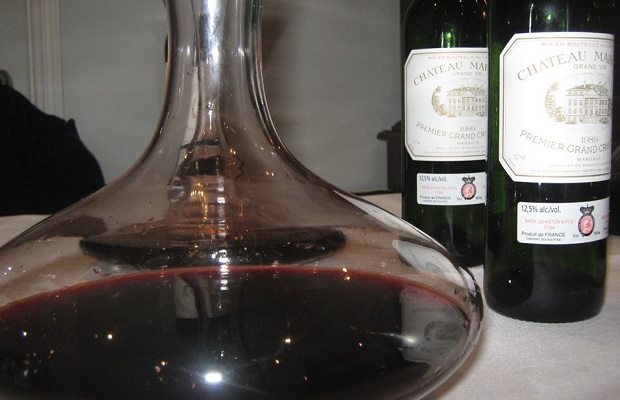
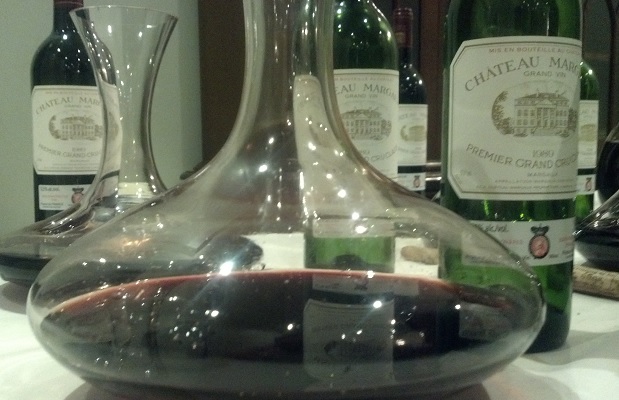
Decanted Château Margaux 1989, The National Club, Toronto, May 1, 2014 PHOTO: Michael Godel

Decanted Château Margaux 1989, The National Club, Toronto, May 1, 2014
PHOTO: Michael Godel

The wines of Château Margaux need no introduction. First Growth Bordeaux. One of the most famous brands in the world. Iconic and beyond mortal means, especially in the greatest vintages; 1953, 1961, 1982, 1989, 1996, 2000, 2009. So why is Paul Pontallier on the road to promotion? Do the wines not automatically sell themselves?

The answer is both yes, and no. Château Margaux annually produces 130,00o bottles of its Grand Vin. The 2009 is listed at nearly $1,800 in Ontario. They will sell through, if not this year, certainly eventually and inclusive of the calculated, incremental cost of inflation. The more pressing incendiary matter is a concern of distributive demand. Chinese and other south Asian markets have spent the better part of the last decade scooping up First Growths by the palette load. Mr. Pontallier clearly understands if you can’t see the forest for the trees, you risk losing touch with how you arrived here in the first place. Château Margaux needs to reconnect with North America.

Paul Pontallier is the Managing Director of Château Margaux. He joined the team of Corinne Mentzelopoulos in 1983. Along with Aurélien Valance, Senior VP Commercial Director, the most distinguished of Margaux houses came to Toronto’s The National Club at the facilitating invitation of wine agent Noble Estates on Thursday May 1, 2014. A 10:00 am start. Château Margaux for breakfast. “Probably the best time to taste wine,” quips Pontallier.

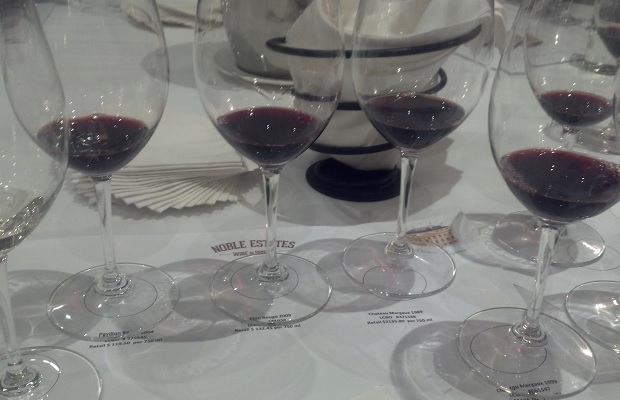
Château Margaux Tasting

Chateau Margaux Tasting

At the estate’s crux is the significance of territory. The wines are “not just a marketing ploy,” asseverates Pontallier, “they are based on the insistence of the terroir.” There exists a significant heterogeneity between the plots. “We try to protect them as much as possible. We can’t expand.” There is a sense of frustration in the director’s voice. “Château Margaux hasn’t changed since the late 17th century.”

Then there is savoir-faire. “Even three or 400 years isn’t a lot of experience. There is only one possibility, one harvest each year, for experimentation. But, the asset, the depth of experience is as important as the terroir.” Does the excellence of top Bordeaux require genius? No, contends Pontallier. He speaks of hard work, respect for history and the constant need to change, not just for its own sake, but to doubt what’s come before and to improve every gesture. Organic, though it won’t ever be noted on the label, is the end result of many years of research and development. “Our tradition in not a closed one. We are open to what science can bring us.”

On change? “How can we pretend that our tastes do not change. Language, accents, words, everything changes.” Though the accusation is of a response to market demand, the Margaux position is one that insists that it is about a natural evolution, not a response to consumer demand. Change is inevitable. “It would risk not reaching excellence. It would write off the wonderful experience we have inherited. We can adapt, we can play, within reason.”

On the 2013 (challenging) vintage from which weather during flowering affected the quantity. A wonderfully dry, hot summer gave way to damp and wet weather at the end of September. Perfect conditions were set up for rot (botrytis) to develop. Margaux rushed to pick five to six days earlier than usual. “In these conditions, the exceptionality of terroir was so important.” The conclusion? “Less complexity, less depth, less quality. In Bordeaux as a whole, the lesser terroirs were affected by the situation.” According to Pontallier the result of the mediocre conditions did not result in mediocre wines because of the technical progress achieved over the last 25-30 years.

Pontallier is a pragmatist, a funny thing to say considering the domain he oversees. “It’s not always the most impressive wines that are the most pleasurable to drink,” he admits. “Burgundy has a wonderful balance.” His thoughts on the primeur system? “It has always been efficient for some, or just a few wines. If you can find wines a few years later on the market at the same price, it doesn’t make sense.” Here are notes on the fives wines poured.

From left: Pavillon Blanc Du Château Margaux 2011, Pavillon Rouge 2004, Pavillon Rouge 2009, Château Margaux 1999, Château Margaux 1989

From left: Pavillon Blanc Du Château Margaux 2011, Pavillon Rouge 2004, Pavillon Rouge 2009, Château Margaux 1999, Château Margaux 1989

Pavillon Blanc Du Château Margaux 2011, Ac Bordeaux, France (374579, $142.40, WineAlign)

Extreme temperatures in June sent signals to convince the grapes to begin ripening in mid July. Though harvest would be the earliest since 1893, vintage imbalance was averted by cooler summer temperatures. A limited production, 100 per cent Sauvignon Blanc with 300 years of experience in its blood. Once known as Vin Blanc de Sauvignon, the Pavillon earned its modern era moniker in 1920. From a single block that was abandoned near the turn of the century because it was sensitive to frost. Re-discovered and re-planted in the 1970’s and 80’s, the plot is a haven for aromatic protection and preservation. Today’s Pavillon is made from only one-third of the estate’s Sauvignon Blanc production, the rest secretly sold off in bulk. The ’11 saw eight months in barrel, 25 per cent new oak. Sparks with intense minerality and creamy corpulence contained within an acidity enclosure. Feigns early advancement though not near ready to burst and bust open, with the sense that terroir will trump variety. A slow release of ripe fruit will be measured in decades. Tremendous concentration, density and depth. Has Sauvignon Blanc ever ingratiated itself with such poise? Will begin to open in two to three years and ripple in waves for 20-25 more.

Pavillon Rouge 2009, Ac Margaux, 2nd Wine Of Château Margaux, Bordeaux, France ($132.45, WineAlign)

From a wine that “used to be a tool,” comments Paul Pontallier to a “second wine” out of an incredible vintage “at least as good, or better than the four previous vintages of the first wine.” Them are fighting words and no sooner are they more truthfully spoken then over a swirling glass of the wine that has improved the most at Château Margaux. The Pavillon Rouge ’09 is indeed the best in modern times, in part due to immaculate selection and because it makes up just one-third of the total red grape production at Margaux. In the 1980’s it was the opposite but with a third wine now pushed to the European and Japanese restaurant market beginning in this vintage, Pavillon is now a grand brand, in a connected and assiduous way as never before. There are 100 lesser ’09 Bordeaux that fail to assimilate the wood and the crush of density, not to mention the tannin and Expressionist brushstroke. Pavillon manages a suppression of the admiral elements, including the scientific ones. The fruit is deeper, riper, with more brooding levels of pectin and anthocyanin. An earthy funk makes a late appearance on a finish of extended length to indicate where this Pavillon will range, forward 25-30 years and back to a 1989 type of history.

Pavillon Rouge 2004, Ac Margaux, 2nd Wine Of Château Margaux, Bordeaux, France ($119.50, WineAlign)

The Pavillon 2004 was and remains a “second wine,” insomuch that it predates the greatness of the modern Pavillon and because it finds itself sandwiched between two magnanimous harvests, 2003 and 2005. “We accept the fatalism of lesser vintages,” admits Mr. Pontallier, “selection is key to success.” The goal is to always make a good wine so it was necessary the Pavillon ’04 set out to benefit from “extreme” berry selection. Spent 18 months in 50 per cent new oak. Persistently young and overwhelmingly perfumed, in violet, tobacco and strawberry so ripe yet still must fight for aromatic airspace with dewy earth. Soft, velvety tannins envelop the Margaux notion of restraint and elegance. The ’04 has found success, despite the conditions, something that could not be said of the Château’s wines made 25-30 years ago. Drinking well now and will continue to do so for five to 10 more years.

Château Margaux 1999

Château Margaux 1999

Château Margaux 1999, Ac Margaux, Bordeaux, France (BCLDB 187799 $1,000.00, WineAlign)

The 1999 Château Margaux is a timeless wine. Tasted alongside the notorious 1989, its inhibitions are forced on display. Though repressed by the diluting effects of late September heavy rain, the 1999 may be subtle and modest, lack any discernible funk, but by no means is it soft. Wondrous aromatically like a hanging garden, with roses everywhere. “This is the perfume of Château Margaux,” notes Paul Pontallier. A difficult wine to describe. Its complexity, warmth and perfumed character define Margaux. Not as dense as the ’89, from grapes that benefitted from maturation conditions, from perfectly ripe if slightly diluted fruit. The proportions and shape (12.5 per cent alcohol by volume) are perfect and exacting but on a smaller scale. Smooth and resolved at a young 15 year-old, teenage age. The tenuous tranquility can be a point of deception. Beneath the lace there is body and hidden depth to give it 15 to 25 more years of growth. “Fall fall fall fall, into the walls. Jump jump out of time.” Though not the beast that is the ’89, this ’99 is a suffused bottle of remarkable concentration, of luxe, calme et volupté. A wine to help cure what ails.

Chateau Margaux 1989

Château Margaux 1989

Château Margaux 1989, Ac Bordeaux, France (176057, $1,645.00, WineAlign)

The 1989 Château Margaux wears the response to a mondo Bordeaux axiom on its sleeve. Are First Growth wines made for people who want darts of instant pleasure?” Twenty years earlier and now like the 2009, here is a quintessential and exemplary vintage, from day one of bud break to the last day of harvest. Its appraisal as anything but incredible is to assassinate it as if it were the Franz Ferdinand of Bordeaux. The examination 25 years later sees a mellow funk meet a peerless and sublime perfume. A wine cast in utmost density, complexity and length. It noses strength, warmth verging on heat but only for a fleeting moment, to gain attention. The iconic wine has reached the first major peak, up a ways from base camp. In this second phase of young adulthood it looks with conceit to the top of the mountain, seeing 25 to 50 more years on the climb. Mr. Pontallier regrets he won’t be around to taste this wine at full maturity. Moi aussi. The fruit lingers in its full, original state, from the moment it passes lips and for minutes onward. Violets trump roses. Château Margaux 1989 is from a vintage that offers the blessing of ethereal balance. Hear her sing, “Ich heisse Superfantastisch!”

Good to go!

Passover that big glass of red

Barque Smokehouse Miami Ribs PHOTO: Kevin Hewitt and Jill Chen (http://www.freestylefarm.ca/)

Barque Smokehouse Miami Ribs
PHOTO: Kevin Hewitt and Jill Chen (http://www.freestylefarm.ca/)

The Torah says, “Guard the month of the spring, and make [then] the Passover offering.” Meaning, Jews need to ensure that Passover is celebrated in the spring. In Canada that proclamation was in danger. Had Passover fallen in March, 2014 may just have seen the coming of the apocalypse.

An understanding of the rules and laws that govern wine on Passover is on a need to know basis. There are really just three key variants of information essential to purchasing and consuming on Pesach. This applies to Jews and non-Jews alike.

Number one. Passover wine is specific to a Jew’s level of Kosher. From Reform, to Conservative, to Orthodox, all Jews have different variances of belief. A Reform Jew will likely drink any wine on Passover and then again, may not. But, he or she will almost certainly not require the bottle to be Mevushal. A Conservative may only drink Mevushal but in more cases than not, Kosher is good enough. An Orthodox Jew goes it only one way, or the highway. Strictly Mevushal KFP, do not pass go, do not collect Afikoman (the broken Matzah) money.

I covered the gory and bitter (herb) details in last year’s Passover wine column. “All wines labelled “Kosher for Passover” are kosher, but not all kosher wines are kosher for Passover.”

Related – New wave under $20 wines go kosher for Passover

In 2012 I spent some time on the limiting, frustrating and constipating food component of the ancient Jewish holiday. “Try cooking with and having to eat nothing but Matzo, eggs and oil for eight days.”

Related – KP Duty – Kosher For Passover Wines

Kosher wines migrate bigger and bigger with each passing Lunisolar calendar year and their not so arbitrary inclusion or not of an intercalary month (shanah meuberet – Adar I) added in the 3rd, 6th, 8th, 11th, 14th, 17th and 19th years of the 19 year lunar cycle. Israel continues to race towards big, lush, often high alcohol reds. This trend could be seen as a masking or a compensating/mitigating strategy to oppose the rigors and past failings of making Kosher wine. It can also be viewed as a stylistic choice, to mirror what has taken place in Bordeaux, in California and in Australia for the past 20 years.

In Canada, Kosher wine selections are extremely limited. There are smaller, garagiste producers in Israel, especially in the hills surrounding Jerusalem, that are making fresher, less oaked reds, but good luck seeing them on shelves on this side of the ponds. It was refreshing, however, to find the Kosher contingent on the VINTAGES March 1st release to be Israel-focused. In past years the group was dominated by Australia, Italy, France and California. Israel is making the best Kosher wines on the planet. Go figure.

Barque Events offers a full Passover catering menu. View the selections. Here are six big reds and a token white tasted and recommended for the Passover table.

Golan Cabernet Sauvignon 2007, Galilee

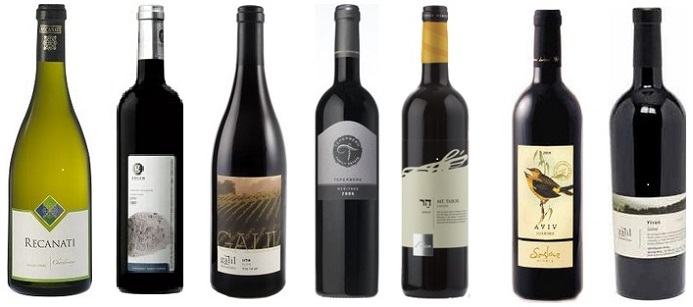
From left to right: Recanati Chardonnay 2012, Kosher For Passover, Non Mevushal, Upper Galilee, Golan Cabernet Sauvignon 2011, Galilee, Galil Mountain Alon 2010, Kosher For Passover, Upper Galilee, Teperberg Family Estate Meritage 2011, Kosher For Passover, Elah Valley, Tabor Earth Series Shiraz 2011, Kosher For Passover, Upper Galilee, Saslove Aviv Marriage 2011, Kosher For Passover, Upper Galilee, Galil Mountain Yiron Kp 2009, Upper Galilee

Recanati Chardonnay 2012, Kosher For Passover, Non Mevushal, Upper Galilee, Israel (128322, $19.95, WineAlign)

Rich, unctuous and viscous. Soft and discreet, more like a modern, New World sketch of a Grenache Rhône-blend than a warm climate Chardonnay. There is little or no affront to this clement and polite Israeli of scant tension or acidity.   Tasted February 2014

Golan Cabernet Sauvignon 2011, Kosher For Passover, Galilee, Israel (Vintage Wines – 611152, $26.95, WineAlign)

From winemaker Victor Schoenfeld, the stylish “G” will answer the pecuniary call for just about any Passover feast. Well-rounded, worldly, soft-spoken and generous of fruit. A 100 per cent Cabernet that knows its way around a blackberry, a ripe plum, a bouquet of violets and a chamber of faint tobacco smoke. Lush but not heavy, the only detractor is a slight caramel, oxidative note that indicates near-term consumption, which is basically a given anyway. The finish hints at a lava flow in the direction of the fourth cup, but because this G is so easy to drink, it should be enjoyed while still at the table.  Tasted April 2014

Galil Mountain Alon 2010, Kosher For Passover, Upper Galilee, Israel (354522, $20.95, WineAlign)

Alon makes use of Syrah to create its party mix, to work with 41 per cent Cabernet Sauvignon, 6 Petit Verdot and 6 Cabernet Franc. Another monster red blend, coming in hot and huge at 15.5 per cent alcohol. For the price, what more can you ask for? Passover may be a four glass exercise but two through four are top ups so it’s really a two glass night. This wine will not ruin your 2nd Seder morning wake-up after consuming a maximum two glasses at the 1st Seder. Rich, mocha berry driven shake, spicy and with non-invasive meaty aromas. Hot, sweet and bothered.  Tasted February 2014  @azureau 

Teperberg Family Estate Meritage 2011, Kosher For Passover, Elah Valley, Israel (157016, $23.95, WineAlign)

Proper Bordeaux aromatics, of tobacco, tea, black currant and grilled meat. Nothing gritty going on here, all four varieties playing a role and hanging together. With good tannins, sweet sinuous and slinky, this is a very versatile Passover red that will also benefit from a year or two in bottle. Better than average value.  Tasted February 2014

Tabor Earth Series Shiraz 2011, Kosher For Passover, Upper Galilee, Israel (356709, $23.95, WineAlign)

In an unusual turn of the earth, this smells like someone dropped a piece of Emmental to melt in the heat upon the must of this Shiraz. It does swirl away and a solid core of red berry remains, though for just a spell. Simple, semi-structured and proper, without hard edges or tannins, but falls quickly. Will work well with many Passover flavours but drink it up in 2014.  Tasted February 2014

Saslove Aviv Marriage 2011, Kosher For Passover, Upper Galilee, Israel (354514, $29.95, WineAlign)

This Aviv consolidates Bordeaux, Piedmont and the Rhône into one complex and perplexing blend within the confines of a single bottle. The Northern Rhône meatiness of the Shiraz stands out firm and at attention, essentially suppressing the Meritage marriage intent and thus renders the wine monochromatic. Still its lively and spicy, ready for the bigger and more pungent foods on the Passover table. The Shiraz might say, “this is a crisis I knew had to come, destroying the balance I’d kept.” The other varieties, meaning Merlot, Cabernet Sauvignon, Petit Verdot, Cabernet Franc and Nebbiolo are the silent partners in this polygamy of a wine marriage. They play their parts despite the joy division.  Tasted February 2014

Galil Mountain Yiron Kp 2009, Upper Galilee, Israel (95075, $34.95, WineAlign)

The Yiron is a beast but because I am so pleased to see the Kosher feature composed of all Israeli wines (as opposed to Australia, France, Italy, Argentina and Chile) I am focused and ready to work with anything on this table. Despite the 15.5 per cent alcohol and plethora of oak treatment, this blend shines in rich, meaty and anise-spiked flavours. The mix of Cabernet Sauvignon (60 per cent), Merlot (35) and Petit Verdot (5) may seem monstrous but it is not stupidly expensive now and in relation to what it cost in previous vintages ($50). Though certainly not a wine of elegance, grace and restraint, the Yiron pulls no punches and remains true to its warm climate conditions. It is what it is.  Tasted February 2014

Good to go!

https://twitter.com/mgodello

Mr. Pearson’s Opus

David Pearson has been the CEO of Opus One since February of 2004. His job is both simple at heart and complex of mind. Two legendary wine men, California’s Robert Mondavi and Bordeaux’s Baron Philippe de Rothschild combined (in 1978) to create one of Napa Valley’s most iconic wines. “At its core, Opus One is an idea,” relates Mr. Pearson. The wine is a blend of Mondavi and Mouton, a reflection of the character of two families.

Pearson is responsible for all production, marketing, sales and administrative activities at Opus One. He is the caretaker of a single bottle of wine. Can there be another brand, anywhere in the world (not called a First Growth) that carries such weight or specificity of concentration? The job requires serious moxie and intuition. The soft-spoken David Pearson is Opus One. That much is clear. Thirty-five years later “we’re just at the beginning of the process,” explains Pearson, “In evolution, of developing this great marriage.” For the uninitiated, Opus One is a Bordeaux table blend of the traditional five varieties, Cabernet Sauvignon, Cabernet Franc, Merlot, Petit Verdot and Malbec, made in a “California style.”

Opus One Vineyard Photo: http://en.opusonewinery.com/

Opus One Vineyard
Photo: http://en.opusonewinery.com/

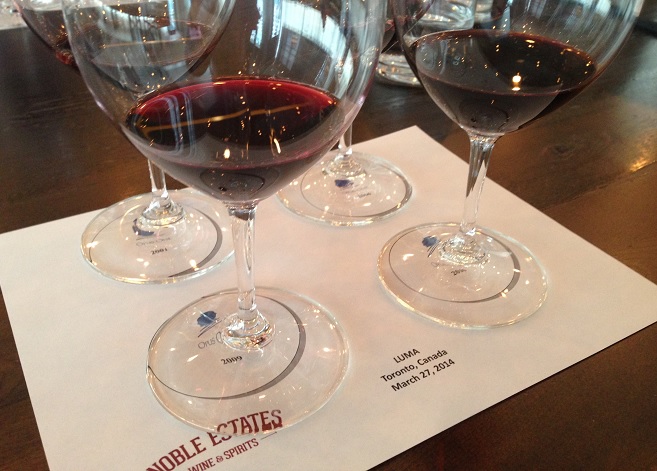
It started as a pure concept, with no actual vineyard, in the Baron’s bedroom back in the 1970’s. “The wine is a child that resembles its parents,” notes Pearson. He sees its growth has now reached a maturity stage for individual vintages to be judged as either that child or as an adult. Pearson, Craig de Blois and Mark Coster of Noble Estates brought four vintages of Opus One to Luma Restaurant on March 27th. Pearson asked that the group of sommeliers and wine scribes decide which of these wines have left their parent’s home. The exercise seemed simple enough, especially with a level of clarity made readily available by the fact that all four vintages poured were fostered and nurtured by current winemaker Michael Silacci. Silacci joined Opus One in March 2001 as director of viticulture and enology and became winemaker in January of 2004. After tasting a stunning set from 2010, 2009, 2006 and 2001, the solicited clarity was revealed.

All natural acidity, an ever-earlier picking stratagem and less frequent racking define the Opus direction. The Opus team considers their winemaking “minimalist” and though in wine-speak that is certainly a relative term, as a group the wines do present with a meritorious level of fruit purity. That can’t be said for many Napa Valley brands that seek more hedonism than is often necessary. Saying that the price of a bottle is inflated by a historical elevage of personality and fashion branding neither does Opus One an injustice nor does it relegate the commenter as a castaway to a deserted island. Opus One is a brilliant and gorgeous red. It’s also very expensive.

Opus One Tasting at Luma Restaurant Photo: Eric Vellend

Opus One Tasting at Luma Restaurant
Photo: Eric Vellend

In September of 2012 I had the pleasure of tasting the Opus One 1989. My tasting note:

Opus One 1989 Unbelievable. A lesson in Napa iconoclasm. What every great 22-year old New World wine should strive to become. In harmony with every part of itself; fruit, tannin, acidity. Beauty within and without. Dark, sultry, full of all things berry and oak. The full gamut of red and black fruit, vanilla, mocha and chocolate. Like walking into your childhood and being handed the keys to Charlie’s factory. Another M gem.

Notes from the March 2014 tasting: Opus One, Napa Valley (26310, $399.95 – 2009 vintage)

2010 (WineAlign) The blend is Cabernet Sauvignon (84 per cent), Cabernet Franc (5.5), Merlot (5.5), Petit Verdot (4) and Malbec (1). Fiercely approachable, a rope of gemstones falling effortlessly into the palm of a velvet glove. Imminently modern, reeking of toothsome Napa and working without Old World parental support. Dense texture, high acidity and exceptional length. Layers upon layers of fruit powered by audacity and prowess. Even this formidable ’10 will struggle to find immunity from the weird vintage. It’s ripe, anything but green and manages an admirable level of elegance. Lives for today. Will it age like its older siblings? Yes, but not as long.

2009 (WineAlign) The blend is Cabernet Sauvignon (81 per cent), Cabernet Franc (9), Petit Verdot (6), Merlot (3) and Malbec (1). The immediate and obvious cerebration is all about its incredible sense of balance. A garden of perfume, the most Bordeaux-bent of the tasting and a mineral reverberation carried on through a seemingly never-ending finish. Blessed by a long and sweet chain of tannin. This ’09 has that Mediterranean brush stroke of garrigue and black olive smothered by a smear of sun-drenched California fruit. Another challenging vintage where picking time was so crucial. That September 21st to October 20th window must have been the right one.

Opus One Bottle

2006 (WineAlign) The blend is Cabernet Sauvignon (77 per cent), Merlot (12), Cabernet Franc (5), Petit Verdot (3) and Malbec (3). A kinaesthesia with age is sent forward by the tertiary complexity of its make-up. Dusty, still marked by acidity, along with a note of toffee and a raisining of the fruit. Savoury too, in gentle middle-age, it gives away strange sensations and aromas that suggest a potpourri of powders; rose, bacon, espresso and Filé. Full of grace and contentment. A cool year that saw no end-of-year heat spike, this is a most unique Opus one.

2001 (WineAlign) The blend is Cabernet Sauvignon (87 per cent), Merlot (6), Malbec (3), Cabernet Franc (2) and Petit Verdot (2). The ’01 conjures up instant funk and “the beat is really soothing.” The Bretty streak stretches, dissipates and is cleansed as the wine aerates, but the groove lingers on. An Opus that clearly states “I got my mind made up.” Of the vineyard and for the vineyard, with a note of wet forest. The Bar Mitzvah boy is acting as one would expect, as an agent to a coming of age law, like a leather satchel filled with dehydrating, concentrated fruit. Swirl some more and that jerky is then drizzled by a Mickey of berry liqueur and dusted by 13 year-old dirt. A vintage defined by 14 per cent alcohol, still vital, powerful and neo-gritty. Forty-five minutes in, the lingering funk is fading but the thought, the chalk and the grain sends this Opus One back across the Atlantic, to the world of Mouton.

Good to go!

2013: It was the best of wines

Red wines

15 wine releases $30 and over
Photo: Steve Cukrov/Fotolia.com

as seen on canada.com

The long and wine-ding road of 2013 began with a personal plea for it to be the year of drinking better wine. I wrote about iconic wines at affordable prices and a personal hermeneutic public service announcement, a wine prescription for cold and flu. January rounded out with good reds, twenty-somethings, Robbie Burns, weekday wines and a wine analogy Super Bowl prediction gone bad.

I played pond hockey, chatted about wine and said no to ambient, rich pinks because you gotta be cruel to be wine for Valentine’s.  Real wines, more hockey, Oscars, French grapes and a Somewhereness sea of grape-driven humanity occupied my winter thoughts, along with California, The Beamsville Bench, Cuvée 2013 and the zeitgeist of my virgin expert’s tasting with music as its guide. Cool grapes marched on with wines for the Ides, St. Patrick, Passover, Momofuku in Toronto and New York City.

Spring brought 100-km wine, value reds, sunshine, Masters’ colours, a Stanley Cup for house league hockey, Ontario wine events, Peter Franus, wild leeks and Mother’s Day. There was a ‘London Calling’ for Canadian wine, Go Gamay Go, an averted LCBO strike and the Elsie Awards. I delved into the schadenfreude matters of tasting notes, the humanity in real value wine and the Venn Diagrams in a paradox of accents.

The weather warmed, I cooked for 1,300 Ultimate Frisbee players, contemplated the Rolling Stones and struck Semillon in a showcase showdown. Father’s Day, Riesling and the Canada Day long weekend preceded excursions to Fenway Park and the eleemosynary earth in the North Fork of Long Island. This followed by a search for the wine pulse of the Finger Lakes and the indelible stamp of British Columbia‘s Okanagan Valley.

The International Cool Climate Chardonnay conference took Niagara by storm (literally), leading into the August long weekend. I wrote on Sauvignon Blanc, chill red wine, The Great Canadian Wine Challenge, Free My Grapes and the plea for wine to flow across Canadian provinces.

September came, as did Low alcohol wine for the High Holidays. Ontario wines shone on, especially those from Stratus, along with Spanish and Italian reds. I touted the vinous acumen of Canadian wines for Thanksgiving, the wines of Chile, the best from Ontario and presided as guest judge at the WineAlign World Wine Awards of Canada 2013. October ended with Champagne and reasons to pour a glass of wine on Halloween.

Napa Valley came to town, there were private tastings with Ontario winemakers and I made notes on Canadian made apolitical wines. There were gems, Friday bites, Beaujolais Nouveau and more from Italy. At the end of November I wondered if the wine sign of the apocalypse was upon us. Sparkling wines and the unavoidable Christmas picks have brought us to here.

Edward Steinberg once asked Angelo Gaja, “how do you make the best wine?” to which Gaja replied, “with the best grapes.” In tasting notes I extrapolate from that base and simple notion, with an intent to convey the salient facts of the grape’s life, to give life to the agriculture, even if the first two syllables are removed in the process.

Tasting notes can be clerihews, pithy poems that begin with a winemaker’s name, become the reviewer’s purport and more often than not, are penned in four lines. Word play leading the mind to consider wine as anagram, palindrome and lipogram. Writing a tasting note not as a vinous jape, but rather an artfully woven acrostic.

Reviews align like Burma Shave signs on North American highways, spaced one hundred feet apart, connected by their language. Phrases are turned on their heads, causing the notes to be peculiarly unsuccessful in making any decided impact upon the consumer college. So be it.

The musical and other (sometimes) obscure references bring about metaphasis to the tasting notes, an habitual transposition of sounds, connecting smell, flavour and structure to groove, pitch and aesthetic. The best wines produce the greatest emotion and excess of language. Here is a look back at the top 15-$30 and over releases tasted in 2013 and the tasting notes that brought them to light.

15 wine releases $30 and over

From left: RAINOLDI CRESPINO VALTELLINA SUPERIORE 2006, TAWSE CABERNET FRANC LAUNDRY VINEYARD 2010, CHARLES BAKER WINES RIESLING 'PICONE VINEYARD' 2011, PETER FRANUS RED WINE 2008, and FEUDI DI SAN GREGORIO TAURASI 2007

From left: RAINOLDI CRESPINO VALTELLINA SUPERIORE 2006, TAWSE CABERNET FRANC LAUNDRY VINEYARD 2010, CHARLES BAKER WINES RIESLING ‘PICONE VINEYARD’ 2011, PETER FRANUS RED WINE 2008, and FEUDI DI SAN GREGORIO TAURASI 2007

RAINOLDI CRESPINO VALTELLINA SUPERIORE 2006, Lombardy, Italy (316331, $31.95, WineAlign)

Composed of 100 per cent Chiavennasca (Nebbiolo) from Lombardy. Grace, flowing ruby robe, striking. Lit by cherries bathing in a silica and gravel mineral bath, tightly wound in a swirling pensieve of real vinous thought. Elevated by cool, altitudinous breezes and gothic, statuesque like a Mantegazza. Northern, alpine and proud.  93  Tasted April 2013  @VinumValtellina  From: Top ten wines for May Day

TAWSE CABERNET FRANC LAUNDRY VINEYARD 2010, Lincoln Lakeshore, Niagara Peninsula, Ontario (130997, $31.95, WineAlign)

Assures us of several things. First, 2010 was a gift for making idiot-proof Cab Franc in Niagara, Second, the Lincoln Lakeshore is one of three obvious and essential CF locales in Niagara. Third and most important, properly adjudicated new oak can elevate CF to the upper reaches of the cool-climate troposphere. While not as masculine or bovine like brother Van Bers, Laundry’s got black cherry, tar, coal, herbs and a peaceful, grilling feeling. Essential CF from winemaker Paul Pender.  92  Tasted July 2013  @Tawse_Winery  @Paul_Pender  From: Alternative wines for the August long weekend

CHARLES BAKER WINES RIESLING ‘PICONE VINEYARD’ 2011, Vinemount Ridge, Niagara Peninsula, Ontario (241182, $35.20, WineAlign)

Does not so much pick up where cracking ’09 left off (with no offence meant to the soothing and tuneful ’10) but rather re-writes the Baker book. From the almost famous windswept vineyard atop the Vinemount Ridge, this Picone, from older Riesling plantings is crazy lively. That ’10 is now imbued with rich, oily glück. The ’11 will realize such a future, but much further along and in combination with its inborn tension. Right up there with Baker’s “perfect vintage” 2006.  93  Tasted October 2013  @cbriesling  From: Top wines shine at Taste Ontario 2013

PETER FRANUS RED WINE 2008, Red Hills Lake County Red, California ($39.95)

Composed of Syrah (85 per cent), Grenache (10) and Mourvèdre (5) comes from Fore Family Vineyards fruit on the top of 3000 foot Cobb Mountain. A fiery paradox of climate met by altitude works a strange magic on the grapes. It’s no mistral but rather some sort of wine weather occult. This SGM is highly influenced by a very tempest of dramatic temperature changes, from solar radiation to cool, tempering Pacific breezes and at great heights. Exhibits the hills’ red earth, in colour, in fragrance and in rich berry flavour. I’m grateful for this SGM blend, cool and hot at the same time, “almost ablaze still you don’t feel the heat.”  93  Tasted April 2013  @ProfileWineGrp  From: The Wine Diaries: Peter Franus

FEUDI DI SAN GREGORIO TAURASI 2007, Campania, Italy ($39.95)

Lush and gorgeous. The most immediately gratifying young Aglianico yet such an infant. Earthbound red berries, perfectly ripe plums, biting tannin and off the charts acidity. Epochal verve of Middle Pleistocene volcanic rocksSouthern Italian equivalent to Southern Rhône reds, offering tremendous value under $50 where Bordeaux and Tuscany pedantically fall short. Should join the ranks of recent great vintages, ’01 and ’04.  93  Tasted January 2013  @FeudiDSGregorio  @StemWineGroup  From: Iconic wines, affordable prices

From left: CHÂTEAU DES CHARMES EQUULEUS 2010, BACHELDER CHARDONNAY WISMER VINEYARD 2010, CLOSA BATLLET GRATALLOPS 2007, GIROLAMO RUSSO SAN LORENZO 2008, and PALLADINO BAROLO PARAFADA 2008

From left: CHÂTEAU DES CHARMES EQUULEUS 2010, BACHELDER CHARDONNAY WISMER VINEYARD 2010, CLOSA BATLLET GRATALLOPS 2007, GIROLAMO RUSSO SAN LORENZO 2008, and PALLADINO BAROLO PARAFADA 2008

CHÂTEAU DES CHARMES EQUULEUS 2010, St. David’s Bench, Niagara Peninsula, Ontario (319525, $40, SAQ,  11156334, $41.25, WineAlign)

From the Paul Bosc Estate Vineyard is a classically styled blend of 50 per cent Cabernet Sauvignon, 25 per cent Cabernet Franc and 25 per cent Merlot, only made in exceptional years. Apropos choice from 25-year old vines (in 2010) from the warmer St. David’s Bench for Cuvée’s 25th show.  Poised, balanced and regal yet this mare is temporarily a head-shy, sensitive equine red. Will trot out furlongs of tobacco and meaty aromas from now and through maturity in five plus years. A saddle of round, red fruit will age gracefully.  92  Tasted March 2013  @MBosc  From: Top juice flows at Cuvée 25th anniversary

BACHELDER CHARDONNAY WISMER VINEYARD 2010, Twenty Mile Bench, Niagara Peninsula, Ontario (345819, $44.95, WineAlign)

So sumptuous, presumptuous and precocious. Ahead of the curve, effortless and full of 20 mile mineral length. The ripe green apple never quits. My earlier note from Top juice flows at Cuvée 25th anniversary from the Twenty Mile (Vineland) Bench is the most righteous, understated charred butterscotch remoulade sauce of dreams. Richly textured and built upon a sneaky, slow and stretched breath of wild yeasts. A creeper, gatherer and traveler of both knowledge and persistence. The journey with Thomas Bachelder as related by partner Mary Delaney, from out of Quebec, by way of Ponzi and Lemelson in Oregon and to Niagara is the stuff of dreams. Tasted twice same night and hypnotized both times.  94  Tasted July 2013  @Bachelder_wines  From: Hot weekend wines and cool Chardonnay

CLOSA BATLLET GRATALLOPS 2007, Priorat, Spain (156398, $49.95, WineAlign)

Stupid gorgeous Priorat and though inaccessible to most of us mere mortals, if you were to shell out $50 in November for one wine, this has to be considered. A blend of 65 per cent Cariñena, 22 per cent Garnacha, with a smattering of Syrah and Merlot. Pure purple pitch, an early summer Catalonian garden in bloom, air warm, breeze light. Wow. Blows high priced Napa and over the top Châteauneuf-du-Pape out of the water. The oak is so beautifully integrated.  94  Tasted October 2013  From: Nine big November best buy wines

GIROLAMO RUSSO SAN LORENZO 2008, Sicily, Italy ($59.95)

From agronomist and oenologist Giuseppe Russo lives a Sicilian dream. Composed of Etna’s indigenous Nerello Mascalese with a small percentage of Nerello Cappuccio, this red is a veritable lava flow of molten magma, volcanic igneous solder and opulent Scoria. Pure, unchained fruit, no disguise, striking.  94  Tasted February 2013  @Oenophilia1  From: Real wines, whisky and boys night out

PALLADINO BAROLO PARAFADA 2008, Piedmont, Italy (280412, $68.00, WineAlign)

This just has the look, the look of love. “A look that time can’t erase.” Nebbiolo you can see right through, this impossible light, this impossible life. Tea, tar and roses. A mineral spring, iron-earth field, where the game runs wild. You can relate to this Barolo, love it, relish it now but it will give pleasure for years. Not necessarily 25 but certainly 10-15. “Well, it takes my breath away.” Great vineyard.  94  Tasted October 2013  From: Holiday wine gems hit November shelves

From left: M. CHAPOUTIER LES BÉCASSES CÔTE-RÔTIE 2010, MOËT & CHANDON GRAND VINTAGE BRUT CHAMPAGNE 2004, DOMAINE LONG-DEPAQUIT MOUTONNE GRAND CRU CHABLIS 2011, CHASSAGNE MONTRACHET VIDE BOURSE 1ER CRU 2010, and MASI MAZZANO AMARONE DELLA VALPOLICELLA CLASSICO 2006

From left: M. CHAPOUTIER LES BÉCASSES CÔTE-RÔTIE 2010, MOËT & CHANDON GRAND VINTAGE BRUT CHAMPAGNE 2004, DOMAINE LONG-DEPAQUIT MOUTONNE GRAND CRU CHABLIS 2011, CHASSAGNE MONTRACHET VIDE BOURSE 1ER CRU 2010, and MASI MAZZANO AMARONE DELLA VALPOLICELLA CLASSICO 2006

M. CHAPOUTIER LES BÉCASSES CÔTE-RÔTIE 2010, Ac Northern Rhône, France (280420, $82.95, WineAlign)

Strictly beautiful Syrah. The offspring of the Côte Rôtie’s two necessary points of view. First, the schist, silt and shingle of the Brune. Second, the silica and limestone of the Blonde. In combination they produce an iron-rust wine of a ferruginous nature, in colour and in aroma. Seeping, exotic Rooibos tea, Provençal tapenade and smouldering flowers send smoke signals clear as day. Smells so rich though it’s full of grace and bathed in ultra-elegance.  94  Tasted October 25, 2013  From: Holiday wine gems hit November shelves

MOËT & CHANDON GRAND VINTAGE BRUT CHAMPAGNE 2004, Ac Champagne, France (69773, $83.95, WineAlign)

May not be the esteemed house and vintage of the century’s love-child but I can’t think of a single reason not to spend a pittance more on a vintage-dated Champagne like this Moët in lieu of a sea of NV alternatives. Granted it’s wound maddeningly tight, spewing still young venom, crazed by pear and citrus concentrate but…trust must be placed in its charms. This Moët is quite refined. Apples tempered in acidity, beloved for its building blocks, it’s really good Champagne.  94  Tasted November 2013  @MoetUSA  From: Ten sparkling wines to life

DOMAINE LONG-DEPAQUIT MOUTONNE GRAND CRU CHABLIS 2011, Monopole, Ac, Burgundy, France (46706, $89.95, WineAlign)

From Mathieu Mangenot’s ”Grand Cru” plots, the Monopole holdings in the steep amphitheatre slope of Vaudésir and the gentle rise of Les Preuses. The Two Sides of Monsieur Valentine. He spoons piles of flint and chunks of rock. He explains the tin pan elevation of Chablis and Chardonnay squeezed from the bedrock, capturing every last drop of geology, refuse of stars and fossils of the ancient animals. Stoic, metazoic, super Chablis, with tremendous length. How can this Chablis have so much fruit but no apple, no lemon, no pith. “You think things are straight but they’re not what they seem.” Candy for the soul. Novacaine in liquid form. Amazing.  94  Tasted November 2013  From: Twelve days of wine for Christmas

CHASSAGNE MONTRACHET VIDE BOURSE 1ER CRU 2010, Ac Burgundy, France (344887, $101.95, Quebec $85.00, WineAlign)

A mild sylvan reductive stink is neither abstruse nor in fruit obstruction. What we have here is a brass tax in Chardonnay histrionics. Yellow and green tree fruit, wicked wild yeast game and just about as much ruminating, mineral tang as one might desire. Something wicked this way woos my wistful longing for quality white Burgundy. I could imagine drinking this well into my pension days.  95  Tasted November 2013  From: Twelve days of wine for Christmas

MASI MAZZANO AMARONE DELLA VALPOLICELLA CLASSICO 2006, Doc, Veneto, Italy (215764, $99.95, WineAlign)

If a wine clocking in at 16 per cent alcohol by volume can be considered elegant and restrained and if that’s even possible, the Mazzano is the one. Though there is nothing outright prune, dried raisin or fig paste about it, this single-vineyard Amarone is enormously tannic. Any attempt at cracking its hard shell inside of 15-20 years should be thought of as counter-productive. Smells like the aforementioned fruit just picked at maximum ripeness so there is nothing cooked, roasted or overdone here. You simply have to wait for tertiary complexity to see what it will become. I sense great. Near-perfect vintage.  96  Tasted October 2013  From: Holiday wine gems hit November shelves

Good to go!

Holiday wine gems hit November shelves

I\'ve made this list, checked it twice and formulated plenteous if euphuistic tasting notes on 10 meaningful and expensive wines to look for this holiday season

I’ve made this list, checked it twice and formulated plenteous if euphuistic tasting notes on 10 meaningful and expensive wines to look for this holiday season
Photo: ElenaR/Fotolia.com

as seen on canada.com

I will gladly be first in line to bust the myth that says wine must be expensive to be good.

Much time and energy is spent seeking out wines that over-deliver, especially those well-made, honest and outright delicious ferments that clock in at under $20. The caveat here is the time of year when the exception to that value rule is personified by the need for luxuriance, surfeit and speed. The December holidays are embroidered of an entirely different import. Folks just seem to want to join the appliqué party, to take advantage of the generosity of the season, to drink the good stuff. Champagne, certainly, but also big wines, the kind that stick to your teeth for a week.

Related – Wine Chat: Top 3 Wine Myths and more from the November 23rd, 2013 VINTAGES release

Gift giving is the other rampant and obvious part of December. No one wants to look cheap, ungrateful and thoughtless when gifting a bottle to an employee, a friend or a loved one. So I’ve made this list, checked it twice and formulated plenteous if euphuistic tasting notes on 10 meaningful and expensive wines to look for this coming weekend. Be proactive, track down one of these wine gems and prepare to channel your inner St. Nick, or if you like, your Ded Moroz, La Befana, Tomte, Jolasveinar or Pere Noel.

From left: TALBOTT LOGAN SLEEPY HOLLOW VINEYARD CHARDONNAY 2011, URBINA GRAN RESERVA ESCECIAL 1994, SELLA & MOSCA MARCHESI DI VILLAMARINA ALGEHRO 2008, and PALLADINO BAROLO PARAFADA 2008

From left: TALBOTT LOGAN SLEEPY HOLLOW VINEYARD CHARDONNAY 2011, URBINA GRAN RESERVA ESCECIAL 1994, SELLA & MOSCA MARCHESI DI VILLAMARINA ALGEHRO 2008, and PALLADINO BAROLO PARAFADA 2008

TALBOTT LOGAN SLEEPY HOLLOW VINEYARD CHARDONNAY 2011, SANTA LUCIA HIGHLANDS, MONTEREY COUNTY, CALIFORNIA, USA (716290, $27.95)

Slow glazed, golden cream velvety nose, of a demurred beauty’s proportion, arced yet elongated. An island of Chardonnay enchantment, where the wood is soft, “there is no suffering” and sweet lemon sherbet flows. Frank yet curtailed extraction, good acidity and a relaxed Surfer Rosa tension. That soft buttery oak only comes through on the finish, which drifts and lasts.  91  Tasted Oct. 25, 2013

URBINA GRAN RESERVA ESPECIAL 1994, DOC RIOJA, SPAIN (355743, $46.95)

Will not be your wine of the year but you absolutely must give it a try. Holding strong 19 years on, surely something to hang a hat on. There is some must, but it’s as much attributed to a classic, 90′s Tempranillo temperamental style as it is to the barrel and the bottle. Some prune and lingering alcohol detracts from the now waning fruit. That Rioja character, once obvious, now harder to recognize, maintains its weight and import. Some grain and chalk lingers due to oak that has not fully worked its way in and out. Wonderful study if not pure or gorgeous and alone.  90  Tasted Oct. 25, 2013

SELLA & MOSCA MARCHESI DI VILLAMARINA ALGEHRO 2008, DOC ALGHERO, SARDINIA, ITALY (954081, $46.95)

A Cabernet Sauvignon with an undeniably high level of unconventionally modern and stylish set of aromas. A very specific Italian smell mostly absent today, pushing the question “has it gone for good, or is it coming back around?” Acetate, wet hay and dried brick funky monkey that could endanger and render it non-negotiable, but it manages to walk the safer side of a fine line. Like great old school Brunello, herbaceous, tarred and feathered, stuck with thorns of roses and a waft of vanilla cherry coke, cough drop alcohol. Shouts Sardinian somewhereness in a way that is just so appealing. The iron, the sanguine, the Italian, the fireside, it’s all there. Sure it’s nearly balsamic but it will likely stay exactly this way for years.  93  Tasted October 25, 2013

PALLADINO BAROLO PARAFADA 2008, PIEDMONT, ITALY (280412, $68.00)

This just has the look, the look of love. “A look that time can’t erase.” Nebbiolo you can see right through, this impossible light, this impossible life. Tea, tar and roses. A mineral spring, iron-earth field, where the game runs wild. You can relate to this Barolo, love it, relish it now but it will give pleasure for years. Not necessarily 25 but certainly 10-15. “Well, it takes my breath away.” Great vineyard.  94  Tasted October 25, 2013

M. CHAPOUTIER LES BÉCASSES CÔTE-RÔTIE 2010, AC, NORTHERN RHÔNE, FRANCE (280420, $82.95)

Strictly beautiful Syrah. The offspring of the Côte Rôtie’s two necessary points of view. First, the schist, silt and shingle of the Brune. Second, the silica and limestone of the Blonde. In combination they produce an iron-rust wine of a ferruginous nature, in colour and in aroma. Seeping, exotic Rooibos tea, Provençal tapenade and smouldering flowers send smoke signals clear as day. Smells so rich though it’s full of grace and bathed in ultra-elegance.  94  Tasted October 25, 2013

From left: CATENA ZAPATA NICASIA VINEYARD MALBEC 2009, CHÂTEAU DE BEAUCASTEL CHÂTEAUNEUF-DU-PAPE 2011, MASI MAZZANO AMARONE DELLA VALPOLICELLA CLASSICO 2006, MASI CAMPOLONGO DI TORBE AMARONE DELLA VALPOLICELLA CLASSICO 2006, and ORNELLAIA 2010

From left: CATENA ZAPATA NICASIA VINEYARD MALBEC 2009, CHÂTEAU DE BEAUCASTEL CHÂTEAUNEUF-DU-PAPE 2011, MASI MAZZANO AMARONE DELLA VALPOLICELLA CLASSICO 2006, MASI CAMPOLONGO DI TORBE AMARONE DELLA VALPOLICELLA CLASSICO 2006, and ORNELLAIA 2010

CATENA ZAPATA NICASIA VINEYARD MALBEC 2009, LA CONSULTA, UCO VALLEY, MENDOZA, ARGENTINA (132357, $87.95, SAQ 11443860, $80.25, BCLS 461707, $89.00, ANBL 098709088658, $100.98)

This Nicasia is the more monstrous of the two Catena single vineyard Malbecs coming to VINTAGES. So set in the future of its dreams and as a result hard to assess what it means to drink right now. A mountain of licorice, anise and Andean aromatics, in Jacaranda and Lupine, gorgeous in giant alpine bloom. Rich, unctuous, magnetic and in perpetual unfolding motion. If the chalk and circumstance come on too strong you might switch to the La Gualtallary Adriana Vineyard, for she is quieter, more accessible, wanting love earlier and unconditionally. Still the structure of the Nicasia cannot be denied, especially if it is allowed five plus years in time and space. Will be unbelievably memorable in 15. Mean it!  94  Tasted October 25, 2013

CHÂTEAU DE BEAUCASTEL CHÂTEAUNEUF-DU-PAPE 2011, AC, SOUTHERN RHÔNE, FRANCE (711317, $89.95, SAQ 11352335, $90.25, BCLS 277988, $92.00)

This refreshing and right proper vintage of Beaucastel dramatizes the Rhône epitome of elegance. Sure, the Kirsch and the ripping ripe berries are there but they are stirred, not shaken. Confident, full of tart, hubristic and racy energy, this CdP is great, hopping fun. Has an underlay of classic rocky and subtle pernicious tones. Pure pleasure, good chain of command, tannic as it needs to be.  94  Tasted October 25, 2013

MASI MAZZANO AMARONE DELLA VALPOLICELLA CLASSICO 2006, DOC, VENETO, ITALY (215764, $99.95)

If a wine clocking in at 16 per cent alcohol by volume can be considered elegant and restrained and if that’s even possible, the Mazzano is the one. Though there is nothing outright prune, dried raisin or fig paste about it, this single-vineyard Amarone is enormously tannic. Any attempt at cracking its hard shell inside of 15-20 years should be thought of as counter-productive. Smells like the aforementioned fruit just picked at maximum ripeness so there is nothing cooked, roasted or overdone here. You simply have to wait for tertiary complexity to see what it will become. I sense great. Near-perfect vintage.  96  Tasted October 25, 2013

MASI CAMPOLONGO DI TORBE AMARONE DELLA VALPOLICELLA CLASSICO 2006, DOC, VENETO, ITALY (548677, $99.95)

Speaks in similarly heavy and futuristic tones but is not nearly as demanding and obtuse as brother Mazzano. Reduced red plums, riper, drier raisins and licorice here, sweeter and rounder, though that’s just a  tête-à-tête relative observation. Will require 10-15 years patience for the purpose of proper scrutiny and the definite probability for enjoyment.  94  Tasted October 25, 2013

ORNELLAIA 2010, DOC BOLGHERI SUPERIORE, TUSCANY, ITALY (722470, $189.95, SAQ 11973238, $185.00, ALTA. Devine Wines, $209.99, B.C. Marquis Wine Cellars, $190.00)

The label, celebrating the iconic IGT’s 25th anniversary, intimates the kitsch of say, Marilyn Merlot. Not exactly fitting for this perennial lady-killer from Bolgheri. Does it make you think about what it was like when you were young? Peering past appearances, cracked pepper highlights the turned up to 11, ever-present alcohol nose. The enormity of this Ornellaia is obvious and currently overwhelming. Pitchy, black as night, and bent of collector Napa-like extraction. Not exactly a red berry vintage for Mr. Brightside from Bolgheri, this has chalk, grain, funk, dark blackberry, kirsch, anise and mephitic fight. It’s a hugely serious, dank and brooding Cabernet-controlled Tuscan. The ’10 is “burning down the highway skyline, on the back of a hurricane.” Killer on the teeth, the mouth and the tongue. Twenty-five lashes for every vintage.  94  Tasted Oct. 25 and Nov. 3, 2013

Good to go!

Crack open these Canadian-made apolitical wines

Opening a wine bottle

Head out to your local wine shop and purchase one of these eight apolitical Canadian (or Canadians making wine abroad) bottles for next weekend.
Photo: Rumkugel/Fotolia.com

as seen on canada.com

This is a wine column folks. If you’ve arrived here looking for a human train wreck, colloquial references to sexual body parts or stories about illicit activity, keep on moving.

Perhaps the thing I find so refreshing about wine is its lack of political affiliation. Wine is apolitical, well, maybe not so in Ontario, but let’s not go there today. The science of making wine is apolitical. Grow grapes, nurture the vineyard, pick at optimum phenolic ripeness, use minimalist intervention in the winery and voila! Fine, honest wine ready and willing to please.

Imagine wine as a painting, depicting a ceremonial scene, as if there were visible hundreds of figures within, no two alike. This is what concentrating on the simple, the base, the lightness of being can do for your life. Choosing the wine high road as a distraction from political sideshow is a healthy lifestyle choice.

Even if you just can’t forget about the pathetic fallacy of local, provincial and federal government right now, consider moving onwards and upwards next week. Head out to your local wine shop and purchase one of these eight apolitical Canadian (or Canadians making wine abroad) bottles for next weekend. Crack one open and witness your dread and fear melt away.

From left: TINHORN CREEK GEWÜRZTRAMINER 2012, PALATINE HILLS MERITAGE NEUFELD VINEYARD 2010, DANIEL LENKO MERLOT OLD VINES 2010, and CREEKSIDE ESTATES WINERY SYRAH RESERVE BROKENPRESS 2010

From left: TINHORN CREEK GEWÜRZTRAMINER 2012, PALATINE HILLS MERITAGE NEUFELD VINEYARD 2010, DANIEL LENKO MERLOT OLD VINES 2010, and CREEKSIDE ESTATES WINERY SYRAH RESERVE BROKENPRESS 2010

TINHORN CREEK GEWÜRZTRAMINER 2012 (904185, $24.95, winery $18.49, BCLS 530675, $18.49)

From the sandy gravel soils of the estates Golden Mile Vineyard. Viticulturalist Andrew Moon and Winemaker Sandra Oldfield find exemplary natural sugars and classic Gewurz tendencies from mature, 16 year-old vines. Offers spice before pleasure and a funky beat ahead of the lychee and rose water/petal. Cool and dry specimen, somewhat Gris-esque, intuitive, integrated and consistent every step of the way. Nothing earth shattering but really fine, precise, on time and in time. Like a right proper Gin and Tonic, with a lime.   89  @Andrew_Tinhorn  @SandraOldfield

PALATINE HILLS MERITAGE NEUFELD VINEYARD 2010 (361378, $29.95)

Cuts a positively pretty shape in silhouette. The blend consists of 40 per cent Cabernet Sauvignon, 40 Merlot and 20 Cabernet Franc though the Cabernet Franc certainly stands out, which is a very good thing in this warm vintage, in spicy bites, currants, dried and braised meat. Also notable are licorice, cherries and plums. The savoury vineyard floor adds but does nothing to overpower so this is quite fine, if a bit tinged by a coffee and cherry chalk.  89  @palatinewinery

DANIEL LENKO MERLOT OLD VINES 2010 (75622, $34.95)

Pure, ripe red berries dusted by a dried and pungent mulling spice. Dried flowers round out this easy-going if not overly complex red fashioned from likely the oldest Beamsville Bench Merlot vines. Good balancing acidity and verdant in a Cab Franc-ish way. I could drink this any day of the week but wouldn’t hold out for more age. Despite murmurs of tobacco tight tannins, this is as good as it will ever be.  89  @daniel_lenko

CREEKSIDE ESTATES WINERY SYRAH RESERVE BROKEN PRESS 2010 (202127, $39.95)

Offers up gorgeous pine and pepper-laced correctness and so much juicy, fresh warmth from a terrific Syrah vintage in Ontario and even more parochial so on the St. David’s Bench. This Queenston Road Vineyard red is winemaker Rob Power’s secret weapon, absolutely freakin’ delicious stuff and the epitome of what Syrah should be like from Niagara. Verve, rigor and yet also flirtatious with expertly judged wood and tannin to re-fresh its spirit and lengthen its life. Love it.  91  @CreeksideWine

From left: STRATUS WHITE 2010, STRATUS RED 2010, VERSADO MALBEC RESERVA 2010, and BENJAMIN BRIDGE BRUT RESERVE MÉTHODE CLASSIQUE 2005

From left: STRATUS WHITE 2010, STRATUS RED 2010, VERSADO MALBEC RESERVA 2010, and BENJAMIN BRIDGE BRUT RESERVE MÉTHODE CLASSIQUE 2007

STRATUS WHITE 2010 (660704, $44.20)

Quite possibly the most textured yet. A casted mass, like ingot or sélection de grains nobles, where viscosity meets candied fruit, apricot, quince and acacia flowers. A white moon with a medicinal and peaty tang that shows so much verve, earth floor even. This cracker jack ’10 will continue to add heft and flesh to earn its white stripes. Could be a classic for 20 years plus.  92  Tasted October 2013. From my earlier note: “sends me immediately towards Bordeaux, in neo-marmalade, but also buoyed in perfume and body by 25 percent Viognier. “This variety worked so well in the vineyard in 2010,” notes Groux. Niagara honey and near-botrytis via Semillon and Sauvignon Blanc void of grass, full of vigor. A sharp note, neither metallic nor mineral, but a combination of the two is present in this so very concentrated ’10. Of a warm vintage (self-explanatory) fully picked by October 23. Though loaded with early Spring maple sap, foie gras and appley terpines, its sharp and framed by “tannic” tang and protracted length.  92  @Stratuswines

STRATUS RED 2010 (131037, $44.20)

Tasted again, I do declare this to be the reigning bomb of Ontario red blends. Showing even better than I judged it two weeks ago. Intense ruby meets claret in every facet of its make-up. Rouge tomate, fresh and racy at the same time, with just enough chalk to lengthen the chain. You can actually imagine the hum in the clang and rhythm of its magic. Fleet of foot, mac-nanimously rendered red blend. “Chain keep us together, running in the shadow.”  92  From my earlier note: is a study in restrained, gilt-edged use of only 15 per cent new oak during assemblage, especially with Cabernet Sauvignon in the lead and so prudent considering the extreme warmth of the vintage. Cabernet Franc imparts simple but intense spice.  Red talented, fresh finesse, the oak in support as a James Dean, cherry stained leather jacket. De facto fresh, with just enough trenchant acidity.  92

VERSADO MALBEC RESERVA 2010 (316984, $59.95)

This ultra-premium Mendozan from the Canadian winemaking team of Peter Gamble and Ann Sperling boasts fruit from “the finest barrels from the finest blocks.” Rare Malbec uniquely subsistent upon their own roots, that is, “ungrafted” as compared to the typically phylloxera-resistant rootstocks of native North American grapes. While certainly riding a splintered and jammy horse (what fully extracted Mendozan does not), this reserve Malbec has so much else happening, I owe it my time and focus. Dances to a triple jump height in oozing berry, compacted, brick wall infrastructure and overlapping delineation. Really like the consistency here, with no hollow middle, no umlaut, no pregnant pause. Very well made.  91  @VersadoWine

BENJAMIN BRIDGE BRUT RESERVE MÉTHODE CLASSIQUE 2007 (275396, $74.95, NSLC 1012526, $74.79)

Peter Gamble struck gold with this Gasperaux Valley, Nova Scotia Sparkling Wine project. This Bridge comes from ”radically and frighteningly low yields” (3/4 ton per acre, as opposed to the new 6 ton world of Champagne). The ’07 is spun so fine and endowed with a prominent and great leesy nose, along with baking biscuits and lemon purity. To taste there is zest, white pepper and ultimately this is streamlined and refined. A Gamble style that will integrate in ’08 the idea of emulating grower’s Champagne. One will find no holes and no holds barred, in tension and in ease. Like Iggy Pop, Paul Weller, Brandon Flowers and David Bowie rolled into one, a thin white duke with a lust for life in a killer town called malice. Eight some odd cases of the 2005 are still floating around in the monopoly’s system so keep an eye on the labels. You just might get lucky. Price tag, $75? Cost, “priceless.”  93  @Benjamin_Bridge

Good to go!