Searching for Somewhereness

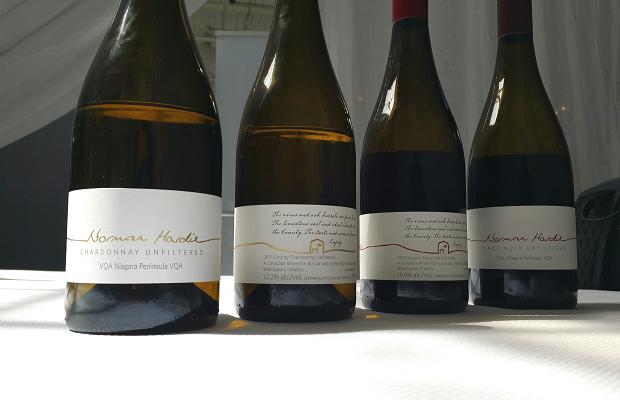
The wines of Norman Hardie

The wines of Norman Hardie

Somewhereness is not really a word. It’s hokum. Gibberish. Nonsense. Look it up in Merriam-Webster or Oxford. Not there. Its conceived convenience is recorded in Wiktionary, Your Dictionary and other online glossaries though, because there is always an online presence ready and willing to immortalize anything and everything.

The definition of Somewhereness, according to the online “dictionaries.”

  1. The state or quality of being in, occurring in, or belonging to a specific place.
  2. The state or quality of existing in a place that is unknown or cannot be pinpointed.
  3. The unique characteristics imparted on a wine by the conditions of the place in which it was grown.

Somewhereness lies the truth?

Somewhereness is not a state of mind, of being, of knowing something is intrinsically right within the parameters or context of here, there, anywhere or everywhere. Somewhereness is not merely a function of good decision-making, of exercising the ideal to expand on terroir, to create something to talk about. Yet that third so-called definition is on the right track. Belief says terroir is what happens in the vineyard, through environment, by geology, geography and topology, from naturally occurring elements and microbes in the soil, by air and of climate. Terroir is the great one. The impossible creator of perfect storms, from out of riddle and enigma. Somewhereness, by extension, is the next one.

Somewhereness exists, albeit with just as much abstruse behaviour and paradox, inside the finished bottle. That’s all you really need to know. Terroir happens before. Somewhereness happens after. The line is drawn when wine enters its final resting place. It evolves, develops and finds its somewhereness inside the bottle. In the case of Champagne (and the wines of Emidio Pepe), the first bottling is merely a temporary shelter and somewhereness knows to wait for the final call. In those cases there are the stages of terroir, disgorgement and finally, somewhereness.

In Ontario, somewhereness has been found (as opposed to “was founded”) by Norman Hardie, Jonas Newman, Vicky Samaras, Bill Redelmeier, Ann Sperling, J-L Groux, Charles Baker, Doug Witty, J.P. Colas, Ed Madronich, Jay Johnston, Tom and Len Pennachetti, Angelo Pavan, Moray Tawse, Paul Pender, Harald Thiel, Marlize Beyers, Mary Bachelder-Delaney, Thomas Bachelder, Martin Malivoire and Shiraz Mottiar.

Somewhereness may have been born to these Ontario parents but it has and will not remain exclusive to the 12 who discovered it. Somewhereness belongs to all wine with true and truthful origins in terroir. The great wines of the world share in the expression and the mystery, even if the gold inside their bottles has never been affixed with such a label. Somewhereness is found inside a bottle of Dujac Bonnes Mares. You will taste it in an Egon Müller Scharzhofberg. It can’t be missed from out of a Margaux pour by the hands of Paul Pontallier. Wines of manic manipulation will never find it. They either do or they don’t, will or they won’t. Somewhereness just happens. Don’t ask me to explain. I’m just the messenger.

Over the past few years, much godello.ca white space has been set aside for glossing in written word and the ever-evolving rumination on the spiritual effect of somewhereness.

Konrad Ejbich holding court in front of De La Terre's breads

Konrad Ejbich holding court in front of De La Terre’s breads

Related, From February, 2013 – Somewhereness over the Canadian wine rainbow

“For a comprehensive look at our province, make sure you read A Pocket Guide to Ontario Wines, Wineries, Vineyards, & Vines by Konrad Ejbich. The discourse concerning somewhereness in Ontario is in full swing. In October of 2012 I wrote, “character and quality has never been better. Riesling continues to impress and let us not ignore the high level of ever-evolving Chardonnay vines. Reds have made great strides, especially Pinot Noir, Gamay and Cabernet Franc. The future looks very bright for Ontario [wines].”

Related, From April, 2013 – Come together, over wine

“Abeyance be gone, these next few years have the potential to cement an industry’s power. Only a minority has even the slightest clue that liquid gold is mined out of the peninsula’s glacial clay and limestone. The time is ripe to tell the world the story of somewhereness. The embryo is about to grow in a major way. Financial reward is within reach. So how to alert the world?”

Related, From April 2014 – The group of twelve

“History may one day remember them as the group of twelve, or perhaps, “The Ontario School.” They are the 12 wineries who have banded together to ensconce a strange but beautiful word on the tongue, in the dictionary and out in the world. Somewhereness. They are purveyors of the land from which their grapes grow and ferment into wine. Facilitators of terroir, working a canvas forged by millions of years of geological and climatic evolution. Their assembly is based on both exigency and on Moira; destiny, share, fate. Like that other famous group, “collectively they agree.” Ontario’s cool-climate wine regions need to qualify and certify a distinctive winemaking style. In juxtaposition to old world, European tradition, the intensity of somewhereness needs to reflect an increasingly Ontario-centric partiality.”

Related, From April 2014 – Why taste Ontario?

“The Ontario wine industry is the best kept secret in the world. It has grown, accelerated and advanced with more success than might have been imagined as recently as five years ago. In November I wrote, “Ontario winemakers have figured it out. The “world-class” comparative humanities of aging and longevity aside, the comprehensive and widespread phenomenon of excellence, regardless of vintage, is now an Ontario reality.”

Wine Country Ontario's Magdalena Kaiser

Wine Country Ontario’s Magdalena Kaiser

All wonderful hyperbole, to be sure. But for years I missed the point. Somewhereness is not about agreeing, in principle, on how to make wine from a particular place so that it can collectively result in a thing. It is something other. It’s in the bottle. It has always been there but the key lies in Ontario’s industry having matured to a point where we can now taste it, again and again, inside the bottle. The work made it happen. It is well-deserved.
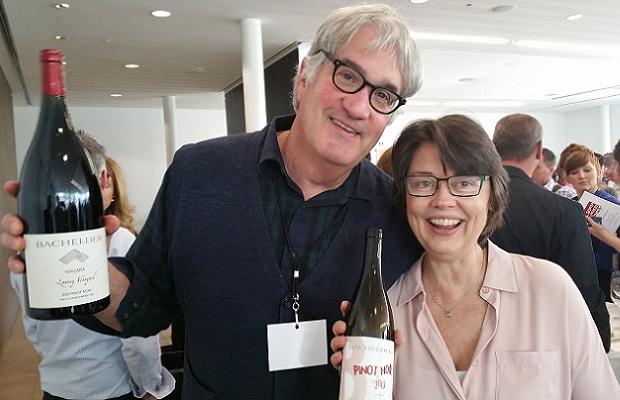
Thomas Bachelder and Mary Delaney-Bachelder

Thomas Bachelder and Mary Delaney-Bachelder

So with the assistance of Trisha Molokach, Dorian Anderson and the vintners who came to realize what happens when terroir is used to bottle divine pleasure, another Somewhereness (the event) happened, at St. James Cathedral in Toronto, on April 20, 2015. Food partners completed the stellar event; Best Baa Dairy, Monforte Dairy, Upper Canada Chees Company, Fat Chance Hand Sliced Cold Smoked Salmon Co., Chef Ryan Crawford & Beverly Hotchkiss of Backhouse, De La Terre Kitchen and Bakery and Schott Zwiesel. Hinterland was not present in 2015 and I skipped two tables, due to quite recent full portfolio tastings, at Bachelder and at Southbrook. Here are some other notes.

Norman Hardie Riesling 2013, VQA Ontario (Winery, $21.00, WineAlign)

With less residual sugar than in 2012 and slightly higher alcohol (the bottle says 10.1 per cent but it’s actually 9.8), the house style persists, if only as a refrain that adjusts and adheres to the vintage. A hint of oyster shell is more than significant, in working alongside Hardie’s Calcaire, effected out of lees fermentation. The minute loss of high-toned aromatics is pitched in favour of fruit, if only from one exploited tank, within the context of producing 1000 cases. The ’13 (70 Niagara/30 PEC) is like very modern Alsace, akin to Schoffit, what with its texture fitted through a tiny hole. Drink 2015-2018.  Tasted April 2015

Norman Hardie Calcaire 2013, VQA Ontario (Winery, $23.00, WineAlign)

The field blend of Marcel Deiss is the starting point. Lees imparts texture and the proverbial minerality is rounder than the Riesling, though the acidity just as linear. The breakdown is Chardonnay (40 per cent), Riesling (40), Melon de Bourgogne (10) and Pinot Gris (10). It should be noted that the mid-palate is caressed by a silky cheese curd, sour milk atonement. Drink 2015-2019.

From my earlier note of August 2014:

If any wine growing and producing region not called Alsace has the right to label a wine Calcaire, Prince Edward County is that place. The irony squared of Norman Hardie’s choice of nomenclature is not lost. Olivier Humbrecht makes use of the term because some of his single-varietal wines can no longer (under the local AOC rules) be labeled with the name of the wine-growing village. Marcel Deiss produces ‘field blends’ composed of several varieties grown on Grand Cru soil but he can’t (under other regional rules) label them Grand Cru. Hardie takes Niagara and PEC Grand Cru grapes, fashions an Ontario white blend, not unlike J-L Groux and calls it Calcaire, in ode to the limestone underlay of the County. Are you following me here? This may be new, innovative, yet understood and an early impression, but this cuvée initiates the PEC march to white blend supremacy, much like Stratus White has done over the course of 10 vintages in Niagara. Norm’s Calcaire is a Chardonnay, Pinot Gris, Riesling and Melon de Bourgogne mélange, co-fermented on the lees, striking, all in limestone, full out mineral consequence. There is purified pear and white melon fruit in distillation. There is a house in Wellington, “they call the Rising Sun.” That this animal succeeds so early in its tenure shows the Norm conceit and the swagger. That it will define white blends for a millennium is an arrogance of traditional song and of scripture. So be it.

Last tasted April 2015

Norman Hardie Niagara Unfiltered Chardonnay 2012, VQA Niagara Peninsula, Ontario (184432, $39.00, WineAlign)

The ’12 Niagara has swapped spontaneity for coherence, licentiousness for logic. Has entered the stage of non-reductive peel, where skin is discarded, flesh is exposed and juices run free. If you like your Chardonnay settled and yet vitally fresh, now is the time to enjoy the Hardie 2012 Niagara Chardonnay. Drink 2015-2022.

From my earlier more of May 2014:

Norm’s Niagara is such a different animal to the County 2012. The warm summer and dry fall means more humidity and even more reduction. Currently cothurnal so less like Burgundy but only because there elevates the high-tones and percipience from Niagara. Texture is key but this Hardie needs time. It’s not angular but it is steroidal, injected, like a wild thing, as if the yeast were still in control, munching away even though there is no more sugar to be had. Undomesticated ’12, at heart, in spirit, out of mind. Hard to imagine there could be this much anxiety from the even-tempered vintage, but when you pick real early and keep the oak to a bare minimum, Hardie happens. Norm picked ripe fruit between September 7 and 10, six weeks ahead as compared to some years. He said the fruit had a “golden tan, ready to go.” The use of smallish 500L barrels works wonders for texture and though 40 per cent was new wood, you would never know it. Malolactic fermentation didn’t happen until late August, nearly a full year on so no sulphuring was required until that time. This is Hardie’s freshest Niagara fruit ever, from Duarte Oliveira’s farm between Victoria and Ontario Street, the same spot as Hillebrand’s Chardonnay Reserve. Terrific Beamsville Bench Chardonnay.

Last tasted April 2015

The wines of Hidden Bench

The wines of Hidden Bench

Hidden Bench Estate Riesling 2013, VQA Beamsville Bench, Niagara Peninsula, Ontario (183491, $23.95, WineAlign)

Hidden Bench’s ’13 Riesling is a pure, soft-spoken and balanced reflection of her maker, winemaker Marlize Beyers. Only a month or two of lees and no stirring has brought her Riesling into this current corporeal state. The citrus is all flesh, void of pith and with acidity that has already incorporated, disguised and covered the zest. If any Hidden Bench Riesling suggest tropical fruit, here it is and yet again, not. Drink 2015-2020.

From my earlier note of September 2014:

The Estate Riesling is as vigneron-defining as any wine on the Niagara Escarpment. Hidden Bench is a 100 per cent estate-fruit operation so this Riesling is spokesperson, prolocutor, mouthpiece, champion, campaigner and advocate for the concept. The estate ’13 reaches deeper for nutrient pot sweetening, into shale and in conceit of its varied, positively cultivated terroirs. Compact and jelled, this is several steps up from most other entry-level Niagara Riesling and in fact, is really anything but. The transparency here is patent. This is Riesling that simply knows what it is; pure Bench, unequivocally real and forthright. Knows what it wants to be.

Last tasted April 2015

Hidden Bench Bistro Riesling 2013, VQA Beamsville Bench, Niagara Peninsula, Ontario (Winery, $19.95)

Produced exclusively for licensee, the Bistro follows a very similar profile to the Estate Riesling, with exactitude in weight and alcohol 911 per cent). The flesh is less, the zest increased and overall you can sense more youth. The Bistro juice comes from Roman Block cuttings planted in Felseck Vineyard in 2008. The simmer here is a simpler, more straightforward pot of sustenance, entirely capable of acting as spokes-Riesling for the Hidden Bench house druthers. The vines will grow up and the juice will move on but other, newer, youthful cuttings will take up residence and the Bistro line will endure. Drink 2015-2017.  Tasted April 2015

Hidden Bench Nuit Blanche Rosomel Vineyard 2012, Beamsville Bench, Niagara Peninsula, Ontario (278812, $40.00, WineAlign)

The (five to) six percent Sémillon speaks at present, in a waxy, bitter gourd winter melon and smoky flint tightness. In this wound moment, it is perceived that another year will be needed for the next unwind. Now vacuous, spinning and whirling as if in a processor’s bowl, an amphitheatre of expression. Drink 2016-2022.

From my earlier notes of September and (at Gold Medal Plates Toronto) November 2014:

Less than six weeks after my first introduction to the NB ’12 complexity shines anew. Such a delicate and elegant take on the Bordeaux white axiom. Void of all the gangly G’s; grasses, gooseberry and green vegetable. Leans to custards and curds with a savoury accent and a limestone tang. Willing to be paired with a multitude of gastronomy. Long finish. From my earlier, September 2014 note: “Taking what the vintage gives, Rosomel’s Sauvignon Blanc was king in 2012, dominating at a 95 per cent share of the Bordeaux-styled blend with Sémillon. Barrels were stirred weekly during fermentation and the creamy texture thanks that regimen, as does the tannic fullness of the round back-end. It rocks out bracing, formidable and nobly bitter, in pear and its pith, in lemon, of rind and in curd. The SB lounges in tall grasses but avoids goose feathers and blanching veg. So very savoury, in gorse tension, thistle and nettle. These notes all cut through the roundness and are finally tied together by the flinty rock of Rosomel.”

Last tasted April 2015

Hidden Bench Rosé Locust Lane Vineyard 2013, Beamsville Bench, Niagara Peninsula, Ontario (Winery, $19.95, WineAlign)

A meandering young blend of Pinot Noir, Malbec and Viognier that is super dry (3.2 g/L of residual sugar), “hey, hey, my, my.” The aromas suggest a succession from strawberry to green and red onion but “there’s more to the picture, than meets the eye.” The medley, interrupted by ballads and road stories is like a subtle, sweet, sour and savoury gastronomical pickle, ramps in brine, scopes in sweet alkali. Can there be a drier, more windswept crag, neal to a southern French style made anywhere on the Peninsula than from the Escarpment coliseum up on Locust Lane? Drink 2015-2018.  Tasted April 2015

Hidden Bench Bistro Rosé 2013, VQA Beamsville Bench, Niagara Peninsula, Ontario (Winery, $19.95)

While persistent in aridity as a disciple to the Locust Lane, this Bordeaux blend Rosé packs a fruitier punch. Elevated residual sugar (as compared to the Double L) mans a higher rate of variability and accessibility, not to mention more chance of Ontario patio success. This licensee bottling will work for summer, across the province. Drink 2015-2016.  Tasted May 2015
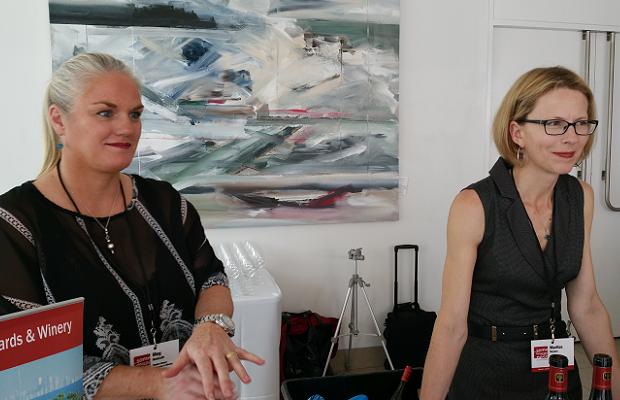
Meg McGrath and and Marlize Beyers of Hidden bench

Meg McGrath and and Marlize Beyers of Hidden bench

Hidden Bench Locust Lane Vineyard Pinot Noir 2011, VQA Beamsville Bench, Niagara Peninsula, Ontario (Winery, $48.00, WineAlign)

Still tightly wound with the tannic grain criss-crossing at interstices of fruit (pomegranate/cranberry/strawberry) and acidity (sharp/pointed/direct). A fine, pointillist’s rendering; Locust as Seurat, nobly bitter, to the end. Drink 2016-2022.

From my earlier note of April 2014:

The Locust Lane Vineyard, originally planted in 1998, was Hidden Bench’s first acquisition, in 2003. It has a unique perpendicular cross-slope effect, undulating in all four directions, gathering sun hours in its own special way. The vineyard produces the richest and warmest Pinot Noir with fruit flavours more akin to ripe plum and black cherry than almost anywhere on the Beamsville Bench, certainly as any from the Hidden Bench stable. While the ’11 is not the biggest beast nor the Bordeaux bully of the Terroir Caché, it is surprisingly tannic and strong. It’s anything but hot, though it attacks with fervor. Big berry fruit, macerated strawberry, rich pie notes and spice. A great Locust vintage.

Last tasted April 2015

Hidden Bench Terroir Caché Meritage 2011, VQA Beamsville Bench, Niagara Peninsula, Ontario (505610, $38.20, WineAlign)

There is so much floral presence in 2011, a showy perfume that parades the relative elegance of Niagara’s Bordeaux reds in the vintage. Structure is comparable to 2010, not in beast mode but rather with a delicacy derived from less burning, high-toned fruit. Still here lays a wine so young, of social encumbrance that might be passed off as a mark of impertinence. This faintly embarrassing condition can be suppressed in a dark cellar, in which the foundation can be laid for the beginning of a cure. The Terroir Caché 2011 will show its best between 2017 and 2020, then develop, slow down, suspend animation and age further, effortlessly and exceptionally. Drink 2017-2024.  Tasted April 2015

Tawse Quarry Road Chardonnay 2012, VQA Vinemount Ridge, Niagara Peninsula, Ontario (Winery, $35.95, WineAlign)

Oh, the accessibility of Quarry Road in 2012. Still totes the emerald shine, the gemstone tannic scrape and yet the flesh is rendered rich, ripe, ratcheted and riled up. This has tonality like never before, layered and strudel buttery. At this point the vines for Quarry are 17 years of age, sophic and erudite, compounded by the organic, biodynamic and prudent pruning practices that have cemented its vigour. The clay-limestone, fresh-mineral, push-pull is a veritable careening of expression. Though its longevity may not pile towards a compressed future like that of ’09 or ’11, the earlier and often response will act both as Chardonnay charming and Quarry Road magnetizing. For the next five years it will be very hard to turn away. Drink 2017-2020.  Tasted April 2015

Tawse Laundry Vineyard Cabernet Franc 2011, VQA Lincoln Lakeshore, Niagara Peninsula, Ontario (130997, $34.95, WineAlign)

A year had added rich note to this ’11, furthering the inflammatory vibrations and purposefulness of Bordeaux (as opposed to Loire) red makings from the vintage. The depth of cherry merging to smoked currants is cool, collected and shaded by brushy, briny strokes. Hints at brambly, even. This is so very Cabernet Franc and even more so, Lincoln Lakeshore. Drink 2015-2019.

From my earlier note of April 2014:

A lean Laundry with as much finesse as winemaker Paul Pender has ever shown in his poignant Cabernet Franc realm. When a vintage deals you calm and scale you sit back and relax. The Lincoln Lakeshore advancing in years vines bring yet unseen front end red berry, licorice and red currant softness in 2011. There is elegance but also a refusal to yield its back end bite. A level of enveloping grain and chalk is unique to this bottle and should be seen as a very good effort with the possibility ahead

Last tasted April 2015
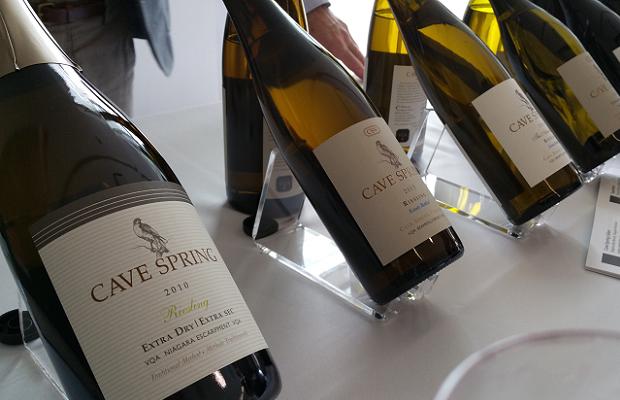
Cave Spring Cellars

Cave Spring Cellars

Cave Spring Extra Dry Sparkling Riesling 2010, VQA Niagara Escarpment, Niagara Peninsula, Ontario (Winery, $24.95, WineAlign)

From the clay-limestone bench lands abutting the Escarpment, specifically one block of 11 year-old vines at the Beamsville Bench Cave Spring Vineyard. Traditional method fizz accessed of low brix (early picked, 19.3 degrees) and mortar (2.97 pH) numbers, then elevated under microscope magnified sugar (15.5 RS g/L) and acidity (8.4 g/L). So what? So this is a pure CS expression of Riesling, cured and curated in the house style, led to textile weave from 14 months on the lees and finalized just that side of Brut. Functions like a Blanc de Blancs suitably this side of acidity rage and with corresponding remarkable, if close to impossible aridity. Less fat than might be expected and with a swath of sauvage. There sweats ginger and the cuttings of foraged wild things. The extension on the finish is protracted even after the liquid has left the building. Finishes with dry stones, nuts and a rightful oxidative thrust. Drink 2015-2020.  Tasted April 2015

Cave Spring Csv Riesling 2013, Cave Spring Vineyard, VQA Beamsville Bench, Niagara Peninsula, Ontario (566026, $29.95, WineAlign)

That flesh, that Kabinett flesh, fills the CSV in every crevice. In 2013 the residual sugar number lies between 15 and 16 g/L, and though the crop was bigger, it was still picked later than in 2012. The result is formidable corporeal concentration, consistency of house style and perhaps the only ’13 Niagara Riesling to imitate, perpetuate and extrapolate on the vintage that came before. This Cave Spring concentrates fruit and Escarpment into a powerful Riesling, streaming like charged particles through changing expressions. A lingering ascension hovers as it rises, until it slowly fades into the welkin, like a balloon that languidly gets lost into the blinding blue of a midday sky. Drink 2017-2025.  Tasted April 2015

Cave Spring Riesling ‘The Adam’s Steps’ 2013, VQA Beamsville Bench, Niagara Peninsula, Ontario (26372, $24.95, WineAlign)

At present there are sweets, bitters and rich Adam fruit. Only the shadows of a limestone outcrop near the crest of the Niagara Escarpment know why the Adam is so juicy. A chew like no other. Drink 2015-2020.

From my earlier note of October 2014:

A classic Adam, amplified in 2013, riper and not as piercing as previously noted vintages. Still the layering is omnipresent but there is more juicy fruit and texture then ever before. This is a consumer friendly Adam, gregarious, outgoing, off-dry as never before. New slang for the bottling.

From my earlier note of July 2014:

According to Cave Spring’s website this newer Riesling from older (18 to 35 year-old plantings) is from “a single block of vines in the shadows of a limestone outcrop near the crest of the Niagara Escarpment, known as ‘The Adam Steps’. Really apropos, for this Riesling is the cantilever, the one with the outstretched arm. At 10.5 per cent alcohol and with an unmistakably stony, sweet and sour whiff the wine speaks of its off-dryness. The juiciest of all the Cave Spring Rieslings, with rounder acidity and good persistence. This is the all-around good guy, the one with an open invitation, the bridge from Estate to Dolomite to Csv. The well-adjusted one steps up its game to help win one for the team, especially out of the convivial 2013 vintage.

Last tasted April 2015

Cave Spring Cabernet Franc 2012, VQA Beamsville Bench, Niagara Peninsula, Ontario (391995, $19.95, WineAlign)

The 2012 Cabernet Franc needed six further months for the high-toned fruit to settle just enough for the spiced richness to shine. Though Dolomite-designated, this sheds Beamsville light purity, along with a grain variegated by (pomegranate) citrus and chalk. The cool centre is elongated and expansive though it seems to inuit the correct time for retraction. The aerial fruit stresses condense and accept the angles prepared by coriander and eucalyptus. Drink 2015-2018.  Tasted April 2015

Flat Rock Cellars Chardonnay 2012, VQA Twenty Mile Bench, Niagara Peninsula (681247, $16.95, WineAlign)

The Twenty Mile Bench in Jay Johnston’s hands flat out rocks. The Chardonnays “they dig a funky spiel, they’ll make some spiel.” The ’12 Estate has crossed into pretty territory, not shy to wear its thin lamina of oak make-up and not too proud to say drink me now. Drink me here, there and everywhere. Drink 2015-2017.

From my earlier note of March 2014:

Has spent some quality time and knows its way around a barrel but its attitude is young, fresh and alive. From 12 and 13 year-old estate vines and kissed by only 15 per cent new oak. “But here’s a funky fact that I know is real.” Flat Rock’s Chardonnays are red hot and this fresh-faced ’12 has “baby appeal.” Blatant, colorable value on the Twenty.

Last tasted April 2015

Flat Rock Cellars Nadja’s Vineyard Riesling 2014, VQA Twenty Mile Bench, Niagara Peninsula  (578625, $19.95, WineAlign)

Always expressive of such manifest certitude, the 2014 can’t be anything but Nadja though there adds a fleshy dimension that pins it to the broader spectrum of Twenty Mile Bench, in as much as what the vineyard culls from its capacious diagrammatic. That broader outlook provides understanding into Nadja’s decrease of stentorian language in the fractionally stagnant vintage. There is a variegation within the sweetness lining the tunnel of aridity. Fourteen is nothing overly special and Nadja suffers as a result. It’s still a very, very good Riesling, just not one for the ages. Drink 2015-2019.  Tasted April 2015

Flat Rock Cellars Pinot Noir 2012, VQA Niagara Peninsula (1545, $18.95, WineAlign)

The vintage acts as a launch point for Flat Rock Pinot Noir and prepares a palate for the 20 Mile Bench by coating it with utmost approachability. Violets and Nebbiolo-like roses are raised in warmth, albeit beneath the safety net of cloud cover. You’ll find no burn, rust spots and yet you will acquire comfort, in and out of sips. Drink 2015-2018.

From my earlier note of April 2014:

As with Flat Rock’s Chardonnays, here is a vintage and an evolutionary coming of age that becomes a matter of scaling back oak. The quotient here is less than 40 per cent new, leaving the wizened vines and maker’s acumen to coax maximum character, brilliant sheen and recognizable aroma. The 2012 Pinot teases black cherry but never really goes there.

From my earlier note of February 2014:

Nearly 4000 cases will be available of this nearly-unfiltered, very established and always well-thought out Pinot Noir. A consideration of the plots and barrels micro-management that determine the crasis of this Estate wine demands an extrapolation in full-on assessment. The medium-coarse Chinois filtering lends to a tannic chain of texture thick in grain and chalk. A heavier Estate because when the weather gives you heat you make a climate appropriate wine. This monkey is not a product of arctic air and it “got too deep, but how deep is too deep?” Thermal vintage melt, ritzy ripe cherry stuff in 2012. From the Ritz to the Rubble, if you like, or the Flat Rock.

Last tasted April 2015

13th Street Pinot Gris 2012, VQA Creek Shores, Niagara Peninsula, Ontario (Winery, $19.95, WineAlign)

From two blocks on one farm in the centre of Creek Shores, one picked earlier to avoid botrytis. No malo, stainless steel tank fermentation leads to pure, crisp and clean Pinot Gris. The soil-driven funk meets faux-sulphur is typically J.P. Colas, a specificity in undertone that culminates in a dry, variegated finish. Drink 2015-2017.

From my earlier note of April 2014.

Here you have an honest, 100 per cent stainless steel treated Pinot Gris from an estate vineyard located adjacent the market on Fourth Avenue in the Creek Shores appellation. So very dry and really fine fruit, crisp, neoteric, rising and falling in waves of tempered acidity. Made in a comfortable, country-twanged, folk-rock style, like a Cowboy Junkie. Juicy, mouth watering work and very easy to fall for. An angel mine, this 13th Street, “and I know that your skin is as warm and as real as that smile in your eyes.” This effort by Jean-Pierre Colas is as good as it gets, a tally for Creek Shores and its kinship with the variety.

Last tasted April 2015

13th Street Gamay Noir 2013, VQA Niagara Peninsula, Ontario (177824, $19.95, WineAlign)

Four months has upped the funk in for ’13, with tar and bitters still and thick as summer air. Rich and ripe, notable for its black cherry aroma and that J.P. Colas natural truncation. Unique, as always and very Gamay. Drink 2015-2019.

From my earlier note of December 2014:

Fruit was sourced from both the Sandstone and Whitty Vineyards for 13th Street’s Gamay Noir, a focused and gritty adjunct in ode to the Cru Beaujolais approach. This ’13 raises the aromatic and texture bar and just may be the most striking from a 13th Street estate mix. All the important berries are there, as are the mineral quandaries. In a Gamay moment this will lead you to gulp and giggle with #GoGamayGo delight.

Last tasted April 2015

13th Street Syrah ‘Essence’ 2012, VQA Niagara Peninsula, Ontario (177824, $44.95, WineAlign)

Fruit was sourced mainly from Wismer Vineyard (Vineland) and a smaller proportion from AJ Lepp (Niagara-on-the-Lake) for this dry as the desert Syrah of deep extract, warmth and density of fruit. All set upon a highly tannic frame, with every indication that longevity will be its best friend, as much as any red has ever been produced in Ontario. A formidable vulcanization marks the entry, a not so inappropriate entreaty to beg for time and lots of it. The current pavane of fruit is exhibitive of excruciating physical reticence though behind the wall there is more than enough indicators to stand the test of time. No new oak (though the Essence saw an extended slumber in three to four year old barrels) has allowed the tapestry of intertwined layers to set up shop and dig in for the long haul. If big-boned Syrah and Niagara are in your cellar plans, this 13th Street 2012 has to have a prominent place. Drink 2020-2027.  Tasted April 2015
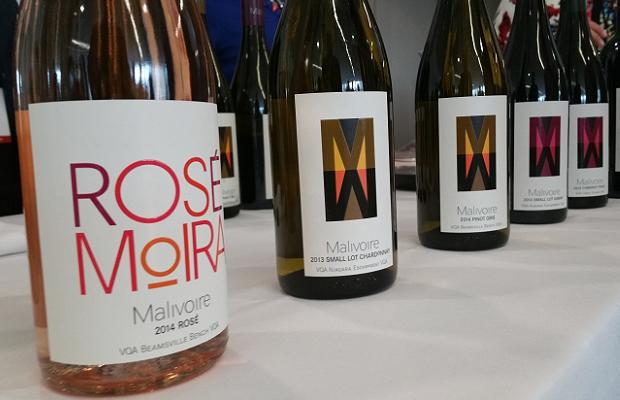
Malivoire

Malivoire

Malivoire Rosé Moira 2013, VQA Beamsville Bench, Niagara Peninsula, Ontario (Winery, $19.95)

A dual block blush, from two clones in the Moira Vineyard. Made from 100 per cent Pinot Noir, this second vintage is pale as can be, dry, saline and reeking of fresh peaches and strawberries. The level of purity and intensity is nothing short of amazing. This will rise quickly into the ranks of the Peninsula’s finest Rosés. Drink 2015-2017.  Tasted April 2015

Malivoire Pinot Gris 2014, VQA Beamsville Bench, Niagara Peninsula, Ontario (Winery, $19.95, WineAlign)

The purity and fine-lines of Pinot Gris are defined, delineated and deftly prepared by Shiraz Mottiar and team in 2014. This is a calm rendition, void of tremors, certainly not taking any risks but also not a white of unfulfilled promises. Herbs, lemon, mint and fine PG tannin draws salt from stone. A perfectly dry finish is in play, as with all malivoire whites, to cement the deal. Drink 2015-2018.  Tasted April 2015.

Malivoire Stouck Meritage 2011, VQA Lincoln Lakeshore, Niagara Peninsula, Ontario (Winery, $29.95, WineAlign)

It’s hard to recall memories of so much syrup, liqueur and high tonality as coming from Stouck, from any Meritage for that matter and yet the 2011 Bordeaux varietal wines out of Niagara continue to astound. If excess or vivid character is a negative, just look away. The combination of rich extraction and explicit oak generosity dope out fruit from a dry September into wonders of dried timbre and inflection. The drupe is enriched, as is the tannin and a Beamsville buttressing that warps and wraps like never before. At this four-year juncture, the Niagara ’11 varietal compendium is officially a thing, witnessed in example through this Stouck. More than just dramatic Shiraz Mottiar foreshadowing here, but further into thoughts of what vintages co do for red wine as a Peninsula whole. The ’11 Stouck Meritage stands upright at the mirror and its reflection looks right back. Drink 2017-2021.  Tasted April 2015

Malivoire M2 Small Lot Gamay 2013, VQA Niagara Escarpment, Niagara Peninsula, Ontario (Winery, $19.95, WineAlign)

The profundity of tart, keen, briny berries dilates in its own very useful layers of citrus, tannin and concentration, beyond even what was observed in 2012. The zesty, spritely argot resonates from the unfurling of floral essentia out of a Gamay in desperate need of time. The flavours and overlay are somewhat impenetrable and yet leave quite an impression. While patience might be the virtue and the reward, if #gogamaygo is the modus operandi, a swig from the bottle like gentlemen of the road is certainly not out of the question. Drink 2016-2021.  Tasted April 2015

Charles Baker Riesling Ivan Vineyard 2014, VQA Niagara Escarpment, Niagara Peninsula, Ontario (Winery, $27.00, WineAlign)

From the rich limestone and sandstone beneath the clay, 1.1 acre Misek vineyard, a southerly ledge up from Highway 8 and an easterly hill down from Cherry Avenue. A very linear Ivan combs the catacombs of the Escarpment’s underpinning. A retaining wall of vintage attenuated rocks and stones, a vineyard’s low yields and the voices in Charles’ head have produced a striking Riesling. In 2014 adolescence has entered adulthood. Now before us is a grown up Ivan, mature Ivan, maybe even wise Ivan. Texture is in manifest control in this loyal, stay at home Baker, not yet running wild like free-spirited Picone. Ivan has presence, sometimes a great notion and is Baker’s longest bit of prose to date. The next great Riesling vintage will make it iconic. Drink 2016-2020.  Tasted April 2015

Charles Baker Riesling Picone Vineyard 2008, VQA Vinemount Ridge, Niagara Peninsula, Ontario (126433, $35.20, WineAlign)

The petrol and mighty bee’s sting have taken over, with the honey again not far behind. A lemon prepares to spill its juices as it warms above a bunsen flame. At present it is almost too elemental to define. Will change course again when midnight strikes in 2016. Then it will come into its own. Drink 2016-2020.

From my earlier note of April 2014:

Tasted at Somewhereness 2014 as part of a vertical retrospective going back to 2007. The Vinemount Ridge’s now famous Picone Vineyard is set within a 10-acre estate on the Niagara Escarpment. Planted to the Weis 21 clone, the Riesling grown here digs in for complexity from sectional moieties of clay and sandy soil atop a unique base of limestone bedrock. Charles Baker began working with these grapes in 2005 and it is this 2008 where the learning curve took a turn for the Riesling stratosphere. The ’06 found luck in the stars but this vintage lays the framework and foundation for a master plan. At this stage in the ’08 evolution there is a prodigious and viscous honeyed textured. Ripening tree fruit juices run like maple sap in spring and the run off is beginning to think syrup. A cutting ridge of acidity arrests the sugaring, allowing citrus and flinty rock to recall the wine’s first, fresh steps. Baker’s Riesling time travels in circles with no real beginning and no real end. From my earlier, September 2012 note: ““Whoo-ahhh” Mojito, green apple skin scent of a Riesling. Seductive to sip, a bodacious body of influence, then back-end bite. A wolf pack in sheep’s clothing.”

Last tasted April 2015
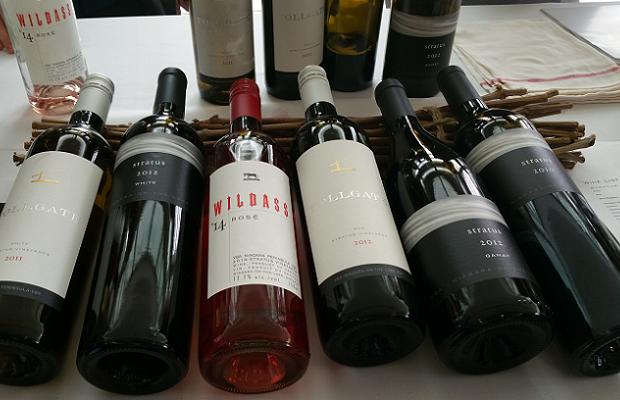
Stratus Vineyards

Stratus Vineyards

Stratus Wildass Rosé 2014, VQA Niagara Peninsula, Ontario (71712, $17.95, WineAlign)

A blend of Cabernet Franc and Merlot with some Sauvignon Blanc and Riesling added for lift and what J-L Groux admits is rendered “for the consumer.” This essentially marks the twain between sweet and dry, if not quite halfway then pretty darn close. Plenty of herbs and citrus nail the aromas on the proverbial head with more than a grapefruit or two on the half circle. A highly approachable, end-user friendly blush. Drink 2015-2016.  Tasted April 2015

Stratus White 2012, VQA Niagara On The Lake, Ontario (660704, $44.20, WineAlign)

In 2012 the blend is Chardonnay, Sauvignon Blanc and Riesling. Viognier was left out because according to winemaker J-L Groux “it did not work in blending trials.” The vintage has laid the foundation for the most density, and unctuous fruit for the Stratus White in what must be, ever. At the high aromatic end there is peppery beeswax, reverberating and echoing in scales and arpeggios. Like an open string singing warmly, the vintage, extraction and residuum combine for texture in mottled unction. Sapid lemon, more beeswax and lanolin mark the palate and then the White drifts into spaces occupied by smoky, back beats and bites. This has great pitch with a knowledge of the path to pleasure. Drink 2017-2025.  Tasted April 2015

Stratus Gamay 2012, VQA Niagara On The Lake, Ontario (Winery, $29.00, WineAlign)

t may not be the most idiosyncratic Gamay in Niagara but the Stratus 2012 is without a doubt the most advanced and complex. Gamay fusion is on display, at once a bottle of Niagara’s finest pulchritudinous veneer and then a charcuterie board laid ample with cured bovine parts and sun-dried grapes. Maximum ripeness and then even later picking, to no one’s surprise, have led to this. Two years of ageing in neutral oak barrels has brought about a humid roundness and yet the centre is controlled by Oz-like mint and eucalyptus notes. The jam is gelid, as opposed to temperate. Rarely does Gamay go to such depths, of blackberry, chalk and grain, with an overlord of tannin. Quite serious stuff. Drink 2017-2020.  Tasted April 2015

Stratus Red 2012, VQA Niagara On The Lake, Ontario (131037, $44.20, WineAlign)

The Stratus Red 2012 resides both in a virtuoso’s hollow and in a pantheon inhabited by some of Niagara’s great reds. The fact that such ripe phenology can anticipate and foretell to balance and freedom in the byplace of the blending process is nothing short of amazing. Sinuous and exact, of berries so indefatigable, layering raspberry over blackberry atop strawberry. Cedar and red citrus compound, without jamming the fluidity, but certainly accentuating the Fragaria vesca. Confident and fluid in movement, the ’12 neither shakes nor stirs and its acidity is flat out terrific. At this early point in its evolution it is showing as well as could be expected, or hoped for. Its core of fraises du bois will always be there. Time will be kind, gentle and patient. Drink 2015-2024.   Tasted April 2015

Good to go!
http://www.winealign.com/profile/2058-mjg

Buy the case

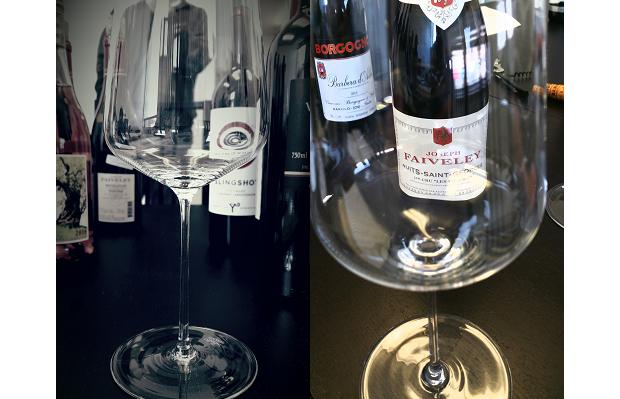
Trialto Group tasting at WineAlign with Zalto glasses

Trialto Group tasting at WineAlign with Zalto glasses

“What wines would you recommend that are not available at the LCBO?” has made its constitutive and bounden way to the top of the FAQ list. This applies to both consumers in search of quality and ease of acquisition, along with restaurateurs who want to build a diverse, anterior, ulterior and eclectic wine list. The answer is consignment. Working with Ontario wine importing agents opens up a world you never knew existed and they deliver direct to your door.

“But I don’t want to purchase by the case” is the most common response. “What if I don’t like the first bottle?” The answer is WineAlign. You already trust and put your dollars in the hands and palates of a critic or a group of critics whose judgements you trust. You order stuff online all the time, mainly because they are products you want to purchase but also because you love the home or office delivery aspect of the transaction. Wine? Yes, it’s possible. In cases of six or 12, of a wine you trust will do nothing but please, it just makes sense to order by the case.

As you know, I am a regular and increasingly active contributor at WineAlign, the most essential source for critical reviews of wines released in Ontario. Just like the coverage in this province, WineAlign tackles the scenes in Alberta and British Columbia as well. More and more samples of B.C. wine has have traipsed through the office doors so the opportunity to taste west coast output has become a regular duty and a pleasure. Still, the release gamut in Ontario remains the primary focus.

At WineAlign we have launched a new program called Buy The Case. To understand what the ‘Buy The Case’ program is really all about, click on the link to hear it from our most esteemed critic David Lawrason.

Buy The Case: Trialto Wine Group

I sat down with David and Sara d’Amato to taste through a cross-section of the Trialto Wine Group portfolio. Trialto has a great Canadian presence, in Alberta, Quebec, Ontario and British Columbia. The Ontario team has a group of highly knowledgeable wine professionals and their portfolio is chock full of gems, top values and products that will appeal to the most cerebral and fastidious of Sommeliers or discerning consumers.

The following list highlights the wines that I chose as most representative for the Buy The Case program, employing the top 10 good reasons as the guideline for making such decisions.

From left to right: Montresor Capitel Alto 2013, Giacomo Borgogno & Figli Barbera D'alba 2013, Joseph Faiveley Bourgogne 2012, Vietti Perbacco Langhe Nebbiolo 2012, Terras Gauda Abadia San Campio Albariño Rias Baixas, Montresor Castelliere Delle Guaite Primo Ripasso 2011 and 2014 Neal Cabernet Sauvignon 2009

From left to right: Montresor Capitel Alto 2013, Giacomo Borgogno & Figli Barbera D’alba 2013, Joseph Faiveley Bourgogne 2012, Vietti Perbacco Langhe Nebbiolo 2012, Terras Gauda Abadia San Campio Albariño Rias Baixas, Montresor Castelliere Delle Guaite Primo Ripasso 2011 and 2014 Neal Cabernet Sauvignon 2009

Curio Selections

Montresor Capitel Alto 2013, Soave Classico, Veneto, Italy (Agent, $16.95, WineAlign)

High floral tones are at the top end for Soave and here more than a step up from the Classico bottling. The primrose and aster give way to creamy chestnut folded into savoury custard. A smooth palate feel turns to nuts, stones, fine bitters and gentle tonics. Quite the salubrious Soave, purveyor of good feelings and with the words party pleaser inscribed across its Veronese face. Drink 2015-2018.  Tasted April 2015  @TurismoVeneto

Restaurant Pours by the Glass

Giacomo Borgogno & Figli Barbera D’alba 2013, Piedmont, Italy (Agent, $19.95, WineAlign)

Popping Barbera full of strapping substantial fruit, mind-meddling acidity and thankfully, playful rhythm and blues chords. Full of plums and cherries baked in the sun, rehydrated to syrup and filled with a whole lot of old-school, funky, soulful flavour. Once this Hozier Barbera finds its way through, past a “mid-youth crisis all said and done, it then needs “to be youthfully felt, cause God” it “never felt young.” Goes round and round, like vinyl on a well-used turntable. We could grow old with this and more vintages of Borgogno’s Barbera. Years in “we’ll name our children Jackie and Wilson, raise ’em on rhythm and blues.” Drink 2015-2020.  Tasted April 2015  @regionepiemonte

Joseph Faiveley Bourgogne 2012, Burgundy, France (Agent, $23.95, WineAlign)

Pinot Noir’s most base cumulative history has arrived here, in the second decade of the 21st century, in this commodious and convenient 2012, fashioned to the letter of entry-level Bourgogne law. Bright, animated, ripe, affable, under-currant earthy and wholly, purposefully, decidedly approachable. Strawberry and raspberry mixed with dried rose-dominated potpourri. The thrill of acidity flush with direct energy jigs to finis. What more might be petitioned from the fruit of les villages? Drink 2016-2019.  Tasted April 2015  @BourgogneWines

Function Wines

Vietti Perbacco Langhe Nebbiolo 2012, DOC Piedmont, Italy (Agent, $26.95, WineAlign)

Modern, ripe and pushing maximum extraction in Nebbiolo. A single-vineyard Langhe of full, flaunting expressive ideas and protein matching aspirations. The combination of Cassis, cedar, currants and berries link this, in aromatic tumescence, to Sonoma Cabernet. Yet its prevailing and concurrent Nebbiolo presence, of tar and roses, are really magnified and inextricably tied to its declassified Barolo vineyard. Quite sappy sentimental, with sinew to one side and dusty chocolate to the other. Quality acidity and tannin keep it brutally honest. Drink 2016-2010. Tasted April 2015  @vietti_vino  @vinidelpiemonte

Seasonal Wines

Terras Gauda Abadia San Campio Albariño Rias Baixas 2014Albariño/Alvarinho, Spain (Agent, $21.95, WineAlign)

From Bodegas Terras Gauda in Galicia this likens to white blend style, in complex varietal aromatics, as if a combing of Pinot Gris, Viognier, Chardonnay and Sauvignon Blanc were vying for and forming connections in conundrums. Has a slight Vinho Verde effervescence and plenty of bright, spirited character. A monk’s white, quietly serving in piety and in the presence of the unspoken. Lingers for longer than expected. Fine example of Albariño. Drink 2015-2029.  Tasted April 2015  @TerrasGauda @RiasBaixasWines

Cellaring Wine

Montresor Castelliere Delle Guaite Primo Ripasso 2011, Doc Valpolicella Superiore, Veneto, Spain (Agent, $24.95, WineAlign)

Fortified village of Venetian varietal strength, yelping with warm, extracted, dense and chewy Valpolicella fruit and stepping beyond the acid scrubbed boundaries of the typical gauge. Pitches braised beef and a full on drupe of berry, plum and fig fruit. While at present time the confluence of worked over flavours are an over abundance of riches, this will flesh and caramelize towards a mini-Quintarelli-like future, where the rust and antiquity of innate history turns liqueur into ethereal mocker. Buy a case, wait up to 10 years and drink it over the next 10. You’ll revel in telling everyone how much you paid in back in 2015. Drink 2020-2032.  Tasted April 2015  @RegioneVeneto

Neal Cabernet Sauvignon 2009, Napa Valley, California (Agent, $59.00, WineAlign)

Nothing but Cabernet Sauvignon from both mountain and valley floor fruit. Has that keen, innate sense of proprietary wisdom. A wine that seemingly has more age on it, as if it were already 15 plus years old, when the fact is it’s a mere toddler. Somehow you just yet know it will evolve in this exact state for another 10 before fading anywhere near towards a tequila sunset. Spirited, elated, elevated tones and full, fleshy fruit endow this Neal with long term capabilities. Sweet tannins and a soft, creamy oak blanketing contain the tension and a desire for hurried, premature development. Velveteen chocolate to be sure but one of really fine grain. Very good length. Drink 2017-2024.  Tasted April 2015  @NealVineyards  @NapaVintners

Good to go!

http://www.winealign.com/profile/2058-mjg

Recent uploads

Recently grilled

Recently grilled

It’s a themed based life. Most of what we taste is packaged into categories; country, region, appellation, varietal, blends, White, Red, Sparkling, Rosé and Dessert. Tastings promote a place or at the very least a gathering of sympathies, of wines meant to share a table.

Sometimes we taste in random preoccupation, with holistic hazard grace, in absence of direction, without a care to the world. More often than not my tasting notes are uploaded to WineAlign. Here are nine uploaded singles, in no particular and seemingly random order, save for the prices. They are all available at the LCBO.

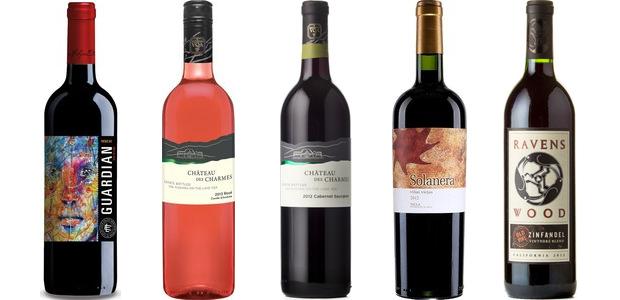
From left to right: Guardian Reserva Red 2012, Château Des Charmes Cuvée D'andrée Rosé Estate Bottled 2014, Château Des Charmes Cabernet Sauvignon Estate Bottled 2012, Bodegas Castaño Solanera Viñas Viejas 2012 and Ravenswood Vintners Blend Zinfandel 2013

From left to right: Guardian Reserva Red 2012, Château Des Charmes Cuvée D’andrée Rosé Estate Bottled 2014, Château Des Charmes Cabernet Sauvignon Estate Bottled 2012, Bodegas Castaño Solanera Viñas Viejas 2012 and Ravenswood Vintners Blend Zinfandel 2013

Guardian Reserva Red 2012, Colchagua Valley, Chile (392787, $13.60, WineAlign)

A commencement red in which the parts control the sum, before, during and after. Quite frankly that’s okay. That Cabernet Franc and Carménère can be picked out so glaringly yet without harsh tones is a reward of sorts, an investigation into the varietal relationship with Colchagua, the guardian of these grapes. More fruit than earth is the basic tenet of the dependancy, again just fine, with the secondary players acting out the vibes of smoke, very ripe flowering shrubs and oak. Good show. The length says three to four acts more. Drink 2015-2019.  Tasted March 2015  @LFEWINES  @DrinkChile  @Noble_Estates

Château Des Charmes Cuvée D’andrée Rosé Estate Bottled 2014, VQA Niagara On The Lake, Ontario (333260, $14.95, WineAlign)

If any Rosé intimates a blush Niagara Brut (sans bubbles) I’d have to give the nod to this CdC named for family matriarch Madame Andrée Bosc. Early picked at less than 20 brix in a Sparkling wine state of mind and balanced in which sugar (6.1 g/L) and acidity (6.1 g/L) countermand one effacing the other. From out of the void comes pure Pinot Noir fruit, in varietal articulation, lustrous, vivid and painted in cool, receding sheen. The flavours are an early summer bowl of berries. Strawberries to mark the beginning of hope. In 2013 the complexity reached for another level. Here in 2014 the Cuvée D’andrée keeps it simple. A Foy Vance tune. “That was the last day of June. This is the first of July.” Drink 2015-2016.  Tasted April 2015  @MBosc

Château Des Charmes Cabernet Sauvignon Estate Bottled 2012, VQA Niagara On The Lake, Niagara Peninsula, Ontario (370320, $14.95, WineAlign)

Grabs hold of the vintage and runs with it, in a sprint. Everything about this is comfortable, expressive, flannel blanketed for warmth. Soft, cuddly Cabernet with huge potential in consideration of price. The oak on top of extraction speaks of a handled totality alongside great fruit. Contending fruit. Basks in a blinding glow in a fine example of what Cabernet can do in Niagara, from warmer spots. That said I do believe that fresh fruit like this, left to its own devices, without any significant barrel coverage, would have managed just fine for five years or more. Drink 2015-2018.  Tasted April 2015  @MBosc

Castaño Solanera Viñas Viejas 2012, Do Yecla, Spain (276162, $16.95, WineAlign)

Crafted specifically for a North American market palate, this blends Mourvedre dominated (70 per cent), maximum extraction Yecla fruit with equal supporting bits of Cabernet Sauvignon and Garnacha Tintorera. The latter two juicy bombshells help to smooth, flesh and melt the ooze of the firm, dredging and heavy of foot Mourvedre. Reeking of modernity, machination and posturing, the gangly, brambly and grippy old vines Solanera is a huge wine, a macho, manly, masculine and muscular red. It’s a shaken mess of fruit, edible flowers and has a smoky, cigar leaf edge. The only real concern is a lack of chivalrous acidity. What is there feels added, not integrated and will be quick to abandon ship when the fruit needs a life raft. At present there is no disputing the quantity of the composition for the money. Two years from now it will have less to say. Drink 2015-2017.  Tasted April 2015  @BodegasCastano  @andrewhanna

Ravenswood Vintners Blend Zinfandel 2013, California (359257, $17.95, WineAlign)

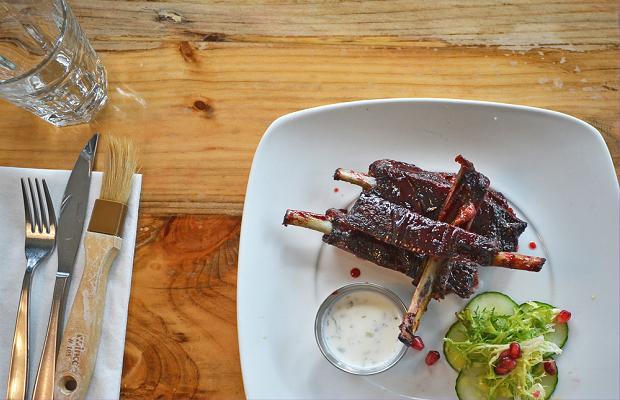
The Vintner’s Blend is Ravenswood’s opportunity to anatomize disparate, old vine California fruit into one Wonka blend, to craft a harmonious if homogeneous Zinfandel expression. The house style in consistency is nothing short of something palmary, here perpetuated in the dried fruit crannies of this 2013. Zinfandel and nothing but, though the variety carries a three quarters presence, the remainder in Petite Sirah, Syrah and “Mixed Blacks.” When the paltry asking price is considered, the VB gives the oak away, asking for little in return, save for a stoked grill or smoker and some well-rubbed slabs of protein. Combine the sweet, savoury, dark, brambly fruit with slow-cooked ribs and a fuligin crust. Men from all around will come calling. Drink 2015-2018.  Tasted April 2015  @CBrandsCareers  @TheZinfandelOrg

From left to right: Southbrook Vineyards Triomphe Cabernet Franc Rosé 2014, Pedroncelli Alto Vineyards Sangiovese 2012, Brezza Cannubi Barolo 2010 and Château Lafon Rochet 2004

From left to right: Southbrook Vineyards Triomphe Cabernet Franc Rosé 2014, Pedroncelli Alto Vineyards Sangiovese 2012, Brezza Cannubi Barolo 2010 and Château Lafon Rochet 2004

Southbrook Vineyards Triomphe Cabernet Franc Rosé 2014, Niagara Peninsula, Ontario (279117, $19.95, WineAlign)

Southbrook’s Rosé is a triumph of philosophy and direction in varietal election. Fundamental to a matter of degree, this is a wine to help cast little doubt on Cabernet Franc’s pink necessity for Niagara. Only CF adds a sweet, sour and savoury push to to a blush bleed, with a push-pull undertone of earth. Only this variety can draw salinity and funk from the soil without requiring additional reductive, rubbery underpinning. Here the sour berries are bright and the wine is light on its feet, yet clear and precise. If not for the apocopic finish, this would be exceedingly exceptional Rosé. Drink 2015-2016.  Tasted April 2015  @SouthbrookWine  @AnnSperling

Pedroncelli Alto Vineyards Sangiovese 2012, Dry Creek Valley, Sonoma County, California (204461, $20.00, WineAlign)

Genuine take on Sangiovese, ebullient in red cherry, leather and chestnut. Swelling pulpy and if acidity does not at first succeed, it tries and tries again until vehemence is achieved. Sangiovese never looked so good in expatriate clothing for $20. Worth trying one now and putting a few away to see how they evolve. Sends a message to growers and producers in the Dry Creek Valley. Treat the variety with minimal oak love and seek out special terroir like the Alto Vineyards. Done right, Sangiovese can provide a bright and complementing alternative to Zinfandel. Drink 2015-2020.  Tasted April 2015  @Pedroncelli  @drycreekvalley

Brezza Cannubi Barolo 2010, Docg Piedmont, Italy (713511, $64.95, WineAlign)

Here, in the Cannubi vineyard, the classic impossible dichotomy of Nebbiolo, like an anvil and a feather, falling at the same rate, in a vacuum. The floral tones are set to eleven, while layers of many elixirs, liqueurs and tonics swirl in B-52 activity, bled from candied roses and chestnuts. A flavour that brings to mind fresh leather in cream sauce and a nutty glaze, like pistachio crème brûlée. Spiky, silken texture is akin to a web spun of savoury cookies strands. Tannins take over late and the sour finish, of fruits fed through a syringe by fills of intensity and verve. Wow Cannubi. Drink 2020-2030.  Tasted April 2015 @NaturalVines   @regionepiemonte

Château Lafon Rochet 2004, Ac St Estèphe, 4e Cru, Bordeaux, France (197228, 2009 $84.25, WineAlign)

An adolescent resolved, on the whole and as a rule for 2004’s, now advanced to adulthood. Chocolate and dusty weigh in straight away, as per the wood smothering of the time, so upfront and prevalent the fruit is the understudy. The whole in the heart of the middle is like the only living boy in New York, “half of the time we’re gone but we don’t know where, and we don’t know where.” So it must be filled with popular song. Then the wine shines, in Mediterranean tones, savoury ways, with black olives and sweet yet bitter solemnity. Quite perfectly fine, oldish Bordeaux, two-part harmony St. Estèphe. It will not rock your world but it will play scaling, soothing bass lines and lend echoing acoustics. Drink 2015-2017.  Tasted April 2015  @Lafonrochet  @BordeauxWines

Good to go!

https://twitter.com/mgodello

http://www.winealign.com/profile/2058-mjg

Top 10 May 2nd VINTAGES

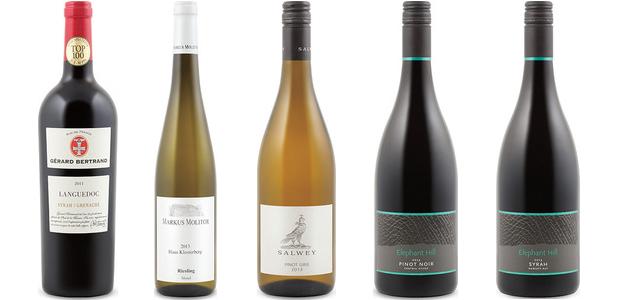
From left to right: Gérard Bertrand Languedoc Syrah/Grenache 2011, Markus Molitor Haus Klosterberg Riesling 2013, Salwey Pinot Gris 2013, Elephant Hill Pinot Noir 2013 and Elephant Hill Syrah 2012

From left to right: Gérard Bertrand Languedoc Syrah/Grenache 2011, Markus Molitor Haus Klosterberg Riesling 2013, Salwey Pinot Gris 2013, Elephant Hill Pinot Noir 2013 and Elephant Hill Syrah 2012

Top 10 best buys for VINTAGES, May 2nd release. Get out there folks.

Gérard Bertrand Languedoc Syrah/Grenache 2011, Ap Languedoc-Roussillon, France (413237, $17.00, WineAlign)

Admiration is afforded this tidy little Languedoc, where red fruit meets citrus, lavender and garrigue. Peppery and just the right amount of earthy warmth, spice, softness and yet durability. A pleasure of florality and a fine grain runs through, with no bake, no shake and no cake. Yeomans work in Grenache-Syrah symbiosis. Drink 2015-2019.  Tasted April 2015  @GBvins  @FwmWine  @LanguedocWines

Markus Molitor Haus Klosterberg Riesling 2013, Qualitätswein, Mosel, Germany (409698, $20.95, WineAlign)

Architecturally precise, of cleanly drawn lines, like the Mosel Vinothek acquired and restored by Molitor in 1984 and winner of the “Architekturpreis Wein 2013.” The Riesling mimics the juxtaposition of historical and modern, seemingly steeped in the past and transposed to the present by state-of-the-art winemaking. This has slate, steep steppes rising from subterreanean acquired salinity and ingrained aridity. There is no way to hide from the scree of the past, avoid the incline towards the future, nor can it exist without the run-off of mineral left behind. Brilliant hue, matched density, matchstick wisp and wild tang. Honeyed and suckling porcine in an early roasting stage, with terrific texture. The beautiful arid length is purposed and linear, with much oomph in its gait. Will linger for five to 10 years easy. Tasted February and April 2015     

Salwey Pinot Gris 2013, Qualitätswein, Baden, Germany (409912, $21.95, WineAlign)

This Baden Pinot Gris is neither fad nor fashion and not an acquired taste. In terms of modern European Gris to Grigio schematics, it is a step up in class, reaching to a chasm of intensity not oft achieved in Baden or other similarly priced Alsatians or Italians. For mineral streaks it reaches west across the Rhine to seek a Vosges mentality, found within a pure, dry and crisp interior. Quite concentrated and ripe like some stylistically-driven Friuli and yet it is the whole package, the sapidity and the good bitters that give it strength in totality. Drink 2015-2020.  Tasted April 2015 @TandemSelection  @WinesofGermany  @germanwineca

Elephant Hill Pinot Noir 2013, Central Otago, South Island, New Zealand (309583, $22.95, WineAlign)

At this price it might seem a Central Otago impossibility but Elephant Hill achieves proper inertia with this fresh, forward, crisp and pure style, so at the end of the day it’s quite a steal. In consideration of the mostly 1er Cru appellation, it would be hard to find a better deal in Pinot Noir, save for a combined tumescence hailing from Niagara, British Columbia and Bourgogne. Struts carbonic in the best way imaginable, desires little in the way of cerebral complexity and hands over the goods with a quick delivery. But it hits the marks of Pinot Noir, Otago and New Zealand. The earth derived rides with chalky grain and the mudslide slim back side is energetic, mineral laced and just this side of gritty. Pinot Noir to sip towards a blue horizon. “I just might move my feet, ’cause there’s nothing like the sound of sweet soul music.” Taylor-made Central Otago, with easy sipping and listening in mind. Drink 2015-2018.  Tasted April 2015  @ElephantHill  @COPinotNoirLtd  @HHDImports_Wine

Elephant Hill Syrah 2012, Hawke’s Bay, North Island, New Zealand (408633, $22.95, WineAlign)

Much like the Central Otago Pinot Noir by this Hawke’s Bay based outfit, the Syrah is neither shocking nor strikingly complex but it does send a noticeable tip of the hat to the northern Rhône, with a cure on the nose, a smoke meat smouldering in flavour and a cool, sloping bounce in its step. The aromas bring both charcuterie and a braise of spice studded belly to mind. The flavours call upon dark, red fruit, fresh-faced and fleshy, along with needful, percolating acidity. The avoidance of sweetness and jam-layered cake is appreciated while it stays the course of Syrah and Hawke’s Bay, criss-crossing hydrated grains of sand and salinity like a river running beneath and through it. The lengthy finish offers the promise of mid-term cellaring. Drink 2016-2020.  Tasted April 2015  @ElephantHill  @HawkesBay_NZ  @HHDImports_Wine

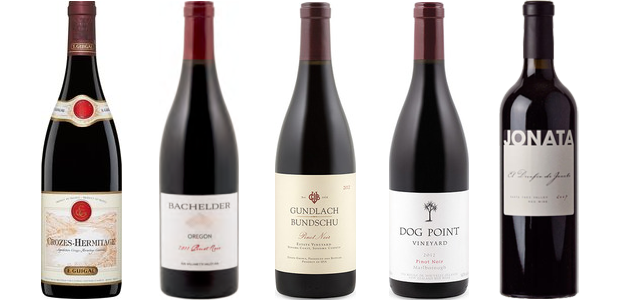
From left to right: E. Guigal Crozes Hermitage 2011, Bachelder Wines Pinot Noir Oregon 2012, Gundlach Bundschu Estate Pinot Noir 2012, Dog Point Pinot Noir 2012 and Jonata Tierra 2008

From left to right: E. Guigal Crozes Hermitage 2011, Bachelder Wines Pinot Noir Oregon 2012, Gundlach Bundschu Estate Pinot Noir 2012, Dog Point Pinot Noir 2012 and Jonata Tierra 2008

E. Guigal Crozes Hermitage 2011, Ac Rhône, France (704908, $28.95, WineAlign)

Syrah with character, personality and expression that stands up to be counted. High-toned, earthy and nearly over the threshold of palatable Bruce Banner-Betty Ross bunching. Hints at oxidation but is oh so sound, oozes liqueur like old-school Tempranillo and yet can be nothing but sloping Rhône. Kirsch, leather, roses, steeped cherries, orange tea, cinnamon, vanilla, charcuterie, bacon, game and acidity that is rapturous and encapsulating. Has it all going on, going strong, with forward motion and a nod to its past. Plays funky beats, swells in Paul Williams baritone and Melvin Franklin deep bass. The temptations of such a wine are hard to resist. In a world where manipulation and critters sell millions of bottles “stop worrying about your neighbors and the fancy things they got.” Focus on the real deal, like this CH from Guigal and “Don’t Let The Joneses Get You Down.” Drink 2016-2022.  Tasted April 2015  @DOMAINEGUIGAL  @VinexxCanada  @VINSRHONE

Bachelder Wines Pinot Noir Oregon 2012, Willamette Valley, Oregon, USA  (333278, $34.95, WineAlign)

Pinot Noir packing blankets, covered, hovering like fluffy clouds on a windless day. “Today is a lovely day to run, start up the car with the sun,” to taste a pure and idealistic Bachelder Oregon expression. Big (14.1 per cent) for the monk, ripe, warm and reeling.

From my earlier December 2014 note:

Primarily constructed from the fruit of Yamhill-Carlton vines, a third of which is Lazy River, an apropos moniker because by harvest time it hardly moves. The warm vintage adds a calm dimension to a Pinot Noir more Burgundian than the Bachelder’s Niagara and also more table friendly. Pure perfume and like life in layered, rosy hues, a vie en rose, from the land and the river’s subtle flows. The terra mobilis. The underlying dream in Thomas Bachelder’s Oregon movement is mineral, like salinity, not limestone but something ambiguous from the river’s pull and under the river. Elegance lived and relived. Here is a wine from a very available warm vintage, with a mess of fleshy fruit, yet Thomas does not obfuscate the terroir. In 2012 and needfully so, it is served from a light hand. Currently available at the SAQ in Quebec and coming to VINTAGES in Ontario, Spring 2015.  @Bachelder_wines  @LiffordON

Last tasted April 2015

Gundlach Bundschu Estate Pinot Noir 2012, Sonoma Coast, California (397513, $49.00, WineAlign)

From winemaker Keith Emerson a Pinot Noir strummed from top to bottom clay loam that is such a matter of controlled emotion and intensity. From out of the fog walks this Sonoman of searing clarity, unapologetic, warm but never hot, telling it like it is. The first chord is the thing, as is the Pinot voice, as sure as Sonoma always turns blue. Beyond that initial substantial impression it glides, even shows the semblance of age, in a beautifully creamy strawberry folded into caramel note. Then potpourri into demi-glace. If the plan is to purchase, pop, pour and saddle alongside duck breast or a veal chop, then giddy-up. “You see it’s all clear, you were meant to be here, from the beginning.” A trilogy of ready, willing and dutifully able. Drink 2015-2017.  Tasted April 2015  @gunbunwine  @LeSommelierWine  @sonomavintners

Dog Point Pinot Noir 2012, Marlborough, New Zealand (329672, $49.95, WineAlign)

Perfectly bright Pinot Noir while simultaneously deep, dark and recondite. Energetic in spirit, ripe and packed with barbed, piquant fruit sewed in threaded badges of spice. Perfumed as if by cinnamon and displacing rose petals. Like the scent of a crystal clear summer’s night, all warm, dry and of dried strawberry juice cracked paint. Grounded and fulfilling, of its own holes, in the mouth and finishes with a feminine touch. A thoroughbred, a filly, that trots on an on, long after it has crossed the finish line. Drink 2016-2021.  Tasted April 2015  @DogPointWines    @TrialtoON

Jonata Tierra 2008, Santa Ynez Valley, California (221150, $89.00, WineAlign)

Syrah and Cabernet may be the varietal strikers in winemaker Matt Dees’ arsenal but take one whiff of his ’08 Tierra, a Sangiovese aged a spell to seal the sell and boom! Striking defines the operative, go figure. Never before has the Tuscan expatriate created such a buzz in a California uniform and it has yet been seen to contest with such hot skill. Bounces around in the glass, not so much reductive as plugged in, electric, static and then kinetic, even frenetic. The heat (14.6 alcohol declared) is felt though it’s filtered and spread, tempered by the cooler vintage, blanketing all facets of the composition, albeit with rhythm and in balance. This is Sangiovese from the Santa Inez Valley manifested as flowers and the steep-like tea of modern Nebbiolo wrapped around the enigma of bi-polar Brunello. The ’08 is brined, of olives and a cure, in Syrah braised bacon and smoky tufts of garrigue. Nearly sadistic in its heady risks and chances but how to turn away from the alluring intoxicants? “Forging ahead with precision, now there is no turning back.” This is a wine you can’t walk away from. Has great bitters and lit charcoal on the finish. Tierra the Annihilator. It is most definitely all in. Drink 2015-2020.  Tasted April 2015  @WoodmanWS

Good to go!

https://twitter.com/mgodello

http://www.winealign.com/profile/2058-mjg

It’s all been red before

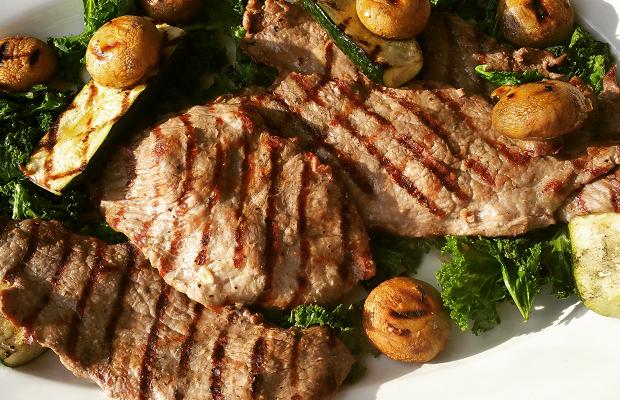
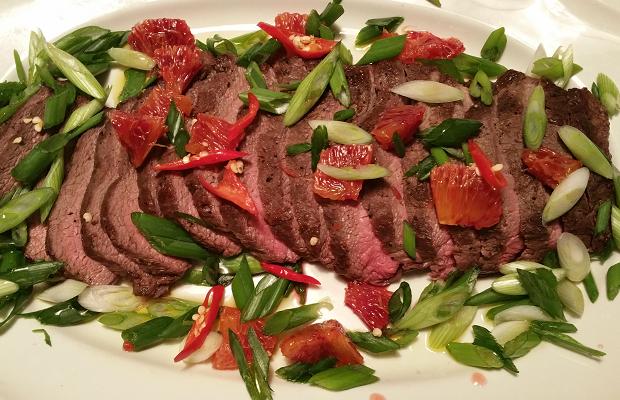
Flat Iron steak, blood orange, scallion and chile

Flat Iron steak, blood orange, scallion and chile

At a major Burgundy tasting yesterday I tasted 18 whites and just three reds. Gasp! With the weather and the heaviness of winter still stuck to the bones it just can’t be helped. White wine is working right now.

Related – Whites of passage

So today reds it is and reds it will be, as it has been before. Tomorrow I’ll likely return to white once again. That’s all I have to say about that. Just reviews today folks. Mostly from the VINTAGES April 18th release coming this Saturday.

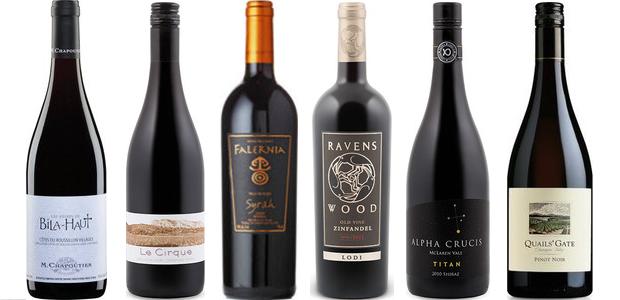
From left to right: M. Chapoutier Les Vignes De Bila Haut Côtes Du Roussillon Villages 2013, Le Cirque Carignan/Mourvèdre/Syrah 2013, Falernia Reserva Syrah 2010, Ravenswood Old Vine Zinfandel 2012, Alpha Crucis Titan Shiraz 2012 and Quail's Gate Pinot Noir 2013

From left to right: M. Chapoutier Les Vignes De Bila Haut Côtes Du Roussillon Villages 2013, Le Cirque Carignan/Mourvèdre/Syrah 2013, Falernia Reserva Syrah 2010, Ravenswood Old Vine Zinfandel 2012, Alpha Crucis Titan Shiraz 2012 and Quail’s Gate Pinot Noir 2013

M. Chapoutier Les Vignes De Bila Haut Côtes Du Roussillon Villages 2013, Ac Languedoc-Roussillon, France (168716, $15.95, WineAlign)

From the VINTAGES April 18th release

Perennial stalwart, especially considering the big box price. There is just so much going on in this veritable melting pot of character and boundless potential, right from the word sniff. Certainly modern and ripe but also layered with brush, scrub, duff, roots and rocks. A touch of briny salinity merges to liquorice and then there are the tannins woven with acidity. The length is a given. Lots of earth, plenty of smoulder and priced to case joint after LCBO joint. Drink 2015-2020.  Tasted April 2015  @M_Chapoutier  @Dandurandwines  @LaRegionLR

Le Cirque Carignan/Mourvèdre/Syrah 2013, Vin De Pays Des Côtes Catalanes, Languedoc-Roussillon, France (277079, $16.95, WineAlign)

From the VINTAGES April 18th release

A depth into earth crusts the dark fruit from wise old vines. Fresh and spring run sappy, from heat to be sure but in classic waves and stretches emanating from a floral, aromatic beginning. The bumble berry traffic jam in the middle is not enough to render it done at that point, despite its inability to avoid working up a sweat towards a woven textured finish. The citrus accent adds enough grain to see it through four more good years. Easy to love, hard to miss and smart to give it a try. Drink 2016-2019.  Tasted April 2015  @GBvins  @LaRegionLR

Falernia Reserva Syrah 2010, Elquí Valley, Chile (208371, $16.95, WineAlign)

From the VINTAGES April 18th release

Meaty, smoked, cured, reduced, reactionary, reductive, brambly, sappy, syrupy and still warm after the kill. All of these elucidations and more. Coconut and flowers meld in creamy waves within the muscular girth, sinewy grit and confident gumption of this high altitude, cool-climate Syrah. A huge varietal expression, like Barossa in a sausage factory, masculine, testosterone-driven, with layers upon layers of fruit, earth, game, pork belly, pepper and tannin. Not to mention raging acidity. Drink 2016-2020.  Tasted April 2015  @FalerniaWine  @ProfileWineGrp @DrinkChile

Ravenswood Old Vine Zinfandel 2012, Lodi, California (942599, $20.95, WineAlign)

From the VINTAGES April 18th release

Nearly a quarter of Petite Sirah blends into this (mostly) Lodi wizened vines fruit sourced out of San Joaquin County. Old vines are Zinfandel’s caché thing. The gnarly, petrified plants reach deeper underground and when the interstices of terroir and climate are in accord, the texture imparted by tannin is key. The ’12 Old Vines is a product of a maker (Joel Peterson), plot (Lodi) and conditions (cool and exceptional for the variety). Here a bottle to help define and divine Lodi. Elegance in as much as is possible, juicy in fruit in as much as can be found through texture and balance in so far as can be sheltered. Fresh is ascertained further along (as opposed to dry) on the spectrum, chewy of flesh, but not bone, silky and seductive. High quality Zinfandel in every respect. Drink 2015-2020. Tasted March 2015  @RavenswoodWine  @CBrandsCareers  @TheZinfandelOrg

Alpha Crucis Titan Shiraz 2012, Mclaren Vale, South Australia (377069, $24.95, WineAlign)

From the VINTAGES April 18th release

Nothing about the source, treatment or specs on this Shiraz scream elegance or restraint but it’s “cool and slow with plenty of precision, with a back beat narrow and hard to master.” Four premium vineyards of mature vines between 20-40 years of age have laid a deeply drawn foundation. McLaren Vale sunshine has given it warmth (14.5 per cent alcohol). Individual lots spending 15 months in small French Oak barrels before being blended together has imparted creamy texture. Added up this might have forced the Titan through the doors to heavy burden. Not so. Dusty, rich, dried fruits and herbage merge seamlessly together. Smoke lodge and graphite, berries, back bite and beat fall into great structure. Big time McLaren Vale that does not sting like a wasp, nor is it a bully. Say what you will but “call it heavenly in it’s brilliance…soft drivin’, slow and mad, like some new language.” Drink 2016-2022.  Tasted March 2015    @southaustralia

Quails’ Gate Pinot Noir 2013, BC VQA Okanagan Valley, British Columbia (585760, $26.95, WineAlign)

From the VINTAGES April 18th release

In 2013 there is warmth all around; in vintage, fruit, alcohol, tannin and overall character. Much in the way of cherries, black liquorice, pepper and spice. Tilled earth but in no way bespattered or hazy. Fleshy and ripe, of a depth with bitter fathered tones that bite yet fall back in line with misty fun fruit times in Babylon. The upholstering is rewarding though it finishes with some brute stuffing. A warm reclining Pinot Noir for sure. The kind that makes me want to “smoke everything in sight with every girl I’ve ever loved.” Drink 2016-2020.  Tasted April 2015  @Quails_Gate  @hobbsandco  @AMH_hobbsandco  @winebcdotcom

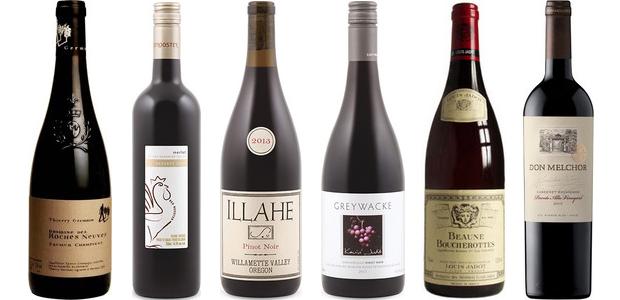
From left to right: Domaine Des Roches Neuves 2013, Red Rooster Reserve Merlot 2012, Illahe Pinot Noir 2013, Greywacke Pinot Noir 2011, Louis Jadot Beaune Boucherottes 1er Cru 2009 and Concha Y Toro Don Melchor Cabernet Sauvignon 2010

From left to right: Domaine Des Roches Neuves 2013, Red Rooster Reserve Merlot 2012, Illahe Pinot Noir 2013, Greywacke Pinot Noir 2011, Louis Jadot Beaune Boucherottes 1er Cru 2009 and Concha Y Toro Don Melchor Cabernet Sauvignon 2010

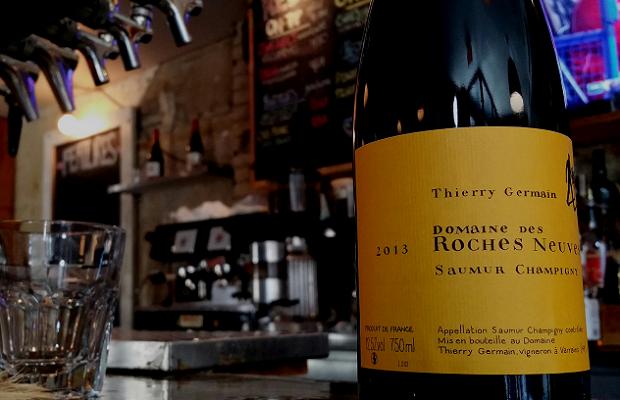
Domaine Des Roches Neuves 2013, Loire, France (Agent, $27.95, WineAlign)

There is Cabernet Franc, there is Samur and then there is Thierry Germain. Though a more intense single-vineyard bottle might render this one pedestrian, does it matter when the discussion involves biodynamic, 108 year-old, un-grafted, pre-phylloxera vines? The wow aromas and dense, dripping, liquid chalky, if intimidating texture is managed by wild sage, ancillary and marbled currants and acidity through the gambrel. The 2013 yield must have come in wild-eyed because while seemingly circular, in finished form it is a linear composition in diagrams intertwined. Not out of focus and will admittedly confuse a consumer or ten but if you can keep up with the changing gears the experience will be rewarding. Drink 2015-2020. Tasted October 2014 and March 2015  @rochesneuves  @GroupeSoleilTO  @LoireValleyWine

Domaines Des Roches Neuves 2013

Domaine Des Roches Neuves 2013

Red Rooster Reserve Merlot 2012, BC VQA Okanagan Valley, British Columbia (408963, $29.95, WineAlign)

From the VINTAGES April 18th release

Remarkably ripe and to the point of extract distraction in Merlot. A vintage-driven, heat days harnessed expression, all about fruit, with kisses from extended maceration and oak. Chewy, dense, rib-sticking red that cries for same in gastronomy. An air dominating smoulder and plenty of basting are sticky upon the mid-palate, a comfort to hold onto in median possession. This density lingers and delays before submitting to the salty lick of bitter denouement. One shouldn’t miss this near-decadent beauty even if the style agitates or aggravates fears of thick brushstroke style. This has five extended years ahead, at the least. Drink 2016-2021.  Tasted April 2015  @PellerVQA  @winebcdotcom

Illahe Pinot Noir 2013, Willamette Valley, Oregon (403154, $31.95, WineAlign)

From the VINTAGES April 18th release

Chinook speak for “land, earth or soil,” that agglomeration is both calling card and impression left after a taste. When Pinot Noir from Oregon has that pointedly Willamette combination of super terram flora and subterranean salinity it speaks with clarity, however light and un-muscular it may be. One senses a drawn sapid tang from ancient burrowed riverbeds that crawl feel below the surface. Strawberry is the key fruit note but Burgundy is the desire. This reminds of yesterday’s Ponzi and Lemelson, but also today’s Johnson Vineyard, albeit on a frame less taut. The complexity may not equate but the subtlety exceeds those comparisons. It hits just the right piercing notes because it’s shrill is just so pretty. The grain running through is arid, zestful and saline. This has terrific citrus interwoven through texture and the 12.5 per cent alcohol is something to embrace. Were Lewis, Clark and Curtis in search of fine Pinot at the end of an expedition day, this would have been the one. Drink 2015-2019.  Tasted April 2015  @illahevineyards  @wvwine

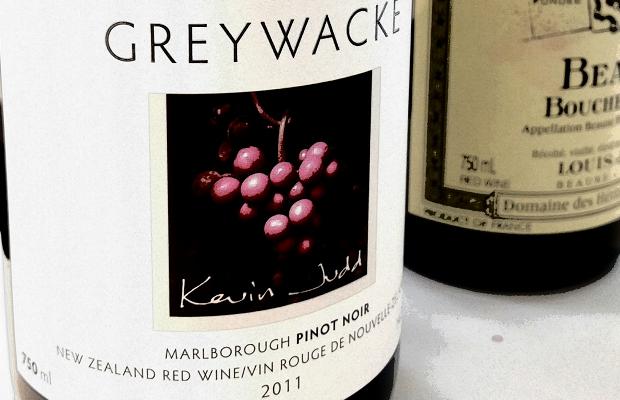
Greywacke Pinot Noir 2011

Greywacke Pinot Noir 2011

Greywacke Pinot Noir 2011, Marlborough, New Zealand (402651, $49.00, WineAlign)

From the VINTAGES April 18th release

Wow does this exuberant Kevin Judd Pinot Noir ever excite. The intensity of juicy calibrations and echoes, like breathtaking mountain peaks mirrored in the reflections of ancient lakes. Glassy and refractive, replaying upon itself, like a whirlpool of ocean tide. Silky like bean thread, transparent and glossy. A tug posits between cherry and anti-cherry. Layers of dried flowers and savoury accents. Accessible and worthy of a place in the deep cellar. Long and entirely special. Drink 2015-2025.  Tasted March 2015  @Greywacke   @greywacker  @oenophilia1  @nzwine

Louis Jadot Beaune Boucherottes 1er Cru 2009, Ac Burgundy, France (121319, $52.95, WineAlign)

From the VINTAGES April 18th release

Interesting to see this 2009 released after the ’10, a vintage that had many swooning. This ’09 is charming and unbelievably accessible. It may strike some as bygone-evolved, ancient history even, but ripe fruit matched by silky tannins will dupe even the most experienced palate. Here the Beaune’s beauty is upfront, outgoing, warm, inviting and flirtatious. What a gorgeous layering of fresh berries and creamy, sweet redolence. Very feminine, fleshy and gregarious. The back end shows a little bit of tension, further proof that this Boucherottes has spine and time left in the till. Distinguished and wondrous as Jadot gets, ready to please and stuffed to last. Drink 2016-2024.  Tasted March 2015  @ljadot  @HalpernWine  @BourgogneWines

Concha Y Toro

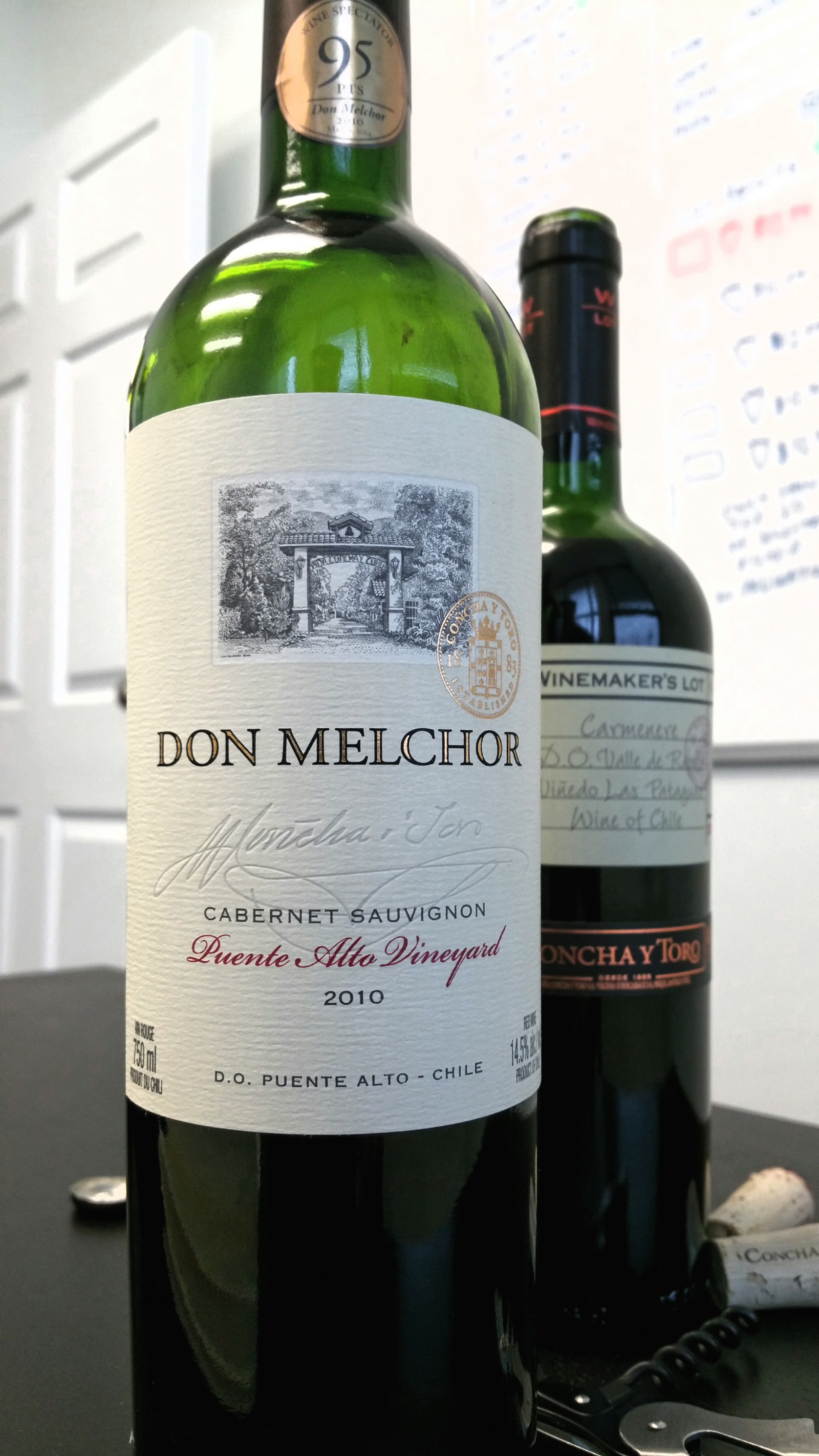
Concha Y Toro Don Melchor Cabernet Sauvignon 2010, Maipo Valley, Chile (403980, $70.00, WineAlign)

VINTAGES Online Exclusive

The 2010 Don Melchor harkens backwards, to years like 2001 and 2003, rephrasing and rewriting the paradigmatic book. From seven contiguous, sub-divided blocks of Cabernet, the ’10 speaks most highly of Lot Two, emphasized by chocolate, menthol and mineral, in cohorts with Lot Four, in elegance and depth. Extended glom and time-lapse picking between April 22 and May 27 was the casualty turned blessing of a cooler growing season in the semi-arid Mediterranean-like scrub desert of Puente Alto. The alluvial motion hauteur of slow-ripened fruit can’t be overestimated. The frame by frame capture has resulted in aromatics wafting off the charts; violet, anise, roasting cocoa bean, garrigue, ferric filings, mortar on wet stone, Cassis and eucalyptus. There is no heat, rendering the 14.6 declared alcoholic irrelevant. Best of all, it smells like Chile as much as it does Cabernet. There is no need to discuss the (97 per cent) CS in terms of Bordeaux, that is until you taste. Then the tobacco angst and silky texture elicit Margaux. Black currants and fine chocolate melt on the finish, still with a mouthful of stones. For winemaker Enrique Tirado, this may be his “El opus.” It will age effortlessly for 12-15 years. For anyone who purchased this wine more than 10 vintages ago, comparing current cost can be a byproduct in natural preoccupation. Who would not want a return to the sub-$50 Don Melchor going back a decade or more? Yet while tasting the present decimus, $100 crosses the fiscal mind and seems completely apropos. At $70 the clarity and sonority of its value is the blazon of an epistle. Few Cabernet Sauvignon dominant wines from Bordeaux or Napa Valley can compare. Drink 2016-2025.  Tasted April 2015  @conchaytoro  @MikeAikins1  @DrinkChile

Good to go!

http://www.winealign.com/profile/2058-mjg

Is Kosher wine being passed over?

From left to right: Hermon Mount Hermon White Kp 2013, Tabor Galil Cabernet Sauvignon Kp 2013, Segal's Merlot/Cabernet Franc/Cabernet Sauvignon Kp M 2011, Galil Mountain Pinot Noir Kp 2012 and Tabor Adama Merlot Kp 2010

From left to right: Hermon Mount Hermon White Kp 2013, Tabor Galil Cabernet Sauvignon Kp 2013, Segal’s Merlot/Cabernet Franc/Cabernet Sauvignon Kp M 2011, Galil Mountain Pinot Noir Kp 2012 and Tabor Adama Merlot Kp 2010

Passover is the hardest working holiday in Jew business. Trust me, I know. Having spent 20 years cooking professionally for the eight-day week commemorating the Exodus from Egypt, I know the trials, tribulations and strict adherence that must be followed to satisfy the Jewish soul. I have also followed the Kosher for Passover wine evolution for equally as long. I have spent time deliberating about the feast without yeast. It’s a fascinating study.

In 2012 I noted that “recommending wines that are Kosher for Passover used to be similarly daunting, (a science and an art unto itself), but the field has certainly improved.

Related – KP Duty – Kosher For Passover Wines

In 2013, optimism increased and I wrote, “a Jew’s worst, ’11th plague’ wine nightmare, the nights of suffering through cooked and stewed dry table wines, is (mostly) a thing of the past. I’m not suggesting that the golden age is upon us, but you may want to don the shades. The future is bright for Passover Kosher wine.”

The rules for Passover wines begin with the basic tenets. “All wines labelled “Kosher for Passover” are Kosher, but not all Kosher wines are Kosher for Passover. Kosher for Passover wine must be handled by Sabbath-observant Orthodox Jews and the wine can never come into contact with any leavening (grain, dough, bread) products, including yeast.” For the full story, read on.

Related – New wave under $20 wines go kosher for Passover

In 2014 I spent more time taking about the individual’s choice on how they go about observing the laws of Passover. Passover wine is particularly specific to a Jew’s level of Kosher. From Reform, to Conservative, to Orthodox, all Jews have different variances of belief. A Reform Jew will likely drink any wine on Passover and then again, may not. But, he or she will almost certainly not require the bottle to be Mevushal. A Conservative may only drink Mevushal but in more cases than not, Kosher is good enough. An Orthodox Jew goes it only one way, or the highway. Strictly Mevushal KFP, do not pass go, do not collect Afikoman (the broken Matzah) money.” In last year’s post I discussed the recent trend towards bigger and bolder Passover reds, so read on.

Related – Passover that big glass of red

In the 2013 column I made five recommendations for the Passover table from a longer list laid out for tasting by the LCBO. At least eight were offered (and I seem to remember more, spread across more than one VINTAGES release). At that time the press release made mention “of the 33 seasonal products being released through the LCBO and VINTAGES in time for Passover, 26 are new listings, featuring traditional kosher wines, fortified wines, dessert wines and sparkling wines.” Thirty-three? Impressive number.

In 2014, the LCBO release said this. “In time for Passover, which begins on April 14, the LCBO is adding 27 seasonal releases to an already diverse selection of kosher products. In addition to the approximately 40 kosher products available throughout the year, a mixture of new listings and familiar favorites is being released through the LCBO and VINTAGES to coincide with Passover.” The number presented in the tasting lab for media and product consultants was down from 2013, but still a solid set of wines to try. Things were looking up again.

The eve of Passover and first Seder night is only a week away and yet the 2015 press release from the LCBO came out just yesterday. Preparing for the Passover festival, dinner and eight days of transforming homes into Kosher safe houses takes weeks of forethought. That includes buying wine. I can think of no reason why the press release could not have been prepared a week earlier. It would have been helpful to many.

For those who need to know, varied quantities of Kosher products are available in more than 500 LCBO stores across the province, with the largest selection available at three GTA stores: 180 Promenade Circle (Promenade Mall) in Thornhill, 1838 Avenue Road (south of Wilson Avenue) and 675 Wilson Avenue in North York.

There are 42 wines labeled Kosher for Passover on the current inventory list from the LCBO’s website. Some are older releases and so low in stock that they don’t really count at all. The true number is more like 30. The March 26th press release notes that 43 products are available year round and that “a mixture of new listings and familiar favorites is being released through LCBO and VINTAGES to coincide with Passover.” The marketing department is not hiding anything. Transparency is not the issue. That only five wines were purchased and presented to product consultants and media in time for in store consumer consultation, as well as print and online Passover promotion, is curious to say the least. All five offerings are from the Galilee. What about the Judean Hills, Samson, the Negev and Shomron? Azureau Wine Agency has at least four or five quality wines available for Passover not currently in the LCBO coffers and yet they are all wines that had been purchased in the past. Why the snub?

Why has the pursuit of quality and quantity in Passover wine decreased instead of the opposite? Despite the growth worldwide and the dramatic increases in global quality and Passover wine sales, might it be that the LCBO has decided to drop the ball? Perhaps the feeling is that Passover wine was a trend whose time has come and gone.

So I asked some questions and the LCBO was very gracious to send me a list of all the Kosher products that were purchased and subsequently released in the past two months, in preparation for Passover. Seeing the list certainly shows that more credit is deserved for the support for the niche but three questions persisted to nag at me. I pointed out to the representative in charge of Kosher wines how the list notes products released on various dates which coincided with VINTAGES releases. Then I asked if there was there a reason why only the March 21st Israeli release items were presented to media and PC’s and also and how was the public informed of these releases?

It was explained that “the Kosher program is more akin to LCBO categories.  It’s not really part of the VINTAGES brand. Some of theses (Kosher) auxiliary purchases are only 30 to 40 cases with direct distribution to locations with major kosher kiosks. Customers who shop the kosher section in stores like Promenade in Thornhill or the Wilson and Dufferin location basically discover new products among the regulars while shopping in-store.” The idea is that only the five Israeli Kosher wines are marketed because they are “for wine lovers whether they keep kosher or not.” I have heard that point of view before. It’s wishful thinking. Show me a wine lover who buys Kosher wine at the LCBO but does not keep Kosher and I’ll show you a wine lover who eats nothing but stew. If higher quality wines were on offer, the philosophy might strike a more believable accord.

The end result of my interaction with the LCBO rep. was a suggestion that they might consider organizing a media tasting for more of the Kosher portfolio. Despite the extreme niche market that is KFP wines, the idea makes sense considering the size of Ontario’s (and especially Toronto’s) Jewish community and the amount of those types of wines that are purchased every year. A tasting would make even more sense if it involved any of the hundreds of high quality Kosher wines that are never seen in this market but are so prevalent in a place like New York State.

I spoke yesterday with a former Ontario agent who at one time was a leading importer of Israeli wines. Many of the wineries represented through his portfolio are no longer on LCBO shelves. Why is that I asked him? The answer is that the wines were too expensive for the LCBO and they gave up wanting to take the risk of trying to sell them. After Passover comes and goes, left over stock means for product that won’t move.

Selling quality KFP wines is now left to a handful of sacramental agents like Mazel Wines and Simcha Wines. Though they are required to sell by the case (like every other Ontario importer), the other eye is turned at the practice of selling single bottles. Why? Because they pose no threat to LCBO sales. Their customers are walking away with product the LCBO has no interest in selling. The wines in question are those the LCBO would rather not touch. They have washed their hands of the $40+ Kosher market and never had a true vested interest in Kedem and Manischewitz in the first place.

It is understood that buyers change and also that Israeli stubbornness translates to no offer of discounts, even to the world’s largest wine buyer. Quality wines from Eretz are no longer coming to Ontario and no one seems to really care. If there is no mandate to buy them, no one will. It’s quite simple. Yet in recent years it seemed as though the LCBO cared more about a certain level of quality in the KFP niche. In 2015, these wines are out of sight and out of mind.

Maybe part of the problem is the lack of Kosher wine production in Canada. If wineries and consumers across the country are not interested, why should anyone else bother?

There have been some informative Kosher wine investigations in Canada, though certainly few and far between. Brock University hosted Rabbi Nachum Rabinowitz, a Rabbinic Coordinator with the Kashruth Division of the Orthodox Union for his presentation, “Demystifying Kosher Winemaking” on Monday, Dec. 12, 2012.

This time last year Mark Mietkiewicz of the Canadian Jewish News discussed the “eclectic tour of kosher wineries.” Mietkiewicz noted that sadly, (if not entirely accurate), the only true Kosher winery across Canada is located in Newfoundland. “You’ll have to travel about hour west of St. John’s until you reach Rodrigues Winery of Markland, Nfld. There, you’ll find its certified kosher blueberry, plum, cranberry and other fruit wines, liqueurs and brandies.” Rodrigues is represented in Ontario by Amethyst Wines Agency.

The best source for Canadian Kosher wines can be found on the Wines of Canada website. Two wineries in Ontario had joined Rodriguez in Kosher wine production, albeit with fruit and honey. They are Rush Creek and Munro Meadery. Rush Creek has changed ownership, however, and it seems that Kosher is no longer on the table. Munro continues with their COR certification. In Quebec, Domaine Pinnacle produces a Kosher Iced Cider. In British Columbia, Summerhill Pyramid Winery, while not Kosher, does produce a Kosher wine. It’s an uncooked $100 Tiferet.

Here are the five wines presented for evaluation by the LCBO. None really qualify as exceptional but all will work with distinction at the Seder table.

Hermon Mount Hermon White Kp 2013, Galilee, Israel (611327, $20.95, WineAlign) Kosher For Passover, Non Mevushal

While this pseudonymous John Doe white varietal blend may not quite effect the idea of “puttin’ your hand in the hand of the man from-a Galilee,” it does offer an ocean of somewhat descriptive aromas to elicit a sip. Quite lactic, creamy and nondescript in terms of flavours. Well-made, though the guess at varietal make-up (Sauvignon Blanc, Riesling, Viognier…) doesn’t really matter. There is a capsicum bite and a grassy chew. So when all is said and done, it’s got “enough of what it takes to get you through.” Drink 2015-2017  Tasted March 2015

Tabor Galil Cabernet Sauvignon Kp 2013, Galilee, Israel (283838, $20.95, WineAlign) Kosher For Passover, Non Mevushal

Not to be confused with Oregon’s volcanic cinder cone, the city park on the volcano, and the neighborhood of Southeast Portland. This “small drum” (from the Latin), in consideration of its proximity to the cradle of civilization should constitute it being the original Mount Tabor. Tabor the mountain is situated on the border of Zebulun and Issachar, south-west of the Sea of Galilee (Joshua 19:22). There is no Hebrew word for the name Tabor but the likely etymology is from the verb ברר (barar), meaning to purge, purify or clean. So, what about the Cabernet Sauvignon? Another extreme and extracted expression from red fruit, with leather and rich blackberries atop Ugah Kushit. Some may count rubber reduction while others will simply feel the heat. The tannin and overall structure remind of Graves in a hot vintage. A funky green streak, like tea mixed with tobacco are part of the complexity, then more tobacco and more than decent length. This is a good choice for the shank and the rack. Drink 2015-2018.  @TaborWinery  @azureau

Segal’s Merlot/Cabernet Franc/Cabernet Sauvignon Kp M 2011, Galilee Heights,  Israel (157206, $22.95, WineAlign) Kosher For Passover, Non Mevushal

Red gelid fruits are floating with viscous separation in simple syrup and oozing to the perimeter. That outer circle is bricking to caramel. Hanging on, but just barely.

From my earlier note of March 2013: Though muted is quite pleasant, aromatically speaking. Baking spice, woodsmoke, cherry and plum, like satellite St. Emilion. Scarlet colour, as if derived from Tola’At Shani. Dusty and down-grain, no cooked sensation, well-structured.

Last tasted March 2015.

Galil Mountain Pinot Noir Kp 2012, Galilee, Israel (121228, $22.95, WineAlign) Kosher For Passover, Non Mevushal

Levity afforded for the sheer reason of ripe fruit. High octane Pinot is never a wise proposition but when the barrel lends spice and not a sheath of layer cake, that’s a positive. A warm west coast California style to be sure, with more than enough lavender cream to grease a squeaky canoli and then the rise of gaseous puddles blown by pipe smoke. Then there are the battling Epping Forests; of cedar and pine. Rich, spicy, smoky and forceful. Very ripe. Overripe and over extracted. Ready for prime time and with tannins that mean business. Just having entered its window of genesis, perhaps it would fare best next year when supper is ready in Jerusalem, “or, today is the day when they sort it out, sort it out.” Call it a draw. “So the Blackcap Barons toss a coin to settle the score.” Good enough. Drink 2015-2016.  Tasted March 2015  @azureau

Tabor Adama Merlot Kp 2010, Galilee, Israel (400820, $26.95, WineAlign) Kosher For Passover, Non Mevushal

He’s a wild one this Merlot and has come of age though he’s a bit licentious, carrying a load of liqueur and chewing on liquorice. Ferric and sugary red to black fruit melds with tubers grainy and cooked in a muddy cake with scorched earth buttercream icing. Prunes, figs and raisins are chopped into a mire poix and stuck in the frosting. Caramel time is here. Will work for Brisket. Drink as soon as possible. Drink now.  Tasted March 2015  @TaborWinery

Good to go!

http://www.winealign.com/profile/2058-mjg

WineAlign guide to VINTAGES April 4th and Easter recipes

Lamb Ribs by Barque Smokehouse

Lamb Ribs by Barque Smokehouse

On January 18, 2013 I began adding wine reviews to WineAlign. Review ground zero was Mallory & Benjamin Talmard Mâcon Uchizy 2010, an inauspicious little Burgundy described in “the coat of white.” A Genesis of great #ffffff value.” Beginnings, Genesis, ground zero. The Godello thing.

Two plus years and 2,023 reviews later much has changed. The wisest of wine scribes David Lawrason and WineAlign head wineaux Bryan McCaw asked if I would like to become a part of the April 4th, VINTAGES release newsletter and buyer’s guide. With renaissance banzai and Master Sommelier John Szabo leading the charge, along with most generous guidance and help from cake baker and palate extraordinaire Sara d’Amato, I have joined the fray.

Buyers’ Guide to VINTAGES April 4th – Part One

This week’s guide leads WineAlign subscribers to Easter Lamb and red wine, plus pre-dinner whites and a glass for dessert. The three recipes cover everything  you could possibly want at your table on the resurrection weekend. The recipes are for Traditional Easter lamb by John, Moroccan lamb loin chops by Chef Michael Pataran and Barque‘s smoked lamb ribs.

Here is what John wrote in his introduction of me. “If at first you don’t understand Michael’s reviews, just drop a couple of hits of acid, smoke a joint or put on some classic 70s tunes and they’ll all make more sense. Maybe.” The irony is that amongst the seven wines I contributed to the newsletter I made only one musical reference. Oh, and one to the Grand Budapest. So, maybe you will understand them. Maybe.

From left to right: Cdv Brazão Colheita Seleccionada Arinto 2013, Stéphane Aviron Domaine de la Madrière Vieilles Vignes Fleurie 2011, Mayschoss 140 Jahre Jubiläumswein Trocken Pinot Noir 2013, Dog Point Sauvignon Blanc 2014, Fielding Estate Viognier 2013, Château Haut Selve Réserve 2010 and Mendel Malbec 2011

From left to right: Cdv Brazão Colheita Seleccionada Arinto 2013, Stéphane Aviron Domaine de la Madrière Vieilles Vignes Fleurie 2011, Mayschoss 140 Jahre Jubiläumswein Trocken Pinot Noir 2013, Dog Point Sauvignon Blanc 2014, Fielding Estate Viognier 2013, Château Haut Selve Réserve 2010 and Mendel Malbec 2011

Cdv Brazão Colheita Seleccionada Arinto 2013, DOC Vinho Verde, Portugal (405217, $16.95, WineAlign)

A highly unique Vinho Verde that works as a sipper and as a solid, pair me with just about anything table wine. Savoury and blessed with a Bica de Queijo cheese aroma, you’ll be glad you gave it a swirl and a whiff. There is nothing shinking or violaceous about this. It’s medicinal like Moscato, toasty like Pouilly-Fumé and gangly like Garganega. Citrus juice and flesh add body and beautify its inherent male pattern baldness. Perhaps a bit of a river fish of a Vinho Verde but very fresh and a great catch. This Arinto will tie appetizers together and buy time until the bird, hock or shank is on the table with the feast’s big reds. Drink from 2015-2017.  Tasted March 2015  @vinhosverdes  @exCellarsWines

Stéphane Aviron Domaine de la Madrière Vieilles Vignes Fleurie 2011, AC Beaujolais, Burgundy, France (405779, $21.95, WineAlign)

Old vines and Fleurie scream holiday dinner wine in my books. Here struts out where it’s at Gamay from a terrific Cru, of maturity, chutzpah and depth. Bang on 13 per cent alcohol, most mature and munificent, so very forward and yet of a depth, richness and layering in fruit meeting acids. Black cherry with an accent of mint, sour citrus drop and blueberry. A minor chalky grain, just enough to evoke oak tenderness, but not enough to be cut by splinters. Very Burgundian, where it’s at and even better length. Talk about a red wine that could equally double down for the Easter and Passover table. Gamay that swings both ways, AC/DC, “it’s got two turntables and a microphone.” Drink 2015-2022.  Tasted March 2015  @DiscoverBojo  @warren_walden

Mayschoss 140 Jahre Jubiläumswein Trocken Pinot Noir 2013, Ahr, Germany (409649, $21.95, WineAlign)

Ahr Pinot Noir (as opposed to those from Germany’s Baden region) are just that much more accessible and wider table friendly. That’s because of volcanic soil and older vines like you find in this Qualitätswein. The fruit is richer, the cure more refined, the flavours full and the wine structurally sound. Give this some air and the roast swine will make an entry, with intoxicating aromas, balanced by earthy notes, ripe plums and berries. Structurally sound, the ripeness continues into a fleshy cure of wurst with good bite. The citrus tang is round and barkless. No matter the colour of your braise or roast, this Pinot Noir will compliment the hue. Drink 2015-2021.  Tasted March 2015  @LeSommelierWine  @WinesofGermany

Dog Point Sauvignon Blanc 2014, Marlborough, South Island, New Zealand (677450, $24.95, WineAlign)

So orderly and aligned, from ripe picked fruit with fervent acidity and all proportions in perfect working order. Four months in bottle has settled only worked to reinforce positive opinions. Grassless and flinty but no discernible elemental vagary, certainly no sulphur. This Sauvignon Blanc may just be the most consistent in every vintage, not only stylistically but also for the hedging of probability bets for guaranteed Marlborough quality. This is a superb vintage for the pied-à-terre phraseology. Like school in fall, winter and spring, the Dog Point is all class. Drink from 2015-2024.

From my earlier note of November 2014:

The prototypical Marlborough Sauvignon Blanc hitting all the classic numbers is right here in the Dog Point 2014. Low pH, high acidity, minuscule residual sugar and elevated aromatics. It’s ripe but ripped by citrus juice and zest. Like cubes of honeydew, bitter winter melon and dried lemongrass soaking in and flavouring a dish of briny scallop carpaccio with coarse sea salt and capers. The sapidity is palpable, the excesses vivid. I would avoid too much variegated gastronomy when sipping this wine. Opt for simpler fare because its talents would otherwise be mimicked and suppressed.

Last tasted March 2015  @DogPointWines  @TrialtoON  @nzwine

Barque Smokehouse Lamb Ribs - Spring 2014

Barque Smokehouse Lamb Ribs – Spring 2014

Fielding Estate Viognier 2013, VQA Niagara Peninsula, Ontario (142323, $25.95, WineAlign)

Winemaker Richie Roberts has worked tirelessly with Viognier to find out where it fits into the lexicon and ambience of Niagara Peninsula white grape varieties. The 2013 vintage marks a turning point in his and by extension, all of our understanding. The tropical fruit is now reigned in and the tension on the back bite a perfect foil to that well-judged, rich fruit. Trumps the layered ’12 with a new, aerified floraility that gives it more prototypal Viognier style. Short of leaving fruit to hang into late harvest (not recommended for the variety) this is like being wrapped in banana leaf along side young bamboo. Sip it joyously on its own or bring on the Easter Rijsttafel and a strolling procession down the cuisine of Kho San Road.  Drink 2015-2020.  Tasted March 2015  @FieldingWinery  @RichieWine  @Heidi_Fielding

Château Haut Selve Réserve 2010, Ac Graves, Bordeaux, France (235424, $27.95, WineAlign)

Who wouldn’t want to find a well-priced and expertly made Bordeaux to accompany an Easter feast? The abstraction is not as easy as it may have once been but once in a Paschal full moon a wine comes along and affords the opportunity. Stately structured, mid-range Graves that is so very much a combination of Cabernets. It reeks of currants, cool mint, Cassis, caramel and chocolatey oak. Kept shy in alcohol (13 per cent) and heat, the tannins are mildly grainy and though just a touch oxidative, it is a a most serviceable, generous and honest Bordeaux. From a workingman’s vintage of the century. This Graves will seal the Easter deal with its cool savour and chocolate hops. Drink 2015-2019.  Tasted March 2015  @BordeauxWines  @ProfileWineGrp

Mendel Malbec 2011, Mendoza, Argentina (108225, $27.95, WineAlign)

On the rare occasion when a Mendoza Malbec exhibits restraint, balance and all around congenial behaviour, it is imperative to sit up and take notice. This is finely fashioned juice, albeit rich, smokey red fruit swathed in good quality chocolate and a late kick of spice. Suppose there’s nothing really wrong with that. The Mendel will seduce, hypnotize and cause general swooning. Like a Grand Budapest Hotel box of treats, it will sooth even the savage beast. Ripe tannins will make this drinkable now to 2020. Tasted March 2015  @MendelWines  @TrialtoON  @winesofarg

Good to go!

http://www.winealign.com/profile/2058-mjg

Value the first wine of spring

Lake yet frozen, March 18, 2015

Lake not yet defrosted, March 18, 2015

The lake remains frozen though stepping foot upon its precarious ice flow would not be recommended. By this time next week the waves will concuss the gelid islands and slowly deliquesce them down into the frigid water. As of this Saturday spring will have officially come to southern Ontario and with it a whole new outlook on life.

If you ask my colleague Rick VanSickle, the spring of 2015 will mean the boot up to overhaul the future of wine and craft beer sales in Ontario. According to VanSickle, “there is a brave new world coming for the retailing beer and wine in Ontario. These are heady times. Behind closed doors a lot of discussion is happening, a lot of debate and planning is going on in advance of the day Wynne’s Liberal government utters those words many of us have  longed to hear for so long: An end to the LCBO and Beer Store monopolies on wine and beer in Ontario.”

For Rick’s full report on his site WinesInNiagara, please click here:

Brave New World: How the new model for beer and wine retailing in Ontario could look

I read Rick VanSickle’s work on a regular basis and I know him to be as pragmatic and as skeptical as they come. I doubt very much that Rick would get ahead of himself on an issue with so much on the line. Using his ins to gain sagacity from insiders who possess relevant information, VanSickle writes with confidence that Kathleen Wynne has given Ed Clark and his privatization panel carte blanche to effect real change. The consequences of what Rick is predicting are enormous. For consumers, for industry professionals and for writers. We would all have to reconsider and recalibrate the way we approach wine and beer in Ontario.

That is why I remain ever the conspiracy theorist. I remain unconvinced. I see the smoke and mirrors of the entire charade. Even when new licenses are granted, I imagine grocery retailers only selling the largest and most heavily marketed brands. I don’t see VQA wine stores and specialty shops tailored to the demographics of neighbourhoods. I see the LCBO and the Beer Store continuing to exercise their powers of monopoly and controlling how all the changes are implemented. I just do not see the revolution as being imminent and around the corner.

My apologies to you Rick. Your report is thorough and covers everything we need to know. Were these great advances to happen we would all be the beneficiaries but your words sound more like wishes than predictions. Ontario is not Alberta. It never has been and isn’t likely to happen any time soon. I hope I am dead wrong. I will owe you a sit down over a craft beer and a never before seen in Ontario stores bottle of wine if I am. If the revolution is upon us, I will happily count my blessings over one with you.

So, back to the business of reporting on the VINTAGES releases at the LCBO. With spring coming this Saturday so too does an entire new set of wines on shelves. Last week I talked up Riesling and iconic wines.

Related – I shall be Riesling

Related – March 21 big guns

20150317_151442

Almost spring out on the lake

The rest of the March 21st release is expressed in value, in wines that offer serious compensation for what you spend. Wines in generosity of backbone, psyche and enthusiasm. Wines that are simply good, regardless of their cost. Here are notes on nine.

Marqués De Cáceres Antea 2013

Marqués De Cáceres Antea 2013, Barrel Fermented, Doca Rioja, Spain (518985, $15.95, WineAlign)

Here barrel fermented Rioja brings a buffet of culinary impressions to the aromatic and gustatory table. Soft scrambled egg and cream in Tortilla Española, Serrano ham, buttery puff pastry, natillas. All would pair well with the hickory stick barrel spice and the slightly volatile tang. Accents of orange juice and rind work the angles, along with the calcified acidity. This Rioja is not shy but it represents good complexity and value for the price.  Tasted March 2015  @Marques_Caceres  @RiojaWine  @DionysusWines

Castello Di Ama Chianti Classico Riserva 2009

Castello Di Ama Chianti Classico Riserva 2009, Docg (375ml), Tuscany, Italy (403824, $16.95, WineAlign)

Kudos must be afforded Castello di Ama for putting CCR in half-bottles. It’s like listening to Green River on vinyl. The layers of texture, nuance, and groove are amplified. The expedited evolution and compact formula make cause for a bottled up compression, a concentration, not a reduction. More winemakers should bottle in the 375 mL container. There are so many reasons for it. Space, quality, half the cost and best of all, nothing left at the end of the night, just the empty bottle. This 2009 has seen its fair share of evolution, with notes of forest floor, truffle, mushroom and compost tea but in certain respects the aromas are old-school Brunello. The antiquity of the composition is nothing but endearing, a romantic comfort zone to give this Ama a sense of place. The wood, bite into sinew and gristle tannins add to the archaic mystique. Most modern imbibers would like more fruit but at this paltry price the complexity is more than enough reward. “Well, take me back down where cool water flow, yeh. Let me remember things I love.” Drink now.  Tasted March 2015  @CastellodiAma  @chianticlassico  @HalpernWine


Boutari Grande Reserve 2008

Boutari Grande Reserve Naoussa 2008, Naoussa, Greece (140111, $17.95, WineAlign)

In this Xinomavro there is beauty and bog consistence, like wild calla palustris. Imagine a wine thick as consonants, dense and defined by solid rock bubbling like stew, from out of a marsh. Wood adds intricate layers and a mothering of leather hiding and protecting dried cherries. Game, spice, liquorice, funk and things that heal flavour the wine’s liqueur. Silky smooth with a run of grain and the salinity of ancient longing. Racy acidity intrudes, puts in a charge and takes care to see six to eight years more life will be a guarantee. Easily and possibly 10 will pass before it sheds the chalky loops. Terrific vintage with impressive depth and range of flavour.  Tasted February 2015  @boutari  @KolonakiGroup  @DrinkGreekWine  @winesofnaoussa

Wolfberger Signature Pinot Gris 2013

Wolfberger Signature Pinot Gris 2013, Ac Alsace, France (398172, $18.95, WineAlign)

The resident oenologist at Wolfberger is Bertrand Praz, in charge of the cooperative located in Eguisheim, south of Colmar. As far as a ‘basic’ union Pinot Gris is concerned, this one hits the right marks and preserves proper tradition. It’s both saline and full of pith, with lemon is scrapes and ladles, yet it could very well be thought of as Riesling were it tasted blind. Good ripeness, nothing serious and quite righteous with an intent to carry an Alsace torch of dry, finely crafted Pinot Gris. What’s most important is the statement it makes for what will follow out of the 2013 vintage.  Tasted March 2015  @wolfberger_fr  @Smarent

Domaine J. Laurens Le Moulin Brut Blanquette De Limoux

Domaine J. Laurens Le Moulin Brut Blanquette De Limoux, Méthode Traditionnelle, Ac, France (180323, $18.95, WineAlign)

The pause of oxidation. The evidence concrete and stratified, the bite pure and hollow petrified, like into bone and the interval below the organic soil. Crisp cut above the normal. Mouth-filling and expansive. Perfectly bitter. Much lemon, ginger and further spice. Length too.

From my earlier note of April 2014: A southern French (Pyrenean foothills, just south of Carcassonne) blend dominated by the traditional grape variety of Limoux, Mauzac (90 per cent), with support from Chardonnay. The lees is very direct and in your face on this Limoux, the baking aromas strong and the texture quite dense. Citrus and white grapefruit crawl up the middle and aridity mixed with horseradish salt comes through on the finish. Claims territory in viridity of complexity, an acumen for dewiness and is blessed with a marked appeal to hipster fizzters.  @DneJLaurens  @LanguedocWines  @oenophilia1

Last tasted March 2015

The Tragically Hip Fully Completely Grand Reserve Red 2012

The Tragically Hip Fully Completely Grand Reserve Red 2012, VQA Niagara Peninsula, Ontario (411595, $24.95, WineAlign)

Twenty three years ago this October the Hip’s third record changed the course of Canadian Pop and Rock music. While this Jeff Hundertmark, Kingston-bred band and Bordeaux blend will not have a similar effect on the Ontario wine industry, it’s certainly not a tragically vinified red. It’s looking for a place to happen, has the wherewithal to age with some grace and the courage to represent Stoney Ridge with power. The wall of sound, smell and taste is achieved through forest compost, bruised berries, melted liquorice, plum flavour and glycerin texture. Hung “long out in the sun,” the pencil graphite and hard acidity is a scratch and a flaw but also a calling card to see this age in the classic Niagara red style. “Either it’ll move me or it’ll move right through me; fully, completely.”  Tasted March 2015  @stoneyridgewine  @WeirRidgeYnmakr  @thehipdotcom  @ImportWineMAFWM

Domaine Queylus Tradition Pinot Noir 2011

Domaine Queylus Tradition Pinot Noir 2011, VQA Niagara Peninsula, Ontario (392738, $29.95, WineAlign)

The passion from the Thomas Bachelder Niagara project has shifted into Domaine Queylus. With no disrespect to Thomas’ eponymous bottling from vineyards so nearby, the quality time has now been granted the Tradition. Here lies Mountainview and Le Petite Colline earth, here crushes Niagara cherries in hand, juice running down a clay caked forearm. Fresh and bright yet streaked by chalk and enveloping brushstroke. Sour? For a flash but in neither malic nor astringent form. This is a must buy.

From my earlier June 2014 note: Reverberates with the unmistakable calling card character of the storied Neudorf family La Petite vineyard with equal and opposite amounts of attraction and new life breathed in by the Lincoln Lakeshore fruit. Ethereally sifted earth of old meets cherries of new. Enriching Pinot Noir, a bit gangling like a primitive young giraffe but near to finding its legs. Hard working red, insistent, confident and having already paid some dirty fingernail dues. Excellent length.

Last tasted August 2014  @QueylusVin  @Bachelder_wines

Gundlach Bundschu Estate Vineyard Chardonnay 2012

Gundlach Bundschu Estate Vineyard Chardonnay 2012, Sonoma Coast, California (400051, $34.95, WineAlign)

An intimately affordable Chardonnay from Sonoma Coast fashioned by a family in its 157th year of production is a rarity. Even more so from a cool-climate region oft-marred by the misperception that its Chardonnay are fat, buttery, over-oaked fruit bombs. From fruit grown on the Rhinefarm Estate Vineyard on southwest slopes of the Mayacamas Mountains, eight miles north of San Pablo Bay. Consider the antonymous solecism of zero per cent malolactic fermentation and you will see where this (20 per cent new) barrel fermented Chardonnay has come from and where it is going. Weekly battonage compresses and stirs up texture. Fog plays its part on the cool slopes of Huichica clay loam soils mixed in with gravel deposits. Acidity is preserved, hitting a classic number on top of healthy (14 plus per cent) alcohol. This is not a small Chardonnay. It stretches its legs and walks like a giant but not in 80’s or 90’s acid washed jeans or big hair ways. This is Chardonnay that leads in style and confidence of a most modern vernacular and fashion. It’s also a steal.  Tasted October 2014  @gunbunwine  @LeSommelierWine

Good to go!

http://www.winealign.com/profile/2058-mjg

Tasting with Power

The wines of Creekside Estates at Barque Smokehouse, March 2015

The wines of Creekside Estates at Barque Smokehouse, March 2015

Power, Rob Power. Niagara man of mystery, winemaker, barrel blender, junkie of dangerous varietal liaisons, license to chill. Power has been making the wines at Creekside Estate Winery for more than a decade. He is both the face and the enigma. Creekside is not a Peninsula vintner that rests on winemaking or marketing laurels. They change with and for the times.

Related – Up on Creekside Estates

I sat down with Rob Power and Rich Gaskin of Hobbs and Company last week at Barque Smokehouse to re-visit some wines tasted in the winter and fall of 2014, along with a couple of new issues. Here the notes, some updated and others in first time put to paper.

Creekside Estates The Trad Reserve 2011, VQA St. David’s Bench, Niagara Peninsula, Ontario (390336, $28.95, WineAlign)

From a taste five months further along in bottle and just shy of the 36 months on lees (37.5 to be precise) 2nd bottling about to be disgorged. Has chill thickened and fattened in the middle with a texture and a truffled funk like foie gras, heading backwards and upwards, like a video shot in reverse. Rises from an ocean of spume up to a slivered taste of a grapefruit moon. “Transmission’s on and up we go.” Cool and angular on the beautifully licensed, bitter finish.

From my earlier note of October 2014: The Trad ’11 has a classic toast and yeast aromatic waft and so it goes that everything that follows is embraced with curiosity and an open mind. Ginger, citrus, bronze and the sweet scents of the inside of a candy machine, its candy long gone. Creekside’s winemaker Rob Power will never be accused of dialing this sparkler in. Tasting trials help determine the necessary, final blend. The single, Queenston Road Vineyard puts 56 per cent Pinot Noir and (44) Chardonnay, aged 2 years in bottle, together for a highly effective, expansive but not explosive fizz. At 8.7 g/L of residual its dry but not quite falling off the bone. The sweetness is tempered by elevated (9.98 g/L) acidity and tension. Spent 24 months on the lees and was bottled back in February. There is balance and pleasure and a good, stretchy finish. No band-aid. Clean, precise, fizz of the day.

Last tasted March 2015

Sauvignon Blanc ‘Iconoclast’ 2013, VQA Niagara Peninsula, Ontario (Winery, $17.95, WineAlign)

The licensee SB jimmies from fruit out of a good (right at the winery) site, caught red-handed at peak ripeness on a very specific picking date and crushed immediately to coax maximum freshness. Readily identifiable as Sauvignon Blanc, perhaps more so than any other from the Niagara Peninsula. The fruit was oxidized a hair to the left, flipping this more Loire than New Zealand. A dichotomous activity from large juice tray oxygenation meeting reduction under screwcap causes initial confusion but when the hounds of Blanc are released the wine buffets into clear, crisp feelings. This is not “mean, green and pristine,” just simply clean. This one’s got “a license to chill and I believe I will.”  Tasted March 2015

Laura’s White 2012, VQA Niagara Peninsula, Ontario (121764, $18.95, WineAlign)

Winemaker Rob Power corrects previously provided information and tells me Laura’s composition is 55 per cent Sauvignon Blanc and that there is some Viognier in here, an inclusion that justifies the back-end bite (in conjunction with Gewürztraminer) of noble bitterness. They and the rest of the varieties combine to imitate Sémillon because Power is “going for white Bordeaux” in this pole to pole, here ’till Sunday blend. This has the grab, tempered by the warmth of the vintage, so look for ’13 to nail it with a hook.

From my earlier, May 2014 note: With a tilt of the head to 90 degrees the bottle is assessed and the glass contemplated. She’s a flirt, a gregarious girl this Laura, so orchard driven and with a perfumed attraction.

From my earlier, February 2014 note: Laura’s White combines Sauvignon Blanc, Pinot Gris, Chardonnay, Riesling and Gewürztraminer in a kitchen sink blend that sees a bit of oak. What’s notable about the ’12 is the omission of two highly aromatic components, the previously employed stalwarts Viognier and Chardonnay Musqué. The adage is justified in that you take what the vintage gives you. If it gives you lemons, (shift tangents) you let the busy aromatics of more flavourful grapes (like Chardonnay) do the floral work. Laura’s ’12 will be a standout for the concept, a revivalist blend to help bring back some religion to the region’s renditions. Coming to VINTAGES in June.

Last Tasted March 2015

Viognier Estate Reserve 2012, VQA Niagara Peninsula, Ontario (22058, $29.95, WineAlign)

Here free run juice gets just a little help from the press. Consistent with a very recent taste, with a density in concoction and blessed tonic on the finish.

From my earlier note of January 2015: Creekside’s small production Viognier (maximum 80 cases) from the warmer micro-climate of the Queenston Road Vineyard heads back to near-boozy and a bit hot in the sudorific vintage. Oh the viscous humanity of it all, especially when the (all French, two year-old, nine months time) ferment was performed on 100 per cent of the six barrel juice. While it may not flirt with the dangers of say, a dirty peach martini, there is plenty of seasoning, rich, spicy and opulent fruit to at least declare a cocktail of some shaken kind. The ’12 Viognier drips and sweats of a humidity as much as any cool climate rendition can (at least in the context of the Niagara Peninsula). It may not be the ideal vintage but it just may be the one with the most excess.

Last tasted March 2015

Cabernet-Merlot 2013, VQA Niagara Peninsula, Ontario (Tank Sample)

The blend is (very approximate) 35 per cent of each Cabernet (Sauvignon and Franc) with 20 per cent Merlot. “Basically a baby Laura,” says Power. Currently smelling very tanky but fresh and bullish. Sniffing past the must is not so hard to do, especially with the waft of spices coming through with thanks to the good barrel. The Franc here comes from Virgil, “no man’s land,” from Frank Serluka’s vineyard. The lack of any discernible volatile acidity speaks volumes about the clean winemaking and the gregarious personality of that Four Mile Creek Cabernet Franc fruit. This will excel out of keg in late Spring.  Tasted March 2015

Creekside Estate Winery Pinot Noir Queenston Road Vineyard 2013, VQA Niagara Peninsula, Ontario (Winery, $22.95, WineAlign)

Still the Kama Sutra Pinot Noir of inviting behaviour. Positions in aroma, taste and texture are all elastic and of an aphorism held together in intimacy. Virtuous and gracious Pinot Noir for the purpose of interaction and pleasure.

From my earlier note of January 2015: “The first made since the 2008 because of a new directional decision to hold onto and no longer forsake these exceptional Queenston Road Vineyard grapes. A wine that folds back the skyline skin of time and reveals a cloning from intimate belongings. Pinot blessed of a Dylan-esque drawl, from a comfortable and crooning time in its life. Penetrates into the QRV earth and draws out subtleties, slow food assuagement and makes no BS about its ease. Though posolutely whiffing and tasting of black cherry, it balances itself with an acerbic wit. This is what winemaker Rob Power refers to as a lay lady lay style. Partners in crime Yvonne Irving and Matt Loney concur. One sip and your partner may just lay across your “big brass bed.” You can always go back to Nashville.

Last tasted March 2015

Laura’s Red 2011, Queenston Road Vineyard, VQA St. David’s Bench, Niagara Peninsula, Ontario (117906, $19.95, WineAlign)

A combination of young and older Queenston Road Vineyard vine fruit meshes to creamy raspberry, spoken most upfront, in the absence of Franc, by the Sauvignon. Waiting for this to improve would be a calculated error so drink up by the end of the year.

From my earlier note of September 2014: The most dead red Laura to date, juicy and earthy, like a licorice, plum and pomegranate demi-glace. Really expressive of earth and fruit.  Traditional house blend of Cabernet Sauvignon, Merlot, Syrah, Malbec and Petit Verdot. A no coat unfastened Niagara, consumer-friendly but also swelling with stuffing. “The light is red. The camera’s on,” the strokes are rich in energy though the tannins dry out a touch. Drink now and for two more years.

Last tasted March 2015

Creekside Estates Broken Press Syrah Queenston Road Vineyard 2011, VQA St. David’s Bench, Niagara Peninsula (202127, $39.00, WineAlign)

At its spiciest best, alkaline and lifted by Viognier, though as the tannins mellow, the Viognier will slowly disappear. Continues the Rhône-ish tradition laid before by 2004, 2006, 2008 and 2010, yet in ’12, for the first time, in addition to the Broken Press, there will be one made from seven rows of the same block Syrah, picked about a week later, a 100 per cent Unbroken Press. From vintage to vintage, a Viognier lifted BP is the correct application but in ’12, to Power and his team, both made perfect sense.

From my earlier note of October 2014: Only Creekside Syrah smells like this, like bending down to smell black raspberries on the shores of a briny capsicum lake in the middle of a pine forest. The 2011 Syrah has fruit residing on the edge of impossibly ripe, factored inside a pipeline, while piping lavender and plum pastry cream float atop rare duck breasts. If Syrah were to ooze or drip without sticking to surfaces along the way, this would be it. If Syrah came forth from the maw of the beast it would speak in these demanding tones. Creekside’s BP talks the tense, nervous and twitching talk. It’s smeared with a coat of epoxy spread over fine grain in wood. It sweats an air of metallic cordiality. If given five years to come together it will vape and realize togetherness.

Last tasted March 2015

Good to go!
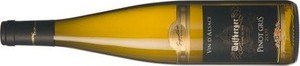
http://www.winealign.com/profile/2058-mjg

Why it matters to taste wines again

Dumplings

Dumplings

It would be foolish to think that a single taste or a brief assessment can ascertain everything that a wine will bring to the table. So many factors play into that moment in time; how that bottle came to arrive at this place, how long it had been open, its current temperature and certainly the temperament and mood of the taster.

The only true and valid important bits of information that we can cull from a fleeting meeting with a bottle of wine is whether or not it is marred by a fault, or faults. Is the wine tainted with TCA (trichloroanisole)? Does it contain high levels of Brettanomyces? Is it raging with volatile acidity? It is oxidized or reductive? Has lady bug taint found its way into the bottle? And so on and so forth. Quality can be guessed at with high probability but time is so essential to knowledge. This is why tasting for a second and third time matters.

Wines should always be afforded the opportunity to be reconsidered, especially after some bottle settling time. The fascination with seeing evolution from organic ferments is real. Wine changes, often for the better, that much we know. Wines deserve second chances, re-dos and re-tastes.

Writing updated notes is the essential by-product of re-tasting and the catalyst that acts as the chaperone to get to know a particular bottle and by extension, a winemaker’s portfolio. Here are seven new releases, coming into VINTAGES on March 7th. They are actually re-releases, having been previously made public by the winery or through the LCBO. I tried them all once again and can say with confidence, by way of the tasting note, that all seven have confirmed their quality and improved with time. These are the seven new notes for seven March 7th VINTAGES re-releases.

From left to right: Tawse Sketches Of Niagara Riesling 2013, Keint He Voyageur Pinot Noir 2012, Gray Monk Pinot Gris 2013, 13th Street Gamay Noir 2012, Sterling Vineyards Pinot Noir 2012, Bachelder Wismer Vineyard-Wingfield Block Chardonnay 2011 and Bachelder Pernand Vergelesses Premier Cru Creux De La Net 2011

From left to right: Tawse Sketches Of Niagara Riesling 2013, Keint He Voyageur Pinot Noir 2012, Gray Monk Pinot Gris 2013, 13th Street Gamay Noir 2012, Sterling Vineyards Pinot Noir 2012, Bachelder Wismer Vineyard-Wingfield Block Chardonnay 2011 and Bachelder Pernand Vergelesses Premier Cru Creux De La Net 2011

Tawse Sketches Of Niagara Riesling 2013, VQA Niagara Peninsula, Ontario (89029, $17.95, WineAlign)

Juicy, spirited and eminently approachable. Citrus and peach fruit beg to be gulped by the key keg load.

From my earlier, June 2014 note: “The gateway of the Tawse Riesling portfolio and first to be released is an omnipresent beacon for what is to come from the single-vineyard sistren. Built fruit forward from an orange zest, stone rose and lemon glade guide, this is the Sketches most juicy sensation yet. Incredible vacuum of citrus acidity waterfalling into a great white hole. Though surrounded by so many a Riesling with site specific personality, “she’ll carry on through it all.” Intensity in dry Riesling.”

Last tasted March 2015  @Tawse_Winery

Keint He Voyageur Pinot Noir 2012, VQA Niagara Peninsula, Ontario (373407, $18.00, WineAlign)

Carries the weight of the Peninsula within the bright frame of clarity that is the PEC oeuvre. In ’12 the warmth and the weight can’t help but break down to burrow into earth. Fine, grainy tannins and an increased structure will give this three more years of development but do not hesitate to enjoy it now.

From my earlier April 2014 note: “Tasted a second time, the floral lift is clearer than before, as is the understated earthiness. Also showing more body and verve so it appears the Voyageur is starting to come into its own. From my earlier February 2014 note: “Fruit here comes from two Niagara vineyards, Queenston and Malivoire. An earthy Pinot that positions itself in isolation away from its suave and handsome Portage and Benway brethren with a waft of merde. Taste brightens as a sweet cranberry, chalky, root beer float. Kudos deserved as it’s clearly recognizable as Pinot with a medium finish and a pinch of horseradish salt on a lithe 12.5 per cent frame.”

Last tasted March 2015  @KeintheWinery

Gray Monk Pinot Gris 2013, BC VQA Okanagan Valley, British Columbia (118638, $19.95, WineAlign)

Brilliant hue, like a ceiling fresco of gold-scrolled tiers. Has that feel of lemon peel shrivelling to scent. Was a Category Champion at the 2014 World Wine Awards of Canada.

From my earlier September 2014 note: “Pinot Gris with pears and more pears. A no hold barred, straight up, bring it with orchard fruit example. A spoonful of sweet lemon curd indicates a just post ripe picking and now oxidation, if not necessarily the intention. Off-dry with acidity that joins but does not round the shining fruit into absolute form.”

Last Tasted March 2015  @GrayMonkWinery

13th Street Gamay Noir 2012, VQA Niagara Peninsula, Ontario (177824, $19.95, WineAlign)

This is spot on, both as 13th Street and as Niagara Peninsula Gamay. Very ripe, to the edge of extracted distraction and less funky than previous vintages. Really defines the genre, acts the act, walks the walk, executes the execution. Drives the point, carves the cliché, go Gamay go.

From my earlier note when tasted at Gold Medal Plates Toronto, November 2014: “Spice and rich fruit head straight to Gamay welkin derived direct from the soil’s core, of Sandstone, Schwenker and the winery’s home vineyard at Fourth Avenue. Swirl away the gathered must and moss to reveal more Cru fruit than you can shake a stirring rod at. Such verve, said grit, such persistence. The thing about Gamay is, “if you want inside of her, well boy you better make her a raspberry swirl.” 13th Street has certainly made the raspberry sing in the ’12 Gamay so “raspberry swirl, mmm let’s go.”

Last tasted March 2015  @13thStreetWines

Sterling Vineyards Pinot Noir 2012, Napa Valley, California (396150, $29.95, WineAlign)

There are so many reasons not to find a thrill in this regional blend of Pinot Noir fruit but none of them stick. Sweetness, simple syrup silky fruit, brown sugar, every red and purple berry in all varieties of fields (plus ripe plums) and warm to temperate alcohol (14.5 per cent declared) all combine for full California sunshine effect. All this and I just can’t turn away. With all the excess fruit, texture and multiplicity in good times, how can I? I ask this Pinot, “how come you, how come you dance so good?” The answer lies in the feel and the ability to turn a Noir trick or two. Not to mention a rolling of barrels and Napa Valley stones through its very core. Well done.  Tasted January 2015  @sterlingwines  @Diageo_News

Bachelder Wismer Vineyard-Wingfield Block Chardonnay 2011, VQA Twenty Mile Bench, Niagara Peninsula, Ontario (345819, $44.95, WineAlign)

A new release, mindful of micro-plot. From out of a Bachelder barrel, the great mystery of wood is not that it smoulders, but that it rests on water, or in this case, on grape juice. To label this Wismer as Wingfield is to give this Chardonnay a scientific specificity, a concentration of fruit so capable of inducing the ethereal, to hover as if in suspension. This is Wismer-Wingfield. The Chardonnay that floats, like hope.

From my earlier July 2014 note: ‘Has Wismer found a cruising altitude? Has this Grand Cru vineyard from a most perplexing 2011 vintage entered the telephone booth in civilian clothes, only to soon emerge as a super hero? Will it sing, “I am, I am Superman and I can do anything?” Wismer has rounded out a bit, at present in a grounded form, but we know it will fly to greater heights and at faster speeds. From my earlier, February 2014 note: “Got game tonight, in auxiliary moxie, magisterial atmosphere and long strides up and down the ice.” Earlier notes: “Increased richesse and oomph and though I continue to hesitate to admit it, Saunders is the (Jackson Browne) elegant bottling in ’11. Wismer the (Warren Zevon) gregarious, mineral character werewolf of Niagara, what with it’s touch of anxiety, fuller texture and “bite down…draw blood!” From my earlier November 2013 note: “From the Wingfield Block within the 20 Mile Bench grand cru vineyard, ’11 Wismer is greener, in apple and sapid behaviour. The tension is palpable, quarryful, querulous, more calciferous. Fruit here is picked at an altitude as high as the lowest part of Flat Rock’s vineyard. Can a spot be pinpointed, anywhere on the peninsula that produces more piercing Chardonnay in 2011 as this Wismer micro-block?”

Last Tasted March 2015  @Bachelder_wines

Bachelder Pernand Vergelesses 1er Cru ‘La Creux De La Net’ 2011, Burgundy, France (LCBO 403485, $47.95, SAQ 12089524, $38.50, WineAlign)

Purity abounds, florals leap and the heart fills with an arrow of red fruit. So linear, so direct. Wears the crux of Bachelder integrity on its sleeve. The pinpoint accuracy of plot, the ubiquity of gypsy soul, the bandwidth of frequency. Yet another Bachelder “ere the bonnie boat was won, as we sailed into the mystic.” Acidity rears and rails right through. Tannin trails like a burning star. Ten more years will see this to a moondance of quietude.

From my earlier February 2014 note: A metallurgical slant this time around and iodine, though sweet, like a geologist’s preferred cocktail. The palette is Rothko maroon and in cohorts with what is ascertained by the palate, scheme fruits and hearts both red and black.

From my earlier note of November 2013: Has the sense to be subtle, effortless and akin to Chambolle. Not so much openly ripe fruit but more the flowers that come before. Cherries dabbed by a citrus fragrance, or the spritz of squeezed zest and an unusually smoky musk. Insinuates new world (think Oregon) though it tells a rubble tale of its limestone slope climat.

Last tasted March 2015

Good to go!
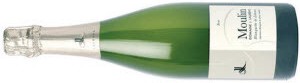
http://www.winealign.com/profile/2058-mjg