Twenty-five mind blowing wines of 2025

To perform an exercise 13 years running is commitment, on repeat annum per annum, the messenger thanking the maker. Tasting and assessing wine is like wandering a maze of streets folding in on themselves with travel playing the most significant role, adjusting weights and measures for how a list will be conceived. In 2024 Chianti Classico played their major roles, as did Sicily and in particular L’Etna. The mountain wines will again in 2025, so will South Africa and the Tuscan appellations once again. Expect Montepulciano to join the fray next year. These are the contiguous rules of vinous engagement, always in flux, committed to memory, ready for anything that comes this way.

Related – Twenty-three mind-blowing wines of 2024

This is alchemy, not science, trails in the ether, thoughts put to paper and tapped furiously across keys. Not necessarily best of, but instead that which intrigues to the highest of degrees. That which blows the mind.

Related – Twenty-three mind-blowing wines of 2023

Godello reviewed 3,500 wines in 2025, give or take, down eight percent from 2024 but such things are not a matter of wine or death. Than again the breakdown is quite consistent; thirty percent would be from the LCBO’s VINTAGES release program, 24 percent for WineAlign Exchange curation and wine reviewing service, (12) Chianti Classico, (10) Montalcino, (6) Sicilia and the remaining (18) from travels to other parts of Italy and around the world. A smaller part of one percent would be from wines enjoyed with friends, tasting groups, wine agent reps, visiting winemakers and at home. It all adds up to one great pool from which to create this list of 25, a number to represent just slightly more than half of one percent of the wines tasted by Godello in 2025. Here are his twenty-five mind-blowing wines of 2025.

Related – Twenty-two mind-blowing wines of 2022

Domaine Evremond Classic Cuvée, Chilham, Kent, England

This is the third Kent bubble being poured in these late November WineAlign fizz sessions and the third to impress. If only fruit would ripen every year in that part of the world then these vineyards and their makers’ work would really add up to something extraordinary. In time this will happen and as it stands the Evremond Classic Cuvée from Patrick McGrath MW and his Taittinger benefactors is a fine ode to a man buried in Poet’s Corner, Westminster Abbey. Sharp, focused and devilishly delicious, finely chisled and rich enough to become your great friend. Impressive indeed. Drink 2025-2029.  Tasted November 2025

Perrier Jouet Champagne Belle Epoque Blanc De Blancs 2017, Champagne AC, France

First vintage of the Blanc de Blancs was 1993, 162 years after the house was realized by Pierre-Nicolas Perrier and his wife Rose Adélaïde Jouët. Chardonnay comes from two top Cramant crus, Bouron Leroi and Bouron du Midi, aged a minimum six years and with a dosage of eight g/L. There could not be another Blanc de Blancs as subtle, restrained and delicate as this Belle Epoque, the least startling of them all, simply put, a wine of indelible grace. Goes without saying that concentration is at peak and this is where the Champagne’s great intensity gets its lift. Have rarely tasted anything so full and developed, here with obvious autolysis though that’s simply not the leading aspect to focus upon. Once again texture is all and the palate wishes for nothing further, nor is anything left on the table. 30,000-40,000 bottles produced. Drink 2025-2041.  Tasted April 2025

Vassaltis Santorini Assyrtiko PDO 2023, Santorini, Greece

Great passion vintage after vintage from proprietor Yannis Valambous alongside consulting oenologists Elias Roussakis and Yannis Papaeconomou. Now 11-plus years into their tenure with fruit coming from decades old vineyards planted by Valambous’ father Vassilis. The world of assyrtiko is the furthest from varietal one-dimensionality and in Valambous’ small corner the intricacies are boundless, multifarious and endless. The quality climbs another notch with this 2023 to speak for Santorini in not only clear vernacular but with great precision and style. Implosive and inward as they come, nowhere near opening and wound as if a wire around a winch. The volcanic salinity and coiled extract are entwined with tannins so pointed and sharp you can file your palate on its sold stone groove. All that said the levels substance and concentration are second to none. A discovery of highest interest and intensity awaits. Drink 2025-2030.  Tasted May 2025

Hiedler Ried Schenkenbichl 1.ötw Grüner Veltliner 2022, Kamptal DAC, Austria

A year older and one closer to a grüner veltliner on the cusp of developing secondary character from 60 year-old vines raised on the Schenkenbichl. A vineyard of dark amphibolite geology that gives this varietal wine its distinct smoky character. The extra year in bottle is partly responsible but also the vintage which deliver more flesh and unction than the following one. The ’22 is special, not that ’23 is not but this mix of pulpy stone fruit and flintiness combines for extraordinary waves of grüner veltliner gifts. This time next year will mark an amazing moment for this wine. Drink 2026-2034.  Tasted November 2025

Mullineux Old Vines White Wo Swartland 2024, WO Swartland, South Africa

The current and modern South African recursions of blending white varieties off of old vine plantings is a Swartland specialty that dates back approximately 25 or so years. Mullineux is entrenched in the revolution and this sku has long been a going concern. Their takes often provide more elegant solutions to certain problems with successes just as impressive as efficiencies. They generally look to two-thirds chenin blanc, with smaller proportions of clairette blanche, grenache blanc, semillon, viognier, and verdelho. Where else in the world can vine-growing and maturing experience from ancient soils and so many thriving grape varieties add up to this much complexity and pleasure? The 2024 is about as concentrated and fruit-centric as any, while the underlying mineral thematic controls the wine’s manifest destiny. This will be fascinating to taste eight to ten years from now and also each and every step along the way. Drink 2025-2034.  Tasted August 2025

Château La Nerthe Châteauneuf Du Pape Blanc 2023, AOC Rhône, France

The 2023 Châteauneuf-du-Pape by La Nerthe is composed from 40 percent grenache blanc, (34) roussanne, (20) clairette and (6) bourboulenc. As golden hued and sun cumulate as any Rhône white could be for 2023, full of local riches and generosity off the proverbial southern charts. A pure Blanc with powerful restraint and controlled energy to shed complex layers one pixel at a time over the span of many years, potentially two decades long. Drink 2026-2036.  Tasted December 2025

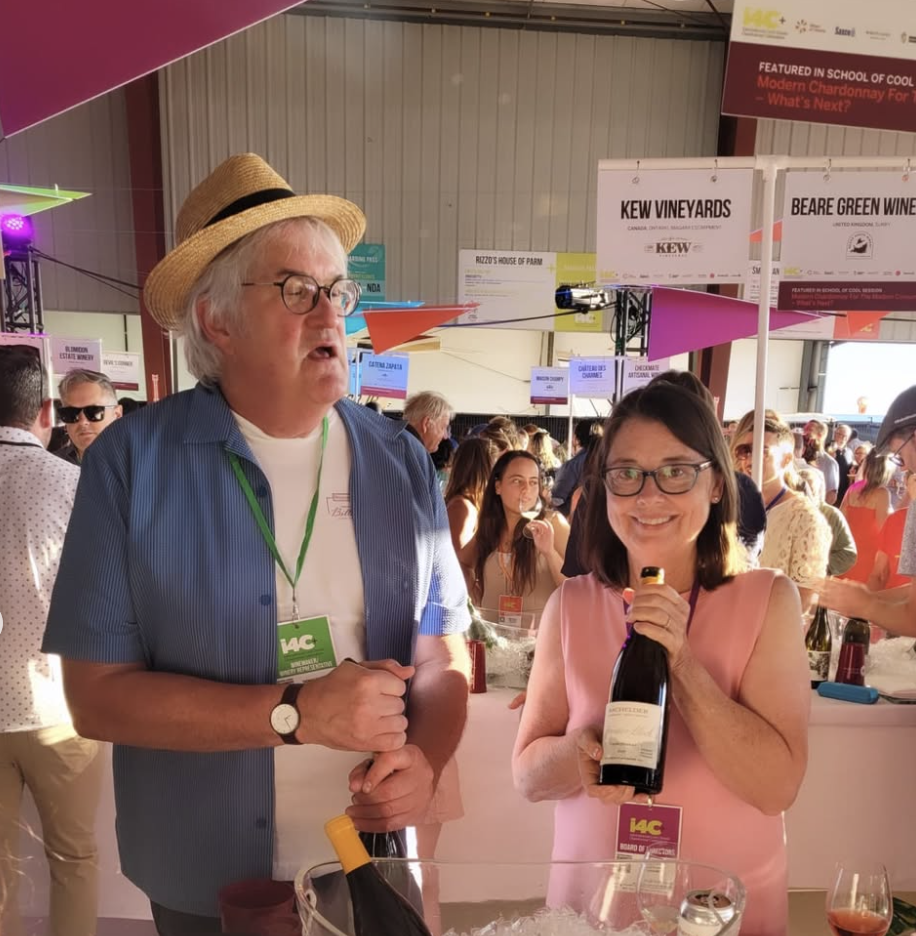
Beare Green Winery Chardonnay Clonal Blend 2023, Surrey, England

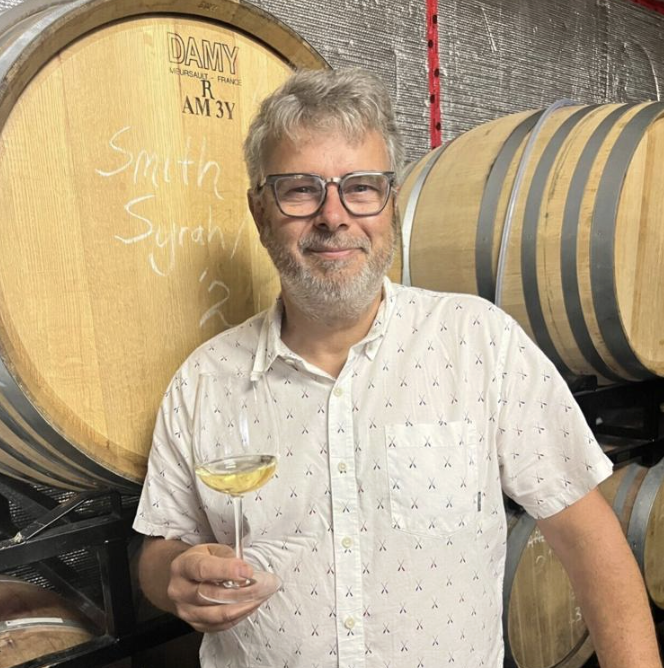
From Wine with Jimmy’s (jimmy Smith) and a project that started in 2022 with a real core aim to make “low intervention English wine.” A wine made beneath a “perennial dark cloud in a marginal maritime climate” tells Jimmy. A chardonnay of a short ripening season, an average of 700mm of rainfall (and 1,700 in 2024) for lean, edgy, on the edge of cool wine production. “I want English wines to have electric acidity,” says Smith. His chardonnay is lean yet charming, more than somehow because the wine is balanced in spite of its searing intensity. The intrigue is palpable and real. This chardonnay may age for a very long time. Drink 2025-2028.  Tasted at i4c, July 2025

Rottensteiner Vigna Premstallerhof Santa Maddalena Classico 2023, Südtirol-Alto Adige DOC, Italy

Poster schiava (with seven percent lagrein) child to represent the DOC revolution that is Santa Maddalena Classico of a very special (and volcanic) single vineyard wine. The voice of South Tyrol at 12.8 percent alcohol. Pure and abundant, crushed velvet textured and luxurious. Remember the name Premstallerhof because this will surely become a Grand Cru site for Südtirol-Alto Adige. Feel the necessity of each year getting your hands on a few of the just 18,000 bottles produced. Drink 2024-2027.  Tasted December 2024

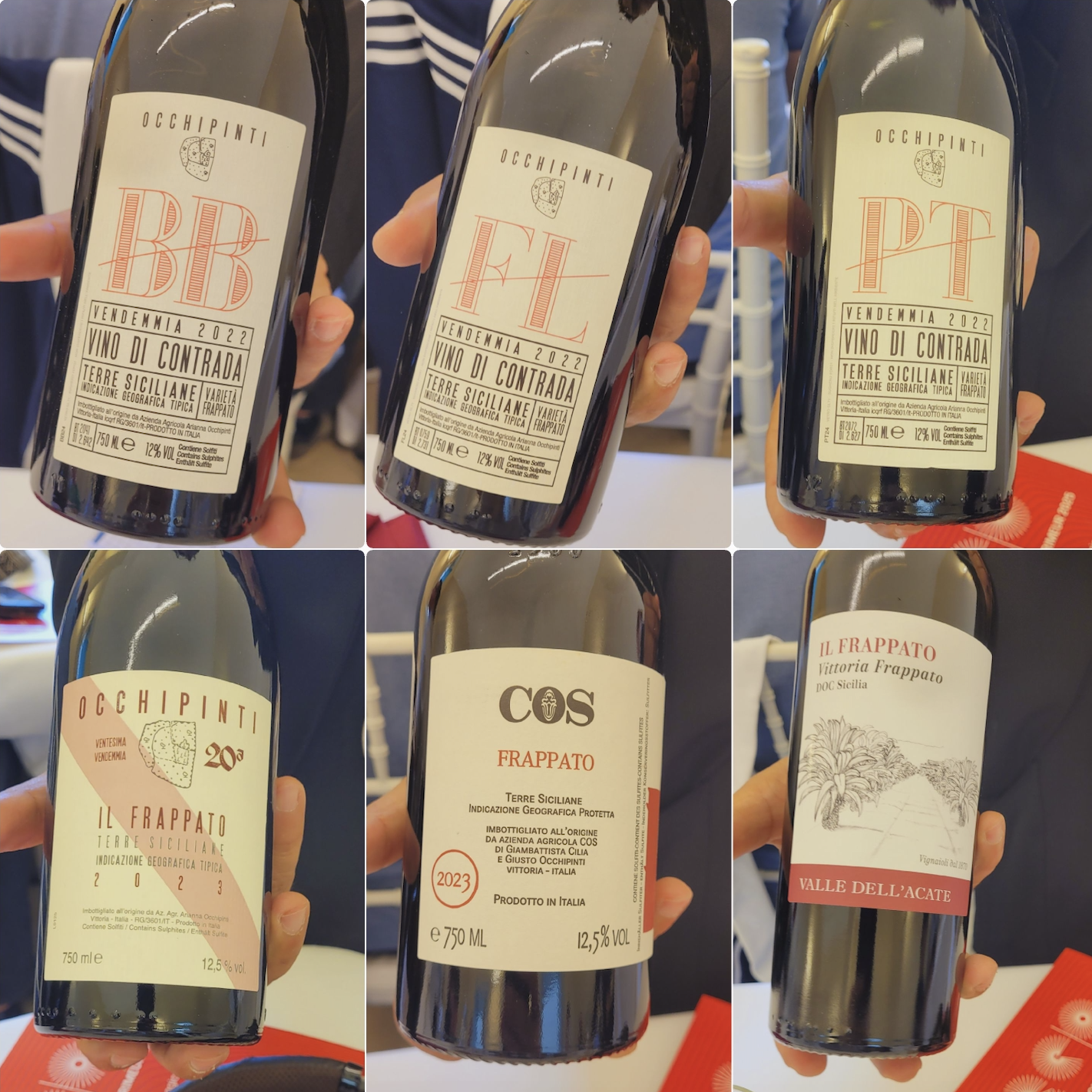
Arianna Occhipinti Bb Frappato Vino Di Contrada 2022, Terre Siciliane IGT, Italy

BB, a.k.a Bomboliere feels like the OG for a contrada-designate frappato in the Vittoria occupied Occhipinti world, a varietal expression from the home front with more experience and acumen to treat all things equal, they being available and worthy of leaning against and leading towards ultimate balance. As here from a fine and rocking 2022, crunchy exterior and chewy interior, a Balsamico crust and mix of fruits captured within. Though the Villages frappato is the most accessible it is this BB that ranks as the most well-rounded and if there is any austerity it won’t cause any psychosocial pain. Yet BB is tannic enough to age, stirs up emotion and is truly representative as a best of all worlds wine, more so than either the FL or PT. Drink 2025-2033.  Tasted May 2025

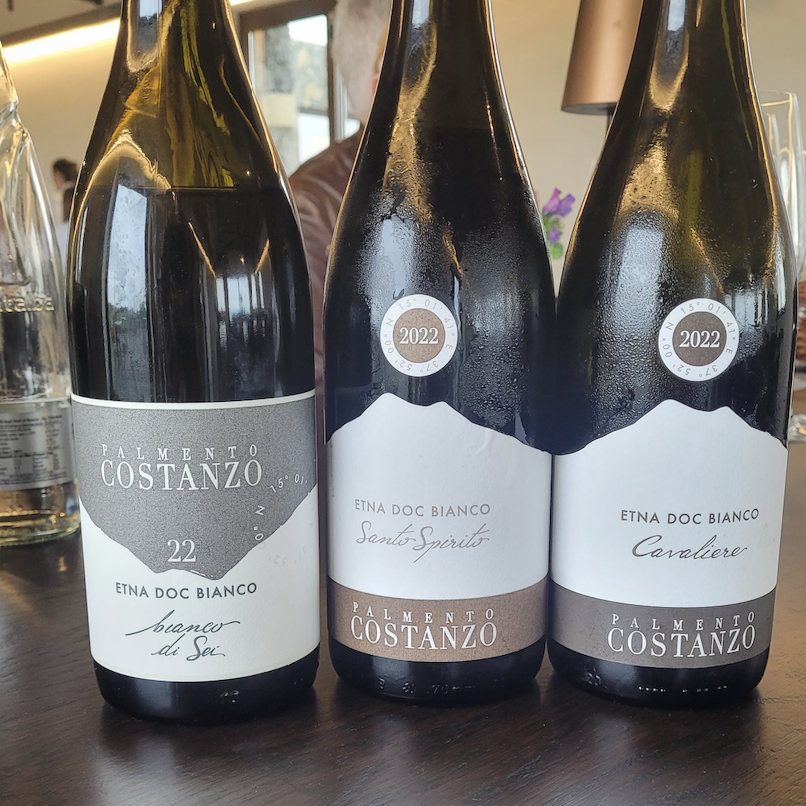
Palmento Costanzo Etna Rosso DOC Contrada Santo Spirito Pre Phylloxera 2021, Sicily, Italy

Not that the wine isn’t tight but my goodness how the tension is matched by fine verticality from Rosso with an intensity of volcanic chalkiness so specific to Santo Spirito’s 1870 lava. When vines are pre-phylloxera they have a true connection to the actual eruption and basalt because the lava had barely cooled when the first grapes appeared on the vines. A “no lo so” factor in this nerello mascalese character cools the Rosso so that herbal and stony notes prevail and persist, long after the wine has passed over the palate. A remarkable wine (isn’t it always) and another near perfect vintage. Drink 2027-2037.  Tasted May 2025

Pietradolce Etna Rosso DOC Barbagalli 2020, Sicily, Italy

Grand and expressive, epically proportioned, factor of a remarkable vineyard brought to life through the coursing of its nerello mascalese. Hard to imagine an Etna Rosso so fine and linear could be considered crushable but this is Barbagalli and its vines more experienced than just about any aboard L’Etna. Crushable as a fleeting feeling but everything is truly in place, all parts inclusive of fruit, minerals, elements and constructions right where they should formulate. The last of the wine is no such thing because the weights, measures and taciturn moments linger for seemingly ever. Wowed and energized by Barbagalli. Drink 2027-2039.  Tasted May 2025

Masseria Cuturi Primitivo Di Manduria 2021, Licuturi DOC, Puglia, Italy

A modest primitivo is many ways, especially with respect to the ways in which the world perceives how the grape is expressed and yet vintage is so essential as being the determining factor. In this case less than the hottest, acidity bursting upwards of 6.5 g/L and alcohol pleasant, present and restrained at 14 per cent. Even if it’s actually closer to 14.5 it does not matter because it would be hard to find a more balanced varietal wine like this anywhere in Puglia. The hard work, focus, respect and abiding by nature and place are so apparent and must be recognized. In the face of climate and time of history this is simply brilliant. Drink 2027-2033.  Tasted June 2025

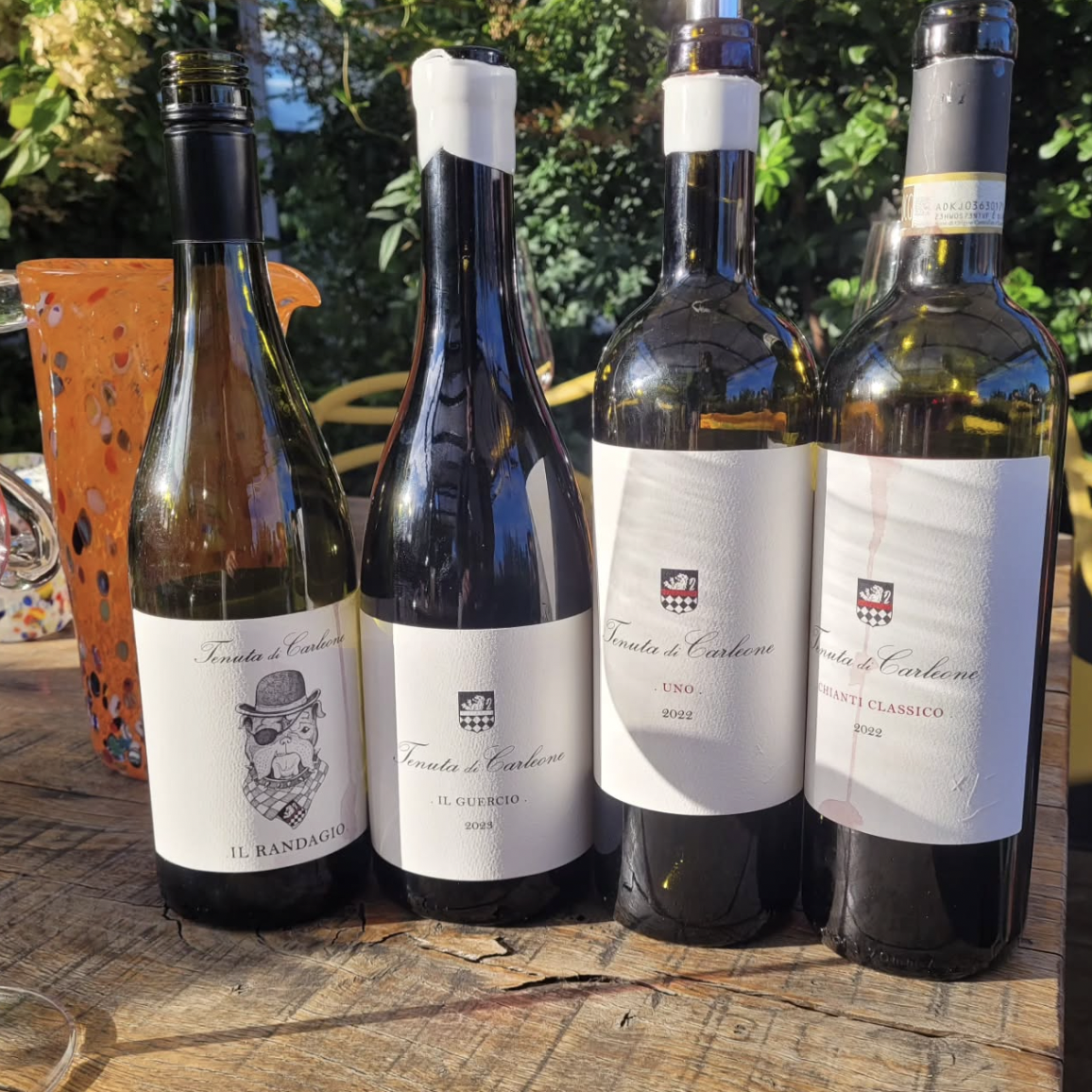
Tenuta Di Carleone Chianti Classico DOCG 2022, Radda, Tuscany, Italy

Tenacious freshness initiates this 100 percent Raddese sangiovese of blooming perfume caught at the pinpointed moment of its opening salvo. The beauty inherent is a factor of many things but who could not think that acumen is the impetus and the driver. Of plants and place, people and maker. The it factor can be affirmed with unequivocal doubt for this to be one of the top and critical Annata for 2022, expressed with a clarity and a focus at the height of all these aforementioned ideals. Drink 2025-2033.  Tasted at The Chianti Classico Collection, February 2025

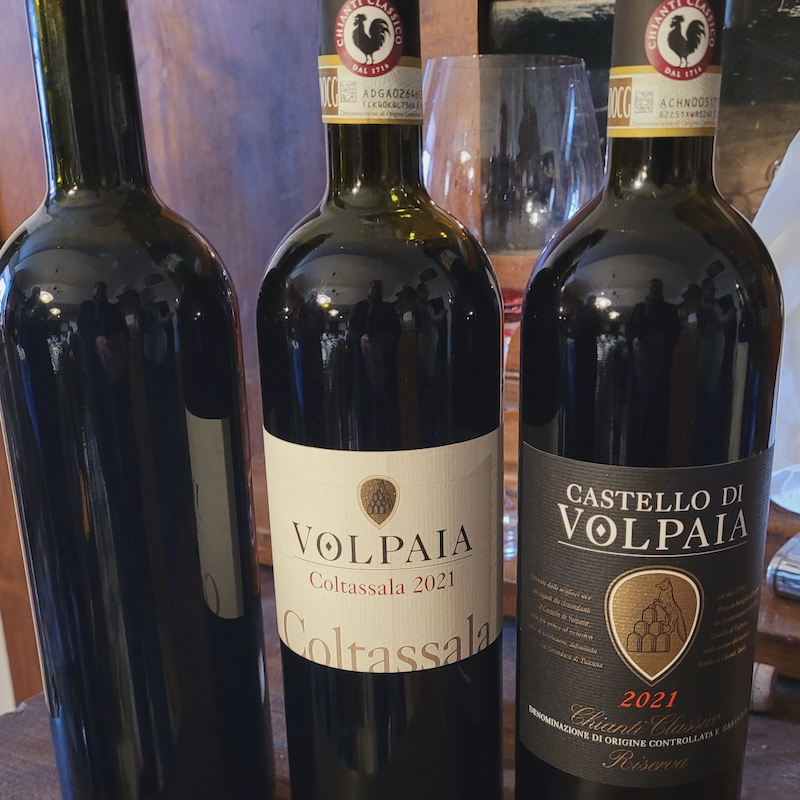
Castello Di Volpaia Il Puro Casanova Chianti Classico Gran Selezione DOCG 2021, Radda, Tuscany, Italy

The refinement of Il Puro is apparent from the start for a sangiovese as Gran Selezione 100 percent worthy of its grape and name. The pure one is Volpaia perfume incarnate, cool and floral, Chianti Classico spice masala developed low and slow, acidity as unctuous as any but always “di Volpaia.” Hypnotizing elements make this wine go straight to your head though there is clarity of thought. Also beating of hearts because of its philanthropy. The focus and finesse are grand, the hypnotic effect causing a loss for words. Il Puro 2021 is a thing of great beauty – what else needs to be said? Drink 2029-2040.  Tasted February 2025

Querciabella Chianti Classico Gran Selezione DOCG 2021, Radda, Tuscany, Italy

One of three Gran Selezione and the first vintage for three UGAs to be singled out, split from one anothem, perform acts from Lamole, Greve and here out of Radda. Aromatic stunner this Radda and the ripest of sangiovese for a UGA where that now happens with more regularity than ever before. Hard to believe the level of luxe character and substantial fruit. That and an exaggeration of Raddese acid riches, stride for stride with the fruit, together intertwined and joined at the hip. As sturdy, vertical and grippy as it is expressive of unlimited generosity, ultimately a full and purposed wine that has it all going on. Drink 2027-2036.  Tasted November 2025

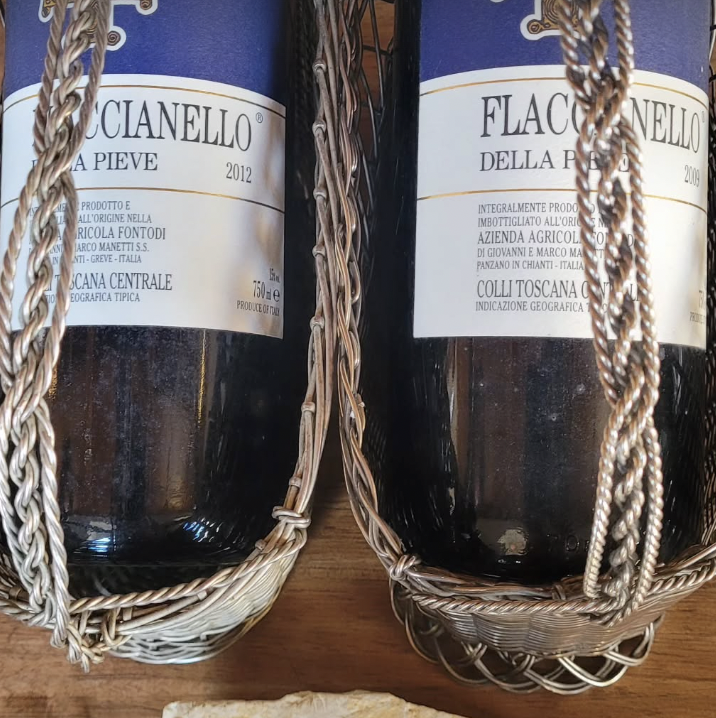
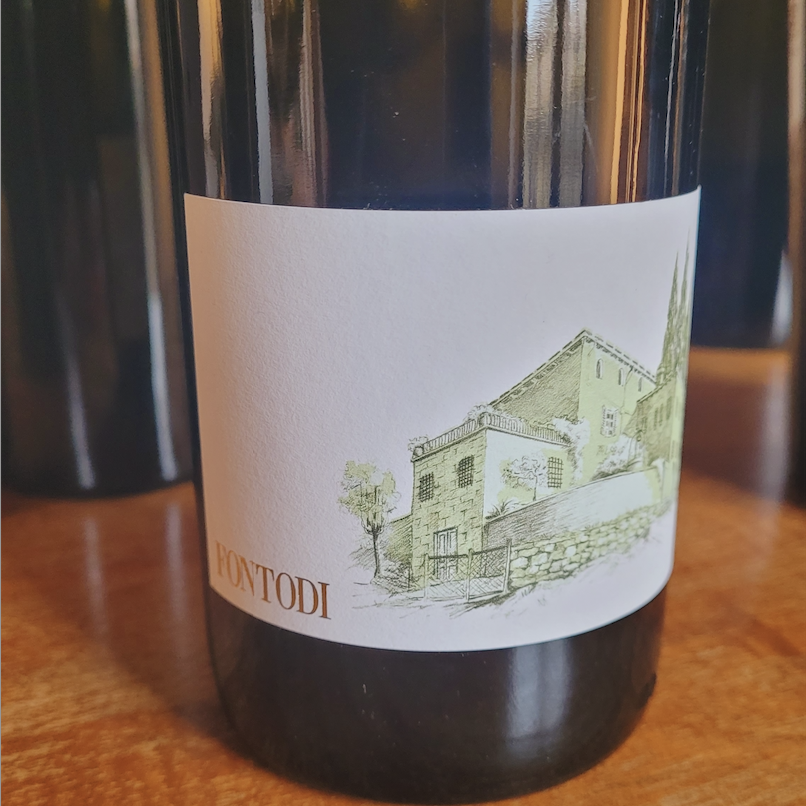
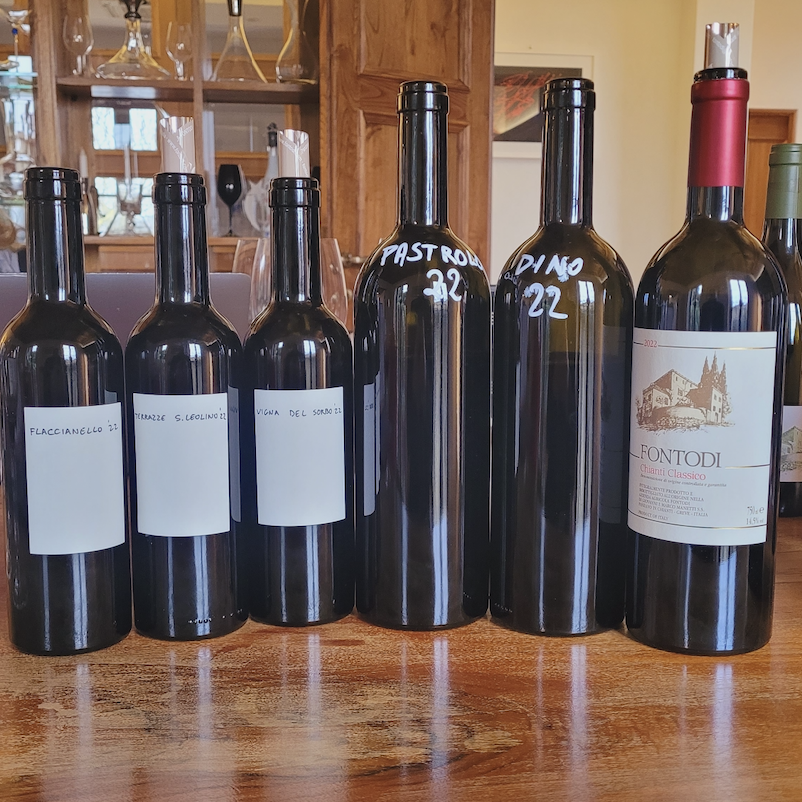
Fontodi Flaccianello Della Pieve 2022, Toscana Centrale IGT, Tuscany, Italy

“Flaccianello for us is always the finest expression of Fontodi terroir and sangiovese grown in our territory,” says Giovanni Manetti. Truth and still a certain sense of irony as coming from the President of Chianti Classico consortium. Flaccianello was struck by hail in 2022 and so one third of the crop was lost because the western vineyard Poggio was obliterated on August 16th. The other two (Pecille and La Cappellina) survived and in the end the Pietraforte that runs through still granted the freshness, structure and especially acidity. There is a more immediate floral bloom and perceived balance from 2022, also sneakier tannins than the previous few vintages of Flaccianello. The longevity is a veritable guarantee, for 20-25 years and quite possibly more. Drink 2027-2042.  Tasted February 2025

Castello Romitorio Brunello di Montalcino DOCG Filo di Seta 2021, Tuscany, Italy

Massive aromatic attack, assault on the senses, classical movement rising to a crescendo. Fruit, spice and a toasted nuttiness unique to this and only this sangiovese. A perspective like no other, mimic of the vistas from the perch of the place, not to be fully grasped understood less you stand and look out with wonder from where the wines are raised. The 2021 runs like a stream through an untouched virgin forest, silken texture phantom threaded with the invisible filaments of finest tannin. The delicacy and subtlety of this wine will surely be the impetus to see it live 20-25 years, most of them in this original state. Drink 2028-2043.  Tasted November 2025

Il Marroneto Brunello Di Montalcino DOCG Madonna Delle Grazie 2021, Tuscany, Italy

A vintage sandwiched between two of established structure at harvest time and described by Iacopo Mori as one of finesse and equilibrium. The Madonna delle Grazie selection has so much in common with the Brunello but what separates this wine is more than just a matter of concentration and mouthfeel. Usually power extends from finesse and elegance but in 2021 all the fruit and then everything in barrel was very close in character. Quality too and so the grape selection was made easier, resulting in a Selezione the team held with full confidence in their choices. The 2021 delivers fruit with many levels of violet perfumes of multifarious quality as a by product of small berries with higher ratio of skins.“ A distinction that makes this wine different” explains Iacopo Mori. Purity incarnate and from the protégé and next generation, absolute truth spoken. 9,500 bottles. Drink 2028-2036.  Tasted November 2025

Cortonesi La Mannella Brunello Di Montalcino Riserva DOCG 2019, Tuscany, Italy

Though released six-plus years after the harvest Tommaso Cortonesi says “this is the first Riserva that I bottled more than one year earlier than the rest.” This because he now prefers that the wine refines one extra year in bottle and not in botti. For him Riserva is not necessarily the “top pick” of the vineyards or vintage but rather a Brunello of a different or ulterior approach. “A matter of style,” he explains, “an example of northerly Montalcino.” Now in bottle two years and emphatically not a powerful Riserva but something cooler, more refined and well, fine. There are wines to speak as sangiovese, Brunello or Montalcino and then there are Riserva that amalgamate all three in equal pronouncement, in concentrated concern, executed with reserve and balance to speak as Riserva. Rich and generous, high level quality and quantity of acidity, no hidden fruit or brilliant disguise. Instead there is transparency, focused intensity, everything up front and personable. Like its maker. Drink 2027-2038.  Tasted February 2025

Biondi Santi Brunello Di Montalcino Riserva DOCG 2019, Tuscany, Italy

The smile in winemaker Federico Radi’s eyes tells you much of what you need to know for how he feels about the 2019 vintage. Though Riserva (like the Brunello) is released a year later than almost all others in Montalcino there is a feeling about this wine that speaks to immediate gratification it is curiously capable of providing. The acidity is tops for ’19, sweet and oscillating, coming at the palate in waves, fruit surfing its crests and crashing across with maximum flavour. After the rains of August 31 through September 2 the balancing of atmospheric conditions during a dry two weeks created ideal ripening conditions between September 10th and 15th. The only part of 2019 that needs more time in bottle for integration is wood, this being the second vintage after which new casks were beginning to replace some older ones in the cellar. In that sense there is some resurfacing on this sangiovese yet also harmony and consistency from Riserva, two aspects that will guarantee not only longevity but also an abiding to what Radi, Giampiero Bertolini and their teams desire. Demand as well, to speak for the vineyards and relate the long Biondi-Santi story. Drink 2027-2045.  Tasted November 2025

Domaine De Bellene Nuits St Georges 1er Cru Aux Chaignots 2023, Bourgogne AOC, France

Aux Chaignots is a newer and pint-sized 0.14 hectare plot of Premier Cru Nuits-Saint-Georges in the northerly Côte d’Or upslope and within a limestone throw over to those in the village of Vosne-Romanée. Makes for the most two-toned, dual-textured Bourgogne of the lot, at one crisp and crunchy and then chewy, from exterior to interior. Reminds somewhat of the formidable 2020 and its striking tannins, both capable of unleashing and crashing their power over our palates with impunity and trenchant intention. Of course this 2023 remains in an immovable state, grippy and suggestive of a hands off approach for a minimum five years post vintage. More would be the suggestion because the fortification is a secure one and there is really no sense trying to break down barriers that do not want to be broken down. Drink 2028-2037.  Tasted March 2025

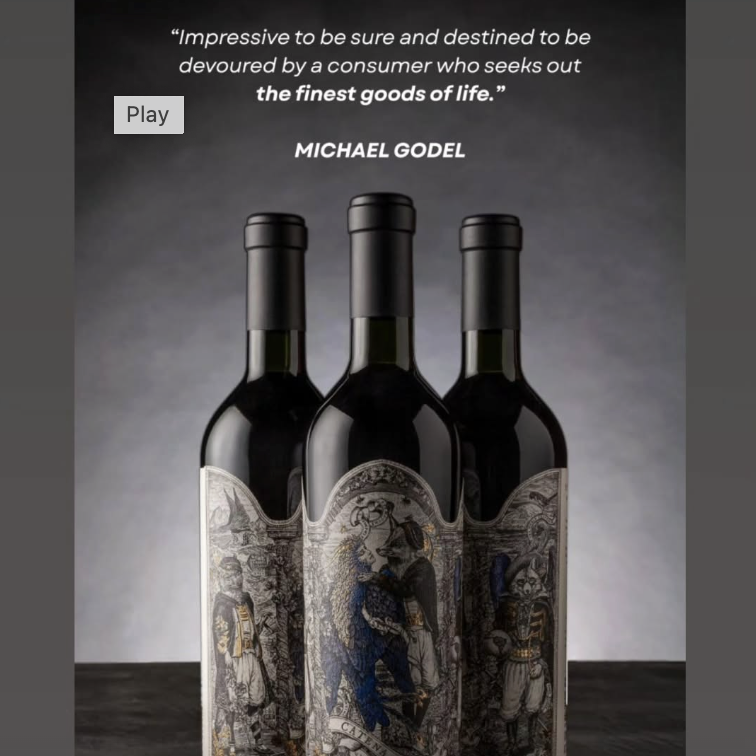
Catena Zapata Birth Of Cabernet Cabernet Sauvignon 2021, Mendoza, Argentina

The back label spins a yarn and a half, of a legend, fantasy and allegory all wrapped up in cultivar classification and grape lineage ampelography. From bees fertilization of cabernet franc to sauvignon blanc, a Cardinal Richelieu reference and farming cabernet sauvignon in Mendoza. All this to set the table for Catena’s new flagship varietal wine with a back story. The grand cuvée comes from a mix of vineyards; Angélica Sur Vineyard, Paraje El Cepillo, San Carlos, Valle de Uco; La Pirámide Vineyard, Agrelo, Luján de Cuyo. There is 10 percent cabernet franc included, macerated from 18-22 days and then aged in first, second and third use French oak for 18-24 months. A serious and layered construction with the most luxe and abundant ripe fruit meeting best barrels that Mendoza and money can produce, higher in acidity than most, in delivery of qualitative tannic conveyance and many years of slow energy release already set in motion. Impressive to be sure and destined to be devoured by a consumer who seeks out the finest goods of life. Drink 2027-2035.  Tasted November 2025

Lorenzo Fede Malbec 2019, Agrelo, Mendoza, Argentina

Feels like Fede is Lorenzo dedicating this highest end, signature malbec for a family member named Federica and she should feel blessed because this is one seriously concentrated and impressive varietal wine. As punchy, grippy and purposeful as it gets for Agrelo, aged 18 months in only the finest wood available and with a terrific vintage in bottle. Does not sniff nearest the highest Mendoza vineyards but the stuffing and promise is up there with the best and the brightest. Nothing over the top or unmanageable but clearly refined and also quite finessed. Can’t see this changing much for 10 years and could very well live comfortable for five to ten more. Drink 2026-2039. Tasted October 2025 96

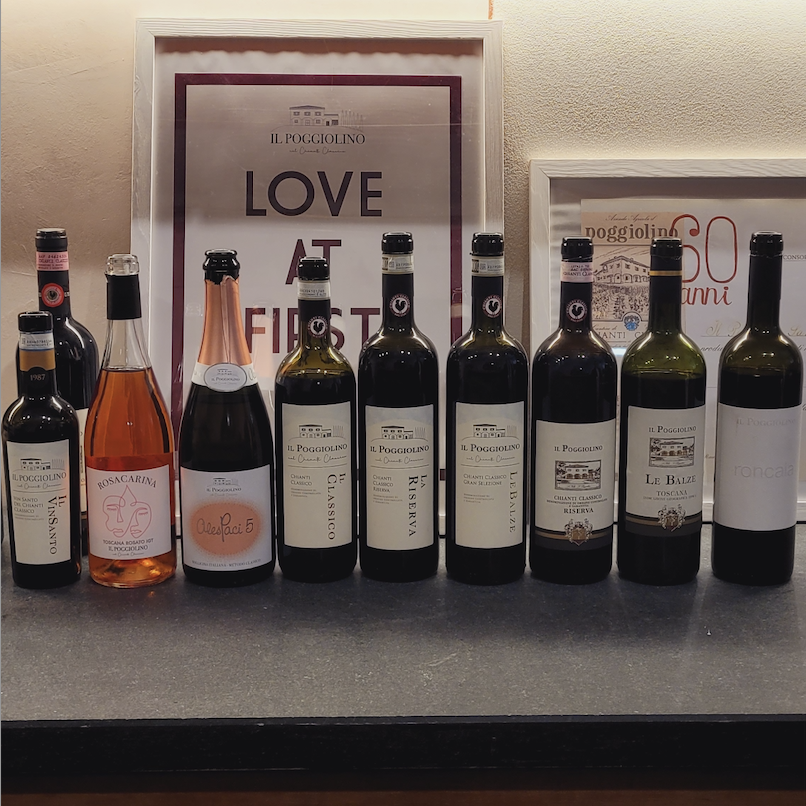
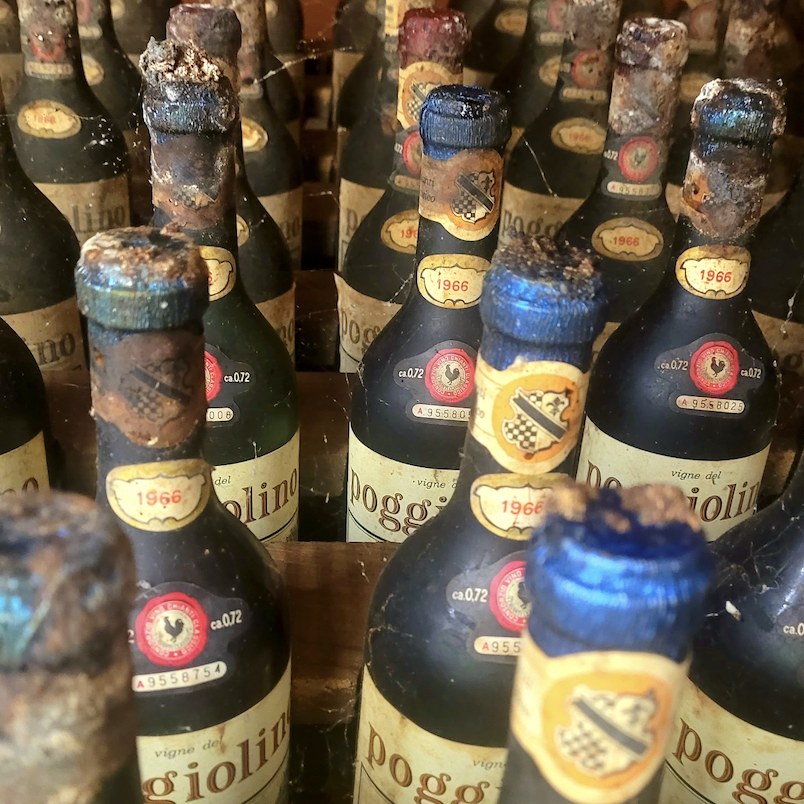
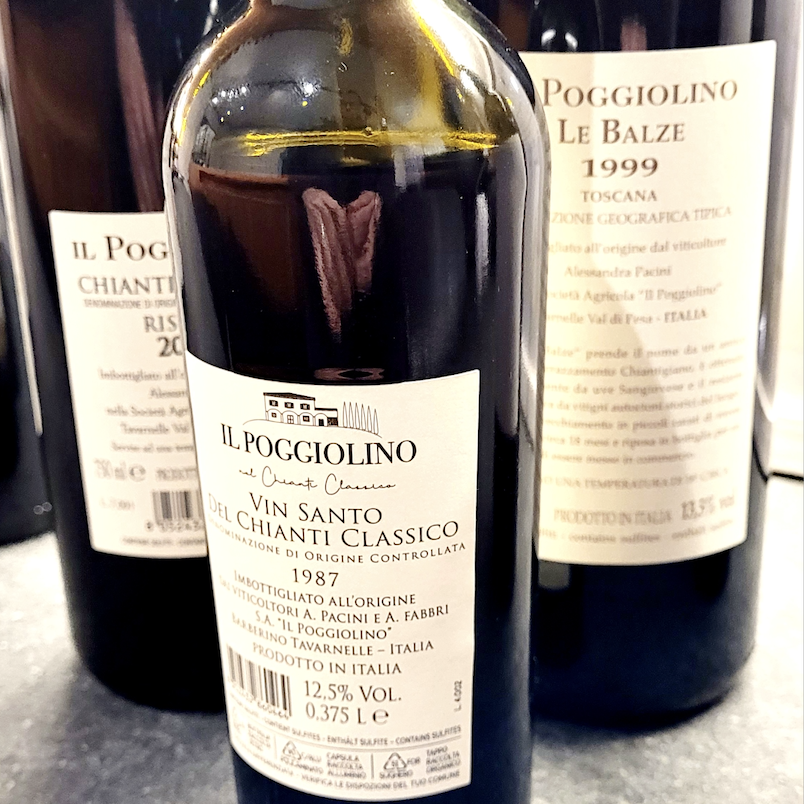
Il Poggiolino Vin Santo Del Chianti Classico DOCG 1987, San Donato In Poggio, Tuscany, Italy

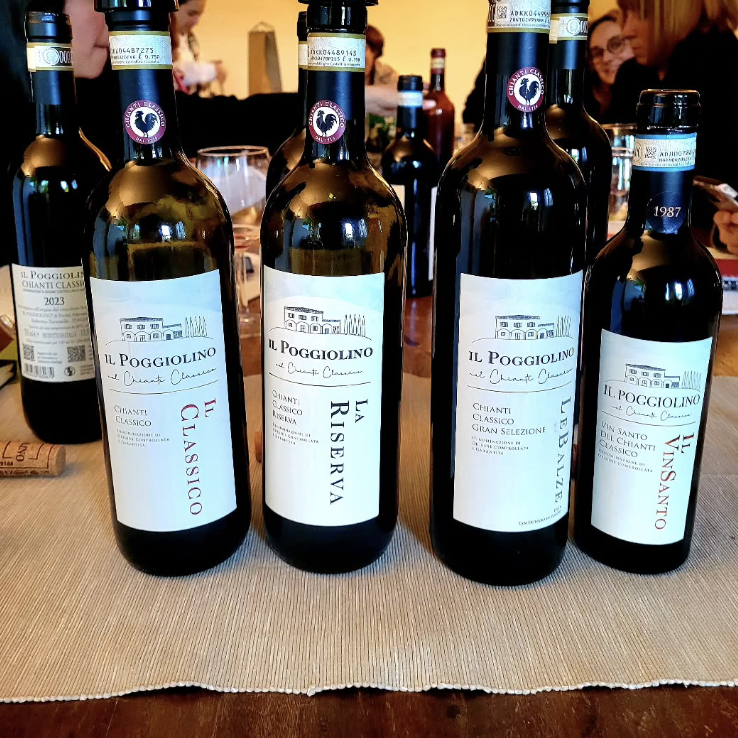
Current vintage on the market. Yes, that is not a typo. A 27-28 year-old labour of love that from trebbiano and malvasia but in the late 1990s the switch was made for sangiovese as Occhio del Pernice. An elixir so silken and smooth, no rusticity and seemingly untouched by human hands. A Vin Santo as if made by the bees, with apricot, guava, jasmine, lemon, Japanese orange and lavender. Fine, fine spice and just so special. A dream, demure and engaging. On the right side of vivid. One of the finest ever and know that you can drink this meravigliosa dessert wine forever. Drink 2025-2050.  Tasted February 2025 98

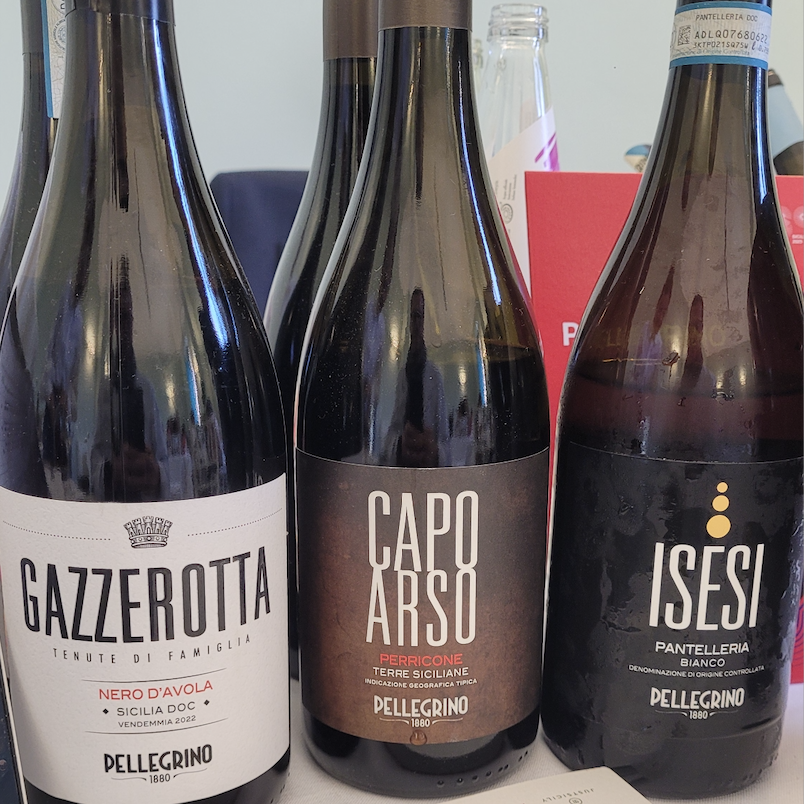
Pellegrino 1880 Marsala Vergine Riserva Doc Single Barrel Nº 018 2005, Sicily, Italy

Vergine means marsala fortified with soy alcohol and as Riserva (2005) it means more than 20 years of aging. Mainly grillo with (30 percent) catarratto and inzolia, limited production, 2,163 bottles and finished at 19.5 percent alcohol. The sugars developed could imagine honey, brown sugar or maple syrup but they are so much more complicated and therefore unnamed. Also fruit like apricot and pineapple but think moire exotically or better still just admit that something unusual and ethereal is happening. The palate is dry as the desert, the flavours, brown butter nutty, intense and spicy. This is not a dessert wine by any stretch of the imagination but something much more gustatory and ready to receive culinary inspiration. Drink 2025-2040.  Tasted May 2025

Good to go!

godello

Instagram

Facebook

Twenty-five Canadian wines that rocked in 2025

Godello in Vancouver

These past 13 years have offered countless opportunities to taste the coffered excellence of Canadian wine and in turn these Godello pages have produced 12, now 13 sets of recollection, reminiscence and appreciation. Formulating these lists has always been time consuming, the process delicate, the stress they induce troubling and wrought with hours of heedful consideration. The 13 years of tasting and assessing have accounted for more than 15,000 Canadian wines in glasses well-used, replaced and updated, through Zalto tragedies, Riedel and Spiegelau mitigation. The number 25 may appear to be an easy target because that seems like more than sufficient spaces to fill, but every year gets harder and the task weighs increasingly on the taster’s duty to accountability. These twenty-five Canadian wines that rocked in 2025 represent a cross section of Canadian merit always edging into brilliance, an annual catalogue never ignored nor glossed over, completed with conscientious thought towards the end goal of celebrating Canada’s best. Ethical and justified, by now a matter of tradition and in this opinion, a cultural imperative.

Related – Twenty-four Canadian wines that rocked in 2024

Godello in the Okanagan Valley

Twenty-five percent of this year’s tableau are sparkling wines, one less than 2024 but still a number that serves to prove the enduring coast-to-coast quality of that sector in Canadian wine. As a reminder, “the math is really quite simple. Cool climate viticulture means longer growing seasons for more developed, therefore riper phenolics matched dutifully by kept acidities. Climates have changed but Canadian growing areas have not yet lost their edge and besides, extreme events are more likely and increasingly the culprit when it comes to extenuating snafu circumstances like crazy cold snaps that take out wide swaths of grapevines. For the most part this country can still hang a wide variety of grapes to create killer sparkling wines. Be immersed in the emerging industry that is Canadian sparkling wine and you will find yourself amazed. Canadian wine regions form coast to coast are not trying to make Champagne, but, the promise grows for producing sparkling wine better than anywhere in the world…with the exception of Champagne.”

NWACs 2025

Related – Twenty-three Canadian wines that rocked in 2023

At the 2025 WineAlign National Wine Awards of Canada there were 100 medals awarded to sparkling wines. 100! 100 is an insane number of Gold, Silver and Bronze medallions allotted to any category and yet sparkling is in fact so deserving of the hardware. Of those 100 medals, 23 were Gold, 34 Silver and 43 Bronze. The two most expensive wines entered both received Gold recognition and the provincial breakdown at that level was 12 from Ontario, 10 out of British Columbia and one for Nova Scotia. In fact the average price of Gold winning wines is $56.10 which surely says something about two dozen WineAlign judges’ ability to identify the highest Canadian sparkling wines.

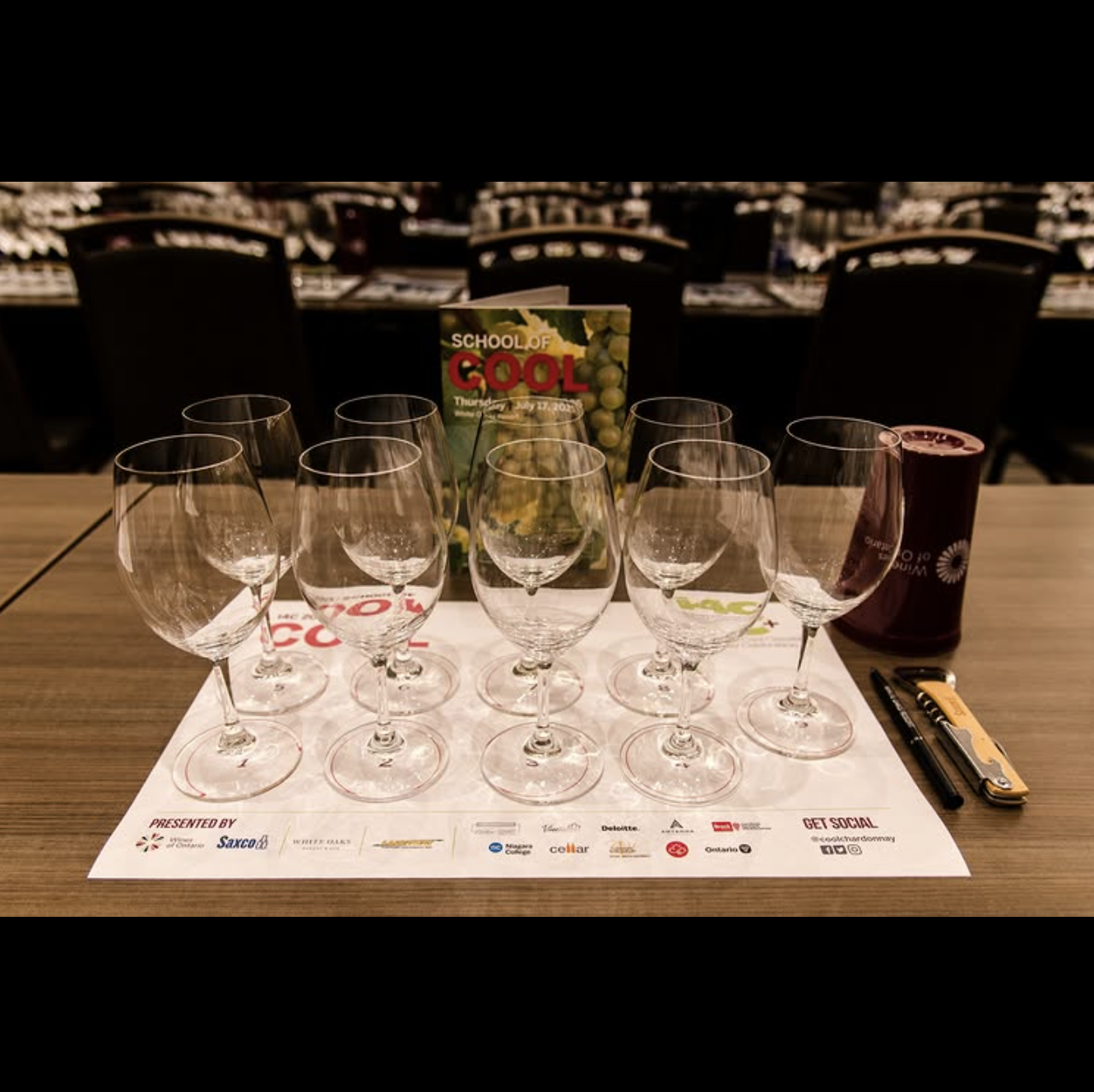
The School of Cool July 17, 2025 Edition
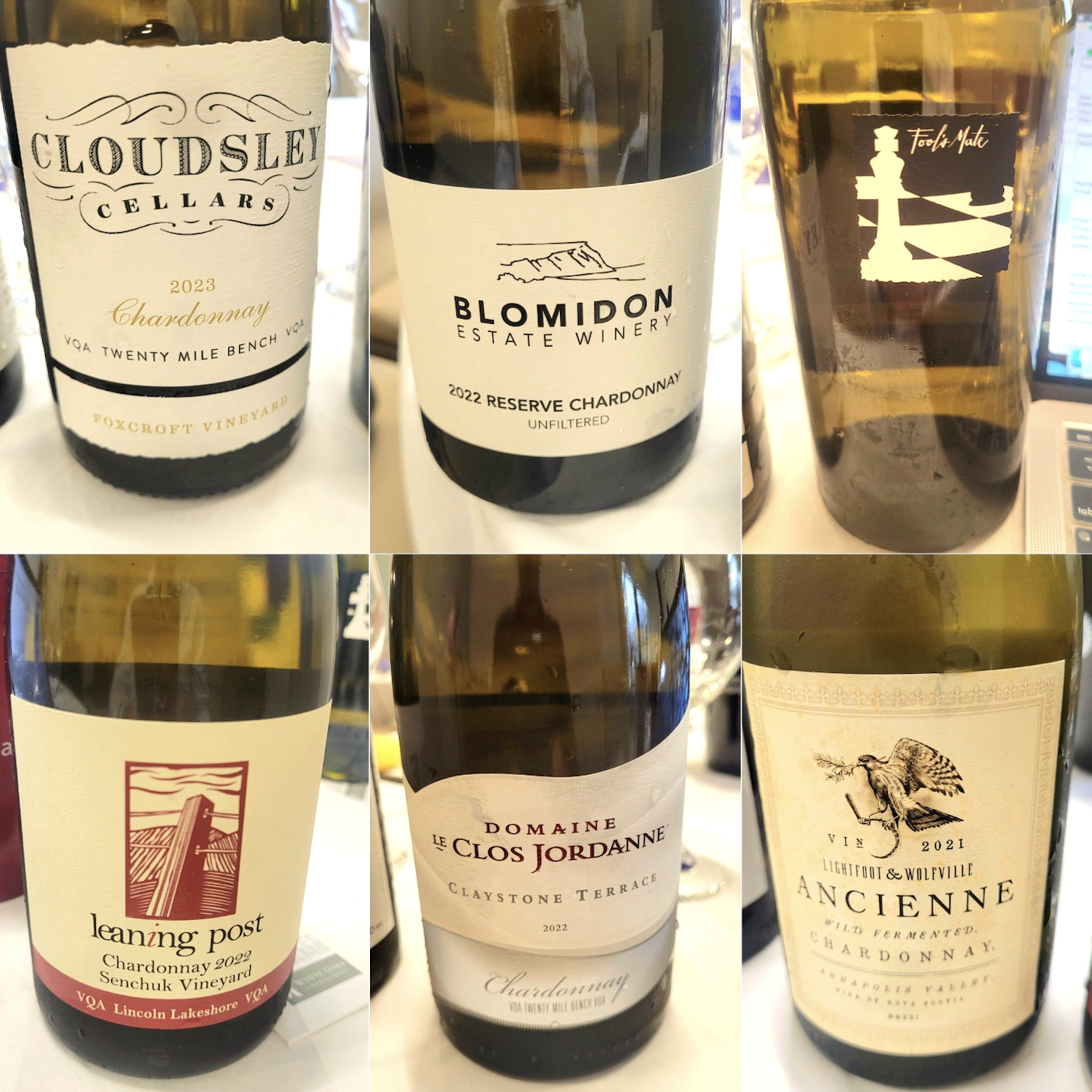
(c) Cool Chardonnay

Related – In the cool, cool, cool of the i4C

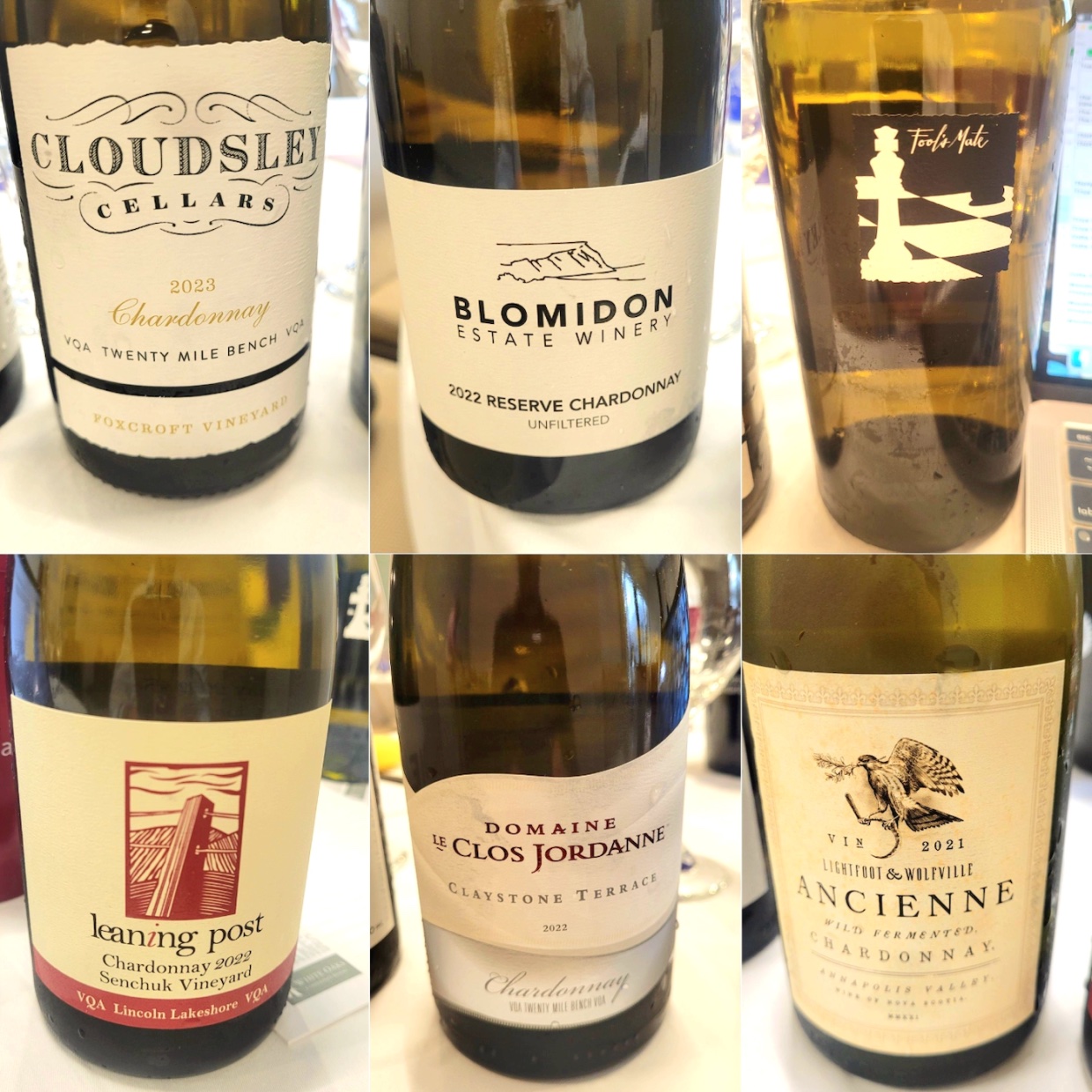
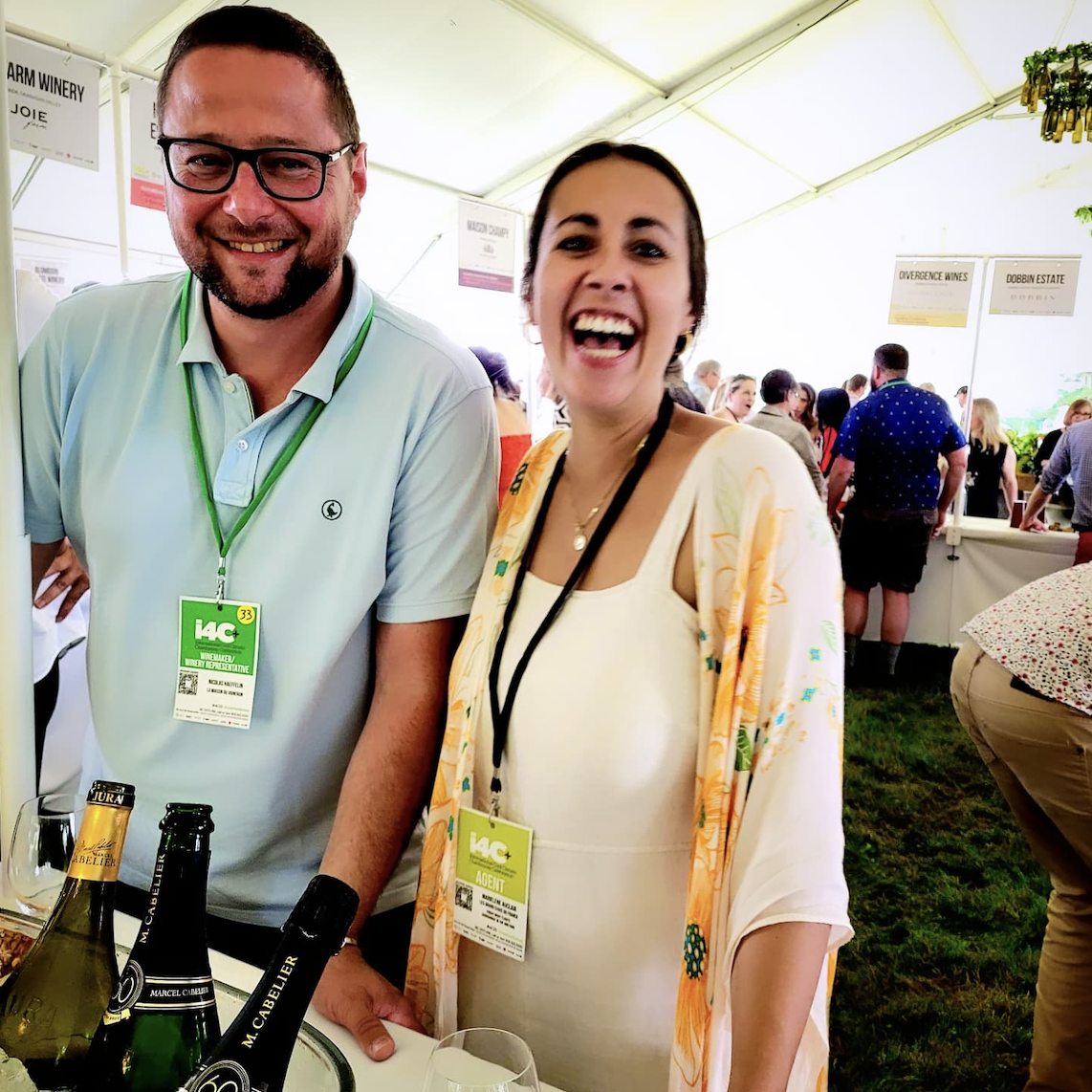
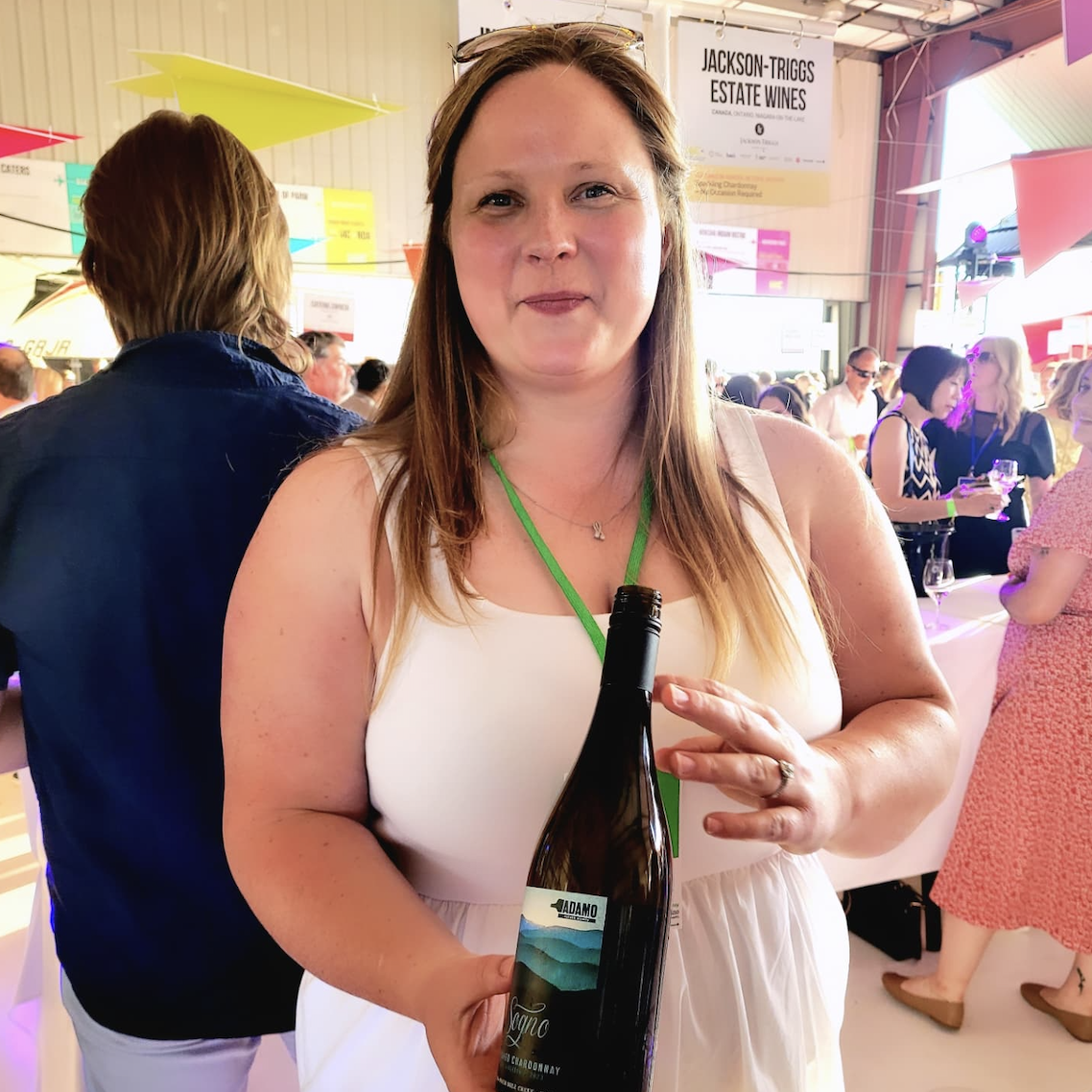
One riesling, one roussanne/marsanne and six chardonnay make up the gaggle of white wines and there is never any wonder why this country’s most successful grape variety always occupies more spots than any other single variety. The 15th International Cool Climate Chardonnay Celebration took place in July, 2025 and while every annual Niagara chardonnay experience is cool, this above the clouds 2025 edition was something other. Unexpectedly Godello was tasked with steering the educational component as emcee for the Thursday School of Cool at White Oaks Conference Resort and Spa. An honour and indeed a privilege it was, to share a stage with Canadian and international winemakers, winery representatives, distinguished minds and presenters. There was a palpable buzz in the room at this year’s School of Cool and also an uncommon level of expert conviction conferred by the moderators and panelists. The Canadian wine industry has assuredly come of age and chardonnay’s cool weekend was the perfect time to express the explorative, collaborative and measurable maturity of experience. Over those four days from July 17-20, the i4C was the coolest place to be.

Related – Twenty-two Canadian wines that rocked in 2022

Another solid showing for pinot noir although three were chosen as compared to five the previous year, a drop attributed to more cabernet franc and syrah making it into the fray. The rise in franc quality is a by-product of a collective new understanding by winemakers producing pure, unadulterated cabernet franc equipped with a true and clear message to represent a sense of pace. A confident prediction will see the number of franc hitting best of lists rise with increasing regularity, not as a trend but with the notion they are here to stay. The syrah clusterf%*k is another matter because of the winter catastrophe that wiped out most of the Okanagan’s plantings. The three chosen for 2025 are all profound examples and are here because of their excitement inducing factors, not because of empathy or sentimentality. The finale is a remarkable red blend at a steal of a price from a winery that produces bigger red blends at much higher costs, but this one is “real indeed, honest as F and clearly made in good faith.” Far too good to ignore.

Related – Twenty-two Canadian wines that rocked in 2022

Meritage is still a big deal and stylistically speaking, some of the most complex Canadian red blends are the equivalent or coalescence of two famous European attributes, they being the French garrigue and Italian macchia. Still others bring about a mix of merde Française and Italianate animale. In such cases tasters are split between the forces of complexity and flaws. Unwanted microbes are distractions, especially Brettanomyces which is not an accent upon the language of great wine. Canadian wine consumers are fortunate because their makers’ cellars are cleaner (and not nearly as old) as many Euro counterparts and to a winemaker, clean and technically sound wine is this country’s wine religion. Thank goodness for that.

Related – Twenty-one Canadian wines that rocked in 2021

Canadian judges concluded the annual 2025 WineAlign National Wine Awards of Canada with a resounding roar in thanks to the ever increasing quality this country puts forth year after year. The 2025 edition was once again held in Penticton heading up towards the northerly growing areas in the Okanagan Valley. Evening programs between site visits took place at JoieFarm Winery hosted by BC Winegrowers; Liquidity Winery with Mission Hill, CedarCreek, Martin’s Lane, CheckMate, Red Barn at Jagged Rock and Road 13; Garnet Valley Ranch with the Summerland Bottleneck Drive members. These get togethers take judging wines blind to another level by solidifying their meaning when tasted with the producers who make them.

In nine days 2026 will be upon us and the new year will mark a change in job description with the addition of a new title: National Wine Advisor to Canada’s Great Kitchen Party. Thank you to David Lawrason, on a deeply personal level, for your many years of contribution and all you have done for Kitchen Party and Canadian wine. We have all witnessed the growth, maturity and excellence of the culinary events during which David has been instrumental in bringing the finest Canadian wines to light. “I will never forget how he stood at the Kitchen Party podium some 12 years ago and introduced me as “Canada’s wine wordsmith,” a compliment taken to heart and an encouragement to always be myself. You have been an inspiration, a great friend and colleague. As my true mentor in wine journalism it feels only fitting to take the Kitchen Party baton from you, now proud and honoured to act as this next messenger for Canadian wines and to share their world class quality with Canadians, from Victoria to St. Johns.”

Godello’s annual crème de la crème collection is a matter of messenger passing on a message from all the vintners, winemakers and marketers that bring Canadian wine to the people. So many worthy wines are omitted not because they lack stuffing, honesty or quality. Twenty five is still a very small number representing just two and a half percent of what is tasted each year and so let us give credit to those that are here. These are the twenty-five Canadian wines that rocked in 2025.

School of Cool squadra; Josh Horton (Lightfoot & Wolfville), Marty Werner (MW Wines), Ben Minaker (Andrew Peller) and Dr. Jennifer Kelly (CCOVI)

Lightfoot & Wolfville Brut Rosé 2021, Nova Scotia

Organic pinot noir and by now this must be the fifth or sixth leaf for Raven Hill Vineyard fruit situated directly across the road from the winery. The Lightfoot & Wolfville sparkling wine program has matured into one of Canada’s best under the leadership of talented winemaker Josh Horton and vintage Brut Rosé takes a giant leap forward with the 2021 vintage. Beyond balance and now riveted up with a next level transference of fruit gaining in experience aged on really fine lees. The result is increased clarity and a beguiling ride for the senses. An exciting Wolfville bubble, ideal for this holiday season and into the beyond. Drink 2025-2030.  Tasted December 2025

With Jonas Newman, Hinterland Winery and The Grange of Prince Edward

Hinterland Blanc De Blancs 2020, VQA Ontario, VQA Prince Edward County

Hard not to couple Les Etoiles and Blanc de Blancs, especially when you taste the two side by each. From that blend of three varieties to here, a solo artist as chardonnay that speaks so succinctly in Jonas Newman’s scintillant of a sparkling wine. It takes a village and a warm vintage to make a B de B with this much polyteleías character, beyond luxe to luxurious and more. The estate-grown chardonnay is aged n 500L five year-old barrels for 10 months ahead of its tirage. Ages in bottle flat on slats for 36 months through to a November 2024 disgorgement. Where fruit meets limestone. The 2020 is quite glorious, thank you very much. Drink 2025-2029.  Tasted December 2025

Henry Of Pelham Cuvée Catharine Carte Blanche Estate Blanc De Blancs 2018, VQA Short Hills Bench

To invoke an Asteroid City concept, the time is always right to taste Cuvée Catherine, This becasue it’s simply never a sparkling wine we need to see in “the wrong way,” as Kafka once wrote, “to be able to see things the right way.” Many bubbles fall into the category of that conundrum but in Ontario the Speck brothers’ Carte Blanche always gets the art right. It excuses us the need to learn that artifice is the antithesis of affect, if simply because it is a fizz that presents a consistently clear vision of sparkling winemaking as an art form that casts a light, illuminates and enriches. Case in point and again with 2018, perhaps the most decadent of them all, perfectly aligning base wine fruit with secondary fermentation and felicitous acidity towards an elasticity that snaps back on the palate with each sip. If you need to ask did it turn out, the answer will always be, Cuvée Catherine always turns out. One day the H of P boys have got to pour this for the filmmaker because their’s is benchmark cinematic bubble. Drink 2025-2032.  Tasted November 2025

Godello and Pender

Tawse Spark David’s Block Blanc De Blancs 2010, VQA Twenty Mile Bench

Four months should not make much of a difference when talking about and assessing a sparkling wine spent….180 months on the lees…but time’s a tickin’ and so 120-130 days does change the matter. The soothsaying work of the late great Mr. Pender foresaw this ability to not only hang in, but do so with toughness, grit and impressive grip. The flavours are oxidative and phenolic freight demands our attention. In the end the wine thrives…and survives. Drink 2025-2027.  Last tasted November 2025

En triage 12 years and just about as dry as they come for a sparkling chardonnay that then winemaker Paul Pender made the choice to go highest acid (9.8 g/L) and lowest dosage (2 g/L). Fascinating as always to look back at some of the earliest Spark! sparkling wines from the coolest of cool chardonnay. This bottle does however feel every day of its age. Notably mushroom, toasty and autolytic. Interesting and though there is some persistent acidity the freshness for this bottle has gone long in the tooth.  Tasted at i4C, July 2025

No this is not an optical illusion but it may be a test. A 2010 Blanc de Blancs is in fact chardonnay by now aged nearly 14 years on the lees and if nothing else the colour of this sparkling wine is virtually impossible. Magic at least and the aromas tell another incredulous story. There is petrol in the aromatic mix, as if this were riesling and so maybe think about Icewine, how even chardonnay can develop these sorts of mineral-gaseous aromas with enough time in bottle. As here with sparkling wine and the most fascinating look at Spark in its many varied iterations. There is a note that reminds of Vermouth and so freshness is not the operative word but complexity surely is. Just a faint bit of Rancio, nutty and distinct, so worth the detour. And priceless.  Tasted November 2024

Dean Stoyka and J-L Groux – Stratus Vineyards

Stratus Blanc De Blancs 2017, VQA Niagara-on-the Lake

Have always found the 100 percent Stratus chardonnay twice fermented as Blanc De Blancs to reside and take a rightful place amongst the most complex in Canada. Generally speaking the wine ages six years on the lees and now eight years post vintage you can add stunning idiosyncratic personality to already guaranteed complexity, because my goodness what magic and fantasy are going on here? What wizardry of physiological conversion from chardonnay to Blanc De Blancs is happening? Scents are savoury to a level that invokes some Mediterranean macchia, phenolics are indicated by a ginger and allied friends spice masala, bitters are of a fine digestive tincture, distilled from compound leaf exotica. Not only unfamiliar but come from a wild mix of South Asian and Southeast Asian aromatics to put this B de B in a sparkling guild of its own. Have never tasted anything like it. Drink 2026-2032.  Tasted November 2025

Marty Werner

York Vineyards Reserve Brut, VQA Niagara-on-the Lake

Mon dieu the tight energy wind is ready to explode – but not quite yet. Pent up like no other Niagara sparkler, on the lake or otherwise, fuelled by emotion and toasty intensity this close to letting loose. Would wait another few months to allow for further lees meets fruit and acid development, pegging and coalescence. The sky is the limit for the Brut NV, top of the bubbling heap for York Vineyards. Drink 2026-2031.  Last tasted November 2025

York Vineyards’ Brut is a two-thirds to one-third chardonnay-pinot noir joint that sees 72 months on the lees. A sparkling sensation taking the country and apparently also the world by storm. The attention to detail, focus and determination are credible, felt with palpable energy and there is no doubt as to how much trial, experimentation and consideration went into making this and other York Vineyards wines. The Reserve moniker may at times feel like an add on but here one can imagine the assessment of base wines and the selection being both a stringent and anticipatory one. This is richness off the proverbial Ontario charts with a toasty-autolytic complex character that defies regularity. Toned, defined and appreciable because the flesh is yet to fully develop.  Tasted November 2024

Culmina Winery, Oliver

Culmina Riesling Decora Margaret’s Bench Vineyard 2021, BC VQA Okanagan Valley

There is Decora and then there is the high elevation vineyard above the Golden Mile Bench boundary qualification in the South Okanagan. Margaret’s Bench is one of the area’s top riesling sites – Think of it as the Okanagan’s version of carricante growing above the Etna DOC designation, say in Rampante or Guardiola. The levels of extract, tannin and phenolic grip gather to elevate, lift and transmogrify riesling into something other, magical and munificent. Some age has already brought about the savoury honeyed effect, like Hunter Valley sémillon and the aforementioned L’Etna mystery. But this is the Okanagan and riesling gets no more amazing than this. Drink 2025-2030.  Tasted November 2025

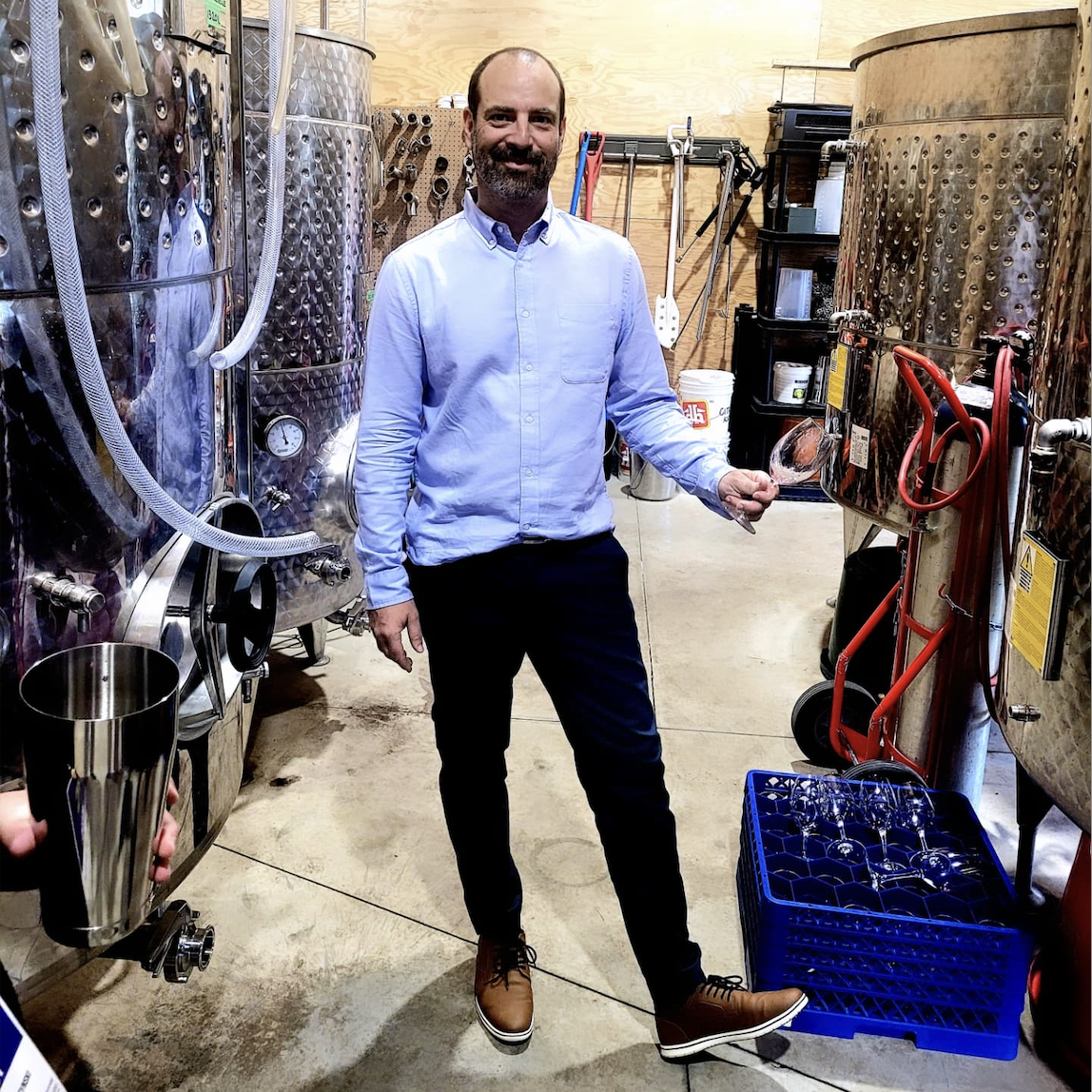
Geoffrey Moss M.W. – Søren Wines

Søren Results May Vary Roussanne Marsanne 2022, BC VQA Okanagan Valley

Can’t imagine Geoffrey Moss M.W.’s choice of wording is in ode to Limp Bizkit’s fourth studio album, though you just never know and with this rather dubious first Rhône-ish Blanc he might say “Gimme the Mic.” Perhaps also “Red Light-Green Light” because along with his first kick at syrah the pair signal the arrival of two important wines onto the Okanagan, British Columbian and Canadian markets. Results May Vary is a joint roussanne-marsanne with a gently swaying mix of optimism, optimally ripe fruit and the sweet support of stride for stride acidity. Dutiful march up the sides of the jawline and across the palate with each green grape providing, integrating and then connecting for equal contributive proportion. Terrific effort for this dual purposed nexus of Rhône varieties done up with distinction as a promise of the Okanagan Valley. Can’t wait to try this again, but also future iterations that will surely evolve towards the profound, one subtle step at a time. Drink 2025-2027.  Tasted January 2025

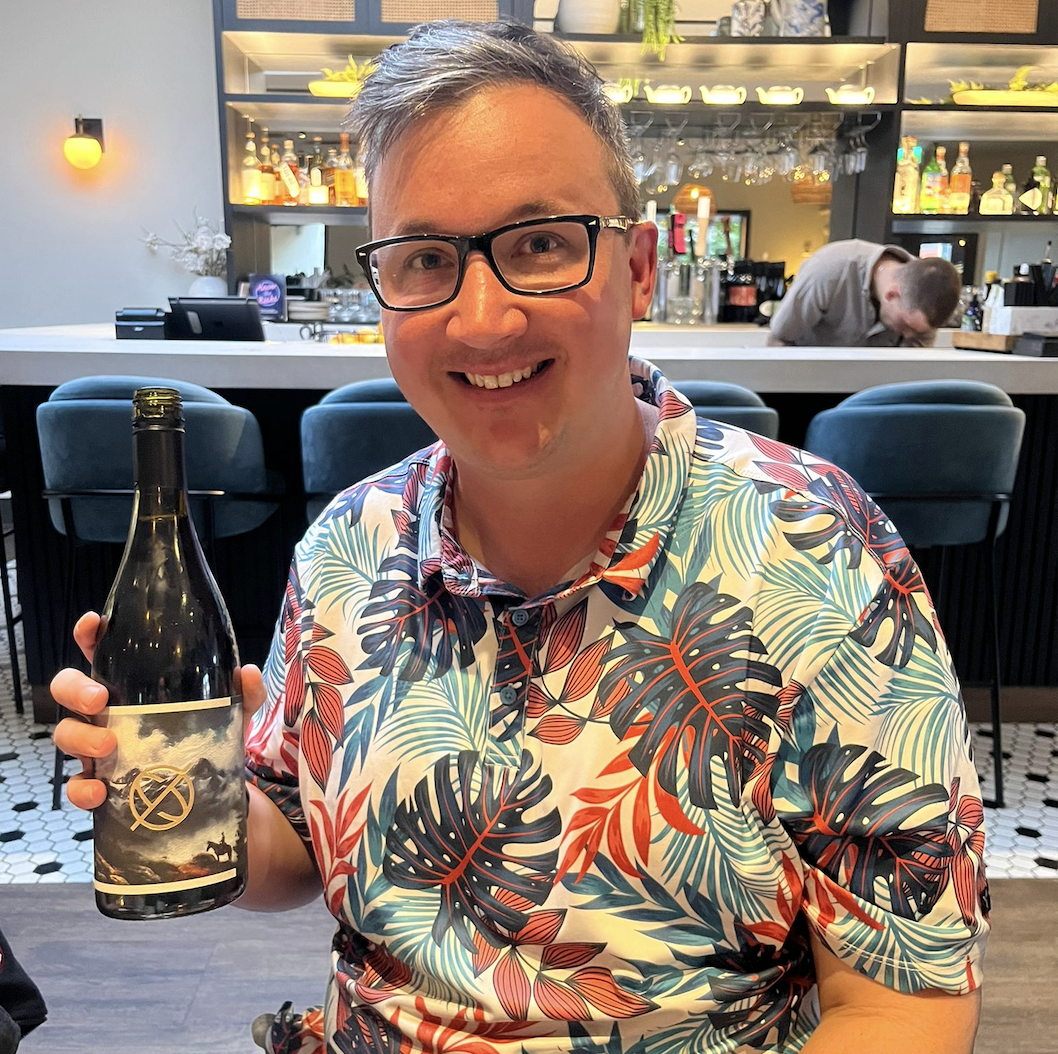
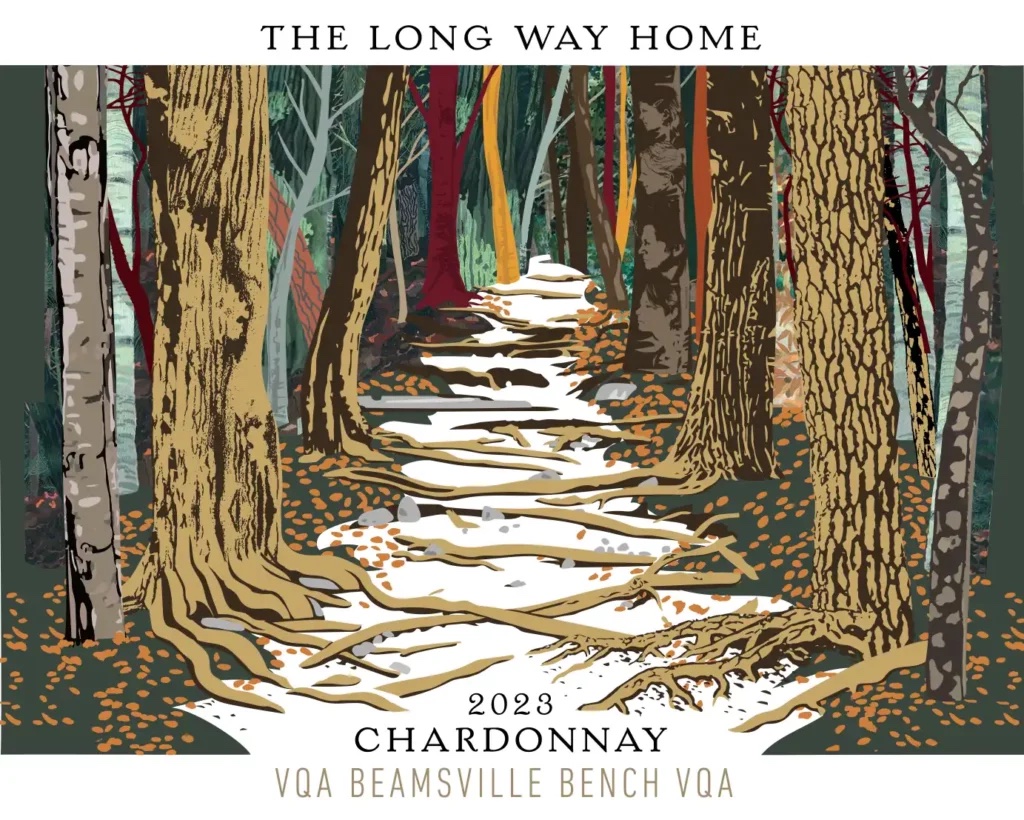
The Long Way Home Chardonnay 2023, VQA Beamsville Bench

The next Beamsville Bench 2023 Long Way Home chardonnay from one time Hidden Bench and South African winemaker Marlize Beyers may just be her deepest metaphorical exploration, of Escarpment longing and the quest for inner varietal peace. Notes of vivid aromatics and metaphors are imagined, whether conventional or unconventional, yet all speak to the long journey. Balance is struck between fruit and barrel, ripeness and elastic tension, all primed and relished this time around. Everyone waits for great chardonnay and when it is found, inner peace becomes the satisfying result. And so if you have ever said “love’s the only thing I’ve ever known,” consider adding chardonnay to the longing and looking past this 2023 would be a missed opportunity. Once again and this time with the writer’s original gravelly bawl, “come with me, together we can take the long way home.” Drink 2025-2030.  Tasted May 2025

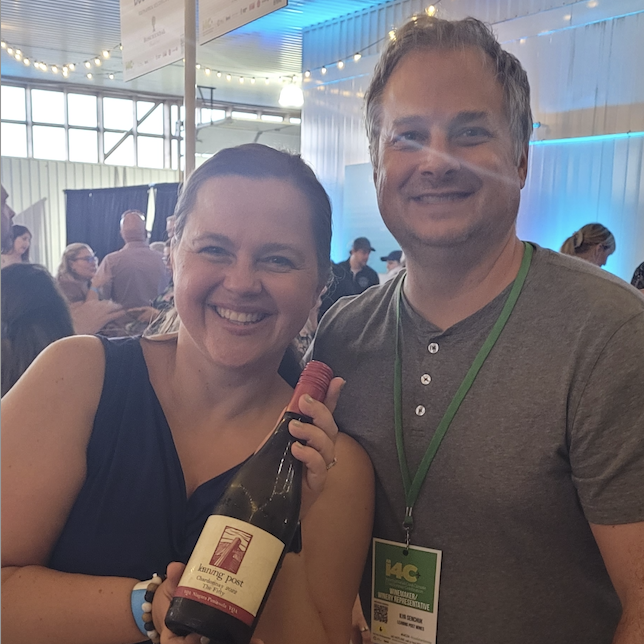
The Senchuks – Leaning Post

Leaning Post Chardonnay Senchuk Vineyard 2022, VQA Lincoln Lakeshore

Sharp and pinpointed without equivocation in home base chardonnay of vines further matured into early adulthood. Now in delivery for fineness and a development into true realism in western Niagara chardonnay. In fact place does not get any more west and so we begin to believe that the west is indeed the best. The concept may express a subjective opinion and also convey a preference for a specific geographic region but who can deny what the Senchuks have accomplished with the clay based block behind the winery. The 2022 is in fact a warm chardonnay from a cool climate that shows just the existential where and when history of a wine like this. With depth of flavour, rise and length. Drink 2025-2032.  Tasted at i4C, July 2025

Quails’ Gate Winemaker Kailee Frasch

Quails’ Gate Chardonnay Rosemary’s Block 2022, BC VQA Okanagan Valley

From first nose you just know this is proper chardonnay and without question the one that comes from a pinpointed place. Sapid and tonic-driven chardonnay with wood spice and a whiff of smoulder, slightly higher acetic presence as well. All these things are within reason and the lemony character is really what defines the wine. The aromas are distinct, the flavours compact and the finish elastic. Everything reaches out to be experienced, snaps back, retreats behind the wood and comes back out again. Repeats the process ad infinite though not without a kind of quiet or demure. Grace and charm are evident while tension keeps the energy alive. Drink 2025-2029.  Tasted blind at NWACs, June 2025

Grimsby Hillside Vineyard

Bachelder Chardonnay Frontier Block Grimsby Hillside Vineyard 2023, VQA Lincoln Lakeshore

The golden Grimsby Hillside Vineyard child is Frontier Block, with no dis to Red Clay Barn Block, but of the two the weight, clarity, organic purity and morphological flexibility here is second to none. Simple to say but there’s so much more, including an elevated stone-mineral experience come from this GHV stunner, tasting exemplar finale for the Toussaint release played out in 14 chardonnay bars. If there were any wine produced from fruit raised out of this dubious reverse L-shaped vineyard located in the far western section of the Double “L” to make a case for designating a new Niagara sub-appellation – The Frontier Block would be that wine. The stage presence enables and enacts the most positive effect on pleasure and peace of mind. Pour this to only they who will appreciate the nuance, impeccable timing, structure and philanthropy. Drink 2026-2032.  Tasted December 2025

Kaylee Barss, Checkmate Winery

Checkmate Chardonnay Capture Buena Vista Vineyard 2023, BC VQA Okanagan Valley

From the by now well famous Buena Vista Vineyard parcel near the US border at Osoyoos in the southern Okanagan. My goodness what restraint and linearity, tight lines and fruit wound around a spindle, winced like laces pulled perfectly tight. Fine and precise, a dare it be said perfect capture of chardonnay fruit from a perfect vintage. Simply, unequivocally and ostensibly wow. Drink 2025-2032.  Tasted September 2025

Winemaker Taylor Whelan

Mission Hill Perpetua 2022, BC VQA Okanagan Valley

Comes from Dijon planted clones in four blocks at Mission Hill’s Border Vista Vineyard in Osoyoos. Most southerly and warmest location at the border with Washington, one of Canada’s great vineyard sites and capable of delivering the highest quality of chardonnay. As it does from 2022 with perfectly judged reductive element for freshness incarnate urged to fruition by citrus and orchard fruit in the flesh.  Last tasted September 2025

Big and fulsome chardonnay with a whole lotta love, Rosie and barrel going on. Steals the show with fruit the AC, barrel the DC, arriving together. Working as soulmates should, integrating, sharing and complimenting on another, words unspoken. Notes of lemon, pencil led and an airiness, rising overhead. Hand in hand and this is what we ask from chardonnay. Want a whole lotta this. Drink 2025-230.  Tasted blind at NWACs, June 2025

Apāra Winery Gamay Noir 2023, BC VQA Okanagan Valley

The work and dream of Nav & Andreas only began in 2021 when land was acquired and then with 5,700 vines put into the ground the following year. Their wines are made at Rigour & Whimsy Winery in Okanagan Falls. Just 113 (sold out) cases were made of this three-day wild carbonic fermented gamay, 15 days total on skins, aged 6 months in neutral French oak, unfined and unfiltered. Love the spice cupboard on the gamay nose with freshest of fresh red fruit. Crunchy red without trying hard at any moment for the how, what and why it generously delivers in waves across your palate. Simply awesome cru-Beaujolais style. Drink 2026-2030.  Tasted September 2025

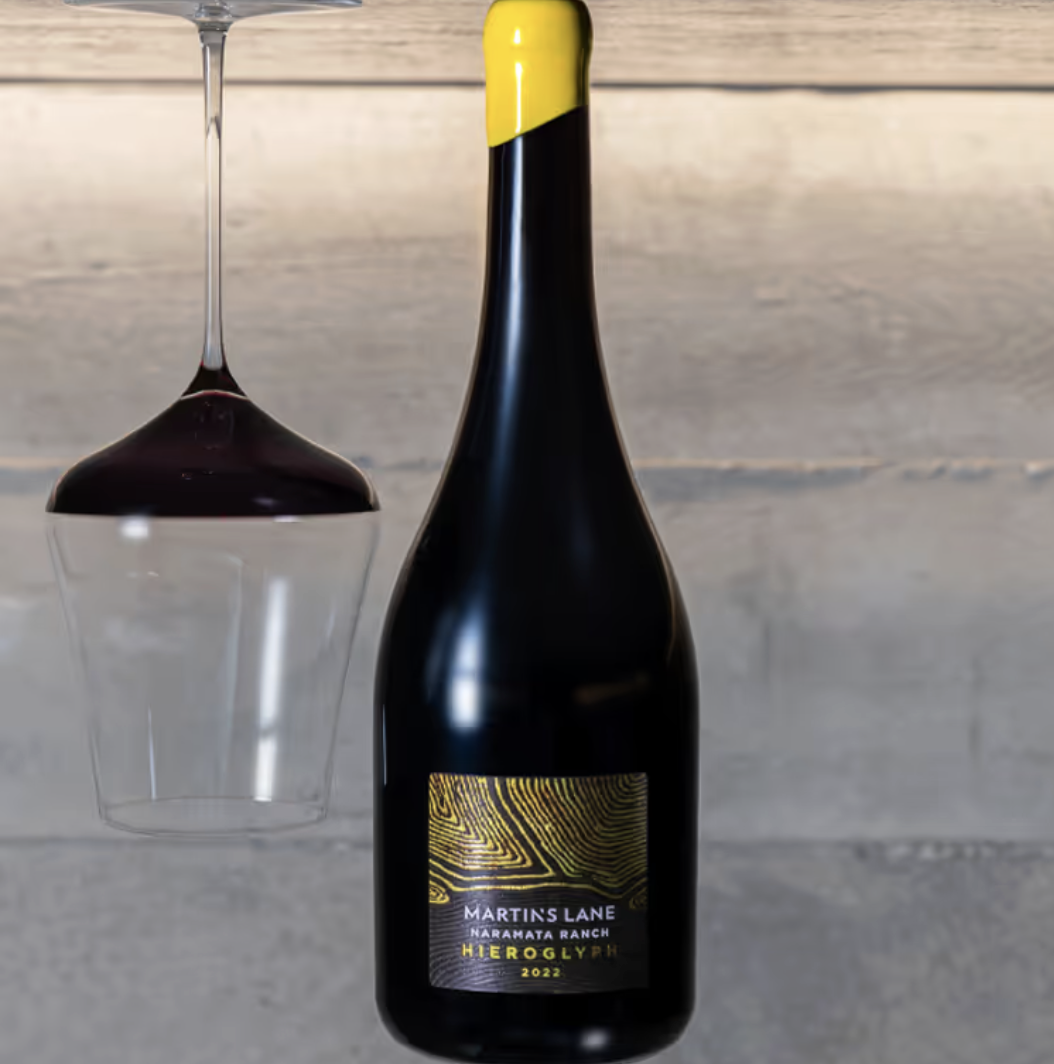
Martin’s Lane Pinot Noir Hieroglyph 2020, BC VQA Naramata Ranch

Stony does not begin to describe the nature and character of this phenolic pinot noir. First vintage for a single, south-facing block at the most northern end of the Naramata Bench, bordering Okanagan Mountain Provincial Park. Cliff-perched over the the lake and nutrient-poor soils of fine talcum powder glacial silt. Smallest of parcels for 100 cases from fruit picked on September 29th. Spontaneous fermentation, 80 percent whole cluster, 18 day maceration, 16 months in (25 percent new) French and Austrian wood. Magical conversion rate to 12.8 percent alcohol, impeccable balance between medium-key (5.8 g/L) acidity and (3.66) pH. Serious, structured and my kind of tension. Drink 2026-2032.  Tasted June 2025

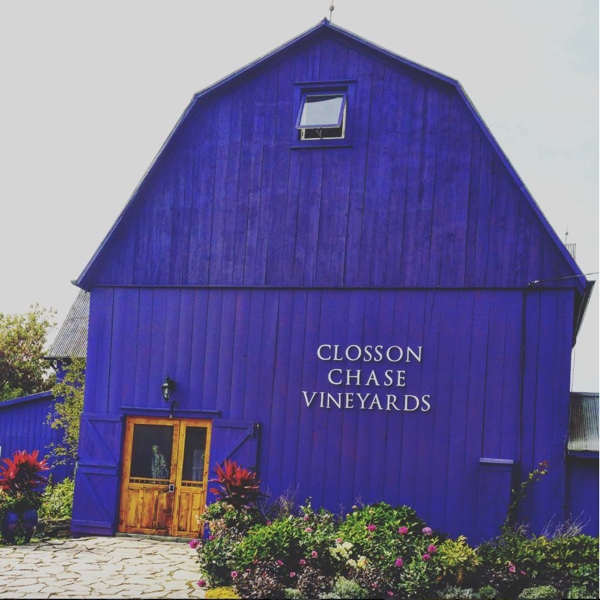
Closson Chase Pinot Noir South Clos 2023, VQA Prince Edward County

From demure to exuberance, leaving that absolutely fine and elegant 2021 and moving ahead two years into this powerful 2023 pinot noir. Then again the County and South Clos-ness can never be shaken or removed from the equation and frankly this sku is one of Canada’s most balanced varietal wines. Punch and circumstance combine for more power and pop but restraint as the wine’s middle name does keep SC grounded, with thanks to the agriculture meeting Keith Tyers’ acumen, steady in experienced winemaking hands. Some savour with verdant crunch this season, parts that will bolster structure and see this pinot noir age well into the next decade. Drink 2026-2033.  Tasted November 2025

Thomas Bachelder and Mary Delaney-Bachelder

Bachelder Pinot Noir Wild West End Wismer Parke Vineyard 2023, VQA Twenty Mile Bench

Sure feels like we’ve left coach and now live comfortably in business class aboard the Bachelder pinot noir train. Still in Wismer Parke yet the seats are in the Wild West End, in most vintages a place of untamed territory, but 2023 is not every vintage. The amenability factor now runs about as high as it could possibly fly and while Wismer Parke expresses its sneaky structure at the last possible moment, in the Wild West End it makes itself known from the very beginning. This dichotomy of immediate gratification juxtaposed against age-ability makes this the most fascinating of the 2023s. The music is no longer Bluegrass but now Wild 80s Country where guitars, Cadillacs and hillbilly rule the day. That’s where pinot noir comes in because on this train “it’s the only thing that keeps me hangin’ on.” Drink 2026-2032.  Tasted December 2025

Ron Giesbrecht – Wending Home

Wending Home Cabernet Franc Estate Vineyard 2021, VQA Creek Shores

First tasted blind and this second go leaves me duly impressed. This time knowing full well what wine is poured but no change in attitude or assessment – only reinforcement because Wending Home’s 2021 defines the beauty and potential of Niagara cabernet franc.  Last tasted August 2025

Fulsome and well-oaked cabernet franc with all the fruits involved, of blacks, reds and especially blues. Very varietal in that respect yet without any sidling kinship to varieties like tempranillo, malbec or petit verdot. This is a seamless expression in which acidity plays a key role to lift, cool down and stretch fruit in the face of skin plus wood tannin. Impressive expression all around. Drink 2026-2029.  Tasted blind at NWACs, June 2025

Winemaker Jonathan McLean, Black Bank Hill

Black Bank Hill Cabernet Franc 2022, VQA Lincoln Lakeshore

Tasting this from a bottle opened yesterday only reinforces the finding for what will go down as one of the finer cabernet francs ever made in Ontario. The cup runneth over with red fruit and varietal intangibles that only these Lincoln Lakeshore vines could have possibly produced. BBH’s 2022 was most certainly made in the vineyard, coaxed along in the cellar by the estate’s and founder Taylor Emerson’s most thoughtful winemaker Jonathan McLean.  Last tasted July 2025

Juiciest of the cabernet franc and also one of the more tannic, a.k.a structured expressions. Comes at the palate (especially) in waves and with layers waiting to be peeled away, exposed and experienced. There is everything in this ultra special cabernet franc and it will live a very long time. Drink 2026-2033.  Tasted blind at NWACs, June 2025

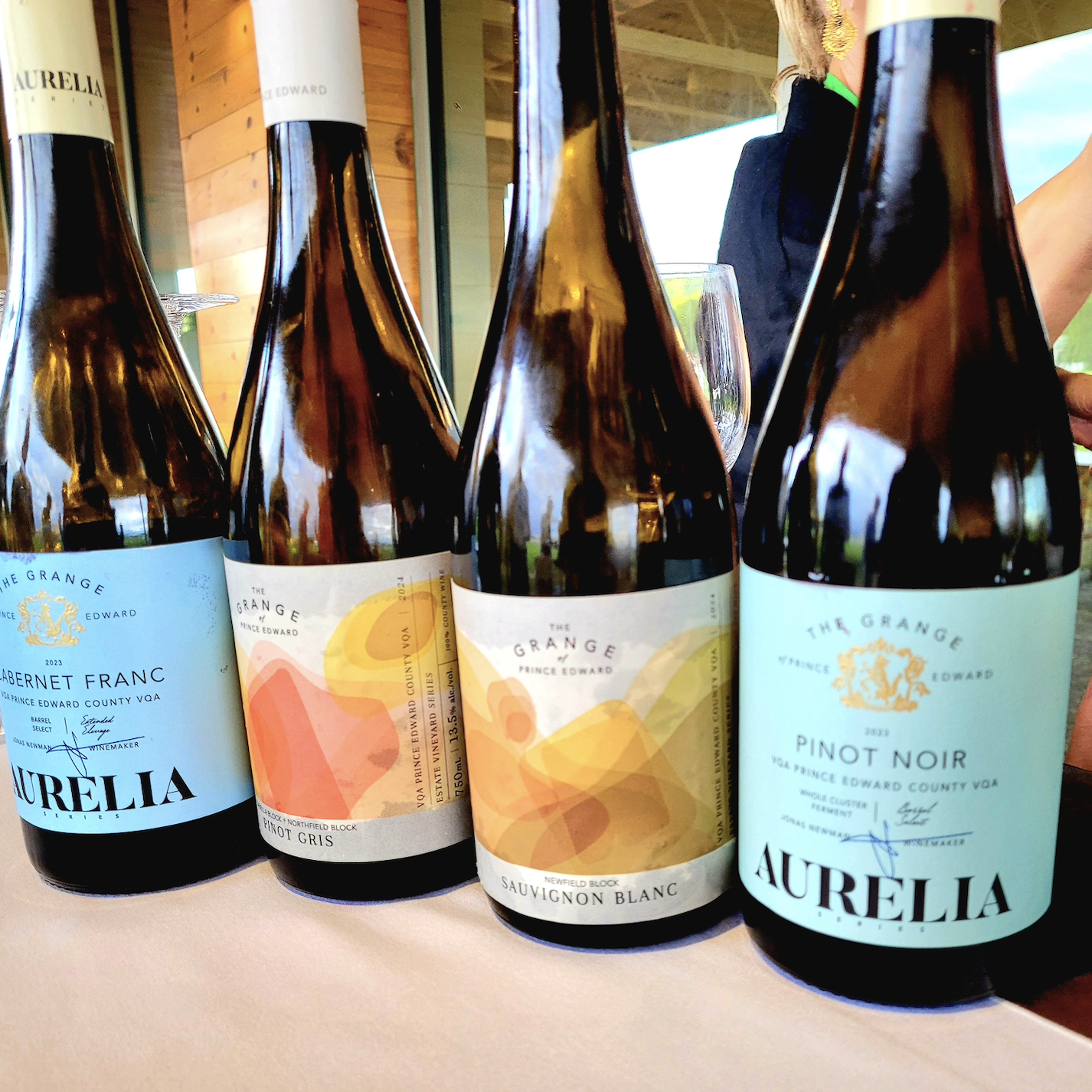
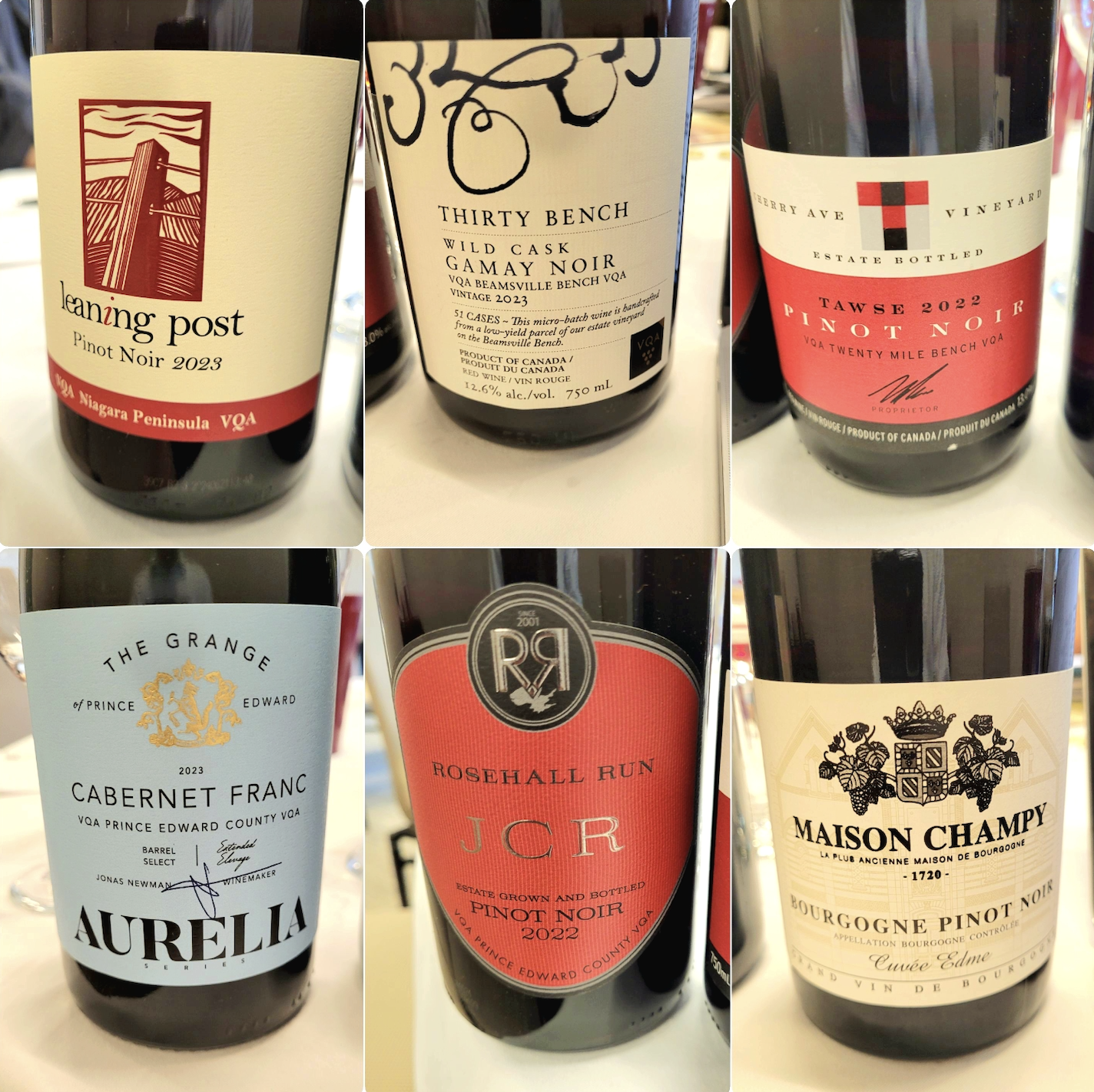
Grange Of Prince Cabernet Franc Edward Aurelia Series 2023, VQA Prince Edward County

What absolutely killer, beautiful and appropriate volatility in the sweetest and most elastic vein. There are Loire and Ontario cabernet franc and then comes along Aurelius at Prince Edward County’s Grange made by Jonas Newman – and the skies re-open. Feels like a cabernet franc epiphany sent after a storm with order restored post chaos and darkness. The wine’s opening salvo is something understood to be professional and artisanal rolling into the proverbial emergence from risk relatable to reward. Brightness and potential ensues. Near, near absolutely brilliant bottle of cabernet franc. The pinnacle is coming soon. Drink 2026-2031.  Tasted at i4C, July 2025

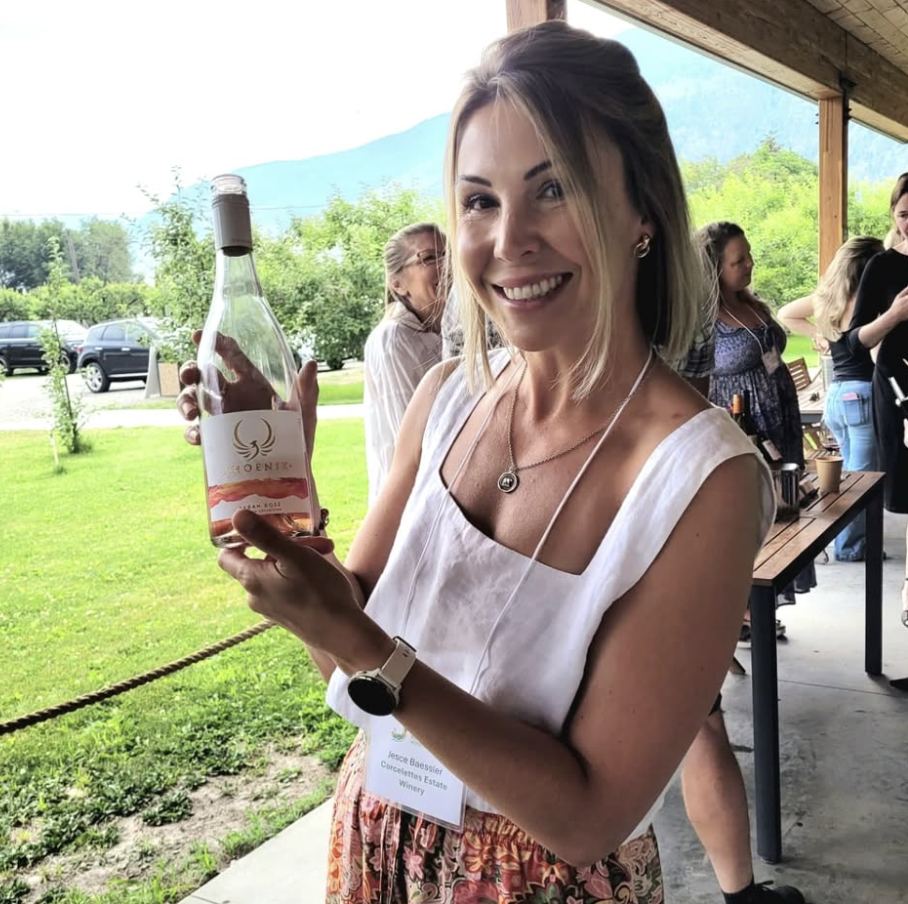
Jesce Baessler – Corcelletes

Corcelettes Syrah 2022, BC VQA Similkameen Valley

Easily the biggest and most structured syrah of the lot, dripping with hematic juices, sanguine and also the greatest ferric presence. Massive waves of fruit and tannin, wood so very much a part of the mix and the style incomparable, save for like-minded efforts and with a nod to the motherland. Smoky bacon and acid structure. The most complete example for aging long term. Drink 2027-2033.  Tasted blind at NWACs, June 2025

Rainmaker Wines Syrah Viognier The Modernist 2022, BC VQA Okanagan Valley

The epitome of (Barbecue) smoked meats as a hunch in syrah, more beef than pork and with all the attributes the variety is bent to display when a place and winemaking conspire to bring purity and reality to the table. Love the meat sweats feeling, the full concentration of fruit and the seriousness of mineral running through. Top notch without any semblance of lean, mean or green character. Drink 2026-2032.  Tasted blind at NWACs, June 2025

Black Hills Winemaker Ryan McKibbon

Black Hills Estate Winery Bona Fide 2022, BC VQA Okanagan Valley

Real indeed, honest as F and clearly made in good faith, of 42 percent malbec with carménère and syrah for one of this country’s most determined and yet genuinely restrained red blends. There is no mistaking or missing the purity of the blue meets purple fruit of malbec, nor the righteous use of toasty and sweetly vegetal carmenère. The syrah is the tie that binds, the meaty and juicy rare cut of beef that lends both a mildly smoky but also rich depth of plasma and iodine. You will be forgiven for imagining Chile, Argentina or South Africa, yet you will be rewarded for celebrating the Okanagan Valley-ness of the final effect. That from a complete wine which is silken, virtuous and proper. Drink 2025-2028.  Tasted September 2025

Okanagan Valley

Painted Rock Syrah 2022, BC VQA Skaha Bench, Okanagan Valley

The 2022 is a bold and patented syrah with trenchant purpose and likely clocking in at a higher alcohol level than the rest of the Painted Rock reds. Just a hair short of 15 percent, wily, woolly, fruit gilded and exotically perfumed to the hilt. Silken and suave but not without a sense of “animale,” as can also be said of some northern Rhône syrah. Drink a glass too fast and you may feel as though you are sporting a hairshirt on the skin as a form of religious penance or self-discipline. The structure is in fact impeccably conceived and constructed, which is to say a few years down the road you will appreciate this wine for how it has moved from green to red. Share it with people who make a difference in your life, put on the seminal pop-transition record by R.E.M. and say to them “feed me banks of light and hang your hairshirt on the lowest rung. It’s a beautiful life.” Drink 2027-2034.  Tasted April 2025

Good to go!

godello

Godello in Vancouver

Instagram

Facebook

Sizing up southern roots in Puglia

    Squadra 2025, Radici del Sud

Radici del Sud

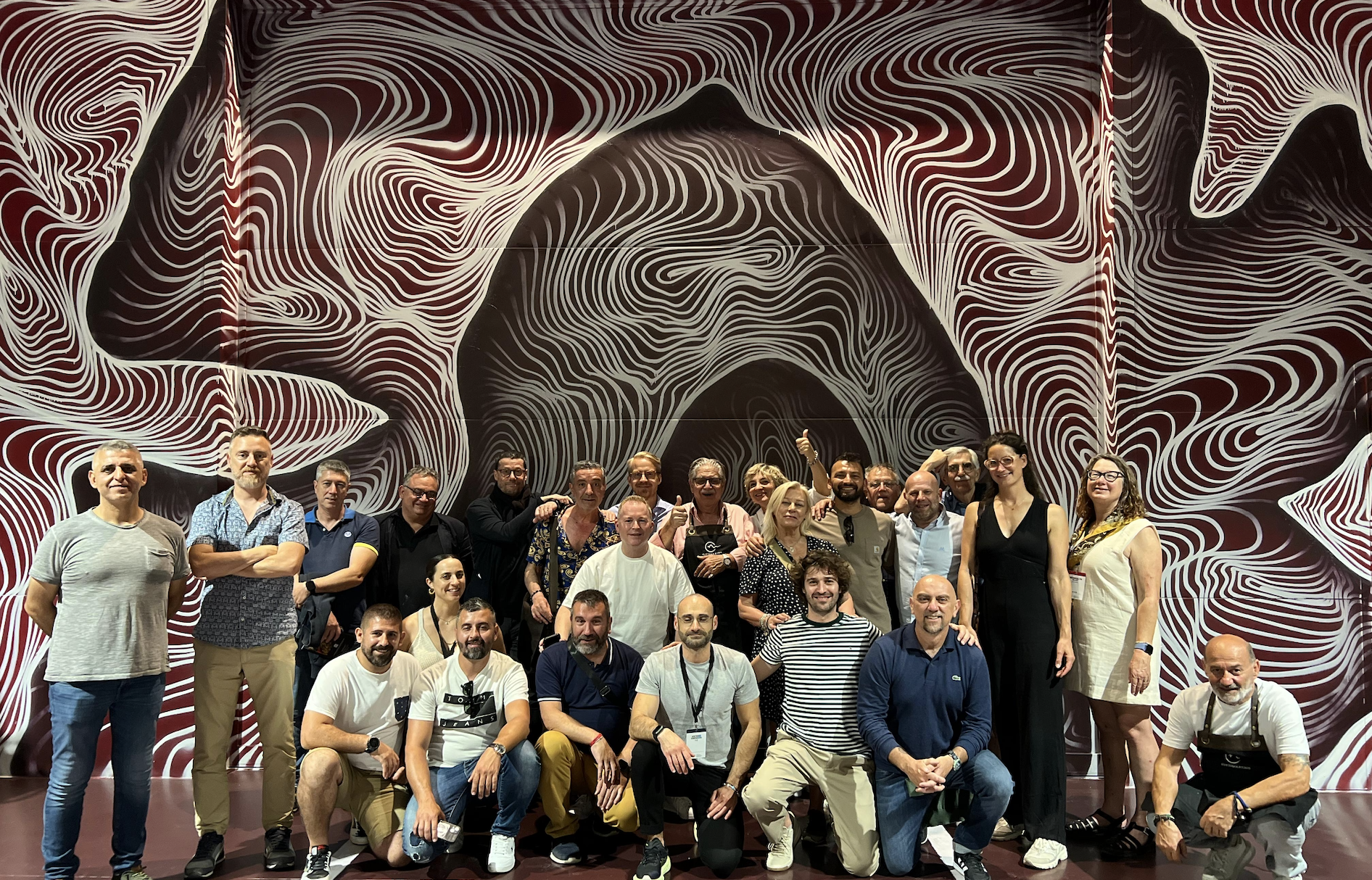
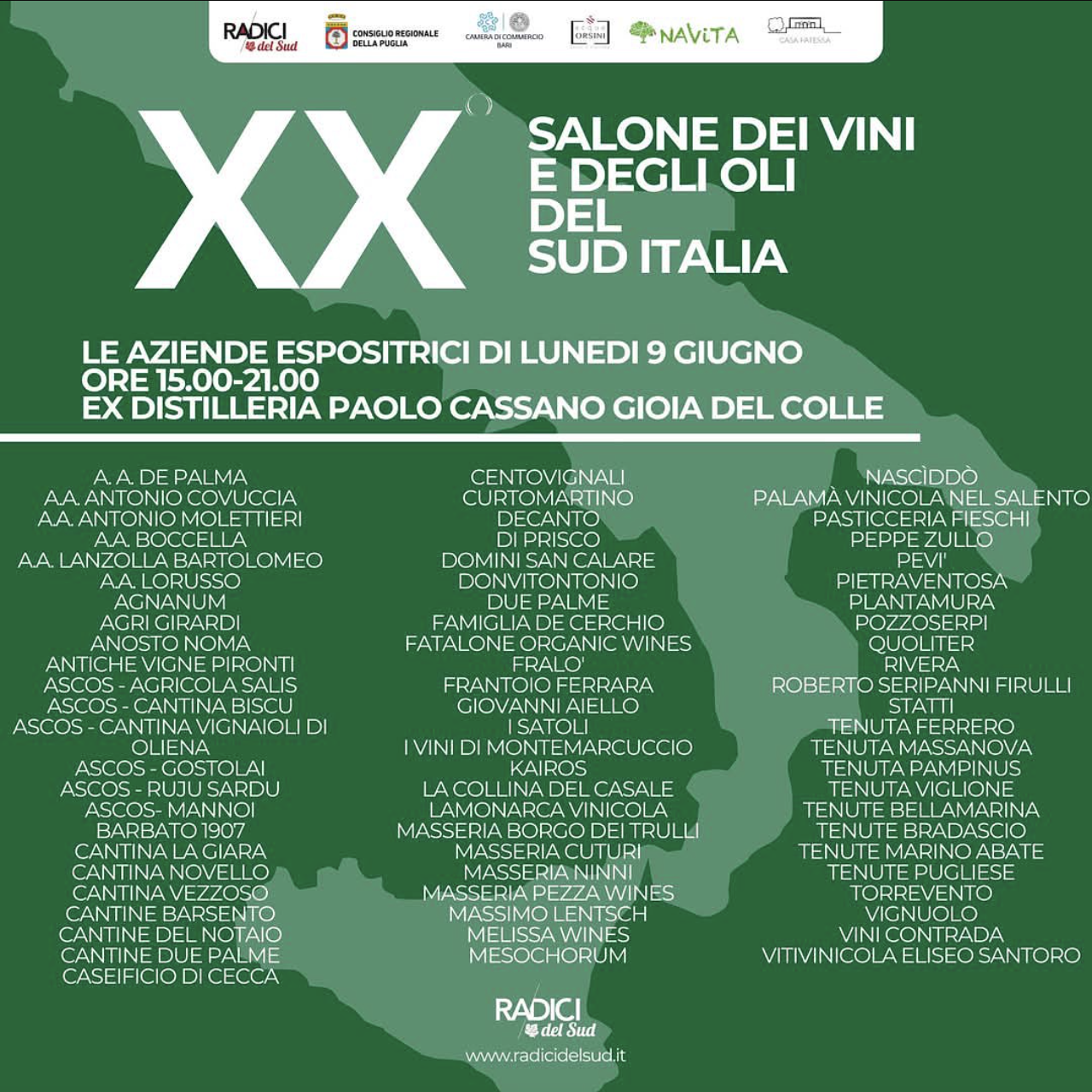
At the behest of friend, colleague, mentor, journalist, educator and master Italian wine specialist Richard Baudains, Godello travelled to Bari and then to Gioia del Colle to be a party to, tour and judge southern Italian wines at the 20th edition of Radici del Sud. The events took place from June 4-9, 2025, including the blind tasting wine competition inside the Former Distillery, now renovated events space of Paolo Cassano. Over the course of five days a group of writers and buyers transversed the Gioia del Colle and Mandurian landscapes, walked the hallowed streets of Bari, broke bread with the Apulian natives and engaged with the Nepente di Oliena Cannonau of Sardegna. At the competition four national and international panels blind tasted more than 100 southern Italian wines in two sessions, but only after zeroing in on and celebrating the multifarious wonders found within the 500,000 annual bottle production of primitivo, inclusive of a Baudains led Gioia del Colle Masterclass. See below for Godello’s 90 tasting notes from the week.

Godello at Fantalone, Image (c) Nikki Dickerson

The Radici del Sud wine competition is an annual international event that showcases and judges wines made from indigenous grapes grown in the southern regions of Italy, including Puglia, Sardinia, Sicily, Campania and Calabria. The competition is part of a multi-day festival, featuring the judging by national and international wine journalists, plus a separate B2B meeting event for buyers and importers, all of which culminates in an awards ceremony and a grand public tasting. The focus of the event highlights and promotes the wines and olive oils of Southern Italy and the ultimate goal of the Radici del Sud competition is to increase international recognition and market access for sometimes overlooked Southern Italian wines.

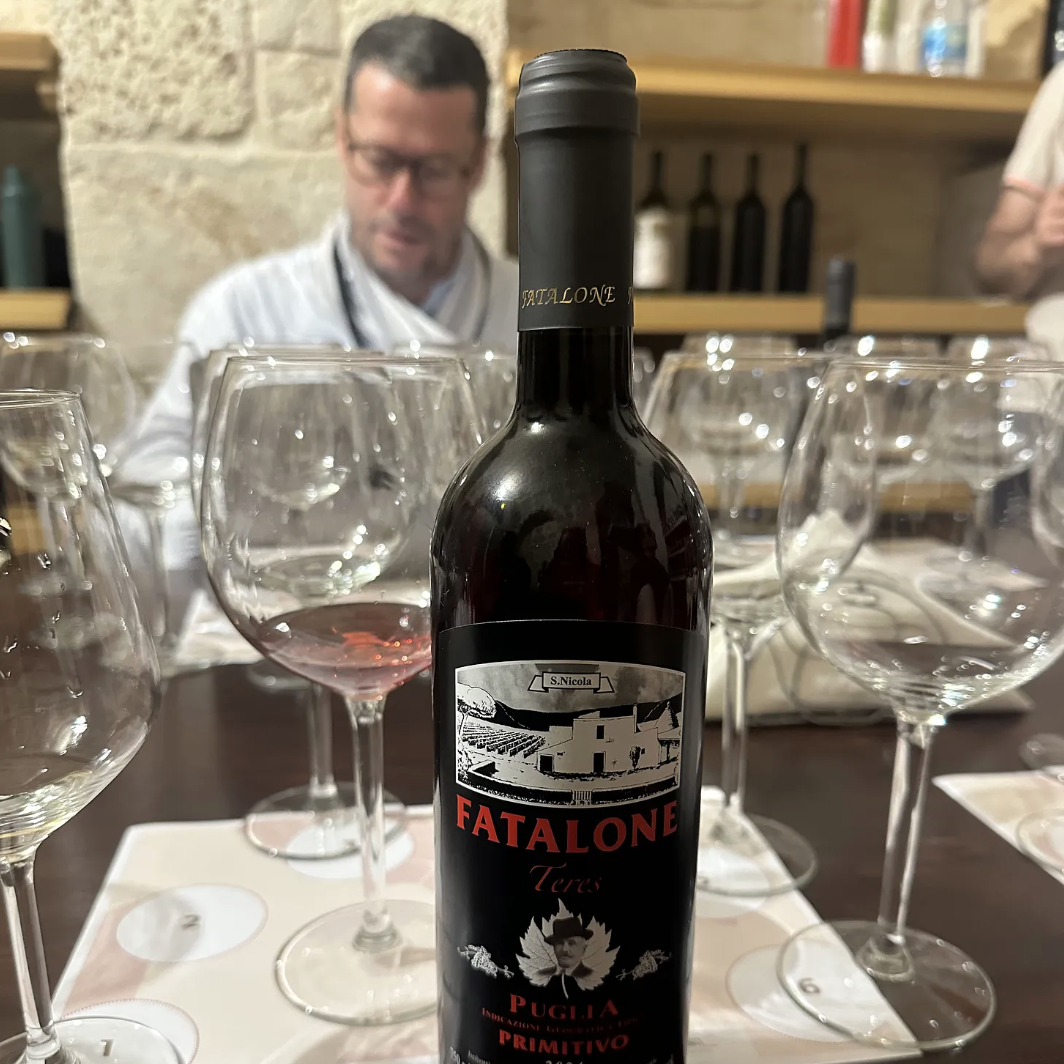
Gioia del Colle Primitivo @ Fatalone

Gioia del Colle: Limestone, Primitivo and Racemi

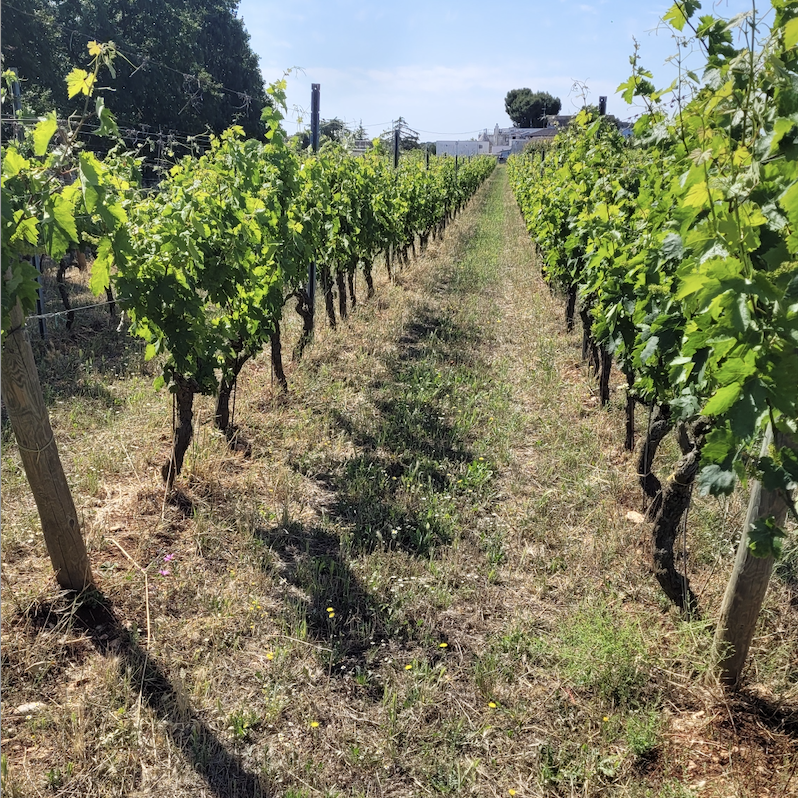
The touring focused on Puglia’s karstic countryside, the Murgia Plateau, Valle d’Itria, Salento peninsula and most specifically the area of Gioia del Colle, smack dab in the heart of Puglia. Here the landscape is characterized by the dissolution of soluble rock, mainly limestone and a surface of fertile soil, dry-stone walled rural architecture and many masserie (farmhouses). Gioia del Colle is a seemingly flat plateau ranging just a few kilometres from the sea but with ample elevation to capture more freshness in the wines than most growing areas of Puglia. Giovanni Aiello is one such proprietor at Cantina Enologo per Amore di Giovanni Aiello, where he has been making modernist wines for 10 years, first as a garagiste and now with a full winemaking facility. He studied in Udine and France, worked in Veneto, Friuli, California and Australia, then heeded a calling to return and make wine on his land. There was no winemaking history in his family, but his roots travelled within him and then returned alongside this prodigal son.

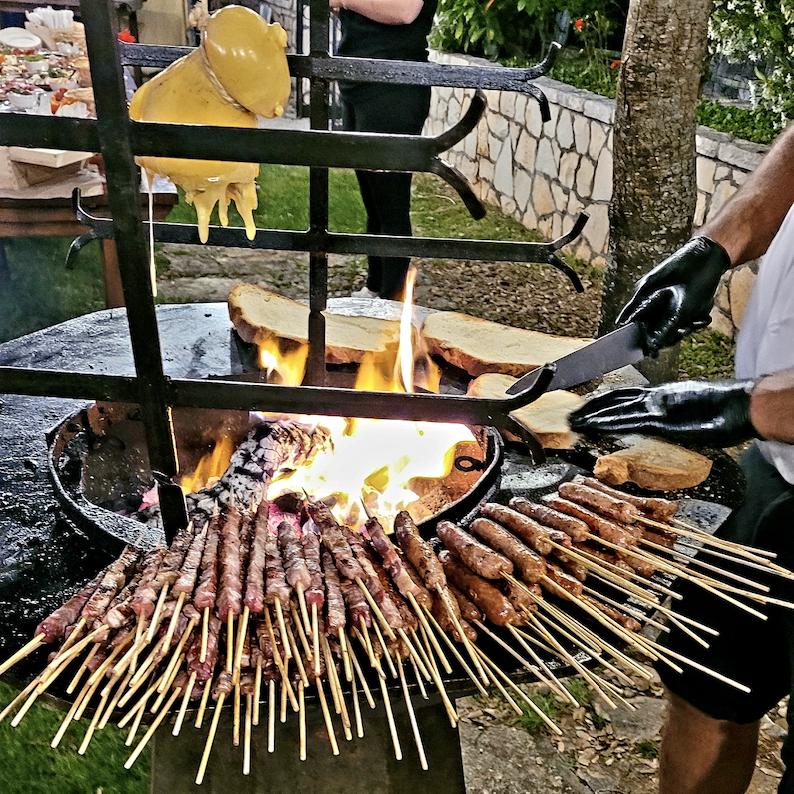
Arrosticini at Aiello

Gioia del Colle’s 2024 season was hot and dry and yet Aiello’s primitivo are of the freshest kind and his Blue Label Bubbles capture a lemon zesty energy using the local verdesca (a.k.a. verdeca) in a white blend. There is no missing the fine bitters and sweet herbs in this classic method sparkling wine, more than a quick lees accumulation for texture and a flavour profile right where you want it to be. Tenuta Viglione was founded in 1937 and remains a family-owned operation, run by third-generation proprietor Giovanni Zullo and his offspring. The location is the Altopiano delle Murge, a plateau at 450m, farmed organically on the classic karst soils of limestone over clay.

Giovanni Aiello

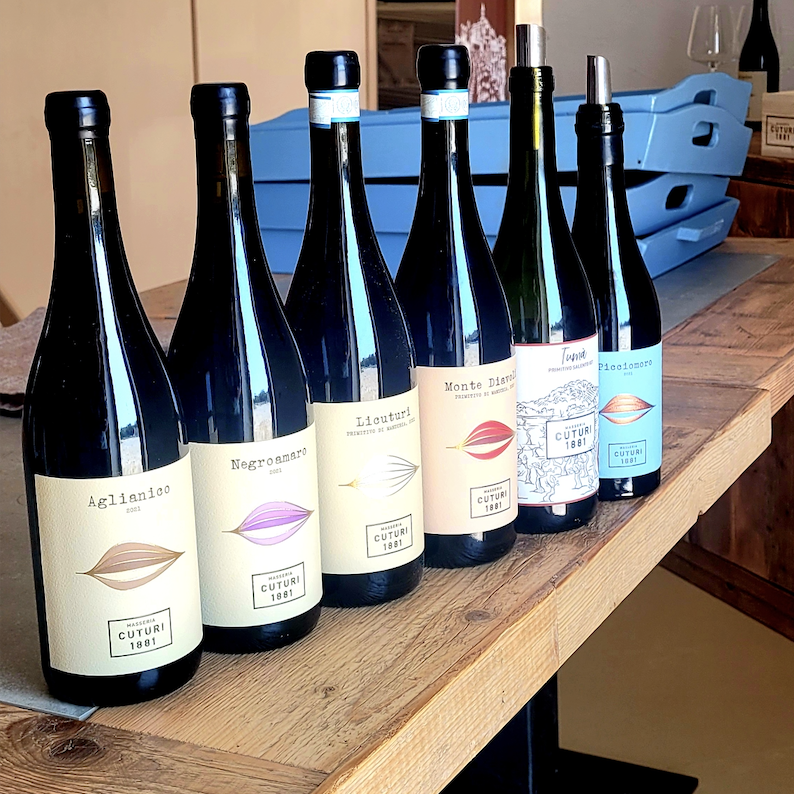
Masseria Cuturi dates to 1881, just four kms from the sea and where a river flows beneath 300 hectares with primitivo vines first planted in this area of Manduria’s Conca d’Oro. The vine cuttings were part of the dowry when Tommaso Schiavoni Tafuri married the countess Sabini. In 2007 the Masseria no longer held a vineyard and the family of Camilla Rossi Chauvenet decided to restore the property where an impressive hospitality now exists next to vineyards of 40 hectares of vines, compared with the original 100. Cuturi’s intensive attention to agriculture, led by Rossi Chauvenet, agronomist Angelo Bagorda and winemaker Roberto Cardilli, amalgamates the historical past, present and future winemaking of Manduria.

Pasquale Petrera, Fatalone

Meanwhile, at Fatalone Pasquale Petrera is fifth generation on his farm set at 400m on the edge of the Murgia Plateau. The tertiary soil rich in limestone and fossils, sea breeze influence and two-arm-trained open Alberello vines are the trifecta determination for 12 hectares of primitivo and one of greco. The first vintage was 1987 and Pasquale likes to play music to his wild fermented, organic wines in the cellar. He is a pioneer of making Racemi, a second harvest of primitivo that comes from the lower hanging feminnile bunches, taken a month after the main pick. The Accademia dei Racemi is a collaborative project of several small estates in Puglia that focuses on the technique and the lighter-bodied, Rosato style of wine made from the Racemi. There is a kinship between these Rosé and the Cerasuolo di Montepulciano of Abruzzo, if only in style and not by method. Explains Petrera, “the presence of Racemi on the vines helps in avoiding over-ripening of the main grapes.” There was a time when these wines were stored in cold caves and brought out to be consumed in summer time. As for primitivo, the monks chose it for the region because it is a late budding variety, usually after Spring frosts, even though it is also an early ripener. Though typically high in alcohol, Fatalone’s primitivo maintains high acidity and shows great potential for aging, again with help from the presence of the Racemi.

Wine Competition Winners 2025

Tasting notes on Radici del Sud Wine Competition Winners as Chosen by National and International Judges

Cantina Santadi Solais Brut NV Vino Spumante Di Qualità, Sardegna

Vermentino aromatics, marine airy and salty, somewhat neutral without any floral or herbal notes. Good presence of bitters and a push-pull posit tug between the salty and the sapid. The length is really quite good. Drink 2025-2027.  Tasted blind at Radici del Sud, June 2025

Cantine Benvenuto Sughero Storto Vino Spumante Bianco Zibibbo, Calabria

A Calabrese zibbibo with a forceful entry part Limoncello, part rosewater and part diesel. Palate is most interesting, racy and savoury, quite herbaceous and full of character, Good concentration as well, lots of citrus flesh, zesty and bitter at the finish. Drink 2025-2027.  Tasted blind at Radici del Sud, June 2025

Cantine del Notaio La Stipula Rosé Metodo Classico Millesimato Brut Aglianico 2014, Basilicata

Lees character all over the top as should happen from a 10-plus year-old sparkling wine. Made with aglianico from Basilicata, clearly ambitious or perhaps still with bottles to sell. It’s come away quite clean and characterful with some raw almond, decent concentration and complexity. Mature, settled and elegant. Drink 2025.  Tasted blind at Radici del Sud, June 2025

Vignuolo Primavera Frizzante Da Bombino Nero 2024, Puglia

A bombino nero giving a blush hue to this curious sparkling wine. Ok on the nose with a cherry-yeasty character though the palate walks with a funky gait. Not perfectly clean and the flavours are hard to get along with. Acidity is detached from the body and those flavours. Drink 2025.  Tasted blind at Radici del Sud, June 2025

Santa Lucia Gazza Ladra 2024, Fiano Puglia IGT

Notable fiano nose, also Pugliese of warmth and sun cumulate platinum gold. Good extract and balance, acids captured and expressive with fine almond bitters arriving late. Higher quality example than many though perhaps just a bit of residual sugar distraction. Drink 2025-2027.  Tasted blind at Radici del Sud, June 2025

Tenute Bellamarina Galè 2024, Fiano Puglia IGT

Fresh, lemony Pugliese fiano with just a faint hit of aromatic bitters. Not particularly concentrated, herbal and with ample if nothing striking about its acidity. Drink 2025-2026.  Tasted blind at Radici del Sud, June 2025

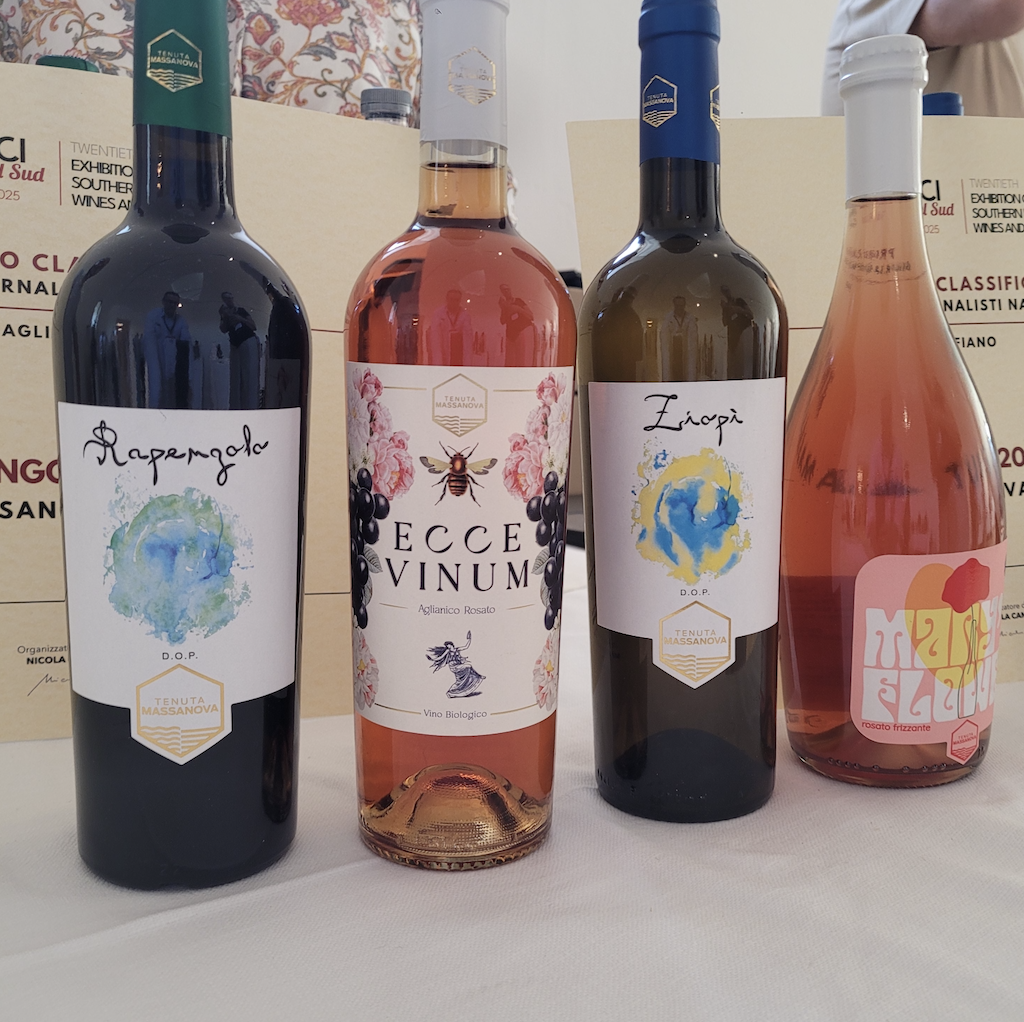
Tenuta Massanova Ziopì 2021, Cilento Fiano DOP

Named for Davide’s Uncle Pino, a quick maceration, reductive, golden and mature nose, a style perhaps but as a 2021 fiano the evolution is more than obvious. The toasty quality suggests wood somewhat overused but in fact the wine only sees steel. While it’s fine and nice enough as a wine and also surely past prime, there is so much glycerol for a white wine. Drink 2025-2026.  Tasted twice, including first blind at Radici del Sud, June 2025

Vini Contrada Selvecorte 2021, Fiano Di Avellino DOCG

Pleasantries and complexities with persistent freshness in the fiano aromatics of a 2021 from Campania. Still crisp, zesty and savoury, hanging tough, grippy and strong with its extract and tannin in tow. Showing stage presence, tension, verve and drive. Drink 2025-2026.  Tasted blind at Radici del Sud, June 2025

Casa Comerci Greco Bianco Rèfulu 2024, Calabria PGI

A rich and well formulated, orchestrated and effectuated greco from Calabria. Some spice and zest, already at maturity and for now a fine and deliverable example. Drink 2025-2027.  Tasted blind at Radici del Sud, June 2025

Fine enough though not quite showing its varietal character as it might. Lemon-lime and good though not exceptional acidity. Less showy and needs time to open up, getting better with air and time. Natural, working through its machinations organically and coming away fine. Drink 2025-2028.  Tasted blind at Radici del Sud, June 2025

Palamà Vinicola nel Salento Negroamaro Metiusco Rosato 2024, Salento IGP, Puglia

Fine use of negroamaro as Rosato, Tavel hue acceded like red roses and there is both fruit plus grip on this really proper example. Ticks the boxes and pleases in the way it should and will. Acidity is spot on to seal the deal. This is well made Salento all the way. Drink 2025-2028.  Tasted blind at Radici del Sud, June 2025

Plantamura Primitivo Rosato 2024, Puglia IGP

Soft and candied primitivo Rosato, semi-candied in the sweet spun sugar way and the residual sugar felt in the flavours confirms the style. Commercial. Fine enough and accessible if no excitement or curiosity aboard. Also a bit high in VA. Drink 2025-2026.  Tasted blind at Radici del Sud, June 2025

Agri Girardi Primitivo Pirok 2024, Puglia Rosato IGP

Light and fuzzy strawberry peach version of Rosato with primitivo on the right track, though there is a pinch or two extra residual sugar that feels unnecessary. More than ample fruit and concentration meet up with acidity for what would have been a pretty fine example. In any case there will be plenty of likes and takers for this wine. Drink 2025-2027.  Tasted blind at Radici del Sud, June 2025

Fralo’ Cassandra Rosato 2023, Puglia IGP

Tang and sweetness define the style of a joint Rosato between nero di troia and malvasia nera. Getting the carob and liquorice in an over leathery fruit and caramel flavour way. Odd, to be honest and close to oxidative. Drink 2025.  Tasted blind at Radici del Sud, June 2025

Statti Batasarro 2020, Lamezia Riserva DOC, Calabria

A sour edged gaglioppo, full on tang, tart stone fruit and dangerously close to reaching the acetic threshold. Quite vivid in regard to palate tension, somewhat wood-induced, chalky and challenging. Drink 2025-2027.  Tasted blind at Radici del Sud, June 2025

I Vini di Montemarcuccio Ottavianello Elpis 2024, Valle d’Itria IGP, Puglia

Crunchy and fresh ottavianello, ripe and ready, inviting and full of energy. A correct and modern enough way to express the ancient grape as it would wish to be. Clean and so bloody correct. Drink 2025-2028.  Tasted blind at Radici del Sud, June 2025

Famiglia De Cerchio Susumaniello Lampu 2022, Puglia IGT

Could only be a Pugliese red akin to primitivo and yet here as susumaniello there is more frutta di bosco as part of its personality. Also more Mediterranean, of black olive tapenade and coarse tannins, with enough fresh fruit to balance the rough and tumble profile. Perhaps just a bit of sweetness but the spice and tension truly work things out. Drink 2026-2029.  Tasted blind at Radici del Sud, June 2025

Tenute Pugliese Aleatico Naumanni 2019, Puglia IGT

Unmistakable smell of mint mouthwash which translates as medicinal and surely a winemaking fault on this aleatico. It takes 20 minutes to open and once it does the macchia comes out, as does the residual sugar. Parochial red with little joy or charm at first but improves with air. Drink 2025.  Tasted blind at Radici del Sud, June 2025

Cantina La Giara Bovale La Giara 2022, Isola Dei Nuraghi IGT, Sardegna

A 100 precent Sardegnan bovale, not particularly aromatic but surely curious. There is a grenache like character with juicy red fruit and a simplicity for where its from. Mildly chalky beneath and a peppery liquid warmth but all in all the balance is quite good. Wood is used and done well. Needs a another year to settle in. Drink 2026-2029.  Tasted blind at Radici del Sud, June 2025

Massimo Lentsch Etna Rosso DOC 2022

Solo nerello mascalese, bright enough and also more tannic than many. Does not smell like volcanic Etna but more like something from the centre of Sicily. Perfectly fine and getable without any great defining character or depth. Drink 2025-2027.  Tasted blind at Radici del Sud, June 2025

Massimo Lentsch Etna Rosso DOC Feudo Di Mezzo 2021

Only nerello mascalese and with some age which only serves to exaggerate the lift in this particular example. Maturing with drying fruit and tannin. Drink 2025.  Tasted blind at Radici del Sud, June 2025

Pietraventosa Primitivo 2019, Puglia IGT

Reductive, dirty and ultra natural on the nose. Also cloyingly sweet and hot. Peppery hot. Over the top. Not really showing its age as of yet. Perhaps time will heal some of the wounds. Drink 2026-2028.  Tasted blind at Radici del Sud, June 2025

Agri Girardi Primitivo Bartolo Riserva 2019, Gioia del Colle DOC

Very much a big and ambitious primitivo, heavy of extraction, pressing and elévage. Some barriques surely, also new and mixed with other vessels delivering a full complement of modernity in primitivo. Will really appeal to those who like a clean, big and full-bodied expression. There is a sweetness here though nothing out of order and seemingly natural. Drink 2025-2028.  Tasted June 2025

A.A. Boccella Aglianico Rasott 2022, Campi Taurasini DOC, Campania

Drying, still grossly tannic and really tough aglianico in the really old school idiom. Antediluvian. May never be ready but perhaps it will come around in 2030! Minty, macchia, black olive and so bloody serious. Drink 2027-2032.  Tasted blind at Radici del Sud, June 2025
Tenuta Massanova Rapengolo 2017, Cilento Aglianico DOP
Aged in a mix of steel and botte grande (second passage 23 hL French, for about a year). Still some reductive elements holding back the fruit despite this being a seven and a half year-old Campanian aglianico and so there is freshness that persists. Laden with soupy flavours, not cooked but now secondary in terms of caramel and soy, which means not much fruit left to shine. That said the tannins are as sweet as they are grippy. Drink 2025-2027.  Tasted twice, including first blind at Radici del Sud, June 2025

Cantine del Notaio Aglianico Il Sigillo 2017, Aglianico Del Vulture DOC, Basilicata

Maturing, dried fruit and sweet acidity with some residual sugar. Brown sugar and that caramelization meeting unique curiosity continues giving the wine some potential. In fact it seems hard to believe it’s as old as 2017, seeing as how certain parts have yet to fully emerge from the tannic shell. There is an aura to Sigillo, a.k.a “the seal,” as by a notary, wink, wink. Note the chalky mineral expressed in the sanguinity of this unique aglianico. Drink 2025-2028.  Tasted twice, including first blind at Radici del Sud, June 2025

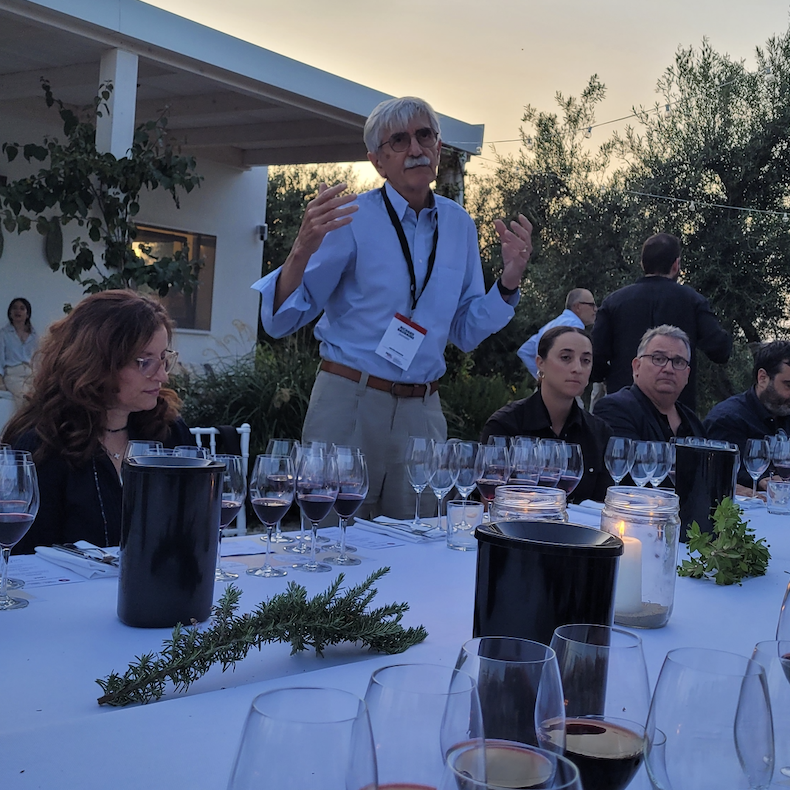
Richard Baudains – Primitivo Masterclass

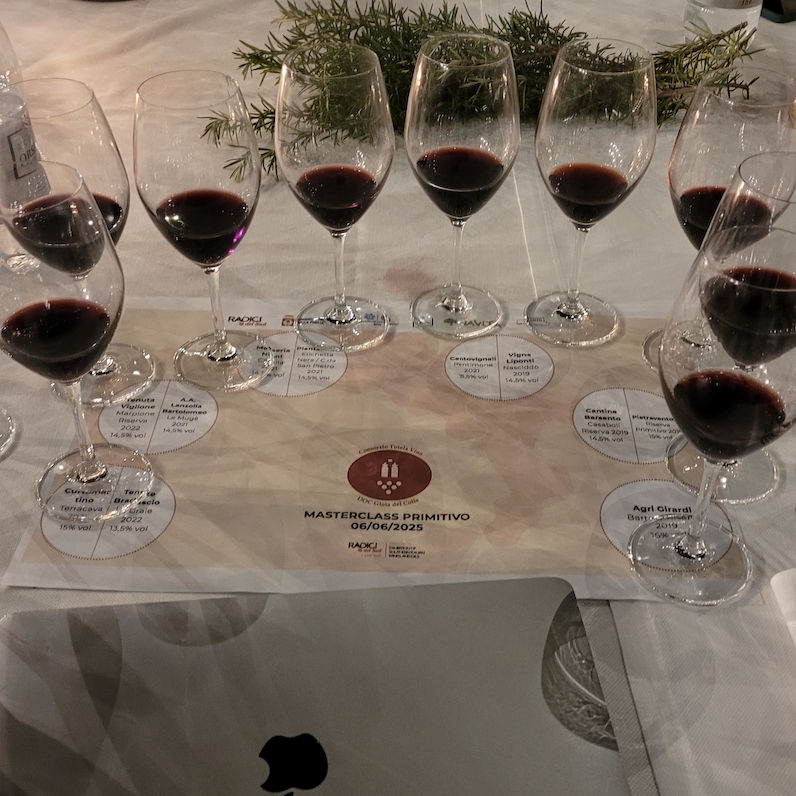
Gioia del Colle Primitivo Masterclass

Curtomar Tino Primitivo Terracava 2023, Gioia del Colle DOC

Perfumed primitivo in the violet range and a lightness in the aromatic space followed by acidity and succulence for a mouthwatering proposition. Does well to cover and keep its alcohol (15 percent) from presenting as anything but a normal part of the package. Bit chalky but really quite easy to like. Drink 2026-2028.  Tasted June 2025

Tenute Bradascio Primitivo Le Graie 2022, Gioia del Colle DOC

A primitivo that presents itself with the barrel above all else and while the alcohol here is lower (13.5 percent declared) it does not come across as a lighter style. The wood is on top, emulsifying the middle and spicing the finish. Some green hide behind which explains the style. Not perfectly phenolic in ripeness. Drink 2025-2027.  Tasted June 2025

Tenuta Viglione Primitivo Marpione Riserva 2022, Gioia del Colle DOC

Well extracted and clearly the source of an older vineyard with the experience of vines laying the groundwork and foundation for top quality fruit. The spicing is omnipresent, both from quality primitivo and also the casks that give and keep on giving. Will gain an advantage with some years in bottle. Drink 2027-2032. T asted June 2025

A.A. Lanzolla Bartolomeo Primitivo Le Mugè 2021, Gioia del Colle DOC

Also violet perfume and fruity eau de vivre or vape liquid, a juicy aromatic quality although wood once again makes itself known. Quality acids but something is off and the tannins are brittle, falling apart at the finish. Flawed primitivo, likely a combination of over maturity meeting excessive VA.  Tasted June 2025

Masseria Ninni Primitivo Càmila 2021, Gioia del Colle DOC

Juicy through and through, a primitivo that offers up a transparency about who it is and where it’s from. Crispy and crunchy with its own Balsamico, liquid chalky, purple fruit, concentrated though not over extracted. Well made, clean, lengthy and a charming success. Drink 2025-2029.  Tasted June 2025

Plantamura Primitivo Etichetta Nera/C.da San Pietro 2021, Gioia del Colle DOC

Rich and brimming with savoury elements in an exaggeration of Balsamico riches befitting the local macchia. Juicy and succulent to find some necessary balance. A crispy quality and a year will bring better times although five will usher in a time of truffles and earthiness. That said it is only the terroir that will bring this effect because no wood is used in aging this primitivo. Chimes in at 14.5 percent alcohol and pleases with fruit from its natural calcareous charges. Drink 2026-2029.  Tasted June 2025

Primitivo Masterclass

Centovignali Primitivo Pentimone 2021, Gioia del Colle DOC

Quite a savoury primitivo with a fullness of barrel straight away on substantial fruit from what feel like experienced if not quite old vines. It’s a bit hot frankly and oddly peppery, like certain syrah from south-central Sicily. Ambitious and gangly, some awkwardness and not quite finding its syncopation. Clocks in at 15.5 percent (declared). Drink 2025-2027.  Tasted June 2025

Vigna Liponti Primitivo Nascìddò 2019, Gioia del Colle DOC

Time has done well to bring this 2019 into place and see it showing at peak in 2025. Tannins have resolved, acidity continues to thrive and the parts have all melted into the fabric of the wine. Chocolate is strong and dark but mint (Balsamico) and fruit have really come together as one. Alcohol is proper and integrated at 14.5 percent. The producer only makes primitivo for a total of 4,000-4,500 bottles per year. From 4,000 vines in one hectare. Drink 2025-2028.  Tasted June 2025

Cantine Barsento Primitivo Casaboli Riserva 2019, Gioia del Colle DOC

Very woody, was, is and will always be. Still very chalky beneath with tannins which remain unresolved. Seriously dark chocolate, very extracted and a bit too vivid overall. Drink 2026-2028.  Tasted June 2025

Pietraventosa Primitivo Riserva 2019, Gioia del Colle DOC

Quiet aromas, still or perhaps not ever having been of gregarious nature. Wood holding court and then the wine opens on the palate. Reminds of many other dark and structured Italian wines, including montepulciano from Abruzzo. Drink 2025-2027.  Tasted June 2025

Agri Girardi Primitivo Bartolo Riserva 2019, Gioia del Colle DOC

Very much a big and ambitious primitivo, heavy of extraction, pressing and elévage. Some barriques surely, also new and mixed with other vessels delivering a full complement of modernity in primitivo. Will really appeal to those who like a clean, big and full-bodied expression. There is a sweetness here though nothing out of order and seemingly natural. Drink 2025-2028.  Tasted June 2025

The visits in Gioia del Colle and Manduria

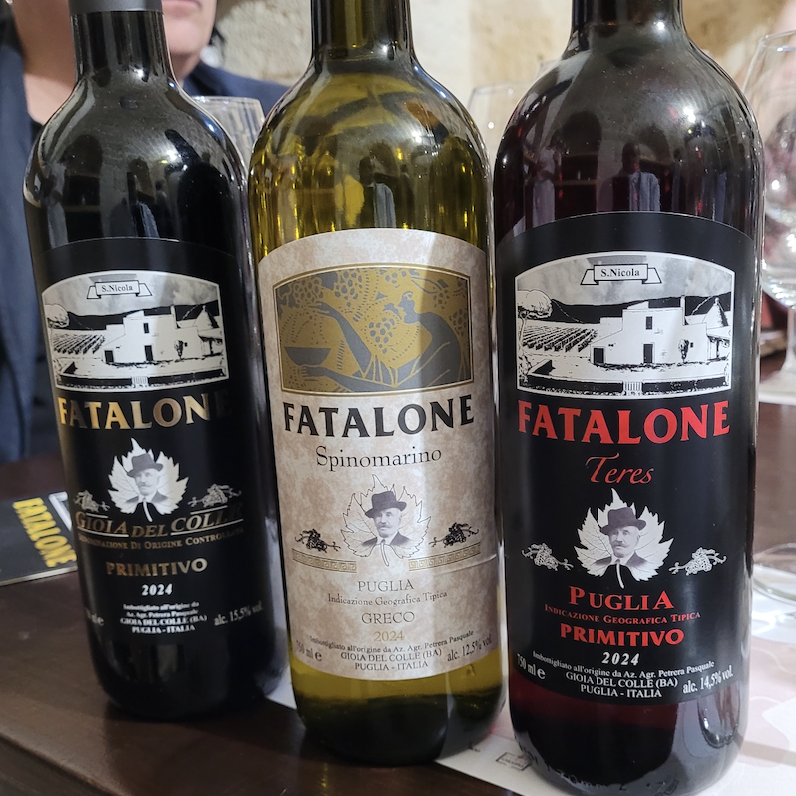
Fatalone Greco Spinomarino 2024, Puglia IGT

Single vineyard of one hectare aged on lees for up to eight months and this 2024 was just bottled last week. A richness and creamy character through limestone mineral and with some fine bitters that define the finish. Vines with age and wisdom do well to concentrate and bring precision to this “lady killer,” a.k.a Pasquale’s grandfather. Drink 2025-2027.  Tasted June 2025

Fatalone Primitivo Teres U Pr’Matìv’ 2024, Puglia IGT

The Rosato-styled primitivo comes from the Racemi, the later harvest of second bunches, a.k.a the feminile, direct pressed and coming away like a Cerasuolo as opposed to an early harvested, paler and first pressed Rosé. Definite phenolic presence and like in the old days a summer red to be chilled and spilled. Really liking the spiciness on the tip of the tongue. The alcohol is 14.5 percent and just so you know, this is not Rosé. Drink 2025-2027.  Tasted June 2025

Fatalone Primitivo U Pr’Matìv’ 2024, Gioia del Colle DOC

Campione: The first batch was already bottled and this is the second, a tank sample but essentially a finished wine. Phenolic ripeness is achieved with dark if just a bit sour cherry, mint and mulberry, developed and locally proper at 15.5 percent alcohol. The presence of Racemi, the second buds and bunches on the vines harvested later is what keeps the acidity strong, the jam kept away and the prospect for aging also strong. The finish is all about a salty pique on the finish, an aftertaste of toasted almond and the Gioia del Colle Balsamico. Drink 2026-2029. Tasted June 2025

Fatalone Primitivo Riserva U Pr’Matìv’ 2022, Gioia del Colle DOC

Just bottled, longer micro-oxygenation in Slavonian (Garbellotto) cask, an exaggeration of riches with impacting acidity which is common to all of Fatalone’s wines, necessary to handle the 16.0 percent alcohol. Not overripe or overwhelming, but just the fact that primitivo buds late and is then harvested early. The wood certainly concentrates and thickens the fruit and though there is more creamy texture there is also an inherent ability to age well forward. Drink 2026-2032.  Tasted June 2025

Fatalone Primitivo Riserva U’Pr’Mat’ve 2015, Gioia del Colle DOC

Ten years of age but really youthful, as predicted but still a surprise. The anti-oxidant properties of primitivo (when worked in this respectful way) will find the path to long aging and that is precisely what’s happened here. Notes stay consistent with the 2022 but the density and concentration have stretched with great elastic ability. Lovely natural sweetness meeting the finishing bay spice and local Gioia del Colle Balsamico. Was 15 percent alcohol back in 2015. Drink 2025-2026.  Tasted June 2025

Fatalone Primitivo Riserva Speciale U’Pr’Mat’ve 2001, Gioia del Colle DOC

Now 24 years ago and fully secondary with only a hint of tertiary where the mint chocolate is now fully out there, expressed and defining this old primitivo. The toasted almond bitters are also present if fading and softened. Very good showing for a wine of this age, tannins log gone, acidity also softened and persistently sweet, frutta di bosco all in. Just 15 percent but still, already at 15 in 2001.  Tasted June 2025

Tenuta Viglione Susumaniello Morso Rosa 2024, Rosato Puglia IGP

Return of an old Brindisi variety now fashionable again, made here in a pale style with the name that recalls the local Puglian donkey – susumaniello. Stony and salty, truly unique, a fine grapefruit bitterness and really no connection or resemblance to Rosé made with primitivo. A little bit of wood (two weeks at the end of fermentation) and bâttonage bring a certain no lo so to this curious Rosato. Drink 2026-2027.  Tasted June 2025

Tenuta Viglione Johe 2021, Rosso Puglia IGP

A fifty-fifty joint between primitivo and aleatico, the latter being an aromatic red grape usually made as a dessert wine. The power meets the flower and spices run amok on the nose, of clove, cinnamon and nutmeg. Quite punchy and foxy for a wine that harkens a time when the two varieties would have been co-planted in the vineyards. Some sweetness for sure with 13 g/L of residual sugar and as a result lower alcohol at 13 percent. Needs to be chilled. Drink 2026-2027.  Tasted June 2025

Tenuta Viglione Primitivo Riserva Marpione 2021, Gioia del Colle DOP

The highest level of quality for primitivo for Tenuta Viglione aged in 3000L cask and also barriques, always since 2021. Most of the fruit comes from the oldest alberello vineyard planted by Giovanni’s grandfather 80 years ago. The vineyard now produces only 3,500 kilos per hectare and so another older vineyard is sourced to be able to make more production. An exaggeration of Balsamico riches, seriously toasted almond bitterness and darkest of black cherries. Acids are more than ample and this 2021 should age well for a further five to seven years. Drink 2025-2031.  Tasted June 2025

Tenuta Viglione Primitivo Riserva Marpione 2011, Gioia del Colle DOP

Nearly 14 years of primitivo age for the top label as Riserva holding well although the varietal identity is starting to merge into the secondary character of the wine. Balsamico and toasted almond still there, fruit vaguely hanging around and more mineral from this vintage. Proper interpretation of the (at the time) 65-plus yer-old alberello vineyard. Drink 2025-2026.  Tasted June 2025

Tenuta Viglione Primitivo Riserva Marpione 2004, Gioia del Colle DOP

From the alberello vineyard planted 60 years before this vintage and with twenty years of age there is now a full on tertiary with the Balsamico showing as chocolate mint so typical of primitivo at this age. Historical time, grape and place were clearly more about the barrel and here that really shows. Wood had lasted longer than fruit.  Tasted June 2025

Masseria Cuturi

Masseria Cuturi Femi Negroamaro Rosato 2024, Salento IGP

Early harvested negroamaro and this 2024 is the first vintage for the new label. Indelible stamp of Cuturi and scent of fresh strawberry, spicy, herbal, salty and savoury, relentless in its intensity. Drink 2025-2027.  Tasted June 2025

Masseria Cuturi Negramaro Zacinto 2021, Salento IGP

Quite the full aromatic expression of the local negro, dry, upwardly mobile acidity, lower pH and Macchia Medditeranea from the place with a lot of rock. A year of tank aging followed by another year in bottle for ultra freshness and a varietal drinking ability second to none. Not only a brilliant rendition of the relationship but surely the sort of example to reach out far and wide to tell the world. Drink 2026-2029.  Tasted June 2025

Masseria Cuturi Aglianico 2021, Salento IGP

Camilla Rossi Chauvenet, owner in Valpolicella at Massimago and here with Masseria Cuturi believes in this grape for Manduria. As with the negroamaro the raising is a year in steel tank followed by one in bottle. More upfront tannic presence that carries the structure of a wine unable to avoid its nature but nurture here is as strong a driver with thanks to care put in by agronomist Angelo Bagorda and consulting oenologist Valentino Ciarla. Intensity of acidity and a brightness on the palate of dark red citrus from pomegranate to an electric current of red currants. A relentless palate attack but without Campania’s drying and demanding style of tannins. Drink 2027-2031.  Tasted June 2025

Masseria Cuturi Primitivo di Manduria DOC Licuturi 2021

A modest primitivo is many ways, especially with respect to the ways in which the world perceives how the grape is expressed and yet vintage is so essential as being the determining factor. In this case less than the hottest, acidity bursting upwards of 6.5 g/L and alcohol pleasant, present and restrained at 14 per cent. Even if it’s actually closer to 14.5 it does not matter because it would be hard to find a more balanced varietal wine like this anywhere in Puglia. The hard work, focus, respect and abiding by nature and place are so apparent and must be recognized. In the face of climate and time of history this is simply brilliant. Drink 2027-2033.  Tasted June 2025

Masseria Cuturi Primitivo di Manduria DOC Monte Diavoli 2020

From the most important vineyard, here out of a drier vintage with more heat than the following 2021. The alcohol is a half point higher and has to be but the exaggerations of macchia, Balsamico and general Cuturi savour (including the uncanny scent of fenugreek) coming along for the more concentrated ride. There is spice but no heat, terrific acidity and when tasted alongside Licuturi, but also the aglianico and negroamaro, well the diversity in the wines is quite impressive. All show freshness that’s distinctive and so welcome. For Angelo this is what Cuturi can do in a shadowed comparison to pinot noir, albeit with darker fruit from higher mineral meets calcari soil. If we must pick a place it would be Chambolle-Musigny but this is southern Puglia with primitivo and so think what you will. Drink 2027-2035.  Tasted June 2025

Masseria Cuturi Tumà 2023, Salento IGP

Named after Don Tommaso, here in Manduria affectionately known as Tumà for a primitivo of the sharpest red fruit in full on sapid tang. The one that is both salty and phenolic, an intensity captured through acidity and limestone rich soil for another unique Masseria Cuturi expression. Drink 2026-2030.  Tasted June 2025

Picciomoro Aleatico 2021, Passito Salento IGT

The estate’s best use for the local aleatico variety is a sweet wine made in the tradition of Valpolicella by drying grapes and then reviving them for a finish at 17.5 percent alcohol. Rich and spicy, a thread woven from the dry reds through to a Recioto ringer in Manduria. Everything here is spiced and piqued, tart and sparked. Great interest here for sure. Drink 2025-2029.  Tasted June 2025

Masseria del Borgo dei Trulli Metodo Classico Millesimato 2022

Early picked chardonnay grown in the commune of Maruggio in Taranto, Manduria four kms from the Ionian Sea. First vintage was 2019, 36 months on lees. Leesy, autolytic, textured and warm chardonnay style. Lemon curd with a phenolic meets tonic twist. More than curious, clean and complex. Drink 2025-2027.  Tasted June 2025

Masseria del Borgo dei Trulli Fiano Gravara 2024

Steel only, on lees just a few months and bottled in March. The name comes from the rocky soil and the area where most of the white wine grapes have been planted. Lemony and phenolic, a sapid white of clean bitters and tonic. Simple and just a bit tannic. Drink 2025-2026.  Tasted June 2025

Masseria del Borgo dei Trulli Ananta Susumaniello Rosato 2024

A resurrection of the once much used Pugliese variety now popular for Rosato and here with 10 percent aged in wood. Bright and salty, light and pale pink, very much a summertime drink when primitivo does not fit the weather. Clean, fit, dry and quenching. Drink 2025-2026.  Tasted June 2025

Masseria del Borgo dei Trulli Mirea 2023, Primitivo di Manduria DOP

From 60-70 year-old alberelli grown primitivo where vines and fruit conspire for elevated alcohol upwards of 17.5 percent. To be fair it hides it quite well with the effects of American oak involved, of vanilla and a toasted coconut but cooled, minty and without finishing heat. The vessels used are barriques, tonneaux and botti. No lacking fruit, not particularly jammy and about as balanced as could be with a wine of this maturity. Still be careful because a Port-like red will get on top of you quickly. Drink 2025-2028.  Tasted June 2025

Masseria del Borgo dei Trulli Primitivo Saracena 2023, Primitivo di Manduria DOP

Late August picked primitivo that create their own natural appassimento, put to wooden crates to dry for 10 days for more fruit concentration. Forty percent of the grapes’ water evaporates and then the wood aging begins. The mix of concentration and barrel makes for the biggest mouthful in primitivo. Drink 2026-2029.  Tasted June 2025

Masseria del Borgo dei Trulli Negroamaro Liala 2023, Salento IGP

Chosen from 80 year-old alberello vines growing near the town of Salice Salento where the estate farms five hectares. Formidable concentration with spice run here, amok and everywhere, dark and deep, tannic and brooding. Minty spice as well, the macchia if you will and a notable sweetness. Seventy percent sees seven to eight months in a combination of barriques and 3,000L botti. Thickly textured, juicy and just elastic enough “to not go boom” says Elena. It’s a style and balanced within its broad parameters. Drink 2026-2030.  Tasted June 2025

Masseria del Borgo dei Trulli Primitivo Duna Mirante 2022, Primitivo di Manduria DOP

Literally from the seaside near the town of Campomarino, planted on Ionian sands on the dunes of Monaco Mirante just 300m from the ocean on 60-70 alberello-trained vines. Lowest of yields for concentration and thick texture cut by marine air, salts and oyster meets anchovy umami. Still it comes in at 17 percent and shrinks away from nothing, but the most curious note is that of Worcesteshire. Also Vegemite meets tapenade. There is nothing like it, comes across mildly oxidative and yet feels fortified, able to age some years going forward. Nearly no sugar by the way and also no sulphites used. Finish goes to chocolate in the 50-55 percent range. 5,292 bottles produced and only in best vintages. Drink 2026-2031.  Tasted June 2025

Masterclass: Nepente di Oliena Cannonau di Sardegna DOC

From the mix of granite and limestone soils in the area of Oliena in the very centre and heart of Sardinia. The village is located in Barbagia, a region often referred to as the “Sardinian Dolomites” because of its white rocks and sheer cliffs that resemble those of northern Italy. Nepente is the term for Oliena’s wine coined by Poet Gabriele d’Annunzio, loosely translating as “that which takes pain away,” something the Greeks prized from the area’s cannonau. This class looked at six definitive examples for one of only four allowable varietal DOCs in Sardinia in the shadow of Monte Corrasi, the “big grey mountain,” with vines between 120 and 700m.

Agricola Salis Cannonau Nepente di Oliena DOC Galu 2023, Sardegna

Light on its feet and in the glass from 14.5 percent alcohol and a cannonau upwardly aromatic and mobile. Pays heed to place, that being Monte Corrasi, the ‘big grey mountain,” in full concentration, if a bit jammy. From granitic soils and their want to lend a bitter black cherry note and a wine not particularly woody while needing another year to settle in. There is density all the way through. Drink 2026-2029.  Tasted June 2025

Cantina Biscu Cannonau Nepente di Oliena DOC Ziobì 2022, Sardegna

Hot vintage and it shows in the peppery warmth, especially on the nose. Healthy grapes beget density of aromatic volume and the wine is in balance because of its juicy character. Mineral feels come from the calcareous soil in a well made, albeit big and brawny cannonau. Will be better a few months into next year. Drink 2026-2028.  Tasted June 2025

Vignaioli Oliena Cannonau Nepente di Oliena DOC S’Incontru 2022, Sardegna

From big to bigger, dark to darker, dense to denser. Can’t miss the heat of the vintage with a cannonau clocking in at 15.5 percent alcohol, of dark chocolate, a full-bodied style and solid structure. Will drink well with salty protein although oxidation and truffling will happen sooner rather than later. Drink 2026-2028.  Tasted June 2025

Ruju Sardu Cannonau Nepente di Oliena DOC Pupusu 2022, Sardegna

Darkest fruit and dustiest character of these six Cannonau Nepente Di Oliena DOC reds. Also a serious threat of tannic freight and so full of the local Balsamico. Plenty of barrel here, but also high quantitative and qualitative acidity to buoy the entirety of the wine. This is serious Sardegna. Drink 2027-2031.  Tasted June 2025

Gutthiddai Cannonau Nepente di Oliena Riserva DOC Mannoi 2021, Sardegna

A more rustic example of cannonau for Nepente Di Oliena DOC, of dustiness and unresolved wood. Dark chocolate with sharp and again, rustic acidity. From young vines growing in granite soil, gangly, youthful, awkward and a work in progress. Drink 2026-2027.  Tasted June 2025

Gostolai Cannonau Nepente di Oliena Classico DOC 2019, Sardegna

Age has crept in and well upon the character and fabric of this aged cannonou. Seems to prove a theory that a couple of years are needed to settle the youthful heat of Nepente Di Oliena DOC but five or six sees the wines become a bit long in the tooth. This 2019 is now oxidative and fungi soupy. Drink 2025.  Tasted June 2025

Michele and Michele, Kairos Vini

More wines tasted at the walk-around at Paolo Cassano

Kairos Vini Francé Bianco Frizzante, Sicily

Astral Ancestrale method sparkling with inzolia and carricante, sweet and intense, also leesy but not in a knowable or expected way. More like the natural yeasts present on orchard fruit, as a bite into musky skins and experienced on the palate. Produce a sparkling wine in weeks and the results can be naturally invigorating. Oh, the lemon…and the water. “And It stoned me to my soul.” Drink 2025-2026.  Tasted June 2025

Kairos Vini Giosè Rosato Frizzante, Sicily

Charmat (Italian) method Rosé sparkling made with perricone and catarratto, freshest of strawberries scented, creamy and texturally soft. Unfiltered with a fresh ricotta salata flavour, vaguely peachy, useful and purposeful. Drink 2025-2026.  Tasted June 2025

Kairos Vini Attia Bianco NV, Sicily

Non-vintage white blend of inzolia and chardonnay from the western lands of the Sicilian island purposefully made turbidly cloudy. Phenolic, metallic, of lemon gelée, mineral salts and sea kelp. Bloody natural and interesting, in a different league than but curiously hoding something in common with the Italian MWs Officina del Vento grillo. Drink 2025-2027.  Tasted June 2025

Kairos Vini Aurora NV, Sicily

Varietal catarratto, 100 percent performing as a vino di macerata, in other words skin-contact for eight days. Aged in steel for six months with constant bâttonage. Comes away perfectly clear and serviceable but also much more. Orange zest, ginger, cardamom, pistachio and galangal for such a creative wine. No natty dread here whatsoever but only precision. Drink 2025-2028.  Tasted June 2025

Kairos Vini Ammia 2021, Sicily

Varietal syrah from the southern part of Sicily, specifically Licata di Campobello and macerated for 10 days. A spontaneous fermentation, aged with bâttonage in stainless steel and cement vats, bottled unfiltered after two years. All the dark red berry fruits, all natural and clearer than many Rosso. Quite proper actually. Drink 2025-2027.  Tasted June 2025

Cantine Del Notaio La Stipula Metodo Classico Vino Spumante di Qualità Dosage Zero Brut Millesimato Aglianico 2014, Basilicata

Solo aglianico, 10 years on the lees with warmth and maturity meeting an unlimited amount of complexities that reminds of South African

Go back

Your message has been sent

Warning
Warning
Warning
Warning

Warning.

Cap Classique. Nervy with persistent energy and vivacities. A candid southern Italian sparkling wine with naturally wavy-curly hair. Drink 2025-2029.  Tasted June 2025

Cantina Del Notaio Il Priliminare 2024, Basilicata Bianco IGT

A relatively rare white vinification of aglianico with splashes of malvasia and chardonnay, each important contributors, first for aromatic heightening and second to add some much needed orchard fruit bite. Neither can tame the tannic presence of the aglianico, nor should they try to fight the power. Though it feels like the recipe could use some adjustment, there is something curious happening here. Potential as well. Drink 2025-2026.  Tasted June 2025

Cantina Del Notaio Il Rogito 2024, Basilicata Rosato IGT

Candied, semi-cimmerian hue in the style of Tavel, most definitely the furthest thing from Provençal. A pretty Rosato in all respects, from aglianico only, some sweetness, not particularly phenolic and balanced by its overt fruitiness. Like a bowl of fresh cherries. Drink 2025-2026.  Tasted June 2025

Davide and Maria, Tenuta Massanova

Tenuta Massanonova Rosato Frizzante Mary’s Flower 2023, Campania

From Campania near Cilento, the work of Davide and Maria, certified organic since 2022. A second vintage effort with 100 percent primitivo Rosato from the young vines, incredibly tart and of full on white cherry and red currant tang. Amazing freshness and quenching ability. Molto dissetante! Drink 2025-2027.  Tasted June 2025

Tenuta Massanova Ecce Vinum Aglianico 2024, Rosato IGP

A polar opposite to the Spumante Rosato, just one hour on the skins for a paler southern French style yet juxtaposed against some kept power and structure of the aglianico. A mix of roses and Sherry qualities from a Rosé meant for simple gastronomy that involves ricotta or mozzarella di buffala. Tastes as much like an orange wine as it does a Rosato, clocking in at 12.5 percent. Curious. Drink 2025-2027.  Tasted June 2025

Molettieri Family

Azienda Agricola Antonio Molettieri Coda Di Volpe 2024, Irpinia DOC, Campania

Part of the five hectare, 8,000 total bottle production from Campania, of coda di volpe growing on century vines aged only in steel for six to seven months. Ultra fresh, clean, fine and with that all-important posit tug between salty and sapid. Emits and emotes a true terroirist’s volcanic sensibility. Drink 2025-2027.  Tasted June 2025

Azienda Agricola Antonio Molettieri Atipico 2021, Rosso IGT, Campania

The family work of Antonio, Daniele and Sofia for one of the very few merlot raised in the area of Castelfranci within Avellino and the varietal profile here is seriously unique. Luxe and ripe as if Napa Valley were the source – It’s just right there. Crazy! Drink 2026-2029.  Tasted June 2025

Azienda Agricola Antonio Molettieri Badius 2021, Aglianico Irpinia IGT, Campania

Opposite to merlot, from black to red fruit, tannins exuding with confidence and power from the glass. The intertwine between fruit and tannin is a strong bond, a union of opposing forces meant for one another, capable of growing old together. Cherries are obvious, depth impressive and the dark mystery unsolved. Seriously sweet tannins. Drink 2027-2032.  Tasted June 2025

Azienda Agricola Antonio Molettieri D’oreste 2020, Taurasi DOCG, Campania

An aglianico of poise and depth with wood aging time, acidity and alcohol that exceed the Irpinia, as do both the substantial fruit and powerful tannins. Freshness from 2020 but also the feeling of experience which says a 2010 would likely not act much different – That’s easily how long a wine like this will take to change, open and express its true sense. The layers are many and intensity is off the charts. Promise is the limit. Drink 2027-2035.  Tasted June 2025

The Di Prisco family grows

Di Prisco Coda di Volpe 2024, Irpinia DOC

Produced since 1996, a wine “from the vineyard” oriented south and southwest, done up through whole bunch fermentation. Juicy, clean, orange zested, simple, coolly gelid and with acidity dutifully maintained. Different than the “other” coda di volpe, never a matter of being a blended wine. Drink 2025-2027.  Tasted June 2025

Di Prisco Fiano Di Avellino DOCG 2024

Sees only stainless steel for eight months to come away pure, clear and juicy with fresh squeezed citrus. Bloody quenching with premium spicing and über proper pacing. Drink 2025-2027.  Tasted June 2025

Di Prisco Fiano Vigna Rotole 2024, Irpinia DOC

The Avellino may be the DOCG classified Fiano but this single vineyard Irpinia is the more serious wine of the two. Higher extract, finer tannin, elevated fleshy texture and this amazing mix of mellifluous natural sweetness and volcanic minerality. Not to mention length and consequently potential. Speaks to a place, not a cuvée. Drink 2026-2030.  Tasted June 2025

Di Prisco Greco Di Tufo DOCG 2022

From two hectares of vines growing at 600 and 630m of elevation split by a road with the lower part chosen for greco. Sees only steel but for 12-18 months with regular bâttonage. Feels and acts like Chablis in greco clothing – tastes that way too. At the very least texturally speaking and then this goes full on lemon-orange, finishing dry and tannic. Drink 2026-2029.  Tasted June 2025

Di Prisco Greco Di Tufo DOCG Pietrarosa 2020

The upper cru section of greco above the road at 630m, more calcareous soil to deliver an increase of both extract and specified mineral. Age has brought about more platinum gold in the hue, a gentle oxidation and the sentiment is like older sémilon. More life still to live and perhaps next year will bring about honey and paraffin smoulder. Drink 2025-2028.  Tasted June 2025

Di Prisco Brothers Aglianico ‘Nplugged 2021, Irpinia DOC

From two brothers, Giuseppe and Michele, together moving forward after their father Pasqualino with this experimental aglianico, 75 percent of which is raised in steel. A next generation Avellino red for which the latter stages of fermentation is done without skins, a departure from the norm. Results in an elegant, nurturing and just bloody lovely aglianico, without angst or unrelenting grip. Drink 2025-2028.  Tasted June 2025

Cantina La Giara Semidano di Sardegna Superiore DOC 2021

Some might question the indigenousness of semidano while others, including Cantina Giara will say the grape is a rare, native white variety from Sardinia. Here it acts musky aromatic as a relatively soft yet mineral white with a step up from merely moderate alcohol (at 13 percent). Acts with an almost chenin blanc like personality out of Sardinia where just 10 hectares exist for this great curiosity of a white wine. Drink 2025-2027.  Tasted June 2025

Good to go!

godello

Squadra 2025, Radici del Sud

Instagram

Facebook

De Rigueur Sicilia en Primeur 2025

Modica

From May 6th through 10th, 2025, the 21st Sicilia en Primeur signalled the annual return of Assovini Sicilia’s proper, correct and yes, also decorous event. Journalists from all over the world arrived by invitation only for a week during which de rigueur was encouraged and for best results, most definitely required. A strict precision needed in adhering to the dictates of weather, cultural fashion, tasting and taking in the final night gala at a luxurious palazzo. The 21st edition’s title “The Culture of Wine in Sicily: A Thousand-year Story that Looks to the Future,” was defined by Mariangela Cambria, President of Assovini Sicilia as “the culture of wine today also translates into a culture of travel.” This is why the abiding delegation of 100 journalists were focused on this essential part of this journey, with their charge to bring the message back home. They came from Italy and many parts of Europe (France, Poland, Sweden, Germany, Norway), also from non-EU countries (Canada, USA, Japan, China, South Korea, Israel, Brazil, and the United Kingdom). Together they engaged in a collective etiquette to celebrate Sicilian wine, food and culture, inclusive of gorging on piping hot finger foods between en primuer tastings at lunch under a hot Modica sun because in Sicily, eating Arancini with your hands is de rigueur.

Neapolis Archaeological Park

As always the Sicilian Ante-Antreprima sees groups of international journalists making pilgrimages to wineries geographically positioned within a particular quadrant on the largest Mediterranean island. In 2025 Godello joined Zedcomm’s Lucia Boarini and JustSicily’s Marcos del Rio, along with journalists Fernanda Roggero (Sole 24 Ore), Christer Byklum (Mywinesandmore), Giuseppe Lauria (Weinwisser), David Ransom (The Connected Table) and Matthias Stelzig (Weinwelt) for an Enotour around the area of Noto. The group took in the ancient urban ruins of the Neapolis Archaeological Park, the seaside village of Marzamemi, Noto city (Including a caffè and dolce at Corrado Assenza’s Caffè Sicilia) and a stay at the beautifully charming and calming Villa Giulia Hotel. Visits were paid at Zisola, La Giasira, Ramaddini, Feudo Maccari and Planeta. When all was said, tasted, travelled, assessed, satiated and done, the group then joined the rest of the journalists fresh off of their own tours for the two-day Sicilia en Primeur at the Castello dei Conti di Modica.

Godello in Noto

Assovini Sicilia was founded in 1998 by Giacomo Rallo, Diego Planeta and Lucio Tasca and today has 101 member companies producing approximately 900 labels. After a day of technical tasting everyone convened at the Teatro Garibaldi in Modica for more de rigueur talks, including a discussion about “the culture of wine understood as informed and conscious drinking,” led by Dr. Sara Farnetti, Ph.D in Pathophysiology of Metabolism and Nutrition. Master of Wine Andrea Lonardi spoke on the “S factor: The uniqueness of the Sicilian wine continent.” Words from Dario Stefàno, President of the Wine and Oil Tourism Centre (Lumsa University) and Antonello Maruotti, Professor of Statistics (Lumsa University) concerned “The south innovating through events, e-commerce and new hospitality models for wine tourism.” Then finally it was Alessio Planeta, President of the SOStain Sicilia Foundation, speaking about “the sustainable future of Sicilian wine.”

With Corrado Assenza – Caffè Sicilia, Noto

The event concluded on the 10th of May, again at the Castello dei Conti, with tastings of wines from the 57 Assovini Sicilia producers. As always Godello wishes to thank the professional and gracious organization of Zedcomm’s Cecilia Zanasi, Delia Demma, Martina Romeo, Lucia Boarini and Michele Marmino; JustSicily’s Giusi Macchiarella, Giuliana Palazzolo, Giuliana Licata di Baucina, Silvia Mantegna, Marcos del Rio and Federica Matranga; Assovini Sicilia’s Liliana Rosano. These are Godello’s 188 tasting notes from Noto visits at Zisola, La Giasira, Ramaddini, Feudo Maccari and Planeta, along with the wines tasted at Castello dei Conti.

Filippo Mazzei at Zisola

Zisola

Filippo Mazzei and family have spent 20 years managing the biodiversity of Zisola, where lemon, pink grapefruit, clementine and almond trees line the vineyard. These are white soils though in Sicily they do not reflect the sun and raise temperatures, as they do in Tuscany. “This kind of soil can keep humidity for a long time,” explains Mazzei. “Even in July and August we don’t have A/C at Zisola.” The first plantings were 20 hectares of nero d’Avola plus one each of  syrah and petit verdot. Later on grillo and catarratto, all within six to seven kms of the sea and three to Noto. There are now 25 total hectares of vines and the fermentation cellar was built in 2004.

Zisola’s Parmigiana di Pesce Spada

A visit to Zisola will surely include a walk through one of Sicily’s great vineyard blocks followed by a tasting of highest calibre wines. A word of encouragement will say that three dishes might also show up on the table. Parmigiana di Pesce Spada, Penne con Finnochietto and Gelo di Limone. Should you be so lucky, karma would not be a b@%&h. Karma would be calm, neutral, reasonable and generous.

Zisola Azisa Grillo Sicilia DOC 2024

Zisola is not a place where there is a tradition for white wine and there is just one hectare of grillo planted. The name is an extension from Azisa which can translate as “beautiful.” A small percentage is fermented on skins for 36 hours, “to increase body” says Filippo Mazzei. Balances well with the freshness and waxy-aerosol style for a white that screams citrus with a combination of lemon and especially clementine. Surely owing to the plethora of fruit trees growing about the vines. A rarity for Zisola, not only Sicilia and truly a saisfying wine. Drink 2025-2026.   Tasted May 2025

Mazzei Zisola Bianco Contrada Zisola 2023, Terre Siciliane IGT

The most unique of the Zisola wines is this white catarratto made like a red, fermented on skins for three months in “cocciopesto” (as opposed to calling it what we know as amphora), a medium specific to the area. The third vintage for a sku started with the purchase of the vessels in 2021 and each are completely different, a matter of happenstance and not conscious changes or alterations. The 2023 is bloody delicious, suggestively salty, in delivery of an agreed upon “guarantee” of verticality, crazy complexity and something peculiar. Hard to describe and yet also a factor of Alberello (bush) vine training. The grillo is so very clementine but catarratto is more lemon, pink grapefruit and a finishing kiss of almond. Aging should bring about real curious transformations. Drink 2025-2029.   Tasted May 2025

Mazzei Zisola Bianco Contrada Zisola 2022, Terre Siciliane IGT

A glimpse into how catarratto can begin to age and truthfully (yet also technically) nothing has yet happened. A citrus explosion, lemon first and last with great freshness and intensity. Clean and though it may be a new breed of Noto white wine it already shows an ensconced maturity with a precocious character belying its years.  Last tasted May 2025

The second vintage of a 100 percent catarratto from plants that went in back in 2015 on white calcareous soils. Only bush vines and at first made into a blend with grillo. The change was made to do some skin contact and aging in amphora. Really that simple and that is the advantage, no overdoing or distraction in trying to impress. But this does just that, with vibrancy and succulence. Really taut, lemon tight, nearly but not quite piercing. Will change after three years and get honeyed. Reminds of really young Hunter valley sémillon. Top echelon decisions and so bravo Filippo Mazzei and team. Drink 2024-2028.  Tasted May 2024

Zisola Sicilia Noto Rosso DOC 2022

The flagship, calling and business card from 80 percent of Zisiola’s 25 planted hectares, a nero d’avola made in the freshest of Sicilian styles. Clocks in at 12.5 percent, picked early (September 8th) for brightness and well-captured high(ish) acidity. You can feel a bit of wood (from one-third new) and there is no doubt that 20 years into this Mazzei tenure what now matters has been figured out to make nero in the way it should be made. Climbs to the current peak and while better wines are sure to come, this 2022 hits the proverbial and varietal nail on the head.  Last tasted May 2025

Zisola is a project for Filippo Mazzei that began with a 700 km drive around Sicily accompanied by Diego and Alessio Planeta. Noto was chosen because of the biodiversity of the flora, to Filippo not unlike Tuscany. He also fell in love with the old Baroque town and could see a comparison between nero d’avola and sangiovese. “The decision was made based on a feeling.” The 2022 is so much fresher than the nero of 15 years ago, not to mention the balance accrued by way of alberello trained vines. Open up the dictionary and here it is. Drink 2024-2027.  Tasted May 2024

Mazzei Zisola Sicilia DOC Noto Rosso 2016

Seven years later and keep in mind that Zisola is the nero d’Avola made in the largest quantity and not the Rosso destined for extended aging. But in can and 2016 is a perfect example of potential. The lustre and energy are waning though there is little secondary character, just now softening with amiable pleasantries on offer.  Last tasted May 2025

Tasted with Filippo Mazzei in Palermo, Noto Rosso is nero d’avola from the Cantina in Sicily owned and operated by the Castellina in Chianti estate that produces Fonterutoli. A stainless ferment is followed by 50 per cent aging in stainless and 50 in 2nd and 3rd passage oak barrels, It’s a perfectly rich and plummy nero with great red liquorice tang and a distinction to celebrate pure, honest commerce. Very nero, very Noto. Drink 2018-2021.  Tasted May 2018

Zisola’s Penne con Finnochietto

Zisola Effe Emme Petit Verdot Sicilia DOC 2021

Effe Emme is varietal petit verdot from just one hectare planted, the album rock radio red of Zisola and monogram for Filippo Mazzei. He might prefer to see this PV stitched as if by tailored cloth but the spicy aromas, exotic bouquet and volatility suggested frankly indicate something more progressively oriented. The wood is generously, suggestively and importunely employed to exaggerate notes for extended play. Requires some further aging to settle the barrel and finish the score.  Last tasted May 2025

Varietal petit verdot planted in 2004, only 1.5 hectares, just about at the very beginning of Zisola. Incredibly chalky to say that it really speaks for the calcaire but time has come to effect changed so that the vines have come into balance. As petit verdot Effe Emme is not as dark and concentrated as it once was. Really showing its colours, what it is, a child of limestone soils. “Effe Emme,” F.M., long-play radio, well-spoken, one who tells things as they are, Filippo Mazzei. Drink 2024-2027.   Tasted May 2024

Zisola Effe Emme Petit Verdot Sicilia DOC 2014

Second look ten-plus years forward for petit verdot that would have come off of not yet 10 year-old vines at Zisola. Showing most of its age, a smoky varietal red with truffle and a held reserve of concentration and persistent local Balsamico. Violet aromas as well, they are the beauty of perfume while the wine drifts into liquid chalkiness. On the decline but interest still holds and will do so for another 12-18 months.  Last tasted May 2025

A 100 per cent petit verdot, 4,000 bottles made, big structure and at 15 per cent a massive wine. Needed to be held back an extra year and still needs two more years in bottle to soften, release and re-integrate. Big boned, spicy, wood massive and intense. Hematic with welling black fruit. Drink 2020-2027.  Tasted May 2018

Zisola Doppiozeta Sicilia Noto Rosso DOC 2021

Doppiozeta is at least twice as concentrated and focused as compared to the nero d’Avola “classico,” Cru in origin on the more calcareous soils of the estate, picked just two days after the bulk of the nero and yet acidity is not insignificantly higher. Owing to the limestone but also 50m higher in elevation which surely brings just that extra amount of wind. The style of Doppiozeta is ever evolving and this 2021 marks a height of freshness and drinkability, but with a seriousness and focus to share space with top quality nerello mascalese, sangiovese and nebbiolo. Would give the ’21 another year to realize its true potential.  Last tasted May 2025

Yes another fine Doppiozeta nero d’avola from the Mazzei family and their Sicilian estate. Crispy exterior, chewy interior, spice and herbs as accents, salt and pepper seasoning, chalky tannic, reasoned and knowably fine. Consistently well raised, made and delivered, signed and sealed as a really good wine. The freshness is always there and the acidity so ideally suited to grape and style. Drink 2025-2030.  Tasted May 2024

Zisola Doppiozeta Sicilia Noto Rosso DOC 2017

Many hot vintages have powered through Italy as of late, including 2017 and yet Sicily was not that way, not in Noto, not anywhere. And so there is a fine and persistent freshness to Doppiozeta for ’17. A seductive sweetness from a time when the nero d’Avola was made in a more extracted, concentrated and barrel-aged way. Nevertheless in 2025 the wine is showing with distinction. Drink 2025-2027.  Tasted May 2025

Mazzei Zisola Achilles 2021, Terre Siciliane IGP

Just one hectare of syrah as part of the original plantings at Zisola for one of three ultra distinct varietal reds. The most hematic meets sanguine is in a way the closest cousin to all that famous Mazzei sangiovese made way up yonder in Tuscany. In other words the syrah here seems to take on a mineral-elemental feel as notable as any red wine in Sicily. Deeply serious, concentrated and in 2021 also structured, namely because of the season. Also uniquely southeastern Sicilian and yes a few years having passed in bottle has resulted in some movement, though barrel and secondary notes are both just barely detectable. Drink 2026-2031.  Tasted May 2025

La Giasira

La Giasira is Piedmontese Giovanni Boroli and his wife Veneta Isabella dating back to to 2004. The estate is 130 hectares with 13.5 under vines, of grillo, moscato, catarratto, nero d’Avola and nerello mascalese. They produce 60,000-70,000 bottles annually from vines grwoing in 10-30 cm of soil atop pure limestone bedrock. Tilling happens maybe once a year on this site at 250m above the Telaro Valley (within the Noto Valley), 20 km to both Noto and Modica, equidistant between the Ionian Sea and Sicilian Channel.

La Giasira Bianco 2024, Terre Siciliane IGT

A blend of chardonnay, moscato bianco and catarratto, picked earlier than just about ever, begun in the last week of July. From serious calcareous soils for just 5,000 bottles of Noto area clarity fermented and aged in just Inox tank. Aromatic, all in citrus and freshness captured despite or maybe thanks to the early pick. Bit of almond both floral and raw, the scents of roses and blossoms from clean start to salty finish. Drink 2025-2027.  Tasted May 2025

La Giasira Grillo Sicilia DOC 2023

The grillo stands apart and alone in style when tasted side by each with the catarratto and bianco blend. Here the focus is all fruit, lemon and stone fruit, ripe and fleshy, juices running for a very full and refreshing expression. A capture of southeastern Sicilian sunshine, many heat days accumulating in this juicy grillo. Pour it cold and drink it long. Drink 2025-2027.  Tasted May 2025

La Giasira Keration 2023, Terre Siciliane IGT

Varietal catarratto made with specifically catarratto lucido, just 8.000 bottles (of 60,000-ish total) from the thin soils above limestone bedrock at Giasara. Just stainless steel for six months and three in bottle ahead of release. Noticeably different to the Bianco blend, a decrease in floral citrus and jasmine, an increase in fruit (including the smell of spun sugar) and accompanying viscosity. Immediate level of gratification from a wine with luxe mouthfeel. Drink 2025-2028.  Tasted May 2025

La Giasira Keration 2022, Terre Siciliane IGT

Tasted side by side with the 2023 and the consistency is more than obvious, namely by mouthfeel and viscous feel. A citrus yet reminding of bergamot in curd or granita form. Really persistent white, lingering for a minute with a moment of almond at the finish. More sapid than salty, even more so than the still truly fresh 2023. Drink 2025-2027.  Tasted May 2025

La Giasira Rosato 2024, Terre Siciliane IGT

Made with 100 percent nerello mascalese from the early pick of vines planted back in 2006. If it smells and tastes like mascalese than it must be mascalese, of roses and tart red berries, here salted and finishing at rhubarb. Rosé that quenches by doing what it should for a simple and specific purpose. Ends on a sapid botanical note. Drink 2025-2027.  Tasted May 2025

Unbelievable Risotto con Pesce at La Giasira

La Giasira Morhum 2023, Terre Siciliane IGT

Morhum is 100 percent nerello msacalese off of hybrid Cordone Speronato/Guyot trellised vines planted in 2006, aged nine months in (25 hL) botte grande. Several intensities noted, first floral and then an implosive tart palate style with more than impressive controlling acidity. Surely picked early extending forth to fineness and a finesse wound up in the tension. Tannins are fine and also wound tight for a light yet currently aggressive nerello mascalese. Drink 2026-2029.  Tasted May 2025

La Giasira Nero d’Avola Sicilia DOC 2021

One of ten small production skus, here at 6,000 bottles of nero d’Avola raised on Cordone Speronato trellising and the serious calcareous geology at Giasira. Spends 12 months in botte grande, followed by six months in bottle ahead of release. Current vintage and so six months is more like 30 to mature a tannic nero d’avola ready and drinking in balance, just as its 13.5 percent alcohol frame would want. Forget the big, wooded and thick nero you may know and see the nebbiolo meets pinot noir forest for the Noto nero trees. The conceptual origin is kind of obvious, that being Piemonte so that here you might almost believe this to be a cool climate red. For Giasira the pick is later than most of the rest of the farm, in the last 10 days of September. There is some verdancy but it works and in all the right ways, finishing with good and proper tension. Drink 2025-2028.  Tasted May 2025

La Giasira Nero d’Avola Sicilia DOC 2018

More than a notable amount of persistent freshness yet now a whole lot of exotic spice going on. Getting cardamom and cinnamon (but no clove) from a nero d’avola now at the epitome of “morbido,” in this case smooth as opposed to soft. The nose shows development if not age in terms of oxidation or secondary character. More maturity on the palate with dried bokser pod and carob. In other words classic for nero d’Avola from a warm climate made just six years ago with more wood and concentration, though nothing like some other very wooded peer examples. Drink 2025-2027.  Tasted May 2025

La Giasira SIC! Spumante Metodo Classico Brut Rosato, Terre Siciliane IGT

Just nerello mascalese aged 24 months and finished below Brut with what feels like just a few grams of residual sugar. Quenching and not so serious while in delivery of great satisfaction. The clarity is palpable for such a clean sparkling wine. Taste this nerello bubble with a risotto blessed with fresh mussels and capers for a true gustatory experience. Drink 2025-2027.  Tasted May 2025

La Giasira Passito di Noto Sicilia DOC 2022

A passito from grillo not produced in every vintage, citrus zesty and aerosol though teasingly dry on the nose before unveiling its sweetness and tang on the palate. Lemon gelée with the bite of granita and truth be told the limestone of Giasira’s soils surely effect the dessert wine as much as the dry whites and reds. Nice botanical edgy finish too. Drink 2025-2030.  Tasted May 2025

Sicilia en Primeur Enotour 11 – Noto

Ramaddini Perla Marina Vino Spumante Brut, Terre Siciliane Bianco IGT

Charmat method sparkling wine made with the local moscato di noto, soup sugary, neutral and vague selvatica meets macchia aromas. Sweet but in a typical Brut way and number with more than vague bitters at the finish.  Tasted May 2025

Ramaddini Grillo Nassa Sicilia DOC 2024

Nassa, a fishing reference for the catching of fish (owing to the nearby seaside), a 100 percent grillo grown in the Rammadini Contrada up in the hills four kilometres away from the cantina and five from the sea at Marzamemi. Lemon through and through, pith and seeds included for a bitter tonic of grillo, yellow and also green. High vigour and yields make for an insipid, vapid and diluted white wine.  Tasted May 2025

Ramaddini QuattroVenti 2024, Terre Siciliane Bianco IGT

A blend of chardonnay and catarratto aged in wood and the notes waft out immediately, like smoke from a chimney. The aromas are problematic, as a baked potato which indicates the challenge of diethyl acetate. The palate does not improve much and the vanilla overpowers the fruit.  Tasted May 2025

Ramaddini Nero d’Avola Sicilia DOC Noto Nere 2022

A varietal nero d’Avola aged in 70 percent steel and (30) barriques as smoky and vanilla-toasty as the whites. Surely some residual sugar fills in the holes and mellows the greenness in the wine. Waxy, sappy and syrupy.  Tasted May 2025

Team JustSicily

Ramaddini Syrah Sicilia DOC Noto Nere 2022

Purely syrah as smoky and toasted as the nero d’Avola to a point where distinguishing one from the other is like trying to identify the difference between identical twins Richard and Geoff Saunders back in high school. I wonder if the syrah can write nero d’avola’s Math exam and nero can go sub in for a date with syrah’s girlfriend? But seriously there is nothing to distinguish this as Sicilian syrah, nor is their any charm, or joy to be found.  Tasted May 2025

Ramaddini Patrono Nero d’Avola Riserva Sicilia DOC 2021

Longer wood aging and the signature varietal nero d’avola that takes Rammadini’s work to the next level. Not necessarily a wine that speaks to more attentive farming but instead to more attention in the cellar. The philosophy concentrates on how the wines are made and aged with the most focus on Patrono and it shows. The notes of vanilla, lavender, red berry and white chocolate shake exert themselves with impunity. You can age this for a few years and see it mellow into a soft, creamy, thickened and emulsified red. Drink 2026-2028.  Tasted May 2025

Ramaddini Al Hamen Passito di Noto Sicilia DOC

Strange mix of marmalade and diesel in a moscato passito as botanical as it is gaseous. If apricot was a metal and orange slices were urinal pucks. Flawed.Can’t fathom what happened here.  Tasted May 2025

Feudo Maccari

Feudo Maccari

The Sicilian exploration of Tuscany’s Moretti family of Tenuta Sette Ponti. As with several other Noto area estates, Maccari was set up 25 years ago  on 200 hectares with 65 planted to vines, most trained to Alberello (medio).  Much like the others the location is heavily influenced by limestone soils set halfway between the Ionian and Mediterranean seas. There are predominantly nero d’Avola and grillo, but also seven hectares of syrah. The company also farms 11 hectares on L’Etna (called Etnae), namely in the Contrada Santo Spirito.

Feudo Maccari Anima Lucente Etna Bianco DOC Contrada Santo Spirito 2024

Anima Lucente is the only Maccari Etna Bianco, made with 85 percent carricante and (15) minella grown in a 700m, 60-plus year-old “garden vineyard,” on Passopisciaro bush vines. Natural ferment, half in steel and half in ”blanched” second passage French wood. Just bottled a few weeks ago and already the wood is easily integrated, subtly specialized without so much as a toasty, vanillin or buttery trace. Racy Etna Bianco from head to tail, judged, interpreted and translated as a garden blend should. Quite edenic for the ilk and of dreams realized. Not the most complex, nor does it need to be but it’s so hard not to be seduced through to the mineral-metal finish. 10,000 bottles produced. Drink 2025-2029.  Tasted May 2025

Feudo Maccari Anima Vulcano Etna Rosso DOC Contrada Santo Spirito 2022

Red counterpart to the white Anima Lucente, moving from luminescent to charcoal volcanic in Rosso that spends only a reasonable and amply fortifying eight months time in barrel. Perfectly professional, seasoned, stylized and straight up the middle road taken for the DOC and more importantly but also specifically the contrada of Santo Spirito. Speaks in the clearest double “S” vernacular, explains and delivers just what is expected and frankly wanted from a contrada-specified Etna Rosso. Acids are in synch with the rusty grit split between fresh and dried elements. Stamp of guarantee. 3,000 bottles. Drink 2025-2029.  Tasted May 2025

Feudo Maccari Animardente Etna Rosso DOC Contrada Santo Spirito 2022

Slightly higher elevation also from the Passopisciaro contrada of Santo Spirito, here at 750m and same vine age in and around 60 years. This time the qualifying suffix “ardente” refers to passion or a burning for something, that surely being the raising of impressive Rosso from out of the Etna lava stone flows. The reference also elicits the heat and colour of the magma fused with the current orange-hued basalt. A more serious Etna Rosso of depth and tannic intensity, doubly structured and needing time. The botanical feels mixed with structural elements more than grip the palate, hold on tight and show no immediate sign of letting go. Give this two more years. 3,000 bottles. Drink 2027-2032.  Tasted May 2025

Feudo Maccari Animantica Etna Rosso DOC Contrada Santo Spirito 2022

From the owners of Tuscany’s Tenuta Sette Ponti. Animantica, a compounded abbreviation of anima and mantica, i.e. “soul and divination.” A spiritual combination for the smallest of Etna Rosso productions from Contrada Santo Spirito. Exhibits the freshness and accessibility of Anima Vulcano juxtaposed against the tannic frame and freight of Animardente but the expression is subtle, restrained and without the ardent flaunt of necessity. The vines here are 100-plus years pre-phylloxera grown in the “garden vineyard,” inclusive of some (white) minella. Rosso as graceful as any on the Etna and therefore fully qualifying as mountain wine. The tannins are suave and fluid to see a “divinazione” of 10 years or more. Just 800 bottles. Drink 2027-2036.  Tasted May 2025

Feudo Maccari Grillo Sicilia DOC Olli 2024

Olli, part of grillo read backwards and a local name for the grape. A reminder how it arrived as a cross between catarratto and zibibbo, developed by Baron Antonio Mendola of Favara. Clean, fresh, ripe and accessible to all, for all the correct reasons and any time at all. Yellow fruit and flowers, some sapidity and the easiest drinking white anywhere from Sicily. Vines averaging 20 years bring the knowhow and concentration. Drink 2025-2026.  Tasted May 2025

Feudo Maccari Family and Friends 2023, Terre Siciliane Bianco IGP

The wine once made for, you guessed it, family and friends that first became a commercial label with the 2012 vintage. Vineyard is now more than 20 years old with grillo vines growing in sand and limestone. The label advocates “only the best grapes” and the amenability meets style of this varietal wine suggests that to be the honest truth. A lemon intensity in concentration and bursting fleshy segments are juicing through the entirety of the wine. Again a sapid (as opposed to salty) element, not quite botany or “macchia” but savoury nonetheless. Hides the 14.5 percent alcohol frame with ease. Drink 2025-2027.  Tasted May 2025

Feudo Maccari Vigna Firraru Family and Friends 2023, Terre Siciliane Bianco IGP

The most important grillo comes from the black-soiled clay vineyard above the cantina, a.k.a. Fabbro, from Sicilian dialect the name Firraru describes the colour of that terroir. Alberello vines are 20 years of age (as with all the grillo plantings) and now having come into their zone. A ferric element emerges as per the soil to separate this grillo from the other Family and Friends varietal white. Even more sapid, metallic surely and length increases. The French wood, richness and generous alcohol all impress while doing their part in well rehearsed integration. Drink 2025-2028.  Tasted May 2025

Feudo Maccari Rosé di Neré Sicilia DOC 2024

More than obviously stuck to Provençal style guns with a Rosato made with nero d’Avola softly hued, pale and simple. Just two hours of skin contact plus five months of aging in steel. A lees effect, however soft and in restraint though consistently designed and presented with the Feudo Maccari sapidity up front. Showing some true to from nero notes, of ripe berries and sweet herbal savour. Well made and reachable for all. Drink 2025-2026.  Tasted May 2025

Feudo Maccari Sicilia DOC Neré 2022

A mix of nero d’avola vines young and old, of 10 and over 30 for the signature varietal business card of a red wine. Dusty and notable Balsamico with a local nickname for the most important variety, not only for Noto but all of Sicily. Neré is more restrained and quaffable than ever before, with crusted, skin musky fruit and high acidity. A wine to chill and spill without thinking too much on anything at all. Drink 2025-2026.  Tasted May 2025

Feudo Maccari Sicilia DOC Saia 2022

Saia comes from Arabic, a word making reference to centuries old rainwater collecting irrigation canals and the first label produced by Feudo Maccari in 2002. These are the oldest estate bush vines, now more than 30 years of age with the eyes, canes and fruit of experience. More obvious depth and layers to nero d’Avola as Saia, a treasure trove and trough filled with fruit and accompaniments in complexity. A nero adorned but also soft with some pruning of the fruit while still amply structured. Not grippy or with tension per se but in control and able to age. Drink 2025-2029.  Tasted May 2025

Feudo Maccari Nero d’Avola Sicilia DOC Sultana 2022

A single vineyard nero d’avola from white limestone soils of 20-plus years that sees 10 months in tonneaux, coming out in the 15 percent alcohol range. Just one hectare like Guarnaschelli and aromatically speaking the most mineral-elemental and therefore salty nero d’avola for Feudo Maccari. Genuine depth and ideal push-pull posit tug between fresh and dried elements with a chalky understreak that speaks to the brown skeletal soil and its limestone content. A wine made in the vineyard, as they say, exaggerating and celebrating the local Balsamico and singular savoury improvisations. “Autentico.” Just 1,000 bottles made. Drink 2026-2033.  Tasted May 2025

Feudo Maccari Nero d’Avola Sicilia DOC Guarnaschelli 2022

A single vineyard nero from black volcanic soils of some 60 years that sees 10 months in tonneaux, coming out in the 15 percent alcohol range. Just one hectare like Sultana and the terroir directs the result. Greater intensity and grip but also a converse style due to the ulterior elements that come from basalt as opposed to limestone. There is a richness to the mix of dried and fresh fruit, Balsamico and macchia, a layering that continually delivers more and more. The clarity and finesse from Guarnaschelli do well to balance and smoothen both the new wood and elevated level of alcohol. Just 1,000 bottles made. Drink 2027-2035.  Tasted May 2025

Feudo Maccari Syrah Sicilia DOC Mahâris 2022

From seven hectares of syrah, the second label produced at Feudo Maccari, first vintage 2005. The name refers to Arab watch towers along the sea coast and it is the wine “that symbolizes the meeting of different styles and cultures.” In other words syrah brought to Sicily and how it has prospered, with FM being one of the pioneers in terms of scale and time having worked with the French variety. Then again the legend of Marcus Aurelius, Syracusa and the variety have by now become one to make this one of the island’s own. The 2022 is full and wooded, seasoned to the hilt and within good reason because this is what the grape wants from Noto. Fruit and structure are tied by sweet acidity as much as they are by tannic freight. Full wine and one to impress. Drink 2026-2032.  Tasted May 2025

With Santi and Alessio Planeta in Noto

Planeta

Diego Planeta. Pioneer, visionary and a man who considered the entire island an agricultural playground where anything was possible. The Planeta family has Spanish origins and roots dating back five hundred years. Diego Planeta was the former president of the Settesoli Cooperative and founder of Planeta winery. His passing in 2020 left an irreplaceable hole but 15 cousins, including Alessio, Francesca and Santi Planeta are the beneficiaries of their uncle’s plans and legacy. Five family members run the day-to day operation and more than 200 vinicultural, viticultural, administrative and marketing artisans share in the collective vision. Today they work, farm sustainably and reap the benefits of five distinct estates but more than that they bring the fruits of these locations to the world. No other producer in Sicilia does this, not with the scope and breadth they do.

Noto is the birthplace of nero d’Avola, graced with calcareous soils like Jerez and Champagne, not really comparable to anywhere else. Noto is close to Vittoria in how the wines come to be but it’s a mobile texture, silken and with velvety tannins. The soft hills of Buonivini are blessed by soft breezes arising from the meeting of two seas, ideal for nero d’Avola and moscato, but also almonds, carobs and olives, symbolic plants of the Mediterranean location. The three vineyards are agliastro, buonvini and zuppardo on 45 hectares, acquired piece by piece, today producing the DOC wines Santa Cecilia, Moscato di Noto and Passito di Noto.

Country lunch at Planeta, Noto

Planeta Noto DOC Allemanda 2024

Always the (totally) dry moscato from Noto, white grape that has been a focus for Planeta not quite but almost since the beginning. From the Bounivini – Agliastro vineyards built of lime, soy marl and whitest of white chalk. A low production vintage because of drought and small berries though the aromatic variety translates as high and expressive as ever. Freshness and botanicals meet at the middle where citrus predominates. No questioning the quality and intensity for what must be viewed as a singular style and effect of white wine. Never searing and of a sapid notion that seems too bely the calcari, but that is exactly why this moscato works as a dry white wine. If you like top echelon dry palomino then this will induce interest along a similar line. Drink 2025-2029.  Tasted May 2025

Planeta Noto DOC Allemanda 2020

A fine Sicilian vintage with ideal climatic conditions and looking back four years you get some evolution in the way you might think about what happens with dry sémillon or riesling. Now an arriving mix of honey and petrol to compliment the concentrating mandarin and lime blossom notes. In a way it feels like a sweetness is developing but that is a faux reality because there is literally no sugar in this moscato. Testing 2020 in 2025 seems just about right – another year and things will really go secondary. Drink 2025-2027.  Tasted May 2025

In the Noto cellar with Alessio Planeta

Planeta Noto DOC Allemanda 2014

More than 10 years have passed and forget secondary because tertiary has come to town. Fully developed maturity between the honey and petrol, sapidity strong and metal savoury, everything having coalesced into a finished and now finishing wine. This is where moscato will go, here with distinction because of how clean and competent it bagged character all those years ago. Drink 2025.  Tasted May 2025

Planeta Nero d’Avola Noto DOC Controdanza 2021

The first vintage of this specialized dance in Noto was 2016 and here five years later we begin to see the balance and personality really showing forth. Also from where and how the heavy presence of white limestone grabs ahold of nero d’Avola’s soul and hauls it straight down to the ground. All the carob and some liquorice define the flavours of Controdanza for a full and satisfying experience, replete with fine acidity and elastic intensity. Drink 2025-2028.  Tasted May 2025

Planeta Santa Cecilia Noto DOC 2022

A preview yet to be released but a finished wine bottled a year ago. The first vintage (as a reminder) was 1997 and 50 percent is aged (12 months) in new wood, the rest of the nero d’Avola in used barrel. Two parcels of the Zuppardo and Agliastro they are, both contributing to the mille-feuille layers that deliver wave after wave of varietal flavour, character and soul. They are the most importantly identified white (calcareous) soils chosen for this flagship varietal red in the Planeta world. Santa Cecilia owns a chalkiness in its tannic profile that feels singular, non-inimitable and willing to take 10-15 years to fully transform. The 2022 is a prime example of a latest vintage produced serving as its best. Drink 2027-2035.  Tasted May 2025

Planeta Santa Cecilia Noto DOC 2021

Not much movement as of yet, save for a moment of carob, naturally honeyed with caramel and earthiness. Speaks to ripeness as much as maturity. The acids from 2021 are at the fore right now, loudest of clamour and opening the window for clarity and the complex fruit component coming into focus. Yes there is a minor feeling off secondary character but just in infancy to suggest three more years in this stage.  Last tasted May 2025

Such a fine iteration of nero d’avola as Santa Cecilia, a 2021 more mature and open than before but is that not what it should be? Fruit so naturally curated, sweet and generous to speak of a great potential and long future. Fine acidity as well while also necessary and yet as the wine sits on the palate those credible and knowable quality of nero tannins remind of Cecilia’s past. Anyway this is both handsome and beautiful, vulnerable and strong. Fluid and confident, loving and powerful, with a spoonful of Noto nourishment to last a very good long time. Drink 2025-2034.  Tasted May 2024

Planeta Santa Cecilia Noto DOC 2011

Now well into secondary with plenty of tertiary having come to take over the personality of Santa Cecilia 2011. Still there is some freshness of fruit and especially how acidity affects the development of original elements transforming into later life pleasure. Now showing as a perfectly gorgeous 13-14 year-old nero d’Avola from a second stage understanding within the overall Planeta idiom.  Last tasted May 2025

Santa Cecilia from 2011 is a special nero d’avola, balanced in silent but sweetly deadly acquiescence of Noto’s white chalky soils. Her tannins are abundant and smooth, running in one direction and so it’s a wonder how un-evolved and yet so involved this nero d’avola is equipped to believe about and with great kindred spirit with itself. That it presents this youthful and yet to advance is a thing magical and sincere. Inner strength is one thing but outward beauty is the real deal. Or is it the other way around? Either way they combine for one of Cecilia’s greatest acuity and remainder of structure. Drink 2018-2026.  Tasted May 2018 and April 2022

Tasting at Planeta, Noto


Planeta Frappato Vittoria DOC 2024

Great freshness and red berry fruit define frappato for Vittoria, “a grape that is magic and if you plant it outside of Vittoria it is not so interesting,” explains Alessio Planeta. “In my opinion.” The aromas and flavours of the grape are expertly preserved, here bursting and the herbal or savoury aspect is so much sweeter from Vittoria, noting like basil or chervil. What matters is the soil’s origin, that being marine and when the grape is frappato the handling simplifies so that the freshness, fleshiness and simple beauty is exulted. This may be simple but it’s also brilliant. Low alcohol (12.5 percent) and above average pH matched by just below tart acidity to result in fragrance and balance. Drink 2025-2028.  Tasted May 2025

Planeta Frappato Vittoria DOC 2023

The first vintage of Planeta’s Cerasuolo Di Vittoria was 2001 from the area of Acate and vineyards of Dorilli and Mogli. Acidity just a bit higher than varietal frappato and pH conversely lesser. The effect of nero d’avola leads to this wine’s balance between fresh fruit and linear structure. Quantity was down 20-ish percent in 2023 and concentration feels elevated, corresponding to healthier levels of quality and tannic structure. Not always a 60-40 nero d’avola to frappato but that does seem to be the comfort zone, although Alessio Planeta is not adverse to a much higher number for the nero. I mean this is just perfectly balanced, juicier than ever and subtly structured for a five-plus year run. Drink 2025-2030.  Tasted May 2025

Planeta Cerasuolo di Vittoria Classico DOCG Dorilli 2022

Dorilli is the single-vineyard nero d’Avola residing at the pinnacle of Cerasuolo for Planeta. Brighter and upwardly airy to ethereal than ever before, here with a 10 percent increase of the nero d’Avola from the classico Cerasuolo and yet alcohol, acidity and pH are almost always aligned within a tightly defined spectrum. This regardless of how much of each grape are employed which tells us that soils and place, clay-limestone soil and Vittoria are the greatest determining factors for results. That being lithe, fresh and frankly also exciting. Cru Beaujolais lovers must not turn away from Cerasuolo, not when it is made in this style. Drink 2026-2032.  Tasted May 2025

Planeta Passito di Noto DOC 2024

From Noto’s Buonavini winery/vineyard and also that of Agliastro and their whitest of white limestone terroir. Lemon and mandarin incarnate in any way your imagination can conjure, from curd through gelée to granita. Pure and focused, clean and all about the fruit. The best thing you could do is put a glass of this Passito next to a plate of Sicily’s finest master pastries made by Corrado Assenza at Café Sicilia. Drink 2025-2032.  Tasted May 2025

Planeta Nocera Sicilia DOC 2023

A world unto itself with few peers making the yeoman work of nocera production and yet this grape holds plenty of potential. It may be ancient and perceived as rustic but in the hands of Planeta it’s tamed and gifted as something easy, satisfying and quite complex. You can drink this with ease and without tension, its fruit more musky and leathery than say frappato but with nary a meant of drying, tough chew or earthiness. This 2024 is youthful and got right for a varietal teaching moment that also delivers a true sense of pleasure matched by pace.  Last tasted May 2025

One of the very few pleasantly made varietal nocera on the island and the only one presented here at the ’24 Anteprima. Surely found to exist along similar lines to nero d’Avola, with a touch more rusticity, also chewy liquorice and leathery fruit character. The 2023 is a good if not high acid nor rather tannic vintage, assembled and delivered for earlier drinking than some. Drink 2024-2026.  Tasted May 2024

All the wines of Sicilia en Primeur

Sparkling

Alessandro di Camporeale Método Classico 2020

Solo catarratto, vibrant, exciting, exploding, 36 months on the lees. Crazy flavours on your palate. Ginger and smoulder. Drink 2025-2026.  Tasted May 2025

Alessandro di Camporeale Método Classico 2017

This is the second vintage and for a catarratto that spent 72 months on the lees it’s actually mind-blowing. The wine is crisp, crunchy, salty, expansive, vertical and frankly exceptional. Next up 96 months? Drink 2025-2030.  Tasted May 2025

Cantine Fina Pas Dosé 2019

A proper smoulder leads off for this 70 percent chardonnay and (30) pinot noir blend finished clean and unadulterated. No dosage? No problem because of the toasty, umami-savoury, macchia-laden, of plants identified and also those not. Palate exhibits some peanut shell which speaks to a momentary temperature drag in the processing but with all the exotics running amok there is terrific interest nonetheless.  Last tasted May 2025

A mix of chardonnay and pinot noir, 70 and 30. Toasty style, sharp and focused, 36 months on the lees to give it aromatic volume from the get go. Certainly not an oxidative style, far from it and the middle ground for Bruno Fina’s sparkling program that began with 24 months and has progressed to 60 on yeast time. More volume on the palate and even fleshiness than expected to suggest that Fina is a natural at making sparkling wines. No wood – only stainless steel. Experimentation has come thus far and perhaps wood aging is coming in the future. Wishing for more length but the linger is full and positive. Drink 2024-2027.  Tasted May 2024

With the Sommeliers of AIS Sicilia

Fazio Brut Blanc de Blancs Erice DOC

Concentrated and pulpy fruit forward fizz from chardonnay picked at higher ripeness than most. Feels like Cuvé Close style, big fruit and carbonation doing their best to get together. Simple and juicy-frothy with neither issue nor complexity. Drink 2025-2026.  Tasted May 2025

Feudo Dsisa Rene’ Sicilia DOC 2017

Über reductive and reactive chardonnay sparkling not perfectly clean. Not quite bitterness in the flavours but more like toasted almond skin. Medium toast and mid-level persistence. No excitement or positive linger neither. Drink 2025-2026.  Tasted May 2025

Principe di Butera Metodo Classico Nero d’Avola Pas Dosé 2019

A classic method sparkling wine 36 months on the lees, charged and excited, rich and buttressed for full mouthfeel with bubbles that elevate the game. Harvested in the second part of August also off of plants that were first planted 27 years ago. The higher parts richer in limestone are used for the Pas Dosé and those in the valley clays more for Brut. Drink 2025-2028.  Tasted May 2025

Principe di Butera Metodo Classico Nero d’Avola Rosato Extra Brut 2019

A 24 months on lees after a couple of hours on the skins for Extra Brut with some sugar but nothing gratuitous and vines growing in the lower parts where limestone gives way to clay. Smooth, really with uplifting acidity and rusty red fruit character. Professionalism incarnate and ideal stylish personality for Sicilian sparkling wine. Drink 2025-2028.  Last tasted May 2025

Not labeled as such and this is the first vintage release but the vintage is in fact 2019. Twenty four months on the lees and this being the beginning to introduce the wine but subsequent vintages that will likely age longer. Extra Brut so right around 6-7 g/L with explosive acidity so the balance is spot on. Orange and lemon, no pith and less bitters to speak of. Really clean and good length.  Tasted May 2023

Tenuta Ferrata Etna DOC Spumante 2021

Fine fizz work with the local nerello mascalese stripped of skin muskiness and replaced with a volcanic savour so distinctly if discreetly basaltic in nature. What should sparkling wine from L’Etna do? This actually, with linger and persistence. Grows on the palate and finishes with edible fungi, umami in nature, all in all a positive result for those who are carriers of that “other” positive sensory gene. Drink 2025-2028.  Tasted May 2025

Tenute Nicosia Sosta Tre Santi Etna Brut DOP “Sessantasei” Método Classico 2018

Quiet, admittedly demure entry, of nerello mascalese and the trenchant intention to develop all three essential tenets of sparkling wine. Aromas, textures and flavours are all slowly and incrementally enhanced by serving a long time period upon the lees. In the vicinity of six years for this bubble and dio mio, man how things have come to a combination of curiosity and softness. Spicing yes, but texture is key, mouth-filling, reaching all corners and edges through a lengthy journey resulting in rolling waves, oscillations and blanketing couverture. Substantial sparkling with grace. Drink 2025-2028.  Tasted May 2025

Terrazze Dell’Etna Blanc Brut 2020

Reductive and flinty bubble unique to Etna with a can’t miss the chardonnay character. A sharp and crunchy bite into a just picked yellow apple. Balanced and softening on the palate for one of the most tenable blanc sparkling wines ever to try from a mountain producer. Drink 2025-2027.  Tasted May 2025

Rosato

Benanti Etna Rosato DOC 2024

High aromatic substance, tree fruit blossoms, fruit forward with concentration. Stone fruit, nerello mascalese skin muskiness, though never pungent. Caught at reputable ripeness for Rosato, its verdancy a matter of natural extension, acidity never sharp, nor failing. Palate luxe and soft though the savour persists and it all falls into place for the category. Drink 2025-2026.  Tasted May 2025

Cantine Fina Rosato Hanami 2024, Terre Siciliane IGT

Rosé of merlot and syrah, lithe and salty, a vague earthy funk that comes from a mix of soil and how these grapes interact as such. First vintage was 2019 and the path is getting clearer. The tang is extremely high which makes for a slightly vivid example out of this vintage. Drink 2025-2026.  Tasted May 2025

Cottanera Etna Rosato DOC 2024

As straightforward, generous and fruit-centric as Etna Rosato can be, open for all blush needs. Summer is a glass as they say and no, Etna Rosé was not like this just 10, or perhaps even five years ago. Yet here they are and come to the world with all the fulfillments the genre could offer. Plenty good and good for plenty of reasons. Drink 2025-2026.  Tasted May 2025

Feudo Montoni Rosé di Adele Nerello Mascalese 2024, Terre Siciliane IGT

Intense nerello mascalese aromatics, of floral red berry bloom perfume and into savoury flavours, of all that lives and breathes in a natural Sicilian world. Perhaps a smaller crop and size of berry is the reason for these results but regardless the concentration alters the ’24 course of a Montoni Rosato. Would love to sip this alongside any of the many eggplant preparations by Montoni’s Melissa Muller. Drink 2025-2027.  Tasted May 2025

Girolamo Russo Etna Rosato DOC 2024

Finely composed and balanced Rosato from Giuseppe Russo, ideally mixing ripe nerello mascalese with sweetly captured acidity. You can sip his 2024 and feel the composure straight away, plus enough generosity and grace befitting of all the wines in the strongest of portfolios. Here Rosé is a gift because the fruit is precious in that it should rightly have become Rosso. Drink 2025-2027.  Tasted May 2025

Planeta Rosé Sicilia DOC 2024

A mix of nero d’Avola with syrah and sauvignon blanc for more spark and sharpness which Rosato by Planeta most definitely has. Crisp bites, herbal, some macchia and provider of thirst quenching abilities. Drink 2025-2026.  Tasted May 2025

Cecilia Carbone – Serra Ferdinandea

Serra Fernandinea Rosato Sicilia DOC 2024

It rained on the 9th of May and then not again until the 19th of August. Picked between the 11th and 14th of August (with Ferragosto in between) and with this in glass most will have no idea it’s even Rosé. Vin gris is the look but not the intention because when you press nero d’Avola it’s a matter of minutes between this and colour. Remember the owners are Provençal and in southern Sicily the same effect is desired. That would be lithe, salty, fresh and with unlimited spirit. The spirit and nature of the place. As this does and is just that. First scent speaks to Rosato of a distinct and singular nature, like a marine breeze blowing in and through the macchia-mediated and reconciled fruit of the vine. Of nero d’avola used for all essential Rosé purposes under the southwestern Sicilian sun. Not entirely sure if the yields were lower in 2024 (they likely were) but the high levels of concentration and sneaky controlled energy put this in a new echelon for a Serra Ferdinandea Rosé. Would make for both a curiosity and a scientific test to age this two years and see what new impact comes about. Only the independent variable of time changes and the conclusion should rightly seek and mount higher ground. Drink 2025-2027.  Tasted twice, May 2025

Tenute Navarra Rosemosse 2024, Terre Siciliane IGT

Full outward wave of red berry fruit, a capture of frappato in fizz, its mousse creamy and soft. Strawberries in cream, a shortcake because of some faux autolysis and pretty much just really simple. Holds a place for reasons like Valentine hearts and others that represent an amenability to all. Drink 2025-2026.  Tasted May 2025

Terra Costantino Etna Rosato DOC deAetna 2024

Fine mix of fruity and also savoury elements, all understated and trickling forward, low and slow. If a fruit were needed to be invoked it would be white cherries, conjured from a quick soak and maceration before stripping away nerello mascalese skins while capturing both their perfumes and a modicum of their structure. For Etna this is the Provençal style albeit with volcanic properties instilled and made whole by natural processes. Come for the fruit, stay for the minerals. Drink 2025-2027.  Tasted May 2025

Rosso

Arianna Occhipinti BB Frappato Vino di Contrada 2022, Terre Siciliane IGT

BB, a.k.a Bomboliere feels like the OG for a contrada-designate frappato in the Vittoria occupied Occhipinti world, a varietal expression from the home front with more experience and acumen to treat all things equal, they being available and worthy of leaning against and leading towards ultimate balance. As here from a fine and rocking 2022, crunchy exterior and chewy interior, a Balsamico crust and mix of fruits captured within. Though the Villages frappato is the most accessible it is this BB that ranks as the most well-rounded and if there is any austerity it won’t cause any psychosocial pain. Yet BB is tannic enough to age, stirs up emotion and is truly representative as a best of all worlds wine, more so than either the FL or PT. Drink 2025-2033.  Tasted May 2025

Arianna Occhipinti FL Vino di Contrada Frappato 2022, Terre Siciliane IGT

Not all of Arianna Occhipinti’s three contrada originating frappato are created equal and FL (Fossa di Lupo) is the one with most up front and forward extending fruit. The fruit comes from just 15 year-old alberello frappato out of Arianna’s original six hectare vineyard. This from the outstretched arm of generosity, more like the Villages label than either the BB or the PT. More obvious as frappato and still there is some structure, high acid pulse, saltiness and earthy to funky beats. Likely owing to this soils of brown sand over limestone rock. Then again FL is cleaner and more understandable with varietal clarity, that which speaks to terroir, obviously and without equivocation. Drink 2026-2030.  Tasted May 2025

Arianna Occhipinti PT Vino di Contrada Frappato 2022, Terre Siciliane IGT

One of three contrada frappato for Occhipinti and immediately obvious how different (at least this PT, or Pettineo) is from the Villages label. Structured with impunity and its immunity keeps maturity at bay. Hard to believe how tight an expression this is when you consider the grape, but this contrada means serious terroir business. Of crucial significance is the fact that the less than one hectare parcel is home to the oldest (60-plus years) frappato vines in all of Vittoria. The vines grown on fine orange sand over tufa (a porous limestone) and the grapes are harvested ahead of both BB (Bombolieri) and FL (Fossa di Lupo). There is a volatility in PT that for some will be challenging to understand, though should patience be exercised than all will eventually be resolved and subsequently revealed. Drink 2027-2032.  Tasted May 2025

Arianna Occhipinti Frappato 2023, Terre Siciliane IGT

Frappato the solo artist is Arianna Occhipinti’s “Villages” red, a mix of contrada fruit for her classic or classico expression marking the entry point into her multifarious varietal world. The most crunchy and yet juicy frappato imaginable, high in intensity come to the world with open arms and in turn the world should embrace this wine. If your goal is either to introduce this most getable of grapes and/or a keen desire to enter the varietal gates then Occhipinti’s is the one. Come on in. Drink 2025-2029.  Tasted May 2025

Arianna Occhipinti Grotte Alte 2020, Cerasuolo di Vittoria Classico DOCG

Were Grotte Alte tasting blind you would not be judged for thinking you might have Brunello di Montalcino in your glass and from a producer with ancient wisdom crossed and forward thinking. A true terroir-driven Balsamico marks the entry and the construction is a bit severe which means the tannins are austere. Volatility swirls like sangiovese but here are nero d’Avola and frappato co-mingling in their rarefied air. Some will find the grip and the volatile elements severe and yet others will check their egos to wait and allow these grapes to be ratified and conjoined after years of settling and care. Choose the latter and great reward will follow. Drink 2027-2033.  Tasted May 2025

Cantine Fina Vitraolo Vino Rosso 2023, Terre Siciliane IGT

A purely Sicilian red wine, something of history, culture and remembrance, of freshness and sheer drink-ability. Tart for certain, that and a chewy character but without weight or density. The fiercest passion in an authentic, austere and rustic red. This despite a challenging vintage of heat, humidity and low yields. Drink 2026-2029.  Tasted May 2025

With Giovanna and Rosanna Caruso – Caruso e Minini

Caruso & Minini Perricone Perripo’ 2022, Terre Siciliane IGP

The pretty dabs of perricone perfume come easy out of the dialectical sounding and expressive Perripo’ because, well clarity and purity. Plump and juicy raisin to plum with more freshness than leathery feels and sneaky structure partially shrouded beneath. Proper varietal effort, vintage fun, in and out, especially with fine and gifting 2022 as the source. Really something unique, finishing at a local Balsamico, especially like mint. Drink 2025-2028.  Tasted May 2025

Caruso E Minini Frappello 2023, Terre Siciliane IGT

A blend of frappato and nerello mascalese, first vintage was 2004, now 20 years later, same strong colour contrast from the first to less out of the last. Tannins are the opposite and so the wine has remained the same. Gustatory in every way, “the wine for everybody,” says Giovanna Caruso. From a vintage “non facilisimo,” she says because of heat but Caruso E Minini’s growing zone sees strong winds to help maintain freshness in spite of the temperatures. Full and satisfying with really sweet acidity. Drink 2025-2027.  Tasted May 2025

Tasting with Giovanna Caruso – Caruso e Minini

Caruso E Minini Nero d’Avola Sicilia DOC Vuvalà 2022

The solo nero d’avola from western Sicily where strong winds and sea air make for some of the saltiest on the island. Persistent keeper of faith and fruit freshness when it really wants to dry out and head into the local Balsamico. It does not but stays a most hospitable marine airy course. The vines also grow in round stones (very similar to Rhône Galets) which keep the soils cool. Delicious and dreamy for nero. Drink 2025-2027.  Tasted May 2025

Caruso E Minini Nino Rosso 2015, Terre Siciliane IGT

Four grape blend made in appassimento, a.k.a Amarone style in honour of grandfather and his red suspenders. Persistent and somehow still showing some fresh fruit despite the austerity and aridity created by the methodology. A juicy explanation to remind just how fine things can be when attention to detail and passion put collective hearts into making a wine. The mix is nerello mascalese, perricone, frappato and nero d’avola for just 7,636 bottles produced. Drink 2025-2030.  Tasted May 2025

Cos Frappato 2024, Terre Siciliane IGT

Beautifully clean, fragrant and fruit blossom perfumed frappato of immediate and seductive engagement. A whirl of controlled volatility, sweet acidity and carry over to palate flavours in mimic of the florals up front. All the fruit that could be desired, of a focus and a finesse to bely any pre-conceptualized DOC limitations and simply a varietal red you will want to taste and drink on a consistent basis, by the glass, to share with others and as a varietal teaching moment for what is possible. Drink 2025-2028.  Tasted May 2025

Cos Cerasuolo di Vittoria Classico DOCG 2022

Unexpectedly, remarkably and acceptingly fruit forward Cos Cerasuolo for which 60 percent nero d’Avola and (40) frappato occupy the same place and time. Sharing the stage of open generosity and to elicit immediate gratification. Welling with fruit (as opposed to bursting), expressive of skin muskiness and layered for notable purpose. That is to gift the DOCG by way of introduction and without challenge, neither by grip nor out of austerity. Drink 2025-2027.  Tasted May 2025

Gabriele Di Paola and Enrica Spadafora – dei Principi di Spadafora

Dei Principi Di Spadafora Vignaioli In Sicilia Principe N 2022, Terre Siciliane IGT

Only nero d’avola from concrete followed by steel though still not quite as expressive as it should be because of having just being bottled. From Spadafora’s central location towards the western half of Sicily of classic nero fruit from red through black, high acidity, intensity and spirit. Can’t wait to see what happens after another year (and even better two-plus) in bottle. Drink 2027-2031.  Tasted May 2025

Dei Principi Di Spadafora Sole dei Padri 2012, Terre Siciliane IGT

The first vintage of a signature red one year in bottle, only syrah from the highest vineyard on top of the hill at 450m. Very exposed with direct sun which would have been a challenge for nero and so, syrah. Richness at the height for grape and style, woody still and this is 2012 but freshness will persist and the wine will integrate. This may sound absurd but truth is truth and Spadafora likes old wines. As will you.  Last tasted May 2025

Sees one year in barriques and the rest in tank, bottled in July of 2022. Lengthy aging but just a short wood stay so don’t come expecting heavy vanilla, lavender or other French barrel notes. Come instead for the florals, spices, spiciness, liquid pepper, but no smoke. Chalky, tannic and all soil-related, created and driven. Can last for another 10 years. Clean and varietally obvious though not the iodine-meaty syrah kind. Perfume and texture are everything. Balsamico and mint at the finish. ”La terra,” shrugs Francesco Spadafora. Drink 2024-2034.  Tasted May 2024

Firriato Perricone Ribeca Sicilia DOC 2019

Singular styled perricone, about face and in complete opposition to those from both central and western Sicilia. Here more related to macchia and Balsamico, brushy, herbal, botanical, verdant and dusty. A stand alone and idisosyncratic varietal red that teaches so much about the triad of place, style and effect. You only need to taste to believe and be aware that this is the sort of Sicilian red to surely show up in masterclasses through time. Drink 2026-2029.  Tasted May 2025

Gulfi Cerasuolo di Vittoria Classico DOCG 2020

The aromas are all fruit skins, of 70 percent nero d’Avola and (30) frappato musky and dried fruit grippy. The aging time in bottle has done the work to bring this Cerasuolo into the initial stages of secondary character which means the ideal drinking window is right where you stand with bottle in hand. With thanks to steel and neutral oak there is just enough freshness and vibrancy to make it work. Drink 2025-2027.  Tasted May 2025

With Anna Ruini – Pellegrino 1860

Pellegrino 1880 Perricone Capoarso 2022, Terre Siciliane IGT

And then, and now welcome to perricone from western Sicily at the hands of a producer with a long and winding history of research, development and investigation into varietal wines. Here this combination of spice masala and richness, low and slow developed flavours and macchia. A savoury event run through and many complexities to discover.  Last tasted May 2025

A varietal perricone, a.k.a pignatello, always strong and spicy, best raised in richer soils. Pellegrino’s is simply, unequivocally and unmistakably true to the variety, of a rustic edge and yet here undeniably pure as it not only should, but will be. Not a tannic example, nor is it particularly long, but it does what wants and needs. Drink 2024-2026.  Tasted May 2024

Pellegrino 1880 Nero d’Avola Sicilia DOC Gazzerotta 2022

From Pellegrino’s main estate near to Mazara del Vallo and Campobello di Mazara with views across the sea to Pantelleria. Rich, chalky and seriously spicy nero at the height of intense heights. A wine that needs time to settle into its skin and be good to itself. One made for good times ahead. And BBQ. Just sayin’. Drink 2026-2029.  Tasted May 2025

Planeta Eruzione 1614 Nerello Mascalese 2021, Terre Siciliane IGT

To be sure a different vintage than Feudo di Mezzo 2023, with two years in bottle and yet elevation (between 840 and 890m) does everything to create, install and define freshness for nerello mascalese aboard L’Etna. Time, barrel and place have come together and the volcanic sense of earth and rock is inseparable from the varietal fruit, even from a 2021 that in some other cases is having a time maintaining its distinction. Eruzione is a lone wolf, a nerello as if by blood dripping from the animal’s mouth. Drink this with iron-rich meat – Fegato, either as Pâté or skewered and grilled. Drink 2025-2031.  Tasted May 2025

Planeta Nero d’Avola Sicilia Menfi DOC Plumbago 2022

If only because tasting with the team at Planeta is equal parts revelation and comedy, it’d hard not to think about and invoke finning things. Like “I want you to cut down the mightiest Plumbago in the forest…with a herring!” But not too big. But this is the biggest of the Plumbago because the vintage gave great heat and therefore the Plumbago shrubbery could not help but take over the entirety of the savoury elements in this nero d’Avola. Full on Menfi Balsamico, or an otherwise named local macchia, like fragrant hay, a.k.a. Plumbago. Drink 2025-2031.  Tasted May 2025

Principi di Butera Inzolia Serò Sicilia DOC 2018

Varietal insolia and from the central Sicilian producer having long ago made the decision to see a white variety that should and can age. Made in a reductive way, now into full on flint and smoulder, a lit paraffin note meeting something petrol-like in the wild ways of sémillon. Surely as curious as it is inviting and while by itself there is this feeling of curiosity it’s all in fine and helpful fun to enjoy when the timing is right. Which can be said for 2018 right now and so a good choice to pour at Sicilia en Primeur 2025.  Last tasted May 2025

A new soil which is both a blessing and a curse, a pain and a joy to work with. Quality comes from lower yields and specific soils. Here insolia grazes into hyper-metallic and mineral territory, protected from the heat of the sun, in avoidance of saturated copper, sunflower and gilded gold. Very short skin-contact and nurturing care turn insolia into this, sapid and even salty, expressive of the calcareous soil and the sea breezes coming from a mere eight kilometres away. Drink 2019-2023.  Tasted May 2019

Serra Ferdinandea Rosso Sicilia DOC 2021

Still from a time when the team was working with young vines and not yet having reached the point where they could express the true nature of Serra Ferdinandea. Of syrah set to elevation and nero d’Avola, the latter planted in the windiest and driest place. This for fruit meeting backbone and the hope they will find each other, layer, integrate and create spemthing special in their shared space. The style is invoked even if the full finesse is not yet found. Oh so close to what really matters and whole bunches used in 2022 will help encourage this next level of reality. Rosso at stage one is primary, a work in progress and a harbinger for what is to come. Just a bit woody and chalky-grainy at this time. Drink 2026-2028.  Tasted May 2025

Tasca d’Almerita Tenuta Regaleali Rosso Del Conte 2020, Sicilia Contea Di Sclafani DOC

One of Sicily’s most famous red blends with a track record for aging, of nero d’Avola and perricone out of Tasca’s grand Vigna San Lucio. The large block was first identified and isolated in 1959, now 60 years into its tenure. Aging is multifold, in chestnut barrels, Slavonian cask and small French wood. This 2020 is officially the 50th anniversary of the Rosso del Conte label with one of the most developed richness of them all, all the while maintaining its recognizable grace and every subtle aspect its always meant to express. Poise and focus but also impressive fitness. Will age two decades. Drink 2026-2036.  Tasted May 2025

Tenuta di Castellaro Nero Ossidiana 2022, Terre Siciliane Rosso IGT

From Massimo Lentsch’s Lipari Island winery with the seedless grape corinto (well actually one central seed) which means high acidity, low pH and also tannin. Not to mention lessening of alcohol that barely reaches 13 percent. A spoonful of nero d’avola augments but changes the sharp and basaltic obsidian nature of the wine. Sees 18 months in cask and you can serve this lightly chilled. This due to the relative low tannic profile and elevated acidity which also means juicy, summery and fresh. Don’t let the colour fool you. Drink 2025-2028.  Tasted May 2025

Tenuta di Castellaro Corinto 2021, Terre Siciliane Rosso IGT

Pure corinto, seedless and more straightforward than Ossidiana but both are made for drinking cool, fresh and long. A bit more rusticity and also richness because there is some (third passage) tonneaux aging involved in the maturation. More tannin but still nothing austere or causing any real tension. Just 3,000 bottles made of this unique Lipari red. Drink 2026-2029.  Tasted May 2025

Tenute Navarra Disiato Frappato Sicilia DOC 2024

Riper fruit, dark and later picked, rusty edging for black cherry style. Easy style of frappato but surely readied sooner and with more colour needs than fruit substance as compared to many. No sense holding onto any of these bottles. Drink up. Drink 2025-2026.  Tasted May 2025

Vall Dell’Acate Frappato di Vittoria Frappato 2024, Sicilia DOC

Extremely fruit evident and forward, distinctly frappato as its varietal source, a dictionary entry and open window into its Vittoria world. Crunchy red, of pomegranate, cranberry and red crabapple, tart and juices flowing for thirst quenching activities. Open the wine glossary to “F,” scroll down to frappato and this wine may very well be there to explain what it is you are tasting. Drink 2025-2027.  Tasted May 2025

Vall Dell’Acate Frappato Vigna Bidone Sottana – Vino di Contrada Vittoria Frappato DOC 2024

The single vineyard slash contrada wine is a different beast as compared to the Vittoria DOC “Villages” label because it really is a tannic beast. The fruit chosen must surely be blessed with a certain ability to work with austerity and depth in its tannins. Vigna Bidone Sottana is both harder to approach and currently unclear to comprehend. A crusted exterior holds importance within, of fruit and acidity in layered composure and intendment, each working through machinations together and for a later, greater purpose. Needs a year, better yet two to come together and begin to express itself. Drink 2027-2032.  Tasted May 2025

Bianco

Alessandro di Camporeale Catarratto Monreale DOC Mandranova 2020

From the cru called Mandranova in Monreale and a a little portion of tonneaux used to induce flesh but also texture and expand the possibility for some time in bottle. Ambitious to a degree but there is no taking the place out of the wine. Stone fruit pulpy, sapid, sweetly herbal and with citrus meandering through lemon, lime and mandarin. Check back in two years. Drink 2025-2028.  Tasted May 2025

Cantine Fina Catarratto Fiorente 2024, Terre Siciliane IGT

From the most northern zone for Fina and yet distinctly western Sicilian in origin, style and effect. A bounce back vintage for the winery and ideal for the grape to express its sense of place. Crunchy and salty, mineral and satisfying. Drink 2025-2028.  Tasted May 2025

Tasting with Sergio Fina – Cantine Fina

Cantine Fina Grillo Firma del Tempo Sicilia Riserva DOC 2023

A stand out and alone grillo because Riserva and therefore we intuit part of the ferment being sent to wood. An ambitious way to approach the variety, to give it the chardonnay touch for a fuller, richer and even buttery expression. French barrel but still there is the marine saltiness and sandy soil inscriptred sapid character. You can take grillo out of Trapani but you can’t take Trapani out of the grillo. Drink 2025-2029.  Tasted May 2025

Cantine Fina Grillo Kebrilla Sicilia DOC 2024

The second of two grillo, also raised partially in steel and part in French wood. The younger and fresher one, with green apple bite, more sapidity, less wood and similar styling. Crunchy and with green Chile capsicum bite on the back end. Just a bit overdone yet without the concentration of Riserva. Drink 2025-2027.  Tasted May 2025

Caruso e Minini Grillo Lillo Sicilia DOC 2024

Hard not to see this as vehemently Western Sicilian grillo, from the sea and the winds for a slice of experience but also one that assimilates some skin musky aromatics to enhance the grillo fruit. Ideal mix of salinity and sapidity with some metal at the finish. Never a wrong time for a sip of Lillo. Drink 2025-2027.  Tasted May 2025

Giovanna and Rosanna Caruso – Caruso e Minini

Caruso e Minini Catarratto Catalù Sicilia DOC 2024

Not only unique for catarratto but authentic and existing right at the heart of the concept of ARCA, “associazione regionale catarratto autentico.” The story of grape coming from place with its marine airy and salty entry morphing through rusty fruit, citrus, fennel and finally into a sapid, botanical finish. Drink 2025-2028.  Tasted May 2025

Dei Principi di Spadafora Vignaioli in Sicilia Catarratto 2024, Terre Siciliane IGT

The catarratto is timeless and you can drink it any time of the day. Literally and expalins Enrica Spadafora, “in our area the freshness of the land is what determines what comes from the grape and place.” A bit tannic however, sneakily so and things will change if you allow them to. Drink 2025-2028.  Tasted May 2025

Dei Principi di Spadafora Vignaioli in Sicilia Don Pietro Monreale Bianco 2024

Only catarratto which qualifies as a varietal wine for the Monreale denomination, no longer inclusive of grillo, from concrete to steel in terms of fermentation and maturation. The feeling of skin contact is palpable even though it is just four days because a salve texture and tannic profile settle into the palate. Still the acidity and freshness are preserved for a balanced varietal wine. Drink 2026-2029.  Tasted twice, May and June 2025

Dei Principi di Spadafora Vignaioli in Sicilia Principe G 2021, Terre Siciliane IGT

Just grillo and six months on lees for body and spirit with time having brought about some maturing notes to create great varietal curiosity, like preserved pears or peaches and a settling on the palate. Persistent but not of a waxing energy per se. Plenty of texture and flavour to mull over, on and about. Drink 2026-2029.  Tasted May 2025

Feudo Montoni Inzolia Sicilia DOC Fornelli 2024

A rebound vintage but at Feudo Montoni consistency is king because Fabio Sireci will never force a square peg into a round hole. The 2024 season was an easier fit to produce varietal wines as he sees fit, here with that great mix of the salty and the sapid. Just spot on and poured at the right temperature inzolia is just so, so good. Drink 2025-2028.  Tasted May 2025

Feudo Montoni Catarratto Sicilia DOC Masso 2024

Sharp catarratto, cut through fruit and palates like a knife, a specific mineral that of course is a bit saline but in catarratto it’s really all about sapidity. Fabio like his whites with some austerity and this is the white that has the most, with bitter almond notes come out in the aroma, as marzipan at the finish. This can age, you better believe it. Drink 2026-2031.  Tasted May 2025

Feudo Montoni Grillo Sicilia DOC Timpa 2024

More aromatic than catarratto, not quite moscato floral but scenting yellows and whites, a honeysuckle imagined with lemon citrus blooms. Still ’24 grillo is taut with vague austerity (thought not catarratto austerity) and as with all the Montoni whites the grillo too is so very linear and vertical. Drink 2025-2029.  Tasted May 2025

Gulfi Carjcanti 2021, Terre Siciliane IGT

From the wine with the dialectical name for carricante and a beautifully bittered tincture that speaks to sunshine for fruit first and volcanic feels second. They come together but will only improve their relationship with tome in bottle. Drink 2026-2029.  Tasted May 2025

Pellegrino 1880 Grillo Sicilia Superiore DOC Senarià 2023

Senarìa means “cold” for a clone of grillo planted in 1980 ’s since been propagated by Pellegrino for more hectarage. The only grillo produced as a superior in Sicily with age and clonal specificity creating the identifiable DOC. Almost like serious chardonnay in style and effect, a Burgundian bite and crispy character that’s part unexpected and part intense. The richness comes from the palate, as it should for a two-part experience growing and will continue to grow in stature. Drink 2025-2028.  Tasted May 2025

Pellegrino 1880 Isesi Pantelleria Bianco DOC 2022

A Bianco in which zibbibo is the key with altitude and exposition to the winds being the catalyst. Different plots in several contrada are chosen as contributors of their varietal fruit expressed as a white wine that should and will age for years. Falls into the semi-aromatic, cousin in style to moscato sort of way and the tannins lay really low. They are the underscore, the horizontal backbone that fruit but also acidity glide over and develop their motion. This is a wine of journey, never static and one to look forward to tasting when it passes five to ten years of age.  Last tasted May 2025

Pellegrino 1880 Vergine Marsala Riserva DOC Single Barrel Nº 018 2005

Vergine means marsala fortified with soy alcohol and as Riserva (2005) it means more than 20 years of aging. Mainly grillo with (30 percent) catarratto and inzolia, limited production, 2,163 bottles and finished at 19.5 percent alcohol. The sugars developed could imagine honey, brown sugar or maple syrup but they are so much more complicated and therefore unnamed. Also fruit like apricot and pineapple but think moire exotically or better still just admit that something unusual and ethereal is happening. The palate is dry as the desert, the flavours, brown butter nutty, intense and spicy. This is not a dessert wine by any stretch of the imagination but something much more gustatory and ready to receive culinary inspiration. Drink 2025-2040.  Tasted May 2025

With Planeta winemaker Patricia Tóth

Planeta Eruzione 1614 Carricante 2022, Sicilia DOC

At a time it was the high elevation and now it’s really more about the established appellative functionality that dictates the specific DOC labelling of Eruzione 1614. There are varietal carricante on L”Etna and there is Eruzione, a Bianco as definitive to tell an old story and relay the message of soil, stone and place. The 2022 is exceptional, rising and seemingly hovering above the ground, something very hard to do for fruit grown on volcanic terroir! Yet here is this levitating Etnese, a Bianco of weightlessness and incredible acidity. Will drink well for five years, in another terrific alternate state for five more and then who knows what magic through five more after that. Drink 2027-2037.  Tasted May 2025

Planeta La Segreta Bianco Sicilia DOC 2024

Ninety percent of the blend is three-fold, of grillo, grecanico and chardonnay, plus 10 percent “others” which includes the aromatic viognier. All adds up to one of Sicily’s most drinkable whites and there can be no argument there. Cool, chill, kick back, sip and relax. Here, there and everywhere. Put on the Beatles or whatever makes you tick. Just drink it. Drink 2025-2027.  Tasted May 2025

Planeta Chardonnay Sicilia Menfi DOC 2023

Warmth begets riches and yet 2023 is not the warmest of Ulmo vintages but chardonnay has so much experience, developed vine age and proven track record to get into this full and substantial place. Without fail and the fans of this large production Sicilian pioneer will again be granted their wish. Chardonnay is big and it is grand, with the benefits of barrel and sun, all in balance. Drink 2026-2029.  Tasted May 2025

Planeta Chardonnay Sicilia Menfi DOC Didacus 2022

For Didacus chardonnay rises to the island’s highest level because it receives the respect and elévage it so deserves. Hard to find a vintage as firm and as tight as 2022, weather related of course with heat units having come fast and intense, but also elongated through to the earliest pf picking times. That would be the first week of September and thankfully so because acidity keeps the dream alive. Didacus is drinking at peak right now – do not sleep on it’s power or potential and find a way to get there now.  Last tasted May 2025

Production began in 1995 while the vines are now nearly 45 years of age. In the southwest part of Sicily, in the Ulmo area around the village of Menfi where a corridor of wind, “our favourite friend,” tells Santi Planeta, blowing through between the lake and the sea. Through vines growing between 100 and 450m, breathing cool life, especially in the summer. The 2022 vintage saw plenty of rain though not concentrated at any particular time and so the constant events of moderation were something remarkable considering how often extreme climate events are increasingly more prevalent. The coming vintage of 2023 and 2024 will be affected by them, mostly because there was no rain. This chardonnay is impeccably balanced between fruit and acidity, acidity and texture, texture and tannin. The progression is seamless, the result precise and anyone who does not the recognize the experience and continued work put in may not be paying close attention. That’s fine but know just how special a (relatively) large production, semi-cool climate chardonnay this truly is. Planeta’s year-to-year consistency is truly impressive. Drink 2024-2028.  Tasted at i4C, July 2024

Serra Ferdinandea Bianco Sicilia DOC 2023

A 50-50 split between grillo and sauvignon blanc from a season with drama because of early heavy rains and yet there no Perenospera (mildew) developed up on the vineyard’s hills. In this vintage the directness and linearity of the sauvignon takes control but this is also the style, from clean maceration for a capture of saline intensity to keep fleshy and golden maturity at bay. The grillo plays along but never speaks up or steps out of place. Drink 2025-2027.  Tasted May 2025

Tasca d’Almerita Tascante Chardonnay C’Eragià 2022, Sicilia DOC

Etna chardonnay made with French wood completely un-toasted out of Rampante where a chardonnay vineyard already existed when Alberto Tasca bought the estate. The wood is virtually unnoticeable, lemon attacks the palate and the energy is simply great. Graceful while volcanic spirit adds the intangible pizzazz. Drink 2026-2029.  Tasted May 2025

Tasca d’Almerita Fondazione Whitaker Grillo Mozia 2024, Sicilia DOC

Grillo from Mozia island off the coast of Trapani and Marsala, the only important variety and 40 year-old vines for the most unique expression of the grape. An ancient expression if you will and quite possibly the saltiest of them all. Some will find this sharp and austere but there is sneaky richness and intensity that belies the sear and strike of the grillo. Drink 2026-2029.  Tasted May 2025

Tasca d’Almerita Tenuta Capofaro Malvasia Vigna di Paola 2024, Salina IGT

Saltier and more vertical of the two Salina malvasia, less fleshy but also juicy character, instead a more briny caper measure and mix of marine elements. Volcanics come into the soul of this malvasia with impunity and the mineral austerity is nothing short of intense. If Didyme intoxicates it is this Vigna di Paola that takes full control of your senses. Drink 2026-2029.  Tasted May 2025

Tasca d’Almerita Tenuta Capofaro Malvasia Didyme 2024, Salina IGT

Iron volcanic sands make for vines and grapes that develop a relationship only Salina will own, different even than Lipari and in terms of malvasia there is nowhere else in the varietal diaspora where it comes way like this. A mineral that gets in you, an intoxicant that runs through the veins and causes a true stoning. Imagine capers and ricotta, shrimp and lime. It’s all there in sweet, salty and semi-aromatic intensity. Drink 2026-2029.  Tasted May 2025

Tenuta di Castellaro Bianco Pomice 2024, Terre Siciliane Bianco IGT

A blend of malvasia (della Lipari) and carricante as an extremely youthful and so in certain ways playing the part of a 2024 preview although it’s a finished wine. There really is nothing like this, nine months on lees with bâttonage every month. Consider this as “Etna Bianco plus” with more marine influence, a spirited buzz about it and a fleshiness matched by this mix of flint and isle mineral feel. Just bloody delicious. Drink 2026-2029.  Tasted May 2025

Tenuta di Castellano Eúxenos 2022, Terre Siciliane IGT

Just malvasia di Lipari, ”lightly” fermented on skins in one cacciopesto amphora, a lightly permeable type for just 1,800 bottles. Simulates an imagining of a history of sunken greek amphora and so a message is felt and transmitted for making a wine that just needed to be made in reference to the lore. Ultra textural and a fascination with fate that requires one to abandon a perspective firmly embedded within a knowable methodology of winemaking culture. Drink 2026-2029.  Tasted May 2025

Tenuta Regaleali Catarratto Sicilia DOC Buonsenso 2024

Intensity and concentration of sweetly herbal and salty fruit with persistence as much as any varietal wine in Sicliy. Happens to be catarratto, one so full, expansive and linear. Drink 2025-2028.  Tasted May 2025

Etna Bianco

Benanti Etna Bianco DOC Contrada Cavaliere 2023

Cavaliere as a contrada white is getable and found in mid course for carricante of middle weight, fleshiness and structure. In other words a balanced Etna Bianco that has arrived early and readied for consumption ahead of the other single place wines. The metallic notes are purely basaltic and while fruit is plenty pleasant it’s not really the lead driving factor. Cavaliere is specific and noted for that. Drink 2025-2028.  Tasted May 2025

Benanti Etna Bianco DOC Contrada Rinazzo 2023

Rinazzo as a contrada Etna Bianco is surely more reserved and stoic especially as compared to (Cavaliere), as if it were let’s say Vaucopins and Cavaliere were Beauroy. Unnecessary wine region comparisons aside there is a richesse and a golden sun meets volcanic mineral accumulation to set Rinazzo aside. Definitely its own Bianco, at once structured and then feeling mature. Feels like a wine having arrived and yet not quite there. Makes for another great and curious Etna Bianco study in contrada-designed peculiarities. Drink 2025-2030.  Tasted May 2025

Benanti Etna Bianco DOC Contrada Monte Serra 2023

There is Cavaliere, Rinazzo and then there is Monte Serra. Hard to imagine three Etna Bianco from the same producer could each act so different. Monte Serra is the reductive and hard to access carricante, stuck in the basalt, shut tight and currently immovable. Not exactly expressive nor seemingly looking to act so any time soon. Would give this a year to sort out its thoughts and reconcile its differences between parts. That said the distribution of weight in Monte Serra’s design creates a sense of stability and harmony in its architecture. Thinking further we’d all consider waiting two years to see a release of the magic and fantasy. Drink 2026-2031.  Tasted May 2025

With JustSicily’s Federica Matranga

Cottanera Etna Bianco DOC 2024

First ’24 out of the gates, clean, open, fragrant and fresh. Apple juiced and as readied in simplicity without fuss, obfuscation or muss, in as much as it seems possible from Etna Bianco. The time to drink is now. Drink 2025-2026.  Tasted May 2025

Cottanera Etna Bianco DOC Contrada Calderara 2023

Next level interest and complexity comes from this Etna Bianco out of the Contrada Calderara where reds shine and whites like this are golden proud. Equanimous mix of stone fruit and volcanic savour come together and do so with seamless ease. For someone who wishes to experience the next level above and beyond regional or say “Villages” Etna Bianco it is this carricante that will help show the way. Drink 2025-2029.  Tasted May 2025

Cusumano Alta Mora Etna Bianco DOC 2023

Rich, luxe et volupté carricante for the sort to seduce and reel in hundreds of new varietal consumers. Also that which should surely please many who have already attended the party. More than ample freshness, crisp bites, orchard fruit, mineral sparks and finishing bitters. Drink 2025-2027.  Tasted May 2025

Donnafugata Etna Bianco DOC Sul Vulcano 2022

Oh so specific style of Etna Bianco from carricante tucked into the volcano and scenting like a garden wet with rain. As if petrichor soaked into basalt, effusive and smelling like nothing ever before, especially when the Ginestra joins the mix. Crunch and sway, crisp apple bites and varietal oscillations. Top vintage for this Donnafugata Etnese white, clean and yet leesy, complex and inviting. Drink 2025-2029.  Tasted May 2025

The team of Generazione Alessandrio

Generazione Alessandro Etna Bianco DOC Trainara 2023

Of 85 percent carricante and (15) catarratto near Lingualossa which being on the eastern slope increases the marine influence. Push-pull posit tug between the volcanic and the botanical or perhaps they are actually one in the same. Clean and focused Etna Bianco in any case. Drink 2025-2028.  Tasted May 2025

Girolamo Russo Etna Bianco DOC Nerina 2024

Rich and fulsome, as concentrated as Nerina will ever be and surely a factor of tight, small and low yielding bunches. These as a sub-factor from a condensed vintage of heat units and less water accumulated in each berry. Nerina as Etna Bianco 2024 travels right up the rising angles of the palate, gets into that nook at the top of the jaw before receding into full golden fleshiness. Drink 2025-2028.  Tasted May 2025

Girolamo Russo Etna Bianco DOC Feudo 2023

Feudo as the cleanest of Russo’s carricante, crisp and of a contrada clarity for whole rounded expressiveness. Good clean lees living from 2023 Feudo with segments of lemon and white grapefruit providing a plethora of fresh citrus flavour. Nothing herbal or savoury about it, just the facts, of fruit and mineral.  Last tasted May 2025

New Bianco for Giuseppe Russo, a selection of 100 percent carricante from three hectares within the Feudo di Mezzo vineyard and contrada. Feudo is not San Lorenzo but it is something remarkable in its own right. More botanical and phenolic but also a level of citrus preserve not noted anywhere but Feudo. Crazy level of implosive citric intensity and taut character. The behaviour is so different to San Lorenzo with flavours that mean business in the most impressive way imaginable. Intensity off the charts, concentration so impressive, energy that builds and builds. Drink 2024-2029.  Tasted May and September 2024

With Giuseppe Russo and Alberto Graci

Graci Etna Bianco DOC Muganazzi 2023

Graci’s Muganazzi is a true blue contrada Bianco from stone, of mountain reduction by way of its processes. The palate gets past the wall of aromatic sound to tell us what we need to know, or at least part of what the future holds. This is serious and protractive carricante, cased in a hard protective shell, waiting to be released. Crispy and encrusted but time will do what’s necessary. There is a great an substantial amount of fruit which is what matters most. And of course the volcano. Drink 2027-2033.  Tasted May 2025

Graci Etna Bianco DOC Arcurìa 2023

Apposite to Muganazzi is Arcurìa, a contrada carricante with more immediate flesh and plenty of backbone in support. Arcurìa is also the truly leesy Etna Bianco, built on the yeasty stuff and more akin to wooded Chablis than almost any other. This reminds of Fourchaume if such a comparison could be tolerated, but either way the wine is built to last. Drink 2026-2031.  Tasted May 2025

I Custodi delle Vigne dell’Etna Bianco DOC Ante 2021

Smoky from its reductive and flint stone struck moments, the fruit not only behind but well back with volcanic sand after a rain wedged expressively in between. Everything about Ante screams volcanic Etna, in stone, rock, sand, mineral and elemental style. A must try to begin believing. Drink 2027-2032.  Tasted May 2025

I Custodi delle Vigne dell’Etna Bianco DOC Imbris 2020

I Custodi is the kind of place to raise cariccante and Imbris the kind of label to speak in Etna Bianco clarity. The cool-climate factor and style might make you think the area is cold as hell but oh,no,no,no and Imbris is a kind of rocket man. The 2020 holds such a beautiful combination of lees driven fruit and volcanic mineral so there is no doubt a new age is upon this estate. The wines have been working towards this moment and here they are. Beautiful and inviting, welcoming and fine.  Last tasted May 2025

Varietal carricante at 800m fermented in steel, put to barrel and then one year in bottle. So much corporeal flesh on the body of a seriously developed Bianco. Has come into a fine place but my goodness so much texture, citrus and length. Drink 2024-2027.  Tasted May and September 2024

Maugeri Etna Bianco DOC Superiore Contrada Volpare 2023

Confident, cool and still presently stoic holding on to a controlled, yet to open the gates and be released intensity. Perfectly clean lees living within a structure of carricante built for pleasure and also aging. Really fine work from Contrada Volpare with many years of expressive reveal still to come.  Last tasted May 2025

Youthful is the understatement and Volpare the name, so say it loud. This is indeed singular Etna Bianco, as they should be but some are in a league of their own, as Mugeri’s eastern wines clearly are. The estate has taken it to the next level with an ascension of elevated mountain fortuity but also depth determined by terroir which can only be transmitted when agriculture abides. Abides because the maker makes it happen and Volpare delivers generously while also with precision and finesse. Leave this for 18 months or more to settle the relationship between rocks and acidity. After tasting Frontebosco and also Frontemare you realize the latter is the true catalyst to propel this cuvée selection. Drink 2026-2032.  Tasted September 2024

Maugeri Etna Bianco DOC Superiore Contrada Volpare Frontebosco 2023

Seemingly an understatement made but its only by the music this Etna Bianco will be free. No doubting more finesse, focus and precision from the carricante out of the vineyard facing the forest, an herbal cooling coming in, upping the botanical feels, its development low, slow and perhaps still far away. The taut nature of Frontebosco means the requiem to await what’s coming should be at least a year. Last tasted May 2025.

Versante est which separates Mugeri from not just the north but also the south and the future will surely look to this area for greatness. Not only Volpare contrada but a section within, here called Frontebosco, as in facing or in front off the forest and so the herbals here within are assumed to be elected by the nearby woods. Makes for freshness but also a fruit fleshiness that the more general Volpare does not show. A full, substantial and impressive Etna Bianco that might just appeal to everyone. Superiore indeed. Drink 2025-2033. Tasted September 2024.

Maugeri Etna Bianco DOC Superiore Contrada Praino Frontemare 2023

From the first to the sea we now receive the carricante out of the vineyard facing the Ionian, a stiff breeze blowing through, keeping the sails taut and the speed up, all the while a finish line yet far away. More lees coming from Frontemare mixing with sea spray for an Etna Bianco tight as they come, yet airy and rising. Would wait two more years for parts to come together and waves to calm down. There will be smooth sailing ahead.  Last tasted May 2025

Frontemare, “facing the sea,”as opposed to Frontebosco, “facing the wood.” As such this would be east facing from Etna’s east sector and so the block with the view creates a unicorn of an Etna Bianco as fascinating as it seemingly gets. The most crisp, crunchy, fresh and intense of Mugeri’s whites, citrus squeezed throughout and long as the zig-zagging wind of a single road down to Catania and into the sea. Just wow, with layers upon layers to unreel, unfurl and unroll for a long aging period ahead. Drink 2026-2034.  Tasted September 2024

Palmento Costanzo Etna Bianco DOC Bianco di Sei 2022

Perfectly expressive carricante from 2022 for a vintage not always caught at optimum, however the Costanzo team’s relentless.  Last tasted May 2025

A cuvée of all parcels from different contrade, including the homefront Santo Spirito, along with Cavaliere. On average 90 percent carricante with (10) catarratto. Only raised in stainless steel, persistently fresh and if any region in the world might be compared with it would be Chablis AOC, direct, salty, smart and widely purposed.  Tasted September 2024

Just have to say wow because Bianco di Sei comes equipped with a level of intensity that was not quite expected from 2022. Not so much a volume or an explosion aromatically speaking but an extreme set of eccentricities that crash aboard the palate. Likely needing some rest and down time to integrate because the level of extract here (including volcanic activity) is simply off the charts. Etna incarnate, pointed and exciting. Drink 2025-2029.  Tasted May 2024

Palmento Costanzo Etna Bianco DOC Contrada Santo Spirito 2022

In reality these last three or four years have always been warm but ’22 was frankly very good, warm yet without any real challenges. What drives this carricante is an unwavering focus and persistence, a balance from start to finish without dips or oscillations. The relationship between Costanzo and Santo Spirito in Bianco is seamless, now seven years into their partnership.  Last tasted May 2025

High level aromatic volume and concentration from Santo Spirito ’22 and we know right away that this wine knows exactly who it is, where it comes from and where it wants to go. Volcanic salts are also present on the nose from a Bianco of great stage presence and such a smart textural weave that gains every bit of the palate’s confidence. The connection is prescient, reaction calming and conclusion poignant. This is how you make and present Contrada-specific Etna Bianco. Drink 2025-2033.  Tasted September 2024

Palmento Costanzo Etna Bianco DOC Contrada Santo Spirito 2021

High spirit from the Contrada specific blocks to speak on behalf of local saints and soils. Volcanic vernacular, citrus and herbal, gelid cool, leesy clean and indefatigably healthy. Fine carricante for 2021 and a vintage that is sometimes confounding. Not here in an expressive and beautifully made example. So very 1879 in terms of volcanics and therefore Santo Spirito tells the story.  Last tasted May 2025

Note the colour of the lava soil on the label, lighter brown for Santo Spirito, from the contrada vineyard at 700m on the northern slope that comprises one out of three “islands within the island” of L’Etna. Still just an infant, implosive and insular, wound so tight, yet to explode. Give this another year, just as the first taste had indicated for months prior.  Tasted September 2024

A fine vintage and and even finer Contrada, that being Santo Spirito where carricante (and 10 percent cattarrato) are given every soil, geological and micro-climatic advantage. There is an accumulation of ripeness and stone cool mineral groove from location and acumen that make this move with incremental ability. It will slowly define itself over along period of time that will be fascinating to watch every step of the way. Drink 2025-2032.  Tasted May 2024

Palmento Costanzo Etna Bianco DOC Contrada Cavaliere 2022

The most recent bottling for the cru Bianci and this out the contrada vineyard down slope from Palmento Costanzo. Perhaps not the tension of Santo Spirito and surely more richness yet still the balance between fruit and the structural parts. Cavaliere is remarkable for its quality consistency year in and year out. Unwavering Bianco. Drink 2025-2028.  Tasted May 2025

Palmento Costanzo Etna Bianco DOC Contrada Cavaliere 2021

Very different to Santo Spirito, riper and richer, more cumulate golden sun, lees still a major factor in the overall expression. Just a touch of reduction, tart with tight lines and increased juxtaposition between stylistic parts. Not as focused as Santo Spirito but surely seductive and generous.  Last tasted May 2025

Note the colour of the lava soil on the label, darker brown for Cavaliere, from the contrada vineyard at 700m in the southwest “island” of L’Etna. A different expression to that of Santo Spirito, volumetric in terms of aromatics and less austere or rather locked tight. Here more sapid and botanical, less basaltic salinity and fleshier early on. More fruit forward, pulpy stone fruit like, amenability run higher and the Contrada-designate Bianco to drink while waiting for Santo Spirito to mature. Drink 2024-2027.  Tasted September 2024

Pietradolce Etna Bianco DOC Archineri 2023

Archineri as a Bianco is really open and expressive, delicious and generous from the word go and ready to please. Clean lees, a cool basaltic factor and white peachy stone fruit. The citrus is a bit neutral yet surely supportive and helpful in the overall feel of the wine. Really good quality and clean winemaking results in a wholly accessible and aiming to please white from L’Etna. Drink 2025-2027.  Tasted May 2025

Tasca d’Almerita Tascante Etna Bianco DOC Contrada Sciaranuova 2022

Lees shows to be so integral and essential in the early development of Tascante’s Etna Bianco 2022 from the very important Contrada Sciaranuova. There is a play of current confusion while this youthful because the parts inside are bigger than the house that fits them. Expanding from within and needing more room to grow, to shed its weight even after eight months time.  Last tasted May 2025

Vinified and aged in Slavonian Grandi Botti, “to preserve the verticality and freshness of the carricante” explains Tasca d’Almerita agronomist Michele Brusaferri. Plays hard to get and acts demure inside the halls of its aromatic silence but you know that the elevation and fine basaltic soil are the portents of Tascante’s main Contrada Sciaranuova that will see to conditions for change. Though soft you feel the wood, present with confidence yet the thread of cool, herbal and botanical rins from Buonora into this Bianco. Fruit will soon peek through and announce a scintillant’s arrival, blossoms too, namely orange and then to salty lime later on. Just takes some air, agitation and swirl to coax out the excitement and up into the stratosphere. Turns out to be crunchy and seriously salty Etna Bianco, like flakes of Maldon or Slovenian platinum for what can best be described as living the high seasoned life of Etna Bianco. Structure is there and so this should age quite well. Drink 2025-2031.  Tasted September 2024

Tasca d’Almerita Tascante Etna Bianco DOC Buonora 2024

Both the good hour and bonaire as from the French and carricante just about as fresh as you will ever experience. Fresh and fleshy, fleshy and delicious, delicious and satisfying. Just what you desire on the 12th of May at 650m above sea level aboard L’Etna. Drink 2025-2028.  Tasted May 2025

Terra Costantino Etna Bianco DOC deAetna 2023

The term “deEetna” comes from a Latin pamphlet dated to 1494 expressing the sacredness of the oenological universe. Terra Costantino’s is one of the finer examples for 2023 by way of a blend led by carricante plus (15 percent) catarratto and (5) minnella. Ripening to fruition happened in the last ten days of September off of vines averaging 20 years. Yes to the palpable feeling of gainful concentration in juxtaposition to a fine and chiseled example with more wiry flesh hanging tuat on the mineral frame. Really well composed. Drink 2025-2029.  Tasted May 2025

Tornatore Etna Bianco DOC 2024

The straightest and fullest of Etna Bianco expressions with all in clean lees bulking up the substantial aspects of the wine. This is the entry point, the gate for which to walk through into the ever expanding idiom that is Etna Bianco. Start here and then explore the rest.  Last tasted May 2025

The vintage is represented in a most viscous way. Almost an oily character to 2024, indicative of the variable vintage with September having delivered some much needed warmth and sunshine for full phenolic grape development. A sapid iteration, botanical notes pervading and in the end it is texture that drives this Bianco machine. Drink 2025-2028.  Tasted March 2025

Tornatore Etna Bianco DOC Pietrarizzo 2022

Full on sun cumulate carricante from Pietrarizzo for what is surely as ripe and calculated an expression as they come. Full advantage taken of 2022 fruit for all that can be wanted from a Contrada Bianco example.  Last tasted May 2025

Pietrarizzo is both available and confident, not idiosyncratic like Zottorinotto and also richer of fruit. There is an herbal and botanical way about this cru Bianco with splashes of catarratto bringing seasoning to the carricante. A bit spicy and even humid though the fruit is the thing and the volcanics an accent making for even more spice entertained. Such a solid Contrada based Bianco. Drink 2024-2028. Tasted and September 2024

Tenute Tornatore Etna Bianco DOC Zottorinotto 2021

No comparison between Pietrarizzo and Zotorinotto, first of course because of location but in this case also dramatically caused by vintage. The 2021s are not holding up with the same stage presence as wished for last year and the year before. In fact they’ve transformed into this idiosyncratic space. No different here with a carricante of reductive meeting wet stony elements. Feels like some diesel creeping in, not petrol per se (akin to TDN) and smoky rather than smouldering. A bit of a strange advance with likely something new again on the horizon.  Last tasted May 2025

Of Tornatore’s cru-designated Bianci it is Zottorinotto that acts the most reductive and hard to crack. Great shell of protection and disguise, needing agitation and better still time. That said the 2021 is also fully formed, developed and very much ready to get at – make sure to aerate, decant if you can and allow the pleasures to be released. Drink 2024-2026.  Tasted May 2024

Etna Rosso

Benanti Etna Rosso DOC Contrada Monte Serra 2023

Strong aromatic presence and pulse for Monte Serra 2023, mildly and effectively reductive holding parts known and unknown. Not to say the aromas are stifled because they burst if within a bubble and yet to explode without. The epitome of nerello macalese filling our hopes, thoughts and dreams with anticipation. Cuts from stone some dreams of its own and though restrained it keeps a watch over the distance with a look to the future. Monte Serra is always an Etna Rosso with the grip and structure to look farther on, to hold back the fruit and preserve it for later days. The 2023 is balanced and prepared for longevity – that much is clearly true and in view. Drink 2027-2032.  Tasted May 2025

Benanti Etna Rosso DOC Contrada Cavaliere 2023

Tasting Monte Serra and Cavaliere 2023 side by side reveals much about place of origin because while the former looks farther on, the former engages today. A nerello masaclese that makes us see where we’ve both been, reaches us with immediacy and in turn we pay close attention. So much fruit interned so early, so little time to realize just how much is right there in this glass. It’s just that not opening and consuming bottles in the present will be hard to avoid. Drink 2025-2029.  Tasted May 2025

Cottanera Etna Rosso DOC 2023

Knowable bricks and mortar nerello mascalese as Etna Rosso and dictionary entry for the DOC. Sweet vintage fruit, competently concentrated, simply and effectively structure. Does what needs and does it very well. Drink 2025-2027.  Tasted May 2025

Cottanera Etna Rosso Contrada Feudo di Mezzo DOC 2021

Feudo di Mezzo of clout, expressiveness of largesse from the fullness of its old vines nerello mascalese fruit. Still a bit of a reductive nut to crack, a force field to break through, a softening needed to find full pleasure in the wine. A 2021 neither too hard nor to soft, the Goldilocks vintage as they say though the pressure is still applied. This FdM should come into its best years in six months or so. Drink 2026-2031.  Tasted May 2025

Cottanera Etna Rosso DOC Contrada Zottorinoto 2020

Give Zottorinoto an extra year an it will express itself with utmost generosity and here the Contrada’s Rosso is more than ready to go. Fruit sweeping and swelling across the plate, acids mellowed and tannins as well. As drink now a Rosso for the Contrada, as compared to any or all of this ilk on the mountain. Drink 2025-2027.  Tasted May 2025

Cusumano Alta Mora Etna Rosso DOC Feudo di Mezzo 2020

Dusty and Balsamic terroir expression, especially for Etna Rosso and also Feudo di Mezzo. A high acid style to compliment and even more so extenuate the circumstance of nerello mascalese. A specific style as well and one that garners attention, namely because its persistence and length are really quite outstanding.  Last tasted May 2025

Middle ground traveled and promise delivered for the large Feudo di Mezzo as Contrada sizes come, with fruit able to defend itself against generous wood though all parts launch a collective attack on the senses and palate. Big Rosso for Etna, strong boned and willed with the intention to impress. Drink 2025-2028.  Tasted September 2024

Donnafugata Etna Rosso Courdilava Dolce & Gabbana DOC 2020

Red stone fruit skin’s aromatic musk, pulpy to chewy within and fresh enough to keep a leathery character at bay. More tannin than expected and in fact they build quickly – this despite some four plus years having had the chance to settle the score. Still quite grippy and with a level of tension needing to subside. Impressive Etna Rosso. Drink 2026-2029.  Tasted May 2025

Donnafugata Etna Rosso DOC Fragore Contrada Montelaguardia 2021

Noticeable ulterior as an expression of Etna Rosso in comparison to the Dolce & Gabbana Donnafugata label. A fullness of nerello mascalese pressed, dressed and prepared for success. Clearly one to serve up and explain the nature but also importance of a single contrada wine, lacking for nothing and of layers far from being shed. Give time because otherwise this wine will attack with impunity and not let go. Drink 2026-2030.  Tasted May 2025

Firriato Cavanera Etna Rosso DOC Contrada Zucconerò Sciara del Tiglio 2021

Grainy if fine in that respect from specialized and decomposed volcanic sands that lend a very specific profile to Etna Rosso. Also quite ripe and so the palate holds a liquorice, leathery fruit chew character which speaks to drinking sooner rather than later. No doubt a singular wine and one that screams for best food accompaniment. The duck at Cavanera Wine Resort is ideal. Drink 2025-2028.  Tasted May 2025

Generazione Alessandro Etna Rosso DOC Croceferro 2023

Only nerello mascalese off of the northeastern slope of Etna and the place where the iron cross, therefore Croceferro sits in the vineyard. A rich and tannic nerello with a tease of immediate gratification but the austerity in this tannins reminds that time will be the operative and necessity for best results. Drink 2026-2029.  Tasted May 2025

Generazione Alessandro Etna Rosso DOC Scaramantica Vigna Vecchia 2021

Oldest vines are 80 years of age and nerello macacesle is joined by several others for a true Etnese field blend. Increases the fruit immediacy with concentration but even more so the tonic profile with fine-grained ruling and austerity that requests time, plenty of time. Seriously structured Etna Rosso no matter how you slice it. Drink 2026-2029.  Tasted May 2025

Girolamo Russo Etna Rosso DOC San Lorenzo 2022

Open for business, fruit and acids intertwined at their combined sweet heights. Good palate spiciness and a riveting sense of energy. Liquid chalky tannins still in transformation, likely to finish their movements in another year or so. But don’t hesitate as San Lorenzo is drinking beautifully right now.  Last tasted May 2025

The gifts of San Lorenzo are of a slow release ilk the other cru and vineyards of Girolamo Russo are not, but this from 2022 is so full of riches it brings early joy. A great pleasure to have a glass even now with gregarious perfume and readied flavours, of red berries, liquid chalky to candied palate swaths and immediacy from this bottle of wine. San Lorenzo shows off the most glyercol and silken texture – it’s almost candied but of course it’s not. Spicy on the back side, sneakily structured and all the while with a glass we’re feeling fine. Can only improve and integrate with a couple of years time. Drink 2025-2030.  Tasted May and September 2024

Girolamo Russo Etna Rosso DOC San Lorenzo Piano delle Colombe 2022

If San Lorenzo is drinking at early peak right now then Piano delle Colombe should rightly be close behind. Yes in one sense and that would be more intensity of fruit concentration but then again no, because of this landslide of grippier tannin. There is no argument about seeing 2022 as a top Etna Rosso vintage and still the wood on 2022 Piano delle Colombe persists without melting or dissolving in. Some might find a bit too much while others will beg to strongly differ. The 2022 is right there where elements should rightly want to connect, intersect and layer. Perhaps not right away but in time, which will only embolden this Rosso with the wisdom and grace it is destined to express. Wait and anticipate seeing its reflection in the snow covered mountain. Drink 2026-2032.  Tasted May 2025

Girolamo Russo Etna Rosso DOC A Rina 2023

Put a ring around A Rina because no other Russo Rosso comes into view any sooner. None exhibit this level of juicy, luxe and getable richness and none shall pass, not for any reason at all. A Rina is a full and substantial nerello mascalese out of 2023, with the most liquidity come after dissolving grains of tannin for earliest drinking. No reason to wait. Drink 2025-2028.  Tasted May 2025

Graci Etna Rosso DOC 2023

A reminder about origin, they being estate vineyards at 650-750m and aging of 18 months in concrete though this ’23 feels as though at least one big barrel was involved. Not quite as linear and serious an Etna Rosso as the previous 2022 surely was and still is. Youthful yes but more chew than crispiness in 2023, ripeness and sweetness in acidity. No reduction, open for business and read to rock. Drink 2025-2028.  Tasted May 2025

Graci Etna Rosso DOC Arcurìa 2022

Spicing, spacing and perfume define Arcurìa with equal an opposing reflections for signs of Etna Rosso perfections and imperfections. Arcurìa from 2022 is showing quite the amount of barrel at this early stage, notes indicative of spice and challenge. Fruit is up to the task, metered, rising and falling in waves, there to speak of the open and closed spaces. All this to say the journey will end up in reflection in regards to a Rosso drinking forward for eventual gratitude. Drink 2026-2031.  Tasted May 2025

Graci Etna Rosso DOC Arcurìa Sopra Il Pozzo 2020

The piece of Arcurìa needing two extra years of aging and settling time is Sopra Il Pozzo, ad esempio a me piace il sud. Or the north as it applies to this slope of L’Etna and this piece is expressive of the sweetest spicing over fruit as any on the mountain. Yes the southern section is also liked but here Pozzo is an Etna Rosso of wood that needs to melt in, puddle below and allow a rising of fruit. That it will with the nerello mascalese climbing the firm backbone of this 2020 with fine and upstanding repose. Impressive and structured for a very long life still laid out ahead. Drink 2026-2034.  Tasted May 2025

I Custodi delle Vigne dell’Etna Rosso DOC Aetneus 2020

Fascinating study in Etna Rosso because these from I Custodi are different, stand out and alone nerello mascalese with (20 percent) nerello cappuccio. More than just the cappuccio but soil and location add up and amount to what’s in this glass. A certain kind of dried fruit, rich and leathery, studied and mature, weighty but without density. Now a settled wine with heavy mineral presence, a volcanic factor specific to I Custodi and when mixed with the winemaking style it all comes out a very certain way. Do you like it? Try it and find out. Drink 2025-2028.  Tasted May 2025

I Custodi delle Vigne dell’Etna Rosso DOC Saeculare 2016

The consistency of style from one I Custodi Etna Rosso to another is remarkable, to a wine, in all the wine. Yes the 20 percent nerello cappuccino is partly responsible for the semi-rustic, chewy dried fruit character but look further, or rather deeper into fine decomposition of basaltic soil. Location of course but whether you have 2020 or this 2016 in glass they all seem to be at nearly the same maturity. As here with Saeculare although it’s particular grip and structure see it age longer than Aetneus and this is prime time for tasting and in turn drinking this label. It will seem mature to some but know that this is the way and style of the house. Drink 2025-2027.  Tasted May 2025

Palmento Costanzo Etna Rosso DOC Nero di Sei 2021

Fine verticality even from Rosso di Sei because, well 2021 and also the lava. Feels firmer than eight months ago and as a result may live even longer.  Last tasted May 2025

Nero di Sei 2021 comes quicker to the point with near-immediate gratification because of vintage and also by way of the team allowig and even encouaging this to happen. Or abided more like it, with red berry fruit aromas that nerello mascalese can gift when the conditions are right. This is not to say that 2021 will fade into early light because it is in fact equipped with volume, concentration and backbone. A truly exceptional vintage that will appeal to all. Drink 2025-2030.  Tasted September 2024

Palmento Costanzo Etna Rosso Doc Contrada Santo Spirito Pre Phylloxera 2021

Not that the wine isn’t tight but my goodness how the tension is matched by fine verticality from Rosso with an intensity of volcanic chalkiness so specific to Santo Spirito’s 1870 lava. When vines are pre-phylloxera they have a true connection to the actual eruption and basalt because the lava had barely cooled when the first grapes appeared on the vines. A “no lo so” factor in this nerello mascalese character cools the Rosso so that herbal and stony notes prevail and persist, long after the wine has passed over the palate. A remarkable wine (isn’t it always) and another near perfect vintage. Drink 2027-2037.  Tasted May 2025

With Fosca Tortorelli

Pietradolce Etna Rosso DOC Barbagalli 2020

Grand and expressive, epically proportioned, factor of a remarkable vineyard brought to life through the coursing of its nerello mascalese. Hard to imagine an Etna Rosso so fine and linear could be considered crushable but this is Barbagalli and its vines more experienced than just about any aboard L’Etna. Crushable as a fleeting feeling but everything is truly in place, all parts inclusive of fruit, minerals, elements and constructions right where they should formulate. The last of the wine is no such thing because the weights, measures and taciturn moments linger for seemingly ever. Wowed and energized by Barbagalli. Drink 2027-2039.  Tasted May 2025

Pietradolce Etna Rosso DOC Archineri 2021

A different and singular animal for Pietradolce is Archineri, chewier and more palate workable than the rest of the Rosso portfolio. Lots of wood still noted on the 2021, changes yet to take effect, not here, not anywhere. Not tight as much as unable to come to be on the other side. Remains to be seen where this road will lead. To be honest it’s a bit resinous but youth is rebellion and maturity will come to experience.  Drink 2027-2030. Tasted May 2025

Pietradolce Etna Rosso DOC Rampante 2021

Effusive perfume from Rampante 2021, more floral than Pietradolce’s other reds, tannins sweeter and less austere. An approachable character though we know that structure is built for a long and full experience. The most immediately recognizable balance and still time will be kind to this Rosso. Air is on side now, time as well for 10 years forward. Drink 2025-2033.  Tasted May 2025

Pietradolce Etna Rosso DOC Feudo di Mezzo 2021

Some dried fruit and a maturity in the feels of Feudo di Mezzo 2021 but oh my goodness what a charming, graceful and lovely bit of nerello mascalese love in this bottle. Opens slowly and I also feel like their is some sort of obfuscation but the truth is the truth and FdM ’21 is in a very good and right place. Drink this while Rampante and Archineri work through their challenges. Drink 2025-2029.  Tasted May 2025

Pietradolce Etna Rosso DOC Santo Spirito 2021

From the opening salvo Santo Spirito is notable for its restraint and a closed aromatic tilt still very much a factor involved. Like Archineri, floral along with Rampante and so residing either in-between or as a combination of the two. A Rosso of layers, stepping stones taken up towards its eventual plateau. The barrel is melting here so slowly, the fruit fills full and substantial, the power less than intense and the energy still rising, Wait some more and then some more after that. Drink 2027-2031.  Tasted May 2025

Planeta Etna Rosso DOC Feudo di Mezzo 2023

First vintage as a solo Feudo di Mezzo and labeled this way. Not that this Contrada ever creates the darkest nerello mascalese but 2023 is at the peak of lithe, airy and transparent. The vintage takes over from the Contrada with ever-persistent and linear consistency controlling its volcanic destiny. Without density or extravagance, not in any shape or form but instead a fineness that seeks no desperate gratification. Will it age? Of course it will. These are really old vines growing in volcanic rocks, though if perhaps not for decades.  Tasted a second time, May 2025

Full and substantial Etna Rosso for Planeta and 2023, a challenge accepted and met, the effect positive and gaining. Spicing is essential, cumulative macchia also a matter of great importance with layers yet to be peeled away. The reveal is coming, let’s say after another 12-18 months, at which time we will speak of fruit leading and tannin trailing. Grande. Drink 2026-2030.  Tasted May 2025

Tasca d’Almerita Tascante Etna Rosso DOC Contrada Pianodario 2020

Varietal nerello mascalese only grown at 790m in Contrada Pianodario raised for one year in large Slavonian cask. This Etna Rosso is exactly what nerello mascalese is today. It may take a consumer three of four times and vintages before they get it but once they do they will never go back. High acid, transparency, brightest of red fruit, no rusticity and refined tannins. Delicate and at the same time serious. Just keeps getting better each time.  Last tasted May 2025

Lighter of body but not aroma as it now enters with the volume turned up, a feeling of idiosyncrasy and high-level curiosity. Wild and exotic spicing owing to a 17th century lava flow now in a state of degradation to make certain the nerello mascalese growing in its sands are the recipient of its mineral profile.  Tasted September 2024

High-toned, spirited and transparent nerello mascalese from Tasca’s L’Etna Tascante out of Contrada Pianodario. Red berry shine, acids excited and fruit a willing participant. Tarragon and Basil herbal, so very basaltic stony and truly a wine of place. Crunchy and ever so slightly resinous with balsamico mixing into the sweetness of fruit and acidity. Drink 2024-2029.  Tasted May 2024

With Sofia Ponzini – Tenute Bosco

Tenute Bosco Etna Rosso DOC 2022

Spiced and lifted aromatics create an effect to deliver Etna Rosso with linearity, grace and stature. Scan a room and you will not miss this nerello mascalese because its confidence, poise and presence stand out in a crowd. Beautiful in a post classic way, part demure and beyond a doubt unmissable. Barrel that needs to settle down and in will do so in two years time and see five-plus years of ideal drinking after that. Brava Sofia, as always. Drink 2027-2032.  Tasted May 2025

Tornatore Etna Rosso DOC 2022

Straight shooter this Etna Rosso, accessible and amenable to all, now and for all the right reasons. Fruit first, ripe and delicious, aromatically charged and energizing the entirety of the wine. Rosso for Rosso’s sake, crunchy and palatable with great toothsome character, A guarantee and stamp of quality in the most professional of Etna Rosso ways. Unwavering consistency from Tornatore. Drink 2025-2028.  Tasted May 2025

Tornatore Etna Rosso DOC Pietrarizzo 2021

Etna Rosso as Pietrarizzo is nothing short of expressive, energetic and impressive. Fruit comes in waves, in and out of every pore and this “etichetta” exhibits finer and sweeter acidity than so many peers. Commercially viable for a lifted Etna Rosso to explain much about the mountain’s nerello mascalese. Quite fine, true substantial and very composed.  Last tasted May 2025

If Tornatore’s classico Etna Rosso is the most understandable and straightforward 2021 DOC entry point there could be than we should expect Pietrarizzo to hyperbolize that idea. Exaggerate and also exist in a vacuum where great acidity and sneaky formidable structure combine for all that could be wanted and needed. Such is the case and with the estate’s glide into maturity because ripeness happens and getting to the point always in season. Fine work, as always, expected and desired. Should be ready, fully and completely in the late winter months. Drink 2025-2029.  Tasted October 2024

Tornatore Etna Rosso DOC Trimarchisa 2018

A cumulative experience in Etna Rosso, fruit three ways, acids and tannins in and out off every layer, a wine to imagine all the mountain can deliver. Tart, tight and substantial, all the nooks filled with elements fruity and minerally volcanic. As they should be. Drink 2026-2029.  Tasted May 2025

Good to go!

godello

Modica

Instagram

Facebook

In the cool, cool, cool of the i4C

Cool Chardonnay on ice

In the cool cool cool of the evening
Tell ’em I’ll be there
In the cool cool cool of the evening
You better save a chair

The 15th International Cool Climate Chardonnay Celebration took place just a few weeks ago and while every annual Niagara chardonnay experience is cool, this above the clouds 2025 edition was something other. Unexpectedly Godello was tasked with steering the educational component as emcee for the Thursday School of Cool at White Oaks Conference Resort and Spa. An honour and indeed a privilege it was, to share a stage with Canadian and international winemakers, winery representatives, distinguished minds and presenters. There was a palpable buzz in the room at this year’s School of Cool and also an uncommon level of expert conviction conferred by the moderators and panelists. The Canadian wine industry has assuredly come of age and chardonnay’s cool weekend was the perfect time to express the explorative, collaborative and measurable maturity of experience. Over those four days from July 17-20, the i4C was the coolest place to be.

The School of Cool July 17, 2025 Edition
(c) Cool Chardonnay

Godello is pleased to share his words spoken to the audience that day.

“Good morning, and welcome to Day One of #i4c, the coolest conference in the world. My name is Michael Godel, a wine writer based in Toronto, sometimes in Italy and in my spare time I play both critic and partner at WineAlign. When I was asked to emcee this year’s School of Cool I thought hmmm, compared to those who have previously served this post, what can I contribute? I’m neither as funny or savvy as my colleague John Szabo, not as witty and sharp as Chris Waters, certainly less accomplished than both Magdalena and Suzanne. But I am good at surrounding myself with smart and talented people. I look forward to introducing many of them to you today.

We are thrilled to welcome all of you for the 15th year of the i4C! (Holds up applause sign). Every year winery representatives and people who adore chardonnay from around the world congregate here in the Niagara region to celebrate the variations, intricacies and philosophies behind making cool climate chardonnay. I once asked the question, How can i4c the future through cool chardonnay? Chardonnay is cool, then, and now. Don’t we always seem to foresee 4C a future filled with chardonnay?

This year at i4C we have 43 participating wineries, including 12 internationals from England, France, Tasmania, Argentina and two wineries from each British Columbia and Nova Scotia.

Today, we are meeting on Indigenous lands, over which Indigenous people still hold jurisdiction. In the Niagara Region, where 27 of our participating wineries operate, we are meeting on the shared lands of the Haudenosaunee, Anishinaabeg, Wendat, and Chonnonton nations. A key treaty governing this territory is the “Dish with One Spoon” agreement. This treaty between the Anishinaabe, Mississaugas and Haudenosaunee  binds them to share the territory and protect the land. Subsequent Indigenous nations and peoples, settlers, and all newcomers, have been invited into this treaty in the spirit of peace, friendship and respect. We all share the responsibility of ensuring the “Dish” is never empty, meaning that we must take care of the land and the creatures we share it with.

I would like to take a moment to acknowledge and thank our Educational Committee: Scott Wilkins, Rob Power, Elsa MacDonald, Dr. Jennifer Kelly of CCOVI at Brock University, Peter Rod of CCOVI and Niagara College and Trisha Molokach, our esteemed, tireless and incredible Event Director. Twelve years Trisha has poured heart and soul into this event. Thank you.

This weekend is made possible by the contributions of a dedicated group of volunteers who have spent countless hours preparing for this weekend. We have a wonderful team of folks pouring wine for you today, so if you happen to see someone in a colourful I4c t-shirt, make sure you take the opportunity to thank them for their time and efforts. None of this is possible without them.

We would love to see any photos or videos that you take today, so please be sure to tag us. Our Instagram handle and the i4C hashtag are both listed on the bottom of your name tag and on your tasting mat.

At the end of the first session I will get to more specific housekeeping details and we do have a full schedule ahead of us today. There will be three educational sessions and tastings, with coffee breaks and a lunch in between, followed by a walk-around tasting in the afternoon. Please refer to the booklet provided at your seat for more information on timing and session details.

Before I proceed I would like to take a moment to remember a great friend of the i4C. Just a few weeks ago we lost Nicolas Potel, a great winemaker, négoce, father and friend. We miss you Nico and all of us wish you were here. But believe me I can’t think of anyone who would want us to just go out and have a grand time. Nicolas Potel came from Bourgogne for the very first event and his winery Domaine de Bellene was present here at i4C eight times, including last year when his son Alphonse joined us for the weekend. We should all raise a glass of cool chardonnay to the great Nicolas Potel.”

Coolest Chardonnay of The School of Cool (c) Cool Chardonnay

Session One

“Our keynote speaker for this year is Clive Pursehouse. Based in Seattle, Washington, Clive Pursehouse is Decanter’s US Editor and Regional Editor for the Pacific Northwest. He is the creator of the site Northwest Wine Anthem, Culture Editor at Peloton Magazine and the newly minted Fausto Magazine. This I gather makes him an avid cyclist. In fact I’m told he is a fan of Cyclocross, which is a unique, non-Olympic discipline of cycling that can be best described as a cross between road cycling, mountain biking and steeplechase. Wait, there’s more. Cyclocross takes place on technical outdoor courses of grass, dirt, mud, sand or sometimes snow. Snow. Still more – Pursehouse broke his pelvis cycling in the middle east and spent who knows how long in casts and wheelchairs. In other words and though I’ve just met him, not unlike a close friend I have known since nursery school who is an ultra-marathon runner, I would have to say that Clive is clearly nuts. And he’s from Pittsburgh (I like Pittsburgh!) but he does know a lot about wine, including chardonnay, especially those beauties from Washington and Oregon. I would say that his mix of intense exercise, the snow part and wine study make him ultra qualified for this role as our keynote speaker. When our Concierge asked if he had any allergies, Clive replied, “yah, tusk.” Tusk? Well Clive, this walk up song is for you. (Cue Tusk by Fleetwood Mac). Allow me to introduce Clive Pursehouse.”

Pursehouse began by saying “cool” starts with Miles Davis. Then there was Camus. “Cool is aloof. It resides on the fringe.” Finally a description that applies to Kim Gordon of Sonic Youth. “Cool is aspirational – It has an elusive character we find attractive.” Then like André 3000, “wine needs cool voices and cool critics. Cool is coming and it can’t be stopped.” Lastly, The Who because “the kids are alright, meaning it’s time to partner with cool, young voices who will celebrate edginess, low alcohol, fresh fruit and minerality. “The loneliness epidemic is real,” reminded Pursehouse, “and wine can be the healer, can bring people together and make things better.”

Session Two

“Eugene Mlynczyk is national sales manager and fine wine ambassador for Principle Fine Wines, the luxury team within Arterra Wines, Canada. He attended Stanford University in the 1980s, majored in art and earned a Master of Fine Arts degree in Painting from Indiana University. Eugene earned the title of Master of Wine in 2015 and I will always remember a memorable trip spent with him at Mondavi in 2017. Session Two is titled Sparkling Chardonnay – No Occasion Required. Please welcome moderator and Master of Wine Eugene Mlynczyk.”

“The world can’t get enough bubbles and chardonnay is at the heart of the world’s finest sparkling wines.”

Session Three

“Dr. Jennifer Kelly PhD has been a Scientist in Oenology at Brock University’s Cool Climate Oenology and Viticulture Institute since May of 2023. I had the pleasure of sitting on the 2024 Experts’ Tasting Panel with Dr. Kelly who brought a much needed scientist’s perspective to assessing Niagara wines in a room with nine winemakers, one sommelier and one journalist. Hanging around Jen certainly helped me to trust the science. I think you will all be intrigued by Jennifer’s approach and moderation for session three called Chardonnay’s Coming of Age – A Retrospective. Please welcome Dr. Kelly.”

School of Cool squadra; Josh Horton (Lightfoot & Wolfville), Marty Werner (MW Wines), Ben Minaker (Andrew Peller) and Dr. Jennifer Kelly (CCOVI)

“This has been a true pleasure for me, to be a part of being a messenger for cool chardonnay. I am grateful for the opportunity. To the i4C committee, Trisha and her unbelievable team, our terrific AV guys and the White Oaks staff. Bravo. Thank you to Clive for leading us into cool territory with a refreshing approach. I loved the image of Kim Gordon but personally Clive I would have chosen Tina Weymouth or Kim Deal – but we can argue that out later. Kudos to our three session moderators, Clive, Eugene and Jennifer. Your time and attention is seriously appreciated. To all our panelists, your insights are what we come for and to learn anew each and every year at the School of Cool. And to all of you for being here, I hope there was something here for everyone and we’d love to see you back next year. Remember, Chardonnay is never too cool for school. Just outside the doors you will find all the chardonnay available at a walk around tasting which is scheduled to last until 6:15 pm. Happy tasting and thank you all for coming and see you again in 2026!”

Godello tasted and has reviewed 80 wines during the four-day conference; At the School of Cool; In the White Oaks media room set up by the Wine Marketing Association of Ontario team led by Andrea Peters; At visits to Cave Spring with Gabriel Demarco and Malivoire with Shiraz Mottiar; An evening at Ravine Vineyard with Jeff Moote of Divergence Wines, Jonas Newman and Marlise Ponzo of The Grange of Prince Edward, Chris Thompson and Stephen Del Degan of Volta Estate Winery and Ron Giesbrecht from Wending Home Estate Vineyards & Winery; Lunch at Black Bank Hill with Taylor Emerson, Jonathan McLean and Meg McGrath; At the evening events held at Friday Night Flights, Niagara District Airport, Niagara-on-the-Lake and at Chardonnay in the Vineyard World Tour Tasting and Dinner at The Riverbend Inn, Niagara-on-the-Lake. Here are the notes.

The Sparkling

Blomidon Brut Réserve NV, Annapolis Valley, Nova Scotia

Next year and disgorgement, same five years on lees for Blomidon’s signature sparkling wine and now more depth. Once again time is the impetus (and requiem) to see results, both of which have manifested into a bubble of greater charge than so many peers. Mainly chardonnay from that strip of land running up from the Minas Basin and jutting through the Bay of Fundy. Depth yes and also a low rumble of botanicals that make this a most agreeable sapid sparkling wine from Nova Scotia, like a cool night that follows a warm day.  Last tasted at i4C, July 2025

Put to bottle in 2019 and so five years on lees ain’t nothing to develop complexities, eccentricities and potential variability. This pour comes out of sound and vision, disgorged in March of 2024, set to be released in the early Fall. Makes great use of 2016 and 2017 fruit, plus a small amount of the frost vintage 2018. Youthful, appropriately Blomidon Peninsula/Annapolis Valley tightly wound and in a way very chardonnay, though not glaringly so. “For us this is the future for non-vintage,” explains Simon Rafuse, “and to save the cooler vintages for Blanc de Blancs.” It’s a reverse engineering kind of approach. Simply put, in cooler vintages you can’t push wines through malolactic and so chardonnay is best purposed for sparkling when acids are high and pH levels are low.” Like 2011, but not 2010 and Rafuse adds that “the problem is you have to wait many years to see the results. But it’s worth it because they are really good.” True that. Drink 2024-2028.  Tasted at i4C, July 2024

The Adam Steps, Niagara Escarpment

Cave Spring Estate Blanc De Blancs NV, VQA Beamsville Bench, Ontario

Over the course of tasting the non-vintage Blanc de Blancs over 13 years it is noted how the chardonnay bubbles have evolved yet stayed the course and ultimately improved. From strength to strength with a wine that now bears the stamp and waves the banner for cool climate sparkling wine made with its most essential grape. The team has struck balance for a wine to be used, enjoyed, employed and celebrated all the bloody time. Simply put “ripe fruit and acid structure” said by by winemaker Gabriel Demarco, “putting in accumulated knowledge to recognize a place.” Which by the way includes 50 percent clone 777 chardonnay musqué originally built into the program by OG winemaker Angelo Pavan. Drink 2025-2030.  Last tasted at i4C, July 2025

It matters not whether this Beamsville Bench Blanc de Blancs is p[riced at $24.95 or $32.95 because it still represents the finest Ontario value in chardonnay sparkling wine. Bar none. Why trust your hard-earned, looking to celebrate or drink bubbles on a Tuesday dollars on anything else. Last tasted November 2024. Classic, sharp, intense and ideal. A ripper, “and I love that” says Stephen Gash. Dry as the desert in such a playfully proverbial way. Scintillant extraordinaire.  Last tasted at i4C, July 2024 and November 2024

For the first time in quite some time the next look at the Cave Spring Estate Blanc De Blancs is bang on one year later and so yes, freshness is the thing. Crisp and crunchy, stylistically so consistent and really set up to act as the dictionary entry for chardonnay as sparkling wine out of Niagara. It’s just so spot on, high in energy and exacting for style, place and estate.  Tasted November 2023

Sees a minimum 30 months on lees ahead of disgorging and this chardonnay was likely sprung in the Spring of 2022 with a good dose of 2019 fruit layered within. In other words a true-blue varietal vintage to espouse the latest virtues and expound upon the great elevator in Niagara Blanc de Blancs sparkling wine. Never disappoints and continues to rise, surge ahead, power forward and capture necessary tension. The offset here is more botanical tonic and weight. A new complexity.  Tasted November 2022

It seems every three years is the interval for reviewing this arch-classic Ontario sparkling wine but be assured that the time in between actually drinking this fine Niagara wine is a much tighter and repetitive proposition. Terrific balance accorded and afforded from this latest cuvée with equal and opposing trips switched on by yeast and lemon, ginger and tea. Good toasty bubble for any and all toasts, plus innocuous glasses for drinking in between.  Tasted October 2020

Angelo Pavan and Cave Spring sure do love to fashion a toasty sparkling chardonnay. Still in the biscuity, flinty and textured Champagne vein though really far from the last B de B tasted back in May 2014. No longer a case of fruit from in and around the 2008 vintage it would have to be the cool as lightning 2011 by my calculations with likely some warm and rich 2012 fruit. The relationship delivers the best of all worlds; tart, bright acidity and linear functionality with creamy, rich orchard and stone fruit, generous and round. All together now.  Tasted September 2017

Today a fine misty Blancs, looking very much the coppery, crisp slice of apple it need be. Slate stone tone directive, grapefruit very much in play. A slice of tart key lime pie.  Tasted July 2014

From my earlier May 2014 note: The freshest style of the #ONfizz B de B flight. Fruit, escarpment bench stone layering, richesse, biscuits and toast are all in. Acidity meets complexity

From my earlier, December 2012 note: Sees no malolactic fermentation and sits at the top end of dry (12-14 dosage). Most of the fruit is 2008, despite the NV designation. A soda fountain of argon and nitrogen bunsens forth through clean lines and carries an entire cider house orchard of Spartan apple. This one certainly hints at Champagne-like characteristics, of brioche and toast. The apples never relent

Cave Spring CSV Blanc De Blancs Natural Brut 2017, VQA Beamsville Bench, Ontario

The chardonnay scintillant for a toasty style of Blanc de Blancs in pointed appeal. Must be 80-plus months on the lees for this disgorgement and a bubble as fresh as the day it was conceived. Controlled or let’s say restrained excitement, vertical, a sparkling wine of backbone without hitch or bend, taut though generous of flavour. In a terrific place right here and now.  Last tasted at i4C, July 2025

Home (Cave Spring Vineyard) which means old chardonnay vines for Blanc de Blancs with added human experience to set up for top regional excellence. This from the upside down vintage which meant that chardonnay ripening was not the same as it ever was and so come here expecting something different. In fact the 2017 takes a turn for the toasty and excitable, into tart and scintillant territory for B de B of a singular style. Even for the most consistent sparkling wine house of them all but all things being equal this Beamsville Bench bubble creates a new fashion all its own. Drink 2024-2027.  Tasted November 2024

Divergence Blanc De Blancs Hughes Vineyard 2020, VQA Lincoln Lakeshore, Ontario

Made from a place “of big skies and lots of sunshine,” tells winemaker Jeff Moote and that is why he chose the double “L’ to make his inaugural sparkling wine. The clay-loam-till with a strain of limestone delivers richness for chardonnay and into sparkling wine. Eight months further, seemingly the same disgorgement (October 2024) and a slight exaggeration of the toasty-autolytic notes, but now with more of a soft creamed centre. Orange flavour now coming through, perhaps owing to that CLT terroir.  Last tasted at i4C, July 2025

Small production of less than 600 cases for a 100 percent chardonnay from the Lincoln Lakeshore sub-appellation’s Hughes Vineyard. A whole cluster pressed, cuvée juice only used and the base wine barrel fermented in neutral French wood where it is aged six months on lees. Follows with 42 months en tirage and just two g/L of sugar added. Essentially dry and in the scintillant style for Blanc de Blancs, screaming grape and acidity, accented by dried herbs and orchard fruit. In a serious vein, not what could be described as generous and conversely needing bottle time to settle into its parched and piqued skin. A bit severe and this from a warm vintage. Intensity is all in. Drink 2025-2029.  Tasted November 2024

Dobbin Estate Brut Blanc De Blancs, VQA Niagara Escarpment, Ontario

The newest and ambitious chardonnay in the Dobbin project is Blanc de Blancs, Brut in style and non-vintage. Perfumed and chock full of relatively ripe chardonnay flavours, accessible and immediately enjoyable. It should likely be surmised that subsequent releases will have seen longer lees aging time with this shedding the feel of 30-36 months. No doubt strikes an almost perfectly equanimous balance between sugars and acids in the 7-ish g/L range. Not yet developed into the ambient, enigmatic and complex sparkling wine it is detailed and destined to become – yet there is elegance, softness and charm in this (presumably first) issue. Smells, tastes and feels like celebration. Drink 2025-2027.  Tasted at i4C, July 2025

Jackson Triggs Niagara Entourage Grand Reserve Brut 2018, VQA Niagara Peninsula, Ontario

The 14th vintage of this silver medal winner at the 2025 WineAlign National Wine Awards of Canada and a unique Brut made in an ulterior intensified fruit style. An entourage of a bubble, a word that can translate as “surroundings” and the concentration of chardonnay emotions meeting flavours speaks to a grand place on the Niagara Peninsula. Entourage is half and half chardonnay plus pinot noir with two percent pinot meunier. Tastes like a mouthful of minerals with a dusting of sugar dosage and a shot of botany, a.k.a. tonic at the finish. Drink 2025-2028.  Tasted at i4C, July 2025

Lailey Stonebridge Méthode Traditionnelle Brut Rosé 2021, VQA Niagara-on-the Lake, Ontario

Classically composed and delineated Brut Rosé blessed by top quality fruit, a strawberries in cream softness transposed against a frothy bubble of vitality and airiness. Tons of flavour here, from the red berries through savoury elements inductive of leafy chicory greens and nettles. A beautiful bitterness juxtaposed against reliable dosage, harmonious while still expressive of individual parts. Trusted and effective, on the road to knowledge and future finer results.  Last tasted at i4C, July 2025

A chardonnay purposed grown and cropped then “pinkified” with just two or three percent Lailey zweigelt for what it truly an original look at Niagara sparkling wine. Picked on September 12th and 13th with just a bit left for still wine and perfectly ahead of the September rains. Recently disgorged (after approximately 20 months on lees) and of a season that reminds Ann Sperling of 2006. Very phenolic vintage of high caste character, just not the most intensity and power. Crunchy like the other ’21 Rosés, salty and as mentioned, quite phenolic. Not an autolytic fizz but definitely one that combines precision with pleasure. Just a tweak of tannin at the finish. There are 83 cases made and the wine will be released in a few months. Drink 2023-2025.  Tasted April 2023

The team from Maison du Vigneron

La Maison Du Vigneron Crémant Du Jura Marcel Cabelier NV, Jura, France

Truly Jura, no matter whether the chardonnay is made into still or sparkling wine, with the unmistakable earthenware aspect speaking vividly to terroir. This may be non-vintage but there just feels to be a lot of sunshine accumulated into this fruit and so the orchard is well represented in the chardonnay bubble. Lower acidity (at 4.15 g/L) and the creamy palate is as generous as they come. Drink 2025-2026. Tasted at i4C, July 2025

Lightfoot & Wolfville Brut 2019, Nova Scotia

Surely more richness from the 2019 Brut and still the cool interpretation of the Annapolis Valley’s maritime climate. You must consider this amazement of success from a place that resides at the furthest edge of viticultural promise. “It’s challenging” says Josh Horton, “and we’re starting to see the odd hot vintage” which this wine somehow expresses. “Chardonnay checks all the boxes for us, acidity, structure, complexity and versatility, not mention walking right through a winter with a polar vortex.” Brut 2019 is fleshier and balanced, ripe and zesty. Yes, angularity can be beautiful. Drink 2025-2029. Tasted at i4C, July 2025

Malivoire Chardonnay Musqué Spritz (In Can) 2024, VQA Beamsville Bench, Ontario (250ml)

Perhaps the first Ontario chardonnay musqué packaged in a can, experimental, light, minimally frothy, also with sweetness and floral. A semi-sparkling wine of arrested fermentation at nine percent alcohol with 40 g/L of residual sugar. Easy drinking, like juice with some alcohol, almost moscato d’Asti stylistically speaking. Candied, of fuzzy peach and ginger for adults only. Fun stuff from winemaker Elisa Mazzi and quenching for what gets you hot.  Tasted at i4C, July 2025

Malivoire Bisous Brut 2012, VQA Beamsville Bench, Ontario

Tiraged in 2013, of 60 pinot noir and 30 chardonnay for what was at the time just winemaker shiraz mottiar’s third kick at the sparkling can. Fermented in older barrels and aged 10 years on the lees. Oxidative and gingered, full cupboard of exotic spices. Dynamic, pulsating, pretty dynamite experimental bubble. Only 20 bottles made. First release of Bisous was 2016. Make more of this shiraz. That’s an order. Drink 2025-2027.  Tasted at i4c, July 2025

Malivoire Bisous Brut NV, VQA Beamsville Bench, Ontario

Of 70-ish chardonnay with 30-ish pinot noir disgorged in May 2023 and so think about fruit from 2019 which means a top sparkling vintage because neither fruit nor acidity saw any compromise. Nearly dry with just 2 g/L of dosage, a negligible number that only helps to coax out the natural sweetness in the wine. Quintessential house bubble for anyone who seeks and can see the top value (along with Cave Spring) in a $30-35 traditional method Ontario sparkling wine. Drink 2025-2028.  Last tasted at i4C, July 2025

Having recently tasted Bisous just four months ago you might think there would be no change when in fact things have. Tension is now juxtaposed by a truly creamy feel on the palate and so next tasting is next level gained. Bisous is now a perfect foil for tortellini and crispy pancetta with a drizzle of basil infused oil and some aged pecorino. Please. Tasted November 2024

Not simple. Fine and mighty toast, a mix of autolysis and oxidative minutia, full-flavoured and complex, of orchard plus stone fruit and more than just chardonnay. Feels like some pinot noir mixed in and the blend creates a terrific variegate experience.  Tasted blind at i4C School of Cool July 2024

Good and simple if also plenty but very simple. Drink 2024-2026.  Tasted blind at #NWACS24, June 2024

Moillard Prestige Blanc De Blancs 2021, Crémant De Bourgogne AOC, France

Crémant de Bourgogne labeled as Blanc de Blancs, of fruit left to ripen a bit longer than many, in maintenance of acidity though furthest from the racy style. Richness incarnate for chardonnay in sparkling clothing. Nothing searing about this one and truly accessible. Spends 24 months on lees with 6 g/L of dosage. Drink 2025-2027.  Tasted at i4C, July 2025

Ravine Vineyard Brut NV, VQA Niagara-on-the Lake, Ontario

There is a real depth behind this Ravine Brut, packed with flavour and what now feels like deeper concentration than just over a year ago. A huge style, classically blended and true to its roots, but also an extension from what others have done as they came before.  Last tasted at i4C, July 2025

Quiet and demure sparkling wine made from a mix of 60 percent chardonnay and (40) pinot noir for a pretty and soft example. Feels like a relatively short to mid-term time on lees, Considered blanc de noirs despite its lean to the white side and while the custardy lemon-osity sprinkled by white pepper runs high it is the smooth softness that dictates the order of this wine. Drink 2024-2026.  Tasted blind at #NWACS24, June 2024

Charlotte Hickey and and Suzanne Janke, Stratus Vineyards

Stratus Blanc De Blancs 2016, VQA Niagara-on the Lake, Ontario

Eight months further on lees, now deeper meaning, more complex behaviour and a compounding of the autolytic meets mature flavours in full concentric abound. Quite savoury now, more herbal than botanical and like a scape pesto with cilantro, best with fish, boiled fingerling potato, or grilled flank steak.  Last tasted at i4C, July 2025

Still noting the grip and aromatic compaction due to high level phenolics, a trenchant autolytic intention and a level of seriousness in the realm of Blanc de Blancs. Hides some aspect of chardonnay fruit and also texture but the elemental quotidian is impressive to say the least. Not an elastic B de B, nor is it a scintillant per se but something other, something mature, developed and of the earth. Singular in that regard.  Tasted November 2024

Some phenolic grip on this blanc de blancs takes chardonnay into a metallic and distillate place. The base wines involved were likely pressed for success and as such have collectively adjudicated, settled and come to this place. If it seems at present to lack some tension there is clearly function and the shrouding of flavours righteously complex. Notably autolytic and may leave some wondering when the energy will revive. Which it will because the stuffing and cunning will most certainly raise the bar and encourage a realizing of potential. Drink 2024-2028.  Tasted blind at NWAC2023, June 2023

Vanessa McKean, Adamo Estate

Chardonnay

Adamo Sogno Chardonnay Unoaked Lore Vineyard 2023, VQA Four Mile Creek, Ontario

From the 1980s planted Four Mile Creek Lore Vineyard with some chardonnay musqué involved to consistently add a floral muskiness. No wood and now quite the experienced fresh and layered chardonnay in the hands of winemaker Vanessa McKean. A pyramid of activity because of a change by way of employing three ferments and three different yeast strains to see what complex results might result. Lees does the yeoman work without needing to blender pulse the fruit, but just to simply act as catalyst for the transference from vineyard to glass. Drink 2025-2027.  Tasted at 14C, July 2025

Bachelder Chardonnay Wismer-Foxcroft Parcelle Nord 2022, VQA Twenty Mile Bench, Ontario

Fascinating to get a nose into Wismer-Foxcroft not quite a year but easily eight or nine months later. A Toussaint forward moment for chardonnay still maintaining its touch with the flinty beginnings and the storied act of fleshing out is corroborated today. Late July is a terrific time to re-taste a November Bachelder release of the previous year. This showing drives the point and marks an important moment on the curve.  Last tasted at i4C, July 2025

Does not get more knowable or established for Bench chardonnay than the Foxcroft block in Wismer’s expansive vineyard and who but Thomas Bachelder knows this place as well as anyone. A similar story to Wismer Parke with pinot noir in that this vintage just somehow feels like the culmination of a decade-plus worth of experience. Wismer-Foxcroft 2022 is a truly mature and adult version of its reliable self, seamless, punctual and responsible. Substantial, harmonious and structured. All of the above. Drink 2024-2028.  Tasted November 2024

Beare Green Winery Chardonnay Clonal Blend 2023, Surrey, England

From Wine with Jimmy’s (jimmy Smith) and a project that started in 2022 with a real core aim to make “low intervention English wine.” A wine made beneath a “perennial dark cloud in a marginal maritime climate” tells Jimmy. A chardonnay of a short ripening season, an average of 700mm of rainfall (and 1,700 in 2024) for lean, edgy, on the edge of cool wine production. “I want English wines to have electric acidity,” says Smith. His chardonnay is lean yet charming, more than somehow because the wine is balanced in spite of its searing intensity. The intrigue is palpable and real. This chardonnay may age for a very long time. Drink 2025-2028.  Tasted at i4c, July 2025

Taylor Emerson, Black Bank Hill and Simon Rafuse, Blomidon Winery

Black Bank Hill Chardonnay Runway 2023, VQA Lincoln Lakeshore, Ontario

A reminder that the name is an homage to service people and the part the property played in the First World War. All the land from here to the lake was an aerodrome and a runway ran right through the field along Sanna Rd. Now showing its lactic-citrus angle without any give or relent to high voltage acid backbone. Come to think of it there is just something Tantalus chardonnay about this ’23 chardonnay in how it rises vertical, controlled within its intensity and built to travel forward. There could very well be four to six years remaining in this singular high wattage way.  Last tasted at i4C, July 2025

Gotta be the first chardonnay out of the gates from the 2023 vintage and if this cracker example is any indication of what’s coming then hold on to your senses. Recently bottled and even with an early (September) pick this saw less than 10 months of aging, but the mix of indelible lees and high voltage (8.5 g/L) total acidity put this in scintillant, dare it be said Blanc de Blancs styled territory. So very different to the Runway White (blend) because of its intensity but also warmth at 13.8 alcohol, not quite torridity, but a white peppery scorch nonetheless. Wild and exciting shift from vintner Taylor Emerson and winemaker Jonathan McLean. Will be hard to wait and anticipate what the next level chardonnay turns out to be. Drink 2024-2026.  Tasted at i4C, July 2024

Black Bank Hill Chardonnay 2022, VQA Lincoln Lakeshore, Ontario

Warm vintage for Lincoln Lakeshore chardonnay fruit, layers more compressed, aromatics to flavours, resulting in a fullness of mouthfeel quite opposite to 2021 and apposite to the situation. Just the right mathematical problem is written should reduction keeps the freshness and vitality in motion. That said there is warmth and some development, already showing maturity yet time will graciously be kind, at least for a spell and behold a top tier pairing wine is born. Foie Gras with Membrillo and Sherry Vinegar anyone? Drink 2025-2029.  Tasted at i4C, July 2025

Black Bank Hill Chardonnay 2021, VQA Lincoln Lakeshore, Ontario

With Twenty Mile Bench fruit in the rear-view mirror Black Bank begins their estate journey with Lincoln Lakeshore fruit accepting and abiding by barrel aging with a precociousness that belies its youthful experience. This from a less than heat unit cumulate vintage and still the body of this 2021 is fleshy and impressive, its elastic length dutiful in helping fruit, acid and texture all come together as one. Should drink beautifully for a few more years. Drink 2025-2030.  Tasted at i4C, July 2025

Classic styling for chardonnay, from a winemaking perspective more so than the viognier and also the reds in the Black Bank portfolio. Neither reductive nor oxidative, reactive nor submissive, obsequious nor domineering. No risks taken, nor aversions neither. Buttery yet with good acids, natural sweetness and also wood spice. Right there in that space between, still a wine for its makers to continue figuring out, in terms of wishes and direction. For now a glass in hand is a good one. Drink 2024-2026.  Tasted May 2024

Winemaker Jonathan McLean, Black Bank Hill

Black Bank Hill Chardonnay Wingfield 2020, VQA Twenty Mile Bench, Ontario

Top end chardonnay for Black Bank Hill in the Wingfield section of the Wismer Vineyard, riper and of a concentration that celebrates a vintage, especially now that full integration has come about. The stylized and chic feel is fuller than 2018 and more than a shade less than 2019, with no imminent sign of maturity. But these are oranges as compared to apples even though they come from cousin plots within the larger vineyard. And so Wingfield brings everything to the table; concentration, backbone, linearity, energy and acids wrapping it all up in a fine sharp bow. Top tier chardonnay right here for lovers of the Okanagan, Sonoma, Napa and Ontario, not necessarily in that order. Drink 2025-2028.  Tasted at i4C, July 2025

Black Bank Hill Chardonnay Foxcroft 2019, VQA Twenty Mile Bench, Ontario

The 2019 Foxcroft has matured faster than the 2018 and now shows some caramel with more obvious vanilla by way of its conceptual French wood styling. Has done its time, run amok, gone lactic, now softened and finishing its run. Drink 2025.  Tasted at i4C, July 2025

Black Bank Hill Chardonnay Foxcroft 2018, VQA Twenty Mile Bench, Ontario

Fruit was sourced from Foxcroft within Wismer Vineyard for the first chardonnay made at the time Black Bank Hill was a virtual winery. The wines were made by Adam Lowry at Cloudsley Cellars and knowledge is power in knowing what a seriously good vintage it was for chardonnay. Age able as well with 2018 persistently fresh, piqued, energetic and thriving. Might have been reductive and tight to begin but time has been generous and kind for Foxcroft 2018 to arrive at this ideal moment in time. Drink 2025-2027.  Tasted at i4C, July 2025

Blomidon Reserve Chardonnay 2022, Nova Scotia

Hard to find more chardonnay substance and texture than in Reserve 2022 from winemaker Simon Rafuse at Blomidon. Spiced piques, crunchy apple bites, barrel blanketing and fruit involved at all points for what define the character of this wine. More about flavour than aroma, not out of character for chardonnay but beyond fruit comes sea air and the crushed shells of fossils. There is a Bourgogne feeling gained but not an old school one. Close your eyes and imagine young, modern and inspired from the Motherland.  Last tasted at i4C, July 2025

A chardonnay that shows how in the context of a flight of eight wines just how different Canadian chardonnay will be from one to the next. Which also means from one province through to another. Juicy, orchard juiced fruity and simple, if a fine coolest climate expression from the grape to gift high energy character, belied by easy and accessible drinking. Drink 2025-2027.  Tasted blind at NWACs, June 2025

Catena Chardonnay High Mountain Vines, Sustainable 2023, Valle De Uco, Mendoza, Argentina

A chardonnay of four sites, Agrelo (950m), Villa Bastías (1,120), Gualtallary (1,450) and El Cepillo (1,090). Classic Catena, of respectfully farmed fruit to optimum ripenesses, phenolics included and ease of barrel blanketing to oxygenate and elevate. Partial (60 percent) malolactic because why compromise acidity when you’re making mountain chardonnay? A higher level of affordable chardonnay prepared and meant for all, of fullness in concentration and experience to get things balanced and just right. Another unmitigated success, delivered without surprise. Drink 2025-2027.  Tasted at i4C, July 2025

Catena Chardonnay 2019, Mendoza, Argentina

Well settled, buttery warmth and a nut butter oiliness having entered the arena of delicious and snackable. Drink up although there are two more years available in this state. Drink 2025-2026.  Tasted at i4C, July 2025

With every passing vintage the solar radiation affecting high altitude vines increases and dramatizes the gainful effect of Argentina’s darling value-priced chardonnay. It has come to this. A wine of great concentration, generous of fruit and equipped with the tightest spiral of complexity and then, unwind. That the winemakers have figured out how to dial in and expound upon an already well figured out scheme is nothing short of outstanding. Do not dismiss this as a regular, easy to knock back $20 white wine. The substance and the fanning out of notes and pleasures is just too much to simplify, no matter the quantity of output. Drink 2021-2025.  Tasted January 2021

Cave Spring Chardonnay Reserve 1995, VQA Niagara Peninsula

Made by Angelo Pavan and we are drinking the last drops of this wine. Picked at 22 Brix in 1995! And yes the wine is showing beautifully. Spiced and piquing with spiciness on the tip of the palate from a chardonnay that was so perfectly oxidative from the beginning with just the right amount of skin contact to see it age remarkably for 30 years. Magic.  Tasted at i4C, July 2025

Kaylee Barss, Checkmate Winery

Checkmate Chardonnay Fool’s Mate 2020, VQA Okanagan Valley, British Columbia

Hard to find a fuller, more substantial and all in chardonnay than the Fool’s Mate, but also one with this much finesse, charm and grace. Ridiculously pleasing and dealing in immediate gratification, Checkmate’s 2020 has now settled into its skin to be the kind of wine that literally makes you sigh. So much textural fabric and Okanagan essence from a top-tier focused, sophisticated, considered and flawlessly executed chardonnay. Drink 2025-2029.  Tasted at i4C, July 2025

Cloudsley Cellars Chardonnay Foxcroft Vineyard 2023, Twenty Mile Bench, Niagara Peninsula, Ontario

For 2023 winemaker Matt Smith and proprietor Adam Lowry take their Foxcroft chardonnay to another level. The integration of sharply dressed orchard fruit in barrel clothing is a suave and handsome design, look and feel. This stands upright, expresses varietal linearity and is just about as fit and taut a Foxcroft as there has ever been. Essential Wismer Twenty Mile Bench chardonnay, focused and got so right. Raises the bar and ceiling for estate and vineyard. Drink 2026-2030.  Tasted at i4C, July 2025

Domaine Laroche Chablis Les Vaudevey Premier Cru 2022, AC Bourgogne, France

Terrifically balanced, harmonious and gracious Chablis for 2022 from Les Vaudevey. A Left Bank beauty with joyous acidity that lifts this Premier Cru up to a place where eager palates will find bliss in chardonnay. Truly a factor of kimmeridgian soil and soul, seamlessly integrated, layered and also elastic in mouthfeel. Spot on with persistent aging potential.  Last tasted at i4C, July 2025

The word precise is often used to describe Chablis and many other global chardonnays, sometimes gratuitously but here perfectly applies to the Laroche Vaudeyey. Les VdV ’22 is focused to a virtue with its equality, equanimity and equilibrium from start to finish. A lexical entry to figure out the crux and relationship between cru and village.  Tasted a second time, July 2024

Domaine Queylus Chardonnay Tradition 2023, VQA Lincoln Lakeshore, Ontario

“We’re growing the wine and not really making it in the cellar. It’s really challenging, you have to be proactive and also reactive on a vine by vine basis.” The words of winemaker Kelly Mason. From leaf thinning to green harvest and hopefully at the right time, all within the parameters of vintage variation. “Like being the pit crew and driver at the same time.” From the Lincoln Lakeshore vineyard for a ’23 Tradition leaner than some other years, a linear drive with a platinum gold hue and mineral feel. Less than 20 percent new wood, no stirring, “out to barrel and leave it to sit.” Ever so slightly acetic, well within reason and with a pinch of natural chardonnay sweetness. Drink 2025-2027.  Tasted at i4C, July 2025

Hidden Bench Chardonnay Béton 2023, VQA Beamsville Bench, Ontario

A unique Bench chardonnay because the fruit has all been taken from the 2009 planting in the Felseck Vineyard. The younger vines are perfectly suited to this Béton’s raising, as in the label’s meaning which is 10 months in concrete for briny and über fresh chardonnay with its own kind of bite. Also tension with no wood to attract attention from the sharp, pointed and direct display of chardonnay. The middle is creamy, that much is true and the juxtaposition makes for an open invitation to imbibe. Drink 2025-2028.  Tasted at i4C, July 2025

Hidden Bench Chardonnay Estate Organic 2023, VQA Beamsville Bench, Ontario

Youngest and freshest of Ontario’s 2023 chardonnay aged and then aged further in bottle for what should be this precise release point. Any earlier and it might have played hard to get, any later and freshness would not be this pitch perfect. Assemble a group of wine lovers without extensive cool climate experience or bring this on the road and serve it to consumers beyond these borders for what will be a cool chardonnay teaching moment at a time in history when these wines can turn even the most ardent disbeliever. Drink 2025-2029.  Tasted at i4C, July 2025

Hidden Bench Estate Chardonnay 2013, VQA Beamsville Bench, Ontario

Seduction from the word go, nose to glass and if surprise well this could be forgiven considering this is an 11-plus year-old chardonnay from the Beamsville Bench. Then again in 2013 winemaker Marlize Beyers, Hidden Bench and many Bench wineries were already keenly aware of how to make high quality and also structured chardonnay. This wine has drifted slowly and comfortably into its ripe maturity at an age with beauty and of respect. Special is the understatement. FYI for corks nerds out there the 2013 was bottled under Diam-10.  Last tasted at i4C, July 2025

A best of both worlds Chardonnay; indicative of the giving vintage (in quality, not quantity, prestige, not prosper) and an Estate, house style with some cosmetics to enhance the consequence. Really typifies and explains what a Marlize Beyers Chardonnay is. Elegant, stylish, with perfect skin, tones, understated beauty and the soft vernacular of few yet precise words. The texture and feel of this Chardonnay is downy, lacey and so very understated. You simply can’t take your eyes off its charms and your palate away from its soft feel. A wine of character and poise. Drink 2015-2020.  Tasted August 2015

Jennifer Carter, JoieFarm

Joiefarm Chardonnay En Famille Reserve 2022, BC VQA Okanagan Valley, British Columbia

En Famille is the line of signature Joie wines that define, but also distinguish a family’s and team’s fulfillment for everything they’ve accomplished. All in the family celebrates a history and the present, here with chardonnay from a terrific vintage that takes every binate advantage given. Is this not the epitome of a Naramata season, to induce seduction, generosity and philanthropy. Gives and then gives some more, like ripe stone and orchard fruit at peak ripeness, the subtlety of barrel and fineness of acidity. The sweetest kind and thing that could be, natural, at hand to induce consequential pleasure and gratification. Drink 2025-2028.  Tasted at i4C, July 2025

Joiefarm Winery Chardonnay Con Vida Vineyard 2022, BC VQA Okanagan Valley, British Columbia

The pinnacle of En Famille for chardonnay drills deeper into place with Con Vida Vineyard, meaning “alive” or “with life,” a term of endearment to celebrate a piece within the greater good. Winemaker Richard Charnock takes chardonnay to the next level, particularly in amplitude and opulence for the kind of wine no mere mortal could resist, Or deny its succulence and generosity. Thankfully the sweetness and elasticity of acidity extends the character, fortune and play before giving way to warmth, a buttery brioche-ness and fluid forward motion extended well into the lingering minutes of a palate’s perception. Drink 2025-2029.  Tasted at i4C, July 2025

Leaning Post Chardonnay Senchuk Vineyard 2022, VQA Lincoln Lakeshore, Ontario

Sharp and pinpointed without equivocation in home base chardonnay of vines further matured into early adulthood. Now in delivery for fineness and a development into true realism in western Niagara chardonnay. In fact place does not get any more west and so we begin to believe that the west is indeed the best. The concept may express a subjective opinion and also convey a preference for a specific geographic region but who can deny what the Senchuks have accomplished with the clay based block behind the winery. The 2022 is in fact a warm chardonnay from a cool climate that shows just the existential where and when history of a wine like this. With depth of flavour, rise and length. Drink 2025-2032.  Tasted at i4C, July 2025

Le Clos Jordanne Chardonnay Claystone Terrace 2022, VQA Twenty Mile Bench, Ontario

Claystone for 2022 chardonnay notes reductive character in a restrained and fruit encapsulated manner. Separates itself from Jordan Village through more varietal and place specifics with higher aromatic pitch and pinpointed flavours to make you think and feel the sickle curved nook on a plateau aboard the Twenty Mile Bench. Terrace that is, where clay and decomposed stone are the impetus for chardonnay of an identified speciality, coaxed and brought to life by Bachelder and team. Sharp and focused with the earth of a vintage packing its pockets and fleshing out its fruit.  Last tasted at i4C, July 2025

If anyone were to ask, what does a chardonnay from Le Clos Jordanne taste like, the answer would be this. This 2022 Claystone is exactly it, a chardonnay of selection from a specific block, a development of fruit hung to optimize aromas, favours and intangibles, a wealth wrought of barrel choices made to accentuate all the fresh meeting mature nuances of Twenty Mile Bench chardonnay. Top stuff at eye level shelf for this sku in the hands of three skilled wine crafters that make Niagara proud. Phillip Brown, Kerri Crawford and the monk himself, Thomas Bachelder. Drink 2025-2028.  Tasted July 2025

Lightfoot & Wolfville Chardonnay Ancienne Wild Ferment 2021, Annapolis Valley, Nova Scotia

One nose into Ancienne 2021 and you know the change has come. The first epoch of evolution now paves the way for another, the last one having developed and experienced over the past eight years, now come to full fruition. The new and improved Ancienne will one day beget a decades old chardonnay that truly defines its ancient name, looks to its past and reflects on what has been accomplished. As we will do in kind, to have believed everything was possible and was meant to be. This ’21 owes its DNA to place and previous vintages but there is are new parameters of warmth, richness and ripeness, aspects now present in more vintages than not, no matter the climate extremes and obstacles that are want to diminish quantities. My goodness what great chardonnay is being made on such a consistent basis by a winemaker as present and confident as Josh Horton. The underlay of Fundy spray saltiness in the heart of juiced and zested lemon is an irresistible mix for chardonnay. They who take this wine’s subtleties and potential for granted are missing the point. Drink 2025-2029.  Tasted at i4C, July 2025

Shiraz Mottiar in his home vineyard

Malivoire Chardonnay Mottiar 2021, VQA Beamsville Bench, Ontario

From Shiraz Mottiar’s home vineyard and the wet vintage, moderately cool and one of those times that fruit dropping and rigorous sorting could and would lead to great chardonnay. That is this, taut and opening slowly, incrementally, in no hurry, nearly yet still not ready to go. Not the open flower yet and will be soon when fleshier times will fill the glass. A newfound yes to 2021.  Last tasted at i4C, July 2025

“A disaster (yet high volume, up 30 percent) vintage but I’m really happy what came from there,” admits winemaker Elisa Mazzi. No matter the rain and fog because there is flesh and substance in the ’21 from Shiraz Mottiar’s vineyard. Not a fully natural fermentation with some yeasts used but also not a full malolactic fermentation. Stopped halfway, winemaking on numbers instead of taste so to speak. Some wet concrete notes, washed hard cheese rind and surely different for a Malivoire chardonnay, leaner and linear but ready as ever to go out and please. Drink 2024-2026.  Tasted March 2024

Malivoire Chardonnay Mottiar 2018, VQA Beamsville Bench, Ontario

Pronounced flintiness from 2018, “it’s just vintage,” says Shiraz Mottiar and it lends a Beamsvile-ness to chardonnay, not unlike 2011 but ’18 was warmer. Translates to an added layer of richness with just the right amount of wood felt at this six-plus year stage.  Last tasted at i4C, July 2025

Intensely youthful chardonnay is a scent to behold, especially from a vineyard block picked on the high-low dichotomy of acid and pH then naturally fermented with bunches intact. I wonder if the barrel time was extended slightly because of the promise of 2018 and that may add to the taut nature of this Mottiar. That said there is no lack of freshness or shortage of cool climate bite. After all, this is chardonnay that speaks the vernacular of stoicism, structure and length. Drink 2022-2027.  Tasted October 2020

Rebecca Yates-Campbell and Whiney Collins, Advini (Maison Champy and Domaine Laroche)

Maison Champy Pernand Vergelesses Blanc 2023, Bourgogne AOC, France

The appellation and terroir must direct a classic movement in chardonnay and Champy ensures its orchestration finds what we are all looking for. That would be lighter, mineral-acid freshness from a large local landholder with more cards than many to mix, match and most importantly adapt. Organics and the essential ideal of sustainability translate into a chardonnay that is truly technically proficient to the edge of perfection. Translates terroir, talking points and acumen into great chardonnay. One of innovation for timelessness. Drink 2025-2029.  Tasted at i4C, July 2025

Organized Crime Chardonnay Limestone Block 2022, VQA Beamsville Bench, Ontario

Sharp value chardonnay cut from stone and to deliver top quality varietal goods from a fantastic Beamsville Bench terroir. Crisp as it gets for a 2022 Bench chardonnay, sweetly herbal, crispy and taut yet with no shortage of fluidity and flesh. Distinct and still recognizable for grape and place with wood the pique in spice at the tip and also back end of the palate. Acidity fills the voluminous space between. Drink 2025-2028.  Tasted at i4C, July 2025

Organized Crime Chardonnay Sacred Series Cuvée Krystyna 2021, VQA Beamsville Bench, Ontario

Higher end and inviting pinpointed cuvée from the cooler and wetter if humid vintage to determine ultra specific chardonnay. In a way surprisingly soft with a cream-centred mid-palate, pH elevated and acidity mild. The truth is this feels and drinks like a “Reserve” style of Ontario chardonnay with no questioning the quality of fruit ripeness, purity and wood. Comes together nicely and still drinks with purpose, though these immediately arriving years will see a waning of freshness. Drink 2025-2027.  Tasted at i4C, July 2025

Rosehall Run JCR Chardonnay Rosehall Vineyard 2017, VQA Prince Edward County, Ontario

Were you to say upfront that this was a Prince Edward County chardonnay from 2017 it would not be believed. Still cracker energy and freshness, crispy and crunchy character and blessed County beauty.  Last tasted at i4C, July 2025

As a follow-up to the warmth and phenolic heights of 2016 you’ll have to imagine a meandering through zig-zagging directions for ’17. Despite the ups, downs and ups again this chardonnay has indeed found its way, charming us with insights and how richness ensues. The surety of this fruit and this composure ensures and enriches the great sleeper County chardonnay that continues to explain the concept of cool climate viticulture done right. It’s not really all that reductive but it is protective and crafted with indefatigable structure in surround of high quality ingredients. Another winner from Dan Sullivan. Drink 2019-2023.  Tasted June 2019 and May 2020

Stratus Chardonnay Unfiltered And Bottled With Lees 2023, VQA Niagara-on-the Lake, Ontario

The Stratus chardonnay lees program is simply fascinating. Options, possibilities and abilities learned have developed and been banked for hits that keep on coming, but what is most striking about the 2023 unfiltered is how perfectly clean it is. Like you would never know there were significant lees bottled and so here there feels like a return or in a sense a throwback to chardonnay from say 2012. Of a clarity, purity and acceptance of barrel in proper tones and with effortless ease. The agriculture is everything anyway, so to be sure a chardonnay like this will improve and be sure to bless a consumer with the last vintage produced being the best. Which means 2023. Drink 2025-2029.  Tasted at i4C, July 2025

Tamar Ridge Devil’s Corner Chardonnay Resolution 2022, Tasmania, Australia

Man does this smell like Tasmanian chardonnay, but what does that mean? Cool, for one thing, taut and tart with a Champagne profile minus the bubble. Also a chardonnay provided with a western rain shadow, a moderating body of water and north-facing sun capture for optimum ripening. Much of the fruit comes from the river that makes a moderating temperature effect horseshoed around the vineyard, that and 15 percent from the coastal vineyard. Like a bite into a strong green apple with satisfying juiciness and acidity. Drink 2025-2028.  Tasted at i4C, July 2025

Thirty Bench Chardonnay Small Lot 2021, VQA Beamsville Bench, Ontario

In a ripe and settled place, fruit over acidity and barrel, fresh in its persistence and pulpy by texture. Green apple bite and spice more than many, exaggerated from a cooler vintage for excitability, gastronomy and complexity.  Last tasted at i4C, July 2025

True to Bench chardonnay sprit and energy, standing upright, demanding to be noticed and in turn we are paying notice. A harvest of demand forces the team to focus and pay extra attention, to do everything possible for greater returns. Picking and sorting strategies finds the best available fruit to create something cool, gelid, succulent and shockingly Chablis like. In fact at 12.6 percent (low) alcohol this acts in a stoic and matter of fact way, without airs and confidently what it needs to be. Will not overwhelm any palate, nor will it takes any breath away. That said it should age longer than first anticipated.  Last tasted twice in July 2024, including at at i4C

Small Lot just has to be the owner of the lowest of low alcohol number as it pertains to the Beamsville Bench and at 12.6 percent the conversion rate falls under the categorical auspices of magic. This is not a light chardonnay but it is a lithe, elastic and effusive one. Aromatically demure yet soft and almost caressing, without peppery (and sharp apple) bites or jolting in any way. The palate runs a similar course, gracing with soft and round flavours that are easy and stretched. Lovely and amenable 2021 here from Emma Garner and one to savour slowly, in a calm and tranquil setting. Drink 2023-2025.  Tasted July 2023

Trius Showcase Chardonnay Wild Ferment Watching Tree Vineyard 2022, VQA Lincoln Lakeshore, Ontario

Single vineyard, optimum fruit picked right at peak in a warm vintage and just the wild facts before barrel time rounds out the edges and corners. They still point and stand out with reductive style being the impetus for freshness and how this chardonnay will age, journey and thrive. There is a crunchy green apple quality, a flinty moment our two and fine lees as pure as ever.  Last tasted at i4C, July 2025

Volta Estate Winery Chardonnay Unoaked 2023, VQA Prince Edward County, Ontario

One of three Volta chardonnays, the second being barrel-aged and the third raised in (sandstone) amphora. Fruit comes from Hillier’s Ramirez Family Farm, at one time sourced by Lighthall Vineyards, a fun fact that indirectly forms a connection with new winemaker Chris Thompson who used to work at there. This steely chardonnay is stirred and closely mimics a Chablis perspective, youthful style that is with languid drift, elasticity, freshness and cool finishing spice. Acids are spot on for this ultra correct chardonnay. Drink 2025-2026.  Tasted at i4C, July 2025

Volta Estate Winery Chardonnay Amphora Ramirez Family Vineyard 2023, VQA Prince Edward County, Ontario

As with the first Volta chardonnay the source is Hillier’s Ramirez Farm but here the aging is done in French (sandstone) amphora-style vessels. A freshness does not merely drift but flies out in a way that rarely happens from these pots (when made with concrete or clay) and so the medium surely creates some sort of revolutionary housing. Purity incarnate and no salve drip or texture melted upon the palate makes this so bloody different. Highlights the fruit and not reduction while micro-oxygenation comes into effect in the neatest way. Drink 2025-2027.  Tasted at i4C, July 2025

Wending Home Chardonnay Estate Vineyards 2021, VQA Creek Shores, Ontario

First tasted 13 months ago and no shock to find this chardonnay right in the heart of its open window. The spice is melting and infiltrating every pore of this wine for pervasive seasoning and flavour. Just delicious at this stage.  Last tasted at i4C, July 2025

Bit of a cool banana smoothie here, extracted and sweet though naturally so with that tropical spectrum feel, especially like pineapple. Chewy for chardonnay and the wood is very much there, finishing with a buttery swath pasted across the palate. A bit heavy handed (though not overdone) in terms of bâtonnage to effect honeycomb and creaminess, however those who like the style will do very well with this example. Drink 2024-2026.  Tasted blind at #NWACS24, June 2024

With Jonas Newman, The Grange of Prince Edward

Other Whites

Divergence Wines Sauvignon Blanc Creek Road Vineyard 2023, VQA Four Mile Creek, Ontario

In the past Jeff Moote sourced his sauvignon blanc from Hughes Vineyard in Beamsville and this is the first from Creek Road near Virgil in the Four Mile Creek sub-zone. The vineyard may be most famous for cabernet franc but this white grape cousin makes for a fine, ripe and complex wine. Saw 20 hours of skin contact, enough to effect colour and texture but not enough to adhere in any unwanted way aboard the palate. There are notes of green fig and yellow peach from what is ostensibly tight, vaguely tannic and corporeally solid white wine. Drink 2025-2027.  Tasted at 14C, July 2025

Grange Of Prince Edward Sauvignon Blanc Newfield Block 2024, VQA Prince Edward County, Ontario

From vines planted in 2003 though never really ever made into a dry sauvignon blanc. Now in the hands of winemaker Jonas Newman that changes with a stirred yet no wood version, although Newman feels that could come into play sometime soon. “To make a more complex and sophisticated sauvignon blanc,” but the quality of this feels like there will need to be two. This ’24 is joyous and eye-opening stuff. Drink 2025-2028.  Tasted at i4C, July 2025

Grange Of Prince Edward Pinot Gris Isabella Block + Northfield Block 2024, VQA Prince Edward County, Ontario

Truly ABG, anything but grigio in dry, salty, crisp and enticing pinot gris. Gris for gris’ sake, solid, purposed and drinking effortlessly. Drink 2025-2027.  Tasted at i4C, July 2025

Malivoire Pinot Gris 2024, VQA Beamsville Bench, Ontario

Aromatic for gris with flowers, part fresh and part desiccated. Vaguely turbid with an acetic moment that distract from the purity of intended local pinot gris flavours. A bit troubled by its youthful style and perhaps it will “clean itself” up with a few to more to six months in bottle. Drink 2025-2027.  Tasted at i4C, July 2025

Malivoire Melon 2024, VQA Beamsville Bench, Ontario

Fresh, ultra fruity and light style, decidedly void of long lees aging. Originally conceived and continues to be made for proprietor Martin Malivoire because this melon de bourgogne is exactly what he prefers for oysters. As will you because the 2024 delivers both substance and salinity, key ingredients in the pairing. Drink 2025-2028.  Tasted at i4C, July 2025

Malivoire Melon De Bourgogne Demo Series 2022, VQA Beamsville Bench, Ontario

The ulterior methodology and stylistic for melon de bourgogne, here aged 22 months on the lees. No we have not walked up from the river to Nantes, but there is some fantasy in that regard. Salty and the feeling of wet concrete, so proper for oysters but frankly an exciting melon on its own. Flinty and still youthful. Drink 2025-2029.  Tasted at i4C, July 2025

Jimmy Smith, Beare Green Winery and Wine with Jimmy

The Reds

Beare Green Winery Pinot Noir Pulborough Cool Climate Clone 777 2023, Surrey, England

The Surrey project of Wine with Jimmy (Smith) comes from Pulborough, a tiny village where the fringe of cool climate viticulture is practiced and planted to pinot noir clone 777. Beare Green’s is a natural varietal treat with acetic meanderings and like the chardonnay, leanness is belied by its charm. Yes it is in fact acid tart and sax jazzy while also crunchy and intensely cherry sour. A ton of clash but the prospects and possibilities feel like a high ceilinged future awaits. The intrigue is great with much looking forward to watching this passion project grow. London and the world are calling. “J-a-zee zee, J-a-zed zed, J-a-zed zed, Jimmy Jazz.” Satta Massagana Jimmy. Drink 2025-2027.  Tasted at i4C, July 2025

Cave Spring winemaker Gabe Demarco speaking at the Adam Steps

Cave Spring Cabernet Franc CSV Estate Grown 2022, Sustainable, VQA Beamsville Bench, Ontario

Warm vintage, a richness of fruit optimized from highest attention to farming and chosen right there in the field. In June no less because identifying blocks ahead of canopy management is key to drawing up the map for Cave Spring wines. CSV is the varietal meow, also with cabernet franc and while the ’22 carries deeper meaning there is no denying the sheer purity. Wood used generously is the requiem to elevate and extend the grip, spice, texture and potential of this wine.  Last tasted at i4C, July 2025

Juicy, unfettered in terms of exuberance and yet finely restrained as cabernet franc because it pulls no gratuity, nor punches for that matter. Only a kiss of the barrel is felt and the proper herbaceous greens are noted, as they rightly should. Speaks to the Cave Spring Vineyard and the important farming adjustments made over these last few years by Gabe Demarco and team. The fruit is singing because their host vines are well loved. It’s as simple as that. Drink 2024-2027.  Tasted September 2024

Cloudsley Cellars Pinot Noir 2022, VQA Twenty Mile Bench, Ontario

Adam Lowy’s Twenty Mile Bench pinot noir really is the mirror into a vintage with its mix of vineyard fruit, lithe transparency and aromatic spicing of a season. That’s the thing – His pinot noir does not go into bottle without proper, correct and frankly spot on salt & pepper seasoning in order to coax out the truth of fruit. Its decisive resource is concentration and depth without unnecessary over-extraction or heft. Would say to drink this early in its tenure and also pour it to those who question the viability and comparability of Ontario pinot noir. Drink 2025-2028.  Tasted at i4C, July 2025

Grange Of Prince Edward Pinot Noir Aurelia 2023, VQA Prince Edward County, Ontario

Tart with an acetic edginess because of its raw energy and DIY ethic. Red fruit intensity, implosive, dangerous, rebellious and still workable. It is County pinot noir, the punk rock of Ontario’s varietal sound, purposefully shock chord driven and fast. Try to keep up.  Last tasted at i4C, July 2025

The golden one, Aurelia, from the Latin Aurelius and if you want to delve deeper, the name for Marcus Aurelius Antoninus, Roman emperor from 161 to 180. Even deeper still the character portrayed by Richard Harris in Gladiator. Also the top of the opus pinot noir at The Grange and what a golden one it surely is. Needs to be because it is bloody expensive but just 98 cases were made of a varietal harbinger that gets the full on spa treatment. Double sorted, first in the vineyard, then at the table. Whole cluster fermented, including carbonic for five days and then foot trodden. Ten days of délestage before being pressed off and blended to finish ferment in tank. Ages in the most expensive wood for 10 months, 33 percent new. Burgundy anyone? Yes this is the idea and the result is a pretty good approximation, all the while tended to by that County high life in acidity with a generous amount of volatile compound effect. Yet the fruit and that acidity are in cahoots, sweet, inviting and enlivening. At nearly $75 there is a whole lot of swagger, ambition and confidence but if money were no object I’d happily drink through a few bottles. Drink 2024-2027.  Tasted December 2024

Grange Of Prince Edward Cabernet Franc Aurelia Series 2023, VQA Prince Edward County, Ontario

What absolutely killer, beautiful and appropriate volatility in the sweetest and most elastic vein. There are Loire and Ontario cabernet franc and then comes along Aurelius at Prince Edward County’s Grange made by Jonas Newman – and the skies re-open. Feels like a cabernet franc epiphany sent after a storm with order restored post chaos and darkness. The wine’s opening salvo is something understood to be professional and artisanal rolling into the proverbial emergence from risk relatable to reward. Brightness and potential ensues. Near, near absolutely brilliant bottle of cabernet franc. The pinnacle is coming soon. Drink 2026-2031.  Tasted at i4C, July 2025

With Jennifer Carter, JoieFarm

Joiefarm Winery Pinot Noir En Famille 2022, BC VQA Okanagan Valley, British Columbia

A treat to taste a signature JoieFarm pinot noir from a most rewarding Okanagan Valley – Naramata Bench vintage, especially under the auspices of the En Famille autograph. A true “farm” wine, emphasizing a connection between Naramata and these varietal wines. The ’22 brings fullness and generosity in a most familial and joyous way. Ripeness is just right there and softness ensues to ensure the highest level of drinkability for always and whenever. Drink 2025-2028.  Tasted at i4C, July 2025

Leaning Post Pinot Noir 2023, VQA Niagara Peninsula, Ontario

The NP pinot noir falls into the Leaning Post line wedged somewhere on the line between The Fifty and the single vineyard labels of Senchuk, Hemeris, Lowery and Grimsby Hillside Vineyard. What’s right and charming about 2023 is how it settles into our varietal psyche for a vintage neither as warm or concentred, while returning to varietal basics. This feels like 2009 or 2009, wines ripe and structured enough that in Ilya Senchuk’s hands that are able to please early yet surely age gracefully forward several years. There is purity and potential magic from vintages like this with no exception for one labeled as an LP pinot noir. Less than epic, but they can’t all be and my how good ’23 will be for years to come. Drink 2025-2031.  Tasted at i4C, July 2025

Lightfoot & Wolfville Pinot Noir Ancienne Wild Ferment 2021, Annapolis Valley, Nova Scotia

Feels like only yesterday when pinot noir planted, nurtured and made into wine at Lightfoot & Wolfville was born, but here we find this special Annapolis Valley example come upon a decade into its tenure. Things have changed in terms of ripeness, knowledge and experience, but still this is Nova Scotia wine. Unequivocally and beautifully, with tension and this rise of high tonality up high into a Fundy-Minas Basin air. The 2021 still rises but also settles in term of its tannin structure. This says drink away and be keenly aware of how time will dramatically change this pinot noir across all of its character; volatility, emotional well-being and spirit. Drink 2025-2028.  Tasted at i4C, July 2025

Shiraz Mottiar, Malivoire

Malivoire Gamay Small Lot 2023, VQA Niagara Escarpment, Ontario

Some carbonic from 30 percent whole cluster gamay. Pretty tight, spot on, clean and correct gamay with ample concentration stopped short of density and so no noted chalkiness. Aromatic spice and Villages stylistic captured to represent keen varietal aspiration bred from rooted Escarpment function. Drink 2025-2028.  Tasted at i4C, July 2025

Malivoire Gamay Le Coeur 2023, VQA Niagara Escarpment, Ontario

A hundred percent carbonic from same number whole cluster gamay and if there once was risk involved that anxiety is long gone. The all in number has been a factor since 2017 and one time trepidation is now a gamay that knows exactly what it is from makers who know exactly what they’ve got. Firm and with elastic tension for gamay that reaches out, snaps back and does it again. Repeats its processes on the palate with pulse and meter. Amazing.  Last tasted at i4c, July 2025

Punchy for gamay, so very Niagara style, likely Lincoln Lakeshore or the steppes of the Beamsville Bench. Fruit, leafiness and a mild earthiness (as in reduction) together with top level perfume of spring flowers (hibiscus), fresh dill and that induction of reductive aromas. and a Villages emotion that speaks volumes about a general sense of place. Less demanding in terms of tannin and a declension of flavours while not quite as fleshy or full as expected to follow what came at the first. Will this flesh out? Quite likely because it grows and grows on you. Tremendously solid varietal wine – if not so adept at aging. Drink 2024-2026.  Tasted blind at #NWACS24, June 2024

Malivoire Gamay Courtney 2022, VQA Beamsville Bench, Ontario

Courtney releases a year later than Small Lot and Le Coeur because it’s more traditional without any carbonic maceration. Warmer vintage, more depth and peppery quality in a pinot meets syrah sort of way. A unique and mature vineyard brings warmth and depth, the treatment in the cellar meant to add breadth and lengthen what is possible. That it does.  Last tasted at i4C, July 2025

Juicy and effusive gamay, such sweet perfume and candied goodness in that aromatic regard. Leafy and savoury infiltrates within and then a repeat on the palate that speaks to harmony within and also without. Maybe some RS sweetness but it is forgiven because all parts work well and together, Acidity over tannin and that’s perfectly fine. Just a bit sour at the finish. Drink 2024-2026.  Tasted blind at #NWACS24, June 2024

Malivoire Cat On The Bench Gamay 2021, VQA Beamsville Bench

Hard not to think comparatively but the musky funk of Cat on a Bench really does imagine Cru Beaujolais, specifically Morgan from a famous producer or two. “We got the funk, we got the funk!” Just one barrel makes 30 cases, first vintage was 2007 and who is the cat? Is it one of three or is it Martin? And which bench, the one next to the barn or The Bench? All adds up to fantasy, to Beaujolais and benches, to the impossibility of herding cats and the uniqueness of gamay from Moira vineyard. In any case this hits the proverbial off the beaten path spot.  Last tasted at i4C, July 2025

New gamay sku here for Malivoire, one of if not Niagara’s (and Canada’s for that matter) benchmark gamay houses. Martin Malivoire planted vines more than 25 years ago and at the time of bottling it was winemaker (now head of all things Malivoire) Shiraz Mottiar who had been running hither and thither with the varietal program. The iterations included Small Lot, Farmstead, Courtney, Le Coeur, Wismer-Foxcroft, Concrete and Genova. Mottiar has been playing with whole bunches, carbonic maceration, wood, concrete and things we may not fully be privy too. The Cat series includes three $50 chardonnays called Steel, Stave and Skin, while this looks to a new pinnacle for what the team surely saw as the finest estate fruit to date. “Cat on a Bench” may just be the mendicant four-legged feline on a hot tin roof because it’s survival depends on instinct and cunning, its energy nervous, hot, desirous and bothered. In a good way. Yes this is structured gamay, notably firm, sour, crunchy and somehow finds a way to reflect the realities of normal gamay life. And it is $60, surely unprecedented for Canadian gamay. Cru Beaujolais as well. A one off? We shall see. Drink 2024-2027 . Tasted August 2023

Malivoire Pinot Noir Small Lot 2023, VQA Beamsville Bench, Niagara Escarpment, Ontario

Brightest of the Malivoire pinot noir and a high acid, toned and intensity example with less concentration than the previous 2022. Classic cool climate correctness and standard bearer. Takes what it’s given and stays the varietal to place course. Drink 2025-2028.  Tasted at i4C, July 2025

Malivoire Pinot Noir Mottiar 2023, VQA Beamsville Bench, Ontario

Just a small amount of whole cluster, maybe 10 percent because of the variety’s penchant to elevate in volatile acidity. Still a little bit goes a long way and the wine just pops here from 2023. First there were the fiddlings of Shiraz Mottiar and now Elisa Mazzi, two winemakers who have confidently figured out how to master pinot noir from the small Mottiar vineyard. Do not fear “if you”can’t find the conductor who created the whole cluster” in this wine, but trust that their signature is there. As is the fruit and how it expresses this peekaboo of a block on the Beamsville Bench. If Val were pinot noir this would be her song and she would find her way off the train. It’s the theme of humankind and making pinot on the Bench. Drink 2026-2029.  Tasted at i4C, July 2025

Malivoire Pinot Noir Cat On The Bench 2022, VQA Beamsville Bench, Ontario

Malivoire’s Cat on the Bench in pinot noir is expressive of a similar whole cluster funk as noted with the Cat on the Bench gamay. Here however it combines with and is elevated in spice, but also increased depth and it all formulates as a serious pinot noir with a wildly invigorating result. COTB is a layered varietal wine that will take years to peel away and figure out what full possibilities await. The vintage is key to constructing and ultimately resolving the pressing and evolving questions. Hard to make a final decision on just how important the 2022 really is because tasting bottles along the way will surely re-write the script. Drink 2027-2031.  Tasted at i4C, July 2025

Malivoire Cabernet Franc 2022, VQA Twenty Mile Bench, Ontario

Crispy, crunchy and chalky cabernet franc, deep and sonorous, herbal with herbaceous piques, edgy and structured. Will still take a few years to figure itself out, push the fruit to the fore and find its core of balance.  Last tasted at i4C, July 2025

Very different vintage to the light and stretched ’21, now fleshier and fulsome, 18 months total wood time, the last eight of which were in older barrel. From a vineyard in the valley below Ball’s Falls, this being Cascade adjacent to the Wismer cabernet franc block. Classic varietal expression, truly classic, tasting like and from limestone, impressively forward enough considering it was bottled just two weeks ago. Crunchy currants and red pepper, tart and tannins still a bit austere. Drink 2025-2028.  Tasted March 2024

Rosehall Run Pinot Noir JCR Rosehall Vineyard 2022, VQA Prince Edward County, Ontario

Sweet floral aromatics for Rosehall’s JCR 2022, a pinot noir that scents like an open book after a warm season. The dictionary entry for effusive, a Prince Edward County welcome, of “approval in an unrestrained or heartfelt manner.” A far as pinot noir in JCR steading goes there is a drinkability factor quickly underscored and yet a few more sips come to regard a stealth and sneaky structure under the underscore. This is the way of a Rosehall Run drug, especially in pinot noir, waging war within itself and at times struggling to make itself understood. Like an ocean of pinot personality beneath the waves and remember, “it always gets so hard to see, right before the moon.” Drink 2026-2031.  Tasted at i4C, July 2025

Tamar Ridge Devil’s Corner Estate Pinot Noir 2023, Tasmania, Australia

Tamar Ridge’s Devil’s Corner is Tasmanian branding for four equal parts salty, sapid, sweet and sour pinot noir. In other words a four-poster balanced cuvée of vineyards’ fruit that draws lines to four corners within an a varietal enclosure and repeats the process ad infinitum. Stage presence and a profound personality stood up to be recognized, investigated and counted. Firm, grippy and impressive. Drink 2026-2030.  Tasted at i4C, July 2025

Tawse Pinot Noir Cherry Avenue 2021, VQA Twenty Mile Bench, Ontario

No shock to experience a young Cherry Ave pinot noir in a state of rigid and closed control because it defines restraint for the Twenty Mile Bench. Quiet and diffident though we do detect a half wink and wry smile as it teases aromatics if obtusely giving little of its charm away. Noting the classic red crayon and concrete stiffness, breathing diaphragmatically, fuller and longer of inhalation and exhalation, costal speaking. This means low and slow evolution, a few years yet before things begin to open up and a long life ahead. The child of a wet and often cool vintage, showing as it should, made in a style that expresses vintage and place with distinction. Even if these things are not yet known. Drink 2026-2030.  Tasted at i4C, July 2025

Thirty Bench Gamay Noir Wild Cask 2023, VQA Beamsville Bench, Ontario

Only 51 cases were made of this ultra unique Bench gamay noir which will appear as the lightest and leanest of them all. Do not be fooled by colour because there is varietal concentration, intensity, structural integrity and pent up power in Emma Garner’s wine. Not exactly puff up the chest and egocentric, but rather capability, probability, possibility and promise. Balanced, sweetly volatile and singular with wood spice and a white pepperiness that is unlike the rest. Should hazard a guess the kids will love this and in these times can afford it too. Drink 2025-2029.  Tasted at i4C, July 2025

Chris Thompson and Stephen del Degan, Volta Estate

Volta Estate Winery Pinot Noir Knotty Vines Vineyard 2023, VQA Prince Edward County, Ontario

Welcome to the future. The Del Degan family are a new County player standing up to immediately be noticed and reckoned with. Just a short time ahead will be filled with elevated Prince Edward County importance to include Rosehall’s Volta Estate Wines under the guidance of winemaker Chris Thompson. Hard to fathom how quickly a wine like this 2023 rises to prominence for the region but here it is in all its ripeness and crucial balanced glory. A more precocious and richer start from the corner of Greer and 33 where 18-24 inches of topsoil separate 12 year-old plantings from solid limestone bedrock. This is simply a remarkable, yet surely well-reasoned and calculated beginning. Drink 2025-2027.  Tasted at i4C, July 2025

Good to go!

godello

Cool Chardonnay on ice

Instagram

Facebook

Presenting the Pieve of Vino Nobile di Montepulciano

Anteprima Vino Nobile di Montepulciano Pieve presentation in the Sanctuary of the Madonna di San Biagio

On May 26th, 2025 Godello was honoured and indeed privileged to act as messenger to present the Vino Nobile wines of Tuscany’s Montepulciano to a full house at Toronto’s Aria Ristorante. A Nobile event of this scope is a big deal and it’s important to mention the people in Montepulciano who were largely responsible for making this tasting happen.

Masterclass

That would be the Consorzio del Vino Nobile di Montepulciano President Andrea Rossi and Silvia Loriga who is the Communication and Event Manager. Anyone who knows her is quite aware of just how much she does for Montepulciano. We were all overjoyed that Andrea and Sylvia flew in from Italy to be here with us on that day. Their tireless contributions have played a large part in the evolution we have been seeing from the Vino Nobile over these last 10 years.

Montepulciano Area

Godello’s most recent trip to Montepulciano was just this past February when the weather was much fresher and accommodating than it has been here in Ontario as of late. After one of the tasting days he stepped out from Enoliteca and Consortium headquarters in the Fortezza di Montepulciano to take in the sunshine in the main square. Even though he’d walked the Piazza many times it’s just something you do because these are the moments captured that remind us just how special a place like Montepulciano really is.

Piazza Grande, Montepulciano

Godello’s personal history with the wines and the village of Montepulciano date back 38 years. In 1987 he was a student at the University of Siena and visited the area as part of his studies, returning again in 1990 and 1995. It was 30 years after that first connection was forged before he returned once again, this time during the February Anteprima of 2017. That edition was a special one because the powers that be at the Consorzio del Vino Nobile di Montepulciano thought to amass ten wines spanning four decades, pour and present them as a 50 year retrospective Montepulciano masterclass, launching with the Contucci 1967. The tasting was more than a stroke of regional genius. It was both a major risk to take and a gift of great generosity. There was no way of knowing how those early wines of DOC origin would show, or if in fact that any life would still be left in them.

Related – 50 years of Vino Nobile di Montepulciano

50 years of Vino Nobile di Montepulciano

While some examples expressed themselves with more spirit and vitality than others, any doubt cast on the structure of the Montepulciano sangiovese had been vehemently cast aside. At the time it was still fashionable to qualify the wines as prugnolo gentile but today we are comfortable to say sangiovese as an essential varietal distinction that encompasses the many clonal variations used. Sangiovese is the beating heart of Vino Nobile and by now well beyond reproach.

That event celebrated 50 years but the territory’s history obviously goes back much further. “The oldest documented reference to the wine of Montepulciano is from 789 in which the cleric Arnipert offered the church of San Silvestro or San Salvatore at Lanciniano on Monte Amiata a plot of land cultivated with vineyards in the estate of the castle of Policiano. Later, Repetti mentions a document in 1350 (in his “Historical and Geographical dictionary of Tuscany”) which drew up the terms for trade and exportation of Vino Nobile di Montepulciano.”

“The Sixties brought a reawakening in winegrowing geared principally towards the production of Vino Nobile rather than Chianti. State and EU funds used by the wineries to convert their vineyards into conformity with the requirements of the DOC (1966), enabled new wineries to enter the market. Recognition of DOCG status came in 1980 and Vino Nobile began a new life.”

Back in 2017 in advance of the 50-year seminar the Annata 2014 and Riserva 2013 vintages were presented. The challenge of that time in history’s growing seasons showed the fortitude and persistence of Montepulciano’s producers. You can throw a difficult set of weather patterns at the Vino Nobile but you can’t break their spirit. The ’14s were different, that much is clear, but more than enough quality, firm grip and structure was available to send these wines well into the next decade. Look for ‘13s and ‘14s now – you will be surprised by their longevity. For the most part the ‘14s were a grounded bunch, the 2013 Riserva more of an elegant crew and as representatives of the multiplicity of sangiovese they are classic snowflakes, each different, as sangiovese always are. They are also wines that do not swing their arms, an indication of a secretiveness of character. Which smarted into contradiction a connection to the ten Vino Nobile wines in that 50 year study. It explained how exciting it was to spend time with them in 2017. This to say to all of you how special it will be to spend time with the wines you have in front of you today. And also looking 10-15 years forward. Even more so because the quality and diversity of Vino Nobile sangiovese have never been greater.

Contucci 1967

Contucci’s Vino Nobile di Montepulciano ’67 was produced during a significant year in world history. The first heart transplant, the Six-Day War, the Monterey Pop Festival, The World Exposition in Montreal, The first Super Bowl and the release of the Beatles’ Sgt. Peppers Lonely Heart Club Band. It was also the year Celtic beat Internazionale in the European Cup Final. Contucci’s Vino Nobile is from a time when there were maximum seven commercially organized producers in Montepulciano and only the second vintage as a denominational wine.

About the Boscarelli 1982 Godello wrote “The Boscarelli acts like a much younger Nobile, from an exceptional vintage and a producer way ahead of its time. The key is to decide which side of the evolutionary fence we’re on, closer to that 1967 from Contucci or to what is happening today. This may actually be the turning point for Vino Nobile because it really has one foot entrenched in each world.”

The Pieve

The Pieve Project marks a new era for Vino Nobile di Montepulciano as a new classification system within the Vino Nobile di Montepulciano DOCG

designed to emphasize terroir and regional identity.

This photogralh was taken in February while the President was conducting an on camera interview. It’s still worth wondering if the post production crew edited out Godello’s “mi scusi dottore. Posso?”

Consorzio President Andrea Rossi

Let’s lay out what the Pieve Project is all about:

– Why and how Pieve Project was developed

– The rules of Pieve Production

– The aim and ambitions of the Producers and Appellation

– The History of the Area

– The Geological Landscape

– The Evolution of Wine Expression across the different sub-zones

– The Future of Communicating the Pieve Project.

The Pieve initiative aligns Vino Nobile with other terroir-driven classifications like Chianti Classico UGAs, Barolo MGAs and Burgundy climats. This is really worth talking about. Yes it is true that the Pieve resembles these initiatives pursued by other denominations but for Vino Nobile the connection to heritage and religious history is undeniably strong. It also takes the most important aspects of each of those other three distinctions and combines them to create a strong and particular ownership for Montepulciano. In Italian we would say “proprio.” As with the Chianti Classico UGAs the Pieve develop strong inter-personal relationships between like-minded producers making wines form estate vineyards in close proximity to one another. Like the Barolo MGAs the whole of the territory is defined by two distinct terroirs with a line drawn between them. We will touch upon that in a moment. And like Burgundy’s Climats the lineage travels through geography-geology-topography-landscape-position-relief-aspect-exposure-slant-elevation-slope-soil-vegetation-weather-microclimate-humankind-heritage-history-tradition-knowhow and temperament. It all adds up to Pieve. In Burgundy each Climat is a place with its own microclimate and specific geological conditions which have been carefully marked out and named many centuries ago. But Climat must include the human interaction with the place. Each has its own story, produces wines with a distinct character and maintains its place in the hierarchy of crus. Again, Pieve, though time and the market will sort out the pecking order.

Sanctuary of the Madonna di San Biagio

In February the Pieve project was introduced for the first time in Montepulciano’s Sanctuary (or Tempio) of the Madonna di San Biagio. Developed over four years, the project enhances transparency, quality and consumer understanding of Montepulciano’s wines. The word Pieve comes from the Latin plebs, meaning “common people.” Historically that referred to rural parish churches in Tuscany which served as spiritual, social, and administrative centres. I Pievi were crucial in shaping Montepulciano’s cultural identity, dating back to the medieval era.

The new classification pays homage to these historical divisions, connecting wine to the centuries-old traditions of land and community.

Three Pillars of the Pieve Project

The classification is based on three core aspects that define Montepulciano’s terroir:

   1.  Historical Cadastral System (The Pievi)

The project follows historical territorial divisions, reinforcing regional identity.

   2.  Geology & Soil Composition

A mix of Pliocene marine-origin soils, Pleistocene sands, clay, and limestone defines the wines’ structure and aromatics.

   3. Landscape Morphology (Climate & Terrain)

Elevation (250-600m), exposure, and climate influence grape ripening and wine style.

The Consorzio organized a major tasting held to validate the Pieve Project featuring submissions from nearly all Pieve subzones to analyze distinct regional characteristics. Key Insights from the tasting evaluation confirmed that each Pieve expresses unique traits directly tied to its soil composition and growing conditions. Producers demonstrated the ability to craft wines with a clear sense of place, reinforcing the importance of terroir-driven winemaking.

This comes from having tasted nearly 30 examples in February and in my opinion when I assessed five Vino Nobile from the same Pieve a thread was certainly there. The characteristics shared between wines were less challenging to recognize than the sangiovese from Chianti Classico or Montalcino. This feature will be a great positive for the messaging of the Vino Nobile.

And so this leads to the Pieve Message:

That as keepers of the Pieve the Consortium will manage the rules to produce wines combining classicism with the contemporary Pieve Style.

   1. To the Producers this is an invitation to communicate the distinctiveness of the subzones.

   2. To the Journalists this is a way to understand and express the values of the territory, pushing towards continuous improvement.

   3. To the Wine Trade the chance to expand the reach of the appellation and cultivate global Pieve ambassadors.

   4. To The Local Montepulciano Community an opportunity to capitalize on the ways to develop the wine economy and tourism in the region.

We should all be looking forward to reading the manual assembled by Master of Wine Andrea Lonardi and American journalist Jessica Dupuy who have been tasked with delving deeply into the soils, geology, culture and tradition behind each. All of which will help us figure out what’s in our glass.

  1. Pliocene part with maritime sedimentation
  2. Pleistocene part with fluvial lacustrine sedimentation


Notice the arch that separates the two. Notice it’s like the line in Barolo that separates the Seravallian from The Tortonian terroirs

From May 2022, the Consortium of Vino Nobile di Montepulciano is the first Consortium in Italy to be certified sustainable with 70 percent of wineries (over 60) having already invested in sustainability projects.

The 12 wines poured at the Masterclass

Tenuta di Gracciano della Seta Vino Nobile di Montepulciano 2022

This is the only 2022 tasted and when these wines arrive on our market they are truly from a five-star vintage and arguably the strongest lot of the last 10-15 years. The Gracciano Estate is one of the oldest wineries in the Montepulciano region. In the beginning of the 19th century, Gracciano was owned by the Svetoni family who built the Villa and created the Italian-style gardens that surround it. The property was inherited by the current owners, Marco, Vannozza and Galdina della Seta Ferrari Corbelli Greco, through their father Giorgio.

Boscarelli Vino Nobile di Montepulciano 2021

The estate dates back to 1962, founded in Cervognano by Egidio Corradi and is now at 63 years of production. It then passed into the hands of daughter Paola Corradi and her husband Ippolito De Ferrari. Then came Luca and Nicolò De Ferrari.

Fattoria Svetoni Vino Nobile di Montepulciano 2021

Fattoria Svetoni was commissioned by Pietro Leopoldo at the end of the 18th century and ended in the mid-19th century. In 1865 the Svetoni family began producing wine. Its 23 hectares of vineyards in Gracciano were acquired by Podere Rubino in 2017.

La Ciarliana Vino Nobile di Montepulciano 2020

The current epoch began in 1996 with agronomist Luigi Pellegrino and his first vintage of Vino Nobile. His father Santo Pellegrino had started the estate in Cerliana with grandfather Luigi back in 1960.

Tenuta di Gracciano della Seta Vino Nobile di Montepulciano Riserva 2021

Boscarelli Vino Nobile di Montepulciano Riserva Sotto Casa 2020

Carpineto Vino Nobile di Montepulciano Riserva 2020

On several occasions Godello has had the opportunity to taste the Chianti Classico, Montalcino and Vino Nobile di Montepulciano sangiovese of Tuscany’s Carpineto winery with Antonio Michael Zaccheo Jr. Carpineto Appodati comprises five Tuscan estates; Dudda and Gaville in Greve in Chianti, Montepulciano, Montalcino and Gavorrano in Maremma. No less than 28 different wines are produced off of the five properties and while Dudda in the Chianti Classico appellation is the epicentre of the operation it is the storied Vino Nobile sangiovese from Montepulciano that have garnered the most international accolades.

Vecchia Cantina di Montepulciano Vino Nobile di Montepulciano Riserva 2018

Carpineto Vino Nobile di Montepulciano Pieve Sant’Albino 2021

La Ciarliana Vino Nobile di Montepulciano Pieve Cerliana 2021

Fattoria Svetoni Vino Nobile di Montepulciano Pieve Cervognano 2021

Vecchia Cantina di Montepulciano Vino Nobile di Montepulciano Pieve Cervognano 2021

Founded in 1937, thanks to the initiative of 14 pioneering producers, it is the oldest wine growing and wine producing cooperative in Tuscany. For almost 80 years they have been a driving force in the region…almost single-handedly sustaining the DOC following the Second World War. Today it remains a cornerstone in the region…widely recognized as being a key promoter of Montepulciano wine, culture and tradition.


The following wines were tasted in Montepulciano, February 2025

Pieve

De’ Ricci Cantina Storiche Vino Nobile Di Montepulciano DOCG Pieve Ascianello 2022

Once again the ancient place and Cantina Storiche of De’ Ricci takes on the newly defined Pieve distinction with, well true distinction. If 2022 seems to well with fruit concentration then 2023 takes the luxe sentiment one step further. Perhaps just because of its unresolved rebellious youth but this follow-up seems almost too deep in nature. Perhaps just a bit pressed and caught up in the revelry of the new UGA-esque notion but judgement can be reserved, at least in part to allow for another year of settling. No doubt a wine that should not be released this early – here is to planning for an assessment one year forward to find this wine in a more nurturing state.  Tasted at Anteprima del Vino Di Montepulciano, February 2025

De’ Ricci Cantina Storiche Vino Nobile Di Montepulciano DOCG Pieve Ascianello 2022

The Pieve work from one of Montepulciano’s most historical estates where a 3,000 year-old grotto houses the ancient cellars. One of 12 designated parishes, Ascianello, extending south from Badia and home to an identified terror of silty clay sediments overlying fine-grained sand. De’ Ricci’s “Classico” is so very Villages like pinot noir and the Pieve shows more like a Premier Cru because of its luxe concentration. The località meets frazione at the intersection of geography enhanced by the vortices of geology provides for this truly special sangiovese. Rolling with waves of varietal acidity that only Montepulciano can provide and even more succinctly as Ascianello. The definition of succulenza. Drink 2027-2033.  Tasted at Anteprima del Vino Di Montepulciano, February 2025

Podere Tiberini Vino Nobile Di Montepulciano DOCG Pieve Caggiole 2021

The Pieve designation is Caggiole and the style that comes from that parish seems to be one of more density (in relative terms) with clay soils surely the origin. This would put Caggiole in a Santenay-like category, responsible for wines of weightier texture and fuller mouthfeel. Acidity does well though the pH feels higher and so salty protein would really aid and abet alongside. Drink 2025-2027.  Tasted at Anteprima del Vino Di Montepulciano, February 2025

Az. Agr. Crociani Vino Nobile Di Montepulciano DOCG Pieve Caggiole 2021

A second Caggiole design brings the clay into play for a Pieve-level Nobile sangiovese with weight affected by gravity. There is a low rumble to this sangiovee, a baritone effect and some oxidation already noted as being out of a warm and quicker to mature 2021. Drink up. Drink 2025-2026.  Tasted at Anteprima del Vino Di Montepulciano, February 2025

Poliziano Vino Nobile Di Montepulciano DOCG Pieve Caggiole 2022

There is more energy and intensity in the Caggiole from Poliziano but youth is surely involved in the determination and understanding of the feeling. The acidity is consistent with 2021 though this Pieve sangiovese just feels brighter and effusive in relation to that very promising sister. To be honest they are as close in age, style and sentiment as any consecutive Pieve wines and so the consistency of the house style is recognized, appreciated and celebrated. Drink 2026-2033.  Tasted at Anteprima del Vino Di Montepulciano, February 2025

Poliziano Vino Nobile Di Montepulciano DOCG Pieve Caggiole 2021

Poliziano’s Pieve is Caggiole, of tuff, clay, stone and Pliocene sands and while there is some weight to the 2021 it’s not fully affected by gravity. Not quite lithe and weightless but it does hover above the ground with a relative lightness of being. Indelible stamp of place and such ideal acidity will see this live as long as any of the entirety of the ‘21s. Drink 2025-2032.  Tasted at Anteprima del Vino Di Montepulciano, February 2025

Antico Colle Vino Nobile di Montepulciano DOCG Pieve Cerliana 2021

Pieve Cerlina delivers a sound and solid sangiovese for Antico Colle with medium weight and density across its notes and mouthfeel. You can sense the sapidity in the fruity aromas, like minerals cut through stone and berry before transitioning to palate intensity. Truly black cherry flesh and stone, not quite, but edging to the typical bitter finish. A style for house and from place. Drink 2026-2030.  Tasted at Anteprima del Vino Di Montepulciano, February 2025

La Ciarliana Vino Nobile di Montepulciano DOCG Pieve Cerliana 2021

Bravo to the producers of Vino Nobile di Montepulciano because from the get go there are examples of one Pieve or another that show immediate commonalities. As here from Cerliana and its eponymous estate La Cerliana. Hard not to notice the thread from Antica Colle and through to Valdipiatta. Darker fruit, a mix of succulence and stone, from black cherry to minerals and back. A chalky tannin underneath finishes what adds up to a specific style, here more pressed and pronounced than the others, within and without the parish. Drink 2026-2029.  Tasted at Anteprima del Vino Di Montepulciano, February 2025


Tenuta Valdipiatta Vino Nobile di Montepulciano DOCG Pieve Cerliana 2022

Of the three sangiovese tasted from the Pieve Cerliana it is Valdipiatta’s that is expressive of the most fruit and also restraint. Truly floral aromas are cut through by aggregate streaks that enhance without breaking the flow. Also a minor note of elevated volatility but this is a young, tannic and chalky (as per the Pieve) Nobile. Really needs time to settle in. Drink 2027-2030.  Tasted at Anteprima del Vino Di Montepulciano, February 2025

Fattoria Svetoni Vino Nobile di Montepulciano DOCG Pieve Cervognano 2021

Serious acidity and a transference from tart to tang then back again with most of this Pieve’s personality defined by that aspect of its structure. A Cervognano of fullness, also in the tannin and in this case a well-pressed and extracted example. Just a bit over the top in that regard, with some austere moments and hard times in the tannin. Drink 2026-2029.  Tasted at Anteprima del Vino Di Montepulciano, February 2025

Guidotti Vino Nobile Di Montepulciano DOCG Pieve Cervognano 2021

From the Pieve Cervognano where what feel like the darkest red through black fruit sangiovese rising and come to the fore. A crisp, crunchy and bears repeating croccante iteration with the black cherry flesh and stone so dominant throughout its character. Another pressed and here also woody Vino Nobile needing time to get to its intended destination. Drink 2027-2030.  Tasted at Anteprima del Vino Di Montepulciano, February 2025

Le Bèrne Vino Nobile di Montepulciano DOCG Pieve Cervognano 2021

While other Pieve-designate Vino Nobile from Cervognano reside at the darker fruit end of the spectrum it is this by Le Bèrne that dials it back a couple of notches with noted levels of restraint. A longer and softer maceration must be the reason, perhaps as long as 60 days and that is the impetus to abide by this specialize terroir. A solid composition categorized as proverbially elegant and it translates unequivocally into this sangiovese of mind-bending intensity. The push-pull posit tug between salinity and sapidity is doubly and dubiously palpable, at once filling the mouth with elements and then conversely minerals. The age-worthiness of this 2021 will be as long as any in the parish and indeed the appellation. Drink 2025-2036.  Tasted at Anteprima del Vino Di Montepulciano, February 2025

Marchesi Frescobaldi Vino Nobile Di Montepulciano DOCG Pieve Cervognano 2021

A true blue mouthful of Cervognano intensity with dark fruit yet smartly held back just enough as far as pressing is concerned. The team is smart, savvy and in a short time has already begun to learn the nuances of the parish. A professional wine in every regard, high in acidity, serious of tannin and something to be regarded as a Nobile that will see through to its longevity. An auspicious and impressive entry to be sure. Drink 2026-2031.  Tasted at Anteprima del Vino Di Montepulciano, February 2025

Vecchia Cantina Di Montepulciano Vino Nobile Di Montepulciano DOCG Pieve Cervognano 2021

Full and substantial, of maximum fruit set upon a traditional and classic frame. Far less austere and tannic than expected which suggests the estate wished to do something modern with their Pieve Nobile. Gracciano is the origin and if this is any indication the parish is one to produce straightforward and luxe fruited sangiovese. Drink 2025-2028.  Tasted at Anteprima del Vino Di Montepulciano, February 2025

Tenuta Di Gracciano Della Seta Vino Nobile Di Montepulciano DOCG Pieve Gracciano 2021

The eponymous estate for the Gracciano Pieve follows suit with as much aromatic waft and palate coating fruit as any in all of Montepulciano. A sangiovese that mixes the reds, blues and blacks for a stirring rendition to bring great flavour and texture upon the palate. Not the most tannic or structured example in this view and one to drink ahead of the rest. Drink 2025-2027.  Tasted at Anteprima del Vino Di Montepulciano, February 2025

Fassati Vino Nobile di Montepulciano DOCG Pieve Gracciano 2022

Slightly problematic nose on the Pieve Gracciano 2022 with more than a mere note of Brettanomyces. Plenty of substantial fruit as per the parish but the microbes are a distraction and carry over to the palate, The tannins are rendered brittle and the wine fades away.  Tasted at Anteprima del Vino Di Montepulciano, February 2025

Talosa Vino Nobile Di Montepulciano DOCG Pieve Le Grazie 2021

Another Pieve in delivery of Vino Nobile as a dark and handsome sangiovese, this being Le Grazie, with thanks to its soil and climate. Good fortune smiles on this by Taloso because acidity and backbone are equal to the task, to exult that fruit and result in a big yet balanced wine. Impressive stature and potential indeed. Drink 2027-2032.  Tasted at Anteprima del Vino Di Montepulciano, February 2025

Palazzo Comunale, Montepulciano

Le Bertille Vino Nobile Di Montepulciano DOCG Pieve San Biagio 2021

First bottle TCA. Second is sound. Now from Pieve San Biagio, one of 12 Montepulciano parishes delineated, designed and delivered for identified styles of sangiovese. Or that is at least the hope, idea and plan to present 12 different expressions that speak of their origins. There is a skin muskiness that speaks to both maceration style and time, but also the soil it would seem. Also a late mustiness noted, not to the point of total distraction and certainly not egregious but the wine is not perfectly clean. Drink 2025-2026.  Tasted at Anteprima del Vino Di Montepulciano, February 2025

Carpineto Vino Nobile Di Montepulciano DOCG Pieve Sant’Albino 2021

High tonality and acidity combine for a specific style of Vino Nobile, here from the Pieve of Sant’Albino. These are lighter sangiovese with an eye to the sky and mixed feelings, from brightness and lightning. Also (and clearly) a house style, dusty, excitable and high flying, notably marked by Balsamico and ready for action. Drink 2026-2028.  Tasted at Anteprima del Vino Di Montepulciano, February 2025

Carpineto Vino Nobile Di Montepulciano DOCG Pieve Sant’Albino 2022

A repetition of estate style runs from 2021 through to this 2022 though the fruit quality and quantity is undoubtedly higher this time around. More extraction and what feels like longer hang time which brings about some early maturity, even in the face and with thanks to seriously high and spicy acidity. Again it’s a factor of place but also house. Drink 2025-2026.  Tasted at Anteprima del Vino Di Montepulciano, February 2025

Fattoria Del Cerro Vino Nobile Di Montepulciano DOCG Pieve Sant’ilario 2021

Moving on to the next parish, that being Pieve Sant’Ilario and a Vino Nobile of powerful restraint. Somewhat reserved and demure but still you can’t help note the tannic intensity in all its seriousness plus austerity. Drying with herbals and all the Macchia Mediterranea meets barrel that could be captured in a bottle of Montepulciano sangiovese. Drink 2027-2030. Tasted at Anteprima del Vino Di Montepulciano, February 2025

Tenuta Poggio alla Sala Soc. Agr. Srl Vino Nobile di Montepulciano DOCG Pieve Sant’Ilario 2022

As far as the Nobile from Pieve Sant’Ilario are concerned it is this 2022 that is expressive of the darkest set of fruit. A black cherry cut by mineral stone that bears resemblance to the Pieve wines of Cervognano. Yet different because there is a lack of finishing bitterness. This goes in a another direction, acting smooth and gelid, almost metallic at the finish. Drink 2026-2029.  Tasted at Anteprima del Vino Di Montepulciano, February 2025

Tenuta Poggio alla Sala Soc. Agr. Srl Vino Nobile di Montepulciano DOCG Pieve Sant’Ilario 2021

The continuity already threads from one Pieve Sant’Ilario to another with sangiovese marked by their high intensity matched by proper restraint. They just don’t seem to give too much away too soon. Still they accumulate fruit, mineral and muskiness noted on the palate, juicy and succulent, without high glycerol and in this case a natural if not entirely spic and span profile. No matter and some will surely note the rusticity while others, will like it all the same. Drink 2026-2029.  Tasted at Anteprima del Vino Di Montepulciano, February 2025

Vecchia Cantina Di Montepulciano Vino Nobile Di Montepulciano DOCG Pieve Sant’ilario 2021

From a storied estate with holdings in more than one parish, in this case Pieve Sant’Ilario where the dichotomies between aromas and flavours are duly noted. Restraint followed by a deep wheeling of musky churned fruit, first one and then the other. The old cellar does bring old school style and austerity, more so than others and of their two Pieve Nobile tasted this is the charming Vecchia. Hard not to be seduced by its ancient grace and charm. Drink 2026-2030. Tasted at Anteprima del Vino Di Montepulciano, February 2025

Il Molinaccio Di Montepulciano Vino Nobile Di Montepulciano DOCG Pieve Valardegna 2021

Pieve Valardegna brings a whole new or ulterior set of Vino Nobile parameters to the table. Il Molinaccio’s is less austere, more modern and gainfully expressive of style. Not exactly luxe or rich but certifiably ample and beautifully balanced, if not a high acid sangiovese style. Stay with this wine for some time and you will realize the structure is more pronounced than at first thought, which tells us the wine will live well and long. Drink 2027-2033.  Tasted at Anteprima del Vino Di Montepulciano, February 2025

Godiolo Vino Nobile Di Montepulciano DOCG Pieve Valardegna 2023

A different expression for Pieve designate Montepulciano altogether, here light and with a feel of carbonic maceration. It’s a lovely, glou-glou style of sangovese, fresh and spirited but one will wonder how it stacks up as a representation of a specific Pieve. A touch reductive, feeling like an unfinished sample with time the reality holding its meaning for what will eventually be revealed.  Tasted at Anteprima del Vino Di Montepulciano, February 2025

Tenuta Trerose Vino Nobile di Montepulciano DOCG Pieve Valiano 2021

The only example of Pieve Valiano presented is this quite composed and restrained sangiovese. Floral to a degree and kinder as well but fruit is of highest importance. Not particularly structured as a result or more to the point a factor of style and so drink this early to gain entry into and make some sense of the Pieve ideal. Drink 2025-2027.  Tasted at Anteprima del Vino Di Montepulciano, February 2025

Vino Nobile 2022

Le Bèrne Vino Nobile Di Montepulciano DOCG 2022

Should the wish to experience Vino Nobile and 2022 in the way nature and climate would ask of you, well then take this right proper sangiovese as the wine to try. Luxe as fruit could be and though more site specific wines will surely elevate the game, with this Nobile there is no drop off in terms of a classico level wine. Wood is perfectly judged so that the braid of acidity and tannin do what is necessary and more importantly what is just. Giusto Vino Nobile, compact and structured with the potential to soften, unwind and release for a promising future. Drink 2026-2031.  Tasted at Anteprima del Vino Di Montepulciano, February 2025

Fattoria Svetoni Vino Nobile Di Montepulciano DOCG 2022

High-toned and snappy, lighting red fruit heavy in citrus and matched by the grippy determination from wood. Pomegranate and corbezzolo with spices run amok. A bit awkward at this stage, of an older school in style and a sangiovese surely needing time. Drink 2027-2029.  Tasted at Anteprima del Vino Di Montepulciano, February 2025

Lunadoro Vino Nobile Di Montepulciano DOCG Pagliareto 2022

Dark fruit, dusty, Balsamico and edgy. A touch higher in VA than what should be necessary and yet you can feel terroir in this sangiovese. Also some overripe moments which means you do need to drink this Nobile sooner rather than later. Drink 2025-2026.  Tasted at Anteprima del Vino Di Montepulciano, February 2025

Guidotti Vino Nobile Di Montepulciano DOCG 2022

A most unique if unusual aromatic style for 2022 Nobile. Floral while expressive of a mix between white and dark chocolate. Not so common for the nose of a sangiovese and the flavours follow suit. Tia Maria but also foxy and just lacking truth, or pleasure.  Tasted at Anteprima del Vino Di Montepulciano, February 2025

Podere Lamberto Vino Nobile di Montepulciano DOCG 2022

Well ripened and also pressed fruit brings the florals, minerals and volatile notes to the fore. A full and substantial entry that is nothing if not impressive. The continuation takes the wine to another level and it sails comfortably through a soft, creamy and modern lactic sea. The wood is very much a part of the character but it’s done well and integrates with ease. Drink 2025-2028.  Tasted at Anteprima del Vino Di Montepulciano, February 2025

Il Molinaccio Di Montepulciano Vino Nobile Di Montepulciano DOCG La Spinosa 2022

There are two styles of Vino Nobile di Montepulciano that express a vintage, one being the luxe and concentrated sangiovese of darker fruit and then there is this. Lighter and transparent yet certain not lacking in its own kind of concentration, or character. The purity, honesty and beauty of sangiovese is real and frankly also seductive. The integration of elements puts this in a great state for a wine that will drink with grace and makes some dreams come true. Drink 2026-2032.  Tasted at Anteprima del Vino Di Montepulciano, February 2025

La Braccesca Vino Nobile di Montepulciano DOCG 2022

Not the easiest vintage to capture all the available florals but such is the case with this aromatic 2022. The garden in all its blooming glory and who could not be seduced by the beauty. Nor is it a fleeting moment because the palate seems to experience more of that seduction and acids follow suit. No relent right through to a finish that lingers, wrapped around fingers and hearts. Well that was something. Drink 2025-2028.  Tasted at Anteprima del Vino Di Montepulciano, February 2025

Le Bertille Vino Nobile di Montepulciano DOCG 2022

High tonality, in other words a string of volatile compounds strong and in command. Tart and then tannic with a hard shell so very tough to crack. Give time as requested though the bitter finish with a shot of espresso tells the barrel story. Drink 2026-2028.  Tasted at Anteprima del Vino Di Montepulciano, February 2025

Manvi Vino Nobile Di Montepulciano DOCG “Arya” 2022

A Nobile more taut and closed than most from 2022, more like vintages past, say 2016 for example. A fortressed sangiovese surrounded by a wall of structural construct that will not open unless time is granted. Just feels like a wine coming from warm days and cool nights, tart in just the correct way, fruit hidden yet aching to be set free. There is great potential in this Vino Nobile. Great potential. Drink 2026-2031.  Tasted at Anteprima del Vino Di Montepulciano, February 2025

Vecchia Cantina di Montepulciano Vino Nobile di Montepulciano DOCG Linea Redi 2022

A sangiovese of place where the evergreen and brushy flora predominate the landscape for a Nobile of vertu Macchia Mediterranea style. A sangiovese that simply can’t help be savoury, expressive of its Balsamico, but also taut and austere. These are the combined effects of terroir, old wood and a warm vintage. Drink 2026-2029. Tasted at Anteprima del Vino Di Montepulciano, February 2025

Marchesi Frescobaldi Vino Nobile di Montepulciano DOCG Tenuta Calimaia 2022

Au contrast and contraire with Vino Nobile ushered into the modernity of today for all the fruit that money can raise, determine and buy. Lush and luxe with all the advantages of a warm vintage extracted and effected. Crisp acidity, exterior crunch and interior chew. Soft and creamy in that way, like black plums swimming in a single syrup of merlot. An amazingly professional Vino Nobile, just about ready to roll and solid as a rock. Drink 2025-2028.  Tasted at Anteprima del Vino Di Montepulciano, February 2025

Vannutelli Vino Nobile di Montepulciano DOCG Signore del Greppo 2022

Highest of volatile tones dominate the aromas and admonish the fruit. A mix of verbena and ribena, pine evergreen and then wood. Lots of wood. Too much wood, finishing at lavender and vanilla extract. As if by French wood. Drink 2025-2026.  Tasted at Anteprima del Vino Di Montepulciano, February 2025

Az. Agr. Crociani Vino Nobile di Montepulciano DOCG 2022

A mix of fruit, part fleshy and part desiccated to indicate multiple harvest passes before, at and after the optimum moment. Combines to create a layered Nobile of true Nobile sangiovese-ness. Tart and tannic, within reason on both fronts and well made if a bit rambling and rustic. Drink 2026-2029.  Tasted at Anteprima del Vino Di Montepulciano, February 2025

Poliziano Vino Nobile di Montepulciano DOCG 2022

There are some Vino Nobile houses that just know what’s what, have figured out the formula and get things correct out of every season. That is to say the wine that is made is a true reflection of vintage with this Poliziano being the answer to a warm and developed 2022. All parts are captured, preserved and presented at peak. Fruit is musky floral and effusive, acidity sweet and energizing, tannins there with just enough grip to see the wine age well for five, seven, potentially even eight years. Where or what could be the argument against such a total declaration? Drink 2026-2032.  Tasted at Anteprima del Vino Di Montepulciano, February 2025

Talosa Vino Nobile di Montepulciano DOCG Alboreto 2022

Hard to find a Nobile with more upfront fruit in all its naturally sweet wonder as here with a fortuitously ripe sangiovese. Acids are on the soft yet supportive side to match the semi-tart berries stride for stride. Truly like a bowl of summer fruit picked at just the right time and left to macerate in its own juices. Plenty of immediate gratification on order here. Drink 2025-2028.  Tasted at Anteprima del Vino Di Montepulciano, February 2025

Boscarelli Vino Nobile di Montepulciano DOCG 2022

Truly floral and expressive sangiovese at the heart and core of what Nobile is meant to be. More than just style to emulate but something intrinsic, of value and restraint while maintaining heritage, loyalty and composure. Ripe and supportive acids keep fruit buoyed and presented to please. Just enough fine tannin will see to a wine capable of aging more than ten years. Drink 2026-2032.  Tasted at Anteprima del Vino Di Montepulciano, February 2025

Tenuta di Gracciano della Seta Vino Nobile di Montepulciano DOCG 2022

What could be considered a “Villages” example from vineyards located within the local parish of Gracciano, home to its most famous tenant at Della Seta. Crunchy sangiovese in every way, coolly herbal and focused. Though expressive of a learned maturity this ’23 is not quite settled, aching and edgy for now, a year away from drinking the way it was clearly intended.  Last tasted March 2025

Knowable Vino Nobile style, expression and effect. A child of a warm season, developed through experience, already showing its maturity and ready to please. A concept that depicts character seen and tasted many times, repeated here for a sangiovese that has already arrived at its destination. Drink 2026-2028.  Tasted at Anteprima del Vino Di Montepulciano, February 2025

Antico Colle Vino Nobile di Montepulciano DOCG 2022

Earthy, terroir-driven and chewy sangiovese, old-school, woody and rustic. Substantial concentration with the barrel effect doubling down and the end result being a Nobile of hard tannic qualities. Somewhat overdone and challenging. Drink 2027-2029.  Tasted at Anteprima del Vino Di Montepulciano, February 2025

Tenuta Poggio Alla Sala Vino Nobile Di Montepulciano DOCG 2022

Above average grip in the aromas suggestive of a sapid sangiovese built on botanicals and an Amaro-like tonic. Good richness and concentration, sweet acidity and well-developed texture to cause the wine to coat the palate. Pleasant and lingering, never abandoning its cause to result in a truly positive effect. Drink 2026-2030.  Tasted at Anteprima del Vino Di Montepulciano, February 2025

Tenuta Trerose Vino Nobile Di Montepulciano DOCG Santa Caterina 2022

Correct, of dried petals in rosewater and a pomegranate to currant fruit style. Well-pressed, neither too light nor to dark, not soft, nor hard but somewhere safely in between. Solid construct predicated on acidity over tannin for mid-term aging ability. Drink 2025-2028.  Tasted at Anteprima del Vino Di Montepulciano, February 2025

La Ciarliana Vino Nobile di Montepulciano DOCG 2022

Truth delivered through an estate’s particular Balsamico for a Nobile with an extra layer of volatile acidity, caught at a moment within reason if just a shade higher than the wine would wish it were found to be. Just a shade overripe as well with fruit already showing some prune matched awkwardly by the acidity noted at the first. Drink 2025-2026.  Tasted at Anteprima del Vino Di Montepulciano, February 2025

Tenuta Valdipiatta Vino Nobile di Montepulciano DOCG 2022

Floral, effusive and expressive, of a light-handed touch in the face of a warm vintage. Surely harvested at peak with the savvy of knowing and then capturing the right moment ahead of a potential turn towards the overripe. Acidity preserved as well and well suited to ready for drinking. Drink 2025-2027.  Tasted at Anteprima del Vino Di Montepulciano, February 2025

Il Macchione Vino Nobile Di Montepulciano DOCG 2021

A year forward and a return to the great Nobile vintage for which time has begun to do what’s needed to soften a sangiovese. Plenty of wood on this 2021 now melting and integrating for readying the wine. With aeration you could consider drinking ’21 right here and now and because the amplitude and texture are so fine you might see no reason to wait another day. That said another year will really bring this Macchione into a great place. Drink 2026-2029.  Tasted at Anteprima del Vino Di Montepulciano, February 2025

De’ Ricci Cantine Storiche Vino Nobile Di Montepulciano DOCG 2021

Sharp red fruit though now relaxed a bit because of the extra year in bottle. Fruit shed tannic oppression and next level of concentration to represent the appellation with proper distinction. Like a bowl of fresh berries with acidity present though never intrusive. Tannins having resolved mean these next two-plus years will be joyous. Drink 2025-2028.  Tasted at Anteprima del Vino Di Montepulciano, February 2025

Fassati Vino Nobile di Montepulciano DOCG Pasiteo 2021

The decision to hold back this Vino Nobile was a wise one because bigger bones made the requiem a necessity to unleash expressive character. Then again the fruit would have been just that much fresher six months ago, but the structure and wood would have both been greater distractions. Now together the union is simpatico though the window won’t stay open long, not before secondary character arriving unabated. Drink up because the chocolate and coffee will only get stronger. Drink 2025-2026.  Tasted at Anteprima del Vino Di Montepulciano, February 2025

Villa S. Anna Vino Nobile di Montepulciano DOCG 2021

The extra year off aging has not done this sangiovese any favours with its decline arriving soon and coming on fast. Acidity and tannin are still present but the fruit is oxidizing as we taste and speak.  Tasted at Anteprima del Vino Di Montepulciano, February 2025

Contucci Vino Nobile di Montepulciano DOCG 2020

Old-school does not begin to describe this wine of the ancients. Volatility thy name is sangiovese while oxidation and sweet fruit get together for a very specific type of Vino Nobile charm. No doubt the sort of Montepulciano sangiovese you have to take time to get to know. You may (or may not) be seduced. Drink 2026-2029.  Tasted at Anteprima del Vino Di Montepulciano, February 2025

Casa Vinicola Triacca – Fattoria Santavenere Vino Nobile di Montepulciano DOCG Santavenere 2020

Here comes the saint, the patron of Vino Nobile that looks out over sangiovese and expresses the local literati of the variety in this ultra specific way. That would be to age longer in wood and release the wine later than some other eager estates. A creamy and soft sangiovese results though one that feels like it could be imagined as being augmented by a grape such as merlot. Not really but you get the drift. Ready to go. Drink 2025-2026.  Tasted at Anteprima del Vino Di Montepulciano, February 2025

Icario Vino Nobile di Montepulciano DOCG 2020

Dark fruit, hung longer than some to concentrate sugars and create this naturally sweet, soft, plummy and full-flavoured Nobile. A good and proper construct, not particularly grippy or tannic and certainly not drying at the end. Still has some quality life left to live. Drink 2025-2028.  Tasted at Anteprima del Vino Di Montepulciano, February 2025

Cantina Luteraia Vino Nobile Di Montepulciano DOCG 2019

The smell of red crayon and wood all over the aromatics. Taut, tart, brittle, hard and drying tannins. Bit of a dirty wine.  Tasted at Anteprima del Vino Di Montepulciano, February 2025

Selezione

Tenuta Valdipiatta Vino Nobile Di Montepulciano DOCG Vigna d’Alfiero 2022

Vegan-designate Vino Nobile and to no surprise a luxe and concentrated, elevated and characterized example. Exaggerates fruit and acidity, treads towards near dangerous territory and yet the amount of fruit available on hand stands up to the volatility. Equips the wine with the sure-fire ability to travel, age and drink in a good way some years ahead. The tannins are currently grippy, austere and drying but they will soften, negotiate and dissipate. Wait three years. Drink 2027-2033.  Tasted at Anteprima del Vino Di Montepulciano, February 2025

Bindella Tenuta Vallocaia Vino Nobile Di Montepulciano DOCG I Quadri 2022

The exaggeration of concentrated rusticity and sweet acidity get together for a most interesting example of Vigna Vino Nobile. A single vineyard expression where solar radiation develops fruit and its associated compounds for a chewy and musky sangiovese. A good wine, not particulate complex but well made and prepared to drink this way for up to five years. Drink 2025-2029.  Tasted at Anteprima del Vino Di Montepulciano, February 2025

La Braccesca Vino Nobile di Montepulciano DOCG Vigneto Santa Pia 2021

A Vino Nobile of a single vineyard or selection and there can be no doubt this comes from a very Mediterranean place. Macchia notes dominate the aromas, of hillside tea, rosemary and even an olive tapenade. That said the wine is not entirely clean as confirmed by the brittle and hard tannins. Drink 2026-2028.  Tasted at Anteprima del Vino Di Montepulciano, February 2025

De’ Ricci Cantine Storiche Vino Nobile Di Montepulciano DOCG Soraldo 2020

Somewhat luxurious sangiovese though on the naturally fruit sweet and sour heart side of things to express Vino Nobile in a particular way. Not exactly tart and no oxidation has crept in from this unique expression. Length is good and the wine’s linger is a positive one. Drink 2025-2027.  Tasted at Anteprima del Vino Di Montepulciano, February 2025

La Ciarliana Vino Nobile Di Montepulciano DOCG Vigna Scianello 2020

Single vineyard Vino Nobile, still quite tannic and yet to advance beyond its structured beginnings. There is a slight oxidative lean on the nose yet the wine stays linear, upright and sturdy. Still plenty of barrel to shed, melt and integrate should the fruit this wish to allow. Dries out at the finish though not without some developing character and complexity. Drink 2026-2029.  Tasted at Anteprima del Vino Di Montepulciano, February 2025

Contucci Vino Nobile Di Montepulciano DOCG Mulinvecchio 2020

A mix of red fruit, waxy crayon and raw dough on the nose for a confounding start to this sangiovese. Some grace and charm no doubt but also a level of volatility that may be distracting but surely this is the house style. No missing the substance, character, complexity and experience. As a Selezione this shines for the appellation and the future is bright, while also long. Drink 2026-2032.  Tasted at Anteprima del Vino Di Montepulciano

Icario Vino Nobile Di Montepulciano DOCG Sansasìa 2019

Problematic – volatile and woody to an uncomfortable degree. Faulted example – Brettanomyces taking over the palate and the tannins.  Tasted at Anteprima del Vino Di Montepulciano, February 2025

Podere Tiberini Vino Nobile di Montepulciano DOCG Vigne Vecchie di Famiglia 2019

Old vines make for sangiovese of high-level concentration and when the structural parts follow suit then here you have a Vino Nobile of great promise. Such is the case with this luxe, fleshy and at times severely tannic example but this shall pass and all with come to act and be together as one. Top quality and effect for 2019 and a wine that should live very well into the next decade. Drink 2026-2032.  Tasted at Anteprima del Vino Di Montepulciano, February 2025

Fattoria Del Cerro Vino Nobile Di Montepulciano DOCG Antica Chiusina 2019

Red fruit tang like few others and a level of volatility edging upwards towards the threshold of acceptance, but also understanding, Treads figuratively and hangs in the balance but there is no doubt that the concentration puts this in Selezione territory. Softens towards the back of the palate and calms right down. Needs food to tame the early distraction. Drink 2025-2027.  Tasted at Anteprima del Vino Di Montepulciano, February 2025

Montemercurio Vino Nobile Di Montepulciano DOCG Damo 2016

A maturing and resolved sangiovese that has seen its share of wood and gentle oxidation to arrive at this stage of its tenure. A Selezione of ample substance and chewy texture, some drying tannin and with air some airing in a decanter the wine should be ready to go. Drink 2025-2028.  Tasted at Anteprima del Vino Di Montepulciano, February 2025

Carpineto Vino Nobile di Montepulciano DOCG Poggio S.Enrico 2015

Here now a lovey settled and mature sangiovese with its dusty Balsamico character aged into a secondary state of grace. A Vino Nobile in Selezione form now caught in a tidy place with all its parts having come together. Chocolate all over the finish which speaks to the heavy use of wood but this has come to be a lovely drop. Drink 2025-2026.  Tasted at Anteprima del Vino Di Montepulciano, February 2025

Riserva

Boscarelli Vino Nobile di Montepulciano Riserva DOCG 2021

Added layers and extra concentration define the aromatic proposal of a Riserva that to a producer is from la crème de la crème of Vino Nobile vintages. An ideal time to declare, select, age and bottle Riserva for the ages. This because of unlimited potential qualified by fruit substance, ideal acids and finest tannins drawn from the soils and success of a season. The balance and expressive character are simply tops. Drink 2027-2035.  Tasted at Anteprima del Vino Di Montepulciano, February 2025

Manvi Vino Nobile Di Montepulciano Riserva DOCG Ojas 2021

High level expressiveness delivers fruits studded by herbs and spice but also wood with trenchant intention. Dark Riserva for Vino Nobile and the concentration works to a degree. With thanks to the proper structure of the wine it is the generosity of maceration and pressing that result in a rich and layered sangiovese of depth and deep colour. Will turn to truffle and earth before too long. Drink 2026-2030.  Tasted at Anteprima del Vino Di Montepulciano, February 2025

Lunadoro Vino Nobile Di Montepulciano Riserva DOCG Quercione 2021

A reductive example of Vino Nobile Riserva but also one with an evergreen character in its aromas. This is followed by palate sweetness in a creamy, wood effected style. A bit gratuitous and sappy in the end. Drink 2025-2026.  Tasted at Anteprima del Vino Di Montepulciano, February 2025

Le Bèrne Vino Nobile di Montepulciano Riserva DOCG 2021

In a similar vein and style expressed by the estate’s ’22 Vino Nobile there is this undeniable connection to Riserva ’21. From a set of vineyards from which a selection of Riserva quality grapes, but even more importantly the kind of bunches that represent this appellation. Though the ’21 Riserva is blessed with veritable concentration it also delivers the minerals out of the diamonds in the rough and the structure to age as it should. Well thought out, considered, put together and consummated. Drink 2027-2034.  Tasted at Anteprima del Vino Di Montepulciano, February 2025

Carpineto Vino Nobile Di Montepulciano Riserva DOCG 2021

An incredible concentration of an estate’s climatic Mediterranean experience transcribed as Balsamico of località to define Vino Nobile as Riserva. Luxe of dark fruit, espresso and the cask’s effect brings a seasoning of liquid to fill the cracks. Professional extrovert of a sangiovese for mid-term drinking, or longer term if you wish for secondary and even tertiary character. Drink 2025-2029.  Tasted at Anteprima del Vino Di Montepulciano, February 2025

Tenuta Di Gracciano Della Seta Vino Nobile Di Montepulciano Riserva DOCG 2021

TCA. The top two wines for Tenuta Di Gracciano Della Seta are the newly minted “Pieve” label, a sangiovese that represents the parish of origin, one of twelve in Montepulciano, in this case Gracciano for which this estate is both pioneer and leader. The other is this Riserva, not a question of better or more important but instead a matter of using highest quality fruit in the representative way for an historic level of appellation. Using a highly touted vintage is key but again of greater importance is an estate’s view of what they are working with in any given year. A previously tasted sound bottle of this 2021 revealed a sangiovese stimulant, stellar and seductive, with fruit and acidity intertwined in a layering so rich it feeds the palate with a fullness not seen in the other wines. More wood as well, yet to integrate and so potential is high.  Last tasted March 2025

Relatively high-toned Vino Nobile, especially within the idiom at Riserva level and yet the wine feels just a bit hard to get Not a closed nose but just the slightest apprehension to open. The palate is more generous and giving, fruit sweeter and creamy, easy to assimilate and enjoy. Dark sangiovese, yet joyous and abiding. Drink 2025-2027.  Tasted at Anteprima del Vino Di Montepulciano, February 2025

Bindella Vino Nobile di Montepulciano Riserva DOCG Tenuta Vallocaia 2021

Quite a sweet set of aromas, rose floral, Ribena and effusive. Nothing dark or dangerous about this sangiovese, but rather a full and substantial concentration of red fruit with a connection between its constituent parts. Sneaky tannins come late and take charge with their grippy and austere notion. This is definitely the sort of Riserva you need to stay with, give time to release and better yet wait three years to allow for a coming together. Drink 2027-2032.  Tasted at Anteprima del Vino Di Montepulciano, February 2025

Marchesi Frescobaldi Vino Nobile di Montepulciano Riserva DOCG Tenuta Calimaia 2021

Truly similar and connected with the Tenuta’s ’22 Vino Nobile, of dark and luxe fruit caught at optimum ripeness and translated into a silky smooth elixir. A sangiovese that could only come from Montepulciano and more specifically this part of the region. Über professional work and surprisingly tannic which means the aging potential is quite good. Truffle, fungi and a reduction of Tuscan terroir, a.k.a, Balsamico are not far away. Drink 2026-2030.  Tasted at Anteprima del Vino Di Montepulciano, February 2025

Tenuta Poggio alla Sala Soc. Agr srl Vino Nobile di Montepulciano Riserva DOCG 2020

If at first there seems to be a sense of oxidation and a density that obfuscates what charm there should be – do not fear the worst. Things brighten on the palate with a richness of fruit mixed with wood thick as thieves for good times in juicy sangiovese. Continues to improvce as it rests and the best feels yet to come. In the end we get this seriously structured Vino Nobile as Riserva that will change, morph and improve with further age. Drink 2027-2031.  Tasted at Anteprima del Vino Di Montepulciano, February 2025

Tenuta Trerose Vino Nobile di Montepulciano Riserva DOCG Simposio 2020

Red fruit and florals, simple and effective, not particularly fleshy or substantial. Easy and ready, willing to please and time to get onside. Drink away. Drink 2025-2026.  Tasted at Anteprima del Vino Di Montepulciano, February 2025

Vecchia Cantina di Montepulciano Vino Nobile di Montepulciano Riserva DOCG 2020

Experienced, dare it be said antediluvian style of Vino Nobile expression. Taut and tart, an intensity not always noted and time still needed to soften the construction. Not a big wine per se but a tight one, spiced and not yet forgiving. Drink 2026-2029.  Tasted at Anteprima del Vino Di Montepulciano, February 2025

Cantina Luteraia Vino Nobile di Montepulciano Riserva DOCG 2016

A tired and oxidative Vino Nobile with acidity still flying high but fruit getting into raisin territory. There would have been pleasure two years ago but the time has past. Drink 2025-2026.  Tasted at Anteprima del Vino Di Montepulciano, February 2025

A visit at Salcheto

Salcheto Obvius Sensa Filtri 2020, Toscana Rosato IGT

The only Rosé in production is called Obvius, bottled without sulphites, made from sangiovese with (10 percent combined) canaiolo, mammolo and merlot. Just steel and not produced in every vintage, this being the latter stages of 2020 still being on the market and with 2022 coming next. The cleanest Rosato in this style possible, mimicking an Orange wine without ever being one, but natural it is and natural it acts. Drink 2025-2027.  Tasted February 2025

Salcheto Obvius Sensa Filtri 2020, Toscana Rosso IGT

Explosive fruit from the 2020 Obvius as Rosso in the series’ natural form, by design and of trenchant intention. As with the Rosato and Bianco these are all free thinking, formed and flowing wines of definition and purpose. Rosso joins the colloquy to take part in the re-writing of relationships between grapes and denomination. In Montepulciano the various forms of DOCG (Annata, Riserva, Selezione and Pieve) take care of the yeoman work and Obvius by Salcheto alters the conversation. Seems to be the point and Rosso makes a real statement. Drink 2025-2027.  Tasted February 2025

Salcheto Vino Nobile di Montepulciano DOCG 2021

Just sangiovese aged up to four years, split between cask and bottle, this being the vintage at the end of its run currently on the market. Wild of ferment and style, rich of texture and just that devilishly dangerous hint of game that speaks to the how and why, but also the what in terms of food pairing. The small deer of Tuscany done up in Ragù come to mind. Vino Nobile is almost never quite like this, predicated on texture and mystery that peaks curiosity, all the while there is wonder about how it came to be this way. Now softening from a vintage specific to Montepulciano where acidity was not all that exceptional. Drink 2025-2028.  Tasted February 2025

Salcheto Nobile di Montepulciano DOCG Vecchie Viti del Salcò 2018

The signature sangiovese and only made in select vintages from the oldest vines on the estate in vineyards surrounding the cellar. Notably concentrated and with that feeling of a Nobile at the height of experience. Silky, creamy and smooth and still toned. To be honest this is the kind of Vino Nobile that leads a style to be found out of the parish of Le Grazie. Drink 2025-2027.  Tasted February 2025

Salcheto Nobile di Montepulciano DOCG Salcò 2017

From the oldest vineyards up to 35 years of age located around the cantina, 100 percent sangiovese with a minimum aging of five years in 400L tonneaux plus three in bottle. From a certified hot vintage and now into its late years of primary maturity with secondary notes are on arrival. Violets on the nose, mulberry and faux mocha with flavours ranging, rising an falling into soft textures, creamy and settled on the palate. A sangiovese of experience, charm and grace though things will change again before too long. Drink 2025-2027.  Tasted February 2025

Salcheto Nobile di Montepulciano DOCG Toscano Vino Biologico 2013

A sangiovese from another era out of a less than usual vintage and the result being a maturity matched by an acidity surely specific to that season. Secondary notes have fully arrived, of Bokser pod, carob and leathery plum. Not a particularly Balsamico vintage but more so fruit and what feels like saffron. A bit of botrytis perhaps? Or not, though fig and liquorice too are all over the palate and the wine is, or at least was not too long ago surely seductive. Drink 2025-2026. Tasted February 2025

Salcheto Nobile di Montepulciano DOCG Salcò Evoluzione 2006

Remarkable longevity from a 2006 as a sangiovese coming from 18-plus years ago and with thanks to top quality vintage acidity. Sparks fly from the palate on this signature Vino Nobile in reference to the stream that flows around the valley and the willow trees that populate the terroir. Wow factor impression delivered from a wine designed in another era so persistent and a season for which the scent of Macchia Mediterranea is so pronounced. Some tannin still alive will allow this to stay focused for a few years yet. Drink 2025-2027. Tasted February 2025.

Good to go!

godello

Anteprima Vino Nobile di Montepulciano Pieve presentation in the Sanctuary of the Madonna di San Biagio


Instagram

Facebook

Montecucco looks to the future

Montecucco vineyards

Mountain wine, territorial identity, sangiovese at the heart of quality, revelatory discoveries, sustainability and a Silver anniversary

If your presence was requested for a few mid-November days to take in the vineyards and forests on the sub-steppes and aboard the slopes of Tuscany’s Monte Amiata, how might you choose to respond? Could you be of sound mind to resist an invitation to visit wine estates at the behest of the Consorzio Tutela Vini Montecucco and taste their wines? How about a Monday morning solo horizontal tasting in the consortium’s digs with a chance to assess 30 multifarious and diverse iterations of Montecucco Vermentino DOC, Montecucco Rosso DOC, the Montecucco Riserva DOC and Montecucco Sangiovese DOCG? Perchance to follow that up three months later for more visits with producers in February of 2025, along with a dinner at the consortium offices accompanied by 15 local winemakers and Castel del Piano’s most famous Lasagne? The answer to all these questions would have to be an emphatic yes and Godello most certainly made the wise choice of travelling twice in four months to experience the wonders of Montecucco.

Consorzio Tutela Vini Montecucco

In 2025, the Consortium for the Protection of Montecucco DOC and DOCG Wines has begun to celebrate a Silver anniversary – 25 years since its foundation. “A quarter of a century dedicated to the enhancement of an authentic territory suited to viticulture, which today can finally celebrate significant growth after complex years marked by climate challenges and difficulties related to the pandemic.” The 25th launched with a February presentation of the denomination’s wines at the “L’Altra Toscana” event held at Palazzo degli Affari, in Florence. The Consortium announced that the previous year closed with a 41 percent increase in grapes delivered to the cellar compared to the previous year – from 12,682 quintals in 2023 to 17,924 in 2024. Bottled wine recorded a plus-10 percent increase with 5,500 hectolitres in the DOC and DOCG categories, equivalent to just over 720,000 (750 mL) bottles, as well as a few thousand in other formats. “At last a year that lets us catch our breath after a series of complicated seasons and that fills us with satisfaction and optimism for the future of our denomination,” commented Giovan Battista Basile, President of the Consortium for the Protection of Montecucco Wines. “Growth data confirm the value of our territory and the production choices of our companies, increasingly oriented towards quality and sustainability.”

Godello tasting at the offices of the Consorzio Tutela Vini Montecucco

The survey

A 2024 Consorzio Tutela Vini Montecucco survey was conducted among member wineries “to certify, in addition to production and certification data, various other aspects and elements linked to the activities of the area’s wineries, in order to provide the most detailed and extensive overview of the status quo of the denomination and promote its growth and development.” Taking into consideration the total production of  the Montecucco DOC and DOCG appellations, the sample represented 76 percent of (member) and 79 (non-member) companies, not to mention including the largest companies in the area holding most of the production and bottled quotas. In other words producers in possession of the greatest sales and market presence. The results collected were therefore able to provide an extremely accurate general picture of the state of health and trends of the denomination. The most important and essential talking points of the study concerned the areas of sustainability, strengthening of domestic and foreign markets, wine tourism and a focus on new market trends. The ultimate take-away? Montecucco looks to the future without losing sight of its territorial identity.

Varietal plantings of Montecucco

Sustainability is today’s wine buzzword and yet the concept is so specifically personal for any wine denomination that uses it as a vehicle for promotion of its activities. The Montecucco survey showed that the share of certified organic production among the sample companies stands at 95 percent for the DOC and 91.5  for the DOCG. These are more than significant numbers, even for a region of relatively small size. They express leadership and commitment – but also community. Just three years prior many companies were still in the process of conversion and so the word growth can be added to the list of positive superlatives that can be attached to the Montecucco name. The territory’s “green DNA” becomes synonymous with innovative agronomic practices, the protection of nature, including the biodiversity found in cultivated lands and its forests. Agriculture is defined by the ampelography of the area, composed of 61 percent sangiovese, (11) vermentino and the remaining percentage coming from international vines, including (7) merlot. Native vines have seen increased plantings in recent years, lead by ciliegiolo now with a five percent share. Montecucco is rising to meet current challenges with a look expanding allowable vineyard space at higher (Monte Amiata) elevations. “In light of the conditions linked to climate change, of an extension of the production territory to the entire administrative area of the mountain municipalities, with the aim of increasing the altitude of the denomination’s land.” Diversity is further noted in the raising of cattle and farming of non-wine related crops.

Castello ColleMassari Church of St. Peter and St. Anthony

The information and regulations

  • The Montecucco territory in southwestern Tuscany’s Grosseto Province is located between the hills overlooking Monte Amiata and on the other the Maremma valleys. To the south is Morellino di Scansano and across the Ombrone River there is Montalcino. The region shares a small amount of vineyard hectarage with Maremma which primarily lies to the west in the direction of the Tuscan coast. Montecucco vineyards are found in three distinct areas: To the north on the flats by the Ombrone, up on a plateau with Cinigiano at its heart and in the east up on the foothills of Monte Amiata.
  • Montecucco’s 300 working hectares are comprised of seven municipalities; Cinigiano, Castel del Piano, Seggiano, Civitella Paganico, Campagnatico, Arcidosso and Roccalbegna. Within these comuni the recent survey’s analysis showed 243.39 hectares with the potential to produce wines that can be labeled Montecucco DOC (of both Rosso and Vermentino), while 197.42 hectares hold the potential for the production of Monteccucco Sangiovese DOCG.
  • Montecucco DOC was awarded in 1998. The Montecucco Rosso DOC must be made with a minimum 60 percent of sangiovese. The minimum alcohol levels are 13 percent for Montecucco Rosso DOC and 13.5 for Montecucco Rosso Riserva DOC. Montecucco Rosso DOC must age Until September 1st following the harvest, including 12 months in wood while for Montecucco Rosso Riserva DOC the minimum is 24 months, inclusive of a minimum 12 months in wood and six in bottle. There are now 170 hectares of Montecucco Rosso DOC. Montecucco Rosato DOC is based on 60 percent or more of ciliegiolo and/or sangiovese.
  • Sangiovese was separated from the Rosso and awarded its own DOCG in 2011. The Monteccucco Sangiovese DOCG must be made with a minimum 90 percent sangiovese,  reach 13 percent alcohol by volume and be aged until November 1st of the third year following the harvest, with at least 12 months in barrel. A Monteccucco Sangiovese Riserva DOCG must be aged for 30 months, including two years in wood, six months in bottle and reach a 13.5 percent alcohol. There are now 180 hectares of Montecucco Sangiovese DOCG, accounting for 61 percent of total vineyard plantings.
  • Montecucco Vermentino DOC must contain a minimum of 40 percent vermentino grapes and the DOC has rapidly become the region’s most important white wine. The other principal grapes planted and blended in are trebbiano toscano, grechetto and malvasia. The recent survey’s analysis also showed 32.76 hectares with the potential to produce wines that can be labeled Montecucco Vermentino DOC. The variety accounts for 11 percent of total vineyard plantings.
  • In terms of sub-zones and geographic mentions, bottles can be labeled with any of the seven communes and 18 frazioni
  • In 2024 and early 2025 the sangiovese at the Montecucco DOCG level appearing on the markets are 2021s, though 2020 is current for the Rosso and Rosso Riserva blends. In other words the DOCG wines are readied earlier than the DOC blends. The DOC and DOCG appellations account for 65.5 percent of all bottled Montecucco wines. No wineries trade in bulk wine.

The first trip in November was an awakening, a chance to experience revelatory discoveries for a southern Tuscan territory poised and ready at the precipice of soon to arrive next levels of attention and success. The return in February was the paragon to seek deeper meaning into the wine and people with the Consorzio Tutela Vini Montecucco. There were walks through old vines, chances to taste age-worthy wines, chats with passionate producers and the hidden discovery of Tuscany’s best kept secret lasagne. All in the presence and looming awe of Monte Amiata. There are many people and producers to thank for organizing and facilitating exceptional November 2024 and February 2025 itineraries over the course of those two excursions to the Montecucco area. In particular Consorzio President Giovan Battista Basile, Carlotta Faenzi, Valentina Fraccascia and the many producers who hosted visits and attended dinners. In total there were 90 wines tasted. These are the reviews.

Montecucco Consorzio tasting

Montecucco Vermentino DOC

ColleMassari Montecucco Vermentino DOC Irisse 2023

Irisse as in “faith,” and a vermentino from the most important vineyards right at the winery where the winds blow in hardest from the Tyrrhenian coast. Also grechetto, fermented separately, both in wood and kept that way for up to nine months. The serious, Bordeaux-styled white for Collemassari, save for the unique bedfellow match. In Umbria you would never see grechetto blended this way and yet the experiment that started in 2005 has worked out very well. Irisse is actually dedicated to Claudio Tipa’s sister, Maria-Iris, a big fan of this style of white wine. Drink 2024-2027.  Tasted November 2024

Parmoleto Montecucco Vermentino DOC 2023

A vermentino from the area of Castel del Piano with a zesty citrus aerosol airiness about it. Also some wild plants, fennel at first and then thyme. Serious dry extract and also tannic presence from a white wine you’d expect to be easy drinking. It can be but it’s also set up to change, transform and age into something more. Reminds of Marche verdicchio in some ways and then it’s just vermentino all by itself. The length is more than impressive. Drink 2024-2027.  Tasted November 2024

Peteglia Montecucco Vermentino DOC 2023

Fermented in stainless steel and aged five months, the cleanest lees giving this a Chablis feeling and that is the heart of the matter because vermentino can be challenging in Tuscany. Here the solids in the tank bring the fresh yogurt and ricotta note that mixes so well with the freshness and succulence of the wine. Drink 2025-2028.  Tasted February 2025

ColleMassari Montecucco Vermentino DOC Irisse 2022

Of 85 percent vermentino with (15) grechetto and the only local producer to make such a blend. Grown at Poggio Sasso upwards of 300m and aged in ionly stainless steel. Spice and smoulder on the nose, fruit in simpatico and gliding easily across to express over all corners of the palate. Delicate, balanced and lengthy vintage, finishing with utmost richness and roundness. Drink 2024-2026.  Tasted November 2024

Pierini E Brugi Montecucco Vermentino DOC Lillatrino 2022

From Campagnatico in the western reaches of Montecucco and a vermentino showing some evolution with an extra year in bottle. Clearly ripened to the max and what prevails is this mature example of the variety. Still some crunch but that is starting to to melt and molt into a chewy texture. Phenolic as well which speaks to the ripening and well-pressed style. Drink 2024-2025.  Tasted November 2024

ColleMassari Montecucco Vermentino DOC Irisse 2021

Named after Claudio Tipa’s sister Maria-Isse for a unique Montecucco of oldest vines vermentino blended with 15 percent grechetto. First made in 2006 and this from a vintage to remember because all of Tuscany experienced an Easter frost followed by a scorching hot summer. Lower yield and a much more concentrated wine as compared to what will follow with ’22 and ’23. More phenolic and grippy, less delicate and of sapid force. Ready to drink. Drink 2024-2025.  Tasted at Prowein, March 2024

Peteglia Montecucco Vermentino DOC 2014

Dio mio, man, you might think you have riesling in the glass. Marco says it takes the vermentino approximately five to six years to arrive at the secondary petrol moment but here at 10-plus the result is exponentially fascinating. Mineral times 10, still crispy, croccante on the palate and herbal-botanical at the finish. Drink 2025-2027.  Tasted February 2025

With Caterina Sincini, Carlotta Faenzi and Valentina Fraccascia

Montecucco Rosato DOC

ColleMassari Montecucco Rosato DOC Gróttolo 2023

Same grape make-up as the Rigoleto and also vineyard that is, of sangiovese, montepulciano and ciliegiolo. Smart use of plants lower down with higher acids, those that would not have the perfect skins and also some that would otherwise be removed (to de discarded) in a green harvest. Maximum two hours of skin contact and the lightest pressing for a Rosato of fruity meets salty connectivity. Now making 25,000 bottles per year for a wine that started as 5,000 annually. Very good, easy drinking and seriously proper with a salty finish. Drink 2024-2026.  Tasted November 2024

Peteglia Rosato Montecucco DOC 2023

Made with sangiovese, an easy vintage and also a wine for nothing but a glou-glou experience. Still the sapidity in spite of what is ostensibly the simplest act of expression. Drink 2025-2026.  Tasted February 2025

Dinner tasting of Montecucco wines

Montecucco Rosso DOC

ColleMassari Montecucco Rosso DOC Rigoleto 2022

Rigoleto is a tributary of a river that is a tributary of the Ombrone River. A “torrente,” as they say. Based on sangiovese with 15 percent each ciliegiolo and montepulciano. The former variety was here when the families purchased in 2002 and the latter went in shortly thereafter. Bright red and dusty fruit, an “on the border” type of Montecucco Rosso, edge of Maremma typology but like an island in between for the broader denomination and its wines rising up to 300m onto the Amiata. Inimitable ColleMassari feels, comfortably mid-range with only steel aging and that knowable home cooking sort of feel. Just seems like this is a spot on and correct representative of the 2022 vintage, especially for the area of Cinigiano. That being said this 2022 will live longer than most. Drink 2024-2027.  Tasted at Prowein March 2024 and twice in Montecucco, November 2024

Salustri Montecucco Rosso DOC Marleo Vino Biologico 2022

Aromatic richness more than many Montecucco Rosso, a mix of red fruit skins and roses, musky and dusty before the balsamico takes over. That brush-savoury quality is certainly not unexpected considering the warm Cinigiano location where the evergreens grow. Tart with thickening chalky texture and a similar bitter mineral finish, subtle and long. Drink 2025-2028.  Tasted November 2024

Sassetti-Livio Montecucco Rosso DOC La Querciolina Lorenzo Sassetti 2022

From Cinigiano in the Maremma-Montecucco from a Montalcino producer looking to make a fresher and easier drinking red as a compliment to their Rosso di Montalcino. The choice was to use only ciliegiolo, not sangiovese and just stainless steel used to keep things uncomplicated for easy to market access. Ripe, phenolic, clean and fresh, with some corporeal quality though not particularly pulpy or fleshy. Highest quantity of any wine in the family’s portfolio at 100,000 bottles on average per year. Drink 2024-2026.  Tasted November 2024

Amantis Montecucco Rosso DOC Birbanera 2020

Amantis, from the oenologist team of Drs. Paolo and son Jacopo Vagaggini near the village of Castel del Piano at the foot of Mount Amiata. This is sangiovese with up to 10 percent of canaiolo and all you have to do is take one nose and one sip to understand the levels of quality and understanding put into this bottle. A finely finessed and focused Montecucco Rosso – No more questions needed to be asked. Drink 2024-2027.  Tasted November 2024

Brunetto Montecucco Rosso DOC Montenero 2020

Made with 90 percent sangiovese and (10) ciliegiolo with less tannins and structure than many, “and with this wine I want to obtain a drinkability and the right balance, but also freshness,” insists Stefano Brunetto. “My business card wine.” Ticks all those boxes. Goals achieved. “I like when the bottles are finished.” Finishes as a note that is quite ferrous, attributing to these soils at the base of Monte Amiata. Drink 2025-2028.  Tasted February 2025

Vineyard in Montenero

Brunetto Montecucco Rosso DOC Montenero 2019

A meander of sangiovese volatility cruises through this Rosso, nothing edgy or distracting but definitely there in the linings. Not so much on the demure aromas but more so swirled into the glycerol palate. A sangiovese that reflects Monte Amiata’s higher slopes where grapes conflagrate and regale in high elevation style. Brunetto’s does not actually denote the producer on the front label and so the decision puts Montecucco (the place) and Montenero (also the place) up front and centre while Stefano’s surname sits idly by. A curious decision which could be construed as an identity crisis but more to the point as something ahead of its time because elevation is sexy, Montenero speaks to that and Montecucco is the current matter. Stefano Brunetto’s Rosso is a wave on a rising tide to float all boats. Drink 2024-2028.  Tasted November 2024

Le Pianore Montecucco Rosso DOC Tiniatus 2019

From the area of Cinigiano to the northwest of Monte Amiata in what is surely the heart of the Montecucco DOC. A well adjusted, very ripe and now fully settled Rosso that has shed its baby fat and tannic presence. There seems to be a common thread of acidity running through the wines of this commune, Rosso that include ColleMassari and Pianirossi. Pianore’s is built by more straightforward red fruit, snaps quite citrus zesty and remains uncomplicated. A solid dictionary example. Drink 2024-2026.  Tasted November 2024

Palmoletino Montecucco Rosso DOC Scarafone 2019

Vines are in vineyards of 35 and 10 years of age along the Orcia River in the lower part of the Montecucco and Cinigiano commune catchment areas. Feels like a throwback to another era in the Montecucco world with a warm and mature Rosso balanced by the truth of acidity that only sangiovese can provide. The additional cabernet sauvignon grapes are not forgotten but they are the background ambience and echoes. Low-lying, settled and easy drinking Rosso. Drink 2025-2027.  Tasted February 2025

Poderi Borselli Montecucco Rosso DOC Marracone Biologico 2019

Marracone is the Montecucco Rosso of Davide Borselli’s Poderi Borselli out of Castel del Piano on the northern slope of Monte Amiata. An organic wine at elevation that climbs to its frescezza heights with open air, arms and heart. Aromatically effusive, playfully volatile and coursing plasmic because the slightly diluted sanguine liquid of stretched elastic glycerol run freely through the veins of this glou-gou wine. Credible and frankly incredible with a sense of place, fine acidity and an unencumbered sangiovese soul. The kind of Montecucco you want to drink before even thinking about considering some of the richer, deeper, darker and increasingly wooded wines. Showing with exceptional freshness and grace for a 2019. Drink 2024-2026.  Tasted November 2024

Poggio Stenti Montecucco Rosso DOC 2019

A DOC Rosso for Montecucco though sangiovese is at 90 percent, accented by (10) cabernet sauvignon. Warmth begets more warmth, from aromas to mouthfeel and earthy accents. Grounded and just when you think it might muddle in the mire there are piques of freshness peaking through. Seems wholly typical for the Rosso as a red of heritage and locality. The cabernet serves to soften the overall feeling and the wine drinks easily if also with generosity. Drink 2024-2026.  Tasted November 2024

Marco Salustri

Salustri Montecucco Sangiovese DOCG Grotte Rosse 2019

First of all the vintage is simply tops for Montecucco and especially sangiovese. In the case of Salustri the fruit and floral aromatics climb up, over and off the proverbial charts while the aging style in old botti really places this where old-school, mellowed and calm sangiovese like to live. Inches into confiture yet with complexities throughout and so the interest level is high. As is the length of this sangiovese specialty. Drink 2024-2030.  Tasted November 2024

Le Pianore Montecucco Rosso DOC Tiniatus 2018

Organic since 1999, also biodynamic since 2017. The blend is 70 percent sangiovese and (30) merlot, one-third aged in tonneaux. The freshness comes from elevation at 550m and “Tiniatus” is the old Latin name for Monte Amiata. Closyre is Nomacorc made with sugar cane. “I grew up with the stuff,” quips Filippo Micillo.  Last tasted in Montecucco, November 2024

This organic sangiovese from Le Pianore hails from Montecucco and the house also produces in Maremma on the Tuscan coast. If 2017 was tight and careful of avoiding dried out fruit it is this 2018 that acts so opposite in its embrace of a glorious vintage. The fruit is more developed, riper but also phenolically speaking and built with equal high energy acidity. More substantial volume and weight from the red fruit merges into the incremental structure built into this wine. Surely a high quality example of what is possible in Montecucco. Drink 2021-2026.  Tasted November 2020

Tenuta Pianirossi Montecucco Rosso DOC Sidus 2017

Second of two Pianirossi Montecucco, a Rosso DOC because the blend is 60 percent sangiovese with (40) montepulciano, curiously only indicated on the back label. The intention, tells Caterina Sincini, is to make a lighter and easier drinking Rosso, but this is from 2017, a hot and dry vintage with no rain. Required a stringent selection of grapes from the Cinigiano area. The result is a warm Rosso with deeper plummy fruit and high acidity for juxtaposed conditioning that well represents the house style. Tart, meaningful and surprisingly more than ample frescezza though some changes in the winemaking could really effect new vitality and elevate this to become top tier Montecucco Rosso DOC. Still impressive, especially tasted side by side with La Fonte ’19 and then a second time opposite 2021. Drink 2024-2026.  Tasted November 2024

Palmoletino Montecucco Rosso DOC Scarafone 2016

Indicative of vintage but also time because 2016 is far more open and expressive that that of 2019. The latter is soft enough but somewhat quiet and the former so vibrant and exclamatory of its fruit. Definitive for the appellation and clearly the kind of Rosso (as sangiovese inclusive of 10 percent cabernet sauvignon) Marco would want to make. A truly correct Rosso to classify place and pace within that place. Drink 2025-2027.  Tasted February 2025

Palmoletino Montecucco Rosso DOC Scarafone 2015

Certainly a warmer and more mature vintage as compared to 2016 but the acidity captured is special and so there is this red citrus aspect in pomegranate and red currant to make the vintage stand out as a sangiovese (with 10 per cent cabernet sauvignon) individual. My this reminds of a Castelnuovo Berardenga Chianti Classico. Reminiscent of Castell’In Villa. Drink 2025-2027.  Tasted February 2025

Palmoletino Montecucco Rosso DOC Scarafone 2010

Truly another era in Montecucco sangiovese that might just conjure connections and memories, to other appellations and places you’ve been. Acidity still rages though now in complete control of emotions. Sweetness in the aromas, childlike and carefree, without a care in the world. The Balsamico is less savoury then from the Montecucco wines made up in the higher hills and there is a cool, chocolate mint feel to the second half of this wine. Drink 2025-2026.  Tasted February 2025

Cacti in the area of Cinigiano

Montecucco Rosso Riserva DOC

ColleMassari Montecucco Rosso Riserva DOC ColleMassari 2020

Sangiovese at 80 percent with (10 each) ciliegiolo and cabernet sauvignon. In this vintage you can really feel the cab’s strength which serves to increase the notes of balsamico, specifically “planta silvestre” or “fiore selvatico,” a.k.a. wildflowers. From the area at Cinigiano, west and just a degree or two north as the vineyards are oriented in relation to Monte Amiata. A sangiovese blend that denotes the Macchia Mediterranea as much as if not more than most. Of mirto and conifers, pine more than any other evergreen and all the herba selvatica you can imagine. A strong presence of the land with chalky tannins underneath the submissive fruit and in the end a wholly unique Riserva experience for Montecucco Rosso. Needs another year to settle down and relieve the pressure from a hot vintage that added hyperbole to this island of a wine. Drink 2025-2030.  Tasted twice, November 2024

ColleMassari Montecucco Rosso Riserva DOC ColleMassari 2019

Called the “black sheep” by the ColleMassari team because of its make-up with 10 percent each ciliegiolo and montepulciano lending spirit and spice to the sangiovese. Conceived in 1999 and first labeled in 2000, raised in Slavonian Botti for a wild and subtly woollen Rosso that has now hit its intended stride. After 18 years of childhood experience the 2019 is an adult now, on its head and shoulders in the pursuit of happiness. The vintage is in fact an ideal one to grow up and prepare for the 20s. Drink 2024-2026.  Tasted at Prowein, March 2024

Tenuta L’Impostino Montecucco Rosso Riserva DOC Impostino 2019

Tenuta L’Impostino’s is an organic sangiovese with smaller amounts of merlot, syrah and petit verdot aged 18 months in Botte (Grandi) and six further in bottle. Not atypical for Montecucco, especially in Riserva and 2019 is the most common vintage available in 2024. Impostino is the località within the commune of Civitella Paganico, west-centre for Montecucco and northwest of the Amiata slopes. The sangiovese dominates which is a positive and the “other” varieties smooth and press this into a neatly ironed Rosso. Full and weighty, acids sweet and helpful, a good and solid Riserva though it’s more “made” than some others which respectfully abide by there specific sense of place. Drink 2024-2026.  Tasted November 2024

Pierini e Brugi Montecucco Rosso Riserva DOC Sugherettaio 2018

The location is Campagnatico, western Montecucco area, lower elevation and closest to the sea. Wild and woolly sangiovese with smaller parts of merlot and cabernet sauvignon aged in Slavonain oak casks. Old school here with notable volatility and minor, though far from egregious quotient of Brettanomyces. Just feels like a wine from another era with compatriots in Montalcino but also a place like the Rhône Valley. Tannic as you know what with a slight brittle quality because of the microbial presence. Those who love this way of making slightly wild red wine will take in all of what Pierini e Brugi’s Rosso is willing to give. Drink 2024-2027.  Tasted November 2024

Brunetto Montecucco Rosso DOC Montenero 2016

First vintage for Stefano Brunetto and self-professed to be a time when he really did not yet know about the soils and climate of Montecucco. Especially after coming from La Maccioche in Montalcino because so many things are different. Quite advanced by now, also musty, showing the volatility that Brunetto is able to tame going forward, especially when he begins to hit his winemaking stride in 2019. The flavours are porcini broth, truffle and yet still there is a verticality of the day.  Tasted February 2025

Palmoletino Montecucco Rosso Riserva DOC Scarafone 2016

The Montecucco Rosso work of Erika Dotti in the area of Cinigiano and truthfully like no other because of this kind of controlled enthusiasm. Not a wild red blend but surely unencumbered, free-range and untethered to constraints of rule. Natural as they come and nearly clean – though not perfectly so. Nor does it want to be and as a 2016 the staying power is surely impressive for how long it persists. Not just lasted but holding strong. Drink 2024-2026.  Tasted November 2024

Vines are in vineyards of 35 and 10 years of age along the Orcia River in the lower part of the Montecucco and Cinigiano commune catchment areas. Feels like a throwback to another era in the Montecucco world with a warm and mature Rosso balanced by the truth of acidity that only sangiovese can provide. The additional cabernet sauvignon grapes are not forgotten but they are the background ambience and echoes. Low-lying, settled and easy drinking Rosso. Drink 2025-2027. Tasted February 2025.

Castel del Piano’s famous Lasagne courtesy of Poggio Stenti/Macelleria Norcineria/Carlo Pieri’s mother

Montecucco Sangiovese DOCG

Basile Montecucco Sangiovese DOCG Cartacanta 2021

Basile is located in the heart of the denomination at Cinigiano, also where the Consorzio headed up by President Giovan Battista is found. Basile purchased the 30 years abandoned and derelict property at the end of the 90s. Cartacanta is his entry level wine because he does not make Montecucco Rosso, a quintessential sangiovese, not only for the territory but also for what we imagine the grape to be for Tuscany. Largest production wine, selection in the vineyards separating this label from Ad Agio (Riserva). Made in a Piedmontese Capello Sommerso style, sometimes up to 45 days of maceration in conical vats. Maximum 50 days, de-stemmed and whole berry fermentation, infusions (a.k.a délestage) instead of pump-overs. Pure sangiovese and it smells just that way, a pinch of white pepper with ripe, mature and settled fruit. A sweetness of acids that unequivocally make this one to enjoy. Early drinking vintage in any case, admittedly more approachable and drinkable than most, youthful yet accessible. Rolls across the palate with sweet tannins below to see the promise of linger for three-plus years laid out ahead. Incidentally it was Cartacanta ’13 that was tasted by Barack Obama and Justin Trudeau in Montréal during an informal visit in January of 2017.  Last tasted November 2024

The work of Giovan Battista Basile with his entry to market Montecucco sangiovese called Cartacanta, of two Italian words strung together, map and sing, perhaps as a reference to the beauty of his estate’s location. As sangiovese it’s surely a style made by the place, that being a southerly Tuscan location where ripeness is easily captured. Yet there is a cool, sweetly herbal and also savoury quality because freshness is so finely preserved. Understated sangiovese of humility and ease, without any real ambition or austerity of tannin. Makes for a fine and drinkable glass. Drink 2024-2026.  Tasted June 2024

Begnardi Montecucco Sangiovese DOCG Ceneo 2021

Another 2021 for the DOCG and wines readied earlier than the DOC blends. Begnardi is in the territory’s west at Civitello Paganico and Monte Antico with what feels like sandier soils as compared to areas further east. The fluidity and smooth consistency with darker fruit tells the story. Not particularly tannic nor is the acidity setting this up for long aging. A simple expression, totally drinkable this year and through the next. Drink 2024-2025.  Tasted November 2024

Salustri Montecucco Sangiovese DOCG Santa Marta 2021

Santa Marta is Salustri’s Cinigiano solo sangiovese and a pioneer/driver for the DOC which first came into being back in 2011. Here 10 years after that appellative adjunctive is a 2021 from an ideal vintage if perhaps one that saw quantities diminished because of an April frost. Salustri fared OK and sangiovese survived just fine thank you very much. The tannic structure here is impeccable, balanced and acting very much the anchor, but also foundation for properly judged (in terms of macerated) fruit. If this does not explain how and why sangiovese is Montecucco’s future then there will be problems finding out what will. Drink 2025-2029.  Tasted twice, November 2024

Tenuta Pianirossi Montecucco Sangiovese DOCG La Fonte 2021

Stefano Sincini purchased the farm in 2002, planted 14 hectares in 2007-2008 and there are now 20 in total producing six labels. The area of Cinigiano is the source for Pianirossi’s solo sangiovese sourced from this località. La Fonte refers to a fountain that was once in the vineyard, a hydration source for animals when it was still running. It must be down there somewhere but a vineyard is now the focus for this ripe, measured and fully formulated sangiovese. Sees 12 months in (500L) tonneaux. More tannin than many, judicious wood accentuated and liquid chalky in such regard. A dichotomous example because its both ready and grippy with quite a sheathing of wood all around. A bit extracted and heavy though time will settle the score. Tasting the maturing ’19 a day earlier explains quite a bit about the evolution of this wine. Drink 2025-2028.  Tasted November 2024

Amantis Montecucco Sangiovese DOCG 2020

Solo sangiovese going back to 2020 because “the real sangiovese needs some time for aging and you can’t rush a pure one.” No acceleration insists Dr. Jacopo Vagaggini, “it needs time to be right.” Serious sangiovese too, as here with fine lines, straight and never angular, purely Amiata, bright, mineral, proper high acidity and of course, salinity. Low layered structure buoying fruit and setting it up on a perch to merge with wood spice and that which delivers and develops texture. Great chalky clay and Galesto texture. Hyper real. Drink 2025-2030.  Tasted November 2024

Azienda Agricola 8 Ettari Montecucco Sangiovese DOCG 2020

The work of Gianni Bartolommei and son Mattia along with oenologist Jacopo Vaggagini. The etstae us called 8 Ettari because, well eight total hectares though now actually nine, six of vines and three olives, started at the end of 2015. The youngest in a vertical of 2016-2020 Montecucco sangiovese and still a certain sort of maturity in a style of Montenero wines that get where they need to go and then linger there in a very similar state for up to five years. Makes for a sangiovese of immediate drinkability and gratification. Herbal and sapid, Montenero to Monte Amiata sapidity without any ability to avoid acting out the place. Drink 2026-2030.  Tasted February 2025

Brunetto Montecucco Sangiovese DOCG Montenero Vino Biologico 2020

Campione: Single vineyard sangiovese fermented in concrete, 15 days of maceration, a year in large 35 hL botti and a year in bottle. Tannic and tight but there is plenty of freshness and it will go to bottle within a month. Grabs the palate with the classic gancha hooks, travelling up the sides of the palate and back with indiscriminate grip. Not Stefano’s favourite vintage but should well develop into a very promising wine. Always remember that Stefano Brunetto is the winemaker who says “I am more a drinker than a producer.” Wink-wink, say no more. Drink 2026-2032.  Tasted February 2025

Campinuovi Montecucco Sangiovese DOCG 2020

Another sangiovese from the heart of that variety’s main growing area around the village of Cinigiano where soils mixed between sand, clay and sometimes schist stone will effect the variety as well, in a variety of ways. Here it’s more of a blood orange and tart style, sandy with stones it would seem for a bright, high-toned example. Nothing pressed or brooding about this out of what feels like a cooler vintage. Tannins get a bit austere and dry at the finish. Drink 2025-2028.  Tasted November 2024

Peteglia Montecucco Sangiovese DOCG 2020

Steel followed by eight months in botti and retuned back again for four more to finish refining. A mix of Venetian Garbellotto and Austrian Klaus Pauscha botti are used and the total time is less than many other Montecucco makers. And so the freshness is more pronounced, also as compared to wines like these being made just five years ago. Marco never used barriques, maybe for caberent sauvignon but not for sangiovese. Drink 2025-2029.  Tasted February 2025

Assolati Montecucco Sangiovese DOCG 2019

From aboard Amiata’s northern slope at Castel del Piano and a whopper of a sangiovese labeled at 15 percent. Vintage directed but then again there are others from this commune and località at alcohol denoted as one or 1.5 degrees less. Picked late at end stage maturity it feels with a heavier set of fruit circumstances, lower acidity and mild tannins. Some of this fruit is desiccated and that wild strawberry meets frutta di bosco is unmistakeable. Drink up this Riserva styled sangiovese that does not have years of life left to live. Drink 2024-2025.  Tasted November 2024

Azienda Agricola 8 Ettari Montecucco Sangiovese DOCG 2019

Though 2020 shows early accessibility the same should not excatly be said about 2019. A vintage harder to come by to find immediate joy and though considered as a very good Montecucco vintage that sentiment concerns age-ability. The ’19 is still taut and compact, yet to open, full of fruit and even more sapidity but here in a very mineral salty way. That’s the style and it means Gianni paid attention to the season.The spicy finish confirms all of this.  Last tasted February 2025

From one of Montecucco’s signature sangiovese areas at Castel del Piano on Monte Amiata’s northern slope. Another huge 2019 though this from Otto Ettari (yes, meaning eight hectares) neither broods nor lays low. It’s quite effusive and aromatically startling with captured acidity both tart and sweet. The fruit is so expertly ripe and macerated with great acumen, the tannins coming though on a level that puts all in balance. This is a big sangiovese for Montecucco but the equanimous capture needs to be admired. Drink 2025-2029.  Tasted November 2024

Brunetto Montecucco Sangiovese DOCG Montenero Vino Biologico 2019

Montenero is the name of the wine for a Montecucco Sangiovese DOCG from the producer (Stefano) Brunetto out of the higher Amiata reaches near Castel del Piano. A different set of parameters and circumstances that might make one blind taste such a wine and consider nebbiolo or nerello mascalese but in any case we can certainly view this as mountain wine. A wild herb and floral nose, of bergamot and vetiver from a wine made by an Ombrone river poet in search of naïveté. It’s well made to be sure, pressed a bit which brings out a slight greenness in the not perfectly ripe tannins and yet the wine does impart that necessary ethereal-like character. Feels like a work in progress from Brunetto and the sky feels like the limit for his wines. Also, a lighter weight bottle, please. Drink 2024-2029. Tasted November 2024.

Maciarine Montecucco Sangiovese DOCG 2019

A Seggiano sangiovese, north slope of Monte Amiata yet lower down in elevation, warmer and exaggerated by the vintage. A 2019 with a heavy set of fruit and well-developed alcohol, something absolutely necessary because phenolic ripeness is everything. Which this expresses and along with it comes the glycerol, silken texture and vague impression of sweetness. Well made and good to go from now to the end of winter next. After that the softness and muddled flavours will begin to set in. Drink 2024-2026.  Tasted November 2024

Podere Montale Montecucco Sangiovese DOCG 2019

The area is Seggiano, località Podere Montale just north of Castel del Piano on the north slope of Monte Amiata. A sangiovese with a feeling of dried herbs and even more so local balsamico which refers to a more Mediterranean climate than that of the higher reaches. More akin to certain micro-climates near Cinigiano with evergreen very much on the nose of this wine. Darker fruit as well, a unique expression with good presence, silken and gliding across the palate. Not particular grippy or tannic and so ready to drink whenever you are. Drink 2024-2026.  Tasted November 2024

Poggio Stenti Montecucco Sangiovese DOCG Tribulo 2019

Coming upon Poggio Stenti’s 75th anniversary and here six years before 2025 for a mountain sangiovese that speaks in a clear Castel del Piano vernacular. Purely and expressly sangiovese, sanguine and in tune with so many other high level wines from other (more famous and also expensively priced) Tuscan denominations. Poggio Stenti’s feels like it can ride alongside and offer similar experiences with its medium-toned floral aromas and glycerin glide over the palate. Just a hint of green tannin detracts from its own version of perfection but all in all this is a very good wine. Drink 2025-2028.  Tasted November 2024

Tenuta Pianirossi Montecucco Sangiovese DOCG La Fonte 2019

First vintage was 2011 when the DOCG Montecucco came into being. Essentially from a single vineyard with a balanced vintage (minus the heat of 2017) housed within. The name considers the animals that would come to drink from the spring. Layers of abundant richness and a chalkiness part wood and part vineyard. Judicious yet reserved use of the barrel for a sangiovese where both variety and land may speak their truths. Usually 5,000-6,000 bottles are produced. Drink 2025-2028.  Tasted November 2024

Azienda Agricola 8 Ettari Montecucco Sangiovese DOCG 2018

Lighter vintage for Montecucco sangiovese, brighter fruit, more transparency and dried floral aromas. Rises in spirit and also delivers a true balsamico, not quite macchia but something you get from proximate volcanic terroir in these foothills of Monte Amiata. More presence on the palate that remind of the 2020 IGT. This is an in between vintage for the sangiovese, neither structured nor fresh and fruity but a bit of both. Drink 2025-2027.  Tasted February 2025

Azienda Agricola 8 Ettari Montecucco Sangiovese DOCG 2017

Not as light and transparent like 2018 but more expressive of this parochial local Balsamico and dried floral elements. Showing quite a bit more maturity than all the other wines but also wood. Still there is some charm, certainly località and understood qualità. Drink 2025-2026.  Tasted February 2025

Azienda Agricola 8 Ettari Montecucco Sangiovese DOCG 2016

The biggest vintage of all the wines in this 2016-2020 vertical and a sangiovese that has moved very little in its eight-plus year tenure. Still fresh, taut and compact, the herbs everywhere, the Balsamico and this amazing iron meets hematic character very much in play. Drink 2026-2029.  Tasted February 2025

Brunetto Montecucco Sangiovese DOCG Montenero Vino Biologico 2016

This was Stefano’s first vintage after leaving Montalcino’s Le Macioche in 2014 and setting up shop on Monte Amiata. Vines are between 20-40 years old at this time and organic certification will follow in 2019. Based on sangiovese at 90 percent as per the regulations with a few points of ciliegiolo and merlot from a 1.5 hectare vineyard that shares space with trebbiano di toscana, malvasia and insolia. Montenero is a firm, concrete and linear example aged a year in 30 hL botti showing some age yet remaining quite vertical. An extra year in bottle ahead of release and a further six-plus ahead of this tasting tells us how well it works as a structured sangiovese of Montecucco. The best vintages are yet to come. Drink 2024-2025.  Tasted November 2024

Peteglia Montecucco Sangiovese DOCG 2016

From vineyards in Montenero at 450m for sangiovese treated to a long (up to 28 days) maceration. Ages in Slavonain Botti Grandi for 18 months and a further six in bottle ahead of release. Serious sangiovese in the vein of say Chianti Classico by Bucciarelli and quite frankly 2016 is still in its adolescent stage. Tannins remain firm and the wine is getting close with acidity persistently sweet and the elevation very much the driver. Still delivers freshness and with another year this should be at peak. Can age this to the end of the decade. Drink 2024-2030. T asted November 2024

Montecucco Sangiovese Riserva DOCG

Amantis Montecucco Sangiovese Riserva DOCG 2019

Riserva sees 24 months in (500L) tonneaux only and then like all of the Amantis sangiovese it must wait even longer before release, Not made in every vintage. Last three vintage produced are 2015, 2016 and this 2019 which is hitting the market now. For the first time we might make a comparison to (wink, wink) Brunello di Montlacino, not because we want to but due to the fact that Drs. Paolo and Jacopo Vagaggini have worked there with many wineries and produce their own 10,000 bottles at Croce di Mezzo. And so Biondi-Santi and Canalicchio di Sopra (amingst others) are connections, also with the style and effect of this kind of Montecucco sangiovese. As fine, focused and determined as tannins will get from this territory. A reminder that the perceived sense of acidity is higher here (and maybe highest for Montecucco) so time is the absolute requiem. Amants Riserva 2019 is one of the top Montecucco wines made through time. Drink 2025-2034.  Tasted November 2024

Assolati Montecucco Sangiovese Riserva DOCG 2019

Castel del Piano is the source upon Monte Amiata for sangiovese at Riserva DOCG status with a keen sense of maturity and resolution. A wealth of fruit, exuberance of acidity but also wood shedding plenty of spice, though even more acting like a flannel blanket. A case of ready to go but also needing some time to melt, integrate and soften further. There is just so much chocolate on the finish. Drink 2024-2026.  Tasted November 2024

Azienda Agricola 8 Ettari Montecucco Sangiovese Riserva DOCG 2019

Fine work from 2019 Riserva because the wood is not up front, the sangiovese is on the lighter and transparent side and what this does is take the pinpointed place to transpose and exaggerate its character. That should be and is in fact the point, but what also comes through is a gently developed if higher concentration of fruit. Softer than the Classico sangiovese, available to enjoy just about now though clearly structured to age. A wine just as impressive as the most excellent 2016. Drink 2026-2031.  Tasted February 2025

Basile Montecucco Sangiovese Riserva DOCG Ad Agio 2019

Pure Sangiovese, top drop for Basile and made in the vineyard. That is where plants are isolated for this Riserva but the story goes back much further, into the agriculture. Minimal tilling, sowing of seeds and cover crops, grasses etc., always improving biological organics, feeding the bacteria and fungal matter to allow these organisms to in turn generate energy and positivity for the plants. You can count how many times Giovan Battista Basile talked about his enumerative feelings for the vintage and truth be told 2019 delivers the classicism of waves rolling over the palate, through fruit, acidity and all that drives the fineness of the wine. Also for its ability to age, like a tide coming in, slowly with each wave gaining incrementally and seemingly infinite in action. Five months passed on by and yes, Ad Agio is becoming at ease which means it is indeed ready to fly. Great spirit and energy right now which is perfect for transition seasons with bright warm days and big time cooling down at night. Bring on the ragù di cinghiale!  Last tasted November 2024

Ad Agio, “at ease,” a label indicative of a double entendre. The Maremma label is Comandante and so the first interpretation for this Montecucco Riserva would be a military one but the second would speak to the beauty and tranquility of place. Here from just south of Montalcino, not near the coast like the Maremma but still a place where the Basile family finds and creates wines of calm. This is decidedly deeper and more structured than the “Classico” but still within reason. Notably seasoned with spice and a toasted nut quality but in a way less austere than the Maremma because the tannins are softer from Montecucco. There is some fine energy here and a luxe feeling gained because of the vintage. Just about ready to go. Drink 2024-2026.  Tasted June 2024

Palmoletino Montecucco Sangiovese Riserva DOCG Fondo Di Pio 2019

With 100 percent sangiovese the style, or better said the effect is as much Orcia Valley as it is Montecucco from vines growing at lower elevation above the banks of the Orcia River. Deeper and darker fruit, cooler, metallic and gelid.  Last tasted February 2025

The producer is Azienda Agricola Palmoletino (the work of Erika Dotti) though she does not put her estate on the front label. Instead it reads as Fondo di Pio, a curious expression which feels like it could mean “the end of religion,” or perhaps “losing my religion.” In any case the sweet volatility, controlled wild character and unctuous glycerol define this sangiovese and remind us of what grape and place combined are meant to deliver. Feels like a wine of commentary, of trying to act so natural in the face of too much commercialism. Succeeds for the most part and surely Dotti loses no sleep over her work (and in phases where most dreams occur), but Fondo Di Pio is also vulnerable, innocent and out of time. “Consider this the hint of the century, consider this the slip.” Drink 2024-2027.  Tasted November 2024

Parmoleto Montecucco Sangiovese Riserva DOCG 2019

Mountain wine, a sangiovese out of Castel del Piano as Riserva that curates its accommodations by absorbing wood (likely Botte Grandi) with ease and style. A fine aromatic swirl of sweetness and volatility, flavours that go well beyond fruit into the soil and the forest, especially the forest with the floor drumming up an aromatic return. Goes round and round in circles, makes you think about terroir, keeps you connected and takes you places you’ve perhaps never been. Classic sangiovese. Drink 2025-2031.  Tasted November 2024

Peteglia Montecucco Sangiovese Riserva DOCG 2019

From 40 year-old vines only put to Riserva in the best vintages, with ’16, ’15, ’13, ’12, ’09, ’06 and 2005 being the previous seven. Same botti use as the non-Riserva, Klaus Pausha mainly now and for longer than that normale. Seriously structured, still a bit hard and taut even though it’s already at five-plus years of age. Impressive structure, not aggressive but tight and length is exceptional. Marco says soon, it will soften soon.  Last tasted February 2025

The location is Montenero d’Orcia within Castel del Piano, down at the early rise of the northern slope aboard Monte Amiata. A wildly aromatic sangiovese but one from a certain micro-climate where the Macchia Mediterranea rules. All about balsamico, a bush and brush savour much more pronounced than herbs fresh or dried and here the elements of what grows around the vineyard is key to understanding these aromas. The palate and texture are profound, the overall experience something that feels attuned with terroir. If you want to know about Montecucco sangiovese with great ability to age then this is an ideal place to begin such a journey. It is the real deal. Drink 2026-2031.  Tasted November 2024

Podere Montale Montecucco Sangiovese Riserva DOCG La Casetta 2019

Seggiano, località Podere Montale just north of Castel del Piano on the north slope of Monte Amiata. An aromatic potpourri that concentrates the local balsamico, not herbal per se but something more distinctly savoury and brushy, denoting a true sense of place. The pine tree element is strong, as is the fruit and ripeness of the grippy tannins. This will age so very well and waiting a year for the green elements to settle down and in is high recommended. Drink 2025-2030.  Tasted November 2024

Azienda Agricola Otto Ettari Montecucco Sangiovese Riserva DOCG 2018

So consistent with the 2019 in that Riserva does not express gratuitously as a stronger, grippier and more muscular sangiovese. Instead one of more fruit, a mineral-chalky structure and a relative softness as compared to the classico.  Last tasted February 2025

Castel del Piano on Monte Amiata delivers great fruit for warm 2018 and an aromatic potpourri dominated by spice. Smells like dried roses, cinnamon, nutmeg and a faint resonance of bergamot. Quite woody mind you but this is Riserva style and even though the wine is coming upon six years of age there is still some further maturing yet to do. Clearly well made, slightly overambitious but wholly acceptable considering the quality of all parts available. Will be at its best come late winter. Drink 2024-2028.  Tasted November 2024

ColleMassari Montecucco Sangiovese Riserva DOCG Poggio Lombrone 2018

I walked this vineyard only recently upon arriving to the Castello di Montecucco at the advent of a blue-lit twilight on the second Sunday in November. The impression was a captivating one, from the site, its undulating slopes casting a strong and forceful presence. Poggio Lombrone was first made in 2007 and ColleMassari’s voice was instrumental in securing the DOCG for Montecucco sangiovese. A special vineyard with older plant material than just about anywhere in Montecucco, upwards of 60 years now and THE place to promote the authenticity, but also to preserve the local savoir-faire that distinguishes Montecucco sangiovese. Longest ager in Riserva togs because of potential, a wine of località Cinigiano fermented for at least 30 days (and 45 in 2016) in open Gamba casks with daily (hand) punchdowns to realize a production of 9,000-10,000 bottles. Ages in only two or three year-old grandi botti but not in really old casks. French of a few years are ideal to seek and attain the desired elegance. The 2018 is a strong version of varietal independence off of the Lombrone hillside, upright and linear yet never found to be awkward, though it is a wine of tannic charge. Fine tannins in fact with good energetic pulse, still needing more integration, its ceiling set ultra high. Drink 2026-2033.  Tasted November 2024

Maciarine Montecucco Sangiovese Riserva DOCG 2018

From the northern slope of Monte Amiata at Seggiano and a vintage with plenty of late season heat to develop sugars, phenolic ripeness and also alcohol. As such the maturity, advanced fruit character and density are all part of this sangiovese. Reminds of dried fruit roll up but that is not to say that freshness is absent. It acts as a spirited wine but there is no mistaking the weight and also wood come along to help supply the emulsified style. Drink 2024-2027.  Tasted November 2024

ColleMassari Montecucco Sangiovese Riserva DOCG Poggio Lombrone 2017

“Poggio” and “L’Ombrone,” the hill and the river, a solo sangiovese from 40 year-old vines growing at 450m that represent some of the highest elevation in the foothills by the Ombrone looking up to Monte Amiata. Ferments in 1000L wood vats and sees 30 months in big barrel. Irrepressible frescezza for a 2017 which speaks to the advantage of elevation in the Montecucco territory. Plenty of vitality for sangiovese found right now to exist in a great place, for location and time. Drink 2024-2027.  Tasted at Prowein, March 2024

Tenuta L’Impostino Montecucco Sangiovese Riserva DOCG Viandante 2017

The oldest of the Riserva being poured in this tasting of 30 Montecucco wines, here from the west-central area in Montecucco. Impostino is the name of the località inside the commune of Civitella Paganico and this from the warmest and even more so driest vintage of the last, well many years. Notable herba selvatica on the nose, more so than let’s say balsamico, of rosemary and thyme. Smells like a dry-rub spice mixture with pomegranate and red currant. Dried and leathery fruit flavours are quite old-school sangiovese for a wine that just feels like it comes from another time. Drink 2024-2026.  Tasted November 2024

Basile Montecucco Sangiovese Riserva DOCG Ad Agio 2016

Tasted in a mini vertical from 2014-2016 and all three are showing maturity, though within the context of a holding pattern. The secondary notes are exclusive to the aromas while the palate reigns in to remains broad, full and with acids keeping great energy alive. This is the crux of Montecucco, of ripe wines that evolve somewhat quickly but this sweet acidity keeps everything moving swimmingly along. Ad Agio ’16 has arrived at stage two but it will hold this way for another four, possibly even six more years. Drink 2024-2028.  Tasted November 2024

ColleMassari Montecucco Sangiovese Riserva DOCG Poggio Lombrone 2016

Winemaker Giovani Puccioni will tell you that 2016 was as perfect a vintage as there has ever been in recent times. The kind of season to gift fruit generosity and also quantity for the most concentrated and flattering sangiovese off of the hill known as Poggio Lombrone. This vintage arrives 18 years after the birth of the estate and marks the ninth for Puccioni. No other label represents the twain marked by this vineyard between sea and mountain, as the harbinger for effect because of PL’O being such a windy place. The now 60 year-old vineyard (or 50-plus at the time of this ’16) gifted optimum fruit sent to open-top Gamba fermenters for 45 days (though the usual number is 30), punched down by hand. Seven hectares produce 9,000-10,000 bottles. As sleek as it is silky, smooth as it feels polished and with the lion’s share of its freshness still intact. Stylish – seriously stylish sangiovese. Drink 2024-2028.  Tasted November 2024

Palmoletino Montecucco Sangiovese Riserva DOCG Fondo Di Pio 2016

Vintages are everything for these wines and 2016 is reflective of a season for red fruit repeated in the mirror by instinctive an distinctive sangiovese acidity. Not something noted in 2019 but here a different level of grace and charm. Both are wines of focus and finesse but 2016…this is something other and will ultimately be longer lived. È buono. Drink 2025-2029.  Tasted February 2025

Basile Montecucco Sangiovese Riserva DOCG Ad Agio 2015

The ’15 is in fact very different to the ’16, namely because of the blood orange meets chocolate character that maturity brings to the current glass. Secondary time and a next plateau that should stay like this for a few more years but I would personally drink the warm and developed ‘15s sooner rather than later, The tannins are fully resolved and while the acidity shines bright it’s not quite as grippy and sweet as that of the ’16. A bit tart to be honest but still a fine sangiovese as Montecucco. Drink 2024-2026.  Tasted November 2024

Peteglia Montecucco Sangiovese Riserva DOCG 2015

Marco and Emanuele Innocenti farm nine hectares of vineyards plus nine of olive trees, along with a herd of 60 Chianina cows. Their Peteglia Riserva ’15 continues to express an amazing freshness and the search for success lies in the aging, the time allowed, the requiem to bring the wine into a place of charm, beauty and grace. Can’t keep these wines in the cellar? Think that Montecucco does not age? The proof is right here but the market still does not know, or chooses not to understand. The ’15 is impressive for its great persistent fruit and acidity. Will stay this way for three or more years and then perhaps transform into something truly interesting, with even more spezzatura and sanguinella. Bloody refreshing, screams terroir and not wood. Drink 2026-2029.  Tasted February 2025

Basile Montecucco Sangiovese Riserva DOCG Ad Agio 2014

Now this is sangiovese. High acid, thriving and forward thinking sangiovese. But purely Montecucco and do not confuse these Riserva as anything but. They have a signature, a sense of place abided and defined, but also a mark of their vintages. The 2014 season was much maligned and should not have been because cool, a little bit wet and later harvested grapes can accumulate great character – and lead to longevity. This is the example you should taste to understand the connections and also the irony. Great length, believe it and teach others about how these things can come to be. Drink 2024-2027.  Tasted November 2024

Basile Montecucco Sangiovese Riserva DOCG Ad Agio 2009

A solo sangiovese back then not fermented in wood yet aged in tonneaux for two years, followed by an additional two in bottle before release. The ’09’s acidity is still thriving, very much alive and kicking to maintain a high level of energy in the wine. Really good showing here – as well as if not exceeding expectation. Drink 2024-2026.  Tasted November 2024

Palmoletino Montecucco Sangiovese Riserva DOCG Fondo Di Pio 2006

A throwback, a sangiovese from another era in the Montecucco, looking forward to what will eventually become with the 2019 Riserva, of a similar warmth and maturity balanced by the truth of acidity that only the Tuscan variety can provide. The truffle and porcini broth have arrived but not without other complexities swimming in the pool. Notes of liquorice, carob and cocoa, drops of herbal Amaro and a finishing delicasse that has sweetened with 18-plus years in bottle.  Tasted February 2025

Sparkling, Toscana IGT and Maremma DOC

Peteglia Blanc De Noir Método Classico Pas Dosé Millésimato 2020

First fizz vintage for Petaglia, a solo sangiovese 48 months on lees and no dosage. Blanc de noirs, golden hue, oxidative style, gingery, cardamom, further exotic spicing and truly complex character. You think about the beach in a salty way but it’s more of sapid and botanical feel. When a winemaker’s approach is this way and there is great energy then there is success. Clearly a leader in Montecucco sparking made in the traditional method. There aere and will be 3,000 bottles produced every second year, this first of which is to be released this coming July. Brilliant wine, concept and production plan. Drink 2025-2028.  Tasted February 2025

Salustri Rosé di Chiara 2023, Toscana IGT

A Rosé made with ciliegiolo, mammolo and other indigenous varieties, skin-macerated to result in a true posit tug between saltiness and sapidity, sweet red currant fruit and botanical phenolics. Unique even in the widest range of a wine category, not the only one of its kind but likely no other Montecucco producer is making Rosato this way. Can see this garnering great appeal. Drink 2024-2026.  Tasted November 2024

ColleMassari Maremma Vermentino DOC Melacce 2023

A varietal vermentino grown in the Montecucco area that used to be labeled as such but marketing prevails and now Maremma gets the nod. From the vineyard at the tiny river or stream as tributary to another that is the same to the Ombrone. The best vermentino material goes into The Irisse (with grechetto) and here Melacce is namely concerned with fruit. That it is, not the saltiest white by any stretch of the imagination and so please proceed to drink away. Drink 2024-2026.  Tasted November 2024

Salustri Vermentino Nara’ 2023, Toscana IGT

Would be hard to find more fruit in any vermentino as here in Nara’ 2023, a truly ripe, vinous example. A vermentino that would require great willpower to not kill a bottle all by oneself. So crushable, sweetly phenolic and equipped with ample attack. Nothing really salty about this one. Drink 2024-2025.  Tasted November 2024

Montenero Arturo 2018, Toscana IGT

“This wine was born as an experiment” explains Stefano Brunetto. A blend of 50 percent trebbiano di toscana, (30) malvasia di candia and (20) ansonica, planted by the previous owner for a kind of Vin Santo but Stefano does not really like sweet wines. And so here is a sort of Orange wine, clean and savoury, a dry marmalata of orange, persimmon and lemon. Five day maturation on skins ahead of fermentation at 10-12 degrees temperature, just for colour. Ages one year in concrete egg and also very old barriques from a Loire producer that makes Sancerre. A truly curious wine, dry as the desert, tang at full and sharp right through to what is a surprisingly long finish. An affinity with Oslavia but without oxidation, replaced by extract and tannin. Drink 2025-2027.  Tasted February 2025

Salustri Bianco Marco Salustri 2018, Toscana IGT

“A wine of the house,” says Marco Salustri but in his shy way it feels like he’s very proud of this trebbiano. A little bit of skin contact goes a long way to develop a wild set of aromas, including the uncanny scent of beeswax and surely a result of the transformation in the cellar. Trebbiano alone would not cause this effect, nor the pear butter, apricot or longan note. Tropical and my goodness it smells like some Ontario Icewine, in other words maple syrup, but this is perfectly dry Tuscan trebbiano. Drink 2024-2026.  Tasted November 2024

Peteglia Sangiovese Maremma DOC 2023

The young sangiovese, aged only in steel for five months and so it can’t be labeled Montecucco. The vines are younger than 10 years for fruit used in sparkling, Rosato and here as a varietal sangiovese. Some reduction in a peppery way, a bit carbonic, no whole bunch however, non-vegetal and fresh. A bowl of berries. Basic and glou-glou. Drink 2025-2026.  Tasted February 2025

Montenero Sangiovese Rebruno 2019, Toscana IGT

For 2019 Stefano Brunetto did a four week maceration with 20 percent whole bunch and three years of aging, one each in concrete, botti and tonneaux. “When I started I didn’t want to make three different sangiovese but by 2019 the vineyards were all different and so I decided I needed to make three different expressions.” Quite vinous this one, completely different than the Montecucco sangiovese, almost sinewy and devilishly chewy. So curious, verdant and savoury with a real lime soil impart. Still young and finding its way. Drink 2026-2030.  Tasted February 2025

Montenero Sangiovese Rebruno 2016, Toscana IGT

Now this is a wine that has retained its freshness, keeping its joy and faith alive in spite of the exotic chocolate and spice flavours in the wine. Still some chalky tannin to resolve but for the most part this sangiovese is drinking well, with poise and grace. Drink 2025-2026.  Tasted February 2025

ColleMassari Tenuta di Montecucco Canaiolo 2023, Toscana IGT

A rare varietal canaiolo grown at the Tenuta di Montecucco, a famous church with outside buildings and chattels up on a hill near Cinigiano – A property acquired by ColleMassari in 2008. No wood involved, just the sapid canaiolo facts. A very particular grip and floral element, quite a black pepper finish but also a balsamico that comes from place. This is Montecucco in a nutshell, typical yet different and nothing in Chianti Classico expresses like this. Great curiosity and the team abides so dutifully by its requests. Drink 2024-2027.  Tasted November 2024

Montenero Ciliegiolo Pàmpano 2019, Toscana IGT

A 100 percent ciliegiolo fermented in concrete with one day (of two weeks total) of carbonic maceration. Sees two years of aging in tonneaux followed by one in bottle. Here at Montenero the ciliegiolo is picked two weeks before sangiovese and so it must be treated differently but also more akin to French, as opposed to Italian grapes. Gamay for sure but also parts of it like syrah. Less than decade working with it but the journey is on track for gainful understanding. Pàmpano (from Verona) describes a giovane, a stupidotto, something a grandmother calls a young man every day. Drink 2025-2027.  Tasted February 2025

Salustri – Marco e Giulia Salustri Ciliegiolo Numero Due 2023, Toscana IGT

One of the very few varietal ciliegiolo made in the Montecucco area, from a terroir situated between the Tyrrhennian Sea and Mount Amiata, on well decomposed Arenaria sandstone soils. A typically rustic and musky fruitiness, the aromas of scraped skins off of red fruits, including pomegranate and that fruitiness is everything for this lithe and transparent wine. The finish holds the slightest cherry stone or almond bitterness. Clean and fresh but like a young person with an old soul. Spot on, never complex but just right. Drink 2024-2026.  Tasted November 2024

Montenero Chimanera 2019, Toscana IGT

A 100 percent merlot from a small plot “with the same philosophy as the sangiovese, although it’s harder to obtain a merlot that is drinkable and fresh” says Stefano Brunetto. Fermented in concrete and aged three years in 500L tonneaux, followed by another in bottle. No it’s not Saint-Émilion, Galatrona or Masseto but it is in fact good merlot. In spite of climate conditions not perfectly suitabl to the grape due to the intensity of the sun, this does takes advantage of its lime and clay soils with the presence of iron to make a merlot with energy and Brunetto’s desired drinkability. The vintage made for some tannic and hard to get at sangiovese but it worked well for this grape. Acidity is high but the wine is softer and quite accessible. Drink 2025-2028.  Tasted February 2025

With Jacopo Vaggagini – Amantis

Amantis Imperiore Cabernet Franc 2019, Toscana IGT

First made in 2005, then 2007, 2010, 2013, 2016 and here from 2019. Fermented in steel, aging in new (100 new) wood for 24 months. Thank goodness this is high quality fruit because the wood is all encompassing though the result is not heavy. On the contrary the elegance is discovered and though chocolate is omnipresent there is no denying the silken texture and cool, even salty disposition. The quality of the grapes and the wood is almost stupid. Some kind of weird science and magic happening here. Mineral, mint and length, all in. Drink 2026-2032.  Tasted November 2024

Azienda Agricola 8 Ettari Principio 2020, Toscana IGT

An IGT made with 80 percent sangiovese and a (20) mix of cabernet sauvignon, canaiolo and colorino aged in tonneaux. Sweet fruit, silky yet liquid pasty and no particular structure to speak of. Crunchy enough with a spicy Amaro finish. Drink 2025-2026.  Tasted February 2025

Basile Maremma Toscana DOC Comandante 2020

A Maremma label which means the grapes come from within the administrative Grossetto boundaries which include all of Montecucco. All the sangiovese and merlot are from Montecucco but the blend does not qualify for that (Rosso) DOC. Giovan Battista and oenologist Maurizio are so adept at making these settled, smooth and palate nurturing wines, never with a moment of green, hard, edgy, austere or grippy tannins. These wines drink well early but have the acidity to match, with thanks to north and east exposures, wind and elevation between 400 and 500m. Very fine.  Last tasted November 2024

From the heart of the Basile family’s estate in the Tuscan coastal Maremma in the Municipality of Cinigiano. Comandante (commander) is a blend of 50 percent each sangiovese and merlot aged 18 months in French wood. There is richness and yet no real feeling of too much heat because the place is cooled by maritime breezes and even in hot vintages the place and the vines can breathe. The freshness is captured, as is the unmistakable quality defined as Macchia Meditteranea, a brushy-herbaceous aromatic splendour that defines wines proximate to the coast made in honest ways. This is such a wine, even while the wood needs to settle in. Drink 2025-2028.  Tasted June 2024

This article is sponsored by the Consorzio Tutela Vini Montecucco

Good to go!

godello

Instagram

Facebook

Chianti Classico Collection 2025 part two: The visits

Critics and journalists can get their fill by attending wine events in their home city, taste wines at the office space or in the comfort of their homes. This type of work situation has been a standard for decades and sure there are moments when just the writer and the bottle together can combine to produce some solid prose – but it’s not enough. To go further, to find the goods and get at the heart of the matter it is essential to travel, to visit with families and wine producers in their element. Climb hills, walk vineyards, get mud on your boots, touch vines, consider pruning decisions, crumble soils between the fingers. This is where the real stories come from, magnified in purpose when visits involve sitting down for a meal. Godello has been doing this with Chianti Classico producers consistently for the past 10 years and that is how he is able to write on this very subject without pause and about more than just the wines. People, roots, heritage and land are the impetus and catalyst for how the big picture is revealed.

Related – Report and reviews from the 2025 Chianti Classico Collection

Twenty trips and 52 articles based on more than 300 visits with 100-plus producers later and here we are with the latest set of wine reviews covering 10 visits made at estates producing Chianti Classico wines. Tenuta Casenuove (Panzano), Castello di Meleto (Gaiole), Poggerino (Radda), Calcamura (San Casciano), Il Poggiolino (San Donato in Poggio), Richiari Porciglia (Greve), Poggio Torselli (San Casciano), Fontodi (Panzano), Volpaia (Radda), Ricasoli (Gaiole), Nardi Viticoltori (Castellina), Castello di Verrazzano (Montefioralle), Castello di Ama (Gaiole) and also tasted in Montalcino, the small production wines of Baciate Me (San Casciano). An apology goes out to Castelnuovo Berardenga, Lamole and Vagliagli for being the UGA left out this time, although they have all been the focus of many previous excursions and will again soon. These are the 92 wines tasted with the 13 estates back in February of this year.

Related – Harvest report 2024: Retro Chianti Classico

Related – 100 Years of Chianti Classico and Collection Previews 2024

L’aia at Tenute Casenuove

Tenuta Casenuove – Panzano

Out of Firenze’s Peretola Airport and direct to Panzano for a long overdue visit with winery director Alessandro Fonseca, enologist Cosimo Casini and cellar master Maria Sole Zoli. Under the ownership of Philippe Austruy, 35 hectares are at elevation between 370 to 490 metres. Previously owned by Chianti Classico négoce Pietro Pandolfini from 1954-2015. We stood on the small stone square, “l’aia,” where the grain was once worked, looking south over the Pesa River, towards Castellina. In 2015 there were 15 hectares of vineyards, now doubled to 30, including a new site at the top on Alberese stone planted to sangiovese, colorino, canaiolo, malvasia and ciliegiolo. The top of the (east) ridge is a soil led by Pietraforte, the rest argilla and schist with a manifestation of compact, purple-veined Galestro. Identified vineyards are Poggio Asso, Vigna Somassa which comes from Arenaccio, an iron sandstone block, Vigna San Martino (fine decomposition of Galestro) and Vigna Camperi (calcareous clay).

Purple-veined Galestro of Tenuta Casenuove

Tenuta Casenuove Chianti Classico DOCG 2021, Panzano

Another beautiful season, not at the beginning because of the April 7th frost which delayed development by a month – though in the end the wines showed with great balance. In part because of less bunches and bunch weight per plant but also because of a great September rain that followed a hot summer for the latest finish to harvest in recent times – September 25th. Everything in this wine moves in unison, all parts working together for a polished and luxe example of Chianti Classico. Drink 2025-2028.  Tasted February 2025

Tenuta Casenuove Chianti Classico DOCG 2020, Panzano

The vintage following that seminal 2019 marking a transition for Casenuove away from aging in small wood and making use of various larger format casks. Once again you get the feeling of highest level of extraction and here the most glycerol and silken texture to date. A warm vintage with 12 days exceeding 35 degrees to stress the vines, especially the young ones. Drink 2025-2028.  Tasted February 2025

Tenuta Casenuove Chianti Classico DOCG 2019, Panzano

Here the new plantings began to be used in the Classico. The first vintage to represent the transformation away from Cordone Speronato to Guyot training resulting in bunches not as tight for a shot at the juiciest sangiovese expression to date. Tannins are still working with grip and force, acidity is high and the wine has a serious chewy quality as well. Also with thanks to Maria Sole in her second vintage in the capacity of managing the cellar. Tells Cosimo “you can see the transition, the new sensibility and the extraction level in the wines.” This certainly marks new territory and an understanding of the potential for the estate.  Last tasted February 2025.

Fruit quite mature of 90 percent sangiovese with five each merlot and cabernet sauvignon, a focused expression and very much the warmest of (western) Panzano style. You can taste the Bordeaux grapes in here, with a Cassis for sure but also some desiccation of small berries. Minty and a cherry stone bitterness on the palate with drying tannins. Give an hour of air and drink over the next three years. Drink 2023-2026.  Tasted February 2023

Tenuta Casenuove Chianti Classico DOCG 2018, Panzano

Plenty of rain, humidity and cooler temps and “it scared me,” admits Cosimo though the shift from humidity with the northeastern Tramontana wind brought about a great day for night temperature excursion. High solar radiation and cold nights at the end of September, especially here in Panzano created this truly unique set of harvest ripening circumstances. Feel the mix of ripenesses in both the fruit and acidity, the long-chained tannins and talons that hold on to your palate. Still acting this way six years later.  Last tasted February 2025

Fruit quite fresh for 2018 and in a way more so than the following 2019, here again from a consistent blend of 90 percent sangiovese with five each merlot and cabernet sauvignon. Juicy Panzano expression, ready and willing to please, tannins softening now and acidity captured with truth. Raspberry and blueberry, fruit captured at peak and here an Annata with silky tannins, everything in line and ready to roll.  Tasted February 2023

Crunchy Panzano Annata here from Tenuta Casenuove, peppered as opposed to peppery, as if with freckles or micro-sized bits of earth. Plenty of salt and pepper seasoning but again nothing sharp or spicy about it and fruit so very berry red.  Tasted March 2022

From the southwest corner of Greve in Chianti, southwest of Montefioralle and close to Panzano. Modish and modern for 21st century sangiovese is just this, stylish, chic and highly motivated. Quite fully developed and felt red fruit of glycerin, pectin and mouthfeel but you want more and more. Impressive magnitude in bringing so much fruit into the mix. Not overtly high in acid or tannin so use this early and often.  Drink 2020-2022. Tasted twice, February 2020

Tenuta Casenuove Chianti Classico DOCG 2017, Panzano

The experience of 2015 and 2016 were critical towards dealing with the hot 2017 season, especially because the south by southwest expositions at Casenuove are what they call “a hot spot.” Yes you can feel the desiccation but the 80mm of rain that fell between September 4th and 8th really saved the day. As smart producers are want to do the harvest was delayed, started two weeks after the rain and continuing through to the 15th of October. Acidity is different and special though the fruit is now just starting to fall away. Drink 2025-2027.  Tasted February 2025

Tenuta Casenuove Chianti Classico DOCG 2016, Panzano

From 2016 all the blocks of the estate were now being vinified separately. The season began in a different way, first with a cool and humid Spring which delayed development by a month and then things sped up during the warm summer. Harvest began on Sept. 26th, finishing at the same time as 2015 which means just two and a half weeks for the same 13 hectares. A wine of more density and development than 2015 though still tannic and today maintaining an important level of freshness. Drink 2025-2029.  Tasted February 2025

Tenuta Casenuove Chianti Classico DOCG 2015, Panzano

First year of production under the new ownership of Philippe Austruy and Oenologist Cosimo Casini arrived in June just a few months after the acquisition. His grandmother was born in Panzano and so this was a true return to his roots. Very much a part of this first vintage that he describes as “almost too easy” which suggest he thinks some things were taken for granted. Harvest from September 12th to October 10th, 13 hectares in total. “But I’m waiting for a season like 2015 to happen again.”  Last tasted February 2025

The first vintage, 80 sangiovese with 15 merlot and 5 cabernet sauvignon. The sangiovese was raised in 25hL botti and the international grapes in tonneaux. Darker and deeper than the ’16 to come. Good acidity keeps it moving through the waves of vanilla and graphite. Drink 2019-2020.  Tasted September 2019

Tenuta Casenuove Chianti Classico Riserva DOCG 2019, Panzano

Riserva at 100 percent sangiovese is a change from the Classico where smallest bits of colorino, canaiolo and merlot are involved. Riserva comes from a strict selection of the best part of estate vineyards where clay-schist soils spill over with iron-rich Galestro outcroppings. As in Panzano in all its glory for a true expression of Casenuove’s warm location. Creates this clean sangiovese of utmost clarity. Last tasted February 2025

Riserva is 100 per cent sangiovese, a bit dusty and reserved, acids and tannins very much in charge. Crisp and crunchy for Riserva with notable fennel and balsamic notes with a nuttiness that is a palate extension from palate sweetness. A factor of new and used barriques with baking spice that in conjunction with full on ripeness to the edge creates a feeling of sleepiness. Enervating sangiovese. Drink 2023-2025.  Tasted February 2023 and February 2024

Tenuta Casenuove Chianti Classico Gran Selezione DOCG 2019, Panzano

The first vintage of Gran Selezione happened in 2018 after a cask tasting in the cellar where the team found something different from fruit taken out of a single vineyard. A place called Sopra Torre above the base of a hill up and away from the humidity at the lowest part, a place where the wind slashes through, and the exposition is pretty much perfect. Makes for the richest of all Casenuove sangiovese, longer in wood and you feel it but who feels it knows it.  Last tasted February 2025

Serious, experienced, structured and vertical example of Gran Selezione. Maturity of fruit but also layered acids and most impressively developed tannins. This walks with great stature, sure of its meaning and intent. As a Panzano sangiovese it knows exactly what it wants to be. Drink 2024-2028.  Tasted October 2024

Castello di Meleto

Castello di Meleto – Gaiole

A studious and vigna intensive first visit with Victor Camilo Duque Crociani, GM Francesco Montalbano and agronomist Mattia Achenza. Gaiole’s famous Castello di Meleto has been a territorial guardian watchtower and fortress since 1256 with 1000 hectares, nearly 800 of which are forested. There are 130 hectares of vines in two località, Meleto and San Pietro, 80 percent planted to sangiovese, with merlot, cabernet sauvignon, trebbiano, malvasia and (0.5 ha) san colombano. The team has gone all in to isolate and exult the identified single vineyards, now with three Vigna labels; Trebbio, Poggioarso and Casi, the last one located on the road to Radda. Trebbio is collee, with red argilla soils. Poggioarso (the arid hill) is higher elevation with Alberese and outcroppings of Galestro out of the clay. Casi is in a ventilated zone with Galestro out of Macigno (sandstone) soils but it’s uniqueness comes from some alterations involving some Alberese and sandstone-based Pietraforte. The vines have been in transition since 2020 from Cordone to Guyot training, organic now for 10 years and largest such estate in the territory. Consulting oenologist and agronomist are Valentino Ciarla and Giacomo Sensi.

Castello di Meleto Método Classico

A traditional method sparkling that began 12 years ago. A spot of TCA on the first bottle. Only sangiovese, harvested early, usually late August, soft whole bunch pressed with minimal skin contact if just enough to give this Spumante a Rosé hue. Get the freshness and complexity. Drink 2025-2028.  Tasted February 2025

Castello di Meleto Chianti Classico DOCG 2022, Gaiole

Just five percent merlot softens the sangiovese with many vineyards of the 130 hectares in total contributing. Usually the youngest vines and also some of the plots that experience the warmest climate for the season. Ages 15 months, half in cement and half in large (really old) French cask. No tannic impart and this is about as correct, clean, acid retentive and well adjusted a Chianti Classico as you are want to find. Warm vintage yet freshness and fruit quality is knowably ripe and easy. Less savoury and more fruit centric than in years past.  Last tasted February 2025

Intensity of red fruit, almost searing while this young and immovable but surely a far cry from overly pressed or done. Surely a matter of Gaiole and vintage with Meleto sure to respect and deliver what it’s meant to bring. Another ’22 that must be waited on, again confirming how different these are to 2017. Drink 2025-2029.  Tasted February 2024

Castello di Meleto Chianti Classico Riserva DOCG 2021, Gaiole

The first vintage where Riserva is certified organic, also with five percent merlot and fruit drawn from many areas of the estate, maximum two week maceration. Ages in large French cask (up to 500L) and plenty of fruit ripeness fills the mouth, with a local Balsamico specific to and expressive of a Meleto sangiovese. Clean and precise with all the attributes of Riserva in pocket from the finest mixing and matching of vineyard fruit as a true example of Chianti Classico assemblage. You can drink this anytime. Drink 2025-2029.  Tasted February 2025

Castello di Meleto Chianti Classico Gran Selezione DOCG 2020, Gaiole

For Gran Selezione there is only sangiovese taken from the most important identified blocks from which the three cru are made. These are the grapes not chosen from and for the Casi, Poggioarso and Trebbio ultra specific expressions. Sees 10 days of maceration post fermentation and like the other wines (Classico and Riserva) there is a silky smooth character to the Selezione. More concentration is what separates this from the others but also a refinement of the Balsamico, spice and herbals of the wine. Sapid to a good degree, almost ready to rock and the kind of sangiovese that will age slowly, incrementally and long. Drink 2025-2028.  Tasted February 2025

Castello di Meleto Chianti Classico Gran Selezione DOCG Poggioarso 2020, Gaiole

The first vintage labeled as Poggioarso was 2017 and here for 2020 the vintage to launch with the UGA Gaiole on the label. Poggioarso is at the highest elevation, from 450-530m and the freshness matched by stony-mineral quality is truly high. The vineyard with the most temperature excursion, high solar radiation during the day and cold at night. Unique aromas that separate this cru from the others with a sulphur sensation that’s not sulphur. You can sense the sandstone derived mix of lime and Pietraforte that gives this mix of salinity and mineral flavour. It’s namely potassium and that is the unique perfume of Poggioarso. Drink 2025-2030.  Tasted February 2025

Castello di Meleto Chianti Classico Gran Selezione DOCG Trebbio 2020, Gaiole

Trebbio is the new cru designation for Castello di Meleto, medium of elevation between 380 and 410m located to the northeast of the castle. A very clay soil with some Alberese (limestone) and Galestro. Also iron in the ground with red hues throughout the soils. More sanguine and sweeter notes, in the fruit and with spice. Only sees the largest (3000L) French casks and the Balsamico presence can’t be denied. More density and intensity here, bigger wine, stronger and with more grip. Older schooled in a sense yet the red fruit quality is dominant as well. Drink 2025-2028.  Tasted February 2025

Castello di Meleto Chianti Classico Gran Selezione DOCG Casi 2020, Gaiole

One of two Castello di Meleto cru artists that originally existed as Riserva. Elevation from 450 to 530m and a really concentrated sangiovese high in poly-phenolic character. A smoulder here with tobacco that comes from the interaction between grapes and wood, compounded by the longest maceration. The most tannic and without a doubt the most potential of the three. A serious wine, profound expression of the vineyard and the sort of Gran Selezione that will live through to the next decade. Drink 2026-2032.  Tasted February 2025

With Piero Lanza – Poggerino

Poggerino – Radda

Piero Lanza has embarked on a shorter pruning window because of the warming climate and is now keeping more bunches on the vines (1.2 to 1.5 kg per plant), to slow down ripening and to result in balanced, juicy wines. “There are no rules, not any more.” For Lanza it has been a slow evolution, a step-by-step process. As for which artistic winemaking period he’s now in, with 20 years on his back he says “it’s been about 15 years that I’ve been doing things this way.” The 2024 vintage was challenging, like 2013 with heavy Spring rains which made it hard to get into the vineyard and then a warm March encouraged early budding, but thankfully no frost followed in April. Rains ended in early June with none until the 26th of August. Veraison started early but by the 15th of August the water table had dried up and the vines shut down. Rains came just before harvest, a good thing and yet it was necessary to remove leaves to reveal bunches and speed up ripening. More importantly to reduce humidity around the bunches. Lanza finished picking on the 14th of October and mould was everywhere. One day fine, the next not so much – sometimes just a mater of six hours. “The evolution of the grapes was changing hour by hour. It reminded me of the 1990s,” said Piero, “but the most challenging vintages make the best wines.”

Poggerino

Poggerino Chianti Classico DOCG 2023, Radda

The Perenospera (resulting in downy mildew) vintage but Piero Lanza only lost 10 percent of his production. Yes – he fared much better than many in the region. He remembers the 24th of June, at the time of the festival of San Giovanni in Florence. “I woke up on the 24th, a foggy morning, I went in the vineyard and everything was white. We sprayed and managed it.” The 2023 is only sangiovese, of 15 different clones and vineyards, a sweetly herbal example, oh so glycerin textured, holding more Bugialla (Riserva) fruit because none was made in 2023. Freshness from concrete aging mixes with wood spice for an easy drinking, balanced and well made Classico. Just recently bottled in December 2024. Drink 2025-2028.  Tasted February 2025

Poggerino Chianti Classico DOCG 2022, Radda

The 2022 has been in bottle just a little bit more than a year now and has settled comfortably into its Classico skin. Quite a warm year with high level fruit and more importantly phenolic development with less herbal and tobacco notes that come from the very young ’23. Concentration is higher and again the red fruit is everything. There is a chalky underbelly of tannin and despite the vintage heat you have to remember this is Radda and so freshness is still a guarantee. Piero Lanza tried to have great respect for the grapes by pressing easy and macerating short. As s result the wine will go long, not 2016 or 2021 long, but it will last. Drink 2025-2030.  Tasted February 2025

Poggerino Chianti Classico DOCG 2014, Radda

It’s incredible! The longevity of 2014 is justified and now solidified. Adds Piero Lanza, “the quality and balance between the acidity and phenolic (compounds) have allowed the wine to age,” and age so well.  Last tasted February 2025

The vines date back to 2004 and 1994 for Poggerino’s Chianti Classico, a 100 per cent sangiovese that sits at a zenith where the most red limestone earth and sour intensity is noted above all 14s almost anywhere, not just from Radda but for all of the territory. Almost over the top in this regard but stand up and counted is what this amounts to. Then it grooves forward and rebounds with warmth and depth before returning to that earthy calacari bonding. Gathers itself, the moving parts and glides along with solid length. Very interesting, honest, organic and naturally curated work from Piero Lanza. Drink 2018-2022.  Tasted September 2017

Poggerino Chianti Classico DOCG Nuovo 2022, Radda

Nuovo is the new-ish Chianti Classico label, first made in 2013 as the sangiovese aged in concrete eggs. The 2022 is now one year in bottle and a manifestation of what Piero Lanza looks at “like being a chef in a fine dining restaurant.” That is to say trying a recipe 20 times before it is perfected. The roots came from Lambardier in Champagne where they aged their wines in eggs ahead of the secondary fermentation in bottle. In 2010 Piero put sangiovese in one empty egg after removing the previous wine intended for Sparkling Rosé and the experimentations began. Year two fibreglass fermentation and egg. Beginning in 2016 the fermentations happened in the new (5,000 and 8,000) concrete tanks then transferred to eggs in December. Ten years later there are 4,500 Nuovo bottles made and my how this sangiovese emits a very specific aroma. Certainly a matter of the natural swirl inside the concrete eggs but also a seriously oxygenated wine that shows no signs of oxidation. Feels like a wine of località hyperbole and says Lanza, “the egg increases the terroir.” This is the limit of quantity and yet more bottles would be a blessing. More terroir is expressed from egg in a warm vintage. Drink 2025-2029.  Tasted February 2025

Poggerino Chianti Classico DOCG Nuovo 2021, Radda

A top vintage and a fortunate one for Poggerino where the prevailing frost in Chianti Classico did not affect this località. A warm yet temperate year with heat but nothing like 2017 and just a perfect season from which to put sangiovese into concrete eggs. “For me it was a fantastic vintage, normal but the big difference was September with great temperature fluctuations between day and night.” The result is top level Raddese acidity and finest quality in the tannins. No this is neither Riserva nor Gran Selezione but being the unique wine that it is – it could very well be a manifestation of the latter. But we won’t name that and so for now we’ll just call it Classico-plus.  Last tasted February 2025

One thing you can count on is for Piero Lanza’s sangiovese to come out ripe as any in the territory and 2021 would surely not be an exception to the rule. The fruit is remarkable and the structural parts equally formative and formidable so I’m not sure Lanza has made such a wine in quite some time. Years are needed to settle the pieces, parts and puzzles of this magnanimous affair. Don’t care that Annata is the appellation. Drink 2025-2032.  Tasted February 2023

Poggerino Chianti Classico Riserva DOCG Vigna Bugialla 2021, Radda

First vintage of Bugialla as Riserva was 1990 though it was made as far back as 1985. Now labeled as Vigna Bugialla which puts this in cru territory and a wine that has come about after Piero Lanza’s 20 plus years of making wine, including many mistakes. It would be easy to simply think about the concentration but the true nature of Bugialla is the vineyard and its predilection for growing the finest Poggerino sangiovese. Quintessentially Raddese with the highest quality tannins available from the vineyard planted in 1994, surrounded by forests. Only the smallest and perfect bunches are chosen, like Lorenzo Magnelli at Le Chiuse for Diecianni and Luca Martini at San Giusto Rentennano for Percarlo. Aged in old Slavonian cask for two years, this 2021 is now in bottle just one year. Drink 2027-2036.  Tasted February 2025

Poggerino Chianti Classico Riserva DOCG Vigna Bugialla 2019, Radda

Not a cool vintage but is was in September and so the finishing concentration is not quite, well let’s say 2021. Allows the Raddese Balsamico and herbal qualities to come out a bit more. Tons of character, very expressive and time in the bottle have allowed for this coming out party and makes one wonder how 2021 will show in time. Drink 2025-2030.  Tasted February 2025

Andreita Rojas and Stefano Marinari – Calcamura

Calcamura – San Casciano

The semi-virtual winery co-owned by partners Andreita Rojas (from Chile) and Stefano Marinari, winemaker at Castello di Bossi. The two met in 2014 while working harvest abroad. Calcamura, a vineyard located between two poderi, Calcaorelli and Mura, both located on Via Mura. A conjunction of the two, as opposed to calling the brand “Stefandreita.” The località of their vineyard is Poggio ai Grilli over and down the hill from Villa Le Corti and sharing the same topography plus geology, that being the famous San Casciano river stone strewn vineyard reminiscent of Les Galets in Châteauneuf-du-Pape. Their’s is a 25 year-old, 0.5 hectare block owned by their immediate neighbour to the west with a second 6,000 square metre block rented since 2021. A third will be a 1.05 hectare plot, they will be certified organic (on their labels) as of 2024 are are still currently crushing in Radda at Istine.

River stone strewn vineyard at Calcamura

Calcamura Sussolto

Sussulto, as in “to gasp or being startled,” but in a good way. A reaction as if to say, “oh my God, I’ve been jolted by something.” Made from the first passage of 100 percent sangiovese Calcamura grapes picked in late August. The idea came from a dinner with friends, to use these grapes and never consider a green harvest. Quite a phenolic sparkling wine and also one of incredible richness. This is matched and balanced by the smoky mineral, rustic style and a light mushroom consommé. So unique and worthy of any sort of fizz detour you are willing to make. 4,000 bottles produced. Drink 2025-2029.  Tasted February 2025

Calcamura Chianti Classico DOCG 2022, San Casciano

Now in the third vintage for Calcamura the aging is only in tonneaux, two Slavonian and one French. Only sangiovese from a vineyard in the middle of nowhere but a località called Poggio ai Grilli. Could that be the name of a coming Gran Selezione for Stefano and Andreita? The Annata will be a grand total of 430 bottles that spent a year in Slavonian tonneaux and one in ceramic Tava terracotta. A light touch for a San Casciano sangiovese for which acidity is tempered with 10 percent canaiolo to affect a sangiovese between salinity and sapidity. A wine made by experienced hands not trying to coax too much from the rockiest river stone soils available to anyone in the whole of Chianti Classico. Never ambitious, always respectful and a feeling gained from out of the receded waters (so to speak) to make Annata as pinot noir Burgundian, nebbiolo Piedmontesino or nerello mascalese Etnean as any in the entirety of the territory. A more precise and verging on profound Chianti Classico with that terrific combination of drinkability and structure. Drink 2025-2030.  Tasted twice, at Borgo Machiavelli and The Chianti Classico Collection, February 2025

Calcamura Chianti Classico DOCG 2021, San Casciano

Only sangiovese (because the cabernet sauvignon was grafted over with canaiolo) and now aged in used tonneaux (plus two barriques). Picked earlier than 2020, in mid-September at a time when alcohol can be kept at 13.5 percent and to a softer extraction in this second vintage. What results is a red citrus-styled sangiovese with a bit of sussulto of its own, in other words an acidity so very San Casciano and in a bridge year between cabernet sauvignon and canaiolo to soften, raise pH and lower acidity. Indelible vibrancy, “a style that we want – drinkable,” says Andreita. Even though the tannins are lower it is the acidity that will preserve the wine. And with no sense of overripeness or over-extraction. Represents the place and its makers.  Last tasted February 2025

Campione: Limited production, 100 percent sangiovese of San Casciano bones, saltiness and energy. Notable as always for the herbs and verdancy but this edges up in volatility before descending into its tannic well. Taut finish and in need of two years to settle. Drink 2026-2030.  Tasted February 2024

With Andreita Rojas and Stefano Marinari – Calcamura

Calcamura Chianti Classico DOCG 2020, San Casciano

c First vintage for Stefano and Andrea with the vineyard they purchased in 2019. “We were very happy with the result but we knew we could do better. People told us the wine was great but we also knew it was important to maintain quality.” Yes this is an impressive first kick at the can and there is some greenness in the tannin but it’s exaggerated somewhat by the cabernet’s pyrazine. Aged in used barriques for a year. This first Calcamura sangiovese reminds a bit of a Castello di Bossi Chianti Classico mixed with a Renieri Brunello. Wink, wink, say no more. Drink 2025-2028.  Tasted February 2025

Martina and Alberto Fabbri – Il Poggiolino

Il Poggiolino – San Donato in Poggio

First visit to one of San Donato and Chianti Classico best kept secrets on the hill above and across the river from Sambuca with another more famous neighbour, Badia a Passignano. Carlo Pacini purchased the farm in 1974 and today his daughter Alessandra Pacini, Alberto Fabbri and family run the 18 hectares with with vines planted between 320 and 400m. The seminal plot is a north by northeast vineyard up on the hill overlooking the winery called Le Balze, a.k.a. “the terraces.”

Il Poggiolino AlesPaci5 Bollicina Italiana Método Classico

AlesPaci5 stands for Alessandra Pacini, better half to Alberto Fabbri and her birthday being December 5th. Solo sangiovese 30-36 months on the lees made in Rosato form with just a few years of Il Poggiolino experience augmented by greater experience from consulting oenologist Giacomo Cesare. Really aromatic and autolytic with the finest tight bubble, scraped orange skin and ginger. Truly well made. Drink 2025-2028.  Tasted February 2025

Il Poggiolino Rosacarino 2023, Toscana Rosato IGT

Rosato made in the salsasso method (a.k.a saignée) run-off from the Gran Selezione maceration. A Rosé not focused on colour and not even aromas but with the intention of flavour as the driver. The nose is expressive of some formaggi, an aged Pecorino meets Beemster sort of thing and yes the taste is what draws you in. Rhubarb and orange with a lot going on with respect to taste. High in tang and needing food for balance. Drink 2025-2026.  Tasted February 2025

Il Poggiolino Chianti Classico DOCG 2022, San Donato in Poggio

The vineyards at Il Poggiolino may reside at moderate elevations between 250 and 350m but there are no south by southwest expositions and so in a hot vintage like 2022 the freshness remains a guarantee. Just three percent colorino goes a long way to raise up character of a Classico that only sees concrete and stainless steel for aging. Sweet acids match the fruit stride for stride and what you want is what you get – A level of drinkability that represents Classico and this northwest corner of San Donato in Poggio. Drink 2025-2028.  Tasted February 2025

Il Poggiolino Chianti Classico Riserva DOCG 2021, San Donato in Poggio

A terrific vintage and yes many estates in Chianti Classico lost production to the April frost but at Il Poggiolino the maximum loss was 10 percent. And so come for the quantity and stay for the quality. Rich and concentrated, lightly chalky with a clay and stony feeling. Structure asks that we wait a year before opening the window and set this sangiovese with three percent colorino for aging through to the end of the decade. Drink 2026-2030.  Tasted February 2025

Il Poggiolino Chianti Classico Gran Selezione DOCG Le Balze 2021, San Donato in Poggio

From a north by northeast vineyard up on the hill overlooking the winery which may have been a expositional detriment 20 years ago but no longer. The change of climate puts this steep single vineyard sangiovese in great light today and so welcome to the third in a row of vintages that may just shock as to its character and quality. Le Balze 20 years ago was organized as large terraces and in Tuscany you say “le balze,” when you take a giant leap. This Gran Selezione has improved and grown by leaps and bounds in the last few years to join other greats to reside near the top of the appellative pyramid.  Last tasted February 2025

Another perfumed and expressive Le Balze comes with as much if not more pulp and flesh a la mode than those San Donato in Poggio Gran Selezione that have come before. The depeche florals are Spring bloom fresh, the volume set at ideal pitch and you just need to keep putting glass to nose because, well you just can’t get enough. Richness is never compromised but it is belied by the beauty of a tannic caress about as graceful and gracious as there are. This is Il Poggiolino’s finest GS to date and that is saying a lot. “Just like a rainbow.” Drink 2025-2034.  Tasted October 2024

Il Poggiolino Chianti Classico Riserva DOCG 2001, San Donato in Poggio

Wow. Seriously wow from a 23-24 year-old sangiovese that speaks in such a clear vernacular. A language so specific to the space of this place nearest to Sambuca in the UGA of San Donato in Poggio. Yes this is from another era and the wood (though it has disappeared) and tannins (which have melted) have set this up for the longest run through history. The freshness of primary fruit lingers and merges with an ideal window of softening secondary notes. Soft yes but refreshing sip after comforting sip. Just a lovely linger of Chianti Classico as Riserva the way it was surely intended, with or without luck would have it. Drink 2025-2027.  Tasted February 2025

Il Poggiolino Roncai 2020, Toscana Rosso IGT

From the 20 year-old vineyard right in front of the house and cantina facing the village of Sambuca that ages 30 months in mostly, but not all new barriques. A wine conceived approximately 10 years ago and Roncaia is the name of an old label produced at Il Poggiolino back in the 1970s, resurrected four decades later with this single vineyard fruit. The meaning comes from roncola, a traditional viticultural knife used to cut grape bunches off of the vine. Rich and chalky, well-structured, elegant and poised for merlot put to new wood for as long as it is. Remarkable really and only produced in years “when the grapes are truly perfect.” Drink 2025-2027.  Tasted February 2025

Il Poggiolino Le Balze 1999, Toscana IGT

The artist has always been known as Le Balze, a.k.a. “the terraces,” to the wine that would eventually become Gran Selezione. What matters is the steps’ north by northeast facing vineyard and here from what was considered a top vintage at the time. The sweetness of fruit is still so evident and while there should be zero complaint about how well this has aged – the wine still feels like its maturing into the beginning of its denouement. The 2001 (Chianti Classico Riserva) feels much younger and still there is great pleasure to gain from 1999. Great fortune to taste, the wood very much a master of the flavour and sweetness through the entirety of the wine.  Tasted February 2025

Il Poggiolino Vin Santo del Chianti Classico DOCG 1987, San Donato in Poggio

Current vintage on the market. Yes, that is not a typo. A 27-28 year-old labour of love that from trebbiano and malvasia but in the late 1990s the switch was made for sangiovese as Occhio del Pernice. An elixir so silken and smooth, no rusticity and seemingly untouched by human hands. A Vin Santo as if made by the bees, with apricot, guava, jasmine, lemon, Japanese orange and lavender. Fine, fine spice and just so special. A dream, demure and engaging. On the right side of vivid. One of the finest ever and know that you can drink this meravigliosa dessert wine forever. Drink 2025-2050.  Tasted February 2025

Federico, Martina and Leonardo Tattini – Richiari Porciglia

Richiari Porciglia – Greve

One of the most intriguing and rewarding discoveries of the last 10 years in this family estate on the east side of the Greve River at the base of the Ruffoli hill. The origon is 1980 and 1985 was when Greve in Chianti’s Emilio Tattini and his wife Lidia Martinelli established the winery with the first commercial wines having been bottled in 2009. Brothers Leonardo and Alessandro are now in charge of the vineyards, winemaking and cellar. Leonardo’s wife Martina runs the business and their precocious son Federico is now working alongside his parents and uncle when he not studying oenology at the University of Florence. Considering the continuity of the local and familial, there should be no surprise if daughter Irene joins the team seven or so years from now. The single vineyard or cru “Il Paccio” Classico comes from the oldest vineyard of 40 years of soils based upon Alberese and Pietraforte.

Richiari Porciglia Chianti Classico DOCG 2021, Greve

First vintage of the “regular,” non single vineyard Chianti Classico was 2009. An Annata conceived from vines between 250 and 350m at the base of Greve’s Ruffoli hill. A perfectly correct Classico, dark of fruit, easy to enjoy, fine though never tart, acidity spot on and smooth. Clean as there could be and a clarity that speaks to style, precise winemaking and place. Made with 95 percent sangiovese with (5) canaiolo. Drink 2025-2028.   Tasted February 2025

Richiari Porciglia Chianti Classico DOCG Il Paccio 2020, Greve

The single vineyard Classico from the oldest vineyard of 40 years where Alberese and Pietraforte predominate the soils. Not made in every vintage because, well quality and passion matter dearly to brothers Leonardo and Alessandro. You can clearly see the choices passed down from father Emilio and the stubbornness to only make quality wines with the season dictating the choices. Made in ’20, skipped in ’21 (though Riserva was made) and aged for six months in 15hL Botti after fermentation in stainless, followed by one year in cement vats. Il Paccio the name is just what every generation called this vineyard and place but no one really knows why it is called this. Such a proper Classico and representation of the designation “cru” because there is something so specific and distinct about this sangiovese (with eight percent canaiolo) in its sapid style. Ready to drink though you can see this aging five more years without any real change and certainly zero decline. Drink 2025-2030.  Tasted February 2025

Richiari Porciglia Chianti Classico DOCG Il Paccio 2016, Greve

Though already eight-plus years old there has been almost no movement in Il Paccio 2016 from a warm vintage making for stronger and deeper sangiovese. You can smell the place with such expressive strength, the Piteraforte and Alberese stone committing to a local Balsamico with grip that does not come from the 2021. This is Chianti Classico in a nutshell, fine-grained and exceptional of prescriptive tannins for great longevity. You can tell just how gentle the press and maceration process were because for 22-28 days this is Chianti Classico with the finest and sweetest tannins around. Drink 2025-2032.  Tasted February 2025

Richiari Porciglia Chianti Classico Riserva DOCG 2021, Greve

Riserva is a selection of specific vines and so the choices are made in the fields for 95 percent sangiovese with (five) cabernet sauvignon that makes up just a half hectare of the 14-15 total on the estate. There is more of a Ruffoli feel to Riserva albeit of a darker and exaggerated Balsamic profile from lower elevations. More tart intensity and higher acidity noted as compared to the Classico and the style, or better yet the result is actually quite different. Tannins are grippier as well, fine yet with some austerity here. Needs time, at least two years further in bottle. Reminds somewhat of a Castello di Querceto. Drink 2027-2032.  Tasted February 2025

Richiari Porciglia Chianti Classico Riserva DOCG 2012, Greve

A pleasure of fascination to taste a 12-plus year-old Riserva from this part of Greve and once again the longevity is remarkable. The combination of clones chosen in the 1980s and 90s matched to this terroir clearly decides the fineness of tannin but even more so the incredulous acidity that drives the Balsamico and savour of this sangiovese. This reminds of Lamole more than Ruffoli but 2012 is unique as a vintage and therefore a wine like this will stand up to be counted from an accord forged on its own. Drink 2025-2028.  Tasted February 2025

Richiari Porciglia Chianti Classico Gran Selezione DOCG 2021, Greve

The first year of Gran Selezione for Porciglia with decisions made in the field for sangiovese with (inclusive of five percent colorino). The best grapes are chosen and left on the vines two more weeks for the final harvest. A combination of best solar exposition, highest quality and smallest bunches are isolated for the Selezione. Sees 12 months in cement vats and then 18 months in second use barriques. A clear line is drawn from the Classico but especially from the Riserva because that is the wine used to season the barriques before they are passed on to the Gran Selezione. The intensity of the Balsamico and fine grained tannins here are a hyperbole of the other wines with so many years needed to soften and integrate the parts. More old school behaviour while up there with other fine GS examples in terms of precision and focus. Drink 2028-2035.  Tasted February 2025

Porciglia Cocciuto 2023, Toscana Rosso IGT

A play on words, first on the Coccio stone but also cocciuto which describes a stone-headed Tuscan, like a donkey. There was a donkey on the farm (belonging to Martina’s father) named Cocciuto though he’s no longer with us. The blend is 70 percent sangiovese with (15 each) merlot and canaiolo co-fermented in Manetti (Impruneta) terracotta. Once again the use of of aging vessels puts a Porciglia wine in vineyard light which means that time spent hidden away does nothing to take the land and soil out of the wines. As here with an IGT of acidity and tannins meant to express what the vines request. This is a very fine example of an ulterior Greve in Chianti (Classico) style. Drink 2026-2031.  Tasted February 2025

Poggio Torselli – San Casciano

Poggio Torselli – San Casciano

A return visit to Poggio Torselli but this time with the new branding is called “Il Contadino Cusano” under the ownership of Italian-Canadian Pasquale Cusano from Puglia who moved to Vancouver after the famous Florentine flood of 1966. Cusano is a jeweller, publisher of Nuvo Magazine and proprietor of Poggio Torselli since 2021. There may be 83 hectares of vineyards but just 25 percent are used to bottle the wines and the rest is sold off as bulk.

With Cristina Fonte and Margherita Romagnoli – Poggio Torselli/Il Contadino Cusano

Poggio Torselli Chianti Classico DOCG 2022 Il Contadino Cusano, San Casciano

The 2022 Annata and ’21 Riserva/Gran Selezione are the first set of wines to be made strictly as 100 percent sangiovese. As a reaction to the 2021 season’s severe reduction of yields there was no Annata produced and so this is the follow-up to the previous 2020. A new age of style and quality really begins with this vintage, of such sweet Balsamico character in a Chianti Classico of equally positive acidity and simple, if fine tannins. Great length on the Annata and a pleasure to drink.  Last tasted February 2025

Campione: Second vintage with oenologist Carlo Ferrini with a different process and yes the difference is immediately obvious. New tonneaux and 30 hL botti now housing the Annata, old barriques tossed out the window and the new balance is felt in the most palpable way. Rosso di Montalcino comes to mind and while that comparison may seem sanctimonious or anti-Classico, well just taste the style and level of quality. Juicy, blood orange in that regard and pretty much a finished wine. Stands up to be noticed. Drink 2024-2027.  Tasted February 2024

Poggio Torselli Chianti Classico Riserva DOCG 2021 Il Contadino Cusano, San Casciano

The new brand “Il Contadino Cusano” takes flight in 2021 with Riserva (and no Annata produced) because of frost-related reduced yields. An exaggeration of the local Torselli Balsamico and also really tightly wound acidity matched with equal force by grippy tannins. This is a different wine than the Torselli Riserva of the past, now with greater vibrancy and energy. At this stage the wines are made by Alessandro Campatelli with consultancy assistance by Carlo Ferrini. Something special begins and brews with ’21. Drink 2026-2030.  Tasted February 2025

Poggio Torselli Chianti Classico Gran Selezione DOCG 2021 Il Contadino Cusano, San Casciano

The new branding is called “Il Contadino Cusano” under the ownership of Italian-Canadian Pasquale Cusano from Puglia who moved to Vancouver after the famous Florentine flood of 1966. Now a jeweller, publisher of Nuvo Magazine and proprietor of Poggio Torselli since 2021. There may be 83 hectares of vineyards but just 25 percent are used to bottle the wines and the rest is sold off. The wound intensity of Riserva gives way to greater concentration and depth in Gran Selezione but the nervous energy is not the same. Here a more settled and luxe 100 percent sangiovese that will age well yet drink beautifully pretty much all the way through. Sneaky tannins creep onto the back palate and take hold. Drink 2026-2032.  Tasted February 2025

Poggio Torselli Il Contadino Cusano Bizzarria 2023, Toscana Rosso IGT

Just sangiovese, no wood, fermented and aged only in brand new concrete tanks. Carbonic maceration meets alcoholic fermentation. Made by Carlo Ferrini from fruit out of the Gentilino Vineyard purchased by Cusano in 2022 on the edge of San Casciano village behind the COOP grocery, direction Sant’Andrea in Percussina. The name refers to the “Citrus Bizzarria and fittingly the name translates as “oddity.” Bizzaria is the only citrus tree that produces three kind of fruits, a lemon, bitter orange and a third that combines the qualities of the two. That said there is nothing truly bizarre about this wine. Served chilled it might create a buzz on the palate and the uninitiated might see it as a surprise effect but in today’s vinously hip world this fits right in. The dictionary entry of glou-glou – and clean. Drink 2025-2026.  Tasted February 2025

Poggio Torselli Il Contadino Cusano 2020, Toscana Rosso IGT

A blend of cabernet sauvignon, cabernet franc and merlot at that time made by winemaker Alessandro Campatelli, fermented in steel and aged one year in barriques. A rich, concentrated, spiced, aromatically spicy and woody Bordeaux blend, but the local Balsamico can’t be denied entry into the overall character. Some toast in the barrels is broadly evident and this reminds of a South African red. Got that soil funk and earthy/peaty quality, finishing at ground espresso. Needs another year to integrate though the stuffing will only give it three more after that. Drink 2026-2029.  Tasted February 2025

Poggio Torselli Il Contadino Cusano Bizzarria 2023, Toscana Rosato IGT

The Bizzarria is a grafted tree combining Florentine citron with sour orange, was studied in the Medicean Gardens in the mid-17th century and produces separate branches of both citrus fruits. This Rosé. is made with equal parts sangiovese and pugnitello by way of a micro-generous two hour macerate skin-contact style so that the cheese rind and musky citrus skin combine for something you’ve experienced before. Extract and tannin compound the earthy complexity to mean that food is pretty much necessary as an accompaniment. Sformatino di Zucca with goat cheese just has to be the pairing. Drink 2025-2026.  Tasted February 2025

Poggio Torselli Il Contadino Cusano Bizzarria 2023, Toscana Bianco IGT

The last of the Citrus Bizzarria trees were discovered in 1980 by Paolo Galeotti, the “Citrus Archaeologist.” He grafted a twig from his find and waited three years before announcing the find of the strange citrus tree that grows lemon, orange and a fruit that is a combination of both. Il Contadino Cusano is an apt producer to use the name considering Poggio Torselli’s passion and aptitude for growing citrus in their incredible gardens. Bizzarria as Bianco is made with trebbiano and (less than five percent) malvasia with a long skin maceration and only stainless steel to age the wine. Negligible cheese and musky citrus as compared to the Rosato but also less extract and tannin because the grapes do not call for or are want to deliver the same kind of results. A clean and direct Bianco with ultra vibrant frescezza for refreshing use. Much easier to drink and a wine that would not necessarily require food alongside. Drink 2025-2026.  Tasted February 2025

Poggio Torselli Il Contadino Cusano 2022, Toscana Bianco IGT

Of chardonnay, sauvignon blanc and gewürztraminer growing and picked together, co-fermented and aged for six months in tonneaux. This being the second vintage from fruit out of just one hectare for the mildest of orange wines, sharp, tart, quite focused and developing texture as it goes. Like the juices of lemon, mandarin and something tropical (guava perhaps) with the consistency of a simple syrup. An unusual wine, semi-aromatic and the gewürz does not take any real control. There is a hint of rosewater and yet the chardonnay takes the lead. Pretty easy to knock back. Drink 2025-2026.   Tasted February 2025

With Bernardo Manetti, Jessica Dupuy and Giovanni Manetti

Fontodi, Panzano

Conca d’Oro, Vigna del Sorbo, Terraze de San Leolino, Pastrolo, Pietraforte, Macigno di Marne, Dino, Amphora, Flaccianello delle Pieve, Il Presidente del Consorzio and Manetti. So much has been written on these Godello pages about Fontodi over the years and so this link should sufficiently fill you in.

Related – Fontodi’s one hundred per cent sangiovese

Fontodi Bianco Vino Biologico 2022, Colli Toscana Centrale IGT

From a mixed vineyard, mainly of trebbiano and san colombano but just the trebbiano is chosen from the 50 year-old vines for a project that started in 2016 in response to climate change and a vineyard more consistently ripening the fruit. “You need to put your glasses on to find it,” says Bernardo Manetti and this being the sort of white that sees a maximum alcohol potential of 12.5 percent alcohol. Picked in mid October, aged in used 600L casks for six to eight months. Higher pH and lower acidity as compared to the sauvignon blanc and so a sapid white, never vivid or dramatic, chosen to develop character through wood and not maceration. Still the wine travels on an upward trajectory up the sides of the palate and back down again. “Effete tampone” is a sponging that happens with thanks to the lees naturally cleaning the wine to get it to this place of clarity. Just 800 bottles are produced.  Last tasted February 2025

A new sku for Fontodi and the inspiration comes from the next generation, that being Bernardo Manetti. Made with vermentino, 50 year-old vines, fermented in 600L barrels, 2nd passage (previously used for sauvignon blanc Merrigio). Low temps, every day bâttonage, whole cluster pressed, no skin contact and use of dry ice. Picked at high acid and this is just about spot on but thankfully a dry if not exceptionally hot season has resulted in great freshness, piquant personality and a truly linear Bianco. This is smart and focused. Just a bit more than 12 percent alcohol. 780 bottles produced. Drink 2023-2024.  Tasted October 2023

Fontodi Chianti Classico DOCG 2022, Panzano

Just only recently bottled, a 100 percent sangiovese from a very hot season and the challenge faced because of a devastating hailstorm that occurred on the night of August 15th. Thirty hectares (of 105 total) were lost to this rarest, once in a century happening. “It was revolting,” says Bernardo Manetti, “if you smelled the grapes after the hail.” The approach for 2022 became one of lower extraction and less aging, the wines taken out of wood in July after just nine months. The severely reduced crop yielded this concentration and inedible stamp of Conca d’Oro richness with a fine tannic presence and ripeness at peak both adding to the compaction of the wine. Drink 2026-2031.  Tasted February 2025

Fontodi Chianti Classico DOCG Dino 2022, Panzano

Dino is the sangiovese fermented and aged in amphora, from the southwest facing vineyard lower down in the Conca d’Oro overlooking the Chianina stables. A strangely low alcohol wine at 13 percent “and we don’t fully know why,” says Bernardo Manetti, but it is in fact a cooler site where temperatures really drop down in the night. Bottled in June of 2024 after three months of maceration and just a year and a half of aging. Always the push-pull between earthy and musky, as here with high poly-phenolic character. There is a presence to the 2022 with thanks to the lithe frame housing fleshy red fruit. Drink 2025-2029.  Tasted February 2025

Fontodi Chianti Classico Gran Selezione DOCG Pastrolo 2022, Panzano

Like Dino (in amphora) the aging time in wood for Pastrolo is shorter and so this 2022 put to bottle in June of 2024. From the Lamole (UGA) vineyard pruned in a variation of alberello or goblet training style but the vines run higher due to Pastrolo’s steep terraces. The soils are unique, marine in origin and called marna di macigno, in other words a Galestro type of cracked or flaky manifestation, but in this case from sandstone. The grace and harmony of ’22 Pastrolo is soothing with a delicasse that no other Gran Selezione will ever show. It’s remarkable from this more than warm vintage and the 14.5 percent alcohol is barely perceived. This will wake you up, especially if you are tasting in the first part of the morning. Thank you Pastrolo. I needed that. Drink 2027-2035.  Tasted February 2025

Fontodi Chianti Classico Gran Selezione DOCG Vigna del Sorbo 2022, Panzano

A finished wine because today is bottling day and what serendipity to taste it on the day. Vigna Del Sorbo is one of the vineyards that escaped the August 16th hail because it’s on the other side of the (Conca d’Oro) valley. Full quantity as a result, approximately one-third matured in new wood, the second year spent in older cask. Freshness captured and as always Vigna del Sorbo is the spiciest of the Gran Selezione but also the one of the three with the finest, if grainiest tannic profile. This after an aromatic wave of floral and mineral before giving way to a sangiovese that integrates with impunity. You’ve got to figure that the age of the vines are responsible for handling the heat of 2022. Drink 2027-2036.  Tasted February 2025

Fontodi Chianti Classico Gran Selezione DOCG San Leolino 2022, Panzano

Just being bottled as we speak and the quietest opening pronouncement as compared to Pastrolo (Lamole) and Vigna del Sorbo (Panzano – Conca d’Oro). This from the terraces below and in surround of the Pieve up on the hill where Alberese soil predomimates, unique to Fontodi because schisty clay (with Galestro), Pietraforte (calacreous sandstone conglomerate) and Marna di Macigno (marine sandstone) define the other wines. The Alberese limestone makes for a crispier and more croccante sangiovese, magnified in 2022 and while this is also quite tannic the catalyst to exaggeration is made by the highest acidity of the three. Vinoso but even more succulenza, a very specific character that is San Leolino. In fact this Gran Selezione will take longer to come together, but again the vintage dictates and solicits this response. Drink 2028-2037.  Tasted February 2025

Fontodi Flaccianello delle Pieve 2022, Toscana Colli Centrale IGT

“Flaccianello for us is always the finest expression of Fontodi terroir and sangiovese grown in our territory,” says Giovanni Manetti. Truth and still a certain sense of irony as coming from the President of Chianti Classico consortium. Flaccianello was struck by hail in 2022 and so one third of the crop was lost because the western vineyard Poggio was obliterated on August 16th. The other two (Pecille and La Cappellina) survived and in the end the Pietraforte that runs through still granted the freshness, structure and especially acidity. There is a more immediate floral bloom and perceived balance from 2022, also sneakier tannins than the previous few vintages of Flaccianello. The longevity is a veritable guarantee, for 20-25 years and quite possibly more. Drink 2027-2042.  Tasted February 2025

Federica Mascheroni – Volpaia

Volpaia – Radda

There are times when it feels as though in the Chianti Classico territory “all roads lead to Volpaia,” a saying that mimics the most famous one of “all roads lead to Rome.” Yet apropos in the context of Castello di Volpaia, meaning “fox’s lair,” though not actually a castle but formerly a walled in medieval village. Also the gateway to Monte San Michele at the peak of the Monti del Chianti. Historically significant within Radda and much of the village is owned by the Stianti-Mascheroni family, makers of Volpaia wine and oil. There is La Leggenda, the great tale of how the Gallo Nero came to be the symbol of Chianti Classico and then there is another La Leggenda, that being the matriarch of Volpaia, Giovanella Stianti. Her daughter Federica Mascheroni brings the family’s work to the world.

Volpaia Chianti Classico Riserva DOCG 2021, Radda

Surprising perhaps because 2021 and well, Riserva but acidity is tops from Volpaia. Then again it’s sangiovese and should there really be any surprise? Just three-plus years in but my goodness how the holy trinity has come together to make this work right here, right now. Fruit, acid, tannin, all aligned horizontally, the first sliding into the second and in turn to the third. Ready and willing.  Last tasted February 2025

Fine swirl of sangiovese with the highest quality 2021 fruit that must and will show the fineness of Volpaia’s high elevation Radda no matter the quantity gained or lost. And the vintage was not easy though the estate’s position was a plus for making cool and fresh Riserva from the vaults of a hot vintage. For Volpaia this is darker fruit, not full-on 2020 dark but thankfully the location is there to keep deep breathes alive with the freshest of Raddese air. Still this is bigger for Riserva and bones are truly strong. Drink 2025-2032.  Tasted February 2024

Volpaia Chianti Classico Riserva DOCG 2000, Radda

Twenty-four years (and 25 to the vintage) later the Riserva from a cool-ish vintage shows its predicted predilection to arrive with acidity intact. The fruit is fully into chewy leather as dried plum and liquorice with the baking spice cupboard providing the accents. One of the first years of Lorenzo Reggoli’s tenure at Volpaia and very much one of his vintages – so there will always be an affinity for 2000 to be connected to the present day wines. Drink 2025-2028.  Tasted February 2025

Volpaia Chianti Classico Gran Selezione DOCG Coltassala 2021, Radda

The artist formerly known as Riserva and previous to 1999 also Toscana IGT is now become Gran Selezione, as of the 2015 vintage. Still it’s always been Coltassala, sangiovese inclusive of (five percent) mammolo. Like Riserva there is acidity more than merely qualified as Raddese but with this label extrapolated as Volpaia. Volpaia the hill below the Chianti mountains where structure is texture and mouthfeel is length. The Gran Selezione that speaks clearly in youth and so long as the catalyst driver leads the way it will persist like this for another 20 years.  Last tasted February 2025

Always a concentrated sangiovese, from high elevation, solar radiated and night cooled vineyards. Still a five percent mixing in of ultra specific mammolo, spice bringer and catalyst to create this unique interaction with sangiovese. A fulsome vintage, fruit and tannins thick as thieves, luxe behaviour guaranteed and time on side for one of the longest runs to be had in Chianti Classico. The palate and mouthfeel are already showing signs of great activity and you could actually drink this now with the correct salty protein alongside. Drink 2025-2032.  Tasted October 2024

Volpaia Chianti Classico Riserva DOCG Coltassala 2000, Radda

Impressive freshness persists because of Volpaia acidity, owing to location, location and location. Compared to the first Riserva 2000 there may not by any more concentration but there is more specificity and cool factor herbal notation. The Coltassala feels like it comes from a cooler vintage, even more so as compared to the non etichetta label and that puts it in a more complex situation. Drink 2025-2028.  Tasted February 2025

Volpaia Chianti Classico Gran Selezione DOCG Il Puro 2021, Radda

The refinement of Il Puro is apparent from the start for a sangiovese as Gran Selezione 100 percent worthy of its grape and name. The pure one is Volpaia perfume incarnate, cool and floral, Chianti Classico spice masala developed low and slow, acidity as unctuous as any but always di Volpaia. Hypnotizing elements make this wine go straight to your head though there is clarity of thought. Also beating of hearts because of its philanthropy. The focus and finesse are grand, the hypnotic effect causing a loss for words. Il Puro 2021 is a thing of great beauty – what else needs to be said? Drink 2029-2040.  Tasted February 2025

Roast Chicken and Mash Comfort lunch by Giovanella Stianti

Volpaia Chianti Classico Gran Selezione DOCG Il Puro 2020, Radda

Truly a different vintage for Il Puro as compared to 2021 for the Gran Selezione transformed in 2010, first made in 2006 after having been planted in 2000. This the GS understood to be worthy a full five years before Coltassala because the single vineyard concept and the greatness of the plot was noted earlier on. More herbology, dusty Balsamico quality and a notable aroma of wild “finnochio.” More rugged by comparison, rough and tumble, crunchy and taut. Tannins will take long to resolve and roasted protein is currently (and for the next five years will be) a must alongside. Drink 2027-2036.  Tasted February 2025

Volpaia Balifico 2021, Toscana IGT

Still and always two-thirds to one sangiovese and cabernet sauvignon, here from a wine almost too young to appreciate and yet at Volpaia there is always a window of accessibility because, well acidity. Location, elevation and the natural world conspire to allow every wine a chance at speaking about itself, even before the elements have come together to truly do so. The Mascherone-Stianti family always knew that sangiovese could speak for the place, to be understood by people who knew Bordeaux varieties better and to this day the IGT is based that way. This Balifico plays a part in the estate basilica for a vintage of many gifts abided by with utmost respect and expertise. Drink 2028-2036.  Tasted February 2025

Volpaia Balifico 2000, Toscana IGT

Oh the delight of a chocolate “After-Eight” mint in a 24-25 year-old IGT from high elevation in Chianti Classico territory at the upper steps of the Chianti Mountains. Many local reds at the stage will just feel old or at least taste like a mouthful of liquid truffle but Balifico’s acids are intact, even though the aromas are already losing their lustre. One-third cabernet meets sangiovese and by now they may as well be equally dispersed because together they conjoin as one. Just a hint of tannin remains, likely not real but sensed anyway. Drink 2025-2026.  Tasted February 2025

Shared birthday between Godello and Bettino Ricasoli

Ricasoli – Gaiole

Ricasoli and Castello di Brolio are two historic locations that have been visited on several occasions. This link will bring you back.

Related – Ricasoli, Barone Ricasoli

The last decade has been dedicated to the cru investigations above and beyond Gran Selezione. The three Gran Selezione are now Colledilà, Roncicone and CeniPrimo, each a unique and distinct iteration of Ricasoli’s most important identified blocks of their large amassment of Gaiole’s Chianti Classico terroir. Relatively recent news for Ricasoli is that the company now owns nine hectares in the UGA of San Donato in Poggio and also recently purchased two point five in Vagliagli, at 350m of elevation just below the Tolaini estate.

Ricasoli Brolio Chianti Classico DOCG 2023, Gaiole

Francesco Ricasoli sets the 2023 up by describing it as “crispy,” which translates as freshness but who could not think of Brolio ‘23 as juicy. Classic black cherry for this label of 600,000 bottles encompassing all five soil types, 250 hectares and everything that is collected, layered and transcribed as the Ricasoli estate. Drink 2025-2027.  Tasted February 2025

Campione: Youthful, still a bit reductive in a sweet bell peppery way, herbal amaro yet to stretch and let the fruit speak first. Good fruit however, substantial and showing Gaiole’s abilities for 2023.  Tasted at The Chianti Classico Collection, February 2025

Ricasoli Chianti Classico Riserva DOCG Brolio 2022, Gaiole

Riserva is truly the extension of Annata, from across the entirety of the Ricasoli estate and aged longer. Accedes to more concentration but still the Ricasoli style must be attended to; sharp, clean, drinkable and a provider of joy. This much is true and yes, the clarity is on display, so obvious in its openly generous and frank transparency. If there were rustic aspects 10 years ago they have long since left the building. It has been a matter of fine tuning, vintage after vintage. Drink 2025-2028.  Tasted February 2025

Ricasoli Chianti Classico Gran Selezione DOCG Castello di Brolio 2021, Gaiole

The jump from Riserva to Gran Selezione is a significant one though the conceptualization remains similar, to draw from the various soils, of Alberese, Macigno and schistous clay manifesting as Galestro. There are other places within Chianti Classico that hold the cards to all the major soil groups but Ricasoli holds the great advantage of being able to variegate out of several micro-zones and climates. This makes for the most rounded Gran Selezione but also one with more layers than that of the other two appellative wines. And tou can drink this non-cru GS straight away. Drink 2025-2031.  Tasted February 2025

Ricasoli Chianti Classico Gran Selezione DOCG Colledilà 2021, Gaiole

The first single-focused Gran Selezione (and one of four) is at its most floral and juiciest. In other words a sangiovese of great succulenza, accessible and no doubt the sort to attract great international attention, gracing top vintage and year-end lists, and for great reason. It draws you in and nurtures the palate with philanthropic generosity. No longer shy, already open and forthright, its character wise and strong. Drink 2025-2032.  Tasted February 2025

Ricasoli Chianti Classico Gran Selezione DOCG Roncicone 2021, Gaiole

The soils are marine in origin, sandstone based with fossils present. The most sapidity of the three single-focused Gran Selezione, driven by soil, profound of conception, deeper thought and finally understanding. The sapid one indeed, taut and botanical, the soil type bringing out an herbal, verdant and tonic-inflected style. Baritone, with a low rumble and cool pool of fruit with seriousness of acidity. High level poly-phenolic sangiovese, recognizable as such to the greatest degree. Drink 2026-2033.  Tasted February 2025

Ricasoli Chianti Classico Gran Selezione DOCG CeniPrimo 2021, Gaiole

Comes from the vineyard with a west facing hill leading down to the Arbia River with fluvial terraces. The terroir of a geologist’s dream, pebbly with silt deposits on steep slopes that require three harvest passages, mainly due to the different fertilities of lower, middle and high parts. Like the Roncicone the phenolic presence is strong and in connection with the Colledilà the generosity is so very attractive. CeniPrimo might be a terrific mix of the two but soil and style conspire to make sure it’s a Selezione of its own accord. That is also defined by the highest tannins of the three and more time is needed to release its charm. Drink 2027-2035.  Tasted February 2025

Proud dad, uncle and Gallo Nero producer Giacomo Nardi

Nardi Viticoltori – Castellina

Giacomo Nardi worked at Castellare in Castellina and his brother at Casanova di Neri in Montalcino. Giacomo takes great pride in the wines being made at Nardi Viticoltori and when asked for what he considers to be a list of top winemakers, this was his response. Alessandro Cellai (Castellare), Carlo Ferrini (Pietradolce, Giodo, etc.), Gioia Cresti (Carpineta Fontalpino) and Paolo Salvi (Montevertine and Gagliole).

Curing salumi at Nardi Viticoltori

Nardi Viticoltori Farfaro 2024, Toscana Bianco IGT

Made with 85 percent trebbiano and (15) malvasia just bottled three weeks ago. Simply meant as a white of “easy drinkability.” Sapid, mineral-metallic and well, juicy. Just 11 percent of alcohol, a bit leesy and quick to the point. Drink 2025-2026.  Tasted February 2025

Nardi Viticoltori Baccheri 2022, Toscana Rosso IGT

Baccheri was the name of Giacomo Nardi’s great-grandparents that lived on the farm more than 100 years ago. A 60-40 sangiovese and merlot blend, six months in wood. “Must be a gastronomic wine – 100 percent.” Red fruit, merlot softness and sangiovese acidity. Restaurant by the glass. Drink 2025-2026.  Tasted February 2025

Nardi Viticoltori Chianti Classico DOCG 2022, Castellina

Sangiovese with five percent colorino and canaiolo first produced in 2014 now with the image of Siena’s skyline on the label. Soils are clay with some limestone and for Giacomo “the 2022 is better in the mouth.” Aged in a mix of Tuscan, Slovenian and French oak, “essential for aromatic complexity.” Now just in bottle for a bit more than a month, expressive of fruit in a broad way and the tannins are present in two parts, of softness and then in fine grains. Nardi picks on skin and alcohol – not on the pips. He insists they don’t necessarily have to be crunchy and brown. Surely a reaction to climate change and because he wants to make a wine of drinkability. Makes sense in Castellina and yes, there is more than ample ripeness in his 2022. Well done, Giacomo. Drink 2025-2028.  Tasted February 2025

Nardi Viticoltori Chianti Classico DOCG 2021, Castellina

Quite a different vintage now that the 2022 has been tasted and it sure seems like Giacomo Nardi and his brother took another step forward in 2022. This 2021 is a bit more rugged and just not as finessed in the mouth.  Last tasted February 2025

For Giacomo the Classico is a “traditional blend and vinification.” Elevated and lifted aromatics from Castellina for Annata, aromatically charged, lifted, phenolic and allied to the palate with well ripened fruit. Sees time in Botti (Tuscan from near Ruffina) and Slavonian wood. Not so much a matter of volatility as about freshness, but a verdant stripe does run thorough the perfume’s middle. Cool, minty savoury, sapid and salty with a feeling of the endemic ethereal. Great curiosity and controlled intensity for Nardi’s 2021. Drink 2024-2029.  Tasted twice, February 2024

Nardi Viticoltori Chianti Classico Riserva DOCG 2021, Castellina

The first vintage was 2016, the following vintage was so hot and dry but Nardi did the yeoman work and made a truly drinkable wine. The 2021 is blessed of the good if basic red fruit vintage, here with more polish and refinement as compared to the Annata. You can feel the passion and the piety in this work. Drink 2025-2028.  Tasted February 2025

Nardi Viticoltori Chianti Classico Riserva DOCG 2017, Castellina

Now five to nearly six years in bottle and still going strong, with thanks to moderate alcohol and even though Giacomo does not feel like the acidity is up to par – it still does what matters. There is in fact some elegance and plenty of life left in this challenged wine.  Last tasted February 2025

Hot year and one of the great recent challenges for a Chianti Classico vintage but Nardi’s Riserva comes out at 13 percent alcohol. What is this witchcraft? What kind of wizardry or magic is practiced on this farm? Finished harvest on the 22nd of September, two full weeks after rains finally came and nearly fulfilling the requiem to arrive at phenolic maturity. Still this is Castellina and waiting through to October would have been impossible. Yes acidity is lower but still very present and the wine has aged beautifully. You feel here that you are drinking the attention and passion of a small production with this being the very best that could have come from such a challenge. Fundamental instincts followed and sangiovese that speaks to the connection between family and place. Just a touch of drying maturity coming out at the finish. Drink 2024-2026.  Tasted February 2024

Nardi Viticoltori Chianti Classico Gran Selezione DOCG 2021, Castellina

Annata is a bit burly, Riserva more refined and Gran Selezione 2021 takes the finesse and focus to another level altogether. Certainly a more approachable GS as compared to the 2019 and again you can see just how much the Nardi brothers have figured out from one vintage to the next. Still vertical and yes the structure is serious but the integration of the Slavonian wood is more in tune with the fruit. Balsamico and croccante crunch for a special Gran Selezione out of 2021. Just 1,800 bottles produced. Drink 2028-2033.  Tasted February 2025

Nardi Viticoltori Chianti Classico Gran Selezione DOCG 2019, Castellina

The first vintage, from Vigna del Pino to mark the pine tree at the top part, with only clay and no limestone in this block. Typical Castellina soil in this valley, a top vintage for Nardi and the fruit separated. “Old style of sangiovese that my father planted to the D12 clone.” Long maceration, up to 35 days after alcoholic fermentation and the style is indeed old school, vertical, fruit as purple as they come and it was Alessandro Cellai who identified the block when the grapes were being sold to Castellare. Sees 20 months in Slavonian Botti, acidity maintained is really high and the structure rumbles low below. Wait two more years for the grip to relax and the tannins to integrate.  Last tasted February 2025

First vintage from the one hectare vineyard, “our vision of the different sangiovese,” the dark soul and D12 (Emilia-Romagna) clone planted by Giacomo’s father back in 2002. Small bunches, strong and thick-skinned leading to a requiem of longer macerations (as many as 30-35 days). Darker of colour and a richer version of Nardi but more important is the croccante and graffiante nature of the tannins. Great acidity captured (at 6.2 tA), a full half to three-quarters higher than the Annata and Riserva. Th exposure is northeast (which makes dad look like a genius) and the soil is a very strong clay. Sees 20 months in Slavonian oak and evolution is low, slow and relatively forever. Balsamico finish and acidity (more than tannin) is the driver. Think Brunello if you like but this is purely Chianti Classico Gran Selezione. A father is and a grandfather would surely be proud. Drink 2026-2033.   Tasted February 2024

The one and only Luigi Cappellini – Castello di Verrazzano

Castello di Verrazzano – Montefioralle

There is arguably no visit in the Chianti Classico territory with more ambience, thrills, history, humour, top Tuscan comfort cuisine and quality wines than at Castello di Verrazzano. A few hours spent with Luigi Cappellini and daughter Maria-Sole Cappellini can’t be repeated enough. It all began with Giovanni da Verrazzano, Italian navigator and explorer for France who was the first European to sight New York and Narragansett bays and today the The Verrazzano-Narrows Suspension Bridge connects the New York City boroughs of Staten Island and Brooklyn. Verrazzano wa known as a humanist and man of science, much like Cappellini who came along 500 years later.

Castello di Verrazzano Chianti Classico DOCG 2022, Montefioralle

Worthy exercise to taste 2022 next to the settled 2021 because you see how much bolder this next vintage really is. Silky sangiovese impurezza as it is said, warm and sun-ripened at elevation with a look to the Chianti Mountains due east. A syrup of fruit and acidity swirled and seductive, acids purely Montefioralle and a balance discovered throughout. Deeper and darker fruit, sinking into brooding and a sangiovese that will need time to shed it’s weight and rise up again. The acidity will see to that rising and when the weather warms in 2027 this Verrazzano will begin to drink as it should. Fine Annata and one that resembles the Gran Selezione, albeit as parts of the appellative whole. Drink 2027-2031.  Tasted twice, at the winery and at The Chianti Classico Collection, February 2025

Castello di Verrazzano Chianti Classico DOCG 2021, Montefioralle

Seems appropriate to taste ’21 almost exactly one year to the day later because this exact amount of time has settled the score. The energy has not waned even an iota and today’s pulse is triggered yet measured, like an athlete at rest. Behold a definitive Annata.  Last tasted February 2025

For Verrazzano a complicated and in the end balanced vintage but who could have forecasted the restrained power and elegance. A 100 percent sangiovese vintage and one of somewhat shortened vindication to capture the grace and especially acidity of the vintage. A bit of maceration that hints at carbonic but no fizzy pulse. Almost a spicy sensation on the palate but really a matter of total energy. Bravo. Drink 2024-2028.  Tasted February 2024

Castello di Verrazzano Chianti Classico DOCG 2008, Montefioralle

Aromatics indicate an older wine, pleasant and in the throes of primary to secondary transference, but the palate remains immersed in freshness. Succulence and energy in the mouth, cool, sweetly herbal and the fruit still pops. Ignore the historical thought of naysayers who said the 2008s would not age well – Verrazano’s has travelled through life without obstacle because its balance is impeccable. Why not imagine three more years at this level? Drink 2025-2028.  Tasted February 2025

Castello di Verrazzano Chianti Classico Gran Selezione DOCG Sassello 2018, Montefioralle

Not sure if any significant movement was expected but none is forthcoming for Sassello 2018. Persistently punchy and grippy with tannins still at their peak. Feels formidably sapid at this stage and perhaps another six months will lighten the load.  Last tasted February 2025

Not yet released and will have at lest three more months in bottle before that can happen. A strong vintage and normally the release would be the fall but both wood and fruit need to time to find each other. The substance in Sassello 2018 is, well substantial, in fact something more than that. Richness at the height of Verrazzano’s abilities but my goodness this packs a punch while also showing off the modernity and harmony that define this estate today. Bravissimo. Drink 2026-2033.  Tasted February and October 2024

Castello di Verrazzano Chianti Classico Gran Selezione DOCG Valdonica 2018, Montefioralle

More delicate than Sassello and the contrast is even more obvious from 2018 than it had been for 2017. Though the season developed darker fruit it is the freshness, luminosity and sweeter style of Balsamico that see great lift in this Gran Selezione. In a way a true expression of the word “onica” for mineralogy, “a variety of agate with concentric black and white streaks, or, more generally, with areas that present strong contrasts in colour.” As here from the wine’s core to its edges, in hue and feel, vinous meets gemstone and stony cool.  Last tasted February 2025

The thing that connects Sassello and Valdonica is the vintage, the power and the full on substantial effects compactly packed yet carefully multi-layered. A swarthiness really separates this GS from Sassello in ways that put this in its own light. The aromas and flavours also bring in exotic spices but also a succulence that show how special and different this sangiovese truly is. It walks a fine line, flirts with danger and comes out singing. Drink 2026-2036.  Tasted February 2024

Castello di Ama

Related – Castello di Ama’s state of the art

Questa non è una finestra at Ama – Daniel Buren, Sulle vine punti di vista

Castello Di Ama Ama Chianti Classico DOCG 2022, Gaiole

Only Ama could pull and gift this much upfront fruit to draw us in as quickly as we do. Richness accrued and balance incarnate, more than juicy acidity and fully encapsulating tannin. If this is what Annata is all about the ceiling is unlimited for San Lorenzo and the more interlocutory and focused single vineyard Gran Selezione. Drink 2025-2032.  Tasted February 2024 and 2025

Castello Di Ama Chianti Classico Riserva DOCG Montebuoni 2021, Gaiole

A mouthful of acidity, tannin and mineral direct and defining Ama’s Montebuoni 2021, a wine not yet mature enough to say the window has opened. Quite woody at this age while the dark fruit is so very substantial and so time is needed to melt them into one another. That acidity and seriousness of Balsamic quality speaks to the Gaiole origin as the source for this level of appellation. Drink 2026-2030.  Tasted twice, at Ama and at The Chianti Classico Collection, February 2025

Castello Di Ama Chianti Classico Gran Selezione DOCG San Lorenzo 2021, Gaiole

San Lorenzo the concept comes from the vineyard with that name and now the ideal conceives of Gran Selezione as a wine to speak for all of Ama’s Gaiole. The vintage is renowned to be important and so arrive expecting fullness of everything involved, but also a fortress yet to be breached. A tough one indeed still at this stage with verticality and immovability. Needs at least two more years. Drink 2027-2032. Tasted at The Chianti Classico Collection, February 2025

Castello Di Ama Chianti Classico Gran Selezione DOCG San Lorenzo 2018, Gaiole

Aromatic, spicy, lifted and genuine. Extra layers, fruit of course and then floral, calcareously white peppery, luxe as per the appellative level and a matter of time. Vintage but also patience, the latter needed to understand the former, warm and developed, compact and yet never dense. To achieve this kind of acidity is remarkable. A matter of matching same parts to make up a whole. As per Marco Pallanti’s decades of dedication. “I am not a flying winemaker, I am a pedestrian one.” Drink 2024-2034.  Tasted May 2023 and February 2025

Castello Di Ama Chianti Classico Gran Selezione DOCG Vigneto Bellavista 2020, Gaiole

Bellavista is first and foremost the Gran Selezione only made in select vintages, inclusive of 20 percent malvasia nera and also the one of ripest fruit with a view. The depth in 2020 is serious, the wine at once grounded and then acidity of a Gaiole nature kicks in to lift and see this Bellavista rise. Full and beautiful, seamless, orchestrated by a master of decades and artistic appreciation while delivering a modernist’s virtuoso performance. Drink 2027-2035. Tasted at The Chianti Classico Collection, February 2025

Castello Di Ama Chianti Classico Gran Selezione DOCG Vigneto Bellavista 2018, Gaiole

Bellavista the Gran Selezione is only made in select vintages and 2018 marks the first of three consecutive (likely with a fourth 2021 coming soon) after 2017 was passed over. A rare example of GS to include 20 percent malvasia nera and the beautiful view comes replete with riper than ripeset fruit. The depth from 2018 is akin to 2020 but with two further years having come and gone there is now a soft middle in between two grippy pieces of structure. This unique high elevation sector of southern Gaiole with its formidable ridges delivers the acidity of a località which always lifts Bellavista up to its precipice. At this stage it does already feel like looking back at a wine with its window fully open and the breezes blowing in. Drink 2025-2032.  Tasted February 2025

Baciate Me, San Casciano (Tasted with Lorenzo Magnelli at Le Chiuse in Montalcino)

Baciate Me Chianti Classico DOCG Avvenne 2020, San Casciano

“Kiss me,“ a play on words for the three men who own the winery, including Le Chiuse and Castello di Meleto oenologist Valentino Ciarla and a vineyard he purchased in San Casciano during Covid. Avvenne loosely translates as “please let me have some more of something, but in one word” and truthfully that is how you will feel after a glass of this wine. It’s is a sangiovese with some canaiolo of very old vines, truly San Casciano with a feeling of the local macchia and a natural wild quality, of great temper matched by restraint. The wine rolls and oscillates in waves, acts juicy, very aromatic, light, at times dusty and yet the texture is flowing. Never sharp and just the right balance from a super tiny production. Drink 2025-2029.  Tasted at Le Chiuse in Montalcino, February 2025

Baciate Me 2021, Toscana Rosso IGT

An old vineyard and from the aromatic grape higher in pH and lower in acidity but when really old vines are involved the balance is better. Tasted with Le Chiuse’s Lorenzo Magnelli who believes that canaiolo should be bottled under glass cork (or why not screw cap) because under nature cork “the wine will lose more then it will gain.” In other words the grape can oxidize faster than sangiovese but here the freshness of the vintage persists and there is a unique, almost corrugated tannic profile. Currants and the Tuscan Corbezzolo, a unique expression that is in fact really expressive. Drink 2025-2027.  Tasted February 2025

Good to go!

godello

Instagram

Facebook

Report and reviews from the 2025 Chianti Classico Collection

At the Chianti Classico Collection 2025

Warm days have awoken the vines in Tuscany, the defiant 2025 Ontario winter has been reluctant to end, Spring has not sprung and 45 days have past since the 32nd edition of the Chianti Classico Collection came to another decisive and triumphant conclusion. Sustainability was the central theme in 2025 with talk of a new commitment by producers in their move towards a “sustainable future and respect for the region.” As always sangiovese remained the star for two-days of intensive tasting and continuing education studies with never enough thanks afforded to the organization of the Consorzio Vino Chianti Classico and execution of the Tuscan sommeliers. The most recent vintages showed off their prowess to a macroscale contingent of fully attentive international journalists seated at the Stazione Leopolda tasting tables for two immersive days. Between 2016 and 2024 recurrent hyperbole has been expressed on these Godello pages about the consistent forward strides made by Chianti Classico producers and still their passion and ethic persists. Chianti Classico wines have never acceded the level they are at right now, reputation is at an all-time high and the peak is far from reached. Should you either be blind to the obvious or just beginning to realize the importance of the Gallo Nero, fear not because the best is yet to come.

Related – Harvest report 2024: Retro Chianti Classico

Godello tasting at The Chianti Classico Collection 2025

Hai le fette di salame sugli occhi

A short note from Consorzio Vino Chianti Classico President Giovanni Manetti on US tarrfis: “We are particularly concerned about the repercussions that the 20% tariff imposed on imports could have on the export of our wines, and we must have faith that the choice made by the Trump Administration will be addressed as soon as possible by our Italian and European leaders. Us producers will now have to work together to shoulder the heavy economic burden that will result from the imposition of these tariffs on the U.S. market.  We will continue on, though, strong in our conviction that the American consumers who have always loved and enjoyed Chianti Classico will remain loyal to our quality wines, the Black Rooster, and to our unique region that’s present in each of our bottles.”

Chianti Classico Collection 2025

What to expect from 2024 Chianti Classico?

Near the end of 2024 Godello speculated on the quality of  the 2024 vintage, but also how it may resemble some blasts from the past. “The summer of ’24 was typically hot and dry but all that changed after September 7th because in some parts of the region nearly 400 ml of rain fell over the following seven weeks. Unprecedented amounts of water, well at least if you look back at the previous 30 years. August of 1995 saw rain like that and previous to that there was plenty of precipitation and cool harvest temperatures in 1991 and 1993. Fast forward again to 2024 and the the constant deluge of mid-September through to late October ends up becoming the cruelest stretch. Days on end when tractors are unable to enter the vineyards, harvest crews repeatedly pause on stand by because picking wet grapes is a cardinal sin and prayers are made for two straight days of sunshine to happen anytime and anywhere. From Greve to Castellina, San Donato in Poggio to Castelnuovo Berardenga, Vagliagli to Gaiole, San Casciano to Radda, in Montefioralle, Panzano and Lamole. Bunches are dropped because tight sangiovese clusters encourage the development of mold from within and the waiting game is excruciating for many. Patience is the greatest virtue and yet sugars are developing slowly, like the old days, piano-piano, as they like to say. In the end a classic vintage in the ways of days of old is declared, with phenolic ripeness achieved because of the longest hang-time since 1993, the same year Juventus’ Roberto Baggio scores five goals in seven international matches for Italy. Drinkable sangiovese, elegant, ripe, low alcohol and a good number blessed with sneaky structure. Producers are pleased with the freshness and ethereal beauty. The tank samples are bloody delicious. Pure sangiovese. Retro Chianti Classico.”

Related – 100 Years of Chianti Classico and Collection Previews 2024

“First and foremost on so many producers minds are the alcohol levels topping out at 13.5 percent. If you see 14.0 abv on a bottle in 2026 or beyond you can bet the actual number is just above that 13.5 Mason-Dixon line and in some cases 13.5 could in actuality be just a shade above 13.0. Lighter wines as a general rule, but age-worthy because of phenolic ripeness, at least in cases where producers waited, waited some more and picked as late as possible. Expect to see straight through the transparent hues of Chianti Classico sangiovese for 2024, to sense, taste and feel the brightest and potentially sweetest acidities, then finally the silkiest if also most elastic tannins. The 2024 acids will be the catalyst for aging these sangiovese. Anyone under the age of 50 will have likely never experienced a Chianti Classico vintage like 2024 and potentially never will again.”

Related – Chianti Classico 2023: A year in review

With Michaela Morris at Stazione Leopolda, Chianti Classico Collection 2025

A reminder that any Chianti Classico anteprime report on the Florence Collection must make clear that it is always a multi-vintage presentation. Also incumbent on a journalist is to express the importance of understanding the Annata in terms of what kinds of wines will come from a same vintage Riserva and Gran Selezione. The three appellative wines are intrinsically connected and so the Annata will foreshadow the future. There are producers who choose to present their just bottled Annata each February, if only because they qualify for what can be released under Consorzio rules, which in this case means the 2023s and this year unfinished tank samples account for 35 percent of that season’s total. The bulk (meaning nearly three out of every four) Annata made available to taste are from 2022, 2021 and 2020. The assessment of the campione is more of a trial and error exercise because hit or miss raw samples are so often challenging to get a read on. For the 2025 Collection it is safe to say that the 2022 Annata are to be considered as the current vintage. They are a powerful lot and though lower in quantity, they arrive in stark contrast to 2021s of truly exceptional quality. The 2022s are stringently stubborn, requiring time and several producers choose to keep their wines behind, to give these next releases a few more months in the bottle.

The 2025 Collection also marked the 50th Anniversary of the Chianti Classico DOP Olive Oil Consorzio and included a record number of Black Rooster exhibitors. There were 2018 wineries presenting 790 labels to the press, industry professionals and general public. In addition to the Collection presentation in Firenze, this most recent trip also included visits made with producers within the territory. As a follow-up, a second report will publish next week to include the wines tasted at those estates. There were 544 wines available at the sommelier-assisted tables and the following are 185 reviews covering all 11 UGAs for the three appellative levels of Chianti Classico DOCG tasted over two consecutive days in the Stazione Leopolda at the February 2025 Chianti Classico Collection.

Gagliole Chianti Classico DOCG Rubiolo 2023, Nessuna Unità

Campione: Juicy as they come and while a sample it is simply too early to fully assess the full extent known of this very forthright Rubiolo 2023. A pure sangiovese of high fruit content red and juicy, open and generous, nearly ready to express itself. Another six months and this could not only be bottled but rearing to please.  Tasted at The Chianti Classico Collection, February 2025

Istine Chianti Classico DOCG 2023, Nessuna Unità

Campione: Really full and substantial sangiovese if like many 2023 barrel samples there is a tightness about its aromatics. Not close fisted like other vintages but also not completely open or generous either. Tannins are a bit grippy and their muscular pipes must come down from the mountain and relax before any sort of joy can be found. And it will.  Tasted at The Chianti Classico Collection, February 2025

Istine Chianti Classico Riserva DOCG Levigne 2021, Nessuna Unità

LeVigne, Riserva from the Istine vines in Radda plus Gaiole to create Angela Fronti’s full scale selection. LeVigne and the reason why these vineyards all need to be the best they can be, to justify a Riserva label, especially now that each of the three are giving fruit to produce Gran Selezione. No severe loss for Riserva although it may take a few years for allocations to truly be figured out so that this wine will continue to stay at peak.  Last tasted at The Chianti Classico Collection, 2025

After experimenting for a few years this is Angela Front’s first use of whole bunches intero, approximately 20 percent in the mix, to wildly aromatic acclaim. Seriously, for better, worse or best, of a floral intensity now announced, with immediacy and the flavours burst, pop and finally explode upon the palate. Wholly complex notions and diversions that take you, here, there and everywhere. Dios mio Batman! Fronti has mixed in different percentages of whole bunch, 10 at first, 50 in the fermentative middle and 40 at another to arrive at the average of 20 and the final result is something extraordinary. You simply can’t look or turn away. The energy is palpable and infectious. Drama! Emozione. Drink 2025-2032.  Tasted February 2024

Castellina

Banfi Chianti Classico DOCG 2023, Castellina

Juicy, soft, amenable, drinkable to each and every degree. That is the point and the exclamation. Just the faintest hint of grainy texture and vanillin by wood that will integrate with six more months in bottle. Drink 2025-2027.  Tasted at The Chianti Classico Collection, February 2025

Brancaia Chianti Classico Gran Selezione DOCG 2022, Castellina

Big bones and a wave of exotic perfume defining the vintage and for Castellina. I mean it’s Gran Selezione and so 2022 is really young. Feels like the wine is still refining while it stiff arms your palate to ward off the tackle and so surely too early to be tasting. Speaks to the idea of a window opening before a some other number UGA ‘22s but the time is far from nigh. Drink 2026-2032. Tasted at The Chianti Classico Collection, 2025.

Buondonno Chianti Classico DOCG Podere Casavecchia Alla Piazza 2023, Castellina

Warm and inviting aromatic condition with this high elevation part of Castellina’s eastern ridge effecting a combination of sweet volatility and cool factor. A curious and potentially profound juxtaposition provided time chooses to sooth the grip and force that exists in the earliest stages of this wine. Just sangiovese and meaningful, raw and powerful, boozy to a degree but know that this place makes this kind of Chianti Classico. Return two years from now for the opening salvo. Drink 2027-2033.  Tasted at The Chianti Classico Collection, February 2025

Buondonno Chianti Classico Riserva DOCG Casavecchia Alla Piazza 2022, Castellina

Big and bountiful, rich and powerful while always just restrained enough to feel the natural beauty in the face of fruit meeting alcohol brawn. The place determines the result and 2022 could do nothing but make a big Buondonno as Riserva. A wow factor mélange of fruit and fine-grained tannin looking for the catalyst of acidity to control this manifest destiny. Two years rest will secure the result. Drink 2027-2033.  Tasted at The Chianti Classico Collection, February 2025

The beautiful family of Marta Buondonno

Capraia Chianti Classico DOCG 2023, Castellina

Wood off the top with a blush of make-up in vanilla, lavender and almond paste. Coats the palate with a salve and while the hope could be for a soft and creamy sangiovese – the wine does not come to that. Drying and chalky but in a liquid grainy way. Drink 2025-2026.  Tasted at The Chianti Classico Collection, February 2025

Capraia Chianti Classico Gran Selezione DOCG Effe 55 2021, Castellina

Spices all over the nose, baking and those that define the stews and braises of Toscana. A truly woody Gran Selezione, grabbing our attention, letting us know it’s there for the taking. Tannins do dry out at the finish but do not wait because the fruit will not improve or get any younger. Drink 2025-2027.  Tasted at The Chianti Classico Collection, 2025

Casale Dello Sparviero Chianti Classico DOCG 2022, Castellina

A most pure and surely glycerol sangiovese with (five percent) canaiolo as soft and creamy as they come from Castellina, or anywhere in the territory. Generous and amenable, a veritable mouthful of fruit and wood softened and melted into the fabric of the wine. Very modern, plush and easy. Drink 2025-2027.  Tasted at The Chianti Classico Collection, February 2025

Casale Dello Sparviero Chianti Classico Gran Selezione DOCG Paronza 2019, Castellina

Paronza 2019 has bided time and allowed itself to mature into an adult version of Gran Selezione. Now mature and settled, caramelizing into secondary character and showing like a sangiovese having entered its postmodern age. Chewy, of liquorice and dried persimmon, its acidity expressed in the reduced Balsamico way.  Last tasted at The Chianti Classico Collection, 2025

Unique example with aromatics unlike any other but for now they are mostly caused by the stay in wood. Vanilla yes but also what feels like the effects of American oak. Coconut like Rioja mixed with Napa Valley but sangiovese is rendered “different” because, well sangiovese. Needs two years to come fully together and will outlive many, darkening and thickening as it matures. Drink 2026-2032.  Tasted October 2024

Castagnoli Chianti Classico DOCG 2022, Castellina

A grand mix of aromas, in part from the surround of forest and the other a vineyard exposition at elevation and open to the elements. A lightning strike of sangiovese as bright and intense as any you will find in the whole of the territory but that is the crux of this Castellina situation. Intensity thy name is Castagnoli.  Last tasted at The Chianti Classico Collection, February 2025

Great example of juiciness and acidity in the face of a dry, concentrated and hydric-stressed vintage. Alternatively crispy but there is some reserve-style, reductively backward actionability and yet conversely also forgiving character. Tart and expressive with two years needed to integrate and complete this picture. Drink 2026-2031.  Tasted February 2024

Castellare Di Castellina Chianti Classico DOCG 2023, Castellina

Well made, drink early sangiovese with acidity in tow behind fruit though just sapid enough with thanks to (five percent) mitigating canaiolo. A thoughtful and well judged Annata with 2023 bones and flesh for open season Chianti Classico hunting. Get at Castellare now because it offers more than most without the necessary requiem for aging. Drink 2025-2027.  Tasted at The Chianti Classico Collection, February 2025

Castellare Di Castellina Chianti Classico Riserva DOCG 2022, Castellina

Solid construct in Riserva form from Castellare, rich and fulsome, dark fruited, red-faced and fine. Elegant sangiovese, so well thought about and crafted, spicy, spiced and open. Drink 2025-2029.  Tasted at The Chianti Classico Collection, February 2025

Castello Di Fonterutoli Chianti Classico Gran Selezione DOCG 2021, Castellina

High tonality, brightness and also lightness of red, red fruit though this sample of the 2021 Castellina Gran Selezione houses some Brettanomyces. Sweet fruit and acidity though tannins are somewhat hard as a result. Hoping for some relief after time brings all the elements together.  Last tasted at The Chianti Classico Collection, 2025

This Gran Selezione is in fact 2021, shown here as an anteprima because the rules allow (after January 1st), but it surely won’t be released on the market anytime soon. The hold on the fruit is serious and the wine is still ground into a masala paste without having rehydrated, settled and showing what it should become. Nevertheless there is plenty of substance and tonic weight to rely on for a Gran Selezione that shall provide, like 2016, but also with modern timing in pocket. Drink 2026-2032.  Tasted February 2024

Castello La Leccia Chianti Classico DOCG 2022, Castellina

Fine liquid elixir of sangiovese without adornment or distraction in this pure example of Castellina Chianti Classico. Simple and so bloody effective for what the Annata needs to express and how they should attract a willing audience. Drink without any care in the world. Drink 2025-2027.  Tasted at The Chianti Classico Collection, February 2025

Cecchi Chianti Classico DOCG Storia Di Famiglia 2022, Castellina

The story of a family – this to explain the reasons behind a Chianti Classico Annata of accumulation, of the years and a season. Warm and peach fuzzy, red cherry stylish with a hint of citrus pit bitters and acidity as cracker sharp as ever. A touch lactic and therefore tang is the operative word.  Last tasted at The Chianti Classico Collection, February 2025

Campione: Tight, reductive, a swirl of glycerol syrupy red fruits held in a tight acid embrace. This will be rich and also emulsified sangiovese made doubly thick and ready to impress one or two years from now. Take note and be ready. Drink 2025-2027.  Tasted February 2024

Cecchi Chianti Classico Gran Selezione DOCG Valore Di Famiglia 2021, Castellina

Taut and still somewhat reductive Gran Selezione from Castellina, not yet ready to calm, settle and release. A red fruit profile quite intense and acidity doing much the same. Needs to chill, relax and integrate, melt in its upfront barrel and come away with a new attitude, in new light. Drink 2027-2031.  Tasted at The Chianti Classico Collection, 2025

Fattoria Pomona Chianti Classico DOCG 2022, Castellina

Still working through its motions and machinations, this for a sangiovese from Castellina that fits the vintage profile, of fruit darker than almost any since 2016. Quite tannic, still a bit grainy and the impressive stature by structure is in charge. Big for Pomona, likely higher in alcohol than many, not a throwback by any stretch and drying at the finish. Give this time, plenty of precious time and look to better days ahead . Drink 2026-2032.  Tasted at The Chianti Classico Collection, February 2025

Gagliole Chianti Classico Gran Selezione DOCG Gallule 2021, Castellina

Riserva may be on its own but it already reveals much about itself. The separate entity that is Gran Selezione (from Castellina, not Panzano) does the opposite with wood so very much upfront and a tannic touch weighing down as freight below. As full a wine as Gagliole will make, however the barrel holds all the current cards. Comes away creamy and there needs to be some integration to get where it wants to go. Drink 2027-2033.  Tasted at The Chianti Classico Collection, 2025

Lornano Chianti Classico DOCG 2022, Castellina

There has never been a Lornano Chianti Classico with more upfront dark fruit and manageable structure as this out of the 2022 vintage. Nothing previous has acted so open and generous as this Annata, nor have we not had to wait for so short a time for grip and tannin to subside. Perhaps they were never fully there? Well no, the wine shows the stuffing of a warm and fulfilling year but there are few from Castellina that act this way. What sorcery is this pray tell? So curious and frankly also delicious. Drink 2025-2029.  Tasted at The Chianti Classico Collection, February 2025

La squadra – Casale Dello Sparviero

Nardi Viticoltori Chianti Classico DOCG 2022, Castellina

Sangiovese with five percent colorino and canaiolo first produced in 2014 now with the image of Siena’s skyline on the label. Soils are clay with some limestone and for Giacomo “the 2022 is better in the mouth.” Aged in a mix of Tuscan, Slovenian and French oak, “essential for aromatic complexity.” Now just in bottle for a bit more than a month, expressive of fruit in a broad way and the tannins are present in two parts, of softness and then in fine grains. Nardi picks on skin and alcohol – not on the pips. He insists they don’t necessarily have to be crunchy and brown. Surely a reaction to climate change and because he wants to make a wine of drinkability. Makes sense in Castellina and yes, there is more than ample ripeness in his 2022. Well done, Giacomo. Drink 2025-2028.  Tasted February 2025

Nardi Viticoltori Chianti Classico Gran Selezione DOCG Vigna Del Pino 2021, Castellina

The first vintage was 2016, the following vintage was so hot and dry but Nardi did the yeoman work and made a truly drinkable wine. The 2021 is blessed of the good if basic red fruit vintage, here with more polish and refinement as compared to the Annata. You can feel the passion and the piety in this work. Drink 2025-2028.  Tasted February 2025

Piemaggio Chianti Classico DOCG Le Fioraie 2020, Castellina

Campione: A 2020 and still not bottled which can only be for two reasons. Either the wine has been a serious challenge to clean up or the tannic structure is so formidable as to be the requiem for further time. In any case there is some noted volatility but no major faults or issues with sweet fruit, equal acidity and yes the backbone of the wine is sangiovese serious. Upright, vertical and the tannic profile demanding. Needs more time.  Last tasted at The Chianti Classico Collection, February 2025

Campione: Tight, peppery but only slightly reductive and quite fresh. Breathable and no oxidative moments as with so many samples taken from cask. Still the wine is far from shwoing any semblance of openness or readiness.  Tasted February 2024

Querceto Di Castellina Chianti Classico DOCG l’Aura 2023, Castellina

Herbal entry, a pesto of sweet greens swirled into tomato and tart fruits for another unique 2023 when many others feel cut from a similar cloth. In any case the unction runs deep and the flavours too, the acidity keeps pace and the structure is solid, if not the kind that measures quite the same. Adds up to a promising mid-term Annata. Drink 2025-2028.  Tasted at The Chianti Classico Collection, February 2025

Rocca Delle Macìe Chianti Classico DOCG 2023, Castellina

Unsurprising as a 2023 already bottled and ready for the market. Prèt a porter, fruit set up to talk the Maciè talk without hesitation and for all to take in right here, right now. Acids are soft and sweet, tannins never there. Drink 2025-2027.  Tasted at The Chianti Classico Collection, February 2025

Rocca Delle Macìe Famiglia Zingarelli Tenuta Le Maciè Chianti Classico Riserva DOCG Sergioveto 2022, Castellina

Indubitably Famiglia Zingarelli as a Riserva and for that matter any or all of their sangiovese. A mix of ripest fruit available at Le Maciè put to great barrel for thickening effect. This is the sort of Riserva you can chew on, swirling around the palate with creamy, red berry goodness. There are no holes or moments taken off, just a seamless and consistent wine from start to finish. Drink 2025-2028.  Tasted at The Chianti Classico Collection, February 2025

Rocca Delle Macìe Chianti Classico Gran Selezione DOCG Sergio Zingarelli 2021, Castellina

Really quite amazed at how approachable the Sergio Zingarelli Gran Selezione 2021 is acting this early in its tenure. A great vintage no doubt and yet not necessarily a sangiovese with it’s back against the wall, nor is there any reason to fear it’s tannic presence. No, fruit is king, generous and beautiful. A fine and fortuitous example that leads with its best foot forward, open and likely to stay this way for a few years. Drink 2025-2031. Tasted at The Chianti Classico Collection, 2025

Tenuta Di Bibbiano Chianti Classico DOCG 2022, Castellina

Visibly luminescent, highly aromatic and distinctly seasoned for 2022 Chianti Classico Annata. Crisp and vocal, crunchy and liquid chalky, squared at its corners, yet not far away from softening, rounding and curving those edges. Tannins are still firm and in command.  Last tasted at The Chianti Classico Collection, February 2025

Arch classic Bibbiano for Annata, fresh, impeccably clean and open, more so than most 2022s. No reduction, oxidation or volatility but a pleat of substance and noble power. The acids of ’22 improve upon ’17 and ’18, tannins follow suit and all is known to be on the right track. Drink 2025-2028.  Tasted February 2024

Tenute di Bibbiano Chianti Classico Gran Selezione DOCG Vigne Del Montornello 2021, Castellina

Montornello shows its stripes and flavours, wearing its emotions on the sleeves of its structure with all the vineyard notions in tow. Magnificent array of colours, aromas and flavours, in reds, blacks and blues, never relenting, welling up from a well of mineral and elemental happenstance. Big vintage for this Gran Selezione. Drink 2027-2032.  Tasted at The Chianti Classico Collection, 2025

Tenuta Di Lilliano Chianti Classico DOCG 2022, Castellina

Youthful and yet reductive, lightly white peppery infiltrate through the red rose floral bouquet. Syrupy in mouthfeel with high level tang and a fullness welling for the palate and low down at the finish. Lots of glycerin and a slight paste feel at the finish. Drink 2026-2028.  Tasted at The Chianti Classico Collection, February 2025

Tenute Squarcialupi La Castellina Chianti Classico DOCG Cosimo Bojola 2022, Castellina

The work of next generation winemaker Cosimo Bojola and his natural of natural procurements, the firsts from ’21 and ’20 with their classic earthy funk – but no more, The clean and crisp clarity out of 2022 is a cause for sense of wonder and the precocious abilities of said maker are in plain view. Fruit is securely ripe, tannins are severely restrained and the orange citrus acidity does the rest. The risk has clawed back to a safer space which sterilizes the wine just a touch. The best is still to come and yet with 2022 you have to give credit because it’s due. Bravo Cosimo. Drink 2025-2033.  Tasted at The Chianti Classico Collection, February 2025

Tregole Chianti Classico DOCG 2023, Castellina

In bottle from 2023 and so not a sample but for a maker who picks relatively late (often well into October) the time spent before bottling is less than many. And so come expecting some awkward moments, even from the beginning because the wine has just not settled and transformed into what it will be. Not for a moment and many will be confounded if tasted this early. Revisit in eight months time.  Tasted at The Chianti Classico Collection, February 2025

Tregole Chianti Classico Gran Selezione DOCG 2021, Castellina

The world of Tregole comes to the Gran Selezione appellation with late harvested fruit for it to translate as a fuller and more concentrated wine. More tannic freight then Annata and Riserva combined, now weighing in with trenchant and layered intention. Needing time to settle and find its way, this 2021 from Sophie Conte is some kind of unexpected tour de force. Drink 2026-2031.  Tasted at The Chianti Classico Collection, 2025

Villa Trasqua Chianti Classico DOCG 2021, Castellina

A Castellina Annata always held back and aged longer than most, at least one year and released as much as two later than the current 2023s coming to market. With thanks because my goodness the tannic profile is a tight and immovable one. Getting there slowly, nearly in stride and the wine should offer its height of pleasure by this time next year. For now there should be a lean cut of beef on the grill, a baseball top sirloin if you will, rested and sliced rare alongside. Drink 2026-2030.  Tasted at The Chianti Classico Collection, February 2025

Castelnuovo Berardenga

Carpineta Fontalpino Chianti Classico DOCG 2023, Castelnuovo Berardenga

Campione: Reductive and über primary with a sweet volatility in charge of the aromas. So very much in the house style where fruit is large and structure larger. There is no reason to expect the world and pass early judgement because there is little to see here in terms of a finished wine. Time needs to pass before it finds its way.  Tasted twice at The Chianti Classico Collection, February 2025

Carpineta Fontalpino Chianti Classico Gran Selezione DOCG Montaperto 2020, Castelnuovo Berardenga

Mineral, material, meaningful and of a clarity that Dofana does not show nor declare in 2020. Montaperto is clean living, sharp and focused Gran Selezione. Ripeness secured, acidity rising and tannins seething like a slow-simmered sauce, never rushed and developing complexities. A fine GS that shows the way for this Castelnuovo Berardenga terroir though still needing a few years to realize its potential. Drink 2027-2034.  Tasted at The Chianti Classico Collection, 2025

Castell’In Villa Chianti Classico DOCG 2020, Castelnuovo Berardenga

To taste a Castell’In Villa this early seems unusual to say the least and maybe even wrong. These are some of Chianti Classico’s longest lived wines, even at the Annata level and yet…and yet there is joy, light and promise right from the start. Hard to believe but here we are in the modern world and the house rolls with the changes – with no compromise to structure. Drink 2026-2032.  Tasted at The Chianti Classico Collection, February 2025

Castell’In Villa Chianti Classico Riserva DOCG 2019, Castelnuovo Berardenga

Well settled and comfortable within its Riserva Skin, softening and yet acidity persists at every turn. The driver is just that, sweet and salty, lightly caramelizing the deep red fruit into a state of its maturing accord. Feels like sangiovese from a warm southerly Chianti Classico location surrounded by all the macchia brush and herbs that a forest will provide. The development here tells us this will not be the longest aging Riservas from this estate. Drink 2025-2031.  Tasted at The Chianti Classico Collection, 2025

Castello Di Bossi C. Berardenga Chianti Classico DOCG 2022, Castelnuovo Berardenga

A clear reflection of the house style and the coolest, smoothest and silkiest iteration of Castelnuovo Beradenga. Elevation helps, as does riposte fruit caught at ideal maturity, but also the hands of knowledge, calm demeanour and experience. Bossi’s is such a well-judged, layered and syncopated sangiovese, Bio and proper, come to the world with great effect. Drink 2025-2028.  Tasted at The Chianti Classico Collection, February 2025

Castello Di Bossi Chianti Classico Gran Selezione DOCG 2021, Castelnuovo Berardenga

Bossi’s 2021 is truly a different animal as compared to its Riserva, less forthright, not quite as open or soliciting of immediate gratification. A vertical solo sangiovese expression, seriously structured and needing time. That said there is a brightness and citrus aspect that’s quite invigorating. Drink 2026-2031.  Tasted at The Chianti Classico Collection, 2025

Castello Di Bossi Berardo Chianti Classico Riserva DOCG 2021, Castelnuovo Berardenga

Lovely perfume from Bossi’s Riserva and a 100 percent sangiovese that immediately attracts in just this way. A deep well of red fruit rises, coats and then fills the palate for what is simply definitive Riserva for Chianti Classico. No lack for tannins here neither and so come back year after year for five or more for the enhanced and continued experience. The work of a winemaker honing his or her craft is more than apparent. Drink 2026-2031.  Tasted at The Chianti Classico Collection, February 2025

Fèlsina Berardenga Chianti Classico DOCG 2023, Castelnuovo Berardenga

An early release 2023, realizing its potential ahead of usual to mark a minor shift in design and expression from Fèlsina. Never missing the evergreen note always prevalent in these sangiovese of southeastern Castelnuovo Berardenga and Chianti Classico. A touch dusty and with the Balsamico of the località, though never shocking and really quite expected. Drink 2026-2030. Tasted at The Chianti Classico Collection,  February 2025

Fèlsina Chianti Classico Gran Selezione DOCG Colonia 2021, Castelnuovo Berardenga

There have been great Colonia made over the past 12 years but does it not just feel like Giovanni Poggiali and his intelligent team have been waiting for 2021 to come along and take this cru to another level? The can’t ever miss style and macchia notes are present and accounted for, but here in the most hyperbole of ways. An exaggeration of riches, a highest level of fitness and fullness not yet uncovered. The 2021 is an amazing wine, minty and white chocolate woody but always evergreen and cool in the face but also as a compliment to its warming heart. Virtuoso performance by ’21 Colonia, a Gran Selezione with the nurturing care of Pietro Pettinaio, in the school of Giuseppe Collignon and Domenico Beccafumi, all in the name of Castelnuovo Berardenga. Drink 2027-2036.  Tasted at The Chianti Classico Collection, 2025

Losi Querciavalle Chianti Classico DOCG 2022, Castelnuovo Berardenga

There’s something happening in Castellina from 2022 because there are wines with darker fruit and more depth than most of the Chianti Classico UGAs. Here with grip and this feeling of sangiovese liqueur exaggerated in colour and heft by the 10 percent colorino in the wine. Quite the extraction and the tannic presence for a profile bigger than Losi of the past. Another curious ’22 Castellina that can’t be ignored. Drink 2026-2029.  Tasted at The Chianti Classico Collection, February 2025

San Felice Chianti Classico DOCG 2022, Castelnuovo Berardenga

Quite the silky Castelnuovo sangiovese seasoned with salt, pepper and spices by 10 percent altri vitigni and there is no doubt the team led by Leonardo Bellaccini have found the sweet spot with this vim, relish and vigour 2022. Fruit and structure, one, the other, then back again for more. Incredible considering the quantities produced. Drink 2025-2028.  Tasted at The Chianti Classico Collection, February 2025

Tenuta Di Arceno Chianti Classico DOCG 2023, Castelnuovo Berardenga

Campione: Quite forward and understandable as a sample, fruit certainly full, ripe and still a touch dusty. Not exactly rigid though not yet malleable in terms of mouthful and certainly structure. Well reasoned and so will round out into a good Annata, seasoned and understandably forward. Drink 2025-2027.  Tasted at The Chianti Classico Collection, February 2025

Tolaini Chianti Classico DOCG Vallenuova 2023, Castelnuovo Berardenga

Nothing else scents like a Tolaini Chianti Classico, no matter the appellative level and in Annata the florals, mint and chocolate are at the height of heights. As is the luxe showiness, strut with feathers extended and beauty for all to see. Tannins are fierce and extensive, not to mention stretched far and long. Wholly impressive at this appellative level. Drink 2027-2032.  Tasted at The Chianti Classico Collection, 2025

With Gregorio Boscu Bianchi Bandinelli – Villa di Geggiano

Villa Di Geggiano Chianti Classico DOCG 2021, Castelnuovo Berardenga

Intensity from an ultra specific località with its descending fluvial screes between two hills. A microclimate unlike those on either side for which the sangiovese receives a mineral deposit all its own and 2022 brings the metal forward in full and proper distribution. Cuts through the fruit with sapid intent while fine if persistent tannins surround the whole. Best to let this ’21 sit for a couple of years. Drink 2027-2032.  Tasted at The Chianti Classico Collection, February 2025

Villa Di Geggiano Chianti Classico Riserva DOCG 2020, Castelnuovo Berardenga

Big vintage for Geggiano’s south-westerly Castelnuovo location transmitted through Riserva with all the fruit, and more. All the silky, cool and gelid feels there could and would ever want to be. Intensity of minerals, Alberese namely and who could not feel this mouthful of metal, gemstone and elements in the mouth. How could you possibly miss it? Sangiovese that stays with you for minutes on end. Drink 2025-2032. Tasted at The Chianti Classico Collection, 2025

Gaiole

Badia A Coltibuono Chianti Classico DOCG 2022, Gaiole

Not exactly closed yet not particularly expressive and so maybe the wish would be for this 2022 from Badia a Coltibuono to wait another year ahead of release. Still it has aged in bottle a year longer than some ‘23s now being presented and time will shift the gears for the wine to express its Coltibuono località. The savour and acidity of forests, elevation and mixed indigenous varieties accenting sangiovese delivers another ultra-specified Chianti Classico Annata. Close your eyes, conjure and recall BdC’s of the past and the 2022 will fall right into line. It could not have been made by just anyone nor have come from anywhere else. Drink 2026-2031.  Tasted at The Chianti Classico Collection, February 2025

Badia A Coltibuono Chianti Classico Riserva DOCG 2020, Gaiole

A bit seductive this Riserva from Badia a Coltibuono, it should be supposed because of the vintage and fruit stands up to counted with more immediacy than memory will try to recall. Ripeness to the edge and lingering, suggestive of maturity but in a holding pattern. Liquorice on the palate and again this sort of palaver involved, but then the wine steps back once again. An immediate gratification, in other words a phrase not ever used before to describe a Coltibuono Riserva but there it is and so this vintage is more ready to drink. Drink 2025-2028.  Tasted at The Chianti Classico Collection, 2025

Bertinga Chianti Classico DOCG La Porta Di Vertine 2022, Gaiole

The door to “Vertine,” a località within Gaiole that Luca Vitiello and his Bertinga team have chosen to exult, explain and present to the world. Their’s brings more fruit and modern styling to Gaiole and in turn to the whole that is Chianti Classico. A ready for drinking, juicy and openly generous, 100 percent sangiovese for every reason to believe. Drink 2025-2028.  Tasted at The Chianti Classico Collection, February 2025

Cantalici Chianti Classico DOCG Baruffo 2022, Gaiole

A new epoch for Cantalici’s Baruffo begins with this feeling of a transition having happened. Not just because of the clean, cool and ultra clear modernity but also the absence of barrel, or the feeling that wood sheds little importance into this wine. Only sangiovese, expressly Gaiole and yet new for the UGA, or at least different. There is substantial chew in texture that reminds of liquorice and because of aromas meeting style, but also a chalky tannin underneath. No bitters at the finish confirm the change in direction where less has become more. Drink 2026-2029.  Tasted at The Chianti Classico Collection, February 2025

Castello Di Ama Chianti Classico Riserva DOCG Montebuoni 2021, Gaiole

A mouthful of acidity, tannin and mineral direct and defining Ama’s Montebuoni 2021, a wine not yet mature enough to say the window has opened. Quite woody at this age while the dark fruit is so very substantial and so time is needed to melt them into one another. That acidity and seriousness of Balsamic quality speaks to the Gaiole origin as the source for this level of appellation. Drink 2026-2030.  Tasted at The Chianti Classico Collection, February 2025

Castello Di Ama Chianti Classico Gran Selezione DOCG San Lorenzo 2021, Gaiole

San Lorenzo the concept comes from the vineyard with that name and now the ideal conceives of Gran Selezione as a wine to speak for all of Ama’s Gaiole. The vintage is renowned to be important and so arrive expecting fullness of everything involved, but also a fortress yet to be breached. A tough one indeed still at this stage with verticality and immovability. Needs at least two more years. Drink 2027-2032.  Tasted at The Chianti Classico Collection, 2025

Castello Di Ama Chianti Classico Gran Selezione DOCG Vigneto Bellavista 2020, Gaiole

Bellavista is first and foremost the Gran Selezione only made in select vintages, inclusive of 20 percent malvasia nera and also the one of ripest fruit with a view. The depth in 2020 is serious, the wine at once grounded and then acidity of a Gaiole nature kicks in to lift and see this Bellavista rise. Full and beautiful, seamless, orchestrated by a master of decades and artistic appreciation while delivering a modernist’s virtuoso performance. Drink 2027-2035.  Tasted at The Chianti Classico Collection, 2025

Castello Di Cacchiano Chianti Classico DOCG 2022, Gaiole

Southerly directed Gaiole, Monti in Chianti sangiovese with the bits of malvasia and colorino lending colour and spice accent with liquorice and bokser pod for a dried herb, leathery fruit and botanical iteration. Nicely balanced affair with ample freshness and a settled disposition. Drink 2025-2028.  Tasted at The Chianti Classico Collection, February 2025

Castello di Meleto Chianti Classico DOCG 2022, Gaiole

Just five percent merlot softens the sangiovese with many vineyards of the 130 hectares in total contributing. Usually the youngest vines and also some of the plots that experience the warmest climate for the season. Ages 15 months, half in cement and half in large (really old) French cask. No tannic impart and this is about as correct, clean, acid retentive and well adjusted a Chianti Classico as you are want to find. Warm vintage yet freshness and fruit quality is knowably ripe and easy. Less savoury and more fruit centric than in years past.  Last tasted February 2025

Intensity of red fruit, almost searing while this young and immovable but surely a far cry from overly pressed or done. Surely a matter of Gaiole and vintage with Meleto sure to respect and deliver what it’s meant to bring. Another ’22 that must be waited on, again confirming how different these are to 2017. Drink 2025-2029.  Tasted February 2024

Fattoria San Giusto A Rentennano Chianti Classico DOCG 2023, Gaiole

Campione: I mean of course its tight and yet to resolve but this sample by San Giusto shows more wealth of upfront fruit than could have been expected. Darker fruit than 2022 and also 2021, closer to 2020 but once again the individual character of modern vintages can’t be denied. Feels a bit serious at this very early stage but substance at this level will mean a wine that will be held in high regard.  Tasted at The Chianti Classico Collection, February 2025

Fattoria San Giusto A Rentennano Chianti Classico Riserva DOCG Le Baròncole 2022, Gaiole

Campione: Unsettled sample here from San Giusto, chalky and finely grainy at this earliest of stages. Just a glimpse into what 2022 will become, years further down the road. Can’t really recall a sangiovese from the house showing wood like this but the vintage will show more taciturn moments in wines built to last. Far more tannins present than noted in the last several years, a freight of weight tethered to the fruit, keeping it low and below.  Tasted at The Chianti Classico Collection, February 2025

Romantic dinner for two

Le Miccine Chianti Classico DOCG 2022, Gaiole

Sharp and clean while oh so 2022 but how could it not be? Well to be honest Le Miccine gets the vintage so bloody correct because the mix of fruit and body come together as one. There is no doubt this Annata is just where maker and place wanted it to be so kudos to both for abiding by their mutual bond. Drink 2025-2028.  Tasted at The Chianti Classico Collection, 2025

Campione: Stewed and pruned. Oxidative barrel sample that gives no indication as to the quality or any sense of what the finished wine will be. Palate tells a better story though it’s challenging to fit the pieces together when the launch point is problematic. An example that speaks to avoiding tasting samples.  Tasted February 2024

Marchesi Frescobaldi Chianti Classico Gran Selezione DOCG Tenuta Perano Rialzi 2020, Gaiole

In Gran Selezione terms for Chianti Classico Rialzi is about as singular as it gets. Just drive up the road from La Villa in Radda, into Gaiole and through to Perano to know what you are dealing with. Olive trees, cypress, pine, other evergreens, rosemary, sage and brushy greens on your left give away to the single Rialzi Vineyard on your right. All that verdancy translates into these 25 year-old, cordone speronato vines for a very specific Balsamico, drawn from the greens, through the experienced vines and into the fruit. The vineyard was called “I Rialzi,” literally “the lifted up,” or now “the steps, or terraces. Lamberto Frescobaldi always insists “the vineyard matters most,” and in this case that is simply true. Aromatic confusion in a way but more so volume, palate tension and also vintage. Incidentally warmer than 2019, lending more volumetric credence and tending towards a bigger iteration of Gran Selezione. Feels more like the Rialzi of expectation and the kind of structure to go on and on. Drink 2026-2033.  Tasted October 2024 and at The Chianti Classico Collection, February 2025

Podere Ciona Chianti Classico DOCG Proprieta Gatteschi 2021, Gaiole

Freshness incarnate from the small single hillside Gaiole estate, a quintessential extension from a forest località, whole and fulfilled of its own accord. As equanimous as any Chianti Classico that exists. Silk-threaded and sumptuous from the first through filamented acidity and elastic texture. Tannins are fine, unobtrusive and acquiescing. Drink 2025-2030.  Tasted at The Chianti Classico Collection, February 2025

Ricasoli Brolio Chianti Classico DOCG 2023, Gaiole

Francesco Ricasoli sets the 2023 up by describing it as “crispy,” which translates as freshness but who could not think of Brolio ‘23 as juicy. Classic black cherry for this label of 600,000 bottles encompassing all five soil types, 250 hectares and everything that is collected, layered and transcribed as the Ricasoli estate. Drink 2025-2027.  Tasted February 2025

Campione: Youthful, still a bit reductive in a sweet bell peppery way, herbal amaro yet to stretch and let the fruit speak first. Good fruit however, substantial and showing Gaiole’s abilities for 2023.  Tasted at The Chianti Classico Collection, February 2025

Ricasoli Chianti Classico Riserva DOCG Brolio 2022, Gaiole

Riserva is truly the extension of Annata, from across the entirety of the Ricasoli estate and aged longer. Accedes to more concentration but still the Ricasoli style must be attended to; sharp, clean, drinkable and a provider of joy. This much is true and yes, the clarity is on display, so obvious in its openly generous and frank transparency. If there were rustic aspects 10 years ago they have long since left the building. It has been a matter of fine tuning, vintage after vintage. Drink 2025-2028.  Tasted February 2025

Rocca Di Castagnoli Chianti Classico DOCG 2023, Gaiole

Another ready to rock 2023 Annata and if any commune slash UGA is set up to deliver early it feels like Gaiole is the one. The naturally matured fruit and especially sweet acidity mixes with plush tannins that need not grip the wine but inserted allow for ease and drinkability. In fine form with a real neural swirl throughout. Drink 2025-2028.  Tasted at The Chianti Classico Collection, February 2025

Rocca Di Montegrossi Chianti Classico DOCG 2022, Gaiole

Still in rapid pulse mode, agitative, unsettled and excited. High tones and fruit working from left to right, red to black, low to high. Croccante and crackling to the nth degree, rigid and vertical, structured as Annata can be but with a light, bright and transparent Burgundian like character. Remembering tasting this from barrel and not surprised to see this as the next stage result. Drink 2026-2030.  Tasted at The Chianti Classico Collection, February 2025

With Federico Pini and Riccardo Bucciolini – Torcibrencoli

Greve

Carpineto Chianti Classico DOCG 2023, Greve

Indelible stamp of the house, estate style present, accounted for and oft repeated, again as here, in perpetuity. For 2023 there is a deeper well of sweet fruit that hides the macchia and so a less savoury Carpineto is the result. Quite fine and openly generous this early to allow access ahead of most contemporaries Drink 2025-2027.  Tasted at The Chianti Classico Collection, February 2025

Carpineto Chianti Classico Riserva DOCG 2021, Greve

Consistently a matter of dark fruit, dusty qualities and Balsamico swirled into reductive syrup. Maximum ripeness from 2021 while località and winemaking style make sure to remind of every vintage that came before. There is no mistaking a Carpineto wine, exaggerated in Riserva and doubly so as Gran Selezione. Without any shadow of a doubt. Drink 2026-2029.  Tasted at The Chianti Classico Collection, February 2025

Carpineto Chianti Classico Gran Selezione DOCG 2021, Greve

The dusty song reminds of the same and in such a Carpineto way, from Annata to Riserva and straight through to Gran Selezione. Also from vintage to vintage and expect the top from 2021. That it delivers in terms of fruit if just some overripeness and yet still the acidity, Balsamico and as a combinative result, also here Amaro. Drink 2025-2030. Tasted at The Chianti Classico Collection, 2025.

Castello Di Querceto Chianti Classico DOCG 2023, Greve

Rich and unctuous 2023 from the Dudda Valley, still quite tight, yet layered and fibrous. A fabric of place quilted into a tapestry of fruit and acidity with tannins at the edges to roll up and lock it all in. Should unravel, reveal its textures and brighten with time. Will be welcomed. Drink 2026-2029.  Tasted at The Chianti Classico Collection, February 2025

Castello Di Vicchiomaggio Chianti Classico DOCG Guado Alto 2023, Greve

One of the earlier released and drinking sangiovese is this from Greve in all its accessible and amenable glory. Classically styled with red fruit that speaks to what so many know and understand as Chianti Classico. Crisp and ultra fruity, like a bite out of a perfectly ripened piece of stone fruit, juices dripping with natural sweetness in overload. So well judged and made. Drink 2025-2028.  Tasted at The Chianti Classico Collection, February 2025

Castello Vicchiomaggio Chianti Classico Riserva DOCG Agostino Petri 2022, Greve

Classic Vicchiomaggio styling for an up the middle Riserva road with ripest fruit and sweet acids before the softest and mildest tannins say hello. Easy, creamy, generous and correct. Drink 2025-2028.  Tasted at The Chianti Classico Collection, February 2025

Castello Vicchiomaggio Chianti Classico Gran Selezione DOCG Le Bolle 2021, Greve

Time has done well to bring Le Bolle into a fine light and this from a Gran Selezione never pushy, heavy or tense. Does not demand too much form our palates and gives senselessly of itself. Quality wine in good temper and very much alive. Last tasted at The Chianti Classico Collection, 2025.

Le Bolle, the name of the cluster of houses in a specific locality and therefore in the register inside the frazione of Greti within the commune of Greve. A Gran Selezione single vineyard of just sangiovese, initially made in 2006 and first presented as a GS at VinItaly in 2019. More aromatic volume and power than La Prima but also a smooth as silk sensation on the nose and also on the palate. Stylish, certainly more woodiness and perceived sweetness because the tannins are in fact ripe and the mouthfeel classically scorrevole. Longer and more persistent from a GS that represents the house style. Drink 2025-2033.  Tasted October 2024

Podere Poggio Scalette Chianti Classico DOCG 2022, Greve

Wildly aromatic Annata from Jurji Fiore’s Greve UGA (hill of) Ruffoli Annata for Chianti Classico individuality. Fruit is on the darker side of the hill’s spectrum to speak for 2022 and not only ripneness, but how things ended up to be. Complex and structured, vertical, mineral and zested by dark citrus, inclusive of the imagined feeling of juiced pomegranate. So well made, unforced, non-plussed and yet to reach its peak. Drink 2026-2031.  Tasted at The Chianti Classico Collection, February 2025

Querciabella Chianti Classico DOCG 2022, Greve

Now here is a 2022 that shows us the greatness of the finest agricultural work, followed by studious attention in the cellar. Adds up to am Annata that truly abides by what the last 10 years have all been about. There is a balance and flow to this 100 percent Ruffoli sangiovese that some ‘22s struggle to find. Fruit first and foremost but then this proper mix of acidity and tannin, neither demanding more than the other and both supportive. So well managed and executed Annata, nearly ready to drink. Drink 2026-2032.  Tasted at The Chianti Classico Collection, February 2025

Richiari Porciglia Chianti Classico DOCG 2021, Greve

First vintage of the “regular,” non single vineyard Chianti Classico was 2009. An Annata conceived from vines between 250 and 350m at the base of Greve’s Ruffoli hill. A perfectly correct Classico, dark of fruit, easy to enjoy, fine though never tart, acidity spot on and smooth. Clean as there could be and a clarity that speaks to style, precise winemaking and place. Made with 95 percent sangiovese with (5) canaiolo. Drink 2025-2028.   Tasted February 2025

Richiari Porciglia Chianti Classico DOCG Il Paccio 2020, Greve

The single vineyard Classico from the oldest vineyard of 40 years where Alberese and Pietraforte predominate the soils. Not made in every vintage because, well quality and passion matter dearly to brothers Leonardo and Alessandro. You can clearly see the choices passed down from father Emilio and the stubbornness to only make quality wines with the season dictating the choices. Made in ’20, skipped in ’21 (though Riserva was made) and aged for six months in 15hL Botti after fermentation in stainless, followed by one year in cement vats. Il Paccio the name is just what every generation called this vineyard and place but no one really knows why it is called this. Such a proper Classico and representation of the designation “cru” because there is something so specific and distinct about this sangiovese (with eight percent canaiolo) in its sapid style. Ready to drink though you can see this aging five more years without any real change and certainly zero decline. Drink 2025-2030.  Tasted February 2025

Terreno Chianti Classico DOCG Le Tre Vigne 2022, Greve

Le Tre Vigne, two in Greve and the third in Montefioralle, three individualistic places, three separate geological entities drawn upon, gathered and collected for great Annata complexity. A liquid chalky, openly assuming and stand up to be noticed three vineyard set that struts but does not sit down, or still. Exercise some patience to allow it all to come together. Drink 2026-2029.  Tasted at The Chianti Classico Collection, February 2025

Torcibrencoli Chianti Classico DOCG Maria Giaconda 2020, Greve

The boys of Torcibrencoli have not only found something special for Gran Selezione but also the kind of sangiovese in Annata that takes their work to another level. Dark fruit of depth and breadth for this northerly Greve location and a saline undercurrent to cut through the drupe. Amazing work from young winemakers feeling their way through this appellative world.  Last tasted at The Chianti Classico Collection, February 2025

Still a sample because it won’t released until next year but it is a finished wine. A vintage of quality though not completely there in terms of quantity. Unfortunately the next three years will be even smaller but things will turn around in 2024. Les flesh as compared to 2019 but the linear quality seems highly appropriate and the backbone will serve this wine well. Some austerity in the tannins to resolve but they are part of the trenchant plan. A masala of spice defines the finish. Drink 2025-2030.  Tasted October 2024

Lamole

Castellaccio Chianti Classico Riserva DOCG 2019, Lamole

In the hands of young Davide Bottai after the work from Lorenzo Bottai and Federico Lozzi. A light, bright, nearly ethereal Chianti Classico now with vines growing up at the highest part of Lamole above 700m with Monte San Michele looming overhead. This is impressive sangiovese from Lamole deserving of attention. Drink 2025-2029.  Tasted at The Chianti Classico Collection, 2025

Castellinuzza E Piuca Chianti Classico DOCG 2023, Lamole

Campione: There are Classico and then there are Lamole Classico which this emphasizes with a capital “L” as a cool, savoury and airy sangiovese. With a few percentage points each of endemic varieties canaiolo and malvasia which do effect an alteration with their ability to inject complexity into sangiovese. There is liquorice and Amaro, herbal pesto and a liquid chalky underbelly that speaks in the clearest of sandstone soil voices. Proper and reflective of 2023.  Tasted at The Chianti Classico Collection, February 2025

Castellinuzza Proprieta Cinuzzi Chianti Classico DOCG 2021, Lamole

So much more modernity from 2021 in the Cinuzzi label for this faction of the Castelinuzza Lamole cartel with more glycerin and softness on the mid-palate than seemingly ever before. Can’t previously recall this much ripeness and in this style yet here we are with a sweetly generous and warming 2021. Get at it. Drink 2025-2026.  Tasted at The Chianti Classico Collection, February 2025

I Fabbri Chianti Classico DOCG Terra Di Lamole 2021, Lamole

Susanna Grassi’s 2021 continues to be the vintage of record and the extra year in bottle has done wonders to see her sangiovese (with 10 percent canaiolo) come through its period of transition. Aromas have concentrated, flavours conjoin with fleshiness and the wine now fully justifies the nomenclature. Terra di Lamole, master of its own terroir, terraces peeking upwards from 550m to 600-plus for a destiny above. Red fruit intensity elevated by the quintessential Lamole perfume forever and always. Terra di realtà, Lamole di cuore. Drink 2025-2029.  Tasted at The Chianti Classico Collection, February 2025

I Fabbri, Chianti Classico Riserva DOCG 2020, Lamole

Full sangiovese for I Fabbri, high acidity working alongside Lamole perfume with a feeling of wood because of the vintage. Quite a bit of earth on the nose in 2020, spice cupboard and liquorice. Unique for a Susanna Grassi sangiovese and nothing soft or light about it. So curious! Drink 2026-2030.  Tasted at The Chianti Classico Collection, 2025

I Fabbri Chianti Classico Gran Selezione DOCG 2020, Lamole

Like Riserva there is a wealth of fruit in I Fabbri’s Gran Selezione but this time the Lamole minerals strike first and fast. They take aim to inject an elemental jangling into fruit and coupled with the local perfume there is this wild at heart feeling about the wine. Major happenings in 2020 GS, complexities found throughout, bound up in the book of Lamole and with length from Greve to Casole and back. Drink 2027-2035.  Tasted at The Chianti Classico Collection, 2025

Montefioralle

Castello Di Verrazzano Chianti Classico DOCG 2022, Montefioralle

Worthy exercise to taste 2022 next to the settled 2021 because you see how much bolder this next vintage really is. Silky sangiovese impurezza as it is said, warm and sun-ripened at elevation with a look to the Chianti Mountains due east. A syrup of fruit and acidity swirled and seductive, acids purely Montefioralle and a balance discovered throughout. Deeper and darker fruit, sinking into brooding and a sangiovese that will need time to shed it’s weight and rise up again. The acidity will see to that rising and when the weather warms in 2027 this Verrazzano will begin to drink as it should. Fine Annata and one that resembles the Gran Selezione, albeit as parts of the appellative whole. Drink 2027-2031.  Tasted twice, at the winery and at The Chianti Classico Collection, February 2025

Conte Capponi/Villa Calcinaia Chianti Classico Gran Selezione DOCG Vigna Bastignano 2021, Montefioralle

One of three Capponi Gran Selezione and in 2021 this just has to be the succulent one with the most up front mastery. Easy to understand, full and persuasive, flowing, languid and long. Bastignano is the sangiovese that takes it all in stride, of verse flowing into refrain, a composition never delivering a moment of gratuity. There without forcing anything, balanced as they come, earlier drinking than the other grippier Selezione. Drink 2026-2032.  Tasted at The Chianti Classico Collection, 2025

Conti Capponi/Villa Calcinaia Chianti Classico Gran Selezione DOCG Vigna Contessa Luisa 2021, Montefioralle

Contessa Luisa, closer in style to Bastignano then to Fornace with more glycerol and silken texture. Also a metal-mineral cloud burst through, like ink in slow motion, injected into water. Fruit feels purple or nearly so and here again the 2021 vintage is full of fruit so ripe and expressive. Memories of discussing the April frost and the state of Chianti Classico with Sebastiano Capponi flood back with a taste of Contessa Luisa. Such a fine Gran Selezione. Drink 2027-2033.  Tasted at The Chianti Classico Collection, 2025

Conti Capponi/Villa Calcinaia Chianti Classico Gran Selezione DOCG La Fornace 2021, Montefioralle

The grandest statement of the three Capponi Gran Selezione is made by La Fornace, of the vineyard nicknamed “the furnace,” a place where solar radiation, especially in a vintage like this brings all the fruit out to play. More tension than the others, a greater demand made on our palates and a sapidity unlike the rest. Serious Selezione, perhaps less finessed and one to savour for years, but not quite yet. Drink 2028-2034.  Tasted at The Chianti Classico Collection

With Neri Capponi

Maurizio Brogioni Chianti Classico DOCG H’Amorosa 2023, Montefioralle

A rare reductive 2023 though nothing serious, however there is a candied shell in surround of cherry/red candy apple fruit. Wood imparts vanilla and it’s hard not to feel a sense of syrupy style. A bit cloying while admittedly flavourful. Drink 2025-2027.  Tasted at The Chianti Classico Collection, February 2025

Montefioralle Chianti Classico DOCG 2022, Montefioralle

Quite the rich and famous sangiovese to lead the Montefioralle charge with dark fruit for 2022 and more character than in many of its neighbouring UGAs. A liqueur of fruit and acidity in great swirl for Chianti Classico unction. Namely sangiovese with (five percent each) canaiolo and colorino, full and substantial, tannic primarily at the finish. Drink 2025-2028.  Tasted at The Chianti Classico Collection, February 2025

Viticcio Chianti Classico DOCG 2022, Montefioralle

Quite the full and substantial fruit-filled ’23 from Viticcio, an estate on a Montefioralle roll. Still taut and chalky but there is great promise from this set of presented probabilities. A relished effort that will lead to a just reward. Drink 2026-2028.  Tasted at The Chianti Classico Collection, February 2025

Viticcio Gran Selezione Chianti Classico DOCG Prunaio 2019, Montefioralle

Prunaio is beginning to resolve, to see a next level of integration and a drinkability not too far away. Fruit is persistently fresh, acids sweet and fattening, structural parts in play though without any austerity or great tannin. There is some mind you, but in good control and working well alongside the pleasurable parts of this Gran Selezione. Fine work here in 2019 from Vitticio. Drink 2024-2028.  Tasted October 2024 and at The Chianti Classico Collection, February 2025

Shenanigans at Enoteca Baldi, Panzano

Panzano

Cafaggio Chianti Classico DOCG 2022, Panzano

For 2022 this represents perfectly fit and proper sangiovese with balance accorded and afforded all the way through. A wine of Panzano riches but also tannic austerity connected by the acidity made available and captured to strengthen the overall bond. A Cafaggio vintage that impresses with its mix of fortitude and charm. Drink 2026-2029.  Tasted at The Chianti Classico Collection, February 2025

Ca’ Di Pesa Chianti Classico DOCG Burrone 2022, Panzano

Grippy and glycerin sangiovese from 2022, a reflection of Panzano through more recent times, here magnified out of Ca’ di Pesa’s corner. An exaggeration of warm vintage riches confiscated and expressed in this near simple Galestro syrup sangiovese. Wood is still an early factor and needs to dissolve into the fabric of this wine. Give it more time. Drink 2026-2028.  Tasted at The Chianti Classico Collection, February 2025

Fattoria Rignana Chianti Classico DOCG 2022, Panzano

Consistent with the warmth and specificity of red fruit from 2022 that just keeps on keeping on. It’s uncanny how many Annata of the vintage are juiced from the same sangiovese vine, expressed as citrus in the most ripe and pith spiced way. Not a bitterness per se and nothing like black cherry but there’s something so distinct and unprecedented about the sangiovese, at least not as a profile that has come around in the last ten years. Drink 2025-2028.  Tasted at The Chianti Classico Collection, February 2025

Fattoria Rignana Chianti Classico Riserva DOCG 2021, Panzano

One of the only Chianti Classico using cabernet franc (at 10 percent) to spice up sangiovese. This is Rignana’s use of the Loire (but in Tuscany) more so Bordeaux-styled grape variety for great sense and full expression. Brings another kind of verdancy and spiciness to Riserva and also to Panzano. More than curious, always sumptuous and for 2021 resulting in a great combination.  Drink 2026-2030.  Tasted at The Chianti Classico Collection, 2025

Fontodi Chianti Classico DOCG 2022, Panzano

Just only recently bottled, a 100 percent sangiovese from a very hot season and the challenge faced because of a devastating hailstorm that occurred on the night of August 15th. Thirty hectares (of 105 total) were lost to this rarest, once in a century happening. “It was revolting,” says Bernardo Manetti, “if you smelled the grapes after the hail.” The approach for 2022 became one of lower extraction and less aging, the wines taken out of wood in July after just nine months. The severely reduced crop yielded this concentration and inedible stamp of Conca d’Oro richness with a fine tannic presence and ripeness at peak both adding to the compaction of the wine. Drink 2026-2031.  Tasted February 2025

Fontodi Chianti Classico DOCG Dino 2022, Panzano

Dino is the sangiovese fermented and aged in amphora, from the southwest facing vineyard lower down in the Conca d’Oro overlooking the Chianina stables. A strangely low alcohol wine at 13 percent “and we don’t fully know why,” says Bernardo Manetti, but it is in fact a cooler site where temperatures really drop down in the night. Bottled in June of 2024 after three months of maceration and just a year and a half of aging. Always the push-pull between earthy and musky, as here with high poly-phenolic character. There is a presence to the 2022 with thanks to the lithe frame housing fleshy red fruit. Drink 2025-2029.  Tasted February 2025

Fontodi Chianti Classico Gran Selezione DOCG Pastrolo 2022, Panzano

Like Dino (in amphora) the aging time in wood for Pastrolo is shorter and so this 2022 put to bottle in June of 2024. From the Lamole (UGA) vineyard pruned in a variation of alberello or goblet training style but the vines run higher due to Pastrolo’s steep terraces. The soils are unique, marine in origin and called marna di macigno, in other words a Galestro type of cracked or flaky manifestation, but in this case from sandstone. The grace and harmony of ’22 Pastrolo is soothing with a delicasse that no other Gran Selezione will ever show. It’s remarkable from this more than warm vintage and the 14.5 percent alcohol is barely perceived. This will wake you up, especially if you are tasting in the first part of the morning. Thank you Pastrolo. I needed that. Drink 2027-2035.  Tasted February 2025

Fontodi Chianti Classico Gran Selezione DOCG Vigna del Sorbo 2022, Panzano

A finished wine because today is bottling day and what serendipity to taste it on the day. Vigna Del Sorbo is one of the vineyards that escaped the August 16th hail because it’s on the other side of the (Conca d’Oro) valley. Full quantity as a result, approximately one-third matured in new wood, the second year spent in older cask. Freshness captured and as always Vigna del Sorbo is the spiciest of the Gran Selezione but also the one of the three with the finest, if grainiest tannic profile. This after an aromatic wave of floral and mineral before giving way to a sangiovese that integrates with impunity. You’ve got to figure that the age of the vines are responsible for handling the heat of 2022. Drink 2027-2036.  Tasted February 2025

Fontodi Chianti Classico Gran Selezione DOCG San Leolino 2022, Panzano

Just being bottled as we speak and the quietest opening pronouncement as compared to Pastrolo (Lamole) and Vigna del Sorbo (Panzano – Conca d’Oro). This from the terraces below and in surround of the Pieve up on the hill where Alberese soil predomimates, unique to Fontodi because schisty clay (with Galestro), Pietraforte (calacreous sandstone conglomerate) and Marna di Macigno (marine sandstone) define the other wines. The Alberese limestone makes for a crispier and more croccante sangiovese, magnified in 2022 and while this is also quite tannic the catalyst to exaggeration is made by the highest acidity of the three. Vinoso but even more succulenza, a very specific character that is San Leolino. In fact this Gran Selezione will take longer to come together, but again the vintage dictates and solicits this response. Drink 2028-2037.  Tasted February 2025

Gagliole Chianti Classico Riserva DOCG 2021, Panzano

Pietraforte conglomerate sandstone in full relatable regale suggests a most mineral Riserva from Gagliole for 2021. A Riserva of its own accord, owing less of a connection than some to the estate’s Annata or to Gran Selezione. Mainly because the former works with Castellina fruit and the latter is more block specific. Riserva from Panzano comes replete with exciting acidity and a blues note that bend…and hangs. Fruit in the middle with great confidence and tannins on the periphery. As good as it gets.  Last tasted at The Chianti Classico Collection, 2025

Truly youthful Riserva from Gagliole and a representation of 2021 that we as tasters simply want to drink. The nose delivers sweet mineral sensations drawn through Pietraforte stone and simply rendered juiciness with negligible to almost no noticeable barrel. Spicy and tart, tannic and linear, vertical and built for the perfect space between Annata, Gran Selezione and big boy IGT. This is what we call the sweet spot. Drink 2025-2032.  Tasted February 2024

Il Molino Di Grace Chianti Classico DOCG 2023, Panzano

Tasted as a Campione (sample) just five days ago and now the finished blend just bottled is in remarkably ready condition. As far as 2023 is concerned the combination of freshness and structure are about as connected as it gets. A Pietraforte meets Galestro mineral juiciness that bleeds terroir, Panzano and the purity of sangiovese. No reduction, nor volatility neither. An Il Molino di Grace Chianti Classico cleans up really, really well. Drink 2026-2032.  Tasted at The Chianti Classico Collection, February 2025
Il Molino Di Grace Chianti Classico Riserva DOCG 2021, Panzano

A bit closed, not locked in or shut tight but quiet, in waiting, always the hardest part. Not the palate however, expressive, shot through with acidity, quite intense and with a few minutes passing the aromatics begin to come around. What is that scent? What perfume is that? A Panzano savour, Balsamico, Pietraforte as active rock in transference to sangiovese. Sneaky tannins and conspicuous if clear-cut structure, elegant wine, not ready, a true Riserva. Would that it were a blast from the past but manifested clean, crisp and modern. Tops for Molino di Grace at this appellative level.  Last tasted February 2024 and at the Chianti Classico Collection, February 2025

Campione (Sample): Riserva is high quality in 2021 though lessened in quantity thanks to an angry April frost around Easter time. Nothing much has changed in that Riserva takes the best fruit from special vineyards including that of Al Bosco. Very youthful so bottling in November or December may by necessary but there is tension, a twitchiness and an aggressive personality that speaks to top level structure. This will age very well. Smaller production of 18,000 bottles. Drink 2026-2033.  Tasted October 2023

Il Palagio Di Panzano Chianti Classico DOCG 2021, Panzano

Just sangiovese from the Panzano perch where Pietraforte runs through the ridge and only these sangiovese reek and taste of this particular mineral-rich sangiovese blood. As here with one that takes this thought to a high level from the vintage. Still quite a bit of structure here.  Last tasted at The Chianti Classico Collection, February 2025

The crunchiest and most piqued of Panzano vintages is juicy and peppery in the hands of Il Palagio di Panzano. Just ever so slightly reductive and in that space caught inside a hard shell, acids and tannins circulating like protons around the atom. Drink 2024-2027.  Tasted February 2024

Geology of Panzano

Le Cinciole Chianti Classico DOCG 2022, Panzano

A vintage predicated sangiovese as much as any and evev more so one that speaks to Panzano’s reaction to the season. There is a tendency to extract just a bit too much but Le Cinciole hits the proverbial nail on the head. The capture is precise, restrained and the wine acts undeterred. This to say it shows balance and potential, especially for Annata. Drink 2026-2030.  Tasted at The Chianti Classico Collection, February 2025

Le Cinciole Chianti Classico Gran Selezione DOCG Aluigi Campo Ai Peri 2020, Panzano

Panzano expression incarnate, red fruit ripe and silken without glycerol gratuity and flirting with untethered gravity. A richness while also barrel work lending a creamy mouthfeel that still needs to soften further, integrate the associated spice and see this become a Gran Selezione of parts develop into the whole. Just some austerity in the structure stands in the way. Drink 2026-2032.  Tasted October 2024 and at The Chianti Classico Collection, February 2025

Le Fonti Di Panzano Chianti Classico DOCG 2022, Panzano

Juicy and forthright 2022 as much as any in Panzano and perhaps the 10 percent (9 + 1) merlot and cabernet sauvignon are to thank for the softening of this wine. Without their additions this might be one serious and tough nut to track. As it stands there is great structure involved and the expert blending has led this ’22 in a very proper direction. Drink 2025-2028.  Tasted at The Chianti Classico Collection, February 2025

Le Fonti Di Panzano Chianti Classico Gran Selezione DOCG 2021, Panzano

Le Fonti’s is a 100 percent sangiovese from east facing Panzano vineyards with all the morning sun captured for Gran Selezione of truly effusive character. Tannins are a bit in charge however and there needs to be a reckoning sometime soon. A wealth of flavour, touch of mocha and so much more. Drink 2027-2032.  Tasted at The Chianti Classico Collection, 2025

Monte Bernardi Chianti Classico DOCG Sangió 2022, Panzano

The unmistakable touch and feel of a Monte Bernardi sangiovese here from 2022, up in the air where rare and vacuous receive the fruit of a most passionate and discerning labour. Sangio’ is Annata born in the fields and nowhere but, cumulate of proper but also determined decisions to make full use of every grape available. Once in the cantina it fends for itself because it is equipped to do so and yes this is the most natural of wines in the way you would ask for it to be. Acids are elastic but will become even more so as the sangiovese stretches, fleshes and finishes its giretto.  Last tasted at The Chianti Classico Collection, February 2025.

Fourth vintage of Sangio’, second of two Annata made by Michael Schmelzer, namely from the younger nine hectare parcels grown at the highest elevation. Brighter and yet chalkier than Retromarcia, though increasingly less of an almost “Riserva” style that the Retro M. has become. Delivers that blood orange sensibility in sangiovese. Tannins feel less experienced and stylish but the potential (looking ahead five-plus years) is nevertheless striking. Drink 2024-2027.  Tasted again, February 2024.

A windy place between 550 and 600m above Panzano a few kms northeast of the estate, a wine with a less serious name but not so in terms of the classicism that defines cool climate sangiovese. Crunchy or as it is said croccante, a beautiful and important use of (10 percent) stems, profoundly Monte Bernardi and the sort of tannins that grab hold of the senses, hold on tight, smiling and we in turn nod knowingly each moment along the way. A cooler yet sunny place, Alberese limestone helping to maintain the acidity and 16 months aging (barrels but skewed more towards concrete) so that in the end the wine you want to drink flows consistently from the bottle.  Tasted February 2024

Monte Bernardi Chianti Classico Riserva DOCG 2022, Panzano

Purity and natural beauty for this Panzano Riserva. Something primary about it to be sure but c’mon it’s 2022 and the wine has barely touched the sky. Down to earth yes but bright and of a purple fruit exclusive to this estate and label. Monte Bernardi’s tastes like none else, in a class of its own and a sangiovese (with five percent colorino) such as this will change your mind about how to grow, ferment and bottle Chianti Classico. Just those three tenets of the process. Especially when they are as clean and pure as this. Drink 2026-2032.  Tasted at The Chianti Classico Collection, February 2025

Renzo Marinai Chianti Classico DOCG 2021, Panzano

High quality fruit, ripe and luxe, expressive as any and thankful we all are for the wait. A 2021 kept a year (and in many cases two) longer than much of the rest, well executed in composition and all this in light of just a bit too much wood still on top. Nevertheless this will resolve and a very good Annata will impress with its wealth of fruit and complex character. Drink 2026-2029.  Tasted at The Chianti Classico Collection, February 2025

Tenuta Casenuove Chianti Classico DOCG 2021, Panzano

Another beautiful season, not at the beginning because of the April 7th frost which delayed development by a month – though in the end the wines showed with great balance. In part because of less bunches and bunch weight per plant but also because of a great September rain that followed a hot summer for the latest finish to harvest in recent times – September 25th. Everything in this wine moves in unison, all parts working together for a polished and luxe example of Chianti Classico. Drink 2025-2028.  Tasted February 2025

Radda

Arillo In Terrabianca Chianti Classico DOCG Sacello 2022, Radda

You can feel the warmth and lack of precipitation from the vintage, not quite 2017 aridity but the Macchia and Selvatica are surely present in every aspect of the wine. A mix of brushy and rosemary character, dried herbs and still the Raddese acidity keeps the fruit buoyed and alive. Drink 2025-2028.  Tasted at The Chianti Classico Collection, February 2025

Arillo In Terrabianca Chianti Classico Riserva DOCG Poggio Croce 2021, Radda

Just the second Chianti Classico Riserva turned out under the new ownership at Terrabianca and quite the refined example here from 2021. There is beauty and restraint, far, far less wood than in the past and a transparency that keeps things open, lithe and airy. Though the acidity is high in zest and piquancy there is a softness about how it presents on the palate. It results in a wine ready to drink but there is no hurry because it will stay focused like this for a few years yet. Drink 2025-2029.  Tasted at The Chianti Classico Collection, February 2025

Arillo In Terrabianca Chianti Classico Gran Selezione DOCG Terrabianca 2020, Radda

Some Gran Selezione 2022s are hitting the market and 2021 is the current main stage for the appellation but still there are estates staying focused on 2020. Like the new team at Arilla that must have watched this wine like a hawk over its aging tenure. Finally arrived and settled it has, not into maturity per se but ready to open and be consumed. Loving the captured acidity, so distinctly Raddese though not from the UGA’s upper reaches. A structural composition unto itself. Drink 2025-2030.  Tasted at The Chianti Classico Collection, 2025

Brancaia Chianti Classico DOCG 2023, Radda

More fruit and developed substance than the average and also compared to recent Brancaia Annata. The 100 percent sangiovese child of a long, slow, gentle and cumulative maceration to result in the most modern and seductive Chianti Classico. A pour of Brancaia’s 2023 Annata will be the one to convince world markets just how far the territory has come in the last 10 years. Definitive for the current state of the Gallo Nero. Drink 2025-2029. Tasted at The Chianti Classico Collection,  February 2025

Brancaia Chianti Classico Riserva DOCG 2022, Radda

The most exotically perfumed Riserva in the territory, at least from 2022, with the scents of lemongrass, fenugreek and in the oddest way the aromatics that create a Thai Curry. Unusual? Yes. Seductive? Absolutely. Feels like a percentage of American wood and 20 percent merlot are the answers to the questions and still the seduction is real. If you like Rioja Riserva this will be right up your alley and if you can appreciate the different than you should also be pleased. Drink 2025-2028.  Tasted at The Chianti Classico Collection, February 2025

Caparsa Chianti Classico DOCG 2021, Radda

Bright and beaming, bursting with Raddese frescezza for a 2021 Annata now knocking on the door of success mode after nearly the right amount of extra time in bottle. Still quite crunchy, sure as Caparsa herbal and tannins not quite yet justified. Plenty of reserve in the tank for an Annata yet to fully reach its peak. Drink 2026-2030.  Tasted at The Chianti Classico Collection, February 2025

Castello Di Albola Chianti Classico DOCG 2023, Radda

Youthful early release of Albola’s Annata, still tight and yet focused, crisp, crunchy and as they say, croccante. Crushable but not quite yet because the rocks have yet to pulverize and melt into the fabric of this 100 percent sangiovese. Truly Radda considering the quantity and worthy of you $20 bill. Drink 2026–2028. Tasted at The Chianti Classico Collection,  February 2025

Castello Di Albola Chianti Classico Riserva DOCG 2022, Radda

A ripe and dark fruit organized Riserva with high skin to pulp feeling in the musky perfume and husky flavours filling the mouth. Plenty of texture and tannin involved in the make-up and positioning with wood a factor and age ability the promise. Solid construct in a fine if recognizable Riserva contract. Drink 2026-2029.  Tasted at The Chianti Classico Collection, February 2025

Castello Di Fonterutoli Chianti Classico Gran Selezione DOCG Badiòla 2021, Radda

Much darker, compressed and more seriously compacted of substantial fruit defining Badiòla’s Radda character as compared to the less distinct Castellina label. Here a Gran Selezione from a terrific concave vineyard next to the 11th century church with a view to die for. Richesse and sweet acidity, a note of forest Balsamico and full palate fills without pause. Top drop for the family Mazzei. Drink 2027-2035.  Tasted at The Chianti Classico Collection, 2025

Castello Di Radda Chianti Classico DOCG 2022, Radda

Distinct and recognizable for this south-central westerly part of Radda with an herbaceous edge to the scintillant of red fruit. Charged and semi-electric, black cherry stone bitterness to the fruit’s back side and the presence of quality tannins made edgy by bits of green. Drink 2026-2027.  Tasted at The Chianti Classico Collection, February 2025

Castello Di Volpaia Chianti Classico DOCG 2023, Radda

Campione: Quite a youthful mouthful of fruit and tannin from Volpaia’s serious 2023, long macerated and viscous with time so necessary to settle it all down. Even the 10 percent merlot does little to soften the Raddese intensity at a time when the wine is yet to be put to bottle. Poetry of crunch and chew, botanicals and tonic, things all needing time. Drink 2027-2031.  Tasted at The Chianti Classico Collection, February 2025

Castello Di Volpaia Chianti Classico Riserva DOCG 2022, Radda

Truth for 2022 is Riserva as only Volpaia can gift, that is to say with restraint and respect for vintage. Perfumed yet never gratuitously so and the barrel work is done with a slightly heavier hand than in recent years past. Effects balance for a 100 percent sangiovese that feels cool, gelid, mineral and elastic. The wood does well to integrate the parts for Riserva without airs with thanks to its micro-oxygenating effects. Drink 2026-2030.  Tasted at The Chianti Classico Collection, February 2025

Volpaia Chianti Classico Gran Selezione DOCG Il Puro 2021, Radda

The refinement of Il Puro is apparent from the start for a sangiovese as Gran Selezione 100 percent worthy of its grape and name. The pure one is Volpaia perfume incarnate, cool and floral, Chianti Classico spice masala developed low and slow, acidity as unctuous as any but always di Volpaia. Hypnotizing elements make this wine go straight to your head though there is clarity of thought. Also beating of hearts because of its philanthropy. The focus and finesse are grand, the hypnotic effect causing a loss for words. Il Puro 2021 is a thing of great beauty – what else needs to be said? Drink 2029-2040.  Tasted February 2025

Castello Monterinaldi Chianti Classico DOCG 2022, Radda

Fine fruit-centric Annata from southeast Radda’s Monterinaldi with a gentle easing in and glide on through. Plum and orange citrus work the room to keep the energy up. Bigger than 2019, on par with 2020 and consistently extended from 2021. That’s the way you do it and like it. Uh-huh, uh-huh. Drink 2025-2028.  Tasted at The Chianti Classico Collection, February 2025

Castello Di Monterinaldi Chianti Classico Riserva DOCG 2020, Radda

Clean and bright, a 2020 Raddese acidity sharp and focused, so very different and as a whole in the vintage this sangiovese is day for night unlike the wines of nearby Panzano. As effusive and lithe as they come though wood is detected and not quite consumed. Still the light touch is noted and appreciated.  Last tasted at The Chianti Classico Collection, 2025

For Monterinaldi Riserva resides between Classico and Classico Vigneto Boscone and picking happens between the two, though Boscone is an entity all on its own. This fruit usually comes from middle elevation. Riserva sees Botti and it’s just so obvious because there is more texture and compaction, not necessarily concentration but certainly tight grained layering because of the use of wood. So curious that even with wood this feels less barrel affected than most so Riserva. Monterinaldi’s is still a fresh and sapid sangioivese. Crunchiest Riserva in the territory, bar none. Drink 2025-2029.  Tasted February 2023

Castello Monterinaldi Chianti Classico Gran Selezione DOCG 2020, Radda

A much more mature, fruit fulfilling and also barrel-affected sangiovese from Radda’s Monterinaldi for 2020. The wood speaks boldly yet within reason and under the bar. As with Riserva the requiem of time will aid but also abet the highest quality fruit wishing to be chaperoned through. The feels here are high and airy, acidity remains in charge yet also requiring some settling. The 2020 represents an early ideological approach for the category and might be viewed as a youthful work in progress. Drink 2027-2033.  Tasted at The Chianti Classico Collection, 2025

Colle Bereto Chianti Classico DOCG 2022, Radda

Knowably visible vivid seasonal style presented in the way of 2022, that is to say of dark fruit in a citrus vein, tart and intense but also a lactic quality involved. A different vintage, certainly warm but also one with a singular profile. Not a dried brushy or herbal one but something different, unique and without any obvious precedent. Unlike all previous vintages from this house. Still this from Radda is, well Raddese. Drink 2025-2028.  Tasted at The Chianti Classico Collection, February 2025

With Angela Fronti at Enoteca de Giusti, Firenze

Istine Chianti Classico Gran Selezione DOCG Vigna Istine 2021, Radda

Now labeled Gran Selezione. Here the Radda vineyard for Istine delivers all the Alberese and more in one of the more salty sangiovese you will ever taste. Like squeezing the limestone rocks for the juice to run into the grapes. The entirety of the wine tastes, notes and feels this way, It’s truly uncanny, lending definition to Gran Selezione as lithe and transparent as any Bourgogne. Vigna Istine need not be powerful and brawny – it’s musculature comes from finesse, determination and core strength.  Last tasted at The Chianti Classico Collection, 2025

There can be little doubt that of the three Istine wines that could be Gran Selezione it is the homefront Vigna Istine that quietly settles upon the palate with the most elegance and grace. That and a private austerity, yet nothing to do with asilita, loosely translated as “skininess.” No, there is flesh and body but in an elastic and layered way. Then a return to the elegance and the grace. This is Istine of elevation and Alberese soils. Not labeled Gran Selezione. Drink 2026-2034.  Tasted February 2024

L’Erta Di Radda Chianti Classico DOCG 2023, Radda

Campione: In the ways of L’Erta di Radda you will note the sapid streak through saline waters but more than ever there is the most naturally sweet and pulpy fruit swelling in mouthfeel for what has to be Diego Finnochi’s finest hour. The potential on 2023 Annata is as strong a guarantee as any of the vintage and in his tenure. Tasted at The Chianti Classico Collection, February 2025

Poggerino Chianti Classico DOCG 2023, Radda

The Perenospera (resulting in downy mildew) vintage but Piero Lanza only lost 10 percent of his production. Yes – he fared much better than many in the region. He remembers the 24th of June, at the time of the festival of San Giovanni in Florence. “I woke up on the 24th, a foggy morning, I went in the vineyard and everything was white. We sprayed and managed it.” The 2023 is only sangiovese, of 15 different clones and vineyards, a sweetly herbal example, oh so glycerin textured, holding more Bugialla (Riserva) fruit because none was made in 2023. Freshness from concrete aging mixes with wood spice for an easy drinking, balanced and well made Classico. Just recently bottled in December 2024. Drink 2025-2028.  Tasted February 2025

Tenuta Di Campomaggio Chianti Classico DOCG 2023, Radda

Campione: A barrel sample and the question is whether or not this should have been pulled for assessment. Does the choice help or hinder the estate? The open fragrance and specific Radda località perfume in this case answers the question with an emphatic yes, though it still depends on the finish of the wine. Again there is generosity and length, an extension of ripeness in all aspects of the cuvée and so again, yes. The issue is awkwardness and a middle palate section that feels gangly but all living things grow up and mature, as will TdC’s 2023.  Tasted at The Chianti Classico Collection, February 2025
Tenuta Di Carleone Chianti Classico DOCG 2022, Radda

Tenacious freshness initiates this 100 percent Raddese sangiovese of blooming perfume caught at the pinpointed moment of its opening salvo. The beauty inherent is a factor of many things but who could not think that acumen is the impetus and the driver. Of plants and place, people and maker. The it factor can be affirmed with unequivocal doubt for this to be one of the top and critical Annata for 2022, expressed with a clarity and a focus at the height of all these aforementioned ideals. Drink 2025-2033.  Tasted at The Chianti Classico Collection, February 2025
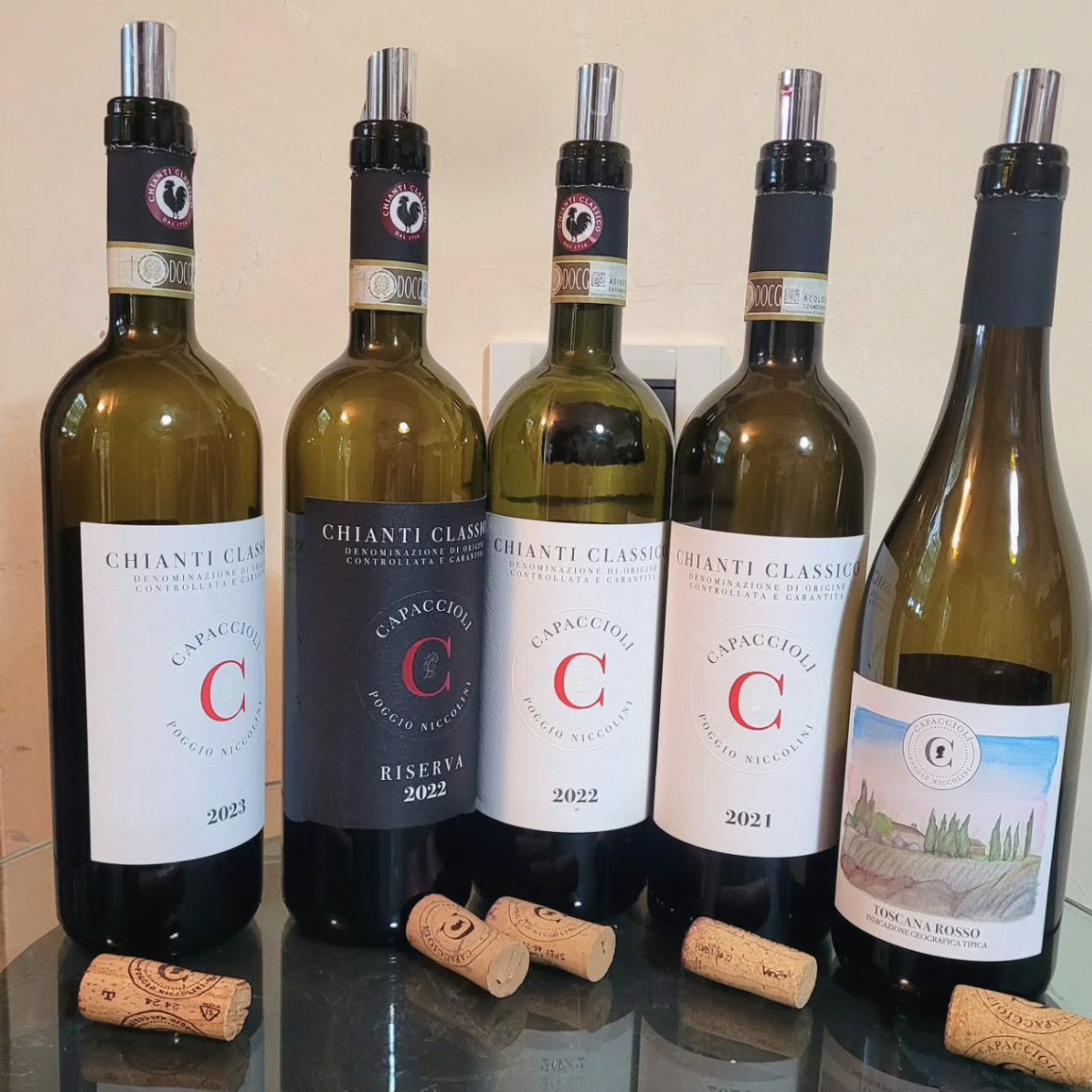
Val Delle Corti Chianti Classico DOCG 2022, Radda

Val delle Corti, Raddese to the core, still unknown to many but those who know are keenly aware of the fineness in these Chianti Classico. Roberto Bianchi’s 2022 is not as sleek and silken as some long macerated wines he has made before and it’s also quite tannic for Val delle Corti. In that sense I think newcomers to his work will see this as more classically Chianti Classico sangiovese and so a new breed of consumer will join the parade. Line up people – this should also not be missed. Drink 2026-2032.  Tasted at The Chianti Classico Collection, February 2025

Val Delle Corti Chianti Classico Riserva DOCG 2021, Radda

Full wealth of macerated sangiovese, nothing but the gold from old vineyards planted 50-plus years ago in high elevation and steep-sloped Radda. As textured in its silken robes as ever and also any, acids in line, fineness from entry to exit. Here the confluence of elevation, a vintage’s climate happenstance, worked to be cut from a new cloth and to the future coincide. No accident but a fully executed plan from a producer who gets it. Drink 2027-2036.  Tasted at The Chianti Classico Collection, 2025

San Casciano

Antinori Chianti Classico Riserva DOCG Villa Antinori 2022, San Casciano

Villa Antinori label for Chianti Classico Riserva is far less consistent, or rather its consistency is not as refined as the Marchese label. More of a forced nature which is to say winemaking and styling take precedence over seasoning and complexity because of altre varietà complementari that round out the sangiovese. More palate paste, red crayon, liquorice and balm in this wine. Especially because of the vintage. Drink 2025-2027.  Tasted at The Chianti Classico Collection, February 2025

Antinori Chianti Classico Riserva DOCG Marchese Antinori 2022, San Casciano

Consistency thy name is Chianti Classico Riserva, Antinori – Marchese Antinori. Close you eyes and imagine 2020, 2019, 2018 and now 2022. The repetition and same level of quality persists and educates about the power, the ability to refine, rinse and repeat. Liquid red gold, gemstone sangiovese with the mysterious addendum defined as altre varietà complementari. Could there be merlot and/or cabernet sauvignon? Likely. Endemic varieties as in colorino, canaiolo and malvasia? Probably. All adds up to the naturally sweet, accumulation of fruit, acid and tannin, come together at the hands of a top notch winemaking team. Drink 2025-2028.  Tasted at The Chianti Classico Collection, February 2025

Marchesi Antinori Chianti Classico Gran Selezione DOCG Badia A Passignano 2022, San Casciano

The Gran Selezione of 2022 are at the top of the perfume heap, exotically charged and seriously effusive. Case in point Badia a Passignano with its waves of tropical spice mixed with Amaro botanicals. Chewy mouthful of spicy fruit, liquorice and a touch of tar. Liquid chalky, structured for aging and looking ahead for truffles. Drink 2027-2032.  Tasted at The Chianti Classico Collection, 2025

Azienda Agricola Mori Concetta Chianti Classico DOCG Morino 2023, San Casciano

Young and brawny, tannic beyond the pale because truth be told this ’23 still feels to be in a Campione setting. As such the volatile elements, syrupy fruit, reduction and intensity are a bit over the top. Judgment of assessment must be stayed to allow for this wine to become more “finished” than it is in the current state.  Tasted at The Chianti Classico Collection, February 2025

Baciate Me Chianti Classico DOCG Avvenne 2020, San Casciano

“Kiss me,“ a play on words for the three men who own the winery, including Le Chiuse and Castello di Meleto oenologist Valentino Ciarla and a vineyard he purchased in San Casciano during Covid. Avvenne loosely translates as “please let me have some more of something, but in one word” and truthfully that is how you will feel after a glass of this wine. It’s is a sangiovese with some canaiolo of very old vines, truly San Casciano with a feeling of the local “macchia” and a natural wild quality, of great temper matched by restraint. The wine rolls and oscillates in waves, acts juicy, very aromatic, light, at times dusty and yet the texture is flowing. Never sharp and just the right balance from a super tiny production. Drink 2025-2029.  Tasted at Le Chiuse in Montalcino, February 2025

With Stefano Marinari and Federico Pini

Calcamura Chianti Classico DOCG 2023, San Casciano

Campione: Primary, exciting and confounding in its profundity. A mouth full of sangiovese (plus 10 percent) canaiolo as if bled direct from the crush and run-off of San Casciano river stones. The aromatics are twisted and entangled, nearly strangled yet the palate expresses with intense platitudes. Oxymorons and misunderstandings commit to seeing a Chianti Classico of greatness when the wine will be bottled, settled and set free.  Tasted at The Chianti Classico Collection, February 2025

Calcamura Chianti Classico DOCG 2022, San Casciano

Now in the third vintage for Calcamura the aging is only in tonneaux, two Slavonian and one French. Only sangiovese from a vineyard in the middle of nowhere but a località called Poggio ai Grilli. Could that be the name of a coming Gran Selezione for Stefano and Andreita? The Annata will be a grand total of 430 bottles that spent a year in Slavonian tonneaux and one in ceramic Tava terracotta. A light touch for a San Casciano sangiovese for which acidity is tempered with 10 percent canaiolo to affect a sangiovese between salinity and sapidity. A wine made by experienced hands not trying to coax too much from the rockiest river stone soils available to anyone in the whole of Chianti Classico. Never ambitious, always respectful and a feeling gained from out of the receded waters (so to speak) to make Annata as pinot noir Burgundian, nebbiolo Piedmontesino or nerello mascalese Etnean as any in the entirety of the territory. A more precise and verging on profound Chianti Classico with that terrific combination of drinkability and structure. Drink 2025-2030.  Tasted twice, at Borgo Machiavelli and The Chianti Classico Collection, February 2025

Capaccioli Poggio Niccolini Chianti Classico DOCG 2023, San Casciano

Campione: Truly primary and still quite a reductive element in charge of the wine. As with other 2023 samples there is not enough in the aromas to really set the tone but the palate delivers a luxe wealth of fruit and texture. Acids are running high, mighty and amok while the overall structure seems poised to see this Annata get set for a long and fruitful run.  Tasted at The Chianti Classico Collection, February 2025

Capaccioli Poggio Niccolini Chianti Classico DOCG 2022, San Casciano

Beautifully perfumed Riserva from Capaccioli in 2022 with experienced fruit from an old vineyard knowing just what to do. Exotically charged with aromatics by seed and tuber, star anise to galangal for a south by south east Asian spice bouquet. The ripenesses are necessary to keep up and all three do their part, if also the bidding to secure longevity. That will be the case for Riserva that should drink dutifully for up to 10 years time. Drink 2026-2032.  Tasted at The Chianti Classico Collection, February 2025

Castelli Del Grevepesa Castelgreve Chianti Classico DOCG 2023, San Casciano

Lactic and confected, liquid chalky and tart. Hard in the end. Tasted at The Chianti Classico Collection, February 2025

Castello Di Gabbiano Chianti Classico Riserva DOCG 2021, San Casciano

Rich, full and creamy, acidity sweet and supportive while tannins don’t seem so interested in causing a stir. A no fuss nor muss Riserva that fills the mouth and the heart. The five percent merlot feels significant, bringing another element of softness to a sangiovese eager to please. Drink 2025-2027.  Tasted at The Chianti Classico Collection, 2025

Castello Di Gabbiano Chianti Classico Gran Selezione DOCG Bellezza 2021, San Casciano

High and mighty, bright and airy, marked by macchia and a bit of reduction. Herbaceous for sangiovese like Loire cabernet franc and so curious this way. Crunchy and really quite fun withs sneaky structure for a really good Bellezza – different but good. Drink 2026-2031.  Tasted at The Chianti Classico Collection, 2025

Cigliano Di Sopra Cigliano Di Sopra Chianti Classico 2023, San Casciano

The brightest star shines from San Casciano with this ray of carbonic light, admittedly with a touch of Brettanomyces but one that hides in the layers, nooks and crannies of the wine. A 2023 and oh, so very young which says the wine will be cleaned and clean itself up given enough time. This is the natural world in sangiovese and Chianti Classico so be neither surprised nor alarmed because the risk-reward is palpable and should you accept the terms the price is worth the pay. Drink 2026-2030.  Tasted at The Chianti Classico Collection, February 2025

Cigliano Di Sopra Chianti Classico DOCG Vigneto Branca 2022, San Casciano

Riserva exists in a similar vein as Annata though it is chosen form the identified block known as Vigneto Branca. Let’s face it, the approach, the precocious idealism and the intention are the same. This sangiovese needs time, to settle and flesh so that the nervous notes fall into line. The natural world again approached and infiltrated is something many love to join and be a part of the unbridled fun. Still others are troubled by the naked aggression and willingness to let wines be wines. This is that, non-plussed nor deterred and unencumbered by the constraints of faculty and pedagogical education. Drink 2026-2032.  Tasted at The Chianti Classico Collection, February 2025

Conte Guicciardini Belvedere Campòli Chianti Classico DOCG 2022, San Casciano

Work in progress which means vineyards recently updated en route to becoming vines that will produce higher quality sangiovese. Also agriculture and winemaking assimilating the movement to prepare for Chianti Classico of a much improved, inching up to higher order. This is a next step but still one of the first for an estate on the precipice to deserving much greater attention.  Last tasted at The Chianti Classico Collection, February 2025

Solo sangiovese from “a normal vintage,” fruit from young vines not yet come into their own, aged for one year in large 25 hL French cask. Grapes are harvested at Belvedere Campòli, delivered to be processed and vinified at Castello di Poppiano and coming soon is a cellar project to the Chianti Classico property. Quite pure and yet savoury with the finest grainy structure laying below the pulpy red fruit. Missing a point of acidity to say that ripeness comes first. A factor of vintage and therefore necessity.  Drink 2024-2026. Tasted October 2024

Belvedere Campóli Guicciardini Campoli Chianti Classico Gran Selezione DOCG 2020, San Casciano

Belvedere Campóli’s ownership is Guicciardini of Castello di Poppiano – Chianti Colli Fiorentini and Massi di Mandorlaia – Maremma – Morello di Scanzano. Francesco Guicciardini was an Italian historian and statesman, a contemporary and critic of Niccolò Machiavelli and considered one of the major political writers of the Italian Renaissance. The Belvedere Campóli estate dates to 1915, was abandoned after the end of the mezzadrie system and purchased by Italian historian and mathematician Niccolò Guicciardini and family in 2015. They have been restoring and replanting vineyards since 2020. From the single vineyard called Tabernocolo, set just below the large forest above and indicative of the chapel on the estate. Identifying the vineyard as the one to define Chianti Classico as Gran Selezione was paramount while the aromas and palate notes remain so perfectly consistent with both the Classico and Riserva. Steps up the concentration, the mineral and elemental aspects drawn from the Pietraforte and the cool, almost minty savour in the flavours. Drink 2024-2028.  Tasted October 2024 and at The Chianti Classico Collection, February 2025

Fattoria Di Luiano Chianti Classico DOCG 2023, San Casciano

Open, fragrant, savoury and of a lovely oxidative style from 2023 that brings this sangiovese to a welcome and ready place, even before it might have needed be. But it and we are happy to have it drink with such ease because sometimes Annata must be a defender against tannin and time. The 10 percent merlot demos well to soften the blows and arrows of sangiovese’s San Casciano seriousness, with thanks and praises. Drink 2025-2028.   Tasted at The Chianti Classico Collection, February 2025

La Sala Del Torriano Chianti Classico DOCG 2022, San Casciano

High quality fruit from La Sala’s San Casciano vines for 2022 with a mix of warmth and a cool factor that cuts comfortably through. Some imaginative red crayon and liquorice notions put this in a bit off a rigid place to say that time is the requiem for the wine to flesh into the juicy sangiovese it wants to be. Loads of potential here. Drink 2026-2030.  Tasted at The Chianti Classico Collection, February 2025

Poggio Torselli Chianti Classico DOCG 2022 Il Contadino Cusano, San Casciano

The 2022 Annata and ’21 Riserva/Gran Selezione are the first set of wines to be made strictly as 100 percent sangiovese. As a reaction to the 2021 season’s severe reduction of yields there was no Annata produced and so this is the follow-up to the previous 2020. A new age of style and quality really begins with this vintage, of such sweet Balsamico character in a Chianti Classico of equally positive acidity and simple, if fine tannins. Great length on the Annata and a pleasure to drink.  Last tasted February 2025

Campione: Second vintage with oenologist Carlo Ferrini with a different process and yes the difference is immediately obvious. New tonneaux and 30 hL botti now housing the Annata, old barriques tossed out the window and the new balance is felt in the most palpable way. Rosso di Montalcino comes to mind and while that comparison may seem sanctimonious or anti-Classico, well just taste the style and level of quality. Juicy, blood orange in that regard and pretty much a finished wine. Stands up to be noticed. Drink 2024-2027.  Tasted February 2024
Poggio Torselli Chianti Classico Riserva DOCG 2021 Il Contadino Cusano, San Casciano

The new brand “Il Contadino Cusano” takes flight in 2021 with Riserva (and no Annata produced) because of frost-related reduced yields. An exaggeration of the local Torselli Balsamico and also really tightly wound acidity matched with equal force by grippy tannins. This is a different wine than the Torselli Riserva of the past, now with greater vibrancy and energy. At this stage the wines are made by Alessandro Campatelli with consultancy assistance by Carlo Ferrini. Something special begins and brews with ’21. Drink 2026-2030.  Tasted February 2025

Villa Le Corti  – Principe Corsini Chianti Classico DOCG 2023, San Casciano

Not atypical for 2023 with blood orange juiced sangiovese of a high and mighty if also glycerol order and the intensity of savoury-herbal-higher acid (for San Casciano) tang. Fulsome and layered by all these aspects still unsettled and needing time. There is nothing ordinary happening here, in fact this is the sort of Chianti Classico that will wake you up should you fall into a slumber. Drink 2026-2030.  Tasted at The Chianti Classico Collection, February 2025
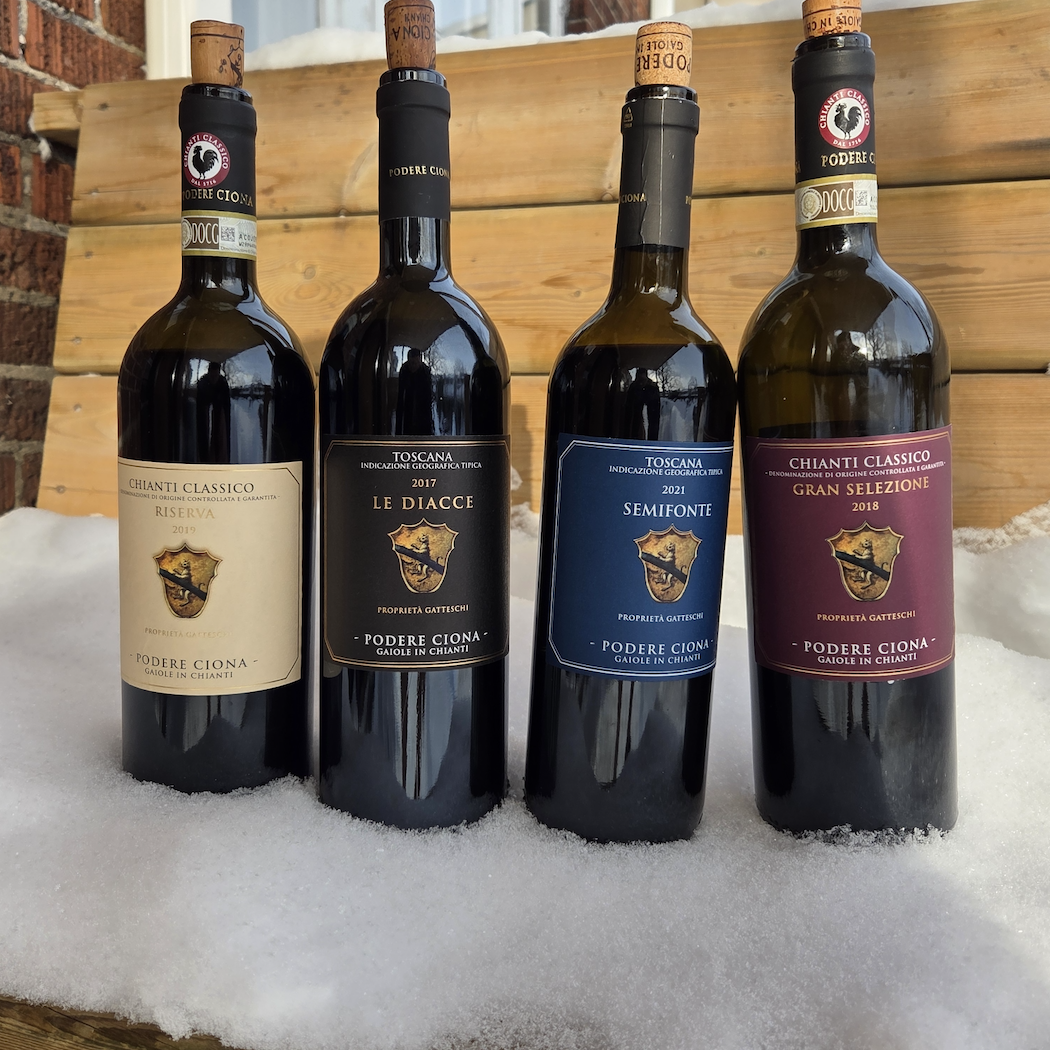
Villa Le Corti – Principe Corsini Chianti Classico Gran Selezione DOCG Don Tommaso 2021, San Casciano
Don Tommaso is Gran Selezione of the ripest order, satiny and elastic, metallic and sapid. A river stone vineyard reasoning, fullness of darkening tart acidity and serious tannins from 2021. Minty cool, Amaro herbal and again serious. Drink 2027-2032.  Tasted at The Chianti Classico Collection, 2025

San Donato In Poggio

Casa Emma Chianti Classico Riserva DOCG Vignalparco 2021, San Donato In Poggio
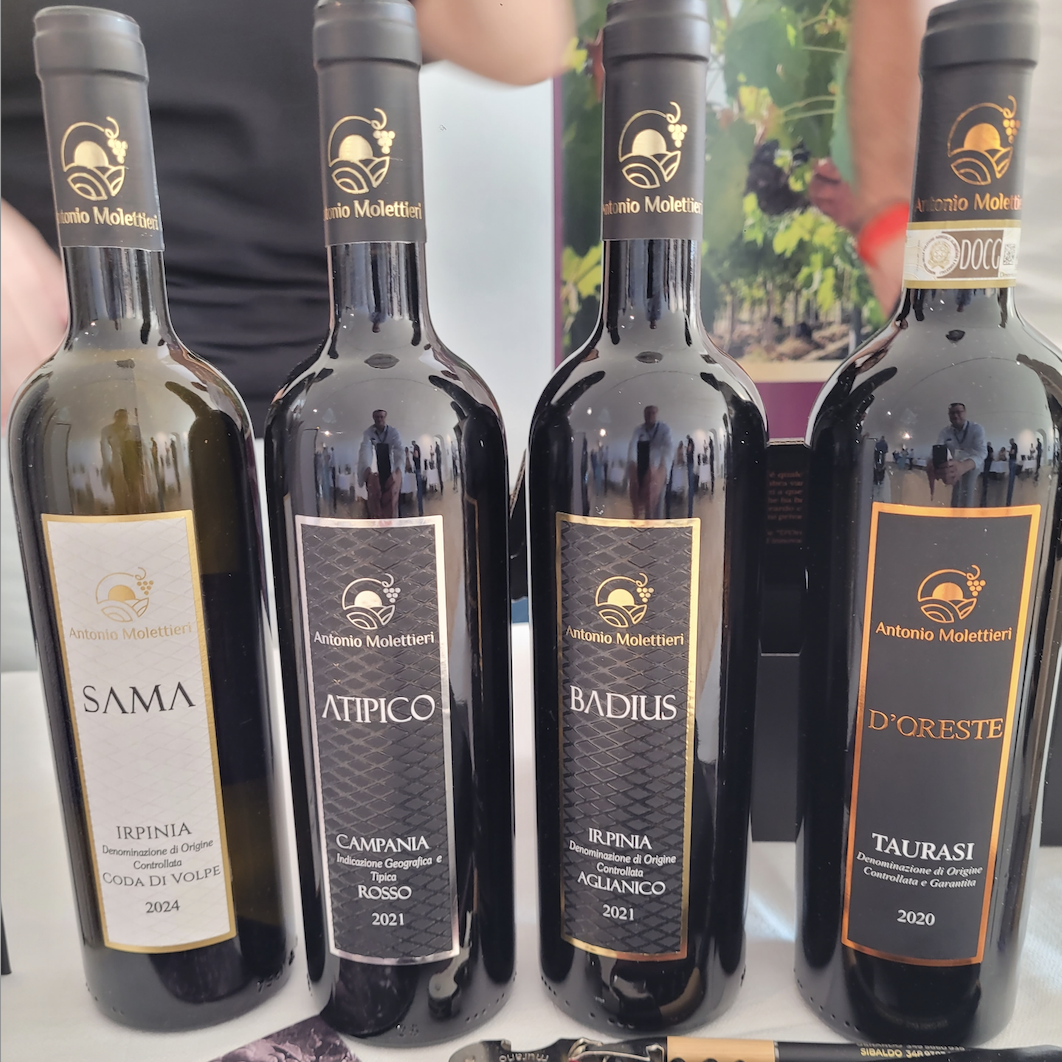
Hello Riserva 2021 from Casa Emma’s important Alberese stone-strewn Vignalparco that delivers the fortune of fruit and structure to a dark red-black sangiovese moving right of centre with all its accumulated glory. All the blood orange and serum right there on display and for the taking, unfettered and ready for action. Big Riserva with a soft heart, generous, open and free. Consistency in Riserva thy name is Vignalparco. Drink 2025-2028.  Tasted at The Chianti Classico Collection, February 2025

Casa Emma Chianti Classico Gran Selezione DOCG 2021, San Donato In Poggio

Though extremely youthful you can do nothing but imagine the rocky soils of Casa Emma from this excitable 2021. Lighter in hue, brighter and transparent by comparison to Riserva Vignalparco – which leads to the determining element and factor for calling this a Gran Selezione a most elegant wine. So stony mineral from the quantifiable Alberese found in these San Donato in Poggio hills. Drink 2027-2033.  Tasted at The Chianti Classico Collection, 2025

Castello Di Monsanto Chianti Classico DOCG 2023, San Donato In Poggio

Campione: Feeling another level of concentration from Annata which tells us two things: First is that Monsanto escaped the challenges of 2023 unscathed and second that the quality of their generous quantity of fruit was exceptional. Though this is but a sample and way too early to really capitulate there is no doubt just how blood orange citrus mixed into red fruit San Donato in Poggio this sangiovese truly is. The five percent canaiolo adds some drops of tonic while the colorino brings it all forward in technicolour.  Tasted at The Chianti Classico Collection, February 2025

Castello Di Monsanto Chianti Classico Riserva DOCG 2021, San Donato In Poggio

Another Riserva of a unique set of circumstances, so floral and gauged by the stoniness of soils. Rich and unctuous, high acidity in place, fruit set up for success and tannins clearly lining the floor below. Beauty incarnate, the proviso of sangiovese perfumes returning again and again, sip after sip, promising and providinf all that we ask for. Drink 2026-2032.  Tasted at The Chianti Classico Collection, 2025

Castello Della Paneretta Chianti Classico DOCG 2021, San Donato In Poggio

No shocker to find this San Donato in Poggio 2021 in a state of freshness, openness and availability without impediments, obstacles or borders. Just the fruit and a sweetness of acidity to match its ripeness stride for stride. Delicious as they say and ready to roll.  Last tasted at The Chianti Classico Collection, February 2025

Singular aromatic profile for Castello della Paneretta’s 2021 Annata, superbly perfumed if with a Ribena infiltrate cutting through the florals. More than obvious red fruit, especially citrus from the likes of blood orange and noticeable wood on the palate, Dries out and separates form the whole so be patient with this wine. Drink 2025-2029.  Tasted February 2024

Fattoria Di Montecchio Chianti Classico DOCG 2022, San Donato In Poggio

Indelible stamp of Montecchio and incredible substance of fruit, darkening in the way of black cherry with nary a moment of bitterness. Adds much glycerol and unction into that fruit as much as ever from this estate. Taut acidity and fine lines with backbone as structure does its work to provide the basis for longevity. Drink 2026-2032.  Tasted at The Chianti Classico Collection, February 2025

Fattoria Le Masse Chianti Classico DOCG 2022, San Donato In Poggio

Wow! Something so different for 2022, of dark fruit but like something out of Chambolle, silken and so bloody complex you wonder where to turn. First you must sidestep the sweet and tender volatility and once that happens there are fruit and mineral notes clashing, mingling, singing and smiling. Dio mio, man this Le Masse is a mouthful to consider. Drink 2026-2032.  Tasted at The Chianti Classico Collection, February 2025

Martina and Alberto Fabbri – Il Poggiolino

Il Poggiolino Chianti Classico DOCG 2022, San Donato in Poggio

The vineyards at Il Poggiolino may reside at moderate elevations between 250 and 350m but there are no south by southwest expositions and so in a hot vintage like 2022 the freshness remains a guarantee. Just three percent colorino goes a long way to raise up character of a Classico that only sees concrete and stainless steel for aging. Sweet acids match the fruit stride for stride and what you want is what you get – A level of drinkability that represents Classico and this northwest corner of San Donato in Poggio. Drink 2025-2028.  Tasted February 2025

Il Poggiolino Chianti Classico Riserva DOCG 2021, San Donato in Poggio

A terrific vintage and yes many estates in Chianti Classico lost production to the April frost but at Il Poggiolino the maximum loss was 10 percent. And so come for the quantity and stay for the quality. Rich and concentrated, lightly chalky with a clay and stony feeling. Structure asks that we wait a year before opening the window and set this sangiovese with three percent colorino for aging through to the end of the decade. Drink 2026-2030.  Tasted February 2025

Il Poggiolino Chianti Classico Gran Selezione DOCG Le Balze 2021, San Donato in Poggio

From a north by northeast vineyard up on the hill overlooking the winery which may have been a expositional detriment 20 years ago but no longer. The change of climate puts this steep single vineyard sangiovese in great light today and so welcome to the third in a row of vintages that may just shock as to its character and quality. Le Balze 20 years ago was organized as large terraces and in Tuscany you say “le balze,” when you take a giant leap. This Gran Selezione has improved and grown by leaps and bounds in the last few years to join other greats to reside near the top of the appellative pyramid.  Last tasted February 2025

Another perfumed and expressive Le Balze comes with as much if not more pulp and flesh a la mode than those San Donato in Poggio Gran Selezione that have come before. The depeche florals are Spring bloom fresh, the volume set at ideal pitch and you just need to keep putting glass to nose because, well you just can’t get enough. Richness is never compromised but it is belied by the beauty of a tannic caress about as graceful and gracious as there are. This is Il Poggiolino’s finest GS to date and that is saying a lot. “Just like a rainbow.” Drink 2025-2034.  Tasted October 2024

Isole E Olena Chianti Classico DOCG 2022, San Donato In Poggio

Crunchy sangiovese from Isole e Olena and the first vintage of the new era, blended and finished by the next team of winemaking. The ten percent canaiolo serves this 2022 well, striking a sapid chord to infiltrate what feels like super salty sangiovese with a decidedly lime-elemental strike. Almost piecing but the toothsome quality keeps things moving swimmingly along. The blend shifts from its original form and yet the DNA will not be denied. Genetics are strong and many years will have to pass by before the memories are forgotten. Drink 2026-2030.  Tasted at The Chianti Classico Collection, February 2025

Podere La Cappella Chianti Classico DOCG 2022, San Donato In Poggio

Intensity of aromas so high and mighty for 2022 but also the tang, acidity and fine grainy texture to speak for San Donato in Poggio. Few ’22 Annata are this intense and implosive with the most blood orange juicing of any in the area. Ten percent merlot or not, all the aspects of this wine are at the high end of the spectrum and time is the requiem to bring them back down to a place of comfort. Drink 2026-2030.  Tasted at The Chianti Classico Collection, February 2025

Podere La Cappella Chianti Classico Gran Selezione DOCG Corbezzolo 2019, San Donato In Poggio

Going back a few years to look at the inaugural Podere La Cappella Gran Selezione, a wine that joins the appellative fray for the first time out of a high quality vintage. The artist formerly labeled as IGT was last made in 2016 and here three years later it joins the Chianti Classico pyramid’s highest distinction. More barrel than the past and therefore spice, espresso and finally structure are really in. So much so you will still have to wait on the wine to integrate. First showing and the future will surely see to greater results. Drink 2027-2030.  Tasted at The Chianti Classico Collection, 2025

Quercia Al Poggio Chianti Classico DOCG 2023, San Donato In Poggio

Heavy Chianti Classico at this earliest of stages and one wonders why it needed to be rushed to b bottle. Nothing open or nurturing about it, so primary and hard to access. Needs to be revisited several months if not at least eight to 12 from now.  Tasted at The Chianti Classico Collection, February 2025

Tenuta Cinciano Chianti Classico Gran Selezione DOCG 2019, San Donato In Poggio

Still tightly wound and somewhat reductive with a skin to pulp ratio resinous effect in place. Still much to wait for and to receive from what will surely be a giving and abiding Gran Selezione that acts out a distinguished and defined San Donato in Poggio sangiovese style. Comes from relatively low elevation vineyards at 250m of medium textured soils, Alberese based, stony with some low-lying clay. Drink 2025-2029.  Tasted October 2024 and at The Chianti Classico Collection, February 2025

Vagliagli

Bindi Sergardi Tenuta Mocenni Chianti Classico DOCG La Ghirlanda 2022, Vagliagli

The times it takes for a Chianti Classico estate to perfect a formula for turning sangiovese into beauty is long and those who figure this out make wines like these. Annata from estate vineyards treated and handled with the gentlest of touch, low and slow, collated through processes that identify the vintage, tempering and refining its challenges. Presenting La Ghirlanda which expresses its own balance involving fruit, texture and weight, making use of acidity to distract from tannin and find a wine that drinks proportionally from now through to the end of its tenure. To the next decade. Drink 2025-2031.  Tasted at The Chianti Classico Collection, February 2025

Bindi Sergardi Chianti Classico Riserva DOCG I Colli 2020, Vagliagli

Riserva of experience and layering, a   of fruit and acidity intertwined, interchangeable and complimentary. One then the other taking turns at the wheel, got each others’ backs, defending from tannins coming forward sweet yet fierce. Full and substantial in most every regard but especially those parts that exemplify optimum ripeness. No lack for beauty and grace – never a doubt or question. Drink 2026-2031.  Tasted at The Chianti Classico Collection, 2025

Bindi Sergardi Chianti Classico Gran Selezione DOCG Mocenni ’89 2019, Vagliagli

Mocenni 89 is a special Gran Selezione, open, ethereal and generous. And it is just now entering its window of beauty with new surprise at every turn.  Last tasted October 2024 and at The Chianti Classico Collection, February 2025

Tenuta Mocenni presides at one of the higher points in the Vagliagli UGA at 500m with vineyard blocks impounded with great Alberese stones and outcroppings of Galestro. The south facing amphitheater is one of Chianti Classico’s most impressive sites and sights. The latest vintage is not yet released and there is no shock how youthful and tightly wound you will find this 2019 to be. The one that follows will proudly display the UGA on the front label. More than just a few years of time in more than one kind of vessel has equipped this major potion of fruit with ample layers of structure in a Gran Selezione so bloody big, substantial and beautiful. Will most definitely require five to seven years of unwinding. Drink 2025-2034.  Tasted October 2023 and February 2024

Borgo Scopeto Chianti Classico DOCG 2022, Vagliagli

Tighter Chianti Classico than many from 2022, acids wound around fruit and less of a softening from merlot plus colorino than in some vintages past. More dried herbal savoury than the Vagliagli norm, dimming of the brightness and not quite one cast into the great wide open. Brushy and Mediterranean like Vagliagli will be. Drink 2025-2027.  Tasted at The Chianti Classico Collection, February 2025

Cantine Bonacchi Chianti Classico DOCG 2023, Vagliagli

Sweet perfume, a mix of fresh berries and Amaro, high in glycerin, quite concentrated and fully completely red, red wine. Juicy 2023, as seems to be the vintage case. Classic acidity and mild tannin make for early drinking. Drink 2025-2027.  Tasted at The Chianti Classico Collection, February 2025

Dievole Chianti Classico DOCG Petrignano 2022, Vagliagli

Warmth of a vintage becomes and begets something different in Chianti Classico. The season is different than any of the last 10 and really just be looked at within the parameters of itself. There is this blood orange and red citrus feeling that can’t be shaken, incrementally different from one UGA to the next and yet consistently run through the entirety of the territory. Has there been another vintage so consistently perceived since 2014 or 2013? This wine speaks to that. Drink 2025-2028.  Tasted at The Chianti Classico Collection, February 2025

Dievole Chianti Classico Riserva DOCG Novecento 2022, Vagliagli

Big-boned Novocento from Dievole put of 2022, dark of fruit and very mineral. Shows the warmth of the season in its grip after a palate that can’t help but be full and satisfy. Truly mouth-filling, sapid, not particularly high in acidity and long. Drink 2026-2030.  Tasted at The Chianti Classico Collection, February 2025

Dievole Chianti Classico Gran Selezione DOCG Vigna Sessina 2021, Vagliagli

Vigna Sessina leads with its structure without apology or hesitation, of a palate attack taking hold straight away. A whole mouth of crushed rocks, very much in the way of packed and tannic Châteauneuf-du-Pâpe, warming and coating in mouthfeel. So full and substantial without a moment’s softening. Drink 2027-2034.  Tasted at The Chianti Classico Collection, 2025

Good to go!

godello

At the Chianti Classico Collection 2025

Instagram

Facebook

Back to the future of Montalcino

The Fortezza di Montalcino is one of Italy’s most famous landmarks and home to the Enoteca della Fortezza which happens to double as a splendid place to taste a plethora of Brunello

Just last week Michael Godel presented a mix of the 2019 and 2016 Brunello di Montalcino vintages to 85 guests at Toronto’s Granite Club. Back in November of 2023 the Consorzio del vino Brunello di Montalcino came to Toronto and for that edition of Benvenuto Brunello Godello presented the 2019 vintage. There were more than 350 media and trade requests for 120 seats at the annual event, however in 2024 there was no presentation in Toronto, making the Granite Club tasting a truly exclusive event. Sincere thanks is owed to Sommelier and Head of Beverage Brent Fraser for his initiative in arranging a special and exclusive tasting of 13 top echelon Brunello for the club’s members. A week prior Michael had returned from Montalcino where he payed visits with six estates as a follow-up to 10 immersive November days at Benvenuto Brunello 2024.

Brunello at The Granite Club

Related – Montalcino Previews 2024: Brunello 2020, Brunello Riserva 2019 and older vintages

The 2024 edition of Benvenuto Brunello in Montalcino was Godello’s eighth consecutive opportunity to gauge the current state of the territory’s sangiovese. He sat and tasted in the Sant’Agostino Chiostro for three days, assisted as always by the incredible Sommeliers of AIS Siena and Toscana. Visits to estates were made at Canalicchio di Sopra, Donatella Cinelli Colombini (at Fattoria del Colle), Il Poggione, Cerbaia, Terre Nere, Val di Suga, Biondi-Santi, San Polo, Corte Pavone, Le Potazzine, Casanova di Neri, Ridolfi, Sasseti-Livio Pertimali and Podere Sante Marie.

If pasta were heaven at Alle Logge della Piazza

Godello’s November tasting notes covered 254 wines; Rosso di Montalcino DOC (29), Brunello di Montalcino DOCG 2020 (73), Brunello di Montalcino DOCG Vigna + Etichetta + Altra Tipologia 2020 (50), Brunello di Montalcino Riserva DOCG 2019 (54), older vintages (29), Toscana IGT + other wines (19). The wines tasted in February 2025 now bring the total to 278.

Godello presenting at Benvenuto Brunello Toronto, November 28, 2023

Coming back to Montalcino in the month of February was interesting on many levels. For years Montalcino was the last stop on a week long Anteprime di Toscana press trip before the Consorzio decided to go it alone in 2021. Now there was the comforting feeling of being in the village at a truly quiet time and without the hundreds of media, PR and producers having descended into the area. In November everyone is vying for visits to producers who have only so much bandwidth at that time. In February there is silence and tranquility. When in Montalcino there is often a return to the village at some point during the day. A quick walk to the city centre in between visits from producer drop offs and pick-ups more often than not takes in the Clock tower of Palazzo dei Priori at the heart of the village.

Montalcino, November 2024

Then there is the question of when is the best time to taste the new releases of Brunello di Montalcino. For many producers November is too early and this was one of the main reasons to move Benvenuto Brunello forward to February. That said the winter is a time when many wines (and also those resting in barrel) close down. Is February a good time to taste Montalcino’s sangiovese and to make decisions that play a role in determining the financial success of the wines? The answers are neither obvious nor necessarily constructive but they do promote healthy debate.

Costoletta di Vitello – Alle Logge alla Piazza, Montalcino

Sangiovese IS Brunello. There was a time when the Sangiovese Grosso clone dominated the vineyards but clonal diversity drives today’s agriculture – At Biondo-Santi their nursery houses 59 of them – all in the name of research to decide what grows best and where. The thing about Sangiovese is that it loves rainfall but does not love really hot seasons. That messes with its natural acidity but Montalcino lives and dies by the variety as the only denomination where every wine is 100 percent Sangiovese. There are other grapes grown around Montalcino but only Sangiovese makes Rosso and Brunello di Montalcino.

2024 Sangiovese – Le Chiuse

A little bit of advanced intel never hurt and so this is a 2024 harvest slide of Sangiovese stems taken by Lorenzo Magnelli of Le Chiuse, who incidentally happens to be the great-great grandson of Ferruccio Biondi-Santi and Magneli’s vineyards are planted to the the BS-11 Sangiovese clone developed by the family. Note the brown bits on the stems – not an indication of sugar ripeness but rather phenolic ripeness, an essential process that took a long time to develop in the 2024 vintage. September and October were cool and saw more rainfall since 1995. Some producers said you have to go back to 1993 or 1991 to find a similar vintage. But technology, experience and confidence are leaps and bounds ahead in today’s winemaking. The vintage will be a “light” one, with low alcohol wines – some will fall in less than 13 percent though we should expect them to be labeled at 13 and anything above that number will come in at 13.5. The wines will be beautiful, with top Sangiovese acidity and their potential for aging will be great.

2024 Stems – Le Chisue

On Godello’s recent February 2025 excursion the estates visited were Le Chiuse, Uccelliera, Sesti and Col di Lamo. Here are 24 further tasting notes for Rosso di Montalcino, Brunello di Montalcino and other wines tasted over two days. These wines have been added to the Benvenuto Brunello 2024 list which can be viewed by clicking on this link. Montalcino and its wines are in a great position and Canadians should continue to engage with the Brunello, but also increasingly the Rosso. Understanding vintage variation, the work being put in by producers to meet never-ending challenges and how the wines are evolving are all part of the greater awareness and in turn, understanding. Back to the future of Montalcino.

Lorenzo Magnelli, Le Chiuse

Le Chiuse Rosso di Montalcino DOC 2023

“Another unique aspect of ’23 was the colour of the skin – black, not blue, like pinot noir. It usually looks like the colour of the blue ocean and in 2023 it was darker.” The words of Lorenzo Magnelli. Aromatic and fruity, like raspberry and currant but really floral, right form the very beginning.” Truth spoken and persistent from a vigorous season and Magnelli always picks at sunset when the temperatures are lowest. A unique Rosso for Le Chiuse and by extrapolation also the vintage, drinking dutifully and beautifully right away and while it may not seem so structured these tannins are quite sneaky. “A Rosso di Montalcino that goes straight to the point.” You get exactly what it and Lorenzo are saying. You listen and you like the story. Drink 2025-2030.  Tasted February 2025

Campione – Le Chiuse

Le Chiuse Rosso di Montalcino DOC 2021

Now to the opposite end, tasted side by side with 2023, because it’s a very structured vintage. “I’m curious because it’s been two years since I tasted this wine,” says Lorenzo Magnelli, also because of 30 percent loss to the April 7th frost. But Magnelli reminds that he is not the proprietor of Le Chiuse – it’s the weather that owns the place. He is in fact its curremt custodian but just as members of the Biondi-Santi family came before him, so will others take over when he is done. How you take your turn, play your part and deal with different seasons is what makes your best wines. The 2021 is still tannic and vertical from the vintage of the last 10 years with the highest acidity, that along with power making this a most unique wine, but also time to be tasting it. The vines were quite stressed and so the tannins are not perfectly ripe but the acidity takes control. A warm one and when skins are thick there is less juice for the tannins and even more importantly acidity being the driver. Never jammy as a result, elastic and ultimately built with more complexity. Drink 2025-2029.  Tasted February 2025

Le Chiuse, February 2025

Le Chiuse Brunello di Montalcino DOC 2013

First look at 2013 – A vintage missed for some reason. “What do you remember about 2013?” is the question asked to Lorenzo Magnelli. “Always sunny and cold, never too hot. In August there were summer storms with hail in Montosoli but none at Le Chiuse.” Late-picked in October at sunset, as always. First bottle quite evolved and yet the sweetest natural display of fruit with persimmon and strawberry and the second bottle a bit closed, showing almost no evolution and announcing the requiem for time. “For 2013, a great density of tannins and nice because it’s a vintage that shows the right muscles.” Elegant and truly elastic because the acidity keeps snapping the fruit back on the palate. It’s amazing actually and this allows for a release, reminding Lorenzo of 2016 and the brightness of the taste defines the wine because it keeps your palate alive. Vibrancy in a 12 year-old Brunello (which for Magnelli is only two when it’s Riserva), is not too bad. Drink 2025-2029.  Tasted February 2025

Tasting at Le Chiuse

Canalicchio di Sopra Brunello di Montalcino Riserva DOCG 2015

First look at 2015 Riserva in bottle from Canalicchio di Sopra. A vintage of warmth, impressive tannic structure and in this case acidity acting as catalyst and driver for the wine. The freshness has not missed a beat, fully intact, rising still and bringing the goods from the great Mercatale vineyard. The very fact is that at 10 years the moment arrives to enjoy a bottle of Canalicchio Riserva and here we are at exactly that moment. The window is open. Fineness incarnate, a vintage some say is less important than 2016 but who could not love and appreciate this Brunello all the same. They are different and both great.  Last tasted February 2025

A preview sample. Comes from fruit grown in the oldest two hectare vineyard of Vigna Vecchia Mercatale. The vines were planted in 1987 and in good vintages the potential is gifted, not a matter of grand impact but one of the land, the soil, the brown clay minerals and the elements. And so it’s a matter of longevity and potential, not brut strength. A beautiful example of Riserva, focused, precise and fine. And yet the style is poised in position along a line that includes the Brunello and the Riserva so homogeneity in these soils is more than apparent. This part of Montalcino makes this kind of wine and this house celebrates the consistency. Drink 2022-2036.  Tasted February 2020

With the Brunello Boys

Canalicchio di Sopra Brunello di Montalcino DOCG 2012

Defines the classicism of a Brunello di Montalcino from its time and also vintage, when vines ripened sangiovese to the optimum, what Francesco Ripcaccioli would call an 8.5 because as a number 10 is both unattainable and obtuse. In full control of its shape and faculties, a 12-plus year-old wine that has shed its tannic freight, integrated acidity into the fabric of design evolving into the nurture of secondary life. Freshness persists but in the way a Brunello of this age and stature should rightly be doing. A terrific example to speak on behalf of a territory’s località but also in the broader sense of and for Montalcino.  Last tasted February 2025

“Reduction is a way to preserve the freshness and the florals of the wine,” tells winemaker Francesco Ripaccioli. Sangiovese is better set up and suited this way and while some Balsamico is now speaking through this ’12 Riserva’s voice, much of the aromatics are still situated in the realm of a high-toned grace.  Tasted February 2020

A year previous to the ’13 Riserva (which will be made exclusively from Montosoli hill fruit) there is the depth of clay and controlled power out of Canalicchio cru vines. The absolute attention paid to patience and time is noted from a Brunello such as this, spoken out within the constructs of fruit extraction and wood usage. The tannins are red meaning they are ripe and request that you give this wine as much time as it gave before going to bottle and then to market. Lush, consistent from start to finish and just hinting at notes not quite Balsamico but something other, something derived from sangiovese grown in the grey clay of La Casaccia. Drink 2021-2032.  Tasted October 2019

Cortonesi Rosso di Montalcino DOC 2023

Just bottled one week ago and hello to a ’23 that Tommaso Cortonesi says is “very close to the Rosso di Montalcino style that I want for my winery.” Tommaso has been working and honing his concept of Rosso for more than a decade and this first look at its next iteration seems somewhat of an aggressive one. That is the idea and Cortonesi admits how others who faced major 2023 challenges were jealous of the quality and quantity of La Mannella’s harvest. Palate intensity is off the charts, there is a spicy element happening and structure is tops for Rosso. There are Brunello makers who would kill for this combination of substance and style. Drink 2026-2031.  Tasted February 2025

Cortonesi Brunello di Montalcino Riserva DOCG 2019

Though released six-plus years after the harvest Tommaso Cortonesi says “this is the first Riserva that I bottled more than one year earlier than the rest.” This because he now prefers that the wine refines one extra year in bottle and not in botti. For him Riserva is not necessarily the “top pick” of the vineyards or vintage but rather a Brunello of a different or ulterior approach. “A matter of style,” he explains, “an example of northerly Montalcino.” Now in bottle two years and emphatically not a powerful Riserva but something cooler, more refined and well, fine. There are wines to speak as sangiovese, Brunello or Montalcino and then there are Riserva that amalgamate all three in equal pronouncement, in concentrated concern, executed with reserve and balance to speak as Riserva. Rich and generous, high level quality and quantity of acidity, no hidden fruit or brilliant disguise. Instead there is transparency, focused intensity, everything up front and personable. Like its maker. Drink 2027-2038.  Tasted February 2025

Andrea Cortonesi, Uccelliera

Uccelliera Rosso di Montalcino DOC 2023

Sister property Voliero opens with easy access, as does Uccelliera but there is more structure in this 2023 Rosso. Was not fully expected but there it is as verticality and while not exactly closed – it’s not an open book by any stretch. Use your imagination to look ahead and be prepared for a sangiovese equipped to unravel over a long and slow period of time. Masterful example for the vintage. “The starting point for the territory and the wine that proves the ability of Montalcino is Rosso.” His explanation and Andrea Cortonesi will never take this wine for granted. Drink 2026-2030.  Tasted February 2025

Uccelliera Brunello di Montalcino DOCG 2020

More expressive now than the Voliero and so the theory of closing down in February is not locked in, but still the cold weather is not ideal for tasting a young Brunello. This expressiveness is attributed to the master blending work of Andrea Cortonesi and the freshness captured form this mix of low-lying, mid and high elevation vineyards. The sapidity and energy are on display, both at full but the graph is a rolling one and there will be many greater days laid out ahead.  Last tasted February 2025

It’s all in the farming and you will all be hard-pressed to find fruit riper yet with an edge, fulsome while pulsing with energy and rolling in texture – though still always elastic. The subtleties may be fine but the difference is unequivocal and here Annata for Brunello is akin to Riserva. This is because the brings 2020 fruit so forward while also extending the high probability of its longevity looking well ahead. Minimum 10 years because the backbone is not only strong but malleable and amenable to change. That’s how you do it my friends. Drink 2026-2035.  Tasted November 2024

Uccelliera Brunello di Montalcino Riserva DOCG 2019

The bottle tasted in November 2024 was clearly less than perfect and not representative. Here the energy rises while intrigue runs seriously high. Picked on the 12th of October and tells Andrea Cortonesi, “there was not a single berry showing a difference in colour, nor were there any that were not perfectly healthy.” First and foremost the tannins are fine, finessed and lengthy. And yet this is a confounding wine because it will rise, fall and then rise and fall again, in the way of a great bottle of Bourgogne. This 2019 Riserva is that kind of wine. There are years laid out ahead before the reaching of its potential, perhaps five, if not even more. Aromatically speaking the ’19 Riserva has arrived at a great moment but somewhere around 2029 the plateau should be reached. Ten years further will see to the best years and life lived for this impeccable sangiovese. Drink 2027-2037.  Last tasted February 2025

Maturity and just a step away to over maturity from Riserva 2019 taking this into a sappy and braised place. Lacking some focus and also structure as a result. This is a bottle that suggests the wine that got away from its maker but would certainly look forward to tasting another bottle.  Tasted November 2024

With Andrea Cortonesi, Uccelliera

Voliero Rosso di Montalcino DOC 2023

Fundamental difference between Voliero and Uccelliera are twofold; Sant’Angelo in Colle vineyards versus those in Castelnuovo dell’Abate, non-ownership and ownership. Sill the approach and philosophy are the same. Cooler and fresher for Voliero because of elevation and from 2023 the phenolic development in optimum range with more fullness of fruit and structure inherently pleasant. Earlier drinking Rosso of quick usability. Drink 2025-2028.  Tasted February 2025

Voliero Brunello di Montalcino DOCG 2020

Three months later and a bit closed, not a shock because this is winter, the days are cold, the vines have no leaves and while there may be no scientific evidence to this – well the wines close down too. Therefore tasting in November is a much better idea.  Last tasted February 2025

A sister sangiovese and a younger one that tries to do everything its older sibling does. That means be a child of most experienced agriculture, even if vines are younger and their acumen has not fully developed. No matter because less concentration is belied by more subtlety and fruit coming around a bend will gleefully join and climb the constructive elements of the wine. Quite fine in its own right, if perhaps crispy, crunchy and excitable. Drink 2025-2029.  Tasted November 2024

Sesti, Castello di Argiano

Sesti Sauvignon Vino Bianco 2024, Toscana IGT

Having grown up in Venice, Giuseppe “Giugi” Sesti thought it would be wonderful to have some white wine, in spite of and against the recommendations of everyone in Montalcino. He planted sauvignon vines in the coolest part of the estate to become the house white and the first Montalcino (1990 vineyard) white was born. A sauvignon for those who maybe don’t like the grape and now a 34 year-old plot making for a crisp, fresh, no wood expression, bloody delicious and refreshing white wine. A bit of a leesy character to say that Giugi created something that is now simply glou-glou. Infatti! A legacy piece of Sesti left behind and another reason to say thank you to the grace of his life well lived. On average 3,500 bottles are produced. Drink 2025-2027.  Tasted November 2024

Sesti Rosato 2024, Toscana IGT

An OG Rosato first produced in 2004, like the sauvignon a matter of choosing a cooler growing spot for the intention of purity, freshness and this crunchy character. An extrapolation on the idea of L’Ombretta, a light red from Venice that you drank in the summer shade. Made at a time when Rosé was not in Italian fashion and today it represents that which is salty, crispy and refreshing. Made from grapes that might have otherwise be dropped, picked early, pre-dawn, an hour or two of skin contact (although that first 2004 was eight!). Originally presented as “il moglie di Brunello,” the wife of the Grand Vin, with a spinal cord so sharp and attacking the palate, but also the acidity matching to dishes that beg for this sort of wine. Is it still a curiosity? Yes actually because it’s a beautiful thing of its own. Drink 2025-2027.  Tasted November 2024

Sesti Torre, Castello di Argiano

Sesti Grangiovese 2024, Toscana IGT

Solo sangiovese going back to a 1980s Giuseppe Sesti portfolio concept that included the sauvignon and Rosato labels, of fresh, crisp and crunchy drinking wines for sipping in the summer shade. From a time when no one really knew the intimacy and intricacies of sangiovese. “Il grande sangiovese,” a playful way with words and a truly gancio varietal wine here from 2024. To only use the word acidity would not be correct because there is more, a sapidity and more of a basilico herbal quality with vibrancy a step ahead of Rosso. Opens quickly with immediate invitation. Drink 2025-2027.  Tasted November 2024

Sesti Rosso di Montalcino DOC 2023

“Rosso for us has always been a very important wine, despite the Anglo concept of it being considered a “Rouge de Beaune.” A meaningless expression in the eyes of Elisa Sesti because I might indicate sangiovese unqualified to be Brunello. “Nonsense!” Sesti’s vineyards did not succumb to the Perenospera (mildew) disaster because the vineyards lie in a valley, although careful attention had to be given. The forest is the lung and there was no law as to the what or how of guaranteed control, but still the losses were mitigated. Rosso is therefore a matter of quantity and quality with this being equipped with some impressive fruit, a true macchia mimicking the cacti that grow and for Rosso a serious structured wine. Gripped by tension and intensity, not quite open and looking to live a long life. Drink 2026-2031.  Tasted November 2024

Elisa Sesti

Sesti Brunello di Montalcino DOCG 2020

Intensity runs high at this stage and while the time of year might be when the most recent Brunello releases could close down, such is not the case with Sesti 2020. That said it was a bit early to taste back in November. And so when we learn how to read Brunello then we can handle the exercise with some acumen. At least more than how we managed yesterday.  Last tasted February 2025.

Quiet, demure and always the sepia toned style of sangiovese of a soft, retro-nostalgic aesthetic, yet blessed with controlled and restrained energy. Flowing, graceful, always mindful and yet youthful and so a bit troubled. Fruit at elevation with wind blowing through its canopies, expressed in this Brunello di Montalcino walking with a purposed gait, always just a few centimetres off the ground. Weightless in this sense but at the end of a glass the flavours, sliding while caressing textures and then feelings pout forth before settling back down to the ground. Drink 2026-2034.  Tasted November 2024

Sesti Brunello di Montalcino Riserva DOCG Phenomena 2019

Winter 2025 is closing time, even more so than the 2020 Brunello, in a state of quiet flux and pre next moment exuberance. Do not even think about opening 2019 Phenomena any time soon. Certainly not before the fall of 2026.  Last tasted February 2025

There are normal, standard Brunello di Montalcino Riserva, there are proper and representative examples, also exceptional versions and then there are the ones of ephemeral beauty. Fleeting in part because of their natural perfumes, scents that come from the fruiting bodies alone, mostly from the skins and yet like people there are some whose scents you never forget. Such is the case with Phenomena, a silent and measured creature of sangiovese but one that comes back to your thoughts and senses long after you are no longer in contact with the wine. Phenomena is also a Brunello of feeling, which means something ethereal, tactile and conclusive. Not seductive mind you, but suggestive and this 2019 will carry on, for some impossibly calculated infinite amount of time, as close to forever as could justifiably be imagined. Drink 2026-2038.  Tasted November 2024

Colombaio at Col di Lamo, Torrenieri

Col di Lamo Rosso di Montalcino DOC 2022

First look at Giovanna Neri’s 2022 Rosso at a time when others are already starting to pour their ‘23s but hers will not be ready for several months. The decision to stay the course with ’22 is correct because the bones of this Rosso keep it sturdy and the acidity maintains positive vibrancy. Crystal clear, correct and a Rosso to age a few years. Drink 2026-2029.  Tasted February 2025

Col di Lamo Brunello di Montalcino DOCG 2020

Loving the vibrancy of the 2020 Brunello, a sangiovese of excitement and persistence without any moment of closed behaviour. No change from November.  Last tasted February 2025

Poised, striking, quiet and composed, hard to figure but my goodness curiosity is piqued. Tall drink of sangiovese water, elixir of Brunello, confident, beautiful and sure. Strikes a varietal pose, statuesque yet fluid, malleable as it needs to be, equipped to transform and age with grace. Wood is known, applied with expertise, for more than just appearance but to explain this to be a Brunello 2020 of and for to enjoy a great experience. Drink 2025-2032.  Tasted November 2024

Giovanna Neri and Elisa Sesti deep in conversation at Col di Lamo, Torrenieri

Col di Lamo Brunello di Montalcino DOCG A Diletta 2019

Fruit for A Diletta comes from the mid-slope of Col di Lamo’s east facing hill but in vintages when it’s not made (and Riserva is therefore also passed over) then the fruit is blended into the Brunello. A cru selection and beautiful composed in 2019.  Last tasted February 2025

A special label for the estate and so very different as a sangiovese than either the Annata or Riserva of 2019. There is no missing the vineyard and climate because a special kind of Machia Medditerranea exudes from out of the evergreen perfume. No confusion whatsoever and a quality but also demand of tannins that Riserva will here show. This Etichetta is a special wine and clearly represents a singular expression that could only be of itself.  Tasted November 2024

“A Diletta,” dedicated to Giovanna Neri’s daughter and a Brunello of one vineyard only two hectares in size. The fruit is indeed richer, deeper and in a way more vibrant than the Annata but it’s also equipped with finer tannins that stand up to the fleshiness of the sangiovese. There is also more wood involved and that aspect will need a few years to melt, settle and resolve. Could be five or more before that work is finished. This carries a feeling that is usually one from Riserva conceived Brunello so that should give you an idea of where it is and where it will go. Milk chocolate on the finish. Drink 2025-2030.  Tasted November 2023

Col di Lamo Brunello di Montalcino DOCG 2013

Retrospective look 11-plus years back at a vintage when tasted in 2017 was considered not much more than average, though personally speaking the charm, defference and grace at that time was felt with raw emotion. The ‘13s are a curious lot that age with the widest range of style plus character with Col di Lamo’s being an exotically charged sangiovese of aromatic character and complexity. More wood than recent vintages though here it has melted into the delicate fabric of the wine. Drink 2025-2027.  Tasted February 2025

Col di Lamo

Col di Lamo Brunello di Montalcino DOCG 2012

Warm vintage and yet so much vibrancy from Brunello 2012. Twelve-plus years forward and still shaping into its secondary personality, showing with grip, energy and intensity. Red fruit persists with liquorice and dark chocolate but acidity does so well to keep everything in view. Surprisingly seductive and true when it is said that Brunello at this age can be a selective lot. As are we. Drink 2025-2027.  Tasted February 2025

Palmiro, Col di Lamo

Col di Lamo Brunello di Montalcino DOCG 2006

The first vintage was 2003 but for argument’s sake we’ll call this the first important commercial vintage of Giovanna Neri’s Brunello career on a piece of Torrenieri land at the northeastern edge of Montalcino. The house above is Colombaio but there are several places with that or a variation on that name and so she chose the hillock (Col) of Lamo. The colour of ’06 looks like to be the eyes of age but the nose is vibrant, of wild strawberry and frutta di bosco, quite fruity and persistent. The palate flavours are wild and mature but the acidity is pure sangiovese. A fully resolved wine well into secondary and arriving at tertiary, but it’s a true joy to taste. Drink 2025-2027.  Tasted November 2024

Good to go!

The Fortezza di Montalcino is one of Italy’s most famous landmarks and home do the Enoteca which happens to double as a splendid place to taste a plethora of Brunello.

Instagram

Facebook