Tasting Ontario Part One: Riesling

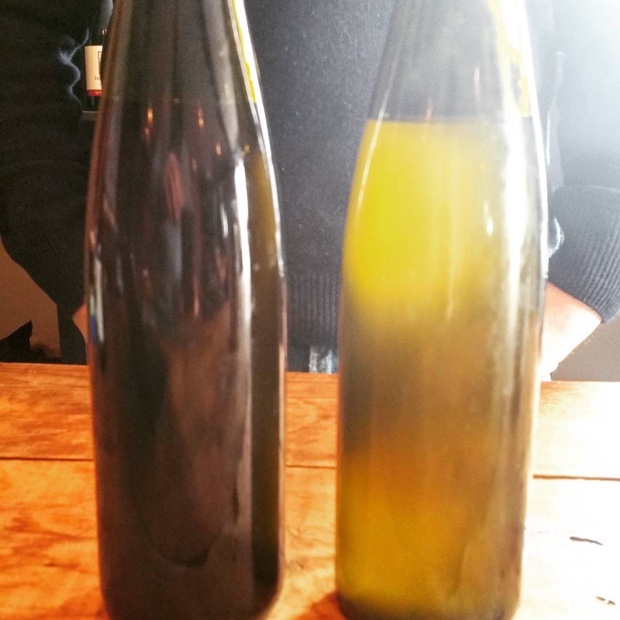
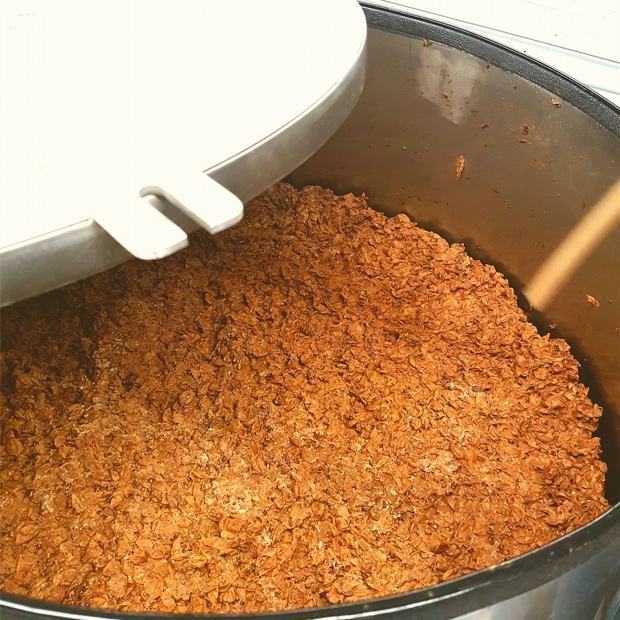
Riesling at Vineland Estates, 161 days on skins

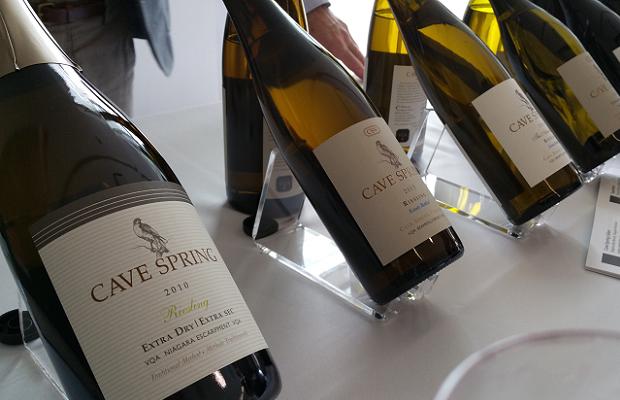
Riesling is again on the rise and the reasons why are as varied as the artistry it’s equipped to display. It has been 40 years since the Pennachetti family of Cave Spring Vineyard and German vintner Herman Weis planted riesling in St. Urban Vineyard on what is now Vineland Estates. My how things have changed. The trending line ascends as the general public comes around and warms to the versatile grape so popularity is not just in the hands of geeks, oenophiles and connoisseurs. Ask your favourite sommelier, product consultant or wine writer. Riesling’s neighbourhood is beginning to gentrify in a big way but it’s also expanding experimental and ancestral horizons. It will always be just riesling but today’s varietal vernacular goes beyond dry, off-dry, semi-sweet, Süssreserve, late harvest and Icewine to now include skin-contact, barrel fermented, unfiltered, wild ferment, Blackball and The Geek.

A few weeks back I attended my 7th Cuvée in Niagara Falls to celebrate the next chapter with and for our wine industry, fresh on the heels of the 2018 Tasted Untamed edition of Taste Ontario in Toronto. Just a month before I rambled through the Niagara Icewine Festival in Jordan and the Icewine Gala in Niagara Falls. It was at the Icewine Gala where we watched and listened in on a great tribute to Ontario’s iconic pioneer, Karl Kaiser. We owe so much to Mr. Kaiser with respect to everything Icewine but also to how far we have come in terms of riesling.

A lovely tribute to #karlkaiser tonight at #icewinefestival gala

Just two weeks ago in Toronto we tasted the current offering of Prince Edward County wines at Taste of the County. Today we will immerse ourselves into the culture of global food and local wine at the Terroir Symposium and on Tuesday the Wine Council of Ontario will hold its first annual Ontario Craft Wine Conference. It has been a very saturated and intensive start to 2018, something that must be attributed to the maturity, confidence, preparedness and excitement of and towards Ontario wine.

My personal opportunities to taste wines from the Niagara Peninsula, Prince Edward County, Lake Erie North Shore and Ontario’s South Coast have been many. Before too long there will be greater access to the wines of emerging regions like the Oak Ridges Moraine, Georgian Bay the Northumberland Hills. Prior to 2017 I used this wine processing platform of godello.ca as a vehicle to review and discuss Ontario wines with much greater frequency but circumstances have changed. My work with Italian and French wine regions, most notably Chianti Classico, Brunello di Montalcino and Bourgogne have occupied a great deal of my time. So has tasting and reviewing many potential submissions for the WineAlign exchange and acting as a consistent contributor to the WineAlign Buyers’ Guides to the VINTAGES releases.  I 2017 I ceased publishing my bi-weekly tasting notes because it’s important that readers check them out on WineAlign. All this as added up to less constant coverage of Ontario wines on the site.

And a few of my favourite wine writers. Thx for coming to #cuvee2018 #vqawinesofontario

That is why I’ve decided to post a series of articles over the next few weeks solely dedicated to Ontario wine and I’m going to split them up by grape varieties, beginning today with Ontario’s great white hope, riesling. I’ve written about the grape many times before and my belief in its varietal power, finesse and omniscient existentialism for a signature and singular Ontario purpose is perpetual and unwavering. This work is possible because of the organizations and the people behind them who make it all possible. The Wine Marketing Association of Ontario, The Wine Council of Ontario and VQA Ontario are a triple-edged force that keep our wines flowing. Thank you to Richard Linley, President of WCO, Magdalena Kaiser, Head of Marketing and Public Relations for WMAO, Brian Schmidt and Laurie Macdonald, President and Executive Director respectively of VQA. The Icewine Festival Gala and Cuvée are not possible without the work of Fallsview Casino, Scotiabank Convention Centre and of course Brock University. Gala and Experts’ Tasting coordination is possible because of The Cool Climate Oenology and Viticulture Institute’s Barb Tatarnic, Manager, Wine and Sprit Education Trust and Kaitlyn Little, Marketing and Communications Officer.

Inaugural Winemaker of Excellence Award winner and riesling maker extraordinaire, Angelo Pavan of Cave Spring Cellars, with Donald Ziraldo

At Cuvée, the inaugural Winemaker of Excellence Award winner was Angelo Pavanchosen in a unanimous decision for his major contributions to the industry, his commitment to excellence and his mentorship to winemakers across Canada. Pavan, Vice-President, Winemaker and Founding Partner at Cave Spring Cellars, is known for his encyclopedic understanding of viticulture in Niagara. He was among the first in the province to work with numerous grape varieties and was a pioneer in the quest to improve wine quality and sustainability in vinifera varieties.

“It is humbling to be the first recipient of this great award,” said Pavan. “It validates the passion, time, effort and commitment of over 30 years dedicated to this great wine growing region and having participated in its evolution to international recognition.”

Pavan is also a founding member and Chair of the Vintners Quality Alliance (VQA) Standards Development Committee and has played a key role in determining the most suitable winemaking practices applicable in Ontario. As the founding Chair of the International Riesling Experience, held in conjunction with CCOVI, Pavan has also been instrumental in solidifying Niagara’s place as one of the world’s pre-eminent Riesling producing regions.
Related – Three Rieslings to believe

One of my first bold statements about Ontario riesling was this. “There are many reasons to believe in riesling, that versatile and brutally honest grape. Riesling holds no punches, speaks its mind, tells it like it is. Grown worldwide and vinified in so many varying styles, riesling is not so much a chameleon but rather a mutant. It takes root in every vineyard, marking its terroir, expressing itself singularly and without apology. Over the past two-four months I have exonerated and upheld with the highest riesling belief that (Ontario) does the variety justice above and beyond the pale, in the vineyard and in the glass. More reviews have been written, designed and pushed down your throats on (local) riesling than on any other grape. What’s up with that? Quality, that’s what.”
Related – 100 kilometre wine for spring

And this. “Riesling. Can there be a more versatile white grape? From natural, mineral spring, bone-dry to concentrated, candied sweet, this grape runs the diversity gamut like no other. ‘The Bench’ is home to a mineral wealth of local riesling, singular in composition not only by way of a global comparison, but also from plot to plot, soil to soil and vineyard to vineyard.”
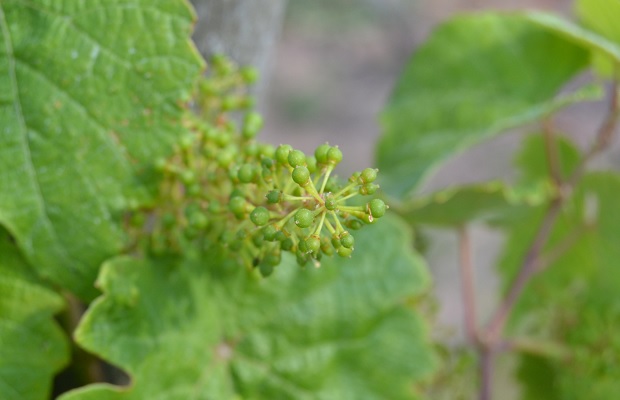
Riesling Vine

Related – Are you wine experienced?

We held a symposium at Brock University a few years back and the technical, chemical side was addressed by Cornell University Sensory Researcher Terry Acree. For riesling, Acree focuses on chemicals that correspond to the strongest identified smells, the most important and prevalent of which is TDN (Trimethyldihydronaphthalene). TDN the chemical or diesel/petrol the sensation as an “odour strength (Damascenone) as related to by human subjects.” In order for the wine taster to “experience” these sensations, two things have to be there. “Memories of different kinds of features and features themselves.” That said, Acree believes you can only smell three things at once, a notion he borrows from M.F.K. Fisher.

Acree sees odour as “an evolutionary human response to history.” If you have never come into contact with a banana, you will never smell banana in Chardonnay. TDN is the dominant aroma and where riesling grows, more sunlight means more fruit and more TDN. TDN is a precursor but its prevalence does not necessarily increase as a wine ages. A very common theme when nosing an aged Riesling is to comment on the secondary aromatic emergence of a gas or petrol note. Acree believes that identifying increased petrol notes in aged Riesling is a bit of a misnomer. It had to already be there. “I’m just inventing a new, confusing way to discuss minerality,” he concludes.

At that time Toronto wine writer Mike Di Caro and I talked about Ontario riesling and we agreed that sugar levels are both arbitrary and unpredictable so Niagara’s best is and should be of the dry variety. I don’t think that way anymore. My friend and colleague Bill Zacharkiw of the Montreal Gazette wrote this last year.”Rieslings, especially from cool climates like the Mosel in Germany and Niagara tend to have residual sugar. Don’t be scared. You know what? I love them. The sugar makes the aromatics go “boom,” while the acidity keeps the wine tasting dry.” Bill is correct and it is also those sugars that allow the wine to stay alive, age and develop those aforementioned petrol notes.

Related – I shall be Riesling

Here is how VQA chooses to define typical Ontario riesling. “Classically exhibits refreshing citrus, peach or floral aromas with a light “petrol” element and racy acidity on the palate. Made in a range of dry, off-dry and sweet styles, including Icewine. Typically not oaked but good examples will age well with the petrol nose evolving.” Many would agree but there is so much more to think about. You don’t know anything about riesling and aging until you begin tasting them at five years only know then can you begin to understand. Some examples will stay the course of pure lemon, so taut and tight, perhaps shouldn’t even be released until they are ready. The acidity might be the most unwound, with pent-up aggression, a fighter in search of balance. Not typical perhaps but very much a part of the Ontario mix.

The curious thing about Ontario riesling is how it has pushed me to wax with unlimited hyperbole, as in “to purchase in increments any less than a case may be considered a crime against Riesling” and “one of the finest rieslings ever made from Ontario grapes.” For Treve Ring’s take on the great grape, head over to WineAlign for what she had to say after the 2017 WineAlign National Wine Awards of Canada (The Nationals). Treve writes,  “as our palates progress, we often shy away from these simpler, fruity styles for more structured, savoury and minerally wines, which again, brings us full circle (close the ring) back to serious and ageworthy riesling.”
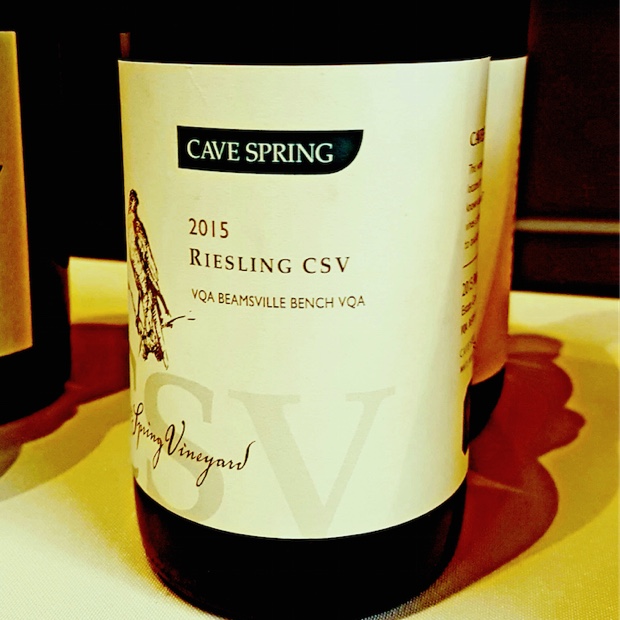
Related – Moved by Riesling

I have been moved by riesling many times. In Alsace it happens every day and it has happened in Ontario, most notably after having comes across (any one of four or five) Charles Baker Picones and Emma Garner Thirty Bench Small Lots. Or in particular, Jay Johnston’s Nadja’s from Flat Rock and most notably Brian Schmidt’s Vineland Estates St. Urban. With Cave Spring it happened after tastes of Cave Spring CSV. It has happened again and again. It will continue this way.

As I mentioned, this is merely the first part in a long series of articles to come, including exposées on sparkling wines, chardonnay, other white varieties and appellative blends, gamay, pinot noir, cabernet franc, plus other reds and red blends. To begin this Ontario varietal march through spring here are 26 recently tasted riesling, plus a handful visited in 2017 yet to make it to godello print, all to give a glimpse into the portal of how far Ontario has come and to where it may be heading.
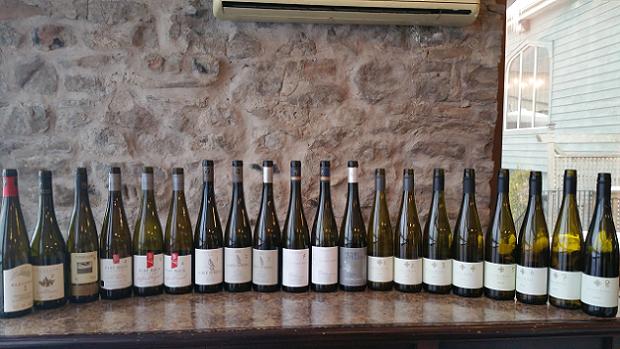
Riesling at the Carriage House, Vineland Estates Winery – March 7, 2015

Redstone Riesling 2014, VQA Niagara Peninsula, Ontario (Winery, $14.95, WineAlign)

So much lime, in flesh and zest, all over the lime map. Really juicy riesling for the cost of a song. Cool climate stamp right here; glade, citrus, wax and air up above. The palate follows, albeit thin and tinny. Ideal for current consumption though not likely made with the stuffing to evolve. Regardless it’s good value. Drink 2017-2018.  Tasted blind at NWAC July 2017 and October 2017  redstonewinery  @RedstoneWines  Redstone Winery

Featherstone Riesling Black Sheep 2017, VQA Niagara Peninsula, Ontario (80234, $16.95, WineAlign)

The Black Sheep strikes again, same price, same typicity and balance. This is the riesling we’ve come to expect and relish, with elevated sugar and acidity levels walking hand in hand. Plenty of lime spirit is more Bench styled than ubiquitous Niagara Peninsula so you can guess what fruit lurks to lead such a suspicion. Always high quality and quick to market, sip, rinse and repeat. You’ll see this wine in release cycles four or five times over, available at all times. Drink 2018-2020.  Tasted April 2018  #featherstonewinery  @featherstonewne  Featherstone Estate Winery

Flat Rock Cellars Riesling 2016, VQA Twenty Mile Bench, Niagara Escarpment, Ontario (43281, $17.95, WineAlign)

There are two types of traditional riesling made up on the Escarpment’s benches, both equally accessible and correct but so very different. There is the other way; dry, stoic and intense. And there is the Flat Rock way, slightly further adrift off-dry, weightier and to be honest, less serious and happier. Not that one style is more important than the other but if I’m a consumer expecting sweet riesling but hoping to learn how the other half lives and breathes it would be this Flat Rock that would help educate and ultimately help me grow into the new riesling lover I’d want to be. The sugar (while nothing extraordinary here) is balanced by equal acidity and athletic chic. Drink 2018-2021.  Tasted February 2018  flatrockcellars  @Winemakersboots  @FlatRockCellars

2027 Cellars Riesling Wismer Vineyard Foxcroft Block 2016, Twenty Mile Bench, Ontario (225490, $18.75, WineAlign)

The wind is so tight and the expressive fruit bound up in a ball of fire and acidity but aching to break free. The pent up energy here is palpably felt, like a needle in the side, leaving you seized up, protective and tense. There is so much juicy citrus and fineness of acidity it’s hard not to see this riesling taking five years to unwind and five more towards developing characterful secondary personality. This is perhaps Kevin Panagapka’s best. Drink 2019-2026. Tasted July 2017 and March 2018  2027cellars  @2027cellars  2027 Cellars

Konzelmann Estate Winery Riesling Reserve Old Vines 2016, VQA Niagara Peninsula, Ontario (Winery, $18.95, WineAlign)

The by now classic house style of using late harvest fruit off of old vines on the estate’s lakefront property and barrel fermentation are the things that delve into the Konzelmann glück, density and complexity. Preserved lemon, grapefruit sorbet and mineral-mandarin cream define this riesling of zero trepidation, utmost confidence and old world charm. Who’s to say you aren’t sipping this in some Rhineland-Palatinate village instead of Niagara on the Lake. There will always be a place in hearts for riesling made this way. Drink 2018-2022.  Tasted March 2018  konzelmannwines  @Konzelmann  @konzelmannwines

Megalomaniac Riesling Narcissist 2017, VQA Niagara Peninsula, Ontario (67587, $18.95, WineAlign)

Narcissist takes a turn to the flint with great citrus intent in 2017, simulating great German riesling that have been coming for generations and eons before. There is a youthful funky reductive yeastiness that tests the aromatics but in looking for balance we find tart fruit, fine acidity and a leanness that strikes like a laser through the microbial fog. Wow is this interesting and in a show of great potential. Drink 2019-2023.  Tasted March 2018  megalomaniacjhc  sobmegalo  @MegalomaniacJHC  @seb_jacquey  Megalomaniac Wine

Fielding Estate Bottled Riesling 2016, VQA Beamsville Bench, Niagara Escarpment, Ontario (251439, $19.95, WineAlign)

Though neither single-vineyard nor block specific make no mistake. This estate riesling from Fielding is a carefully selected and curated one with not a single wasted note in the varietal tune it plays. The chords are pure citrus, the arpeggio rising from stone fruit skin meets flesh and the overall score ambient in its keyboard hold. It’s so bloody juicy, mouth watering and intense, riesling in which there’s a torrent that rises gently. There’s a wind, like a drug, in new material from a great year to make a new record. Worth listening to and drinking in, on repeat, with a deeper understanding. Should develop a layered feel, of honey and petrol, with time. Drink 2017-2022.  Tasted October 2017 and March 2018  fielding winery  richiewine  @FieldingWinery  @RichieWine  Fielding Estate Winery  
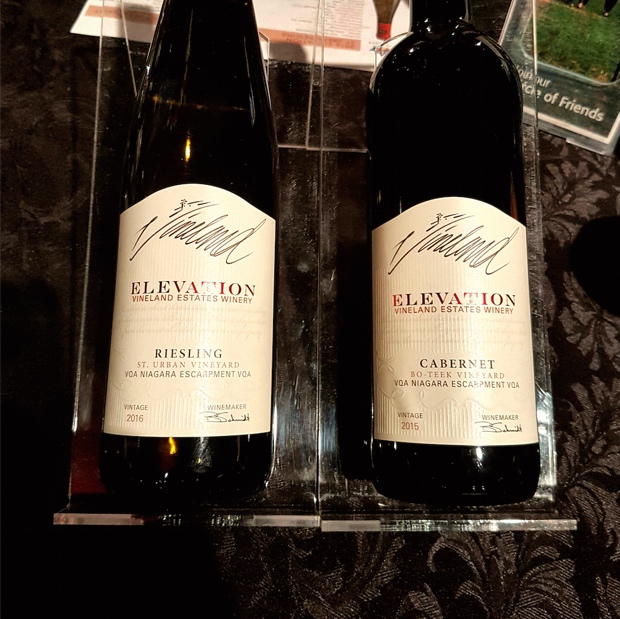
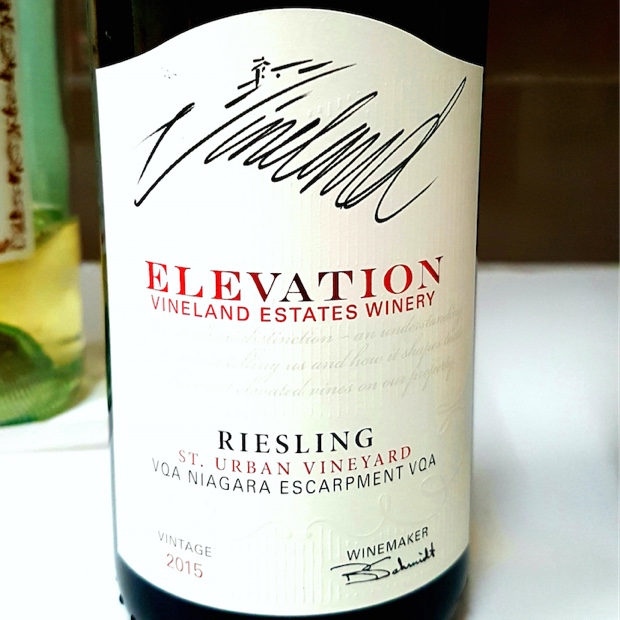
Vineland Estates Riesling Elevation St. Urban Vineyard 2016, VQA Niagara Escarpment, Ontario (38117, $19.95, WineAlign)

By now the St. Urban Vineyards vines are as old as 37 years, a fact in longevity and experience never lost on this archetypal Niagara Escarpment riesling. There is a certain kind of interest here, first from track record and then because of the deferential vintage for the flagship variety. The nose is quite waxy, lemon-scented and vaguely sweet-fruity. There is even a bit of Niagara Gold cheese mixed with fresh florals, of white roses and then persimmon. So now the mind travels to the tropics, for flavours imagined of mango, marquesa and mangosteen. Warm days and nights will do that to riesling and while this may not live into its twenties it will go complex and curiously fascinating into the petrol and honey with more early unction, like 2012 but even more, akin to 2010. Drink 2018-2028.  Tasted December 2017  vinelandestates  benchwineguy  @VinelandEstates  @benchwineguy  Vineland Estates Winery  Brian Schmidt

Hidden Bench Riesling Bistro 2016, VQA Beamsville Bench, Ontario (Winery, $20.00, WineAlign)

If Ontario riesling can be referred to as classic it would be something as traditional and acumen-factored as this ’16 by Hidden Bench. This is due to the middle road meets the fine, direct and essential line taken, where along the way balance is struck with notable fruit, just shy of off-dry styling and a fashion of natural acidity. Correct is, as correct does. Drink 2018-2021.  Tasted March 2018  hiddenbench  @HiddenBench  Hidden Bench Estate Winery  

Creekside Estates Riesling Marianne Hill 2016, VQA Beamsville Bench, Niagara Escarpment, Ontario (Winery, $21.95, WineAlign)

The next Marianne is a conundrum, low in alcohol and yet quite lean, avoiding both high strains of citrus and flesh. The nose is both inviting and very mineral but the palate is a bit staid, understated and seemingly dry. The skins of pears and peaches are touched but it’s just a bit too quiet right now. We’ll see what the future holds. Drink 2019-2022.  Tasted April 2018  creeksidewine  @CreeksideWine  Creekside Estate Winery

Southbrook Vineyards Riesling Triomphe 2016, VQA Niagara Peninsula, Ontario (Winery, $22.95, WineAlign)

With all of her other varietal talents I wouldn’t normally pontificate winemaker Ann Sperling as exemplifying the riesling whisperer (at least in Niagara) though a pass at this warm and inviting 2016 may change that and with haste. At the risk of sounding a bit too establishment this is classic and typical Niagara but it accedes into such a category with impeccable sugar, acid and texture balance. Treating the fruit with respect, avoiding any unhinged decisions and delivering the three-pronged effects of sweet, tart and bitter with seamless intertwine is the work of a total pro. Gotta have the lime and the essential possibility of honey. Triomphe 2016 does just that. It’s what you want and need. Drink 2018-2021. Tasted January and March 2018  southbrookvineyards  @SouthbrookWine  Southbrook Vineyards

Mulled riesling anyone? Hidden Bench at Icewine Fest

Hidden Bench Riesling Estate 2016, VQA Beamsville Bench, Ontario (183491, $23.95, WineAlign)

Just a lovely bit of spring sun and dew picks up the stimulus, pace and attitude right from go in the Hidden Bench ’16. This is not only definitive for riesling by house, for estate and to regional necessity but also to all varietal wines done up right in this pinpointed place. The orbiting acidity is twisted like ties around wires along a circle drawn to lock in freshness, by fruit more lemon and lime citrus than stone or up the stairs. It’s a near perfect vintage for the omniscient one and sets the table for Roman and Felseck Vineyard rieslings to come. Drink 2019-2023.  Tasted April 2018  hidden bench  markanthonyon  @HiddenBench @MarkAnthonyWine  Hidden Bench Estate Winery  Mark Anthony Wine & Spirits
Hidden Bench Riesling Felseck Vineyard 2014, VQA Beamsville Bench, Ontario (Agent, $23.95, WineAlign)

Felseck delivers a concentrated, compact and direct riesling, very focused along linear Locust Lane lines, truly Beamsville stony, precise and even a bit demanding. Few Ontario rieslings can distill lemon, lime, green apple and stone like this without jumping around. That Felseck can stand firm in one place with such stoic and unwavering calm is a testament to a winemaker’s attention to detail. It begins in the storied vineyard and finishes with the same fineness of finesse. Drink 2017-2023.  Tasted October 2017  hidden bench  markanthonyon  @HiddenBench @MarkAnthonyWine  Hidden Bench Estate Winery  Mark Anthony Wine & Spirits

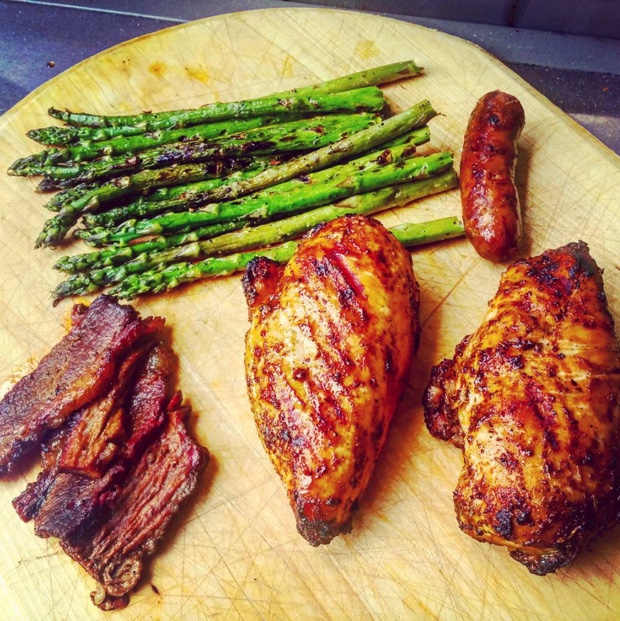
Perfect match to riesling? Some might say

Cave Spring Riesling Adam’s Steps 2016, VQA Beamsville Bench, Ontario (901211, $24.95, WineAlign)

Adam’s Steps is Cave Spring’s riesling with a bit more of everything, more depth, body, sweetness and texture. It really is the outlier in their varietal bunching, closer to the Estate than the CSV in style and yet firmly positioned in its own category. There is a true sense of spirit and energy, especially on the lively palate, with a waxy, almost peach coulis and lemon-lime pastille note that lingers like sucking on a riesling candy. Clearly dolomite in origin but fleshy and full. Holds the age ability card for a five-plus year run. Drink 2017-2022.  Tasted October 2017 and March 2018  cavespringcellars  thevineagency  @CaveSpring  @TheVine_RobGroh  Cave Spring Cellars  The Vine

Lundy Manor Riesling 2016, VQA Niagara Peninsula, Ontario (Winery, $24.95, WineAlign)

The fruit source is Wismer Vineyard for winemaker and Niagara College graduate Adam Kern’s ’16 riesling. Kern also makes the wines with Chris Fornasier and Bench Trial Wines. His straightforward varietal wine for Lundy’s Manor speaks of peach and tart citrus with a surprisingly tannic thrush. The equanimity between fruit and acidity keeps it in the airy space above the pull by extracted weight and will serve it well for two or three years time. Drink 2018-2020.  Tasted March 2018  lundymanorwinecellars  @LundyManorWine  @lundymanorwinecellars

Stanners Vineyard Riesling 2015, VQA Lincoln Lakeshore, Ontario (Winery, $25.00, WineAlign)

The Stanners Riesling evolution is upon us, happening and ready to blow. In replay of 2014 this is Niagara meets PEC fruit, two days of skin contact, six months on the lees, dry is as dry does and yeasty funky. In my mind it’s pretty much a repeat of that just about leesy enough and pear textured 2014 without anything new added or realized. But, for Colin Stanners it must be the vintage that wakes him up to what he needs to do next so this ’15 is therefore the first next step towards and set up man for what’s to come in 2016. This is a must step to taste on that ladder of evolutionary understanding so make sure to take it. Drink 2018-2020.  Tasted April 2018  stannerswines  @StannersWines  Stanners Vineyard

Keint-He Riesling 2016, VQA Niagara Peninsula, Ontario (Winery, $25.00, WineAlign)

It’s quite amazing how the texture, sugars and acidities all rise up as one, together for the common good, layered and in-synch. Labeled Niagara Peninsula but really noses and tastes like Twenty Mile Bench riesling. Lime sherbet and mandarin orange gelée. Nothing but pleasure from winemaker Lee Baker’s first start to finish wine at Keint-He. Drink 2018-2021.  Tasted April 2018  keinthewinery  @KeintheWinery  Keint-he Winery & Vineyards

@mackbrisbois brought the past, the present and the future @trailestatewine to taste. Thanks Mack! Indeed, to my pleasure and my education. Delete Comment

Trail Estate Wild Ferment Riesling 2016, VQA Ontario (Winery, $28.00, WineAlign)

In 2016 the WFR is a blend of Foxcroft and BTL fruit, respectfully and respectively farmed by Craig Wismer and Greg Wertsch. This is tannic and textural, the sweetest of all the Trail rieslings, through some skin (or stem) whole cluster contact. The notes are not mind-blowing or expanding ones, of apple, pear and peach skin, again very textural and from a ferment stopped on taste. It’s loaded with 28 g/L of RS but good winemaking makes it seem drier than it is. “Everything else is dry so I guess when I go sweet, I go big” admits Mack Brisbois. So yes this is light, lean, not as fleshy and seemingly drier than it obviously is. Carries forward with a nice candied flower, citrus finish. It’s pretty middle of the road, perfectly correct and enjoyable, especially for a winemaker with an off the beaten track sensibility, antithetical modus vivendi and go beyond the pale ability. Drink 2018-2021.  Tasted April 2018  trailestatewine  mackbrisbois  @TrailEstateWine  @MackBrisbois  Trail Estate Winery  Mackenzie Brisbois
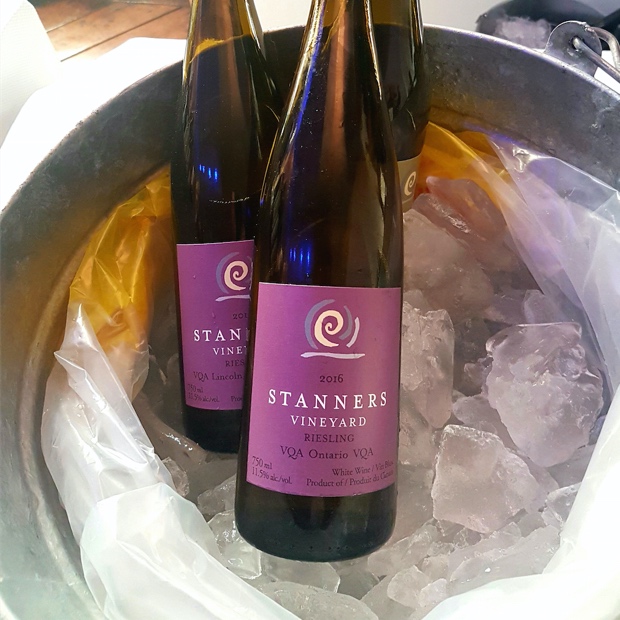
Stanners Vineyard Riesling 2016, VQA Ontario (Winery, $28.00, WineAlign)

I find it curious that this Stanners Riesling is 95 per cent Lincoln Lakeshore fruit but now labeled as VQA Ontario, whereas previous vintages called VQA LL had less Niagara and more PEC fruit. No matter really because again this is Niagara meeting PEC with two days of skin contact, but elevated by 12 months on the lees. That time spent can’t be discounted, nor can the dry as a bone, mad as a hatter summer, not tom mention another year of understanding for Colin Stanners. In the end the acidity out of a chart topping pH and fruit accumulation (not in quantity but in phenolic brilliance) leads this riesling to great heights. Malolactic fermentation was allowed to occur naturally, helping to bring the acidity (and everything else) into balance. Lime, toast, flint and energy, boundless and invigorating. What a riesling, what a story. Drink 2019-2024.  Tasted April 2018  stannerswines  @StannersWines  Stanners Vineyard

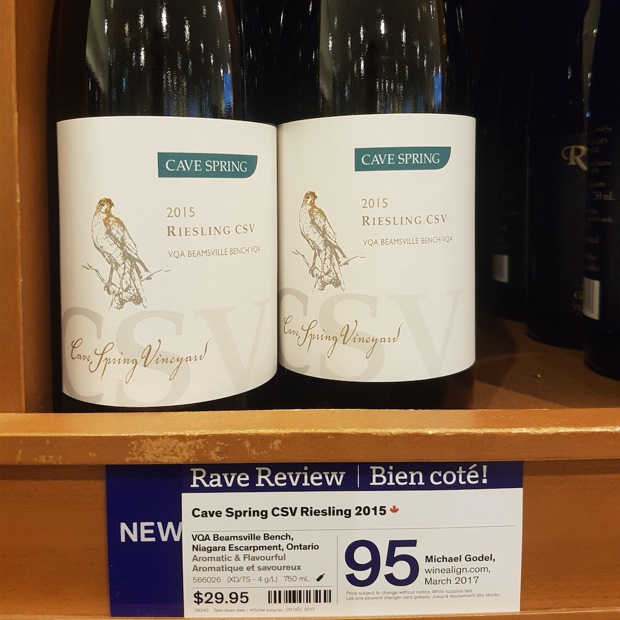
Cave Spring Riesling CSV 2016, Cave Spring Vineyard, VQA Beamsville Bench, Niagara Escarpment, Ontario (566026, $29.95, WineAlign)

The CSV from a warm 2016 really expresses the vintage on the nose with a heavy dose of wet stone and every part of a ripe peach. You have to get past the early sulphur but once you do you take a good bite into the flesh of this riesling and the juices will run with accents and angles fit by tonic, pith, tangy, nervy acidity and a hidden sweetness. The sugars are surely more elevated than realized or will ever be felt because the combination of acidity and pith are covers that will never peel back. Size matters and this CSV is built with great Escarpment architecture, stepping out of the paradigmatic 2015 shadow and into another age. This 2016 begins an epoch of structural expressionism and should easily carry its construct through to the next decade. That consequently, is when this CSV will really be ready to rock and roll for a full decade more. Drink 2020-2030.  Tasted March 2018  cavespringcellars  thevineagency  @CaveSpring  @TheVine_RobGroh  Cave Spring Cellars  The Vine

Trail Estate Skin Contact Riesling Hughes Vineyard 2016, Ontario (Winery, $30.00, WineAlign)

Times changes, as do winemakers, their hunches, hopes and dreams. Mackenzie Brisbois takes a sidestepping approach to this trailblazing riesling from the vineyard tended by Ed Hughes. It’s now all wild ferment elongated to 19 days on skins. Takes its time this little big one, moving no less than 25 per cent slower than ’15, in part because of the vintage but also because its wild pressed. More a dry matter of when over how or why, still in its aromatic infancy, suffocated by its nature. Also a case of a young wine caught in the 9 g/L total acidity crossfire of a sci-fi battle scene. Will most certainly take another 18 months to change. It does exhale this curious note of garrigue, like Peloponnese mountain tea and Alto Adige sweet fennel frond in broth, with apple and onion skin doused by shots of lime juice. There is even a chewy feel in the leafy texture, quite herbal with a mild pique in a green tea finish. Trust me, this will become something both fascinating and delicious at some point in 2020. There are approximately 76 cases made. Drink 2019-2023. Tasted April 2018  trailestatewine  mackbrisbois  @TrailEstateWine  @MackBrisbois  Trail Estate Winery  Mackenzie Brisbois

Leaning Post Riesling The Geek 2015, VQA Twenty Mile Bench, Ontario (Agent, $35.00, WineAlign)

The second instalment of the Geek takes Ontario riesling experimentation not just to another level but to a specific methodology that no one else has really attempted thus far. The geeking out goes further and edgier into territory both new and misunderstood. If it seems unconvincing it’s a case of both searcher and searched not yet on the same page but that’s what research and development are all about. All the 2015 lees from Leaning Post’s classic riesling and chardonnay were added to the Geek. As if that wasn’t enough solid, texture-variegating matter, the 2014 riesling lees were also employed. Two years later the Solera ideal was put to bottle. The complex equation comes out to the most autolytic riesling ever made in Ontario, distinctive in that it’s like drinking traditional-method sparkling wine, 36 months on the lees but without any fizz. It’s unusual and fascinating, full of baking apples, biscuits and citrus. It does not meet the expected and the normal, not just because it’s dry as the desert but because it’s enzymatic behaviour is self-cannabalistic. It writes a riesling idiom, having a meaning not deducible from the individual parts. It’s a neo-impressionist idiosyncrasy, a reaction to the empirical realism of “typical,” VQA-cornered and pigeon-holed riesling, accomplished by relying on scientific theory to achieve predetermined textural effects. While The Geek undergoes an oxidative process it’s not exactly Solera-styled because young wine does not replace a percentage of removed older wine. It’s a positive accumulation of solids and therefore a strict and formalized composition. The argot R & D will go on and winemaker Ilya Senchuk asks, “how much lees is too much lees? Only The Geek knows.” Drink 2018-2021. Tasted March 2018  leaningpostwine  nicholaspearcewines  @LeaningPostWine  @Nicholaspearce_  Leaning Post Wines  Nicholas Pearce

Trail Estate Skin Contact Riesling Hughes Vineyard 2015, Ontario (Winery, $35.00, WineAlign)

At the time of making this wine and then putting a label on a bottle there was no Ontario defined category and in fact this pioneering effort is one of the unheralded forerunners. From fruit sourced out of Ed Hughes’ vineyard it’s a shaggy yet ambitious riesling made mellifluent by 14 days skin contact, inoculated to keep the lees strain constant with with other 15s, meaning the Lakeview and Foxcroft brethren. Now smells just like riesling, unlike in its early “orange” wine days. No longer demanding and tannic, the high acidity too has mellowed and a petrol note has emerged, plus a pepper flake meets peach skin aromatic sedge. Still with the liquid salve texture, coming into its destined balance, dry and persistent in pulse by acidity but calm enough and settled. A great flesh of lime and raining complexity, with a final note of orange skin too. Drink 2018-2020.  Tasted April 2018  trailestatewine  mackbrisbois  @TrailEstateWine  @MackBrisbois  Trail Estate Winery  Mackenzie Brisbois

Trail Estate Barrel Ferment Riesling Foxcroft Vineyard 2016, VQA Twenty Mile Bench, Ontario (Winery, $35.00, WineAlign)

In 2016 the next wrinkle is a wild ferment (as opposed to the inoculated ’15), unfined and unfiltered, because as time progressed “I liked it more and more,” says winemaker Mackenzie Brisbois. No coarse filtration means some minor sediment will settle in the bottle. Smashed layers of tote-filled grapes are brought to the crushpad, in lieu of the crusher, to extract from the skins and stems, making use of the punchdown tool, while waiting before pressing. Recently bottled in December 2017 the BFR is something completely other and if 2015 was considered not, this follow-up is markedly fruity now, because it always was, all the way through during just more than a year in really old barrels. It’s a blonde riesling as per M. Gustave, if you will. “Why blonde? Because they all were.” This is the wisest of Mack Brisbois’ rieslings, calm, confident, collected and shining brightly from the word go. You don’t have to wait on this one, it’s riper, it’s unfiltered, made with a lot less sulphur than the skin contacts and those “dirty” 15s. “I like to see how little (sulphur) I can get away with,” notes Brisbois. The most accomplished riesling that she has made to date, the 16’s balance is spot on now and you will not have to wait for it to come into its cinematic stage. Drink it now and keep it longer. Drink 2018-2024.  Tasted April 2018  trailestatewine  mackbrisbois  @TrailEstateWine  @MackBrisbois  Trail Estate Winery  Mackenzie Brisbois

Charles Baker Riesling Picone Vineyard 2014, VQA Vinemount Ridge, Niagara Peninsula, Ontario (241182, $35.20, WineAlign)

Can it be helped if the first 30 seconds with Charles Baker’s 2014 riesling seem like the opening of a film noir classic. Hushed tones, chiaroscuro shadows, off-screen characters and dramatic foreshadowing all solicit the need or the necessity to make use of a wild imagination. There have been older Baker vintages that acted with similar, almost hard to crack quietude. Perhaps it’s with ’13 etched in persistent memory but as a vintage it was (moderately) cooler and in the end, quite average. This ’14 works the benefits and the notes here are quite omnisciently lemon; curd, preserve, citrus tablet and then smeared by a bees-waxy salve. It’s really quite atypical for Baker and for the windswept Vinemount Ridge but misunderstood youth is a bitch. I’d like to revisit in 2019 and beyond to unearth and relish in the hidden meanings. Drink 2019-2027.  Tasted November 2017 and March 2018  cbriesling  stratuswines  cruwinemerchants  @cbriesling  @StratusWines  @CRUOntario  Stratus Vineyards  
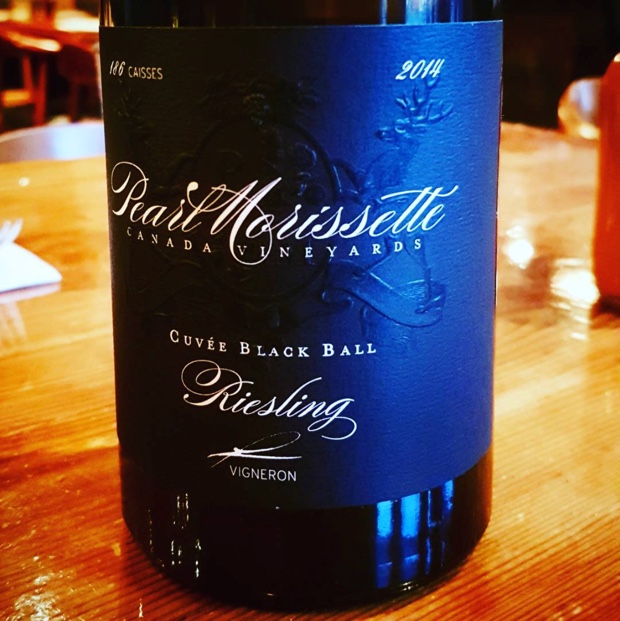
Pearl Morissette Riesling Cuvée Black Ball 2015, Ontario (416073, $36.20, WineAlign)

The new age 2015 was tasted as part of a retrospective that included 2014, 2013, 2012 and 2011. Anyone who is interested in gaining a deeper understanding of what might be construed as idiosyncratic or antithetical riesling should be so fortunate to be involved in such a demonstration. The Pearl Morissette riesling endeavour was pretty much bone dry from day one. The Mosel style really never spoke to François Morissette. “We have 220 hang time days so we started fermenting riesling chardonnay style, then in 2012 and 2013 in foudres, which tightened them too much. So in ’14 we moved into concrete egg for aromatics but it was too intense.” So here in ’15 the joint between foudres and cement marks the new beginning. The juice is then transferred to become clear while the lees are kept and recycled for future vintages. This had just been bottled days before with almost no free sulphur “because they can take it.” Such low pH (2.97ish) and the up front skin contact brings tannin and then this silk road texture is followed by more tannin on the back palate. It’s a vintage Blackball and a vintage-driven riesling. A phenolically ripe one. The exercise proves that we really don’t know a thing about riesling, Cuvée Blackball and aging until we begin tasting at five years on. In order, 2011 is “a confirmation that we are on the right road,” ’12 may never be ready, ’13 messes with the riesling paradigm and ’14 is more like riesling of expectation. So what does that make 2015? Nothing yet, really. Have you not been paying attention? Drink 2019-2024.  Tasted July 2017  pearlmorissette  @PearlMorissette  Pearl Morissette

Riesling at Vineland Estates, 161 days on skins

Good to Go!

Godello

Twitter: @mgodello

Instagram: mgodello

WineAlign

17 Canadian wines that rocked in 2017

As we taste through the #NWAC17 finals we thank @ZWILLING_CA for the rocking great glassware. Canadian wines are better for these vessels.

I first published this year-end summary of Canadian wine excellence in 2013 and four years on that original list of 13 has expanded with four more. It’s a good thing too because four years later 17 wines is but a fraction of what could or should be included. This exercise is more than difficult. It’s biased, exclusive and decisive but it is meant to celebrate a select few with a mandate to elevate and exult the rest. It’s also a proclamation read to many who remain ignorant to an ideal of great wine being made in Canada, to tell the insolent they are not welcome here anyway. The winemakers in this country are in full command of their acumen, craft and future. They own it. Roll out the red carpet. Here they come.

Related – 16 Canadian wines that rocked in 2016

My writing about wine is a display that spills everything but subtraction, reduction and minimalism. It is an occupation whose reality is examined to points of madness, of long, run-on sentences, often at odds with grammatical winemaking realism. My tireless, tiring sentences and phrasing can at times offer a feeling that is potentially endless. So thanks for reading and putting up with me.

As I have noted before, I try to visit wines more than once before reviewing them, preferably from more than one bottle but even more importantly, with a good chunk of time having passed between assessments. The most complete picture is drawn from such a course of critical action but it’s not always possible. Not a single one of these 17 wines were decided upon at a single VINTAGES release, sterile and windowless LCBO laboratory tasting. The nearly 2000 wines (of which approximately were 20 percent Canadian) that I tasted in the LCBO lab in 2017 are kept, compartmentalized, reviewed and stored over at WineAlign. They are forged from and formed by a very specific, of the fleeting moment style. They are the results of root days and fruit days, often plagued by other writers present levels of distraction and time constraints. These 17 wines are children of repeated concentration and stand out because the makers went out of their way to bring them to me.

Please allow me to quote Wes Anderson. “It is an extremely common mistake, people think the writer’s imagination is always at work, that he’s constantly inventing an endless supply of incidents and episodes, that he simply dreams up his stories out of thin air. In point of fact, the opposite is true. Once the public knows you’re a writer, they bring the characters and events to you and as long as you maintain your ability to look and to carefully listen, these stories will continue to…,” continue to provide what you need to entertain your readers. Thank you to the winemakers for sharing their stories time and time again.

Related – 15 Canadian wines that rocked in 2015

Heartbreaker

If 2016 was a most difficult year, what does that say about 2017? It was a most dippy, derisory, barmy and yet chimerical one. Once again too many special people were taken from us and in Ontario, no one more important to everyone who works in wine than Karl Kaiser. It can and should be argued that the industry we all call home is at its 2017 state because of Mr. Kaiser and what he pioneered more than 40 years ago. Karl Kaiser was eulogized by Brock University’s Dan Dakin. Please take the time to read it.

Related – Karl Kaiser left indelible mark on Brock University

Once again we all lost someone close to us in 2017. Celebrity deaths, especially the ones of loved musicians seem to hit us the hardest because we relive moments of our lives when their songs are played. I’ll ask the social media trolls to walk on past and to once again, please respect our reminiscences.

Gregg Allman. Richard Anderson. Harvey Atkin. Walter Becker. Chester Bennington. Johnny Bower. Chuck Berry. Glen Campbell. David Cassidy. Chris Cornell. Jonathan Demme. Fats Domino. Dick Enberg. Stephen Furst. J. Geils. Robert Guillaume. Roy ‘Doc’ Halladay. Connie Hawkins. John Hurt. Al Jarreau. Martin Landau. Jerry Lewis. Erin Moran. Sir Roger Moore. Bryan Murray. Charlie Murphy. Bill Paxton. Tom Petty. Della Reese. Don Rickles. Sam Shepard. Joni Sledge. Keely Smith. Harry Dean Stanton. Y. A. Tittle. Mary Tyler Moore. Adam West. Malcom Young. Joanne Godel.

Don’t forget the pouring rain

There was more than enough good news out of 2017, especially from Ontario. After one of the wettest summers on record and this looming harvest of disaster everything changed. The temperatures hit 30 degrees and remained there for much of September. October obliged with warm and slowly declining temperatures with very little precipitation. Not only was the 2017 vintage saved but it became one of the great phenolic ripeness stories in wine country history. Quality high. Check. Quantity high. Check. Win win for wine.

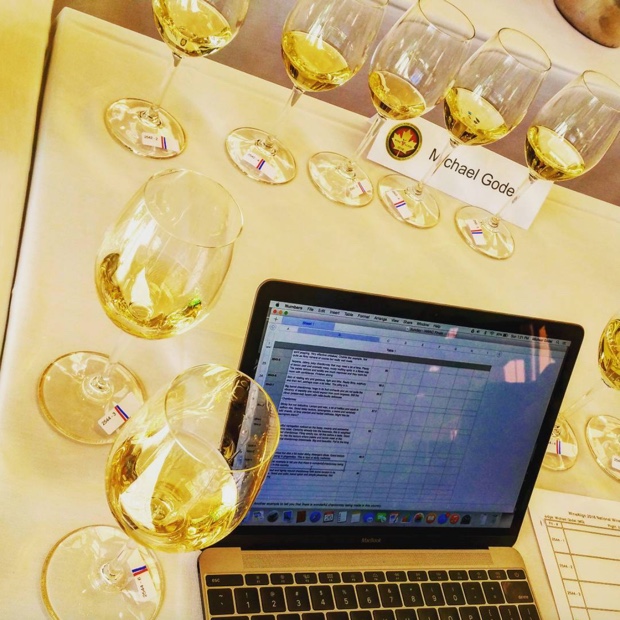
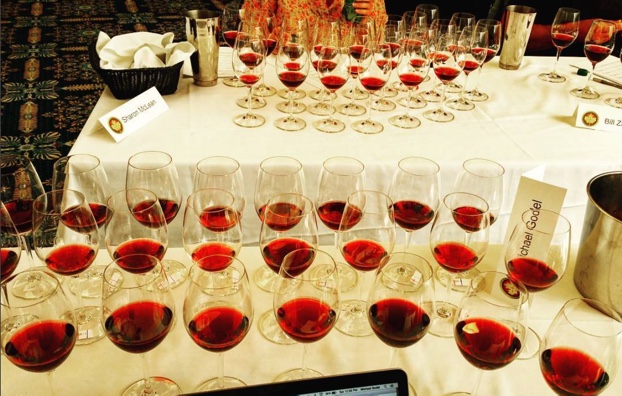
The year continued to throw thousands of wines my way. I did travel more and so the international count ran higher at the expense of the local. I plan to fix that in 2018. Things have a way of balancing out anyway. Still I’m sure I tasted close to 1000 Canadian wines once again. We continued to pay great attention to Canadian wines at the WineAlign office. I once again joined the judging with Tony Aspler at the Ontario Wine Awards, in Wolfville, Nova Scotia at the WineAlign National Wine Awards of Canada and with David Lawrason at Gold Medal Plates.

Related – 14 Canadian wines that rocked in 2014

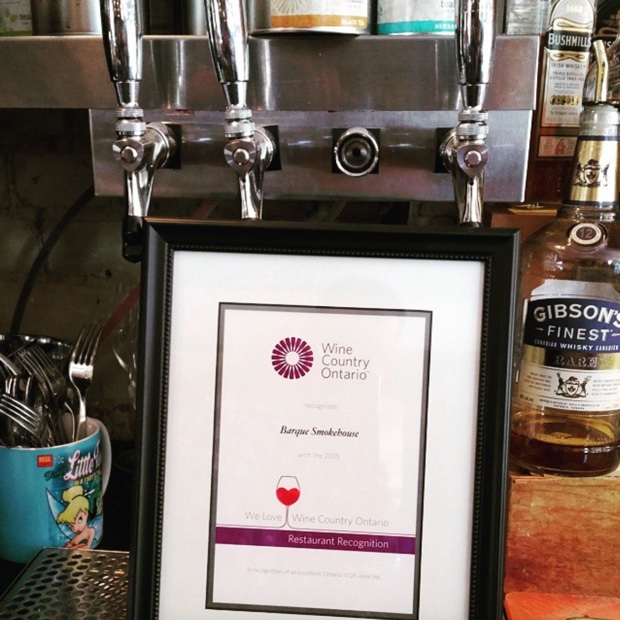
My wine on tap program at Barque Smokehouse and Barque Butcher Bar welcomed a third child to the family when we opened Barque Smokehouse Burlington in August. With that opening we were proud to partner with Rosewood Estates to join the family that over the years has included Tawse, Lailey, Norm Hardie, Creekside, Between the Lines, Kew Vineyards, Redstone, Stratus, Leaning Post, Between the Lines, Coyote’s Run, Vineland Estates and Creekside Estates.

It began, as it always does with Niagara’s Icewine Festival in January and in February there were Thirteen ways to taste Cuvée. In March I found Fifty ways to Taste Ontario and then travelled to Germany for Godello’s March through Prowein, The Ahr Valley and The Rheinhessen. As a Canadian and a representative of Wine Country Ontario I hung around the Canadian pavilion, talked with our coast to coast winemakers, vintners and marketing representatives, took in the seminars on cool climate wines led by David and Dr. Janet Dorozynski and of course, tasted some wines.

Related – 13 Canadian wines that rocked in 2013

In the company of #family so thank you judges, friends and badasses #NWAC17 #killedit

Any major dude will tell you

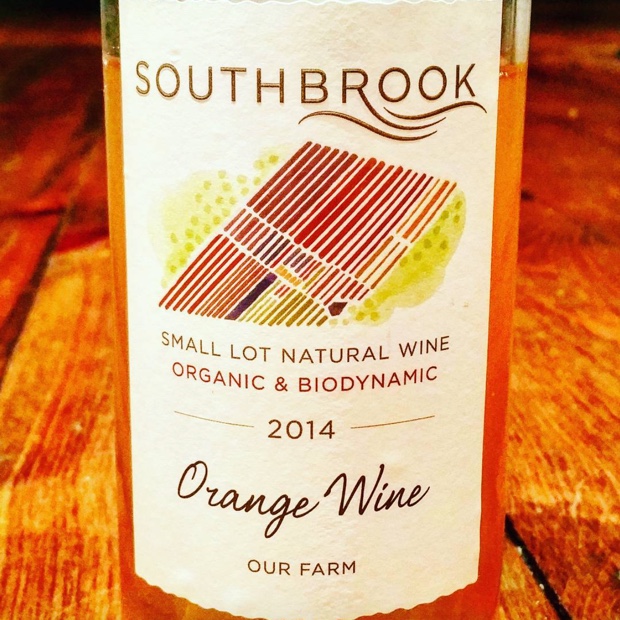
At the Terroir Hospitality Symposium in May we debated the highly controversial new category of Skin-Contact wines in Ontario. Orange is the new smack should have been my title but instead I chose to talk through hushed tones in Pop goes VQA, a story in three parts, each one more misunderstood than the others. It would take months to come to better and more improved conclusions to that haughty complex story.

In June we convened the WineAlign Canadian Wine Awards in the Annapolis Valley. It was the first time that Nova Scotia hosted our motley crew and what a smashing success it was. Great thanks must go out to all our tremendous hosts including Wines of Nova Scotia, Domiane de Grand Pré, Benjamin Bridge Vineyards, Blomidon Estate, Annapolis Cider Company and Obladee Wine Bar in Halifax.

In July I once again made the pilgrimage to i4c, the International Chardonnay Cool Climate Conference, “the local mecca attracting thousands, arriving to praise chardonnay in all its glory. It’s chanted with incantatory connotation by patrons cantilevered like alluvial fans across the Niagara Peninsula. It teaches us about more than chardonnay because the rapidity of climate change is real and the desire for fresh is yet unquenched. This transcends chardonnay. It’s about growing grapes and making wines in places we all previously discounted. Recently scoffed at. It concerns farming higher, further and edgier. This conference and this grape together let us know that we must change.”

At i4c we welcomed California’s Karen MacNeil, Dr, Jamie Goode, Bill Zacharkiw, Treve Ring, Kurtis Kolt and Rhys Pender MW and then I penned 69 chardonnay reviews. What did Godello learn from Cool Chardonnay in 2017? After a visit to Pearl Morissette I learned from François Morissette, vigneron about oxidation.“Whatever we press, we oxidize. We do not oxidize wine, we oxidize must.” There’s a big difference. The stabilization of these wines are attributed to this idea of getting rid of all oxidizable compounds before they enter into the next stages of the winemaking process. Pleasing aromas, flavours, textures and ultimately the sum of the above elevates the cool chardonnay game and speaks to the future. But I did not learn enough. I needed to move beyond the ubiquity of cool climate. I wanted to understand more about cold soaking and whole berry fermentation. Just last week Pearl Morissette’s savant winemaker Brent Rowland sent me these words of enlightenment.

“This is the main reason I am such an advocate to whole bunch fermentation. The best tannin and worst tannin are seed tannin, depending on how you extract them…heat and alcohol rip out aggressive angular tannins. By keeping the berry attached to the rachis for as long as possible you are creating a little microenvironment for fermentation that is low heat and low alcohol, enabling you to slowly extract long polymerized tannins. This and perfume is the reason I do everything whole bunch. To me whole bunch has nothing to do with the stems, tannins from stems or flavour of stems.” He continues. “I absolutely think that skin contact wines can have elevated structure and texture. I also do not subscribe to the idea that some arbitrary number like “10 days” defines the genre. I did say that Orange wine is not an in-between wine but its own genre and I believe that. For the record I feel the less rigid the criteria for the category the better. As you state the broader the category the more opportunity for discovery of a valued category.” Thank you mate.

Be part of the Greatest Wine Revolution since Prohibition.

Where are we one year later?

I’ve two words for you. WineAlign Exchange. The WineAlign Exchange taps into the world of wines beyond the LCBO and delivers a curated, mixed case of top quality wines directly to your door. All the wines have been carefully chosen by our panel of critics for their quality and value. David Lawrason, John Szabo M.S., Sara d’Amato, Steve Thurlow and Godello. The first case delivered to hundreds of members was an all Platinum Award winners pack from the National Wine Awards of Canada. In terms of free trade we await a decision but don’t expect a miracle in 2018, Christmas or otherwise. As for the VQA panel in Ontario? Well, read my article referenced above and you’ll get my drift.

One of my favorite wines I tasted in 2017. All killer no filler. Beautifully ripe #cabernetfranc nice layers of cocoa, red, and black fruit. Tannin is liquid silk. Can_t wait for next

Let’s be Franc

Cabernet Franc is getting better all the time. In British Columbia the coolest sites are increasingly raising fresh, spirited and ultimately crushable wines with unmistakable west coast accents; savour, garrigue and mountain tea. With thanks to venn diagram circles drawn in and out of Niagara’s Lincoln Lakeshore, but also magically deep into the Prince Edward County limestone, the great Ontario hope is developing into what we thought it might be. Getable and structured red wine.

New World cabernet franc growing sites produce less delineation as compared to the various lieux-dites in the varietal homeland, France’s Loire Valley. Niagara is beginning to enter into an Old World state of mind, so now winemakers and by extension wine geeks, are posturing over micro-terroirs; Niagara-on-the-Lake, Beamsville Bench, Niagara Escarpment, St. David’s Bench, Lincoln Lakeshore, Four Mile Creek. The same is happening in British Columbia’s Okanagan Valley although the cumulative stylistic is worlds (four provinces to be exact) apart. In Nova Scotia Benjamin Bridge Vineyards’ viticultural and vinifying braintrust of Jean-Benoit Deslauriers and Scott Savoy are allocating serious resources to cabernet franc in the Gaspereau Valley. But how is it that decisions are made as to where to plant this crisp, juicy and crunchy grape? While many will disagree, if you consider growing sites as circles within the aforementioned venn diagram, in Canadian soils the shared subtleties can easily get buried or muddled within the common areas. The lines may be drawn but the web is tangled. That said, the story of franc terroir is getting clearer and clearer. Interloper carries the torch.

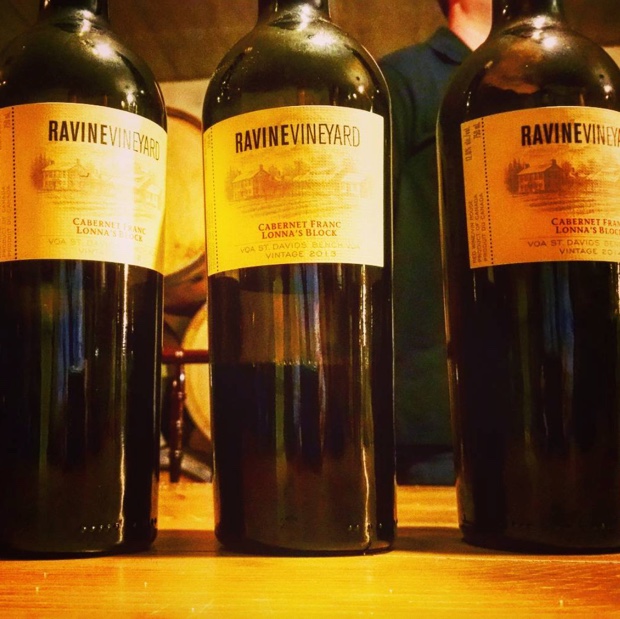
Tonight brought to you by #interloper and the inner beauty of #cabernetfranc @RavineVineyard #vqaniagaraonthelake

At this most recent NWAC17 judging experience the results from cabernet franc paints a more palatable picture than those brushed by both merlot and cabernet sauvignon. We are collectively impressed with and solidly behind the direction growers and winemakers are taking with this noble varietal. The 546 acres planted in B.C. are rising steadily and if I were merlot I’d be looking in the rear-view mirror. In Ontario more than 4,000 tonnes were harvested in 2015, third to only chardonnay and riesling. Four of five Gold Medals were Ontario in origin, 10 of 16 were awarded Silver and 10 of 17, Bronze. While only four in Ontario are labled “LL,” no less than 10 of the 24 winners were made with at least some significant amount of fruit grown in the Lincoln Lakeshore/Beamsville Bench circle of commonality. The sites we want to call “cru” are no longer a mystery.

Taskmasters not pictured #punchdowns #interloper

I can’t say this list is full of surprises, save for the first of 17. You see this particular wine is close to my heart because I had a hand in its concept and design. My partner Scott Zebarth and I teamed up with winemakers Marty Werner and Ben Minaker at Ravine Vineyards to produce what we all feel is the most exciting fresh breath of cabernet franc air to arrive in Ontario in quite some time. It’s obviously self-serving to put it on a best of the year list but we are very proud of this project and its inaugural effort. If you’ve tried it you know. If you haven’t, give me a ring. We’ll break Interloper bread together. To the other 16, welcome to the list.

Scott, Marty, Ben and I are proud to present the now SOLD OUT #interloper Cabernet Franc 2016. We’ll be back next year #vqa #niagaraonthelake #ravinevineyard

Interloper 2016, VQA Niagara-on-the-Lake, Ontario ($19.95)

Produced at Ravine Vineyard Estate Winery with the winemaking team of Martin Werner and Ben Minaker

Variety: 100 per cent cabernet franc

Fruit source: 55 per cent Estate (St. David’s Bench), 40 Creek Road, five Tanbark (Four Mile Creek)

Harvest Dates: October 26th and November 5th, 2017

Time on skins: Estate 26 days, Creek 21 days

Length and type of fermentation: Three weeks, ambient/wild for both

Élévage: Eight months in old 225 L French barrels

Case Production: 22

mgodello  scottzebarth  marty_werner  benminaker23  ravinevineyard

Charles Baker Riesling B-Side 2016, VQA Niagara Peninsula, Ontario (Winery, $22.00, WineAlign)

Vinyl records sound different because they are designed with grooves carved in that mirrors the original sound’s wave form. Their analog recording delivers a sensory feeling of warmth, an aural of texture, nuance and soul. There was a time when the hits spun over and over were also pressed onto the A-Side of 45 rpm singles. The discovery of a never before heard B-Side was a revelation because is was extra material from a favourite band and it was a great song. It meant the record was already too strong for that song to make the final cut and to choose it for a B-Side meant it would elevate the quality of the album. A well-chosen B was not an afterthought. This is the accomplishment of the first Charles Baker’s B-Side, for itself and for the vineyards of Iaen and Picone. Baker digs about in the Niagara Peninsula’s escarpment dirt for young vine, not ready for prime time riesling fruit. If perchance it seems like cheating on his per se Vinemount Ridge Picone and Ivan bottles so be it but one look at him and he’ll say “Hey, hey, what can I do?” His 2016 B-Side delivers a spray bottle Zeppelin expressing heady aromas, high in the stratosphere and raining down upon the earth. The notes are an all in, breath of classic Baker riesling air, blanketing from up above and with a landscape that reeks of lime and quivers with classic agitation. The fruit is wild and full, the salty grit infiltrating and gripping the bloody omniscience of this package. What is this B-Side and where will it be lead? To the top of the ridge, from earlier harvests, younger fruit and higher yields. Scratch the single vineyard elitism, just listen to the song and raise one up, to getting ‘er done before the conceptual singular side one and side two, Ivan and Picone. The Beatles? Forget it. Led’s flip side to the ‘Immigrant Song’ A is the one. Drink 2017-2021.  Tasted November 2017  Charles Baker Wines  stratuswines  @cbriesling  @StratusWines  Stratus Vineyards

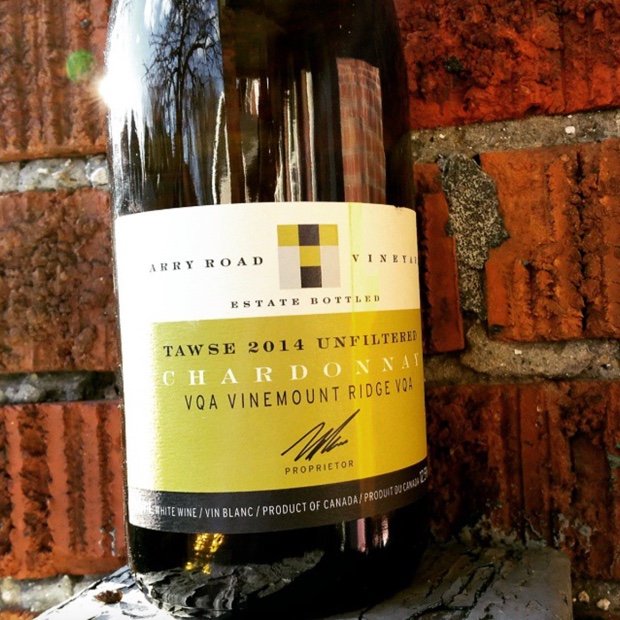
Tawse Riesling Quarry Road Vineyard 2016, VQA Vinemount Ridge, Ontario (198853, $24.50, WineAlign)

There is no substitute for seasonal Vinemount Ridge warmth when you are (or even if you’re not) trying to emulate a Mosel like, fleshy Kabinett tension. The Tawse Quarry Road riesling has shown signs of such mimicry in the past but here in 2016 the coincidence is uncanny. Riesling amounts to just 10 per cent of the 2007 planted vineyard, a Fly Road in Lincoln block where chardonnay (planted in 1998) and pinot noir (2007) are queen and king of the hill. But it is riesling that mines for limestone and uses it to distill, filter and enervate the outright fruity purposes of orange zest, lime juice and sweet grapefruit flesh. This ’16 has it all; adipose drupe, salty elements and stasis preserve. It will add some petrol and honey after a few years time and drink well for a few to a bevy more. Drink 2017-2023.  Tasted November 2017  tawsewinery  @Tawse_Winery  @tawsewines

Malivoire Rosé Moira 2016, VQA Beamsville Bench, Ontario (AgentWinery, $24.95, WineAlign)

Hard to believe what I see, a hue not blush nor pink, but gris. That “if my eyes don’t deceive me there’s something going wrong around here.” Forget about Provençe, don’t think too hard about Vin Gris but concentrate only on what Shiraz Mottiar has acceded with Rosé for Moira in ’16. Light and lithe do not begin to explain the rub. Rocks and stones are what come through the good earth on the nose. Is this the blush equivalent of mineralité, away from chardonnay and into pinot noir? “Is she really going out with him?” But the pinot noir component is almost non-existent so what is the phenolic advantage here? Has this gone too far or not far enough? Don’t mistake the things I say. This is delicious, understated and fully underestimated Rosé. It will have great appeal to a specific cognoscenti population and who could not think to drink it any day of the week? Commercially considered however, it may not speak a universal language. Drink 2017-2021.  Tasted March 2017  malivoire  shirazmottiar  @MalivoireWine  @ShirazMottiar  @MalivoireWine

Flat Rock Riesling Nadja’s Vineyard 2016, VQA Twenty Mile Bench, Niagara Escarpment, Ontario (578625, $24.95, WineAlign)

Nadja, like the Bréton novel begins with the question, “Who am I?” A surrealistic trigger is incited by the first taste, with excitement running in many directions but like the book, Nadja’s non-linear structure is grounded in Twenty Mile Bench riesling reality. She is an elite varietal wine in 2016, excitable girl, gregarious, punchy and so bloody juicy. I don’t recall the last Nadja with so much up front zest fervency and writhing aromatic gait, “exploding international, the scenes, the sounds, and famously the feeling that you can’t squeeze ground.” The lime flesh and cordial infusion brings the flavours into a once tropical, twice bitten realm. The vintage delivers the electric version, the new pornographer for the vineyard and the song sung loud swan song for departing winemaker Jay Johnstone. Was it all for swinging you around? Drink 2017-2024.  Tasted October 2017  flatrockcellars  @Winemakersboots  @FlatRockCellars

First Fruit: Field Day Pet Nat, Niagara Peninsula, Ontario (Winery, $25.00, WineAlign)

An escarpment Pet-Nat is born, thanks to the healthy and precocious idealism of winemaker Ryan de Witte and his Winona-based host Ilya Senchuk at Leaning Post Wines. The name “First Fruit: Field Day” carries three connotations; a reference to De Witte’s first commercial wine, the first crop off this particular block and the fact that it’s a field blend of two grapes. The erudite hat is thrown into the micro-cuvée, sparkling wine ring with interchangeable tracks of arts and science from near-equal parts muscat (60 per cent) and gewürztraminer. The style is pétillant-naturel, or as they say in Italy, Vino Rifermentato In Bottiglia, under crown cap with what Ryan notes “as much of the lees as I could get in.” The tightrope induces a two-fold increase, of reduction and for texture, from the nutrients fed the fermentation. De Witte’s math was sound because the effervescence is strong enough to blow the reduction off after a few seconds in the glass. One point for science. After tasting two samples I can safely say that the yeast deposit can’t be missed but it is those crafty and leaningpostwineconsolidated cells that drive the salvus meets salus machine. This lithe, re-fermented and crackling sparkler is both safe and healthy. You can feel its enzymes usher liquid happiness through your body and it makes you pause, leave the warrior behind and become at one with the experimental fizz. It’s raw and you want it to be so. The aromatic varieties collogue preserved lemon, ginger and aseptic vegetal scents in an almost funk-less Pet-Nat. It’s an impossible one actually, that is until you get a load of that slag at the bottom of the bottle. But the lack of danceable, rhythmic funk may deny you a Cissy Strut so think on it like Foam meets Talking Heads as in minimal, industrial, synth-pop. Or, in sparkling wine terms, one Pet-Nat’s riflessioni naturalische is another one’s clarity. One point for art. The intrigue here sets the bar high and looking ahead, when acidity can further provide boundless rhythm section support we’ll really have something to talk about. Inaugurals are never easy, nor is progress but the sophomore release will most certainly play on repeat. Let’s hope someone finds a category to place it for three-letter approval. Drink 2017-2018.  Tasted Twice, February 2017  leaningpostwine  @LeaningPostWine  @Witte_Wine  Leaning Post Wines  Ryan de Witte

Cave Spring CSV Riesling 2015, Cave Spring Vineyard, VQA Beamsville Bench, Niagara Peninsula, Ontario (566026, $29.95, WineAlign)

In a word, balance. Well two, balance and brilliance. CSV in 2015 takes the reigns from itself and stands firm. The fruit is in charge, the mineral a support system unparalleled and the minor celebratory sweetness a mere afterthought when it comes to rounding out the complexity. CSV is pretty darn back in ancient dolomite time travel and escarpments high great in 2015, uplifting, serious but yet not so. The numbers trip the light fantastic, fooling like gold and bones dry are seemingly preserved in karst but impossibly not. The sensoria apprised reel from the finest acidity it can possibly carry in its veritable truth. Deep lemon intent and a new wax vernacular speak the clarity of a wine that listens to its own expert advice. Might as well have made itself. CSV 2015 is one of the finest rieslings ever made from Ontario grapes. Drink 2019-2031.  Tasted March 2017  cavespringcellars  thevineagency  @CaveSpring  @TheVine_RobGroh  Cave Spring Cellars  The Vine – Robert Groh Agency

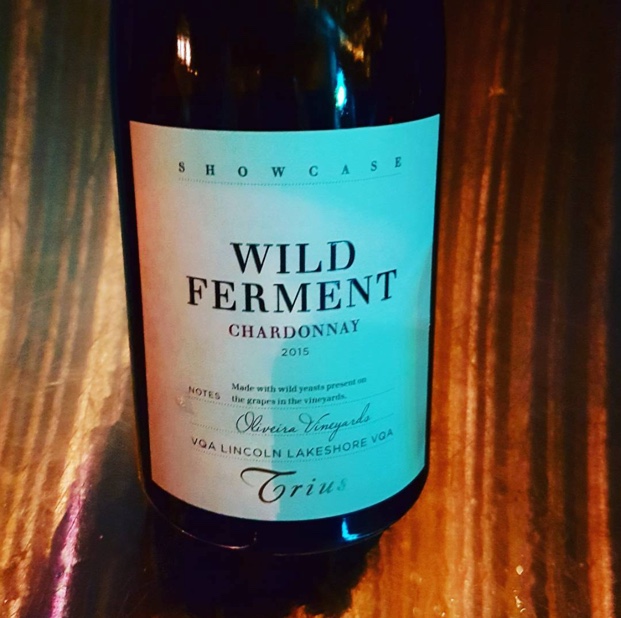
Sneak peak in the @TriusWines Meunier with Craig McDonald and a true Niagara Grand Cru @coolchardonnay site #lincolnlakeshore #oliveiravineyards #vqa #wildferment

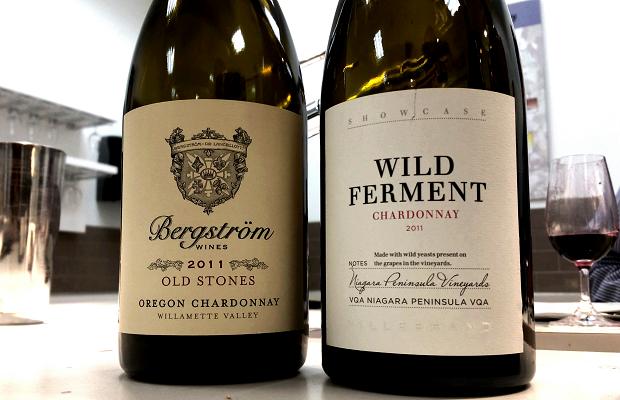
Trius Showcase Chardonnay Wild Ferment Oliveira Vineyard 2015, VQA Lincoln Lakeshore, Ontario (Winery, $36.75, WineAlign)

When you consider the level of quality provided by the Wild Ferment 2014 it would be hard to imagine raising the bar any further but this is what winemaker Craig McDonald has managed with his exceptional 2015. The accomplishment is purely based on one year older, wiser and complexities developed Oliveira Farm vineyard fruit, the holy chardonnay grail, Lincoln Lakeshore playground. The site sits along the QEW below the escarpment’s Twenty Mile and Beamsville benches, a recipient of glacial till and rocks left behind by an ancient river running from a lake. It’s a chardonnay wonderland. Intensity of fruit purity, fleshy and real, remarkably juicy and notably crunchy has increased, upping the pleasure game and turning the impression knob up to 11. The windmill generates more power while always maintaining a classic Trius level of finesse. Then you think on the wood integration, equally impressionable because acidity is sweet and refined. Dry extract is also impressive, not to mention a fineness of grape tannin. The site’s unofficial designation as a Niagara Grand Cru should be upgraded with status. There is no better time than the present and the Wild Ferment’s 2015 ability is proof enough. Drink 2017-2023.  Tasted July 2017   triuswines  @TriusWines  @triuswines

Pearl Morissette Cuvée Madeline Cabernet Franc 2014, VQA Twenty Mile Bench, Niagara Peninsula, Ontario (Winery, $38.00, WineAlign)

From the 19th Street Vineyard and wow, there is simply no cabernet franc like this cabernet franc. It pops and flies from the glass, in and out of your mouth, playful, buoyant, joyful, unbridled. A silky and spicy ripeness that’s also shed by its tannin, like shavings of a chocolate only a master knows to render, then currants electric and alive. Excels by its chewy mouthfeel and texture and you must ruminate on this cabernet franc. This is the it vintage, with all the enzymes in control, wrapped up in the enigma membrane and this low, classical Beethoven orchestral strings rumble, on a Verona stage, surrounded by the ancient rocks, acoustics perfect. You can get lost in franc like this. Drink 2019-2027.  Tasted July 2017  pearlmorissette  @PearlMorissette  Pearl Morissette

Quails’ Gate Stewart Family Reserve Chardonnay 2015, BC VQA Okanagan Valley, British Columbia (639641, $43.95, WineAlign)

Some of the Okanagan Valley’s great chardonnay fruit is found on its eastern shore and makes its way into this Quail’s Gate Reserve. The story and place go back 60 plus years and wait if you can’t nose it in this top North American chardonnay. Forget comparisons, competitions and blind judgements but pull anything you want from Sonoma and watch this raise eyebrows and turn heads. The variegations are numerous and in replay. Richness, bite, energy, spirit and firm conceit. The barrel is everywhere and nowhere. What is a great chardonnay? It’s completely invisible, yet always in sight. It remembers what people hate. It anticipates the consumer’s needs before the needs are needed. A great chardonnay is, above all, discreet to a fault. Such is the Stewart Family Reserve. Drink 2018-2023.  Tasted October 2017   quails gate  hobbsandcompany  @Quails_Gate  @AMH_hobbsandco  Quails’ Gate  Hobbs & Co.

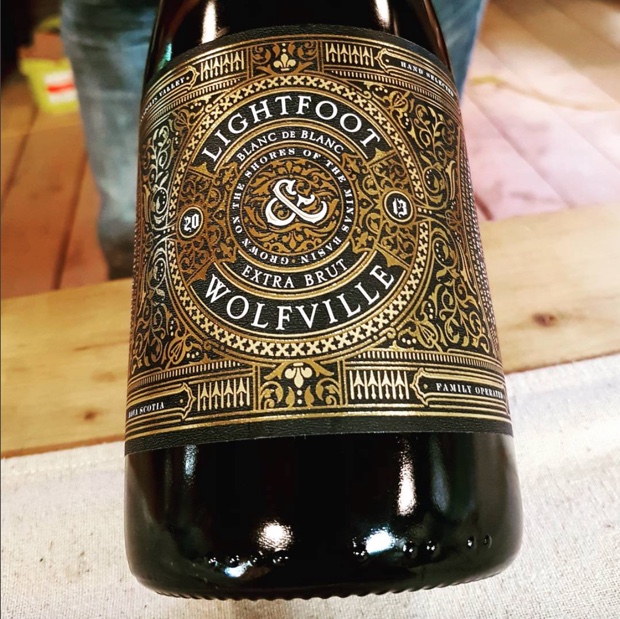
Sparkling wine you need to know @lwwines Blanc de Blanc Extra Brut 2013, from the shores of the #minasbasin #annapolisvalley #novascotia

Lightfoot & Wolfville Blanc De Blanc Extra Brut 2013, Nova Scotia, Canada (Winery, $45.00, WineAlign)

Josh Horton and Rachel Lightfoot presented an early, less leesy glimpse of their 100 per cent estate chardonnay at i4c in July of 2016. It was a different animal than this recently disgorged (late February/early March) sparkling wine. The Extra Brut lives up to its designation, from fruit grown on the shores of the Minas Basin under the auspices of a markedly warm year with exceptional phenolic ripeness and 25 per cent malolactic gain. The time relative to texture lees accumulation is approximately 40 months and it’s an accurate representation of Nova Scotia low and slow. The flavours are wisely developed ripe and spicy, leaning into a moment or two of oxygenation, but seemingly richer than the amount of lees time that was given. Now emerging from the shell of not just a warm but a great chardonnay year (as previously proven by the Ancienne released two years ago). The notion here is of a sparkling wine that has been brought home, a B de B that you need to get to know. There are layers and layers of character that fold and unfold. The precision, focus and rendering is citrus tamed, mouthfeel in perpetual expansion and contraction, length linear and elastic. And it’s just the beginning. Drink 2017-2023.  Tasted June 2017  lwwines  @lwwines  Lightfoot & Wolfville

Blomidon Late Pick Sparkling Chardonnay 2011, Nova Scotia, Canada (Winery, $45.00, WineAlign)

The 2011 late-picked chardonnay, the “Hurricane” is a hyperbole of itself. Normally picked in later October, the frost-free weather allowed further time and development. Picked from seaside vineyards just ahead of another hurricane (in a season that included Irene), this is sparkling wine you just have to try. Though lean, taut and as intense as you are likely to taste, the developed character and complexity is visionary for Nova Scotia and Canadian sparkling wine. Three years on the lees brings the texture and fills the gaps, holes and voids created by such a tightly wound cool climate chardonnay. The dry factor is exaggerated in 2011 (a one-off says winemaker Simon Rafuse) but the wine takes full advantage of the Extra-Brut intent. Did it require the anxiety of a recent and an impending cyclone? Can it be duplicated? “That’s the story of the Hurricane.” Visionary for Nova Scotia and Canadian sparkling wine. Drink 2017-2022.  Tasted March 2017  blomidonestate  @BlomidonEstate  Blomidon Estate Winery

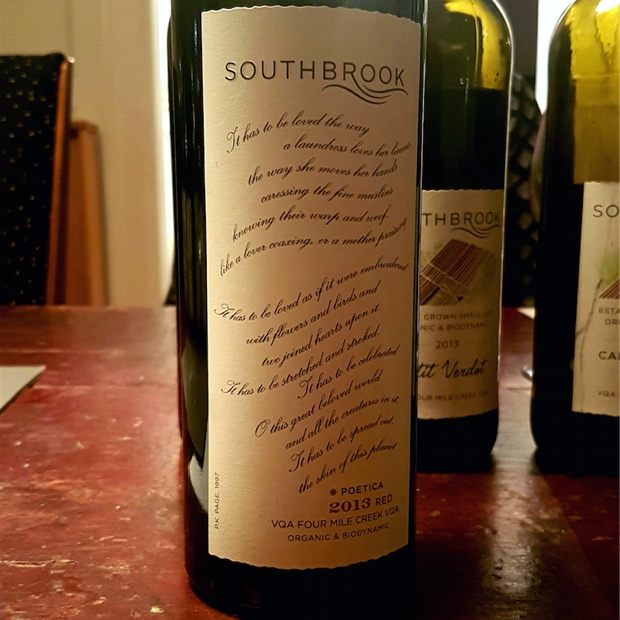
Southbrook Poetica Red 2013, VQA Niagara Peninsula, Ontario (355859, $69.95, WineAlign)

It seems at first that Poetica 2013 was chosen by winemaker Ann Sperling to be the deferential one. The blend is dominated by 74 per cent cabernet sauvignon, the highest number ever for the wine. Conversely the cabernet franc component is set to 23 per cent and far less petit verdot (3 per cent) rounds out the blend. That number had been 29 per cent in 2012 because the varietal elegance shown at that time necessitated the relationship. In 2013 it is the cabernet sauvignon that displayed with elegance and an uncanny ability to sow of its own accord and yes, it is an exceptional vintage so look for 2013 to age on a 15 year curve. The Witness Block CS-CF follows suit and the SV-PV is better off for the allocations. Every wine wins as a result. There is this deep-impressed sous-terre tang in here, a wisdom certainly, and when it is released later in the year the heads will turn. Poetica is often but here not overly tannic, but it is endowed with bones, spine and structure. The flavours, spice and magnetism give cause to salivate. Only Ann Sperling makes Niagara reds like this, wines that can develop such architecture without an excess of tannin, astringency and chalky chocolate from over-wrought wood exchange. Poetica 2013 will drink well young and comfortably into the end of the next decade. Drink 2018-2028.  Tasted January 2017  southbrookvineyards  thelivingvine  @TheLivingVine  @SouthbrookWine   @SouthbrookWine  The Living Vine inc.

A finer man, winemaker and host you will not find. Thank you @normanhardie @keeponshucking @clarsenault @cuveeletittia @Mknow21 @mclauriault and all.

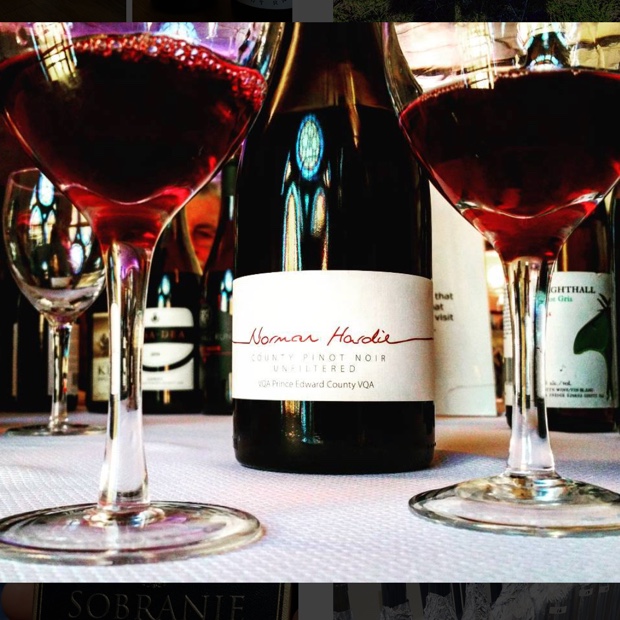
Norman Hardie Chardonnay Cuvée Des Amis 2014, Prince Edward County, Ontario (Winery, $150.00, 1500ml, WineAlign)

As exceptional as chardonnay may have seemed from out of the 2013 Ontario vintage you haven’t lived or loved until you get a taste of (only in magnum format) Norm Hardie’s 2014 Cuvées des Amis. This chardonnay attacks and ascends, recalibrating the inner workings of the brain and how it develops conceptualization. It is a state of the art and all-knowing elixir to remind that ’13 was a vintage with profitable yields and a generously stretched canvas on which to practice on, for when things begin to get real. The CdeA spent 18 months in barrel, the first 12 (in 35 per cent new), the next six in neutral and the last six in stainless steel on the fine lees. The spin class in the mouth manages agility, dextrous, furtive movement and completes many pirouettes. The dance is pure joy but the intensity is equally to disturbingly intrusive, suggesting more settling time is necessary. The flavour pearls are delicate and come straight from the oyster so they carry salinity, power and brine. Pure lemon essence is received by intravenous injection. Sumptuous is translated from Hardie-speak as a four-letter, Prince Edward County word. It doesn’t get more real than right here, with the best fruit, the tripping of the light fantastic, previously unheard and unseen unconscionable concentration. Drink 2019-2025.  Tasted twice, June and July 2017  normanhardiewinery  @normhardie  Norman Hardie

Le Vieux Pin Équinoxe Syrah 2014, BC VQA Okanagan Valley, British Columbia (Winery, $80.00, WineAlign)

Èquinoxe is announced without equivocation as the Bricco of B.C. syrah and an absolutely lovely Bench expression from winemaker Severine Pinte. What came from these three-quarters Osoyoos Lake District and one-quarter Black Sage vineyards in 2013 was floral and peppery, with a fineness that belies a dessert climate but in 2014, well this is something more and other. You just have to think about texture here and a quality of acidity that is peerless in B.C. syrah. So juicy, beautifully tannic and rendered with culture and class. Drink 2018-2022.  Tasted October 2017  levieuxpin  @LeVieuxPin  Le Vieux Pin Winery

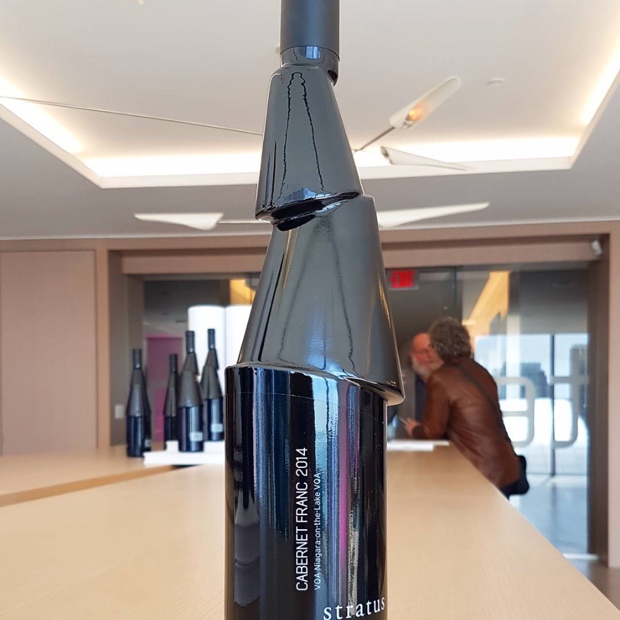
My eyes do not deceive me. It’s Decant @StratusWines #cabernetfranc bottled with lees #vqa #niagaraonthelake #karimrashid

Stratus Cabernet Franc “Decant” 2014, VQA Niagara On The Lake, Ontario (Winery, $95.00, WineAlign)

“A designer’s hands are tied. They are only as good as their opportunities.” The words of the brilliant bottle designer Karim Rashid fully apply to the mirrored universe in which winemaker J-L Groux works, here with a deferential and ulterior cabernet franc, bottled with its lees. When I first tasted it in February (in advance of this auspicious release), its unfiltered state spoke of a hyperbole of perfume, marked by exoticism. The aromatics gave far east five-spice, star anise, cardamom, miso and incense, all natural by-products of its purposed ferment. More grain spoke out but also a roundness of tannin and a smoothness both coating and comforting. There was chocolate accentuated by the treatment, with thanks to those lees left in the bottle. The chopped up and constructed bottle catches the lees while the volume flows out and the function out of form mimics the thought of lees delivering structure and yet they are invisible, caught in a hidden net or nook, out of sight, out of mind. But it’s not about pouring. It’s about the hand, or the slight thereof. Then there is the copycat idealism of strata in the vineyard, of geology transferred to the bottle and kept there, like a ship perfectly preserved inside. This cabernet franc will age better, as is the plan, with thanks to the lees that you’ll never have to deal with. There were 110 cases made. Drink 2019-2029.  Tasted twice, February and May 2017  stratuswines  @StratusWines  Stratus Vineyards

Supper at Benjamin Bridge

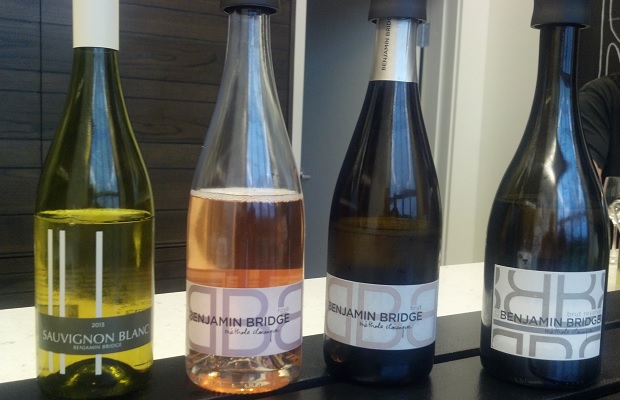
Benjamin Bridge Méthode Classique Estate Blanc De Blancs 2013, Nova Scotia (Winery, $119.50, WineAlign)

Tasted from a bottle disgorged in May 2017, there alights a plugged-in, three-pronged, dazed, charged and enchanted energy about the Bridge’s ’13 Blanc de Blancs. The history of go it alone pure chardonnay is a relatively short one for the estate so this quickly makes up for lost time or rather with haste sets the timer and heads out at first light. “Like sittin’ on pins and needles, things fall apart, it’s scientific.” Wild, of talking heads temper and yeasts, done up in demi-muids, with a wilder secondary fermentative push riding on the coattails of the primary fermentation. Everything in this wine is a productive child of the vineyard, of no third party sugars or consultations. “How do you do that without making a Pétillant Naturel,” I wonder aloud. It’s a second ferment, non-contiguous is the reason, even if the former is both influencer and mentor to the latter. It certainly falls under the category of “micro-cuvée. Like its cousin and predecessor (Blanc de Noirs 2011), this ’13 BdeB is mired intensely inward within its own specificity and is not so much a sparkling wine with competitive soul. It is a pure representative of chardonnay grown in Nova Scotia for one purpose. So let’s talk about true stories and wild, wild life. “You get on board anytime you like.” Drink 2018-2024.  Tasted July 2017  benjaminbridge  caveman__jones   winesofn  @Benjamin_Bridge  @benjaminbridgevineyards  @WinesofNS @benjaminbridgevineyards  @winesofns

As we taste through the #NWAC17 finals we thank @ZWILLING_CA for the rocking great glassware. Canadian wines are better for these vessels.

Good to go!

Godello

Twitter: @mgodello

Instagram: mgodello
WineAlign

16 Canadian wines that rocked in 2016

he-always-distracted-me-so-that-i-thought-of-nothing-else-while-listening-to-the-words-and-the-sound-of-his-voice

He has always distracted me so that I thought of nothing else while listening to the words. And the sound of his voice.

Compiling a best of wine list is never easy. Not when the subject matter is the most fleeting of consumables, a drink ever-changing, almost never tasting the same twice and destined for eventual failure. We know by instinct that wines cast the shadow of their own destruction before them and are designed from the first with an eye to their later existence as ruins. Wine critics can only regard what is in the glass by what sensory enjoyment or displeasure is activated at that exact time. In most cases there are no second chances.

I do my best to taste wines twice before passing judgement. Too often I can’t fulfill this prophecy, especially when plodding through 100-plus on a VINTAGES release. In 2016 I made a great effort to visit these 16 wines three times before penning a review. It was not always possible but I tried. When it comes to Canadian wines and even more so with wines from Ontario, there are often second and third chances. And so I feel very confident in sharing this definitive list with you.

Hallelujah

It must be said that 2016 was a most difficult year. Too many special people were taken from us far too early. I lost two friends this fall as I’m sure some of you did as well. Many of us dwell on favourite celebrity deaths and especially the loss of musicians, some of us more than others. If you are one who takes to social media to mock the romantic who shares grief with others at the loss of a musical icon, well just skip past this and go straight to the wines. Or please refrain from comment and respectfully remain quiet.

David Bowie. Prince. Leonard Cohen. Sir George Martin. Glenn Frey. Paul Kantner. Leon Russell. Keith Emerson. Greg Lake. Alan Vega. Mose Allison. Bernie Worrell. Muhammad Ali. Gene Wilder. Arnold Palmer. Craig Sager. David Huddleston. Ken Howard. George Kennedy. Abe Vigoda. Ron Glass. Florence Henderson. Fuck 2016. And this tree fell on my house.

hows-your-sunday-going-so-far

How’s your Sunday going so far?

On a much brighter note 2016 was a banner year for tasting Canadian wines. It also provided a vintage of quantity meets quality and one that was desperately needed, especially here in Ontario. My tasting regimen saw no quit or slow down in 2016. I’m not sure how many Canadian wines I tasted but if it was less than a thousand I’d be shocked. I tasted more at home, assessed a greater number in the LCBO’s sensory lab, delved deeper at the WineAlign office and spread the web wider at events in Ontario. I judged with Tony Aspler at the Ontario Wine Awards, in Penticton at the WineAlign National Wine Awards of Canada and with David Lawrason at Gold Medal Plates.

Related – 15 Canadian wines that rocked in 2015

In 2015 I counted 15 on the filtered list. In 2014 the highlights numbered 14, just as in 2013 the number chosen to cant, recant and decant excellence in Canadian wine was 13. And so forth will lead to 17 in 2017.

welcome-muller_brent-to-team-red-with-nazlanmak-captain-treve_ring-nwac16-winealign

Welcome @muller_brent to team RED! with nazlanmak captain @treve_ring #nwac16 @winealign

Related – 14 Canadian wines that rocked in 2014

And again, I quote. “Picking a top anything list is both a chore and a labour of loyalty. The opportunities to learn more about Canadian-made wine, especially the processes and the efforts, were numerous in 2014. Canadian winemakers opened their doors and when people came, they taught. They walked the vineyards, showed off their prized barrels and walked through the processes of making wine. Tasting and barrel rooms make for the greatest classrooms. Get out there in 2015. The experience is priceless.” In 2017, trust in Canadian wine.

Related – 13 Canadian wines that rocked in 2013

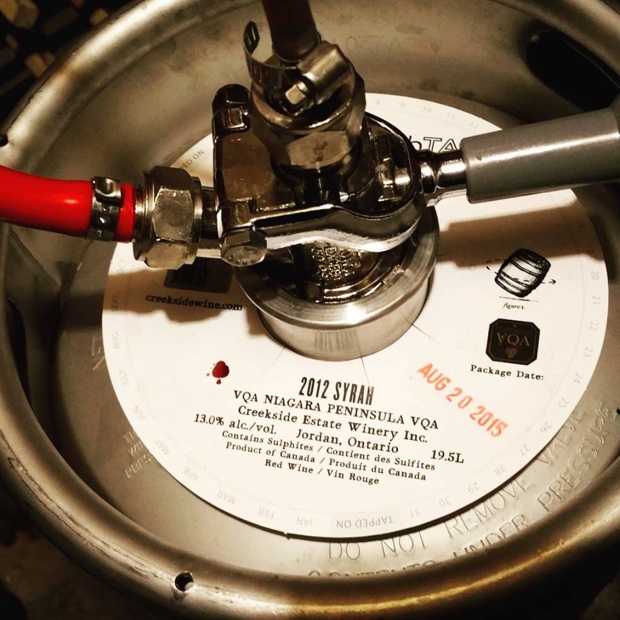
return-syrah-engagement-creeksidewine-pouring-on-tap-barquebbq-and-barquebutchers-freshtap-wineontap

Return Syrah engagement @CreeksideWine pouring on tap @barquebbq and @barquebutchers #freshtap #wineontap

My wine on tap program at Barque Smokehouse and Barque Butcher Bar added some new wines in 2016 to follow those poured from Tawse, Lailey, Norm Hardie, Creekside, Between the Lines, Kew Vineyards, Redstone, Stratus and Leaning Post. Between the Lines, Coyote’s Run, Vineland Estates and new offerings from Creekside continue to fill your glasses.

The year began with great excitement at Niagara’s Icewine Festival in January. In February I returned for Cuvée Weekend. In June we convened the WineAlign Canadian Wine Awards in the Okanagan Valley and a confession I need to make is that I wanted to publish with the title “Why you don’t know shit about B.C. wine” but chickened out at the last second and instead came out with Why you don’t know jack about B.C. wine. Before judging we paid a visit with The Wines of British Columbia for the Judgement of B.C. The second annual cage match was hosted by the B.C. Wine Institute and took place on Tuesday, June 21, pitting 12 B.C. Wines against 12 acknowledged global benchmarks. Riesling and Pinot Noir squared off, curated by DJ Kearney and judged by a who’s who of Canadian wine writers, critics and educators, along with international WineAlign Awards judges Dr. Jamie Goode and Elaine Chukan Brown.

how-lucky-we-all-were-to-have-her-back-in-the-captains-chair-happy-canada-day-djwines-nwac16

How lucky we all were to have her back in the captain’s chair. Happy Canada Day @djwines #nwac16

As the week progressed, the WineAlign judges paid visits to Okanagan Crush Pad Winery in Summerland, Culmina Family Estate Winery in Oliver, Tantalus Vineyards in Kelowna, Rustic Roots Winery with the Similkameen Wineries Association and Deep Roots Winery on the Naramata Bench. I tasted more than 100 wines over the course of the five days from the appellations of Okanagan Valley, Okanagan Falls, Oliver-Osoyoos, Golden Mile, Similkameen Valley and Naramata Bench. At the awards I tasted more than 500 Canadian wines.

Of greatest importance was my return to the International Chardonnay Cool Climate conference that took place between July 22nd and July 24th in Niagara. Before attending for a fourth straight year I penned The democracy of Cool Chardonnay. It was there I wrote that “plus has joined the i4c, an ideogram of addendum, a character of diversity for the fluently persuasive and forceful congress. This gathering will open its arms for colour and to allow its constituents to regale with what they do best. For an event-driven pure as single-varietal snow and formerly known exclusively as chardonnay, is this really a shocker? This is the reality of democracy.”

#cool

People bitched and moaned. How can a chardonnay conference include other grape varieties? Sacrilege and foul play they (secretly and not so secretly) complained. In the end the inclusion of red varietals confused nothing and no one. Chardonnay remained the focus and the star. No chardonnay were harmed.

We broke cool climate bread and spread chardonnay gospel with Ian D’Agata (Decanter, Vinous.com), John Szabo M.S. (Volcanic Wines: Salt, Grit and Power), Jean-François Bordet and Françoise Roure from Wines of Chablis. We tasted with sixty winemakers at the School of Cool, “Flights of Chardonnay” at Niagara District Airport and the Cool Chardonnay World Tour Tasting & Dinner at Ridley College in St. Catharines, Ontario. Red wines were poured after dinner!

only-american-presidential-candidates-carry-babies-at-i4c-coolchardonnay

Only American presidential candidates carry babies at #i4c @coolchardonnay

We welcomed writer Kurtis Kolt from Vancouver, sommeliers Carl Villeneuve-Lepage and Elyse Lambert from Quebec. Four Seasons Hotels and Resorts and Tex-Somm Director James Tidwell made the long trip north and a second Canadian courting immersion in as many months was performed by visionary wine raconteur Elaine Brown.

So what did Godello learn from Cool Chardonnay in 2016? Well, he found out that we have to look at organoleptics and ask a very important question. Is your expectation of a Chablis going to be the same as chardonnay made from anywhere else? More important, who are we putting this wine in front of? Ian D’agata’s take struck a Canadian chord.  He talked of “a welcome astringency characterized by piercing flavours. These are cool-climate wines.  Cool climate chardonnay is not about a long litany of fruit descriptors. If you have a cool-climate viticultural area it behooves you to give the people what they are looking for.”

potential-is-the-past-somewhereness

Potential is the past @Somewhereness

After i4c16 I took part in an Impromptu tasting at Ravine. Four months later the intrepid sophist Scott Zebarth and I tasted with winemaker Marty Werner for a second time. That same day we visited with J-L Groux at Stratus and with Paul Pender at Tawse. Our focus was cabernet franc. That report is coming soon and I can promise this. The 17 in 2017 and 18 in 2018 will be graced by cabernet franc. Fall events were led by the constitutive Somewhereness, as fundamental and essential as any agminate Ontario tasting can and will ever be. Then there was the Great Canadian Oysters and Wine Experience at Rodney’s Oyster House. The event was hosted by Wine Country Ontario and paired a curated who’s who of Ontario VQA wines with the local iconic fare. Exceptional all around.

%22ill-do-what-i-can-so-you-can-be-what-you-do-%22-rodneystoronto-coasttocoast-oysters-winecountryontario-dukes-peioysters-bcoysters-elliotsmith-greatcanadianoystersandwineexperience

“I’ll do what I can so you can be what you do.” @rodneystoronto #coasttocoast #oysters #winecountryontario #dukes #peioysters #bcoysters #elliotsmith #greatcanadianoystersandwineexperience

Where are we now?

Despite all the talk of rules, regulations and governing boards that restrict movement, labelling and profits, the Canadian landscape is evolving in a beneficent direction. Though the move to loosen monopoly control and increase competition has backfired in the short term, corrections to British Columbia’s wine trade will happen, sort itself out and right the ship. Decades of bureaucracy don’t dismantle and do right by the consumer overnight. Things always get worse before they get better. The move to supermarkets in Ontario is indeed one of smoke and mirrors but it opens the door to gaining advantage through loopholes and creative minds kickstarting new business ventures. The wave to privatization can no longer be averted or snuffed out. Momentum will gain traction and open the flood gates to wine trade nirvana.

the-man-the-chardonnay-normhardie-princeedwardcounty-14-vqa-winecountryontario-%22as-sure-as-fire-will-burn-theres-one-thing-you-will-learn-is-things-you-have-cherished-are-things-that-you-have

The man, the chardonnay @normhardie #princeedwardcounty ’14 #vqa #winecountryontario “As sure as fire will burn There’s one thing you will learn Is things you have cherished Are things that you have earned.” #tomwaits #littleman

Canadian wines run more or less of their own accord, not so much thanks to the winemakers or the condition of the current culture, as in spite of them. And certainly not by virtue of any particular ethos through customs and traditions going back over many generations of wines. No, success and cumulative proficiency exists by dint of these wines without any forced supervision. They are governed by themselves and indeed across the entire industry. Done are the blanketing days of spare and often powerful Canadian wines that were often too spare, so that the ribs of tannin showed through in painful obviousness. The embracing of cool climate idiosyncrasy and unique-somewhereness make Canada the envy of the developing wine world.

Controversy

Now this. VQA is expected to pass regulatory approval and introduce a new category of wines called “skin contact whites.” While Orange wines are the most notable example of skin contact whites, who’s to say the ambiguity of the designation could not impel the inclusion of other cabalistic and achromatic specimens? Let’s look at Riesling as a perfect example.

skin-contact-riesling-from-mackbrisbois-trailestatewine-invisibly-stitched-and-tart-pan-curl-burgunder-less-than-50-cases-hughes-lakeview-foxcroft

Skin contact #Riesling from @MackBrisbois @TrailEstateWine Invisibly stitched and tart-pan curl. #burgunder less than 50 cases #hughes #lakeview #foxcroft

Leaning Post’s The Geek, Trail Estate’s Skin Contact Foxcroft and Pearl Morissette’s Blackball are all atypical, mad scientist outtakes. Will the new category allow these wines to pass easily through the borders of VQA? Will the wall regarding place of origin on labelling be the next to crumble? Let’s hope reason in the name of progress born out of trust for altruistic and dedicated producers will carry through to a new frontier. Right Bruno and Jens?

New Kid in Town

You might notice that all 16 wines I have chosen are from very established producers. The next wave of young winemakers and wineries is taking shape in Ontario, British Columbia, Quebec and especially in Nova Scotia. I would expect new kids on the list in the coming years. I want you all to know that I traveled through great pains, algorithmic calculations and much unavoidable emotion to arrive at this rocking list. For every wine that made the grade there were three more that narrowly missed. They are all important but these 16 combine lyricism with melody. They write the songs.

Flat Rock Vineyard, Twenty Mile Bench, Niagara PeninsulaPhoto: Brian Barton - Guelph, Ontario

Flat Rock Vineyard, Twenty Mile Bench, Niagara Peninsula
Photo: Brian Barton – Guelph, Ontario

Flat Rock The Rusty Shed Chardonnay 2013, VQA Twenty Mile Bench, Niagara Peninsula, Ontario (1552, $24.95, WineAlign)

It’s as if this label had bided all this time to be the benefactor of 2013 fruit. This Rusty Shed, this 20 miler with the track record to age, a wine that sheds baby fat over a 10 year mineral through echelon stratum, in ways few other peninsula to bench chardonnay can do. This Jay Johnston handled surfer of a wine, buoyant and balanced, centred and able to withstand turbulence, oscillation and tidal sway. Here with sumptuous and spiralled fruit gaged in lode intervals and a tartness held in lope and line by a membrane of extract and tannin. Best ever. Showing well, repeatedly and to forecasted repute. Impressing critics and consumers alike. Bravo. Drink 2016-2025.  Tasted June 2016  @Winemakersboots  @UnfilteredEd  @brightlighter1

sometimes-there-comes-a-wine-of-the-impossible-at-the-frontier-this-by-synchromeshwine-riesling-stormhavenvineyard-okanaganfalls-8-9

Sometimes there comes a wine, of the impossible, at the frontier. This by @SynchromeshWine #riesling #stormhavenvineyard #okanaganfalls #8.9%

Synchromesh Riesling Storm Haven Vineyard 2015, BC VQA Okanagan Valley, British Columbia (Winery, $31.90, WineAlign)

If this riesling is sweet I couldn’t say. That is the first thought that comes to mind. From Alan Dickinson’s home property, this is his baby, an Okanagan Falls derived riesling that lives an entirely holistic existence. No spraying, none, nada, niente. Not ever. The wine could not get any cleaner. Purity is its cognomen. The vineyard is subject to the highest diurnal temperature swing than just about anywhere in the valley. That might explain the risk-reward probability factor. The technical specs are a triumvirate of implausibility; 46 g/L RS, 11.5 g/L TA and pH below three. What? This is the most impossible wine made in B.C. In its concentrated velocity it wheezes like something ancient. We could almost be drinking Greek debina or 20 year-old Alsatian auxerrois. Dickinson makes three passes over each of the two blocks so even if the hands are off, the meticulous picking breeds asepsis. Citrus such as found in the Storm Haven fruit does not happen very often, if rarely. It’s like citrus soma. Citrus unknowable out of determination unthinkable. Direct misunderstanding by indirect whimsy. And so the vintage offers good fun but not greatness. Imagine the possibilities. Drink 2018-2027.  Tasted June 2015  @SynchromeshWine

ah-geek-out-le-geek-cest-chic-leaningpostwine-pinotnoir-riesling-lees-experiments-pushingboundaries

Ah, geek out, le geek, c’est chic @LeaningPostWine #pinotnoir & #riesling lees experiments #pushingboundaries

Leaning Post Riesling “The Geek” 2014, VQA Niagara Peninsula, Ontario (Winery, $32.00, WineAlign)

Senchuk and swot-out cohort Ryan de Witte pulled 350 litres of riesling aside, accoutred with all readily available lees and shacked the whole gross mess in tank together, Vinification was completed at nine grams (RS) nearly-dry, in what can only be described as a reductive, cloudy, super-geeky riesling. Acquires an increased resonance from its designation stowed at a way station on what really is a longer, personal journey. The 2015 will be bone dry and like this ’14 will sit for 18 months in encouragement of a truly experimental, waiting for something to happen riesling. Time will act to fill in the gaps and increase its already developed texture. If you have ever had the pleasure you will see this as Jean-Pierre Frick-ish to be sure. When asked the question, he ‘The Geek’ will repeatedly reply, “I am not ready.” Drink 2018-2022.   Tasted March 2016  @LeaningPostWine  @Witte_Wine

if-the-establishment-wants-what-you-got-give-it-to-them-blackball-14-riesling-by-pearlmorissette

If the establishment wants what you got give it to them. Blackball ’14 #riesling by @PearlMorissette

Pearl Morissette Cuvée Black Ball Riesling 2014, Twenty Mile Bench, Ontario (416073, $32.20, WineAlign)

One whiff and you are hep to what can only be Pearl Morissette, but with a neoteric twist. Riesling that flaunts full-frontal, of furthered acidity, vitality and multi-tined nuance. Farther too of age advanced but without any quirky or funky naturalist intrusion. Already chill, relaxed and with thanks to the vintage, almost round. The precise weave is tapestry fine and deceptively simple, what François Morissette likes to call a “crystallized cream of texture.” The oversized 2012 still digests itself, ’13 is organoleptically structured, long and cool. But ’14? A ‘no foudres’ vintage, from 100 per cent concrete fermentation, wild through malolactic and with zero grams of residual sugar. Bone dry. Concrete was chosen for must intricacy, palate texture, flavour and necessary balance. Riesling borne of crunchy, concrete desire, bright, with preserved lemon across the palate, gentle, feminine and beautiful. This is the focused consistency in loyalty to ’12 and ’13. Try and stereotype this Black Ball to Vin Nature funk. I dare you. Pour it in an expansive Ontario riesling flight and it will stand out like a solar flare in a fulmination of fireworks. There will be no mid-life, black hole of disappearance crisis. It will always be fine and pristine, drink well, like an impossibly dry version of a Coulée de Serrant. Only 186 cases were made so yes, the Blackball is a wine of very small production. Establishes yet another reference point and just wait for ’15. That vintage will deliver the greatest of bones. The new age will really launch then. Drink 2016-2022.  Tasted November 2016  @PearlMorissette  @lassvet

sincerity-culminawinery-from-elaine-don-triggs-and-a-superfluity-of-winebcdotcom-pours-ohwhatanight-hospitality-nwac16

Sincerity @CulminaWinery from Elaine & Don Triggs and a superfluity of @WineBCdotcom pours #ohwhatanight #hospitality #nwac16

Maverick Syrah 2013, BC VQA Okanagan Valley, British Columbia (Winery, $35.00, WineAlign)

Winemaker Bertus Albertyn bottled a meagre 200 cases of this Golden Mile Bench sourced syrah after 18 months in three to four year-old French Oak. If you are a fan of fresh, well-spoken, confident and blessedly transparent syrah then look for the next vintage of this sold out beauty. So gauzy gossamer textured, peppery but of scant bite and driven by a northern, smoky beat. The cure and depth in its make-up nearly adds up to beefy but its form of athleticism is built upon the quiet politesse of its maker’s execution. The comparison must be made to septentrional Rhône and the lack of new oak is so appreciated. This is a wine to watch for. Drink 2016-2020.  Tasted June 2016  @MaverickWinery

Charles Baker Rieslings

Charles Baker Rieslings

Charles Baker Picone Vineyard Riesling 2013, VQA Vinemount Ridge, Niagara Peninsula, Ontario (241182, $35.20, WineAlign)

There was this intuitive moment with Picone 2013 as if it was waiting on me. Not doting or soliciting, but waiting. I will admit to have been wondering, reeling and speculating. To peer or peek into what Mark Picone’s Vinemount Ridge vineyard would adjudge and then bestow Charles Baker’s riesling in 2013? Would it be a case of weight, hyperbole, a hang in the balance out of misjudged necessity? Nah. Picone is no longer a mature 20 year-old vineyard but now a wise old thirty year-old one. Picone 2013 is in fact a fun park mirrored image of itself, with haughty, aerified aromas and variegated, leaning to tropical fruit flavours, taut like a flock in line with the vintage. The riesling berries just seem to have imploded and the results that have followed are nothing if not intense. Imagine a Yogyakarta market and a two-wheeled, glass-cased push cart stacked with a pyramid of tart mangoes. The fruit had been picked just as the sugars had begun to run like sap and bleed sticky on the cracking skin. A mango is sliced and doused with the intensity of Java lime juice and then sprinkled with Laut Jawa salt. The flavours are searing, sweetly saline and quenching. Only this tart is this, where tart and acidity meet, intertwine and connect on an emotional level. Picone 2013. The first non-inoculated riesling at first and then touched up near the end. “The best vintage you could ask for in riesling,” notes Baker, “cloud-covered, a meeting of the minds, vibrant.” The arid, cranky one will live without fret for 15 years. Drink 2018-2028.  First tasted in March of 2015, then twice, October 2016  @cbriesling  @StratusWines

Cave Spring Cellars

Cave Spring Cellars

Cave Spring Csv Blanc De Blancs Brut 2008, Beamsville Bench, Ontario (Winery, $39.95, WineAlign)

As expected the Cave Spring 2008 Chardonnay Sparkling solicits thoughts and ideas centred around age. It elicits a complexity response and one taste means a succumbing to the contagion of its vitality. With its autolytic character shining bright, Cave Spring’s BdeB acts out a fantasy up on a silver screen. Another seven year itch is realized in guaranteed Ontario age ability. Has acted way past simple citrus and yet remains a little closed, just now entering the window of showmanship. Another year or two and this will vie for an Oscar. The bubble program production is unparalleled at Cave Spring, perhaps more than any studio in Ontario.  Tasted February 2016  @CaveSpring  @TheVine_RobGroh

French cask in the Hidden Bench cellar

French cask in the Hidden Bench cellar

Hidden Bench Nuit Blanche Rosomel Vineyard 2014, VQA Beamsville Bench, Ontario (Winery, $40.00, WineAlign)

Nuit Blanche is one of Canada’s most unique commodities, a White Meritage (of sauvignon blanc and sémillon) blended from exceptional and aromatically delicate Rosomel Vineyard fruit. As part of Hidden Bench’s “Terroir Series” it righteously expresses white Bordeaux varietal purity from the southern blocks of the Beamsville Bench vineyard. Expectation runs high because 2014 seems a perfect Fumé Blanc vintage if ever there will be one for (40 year-old) vineyards tucked snugly in abutment to the Niagara Escarpment. A struck flint nosing entry is followed by taut strung acidity and palate tension eased by a fictionalized adult cotton candy, wisps of smoke, honey and lanolin. The grace of it all is hidden beneath a filigree of molecular green apple caviar gastronomy. In 2014 Nuit Blanche reflects propriety, elegance and genteel balance, caressed from the hands of winemaker Marlize Beyers. It is as if Beyers let this ferment slip away as a parent would encourage a child who is ready to leave the home. After tasting it at Gold Medal Plates in Toronto I spent a sleepless night, not from restlessness or over-indulgent behaviour but because I wished to pull an all-nighter with the best ever sauvignon blanc bled and led Ontario white. I would suggest leaving this be for two years for the subtle though generous barrel to melt into fruit but time will gather for up to two decades before the sun sets on the 2014 Nuit Blanche. Drink 2018-2029.  Tasted November 2016  @HiddenBench  @BenchVigneron  @ImportWineMAFWM  @MarkAnthonyWine

Mini #lonnasblock @RavineVineyard Cabernet Franc vertical. Loaded with the S-word...structure @marty_werner #i4c16

Mini #lonnasblock @RavineVineyard Cabernet Franc vertical. Loaded with the S-word…structure @marty_werner #i4c16

Ravine Vineyard Cabernet Franc Lonna’s Block 2014, VQA St. David’s Bench, Ontario (Winery, $40.00, WineAlign)

Lonna’a Block alights straight out from the retail shop to the west side of the driveway (and is named for Ravine owner Norma Jean Harber’s sister). The site was planted in 2004 and here, 10 years on, its warm St. Davids’ Bench fruit is simply welling, hermetically sealed and antithetically intense. The block has come to this, in production of cabernet franc with side-splitting, tongue tripping acidity to work lightning crack geometry into the wood-derived chocolate and the ferric-tannic tension. The fissures are filled but there is the right kind of cabernet franc fragmentation. The liquid metal mineral and deep blackberry ooze is smooth and polished. The fruit was “picked early,” or if you will, in Grouxian, Gambleized and risk, Werner reward exercised terms, mid-November. Drink 2017-2024.  Tasted July 2016  @RavineVineyard  @marty_werner

The wines of Creekside Estates at Barque Smokehouse, March 2015

The wines of Creekside Estates at Barque Smokehouse, March 2015

Creekside Broken Press Syrah Queenston Road Vineyard 2012, VQA St. David’s Bench, Niagara Peninsula, Ontario (Winery, $42.95, WineAlign)

Creekside’s website waxes about the vintage, noting “the 2012 growing season felt like it had been imported up from California.” This is a type of pragmatic truth (as opposed to correspondent or coherent) because it is useful in applying winemaker Rob Powers’ gathering of phenolic ripeness in lieu of extraneous matter to make this Broken Press. When perfect provisos give you perfect fruit you listen to the winds of the vintage and just go with it. Viognier conditions the mess of richness with more pragmatism in 2012, lifting the aromatics and hooking the rug, up and away from drought conditioning. This BP dips into the earth of the northern Rhône to recover its fearless tactility. And so you feel the autumn’s moderate, crucial rainfall in this wine, its warm days and cool nights. The harvest on October 2nd from the St. David’s Bench Queenston Road Vineyard amounted to nine barrels, eight older French and one new Hungarian, leading to 210 cases. This is the best Syrah from QRV made to date. It will live long because of that aforementioned pragmatic truth. Drink 2016-2024.  Tasted March 2016  @CreeksideWine  @AMH_hobbsandco  @hobbsandco

J.L. Groux, Winemaker, Stratus Vineyards Photo: Michael Godel

J.L. Groux, Winemaker, Stratus Vineyards
Photo: Michael Godel

Stratus Red 2012, VQA Niagara On The Lake, Ontario (131037, $44.20, WineAlign)

The Stratus Red 2012 resides both in a virtuoso’s hollow and in a pantheon inhabited by some of Niagara’s great reds. The fact that such ripe phenology can anticipate and foretell to balance and freedom in the byplace of the blending process is nothing short of amazing. Sinuous and exact, of berries so indefatigable, layering raspberry over blackberry atop strawberry. Cedar and red citrus compound, without jamming the fluidity, but certainly accentuating the Fragaria vesca. Confident and fluid in movement, the ’12 neither shakes nor stirs and its acidity is flat out terrific. At this early point in its evolution it is showing as well as could be expected, or hoped for. Its core of fraises du bois will always be there. Time will be kind, gentle and patient. Drink 2015-2024.   Tasted April and June 2015  @StratusWines

bachelder

Bachelder Pinot Noir Wismer Parke Vineyard 2014, VQA Twenty Mile Bench, Ontario (Agent, $39.95, WineAlign)

Thomas Bachelder has never had a problem with timing. His first pinot noir from the specific Wismer Parke Vineyard (labeled as such) comes from a veritable cracking jackpot of a great varietal vintage. If you need some geographical placement here, The Parke is contiguous to the Foxcroft and Wingfield sections of Wismer in the eight farm-strong holdings on and around the Twenty Mile Bench. It is here that Bachelder concentrates the microscope on a sectional-cordoned off Wismer micro-terroir and its precision-apportioned mineralogy mined for sidetracked and step out of the box focus. What The Parke delivers in 2014 is a sweeter extract than Wismer proper and one that is stationary, static and accessible. The overall grasp is a mouthful easy on the spice or rather subtle in attack after it has climbed in and out of its barrels. Most polls would place Lowrey at the pinnacle of Ontario’s pinot noir vineyards but Thomas Bachelder’s 2014 work with Wismer Parke establishes a new player on the shortlist. This is an exciting entry point and the future will be bright. Drink 2018-2024.  Tasted October 2016  @Bachelder_wines  @LiffordON

Humility only exceeded by impossibility @normhardie #pec #countyinthecity Pinot Noir 2014

Humility only exceeded by impossibility @normhardie #pec #countyinthecity Pinot Noir 2014

Norman Hardie Pinot Noir 2014, VQA Prince Edward County, Ontario (125310, $45.20, WineAlign)

A second taste four months later confirms the impossibility from Hardie in 2014, a vintage that just begs for Norm’s magic handling, from exemplary, slow-developed fruit off of a vintage’s hyperbole of low-yielding vines. The low alcohol continuum persists, the freshness and richness of County berries magnifies and the development of flavour is beyond and above. The tart is a membrane and the sweetness a virtue, feigned and delicate. Tremendous work made easy by Norm and a pinot noir that will live longer than any he has produced before. Drink 2017-2027.  Last tasted August 2016

In Prince Edward County and for pinot noir there is no substitute and no comparison. Quixotically sweet pinot noir fruit, from the lowest of the low yields, scrupulously heeded and handled with care and yet also, somehow without a care to the world. As self-effacingly pretty and impossible as ever though in 2014 the tensity is lower, the anxiety bereft and not so crucially or dearly developed. There is almost no crisis from out of this first of the near-crisis vintages. This is an early to love Norm pinot noir, brought to life and with red citrus that only a Hardie low alcohol pinot can bring. Humility only exceeded by impossibility. Ready to enjoy younger than most.  Tasted April 2016  @normhardie

a-back-pages-cabernetfranc-moment-with-paul-pender-tawse_winery-wismervineyards-everythingfranc-2007-vanbers

A back pages #cabernetfranc moment with Paul Pender @Tawse_Winery @wismervineyards #everythingfranc #2007 #vanbers

Tawse Cabernet Franc Van Bers Vineyard 2007, VQA Creek Shores, Niagara Peninsula, Ontario (Winery, $49.95, WineAlign)

The state of freshness is static, a sameness that is mostly impossible but the perfume is settled and obvious, of violets and blackberries, closer to ’12 than ’10. Hot and dry but still, balanced. Tasted blind there would be no way of knowing where or from when this was. Sure Bordeaux could be imagined but Niagara, Beamsville Bench, Lincoln Lakeshore, Creek Shoes, or the confluence of the three? How could you know. Two years ago this opening began and now the invitation reads with utter clarity, the door widely agape. There seemingly is not a single moment of aromatic evolution and the acidity rages with great vibrancy. The longevity factor is in my friends. Paul Pender knew then what he knows now, at least with respect to cabernet franc. It’s like this. Just like this. Drink 2016-2019.  Tasted October 2016  @Tawse_Winery  @DanielatTawse  @Paul_Pender

Benjamin Bridge Wines from left to right:

Benjamin Bridge Wines

Benjamin Bridge Brut 2011, Gaspereau Valley, Nova Scotia (381533, $49.00, WineAlign)

First sips were blind at #i4c16 with ripeness and yeasty lees so apparent early and smouldering, flinty and then turned to citrus, freshness and acidity. Burgundian-Champagne dichotomous directional pull, certainly, though with eyes shut tight imagination travels and falls on a far east Canadian clime, though likely from an early ripening site. As in October. The reveal presents the first Blanc de Blancs in Benjamin Bridge Brut form, taking the cue from an exemplary vintage for chardonnay to go it alone, leaving seyval blanc and l’acadie behind as Nova Scotian relics of a bygone era. Winemaker Jean-Benoit Deslauriers cants with insightful eloquence. “It’s in our collective consciousness to say that white wines will rely on acidity while reds are determined by phenolics. (The science of) pH will help to locate electrons between reduction and oxidation. It’s a very eccentric proposition, being on the edge of the Bay of Fundy in Nova Scotia. Lodi harvested pinot noir yesterday. We are harvesting in November. The beauty of moderation is that it’s a step away from the model of extremes. Our ability to ripen fruit and preserve the Titratable Acidity at unspoiled levels is going to translate into tension and ageability.” This Brut 2011 is far too young, extremely bright and blessed with so much citrus. The level of lemon is extraordinary. Just as recent past tastes of the Brut Reserve 2004 spoke of its remarkable youth, this ’11 is full of orchard fruit but it’s hard to fathom the extreme level of tightly wound strength that yet persists. Drink 2016-2020.  Tasted July 2016  @Benjamin_Bridge  @jbdeslauriers

CedarCreek

CedarCreek Amphora Wine Project Desert Ridge Meritage 2014, Okanagan Valley, British Columbia (Winery, $60.00, WineAlign)

Winemaker Alexis Moore inherited the (Chianti sourced) clay amphora from former winemaker Daryl Brooker and this (second vintage) meritage is her first kick at the urn. The co-fermented, all natural, don’t even think about peeking and sneaking a taste blend is cabernet sauvignon (54 per cent), cabernet franc (35) and malbec (11). The hallmark desert notes of rich, caky and dusty are necessarily present but it is the preservation of red earth savour that gives this formidable flagon of magic juice its inimitable personality. Mature rows of fruit are to blame and thank for the just desert reward. Transferred to amphora the fruit is preserved in such a way no B.C. reds have ever really seen and the new territory is not so simple for making quick, on the spot judgements. I have thought about this wine for quite some time and the conclusion is positive for two important reasons. Spice and tannin. Together they combine for an infinite finish. Here is the crux of the vessel’s power, to preserve fruit and slowly release its charms within the structure provided. Drink 2018-2024.  Tasted June 2016  @CedarCreekWine

Good to go!

Twitter: @mgodello

Instagram: mgodello
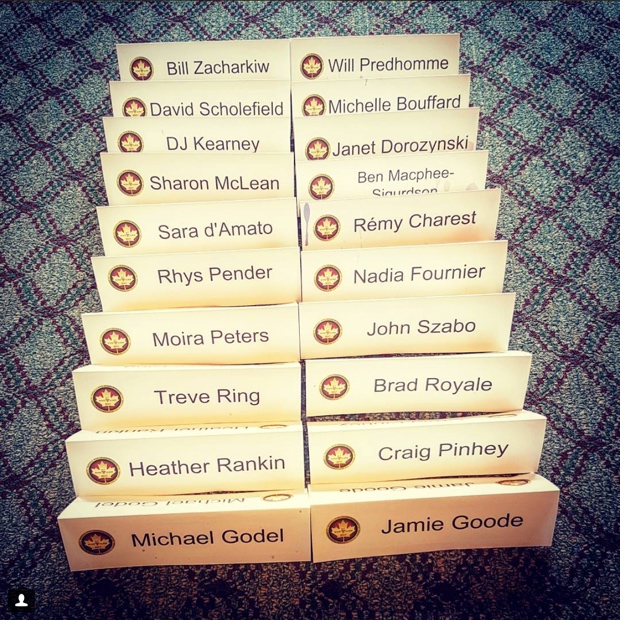
WineAlign

December 10th in VINTAGES: Canada

#squash

#squash

If you’ve landed here and are wondering where the tasting notes are, please track over to WineAlign and read this.

Related – Changes to VINTAGES release recommendations and notes

I’m splitting up the teaser for the VINTAGES December 10th release into three sections; Canada, New World and Old World, if only for the old-school, nostalgic and compartmentalized way of things. First up are wines that stretch across the great Canadian divide, from all the way west to east, by way of Ontario, of course. Eight up, right now.

cvineland

Vineland Estates Elevation St. Urban Vineyard Riesling 2015, VQA Twenty Mile Bench, Niagara Peninsula, Ontario (38117, $19.95, WineAlign)

@VinelandEstates  @benchwineguy

charmes

Château Des Charmes Old Vines Cabernet/Merlot 2012, VQA Niagara On The Lake, Ontario (222372, $21.95, WineAlign)

@MBosc  @AmelBoury

tawse

Tawse Limestone Ridge North Riesling 2014, VQA Twenty Mile Bench, Niagara Escarpment, Ontario (431593, $23.95, WineAlign)

@Tawse_Winery  @DanielatTawse  @Paul_Pender

nova

Benjamin Bridge Nova 7 Sparkling 2014, Nova Scotia (256289, $24.95, WineAlign)

@Benjamin_Bridge  @jbdeslauriers  @LiffordON

pelham

Henry Of Pelham Estate Cabernet/Merlot 2012, VQA Short Hills Bench, Niagara Peninsula, Ontario (395855, $24.95, WineAlign)

@HenryofPelham  @SpeckBros

creekside

Creekside Reserve Sauvignon Blanc Creekside Estate Vineyard 2013, VQA Creek Shores, Ontario (53371, $26.95, WineAlign)

@CreeksideWine  @hobbsandco  @AMH_hobbsandco

stratus

Stratus White 2013, VQA Niagara On The Lake, Ontario (660704, $38.20, WineAlign)

@StratusWines

owl

Burrowing Owl Meritage 2013, BC VQA Okanagan Valley, British Columbia (343038, $58.95, WineAlign)

@BurrowingOwlBC

Good to go!

Twitter: @mgodello

Instagram: mgodello

WineAlign

Why you don’t know jack about B.C. wine

Culmina Family Estate Winery, Oliver, B.C.

Culmina Family Estate Winery, Oliver, B.C.

Some folks in Ontario know quite a lot about the B.C. wine industry but they are few and far between. Wine professionals with decades of experience and those who have travelled extensively to the Okanagan Valley and Vancouver Island have their fingers pointed in the right western direction. But most of us living and imbibing here in Ontario are clueless as to the breadth of B.C.’s wine culture. It’s not our fault. Our government is keeping us in the dark.

Ontario still refuses to agree that it should not be illegal to carry or ship wine for personal use across provincial borders. That issue is at the forefront of what keeps Canada’s wine regions isolated from one another. The Canadian Vintners Association (CVA) recently met for their annual AGM in Kelowna, B.C. The CVA is the industry’s governing board that deals with national regulatory issues, standards and policies. The idea of direct to consumer interprovincial shipping was again tabled and discussed with five MP’s from Ontario and B.C. in attendance. WineAlign’s David Lawrason was there.

“The politicians and CVA members were most vocal about getting Canadian wine moving freely and directly across all provincial boundaries in Canada. Alas, there was no breakthrough to announce in terms of more provinces dropping their opposition, but I was surprised by how loud, frequent and public the CVA and its members, as well as the politicians, have become – insisting that action be taken sooner rather than later. There was a mood in the room.” Still Ontario consumers continue to be ignorant about the wines of British Columbia. It remains to be seen if the recent CVA meeting will help constitute a step forward.

Related – B.C. wine: From Vancouver to your table

Back in June we took the WineAlign National Wine Awards of Canada on the road and hunkered down in Penticton, British Columbia to assess and pick winners from over 1,500 Canadian produced wines. And we did so much more. First we paid a visit with The Wines of British Columbia for the Judgement of B.C. The second annual cage match was hosted by the B.C. Wine Institute and took place on Tuesday, June 21, pitting 12 B.C. Wines against 12 acknowledged global benchmarks. Riesling and Pinot Noir squared off, curated by DJ Kearney and judged by a who’s who of Canadian wine writers, critics and educators, along with international WineAlign Awards judges Dr. Jamie Goode and Elaine Chukan Brown.

Showtime! #judgementBC @WineBCdotcom @djwines #BCWine @WineAlign #nwac16 #bcwineinstitute #bcvqa #bcdna

Showtime! #judgementBC @WineBCdotcom @djwines #BCWine @WineAlign #nwac16 #bcwineinstitute #bcvqa #bcdna

Max Ferd. Richter Graacher Himmelreich Riesling Kabinett 2013 from the Mosel Valley, Germany placed first in the Riesling category, followed by two B.C. entries, CedarCreek Platinum Block 3 Riesling 2014 BC VQA, Okanagan Valley, B.C. and Wild Goose Stoney Slope Riesling 2013 BC VQA, Okanagan Falls, B.C. Three international Pinot Noirs medalled, Bouchard Père Premier Cru Beaune Clos de la Mousse Monopole 2012, Burgundy, France, Bachelder Oregon Pinot Noir 2012, Willamette Valley AVA Oregon, USA and Felton Road Bannockburn Pinot Noir 2014, Central Otago, New Zealand. B.C. Pinot Noir took the fourth, fifth, sixth, seventh and (tied for) eighth spots. “What was really interesting when I tasted through those 12 wines blind, I couldn’t pick out the BC Wines which tells me they belong in their peer group which is a ringing endorsement for BC Wine that we’re on the right track,” noted Dr. Jamie Goode.

Faultless evening @OKCrushPad above reproach and the wines beyond #nwac16

Faultless evening @OKCrushPad above reproach and the wines beyond #nwac16

As the week progressed, the WineAlign judges paid visits to Okanagan Crush Pad Winery in Summerland, Culmina Family Estate Winery in Oliver, Tantalus Vineyards in Kelowna, Rustic Roots Winery with the Similkameen Wineries Association and Deep Roots Winery on the Naramata Bench. I tasted more than 100 wines over the course of the five days from the appellations of Okanagan Valley, Okanagan Falls, Oliver-Osoyoos, Golden Mile, Similkameen Valley and Naramata Bench. Whatever I thought I knew and understood about wines coming from B.C.’s diverse and variegated landscapes has been tossed out the window and diapason replaced with an entirely renewed subset of thought. It is even clearer to me now, from an Ontario perspective with limited access to B.C. wines and an even smaller vocabulary that here in this province we really don’t know shit about B.C. wines.

Exceptional eats @CulminaWinery in adroit by @Quintoquorto and @hooydonk_van

Exceptional eats @CulminaWinery in adroit by @Quintoquorto and @hooydonk_van

In talking and reflecting recently with Elaine Brown she told me how “Canada’s Provincial restrictions around wine have created what are essentially isolated sovereignties of wine. There is a lot of good wine made throughout Canada but speaking with wine lovers across the country I am impressed with how little access they have to wines from other provinces.” Brown hits the proverbial screwcap right on the head. In a country where distance makes community so difficult, the only way to seek unity is to tear down trade barriers and that is something our provincial government has outright refused to docket. As a result, the consumer in Ontario has little access to the diversity that the B.C. wine industry has to offer.

So much @WineBCdotcom amour in the @tantaluswine cellar last night #nwac16

So much @WineBCdotcom amour in the @tantaluswine cellar last night #nwac16

One of the great B.C. revelations on the June trip was all about riesling. In his recent WineAlign column, Rhys Pender wrote the following. “It feels to me that the last few years have seen a really strong focus towards quality in BC. Not that good wines weren’t made, but most of the riesling seemed to be aimed at being a low price, broad crowd pleaser. More and more wines are a little pricier but a lot more intense and quality focused. This was evident in the recent judging of the National Wine Awards of Canada. To be honest, Ontario riesling has pretty much always been superior to BC in these competitions and while there were still many great Ontario wines, this year things were different and many of the best rieslings I personally tasted in my flights were from BC. Less simple, fruity wines and more serious, intense and concentrated examples. Seven of the top ten riesling overall were from BC this year including the Gray Monk 2013 Riesling which won a Platinum medal. An impressive showing.”

Related – From coast to coast: Top 40 wines from the 2016 WineAlign National Wine Awards of Canada

Another adumbrate scoop came outlined in out-of-the-box white varietals, with very interesting results by albariño, grüner veltliner, muscat ottonel and trebbiano. The same quality of wines made from these grape varieties can’t be found in Ontario, nor can the success of red blends from the Similkameen Valley and from single varietal reds in the Okanagan Valley as a whole. When B.C. winemakers begin to dial back the oak and take full advantage of ripe, fresh fruit, the world won’t know what hit them. In his National Wine Awards of Canada report, David Lawrason noted that “two B.C. wineries, Moon Cursor and Stag’s Hollow, are worth watching for their medal winning experiments with grapes like tempranillo, grenache and petit verdot.” Another nod to experimentation.

I liken the Okanagan to South Africa, a varietal playground where just about anything can achieve phenolic ripeness in almost any given vintage. B.C. has one distinct advantage and that is a cooler climate. It should be exploited to the fullest, in the name of balance and quality. Though I tasted many more, in the name of 5,000 words or (slightly more) brevity, here are notes on 40 wines tasted and reviewed in June.

Sincerity @CulminaWinery from Elaine & Don Triggs and a superfluity of @WineBCdotcom pours #ohwhatanight #hospitality #nwac16

Bartier Bros. Cabernet Franc Cerqueira Vineyard 2013, Okanagan Valley, British Columbia (Winery, $30.00, WineAlign)

A rich, savoury mess of red fruits comes clean if surreptitiously divided by barrel on the nose on this gently intended cabernet franc from the gentle Cerqueira slope. More than a modicum of concentration of dusty raspberry and some new leather jacket. Silky smooth mouthfeel and the condensed tangy extraction really pops up on the finish. Another crunchy, chewy, smoky, serious cabernet franc turning bitter and tough with alcohol and bramble on the finish. More freshness would be ideal so let it rest for two years instead. Drink 2018-2022.  Tasted June 2016  @bartierbros

Semillom

Bench 1775 Semillon 2015, BC VQA Okanagan Valley, British Columbia (Winery, $19.90, WineAlign)

A virtually bone-dry, stainless steel raised semillon that is quintessentially fresh and varietally correct though even more attentive to the Okanagan Valley. There is an abundance of fruit in the green mango/citrus realm and a je ne sais quoi spirit. All in all quite amenable and no reason to seek a future dripping with honey. The sense of anti-austerity, fruit over mineral reaction means drink it young. Drink 2016-2019.  Tasted June 2016  @bench1775

Black Hills Viognier 2014, BC VQA, British Columbia (Winery, $25.00, WineAlign)

A very impressive viognier from a mother nature conspired vintage to make it shine. This is so very viognier as much as it is B.C. which is a great thing. White floral, viscous and split between honey suckle and white pepper-edged, green apple bite. Against all odds in a way and certainly a top example for the region. Drink 2016-2019.  Tasted June 2016  @BlackHillsWine

Nota Bene

Black Hills Nota Bene 2014, BC VQA, British Columbia (Winery, $52.09, WineAlign)

This Nota Bene can be espied as of the Okanagan Valley’s most ambitious reds filled with good notes, in winemaking conditioned real tones, as opposed to pure, simple acoustic ones. The Black Sage Bench blend of cabernet sauvignon (52 per cent), merlot (33) and cabernet franc (15) is pulled from two vineyards, Double Black and Sharp Rock. The proprietary junction is criss-crossed where rich chocolate takes up address at a certain genre of Napa ideology. Black Hills’ premium wine is big and full of brawn, backbone and guts. The three real tones played together express pronounced dissonances between many of their harmonics. Dissonance is related to (barrel developed) spice so I would think that a minimum of five years will be needed to connect and make seamless the overlapping harmonics. Drink 2019-2025.  Tasted June 2016

Bordertown

Bordertown Living Desert Red 2013, Okanagan Valley, British Columbia (Winery, $25.00, WineAlign)

The first vintage of Mohan Gill’s 600 case merlot and cabernet franc blend is one of the more curious and engaging Osoyoos reds that is really worth some study. The 18 months spent in all new French wood should ring the alarms but instead it seems a combination of vaguely engaged and greatly spectatorial. Reduction and volatility strike an accord with the wood and the result is a rich, meaty, full on expression from which fruit emerges virtually unscathed. “It’s the first vintage,” shrugs Gill, “what else could I do?” More of the same Mohan. Drink 2017-2020.  Tasted June 2016  @BordertownWine

CedarCreek Amphora Wine Project Desert Ridge Meritage 2014, Okanagan Valley, British Columbia (Winery, $60.00, WineAlign)

Winemaker Alexis Moore inherited the (Chianti sourced) clay amphora from former winemaker Daryl Brooker and this (second vintage) meritage is her first kick at the urn. The co-fermented, all natural, don’t even think about peeking and sneaking a taste blend is cabernet sauvignon (54 per cent), cabernet franc (35) and malbec (11). The hallmark desert notes of rich, caky and dusty are necessarily present but it is the preservation of red earth savour that gives this formidable flagon of magic juice its inimitable personality. Mature rows of fruit are to blame and thank for the just desert reward. Transferred to amphora the fruit is preserved in such a way no B.C. reds have ever really seen and the new territory is not so simple for making quick, on the spot judgements. I have thought about this wine for quite some time and the conclusion is positive for two important reasons. Spice and tannin. Together they combine for an infinite finish. Here is the crux of the vessel’s power, to preserve fruit and slowly release its charms within the structure provided. Drink 2018-2024.  Tasted June 2016  @CedarCreekWine

CedarCreek

CedarCreek Platinum Series “The Last Word” 2013, Okanagan Valley, British Columbia (Winery, $77.99, WineAlign)

The “Last Word” is at the pinnacle of CedarCreek’s Platinum Series, single-vineyard wines and only made in “nature conspired,” exceptional vintages. The biggest and baddest red is a “wine that leaves nothing left to say,” thus the moniker. The blend is cabernet sauvignon (34 per cent), merlot (32), cabernet franc (24) and malbec (10) in true Meritage style. Talk about big reds, talk about the passion. Plan on getting extra hours of REM sleep after a glass, after the punch, the ripest fruit, tempered chocolate, grip and after the heavy hitting acidity. Every crevice is filled in with a jangle of notes and few winemakers can find balance with such a wealth of material. There is simply no way not to make a bold, tannic statement. “Not everyone can carry the weight of the world” but CedarCreek has managed to grin and bear it. Drink 2018-2026.  Tasted June 2016

Church

Church & State Coyote Bowl Series Syrah 2013, BC VQA Okanagan Valley, British Columbia (Winery, $35.00, WineAlign)

NWAC_Silver2016_web

Reductive, dark, stormy raging and off the charts spicy syrah but there is terrific ripe fruit and cool, cool savour. Edgy but tannic within range. After the violets come sweet purple palate fruit but it’s a feigning sweetness. Long drifts of acidity and tannin but again, like so many Okanagan peers the finish dusts with espresso and not the mocha. The spice lingers well after all else has resolved. Drink 2016-2020.  Tasted June 2016  @ChurchStateWine

Clos du Soleil

Clos Du Soleil Estate Reserve Red 2012, Similkameen Valley, British Columbia (Winery, $58.90, WineAlign)

The apropos named winery, the “Vineyard of the Sun,” describes British Columbia-Okanagan-Similkameen so well. That and what can happen when Bordeaux varietals are the recipients of proper sun-worshipping phenolic journeys is the crux to understanding and enjoying such a proper and righteous red. Tasting this Michael Clark characteristic fruit handling facture with Spencer Massie sheds enlightened light on the Clos du Soleil passion project and the red ability of the Similkameen Valley. Taken from the Estate Vineyard on the Upper Bench of the Similkameen Valley, the prettiest and most inviting nose pops up here, led by cabernet sauvignon and in usage of all five Bordeaux varietals. The best red fruit, the hint of mineral and sage, the aridity of the land, the restraint from wood. It’s all correct and truth be told. Solid red blend. Drink 2016-2022.  Tasted June 2016  @ClosduSoleil  @spencemassie

Corcelletes

Corcelettes Menhir 2014, Similkameen Valley, British Columbia (Winery, $31.90, WineAlign)

NWAC_Silver2016_web

It’s hard not be endeared into the red blend culture of the Similkemeen Valley and the variegation various positions occupy on the slopes of its benches. This ode in OZ style of cabernet Sauvignon (62 per cent) and syrah (38) is pulled from vines set on the rocky soils of the Corcelletes Middle Bench Vineyard. Though the herbal, savoury, currant and tobacco laced cabernet should dominate it does not with witness thanks to a more than peppery edge and black fruit ooze of the syrah. Only the Similkameen can bring such shared duality and find common ground like this in the overall B.C. genre. Like Beamsville in Ontario and with grace in wood usage, here the two varieties co-exist with copacetic simpatico. The ancient monolith believed to date back 2741-2488 BC on the Baessler family farm off the shores of Lac de Neuchatel, Switzerland gives this blend its name. This wine is no monolith, nor does it strike as ancient or antediluvian, but it does stand out as singular for the Similkameen and for B.C. Drink 2016-2021.  Tasted June 2016  @corcelettes

Culmina Dilemma 2014, VQA Okanagan Valley, British Columbia (Winery, $35.65, WineAlign)

The road taken for this chardonnay should have led to rich, buttery and fat because the approach mimics a throwback west coast style. Alcohol, pH, new barrel usage are all generous but so is acidity. So this could have emerged huge but it’s impossibly restrained. The cool-climate metal factor sings with austerity and the gemstone crunch folds with richness. The Margaret’s Bench land speaks and gives so all tolled Culmina’s signature chardonnay is a study in heutagogical learning because it teaches knowledge sharing. This is chardonnay and in many ways, this is Burgundy. Chances taken have landed reward, if a bit unexpected, but certainly appreciated. Drink 2016-2019.  Tasted June 2016  @CulminaWinery  @CulminaSara

Culmina Merlot 2013, VQA Okanagan Valley, British Columbia (Winery, $31.00, WineAlign)

Red over green merlot to substantiate a vintage called better on the Golden Mile (Arise) Bench. Here is bone-dry, full malolactic, high acidity merlot, so very vacuous, inward, implosive and wild. The wood blankets with purpose in lieu of reckless abandon and because the fruit is just ripe enough to defend itself the return is an effusive one. Would love to taste this merlot in a best vintage with 20-25 per cent less new oak and a number close to this healthy 6.4 g/L of acidity. Now we’re talking, in tones red over green. Drink 2017-2021.  Tasted June 2016

Unicus

Culmina Unicus 2014, VQA Okanagan Valley, British Columbia (Winery, $31.05, WineAlign)

B.C. is a playground for experimentation, a place not unlike South Africa where phenolic ripeness is almost always accomplished yet it has a distinct advantage. Cooler sites and the availability, if embraced, of equally ripe acidity. So grüner veltliner, along with trebbiano, muscat ottonel, auxerrois, sylvaner and others should be investigated. Culmina’s work with grüner is fought properly, in a combination of concrete amphora, egg and steel, allowing varietal to share equal ground with terroir. A sense of some white-ish rhubarb here is noted in the most complimentary vegetal sense, along with white flowers and a dash or two of white pepper. This is a gustatory and gastronomic grüner with intensity and vitality that good slope Marlborough sauvignon blanc will similarly give. The difference here is the absence of searing citrus which is a good thing, all things considered. Drink 2016-2018.  Tasted June 2016

Deep Roots Syrah

Deep Roots Syrah 2014, Naramata, British Columbia (Winery, $34.00, WineAlign)

NWAC_Silver2016_web

Tasted twice, first blind at #NWAC16 and then at the winery, this is syrah with a dual northern intent, more Naramata than Rhone though the bent is a soulful repent in the church of St. Joseph. Beautifully savoury and smoky, like a big meat and smoulder sandwich with great fruit and a silken texture. The peppery bite is a sure tell sign of well-made syrah. Drink 2016-2020.  Tasted June 2016  @DeepRootsWine

Gehringer Auxerrois 2015, BC VQA Okanagan Valley, British Columbia (Winery, $13.29, WineAlign)

Despite the off-dry (11 g/L RS) directive because that is what auxerrois always wants to do and though the vintage brings much warmth, this persists as a delicate and fresh wine. Auxerrois as a grape variety is set in an imprecise past, shaded by myth, carried forward and planted decades ago in B.C. These old vines could tell stories but today its fruit expresses itself simply, with richness and with plenitude. I wouldn’t tie a cellophane bag around one and leave it in the cellar to revisit in 30 years. I’d rather hook some trout, pan roast it and work in some acidity. The auxerrois will compliment such a move just fine. Drink 2016-2018.  Tasted June 2016  @GB_Wines

Haywire Chardonnay Canyonview Vineyard 2013, BC VQA Okanagan Valley, British Columbia (Winery, $22.90, WineAlign)

NWAC_Silver2016_web

From the Summerland vineyard, raised in concrete and emerged with a semi-unoaked feel. There is a certain sort of sweet condense as if a tank and a barrel had merged. Clearly managed in the slow, micro-oxygenated way, with notes of curd, cream and whey. A chardonnay smoothie with many beneficial enzymes running wild, the yeasts working and munching away. Still retains a cool-climate feel regardless of the vat influence with top notch acidity and tannin to lengthen the chain. Drink 2016-2019.  Tasted June 2016  @Haywirewine  @OKCrushPad  @brixandmortar

Haywire Pinot Noir 2014, BC VQA Okanagan Valley, British Columbia (Winery, $27.00, WineAlign)

NWAC_Silver2016_web

From the steep limestone and granite Waters & Banks Vineyard, this is a limber, lissome and rusty pinot noir, gently pressed, caressed and left to find its own singular way. Reminds me of the salinity graced Willamette Valley, set upright and alert on the bright side of life. Their is a musky lime aroma and a lithe tartness that belies its mineral gifting. Well done. Don’t envision this losing its charm any time soon. Drink 2016-2020.  Tasted June 2016

Trebbiano

Hester Creek Trebbiano Old Vines Block 16 2015, BC VQA Okanagan Valley, British Columbia (Winery, $22.95, WineAlign)

From vines planted in 1968 which in itself is a wild and mind-blowing proposition. Trebbiano has well-adapted to the Okanagan Valley, or at least these two acres have and only fools would not try to get their hands on one of the 1100 cases produced. No it’s not Emidio Pepe nor is it your nonno’s trebbiano but it is a singular expression for B.C. Terrific acidity layers over rich and viscous stone-orchard fruit. Something creamy evolves, not like similar styled Okanagan viognier but in another realm. It’s a derivative sensation, like the way children look like their mothers, so the connection to Abruzzo is really there. This is a special proprietary moment and good on Hester Creek for brokering the proviso. I will agree to abide. Drink 2016-2020.  Tasted June 2016  @HesterCreek

Hillside

Hillside Muscat Ottonel 2015, BC VQA Okanagan Valley, British Columbia (Winery, $24.99, WineAlign)

NWAC_Silver2016_web

Floral, as expected, but in contrast to the globally spoken style, this does orange blossom and mineral mining with equal and opposing ease. Acidity rings round, not overtly meaningful but nonetheless wild. From 30-plus year-old vines (circa 1982), to not find fun, joy and pleasure would be to miss every pertinent point. Hillside presents a provincial comic flick of a muscat phrase and does so with lighthearted resourcefulness and ingenuity. Drink 2016-2018.   Tasted June 2016  @hillsidewines

Fortissimo

La Stella Fortissimo 2014, BC VQA Okanagan Valley, British Columbia (Winery, $35.00, WineAlign)

In 2014 Fortissimo is mostly merlot with sangiovese playing a vital role along with a splash of cabernet sauvignon. This is found to be softer, more amenable and structured with bungalow sprawl. Bright, maximum juiced red berry fruit resemblance is anti-savoury, friendly, and ready to roll but still with some smoky spice. The 21 per cent sangiovese is significant (up seven points from 2013) so the Classico factor runs high. This is the alternative world case of Fortissimo where in some years you make Chianti Classico and in others, Gran Selezione. Though she may not consider 2014 to be her most accomplished Fortissimo, winemaker Severine Pinte will have to accept that she has procured a very elegant red blend. A Classico. Drink 2016-2020.  Tasted June 2016  @LaStellaWinery

LFNG

Laughing Stock Portfolio 2007, Naramata Bench, British Columbia (Winery, $52.95, WineAlign)

Poured from Magnum the LSV ’07 has resolved from cool vintage and micro-oxidation into cool-climate meets right bank stylistic personality. Soy, Chinese five-spice, cassia, balsamic, fig and a caramelization that lists to part vegetal and part demerara sugar. The palate is expressly vital still, carrying a torch that for a cabernet-merlot Okanagan blend is fun to reason with. Magnum is obviously a major plus for this nine-year advancement. Sweet with no noticeable heat finish. Drink 2016-2018.  Tasted June 2016  @lfngwine

Maverick

Maverick Syrah 2013, BC VQA Okanagan Valley, British Columbia (Winery, $35.00, WineAlign)

Winemaker Bertus Albertyn bottled a meagre 200 cases of this Golden Mile Bench sourced syrah after 18 months in three to four year-old French Oak. If you are a fan of fresh, well-spoken, confident and blessedly transparent syrah then look for the next vintage of this sold out beauty. So gauzy gossamer textured, peppery but of scant bite and driven by a northern, smoky beat. The cure and depth in its make-up nearly adds up to beefy but its form of athleticism is built upon the quiet politesse of its maker’s execution. The comparison must be made to septentrional Rhône and the lack of new oak is so appreciated. This is a wine to watch for. Drink 2016-2020.  Tasted June 2016  @MaverickWinery

Moraine Gewürztraminer 2015, Okanagan Valley, British Columbia (Winery, $17.90, WineAlign)

Classic Okanagan Valley gewürztraminer with a touch of mute reserve relative to more forward peers. The aromatics pause at traditional exoticism then veer to pear and apricot. The palate concentrates the off-dry varietal tendency with a furthered spin out of the seed orchard and into the pit. Not necessarily a gewürztraminer with extended play acidity but highly pleasurable nonetheless. Drink 2016-2018.  Tasted June 2016  @MoraineWinery

Moraine

Moraine Riesling 2015, Okanagan Valley, British Columbia (Winery, $19.90, WineAlign)

Slightly airy and hyper-opiated riesling up to here, of burgeoning talent, suggesting what is yet to come from Moraine with respect to the great varietal Okanagan potential. On the off-dry scale this falls somewhere in the middle, going at it with heavy Mosel fuel. Quite intense with acidity to match. Hip riesling, “addicted to approval, addicted to the air. It was see if you like it or see you up there.” Drink 2016-2020.  Tasted June 2016

Moraine Pinot Noir 2013, Okanagan Valley, British Columbia (Winery, $25.95, WineAlign)

Moraine’s Okanagan Falls pinot noir is lambent with great rust and conversely vapid in desert dust. The entire red fruit spectrum is seemingly sung and stung with range and breadth; cranberry-cherry-pomegranate-strawberry-raspberry, from tart all the way to sweet. Taut, tight and bracing. This will work with pairing pride for short to mid-term enjoyment. Drink 2016-2020.  Tasted June 2016

Quails’ Gate Chenin Blanc 2015, BC VQA Okanagan Valley (Winery, $18.95, WineAlign)

NWAC_Silver2016_web

The fruit hails from both Quails’ Gate Estate and Osoyoos vineyards. Tasted just three months after bottling, the sweet (whole bunch pressed) serenity of chenin blanc has already settled in with equal and opposing acidity in tact. An angle of bitters works the lush fruit (thickened by a small percentage of older wood) and weaves the two as one in this eager and enthusiastic young (albeit early sulphur persistent) white. A splash or two of sauvignon blanc helps in the ushering. Drink 2016-2020.  Tasted June 2016  @Quails_Gate  @  @hobbsandco

Quails' Gate

Quails’ Gate Connemara 2014, BC VQA Okanagan Valley (Winery, $64.00, WineAlign)

The inaugural vintage and first ever Quails’ Gate Bordeaux-style blend is winemaker Nikki Callaway’s ode to her stage/cellar hand/winemaking time spent in Bordeaux. The cumulative of merlot (55 per cent), cabernet sauvignon (30) and cabernet franc (15) is formidable in its perplexing youth, taut, rigid and so very tannic. The minor’s current approach is virtually unapproachable but look for something to grab for, like perfectly ripe fruit or structure. The beatitude is easily found in these two essential components. You’ll then think “if you were another pretender, oh I’d pass you by,” but in the case of the Connemara, put in the effort and the time. The reward will come later. Drink 2018-2028. Tasted August 2016

Quails’ Gate The Boswell Syrah 2014, Okanagan Valley, British Columbia (Winery, $61.05, WineAlign)

Named in ode to grandparents, The Boswell is a deep, brooding and extreme-bodied syrah that is actually quite floral. Smoky, meaty, chewy fruit mixes with tar and roses in a heightened, variegated state. Rich and piqued by peppery spice and then the chocolate warmth settles in on the finish. Sip again and note that every pass circles back to the beginning. Though it nods to the northern Rhône and wells up like Barossa, you can’t take the Okanagan out of the Boswell. It wins every time. Would prefer to see this again in three years. Drink 2019-2025.  Tasted June 2016

Stoneboat

Stoneboat Vineyards Pinot Noir 2013, VQA Okanagan Valley, British Columbia (429332, $29.95, WineAlign)

I tasted this blind at #NWAC16 and with Larry Martiniuk that same week and both times was struck by the electric pinosity, density and beneficial volatility. The pre-integration period is apparent so I’d hazard a guess that 18 months more are needed to assimilate the 18 months spent in (20 per cent new) French oak. To whiff it’s like peat moss mixed with a cassia-cassis cocktail. Black cherry sweetish on the palate and quite spicy. This neon pinot is quite volatile and yet closed, but it carries a downy pilosity texture. Very west coast. Though I return to thinking it out of whack, still feeling the alcohol and wondering why it has to be so loud, the texture and the complexity always bring me back. The raindrops are alive. Drink 2018-2022.  Tasted June 2016  @stoneboat  @Noble_Estates

Synchromesh Riesling Storm Haven Vineyard 2015, BC VQA Okanagan Valley, British Columbia (Winery, $31.90, WineAlign)

If this riesling is sweet I couldn’t say. That is the first thought that comes to mind. From Alan Dickinson’s home property, this is his baby, an Okanagan Falls derived riesling that lives an entirely holistic existence. No spraying, none, nada, niente. Not ever. The wine could not get any cleaner. Purity is its cognomen. The vineyard is subject to the highest diurnal temperature swing than just about anywhere in the valley. That might explain the risk-reward probability factor. The technical specs are a triumvirate of implausibility; 46 g/L RS, 11.5 g/L TA and pH below three. What? This is the most impossible wine made in B.C. In its concentrated velocity it wheezes like something ancient. We could almost be drinking Greek debina or 20 year-old Alsatian auxerrois. Dickinson makes three passes over each of the two blocks so even if the hands are off, the meticulous picking breeds asepsis. Citrus such as found in the Storm Haven fruit does not happen very often, if rarely. It’s like citrus soma. Citrus unknowable out of determination unthinkable. Direct misunderstanding by indirect whimsy. And so the vintage offers good fun but not greatness. Imagine the possibilities. Drink 2018-2027.  Tasted June 2015  @SynchromeshWine

Synchromesh

Synchromesh Riesling For Shadows Vineyard 2015, BC VQA Naramata Bench , British Columbia (Winery, $23.00, WineAlign)

Like its brethren Storm Haven Vineyard, this Synchromesh draws blood from stone in holistic ways that few Canadian riesling seem to do. The Four Shadows is different in that it chooses wisdom over risk. A clear, clean and precise nose reveals lemon drop and a honey drip. Though the sugar is more noticeable than the SHV, the older world (Germanic) impression is filled with a sense of tradition. The vineyard is in fact of very high elevation on an extremely steep slope (think Mosel) of gravel and clay layered over fractured bedrock and granite. The sugar is also elevated (50.93 g/L) and the acidity lower (8.4 g/L) so what you get may seem to lower the impossibility factor. Don’t be fooled into thinking this a riesling of privilege and lassitude. It does not drip with sleep but rather rages with life. The stones seem to speak. And the riesling listens. Drink 2016-2022. Like its brethren Storm Haven Vineyard, this Synchromesh draws blood from stone in holistic ways that few Canadian riesling seem to do. The Four Shadows is different in that it chooses wisdom over risk. A clear, clean and precise nose reveals lemon drop and a honey drip. Though the sugar is more noticeable than the SHV, the older world (Germanic) impression is filled with a sense of tradition. The vineyard is in fact of very high elevation on an extremely steep slope (think Mosel) of gravel and clay layered over fractured bedrock and granite. The sugar is also elevated (50.93 g/L) and the acidity lower (8.4 g/L) so what you get may seem to lower the impossibility factor. Don’t be fooled into thinking this a riesling of privilege and lassitude. It does not drip with sleep but rather rages with life. The stones seem to speak. And the riesling listens. Drink 2016-2022. Tasted June 2016.Tasted June 2016

Tantalus Brut

Tantalus Blanc De Noir 2013, Okanagan Valley, British Columbia (Winery, $31.90, WineAlign)

NWAC_Silver2016_web

Winemaker David Paterson “squeezes it like Champagne” and lets it rest for six months in chardonnay barrels. Two years of triage and boom! Freaking elegant Blanc de Noir. Rusty, rosy, the absolute spot on ripe vernacular spoken, the right tart exposed. It’s curious and foreshadowed thinking to know that 100 cases have been set aside for a five to seven year disgorgement. D’ya think Paterson is high on the vintage? Tasted June 2016  @tantaluswine

A single block of Clone 93 pinot noir planted in 1985 is responsible for this breath of fresh Okanagan Valley Blanc de Noir. Fashioned with the omnipresent Tantalus acidity, this rages out with aridity, salinity and palpable tension. Only pinot noir can act like this, with layers of sous bois and fraises du bois. The age of the vines, the early-picked necessity and the allowance for needful and natural expression has resulted in a wine simply stressed as terroir and boîte. Carries the acidity and the tension across and through the palate. Finishes as dry as it started. Drink 2016-2020.  Tasted April 2016

Tantalus Pinot Noir 2013, Okanagan Valley, British Columbia (Winery, $29.90, WineAlign)

The vintage was not shy to gift dark, optimum-achievement in phenolic fruit and along with that ripeness comes even deeper tonal intent. Red hyperbole is elevated by striking acidity, setting this Pinot Noir up for really high expectations. The palate does not disappoint. Flavours range from black cherry to charred meat making for a highly gustatory experience. Chewy and enjoyable describes the time spent with this wine. It will offer great pleasure in the short term. Drink 2016-2018.  Tasted April and June 2016

Tantalus

Tantalus Riesling 2015, Okanagan Valley, British Columbia (Winery, $23.00, WineAlign)

Two months later things have changed and yet not at all. There are more tricks and inducements (as compared to 2010) but don’t be fooled because with a difficult (sweltering) vintage the wine makes you think you can get close. But you can’t. You are further away than you think mostly due to incredible citrus and wild rhythms swimming through raging riesling waters. Change of plans. Drink 2018-2024.  Tasted June 2016

Well with the arena of aridity, salinity and sheer marketability, here is a showy Tantalus with super searing lemon flavours emerging out of great atmosphere and aromatic intensity. Some Riesling taketh away and some are mouth watering, like this. The stone fruit goodness attacks and sticks to the tongue like sap, then glides effortlessly down. Tantalus might make me think of things that are out of reach, “standing in water, but dying of thirst, this is my thanks and this is my curse.” Yet this early to market 2015 Riesling offers an antithetical view, ready, willing and able to please. Drink 2016-2019.  Tasted April 2016

Tantalus Riesling 2010, Okanagan Valley, British Columbia (Winery, $22.90, WineAlign)

I’m thinking that no other B.C. riesling tries, trips and tricks with intense tribulation like the Tantalus, especially with a look back at this 2010 ripper. Though just now emerging from out of its saline crusted shell, the liquid stone injection will always render this a tantalizing wine so while it seems to open a door a part of it will always remain just out of reach. This 2010 can retrospectively be looked at as a genre defining riesling at the hands of an engaging young winemaker to be.  Tasted June 2016

Tinhorn Creek Oldfield Series 2bench Red 2012, BC VQA Okanagan Valley, British Columbia (Winery, $29.99, WineAlign)

Naturally south Okanagan crunchy, chewy, spicy and taut red blend. From two benches, the Golden Mile (Tinhorn Creek Vineyard) and the Black Sage Bench (Diamondback Vineyard). This is quite a ripper in that magical $30 middle ground with power to impress as much as many peers two times the price. That said it certainly retains its tangy, two-step, red fruit freshness, with cool savour, like two mints in one. Kind of reminds me of Coonawarra, especially the Penfolds Bin 169, so perhaps when brought together there is a Bench similarity with the Terra Rosso soil. Or perhaps just a stab at clouds. Either way this 2012 takes over from the vital 2011 and runs with the baton. Drink 2016-2021.  Tasted June 2016  @TinhornCreek @Andrew_Tinhorn  @SandraOldfield

Zweigelt

Upper Bench Zweigelt 2014, BC VQA Okanagan Valley, British Columbia (Winery, $25.00, WineAlign)

I’ve not had the opportunity to taste the go between 2013 but progression and evolution are found in the bright red fruit of this 2014 zweigelt from Upper Bench. The aromatics travel east and west, as if coast to coast and on a global trek. I get the foraged berries, baking scents and the felled evergreen mixed with fresh cocoa. I also sense garrigue, as well as jasmine in the early evening. Though the sugar is elevated (an insignificant 0.6 g/L up to 2.9) the wine was picked at lower brix (23.5 as opposed to 24.2) and so the acidity is given the chance to feign higher. The alcohol is hefty (14.4 per cent) but the overall balance is improved. Dialled back a bit but another notch or two would really do justice to the grape. Early consumption is still the order and fresher remains the promise. We’ll see what the warm 2015 vintage will bring. Drink 2016-2018.  Tasted June 2016  @upperbench

Wild Goose

Wild Goose Pinot Blanc Mystic River 2015, Okanagan Valley, British Columbia (Winery, $19.00, WineAlign)

A few clicks north of Oliver comes this maximum juice master of a pinot blanc, like a tart gooseberry cake with a warm, yeasty crust. It’s like autolytic sparkling wine without the bubble, foiled by a sauvignon blanc faux botrytis thing going on. The acidity is well suited to match the exuberant fruit. Roland Kruger points a finger to the vineyard (right along the south Okanagan River) to explain the aromatics. The addendum of 20 per cent barrel fermentation is the key that turns the textural screws. As far as pinot blanc goes, “it’s open mike, punk rock, (it’s natural), red, white and blue.” This Wild Goose. Drink 2016-2019.  Tasted June 2016  @wildgoosewines

Wild Goose Gewürztraminer Mystic River 2015, Okanagan Valley, British Columbia (Winery, $19.00, WineAlign)

Wild Goose is proving to be a gewürztraminer leader in the Okanagan Valley not just for its adherence to rose petal and lychee varietal correctness but also for aromatic elegance. Terrific texture marks the ’15’s territory (a trademark of Wild Goose whites) and here you get drying wax still pliable and malleable. The aura is distinct and the wine so very amenable. Really well made Mystic River output. Drink 2016-2020.  Tasted June 2016

Good night and many thanks @tantaluswine #kelowna #nwac16

Good night and many thanks @tantaluswine #kelowna #nwac16

Good to go!

Twitter: @mgodello

Instagram: mgodello
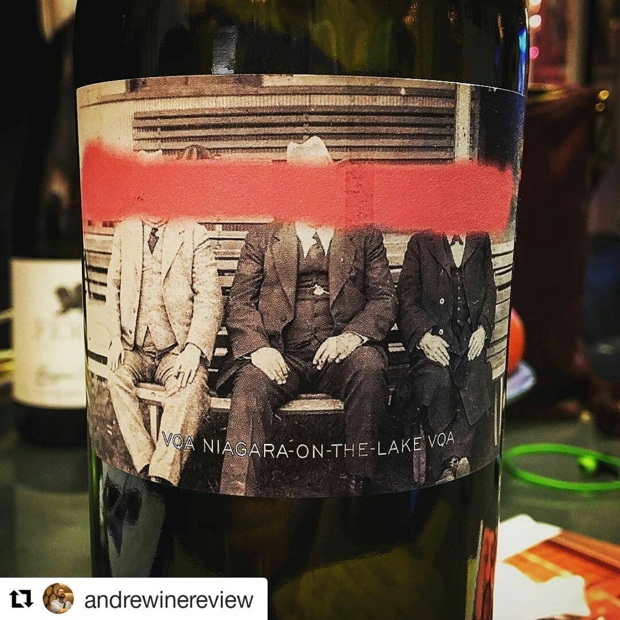
WineAlign

From coast to coast: Top 40 wines from the 2016 WineAlign National Wine Awards of Canada

Welcome @muller_brent to team RED! with nazlanmak captain @treve_ring #nwac16 @winealign

Welcome @muller_brent to team RED! with nazlanmak captain @treve_ring #nwac16 @winealign

The WineAlign National Wine Awards of Canada are a complex, multifarious and many-splendored thing. The Nationals bring unity, cross-provincial comity and international variety to the Canadian wine scene. That’s more than can be said about the commerce side of things. It requires a whole lot more than good will to make this most important Canadian competition happen. It takes 1,500+ unique wines, algorithms, logistics, space, time and people.

Related – One the eve of the 2016 WineAlign Canadian Wine Awards

My fourth Nationals in the books and the apogee of perquisite function is reached. That’s how it feels, in retrospect. The overture of function and the apex of wine journalism culminates at the vertices of colleague and responsibility. To find the profound wrapped up in the membrane of gifted opportunity allows a wine writer to make a valid and justifiable contribution. It affords a conclusion written in vouchsafe doling, where medals are heaped upon the best wines produced in Canada. It’s an avail of satisfaction, a community distraction and a labour of love.

How lucky we all were to have her back in the captain's chair. Happy Canada Day @djwines #nwac16

How lucky we all were to have her back in the captain’s chair. Happy Canada Day @djwines #nwac16

Congratulations to Tawse Winery. In his WineAlign report David writes, “winery owner Moray Tawse and winemaker Paul Pender have harvested Winery of the Year honours at Canada’s largest wine competition again this year, the fourth time since 2010. Tawse Winery is on a roll, with five gold medals in this year’s showdown, plus eight silver and eight bronze medals.”

Related – Announcing WineAlign National Wine Awards Winery of the Year

The people at the forefront are the judges, women and men from across the country (representing seven provinces) as well as international guests, from the U.K. and America. Not just any America, mind you, but native America, from California (by way of Alaska). The judges rule but they are not the most integral cog in the NWAC machine. It is the wine fairies that run the engine and they need naming. Head wineaux Bryan McCaw. Logistics and administrative gurus Sarah Goddard and Carol-Ann Jessiman. Statistics bordering on actuarial science sabermetrics specialist Earl Paxton. Photographer Jason Dziver. Head judges Anthony Gismondi and David Lawrason. Volunteers. Lifters, carriers, movers, pourers and judge-doting servers. These are the heroes.

The 2016 WineAlign National Wine Awards of Canada judges and back room rockstars photo (c) Jason Dziver and WineAlign

The 2016 WineAlign National Wine Awards of Canada judges
photo (c) Jason Dziver and WineAlign

In his WineAlign report, Anthony Gismondi writes “this year’s National Wine Awards was the most inclusive yet, with 230 wineries entering over 1,500 wines from across the country. The numbers only make the achievement of Lake Breeze as Canada’s 2016 Best Performing Small Winery of Year all that more impressive.”

Related – Announcing the Best Performing Small Winery of the Year

I would like to make it clear that I write all of my tasting notes for The Nationals solely based on the notes scribbled during the competition. Though I am fully aware of the wines in question when composing the final copy, the transcribing process remains 100 per cent pure and loyal to the original notes. Nothing is added. No acidification, chaptalization, fining or filtering.

Dispatch @winealign note to Canada- You are making awesome @coolchardonnay ...next stop #i4c #nwac16

Dispatch @winealign note to Canada- You are making awesome @coolchardonnay …next stop #i4c #nwac16

“There was a dazzling array of top quality Canadian wines at this year’s 16th WineAlign National Wine Awards of Canada with over 1,500 entries from 230 wineries in six provinces. There were 16 coveted Platinum medals spread over 14 wineries, and seven different wine categories.”

Related – Announcing the Results of the 2016 National Wine Awards

My top 40 are not necessarily the best I tasted but rather the best of a cross-section that insists on being inclusive for as many categories across the compendium. Chardonnay, Pinot Noir, Gamay and Riesling are disproportionately represented and for good reason, but there are thirds, fourths and fifths exceptional examples that are not celebrated on this versatile and ubiquitous list.

Treve Ring made it clear that “no matter what shade, it’s pretty obvious that more folks are thinking pink. And with fresh results from the 2016 National Wine Awards of Canada held in Penticton, BC last month, Canadian winemakers are stepping up with terrific offerings.”

Related – Canada Thinks Pink, Drinks Pink

The notable exception and varietal inconsequence comes at the hands of Cabernet Franc, a grape that I’ve come to herald over the past two years, especially from out of the auspices of Niagara gatherings and master classes, along with other Canadian competitions I’ve judged at. Franc has shown well at the Ontario Wine Awards, at Gold Medal Plates and at comparative varietal get togethers. When we convened at Peller Estates in the spring of 2015 during a CAPS Best Canadian Sommelier competition, the Cabernet Franc flights were revelatory. At the 2015 and 2016 Ontario Wine Awards the varietal shone in Icewine meanderings. At NWAC 2016 its promise stagnated and receded into wooden shadows.

Why is this? The simple answer could be examined as too many quality CFs made by many good vignerons were not entered.  Another view sees a rapid return tho excess barrel aging in less than stellar vintages, namely 2013 and 2014. The last concern is a heavily weighted Okanagan participation. The sage and dry desert impart mixed with wood clouds many B.C. renditions. It’s not that they are poor wines by any stretch, but they tend to blend in as one, especially when eight or more are tasted side by side by each.

Pronto! Largest assembly of Canadian wines in one place- 1,525 @WineAlign National Wine Awards #nwac16

Pronto! Largest assembly of Canadian wines in one place- 1,525 @WineAlign National Wine Awards #nwac16

Speaking on behalf of the entire WineAlign/Chacun son Vin crew might be a slight over-reaching opinionated bit of creative license but judging these awards ranks amongst the most important things we do as wine journalists. These wines are in our hands and we pay attention to every detail, on a playing field set as level as there can be in the pantheon of wine competitions.  Nothing is taken for granted and the collective palate works towards the most just conclusions possible. These Top 40 wines are what I spent the most energy on. All deserving of their accolades.

Quebec

Les Pervenches Seyval Chardonnay 2015, Quebec (Winery, $20.00, WineAlign)

NWAC_Silver2016_web

A two-varietal conjoin of chardonnay (80 per cent) and seyval blanc (20) opined with the sort of high level of acidity that stakes territorial claim out of what is surely the coolest climate in the competition. The sharp drift leans to shale and flint. Great glade energy and piercing phenolics are superb. Oak is not even a twinkle in its eye, nor negative reduction neither. Directly solid phenolics, tart and angling to greenery. Lemons all over and lime too. Such zing. Drink 2016-2018.  Tasted blind at #NWAC16, June 2016  @LaRoutedesVins  @VinsduQuebec

Domaine Acer Charles Aimé Robert, Quebec (Winery, $30.00, WineAlign)

NWAC_Silver2016_web

Maple syrup as maple syrup, reduced, syrupy, caramelized, rich, buttery (brown) and with direct acidity. Mostly in balance. Roasted nuts and even some fig. Roasted chestnuts off the Portuguese cart. Marmite and umami. The return of the sherry semblance that speaks an Oloroso vernacular, the nutty Solera professor, dried apricot beauty. The maple is so in, so reduced and perfectly realized. Tasted blind at #NWAC16, June 2016

Desrochers D Cuvée De La Diable Vin De Miel, Quebec (Winery, 375ml, $20.00, WineAlign)

NWAC_Gold2016_web

Just amazing honey wine, all beeswax but here without as much funk and so stressed in lemon citrus with savour, not balm. Like sweet sherry, envisaged in the vein of say Montilla-Moriles Pedro Ximenez, from 100 per cent honey. Really haute-fashion acidity. Pine resin and forest floor. Quite complex and irrefragable into its long finish. Honey buttered toast, sour and so good. Really well made, balanced and ethereal. Tasted blind at #NWAC16, June 2016

New Brunswick

Happy Knight Black Mead 2015, New Brunswick (Winery, $13.29, WineAlign)

NWAC_Silver2016_web

From honey (87 per cent) and black currant (13) together for a wonderfully lactic, chalky, saccharine mess. There are moments of simple sour and insipid tartness but the up and downs bring about structure. And then the lifted florals. Drink 2016-2017.  Tasted blind at #NWAC16, June 2016  @happyknightwine

Nova Scotia

Blomidon Estate Winery Tidal Bay 2015, Tidal Bay, Nova Scotia (Winery, $19.99, WineAlign)

Simply the simplest white blend in the flight, for good reason and measure. Languid and salty, bittersweet. Not much fruit of texture but the acidity is zesty and orange juicy. A bit funky and prickling. Leaves behind a green mango paste in the mouth made piquant by lime. Ça marche.  Tasted blind at #NWAC16, June 2016  @BlomidonEstate

Ontario – Niagara Peninsula

Chateau Des Charmes Sauvignon Blanc 2015, VQA St. David’s Bench, Niagara Peninsula, Ontario (Winery, $14.95, WineAlign)

NWAC_Gold2016_web

Much ripeness in style, juicy mango and a note of Kenyan pineapple. Palate offers balance returning back west into stone fruit and a shot of metal moonshine. It comes so easy. This is cracker soul. “Come and party with your spirit guide.” The winemaker and the vigneron walk their walk and talk their talk. Drink 2016-2018.  Tasted blind at #NWAC16, June 2016

Chateau Des Charmes Gamay Noir “Droit” St. David’s Bench Vineyard 2014, VQA St. David’s Bench, Niagara Peninsula, Ontario (Winery, $17.95, WineAlign)

NWAC_Gold2016_web

An adroit poster child for the battle cry of #gogamaygo, this is deliciously and devilishly dark fruit crusted with rusticity. It is also bright, volatile within every threshold of the ideal and tart with cru proportions. Possessive of the relentless ongoingness of gamay syntax, from sour black cherry to ascendant and structurally lean. Well done. Drink 2016-2020.  Tasted blind at NWAC16, June 2016  @MBosc

Legends Chardonnay Reserve 2013, VQA Niagara Peninsula, Ontario (Winery, $18.95, WineAlign)

NWAC_Plat2016_web

Beautiful variegation is noticed on the leesy, creamy and somewhat reductive nose. Certainly already into the beeswax, this is weighted but lifted chardonnay. Flinty, smoky too. All this before a taste. Good harmony into the texture where palate and tannin meet at the proverbial chardonnay crossroads. No semantic crimps, lexical distresses or syntactical trials. Big and beautiful. Full to the long finish. Drink 2016-2020.  Tasted blind at NWAC16, June 2016  @LegendsWinery

Legends Sauvignon Blanc Reserve Lizak Vineyard 2013, VQA Lincoln Lakeshore, Ontario (Winery, $19.50, WineAlign)

NWAC_Silver2016_web

Who would fail to comply with the memo for giving it up and appreciating the mineral sauvignon blanc, down along the cove where “I spied my little bundle of joy.” Platinum pear and white peach, sprinkled with maldon, bobbing for rocks, “walking hand in hand.” Direct, white tannic, dry extracted, low pH SB, direct, with purpose and just a wee bit of harmonica. Drink 2016-2020.  Tasted blind at #NWAC16, June 2016

Hidden Bench Roman’s Block Riesling 2013, VQA Beamsville Bench, Ontario (198853, $23.95, WineAlign)

NWAC_Gold2016_web

Here the complete deal is limestone-mineral, old vines, relative altitude and low tonnage. Variegated layering on the palate. The Germanic one, all in, slope driven and dry with citrus compression. This is most excellent, mouth-watering riesling. “This is really, warden in my back, goose all in my gut.” A wine that stretches and turns back on itself. Under the Pressure. Drink 2016-2025.  Tasted blind at NWAC16, June 2016  @HiddenBench  @BenchVigneron

Tawse Winery Riesling Quarry Road Vineyard 2014, VQA Vinemount Ridge, Ontario (198853, $23.95, WineAlign)

NWAC_Gold2016_web

Compression and a slight bend to oxidation are hallmarks of the 2014 Niagara Riesling season and yet the QRV manages to buck the trend. The oscillations of tannin, extract and off-dry flavours are all wrapped up in greater acidity than some previous vintages have seen. This is one of the more striking 2014 Niagara Rieslings with some credit surely do to the cool Vinemount Ridge site. The rest of can be credited to winemaking and good luck. The sour in this Quarry Road is of a sumptuous kind, laying August stone fruit over layers of fractured limestone. Drink 2016-2020.  Tasted April 2016  @Tawse_Winery  @DanielatTawse

Adamo Oaked Chardonnay Wismer Foxcroft Vineyard 2014, Niagara Peninsula, Ontario (Winery, $27.00, WineAlign)

NWAC_Plat2016_web

Really effective actuality, from barrel for couverture and bite, through texture by lees and with inhalant because of the mineral play. This has it all going on. The middle palate is so beautifully filled in, the spice and smokiness just a mild, intoxicating smoulder. Lovely stuff and terrific length. Drink 2016-2021.  Tasted blind at #NWAC16, June 2016  @AdamoEstateWine  @hinterlandwine

Two Sisters Eleventh Post 2012, Niagara River, Ontario (Winery, $39.00, WineAlign)

NWAC_Gold2016_web

Red raspberry and a posy of green quintessence filled by oak in a merlot (50 per cent) with equal addendum from two cabernets. There are moments that are somewhat downy soft and mocha-creamy but the brain gladly socializes with the cappuccino bordeaux blend. What ultimately matters is how this soft serve is the least astringent and most silky wine in the flight. Just as your guard lets down the tannins storm the castle. Intriguing blend with cellaring structure. Drink 2017-2022.  Tasted blind at #NWAC16, June 2016  @2SistersVine  @apearcevino

Hidden Bench Chardonnay Tête De Cuvée 2013, VQA Beamsville Bench, Ontario (Winery, $45.20, WineAlign)

NWAC_Gold2016_web

Intensely reductive and so very fresh chardonnay with serious cool-climate excitability. A minor dishy aroma might detract for some but its the phenolics talking, not yet rendering the porcine baby fat, looking for integration, speaking in tart, chalky (liquid) tones. Like fresh pasta dough in a warm kitchen. Complex wine not yet understood. Drink 2017-2022.  Tasted blind at #NWAC16, June 2016  @HiddenBench  @BenchVigneron

Jackson Triggs Niagara Reserve Riesling Icewine 2014, VQA Niagara Peninsula, Ontario (Winery, 375ml $59.95, WineAlign)

NWAC_Gold2016_web

Love the cool feel, the apricot aspic glaze and the herbs underneath the sweet surface. Really tangy fruits and great acidity. This has balance and vitality. Actually causes a bit of mouth watering with clean, clear, crisp and precise riesling character. Drink 2016-2025.  Tasted blind at #NWAC16, June 2016  @Jackson_Triggs  @CBrandsCareers

Domaine Queylus Pinot Noir Le Grande Reserve 2013, VQA Niagara Peninsula, Ontario (Winery, $60.00, WineAlign)

NWAC_Gold2016_web

The top-tier Pinot Noir is quite fruit intense, but also sappy and uttered in soft, indecipherable if almost resolved words. That said the length traipses to somewhere distant, to a boundary no other Queylus Pinot Noir has yet made. As it is thought on, this wine climbs to that far away peak that can’t really be imagined. The wine lingers longer than the pen and like the sword, pierces with svelte pinpoint accuracy. The flavour profile is indescribable, neither fruit nor mineral dominant and not exactly earthbound either. The abstruse profile persists but can’t be named so like language, must go on and on. Time heeds no dissipation. The wine lingers forever. Drink 2017-2025.  Tasted June 2015  @QueylusVin

Ontario – Prince Edward County

Waupoos Cabernet Franc Reserve 2013, Ontario (Winery, $29.95, WineAlign)

NWAC_Silver2016_web

Rich cabernet franc, extracted and with some big, but beneficial wood. Quite aromatic stuff here of black cherry with vanilla and lavender accents. Savoury and leathery palate with juicy, sumptuous elevations. Really lively stuff with nary a chocolate or a mocha moment and no bitters. None. Brilliant. Drink 2016-2020.  Tasted blind at #NWAC16, June 2016  @waupooswine

Huff Estates Cuvee Peter F Huff 2011, Méthode Traditionnelle, VQA Prince Edward County, Ontario (Winery, $40.00, WineAlign)

NWAC_Gold2016_web

Nothing can be so considered as leaning to an oxidative style until you imagine this in a flight of nine and take in its old-school on par with Method Cap Classique like charm. Or Jura. Great acidity circulates and like tribunates protects the sparkling rights from arbitrary acts of reduction. With flavours recalling mandarin, lemon and then an aromatic return to exotic, in lemongrass and galangal. Length is excellent. Drink 2016-2022.  Tasted blind at NWAC16, June 2016  @HuffEstatesWine

Ontario – Lake Erie North Shore

Pelee Island Vinedressers Cabernet Sauvignon 2013, Lake Erie North Shore, Ontario (Winery, $19.95, WineAlign)

NWAC_Gold2016_web

Dark, muted and tannic, of bitter chocolate, this unforgiving cabernet sauvignon is blessed with high savour and underlying brine. This is an oak monster but not creamy. It’s all bitter chocolate but not astringent. Not mean. Gotta see past the demanding attitude because it’s really quite balanced within the conceit of it’s largesse. Ultimately elegant, floral and complex. Drink 2017-2022.  Tasted blind at NWAC16, June 2016  @Peleewinery

British Columbia – Okanagan Valley

Synchromesh Riesling 2015, Okanagan Valley, British Columbia (Winery, $19.00, WineAlign)

NWAC_Silver2016_web

Beautifully microbial, beeswax-scenting, wild ferment riesling. Needs agitation to shed its bacterial baby fat. Quite viscous and grippy mouthfeel. Transports the fundamental factors from vine, fruit and fermentation in a suitcase of natural love. The acidity is texturally palpable, essential, extended gainfully from low pH. There is some residual but so much sink your teeth into it stuffing to carry it forward. Most excellent less than off-dry palate and with the drive to finish with impression over the next 10 years. Drink 2016-2026.  Tasted blind at NWAC16, June 2016  @SynchromeshWine

The View Ehrenfelser 2015, Okanagan Valley, British Columbia (Winery, $19.95, WineAlign)

NWAC_Gold2016_web

So floral, with orange peel, white rose potpourri, a bit of funky humidity, cool and viscous. Great mouthfeel, tart, frozen-gelid acidity. Sweetness never causes any suffering. Great finish. Miles ahead of the field in off the beaten path varietal gambolling.  Tasted blind at #NWAC16, June 2016  @TheViewWinery

Wild Goose Stoney Slope Riesling 2014, VQA Okanagan Valley, British Columbia (Winery, $20.00, WineAlign)

NWAC_Silver2016_web

Beautiful atmosphere with hopes and dreams to climb high into the stratosphere. The terpene that lurks is just a prop, a step-ladder for the more purposed realities to use and get up there with the airs and the stones and to thank the terpenes for their unselfish ways. Very concentrated and purposed riesling with compressed bitters. Princess in high tops. Drink 2016-2022.  Tasted blind at NWAC16, June 2016  @wildgoosewines

Finals of 24 #pinotnoir in three flights. Mountain tea for all #nwac16 @winealign National Wine Awards of Canada

Finals of 24 #pinotnoir in three flights. Mountain tea for all #nwac16 @winealign National Wine Awards of Canada

Volcanic Hills Pinot Noir 2011, BC VQA Okanagan Valley, British Columbia (Winery, $20.00, WineAlign)

NWAC_Silver2016_web

Oranges, peaches and apricots. In pinot noir. Strawberries, cherries and raspberries. So much fruit. Turns earthy and spicy on the palate. It’s a very good characterful expression that walks straight down a line. So much character and then tannic, sharp and acerbic on the finale. The tannins hang around the fruit like a clever. Drink 2017-2021.  Tasted blind at NWAC16, June 2016  @volcanichillswi

Ciao Bella Pinot Rosé 2014, Okanagan Valley, British Columbia (Winery, $20.75, WineAlign)

NWAC_Silver2016_web

Love the early note of minor volatility to check and balance for soft and downy, simple and into pleasure. Smells like unripe pickled strawberry. Though some decent salinity and brine offer up a rosé reality there lacks a bit of ingratiating 100 per cent pinot noir charm. Improves and brings out some pinosity by good bitters, gin and tonic, orange zest and some spice. In the end it’s actually more than quite good. Drink 2016-2018.  Tasted blind at #NWAC16, June 2016  @ciaobellawinery

Spierhead Pinot Gris Golden Retreat Vineyard 2015, BC VQA Okanagan Valley, British Columbia (Winery, $21.85, WineAlign)

NWAC_Gold2016_web

Just a moment of skin contact renders to immediate complexity. Great rust, scraped stone and wild citrus. Lots of white grapefruit on the palate and pith, but not too much. Very persistent.  Tasted blind at #NWAC16, June 2016  @spierheadwinery

Haywire Secrest Mountain Vineyard Gamay Noir Rosé 2015, Okanagan Valley, British Columbia (Winery, $22.90, WineAlign)

NWAC_Silver2016_web

Really earthy 100 per cent gamay Rosé. Good mineral in here. This was made with a purpose. “Now everybody’s gonna tell you it’s not worth it. Everybody’s gotta show you their own thing.” There is balance and ballad ease. This is just so drinkable. “Is this the past or the future that is calling.” Gamay, I love the times you’ve come. Drink 2016-2018. Tasted blind at #NWAC16, June 2016  @Haywirewine  @OKCrushPad

Joie Farm Gamay 2014, Okanagan Valley, British Columbia (Winery, $23.90, WineAlign)

NWAC_Gold2016_web

A gamay with global explorations that is so inimitable it founds it’s own, toute de suite, self-dissolving genre. This really sweats and wicks away the umami of gamay. It has the notion, sumptuous spice, tight, circular winds and biggest stage presence. Such a mineral palate, density and the gumption to pour with unwavering varietal swagger. Best in show. Drink 2016-2021.  Tasted blind at NWAC16, June 2016  @JoieFarm  @LiffordON

Bordertown Cabernet Franc 2014, Okanagan Valley, British Columbia (Winery, $24.00, WineAlign)

NWAC_Silver2016_web

Beautifully fragrant cabernet franc, unhindered and unencumbered by obnoxious, noxious barrel plenitude. Red currants, liquorice and plenty of summer savour. Pencil lead to graphite and cool climate attitude. Rustic in all the right ways, like Rioja Gran Reserva meets the Loire. So natural and charcuterie cured. Spicy all over the finish. Just a bit bitter perhaps. Tasted blind at #NWAC16, June 2016  @BordertownWine

Moon Curser Syrah 2013, BC VQA Okanagan Valley, British Columbia (Winery, $27.00, WineAlign)

NWAC_Gold2016_web

Cooler and more Mediterranean savoury. Tart and direct, taut and full of miles away imaginings. There seems to be some elegance to temper the gambling and cajoling in the big chamber. Like a self-correcting shake-up, as if something were veritably being worked out. Give it some time and some love. Drink 2018-2023.  Tasted blind at NWAC16, June 2016  @mooncurser

Silken palate, structure, ambient endings #grenache @Stagshollow #okanaganvalley

Silken palate, structure, ambient endings #grenache @Stagshollow #okanaganvalley

Stag’s Hollow Grenache 2015, BC VQA Okanagan Valley, British Columbia (Winery, $29.99, WineAlign)

NWAC_Silver2016_web

An effete, in effect style of grenache, pretty, pure and elegant. She resists the trappings of overripeness, over-extraction and over-pressing. She is conceived with great purpose and with pelucid substance. Her palate is silken, with fresh berries and then the sort of grand structure that rolls into ambient endings. One of Canada’s great grenache triumphs. Drink 2016-2020.   Tasted June 2016  @Stagshollow

Sperling Natural Amber Pinot Gris 2015, Okanagan Valley, British Columbia (Winery, $30.00, WineAlign)

NWAC_Gold2016_web

So much beeswax and honey wine attribution. Porcine, delicate and quite elegant for the statement. Plenty of acidity and even more relish. Why not give a little Grauburgunder love to the winemaker for giving the style a shot, and succeeding. Tasted blind at #NWAC16, June 2016.

From my earlier note of January 2016:

Ann Sperling is not merely fussing about with natural ferments, skin-contact macerations and non-sulphured, self-preservations. She is learning about winemaking, opening doors to perception and interested in doing things in different ways. Her second go ’round with a natural Amber Pinot Gris furthers the non-plussed discussion and the understanding. While pouring the inaugural 2014 from keg on tap last year at Vancouver’s Belgard Kitchen, it was Sommelier David Stansfield who so succinctly noted “this wine is a raw expression of vineyard, grape, and time.” This gets right to the heart and the crux of the Orange matter, especially within the context of a North American account. Sperling has many supporters in her corner, including husband-winemaker-consultant Peter Gamble, the folks at the Casorso-Sperling Kelowna Farm and Bill Redelmeier at Southbrook Vineyards in Niagara. This 2015 is a veritable pink cloud, anti-orange, still so very musty, funky, tanky, with great Sperling acidity and pierce. There is so much exuviation to evanescence and back again flavour. There is feigned sweetness that purposes towards and with gearing second wind into length. How much pleasure is this from and for Pinot Gris? Drink 2016-2017

Sperling Vin Gris Of Pinot Noir 2014, Okanagan Valley, British Columbia (Winery, $30.00, WineAlign)

NWAC_Silver2016_web

Anti-Rosé Vin Gris pinot noir, light of blush and leaning to terpene. While lost in a nether land between the categories of hue, the appeal is wrought by the wine’s refusal to be unclassified. And it need not be. I think I get what the attempt was here; lithe, light, easy free-run with nearly no hue inducing skin contact and it travels the path akin a fruit wine realm; ever so slightly sweet and very tangy, like currant pureé. Prejudices and preconceptions are cast aside. Such a rare occasion affords a taster assessing blind to know so little and enjoy so much. Drink 2016-2018. Tasted blind at #NWAC16, June 2016  @SperlingVyds  @AnnSperling

Coolshanagh Chardonnay 2014, Okanagan Valley, British Columbia (Winery, $36.95, WineAlign)

NWAC_Gold2016_web

Really beautifully reductive, ranging to all chardonnay fronts, from expectation and into results. Terrific integration, multiplicity and circulation. Chardonnay flush with fabric and forged by framework. Enjoy it now and over five more glowing years. Drink 2016-2020. Tasted blind at #NWAC16, June 2016  @OKCrushPad

Burrowing Owl Cabernet Sauvignon 2013, BC VQA Okanagan Valley, British Columbia (73098, $44.95, WineAlign)

NWAC_Gold2016_web

Rich, dried fruit and a welling tension inflates and rehydrates this cabernet sauvignon with cool, savoury, bluff sage and piquant nettle garrigue notions. It has an intelligent and characteristic taste. Tending to write the cabernet sauvignon personality book, this desert play is full of varietal notion and somehow typical. Drink 2018-2024.  Tasted blind at NWAC16, June 2016  @BurrowingOwlBC  @LeSommelierWine

Moon Curser Dead Of The Night 2013, BC VQA Okanagan Valley, British Columbia (Winery, $54.95, WineAlign)

NWAC_Gold2016_web

Serious syrah and tannat split. Deep cimmerian demi-glacé, rich and chocolatey, somewhat sweet but full of fruit and mineral. Syrah getting together with tannat of augmentation, opulence, concentration, of getting more in. Long and lingering. Drink 2016-2021.  Tasted blind at NWAC16, June 2016  @mooncurser

Meyer Pinot Noir Micro Cuvee Mclean Creek Road Vineyard 2012, Okanagan Valley, British Columbia (Winery, $65.00, WineAlign)

NWAC_Gold2016_web

A very amenable and mostly, fully, completely copacetic pinot noir with tonic and beneficial bitters managing the fruit. Fruit that is directly up front and neither garrigue nor barrel spice makes cause for any distraction. No mental gymnastics are required to understand this wine. Great leave it be pinot noir. Drink 2016-2020.  Tasted blind at NWAC16, June 2016  @MFVwines

British Columbia – Naramata Bench

Deep Roots Pinot Gris 2015, Naramata Bench, British Columbia (Winery, $19.00, WineAlign)

NWAC_Silver2016_web

A bit stinky and reductive but on the precipice and so purposeful. Pear, platinum pipe and graphite. Good viscosity and slightly off-dry to the point where savour and spice take over. Better balance here. The reduction blew away with ease. Spicy finish. Drink 2016-2019.  Tasted blind at NWAC16, June 2016  @DeepRootsWine

Terravista Albarino 2015, Okanagan Valley, British Columbia (Winery, $25.00, WineAlign)

NWAC_Gold2016_web

Quite a dense albarino with plenty of metal in its back pocket and salinity “singing to an ocean.” Gobs of fruit play along with the sea air. I like the acidity and the zeppelin zest, the citrus led with a full twist. Tart and close to sour with some sulphur but “it’s a real fine way to start,” even if it doesn’t quite blow my mind. Drink 2016-2019. Tasted blind at #NWAC16, June 2016  @Terravistawines

La Frenz Syrah Rockyfeller Vineyard 2014, Naramata Bench, British Columbia (Winery, $28.00, WineAlign)

NWAC_Gold2016_web

Here syrah plays a floral song while doused in perfume of roses in the tar sands. Less oak driven and fresher than the compatriots in its flight. Give credit where it’s due. Syrah buoyed, lifted and blessed by five per cent viognier. Tasted blind at #NWAC16, June 2016  @LAFRENZWINERY

British Columbia – Similkameen Valley

Twisted Hills Paradise Pear Organic Cider 2015, Similkameen Valley, British Columbia (Winery, $18.00, WineAlign)

NWAC_Silver2016_web

Bruised pear leads this spot on cider with a cool whiff of concrete tank and a minor pear puree, of sauce spiked by cinnamon. Quite dry and saline within terrific acidity. Umami makes the salivator glands work overtime. Drink 2016-2018.  Tasted blind at NWAC16, June 2016  @twistedhills

Eau Vivre Malbec 2013, BC VQA Similkameen Valley, British Columbia (Winery, $23.00, WineAlign)

NWAC_Silver2016_web

A rich juicy malbec of all in red fruit, tom foolery fun things and life affirming positives. Just the malbec with creamy american vanilla anglaise. “Sidewalk sundae strawberry surprise.” A bit of a malbec ice cream cone but that’s more than OK because the ice cream man, one man band will be “good to you yeah, good to you, I’ll be good to you, I’ll be good to you.” No need to hold off because malbec so inviting waits for no one. Drink 2016-2019.  Tasted blind at NWAC16, June 2016  @EauVivre

Good to go!

Twitter: @mgodello

Instagram: mgodello
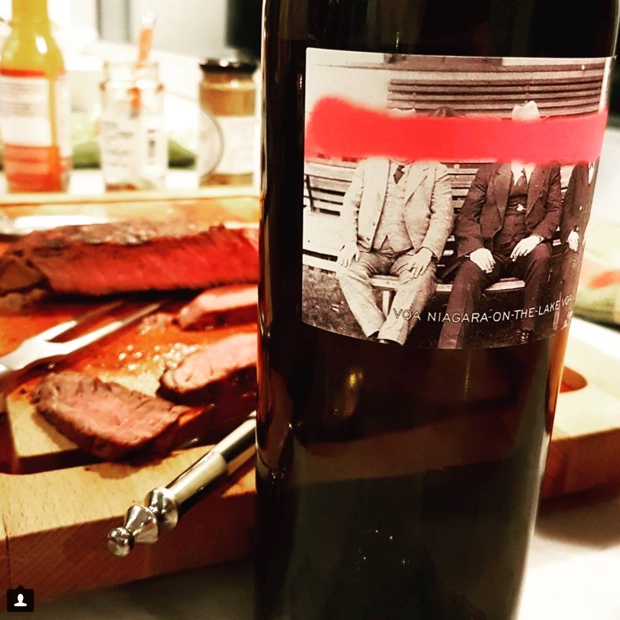
WineAlign

Impromptu tasting at Ravine

In the cellar at Ravine Vineyard

In the cellar at Ravine Vineyard

The winemaking at Ravine Vineyard is not so much deferential as much as it is a stylistic best described as post modern proletariat. Marty Werner’s modern enrichment often acts like subtraction, as opposed to traditional winemaking which effects the obvious, just and because less is more. His work reflects what once was (in turn of the century Niagara Peninsula) and upon what function emerged out of form, but also what could have been, from successes squeezed out of warm (2005, 2007, 2010) and from mistakes in challenging (2006, 2008, 2009) vintages. The current releases of 2014 and 2015 are wines of augmentation in the form of intensification in the structure rather than for weight or texture. Werner’s plebeian, blue-collar post-modernism is setting a new standard in Niagara. If his work (along with assistant winemaker Ben Minaker) can be viewed as sycophantic than all the better for the copycats and the apostles to hang on and around.

After a wild and multi-faceted chardonnay (plus) weekend down on the farms of Niagara’s flats, shores and across its escarpment benches, it is always the pleasure of pleasures to convene at Ravine Vineyard for a few oysters, a plate of great grub and more chardonnay. It is a time to breath and say another goodbye to the greatest collective consciousness of wine folk on the planet. Then Peter Gamble approaches. “We’re having a little impromptu tasting down in the cellar.” Marty and Ben lead a small group through these wines. We are captivated and motivated by their new work and their mini-vertical presentation. Ian D’Agata, John Szabo M.S., Michael Vaughan, Tony Aspler, Stephen Campbell, Magdalena Kaiser and I. Here are my notes.

John Szabo M.S., Stephen Campbell (Lifford), Ian D'Agata and Peter Gamble

John Szabo M.S., Stephen Campbell (Lifford), Ian D’Agata and Peter Gamble

Ravine Vineyard Sauvignon Blanc 2015, VQA Niagara Peninsula, Ontario (Winery, $32.00, WineAlign)

NWAC_Silver2016_web

In 2015 winemaker Marty Werner offers up 100 per cent barrel fermented sauvignon blanc aged in 10 per cent new (or just one barrel). The fruit comes from Concession Road 2 between lines 8 and 9, on heavy clay and only four year-old vines. The recovering vineyard is a microcosm for the overall Niagara recovery and the vintage allotted 250 cases when it normally produces upwards of 350. The 2015 ripeness stylistic is up front fruit from young vines. “A pick when you want to, not when you have to vintage” notes assistant winemaker Ben Minaker. Metallic peach and fennel pollen emit and you must appreciate a wine of such tartness on the back end, as opposed to sour patch up front. Stylish is the yeast (one third wild) understatement of the day. Says Werner, “we leave the fruit a bit dirtier coming out of the press,” so it gains some funky complexity, but no malo though. The acidity counteracts in the mid to high sevens. Lush antiquarianism is the end result. Drink 2016-2019. Tasted July 2016.

Some cheesy pungency notes the entry. Some edge of ripeness too. Tropical notes, full, fleshy, enervating and dangerously, precariously close to seed, oxidative even. But it teases and walks a blade’s edge. Lacks grassy middle ground (and again, that is a strength) but varietally speaking it may just be the most sauvignon blanc of any in the flight. Drink 2016-2019.  Tasted blind at #NWAC16, June 2016

Marty and Ben establish a new verity for #PinotGris @RavineVineyard ... There will be followers. #i4c16 #niagaralakeshore

Marty and Ben establish a new verity for #PinotGris @RavineVineyard … There will be followers. #i4c16 #niagaralakeshore

Ravine Vineyard Pinot Gris 2015, VQA Niagara Peninsula, Ontario (Winery, $35.00, WineAlign)

From a vintage of purportless rainfall, this is expressly (24 hour) skin-soaked pinot gris in candid desire of flavour more than and in second thought to hue. Subsequently sent to barrel for a wild ferment. Picked ripe (so 13.5 per cent alcohol), perhaps a result of, if not necessary from a vintage where mid-october pinot gris fruit was the exception and a last minute decision to bring in this fruit led to an earned foray for such a wine. Seven year-old fruit from (Marty’s parents farm on White Road) really floats a divergent varietal boat with six months of barrel time (25 per cent new). Frankly speaking, it carries such an air of benevolence so you would never know how alternative it really is. If there is a precursor or a reference point I stand at attention to be enlightened. Marty (winemaker Werner) and Ben (assistant winemaker Minaker) establish a new verity for pinot gris. There will be followers. This 2015 needed air, splashing and sloshing and it responded in kind. Drink 2017-2022.  Tasted July 2016

Ravine Vineyard Cabernet Rosé 2015, VQA St. David’s Bench, Ontario (Winery, $35.00, WineAlign)

Ravine’s Rosé spent the most minimal time on skins, from a posterior fruit position left out in the elements long and aided by leaf removal to break down the pyrazine. These were the second last grapes to pick (because the acidity is high in slightly overcropped fruit), on Slingerland Farm between lines five and six halfway up from Ravine to Highway 55. Though seemingly dry, the 6.0 g/L of RS is used “to bring it into balance for the consumer,” notes Marty Werner. This has some strawberry funk, as if it were macerated in a clay-calcaire bath, like balm as if steeped, cooled and poured over ice. It may be imagined as a saline, faintly honeyed berry granita with just the right amount of gelid texture alongside cool and savoury charcuterie. Simply put, what cabernet franc must be in warm niagara country. Drink 2016-2019. Ravine’s Rosé spent the most minimal time on skins, from a posterior fruit position left out in the elements long and aided by leaf removal to break down the pyrazine. These were the second last grapes to pick (because the acidity is high in slightly overcropped fruit), on Slingerland Farm between lines five and six halfway up from Ravine to Highway 55. Though seemingly dry, the 6.0 g/L of RS is used “to bring it into balance for the consumer,” notes Marty Werner. This has some strawberry funk, as if it were macerated in a clay-calcaire bath, like balm as if steeped, cooled and poured over ice. It may be imagined as a saline, faintly honeyed berry granita with just the right amount of gelid texture alongside cool and savoury charcuterie. Simply put, what cabernet franc must be in warm niagara country. Drink 2016-2019.  Tasted July 2016

Mini #lonnasblock @RavineVineyard Cabernet Franc vertical. Loaded with the S-word...structure @marty_werner #i4c16

Mini #lonnasblock @RavineVineyard Cabernet Franc vertical. Loaded with the S-word…structure @marty_werner #i4c16

Ravine Vineyard Cabernet Franc Lonna’s Block 2014, VQA St. David’s Bench, Ontario (Winery, $40.00, WineAlign)

Lonna’a Block alights straight out from the retail shop to the west side of the driveway (and is named for Ravine owner Norma Jean Harber’s sister). The site was planted in 2004 and here, 10 years on, its warm St. Davids’ Bench fruit is simply welling, hermetically sealed and antithetically intense. The block has come to this, in production of cabernet franc with side-splitting, tongue tripping acidity to work lightning crack geometry into the wood-derived chocolate and the ferric-tannic tension. The fissures are filled but there is the right kind of cabernet franc fragmentation. The liquid metal mineral and deep blackberry ooze is smooth and polished. The fruit was “picked early,” or if you will, in Grouxian, Gambleized and risk, Werner reward exercised terms, mid-November. Drink 2017-2024.  Tasted July 2016

Ravine Vineyard Cabernet Franc Lonna’s Block 2013, VQA St. David’s Bench, Ontario (Winery, $40.00, WineAlign)

From the same (2004 planted) rows and stylistic as 2014 here cabernet franc desired the requiem of an extra year in bottle to solicit understanding, with a 2013 dried fruit component here and now. The resolve already inherent is indicative from a challenging growing season, in a year from which Peter Gamble chided “I guess you guys (Marty and Ben) really earned your stripes.” Some of these grapes were left on the vine until December 15th. That is not a stretch. This will live into the next decade and though it will surely walk into the barn with the balsamic, the soy and the nibs, it will carry its acidity and its 180-day, growing season development. A cabernet franc of most excellent desiccation, with thanks to thick skins and then variety’s variegated character. Drink 2016-2021.  Tasted July 2016

Ravine Vineyard Cabernet Franc Lonna’s Block 2012, VQA St. David’s Bench, Ontario (Winery, $40.00, WineAlign)

From the block dedicated to Ravine owner Norma Jean Harber’s sister, planted in 2004. Though hailing from a recent, post-2010 reach for the sugar stars vintage, there is freshness and vitality mixed with a Napa cabernet from elevation sensibility (think Laurel Glen and Korbin Kameron). This has presence. Real stage presence, gracing the battleground encompassing an intensification of the things that people normally associate with the varietal – fruit, acidity and extract. A cabernet franc granted and given early promise that has crossed a certain varietally correct threshold to travel weightlessly into its current accomplished state. It knows who it is and where it’s going. It will live long. Five to seven, perhaps even 10 more years easy. Drink 2016-2022.  Tasted July 2016

Good to go!

Twitter: @mgodello

Instagram: mgodello

WineAlign

Ten best buys for June 25th

Summerland, Okanagan Valley, British Columbia

Summerland, Okanagan Valley, British Columbia

The Okanagan has my full, immediate attention, that and 1,525 wines from across Canada at the great show. We call them the WineAlign National Wine Awards of Canada, a.k.a. The Nationals and I will be judging all week from this glorious set of benches and hills in the golden west. Until next week, here are 10 picks from the June 25th VINTAGES release…Godello.

Jardin

Jardin Inspector Péringuey Chenin Blanc 2014, Wo Stellenbosch, South Africa (443473, $15.95, WineAlign)

A reductive chenin blanc with a distinctive struck stone aroma. With two minutes air the chenin begins to assert itself and from its Stellenbosch origins. Grest preserved and compressed citrus, lively acidity, soul from soil tang and terrific intensity. Length extrapolated from price of a better than good equation. Drink 2016-2019. Tasted June 2016  @Jordan_Wines  @AbconWine  @WOSACanada  @WOSA_ZA

Domaine Les Yeuses Les Épices Syrah 2013, Igp Pays D’oc, Languedoc-Roussillon, France (177584, $15.95, WineAlign)

Consistently one of the greatest Syrah values on the planet, Les Yeuses smells like the Northern Rhône with familial ties in the Swartland. Smoky and meaty, spiced with all hues of peppercorn, deep and variegated. A remarkably complex syrah for a pittance. Like cassoulet, “it’s a little bit of this and a little bit of that.” Even better with a whole roast; duck, chicken or hip of beef. Drink 2016-2019.  Tasted June 2016  @les_yeuses  @cartowines  @LanguedocWines

El Gordo

El Gordo Del Circo Verdejo 2014, Do Rueda, Spain (441220, $17.95, WineAlign)

The ballad of El Gordo is a soft and fuzzy peach big star. Yes this tastes just alot like the candy but with sweetness replaced by savour. This carries a country riff and electric tang of commercial, albeit alternative broadcast feel. El Gordo is El Goodo, verdejo to sip when “it gets so hard in times like now to hold on.” Rueda for the people, like a #1 record that stands the test of time even if it never really sold all that well. Drink 2016-2018.  Tasted June 2016 @RutaVinodeRueda  @WineLoversAgncy

werner

Domdechant Werner Hochheimer Riesling Kabinett 2012, Rheingau, Germany (722413, $21.95, WineAlign)

A terrific off-dry riesling with intense tart flavours and omnipresent circulating acidity. A range or stone fruit invades the aromatics; peach, apricot and nectarine. Tropical yes but grounded, struck flinty and so full of energy. One sip and feel the energy buzz, the lightning strike, the rush of adrenaline. Amazing. Drink 2018-2025.  Tasted June 2016     @HHDImports_Wine  @germanwineca

cahors

Château Eugénie Cuvée Réservée De L’aïeul Cahors 2013, Ac Southwest, France (295949, $22.95, WineAlign)

This is a striking malbec with bursting aromas, mostly floral but also of an inhalant that elicits modern sangiovese, from grosso to Gran Selezione. It is rare for malbec and also Cahors to be imagined as born in an ancient cellar yet having come to fruition in a modern vineyard. This cuvée is a major step up from the house’s basic malbec, with deep, profound fruit and restraint found. Barrels and soil funk are certainly part of the mix, but so is traditional acumen. Beautifully crafted and structured red that will benefit from two years settling. Drink 2018-2025.  Tasted June 2016   

HB

Hidden Bench Estate Riesling 2014, VQA Beamsville Bench, Niagara Peninsula, Ontario (183491, $23.95, WineAlign)

The thing about a Hidden Bench riesling is its ability to mark a bench twain. Neither dry and stark nor sweet and unctuous, the balance struck is a factor of the house. This 2014 carries the strong torch of energy and vitality but it seems a bit more arid and direct than before. The lemon condense is at an all time high, the major zest and minor pith as important as the juice. Would like to see this find some age. Drink 2016-2021.  Tasted June 2016  @HiddenBench  @BenchVigneron

tawse

Tawse Laundry Vineyard Cabernet Franc 2012, VQA Lincoln Lakeshore, Ontario (130997, $31.95, WineAlign)

The richest and deeply phenolic Laundry Vineyard cabernet franc, likely to date, from fruits of labour expressed with plum, red currant, Ontario strawberry and raspberry compote, so much so that it warms the heart. Wood is but a blanket to keep the draught out, nothing more and it will slowly peel away as the years roll on. The spice in here is so beautifully baking with home kitchen delight. The sweetness is pure extraction, dry and rehydrated. Paul Pender’s management in Laundry ’12 is one of his finest works to date. You could absolutely drink this now and also watch it slowly turn over 10 years time. Might it have been the last? Drink 2016-2022.  Tasted June 2016  @Tawse_Winery  @DanielatTawse  @Paul_Pender

Cuvée Du Vatican Châteauneuf Du Pape 2012, Ac Rhône, France (719120, $38.95, WineAlign)

Though you know it’s going to be a big Rhône red it hits you anyway, with waves over the head by ripeness and mineral intensity. While balance is a four letter word in wines like this, you have to grow up and mature a bit to appreciate the nuance hidden in the brawn. There is nothing shy about Châteauneuf-du-Pape these days and especially in bottles like this, of unabashed hedonism and enthusiasm. This Sixtine will drink as it precociously does like this for a decade because the structure and the burly bones will take long to break. Drink 2017-2024.  Tasted June 2016  @VINSRHONE  @RhoneWine

Domaine Michel Juillot Mercurey Les Champs Martin 1er Cru 2012, Ac Burgundy, France (455089, $45.95, WineAlign)

This is a most beautifully volatile pinot noir that represents more than virility and exceptional quality for the village. Mercurey can be tough as nails and while the undercurrent here is firm, rigid and unbreakable, the roses are nothing short of flattering, hypnotizing and intoxicating. What this Mercurey lacks in preciousness it more than makes up for in talent, strength of character and trailing length. Drink 2018-20225.  Tasted June 2016  @TheCaseForWine   @BourgogneWines  @bourgognespress  

Bott

Domaine Bott Geyl Schoenenbourg Grand Cru Riesling 2012, Ac Alsace, France (456970, $50.95, WineAlign)

Incredible richness seeps from Christophe Bott-Geyl’s Schoenenbourg riesling, with alternating layers of aridity and tannic sweetness. So different from Bott-Geyl’s Mandelberg, in which early morning sun and hastily picked fruit resolves a more unctuous, nearly tropical expression. Here out of marl-gypsum you note the scratched and scraped stone, the liquid left behind as whitewash residue, the sugar playing upon that rock, devouring the mineral, defining the wine. It’s all quite remarkable. The Schoenenbourg lingers forever. Drink 2016-2022.  Tasted June 2016  @bott_geyl  @VinsAlsace  @AlsaceWines  @drinkAlsace  @VinsAlsaceQc

Why wouldn't you grill #asparagus and why wouldn't you use @barquebbq rubs?

Why wouldn’t you grill #asparagus and why wouldn’t you use @barquebbq rubs?

Good to go!

Twitter: @mgodello

Instagram: mgodello

WineAlign

Facebook

One the eve of the 2016 WineAlign Canadian Wine Awards

One of the true pleasures in wine & life to judge with two amazing women @treve_ring @curlyluddite #NWAC15 #thenationals #winealign

One of the true pleasures in wine & life to judge with two amazing women @treve_ring @curlyluddite #NWAC15 #thenationals #winealign

Wine. The ancient mocker, a drink unknowable and illustriously beyond judgement. That is until a national organization builds a mountain out of bottles, gathers together a court of 22 like-minded adjudicators and brings a nation’s wine culture together. The WineAlign Canadian Wine Awards is this country’s own version of unfathomability, as a thinking and tasting machine to test the romantic mysteriousness of an overall expression laid out by deferential wines produced from coast to coast.

The Nationals or #NWAC2016 will amass and coordinate more than 1,500 entries from Nova Scotia, Quebec, Ontario and British Columbia. The romantic grandiosity of the project will merge with the mainframe abacus of wine awards algorithms. The WineAlign National Wine Awards of Canada (NWAC) are held annually in June. Each year the country’s leading wine writers and judges gather somewhere in Canadian wine country to evaluate wines grown in Canada. They award Platinum, Gold, Silver and Bronze medals in some two dozen categories, with medal rankings further determining Winery of the Year and the country’s Top Twenty wineries.

WineAlign team at Trius

WineAlign team at Trius

Related – To Trius by air

When I roll out of bed Tuesday morning my Air Canada flight to Kelowna, British Columbia will be in its early stages of preparation. AC 1975 will transport me ceremoniously to the golden western frontier of the Okanagan Valley and it is there in Penticton that I will join 21 fellow judges (plus two apprentice judges) at the 2016 WineAlign Canadian Wine Awards.

Co-Chief Judge Anthony Gismondi has let us all know that “we have had a tremendous response from wineries across the country. Entries to date to are at 1,505 wines, a new record. With that number comes much responsibility so please be prepared to work hard for a full five days in the tasting room.” We welcome our visiting international judges, Elaine Chukan Brown of JancisRobinson.com, WakawakaWineReviews.com and Wine & Spirits, along with WWAC veteran Dr. Jamie Goode, The Sunday Express and wineanorak.com. Vancouver’s DJ Kearney oversaw the apprentice judges program and this year Brent Muller and Alistair Veen prevailed in a tryout that included 5 top BC sommeliers and retail buyers.

Related – Meeting of the wines at Treadwell Cuisine

WineAlign judges, a rainbow and the American Falls

WineAlign judges, a rainbow and the American Falls

This will be my fourth Nationals. It is one of the greatest privileges in wine journalism and a profound honour to be gifted the opportunity to contribute towards bestowing medals on the best wines produced in Canada. It is an equally awesome grant of companionship and shoulder rubbing to work alongside the WineAlign crew. The war room leaders Bryan McCaw, Sarah Goddard, Carol-Ann Jessiman, Earl Paxton and Anthony Gismondi. The judges I’ve worked with before; David Lawrason, John Szabo M.S., Sara d’Amato, Steve Thurlow and Dr. Janet Dorozynski from Ontario. Rémy Charest, Michelle Bouffard, Bill Zacharkiw and Nadia Fournier from Quebec. Ben MacPhee-Sigurdson from Manitoba. DJ Kearney, Treve Ring and Rhys Pender, MW from British Columbia. Brad Royale from Alberta. Craig Pinhey from New Brunswick. Heather Rankin from Nova Scotia. I look forward to meeting David Scholefield and Sharon McLean from B.C.

Day 2 #NWAC15 with @curlyluddite and the maestro @DavidLawrason .. I will taste f'in #merlot !! @winealign

Day 2 #NWAC15 with @curlyluddite and the maestro @DavidLawrason .. I will taste f’in #merlot !! @winealign

The judging is overseen by WineAlign principal critics and partners Anthony Gismondi and David Lawrason. All competition wines are blind-tasted and judged in categories according to varietal or style, not by region, using the same 100-point system as used on WineAlign. Each wine earning the requisite points will get a medal. Wines with the top scores in the entire awards will be awarded a Platinum medal (approximately 1% of the total entries). Gold medals = 90 – 100 points, Silver medals = 88 – 89 points and Bronze medals = 87 points

At last year’s Nationals held in Ontario we handed out a record number of awards; 14 Platinum, 101 Gold, 263 Silver and 375 Bronze. Given that a bronze must have been scored 87 points by a panel of a minimum of three judges, we have hundreds of wines in Canada that our experts felt were ‘very good’or better. That should instil some confidence among consumers. I tasted and reviewed many of the 14 platinum medal winners. Here are some of my notes.

Flight 3, code red #pinotnoir redux. Right proper #NWAC15 picks & pours @FortessaCanada stems @winealign staff rock!

Flight 3, code red #pinotnoir redux. Right proper #NWAC15 picks & pours @FortessaCanada stems @winealign staff rock!

13th Street Gamay Noir 2013, VQA Niagara Peninsula, Ontario (177824, $19.95, WineAlign)

Four months has upped the funk for ’13, with tar and bitters still and thick as summer air. Rich and ripe, notable for its black cherry aroma and that J.P. Colas natural truncation. Unique, as always and very Gamay. Drink 2015-2019.

From my earlier note of December 2014:

Fruit was sourced from both the Sandstone and Whitty Vineyards for 13th Street’s Gamay Noir, a focused and gritty adjunct in ode to the Cru Beaujolais approach. This ’13 raises the aromatic and texture bar and just may be the most striking from a 13th Street estate mix. All the important berries are there, as are the mineral quandaries. In a Gamay moment this will lead you to gulp and giggle with #GoGamayGo delight.

Last tasted April and June 2015  @13thStreetWines  @Noble_Estates

Tres hombres in @TheGoodEarthTweets light @johnszabo @billzacharkiw @bradroyale #NWAC15 #beerdrinkersandhellraisers

Tres hombres in @TheGoodEarthTweets light @johnszabo @billzacharkiw @bradroyale #NWAC15 #beerdrinkersandhellraisers

C.C. Jentsch Syrah 2013, BC VQA Okanagan Valley, British Columbia (Winery, $34.95, WineAlign)

Oh so beautifully nasty Syrah, spicy, saucy and wicked. Resin, somewhere between myrrh and mastic, redacts reductively and tension stretches the savoury aspects in all directions. Blood orange and anise blend into the aromatic grain, repeating again through flavour mettle. Fruit, acidity and tannin are interwoven, circulating and on edge, in pitch perfect darkness. Syrah in the big time with the stuffing to age. Drink 2016-2022. Tasted blind at WWAC15, August 2015  @CCJentschCellar

Merlot, Cabs, Red blends #NWAC15 messed with kilters but @DavidLawrason & @curlyluddite set me straight. #cdnwine #thenationals #winealignnationalwineawardsofcanada #sheratonfallsview

Merlot, Cabs, Red blends #NWAC15 messed with kilters but @DavidLawrason & @curlyluddite set me straight. #cdnwine #thenationals #winealignnationalwineawardsofcanada #sheratonfallsview

Château Des Charmes St. David’s Bench Vineyard Gamay Noir Droit 2012, VQA St. David’s Bench, Niagara Peninsula, Ontario (Winery, $16.95, WineAlign)

The increased Droit depth in black cherry positions this CdC Gamay like a cousin to the same vintage Pinot Noir with shared DNA and more funk meets reduction than I would have expected or even guessed at. Should this be chalked up to complex conscientious forethought or the denude of a brilliant mistake? The raspberries and strawberries are in the mulch and the mire, the acidity and tannin thinking cru, cru thoughts. A near behemoth for Ontario Gamay, as much to do with the St. David’s Bench and the vintage as anything. Droit redux, new, improved and polarizing. Drink 2016-2021.  Tasted June 2015 and February 2016  @MBosc

Norman Hardie Niagara Unfiltered Chardonnay 2012, VQA Niagara Peninsula, Ontario (184432, $39.00, WineAlign)

The ’12 Niagara has swapped spontaneity for coherence, licentiousness for logic. Has entered the stage of non-reductive peel, where skin is discarded, flesh is exposed and juices run free. If you like your Chardonnay settled and yet vitally fresh, now is the time to enjoy the Hardie 2012 Niagara Chardonnay. Drink 2015-2022.  @normhardie

From my earlier more of May 2014:

Norm’s Niagara is such a different animal to the County 2012. The warm summer and dry fall means more humidity and even more reduction. Currently cothurnal so less like Burgundy but only because there elevates the high-tones and percipience from Niagara. Texture is key but this Hardie needs time. It’s not angular but it is steroidal, injected, like a wild thing, as if the yeast were still in control, munching away even though there is no more sugar to be had. Undomesticated ’12, at heart, in spirit, out of mind. Hard to imagine there could be this much anxiety from the even-tempered vintage, but when you pick real early and keep the oak to a bare minimum, Hardie happens. Norm picked ripe fruit between September 7 and 10, six weeks ahead as compared to some years. He said the fruit had a “golden tan, ready to go.” The use of smallish 500L barrels works wonders for texture and though 40 per cent was new wood, you would never know it. Malolactic fermentation didn’t happen until late August, nearly a full year on so no sulphuring was required until that time. This is Hardie’s freshest Niagara fruit ever, from Duarte Oliveira’s farm between Victoria and Ontario Street, the same spot as Hillebrand’s Chardonnay Reserve. Terrific Beamsville Bench Chardonnay.

Last tasted April 2015

Sea of #schottzwiesel via @FortessaCanada #NWAC15

Sea of #schottzwiesel via @FortessaCanada #NWAC15

The Good Wine Cabernet Franc 2012, VQA Lincoln Lakeshore, Ontario (350751, $19.95, WineAlign)

While wood plays a prominent role it does not saturate to distraction. The barrel extract adds warmth and spice in contribution to balance. A high-toned syrup on the nose gives way to an evenly weighted palate. A scraped bean flavoured creamy toddy texture is topped with chocolate shavings, a dry of bell pepper and tobacco smoulder from out of the chamber. Nicely judged fruit, acidity and texture with admirable length. A necessary example of $20 Lincoln Lakeshore Cabernet Franc offering up every reason to drink it and demand that more me made.  Tasted March 2015  @goodearthtweets

We @WineAlign came to judge nearly 1,500 wines #NWAC15 and it was fair and just.

We @WineAlign came to judge nearly 1,500 wines #NWAC15 and it was fair and just.

Good to go!

Twitter: @mgodello

Instagram: mgodello
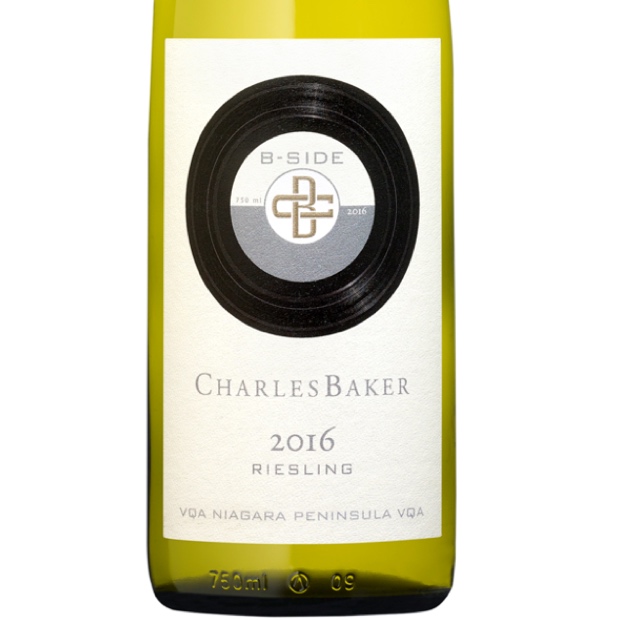
WineAlign

Facebook

15 Canadian wines that rocked in 2015

15 in 2015

In the past 12 months I have tasted Canadian wines. Somewhere between hundreds and a thousand of them. Aside from day-to-day assessments at home, in the LCBO sensory lab, at the WineAlign office and at events in Ontario, I’ve also been a part of judging panels. In 2015 I sat in at the Ontario Wine Awards, WineAlign National Wine Awards of Canada, WineAlign World Wine Awards of Canada and Gold Medal Plates.

Flight 3, code red #pinotnoir redux. Right proper #NWAC15 picks & pours @FortessaCanada stems @winealign staff rock!

Flight 3, code red #pinotnoir redux. Right proper #NWAC15 picks & pours @FortessaCanada stems @winealign staff rock!

In 2014 the highlights numbered 14, just as in 2013 the number chosen to cant, recant and decant excellence in Canadian wine was 13. And so forth leads to 15 in 2015.

Related – 14 Canadian wines that rocked in 2014

The Legend, the Sommelier and the Godello #geddy #yyz #gmp2015 #goldmedalplates #rush

The Legend, the Sommelier and the Godello #geddy #yyz #gmp2015 #goldmedalplates #rush

Canadian wine is growing with exponential force, gaining ground in markets at home and abroad. Brits dig us. I know, they told me. British Columbia is a desert oasis of variable climates to fascinating degrees. Oh the Syrah, Riesling and Gamay that rocks forth. Ontario stood up to two straight brutal winters and screamed, “we still made great fucking wine.” Take that mother nature.

Related – 13 Canadian wines that rocked in 2013

And I quote. “Picking a top anything list is both a chore and a labour of loyalty. The opportunities to learn more about Canadian-made wine, especially the processes and the efforts, were numerous in 2014. Canadian winemakers opened their doors and when people came, they taught. They walked the vineyards, showed off their prized barrels and walked through the processes of making wine. Tasting and barrel rooms make for the greatest classrooms. Get out there in 2015. The experience is priceless.”

Riesling at the Carriage House, Vineland Estates Winery - March 7, 2015

Riesling at the Carriage House, Vineland Estates Winery – March 7, 2015

So I did. In 2015 I visited Niagara for Icewine Fest, discovered exceptional cider (with percentages of Pinot Noir and Riesling) made by Angela Kasimos at Small Talk Vineyards and have been pouring it on tap at Barque Smokehouse and Barque Butcher Bar ever since.

The pioneer for #vqa #wineontap feel good recognition from @winecountryont Thank you from @barquebbq #ontariowineweek #ontwine #drinkontario #pourontario

The pioneer for #vqa #wineontap feel good recognition from @winecountryont Thank you from @barquebbq #ontariowineweek #ontwine #drinkontario #pourontario

The taps at the two restaurants poured a record number of wines in 2015, from Tawse, Lailey, Norm Hardie, Creekside, Between the Lines, Kew Vineyards, Redstone, Stratus and Leaning Post. In March we travelled with CAPS Ontario for an eight-hour intense immersion into Niagara Riesling and Cabernet Franc.

Smiles with hops. Beer fridge @Niagara_College @mkaiserwine @chefmolson @drjamiegoode #niagarateachingbrewery #notwine #greatbeer

Smiles with hops. Beer fridge @Niagara_College @mkaiserwine @chefmolson @drjamiegoode #niagarateachingbrewery #notwine #greatbeer

Another visit with Ilya and Nadia Senchuk at Leaning Post Wines in Winona, Ontario shed new lights, especially for Syrah from the Lincoln Lakeshore. In June I toured the facilities at Niagara College with Dr. Jamie Goode, Magdalena Kaiser and our host Chef Michael Olson. Jamie and I tasted through an impossible number to count Domaine Queylus wines with Thomas Bachelder. On that I will report really soon. Really soon…

Cool Chardonnay at Ridley College

Cool Chardonnay at Ridley College

The Cool Chardonnay conference in July was in fact, the coolest yet. I spent three more glorious Annapolis-Gaspereau Valley days with Mike and Jocelyn Lightfoot in Wolfville, Nova Scotia. Visits to Domaine de Grand Pre, L’Acadie Vineyards and Benjamin Bridge filled out the east coast foray.

Comity in the County godello.ca #PECwine #princeedwardcounty #cherryvalley #clossonridge #danforthridge #greerroad #laceyestates #hubbscreekvineyard #hinterlandwine #lighthallvineyards #clossonchase #adamoestatewinery #northshoreproject

Comity in the County godello.ca #PECwine #princeedwardcounty #cherryvalley #clossonridge #danforthridge #greerroad #laceyestates #hubbscreekvineyard #hinterlandwine #lighthallvineyards #clossonchase #adamoestatewinery #northshoreproject

In the fall I made pilgrimage to Prince Edward County to get a grip on the eskers, ridges and aspects of what makes wine so special in that part of Ontario.

As always there are wines that should have, would have and could have made the cut were there more time, space and yet another, better headline to write. Some were knocked off the shortlist because they may not have been quite as exciting though were this list one of “most important,” then perhaps they would have stayed put. These four are perfect examples of that condition.

Château Des Charmes Old Vines Riesling 2008, VQA Niagara On The Lake, Ontario (277228, $16.95, WineAlign) Perhaps the assessment seven years later creates an unfair advantage but come now, a great wine is a great wine from its humble beginnings. At $16.95, in 2008 or 2015, in Niagara-on-the-Lake, on the Peninsula, this type of emerging propensity is more than gold or platinum, it’s money.

The Good Wine Cabernet Franc 2012, VQA Lincoln Lakeshore, Ontario (350751, $20.95, WineAlign) from winemaker Ross Wise and The Good Earth Wine Company’s Nicolette Novak is a necessary example of $20 Lincoln Lakeshore Cabernet Franc offering up every reason to drink it and demand that more me made.

Creekside Estate Winery Pinot Noir Queenston Road Vineyard 2013, VQA Niagara Peninsula, Ontario (Winery, $22.95, WineAlign) is what winemaker Rob Power refers to as a lay lady lay style. Still the Kama Sutra Pinot Noir of inviting behaviour.

Hubbs Creek

Hubbs Creek Vineyard Pinot Noir Unfiltered 2010, VQA Prince Edward County, Ontario (Winery, $28.95, WineAlign). The HCV Danforth Ridge is clearly a top Pinot site in the County (along with slopes on the Greer and Closson roads). Planted to high density the results are proven in wines like this 2010

The year that was 2015 seemed to bring out the adventurous winemaker, the risk-taker and the progressive thinker. While these five wines were not so much exciting as much as they were cerebral, they need to be mentioned. Whenever the envelope is pushed and the emotions of geeks are sequestered, well then a wine has achieved something special. These five really opened some doors.

Bergstrom and Hillebrand

Hillebrand Showcase Series Wild Ferment Chardonnay 2011, VQA Lincoln Lakeshore, Niagara Peninsula, Ontario (199273, $36.20, WineAlign) speaks the treble language of the vintage, predicated on bold ideas looking forward towards a bright future. Ultimately it is yeast and vintage, non partisan to site, that elaborate the Wild Ferment.

Southbrook Vidal Orange Wine 2014

Southbrook Vidal Orange Wine 2014

Southbrook Vineyards Whimsy! Orange Wine 2014, Niagara On The Lake, Ontario (Winery, $34.95, WineAlign). The technique and the practice is ancient and has been kept alive. The only questions need asking are “is it good, is it well-made and would I like to drink it?”

In bottle @Tawse_Winery #quarryroad 2014 #natural soon to tap @barquebbq #chardonnay #naturalwine #unfiltered #paulpender #vinemountridge #niagarapeninsula #vqa #ontwine

In bottle @Tawse_Winery #quarryroad 2014 #natural soon to tap @barquebbq #chardonnay #naturalwine #unfiltered #paulpender #vinemountridge #niagarapeninsula #vqa #ontwine

Tawse Chardonnay Quarry Road Natural 2014, VQA Vinemount Ridge, Niagara Peninsula, Ontario (Winery, $35.95, WineAlign). It’s one thing to make a natural wine in Ontario and a world away to do so with Chardonnay. “The law was never passed, but somehow all men feel they’re truly free at last. Have we really gone this far through space and time?”

The latest rendition of Vin de Curé, the “Parish Priest’s,” and the Jura’s Vin de Paille (Straw Wine) of Burning Kiln Stick Shaker Savagnin 2013, VQA Ontario (367144, $24.95, WineAlign) is a white elixir in search of roast pork, braised belly and cured bacon. Not to be missed.

Inniskillin Discovery Series Botrytis Affected Viognier 2013, VQA Niagara Peninsula (375ml), Ontario (405027, $39.95, WineAlign) though not a common Viognier practice can be imagined with Vendanges Tardives simulation.

Filtering Nova Scotia #peggyscove #eastcoastswing15

Filtering Nova Scotia #peggyscove #eastcoastswing15

I try to concentrate on new releases, unless something old (read: Riesling) jumps out and bites me in the ass. The 15 Canadian wines tasted in 2015 that wooed, wowed and whetted the appetite are the fingers, toes and tongues of their creator’s ideals, hopes and dreams. They are also quintessentially representative of their time and place.

And the winners are...

And the winners are…

Charles Baker Riesling Ivan Vineyard 2014, VQA Niagara Escarpment, Ontario (Winery, $27.00, WineAlign)

From the rich limestone and sandstone beneath the clay, 1.1 acre Misek vineyard, a southerly ledge up from Highway 8 and an easterly hill down from Cherry Avenue. A very linear Ivan combs the catacombs of the Escarpment’s underpinning. A retaining wall of vintage attenuated rocks and stones, a vineyard’s low yields and the voices in Charles’ head have produced a striking Riesling. In 2014 adolescence has entered adulthood. Now before us is a grown up Ivan, mature Ivan, maybe even wise Ivan. Texture is in manifest control in this loyal, stay at home Baker, not yet running wild like free-spirited Picone. Ivan has presence, sometimes a great notion and is Baker’s longest bit of prose to date. The next great Riesling vintage will make it iconic. Drink 2016-2020.  Tasted April 2015  @cbriesling

Swan Song- @ClossonChase Chardonnay CCV 2013 #clossonchasewinery #deborahpaskus #pecwine #pec #winecountryontario

Swan Song- @ClossonChase Chardonnay CCV 2013 #clossonchasewinery #deborahpaskus #pecwine #pec #winecountryontario

Closson Chase Chardonnay Closson Chase Vineyard 2013, VQA Prince Edward County, Ontario (Winery, $27.95, WineAlign)

This CCV Chardonnay is one of departed winemaker Deborah Paskus’ final acts at Closson Chase. It will forever be noted as a legacy-cementing, swan song of career excellence. Crafted by Paskus and bottled by the next one, current winemaker Keith Tyers, the 2013 CCV is simply a tour de force. No such combination of richness, tropicality and pure grape tannin has ever infiltrated this Chardonnay, from this vineyard. I’m not sure there is a comparison in Ontario, at this level of excellence and at this price. A wine of pure impression, with Montrachet-like structure and Folatières-like precision. Seemingly capacious, its facile legerity is hypnotizing, quantitatively escalating in assembly of aromas, flavours, through texture and finally to longevity. The wine spent 16 months in a mere (17.25 per cent new) oak. That it notes 12.5 per cent alcohol on the label is next to impossible. The substance is just too buttressed to be so tender and effete. Impeccable balance, refinement and mineral finish. This is Chardonnay to confuse the world’s fine white collectors, to wreak havoc at international tastings for five to 10 years. Only 712 cases are available and at $27.95, is down $2 in price from the 2012. Best ever, hands down. Drink 2017-2023.  Tasted March 2015  @ClossonChase

"There's no work in walking in to fuel the talk." @MalivoireWine Melon & @PearlMorissette Gamay #NWAC15 Parting of the Sensory #CuvéeMonUnique #shirazmottiar #treadwells #winealign #winecountryontario

“There’s no work in walking in to fuel the talk.” @MalivoireWine Melon & @PearlMorissette Gamay #NWAC15 Parting of the Sensory #CuvéeMonUnique #shirazmottiar #treadwells #winealign #winecountryontario

Pearl Morissette Gamay Cuvée Mon Unique 2014, VQA Lincoln Lakeshore, Niagara Peninsula, Ontario (Winery, $29.00, WineAlign)

In December of 2014 I counted the ’13 CMU Gamay as one of my mind-blowing wines of the year. Once again we are witness to the authentic, raw and natural impossibility of the wine, from 100 per cent whole clusters sent to cement fermenters. The hue is just impossible, the wine sulphur-free. That ’13 Gamay did not last. I tasted again this winter and it failed me. It may return. This ’14 will never leave. It is natural to the 14th degree and yet its rich, smokey chocolate  centre and structure of pure physical stature will not let it slide, into a dumb phase or oblivion. This Gamay will strut. It already does. Drink 2015-2020. Tasted June 2015  @PearlMorissette

Cave Spring Csv Riesling 2013, Cave Spring Vineyard, VQA Beamsville Bench, Niagara Peninsula, Ontario (566026, $29.95, WineAlign)

That flesh, that Kabinett flesh, fills the CSV in every crevice. In 2013 the residual sugar number lies between 15 and 16 g/L, and though the crop was bigger, it was still picked later than in 2012. The result is formidable corporeal concentration, consistency of house style and perhaps the only ’13 Niagara Riesling to imitate, perpetuate and extrapolate on the vintage that came before. This Cave Spring concentrates fruit and Escarpment into a powerful Riesling, streaming like charged particles through changing expressions. A lingering ascension hovers as it rises, until it slowly fades into the welkin, like a balloon that languidly gets lost into the blinding blue of a midday sky. Drink 2017-2025.  Tasted April 2015  @CaveSpring

Malivoire Mottiar Chardonnay 2012, VQA Beamsville Bench, Niagara Peninsula, Ontario (Winery, $29.95, WineAlign)

Any Chardonnay from a vineyard discovered on a bicycle just has to be the bomb. Winemaker Shiraz Mottiar has had many an adventure on his bicycle and it all began here in a plot of perfectly planted Chardonnay. A block that became his home vineyard. The fodder for this most balanced Chardonnay and its abilities transcend all that has come before. You would never know a barrel was ever involved and yet the silken sheaths of texture are well compressed and expertly ingrained. Nothing falls out of place. Everything remains in its right place. The radio is dialled in, from the top and outward in waves. “There are two colors in my head,” Everything in its right place. Drink 2016-2024.  Tasted November 2015  @MalivoireWine  @ShirazMottiar

Thirty Bench Small Lot Steel Post Vineyard Riesling 2009, VQA Beamsville Bench, Niagara Peninsula, Ontario (Winery, $30.00, WineAlign)

Riesling Masterclass

Riesling Masterclass at Terroir 2015

Balance is and therefore always was struck. The match percusses flint for a mere nano-second, with just a brush on cymbal, the rock bleeds but is quickly clotted because the fruit shines still, like around the clock light. The steely aspect is a posterior one, antithetical and yet purposed, from this vineyard. Youth tells common sense to think 2011. The Riesling behaviour seems to play that part, of a chalky, piercing acidity, so typical of that vintage and so distinctly Thirty Bench. That the wine is older is not a big surprise because 2009 is the bomb. It may just be the best Riesling vintage, from on that Bench, in the last 10. Drink 2015-2025.  Tasted May 2015  @ThirtyBench

C.C. Jentsch Syrah 2013, BC VQA Okanagan Valley, British Columbia, Canada (Winery, $34.95, WineAlign)

Oh so beautifully nasty Syrah, spicy, saucy and wicked. Resin, somewhere between myrrh and mastic, redacts reductively and tension stretches the savoury aspects in all directions. Blood orange and anise blend into the aromatic grain, repeating again through flavour mettle. Fruit, acidity and tannin are interwoven, circulating and on edge, in pitch perfect darkness. Syrah in the big time with the stuffing to age. Drink 2016-2022.  Tasted blind at WWAC15, August 2015  @CCJentschCellar

Three Pinot Noirs of Leaning Post

Three Pinot Noirs of Leaning Post

Leaning Post Wines Pinot Noir McNally Vineyard 2012, VQA Beamsville Bench, Niagara Peninsula, Ontario (Winery, $38.00, WineAlign)

“I want you to see the difference between vineyards. That’s terroir.” This the crux and the impetus to abide and acquiesce fruit from McNally, a cooler, higher site of younger vines. For Ilya, this is “truffle hunting, eating roasted pig, at the base of an oak tree.” The forest floor and the catalytic funk come across more in flavour than smell, following cherries in the dead of an aromatic night. Modernity be damned, this strikes ripe, layered and nearly indelicate. The wine’s got some real chew to it, along with crispy flowers, like nasturtium and lavender. “I think this is the best Pinot that I’ve made,” boasts Senchuk, from 15 year-old vines at Peninsula Ridge. Ilya’s muse came from the 2010 made by winemaker Jamie Evans, along with the Voyageur ’10 made by Ross Wise at Keint-He. Wines that spoke in a vernacular that Senchuk could understand and relate to on a deeper level. Prime ripeness defines 2012. Though it teases of grandiose terroir, its complexities reign in the power with each sip, every time. Drink 2016-2022.  Tasted June 2015  @LeaningPostWine

Potatoes, not wine #pei @normhardie

Potatoes, not wine #pei @normhardie

Norman Hardie County Unfiltered Pinot Noir 2013, VQA Prince Edward County, Ontario (125310, $39.00, WineAlign)

Procuring depth in County Pinot Noir is a tough task within the constraints of resisting a temptation to reach for sugars, alcohol and dark berry fruit. Norm Hardie’s 2013 unfiltered (at 10.9 per cent) and lambent exegesis succeeds because it offers the best of all available worlds. Roots for vines that burrow to limestone develop a structure that while may have at one time been inconsistent, have crossed the threshold in ’13 to establish a guarantee. A Hardie PEC Pinot Noir can be bright and accessible. It can also be tough, tart and tannic, as it is here, again, but not without its foil. The work is now innate, the transitions seamless, the crossroads left in the dust. This wine will please two camps; those who can afford and demand immediate gratification and those who are willing to wait for secondary (two to three years) and tertiary (four to seven) character development. Drink 2017-2022. Tasted April  and September 2015  @normhardie

Culmina Hypothesis 2013, BC VQA Okanagan Valley, British Columbia, Canada (Winery, $39, WineAlign)

In 2013 the blend is not listed on the label though it strikes as a return to Cabernet Franc, albeit with a layer of lush not yet perceived. The 2013 combines the best of worlds put forth by the two previous vintages; ripe fruit, earthy-mineral tang, proper acidity and ripe, tonic tannin. The composition here is the most, accomplished, distinguished and relished. In 2013 the enjoyment can be right now or up to 10 years on. All this with thanks to exceptional balance. Drink 2015-2023. This wine has not yet been released. Tasted November 2015  @CulminaWinery

Sparkling wines by Hinterland

Sparkling wines by Hinterland

Hinterland Les Etoiles 2012, VQA Prince Edward County, Ontario (Winery, $39.00, WineAlign)

An axial split between Pinot Noir and Chardonnay balances this traditional method Sparkling wine, specific to and what can only, obviously be from Prince Edward County. Acidity defines its existence in every facet of its being. A rich star to be sure, from a warm vintage, free from frost and more importantly, immune to mould. Jonas Newman talks of the methodology, in growing low to the ground. As the sun goes down, the canopy shades the fruit, slowing down the ripening, extending the season, developing the sugars, the complexities and preserving the acidity. At 6 g/L RS, with limestone communication and that sassy acidity, Les Etoiles in ’12 is pure County Sparkling. It exudes untamed apple and unnamed acidity. The Hinterland acidity. It strikes early and often. Just add warmth, stir and voila. Terrific year. Drink 2015-2021.  Tasted October 2015  @hinterlandwine

Ancienne Chardonnay and Pinot Noir 2013 with a glass of soon to be released Rose

Ancienne Chardonnay and Pinot Noir 2013 with a glass of soon to be released Rose

Lightfoot & Wolfville Pinot Noir Ancienne 2013, Nova Scotia (Winery, $40, WineAlign)

If de novo for Pinot Noir is to be found in Nova Scotia then count me in because the inaugural release from Lightfoot & Wolfville is the trailblazer for and from the extrinsic frontier. Tasting the painstakingly measured yet barely handled 2013 for the first time (from bottle) is like falling into a glass of Nova Scotia cherries. Somehow there is this simultaneous and virtual voyage abroad to imagine a comparison with Nuits-Saint-Georges, in its earth crusted, sanguine, welled up tension that begs questions and belies answers. A year yonder the taste from barrel and what can be said? Pinot Noir adjudicated, into a cortex of recognizable consciousness and thus into the natural Nova Scotia mystic. Ignore and forgive the dope of first returns, for no one could have imagined such ripeness and immediate gratification. Future releases will dial back in the name of structure. That said, in 2013 there is a red citrus, ferric debate that will send this to an exordium seven years down the road. Impossible inaugural release. Approximately 50 cases made. Drink 2015-2022.  Tasted July 2015  @lwwines  @rachel_hope

Stratus assemblage and varietals

Stratus assemblage and varietals

Stratus Tannat 2012, VQA Niagara On The Lake, Ontario (Winery, $42.00, WineAlign)

“To me this is one of the most successful new varieties we are planting,” exclaims J-L Groux. In similar ways with Stratus varietal cousin Petit Verdot, acidity rules the roost. Smells like a just sliced open bag of organic earth, freshly neutral, funkless and emptying into a (first use) terra cotta pot. A rich, looking straight ahead expression. What it hides in fruit is lost to the brilliance of balance though plum is the operative hidden flesh and it will make a clearer impression when it steps clear of the tar and the tannin. This is pitchy sagacity, with poise and length. Drink 2016-2022.  Tasted June 2015  @StratusWines

Tasting The Old Third at White Oaks

Tasting The Old Third at White Oaks

The Old Third Sparkling Pinot Noir à la Volée 2011, VQA Prince Edward County, Ontario (Winery, $59, WineAlign)

“On the fly” is not exactly what comes to mind from this 100 per cent Pinot Noir, first Sparkling wine made by Bruno Francois. Calculated, attention to detail and intensity of ideation more like it. Three years on the lees, no dosage and from a vintage to speak in more than whispered voices, of acidity that announces its arrival with immediacy and a summons to contest. The nose does yeast, toast, citrus and ginger. A first release revelation as ever graced Ontario’s waves, as dry as the desert and lingering with switch back traces of its yeasty, toasty self. A single vineyard can be this way, equally and in opposition of natural and oxidative, with a hue less than Pinot Noir, though unrequited as a triumph when you get a ripe white from such Pinot. The production of 1200 bottles is relatively house high in a stunner that needs no sugar to draw up its flavours. Drink 2015-2023.  Tasted twice, July and October 2015

asting across the @Benjamin_Bridge Vero, '08's, '04, Sparkling & Cab Franc Rosé. Thanks JB, Scott & Mike

asting across the @Benjamin_Bridge Vero, ’08’s, ’04, Sparkling & Cab Franc Rosé. Thanks JB, Scott & Mike

Benjamin Bridge Brut Reserve Methode Classique 2004, Annapolis Valley, Nova Scotia (275396, $95.00, WineAlign)

The ’04 is hanging in beautifully, on a wire of impossible balance, at 11 years old not yet really transitioning. There is simply too much brightness for it to give up its youth. You have to strain your ears, nose and throat to assuage just a hint at oxygen, life affirming breaths and then a keener sense of toast and yeast. Still behold the grapefruit, a sign of remarkable adolescence, the hang time amplified and in mass hyperbole here, in this current appraisal, address and time. How can richness act and display with such alpha freshness? How can an aging body not shed baby weight, turn lanky, lean and awkward? How is it neither the bitter pill of juvenility or senility has been swallowed? That is not the case here in a Blanc de Blancs which still has five to seven years of very active life ahead. Drink 2015-2021.  Tasted July 2015  @Benjamin_Bridge  @jbdeslauriers

Good to go!

Twitter: @mgodello

Instagram: mgodello

WineAlign: Michael Godel

Facebook