Into the Castelnuovo Berardenga great wide open

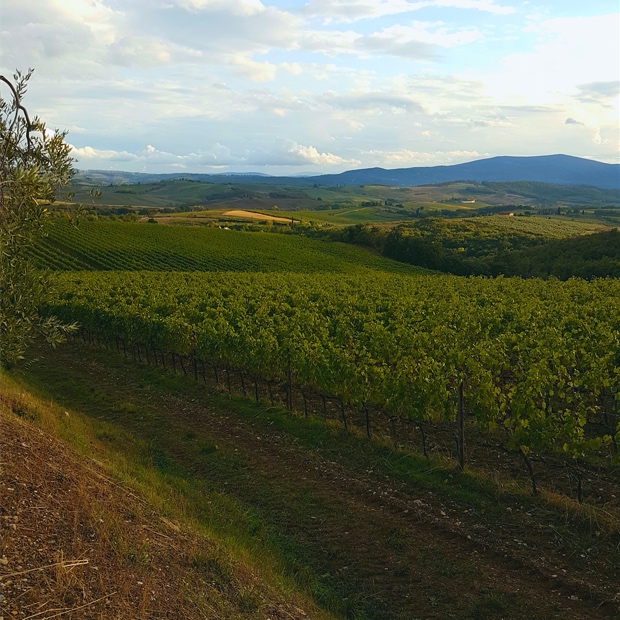
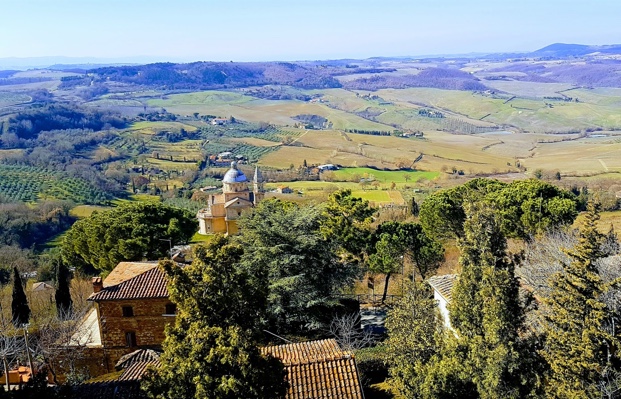
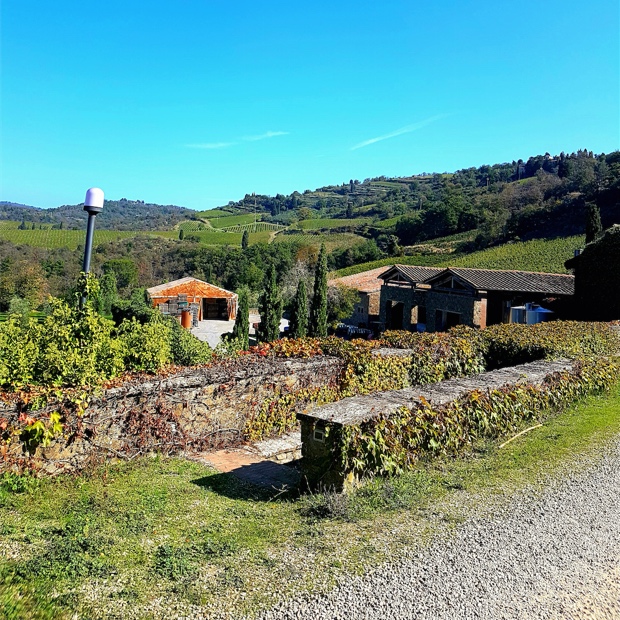
Rancia Vineyard at Fèlsina, Castelnuovo Berardenga, Chianti Classico

Two weeks from today I will make my way back to Toscana for another week-long immersion into all things sangiovese. More to the apposite point is a furthered plan for thorough if recondite excavations into the stone-cold secrets of Galestro, Alberese and other stratified limestone soils in Chianti Classico’s sub-zones. The preoccupation concerns communes, an instinct to break down the greater territory into its parts and a continued look at fissures and faults underfoot. It’s a matter of deeper understanding and meaning.

Related – Because the night in Gaiole

Once again I am proud to be a messenger on a subject that continues to write itself. This is the fourth edition in an ongoing series meant to encompass and expand upon definable territories in the municipalities of Castellina in Chianti, Gaiole in Chianti, Greve in Chianti and Radda in Chianti, Barberino Val d’Elsa, Castelnuovo Berardenga, Poggibonsi, San Casciano Val di Pesa and Tavarnelle Val di Pesa. This report is a by-product of the generous work and spirit of Chianti Classico’s producers and with unwavering guidance from the Consorzio Vino Chianti Classico: President Sergio Zingarelli, PR & Communications Manager Silvia Fiorentini, Event Manager Christine Lechner and Caterina Mori, Marketing and Communications.

Look Ma, I’m on top of the #chianticlassico #albarese at Tenuta Mocenni, Bindi Sergardi

I’ve come to consider Castelnuovo Berardenga the outlier for Chianti Classico, not for being so unlike the other constituents but because of its location and size. As the largest of the communes it covers 177 square kilometres while only Greve and its 169 square kilometres comes close in total area. When you drive out from Siena or Castellina the approach is most efficiently taken along highways and larger roads. This in great contrast to the switchback and zig-zagging over winding roads connecting proximate sub-zones like Radda, Gaiole, Greve, Panzano and Castellina. Castelnuovo Berardenga also forms much of Chianti Classico’s southern border and there is this particularly striking contrast between its hills and soils in opposition to the ulterior geography and geology of Chianti Colli Senesi below. There is also a feeling of the great wide open, of vast expanses and a great big sky.

All aboard the Alberese with the intrepid Brad Royale

Related – Castellina in golden light

A little bit of history. Berardenga took its district name from the noble Frankish Berardo who lived in the second half of the 10th century. His lineage follows that of Guinigi, Count of Sienna. The family Berardenga reigned over a vast area of the eastern part of the territories of Sienna (Terra Berardinga) between the 10th and 13th centuries. In 1366 the government of Sienna decided to construct the castle of Castelnuovo in the centre in this important territory. It was soon assaulted by the Florentine army but not successful until 1554 with the annexation of all the Sienna territories to the Duchy of the Medici. Montaperti in the municipality of Castelnuovo was the theatre of the battle of  September 4th, 1260 which saw the victory of the Sienna Ghibellines over the Florentine troops and their Guelph allies.

Related – Get Radda for Chianti Classico

John Szabo M.S. at Villa a Sesta. The Italian job or TJ Hooker?

Today there are 54 estates (out of 580 total members) in the district, a number that is surprisingly small when you consider the vastness of the territory. Castelnuovo Berardenga is the commune with sweeping vistas, views of Siena’s towers in the distance and with crests of hills that on some mornings sit perched above the clouds. It’s a very powerful landscape with a tremendous amount of wind, less shelter than most and a place you often feel small and vulnerable to the elements and the power of the place. It’s also home to some of the most impressive Galestro and Alberese soils in all of Chianti Classico. In Castelnuovo Berardenga, even the size of these limestone variant boulders seem bigger.

Related – Three days, eight estates, Chianti Classico

I’ve been extremely fortunate to pay some unforgettable visits to estates in Castelnuovo Berardenga in the recent past, including Losi Querciavalle with Valeria and Pietro Losi and twice with Andrea Bianchi Bandinelli at Villa di Geggiano. On my most recent trip back in September 2017 I was joined by John Szabo M.S., Brad Royale and Steven Robinson for three calls within the district. I tasted and reviewed 21 wines at Bindi Sergardi, Fèlsina and Villa a Sesta. Here are the notes.

Alessandra Casini Bindi Sergardi introduces the Mocceni Estate

Bindi Sergardi

A family run business for 23 generations, the estate has long been in the hands of Nicolò Casini, grandson of Elisabetta Bindi Sergardi. It is his daughter Alessandra Casini Bindi Sergardi’s turn, after joining in 2005, she now leads the company into the future. The Mocenni Estate near Vagliagli is without exception one of the most beautiful spots in Castelnuovo Berardenga but there are so many others reasons to say it too occupies a place at the breathtaking locus pinnacle for all of Chianti Classico. What transpires in the aura and sphere of a Bindi Sergardi visit is memorable. First a pause on the road to stand amidst the wild fennel, above the clouds and gaze out towards Siena’s spires in the deep distance. Then a walk in La Ghirlanda Vineyard with the Alberese, Galestro and the sirenic Bindi Sergardi in disssertative delivery on history, change and expectation. Finally a tasting through these wines of fineness, harmony and passion with Alessandra and Giulia Bernini.

Alessandra Casini Bindi Sergardi

Bindi Sergardi Chianti Classico La Ghirlanda 2015, DOCG Tuscany, Italy (WineryWineAlign)

La Ghirlanda makes reference to the woods “the shape of a garland,” in a CC of 100 per cent sangiovese (and the first as such for the estate). This is a form of the purest vineyard expression, a vintage “da manuale,” a vineyard in the amphitheatre, from part organic and part inorganic plots, halfway up the slopes above the Riserva and below the Gran Selezione. Serves memory with clarity in vision, impossibly old school but bright as a passage through the portico into the future could possibly be. These cherries are not only ripe, they are in phenolic harmony. Tannins are so refined on the heels of just as fine acidity. In terms of élévage it was 50 per cent in third passage barriques, plus 50 per cent in cement and/or stainless steel. Only botti grandi will be employed going forward. La Ghirlanda is highly composed, cultured and of calm demeanour in Chianti Classico. The price is approximately $20 US. Drink 2017-2021.  Tasted September 2017  @BindiSergardi  Alessandra Casini Bindi Sergardi  @bindisergardi  bindisergardi

Bindi Sergardi Chianti Classico La Ghirlanda 2014, DOCG Tuscany, Italy (WineryWineAlign)

The dark fruit and ripe black cherry with fine acidity and now more vibrant than memory serves from February. Really juicy and forward, a modern sangiovese in retro clothing. It has brightened and improved so will likely age much longer than previously thought. Drink 2017-2022.  Last tasted September 2017

The Castelnuovo Berardenga Ghirlanda vineyard is found on the Mocenni estate, near Vagliagli. The modern palate in search of Riserva in Chianti Classico will want this, of extraction and compression, not to mention density and a sweeping vat of deep black cherry liqueur. A nice mineral streak comes from soil rich in galestro and alberese at 450 meters. in the shadow of Monteriggioni. It’s tart and tannic but of tannins that are already fully engaged, chalky and established in their grip. It’s all in there now. Drink 2017-2018.  Tasted February 2017

Bindi Sergardi Chianti Classico Riserva Calidonia 2014, DOCG Tuscany, Italy (WineryWineAlign)

Calidonia is Castelnuovo Berardenga CCR from the Vigneto della Signora Chiara on the Mocenni estate near Vagliagli.
The terrain is rich in galestro and albarese stones at an altitude of 450m, a room with a view of the towers and spires of Siena in the distance. The Albarese and Galestro stones variegated into one-third each sand, clay and silt keep the sangiovese faith from what was one of the coldest vintages of the past 20 years. So much rain, especially in June and so this carries higher acidity and tough, fresh tannins, especially for Riserva quality. Here the truer originality of older schooling shows through but again with forward thinking clarity and understanding of a plant’s vegetative cycle. The south exposition and southerly location was a help in 2014. Remarkably a dark cherry from 2014, with depth of fruit and fineness of tannin. Some warmth for sure. Not as much of a departure from the Classica as many CC to CCRs can be. Drink this raven-haired beauty early. Would be approximately $28-32 US. Drink 2017-2019.  Tasted September 2017

Szabo and Alberese

Bindi Sergardi Chianti Classico Riserva Calidonia 2012, DOCG Tuscany, Italy (WineryWineAlign)

Chianti Classico Riserva Calidonia refers to the marriage of Calidonia Bindi to Sergardi, in a way to say thank you to the people who came before. This expression is so different from what’s to come later on, not quite acetic but much older schooled, with the red citrus sting and dried fruit, the tartness from acidity and the bleed from Albarese and Galestro so obvious, present and accounted for. From a low yielding vintage (which will replay in 2017), and then a real maturation shows up, with very developed grape flavours. This has entered into its drinking window. Drink 2017-2020.  Tasted September 2017

Bindi Sergardi Chianti Classico Riserva Calidonia 2011, DOCG Tuscany, Italy (WineryWineAlign)

Calidonia 2011 is the child of a vintage of few surprises, easy and regular in harvest, with some rains and cooler temperatures in September, helping to elongate maturation. Not as mature or advanced as 2011 mind you, still a bit reductive and even showing some volatility but it really opens with some proper agitation. Quite smooth and yet bright, even tight, tannins present and speaking with an authoritative voice. This will live much longer. Very composed Chianti Classico of terrific structure. Drink 2017-2024.  Tasted September 2017

Bindi Sergardi Chianti Classico Gran Selezione Numero “1989” 2013, DOCG Tuscany, Italy (WineryWineAlign)

The Gran Selezione Numero ‘1989’ is consistently 100 per cent sangiovese and here we are in wholly, truly, inexorably inorganic, fully stony soil, from vines planted in 1998. There is this composure and this understanding in Gran Selezione that is at the top of the pyramid chart, a fineness of tannic structure, a roundness of acidity and a perpetual motive and emotive fruit that will not give up or in. This is the Bindi Sergardi expression, sultry and offers up every reason to believe in the category. This is the GS that tells us why and how the top of the quality pyramid begins to be explained, with intrinsic value and great confidence from this 2013 vintage. Approx. $58-62 US. Drink 2019-2031.  Tasted September 2017

Bindi Sergardi Chianti Classico Gran Selezione Numero “1989” 2011, DOCG Tuscany, Italy (WineryWineAlign)

Bindi Sergardi’s Numero ‘1989’ 2011 is a statuesque sangiovese, cemented in stone, built upon a foundation of Galestro and Albarese. When the possibility of the Gran Selezione category came along it became the perfect dress for a wine that used to be an IGT. The age is a part of it but there is more red citrus, high acidity and rusticity in this sangiovese. The tannin structure is consistent with the later 2013 but this certainly feels like it’s from another era. The window is now and will persist for another three to five years. Drink 2017-2022.  Tasted September 2017
Bella mattina @felsinawines

Fèlsina

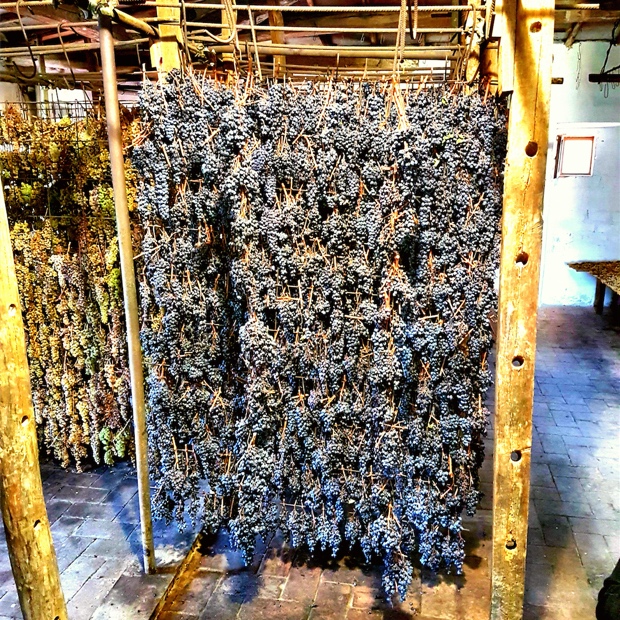
In the spectrum of “winery tours” there are few that can match the breadth of Fèlsina. In May of 2017 I was fortunate to break bread in Toronto with Fèlsina’s Giovanni Poggiali, oldest of Giuseppe’s three sons and current leader of the thousand year-old estate. Arguably the most famous and influential of Castelnuovo Berardenga’s wineries, it is here that many sangiovese clones and rootstocks have been developed, allowing them “to have an infinite palette of nuances and possibilities, much like a painter has infinite shades to work with.” Fèlsina is one of Chianti Classico’s great sangiovese innovators and champions. As Fèlsina goes, so goes Castelnuovo Berardenga and Chianti Classico. Our visit was led by Export Manager Chiara Leonini. A four-wheel trek through the vineyards up to Rancia. A walk through the appassitoio where grapes lay drying to make Vin Santo. A tasting through sparkling, chardonnay, Chianti Classico, Riserva, Gran Selezione and Fontalloro IGT.

Fèlsina Vino Spumante Di Qualità Brut Metodo Classico, Tuscany, Italy (Agent, WineAlign)

The zone of production is Chianti Classico, in the commune of Castelnuovo Berardenga southeast of Siena. Blended from 60 per cent sangiovese with 20 each chardonnay and pinot noir, Fèlsina’s is a gingery, yeasty, rich and textured sparkling wine, definitely not Franciacorta or anything remotely Lombardic. The time wait is 24 months on the lees and not labeled millesimato but rather non-vintage despite indeed being 100 per cent 2014 fruit. A little direct and green with early harvested sangiovese the reason but it’s been transformed in conjunction with the Champagne varietals. The fantasy to make quality sparkling wine, especially in this furthest southerly Chianti area is made into reality by the Fèlsina risk taking, culminating in such delicious and textured reward. Drink 2017-2020.  Tasted September 2017

Fèlsina Chardonnay I Sistri 2015, IGT Toscana, Italy (Agent, $41.99, WineAlign)

The sisters is IGT Toscana chardonnay that was first made in 1997. “This is our white wine, with a little bit of history,” says Chiara Leonini, from the ancient instrument sistro, shaken with a sound dedicated to agriculture. Quite a sunshine, golden hue, buttery, almond marzipan-laden chardonnay for the undisputed lover of such a phenomenon. Drink 2017-2020.  Tasted September 2017

Fèlsina Chianti Classico Berardenga 2015, Docg Tuscany, Italy (730788, $29.95, WineAlign)

Chianti Classico 2015 is forged from a selection drawn off of the eleven parcels on the estate with many soils, clones, expositions and slopes. I can’t help but look at the commune’s name Berardenga and see Fèlsina’s estate plot swept gathering as a grazing sangiovese, from the Italian “radere” or “radente.” Big and medium oak casks are used, mostly Slavonian and eight-ish months in mainly used barriques. This CC is 210 of 480,000 total bottles produced on the estate. It’s certainly not too serious, fresh as need be but still with a thick consistency and a pure, rustic edge. Carries some cure, char and corporeal reality though it’s got its number pointed towards elegance. It was not hard to make great wine in 2015 and yet so many missed the point. Not Fèlsina. This is classic and I mean classico Chianti. Drink 2017-2021.  Tasted September 2017

Fèlsina Chianti Classico Berardenga 2014, Docg Tuscany, Italy (730788, $29.95, WineAlign)

Still in a closed state of restraint, demure and only now gifting dried herbs, dusty fennel and a bit of char. The time is not yet but much further away for the challenged 2014. The acidity and structure are exceptionally intertwined and it should not be forgotten that with no Rancia made in ’14 the best grapes are here and much dedication is afforded this not oft so serious wine. It’s quite serious in 2014. Drink 2018-2024.  Tasted September 2017

Fèlsina Chianti Classico Riserva Rancia 2013, Docg Tuscany, Italy (82362, $55.75, WineAlign)

The vineyard takes its name from the historic Rancia farmhouse, once a Benedictine monastery and few if any vineyards in Chianti Classico are equipped with vines as genetically predisposed as here. More recent plantings utilize DNA from massal selections gathered from the old vineyard, a decision not lost on the perpetuation of vine ancestry and classic ability. Rancia is the true Riserva, solely entrenched as such, kept safe from the temptations of Gran Selezione and always antithetical to sangiovese IGT. It’s all good in 2013 and from the stellar season comes one of CC’s most storied Riservas replete with layers of fruit from great parcels, in more wood than almost any brethren or sistren could handle and it amalgamates, integrates and ultimately transcends the sangiovese-Riserva continuum with seamless ease. The curative, hung long for slow development style brings such restrained power, exercised finesse and unbridled energy. This will live 20 years easy. These are wines of acumen and of a deep and pure understanding of sangiovese, Alberese and Galestro soil. Bravo Giovanni. Drink 2019-2029.  Tasted September 2017

Fèlsina Chianti Classico Riserva Rancia 2005, DOCG Tuscany, Italy (82362, $55.75, WineAlign)

Rancia 2005 is an astute choice to follow-up the exceptional 2013, here from a warm year and it shows but it’s just as if everything has drawn further in, the fruit drying but keeping its flavour, its charm and its delicasse. The acid-tannin structure has not really changed, or so it seems because its composition was simply right and nothing seemingly can break it down. There is the secondary notion that imagines compressed and condensed balsamico but it has not yet even come close to syrup or liqueur. These sangiovese clones do not go there. It’s a special biotype and the farmers who have worked it surely have known what to do with it. “It was an ethical choice.” Drink 2017-2024.  Tasted September 2017

Fèlsina Chianti Classico Gran Selezione Colonia 2011, DOCG Tuscany, Italy (Agent, $208.99, WineAlign)

Chianti Classico Gran Selezione Colonia 2011 is clearly designed to be different and unlike 99 per cent of the other wines in the category. Fèlsina’s shows the most restraint meets elegance in power shown by a 2011 GS, a year where big, grand, brooding and robust is usually the name of the game, order and direction. Not at Fèlsina where melting, integrating and implosive intensification is wrapped inside the great sangiovese enigma. Here the dusty, curative, floral and herbal aromas are expressive but the flavours, tannins and acidity are a kept group. The energy is controlled and the length is outstanding. “Our idea of Gran Selezione is this one,” tells Chiara Leonini. Was an IGT in 2006 and then GS in 2009. There are 3000 bottles produced, in wooden cases, kept separate and special. Drink 2019-2031.  Tasted September 2017

Fèlsina Fontalloro 2013, IGT Toscana, Italy (Agent, $89.99, WineAlign)

Fontalloro 2013 is not as much of a departure as most IGT, here the consistency of biotype and what you do with your exceptional grapes is followed with the same clarity, finesse and detailed instruction. The grapes come from vineyards straddling the border between Chianti Classico and the Chianti Colli Senesi denomination, bringing sandy, loamy, silty with pebbles and marine sediments into the calcareous Alberese and Galestro make-up. The variegation means the broadest of sangiovese expression for Fèlsina. Marvellously rendered and structured, no holes, seamless transitions and the ease with which fine acidity and even more fineness of tannin work as one. When understanding comes freely and easy like this you know there are reasons why the sangiovese universe does sometimes align. Drink 2018-2026.  Tasted September 2017

Tasting at Fèlsina

Villa A Sesta

Villa a Sesta, the name of the ancient Castelnuovo Berardenga village and also the winery owned by Riccardo Tattoni, Founder of CIGP Group. The hamlet lies along the provincial road that leads to Brolio in Gaiole. Until the mid ninth century it belonged to the Berardenga counts and in 1882 their estate was assigned to the San Salvatore Abbey in Campi, known as ‘della Berardenga’. Written evidence regarding the Church of Santa Maria in Villa a Sesta dates as far back as the eight century and it was once a subsidiary of the hamlet of San Felice. Our visit began with one of the greatest meals in my life time at L’Asinello Ristorante in the village of Villa a Sesta. Sales Director Franco Russo led us through mini verticals of Il Palei CC, CC Riserva and VAS IGT Toscana. We then followed to the winery for some barrel sample tastings with Technical Director Roberto Ciani.

Tasting through Villa a Sesta

Villa A Sesta Chianti Classico Il Palei 2014, DOCG Tuscany, Italy (Agent, $23.99, WineAlign)

Il Palei, perhaps translated as the “ancient geological one” is 100 per cent sangiovese and nosing it side by side with ’13 the similarity is quite striking. Dusty fennel pollen and also the earth and stone, friable, crumbled in the air. Tart and black cherry flavours dominate. Shows off the work of the enologist Marco Mazzarrini from Alto Adige who toiled in the Bolgheri and began working with Villa a Sesta in 2011, so now there is a lighter, less pressed, more floral (here violets) perfume. Here in the southeast butterfly wing of the Castelnuovo Beradenga territory. Opens with time and develops more charm, character and length. Drink 2018-2021.  Tasted September 2017

A week’s worth of sustenance in Toscana # 7- L’Asinello Ristorante’s Tarragon pesto risotto con funghi porcini

Villa A Sesta Chianti Classico Il Palei 2013, DOCG Tuscany, Italy (Agent, $23.99, WineAlign)

Chianti Classico Il Palei 2013 shows the same dusty reserve as ’14 and is not so giving, especially for the vintage. A bit more compressed, even a bit more pressed and intense, from sites at 450m with Galestro in the soil. There is a calm about it even while the intensity climbs but there is not much fruit because of so many early immovable parts. Plenty of stone and earth but the fruit is hidden away. Yet there is a lightness and a brightness, hard to explain but there. Also like ’14 opens after some time, with near secondary notes on the precipice. Drink 2017-2020.  Tasted September 2017

Villa A Sesta Chianti Classico Riserva 2013, DOCG Tuscany, Italy (Agent, $33.99, WineAlign)

Villa a Sesta’s Chianti Classico Riserva 2013 is a great example of the conundrum in some 13s, acting quite reserved (as per the house style) but also quite dramatic and volatile, yet miles from reductive. Tart red citrus meets currants and pomegranate on the direct attitude of the palate, with etches of dark black fruit and yet there are these hidden aromatic violets hiding in the wings. Waiting on integration and fleshing would be a smart move. Drink 2018-2023.  Tasted September 2017

A week’s worth of sustenance in Toscana #8 – L’Asinello Ristorante’s Nastri di cioccolato, gel di zafferano e mango

Villa A Sesta Chianti Classico Riserva 2012, DOCG Tuscany, Italy (Agent, $33.99, WineAlign)

Chianti Classico Riserva 2012 is the richer of the two (tasted side by side with 2013) for sure. Still there is the dark black cherry fruit and violet aromatic undertones, also the one pressed deeper and with the wood felt stronger, though with less vintage-determined volatile behaviour it comes by this character honestly. Drink 2017-2021.  Tasted September 2017

Godello with L’Asinello Chef Senio Venturi and Elisa Bianchini

Villa A Sesta VAS 2013, IGT Toscana, Italy (WineAlign)

Vas Toscana IGT 2013, as in Villa a Sesta, here clearly modern, with what just has to be cabernet sauvignon and merlot. It’s flat-out juicy, Cassis and mulberry laden, yeah, so juicy from wild berry flavours. Just a touch more cabernet is would seem (maybe 60 per cent), internationally styled and really clean, transparent even and did I say juicy? Spent 18 months in barriques but it’s not woody whatsoever. Turns on an about-face dime away from the sangiovese as much as any estate thus far but in the finest possible way. It is not possible not to find some enjoyment in this wine, even while it sheds or celebrates any regional character. Drink 2017-2021.  Tasted September 2017

Villa a Sesta

Villa A Sesta VAS 2012, IGT Toscana, Italy (WineAlign)

Vas Toscana IGT 2012 is quite similar to ’13 but with a slightly higher acidity and consequently more località or sense of place. It would seem that ’13 is purely a sangiovese vintage while ’12 finds a way to elevate the Bordeaux. A bit of roasted or braised meat flavour, with spice. Hard to say but that is what this wine tells us. Really shows the step up in quality with ’13. Drink 2017-2019.  Tasted September 2017

Rancia Vineyard at Fèlsina, Castelnuovo Berardenga, Chianti Classico

Good to go!

Godello

Twitter: @mgodello

Instagram: mgodello

WineAlign

Castellina in golden light

Gallo Nero of Rocca delle Macie in Castellina in Chianti

Each time I travel to Chianti Classico the conversation regarding sub-zones rises closer to the surface. The deep and profound understanding of sangiovese as contributing to the greater good and power of Chianti Classico will not soon be superseded but producers are increasingly adamant about presenting their wines in the context of località and cru classificata. An annata is coming soon from which the names of both commune and village will proudly by worn on the bottle. With time comes change, however slowly, as necessity draws nearer and clearer into focus.

Granted there are some exceptions in Chianti Classico where fruit from neighbouring communes get together to make a Chianti Classico blend, so to speak, but these examples are few and far between. The Gallo Nero producers own, farm and harvest grapes from estate vineyards surrounding or in very close proximity to their production facilities. Chianti Classico is a highly territorial place, protected to the ultimate end of and by a family’s (or a custodian’s thereof) genealogy, history and legacy. As the region continues its march into the most modern of golden age there is a palpable and emotional push to celebrate the places within the place.

Related – Get Radda for Chianti Classico

The thinking or imagining about the landscape of Chianti Classico is more often than not acquiesced by a general feeling of winding roads through hilly landscapes, verdant vineyards and lines upon lines of cypress trees leading up drives to Etruscan estates. Generally speaking there is plenty of truth in such a conjuring but the distinct vistas, angles, geologies and visually speaking, the casts of light are so very different from one collateral enclave to the next. In Castellina there is a sense of wide open space and undulation you just don’t find in neighbouring lands. Borders are shared with Castelnuovo Berardenga to the southeast, Radda to the east, Greve to the north and Barberino Val d’Elsa to the northwest.  There can’t help but be some venn diagram drawn circles to adduce commonalities with neighbouring communes but Castellina is unique to itself and to its 66 producers associated with the Consorzio Vino Chianti Classico. In many respects and though it may be a generalization to say so, the sangiovese of Castellina are of the most lush, full-bodied and modern wines in the region. There is a thread that runs through, deep, mature and wise, an echelon of tangibility, from umbrage through illumination to loop a Castellina character from beginning to end and back again. The circle always returns to a point where Castellina is bathed in golden light.

This past September an ambassadorial group of Canadians paid visits to three historical properties in Castellina in Chianti. John Szabo M.S., Brad Royale, Steven Robinson and Godello took another step into the world of understanding, unearthing and disseminating the particular characteristics of communes and in the case of Castellina the epiphany was found in the consistency of the wines. It may be abstract to say but the Chianti Classico found here offer the greatest probability of correctness, high quality and regional guarantee. Read these 21 notes from Bibbiano, Castello di Fonterutoli and Rocca delle Macie, then judge for yourself.

Bibbiano

Related – Chilling with the bad boy of Chianti Classico

My second visit in as many years with Tommaso Marrocchesi Marzi reinforced the duality of landscape and sangiovese personality that the highly cerebral and zealous winemaker accepts, cherishes and celebrates through his wines. Bibbiano’s extraordinarily unique plateau position is a place of great dichotomy. The vines of Montornello slides gracefully down on the northwestern side and on the southwestern, Vigna del Capannino. “With glaring clarity is the determinate or indeterminate Bibbiano slope each wine draws their fruit from. In some cases one or the other and in others, a combination of the two. Montornello and Vigna del Capannino. The descending vineyards on either side of the Bibbiano plateau offer up an incredible study in contrasting Chianti Classico geology.”

We tasted eight wines with Tommaso, some of which were revisits for me. He also shared three new vintage samples, first a 2016 barrel pull from fruit drawn off the northern side. From tonneaux it gave beautiful, sexy fruit, spicy, tart, of great acidity and fine, spicy tannins. Structurally speaking this can only be from Montornello, albeit from wood, unblended with concrete sangiovese, so tannic, and very much in spice. The 2016 southern side is sangiovese grosso, from 25hL Slavonian oak botti and again, could only be the Capannino side with its big, thick and cakey fruit, massive, spicy and long. A 2016 blend or “taglio” may or may not have had some malvasia nera in there, from French tonneaux. Such perfume, alarmed, unparalleled, velvety, mouth coating and intense. With spice again and tight, taut, tannic (tight grain) structure. Really cakey and the thought again is just wow.  Here are the notes on the eight finished wines.

Bibbiano Listrice 2016, IGT Toscana, Italy (WineAlign)

Listrice is a blend of trebbiano and malvasia, pretty much 50/50, a fantasy name says Tommaso Marrocchesi Marzi. Il Istrice is a simple, fresh, straightforward white representative of the area. It’s salty, directly tart and made from fruit pulled only off the northern site/side of the Bibbiano estate. Is this so named because the northern vineyard’s fault dip is steeper near the surface then shallower with increased depth? Perhaps one day Tommaso will concur. There were approximately 2000 bottles produced. Drink 2017-2018.  Tasted September 2017  bibbianowines  lesommelierwine  @bibbianowines  @LeSommelierWine  Bibbiano Chianti Classico  Le Sommelier, Wine Agency

Bibbiano Rosato Scappalepre 2016, IGT Toscana, Italy (WineAlign)

Scappalepre, as in “the run away hare,” another whimsical name for a Bibbiano wine. This follows the growing number of specifically designed Tuscan rosés, especially for the Chianti Classico territory, to join the trendy ranks but with great sangiovese purpose. Scappalepre is from 100 per cent sangiovese fruit picked off of north and south vineyards and harvested purposely for Rosato. It is picked early, at least a few days before for Chianti Classico. Not quite saignée method but with a wealth of Rosé possibility, fresh and structured, confusingly phenolic and up there in the 14-plus per cent alcohol realm. A wine of sugars, acids and alcohol. It’s in a league of its own. Approx. 2000 bottles produced. Drink 2017-2019. Tasted  September 2017

Bibbiano Chianti Classico 2015, Tuscany, Italy (168286, $23.95, WineAlign)

“It’s a very genuine grape. It will never try to have fun with you,” explains Tommaso Marrochesi Marzi. This could easily have been said about the 2014 sangiovese though we know by now that the grape’s resilience has and will continue to bring itself about, and around. This 2015 shows its colours early, often and in great fruit strength. It’s beautiful and expressive, a spoken varietal message that is clear and understood. It should be enjoyed while it talks in fruit this way. Silky smooth, textured like fine satin, caressing and even sexy, sulty and lush. No colorino now and perhaps its inclusion with be more likely when the new vineyard grows up but for now the indigenous grapes are used in the Bibbianaccio IGT. Here again raised in all concrete for the élévage lending freshness, properly oxidative, anti-reductive character. Drink 2017-2019.  Tasted September 2017

John Szabo M.S., Steven Robinson, Brad Royale, Silvia Fiorentini and Tommaso Marrocchesi Marzi

Bibbiano Chianti Classico Riserva 2014, Tuscany, Italy (AgentWineAlign)

The first vintage not called Montornello is now a Chianti Classico Riserva on its own with that (northern slope) vineyard separated as a Gran Selezione. The smooth depth of sangiovese fruit character here is entirely Riserva though without edges or toughness. No grit, some minor grip, fineness and silkiness of tannin. The perfect summer of September allowed picking to happen at the end of the month, in delivery of enough quantity and quality for both Riserva and Vigne di Montornello Gran Selezione. A Riserva as polished, modern, clean and drinkable as they come and a terrific effort for the challenging vintage. Drink 2017-2022.  Tasted September 2017

Bibbiano Chianti Classico Gran Selezione Vigne di Montornello 2014, Tuscany, Italy (AgentWineAlign)

The artist formerly known as Chianti Classico Riserva is now Vigne di Montornello beginning in 2014, from the northern side so not a single-vineyard so to speak but a collection of very specific vineyards. Spent 18 months in a mix of wood, the thread carried forward from the Riserva but with a more focused, intense and layered approach. Having already needed a reset of the compass to wrap my head around the Riserva now taking in some Capannino side fruit, the recalibration also involves moving upwards in pyramid quality. The plan is for the best of Montornello fruit to work with precocious acumen so that it may immediately transport this GS to a new plenary place for Bibbiano. It’s offer of gratification is fleeting in comparison because it’s a conceptual baby as compared to the Capannino, in this or any near future vintage really. Drink 2018-2024.  Tasted September 2017

Bibbiano Chianti Classico Gran Selezione Vigna Del Capannino 2013, DOCG Tuscany, Italy (AgentWineAlign)

The Chianti Classico Gran Selezione Vigna Del Capannino 2013 is monstrous, from ’58 and ’62 sangiovese grosso vines put in by Giulio Gambelli, then grafts from that material for masale propogation in 1999 and the 2000s. The departure from Brunello is here, a huge, muscular, dare it be said Bibbianaccio of the sangiovese Bibbiano family, in GS form, thick, tannic, brooding, exceptionally structured, robust and 15 years away from announcing its true plans. This bottle is subdued however slightly from a spot of TCA but not enough to warrant skipping on past. Wow. Drink 2021-2032.  Tasted September 2017

Bibbiano Chianti Classico Gran Selezione Vigna Del Capannino 2011, DOCG Tuscany, Italy (AgentWineAlign)

The vineyard “Del Capannino” was planted in the 1950’s by the late great Giulio Gambelli, assistant to Tancredi Biondi-Santi. Not surprisingly and in connection to Brunello di Montalcino it is a clonal planting of sangiovese grosso, with further propagation done in the 1990s. The rich Albarese soil of Del Capannino enjoys the finest exposure and microclimate on the estate and is considered the best expression of Bibbiano’s “genius loci,” the spirit of the place. The first single vineyard vintage was 1998 and the Riserva designation switched to Gran Selezione in 2014, retroactive to the 2010 vintage. Today Bibbiano uses Botti (di rovere) Grande and Tonneaux (beginning in 2008) after barriques had been used for years. Still and always has been 100 per cent grosso, the only producer to do so in Chianti Classico. And so theirs is a liqueur that of course takes your mind to Brunello but this is purely Castellina and Chianti Classico so don’t be confused or tempted to settle for idyll comparisons. This has freshness, purity and that enticing meets teasing acidity, certainly consistent with and of no divergence to Bibbiano style. Ties to CC and CCR are blatant, necessary and so very pleasing. There is great structure but you can think about drinking this in its youth. It wont let out all its secrets but it will begin to tell its story. A story of territory. Drink 2019-2028.  Tasted February and September 2017

Bibbiano Bibbianaccio 2011, Igt Toscana, Italy (AgentWineAlign)

Bibbianaccio comes to light in its inaugural vintage, “the bad boy of Bibbiano.” Who is this bad boy, wine or man, referring to Tommaso Marrocchesi Marzi perhaps, or is it something other? The 50 per cent sangiovese, (40) colorino and mixed varietal (including malvasia bianca) blend is an ode to a time before, when Chianti Classico regional wines were blends filled with whatever grew in the fields and men were men. This (mere production of 2,000 bottles) one is forged with extended battonage, malolactic is done in tonneaux and then the blend is assembled and sent to Slavonian oak. The bad more likely refers to a departure, a break from the stylistic and the the territorial approach. His purpose is “to show that we are capable of anything,” insists Tomasso. His rebel is floral and it reminds me of a northern Rhône syrah-viognier, in a sangiovese-colorino with white grape addendum body. Colorino brings the colour, but texture is also ushered in. The punch downs, the stalks mined in, the wood and the compression all give this a vivid, fleshy reality. It’s also much more tannic than the straight-shooting sangiovese. Bibbiannacio is yet another wine tasted in Chianti Classico with no frame of reference, or certainly not one that I have ever tasted before. It is drawn fruit on down from both sides of the Bibbiano plateau but I really taste the calcaire, liquid chalky and mixed with that tannin showing that some further bottle time is needed. Drink 2019-2025.  Tasted February and September 2017

Castello di Fonterutoli

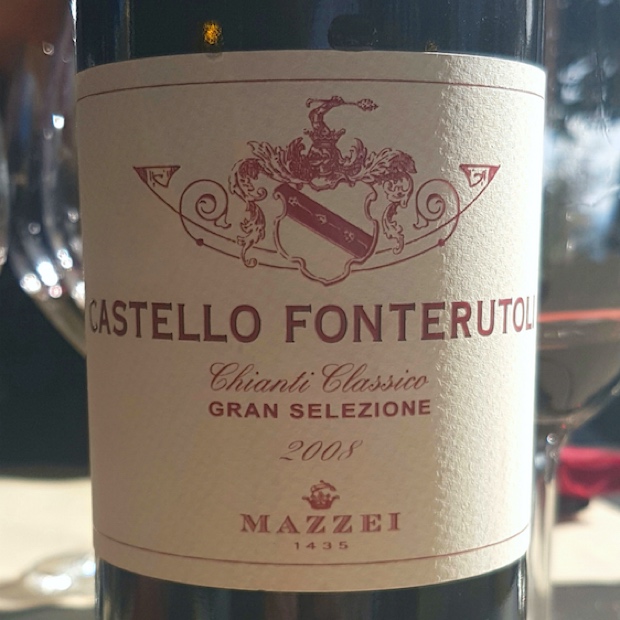
The Mazzei family lays claim to Chianti Classico’s origins in a document authored by Ser Lapo Mazzei in 1398. In correspondence from the 16th of December between “the keen notary” and Francesco Datini, “the merchant from Prato “Ser Lapo Mazzei made reference to “Chianti” as a production region and denomination. In 1435, when his granddaughter Madonna Smeralda Mazzei married Piero di Agnolo da Fonterutoli, the holding became part of the family’s estate. Since then, for 24 generations, the Mazzei family have produced wine at Castello di Fonterutoli.

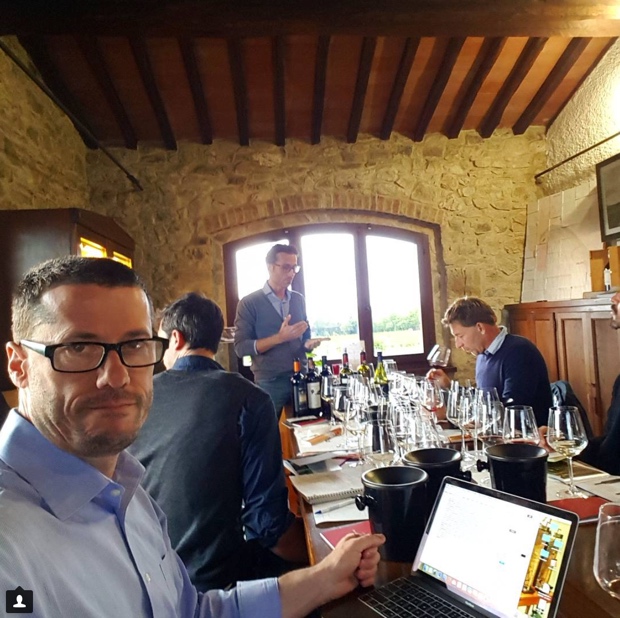
Filippo Mazzei led us through a tasting of seven wines, including the experimental and visionary “Mix 36,” an IGT composed of 36 clones of Fonterutoli planted sangiovese. We then followed Filippo across the road from the estate and village to Osteria di Fonterutoli for lunch and some spirited discourse on sangiovese and the future of Chianti Classico.

Mazzei Badiola 2015, IGT Toscana, Italy (662197, $19.95, WineAlign)

Badiola is a sangiovese-merlot, 70-30 mix and its name comes from the tiny Roman times (circa 998) church set in one of the estate vineyard at 650m. This so happens to be the highest elevation in the area. Badiola sees 10 months in mainly used barriques for the intent to fashion a fruity, round, “everyday” Super Tuscan. It’s actually a bit lactic, dark berry dusty and with some solid grip. Drink 2017-2019.  Tasted September 2017  marchesimazzei  profilewinegroup  @MarchesiMazzei  @ProfileWineGrp  Marchesi Mazzei – Castello di Fonterutoli  Profile Wine Group

Castello di Fonterutoli No. 10 2014, IGT Toscana, Italy (AgentWineAlign)

No. 10 is something akin to a lottery pick, chosen from a group of samples and this specific sample was number 10 in the testing. It’s a dusty, properly volatile, minor bretty young sangiovese (with some other varieties mixed in) and led by dark currant to black cherry fruit. It’s neither avant-garde nor a legend but it is very particular in style. Drink 2018-2021.  Tasted September 2017

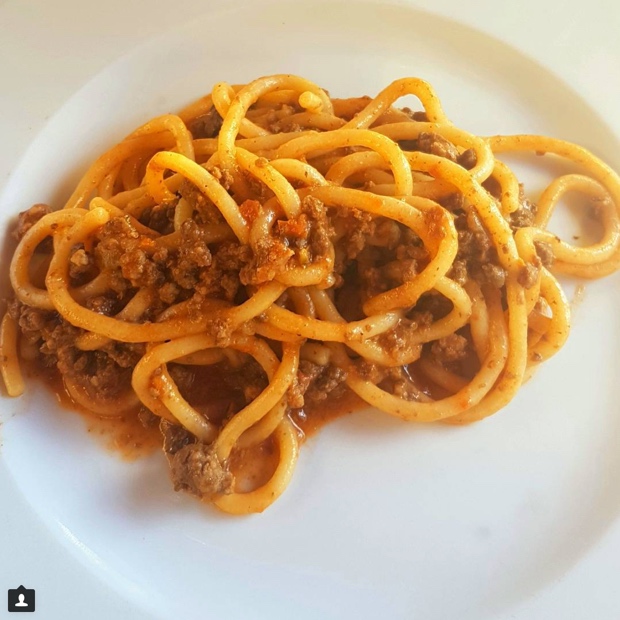
A week’s worth of sustenance in Toscana #5- Pici con ragu di cinghiale at Osteria Di Fonterutoli

Mazzei Chianti Classico Riserva Ser Lapo 2014, DOCG Tuscany, Italy (288530, $22.95, WineAlign)

Fonterutoli’s Chianti Classico Riserva Ser Lapo is named for Filippo Mazzei’s ancestor “Mr. or Signore Lapo,” the first to use the word “Chianti Classico” on a wine label, in December of 1398. This Riserva is 90 per cent sangiovese with 10 merlot and while it no longer fetches three florins, 26 soldi and 8 dinari for 6 barrels, it consistently represents one of the finest values for Riserva level on the CC pyramid. This 2014 spent 14-15 months in barriques and its classic, old time, rustica red tart fruit sangiovese with fine tannins wastes no time into the sidetracked distraction of unwanted meanderings. Walks the Chianti Classico line with classic distinction. Drink 2018-2022. Tasted September 2017

Mazzei Castello Di Fonterutoli Chianti Classico Gran Selezione 2013, DOCG Tuscany, Italy (Agent, $75.00, WineAlign)

Some malvasia nera and colorino are blended in with the 92 per cent sangiovese, raised in 60 per cent new barriques plus tonneaux. The Mazzei GS is selected from the best parcels and finest quality grapes within those parcels. This is the fourth vintage, 2010 being the first and from a lineage for the wine known as Castello that began in 1995. Was not a Riserva before but just the Castello (IGT). It’s 2013 to be sure but with a deeper, nearly hematic and brooding character. Still the Fonterutoli dusty red fruit but with some iron fisted tannic management. It does carry this sexy feel and yet it’s so serious, so ’13. Drink 2018-2023.  Tasted September 2017

Filippo Mazzei in discussion with Brad Royale and Steven Robinson

Castello di Fonterutoli Mix 36 2013, Igt Toscana, Italy (AgentWineAlign)

Castello Fonterutoli’s Mix 36 IGT Toscana is a brilliant stroke of insular blending genius, from a plot with the 36 sangiovese biotypes planted together but all from the same rootstock, planted in 2003 and 2004. It’s from a very clay vineyard at 300m. An experimental wine to be sure, the commotion variegates layer upon strata, of multi-sangiovese personality interwoven with 35 more variations of its own distinct character self. The becoming may be muddled but it’s simply delicious, fruit juicy, high in acidity though the tannins seem tamed and rendered. Filippo Mazzei insists this to be considered at the top of the pyramid, on a Gran Selezione level. He’s more correct that even he might realize. Just bloody delicious multiplicity of sangiovese. Drink 2018-2024.  Tasted September 2017

Castello di Fonterutoli Concerto Di Fonterutoli 2015, IGT Toscana, Italy (AgentWineAlign)

Concerto di Fonterutoli is the Super Tuscan that started in 2001, originally with 20 per cent cabernet sauvignon. In the nineties there was only half a hectare, and so ’94 was then the last vintage. Over the last 20 years there has been a gradual migration to sangiovese and a restoration of this historical vineyard, but now there is a return or at least a mimic of what was done 20 years ago. So it’s a return to the 80-20 split, not a wine from Concerto Vineyard but a fantasy name, bringing two together, now sangiovese from Fonterutoli and cabernet sauvignon from Siepi. It’s deeply cakey, rich, tannic, very wooden sheathed, with almost a sweetness as a result, more like Napa than almost any wine from lands in Chianti Classico. It wells with big, sweet, grainy and chalky tannins. Huge monster of a wine. Drink 2019-2026.  Tasted September 2017

Castello di Fonterutoli Siepi 2015, IGT Toscana, Italy (AgentWineAlign)

Siepi is the 200m vineyard, west of Fonerutoli, a historical place that already had vineyards planted when the family arrived in the 1400s. This is the only exception to what is being done at the estate. Sangiovese (1995-2000) and merlot (1985) grown, picked and vinified separately. It’s essentially a single-vineyard blend, though on two sides of a road. A 50-50 split, separated and then brought together. It carries more tartness, high acidity and fine tannic structure. Very fine, less cake then Concerto and more of a seamless affair. Merlot in certain parts of Chianti Classico just seems to have this affinity, alone and in partnership with sangiovese, in ways that cabernet sauvignon just does not. Drink 2019-2027.  Tasted September 2017
Rocca delle Macie Estate, Castellina

Rocca delle Macie

Sometimes it just feels like Rocca delle Macie sits at the epicentre of not only Castellina in Chianti but the greater territory that is Chianti Classico. Consorzio President and estate proprietor Sergio Zingarelli is certainly a principal reason for the sentiment but it’s more than that. No other three-tiered pyramid set of examples for Chianti Classico, Chianti Classico Riserva and Chianti Classico Gran Selezione speak to the perseverance of presence and consistency of quality in the Ontario market (plus 40 other countries) and yet it feels as though Rocca delle Macie is just beginning to reinvent its oeuvre. Zingarelli’s late father Italo, a former boxer and producer of spaghetti westerns, bought Rocca delle Macìe in 1973 and today the company produces wines off of six estates, including Macie, Fizzano and Sant’Alphonso. Sergio and his wife Daniela, daughter Giulia, son Andrea and Marketing and Communication Manager Thomas Francioni welcomed us into the Zingarelli home for a comprehensive tasting and the most exceptional home cooking. Not to mention the finest gelato in Toscana and Andrea’s very special craft gin. I made notes on the following six wines.

ry  And in #castellinainchianti we taste @chianticlassico @roccadellemacie with The Presidential #sergiozingarelli

Rocca Delle Macìe Moonlite 2016, IGT Toscana, Italy (400879, $17.95, WineAlign)

Moonlite 2016 gathers vermentino, chardonnay and pinot grigio (40/40/20) from vineyards in southwest Toscana, not far from Grossetto. The lands are really, ostensibly, technically in the Morellino area. A white Super Tuscan so to speak, it’s fresh but also rich and funny in that it’s almost as wet stone smelling as it is pear fruity. There is this ubiquitous Italianate feel about it, not necessarily Tuscan but as a regional white (not sangiovese) it’s harder to define. The vermentino lends a saltiness and the nearby seaside a secondary note as such. Drink 2017-2019.  Tasted September 2017  roccadellemacie  profilewinegroup  @roccadellemacie  @ProfileWineGrp  @roccadellemacie  Profile Wine Group
Rocca Delle Macìe Chianti Classico 2015, DOCG Tuscany, Italy (741769, $18.95, WineAlign)

This VINTAGES Essential in Ontario delivers a contiguous style continued since the brand switched to fresher, less brooding gears over the past five or six years. Sees 10-12 months in large Slavonian casks (5000L), from many estates and a selection of vineyards. Freshness is a virtue and depth of fruit as important as anything, in a consistent, well-mannered and fleshy experience, top to bottom. Carries a small amount or Bordeaux varieties.  Last tasted September 2017

Rocca delle Macie’s Chianti Classico 2015 makes the adjustment and will be perfect for the current market, now changing in style again, away from dark colour, with less cabernet sauvignon, to be so very sangiovese and to celebrate the vintage. The classic fresh, bright and righteously dusty red cherry is just so very subtle and refined for what sangiovese can be. You will be hard pressed to find a more amenable, reachable and commercially getable Chianti Classico from a vintage ready to roll. Drink 2017-2019.  Tasted February 2017

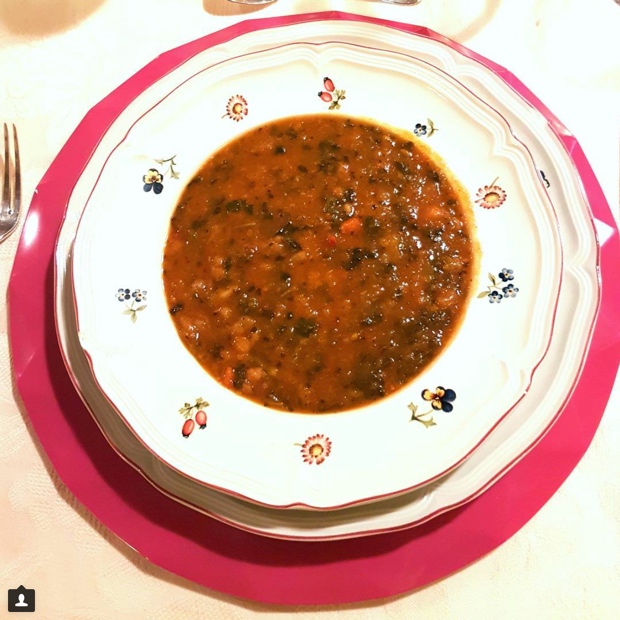
A week’s worth of sustenance in Toscana #4- Ribollita da Daniela Zingarelli

Rocca Delle Macìe Chianti Classico Tenuta Sant’Alphonso 2015, DOCG Tuscany, Italy (Agent, $22.95, WineAlign)

Tenuta Sant’Alphonso is the single vineyard Chianti Classico, from one of five estates, mostly clay and dictated by 100 per cent sangiovese. French oak of smaller size (25 hL mostly, up to 30) is employed because of the clay. The robust flesh and tannins need it and are coupled by it, but also refined by it. Aggressiveness only goes so far in sangiovese and then it hits you over the head so accepting the depth in espresso, dark chocolate and the eventuality of balsamic needs to be understood. The use of cement tanks (and less time in Inox tanks) helps to stave off reduction. This is one of the more Riserva like CCs on the market, carrying many characteristics that happen with more and smaller barrique aging. Drink 2018-2022.  Tasted September 2017

Rocca Delle Macìe Chianti Classico Riserva 2013, DOCG Tuscany, Italy (930966, $23.95, WineAlign)

Rocca delle Macìe’s is a selection of the best grapes pulled from all four estates, but in different (separate) vinifications and vivifications, aged in French barrels, half new and half 2-plus year old. The methodology looks for consistency in every vintage, because it’s the gathering of best fruit, (including half the fruit from the Sergio Zingarelli Vineyard). Very round, fleshy, composed, integrated, a high acidity (more than many) vintage, dry and intense.  Last tasted September 2017

The vintage is not so much one for Gran Selezione but that category’s loss is the Riserva’s gain. This is a very balanced and structured Riserva with a healthy dose of oak and an even greater sense of the Zingarelli family style. It’s crucial and obvious, correct and loyal, so very modern. Why shouldn’t it be? Let is settle for one year. Drink 2017-2021.  Tasted September 2016

Rocca Delle Macìe Chianti Classico Fran Selezione Riserva Di Fizzano Single Vineyard 2013, DOCG Tuscany, Italy (699454, $33.95, WineAlign)

Fizzano is the historical single vineyard that Sergio’s father Italo purchased from The Bertoli family (who did not have any vines) in 1984. From 1985 to 2010 it was CC Riserva and moved to the category of Gran Selezione for the 2010 vintage, keeping the Fizzano name. Mostly (95 per cent) sangiovese with five merlot, only French oak (20 per cent barriques), from calcareous (with quite a mix of sandy) soil. iIt’s a silky affair, ripe in tannin and from fruit so much so. One of the oldest vineyards (planted in 1985 to 1990) but needing replanting, to a higher (5,000+ plants per hectare) density. Not so much exceptional length but now having evolved into a really round, balanced and amenable CC. More than almost any GS.  Last tasted September 2017

Certainly the most affordable Gran Selezione on the market, Rocca Delle Macie’s From Castellina in Chianti is remarkably defined and tannic. The (32nd) vintage prepares for another profitable possibility, with ripe fruit, solid structure and those formidable edges. The re-branded single-Fizaano vineyard Riserva to Grand Selezione is again worth every bit of that advantage. Big, balanced and in the end, still brooding, let this rest for another two years. Drink 2019-2026.  Tasted January 2017

Rocca Delle Macìe Roccato 2010, IGT Toscana, Italy (Agent, $51.95, WineAlign)

Roccato is the second Super Tuscan of the estate (along with Ser Gioveto), this beginning with the 1988 vintage. It’s a 50 per cent sangiovese and 50 cabernet sauvignon split and the reasons for pouring a not so current vintage will become clear. Aged only in barriques Roccato is rich beyond the pale and with the first (very apparent) volatility and bretty culpability, though remarkably not as tannic as expected. It’s quite a smooth, silky, velvet cupboard but filled with acidity. This seven year point of age is certainly part of the mystique and secondary character is beginning (or has well begun to take this next step). Most supple and round and then the finish goes into chocolate ganache, dark toffee and a feigned note of sweetness. Will likely carry more cabernet sauvignon in the future and conversely Ser Gioveto (not tasted) will likely become a Chianti Classico Riserva. Drink 2017-2020.  Tasted September 2017

Gallo Nero of Rocca delle Macie in Castellina in Chianti

Good to go!

Godello

Twitter: @mgodello

Instagram: mgodello

WineAlign

Seventeen mind-blowing wines of 2017

No, wines do not have to be old to blow your mind but there is just something so mysterious, magical and hypnotizing about the experience of age in preservation. When we use the cliché “tasting history” it distracts from what is most poignant about tasting older wines. It’s the humbling and how wisdom, acumen and meteorological circumstance conspire to take us away from our troubles, to forget about life for a while and to realize that forces greater than us are truly in charge.

There are also young wines so precocious and wise beyond their years that they somehow intuit the future. These too can blow our minds, addle us as if lovestruck and disoriented so that only this confluence of smell, taste, texture and structure are what we know. It takes all kinds to populate a list that separates greatness from the rest, but that does not means only 17 wines were tasted to be extraordinary in 2017.  It means that some struck a vein while others grazed on the skin. Most important is that all were experienced because someone chose to share them. Thank you to the producers and the benefactors for bringing these bottles to light.

Related – 16 mind-blowing wines of 2016

Honourable Mentions

Château Haut-Brion 1986, Saffredi 2004, Brokenwood Sémillon 2007, Domaine Gros Frères Clos Voguent Musigni 2013, M. Lapierre Morgon 2010, Domaine G. Roumier Bonnes-Mares Grand Cru 1996, Domaine Jamet Côte-Rôtie 2006, Coppo Barbera d’Asti Nizza Riserva della Famiglia 2009, Le Fraghe Bardolino 2015, Sordo Barolo Riserva Gabutti 2006, Carobbio Chianti Classico 1990, J & J Eger Kékfrankos 2006, Château Léoville Las Cases 2001, François Cotat Chavignol Sancerre Rosé 2009, Domaine La Vieux Télégraphe Châteauneuf du Pâpe La Crau 2005, D’Arie Syrah 2012, Julia Bertram Handwerk Spätburgunder 2015, Planeta Carricante Eruzione 1614 2015, Dominus 1994, Château Lafite Rothschild 1998 and Esmonin Gevrey-Chambertin Clos Saint-Jacques 1993.

Several times a years I gather with groups of like-minded, wine-spirited folks, to break bread and to pop established icons, singular archetypes, varietal rarities and supernumerary misfits. Many of the wines on this 2017 list are a result of having been fortunate enough to be included in repeated repasts with pirates on picnics and doctors at dinner.  Most of the rest are travel related, in fact this year alone I tasted approximately 700 sangiovese, 200 barbera, 200 corvina and 100 nebbiolo. So many more of those praiseworthy reds and rosés deserved spots on this docket but alas, the list is short. I do not fulminate them, nor you neither. Here are Godello’s 17 mind-blowing wines of 2017.

It began like this and I got 15 dollars hid above the stove.

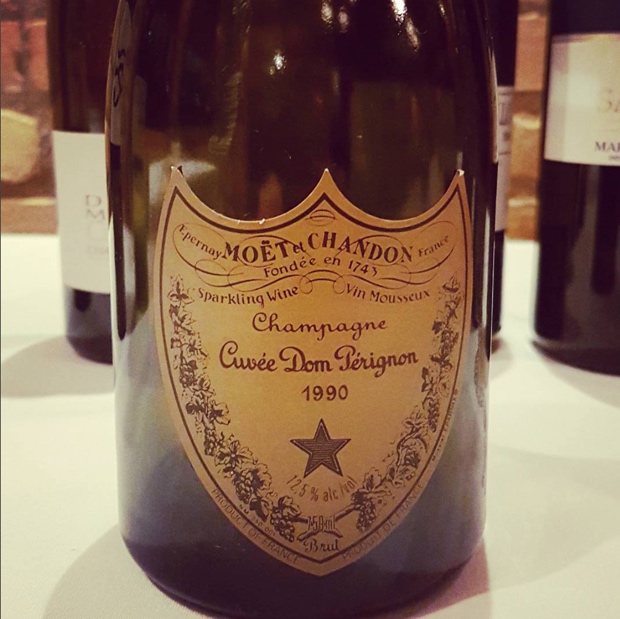
Möet & Chandon Dom Pérignon Vintage Brut Champagne 1990, Champagne, France (280461, AgentWineAlign)

Tasted blind the hue immediately leads the mind in one of two directions; hot vintage or decades of age. I’m tempted to consider a combination of the two, so the decision is warm vintage and a minimum of twenty years age. Further introspection takes me back to 1990 and when the reveal confirms this and in the abide of Dom Pérignon it means one thing. Start the process of thinking again. This wine has done its work, having accumulated a diverse set of developmental traits and processed them so that the language it now speaks is clear and pure. At 27 years of age it’s delicate, smooth, soft-spoken and settled. The finest golden toast (again in hue and more importantly in aroma) glows into the creamy texture, like preserved lemon transformed into gelid curd. The mouthfeel is exceptional with baking bread rising, puffy and satiny glazed across the palate. The seamlessness of this Champagne seeks, solicits and makes rendezvous with no peer or challenger its equivalent, not should any comparison be made. Kudos to a wine that stands on its own and makes you feel this good. It will continue to do so up to and perhaps beyond its 40th birthday. Drink 2017-2030.  Tasted March 2017  moetchandon  @chartonhobbs  @MoetUSA  @ChartonHobbs  @Champagne  Moët & Chandon  Charton Hobbs Canada  Champagne

Famille Picard Saint Aubin Premier Cru Le Charmois 2014, AOC Bourgogne (522078, $57.95, WineAlign)

This is a chardonnay to place the village of Saint Aubin in a remarkable light if only because it’s the most stony, flinty and tightly wound example just about ever. The Charmois is the elevator that carries the appellation into a purity of climat for Bourgogne Premier Cru. In this case terroir delivers the idea of Climat but it is the interaction of the maker that defines the notion simply because there is no mess and no fuss. It just feels like drinking straight from a bleed of the calcareous land, as might happen in a limestone goblet filled with Montrachet. You have no idea how good a deal this is from the most excellent 2014 vintage. Drink 2019-2028.  Tasted October 2017  domainesfamillepicard  profilewinegroup  #bourgognewines #FamillePicard  @ProfileWineGrp  @BourgogneWines  Domaines Famille Picard  Profile Wine Group  Bourgogne Wines

Domaine Bouchard Père & Fils Chevalier Montrachet Grand Cru 2015, AOC Bourgogne (Agent, $480.00 WineAlign)

Chevalier-Montrachet is a matter of aromatics, of the finest of the finest, preserved, reserved, impressionable and of quietly powerful impression. The deistic and the parrhesiastic are reached in this Grand Cru, “one who speaks the truth to power.” Elysium in chardonnay is captured for the perfectly ripe orchard and crushed stones. The young palate is almost severe but takes its first steps down the most ethereal path, with the finest drawn lines and rendered streaks of energy lit, sparked and smouldering. This is Bourgogne of intrinsic value, slowly rising to a crescendo where a flame flickers but within the sheltered lamp of a hurricane. How is such harnessed power even possible? Only like this, in Chevalier-Montrachet . Drink 2021-2037.  Tasted April 2017  bouchardpereetfils  woodmanws  vinsdebourgogne  @BouchardPere  @WoodmanWS  @VinsdeBourgogne  Bouchard Père & Fils  Woodman Wines & Spirits  Vins de Bourgogne / Burgundy wines

Domaine Sigalas Kavalieros 2015, Santorini, Greece (SAQ 11814421WineAlign)

I’ve not yet tasted the Kavalieros 2014, so this single-vineyard, 18 months on lees done in stainless steel Kavalieros 2015 made by “Mr. George” is the benchmark for Santorini, assrytiko and salty white wines everywhere. The first release was 2009. Straight up and turning the world on its head, like the old man on the label and upside down against Apollo’s Aegean Cyclades. This ’15 richer still, more than the seven villages wines and a hyperbole as compared to the entry-level assyrtiko, of deeper mineral, compressed, layered and fantastic. Crushed rocks permeate in aggregate, it’s quixotically saline and textured, of intense presence and finally, structured. For 15 years at least. A late shot of natural Santorini tonic swirls in centrifuge with assyrtiko so wound up. This will need 10 years to unwind and allow for cracks to form in the mineral shell, followed by the birth of its fruit. It should never be forgotten that assyrtiko can and will show fruit but with Kavalieros you’ll have to be patient. Drink 2020-2031.  Tasted March 2017  @DomaineSigalas  @MajesticWineInc  winesofgreece  domainesigalas  @MajesticWineInc  @DrinkGreekWine  @DomaineSigalas  Panayiota Kalogeropoulou  Wines of Greece

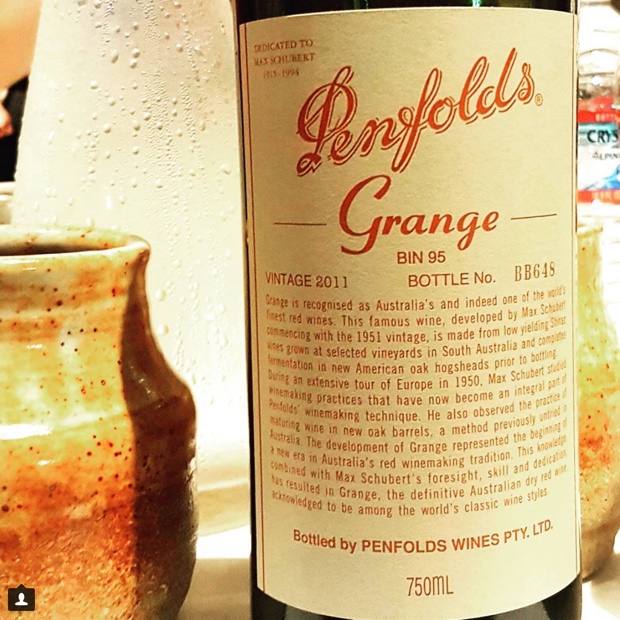
Penfolds Grange 2011, South Australia (356121, $750.00, WineAlign)

There is just something about cool, rainy and irreconcilably regarded vintages that brings out the best in wines made by winemakers of elite acumen. Deliver your best from the greatest of harvests but also “give me your tired, your poor, your huddled masses yearning to breathe free. The wretched refuse of your teeming shore.” Leave the middle of the road to someone else. This Grange faced adversity and won. The yields and output may only be 50 per cent of normal but what gives is the silky texture of Grand Cru Bourgogne. This chosen one of singular vision to represent the multi-tiered and faceted Penfolds Estate tells us about the world inhabited by the instinctual and the ethereal. It combines tannin, structure and aesthetic deeply engrossed in the shadow of its own looming destruction, but is designed from the first with an eye to its later existence as a ruin, forever preserved. If a perfect plum and a magical olive were crossed they would welcome this collective spice of no equal. The quality of bite and chew lead to rumination and the savour rests on a chart clearly defined but in high contrast and only to itself. An analgeisc meets hypnotic cooling is mentholated though if not specific in origin it is only and highly natural. Legendary vintage? Why not. This calm, cool and collected 2011 may just outlast some of the more recently considered top vintages of ’06, ’08 and ’10. Drink 2019-2035.  Tasted May 2017  penfolds  markanthonyon  wineaustralia  @penfolds  @MarkAnthonyWine  @Wine_Australia  Penfolds  @MarkAnthonyWine  Wine Australia

A deep #eredichiappone vertical delve with Daniele for perspective and a release of endorphins @ilNizza possibilities #progrettovini #collisionimonferrato

Erede Di Chiappone Armando Barbera D’asti Superiore Nizza DOC RU 2006, Piedmont, Italy (WineAlign)

RU by Daniele Chiappone is this, at first something altogether inexplicable but when tasted alongside his 2005, 2010 and 2011 it makes such perfect sense. Sense in where this fits in his evolution and to speak on behalf of the age-worthy ability of Nizza barbera. In a world where barbera perfume so often performs with perfunctory brevity this goes on and on. It is a unique combination of fennel frond, incense, hibiscus and violet to create an intoxicant and an anaesthetic. Yet another exceptional vintage is revealed, traditional and so alive, spun from earth crusting over cherry and then this smooth leather. The portal backwards 10 years allows for looks forward 10 more, especially into what’s coming from 2015 and 2016. To say the match with a prodigiously spiced in aromatic ragu over linguine was agreeable would be the understatement of the Monferrato century. Perfectly timed acidity seals the deal. This is barbera folks, of wit, age and history. Drink 2017-2021.  Tasted July 2017  erededi  ilnizza  @erededi  @ilNizza  Erede Di Chiappone Armando  IlNizza

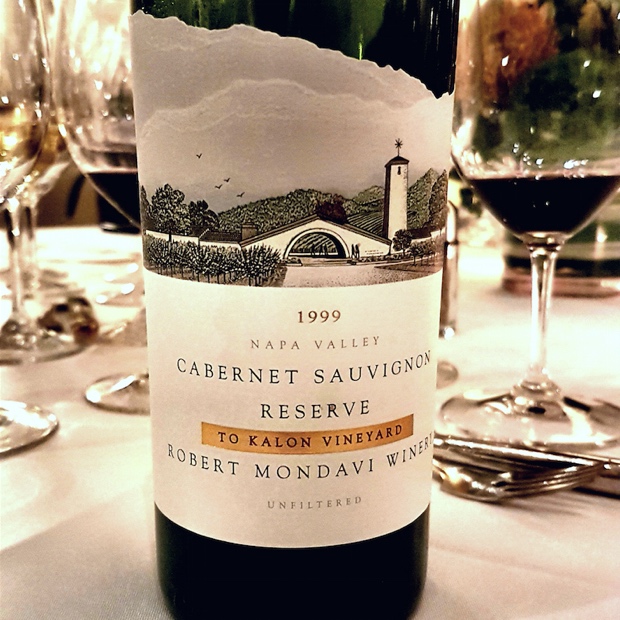
Robert Mondavi Reserve Cabernet Sauvignon To Kalon Vineyard 1999, Napa Valley, California (WineAlign)

This from a time when Mondavi labeled the reserve cabernet sauvignon as “To Kalon Vineyard,” a moniker of essential meaning that would return 14 years later on the 2013 bottle. If this were what Mark de Vere referred to as “a confusing moment in history” I could not say but “this strange bottling” provided an unequivocal and seminal turning point in this wine’s storied past, present and future. It was in fact a small, special cuvée, a little bit different than the ’99 Reserve. “The coolest vintage on record, until it wasn’t,” because of a warm period at the end of summer and early fall that ushered forth a certain, singular sort of ripeness. Regardless of memories, characterizations and twists of fate, this single-vineyard cabernet is as finessed, focused and precise as any Mondavi Reserve. It persists chalky, fine and gritty in tannin running amok, dragging the acidity forward and around. The workout is something to behold, a dispatch of late Napa fashion and never more successful than right here. The dépêche mode of To Kalon is by now famous but culminated with this ’99 for everything to follow, with consistency and a guarantee of modern quality. Listen to it croon “try walking in my shoes.” Many have and many continue to pay homage to this Napa Valley originator and pioneer. It’s a cabernet sauvignon of faith and devotion. Drink 2017-2029.  Tasted May 2017  robertmondavi  @RobertMondavi  Robert Mondavi Winery

Quilceda Creek Cabernet Sauvignon 2003, Columbia Valley, Washington (Agent, WineAlign)

A truly remarkable nose, notably violets and peregrine species of spices. There is so much perfume and beauty, an Aishwarya Rai Bachchan nose and then there is the fruit. Blackberry, Cassis then into vanilla, scented happiness like ruby red grapefruit and bergamot. If it should have aged I can’t say but it’s still a voluminous and voluptuous thing to sip. It blinds like first Growth Bordeaux with its perfect extraction. Thoughts keep at it, to blueberries, cigar box and Kirsch. The tannins are sweet and gritty, not fully resolved and imagine Margaux. You could consider taking out a mortgage on yours and your neighbour’s house for this one. It was one of many great reds tonight but I’ve just tasted this. And I wept. Drink 2017-2024.  Tasted March 2017  @QuilCreekWinery  @thevineagency  winesofwashington  wa_state_wine  @QuilCreekWinery  @TheVine_RobGroh  Quilceda Creek Vintners  @WINESofWA  The Vine – Robert Groh Agency  Washington State Wine

A great honour to taste this 1995 #carobbio #leone and in memory of #carlonovarese Thank you Dario and Silvia. Would like the chance to do it again in 22 years #toscana #sangiovese

Tenuta Carobbio Leone 1995, IGT Toscana, Italy (WineAlign)

Leone 1995 was made under the auspices of the Vittorio Fiore-Gabriella Tani oenology stylistic for Carlo Novarese. To say that this single-vineyard sangiovese is youthful would be the biggest IGT understatement of the century. From vines that at the time were 25 years-old, Leone is not just a survivor of a universally-declared incredible vintage, it is a singular expression from 1990’s Tuscany, in Chianti Classico and for Panzano. The violets, dried espresso and plum-amaretti semifreddo (savoury, not sweet) mixes with fennel frond, fresh rosemary and the 20-plus years lingering Carobbio tobacco. The acidity is fully intact, still travelling up and down the sides of the tongue, repeatedly and soliciting so much savour, sapidity, a desire for a mouthful of hematic, rare sear of Claudia’s beef filet and then more and more sipping. After 20 minutes the aromatics deliver a raspberry purée and even a black olive and mineral-saline, short of briny caper into the fray by stroke of some aromatic brush and bush in the light afternoon wind. That’s enough. I’m not sure my heart can take any more. Time for Vin Santo. Drink 2017-2029.  Tasted February 2017  carobbio_wine  chianticlassico  @Tenuta_Carobbio  @chianticlassico  Tenuta Carobbio  Chianti Classico

In @chianticlassico mano nella mano 1986, @fontodi #vignadelsorbo & #flaccianello thank you Giovanni Manetti for sharing these two opposing forces of the Tuscan paradox #chianticlassico

Fontodi Flaccianello della Pieve 1986, Tuscany, Italy (WineAlign)

Flaccianello in 1986 is actually though not surprisingly so different from Vigna del Sorbo, more than any other reason because of the cabernet sauvignon, but in a more philosophical way, because they have built a paradox, from the Super Tuscan ideal in revolution. Now the sangiovese going forward will be the most important and also the best wine, like looking back at this 1986, OK, not better than Sorbo but purer, honest, a clearer picture from which to learn from and ultimately a model for the future. Beautiful power, restraint, structure and yes, the kind of wine that deserves to be praised with the term elegance, overused, or not. Perfectly rustic, earthy and full of fruit with its accompanying complimentary, enervating and necessary acidity. Drink 2017-2023.  Tasted September 2017  Fontodi  chianticlassico    @chianticlassico  Chianti Classico  Az. Agr. Fontodi

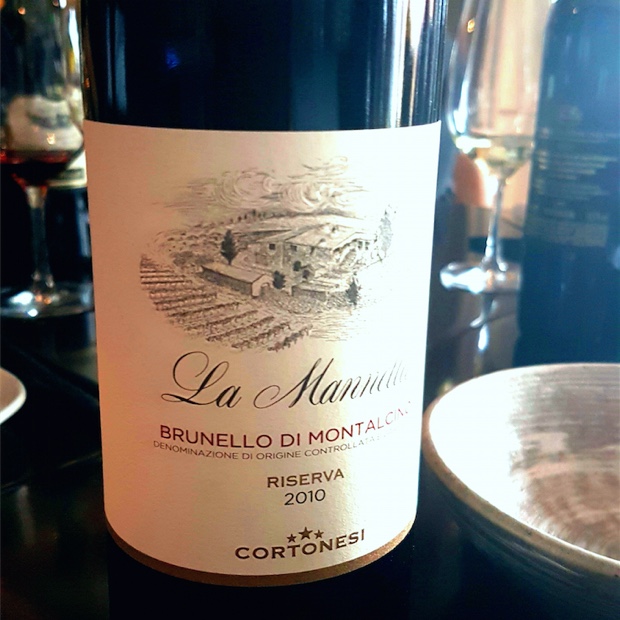
Cortonesi La Mannella Brunello Di Montalcino Riserva 2010, Docg Tuscany, Italy (Agent, $202.95, WineAlign)

There are few Brunello vintages afforded more attention in the last 10-plus, certainly ’04 and ’06, increasingly better even from ’08 and looking forward towards what greatness will come in 2015. Yes but not solely magnified through the lens of patience and bottle time, from 2010 La Mannella has coupled upon and layered over itself like compressed fruit and puff pastry. Though it begs for drink now attention, another seven years will be needed before it can safely be labeled as uncoiled and to reveal all that is wrapped so tight. Rich is not the operative but unmistakeable as Cortonesi it is; that natural clay soil funk of resolution and fully hydrated chalk. This is to sangiovese as Les Preuses Grand Cru Chablis or Rangen Grand Cru Alsace are to Riesling. It carries in its pocket the absolute meaning and genetic responsibility of where it comes from, with a curative and restorative ability to get you lost. Drink 2019-2031.  Tasted February 2017  marcora85  nicholaspearcewines  brunellodimontalcino  @LaMannella  @Nicholaspearce_  @ConsBrunello  Tommaso Cortonesi  Nicholas Pearce  Consorzio del Vino Brunello di Montalcino

Maison Roche De Bellene “Collection Bellenum” Grand Cru Clos De La Roche 1998, AOC Bourgogne, France (Agent, $364.95, WineAlign)

Clos de La Roche 1998 may be 19 years old but you have to swirl the britches out of this Grand Cru because reduction persists in its make-up. Once you work your way over the wall a field of wildflowers and a roses bouquet lays out as far as the nose can mind’s eye. This is pure candy in its most arid, blessed and gout de terroir way. It is as charming as Burgundy can be and yet so fine of tannin, tight and duplicitously-grained in clone upon itself. One of those wines so difficult to put to words because it teaches and you can do nothing but listen. I’d still want to wait two more years, maybe more, before knowing I’ve waited long enough. Close de la Roche speaks to me but to answer with any real credibility and respect I will need to think some more. Drink 2019-2035.  Tasted February 2017  domaine_de_bellene  nicholaspearcewines  vinsdebourgogne  @RochedeBellene  @Nicholaspearce_  @VinsdeBourgogne  Bellene  Nicholas Pearce  Vins de Bourgogne / Burgundy wines

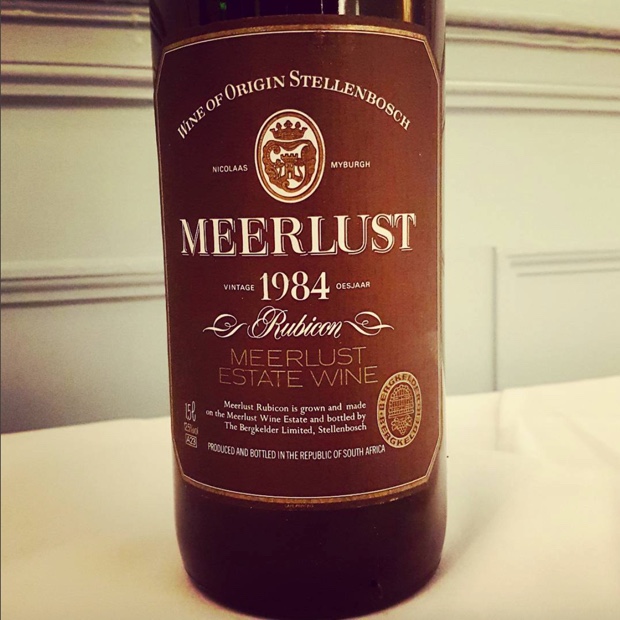
Not just #meerlust more like major lust. Thank you for the sexy time travel @meerlustwine Laurel Keenan and The South African Wine Society.

Meerlust Rubicon 1984, Wo Stellenbosch, South Africa (WineAlign)

Meerlust dates back to 1693, the house that is “love or pleasure of the sea.” Less than five kms south from the Atlantic Ocean, the property was purchased in 1756 and to this day remains family owned, now in its eighth generation with 260 years of continuity. Rubicon 1984 is poured (with brilliant decision making) from magnum and is therefore fresher than the 1996 with an incredibly controlled level of fineness in tannin, from acidity and at the threshold of understood volatility. “Perhaps one did not want to be loved so much as to be understood,” like this early Rubicon. The future of Meerlust is foretold with Orwellian transparency, bold honesty and expert ability. “Who controls the past controls the future.” Drink 2017-2019.  Tasted September 2017  meerlustwine  wosa_za  wosa_ca  liffordgram  @MeerlustWine  @LiffordON  @WOSA_ZA  @WOSACanada  MEERLUST ESTATE  Lifford Wine and Spirits  Wines of South Africa

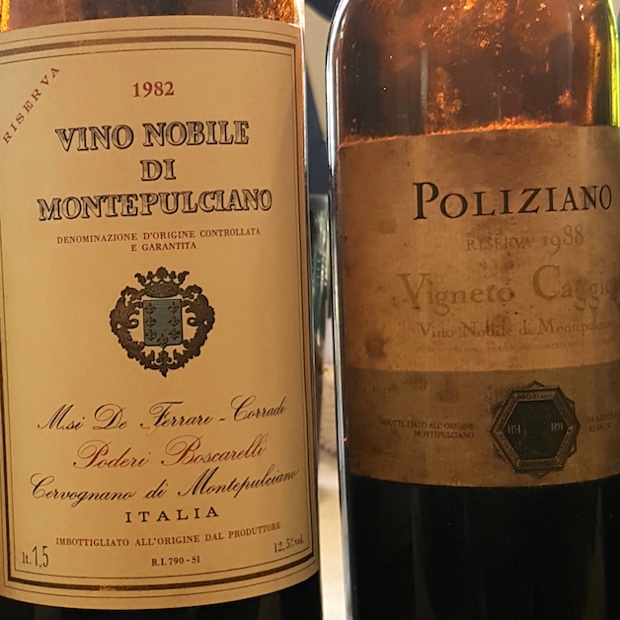
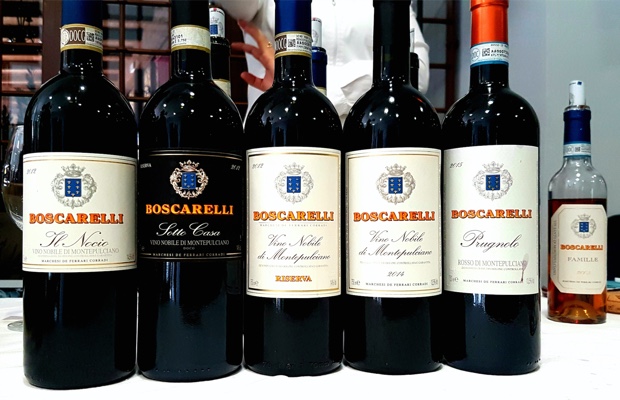
Boscarelli Vino Nobile Di Montepulciano Riserva 1982, Tuscany, Italy (WineAlign)

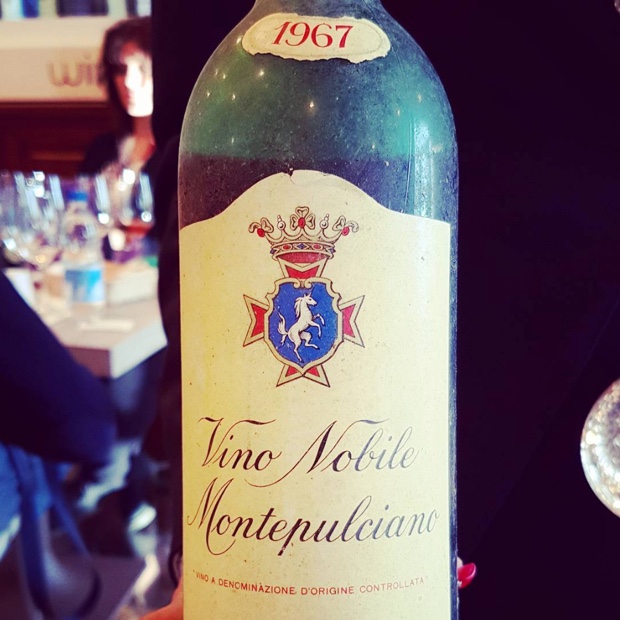
The Boscarelli acts like a much younger Nobile, from an exceptional vintage and a producer way ahead of its time. The key is to decide which side of the evolutionary fence we’re on, closer to that 1967 from Contucci or to what is happening today. This may actually be the turning point for Vino Nobile because it really has one foot entrenched in each world. Very much in the mushroom and truffle aromatic atmosphere, where sangiovese should feel free and comfortable to travel in the twilight of its golden years. This is beautiful, with some dark fruit persisting and acidity still in charge. You can imagine the old tannins but they no longer make any demands. Drink 2017-2020.  Tasted at Anteprima del Vino Nobile di Montepulciano 2017, February 2017  #PoderiBoscarelli  lucadeferrarildf  artisanal_wine_imports  consorzionobile  #poderiboscarelli  Nicolò De Ferrari   Luca De Ferrari  @artisanalwineimports

Antichi Poderi Dei Marchesi Di Barolo Gia’ Opera Pia Barolo 1958, Piedmont, Italy (WineAlign)

Poured by Ernesto Abbona on his wife Anna’s birthday, a ’58 at the ripe old age of 58 (though it will turn 59 later this year). Simply, in the words of the Abbona family, “a special evening, special friends, special vintage,” with a cork that looks as good as new, though Ernesto takes great time and care in its extraction. The aromas are blessed of a collective umami but would better be served by a new descriptor because they are antediluvian and impossibly preserved. Forget mushrooms and truffles. These scents are brand new, with no truly identifiable frame of reference, as if plucked from some guise of Eden where never before tasted dark berries fall effortlessly into the hand off of gariga savoury-scented bushes, brambly and crawling intertwined with nasturtium on a composting forest floor. The 1958 was and still is a nebbiolo of struttura, of a fibra morale that tells a story of consistency and longevity. With air it became more complex if deeper and turbido. That this magical nebbiolo from another era hovered in the lasting air of a 30 minute long ethereal says that you could open a few more but perhaps not much beyond its 60th birthday. Drink 2017-2018.  Tasted July 2017  marchesibarolo  majesticwinesinc  @MarchesiBarolo  @MajesticWineInc  @marchesibarolo  Majestic Wine Cellars

The mythology of #thorle #riesling in Beerenauslese and Trockenbetenauslese #weingutthörle #gabsheim #rheinhessen #holle

Thörle Riesling Trockenbeerenauslese Hölle 2011, Rheinhessen, Germany (WineAlign)

The Hölle TBA 2011 is a minuscule 180 bottle single-vineyard production and the vintage was simply perfect for the effort. The process involved the collection of a few berries at a time over the course of three weeks, started in the fridge and was then pressed when the amount of approximately 100L could be obtained. “This is the king’s discipline for creating such a riesling” explains Christoph Thörle. Thick like honey, full of unctuousness and viscosity. It is expressly noticed how the colour and the development have not advanced considering the six year mean. The exoticism is what separates this, with fruits far east, creamy and perfectly easy to assimilate, in flavour, consistency and understanding. Sweet herbology, of thai basil and thyme and candied mandarin rind. Here, a piece of history and legacy from Christoph and Johannes. Drink 2021-2041.  Tasted March 2017  thorle_c  thorleestatewinery  univinscanada  @thoerle  @UNIVINS  @germanwineca  @gen_riesling

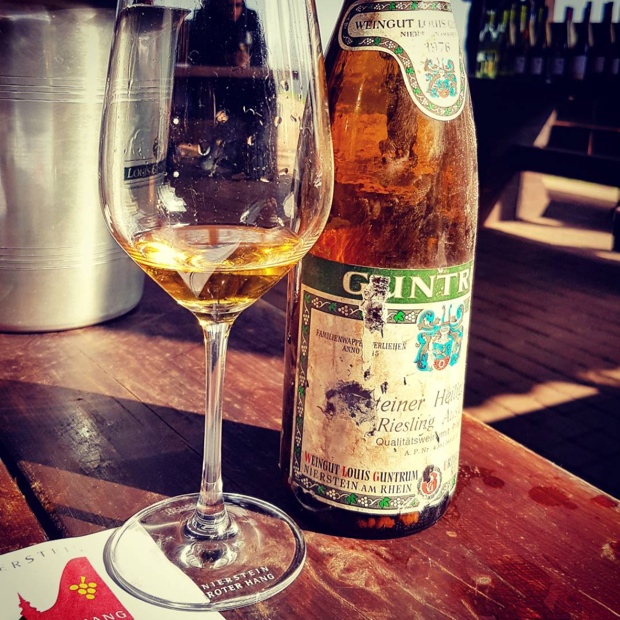
Will be a top ’17 from 2017 #louisguntrum #1976 @weininstitut #rieslingauslese #niersteiner #heiligen #nierstein #niersteinamrhein #roterhang

Weingut Louis Guntrum Riesling Auslese Niersteiner Heilibengaum 1976, Rheinhessen, Germany (WineAlign)

“Roter Hang is a geological statement” says Louis Konstantin Guntrum. If you want to hang around and try to understand its red soils and friable limestone fettle it requires a focused state of mind. Guntrum introduces this 1976 by saying “it’s a young guy, 40 years old,” the same thing he could have said years ago about a 1917 Roter Hang Riesling. The comparative studies is a matter of perspective, a theory of relativity, in reduction, colour, drama, florality and fabulousness. While certain vintages and specific wines will blow you away more than others there is something to be said about older just being more interesting, whether 1917, 1976 or whatever back vintage you want to try your luck with. It’s simply remarkable and crazy how sugar and acidity can preserve riesling like this, especially and/or truly withstanding the Roter Hang. The honey and candied orange blossom are so prevalent but it almost seems dry (relatively speaking) even though 100 grams or more of sugar have driven this wine. Beauty from bitter phenols blend with lanolin, paraffin, ginger and ginseng. Keep returning for 15 more years. Drink 2017-2031.  Tasted March 2017  #louisguntrum  @weininstitut  wines_of_germany  @LouisGuntrum  @WinesofGermany  Weingut Louis Guntrum  German Wine Institute i.e. Wines of Germany

\

Good to go!

Godello

Twitter: @mgodello

Instagram: mgodello

WineAlign


Three estates, 23 wines, one agent

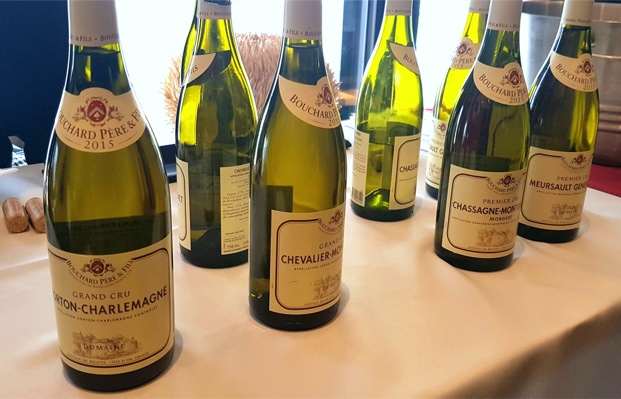
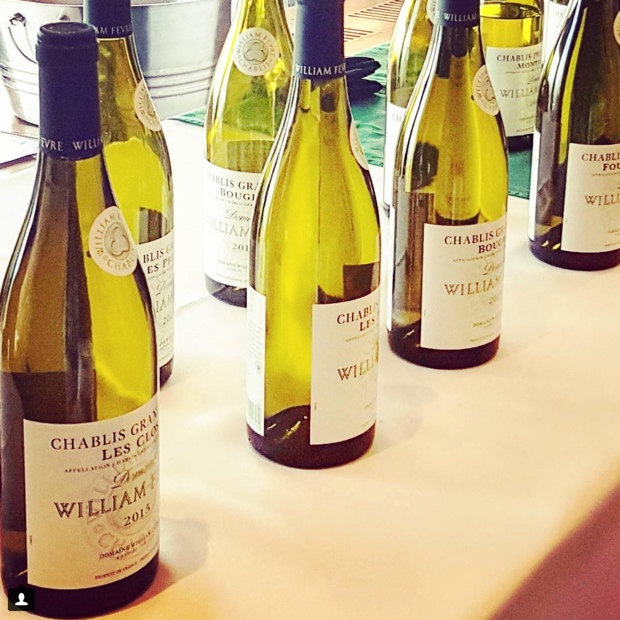
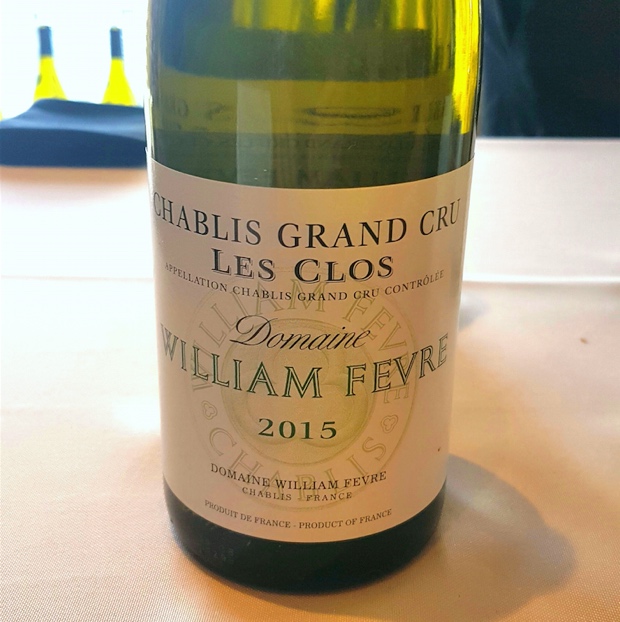
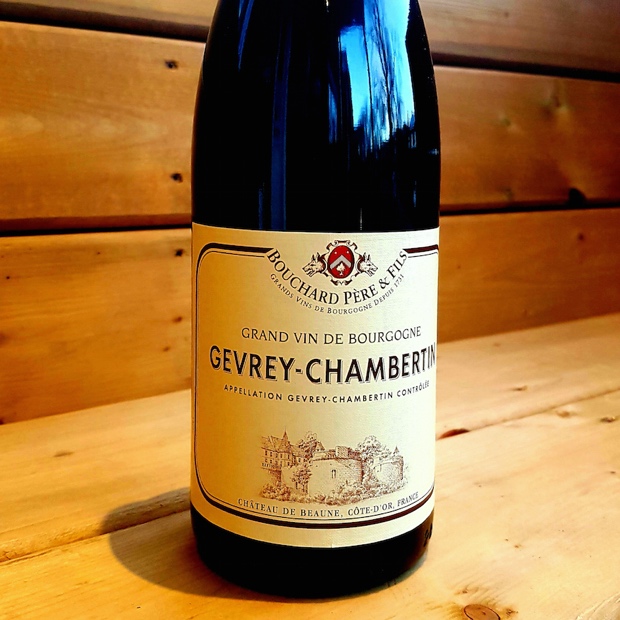
Back in April of 2017 I walked into Canoe Restaurant on the 54th Floor of the Toronto Dominion Centre to taste the Henriot Family wines of Villa Ponciago, Domaine William Fèvre and Bouchard Père & Fils. This tasting hosted by Woodman Wines and Spirits is more than just an annual highlight, it is an event borne of necessity for a multiple of triumvirate reasons. Gamay, Chardonnay and Pinot Noir; Beaujolais, Chablis-Bourgogne and Bourgogne; Village, Premier Cru and Grand Cru; Fleurie, Chablis and Les Côtes, d’Or and Chalonnaise; Climat, Climat and Climat. If you want to gain a deeper understanding of the relationship between producer, Village and Climat then you cannot miss such an opportunity.

Related – Bourgogne in a word: Climat

The vintage may have been one borne out of sunshine and the wines are unquestionably rich. From a vantage point of precision and structure they may not be as stubborn, focused and direct as 2014 but they hold a famous adage accountable to its meaning. No wine can truly be great if it does not taste that way from the very beginning. Fruit must be there from the start. It will not later be found. These are the 2015 Beaujolais and Bourgogne as exemplified by these three categorical producers.  I would have liked to taste all 33 wines on offer that day but time constraints for one got in the way, not to mention this tasting is so popular amongst the media and trade in Toronto so several of the wines were drained before I could get to them. Nevertheless I did manage to squeeze 23 concentrated sessions into a 90 minute time slot and these are my notes. Thank you as always to Russell, Jason and Rachel Woodman.

Villa Ponciago La Réserve Fleurie 2015, AOC Beaujolais, France (Agent, $25.00, WineAlign)

Been waiting for 2015 to come along for Ponciago’s no pain Fleurie la Réserve, a gamay always firm but now of fruit like compound berry butter from the giving vintage. Now with more black cherry than almost ever, or at least in recent memory, the tart compressed, compounded too but variegated mille feuille-like so not really tart at all. No war of juicy versus grippy so “I resist what I cannot change.” Persistent as needed but not forever, so this drinkable drug is just what the Beaujolais doctor ordered. Drink 2017-2020.  Tasted April 2017  chateaudeponcie  

Villa Ponciago Cuvée Les Hauts Du Py 2015, Fleurie, AOC Beaujolais, France (Agent, $31.00, WineAlign)

Even the generous vintage can’t distract from the quartz-lined granite bedrock of the Hauts du Puy but it does make for an intensely layered cuvée of moving parts. This 2015 is possessive of a repeatable Réserve condition but with bigger, broader and more complex dark red berries, though also here in the throes of the mineral streak of diffidence. There are few examples of Fleurie that concentrate, purify and integrate inchoate soil and munificent fruit like Les Hauts and with the vintage so forward and early expressive this is as gamey getable as there is on the market today. Pour this critical mass with reckless abandon. Drink 2017-2021.  Tasted April 2017

Unsparing and benevolent @vinsdechablis 2015s aplenty from @williamfevre_ via @WoodmanWS

Domaine William Fèvre Chablis Premier Cru Beauroy 2015, AOC Bourgogne (Agent, $58.00, WineAlign)

There can be no surprise that Beauroy is broader, creamier and it can be said, fruitier than Vaillons though again, the salty earth and the ancient ocean are swirling with their liquid mineral solutions and rushing through with their waves. As Févre is so want to insist, to call to order, even in the thick brushstroke of Beauroy. Drink 2017-2020.  Tasted April 2017  williamfevre_chablis  woodmanws  @williamfevre_  @WoodmanWS  @domainewilliamfevre  Woodman Wines & Spirits

Domaine William Fèvre Chablis Premier Cru Vaillons 2015, AOC Bourgogne (Agent, $58.00, WineAlign)

Vaillons walks along a kimmeridgian trail with so much fruit from the elongated slope and valley in ’15. Though truth be told (winemaker) Didier Séguier has kept the fossils, salinity and direct mineral injections consistent with not only ’14 but in omniscience and with complete trust to what came before. This is not no much a piercing as it is indeed an injection. There is much to learn from how Fèvre approaches Vaillons becuase the consistency is second to none. Vintage matters less and that is the calling card of the house, at least with respect to this Premier Cru. Drink 2018-2022.  Tasted April 2017

Domaine William Fèvre Chablis Premier Cru Montmains 2015, AOC Bourgogne (488718, $39.95, WineAlign)

Montmains is different, that much we know but this is 2015 and no modern era vintage speaks with more fruit clarity. Still the herbology mixed into the salinity and brine consistently forms the basis for the Montmains oeuvre. What conspires from ’15 is more depth and soild tang than what comes off of the nearby hills. It’s like lime over lemon but it’s not exactly citrus that sits at the forefront, more like savoury syrup swirled in but in thick rotation at the conical bottom’s narrowing point. This is quite intense for 2015, but it is Montmains that effects this indelicacy with great presence and the most insistent Premier Cru persistence thus far. Drink 2018-2022.  Tasted April 2017

Domaine William Fèvre Chablis Premier Cru Fourchaume 2015, AOC Bourgogne (Agent, $69.00, WineAlign)

This Premier Cru of greatest surface is committed to by Fèvre with a singular duality, of a domaine within a domaine and as cru versus cru. The greater Fourchaume is a Grand Cru hill place of five distinct climats in which Fèvre holds blocks in Vaulorent so they bottle both it and this ubiquitous Fourchaume. Upwards of four hectares deliver a best of all Premier Cru worlds Chablis as Forchaume is gathered for a collective sumptuousness, really layered and propping up the most kimmeridgian of the line-up to date for ’15. Carries its ilk in its DNA and its expresion; compression, lemon and lime citrus, soil conditioning and the broadest yet most direct feel of appeal. If you want Fevre, 2015, Premier Cru and ancient wisdom all wrapped up in one clear package this is the bank expression for you. Drink 2019-2024.  Tasted April 2017

Domaine William Fèvre Chablis Grand Cru Bougros 2015, AOC Bourgogne (Agent, $99.00, WineAlign)

Bougros, the approachable one. Bougros, with great unction and deep intensity but not hard to get. How this has gathered its sensibilities so quickly is a matter of vintage and place but there are layers, many of them, left to peel away. You get a conditioned and developed salinity meets acidity unlike any Premier Cru and yet you can’t help needing to think it should be drinkable straight away. The potential of mille-feuille layering is leaps ahead of (most but not all) of the Premier Pru. Quite domesticated Grand Cru Chablis that is easier to understand than most. Drink 2019-2025.  Tasted April 2017

Domaine William Fèvre Chablis Grand Cru Les Preuses 2015, AOC Bourgogne (Agent, $125.00, WineAlign)

If Les Preuses isn’t the Fèvre piece, of resistance and resilience. Of memory and understanding, of formidable variegation and in ’15, teasing and tempting open doors. Don’t be fooled or duped because there are many doors and so many fences to tear down before you can find what’s behind the barriers. Intensifies in its delivery of more citrus and compressed stone clarity than Bougros (or at least with more crunch and bite) but it will take years of ruminative meal matching possibilities and execution before you might know where it stands and with it, relative to you. Drink 2020-2027.  Tasted April 2017

Domaine William Fèvre Chablis Grand Cru Les Clos 2015, AOC Bourgogne, France (641381, $130.00, WineAlign)

Fèvre’s Les Clos takes a bit of an unexpected turn so from 2015 it currently goes stone cold and remains intensely locked. From what we know the vintage should be generous from the start but in this instance Les Clos makes use of every ounce and fibre of kimmerridgian being to lay only salt, fossil and stone before you. The fruit kept hidden away makes you pine for fleshy orchard apples. Nothing can really prepare you for the Les Clos iron gate, especially when you were expecting a welcome mat laid out at your feet. Take the time to charm and be charmed, at least 15 minutes with a glass or 15 years if you can offer up the time. The Grand Cru will slowly open up and speak in a vernacular of controlled energy, fineness of acidity and exceptional balance. This will be one for the ages.  Drink 2021-2035. Tasted April 2017

Bouchard Père & Fils Montagny Premier Cru 2015, AOC Bourgogne, France (653683, $38.00, WineAlign)

Montagny is rich and expressive with a shot of tonic and quite the textural viscosity. A bit reductive though another six to 12 months will put it in a honeyed, waxy and preserved citrus place. Drink 2018-2021.  Tasted April 2017  bouchardpereetfils    @BouchardPere  Bouchard Père & Fils

Bouchard Père & Fils Saint Aubin Premier Cru 2015, AOC Bourgogne, France (Agent, $57.00, WineAlign)

Saint-Aubin’s proximity to Montrachet and high percentage of Premier Cru vineyards should be an automatic to elevate its esteem but it still flies under the radar. Bouchard feels otherwise and proudly boasts and toasts its ability to effect fine chardonnay. Great 2015 fruit be scorned this is a terrifically taut example but yes it is certainly fruit expressive (apples and such). In relative terms to Saint-Aubin it delivers more perceived sweetness and spice provided by the barrel in what is ostensibly and sensibly really well-intended and generous from the start. A bit of a wild child this one with plenty of upside. Drink 2017-2020.  Tasted April 2017

Bouchard Père & Fils Puligny Montrachet 2015, AOC Bourgogne, France (Agent, $80.00, WineAlign)

It has often been said that Village level Puligny-Montrachet from top growers can be very good indeed, but is all too often unexciting and disappointing. Combine that statement with a humid 2015 vintage and you may be left to wonder what will happen from a non vineyard-specific Puligny. Bouchard’s stands firm, acts forthright and tackles the suspicion head on. This is a direct, linear, layered and unctuous P-M with layers of lemon and fresh glade air at their get me vintage finest. It’s also a wine of grace and elegance away from barrel and into something ethereal. Acidity suits the flesh, not as an injunction but as an extension and takes the fruit into a place of inflection. Such a beautiful wine. Drink 2018-2026.  Tasted April 2017

Domaine Bouchard Père & Fils Meursault Les Clous 2015, AOC Bourgogne, France (661322, $59.95, WineAlign)

Bouchard’s Meursault Les Clous seems akin to acknowledging the ideal of Bourgogne that sit somewhere along the line between Village and Premier Cru and in this instance well right of centre on that line. Les Clous is a bit more reserved than the Puligny, not so much reductive as much as it is wrapped a bit tight. It may be construed as perhaps a bit couterintuitive to Meursault but certainly not impossible to accept. Really brings the idea of lemon curd and a melting barrel into the ideal. Needs two years to integrate and if you are patient it will reward with a comforting hug at that time. Drink 2019-2025.  Tasted April 2017

Domaine Bouchard Père & Fils Meursault Premier Cru Genevrières 2015, AOC Bourgogne, France (Agent, $129.00, WineAlign)

Meursault Genevières is so much more fleshy, fruit forward, expressive and feminine than Les Clous though never straying too far from carrying a necessary liquid limestone, chalky streak through and through. The soil speaks more from the middle to the back, creating a fascinating transition for this wine. A warmth challenged vintage be anathematized this Genevières has not gone to blazes, constantly re-energizes and is built from a constitution to see it hang in for the long haul. Drink 2018-2028.  Tasted April 2017

Domaine Bouchard Père & Fils Chassagne Montrachet Premier Cru Morgeot 2015, AOC Bourgogne, France (Agent, $141.00, WineAlign)

Bouchard’s Chassagne-Montrachet Morgeot is an intense expression of Bourgogne Premier Cru distilled into the finest, most elegant and ancient geology captured expression. The integration and balance is remarkable when you consider how Climat must contract intuition and acumen for the purpose of harnessed power and controlled energy. This is one of the major stars of the vintage. From soil to microclimate and through temperament it just has it all. Drink 2019-2030.  Tasted April 2017

Domaine Bouchard Père & Fils Corton Charlemagne Grand Cru 2015, AOC Bourgogne, France (Agent, $260.00, WineAlign)

Corton Charlemagne is a thing of great opulence, not the intense and controlled energy of Chevalier-Montrachet but here strutting and the wood more apparent. The fruit component shows off more desire (like Vaudesirs in Chablis but with the volume turned way up). This affinity with Grand Cru Chablis is curious, in a way interchangeable but respectfully mutual, apparent and beneficent. The munificence of this Corton breathes to fleshy texture and from mellifluous honey and bees waxy genteel notes. Power is evident but gorgeous and together is even more so. Toasty in the end, as in the beginning, with lime in gelid curd. Drink 2019-2029. Tasted April 2017

Domaine Bouchard Père & Fils Chevalier Montrachet Grand Cru 2015, AOC Bourgogne, France (Agent, $480.00, WineAlign)

Chevalier-Montrachet is a matter of aromatics, of the finest of the finest, preserved, reserved, impressionable and of quietly powerful impression. The deistic and the parrhesiastic are reached in this Grand Cru, “one who speaks the truth to power.” Elysium in chardonnay is captured for the perfectly ripe orchard and crushed stones. The young palate is almost severe but takes its first steps down the most ethereal path, with the finest drawn lines and rendered streaks of energy lit, sparked and smouldering. This is Bourgogne of intrinsic value, slowly rising to a crescendo where a flame flickers but within the sheltered lamp of a hurricane. How is such harnessed power even possible? Only like this, in Chevalier-Montrachet . Drink 2021-2037.  Tasted April 2017

Bouchard Père & Fils Monthélie Les Duresses 2015, AOC Bourgogne (Agent, $57.00, WineAlign)

Monthélie is intensely floral where roses merge into violets and then strawberry melds into raspberry. Some firm grip as the Climat would suggest but it’s really quite a salvo, like shots fired into the air as an announcement of the wine’s drink early ability. Dureté could just as easily be fermeté because there is strength in trust, belief and assurance. Les Duresses brings attention to itself quite easily and with shameless selfie confidence. Drink 2017-2021.  Tasted April 2017

Bouchard Père & Fils Gevrey Chambertin 2015, AOC Bourgogne (661330, $59.95, WineAlign)

Bouchard’s 2015 is incredibly forward Gevrey Chambertin, full of fruit, flowers and a beautifully integrated red liquid chalky syrup. It’s just plain getable and is the godfather to all of its peers. If you want to show the world and everyone in it who knows or knows nothing about high-level Bourgogne then perhaps consider this to be the journey’s departure point. Gevrey and especially in the hands of Bouchard is such a gate for what it means to build pinot noir from the earth upwards. It explains what needs in a language you can understand and makes an offer you can’t refuse. Pour this every day simply because it is quintessentially ripe and structured stuff. Drink 2018-2026.  Tasted April and November 2017

Bouchard Père & Fils Chambolle Musigny 2015, AOC Bourgogne (Agent, $78.00, WineAlign)

Initial mannerisms direct the imagination to view this Chambolle Musigny as taking a turn towards a gentler version of itself. It’s quite floral and mineral with fruit the protein in between the covers. The condiments of spice, espagnole and coulis derived by that wood-soaked red fruit provide the structure. There are moments when this pinot noir seems more mineral than fruit and this equivocation will surely repeat depending on the time each one is opened but in time the genial will emerge and remain. For now the fleeting impression is of a grippy, firm, intense, citrus circus of acrobatic ability. At the finish it turns to the botanical and the tonic. Drink 2018-2024.  Tasted April 2017

Domaine Bouchard Père & Fils Ancienne Cuvée Carnot Volnay Caillerets Premier Cru 2015, AOC Bourgogne (Agent, $116.00, WineAlign)

Caillerets Ancient Cuvée Carnot is no young, impressionable and misunderstood bit of Bourgogne winemaking. There is DNA in this fruit that connects back 240 years to the house’s first vineyard dating to 1775. Here Volnay exhibits a substantial amount of chalky limestone swimming with variegated aggregate and firm, not quite ready to dissolve crunchy stone behaviour. Dark fruit and so much fraises de bois meets this perception brought on by mineral aromas and flavour. A bit savoury and all in for Volnay. So bloody in charge of its structure with grippy persistence. A classic Climat meets vintage of strength, courage and purpose. Drink 2020-2029.  Tasted April 2017

Domaine Bouchard Père & Fils Beaune Grèves Premier Cru Vigne De L’enfant Jésus 2015, AOC Bourgogne (Agent, $156.00, WineAlign)

When I asked Luc Bouchard which Climat most defines the notion for the estate he replied “from Bouchard estate we are very proud of the Climat of Beaune Grève Vigne de l’Enfant Jésus, monopole of Bouchard since 1791, a unique terroir with gravely soil (unique in Beaune). The roots go very deep into the soil (9m), so if we have a very dry summer there is always enough water far below and if there is heavy rain storm, the drainage is so good that the water is not directly swallowed by the grapes. That explains the consistency of the wine, it’s unique texture and ageing potential.” Beaune Grève Vigne de l’Enfant Jésus in 2015 is the wondrous inhalant, like (dare it be said) Hermitage if it were married to Côte d’Or, of an impossible liqueur and the first to bring this truly rich 2015 element to a Bouchard pinot noir. The finest silk coats the palate and through black composure the mineral (limestone) in here will never relent and let the dark fruit take charge. This is a wine of impeccable balance and gentle, ethereal preciseness. It impresses as much as any Bourgogne will. Drink 2019-2030.  Tasted April 2017

Domaine Bouchard Père & Fils Le Corton Grand Cru 2015, AOC Bourgogne (Agent, $180.00, WineAlign)

Le Corton the Grand Cru is a senior, most adult red of the Côte d’Or crowd, an inwardly impressing Bourgogne with more mineral limestone impression than you can bother trying to imagine settling into one bottle. This is a factor of the very top of the vineyard and can’t be denied. Eighty years ago this Grand Cru received its AOC status but you can feel the roots go so much deeper. East-facing below the Charlemagne holding, Le Corton is often one of the last wines to be picked and it is this necessity that speaks to the severity and royal power wielded by this king of the appellation. In a word, wow and provided by so much wisdom. Drink 2020-2035.  Tasted April 2017

Good to go!

Godello

Twitter: @mgodello

Instagram: mgodello

WineAlign


Gold Medal Plates Toronto 2017

Go Time @GoldMedalPlates Toronto #gmp2017

It was my fourth Gold Medal Plates Toronto as wine judge, culinary taster and olympic athlete groupie. In 2014 WineAlign partner, colleague, mentor and friend David Lawrason invited me to join the festivities and help decide which three wines should be crowned Gold, Silver and Bronze. Two weeks ago a panel of Ontario wine experts tasted, assessed, debated, deliberated and ultimately decided this year’s top three. David Lawrason, John Szabo M.S., Michael Vaughan, Margaret Swaine and Godello. The winner ran away from the pack but two through six were separated by one point increments. It was a photo finish for Silver and Bronze.

The 2017 Toronto event featured emcee Scott Russell of the CBC’s Olympic coverage. Russell was joined by dozens of Olympic medallists and future hopefuls. Blue Rodeo’s Jim Cuddy led the on-stage entertainment; Anne Lindsay, Danny Michel, Jeremy Fisher, Devin Cuddy and Sam Polley. The inimitable and eloquent James Chatto was once again at the head and the heart of the culinary judging panel with seats occupied by an illustrious five; Sasha Chapman, Anita Stewart,  Christine Cushing, Amy Rosen and Chef John Higgins.

Gold Medal Plates Toronto 2014

For a little bit of GMP history please click on this post I penned after that 2014 gala event. The culinary winners then were Gold Medal Plates Toronto 2014 bronze, gold and silver medal winning chefs Damon Campbell, John Horne and Jason Bangerter. The top three wines were Norman Hardie‘s Niagara Unfiltered Pinot Noir 2011, Hidden Bench Nuit Blanche Rosomel Vineyard 2012 and Creekside Estate‘s Iconoclast Syrah 2012. But what about 2017? My top seven in no particular order were Flat Rock Cellars Riesling Nadja’s Vineyard 2016, Ravine Vineyard Chardonnay Reserve 2014, Charles Baker Riesling B-Side 2016, Henry of Pelham Cuvée Catherine Brut Rosé, Stratus White 2013, Leaning Post Chardonnay ‘The Fifty’ 2015 and Tawse Chardonnay Quarry Road 2013. The actual medalists are listed below in David’s report.

National Wine Advisor David Lawrason’s Wine and Spirits Report

Nadja’s Tops a Bounty of Great Whites in Toronto

“The Gold Medal Plates campaign came to a booming 800-person conclusion at Toronto Convention Centre on November 16, and it included the largest selection of wines seen in any stop on the ten-city national tour.  We judged 26 donated wines, beers, spirits and even a lavender mead, but it was a core of great Canadian white wines that caused the most excitement, and produced the winner of the evening.

The “Best of Show” Gold Medal went, by a very clear margin, to Flat Rock Cellars 2016 Nadja’s Riesling, from a single block of maturing vines in Niagara’s Twenty Mile Bench appellation. I was personally stunned by just how delicious, well-balanced and nuanced this wine is – in my mind it is the best vintage of “Nadja’s” ever produced.  Other judges agreed – we all placed it as either our first or second choice.  This beauty also took a rare Platinum Medal at 2017 National Wine Awards.

It will go on to compete for Gold Medal Plates Wine of the Year at the Canadian Culinary Championships in Kelowna in February, and it appears there will be a riesling showdown, as it will be tasted against rieslings from Tantalus, Cave Spring and Norman Hardie, plus six other wines.

For second and third place the voting in Toronto was more varied, and only one point separated the second, third and fourth place wines.  The Silver Medal went to Mission Hill 2015 Merlot Reserve, a swarthy, plummy and ripe red from the Okanagan Valley.  And the bronze medal went to Henry of Pelham Cuvee Catharine Brut Rose, a delicate refined pink sparkler with subtle berry aromas.

In very close 4th place came Tawse 2013 Quarry Road Chardonnay from Niagara’s Vinemount Ridge sub-appellation. I have become very familiar with this solid, complex Burgundian chardonnay as it was generously donated by Tawse to the Celebration in three cities this year. It was also a Platinum Award winner at the 2107 WineAlign National Wine Awards of Canada.

Tawse was one of three Gold Level sponsors. Mission Hill was a national sponsor as well, donating a variety Reserve wines to seven city events across the country, and stepping even higher in Toronto with smaller donations of their more expensive “Legacy tier” red Compendium 2013 and Perpetua 2015 Chardonnay.

Arterra Wines, the recently re-named company with several wineries in Canada, was a gold sponsor donating to six cities.  In Toronto there was a selection of reserve whites and reds from Jackson-Triggs and Inniskillin, as well as a rare public showing of the new Arterra 2016 Chardonnay and Arterra 2016 Pinot Noir.

Toronto’s Silver Sponsor also donated to Ottawa. Cave Spring of Niagara donated their 2015 Cabernet Franc.  Although better known as a riesling producer, Cave Spring is doubling down on its efforts to produce fine reds from Ontario’s most widely grown grape.

Flat Rock Cellars was one two Bronze level sponsors for the Toronto event, providing Nadja’s riesling for the VIP Reception and Celebration tables. The other was Henry of Pelham, which split their donation between the 2016 Old Vines Baco Noir and yet another strong 2016 Estate Riesling.

Among other notable and high calibre wines donated to the chefs, I gave my first-place vote to Stratus 2013 White, a very complex, now maturing, barrel aged blend of several white varieties. Ravine 2014 Chardonnay Reserve, another power white, also earned top-five votes.  Leaning Post 2015 Mile 50 Chardonnay was a leaner style that paired well with Gold Medal Plates Chef Lorenzo Loseto’s winning dish.  And riesling specialist Charles Baker chose the occasion to show his new, bracing B-Side Riesling.

Interestingly, no red wines were paired with chef’s creations this year, but there were two ciders, including the fine, crisp Brickworks CiderHouse Batch 1904 and a lighter cider called Pick Up 66 from Hoity Toity Cellars. Rosewood Cellars donated their exotic, fragrant Lavellener Lavender Mead, and Zirkova Vodka set up shop during the VIP Reception to sample Zirkova One, a vodka designed to be drunk “neat” and Together a version designed for cocktails.

The Best of Show judging is held prior to each event, as way to highlight the generous donation of beverage by Canada’s wineries, brewers and distillers.  In Toronto I assembled four wine pros/sommeliers.  Three are amigos at WineAlign.com and two are judges at the National Wine Awards of Canada; including Master Sommelier John Szabo, and wordsmith extraordinaire and former chef Michael Godel.  Margaret Swaine is a veteran wine and travel writer, and the spirits columnist at WineAlign.  Michael Vaughan publishes Vintages Assessments, a detailed critique of every wine released by the LCBOs Vintages stores.”

Chef Lorenzo Loseto’s @GoldMedalPlates winning dish @georgeonqueen paired by @brieish with @leaningpostwine The Fifty Chardonnay 2015. Congratulations Chef and the entire team.

Culinary Medals

Gold

Lorenzo Loseto
George Restaurant

Pairing: Leaning Post Wines, 2015 ‘The Fifty’

Silver

David Lee
Nota Bene

Pairing: Brickworks Ciderhouse, Batch: 1904

Bronze

Jesse Vallins
Maple Leaf Tavern/PORT

Pairing: Tooth & Nail Brewing Company, AGRARIA Modern Farmhouse Ale

Nota Bene’s David Lee

Here are my tasting notes for the 20 wines entered at Gold Medal Plates 2017.

Henry Of Pelham Family Estate Winery Cuvée Catharine Brut Rosé, VQA Niagara Peninsula, Ontario (217505, $29.95, WineAlign)

A whole new base, a whole new wine, the departure point exacted by a new wisdom and understanding. But it’s somehow like looking in the mirror, reviving a good memory, going back to wine childhood. Consistency is your friend with non-vintage fizz and the Catherine(s) are the undisputed leader in the Ontario biz. Brings back the Niagara orchard of a take your pick red apple, lovely creamy texture, a mild blanch of nut and fresh baked bread. Terrific class and of its own accord. Drink 2017-2021.  Last tasted at Gold Medal Plates Toronto, November 2017

With its fine, strawberry mousse is at the head of its Ontario class. Vanilla, Ida Red apple and bitter nut combine like a smooth, creamy, Mediterranean spread to dip the warmest, fresh-baked bread.  Tasted December 2012

Henry Of Pelham Riesling Estate 2016, VQA Short Hills Bench, Niagara Peninsula, Ontario (557165, $17.95, WineAlign)

A rash of aromatics straight away and marked warmth verging to humidity. More weight, substance and depth than most vintages deal when youth is the tempo so this riesling plays the notes and the hand quick after the draw. What you nose, taste and feel is what you get, with lime, gassing up to petrol quickly and flavours already in developing mode. Five years of riesling together for the best of times, from beginning to end. Drink 2017-2021.  Tasted November 2017

Charles Baker Riesling B-Side 2016, VQA Niagara Peninsula, Ontario (Winery, $22.00, WineAlign)

Vinyl records sound different because they are designed with grooves carved in that mirrors the original sound’s wave form. Their analog recording delivers a sensory feeling of warmth, an aural of texture, nuance and soul. There was a time when the hits spun over and over were also pressed onto the A-Side of 45 rpm singles. The discovery of a never before heard B-Side was a revelation because is was extra material from a favourite band and it was a great song. It meant the record was already too strong for that song to make the final cut and to choose it for a B-Side meant it would elevate the quality of the album. A well-chosen B was not an afterthought. This is the accomplishment of the first Charles Baker’s B-Side, for itself and for the vineyards of Ian and Picone. Baker digs about in the Niagara Peninsula’s escarpment dirt for young vine, not ready for prime time riesling fruit. If perchance it seems like cheating on his per se Vinemount Ridge Picone and Ivan bottles so be it but one look at him and he’ll say “Hey, hey, what can I do?” His 2016 B-Side delivers a spray bottle Zeppelin expressing heady aromas, high in the stratosphere and raining down upon the earth. The notes are an all in, breath of classic Baker riesling air, blanketing from up above and with a landscape that reeks of lime and quivers with classic agitation. The fruit is wild and full, the salty grit infiltrating and gripping the bloody omniscience of this package. What is this B-Side and where will it be lead? To the top of the ridge, from earlier harvests, younger fruit and higher yields. Scratch the single vineyard elitism, just listen to the song and raise one up, to getting ‘er done before the conceptual singular side one and side two, Ivan and Picone. The Beatles? Forget it. Led’s flip side to the ‘Immigrant Song’ A is the one. Drink 2017-2021. Tasted November 2017

Flat Rock Riesling Nadja’s Vineyard 2016, VQA Twenty Mile Bench, Niagara Escarpment, Ontario (578625, $24.95, WineAlign)

Nadja, like the Bréton novel begins with the question, “Who am I?” A surrealistic trigger is incited by the first taste, with excitement running in many directions but like the book, Nadja’s non-linear structure is grounded in Twenty Mile Bench riesling reality. She is an elite varietal wine in 2016, excitable girl, gregarious, punchy and so bloody juicy. I don’t recall the last Nadja with so much up front zest fervency and writhing aromatic gait, “exploding international, the scenes, the sounds, and famously the feeling that you can’t squeeze ground.” The lime flesh and cordial infusion brings the flavours into a once tropical, twice bitten realm. The vintage delivers the electric version, the new pornographer for the vineyard and the song sung loud swan song for departing winemaker Jay Johnstone. Was it all for swinging you around? Drink 2017-2024.  Tasted October 2017

Jackson Triggs Niagara Estate Sauvignon Blanc Grand Reserve 2015, VQA Niagara Peninsula, Ontario ($19.95, WineAlign)

Arterra’s JT sauvignon blanc is youthful and even a bit reductive, with wood notable and a real sauvignon blanc pungency. Its character and a bit of risk are tied up in the aromatics though it settles for mild-mannered and middle of the road on the palate. Drink 2017-2020.  Tasted November 2017

Mission Hill Family Pinot Gris Reserve 2016, BC VQA Okanagan Valley, British Columbia (537076, $24.95, WineAlign)

Reserved to be sure and also still in pulse mode, with some tongue pin-pricking, not quite effervescent but moving in time. A bit of skin-contact hue and plenty of orchard fruit notes are present in both aromas and flavours. Solid gris that will improve in six months or so. Drink 2018-2021.  Tasted November 2017

Inniskillin Okanagan Pinot Gris Reserve 2016, BC VQA Okanagan Valley, British Columbia ($19.99, WineAlign)

Noticeable skin-directed hue, chalky to soapy, with a taste that reminds of Topps hockey card bubble gum. Childhood memory revisited in pinot gris. Drink 2017-2018.  Tasted November 2017

Arterra Chardonnay 2016, VQA Niagara Peninsula, Ontario  (Winery, $25.00, WineAlign)

Arterra’s chardonnay comes from a famous Peninsula source, formerly made into just as famous wines by Le Clos Jordanne The site is on the Escarpment’s Bench above Jordan Village and this is the second vintage at the hands of Jackson-Triggs winemaker Marco Piccoli. Picks up where the fine and ambitious first vintage in 2015 left off but here with some light strike and reduction. You can just feel the buttered toast and kernels behind the flinty curtain, with blanched nut and some fine elasticity. Will benefit from a few more months in bottle to gather thoughts and flavours. Drink 2018-2021.  Tasted November 2017

Leaning Post Chardonnay ‘The Fifty’ 2015, VQA Ontario (Winery, $25.00, WineAlign)

This is chardonnay that had a cup of coffee in the big leagues and was then moved to the fresh confines of stainless steel tanks soon after its 15 minutes of barrel fame. It’s a unique chardonnay specimen this Fifty, barrel fermented but not aged, a wine crafted with pragmatic reverse psychology so that it may solicit great appeal. If you’ve never tasted Ilya Senchuk’s entry-level foray into Peninsula chardonnay you’ve been missing out, but by starting here in 2015 there is certainly no harm, no foul. This is the most pleasing and palatable Fifty so far, barrel creamy, suety and magically malolactic on the nose. The flavours are cooler, of an anti-Senchuk subtlety and versatile food amenability. I can think of 50 reasons to pour this by the glass, at home, on a restaurant list or on a campsite under the stars. Drink 2017-2020.  Tasted April 2017

Ravine Vineyard Chardonnay Reserve 2014, VQA St. David’s Bench, Ontario (Winery, $55.00, WineAlign)

The Reserve is 100 per cent estate fruit that spent 18 months in (50 per cent new) barrel. As it’s both barrel fermented and aged the variegation locks the fruit in so bloody tight so even now it’s reductive, smoky and flinty. A mineral chardonnay needs balance from over the top fruit and so track record, acumen and love will have it so. Marty Werner and Ben Minaker’s is a big, summery and gold platinum expression, very expressive, the two-lb steamed in seaweed lobster chardonnay, seemingly Meursault but just as likely from California. But as Ravine’s Reserve on the St. David’s Bench it is purely Niagara Peninsula. Fruit intensity, extract and controlled oxygenation shows off the best of what these men can do. It speaks to their efforts, knowledge accumulation, trials and finally to the culmination of their stamina. Drink 2018-2023.  Tasted July 2017

Small @RavineVineyard village looking pretty sweet at @GoldMedalPlates 2017 #gmp2017

Tawse Chardonnay Quarry Road Vineyard 2013, VQA Vinemount Ridge, Ontario (111989, $35.80, WineAlign)

When I tasted Quarry Road 2013 out of four barrels three years ago the purpose was to take in the nuances and see only the trees. I for one could not help seeing the forest through the trees and imagining percentages of each combining for the final blend. Neutral Mercurey wood looked over infant three year-old vines spoken here with surprising density, tang and tropical melon in both aroma and flavour. This sits on the front palate right now. The mineral Ceres qualifies older fruit as the pretty and the gemstone, essential for Quarry Road, the most like (Meursault) in Burgundy. This fruit transferred to stainless on the lees from September to March before going into bottle now renders to make Quarry the purest expression from the best vineyard. The CLL toast delivers the taut, not yet reductive wood tightening, then and again now, mainly on the finish. Compressed citrus notes are late arriving and even if it is splitting hairs, the oak really impacts the finish. The larger CLL toast Mercurey barrel reveals a fresher, more reductive, less oaky feel. All together we now have one of Paul Pender’s most accomplished to date and all chardonnays considered, one of the finest higher end values around. I think he would agree. Drink 2017-2024.  Tasted May 2017

Mission Hill Perpetua 2015, BC VQA Okanagan Valley, British Columbia (Winery, $73.03, WineAlign)

Perpetua is a different sort of chardonnay for the Okanagan, with not completely obvious fruit and leesy notes that outdo the effects of wood, plus a lactic edge that also smothers the smoulder. This is not the toastiest of chardonnays but is does deliver a saltiness so ultimately the reference point is flint and stone, a.k.a. Chablis. A bit of crème frâiche adds to the dairy mystique. Perpetual chardonnay motion leads to persistence. Drink 2017-2022.  Tasted November 2017

Stratus Vineyards Stratus White 2013, Niagara Lakeshore, Ontario (660704, $38.20, WineAlign)

There can be little doubt that anticipation would haver to run high for the aromatic, elongated and coolest of Niagara white wine vintages, especially for the chardonnay, but also for the iconic, four-varietal (with sauvignon blanc, sémillon and viognier) blend. The five sensory tenets are solicited and provided for; salty, sour, sweet, briny and umami. The last is exotic and punchy, so this White does it all, speaks for it all and completes it all. It is the most designed and seamless their’s can be. Last tasted May and November 2017

In 2013 viognier is back in the varietal mix, in reprise of its earlier role in support of chardonnay, sauvignon blanc and riesling. A different sort of vintage here for the White, seemingly led by a circular turning of chardonnay and viognier, like a cat chasing its tail. This really goes round and round with no obvious signs of where it will stop. Quite fleshy and lime juicy with stone fruit flavours in righteous abound. Really amalgamated and seamless even for itself. It is here that I think of it as The White. Niagara’s White. Lake Effect™. Drink 2017-2022.  Tasted November 2016

Arterra Pinot Noir 2016, VQA Niagara Peninsula, Ontario (Winery, $29.95, WineAlign)

Wow the cherry pie delivers a healthy slice oozing in reduced cherry syrup. Could only by an effect created by some appassimento on pinot noir. It’s so concentrated, full of glycerin and sweet fruit. Were it not pinot made with some drying of the grapes it would be an amazing feat of growing, picking and pressing. A panoply of cherries wells in this ripe of ripest Marco Picoli red. Wow, as I said. Drink 2017-2019.  Tasted September and November 2017

Cave Spring Cabernet Franc 2015, VQA Niagara Escarpment, Ontario (523001, $17.95, WineAlign)

As with the other Niagara Escarpment reds in the portfolio it is the limestone that stands out, in a good way, to bring about this mineral-red citrus cutting through the rich fruit. That stone-mineral note also does everything to temper and even mute what bitter-tonic-astringent notes might try to distract because that’s what capsicum-bell pepper is wont to do in cabernet franc. This is clean and focused, light and eminently quaffable juice. Drink 2017-2019. Tasted September and November 2017

Inniskillin Merlot Reserve 2014, VQA Niagara On The Lake, Ontario (Winery, $24.95, WineAlign)

This is really pressed and pushed merlot, cool and savoury, minty and spirited with lots of wood spice and equal amounts of tannin. The really tart finish dries out with grip and force. Drink 2018-2020.  Tasted November 2017

Jackson Triggs Grand Reserve Meritage 2015, VQA Niagara Peninsula, Ontario (594002, $24.95, WineAlign)

Now here is a nice little bit of diesel of dust, with more than a fair shake of dark raspberries and a mix of chicory, nettles and chalky tannin. Pretty wondrous quality and complexity here. Drink 2018-2021.  Tasted November 2017

Henry Of Pelham Baco Noir Old Vines 2016, VQA Niagara Peninsula, Ontario (459966, $19.95, WineAlign)

This is finely rendered baco noir, rich and tangy, with bright cherries and what just feels like beeswax. The most elegant baco noir ever made in Ontario and just foxy enough to be itself. Drink 2017-2019.  Tasted November 2017

Mission Hill Merlot Reserve 2015, VQA Okanagan Valley, British Columbia (Agent, $24.99, WineAlign)

This is aromatically rich and lush merlot, with a full compliment of palate richness and silky tannins. For fans of the California style with all in hedonism and a side of nettle. Drink 2018-2022.  Tasted November 2017

Mission Hill Compendium 2012, BC VQA Okanagan Valley, British Columbia (Agent, $86.25, WineAlign)

Compendium 2012 carries a great wealth of aromatics, very floral and rusty, with dried strawberries and so much more. A bit reserved on the palate but its elegance and seamlessness are special. Great length even while it’s just not that much of a concentrated beast. Drink 2017-2022.  Tasted November 2017

Good to go!

Godello

Twitter: @mgodello

Instagram: mgodello

WineAlign

Bourgogne in a word: Climat

Chambertin Clos de Beze
photo (c) Scott Zebarth

Bourgogne is but a place built upon a word, of wines designed and articulated through their very own personal vernacular. The region’s most important vineyards are defined in a word, in summary and without comparison. Climat is the word and you may be shocked to hear how it is expressed as a highly complex chain of topographical, elemental and ethnological conditions. The glossary is much longer than you might think and adds up to quite a versatile declaration. To arrive at the distilled quotient of one, no less than 20 words are employed, exercised and ushered into explanation. The lineage travels through geography-geology-topography-landscape-position-relief-aspect-exposure-slant-elevation-slope-soil-vegetation-weather-microclimate-humankind-heritage-history-tradition-knowhow and temperament. While we understand the intellectual autonomy of choosing the unescorted word Climat as acting on behalf of all these conditions, what makes it so specific as to be exclusively owned by the people of Bourgogne?

It’s really quite simple. The people of Bourgogne coined the term or rather it came to them, as naturally as signs and portents but in the most positive, abiding and permanent of ways. Climat as in the Latin verbum sapienti, “a word to the wise,” meaning it stands alone, suffices, tells the whole story. Many will ask how many base and necessary conceits comprise this peerless notion that is Climat? The answer is not how many but that it belongs to the Bourguignons and no one else, so deal with it. Climat is the perfect oxymoron, a low and slow developed and yet truly miraculous occurrence, or perhaps a marvel but also forever etched in stone. It’s hard not to feel some trepidation when it sounds like preaching through a biblical voice because like the phrase that speaks to the Ten Commandments, the word implies that nothing else is as absolute and unalterable. In the case of Bourgogne it is owned because of 2,000 years of recorded history, thanks to the educated and the phrénique, of monks, farmers and intellectuals whose minds were connected to a feeling in the pit of their stomachs and to the earth below their feet. Climat keeps you, as it were, on your toes.

Chablis Left Bank, Bourgogne

It’s hard to imagine one word separating something so complex, multiple and diverse from everything else. In the English language “word” can be commensurate with the phrase “I speak the truth.” Climat may or may not have one single meaning, but in this univocal part of eastern France it is used to convey a collective sense of geographical affirmation, acknowledgement and agreement. It may also indicate that some special place has impressed a group of agriculturalists, viticulturalists and consumers so favourably that they would emphasize it as fixed and unchangeable. Farmers and winemakers can try to do the same elsewhere in the world but good luck coming up with a name or a term as precise, succinct or possessive of some semblance of equal meaning as Climat.

“Les Climats sont des parcelles de terre précisément délimitées”

Precisely defined parcels or plots of land. Another way of seeking a definition is to take the what not to do or not to think approach. It insists that Climat should not be misinterpreted. The notion is unrelated to meteorology but is a specific term unique to Bourgogne, designating a specific vineyard site. Bernard Pivot writes “in Bourgogne, when we speak of a Climat, we do not look up to the sky, we keep our eyes to the ground.” 

“Climat is the DNA of each wine

singuliers et multiples”

“Each Climat is a vine plot, with its own microclimate and specific geological conditions, which has been carefully marked out and named over the centuries. Each of them has its own story, produces wines with a distinct character and taste and keeps its own place in the hierarchy of crus (Regional Appellation, Village, Premier Cru, Grand Cru). Over one thousand named Climats extend along the 60 kilometres of the thin strip of vineyards running from Dijon to Santenay, just south of Beaune, and among them are some of the most famous names from the world of wine ; Chambertin, Romanée-Conti, Clos de Vougeot, Montrachet, Corton, Musigny…”

Bourgogne – Regional Appellations

It begins with the broadest of the Bourgogne appellations at the base of the pyramid with regional wines that are the rock and the platform upon which all Climats may stand. Included in this category we find Crémant De Bourgogne, Rouge et Blanc. I asked Laurent Drouhin of Domaine Joseph Drouhin “what does Climat mean to you?” His response. “First of all Climat is a name that is used exclusively in Bourgogne. A Climat to me refers to a specific location in Bourgogne which produces a wine with a unique character only found in that location. That is why in Bourgogne we highlight the name of the wine (Climat) more than the grape variety. I like to say there are thousands of Chardonnay produced in the world, there is only one Montrachet. A good example is the corner of four Climats which are next to each other and produce very different wines due to specifics in the soil and exposure. Montrachet/Puligny Montrachet Premier Cru Caillerets/Batard Montrachet, Puligny Montrachet Premier Cru Les Pucelles. Four fabulous wines, with incredible character and so different. Basically those four Climats are unique and vineyards are touching each others. Well, That is Bourgogne, That is Climat.” On his regional Bourgogne he told me this. “The Bourgogne Pinot Noir is a blend of several appellations from all over Bourgogne (around 13). So not a specific Climat. There is no vineyard designated as it is a blend of other declassified village level wines such as Macon Rouge, Ladoix, Maranges…. The wine is more of a melody which reflects the elegance and subtlety of the Pinot in Bourgogne.”

Joseph Drouhin Bourgogne Pinot Noir 2015, AOC Bourgogne (512574, $24.95, WineAlign)

Dive straight into the regional generalization of Bourgogne with Drouhin as the conduit and the driver. Here is where you initiate with all the usual suspects; red cherries, earth and herbs. Done and done, right and proper. Drink 2017-2019.  Tasted November 2017  maisonjosephdrouhin  philippedandurandwines  @JDrouhin  @Dandurandwines  Joseph Drouhin  Philippe Dandurand Wines

Cedric Dechelette is the General Manager of Maison François Martenot, the company that includes Négociant and estate owner Moillard, along with sparkling wine producer Labouré Gontard. Dechelette has been involved in the Bourgogne wine trade for over 30 years.

Labouré Gontard Brut Rosé Crémant De Bourgogne, Traditional Method, AOC Bourgogne (460816, $20.95)

This blush Crémant is a blend of chardonnay, pinot noir and aligoté. The base wines of the Crémant come from the different subdivisions of the Bourgogne vineyards. Their base wines however are predominantly produced from the vines of the Côtes and Hautes Côtes of Beaune and Nuits and the Côtes Chalonnaise. Different soils confer from limestone and marl in the Côtes de Nuits, Côtes de Beaune and Côtes Chalonnaise and granite in southern Bourgogne. The combing of Bourgogne from north to south delivers a true amassed regional expression for Bourgogne AOC, including such a broad, proper and creamy full Crémant like this Labouré Gontard. Feel the texture of layered terroir and note the blush citrus in its precise acidities. Drink 2017-2019.  Tasted November 2017  lgcf_paris  hhdwines  @HHDImports_Wine  Les Grands Chais De France  H.H.D. Imports Inc.

Domaine De Montille Bourgogne Blanc 2014, AOC Bourgogne (515692, $50.00)

Bourgogne Blanc was never so ambitious, Climat-driven, sober and meditative as this from first Hubert de Montille and today, son Étienne. From toy to bona-fide Bourgogne business, Montille takes regional purpose to the highest level it can afford and with the quest to age. The goal is set for complexity and tertiary aromas, whether Bourgogne AOC or Volnay Premier Cru Taillepieds. This Blanc is so very primary and even herbal, with a specific Bourgogne garrigue, owing to the presence of holly, a thorny scrub bush. The stuff is found in the Beaune vineyard Les Aigrots, from an old dialectical word, “Argifolium.” Texture is viscous, salve-like and peculiar as a result but nothing seven to 10 years couldn’t resolve. The sharp acidity would say the same. If drinking anytime soon it would be a good idea to decant. Drink 2020-2029.  Tasted November 2017  domainedemontille  @2Montille  Domaine de Montille

Bourgogne Village

The last example causes some wonder as to what may lay between regional Bourgogne AOC and Village level wines. Decanter Magazine just recently reported the announcement by the BIVB that there is in fact a new level of Bourgogne wines coming soon. The new Bourgogne Côte d’Or was inaugurated in Beaune just this past weekend and will be integrated as a Bourgogne Régionale AOC, not exactly a new appellation but it is the 14th regional Bourgogne AOC. Regulations will dictate vine density (9,000 plants per hectare as opposed to 5,000 at the regional level) and only Pinot Noir grapes can be used for the reds, from vines grown across all villages of the Côte de Beaune and Côte de Nuits, from south of Dijon to Maranges. Producers will be able to include grapes from young vines that would not necessarily be used in Village level wines. Prices should fall somewhere in between regional and Village and the new category “should be seen as the top of the regional pyramid, just below Village level,” according to Cécile Mathiaud of the BIVB.

Meanwhile long before the wine there were three geological phases; Quaternary, Tertiary and Jurassic, to set the landscape. During the latter period a shallow tropical sea covered what today is France. Major limestone and clay deposits were formed in a variegated mix that generally speaking runs from harder and more prevalent deposits (in the north) to friable, less regnant and heavier clay (in the south). Today in addition to Pinot Noir and Chardonnay there are Gamay and Aligoté. In Saint-Bris there is Sauvignon Blanc and in Irancy Pinot Noir can be blended with César. The investigation into this essential level of Bourgogne travels in and out of many hamlets and the precisely delineated vineyards associated with the parent village. A Climat is located in the Mâconnais, an outlier is found in Irancy, a not so common white in Marsannay, and an allowable lieu-dit noted on the label in Pouilly-Fuissé. More Village AOC examples are found in a Chablis of a Climat that is essentially Premier Cru, one of the best villages of the Côte de Nuits and the aforementioned Montrachet.

Louis Latour Mâcon Lugny Les Genièvres 2015, AOC Bourgogne (Agent, $23.95, WineAlign)

Latour’s lieu-dit Les Genièvres is a warm, rich and distinctly Mâconnais chardonnay, even in its surprising depth and richness for the appellation, coupled with the warmth of the vintage in delivery of terrific value for the money. Bourgogne for all the right reasons, most of all a food happy way to get satisfaction from and with chardonnay. Drink 2017-2020.  Tasted October 2017  louislatour1797  markanthonyon  @LouisLatour1797  @MarkAnthonyWine  MaisonLouisLatour  @MarkAnthonyWine

Domaine La Croix Montjoie Irancy 2014, AOC Bourgogne (269414, $35.95, WineAlign)

From the outlier for pinot noir in Bourgogne, only Irancy tastes like this and carries such linear, in your face, interfaced structure. Irancy is found in the Grand Auxerrois region, on the right bank of the Yonne river, fifteen kilometres South of Auxerre and South-West of Chablis. Domaine La Croix Montjoie was created in 2009, named after a cross located at the intersection of Vézelay and Tharoiseau. This cross signals the spot where pilgrims coming from Avallon first caught sight of Vézelay and felt overjoyed. The domaine is led by a Bourgogne dream team; Sophie and Matthieu (agricultural engineering and oenologist), Thierry and Jean-Louis (farmers), Christophe and Hervé (vineyard workers). Their Irancy is firm, properly and effortlessly acetic in its rising tones. It’s dramatically bright, ripe, veering to darkening cherry and exhibits great tension. While tart, slightly lactic and quick to the punch it’s also peppery and crunchy. This northern pinot noir is blended with césar, a deeply hued variety of only five planted hectares in the Irancy appellation. It is said to have been brought to the area by the Roman legions. Mostly (75 per cent) aged in tank so the freshness steals the show with just enough structure to see five more years of firm pleasure ahead. Drink 2017-2022.  Tasted several time May to October 2017  #domainelacroixmontjoie  beauwinespiritsake  @davidbeauroy  Domaine La Croix Montjoie – Vins de Vézelay  

Jadot’s winemaker Frédéric Barnier shed some fascinating insight on how he and his team deal with many different parcels. “As you know we are producing a large range of wines and are really focused on trying to reveal each place. To explain better we are trying to have the same process from a Village to Grand Cru (same ageing same cask same percentage of new oak). We want to show that a Meursault is not a Marsannay and not because we have made something special on the wine but just because they are different. For the Marsannay White, this wine is coming from a blend of three different plots we are farming. One of it is planted with Chardonnay Rosé which is pink but it lost the color after fermentation. It is a rare wine from Côte de Nuits. Most of Marsannay is red or a few rosé. 2011 is showing very well now. Whites are rich but still fresh from an early vintage picked on the very first days of September.”

Louis Jadot Marsannay 2011, AOC Bourgogne (522136, $41.95, WineAlign)

The rare and elusive Marsannay blanc is a fine and beautiful thing, laden with dry extract, intense grape tannin and the pure intensity of liquid limestone. It is here in this wine from the northernmost commune of the Côte d’Or where the idea of fruit and of chardonnay is just an afterthought because the sheer and non-mitigating saltiness of this stony Bourgogne is simply hypnotizing. This is a steal of great Village proportions. I would stack this up against many Premier Cru two and three times its price. Drink 2018-2025.  Tasted November 2017  louisjadot  halpernwine  @ljadot  @HalpernWine  Louis Jadot    Halpern Wine

Kerrie de Boissieu, Oenologue at Château de Lavernette explains that “Climat is a vineyard designation.  It is the custom in Bourgogne to give names to parcels.  Today, those names mean very little to us personally but they do allow us to compile a history for each parcel and follow it better.  We have Pouilly-Fuissé vineyards in two different Climats: Maison du Villard & Vers Châne. There is no one named Villard in this area now and I don’t know where their house is or why the parcel carries their name. The parcel faces west – southwest so it captures the afternoon sun making it a more luminous wine – cheerful and easily approachable. Vers Châne means “towards Châne” The parcel faces east – southeast capturing the morning light.  It is a colder, stonier, more complex mistress that needs to be coaxed to cooperate. It is well worth the trouble though as it has a nicely chiseled structure and ages gracefully.” I asked Kerrie to comment on Château De Lavernette Vers Châne Pouilly Fuissé 2014, the wine and the vineyards. “This wine has always been our chouchou (favorite).  Xavier and I bought the vineyard in 2007.  It belongs to us and not to Château de Lavernette.  The first time we harvested the grapes was the day our son, Basile, was born and it made for a really exciting day.  There are two parcels divided by a row of peach trees (peches des vignes).  It is in an amphitheater protected by a forest on the northern side.  The soil is a rocky scree with limestone tumbling down from Les Rontets.  The wine seems to be marked by each of these elements: peach blossom, stone fruit, woodsy underbrush and saline minerality. Hand-picked, whole-cluster pressed, indigenous yeast, fermented and aged in Bourgogne oak barrels (228 L, 20% new) for 22 months.  

Château De Lavernette Vers Châne Pouilly Fuissé 2014, AOC Bourgogne (496372, $42.95, WineAlign)

The lieu-dit locale for Lavernette’s Pouilly-Fuissé is called “Vers Châne,” a chardonnay that might mean “down a silk road.” This is in fact a true expression of polished texture, a Pouilly-Fuissé warm and rich if decidedly linear-focused, with some real vanilla-tinged, toasty barrel notes. That the appellation speaks most truth when the combination of ripeness and smoulder are mixed and then married to the specific PF acidity (like preserved lemon), then reality bites. The smoky, flinty edge is a little over the edge but two years should help to soften, match with the downy texture and ultimately settle the score. Drink 2018-2021.  Tasted August and November 2017  #chateaulavernette  @NaturalVines  Château de Lavernette  

Domaine Oudin Chablis Les Serres 2014, AOC Bourgogne (WineAlign)

Just south of Chablis there are hilltop vineyards above and around the village of Chichée where Les Serres draws its superior fruit for what is ostensibly (though not labeled as such) Premier Cru. Jean-Claude and Christiane began here in 1988 and it is now Nathalie and Isabelle who use Les Serres old vines fruit (some up to 70 years) for this transcendent and worthy Chablis. Les Serres are “the greenhouses,” an apropos moniker for a wine that not only receives but gifts so much warmth and generous fruit without ever straying from its stony and salty roots. The texture here is above and beyond textbook for Premier Cru and elevated for the sharp vintage. So settled at this point it is just a pleasure to taste. Drink 2017-2026.  Tasted November 2017  #domaineoudin  vinsdechablis  @purechablis  #domaineoudin

When I asked Luc Bouchard which Climat most defines the notion for the estate he replied “from Bouchard estate we are very proud of the Climat of Beaune Grève Vigne de l’Enfant Jésus, monopole of Bouchard since 1791, a unique terroir with gravely soil (unique in Beaune ). The roots go very deep into the soil (9 m), so if we have a very dry summer there is always enough water far below and if there is heavy rain storm, the drainage is so good that the water is not directly swallowed by the grapes. That explains the consistency of the wine, it’s unique texture and ageing potential.” On his Gevrey Chambertin 2015 he had this to say: “The 2015 vintage is a superb vintage; normal quantity and high quality from Bourgogne generic up to top Grand Cru. Gevrey is one of the best villages of the Côte de Nuits and our sourcing of grapes come from four different growers (from different locations too) that allow us to have a better representation of the appellation and a better balance. Gevrey 2015 shows a deep and intense garnet red colour, intense bouquet red fruit and a touch of gamey taste. Good structure and very nice balance, ripe tannins, with a long finish. Can be drunk from now (with good aeration before) and can be aged for five up to 10 years.”

Bouchard Père & Fils Gevrey Chambertin 2015, AOC Bourgogne (661330, $59.95, WineAlign)

Bouchard’s 2015 is incredibly forward Gevrey Chambertin, full of fruit, flowers and a beautifully integrated red liquid chalky syrup. It’s just plain getable and is the godfather to all of its peers. If you want to show the world and everyone in it who knows or knows nothing about high-level Bourgogne then perhaps consider this to be the journey’s departure point. Gevrey and especially in the hands of Bouchard is such a gate for what it means to build pinot noir from the earth upwards. It explains what needs in a language you can understand and makes an offer you can’t refuse. Pour this every day simply because it is quintessentially ripe and structured stuff. Drink 2018-2026.  Tasted April and November 2017  bouchardpereetfils  woodmanws  @BouchardPere  @WoodmanWS  Bouchard Père & Fils  Woodman Wines & Spirits

Mont Chauve En Pimont Chassagne Montrachet 2012, AOC Bourgogne (496372, $67.95, WineAlign)

Still in a state of hyper reductive possibility this is an ambitious and beautifully calcareous Chassagne, full of deep lemony preserve and variegated waves of acidity. Though it breathes of some age development it is in fact a greatly structured chardonnay that will continue to benefit from further development. Where texture and complexity meet. Drink 2018-2024.  Tasted October 2017  aupieddumontchauve  #BNDWines  Au Pied du Mont Chauve  Devon Masciangelo

In addition to running his own Domaine de Bellene and négoce Maison Roche de Bellene, Nicolas Potel has drawn upon some secret resources to deliver old wines made new again. His sourcing of older parcels from producers who somehow hid these top vineyard gems from the world is a gift of generous proportions. Ask Nicolas what he thinks about Les Climats and the hardest working man of leisure, diplomat and ambassador extraordinaire for the wines of Bourgogne will open up his heart and his mind. Says Potel, “the characteristics and Climats of every site and village are truly unique. To make a very good village wine, you need to ideally source grapes from south, central and northern areas of the village. This way it shows the full expression of the village for the vintage in question. Single vineyards based on identification of one site. Volnay is all about elegance. Nice tannin, structure and acidity with pure fruit character. The terroir in Volnay is always very transparent in the wine because of this elegance. What about Gevrey-Chambertin? Last February I tasted the 1999 Village and 2001 Premier Cru Petit Chapelle and today, the ’01 Village. Immediacy meets reflection to bring clarity into the light. This is a wonderful example of the beautiful relationship between producer, Village and Climat.

Roche De Bellene Gevrey Chambertin “Collection Bellenum” 2001, AOC Bourgogne (514430, $74.00, WineAlign)

Though time has exorcised some fining away of the more grainy and delicate texture of this Village level Gevrey Chambertin it hangs securely in the balance between youthful and aged. As a lovely mature pinot noir it should be considered as occupying space in the categorical order between Village and Premier Cru, once destined for greatness but now in the waning, twilight of its career. What happens in this space is a complex combination of cured red fruit, weighty earthiness, mushroom, truffle and dried herbs. All merely hints mind you so several years of life will persist to deliver further pleasure. Drink 2017-2021.  Tasted November 2017  domaine_de_bellene  nicholaspearcewines  @RochedeBellene  @Nicholaspearce_  Bellene  Nicholas Pearce

Southwestern slope in Gevery Chambertin
photo (c) Scott Zebarth

What is Climat?

Our fiends at the Bureau Interprofessionnel des vins de Bourgogne (BIVB) have established the reference point for the written understanding of the true meaning of Climat. I posed the question of concept to several producers and négociants. Most pointed straight to the BIVB website for answers “Over the past 2,000 years, the Bourgogne winegrowing region has benefited from the experience of men and women, from the observation of the soil, and from the region’s unique microclimates. This has given rise to a patchwork of plots whose qualities have been identified and acknowledged: the Climats and lieux-dits. The Climats and lieux-dits give Bourgogne wines their unique identity. Their names bear witness to the region’s rich history. Their origins lie in the environment, local heritage, savoir-faire (know-how) and human history. The term Climat is unique to Bourgogne. It is the Bourguignon expression of the notion of terroir.”

“The Climats and lieux-dits are the ultimate expression of the notion of terroir. They guarantee the unique characteristics of each wine and offer an unrivaled taste experience. Climats are precisely delineated plots of land that enjoy specific geological and climatic conditions. When combined with human effort and translated through the two great Bourgogne varietals of Pinot Noir for reds and Chardonnay for whites, they give rise to an exceptional range of appellations that are classified according to quality and which enjoy international renownThe Climats confer their own unique organoleptic qualities onto the wines of Bourgogne, such as their appearance, aromas, flavours and texture.”

“exceptional range of appellations that are classified according to quality and which enjoy international renown…the result of the alchemy between men and women and the natural world”

“Some Climats were first referenced as far back as the 7th century, such as Clos de Bèze in Gevrey. For centuries, the reputation of Bourgogne wines was driven by the monks of Cîteaux, and then by the Dukes of Bourgogne. Some wines, such as Clos Vougeot and Montrachet, which bore the name of the Climat where they were grown, acquired a reputation that extended beyond French borders. In 1935, the National Institute for Origins and Quality (INAO), made official the usage of the word “Climat” and began using it in legal texts applying to all Bourgogne appellations, whatever their level of hierarchy. The Climats are a sign of excellence and on 4 July 2015, the Climats were included on the UNESCO World Heritage List. Lieux-dits are also plots recognized for their own topographic or historical specificities. Their precise geographical location is not registered by the INAO. A certain number of producers choose to feature the name of their lieu-dit on their labels, such as Pouilly-Fuissé, Le Clos Reyssié.”

Gevery Chambertin
photo (c) Scott Zebarth

Bourgogne Premier Cru

Les Climats are Appellation d’Origine Contrôlée (AOC) defined vineyards or rather the DNA of the vineyards and the official term is specific to wine while the reference lieux-dits is an administrative one. While there are some who consider Climats as also relating to things atmospheric, the pragmatic consensus keeps the discernment ground into dejection depressions, alluvial fans and geological anomalies in an otherwise south by southwest set of exposure slopes for the best of Bourgogne wines. Still others would argue that while dirt makes an impact it is climate that inflicts the most drama on a wine but even more important than climate and soil, it’s the people who give the terroir its cultural identity. The notions of accumulate knowledge that can be transmuted from generation to generation is how each village has managed to produce a specific style of wine from vintage to vintage.

Four exceptional Bourgogne Premier Cru

Domaine Theulot Juillot Mercurey Premier Cru La Cailloute 2014, AOC Bourgogne (473793, $31.75, WineAlign)

Theulot Juillot’s is a Mercurey Premier Cru with a direct connection between Bourgogne and Ontario by way of the great region’s educator and ambassador Jean-Pierre Renard. Given and extra year in bottle  the form tannic grip has loosened, if only a lace or two while it continues to match fruit with umami. Persists in its display as one of the more over-performing reds from one of the most out performing villages in all of Bourgogne. Last tasted on several occasions, June-October 2017

From vines planted in 1979 and 1980, the crest of the ridge at 300m is a prized locale in Mercurey that sees fit to fresh, vibrant and structured pinot noir. The beautiful dichotomous relationship between ripe and juicy opposite firm and sweetly tannic is met in this functional Mercurey, a Premier Cru of upbeat excellence. Very representative of place because of the grip but it goes light years beyond the lithe and the under-performed. You could pour this for Burgundy label chasers and they would cry sweet Nuits St. Georges. Raspberry and strawberry with plenty of umami minerality and that firm tannin up the back. Really tempurpedic acidity never reacts and always supports. Theulot Juillot may suggest five to eight years of cellar time but this is a 10-15 year Mercurey. No fooling. Drink 2018-2029. Tasted September and October 2016  #domainetheulotjuillot  #domainetheulotjuillot  Jean-Pierre Renard

Louis Moreau

Louis Moreau studied oenology-viticulture at Fresno State University (California) before working in several vineyards across the state. In 1994, after eight years in the United States, he returned to France to take over the family business, succeeding his father Jean-Jacques. He then expanded his facilities to leverage the harvests yielded on 110 hectares comprising the family’s two estates, namely Domaine Louis Moreau and Domaine de Biéville. Today, Louis Moreau produces and markets Petit Chablis, Chablis, Chablis Premier Cru and Chablis Grand Cru, with a focus on finding the best quality and respecting the environment. Since February 2016 Moreau has been the Vice-President, Commission Chablis of the Bureau Interprofessionnel des Vins de Bourgogne.

Domaine Louis Moreau Chablis Premier Cru Vaillons 2014, AOC Bourgogne (124362, $43.00, WineAlign)

Vaillons is drawn from sub-appellative blocks in Les Epinottes and Roncières, with some vines as old as 65 years and yields quite low for where concentration trumps quantity. Very rich and concentrated is indeed the mode here, with good mineral bled from stone and very little in terms of sour or lactic edges. This is amenable Vaillons to be sure. A purity subsists and solicits simple and non-specific pairings, like Dorado, Sea Bass or Magret de Canard. There is this amazing salinity that hints at iodine, lemon and lime, but I would not call it salty. I would call it really refined Chablis. Drink 2017-2022.  Tasted July 2016 and several times May-October 2017  chablislouismoreau  louismoreauchablis  artisanal_wine_imports  @MoreauLouis1  Louis Moreau  @artisanalwineimports

“The word Climat is from Bourgogne and designates a viticulture terroir,” explains Megan McClune, Directrice at Domaine Jessiaume. “It is a certain piece of land, with vines, that is named, has a story and specific geological and climate conditions.  The Climat is the association of land, grape variety and craftsmanship. We strive to produce all of our wines so that each wine expresses where it comes from in the glass.  We produce three wines from one parcel of land in Auxey Duresses les Ecussaux. This definitely expresses the notion of Climat. Santenay Premier Cru Les Gravières is a very special piece of land.  We have a history of over a hundred years in this piece of land.  The soil is quite rocky and produces a wine with a peppery finish year in and year out.”

Domaine Jessiaume Santenay Premier Cru Les Gravières 2013, AOC Bourgogne (487488, $50.00, WineAlign)

Built in 1850, Domaine Jessiaume was purchased in 2007 and is owned and operated by the Scottish family Murray. Situated right at the gates of the important Côte de Beaune village of Santenay it comprises 37-plus acres, with large plots in Santenay, holdings in the Premiers Crus Auxey Duresses Les Ecusseaux and Volnay Les Brouillards and a section of Beaune les Cent Vignes vineyard. Les Gravières is located at the northern end of the village, on the border with Chassagne-Montrachet. Jessiaume are indubitably Santenay specialists and the famous limestone, oolite and marl plot of Les Gravières (to which a new wall was recently added at its base) is interpreted beautifully bright, from cherry tones to cherry strength. The mesoclimate is fully realized in this sunny ’13 and the wine represents the heart and meat of Bourgogne, from that textbook bright fruit and back down to earth. It’s taut and nearly bracing, just a perfect example of a very specific and storied Climat. Drink 2018-2025.  Tasted March and November 2017  domainejessiaume  beauwinespiritsake  @DmneJessiaume  Domaine Jessiaume  

Domaine Chanson Pernand Vergelesses Premier Cru Les Vergelesses 2013, AOC Bourgogne (227199, $66.95, WineAlign)

South of the hill of Corton is where Chanson owns five-plus hectares in Vergelesses, the most famous Premier Cru that gave its name to the village of Pernand. You can feel the lower slope heavy clay but also the upper stones, first in power, grip and texture and then through a liquid red chalky streak. Pernand from the Celtic, “the (spring) source that is lost” and Vergelesses from the Middle French verge, meaning “rod,” a reference to the parcel’s long shape. It is a name which dates back to when Charlemagne owned vines on the Montagne de Corton. Just coming into its zone around now after the toast, grilling notes and calculous grittiness have begun to soften and fade. Drink 2017-2022.  Tasted February and November 2017  domainechanson  @domainechanson  Domaine Chanson  John Hanna & Sons Ltd.

Premier Crus of Chablis, Montrachet, Mercurey and Nuits-St.-Georges

Domaine Louis Max Nuits Saint Georges Premier Cru Les Damodes 2014, AOC Bourgogne (469080, $94.00, WineAlign)

Here is an outsanding Nuits Saint Georges from a marl and limestone vineyard just a stone’s throw from Vosne-Romanée. Les Damodes sings a northern NSG song and its ladylike name carries a legend that tells of fairies inhabiting the rocky landscape. The formations looked like tall ladies in long dresses, “les dames hautes,” or “damaudes,” then “damodes.” The vines in the furthest northeastern block north and east of the village look to the east and the soils are poor so the expectation elicits a thoughtfulness to solicit tension and finesse. That it does, first from a stony-lime-pomegranate-red cherry purity and then a fineness of acidity meets tannic honesty. Domaine Louis Max holds widely in Bourgogne, in Mercurey and Rully, as well as the south of France estates of Château Pech-Latt in Corbières and Domaine la Lyre in Côtes-du-Rhône. Les Damodes is a perfect example of a larger, modern-day producer making a small, site-specific Premier Cru from a storied piece of land. Drink 2018-2028.  Tasted several times, May to October 2017  #domainelouismax  Louis Max

Marchand Tawse Puligny Montrachet Premier Cru Champ Gain 2014, AOC Bourgogne (470112, $114.00, WineAlign)

Champ Gain is located in the northern reaches of Puligny-Montrachet, above Les Folatières, edging off the eastern slopes of Mont-Rachet and in between the appellations of Saint-Aubin and Meursault. It’s essential perch on the rump of the mountain at 350m lends a perfect south-east exposure. The soil is highly variegated, even for Bourgogne, with friable and broken clay-limestone littered with pebbles and stones. A classic élevage of 18 months in (25 per cent) new wood delivers an archetypal if texturally modern Puligny. The name is simply “field reclaimed by the forest,” which separates itself from no other vineyard in the region but one Premier Cru‘s “gain field” is another’s “perdre la forêt.” What really distinguishes Pascal Marchand’s Champ Gain is texture, not just in how it glides, caresses and layers but in how it ties up its laces so taut, tight and in the end it’s an impenetrable Bourgogne. The force field around its fruit is a pure mineral tide that is yet to ebb and flow. It’s coming soon though, despite the crackerjack vintage that elevates the entire gain. Drink 2018-2026.  Tasted several times May to October 2017  marchand_tawse  moraytawsewine  burgundy_direct_imports  @MARCHANDTAWSE  @MorayTawse  @Burgundy_Direct  Marchand-Tawse  

Bourgogne Grand Cru

Historically speaking, when did this omniscient term Climat switch to the wine business? It may have origins and or co-existence in the Jura, but it is definitely a word that belongs to that part of eastern France. So why is or better yet, when did Bourgogne become the birthplace of terroir? We know it to be a matter of nature and people, both of which need time, hope and literacy to transmit information. You need place and you need monks. Record keeping, true delineation of land and the erecting of the walled in vineyards (Les Clos) really began after the monks were handed down the torch from the Celts and the Romans.

Between the 15th century and the French Revolution the vineyards began to be divided up and the notion of Climat emerged. The 18th and 19th centuries saw the ranking of Climats and terroir. Regulations were introduced during the 20th century. The word “Clymat” appeared for the first time in Chablis in 1540 and then again in 1584 in a document about the Clos de Bèze. The first mentions of Climats in this sense were recorded by Abbot Arnoux in 1728 when he described the vines of the “côte.” The movement to define and spread the word about the Climats led to the first classifications of the vineyards, by André Jullien in 1819, Dr. Denis Morelot in 1831 and Dr. Jules Lavalle in 1855. The names of the villages on the côtes was added to the name of their most famous Climat, with the first being Gevrey-Chambertin in 1847.

The first protection systems were introduced:  The laws of 1905, 1919 and especially 1935, which defined the notion of the Appellation d’Origine Contrôlée. In 1944, the names of the Climats classified as Premiers Crus were added to the decrees for Village appellations. On July 4, 2015 the term Climat was added to the UNESCO World Heritage List. Aubert De Villaine, President of the Association for this inclusion said “nowhere else has the quest for harmony between a wine and the place it is produced been as subtle and sophisticated as in the Bourgogne region with the Climats. The Bourgogne region has a universal value.”

Didier Séguier of Domaine William Fèvre

Domaine William Fèvre can be used as an ideal example of a launch point from where control is transferred from the operating system to the process and ultimately, the programmer. That would be winemaker Didier Séguier, he who takes a calm ferment and squeezes out its vital juices to render Chablis with all the attributes it has come to define. Séguier the winemaker is a generous fellow, a giver of Chablis, gift-wrapping kimmeridgian-affected fruit in 50 per cent oak and tank equality for all his Grand Cru.

Domaine William Fèvre Chablis Les Clos Grand Cru 2015, AOC Burgundy, France (641381, $130.00, WineAlign)

Fèvre’s Les Clos takes a bit of an unexpected turn so from 2015 it currently goes stone cold and remains intensely locked. From what we know the vintage should be generous from the start but in this instance Les Clos makes use of every ounce and fibre of kimmerridgian being to lay only salt, fossil and stone before you. The fruit kept hidden away makes you pine for fleshy orchard apples. Nothing can really prepare you for the Les Clos iron gate, especially when you were expecting a welcome mat laid out at your feet. Take the time to charm and be charmed, at least 15 minutes with a glass or 15 years if you can offer up the time. The Grand Cru will slowly open up and speak in a vernacular of controlled energy, fineness of acidity and exceptional balance. This will be one for the ages.  Drink 2021-2035. Tasted April 2017  williamfevre_chablis  woodmanws  @williamfevre_  @WoodmanWS  @domainewilliamfevre  Woodman Wines & Spirits

The greatest pleasure to welcome Jean-Pierre Renard and Nelly Blau of @vinsdebourgogne to Toronto.

The only true intrinsic reality gained through a discussion about Climat is accessed by the tasting and assessment of examples that represent a full cross-section of Bourgogne. The appellations of Chablis et du Grand Auxerrois, Côtes de Nuits and Hautes Côtes de Nuits, Côtes de Beaune and Hautes Côtes de Beaune, Côtes Chalonnaise and Couchois, the Macônnais and the Châtillonnais are best understood by comparative studies of Pinot Noir and Chardonnay from regional Bourgogne to Village and through Premier and Grand Cru wines. With more than 100 appellations (84 officially recognized) it would take a lifetime and then some to cover them all and several more to come to grips with the very specific meanings and interpretations of their personalized Climats. By that time the moving target would change so much that starting again would be the only option. Make the most of the time there is, which is the way of the Bourguignons.

If you are looking for an answer as to why Bourgogne wines are so expensive, subscribe to the following idea. If to you unadulterated Chardonnay, Pinot Noir, respected producers and Climat mean anything at all then the Bourgognes are worth the price, if only because they are the rarest group of wines on the planet. Consider the region sixty kilometres in length, with 28,715 hectares under vine split up into thousands of different plots. Each are tiny by comparison with most of the rest of the world’s identified terroirs. We can’t all afford Bourgogne but at every level the quality is reflective of the cost. Truly. We can however search for terrific value in the multitude of villages where quality has improved dramatically in recent times. Names like Chablis, Montagny, Saint-Véran, Mercurey and Santenay are but a handful. All of Bourgogne waits for you.

Sources

https://www.bourgogne-wines.com/

https://www.climats-bourgogne.com

http://www.decanter.com/

Chambertin Clos de Beze photo
(c) Scott Zebarth

Good to go!

Godello

Twitter: @mgodello

Instagram: mgodello

WineAlign

Pop goes VQA

Having just spent a full experiential week crushing vendemmia 2017 sangiovese grapes between fingers and teeth in the heart of Chianti Classico it’s more than exciting to be home in Ontario in the throes of wine country Ontario’s own ’17 raccolto. Every grape harvest has its challenges, intricacies, twists and turns but the antithetical coming about that has happened in both regions is nothing short of a set of miracles.

In Chianti Classico one of the longest droughts in recorded history threatened to suffocate and desiccate what tiny berries there may have been but an early September deluge filled the sangiovese with hope and a recharge towards quality and even quantity. The opposite happened in Ontario. A full summer of rain and mild temperatures has given way to an unprecedented warm Septenmber and now into October, the continued spell of gorgeous weather means that all parties should be celebrating. A glorious September has done more than save a vintage, it has elevated the quality and stretched the quantity so that winemakers can and will process their grapes into a wide range of exciting 2017 wines.

At a time when wine promotions are happening around the province with great intent and public positivity, the VQA-LCBO pot is simultaneously stirred, a recurring theme it seems in the world we call Ontario wine. The provincial board recently announced that “Ontario wines take centre stage at the LCBO ahead of Thanksgiving. The LCBO celebrates and savours the taste of Ontario. Local favourites featured online and in-store.” The four wines featured are a drop in the bucket of what is both capable and impressive about Ontario wine production so it is the LCBO’s “Taste Local Pop-up Experience” that digs a little deeper.

From Friday September 22nd through Sunday October 15th you can drop by 600 King St. West in downtown Toronto for a joint LCBO-VQA pop-up with an ongoing discovery tasting bar, flight tastings, classes (including life-drawing and chocolate bark making) and tutored events led by sommeliers, product consultants and local winemakers. You can also shop for your favourite VQA wines in the LCBO’s retail and digital store. In fact it was last night only that the irreducible Peter Boyd could be found working the first floor of The Spoke Club with a talk on “how to order wine in restaurants.” VQA wine, that is.

Back in March of 2017 while reporting on the VQA wines Taste of Ontario event I remarked how “new assessments are so important to understanding and gaining new perspective on not just how our (Ontario) wines age but also how they are affected by early reductive environment shock and their ability to change (for the better) after a mere six to 12 months in bottle. The first snapshots are not always the clearest.” The same attitude might apply to what happens when wines are presented to a VQA tasting panel. Only the most experienced palates, best winemakers and a select few Ontario wine cognoscenti can forecast evolution and are therefore capable of making immediate, correct decisions. Left to less experienced hands there are sure to be feathers ruffled.

Related – Fifty ways to Taste Ontario

On the heels of a summer during which VQA Ontario wines were celebrated at the 7th annual Cool Chardonnay conference with unprecedented zeal something is amiss, once again, but this time for curious reasons. An article published in the National Post last week goes on the all frontal attack, in short to the LCBO and long against VQA, the Vintner’s Quality Alliance of Ontario. The story contends that the best wines produced in Ontario do not make it to LCBO shelves. It states “all wine made in Ontario needs to pass through the VQA’s tasting panel if it is to be sold at Wine Rack and the LCBO.” The blame is placed squarely on the VQA tasting panel. The equation is simple. Fail VQA and no LCBO for you. Sounds correct but it’s not that simple. The two problems are only connected for the sake of argumentative convenience. As an Ontario wine producer, even if your wine passes VQA it may never be purchased to be sold at the LCBO. Such an equation takes liberties without substantiation. And, as John Szabo M.S. correctly points out, “there’s no law preventing the LCBO or Wine Rack from selling non-VQA wines. In fact, many wines at Wine Rack are offshore blends.” But even this diverges from the point.

Related – How can i4c the future through cool chardonnay?

More important are the questions of taxation in the discrepancy between VQA and non-VQA approved wines and whether or not a wine industry can grow and flourish when many of its makers feel stymied, both economically and philosophically, by a regulatory board they contend tells them what styles of wine they can make. They argue against a panel that carries the authority to send them to the highest level of appeal before granting approval, all the while bottling, labelling and delivery schedules may be compromised along the way. The bureaucracy is hardest on the smallest fries. Some are vocal about wanting to do away with the VQA establishment, or at least the tasting panel and to ask that they just concentrate on regional policing and labelling. Still others would like to see the end of that arm as well. Australia has gone that route, so why not Ontario? There is much talk about this golden era in which foreign wine writers and sommeliers around the world are raving about and drinking wines from Ontario’s great fringe terroir. Ontario is hot and the fear is that if more is not done to discourage mediocre wines that pass with ease and instead encourage risk-taking styles the mojo will be lost and the region be passed up for the next cool climate producer. Is this a fear based in reality?

This story is as old as Ontario wines time immemorial. There isn’t a local writer worth his or her words in salt that has not touched on the subject of the LCBO and VQA. I’ve read the most eloquently rendered articles of sophistication by David Lawrason, John Szabo M.S., Rick VanSickle, Christopher Waters, Tony Aspler, Beppi Crosariol and countless other excellent scribes about what’s right, wrong, fine and inexplicably deplorable about our monopoly and regulatory provincial systems. Even Godello has touched, broached and breached the subjects. A recent, arguably superficial National Post article by a young writer has caused a minor stir in wine circles though not surprisingly has fallen on deaf consumers ears. There is no new revelation here but I really have to thank the NP writer for her take because for one thing she is a very good writer. She should not feel unwanted if the comments sections remain quiet, nor should the winemakers who feel their plight is falling on deaf ears. I’ve made a living off of being ignored. I’m also not a fan of attacking writers and their work. It takes a great deal of dedication, passion and hard determination to produce such a story. Editors on the other hand are not what they used to be. My editor while I was at Canada.com was an expert in the art of knowing what to print and how to make adjustments for the greater good of the story. The National Posts’s editor was flat-out lazy and yet while the writer’s tirade in crusade against VQA is rife with errors and fact checking inconsistencies (like contending that VQA pumps “inordinate sums of money into promoting Ontario wines”) the provocation has provided me personally with a quick period of genuflection and ultimately, an epiphany.

The average wine drinker in Ontario is not privy to the inner circle of goings on with respect to what is typical and acceptable and how the Vintner’s Quality Alliance of Ontario screens the wines submitted for approval, thus deciding the financial fate and economic viability of selling said wines. There was a minor trickle of comment chiming to the article. Ontario Wine Chat’s Shawn McCormick noted “there’s a few facts wrong in the article, but they hit the key point that unless you regularly visit Ontario wine regions, you have a very narrow view on Ontario wine.” Ottawa’s Dr. Janet Dorozynski, Canadian Wine, Beer and Spirits, Foreign Affairs and International Trade Canada noted, “pprovocative title and interesting perspective by a new-to-wine writer but as there are many factual errors NP editor would be wise to fact check before publication. And Ontario is not really so unknown anymore.”

André Proulx pulls no punches. Proulx writes “another lazy criticism of VQA. Cites 2 wineries issues failing to mention most wineries pass sans problem. Fault doesn’t make a wine daring…The VQA has its faults… but I’m sick of hearing the same two stories about Norm and PMs wines failing ” Hidden Bench winemakers states “this article makes it appear that the only artisanal wineries producing terroir driven wines are those who have had wines rejected by VQA.”

It is WineAlign’s John Szabo that really picks apart the article. On the idea that “many of the world’s greatest wines have naturally occurring faults, which are the result of the soils and wild fermentation processes,” he replies “ridiculous statement. Stay away from subjects you don’t understand.” In response to “in other words, some of France’s best wines would not pass VQA certification because their high reductive notes would be considered faulty,” he answers “more extrapolated nonsense.” Reacting to “many smaller Ontario wineries have begun experimenting with naturally occurring faults by fermenting their wines with wild yeast,” he says “you insult many smaller Ontario winemakers, and some yeasts, too. Nobody strives for faults.” And finally, when the story notes “adding conventional yeast to grape juice is a bit like buying insurance.… it can also stifle the terroir of a particular vintage,” he retorts, “countless top winemakers around the world disagree. Faulty tastes homogenize wine a helluva lot more than any yeast.”

One of our most esteemed and leading winemakers Norman Hardie had this to say. “It’s great someone has had the guts to take on the VQA…have great difficulty with the quote from the VQA claiming “one of our strengths of our model is our ability to flexible and responsive to be both winemaking and consumer trends”. .this couldn’t be further from the truth..it is a factual error given directly from.the VQA..says alot about our governing body.” I followed up by having a lengthy conversation with Norm. He contends that his statement is indeed one grounded in fact and I listened.

Winemakers feel they should not be told how to practice their craft or be penalized for pushing boundaries. Anyone who thinks this just isn’t so is not paying close enough attention and likely drinking boring wine. It is also a progressive imperative that winemakers seek ways to break from tradition, rules and etiquette, to challenge norms and traditions, but does a wine have to be a bad boy to be considered the most important expression of a local terror? And what fun or excitement is there is a governing board saying “yes “and “of course” in response to every submission? The financial ramifications can certainly be damaging but what’s so special about being accepted at every turn? Would William S. Burroughs, Andy Warhol, Frank Zappa, John Coltrane, Henry Miller, Robert Mapplethorpe and Jean-Michel Basquiat been half as interesting if their art did nothing to challenge or subvert? Immediate commercial acceptance comes at a price and much harder to those who choose to make a difference. Just as vines have to stress to produce exceptional grapes, so must a winemaker face adversity and suffer for his or her art. You can’t have it both ways. You can’t have your grapes and drink them too.

In 2011 David Leyonhjelm wrote in Business Spectator, “some believe that Australia’s policy of exporting fault-free but relatively bland wines has done more harm to Australia’s wine reputation than anything that might have been sold without Wine Australia’s approval…The market is a very efficient mechanism for sorting out these sorts of things. It is most definitely anti-entrepreneurial.” Hard to argue against this but a devil’s advocate position would say that undrinkable and or grossly faulted wines made by less than experienced producers can get lumped in with quality bottles in shared categories. What if the consumer was unable to remember one from the other or which was which? Would it not be better to rid the market of the shite before it makes it there in the first place?

After Wine Australia squashed their export vetting panel, wine journalist Max Allen wrote “anybody assessing whether a wine is ‘sound and merchantable’ need to be exposed to the incredible diversity of styles out there: from big, black, overoaked, over-alcholic shiraz to cloudy, orange, amphora-fermented sauvignon blanc, almost anything goes out there in the modern wine scene.” Indeed this is what we want to see, allow and encourage, though in Ontario, can it be done without some form of compromise? It must suck to make a great wine, have it applauded, reviewed with great scores and requested by international sommeliers, only to see it stalled before being accepted by a local tribunal. Something is obviously missing in such an equation but is the full-out scrapping of the tasting panel the solution? Doing so would mean eliminating an identity consumers have come to trust. Ontario wine not only needs VQA, it is VQA. In this part of the world you have to seek diplomacy.

The article in question notes “this is a situation unique to Ontario,” that wines must pass a tasting panel, when in point of fact most appellations make use tasting a panel. VQA continues to carry the function it was built for, just like its AOC, DOCG and VDP European equivalents, with a standard to protect for the greater good of the wine region it has been entrusted to promote. Is it perfect? Far from it. Has eliminating it helped Australia? Sure. Is the free for all system working in South Africa? You could say yes. But Ontario is not a form of the wild west. It’s diplomatically Canadian to a fault and inextricably linked in political and cultural fashions to Europe more than most would like to admit. Bureaucracy is part of the reason so many moving parts manage to get along. The system fails some and more often than not benefits the largest players even while it saves countless others from getting sick, though continued discussion and journalistic discourse will render said governance continuously relevant or perhaps moot, eventually in time.

If as a winemaker you want to forge your own path and make unusual, risk-taking, anti-establishment wines with character and personality you have to be prepared to suffer the financial casualty of making such products within the parameters of an organized and civilized society. VQA should seek a clearer picture so that wines either pass or fail, not string them along if they are just going to pass them in the end. Neither side benefits when good wines are held hostage. That said, when the system weeds out others which are neither curiously subversive nor special then the consumer will benefit. As for ground-breaking winemaking it can take years, sometimes a lifetime and in Bukowski-like cases, a posthumous party for great art to truly be recognized. The system can only change so fast. It’s not realistic, very frustrating and counterintuitive to creativity and productivity to think otherwise.

The VQA system is certainly flawed. So are the AOC and DOCGs in France and Italy. Even Ontario wine industry peeps who have to support VQA’s function and back its credibility could not argue against that statement. The panelists who decide the fate of submitted wines may not always be best equipped to deal with every fleeting snapshot placed in front of them. Even the best make mistakes. Only the most experienced referees and umpires get to work the NHL, NBA, NFL and MLB postseason. Same in World Cup, Champions League and Premier League Football. Why not in wine? At major wine competitions around the world only the most qualified judges get the nod. The same goes for the WineAlign National Wine Awards of Canada and Intervin and the latter includes some of Ontario’s finest winemakers as judges. Who’s better to make these decisions then they? Anyone who thinks that VQA’s processes don’t need any tweaking is hiding under a rock.

Illustrious panel @TerroirTalk ready to rock #orangewine @winecouncilont #vqaontario #vqa #skinfermentedwhite #faultsandall #terroir2017

So let’s talk a bit about progress and picking battles. Back in May of 2017 the annual Terroir Symposium was held and the first of three masterclass wine sessions focused on VQA’s new category of Skin-Contact Whites. That it took somewhere between 12 months and two years for VQA to get this far is not surprising nor should it be called out for taking so long. It’s a step. Italy would still be working on it. The hottest trend to grip the wine world in the last five years is indeed a style that has been the focus of winemakers in Europe for centuries but as a PDO (wines of protected origin) it is most certainly a relatively new ideal. You can’t just snap your fingers and expect everyone involved to know what’s going on.

The standards development committee has decided that 10 days is the minimum time needed on skins. Again, it’s a step and after review may soon be adjusted. This sub-committee of VQA made up of winemakers, educators, etc. arrived at “how long it would take to attract the typical characteristics of a skin fermented wine.” The number 10 was decided upon as a “good starting point, but it’s a living document and not carved in stone.” Vineland Estates winemaker Brian Schmidt added “the characteristics of orange wine require fermentation, as opposed to cold soak.”

As the distinction needs to be for skin-contact white wines, John Szabo asks and Brent Rowland of Pearl Morissette answers his question. “What is the fundamental core character? Fundamentally they are about complexity and structure, about the tactile components of wine’s phenolic compounds and tannins. Heat and alcohol rip out aggressive tannins, so whole berry fermentation improves texture and structure. A cold soak gives you the salty component but not the structure you get from fermentation.”

Writer Fionna Beckett adds, “Orange wine is not an in between wine, but skin-contact wine is just that, without texture and structure. You need the minimum 10 days to get to that point.” Or do you? But the argument agrees that the extended use of stems and seeds will lead you down that textured road. Just keeping it to stems and seeds you will be shortchanged in certain years because they may remain green, bitter and unpleasant. So more flexibility is needed. Are we just adding a category of trendy wine or are we adding a category of value?”

“A small but significant number of consumers are excited by it” admits Beckett. “As an outsider I say why not. It’s a white wine that behaves like a red. A wine made from white grapes but made like a red.” Are they always oxidative? She says they are “white wine but with more structure?” Kind of seems counterintuitive because many whites are laden with texture and structure. So, Szabo asks if skin-contact wine enhances or hinders distinct regional character and what wines would you like to see excluded from this category?” The answer is dominant traits that make wine one-dimensional; but we haven’t set those parameters yet. “We’re looking to weed out flaws, like excessive sulphur, just as with any wine,” says Schmidt and adds Rowland “when you skin ferment white wine they produce glutamate, a precursor to umami. And there is a predisposition to enjoying umami, or not.” Ay, there’s the rub. There is also a predisposition to passing wines through VQA, or not.

Here are my notes on the skin-contact white wines tasted at Terroir in May 2017. After all, what would a post by Godello be without some tasting notes. Let’s not take ourselves too seriously, after all.

Does skin-contact wine enhance or hinder distinct regional character? @terroirtalk #vqaontario #terroir2017

Norman Hardie “Tornado” 2016, VQA Ontario (WineryWineAlign)

Tasted blind this strikes with immediacy in that it presents as so very much like chardonnay of high acidity, not to mention tannin and a Savennières meets somewhere in Alsace like texture and tang. So as varietal pinot gris it does confound and yet this really fine calcareous notion can’t be denied, so there is knowledge in that it would be there regardless. Not technically orange with its (maximum, if even) 12 hours on skins but under the rules of the appellation it more than qualifies as a skin-contact white. With more pronounced and less oxidative fruit than most, without a doubt speaks of its place. Drink 2017-2019. Tasted May 2017  normanhardiewinery  @normhardie  @NormanHardieWinery

Southbrook Vineyards Vidal Skin Fermented White, Small Lot Natural Wine 2016, VQA Ontario (Winery, $29.95, WineAlign)

The first time I tasted this blind (at Terroir Symposium) I noted it to be “vidal-like,” a touch oxidative, of this elegant paste or salve, with notes of green plum and just a touch of grapefruit. The second pass confirms it to be a fine vidal orange wine, with more texture than should or would be expected. It delivers lemon and tannin, plus a calculated layering of ample and enough acidity to carry it along. A fine example. Really mouth coating and so tannic. Takes what was learned from 2014 and 2015 experiments and with VQA category approval in its back pocket, begins the true journey forward. Drink 2017-2020. Tasted blind at NWAC17, June 2017  southbrookvineyards  @SouthbrookWine  @SouthbrookWine

Sperling Vineyards Natural Amber Pinot Gris 2015, VQA Okanagan Valley, British Columbia (Winery, $30.00, WineAlign)

So much beeswax and honey wine attribution. Porcine, delicate and quite elegant for the statement. Plenty of acidity and even more relish. Why not give a little Grauburgunder love to the winemaker for giving the style a shot, and succeeding. Tasted blind at #NWAC16, June 2016  sperlingvineyards  @AnnSperling  @SperlingVyds  @SperlingVineyards

From my earlier note of January 2016:

Ann Sperling is not merely fussing about with natural ferments, skin-contact macerations and non-sulphured, self-preservations. She is learning about winemaking, opening doors to perception and interested in doing things in different ways. Her second go ’round with a natural Amber Pinot Gris furthers the non-plussed discussion and the understanding. While pouring the inaugural 2014 from keg on tap last year at Vancouver’s Belgard Kitchen, it was Sommelier David Stansfield who so succinctly noted “this wine is a raw expression of vineyard, grape, and time.” This gets right to the heart and the crux of the Orange matter, especially within the context of a North American account. Sperling has many supporters in her corner, including husband-winemaker-consultant Peter Gamble, the folks at the Casorso-Sperling Kelowna Farm and Bill Redelmeier at Southbrook Vineyards in Niagara. This 2015 is a veritable pink cloud, anti-orange, still so very musty, funky, tanky, with great Sperling acidity and pierce. There is so much exuviation to evanescence and back again flavour. There is feigned sweetness that purposes towards and with gearing second wind into length. How much pleasure is this from and for Pinot Gris? Drink 2016-2017

Cos Rami Sicilia 2014, Sicily, Italy (Agent, SAQ, 12461525, $31.50, WineAlign)

The ornate “orangeness” of the Raimi is patterned and woven across a flat and linear map, introducing itself in a way no other wine can or will be willing to do. Still equipped with this fine acidity but it is the flavours and the texture that cause and solicit so much more sensory approbation, first savoury, then sapid and finally umami. A melted salve of orange skin, bergamot-scented and hazelnut-essential oil secreted beeswax. You gotta get into it to get in to it. Drink 2017-2027.  Tasted May 2017  #cosvittoria  #aziendaagricolacos  thelivingvine     @TheLivingVine  @cosvittoria  The Living Vine inc.

Domaine Viret Dolia Paradis Ambré 2015, Vin De France (Agent, $65.95, WineAlign)

Philippe Viret’s orange wine resides in a cosmoculture world, class and category of its own. Cosmotelluric principles, magnetic fields, homeopathic applications, natural preparations and ancient architectural rules destine this so very naturally flat, rusty and rustic wine into a nether world. The coppery blend of muscat petit grain, bourboulenc, clairette rose, roussanne, vermentino and grenache blanc spent 60 days on the skins and with transparent clarity leaves nothing behind. It does leave much to the imagination and requires some metaphysical fortitude, especially because it lingers, long after it has left the glass and the room. As for amber wine it’s as close to paradise as you are going to find. Drink 2017-2025.  Tasted May 2017  #domaineviret  nicholaspearcewines  @CosmocultureFR  @Nicholaspearce_  @ledomaineviret  Philippe Viret (Domaine Viret)  Nicholas Pearce

Norman Hardie Pinot Gris “Ponton” 2016, VQA Ontario, Canada (Winery, $39.00, WineAlign)

Unlike the Tornado, Hardie’s Ponton is the most Rosé like in this newly created skin-contact category. It’s pink and rosey, of great acidity, salinity, regional limestone and even liquid dusty. In its quantifiable sapidity and wispy lime-zippy personality it could actually pass for riesling and having spent up to and only 10 days on skins this continues to state such a case. The number is actually nine days in cold soak and then it began fermenting, so really just one day of fermentation to confound the category, then put into barrel. The natural fermentation and zero adjustments add up to this, neither white nor red, but comfortably in the land settled between. A clear and focused SCW in the natural world. Drink 2017-2019.  Tasted May 2017

Pyramid Valley Vineyards Growers Collection Kerner Orange White 2015, New Zealand (Winery, WineAlign)

This Kiwi skin-contact blend almost smells like Icewine what with its tropical, exaggerated fruity nose but conversely and impossibly bone dry despite that aromatic sweetness. Kerner is the vineyard and its actually a one month on skins ferment of pinot gris, gewürztraminer and riesling. Tres cool. Drink 2017-2020. Tasted May 2017  pyramidvalleyvineyards  @pyramidvalleynz  @PyramidValleyVineyards

Pearl Morissette Cuvée Blu 2015, Niagara Peninsula, Ontario (Winery, $25.00, WineAlign)

The amphora (qveri) fermented Cuvée Blu makes use of 100 per cent whole cluster chardonnay in blend with pinot gris, riesling and (in 2016, sauvignon blanc). This singular, go it alone fantasy spent three and a half months on skins pressed and aged in foudres. It may just dance with the funkiest R & B gait of them all and to the semi-trained noggin can only be Pearl Morissette. The risk taken here is done without fear, into sheep’s milk, unwashed rind, saline, earth-crusted, stoned immaculate. The accumulation of glutamate-umami-polyphenolic-brettanomyces and volatile acidity takes it to great lengths and yet all this might disappear around the next aromatic corner. So much interest and so playfully dirty at the same time is this geekiest of them all, whole bunch, aged in 60 year-old (Alsatian) oak vats SCW. The numbers show 14 per cent abv, though it’s not yet in bottle. Drink 2017-2024.  Tasted May 2017  pearlmorissette  @PearlMorissette  Pearl Morissette

Vineland Estates Chardonnay Musqué Skin Fermented White 2016, VQA Twenty Mile Bench, Ontario (Winery, $30.00, WineAlign)

Though Brian Schmidt’s floral chardonnay “experiment” might be considered the simplest and easiest of Ontario’s “orange” wines that is only because it’s so bloody delicious to consume. The character is rusty and textured and in a way tastes just like warm iced tea and all the tannic variations that come from such a profile of flavour. This chardonnay musqué spent 55 days on skins and in turn developed its tannic backbone though it seems to have lost its intrinsic chardonnay character. That said it soaked up its Bench terroir so if something is lost much has been gained. Drink 2017-2019.  Tasted May 2017  vinelandestates  benchwineguy  @VinelandEstates  @benchwineguy  @winery.vinelandestates  Brian Schmidt

Good to go!

Godello

Twitter: @mgodello

Instagram: mgodello

WineAlign

50 years of Vino Nobile di Montepulciano

Missed it by that much. #oldwine #vinonobile #sangiovese #vinonobiledimontepulciano #cantineriunite

During the eight-day locomotive migration through Anteprime Toscane in February 2017 there were nearly 1000 wines to try, mostly sangiovese in all its various genetic, clonal and stylistic fluctuations.  The aberration was in San Gimignano, a stop on the tour that I regrettably missed due to a deeper delve into Chianti Classico’s (even in) February verdant hills. One checkpoint and more specifically one tasting stood out from the rest. Fifty years of Vino Nobile di Montepulciano.

That the powers that be at the Consorzio del Vino Nobile di Montepulciano thought to amass ten wines spanning four decades and launching with that fateful year of 1967 was more than a stroke of regional genius. It was both a major risk to take and a gift of great generosity. There was no way of knowing how those early virgin wines of DOC origin would show or if in fact that life would still be left in them. Perhaps another shortlisted vintage or two was waiting in the wings just in case a 1967 or a 1975 failed to survive but regardless, some serious props, high-fives and sincerest thanks go out to the producers and decision makers of this most storied consorzio.

While some examples expressed themselves with more spirit and vitality than others, any doubt cast on the structure of the Montepulciano sangiovese has been vehemently cast aside. The prugnolo gentile and other (increasingly employed) varietal variants cultivated in the Valdichiana and Val d’ Orcia are more than a 50-year-old project. “The oldest documented reference to the wine of Montepulciano is from 789 in which the cleric Arnipert offered the church of San Silvestro or San Salvatore at Lanciniano on Mt Amiata, a plot of land cultivated with vineyards in the estate of the castle of Policiano. Later, Repetti mentions a document in 1350 (in his “Historical and Geographical dictionary of Tuscany”) which drew up the terms for trade and exportation of Vino Nobile di Montepulciano.”

“The Sixties brought a reawakening in winegrowing geared principally towards the production of Vino Nobile rather than Chianti. State and EU funds used by the wineries to convert their vineyards into conformity with the requirements of the DOC (1966), enabled new wineries to enter the market. Recognition of DOCG status came in 1980 and Vino Nobile began a new life.”

In advance of the 50-year seminar the Annata 2014 and Riserva 2013 vintages were presented. The challenge of the growing season showed the fortitude and the persistence of Montepulciano’s producers. You can throw a difficult set of weather patterns at the Vino Nobile but you can’t break their spirit. The ’14s are different, that much is clear, but more than enough quality, firm grip and structure is available to send these wines well into the next decade. They are a grounded bunch. The 2013 Riserva are more of an elegant crew, for the most part and as representatives of the multiplicity of sangiovese they are as falling snow, like the endless repetition of winter’s everyday miracle. They are also wines that do not swing their arms, an indication of a secretiveness of character. Which smarts into contradiction a connection to the ten 50 years of Vino Nobile wines. It explains how exciting it is to spend time with them in 2017.

Post Anteprima Vino Nobile we paid a visit to Avignonesi. Two extraordinary vertical tastings were held with proprietor Virginie Saverys, Max Zarobe and winemaker Ashleigh Seymour; Vino Nobile di Montepulciano 2014-2010 and Desiderio Merlot 2013-2010-2001-1998. “When I purchased Avignonesi in 2009 it was Mars, or Venus,” began Virginie, “it was not planet earth.” Today it is a model of Montepulciano consistency. Here are my notes on those Avignonesi vintages along with some Anteprima prugnolo and those 50 years of Vino Nobile di Montepulciano.

50 years of #vinonobile @consorzionobile #50anni #sangiovese #vinonobiledimontepulciano

Contucci Vino Nobile Di Montepulciano 1967, Vino Nobile Di Montepulciano, Tuscany, Italy (486068, Agent, WineAlign)

Contucci’s Vino Nobile di Montepulciano ’67 was produced during a significant year in world history. The first heart transplant, the Six-Day War, the Monterey Pop Festival, The World Exposition in Montreal, The first Super Bowl and the release of the Beatles’ Sgt. Peppers Lonely Heart Club Band. It was also the year Celtic beat Internazionale in the European Cup Final. Contucci’s Vino Nobile is from a time when there were maximum seven producers in Montepulciano and only the second vintage as a denominazione wine. A primitive wine from a primitive stage in the history of the area. If it’s not totally oxidized, it’s certainly most of the way there. Smells like a nearly petrified orange, fermenting lemons and toasted meringue. Certainly many white grape varieties in here. Old and chestnut barrels were used for a seven to eight month period of aging. Much more life shows on the palate, with lemon, orange, caramel and lanolin or paraffin. Lingers for a bit. More than interesting. Drink 2017.  Tasted at Anteprima del Vino Nobile di Montepulciano 2017, February 2017  andreacontucci  #contucciwinery  kylixwines  #cantinacontucci  @KylixWines  Contucci  Andrea Contucci  @KylixWines

Tramps like us. @consorzionobile #borntorun #1975 #vinonobile #fanneti #sangiovese #vinonobiledimontepulciano #toscana

Fanetti Vino Nobile Di Montepulciano 1975, Tuscany, Italy (WineAlign)

Fanetti’s Vino Nobile di Montepulciano almost defies 40 plus years having passed since 1975. The higher acidity may not exactly scream at this time but you can imagine it having done so for a long time in its harkening back to having been raised at a higher elevation. Fruit is completely gone (of course) but we’re still in forest floor, faint mushroom and compost. The acidity still kind of rages, incredibly and this smells like lemon wood polish but also musty leather. Twenty years ago would have been really nice. I like the mouthfeel, like old Rioja, really old, with a creamy and silken texture. Quite alive, despite the off-putting nose. This was worth the visit. Drink 2017.  Tasted at Anteprima del Vino Nobile di Montepulciano 2017, February 2017  #fanetti

Boscarelli Vino Nobile Di Montepulciano Riserva 1982, Tuscany, Italy (AgentWineAlign)

The Boscarelli acts like a much younger Nobile, from an exceptional vintage and a producer way ahead of its time. The key is to decide which side of the evolutionary fence we’re on, closer to that 1967 from Contucci or to what is happening today. This may actually be the turning point for Vino Nobile because it really has one foot entrenched in each world. Very much in the mushroom and truffle aromatic atmosphere, where sangiovese should feel free and comfortable to travel in the twilight of its golden years. This is beautiful, with some dark fruit persisting and acidity still in charge. You can imagine the old tannins but they no longer make any demands. Drink 2017-2020.  Tasted at Anteprima del Vino Nobile di Montepulciano 2017, February 2017  #PoderiBoscarelli  lucadeferrarildf  artisanal_wine_imports  #poderiboscarelli  Nicolò De Ferrari   Luca De Ferrari  @artisanalwineimports

Avignonesi Vino Nobile Di Montepulciano DOCG 1988, Tuscany, Italy (Agent, 943670, WineAlign)

Avignonesi’s Vino Nobile di Montepulciano 1988 picks up where its most excellent peers left off but also leads back into a quality level of parity tasted after Boscarelli’s 1982. This nearly 30 year-old sangiovese is not alone in its walk through the woods, leading to the autumnal mushrooms, unearthing the truffles and yet its trudge though the forest floor is even more prevalent. And then the intense pungency of porcini comes flying out of the glass. Good acidity still travels up and down the tongue and then it retreats so very drying on the finish. Wonderful look back. Drink 2017-2019. Tasted at Anteprima del Vino Nobile di Montepulciano 2017, February 2017  avignonesi  rogersandcompanywines  mdzbtz  @avignonesi  @rogcowines  @mdzbtz  @avignonesi  @rogcowines 

Poliziano Vino Nobile Di Montepulciano “Vigneto La Caggiole” 1988, Tuscany, Italy (AgentWineAlign)

Back in 1988 Poliziano’s Riserva style Vino Nobile di Montepulciano came from this single vineyard, the “Vigneto La Caggiole.” Named after an ancient farm and/or St. Mustiola’s “Caggiole” Parish, it comes from Cagio, a word in the middle ages meaning “a forest or a bounded area by forests.” When tasted side by side by each with the ’82 Boscarelli and the ’88 Avignonesi this Poliziano is much more reserved and muted aromatically so I’ll hedge a bet that the tannins are still in charge. Indeed this is the case but they are sweet and copacetic to fruit that persists, though only reveals its fleshy charms on the palate. A Vino Nobile yet very drinkable to date. Drink 2017-2020.  Tasted at Anteprima del Vino Nobile di Montepulciano 2017, February 2017  polizianowinery  noble_estates  @PolizianoAzAgr  @Noble_Estates  @PolizianoAz.Agr  @NobleEstates

Carpineto Vino Nobile Di Montepulciano 1988, Tuscany, Italy (AgentWineAlign)

Carpineto’s Nobile dating back 29 years is now wholly and totally volatile, of the vinyl curtain as carpeting on the forest’s floor. Some mushroom and lots of wood on the palate. Smoky and smouldering to a tart and still persistent, tannic finish. Still waiting for the settling though after three decades if it hasn’t happened yet it’s not ever going to. Would have offered serious and substantial pleasure when the fruit was still active but that finest moment was in the last decade. Drink 2017.  Tasted at Anteprima del Vino Nobile di Montepulciano 2017, February 2017  @CarpinetoWines  @UNIVINS  Carpineto Wines  @agence.UNIVINS  carpinetowines  univinscanada

Tenuta Di Gracciano Della Seta Vino Nobile Di Montepulciano 1995, Tuscany, Italy (Agent, 487074, WineAlign)

The Della Seta ’95 hosts and boasts an aromatic combination of forest earthy and floral pretty and so is this most interesting 22 year-old Vino Nobile, with dried wild strawberry (fragaria vesca = fragola di bosco), fruit, leaves, mulch and all. Quite tart and with some real texture, more structure and remarkable considering this was produced at the beginning of the house’s history. Well preserved and if it holds no candle to Chianti Classico or Sienese/Florentine Hills IGT sangiovese from the same excellent vintage, it surely lives to tell a similar tale. Drink 2017-2020.  Tasted at Anteprima del Vino Nobile di Montepulciano 2017, February 2017  tenutadigraccianodellaseta  @GradellaSeta  @GraccianodellaSeta

Salcheto Vino Nobile Di Montepulciano 1995, Docg Tuscany, Italy (Agent, 685180, WineAlign)

The volatility and Bretty quality is there but I don’t imagine it so much more aggressive than it may have been at the start. Dried fruit is full on and in with very little in the way of mushroom and truffle. The small French oak barriques have certainly given this some preserve so that the fruit can turn to preserves on the palate. Good acidity persists as does so much residual spice from the wood. Drink 2017-2018.  Tasted at Anteprima del Vino Nobile di Montepulciano 2017, February 2017   #salchetowinery  hobbsandcompany  @SalchetoWinery  @AMH_hobbsandco  @Salcheto  @HobbsandCo

Bindella Vino Nobile Di Montepulciano 1999, Docg Tuscany, Italy (WineAlign)

The wood used at the time is clearly in full view though in a settled, creamy and gently spicy aromatic way. This has evolved quite quickly and efficiently, now into a sangiovese turned to balsamic, five spice and soy wax. Was and still is a rich wine though I would bet that 1998 has fared better. The acidity is still quite prevalent, the tannins not so much. Two shots of doppio espresso mark the tail and it lingers long enough to suggest a couple of more years at this stage. Melts away like chocolate on the tongue. Drink 2017-2018.  Tasted at Anteprima del Vino Nobile di Montepulciano 2017, February 2017  #bindella  #tenutavallocaia    @bindellavallocaia

Tenuta Valdipiatta “Vigna d’Alfiero” Vino Nobile Di Montepulciano 1999, Docg Tuscany, Italy (AgentWineAlign)

Valdipiatta’s Vigna d’Alfiero is not quite as evolved a 1999 as the Bindella with some more presentable and viable fruit life available, though the wood is very sheathing and in full couverture. Balance is better though because the acidity is finer and still persistent. Tannic and drying, this is exactly what I would expect for 18 year-old Vino Nobile. Drink 2017-2020.  Tasted at Anteprima del Vino Nobile di Montepulciano 2017, February 2017  #tenutavaldipiatta   rogersandcompanywines  @TenValdipiatta  @rogcowines  @TenutaValdipiatta  @rogcowines

Poderi Boscarelli

Boscarelli Prugnolo Rosso De Montepulciano DOC 2015, Tuscany, Italy (Agent, $27.95, WineAlign)

Boscarelli’s use of varietal alias for the local sangiovese is both obvious and modern in approach. Their’s is a fresh and vibrant Rosso, lithe and unencumbered. Fragrant, sweet smelling roses lift the spirit and second the motion for needing no ornamentation. This completely self-adorned prugnolo is gentile but just firm enough a foil for the antipasti. Drink 2017-20219.  Tasted at Anteprima del Vino Nobile di Montepulciano 2017, February 2017

Boscarelli Vino Nobile De Montepulciano DOCG 2014, Tuscany, Italy (Agent, $51.00, WineAlign)

A firm ’14, not so unusual in itself and yet just ripe enough, with fragrant roses as indicated in the prugnolo ’15. Yet here the flowers also deliver a dried and saline line while everything seems to soften and emancipate on the palate. Notes of a future with tar and tabby developed red fruit comes dreamy yet clear with spice notes by barrel and varietal keeping the youthful spirit alive.  Drink 2018-2022.  Tasted at Anteprima del Vino Nobile di Montepulciano 2017, February 2017

Boscarelli Vino Nobile De Montepulciano Riserva DOCG 2012, Tuscany, Italy (Agent, $63.95, WineAlign)

In accord of time under its belt and meltable structure afforded by the barrel it is the Riserva that strikes a now balance between ripe fruit and the firm grip of Vino Nobile tannin. I Boscarelli reference the least amount of volatility but the particular acidity is quite fastening as it works in cohorts with the tannin. These are musical wines of ligature and kedging anchors. While the Annata 2014 may have more bob in its sailing drift the Riserva is the stable schooner. It’s just a question of approach. Drink 2018-2024.  Tasted at Anteprima del Vino Nobile di Montepulciano 2017, February 2017

Boscarelli Vino Nobile De Montepulciano Riserva Sotto Casa DOCG 2012, Tuscany, Italy (Agent, $86.95, WineAlign)

Sotto Casa is a single-vineyard prugnolo from “beneath or below the home,” as the nomenclature suggests and is the house Vino Nobile paved with 15 per cent cabernet sauvignon and five merlot. I don’t take huge stock in the need to discuss Bordeaux varietal addendum versus the endemic though in this case the floral lift and forgiving nature is worth a word or two. The 20 per cent expatriate accents make for a prugnolo of inclusion, in this case bringing the best out of that local sangiovese. Richness goes above and beyond, with nary a shrinking or chocolate shaken moment. The freshness here in such Riserva clothing is to be lauded. Really fine. Drink 2018-2024.  Tasted at Anteprima del Vino Nobile di Montepulciano 2017, February 2017

Boscarelli Vino Nobile De Montepulciano Riserva Il Nocio DOCG 2012, Tuscany, Italy (Agent, $148.95, WineAlign)

With some variegation in the alluvial soil to include sand and clay this 100 per cent sangiovese is drawn from the east side of the estate. The four hectare, 280 to 350 metres of altitude Vigna del Nocio has been owned by Poderi Boscarelli since 1988. It is here where terroir, aspect and existential vine placement changes everything. More than four and less than 5,000 bottles of the vineyard’s finest produce are gifted in this wine, “the nuts,” but also the bolts of Boscarelli’s noble fruit. Yes there is this bifurcate character about it, at once roasted nuts meets frutta seca and then this depth, seriousness and structure. The forked Vino Nobile is both blessed by that Boscarelli grip and lifted into noble elegance. Three years will pass and little will change. I’d expect it to linger for 15 more. Drink 2019-2027.  Tasted at Anteprima del Vino Nobile di Montepulciano 2017, February 2017

Tenuta Valdipiatta

Tenuta Valdipiatta Pinot Nero Rosso Di Montepulciano IGT 2008, Tuscany, Italy (AgentWineAlign)

This small lot production is one of the most unique wines made in the Montepulciano hills, from just half a hectare on sand and clay. The vineyard was planted in 2000 to what must have been some whispers, giggles and closet envy, at the base of the hill beneath the winery. Dark berries, red ropey, ruby yet firm pinot nero fruit leads a wine of amazing toughness and grit. This must have really been something to behold in its first two or three years. All terroir and the hardest of nuts to crack. It has now softened somewhat but I wonder if in 2000 they could have known what might happen. The vines should hit their elegant stride beginning with perhaps the 2015 vintage, would be my best guess. Drink 2017-2019.  Tasted at Anteprima del Vino Nobile di Montepulciano 2017, February 2017

Tenuta Valdipiatta Rosso Di Montepulciano DOC 2015, Tuscany, Italy (AgentWineAlign)

Valdipiatta’s Rosso was just recently bottled, with 10 per cent mamaiolo and canaiolo in support of the prugnolo. It spent only three months in (20 per cent) used barriques and like the pinot nero is truly a terroir driven wine. While certainly dusty, firm, deeply clay fruit deepened its musicality plays anything but an astringent tune. Drink 2017-2019.  Tasted at Anteprima del Vino Nobile di Montepulciano 2017, February 2017

Tenuta Valdipiatta Vino Nobile Di Montepulciano DOCG 2014, Tuscany, Italy (AgentWineAlign)

A multi-barrel slumber of six months in small barriques and 12 months in 500L Slavonian casks has ushered this firm sangiovese (with five per cent canaiolo) through the world of the traditional and the historically noble. In spite of its old school charm in upbringing it’s quite the amenable one with a wide reaching, outstretched arm of generosity marked by a salty-sweetness of candied-savoury accents. It’s quite the minty cool and fruit prosperous Vino Nobile that while tending to grippy is almost always open for business. Drink 2018-2022.  Tasted at Anteprima del Vino Nobile di Montepulciano 2017, February 2017

Tenuta Valdipiatta Vino Nobile Di Montepulciano DOCG 2013, Tuscany, Italy (AgentWineAlign)

The 2013 Vino Nobile is a softer, understated in grip version of the ’14, still terroir-driven but from a less demanding albeit singular vintage. What’s different, aside from an extra year beneath its legs is the presence of sweeter and finer-grained tannins but also a wider, open door of invitation and possibility. The Valdipiatta acidity is quite consistent, as is the traditional way of styling. A pattern is forming, of the ideal out of which an intrinsic understanding is able to cogitate the links in these wines of place. Strong genes run through the lineage of the Valdipiatta family. Drink 2018-2023.  Tasted at Anteprima del Vino Nobile di Montepulciano 2017, February 2017

Tenuta Valdipiatta Vino Nobile Di Montepulciano Riserva DOCG 2013, Tuscany, Italy (AgentWineAlign)

Unlike the allure into a smiling reception offered up by the Annata 2013 the Riserva is conversely closed and not yet in a forgiving mood. The firmness of fruit, tart shrill of acidity and fineness of tannin all combine in procurement of one seriously intense Vino Nobile. The orotund voice and dramatic attitude follow the company line and in the Riserva do so with great hyperbole. It’s quiet remarkable actually. Unmistakable Valdipiatta. Drink 2019-2025. Tasted at Anteprima del Vino Nobile di Montepulciano 2017, February 2017

Avignonesi’s Virginie Saverys with Wine & Spirits Magazine’s Stephanie Johnson, on her right and The Reverse Wine Snob Jon Thorsen, on her left

Avignonesi

Avignonesi Vino Nobile Di Montepulciano DOCG 2014, Tuscany, Italy (Agent, 943670, $41.95, WineAlign)

Quite relaxed for sangiovese from the demanding coincidences of implausibility that arose out of the 2014 vintage, clearly directed as such to drink well while others have to wait. Tannins are certainly ripe and whatever agitative spearing or sparking that seems to be going on is given a healthy and humid oak bathing. Not so much found in the elegant oasis occupied by either or both ’12 or ’13 but a very grounded and centred Vino Nobile nonetheless. Drink 2017-2021.  Tasted at Avignonesi February 2017

Avignonesi Vino Nobile Di Montepulciano DOCG 2013, Tuscany, Italy (Agent, 943670, $41.95, WineAlign)

Like so many 2013s the fruit is quite plussed, pure and distinctly raw, dusty, cured and naturally craft sangiovese. The wood also seems to be in a diminutive position and so distinguishes the fruit though when all is said and done this equivocation can only be from Avignonesi. Terrific spice elements rub in and out of every crevice. Long like 2012, elegant in of itself and it’s quite possible the better or best is yet to come. The elusiveness of development means that we can’t yet really know. Drink 2019-2024.  Tasted at Avignonesi February 2017

Avignonesi Vino Nobile Di Montepulciano DOCG 2012, Tuscany, Italy (Agent, 943670, WineAlign)

The vintage is the one with the reductive “lamentala,” but merely just a fraction of that idea and is quick to blow off into the Val di Chiana. “We have to be careful with sangiovese,” cautions owner Virginie Saverys, “it has a very thick skin.” Extraction must be a delicate process and so a gentle délestage is performed, plus from the bottom up, “not a very physical pump over from the top.” This leads to big fruit, well endowed by barriques and tonneaux towards and always elegant result. Drink 2018-2023.  Tasted at Avignonesi February 2017

Avignonesi Vino Nobile Di Montepulciano DOCG 2011, Tuscany, Italy (Agent, 943670, WineAlign)

The 2011 was augmented by late August into September warmth so late phenolic ripeness made for an adjustment to picking and a new wine was born. Though less floral and perhaps not quite as elegant as 2010 the slower developed will and power were a perfect fit for an Aussie winemaker’s roots. You can’t help but note the shiraz-like attitude in this ’11 but balance is afforded by a more extreme acidity. With thanks to prudent picking passes the greens were avoided and all was gifted by the reds and the blacks in one massive but now mellowing coexistence. Drink 2017-2021.  Tasted at Avignonesi February 2017

Avignonesi Vino Nobile Di Montepulciano DOCG 2010, Tuscany, Italy (Agent, 943670, WineAlign)

This first year production under the transfer of full ownership to Virginie Saverys was marked by a long, cool growing season and as a result, a lovely, long-developed ripeness. The 2010 Vino Nobile is one of alcoholic meets polyphenolic balance. Though quite young yet there is a triumvirate fineness of fruit, acidity and tannin in a sangiovese where richness and elegance meet at the intersection of texture. This is a wine of shoulders lowered, at ease and at peace. Ripeness is the virtue on a road that flows like a river. Drink 2017-2021. Tasted at Avignonesi February 2017

Avignonesi Desiderio Merlot Toscana IGT 2013, Tuscany, Italy (Agent, SAQ 10993456, $72.00, WineAlign)

Desiderio is Avignonesi’s wine of “desire,” an IGT usually made with 15 per cent cabernet sauvignon though it’s as much a varietal wine as any sangiovese, or perhaps better as a comparison to Napa Valley merlot. From the Val di Chiana, a wine looking for Chianina beef. Proprietor Virginie Saverys explains the terroir is “the southern most limit of making a decent merlot in Tuscany.” Any further south and “you can lose your whole crop to the heat over the course of three days.” Concentration due to clay rich soils and a consumption of oak by healthy fruit like there is no tomorrow. It’s quite remarkable how little heat spiked spice is found on the nose. Smells as merlot should with just a touch less than obvious jamminess, a dusty and complex emulsion of fruit and herbs. The bite, spice and concentration well up on the palate. Desiderio is intense and implosive merlot. Drink 2019-2031.  Tasted at Avignonesi February 2017

Avignonesi Desiderio Merlot Toscana IGT 2010, Tuscany, Italy (AgentWineAlign)

From a selection off of 32 hectares of merlot with 15 per cent cabernet sauvignon, the 2010 Desiderio is not unlike ’13 but with more elegance, softness and demure. The spice is again hidden and here in ’10 it’s really a full case of fruit and what seems at first like nothing else. Time and the effects of that vintage have already conspired to soften a bring about this creamy mouthfeel and texture. Vanilla, chocolate ganache and a restrained sense of power. It’s quite pretty, ready to drink and yet there is this feeling that it’s not quintessential Desiderio. It’s beautiful nonetheless. Drink 2019-2031.  Tasted at Avignonesi February 2017

Avignonesi Desiderio Merlot Toscana IGT 2001, Tuscany, Italy (AgentWineAlign)

From a classic, important and proven Tuscan vintage and for merlot, very good, if not wholly and unequivocally exceptional. The wood on 2001 carries more weight and massive couverture and at 16 years of age the rendered effect is dripping in chocolate and fine espresso. There is this sense of exotic spice in airy accents, like five-spice and liquorice, but then a swirling descent into demi-glacé. Tannin and acidity are both a bit lower here, a reminder of time and evolution, not the most lashing in any shape or form. Paolo Trappolini was the winemaker for this 2001, a powerful merlot with plenty of glory. Drink 2017-2023.  Tasted at Avignonesi February 2017

Avignonesi Desiderio Merlot Toscana IGT 1989, Tuscany, Italy (AgentWineAlign)

Proof is in the varietal pudding that merlot is much more forgiving than sangiovese and also more adaptive in its longevity. This ’89 is from a time when the winemaker could not have truly known what would happen or have the varietal expertise to provide the tools for making exceptional merlot. That was Ettore, one of the two brothers (along with Alberto Falvo) who procured a merlot of structure and this passive commitment to time. It’s more welled up with chocolate but there is this tension that obviously never wavered nor has oxidation really crept in. Incredible really. Drink 2017-2021.  Tasted at Avignonesi February 2017

The Valdichiana from the terrace of the Enoliteca del Consorzio del Vino Nobile di Montepulciano

Good to go!

Godello

Twitter: @mgodello

Instagram: mgodello

WineAlign

Flights in and out of Niagara, ere Terroir

The Niagara crew getting a load of #BallsFalls in Jordan

In May of 2017 the 12th annual Terroir Symposium brought many magnificent folk to Ontario. They were dreamers, disruptors, international luminaries, thought leaders, visionaries, creative influencers, innovators, chefs, hoteliers, drink experts, writers and business leaders. With VQA Wines of Ontario and the Wine Marketing Association of Ontario as chaperone, a dozen of these invitees flew from Billy Bishop Airport to Niagara District Airport for an ante-Terroir Talk Sunday fun day in wine country immersion. I joined Robert Gilvesy, Fiona Beckett, Jeremy Bonia, Magdalena Kaiser, Jamie Drummond, Nikki Bayley, Dick Snyder, Ursula Heinzelmann, Christoph Thörle and Jim Poris for the excursion. In between return nine-seater shuttles we ran through flights at Flat Rock Cellars and Henry of Pelham Estate Winery. Who amongst us was not taken by these VQA wines and their unselfconscious excellence?

First a hot air balloon and now this!!!

After a quick first pit stop at Ball’s Falls to show off Niagara’s famous escarpment limestone to the international contingent, we settled in at Flat Rock to taste six wines with Cellarmaster Allison Findlay. Next it was a dozen at Henry of Pelham Estate Winery with proprietor Daniel Speck, Ryan Corrigan of Rosewood Estates and Suzanne Janke of Stratus Vineyards. A blow your mind lunch was prepared on site by Wellington Court Chefs Erik Peacock and Cait Bermuhler. Here are the notes on the 18 wines.

Revisits with @Winemakersboots and a seven-year Crowned epiphany

At Flat Rock Cellars

Flat Rock Cellars Riddled Sparkling 2010, Méthode Traditionnelle, VQA Twenty Mile Bench, Niagara Escarpment, Ontario (383315, $29.95, WineAlign)

Time makes a difference so here the extended lees age (six months further, to 60) takes Riddled to another level. Considering the cost and attention to time, in the broad realm of traditional method sparkling wine there are some that are given away. Riddled. A whole lot of biscuit warmth, sody saleratus, gingersnap, tart Ida Red apple, breadth and a smile-inducing creamy palate. There is more wisdom and calm from 2010 so do not come around demanding tension and over-exciteability. Think Grower’s Champagne with Ontario heart and soul, dedication and purpose. The extended arm of Madronich-Johnston love is here, this year. It won’t get much better than this. Great length. Drink 2016-2025.  Tasted October 2016, March and May 2017  flatrockcellars  @Winemakersboots  @FlatRockCellars

Flat Rock Cellars Crowned Sparkling Brut 2009, VQA Twenty Mile Bench, Niagara Escarpment, Ontario (Winery, $45.20, WineAlign)

Crowned ’09 was disgorged this spring after seven years on the lees, sealed under crown cap and sent to market with a crowning achievement in mind. Feather gingery, faintly oxidative, this Blanc de Blancs wafts in copper-veined breezes and fennel frond ahead of its palate piercing chardonnay intensity. It delivers a cooler climate interaction than the Riddled, with preserved lemon and please concentrate if you will on it as a wine of heavy forethoughts. What with it resting on its lees, in limbo this long out of practice, necessity and as a result, now fortuitous and of great luck. The animal was created early on and now anything less might be difficult to justify and accept. Plus the bar is raised for the entire Sparkling community. Here the perfect example of low, slow and minute by minute evolution. Only 500 bottles (plus one) were made. Drink 2017-2023.  Tasted May 2017

Flat Rock Cellarmaster Allison Findlay

Flat Rock Cellars Gravity Pinot Noir 2013, VQA Twenty Mile Bench, Niagara Escarpment, Ontario (1560, $30.25, WineAlign)

Flat Rock’s ever involving vines (on 33 hectares planted in 2001 and 2002) enter a new phase with indicators blinking and refreshing in this 2013 Gravity Pinot Noir. Youthful adolescence and gregarious fruit expression initiated in 2010 and carried through the 2012 vintage. Those years saw to a world of astringency and tension relegated to mites in the rear-view mirror. The wine is now in a nexus cross-roaded with exigency holding pattern. To understand its confusion and survey fast forward to its future is not easy. Gravity is a bit large right now, seemingly advanced, but to me the fight is between that fruit abundant state and the return of, though eased by meditative Jedi tension. Gravity just needs a parachute to bring it back down to earth. That lifeline may not materialize in this 2013 but that does not take anything away from its discriminating and diagnostic tones. Brightness, astatic inflection and succulence. This vintage may suffer from some level of snafu but it will age, evolve and breath. That much fruit has to have some level of expectation. The follow up ’14 and ’15 will win the hearts of horses and men. Drink 2016-2021.  Tasted October 2015 and May 2017

Flat Rock Cellars Gravity Pinot Noir 2012, VQA Twenty Mile Bench, Niagara Escarpment, Ontario (1560, $29.95, WineAlign)

Seven months have softened and mothered Gravity’s adolescence in ways to now see it as the most feminine, certainly of the last four vintages. Pretty dabs, perfumes of natural conditioning, warm days and warm nights in the bottle. More accessible than previous takes and of a new modernity perceived. Sweet dreams and sweet fragrances, roses and cinnamon, nothing fancy here mind you, with no bite and no gathering moss. Cherries and vanilla, lavender and simple pleasures. Straight up Gravity, no pull down, no drag and no excess weight. At $30 and from the best barrels, this trumps $40-50 most locales not called Lowery, La Petite Vineyard, Central Otago, Hengst or Pfinstberg. From my earlier, March 2014 note: “In a vintage potentially muddled by warmth and a humidor of radio frequency, duplicating berry phenolics, Flat Rock’s Gravity remains a definitive, signature house Pinot Noir. In 2011, the head of the FR class from its most expressive barrels shared the limelight (and top juice) with the Pond, Bruce and Summit one-offs. In ’12, Gravity’s sandbox was its own. The style is surely dark, extracted, black cherry bent, as per the vintage. Yet only the Rock’s soil does earth in this variegate, borne and elevated by the barrel’s grain. There are no fake plastic trees in a Flat Rock Pinot. “Gravity always wins.”  Last tasted October 2014 and May 2017

Flat Rock The Rusty Shed Chardonnay 2013, VQA Twenty Mile Bench, Niagara Escarpment, Ontario (1552, $24.95, WineAlign)

It’s as if this label had bided all this time to be the benefactor of 2013 fruit. This Rusty Shed, this 20 miler with the track record to age, a wine that sheds baby fat over a 10 year mineral through echelon stratum, in ways few other peninsula to bench chardonnay can do. This Jay Johnston handled surfer of a wine, buoyant and balanced, centred and able to withstand turbulence, oscillation and tidal sway. Here with sumptuous and spiralled fruit gaged in lode intervals and a tartness held in lope and line by a membrane of extract and tannin. Best ever. Showing well, repeatedly and to forecasted repute. Impressing critics and consumers alike. Bravo. Drink 2016-2025.  Tasted June 2016 and May 2017.

Flat Rock Cellars Nadja’s Vineyard Riesling 2015, VQA Twenty Mile Bench, Niagara Peninsula, Ontario (578625, $24.95, WineAlign)

This is an outlier for the Nadja’s Vineyard riesling, with deeper concentration and compression than before. More Mosel and less Twenty Mile in 2015, of light alcohol and an increase in off-dry, extract meets acidity. There have been Nadja’s with more air and exhale but I can’t recall one with such density in vitality. A great Nadja to be sure but of a deferential sort of character. Two or three years should bring it back into its self-imposed and created line. Drink 2018-2024.  Tasted May 2016 and May 2017

VQA wines at Henry of Pelham Estate Winery, May 2017

At Henry of Pelham Estate Winery

Rosewood Estates Gamay Rosé Emerald Shore Vineyard 2016, VQA Creek Shores, Ontario (Winery, $15.95, WineAlign)

The inaugural gamay Rosé is from fourth leaf vines in the spot where the famous sémillon once lived. It delivers essential gamay aromas; strawberry modified with a tisane into raspberry and cherry, salinity clarified and fined. It’s lactic tonal, nicely tart and with a Beamsville mineral, very specific and just this emerald side of intense. Finished dry, but was allowed to go through three quarters malo to bring the cream and the layers. Finished by the incumbent winemaker Ryan Corrigan who once “lived out of a backpack and chased grapes,” committing in fleeting methodology, to northern and southern hemisphere harvests. In 2017 Niagara is all his. Drink 2017-2018.  Tasted May 2017  rosewood wine  @Rosewoodwine  @rosewoodwine

Welcome to @rosewoodwine Ryan Corrigan. Gamay and Cabernet Franc are in fine hands.

Henry Of Pelham Speck Family Reserve Chardonnay 2015, VQA Short Hills Bench, Niagara Peninsula, Ontario (616466, $29.95, WineAlign)

Spice and toast more than anything else come to define the early life of the SPR ’15 chardonnay. Not overtly or overly fruit forward at this (nearing) two-year mark, but green apple, pear and the unusual tangy bite of south asian palm (Salak) snake fruit are just around the corner. This speaks to the phenolic grab and go, the hang time and then that barrel exploit comes through. The palate delivers sappy moments and then the weight of the wine is felt. If texture were quantifiable in aromatics, it would be the SFR that would provide such intellectual fodder to describe what that might feel like. The perfume is layered, chewy, unctuous and viscous. Another year should inflate the fruit and integrate the wood. Drink 2018-2021.  Tasted twice, May and September 2017  henryofpelham  @HenryofPelham  @SpeckBros  @henryofpelham

Wellington Court Chef Erik Peacock and Cait Bermuhler’s appetizer trio

Rosewood Estates Chardonnay Origin 2014, VQA Niagara Peninsula, Ontario (Winery, $28.95, WineAlign)

Rosewood’s Origin 2014 is highly representative of Beamsville chardonnay, pacing a bridge that connects the cool of the climate and the nook in the escarpment’s abutting warmth of the overall Bench. The skins matter, as per the departing winemaking Ross Wise expertise, if only and alt-heightened in elevating texture, but even more so the rusty, soil tart, intensely wound and taut orchard fruit speciality. Drink 2017-2020.  Tasted May 2017

Wellington Court Chef Erik Peacock and Cait Bermuhler’s salt grass point oyster, beet mignonette, cucumber gel, horseradish foam

Stratus Vineyards Stratus White 2013, VQA Niagara Lakeshore, Ontario (660704, $38.20, WineAlign)

There can be little doubt that anticipation would haver to run high for the aromatic, elongated and coolest of Niagara white wine vintages, especially for the chardonnay, but also for the iconic, four-varietal (with sauvignon blanc, sémillon and viognier) blend. The five sensory tenets are solicited and provided for; salty, sour, sweet, briny and umami. The last is exotic and punchy, so this White does it all, speaks for it all and completes it all. It is the most designed and seamless their’s can be.  Last tasted May 2017  stratuswines  @StratusWines  @StratusWines

In 2013 viognier is back in the varietal mix, in reprise of its earlier role in support of chardonnay, sauvignon blanc and riesling. A different sort of vintage here for the White, seemingly led by a circular turning of chardonnay and viognier, like a cat chasing its tail. This really goes round and round with no obvious signs of where it will stop. Quite fleshy and lime juicy with stone fruit flavours in righteous abound. Really amalgamated and seamless even for itself. It is here that I think of it as The White. Niagara’s White. Lake Effect™. Drink 2017-2022.  Tasted November 2016

Rosewood Estates Riesling Origin 2014, VQA Niagara Peninsula, Ontario (Winery, $22.95, WineAlign)

Smells like Bench riesling spirit. The energy comes from the über vineyard’s way of emission, gasseous and vital, linear, introspective and direct. This may just be the most aridity and brine ever teased from a Mima’s riesling, acidity coveting sugar notwithstanding, startling from beginning to end, with spirited shots of lime. Underrated and honest, the consistency of this riesling is possessive of great triggers and so beautifully defines the mineral Bench. Early suffocations blow off with ease and in the denoument there are crunchy stones, forever and always something to like. Mima’s never really needed an abundance of sugar for balance and kudos to that. Drink 2017-2022.  Tasted March and May 2017

Wellington Court Chef Erik Peacock and Cait Bermuhler’s simcoe asparagus, ramp aioli, sous vide hen’s egg, puffed wild rice

Stratus Gamay 2014, VQA Niagara-on-the-Lake, Ontario (Winery, $29.20, WineAlign)

When asked about his approach to gamay winemaker J-L Groux responds with “continuously with changes.” This is what takes place in 2014 with the barrel time cut back by a full year, now only nine months, if nothing else for to place ultimate emphasis on fruit. Sounds simple but it’s anything but in a Groux universe. His gamay now gifts fresh strawberry and raspberry, a slight 13 per cent alcohol spine and the uplifting effect of zero-noticeable steaminess, steminess, aggression or grass. In contrast to many overly and overtly ambitious Ontario gamay here Stratus enters the antithetical to harsh realm and instead occupies the amenable-ethereal void. Less pressing means smoother transitions and weightless chimera. This captures varietal and place with its coax of maximum fruit. The plantings are from 1992 and 2001 (with an imperfect memory that includes the possibility of 1985 too). Drink 2017-2020.  Tasted twice, May 2017

Thanks for hosting Daniel. Cab-Merlot ’12 SFR @HenryofPelham is one for the ages @WineCouncilOnt @winecountryont

Henry Of Pelham Pinot Noir Speck Family Reserve 2012, VQA Short Hills Bench, Niagara Peninsula, Ontario (Winery, $34.95, WineAlign)

Always the elder, wise and delicate if elegant statesman for Ontario pinot noir. There is real demure and reserve, Speck family style and this dried red berry savour to both aromatics and flavour. Tart is an undercurrant and red currants run above. Right in its wheelhouse now, for a spell and then the slow fade will come. Drink 2017-2021.  Tasted May 2017

Henry Of Pelham Speck Family Reserve Baco Noir 2015, VQA Ontario (Winery, $24.95, WineAlign)

From vines planted in 1984, a more than significant fact of experience, wisdom and acumen from this baco noir. Couple that with what is arguably the finest varietal vintage in many years makes this the collector bottle for the baco fanatic. The rubbery reductiveness is so nicely offset by the flowers, the red fruit and the delicious appeal. Easily the finest ever, by anyone and especially this most prominent house. Great ripe acidity and fine, fine tannin. Drink 2017-2024. Tasted May and June 2017

Wellington Court Chef Erik Peacock and Cait Bermuhler’s confit lake huron pickerel, fingerling potatoes, chorizo vinaigrette, celery, capers

Rosewood Origin Cabernet Franc 2014, VQA Beamsville Bench, Ontario (Winery, $29.95, WineAlign)

It’s a deep, dark fruit, rich currant, pyrazine and savoury vintage for the Origin. It’s cabernet franc that brings strawberry, raspberry and ripe rhubarb to the table. It’s tart and layered, rich and even a touch hematic. Quite pure, red fruit driven and of finely tuned acidity. Never tries too hard, refuses to hide the naturally green character, does nothing to sheath or blanket and leaves the fruit to shine red, bright and vital. Drink 2017-2020.  Tasted May 2017

Stratus Cabernet Franc “Decant” 2014, VQA Niagara On The Lake, Ontario (Winery, $95.00, WineAlign)

“A designer’s hands are tied. They are only as good as their opportunities.” The words of the brilliant bottle designer Karim Rashid fully apply to the mirrored universe in which winemaker J-L Groux works, here with a deferential and ulterior cabernet franc, bottled with its lees. When I first tasted it in February (in advance of this auspicious release), its unfiltered state spoke of a hyperbole of perfume, marked by exoticism. The aromatics gave far east five-spice, star anise, cardamom, miso and incense, all natural by-products of its purposed ferment. More grain spoke out but also a roundness of tannin and a smoothness both coating and comforting. There was chocolate accentuated by the treatment, with thanks to those lees left in the bottle. The chopped up and constructed bottle catches the lees while the volume flows out and the function out of form mimics the thought of lees delivering structure and yet they are invisible, caught in a hidden net or nook, out of sight, out of mind. But it’s not about pouring. It’s about the hand, or the slight thereof. Then there is the copycat idealism of strata in the vineyard, of geology transferred to the bottle and kept there, like a ship perfectly preserved inside. This cabernet franc will age better, as is the plan, with thanks to the lees that you’ll never have to deal with. There were 110 cases made. Drink 2019-2029.  Tasted twice, February and May 2017

Wellington Court Chef Erik Peacock and Cait Bermuhler’s earl grey friand, poached rhubarb, vanilla mascarpone mousse

Henry Of Pelham Speck Family Reserve Cabernet Sauvignon/Merlot 2012, VQA Short Hills Bench, Niagara Peninsula, Ontario (616433, $39.95, WineAlign)

The warm 2012 is an ideal vintage for this very specific cabernets and merlot blend, a wine as deliberate and iconic to the Niagara effort as any that have come before or currently exist. The vintage falls into a line that remembers 1998 and 2002 (with a half wink for 2007 and three-quarters nod to 2010). The brightness of red fruit and the dusty grounding of that fruit into earth integrates quietly and when acidity joins, the balance is pitch perfect. The fineness of that acidity will allow the mild astringency and dark chocolate by barrel to melt with slow dripping ooze into proper and educated tannin. Is this Cabernet-Merlot Speck Family Reserve one for the ages? In a word yes and likely to rival that 1998 for a 15 year run through excellence. Drink 2017-2027.  Tasted May 2017

Run any machine on the harnessed marmalade energy of this @StratusWines Riesling Icewine #specialstuff #niagaraonthelake

Stratus Riesling Icewine 2015, VQA Niagara On The Lake (56671, $30.25, 200ml, WineAlign)

The Stratus Riesling Icewine 2015 simulates a true orange and apricot marmalade with a preserved lemon note and a bitter pitch edge. It actually goes into grapefruit a touch, develops unction as it fleshes in the mouth and never fattens or sweetens too much. A show off in triumvirate display of quality, beauty and rhythm. Drink 2019-2030.  Tasted May 2017

Good to go!

Godello

Twitter: @mgodello

Instagram: mgodello

WineAlign

Twenty white and sparkling wines of the Veneto

Ponte Pietra, Verona

My trip to Verona and its surrounding hills in September of 2016 was clearly destined to reveal the charms and intricacies of Valpolicella, Ripasso and Amarone. That much I made clear in a report published last week and though it included 64 tasting notes, I’ve yet to make public those on Amarone, in part because a July Masterclass in Barolo at Collisioni will need to join the party. Sooner rather than later all of those reviews are sure to follow.

Related – Valpolicella, Ripasso Valpolicella

I had been travelling with a Canadian contingent tighter than Spoon the Band and a 2014 Chablis Grand Cru. We were a group on the same page, collectively in knowledge and agreement of where we stood on the 100-plus wines we tasted and in how we viewed the 18 producers who poured them. Six of those Valpolicella wineries also presented some white and sparkling wines because they hold estate plots, farm or purchase grapes from Venezia, Soave and Prosecco area vineyards. Some grow garganega and chardonnay on Valpolicella lands. These are the twenty wines tasted.

Sparkling wines

Ca’ Rugate Fulvio Beo Spumante Metodo Classico, Italy (Winery, WineAlign)

Fulvio Beo Spumante Metodo Classico opens the portal to sparkling enriched by Brognoligo di Monteforte d’Alpone volcanic soils and the magic intendment clause it backs with second fermentation in bottle. Beo’s 100 per cent garganega spends 24 months on its lees, developing mid-range texture that will not use ego to steal from the flighty and haute-citrus aromatics. That said the broad palate welcomes plenty of acidity, seemingly equal and opposing to the (6-7 g/L) of sugar. Drink 2016-2019.  Tasted September 2017  carugatevini  oeno2   @oenophilia1  @carugate.aziendaagricola  @ConnexionOenophilia

Ca’ Rugate Amedeo Lessini Durello Riserva Doc Spumante Metodo Classico Pas Dosè, Italy (Winery, WineAlign)

The near solo 90 per cent durello particular sparkling takes on 10 per cent garganega for grounding. The elevated acidity (more than 9 g/L TA) can’t help but deliver this searing lemon nose, reminiscent of an early-picked Franciacorta Blanc de Blancs or generally speaking of a northern Italian chardonnay pierce. A patient 42 months on the lees makes for quite an extraordinary palate, yeasty and plush with plenty of fleshy texture. This is bubble tart and so very to the volcanic point replete with a green streak of mineral-herbal business. Very busy, wound tight and immediately satisfying. It may be taut but its amassed parts mean that it’s ultimately not overly acidic. Drink 2016-2020.  Tasted September 2017

Emilio Fidora

Fidora Tenuta Civranetta Prosecco Spumante Brut, Veneto, Italy (Agent, $19.95, WineAlign)

Fidora’s Tenuta Civranetta Spumante Brut comes from the estate close to Venezia and is composed of one hundred per cent glera. The base wine spends its time in stainless steel, followed by the addition of fresh must and (the 9 g/L RS) collects no extra sugar in dosage. Longer fermentation (six to eight weeks) is completed for a finer pelage, starting out at a low alcohol and then brought up to 11 per cent. The richness is an ulterior one, fruit-driven, must-augmented, double-juiced if you will. A mix of vines of many ages are used, up to 30 and as young as just a few years. Flavours are complex enough to pause at pears and delve into peach, even mango. It’s not creamy and the acidity has a directness to it. Quaffable but also for under $20 Prosecco, a step taken forward. Drink 2016-2017.  Tasted September 2016

Fidora Tenuta Civranetta Prosecco Spumante Extra Dry, Veneto, Italy (Agent, $18.95, WineAlign)

From the Venezia estate known as Tenuta Civranetta the Prosecco qualified as Extra Dry holds 14 g/L of RS but comes across as quite arid despite the healthy must dosage and curiously less aromatic than the Brut. Returns to straight pear and wet concrete, ginger, salinity and pinpoint accurate Prosecco rendering. There is more drinkablilty if less flavour compound complexity and this because the acidity is more direct and directed. A conundrum for sure if you can’t decide, so why not choose both? Drink 2016-2019.  Tasted September 2016  fidorawines  thelivingvine  @eugeniatorelli    @TheLivingVine  @fidorawines  The Living Vine inc.

Sneak label preview of Camilla’s @massimago pét-nat sparkling. Così grande, così perfetto

Massimago Zurlie, IGT Verona, Italy (Agent, $21.95, WineAlign)

Zurlie is Massimago’s newest product, a 100 per cent confondere corvina made in the sur lie Vino Rifermentato In Bottiglia style. The fruit is 100 per cent 2015 and until now, no one in Valpolicella has tried to make sparkling wine in this confounding style. Passes through secondary fermentation with sugar added into the bottle and then a seal under crown cap. Extreme acidity abounds because it’s accomplished sur lie, a wine to clean your mouth at the end of a wine tasting. Delicately raises a perfume almost after the fact from an easy drinking picnic wine stolen straight from the fridge. So much fun and just extreme freshness, in a way cider does but also cannot do. This speaks at the highest level of simple brillance. A four year dream in the making. Drink 2016-2018.   Tasted September 2016  massimago  @Massimago  Massimago

Magò Brut Rosé

Massimago Spumante Brut Rosé Millésime Magò 2014, Veneto, Italy (Agent, $34.95, WineAlign)

Magò is Camilla Rossi Chauvenet’s Charmat Method, 100 per cent corvina blush sparkler and another Massimago wine born of dreams and initiative. We climb to the top of the exposed white limestone ridge to sample this unmitigated refreshing fizz, light, aromatic and ethereal. To say it does wonders for grape, method and place would be the correct way to explain the situation. Magò sees 10 hours of maceration and eight months of lees aging. Though intentionally sweet (10.4 g/L RS) it is expertly balanced by acidity and even more so by exceptionally dry, limestone-conditioned extract. This is the key and the kicker, that and elevation, on a windswept, exposed geological place of wonder. The setting and presentation notwithstanding this is an impressive effort from the simplest of technologies at the hands of the soft-spoken and the kind. So yes, do enjoy this with “an elegant dress, the magic of waiting and the taste of freedom.” Or whatever romantic notion you prefer to call your own. Drink 2016-2019.  Tasted September 2016

Pasqua Prosecco Doc Treviso Brut Romeo & Juliet, Veneto, Italy (Agent, WineAlign)

Pasqua’s Prosecco is made with 100 per cent glera, from the hills around Conegliano and dosed with approximately 10 g/L of sugar. It’s semi-sweet and fresh tanky, of pears quite ripe, basic as basic gets. Some citrus slips in to taste and a pastry note pipes commercial grade. Would likely retail in Ontario at $14-15. Drink 2016.  Tasted September 2016  pasquawines #ChartonHobbs  @PasquaWinery  @ChartonHobbs  @pasquawinesitaly

Pasqua Prosecco Superiore Conegliano Valdobbiadene Brut Millesimato 2015, Veneto, Italy (Agent, WineAlign)

Like the Romeo and Juliet, this is again 100 per cent glera and much more substantial, with lees contributing to aroma and texture, some yeast into the citrus, much greater persistence and presence. A slice of lemon meringue pie with some positive bitterness. Just a hair less at 9 g/L RS dosage. Should gain a biscuity flavour or two as time passes. Drink 2016-2018.  Tasted September 2016

Tenuta Ca’ Bolani Prosecco, Veneto, Italy (Winery, WineAlign)

A Zonin property, from an estate with 600 hectares of vines, much of it planted to glera for Prosecco, while here there is the inclusion of must from other producers. Very frothy, airy, light and made round by acidity. Dry and just a touch concrete-earthy. Technically sound. Drink 2016-2017.  Tasted September 2016  zonin1821  @Zonin_USA  @zonin

Antica Osteria Paverno

Whites

Ca’ Rugate San Michele Soave Classico 2015, Doc Veneto, Italy (Winery, WineAlign)

The tender young vines take on great responsibility for this 100 per cent garganega, wines from all over the hills, Brognolino and Monte Forte, all Classico, all hillsides. Soave fresh, crisp, crunchy white and yellow fleshed, of really corporeal fruit. The clean, gulpable, cool and minty Soave with a firm finish. Drink 2016-2017.  Tasted September 2016

Ca’ Rugate Soave Classico Monte Fiorentine 2015, Doc Veneto, Italy (Winery, SAQ 12469375 $20.85, WineAlign)

Monte Fiorentine Soave is fully and completely a single cru garganega that was picked over three days late in September (22-24), off of black basalt volcanic soils. It’s rich and mouth filling, variegated in all sorts of lemon; curd spooned atop and with meringue, fleshy and zesty, without pith. Quite amenable and ready to please though by nature it will likely develop some sémillon like honey and gaseous character with a few years. May not be as long lived as some of its more recent vintages so let’s say five plus years to be safe. Drink 2017-2022.  Tasted September 2016

Ca’ Rugate Soave Classico Monte Alto 2014, Doc Veneto, Italy (Winery, SAQ 10775061 $25.85, WineAlign)

Monte Alto is the barrel aged volcanic garganega, subtle in aromatics but much more pronounced on the palate. Spent eight to ten months in big barrels (60 per cent) plus first, second and third fill barriques (40). Even more striking than the wood impart is the flinty, gassy, basalt interference, a static electric push-pull into wood out of soil with a whack of acid on the fruit. It was a very good year 2014. Finishes with another lightning strike. Drink 2017-2024.  Tasted September 2016

Ca’ Rugate Soave Classico Monte Alto 2015, Doc Veneto, Italy (Winery, SAQ 10775061 $25.85, WineAlign)

In a year that saw fruit ripen and develop with both abundance and ease the Monte Alto needed to be less the barrel aged volcanic garganega and more the incredibly fresh, fleshy step up Soave. The scent of scratched peach skin and the multi-vitamin flavours of many a stone fruit abound. Less subtle in aromatics but equally pronounced on the palate, the big barrels and barriques weigh in and reduce the effect of flint, basalt and acidity on the fruit. It was a very warm year so look for flesh in the fantasy. Drink 2016-2024.  Tasted September 2016

Fidora Pinot Grigio Tenuta Civranetta 2015, Doc Venezia, Italy (Agent, $17.95, WineAlign)

This estate’s (near Venezia) organic, mildly (and would hazard a guess nearly unsulphured) pinot grigio is actually dosed at 40 mg/L. A mineral direct articulation and posit tug by association transcends from a second calcareous layer of soil below the fertility line. This layer is replete with sea creature and shell fossilized dirt, appearing in this wine in terms of salinity and funky muscadet-like mustiness. Yet its clean and of a purity borne out of an order delivered by a Venice moment in pinot grigio. Timeless, of clarity and via precision.  Drink 2016-2017.  Tasted September 2016

Fidora Pinot Grigio Tenuta Civranetta 2015, Doc Venezia, Italy

The Tenuta Civranetta experimentation changes gears with pinot grigio and increases the sulphur dose to 90 mg/L. Nothing is lost in terms of salty-mineral-calcareous-fossil shell notes but here we are involved in a game played more alive, an increase of flint and without any noticeable oxidative properties.  Might live to drink fresher one year longer. Drink 2016-2019.  Tasted September 2016

Fidora Pinot Grigio Tenuta Civranetta 2014, Doc Venezia, Italy (Agent, $17.95, WineAlign)

Already a touch oxidative and losing flesh but the mineral is as strong as ever. Lemon and herbs on the back drop of the tart oyster shell and waning moon of acidity. Drink 2016-2017.  Tasted September 2016

Pasqua Pinot Grigio Delle Venezie 2015, Veneto, Italy (213496, $11.95, WineAlign)

Similitude never had it so easy in what is the most generic and unassuming white wine there can be. Fresh as it can and needs to be, kind of terpenic, non-descript multi-apples juice with determined acidity major and sulphur minor. The choice to grow pinot grigio on expensive Valpolicella land is curious but the market demands more so the economy of scale makes the plantings worth the while. Drink 2016-2017.  Tasted September 2016

Tenuta Santa Maria Soave Lepia 2015, Doc Verona, Italy (WineryWineAlign)

Lepia is 100 per cent garganega Soave from the Illasi Valley, rich but with an important mineral influx, not so much a streak but more like a cloud. Leesy, akin to chenin aromatics, almost flinty, with 150 years of Bertani Soave experience behind it, at least in spirit and from 40-45 year old vines. Still acts reductive so shake it up, listen to the Cars and nod in agreement. “Don’t let nobody pick your fun,” step outside the volcano and see how limestone can also perform for Soave, as such a garganega will abide. Drink 2016-2020.  Tasted September 2016  tenutasantamaria  @TenutaPieve  @tenutapieve

Tenuta Santa Maria Chardonnay Torrepieve 2013, Veronese, Italy (WineryWineAlign)

Cool, savoury, flinty and like the garganega, reductive as per the house style and for chardonnay in Italy. Immediately noted as an exceptionality. There is barrel used to great effect and considering there is some age here it is strikinglky youthful and not yet unhinged. Certainly caramel and vanilla aromas and flavours but plenty of lime and spice. The first vintage for the TSM di Gaetano Bertani chardonnay was 2004. Drink 2017-2021.  Tasted September 2016

Zonin Garganega De Gambellara 2015, Veneto, Italy (WineryWineAlign)

Estate grown, from a vineyard 150m above the church in the Classico area (of Prosecco). Though simple and straightforward, the terroir of basalt volcanic delivers a distinct mineral edge. Strikes as chenin like, really chenin like, full of major citrus and minor lees. Perfect vintage, with notes of yellow plum, glade, a touch balmy but plenty of acidity boiling down to sapidity. Hard not to like this a lot with thank you to the dry extract. Keep it chilled and drink to sooth and quench. Drink 2016-2017.  Tasted September 2016

Fall at Fidora

Good to go!

Godello

Twitter: @mgodello

Instagram: mgodello

WineAlign