Master classes of Terroir

A Gamay Masterclass, Terroir Hospitality Symposium, May 11, 2015, Arcadian Court

A Gamay Masterclass, Terroir Hospitality Symposium, May 11, 2015, Arcadian Court

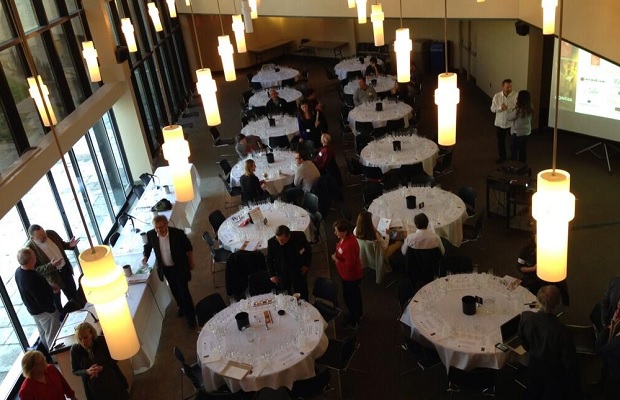
The Terroir Hospitality Symposium took place on May 11, 2015 at Arcadian Court in downtown Toronto. The one day food and wine colloquium was a massive simmering feast set in sprawling fashion within an undersized, intricate urban labyrinth. Despite the frenzied and condensed action in the downtown venue, that congress merely offered a look at the tip of the proverbial Terroir iceberg. With upwards of 3o team members leading the charge, the movement left the big fat city address and trekked to set up shop at a local farm and out to the rock at the eastern outermost edge of the country. Terroir moves outwards, onwards and upwards, taking it to the fields and the oceans.

The Terroir Best Practice Culinary Mission went to St. John’s, Newfoundland from May 14th to 17th. The One Fish expedition travelled “to meet fishing industry experts, to explore and examine both the history and the current realities of an Atlantic community built on an economy of the fishing industry.” There was also “the feast that keeps on giving,” at which the Feast Ontario team was hosted at Grandview Farms in Thornbury, Ontario

Led by Founder & Chair Arlene Stein, Vice Chair & Awards Rebecca Leheup, Terroir Talk the dextrosinistral/sinistrodextral enterprise is an undertaking of the extreme variety.

A look at #Terroir2015 in images

Terroir is an event, a series of gatherings, a notion, a philosophy and a way of life. Its mandate is this: “Terroir Hospitality brings together innovative and creative influencers from the field of hospitality, including chefs, food and beverage experts, writers and business leaders.” It’s also not without detractors. There are some who feel it is a negative representation of the culinary and cultural scene in Toronto. That it’s “white, urban, Euro-centric. It ain’t Canada, or 2015. Not funny.”

If the list of participating speakers, chefs and winemakers had been correlated with shortsighted discrimination, ill-curated and preordained with exclusive, malice prepense, you would have been hard-pressed to get an interview with any guest who would have chosen to speak about the called-out lack of representation or narrow-minded decision-making. If the culture and the colour of the event needs to change it will do so with holistic bias and sympathy, with the right sort of urging from the global culinary and vinicultural community. If the pundits are correct, future sessions will reflect the will of the people. In 2015, the atmosphere was wholly copacetic.

The 2015 Terroir wine sessions were marshalled with “an effort to raise the academic standards of the wine side of our symposium,” in three assemblies, to educate and entertain. These Masterclass jams, Gamay, Terroir, and Clone Wars were coordinated by Good Food Revolution’s Jamie Drummond and Magdalena Kaiser with great support from Wine Country Ontario.

The connection between food and wine is an intrinsic one. They are like chicken and egg, contrary to reason in electing which comes first. Chefs and winemakers, purveyors of the land from which their produce grows, transmuted into cuisine and fermented into wine. Facilitators of terroir, harvesting at optimum ripeness and then initiating the transmogrification with immediate haste, in urgency, to capture, lock in and bottle aroma, flavour and texture, before any chance of deterioration or spoilage.

But what the fuck is terroir? The most used word in the language of wine is in fact, terroir. Nothing else compares, comes even remotely close, or causes as much debate. Except for minerality, but those who concern themselves in the matters of ridicule, dismissal and denial ignore the fact that the opposite of fruit is simply, unequivocally and finally, incontestably, mineral.

Were the notion of terroir to be a belief as simple as “what happens in the vineyard, through environment, by geology, geography and topology, from naturally occurring elements and microbes in the soil, by air and of climate. Were it just a matter concerning “the impossible creator of perfect storms, from out of riddle and enigma,” well, then, we could all just go home. It’s much more complicated than that and real.

Most winemakers will agree, in principle, to this. “The final goal is to make the finest wines that express terroir.” Organic and biodynamic are important. Terroir is more important. But winemakers are no fools. They know that “during the grape’s life cycle, genealogy and climate shape its development. But even after it is plucked from the vine it still carries no true identity, in so far as what it will become as a wine. This is the point where nature gives way to nurture. Environment now acts as the catalyst to shape the wine’s life. Wine does not evolve because of natural selection. It evolves at the hands of the winemaker.” Anti-terroir?

At this year’s Terroir Talk Symposium, Gamay was chosen as the first wine session’s go to grape variety, to investigate both the serious and not-so serious sides of its existential weightlessness. To revel in its lithe, brightness of being and to unearth its deep roots. That we have come to a time in history where both aspects can be studied in Burgundy and in Ontario is fortuitous indeed. As a Gamay groupie, I feel blessed to be born under a good sign, at the right time.

As a reminder, it’s always the right time to be with the Gamay you love. I have been urging Ontario farmers to plant, cultivate and nurture Gamay; for winemakers to make it more and more. I made “a proclamation in favour of a great grape and one that forges signature wines out of Canadian soils. I am an ardent supporter of and a willing rider on the Gamay bandwagon, in the name of connaitre and savoirkennen and wissen, recognition and understanding.”

Related – Go Gamay Go

It’s working. Rosewood Estates just planted it for the first time. Gamay is poured at the cellar door, at tasting events and in private gatherings all the time now. Bottom line is Gamay costs half of the price compared to Pinot Noir and Syrah and it thrives in Ontario. It can make serious Cru quality reds and even at the highest end, sell for less than $30. It has been, continues to be and will always be #GoGamayGo time in Ontario.

Related – It’s go Gamay go time
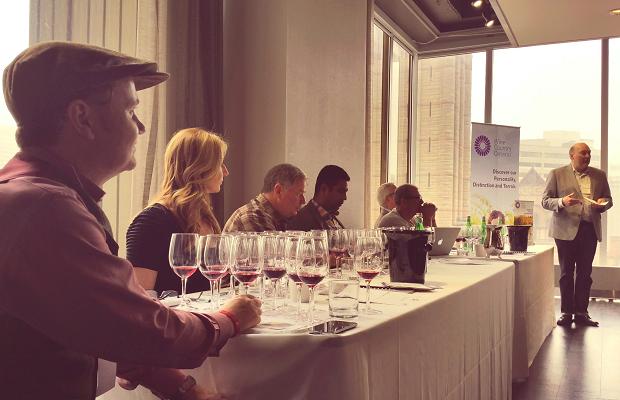
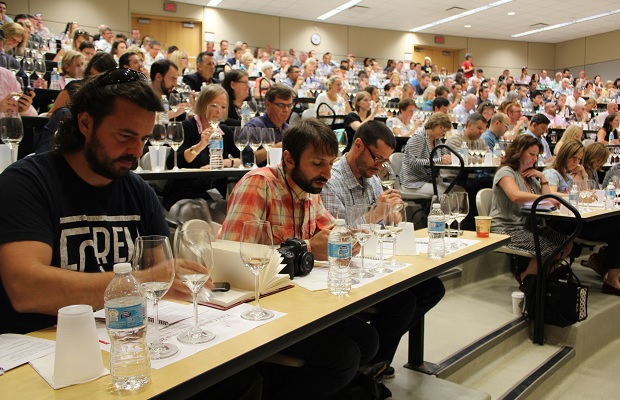
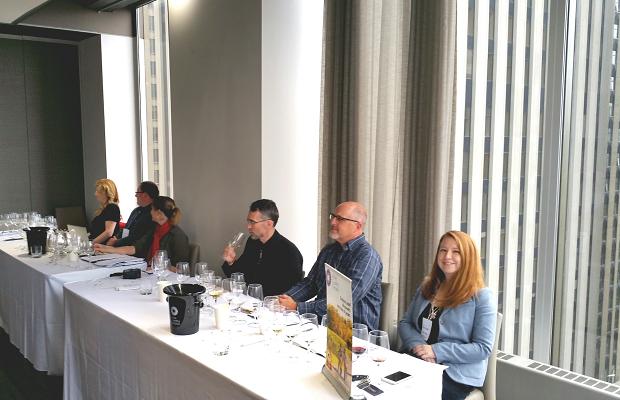
Moderator Chris Waters and the Gamay Masterclass panel: Jamie Drummond, Magdalena Kaiser, Martin Malivoire, Shiraz Mottiar, Bill Zacharkiw and Guillaume de Castelnau

Moderator Chris Waters and the Gamay Masterclass panel: Jamie Drummond, Magdalena Kaiser, Martin Malivoire, Shiraz Mottiar, Bill Zacharkiw and Guillaume de Castelnau

The first Masterclass: Gamay The Next Little Thing

“The intent of the first of the three wine sessions, was meant to investigate how it performs in Ontario and elsewhere in the world.”

The Panelists:

  • Winemaker Guillaume de Castelnau, Chief Winemaker/Director, Château des Jacques, Louis Jadot Beaujolais (Beaujolais, France)
  • Vigneron Martin Malivoire (Malivore, Beamsville Bench, Ontario, Canada)
  • Winemaker Shiraz Mottiar (Malivoire)
  • Wine writer/Sommelier Bill Zacharkiw (Montreal Gazette/Wine Align, Montreal, Quebec, Canada)

The Moderator: Wine writer Chris Waters (Vines Magazine/Intervin, Ontario, Canada)

To many, Gamay is a wonderful drug and though much maligned, its suitors and supporters can never tire of its freshness and its lightness of being. Moderator Chris Waters refers to Gamay as “a gateway grape, to transition drinkers from white to red wine.” In a world according to Guillaume de Castelnau, “Gamay is lazy, generous and fragile.” Bill Zacharkiw minces nothing, not words, nor feelings. “I love Beaujolais.” In the Terroir Master Class, there were 13 variations on Gamay, from semi-carbonic to old and baked, with many shades, hues, intensities and variations in between. Here are my notes.

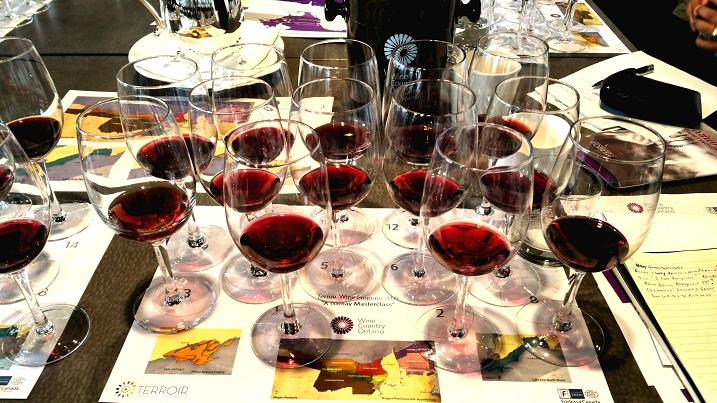
Ontario Masterclass Gamay

Ontario Masterclass Gamay

Malivoire “Le Coeur” Gamay 2014, VQA Niagara Escarpment, Niagara Peninsula, Ontario (Winery)

Shiraz Mottiar refers to the young, Beaujolais impressionist as “Sammy Carbono,” a semi-carbonically macerated Gamay, with one foot in Nouveau and the other in a dusty, freshly spirited aromatic whirl. The tanky feel makes it accesibly gulpable. Like a leaping horse it is also twitchy, hopping in dressage, popping in the mouth. Fun if beside the point. Drink 2015.  Tasted May 2015

Malivoire M2 Small Lot Gamay 2013, VQA Niagara Escarpment, Niagara Peninsula, Ontario (Winery, $19.95, WineAlign)

A month later the pepper runs from white to black, by way of red. Terrific sour edged fruit. Strawberry and cranberry tied together by citrus. Will need two years minimum to fully integrate.
From my earlier note of April 2015:
The profundity of tart, keen, briny berries dilates in its own very useful layers of citrus, tannin and concentration, beyond even what was observed in 2012. The zesty, spritely argot resonates from the unfurling of floral essentia out of a Gamay in desperate need of time. The flavours and overlay are somewhat impenetrable and yet leave quite an impression. While patience might be the virtue and the reward, if #gogamaygo is the modus operandi, a swig from the bottle like gentlemen of the road is certainly not out of the question. Drink 2016-2021.

Last tasted May 2015

Leaning Post Gamay 2013, VQA Niagara Peninsula, Ontario (Winery, $25.00)

A year has clarified the must into a venerable, beneficial decay, like effulgent, liquid rust. The shine of antiquity and then a blast of cinnamon dominates for the first major swirl. So lithe and profound like wise Pinot Noir, minus the Niagara coat of arms and lacquered veneer. Whatever anxiety may have held down the brightness has eased to deliver this current, optimum drinking window. Drink 2015-2016.  Tasted May 2015
 
From my earlier (tank sample) note of May 2014:

Guiltless and virtuous straight out of stainless, the meaty side of Gamay game boldly goes where few from the Bench have gone before. Like a rare venison steak sitting in a silky pool of lavender-scented demi-glace. Floral like Fleurie and despite zero new oak, vanilla joins the gravy. A Senchuk steal of quality Wismer (McLeary…sort of) fruit sets this Gamay up for easy sell success.

Fielding Gamay 2013, Niagara Peninsula, Ontario (Winery, $19.95, WineAlign)

Time has been a friend to the ’13 Fielding Gamay, a wine who’s elevated tones of floral fruit and acidity have settled in the name of structure. Dusty ground nubbins and mint swirl with layered if yet rigid fruit. Low-cropped vines are on display, in single-vineyard like attention to specific detail, akin to Malivoire’s Courtney. This is in fact sourced from a single-vineyard up on the cool Vinemount Ridge sub-appellation. The site is a couple of kilometres south of Peninsula Ridge’s McNally Vineyard, the source of Ilya Senchuk’s terrific Leaning Post 2012 Pinot Noir. The Procyshyn family has been farming this plot (without fanfare) for decades in Beamsville. The pristine fruit that Theo and Shelley Procyshyn grow, along with their three sons, Nolan, Dalton and Brayden, yield as low as 1.5 tonnes and up to 3.5 tonnes per acre, depending on the year. The ’13 was around 3 t/a. Fielding has never labelled this Gamay ‘single vineyard’ because they have always hoped to bring in new Gamay blocks on as part of that wine, but that’s not yet worked out. The ’13 is very, very red raspberry, with a craggy, spiked point of liqueur, like a weeping peak upon that Vinemount Ridge in the afternoon sun. Has Beamsville’s upper reaches written all over its corporeal self. Drink 2015-2017.  Tasted May 2015

13th Street “Sandstone” Gamay 2013, VQA Four Mile Creek, Niagara Peninsula, Ontario (Winery, $19.95, WineAlign)

May just be the first Gamay with a simulacrum towards a style best described as appassimento, what with the overripe fruit, aromatic cure, baked and sun-dried flavours. Sniff the confluence of black raspberry, scorched earth and roasting game bones, its sinew crackling over humid old growth wood. Gets rich into the vanilla, reeking of late harvest lavender and then a mutton funk. Could easily pass for a wealthy, unforgiving style of Cru Beaujolais, like Chénas from Christophe Pacalet. Or it could just be acting older than its age, by seven or eight years. Most prepossessing and confounding Gamay. Drink 2015-2018. Tasted May 2015

Stratus Gamay 2012, VQA Niagara On The Lake, Ontario (Winery, $29.00, WineAlign)

Esteem elevated by structure, matched in poise and presence mottled in smears of darker, richer black cherry. If a slight absence of brightness is sensed due to the syrupy compression, like New World, west coast Pinot Noir, the gleaning from acidity and tannin times perfectly the effluent escape.

From my earlier note of April 2015:

It may not be the most idiosyncratic Gamay in Niagara but the Stratus 2012 is without a doubt the most advanced and complex. Gamay fusion is on display, at once a bottle of Niagara’s finest pulchritudinous veneer and then a charcuterie board laid ample with cured bovine parts and sun-dried grapes. Maximum ripeness and then even later picking, to no one’s surprise, have led to this. Two years of ageing in neutral oak barrels has brought about a humid roundness and yet the centre is controlled by Oz-like mint and eucalyptus notes. The jam is gelid, as opposed to temperate. Rarely does Gamay go to such depths, of blackberry, chalk and grain, with an overlord of tannin. Quite serious stuff. Drink 2017-2020.

Last tasted May 2015
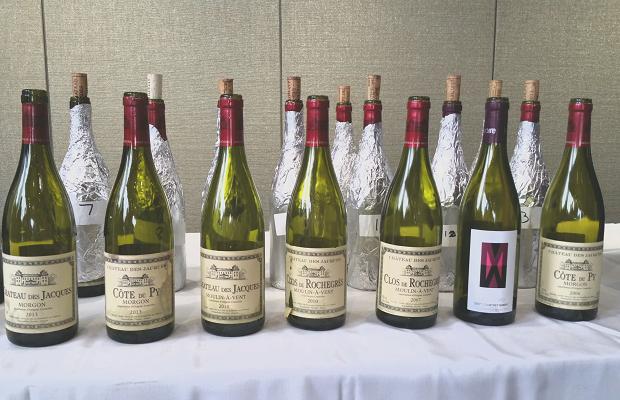
Château-De-Jacques and Malivoire Courtney in the Gamay Masterclass

Château-De-Jacques and Malivoire Courtney in the Gamay Masterclass

Château-De-Jacques Morgon 2013, Ac Beaujolais, France (653584, $24.95, WineAlign)

The flushed scarlet animation is active and astir, like a soft serve swirl of dusty, cherry molasses, bathing in its own natural acidity. Has the presence of wine to integrate chalk, grain and Morgon tannin, in equal, opposite and variegated layers. Nothing shy about this gateway Cru Beaujolais. Drink 2015-2019.  Tasted May 2015

Château-De-Jacques Morgon Côte du Py 2013, Ac Beaujolais, France (Agent, $53.95)
In this rigid and stoic Morgon, the south-facing, blue volcanic slopes of the Côte du Py have provided a measure of firm fruit that will require a minimum two to three years to crack. The gears of the Gamay machinery may be grinding but the windows are yet open, the doors locked tight. This is the least forward, most inwardly introspective and least gregarious of the CdJ Beaujolais. Sharp sapidity, biting tang and piercing penetrating tannin deny immediate or even short-term access. Even the middle palate seems lifeless, devoid of cherry fruit and seamless layering, medicinal even. Judgement should be reserved, with knowledge of pedigree and how a bottle such as this will suddenly, effortlessly spring to life with time. Drink 2018-2022.  Tasted May 2015

Château-De-Jacques Moulin a Vent 2010, Ac Beaujolais, France (Agent, $36.95)

The undergraduate’s blend comes from the appellation’s Château des Jacques parcels; Carquelin, Rochegrès, Champ de Cour, Thorins and La Roche. Granite soils from each spice with symptomatic diversification and combine for a flippant funk that hitches straightforward out of the gate. Here Gamay leaves dusty behind with an urging away from humble and towards nobility. Richly aromatic, amplifying into palate. Such acidity and such grain. For this MaV the time is now, the arrival already announced. A late sense of veneer on the lengthy bitter finish indicates more good times ahead. Drink 2015-2020.  Tasted May 2015<

Château-De-Jacques Moulin a Vent Clos de Rochegres 2010, Ac Beaujolais, France (Agent, $44.95, WineAlign)

From the appellation’s highest parcel, the red sandstone soils of the Clos de Rochegrès are gently sloping and fed by underground streams. I always sense salinity and an effusive, stony energy in wines blessed with subterranean irrigation. The drinking window for this 2010 is wide open and the funk meets age introduction has been made. Already in display of a dried fruit shrivel, the ’10 acts like Sangiovese of a similar senescence, like CCR or Vino Nobile with three to five years of age. The liqueur of roses, the earth and the cherries are culpable and yet the varnish and the baking spice crusting ensure that no one conclusion can yet be made. This is highly seasoned and not quite unfurled Gamay. Two more years should complete its conditioning. Drink 2017-2020.  Tasted May 2015

Château-De-Jacques Moulin a Vent Clos de Rochegres 2007, Ac Beaujolais, France (Agent, $43.95, WineAlign)

Poured from a magnum, the 2007 Clos de Rochgeres is the portal in which to peer, to see what can happen with Gamay. Baked, caked, figgy, funky and oxidative, more than ample fruit was present and persists, with the savoury edges now integrated throughout. Strawberry rhubarb pie comes to mind, with eyes closed and sniffing senses heightened. A bit indelicate, the humidity in tomato leaf and garrigue add to the idea of age though the citric punch and lactic texture are reminders of Gamay’s fun side. There is no shortage of complexity and evolution here. That said, consumption time is now. Drink 2015-2016.  Tasted May 2015

Malivoire Gamay Courtney 2007, VQA Beamsville Bench, Ontario (Winery, $29.95, WineAlign)

The wow aromatics can’t be denied, fully explained nor perfunctorily taken for granted. Age has educated the fruit, stratified and fully saturated this Gamay. Strawberries have shot from an adrenaline cannon and structure has been fully realized with (non-Gamay) Old World confidence. A note of orange blossom, like an early evening Sevilla garden, is rousing. The natural evolve of such a Gamay, with wood, yeast and fruit in expert harmony, recalls the impossible acts of red wines like those made by Emidio Pepe. If the stretch is considered a conceit of poetic licence, so be it. The yet beating heart of raging acidity circling plenteous fruit and so much savour is nothing short of a Gamay miracle. Power and masculinity, by way of a conduit in oak, have been used to great advantage. This has life yet to live. Drink 2015-2020.  Tasted May 2015

Château-De-Jacques Morgon Côte du Py 2006, Ac Beaujolais, France (Agent, $53.95)

Seamless and eminently structured, developed low and slow. The blue volcanic soil has procured an evolutionary subsumption, a roasted, developed personality. The seeping liquor oozes, of earthy cherries, again like Sangiovese, but inelastic and close-grained, as per the Côte du Py idiom. This ’06 offers clarity and gives reason to forgive the brutal ’13, to abstain for commenting further. This wine is quite ferric and still tannic. The oak remains a factor. Through the walls the Gamay fruit does transude and so the master plan is coming into effect, perhaps not immediately but will be very soon. Just around the corner. Drink 2016-2020.  Tasted May 2015
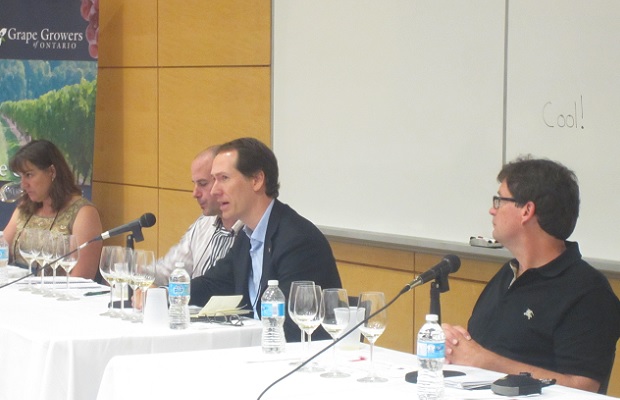
Moderator Sara d'Amato and the Terroir Masterclass panel: Magdalena Kaiser, Dr. Jim Willwerth, Emma Garner, Stuart Piggott and Dr. Kevin Pogue

Moderator Sara d’Amato and the Terroir Masterclass panel: Magdalena Kaiser, Dr. Jim Willwerth, Emma Garner, Stuart Piggott and Dr. Kevin Pogue

The second Masterclass: A Different Look At Terroir: How Much Do Soils Actually Matter?

“In this seminar/tasting we ask what the term really means, and how much do its many different elements actually influence the character of the finished wine?”

The Panelists:

  • Dr. Kevin Pogue Phd. Geology, Whitman College, Walla Walla, Washington State, USA
  • Dr. Jim Willwerth Phd. Biological Sciences: Plant Sciences; Oenology and Viticulture (CCOVI, Brock University, Niagara, Canada)
  • Winemaker Emma Garner (Thirty Bench, Beamsville Bench, Ontario, Canada)
  • Winewriter Stuart Pigott (Author of Riesling: Best White Wine On Earth, Berlin, Germany)

The Moderator: Wine writer/Sommelier Sara d’Amato (Wine Align, Toronto, Canada)

Dr. Willwerth offered up his opinion on how minerality is achieved in Riesling. “If you don’t get maturity in the variety at the end of the growing season, you won’t get the full expression of minerality. Overripe will eliminate minerality.” In Ontario, “The Bench is home to a mineral wealth of local Riesling, singular in composition not only by way of a global comparison, but also from plot to plot, soil to soil and vineyard to vineyard.” That persuasion has spread, down to the shores of Lake Ontario, by Niagara-on-the-Lake and in Prince Edward County. “Riesling brokers the nescient consumer with the gift of grape enlightenment.”

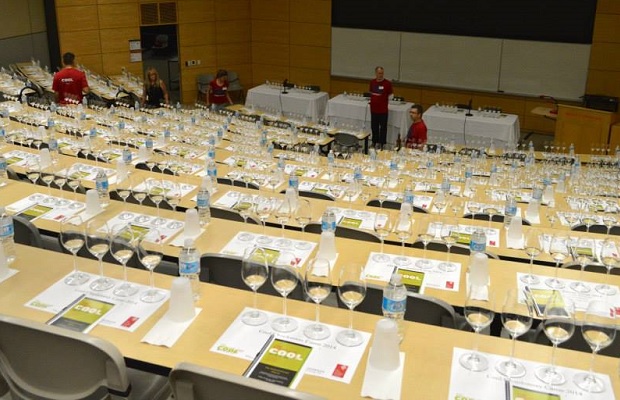
Seven Ontario Rieslings were tasted in the Masterclass. The notes.
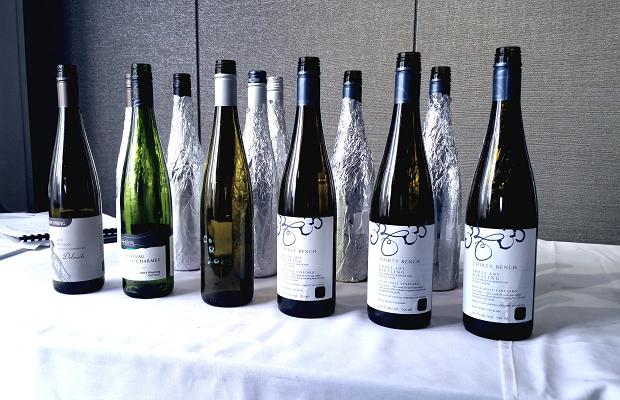
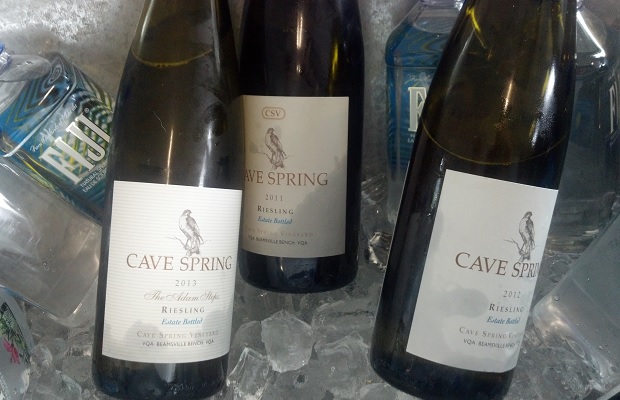
Riesling Masterclass

Riesling Masterclass

Cave Spring Riesling Dolomite 2013, VQA Niagara Escarpment, Ontario (Winery, $16.95, WineAlign)

This is Cave Spring’s bridge, offering safe passage from Estate to CSV Riesling. Vinified with consistency in a quasi-Kabinett style, its elevated though classic numbers steadfast in sugar (17.55 g/L) and acidity (7.2 g/L TA). The dolomite limestone of the Escarpment means business in this calm, fit, chiseled and consumer-lissome Riesling. Palate is really the thing, seamless to attraction, from fruit to stone. Orchards and citrus groves alight to rock. Phenolically ripe yet shy of the tropical planet. Is there transference here? Absolutely. Drink 2015-2018.  Tasted May 2015

Château Des Charmes Old Vines Riesling 2013, VQA Niagara On The Lake, Ontario (277228, $16.95, WineAlign)

The happy place effect by age in the Château Des Charmes’ vines coupled with location is usually enough to carry this Riesling through an obvious and readily identifiable tunnel but 2013 confounds. The elemental ratio, derived from multiplying reduction by altitude leans thoughts to the Vinemount Ridge or the Cave Spring Escarpment Vineyard. The compound aromatic waft, or more succinctly, the deconstructed stone, the breaking down of periodic Hollywood squares is a force to reckon. That this arrives from such close proximity to the lake is nothing short of amazing. It’s as if this Riesling is the product of stressed vines and the pierce is just so pinpointed. Less accessible than ’12 for sure, so drink up previous vintages going back at least three before even thinking about getting to know 2013. Drink 2018-2022.  Tasted May 2015

Norman Hardie Riesling 2014, Prince Edward County, Ontario (Tank Sample)

At this prepossessed stage the terpenic fruit might fail in competition but succeed in the marketplace. Easy access, smelling of perfumed must, juicy, with citrus and burgeoning acidity. Low alcohol and good length stretch out an endless lemon summer. The wine will reverse itself within a year and beat impossible odds. A Hardie always does.  Tasted May 2015

Thirty Bench Riesling Small Lot Triangle Vineyard 2009, VQA Beamsville Bench, Niagara Peninsula, Ontario (Winery, $30.00, WineAlign)
The brilliant hue slides through patina and heads for gold. Some fumes have emerged with age, part petrol, part pure mineral, but of what kind and more importantly how, or why? Viscous, near oily, waxy and the most Glück of the three Thirty Bench single-vineyard Rieslings. Tossed with spice, pepper, lemon and honey that is more molasses than clover. The mineral is a result of the lowest water retentive soil as compared to Steel Post and Wood Post. The transmission for (orchard or tropical) fruit is minimized, the vigour low. The result is mineral. Drink 2015-2020.  Tasted May 2015

Thirty Bench Riesling Small Lot Steel Post Vineyard 2009, VQA Beamsville Bench, Niagara Peninsula, Ontario (Winery, $30.00, WineAlign)

Balance is and therefore always was struck. The match percusses flint for a mere nano-second, with just a brush on cymbal, the rock bleeds but is quickly clotted because the fruit shines still, like around the clock light. The steely aspect is a posterior one, antithetical and yet purposed, from this vineyard. Youth tells common sense to think 2011. The Riesling behaviour seems to play that part, of a chalky, piercing acidity, so typical of that vintage and so distinctly Thirty Bench. That the wine is older is not a big surprise because 2009 is the bomb. It may just be the best Riesling vintage, from on that Bench, in the last 10. Drink 2015-2025.  Tasted May 2015

Thirty Bench Riesling Small Lot Wood Post Vineyard 2009, VQA Beamsville Bench, Niagara Peninsula, Ontario (Winery, $30.00, WineAlign)

Age is a factor but less so than its Bench sisters due to a fine sense of calm. Showing less evolution, less viscosity, less wax and honey. More than that, the periodic table has yet to fill in. The Wood Post exhibits more warmth, savour and balm. A taste offers a sapidity that combines toasted fennel and candied lemon. Poised and yet incomplete, the vineyard fetters this Riesling to breath slowly and take its (will get to) sweet time. Drink 2017-2027.  Tasted May 2015

Flat Rock Cellars Riesling Nadja’s Vineyard 2009, VQA Twenty Mile Bench, Niagara Peninsula, Ontario (578625, $19.95, WineAlign)
Going back a few years, this Flat Rock Weis 21 clone Riesling from atop the Niagara Escarpment was made by former winemaker Ross Wise. Six years has concentrated both aromas and flavours while concurrently reducing the cutting drill. The hyperbole is read by tablet, of etchings in stone, immortalizing the terroir (not so) long before it was truly known how this could happen. What sticks out the most is the bleeding limestone texture and the striking aridity. Later vintages of Nadja improve on the flesh. Drink 2015-2017. Tasted May 2015
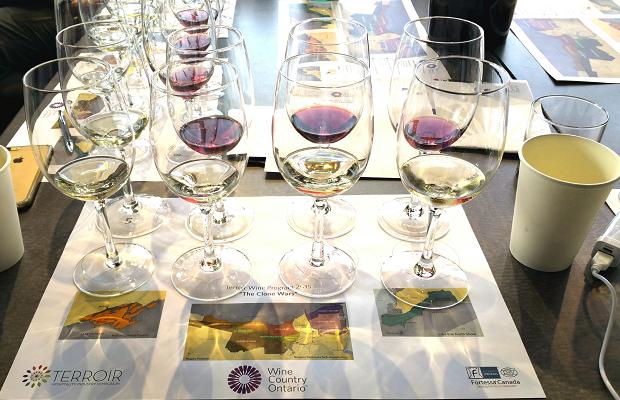
Clone Wars Masterclass

Clone Wars Masterclass

The third Masterclass: “The Clone Wars”: What Do Different Clones Bring To The Glass & Why?

“Looks at Riesling, Cabernet Franc and Pinot Noir. The varying clones utilized are a point of pride for some winemakers, and yet not even mentioned by others. Over the course of this detailed seminar/tasting we hope to answer why this is the case.”

The Panelists:

  • Dr. Kevin Pogue Phd. Geology Whitman College, Walla Walla, Washington State, USA
  • Dr. Jim Willwerth Phd. Biological Sciences: Plant Sciences; Oenology and Viticulture (CCOVI, Brock University, Niagara, Canada)
  • Winemaker Angelo Pavan (Cave Spring, Jordan, Ontario, Canada)
  • Winemaker Jay Johnston (Flat Rock, Beamsville Bench, Ontario, Canada)

The Moderator: Sommelier Katy Moore (Langdon Hall, Cambridge, Ontario, Canada)

Dr. Jim Willwerth asserts that “clones are essential for viticulture, propagated asexually, through cuttings.” Angelo Pavan notes “clonal research to cold heartiness is very important for Niagara and also for yields.” Clones no doubt drive the industry, at least behind the scenes, but when it comes to making great wine, is it the be all, end all? “I still believe plot trumps clone,” says Jay Johnston. The defence rests. Here are the wines tasted in the final Masterclass.
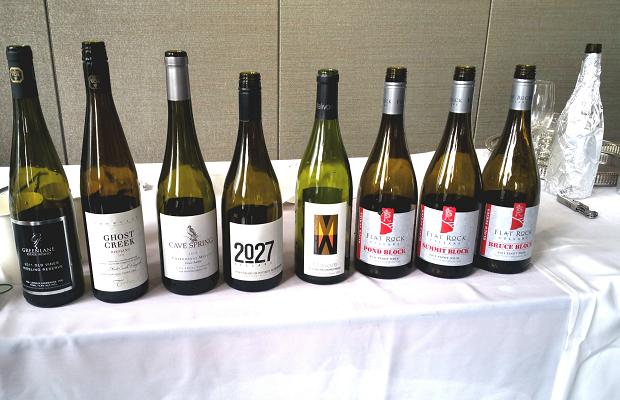
Clone Wars Masterclass line-up

Clone Wars Masterclass line-up

Greenlane Riesling Old Vines 2011, VQA Lincoln Lakeshore, Niagara Peninsula, Ontario (351486, $21.95, WineAlign)

While aridity suggests Alsace Clone 49, this is actually Weiss 21, made saline and arid out of Lincoln Lakeshore soil. The herbal aspect has propagated to combine with Twenty Bench like distinction and with less citrus than Vinemount Ridge or Beamsville Bench. The Mosel density has developed with time in bottle. Drink 2015-2019.

From my earlier note of October 2013:

Cracks the mineral whip, froths lime into foam and atomizes stone fruit into sweet and sour heaven. Wants to be semi-dry but never quite goes there. Walks a fine line, a tightrope actually. Up there with Charles Baker and Thirty Bench for sheer madness.

Last tasted May 2015

Trius Winery At Hillebrand Showcase Riesling Ghost Creek Vineyard 2013, VQA Four Mile Creek, Ontario (Winery, $25.00, WineAlign)

The Ghost Creek Riesling comes from the shadow of a river bed vineyard planted to the Alsace clone 49. The fruit is much richer than most, coupled with the aridity and salinity that former stony wadi plots and this particular clone will conspire to effect. The citrus intensity is however tempered by a humidity that comes from seemingly sunburnt fruit, tanned and wet down by the revenant reservoir. Drink 2015-2017.  Tasted May 2015

Cave Spring Estate Bottled Chardonnay Musqué 2013, VQA Beamsville Bench, Niagara Peninsula, Ontario (246579, $15.95, WineAlign)

Produced from the 77 clone, the vintage has heightened the high herbal and feigned sweetness aromatic pastis. The palate is extraordinarily viscous, with Yellow Muscat and Gewürztraminer attributes, not so out of the ordinary considering Cave Spring’s older world execution. Drives from lemon to mandarin, through almond pit and into peach. Always solid Musqué. Drink 2015-2017.  Tasted May 2015

2027 Cellars Chardonnay Wismer Vineyard Fox Croft Block 2012, VQA Twenty Mile Bench, Ontario (Winery, $30.00, WineAlign)

In the hands of winemaker Kevin Panagapka, Craig Wismer’s fruit retains un underlay of power not recognized in other Foxcroft Chardonnays. Neither Thomas Bachelder nor Ross Wise (Keint-He) make anything near spirited as this 2027 take. Chardonnay loves the sun in the Foxcroft Block and Panagapka loves to see that sun hook up with the inside of a barrel. This ’12 makes a nice date for a wood wedding. A product of the Dijon 96 clone, the reduction in this Chardonnay drives its fresh, spritely if mettlesome nature, with a bark and a barrel bellow, but longevity will not suffer as a result. This could take 30 years to oxidize, it’s that audacious and also courageous. Let it and its buttered popcorn rest a while. Drink 2017-2025.  Tasted May 2015

Malivoire Chardonnay Moira 2011, VQA Niagara Peninsula, Beamsville Bench, Ontario (243113, $39.95, WineAlign)

When it comes to clones, winemaker Shiraz Mottiar distills the Moira Vineyard into the realm of “field selection.” Not to be confused with field blend though I suppose that’s what it is, of sorts. The ’13 is the dictionary entry for Moira, typically balanced, from pedigree, in warmth, amiability, gathered and distributed, from acumen and confidence, to customary placement. Fruit and acidity relax on a sofa of equilibrium, taking little in the way of risks, making no mistakes. Reduction isn’t even a twinkle in its fresh versus oxidative eye. The vintage and the handling purports to throw infantile, developed and matured into one big machine for a readout that grants immediate gratification. Exemplary take on cool-climate, Niagara Peninsula, slightly warmer Beamsville Bench Chardonnay proper. Not for the long-term. Drink 2015-2019.  Tasted May 2015

Flat Rock Pinot Noir Pond Block 2011, VQA Twenty Mile Bench, Ontario (Winery, $29.95, WineAlign)

Assessed blind it smells just like the Flat Rock’s Gravity Pinot Noir yet singled out in fractions. Here the mellifluent block, of sweet crooning fruit, careening and submissive to Siamese brother triplet Summit’s tension.

From my earlier note of October 2013:

Crosses the twain between Bruce and Summit. A cottony touch, most pronounced perfume and of the three, the lowest acidity. Mellow, easy, J.J. Cale peaceful, void of chalk, grain or angst. Speaks in a cherry voice, smells like cherry and returns that cherry to taste. Ripe and soft. “Sweet as a morning sunrise, fresh as a mountain dew.”

Last tasted May 2015

Flat Rock Pinot Noir Summit Block 2011, VQA Twenty Mile Bench, Ontario (Winery, $29.95, WineAlign)

The most perfumed and yes, Burgundian of the three blocks, the Pommard in the group. Still limestone chalky and gaining weight. This is a single-block wine to me made again.From my earlier note of October 2013:This block’s base is slightly deeper, spreading over dolomite limestone. Diminished average temperatures mean berries develop lower and slower, hang longer (up to three weeks) resulting in higher phenolic ripeness. Summit may be the caveman of the three, seemingly in dire straits, covered in leaves, snapped twigs, truffles and porcini mushroom but damn if impossible Burgundy does not come to mind. This is one to ask where do you think you’re going? It will surely reply, “if you ain’t with me girl, you’re gonna be without me.”Last tasted May 2015

Flat Rock Pinot Noir Bruce Block 2011, VQA Twenty Mile Bench, Ontario (Winery, $29.95, WineAlign)

The light and delicate place translates to hue, texture and ultimately elegance. Yet there persists an underlying anxiety, essential for gravity.

From my earlier note of October 2013:

From the northern most block, up at the Escarpment/Bruce trail. Thin, one foot deep soil meshes flaky limestone at this elevation. Smallish berries predominate and an earthly mote accents the flowers, cherries, strawberry and classic purity of this bonny Bruce. A Oregonian lightness of being, if you will. From one of the few south-facing slopes in Niagara (because of 20 Mile Creek), where the limestone chalk imparts fine-grained tannin so apparent to taste.

Last tasted May 2015

Good to go!
http://www.winealign.com/profile/2058-mjg

Recent uploads

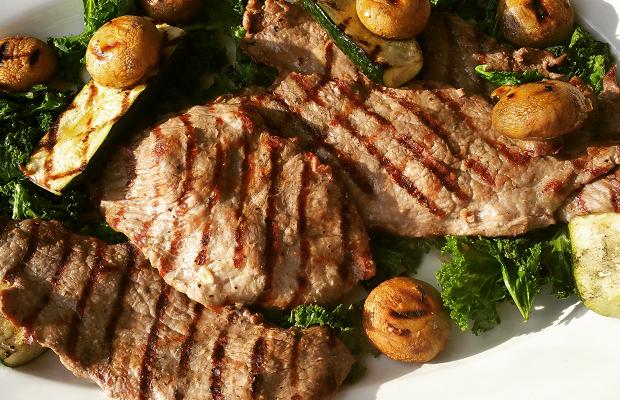
Recently grilled

Recently grilled

It’s a themed based life. Most of what we taste is packaged into categories; country, region, appellation, varietal, blends, White, Red, Sparkling, Rosé and Dessert. Tastings promote a place or at the very least a gathering of sympathies, of wines meant to share a table.

Sometimes we taste in random preoccupation, with holistic hazard grace, in absence of direction, without a care to the world. More often than not my tasting notes are uploaded to WineAlign. Here are nine uploaded singles, in no particular and seemingly random order, save for the prices. They are all available at the LCBO.

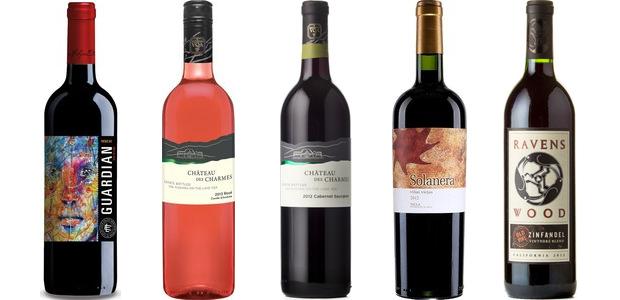
From left to right: Guardian Reserva Red 2012, Château Des Charmes Cuvée D'andrée Rosé Estate Bottled 2014, Château Des Charmes Cabernet Sauvignon Estate Bottled 2012, Bodegas Castaño Solanera Viñas Viejas 2012 and Ravenswood Vintners Blend Zinfandel 2013

From left to right: Guardian Reserva Red 2012, Château Des Charmes Cuvée D’andrée Rosé Estate Bottled 2014, Château Des Charmes Cabernet Sauvignon Estate Bottled 2012, Bodegas Castaño Solanera Viñas Viejas 2012 and Ravenswood Vintners Blend Zinfandel 2013

Guardian Reserva Red 2012, Colchagua Valley, Chile (392787, $13.60, WineAlign)

A commencement red in which the parts control the sum, before, during and after. Quite frankly that’s okay. That Cabernet Franc and Carménère can be picked out so glaringly yet without harsh tones is a reward of sorts, an investigation into the varietal relationship with Colchagua, the guardian of these grapes. More fruit than earth is the basic tenet of the dependancy, again just fine, with the secondary players acting out the vibes of smoke, very ripe flowering shrubs and oak. Good show. The length says three to four acts more. Drink 2015-2019.  Tasted March 2015  @LFEWINES  @DrinkChile  @Noble_Estates

Château Des Charmes Cuvée D’andrée Rosé Estate Bottled 2014, VQA Niagara On The Lake, Ontario (333260, $14.95, WineAlign)

If any Rosé intimates a blush Niagara Brut (sans bubbles) I’d have to give the nod to this CdC named for family matriarch Madame Andrée Bosc. Early picked at less than 20 brix in a Sparkling wine state of mind and balanced in which sugar (6.1 g/L) and acidity (6.1 g/L) countermand one effacing the other. From out of the void comes pure Pinot Noir fruit, in varietal articulation, lustrous, vivid and painted in cool, receding sheen. The flavours are an early summer bowl of berries. Strawberries to mark the beginning of hope. In 2013 the complexity reached for another level. Here in 2014 the Cuvée D’andrée keeps it simple. A Foy Vance tune. “That was the last day of June. This is the first of July.” Drink 2015-2016.  Tasted April 2015  @MBosc

Château Des Charmes Cabernet Sauvignon Estate Bottled 2012, VQA Niagara On The Lake, Niagara Peninsula, Ontario (370320, $14.95, WineAlign)

Grabs hold of the vintage and runs with it, in a sprint. Everything about this is comfortable, expressive, flannel blanketed for warmth. Soft, cuddly Cabernet with huge potential in consideration of price. The oak on top of extraction speaks of a handled totality alongside great fruit. Contending fruit. Basks in a blinding glow in a fine example of what Cabernet can do in Niagara, from warmer spots. That said I do believe that fresh fruit like this, left to its own devices, without any significant barrel coverage, would have managed just fine for five years or more. Drink 2015-2018.  Tasted April 2015  @MBosc

Castaño Solanera Viñas Viejas 2012, Do Yecla, Spain (276162, $16.95, WineAlign)

Crafted specifically for a North American market palate, this blends Mourvedre dominated (70 per cent), maximum extraction Yecla fruit with equal supporting bits of Cabernet Sauvignon and Garnacha Tintorera. The latter two juicy bombshells help to smooth, flesh and melt the ooze of the firm, dredging and heavy of foot Mourvedre. Reeking of modernity, machination and posturing, the gangly, brambly and grippy old vines Solanera is a huge wine, a macho, manly, masculine and muscular red. It’s a shaken mess of fruit, edible flowers and has a smoky, cigar leaf edge. The only real concern is a lack of chivalrous acidity. What is there feels added, not integrated and will be quick to abandon ship when the fruit needs a life raft. At present there is no disputing the quantity of the composition for the money. Two years from now it will have less to say. Drink 2015-2017.  Tasted April 2015  @BodegasCastano  @andrewhanna

Ravenswood Vintners Blend Zinfandel 2013, California (359257, $17.95, WineAlign)

The Vintner’s Blend is Ravenswood’s opportunity to anatomize disparate, old vine California fruit into one Wonka blend, to craft a harmonious if homogeneous Zinfandel expression. The house style in consistency is nothing short of something palmary, here perpetuated in the dried fruit crannies of this 2013. Zinfandel and nothing but, though the variety carries a three quarters presence, the remainder in Petite Sirah, Syrah and “Mixed Blacks.” When the paltry asking price is considered, the VB gives the oak away, asking for little in return, save for a stoked grill or smoker and some well-rubbed slabs of protein. Combine the sweet, savoury, dark, brambly fruit with slow-cooked ribs and a fuligin crust. Men from all around will come calling. Drink 2015-2018.  Tasted April 2015  @CBrandsCareers  @TheZinfandelOrg

From left to right: Southbrook Vineyards Triomphe Cabernet Franc Rosé 2014, Pedroncelli Alto Vineyards Sangiovese 2012, Brezza Cannubi Barolo 2010 and Château Lafon Rochet 2004

From left to right: Southbrook Vineyards Triomphe Cabernet Franc Rosé 2014, Pedroncelli Alto Vineyards Sangiovese 2012, Brezza Cannubi Barolo 2010 and Château Lafon Rochet 2004

Southbrook Vineyards Triomphe Cabernet Franc Rosé 2014, Niagara Peninsula, Ontario (279117, $19.95, WineAlign)

Southbrook’s Rosé is a triumph of philosophy and direction in varietal election. Fundamental to a matter of degree, this is a wine to help cast little doubt on Cabernet Franc’s pink necessity for Niagara. Only CF adds a sweet, sour and savoury push to to a blush bleed, with a push-pull undertone of earth. Only this variety can draw salinity and funk from the soil without requiring additional reductive, rubbery underpinning. Here the sour berries are bright and the wine is light on its feet, yet clear and precise. If not for the apocopic finish, this would be exceedingly exceptional Rosé. Drink 2015-2016.  Tasted April 2015  @SouthbrookWine  @AnnSperling

Pedroncelli Alto Vineyards Sangiovese 2012, Dry Creek Valley, Sonoma County, California (204461, $20.00, WineAlign)

Genuine take on Sangiovese, ebullient in red cherry, leather and chestnut. Swelling pulpy and if acidity does not at first succeed, it tries and tries again until vehemence is achieved. Sangiovese never looked so good in expatriate clothing for $20. Worth trying one now and putting a few away to see how they evolve. Sends a message to growers and producers in the Dry Creek Valley. Treat the variety with minimal oak love and seek out special terroir like the Alto Vineyards. Done right, Sangiovese can provide a bright and complementing alternative to Zinfandel. Drink 2015-2020.  Tasted April 2015  @Pedroncelli  @drycreekvalley

Brezza Cannubi Barolo 2010, Docg Piedmont, Italy (713511, $64.95, WineAlign)

Here, in the Cannubi vineyard, the classic impossible dichotomy of Nebbiolo, like an anvil and a feather, falling at the same rate, in a vacuum. The floral tones are set to eleven, while layers of many elixirs, liqueurs and tonics swirl in B-52 activity, bled from candied roses and chestnuts. A flavour that brings to mind fresh leather in cream sauce and a nutty glaze, like pistachio crème brûlée. Spiky, silken texture is akin to a web spun of savoury cookies strands. Tannins take over late and the sour finish, of fruits fed through a syringe by fills of intensity and verve. Wow Cannubi. Drink 2020-2030.  Tasted April 2015 @NaturalVines   @regionepiemonte

Château Lafon Rochet 2004, Ac St Estèphe, 4e Cru, Bordeaux, France (197228, 2009 $84.25, WineAlign)

An adolescent resolved, on the whole and as a rule for 2004’s, now advanced to adulthood. Chocolate and dusty weigh in straight away, as per the wood smothering of the time, so upfront and prevalent the fruit is the understudy. The whole in the heart of the middle is like the only living boy in New York, “half of the time we’re gone but we don’t know where, and we don’t know where.” So it must be filled with popular song. Then the wine shines, in Mediterranean tones, savoury ways, with black olives and sweet yet bitter solemnity. Quite perfectly fine, oldish Bordeaux, two-part harmony St. Estèphe. It will not rock your world but it will play scaling, soothing bass lines and lend echoing acoustics. Drink 2015-2017.  Tasted April 2015  @Lafonrochet  @BordeauxWines

Good to go!
https://twitter.com/mgodello

http://www.winealign.com/profile/2058-mjg

Feb. 21 wine and song salute

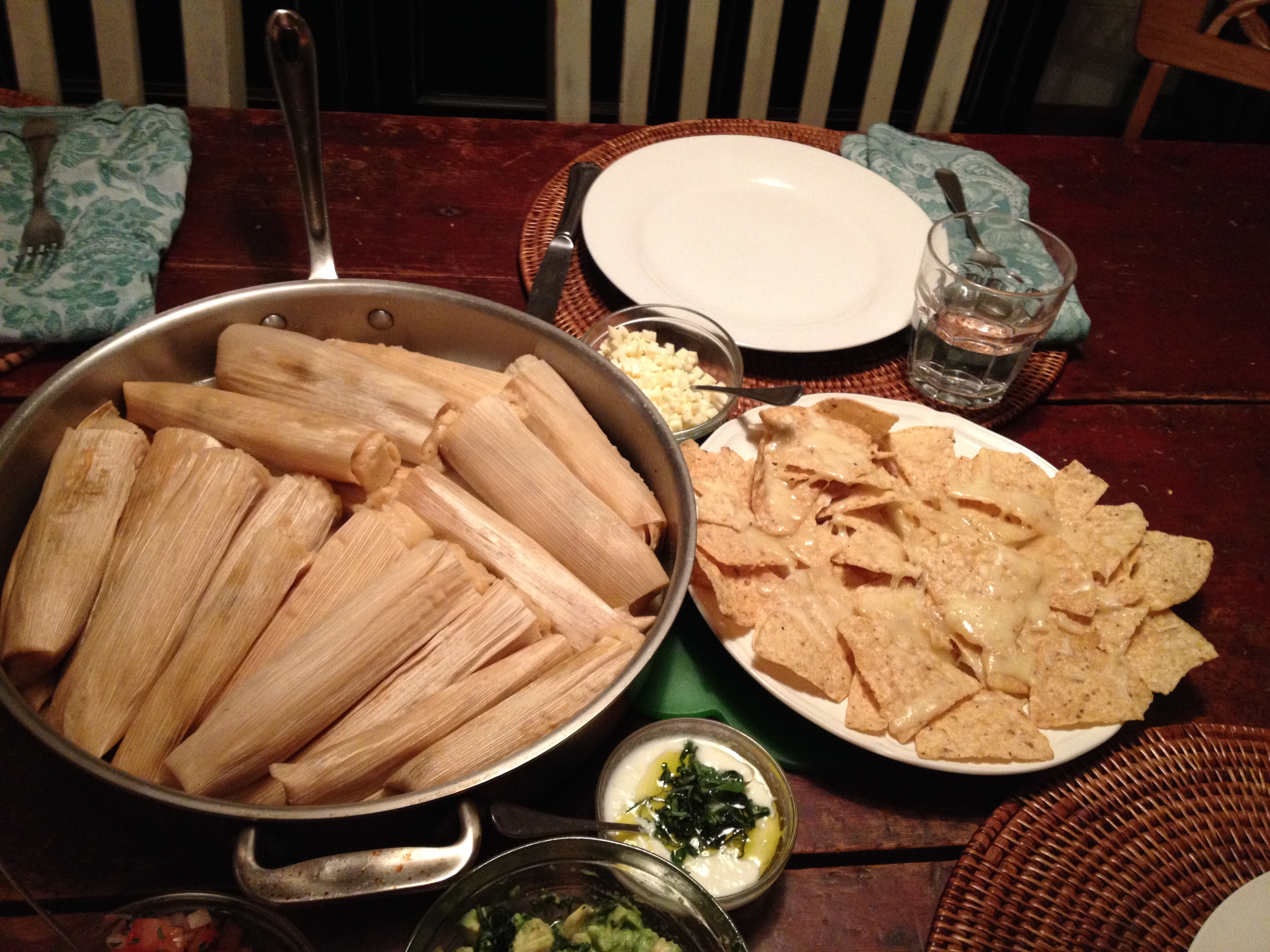
Godello's Tamales

Godello’s Tamales

Fear not good reader, this is only a list of seven, a set lucky wines and songs to play as you sip. On February 21st VINTAGES will roll a mid-winter classic release and though my recommendations will think globally next week, here the choices come out of Ontario, from parts Niagara and Lake Erie North Shore.

My picks are varied and the wines of a coagulated character best described as sui generis. Grapes come from old vines, are dried in kilns, fashioned in the Venetian Ripasso method and left on the vine to be stricken by the noble rot known as botrytis.

The brilliant leap of modern winemaking science allows the ancient to be realized in the present. Wines that pour themselves. Just as the earth has invisibly predisposed the vines, from cataclysms and through its evolution, so history is the unhurried intent. Winemakers are the messenger.

All this from Wine Country Ontario. Get to know it.

Speaking of WCO, if you happen to be heading to Ottawa for Winterlude this coming weekend, the VQA Wine Truck will be there, in Confederation Park.

Meanwhile back in Toronto, my seven wine and song salute begins here.

From left to right: Château Des Charmes Old Vines Riesling 2012, Ridgepoint Merlot 2010, Bricklayer's Reward Block 7 Cabernet Sauvignon 2012, Burning Kiln Stick Shaker Savagnin 2013, Thirty Bench Small Lot Chardonnay 2012, Andrew Peller Signature Series Sauvignon Blanc 2012, Inniskillin Discovery Series Botrytis Affected Viognier 2013

From left to right: Château Des Charmes Old Vines Riesling 2012, Ridgepoint Merlot 2010, Bricklayer’s Reward Block 7 Cabernet Sauvignon 2012, Burning Kiln Stick Shaker Savagnin 2013, Thirty Bench Small Lot Chardonnay 2012, Andrew Peller Signature Series Sauvignon Blanc 2012, Inniskillin Discovery Series Botrytis Affected Viognier 2013

Château Des Charmes Old Vines Riesling 2012, VQA Niagara On The Lake, Ontario (277228, $16.95, WineAlign)

Showy and yet so balanced and pristine. The cleanest fruit representing classic Niagara Peninsula Riesling from the ’12 vintage yet with an open mind to be walking far from home. Though void of agitation, there is plenty of verve and life. It comes by way of a mineral meets saline intensity, of iron and life, in wine. Like “sour building high as heaven,” and the components all kiss each other clean. Full of fine pastry layering, glycerine textured but not oily fruit, full and yet somehow so lacy. A really special Riesling from down by the lake.  Tasted January 2015  @MBosc

Ridgepoint Merlot 2010, Ripasso Style, VQA Twenty Mile Bench, Ontario (270488, $19.95, WineAlign)

Ridgepoint’s Ripasso style Merlot takes the varietal, stands it on its head and shakes the rust from out of its bones. It wears “a coat of feelings and they are loud,” with drying and painted flavours over top porcine, cocoa, wild and tight aromas. Merlot in a purple bottle, an animal collective, peppery, interesting, very Niagara, very Ripasso. Good length.  Tasted January 2015  @Ridgepointwines

Bricklayer’s Reward Block 7 Cabernet Sauvignon 2012, VQA Lake Erie North Shore, Ontario (406124, $19.95, WineAlign)

In Colio’s Cabernet Sauvignon there is dark chocolate everywhere, at every turn, in every crevice. Black pepper, fleur de del, currants and tobacco accent that chocolate ubiquity, with warmth and oak spice. Cherries seeped in astringent tannin offer a silky sweet sadness and “under this skin, there lies a heart of stone.” Counting for value, the Bricklayer’s reward is mercy, by way of character, texture and that wholesome chocolate. It may not be everyone’s cup of cocoa but it will age as long as the crow flies, into the next decade.  Tasted January 2015  @ColioWinery

Burning Kiln Stick Shaker Savagnin 2013, VQA Ontario (367144, $24.95, WineAlign)

Burning Kiln’s latest rendition of Vin de Curé, the “Parish Priest’s,” and the Jura’s Vin de Paille (Straw Wine) is that much more exceptional than what came before. The peaceful, heavy yet easy feeling continues, in alcohol weight and aromatic lift, ’cause it’s “already standin’ on the ground.” Like an eagle soaring, the Savagnin is a wild creature and yet solid, of a gamey, textural density. Imagine dried grasses and fruits, baked bricks, steamed crabs and honey. A wine so unique, mouth filling, viscous and tangy, from a wine region (province) with a maximum 10 planted acres. A white elixir in search of roast pork, braised belly and cured bacon. Not to be missed.  Tasted January 2015  @BurningKilnWine

Thirty Bench Small Lot Chardonnay 2012, VQA Beamsville Bench, Ontario (203703, $30.00, WineAlign)

Thirty Bench’s vintage-affected Chardonnay is rounded, full of warm, ripe fruit and noticeable oak. No darts are tossed, neither by woodsmoke nor spice and it ventures quite outward bound. This adventurous, appealing wine takes some chances, looks beyond its borders, reaching for notes both gravelly and scented; like cumin, coriander and a beautifully bittersweet Tom Collins. The rocks are certainly in, as are the sticks and stones, though they do not break bones. The price is another matter, affordable to some, prohibitive to “the little boys who never comb their hair.” For a Chardonnay such as this, of layers and riches, “they’re lined up all around the block, on the nickel over there.” It time waits for this, value will increase and it will become a wine for tomorrow.  Tasted January 2015  @ThirtyBench

Andrew Peller Signature Series Sauvignon Blanc 2012, VQA Niagara On The Lake, Ontario (405043, $30.20, WineAlign)

Here Sauvignon Blanc is wild and free, bares then sells its soul and is runnin’ with the devil. The expression is a free dance of varietal character, flinty and extremely juicy in simultaneous movements. Though the SO2 level is high (it cleans the passages), the compote is peachy, at times canned and soaking in syrup, but the accents are laden with capsicum, lactic white plums and wet grasses. Slightly bruised and/or oxidative, the mineral tang is pushy and formative. This is serious Niagara-on-the-Lake SB, crazy and compressed stuff. It lives its “life like there’s no tomorrow, finding “the simple life ain’t so simple.” Like vintage Van Halen.  Tasted January 2015  @PellerVQA

Inniskillin Discovery Series Botrytis Affected Viognier 2013, VQA Niagara Peninsula (375ml), Ontario (405027, $39.95, WineAlign)

Inscribed into the Inniskillin ‘Discovery Series” for good reason, the BA Viognier is a product of luck and circumstance, a small parcel of grapes blessed with the not oft success of climate leading to ripening and noble rot. Grapes left to hang into late harvest (as opposed to freezing on the vine for the production of Icewine) is not a common Viognier practice. While the frank and masculine aromatic presence may be compromised here (the nose is quite reserved), the overall ubiquity is omnipresent and enveloping. Such a clean and young botrytis offers soft chords and a lifting voice. You can smell the fruits east and west; green and yellow plantain, peaches and plums. Flavours of lemon curd and pineapple arrive at a point where the tannin finds a way to “fuse it in the sun.” It can be imagined this Vendanges Tardives simulation will go long so “dream up, dream up, let me fill your cup, with the promise of a man.”  Tasted January 2015  @InniskillinWine

Good to go!
http://www.winealign.com/profile/2058-mjg

We the Icewine

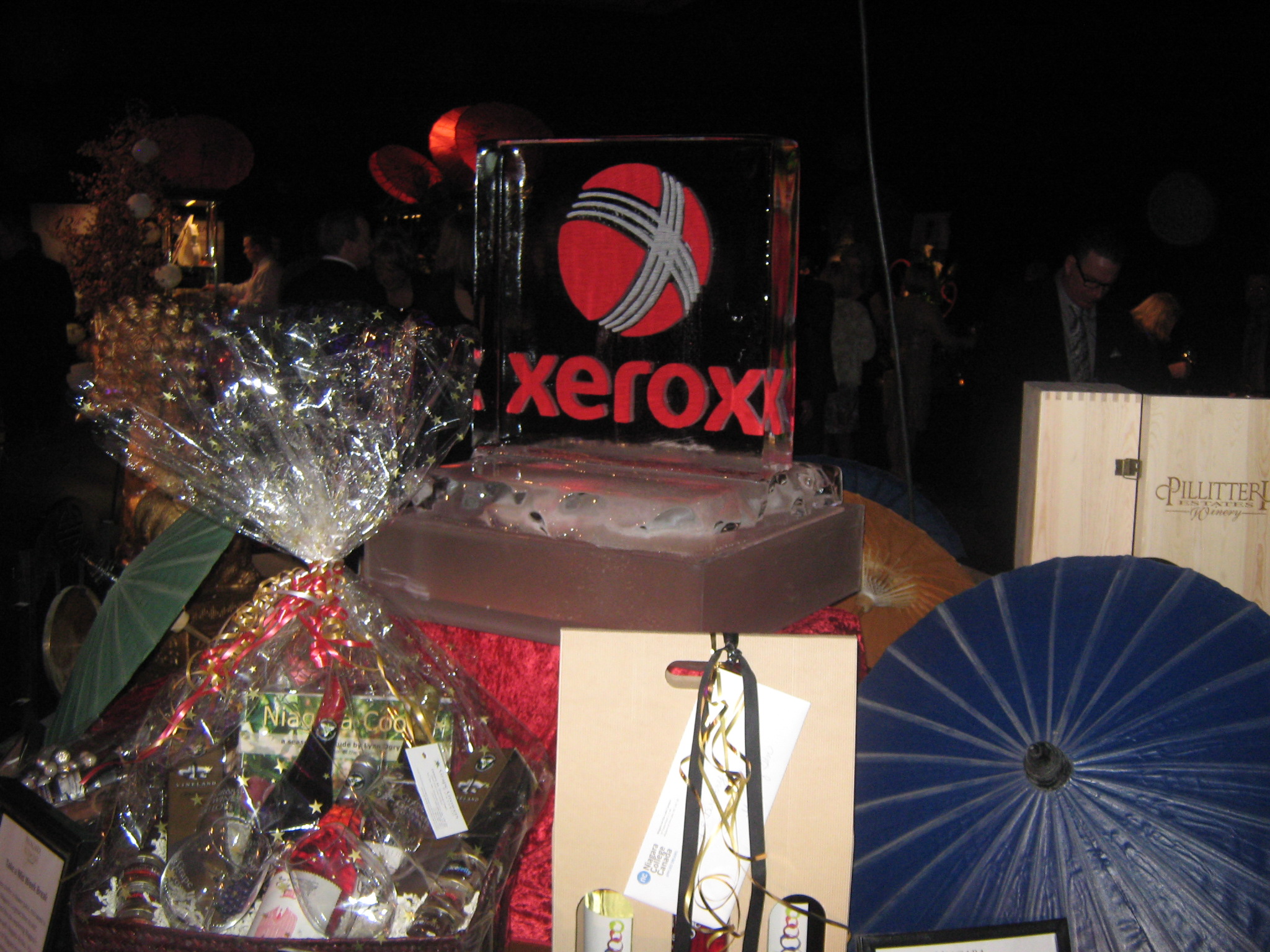
Xerox

Xerox Icewine Gala, Fallsview Casino Resort

Something has shifted in me, somewhere closer to the realm of sweet nirvana. It could be empathy, a delayed reaction in sensitive thought to what the winemakers and hard-working Niagara wine country folks had to endure in the winter of 2014. Maybe it’s a premature anticipation of the greatness that will come from sweet wines crafted from out of that polar vortex attenuated vintage. Could it just be that Icewine has grown on me, that the elixirs of Peninsula life have violated and occupied my parochial psyche?

For two weeks in January, Niagara Wine Festivals and Wine Country Ontario lay out the nectarous red carpet and everything comes up Icewine. If fans of the Toronto basketball franchise can ignore all the basic tenets and principals of modern English grammar, who’s to say the followers of Ontario’s world-class elixirs can’t do the same. Thus I give you, “We the Icewine.”

Admittedly the phrase does not resonate with equal credibility in comparison with what works in the realm of base, shallow and primitive sport. It does not matter to me. I’m still going with it. Niagara is the epicentre of the Icewine world, in the (near, near) north and we own the market and its successes. We the Icewine.

20 Years

20 Years of Icewine

A recap of Icewine 101. Simply put, made from grapes that have been left to freeze naturally on the vine. Ontario’s production laws insist that Icewine must be made from approved grape varieties; the most popular are Vidal Blanc, Riesling and Cabernet Franc. Some small lots include Gewürztraminer, Chardonnay and Cabernet Sauvignon.  Grapes are left on the vine until a sustained temperature of -8°C or lower is reached and then picked from those vines encapsulated in nets to protect them from birds possessive of a sweet tooth.

Related – Deep freeze: Controversies, polar vortex and icewine 

The wineries of Niagara-on-the-Lake are the backbone of the Icewine phenomenon in Ontario. Picking for the Icewine harvest in 2015 has stretched over a period exceeding 30 days, not necessarily out of the ordinary but it should make for a wide range of styles and quality in the vintage. Inniskillin Niagara Estate Winery began its thirty-first Icewine harvest on January 5th.

The Niagara Icewine Festival has wrapped up for another year but there are still many weekends left to get a taste of what took place throughout the month of January. There were street festivals in Twenty Valley‘s Jordan Village from January 9th – 11th, Niagara-on-the-Lake from January 16th – 18th and new this year, events in Niagara Falls. Winter continues along with the buzz across the Niagara Peninsula.

Visitors made use of the Discovery Pass, a passport to 35 wineries and culinary experiences along the Wine Route. Along with a variety of Icewines, visitors were offered the opportunity to taste sparkling and VQA red and white wines.

Gala

Icewine Gala decor

For all things Icewine here is a link to the festival site withy more information here. With kind thanks to Magdalena Kaiser and Wine Country Ontario on Friday, January 10th, 2014 I attended another Xerox Icewine Gala at the Fallsview Casino Resort. The following day I attended the Twenty Valley street festival in Jordan, Ontario.

With Icewine firmly on the brain I decided to make a go at as many samples that can safely be sampled in one night. Not to leave out the still and Sparkling in the room, I made sure to taste the generous and in some cases, pleasant surprises being poured by Niagara’s finest winemakers. Here are notes on twenty wines tasted over the weekend.

And don’t forget the anagram: A wet vial is fine nice agar.

Vineland Estates St. Urban Riesling 2008, VQA Niagara Escarpment, Ontario (38117, $19.95, WineAlign)

If this Riesling could go through a glück stage, now would be the time. There is a plump and resinous feel about it in 2015, quite possibly signalling the end of its first seven years en route to a minimum 14 more in its life. At this juncture it’s like hot stones washed down with salt water. Look for it to cool again as the year passes. From my earlier, April 2013 note: “Poured as a youthful and “hello” pleasant surprise though it’s just beginning to display secondary character. Has shed its tingling ferment skin without compromising the inherent citrus zest. Nectar lit by just emerging perky propellant and the ubiquitous, underlying ullage of St. Urban’s stones all combine forces to a life of amarita. All this to make believe 2028 will be just another year in its evolution.  Last tasted January 2015  @benchwineguy  @VinelandEstates
Pinot QRV

Creekside Estates Pinot Noir QRV 2013

Creekside Estate Winery Pinot Noir Queenston Road Vineyard 2013, VQA Niagara Peninsula, Ontario (Winery, $22.95, WineAlign)

The first made since the 2008 because of a new directional decision to hold onto and no longer forsake these exceptional Queenston Road Vineyard grapes. A wine that folds back the skyline skin of time and reveals a cloning from intimate belongings. Pinot blessed of a Dylan-esque drawl, from a comfortable and crooning time in its life. Penetrates into the QRV earth and draws out subtleties, slow food assuagement and makes no BS about its ease. Though posolutely whiffing and tasting of black cherry, it balances itself with an acerbic wit. This is what winemaker Rob Power refers to as a lay lady lay style. Partners in crime Yvonne Irving and Matt Loney concur. One sip and your partner may just lay across your “big brass bed.” You can always go back to Nashville.  Tasted January 2015  @CreeksideWine  @CellarMonkey  @Matt_Loney

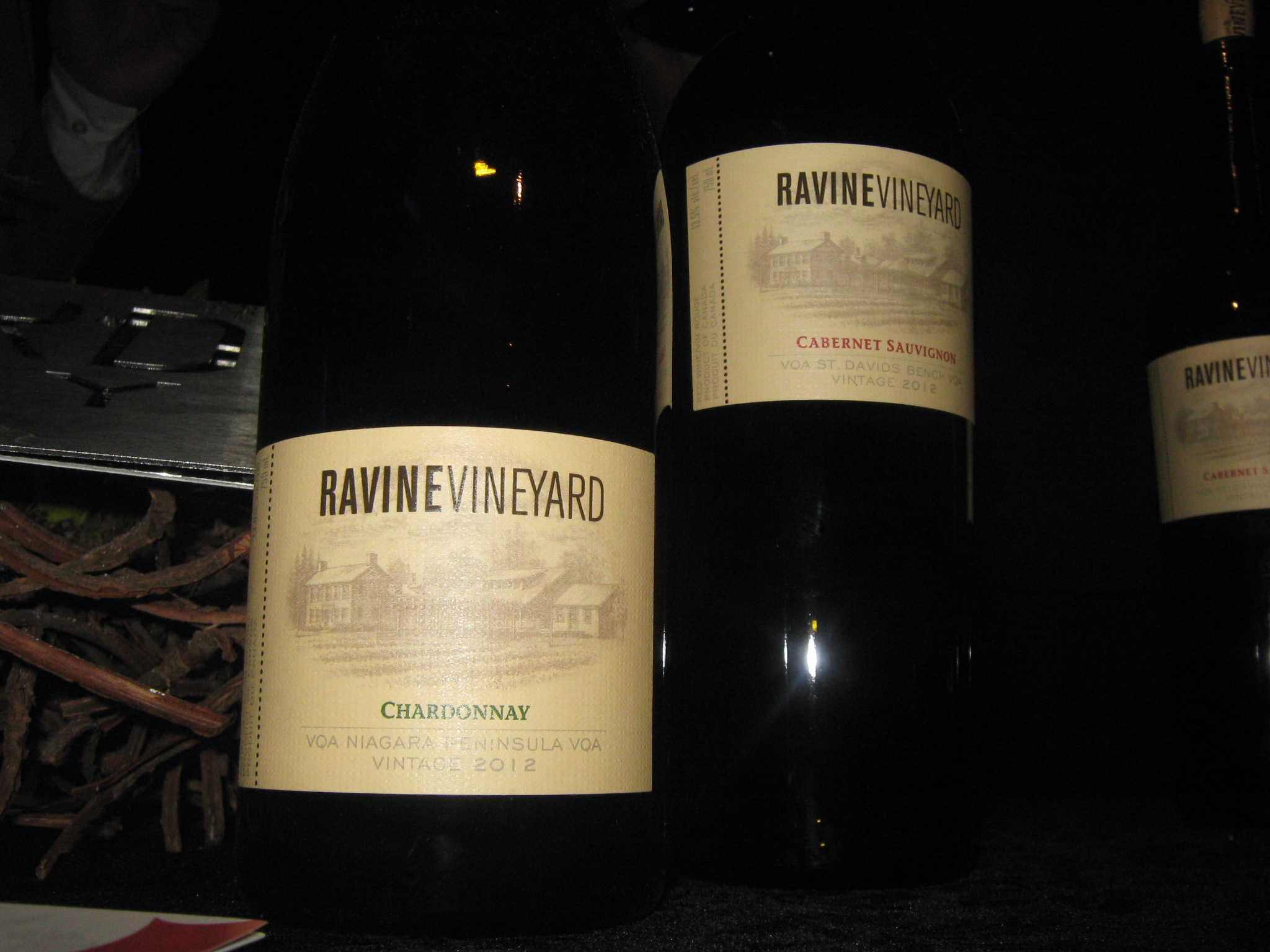
Ravine Vineyard Chardonnay 2012, VQA Niagara Peninsula, Ontario (306902, $24.00, WineAlign)

Spice notes are the current rage, from out of the barrel and now into a next level of amalgamation with tree orchard fruit. Has lengthened somewhat since last summer. From my earlier, July 2014 note: “Winemaker Martin Werner’s 2012 may just be the hardest working Chardonnay in showbiz and in Niagara. Winnowed from Estate (St. David’s Bench) and (Niagara) River fruit, there lurks within, a 20-30 percent perfumed compression of Chardonnay Musqué. The additive is a tonic fanned from the wine’s olfactic communicative nerve centre, adding tree fruit notes no more serious than should be gathered. Werner picked real early, like five weeks ahead (first of September) and the resulting noisome perfume makes for some funk. “It’s these little things, they can pull you under,” but they blow away and settle into a rich, viscous Chardonnay for the palate to collect, contain and command. “Oh, oh, but sweetness follows.” This Ravine works automatically, of the people, for the people.” Last tasted January 2015  @RavineVineyard  @marty_werner

Inniskillin Winemaker’s Series Montague Vineyard Chardonnay 2012, VQA Four Mile Creek, Niagara Peninsula, Ontario (586347, $24.95, WineAlign)

The warm clay of Montague plugs in and along with the barrel, layers toast, buttered toast and more toast upon the body of the 2012 Chardonnay. In many ways this is a serious bottling for the Peninsula; it’s all in and wants it all. A strong-willed, big-boned wine with much ado about varietal expressiveness. Paired with a plate of many elements and anchored by rich protein drawn from a salty ocean, this forward and weighty Chardonnay can do no wrong. With all its upfront personality it may not do the same with more than a few years age but there’s really nothing wrong with that. Enjoy it now and to 2017.  Tasted January 2015  @InniskillinWine

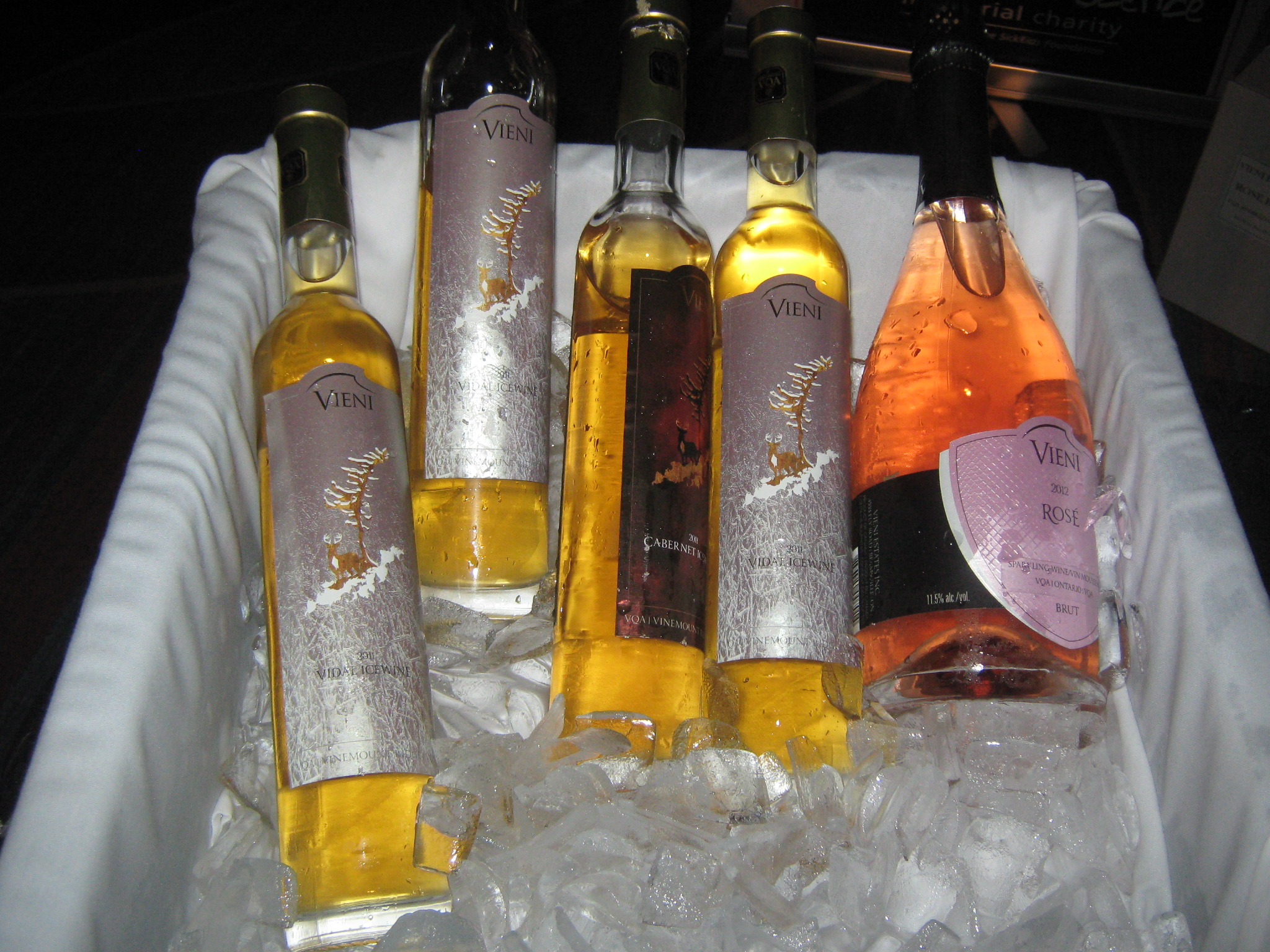
Vieni Estate wines

Vieni Estate wines

Vieni Estate Sparkling Brut Rosé 2012, VQA Vinemount Ridge, Ontario (Winery, $29.95)

Made from a blend of Chardonnay, Pinot Noir, Pinot Meunier, and Riesling, the Charmat method Rosé Sparkling is weighty at 13 per cent alcohol and so very savoury. Winemaker Mauro Salvador is finding new places for investigation in fizz-forming for Ontario. The ’12 Brut Rosé champions aridity and noble bitters. The aromas conjure up a botany and a herbalism that would make Pliny proud.  Think stinging nettles, rapini, arugula, strawberry leaf and the energy of carboniferous ponds. Though the acidity is mild as compared to Salvador’s Vidal/Pinot Gris ‘Momenti,’ it manages just enough balance in this blush sparkler.  Tasted January 2015  @VieniEstatesInc

Creekside Estate Winery Reserve Viognier 2012, VQA Niagara Peninsula, Ontario (Winery, $29.95, WineAlign)

Creekside’s small production Viognier (maximum 80 cases) from the warmer micro-climate of the Queenston Road Vineyard heads back to near-boozy and a bit hot in the sudorific vintage. Oh the viscous humanity of it all, especially when the (all French, two year-old, nine months time) ferment was performed on 100 per cent of the six barrel juice. While it may not flirt with the dangers of say, a dirty peach martini, there is plenty of seasoning, rich, spicy and opulent fruit to at least declare a cocktail of some shaken kind. The ’12 Viognier drips and sweats of a humidity as much as any cool climate rendition can (at least in the context of the Niagara Peninsula). It may not be the ideal vintage but it just may be the one with the most excess.  Tasted January 2015  @CreeksideWine

Inniskillin Niagara Estate Single Vineyard Series Montague Pinot Noir 2012, VQA Niagara On The Lake, Ontario (997353, $29.95, WineAlign)

A crescendo of sorts has been struck in 2012 with the Montague Pinot Noir perpetuity, giving credence to the vineyard as a resource to be exploited. What the site does for Pinot, particularly in warm vintages like 2012, reminds of the Pfersigberg in Alsace, a plot which provides fruit for the Sainte-Claires bottling by Domaine Albert Mann. A site where water-retention is less than average, where soil colour and low humidity attract the radiance of intense heat, which leads to early ripening of the grapes. The richness of Montague’s clay is amplified in the vintage, providing elevated heat units for this red cherry, beet, cinnamon and toasted red of equally exceptional flavours. Fine, linear acidity takes it to depths and will lead it down long, paved roads.  Tasted January 2015

Château Des Charmes Equuleus 2010, VQA St. David’s Bench, Paul Bosc Estate Vineyard, Ontario (319525, $30.00, WineAlign)

Not quite halfway to the five year prediction, the filly is showing the first sign of slowing down. While time certainly remains on her side, the obvious maturation and calming down is nosed in the onset of a slow caramelizing aroma. While the gait may be in trot mode, the five year mark (2018) remains the signpost to look towards on the long track of her life. At that point, with an hour decant, Equuleus ’10 will be good to go. From my earlier, May 2013 note: “From the Paul Bosc Estate Vineyard is a classically styled blend of 50% Cabernet Sauvignon, 25% Cabernet Franc and 25% Merlot, only made in exceptional years. Apropos choice from 25-year old vines (in 2010) from the warmer St. David’s Bench for Cuvée’s 25th show. Poised, balanced and regal yet this mare is temporarily a head-shy, sensitive equine red. Will trot out furlongs of tobacco and meaty aromas from now and through maturity in five plus years. A saddle of round, red fruit will age gracefully.”  Last tasted January 2015  @MBosc

Colaneri Estates Coraggioso Cabernet Sauvignon 2012, VQA Niagara Peninsula, Ontario (Winery, $32.95, WineAlign)

Crafted in the appassimento style, the 2012 Coraggioso is made from 80 per cent dried fruit. Intended to mimic its maker (Michele “Mike” Colaneri), the wine is a bullish, strong silent type, protector of the family, or in this case, the dried grape, passed over style of the Veneto. The specs are bold and impossible; alcohol fortified at 15.3 per cent, residual sugar duplicitous at 7.8 g/L and acidity nearly non-existent at 0.97 g/L. The composition yet works, with help from natural fermentation (no cultured yeasts), six months in new barrels and an additional 13 more in used ones. The happy and old school aspect ratio is turned up by its dried bulb, root and packed earth aromatics; fennel, liquorice and just set concrete. The balance is paradoxical, nearly apocryphal, certainly Coraggioso (courageous). The dried fruit sensations continue right to the end, in lieu of acidity and tannin so the ability to age is there, even in the absence of traditional agents. Really unique and dare it be said, elegant Bordeaux-esque appasimento.  Tasted January 2015  @ColaneriWinery

Southbrook

Southbrook Vineyards

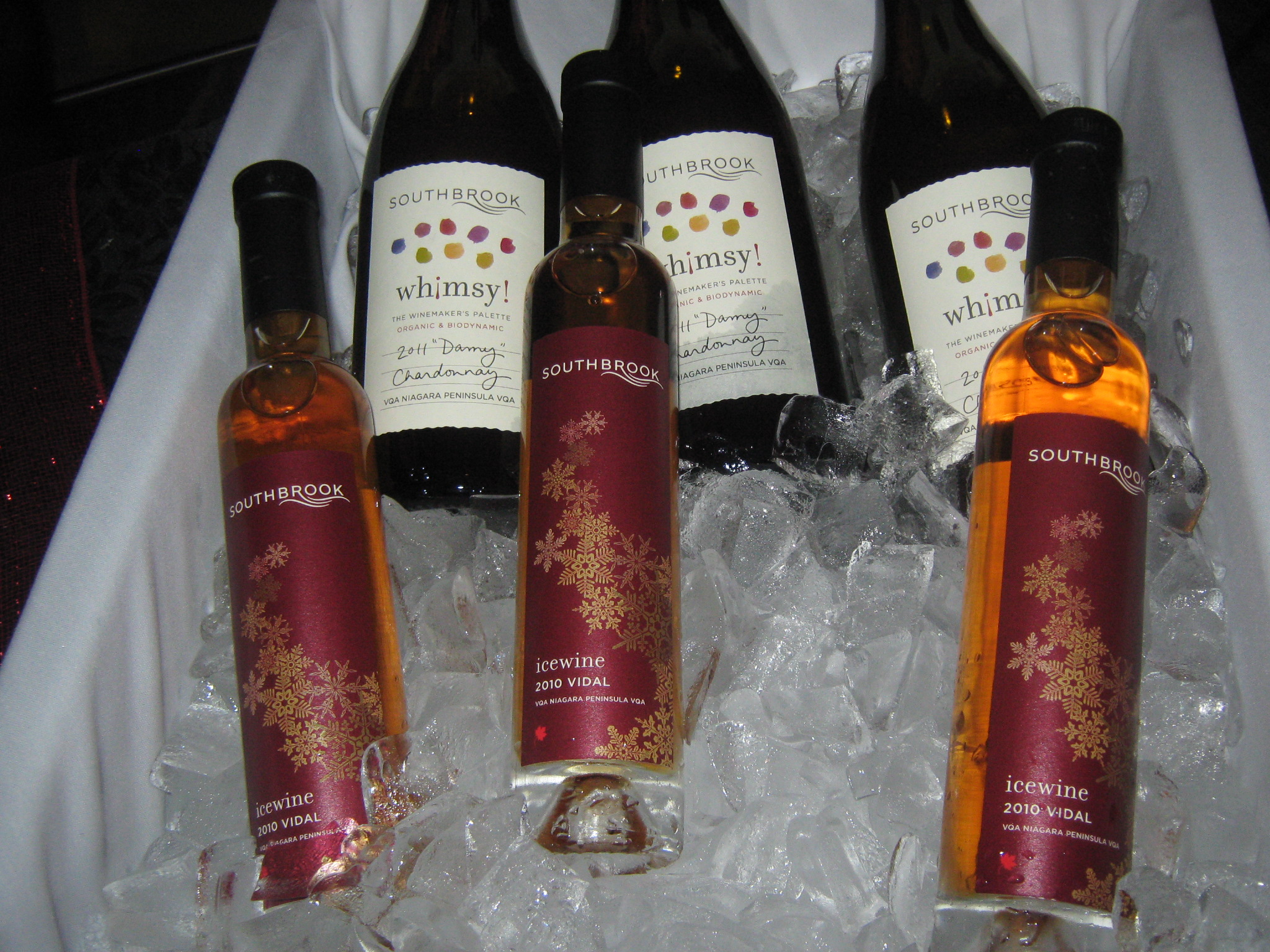
Southbrook Whimsy! “Damy” Chardonnay 2011, VQA Niagara Peninsula, Ontario (Winery, $34.95, WineAlign)

As a Whimsy sister to the XY Sirgue, XX Damy is a barrel blend that spent 10 months on lees in 100 percent French oak (25 new, 25 one year-old and 50 neutral). While undoutedly the more feminine of the two, she is also feistier and the Chardonnay possessive of a bigger personality. Damy exaggerates suppositions synthesized from both the 2011 micro-vintage and the macro-cool climate for Niagara Chardonnay. At present she seems stressed, with so much citrus anxiety, a sting in herbage and a medicinal lactic seeping. All need to come together, find the calm, common ground and spoon beside one another. This will happen, given a couple of years time and Damy will express herself more freely come then. Drink brother Sirgue first, the simpler and softer sibling.  Tasted January 2015  @SouthbrookWine

Creekside Reserve Queenston Road Vineyard Cabernet Sauvignon 2010, VQA St. David’s Bench, Niagara Peninsula, Ontario (Winery, $34.95, WineAlign)

A 21-month stay in an all French oak hotel has now reached integration in this Queenston Road Vineyard beauty. The fullness of its qualities are on display, running a circuitous aromatic and flavour gamut from dark chocolate to savoury black olive cake. From my earlier, February 2014 note: “Impeccable correctness in terms of the variety from a year where the heat giveth and the heat taketh away. Works Cabernet properties properly, embracing and minimizing oak without pretending it’s not there. This red is expressly lush and oak driven, as it should be, it being Cabernet and all. Leaves its appendages out for a Mediterranean pedicure, a glaze of Cassis, black olive and black cherry dug in a chair entrenched in the warm confines of the St. David’s Bench.”  Last tasted January 2015  @CreeksideWine

Southbrook Poetica Cabernet Merlot 2007, VQA Niagara Peninsula, Ontario (Winery, $54.95, WineAlign)

The Poetica Red is very warm, extracted and quite stylish. She did not miss much from the heat day quotient of the 2007 vintage in Niagara. “She’s well acquainted with the touch of the velvet hand like a lizard on a window pane.” Anise and pencil graphite are shot straight from the wood-soaked barrel of a dark chocolate gun, leaving behind a pool of orange bitters with a slick of acidity. The (rounded up) one-half Cabernet Sauvignon, one-third Cabernet Franc and one-quarter Merlot, while bigger than its head, is so integral towards the future success of learning to reign in the power of this formidable Southbrook blend. Happiness is a warm Poetica.  Tasted January 2015  @SouthbrookWine

The Icewines

Château Des Charmes Estate Bottled Vidal Icewine 2013, VQA Niagara On The Lake, Ontario (565861, 200 ml $25.95, WineAlign)

All the diamonds in this world seem to concentrate in fruit form within CdC’s Vidal ’13, “conjured up by wind and sunlight, sparkling on the sea.” The pang of smells opens with the prickly sting of memory, of childhood fruit cocktail, Turkish delight and the Big Turk. “Like a pearl in a sea of liquid jade.” The intensity of piercing acidity and hyper-cloying stone tree fruit is a searing and blinding crush on the eyes, teeth and mouth. So very tight and concentrated, this is a wow Vidal, an ‘o baby’ Icewine and all the while over the top. It may be a tad hard to handle but it offers crazy bang for the buck. Perhaps a few years will settle its crazies.  Tasted January 2015  @MBosc

Southbrook Vidal Icewine 2010, VQA Niagara On The Lake, Ontario (Winery, 200 ml $26.95, WineAlign)

A naturally sweet monster from a vintage where ideal conditions allowed for early picking, especially for Vidal. That 150 g/L of sugar could be realized from a December baby is what strikes this condensed tropical fruit bomb into the lore of the genre. Indigenous fermentation using yeast lees from Southbrook’s 2010 Chardonnay barrels and some bacterial connectivity has resulted in early evolutionary notes, notably bitter burnt orange and oxidized mango. Highly complex for the Vidal sempiternity, the 2010 Vidal Icewine is no imminent retiring rose though its decline will hasten sooner rather than later.  Tasted January 2015  @SouthbrookWine

Inniskllin

Inniskllin

Inniskillin Vidal Sparkling Icewine 2012, VQA Niagara On The Lake, Ontario (560367, 375 ml $31.95, WineAlign)

The sweetness is highly elevated straight from the central core of this (200+ g/L RS) Charmat-method Sparkling Icewine. It’s more than interesting, I’ll grant it at least that and though the alcohol remains at or just below the (10 degrees) threshold, it acts quite hot. This is due to so much accenting spice, which seems to be a ropey-wooden-sappy injection, though the wine sees no barrel. Big, big tangy fruit flavours are smothered in the ubiquitous spice. Complexity is gained though elegance is lost. At least the ride is wild when in consideration of the price.  Tasted January 2015  @InniskillinWine

Peller Estates Signature Series Ice Cuvée, VQA Niagara Peninsula, Ontario (284547, $31.95, WineAlign)

From a base wine that is Chardonnay (70 per cent) and Pinot Noir (30), the aridity is markedly up front despite the sweet Vidal dosage style. Comes streaking across on the barking citrus palate. It’s broad, expansive, with a minute bit of oxidation. It builds upon itself and really develops the mouthfeel. A most excellent use of Vidal. So very long and solidifies the earlier anti-oppugning exceeds expectations declaration. From my earlier, January 2014 note: “This is Peller’s most versatile fizz, a blend of traditional method Chardonnay and Pinot Noir sweetened by a dosage of Vidal icewine post disgorgement of its lees. The lees has been left to linger in the bottle, in spirit. Sapid, savoury bubbles tingle the senses to the bone and will offer the most comforting and proper pleasures to those discriminating and otherwise. Appealing to a large common denominator, this Peller Sparkling can really do no wrong.” Last tasted January 2015  @PellerVQA

Ravine

Ravine Vineyards

Ravine Vineyard Cabernet Franc Icewine 2012, VQA Niagara Peninsula, Ontario (Winery, $50.00, WineAlign)

Less than 50 cases were produced of a wine sourced from fruit grown on the Lepp farm. Crafted from 100 per cent Cabernet Franc, the grapes were picked quite late (in January) in a vintage that saw thaw, freeze and thaw again before temperatures dropped to allow for the Icewine harvest. The fruit lost some freshness and the fluctuations also resulted in less syrupy viscosity. There are dried fruit notes, a calming mustiness and even some herbiage, in dill, anise and salinity crusted sea peas and vetches. The complexities continue into a palate that goes at it in more traditional ways, with apricot, orange peel and lemon rind. Add in liquorice and bokser. Acidity keeps it very much alive. The conclusion? Nature’s accords cannot be guessed at.  Tasted January 2015  @RavineVineyard  @marty_werner

Trius Winery At Hillebrand Showcase Vidal Icewine 2012, VQA Niagara Peninsula, Ontario, (Winery, 375 ml $60.00, WineAlign)

What strikes most upfront about the Trius Vidal ’12 is the anomalous and dichotomous reserve on the nose. Its very concentration is chained to the aromatics but they lurk in the background. This is no floozy of an Icewine. There is spice and very rich fruit but it does not flirt or give itself up with abandonment. Apricot is most noticeable, along with accents that indicate the roots and barks of South Asian trees. Acidity is downright proper. A solid and gallant Vidal.  Tasted January 2015  @TriusWines

Reif Estate Grand Reserve Riesling Icewine 2011, VQA Niagara River, Ontario (Winery, 375 ml $74.90, WineAlign)

A slow ripening season with warm, never hot and at times quite cool temperatures made for one seriously gelid cat of a Riesling Icewine. This 2011 makes the mouth go ooohh with an array of frosty aromatics and flavours. A veritable study in wine’s sweet and sour science, there is mint, eucalyptus, citrus and a host of sweet fruits; yellow peach, clementine, juicy lime and crunchy apple. Spice notes pierce and prick in every hole. Though not as striking in its early stages, the coolness factor is refreshing and the understated style a harbinger for many years of slow development. It would be hard not to imagine the Grand Riesling ’11 as not being a 20-25 year wine.  Tasted January 2015  @Reifwinery

Reif Estate Grand Reserve Cabernet Franc Icewine 2013, VQA Niagara Peninsula, Ontario (Winery, 375 ml $94.95, WineAlign)

A glaringly vivid icebox Icewine from Reif in 2013, throwing the grocery gamut all in. From the top shelf come layers of sweetness; gelées, juices, purées and coulis in (at least) raspberry, Cassis and strawberry. From the middle swaths in thick brushstrokes, of rhubarb and caramelized Kabocha squash. From the bottom rises roasted nightshades and alium confit, in capsicum and red onion marmalade. A moderate alcohol (10.5 per cent) out of solid brix (38.8) in ’13 has arrived at this sugary mess of produce yet without the zip and zest required to really tie the Grütze together. The overall composition is certainly graphic and in exaggeration of its parts. That said, this just may be the best pairing for good quality chocolate ever composed in the Icewine category.  Tasted January 2015  @Reifwinery

Good to go!
Recently tasted here, there and everywhere

Wihr au Val, Alsace (c) Cassidy Havens, http://teuwen.com/

Wihr au Val, Alsace
(c) Cassidy Havens, http://teuwen.com/

During my week-long visit to Alsace in June I tasted more than 300 different wines. Over the course of the four months that followed that most amazing journey to the heart of a great wine region, I published more than 50 tasting notes. I also told stories about the winemakers, the Grand Crus and lieu-dits. I will continue to write and publish equal or more amounts about Alsace.

Related – Giving Grand Cru Pinot Noir d’Alsace its due

The British wine writer Jamie Goode recently published two articles on the subject of wine criticism versus wine journalism. His first, Whatever happened to wine journalism, appeared on the website run by Tim Atkin MW. The second, Wine critics and wine writers on his own blog, Wine Anorak. Goode is a man on the pulse of what it real and what needs to be said. He is correct in telling us that the most engaging wine writing comes from scribes who visit vineyards and tell their stories. There can be no disputing this to be true.

Jamie hopes that the future of wine writing is not fraught with short reviews and inflated scores. He sees the Utopian model in experiential travel, in meeting hard-working people, wandering over variegated soils and terroir, tasting at the source. Jamie fears that his wine writer self will go the way of the wine critic, tapping away on a computer while tasting wine in an air-conditioned office. His version of wine hell. Riesling specialist Stuart Martin Piggot agrees.

But Jamie is not entirely right either. At least in the context of the Ontario model (and those of other Canadian provinces), along with I would imagine, many wine markets in other countries. Much of what wine writers taste on globetrotting journeys is not to be found on shelves back home. While that may be pathetic and certainly a pity worthy of some kind of wine crime, it is the brass tacks of the global wine industry. I agree with Goode that we should do everything in our power to change it and we should publish stories, not just tasting notes and scores.

The problem for the reader is that most, if not 95-plus percent of the wines that are reviewed from a region like Alsace are not available for purchase in Ontario. While that is just a crying shame, it is a reality. If you purchase wine in Ontario and look for critical voices to help you separate the wheat from the chaff, you require notes on available wines. That is why writers must spend so much time tasting samples in the sterile LCBO laboratory, at our dining room tables, in restaurants and with the hard-working for not enough reward Ontario wine agents. And we must write-up the tasting notes and publish them on websites like WineAlign. This is the fact of Ontario wine importing, purchasing and consumer life. Would it be any different if there was no provincial monopoly? Yes, but it wouldn’t help in the telling of better vineyard stories.

I taste wines here, there and everywhere. Here are 16 recent samples that gave me cause to raise an eyebrow, pause, ruminate and formulate a response to the spoken sentiments of the ferment. All 16 are available for purchase in Ontario.

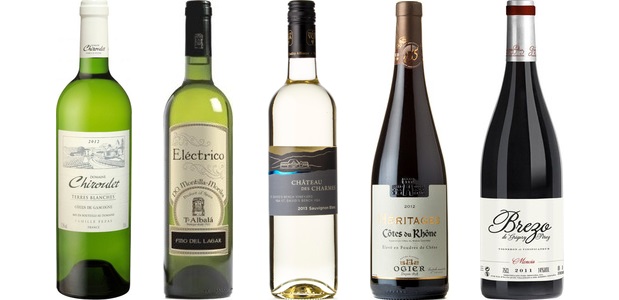
From left to right: Domaine Chiroulet Les Terres Blanches 2013, Toro Albalá Fino Del Lagar Electrico, Château des Charmes Sauvignon Blanc 2013, Ogier Héritages Côtes Du Rhône 2012, Bodegas Mengoba Brezo Grégory Pérez 2012

From left to right: Domaine Chiroulet Les Terres Blanches 2013, Toro Albalá Fino Del Lagar Electrico, Château des Charmes Sauvignon Blanc 2013, Ogier Héritages Côtes Du Rhône 2012, Bodegas Mengoba Brezo Grégory Pérez 2012

Domaine Chiroulet Les Terres Blanches 2013, Vins De Pays Côtes De Gascogne, France (Agent 223222, $13.95, WineAlign)

This is a Gros Manseng and Sauvignon Blanc that whistles boldly like a howling wind. While the nose is high-toned and full of herbal complexities, it’s also indiscreetly alarming. The aromas are quite massive; pine needles decomposing on a wet forest floor. Kefir, cloudy and enzymatic, curdling and churning into itself. Petrol spills on asphalt, baking in the midday sun. To taste it is tangy and juicy, but also very mineral, intensified by the outcroppings of retzine in the vineyard’s limestone. The overall composition punches way above its weight but the heightened sense of reality is also a bit hard to take. Terrific effort but comes with a warning sign.  Tasted November 2014  @CotesdeGascogne  @TrialtoON

Toro Albalá Fino Del Lagar Electrico, Do Montilla Moriles, Spain (Agent, $14.95, 500ml, WineAlign)

The winery was founded in 1844 and in 1970 Toro Albalá became the first commercial Montilla producer in the classic Solera method, from (estate-grown) Pedro Ximénez vines. This is unfortified Fino, at a naturally achieved alcohol of 15 per cent, from an average age of 10 years. It’s so dry, like a desert you could walk for astral weeks, as if it should be measured in negative residual sugar. Like pure almond extract paste, bones in the sand and the essence of pulverized, powdered nuts, void of moisture. The chalky-white Albariza soils of the Moriles Alto subzone are hardwired into its Akashic, astral Electrico plane. This Fino ventures in the slipstream, between viaducts of dreams, “where immobile steel rims crack.” Impossibly long finish.  Tasted November 2014  @toroalbala  @MontillaMoriles  @LeSommelierWine

Château des Charmes Sauvignon Blanc 2013, VQA St. David’s Bench, Niagara Peninsula, Ontario (391300, $14.95, WineAlign)

Sets a (St. David’s) benchmark for how to reign in and then release the charmes of Sauvignon Blanc from the Niagara Peninsula. Done in a decidedly fresh and lively style, this gathers up a bunches and conservative yield-managed vineyard’s warmest, ripe fruit for the purpose of bonhomie potation. Smells of vitality, of fresh herbs and citrus just cut, of a salt spring, of things zoetic. Cream elevates the texture, albeit pellucid and unobtrusive. The triad coming together of Sauvignon Blanc, St. David’s Bench and 2013 is the new CdC yardstick. The price only cements the offer.  Tasted November 2014  @MBosc

Ogier Héritages Côtes Du Rhône 2012, Rhône, France (535849, $15.95, WineAlign)

The Ogier self-professed traits of patience, savoir-faire, observation and intuition are on tidy display in this piquant, spiced-note, olive branch and indigo traditional Rhône blend. So very Mediterranean, warm and herbal by day, cool and minty by night. One stage short of lush, one notch comfortably above thin, this slots into all right moves; pleasant, value-driven and so effective for so many purposes. Stand alone or with classically prepared fare, this is all you need. Bring on the roast chicken.  Tasted November 2014  @MaisonOgier  @Select_Wines

Bodegas Mengoba Brezo Grégory Pérez 2012, Bierzo, Spain (Agent, $16.95)

Mencia as it once must have demanded of itself, iron clad, funky and gamey. This Bierzo is no antiseptic perfumed bottle of modern, manufactured violet Febreeze, though it’s so very vanilla and rich as a Porchetta sandwich with the porcine cure and fat driven right in to every nook and cranny. Or a taste sensation like bacon wrapped cherries. High toned with formidable tannins. A chew of sinew both in faux-wood and as the conceptual result of a roasted animal’s tension. Value gained vicariously through complexity.  Tasted April 2014  @TheLivingVine

Fita Preta 2013

Fita Preta 2013

Fita Preta White Reserve Alentejano 2013, Alentejo, Portugal (Agent, $16.95)

An endemic blend of Antão Vaz (40 per cent), Roupeiro (40) and Arinto (20) from infertile rocky schist soils in southern Portugal’s Alentejo region. Ostensibly a field blend, like the Alsace cépage a terroir of Marcel Deiss, the Fita Preta or “black tape” comes from an extreme and arid land. Portuguese winemaker António Maçanita and resident English viticulturist consultant David Booth usher out flint and mineral to capture a host of synapses from a wine region that had failed to fire in years. The landscape described  as “Portugal’s Australia” gives a white like a cross between simple, flinty Chablis and aged Hunter Valley Sémillon. The acidity is in abject anti-congruence to the region’s usual heavy-leaded output, mimicking cool-climate Chardonnay in tight and bracing stonker fashion.  Tasted November 2014  @fitapretavinhos    @LeSommelierWine

From left to right: E. Guigal Côtes Du Rhône 2011, Giacomo Mori Chianti 2011, Red Tractor Cabernet Franc 2012, Nigl Gartling Grüner Veltliner 2013, Dog Point Vineyard Sauvignon Blanc 2014

From left to right: E. Guigal Côtes Du Rhône 2011, Giacomo Mori Chianti 2011, Red Tractor Cabernet Franc 2012, Nigl Gartling Grüner Veltliner 2013, Dog Point Vineyard Sauvignon Blanc 2014

E. Guigal Côtes Du Rhône 2011, Southern Rhône, France 2011 (259721, $18.95, WineAlign)

In a world where anything is possible, the Guigal Côtes Du Rhône effect is predictable, trenchant and essential. The vintage specific focus in alacrity drives the savoury, rich black fruit to domesticated compliance, easy on the eyes, nose and palate. This just smells like a good meal; as if a game bird were roasting in the oven, surrounded by a rough and large kerf of mirepoix, of caramelizing root vegetables baptized by dried herbs and spices. Do not be fooled. This is a warm CdR with generous alcohol (14 per cent disclosed) and an even warmer, though not uncomfortably tannic or acidity riddled finish. It is a whack of Rhône grapes within grasp of a mere mortal’s budget. Drink now and for two years forward.  Tasted November 2014  @DOMAINEGUIGAL  @VinexxWine

Giacomo Mori Chianti 2011, Docg, Tuscany, Italy (68858, $19.95, WineAlign) From the VINTAGES November 8, 2014 release

A modern take on Sangiovese to be certain with a penchant for the authenticity extracted from the best parts of history. Siena red dirt dredged, cherry macerated, fined, filtered and spiked with a crush of Brandy soaked Amaretti cookies. Clean and with Spring plum blossom in the air. Il Palio dirt for appetizer, Fiore di Zucca pie for dinner and sweet, nutty Panforte for dessert. So modern but so proper. Makes no bones about its made-up face but has plenty of solid ossein in its body. Good piquancy and a rush of verve on the back palate. Oaky but not creamy, bitter yes, but not woody.  Tasted November 2014  @oenophilia1

Red Tractor Cabernet Franc 2012, VQA Creek Shores, Ontario (Winery, $19.99, WineAlign)

The savoury aspect of this Cabernet Franc steals the show out of what is just an ideal vintage. The fruit was sourced from the Dim Vineyard in the Creek Shores appellation, a piece of the Peninsula ideally suited to the sharp and earthy aspects of Cabernet Franc. Despite 20 months of seasoning in barrel, the Tractor has maintained its red fruit character, accented by currants, spice and a deep-rooted sense of licorice. There is enough grain in its texture to carry it for three or four more years but it will never be bigger than it is now, nor will its length grow any longer.  Tasted November 2014  @SideroadTwenty

Nigl Gartling Grüner Veltliner 2013, Kremstal, Austria (453281, $21.95, WineAlign)

The ever-present, front loaded, laser sharp attack may feign spritz amid hushed whispers of CO2, but not from any chemical alteration. It’s actually a post fermentation, double negative breath of residual covalent bonding. The fast action bottling captures pressure to act as catalyst for freshness, especially in such a lean, high acidity vintage. A sway of tall grasses and that gas smothers whatever residual sugar might try to weigh down this low (11.5 per cent) alcohol stunner. Very much alive though the depth is challenged by all that forward thinking expression. Still a very good showing for this classic Grüner.  Tasted November 2014  @AustrianWine  @LeSommelierWine

Dog Point Vineyard Sauvignon Blanc 2014, Marlborough, South Island, New Zealand (677450, $21.95, WineAlign) From the VINTAGES October 25, 2014 release

The prototypical Marlborough Sauvignon Blanc hitting all the classic numbers is right here in the Dog Point 2014. Low pH, high acidity, minuscule residual sugar and elevated aromatics. It’s ripe but ripped by citrus juice and zest. Like cubes of honeydew, bitter winter melon and dried lemongrass soaking in and flavouring a dish of briny scallop carpaccio with coarse sea salt and capers. The sapidity is palpable, the excesses vivid. I would avoid too much variegated gastronomy when sipping this wine. Opt for simpler fare because its talents would otherwise be mimicked and suppressed.  Tasted November 2014  @DogPointWines  @TrialtoON

From left to right: Rupert &amp; Rothschild Classique 2011, Domaine De Bila Haut Occultum Lapidem 2012, Marcel Deiss Pinot d'Alsace 2012, Westcott Vineyards Pinot Noir Estate 2012, Closson Chase S. Kocsis Vineyard Chardonnay 2011

From left to right: Rupert & Rothschild Classique 2011, Domaine De Bila Haut Occultum Lapidem 2012, Marcel Deiss Pinot d’Alsace 2012, Westcott Vineyards Pinot Noir Estate 2012, Closson Chase S. Kocsis Vineyard Chardonnay 2011

Rupert & Rothschild Classique 2011, Wo Coastal Region, Western Cape, South Africa (Agent, $23.95, WineAlign)

Iconic Bordeaux partners with South Africa for a red that is a surprising saunter into fair Cabernet-Merlot territory. Ripeness, extraction and alcohol are all exercised with restraint. The South African gauze is wound but of a thin wrapping, thanks to the allowance for fruit to shine in bright, red cherry tones. Western Cape is a terrific place to express Bordeaux-styled reds, especially when done with such hands off ability. A bit sapid and even sour edged, this would be a fine example to share when partaking in a little R & R. Wait a year and drink up to 2018.  Tasted November 2014  @Dandurandwines  @WOSACanada

Domaine De Bila Haut Occultum Lapidem 2012, Ac Côtes De Roussillon Villages Latour De France (643239, $24.95, WineAlign)

From vineyards composed of Devonian Period gneiss and schist soils and Kimmeridgian period limestone. A blend of Syrah, Grenache and Carignan. The heft of this craggy, cultured terroir in a Côtes De Roussillon’s bottle is never in question, nor is the puritanical excellence of its harvested fruit. Some years just heat up to a point of no return, like this 2012. Chapoutier is fully cognizant of the warmth and savagery from the soils and the climate. Finding even temperament and balance is the challenge. This vintage comes across as over the scabrous edge, cooked by the sun and dredged in the particulate. Classic Mediterranean notes of brine, brush and lavender keep it grounded, not to mention graphite and grilled meat, but for the sappy and life-sapping heat, this would be a candidate for 10 years in the cellar. As it is, drink this with quality warm-blooded protein over the next year or two.  Tasted November 2014  @M_Chapoutier  @Dandurandwines

Marcel Deiss Pinot d’Alsace 2012, Alsace, France (Agent, $24.95, WineAlign)

This Pinot d’Alsace is what Jean-Michel Deiss refers to as “du cépage a terroir” or “tous les cépages.” Though there can be as many as 13 grape varieties in the field blend, most of the content comes from the Pinot family. Though likely in Blanc, Gris and Auxerrois predominance, this is a co-planted field blend so if Jean-Michel were to change his tune from talking terroir to varietal percentages, even he would not know the true make-up. Regardless, this is a (vintage) rich and balanced white blend, an avatar for the Alsace idiom. A wanderer in angles, an adventurer into corners and a wearer of many aromatic costumes; sweet, sour, citrus, flint and spice. Indicates orange, lemon and grapefruit but it’s never that straightforward. More like Jincheng, Lemongrass and Pomello. An exemplary introduction to Deiss, Alsace and the dry summation of many white parts. Tasted twice, June and November 2014  @marceldeiss  @AlsaceWines

Westcott Vineyards Pinot Noir Estate 2012, VQA Niagara Peninsula, Ontario (Winery, $30.00)

Carries and buffets an unmistakable aromatic conveyance that comes from a grouping to include Le Clos Jordanne, Bachelder, Queylus and The Farm. Where the cherry tree digs its roots into the earth, where the fruit rolls in the clay dust, where the tension in fruit meets tannin, intersecting at acidity. Just a touch of funk in a non-reductive, vineyard sense and the fruit does flirt with right of centre cherry, inching towards the black side. Chalk and tangy dust, and finally, tannin that holds court. This is quite big for Niagara Pinot Noir and it will age righteously for three to five years. Though it is not yet ready to lay claim to greatness, Westcott is a vineyard to keep a wide and watchful eye.  Tasted October 2014  @WestcottWines

Closson Chase S. Kocsis Vineyard Chardonnay 2011, VQA Beamsville Bench, Niagara Peninsula (Winery, $34.95, WineAlign)

The real deal in Bench gain from out of the most enigmatic and occult vintage, the primitive vineyard giving life and lesson to Chardonnay. Austerity in second and third fill barrels sends butter in search of toast, imagined through pendular churning. A reckoning follows, connecting round fruit to linear acidity in character, oomph and excellence. Aromas indicate spirited confiture choices at the breakfast table to garnish flaky pastry. Biting and demanding yet sweet as a cool summer’s night.  Tasted October 2014  @ClossonChase

Good to go!
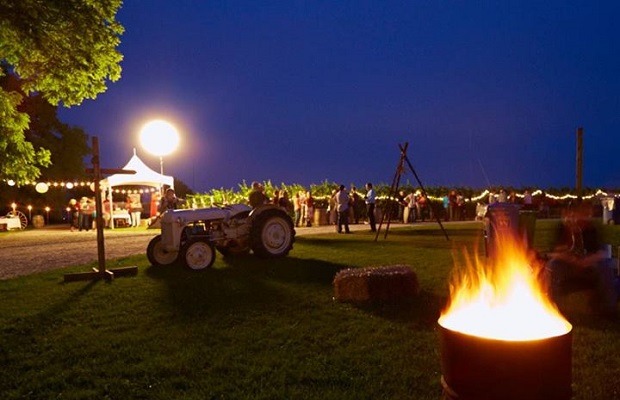
September 27th at VINTAGES rolls into October 2nd with Taste Ontario

Taste Local, Love Local Photo (www.lcbo.com)

Taste Local, Love Local
Photo (www.lcbo.com)

This coming weekend’s VINTAGES release will parlay values from around the globe into the meeting place of Ontario stores. Many of the bargains tie directly into a PB and J campaign, a parochial bandwagon advertising juggernaut. The LCBO and Wine Country Ontario‘s #Tastelocal, #Lovelocal and #LCBOGolocal slogans are currently omnipresent, fast forwardly gaining both steam and traction with restos, critics and consumers.

The late, great VINTAGES wine facilitator David Churchill once told me that putting together Taste Ontario was one of the LCBO’s great endeavors. David said the work and time that VINTAGES allotted the event was extraordinary and great care was always afforded the exercise. Next week the chance to taste the most current, largest and impressive cross-section of Ontario wines in one setting will happen with the annual Taste Ontario gala event. When Wine Country Ontario comes to town and joins forces with VINTAGES, it is the writers, sommeliers and restaurant wine junkies who collectively jump trains, catch flames and do what they do. This in the name of getting to know Ontario wines.

On September 27th VINTAGES will release the following 17 wines, though most will already be on shelves before you skim through this tasting note report with all the brevity you can afford. This week’s recommendations come by way of one Sparkling, four Chardonnay, two Riesling, three Pinot Noir, a Sangiovese, a Malbec, a Veneto, a Zinfandel, one Rhône and two Bordeaux blends.

From left to right: Delmas Cuvée Tradition Brut Blanquette De Limoux, Château Des Charmes Paul Bosc Estate Chardonnay 2012, Kistler Chardonnay Les Noisetiers 2012, Burrowing Owl Chardonnay 2012, Errázuriz Wild Ferment Chardonnay 2012, Henry Of Pelham Estate Riesling 2012

From left to right: Delmas Cuvée Tradition Brut Blanquette De Limoux, Château Des Charmes Paul Bosc Estate Chardonnay 2012, Kistler Chardonnay Les Noisetiers 2012, Burrowing Owl Chardonnay 2012, Errázuriz Wild Ferment Chardonnay 2012, Henry Of Pelham Estate Riesling 2012

Delmas Cuvée Tradition Brut Blanquette De Limoux, Ac, Languedoc-Roussillon, France (179978, $19.95, WineAlign)

Organic and Biodynamic sparkler with a personality all its own. Made primarily from the local grape variety Mauzac (with some Chardonnay and Chenin Blanc), Blanquette is the dry and sylvan style of Limoux. The “little white one” is a lovely little lemon curd Blanquette pulsating in spatially atomic subtlety. Aerified notes hint at sulfur but the breeze is so minor so as not to obstruct the citrus and crucible of candied ginger.  Green apple flavour delights with really good gin and tonic (juniper), lime bitters and a muddle of basil. Pertinent and invigorating example.  Tasted September 2014  @AOCLIMOUX  @RareEarth_Wines

Château Des Charmes Paul Bosc Estate Chardonnay 2012, VQA Niagara On The Lake, Ontario (179978, $21.95, WineAlign)

Much oak and buttery crustaceans in this need to relax and settle into a self-induced state of Chardonnay. Quite lactic but that’s not a detractor; it’s a textural overlay that with time will turn lacy, organza even. I would imagine the wrong kind of attitude will not see the acidity for the forest and instead feel that malic is short for malicious behaviour. On the contrary. This is a very good vineyard giving fruit of the right St. David’s kind. With five years it will prove its merit and play matronly with that fresh catch on your plate.  Too big and clunky you say? Put it down. Let it breathe. Take a good inhale/exhale yourself. From my earlier, August 2014 note: “It would be a shame to have missed the found ardor in this tractile, careening Chardonnay. Chances have been taken in 2012, from a vineyard near and dear to a proprietor’s heart and perhaps even his soul. Picked bright and early, vinified bone dry and sent to a Burgundian school, the Paul Bosc Vineyard Chardonnay suffers from ESS (early stricture syndrome) because it (and particularly its shaken lees) have yet to settle. The barrel is confusingly, hardly noticeable and so the ’12’s awkwardness must then be attributed to a milky, marmalade and blues-influenced free-form run. It’s as if the crowd is waiting for one (Garcia-Saunders) song to end and another to begin. The new “anyway you do” slang take on an old blues riff may be misconstrued but, when all is said and done, that’s alright mama, there’s jam and space for your kind too.”  Last tasted September 2014  @Mbosc

Kistler Chardonnay Les Noisetiers 2012, Sonoma Coast, California (251223, $75.95, WineAlign)

Expansive, all over the coast display of Kistler ambition and conceit. Fully ripe and not shy to swim with splinters. Lemon meringue pie, baked Alaska and tarte au citron on one gorging dessert plate. Then the flavours kick in. A lemon Negroni (is there such an animal?) and lemon Hollandaise atop white aspagarus. Decadent, even for Kistler, without the poise and subtlety of the single-vineyard bottlings.  A full on glass of California sunshine. From my earlier, (tasted three times), July 2014 note: “Long distance runner built for endurance, a cool customer able to withstand the heat from a season’s relentless, though moderate, gentle sun, from start to finish. No shortage of ripe fruit and certainly not wanting for the micro-oxygenated slow release of a prized barrel. This might be the two-bit Kistler bottling but it offers up exemplary Sonoma fruit with the temperament and conceit of high caste Burgundy. The style is culled from two poles and pulls in two directions.  At once sharp and piquant, then golden and in mirth. All in all it’s exactly what should be wanted for the buyer who wants what it has to give.”  Last tasted September 2014

Burrowing Owl Chardonnay 2012, BC VQA Okanagan Valley (208694, $33.95, WineAlign)

Intimates warm sunshine but can’t hide from its cool nights. An element of periodic surprise wafts straight up and grabs the little nose hairs by the tips, tugs and then let’s go. Hatchoo. Wisps green apple skin, daikon radish and a metal tang. Full on fruit-mineral-earthy expression. Big Chardonnay as ripe as its gets for the Okanagan but carries a hefty (though you might ponder an inordinate exorbitance of 14.5 per cent abv) with relative ease. Goes on at length, about what, I do not yet know, but I’m willing to hang in there for 5-7 years to find out.  Tasted September 2014  @BurrowingOwlBC

Errázuriz Wild Ferment Chardonnay 2012, Casablanca Valley, Chile (738393, $22.95, WineAlign)

The wild ferment Francisco Baettig oeuvre brings into focus a nicely balanced and intimately-integrated-aligned Chardonnay. There is wildness in the form of a toasted bread, rich enzymatic energy and a leather strapping, bullied brawn. The countrified personality is tempered by a roundness, thus limiting its ability to display like an alpha male. Though not delicate or elegant by any stretch, this is Chilean power unleashed and reigned in. It represents really good value.  Tasted September 2014  @errazurizwines  @Dandurandwines

Henry Of Pelham Estate Riesling 2012, VQA Short Hills Bench, Niagara Peninsula, Ontario (557165, $17.95, WineAlign)

Classic Short Hills Bench Riesling, magnified by and exemplified in the vintage. Soda enriched fresh juice, bursting berry nose, off-dry palate. Meets all expectations for the realms of juicy and savoury. One of the best yet from H of P at this price. Great value.  Tasted September 2014  @HenryofPelham

From left to right: Wegeler Rüdesheimer Berg Schlossberg Riesling Kabinett 2012, Kim Crawford Small Parcels Rise &amp; Shine Pinot Noir 2012, Hamilton Russell Pinot Noir 2012, omaine Marchand Grillot Morey Saint Denis 2012, Viticcio Chianti Classico 2011

From left to right: Wegeler Rüdesheimer Berg Schlossberg Riesling Kabinett 2012, Kim Crawford Small Parcels Rise & Shine Pinot Noir 2012, Hamilton Russell Pinot Noir 2012, omaine Marchand Grillot Morey Saint Denis 2012, Viticcio Chianti Classico 2011

Wegeler Rüdesheimer Berg Schlossberg Riesling Kabinett 2012, Prädikatswein, Rheingau, Germany (378083, $24.95, WineAlign)

From the steepest Rheingau vineyard named after the nearby castle (Schloss) ruin “Ehrenfels” which was built in 1211. The stony terroir for this definitive Riesling is quarzite from the Taunus region with layers of slate. Oh, this has the sultry charm of most excellent Kabinett. Aerified to the stratosphere, dry, toasty and buoyant. The soda blows away into the sky with just a vigorous swirl and the aromas turn to fruit and to stone. Rocking great intensity of many fruits, of trees and of natural grape sugar (in the 80-90 g/L residual range) that is everywhere and nowhere. Acidity is linear and impossibly round at the same time. Typically low in alcohol (around 8 per cent by volume), this rude boy is a crazy Kabinett. It’s like a Barbadian songstress rated “R.” You may ask it “is you big enough?” It will answer, I’m as good as it gets.  Tasted September 2014

Kim Crawford Small Parcels Rise & Shine Pinot Noir 2012, Central Otago, New Zealand (35337, $29.95, WineAlign)

Rich, ripe black cherry and just a hint of earth. Some cola but of the cherry kind. Tart yet sweet, hot and roomy. Built of a scrupulous structure where tannin and astringency bend in many ways.  Does its yoga poses with reluctance then hits the gym. Confounding for Central Otago with what may perhaps be a great future ahead but for now, really wonky. Where is this going? To the dark side, to return in five years and to offer good value in aged CO Pinot Noir.   Tasted September 2014  @kimcrawfordwine  @CBrandsCareers

Hamilton Russell Pinot Noir 2012, Wo Hemel En Aarde Valley, Walker Bay, South Africa (999516, $44.95, WineAlign)

he right and fantastic Pinot Noir stuff from the winemaker with the King Midas (or in this case the Queen Modjadji) touch. The Walker Bay Burgundian specialist fashions some most elegant Chardonnay and Pinot Noir. It seems that every vintage is turned to gold, or brings rain when there is drought. The 2012 is marked by bright cherries and really pungent, compressed earth. Fantastically ripe but just before the fall. Pleasure of the incarnate kind. The coat of South African red wine arms is animatedly there but it’s contained, restrained, elegant and yet still powerful. Long, fashionable flow with no visible finish line. This will age for a minimum 10 years and get that smoky glaze and glare.  Tasted September 2014  @TrialtoON

Domaine Marchand Grillot Morey Saint Denis 2012, Ac, Burgundy, France (210906, $54.95, WineAlign)

Here the entry is musty, blows off considerably and leaves the leaf and sweet fruit from strawberry and raspberry. For the spell it’s clean, crisp, pure and inviting. Roses and red fruit, violets and violent rocks careening with a rushing spring river. Those musty notes do persist again, blanketing the dolce, disguising that red fruit. Sharpness stings like Kiwi. Packs a punch of tannin, a bitter, mineral rangy streak that elevates the middle hallows and sends this MSD into really lengthy elasticity. Creamy vanilla comes to the palate with herbal undertones, like Lavender ice cream. This is old school with a modern twist. A really fine example. Tasted twice, September 2014, including blind at the WWAC14  @AmethystWineInc

Viticcio Chianti Classico 2011, Docg, Tuscany, Italy (283580, $24.00, WineAlign)

Big, bad and brooding. Black fruits are intense but surprisingly not overbearing or huge in demanded extract. Chalky, tannic, acidic, long. This is neither average nor to be ignored. It’s in the 13.5 per cent proper Chianti wheelhouse and marches in hipster stride without ever acting obnoxious. Some sanguine activity, along with iron and tension. The real deal. Not the brightest Chianti in the hills but one of a raw, unleashed power.  Tasted September 2014  @chianticlassico   @MajesticWineInc

From left to right: Versado Malbec 2013, Luigi Righetti Campolieti Ripasso Valpolicella Classico Superiore 2012, Seghesio Zinfandel 2012, Domaine Brusset Tradition Le Grand Montmirail Gigondas 2012, Creekside Laura’s Red 2011, Château Léoville Las Cases 2006

From left to right: Versado Malbec 2013, Luigi Righetti Campolieti Ripasso Valpolicella Classico Superiore 2012, Seghesio Zinfandel 2012, Domaine Brusset Tradition Le Grand Montmirail Gigondas 2012, Creekside Laura’s Red 2011, Château Léoville Las Cases 2006

Versado Malbec 2013, Luján De Cuyo, Mendoza, Argentina (317008, $25.95, WineAlign)

The rocks beneath the earth precede the rich, dark fruit. After the berries and the candy beets and the spices subside the flowers grow and take over the room. The vintage brings more layers than before. Malbec of character and belief, even a touch of good VA, a coat that only the Southern Hemisphere can provide. It is not usually present in Mendozan Malbec so it’s really a breath of fresh paint here in the Versado. Great purity. Protracted length. Most expansive and intriguing vintage to date. The Reserva will be killer. Tasted September 2014  @VersadoWine

Luigi Righetti Campolieti Ripasso Valpolicella Classico Superiore 2012, Doc, Veneto, Italy (695890, $18.95, WineAlign)

Classic really. Juicy must, musty juiciness. Earth and fruit. Fruity earth. Simple but so effective. Never gets beyond itself or out of its mind. Just the right amount of funk. Maybe the best yet. Great value.  Tasted September 2014  @Smallwinemakers

Seghesio Zinfandel 2012, Sonoma County, California, USA (942151, $29.95, WineAlign)

Rich plum and spicy Zinfandel. Young and tightly wound on a spindle. Needs time to unravel and reveal its charms. In a varietal sense this vintage of the Seghesio has got everything Zin needs and more. More specifically, the definition is out of a cooler vintage, with clear, well-delineated fruit and acidity. Sharp,spicy, focused and full, without ever acting hot, or bothered.  Tasted September 2014  @seghesio

Domaine Brusset Tradition Le Grand Montmirail Gigondas 2012, Ac, Rhône, France (960104, $29.95, WineAlign)

A thick, baking cake of a Gigondas, full of expected dark red Rhône fruitiness, but all in balance. Soapy sandalwood and chalky tannins. Quite grainy. Big, brawny and teeth staining, its “teeth ready, sharpened to bite.” It’s warm but not too hot. Cool centres, some spice and garrigue. Nothing to run away from. Though firm and loyal in the tradition of place, this has rolling stones in its blood so it will age gracefully in a well respected, cool, calm and collected manner. Will grow and grow on you as you work with it. This will age forever as there is just so much fruit. Hedging my bets on 25 years, safe to say.  Tasted September 2014  @rogcowines

Creekside Laura’s Red 2011, VQA Niagara Peninsula, Ontario (117960, $19.95, WineAlign)

The most dead red Laura to date, juicy and earthy, like a licorice, plum and pomegranate demi-glace. Really expressive of earth and fruit.  Traditional house blend of Cabernet Sauvignon, Merlot, Syrah, Malbec and Petit Verdot. A no coat unfastened Niagara, consumer-friendly but also swelling with stuffing. “The light is red. The camera’s on,” the strokes are rich in energy though the tannins dry out a touch. Drink now and for two more years.  Tasted September 2014  @CreeksideWine

Château Léoville Las Cases 2006, Ac St Julien, 2e Cru, Bordeaux, France (566661, $299.00, WineAlign)

The LLC Grand Vin vineyard is very close to the Gironde river, creating a micro-climate that tempers the vines in climate control and matronly comfort. Cabernet Sauvignon and Franc develop here as well as anywhere in the world. Here is an interesting retrospective look at this formidable St. Julien, now having reached the tender and yet developed age of eight. Earthbound distance fruit by way of a chocolate (real dark) truffle and layers of soul stew. Still chalky and tannic, there is enough fruit to keep this going for a decade and a half, or more. Licorice, Cassis and graphite. Wow. Very broad across the late palate, indicating an integration that has begun to realize the potential of this wine. A very good vintage looking back, not one for the ages, but certainly expressive and rich.  Tasted September 2014  @Noble_Estates

Good to go!
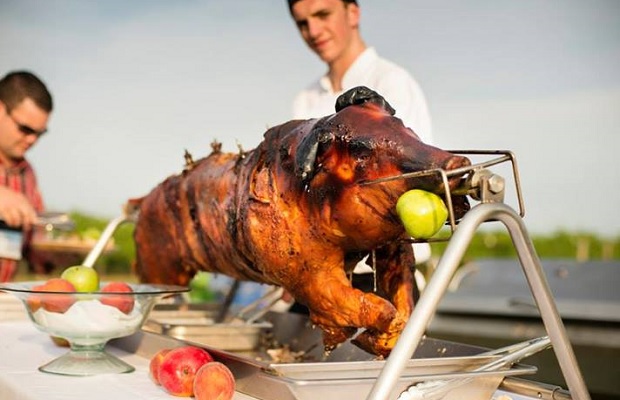
https://twitter.com/mgodello


A common weal of September VINTAGES best buys

Innisfiil Sunflowers

Innisfiil Sunflowers

September has its share of excellence being revealed, particularly this coming weekend with the VINTAGES September 13, 2014 release. This is a perfect time to investigate the wares from this province. The weekend also marks the launch of the  initiative, in conjunction with Wine Country Ontario. Then on October 2nd, Wine Country is coming to the Royal Ontario Museum. There will be 255 wines poured by 55 producers at Taste Ontario.

Related – The LCBO and WineAlign go local

For years now the fine wine and premium spirits division of the LCBO, known benevolently to Wineontarians as VINTAGES, has been rolling out releases every two weeks. There are always somewhere between five and ten wines on each listing that, were I independently wealthy and helplessly wine obsessed in reckless abandon, would always buy. There are also upwards of 100 or more that I would not. Were I presented a glass half full, to most of them I would offer my thanks and sip away. There are also five to ten not worth the price of admission. As a member of the wine writer’s commonwealth of Ontario it is my trusted duty to help make sense of the bi-weekly barrage and to separate the wheat from the chaff.

Wine critics can be fussy people, tough mudders with palates sheathed by caparison. They can go from saying things like “not as good as the last shipment” to “I’m tired of tasting shit.” Even the most curmudgeonly of critics must play his part to promote the happiness, health, and wine safety of all of the people of a community. It is an honour to be trusted with a duty to taste, consider and then discard what is simply not right. The expectation and the responsibility is to find the most natural and honest wines made available, however fleeting and rare the opportunities may be.

Here are four from across the pond and 10 Ontario wines being unpacked onto LCBO shelves as we speak. Get out there and #LCBOGoLocal.

From left to right: Flat Rock Riesling 2013, Château Saint Estève Corbières 2011, Palazzo Maffei Ripasso Valpolicella Superiore 2011, Rosehall Run Cuvée County Chardonnay 2011, Peller Estates Private Reserve Cabernet Franc 2011, Southbrook Triomphe Cabernet Franc 2012, Thirty Bench Red 2012                                      Photos: Jason Dziver

From left to right: Flat Rock Riesling 2013, Château Saint Estève Corbières 2011, Palazzo Maffei Ripasso Valpolicella Superiore 2011, Rosehall Run Cuvée County Chardonnay 2011, Peller Estates Private Reserve Cabernet Franc 2011, Southbrook Triomphe Cabernet Franc 2012, Thirty Bench Red 2012 Photos: Jason Dziver, Photographer (http://www.jasondziver.com/)

Flat Rock Riesling 2013, VQA Twenty Mile Bench, Ontario (43281, $16.95, WineAlign)

The FR Riesling cover girl gets a swift kick in the backside by gas blanketed, dehydrated pear and a sprinkle of rock sugar. Citrus peel, candied again, with medicinal silt. Rocky Riesling spread liberally across a horizontal canvas. From my earlier April 2014 note: “Just bottled a few weeks ago so the note to self is to expect a subtraction of preoccupation. Anything but. Though not as frantic as the Nadja’s sampled from tank back in February, the preview to the ’13 Estate is in show of so much zest, premature acidity and an overly enthusiastic outpouring of juicy emotion. The scraped zest is present in every respect, along with green mango, Himalayan salt and a squeeze of lime. There is attitude and altitude from this precocious Riesling and there’s no doubt it and the ’13 Nadja will be better than anticipated out of tank. Forget the infancy, wow is it showing well.”  Last tasted August 2014  @Winemakersboots  @brightlighter1  @UnfilteredEd

Château Saint Estève Corbières 2011, Ap, Languedoc-Roussillon, France (377218, $17.95, WineAlign)

Corbieres excellence. Nothing funky going on here. A minor amount sees the inside of the fûts but how great it is to find such a clean, fruit forward, straight from the tank example. Made from (40 per cent) Grenache, (30) Syrah, (20) Carignan and (10) Mourvèdre. Certainly showing modern fruit but the low yield (35hl/ha) altruism and cleanliness is next to Midi-ness. A touch of chalk and milky chocolate with some vanilla and lavender too. Simple, effective (if a touch soapy) French red.  Tasted August 2014

Palazzo Maffei Ripasso Valpolicella Superiore 2011, Doc (338913, $17.95, WineAlign)

This is a massive Valpolicella, fully enriched by chocolate in countless ways, on many levels and in dry ice dreams. It’s a baby Amarone incarnate and if you are going that route, try this on instead for a mere pittance at $18. Huge wine, with exaggerated mannerisms in oak and high alcohol, though not volatile, even if the structure is value-driven pedestrian. Will work for a welcoming, big-hair crowd.  Tasted August 2014  @HHDImports_Wine

Rosehall Run Cuvée County Chardonnay 2011, VQA Prince Edward County (132928, $21.95, WineAlign)

Today Dan Sullivan’s Chardonnay concentrates on its excellence while compressing in reduction. Beyond the encapsulating abstraction there are the rocks beneath the earth and by extension, the vines of hard-working fruit. Fruit surrounded by the spice of barrel. Tasted extensively over a 24 hour period I found this walks the line, takes on all comers, hovers over and has the guts to merely sigh at the distractions. Give this Chardonnay years, more than most, perhaps even 10 plus. In 2011, Chablis trumps barrel.  Tasted August 2014  @Rosehall_Run  @sullywine

Peller Estates Private Reserve Cabernet Franc 2011, VQA Four Mile Creek, Ontario (598078, $21.95, WineAlign)

A touch of reduction but the thought goes straight to serious wine and attentive winemaking. The barrel is not king, the fruit big and boisterous. It’s a bit hyper-fruity, steroidal even but it is anything but thin and certainly not encumbered by process or wood. A hint of soap is a detractor admittedly, but the acumen and level of higher learning is evident and commendable. This will be a wine to look at for years to come.  Tasted August 2014  @PellerVQA

Southbrook Triomphe Cabernet Franc 2012, VQA Niagara On The Lake, Ontario (275958, $21.95, WineAlign)

The 2012 Triomphe Cabernet Franc receives a meld of mellow, blending support from 12.4 per cent Merlot and the marriage is quietly non-contentious. That blending decision by winemaker Ann Sperling, along with the praiseworthy choice to forego obtrusive oak is as good as a golpe on the Niagara Cab Franc oeuvre. The use of large format (80 hectolitre), no splinters allowed oak vats over wood spice and milkshake imparting barrels is an easy swallow for sore palates. The ’12 Triomphe is an elongated and elastic Cab Franc, with nary a foray into the tobacco, bell pepper and cloying currant currency of so many predecessors. The co-fermenting of disparate, north and south, estate blocks in those vats has done wonders on the preservation of a warm vintage’s, judiciously picked (21.8 per cent brix at harvest) fresh fruit. Terrific decisions all in for a highly accessible, brand and varietal ambassador for Niagara.  Tasted August 2014  @SouthbrookWine

Thirty Bench Red 2012, VQA Beamsville Bench, Ontario (320986, $24.00, WineAlign)

Big red machine, really ahead of the class, especially in this price range, with this much stuffing. A full complement of fruit, bushy and falling just as it’s picked from the trees, not to mention quality, quality, sweet earth. This is jazzy, boozy and sparked, from ‘round midnight, smoky, exotic and global. Has the discipline of a monk to groove low and low, the stuffing and Thelonious tannin to boot. Wait for it, let the band play then give way. The solo will be fantastic.  Tasted August 2014  @ThirtyBench

Norman Hardie Unfiltered Niagara Pinot Noir 2011, VQA Niagara Peninsula

From left to right: Tawse Pinot Noir Growers Blend 2010, Tenuta dell’Ornellaia Le Volte Dell’ornellaia 2012, Dominio De Tares Cepas Viejas Mencia 2009, Château Des Charmes Merlot St. David’s Bench Vineyard 2012, Domaine Queylus Tradition Pinot Noir 2011, Charles Baker Wines Riesling ‘Picone Vineyard’ 2011, Norman Hardie Unfiltered Niagara Pinot Noir 2011 Photos: Jason Dziver, Photographer (http://www.jasondziver.com/)

Tawse Pinot Noir Growers Blend 2010, VQA Niagara Peninsula, Ontario (284570, $26.95, WineAlign)

Where at one time the GB Pinot Noir fought among its moving parts it now sits in permanent cease-fire mode. A position that realizes warm fruit, settled wood spice and linear acidity. Needs no more scaling or ropy ascension. It has reached the planing platform and going forward will glide effortlessly back down to ground. Where it began. From my earlier October 2013, April and May 2014 notes. “Though it’s a blend of several sites, this Tawse Pinot stands alone and of itself as a grower; it grows on you after multiple tastings. The first go ’round seems simple, vintage warm and tight. Taste again and the sappy wood seeps mineral, the phenolic red cherry ripeness turns black and the tempering is led by a sweet earth kind. Earth that smoulders in a rising Zeppelin kept afloat by tobacco and the swirling spores of pungent mushroom. Pinot Noir truth and value from a Niagara house of the holy kind. “You know-whoa, that’s right.” The univocal Pender perfume permeates the Tawse stable of Pinot Noir and seems only magnified in the multiple site Grower‘s Blend. Vintage related warmth and inferable incrassation of fruit. Delves into a deep connection to disparate lands possessive of a common goal.  As if making wine is “your taste combined with all the years of wasting time.” Graceful Pinot Noir with moments touched by hot rocks, toasted red rice, a gentle smoulder and delicate grains of sand.”  Last Tasted August 2014  @Tawse_Winery  @Paul_Pender

Tenuta dell’Ornellaia Le Volte Dell’ornellaia 2012, Igt Toscana (964221, $26.95,WineAlign)

What can you say about Le Volte? Is she the most immediately rewarding, fruit forward and accessible Super Tuscan ever put on offer? Does this cuvée  of Merlot (50 per cent), Sangiovese (30) and Cabernet Sauvignon (20) offer a portal through which to peer into the future of the Ornellaia grande? From a warm but not excessively hot season, the fruit teases, like a kiss that leaves a lipstick stain on the cheek, a taste that makes you crazy and dreaming of more. Time spent in barrels once used by the matron first wine equates to a morning of chocolate, Nutella and cappuccino in the piazza. Full on, with much more texture than ever before. She is beautiful, but is her beauty fleeting? Drink over the next two to four years.  Tasted August 2014  @Ornellaia  @AuthenticWineON

Dominio De Tares Cepas Viejas Mencia 2009, Bierzo, Spain (379891, $26.95, WineAlign)

Fruit for this Bierzo is from old vines and is aged in a combination of French and American oak. An industrious rolling stone and two steps up example above and beyond for what usually passes as basic and simple Mencia. The Dominio de Tares is exactly the reason to ante up. Bierzo as a region produces exceptional quality wines at this price point but suffers a stenosis in the lower ranges. Here the intoxicating and delicious fumes are resonant of just caramelizing brown sugared fruits, formidable though sweet tannins and an enveloping that’s “all right now, in fact, it’s a gas” Displays and prances about with an incredible amount of energy and jumping jack flash. “It’s a gas, gas, gas.”  Tasted August 2014  @oenophilia1

Château Des Charmes Merlot St. David’s Bench Vineyard 2012, VQA St. David’s Bench, Ontario (453431, $29.95, WineAlign)

The vintage does Merlot a wondrous gifting and coupled with what strikes as an unusual salinity, this is a most unique take on the Merlot perspective. In the middle vacuum what is expected takes a turn; shaken, crushed berries with chocolate shavings and brushstrokes made by a weighty utensil but in the end it returns to the vintage specific layering. Well made with caveat to and from Merlot.  Tasted August 2014  @MBosc

Domaine Queylus Tradition Pinot Noir 2011, VQA Niagara Peninsula, Ontario (392738, $29.95, WineAlign)

The passion from the Thomas Bachelder Niagara project has shifted into Domaine Queylus. With no disrespect to Thomas’ eponymous bottling from vineyards so nearby, the quality time has now been granted the Tradition. Here lies Mountainview and Le Petite Colline earth, here crushes Niagara cherries in hand, juice running down a clay caked forearm. Fresh and bright yet streaked by chalk and enveloping brush stroke. Sour? For a flash but in neither malic nor astringent form. This is a must buy. From my earlier June 2014 note: “Reverberates with the unmistakable calling card character of the storied Neudorf family La Petite vineyard with equal and opposite amounts of attraction and new life breathed in by the Lincoln Lakeshore fruit. Ethereally sifted earth of old meets cherries of new. Enriching Pinot Noir, a bit gangling like a primitive young giraffe but near to finding its legs. Hard working red, insistent, confident and having already paid some dirty fingernail dues. Excellent length.”  Last tasted August 2014  @QueylusVin

Charles Baker Wines Riesling ‘Picone Vineyard’ 2011, VQA Vinemount Ridge, Ontario (241182, $35.20, WineAlign)

You can take Riesling from out of the Vinemount Ridge but you can’t take Vinemount Ridge out from a Charles Baker Picone. The layers of tectonic shale and the slowly espressed fruit that swim within the waves of those layers make for the total oscillating package. Has moved nowhere, not sideways even, since last tasted, though today, from this bottle, there’s an awkward, shy adolescence. From my earlier May 2014 note: “Some sweetness now, but not in a flirting way. This will be a September VINTAGES release (with pink on the label as part of an LCBO/Princess Margaret fundraiser). Has not so much evolved but rather “come groovin’ up slowly,” since last tasted. Still got “joo joo eyeballs,” still tough in tension. Years left before it will come together, yeah.” From my earlier, October 2013 note: “does not so much pick up where cracking ’09 left off (with no offence meant to the soothing and tuneful ’10) but rather re-writes the Baker book. From the almost famous windswept vineyard atop the Vinemount Ridge, this Picone, from older Riesling plantings is crazy lively. That ’10 is now imbued with rich, oily glück. The ’11 will realize such a future, but much further along and in combination with its inborn tension. Right up there with Baker’s “perfect vintage” 2006.  Last tasted August 2014  @cbriesling  @StratusWines

Norman Hardie Unfiltered Niagara Pinot Noir 2012, VQA Niagara Peninsula, Ontario (125310, $39.00, WineAlign)

This County ’12 by Norman Hardie needs fresh air, County air and time. Leave the wine alone in bottle counted out in five years time. There is pure intensity in aerified flight. Shows length, persistence, purity, phenolic ripeness and in time will show its ability to wade across raging rivers. From my earlier April 2014 note: “Hardie’s 2012 County Pinot Noir is a beacon, a flashing light on the shore, an invitation to copycats because this is what making red wine from limestone foundations is all about. To taste this ’12 is to experience Hardie’s purest berry maceration and distillation to date. It’s as if there was no alcohol present and in fact, at 11.5 per cent it is a modest and transparent pronouncement. Longevity may not bless the ’12 as in other vintages but this is certainly the most groomed and coiffed County Pinot Noir.” From my earlier October 2013 note: “Cuts a rug with immense, stepping out juicy behaviour. It’s both turntable old-school, astatic in smooth groove rotation, but also digitally forward thinking towards a perdurable future. The nose is Norm’s most intense floral burst to date, with incredible brightness and sparkling acidity in the key of fresh plum. This brings to mind indelible Burgundy, enveloped in PEC’s warm ’12 blanket. Hardie’s measure of consistency abides in a Pinot of parity and undemanding polish.”  Last tasted August 2014  @normhardie

Good to go!
The meaning of Chardonnay: You’ve gotta be cool to be kind

The School of Cool at #i4c14, Brock University: Studying Chardonnay with Zoltan Szabo, Mike di Caro and Godello,

The School of Cool at #i4c14, Brock University: Studying Chardonnay with Zoltan Szabo, Mike di Caro and Godello, photo (c) Kaitlyn Little

Tell me, why Chardonnay? Who can explain the exultantly singular science behind the world’s most wontedly planted, easily recognizable and widely endorsed white grape variety? How can something that seems so commonplace consistently blow people’s minds and convince them to have a go, over the course of a weekend in venues scattered about the Niagara Peninsula, at more than 100 samples in 50 hours? Where else is it possible that the fruit of one vine can be the sole proprietor to lead such a fervent tailgate of amaurotic yearning? What is the meaning of this Chardonnay?

The quest begins in Burgundy, centre of the Chardonnay universe, home to the icons, built upon centuries of micro-plotting and the act of influencing patrons, friends and enemies. At this point in history, success out of French vineyards is a given, blatant and obvious. Chardonnay’s foray into the global diaspora and subsequent boon is yet another matter.

Related – ‘I4C’ a future filled with Chardonnay

The most recent Cool Chardonnay conference is the parochial focus of attention so for the sake of local argumentation, lets connect a line direct from Burgundy to Niagara. Peninsula winemakers (along with those from Prince Edward County and British Columbia’s Okanagan Valley) draw inspiration and knowledge from the mother land. The fourth annual #i4c14 celebration in July is the stuff of Chardonnay dreams because of the cool visions of vignerons like Thomas Bachelder, Harald Thiel, Norman Hardie, Ann Sperling and Peter Gamble, Martin Malivoire, Ed Madronich, Bill Redelmeier, Doug and Karen Whitty and Moray Tawse. Not to mention the foresight of Niagara’s biggest players; Inniskillin Wines, Peller Estates (Trius), Stratus Vineyards, Chateau des Charmes, Vineland Estates and Cave Spring Cellars.

To give Chardonnay its due and to build a stage from which it can parade about, belting out its songs, there must first be assembled a team of passionate folks. In addition to the winemakers and winery proprietors there is an army of volunteers. Their contribution is immeasurable. This group is led by the #i4c14 concierge; Dorian Anderson, Trisha Molokach, Britnie Bazylewski, Elena Galey-Pride and Wine Country Ontario’s Magdalena Kaiser. Thanks must always be given to Barbara Tatarnic of Brock University, along with CCOVI director Debbie Inglis and Marketing and Communications Officer Kaitlyn Little. Event chair Del Rollo brings the A-game, as does Peter Bodnar-Rod, life giver to Everyman and every Chardonnay. The ambassadors of cool are lead by a team of sommeliers; Bruce Wallner M.S., Will Predhomme, Mark Coster, Serge Janjic, Emily Pearce, Sheila Flaherty, Lindsay Groves, Brett Fraser, Heather MacDougall, Bob Latham and Peter Lavoie.

The generosity of the event hosts come to praise Chardonnay. Wine Country Ontario, Brock University, The Grape Growers of Ontario, White Oaks Conference Resort & Spa, 13th Street Wines, Cave Spring Cellars, Tawse Winery, Flat Rock Cellars, Southbrook Vineyards, Henry of Pelham Estate Winery, Peller Estates Winery, Malivoire Wine Company, Reif Estate Winery, Vineland Research & Innovation Centre and Ravine Vineyard. The LCBO and VINTAGES join the party, setting aside time and space at the same time to sell some cool Chardonnay.

The School of Cool,  Photo (c) Elena Galey-Pride — at Brock University.

The School of Cool,
Photo (c) Elena Galey-Pride — at Brock University.

The weekend begins on Friday, July 18th with #TheSchoolofCool at Brock University. Luminaries are flown in to speak on behalf of the great grape. Tim Atkin (MW), Christy Canterbury (MW), W. Blake Gray (wine journalist, cool climate advocate) along with eleven panelists (winemakers, growers and researchers) of cool climate viticulture and winemaking explore, debate, provoke and disseminate.

John Szabo opens the Chardonnay Camp 2014 at Brock Univeristy Photo: Michael Godel

John Szabo opens the Chardonnay Camp 2014 at Brock Univeristy
Photo: Michael Godel

Three interactive sessions feature this global panel of experts. Renowned Master Sommelier John Szabo is the chair and most in control moderator of the panels. Here at Chardonnay Camp he is talk show host, politically motivated comedian and all-knowing Yoda wrapped into one Renaissance man package. Szabo notes that “quality, at the top end has diversified, especially in Burgundy.” He then wants to know “who is an acid lover?” The answer to that question is the first clue towards an understanding of the meaning in (cool) Chardonnay. “Does anyone here regret planting any variety? No? Nobody? Everything works in Ontario.” The sportive tone succeeds in marking a first strike for the grape guest of honour. As does his notation that “the panel is chosen to speak on the zeitgeist topics of Chardonnay.” A walk-around tasting of all 117 bottles being poured at the 2014 event following the sessions helps to build early Friday momentum.

Cool Chardonnay Camp Photo: Michael Godel

Cool Chardonnay Camp
Photo: Michael Godel

Tim Atkin begins. “We are here to have fun.” The British journalist spends his time defending the oft maligned variety, insisting that “the target of Riesling lovers should not be Chardonnay. It should be Pinot Grigio.” Atkin reminds that Chardonnay is still the fastest growing white variety in the world but that “even worse things have befallen this noble grape variety. It’s a victim of its own ubiquity and adaptability.” What makes it so special then? “Chardonnay expresses place, as well as production, terroir as well as technique.”

Grower Matthias Oppenlaender: “I like growing Chardonnay. It adapts to the different soil conditions in the sites I own. But I like drinking it even more.” The panelists debate Techno vs. Tech-No. Atkin’s take? “Recreating balance is a bad practice. All these things (manipulations in the winery) are fine if they are done sensitively. Overripe plus water equals bad.” Jeremy Dineen of Josef Cromy Wines in Tasmania says “wine should taste from a place, but also from a time.” His idea of technology “is to try to make my life simple. It’s a hell of a lot easier to plant in the right spot.” On reverse osmosis: “Technically, yes. Ethically, no.”

The panel seems to think it interesting that consumers consider that wine should be a natural and non-manipulated product, but food can be handled and bastardized in unlimited ways and be called gastronomy. First of all…consumers…really? Wine geeks, more like it. Secondly, wines comes from one ingredient: Grapes. Well, three if you count yeast and sulphur. Food composition is contrived out of a plethora of ingredients. Manipulation and over-handling is the norm, not the exception. Wine should follow the exact opposite course.

Manipulations, according to former Henry of Pelham winemaker, now of Niagara College Ron Giesbrecht include sorting, spraying, osmosis, acidification, de-acidification, overripe diluting, wood chips, adding tannin…the list goes on. He admits that “some degree of finessing and correction is OK. Add sometimes, but not any time.” Shiraz Mottiar of Malivoire is a purist. “When it comes to techno, I like (the ideas) of Calvin Harris (anyone get that…?). Add as little as possible, that’s my position. It would be unjust to the consumer to create something awkward and unusual.”

Giesbrecht brings out base wines with the addition of “winemaking tricks.” One is lactic, lean, mean and filled with cheap acidity. Another is terpenic, gum leesy and full of rounder acids. A third is volatile, medicinal, sacchariferous. A fourth is done very lightly, yet thin. Oak chips, micro-barrels, gum Arabic, these are all tricks of the trade and they all lead to faults.

Session two discusses Yield and Context. Mattias Oppenlaender discusses the Ontario opportunity of growing grapes for the high end, quality market. “If I grow Pinot Noir at (only) two tons per acre, it’s pretty difficult to make it economically viable.” Dr. Jim Willwerth, CCOVI Brock University adds, “in Ontario it’s important to have low yields from late ripening varieties. Vine balance is the key.” Willwerth cautions against stereotyping the vine vigor quotient. “Lower yields to highest quality is not a direct linear relationship. We know it’s not the case.”

Yet Dimitri Bazas of Maison Champy in Burgundy concedes that zero yields is not the best. “You can make good Premier Cru wine with yields of 40-45 L/hl. Szabo then asks, “and you can taste the quality difference based on these number?” Bazas replies, “yes, yes I can your honour.” Matthew Lane of Peter Lehmann in Australia adds a trump card. “There’s an old vine factor that has to be considered when talking about yields.” Lane believes you can extract quality from fruit at higher yields. Like Willwerth, he believes in the ‘Sesame Street’ word of the day. “If you’ve got a warm year and vine health, you can get great balance.”

Christy Canterbury reminds that crop yields are relative from variety to variety. Chardonnay in general is low (two to three tons per acre) as compared to Pinot Grigio and Riesling. “Perfect. An MW position there,” chides Szabo. Canterbury leads the room through four Chardonnays of various yields.

Maison Champy Corton Charlemagne Grand Cru 2011, Burgundy, France (377705, $215.00, WineAlign)

Opposites attract and this urges the fruit-wood compendium forward in a direct, unabashed way, followed by a sledgehammer clubbing of formidable acidity. The yield for this 12 barrel salute to upper echelon Burgundy is 30 hl/L. There are waves of richness that jab, poke and stamp their way into your Chardonnay heart. Pierces and injects by way of a hypodermic, splintered syringe filled with creamy, smoky oak. The balance is currently upended though there can be little doubt bottle age will calm the high extract and lead it to a calmer future.  Tasted July 2014

Maison Champy Pernand Vergelesses En Caradeux Premier Cru 2011, Burgundy, France (344143, $49.95, WineAlign)

The technical specs (sugar, acidity, PH, natural alcohol) on this PV are very similar to Champy’s Corton Charlemagne. The yield out of marl and limestone soil was 50 per cent (45 hl/L) higher and the fruit was picked seven to 10 days ahead of the CC. There exudes plenty of peeling citrus perfume in sunshine and some essential oil release, in wood, though it is by no means excessive. Very much citrus stoked, also reeking in green apple, forest glade, even more sunshine. Holds a tight, angular texture. Needs time to flesh and convert those phenols into gold. Most attractive is its subtlety and balance, from shoot to bottle. A Chardonnay very cool for school.  Tasted July 2014

Peter Lehmann H&V Eden Valley Chardonnay 2012, Eden Valley, Australia (agent, $20.00, WineAlign)

Surprisingly green, herbal and cool spirit driven Chardonnay. There’s a lime spark and texture woven by shavings of slate and chalk. Pure, ripe fruit, picked prudently early, means for a tang and a half, in all the right back of the mouth ways. The nervous energy component gives the wine a divine fit, “sends a permanent shiver down my spine.” Clean expression out of the Eden Valley and so well made.  Tasted July 2014

Trius Winery Showcase ‘Single Barrel’ Heubel Estate Chardonnay 2011, VQA Niagara Peninsula, Ontario

Though the soil for this rare and tiny production Chardonnay is sandy-loam, the mineral component is both pronounced and uncanny. A difficult vintage for the variety, wet, not so warm, noted by winemaker Craig McDonald, “we didn’t really get a summer.” He concedes that the wine was an experiment, “mainly out of curiosity, as a collaboration with the grower.” Like so many Niagara ‘experiments’ this Trius will teach and pave roads to a tart, direct, firm tartaric future. A wine that will act as a beacon for forward thinking ideas on thinning, canopy management and how the viticulturist must “dial into the frequency of what the vineyard is saying.”  Tasted July 2014

Chardonnay panel with Ann Sperling, Sébastien Jacquey, Miguel Torres Maczassek and W. Blake Gray Photo: Michael Godel

Chardonnay panel with Ann Sperling, Sébastien Jacquey, Miguel Torres Maczassek and W. Blake Gray
Photo: Michael Godel

Session three, The Living Vine: The Viticultural Continuum begins with W. Blake Gray. “If I buy an Ontario Chardonnay that you say has protected the earth but it’s not (organically) certified, I don’t know what that means.” In the world according to Gray, talk is cheap. Harald Thiel believes organics and biodynamics are much more complicated, beyond certification. “What is the buffer between organic/biodynamic vineyards and conventional ones,” he asks. “In Burgundy the rows are one metre apart. One sprays next to another.” Livelihoods are affected, compromised and yet who is policing the offenses?

Miguel Torres Maczassek admits “my family is a bit divided on organic and biodynamic but I am a great defender of organic viticulture.” Torres agrees and expands on Thiel’s concerns. “Being organic today is not enough. Organic needs to make an evolution. The problems are not the same anymore.” Sébastien Jacquey of Le Clos Jordanne: “Organic, biodynamic, sustainable. It’s about making wine that expresses something. We all need to work together.” Then John introduces Ann Sperling of Southbrook and Sperling Vineyards. “Ann, let me guess where you stand.” It is no secret that Sperling is a Canadian leader in this hotly debated field. “Biodynamics is something that allows me to connect with the vineyards.” Enough said.

Christy Canterbury wants to know who pays for the cost of lab analysis for wines looking for an organic affidavit. “The producer,” insists Sperling. “The consumer,” think many in the room. Four more wines are poured.

Le Clos Jordanne Le Grand Clos Chardonnay 2011, VQA Niagara Peninsula, Twenty Mile Bench, Ontario (34561, $65.00, WineAlign)

From sandy loam and limestone soils, here is a Chardonnay that winemaker Sébastien Jacquey is looking to fashion with low PH and elevated tannin. A most commendable effort in the enigmatic ’11 vintage, clean, anything but lean and un-gassed by a jet engine’s aerified stream. Chardonnay running instead on the vineyard’s biofuel, a chalky lees and lime texture that turns green in a savoury way towards the back end. Full, rich, gaining in stature as it breathes, thinks and feels. Atop the green there is an ambrosial aroma and a honeyed sense of flesh. A wine of great respect and biodynamic energy.  Tasted July 2014

Sperling Chardonnay 2012, VQA Okanagan Valley, British Columbia (378570, $31, WineAlign)

High altitude expression from a vineyard perched atop a gravel bed, a rocky pool of stone that seems to toss up pebbles at Sperling’s window to see if she would like to sneak away for a midnight drive. A crisp, clean and linear style, full of night-air freshness, white flowers and white fruit. This is undeniably picked early and ahead of any possible oxidative or overripe window, yet there is a rich quality about it that rages against the machine, calm like a bomb, “its narrative fearless.” Very mineral in its direct back and to the side of the mouth attack, full of salinity and lemon-lime acidity. Long, long Okanagan that will flesh with five years time. The slate bass line will soften, allowing the white fruit to further shine.  Tasted July 2014

Southbrook Poetica Chardonnay 2011, VQA Niagara Peninsula (366500, $50, WineAlign)

Has integrated nicely though certainly persists as a big, lush Chardonnay. If there were splinters or sinewy bits they have melted away.  From my earlier, May 2014 note: “The Poetica underwhelms at the present time, or perhaps hides in her youth. She’s a calm, buttery, mildly toasted, supportive softie and more accessible than her Sperling west coast sistren. Like a cool Chardonnay soffit hiding beneath a warm bench, the Poetica speaks not for the vintage but more for the current vineyard, a warm and hip spot in the Four Mile Creek appellation. The site remains (at least to me) understood but the unctuous aspect in texture and gathering sweetness with time in the glass will realize a richesse yet unseen. Poetica’s refrain is like “wind on the weathervane,” her tragically subdued fruit quiet, but able to travel long. Time will be the reveal, so be patient.  Lat tasted July 2014

Miguel Torres Milmanda Chardonnay 2011, Conca de Barbera, Spain

Milmanda was part of a route of medieval castles that gave shelter to Christians during the time of the Reconquest. This is the estate’s top varietal bottling, a warm honeybee of a Chardonnay. The toast is set on high, the malolactic pull in elastic heaven and the lemon/lime in curd form. From deep clay soil, this is the least cool of the lot and though harvested early (late August), the oak quotient steals the show.  Tasted July 2014

Barrels and Bonfires at 13th Street Winery, Photo (c) Steven Elphick & Associates

Barrels and Bonfires at 13th Street Winery, Photo (c) Steven Elphick & Associates

On Friday night the host is 13th Street Winery for Barrels and Bonfires. The credo is this: “Join the twelve winemakers who congregated around that fated bonfire in 2009 as they celebrate their vision as its come to life five years later.” Many more than 12 pour their wines from barrel tops in the heat of a July evening while the band plays. Meanwhile in another part of 13th Street’s town, Peter Bodnar-Rod holds court with an impromptu blind tasting. I fail miserably. Thanks Peter.

Niagara's own PigOut Roasters, Image (c) Sherry Galey Photography

Niagara’s own PigOut Roasters, Image (c) Sherry Galey Photography

13th Street’s B & B party is a resounding success, complete with a pig roast by Niagara’s PigOut Roasters and a setting to combine casual, pastoral and The Hamptons, all in one stunning piece of real estate.

Godello with Zoltan Szabo, Tony Aspler, Mike Di Caro, Ben Macphee-Sigurdson and Nicholas Pearce,  Photo (c) Steven Elphick & Associates

Godello with Zoltan Szabo, Tony Aspler, Mike Di Caro, Ben Macphee-Sigurdson and Nicholas Pearce,
Photo (c) Steven Elphick & Associates

Chef Therese deGrace of Good Earth Food and Wine, Photo (c) Steven Elphick & Associates

Chef Therese deGrace of Good Earth Food and Wine, Photo (c) Steven Elphick & Associates

Dinner at 13th Street Wines,  Photo: Michael Godel

Dinner at 13th Street Wines,
Photo: Michael Godel

On Saturday a group of winemakers convene at Camp Cave Spring for some Chardonnay and mobile Pizza oven fun. Kistler, Talley, Maycas Limari and Cave Spring also do the #i4c14 unthinkable. They pour something other than Chardonnay. Shocking! Pinot Noir and Riesling are on hand. What a refreshing, if fleeting change. Thanks is owed the Pennachetti families, winemaker Angelo Pavan, Rob Groh from The Vine and the culinary team at the Stratford Chef School.

https://twitter.com/mgodello/status/490511793802866689

Stratford Chefs Mobile Pizza Oven Photo: Michael Godel

Stratford Chefs Mobile Pizza Oven
Photo: Michael Godel

Talley Vineyards Pinot Noir 2012, Arroyo Grande Valley, California, USA 

The Estate Pinot is composed of fruit from three vineyards, Rincon (50 per cent), Rosemary’s (47) and Las Ventanas (3), then fermented for 13 months in 20 per cent new French oak barrels. Typically, even quintessentially California Pinot Noir with a developed, nearly candied palate made more complex by the earth of the Arroyo Grande Valley. Very ripe black cherry, some tar and plenty of warm spice. The alcohol reads 14 per cent but it manages to reflect a cool image in the mirror. Refined if expected Pinot Noir.  Tasted July 2014

Talley Vineyards at Cave Spring Winery

Talley Vineyards at Cave Spring Winery

Kistler Pinot Noir 2012, Russian River Valley, California (330274, $77.95, WineAlign)

In yet another outstanding vintage Kistler flaunts its Pinot acumen, leaving other RRV neighbours to mire in a sickly, sweet and dusty trail of cola, syrup and black ash. Kistler’s take is rooted in wisdom, in plenitude and also restraint. “We remove any berries that are overripe,” announces Geoff Labitzke. This ’12 is singing, pinging and binging in red cherry. Picked in the cool of the night with a big crew, the RRV Pinot is tart, tight, intense and pure. The finish leaves with a slightly tannic, chalky residue, yet one that will integrate with five plus years time.  Tasted July 2014

Kistler at Cave Spring Winery

Kistler at Cave Spring Winery

Cave Spring Riesling ‘The Adam’s Steps’ 2013, VQA Beamsville Bench, Niagara Peninsula, Ontario (26372, $24.95, WineAlign)

According to Cave Spring’s website this newer Riesling from older (18 to 35 Year-old plantings) is from “a single block of vines in the shadows of a limestone outcrop near the crest of the Niagara Escarpment, known as ‘The Adam Steps’. Really apropos, for this Riesling is the cantilever, the one with the outstretched arm. At 10.5 per cent alcohol and with an unmistakably stony, sweet and sour whiff the wine speaks of its off-dryness. The juiciest of all the Cave Spring Rieslings, with rounder acidity and good persistence. This is the all-around good guy, the one with an open invitation, the bridge from Estate to Dolomite to Csv. The well-adjusted one steps up its game to help win one for the team, especially out of the convivial 2013 vintage.  Tasted July 2014

Cave Spring Wines

Cave Spring Wines

On Saturday night the scene changes to the big show. Vineland Research and Innovation Centre is the host once again for the Cool Chardonnay World Tour Grand Tasting & Dinner. In civilized fashion, it launches with bubbles and oysters by Katrina Steeves and Mike Langley, Tide and Vine Oyster Company.

Katrina Steeves and Mike Langley, Tide and Vine Oyster Company Photo (c) Steven Elphick & Associates

Katrina Steeves and Mike Langley, Tide and Vine Oyster Company
Photo (c) Steven Elphick & Associates

Saturday’s menu featured the Vineyard Chefs: Adam Hynam-Smith of el gastrónomo vagabundo, Andrew McLeod, Jason Parsons of Peller Estates Winery, Justin Downes of Vineland Estates Winery, Ryan Crawford of Gastrohomestead, Paul Harber of Ravine Vineyard Estate Winery and Craig Youdale of The Canadian Food and Wine Institute. The selection of pies for dessert were from the 13th Bakery & Marketplace and Whitty Farms.

Saturday Menu at Vineland Research Station

Saturday Menu at Vineland Research Station

Saturday dinner, Photo (c) Steven Elphick & Associates

Saturday dinner, Photo (c) Steven Elphick & Associates

Dick Snyder and Magdalena Kaiser at Vineland Research Station

Dick Snyder and Magdalena Kaiser at Vineland Research Station

On Sunday, the Cool Chardonnay weekend wrapped up at Ravine Vineyards, with one last chance to taste a Chardonnay or 117, if for some reason there remained an elusive bottle.

keep the cool i4c love!, Photo (c) Sherry Galey Photography — at Ravine Vineyard Estate Winery.

keep the cool i4c love!, Photo (c) Sherry Galey Photography — at Ravine Vineyard Estate Winery.

Events at #i4C14 are made possible by Wine Country Ontario, LCBO, Grape Growers of Ontario, Vineland Research and Innovation Centre, White Oaks Resort & Spa, Cool Climate Oenology and Viticulture Institute, Vines to Vintages Inc., Riedel Canada, Kerry Ingredients, Hope & Harder, A1 Label, The Canadian Food and Wine Institute, Richard Marazzi Design, Rempel Electric, cellar•tek, Lakeview Vineyard Equipment Inc., Winestains, Hunter Bottling, Special Event Rentals, Q water, De La Terre Kitchen, Dairy Farmers of Canada and Leslie Stowe Fine Foods.

The quantity of Chardonnays made available to taste through the course of the weekend was officially announced at 117. A number of them were wines that I have previously tasted and reviewed. Some I felt compelled to re-taste and update. For the sake of those I did not redo, I am including them here as contributing members of the Cool Chardonnay weekend and the links to their corresponding tasting notes, published at WineAlign.

13th Street June’s Vineyard Chardonnay 2012, VQA Creek Shores, Niagara Peninsula

Bachelder Oregon Chardonnay Johnson Vineyards 2012, Yamhill Carlton District

Bachelder Niagara Chardonnay 2011, VQA Niagara Peninsula

Bachelder Oregon Chardonnay 2011, Willamette Valley

Château Des Charmes Estate Bottled Chardonnay Musqué 2012, Estate Bottled, VQA Niagara On The Lake

Flat Rock The Rusty Shed Chardonnay 2012, VQA Twenty Mile Bench, Niagara Peninsula

Le Clos Jordanne Village Reserve Chardonnay 2011, VQA Niagara Peninsula

Norman Hardie Unfiltered Chardonnay 2012, VQA Niagara

Norman Hardie County Chardonnay Unfiltered 2012, VQA Prince Edward County

Stratus Chardonnay 2012, VQA Niagara On The Lake, Niagara Peninsula

Tawse Quarry Road Chardonnay 2011, VQA Vinemount Ridge, Niagara Peninsula

Returning back to the original question, what is the true meaning of Chardonnay? It’s really quite simple. You’ve gotta be cool to be kind.

Stay tuned for tasting notes on 50 more #i4C14 Chardonnay. Coming soon.


Good to go!
https://twitter.com/mgodello

Thirteen wines ‘ere Friday the 13th

Ribs meet Turkey PHOTO: Michael Godel

Ribs meet Turkey, rubs by Barque Smokehouse
PHOTO: Michael Godel

The last four times the calendar’s folklorique confluence brought a Friday and the 13th of a month together occurred in December and September of 2013, July and April of 2012. On that April Friday the arbitrariness shared a birthday with the sinking of the titanic. That kind of anti-kismet “does not bode well for the superstitious kind.” So once again, if you are one of the many inflicted with paraskevidekatriaphobia then tomorrow may not be your favourite day. If you also suffer from oenophobia, I feel for you.

Here are thirteen things that make me think of the number thirteen.

  1. Apollo 13. Moon mission gone bad.
  2. Thirteen years ago this week Radiohead went to No. 1 on the UK album chart with their album Amnesiac.
  3. The Leviathan, Thomas Hobbes, Chapter XIII: “The weakest has strength enough to kill the strongest.”
  4. Thirteen Days, The Movie. John F. Kennedy and the Cuban Missile Crisis.
  5. Friday the 13th in Port Dover, Ontario.
  6. The song “13” by Big Star.
  7. The 13 Principles of Jewish Faith.
  8. 13th Street Wines.
  9. The thirteenth man. How the Saskatchewan Roughriders lost the 2009 Grey Cup.
  10. June 13th, 1913. The New York Yankees win their 13th game of year after losing 36 games.
  11. The 13th Amendment to the US Constitution abolishing slavery and segue to the great Nelson Mandela, who died on December 5, 2013.
  12. Steve Nash. Dan Marino. Wilt Chamberlain. Mats Sundin. Godello.
  13. 13” the name of the new album by Black Sabbath.

Nice list. Of even greater importance is choosing some wine for the fitful 13th day of June and for Father’s Day on the weekend that follows. Thirteen wines ‘ere Friday the 13th, for and with dad.

From left to right: Château Des Charmes Gamay Noir 2012, Volcanes De Chile Pomerape Limited Edition Sauvignon Blanc 2011, Villa Ponciago Beaujolais Villages 2012, Château Des Charmes Chardonnay Musqué 2012, Chakana Maipe Reserve Bonarda 2011, Gruhier Extra Brut Crémant De Bourgogne 2010, Malivoire Pinot Gris 2012

From left to right: Château Des Charmes Gamay Noir 2012, Volcanes De Chile Pomerape Limited Edition Sauvignon Blanc 2011, Villa Ponciago Beaujolais Villages 2012, Château Des Charmes Chardonnay Musqué 2012, Chakana Maipe Reserve Bonarda 2011, Gruhier Extra Brut Crémant De Bourgogne 2010, Malivoire Pinot Gris 2012

Château Des Charmes Gamay Noir 2012, VQA Niagara On The Lake, Ontario (57349, $12.95, WineAlign) LCBO General List

Give this vibrant crush of boyish red fruit a slight chill and with this pinnacle ideal vintage, at this ridiculously right price, go hither and convince a world of Gamay naysayers to get on board. Never mind the many years of “uninspired, drenched and tired” Gamay beach songs and tired voyages. Never mind the bad rap and out of tune harmonies thrust upon the world by dull vintages and bulk fruit. This CdC Gamay continues to breach the value quotient. Here is fresh, pure, unadulterated adult’s juice. It cruises from harbour with a clove-studded orange spritz and sets out past a rocky jetty to open seas. “Sail on, sail on sailor.”  Tasted June 2014  @MBosc

Volcanes De Chile Pomerape Limited Edition Sauvignon Blanc 2011, Leyda Valley, Chile  (371138, $14.95, WineAlign) VINTAGES June 7, 2014 release

So very peppery and Ají Cristal notes come from this warm weathered Chilean Sauvignon Blanc, indicating a Leyda Valley specificity that can’t be denied. So much unctuous character swallows whole the herbiage and schmaltz, as does the rapid fire acidity. Powerful SB, not subtle, not understated. There is no shortage of fruit, with nettles and a volcano in current eruption. It’s as if it would plead, “spider got eight legs and I got two. This guitar got six strings, what about you, well, what do you got?” So much going on, with more palate tingling white pepper, bending notes and angles. Jacks from ballad to wailing guitar, from rhapsodic to metallic. A Sauvignon Blanc with fly farm blues. I think it has an appeal to a red wine drinker who wants to drink a big white and I think it will age quite well, something like five to seven more years.   Tasted May 2014  @WoodmanWS

Villa Ponciago Beaujolais Villages 2012, Ac, Beaujolais, France (325134, $15.30, WineAlign) LCBO General List

When this Villages Millésime was mentioned for the purpose of offering a contrast to Ponciago’s La Réserve, it was honestly assessed as having “paint and tar notes.” When considered on its own merit it’s all about softness, perfume and poise. Pure red berry fruit just seems encased in a web of gossamer texture, it’s that pleasant to drink. Though it may lack the stuffing of La Réserve and Les Hauts Du Py, at $15 and change this is the real deal in Beaujolais. Even more impressive in consideration to the challenges of the vintage.  Tasted June 2014  @WoodmanWS

Château Des Charmes Chardonnay Musqué 2012, VQA Niagara On The Lake, Ontario (640516, $16.95, WineAlign)

Clone 809 strikes again. The pioneering Bosc family tells the usual oak suspects to stay clear of their pure St. David’s Bench meets Seven and Seven Vineyard fruit so the intensity of flowers and blanketing minerality can speak with utmost clarity. Never mind all that, this ’12 is the most tropical Chardonnay Musqué yet made by CdC. Its heart is a drum, “free as a driving wheel, circling around your iron will.” OK, so that Seven and Seven soil makes for alloy heaven. Just ring this clone and she will be at your beck and call.  Tasted May 2014  @MBosc

Chakana Maipe Reserve Bonarda 2011, Mendoza, Argentina (361212, $18.95, WineAlign) VINTAGES May 24, 2014 release

Bonarda is on the rise and threatening to challenge Malbec in Mendoza, especially when it poses with such an obvious, rich and cakey Andean attitude. This example is clearly culled from a state of the art production facility because despite the slightly funky, gritty, tense and nervous layering and radio fuzz, it shows such a polished quality. Picked & mixed by real humans, this is varietal desert euphoria paradise, full of plum drive and chocolate coating.  Tasted May 2014  @Oenophilia1

Gruhier Extra Brut Crémant De Bourgogne 2010, Burgundy, France (375428, $18.95, WineAlign) VINTAGES June 21, 2014 release

The Grahier is an exhilarating, extremely arid, purposed blend of Pinot Noir (60 per cent) and Chardonnay (40). Though technically Extra Brut (less than 6 g/L residual sugar) this highly stylish Crémant teases with a perceived ripe orchard fruit sweetness. Versatility comes across in every spice and toast-driven bubble, for a cocktail pour, to blend into a cocktail or to match a wide range of dinner flavours. So useful and so smart. Offers up unparalleled value in Bourgogne sparkling.  Tasted June 2014  @Oenophilia1

Malivoire Pinot Gris 2012, VQA Beamsville Bench, Niagara Peninsula, Ontario (591305, $19.95, WineAlign) VINTAGES June 7, 2014 release

Malivoire presents a Pinot Gris in good temper, better balance and even greater controlled anxiety to add grit on top of the sweet, spicy pepper and lightly pickled palate. Really approachable, workable and elastic in extended length.  Tasted May 2014  @MalivoireWine

From left to right: Creekside Estates Laura’s Red 2010, Nyarai Cellars Viognier 2012, William Fèvre Champs Royaux Chablis 2012, Thirty Bench Red 2011, Smith Madrone Chardonnay 2011, Brokenwood Maxwell Vineyard Semillon 2007

From left to right: Creekside Estates Laura’s Red 2010, Nyarai Cellars Viognier 2012, William Fèvre Champs Royaux Chablis 2012, Thirty Bench Red 2011, Smith Madrone Chardonnay 2011, Brokenwood Maxwell Vineyard Semillon 2007

Creekside Estates Laura’s Red 2010, Queenston Road Vineyard, VQA St. David’s Bench, Niagara Peninsula, Ontario (117906, $19.95, WineAlign) VINTAGES June 7, 2014 release

Wonderfully balanced blend with a bit of wood spice, plenty of good character and tannin. Tense fruit, layered and tight. Tighter than I last tasted it. Must be the accumulation. From my earlier, February 2014 note: It’s funny, more than any other wine tasted, this Laura has that Niagara varnish other Creekside reds seem not to possess. “Stock up in the big years” suggests Matt Loney, and “consolidate in the tougher ones.” It could be argued that you can make more interesting wines in the lean years but this blend of Cabernet Sauvignon, Merlot, Syrah, Malbec and Petit Verdot lays a claim to seriousness, if needing at least three years to settle down. There is much cassis, sweet oak, iodine and a milk/dark chocolate swirl. Complexity for sure if just a bit huge within its own skin.  Last tasted May 2014  @CreeksideWine

Nyarai Cellars Viognier 2012, VQA Niagara Peninsula, Ontario (Winery, $21.95, WineAlign) On the card at Barque Smokehouse  @barquebbq

Look, I get it. Wine is made from grapes so why command a host of other fruits to offer context for aromas and tastes? Just have a moment with Steve Byfield’s “virtual” Viognier 2012. Virtual tree meets stone fruit. Smells just like a ripe peach. The flavour bears an uncanny resemblance to apricots. Virtual my Equus africanus asinus. The winery is virtual, the Viognier anything but. Speaks a Condrieu varietal truth by way of Niagara’s Redfoot vineyard. Carries a soil-driven, mineral-flecked, microscopically-oxidized metal tang so essential to invigorating Viognier. Blessed stuff from a Shona’s humble hands.  Tasted twice, March and June 2014  @NyaraiCellars

William Fèvre Champs Royaux Chablis 2012, Burgundy, France (276436, $22.05, WineAlign) LCBO General List

The Champs Royaux from mainly purchased fruit may be the runt of the Fèvre litter but it’s no austere duck soup and this despite the challenging vintage. Chalk another win for organic viticulture, here again worked to great effect. The practice encourages acidity levels to consistent ends aligned with ripe fruit and year in, year out betterment of the wines. The ’12 Champs Royaux exudes the idea of classic unoaked and flinty Chablis, as well as seawater and the smell of a lit halogen bulb. Elemental without being metallic, it blinks from a citrus flash before finishing balmy and warm.  Tasted June 2014  @BourgogneWines

Thirty Bench Red 2011, VQA Beamsville Bench, Niagara Peninsula, Ontario (320986, $24.00, WineAlign)

The consistency and subtlety in red wine of the earth in this perennially approachable Bench wine can’t be overestimated. Really high quality red purity is ascertained from this blend, its spicy, tangy, moving parts coming together to unionize the fruit. Just enough tension to keep traffic moving, with Merlot really doing its yeoman’s work, Cabernet Franc as sweet and expressive as it can be without going over to the shaken, splintered and mocha chocolate dark side. This is always red and red-fruited. Ready, willing and will offer pleasure for five to seven years.  Tasted May 2014  @ThirtyBench

Smith Madrone Chardonnay 2011, Spring Mountain District, Napa Valley, California, USA (363556, $39.95, WineAlign) VINTAGES June 7, 2014 release

Holy reductive toast Napa man. Aromas of buttered toast, glade, duck fat and pencil graphite, which I must say is one stellar note. Flavours of ripe Mutsu (specifically) apple and a resinous chew of late autumn sweet forest needles. Yes the toast is high but so is the quality. Don’t blame the barrel, he’s just the messenger. A great Chardonnay for shellfish and molluscs of the briny kind. Linger on in your golden yellow eyes.  Tasted May 2014  @SmithMadrone

Brokenwood Maxwell Vineyard Semillon 2007, Hunter Valley, New South Wales, Australia (371484, $47.95, WineAlign) VINTAGES June 7, 2014 release

A lifelong search for great Sémillon is fraught with peaks and valleys. Finding greatness is so rare it’s blue. The Hunter Valley in New South Wales beckons for a rush to strike gold. Many roads lead nowhere and others, like the dusty lane up to Brokenwood’s Maxwell Vineyard, lead to OZ. This young one has barely broken bread, or even a sweat. Sémillon of primary concern, like a tank sample. Varietal beauty as a cryogenically frozen specimen inundated by the table, the whole periodic table and nothing but the table. Guided by a laser beam of focus, great intent and expectations. Bob’s your uncle this David to the world’s white wine Goliaths. Son of racing studs and mares. Wow Sémillon. Not a faint moment about or in it.  Tasted May 2014  @Brokenwood

Good to go!
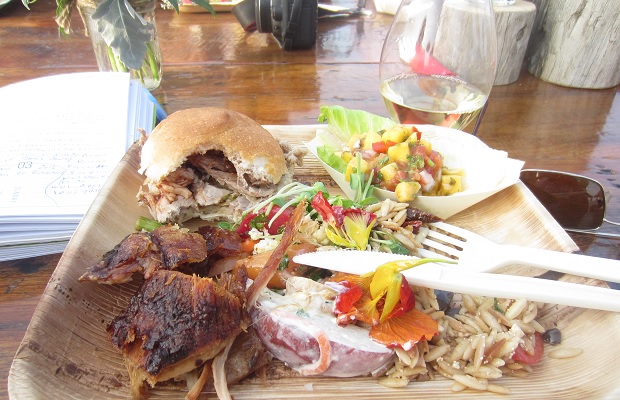
New fizz on the Brock

Brock U. CCOVI Sparkling Wine Technical Symposium Photo: http://brocku.ca/ccovi/

Brock U. CCOVI Sparkling Wine Technical Symposium
Photo: http://brocku.ca/ccovi/

The Ontario Sparkling Wine Technical Symposium. Like a Trekkie convention for oenophiles. To a wine geek it was eight hours spent searching for the meaning of life. To a consumer who just likes to drink it would have been time lost forever with no chance to get it back. The Brock University Cool Climate Oenology & Viticulture Institute’s Pond Inlet was the setting. The presentations were very technical, that is until Dr. Jamie Goode took the podium and breathed context into the room.

According to the LCBO, in 2013, sales in Vintages of VQA sparkling wine were up 59.2 per cent from 2012 sales data. In Canada there are 36 wineries producing sparkling wine and that number is growing. As it should.

The abstruse conditions of the #ONfizz event set the table as a vocational assurance draw for Ontario winemakers, viticulture and viniculture research specialists. Seated at my table were a butcher, a baker and a candlestick maker. That should be loosely translated as a scientist (Dr. Jim Willwerth), a product manager (LCBO’s Ontario expert Astrid Brummer) and two winemakers (Hinterland’s Jonas Newman and Gaspereau Vineyards’ Gina Haverstock).

Brock’s Dr. Debbie Inglis introduced Bertrand Robillard, Ph.d., Director of Research and Development at the Institut Oenologique de Champagne. Before getting to the subject at hand, on disgorging, gushing and foaming, he first laid an open attack on beer. “The form is always better in a crystal glass,” insisted Robillard. For Champagne. Not beer. “That’s just false. It’s just appearance. People in Champagne do not appreciate this kind of resolute,” comparing the pouring of Champagne to beer.

Then on to Sparkling wine’s integral and necessary marketing draw. Bubbles. “No dishwashing,” begged Robillard. “It’s a very efficient way to kill the foam.” By principle, to have foam you need bubbles. It’s all about stabilizing the foam. High ethanol (five per cent) in fizz is good content for foam stabilization. CO2 (protein concentration and polysaccharides) all contribute to stability.

So why do the bubbles collapse? Why do they not make it from the centre to the wall of the glass? Why is a hole in the middle created and the bubbles fall into the hole and disappear? The answer is gushing. A “shameful disease” that can be considered as a disequilibrium between foam formation and foam collapse. Bubbles cannot exist if their radius are less than 0.1 microns, or they will dissolve into the wine. Bubbles are detached when gravity forces are higher than capillary forces.

The conclusion? Surface area and CO2 are the driving force behind gushing. Contaminations inside the wall of the bottle must be eliminated. Oxygen heterogeneity is essential, even more so more than CO2 and sugar. The news that there is no relationship between wine composition and gushing means winemakers can make the Sparkling wine style of their choosing. The representative from Champagne said so.

Next up was Ed Carr, Sparkling winemaker, Accolade wines in Australia. Carr plies his trade in Tasmania. Not the Tasmania of The English Passengers full of exiled convicts, invading Brits, sinister men like Dr. Thomas Potter and his thesis about the races of men. No, Carr makes bubbles on an island quickly becoming a (vinous) garden of Eden, known to a heroic aboriginal and envisioned by Reverend Geoffrey Wilson. Carr explained the company’s choice of locale. “These (cold and mostly maritime influenced climate) numbers are a gross simplification of what the world is really like, but this is why we went to Tasmania, looking at that 1000 number for heat degree days.”

On spacing: “The guy growing your vines is likely using the same tractor to grow spuds.” On vineyard management: “Lots of leaf plucking done, bunch thinning…canopy management is key. Supplemental irrigation a must.” On Sparkling wine stylistic choices: “Oxidation is a big thing, a real style choice. Chilling picked fruit reduces phenolic extraction and oxidation but also reduces fruit.”

On flaws: “Brettanomyces I refer to the ‘black death of Europe’ for wine. The little buggers love sulphur dioxide conditions. Residual sugar left in the bottle on the way to second fermentation helps the yeasts on their way. Rapid ferment and as dry as possible is the way to go.”

On closures: “I don’t really think you apply screw cap closure trials from still wines to sparkling. It does not translate to the reductive character of sparkling. We primarily believe in the use of traditional cork, with some agglomerate closure usage.”

Third speaker was Larry Mawby of Michigan’s Leelanau Peninsula L. Mawby Vineyards. “The thing that I realized was negatively impacting on my ability to make good sparkling wine was the fact that I wasn’t just making sparkling wine.” The response from Hinterland’s (Prince Edward County Sparkling wine maker) Jonas Newman. “I like his style.” I can hear you thinking, Sparkling wine in Michigan? More than this. Mawby makes 21 different renditions, with the usual suspects, Chardonnay and Pinot Noir, in traditional ways. He also goes at it Charmat-style with Riesling, Pinot Gris and Vignoles. Not to mention Cayuga, Vidal, Regent, Marechal Foch and Muscat in the Cuve Close method.

Continued Mawby, “in this century we’ve made nothing but sparkling wines.” During the terrible winter of 2003 there were temperatures of 45 degrees (Fahrenheit) and below. “Killed any vine not beneath the snow. I panicked.” So Mawby added his ‘Cuve Closed’ a bulk production, Charmat-style sparkling wine. On the technicalities of making fizz: “I don’t believe the chemistry of fruit should be your guideline. What does the fruit taste like?” On varietal integrity: “Almost nobody on the planet buys Sparkling wine based on grape variety.”

Jamie Goode, Ph.D., London-based wine writer (www.wineanorak.com) and wine columnist, The Sunday Express talked on wine closures and purchaser perception of local, national and international sparkling wines. Mostly he spoke about incontestable truths.

On closures: “Traditional is best but the Mytik in an excellent alternative.” It now closes 192 million of 6 billion bottles. The Crown Cap? “Yes, why not? It’s recognizable, like beer and comfortable. With the right liner it’s OTR transmission is very acceptable.” Dr. Goode’s closure talk resulted in some wine writer comedy.

On the world’s most famous fizz: “Champagne can be wonderful, but there’s some ropey stuff coming to the UK. With Champagne, your expectation is everything.” On Cava, “People don’t really like it. It’s made in the traditional method and it should be a really good product but it’s trying to be something it’s not.”

On vintage dated bubbles, Goode spoke from an unequivocal marketing perspective. “People don’t really care about vintage.” On the emerging Canadian and British sparkling wine industries. “Do English or Canadian wines need a special name?” No.”

On the now-universal nomenclature: “Sparkling wine has become an accepted one, not a pejorative one.” Goode’s perspective is always fresh, nearly cynical and full of truth. On leaving the country he bade farewell with thanks.

Participants also had the opportunity to taste two sparkling wine research trials that are currently underway at local wineries as well as a comparative blind tasting.  The blind tasting presented a selection of local and international Sparkling wines and Champagnes and was moderated by Jamie Goode.  The three flights featured Blanc de Blancs, Cuvée/blends and alternative varieties. Thank you can never be said too many times to Barbara Tatarnic, Magdalena Kaiser-Smit and Trisha Molokach for their generosity in invitation and unwavering hospitality. I am always humbled to be included in their warm world of wine.

I will admit that I would have liked to see more Ontario representation in the flights, as well as at least one example from both British Columbia and especially Nova Scotia’s Gaspereau Valley. With that emerging region and vintners like Benjamin Bridge and Gaspereau Vineyards on the Sparkling stardom stage/horizon, including their wines would have upped the complexity factor tenfold. Not to mention something British. New York State’s Finger Lakes (Chateau Frank Célèbre) and North Fork of Long Island’s (Sparkling Pointe Brut Seduction) should definitely be players in the next #ONfizz symposium.

Brock University CCOVI Sparkling Wine Technical Symposium

Brock University CCOVI Sparkling Wine Technical Symposium

Sparkling Wine Trial Tasting – Unfinished samples from Trius Wines

  1. Trius Base on lees two years. Chardonnay (70 per cent), Pinot Noir (25), Pinot Meunier (5). Each (cane sugar) dosage was 20 mL towards an end of 8 g/L of residual sugar. Barrel fermentation and barrel aging leans this towards an oxidixed style. Arid, high in citrus and high-toned oak character.
  2. Blanc de Noirs 2009. Left on the lees for four years. Use of cane sugar. Less giving and resolute in micro-wood spice. This sample is from the oldest (sparkling) wine in their cellar.
  3. From the Trius Brut wine. Dosage again with cane sugar. Acts the most polished and finished, the most accomplished. This is the rock and the anchor.

Comparative Blind Tasting – Flight 1: Blanc de Blanc

Family Estate Cuvée No. 1 Blanc De Blancs NV, Méthode Traditionelle, Marlborough, New Zealand (56358, $34.95, WineAlign)

The sample poured at the OSWTS was unfortunately corked but here was my previous review: “Aromatic rhetoric would argue this Marlborough bottle of bubbles is a ringer for classic Blanc de Blancs. Promises pleasure and class from the first whiff. Decidedly lemon citrus tight and stony until an herbal, splintered, stemmy tarragon balm takes over, rendering the wine more of its place than what it tries to emulate. Still, a really terrific effort.”  Tasted November 2013  @oenophilia1

From left to right: L. Mawby Vineyards Blanc de Blanc Chardonnay NV, Cave Spring Blanc De Blancs Brut, Henry Of Pelham Cuvée Catharine Carte Blanche Blanc De Blanc 2008, Drappier Signature Blanc De Blancs Brut Champagne, House of Arras Blanc de Blancs 2004

From left to right: L. Mawby Vineyards Blanc de Blanc Chardonnay NV, Cave Spring Blanc De Blancs Brut, Henry Of Pelham Cuvée Catharine Carte Blanche Blanc De Blanc 2008, Drappier Signature Blanc De Blancs Brut Champagne, House of Arras Blanc de Blancs 2004

L. Mawby Vineyards Blanc de Blanc Chardonnay NV, Michigan, USA (winery, US $23)

Like distilled white Swedish berries high on acidity. Herbal, tight, gainful simplicity. Pear ciderish and clear as a cool climate bell.  @mibubbly

Angels Gate Archangel Chardonnay Brut 2011, VQA Niagara Peninsula, Ontario (227009, $21.95, WineAlign)

A not so dry (9.8 g/L residual sugar) stylistic choice leads this angel to sparkling late harvest territory with ripe orchard fruit that buzzes with terpenes, surface bruises and slight oxidized notes. The archangel rolls over a knife’s edge and sits too long in the sun but it’s neither cut nor cooked. There is beauty in its 90’s big hair, big sound and you might tell her that “tears drop like diamonds from your golden eyes.” There’s yet a spring in her step and a hay note from afield.  Tasted May 2014  @angelsgatewines

House of Arras Blanc de Blancs 2004, Tasmania, Australia (winery, $80 AUS)

Big barrel oak influence leaves splinters in the mouth, albeit gentle and dissolvable ones. Creamy and chalky like ice cream made from tea. Not much yeast and biscuit activity as it’s all about fruit and barrel.  @AccoladeWinesAU

Cave Spring Blanc De Blancs Brut, VQA Niagara Escarpment, Ontario (213983, $29.95, WineAlign)

The freshest style of the #ONfizz B de B flight. Fruit, escarpment bench stone layering, richesse, biscuits and toast are all in. Acidity meets complexity. From my earlier, December 2012 note: “Sees no malolactic fermentation and sits at the top end of dry (12-14 dosage). Most of the fruit is 2008, despite the NV designation. A soda fountain of argon and nitrogen bunsens forth through clean lines and carries an entire cider house orchard of Spartan apple. This one certainly hints at Champagne-like characteristics, of brioche and toast. The apples never relent.”  Last tasted May 2014  @CaveSpring

Drappier Signature Blanc De Blancs Brut Champagne, Ac, Champagne, France (599860, $46.95, WineAlign)

Here showing a bruised apple note with the lees and PH on steroids. Fruit seems to be in from a less than stellar vintage and so the lack of consistency is disappointing. “It’s a style,” says Jonas Newman. “He’s a natural wine guy.” NV Champagne needs aggregate scoring so my 90 comes down. From my earlier, April 2013 note: “Continues a VINTAGES string of excellent value in Champagne releases. Made from 100% Chardonnay, this BdB is pronounced in , yeasty dough definition, hinting at agave and unwashed cheese rind. Where there’s bubbles there’s a way and I like where this one is going. The agave replays in sweet waves, as does the sour in faint yet discernible sloshes. Much to contemplate in this NV sparkler.” Last Tasted May 2014

Henry Of Pelham Cuvée Catharine Carte Blanche Blanc De Blanc 2008, VQA Short Hills Bench, Niagara Peninsula, Méthode Traditionnelle, Ontario (315200, $44.95, WineAlign)

Rocks the driest end of the free world Blanc de Blanc spectrum. Lets carte blanche reign in a taut style and reeks of a minimum four years of autolytic lees activity. In that sense it loses some of its sense of place, in Catherine’s case that Short Hills Bench clay-silt-loam-gravel agglomeration. The soil composition usually brings vigor and richness to Chardonnay but here as a sparkling wine the sensation is of citrus soaked concrete. Racy bubbles of intensity that do not quite match the weight and elegance of the 2007.   @HenryofPelham

From left to right: Château Des Charmes Brut Méthode Traditionnelle, Fielding Estate Brut NV, Cattier Brut Premier Cru, Tarlant Brut Reserve Champagne, House of Arras Rosé 2005

From left to right: Château Des Charmes Brut Méthode Traditionnelle, Fielding Estate Brut NV, Cattier Brut Premier Cru, Tarlant Brut Reserve Champagne, House of Arras Rosé 2005

Comparative Blind Tasting – Flight 2: Blends

Fielding Estate Brut NV, VQA Niagara Peninsula, Ontario (winery, $34.95, WineAlign)

An impressive debut for winemaker Richie Roberts and team. This is a classic Chardonnay (55 per cent) and Pinot Noir (45) cuvée from Fielding’s Tufford Road vineyard. A surprisingly rich example, toasty and with a sweet meets sweaty, minty-herbiage. A primer for even greater vintages (this is essentially 2009) to come, where the focus will be more on yeast fielding to citrus and less about yielding to a non-metallic elemental finish.   @FieldingWinery

L. Mawby Vineyards Talismon NV, Michigan, USA (winery, US $37)

Tasted blind this strikes out as heteromorphic fizz from less than charted territory (like Michigan) with juicy, hybrid acting histrionics. Though it’s actually a blend of Pinot Noir, Pinot Gris and Chardonnay it lacks vinifera varietal complexity. The fruit is clear and fair but the méthode champenoise brings no enzymatic or citric display.

Tarlant Brut Reserve Champagne, France (325167, $43.95, WineAlign)

Here is a cuvée of égalité that combines one-third each Chardonnay, Pinot Noir and Pinot Meunier. Like the varietal make-up, these slightly reductive yet elegant bubbles offer up thirds of brioche, toast and demi-glacé. Fashioned from the 2006 harvest with reserve wine added and aged in oak. Chic and affordable but in no shape or form a knock off of the real deal. There’s a theoretical Champagne void within filled with citrus, sharp ginger and pungent spice. Blessed with unmatched length as compared to the others in the #ONfizz cuvée flight.

House of Arras Grand Vintage 2004, Tasmania, Australia (winery, $60 AUS)

“A polarizing wine,” notes winemaker Ed Carr. Full of savoury, herbal notes but also the unmistakable scent of that other white meat. The cure is indeed a porcine one, sweating in a hung game way, which gives this fizz such an old-world, old cellar quality. A slow (spring) malolactic evolution in barrel gives this (65.9 percent) Chardonnay and (34.1) Pinot Noir its silky, milky feel. Good to even better than good length.

Cattier Brut Premier Cru, Champagne, France (325720, $44.60, WineAlign)

This is really bitter, in a really good way. The nobility in brine is likely a result of whole (non-separated) bunch pressing, the Pinot Noir skins impart giving the fruity must its resident bitterness. A highly distinctive style of high caste and longevity, composed of Pinot Meunier (45 per cent), Pinot Noir  (35) and Chardonnay (25). As deep as any tasted at #ONfizz 2014.

Château Des Charmes Brut Méthode Traditionnelle, VQA Niagara On The Lake, Ontario (224766, $22.95, WineAlign)

Chardonnay (75 per cent) and Pinot Noir (25) at an attractive price. Attacks with a gently cloying, weeping sweetness, string-bending terpenes and fades out with a savoury, bitter finish. Light, approachable and wide-reaching style. Bubbles with broad appeal.   @MBosc

House of Arras Rosé 2005, Tasmania, Australia (winery, $60 AUS)

The composition here is Pinot Noir (62.5 per cent) and Chardonnay (37.5) from pickings in Lower Derwent, Upper Derwent and the Houn Valley. Emerges out of a year where warmer temperatures coaxed an increase of richer fruit from the rounder and fatter white grape. Good lees effect (seven years) in 2005 and also a balmy tarragon accent atop strawberry, verging to cherry fruit. Finishes with expert balancing acidity, this fizz trumps its Blanc de Blanc and Grand Vintage sistren at this tasting.

From left to right: Hungaria Grande Cuvée Brut, Girls' Night Out Sparkling, Giusti Brut Prosecco Asolo, Brédif Brut Vouvray NV, Hinterland Ancestral 2013

From left to right: Hungaria Grande Cuvée Brut, Girls’ Night Out Sparkling, Giusti Brut Prosecco Asolo, Brédif Brut Vouvray NV, Hinterland Ancestral 2013

Comparative Blind Tasting – Flight 3: Alternative Varieties

Trius at Hillebrand Sparkling Sauvignon Blanc 2009, VQA Niagara Peninsula, (winery, $35.20)

Spent 12 months ageing ‘sur lie’ in the estate’s underground sparkling caves. Winemaker Craig McDonald comments to the negative effect of light on bubbles. “Light strike causes a serious reaction on sparkling wine.” Here a mephitic aroma should likely be attributed to reduction or the beam of sunlight blanketing the room. There is a resinous salinity to this SB that does not want to blow off. Needs to be revisited from 2015 to 2018.

Green Extra-Sec by M. Lawrence, Michigan, USA (winery, $15)

The Green is part of Larry Mawby’s colourful, sexy and artfully named M. Lawrence investigation into the diversity of Sparkling wine. Absurdly dry, this put together Vidal and Cayuga concept is all about musky grape dehydration. Its cool climate constitution rescues the fruit to rehydrate and act like an orange picked straight from the greenhouse tree. There’s a malic medicinal tone that buries the sweet (17 g/L residual), resulting in a tart, low in alcohol, unwoven bottle of slim bubble.

Girls’ Night Out Sparkling, Ontario VQA, Ontario, Canada (215632, $14.95, WineAlign)

Here is a modest and useful 100% Riesling, Charmat Method, Cuve Close bottle of fizz from Lake Erie North Shore producer Colio Estates. With a residual remainder of nearly 20 g/L it falls into the off-dry category with aromatic notes that stroll directly through Ontario orchards. Tasty, easy to enjoy and smelling peculiarly like bubble gum. Well-made, good quality bubbles nouveau.

Giusti Brut Prosecco Asolo DOCG, Veneto, Italy (agent, $20.99, WineAlign)

A 100 per cent Glera, from Veneto’s Montello and the Asolo hills. As per Giusti’s description, this definitive Prosecco is “appropriately evanescent, with fine and lingering perlage.” Though reserved on the nose, the palate is very lively. A case in point for any aridity-driven examples to follow.

Brédif Brut Vouvray NV, Loire, France (352179, $20.95, WineAlign)

A touch yeasty, with citrus and large bubbles. Good verve, complex palate with a Champagne bent, or at least a toasted sentiment. From my earlier, November 2013 note: “Arid, frothy and fitful, atomically speaking. White peach and preceding spring flowers. Charcoal rubbed, also clean and fine. Sparkling Chenin Blanc done right.”  Last tasted May 2014

Hungaria Grande Cuvée Brut, Hungary (619288, $12.25, WineAlign)

A more than interesting set of aromatics define and drive this blend of Királyleányka Rizling (Rhine Riesling), Pinot Noir and Chardonnay. A stinky, reductive twang is joined by peach, rubber, pencil, duff and sandy sediment. Although the palate is a bit dullish with a taste of wet concrete there thickens a liqueur-like viscous texture to win sweet hearts. Would win even more were the residual (9 g/L) even higher.

Hinterland Ancestral 2013, Prince Edward County (winery, $25, WineAlign)

Released back in October of 2013, the Ancestral is what Hinterland’s Vicky Samaras refers to as the “unicorn” or the “babymaker.” This is Gamay Noir in postal service of the ancient process known as méthode ancestrale. Fermentation, which produces the carbon dioxide, occurs in the bottle and lees disgorgement is skipped. Hinterland’s Ancrestral brings sweet currant jelly, strawberry and mint notes (36 g/L residual sugar) to a wine low in alcohol (8 per cent) yet high in balancing (7.8 g/L) natural acidity. The components are all lifted to such great heights. A babymaker because the aromatics, palate, texture and finish “are mirror images and when we kiss they’re perfectly aligned.”


Good to go!