A steamy August in Washington

Hot red August sun in the Walla Walla Valley

In August of 2023 a small group of intrepid Canadians traipsed through the wilds of Washington’s wine country in search of the new but found so much more. A fine fettle of wine producers and estates fill up the eastern landscape, fully encapsulating the industry with the experienced, quaint, artful, zealous, time-tested, animated and cerebral. The trip was a hunt in persistence, finding it all, revelling in its mottled and striped splendour, sitting back to admire the people and the scenery. Smoke taint was on everyone’s mind but clear skies dominated imagination. The journey was winding, snaking contiguously like the Columbia, Yakima and Walla-Walla Rivers, working an itinerary through the Tri-Cities, Yakima Valley, Red Mountain, Walla Walla, Woodinville and finally to finish in Seattle. The weather ranged from 90 to 115 degrees Fahrenheit (32-46 Celsius for the rest of the metric world), fires burned far off in the distances near Spokane and widespread in British Columbia. The air was thick as pea soup though there was no fog and spirits remained high. Unwavering you might say, always ready for road-tripping, to reach further, for action and of course tasting.

The group convened in Richland, one of three city-siblings conjoined at the aggregate network of urban communities that include Pasco and Kennewick. On day one we took in the Yakima Valley and Red Mountain AVAs with J. Bookwalter Winery, Palencia Winery, Goose Ridge Estate Vineyard & Winery, Col Solare and Hedges. Day two down to the Walla Walla Valley AVA with SMAK Wines, Gramercy Cellars, Valdemar Estates, L’Ecole N° 41 and Woodward Canyon Winery. Morning of day three still about town in Walla Walla, at Seven Hills Winery, House of Smith and Vital Wines. Further south to The Rocks District of Milton-Freewater with Rotie Cellars and in the haze of the evening an oasis harvest party at Spring Valley Vineyard. Day four and onwards to the Yakima Valley AVA with Tirriddis, Sonder Wines, JB Neufeld and 14 Hands Winery. Day five more of the Yakima Valley AVA and then on to Woodinville, first with a blending experience and tasting at Chateau Ste Michelle, culminating at Airfield Estates. A long finale of a drive over the Cascade Mountains, a change in scenery and more profoundly weather ,with clear blue skies and sunshine in Seattle.

Lunar landscape in the Walla Walla Valley, akin to a Wes Anderson set of “parched gulch and arid plains.”

Grape cultivation in hostile climates

Cultivating wines in much of Washington is not a native exercise. Most of the southern part of the state is desert and nothing comes easy. There are many vistas akin akin to a Wes Anderson set of “parched gulch and arid plains.” This reminder comes by way of Christophe Hedges. “To plant a vineyard we just have to thin out a few sage bushes. Vine-growing is not a natural practice.” Yet Hedges also reminds that practicing biodynamics is not commonplace, but it is natural and so the Vineyard Manager reigns have fallen to 26 year-old Kayla Braich. Christophe insists she is the most knowledgable biodynamic expert in the Columbia Valley. “Hiring an old white guy to do biodynamics would not have worked.” At Hedges, Sarah Hedges Goedhart tells how Portuguese varieties are a focus, especially touriga nacional (but also tinta cáo and sezão) for their heat and drought resistant, terroir-driven qualities. They are late flowering and developing but also deal with the stress of extreme climate events better than the Bordeaux varieties. “Red Mountain is a small-knit community,” says Christophe. “We hope the way we are farming will be the direction of the future.”

Justin Neufeld talking Yakima, Rattlesname Hills and Red Mountain

“We’ve made wine in Spain for the past five generations, and we plan to make wine in Walla Walla for five generations to come.” — CEO Jesús Martínez Bujanda, 5th Generation at Valdemar Estates

Justin Neufeld finds the cabernet sauvignon from Red Mountain more granular and austere. Vibrant yet one-dimensional as compared to the (relatively) cooler climate sites of the Yakima Valley. There are different wind patterns here and the tannic profile becomes softer, chalkier and ultimately more elegant, with a true red fruit personality. Yakima lends to more “blended” cabernets, in particular as it pertains to structure, also more aromatic complexity and classic varietal style. Herbal, red fruits, herbaceous and vegetal character. More acid driven. Much of Yakima’s style is because of landscape orientation. Here the ridges run east to west where the cataclysmic glacial lake outburst Missoula Floods peaked at 1,200 feet. There is also the Stuart Range in the Enchantment Basin which hosts a granite soil profile while wrinkles in the central crust resulted in basaltic, south facing slopes. Meanhwile Neufeld is one of a few producers to discuss the fires and potential for smoke taint. He comments that 2023 reminds him of 2007 when there really was no issue on the grapes.

“My sisters and I grew up with the understanding you don’t farm for this generation, you farm for the next one” – Bill Monson, President, Goose Ridge Vineyards

Heritage Vineyards

Old vines are key to the tenets of quality and success for growing regions worldwide. There are parts of Europe and also grape varieties that suffer from increased disease pressure and low fruit vigour but there are also locations, especially in warmer and more southern climates that host century vines still in positive rotation. South America, Australia and South Africa especially celebrate the heritage and age of old vines that keep on giving. While there are some vines and wineries populating the wet, mild climate of western Washington, it is the greater fields of Washington State’s warm and predominately desert climate playing host to many special blocks, many of them planted in the 1970s and 1980s where the finest expressions of the region’s terroirs are produced. Still dozens of others are coming on strong and on their way to joining the heritage account. Not to be forgotten is the high quantity and profound importance of own (as opposed to grafted upon) rootstock in Washington’s vineyards.

  • Airfield, Arnaut Boushey, Canoe Ridge Estate, Cold Creek, Dubrul, Moxee, Olsen, Phil Church, Rainmaker, Red Willow, Rosa Hills, Rothrock, Two Blondes and Upland vineyards in the Yakima Valley
  • Hyatt, Outlook, Portteus, Morrison, Stonemark and Whisky Canyon in the Rattlesnake Hills
  • Bacchus, Dionysus, Double D, Evergreen, Galitzine, Klein, Lawrence, Lewis Estate, Phinny Hill, Sagemoor, Stoneridge, Sundance, Tapteil and Wallula Gap of the Columbia Valley
  • Andrews, Champoux, Discovery, Lake Wallula, Mach One, Palengat, Sorella and Zephyr Ridge in Horse Heaven Hills
  • Clifton Bluff, Desert Wind, Fox Estate, North Ridge, Riverbend, Rosebud, StoneTree and Weinbau in the Wahluke Slope
  • Beautiful Powerline, En Chamberlin, Ferguson, Forgotten Hills, Heather Hill, Hidden Northridge, Leonetti, Loess, Pepper Bridge, Powerline, Serra Pedace, Seven Hills, Spring Valley, Sur Echalas, Woodward Canyon and Yellow Bird in the Walla Walla Valley
  • Mill Creek and Upland in the “North Fork” (of the Walla Walla River)
  • Bel’Villa, Cara Mia, Ciel du Cheval, Grand Ciel, Hedges, Jolet, Kiona, Kingpin, Klipsun, Les Gosses, Magdalena, Quintessence, Shaw, Upchurch, Terra Blanca and Weather Eye on Red Mountain
  • Ancient Stones, Holy Roller, Lafore, (Freewater, River and Rotie) Rocks, SJR in The Rocks District of (of Milton-Freewater)

These are but a shortlist with many more qualified and soon to qualify vineyards coming into their own. Heritage means more than grapevines, succinctly iterated by Bill Monson, President of Goose Ridge Vineyards. “My sisters and I grew up with the understanding you don’t farm for this generation, you farm for the next one.” CEO Jesús Martínez Bujanda of Valdemar Estates may be newer to the Washington wine scene but he echoes the sentiment. “We’ve made wine in Spain for the past five generations, and we plan to make wine in Walla Walla for five generations to come.”

Canadians and Kate at Spring Valley Vineyard

Syrah and Rhône varieties rising

Washinton State’s reputation has above all else been built on Bordeaux varieties but the present and the future see syrah and other Rhône grape varieties taking up more airspace, vineyard acreage and mind. The reds in syrah, grenache, mourvèdre, cinsault, carignan and counoise; The whites in marsanne, roussane, viognier, grenache blanc, clairette blanche and picpoul. On this last trip the Rhônes and varietal syrah were poured, discussed at length, waxed rhapsodic upon and just plain celebrated at Airfield Estates, Hedges, Gramercy Cellars, Rôtie Cellars, SMAK, Sonder, Spring Valley Vineyards, Valdemar Estates and Vital Wines. The Rhônes are taking hold and growing exponentially in the Yakima Valley, on Red Mountain, upon the Royal Slope and throughout the Walla Walla Valley, especially at the Oregon border in the Rocks District of Milton-Freewater. Plantings began in the mid-1908s in the Red Willow Vineyard of Yakima Valley.

Team Canada at House of Smith

WAugust in Washington

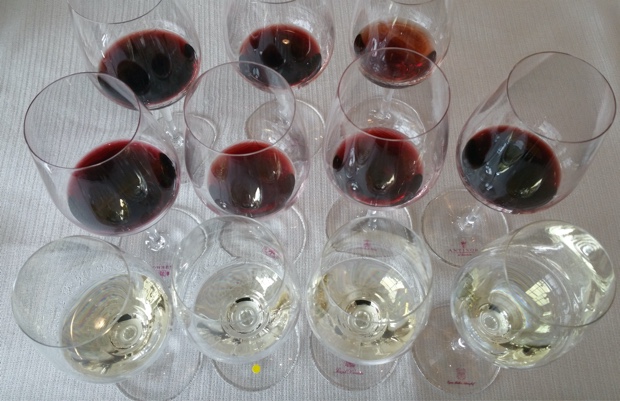
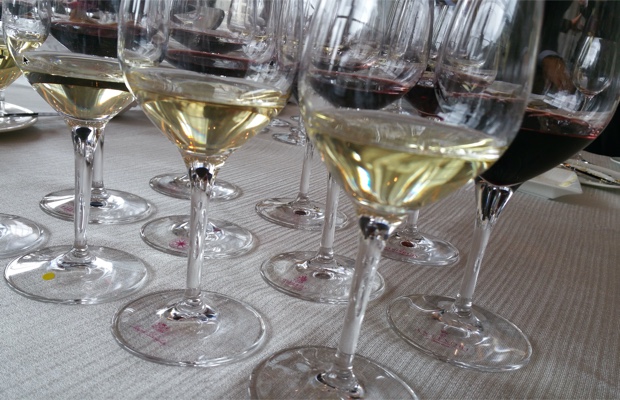
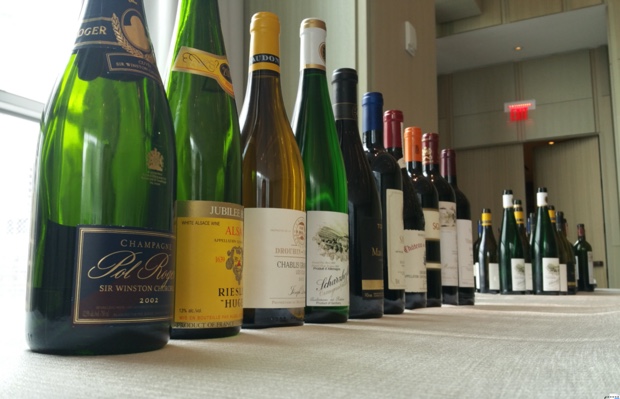
This WAugust trip to Washington wine country was made possible by the erudite folks at the Washington State Wine Commission, both in that spectacular state and also here in Canada. Just two months earlier a full-on participatory Pacific Northwest Wine event took place in Toronto and some added notes can be found at the end of this lengthy report. Three great humans work tirelessly (amongst many others behind the scenes) on behalf of the state’s more than 1,000 wineries, large and small. Keep in mind that Washington is the second-largest wine producing state in the United States, with over 1,050 wineries making over 17 million cases of wine, contributing more than $8 billion in annual in-state economic impact. That is a profound breadth of ground to cover for the small WSWC team. Chris Stone is Deputy Director and Kate Salisbury is International Marketing Manager. Chaperones Salisbury and Claudie Lamoureux of Washington State Wine for Canada were charged with the on point, on time task for five fulfilling and over-achieving days. Hard to say which of their characters or abilities were tops – driving prowess or durability, kindness, patience or grace. All of the above and it is imagined that Godello’s fellow travellers would wholeheartedly agree; Alana Lapierre, Angela Aiello and Mandi Roberston. In any case there was everything to experience, much along the lines of the varied and diverse wineries, AVAs and personalities encountered. Of conglomerates and boutiques, generational families and new blood, the established and the start-ups, pedagogues and rock stars, boffins and balladeers. There was much wine poured and these are the 135 tasting notes.

J. Bookwalter

Columbia Valley AVA

J. Bookwalter

John Bookwalter was a graduate of UC Davis Vineyard Management program and farmed some of Washington’s most famous tracts, Sagemoor, Bacchus and Dionysus. In 1982 he started J. Bookwalter, making approximately 2,000 cases of white wines. In the 90s he started the reds program and 2023 marked the 40th harvest. Chance Cruzen is winemaker and happens to be a big fan of Iggy Pop.

With the boys of J. Bookwalter

J. Bookwalter 3rd Edition 2019, Columbia Valley AVA

Flagship white, Bordeaux idiom, based on sémillon (63 percent) with sauvignon blanc (20) and muscadelle (19). The sém is both anchor and driver, dominating the aromatics and that speaks to how well this has been managed and blended. They keep the faith, act as catalyst for integration of both the varietal trilogy and the wood. John Bookwalter was known to say “choose your wood like you would choose a picture frame.” Equally important is the creation of consequence between flowing grace and bracing tension. Good strong mid-palate, tight and focused, length is outstanding. Proper flagship appellative white blend. Drink 2023-2027.  Tasted August 2023

J. Bookwalter Merlot Readers 2020, Columbia Valley AVA

Mainly merlot but not exclusively, with small amounts of cabernet sauvignon, malbec and cabernet franc for good support, measure and spice. The oak is noticed, the tannins powdery yet silky enough to make this über sippable. Still a bit gangly to be honest with some white peppery piques on the aromatics and so another year will surely send this merlot to be in a place it was intended to be. A few grams of residual sugar plump it up and then chocolate, a next effect by barrel aging which only serves to make this a truly silken, creamy and yet acid retentive red wine. Produces up to 1,500 cases. Drink 2024-2027.  Tasted August 2023

J. Bookwalter Conflict 2020, Columbia Valley AVA

Conflict, aged on lees, bottled 18 months after harvest. A great vintage save for some smoke that drifted in from fires all over the west, though really less dramatic here in the Columbia Valley than many other places. Pretty taut red that has not yet released its true aromatic charm, in fact it could be another 18 months before that really begins. The Readers Merlot is a much earlier proposition and the more diverse varietal meets barrel make-up with style intendment to make this a more structured and powerfully restrained merlot-dominant proprietary blend. Good yields though and a juiciness here that says the type of acidity in Conflict is quite different to that of Readers. This shows real potential, luxe as it is and all parts are prepared thoughtfully, with blood sweat and tears, yet neither by pretence nor blind ambition. Drink 2025-2029.  Tasted August 2023

J. Bookwalter Cabernet Sauvignon Readers 2020, Columbia Valley AVA

Rounded out by five percent syrah and petit verdot, with thanks to a most important grower/vineyard, that being Dionysus. A richer, thicker and more unctuous red (as compared to merlot) but fruit concentration is on par. That said the warmer Dionysus site can’t help but deliver this kind of glycerin viscosity and so the blackberry-Cassis dominance will not be denied. Can’t miss the silky syrah and petit verdot depth that put this in the kind of red best defined as full and substantial. Refined and finessed enough, never overarching or reaching, best now and for a few to five years forward. Drink 2023-2027.  Tasted August 2023

J. Bookwalter Cabernet Sauvignon Protagonist 2020, Columbia Valley AVA

Change of pace, in a way, from Conflict to Protagonist because for the first time there is an Italian (think Bolgheri) like stylistic coming through. Dusty, chalky and powdery tannins are evident, even in the face of fulsome and concentrated fruit. Juicy to the nth degree, ridiculously delicious and then a chocolate plus espresso crema all over the back end. The cumulative effect by fruit, terroir, climate and barrel aging make this climb to a rich and creamy finale pretty much unavoidable. Some sweetness follows and after some REM sleep there will be a long, melodic and jangling future for this Columbia Valley red. Drink 2024-2028.  Tasted August 2023

Vic Palencia

Palencia

Victor (Vic) Palencia’s grandfather was a first generation immigrant from Spain (to Mexico) and he is first gen. American, so the symmetry, from Valencia to Palencia, is something to hang a northwest hat on. Vic started in Walla Walla in 2012 after taking a flyer and to realize a dream. As a first generation immigrant it cements the legally forming “sueno” even deeper. Thus the “Monarcha” brand, “earning my wings,” says Vic. “If you drink two bottles, cabernet and merlot side by side, you can fly.” A symbol for lifestyle, easy drinking wines and then the Palencia label, more serious, exulting Washington State’s diversity of grape varieties grown. The label depicts his father holding a shovel, “always working the land.” Palencia is located in Kennewick.

Godello foreground, background Vic Palencia

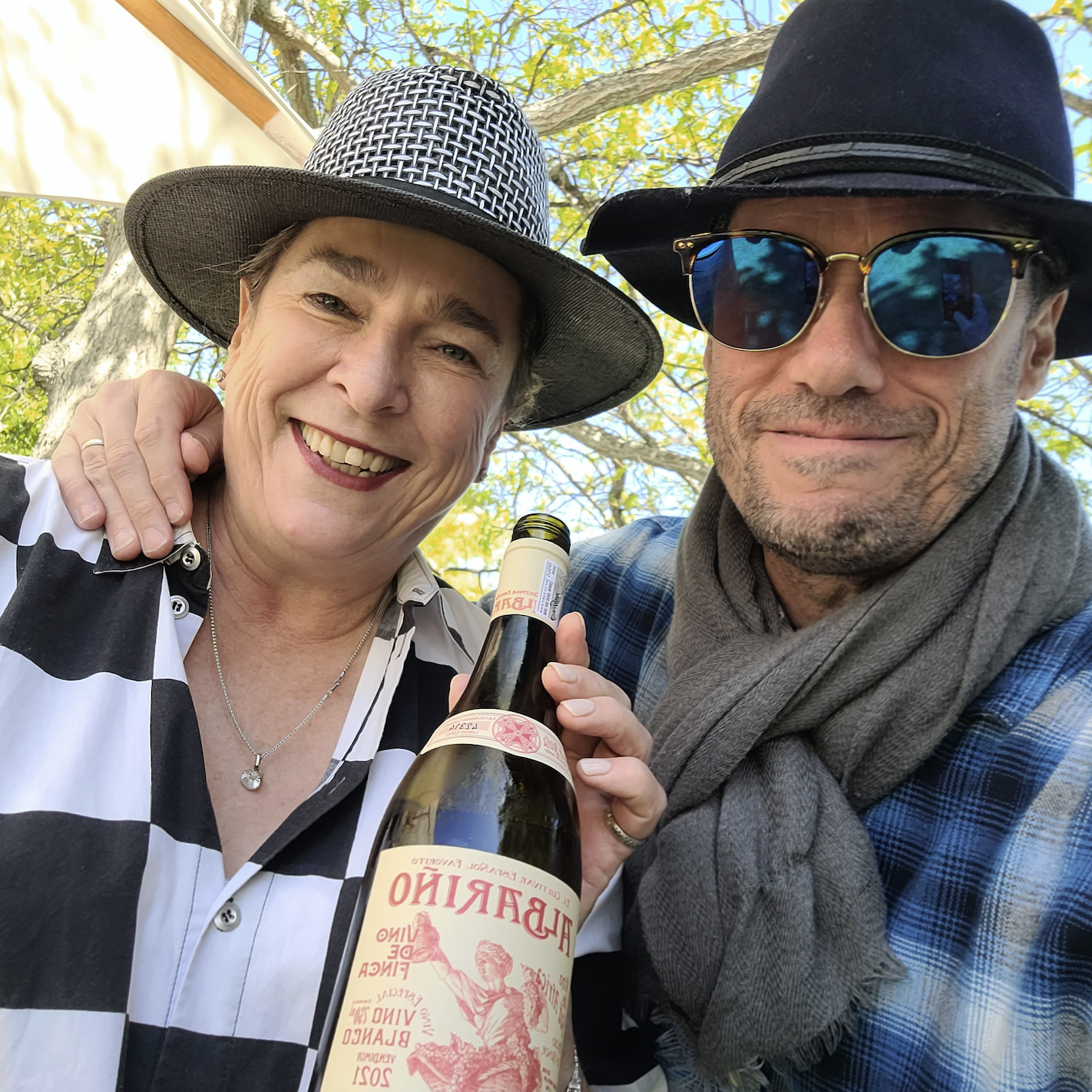
Palencia Sparkling Albariño

Charmat method, sweet and salty, like nuts and caramel corn but leaner and tighter as per the grace by variety. Simple stuff with good energy.  Tasted August 2023

Palencia Albariño 2022, Columbia Valley AVA

Says Columbia Valley but really should be called Ancient Lakes located in northwest Washington. But Columbia is more recognizable and so here we are. If it smells like albariño and tastes like albariño well, you know the rest but truthfully this is a less herbaceous and more mineral example. And so Ancient Lakes it is. The terroir is hardpan calcareous limestone, good for drainage and reduction of hydric stress with sandy loam of up to 19 inches above. Pretty good albariño for dessert lands so far from a coast – but the place is definitely the reason. Nice little CO2 buzz about it as well which is so varietally correct. Drink 2023-2025.  Tasted August 2023

Palencia Malbec Monarcha 2019, Columbia Valley AVA

From Vic Palencia and family in Kennewick with Columbia Valley fruit, 14 months in wood. Nice little char and smoulder on sweetly salty and sour-edged fruit. Higher acidity than many malbecs and also valley wines so this wants and needs food. Mojo bowl anyone? Drink 2023-2025.  Tasted August 2023

Palencia Cabernet Sauvignon Monarcha 2019, Columbia Valley AVA

From the Richland Hills in the Columbia Valley where thicker skins and high quality fruit translate to unction and developed tannin. Cassis and Ribena mix, tart and candy hearts sour, in a good place right here and right now. Some powder in those tannins but resolution is just about complete. Drink 2023-2025.  Tasted August 2023

Palencia Petit Verdot 2017, Wahluke Slope AVA

Part of the El Viñador line which is essentially Reserve style but the name is more specific and indicative of what it means to grow and make these kinds of varietal wines. From fruit grown on the Wahluke Slope AVA. Structure and mouthfeel justify the reasoning and the result, especially the tannic intensity and power at the yet to relent finish. Wood thickens, spices and sweetens the last third of this petit verdot which is really unlike any other, grown anywhere and produced as a solo artist. Drink 2024-2027.  Tasted August 2023

Palencia Syrah El Viñador 2019, Red Mountain AVA

Red Mountain fruit and signature varietal effort but also style that Palencia seems most comfortable with. This is because the balance, restraint and finesse are at their collective finest in this kind of handsome and sturdy wine. Still some chalky and powdery tannin but overall the harmony and seamlessness are pretty spot on. Ready to go and please. Drink 2023-2026.  Tasted August 2023

Top notch Paella at Palencia

Palencia Carmenère 2019, Red Mountain AVA

Sourced from the hottest region in Washington, that being Red Mountain and picked quite late. Nothing green about this carmenère, in fact it’s fruit and wood are thick as thieves, the tannins silken and the capsicum or jalapeño non-existent. Chewy like chocolate liquorice and very much a wine made for those who like it rich, luxe and thick. Drink 2023-2024.  Tasted August 2023

Palencia Albariño El Viñador 2022, Columbia Valley AVA

The founding vineyard for albariño at Palencia’s reserve line is as advertised more concentrated, focused and finessed. From various harvests each fermented separately for 30 days in Hungarian oak puncheons then blended together before bottling. Aiming for a Galician style though truth be told you can take the albariño out of Galicia but you can’t take the Columbia Valley out of this albariño. Warm, rich and unctuous, in the end. Drink 2023-2024.  Tasted August 2023

The Tirriddis Boys – Matthew Doutney, Gabriel Crowell and Andrew Gerow

Tirriddis

Tirage … Riddle … Disgorge. Tirriddis, acronym of sorts for three sparkling wine producing friends (Andrew Gerow, Gabriel Crowell, and Matthew Doutney) who celebrated the end of school with Gimonnet and Janz Champagne, fried chicken and chips. All attended Washington State University for viticulture and oenology. Their collective motto is “if we fail, we can always move back in with our parents. “Wine is a super architectural art form,” explains Gerow. “We’re really just trying to define Washington – defining typicality that really doesn’t exist yet.” First base wine were made in the Fall of 2020.

Tirriddis House Gris, Columbia Valley AVA

House tier is all about distribution, for restaurants and export in a fun and recognizable style. Here 100 per cent pinot gris, creamy aromatics, mousse as well, the sweetest of all the Tirridis wines at 11 g/L. Looks at reeling in a Prosecco crowd that can’t afford $50 sparkling wines. Sees 12 months on the lees and it is traditional method so expect some autolysis, mild oxidation and ultimately great energy. Drink 2023-2024.  Tasted August 2023

Tirriddis House Brut, Columbia Valley AVA

More than 50 percent of the base wine is original (from the fall of 2020) and is essentially chardonnay with a few percentage points of albariño. Tirridis for tirage-riddle-disgorge (clever) and the sugars are hidden behind the acidity. Raises a bar for the vital scintillant nature of grapes farmed for wines that transfer energy like sparks jumping from hydro pole to hydro pole. Similar creaminess and mousse to the pinot gris but the orchard fruit here is different than that peachy stone. Who would dare not pour this as a warm home welcome or by the licensee glass? Tastes like unbaked Washington with tight bubbles. Drink 2023-2024.  Tasted August 2023

Tirriddis House Rosé, Columbia Valley AVA

One-quarter each cabernet sauvignon, syrah, merlot and chardonnay, not unusual for Washington per se though no real frame of reference from the sparkling diaspora neither. Celebrates red fruit, from currants through plums and this surely comes across drier than it is, not quite the 12 g/L of pinot gris but this is pretty taut and wound for Rosé bubbles. Drink 2023-2025.  Tasted August 2023

Tirriddis Brut Rosé, Columbia Valley AVA

The second rendition of the Brut Rosé, three parts, in triage two years, of cabernet sauvignon, syrah and chardonnay. One-third each means less red fruit so more of a currant current and the yeasty feels step up sooner and for longer. Still a scintillant intensity of vitality and energy plus some bitters this time around. Anything but a soft, upturned Brut style and saying this is a tasting room profile is pretty much spot on. Just feels like the teaching moment and in turn signature for the boys’ intonement of style. Drink 2023-2026.  Tasted August 2023

Tirriddis Washington Blend, Columbia Valley AVA

Everything but the kitchen sink though in actuality it is anything but because it’s not the last lot to be put together each season. A blank slate concept that intends to represents the region in an unapologetic way. Fruity first, of merlot, riesling, pinot gris, cabernet sauvignon, chardonnay, viognier and syrah. Neither Blanc nor Rosé but a rainbow of multifariousness and truth be told this is seamless fizz, a Venn diagram of varietal and geography, of potential, diversity and exceptionality. Drink 2023-2025.  Tasted August 2023

Tirriddis Blanc De Gris, Columbia Valley AVA

Third rendition looking for pure honeycomb and the guys feel they nailed it on number three, or at least set themselves upon a path to get it right there when number four comes to fruition. Why more sparkling producers do not refer to a varietal sparkling pinot gris in these terms is beyond me. It just fits. Creamy yes, with botanicals and bitters but the pear coulis flavour is uncanny. This goes a bit to herbal and preserved lemon foamy (and acidity is a bit subdued) but it’s close, oh so close. Can’t wait for rendition number four. Drink 2023-2024.  Tasted August 2023

Tirriddis Blanc De Blanc Stonemark Single Vineyard 2020, Rattlesnake Hills AVA

First single vineyard sparkling wine, all chardonnay, small plantings in the Rattlesnake Hills AVA, 1,600 feet of elevation, of brushy savour and direct hits of more than one kind of citrus. The concept is a growers’ one – with obvious connotations. Elevation is clearly the driver because this is about acidity and high intensity, all pervasive and above all else in what this site wishes to give. Poured from Magnum, extended triage. Lemony, tight, zesty and just about zero dosage. Can see this living six or seven years. Drink 2023-2028.  Tasted August 2023

Riley Miller, Sonder

Sonder

Established in 2016 by Riley Miller. Low-Fi, non-intervention, but not natural wines. Inspired by his time in the McLaren Vale. The initial production in 2016 was 100 cases – today about 3,000 cases. A thinker, but not too hard, yet still a man of wonder. Likes to consult the Dictionary of Obscure Sorrows, from which the realization is concluded that everyone around you has a complex life, as much as your own – but we can’t comprehend half of it. “We are like monkeys flying on a rock through space.” Observe Miller conduct a wine tasting for visiting journalists and you can imagine the inner workings of a modern day winemaking production. Riley’s bottles are anything but some kind of toad swindle. They are made for all of us, including those who don’t know it yet.

Sonder Rosé Cinsault 2022, Columbia Valley AVA

Trying to capture a Provençal style, 24 hours of skin contact, gently extracted and truly crushable. Lightly tart, basic, simple, unadorned. Native ferment. Truly cinsault to be honest. Drink 2023-2024.  Tasted August 2023

Sonder Grenache Blanc 2022, Columbia Valley AVA

Big chunk of the fruit comes from Boucher Vineyards and a smaller portion out of the Rattlesnake Hills. Warm and mature though high elevations keep it fresh and again the naked nature of a Riley Miller wine make this immediately crushable. Unadulterated, no make up and local. Drink 2023-2024.  Tasted August 2023

Sonder Roussanne 2022, Columbia Valley AVA

True expression of grape, not necessarily “perfect” wines, nor is there any reason to want them to be but they are representative of site and Washington. Neutral oak, tropical notes, fresh papaya and pineapple syrup, tart and textural with thanks to some stirring. Drink 2023-2024.  Tasted August 2023

Sonder Field Blend 2022, Columbia Valley AVA

Orange, mostly viognier with some marsanne and roussanne, six weeks on skins, six months in neutral oak. Grapes that don’t really bring the orange but instead the partly cloudy pineapple juice hue. A wine that challenges why orange is the ubiquitous term because funk and melting salve are not the thing. Spice yes and litchi, also grapefruit and the most mild of bitters. Has that anesthetic feel on the palate. Third iteration of this wine. Drink 2023-2024.  Tasted August 2023

Sonder Co-Ferment 2022, Columbia Valley AVA

A co-ferment of grenache and picpoul, first time trying, served chilled, “a patio pounder.” Watermelon Jolly Rancher insists Riley Miller, 11.5 percent and as crushable as wine can possibly get. Juice. Water, pink, alcohol. Drink 2023-2024.  Tasted August 2023

Sonder Red Field Blend 2022, Columbia Valley AVA

Mostly counoise and grenache with some cinsault, viognier and roussanne. A couple of weeks on skins, co-fermented with some whole cluster and carbonic maceration. Simple, drinkable, low alcohol, currants and red berries, sweet acidity, a moment of balsamic and charred herbs. The grapes almost combine for a cabernet franc or even lightly smoky cannonau meets carmenère effect. Nothing else like it and better for that. Drink 2023-2024.  Tasted August 2023

Sonder Grenache 2022, Yakima Valley AVA

Rarely made grenache by method and style “as close to pinot as is humanly possible” says Riley Miller. Picked early, 20 percent whole cluster, Western Cape stylistic, light, low alcohol, fresh and shadowy, suggestively if sneaky tannic. Drink 2023-2024.  Tasted August 2023

The Orcas Project Nebbiolo Andrews Vineyard 2022, Horse Heaven Hills AVA

“The Orcas Project is a collaboration between some of the most talented winemakers in the Northwest and a collection of Orcas Island artists. The idea to combine these two groups of people was born on the island and continues to expand throughout the Northwest. Each winemaker that is part of The Orcas Project is paired with an artist and represented by a different label.” Riley Miller’s is pseudo carbonic for which 50 per cent whole cluster is added back on top – makes for a grippy if light and effusive style. Cherry, candy apple and onion skin. Picked early as if for Rosé and frankly reminds of Cerasuolo. Fine bitters, good balance and a bit of roasted nightshade char. Cinnamon heart finish. Drink 2023-2024.  Tasted August 2023

Kinnikinick Red

Chateau Ste Michelle

Chateau Ste. Michelle is Washington State’s oldest winery, and many of Washington’s most famed winemakers got their start with the Estate. Ste Michelle is also the largest producer of Riesling in the world, and has winemaking partnerships with two international vintners: Col Solare is an alliance with Tuscany’s Piero Antinori and Eroica Riesling is a partnership with the Mosel’s Ernst Loosen. As part of the visit, the Canadian team was treated to a Blending Experience.

Chateau Ste. Michelle & Dr. Loosen Riesling Eroica 2022, Columbia Valley

More than a hint of residual sugar yet the driest style for CSM and though the relationship is with Ernie Loosen this is not Mosel style. Fruit is sourced primarily from the Evergreen Vineyard to bring Eroica into its proverbial and ironic sweet spot. The “hero” is in ode to the winery’s varietal roots and a Beethoven reference. Bit of residual CO2, high acid and truly tart. Balanced vintage, vital and energy elevating. Will be one of Eroica’s better agers. Drink 2023-2027.  Tasted August 2023

Chateau Ste. Michelle Riesling Indian Wells 2022, Yakima Valley AVA

Much like Eroica there is a residual CO2 buzz and at least twice if not three times the number (here eat 30 g/L) of residual sugar. Quite rich, luxe and opulent with just a few sites left to create this round and sweet style. High Kabinett or low Spätlese in a sense but without the supporting acid. More Mosel here and yet also quite a lot more phenolics and tonic. For a consumer that likes sweet wines but can be drawn into riesling, followed by some less sweet varietal examples. Some wine producing and drinking habits never die. Drink 2023-2025.  Tasted August 2023

Chateau Ste. Michelle Chardonnay Canoe Ridge Estate 2019, Horse Heaven Hills AVA

Relatively rich and luxe chardonnay style, sweetly buttery, soft and creamy. No real bite but just easy, amenable and though considered a cooler spot with better acidity than some it’s still as round as chardonnay gets. Softens more and more as it slides down and feeds away. Drink 2023-2024.  Tasted August 2023

Chateau Ste. Michelle Cabernet Sauvignon Indian Wells 2020, Columbia Valley AVA

Reds are the main focus at Indian Wells and while the style is opulence, this cabernet sauvignon is surely designed to be consumed ASAP. Tannins are present yet sweetly soft and wood soaks up everything, then returns it with semi-sweet chocolate. A quarter is new American oak and 20 percent is French. Soft with some sweetness, macerated plums and that ever pervasive chocolate. Hugely consumer friendly. Drink 2023-2025.  Tasted August 2023

Chateau Ste. Michelle Merlot Canoe Ridge Estate 2018, Horse Heaven Hills AVA

A third new French and seven percent American wood truly sheathes, thickness and wraps merlot up in a nurturing flannel blanket for merlot that has softened into an almost ideal drinking state. The 2016 was much more tannic and though some omnipresent balsamic shows here it’s more reduced, sweeter and less high-toned. Lower acid here, at 4.8. Warm and caressing vintage for the palate and our emotions. Drink 2023-2025. Tasted August 2023

Chateau Ste. Michelle Cabernet Sauvignon Cold Creek Vineyard 2019, Columbia Valley AVA

Cold Creek Vineyard is a very successful vintage for cabernet sauvignon, more finely tannic and higher in acid than 2016. The energy is special, the harmony between fruit, acid, tannin and wood far superior to other seasons and also other growing sites. Yes there is luxe fruit, concentrated and substantial but the combination of harvest and winemaking makes for an exceptional combination out of 2019. Drink 2024-2028.  Tasted August 2023

Chateau Ste Michelle Syrah Limited Release Organic 2020, Horse Heaven Hills AVA

Deep purple, fruit sweetness from über ripeness and a clarity or cleansing feeling for naturally curated and orchestrated syrah. So profoundly bright new world in style and effect, delicious to the nth degree and openly gratifying. Drink up.  Tasted June 2023

14 Hands Winery

14 Hands

Chateau Ste Michelle property located in Prosser.

14 Hands Pinot Gris 2022, Columbia Valley AVA

Clean, fresh, soda feel that puts the style in gris though there’s not much separating it from grigio, either from the Columbia Valley or across the pond delle Venezie. Vague melon and honeyed flower blossoms but when all is said and done this easiest to get at pinot gris from the grand Columbia Valley is a simple glass of white ubiquity. Drink 2023-2024.  Tasted August 2023

14 Hands Roussanne Marsanne The Reserve 2022, Rattlesnake Hills AVA

Crisp Rhône white blend with a small percentage of wood to give it a wisp of smoulder that combines with some lees stirring for a creamy mid-palate. Higher in pH than some of this sort of Yakima ilk to result in elevated sapidity, a toothsome quality and finally piquant bite. Quite a bit of sulphur to work through but no worry because being structurally sound and very “reserve” in style the fruit and the composure will rise and win in the end. Give this some air, a swirl and agitation to coax out the charm. Just a 350 case production. Drink 20224-2027.  Tasted August 2023

14 Hands Stampede 2018, Columbia Valley AVA

Stampede is 14 Hands’ self-declared “bold red wine” and while the marketing sounds like something in the realm of BBQ sauce this is really impressive for the price. Essentially syrah with some petit verdot “to give it some shoulders” tells winemaker Keith Kenison who has been with the winery since its inception. French oak dominant translating as lavender, jasmine and vanilla, the latter a tincture that permeates much of the aromas and flavours. Yes it’s confected but also rich and unctuous for $15 (US). Drink 2023-2025.  Tasted August 2023

14 Hands Cabernet Sauvignon The Reserve 2019, Horse Heaven Hills AVA

Led by cabernet sauvignon and labeled as such though there are supports from both cabernet franc and merlot. A protein cabernet, meaning it drinks with strength and pairing it alongside entrée portion meats, preferably red will do it best justice. Carries that full barrel feeling in surround of a swell (mainly black) fruit and incredible richness, feeling like sweetness, but the wine is bone dry. Wood resin, syrups, up and into a whole other level of concentration. The most refined and luxurious of the 14 Hands reds (or whites) that competes with top Washington and also some heavier priced California examples. Drink 2024-2028.  Tasted August 2023

Goose Cap AVA at Goose Ridge Vineyards

Goose Gap AVA

Goose Ridge Vineyards

Goose Ridge in Richland and adjacent to Red Mountain is unique in that it is the owner of its own (Goose Gap) AVA, approved three years ago. The first planting of cabernet sauvignon was 25 years ago in 1998 and today there are a total of 2,500 acres of vines. The Monson family dates back to the early 1900s when M.L. Monson brought his family to the Yakima Valley. Taylor is the fourth generation, dad and two sisters (Bill, Molly and Valerie) are the third. The family is equally famous for cultivating Cosmic Crisp Apples (that don’t brown), developed with Washington State University and the first to grow them. The visit in the vines and through the facility culminated in a quick tasting of four wines though the setting was not conducive to formulating proper tasting notes.

Red Mountain

Col Solare

Located on Antinori Road in Benton City is the Château Ste Michelle Red Mountain partnership with Tuscany’s most famous family. A tour with Col Solare’s hospitality team reveals the bond with the mothership. “Antinori dictates what we do and the style of wines they want us to make.” There are no problems, only solutions and fixing issues like re-planting problematic cabernet sauvignon blocks is in the process of a three-year plan. “The only wine we make here that the Antinoris care about is cabernet sauvignon – so it has to be great.” The new winemaker is Stephanie Cohen, a Michigan graduate in Chemical Engineering. Cohen worked in New Zealand, Margaret River and Napa Valley, where she met Marcus Notaro, first winemaker at Col Solare. Stephanie went to Oregon, then Columbia Crest, then arrived at Col Solare three years ago. She was appointed head winemaker on July 1st, taking over from Darel Allwine. “Do we love what Stephanie is doing? Short answer is yes.”

The vintage brings about three major changes; label, style and price. The Col Solare had been in the $75-85 range going on 10 years but now it’s about Antinori wanting something “better.” In every respect ’19 is certainly darker and richer, of an impenetrable hue and structure. An Italian cabernet sauvignon, as close to Bolgheri Guado Al Tasso as Col Solare has ever been, but this holding pattern will almost surely be temporary. A Red Mountain interpretation from small (blueberry-sized) berries, raised with low vigour off of soils of sand and silt. Aged 22 months, not quite but pretty close to 100 percent new oak. Racked every three or four months, to eliminate slag and to refine, refine, refine. Aids in tannin transformation and eliminates the need for fining. A cabernet of great depth, of Cassis, mint and graphite. Luxe character, finesse, if not the level of fantasy wished for – but this new is the first of the new. By 2020 invention should meet vision for the next level of Col Solare quality. Drink 2025-2030.  Tasted August 2023

Col Solare Cabernet Sauvignon 2018, Red Mountain AVA

Essentially cabernet sauvignon with five percent franc while only 2015 and 2020 have been 100 percent. From the hottest wine-growing AVA in Washington state, with basalt below the soil surface, irrigated six to eight inches per year. Early picked and in 2023 this will likely start on or around the 20th of August, to finish off what has been “a really weird year.” There are 4,040 total acres in an AVA considered one of seriously high quality. Col Solare has been growing here since 2011 but not enough to meet production numbers and so six Red Mountain contract growers are involved. The average case number is 5,000 for a cabernet sauvignon as suave as it is rich though 2018 is the last of an era, because 2019 will mark changes to concentration, detail and price. Meanwhile the ’18 is equipped with the finest powdery tannins. Truth is there can be no denying the quality levels of fruit, wood and tannin. All relatable to uncompromising labour, time put in and attention to detail. It’s all too perfect. Drink 2024-2029.  Tasted August 2023

Col Solare Merlot 2019, Red Mountain AVA

Though 2019 was marked by an unusual Spring in a cooler and by extension leaner year it’s a relative thing and so Col Solare has still made a very substantial wine. This label falls under the auspices of the Component Collection, a “Tenuta” expression mainly intended for the Wine Club. All estate fruit, built on the premise of perfume ostensibly if allegedly a Washington state desert opportunity exaggerated on Red Mountain. Intense violets with blue fruits that merlot will express at these magnified levels when allowed to. Still tight as far as structure is concerned but thankfully three-plus years have allowed for some wood integration and tannic settling. A fruit emergence is underway and frankly encouraged, more so than the cabernet, if here in merlot not quite as polished as a wine. The finish shows the rusticity and austerity of the tannins while the quality of the chocolate is nothing if not impressive. Drink 2024-2029.  Tasted August 2023

With Sarah Hedges Goedhart and Christophe Hedges

Hedges

“Our driving force is for our wines to have a Red Mountain quality,” is basically the first sentence uttered by proprietor Christophe Hedges. “I don’t know if we’re trying to be authentic but we are following our mother’s lead, that if you are going to do something, do it correctly.” Anne-Marie Liégeois grew up in Ossey-les-Trois-Maisons, in Champagne, France. She married Tom Hedges from Richland, Washington in 1976. Their first wines were sold to Sweden in 1997. The first vineyards on Red Mountain in the Yakima Valley were planted in 1989 and 1990 and the winery-Chateau was built in 1995. Christophe returned in 2012 and is National Sales Director while sister Sarah Hedges Goedhart took over full-time winemaking in 2015. This coincides with the first certified label under the biodynamic program which began back in 2008. Goedhart says there’s no formula ever. “We’re just trying to be guided by what the grape’s want to be. Blending is the hardest part.”

Sarah Hedges Goedhart and Christope Hedges

Hedges Le Blanc Déscendants Liégeois Dupont 2021, Red Mountain AVA

A program that began in 2014, use of older barrels, some lees contact and bâttonage. A niche wine from Rhône grapes (namely marsanne with viognier), because whites at this level just don’t sell all that much. Even as brix levels rise the pH on this wine remains quite static and so as an aromatic white this remains pungently salty and avoids the starchy. Richer than expected and dutifully harmonious, clearly a wine of class, beauty and understatement. Lemon and orange peel, really nutty and slightly toasty, with only 400-500 cases made from just one hectare. It will change a lot and get brinier and brinier, becoming even better with stronger aged cheeses and many things cured. Drink 2023-2028.  Tasted August 2023

Hedges Family Wines CMS Made With Organic Grapes 2022, Columbia Valley AVA

The “American” version label, minimally sulphured and just bottled a week ago. A “farm” style wine, crunchy and sitting right there with a local sense of terroir, northwest, Columbia Valley, very different than what comes from Red Mountain. That said it has more Red Mountain fruit than Columbia Valley. The blend is 48 percent cabernet sauvignon, (44) merlot and (8) syrah, subjected to very, very little new wood. Fresh and clean with an iodine and wet concrete note, almost Western Cape in style. Spice and intensity speak about house style with a broad stroke on a painted picture. Drink 2023-2025.  Tasted August 2023

Hedges Family Estate Red Wine 2021, Red Mountain AVA

A blend off all the vineyards on Red Mountain (Hedges, Jolet, Bel’Villa, Magdalena and Les Gosses), berries about half the size of what comes from Columbia Valley. A higher pH place with less water conversion and more evaporation. Yields are smaller by half and extraction levels the opposite with thicker skins and when ripe, also crunchier seeds. The ’21 blend is 55 percent cabernet sauvignon, (26) merlot, (9) syrah, (6) cabernet franc, (3) malbec and (1) petit verdot. Aged in 62 percent American and (38) French wood. Rich, luxe, concentrated and fixated on its home, that being these five blocks on the Red and frankly the palate feels intoxicated or anesthetized by the command of attention and purpose dictated by place. A top vintage, without a doubt. Drink 2024-2032.  Tasted August 2023

Hedges Family Estate Le Haute Cuvée 2018, Red Mountain AVA

This is 99.77 percent cabernet sauvignon and the rest, well does it matter? A cuvée that goes back to 1987 and here a Hedges professed, native ferment instructed great vintage. Lots of different cabernet sauvignon components make up this prominent and confident biodynamic wine. Red to black fruit, a noted brininess, higher acidity, seemingly lower pH, saltiness and dusty Christmas spice. The potential here runs long and deep, without weight and still some iodine, balsamic and minty freshness. Shot of espresso conclusion that speaks to another level of tannic dust and combust. Drink 2024-2032.  Tasted August 2023

Hedges Family Estate Touriga Nacional 2018, Red Mountain AVA

Quite possibly the future of Red Mountain, at least for Hedges, having planted three Portuguese grapes some time ago. Their heat resistance and ability to adapt preps them for next level climate extreme to come. Aged in 100 percent neutral American barrels and coming away liquid chalky, dark and feigning vague sweetness. Drips and oozes with Red Mountain iron, iodine and though truly opaque, there is this transparency of pace and place that cannot be hidden. Drink 2023-2027.  Tasted August 2023

Déscendents Liégois Dupont Syrah Les Gosses Vineyard 2020, Red Mountain AVA

No mention of Hedges on the front label but instead Anne-Marie’s family name because you have to respect your history. And the vineyard is hers, planted in 2006 then certified biodynamic in 2019. A block that winemaker Sarah Goedhart runs through with several different picks, some falling on one side and some on the stylistic other, than blended back in together. Its richness is anything but gratuitous, the depth descendent and built upon the idea or concept of gravitas. Full, complete and a most satisfying mouthful. Drink 2025-2033.  Tasted August 2023

Déscendents Liégois Dupont Syrah Les Gosses Vineyard 2019, Red Mountain AVA

Rich, thick and finely layered syrah from the distinct entity that is Red Mountain with its not to be missed meaty, mineral, sanguine, ferric rich, red earth character. There is an underlying chalkiness here and one that will surely determine a long life ahead, as witnessed by the linger and hang around ability of of a syrah on a clear and present mission. Drink 2024-2029.  Tasted June 2023

Déscendents Liégois Dupont Le Rosé Les Gosses Vineyard 2022, Red Mountain AVA

A kitchen sink Rosé blend led by syrah (42 percent) with (21) mourvèdre, (18) cunoise and (14) grenache. Aromatic as much as syrah is want to go, for us and so the Rhône gang’s get together works so bloody well. There is a sanguine character with thanks to the mountain’s soil and the movement here is classical, strings reverberating, flowing, rising and falling, no real cresencedo but a softening and fade. Just lovely stuff. Drink 2023-2025.   Tasted August 2023

Hedges Family Estate Red Mountain Reserve 1999, Red Mountain AVA

The artist formerly known as Red Mountain Reserve became Le Haute Cuvée with the 2012 vintage. Hedges was both ahead of their time (because the word Reserve was already losing its wine world lustre) and respectful of family history by labelling in a Champagne or at least a French vernacular. Here is a nearly 24 year-old red blend that has aged remarkably well and though thinking miraculously was a momentary thought – there is no miracle but something more profound at play. The Mountain for one thing and a family at least a decade ahead of the curve. Early Washington organics, no reverse osmosis, no mechanical filtration and no lobotomizing a bottle of red wine. Yes the secondary notes are present and they are settled in a state of absolute proprietary grace. Very little trace of tannin, nor any barrel that is but a superfine mountain induction that makes for a silky feeling in the mouth. There is a chance this will live another 24 years but the fruit is already leaving and so 12 should be the maximum with half that the truest and most honest recommendation. Drink 2023-2027.  Tasted August 2023

Hedges Family Estate Syrah Bell Villa Vineyard 2012, Red Mountain AVA

Tasted from magnum (bottle 110 of 200 to be exact) and shocked (in a redacted moment) by how fresh and non-advanced this wine persists to be. This syrah is from a vineyard that was the second one planted on Red Mountain and what we are faced with is a 15 year-old block that was so far ahead of its time. Tasting this 10-plus years after vintage feels like fiercely re-reading an old Tom Robbins novel, celebrating the proper work of the past and predicting what will be essential in the future. The search back then begets syrah in hot climates now. Getting the sage brush but now, now the fungi have come about, though not the kind that grow in a western rainforest. More like that which emerges from a burn site. In any case the impression is syrah from a beautifully stark place. La belle de campagne. Drink 2023-2026.  Tasted August 2023


Walla Walla

SMAK Wines

SMAK Wines is the first Asian woman owned and operated winery in Walla Walla producing exclusively Rosé. “Rosé to me is more than just a beverage, it is a lifestyle. I wanted to bring this lifestyle here and so SMAK was born.”- Fiona Mak, Owner & Winemaker.

SMAK Sangiovese Spring 2022, Walla Walla Valley AVA

SMAK Wines is the work of Fiona (Sui Wah) Mak and sangiovese is made just like the pinot gris, save for how it exults the high acid and sharp nature of sangiovese. Still so light and rainwater clean, not quite petrichor but yes, a Rosé that drinks like water. Back up the truck for this glug-glug, glou-glou, grape witches fantasy of Rosé. Salty. Drink 2023-2025.  Tasted August 2023

SMAK Pinot Gris Summer 2022, Walla Walla Valley AVA

I mean not all that different than the sangiovese if lighter, lower in acid and well, summery. Light, bright, tender, carefree, unadorned and even saltier, to be honest. Just what you need, whether you know it or not and well before you even know your needs are needed. Salty magic as koan. Koan of Rosé. Drink 2023-2025.  Tasted August 2023

SMAK Syrah Autumn 2022, Walla Walla Valley AVA

Made with syrah and its autumnal personality, barrel fermented in neutral wood, some malolactic and so not the usual but rather a Rosé with some extra nuance, spice, texture and fantasy. No lewd or ambitious stylistic departure from Spring and Summer, just a bit more grounded, of blush gravitas, creaminess and something needed to be explained. Rosé smackdown without any undesired anxiety or tension. Drink 2023-2025.  Tasted August 2023

SMAK Syrah Bubbly Blend Winter 2022, Walla Walla Valley AVA

Fizz Rosé by syrah with some addendum by grenache and a few extra grams of residual sugar to keep the harmony and faith alive. Nice little bit of naturalization in the way the wine sits on the palate and melts like a caramel and lemongrass salve. Red currants and again, coming across dry and just tannic enough to keep things moving forward. Would like another half gram of acid for best energy and more length. Drink 2023-2024.  Tasted August 2023

SMAK Cabernet Franc Rosé Abstract #1 2022, Walla Walla Valley AVA

There is just something about cabernet franc that when it’s made into Rosé (and made well) the grape variety is more recognizable than almost any other. Fiona Mak has captured grape and what just has to be place with a level of calm and hypnotism that Rosé rarely sees. Drink a glass, get your Rosé buzz on, feel OK for the rest of the day. Drink 2023-2025.  Tasted August 2023

SMAK Pinot Noir Rosé Abstract #2 2022, Walla Walla Valley AVA

Gotta say this might be the best use of pinot noir in Washington, light, salty and without distraction to cause any overthinking. Closer to the sangiovese than any of the others and with an extra layer of volatility, sharpness and tang. Drink 2023-2025.  Tasted August 2023

With Brandon Moss, Production Winemaker – Gramercy Cellars

Gramercy Cellars

The story of Gramercy Cellars began with a Manhattan-based sommelier tasting and becoming inspired by Washington State wines. He sells everything to move across the country to make his own. Master Sommelier Greg Harrington and production winemaker Brandon Moss are the mad scientists, experimental music makers, open-minded and forward thinking team.  They are intuitive and paying attention to the extremities of climate events. Fully aware that 2020 was a brutal smoke year and so 25 percent was balked out after remediation. “Mourvèdre can handle it” tells Moss, but “cabernet franc and pinot noir simply can’t.” Elizabeth Tommasino at Oregon State is researching “columns” that neutralize smoke taint without stripping varietal from wines.

Gramercy Cellars Picpoul Pét Nat

Sparkling picpoul, low pH, high acidity, aromatically neutral and boom, Pét-Nat. Left on its lees for something like 10 months before being disgorged and so yeasty is the understatement. Graffiti labeled, an element of Gramercy Park, NYC ode. Smells like chèvre and preserved lemon, minutely funky and well, extremely French. Weirdly so and the yeasty-bready ready quality is more sourdough than anything else but also this dry-aged beef note that purists will really love. This is how you make wine without excess sulphur, cultured yeasts and for the purpose of re-fermentative ideals. Drink 2023-2025.  Tasted August 2023

Gramercy Cellars Picpoul 2022, Walla Walla Valley AVA

Not a whole helluva lot of picpoul made in the United States and especially in hot climates but it ripens late and the acidity can be maintained – that said you need a lot of heat to get it ripe. This may not be the Languedoc and the lean, salty, low pH style without lees weight or drive puts this in a league of its own. Vines were planted in 2013, clusters are loose and massive, the wine it makes is acid-driven, fresh and simple. Pencil lead, cinnamon heart and fennel pollen. More complex than you might think. All lemon and lime on the finish. Drink 2023-2025.  Tasted August 2023

Gramercy Cellars Viognier 2022, Columbia Valley AVA

Sourced from Lake Chelan for a cooler climate base and then the Gramercy vineyard called Forgotten Hills in the Walla Walla Valley. The WW fruit is all barrel fermented while the Lake fruit is only treated to forty percent. The complete opposite of the typically recent warm vintages and so don’t come looking for tropical fruit and fresh roses. Think orchards, of pear and then that douse of lime with a salty finish. Summertime temperatures in later September brought weight and closure to this ’22 viognier. Might still be a tad lean but phenolics are solid and balance is not to be questioned. This is viognier for those who don’t always love viognier. Thank you warm October. Drink 2023-2026.  Tasted August 2023

Gramercy Cellars Mourvèdre “L’Idiot Du Village” 2020, Columbia Valley AVA

Varietal, from Olson Vineyard west of Red Mountain up on the north ridge, back hill of Benton City. Hot for ripeness though not quite Red Mountain hot. Fermentation and aging in concrete with more barriques involved and then a racking back to concrete. Nearly 60 percent whole cluster because the vintage said so and biting into the stems directed such a decision. First vintage was 2009 and along with 2010 it was a GSM-C blend but over time (and as a result of a trip to Bandol) the weird blend was dropped in favour of making mourvèdre, a.k.a. the true Washington rock star. Peppery but no char, herbal though never herbaceous, red fruit strong without any unnecessary tension or power. Kind, soft and nurturing for the grape. Terrific use of whole bunch, proper and grape related. No bitterness, no smoke taint. Clean as it gets. Pretty much ready to pop and pour. Drink 2023-2026.  Tasted August 2023

Gramercy Cellars Syrah Forgotten Hills 2019, Walla Walla Valley AVA

On the Blue Mountain side of Walla Walla, picked early in most parts of the state but not until October in Forgotten Hills, set down below in an ancient riverbed in the valley. De-stemmed in 2019 because of some mild issues and very much a red fruit juicy, lighter character of syrah with peppery liquidity and little to no sharp bites of tang. Crunchy stuff, relatively low in Rotundun and made to respect the vintage which did not want the makers to keep the bunches whole. Nothing aggressive here, fruit always winning. A fifth of the tannic austerity that the (whole cluster component) brought to the 2017. Drink 2023-2026.  Tasted August 2023

Gramercy Cellars Syrah Forgotten Hills 2017, Walla Walla Valley AVA

Nothing wrong with a little bit of age on a syrah that has come into its own with thanks to the powers that be so that we can enjoy the fruits and the result of great labour. The present matters and yet there is a tension and even tannic austerity that asks for even moie time. Such a well crafted syrah, as meaty and coursing as it is fruity or getable, in fact there are few that can match the wound intensity, focus and restrained power as this by Gramercy denotes. Drink 2024-2032.  Tasted June 2023

Gramercy Cellars Syrah Lagniappe 2019, Yakima Valley AVA

From Red Willow Vineyard in the Yakima Valley near the town of Wapino. The first Washington syrah vineyard planted in the 1980s by David Lake, a Master of Wine, with Mike Sauer, in 1987. The old block is called Chapel Hill and this is 100 percent whole cluster syrah, completely apposite to Forgotten Hills even though it’s the same vintage. Aromatic concentration, full bodied nature and a naturally sweet meets savoury personality that is quite frankly intoxicating. Lagniappe as Frangipane, something wild and free, a crushed rock and berry entanglement and something profound. Really tight and precise. “Wait, did you hear that?” What’s the music playing? Somewhere down the Crazy River? Drink 2025-2032.  Tasted August 2023

Valdemar Estates

In 1889, Joaquin Martínez Bujanda began the family winemaking tradition in Oyón, a small town in Northern Spain. His son, Marcelino, and his grandson, Jesús, followed in his footsteps. Jesús’ son, Don Jesús Martínez Bujanda, created Bodegas Valdemar in the 1980s. His son, Jesús Martínez Bujanda (5th generation), is the current CEO of the family’s winemaking business, and his sister, Ana Martínez Bujanda, is the Cheif Operations Officer for Bodegas Valdemar. Jesús fell in love with the Walla Walla Valley while he was a student at the University of Washington. His passion for winemaking and for the valley led him to create Valdemar Estates.

Valdemar Estates Chardonnay 2021, Columbia Valley AVA

Clearly a top chardonnay site and the luxe character is evident, as is the acid, freshness and piqued intensity. The look here is texture, playful movements and interactions between parts so think down south but back to the motherland and south from there. Valdemar paired this with beets, mango and pistachio – my that does work. The finale on this chardonnay is warm and spiced, a harmony of seasoning after fruit and wood subside. Drink 2023-2026.  Tasted August 2023

Valdemar Estates Cabernet Sauvignon Entre Nosotros 2020, Columbia Valley AVA

“This is our entry level cabernet sauvignon (at $44),” tells Jesús Martínez Bujanda, “but it is the most important wine that we make at the winery. It has to over deliver.” And so the introduction (with some merlot and petit verdot) is the wine that acts as the entry drug and bridge to the top end wines that a Rioja producer thinks creates exceptional wines out of not only the Walla Walla Valley, but also the greater Columbia Valley. You can immediately feel and tell that a Rioja mentality infiltrates the place but how could it not? The chalkiness of the tannins are remarkably fine and the spicy character actually pricks and piques the palate. Purple fruit, creosote, graphite and wood that will take a few years to melt in. The fruit is equipped to handle it. Drink 2024-2028.  Tasted August 2023

Valdemar Estates Cabernet Sauvignon Klipsun Vineyard 2020, Red Mountain AVA

Immediately noticeable as a cabernet sauvignon from a warmer site, fruit rich and concentrated, doubly substantial and even further developed as richly tannic. Fully, completely substantial and laden with finest grains of tannins in chains every finer, braided as tight as is seemingly possible. Dusty but a thick, duff like matter, coating every minute part of the palate. There are no holes or moments of lag but only heavy set fruit, supportive acids and those massive tannins. Terrific work from winemaker Marie-Eve Gilla and not sure there is a better cabernet sauvignon made anywhere in Spain. Drink 2023-2029.  Tasted August 2023

Valdemar Estates Syrah 2020, Walla Walla Valley AVA

Here Syrah comes from the hottest districts in North America, known as The Rocks, an ancient riverbed on the Washington-Oregon border filled with basaltic cobbles. Valdemar owns a portion and this is arguably THE PLACE to grow syrah in the west. Floral with high level black pepper for classic syrah-Rotundun style. Meaty, with iodine and charcuterie but with no compromise to fruit concentration. A substantial wine in all respects, tannic and well extracted, again across all parts of regard. It can be imagined that the style will change over the next few years as finesses continues to hone in on just what the Rocks wants to give out of vintages ever diverse.  Last tasted August 2023

Full on pitchy dark fruit swells from Valdemar, layered, chewy and ropey, like liquorice of many splendored flavours. Full on ripeness and natural sweetness by way of expression without any compromise or conceit of structure. An earlier drinking example though also one that will do well for up to five years because the fruit is just that deep. Drink 2024-2027.  Tasted June 2023

L’Ecole No. 41

The old Frenchtown school operated until 1974 and was bought in 1977 with the idea of turning it into a winery. First harvest and official founding was in 1983. Marty Clubb is celebrating his 40th Anniversary. Jean and Baker Ferguson founded the winery in 1983, well before there was a wine industry in Washington. Third in Walla Walla, 20th in the state. Marty was winemaker from 1989 and today its Mark Trafanelli, since 2018. Now 50,000 cases, increasing by 1,000-1,500 every year since 1989. Cabernet is into its 50th leaf, merlot close, chenin blanc next and first sémillon was on Sagamore, also the Wahluke Slope. Not a lot off new plantings and so the overall amount is declining. They make upwards of 30 percent in the state and even more than that in chenin blanc. The school at 500 ft is in a cold frost belt so the older vineyards are planted at 800-900 ft and the new Ferguson Vineyard on basalt is at 1,500. Climate change has improved winter weather ability while diurnal temperature changes can add up to 40 degrees Fahrenheit.

With Marty Clubb, L’École 41

L’École No 41 Chenin Blanc 2022, Walla Walla Valley AVA

Older than 35 years of age and so like the Western Cape OVP the labelling is old vines. Akin to old bones but with experience, resistance to weather issues and creating high level concentration. Some of the fruit comes from the Newhouse family’s vineyard with century vines, sour rot dirty laundry and all. Clones probably came up from Dry Creek Valley in California and my if this does not strike a balanced accord between dry and sour, concentrated and tart. Just woollen enough to mimic the Loire and act nothing like California. Length is more than impressive. Drink 2023-2026.  Tasted August 2023

L’École No. 41 Sémillon 2022, Columbia Valley AVA

Comes across as having some sweetness but be fooled once because it’s glycerol that gives the impression, so truth be told the sensory give is astral and incidentally Van Morrison’s seminal track from the eponymous record is playing in the tasting room as the wine is poured. The 2022 shows some early flint and petrol, balanced by the texture developed as a result of extra lees time. Another push-pull example of a L’École No. 41 white off of vines with experience. Just the right amount of tonic and bitters pop at the finish.
“To be born again
In another world
In another world
In another time.”
Drink 2023-2028.  Tasted August 2023

L’École No. 41 Chardonnay 2022, Columbia Valley AVA

A good chunk of this fruit comes from the original block on a crested hill of the larger Evergreen Vineyard. Dear Mr. Fantasy, pour me some chardonnay, from ice age silt and sand, stones and minerals that when respected, treats a consumer to this kind of salty-sapid harmonic chardonnay. All barrel fermented, all French and 20 percent new. I mean it’s an amount and style truly Burgundian with some tropical fruit because it is 2022 and yet acidity is crisp with green apple bites to balance what is also creamy texture. Middle road compared to the chenin and sémillon but also so perfectly professional. Drink 2023-2026.  Tasted August 2023

L’École No. 41 Merlot Black Label 2020, Walla Walla Valley AVA

The original estate red, the only one made in the 1980s and still the one that delivers earthy and herbal tones. The 18 percent cabernet franc (plus drips of malbec and petit verdot) creates the verdant and forest floor notes. Good red to red-black fruit from 2020 with highest level phenols and a sweet, pretty persuasion. A couple of glasses and then the melatonin sets in, followed by a near guarantee of REM sleep. “It’s what I want, hurry and buy.” Drink 2023-2027.  Tasted August 2023

L’École No. 41 Cabernet Sauvignon Black Label 2020, Walla Walla Valley AVA

“We have a lot of old vine cab,” says Marty Clubb, which indeed drives the machine, but there no real reason to name that on the label. Minimum age is 30 with many over 50 for a 100 percent cabernet sauvignon, all picked in October. Rich, viscous, unctuous and most important – experienced. Chalky and the barrel brings both good dark chocolate and dusty espresso to the finish. Age this five years. Drink 2024-2027.  Tasted August 2023

L’École No. 41 Merlot White Label 2020, Walla Walla Valley AVA

The highest level for merlot has Bordeaux Right Bank in mind and here the mix of windblown loess topsoil and basalt takes the grape up to where great minds and ambition want to meet. Huge fruit vintage, thick as thieves with structure twice pointed and the overall result is a big and cellaring potential merlot. Drink 2025-2030.  Tasted August 2023

With La Leggenda, Ange Aiello

L’École No. 41 Cabernet Sauvignon White Label 2020, Walla Walla Valley AVA

Less than 2,000 cases are made of the three vineyard (Seven Hills, Pepper Bridge and Ferguson) sourced cabernet sauvignon. Here comes the Cassis and herbal-savoury note with dried fruit moments red to purple and finally an impressive set of varietal meets site(s) circumstances. Averages out at 35 percent new wood and yes the fruit receives the wood with open arms. Long and age-worthy, longer than the merlot. Drink 2025-2032.  Tasted August 2023

L’Ecole No. 41 Apogee Pepper Bridge Vineyard Proprietary Red 2020, Walla Walla Valley AVA

The 31st vintage of Apogee. From the central part of the valley where cool air seems to be blowing through at all times. Heat accumulation is lower, hang time longer and the site is picked in late October, just ahead of the first frost. Planted in what would a millennium ago have been wher there were ice age flows. This is 56 percent cabernet sauvignon, (28) merlot, (12) malbec and (4) cabernet franc. The site tends – to more leather-tobacco and here it is also horse saddle noted which is Bordeaux in mimicry. The soil derived from ice age flows is what we extend in belief as being the reason. Why not? Serious character and complexity, finest tannins of the estate’s Bordeaux reds and from 2020 likely a 15 year run to come. Maybe longer. Drink 2025-2035.  Tasted August 2023

L’École No. 41 Perigee Seven Hills Vineyard 2020, Walla Walla Valley AVA

A proprietary name imagined by Martin Clubb’s father-in-law to explain site which is at high elevation on the south side of the valley planted in 1980. The soil is 15 feet of wind-blown loess sitting atop another 15 feet of ice age flow. Extended maceration is the treatment for this proprietary blend which is composed of the free run portion of the juice because both the cabernet sauvignon and petit verdot showed hints of smoke taint. Perigee incidentally is the closest spot in the moon relative to the earth. A super moon in lay-person’s terms. The blend is 54 percent cabernet sauvignon, (24) merlot, (12) cabernet franc, (6) malbec and (4) petit verdot. Rich and smouldering, thick black currant almost syrupy but so high in glycerol and what impresses but also harmonizes this red is its sweet and bracing acidity. Makes the smoulder unimportant though it will always be there in the shadows. Drink 2025-2032.  Tasted August 2023

L’École No. 41 Ferguson Vineyard 2020, Walla Walla Valley AVA

The basalt vineyard with hardened-fractured, three-dimensional cube of rock that breaks or fragments to the touch. Also iron rich clay and this is the only place in Washington State with soil like this. The third of three estate proprietary reds that buds early and are picked late. Grapes are thick-skinned and the conversion rates mean rich fruit, high acidity and length. Blend here is 59 percent cabernet sauvignon, (24) merlot, (7) cabernet franc, (6) malbec and (4) petit verdot. Picks at an acidity level off the charts and then settles so that pH is low, but not crazy low. First vintage was 2011 and believe it or not Phylloxera was found in the vineyard. New plantings are helping to keep things moving swimmingly along. Rich berries of three colours, dusty meets chalky tannins and all the dark chocolate and espresso of great and fine ilk. Huge wine and that’s exactly what it wants and is surely touted to be. Drink 2025-2034.  Tasted August 2023

L’École No. 41 Syrah 2020, Walla Walla Valley AVA

“What’s the sense of changing horses in midstream” and so syrah is poured last, with 1+2 percent grenache and mourvèdre. Some stem addition (20 percent at the bottom of the totes) to make sure a bit of Mediterranean black olive and caper note slide on in. Black pepper necessity and more barrel than some but well integrated and no doubt also seasoning to add more of what skins and stems have already given to the fruit. A sanguine note, hematic streaks, blood on the tracks. Spicy and fulsome, a very substantial syrah that like the Bordeaux reds will also age quite well. Acumen and top vineyards ensure this will be. Syrah, you’re a big girl now. Drink 2024-2029.  Tasted August 2023

The Cellar at Woodward Canyon

Woodward Canyon Estate Vineyard

Family owned, by Rick and Darcey Small. Selena Kritsonis runs hospitality and husband Sager Small is vineyard manager. Kevin Mott is the winemaker. 8,000 cases in total

Woodward Canyon Estate Vineyard Chardonnay 2022, Washington State

First planted in 1978, barrel effect dialled back over the years, now 20 percent new wood and no malolactic whatsoever. All estate fruit with the newer (north facing, refreshening) block planted back in 2011. Pretty spot on classic ode to the motherland style that sees ripest fruit without freshness limitations meeting just enough wood for softness, creamy texture and overall Washington State high caste ubiquity. Truly proper and correct for sense of place and intendment. Vague impression of sweetness says quite a bit about fruit quality and style. The length is impressive. Drink 2023-2026.  Tasted August 2023

Woodward Canyon Estate Vineyard Merlot 2020, Walla Walla Valley AVA

Estate fruit at the western edge of the Walla Wally Valley, two blocks used, 25 year-old Clone 3 old vine and also the younger Clone 181. The most western vineyard in the AVA, drier and warmer, a climate as much akin to red Mountain as it is to the Blue Mountains area of the WWV. Warm and dry vintage, lower than average yields and nearly 50 percent new wood, French and Hungarian. Pushing 15 percent alcohol yet holding both that and the wood with esteem. Aromatically spicy, dusty fennel pollen, tannins as well. Fine acids and chalky like so many, especially from vineyards west of this valley. Two-toned in all these respects, cooler herbal Amaro notes meeting warm and developed richness. Lots of ganache on the back end of this wine. Drink 2024-2029.  Tasted August 2023

Woodward Canyon Estate Vineyard Cabernet Sauvignon Artist Series #29 2020, Washington State

Flagship wine from vines averaging 35 years with each label painted by a different West Coast artist. The vineyards are four-fold; Woodward Canyon Estate, Sagemoor, Weinbau and Wallula Gap. Nearly 40 per cent new wood, French and American, actually cab-dominant (76 percent) with other Bordeaux grapes involved. The rest are (12) petit verdot, (5) cabernet franc, (4) merlot and (3) syrah. Shows less wood than the merlot and more variegate red fruit. Also more espresso and less chocolate because the red berries really stand apart. Something candied comes late, like cinnamon hearts meeting reduced balsamic. Would match well with flank steak and chimichurri with slow roasted aubergines. Drink 2024-2028. Tasted August 2023

Woodward Canyon Estate Vineyard Cabernet Sauvignon Old Vines 2020, Washington State

Originally called “Dedication Series” and first made in 1981. Oldest cabernet blocks are chosen from three vineyards; Woodward Canyon Estate, Sagemoor and Weinbau. This sees 100 percent new French wood and just three percent each petit verdot and malbec bring grip and spice to the cabernet. So much wood to integrate, melt and assimilate before a wine of this luxe nature and fullest concentration can pour with any real charm and grace. Huge fruit and creaminess, The 1972 Sagemoor fruit (equivalent to Bacchus for other producers) is the experienced anchor and overall the wine does act out as a heritage passion play with age-worthiness at the highest level for the estate. It’s unctuous and thick, again in delivery of that vague impression of sweetness though that number is not listed on the technical sheets. Those who love the fullest of full cabernet sauvignon should keep this in their hearts along with any number off much higher prices iterations from Napa Valley. Drink 2025-2033.  Tasted August 2023

Seven Hills Winery

Casey McClelland is the founder, of Celtic roots (thus the logo). 1980 planted founding vineyard, established winery in 1988, was originally setup in Milton-Freewater (in Oregon). Moved into the Whitehouse Crawford Building in Walla Walla in 2000. #5 winery in WWV. Yvonne Davis is the tasting room manager. Purchased in 2016 by Crimson Wine Company. Winemaker Bobby Richards is the Washington Organization Winemaker (WOW), overseeing both Seven Hills and Double Canyon.

Yvonne Davis, Seven Hills Winery

Seven Hills Winery Sauvignon Blanc 2022, Walla Walla Valley AVA

A little bit of everything adds up to a complete and straightforward package of sauvignon blanc that’s as crisp and sapid as it is predicated on fruit. Clean and tidy, ideal as correct would be from and for a desert climate. Chill well is the operative phrase to make this stand out and satisfy. Drink 2023-2025.  Tasted August 2023

Seven Hills Winery Rosé 2022, Walla Walla Valley AVA

A Rosé of cabernet franc splashed by malbec and petit verdot for what is about as much clean flavour to come from the combined grapes and this valley as you are ever going to find. Currants and tart cherries, sweet Genovese basil and just a perfect crabapple. This is spot on Rosé with red citrus running through even vein and artery of a wine of pulchritude and toothsome bite. Drink 2023-2026.  Tasted August 2023

Seven Hills Winery Merlot 2020, Walla Walla Valley AVA

The word on merlot perpetuates because you know the mention in “that movie” and while many characters in Walla Walla make mention of it, well frankly merlot is terrific in this AVA. Especially when it’s made with the fruit-centric, spice cupboard and graceful restraint as it is by Seven Hills. Do you even notice the wood? Not nearly or so much and everything about the grape, including its smooth state of being and gracious personality are captured, in fact doubly so from the warm and dry vintage. Don’t drink f-in merlot you say? Drink this you ignorant perpetuator of stereotypes. Drink 2024-2028.  Tasted August 2023

Seven Hills Winery Merlot Seven Hills Founding Vineyard 2018, Walla Walla Valley AVA

Rock star vintage. Someone up above or below gave you great grapes and said don’t mess it up. Gotta say that the pedigree established by Casey McLelland down through all the winemakers and team at Seven Hills have figured out how to do much more than not screw up. Forget about the name of the variety for a while, close you eyes and taste this wine. Plush and ripe, all those dusty and chalky elements shaken, not stirred and emulsified like few other. Now concentrate and exult the name, say it aloud and tell the world. Seven Hills knows and does merlot. Really darn well. Bloody ‘ell this is delicious. Drink 2023-2027.  Tasted August 2023

Double Canyon Cabernet Sauvignon 2021, Columbia Valley AVA

Owned by the Crimson Wine Company, along with Seven Hills Winery, winemaking overseen by Bobby Richards. Blends fruit from two appellations, Red Mountain and Horse Heaven Hills for a truly two-toned cabernet sauvignon as fruity as it is sweetly herbal. Cassis and Amaro, balsamic and caramelized fennel, flavour compounds running amok, hither and thither. Nothing black fruit thickness and wood make-up about it here – just fruit, great acid, haute grip and medium bodied goodness. Drink 2024-2028.  Tasted August 2023

Double Canyon Cabernet Sauvignon 2018, Horse Heaven Hills AVA

Back in 2018 just two years after this brand became part of the Seven Hills world there was only HHH fruit from the hills where wild horses did once upon a time run free, including through the vineyards. Important and quintessential vintage for this part of the Columbia Valley’s reds, well pretty much anywhere in eastern Washington. Cassis still persists, as do sweet herbals and savoury elements, less brushy than Walla Walla, now silkened and smooth. Grip has dissipated and the cabernet might still show a bit of chalky tannin but it is drinking right in the heart of its window. Drink 2023-2026.  Tasted August 2023

Seven Hills Winery Pentad 2020, Walla Walla Valley AVA

For Seven Hills all rules and roads lead to Pentade, “the sum of five,” narrowed down from six, carmenère included in 2020, not cabernet franc. Always cabernet sauvignon dominant, label designed by Ian Boyden, paint made holistically from minerals, alloys and metals. Grace under pressure, richness without rush, no hesitation and confidence throughout. Important and audited acids, fruit auditioning for tannin that controls but like a parent for all the nurturing reasons. Noteworthy for its stage presence and deft abilities to impress without ego. Drink 2023-2032.  Tasted August 2023

Seven Hills Winery Cabernet Sauvignon Seven Hills Founding Vineyard 2020, Walla Walla Valley AVA

Signature varietal wine, for all it’s meant to be and for reasons that matter in every profound way. Not quite as rich and fortified as Pentad but equally grippy and of fine karst to bone structure, both by bright acids and trenchant tannins. Cassis reduced and herbs sweetened like no other wine in the portfolio. Top vintage for this wine. Truly. Drink 2024-2029.  Tasted August 2023

Seven Hills Winery Cabernet Sauvignon 2021, Walla Walla Valley AVA

The “distribution” cabernet sauvignon, as opposed to the high-end signature Seven Hills Founding Vineyard iteration, here a year younger and from a more challenging vineyard. Makes for high caste aromatics if neither the concentration, acumen or confidence of the SHFV. Teaching varietal wine, epitomizing vineyard fruit, health and estate style. Everything that cabernet sauvignon should and shall be for SHW and why decisions have been made for these positive consequences to follow. Proper and satisfying. Drink 2023-2026.  Tasted August 2023

House of Smith

Charles Smith grew up in Sacramento, one of 6 children. Went to Copenhagen with his girlfriend, booked and managed bands, most notably The Breeders of Denmark. Moved to Bainbridge Island, opened a bottle shop. Came to Walla Walla and he met the OG winemakers, borrowed equipment and was gifted some grapes. K Vintners K Syrah was born in 1999, 230 cases, was given a 250,000 loan form the bank, House wine with Costco was created and sold two years later to Precept wines. Then the came Charles Smith wines, five labels including Kung Fu Girl, 10 years went past, sold to Constellation Brands for 124 million dollars, name was changed to House of Smith and the rest is history.

Substance Sauvignon Blanc Sb 2021, Columbia Valley AVA

Just 10 per cent barrel fermented seems insignificant when you consider the amount of tropical fruit ripeness on this sauvignon blanc. Fresh and clean, zesty and though that fruit is healthy and luxe, the wine is also linear. The right stuff people. Drink 2023-2025.  Tasted August 2023

Substance Chardonnay Ch 2020, Columbia Valley AVA

Minor yet significant barrel addendum for what is again seriously ripe Columbia Valley fruit making for almost indiscriminately edible chardonnay you can’t help but ruminate and chew. Fulsome, light butterscotch and an unexpected salve dissolve upon then palate. Natural feel. What’s happening here? Drink 2023-2024.  Tasted August 2023

Sixto Chardonnay Moxee 2019, Washington State

Moxee is the name of the vineyard, a high elevation site in the Columbia, near to the Yakima Valley. the Charles Smith team is looking for acids and mineral, less butter and essentially a Burgundian feel. Nine months in concrete and nine more in 20 percent new wood. Barrel reduction as flint but also minor sulphide yet to integrate or blow off, some butterscotch but the elements and minerals do well to harmonize acids sweet enough to mimic and carry the fruit. Good intentions but 18 months of elévage can’t help but hide site more than it should. Drink 2023-2025.  Tasted August 2023

Sixto Chardonnay Frenchman Hills 2019, Washington State

Right next to Stoneridge Vineyard at 1,650 feet of elevation, cooler, frost free, nine months in concrete and a further nine months in 21 percent wood. Yes Sixto is a reference to Sixto Rodriguez who was lost to the world on August 8th. A story of renewal, second chances and regeneration, a.k.a. vines planted back in the 1970s by Château Ste. Michelle, abandoned and resurrected by Charles Smith. More than technically old vines, much higher acid than the Moxee, still rich of vintage fruit but this one bites, piques and attacks with white peppery jolts. This is an exciting wine to drink while watching Searching for Sugarman. Serious quality in old vines chardonnay. Drink 2023-2026.  Tasted August 2023

Sixto Chardonnay Rosa Hills 2019, Washington State

Sees the most French wood after nine months in concrete and so expect more butterscotch and golden pineapple, compounded as a result of lower elevation in the Yakima Valley. No doubt the most complete and developed of the three single site chards, no apologies and in Rosa’s case none necessary because varietal nirvana in the style is acceded. “In the sun, in the sun, Mary.” Driving chardonnay, rising slowly, incrementally, resinous and substantial. Weightier, bass drum and line, droning in the end. Drink 2023-2025.  Tasted August 2023

Substance Pinot Noir Pn 2021, Washington State

Of 200 acres planted nine years ago the intention was to make a single block pinot. Syrah makers were in charge and so the learning curve was heavy and long. Seven years later this entry level pinot noir brings ripeness, that much is clear but also vanilla-lavender ubiquity. The use of Evergreen Vineyard fruit does bring extra pop and oomph because syrupy savour and vinous character needs some infiltrate lift. Works fine if with noted make-up and overworking involved. Drink 2023-2024.  Tasted August 2023

CasaSmith Sangiovese Cinghiale 2021, Wahluke Slope AVA

In 2013 Charles Smith began working with North Ridge Vineyard in the Wahluke Slope AVA where barbera and primitivo are also planted and they too came with the contract. Rosebud Vineyard (88 percent), and (12) Wahluke Slope. Eight months of neutral oak, Vino de Tavola style and concept, fresh, crunchy, “scorreviole,” as it must be. Fine work, representative of northern exposure, glug-glug, really respectful and well made. Shocked that it comes away away at 15 percent alcohol. No heat, so bravo to the team. Drink 2023-2025.  Tasted August 2023

Substance Cabernet Sauvignon Cs 2021, Columbia Valley AVA

Pulled from nine different vineyards and this is House of Smith’s wine that keeps the light on. Hums and grooves like a 1970s vibe, Marc Boland’s T-Rex to be exact. Some sweetness and also volatility but both are the kind that make a consumer feel like they are tasting something complex and upscale when really what’s in the bottle is a $14 Costco wine. No matter because it’s Neo-varietal cabernet sauvignon that the masses should choose above critters and California reds with 24 grams of residual sugar. Drink 2023-2024.  Tasted August 2023

K Vintners The Creator 2019, Walla Walla Valley AVA

A three pound bottle. Why? “Charles wanted to make a statement.” He also wanted to make something new from the state of Washington, not that cabernet-syrah has never been done, “but not to the extent that this team set out to do. From Powerline Vineyard in the Walla Walla, cabernet sauvignon at 73 percent with (27) syrah and the fine thing about this blend of moderate (13.5 percent) alcohol is finesse and powerful restraint, a Killers wine that “doesn’t look a thing like Jesus.” There’s only one creator and Charles Smith is not they, but this wine so reminds of classic Western Cape Blends where the most ancient geology gifts this earthy, reductive and savoury character. This is a very good red blend in spite of the sustainably egregious heavy bottle. Drink 2024-2027.  Tasted August 2023

Vital Wines

Non-profit offering financial support for vineyard workers. Everything is donated, including the grapes. Ashley Trout is the founder, winemaker at Brook and Bull. All tasting room staff are volunteers so thank you to Renée and Thomas for donating their time and knowledge.

Vital Wines Rosé Valdemar Estate Seven Hills Vineyard 2022, Walla Walla Valley AVA

Made with grapes grown and also winemaking donated by Valdemar Estate, of 80 percent mourvèdre and (20) syrah. Lots of spice here, candied aromatics too, not a shock considering the dominant grape and the tart fruit gains your immediate and keeps attention. Tastes like Rioja Rosado, oddly enough. Drink 2023-2024.  Tasted August 2023

Vital Wines The Given 2019, Columbia Valley AVA

Four-part Rhône-ish blend, based on 60 percent syrah with (25) grenache, (13) mourvèdre and (2) cinsault. The blend changes every year and so the donations are also in flux. Major spice, a cupboard full dominates the aromas, namely cinnamon, clove, nutmeg, all dusty and soaking in balsamic. Sensing American oak as if Rioja in style though the grapes all harken the Rhône. Chock full of flavour and relatively easy drinking with fruit both dark and floral. Whatever tannins were involved have fallen away. Drink 2023-2025.  Tasted August 2023

Vital Wines Syrah 2020, Walla Walla Valley AVA

Fruit is donated from The Rocks District in the southern Walla Walla AVA, basaltic cobbles that do syrah like no other terroir on earth. It’s really true that only The Rocks scents syrah like this, meaty and Rotundun peppery but also a speciality of flowers that simply do not come from anywhere else. A varietal-place sensation like sangiovese from Lamole in Chianti Classico, a perfume that is the place. “What can I get you?” Syrah on the Rocks, please.” Drink 2024-2028.  Tasted August 2023

Vital Wines Cabernet Sauvignon 2019, Red Mountain AVA

Made with fruit donated out of the Red Mountain AVA and there is no real shock to feel the warmth, thickened stew consistency and shaken texture. Full, oaky and designed for those who like it big and unctuous with just a bit of sweetness in their cabernet sauvignon. Very much southern Washington in style, chock full of flavour if not the most finessed iteration off of Red Mountain. Drink 2023-2025.  Tasted August 2023

Vital Wines The Visionary 2019, Walla Walla Valley AVA

Bordeaux blend from grapes donated out of the Ciel du Cheval Vineyard farmed by Seven Hills Winery, among others. Led by 60 percent merlot, with (27) cabernet franc, (12) petit verdot and a splash of cabernet sauvignon. First vintage with the proceeds going toward eye exams and glasses for vineyard workers who are unable to afford them. Quite the aromatic and also classic Walla Walla blend, thick, viscous and buoyed by pretty impressive acidity. Coffee, dark berries, lavender, graphite, dustiness, balsamic and a merlot-ness that is truly AVA dictated. Well made considering the grapes donated are always in flux and most of the wines are a first kick at the can kind of experience. Drink 2024-2027.  Tasted August 2023

Rotie Rocks Vineyard

Rôtie Cellars

Sean Boyd moved here in 2003, started the Rotie Rocks Estate winery in 2007, with no distribution. Only selling from the cellar door and in Seattle. Originally a geologist working in oil and gas, from Tacoma. Was the winemaker at Waters, fell in love with the Rocks District in Milton-Freewater at the confluence of Washington and Oregon. Property had been devoted to red delicious apples which were subsequently ripped up and planted to Rhône varieties, modelled after Beaucastel. Six square (5.9) mile sub-AVA and essentially the only American AVA with just one soil type. Each year a new vintage of the Northern and Southern red and white blends are released, one a “rounded trifecta” of grenache, syrah, and mourvèdre, the other a play on that other threesome, viognier, marsanne and roussane.

The Rocks (District) at Milton-Freewater

Rôtie Cellars Southern White 2022, Walla Walla Valley AVA

Half viognier with (30) roussanne and (20) marsanne, more than estate vineyards with some Blue Mountain foothill area viognier and roussanne coming in form that cooler clime. Partially barrel-fermented, minty cool, green eggs and ham fantasy, essentially dry so if there is a gram, that sweetness does little to effect the blend. Sapid white, neither tropical nor searing but somewhere comfortably in between. The barrel ferment on the viognier does induce longan fruit with a douse of marsanne lime that extends the flavours over a good length of time. Drink 2023-2026.  Tasted August 2023

Rôtie Cellars Southern Blend 2022, Washington State

A take on southern Rhône G-S-M with acid addendum and zest from cinsault. Somewhere in the vicinity of 60 percent Rocks District fruit with the remainder coming from the gorge that separates Washington from Oregon. The vineyard is literally on the river’s edge. A good portion is put into concrete (large cube) fermentation for 25 days, followed by neutral wood. That grip just has to be The Rocks but also a rush or whoosh of flavour that seems so very Gorge relatable. Curious metal motion mineral country twang, somewhat of a Chris Stapleton meets Lucinda Williams punchy anxiety that can’t help but grip the palate. Meaty, charred nightshade finish. Drink 2024-2028.  Tasted August 2023

Rôtie Cellars Northern Blend Rotie Rocks Estate Vineyard 2022, The Rocks District of Milton-Freewater, Oregon

The Côte Rotie mimic with five percent Viognier co-fermented with two different clones of syrah. Sees 15 percent French oak and is really the only Rôtie wine that sees some new wood. Agriculturally speaking it is the method of goblet head-training that makes for more efficient use of sap flow while fruit at 24 inches above the ground concentrates power. Also with winter help by “stoning up” from the basalt is The Rocks’ version of burying canes. Here a cobblestone cause and effect, of iodine, potassium and uranium, three pillars of these rocks that deliver wet stone, struck flint and balsatic tapenade. That crusty black olive sensation doubles down on aromatics and then the palate with shocks to the system like jumping across power lines in fits of sparking light. Impressive work here. Drink 2024-2029.  Tasted August 2023

Rôtie Cellars Rosé 2022, Washington State

Namely syrah with (15 percent) mourvèdre but the free run can’t come from more than an hour of skin contact because this is pale as it gets Rosé for syrah. Nearly vin gris, salty as F and purposed grown but also that acidity with the mourvèdre coming from The Gorge. Another sku is made with grenache called Stonewall Rosé that supports LGBTQ programs. Whistle as you sip this back because it delivers a one-two coordinated cool savour-grip punch. You can age this. Drink 2023-2026.  Tasted August 2023

Rôtie Cellars Northern White 2022, Walla Walla Valley AVA

Apposite to the Rhône with 60 percent roussanne and (40) marsanne, all about yellow flowers and texture, lemongrass sabayon and basaltic saltiness. This speaks as much about Etna Bianco in terms of volcanic saltiness as it does Rhône varieties so c’mon – this is all about The Rocks, right? This is the launching point for the whites of this place, even while syrah, grenache and mourvèdre are the true signatures. Drink 2023-2027.  Tasted August 2023

Rôtie Cellars Big G Rotie Rocks Estate Vineyard 2020, The Rocks District of Milton-Freewater, Oregon

Just the second vintage of the grenache from the Olives Vineyard back away from the Rocks district, just recently planted in 2015 now coming into play, likely real soon to be what will be talked about as “into it’s own.” Concrete ferment and used puncheons, unadorned, red fruit high caste and naked as the day a grape is born. Crystal clear transparency, and while many would wonder what drives this crystalline wine, the fact is concentration and power, not to mention depth are all in play. Don’t be fooled, this is indeed a glass of raw meat and red flowers.  Drink 2024-2028. Tasted August 2023

Rôtie Cellars Dre 2020, Columbia Valley AVA

From the benches or “cliffs” of Wallula Vineyard, depending on who you talk to, of naturally formed terraces with elevation changes along and above the river’s gorge. The Boomerang Block produces mourvèdre and it is a seriously dramatic place. Doctor my eyes this Dre is somewhere between America’s premier (male) singer songwriter and the OG Hip Hop man, from both of which there are no artists not influenced by one or the other. Exaggerations are key to making sure people understand the uniqueness and potential of future iterations of a varietal wine that one day may just blow your mind. Drink 2024-2028.  Tasted August 2023

Rôtie Cellars Bubbly Rosé 2021, Washington State

Not from any particular AVA, “just for fun, don’t overthink it.” Traditional method has been done here but this is forced carbonation (as in Charmat) method, all about the peaches and herb. Peach iced tea and just bloody delicious juice. That’s all folks. Drink 2023-2024.  Tasted August 2023

Rôtie Cellars Grenache Blanc 2021, Washington State

From the Olson Vineyard owned by Prosser in the Yakima Valley, also pulled by Gramercy. Made in a sharp, high acid, zesty lemon and lime style. Fresh, extremely refreshing that turns a bit tropical with weight at the finish. Apricots and nectarines after that zesty citrus. Drink 2023-2025.  Tasted August 2023

Winemaker Kate Derby, Spring Valley Vineyard

Spring Valley Vineyard

Washington State is rife with winerys and locations as unique to one another as anywhere in the world but Springfield Valley Vineyard is a universe unto itself. It may be Walla Walla Valley but the drive in and out is akin to riding shotgun in the Rover tumbling over and through a lunar landscape. The winery and vineyards are an oasis on the bright side of the moon and a harvest party setting next to the massive weeping willow is something to experience. Winemaker Kate “Crushinit” Derby is the granddaughter of Spring Valley Vineyard owners Dean and Shari Corkrum Derby and great-great-granddaughter of Spring Valley founder Uriah Corkrum. In 1993, Shari and Dean Derby planted the first grapes at Spring Valley and their first vintage was 1999. Derby works closely with Serge Laville and Carlos, longtime ranch manager. In the summer of 2007, 66 acres of new vineyards were planted. Today, Spring Valley Vineyard consists of 111 acres of grapevines including merlot, cabernet sauvignon, syrah, cabernet franc, petit verdot, and malbec.

With Carlos and Kate at Spring Valley

Spring Valley Vineyard Viognier 2022, Walla Walla Valley AVA

A short stay in barrel lends a lees creaminess to what is ostensibly true mineral stage presence for a viognier essentially borne out of a veritable oasis in the midst of a grand desert. Healthy alcohol just under 14 percent that integrates and balances within the overall master plan filled with fruit, salinity, fresh flowers, sapidity, botanical tonic and gentle bitters. A subtly exotic beauty, understated and if viognier could be expressive of humility then this by Kate Derby and team is just that. A joy to be around. Drink 2023-2026.  Tasted August 2023

Spring Valley Vineyard Frederick Red Wine 2017, Walla Walla Valley AVA

Ode to Frederick Corkrum born in Spring Valley in 1900 to Katherine and Uriah. Classic Bordeaux blend and traditional (SVV) styling based on cabernet sauvignon with merlot and cabernet franc, aged for up to 30 months in barriques, stainless steel and neutral 500L puncheons. Notably warm growing season results in a mature, gently oxidative, well-seasoned and fully reasoned red as nurturing and easy to sip as it is polished, calming, non-plussed and refined. Always the tobacco and dry-brushy native plants mixed with dark fruit and a local savoir-faire that is unmistakable. Gentle giant of a red blend clearly made by this undulating corner of the Walla Walla Valley. Drink 2023-2025.  Tasted August 2023

Spring Valley Vineyard Katherine Corkrum 2017, Walla Walla Valley AVA

Varietal cabernet franc, 100 percent, named in honour of Katherine Corkrum, wife to Uriah, a native of Wales who immigrated to Walla Walla Territory in 1897. She and Uriah had four sons, including Frederick Corkrum. Current winemaker Kate Derby is current generation Katherine and there’s just this feeling that KD and CF share an affinity for one another. The silken quality of both the fruit and tannins align to keep this 2017 living, breathing and gifting no matter the maturity or advanced nature of its present state. Acidity was and still persists as a catalyst to lift and carry the notions of Walla Walla, but more importantly the varietal Spring Valley Vineyard site. This is cabernet franc that tells you to slow down, smell the roses and sip without any rush at all. Make this glass and that bottle last. Drink 2023-2025.   Tasted August 2023

Brooke and Justin Neufeld

Yakima Valley

JB Neufeld

J and B, Justin and Brooke, partners who produced their first vintage in 2008. The Yakima Valley is the state’s oldest AVA and says Justin, “in my opinion the most diverse terroir.” Especially for cabernet sauvignon and “by focusing on one variety is forces me to concentrate on the nuances of sites.” For Neufeld this means the Rattlesnake Hills and the upper valley.

JB Neufeld Sauvignon Blanc 2022, Horse Heaven Hills AVA

Straight away and without any doubt Justin Neufeld’s is bloody delicious sauvignon blanc. Aromatic enough, hopping on the palate, creamy mouthfeel yet sharp and clearly optimum of ripeness. Harmonic and long, fresh, clean and a finale with a lovely sweet herbal push. Impressive for grape and state. The 2020 was the first (at 250 cases) and 2022 is the third vintage, of 600 cases. Drink 2023-2026.  Tasted August 2023

JB Neufeld Cabernet Sauvignon 2021, Yakima Valley AVA

“I want the Yakima Valley cabernet sauvignon to be a gateway wine,” explains Justin Neufeld. “A solid introduction to our style and friendly to many palates.” Here he makes use of lots of upper valley fruit for a variegated aromatic representation of the entirety of the Yakima. Some merlot here to help soften the overall expression and temper cabernet’s inherent austerity. Getting roasted nightshades in eggplant and red pepper, a lighter or subtle Cassis aspect, richness without thickening and luxury though never density. Truly proper Yakima Valley and by extrapolate extension, Washington State cabernet. Drink 2024-2028.  Tasted August 2023

JB Neufeld Cabernet Sauvignon Ciel du Cheval 2020, Red Mountain AVA

A wine that is evolving into a blend with increased amounts of merlot and petit verdot because Red Mountain’s cabernet sauvignon is more austere and gritty than that of the upper Yakima Valley. Then again it’s all about Justin Neufeld’s “feel” in any given year. Classic Red Mountain and clearly JB’s biggest wine, especially on the palate where structure and specifically tannins come in thick waves, more balancing Kelvin than monster rogue. The chalkiness is indeed of an unctuous type and the approach here is spot on, maximizing fruit without barrel or aggressiveness getting in the way. No faults, nor VA nor Brett neither, no distraction or misguided orientation. Some native ferment involved but not in any early inducing secondary or tertiary potential. This is piloted cabernet sauvignon, make no mistake, insured and respectful, harmonic and solid. The backing vocals are very important, reminiscent of the Rolling Stones if more Bernard Fowler than Mary Clayton, which puts Ciel Du Cheval in less raw, more contemporary cabernet sauvignon times. Drink 2025-2033.  Tasted August 2023.

JB Neufeld Cabernet Sauvignon Two Blondes Vineyard 2021, Yakima Valley AVA

From Justin and Brooke Neufeld who first bottled their cabernet sauvignon in 2008. “In my opinion the Yakima is the state’s most diverse terroir,” explains Justin. “By focusing on one variety it forces me to concentrate on the nuances of the sites here in Rattlesnake Hills and the Upper Valley.” A cooler clime for a less granular if also reduced austerity as compared to what comes from Red Mountain. Here the ridges run east to west and Two Blondes is as cool a site as there is the Upper Valley where the cataclysmic glacial lake outburst Missoula Floods peaked at 1,200 feet. Early concrete raising for a cabernet of place above all else, conspicuously aromatic with a whole helluva lot of things (and love) going on. Famously and indelibly connected to the winemakers who created it. A cerebral cab that makes you perk up, ponader and pay attention. The wood factor is quite present, the wine is so young and this feeling of delicasse, grace and repose are on the indigo horizon. Should take about three years time to get to a point of heartsease and another three to gain serenity. Drink 2025-2033.  Tasted August 2023

JB Neufeld The Old Goat 2021, Yakima Valley AVA

Fruit taken entirely from Red Willow Vineyard located as far west as you can get in the Yakima Valley AVA, up against the Cascade Mountains. A true child of the rain shadow effect and compacted soils layered atop with volcanic ash originally spewed out by Mt. Saint Helens. In fact this is the only place in the state where this exists, in several layers, including material from the 1980 eruption. So much more than the (Mongolian) loess that has blown in to the east and through much of the Yakima. There is a charming aromatic set of tar, tobacco and ash notes, again those charred nightshades and here some balsamic reduction. The quality of the fruit has much to do with the combined acumen of OG grower Mike Sauer, his son Jonathan and the collaboration with MW David Lake. Their first vintage together was 1979, the year they met. This Old Goat is not “an elderly man who is disliked, especially for being mean to or disapproving of younger people,” but is in fact a big red, high in acid and of greater structure than the other Valley cabernets made by the Neufelds. The blend is 67 percent cabernet sauvignon with (33) merlot, just recently released. Drink 2025-2033.  Tasted August 2023

Airfield Estates

Fourth generation, all in the Yakima Valley, now with 130 acres of grapes, 20 different varieties grown, the agriculture dating back to 1907. In 1968 the family began growing grapes, one of the first pioneer commercial wineries and the first vintage was 1971. Was purchased back for $1by Lloyd Miller who was an aviator in WWII. Marcus Miller is current generation and winemaker (with Travis since 2017).

Airfield Estates Lone Birch Pinot Gris Estate Grown 2022, Yakima Valley AVA

Fresh and clean, baking soda nose, easy, herbal, pear and direct. Palate brings the stone fruit, yellow-green aromatics and pretty much essential Yakima Valley pinot gris. Drink 2023-2024.  Tasted August 2023

Airfield Estates Sauvignon Blanc 2022, Yakima Valley AVA

Really warm days with thankfully cool nights maintains freshness and knowable Washington acidity of a side palate up and down attack. Green herbs, gooseberry and a cut grass moment or two. Handsome, muscular yet not too taut and all in all very proper. A varietal workhorse exemplary for Yakima and Washington. Drink 2023-2026.  Tasted August 2023

Airfield Estates Rosé of Sangiovese 2022, Yakima Valley AVA

More than interesting use of sangiovese for a place where not too much Rosé is produced and quite aromatic at that. Red citrus, high acid cherry and pink grapefruit, some RS and plenty of fruit that indicates a full’s day run and a grape relationship with great red potential. Almost Cerasuolo in style – from elevation, cool nights and high level interest. Drink 2023-2025.  Tasted August 2023

Airfield Estates Merlot 2021, Yakima Valley

“A super interesting vintage and not in a good way,” tells Alexandra Lafontaine, “because it was cool in eastern Washington. But the grapes hung longer and escaped smoke-taint free.” True and yet there’s just that back palate char showing up, though the rest of the soft, nurtured and silky parts are highly credible and important to distinguish merlot for the Yakima Valley. Drink 2023-2025.  Tasted August 2023

Airfield Estates Lone Birch Syrah 2021, Yakima Valley AVA

Great meaty, iodine and crusted earth nose for a syrah cold soaked for 17 hours, on skins 13 days. Dual inoculation, 15 percent new wood, aged 11 months in assorted French vessels. Truly syrah with a minor amount of palate sweetness while the acids are solid and the balance well struck. Smoked meat finish with extinguished tobacco and roasted nightshade char. Drink 2023-2025.  Tasted August 2023

Airfield Estates Syrah 2020, Yakima Valley AVA

Clearly a step up from the Lone Birch on all fronts though not as noticeably meaty and earthy on the nose. Still a smokehouse smoulder but this falls into demure character without needing to be recognized as immediately one thing or the other. Fruit is deeper and feels more macerated though this is anything but a luxe and connected vintage. Wood also more in charge and yet not far away, meeting well with vineyard fruit (next to the famous Boucher block) and sometime next winter this will begin to drink at its best.  Last tasted August 2023

Extreme ripeness of syrah being, some meatiness and that kind of iodine meets sanguine quality but mostly fruit, more fruit and then that aforementioned notion, like rare roast beef. Delicious wine with a mineral streak, not overly complex but enough to bely a creeping towards and into jammy flavours.  Drink 2024-2026. Tasted June 2023

Airfield Estates Runway 2020, Yakima Valley AVA

Aviator ode red blend by way of a marketing perspective in 55 percent cabernet franc and (45) merlot though the blend will change from year to year with cabernet sauvignon often in the mix. Full on new wood at 85 percent but also a month of concrete to just elevate the freshness, if ever so slightly. Holds its wood quite well which is pleasantly surprising but it’s big, luxe and bold no doubt. Good buy – true Yakima Valley. Real discovery. Will be in November Classics, though only ten cases. Drink 2024-2027.  Tasted August 2023

Airfield Estates J. Lloyd Miller 2020, Yakima Valley AVA

Ode to the company’s founder in a blend of 60 percent cabernet sauvignon with (22) merlot, (16) cabernet franc and (2) petit verdot. Signature, small production wine of 250 cases. Despite the warm vintage and obvious luxe styling there is grace, charm and lovely harmony in this wine. Sees 22 months in all new French wood, integrated beautifully and just about ready to go. Some 1968 planted vines are party of the fruit source. Silky smooth and there is absolutely no austerity or heat. No ego. It deserves to be well-rated and will surely be seriously pleasing to a discerning Bordeaux blend loving consumer. The quality is high and the winemaking prowess impressive. Coming out in a Classics release in March 2024, though only five cases. Drink 2024-2028.  Tasted August 2023

Other wines tasted in Toronto, June 2023

Hilltop Wines Ltd. Terra Blanca Syrah Arch Terrace 2019, Red Mountain AVA

Estate Vineyard in syrah that leans mineral and ferric like few others – in fact the elemental surge from Red Mountain soil is felt in the most thorough of palpable ways. The intensity keeps a palate mindful of place and though fruit is no slouch or second fiddle played, one can’t help but feel the earth move beneath this syrah’s feet. So bloody and a mouthful of powdery rocks. Just wow. Drink 2023-2030.  Tasted June 2023

Hilltop Wines Ltd. Terra Blanca Syrah Signature Series Block 8 2018, Red Mountain AVA

Going back another season and into Block 8 for syrah with an ulterior example that delivers a blood orange and plum fruit combination, much more so than the Estate. Acids are sharp, tang is a major factor and this really hits the high notes. Great length as well though without the hematic and ferric swirls. Drink 2023-2027.  Tasted June 2023

Hilltop Wines Ltd. Va Piano Syrah 2019, Walla Walla Valley AVA

Serious syrah business, thick, ripe and liquid chalky. Some tart edging and also mineral intensity but fruit is explosive and seemingly unrelenting. Big-boned and structured for what should be a long life ahead with a fleshiness that will not be denied. Intensity is off the proverbial charts for a wine of this kind of stature and price. Quite impressive and nearly ready to boot. Drink 2024-2029.  Tasted June 2023

Good to go!

godello

Hot red August sun in the Walla Walla Valley

Twitter: @mgodello

Instagram: mgodello

WineAlign

Irresistible South Africa

Fynbos, Vergelegen Estate

Irresistible South Africa of exceptional quality at every price level, LCBO limited time offers and lingering memories of another unforgettable Cape Wine

as seen on WineAlign

This feature was commissioned by Wines from South Africa

Eight months have passed since my last great journey to the wine lands of South Africa’s Western Cape and memories nor great heart have faded even just one bit. The Cape’s beauty is everywhere, breathtaking beauty, at every turn, in vineyards, across estates and especially in people that give their all to craft some of the world’s most special wines. That is why the coming weeks present an opportunity by way of an increased presence and access because Wines of South Africa and the LCBO teem up once again. Prepare to be smitten by an offer of a set of Cape wines that collectively speak to both quality and value. Undervalued already, these limited time offers (LTOs) deliver a diverse set of varietal wines and appellative blends at prices 50 percent below what these wines are worth. To pass them by and not take advantage would be crazy. These are your summer wines, laid out like a shilling dinner and only a fool would scuffle past without purchase.

The LCBO’s Destination Collection includes the “Discover the Wines of South Africa” promotion headline that reads “with a 350-year winemaking tradition, South Africa blends high-quality production with eco-friendly practices, making it one of the most exciting and earth-friendly wine regions around.” Truth spoken. The LCBO’s Limited Time Offer (LTO) Program provides suppliers and stores with an opportunity to build excitement and awareness while offering a discount on selected products. Rates to the supplier or agent are charged based on the full reduction in retail for the number of units sold at the LTO price. Mandatory Pre-printed LTO (flat rate) signage costs are $1,500.00 per product, per Promotional Turn. To qualify for the program, a minimum discount of five percent or $1.00 per package (whichever is less) must be offered at retail. The maximum discount allowed is 20 percent off the regular retail price. Limited Time Offers start on the first Monday and end on the last Sunday of each Promotional Turn. The Wines of South Africa P4 offer is an opportunity for customers to spend a total of $30 on any South African wines to receive 40 APP (Aeroplan Points) and runs from Monday, June 19th through to Sunday, July 16th. See below for a WineAlign crü Buyers’ Guide to current LCBO and VINTAGES Essentials LTOs for South African wines.

Godello and Szabo in Hermanus

John Szabo MS and I were in the Cape together back in October of 2022 and over at WineAlign he has penned a piece he calls “Investment grade South African wines for the cellar.” It will be worth your time to open up a separate tab to read up on John’s outlook. As he explains here, “which, ounce for ounce, consistently overdeliver on sheer quality and pleasure for the price. Add in longevity and the capacity to develop and improve over many years, and you have the recipe for investment grade wine, especially if you consider it an investment in future pleasure and care less about re-selling the wines down the road for profit.”

Ernie Els Estate, Stellenbosch

Reminiscences are part of everyday life but anyone who has traveled through South Africa will find those particular recollections as strong and vivid as any. Back in February I penned my post-Cape Wine 2022 article Seeing Western Cape stars: A guide to Cape Wine 2022 with a recounting of regenerative and creative farming, old vines, new frontiers, 80 recommended current releases and the deliciously addictive South African snack known as braai brekkies. Despite that post’s lack of brevity there was simply no way to fully package 11 days of tasting, eating, conversing and trekking in the Western Cape. Not to mention how much time it truly takes to fully assimilate and gain a deep understanding of what was seen, heard and felt on that trip. I am no stranger to extensive travel but there is no wine producing country that gets under your skin and keeps you perpetually energized like South Africa. Fatigue and jet lag are non issues but being anxious about missing something or skipping moments where the incredible are guaranteed to happen – now these are real issues. So allow me some latitude to recall and expand on some quintessential Cape moments. After two unforgettable visits in 2015 and 2018, the third Cape Wine expedition is now cementing into the stuff of legend.

Celebrating Rosa Kruger in Cape Town

The certification system for of Old Vines

It begins, as it must, with South Africa’s cast of characters, the beloved Old Vines Project’s André Morgenthal, original concierge of Wines of South Africa and Rosa Kruger, progenitor of the OVP. As I previously noted, “Over the past 20 years viticulturist (Kruger) has focused on discovering, classifying, cataloguing and certifying heritage vineyards. It was a great pleasure to chat with Kruger at a Wines of South Africa ceremony and tasting at Cape Wine 2022, which celebrated her 2022 Decanter Hall of Fame Award. And also with the legend (Morgenthal), orchestrator of the tasting of old vines wines. It is remarkable to see how many estates and producers have come on board — to celebrate and show off the wines they are making from 35-year-old (and older) dry-farmed bush vines. Many vines are even pushing or exceeding the century mark.” With thanks to André and Rosa there was an evening’s opportunity to taste dozens of certified old vines examples, many of which were covered in my last report. Here are but a dozen more worth knowing.

Chenin Blanc Data

Signatory authority Chenin Blanc

As for chenin blanc, if you are a grower, producer or winemaker in the Western Cape, signing a contract for yourself with chenin blanc, well then you’re good to go. Sign away. Planting, resurrecting, reviving, perpetuating and extenuating chenin blanc vine circumstances  to make varietal wines is like finding and selling gold. Since 2011, local chenin blanc sales have doubled, including an 11 percent increase between 2021 to 2022, while total exports (packaged and bulk) have nearly tripled in that 11-year span, also with an 8.5 percent gain from ’21 to ’22. These increases have occurred because the chameleon can play in any sandbox and become anything a consumer wishes it to be – this despite total planted hectarage having decreased 10 percent since 2011. Name a grape tied to a place’s success anywhere near equal to the symbiotic relationship between chenin and the Western Cape? Please don’t say malbec and Mendoza. The future will always be chenin blanc, worldwide and especially here in Canada. Canadians have embraced and fallen sick in love. If you are already one of them, or even if you are yet to have sipped the Kool-Aid, there is always a next level chenin blanc waiting for you.

Old Vines Chenin Blanc, Ken Forrester Vineyard

Zeroing in on sites in reds and whites

Soon enough it will be ten years since I first referred to growing anything and everything in the Western Cape as being akin to a viticultural “wild west.” The ancient geology split between decomposed granites, Malmesbury, Bokkeveld or Witteberg shales and Table Mountain sandstone make for the most diverse and paradoxically hospitable grounds where the varietal spectrum is encouraged. The morphology of my personal understanding grew to look at land and vine as something more focused and the map of varietal matched to place began to take shape. Writing here in 2023 brings white and red varietal wines, plus the coalescence into appellative blends into pinpointed accuracy where winemakers make their mark based on experiential decisions. Heritage vineyards are nearly always key, magical conversion rates create situations unparalleled, but the very presence of rampant sustainable and regenerative agriculture is what truly separates and indeed defines the wine production of South Africa. The Western Cape faces never-ending challenges because of isolation, climate extremes and internal political struggle but I have written this before. “The (wines) are too good to miss, not just a handful but hundreds of outstanding examples. Quality has risen exponentially, virtually across all places of origin, including new frontiers. The stars are out, and they are aligned.” I give you 30 further examples; varietal whites and reds, white and red blends, plus one dirty little secret.

With Adi Badenhorst

Varietal Whites

A.A. Badenhorst Chenin Blanc The Golden Slopes 2021, WO Swartland

Bottled mid January and released in May. Single vineyard, quick ferments, high fructose content avoided, no sulphur needed until just before bottling. From plantings going back to 1968 and through the 1970s, the Golden Slopes had usually been aged in foudres but now so much more in concrete “to preserve that raciness as long as possible.” A true cracker scintillant of chenin to be sure yet with all the ripeness in phenols plus stone fruit texture possible. A capture of the 2021 Swartland chenin blanc vintage without repose. “This is really all about vineyard,” insists Adi Badenhorst “and the way we like to farm.” There is a dream, to sit on the Golden Slopes beneath the stars while sipping a glass of 2021. Preferably in 2025. Drink 2023-2029.  Tasted October 2022

Alheit Vineyards Chenin Blanc Nautical Dawn 2021, WO Stellenbosch

Nautical Dawn as a single vineyard chenin blanc is drawn from a Paardeberg Mountain site with a view to the seaside and breathes out a defining wind that consistently blows through. Gusts of sodium run through this wine like no other member of the chenin blanc/old vines/Alheit temple. This is clearly a well established portent as elemental pierce, rehearsed without pause and arbitrarily close to the true value of the established parameter, in vintage after vintage. Lends this wine its distinct and cracker personality in a manner that is tight, bracing and complexly wound. Nautical Dawn carries itself with attitude and is a chenin blanc more than sometimes expressed as a great notion. From 2021 the values of place, experience and process concur to express inclination and ultimately belief. In Chris and Suzaan Alhet’s words, but even more so by their actions. Drink 2024-2030.  Tasted October 2022

Craven Wines Pinot Gris 2022, WO Stellenbosch

Jeanine and Mick Craven’s Stellenbosch pinot gris continues to thrive and evolve by way of its base soil, that being the Koffieclip complex which is more and more proving to be where this grape thrives. A bit of skin contact, maybe six or seven days, unchanged for several vintages now but this is anything but a white wine made like a red. This and aging in concrete are two of the great things about the method, but not the necessity of creating crazy fresh and crushable pinot gris. This is that but also something other, with sneaky structure and underlying mischief to make sure the years ahead will bring about new fascinations. This is a wine that has come a long way. Truly, as memory knows this to be true. Drink 2023-2027.  Tasted October 2022

Crystallum Chardonnay The Agnes 2021, WO Western Cape

Five vineyards are contributors including three from the Hemel-en-Aarde-Ridge and older barrels nurture profound fruit for this the 15th vintage of a wine that first appeared in 2007. Perfectly staged, striped and reductive chardonnay, cracker piqued, peppery without any discernible overt pepper or capsicum. Wow, this hits the spot. Terrific “entry” chardonnay from Peter Allan and Andrew Finlayson. Drink 2022-2025.  Tasted October 2022

David And Nadia Sadie Wines Plat’bos Chenin Blanc 2021, WO Swartland

At a tasting where everything is Old Vines Project certified there must be something extraordinary about a wine to stand out from a crowd of greats. David and Nadia Sadie are in fact turning heritage vines chenin blanc (amongst other varietal explorations) into content born of context harboured though never paraded. They are rhythmic and scientific with just enough fantasy and romanticism, but never too much. Plat’Bos stands above Skaliekop and Hoë Steen because 2021 asks it to do so, not because it is better or more important, but it is surely chenin blanc profound. The 1981 Swartland planting is in the steady zone, shed of the mercurial and in ’21 so very linear yet salty of the earth in its sombre-sepulchral tone. There is reduction here because the poor soil nutrients demand that this chenin begins this way. The levels of tension and intensity are most elevated, sufficing to say as high as any from the Western Cape. Attention is paid unwavering to detail, sequencing is in order, purity incarnate, grape and place together pristinely kept. In Plat’Bos 2021 the palate is taken down to the whipping post by a wine built to endure. Given time there will be calm, healing and reward in the end. Drink 2024-2036.  Tasted October 2022

Megan Mullis and Sharon Parnell, Domaine des Dieux

Domaine Des Dieux Sauvignon Blanc Reserve 2018, WO Hemel-en-Aarde Ridge

From the start farming is opposite to chardonnay, exercised as Guyot pruning for a desire to increase yields as per what the variety will give and quality abides. Considered in unequivocal terms, this may just be the most, if perhaps the only Hemel-en-Aarde Ridge and in fact the whole of the Western Cape’s sauvignon blanc that truly intimates Pouilly-Fumé. The mix of macerated fruit cup juiciness and subtle if gentle smoulder delivers the mimicry, a wet rock struck kiss and kindest nurturing, finishing at lit paraffin. The winemaking lends reason to grow, raise and perpetuate sauvignon blanc right here on this ridge, in perpetuity. So long as the handling is as careful as it is here, to create varietal beauty incarnate. Drink 2022-2026.  Tasted October 2022

John Szabo MS, Anthony and Olive Hamilton-Russell and Godello

Hamilton Russell Vineyard Chardonnay 2021, WO Hemel-en-Aarde Valley

The uncanny taste of indelible memory stamped South African chardonnay defines this wine though there is a candied aromatic feel in this iteration. Chewy texture, elastic and stretched, creamed centre, fluid and generous. All lemon and lime up front and then recoiling, returning and finishing the same way.  Last tasted October 2022

A new return to a manageable vintage of warmth and generosity in which the beauty of Hemel-en-Aarde chardonnay comes across with sweeping charm, just as a vista will take in the scroll of hills, mountains and eventually fall, 100 kilometres away into the sea. The taut nature, tight control and expertly wound fruit behaviour follows a line of HR acidity like never before. The magnificence of the balance occupied by parts so known like home is what emanates from this chardonnay and the gracious people who make it. Can’t think of much better in South Africa. Drink 2023-2028.  Tasted July 2022

Huis Van Chevallerie Palomino Old Vines Spookberg 2021, WO Piekenierskloof

At harvest Christa von La Chevallerie is asked by the farmer “would you like three tonnes of palomino?” Who could say no to Spookberg, story of two wine lovers scouting the Swartland looking for the perfect old vines to tell stories the past? Know this about Christa von La Chevallerie. She is a Geisenheim-trained winemaker who checks her acid and pH numbers by sleeping in the vineyard, when others are on holiday. Christa knows the climate is changing and ever-menacing droughts are never the same twice. “Look at the sky and cry,” she says but fear not, for there is a way. The Spookberg recalls a castle and yes, ghosts as well and the parcel sits atop decomposed granite, direction Cederberg. Bloody great varietal wine because the fruit comes from this place, off of old vines and their destiny to Christa was all. The fino character is conditioned by both pH and acid in balanced conversion both mighty and releasing as sapid seriousness. No skin contact to mess things up, half de-stemmed, fermented in 400kg open bins. Wrapped, cooled and those whole bunches float on. They wait while the maker makes self-instructive demands. “Just have your hands on it and don’t be distracted by what you’re busy with. Keep the quality control.” These handsome old vines gift the best of both worlds; substantial South African fruit told as truth but also a quirk of idiosyncrasy because well, palomino. No interference, only a clear night’s signal and a varietal wine treated with respect.”They don’t like lava lamps.” Drink 2023-2028.  Tasted October 2022

Le Bonheur Chardonnay 2022, WO Stellenbosch

Winemaker William Wilkinson is responsible for amassing a healthy quantity of this Stellenbosch chardonnay which makes the quality all that more impressive. Much of the fruit gains cooling benefit from the shadow of the Klapmutskop (Klapmuts Hill) which serves to extend the ripening season. Hard to get more lemon curd, zest and freshness than this with an undercurrent of fynbos that will never be denied. Clarity is one thing, length on a $16 chardonnay another. Will arrive in VINTAGES December 16th. Buy it up. Drink 2023-2025.  Tasted June 2023

Leeu Passant Chardonnay 2020, WO Stellenbosch

Chris and Andrea Mullineux started the project in 2013 with the help of viticulturist Rosa Kruger. “New” vineyards were unearthed and rehabilitated through four solid years of re-pruning, re-training and re-working of the soils. Then the wines could begin being made. A deconstruction and reconstruction, now seven years in and entering the opening gambit of true maturity stage for what is one of South Africa’s most unique heritage collections. Leeu means lions, a reference to a meandering walkabout, personified in these wines. They are made in the Franschhoek winery, certified organic, coming of age in their foray into regenerative agriculture, which says Andrea Mullineux, “in the southern hemisphere also means cultural and worker sustainability practices.” The 2020 is as fine a reductive but mainly lightning acidity charged chardonnay as a vineyard can determine. Located in the upper mid-slopes of the Helderberg facing the Strand with a clear view of False Bay. That said or perhaps out of necessity this is made in an oxidative way, which makes sure to keep the flinty and salty faith alive. The ’20 is possessive of fibres, threads, strings and wires braided to make a layered whole. Finesse and sophistication co-exist in a vacuum where waves crash upon one another in great open space, with no shore for to finish. If you would like to experience chardonnay in a way you’ve not likely done before than swim all the way out, well offshore, all in, all the way to this place. Turn around and off into the deep distance, gaze upon the strand. Drink 2022-2028.  Tasted October 2022

Momento Wines Grenache Gris 2021, WO Voor Paardeberg

Voor Paardeberg and its decomposed granite make for a wonderland from which to pull grenache in blanc and also gris. The vineyard is but nine years old and sits peerless in South Africa but to no surprise it is Marlise Niemann who finds it and makes it her own. Seven days on skins to accentuate the already grey-pink hue but even more so the pull of red citrus and other fruit aromatics; strawberry, rhubarb, sumac, pomegranate, pink lady apple skin and then the savoury greens of nightshades, in mildly spicy capsicum and wandering inveterate tomato. Old wood for 10 months is the obvious and right choice to maintain, prolong and extend these scents and create the taciturn of Momento gestures so befitting Marlise’s wines. Salty, taut and fresh but likely only a few more months away from blooming. Still there is enough grip with intensity to hold its flush for two or three years. Oh my does this country need more grenache gris and though it is very slow to propagate in the nursery Marlise will plant more on her farm when it becomes ready. Drink 2023-2027.  Tasted October 2022

Rall Wines Cinsault Blanc 2021, WO Swartland

Fifth vintage, from a single 0.2 hectare vineyard and the first from a time when Donovan Rall just got the grapes for the first time. Here now 1,300 bottles, a “huge” quantity, all raised in amphora from Hout Bay, “a crazy potter,” tells Rall. Not as porous and a tighter, reductive environment. Delivers the benefit of true concrete but through the texture of clay. This wine is about heritage, manifested in texture and salinity. And of course the Swartland. “I’ve never worked with conversion rates this low,” says Donovan and this cinsault is a testament to the excellence and magic of the vintage. With no compromise to flavour, tannin, acidity and length.” The low alcohol at 11.8 is brilliant as no push to ripeness was needed to achieve these heights. Drink 2023-2027.  Tasted October 2022

Jeanine Bruwer, Springfield Estate

Springfield Estate Albariño 2020, WO Robertson

Huge surprise to happen upon albariño but here it is, planted in 2010 “because we had to,” explains Jeanette Bruwer, “after a trip to Uruguay where we tasted the coldest bottle of wine anywhere.” Allow me to translate that as refreshing and I believe only Springfield Estate and Newton-Johnson are raising the Minho variety. These Robertson vines are from Hemel-en-Aarde cuttings, now comprising 16 hectares. Clay and granite are the impetus to imagine this salty and quenching albariño that sees a cold maceration, free run, pulled away at day 14 and left at negative four degrees. Only tank for four months and reminiscent of making moscato d’Asti in that suspended gelid animation way – save for finishing much dried and at higher alcohol. Cleanest juice determines the refreshment and this may be the Cape understatement of the year. Amazing case study! Drink 2022-2024.  Tasted October 2022

Varietal Reds

Hamilton Russell Ashbourne Pinotage 2020, WO Hemel-en-Aarde Valley

“There is a pinotage renaissance happening here and elsewhere,” are the words of Anthony Hamilton-Russell. He and winemaker Emul Ross make this example that is a one of a kind signature wine that’s just about as readily recognizable as any in South Africa. Wood is in the background, plum fruit and acid up front, structure present from start to finish. Comes in at just under 13 per cent alcohol out of a vintage where the yeast conversion rates were down across the Western Cape. Yields are 7.19 hL/L, ugly economics to be sure but this is the nature of quality pinotage to speak with great heart about the varietal matter. It’s the back end of this wine where the magic happens, but first a slow incline, then the plateauing before a subtle pause commits towards a long future ahead. Drink 2023-2029.  Tasted October 2022

Kleine Zalze Grenache Vineyard Selection 2021, WO Stellenbosch

Quite ripe and heady grenache, chewy, clean and well extracted. Torque, as they say, a full 360 degree swing with balanced follow through. Hard not to note the Rhône influence and mimicry though in the end that Western Cape inimitability. Full grenache for your wishes and use of hard-earned cash. Meet the truth and real honour in this dedicated varietal wine. Drink 2023-2027.  Tasted October 2022

Porseleinberg Syrah 2018, WO Swartland

The large vineyard is situated in the SE corner of the Swartland, above the Berg River. The Porseleinberg is a bit older so there is some sandstone with the granite or schist below. It’s sedimentary metamorphic with weathered, worn away soils, and hard, harsh, poor growing conditions. There is this feeling that 2018 has begun evolving just a slight amount out of a vintage that is all about red, red fruit with a plethora of tannins and extract off the charts. This vintage was set up to be a beast of one, a perfect storm of climate interacting with the moonscape. Hard not to be in accord with Callie Louw – it will last 50 years. There’s no doubt. Small berries with the most intensity in the skins. Picked at 14.3, warm vintage but so implosive, from drought condition, rain in late October and November, totalling 221mm. The tannins are of the longest and most exquisite chain imaginable. A pulpy syrah with a magnesium mineral-salty finish. Drink 2024-2045.  Tasted October 2022

Craig Wessels, Restless River

Restless River Pinot Noir Le Luc 2021, WO Hemel-en-Aarde

Supremely, super-satisfyingly and aromatically saturated with all red fruits imaginable, of berries, stone and citrus. Blessed of high and layered tones, reaching a whole new level in terms of both composition and production. Layers pinot noir tracks upon tracks of perfume and flavour to create a richly symphonic sound. A wine of heightened awareness and a sensory grab to elicit awe by way of stunning melodies and lyrical themes. Sensory and musical, the Hemel-en-Aarde vinous equivalent of Pet Sounds, only instrumental, not wholly unexpected but surely fascinating and emotional. Something special indeed and likely RR’s best to date. A glass is such sweet happiness. Drink 2022-2028.  Tasted October 2022

Reyneke Syrah Biodynamic 2020, WO Stellenbosch

Biodynamic and therefore 100 per cent estate fruit, a child of a fully submerged cap, sans pumpovers to create soft extraction, minimalist breakdown of the must and in the end a most gentle elevation in hue, aromatic perfume and poignancy. The glycerin texture and utter silk texture recalls wines like (Piemonte’s) Vajra and (Chianti Classico’s) Val delle Corti. There’s just something in this syrah-nebbiolo-sangiovese triumvirate vein that healthy grapes and adherence to maceration by way of capello sommerso winemaking will shed. Thinking on this as meaty is too basic as there are feelings of roasted nightshades, black olive tapenade and garrigue brush that consider syrah’s motherland and more so this sector of Stellenbosch. Complex and sink one’s teeth into. Drink 2024-2027.  Tasted October 2022

Saurwein Pinot Noir NOM 2021, WO Elandskloof

Jessica Saurwein’s profound (OM and NOM) pinot noir program is driven and focused, from two locations, the other being the Hemel-en-Aarde Ridge of Hermanus at Walker Bay. Here the site is the Kaaimansgat Vineyard in the Elandskloof Valley located at Villiersdorp. NOM, as in the ability to change from animal to plant, something the world cries for, needs and will have, eventually, out of necessity. But Saurwein is clearly both hopeful and nostalgic, “like an Adam and an Eve, waterfalls, the Garden of Eden.” Her talking pinot noir could very well be drawn from the heads of Sonoma Coast heights, from a place of warm days, fog and cold nights. Elandskloof is such a place, where phenolics are written in naked terms, like pictographs in ancient caves. The ripeness tells a detailed story of two and half hectares of fruit in recall of a varietal story, of plants given to a winemaker who knows and treats them well. What else could they ask for? Purity and beauty are everything and if Kaaimansgat is not quite the same ethereality as that from the valley they call heaven and earth, so be it. The mouthwatering acidity, fleeting and transparent condition of this pinot noir is perfect.”We used to microwave. Now we just eat nuts and berries. You got it, you got it.” Drink 2023-2026.  Tasted October 2022

Storm Wines Pinot Noir 2020, WO Hemel-en-Aarde Valley

It was a happy accident that pinot noir was planted here upon the Hemel-en-Aarde Valley’s Bokkeveld Shale in a zone which shares great affinity with Bourgogne’s Côtes de Nuits. In addition to Storm the decision benefitted Hamilton Russell and Bouchard Finlayson, amongst others. The soil composition and specialized geography makes for a different style of pinot noir, from fine grains of soil layered with clay and decomposed granite. Just seems to liquify in varietal form replete with a ying-yang of natural sweet and savoury complements, but also inner silk threading and an outer layer of botanical sweat. Unique, fundamentally different, with ample tension and an impressive amount of potential. Drink 2023-2027.  Tasted October 2022

White Blends

Avondale Cyclus 2019, WO Paarl

White blend, driven by roussanne (30 per cent), with chardonnay, chenin blanc, viognier and sémillon. Round about 75 per cent whole bunch pressing, pressed off to old (500L) French barrels. Ages on the lees for 12 months. It’s about oxygen, texture and mouthfeel, with an orange wine out of clay amphora Georgian Qveri involvement, three months on skins and stalks, basket pressed and back into the clay. About 25 per cent. Adds another layer of texture, weight and minus all the the adjectives, connotations and negatives. Length without tonic, elasticity and spice without bitters. So well managed and executed. Drink 2023-2028.  Tasted October 2022

Mullineux Old Vines White 2021, WO Swartland

A style of South African white wine essentially started by Eben Sadie with Palladius back at the turn of the century. “Right away in 2001 when I first tasted it,” says Chris Mullineux, “it just made so much sense for the Swartland.” Adding some verdelho now, has only been the Swartland for 10 years but it’s really creeping in all over the Cape. It adds up to 14 percent alcohol, 9 TA and grippy phenolics to add force with some softer and generous white wines in the blend. This is vintage number 14 so if you like to think about things in lucky 7s then do the math and see this on the heels of what just must have been a most terrific 2014. The Granite and Schist ’14 Syrahs are pieces of Swartland heaven.  Last tasted April 2023

The chenin blanc involved is from vines up to 70 years old, two times into heritage status, refined in nature. here not a matter of more density but yes increased extract. Also contains viognier, clairette blanche, grenache blanc sémillon gris and verdelho. Crunchy as old whites come, especially this one, with just that righteous and ripping amount of alighted flintiness, lightning strike and claps of granite thunder. About two thirds are grown on the fine sandy, decomposed granite while schist, iron and quartz add grip, flesh and roundness. Full and layered composition of greatness. Drink 2023-2028.  Tasted October 2022

Sadie Family Palladius Liberatus In Castro Bonae Spei 2020, WO Swartland

Palladius, like Mev. Kirsten is a matter of the highest level of fruit concentration, extract and tannin but what separates is the flesh and the beauty noted so early on. Of chenin blanc, grenache blanc, viognier, roussanne and marsanne with palomino, sémillon gris, sémillon blanc, verdelho, clairette and colombard form 17 vineyards. Always the same 17 and it will become more once the experimental vines and blocks come to fruition. There are four co-plantations within and the wine is a mixed appellative and multifarious varietal bonanza of diversity and complexity. What a puzzle, maze and layering of so many different parts. How this works only Eben Sadie (and perhaps also his viticulturist, agriculturalist, winemaker, boys, electrician and plumber know). But does it matter? It finds you, grabs your palate, senses and shoulders, shakes your foundation and never relents. Drink 2024-2036.  Tasted October 2022

Red Blends

Beaumont Wines New Baby 2019, WO Bot Rivier

New Baby was released in June of this year and 2015 was the first vintage of a truly Cape conceptual wine. It was launched as a way to combine the idiosyncrasies and potentially complimentary personalities of different white grape varieties on the farm. In 2019 the lead is chenin blanc at 40 per cent with (30) sauvignon blanc plus smaller amounts of chardonnay, sémillon and colombard. They were all planted by Sebastian Beaumont’s father from 1974 onwards. The style and notion follow the line established by Hope Marguerite. “My mother said every vintage was like giving birth to a new child,” explains Beaumont. “Once you do something it’s hard to shake.” Yet another brilliant white appellative blend to define the Cape’s idiomatic meets wild west psyche and only in South Africa do the interpretations emerge like this. All in barrel and the vapour trail is palpable, especially in the flint and smoulder that come from the Bordeaux grapes. New Baby pops, piques, kindles and snaps, raises the senses and is just a perfect conceptual creation. Hard not to love this bloody wine. Drink 2023-2030.  Tasted October 2022

Blackwater Wines Sophie MMXX 2020, WO Western Cape

A new sku for Francois Haasbroek, inspired by old red Cape blends, not just a trend these days but a resurrection of style that is in fact new and improved fashion. Sophie is named after Francois’ daughter born in 2020, joining the Bot Rivier grenache named for her older brother Daniel. She is half and half Stellenbosch cabernet sauvignon plus Darling cinsault, affectionately reminiscent for a time when wines like these could be made and aged forever. “A classical blend,” tells Haasbroek though I’m not privy to any made in a 50-50 ratio with these two varieties. Nevertheless this maiden Blackwater voyage comes from three barrels of 30 per cent new wood. “Because it doesn’t get distracted by seeping up oak,” insists Francois and he is likely correct though we need to see where this travels. Long into the night it is suggested with fruit purity, strong facial features, good bone structure and an eye towards the future. Drink 2024-2029.  Tasted October 2022

La Motte Hanneli R 2015, WO Western Cape

The name of Hanneli Rupert, owner of La Motte. A blend of 58 percent syrah, (32) grenache and (10) petite sirah, full, more rounded than the Pierneef syrah and showing more barrel as well. The syrah comes from Elim and Franschhoek, the grenache from Walker Bay and the petitye sirah also from Franschhoek. Though truthfully speaking there is fineness, grace and elegance in the context of a big and fruit-centric wine. Acids are sharp, with iodine and this kind of concentrated pomegranate flavours. In the end there are waves of chocolate, not entirely bittersweet, succulent notions and clearly next level. Drink 2024-2028.  Tasted October 2022

Radford Dale Black Rock 2014, WO Swartland

Will admit to having a love-hate relationship with this wine which at times shows incredible beauty and at others goes straight over the top. The 2014 eight years forward is divine. A southern Rhône styled blend, composed of up to six varieties but does not have to every time out. Syrah often leads though not in this vintage because grenache showed the most promise for what needs to happen in this blend. Not the hottest of seasons and so in the context of South Africa there is red juiciness and a level of ethereal unlike itself, especially looking ahead to examples like ’17 and ’19. The carignan really surprises, but then again the vines are pushing 50 so their contribution is experientially significant. The ’14 has morphed, likely gone through dumb, swarthy and awkward stages but is now gentle and subtle in its testing meanderings. The fine and incrementally structured elements are clearly manyfold but now really coming together. A rager and a ranger, with some legs on it, still youthful and I will follow it anywhere. Drink 2023-2028.  Tasted October 2022

Savage Wines Are We There Yet 2021, WO Malgas

Duncan Savage continues his relationship with these blocks of touriga nacional and syrah planted by David Trafford back in the early 2000s on sites where Sijnn Wines produce the most fantastic red blends. Driving to Malgas from Stellenbosch or Cape Town often elicits an “are we there yet” cry because there are stretches on dusty back roads that feel like a journey to the ends of the earth. The southern most point in Africa more like it and Savage makes use of a few percent here and there with regards to blending grapes that change a wine’s perspective from year to year. He concedes that 2021 was a big sun, big canopy one, yet also following the droughts to create something beautiful and beneficial. Control is exercised and the mix carefully contorted for a red of nimble elasticity and then a Tetris effect occurs. Time and attention paid to tasting and thinking about Are We There Yet begins to pattern our thoughts, mental images and dreams. We are hooked and will be on this line for quite some time. Drink 2024-2029.  Tasted October 2022

Sijnn Red 2016, WO Malgas

Second vintage for Charla Bosman’s tenure at Sijnn and here her confidence shows in both the stunning aromatic profile and broad shouldered structure. The nurturing and comfort speak to a winemaker in the early subconscious stages of becoming a mother and a force of winemaking nature. Perfectly swarthy here and it’s really all about tannin management, controlling fermentation temperatures, whole bunch additions, punchdowns and easing extractions. “Channelling freshness but still staying true to the intensity that we have,” confirms Bosman. The quality of this red fruit with a touch of blue, acids of a natural nature and the suppleness of tannins makes this a wonder to behold. So many years of life still lay ahead. Drink 2022-2032.  Tasted October 2022

Something Other

Ken Forrester Dirty Little Secret Vin Blanc #3, WO Piekenierskloof

Seeds were sown for an auspicious beginning in 2015 when the inquisitive winemaker Shawn Mathyse was looking, asking questions about and in serious consideration of natural wines. His skeleton in the vat is an assemblage of chenin blanc out of a single vineyard Piekenierskloof site planted in 1939. There is some clairette blanche mixed in though according to the regulations it qualifies as chenin blanc. Four or five vintages are amalgamated from this sandiest of sandy soil, non-irrigated bush vine site. This is the third iteration which includes the vintages of (2017 through 2020). Scents and tastes of old chenin, clover honeyed, waxy and flint struck. The definition of natural wine the Ken Forrester way. Drink 2022-2025.  Tasted October 2022

Beauty in Hermanus

Buyers’ Guide to current LCBO and VINTAGES Essentials LTOs for South African wines

Whites

K W V The Vinecrafter Chenin Blanc 2022, WO Western Cape
Boschendal The Pavillion Chenin Blanc 2022, WO Western Cape
Spier Bay View Chardonnay 2022, WO Western Cape
Nederburg Sauvignon Blanc The Winemaster’s Reserve 2022, WO Western Cape
The Wolftrap White Blend 2022, WO Western Cape
With Love From The Cape Chenin Blanc 2022, WO Western Cape
Boschendal 1685 Chardonnay 2021, WO Coastal Region
Ken Forrester Old Vine Reserve Chenin Blanc 2021, WO Stellenbosch

Stellenbosch

Reds

Boschendal The Pavillion Shiraz Cabernet Sauvignon 2019, Pays d’Oc, Languedoc, France
Fairview Goats Do Roam Red 2021, WO Western Cape
The Wolftrap Syrah Mourvedre Viognier 2021, WO Western Cape
Porcupine Ridge Syrah 2022, WO Swartland

Good to go!

godello

Fynbos, Vergelegen Estate

Twitter: @mgodello

Instagram: mgodello

WineAlign

Single estate ethos of Grandes Pagos de España

April 10th, 2019

Grandes Pagos de España Masterclass

The Chef’s House, George Brown Community College

Moderator: Sara d’Amato, WineAlign

When the excess of large wine production volumes leaves territorial and personal value systems behind there arises a need for a new ethos. The task of defending terroir and diversity then falls into the hands and expressions of small, like-minded producers. In the case of Spanish wine regions like Jerez and other iconic locations this progressive fight against big box and collective commercialism becomes a matter of great necessity.

Which brings us to the early 21st century story of Grandes Pagos de España. The Spanish supergroup gathers to collectivize their specialized, idiosyncratic and cathartic efforts and voices of some thirty-plus wine producers, all working together to “defend the personality and distinctiveness of their unique wine estates, in order to promote and expand this culture around Spain.” Grandes Pagos de España is borne of a growing concern towards the monoculture of wine production and for a wave of cultural emotion to protect the excellence of wines made as Vino de Pago.

Pago, from the Latin pagus speaks to a physical location, as in a hamlet (like the Italian borgo), or a rural estate (as in the Spanish finca), yet it also refers to a specific category within Spanish wine law. Vino de Pago is therefore an entity for wines produced from highly specialized, single estates. “Grandes Pagos de España is an association of Spanish wine producers dedicated to upholding and promoting the ethos of producing high-quality, single-estate wines and maintaining all that is entailed in their production.”

This tasting brought together 17 wines from 15 appellations; DO Jerez, DO Cava, DO Montilla Moriles, DO Txakoli de Álava, Vino de España, DOP Rueda, DO Pago de Arinzano, DO Navarra, Vino De La Tierra De Extremadura, DO Alicante, DOC Rioja, Vino De La Tierra de Castilla Y León, DOQ Priorat, DO Ribera del Duero and DO Toro. Here are my notes on the 17 seminar wines, along with further examples from Valdespino (Grupo José Estévez) and Pago de Vallegarcía Family Estate

White Wines

Valdespino Single Vineyard Fino Dry Sherry Inocente, DO Jerez, Spain (Agent, $25.95, WineAlign)

The terroir is Albariza white sandy soil, very high in calcium carbonate off of 800 hectares divided into 18 vineyards. The palomino base wine starts at 12 degrees alcohol and after aging increases to 15. Oak aging develops the character. This is Fino that slides over to the really arid line, surely still very salty and briny but it’s the drying character that is just extraordinary. The complexity for the price is almost unbeatable and it is fully accountable for enzymatic activations borne out of necessary and dominant personality traits. Stands for what it believes in and owns it. Just wow. Drink 2019-2028.  Tasted April 2019  valdespinosherry  azureau  @valdespinojerez   @azureau  @valdespinosherry  Azureau Wines & Spirits

Gramona Ill Lustros Gran Reserva Brut Nature Cava 2008, DO Cava, Spain (Agent, $60.00, WineAlign)

In Gramona, very close to Barcelona, from a six generation family. The interest here is the ageing, to keep the personality of endemic varieties like xarel-lo and to see how lees aging develops character, but still keeping the nature it was afforded by terroir. Cork aged (not crown cap), riddled and disgorged by hand. Can see up to 60 months of lees aging and is a Brut Nature, no dosage added Cava. Made from macabeo, xarel-lo, chardonnay and pinot noir. Dry and cognitively speaking a child of slow rearing, development and maturation. Fruit very much alive, exotically normal, passionately exemplary and purposefully forward. An absolute benchmark for vintage Cava of age and for years more development. Drink 2019-2027.  Tasted April 2019  gramona1881  brixandmortarwineco   @Gramona1881 @brixandmortar  @GRAMONA  @brixandmortarwineco

Alvear Pedro Ximenez 3 Miradas Vino De Pueblo 2017, DO Montilla Moriles, Spain (Agent, $22.95, WineAlign)

From the south of Spain, going back to 1729 and the second oldest wine in the area. A wine based in the vineyard, as opposed to the cellar, unusual for the place. A blend of the best parcels at high altitudes (500 to 620m), on Albariza white chalky soils. The 3 Miradas project is sourced from three plots, La Viña de Antoñín, El Garrotal and Cerro Macho. This acumulation of pedro ximenez is really toasty, nearly flinty, always striking, like lightning. Palate fruity, in white peach and yellow plum, dry, mildly tart and very friendly. As much a still wine as it is a Fino, with help from skin-contract and a very important entry into the category, for the uninitiated and those who look to pair it with nibbles, bites and first courses. Drink 2019-2021.  Tasted April 2019  bodegas_alvear  fwmcan   @Bodegas_Alvear   @FWMCan  @BodegasAlvear  @FWMCan

Astobiza 2017, DO Txakoli de Álava, Spain (Agent, $21.95, WineAlign)

From northwestern Spain, in Basque country, from ondarrabi zuri and tzkriota. A verdant and herbal txakoli, lively and fresh. Classic lemon and lime, tight, taut and intense. Exactly what it’s meant to be. Drink 2019-2020.  Tasted April 2019  astobizawine  azureau  @Astobizawine  @azureau  @Astobizawine  Azureau Wines & Spirits

Mustiguillo Finca Calvestra Merseguera 2017, Vino De España, Spain (Winery, WineAlign)

High altitude at 800m on dolomitic limestone is the home of this merseguera raised in Acacia barrels. Quite fresh and lively with high floral aromas and definite texture added by the choice of wood. Obscures the focus of the land at times but stays true to endemic character in conjunction with that honeyed raising. Will likely develop further complexities along that vein. Drink 2019-2022.  Tasted April 2019  bodegamustiguillo  @Mustiguillo  @Bodega.Mustiguillo

Belondrade Y Lurton Belondrade 2017, Do Rueda, Spain (Winery, WineAlign)

Pebbles over clay and limestone at 750m of altitude is the spot for this 100 per cent verdejo with generous addendum from oak aging. Very creamy, with vanilla and caramel notes, definite spice and yet somehow delicate and recognizable. The wood comes around and around, again and again. Nutty, buttery and soft. Drink 2019-2022.  Tasted April 2019  belondrade.vinos  @Belondradevino  @BelondradeBodega

Propriedad De Arínzano Gran Vino 2014, DO Pago De Arínzano, Spain (Agent, $69.00, WineAlign)

The first Pago from Navarra, in the Cantabrian Mountains in the north of Spain. Arínzano is unique as an estate for having the terroir recognized as the first to gain such status in the north of Spain. The Gran Vino is varietal chardonnay, in 50 per cent new French oak for one year. Nothing is spared to equip this rich, lush and ambitious chardonnay with all the necessary tools for international infiltration. Combines nutty spice with freshness in less than subtle layering and shows very good length.  Drink 2020-2024. Tasted April 2019  pagodearinzano  markanthonyon  @pagodearinzano  @MarkAnthonyWine  @pagodearinzano  @MarkAnthonyWine

Julian Chivite Colección 125 Blanco 2016, DO Navarra, (Agent, $70.00, WineAlign)

Chivite’s 372 years of Spanish winemaking history accounts for the company’s ability to combine tradition and forward thinking, something this ambitious chardonnay certainly draws upon. The Legardeta Estate is found in Villatuerta with great influence from the continental-Atlantic climate. This is varietal chardonnay with real bite and nuttiness, green apple, tart peach, green mango and shots of tonic. Eleven months in French barrels though not overtly new and over-exacting. Well made chardonnay with true blue cool-climate tones. Drink 2019-2022.  Tasted April 2019  chiviteestates  churchillcellars  @ChiviteEstates  @imbibersreport  @ChiviteEstates  @imbibersreport

Red Wines

Palacio Quemado La Zarcita 2016, Vino De La Tierra De Extremadura, Spain (Agent, WineAlign)

A wine that straddles the Mediterranean and the Atlantic, with influence by both. Duelling weather patterns, clay, limestone and rocks all work for tempranillo, garnacha and in this case, touriga nacional, trincadeira, and alicante bouschet. The varietal kaleidoscope is accented by really toasty oak influence as much as terroir and those two salty ocean breezes. That salt mitigates the char and the roasted character of the fruit. So much here for $23 and time will soften the blow. Drink 2021-2025.  Tasted April 2019  @PalacioQuemado  fwmcan  @FWMCan   @PalacioQuemado  @PalacioQuemado  @FWMCan

Enrique Mendoza Estrecho 2015, DO Alicante, Spain (Winery, $46.00, WineAlign)

A one hundred per cent varietal monastrell from unirrigated old-vines grown on beach-sandy soil with some clay and limestone about. Dealt with gently in winemaking, no pumpovers and all hand work. Really fresh and though so grippy and firm it’s all about fruit. While it saw 15 months in French oak the fruit is well-preserved and full of spirit. Drink 2019-2025.  Tasted April 2019  bodegasemendoza @BodegasEMendoza  @BodegasEnriqueMendoza

Finca Valpiedra Reserva 2012, DOCa Rioja, Spain (Agent, $46.99, WineAlign)

Mainly tempranillo (90 per cent), with graciano and maturana tinta on terraces in the Cantabrian Mountains with stones by the river. The aging is 22 months in new French barrels, with at least 22 more needed even now to settle into its skin. Really tangy and direct, grippy and graphite rich. A wild ride in Rioja, broad, rangy, ropey, impressive and long. Drink 2021-2029.  Tasted April 2019  fincavalpiedr stemwinegroup  @FincaValpiedra  @StemWineGroup  @FincaValpiedra  @stemwine

Pago de Vallegarcía Family Estate Hipperia 2016, Vino De La Tierra De Castilla y León, Spain (Agent, $59.95, WineAlign)

This may be one of the most interesting Bordeaux blends you have never tried, in Right Bank style, aromatically led by cabernet franc. The fruit layers are compressed, variegated, finessed and fine. Only new French oak gathers these Bordeaux grape varieties and wraps them up in scorch and toast, early earthy and savoury. The wood is well-heeded and omnipresent but the red fruit never relents. Graphite and pencil lead dominate but altitude (900m) keeps things minty cool and somehow, some way remarkably fresh. Spice and florals again. Highly floral wines despite the strength and grip. Certainly dirt-earthy but this should settle and pass, leaving fruit to cross over into anew era. Big wine, big bones and big hopes and dreams. Drink 2021-2028.  Tasted April 2019  pagovallegarcia  azureau  @P_Vallegarcia  @azureau  @PVallegarcia  Azureau Wines & Spirits

Mas Doix Salanques 2016, DO Priorat, Spain (Agent, $74.95, WineAlign)

The stark reality of near-impossible, non-irrigated growing conditions makes perfect sense for producing this old-vine garnacha (80 per cent) with carignan and syrah. One taste and you would be sleeping to miss this as one of the world’s great old-vine garnacha expressions. Wound around a finger of freshness, with the sort of grip that will take two decades to release. Multiply the 14 months of oak aging by 20 at the very least. Drink 2020-2035.  Tasted April 2019  masdoixwinery rogersandcompanywines  @masdoix  @rogcowines  @masdoix  @rogcowines

Abadia Retuerta Pago Negralada 2016, Vino De La Tierra De Castilla Y León, Spain (Agent, $130.00, WineAlign)

From the winery in Sardón de Duero, close to Valladolid. A varietal tempranillo make in small quantities and in French barrel for 17 months. Pure, elevated, floral, regaling and über-responsive by expression back inwards through impression for tempranillo. Some of the sweetest varietal fruit found anywhere in Spain. Ethereal in its own special way by Ángel Anocibar and Pascal Delbeck fromn this very special project. Drink 2022-2032.  Tasted April 2019  abadiaretuertaledomaine  halpernwine  @arledomaine @HalpernWine  @AbadiaRetuertaLeDomaine  @halpernwine

Bodegas Mauro Cosecha 2016, Vino De La Tierra De Castilla Y León, Spain (Agent, $54.95, WineAlign)

Less than five per cent syrah adds to great quality tempranillo, with increased freshness over 2015. This is the flagship of the winery, at altitudes in the 800m range, off of sand and clay. Though 16 months of French and American oak (only 20 per cent new) brings plenty of sheathing, swagger and texture there is some really great freshness to this wine. Altitude and agriculture are to thank, plus the magic of place. It results in great acidity and one of those tempranillo that absolutely needs to be made this way. It’s correct, excellent and long. Drink 2019-2025.  Tasted April 2019  bodegas_mauro rogersandcompanywines  @rogcowines  @bodegasmauroysanromanygarmoncontinental  @rogcowines

Aalto 2016, DO Ribera Del Duero, Spain (Agent, $47.95, WineAlign)

A wine of remarkably expressive florals, violets and roses, plus bougainvillea and more. High Ribera altitude and calcareous clay are the conduit but also the 50 per cent new French and American wood. Compound the effect with berry to graphite on the palate and a textured presence that is unrelenting and in the end you have a formidable if magical connection. Sometimes it’s hard to believe there is so much going on like here, from Ribera del Duero. Drink 2021-2028.  Tasted April 2019  aaltowinery  noble_estates

Bodegas y Viñedos San Román 2015, DO Toro, Spain (Agent, $64.95, WineAlign)

The local tinta de toro and garnacha grow on acidic soils, low in calcium and blessed with magnesium. The style is far from shy and if 24 months was needed to bring such magnanimous fruit to fruition, 10 times that will be needed to see it settle. I wouldn’t consider drinking this massive 100 per cent tinta de toro (tempranillo) without hours of decanting air or 10 years of bottle time. Black fruit, balsamic syrup and structure are all in. This is not the rustic ancient or even recent times Saint Román. It’s modern, beautiful and bigger than can be imagined. Drink 2022-2035.  Tasted April 2019  bodegas_sanroman rogersandcompanywines  @rogcowines  @rogcowines

More from Pago de Vallegarcía Family Estate

Pago de Vallegarcía Family Estate Petit Hipperia 2015, Vino De La Tierra De Castilla y León, Spain (Agent, $34.95, WineAlign)

From the expression “land of horses,” with merlot and petit verdot, plus cabernet franc and sauvignon. Roasted, cured, in salumi and earthy crust. A bit reductive but just a curtain drawn ahead of high-toned and enthusiastic aromatics. Spice and florals again. Highly floral wines despite the strength and grip. Drink 2020-2023.  Tasted April 2019  pagovallegarcia  azureau  @P_Vallegarcia  @azureau  @PVallegarcia  Azureau Wines & Spirits

Pago de Vallegarcía Family Estate Syrah Montes De Toledo 2016, Vino De La Tierra De Castilla y León, Spain (Agent, $47.95, WineAlign)

This syrah is just one striking example in the international varietal portfolio of Spanish oil and gas entrepreneur Alfonso Cortina. His choices are largely because the DO is not one of the very knowable ones for indigenous varietals. Sourced from low nutrient soils in the Toledo hills in which calcium carbonate needs to be added and acting as catalyst to this formidable syrah, originally planted in 1999. In warm years such as this ’16 it’s co-fermented with viognier, essentially because the proximity of harvest times allow for the get together. Floral and formidable, with liquid chalky character, full on berry aromas and flavours, plus a spicy finish. Class, culture and structure are all here, to be sure. Drink 2020-2035.  Tasted April 2019

Pago de Vallegarcía Family Estate Viognier 2017, Vino De La Tierra De Castilla y León, Spain (Agent, $44.95, WineAlign)

A 100 per cent varietal, 30 per cent in oak fermented viognier. Quite viscous, boozy and metallic. Big viognier, obviously connected in style to Condrieu, Bold, classy and structured, high glycerin and tannin. Needs settling time. Drink 2020-2027.  Tasted April 2019

More from Pago de Valdespino

Valdespino Uva Palomino Fino Ojo De Gallo 2016, Vino De La Tierra Cadiz, Spain (Agent, $24.95, WineAlign)

The “eye of the rooster” is a still wine from Fino territory, 100 per cent drawn from Macharnudo Alto, at 140m the highest spot in the area. As 100 per cent palomino it is not a common wine to be sure, noses like Fino but markedly arid in that regard, white chalky, direct, lime to ginger, a better to best tonic and in its highly idiosyncratic way, pretty amazing. A benchmark for dry palomino without a doubt. A throwback to the ancients, when still wine was king and to show how the grape tastes, naked, unadulterated, nutty, nearly yeasty and fine. Consumer warning: It’s a very specific cup of palomino tea. Drink 2019-2022. Tasted April 2019  valdespinosherry  azureau  @valdespinojerez   @azureau  @valdespinosherry  Azureau Wines & Spirits

Leyenda Pedro Ximenez Sherry, Jerez De La Frontera, Spain (Agent, $15.95, WineAlign)

Entry-level Fino, fermented under the (yeast) flor, finished at 15 per cent alcohol. Typical simple, basic and forward Jerez de la Frontera Fino, classic in every way and so proper. Almonds, green olive and spice, with still some fruit notes, like orange and dried lemon. What you need with salty snacks. Drink 2019-2023.  Tasted April 2019

Valdespino Manzanilla Deliciosa, Sanlúcar De Barrameda, Jerez, Spain (Agent, $25.95, WineAlign)

Deliciosa is made from palomimo grown at the Pago Miraflores in Sanlúcar de Barrameda. The enologist is Maribel Estévez (daughter of owner José Estévez) and her Manzanilla is produced by a Solera system consisting of seven scales (six plus a Solera row). Here is a true step up in serious salinity and age accumulated character, from six years of sapidity gaining accountability. The brine here is on the saline side but without searing, iodized or ionized happenstance. It’s just linear and so perfectly orchestrated. You need to taste this. Drink 2020-2029.  Tasted April 2019

Good to go!

godello

Twitter: @mgodello

Instagram: mgodello

WineAlign

Searching for great heart in South Africa

A view of the Simosnberg from Amazink Live in Kalmandi Township

Heritage and diversity in South Africa

as seen on WineAlign

Takeaways from Cape Wine 2018: Bot Rivier, new generation pinotage, regional spotlight on Robertson, Méthode Cap Classique, heritage vines, post revolution Swartland, wot varietal? and kuier

The last time I travelled across the Atlantic and down to the southern tip of Africa was in the warm days of September when I took in the three days of Cape Wine 2015. Beyond the Cape Town commotion of the triennial wine fair there was the added bonus of an expansive, wayfaring wine-lands itinerary. A deep understanding of the Western Cape’s wine landscape came to light, though at the time it seemed like being caught up in some kind of cultural and constitutional revolution. A return engagement with South Africa this past September changes but also cements the notions considered and the lessons learned. South Africa’s scene has now found itself comfortably cast in a post-revolution, full on republic state of wine. Allow me to expand.

I’m searching for the spirit of the great heart
Under African sky

A deeper understanding

After my return three years ago I suggested that “what separates South African vignerons from the rest of the world is a playground mentality and their confident executions in consummation of those ideals. The soils and the weather are nothing short of perfect…the place is a veritable garden of viticulture eden…a certain kind of comparison presents South Africa as the wine equivalent of the wild west. In the Western Cape, anything goes. The landscape of South African wine is demarcated by ancient geology and by the geographical diversity of its regions, sub-regions and micro-plots. Varietal placement is the key to success. As I mentioned, South African winemakers can grow anything they want, to both their discretion and their whimsy. The choice of what grows best and where will determine the successes of the future.”

It’s satisfying to note that three years later the adages, analytics and perspectives remain constant with that initial intuition and yet the changes in mentality meeting execution are far greater than such a short passage of time could normally afford. Winemakers in South Africa are learning everything there is to know about making wine and from every corner of the world. Some are travelling to the sources for the knowledge while others are simply experimenting at home every day to get there. There is no style of wine that isn’t being attempted. I’ll say it again. “Natural fermentation, skin contact and carbonic maceration have infiltrated the winemaker’s psyche. Fresh, natural, orange, amber, caliginous and tenebrous have established Cape footholds with enzymatic force.”

The year 2018 will be remembered for many things but at the top of that list are resilience and tradition. After months and months on end of near catastrophic drought the country and in turn the wine producers have found a way to survive and to thrive. Thanks must be afforded the pioneers and those with the most experience, in other words, the people who have been through and seen it all. As a result it is the icons and archetypes of South African wine that stole much of this year’s spotlight. Though they are the antithesis of the young and free-spirited, the lines have begun to blur, or at least overlap in terms of who is who in the winemaking mise en scene. Three years ago these pirates with pirate eyes and pirate smiles made some good wines but a good deal of them were dirty, funky and flawed. Wine geeks gushed because of the cool, natural and revolutionary factor. It was a time of protest and free spirit. Once upon a time in the wild Western Cape. As the boomers have grown older their winemaking has matured and become wiser. There is no abandoning the call for uprising, subversion and experimentation but there is a concerted effort to fashion wines that are a pleasure to drink. Isn’t that the point? In 2018 it seems that everyone has it figured out. South African wines are cleaner by ‘n landmyl, with more purity, transparency and honesty than ever before. Their epiphany is now ours as together we synchronically enter this new world of deeper understanding.

No one does a media package like @wosa_za for @wosacanada peeps. thank you for getting me very ready to tackle @capewine2018

So much to think about

It began at the Spier Hotel in Stellenbosch, home to Spier Wine Farm and Vineyards. It was unseasonably cold with the kind of crisp night air that just makes you think about acidity. The vines were infants at this time in the southern hemisphere vineyards but I could not help but imagine the 2019 harvest possibilities as having forged their beginnings with these early spring conditions. Next stop was Bot Rivier, first with a farm to table experience at Wildekrans Wine Estate. A quick stop to hang with the baboons at Sir Lowry’s Pass and a move to Kalmandi Township.

Performers at Amazink Live

This was a truly South African experience of ‘Ubunti’ at Amazink Live‘s township braai with the local entertainment troupe and a big bottle format of Smiley, Silvervis and Terracura with Ryan Mostert and Samantha Suddons. The fifth season of performance took place in what is called “a place of unity,” a safe space for all guests and groups. Amazink’s manager Zinthle explained that this club offers “a change in the perception of townships, the name alone means “it’s a nice home.” Kunandi Umalaba indeed. “It’s nice to be here.”

On to Roberston for three quick visits with Graham Beck Wines, Springfield Estate and De Wetshof Estate Wines. Then a night under the African sky, a 24-hour out-of-body experience at Sanbona Game Reserve and over to L’Avenir Farm for Pino Pistols – the next generation of pinotage young guns. The next morning at the Cape Town International Convention Centre for the start of three jam-packed days of Cape Wine 2018. An evening that can never be forgotten covered the classics – a regional four-decade vertical tasting with eight iconic producers. The trip culminated with lawn bowls in Malmesbury with the Swartland Swingers, artists formerly known as The Swartland Revolution.

Sundowners, Sanbona Game Reserve

Three years after that 2015 Cape Wine experience it’s duly noted how both flow and focus mean that the game is changing. The notion of planting whatever you feel like wherever you feel it just because it will ripen is evolving. Specialization, especially with respect to varietals like chenin blanc, cinsault, grenache and pinotage is the wave of the future and with this furthered isolation of micro-plots and terroir for these very specific grape varieties. Narrowing the focus, figuring out what works best and why. It’s the Burgundian way and indeed the way all great wine regions make their mark. The heritage seekers and protectors know what’s what. Old vines, especially dry, bush-farmed vineyards are the backbone of South Africa’s diversity and possibility.

Were South Africa not so far away from the rest of the wine-consuming world I truly believe it would blow every other wine region out of the proverbial water of supply and demand. South Africa’s wines represent the finest quality to price ratios in the world and there is plenty of product to go around. Lying a continent (and an ocean) away from both Europe and North America is an obstacle that will always be too distant to overcome but the global economy’s ability to coalesce and encourage trading of goods from the furthest of poles is only going to increase. If this upwards and positive trend is to continue the current wave of nationalist political tendencies must be curtailed, if only so that we as consumers can continue to enjoy the wealth of extraordinary wines that need to be exported out of South Africa.

Chef Gregory Henderson, Wildekrans Wilde Forage, Bot Rivier

New age of diversity: Bot Rivier

Bot Rivier is south-east from Cape Town, sandwiched from south to north between Hermanus and Stellenbosch. “From the top of the Houw Hoek Pass, one gets the first glimpse of the vast, rolling hills and big sky of the Bot River area, where real people make real wine.” This is the credo of the family of wineries that farm and produce in the area. There are 12 members of the wine-growing association, all within a 10km radius of one another. At Wildekrans we participated in a ground foraging experience alongside Chef Gregory Henderson. Beaumont Wines, Gabriëlskloof, Paardenkloof, Villion and Luddite Wines led us through a blending process to make a wine from samples supplied by all six. Four groups attempted the exercise to mixed reviews. Said Luddite’s Niels Verburg. “We gave you six beautiful wines and you gave us four bad ones back.” Their wines were significantly better.

Beaumont Family Wines Hope Marguerite 2017, WO Bot Rivier-Walker Bay, South Africa (Agent, $35.00, WineAlign)

The vintage clarity speaks to an unbelievable old vines imperative and in this case a stage presence imperative to scrape, zest and juice all the lemons, tangerines and peaches in the world. The fruit quality and integrity conjures a continuum where distant memory fast forwards to present day reality. ‘Tis an extraordinary time to taste chenin blanc in its modern vernacular, of so many styles with Sebastian Beaumont’s so high on the pyramid. The The 2017 accomplishment includes further complex compliments, dried pineapple, lemon peel and an herbal wonder powder. This is the sauce. “This is the day, your life will surely change. This is the day, when things fall into place.” Soul mining for chenin blanc. Drink 2019-2026.  Tasted September 2018

Villion Family Wines Syrah 2017, WO Western Cape, South Africa (WineryWineAlign)

A moment’s pause to consider the aromatics is unavoidable because the mid-palate complex notions swirl dramatically out of glass, through the mouth and straight into the mind. This with thanks in kind to more than half of the juice having matured for eight months in (36 per cent new) 300 and 400L French barrels. The fruit was not lost in fact it’s uncanny how mandarin orange it is, plus this old vine (30 years and older) mineral-flint strike to round out the third and most expected aspect of the total oeuvre. Rich, unctuous and structured is a great way for chenin blanc to go through life. Drink 2018-2021.  Tasted September 2018  villionwines  @VillionWines  @VillionWines

Wildekrans Wine Estate Chenin Blanc Barrel Select Reserve 2017, WO Bot Rivier, South Africa (WineryWineAlign)

From winemaker Braam Gerricke his chenin blanc layers and variegates richness and spice. There is nothing simple about the designation or the result, very much in the vein of old vines and barrel licked chenin with great expectation. The ceiling climbs high for this type of execution and with some age for this, followed by some adjustments for the rest the future looks very bright. These are wines poised to climb into another Cape echelon. Drink 2018-2022.  Tasted September 2018  wildekrans  @WildekransWines  @Wildekrans

Gabriëlskloof Syrah The Landscape Series on Shale 2016, WO Bot Rivier, South Africa (WineryWineAlign)

On Shale is forged of a single-vineyard, Bokkeveld site on the Gabriëlskloof property that makes for a stand apart syrah without comparison. A wild ferment encourages idiosyncratic, ferric and hematic tendencies of what can happen on this section of Western Cape geology. The theoretical possibilities from such shale do for syrah what Cape granite and Malmesbury shale won’t, making abstract connections liquid chalk bled through mudstone in the form of herbal amaro syrup. You notice it in the consistency too, so pure, so sappy oozing and in its very intuitive way, extroverted fine. Drink 2018-2021.  Tasted September 2018  gabrielskloof_  @Gabrielskloof  @donniewine  @Gabrielskloof

Luddite Shiraz 2014, WO Bot Rivier, South Africa (WineryWineAlign)

Just a few years offers up so many more clues as to what is going on in Niels Verburg’s shiraz world. First of all the 24 months in barrel and the 24 months in bottle are structure building and basically tell us to stay away for an equally further amount of time. Not that you wouldn’t want to taste one or two along the way but time is the necessity. This is shiraz held back to “gain a balanced potential.” Meanwhile, no other Cape shiraz smells like this. Niels talks about the mattress of curry the khoi bushmen used to lie upon to raise them up above the ground and away from the insects. The plants known as “kerrie” have a very particular herbal-savoury scent, certainly present in Luddite’s shiraz and even more pronounced with a few years of time gone by. It’s exotic, an herbal-spice line trod with floral undertone and in part certainly a cause to that vineyard presence of the curry bush. Texture is fine spun silk, integrated and then comes exquisite acidity to complete the picture. Drink 2019-2027.  Tasted September 2018  luddite_wines  @LudditeWines  @ludditewines

Paardenkloof Estate Cabernet Sauvignon 2017, WO Bot Rivier, South Africa (WineryWineAlign)

Planted in 2002, it was 2006 that proprietor Mohseen Moosa first produced this cabernet sauvignon on the mountain that separates Bot Rivier from the Hemel-en-Aarde, three to four kms from the sea, as the crow flies. The cooling breezes help to coax, coddle and accentuate the varietal tendencies, “to promote the primary fruit of the vineyard,” tells Moosa. Beneficial balance and restrained intensity define this wine, from pockets of spice through ultra-violet floral rays. Pleasing fruit meets designate structure for the most solid of South African cabernets. Fine chalky tannins and all in all, really accomplished. Drink 2020-2027.  Tasted September 2018  paardenkloof  @PaardenKloof  @PaardenKloofEstate

Chardonnay vineyard in Robertson

Regional spotlight: Robertson

The Robertson Valley is a singular and vast South African landscape, a place of wide open spaces and skies. It’s the ideal location for many things, including growing chardonnay and pinot noir for Méthode Cap Classique sparkling wines. It’s also possessive of the finest limestone soils in the Capelands which means chardonnay thrives and the ceiling for pinot noir can only raise higher. Pockets of sand and clay are also ideal for Bordeaux varietals; cabernet sauvignon and sauvignon blanc. The history, meticulousness and confidence of Robertson’s winemakers is more than evident. Springfield’s Abrie Bruwer was quick to remind us all “we’ve revolutionized (winemaking) three times over already and nobody’s noticed.” Robertson remains under the radar but know this. Old world defines the collective oeuvre.

Springfield Estate Sauvignon Blanc Life From Stone 2018, WO Robertson, South Africa (Winery, WineAlign)

What a jolt in how there’s a quick flash of Sancerre and then bam, straight back into a Robertson reality from the rockiest of parcels. The juice is kept at negative three degrees celsius to preserve the sheer freshness of the fruit. It’s not so radical but it’s also not done. What is does is prevent the flavours from disappearing into the enzymatic wind. They’ve been at this process for 11-12 years, seven of them with the entire crop. It’s about keeping the entirety of the lees suspended to buoy and ready the fruit for fermentation, at 13-16 degrees. The fruit is so variegated, at first mostly stone and the towards tropical tendencies, on the back of acidity wise and mature.  Drink 2018-2023. Tasted September 2018  springfieldestate  @springfieldwine  @springfieldestate

De Wetshof Estate Unwooded Chardonnay Bon Vallon 2018, WO Robertson, South Africa (403675, $22.95, WineAlign)

The unwooded chardonnay from de Wetshof is a fascinating wine because it’s one of the very few in the style that needs some time to settle down and in. From the good valley at the lowest point between slopes there is more searing orchard and citrus fruit meeting pure, unaffected by wood nuttiness than a list that includes all of Robertson and perhaps the entire Western Cape. What is pulled from this limestone terroir and without any barrel time is almost impossible but wholly remarkable. It’s also consistently constructed vintage after vintage by the commitment to craft by the family de Wet. Drink 20189-2022.  Tasted September 2018  dewetshofwines  @DeWetshofWines  @dewetshofwines

Graham Beck Prestige Collection Cuvée Clive 2012, Méthode Cap Classique, Robertson, South Africa (Agent, WineAlign)

Clive is Graham Beck’s most prestigious and important cuvée, what méthode cap classique cellarmaster Pieter Ferreira calls “a respect to Champagne. While previous incarnations were wines of “best selection” the 2012 chardonnay and pinot noir are drawn from a single-vineyard for the first time. Stand in the tasting room and there it spreads out below, on soil riddled with limestone to equip this crisp and arid sparkling wine with all the necessary attributes. Bronze-parched apple and dried quince are noted. Sentiment and data from a 10 year study project of varietal, lees and aging are collected and come to this; a toast demure, a love divine, a wild control. Brilliant sparkling wine and undoubtedly a South African gem. Drink 20189-2027.  Tasted September 2018  grahambeckbubbly  vinexxperts  @GrahamBeckSA  @Vinexxpert  @grahambeckmcc  @Vinexx

L’Avenir Wine Estate and Country Lodge

Pino Pistols – The next generation of Pinotage young guns

Heritage in South Africa is not just reserved for chenin blanc. “You know what old vines can give you,” says L’Avenir’s winemaker Dirk Coetzee. “We’re here to discuss a pinotage revolution. We’re here to discuss the next generation of pinotage.” Stellenbosch is host to the greatest concentration of Western Cape plantings and over the last ten years it has grown by 52 per cent. “Once we start making authentic product people will start thinking and the product will speak for itself.” In fact it has moved from being the sixth to the third most planted grape varieties. Beyerskloof winemaker Ani Truter adds, “what I tasted in the 80s was not pinotage, it was sabotage. It took 2,000 years for Burgundy to be successful. Don’t worry, it won’t take that long in South Africa.” Only a Châteauneuf-du-Pâpe winemaker could pay a compliment with such direct proposition.

David Sadie continued the analysis with his take on soil and cellar as being the reasons for making good and bad pinotage. “If you look at a bad pinotage today you can look at the cellar and not at the cultivar.” This in explanation for how pinotage has improved and is moving on from rubbery, toasted and burnt flavour profiles. “It’s about site selection, planting in the right areas.” It’s also about pH levels. “Your attention to hygiene is really important, it’s pH driven.” And finally, Jacques de Klerk of Radford Dale.” They used to be made at high alcohol levels and the margin for error was very precarious. It comes down to over extraction and over use of oak.” The times they are a-changin’.

Beaumont Family Wines Pinotage Sixty Barrels 2015, WO Bot Rivier, South Africa (Agent, WineAlign)

So interesting to taste this seminal pinotage by Sebastian Beaumont side by each with his 2009 “normale.” The same 1970s planted vineyard is employed, here from two blocks, one 44 years of age and the other being a spritely 21. The salty note on the aromatic top is faint, hidden beneath massive fruit ability, but it depends (of course it depends), on vintage. This one is full of wealthy possibilities and stealth opportunity, especially when the salt rises to the surface in thew clay. That clay effect is a fulsome one, really notable from 2015 to claim fruit, stash it away in reserve and wait for structure to build, crest and relent. Many years will pass as a result of this pinotage process. This is how you build varietal wealth and worth. One of South Africa’s finest. Drink 2019-2027.  Tasted September 2018  beaumontwines  @Beauwine  @Smallwinemakers  @beaumontfamilywine  @smallwinemakerscollection

L’Avenir Pinotage 2016, WO Stellenbosch, South Africa (Agent, $14.95, WineAlign)

When it comes to pinotage there are few producers capable of delivering the triumvirate of quality, honesty and ignoring of sickly trends. There is no mocha in L’Avenir’s take on the mistaken identity grape. In this case it’s like you’d expect pinotage to be but also completely unexpected because it takes classic relief, alters the perspective and turns the architectural rendering on its head. Pinotage needs to keep you on your toes, confuse with trompe l’oeuil drawn trickery and offer up great surprise. That’s what makes it special. Here richness is met head on by tannin, dusty fruit by bold acidity and spice mix at the gate of intensity. Just imagine the possibilities in the estate’s single block. Drink 2019-2022.  Tasted September 2018  lavenir_wine_estate  selectwinemoments  @LAvenirWines  @SelectWinesTO  @LAvenirEstate  @SelectWinesCanada

Beyerskloof Pinotage Diesel 2015, WO Stellenbosch, South Africa (Winery, WineAlign)

The bush vines are in the 20 year range on gravelly Oakleaf and Klapmuts soil for this highly credible example of what is possible with pinotage, especially in Stellenbosch. This is nothing but a structured red, housed in 100 per cent new French oak barrels for 20 months. After maturation, only 20 barrels were selected out of a possible 300. The fruit is richer, the texture denser and the extraction at the top end of the ideal. There is more of everything here, including savour and it’s anything but reductive or ball bouncy. Big, roasting, boasting and blasting with an exceptional level of quality. Drink 2019-2023.  Tasted September 2018  beyerskloof  churchillcellars  @Beyerskloof_  @imbibersreport  @Beyerskloof  @imbibersreport

B. Vintners Pinotage Liberté 2017, WO Stellenbosch, South Africa (Agent, $41.99, WineAlign)

Two oceans facing granitic soils at 250m are the impetus to raise this Cape dialectical, Atlantic meets Indian pinotage. It’s also a whole bunch matter, something that in increasingly important in the varietal lexicon. The plantings are east-west in orientation to avoid overbearing sun exposure, which is really a thing in pinotage and often the culprit for its unwanted “thickening.” Baking spice is all over the notes and fruit purity is duly counted. A very characterful red, spicy, smoky and just plain pleasurable, if on the confident side of all things being equal. Nice work between cousins Gavin Bruwer and Bruwer Raats. Drink 2019-2024.  Tasted September 2018  raatsfamilywines  liffordgram  @RaatsWines  @LiffordON  Raats Family Wines  @liffordwineandspirits

Radford Dale Pinotage Frankenstein 2015, WO Stellenbosch, South Africa (AgentWineAlign)

It took a few decades for someone to give Shelleyan props to Dr. Abraham Penold of Stellenbosch University,1925 grafter of cinsault and pinot noir to create pinotage. It’s a literary sidestep of a stretch to compare the science to Mary Shelley’s creature created by mismatched donors, but more than that it’s a cheeky shout out for a varietal often mistaken for a monster. Winemaker Jacques de Klerk grabs fruit from the white marl at the foot of the Helderberg Mountain for a pinotage troika of intention, ability and expectation. Three properties born of terroir, house and winemaker. All are on the same page written by an unspoken agreement to not abuse or confuse this grape. Frankenstein is smoky, curative, red raspberry ripe, right proper and built to last. Drink 2019-2026.  Tasted September 2018  radford_dale  reveriechenin  noble_estates  @Radforddale  @deklerkjacques  @Noble_Estates  @RadfordDaleWine  @NobleEstates

Pinotage winemakers at L’Avenir

Kanonkop Pinotage 2015, WO Simonsberg-Stellenbosch, South Africa (Agent, $44.95, WineAlign)

Vines are between 30 and 60 years of age for this prototypical ode to how things were and going forward can almost certainly be in the world of pinotage. Wrinkled, gnarled, grizzled old veteran vines, the Gordie Howe of the genre, Mr. pinotage if you will. Trees of a vinous sort, able to shake of draughts and new wave mochafied drafts, with a hat trick of checks, balances and grit. These vines are the past but more importantly are the future, typified and exemplified in this kind of pinotage, a modern classic made from a place by a maker who knows what’s what. Smoky red fruit with this uncanny variegation of hue, cloudy transparency and complexity of character. Drink 2019-2025.  Tasted September 2018  kanonkopwineestate  noble_estates  @KanonkopEstate  @Noble_Estates  @Kanonkop  @NobleEstates

David And Nadia Pinotage 2017, WO Swartland, South Africa (Winery, WineAlign)

David and Nadia Sadie’s pinotage is quite possibly and purposefully the lightest there is, clocking in at an impossibly low 12 per cent. It is both the next and other tier for the varietal reconnaissance with vanguard clarity and an honesty to speak of wine made under serious drought conditions. Bright red fruit and that low alcohol make it at once crushable but then sneaky structured. A maturity of vine, maker and grape conspire for such a dichotomy of bemusement though to be fair you could blindly be convinced that you were tasting lithe and ethereal northern Rhône syrah. The mixed magical condition certainly makes you take a step back and a seat to think. It’s a good conundrum and an excellent way to be drinking pinotage. Drink 2019-2027.  Tasted September 2018  davidandnadia  @DavidandNadia  @DavidandNadia

Wildekrans Wine Estate

Wildekrans Wine Estate Pinotage 2017, WO Bot Rivier, South Africa (WineryWineAlign)

A cooler, herbal and uniquely floral pinotage from Braam Gerricke. Bush vines grow on a shady site of small acreage and at altitude for the valley. Pinotage of chalky liquidity from you which you feel the oak and a real sour-sorrel tang. Was in barrel for 15 months and it will need a year or two to fully integrate, than drink well for four or five more years after that. Terrific persistence and length.  Drink 2019-2023. Tasted September 2018  wildekrans  @WildekransWines  @Wildekrans

Graham Beck Winery, Robertson

Méthode Cap Classique

Plain and simple, Méthode Cap Classique (MCC) is a South African term indicating a sparkling wine made in the traditional method (the same way Champagne is made), by which a secondary fermentation takes place inside the bottle. That said, there is nothing simple about MCC and who would argue that as a category it produces some of the finest, most complex and diverse sparkling wines in the world. It’s also very much a wine about terroir. As it stands, MCC has to age on the lees for a minimum nine months to be labelled as such. “We’re making wines that develop too quickly,” insists Paul Gerber of Le Lude. Gerber believes the minimum should be raised to 15. “Sparkling wine is not a terroir wine? Please. This is completely untrue.” As for sugar dosage he’s like a cook in the kitchen. “Dosage is like seasoning. If you do it properly you don’t taste it.” It is Graham Beck’s Pieter Ferreira that has put in the time and the research over 20-plus years to really understand the category but more importantly the potential. “You are always looking to express terroir,” he says. “For Brut we have to extend (the less aging time) to 60 months. So there is no lipstick or eye shadow.”

Le Lude Vintage Cuvée Méthode Cap Classique 2012, WO Franschhoek, South Africa (Winery, WineAlign)

Le Lude’s winemaker Paul Gerber assembles two non-vintage Bruts, blended each vintage for a house style. The fruit is primarily Robertson with some addendum out of Franschhoek. The first vintage was indeed 2012 and this chardonnay (80 per cent) plus pinot noir comes sweet herbal straight out of the riddle with a sultry, piqued spiciness. Already showing a hint of secondary notation by way of a honeyed nougat melted into the soft and delicate mousse. Still plenty of intensity and drive with citrus in whole represent by lime, fresh and juicy. Less red fruit (much, much less) and more white flower with the idea of yellow and green fruit. Stylish, persevering and precise. At 2.6 g/L it’s perfectly albeit sparsely seasoned and mature with Champagne confidence. Drink 2019-2027.  Tasted September 2018  leludemcc  @LeLudeMCC  @LeLudeMCC

L’Avenir Brut Méthode Cap Classique 2017, WO Stellenbosch, South Africa (Winery, WineAlign)

L’Avenir Estate’s Méthode Cap Classique is mainly pinotage with some chardonnay and arrives in the glass as a light and nearly delicate bubble. It’s a succulent, sweet rusty, lively enzymatic sparkling wine with an opinion and a plan of action. Pleasurable to sip from a definite MCC teachable moment. Drink 2018-2020.  Tasted September 2018  lavenir_wine_estate  selectwinemoments  @LAvenirWines  @SelectWinesTO  @LAvenirEstate  @SelectWinesCanada 

Genevieve Brut Blanc De Blancs Méthode Cap Classique 2014, WO Bot Rivier, South Africa (WineryWineAlign)

Genevieve is Cap Classique made by Melissa Nelsen and was first made in 2008, released in 2010. Now with 2014 the lees aging time is 48 months with total output in the 12,00-13,000 bottle range, up from the 5,000 of that first vintage. The goal is 20,000 in the very near future. It’s essentially blanc de blancs, 100 per cent chardonnay as a wise, calm, mature and elegant traditional method sparkling. Just lovely. Drink 2018-2021.  Tasted September 2018  #melissagenevievenelsen  @Genevieve_mcc  

Graham Beck Brut Zero 2012, Méthode Cap Classique,Robertson, South Africa (435453, $23.95, WineAlign)

Slanghoek pinot noir (77 per cent) meets limestone-Robertson chardonnay for a driest of the dry sparkling wine that spent 60 months on the lees. Beck’s attack for the Brut Zero “is based on the philosophy of grower’s Champagne,” notes Pieter Ferreira and as such it surely ranks as one of the more mineral-toasty bubbles in the entire Cap Classique category. No sugar added during dosage allows the land to speak. There is a deeper intuition beyond flint-struck, something categorically chalky while delicate and flavour wise it’s simply limon-delicieux. The fineness is noted and the vintage too, from which the team saw enough to make use of the highest quality juice for a tête de cuvée wine. High ceiling for aging here. Drink 2018-2024.  Tasted September 2018

Wildehurst Méthode Cap Classique NV, WO Swartland, South Africa (Winery, WineAlign)

Sheree Nothangel’s sparkling Cap Classique is composed of chenin blanc and chardonnay (56/44), at 4 g/L dosage after 24 months on the lees. This is the third year of the program and the first stage speaks to a style that acts in delicasse incarnate. Just lovely and creamy in which lemon billows with elastic solids as curd and there is a real feel of fine lees. Though downy it too is lifted but not explosive by acidity. Drink 2018-2021.  Tasted September 2018  wildehurst  @WildehurstW  @wildehurst

Avondale Wines Armilla Blanc De Blanc 2011, Méthode Cap Classique, WO Paarl, South Africa (451930, $34.95, WineAlign)

The first vintage was 2003 for the Armilla blanc de blanc, now out of 2011 and having spent six years lees post whole bunch pressing. It’s a naturally fermented chardonnay of which two per cent saw some older barrel. After two years of coarse lees aging there began this formidable bringing of citrus and sharp apple bite. The following four on fine lees delivered the integration of acidity ahead of the gainful accumulation of toasted brioche. Richness at its best for this Méthode Cap Classique, of preserved lemon, fine aridity (under 5 g/L RS) and high acidulation (over 9 TA). Terrific MCC. Drink 2018-2024.  Tasted September 2018   avondalewinesa  @Avondalewine  @RareEarth_Wines  @AvondaleWines  Rare Earth Wines & Spirits

Godello with André “The Giant” Morgenthal, Old Vines Project and Scott Zebarth in Stellenbosch

Heritage vines

It may be argued that South Africa’s most important work is being done through the Old Vines Project. “Old vines make wines with a unique character. Wines that reflect the vastness of our South African landscape – our harsh climate, our old and sometimes fragile soils, and our complex culture. They reflect the decades of growing in one place, in the unyielding sun, the cold winter rain, the storms and winds, on a mountain, on a plain somewhere and then producing these delicate but powerful wines.

The Old Vine Project wants to preserve vines older than 35 years by creating an awareness of the heritage of old vines. Winemakers can certify their wines as ‘Old Vine’ and the public will knowingly buy wines that are made from the many ancient and sometimes forgotten patches of vineyards. Through membership the wine drinker will be able to follow the history of these wines and see where they come from – the exact slope or site, the winemaker, the soils and the stories of each.”

It begins with Rosa Kruger, viticulturalist and long time champion of the Cape’s oldest plantings. Using funding from businessman and winery proprietor Johann Rupert, Kruger founded the project in 2016, cementing formal something that had been in the works since 2002. In 2018, the OVP launched its plaques, held tastings and developed certification seals. Kruger has tirelessly promoted the qualities of the Cape’s 2618 hA of old vines. Today the larger than life André Morgenthal instructs, educates and directs on behalf of the Old Vines Project.

Chris Alheit makes an archetypal wine from the poster child vineyard for this intense old block by block pre-occupation, called La Colline in Franschhoek. So what do heritage vines mean to the makers of wines that carry this luggage? “For a clear South African identity you must use old vineyards to call it Cape heritage wine,” insists Alheit. He and more than 40 producers are making wines from a dozen regions housing further dozens of heritage blocks. These are the history and lifeline of South African varietals. It’s not just about keeping old things alive. The Western (and Northern) Cape is one of the few places in the world where old vines continue to produce extraordinary fruit to make beautiful wines. It’s not just about where you come from, it’s also about where you are going. These are just a few of these examples.

Alheit Vineyards Sémillon La Colline Vineyard 2017, Franschhoek, Western Cape, South Africa (WineryWineAlign)

“Qu’est-ce que c’est?” From a vineyard housing both light and dark-skinned sémillon and if there are others in this world I am not privy to the information. The resulting wine is 85-90 per cent blanc and 10-15 gris. La Colline was planted in 1936 on the southern slope of Dassenberg and is now farmed by grandson Anton Roux, a direct descendant of the Huguenot refugee Paul Roux who arrived in Franschhoek in 1688. The vines stretch up the hill from 310-350m and it is the fruit from the middle slope that is best to leave for picking long after the chenin blanc. This is the indispensable fruit used in Alheit’s Cartology. Thick skins elevate the natural talking tendencies, from a super healthy pH for drupe of apposite attack and confusing like great whites you would not or should not compare it to. Chris Alheit’s invades your head’s consciousness with this amazing depth for sémillon, with no definable context, pretence or precedent. The impossibility is totally unique in the world and yet utterly South African. It’s both tense and nervous but somehow I can still relax. Psycho Killer sémillon.  Drink 2020-2028. Tasted September 2018  chrisalheit  gsoleil123  @ChrisAlheit  @GroupeSoleilTO  Chris Alheit  Groupe Soleil Fine Wines

Chris and Suzaan Alheit

gentle humans, givers, terroiristes, magical wine purveyors ~ suzaan and @chrisalheit ~ thank you for the enlightenment ~ #capewine2018 #zoocrew

Alheit Vineyards Chenin Blanc Magnetic North 2017, WO Citrusdal Mountains, South Africa (WineryWineAlign)

Also from the Citrusdal Mountains SAVA, a.k.a the viticultural area also known as the Skurfberg, a 10 minute drive away at 550m, again red sand and clay. The vines are ungrafted chenin blanc on its own roots but the soil here is an even deeper red, more so than Huilkrans and so now that white hematic thing is happening. Like red blood cells carrying elements, nutrients, ferrous unction and a pulse of power as opposed to the calm in the white of Huilkrans. This is the tenor to the baritone, rich in its crazy depth of fruit and always seared, marked and injected with trace elements. Does it all on its own. There is no winemaking going on here, only a moving target, of intensity and mystery. The vineyard lies a few degrees off true north from the Alheit cellar, poetically licensed as their “Magnetic North.” Drink 2019-2028.  Tasted September 2018


Mullineux Old Vines White 2017, Unfiltered & Unfined, WO Swartland, South Africa (556597, $37.95, WineAlign)

Predominately chenin blanc with grenache blanc, sémillon gris, clairette and viognier, ushered by natural yeasts and encouraged through malolactic fermentation. The new age textured acidity is accessed without a stir and a highly textured affair it is. The composure rests in seamless mille-feuille layering while vested in slow-developed, all you could dream about in a cape effect white wine. Welcome to the cumulative in Andrea Mullineux’s Old Vines bottling. While Granite and Quartz make pinpointed investigations this is the one to educate us all on what Western Cape and more specifically Swartland chenin blanc blends are capable of discerning. The weight is powerful and weightless, the effort strong and effortless. Amazing really. Drink 2019-2025.  Tasted September 2018 and January 2019  mullineuxwines  nicholaspearcewines  @MullineuxWines  @Nicholaspearce_  @MullineuxWines  Andrea Mullineux  Chris Mullineux  Nicholas Pearce

Huis Van Chevallerie Filia Brut Nature Kap Klaissque NV, WO Swartland, South Africa (Winery, WineAlign)

Filia is the daughter of the Paardeberg, a self-described and cheeky Swartland Kap Klassique chenin blanc made by Christa Von La Chevallerie, dogter to Juergen and the Nuwedam Farm just off the R45 outside Malmesbury. Not just any sparkling wine mind you. Although the early stages of this old vines project from the (mainly) 2015 vintage only gives 18 months on the lees it also provides 1974 planted chenin blanc, for shits, giggles and shut the front door attitude. For Christa it’s a matter of “how far I can go with (the combination of) chenin and lees.” Clearly just the entry point here, with an announced mix of richness and tension, not yet knowing what can and will happen. The coast is clear, the chenin blanc is ready, willing, able and the winemaker will stop at nothing to make this bubble in her own image and way. Look out sparkling world. Drink 2018-2022. Tasted September 2018  christalachevallerie  @HuisChevallerie  @ChevallerieZA  Christa Von La Chevallerie

Natte Valleij Cinsault 2017, WO Darling, South Africa (Winery, WineAlign)

Malmesbury formation is the ground beneath the feet of these 1978ish planted bush vines. Milner calls them “the most isolated block in our collective…on a lonely hill surrounded by wheat fields and too many gates to remember.” The élevage is back into concrete egg here because the Darling fruit asks or even demands it. Alex is wanting the florality of violets to be celebrated and “put into a time capsule,” from one amazing environment to another. The egg is asked to capture that. It also brings texture and salve in the form of orange pastille, warmed and lingering. Of the four single investigative cinsault this is the most accomplished, with tannin and structure. Die koppie. Drink 2019-2022.  Tasted September 2018  nattevalleij  @nattevalleij  @nattevalleij

Savage Wines Red 2015, WO Western Cape, South Africa (Agent, $54.99, WineAlign)

The kitchen sink is nearly full with syrah, grenache, cinsault and touriga nacional in a back to the farthing future beginning that was the first and now reminds of the regional ideal. While all of Duncan Savage’s other wines will already have evolved, in ’17 this will become a 100 per cent varietal syrah, in the name of fine tuning and a furthering of regional identity. The Red is the most perfumed, also elegant and delicate with a sneaky beauty in its phantom power. Really clocks in and knocks you upside like powerful. Like modern nebbiolo though you’d never really know it unless you were unafraid to ask. Who are you? Drink 2019-2025.  Tasted September 2018  #savagewines    #savagewines

The Heldeberg from Stellenbosch

Post revolution Swartland

They are no longer the Swartland Revolution but now the Swartland Swingers, a free and easy collective of South African winemakers who have this winemaking thing figured out. There is a swagger about these women and men who make wine from dry-farmed bush vines set into some of this planet’s craziest antediluvian soils. Their wines collectively have a very purposed focus but what they have more than anything else is flow.

Badenhorst Secateurs Chenin Blanc 2018, WO Swartland, South Africa (Agent, $23.00, WineAlign)

While Adi Badenhorst also produces some über fascinating and ultra-expensive chenin blanc (Klip Klop, Golden Slopes and Piet Bok se) the Secateurs, also known as pruning shears or “snoeiskêr” is the glue and the rock in his entire portfolio. It’s one of the original upscale chenin blanc to crack the North American market and open the portal to the rest of South Africa’s bush vine world. Some great old vines help usher this into its echelon and while it strikes with leaner and more direct lines than (especially) the textured Golden Slopes, it still exhibits its own palate wealth. A little bit of this, a little bit of vat, skin-contact, stainless and concrete ushers along the variegation so that feeling balances the fresh spirit of this steen. Salty rock and sweet basil come through at the finish. Drink 2018-2022.  Tasted September 2018  aabadenhorst  hannekebotha  wynbefok  noble_estates  @AABadenhorst  @Noble_Estates  Adi Badenhorst  @aabadenhorst  @NobleEstates

David And Nadia Grenache 2017, WO Swartland, South Africa (Winery, WineAlign)

For grenache the focus David and Nadia exert is on the red-brown schistous soils of the Kasteelberg, masculine terroir if you like (or will) as a brother to the Paardeberg where they make chenin blanc the order. About half the ferment is whole bunch, plenty enough for grenache and also six amazing weeks on skins. I can only imagine what the room began to smell like with this triumvirate of soil, varietal and execution happening. No other grenache anywhere in the world shows this type of terroir purity, or at least with such unequivocal and parochial relevance. The raspberry notes are uncanny and the transparency of transference is both light and in total control. Who knew so much character and structure could be coaxed from something desperately delicate. It’s like a spider’s web with bonds unbroken, capable of snaring the physical and the emotional while always remaining inherently meta. Aragon nor Rhône this is not, ethereal it is. Drink 2018-2027.  Tasted September 2018  davidandnadia  @DavidandNadia  @DavidandNadia

Porseleinberg Syrah 2012, WO Swartland, South Africa (Winery, WineAlign)

If you would like to explore the pinnacle of richest restraint where South African syrah goes out to concrete then look to this off of Porcelain Mountain made by the phantom himself Callie Louw. A Riebeek Kasteel phenomenon was born out of a Boekenhoutskloof drive and it is the magical glycerin texture that behooves us to think, feel and linger with this top quality example. It’s also reticent, of great humility, needing no attention or introduction. It may be syrah of a certain aloof quality and yet the intensity unparalleled deserves all the accolades it may and will receive. Remembered, remarkable, stoic, unchanged and unchained. Drink 2019-2033.  Tasted September 2018  #porseleinberg #callielouw  #porseleinberg

Terracura Wines Red 2016, WO Swartland, South Africa (Winery, WineAlign)

Contributions are solicited, paid for and received from five different vineyards on three different terroirs in the Swartland; two on Riebeek schist, two on Paardeberg granite and one on Malmesbury ferrous clay. What does is all mean or add least add up to? It’s not Jamet dammit though it may be the most Cornas like because of the deep liqueur in this fruit. Also due in part to the Rhônish funk which gets into the mind of assessment in ahead of Western Cape terroir. It’s a combination of absolute perfection and downright absurdity. The olive brine and meaty cure are there, as is the tannin, like deep, dark sunken eyes. Ryan and Samantha don gothic costumes and zombie make-up, “with white lipstick and one thing on their minds.” Full moon syrah fever. Make a wine like this and you are no longer innocent winemakers. Nothing petty about that. Drink 2019-2023.  Tasted September 2018  terracura  ryanthewinegeek  vinevenom  @RyanTheWineGeek  @Sammelier  Samantha Suddons  Ryan Mostert  @terracurawines

Mullineux Syrah Granite 2016, WO Swartland, South Africa (Agent, $152.95, WineAlign)

Moving in a muy from the seven vineyard syrah and into a Swartland side site committed to granite this is one of three Mullineux syrah specificities, the other being Schist and Iron. Granite is drawn of a single parcel of 19 year-old dry land, bush vines grown in the decomposed granite of the Paardeberg. Andrea Mullineux makes use of a 100 per cent whole cluster ferment and moves into larger (500L) barrels, all aimed at freshness and aromatics. Granite provides a flavour profile that is juicier, fuller, spicier and more provocative than the others but oh to be smitten by tannins so exceptional. There is a taste of blackberry incarnate, a fluidity of seamless transitions and length for Paardeberg days. Brilliant vintage for one of South Africa’s most important red wines. Drink 2021-2033.  Tasted September 2018  mullineuxwines  nicholaspearcewines  wosa_ca  @MullineuxWines  @Nicholaspearce_  @MullineuxWines  @WOSACanada  Andrea Mullineux  Chris Mullineux  Nicholas Pearce  @WOSACA

Donovan Rall

Rall Wines AVA 2017, Swartland, South Africa (WineryWineAlign)

The red blend carrying his daughter’s name is Donovan Rall’s 2.5 hectares sourcing from the schistose section of 18 year-old planted vines. This is consistent with many of the vineyards he works with, from dry land conditions, cause he’s the Schist Man. It’s varietal syrah of 1000 bottles, a true cimmerian beast, from struggling vines, between 50-60 whole bunch (as opposed to 100 in the RED). Pure ferric initiative, real hematic following. The glycerin, candied flower and aged balsamico is almost IGT, of Cortona but really more so in a mind’s eye memory of Cornas. Freshness is preserved and structure is infinite. Great, great acidity. One of the Cape’s greatest achievements in syrah. Drink 2020-2032.  Tasted September 2018

Verticals

Anyone who chose not to attend Cape Wine’s eight wineries, four decades retrospective missed out on a tasting of a lifetime. Time was tight and so the ability to taste all eight and take proper notes in a walk-around format was challenging so here are five of the eight represented. Regrets to Vilafonté, Kanonkop and Warwick for the miss and here’s to hoping another opportunity will be afforded again someday.

How to have an epiphany. Taste 25-30 year-old #southafrican white wines. Case in point @kleinconstantia sauvignon blanc

Klein Constantia Blanc De Blanc 1987, Constantia, Western Cape, South Africa (Winery, WineAlign)

Poured by Managing Director Hans Astrom in Cape Town alongside 1994 and 2009. Planted in 1979, the inaugural vintage and the first South African sauvignon blanc was 1986. The 1987 was not labelled as sauvignon blanc but rather as B de B because of the botrytis-affected vintage. Honeyed but not in the way you might expect, not pushed by a petrol-fuelled sweetness but instead as the action of an old world inspired mash-up. Like Loire Jolivet Sancerre meeting Huet Demi-Sec chenin blanc head on. The collision explodes into a smoky smoulder with textural consequences. It’s a bees-waxy ethereal treading of chaotic spaces between worlds. The astral travel must have twisted through three decades of nether to arrive at this place, with the low pH vineyard soils to thank. And the magic, despite or perhaps in ode to the ’87 botrytis. In the end aridity wins and the wine drinks so proper, perfect and fine. Drink 2018-2020.  Tasted September 2018  kleinconstantia  halpernwine  wosa_za  @KleinConstantia  @HalpernWine  @hansverbier  @WOSA_ZA  @KleinConstantia  @halpernwine

Hamilton Russell Vineyard Pinot Noir 1986, WO Walker Bay, South Africa (999516, AgentWineAlign)

Anthony and Olive Hamilton Russell went above and beyond in their interpretation of what is means to pour at a varietal tasting by including not only this first HR vintage but also sharing one of only three remaining bottles left in this world. Were the 1997 and 2000 perhaps better structured wines? Likely and even probably yes, but there’s something magical about a first effort. The innocence, hopes and dreams are all in there, along with the honesty and the sincerity. Believe it or not the acidity is still in full flight even if the fruit has vacated the premises and turned to duff. If you’ve ever reached your hands into the Hermanus earth, inhaled in the sense of place and perhaps a lick of stone then you might imagine what this ’86 is like. A combination of plant oils, geosmin and petrichor preserved just long enough before it’s too late. Anthony and Olive timed the opening of the bottles produced to last just long enough. Drink 2018.  Tasted September 2018  olive_hamilton_russell  noble_estates  @OliveHR  @Noble_Estates  Olive Hamilton Russell  @NobleEstates

Paul Cluver Pinot Noir Seven Flags 2008, WO Elgin, South Africa (AgentWineAlign)

In a word meraviglioso, or as they say in Afrikaans, wonderlike. Paul Cluver’s 10 year-old Elgin whispering pinot noir is one to prove something very important. The get together of place, varietal and producer reaches a tri-point of agreement, all vintages being equal, at the 10 year mark. Here from this 2008 we intuit the apex, of tessellate beat and three points where two lines meet. We’ll allow for a give or take of one to two years, duly noted in this vertical that includes 2009, 2013 and 2015 but for 2008 the number 10 finds itself at a pinnacle of evolution. If you appreciate aged reds, developed pinot noir and wise South African wine than here you are. A glass of plum pudding elastic, textured and exemplary in entanglement; notable fruit, fine acidity and tannin of “streel.” An earthy intensity sprinkles over the finale. Drink 2018-2022. Tasted September 2018  paulcluver  paulcluverwines  @paulcluver  @paulcluverwines  Paul Cluver

Meerlust Rubicon 1991, WO Stellenbosch, South Africa (Agent, 64329, WineAlign)

Some vintage are surely more special than others and while Meerlust has blessed many of them with a speciality of Bordeaux inspired wine dissertation it is this 1991 that stands erect in a critical test of time. This was tasted during the second of two estate verticals afforded in one calendar year, the first having being drawn from 2010-2003, 1996 and 1984, with this second string consisting of 2015, 2009, 2001, 1991 and 1984. The fruit is both in original form and yet also dehydrated; rusty raspberry, bokser and orange peel. Still a tightness and a faint ramification of tannin but plenty of staying power. A top quality vintage no doubt. Drink 2018-2022.  Tasted September 2018  meerlustwine  liffordgram    @LiffordON  MEERLUST ESTATE  @liffordwineandspirits

Sadie Family Palladius 2011, WO Swartland, South Africa (SAQ 13098449, $88.00, WineAlign)

Though the upstart 2016 may well go on to become the best of the lot in a vertical that includes 2005, 2009 and 2014 there is no denying the way this 2011 draws you into its lair of fineness. “An incredible year,” says Eben Sadie and one during which the move was made to aging in foudres. Made for an instant alteration into the new texture and what Sadie notes as “starting to dial in.” This is by now one of the Western Cape’s most accomplished and paradigmatic appellative white blends and while certainly dogmatic it has earned the right to be so. A blend of 33 per cent chenin blanc, (16) roussanne, (11 each) grenache blanc and sémillon blanc plus sémillion gris and palomino, (6 each) viognier, clairette blanche and verdellho. What’s it all add up to? Layers and layers of stratified South African geology, history and potential. The ’05 and the ’09 show what was possible and this 2011 shows what is. Drink 2018-2027.  Tasted September 2018  sadiefamilywines  @SadieFamilyWine  The Sadie Family Wines

The 1980s called. They want their culture back.

Wot varietal?

“We’re no longer trying to make chenin taste like sauvignon blanc or chardonnay, or Huet for that matter,” noted Chris Mullineux. “The grape variety has been in the country for more the 350 years, since the 1650s and it can withstand warm and dry conditions and perform really well.” No discourse on new versus old in South Africa can be addressed without first looking at the modish dialectal of chenin blanc. The combination of bush and old vines, coupled with indigenous ferments and skin contact addresses has elevated the stalwart, signature grape to its current reality. That said the wines now being made in South Africa do not solely rely on the current chenin fashion and instead offers up a diverse lot of varietal, region and style.

Alheit Vineyards Cartology Bush Vines 2017, WO Western Cape, South Africa (Agent, $49.95, WineAlign)

Cartology exists in a vacuum without peers, in part because it charted and mapped a course ahead of the curve. The 2017 refuses to rest on laurels and pushes the destination even further away so that the journey still remains the thing. Chris and Suzaan Alheit employ 11 dryland bush (30-80) year-old parcels and the whole addition proposes an adage of place and not idea. This is Cartology, a snapshot of time and place. The smaller amount of eighty year-old sémillon is from La Colline in Franschhoek, while the 30+ year old chenin blanc is grown in Skurfberg, Perdeberg, Bottelary Hills and Kasteelberg. If Cartology was this rich before I cannot say and only Chris, Suzaan and the Cape can make this wine. Only them and in these places. Best to date. Drink 2019-2027.  Tasted September 2018  chrisalheit  gsoleil123  @ChrisAlheit  @GroupeSoleilTO  Chris Alheit  Groupe Soleil Fine Wines

Rall Wines Cinsault Blanc 2017, Wellington, Western Cape, South Africa (WineryWineAlign)

The fruit comes from a 32 year-old, tiny 0.2 hectares of certified vines and the only remaining vineyard planted to the varietal. Like red cinsault this thing drops acid as fast as anything else. What you will taste is only the grape, on the skins three days for phenolic pulling and then straight into the clay. Seven months only, not too far and so freshness is preserved. Not just spirit but mouthfeel with the lightest frame and 10.5 per cent alcohol, with nice dry tannins. It’s like a shout out louds very loud matter of “nothing is hard cause something always comes out.” Lemon like you’ve never experienced before, leaning lime, like clairette and grenache blanc, but then again no. It’s just this. Donovan Rall managed 1005 bottles. Drink 2018-2022.  Tasted September 2018  #Rallwines    @RallWines

Smiley Chenin Blanc NV, WO Swartland, South Africa (Winery, WineAlign)

Poured from magnum as one does with a non-vintage, Swartland chenin blanc inspired by the white Rioja of Tondonia and the idiosyncratic whites of the Jura. Although these originals are most obvious as Ryan Mostert’s first loves of oxidative sensitivity and specificity his Smiley stylistic has surely changed him so that the point in space is in constant flux. And so his is now the precedent because the revolutionary pioneering (along with several of his peers) has established South Africa, which includes Smiley at the forefront as the new reference point. We qualify this by saying that its own way Smiley is a fixed point that stays still and does not move. Drawing on four or five vintages the chenin blanc is blended on the flor, of skin-contact and it’s really all about layers of texture, not to mention “no holds barred.” It’s not nearly as far out there as you’d expect in fact it used to be and is now so much closer to centre. Some might argue against such a compromise but it’s not one at all. It’s made clean, with focus and determination to vinify something bloody great to drink. It’s a Champagne supernova cuvée. Drink 2018-2023.  Tasted September 2018  ryanthewinegeek  vinevenom  @Silwervis  @RyanTheWineGeek  @Sammelier  Samantha Suddons  Ryan Mostert

Blackwater Wines Palomino Pleasure Garden 2017, WO Swartland, South Africa (Winery, WineAlign)

Francois Haasbroek goes retro with his first try at varietal palomino, turning it out ambient and atmospheric, tasted here like listening to the Big Thing exactly thirty years on. The Duran Duran of chenin blanc for Swartland is also known as fransdruif or vaalblaar, meaning “White French.” Haasbroek sources his fruit by way of vines grown on shale with Table Mountain sandstone. Clocks in at a light radio’s just over 12 per cent alcohol and there was no fining. It’s a micro-terroir 0.85 hectare block and this 2016 as mentioned is the first kick at the can. Textured, natural, talc silky, with notes of orange zest, kelp, algae and sea spray. Gets creamy with lovely lemon preserve. Palomino is not chenin blanc but it can be coaxed into charm and “if there’s secrets, she has to be party, to every one of them.” We too are listening in. Drink 2018-2022.  Tasted September 2018  shot_of_time  @Blackwaterwine   @BlackwaterWine

Lowerland Colombard Vaalkameel 2017, WO Prieska Noord Kaap, South Africa (Winery, WineAlign)

Lowerland is the small northern exposure from Alette de Beer and Bertie Coetzee. Forget just about everything you think you know about wines from South Africa and settle in for something completely other. Drive 1000 kms north to a place 1000m above sea level, where the summers are hot and winters see temperatures of -10 celsius. Vaalkameel, the “pale camel” is not a reference to the wine’s hue but a note to mimic the local flora. Comes through in the most unique herbal way and so the thickets of horny bushes must have their garrigue say. Some natural grasses (no cover crops) line the rows of this arid and wild viticultural frontier where late summer rainfall and the Orange River supply all that is required. Lime citrus and moments of pith are coaxed into the cool, almost gelid but certainly textured fruit by whole bunch master winemaker Lukas van Loggerenberg. Only 1,000 bottles were made of this trés cool white. Drink 2018-2021.  Tasted September 2018  bioboertie  vanloggerenbergwines  alette.waterboer  lowerland_wines  @CoetzeeBertie  @AletteWaterboer  Bertie Coetzee  @LowerlandFarm  Alette De Beer

Avondale Wines Cyclus 2014, WO Paarl, South Africa (295220, $29.95, WineAlign)

The blend is one-third roussanne with smaller parts of chenin blanc, chardonnay, viognier and sémillon. Barrel fermented in bigger barrels plus 20 per cent in amphora with the whole bunch component. Toasty, first from the roussanne and then what the sémillon brings. Texture is quite silky and the acidity primps, prompts then lifts the richness of fruit. Such a smart mastering of the South African art of Cape assemblage. Drink 2019-2025.  Tasted September 2018  avondalewinesa  @Avondalewine  @RareEarth_Wines  @AvondaleWines  Rare Earth Wines & Spirits

De Wetshof Estate Pinot Noir Nature in Concert 2017, WO Robertson, South Africa (Winery, WineAlign)

For a chardonnay focused estate the question posed to Johannes de Wet is why pinot noir? “Because my father loves pinot,” is the straight answer. The brothers grow it on the rockiest soils up the slope seven kms from the winery above and beyond the limestone blocks where the whites thrive. It’s truly uncharted territory, away from the clay and into the hard Robertson granite. “Quite ideal for a variety that is so hard to get right,” muses de Wet. This is beautiful purity of fruit taken from vines that really only see the morning sun. A direct wind and afternoon shadows supply the acidity from what may be the coolest spot and also the steepest. “It’s one of the best/worst decisions we’ve ever made,” continues de Wet. “We don’t make any money but we love doing it.” Clean, linear, striking and in the end, just because. Drink 2018-2022.  Tasted September 2018  dewetshofwines  @DeWetshofWines  @dewetshofwines

Momento Wines Tinta Barocca 2017, WO Western Cape, South Africa (Winery, WineAlign)

In 2017 there are three equal sources for Momento’s tinto barocca; one-third each Swartland, Stellenbosch and Bot Rivier, all old, dry-farmed bush vineyards. The vintage saw 26 barrels made with 20 per cent whole bunch in the mix. “A tribute to old vines in South Africa explains Marelise Niemann.” Surely not the only one, but certainly the unique gatherer of the grape variety off of three distinct soils. Like making an estate Brunello or highest quality Bourgogne AOC, drawing from three apposite yet complimentary micro-terroirs to provide fruit, acidity and structure. The tannin accumulation submits to the possibilities of that structure and in turn, age ability. Brilliant. Drink 2020-2028.  Tasted September 2018  momento_wines  @momentowines  Marelise Niemann

Savage Wines Cinsault Follow The Line 2017, WO Western Cape, South Africa (Agent, $50.99, WineAlign)

Follow the Line investigates, celebrates and extrapolates the unbridled intensity of cinsualt defined, vital, incarnate. A small, seven points of Darling syrah is blended in for pure, spicy and red ropey fruit forward freedom. The full on fruit front is a pulsing current of currants and dried herbs but it’s also sneaky tannic. A creeping, seemingly idle ne’er-do-well this one but do not be fooled. Picked early and ready to explode. Wait for it, follow the line to the blood red shoes, “dancing with the lights on.” Wait for the fire like this cinsault of total excitement. Drink 2019-2026.  Tasted September 2018  #savagewines    #savagewines

Craven Wines Syrah The Faure Vineyard 2017, WO Stellenbosch, South Africa (Winery, WineAlign)

Like the sister Firs this Faure Vineyard site is also 21 years of age, east facing towards the Heldeberg, with rocks in the soils. The name is more than familiar to Jeanine Craven, who was a Faure before she merged with Mick. What really separates this place is the marine air, three kilometres from the sea, as far as the African Black Oystercatcher flies. Again the planning involves whole cluster pressing and on skins seven days, to make pure syrah. Separated by 15 kms the Faure is antithetical to the Firs, salted by the sea and of a furthered intensity in a different form. It’s near searing, linear, grippy and with acidity lifting everything. Really juicy, pushed by a wow factor, clean, no funk and so much spice. Drink 2019-2027.  Tasted September 2018   cravenwines  @cravenwines  Jeanine Craven  Mick Craven

Lismore Syrah Estate Reserve 2017, WO Greyton, South Africa (Winery, WineAlign)

Samatha O’Keefe’s excellent work with sauvignon blanc, chardonnay, viognier and pinot noir using Elgin, Walker Bay and 2003 planted estate fruit is one thing but this first go it alone syrah from the home vineyard takes a breath, blows a mind and melts a heart away. The Cape’s south coast at Greyton is the new frontier and as O’Keefe admits, “I drove down a dusty road and the rest is history.” While the ’16 syrah made use of half Elgin fruit it is this next wonder of cool-climate South Africa where you need to simply open your eyes and do the math. Steep slopes, prevalent shale and diurnal temperature fluctuations egress to varietal necessity and bring the proverbial Hermitage house down. A wine where together winemaker and taster share a moment of epiphany, for her one of many, for me my first. “All I did was learned to let the terroir speak for itself and to stop making South African shiraz.” Purity, transparency, honesty and paradigm shift all wrapped into one enigmatic yet emblematic syrah. Pay great attention to Greyton. This is South African syrah. Drink 2019-2029.  Tasted September 2018  lismorewine  greytontourism  @lismorewine  @LoveGreyton  @LismoreWine  Samantha O’Keefe  @GreytonTourism

Van Loggerenberg Wines Graft 2017, WO Stellenbosch, South Africa (Winery, WineAlign)

Lukas van Loggerenberg remembers his oupa with this tongue in cheek reference for a red blend of cinsault and syrah (55/45) sourced from granitic soils on in the Polkadraai Hills. Grafting, whether it be vines or winemakers is what keeps tradition, hard work ethic and biological diversity alive. Lukas is a larger than life pragmatist methinks and he’s all about putting things together, in place, with the best fit possible. Not so much a master of assemblage as much as one of oversized zen. The two varietal vineyards are 800m apart and separated by 200m of elevation. They are Lenny and George, two parcels joined at the whole bunch hip and for 11 months in French oak. They only add up to 660 bottles. The Mediterranean styling is evident, in black olive, garrigue (or fynbos), pepperoncino and cimmerian darkness. Richness is met by an earthbound ropiness though it’s ripeness is belied by pique, punch and peppery klip. A big and wow tannic finish, but it’s a sweet one. Drink 2019-2027. Tasted September 2018  vanloggerenbergwines  @LukasvLogg  Lukas van Loggerenberg  

Ken Forrester Grenache-Syrah 1999, WO Stellelenbosch, South Africa (Winery, WineAlign)

There ain’t a whole helluva lot of precedence from which to go on in deciding what’s going on here save for sitting next to Ken himself and taking in that devilish smile. What an honour to have him pour a spot of this 19 year-old tea into your glass. I suppose it could be considered the older sibling to the Gypsy and elder to Renegade but really it’s just a Rhône blend from another era and mother. Smoke, pepper, spice and mild meanderings remind us of innocent but also difficult times for making wine in the Western Cape. This just feels like sundown in Stellenbosch, of a demurred and soft glowing light, a breeze that picks up and falls away, a stillness in the air. No man made light, at night very bright. A good feeling this wine doth give. Drink 2018-2019.  Tasted September 2018  kenforrestervineyards  fmcwine noble_estates  @KFwines  @Noble_Estates  @KFwines  @NobleEstates

Kuier

Good to go!

godello

A view of the Simosnberg from Amazink in

Twitter: @mgodello

Instagram: mgodello
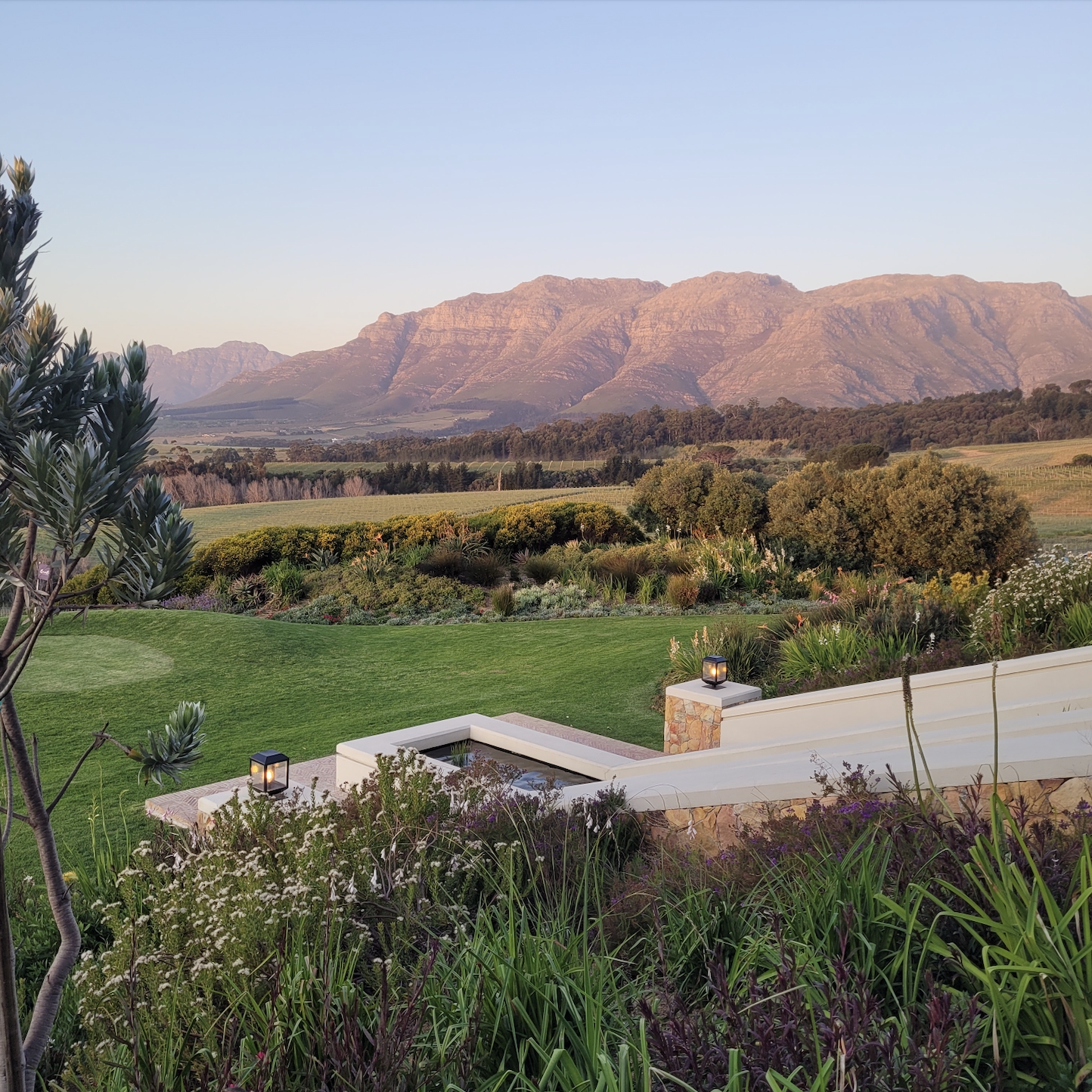
WineAlign

Fifteen ahead of VINTAGES April 15th

Yes we did. Who shucks’em cleaner anywhere close to the headwaters? #nobody @TideandVine

The VINTAGES April 15th release is all about value. I tasted through close to 100 over these past few weeks and wines under $20 are what stood out from the pack. My recommendations include four under $15 and six more under $18. Everything needed to get you through five months of impending warm weather is right here, right now. Enjoy.

Animus 2014, Doc Douro, Portugal (385302, $12.95, WineAlign)

@VFvinhos  @ProfileWineGrp  @winesportugalCA

Boutari Naoussa Xinomavro 2014, Pdo Naoussa, Greece (23218, $13.95, WineAlign)

@boutari  @KolonakiGroup  @DrinkGreekWine

Casal De Ventozela Espadeiro Rosé 2016, Vinho Verde, Portugal (450841, $13.95, WineAlign)

  @vinhosverdes  @winesportugalCA  @LeSommelierWine

Chateau D’aigueville Côte Du Rhône Villages 2015, Ac Rhône, France (479683, $14.95, WineAlign)

  @Eurovintage  @VINSRHONE

Lorca Selección Monastrell 2008, Do Bullas, Spain (380238, $15.95, WineAlign)

@BodegasRosario  @TheCaseForWine  @DOP_Bullas

Heartland Spice Trader Shiraz/Cabernet Sauvignon 2014, Langhorne Creek, South Australia, Australia (429241, $16.95, WineAlign)

From Langhorne Creek and reeking of exoticsim, the aptly-named Spice Trader is a glass of full-bodied shiraz-cabernet sauvignon savour. The seasonings are zesty, spirited, piquant and then finally, settled into a mulled warmth. Red peppercorn, cardamom and allspice bring a Malabar-Zanzibar, dhow-drift sail through the red fleshy fruit. No kernel is left uncracked and the spiked liquere leaves a lingering lift. More Langhorne than cabernet or shiraz but full of flavour. Drink 2017-2018.  Tasted January 2017  @heartlandwines  @TheVine_RobGroh

La Griffe Bernard Chéreau Muscadet Sèvre & Maine 2015, Sur Lie, Ap Loire, France (948182, $16.95, WineAlign)

@HHDImports_Wine  @LoireValleyWine

Alkoomi White Label Semillon/Sauvignon Blanc 2016, Frankland River, Western Australia, Australia (428383, $16.95, WineAlign)

@Alkoomi  @TFBrands

Château La Verrière 2014, Ac Bordeaux Supérieur, Bordeaux, France (349274, $17.95, WineAlign)

@MajesticWineInc  @BordeauxWines

Jaspi Negre 2013, Montsant, Spain (481085, $17.95, WineAlign)

@cocaifito  Grape Brands Fine Wine & Spirits

Tornatore Nerello Mascalese/Nerello Cappuccio 2014, Doc Etna Rosso, Sicily, Italy (487090, $21.95, WineAlign)

Domaine De Riaux Pouilly Fumé 2015, Ac Loire, France (200063, $25.95, WineAlign)

@LoireValleyWine  Old Cellar Collection

Closson Chase Closson Chase Vineyard Pinot Noir 2014, VQA Prince Edward County, Ontario (145888, $29.95, WineAlign)

@ClossonChase

Fontodi Chianti Classico 2013, Docg Tuscany, Italy (933317, $36.95, WineAlign)

    @rogcowines

Muga Prado Enea Gran Reserva 2009, Doca Rioja, Spain (743310, $57.95, WineAlign)

@bodegasmuga  @Vinexxpert  @RiojaWine  @Wines_fromSpain

Good to go!

Godello

Twitter: @mgodello

Instagram: mgodello

WineAlign

Top 10 October 29th VINTAGES wines to drink on Halloween

Smurfette does Halloween

Smurfette does Halloween

At least one of every two or three of you will be donning a costume to make a ghastly appearance at a party tomorrow night. A lack of clothing and some make-up to indicate gashes, scars and likely death will trump Game of Thrones and then again, nothing trumps Trump, does it? Please, no clown masks this year.

Related – Four times ten reasons to drink wine on Halloween

Over the last four Godello years I have offered up 10+10+10+10 reasons to drink wine on Halloween. Do you really need more than 40?

Related – Yet another 10 reasons to pour a glass of wine on Halloween

So today I will spare you the gory detailed bad dad jokes and let you click back in time to quench your humour thirst.

Related – Ten more reasons to pour a glass of wine on Halloween

Still need bad comedy?

Related – Top ten reasons to pour a glass of wine on Halloween

Saturday’s VINTAGES October 29th release features some highly recommended top-end wines. I’ll try to put them up on Godello next week but if you are a WineAlign subscriber you can find them on Michael’s Mix tomorrow. For now you need some affordable juice to offer up to hosts, to fill those travellers and for your glass next to the candy bowl on Monday night. Here they be, your top 10 wines to pour on Halloween.

kir

Kir Yianni Estate White Samaropetra Vineyard 2015, Macedonia, Greece  (464511, $17.95, WineAlign)

This Ktima begs for more than a curiosity and well-beyond a major point of interest. The split between roditis and sauvignon blanc brings two disparate worlds together out of a single (Samaropetra) vineyard. The stark and mineral roditis is lifted by the sweet extract of sauvignon blanc and the union is remarkably seamless. This carries texture and presence. It is very easy to drink. If the acidity were naturally improved upon it would be just perfect. Perhaps a few per cent more roditis and less (Macedonian) sauvignon blanc would do the balancing trick. Drink 2016-2019.  Tasted September 2016  @kiryianni  @KolonakiGroup  @DrinkGreekWine

lornano

Lornano Chianti Classico 2011, Docg Tuscany, Italy (211599, $17.95, WineAlign)

An extra year of aging has softened the one taut 2011 character of Lornano’s straight-shooting Chianti Classico. If it represented good value at this time last year then it is now simply being given away. There are few equals at $18 for honest, pure and modern sangiovese. Nearly 110 years after Lornano was created, Nicolò Pozzoli and Silvio Campatelli have gifted this plum, cedar, leather and dark cherry sangiovese to the Ontario market. With its vibrant acidity intact and the tannins still fighting for shelf space, why even allow this to gather dust. By a case and drink one every two months for the next two years. Drink 2016-2018.  Tasted September 2016  @LornanoWines  @chianticlassico

Niepoort Dão Rótulo Red 2013, Doc Dão, Portugal (452722, $18.95, WineAlign)

“Don’t think me unkind. Words are hard to find.” Straightforward, slightly carbonic, juicy and somehwat, somehow firmly policed Douro blend kickstarted to the Ontario consumer for a three minute pop song. Light in alcohol and solidly set on its feet. “De do do do,” Da dao, dao, dao, “is all I want to say to you.” Drink 2016-2019.  Tasted October 2016  @NiepoortWines  @winesportugalCA

Château Du Bois Chantant Cuvée Laurence H. 2012, Ap Bordeaux Supérieur, Bordeaux, France (421206, $18.95, WineAlign)

Here is a beautufully funky, up tempo, old-school red, tie askew, unshaven, the bad boy in private school. Bordeaux Superieur with an attitude, like a young Peter Townshend, unhearalded but boy can he sing. Fruit really does sing, acids are elastic and prominent, tannins do their thing. This is a very solid, youthful, anxiety-riddled three minute Bordeaux pop song. “Not trying to ’cause a big s-s-sensation,” just one for my generation. Drink 2016-2019.  Tasted September 2016  @ImportWineMAFWM  @MarkAnthonyWine  @BordeauxWines

borsao

Borsao Berola 2012, Do Campo De Borja, Spain (371518, $18.95, WineAlign)

Berola is the old name of the 12th century Cistercian Monasterio de Veruela, home to the offices occupied by the Denominación de Origen. Borsao’s choice of nomenclature is perfectly ironic. Berola is beautifully pure and juicy (80 per cent) garnacha from Campo de Borja. Syrah (20 per cent) plays a prominent and effective role, in partcular on the palate. Campo de Borja as an appellation just seems destined to be the next big syrah thing south of the Pyrennes despite garnacha’s endemic, planted and attentive dominance. Alluvial geology and a cool, arid climate suits the ex-pat variety. This is all about fruit, with some elevation addendum, mineral meets prevailing wind affectation and big bones. Tannin and alcohol are a factor, the latter much more so but where else are warmth and boozy liqueur handled with such ataraxy and ease? Balanced and ethereal combine for stupid value. Drink 2016-2020.  Tasted twice, September and October 2016  @BorsaoBodegas  @ChartonHobbs

fiano

Mastroberardino Fiano Di Avellino 2014, Campania, Italy (323998, $19.95, WineAlign)

Cracking vintage for what is consistently weighty and viscous Fiano with Chablis-like minerality to offset the near-honeyed aromatics and flavours. This is quite the romantic one from Campania, with a hint of Champagne lees, spice and texture minus the mousse. The requiem here is shellfish in a rich broth, either heavily scented or thickened by potato, or even an Italian tipo di minestra like Vichyssoise would be ideal. Drink 2016-2019.  Tasted September 2016  @Mastroberardino  @ProfileWineGrp

creekside

Creekside Iconoclast Syrah 2013, VQA St. David’s Bench, Niagara On The Lake, Ontario (471797, $22.95, WineAlign)

Iconoclast may sit in the Creekside nether syrah bailiwick but it smartly connects the entry-level with the BrokenPress by way of the St. David’s Bench. Freshness out of the purview 2013 growing season and minor keys played by wood are quiet as compared to the many shakes of the syrah peppermill. This is meaty syrah, like a slice of rootsy, gutsy and gritty Americana humble and independent pie. No one else in Ontario brings flowers, front porches, traditional riffs and smart, modern styling to syrah with such consistency. From winemaker Rob Power, singer, songwriter, renaissance man and all-around winemaking bon syrah vivant. Drink 2017-2022.  Tasted September 2016  @CreeksideWine  @hobbsandco  @AMH_hobbsandco

Château Teyssier 2012, Ac Montagne Saint-Émilion, Bordeaux, France (226035, $24.95, WineAlign)

This is well-judged right bank Bordeaux with a hint of beneficial volatility and a life-affirming note of bitter tonic. Though taut and for a moment bracing, the fruit is lifted to handle the truth. Espresso dusts the finish post-haste but long after the party ahd been raging on. Temper and then tempered from a satellite appellation with a well-deserved righteous reputation. Drink 2017-2020.  Tasted September 2016  @JCPMaltus  @Dandurandwines  @BordeauxWines

roger

Jean Max Roger Cuvée Les Caillottes Sancerre 2015, Ac Loire, France (65573, $26.95, WineAlign)

One of the youngest, freshest and early to market Sancerre from Roger with striking stark reality right there at the forefront. From Caillottes soils out of Saint Martin, L’Epée and other vineyards located in the communes of Bué and Amigny. It is the blanket coverage of young (six or seven years) to near (40 year)-old vines that allows for a variegated expression and great value-driven Sancerre. The vintage is all about fruit and this one has it oozing in and out of every pore. It is the simplest Sancerre, partly vintage driven and partly due to its youth but I can’t really see much developing into the tertiary stage. Enjoy in the short term. Drink 2016-2019.  Tasted October 2016  @oenophilia1  @LoireValleyWine

baroja

Heredad De Baroja Gran Reserva 2002, Doca Rioja, Spain (276113, $29.95, WineAlign)

Don’t adjust your set. This label does indeed read 2002. There have been times when a vintage like 2001 has passed through VINTAGES and the integrity of the (100 per cent) age of the juice is called into question. Not only because of hue but also frehsness. There is no mistaking the age of this Rioja. The fruit has advanced into deeply evolved territory with shades of dried floral and sun-ripened leather. Such a liqueur can only be distilled from older Spain or Italy and this Baroja has it down. The acidity remains intact even as the tannin has fallen away. In the end the wine lingers and does nothing to indicate falling apart. This is a lovely old drop that will drink well for up to four more years so scoop some up. It won’t blow your mind but $30 is a pittance to pay for someone else doing all the cellaring work. Drink 2016-2019.  Tasted October 2016    @HHDImports_Wine

Good to go!

Twitter: @mgodello

Instagram: mgodello

WineAlign

Reading of the last whites (and reds)

It were so simple #caprese

It were so simple #caprese

It’s that time of summer when transitions begin to set in, in paradoxical slow surges and breezes, sonic wallows and fond, rueful, ironic gaps. It also brings the unofficial last one of the season (gasp), the upcoming VINTAGES August 20th release. The limits of probability, possibility and potentiality are great, delineated and distilled to 17 wines tasted, reviewed and laid out right here.

Calamus Steely Chardonnay 2013, VQA Niagara Peninsula, Ontario (210062, $14.95, WineAlign)

The barrel need not be employed to gain success for chardonnay from the excellent Niagara 2013 vintage. Calamus has done right by the no-wood approach, allowing the slow-ripened fruit to shine solo and brightly. Steely chardonnay for steamy days. Drink 2016-2017.  Tasted August 2016  @calamuswinery

Val De Vid Verdejo 2015, Do Rueda, Spain (452086, $14.95, WineAlign)

Quite a racy Rueda with lemon and lime juiced and cooling the warm stone aspect. Were the acidity a touch more in tune this would really plug in the senses. But it is delicious and worthy of some seafood tapas. Drink 2016-2018.  Tasted August 2016  @DORueda  @rogcowines

Schloss

Schloss Schönborn Riesling 2011, Qualitätswein, Rheingau, Germany (653535, $16.95, WineAlign)

Schloss Schönborn’s basic, entry-level, come and get it Qualitätswein is seemingly riesling from out of a designate void and no strings attached. It’s actually highly specified riesling but without label verbiage and from a most excellent vintage. The oscillation runs the gamut from propellant to scintillant, with pumped in air and rising cool temperature behaviour. There is a balanced, posit tug between acidity and sweetness, over the line and back again. The cumulative flavours recall long lasting pastilles, of gin, tonic and agave. Drink 2017-2025.  Tasted August 2016     

Contini Pariglia Vermentino Di Sardegna 2014, Doc Sardinia, Italy (455238, $18.95, WineAlign)

Stoic and aerified vermentino emanating like semillon or riesling, with a vapour trail and simply terrific mineral feel. You might imagine riesling from calcareous soils or semillon off of dry, arid plains, but this vermentino is striking on its own accord and illuminates as a developing experiment. The next big thing perhaps for geeks and mineral freaks in search of a profound, axiomatic, aromatic experience? More than perhaps and Sardegna beckons. Terrific tonic and beneficial bitters mark the rather lengthy finish. Drink 2016-2020.  Tasted August 2016  @WineOfSardinia  @vinosardegna

Nova

Quinta Nova De Nossa Senhora Do Carmo Colheita Tinto 2011, Doc Douro, Portugal (452748, $19.95, WineAlign)

A blend of four endemic varieties, two from touriga and two by tinto. The label tells us it’s “unoaked.” Brilliant. Such knowledge is power and usually an exclusive bit reserved for whites, especially chardonnay. Why not tell us your red wine spent no time in barrel? This is nothing short of awesome for the consumer. And so we have pure fruit, excellent extraction, very little in the way of masking or shrouding (if any) and a simple, unadulterated experience. Terrific summer red when procured with a chill that will serve and protect your palate and your will. At five years of age it has held up beautifully, a testament to hands off and trustworthy winemaking. Drink 2016-2018.  Tasted August 2016  @LeSommelierWine  @winesportugalCA

Lighthall

Lighthall Progression Sparkling 2014, Ontario (468090, $20.00, WineAlign)

Charmat or otherwise, grapes grown on Lighthall’s beautifully stark, wind-swept and electrifying property destined for sparkling wine does so with profound meaning. This is lit with the finest Ontario spark of vidal, also known as “Ward 5 Brut.” Unparalleled in its treatment to effect continuum, Progression is possessive of real intent and fine-grained precision. It’s simply meant to be. Their are notes of green apple and grapefruit, sweetness from extract, wild and wooly texture. This and fresh summer basil pesto would work every time. Just imagine the possibilities when Glenn Symons adds further lees and traditional method applications to his sparkling fruit. Just you wait and see what it does to elevate the category in Ontario. Drink 2016-2019.  Tasted July 2016  @lighthallvyard

Thörle Feinherb Riesling 2015, Qualitätswein, Rheinhessen, Germany (420091, $20.95, WineAlign)

Tart, waxy, off-dry, herbal and very sapid. Tremendous appeal on the scales of sweet, sour and racy. Great acidity and a fine pesto of herbs. Balance is spot on. Really well made. Drink 2016-2021.  Tasted August 2016  @thoerle  @UNIVINS  

Campo

Campopazzo Chianti Classico 2012, Docg Tuscany, Italy (454512, $20.95, WineAlign)

From Radda in Chianti on the Monterinaldi Estate, here the prevalent liqueur of intuitive and naturally occurring sangiovese wafts like ripe, red fruit warming in compote with wildflower honey. While this may seem a touch raisined (and even slightly volatile) it is in fact both those things. But it’s beautifully bitter and richly old-school. A certain kind of CC and a style that is slowly dying out but there is something to be said in support of drying sangiovese fruit once steeped and macerated in its own narcissistic liqueur. I for one am happy to spend time with this and like my grandfather, would know to miss him when he’s gone. His old and drying tannins really grow on you. Great deal in old-school Chianti Classico. Drink 2017-2021.  Tasted August 2016  @monterinaldi  @chianticlassico

Brocard

Jean Marc Brocard Domaine Sainte Claire Chablis 2014, Ac Burgundy, France (356634, $23.95, WineAlign)

In a year for acidity and total, utter freshness the Saint Claire rushes and wells with excitement. Beautifully green apple tart and crunchy. The saline temperature is measured in an ooze running through and with the lees. Cracker vintage keeps the deep salinity intense, vital, searing and so naked to the world. Pure Chablis with length that stretches away from richness and into a lean lingering. Drink 2016-2019.  Tasted twice, July 2016  @chablisbrocard  @BIVBChablis  @purechablis

Montagny

André Goichot Les Guignottes Montagny 2014, Ac Burgundy, France (455139, $26.95, WineAlign)

As in the case of Chablis, 2014 is a stellar vintage from the ever-increasingly excellent Côte Chalonnaise subregion from which chardonnay fervently shines. André Goichot’s fruit is rich, ripe and beautifully pressed, expressed and plays with the determination of the mineral obsessed. Oh the vitality and the range this displays, with balance and exceptional layering. Breath is actually taken slightly away on the acidity’s back side and the airy, elemental finish. Simply wow Montagny. Drink 2016-2022. Tasted August 2016  @vinsdebourgogne  @BourgogneWines

Dutschke Jackson Cabernet/Shiraz 2012, Lyndoch, Barossa Valley, South Australia, Australia (447037, $27.95, WineAlign)

This marriage of shiraz (60 per cent) and cabernet sauvignon is a deep well filled to overflowing with Barossa berry and Lyndoch savour. The smell of ripening pomegranate and red berry is in the air but the blend is grounded by a lactic-limestone like liquid chalkiness. This is seamless stuff, pretty and modern but also following down a very direct line. The dualistic varietal speak is a thing of seamless, duet, two-part harmony. Will pair and compliment anything you throw at it over the following five years. Drink 2016-2021.  Tasted August 2016  @DutschkeWines  @Wine_Australia  @TFBrands

Closson

Closson Chase Vineyard Chardonnay 2014, VQA Prince Edward County, Ontario (148866, $29.00, WineAlign)

Keith Tyers’ follow-up to the tour de force that was the hypnotizing 2013 is a step forward in the vineyard’s progression out of a vintage that takes a step back from buttressed substance. Taking into account that 2014 was cooler than the year before, the barrel swaddle needed to also scale back, but just a bit. This CCV chardonnay takes a clean and lean precise line, drawing up PEC mineral with mining acumen and wrapping perfectly phenolic ripe fruit coiled like gelid citrus around a gemstone wire popsicle stick. The palate does provide an orchard meets stone fruit creamy respite from the rocks of entry and exit but it is the mineral County notes that make the biggest impression. Terrific balance is struck, on flint and over the course of so many levels. Leave this a year to stretch and flex while you enjoy every waking moment with the ’13. Drink 2017-2023.  Tasted May 2016  @ClossonChase

Mazzei

Mazzei Fonterutoli Chianti Classico 2013, Docg Tuscany, Italy (977629, $29.95, WineAlign)

Fonterutoli’s “second wine” pays exceptional attention to fruit quality, drawing from five different limestone sites and bringing them all together with balance. The minor tonic is an asset to the major fruit and a tie of acidity. Classic Castellina in Chianti richness and sun-driven excellence. Few CC’s are as firm and structured within the arena of such exceptional fruit. This is so modern and bright you might have to wear shades but the stylistic is achieved with grace, class and culture. Never forget where you are from. Mazzei. Fonterutoli. Castellina. Chianti Classico. Drink 2018-2024.  Tasted August 2016  @MarchesiMazzei  @chianticlassico  @ProfileWineGrp

Collett

Jean Collet & Fils Montée De Tonnerre Chablis 1er Cru 2014, Ac Burgundy, France (405720, $37.95, WineAlign)

Just amazing pitch and imploding vitality from a climat that demands traditional winemaking (in 100 per cent old wood) so as not to detract from a classic flinty, steely Chablis direction. No bells and whistles, just rocks and stones and straight ahead chardonnay. Takes what the vintage gives and tackles the rest. Drink 2018-2024.  Tasted August 2016  @BIVBChablis  @purechablis

Losi

Losi Millennium Gran Selezione Chianti Classico 2010, Docg Tuscany (459735, $38.95, WineAlign)

Every great wine dissolves a genre or creates a new one and in the context of Gran Selezione, Pietro Losi and Giorgio Baldi’s Millenium 2010 concludes the latter. In a category where so much changes and yet nothing at all, the choice to pick individual plants, specific vines and particular bunches of grapes as destined for a vision of greatness defines the ideal that wine is indeed made in the vineyard. This Chianti Classico Riserva sees 36 months in 10hL barrels and it is a wine that has essentially been made since since 1997. It went to market again in 1999 and then it was 2000 that prescribed the Millenium, followed by 2001, 2003, 2005, 2007 and 2009. Subsequent top quality vintages are 2011, 2012 and 2015. The selected vines and particular bunches produce on average and approximately 4800 bottles. Take note of the most perfume and yet not the most savour, forest or truffle but there are hints, with some fennochio and the most grip to lead a sangiovese (with five per cent each canaiolo and malvasia nera) structure. The finest tannic grain runs through, lifted by tang meets sour over tart so round and specific to Gran Selezione. This wine is a highly accomplished specimen and a portal in ode to a great grandfather who started his day with wine and cheese, for energy. He imbibed for everyday consumption, just as water would nourish as it should be with this wine for food and contemplation. A wine with a finish minutes long. Drink 2018-2028.  Tasted May 2016  @Valerialosi  @chianticlassico

Humility only exceeded by impossibility @normhardie #pec #countyinthecity Pinot Noir 2014

Humility only exceeded by impossibility @normhardie #pec #countyinthecity Pinot Noir 2014

Norman Hardie County Unfiltered Pinot Noir 2014, VQA Prince Edward County, Ontario (125310, $45.20, WineAlign)

A second taste four months later confirms the impossibility from Hardie in 2014, a vintage that just begs for Norm’s magic handling, from exemplary, slow-developed fruit off of a vintage’s hyperbole of low-yielding vines. The low alcohol continuum persists, the freshness and richness of County berries magnifies and the development of flavour is beyond and above. The tart is a membrane and the sweetness a virtue, feigned and delicate. Tremendous work made easy by Norm and a pinot noir that will live longer than any he has produced before. Drink 2017-2027.  Tasted August 2016.

In Prince Edward County and for Pinot Noir there is no substitute and no comparison. Quixotically sweet Pinot Noir fruit, from the lowest of the low yields, scrupulously heeded and handled with care and yet also, somehow without a care to the world. As self-effacingly pretty and impossible as ever though in 2014 the tensity is lower, the anxiety bereft and not so crucially or dearly developed. There is almost no crisis from out of this first of the near-crisis vintages. This is an early to love Norm Pinot Noir, brought to life and with red citrus that only a Hardie low alcohol Pinot can bring. Humility only exceeded by impossibility. Ready to enjoy younger than most.  Tasted April 2016  @normhardie

Drouhin


Domaine Drouhin Pinot Noir 2013, Dundee Hills, Oregon (961284, $52.95, WineAlign)

Beautifully firm Dundee Hills pinot noir requesting some patience before it will submit and offer near instant gratification. The fruit is wonderfully, naturally sweet with an underlying saline current and so much ripe yet tart currant fruit. This gift wraps French Beaune soul and Oregon soil in one exemplary pinot noir package. Will develop righteously for up to ten years. A stroke of balanced genius from winemaker Arron Bell. Drink 2018-2023.  Tasted August 2016  @DrouhinOregon  @FWMCan

Good to go!

Twitter: @mgodello

Instagram: mgodello
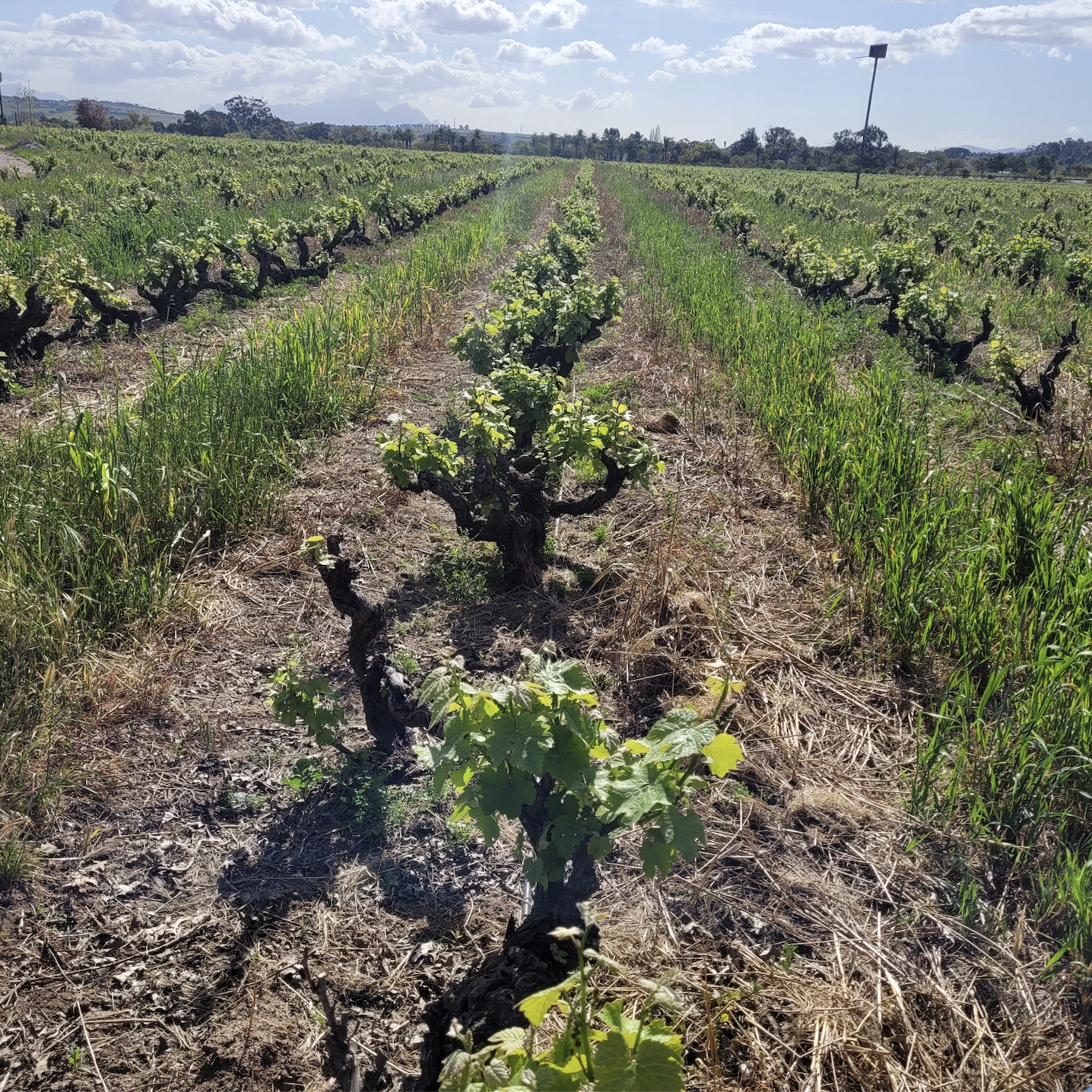
WineAlign

All in the Primum Familiae Vini

Primum Familiae Vini tasting at Toronto's Four Seasons Hotel, April 23rd, 2015

Primum Familiae Vini tasting at Toronto’s Four Seasons Hotel, April 23rd, 2015

Can there be a more visceral wine experience than tasting some of the world’s greatest wine estates and all the while their principals just seem to only talk about history and family? Makes me think about parents, grandparents and children. About accomplishments, passing torches and smelling roses. Or something like that.

Perhaps it was the news of Etienne Hugel’s passing that was the impetus for me to relive this day, where giants gathered and mere mortals did their best to take in the magnitude of such a coterie of distinction. That afternoon gifted me and others their five minutes with Mr. Hugel, the epitome of Alsatian, a tireless ambassador for the Hugel brand, Alsace wines and the Primum Familiae Vini congregation of producers. Or maybe it was just the right time, a crossroads one year later where the confluence of circumstance and thought conjoined to let the notes come out.

Primum Fam

Tastes of PFV

As a stark contrast to the increasingly agitating globalization of wine, the Primum Familiae Vini members stand out as leading wine families whose aim it is “to defend and promote the traditions and values of family owned wine companies, and ensure that such ideals survive and prosper for future generations.” The PFV is an international association of some of the world’s finest wine producing families from France, Germany, Italy, Portugal and Spain. Created in 1992, membership into the organization is by invitation only, with a maximum of 12 highly respected families contributing generations of expertise.
PFV

PFV

The PFV estate principals arrived in Toronto for an April 23rd, 2015 Press Lunch at the Four Seasons Hotel organized by wine ambassador Christophe Brunet. On hand were Hubert De Billy, Etienne Hugel, Laurent Drouhin, Egon Müller, Miguel Torres, Priscilla Incise della Rocchetta, Thomas Perrin, Allegra Antinori, Julien Beaumarchais de Rothschild, Pablo Alvarez and Rupert Symington. Each arrived to represent eleven of the world’s leading families that at the time of the tasting, made up the association: Marchesi Antinori, Château Mouton Rothschild, Joseph Drouhin, Egon Müller Scharzhof, Hugel & Fils, Champagne Pol Roger, Famille Perrin, Symington Family Estates, Tenuta San Guido, Miguel Torres and Vega Sicilia. Each family owns vineyard estates, is one of its country’s most prestigious producers, and enjoys an international reputation for its wines. Each year in turn, a member of the association is elected President. The 2014/2015 President was Alessia Antinori, while in 2015/2016 she was succeeded by Miguel Torres.

PFV wines

PFV wines

Primum Familiae Vini supports charitable causes, hosting gala dinners to raise funds for a local charity by auctioning a PFV Collection Case. The beneficiaries have primarily been focused on helping disadvantaged children, the handicapped and specialist hospitals including. Some of these beneficiaries have been Childhood Brazil, Brasil, San Patrignano Charity, Italy, Grapes for Humanity, USA, Somdetya Charity Fund, Thailand, Kidney Dialysis Foundation (KDF), Singapore, The Public Welfare of Bunkyo Ward, Tokyo and the The Toronto Foundation for Student Success. In total, over $325K has been raised.

Pablo Alvarez, Vega Sicilia with Godello and Larent Drouhin, Maison Joseph Drouhin

Pablo Alvarez, Vega-Sicilia with Godello and Larent Drouhin, Maison Joseph Drouin

As you well know it’s all about the wine and the tasting note for Godello. The art of composing snapshots of wines tasted is a cathartic experience and the only way to bring about closure. It is a necessary process, cannot and will not be abandoned. The scores attached can stay put or go away. Neither relevant nor essential, scores are merely road signs on the exegetical path through wine. Once you pass them by their use is no longer needed.

My notes for the wines tasted are long and prosaic, even longer than most that I write, which says something about the profundity of such a tasting. That it took me the better part of a year to finalize my thoughts is not surprising. Until now I found no way to serve proper justice to these wines.

Primum Familiae Vinum

Primum Familiae Vini

Famille Hugel Riesling Jubilee 2010, Aoc Alsace, France (731448, $55.00, WineAlign)

The Jubilee’s style mirrors a reflection, of name, its maker and in the ripples it will gently spread as it progresses through time. Riesling that will eventuate to luxe, calme et volupté, like coming home after 50 years, resolved of sin, “in this year of jubilee each of you shall return to his property.” Hugel’s Jubilee is sourced from family-owned vines on the steep slopes of the Grand Cru Schoenenbourg above the village of Riquewihr. Terroir of great variegation; Keuper, marl, dolomite and gypsum, quaternary siliceous gravel, Vosges sandstone, Muschelkalk and periphery Lias marl limestones. The vintage is special, with no allowance for yields to climb and rife with sought after Riesling attributes. That of tannic intent, coursing coarseness of mineral condensation and repossessing acidity wrapped up in an enigma. Going forward it will gently give back but also remain rigid, slightly hidden, at times dormant, until such time when paraffin and honey take over. One of the finer Riesling cuvées of Alsace. Drink 2018-2022.  Tasted April 2015  @FamilleHugel  @HalpernWine  @AlsaceWines  @VinsAlsace  @drinkAlsace

Super #champagne overture. I will always surrender. @Pol_Roger #sirwinstonchurchill 2002 #primumfamiliaevini

Super #champagne overture. I will always surrender. @Pol_Roger #sirwinstonchurchill 2002 #primumfamiliaevini

Pol Roger Cuvée Sir Winston Churchill Vintage Brut Champagne 2002, Champagne, France (SAQ, 12027016, $247.25,  WineAlign)

From one of the great Champagne vintages of the last 20 years, the 2002 ode to the British Bulldog is full of French vigor and supernatant rationalism. In 2015 its hue is golden gingered and the fine mousse causes sensory skips in the heart’s beats. These bubbles pay attention and tease the most sensitive olfactory nerve endings. The brioche baking and crumbs toasting are still just mere twinkles in the aromatic eye. The year 1996 is on many tasters’ minds and this wine has no qualms telling a direct lineage tale. Can there be more proof than what is spoken in the structure of this young wine? The bitters are forged from compression, without weight and void of oppression. A pleasure to taste, this Champagne is a deactivated refugee from an ancient European dominion. It’s hard to imagine it ever being anything but elegant and cool. Drink 2016-2027.  Tasted April 2015  @Pol_Roger  @Champagne  @HalpernWine

Scallop, kumquat, baby leek, caviar #fourseasonstoronto #julienlaffargue #primumfamiliaevini with #drouhin #chablis grand cru les clos 2012 and #egonmuller #riesling #scharzhofberger kabinett 1994

Scallop, kumquat, baby leek, caviar #fourseasonstoronto #julienlaffargue #primumfamiliaevini with #drouhin #chablis grand cru les clos 2012 and #egonmuller #riesling #scharzhofberger kabinett 1994

Drouhin Chablis Grand Cru Les Clos 2012

Joseph Drouhin Chablis Grand Cru Les Clos 2012

Joseph Drouhin Chablis Grand Cru Les Clos 2012, Burgundy, France (SAQ, 10998708, $88.00, WineAlign)

Drouhin’s Les Clos is Chablis incarnate. It delivers the importance of form and structure, with the incantatory power of storytelling to foresee the eventuality of its Moirai. It possesses the staying power to reveal the truth and reward with the fullness of gratification. Imagine pears, some dried and some fresh, pulverized and turned into gold stone. That is Les Clos. Barrels used are one to four years old and since 2004 there is no stirring of the lees. This determination arranges to opt for longevity of structure over immediacy in elegance. The enclosure is lacy organza, the interior filled with ripe fruit. Time (60 minutes) induces a mine of mineral wealth emergence, of shifting plates and rising outcrops from the quarry underfoot. Patience is required to bring all the moving parts in line. Drink 2017-2027.  Tasted April 2015  @JDrouhin   @BIVBChablis @BourgogneWines  @FWMCan  @Dandurandwines

Keep the car running. Magic 1994 #riesling from #egonmuller #primumfamiliaevini #scharzhofberger #rieslingkabinett

Keep the car running. Magic 1994 #riesling from #egonmuller #primumfamiliaevini #scharzhofberger #rieslingkabinett

Egon Müller Scharzhofberger Kabinett Riesling 1994, Mosel, Germany (SAQ, 12587945, $79.75, WineAlign)

It must first be said that after 90 minutes in the glass the orange blossoms open in the early morning to release their spring fragrance into the room. In a conference room at Toronto’s Four Seasons Hotel. Now I don’t really know if the Scharzhofberg vineyard was actually planted by the Romans or if it was occupied by eighth century Trier St Marien ad Martyres monks. If following the French Revolution it was in the possession of the Duchy of Luxembourg I couldn’t say. I can equivocate, with irrefutable conviction that tasting Egon Müller’s 1994 twenty one years after its release confirms the vineyard’s reputation for housing irreverent Riesling. The arcade fire of remarkable hue, life-affirming aromatic energy and sky-lift brilliance is palpable. At 20 plus years the ideology, eventuality and passionate progression of purely distilled Mosel fruit is realized. Currently suspended in jet-trail animation, the sugars over gas of this Kabinett are quantitatively resilient. The relationship has seen a symbiotic feeding for longevity. Riesling of stoicism, classic prevalence and perfect balance. The specific Scharzhofberg tang has been revised to elevate a new order derivative recorded in every pure note. “There’s a weight that’s pressing down, late at night you can hear the sound.” Time held will move forward ever so slowly. Keep the car running. Drink 2015-2034.  Tasted April 2015    @germanwineca

Miguel Torres Mas La Plana 2010

Miguel Torres Mas La Plana 2010

Miguel Torres Mas La Plana Cabernet Sauvignon 2010, Penedès, Spain (129676, $59.00, WineAlign)

The Torres Mas La Plana explains to the world why Penedès is one of the most important Cabernet Sauvignon outposts on the planet. In deference to its moniker, flat is not the operative word. With such lifted exuberance, richness and depth of fruit, it must be dared said that Bordeaux wisdom speaks from its Spanish roots. If Mas La Plana can always be good, this vintage is great. The layering of wood over Penedès soil gives it spice and subterranean pungency; cinnamon, clove, truffle and morel. This wine is now an internationally-styled giant, an expatriate made French wine with Spanish flair. Layered, structured and so much special fruit. All about the fruit. Drink 2016-2023.  Tasted April 2015  @TorresWines  @dopenedes

The reds of lunch. #vegasicilia #moutonrothschild #sassicaia #solaia #chateaudebeaucastel #maslaplana #primumfamiliaevini

The reds of lunch. #vegasicilia #moutonrothschild #sassicaia #solaia #chateaudebeaucastel #maslaplana #primumfamiliaevini

Château De Beaucastel Châteauneuf Du Pape 2005

Château De Beaucastel Châteauneuf Du Pape 2005

Château De Beaucastel Châteauneuf Du Pape 2005, Rhône, France (711317, $89.95, WineAlign)

Expectations are high for 2005 and the opening notes of warmth, amenity and avail confirm the dream. Soon thereafter the Beaucastel plays hard to get, walks away and closes down. At this 10 year juncture its evolution is only matched by its elegance, especially considering the initial arterial ardor in mimic of the vintage. Resurfacing to conjure up character in aromatics, mint, eucalyptus, garrigue, coal and tar evince this pure Châteauneuf Du Pape. A wine of global receptiveness, the 2005 rendition tames the conception. There is very little about its personality that is parochial but rather it represents what it means to be a star, everywhere, omnipresent, for everyone. After 60 minutes it actually closes down again. This will be one of the longest lived Beaucastels. Drink 2017-2045.  Tasted April 2015  @Beaucastel  @RhoneWine  @VINSRHONE  @ChartonHobbs

Antinori Solaia 2007

Antinori Solaia 2007

Antinori Solaia 2007, Igt Toscana, Italy (987586, $249.95, WineAlign)

Tasting the 2007 Solaia feels like looking directly skyward into the high noon sun with a semi-peeled orange in one hand, juices dripping, zest split and fragrant. Flowers bloom all around, cypress trees stand as sentries, sentient and giving off a savoury musk. The rosemary joins in, as do the lavender and the fennochio, because there is a breeze. Then there is only the pitchy darkness, the iron and the animale. This Solaia exudes sunshine, creme caramel and maturity. As per the style, especially in warmer vintages, Solaia always speaks of early evolved character though you know it will last for a very long time. This I have come to know, expect and believe. Drink 2015-2022.  Tasted April 2015  @AntinoriFamily  @HalpernWine

Braised Bison Shortrib, spring carrot, pommes dauphines @FSToronto #solaia 2007 #moutonrothschild 2005 #vegasiciliaunico 2004 #primumfamiliaevini #julienlaffargue #fourseasonstoronto

Braised Bison Shortrib, spring carrot, pommes dauphines @FSToronto #solaia 2007 #moutonrothschild 2005 #vegasiciliaunico 2004 #primumfamiliaevini #julienlaffargue #fourseasonstoronto

Sassicaia 2009, Doc Bolgheri Sassicaia, Tuscany, Italy (480533, $199.95, WineAlign)

Now increasingly accessible, the ripe and ferric Sassicaia ’09 continues to roar but the gamy musk of the wild beast is on the subside. The tannins have begun to relent and yet no holes, empty spaces or time-outs are to be found. With 60 minutes of air time the fruit speaks of plum hyperbole and dried flowers fill the air. Ten more years lay comfortably ahead. Drink 2015-2025. Last tasted April 2015     @Smarent

Sassicaia 2009

Sassicaia 2009

From my earlier note of November 2012:
The raven brunette is anything but sappy or syrupy yet is impossibly viscous. Hints at ripe berries growing in the crags of maritime gravel and the most expected hits of sanguine, animal musk. A huge wine in the making, the adolescent hunter Sassicaia off-roads up a steep incline to go tell it on the mountain of tannin. Disappears into parts unknown and will only reappear as a mature adult. Look to 2025 and it may say “the perspective to say the very least, changes only with the journey.”

No cartoon. The real deal. Gehry lines. #chateaumoutonrothschild 2005 @PFvini #firstgrowth #paulliac #bordeaux #onceinalifetime #primumfamiliaevini

No cartoon. The real deal. Gehry lines. #chateaumoutonrothschild 2005 @PFvini #firstgrowth #paulliac #bordeaux #onceinalifetime #primumfamiliaevini

Château Mouton Rothschild 2005, Ac Pauillac, Bordeaux, France (SAQ 10654286, $965.00, BCLBDB, 649582, $1895.00, WineAlign)

Where to begin? That Cabernet Sauvignon can so facilely lay down the law, with deputy Merlot and deputized Cabernet Franc in support, that it can syncopate and elucidate the infinite, of soil information into warmth and depth, that is does so in such a wondrous way, well, that is the crux. Mouton of incredulous form, of a liqueur that is wholly unique, even to Bordeaux. An intoxicant and yes, funky, a distilled terroir, compressed, eschewing the fractional and essaying to integration. Reduced, layered and yet bereft of cheese, cloy or cake. Healthy as a community of organisms can be, wealthy in its archetypal discretion and drawn of an architectural line to ritualize structure. Precise, innate, insistent and balanced. The cleanest, purest and ripest fruit from 10 years ago had always and continues to cut an exegetical rug on one of the greatest dance floors of wine. An age exemplary Mouton in requiem of Italian sculptor Giuseppe Penone’s label design. After 60 minutes it neither closes nor shrinks away. Open for business. Drink 2015-2045.  Tasted April 2015  

Vega-Sicilia Único 2004

Vega-Sicilia Único 2004

Vega-Sicilia Único 2004, Ribera Del Duero, Spain (702852, $475.00, WineAlign)

In a room full of Primum Familiae Vini no iconic red stands out with more singular parlous deference than the 2004 Unico. Sitting next to Pablo Alvarez and seeing his immediate reaction speaks volumes about its place in time and how it is showing. Alvarez does not smile so much as he simply acknowledges the work put in. Unico is correct and it is priceless. Is Alvarez making a comparison in his mind? Is he thinking 1970 or perhaps 1994? It does not matter because this blend of Tempranillo (87 per cent) and Cabernet Sauvignon (13) obviates derivative characteristics and so exhibits a kind of synoptic insatiability. Its persona is simply me, myself and I. The liqueur is not Bordeaux or IGT. The aromatics are exotic to the nth degree. The succulence and sucking inward grape tension is old and wise but the wine has 30-40 years of undetected evolution ahead. There is no need for a longevity prayer, just let it be. My ears hear “mais qu’est-ce que c’est bon!” perhaps from Alvarez, or maybe it came from Laurent Drouin to my left. The youthful Unico is like Les Enfantastiques, it has the “no se que” and we can call it terroir, from place, soil, climat and culture. Something that advances this early and yet has gone nowhere should be impossible. The precocious wisdom is beyond years, has reached a point at 10 that is palpable and yet so far from what it may become. It should be left alone for five more to find out. Drink 2020-2055.  Tasted April 2015  @Tvegasicilia  @DORibera

1977 @grahams_port...Oh to live to 111 and re-taste in 2077. @PFvini #symington #symingtonfamilyestates #rupertsymington #port #vintageport #primumfamiliaevini

1977 @grahams_port…Oh to live to 111 and re-taste in 2077. @PFvini #symington #symingtonfamilyestates #rupertsymington #port #vintageport #primumfamiliaevini

Graham’s Vintage Port 1977, Douro, Portugal (706663, $109.00, WineAlign)

The year 1977 was a huge one for the Douro and this Peter Symington vintage interpretation echoes the overemotionalism. The pitchy rim seems to be writhing, the aromatics roiling and my first thought is one of a houseguest that wishes he could escape an over vivid host. Vegetative freshness calms the savage beast; bouquet garni, garrigue and savoury herbiage from high yielding fruit. If cherries were roses and vice versa, they too would deter and distract. This VP has presence and distinction. It changes tempo, wades in the waters of age and treads with minimum effort. The toasted nut component is subtle, more than many and certainly in comparison to the modern era of Graham’s and others. The dry florals whiff as if the petals never dropped or ever will. The perfume drives upwards, to the ethereal. Nice little piece of Vintage Port history. Drink 2015-2022.  Tasted April 2015  @grahams_port  @winesportugalCA

Good to go!

Twitter: @mgodello

Instagram: mgodello

WineAlign: Michael Godel

Facebook

Wines of South Africa: It’s the fling itself

High five Sunday, at #winecarboot with @PIWOSA @WOSA_ZA @WOSACanada #journeysendvineyards #schapenberghills #sirlowryspass

High five Sunday, at #winecarboot with @PIWOSA @WOSA_ZA @WOSACanada #journeysendvineyards #schapenberghills #sirlowryspass

A few weeks ago there was this South African fling in Toronto. Anyone who fancies themselves as anything showed, because everybody was there. Joshua Corea and Archive Wine Bar graciously played host. Cape wine swelled like water and the mass of sommelier humanity flowed like wine.

After we had first returned to Canada from Cape Wine 2015, Will Predhomme and Wines of South Africa Canada’s Laurel Keenan had asked Rémy Charest, Scott Zebarth, Nicholas Pearce and I a question in requiem of some deep Jack Handey thought. Of the bottles we tasted in South Africa, what would we most like to see at a paradigmatic tasting back home? We offered up our lists and many of them were presented at Archive, along with a tumultuous quantity more. The likes of such an amassment had never been seen this side of the great pond. Cape Town loomed in de Chirico casted shadow in the backwater distance, watching, wondering, judging. So I tossed a pondered abstraction out to the winds that drift in the South African wine diaspora. “What page is loomed in the giver?”

Related – Once upon a time in the Western Cape

My mind travels back to the Western Cape. The retrospection remembers wines yet brought to North American light, to intrepid voyages still to disgorge and to stories ultimately untold. Looking back it occurs to me, from a northern point of view, having witnessed and experienced an immersion and exposure into the culture and wines of South African life, that it is not the thing you fling. It’s the fling itself.

It began with the trebuchet. At Journey’s End the Premium Independent Wineries of South Africa (PIWOSA) threw a car boot and catapulted some rather heavy objects at targets far away.

The prepossession laid out with tastes of The Drift Farm, The Winery of Good Hope, Glenelly Cellars and Mullineux & Leeu. Later the night begged and belonged to vignerons gathered at Longridge Estate, the following morning a tour of the Franschhoek Motor Museum and a tasting at Anthonij Rupert Estate.

Each of the three days at Cape Wine begat evenings in Cape Town of world’s away preoccupation. Velvet dissident South African Braai at Publik, her majesty’s secret service at Ellerman House and born in the USA-DGB in the Winelands. Events de facto, recondite and unshackled.

Publik, Cape Town

Publik, Cape Town

Then the Canadian boys played cricket with the Swartland cowboys and while our swings looked more like hockey snap shots and our bowls like little league change-ups, in the end we held serve and thankfully no one got hurt. True Swartland smoking at the hands of Callie Louw linked Groot Frankenstein to Barque Smokehouse BBQ.

Cricket adversaries #swartlandswingers

Cricket adversaries #swartlandswingers

A #braai in the hand is worth two in the bush #callielouw #porseleinberg @SwartlandRev #swartlandindependents #swartlandswingers #swartland

A #braai in the hand is worth two in the bush #callielouw #porseleinberg @SwartlandRev #swartlandindependents #swartlandswingers #swartland

An epic 12 hours followed the matches, first with Ken Forrester and a speed tasting across a portfolio shot through the heart with some striking, older bottles. Then the group got down to trials at the Winery of Good Hope with Alex Dale and Jacques de Klerk. Remy Charest, Scott Zebarth, Kler-Yann Bouteiller and Godello helped mix, match, add and subtract percentages of fermented juice to decide upon the blend for the Pearce-Predhomme Stellenbosch Chenin Blanc. Nicholas and Will are now taking orders for delivery in the new year. Then in order, wagyu beef and Radford Dale wines at Ken’s 96 Winery Road Restaurant, World Cup Rugby and Burgundy.

The view from the Winery of Good Hope

The view from the Winery of Good Hope

On the final day we paid a visit to the Hemel-en-Aarde Valley along the Hermanus wine route, with a tasting at Bouchard Finlayson and lunch at La Vierge winery.

I tasted hundreds of wines during the eight-day journey around the Western Cape. In due course I will put up tasting notes for as many as possible but for now here are a couple of dozen, specific to and in conjunction with the people and places that hosted us.

The PIWOSA Wine-Car Boot, Journey’s End Winery

The Drift Farm

The Drift Farm

The Drift Wines Year of the Rooster Rosé 2014, Overberg Highlands, South Africa (Winery)

Winemaker Bruce Jack’s 100 per cent shaken, not stirred Touriga Franca was inspired by a trip to the Douro. Rhubarb and salinity rub the ripe fruit in the right way. If 007 were to drink Rosé, this would fit the metrosexual bill. From four barrels. Drink 2015-2016.  Tasted September 2015  @TheDriftFarm

Drift Farm The Moveable Feast

Drift Farm The Moveable Feast

The Drift Wines The Moveable Feast 2013, Overberg Highlands, South Africa (Winery)

A blend (that drifts and changes every year) of Malbec and Shiraz with Tannat, Touriga Nacional and Pinot Noir. Though the notes are played without excess, the specs ruminate for infinite possibilities, with aspects as from mine run-off, ocean salinity, high body acidity, muted sunshine, rusticity and veneer. Rides a sonic highway, to “crossroads with nothing to lose.” The feast and the famine, a fighter, “put back together by a troubled groove.” From minimalist Hemingway to Foo from Grohl. Get the drift? Drink 2015-2019.  Tasted September 2015

The Drift Wines Mary le Bow 2011, Robertson, South Africa (Winery)

A farm-designate red blend (Wildepaardekloof, Langeberg Mountain) built upon Cabernet Sauvignon (38 per cent), Shiraz (31), Petit Verdot (23) and Merlot (8). In ode to the Cockney saint, big Bow Bell and crusader’s crypts. Extended barrel age and the deepest, darkest maturity makes for a brooding red reflective of a Kloof’s tale from a crypt. Not for the faint of red blends. Indeed it trembles with power. Drink 2017-2021.  Tasted September 2015

JRN3YS End

Journey’s End Sauvignon Blanc The Weather Station 2014, Stellenbosch, South Africa (AgentWinery, WineAlign)

A product of the first Sauvignon Blanc clones planted in South Africa (next to a weather station). The wine had been bottled less than a week ago so while the pyrazine factor is set to high the equal and mitigating fruit freshness trumps the green. Free spirited, of spice, in bite and quickly settling, into balance. Drink 2015-2018.  Tasted September 2015  @JourneysEndWine  @vonterrabev  @colyntruter

Journey’s End Destination Chardonnay 2014, Stellenbosch, South Africa (AgentWineryWineAlign)

A nicely, effectively minor reductive Chardonnay that knows the barrel well. Divides by mitosis the cells of mineral and spice into furrows, chiseling a secondary cytokinesis flavour profile in cut by brilliant gemstone flexure. From fruit fracture to cellular overlap, out of (approximately 10 months) wood and into impressionistic stone. Tasting accessed through four stages imagines time to be exigent; through reduction (prophase), oak (metaphase), stone (anaphase) and texture (telophase), until the ultimate descent toward’s the journey’s end. Drink 2016-2022.  Tasted September 2015

Journey’s End Trebuchet 2014, Stellenbosch, South Africa (AgentWinery, WineAlign)

Two Cabernets and a Malbec conjoin to catapult funk-less, heavy laden red fruit into an atmosphere of veneer. The flavours are inclusive of pomegranate and anise, with some rust and circumstantial metallurgical magnification. The tang is a factor to be reckoned with in this primeval red blend. Crushes unsuspecting objects upon landing. Let it settle for 12 months. Drink 2016-2020.  Tasted September 2015

Journey’s End Cabernet Sauvignon 2009, Stellenbosch, South Africa (AgentWineryWineAlign)

A 100 per cent varietal wine from a wind that blew through and away. The child of a markedly perfect vintage blessed with chalk, grit and terroir. Views from within the new barrel have diminished along with once terrible teeth gnashing tannin. At six years-old it sits cross-legged, big-boned, fruit fleshy, structured and sure. The evolution is far from complete with berries seemingly so presently ripe, the late spice and coffee kick making cause for yet jittery times. Two or three more years will offer further guarantees of pay dirt and peace. Drink 2017-2024.  Tasted September 2015

Godello, Leon Esterhuizen and Colyn Truter from Journey's End

Godello, Leon Esterhuizen and Colyn Truter from Journey’s End

Glenelly Estate Shiraz “Glass Collection” 2011, Wo Stellenbosch, South Africa (Winery, Agent, WineAlign)

Screw cap Shiraz reason number one here, fresh from Stellenbosch, single-vineyard, whole bunch fermented for aromatics and 10 months in one-third new oak, for maximum flavour. “These wines are to be drunk young,” notes export manager Nicolas Bureau, “within five to six years of the vintage.” And so, why put a cork in them? From the hands of winemaker Luke O’Cuinneagain and Secateurs minimal intervention wine consultant Adi Badenhorst. Sparkle, vigour and dew. Drink 2015-2021.  Tasted September 2015  @GlenellyWines  @VinexxWine

Glenelly Wines

Glenelly Wines

Grand Vin De Glenelly Red 2009, Wo Stellenbosch, South Africa (360339, $19.95, WineAlign)

There are components of the Shiraz and the Cabernet in the Grand Vin though its composure comes neither from sparkle nor funk. Nor does it pay direct homage any more to the Rhône than it does to Bordeaux. With time, the Grand Vin will go it alone, from Stellenbosch to the world. Time spent in oak was lengthy (18 months in one-third new) for a blend composed of Syrah (42 per cent), Cabernet Sauvignon (40), Merlot (14) and Petit Verdot (4). The estate clearly considers blends as more than the sum of parts. The Grand Vin is the thing. The Glenelly king. It’s hard to get under its skin, to comprehend its nuance, to know it as a child. The wood, the terroir and the structure yet relent to understanding. A matriarchal wine to be sure, a generation may need to pass for the Grand Vin to carry the torch. The Pichon Longueville connection is not lost or left to chance but this prodigy will need to find its own voice. Red wine of such eternal maturity exists towards a future that begins now. Or on in two to three years. Drink 2017-2024.  Tasted September 2015

With Nicolas Bureau, Glenelly Estate

With Nicolas Bureau, Glenelly Estate

Mullineux & Leeu Syrah 2011, Wo Swartland, South Africa (Winery, Agent, SAQ 12490545, $36.00, WineAlign)

Grasps the subterranean funk of the Swartland terroir and runs with in, through fields of atmosphere, in a wholly singular way. A culling combination if shale, schist and granite, brushed by (15 per cent new) oak for 11 months. Pure, natural, fresh and rising, by citrus zest and inflating acidity. The oscillating flavours prick, pierce, push and pull with elemental and mineral inflections. Like a light show in the sky, Chris and Andrea Mullineux’s Syrah is a quiet spectacle. Drink 2016-2026.  Tasted September 2015  @MullineuxWines  @MullineuxChris  @Nicholaspearce_

Mullineux & Leeu Cinsault Rosé 2013, Wo Swartland, South Africa (WineryAgent)

Tangy tangerine, rhubarb and liquid chalk are the emotive emissions from this skin contact blush as much orange as it is pink. Wild in sauvage, perfectly musty, a Rosé of its own accord and spacing within the parameters of its very won world. Drink 2015-2017. Tasted September 2015

Mullineux & Leeu White 2013, Wo Swartland, South Africa (WineryAgentWineAlign)

An old bush vines blend of Chenin Blanc (80 per cent), Clairette Blanc (13) and Viognier, 10 per cent of which was fermented in old oak. A wild and carpeted ride for Chenin Blanc, melding into gentle acidity with layers of smithy portent and even a bit of Greekdom. “The son. And the heir. Of a shyness that is criminally vulgar.” There is so much spice and complexity, from the skins of many citrus fruits. Strips, stripes and skirts the mouth with layers of mineral life. How soon is now for wines like these in South Africa and to be shared with the world? Drink 2015-2023.  Tasted September 2015

Mullineux & Leeu Syrah Iron 2013, Wo Swartland, South Africa (WineryAgentWineAlign)

If such cure, grip, ferric grab and intense tannin has ever infiltrated South African Syrah it has not yet found its way over to me. In a side by side comparative tasting with the Schist Syrah this one wrestles to win. The Schist is all perfume and soft elegance. The Iron draws power to strength from strength. It is an unrelenting conduit of energy, from soil clearly designed to outlive humanity. The Syrah is a product of geological wonder and winemaking that steps aside to let the terroir speak its mind. Demanding and filled with tension now, time will soften the stranglehold and loosen the wires. Lots of time. Drink 2019-2028.  Tasted September 2015

Radford Dale Nudity 2014, Voor-Paardeberg, South Africa (Winery, AgentWineAlign)

From the Winery of Good Hope, vignerons Alex Dale and Jacques de Klerk. Ancient granite soil from a single-vineyard on Paardeberg mountain. Organic, dry-farmed, total consciousness, flowing robes, grace, striking. Low alcohol, high natural acidity, fresh, spirited, energetic Syrah. Impossible South African Syrah. Drink 2015-2022.  Tasted September 2015  @Radforddale  @WineryGoodHope  @deklerkjacques  @Noble_Estates

With the gang from Radford Dale

With the gang from Radford Dale

Radford Dale Black Rock 2013, Perdeberg-Swartland, South Africa (Winery, AgentWineAlign)

From old bushvine vineyards scattered amongst the granite outcroppings of the Swartland, the blend combines Syrah, Cinsault, Carignan, Grenache, Mourvedre and Viognier for full Rhône homage, if not necessarily effect or intent. The percentages change with each vintage, left to seek harmony in the hands of master blender de Klerk, a man who plays and has the mandate to do so. Natural fermentations persist, as they should and they rightfully accomplish goals of freshness, natural acidity and that elusive you’re born with cure that extends health and longevity. Modern South Africa of ancient longing here on display is just the tip of the bare essentials, in ferments and blends, yet to come. Drink 2015-2020.  Tasted September 2015

Working on South Africa with a sundown over Stellenbosch @WOSACanada

Working on South Africa with a sundown over Stellenbosch @WOSACanada

The Stellenbosch Experience, Longridge Estate

Fleur du Cap Unfiltered Chenin Blanc 2014

Fleur du Cap Unfiltered Chenin Blanc 2014

Fleur du Cap Unfiltered Chenin Blanc 2014, Western Cape, South Africa (Winery, Agent, WineAlign)

A markedly different and intriguing Chenin Blanc that saw seven to eight months in second and third fill barrels. Well-groomed, direct, crisp, clean and pure within the wooden framework and not even close to flirting with oxidative leanings or an overly creamy texture. A pleaser avec plaisir in excelsior, expression and exemplary restraint. Very tidy winemaking. Drink 2015-2019.  Tasted September 2015  @FleurduCapWines

Venison and salted chocolate, Longridge Estate

Venison and salted chocolate, Longridge Estate

Fleur du Cap Unfiltered Pinotage 2014, Western Cape, South Africa (WineryAgentWineAlign)

If it was not for this early sip of Fleur de Cap’s Pinotage on the first night of the South Africa trip I’m not sure the doors to new perception would have ever been opened. Fresh, red fruit juicy, base, natural and nearly naked. A step into giving new meaning for the great hybrid history and varietal future. Though other examples over the course of a week would blow my mind, this unfiltered beauty set the altering stage for what was to come. Unexpected excellent match to Venison with salted chocolate. Drink 2015-2018.  Tasted September 2015

Chenin gem @LongridgeWines & munificent hospitality @StellWineRoute @WOSA_ZA @WOSACanada #stellenblog

Chenin gem @LongridgeWines & munificent hospitality @StellWineRoute @WOSA_ZA @WOSACanada #stellenblog

Longridge Estate Chenin Blanc 2013, Stellenbosch, South Africa (Winery, Agent)

Covers the essentials for Chenin Blanc in a Vouvray style; mineral, lemon, bitters and salinity. Emphasizes mastered qualities with proper stability and a strength of character. Will not usher in any sort of revolution but it takes beautifully bitter pear-like fruit from wizened vines and hits the target. And though it spent 11 months in second and third fill barrels you would never know it. A flinty fleeting moment, a slow ride and a shelter from residual sugar that might try to alter its corse. Instead it will munch on that sweetness to live on. Silky smooth, momentarily pungent and refreshing as can be. Stellar Chenin. Drink 2015-2020.  Tasted September 2015  @LongridgeWines

Ken Forrester Vineyards Renegade 2011

Ken Forrester Vineyards Renegade 2011

Ken Forrester Renegade 2011, Stellenbosch, South Africa (SAQ 10703084 $24.25, Winery, Agent, WineAlign)

Mainly Grenache and inculcated with varietal layers thereof, though in the end it is the Rhône blend accrual that bounds over hills and dales. I’m not sure any number of Stellenbosch investigations will unearth more expatriate quality for the coin than is found in the Renegade. A true marker of its maker, The specs are spot on to produce heft, strength and confidence from tireless work. Healthy pH, minimal sweetness, virile acidity and generous alcohol. Like a blood transfusion even though you weren’t sick. Like drinking snake’s blood in grain alcohol on the side of a Hanoi road. Like an hour of intense yoga. Ken Forrester, all in, fully, completely engaged. This red blend speaks in his voice. “Renegade! Never been afraid to say. What’s on my mind at, any given time of day.” It’s no jay but it covers the Stellenbosch bases, from A to Z. Drink 2015-2020. Tasted September 2015

Ellerman House

Godello at the edge of the world #capetown #ellermanhouse #banghoekuncorked #southafrica

Godello at the edge of the world #capetown #ellermanhouse #banghoekuncorked #southafrica

Tokara Sauvignon Blanc Reserve Collection 2014, Elgin, South Africa (Winery, Agent)

From the atmospheric growing conditions of Elgin, the new South African geographical epiphany for the cool-climate varietal future. From the winery’s Highlands farm, transported to Stellenbosch and fermented with tact, cold, stainless, with acidity intact. Tokara’s Sauvignon Blanc is bone dry (near and dear to 2.0 g/L of RS) and a straight piercing heart of an SB as ever there was. Takes the likes of Marlborough and teaches it a thing or two about the coastal ways of the Western Cape. Tasted with viticulturist Aidan Morton. Drink 2015-2017.  Tasted September 2015  @TOKARA_ZA

Brandy sculpture @Ellermanhouse @WOSA_ZA #banghoekUncorked #capetown #southafrica

Brandy sculpture @Ellermanhouse @WOSA_ZA #banghoekUncorked #capetown #southafrica

Oldenberg Vineyards Chenin Blanc 2014, Stellenbosch, South Africa (Winery, AgentWineAlign)

From vines planted in 2006 on alluvial soils. A tight, lean and bracing Chenin Blanc with seamless attribution. Simplicity of fruit meets oak (30 per cent ferment for 10 months in 300L French barrels, 50 per cent new) but somehow freshness wins outright. This in kind to sharp, feisty, sour-edged acidity that is lemon bracing and a linger for a good length of time. Also in spite of generous alcohol (14.11 per cent) and relatively low pH (3.21). Jasmine and honey? “Fields of flowers deep in his dreams (Ha ha, honey), lead them out to sea by the east (Ha ha, honey).” The reminder of Stellenbosch and Chenin Blanc. Drink 2015-2019.  Tasted September 2015  @Oldenburgwines  @HHDImports_Wine

Thelema Mountain Blanc de Blancs Méthode Cap Classique 2012, Stellenbosch, South Africa (Winery, Agent, WineAlign)

Sparkling generously donated to with agreeable richness from eight year-old vines out of Tukulu soil. Generous of yield (16 t/hL) at low red/yellow saturated slopes near the basin floor. The dosage keeps it comfortably Brut, the acidity cozily numb. Classic bubble methodology, including three years lees aging, in line for such fine elegance. Runs for a straight purpose, of citrus incarnate with a penchant for piercing. In its youth it knows nothing of oxidative and yet that dimension will lengthen its future. For 15 years it will reside in the refreshing valley in between. Though he is a multi-varietal maestro and with no disrespect to the rest of his Thelma and Sutherland portfolios, if Sparkling is not winemaker Rudi Schultz’s true calling then I’ll have to spend three more hours at dinner with proprietor Thomas Webb to find out what is. Drink 2015-2030. Tasted September 2015  @ThelemaWines  @tomwebbsa  @EpicW_S

We've been expecting you, Mr. Bond #ellermanhouse #banghoekuncorked #007 #capetown

We’ve been expecting you, Mr. Bond #ellermanhouse #banghoekuncorked #007 #capetown

Thelema Sutherland Viognier-Roussanne 2012, Elgin, South Africa (WineryAgent, WineAlign)

In the realm of two-thirds to one-third ratio from Seven year-old (at the time) vines grown on Tukulu and Glenrosa soils. The ramp up of Roussanne percentage elevates acidity to balance the richer, broader and wide-ranging Viognier breadth. There is great grape tannin in this Elgin white with healthy yet balanced alcohol, negligent sweetness and that bouncy, bountiful acidity. Lays about happily in a pool of bleed from rock and stone. Possessive of the je ne sais quoi all impressionistic whites must have, vry of the land and tonic attention. In the end bitter grapefruit draws a cheek full of wince and sends goose bumps down the spine. Gotta love that. Drink 2015-2021.  Tasted September 2015

Panels of terroir @Ellermanhouse Face in the crowd #terroirwall #angustaylor #rammedearth #paulharris #winegallery #capetown

Panels of terroir @Ellermanhouse Face in the crowd #terroirwall #angustaylor #rammedearth #paulharris #winegallery #cape town

DGB in the Capelands

Others would kill for her Pinot fruit and Lizelle Gerber kills it for @BoschendalWines #dgb #DGBinthewinelands

Others would kill for her Pinot fruit and Lizelle Gerber kills it for @BoschendalWines #dgb #DGBinthewinelands

Boschendal Cap Classique Jean le Long Prestige Cuvée Blanc de Blancs, Stellenbosch, South Africa (Winery, Agent)

Chardonnay curried favour from impeccant and licid (2007 base wine) cool climate fruit and then ingratiated by 60 months plus one year on the lees. Of added significance by only having been sulphured at disgorgement. A yeasty B de B of beautifully beckoning oxidation and bone dry at 2.3 g/L of RS. Fizz of finesse and elegance, a feet sweeping, inveigling, influence exerting Stellenbosch cuvée. A skillfully applied mound of preserved lemon and freshly grated wild ginger, piled like airy mousse, or like lustrous wasabi without the burn. Benchmark for the Méthode Cap Classique B de B style. Drink 2015-2027.  Tasted September 2015  @BoschendalWines  @LiffordON  @liffordwine

Cape Oysters Vietnamese #chefswarehouse #capetown

Cape Oysters Vietnamese #chefswarehouse #capetown

Boschendal Cap Classique Grand Cuvée Brut 2009, Stellenbosch, South Africa (Winery, Agent, WineAlign)

Time is the settler is this Pinot Noir (51 per cent) and Chardonnay (49) of aeration and ripeness from its days as a sun-worshipper. From fruit primarily sourced in Stellenbosch with some help from the Elgin Valley. Disgorged in the Spring of 2014, six months post 36 months on its yeasts have brought it to a very happy place. As it found itself in requiem of a less than Brut profile, the sugar level is higher (7.8 g/L), a munching magic mousse transformative indeed, enacted during secondary fermentation and measured dosage. Distinctly nutty, rich, torch toasty and presented in purview by citrus. For Cape oysters, at the least, or foie gras and with a bowl of salted nuts. Drink 2015-2029.  Tasted September 2015

Boschendal Cap Classique Grand Cuvée Brut 2009

Boschendal Cap Classique Grand Cuvée Brut 2009

Boschendal Sauvignon Blanc 2014, Elgin, South Africa (WineryAgent)

From the highest of and one of the latest ripening mountain plateau vineyards in Elgin, 500m above sea level and only 18km away from the Atlantic Ocean. The Eikenhof farm offers well-drained Bokkeveld Shale soils and with a healthy yet restrained sugar component (4.4 g/L), here Sauvignon Blanc goes at it rich and grassy, herbal and highly textured. The white pepper olfaction in lieu of capsicum makes a yummo aromatic impression. Here SB executes in expatiated flection, with layers waiting to be peeled away in discovery of what lays beneath. I would suggest not treading near the surface. You will miss out on the mysteries weighted in its depths. Drink 2016-2021.  Tasted September 2015

Pork Belly at DGB in the Capelands food truck event

Pork Belly at DGB in the Capelands food truck event

Boschendal Chardonnay 2013, Elgin, South Africa (WineryAgent)

Slow-ripened, low-yielding Chardonnay seasoned from unirrigated mountain slopes of Bokkeveld Shale mixed with some clay. Chardonnay paid attention in detail only a small farm can afford, followed by prudent picking in a warmer than average vintage. The barrel has its say in a heartfelt way, the integration with delicate fruit sprouting wings more effete than mannish. One quarter of the 80 per cent oak ferment is new and the rest either second or third fill. Fresh now, reductive to a necessary degree and built for a minimum five with an optimum seven to eight year shelf life. Drink 2015-2020.  Tasted September 2015

This guy loves Canada @WOSA_ZA #DGBinthewinelands #foodtrucks

This guy loves Canada @WOSA_ZA #DGBinthewinelands #foodtrucks

Boschendal Pinot Noir 2013, Elgin, South Africa (WineryAgent)

This is the bomb. Lizelle Gerber may be benevolently pegged as the white wine maker at Boschendal but place Pinot Noir fruit from the second highest vineyard in South Africa in her hands and shazam; welcome to the hallowed alchemy payoff. The treatment is not unlike what Gerber effects upon her Chardonnay; 50 per cent natural fermentation, 12 months barrel maturation in (25 per cent) new, (35) second fill, (15) third and (25) fourth French oak. Variability comes by way of heavy red clays, from Table Mountain Sandstone, Bokkeveld shale, Tukulu and Silica Quartz with underlying Caoline clay. So what? Balance, so what. Her Pinot Noir finds separation by soil. The small berries are so prized even the baboons want in. The windswept vineyards are a place of chaste, inviolable grounds, where Pinot Noir needs little human interference save for some predator protection. The gathering here imagines Willamette salinity, Otago purity and Beaune delicacy. Gerber’s Pinot is simple, cast from only overnight free-run juice, unpressed, pitch perfect, virtuous and riddled with the tension of decorum. It will age for 10 years plus. Drink 2015-2025. Tasted September 2015

Good to go!

Twitter: @mgodello

Instagram: mgodello
WineAlign: Michael Godel

Facebook

In a gadda da vino baby

Charcuterie and Appetizers @barquebutchers by the Greek Silver Fox, Chef @JoCastrinos

Charcuterie and Appetizers @barquebutchers by the @greek_silver_fox, Chef Jo Castrinos

It’s December, baby. In Ontario that means one thing. Cash money for the LCBO. Lineups longer than a 1988 Moscow bread line. If you’re from somewhere other than this magical, monopolized place we call wine central you just wouldn’t understand. You would not be privy to and giddy with isles stacked in pyramids of critter red and whites, Bailey’s Irish Cream and Absolut Durian. Wait, that would be cool.

No, not la vida loca. We are not talking about living the crazy life to make you cool. No party trick, no Spanglish, no politically incorrect, Urban Dictionary Ricky Martin slur. Not this either. “The awkward silence and/or major anticlimax that follows the confession of a big secret that everybody else already knew.”

You want it all in December, the most wine for the money, for gifts, to bring to the holiday party, to stack some away in the cellar. You want the Garden of Eden in a bottle.

In a gadda da vida, honey.

Let me tell ya.

With the ghosts of Christmas gem releases now just a strange, uncomfortable and debilitating nightmare trailing away in the rear-view mirror of Visa cards maxed out past, now is the time to focus on what’s real. To concentrate on purchasing wines in your price bracket, wines that speak of people, places and who will be drinking them.

I have combed, tasted and considered the releases now on shelves for this weekend’s December 12th offering. The parameters are $15 to $35, something for everyone, to purchase with confidence and to equip you with a most necessary advantage, to present them with pride no matter the circumstance. Ten wines to work the holiday room.

Cabriz Reserva 2012

Cabriz Reserva 2012, Doc Dão, Portugal (21410, $17.95, WineAlign)

Such a juicy red, of honest imporosity and primed with acidity to prop and speculate. Bang on for the price, in its weight class and with the charm of sweet adolescence. Solid Dao with a whole lot of propensity to mix and match with the multitude of foods at your table. Drink 2015-2019.  Tasted November 2015  @wines_portugal  @winesportugalCA  @Noble_Estates

Gérard Bertrand Grand Terroir Pic Saint Loup 2011

Gérard Bertrand Grand Terroir Pic Saint Loup 2011, Ap Coteaux Du Languedoc, France (376491, $18.95, WineAlign)

Syrah, Mourvedre and Grenache blend from the Pic Saint-Loup mountain peak and limestone cliff flanks of the the Coteaux du Languedoc. Sharp with concentrated red fruit, tight acidity and just enough tannin to render this marketable to a five-year plan of evolution. Real and as naturally forged as they come from Gérard Bertrand’s Cross Series reds of southern France. Prime example from and one to celebrate a terroir like Pic St Loup which continues to play the unheralded outlier. Really fine and just the right and correct amount of attitude. Drink 2015-2020.  Tasted November 2015  @GBvins  @FwmWine  @LanguedocWines

Tawse Spark Limestone Ridge Sparkling Riesling 2013

Tawse Spark Limestone Ridge Riesling Sparkling 2013, Twenty Mile Bench, Ontario (370361, $19.95, WineAlign)

Only a year and in conjunction with an improved Sparkling wine vintage for Riesling, short work has elevated the young Spark’s game. A repeat lees performance initiates the conversation, of cheese melted overtop composite laminate, with yeast burgeoning about. In 2013 the concrete crispness is cemented deeper, etched into stone and thus completing the sub-$20 legacy. That winemaker Paul Pender can coax Riesling character, striking Sparkling wine resolve and yet hover in the air of litheness, well, this is the kneading. Silty, salty earth and soft transitions to citrus acidity are a requiem for success as per the Twenty Mile Bench/Limestone ridges vouchsafe common. Can even imagine a bit of time turning this into sparks and honey. Drink 2015-2019.  Last tasted November 2015  @Tawse_Winery  @Paul_Pender

Ernie Els Big Easy 2013

Ernie Els Big Easy 2013, Wo Western Cape, South Africa (220038, $19.95, WineAlign)

Big Easy, Stellenbosch

Big Easy, Stellenbosch

A massive amount of fruit, caked earth and big, bouncy reduction is packed into this free swinging Western Cape red blend. The reduction mixes with Rhone bacon and its own regional gamey notes. This is both typical and radical. It is made in a style that many love and will continue to love and yet others will balk at its generational specificity. The clean, pure focus in Rhone varietal terminology teams up to subdue the Cabernet though that variety does add lushness to smooth out some of the hard edges. Tons of flavour. Drink 2015-2020.  Tasted November 2015  @ErnieElsWinery  @WOSACanada  @WOSA_ZA

Baron De Ley Varietales Graciano 2011

Baron De Ley Varietales Graciano 2011, Doca Rioja, Spain (397166, $21.95, WineAlign)

Another terrific vintage for the varietal Ley, wrapping a wreath of pure Graciano fruit around your neck and letting you lay back with a sip of something beautiful. Pure floral liqueur, the violets and the sweat, the sweet fruit and the citrus accent. Soft lactic acid and chewy with an accent of dark chocolate and spice. A bit more burly than the ’09 and certainly increasingly oak apparent but a good mouthful nevertheless. Let it rest for two years to let the wood sink in. Drink 2017-2022.  Tasted November 2015  @BaronDeLeyRioja  @RiojaWine  @AMH_hobbsandco

Stratus Evergreen Red 2008

Stratus Evergreen Red 2008, VQA Niagara On The Lake, Ontario (437434, $24.95, WineAlign)

Where has this been? This harmonious composition, like a Starland Vocal Band, Cabernet Sauvignon (30 per cent) plus Cabernet Franc (30) friendship with a healthy dose of Merlot (27) and a bit of Petit Verdot (4) in minor support. The acidity and the tannin have nearly fully waned but it’s a real pleasure to drink at this seven-year mark. Pretty fruit, creamy texture, just enough energy left to keep the party grooving, weightless and soaring in the air. Some chocolate and dessert like tendency but with the right kind of salty main course or just a few sips leading to that point, this will be an afternoon delight. “My motto’s always been ‘when it’s right, it’s right.’ Why wait until the middle of a cold dark night?” Herbal finish is cool and Northern Ontario like in its slow, easy exhalation. Extra points for the foresight, the opportunistic release point and the effort in a hit or miss vintage. The Evergreen Brickworks market’s loss is the LCBO’s gain. Drink 2015-2018.  Tasted November 2015  @StratusWines

Versado Malbec 2013

Versado Malbec 2013, Luján De Cuyo, Mendoza, Argentina (317008, $25.95, WineAlign)

The rocks beneath the earth precede the rich, dark fruit. After the berries and the candy beets and the spices subside the flowers grow and take over the room. The vintage brings more layers than before. Malbec of character and belief, even a touch of good VA, a coat that only the Southern Hemisphere can provide. It is not usually present in Mendozan Malbec so it’s really a breath of fresh paint here in the Versado. Great purity. Protracted length. Most expansive and intriguing vintage to date. The Reserva will be killer.  Last tasted November 2015

Domaine Karydas Naoussa 2010

Domaine Karydas Naoussa 2010, Dop Naoussa, Greece (272013, $26.95, WineAlign)

A rich, nearly creamy mouthful of Xinomavro, full on red fruit and as much scorched earth as prescribed to be necessary. There is plenty of front end acidity and back-end tannin though the pathway between is rocky, jagged and bumpy. I’d like to see this again in two or three years to see if it has smoothed out. For now it’s certainly edgy and divided though I will admit it has gained my full, undivided attention. Time will tell. Drink 2017-2022.  Tasted November 2015  @KolonakiGroup  @winesofnaoussa  @DrinkGreekWine

Domaine Hamelin Chablis Beauroy Premier Cru 2012

Domaine Hamelin Chablis Beauroy Premier Cru 2012, Burgundy, France (391805, $33.95, WineAlign)

May just be the most well-rounded Premier Cru Chablis in the Ontario market today and orbits would not be its prescribed or described path. Linear more like it, star-shooting with trailing sparks from its steely beginnings out of stainless silo. Well-rounded because it draws fruit from every level of Kimmeridgien subsoil up and down the hills, from the bottom of the valley to the top of the slopes. Also because of its pinpoint unoaked Chablis accuracy, from mineral on the tongue to citrus receding and recoiling. So very clean old bones fruit (up to 35 years old) and direct at a price point most Premier Cru fail to touch. Drink 2015-2021.  Tasted December 2015  @BIVBChablis  @oenophilia1

Fontodi Chianti Classico 2012

Fontodi Chianti Classico 2012, Tuscany, Italy (933317, $36.95, WineAlign)

Classic and I mean classic Chianti Classico, cured, ancient, fruit forward. Modern, gritty, tannic, spicy, desperately in love and bound by leather. Tea and liqueur, all in Chianti Classico. Some iron and animale, bitters, tonics, cherries, medicines, all of the above. Acidity raging, thunder clapping, lightning striking. Needs seven years to shed emotional tears, fully settle and be a memory of its intense self. A wine that will remember. Drink 2018-2026.  Tasted November 2015  @chianticlassico   @rogcowines

Good to go!

Twitter: @mgodello

Instagram: mgodello
WineAlign: Michael Godel

Facebook