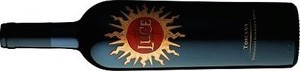
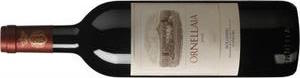
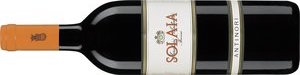
15 Mind blowing wines of 2015

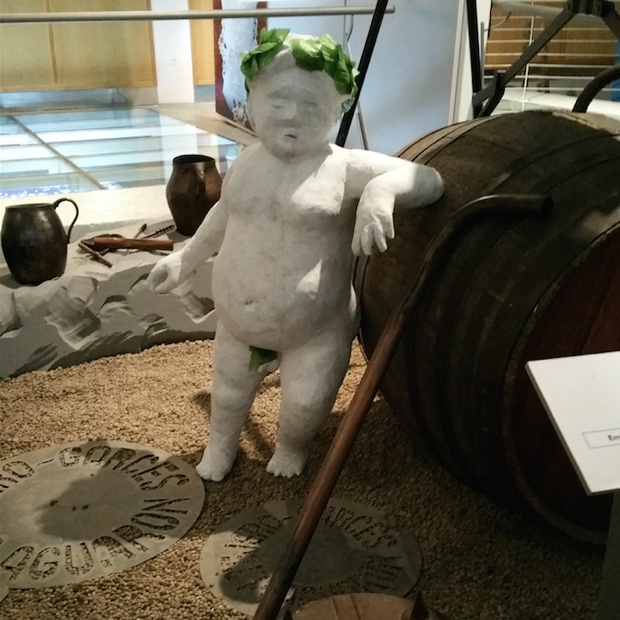
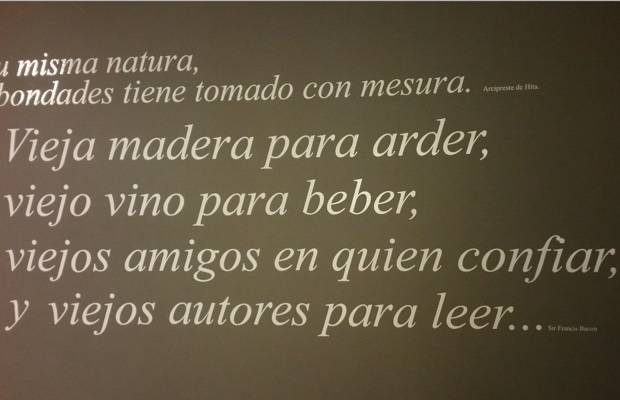
Old Sherry at the Cariñena Museo del Vino

Old Sherry at the Cariñena Museo del Vino

“You can choose your philosophy of critiquing just as you choose how to live. The freedom to personalize or substantiate thoughts on structure sacrifices the detail to meaning and meaning to preciseness.” I wrote that nearly a year ago. It holds true, as before, near, dear and clear to me today.

Extreme cold ushered in January of 2015 and the obvious lede was Coming wine from the cold. Halfway through the month an epiphany of sorts knocked upside the cerebral cortex, elaborated upon in Varietal Spanish wine. That smithy precursor would lead to revelations in October.

As January wound down and I prepared to hit the Niagara Icewine Festival, (revealed in We the Icewine) I first asked a matter of fat cat factual question, Is writing making a mess of wine? “The combined fugitive pieces of wine and its critics pose questions without answers. They must be asked very slowly.”

Related – Mind blowing wines of 2014

The weeks of suffering through frozen days and night breeds reflection and thought. While the temperatures remained cursedly south of 20 I begged the question, Why drink that?, “looking for heroic entablature and architectural wonder in bottles of wine. We see them as DNA and in their liquids we can read their entire future. We sip them again and again until we taste them for the first time. To remember generations.” Have wine forget winter.
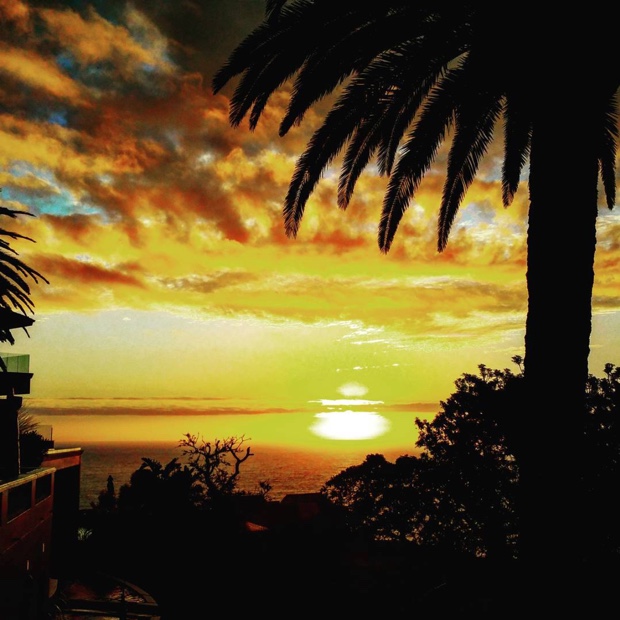
Good bye and thank you for your hospitality South Africa @WOSA_ZA @WOSACanada @CapeWine2015

Good bye and thank you for your hospitality South Africa @WOSA_ZA @WOSACanada @CapeWine2015

I penned If it’s value you want, it’s South Africa you need and later in May, Shades of South Africa. Oh sweet, naive, wait until you travel there and see what’s really up, Godello. Same for A new Greek morning and Getting into Greece. One week in the Peloponnese and my psyche would be altered forever.

In March I explained Why it matters to taste wines again, urged sharing through the practice of Take a bottle, leave a bottle and waxed parenthetical in yet another meaningful soul-searching moment. Why hate wine? was waged with a comment on “the wine geek who hates certain wines. The wine aficionado who picks on specific bottles, bullies them to the point of hatred. Slags them beyond reproach. Rants to the world about the injustice of their existence.” Bugger off.
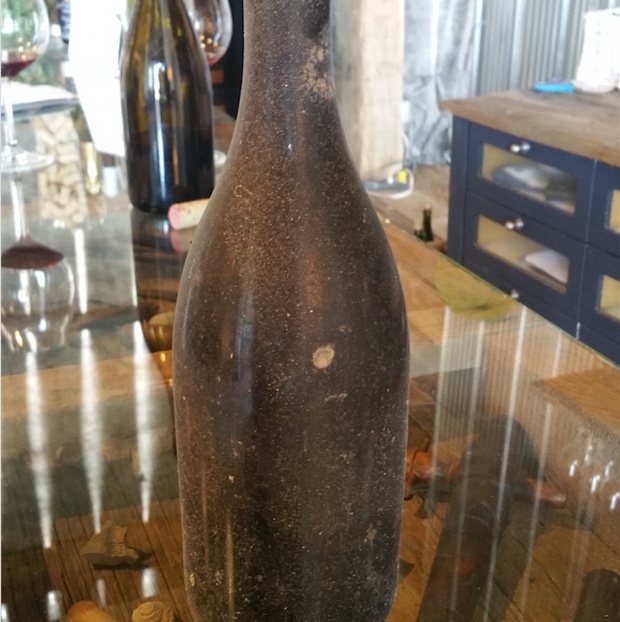
The Old Third, Pinot Noir 2008

The Old Third, Pinot Noir 2008

Then April. “The Ontario wine industry is the best kept secret in the world. It has grown, accelerated and advanced with more success than might have been imagined as recently as five years ago. Ontario winemakers have figured it out. The “world-class” comparative humanities of aging and longevity aside, the comprehensive and widespread phenomenon of excellence, regardless of vintage, is now an Ontario reality.” Now you know the answer to Why taste Ontario?

Related – 15 Canadian wines that rocked in 2015

In May further validation with Searching for Somewhereness and I’m a little bit County, setting the stage for an October visit to proportion enormity across ridges and eskers. Further understanding culled in The Old Third and older County wines and The ridges of Prince Edward County.
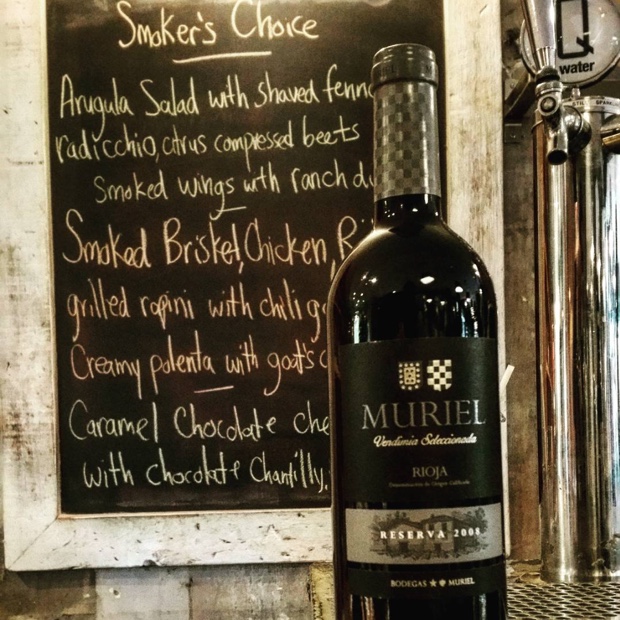
Saturday night @barquebbq #smokerschoice and '08 @bodegasmuriel #rioja #spain

Saturday night @barquebbq #smokerschoice and ’08 @bodegasmuriel #rioja #spain

“Wine is a commensurate animal, altricial such as it is, acaudal, acersous, agnostic, aculeate and allocryptic such as it is not. Wine that is not so much off the beaten path as actually growing on one.” Path straying wines. The game changer happened one day in May at Barque Smokehouse with Chiara De lulis Pepe and The natural wines of Emidio Pepe.
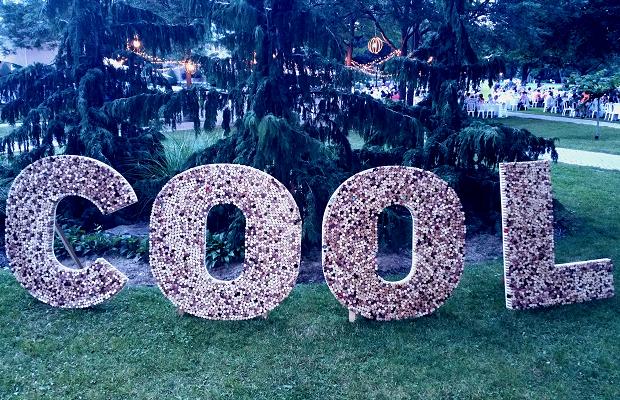
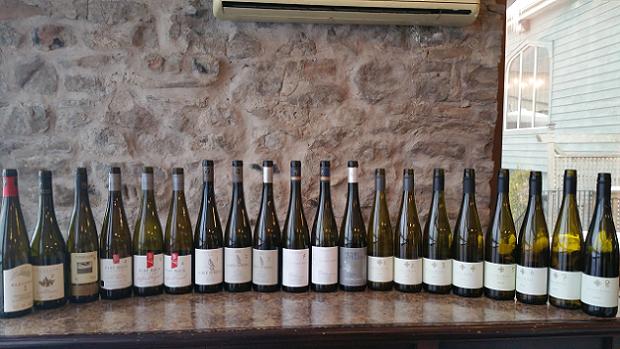
Cool Chardonnay at Ridley College

Cool Chardonnay at Ridley College

The June WineAlign National Wine Awards of Canada followed Ontario Wine Awards judging, inclusive of tastings at Niagara College, Creekside Estates, Ravine Vineyard, Trius, Treadwell CuisineDomaine Queylus and The Good Earth Wine Company. A great, learned experience at Master classes of Terroir shed brilliant light on Gamay. Then the most important query of the summer. Can Chardonnay get any cooler? Well, one of two. Great Chardonnay and Pinot Noir from Nova Scotia? My maritime wine sojourn is summarized in East coast swing 2015: Time, tides and wine.

View of the mountains from Tetramythos, Aigialia, Peloponnese

View of the mountains from Tetramythos, Aigialia, Peloponnese

My great Greek Achaian adventure was told in three tales, Till I reach Achaia groundBring me Achaia love and Gateway to Achaia, from Roditis to Mavrodaphne

South Africa’s memories spilled out in waves, from Once upon a time in the Western Cape to Wines of South Africa: It’s the fling itself, through South African duck dynasty and Wines of South Africa: Go Cars Go.
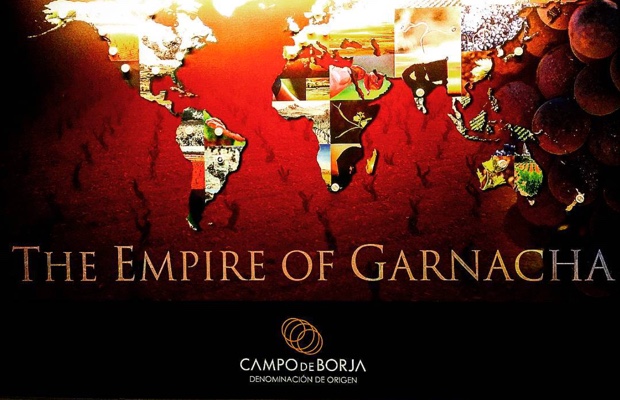
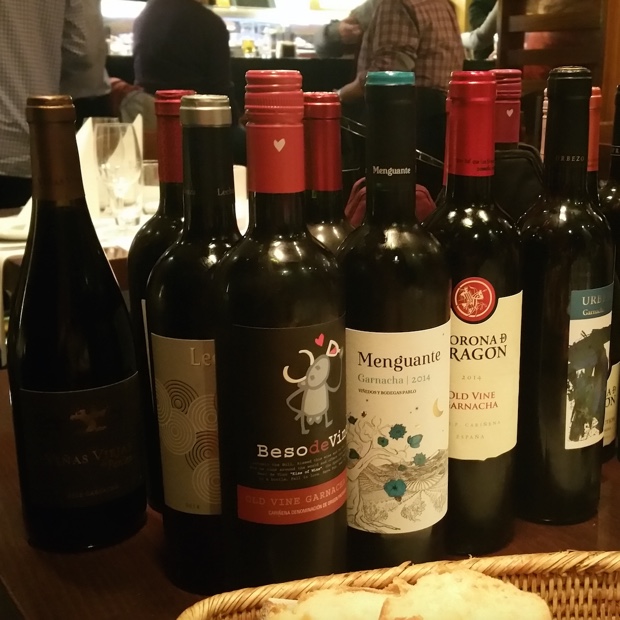
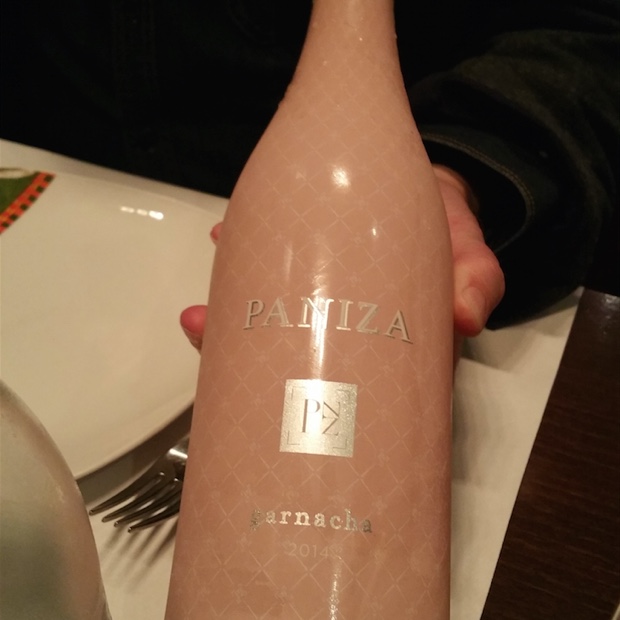
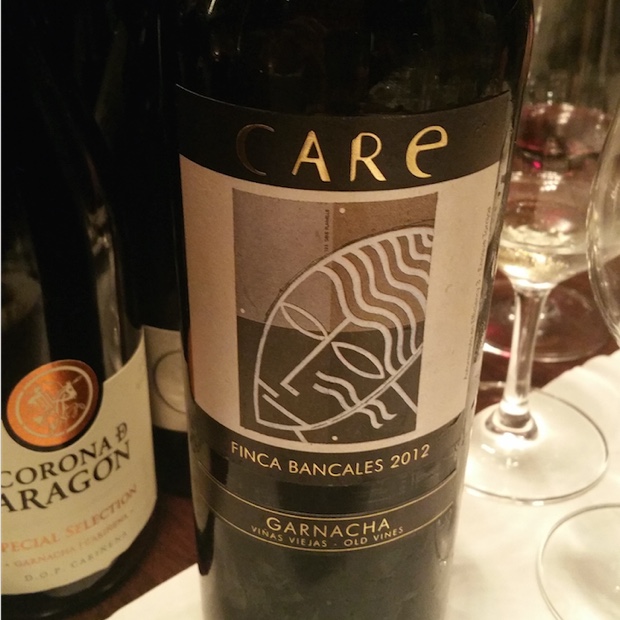
The Empire of Garnacha

The Empire of Garnacha

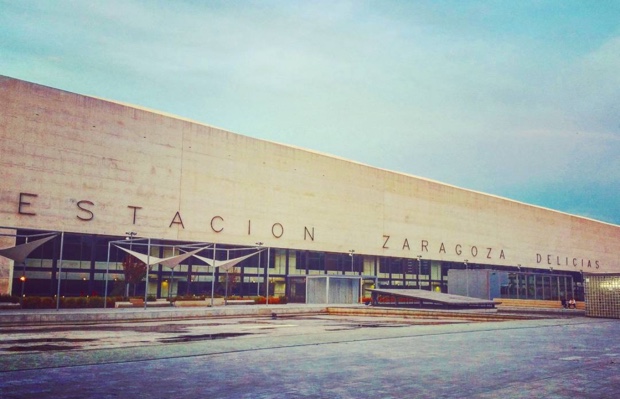
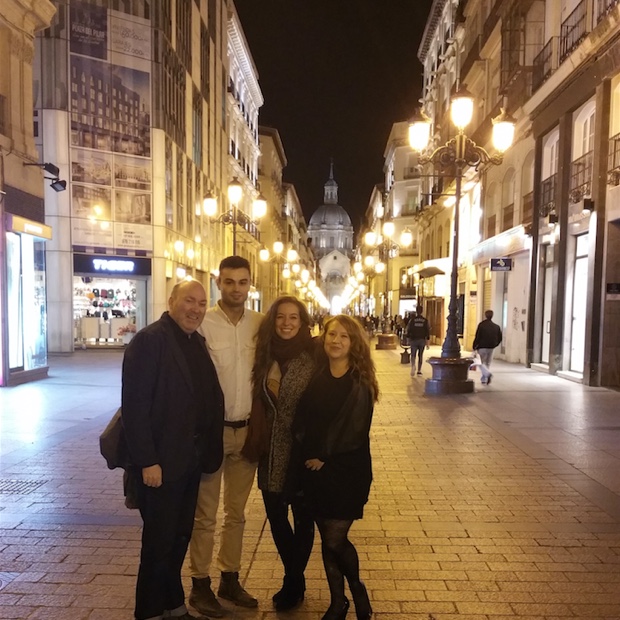
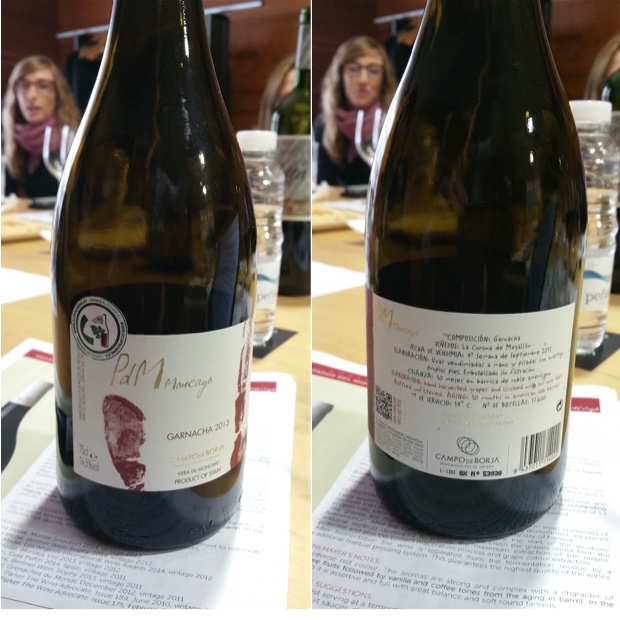
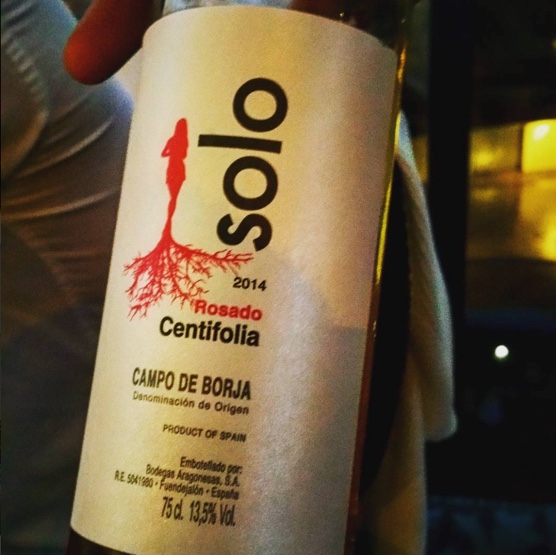
October and November trips to Aragaon, Catalonia and Franciacorta opened eyes and expanded minds like never before. We’ve Garnacha covered part one: Campo De Borja was followed by CariñenaSomontanoTerra Alta and Calatayud.

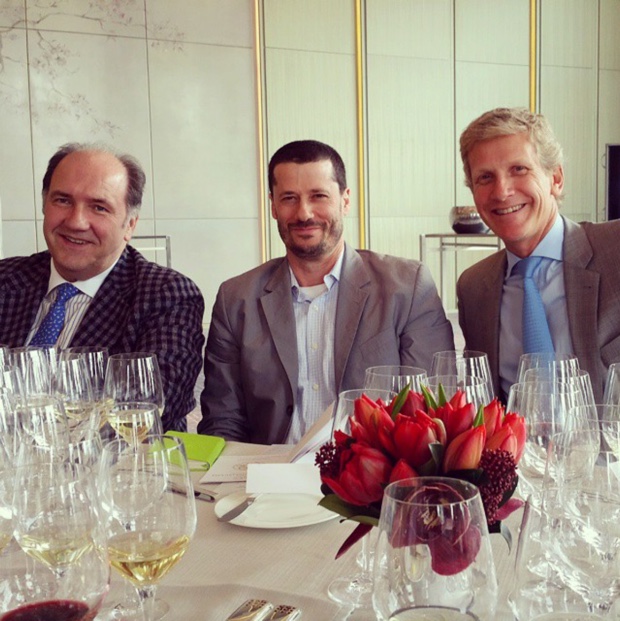
With Pablo Alvarez (#vegasicilia) and Laurent Drouhin (#josephdrouhin) at #fourseasonstoronto for #primumfamiliaevini Can there be a more visceral wine experience than tasting some of the world's greatest wine estates and all the while their principals just seem to only talk about history and family? Makes me think about parents, grandparents and children. About accomplishments, passing torches and smelling roses. Or something like that.

With Pablo Alvarez (#vegasicilia) and Laurent Drouhin (#josephdrouhin) at #fourseasonstoronto for #primumfamiliaevini…Can there be a more visceral wine experience than tasting some of the world’s greatest wine estates and all the while their principals just seem to only talk about history and family? Makes me think about parents, grandparents and children. About accomplishments, passing torches and smelling roses. Or something like that.

Far out, man

Far out, man

Here are some mind blowing wines tasted in 2015.
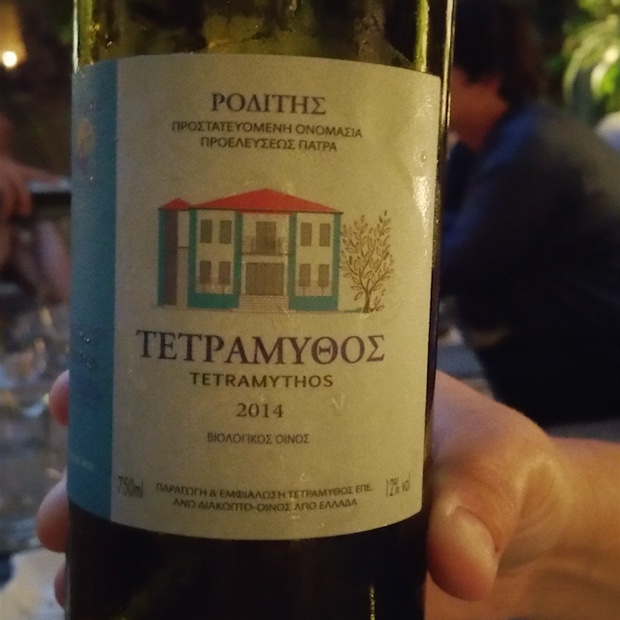
Tetramythos Roditis 2014

Tetramythos Roditis 2014

Tetramythos Roditis 2014, PDO Patras, Greece (SAQ 12484575, $15.75, WineAlign)

Pulled from four vineyards at 650-850m of altitude and from vines 19-42 years old. No skin contact though it shows a light, slight tinge of colour. Nearly platinum in its yellow hue, perhaps attributed to organics says Papagiannopoulos, Eighty per cent was achieved through natural ferment (with zero malolactic) plus “one tank for security.” Roditis can go clean or develop anti-austerity, texture, viscosity in the direction of a dirty projector. The Tetramythos glides “forward through the clover and the bergamot.” I can see what she’s seeing. Tasting like a leesy ripe peach, this is the best “basic” Roditis tasted in Achaia. Serious match of Aleria Restaurant‘s Sea Bass Tartare. Drink 2015-2020.  Tasted July 2015
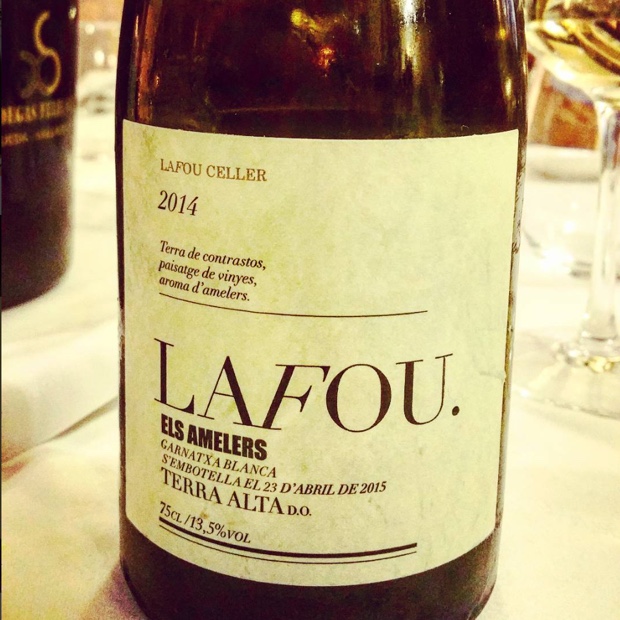
To taste again @lafouceller in @doterraalta is today's master plan @VINOS_ICEX #lovegarnacha #garnatxablanca #crdoterraalta

To taste again @lafouceller in @doterraalta is today’s master plan @VINOS_ICEX #lovegarnacha #garnatxablanca #crdoterraalta

Lafou Celler Garnatxa Blanca 2014, DO Terra Alta, Spain (WineryAgentWineAlign)

Ramon Roqueta Segalés, winemaker, soothsayer, visionary, seeker of the Garnatxa Blanca of today from “a narrow valley.” Ramon is very concerned with the valleys, the landscape, the geology, how the wind, the mediterranean climate and the ancient rivers that run through, having left their glacial deposits, all combine for this particular and most important expression of Garnatxa Blanca. Established in 2007, this wine was first released in 2011. Combines old and young fruit, some harvested fresher at a greener stage and others picked later, riper, brought together. Vinified separately, with some skin maceration, looking for fat to surround acidity. Ripe fruit (10 per cent) sees oak, the rest in egg shape concrete tanks with six to seven months of lees contact. Smells like a ripe peach, fresh and without sugar but instead a sprinkling of subterranean, ancient riverbed harvested salt. The tang is layered, variegated, mineral, mastered over and in corralling of oxidation, elaborated with gentle but forceful demand. “We learned that you can get a balance by harvesting and an early and a later stage, sometimes three times.” Finishes with lime, fresh squeezed, sweet tonic and distilled flowers. A wine that has succeeded in “mastering the oxidation process.” Plus the tannic (anti-oxidative) aspects offered in micro-oxygenation from the slightly toasted new oak. Approximate price $28.95 CAN. Drink 2015-2025.  Tasted October 2015  @lafouceller  @oenophilia1

Maps & Legends, from Cartology to Flotsam & Jetsam @ChrisAlheit @ZooBiscuitsWine #alheitvineyards #hermanus #capewine2015

Maps & Legends, from Cartology to Flotsam & Jetsam @ChrisAlheit @ZooBiscuitsWine #alheitvineyards #hermanus #capewine2015

Alheit Vineyards Flotsam & Jetsam Days of Yore 2014 (Winery)

Chris Alheit’s brand might allude to a chapter in J. R. R. Tolkien’s The Two Towers but Days of Yore must pay some homage to the 80’s thrash metal band and with great irony. This Cabernet Sauvignon and Cinsault blend is no Doomsday for the Receiver and certainly No Place for Disgrace. What it is instead is pure liquid brilliance. Old 1960 Cabernet Sauvignon bush vines are (even if unintentionally) farmed the way they used to be, back in the days of yore. Now cropped, tended and produced in pitch perfect cure, the resulting wine (when Cabernet is blended with Albeit’s dry-farmed, stomped and tonic-singular Cinsault) shows smoky depth and musicality. Sour-edged or tart can’t begin to describe the tang. It’s something other, unnameable, sapid, fluid and beautiful. It brings South Africa from out of the heart of its wayfinding darkness. Drink 2015-2025.  Tasted September 2015  @ChrisAlheit  @ZooBiscuitsWine
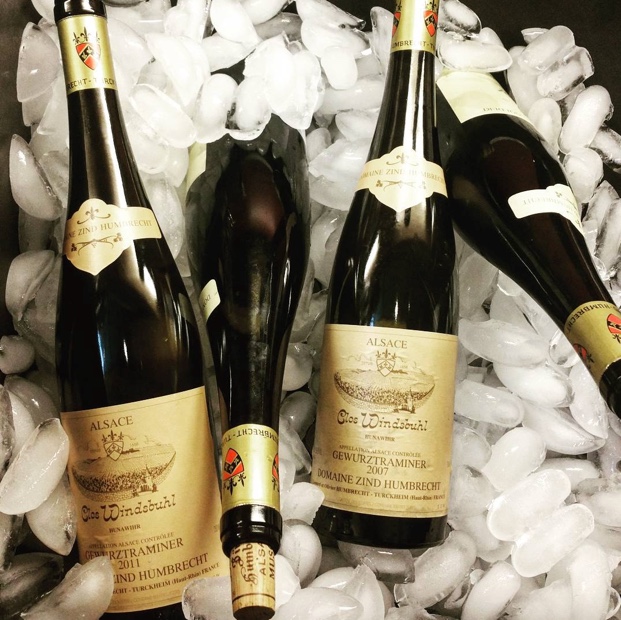
"If you can see the differences of terroir in Gewürz, then you won’t see it in Riesling" @AlsaceWines #olivierhumbrecht

“If you can see the differences of terroir in Gewürz, then you won’t see it in Riesling” @AlsaceWines #olivierhumbrecht

Domaine Zind-Humbrecht Gewürztraminer Clos Windsbuhl 2011, Ac Alsace, France (Agent, $64.00, WineAlign)

This is the most northerly Zind-Humbrecht vineyard, in Hunawihr. Like oil and water from this to 2012. So much more richness, unctuousness, classic western European riverbank gluck and heavy weighted metal. Layers upon layers of texture though not nearly as dramatically sweet as it might appear to be. Hides it so well, thanks to those remarkable Windsbuhl gifting phenols and intense grape tannin. This has presence so very rare in Gewürztraminer. In the end its a glass full of liquid gems, polished, elegant and refined. Allow the sugars several more years to fully realize its potential relationship with the acidity. Drink 2018-2033.  Tasted November 2015  @olivier_dzh  @TrialtoON  @AlsaceWines  @VinsAlsace  @drinkAlsace

Don Melchor Cabernet Sauvignon 2010

Concha Y Toro Don Melchor Cabernet Sauvignon 2010, Maipo Valley, Chile (403980, $70.00, WineAlign)

The 2010 Don Melchor harkens backwards, to years like 2001 and 2003, rephrasing and rewriting the paradigmatic book. From seven contiguous, sub-divided blocks of Cabernet, the ’10 speaks most highly of Lot Two, emphasized by chocolate, menthol and mineral, in cohorts with Lot Four, in elegance and depth. Extended glom and time-lapse picking between April 22 and May 27 was the casualty turned blessing of a cooler growing season in the semi-arid Mediterranean-like scrub desert of Puente Alto. The alluvial motion hauteur of slow-ripened fruit can’t be overestimated. The frame by frame capture has resulted in aromatics wafting off the charts; violet, anise, roasting cocoa bean, garrigue, ferric filings, mortar on wet stone, Cassis and eucalyptus. There is no heat, rendering the 14.6 declared alcoholic irrelevant. Best of all, it smells like Chile as much as it does Cabernet. There is no need to discuss the (97 per cent) CS in terms of Bordeaux, that is until you taste. Then the tobacco angst and silky texture elicit Margaux. Black currants and fine chocolate melt on the finish, still with a mouthful of stones. For winemaker Enrique Tirado, this may be his “El opus.” It will age effortlessly for 12-15 years. For anyone who purchased this wine more than 10 vintages ago, comparing current cost can be a byproduct in natural preoccupation. Who would not want a return to the sub-$50 Don Melchor going back a decade or more? Yet while tasting the present decimus, $100 crosses the fiscal mind and seems completely apropos. At $70 the clarity and sonority of its value is the blazon of an epistle. Few Cabernet Sauvignon dominant wines from Bordeaux or Napa Valley can compare. Drink 2016-2025.  Tasted April 2015  @conchaytoro  @MikeAikins1  @DrinkChile

Mullineux & Leeu Syrah Iron 2013, Wo Swartland, South Africa (WineryAgentWineAlign)

If such cure, grip, ferric grab and intense tannin has ever infiltrated South African Syrah it has not yet found its way over to me. In a side by side comparative tasting with the Schist Syrah this one wrestles to win. The Schist is all perfume and soft elegance. The Iron draws power to strength from strength. It is an unrelenting conduit of energy, from soil clearly designed to outlive humanity. The Syrah is a product of geological wonder and winemaking that steps aside to let the terroir speak its mind. Demanding and filled with tension now, time will soften the stranglehold and loosen the wires. Lots of time. Drink 2019-2028.  Tasted September 2015  @MullineuxWines  @MullineuxChris  @Nicholaspearce_

Fleury Père et Fils Cépages Blancs Extra Brut Champagne 1990, Champagne, France (Winery, Agent, WineAlign)

The expediency of weighted oxidation in flight flies effortlessly as a traveller propelled with verve and intrepid behaviour. Dried tangerine and so many tannic aspects are exaggeratedly exceptional for Champagne, fast forward thrusted and draughted with effortless urge. Derived as if from concrete shaped in purest form, of and before life. The dried fruits and a pith so calming are gathered for a level of citrus almost never before encountered. A very, very special 25 year-old bottle of bubbles from a pioneering organic and biodynamic producer in Courteron. Drink 2015-2020. Tasted February 2015  @ChampagneFleury
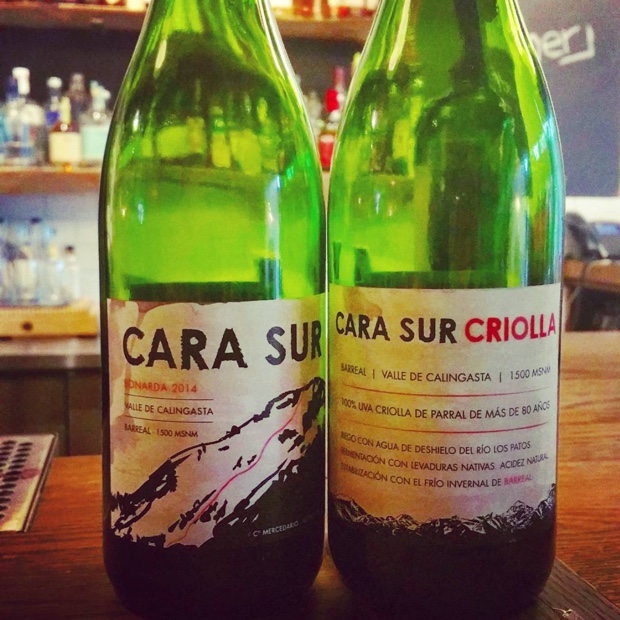
Most exciting wines tasted in a long time @winesorarg #carasur #bonarda #criolla #argentina #valledecalingasta

Most exciting wines tasted in a long time @winesorarg #carasur #bonarda #criolla #argentina #valledecalingasta

Cara Sur Bonarda 2014, Barreal, San Juan, Agrentina (Approx. $140)

Dry farmed, mordant and agile varietal red, a garagiste of a dirt road, in minuscule production, from natural run-off water and wild yeast. Only 500-600 bottles are produced, from north of Mendoza, in the Valle de Callingasta and Zuccardi funded. The natural cure is off the charts, the Emidio Pepe of Argentina, in which winemaking is really just perfect. Smells like the scrape of the amphora, already imbued of the aromatics of years, the answers of age, the design of ancients. You could keep this in the glass for a week and it will hardly evolve. Imagined as a 40 year wine for sure. Purity incarnate. Drink 2015-2040.  Tasted August 2015  @winesofarg
As I get on the 707 @penfolds 1999 #cabernetsauvignon carries me far away #treasurywineestates #southaustralia #bookofdreams

As I get on the 707 @penfolds 1999 #cabernetsauvignon carries me far away #treasurywineestates #southaustralia #bookofdreams

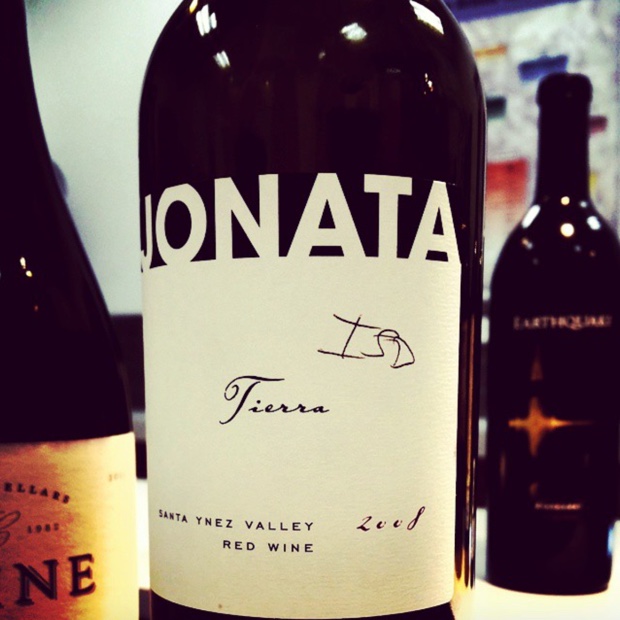
Jonata La Sangre De Jonata Syrah 2008, Santa Ynez Valley, Santa Barbara County, California (220517, $150.00, WineAlign)

A tremendously ripe, rich and layered Syrah that has few equals or rivals in California so in that sense the price is benevolently justified. Winemaker Matt Dees is no flash in the pan. His wines are cerebrated and cogitated with no stone left unturned. They are showy, chiselled wrestlers, boxers and ultimate fighters but they are the real deal. This ’08 is a veritable protein potpourri, of wafts from the finest boucherie, all hung limbs and wrapped sheep’s cheeses, in caves, on counters and under glass. The expression is also very Côte Rôtie meets côte de bœuf rôtie, with added luxe perfume, chalk and lacy grain. The fruit boundaries are endless, the chew meaty, cured and smoky. Ultra Syrah of never wavering red fruit in a packed vessel with alcohol declared at a meagre 14.9 per cent. Even if it is really more like 15.5, the wealth of fruit, acidity, tannin and structure can handle the heat. With so much happening, this wine will age like the prized hind quarters and mother’s milk solids it smells of. Jonata La Sangre De Jonata Syrah 2008 says something and I’d love to hear what that is 15 years down the road. Drink 2018-2028.  Tasted May 2015  @WoodmanWS  @CalifWines_CA

As I get on the 707 @penfolds 1999 #cabernetsauvignon carries me far away #treasurywineestates #southaustralia #bookofdreams

As I get on the 707 @penfolds 1999 #cabernetsauvignon carries me far away #treasurywineestates #southaustralia #bookofdreams

Penfolds Bin 707 Cabernet Sauvignon 1999, South Australia, Australia (Agent, $175.00, WineAlign)

The Bin 707 was first produced in 1964 though passed over from 1970 to 1975 and then in 1981, 1995, 2000, 2003 and 2011. With Grange in mind, were it to look in the mirror, it would see its reflection as Cabernet Sauvignon. A true South Australian Claret, multi-regional blend from Barossa Valley, Coonawarra, Padthaway, Robe and Wrattonbully. The ’99 was the 28th and as I get on board in 2015 and taste the 707, it carries me so far away. Today, in this world and how we play it, this is as fresh as Cabernet Sauvignon can be. It reads like a book of dreams. It is a miller of fruit, in secondary ester of refinement. It is a jet airliner, leaving behind a voluminous, velutinous trail of exhaust. “I feel like it’s all been done,” but not like this, aged for 18 months in 100 per cent new 300 litre American oak hogsheads. Not with this precision from veraciously selected fruit. Not like this. Look to 2025 for the tertiary period to begin. Drink 2015-2024. Tasted August 2015 @penfolds  #treasurywineestates 

Fino, Don P.X. '86 and '62 w: @sorgatoBTA @toroalbala @LeSommelierWine Magical, impossible, unchanging. Bucket list to revisit in 150 years #pedroximenez #bodegastoroalbala #montillamoriles #spain

Fino, Don P.X. ’86 and ’62 w: @sorgatoBTA @toroalbala @LeSommelierWine Magical, impossible, unchanging. Bucket list to revisit in 150 years #pedroximenez #bodegastoroalbala #montillamoriles #spain

Bodegas Toro Albalá Don P.X. Reserva Especial 1962, Do Montilla Moriles (424085, $205.00, WineAlign)

Unlike the 1986 which under recent European law (because it is not a red wine) must not be named Gran Reserva, this grandfather of a Pedro Ximenez is free to be what it’s supposed to be. A wine that was housed in a home somewhere in the village 10 years before the winery was created. A wine harvested in 1962, then took two months to ferment (to 7 or 8 per  cent alcohol). Estate distillate was added to fortify and raise it to 17 per cent, followed by a slumber for two years in concrete vats. The final resting place was in American wood where it slumbered peacefully for 49 years until it was bottled in 2011. In a show of future forward thinking and in retrospect, of historical allegiance, the signature on the bottle belongs to its original maker. Egresses from such delicate aromas, from citrus to coffee and stands in remarkable freshness belying its 50 years. The nuts are smoked with a zesting by citrus and a dusting in nutmeg. Chestnut and hazelnut curiously form a crasis of sensation, airy and creamy like mousse, sabayon or Caudreau. If you allow it, the finish will not let go. The sugar (300 g/L RS) and acidity (5.73 g/L TA) are the tangible aspects of its futuristic longevity. Like the ’86 this is another dessert wine secured of natural preservatives; undefined, magical, impossible. These wines opened could last for 20 plus years, unchanged. Unopened that number could surpass 100, without question, no problem. Like honey, this is an earthly substance that can last, seemingly forever. So, one glass of P.X. every day, going forward, for self-preservation. Drink 2015-2060. Tasted October 2015  @LeSommelierWine

The line-up from Emidio Pepe

The line-up from Emidio Pepe

Emidio Pepe Montepulciano d’Abruzzo Riserva 1983, DOC BIO Abruzzo, Italy (Agent, $279.95, WineAlign)

Give Emidio Pepe’s reds thirty odd years to develop and the impossible happens. To postulate in a moment’s assessment without remembering the pious tradition with which this was made would be a crime against Pepe, Abruzzo, the natural world and the wonders of the universe. With this much passage the spice cupboard that emits is wow times a thousand. Clove, cinnamon, cardamon, orange peel, galangal and like golden raisins that pass through quarries to become rubies. This wine is perfect. It has not broken down an iota. It requires no decanting. It defies logic, perception and time. There is no sediment, only energy. Speaks from the glass as if it were a child of destiny and mythology. The 1983 Emidio Pepe Montepulciano d’Abruzzo Riserva arrives from along the same road taken but its transmogrification proves that the result, with thanks again to the endemic froth, is different every time. Drink 2015-2029.  Tasted March 2015

Gaia Gaja and 1978 Barbaresco #veryproud #nebbiolo @StemWineGroup

Gaia Gaja and 1978 Barbaresco #veryproud #nebbiolo @StemWineGroup

Gaja Barbaresco 1978, Piemonte, Italy (Agent)

Tasted with Gaia Gaja as an added, as good a bonus as there ever was to an already exceptional line-up of Gaja wines, the 1978 Barbaresco is untangled, untwisted and liberated. Nebbiolo spoken with the utmost clarity. Cherries falling from the tree the moment the tips of fingers come within a hair of the touch. Spring is indeed in the air (despite it being early fall), a trick of the Gaja Genesis tale, “fields of incentive covered with green.” A mesmerizing Barbaresco, pure as driven snow, clear as a pool of fallen rain, quiet as an undisturbed slumber. Ancient longings of leather and dusty cocoa are but pipe stuffing, not yet lit. This Nebbiolo is pretty, feminine, beautiful and forcefully elegant. “When you’re asleep they may show you, aerial views of the ground, Freudian slumber empty of sound.” Only available from Nebbioli of the highest caste and order. Drink 2015-2028.  Tasted September 2015
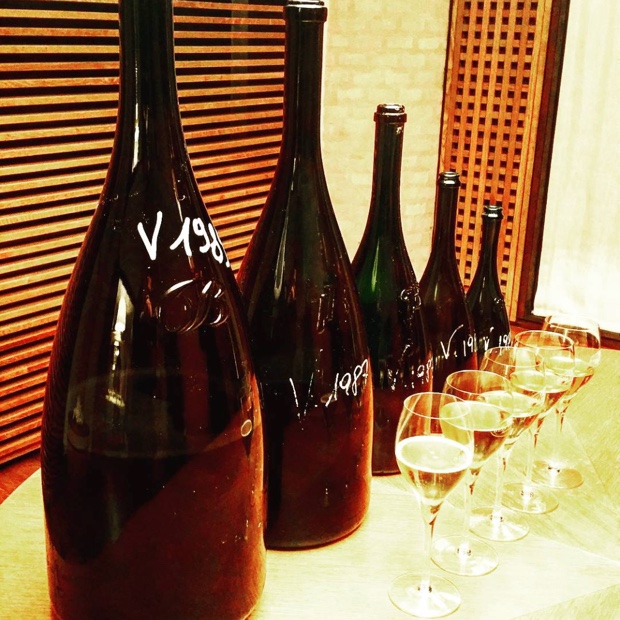
Five little ducks all in a row @BellaVistaVino #anothersongaboutthefizz #franciacorta #largeformats #1987 #1989

Five little ducks all in a row @BellaVistaVino #anothersongaboutthefizz #franciacorta #largeformats #1987 #1989

Bellavista Winery Brut Sparkling 1987, Franciacorta, Italy (From a Six litre bottle, Agent, Winery)

Tasted alongside a 750 mL, Magnum, Jeroboam and nine litre 1989. The Methuselah is the first wine to show similarly to any of the others so the comfort level rises and yet this rocks out flinty and reductive most like the 3L. The energy is consistent, but here the spice is magnified and the nutty sense that showed in the Magnum has come forth. This seems to combine the pique aspects of both the Magnum and the Jeroboam. A best of all worlds bottle plus what it brings that neither had. Absolute freshness. Does not evolve in the glass in its first few minutes like the others that came before. It evens glistens unlike the others, as if it knows how complex, special and alive it is. This is the bomb for sure. Dart straight through the heart. Crazy exceptional Sparkling wine. It should be interesting to try and assess, which is a major act of liberty in assumption, to gauge with accuracy how format affects age. To close one’s eyes tight and place a number on each wine, to where it has evolved and why. Here, Jeroboam still three to five years away from even that beginning. Truly. Drink 2018-2037.  Tasted November 2015  @BellavistaVino  @Noble_Estates

Good to go!

Twitter: @mgodello

Instagram: mgodello

WineAlign: Michael Godel

Facebook

Domaine Queylus from the west down to the east

When you taste barrels @QueylusVin with Thomas the direction is west to east @bachelder_wines #pinotnoir #neudorfvineyards #ontwine #niagarawine

When you taste barrels @QueylusVin with Thomas the direction is west to east @bachelder_wines #pinotnoir #neudorfvineyards #ontwine #niagarawine

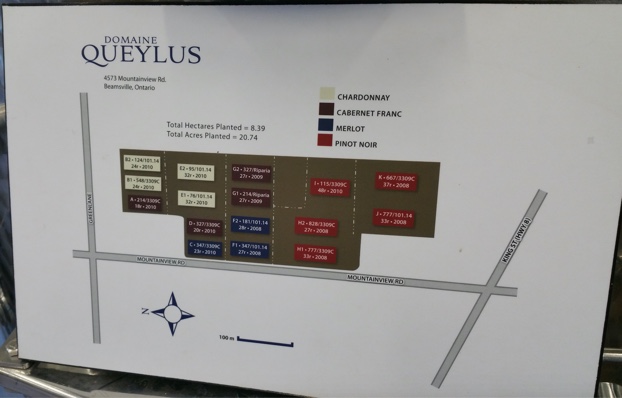
It’s a tale of two vineyards really, the Grand Cru of Neudorf and the upstart Queylus. Two inexorable blocks, where careers were forged and fortunes, cerebral or cash otherwise await. Diagrammatic Niagara lieu-dits inhabited both by the minds and plied hands of families, winemakers and vested interested Québécois investors in search of the finest terroir from which to extract memorable wine.

Time to taste at Domaine Queylus

Time to taste at Domaine Queylus

Related – Du bon Bachelder: Burgundy, Oregon, Niagara

One thing I’m getting used to is the unconventional order at a Thomas Bachelder tasting. It’s almost Joycean, a sort of syllogistic stream of consciousness systematization and yet please, do not for a moment think there is a complete absence of premeditated cumulative ratiocination. There most certainly is a method to Bachelder‘s madness. The decision on what to open or thief from next is not so much an implementation of sequence as much as a reaction to how the previous decant tasted and of what concordance it shaped.

Related –  Vineyards, winemakers and their sense of place: Bachelder and Leaning Post

Domaine Queylus

Domaine Queylus

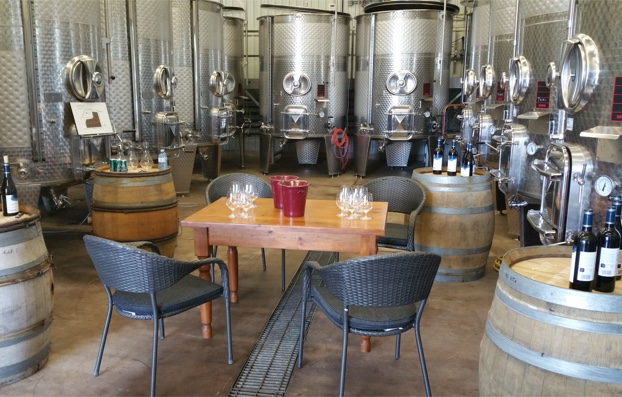
Domaine Queylus is a melting pot in Niagara from and for wine business royalty. The Neudorf family has long raised vines on their farm and now bottles an eponymous Pinot Noir called Big Farm. The French Canadian investors, les deux Gilles and partners have put their dollars into a Wine Country Ontario trust. Thomas Bachelder, the vigneron and poet who crosses and bridges the twain of provinces and wine, is the glue and the catalyst for the project.

Related –  Synchronicity in three terrors

Thomas Bachelder and Dr. Jamie Goode

Thomas Bachelder and Dr. Jamie Goode

In mid-June, Dr. Jamie Goode and I were poised to judge at the 2015 WineAlign World Wine Awards of Canada and so conspired to corner Thomas at the newly minted domaine. What happened next could not have been imagined. Thomas and winemaker Kelly Mason opened and thieved just about everything on site, out of bottle and from barrels in the cellar. It was a comprehensive visit for the ages and is the reason why it took me so long to commit it to these pages. Here it is.

Domaine Queylus Pinot Noir

Domaine Queylus Pinot Noir

Pinot Noir

Domaine Queylus Réserve Du Domaine Pinot Noir 2011, VQA Niagara Peninsula, Ontario (Agent, $44.95, WineAlign)

Delicato of culatello comes to mind and curiously so for Pinot Noir, though truth be told, somewhere in the median between hind and first sight the Bachelder take for Queylus carves new territory for the Peninisula. The feel is both au naturel and cheer meets chic. In depths the full fruit may have cumbered, by strawberry crusted in dry clay and noticeable in pepper, grit and tannin. Equitable forces alight, from acidity that straightens the fruit in wisdom angling to the gustatory rear. Dance to this Pinot and heed its request, “if you don’t mind, would you please, get up off of your seat and repeat.” Drink 2016-2020.  Tasted June 2015

Domaine Queylus Pinot Noir Grande Réserve 2011, VQA Niagara Peninsula, Ontario (Agent, $65.00, WineAlign)

The next grand level attained by painstaking blending into Pinot Noir promiscuity kindles in the flagship 2011 Pinot Noir. This despite its reservations to strut its stuff. This wine is like looking into a mirror of denial. The reflection will not give you what you want. It insists that you must wait and yet intuitively, in the air of aromatic and the blocks of structural extrapolation you just know that grand life hides behind the glass. The mirror will shatter, maybe not soon but eventually and the affirmation of quality will be written in the chards. This 2011 carries a distinct Neudorf smell, one only that particular vineyard breathes. Twenty Mile Bench elegance as a three syllabic word. Drink 2017-2023.  Last tasted June 2015

From my earlier note of March 2014:

The Thomas Bachelder mentored, two-vineyard assemblage Grande Reserve Pinot Noir grinds more cracked pepper than any predecessor. Every barrel from the Lincoln Lakeshore (formerly Le Clos Jordanne’s, Neudorf Family La Petite Colline Vineyard) and the Twenty Mile Bench (Mountainview) appellations were scrutinized to determine the final blend. Bachelder sees black fruit in the early life yet despite the ebullient seasoning, the LGR’s genes are intrinsically feminine. Red cherry, tellus fertility and a mother’s strength hold the family of barrel children together. This is an ambitious and hard to read Pinot Noir. Judgement reserved for five years before the word classic will be used.

Domaine Queylus Tradition Pinot Noir 2012, VQA Niagara Peninsula, Ontario (Agent, $29.95, WineAlign)

Richer and fuller to no one’s surprise, considering the vintage, with darkness clouding the fruit. This vintage seems to dig in deeper, to where crust, chalk, grain and density lay. A very earnest Pinot Noir in which elegance is investigated within the catchment of a hot year. Drink 2015-2018.  Tasted June 2015

Domaine Queylus Réserve Du Domaine Pinot Noir 2012, VQA Niagara Peninsula, Ontario (Agent, $44.95, WineAlign)

The depths are plumbed to mine savour, a stratum of flavour and a purity of Pinot Noir fruit concentration. A mineral streaks through, twenty miles long, smouldering by charcoal, magnesium and yet is so pretty. That and a stecatta sweetness to bely what is and has been done so many times in the same paint by numbers way in Niagara. Finds its own accord and voice from both beauty and beast terroirs. Drink 2016-2021.  Tasted June 2015

Domaine Queylus Pinot Noir Grande Réserve 2012, VQA Niagara Peninsula, Ontario (Agent, $65.00, WineAlign)

A remarkable congruence finds peace in which juicy hydration wraps and sloshes around a core of deeply resonant dry extract. Here the highest level of exceptionality is made possible by the thermohygrostatic control of both temperature and humidity. The achievement is not lost to find belief in Pinot Noir’s capability to unearth a sense of age in its youth. This ’12 has that impossibility factor from the outset. The waves of delicacy are like the gears of perfect machinery from somewhere in the early industrial age past. The red fruit aromas and flavours of strawberry will pass through the engine and slowly turn into compote, developing beauty with time and without any intrusions or additions. I wouldn’t call this Pinot Noir overly complex but it is so amazingly pure and will live long. Drink 2016-2024.  Tasted June 2015

Domaine Queylus Tradition Pinot Noir 2013, VQA Niagara Peninsula, Ontario (Agent, $29.95, WineAlign)

“These have been patiently aged in bottle for three weeks,” notes Thomas Bachelder as he pours the ’13 Pinots. The closed nose is not surprising, nor is the young adolescent anxiety, but the strawberry crush and brilliant acidity steals hearts. This is Pinot Noir of controlled tension, cool and just a bit sharp at the end. It will settle, gain control and perform with utter consistency. Drink 2016-2020.  Tasted June 2015

Domaine Queylus Réserve Du Domaine Pinot Noir 2013, VQA Niagara Peninsula, Ontario (Agent, $44.95, WineAlign)

Oh yes the vineyard speaks, like previous vintages but with clenched teeth and a hyperbole of natural yeast and soil funk. The most charcuterie salts and dehydrates from the middle sibling in 2013, with wisdom and a tale of future memories created in the here and now. Then you will return, to this time that will be its past, when things were so different and the assessment a figment of later imagination. At least three years (and possibly five) will pass before things are set straight for this past to be revealed. The level of smarts and savvy riches are amplified in the Réserve 2013. It is the strongest reminder that reconciliation takes time. Drink 2016-2022.  Tasted June 2015

Domaine Queylus Pinot Noir Grande Réserve 2013, VQA Niagara Peninsula, Ontario (Agent, $65.00, WineAlign)

The top-tier Pinot Noir is quite fruit intense, but also sappy and uttered in soft, indecipherable if almost resolved words. That said the length traipses to somewhere distant, to a boundary no other Queylus Pinot Noir has yet made. As it is thought on, this wine climbs to that far away peak that can’t really be imagined. The wine lingers longer than the pen and like the sword, pierces with svelte pinpoint accuracy. The flavour profile is indescribable, neither fruit nor mineral dominant and not exactly earthbound either. The abstruse profile persists but can’t be named so like language, must go on and on. Time heeds no dissipation. The wine lingers forever. Drink 2017-2025.  Tasted June 2015

“Now it’s a matter of a young vineyard in a young industry.”

The wines of Domaine Queylus

The wines of Domaine Queylus

In the Barrel Cellar

We begin in Pinot Noir Queylus west, “the less elegant side of the vineyard,” says Thomas. All fruit and grit and some tense innocence. In the centre aisle there are plans for the Reserve though if they are funky barrels they just might find their way into the Tradition. As we move from west to east through centre the dry extract and energy of Gardes Françaises increases, mated, duplicated and equivocated with that awesome, necessary and mobile Pinot Noir tension.

We are working across wooden houses, moving through the geographical slices of young vineyards, inoculated with wild yeasts and punched only out of dutiful exigency. In the east there are discernible differences, built by layers of fitness and a push-pull only finesse can exact. Tannic structure firms up and a deeper, richer sentimental grit performs on a stage of subterranean chalk and wooden grain.

The modern monk from the middle earth, Thomas Bachelder

The modern monk from the middle earth, Thomas Bachelder

Bachelder examines and determines with the intention to name each child as the tonnage in quantity, plot by plot, block by block and row by row increases, but also stabilizes. “We’ll know what we have then. Now it’s a matter of a young vineyard in a young industry.” In the far Queylus east (best) the hue persists and tension runs highest. Thoughts of consumption are most difficult here, most ambitious to wrap a brain around. These barrels are closed tight. Mise en masse, putting thoughts back into black.

Kelly Mason, assistant winemaker

Kelly Mason, assistant winemaker

In Neudorf West the light, free run juice is a sappy red flow pierced by limestone begat of a chalky bleed. “Most people punch down to get colour and weight,” shrugs Bachelder. “But where is the vineyard?” He goes on, “if we shorten our ferments we might be able to avoid malolactic for longer and do its own thing.”

In Neudorf centre the delicacy is emphasized while at the same time a fullness of flavour and also, mineral. Here there is mention of vineyard without the need to call it out. The representation is of a bigger picture, of a Niagara in venn circling around and of distant thoughts, to homelands, mentors and giants. The length in a taste here says Grand Reserve 2014. Good times.

In the barrel cellar, Domaine Queylus

In the barrel cellar, Domaine Queylus

Over to Neudorf est we go, drawing samples from two-year old Sirugue barrels, all dry extract and dehydrated cherry. Tar and an almost minor key of anise is the pique. Now add Queylus est to this and it loses some Neudorf nuance. What the…? Then add 10 per cent Neudorf new oak and boom! It becomes oxygenated. Pinot Noir is site. Don’t ever forget that. Merlot is blending and site.

The Bordeaux investigation

Domaine Queylus Cabernet Franc Merlot Reserve Du Domaine 2011, VQA Niagara Peninsula, Ontario (Agent, $39.95, WineAlign)

Queylus and not Neudorf fruit brings these bedfellows together, merging gravel and pepper with richness born of soil, not cake. The Alain Sutre varietal site selection in challenged and met, in the vintage. There are moments of cocoa and chocolate so the oak plays into the fray but petty and over the top are not on the agenda. The barrel fills in holes, never smacking upside the head. This early in the continuum the ’11 may not succeed like warmer ’10 and ’12 but with time the vintage variation pendulum will flip. Young, fine fruit builds from blocks and the future looks wide open. Subsequent cool vintages will impress to be sure, even be heartbreakers, “under them skies of blue.” Drink 2016-2022.  Tasted June 2015

Domaine Queylus Cabernet Franc Merlot Reserve Du Domaine 2012, VQA Niagara Peninsula, Ontario (Agent, $39.95, WineAlign)

A darker, warmer reduction, like fine, silky demi-glace rising and cascading as in a fountain of flavour. Possesses the drama of Lincoln Lakeshore Cabernet Franc excellence with an increase in pure cocoa butter, bike powered, stone ground chocolate and pure, decadent richness. The 2012 may lack a certain level of elegance that 2011 offered but wine must be made according to vintage. Thomas Bachelder and Kelly Mason have listened to the Queylus winds and followed ear worm orders. Drink 2016-2024.  Tasted June 2015

Merlot and Cabernet Franc

Merlot and Cabernet Franc

Domaine Queylus Merlot Cabernet Franc Grand Reserve 2012, VQA Niagara Peninsula, Ontario (Agent, $65.00, WineAlign)

In 2012 the varietal relationship is magnified, pursued with prejudice and made blatantly obvious. The Cabernet Franc does the heavy lifting, bringing out the lovely dust, fine aggregate and mulled berry aspects of the Merlot. Richness is Merlot deep. Length, depth and a serious zest for blended life emits from energy. This vitality begins in the clay soil and the pioneering vision of Mr. Alain Sutre. Thomas and Kelly have transmitted his identification for the Queylus site to be one of the great essential locales in the development of harmony and power for the Bordeaux in Niagara varietal treatise. This is the starting point for the plan. It’s also a wine that is a product of Pinot Noir winemakers and doubting Thomases. Because it goes ripe. Drink 2017-2027.  Tasted June 2015

Domaine Queylus Merlot Grand Reserve 2013, VQA Niagara Peninsula, Ontario

The wine had just been bottled so acted shocky, reductive and so massive it was nearly impossible to assess. Will reserve reviewing until another tasting.

Chardonnay

Domaine Queylus Chardonnay Tradition 2013, VQA Niagara Peninsula, Ontario (Agent, $24.95, WineAlign)

From vines planted by soil guru Alain Sutre, two km’s from the lake, close to Green Lane. If you make a comparison to Bench sites, this is an understated, hyper elegant version of a Chardonnay. It’s an underdog, plain and simple. Sixteen months of élevage has raised a beautiful, bitter green dignity, pith nicety and polite terpenes. A child in many ways who’s offspring will only serve to honour the family name. Drink 2015-2018.  Tasted June and July 2015

Domaine Queylus Chardonnay

Domaine Queylus Chardonnay

Domaine Queylus Chardonnay Reserve 2013, VQA Niagara Peninsula, Ontario (Agent, $44.95, WineAlign)

Winemaker Thomas Bachelder combed the blocks of the lowland “villages” sites and in slow-forward cohorts with the most subtle barrels, came up with the cuvée for the Reserve ’13. The same percentage of new oak fed the fruit with love, time, juncture and encouragement. A creamy lustre careens into honey, giving retrospective cue to suckle and accumulating richness. What fortune to work with 2013 for the purpose of announcing a Queylus take on tiers of Chardonnay to the world. Drink 2016-2021.  Tasted June and July 2015

Good to go!

Twitter: @mgodello

Instagram: mgodello

WineAlign: Michael Godel
Facebook

15 Canadian wines that rocked in 2015

15 in 2015

In the past 12 months I have tasted Canadian wines. Somewhere between hundreds and a thousand of them. Aside from day-to-day assessments at home, in the LCBO sensory lab, at the WineAlign office and at events in Ontario, I’ve also been a part of judging panels. In 2015 I sat in at the Ontario Wine Awards, WineAlign National Wine Awards of Canada, WineAlign World Wine Awards of Canada and Gold Medal Plates.

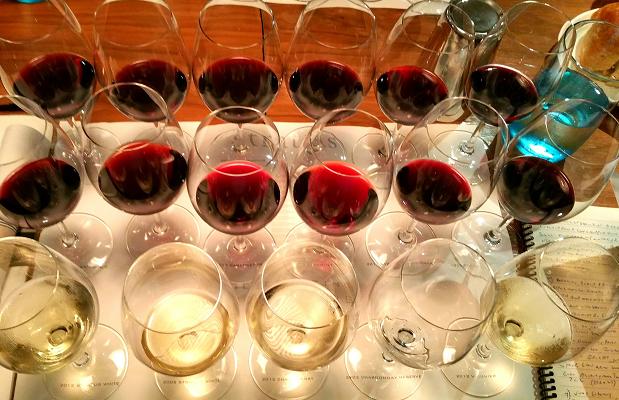
Flight 3, code red #pinotnoir redux. Right proper #NWAC15 picks & pours @FortessaCanada stems @winealign staff rock!

Flight 3, code red #pinotnoir redux. Right proper #NWAC15 picks & pours @FortessaCanada stems @winealign staff rock!

In 2014 the highlights numbered 14, just as in 2013 the number chosen to cant, recant and decant excellence in Canadian wine was 13. And so forth leads to 15 in 2015.

Related – 14 Canadian wines that rocked in 2014

The Legend, the Sommelier and the Godello #geddy #yyz #gmp2015 #goldmedalplates #rush

The Legend, the Sommelier and the Godello #geddy #yyz #gmp2015 #goldmedalplates #rush

Canadian wine is growing with exponential force, gaining ground in markets at home and abroad. Brits dig us. I know, they told me. British Columbia is a desert oasis of variable climates to fascinating degrees. Oh the Syrah, Riesling and Gamay that rocks forth. Ontario stood up to two straight brutal winters and screamed, “we still made great fucking wine.” Take that mother nature.

Related – 13 Canadian wines that rocked in 2013

And I quote. “Picking a top anything list is both a chore and a labour of loyalty. The opportunities to learn more about Canadian-made wine, especially the processes and the efforts, were numerous in 2014. Canadian winemakers opened their doors and when people came, they taught. They walked the vineyards, showed off their prized barrels and walked through the processes of making wine. Tasting and barrel rooms make for the greatest classrooms. Get out there in 2015. The experience is priceless.”

Riesling at the Carriage House, Vineland Estates Winery - March 7, 2015

Riesling at the Carriage House, Vineland Estates Winery – March 7, 2015

So I did. In 2015 I visited Niagara for Icewine Fest, discovered exceptional cider (with percentages of Pinot Noir and Riesling) made by Angela Kasimos at Small Talk Vineyards and have been pouring it on tap at Barque Smokehouse and Barque Butcher Bar ever since.

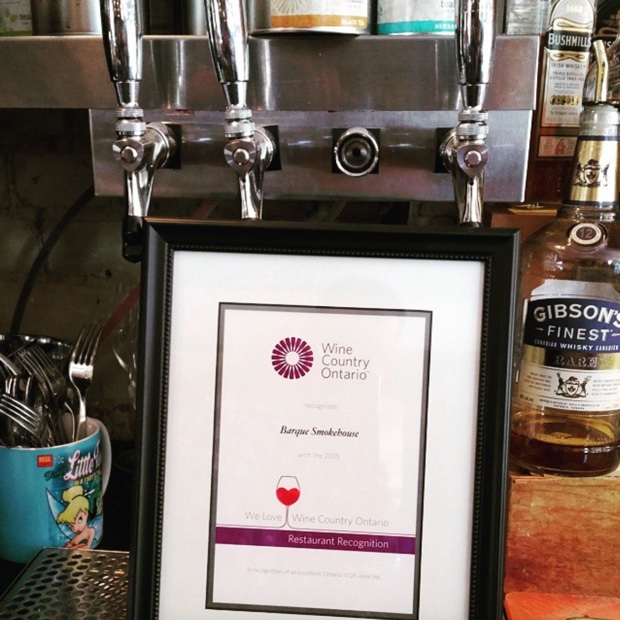
The pioneer for #vqa #wineontap feel good recognition from @winecountryont Thank you from @barquebbq #ontariowineweek #ontwine #drinkontario #pourontario

The pioneer for #vqa #wineontap feel good recognition from @winecountryont Thank you from @barquebbq #ontariowineweek #ontwine #drinkontario #pourontario

The taps at the two restaurants poured a record number of wines in 2015, from Tawse, Lailey, Norm Hardie, Creekside, Between the Lines, Kew Vineyards, Redstone, Stratus and Leaning Post. In March we travelled with CAPS Ontario for an eight-hour intense immersion into Niagara Riesling and Cabernet Franc.

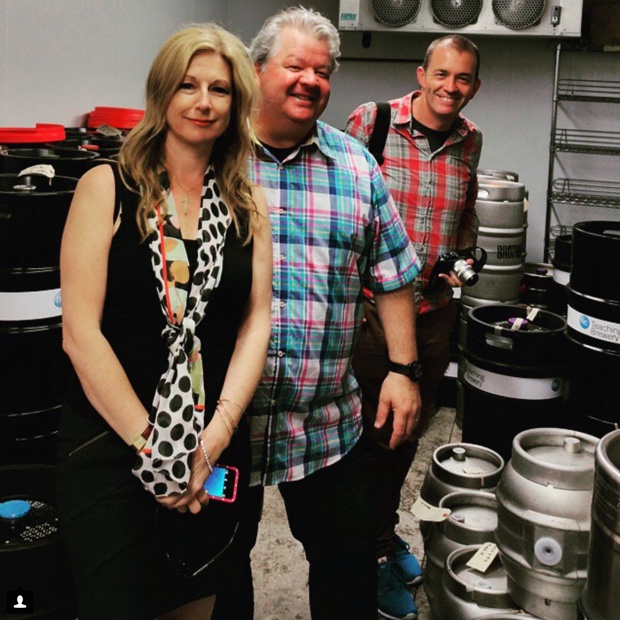
Smiles with hops. Beer fridge @Niagara_College @mkaiserwine @chefmolson @drjamiegoode #niagarateachingbrewery #notwine #greatbeer

Smiles with hops. Beer fridge @Niagara_College @mkaiserwine @chefmolson @drjamiegoode #niagarateachingbrewery #notwine #greatbeer

Another visit with Ilya and Nadia Senchuk at Leaning Post Wines in Winona, Ontario shed new lights, especially for Syrah from the Lincoln Lakeshore. In June I toured the facilities at Niagara College with Dr. Jamie Goode, Magdalena Kaiser and our host Chef Michael Olson. Jamie and I tasted through an impossible number to count Domaine Queylus wines with Thomas Bachelder. On that I will report really soon. Really soon…

Cool Chardonnay at Ridley College

Cool Chardonnay at Ridley College

The Cool Chardonnay conference in July was in fact, the coolest yet. I spent three more glorious Annapolis-Gaspereau Valley days with Mike and Jocelyn Lightfoot in Wolfville, Nova Scotia. Visits to Domaine de Grand Pre, L’Acadie Vineyards and Benjamin Bridge filled out the east coast foray.

Comity in the County godello.ca #PECwine #princeedwardcounty #cherryvalley #clossonridge #danforthridge #greerroad #laceyestates #hubbscreekvineyard #hinterlandwine #lighthallvineyards #clossonchase #adamoestatewinery #northshoreproject

Comity in the County godello.ca #PECwine #princeedwardcounty #cherryvalley #clossonridge #danforthridge #greerroad #laceyestates #hubbscreekvineyard #hinterlandwine #lighthallvineyards #clossonchase #adamoestatewinery #northshoreproject

In the fall I made pilgrimage to Prince Edward County to get a grip on the eskers, ridges and aspects of what makes wine so special in that part of Ontario.

As always there are wines that should have, would have and could have made the cut were there more time, space and yet another, better headline to write. Some were knocked off the shortlist because they may not have been quite as exciting though were this list one of “most important,” then perhaps they would have stayed put. These four are perfect examples of that condition.

Château Des Charmes Old Vines Riesling 2008, VQA Niagara On The Lake, Ontario (277228, $16.95, WineAlign) Perhaps the assessment seven years later creates an unfair advantage but come now, a great wine is a great wine from its humble beginnings. At $16.95, in 2008 or 2015, in Niagara-on-the-Lake, on the Peninsula, this type of emerging propensity is more than gold or platinum, it’s money.

The Good Wine Cabernet Franc 2012, VQA Lincoln Lakeshore, Ontario (350751, $20.95, WineAlign) from winemaker Ross Wise and The Good Earth Wine Company’s Nicolette Novak is a necessary example of $20 Lincoln Lakeshore Cabernet Franc offering up every reason to drink it and demand that more me made.

Creekside Estate Winery Pinot Noir Queenston Road Vineyard 2013, VQA Niagara Peninsula, Ontario (Winery, $22.95, WineAlign) is what winemaker Rob Power refers to as a lay lady lay style. Still the Kama Sutra Pinot Noir of inviting behaviour.

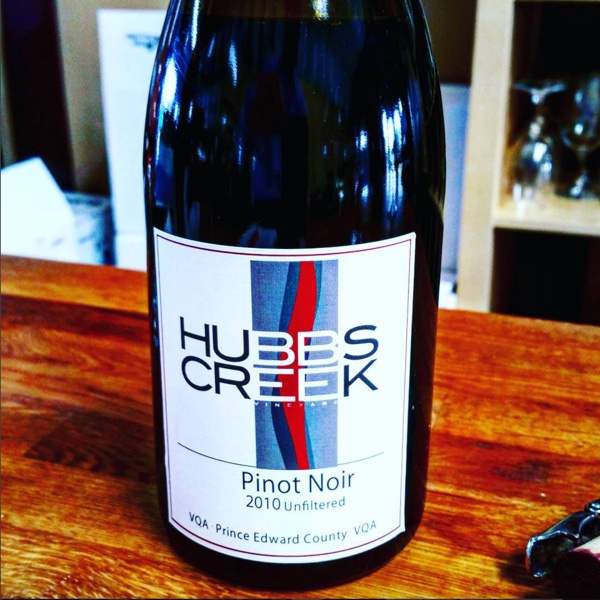
Hubbs Creek

Hubbs Creek Vineyard Pinot Noir Unfiltered 2010, VQA Prince Edward County, Ontario (Winery, $28.95, WineAlign). The HCV Danforth Ridge is clearly a top Pinot site in the County (along with slopes on the Greer and Closson roads). Planted to high density the results are proven in wines like this 2010

The year that was 2015 seemed to bring out the adventurous winemaker, the risk-taker and the progressive thinker. While these five wines were not so much exciting as much as they were cerebral, they need to be mentioned. Whenever the envelope is pushed and the emotions of geeks are sequestered, well then a wine has achieved something special. These five really opened some doors.

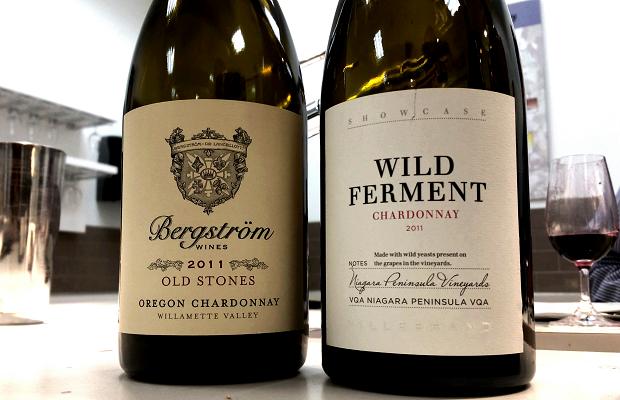
Bergstrom and Hillebrand

Hillebrand Showcase Series Wild Ferment Chardonnay 2011, VQA Lincoln Lakeshore, Niagara Peninsula, Ontario (199273, $36.20, WineAlign) speaks the treble language of the vintage, predicated on bold ideas looking forward towards a bright future. Ultimately it is yeast and vintage, non partisan to site, that elaborate the Wild Ferment.

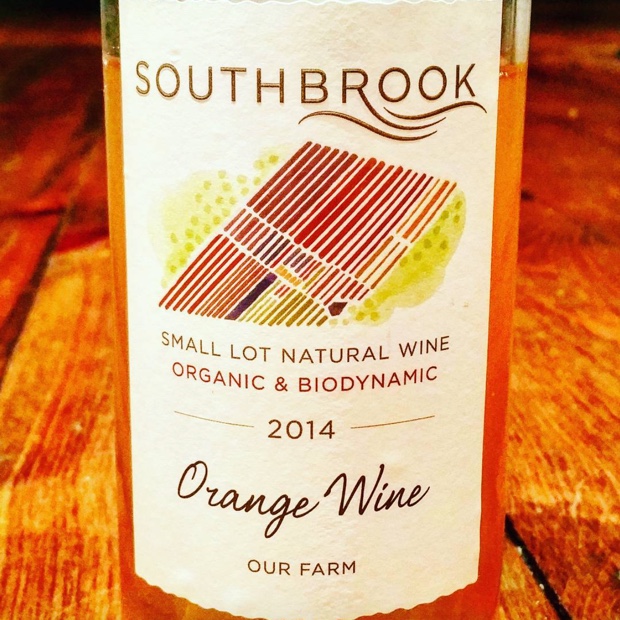
Southbrook Vidal Orange Wine 2014

Southbrook Vidal Orange Wine 2014

Southbrook Vineyards Whimsy! Orange Wine 2014, Niagara On The Lake, Ontario (Winery, $34.95, WineAlign). The technique and the practice is ancient and has been kept alive. The only questions need asking are “is it good, is it well-made and would I like to drink it?”

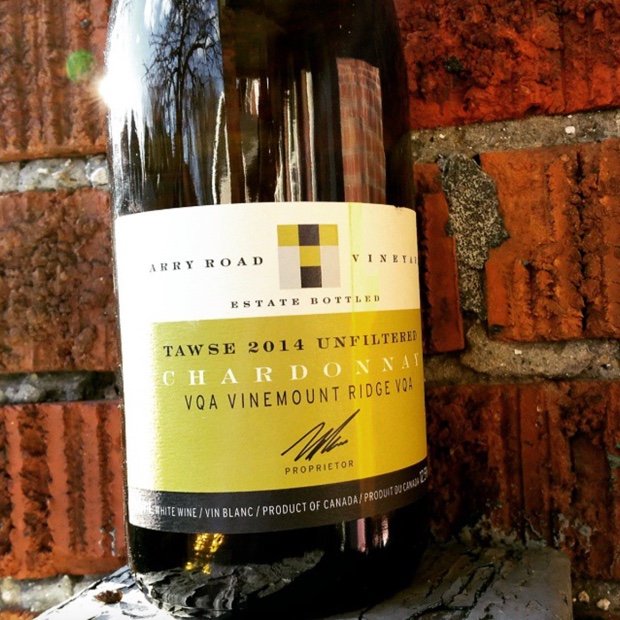
In bottle @Tawse_Winery #quarryroad 2014 #natural soon to tap @barquebbq #chardonnay #naturalwine #unfiltered #paulpender #vinemountridge #niagarapeninsula #vqa #ontwine

In bottle @Tawse_Winery #quarryroad 2014 #natural soon to tap @barquebbq #chardonnay #naturalwine #unfiltered #paulpender #vinemountridge #niagarapeninsula #vqa #ontwine

Tawse Chardonnay Quarry Road Natural 2014, VQA Vinemount Ridge, Niagara Peninsula, Ontario (Winery, $35.95, WineAlign). It’s one thing to make a natural wine in Ontario and a world away to do so with Chardonnay. “The law was never passed, but somehow all men feel they’re truly free at last. Have we really gone this far through space and time?”

The latest rendition of Vin de Curé, the “Parish Priest’s,” and the Jura’s Vin de Paille (Straw Wine) of Burning Kiln Stick Shaker Savagnin 2013, VQA Ontario (367144, $24.95, WineAlign) is a white elixir in search of roast pork, braised belly and cured bacon. Not to be missed.

Inniskillin Discovery Series Botrytis Affected Viognier 2013, VQA Niagara Peninsula (375ml), Ontario (405027, $39.95, WineAlign) though not a common Viognier practice can be imagined with Vendanges Tardives simulation.

Filtering Nova Scotia #peggyscove #eastcoastswing15

Filtering Nova Scotia #peggyscove #eastcoastswing15

I try to concentrate on new releases, unless something old (read: Riesling) jumps out and bites me in the ass. The 15 Canadian wines tasted in 2015 that wooed, wowed and whetted the appetite are the fingers, toes and tongues of their creator’s ideals, hopes and dreams. They are also quintessentially representative of their time and place.

And the winners are...

And the winners are…

Charles Baker Riesling Ivan Vineyard 2014, VQA Niagara Escarpment, Ontario (Winery, $27.00, WineAlign)

From the rich limestone and sandstone beneath the clay, 1.1 acre Misek vineyard, a southerly ledge up from Highway 8 and an easterly hill down from Cherry Avenue. A very linear Ivan combs the catacombs of the Escarpment’s underpinning. A retaining wall of vintage attenuated rocks and stones, a vineyard’s low yields and the voices in Charles’ head have produced a striking Riesling. In 2014 adolescence has entered adulthood. Now before us is a grown up Ivan, mature Ivan, maybe even wise Ivan. Texture is in manifest control in this loyal, stay at home Baker, not yet running wild like free-spirited Picone. Ivan has presence, sometimes a great notion and is Baker’s longest bit of prose to date. The next great Riesling vintage will make it iconic. Drink 2016-2020.  Tasted April 2015  @cbriesling

Swan Song- @ClossonChase Chardonnay CCV 2013 #clossonchasewinery #deborahpaskus #pecwine #pec #winecountryontario

Swan Song- @ClossonChase Chardonnay CCV 2013 #clossonchasewinery #deborahpaskus #pecwine #pec #winecountryontario

Closson Chase Chardonnay Closson Chase Vineyard 2013, VQA Prince Edward County, Ontario (Winery, $27.95, WineAlign)

This CCV Chardonnay is one of departed winemaker Deborah Paskus’ final acts at Closson Chase. It will forever be noted as a legacy-cementing, swan song of career excellence. Crafted by Paskus and bottled by the next one, current winemaker Keith Tyers, the 2013 CCV is simply a tour de force. No such combination of richness, tropicality and pure grape tannin has ever infiltrated this Chardonnay, from this vineyard. I’m not sure there is a comparison in Ontario, at this level of excellence and at this price. A wine of pure impression, with Montrachet-like structure and Folatières-like precision. Seemingly capacious, its facile legerity is hypnotizing, quantitatively escalating in assembly of aromas, flavours, through texture and finally to longevity. The wine spent 16 months in a mere (17.25 per cent new) oak. That it notes 12.5 per cent alcohol on the label is next to impossible. The substance is just too buttressed to be so tender and effete. Impeccable balance, refinement and mineral finish. This is Chardonnay to confuse the world’s fine white collectors, to wreak havoc at international tastings for five to 10 years. Only 712 cases are available and at $27.95, is down $2 in price from the 2012. Best ever, hands down. Drink 2017-2023.  Tasted March 2015  @ClossonChase

"There's no work in walking in to fuel the talk." @MalivoireWine Melon & @PearlMorissette Gamay #NWAC15 Parting of the Sensory #CuvéeMonUnique #shirazmottiar #treadwells #winealign #winecountryontario

“There’s no work in walking in to fuel the talk.” @MalivoireWine Melon & @PearlMorissette Gamay #NWAC15 Parting of the Sensory #CuvéeMonUnique #shirazmottiar #treadwells #winealign #winecountryontario

Pearl Morissette Gamay Cuvée Mon Unique 2014, VQA Lincoln Lakeshore, Niagara Peninsula, Ontario (Winery, $29.00, WineAlign)

In December of 2014 I counted the ’13 CMU Gamay as one of my mind-blowing wines of the year. Once again we are witness to the authentic, raw and natural impossibility of the wine, from 100 per cent whole clusters sent to cement fermenters. The hue is just impossible, the wine sulphur-free. That ’13 Gamay did not last. I tasted again this winter and it failed me. It may return. This ’14 will never leave. It is natural to the 14th degree and yet its rich, smokey chocolate  centre and structure of pure physical stature will not let it slide, into a dumb phase or oblivion. This Gamay will strut. It already does. Drink 2015-2020. Tasted June 2015  @PearlMorissette

Cave Spring Csv Riesling 2013, Cave Spring Vineyard, VQA Beamsville Bench, Niagara Peninsula, Ontario (566026, $29.95, WineAlign)

That flesh, that Kabinett flesh, fills the CSV in every crevice. In 2013 the residual sugar number lies between 15 and 16 g/L, and though the crop was bigger, it was still picked later than in 2012. The result is formidable corporeal concentration, consistency of house style and perhaps the only ’13 Niagara Riesling to imitate, perpetuate and extrapolate on the vintage that came before. This Cave Spring concentrates fruit and Escarpment into a powerful Riesling, streaming like charged particles through changing expressions. A lingering ascension hovers as it rises, until it slowly fades into the welkin, like a balloon that languidly gets lost into the blinding blue of a midday sky. Drink 2017-2025.  Tasted April 2015  @CaveSpring

Malivoire Mottiar Chardonnay 2012, VQA Beamsville Bench, Niagara Peninsula, Ontario (Winery, $29.95, WineAlign)

Any Chardonnay from a vineyard discovered on a bicycle just has to be the bomb. Winemaker Shiraz Mottiar has had many an adventure on his bicycle and it all began here in a plot of perfectly planted Chardonnay. A block that became his home vineyard. The fodder for this most balanced Chardonnay and its abilities transcend all that has come before. You would never know a barrel was ever involved and yet the silken sheaths of texture are well compressed and expertly ingrained. Nothing falls out of place. Everything remains in its right place. The radio is dialled in, from the top and outward in waves. “There are two colors in my head,” Everything in its right place. Drink 2016-2024.  Tasted November 2015  @MalivoireWine  @ShirazMottiar

Thirty Bench Small Lot Steel Post Vineyard Riesling 2009, VQA Beamsville Bench, Niagara Peninsula, Ontario (Winery, $30.00, WineAlign)

Riesling Masterclass

Riesling Masterclass at Terroir 2015

Balance is and therefore always was struck. The match percusses flint for a mere nano-second, with just a brush on cymbal, the rock bleeds but is quickly clotted because the fruit shines still, like around the clock light. The steely aspect is a posterior one, antithetical and yet purposed, from this vineyard. Youth tells common sense to think 2011. The Riesling behaviour seems to play that part, of a chalky, piercing acidity, so typical of that vintage and so distinctly Thirty Bench. That the wine is older is not a big surprise because 2009 is the bomb. It may just be the best Riesling vintage, from on that Bench, in the last 10. Drink 2015-2025.  Tasted May 2015  @ThirtyBench

C.C. Jentsch Syrah 2013, BC VQA Okanagan Valley, British Columbia, Canada (Winery, $34.95, WineAlign)

Oh so beautifully nasty Syrah, spicy, saucy and wicked. Resin, somewhere between myrrh and mastic, redacts reductively and tension stretches the savoury aspects in all directions. Blood orange and anise blend into the aromatic grain, repeating again through flavour mettle. Fruit, acidity and tannin are interwoven, circulating and on edge, in pitch perfect darkness. Syrah in the big time with the stuffing to age. Drink 2016-2022.  Tasted blind at WWAC15, August 2015  @CCJentschCellar

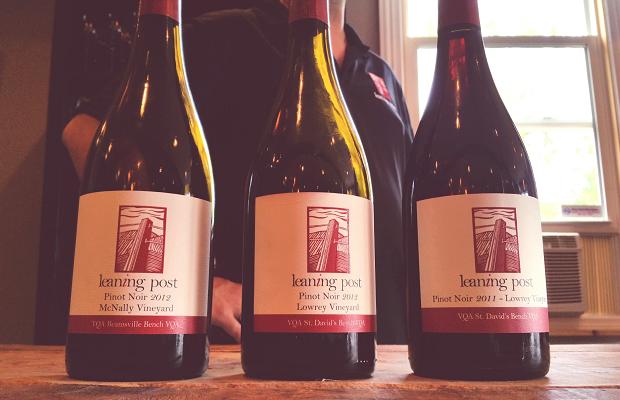
Three Pinot Noirs of Leaning Post

Three Pinot Noirs of Leaning Post

Leaning Post Wines Pinot Noir McNally Vineyard 2012, VQA Beamsville Bench, Niagara Peninsula, Ontario (Winery, $38.00, WineAlign)

“I want you to see the difference between vineyards. That’s terroir.” This the crux and the impetus to abide and acquiesce fruit from McNally, a cooler, higher site of younger vines. For Ilya, this is “truffle hunting, eating roasted pig, at the base of an oak tree.” The forest floor and the catalytic funk come across more in flavour than smell, following cherries in the dead of an aromatic night. Modernity be damned, this strikes ripe, layered and nearly indelicate. The wine’s got some real chew to it, along with crispy flowers, like nasturtium and lavender. “I think this is the best Pinot that I’ve made,” boasts Senchuk, from 15 year-old vines at Peninsula Ridge. Ilya’s muse came from the 2010 made by winemaker Jamie Evans, along with the Voyageur ’10 made by Ross Wise at Keint-He. Wines that spoke in a vernacular that Senchuk could understand and relate to on a deeper level. Prime ripeness defines 2012. Though it teases of grandiose terroir, its complexities reign in the power with each sip, every time. Drink 2016-2022.  Tasted June 2015  @LeaningPostWine

Potatoes, not wine #pei @normhardie

Potatoes, not wine #pei @normhardie

Norman Hardie County Unfiltered Pinot Noir 2013, VQA Prince Edward County, Ontario (125310, $39.00, WineAlign)

Procuring depth in County Pinot Noir is a tough task within the constraints of resisting a temptation to reach for sugars, alcohol and dark berry fruit. Norm Hardie’s 2013 unfiltered (at 10.9 per cent) and lambent exegesis succeeds because it offers the best of all available worlds. Roots for vines that burrow to limestone develop a structure that while may have at one time been inconsistent, have crossed the threshold in ’13 to establish a guarantee. A Hardie PEC Pinot Noir can be bright and accessible. It can also be tough, tart and tannic, as it is here, again, but not without its foil. The work is now innate, the transitions seamless, the crossroads left in the dust. This wine will please two camps; those who can afford and demand immediate gratification and those who are willing to wait for secondary (two to three years) and tertiary (four to seven) character development. Drink 2017-2022. Tasted April  and September 2015  @normhardie

Culmina Hypothesis 2013, BC VQA Okanagan Valley, British Columbia, Canada (Winery, $39, WineAlign)

In 2013 the blend is not listed on the label though it strikes as a return to Cabernet Franc, albeit with a layer of lush not yet perceived. The 2013 combines the best of worlds put forth by the two previous vintages; ripe fruit, earthy-mineral tang, proper acidity and ripe, tonic tannin. The composition here is the most, accomplished, distinguished and relished. In 2013 the enjoyment can be right now or up to 10 years on. All this with thanks to exceptional balance. Drink 2015-2023. This wine has not yet been released. Tasted November 2015  @CulminaWinery

Sparkling wines by Hinterland

Sparkling wines by Hinterland

Hinterland Les Etoiles 2012, VQA Prince Edward County, Ontario (Winery, $39.00, WineAlign)

An axial split between Pinot Noir and Chardonnay balances this traditional method Sparkling wine, specific to and what can only, obviously be from Prince Edward County. Acidity defines its existence in every facet of its being. A rich star to be sure, from a warm vintage, free from frost and more importantly, immune to mould. Jonas Newman talks of the methodology, in growing low to the ground. As the sun goes down, the canopy shades the fruit, slowing down the ripening, extending the season, developing the sugars, the complexities and preserving the acidity. At 6 g/L RS, with limestone communication and that sassy acidity, Les Etoiles in ’12 is pure County Sparkling. It exudes untamed apple and unnamed acidity. The Hinterland acidity. It strikes early and often. Just add warmth, stir and voila. Terrific year. Drink 2015-2021.  Tasted October 2015  @hinterlandwine

Ancienne Chardonnay and Pinot Noir 2013 with a glass of soon to be released Rose

Ancienne Chardonnay and Pinot Noir 2013 with a glass of soon to be released Rose

Lightfoot & Wolfville Pinot Noir Ancienne 2013, Nova Scotia (Winery, $40, WineAlign)

If de novo for Pinot Noir is to be found in Nova Scotia then count me in because the inaugural release from Lightfoot & Wolfville is the trailblazer for and from the extrinsic frontier. Tasting the painstakingly measured yet barely handled 2013 for the first time (from bottle) is like falling into a glass of Nova Scotia cherries. Somehow there is this simultaneous and virtual voyage abroad to imagine a comparison with Nuits-Saint-Georges, in its earth crusted, sanguine, welled up tension that begs questions and belies answers. A year yonder the taste from barrel and what can be said? Pinot Noir adjudicated, into a cortex of recognizable consciousness and thus into the natural Nova Scotia mystic. Ignore and forgive the dope of first returns, for no one could have imagined such ripeness and immediate gratification. Future releases will dial back in the name of structure. That said, in 2013 there is a red citrus, ferric debate that will send this to an exordium seven years down the road. Impossible inaugural release. Approximately 50 cases made. Drink 2015-2022.  Tasted July 2015  @lwwines  @rachel_hope

Stratus assemblage and varietals

Stratus assemblage and varietals

Stratus Tannat 2012, VQA Niagara On The Lake, Ontario (Winery, $42.00, WineAlign)

“To me this is one of the most successful new varieties we are planting,” exclaims J-L Groux. In similar ways with Stratus varietal cousin Petit Verdot, acidity rules the roost. Smells like a just sliced open bag of organic earth, freshly neutral, funkless and emptying into a (first use) terra cotta pot. A rich, looking straight ahead expression. What it hides in fruit is lost to the brilliance of balance though plum is the operative hidden flesh and it will make a clearer impression when it steps clear of the tar and the tannin. This is pitchy sagacity, with poise and length. Drink 2016-2022.  Tasted June 2015  @StratusWines

Tasting The Old Third at White Oaks

Tasting The Old Third at White Oaks

The Old Third Sparkling Pinot Noir à la Volée 2011, VQA Prince Edward County, Ontario (Winery, $59, WineAlign)

“On the fly” is not exactly what comes to mind from this 100 per cent Pinot Noir, first Sparkling wine made by Bruno Francois. Calculated, attention to detail and intensity of ideation more like it. Three years on the lees, no dosage and from a vintage to speak in more than whispered voices, of acidity that announces its arrival with immediacy and a summons to contest. The nose does yeast, toast, citrus and ginger. A first release revelation as ever graced Ontario’s waves, as dry as the desert and lingering with switch back traces of its yeasty, toasty self. A single vineyard can be this way, equally and in opposition of natural and oxidative, with a hue less than Pinot Noir, though unrequited as a triumph when you get a ripe white from such Pinot. The production of 1200 bottles is relatively house high in a stunner that needs no sugar to draw up its flavours. Drink 2015-2023.  Tasted twice, July and October 2015

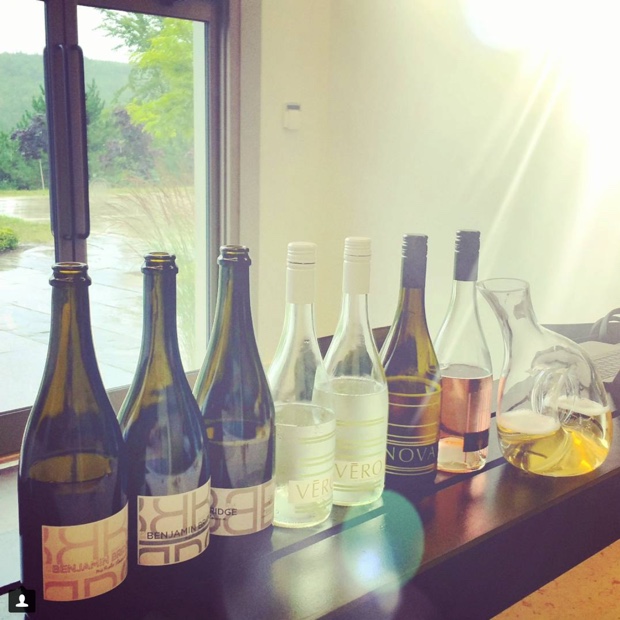
asting across the @Benjamin_Bridge Vero, '08's, '04, Sparkling & Cab Franc Rosé. Thanks JB, Scott & Mike

asting across the @Benjamin_Bridge Vero, ’08’s, ’04, Sparkling & Cab Franc Rosé. Thanks JB, Scott & Mike

Benjamin Bridge Brut Reserve Methode Classique 2004, Annapolis Valley, Nova Scotia (275396, $95.00, WineAlign)

The ’04 is hanging in beautifully, on a wire of impossible balance, at 11 years old not yet really transitioning. There is simply too much brightness for it to give up its youth. You have to strain your ears, nose and throat to assuage just a hint at oxygen, life affirming breaths and then a keener sense of toast and yeast. Still behold the grapefruit, a sign of remarkable adolescence, the hang time amplified and in mass hyperbole here, in this current appraisal, address and time. How can richness act and display with such alpha freshness? How can an aging body not shed baby weight, turn lanky, lean and awkward? How is it neither the bitter pill of juvenility or senility has been swallowed? That is not the case here in a Blanc de Blancs which still has five to seven years of very active life ahead. Drink 2015-2021.  Tasted July 2015  @Benjamin_Bridge  @jbdeslauriers

Good to go!

Twitter: @mgodello

Instagram: mgodello

WineAlign: Michael Godel
Facebook

Wines of South Africa: It’s the fling itself

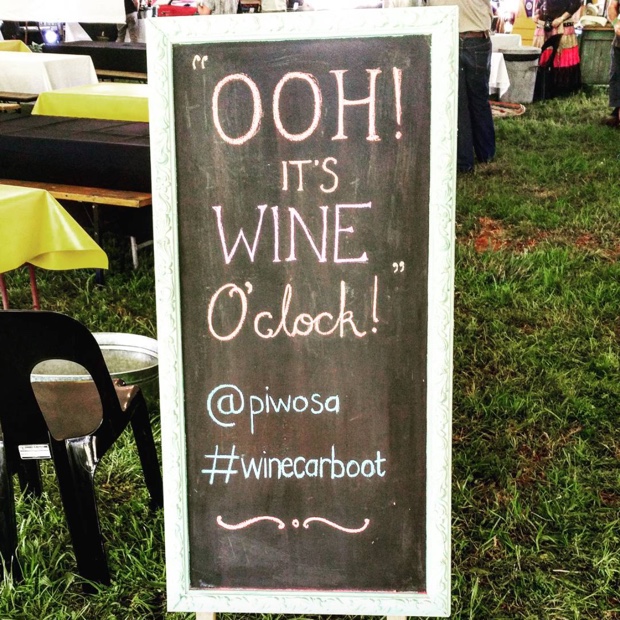
High five Sunday, at #winecarboot with @PIWOSA @WOSA_ZA @WOSACanada #journeysendvineyards #schapenberghills #sirlowryspass

High five Sunday, at #winecarboot with @PIWOSA @WOSA_ZA @WOSACanada #journeysendvineyards #schapenberghills #sirlowryspass

A few weeks ago there was this South African fling in Toronto. Anyone who fancies themselves as anything showed, because everybody was there. Joshua Corea and Archive Wine Bar graciously played host. Cape wine swelled like water and the mass of sommelier humanity flowed like wine.

After we had first returned to Canada from Cape Wine 2015, Will Predhomme and Wines of South Africa Canada’s Laurel Keenan had asked Rémy Charest, Scott Zebarth, Nicholas Pearce and I a question in requiem of some deep Jack Handey thought. Of the bottles we tasted in South Africa, what would we most like to see at a paradigmatic tasting back home? We offered up our lists and many of them were presented at Archive, along with a tumultuous quantity more. The likes of such an amassment had never been seen this side of the great pond. Cape Town loomed in de Chirico casted shadow in the backwater distance, watching, wondering, judging. So I tossed a pondered abstraction out to the winds that drift in the South African wine diaspora. “What page is loomed in the giver?”

Related – Once upon a time in the Western Cape

My mind travels back to the Western Cape. The retrospection remembers wines yet brought to North American light, to intrepid voyages still to disgorge and to stories ultimately untold. Looking back it occurs to me, from a northern point of view, having witnessed and experienced an immersion and exposure into the culture and wines of South African life, that it is not the thing you fling. It’s the fling itself.

It began with the trebuchet. At Journey’s End the Premium Independent Wineries of South Africa (PIWOSA) threw a car boot and catapulted some rather heavy objects at targets far away.

The prepossession laid out with tastes of The Drift Farm, The Winery of Good Hope, Glenelly Cellars and Mullineux & Leeu. Later the night begged and belonged to vignerons gathered at Longridge Estate, the following morning a tour of the Franschhoek Motor Museum and a tasting at Anthonij Rupert Estate.

Each of the three days at Cape Wine begat evenings in Cape Town of world’s away preoccupation. Velvet dissident South African Braai at Publik, her majesty’s secret service at Ellerman House and born in the USA-DGB in the Winelands. Events de facto, recondite and unshackled.

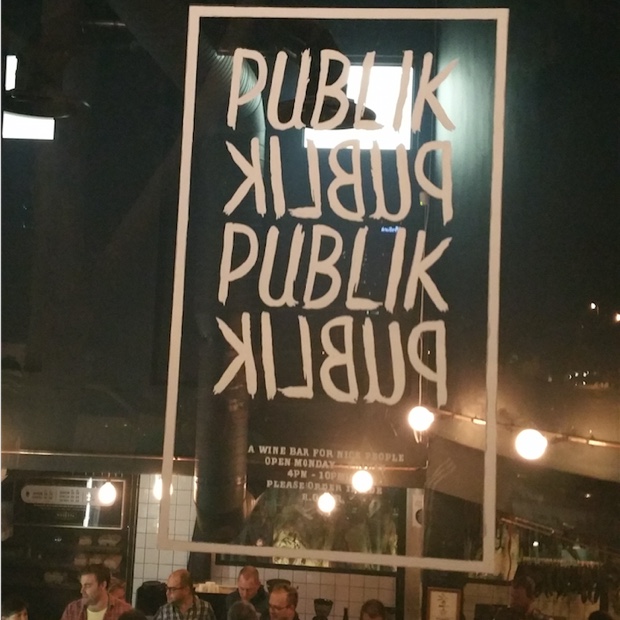
Publik, Cape Town

Publik, Cape Town

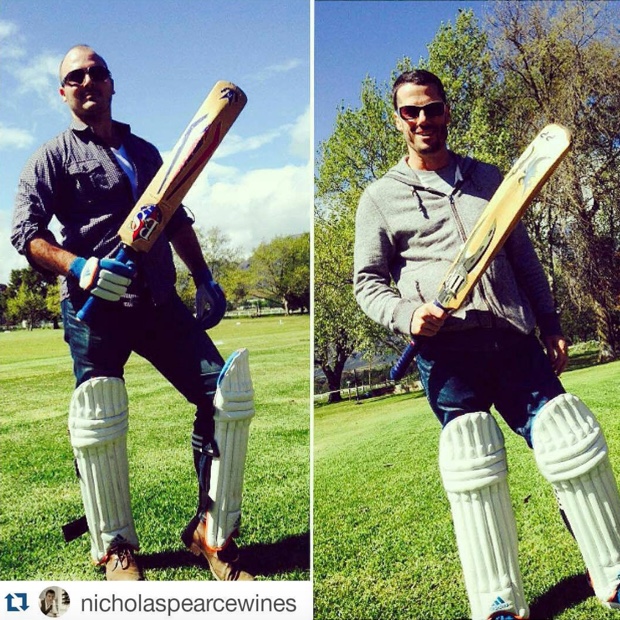
Then the Canadian boys played cricket with the Swartland cowboys and while our swings looked more like hockey snap shots and our bowls like little league change-ups, in the end we held serve and thankfully no one got hurt. True Swartland smoking at the hands of Callie Louw linked Groot Frankenstein to Barque Smokehouse BBQ.

Cricket adversaries #swartlandswingers

Cricket adversaries #swartlandswingers

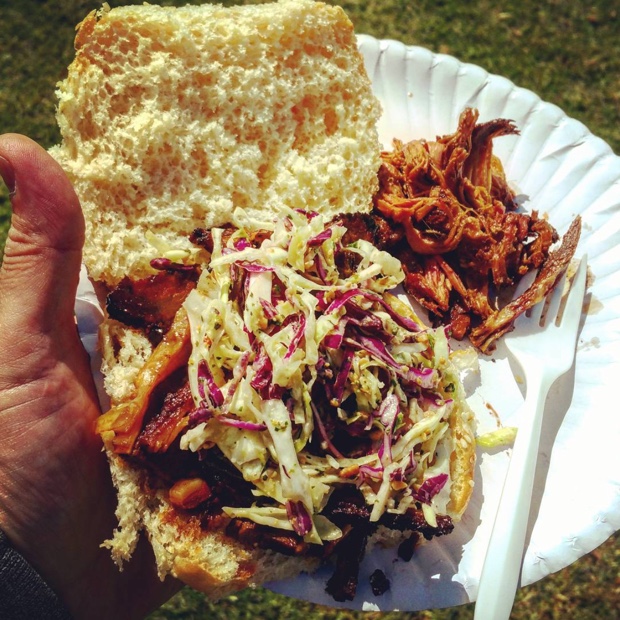
A #braai in the hand is worth two in the bush #callielouw #porseleinberg @SwartlandRev #swartlandindependents #swartlandswingers #swartland

A #braai in the hand is worth two in the bush #callielouw #porseleinberg @SwartlandRev #swartlandindependents #swartlandswingers #swartland

An epic 12 hours followed the matches, first with Ken Forrester and a speed tasting across a portfolio shot through the heart with some striking, older bottles. Then the group got down to trials at the Winery of Good Hope with Alex Dale and Jacques de Klerk. Remy Charest, Scott Zebarth, Kler-Yann Bouteiller and Godello helped mix, match, add and subtract percentages of fermented juice to decide upon the blend for the Pearce-Predhomme Stellenbosch Chenin Blanc. Nicholas and Will are now taking orders for delivery in the new year. Then in order, wagyu beef and Radford Dale wines at Ken’s 96 Winery Road Restaurant, World Cup Rugby and Burgundy.

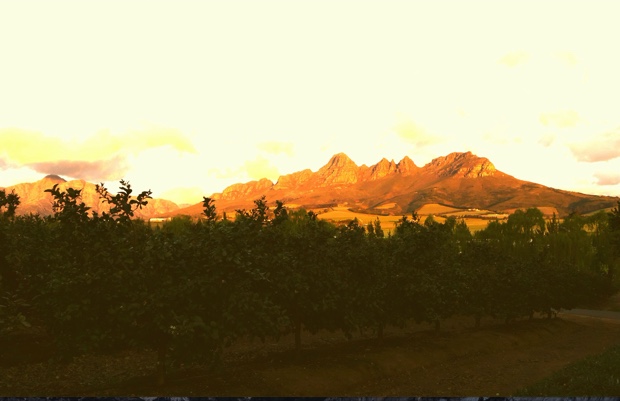
The view from the Winery of Good Hope

The view from the Winery of Good Hope

On the final day we paid a visit to the Hemel-en-Aarde Valley along the Hermanus wine route, with a tasting at Bouchard Finlayson and lunch at La Vierge winery.

I tasted hundreds of wines during the eight-day journey around the Western Cape. In due course I will put up tasting notes for as many as possible but for now here are a couple of dozen, specific to and in conjunction with the people and places that hosted us.

The PIWOSA Wine-Car Boot, Journey’s End Winery

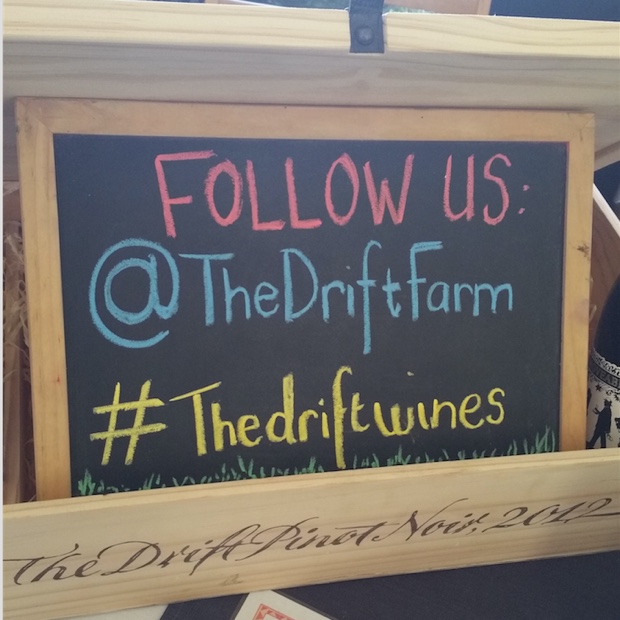
The Drift Farm

The Drift Farm

The Drift Wines Year of the Rooster Rosé 2014, Overberg Highlands, South Africa (Winery)

Winemaker Bruce Jack’s 100 per cent shaken, not stirred Touriga Franca was inspired by a trip to the Douro. Rhubarb and salinity rub the ripe fruit in the right way. If 007 were to drink Rosé, this would fit the metrosexual bill. From four barrels. Drink 2015-2016.  Tasted September 2015  @TheDriftFarm

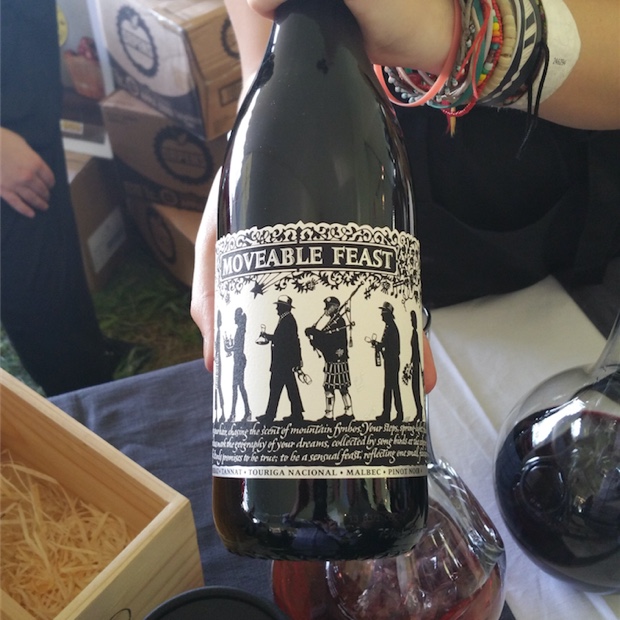
Drift Farm The Moveable Feast

Drift Farm The Moveable Feast

The Drift Wines The Moveable Feast 2013, Overberg Highlands, South Africa (Winery)

A blend (that drifts and changes every year) of Malbec and Shiraz with Tannat, Touriga Nacional and Pinot Noir. Though the notes are played without excess, the specs ruminate for infinite possibilities, with aspects as from mine run-off, ocean salinity, high body acidity, muted sunshine, rusticity and veneer. Rides a sonic highway, to “crossroads with nothing to lose.” The feast and the famine, a fighter, “put back together by a troubled groove.” From minimalist Hemingway to Foo from Grohl. Get the drift? Drink 2015-2019.  Tasted September 2015

The Drift Wines Mary le Bow 2011, Robertson, South Africa (Winery)

A farm-designate red blend (Wildepaardekloof, Langeberg Mountain) built upon Cabernet Sauvignon (38 per cent), Shiraz (31), Petit Verdot (23) and Merlot (8). In ode to the Cockney saint, big Bow Bell and crusader’s crypts. Extended barrel age and the deepest, darkest maturity makes for a brooding red reflective of a Kloof’s tale from a crypt. Not for the faint of red blends. Indeed it trembles with power. Drink 2017-2021.  Tasted September 2015

JRN3YS End

Journey’s End Sauvignon Blanc The Weather Station 2014, Stellenbosch, South Africa (AgentWinery, WineAlign)

A product of the first Sauvignon Blanc clones planted in South Africa (next to a weather station). The wine had been bottled less than a week ago so while the pyrazine factor is set to high the equal and mitigating fruit freshness trumps the green. Free spirited, of spice, in bite and quickly settling, into balance. Drink 2015-2018.  Tasted September 2015  @JourneysEndWine  @vonterrabev  @colyntruter

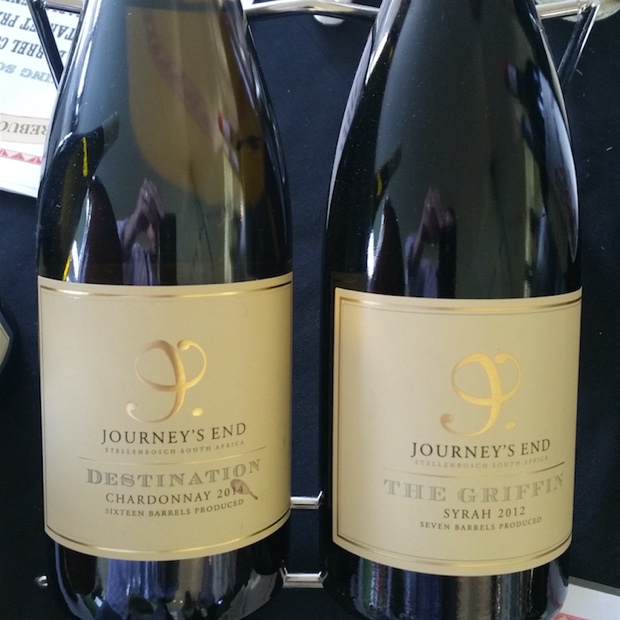
Journey’s End Destination Chardonnay 2014, Stellenbosch, South Africa (AgentWineryWineAlign)

A nicely, effectively minor reductive Chardonnay that knows the barrel well. Divides by mitosis the cells of mineral and spice into furrows, chiseling a secondary cytokinesis flavour profile in cut by brilliant gemstone flexure. From fruit fracture to cellular overlap, out of (approximately 10 months) wood and into impressionistic stone. Tasting accessed through four stages imagines time to be exigent; through reduction (prophase), oak (metaphase), stone (anaphase) and texture (telophase), until the ultimate descent toward’s the journey’s end. Drink 2016-2022.  Tasted September 2015

Journey’s End Trebuchet 2014, Stellenbosch, South Africa (AgentWinery, WineAlign)

Two Cabernets and a Malbec conjoin to catapult funk-less, heavy laden red fruit into an atmosphere of veneer. The flavours are inclusive of pomegranate and anise, with some rust and circumstantial metallurgical magnification. The tang is a factor to be reckoned with in this primeval red blend. Crushes unsuspecting objects upon landing. Let it settle for 12 months. Drink 2016-2020.  Tasted September 2015

Journey’s End Cabernet Sauvignon 2009, Stellenbosch, South Africa (AgentWineryWineAlign)

A 100 per cent varietal wine from a wind that blew through and away. The child of a markedly perfect vintage blessed with chalk, grit and terroir. Views from within the new barrel have diminished along with once terrible teeth gnashing tannin. At six years-old it sits cross-legged, big-boned, fruit fleshy, structured and sure. The evolution is far from complete with berries seemingly so presently ripe, the late spice and coffee kick making cause for yet jittery times. Two or three more years will offer further guarantees of pay dirt and peace. Drink 2017-2024.  Tasted September 2015

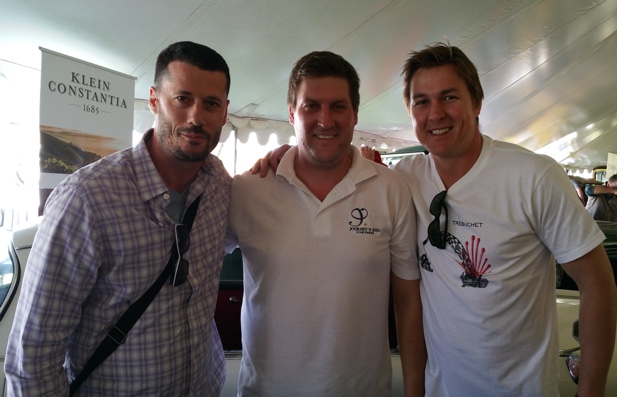
Godello, Leon Esterhuizen and Colyn Truter from Journey's End

Godello, Leon Esterhuizen and Colyn Truter from Journey’s End

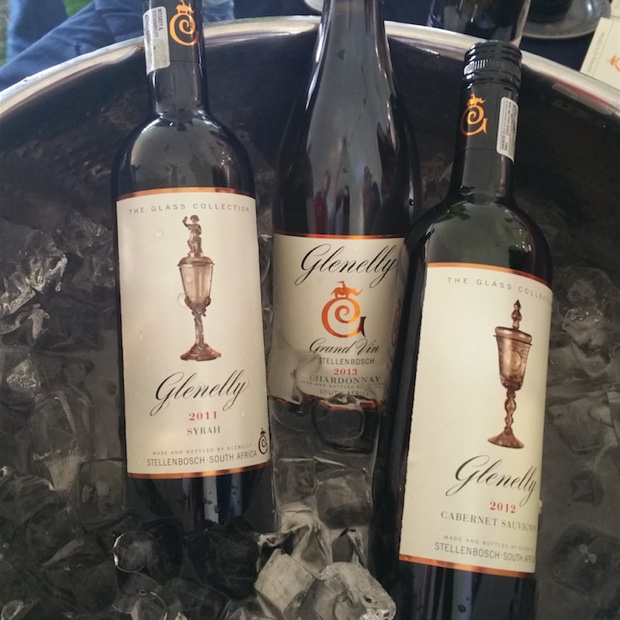
Glenelly Estate Shiraz “Glass Collection” 2011, Wo Stellenbosch, South Africa (Winery, Agent, WineAlign)

Screw cap Shiraz reason number one here, fresh from Stellenbosch, single-vineyard, whole bunch fermented for aromatics and 10 months in one-third new oak, for maximum flavour. “These wines are to be drunk young,” notes export manager Nicolas Bureau, “within five to six years of the vintage.” And so, why put a cork in them? From the hands of winemaker Luke O’Cuinneagain and Secateurs minimal intervention wine consultant Adi Badenhorst. Sparkle, vigour and dew. Drink 2015-2021.  Tasted September 2015  @GlenellyWines  @VinexxWine

Glenelly Wines

Glenelly Wines

Grand Vin De Glenelly Red 2009, Wo Stellenbosch, South Africa (360339, $19.95, WineAlign)

There are components of the Shiraz and the Cabernet in the Grand Vin though its composure comes neither from sparkle nor funk. Nor does it pay direct homage any more to the Rhône than it does to Bordeaux. With time, the Grand Vin will go it alone, from Stellenbosch to the world. Time spent in oak was lengthy (18 months in one-third new) for a blend composed of Syrah (42 per cent), Cabernet Sauvignon (40), Merlot (14) and Petit Verdot (4). The estate clearly considers blends as more than the sum of parts. The Grand Vin is the thing. The Glenelly king. It’s hard to get under its skin, to comprehend its nuance, to know it as a child. The wood, the terroir and the structure yet relent to understanding. A matriarchal wine to be sure, a generation may need to pass for the Grand Vin to carry the torch. The Pichon Longueville connection is not lost or left to chance but this prodigy will need to find its own voice. Red wine of such eternal maturity exists towards a future that begins now. Or on in two to three years. Drink 2017-2024.  Tasted September 2015

With Nicolas Bureau, Glenelly Estate

With Nicolas Bureau, Glenelly Estate

Mullineux & Leeu Syrah 2011, Wo Swartland, South Africa (Winery, Agent, SAQ 12490545, $36.00, WineAlign)

Grasps the subterranean funk of the Swartland terroir and runs with in, through fields of atmosphere, in a wholly singular way. A culling combination if shale, schist and granite, brushed by (15 per cent new) oak for 11 months. Pure, natural, fresh and rising, by citrus zest and inflating acidity. The oscillating flavours prick, pierce, push and pull with elemental and mineral inflections. Like a light show in the sky, Chris and Andrea Mullineux’s Syrah is a quiet spectacle. Drink 2016-2026.  Tasted September 2015  @MullineuxWines  @MullineuxChris  @Nicholaspearce_

Mullineux & Leeu Cinsault Rosé 2013, Wo Swartland, South Africa (WineryAgent)

Tangy tangerine, rhubarb and liquid chalk are the emotive emissions from this skin contact blush as much orange as it is pink. Wild in sauvage, perfectly musty, a Rosé of its own accord and spacing within the parameters of its very won world. Drink 2015-2017. Tasted September 2015

Mullineux & Leeu White 2013, Wo Swartland, South Africa (WineryAgentWineAlign)

An old bush vines blend of Chenin Blanc (80 per cent), Clairette Blanc (13) and Viognier, 10 per cent of which was fermented in old oak. A wild and carpeted ride for Chenin Blanc, melding into gentle acidity with layers of smithy portent and even a bit of Greekdom. “The son. And the heir. Of a shyness that is criminally vulgar.” There is so much spice and complexity, from the skins of many citrus fruits. Strips, stripes and skirts the mouth with layers of mineral life. How soon is now for wines like these in South Africa and to be shared with the world? Drink 2015-2023.  Tasted September 2015

Mullineux & Leeu Syrah Iron 2013, Wo Swartland, South Africa (WineryAgentWineAlign)

If such cure, grip, ferric grab and intense tannin has ever infiltrated South African Syrah it has not yet found its way over to me. In a side by side comparative tasting with the Schist Syrah this one wrestles to win. The Schist is all perfume and soft elegance. The Iron draws power to strength from strength. It is an unrelenting conduit of energy, from soil clearly designed to outlive humanity. The Syrah is a product of geological wonder and winemaking that steps aside to let the terroir speak its mind. Demanding and filled with tension now, time will soften the stranglehold and loosen the wires. Lots of time. Drink 2019-2028.  Tasted September 2015

Radford Dale Nudity 2014, Voor-Paardeberg, South Africa (Winery, AgentWineAlign)

From the Winery of Good Hope, vignerons Alex Dale and Jacques de Klerk. Ancient granite soil from a single-vineyard on Paardeberg mountain. Organic, dry-farmed, total consciousness, flowing robes, grace, striking. Low alcohol, high natural acidity, fresh, spirited, energetic Syrah. Impossible South African Syrah. Drink 2015-2022.  Tasted September 2015  @Radforddale  @WineryGoodHope  @deklerkjacques  @Noble_Estates

With the gang from Radford Dale

With the gang from Radford Dale

Radford Dale Black Rock 2013, Perdeberg-Swartland, South Africa (Winery, AgentWineAlign)

From old bushvine vineyards scattered amongst the granite outcroppings of the Swartland, the blend combines Syrah, Cinsault, Carignan, Grenache, Mourvedre and Viognier for full Rhône homage, if not necessarily effect or intent. The percentages change with each vintage, left to seek harmony in the hands of master blender de Klerk, a man who plays and has the mandate to do so. Natural fermentations persist, as they should and they rightfully accomplish goals of freshness, natural acidity and that elusive you’re born with cure that extends health and longevity. Modern South Africa of ancient longing here on display is just the tip of the bare essentials, in ferments and blends, yet to come. Drink 2015-2020.  Tasted September 2015

Working on South Africa with a sundown over Stellenbosch @WOSACanada

Working on South Africa with a sundown over Stellenbosch @WOSACanada

The Stellenbosch Experience, Longridge Estate

Fleur du Cap Unfiltered Chenin Blanc 2014

Fleur du Cap Unfiltered Chenin Blanc 2014

Fleur du Cap Unfiltered Chenin Blanc 2014, Western Cape, South Africa (Winery, Agent, WineAlign)

A markedly different and intriguing Chenin Blanc that saw seven to eight months in second and third fill barrels. Well-groomed, direct, crisp, clean and pure within the wooden framework and not even close to flirting with oxidative leanings or an overly creamy texture. A pleaser avec plaisir in excelsior, expression and exemplary restraint. Very tidy winemaking. Drink 2015-2019.  Tasted September 2015  @FleurduCapWines

Venison and salted chocolate, Longridge Estate

Venison and salted chocolate, Longridge Estate

Fleur du Cap Unfiltered Pinotage 2014, Western Cape, South Africa (WineryAgentWineAlign)

If it was not for this early sip of Fleur de Cap’s Pinotage on the first night of the South Africa trip I’m not sure the doors to new perception would have ever been opened. Fresh, red fruit juicy, base, natural and nearly naked. A step into giving new meaning for the great hybrid history and varietal future. Though other examples over the course of a week would blow my mind, this unfiltered beauty set the altering stage for what was to come. Unexpected excellent match to Venison with salted chocolate. Drink 2015-2018.  Tasted September 2015

Chenin gem @LongridgeWines & munificent hospitality @StellWineRoute @WOSA_ZA @WOSACanada #stellenblog

Chenin gem @LongridgeWines & munificent hospitality @StellWineRoute @WOSA_ZA @WOSACanada #stellenblog

Longridge Estate Chenin Blanc 2013, Stellenbosch, South Africa (Winery, Agent)

Covers the essentials for Chenin Blanc in a Vouvray style; mineral, lemon, bitters and salinity. Emphasizes mastered qualities with proper stability and a strength of character. Will not usher in any sort of revolution but it takes beautifully bitter pear-like fruit from wizened vines and hits the target. And though it spent 11 months in second and third fill barrels you would never know it. A flinty fleeting moment, a slow ride and a shelter from residual sugar that might try to alter its corse. Instead it will munch on that sweetness to live on. Silky smooth, momentarily pungent and refreshing as can be. Stellar Chenin. Drink 2015-2020.  Tasted September 2015  @LongridgeWines

Ken Forrester Vineyards Renegade 2011

Ken Forrester Vineyards Renegade 2011

Ken Forrester Renegade 2011, Stellenbosch, South Africa (SAQ 10703084 $24.25, Winery, Agent, WineAlign)

Mainly Grenache and inculcated with varietal layers thereof, though in the end it is the Rhône blend accrual that bounds over hills and dales. I’m not sure any number of Stellenbosch investigations will unearth more expatriate quality for the coin than is found in the Renegade. A true marker of its maker, The specs are spot on to produce heft, strength and confidence from tireless work. Healthy pH, minimal sweetness, virile acidity and generous alcohol. Like a blood transfusion even though you weren’t sick. Like drinking snake’s blood in grain alcohol on the side of a Hanoi road. Like an hour of intense yoga. Ken Forrester, all in, fully, completely engaged. This red blend speaks in his voice. “Renegade! Never been afraid to say. What’s on my mind at, any given time of day.” It’s no jay but it covers the Stellenbosch bases, from A to Z. Drink 2015-2020. Tasted September 2015

Ellerman House

Godello at the edge of the world #capetown #ellermanhouse #banghoekuncorked #southafrica

Godello at the edge of the world #capetown #ellermanhouse #banghoekuncorked #southafrica

Tokara Sauvignon Blanc Reserve Collection 2014, Elgin, South Africa (Winery, Agent)

From the atmospheric growing conditions of Elgin, the new South African geographical epiphany for the cool-climate varietal future. From the winery’s Highlands farm, transported to Stellenbosch and fermented with tact, cold, stainless, with acidity intact. Tokara’s Sauvignon Blanc is bone dry (near and dear to 2.0 g/L of RS) and a straight piercing heart of an SB as ever there was. Takes the likes of Marlborough and teaches it a thing or two about the coastal ways of the Western Cape. Tasted with viticulturist Aidan Morton. Drink 2015-2017.  Tasted September 2015  @TOKARA_ZA

Brandy sculpture @Ellermanhouse @WOSA_ZA #banghoekUncorked #capetown #southafrica

Brandy sculpture @Ellermanhouse @WOSA_ZA #banghoekUncorked #capetown #southafrica

Oldenberg Vineyards Chenin Blanc 2014, Stellenbosch, South Africa (Winery, AgentWineAlign)

From vines planted in 2006 on alluvial soils. A tight, lean and bracing Chenin Blanc with seamless attribution. Simplicity of fruit meets oak (30 per cent ferment for 10 months in 300L French barrels, 50 per cent new) but somehow freshness wins outright. This in kind to sharp, feisty, sour-edged acidity that is lemon bracing and a linger for a good length of time. Also in spite of generous alcohol (14.11 per cent) and relatively low pH (3.21). Jasmine and honey? “Fields of flowers deep in his dreams (Ha ha, honey), lead them out to sea by the east (Ha ha, honey).” The reminder of Stellenbosch and Chenin Blanc. Drink 2015-2019.  Tasted September 2015  @Oldenburgwines  @HHDImports_Wine

Thelema Mountain Blanc de Blancs Méthode Cap Classique 2012, Stellenbosch, South Africa (Winery, Agent, WineAlign)

Sparkling generously donated to with agreeable richness from eight year-old vines out of Tukulu soil. Generous of yield (16 t/hL) at low red/yellow saturated slopes near the basin floor. The dosage keeps it comfortably Brut, the acidity cozily numb. Classic bubble methodology, including three years lees aging, in line for such fine elegance. Runs for a straight purpose, of citrus incarnate with a penchant for piercing. In its youth it knows nothing of oxidative and yet that dimension will lengthen its future. For 15 years it will reside in the refreshing valley in between. Though he is a multi-varietal maestro and with no disrespect to the rest of his Thelma and Sutherland portfolios, if Sparkling is not winemaker Rudi Schultz’s true calling then I’ll have to spend three more hours at dinner with proprietor Thomas Webb to find out what is. Drink 2015-2030. Tasted September 2015  @ThelemaWines  @tomwebbsa  @EpicW_S

We've been expecting you, Mr. Bond #ellermanhouse #banghoekuncorked #007 #capetown

We’ve been expecting you, Mr. Bond #ellermanhouse #banghoekuncorked #007 #capetown

Thelema Sutherland Viognier-Roussanne 2012, Elgin, South Africa (WineryAgent, WineAlign)

In the realm of two-thirds to one-third ratio from Seven year-old (at the time) vines grown on Tukulu and Glenrosa soils. The ramp up of Roussanne percentage elevates acidity to balance the richer, broader and wide-ranging Viognier breadth. There is great grape tannin in this Elgin white with healthy yet balanced alcohol, negligent sweetness and that bouncy, bountiful acidity. Lays about happily in a pool of bleed from rock and stone. Possessive of the je ne sais quoi all impressionistic whites must have, vry of the land and tonic attention. In the end bitter grapefruit draws a cheek full of wince and sends goose bumps down the spine. Gotta love that. Drink 2015-2021.  Tasted September 2015

Panels of terroir @Ellermanhouse Face in the crowd #terroirwall #angustaylor #rammedearth #paulharris #winegallery #capetown

Panels of terroir @Ellermanhouse Face in the crowd #terroirwall #angustaylor #rammedearth #paulharris #winegallery #cape town

DGB in the Capelands

Others would kill for her Pinot fruit and Lizelle Gerber kills it for @BoschendalWines #dgb #DGBinthewinelands

Others would kill for her Pinot fruit and Lizelle Gerber kills it for @BoschendalWines #dgb #DGBinthewinelands

Boschendal Cap Classique Jean le Long Prestige Cuvée Blanc de Blancs, Stellenbosch, South Africa (Winery, Agent)

Chardonnay curried favour from impeccant and licid (2007 base wine) cool climate fruit and then ingratiated by 60 months plus one year on the lees. Of added significance by only having been sulphured at disgorgement. A yeasty B de B of beautifully beckoning oxidation and bone dry at 2.3 g/L of RS. Fizz of finesse and elegance, a feet sweeping, inveigling, influence exerting Stellenbosch cuvée. A skillfully applied mound of preserved lemon and freshly grated wild ginger, piled like airy mousse, or like lustrous wasabi without the burn. Benchmark for the Méthode Cap Classique B de B style. Drink 2015-2027.  Tasted September 2015  @BoschendalWines  @LiffordON  @liffordwine

Cape Oysters Vietnamese #chefswarehouse #capetown

Cape Oysters Vietnamese #chefswarehouse #capetown

Boschendal Cap Classique Grand Cuvée Brut 2009, Stellenbosch, South Africa (Winery, Agent, WineAlign)

Time is the settler is this Pinot Noir (51 per cent) and Chardonnay (49) of aeration and ripeness from its days as a sun-worshipper. From fruit primarily sourced in Stellenbosch with some help from the Elgin Valley. Disgorged in the Spring of 2014, six months post 36 months on its yeasts have brought it to a very happy place. As it found itself in requiem of a less than Brut profile, the sugar level is higher (7.8 g/L), a munching magic mousse transformative indeed, enacted during secondary fermentation and measured dosage. Distinctly nutty, rich, torch toasty and presented in purview by citrus. For Cape oysters, at the least, or foie gras and with a bowl of salted nuts. Drink 2015-2029.  Tasted September 2015

Boschendal Cap Classique Grand Cuvée Brut 2009

Boschendal Cap Classique Grand Cuvée Brut 2009

Boschendal Sauvignon Blanc 2014, Elgin, South Africa (WineryAgent)

From the highest of and one of the latest ripening mountain plateau vineyards in Elgin, 500m above sea level and only 18km away from the Atlantic Ocean. The Eikenhof farm offers well-drained Bokkeveld Shale soils and with a healthy yet restrained sugar component (4.4 g/L), here Sauvignon Blanc goes at it rich and grassy, herbal and highly textured. The white pepper olfaction in lieu of capsicum makes a yummo aromatic impression. Here SB executes in expatiated flection, with layers waiting to be peeled away in discovery of what lays beneath. I would suggest not treading near the surface. You will miss out on the mysteries weighted in its depths. Drink 2016-2021.  Tasted September 2015

Pork Belly at DGB in the Capelands food truck event

Pork Belly at DGB in the Capelands food truck event

Boschendal Chardonnay 2013, Elgin, South Africa (WineryAgent)

Slow-ripened, low-yielding Chardonnay seasoned from unirrigated mountain slopes of Bokkeveld Shale mixed with some clay. Chardonnay paid attention in detail only a small farm can afford, followed by prudent picking in a warmer than average vintage. The barrel has its say in a heartfelt way, the integration with delicate fruit sprouting wings more effete than mannish. One quarter of the 80 per cent oak ferment is new and the rest either second or third fill. Fresh now, reductive to a necessary degree and built for a minimum five with an optimum seven to eight year shelf life. Drink 2015-2020.  Tasted September 2015

This guy loves Canada @WOSA_ZA #DGBinthewinelands #foodtrucks

This guy loves Canada @WOSA_ZA #DGBinthewinelands #foodtrucks

Boschendal Pinot Noir 2013, Elgin, South Africa (WineryAgent)

This is the bomb. Lizelle Gerber may be benevolently pegged as the white wine maker at Boschendal but place Pinot Noir fruit from the second highest vineyard in South Africa in her hands and shazam; welcome to the hallowed alchemy payoff. The treatment is not unlike what Gerber effects upon her Chardonnay; 50 per cent natural fermentation, 12 months barrel maturation in (25 per cent) new, (35) second fill, (15) third and (25) fourth French oak. Variability comes by way of heavy red clays, from Table Mountain Sandstone, Bokkeveld shale, Tukulu and Silica Quartz with underlying Caoline clay. So what? Balance, so what. Her Pinot Noir finds separation by soil. The small berries are so prized even the baboons want in. The windswept vineyards are a place of chaste, inviolable grounds, where Pinot Noir needs little human interference save for some predator protection. The gathering here imagines Willamette salinity, Otago purity and Beaune delicacy. Gerber’s Pinot is simple, cast from only overnight free-run juice, unpressed, pitch perfect, virtuous and riddled with the tension of decorum. It will age for 10 years plus. Drink 2015-2025. Tasted September 2015

Good to go!

Twitter: @mgodello

Instagram: mgodello

WineAlign: Michael Godel
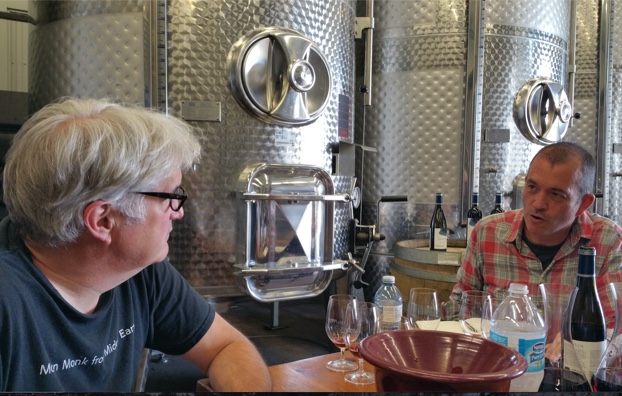
Facebook

In a gadda da vino baby

Charcuterie and Appetizers @barquebutchers by the Greek Silver Fox, Chef @JoCastrinos

Charcuterie and Appetizers @barquebutchers by the @greek_silver_fox, Chef Jo Castrinos

It’s December, baby. In Ontario that means one thing. Cash money for the LCBO. Lineups longer than a 1988 Moscow bread line. If you’re from somewhere other than this magical, monopolized place we call wine central you just wouldn’t understand. You would not be privy to and giddy with isles stacked in pyramids of critter red and whites, Bailey’s Irish Cream and Absolut Durian. Wait, that would be cool.

No, not la vida loca. We are not talking about living the crazy life to make you cool. No party trick, no Spanglish, no politically incorrect, Urban Dictionary Ricky Martin slur. Not this either. “The awkward silence and/or major anticlimax that follows the confession of a big secret that everybody else already knew.”

You want it all in December, the most wine for the money, for gifts, to bring to the holiday party, to stack some away in the cellar. You want the Garden of Eden in a bottle.

In a gadda da vida, honey.

Let me tell ya.

With the ghosts of Christmas gem releases now just a strange, uncomfortable and debilitating nightmare trailing away in the rear-view mirror of Visa cards maxed out past, now is the time to focus on what’s real. To concentrate on purchasing wines in your price bracket, wines that speak of people, places and who will be drinking them.

I have combed, tasted and considered the releases now on shelves for this weekend’s December 12th offering. The parameters are $15 to $35, something for everyone, to purchase with confidence and to equip you with a most necessary advantage, to present them with pride no matter the circumstance. Ten wines to work the holiday room.

Cabriz Reserva 2012

Cabriz Reserva 2012, Doc Dão, Portugal (21410, $17.95, WineAlign)

Such a juicy red, of honest imporosity and primed with acidity to prop and speculate. Bang on for the price, in its weight class and with the charm of sweet adolescence. Solid Dao with a whole lot of propensity to mix and match with the multitude of foods at your table. Drink 2015-2019.  Tasted November 2015  @wines_portugal  @winesportugalCA  @Noble_Estates

Gérard Bertrand Grand Terroir Pic Saint Loup 2011

Gérard Bertrand Grand Terroir Pic Saint Loup 2011, Ap Coteaux Du Languedoc, France (376491, $18.95, WineAlign)

Syrah, Mourvedre and Grenache blend from the Pic Saint-Loup mountain peak and limestone cliff flanks of the the Coteaux du Languedoc. Sharp with concentrated red fruit, tight acidity and just enough tannin to render this marketable to a five-year plan of evolution. Real and as naturally forged as they come from Gérard Bertrand’s Cross Series reds of southern France. Prime example from and one to celebrate a terroir like Pic St Loup which continues to play the unheralded outlier. Really fine and just the right and correct amount of attitude. Drink 2015-2020.  Tasted November 2015  @GBvins  @FwmWine  @LanguedocWines

Tawse Spark Limestone Ridge Sparkling Riesling 2013

Tawse Spark Limestone Ridge Riesling Sparkling 2013, Twenty Mile Bench, Ontario (370361, $19.95, WineAlign)

Only a year and in conjunction with an improved Sparkling wine vintage for Riesling, short work has elevated the young Spark’s game. A repeat lees performance initiates the conversation, of cheese melted overtop composite laminate, with yeast burgeoning about. In 2013 the concrete crispness is cemented deeper, etched into stone and thus completing the sub-$20 legacy. That winemaker Paul Pender can coax Riesling character, striking Sparkling wine resolve and yet hover in the air of litheness, well, this is the kneading. Silty, salty earth and soft transitions to citrus acidity are a requiem for success as per the Twenty Mile Bench/Limestone ridges vouchsafe common. Can even imagine a bit of time turning this into sparks and honey. Drink 2015-2019.  Last tasted November 2015  @Tawse_Winery  @Paul_Pender

Ernie Els Big Easy 2013

Ernie Els Big Easy 2013, Wo Western Cape, South Africa (220038, $19.95, WineAlign)

Big Easy, Stellenbosch

Big Easy, Stellenbosch

A massive amount of fruit, caked earth and big, bouncy reduction is packed into this free swinging Western Cape red blend. The reduction mixes with Rhone bacon and its own regional gamey notes. This is both typical and radical. It is made in a style that many love and will continue to love and yet others will balk at its generational specificity. The clean, pure focus in Rhone varietal terminology teams up to subdue the Cabernet though that variety does add lushness to smooth out some of the hard edges. Tons of flavour. Drink 2015-2020.  Tasted November 2015  @ErnieElsWinery  @WOSACanada  @WOSA_ZA

Baron De Ley Varietales Graciano 2011

Baron De Ley Varietales Graciano 2011, Doca Rioja, Spain (397166, $21.95, WineAlign)

Another terrific vintage for the varietal Ley, wrapping a wreath of pure Graciano fruit around your neck and letting you lay back with a sip of something beautiful. Pure floral liqueur, the violets and the sweat, the sweet fruit and the citrus accent. Soft lactic acid and chewy with an accent of dark chocolate and spice. A bit more burly than the ’09 and certainly increasingly oak apparent but a good mouthful nevertheless. Let it rest for two years to let the wood sink in. Drink 2017-2022.  Tasted November 2015  @BaronDeLeyRioja  @RiojaWine  @AMH_hobbsandco

Stratus Evergreen Red 2008

Stratus Evergreen Red 2008, VQA Niagara On The Lake, Ontario (437434, $24.95, WineAlign)

Where has this been? This harmonious composition, like a Starland Vocal Band, Cabernet Sauvignon (30 per cent) plus Cabernet Franc (30) friendship with a healthy dose of Merlot (27) and a bit of Petit Verdot (4) in minor support. The acidity and the tannin have nearly fully waned but it’s a real pleasure to drink at this seven-year mark. Pretty fruit, creamy texture, just enough energy left to keep the party grooving, weightless and soaring in the air. Some chocolate and dessert like tendency but with the right kind of salty main course or just a few sips leading to that point, this will be an afternoon delight. “My motto’s always been ‘when it’s right, it’s right.’ Why wait until the middle of a cold dark night?” Herbal finish is cool and Northern Ontario like in its slow, easy exhalation. Extra points for the foresight, the opportunistic release point and the effort in a hit or miss vintage. The Evergreen Brickworks market’s loss is the LCBO’s gain. Drink 2015-2018.  Tasted November 2015  @StratusWines

Versado Malbec 2013

Versado Malbec 2013, Luján De Cuyo, Mendoza, Argentina (317008, $25.95, WineAlign)

The rocks beneath the earth precede the rich, dark fruit. After the berries and the candy beets and the spices subside the flowers grow and take over the room. The vintage brings more layers than before. Malbec of character and belief, even a touch of good VA, a coat that only the Southern Hemisphere can provide. It is not usually present in Mendozan Malbec so it’s really a breath of fresh paint here in the Versado. Great purity. Protracted length. Most expansive and intriguing vintage to date. The Reserva will be killer.  Last tasted November 2015

Domaine Karydas Naoussa 2010

Domaine Karydas Naoussa 2010, Dop Naoussa, Greece (272013, $26.95, WineAlign)

A rich, nearly creamy mouthful of Xinomavro, full on red fruit and as much scorched earth as prescribed to be necessary. There is plenty of front end acidity and back-end tannin though the pathway between is rocky, jagged and bumpy. I’d like to see this again in two or three years to see if it has smoothed out. For now it’s certainly edgy and divided though I will admit it has gained my full, undivided attention. Time will tell. Drink 2017-2022.  Tasted November 2015  @KolonakiGroup  @winesofnaoussa  @DrinkGreekWine

Domaine Hamelin Chablis Beauroy Premier Cru 2012

Domaine Hamelin Chablis Beauroy Premier Cru 2012, Burgundy, France (391805, $33.95, WineAlign)

May just be the most well-rounded Premier Cru Chablis in the Ontario market today and orbits would not be its prescribed or described path. Linear more like it, star-shooting with trailing sparks from its steely beginnings out of stainless silo. Well-rounded because it draws fruit from every level of Kimmeridgien subsoil up and down the hills, from the bottom of the valley to the top of the slopes. Also because of its pinpoint unoaked Chablis accuracy, from mineral on the tongue to citrus receding and recoiling. So very clean old bones fruit (up to 35 years old) and direct at a price point most Premier Cru fail to touch. Drink 2015-2021.  Tasted December 2015  @BIVBChablis  @oenophilia1

Fontodi Chianti Classico 2012

Fontodi Chianti Classico 2012, Tuscany, Italy (933317, $36.95, WineAlign)

Classic and I mean classic Chianti Classico, cured, ancient, fruit forward. Modern, gritty, tannic, spicy, desperately in love and bound by leather. Tea and liqueur, all in Chianti Classico. Some iron and animale, bitters, tonics, cherries, medicines, all of the above. Acidity raging, thunder clapping, lightning striking. Needs seven years to shed emotional tears, fully settle and be a memory of its intense self. A wine that will remember. Drink 2018-2026.  Tasted November 2015  @chianticlassico   @rogcowines

Good to go!

Twitter: @mgodello

Instagram: mgodello

WineAlign: Michael Godel

Facebook

South African duck dynasty

Avondale Wines Navitas 2008

Avondale Wines Navitas 2008

Balance, health, sustainability, organics, bio-dynamics, 21st century science and a posse of ducks. For Johnathan Grieve, these are the tenets of growing grapes and making wine at Avondale. The family owned and operated winery in Paarl, South Africa is a purveyor of wines fashioned with low and slow dynamics. Their dynasty is bred from a form of naturalism practiced in farming and winemaking executed in its purest form.

Take a moment to consider the dowsing effects of viticulture and viniculture driven by divested interests, where natural fermentations and a complete absence of artificial adjustments are the sworn rule. Let yourself go and the tangent will take you further, to incurvate within a grower’s neighbourhood occupied by the dimensions of the spiritual intersected with the existential. You will find yourself stumbling upon life energies, living systems, cosmic influences and rhythms.

I tasted with Grieve in Toronto, May 2015, with thanks to Rare Earth Wines and Wines of South Africa Canada’s Laurel Keenan. I then sat down with him again in September 2015, at Cape Wine, in Cape Town, South Africa. The notes tell the stories.

Avondale Wines at Cape Wine 2015

Avondale Wines at Cape Wine 2015

Avondale Wines Armilla 2009, Paarl, South Africa (WineryAgent, WineAlign)

From a farm dating to 1693 purchased by Johnathan Grieve’s family in 1996. Poster bubbles, for the Blanc de blancs habitation and for the Avondale oeuvre, the Armillary sphere, Roman “circle of life” and ancient astronomical instrument used to show the position of stars around the earth. Traditional production, with a kiss of oak and a final act of dosage. Five total years on the lees, including two on coarse and one in bottle. Picking was accomplished at the end of that January, in purpose of stylistic elegance and beautiful bitters born of natural and integrated acidity. Terrific dip of biscuits into honey. Like Baklava in a glass though equally savoury to dessert. Baller bubble, balanced and with the sense to envision evolution, to the look ahead of an adult age. Would retail for approximately $28 CAN. Drink 2015-2027.  Tasted twice, May and September 2015  @Avondalewine  @RareEarth_Wines  @WOSACanada  @WOSA_ZA

Winemaker with a true sense of purpose- Johnathan Grieve @Avondalewine @CapeWine2015 #capewineconnect #terraestvita #paarl #westerncape #southafrica #southafricanwine

Winemaker with a true sense of purpose- Johnathan Grieve @Avondalewine @CapeWine2015 #capewineconnect #terraestvita #paarl #westerncape #southafrica #southafricanwine

Avondale Wines Jonty’s Ducks Pekin White 2013, Paarl, South Africa ($14.95, WineryAgent, WineAlign)

Named for the young ducks and their voracious appetites for snails on which they go to town in the vineyard. Chenin Blanc driven, with some white Muscat, Semillon and Roussane. Sweet Chenin nose while 10 per cent aged in big French barrels adds texture in fleshy orchard fruit, from white peach to yellow plum. Duck, duck, goose, as in tart, sapid berries and the way they solidify the finish. Drink 2015-2018.  Tasted May 2015

Avondale Wines Jonty’s Ducks Pekin White 2014, Paarl, South Africa ($14.95, WineryAgent, WineAlign)

The house white with the Avondale ducks always in mind. “How does mother nature do it? For each problem there is a natural predator available to do the job.” The holistic approach applies to the winemaking of Johnathan Grieve as well. In 2014 there is an easier and more naturalistic feel. With less oak and lees, some rest and the result is increased freshness, especially for the dominant Chenin Blanc. Ready to go as we speak. Drink 2015-2018.  Tasted September 2015

Avondale Wines in Toronto, May 2015

Avondale Wines in Toronto, May 2015

Avondale Wines Jonty’s Ducks Pekin Red 2011, Paarl, South Africa (383547, $14.95, WineryAgentWineAlign)

At Avondale they employ beneficial bacteria, predatory wasps, birds of prey and their famous ducks. The Jonty’s posse goes frenetic when escargot are offered up at lunch. The same can be said for hordes of humans and this red blend. Composed from Shiraz, Cabernet Sauvignon, Merlot, Cabernet Franc, Petit Verdot and Malbec, it is seamless at this price. While savoury to be sure, there is no grape dominance. The middle is filled with drupe, kernel and spice. Try finding volatility. You can’t. Speaks, comments and lectures in layers of fruit across its hexa-varietal spectrum. Drink 2015-2020.  Tasted May 2015

Avondale Wines Anima Chenin Blanc 2013, Paarl, South Africa ($22.95, WineryAgentWineAlign)

Straight shooting Chenin of struck stone and flint, from 100 per cent whole clusters, naturally fermented and aged for 12 months on the lees in large (500L) barrels. Plus bâtonnage, in the name of lees. Offers a sense of wax and pollen, in airy texture, through a valley of sound, with bending notes and a big riff finish. Some bitter melon and unique berries fret about. Has developed its tannic structure with mineral for soul and weight from soil. Terra est vitasoul to soul. Soil to soil. Avondale makes use of concentrated sea salts and cover crops give balance to the vineyard, to add diversity without negativity. Like adding keyboard and saxophone to the blues, for soul. “Get away from the blind side of life.” Change it. Drink 2015-2020.  tasted May and September 2015

Avondale Wines Cyclus 2013, Paarl, South Africa ($26.95, WineryAgentWineAlign)

A sink full blend of give or take equal (20-24 per cent) parts, with the vortex at Viognier, alongside Chenin Blanc, Marsanne and Roussane with (six to 10 per cent) Sémillon. Ostensibly, sensibly and spoken through megaphone, purporting the drive to and for such an appellative blend in South Africa. A circle of life and energy to announce the need for diversity, in vineyard, by way of bringing varietal togetherness and the notion that anything can be accomplished, anywhere, anytime. Confirms the idea that everything ripens in South Africa and can be showcased with the correct approach. An Avondale holistic approach. A Capelands example for which many should follow. Fruit in every pore, nook, hollow and cranny. Just as the vortices of a cow’s horn encourages blood flow, so are energies focused in the Avondale soil. Breathing in the Autumn, breathing out in Spring. The cycles. Drink 2015-2022.  Tasted September 2015

Johnathan Grieve in Toronto, May 2015

Johnathan Grieve in Toronto, May 2015

Avondale Wines Cyclus 2012, Paarl, South Africa ($26.95, WineryAgentWineAlign)

Viognier, Chardonnay, Roussanne, Chenin Blanc and Sémillon. In 2012 it’s as if the five varieties are spinning in centrifuge. Quite the whirling white blend, dynamic, energetic, replete with tropical fruit, metals and pulpy paper. The entire accumulation grooves in a vortex, whorling within a dynamic container. The lees adds a perfume of fine format, of yeast cultures and beneficial bacteria in a frenzy, bringing character and expression. The nine months of coarse solids have filtered in, relegating to elegance and pausing in a northern Rhone way. Up front fruit once quiet is now showy in this, its early stages of development. Fascinating stuff. Drink 2015-2021.  Tasted May 2015

Avondale Wines Camissa 2014, Paarl, South Africa ( WineryAgentWineAlign)

A different sort of animal, the Camissa is a Blanc de Noir made from red varieties, Muscat de Frontignan, Mourvedre and Grenache. Tells the story of Table Mountain and the stream that feeds the vineyard. An expression of mostly red fruit; strawberry, raspberry, cranberry and pomegranate, dried, saline and briny. Lithe like dry Rosé and struck by impeccable balance thanks to natural acidity. Citrus claims the finish. Drink 2015-2019.  Tasted September 2015

Avondale Wines Samsara 2009, Paarl, South Africa ($32.95, WineryAgentWineAlign)

A 100 per cent Syrah of purity, elegance and structure, from beginning to end. Nary a gauze or volatile moment intrudes, nor smoke and tar neither. Floral of violets, red plum and wet clay with just the faintest note of warm coffee grinds. Bright and vivid acidity, a rebirthing of Syrah, of South African roots incarnate and that grounded, earthy, yeasty cure. Much more elegant than the raw and energetic ’07. Drink 2016-2022.  Tasted May 2015

Avondale Wines Samsara 2007, Paarl, South Africa ($32.95, WineryAgentWineAlign)

Hand-harvested Syrah, whole bunch, naturally warm fermented with no crushing at 30-32 degrees centigrade. Extended (15-16 day) skin contact. All this to gain maximum extraction and optimum flavour. What resulted was a deep, rich, red earth cured, funk-motivated Syrah, driven by soil above all else. Pepper and violets meld into severe grape tannin from those skins. Allspice and red citrus make their mark. Still not yet ready for prime time. Drink 2017-2022.  Tasted September 2015

Avondale Wines La Luna 2009, Paarl, South Africa ($34.95, WineryAgentWineAlign)

A five Bordeaux varietal blend from Cabernet Sauvignon to Malbec with diminishing percentages by way of and through Cabernet Franc, Merlot and Petit Verdot. A meritage in which the heritage aromatics driven by natural yeasts are accentuated by the bell curve of the ferment, during the decline and before the spike. Cake of the earth, fruit of dense expression and the structure of low and slow development. Extended skin contact, housing the place where yeasts reside, leads to the cultures driving the tannins. A culture club of composure and happiness. Really offers up a sense of what is achievable in South Africa. Drink 2018-2025.  Tasted May and September 2015

Avondale Wines Navitas 2008, Paarl, South Africa (WineryAgentWineAlign)

The flagship, limited release Navitas (just over 1000 bottles) endears juicy, parturient Grenache and Mourvedre to Avondale’s enceinte Syrah in a transformative and characterful Rhône blend. This ’08’s cup runneth over with intense energy in what may be referred to as the powerstream red, 100 per cent whole bunch fermented, powered by natural enzymes and essentially, prolifically gravid with the most severe envy of carbonic maceration. A post ferment skin contact for 30 days and 18 months in gently effacing, new 6o0L oak barrels transports grapes to near nirvana. This is what can be done with fruit that has fully completed a journey to phenolic ripeness. Approximately $139 CAN. Drink 2017-2028.  Tasted September 2015

Good to go!

Twitter: @mgodello

Instagram: mgodello

WineAlign: Michael Godel
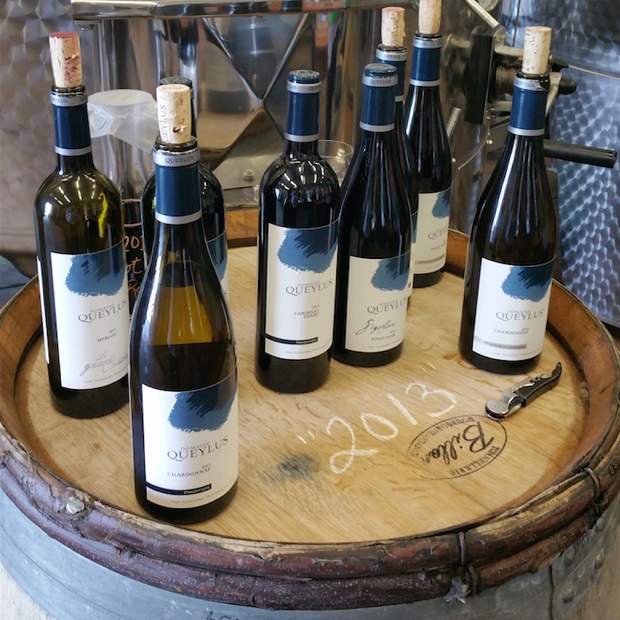
Facebook

Garnacha covered part two: Cariñena

Cariñena rocks! Autochthonous soils and their stones @DoCarinena @winesofgarnacha #bushvines #aragon #espana

Cariñena rocks! Autochthonous soils and their stones @DoCarinena @winesofgarnacha #bushvines #aragon #espana

This is the second of five instalments for a comprehensive study concerning the wines of Garnacha from the regions of Aragón and Catalonia.

In October of 2015 WineAlign colleague Sara d’Amato and I travelled together with Christopher Waters of Vines Magazine.  The trip’s mission was to discover Spain’s Wines of Garnacha in their natural habitat, the five distinct and allied Denominación de Origen in the regions of Aragón and Catalonia.

Related – For a comprehensive report by Sara d’Amato and I read WineAlignDiscover the Flavours: Wines of Garnacha

Our host in Zaragoza was The Spanish Institute for Foreign Trade (Instituto Español de Comercio Exterior, ICEX), the Wines of Garnacha campaign and the office of Garnacha Origen. The trip was orchestrated with expertise by Aragón Exterior Managing Director Ignacio (Nacho) Martinez de Albornoz and Head of Wines from Spain (ICEX) Alfonso Janeiro. Our chaperones were Ignacio, Sofía González Martínez, Ivo André Alho Cabral and Roser Mestre, in Zaragoza and on expeditions to the five DO’s that comprise the wines of Garnacha.

Related – We’ve Garnacha covered part one: Campo De Borja

Restaurante Palomeque, Zaragoza

Restaurante Palomeque, Zaragoza

As we did each evening before heading out the following morning to a particular DO, Sofía, Ivo, Ignacio and Roser introduced the intrepid Los Canadienses travellers to the wines of that DO over dinner in  Zaragoza.  For the wines of Cariñena the matchmaking happened at Restaurante Palomeque, a Zaragozan institution that bridges exemplary regional cooking with 21st century acumen. The dishes at Palomeque were as much exciting as they were down to earth. The cast of Cariñena could not have chosen a more supporting role.

Loganiza de Graus con setas (trompetilla negra) #Palomeque #Zaragoza Somontano sausage filled with black trumpet mushrooms

Loganiza de Graus con setas (trompetilla negra) #Palomeque #Zaragoza Somontano sausage filled with black trumpet mushrooms

Cariñena

What is most glaring about Cariñena is the prevalence of a prairie geography and how it differs in stark contrast to the other DO’s in Aragon and Catalonia. Though mountains (including Moncayo) loom in the distance,  Cariñena’s obvious dissimilitude to other wine growing regions has as much to do with climate as it does with soils. The Cariñena terra is primarily composed of clay and limestone, with very little in the way of slate like you find in Campo de Borja. The ground’s constitution aggregates with a significant absence of altitude, relative to the hills of Somontano, Calatayud and Terra Alta. That said, the are’s best examples of Garnacha are culled from vines that grow at reasonably impressive heights. What all of this essentially translates to is the basic, hard fact that the harvest here is completed earlier. At the point of our visit (October 18-19), the reaping was 90-95 per cent done. The brusque and breviloquent conclusion sees to less acidity and tannin, more elegance and less ageing potential, as compared to (certainly) Calatayud.

The autumn of old #Cariñena bush vines @DoCarinena #garnachaterroir

The autumn of old #Cariñena bush vines @DoCarinena #garnachaterroir

Calatayud is the DO to offer the best compare and contrast with Cariñena, just as a similar distinction can be ascertained with Somontano and Terra Alta. Campo de Borja is the outlier, unique, singular, the brother from another mother. Very important is the increased Mediterranean influence in Cariñena. Calatayud has more extreme seasons, particularly in spring and summer. In Cariñena, some striking, ancient Garnacha bush vines exist (and again, produce the region’s best bottles), but the age of the vines are generally younger. This aspect separates it from all of the other DO’s, especially when the discussion centers around the laying down of Garnacha.

The wine museum of Cariñena

The wine museum of Cariñena

After a brief tour through the wine museum housed in the offices of Cariñena’s DO, Christopher, Sara and I sat down for an extensive and brutally honest tasting with Care winemaker Jorge Navascues Haba.

Wines of Cariñena at Restaurante Palomeque

Wines of Cariñena at Restaurante Palomeque

Bodegas Solar de Urbezo Garnacha 2014, Cariñena, Spain (Winery, AgentWineAlign)

From old bush vines (40-66 yrs) with some altitude. A family winery Garnacha with a gravelly feel, not so much rustic as gritty, for Cariñena and with really fine and necessary acidity. Reaches black cherry near ripeness, though being struck by that acidity (from altitude therefore later ripening) but more so from recent changes in winemaking. Judging ripeness has become the catalyst and in 2014 this is a wine of terrific extract, restraint and pinpoint focus. Possessive off Motherwell like brushstrokes, thick swaths of fresh blue-green cool colour and shaded by naturalism, in cure without funk. A good example of “good ripeness.” A lean and direct example. Only three chippy months of oak was used. All in all this is just prime freshness with a minor amount of green tannin. Approximate price $18.95 CAN. Drink 2015-2017.  Tasted October 2015  @UrbezoWines  @bwwines

Bodegas Solar de Urbezo Garnacha 2013, Cariñena, Spain (WineryAgent, WineAlign)

Carries with it more attitude in 2013, from a vintage that seems to have delivered variable ripeness over the course of the picking weeks. Definitely and devilishly imbued with complexity, from floral, through medicinal by way of bitters and across many angles. Has real garnet, Garnacha tang levied out of vivid acidity, sweet limestone tartness and those ever-bearing fruity bitters. Perhaps more interesting if not as accessible as the follow-up ’14. Drink 2015-2016.  Tasted with the Wines of Garnacha, Toronto, November 2014

Menguante Garnacha 2014

Vinedos Y Bodegas Pablo Menguante Garnacha 2014, Cariñena, Spain (WineryAgentWineAlign)

From one of the more stated quality terroirs with elevation (between 500-650m) and stony-clay-chalk soils. In almost every and all respects it shies in a subdued, restrained and reserved quality. This quiet repetition and still the phenolics seem optimized, the acidity resolved and the tannins in relative, correct ripeness. Another family project, small and philosophically sound in practices. Working one of the highest and best quality vineyards in Cariñena. “The waning moon,” for a biodynamic outfit, not certified, the old vines in that altitude receiving the most benefits from the Cierzo wind. From this it is easier to cultivate organically and biodynamically because of nature’s pest control. Some 80-year old vines throw wisdom and culled subterranean culture into the mix. A bit of citrus and chalk bleeds on the very fresh finish. Drink 2015-2018.  Tasted October 2015  @GranViu  @VinexxWine

Vinedos Y Bodegas Pablo Menguante Garnacha Selección 2012, Cariñena, Spain (WineryAgentWineAlign)

Two years on and with more oak this is a very different animal than the subdued ’14, integrated but on the other side of the aromosphere. The oak is dominant, vanilla and cocoa are the great waft in what is ostensibly pitch perfect fruit, in bottle on the dark side of the moon. Coconut, vanilla extract and cinnamon. The wood brings layered and sheathed character. Very plush and notes Jorge, “if you come to Cariñena to experience Garnacha, this wine will allow you to discover the wonders of American oak.” The deep fruit and earth melded into and by the barrel makes for a very pleasurable drop. The ’08 released into the Ontario market in November 2014 lends credence to the ageability of this Garnacha. Drink 2015-2019.  Tasted October 2015

Vinedos Y Bodegas Pablo Menguante Garnacha Selección 2011, Cariñena, Spain (WineryAgentWineAlign)

A grand, beguiling, sensuous, perhaps even pushing the boundaries of voluptuous Garnacha, “a wine that describes THE Garnacha,” according to dining companions in Zaragoza. Velutinous in composure and texture, with an orange skin finish. Here the gap is bridged, from traditional to modish, by nature and into seductive polish. The peeled citrus finish is also one of great mouth-watering acidity, intrigued by l’air de panache and laced by spice. Very well done. Drink 2015-2018.  Tasted at Restaurante Palomeque, Zaragoza, October 2015

Vinedos Y Bodegas Pablo Menguante Garnacha Blanca 2014, Cariñena, Spain (WineryAgentWineAlign)

One of the very few white Garnacha from Cariñena and the only example sampled in Aragon, alongside dinner in Zaragoza at Restaurante Palomeque. The mineral skips like a stone across the palate, white Grenache walking on water like a bone of peach skin and the weightlessness of almond paste. So subtle, breathless, atomic and minute. Mineral in ways to mimic Alsace, of low pH and high grape tannin, “the waning moon” is poignant to anti-fruit extreme and yet so refreshing it will, with age, point to honey and petrol. Drink 2015-2022.  Tasted October 2015

Lechuza Garnacha 2014, Cariñena, Spain (Winery, WineAlign)

The Lechuza “owl” is a collaboration between Valkyrie Selections and local winemaker Ana Becoechea from old vines vineyards just outside the town of Cariñena. This Garnacha Tinto from 45 year-old vines is borne with nature’s funk and an earthy dusting in the way Merlot can be. A chalky grit in distilled, liquid form carries a river of grain marked by the milled smell of warm cereal. Persistent, lengthy and purposed. Smell’s like victory. An excellent pairing to Somontano pork sausage filled with little black trumpet mushrooms at Restaurante Palomeque. Approx. $15 CAN. Drink 2015-2019.  Tasted October 2015

Lechuza Garnacha 2012, Cariñena, Spain (WineryWineAlign)

Named for the prevalence of owls, here old vines Garnacha is uncovered out of clay and calcareous soils. You can really smell and taste the natural vineyard funk, thankful to no oak, fresh and unctuous in simultaneous fashion, yet full and yes, lifted. Highly perfumed, and incredible value at $10 US. Impossible actually. Old vines, likely 40-45 years. You can smell the violets for sure. Approx. $15 CAN. Drink 2015-2017.  Tasted October 2015

Covinca Terrai OVG 2013, Cariñena, Spain (Winery)

From a good-sized cooperative with almost 1.700 hectares of vineyards where native varieties like Garnacha, Mazuela or Cariñena are merged with others such as Tempranillo, Cabernet Sauvignon, Merlot, Macabeo, Syrah and Chardonnay. Fruit purity escalated, with just a quick dose of oak, both French and American, more than seemingly good sized barrel, because there is integration and balance. Not the longest Garnacha in the DO but certainly a pleasurable drop. A bit sour-edged and lactic on the backside though a diplomatic red effectively considered. Drink 2015-2017.  Tasted October 2015

Terrai OVG 2014

Terrai OVG 2014

Covinca Terrai TLG Torrelongares Old Vine Garnacha 2014, Cariñena, Spain (Winery)

The vines in here are old by Cariñena stain cards (45 years) and the rich, suave texture brushes the velvet reasoning. Antecedent the median regional perfume and with Mediterranean effect, seen by an increase of the savoury, through briny black olive and caper. The converse flip side slides softer tannin, riper fruit of gregarious behaviour and that savour is a step up from the tart OVG. Accumulation sports a meaty, protein laced sensation. Comparatively speaking, this has more guts and virility. The mix of satin and natural cure matches beautifully with Palomeque’s Foie Gras Migas. Drink 2015-2019.  Tasted October 2015

Bodegas Prinur Garnacha Vinas Viejas 2013, Cariñena, Spain (Winery)

A family winery with soils gravelly and with (not so common to Cariñena) slate and even more singular with some vines that are 100 years-old or more. Vines sit at altitudes of 600m (Cariñena) and 800m (Consuenda) above sea level. The old vines sports some raisin and prune ripeness with evolution void of the natural cure necessity, “a zombie wine,” notes Jorge. Here it is hard to recognize Garnacha, with age that could be 2009 or 2010, along with a showing of VA. This is a flawed but very curious wine. Sour and tightly tannic on the finish but not long. Very disjointed. Cooked fruit. From such a warm to scorching vintage.  Drink 2015-2016.  Tasted October 2015  @bodegasprinur

Gastranomia Zarogazana 101 at #Palomeque...Zamburiñas Gallegas with Paniza Rosé @winesofgarnacha #Zaragoza #aragon #espana #scallops

Gastranomia Zarogazana 101 at #Palomeque…Zamburiñas Gallegas with Paniza Rosé @winesofgarnacha #Zaragoza #aragon #espana #scallops

Paniza Garnacha Rosé 2014, Cariñena, Spain (WineryAgentWineAlign)

The rusty, saline savour stands to be counted in a firm and responsibly, if surprisingly tannic blush. Talc, funk and serious tang but certainly not antiquity. Don’t expect the fruit to jump out and bite you in the behind, nor has it jumped the shark. Quite the structure for $12, sapidity and ping. Wow Rosado. Slightly higher in RS than Provence. Drink 2015-2018.  Tasted October 2015

Paniza Garnacha Rose

Paniza Garnacha Rose

Paniza Agoston Grenache and Syrah 2014, Cariñena, Spain (Winery)

From a 50-50 split with elevated sugar and acidity. French and American oak with an absence of restraint, and the oxy modernity of plush and pitch. The Syrah is so dominant in every way. The olives, pepper and bovine syndication is blatant and bullish. “Not a fair fight,” chimes in Jorge, and “that’s the point.” Dark and not so mysterious. “A winemaking wine.” No idea of origin but “a good palate.” Drink 2015-2016.  Tasted October 2015

Paniza Garnacha Vinas Viejas de Paniza 2012, Cariñena, Spain (Winery)

From variegated (schist, clay, loam and chalk) soil at the base of the Iberia Mountains at 800m altitude. Has a multi-terroir funk and a level of unctuousness mixed with savour from altitude. Sour but rigid and tempered acidity. Chalky yet cool and with much character and personality. Two oaks give obvious and integrated flavours. Were it not quite so ripe this would be a wine to see what can be done with Garnacha from Cariñena and five plus years. A bit sweet. If it were three instead of six, this would age like it should, low and slow. Drink 2015-2018.  Tasted October 2015

Artichokes and clams, Restraurante Palomeque, Zaragoza

Artichokes and clams, Restraurante Palomeque, Zaragoza

Grandes Vinos Beso de Vino Garnacha Rosé 2014, Cariñena, Spain (Winery, Agent, WineAlign)

Here Rosado advances into the glo but stops short of cool thanks to a retreat into warm aridity and salinity. Together they deliver, with strawberry and a bit of Co2. Refreshing, as if blush Vinho Verde. With a briny sea creature like clams or scallops (Zamburiñas Gallegas) it actually accentuates the crustaceous amplification, in both directions. Aprox. $9.99 CAN. Tasted October 2015  @BesodeVino  @GrandesVinos_CA  @Noble_Estates

Grandes Vinos Beso de Vino Garnacha Old Vine 2014, Cariñena, Spain (WineryAgentWineAlign)

The Beso de Vino is produced by the third largest cooperative in Spain. It is basic, straightforward, red fruit juicy Garnacha from low altitude, flat clay soils of Cariñena. Character comes in a modern, big box style, more international than regional. There is a dusty component mixed with a chew of Bubbilicious and no shortage of tangy fruit to match with wide ranging cuisine. Simple and effective Garnacha. Has travelled to where it needs to be. Drink 2015-2016.  Tasted October and November 2015

Grandes Vinos Corona de Aragón Garnacha Special Selection 2013, Cariñena, Spain (WineryAgent)

Another commercial wine with a North American market intent. Elevation gives cooler savour and yet it’s volatile and short. Boletus sensation, the sour a bit of a deterrent, but it has savoury interest. Drink 2015-2016.  Tasted October 2015

Grandes Vinos Anayon Garnacha 2013, Cariñena, Spain (Winery, 424424, Agent, $30.95, WineAlign)

A perched Garnacha, of a kind entrenched in the lush, the stylized, the worked and of smoothed edges. Extreme modernity, of a fast forward prepared cure, with similar fruit to the Corona but different winemaking. The fruit perhaps lags a bit behind the acumen. Possessive of an intriguing wild mountain herb. Drink 2015-2019.  Tasted October 2015

Bodegas San Valero Particular Garnacha 2014, Cariñena, Spain (Winery, Agent)

Musty, mushroom and an hour ago tobacco linger, cool modern savoury and pitchy sweet though aromatically, not in taste. High acidity and much cocoa/espresso. High yield Garnacha (50 hL/L). Commercial to be sure. Drink 2015-2016.  Tasted October 2015  @bodegasanvalero  @ImportWineMAFWM

Bodegas San Valero Particular Garnacha 2012, Cariñena, Spain (WineryAgent)

Combines Cariñena and Tosos fruit, of the same high yields, with a similar profile with some volatility. Cocoa, chocolate, coffee and liquorice.  Very firm and rigid wine. Not fresh and fruity that’s for sure. Resinous and the long direction taken with wood. Drink 2015-2017.  Tasted October 2015

Bodegas San Valero Particular Garnacha Vinas Centenarias 2014, Cariñena, Spain (WineryAgent)

From 80 plus year-old vines, this has the levels of kirsch and high toned fruit I would hope for in an old vine Garnacha. Still the espresso, the cocoa and the high levels of acidity, more aridity, firm and quite striking. This is a meaty, savoury and mountain herbal expression. Really impressive. Cariñena and Villanueva fruit. Pretty? Sure. Volatile? Yes. Polarizing? Certainly. This is where the style goes with time and this kind of winemaking. Drink 2015-2019.  Tasted October 2015

Care Finca Bancales 2012

Care Finca Bancales 2012

Care Finca Bancales Garnacha Reserva Vinas Viejas 2012, Cariñena, Spain (WineryWineAlign)

The most prized perfumed is found here, standing out among the extensive Cariñena line-up, of oaked violets arranged with aromatic presentation. One of the very few that truly preserve a heightened level of quality and identity for the region. From old (80 year-old vines) up at high altitude. Fashioned with carefully selected fruit and dealt a cool fermentation, followed by one month of maceration. Aged in bigger volume, old and new (300-500l barrels). “We are not pioneers, we are imitators,” admits winemaker Jorge Navascues Haba. What’s special is the size of the barrels and the mixture of oaks. Here Garnacha that should and will certainly live another six to eight years. Shows off enough fruit to match the tannin and the acidity pulsating in full rage. Grainy like few others yet with wooing, seductive, elegant, ripe red fruit. This is the benchmark for Garnacha from Cariñena with ego checked and left at the door. Drink 2015-2022.  Tasted October 2015

Bodegas Ignacio Marin Duque de Medina Garnacha 2014, Cariñena, Spain (Winery)

From a family winery (largest in Cariñena) and a wine unlike any other yet in Aragon. Mature, nearly caramelized, nutty and almost desert like. Very low in acidity and tannin. Oxidative. Quick work. Drink 2015.  Tasted October 2015

Bodegas Ignacio Marin Old Vines Garnacha 2010, Cariñena, Spain (Winery)

Touched, volatile, nutty to fruitcake, turntable vinyl and vaporizing. A flavour that recalls white cocoa and spun white wool. Once forbidden fruit playing hard to get. Old school, chiseled, locked in. Freshness no longer its number one asset. Drink 2015.  Tasted October 2015

Welcome to the Hotel #Cariñena

Welcome to the Hotel #Cariñena

Good to go!

Twitter: @mgodello

Instagram: mgodello

WineAlign: Michael Godel
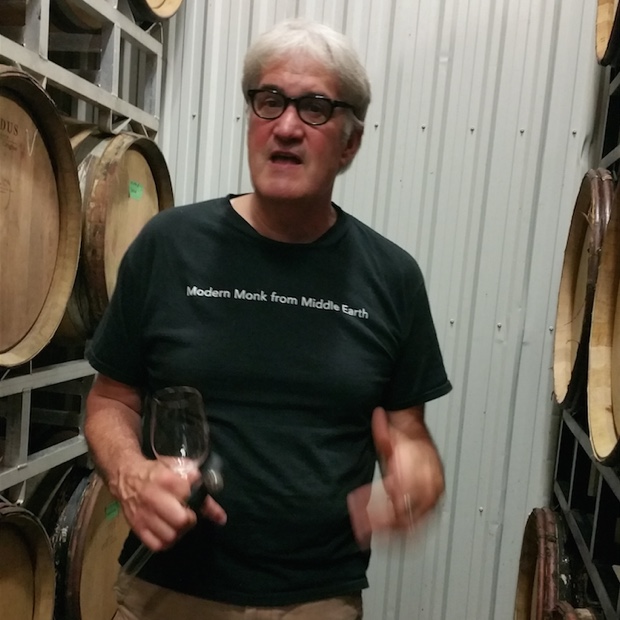
Facebook


Twelve days of wine to get you through the holidays

Charcuterie and Appetizers @barquebutchers by the GSF

Charcuterie and Appetizers @barquebutchers by the GSF

More reasons are requested, given, offered, presented and needed for purchasing and consuming wine during the month of December than at any other time of the year. And so, 12 more suggestions, falling this time within the realm of mortal affordability yet special enough to gift and to make you feel like you’ve done something nice for yourself. Go ahead, indulge. All from the November 28th VINTAGES release.

Casas Del Bosque Reserva Sauvignon Blanc 2014

Casas Del Bosque Reserva Sauvignon Blanc 2014, Casablanca Valley, Chile (974717, $13.95, WineAlign)

Could not be anything but Casablanca Sauvignon Blanc, movie quotes and all. Tossed like a cayenne dart at a yellow plum tree board. Sweet and salty, like white taffy and sprigs of rosemary on a bacon-wrapped scallop. Odd combo and why not. On the edge of tomatillo and nettle? Perhaps, but also composed with an acerbic wit, as time goes by. “It’s still the same old story. A fight for love and glory.” Drink 2015-2018.  Tasted November 2015  @CasasdelBosque  @azureau  @DrinkChile

Delheim Family Chenin Blanc 2014

Delheim Family Chenin Blanc 2014, Wo Stellenbosch, South Africa (429720, $17.95, WineAlign)

Flinty, smoky, reductive Chenin, certainly produced with quantity and accessibility in mind. Typically, succinctly Stellenbosch, with a level of sweetness available and in balance with the stony fruit that is marked by a mineral mine. Has good acidity and even better length. Drink 2015-2019. Tasted September and November 2015  @Delheim  @Noble_Estates  @WOSACanada  @WOSA_ZA

Arnaldo Caprai Anima Umbra Rosso 2012, Igt Umbria, Italy

Arnaldo Caprai Anima Umbra Rosso 2012, Igt Umbria, Italy (434266, $19.95, WineAlign)

So unexpectedly and remarkably fresh Umbrian of red fruit and ripe acids without any overkill from wood or tannin. This is a pure breath of fresh air in a world dominated by barrel, heat, over-extraction and covert winemaking operations. The fruit may not be Caprai’s most prized but it works a basic stratagem of interpretative and integrated, integral magic. It must be lauded for its honesty. Drink 2015-2018.  Tasted November 2015  @Arnaldocaprai  @StemWineGroup

Josef Chromy Pepik Sekt

Josef Chromy Pepik Sekt, Tasmania, Australia, (429704, $26.95, WineAlign)

A whole whorl of aromas kick up the dust from this pearl of a Tazzy with an arid and saline sense of destiny. Density and weight are surprising features, along with orchard fruit and wild machinations. Jams and swaggers with so much personality, from lime lining the velodramatic slopes of its groove to fish jumping out of its waters. Calling it alive would be an understatement. “Yeah, yeah, yeah, yeah.” Drink 2015-2020.  Tasted November 2015  @JosefChromy  @bwwines

Jean Max Roger Cuvée G.C. Sancerre 2014

Jean Max Roger Cuvée G.C. Sancerre 2014, Loire Valley, France (189126, $28.95, WineAlign)

Sweet scenting and spicy wafting Sauvignon Blanc, with white pepper and cool herbiage (mint, savoury, tarragon and basil). Good solid Sancerre, always, organically developed and of a verbiage that is modern, proper and articulate. Always spot on. Drink 2015-2020. Tasted November 2015 @oenophilia1  @LoireValleyWine

Spy Valley Envoy Sauvignon Blanc 2013

Spy Valley Envoy Sauvignon Blanc 2013, Waihopai Valley, Marlborough, South Island, New Zealand (429308, $29.95, WineAlign)

Elevated, reductive, flinty tones, noticeably crash course modern and reactive for New Zealand. Capsicum and juicy fruit gum, matchstick and tropical fruit, then citrus on the palate with opiate numbing. This is Sauvignon Blanc like Semillon, as if the winemaker at Spy Valley, with the best fruit possible from Waihopai Valley, had the intention of making the most serious SB on the planet. With a bit of barrel effect, though that may be a stretch I’m looking at a 10 year development here, into honey, rocks and a blast of propellent. Uncharted territory. Will have its share of naysaying anti-stylistic poo-pooers. Drink 2016-2026.  Tasted November 2015  @spyvalleywine  @SpyValleyUK  @nzwine  @TrialtoON

Château Bernadotte 2005

Château Bernadotte 2005, Ac Haut Médoc, Bordeaux, France (431775, $32.95, WineAlign)

A really nice drop of Bordeaux that has fully resolved from the semi-heat of 2005. This is good to go, with both acidity and tannin gracefully interconnected while the fruit remains. A good leathery hide and a slight ferric bleed fills the nooks. Lovely semi-old Bordeaux. Drink 2015-2017.  Tasted November 2015

Majella Coonawarra Cabernet Sauvignon 2012

Majella Coonawarra Cabernet Sauvignon 2012, Coonawarra, South Australia (301531, $33.95, WineAlign)

A massive combination of fruit, tannin and wood whorl in a ferric, tough, gritty and ready for nothing in any particular hurry Cabernet. That said, it is silky smooth, spicy and velvety too. A really big mouthful of so much goodness to last 20 years or more. Out it aside for all the major players to get in tune and it will be music to your ears. And pleasure to your lips. Drink 2017-2032.  Tasted November 2015  @aussiewineguy  @HalpernWine  @CoonawarraWine

Faustino I Gran Reserva 2004

Faustino I Gran Reserva 2004, Doca Rioja, Spain (976662, $35.95, WineAlign)

Rioja of another era, of tradition, curated history and the famous rusty liqueur. Steeping cherries, elongated acidity, rifling ripples of leather, cedar, cypress and chestnut. The right kind of Rioja with just a hint of plum and plenty of naturally orchestrated enjoyment. Drink 2015-2024.  Tasted November 2015  @RiojaWine  @Select_Wines

Stags' Leap Winery Petite Sirah 2012

Stags’ Leap Winery Petite Sirah 2012, Napa Valley, California (590356, $39.95, WineAlign)

Dark, dusty and devilishly rich. Must be noted from the start that this is quite restrained for Petite Sirah, cautiously oaked and modest in alcohol. It’s no introvert mind you. A note of volatility keeps it on the edge and the flavours are steeped in tea, coffee and cocoa nib. The vintage agrees with the varietal transplantation and the burgeoning acidity makes for a relationship built on mutual respect. Good and plenty. The handshake is currently quite gripped so waiting another 18 months or so should and will soften the clasp. Drink 2016-2022.  Tasted November 2015  @stagsleapwines

Künstler Hochheimer Stielweg Old Vines Riesling Trocken 2013

Künstler Hochheimer Stielweg Old Vines Riesling Trocken 2013, Qualitätswein, Rheingau, Germany (425041, $42.95, WineAlign)

Along with Rudesheim and Johannisberg, Hochheim was anointed by Goethe as one of the magnates of the Rheingau. From a singular cone-shaped hill locale on the unshaded east-west aspect of the Rhine River. The mediterranean micro-climate makes for, simply stated, stupid good Riesling. Riesling of richness and minerality, strength and length, perfectly good bitters and even better health assisting tonics. Fruit density in the realm of peach and apricot lives in due part because of the Cyrena marl and its soil matrix of dark, alluvial loamy loess. Bounty buoyed by energy. Layers and layers of health, wealth and old vines wisdom. Drink 2018-2035.  Tasted May and November 2015  @Noble_Estates  @germanwineca  @WinesofGermany

Catena Alta Cabernet Sauvignon 2012

Catena Alta Cabernet Sauvignon 2012, Mendoza, Argentina (959965, $46.95, WineAlign)

A very pretty, floral and flirtatious Cabernet, supported by extremely ripe and ripping tannins currently caught in a veritable uproar. Elongating drivers are chalky but not grainy and while the sweetness of those conduits are astonishing, the immediate gratification tells me I won’t see this continuing to develop for the better after the ten year mark. Five to ten will be just right. Drink 2017-2022.  Tasted November 2015  @CatenaMalbec  @LauraCatena  @winesofarg  @ArgentinaWineCA  @TrialtoON

Good to go!

Twitter: @mgodello

Instagram: mgodello

WineAlign: Michael Godel
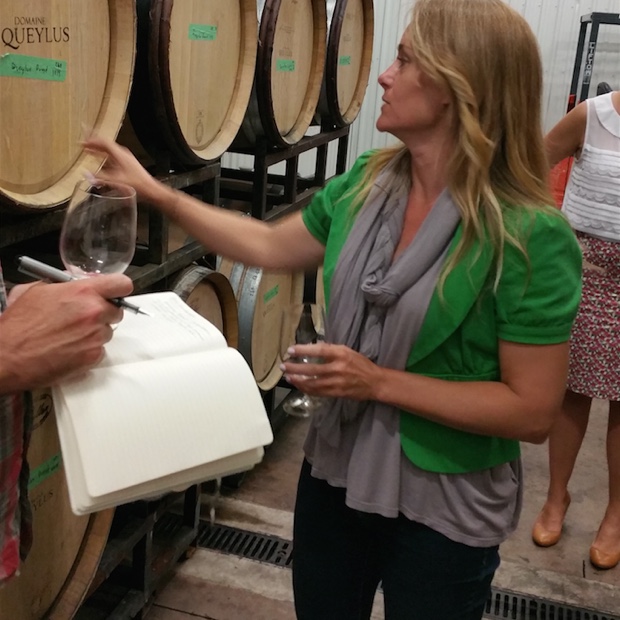
Facebook

We’ve Garnacha covered part one: Campo De Borja

Estación de Delicias de Zaragoza at dusk #CarlosFerrater #aragon #espana

Estación de Delicias de Zaragoza at dusk #CarlosFerrater #aragon #espana

In October of 2015 WineAlign colleague Sara d’Amato and I travelled together with Christopher Waters of Vines Magazine.  The trip’s mission was to discover Spain’s Wines of Garnacha in their natural habitat, the five distinct and allied Denominación de Origen in the regions of Aragón and Catalonia.

Related – For a comprehensive report by Sara d’Amato and I read WineAlignDiscover the Flavours: Wines of Garnacha

Christopher Waters, Ivo André Alho Cabral, Sofía González Martínez and Sara d'Amato in Zaragoza

Christopher Waters, Ivo André Alho Cabral, Sofía González Martínez and Sara d’Amato in Zaragoza

Our host in Zaragoza was The Spanish Institute for Foreign Trade (Instituto Español de Comercio Exterior, ICEX), the Wines of Garnacha campaign and the office of Garnacha Origen. The trip was orchestrated with expertise by Aragón Exterior Managing Director Ignacio (Nacho) Martinez de Albornoz and Head of Wines from Spain (ICEX) Alfonso Janeiro. Our chaperones Sofía González Martínez, Ivo André Alho Cabral, Roser Mestre and Ignacio left no Aragonese or Catalonian stone unturned during a week-long investigation, immersion and intercommunication with the vineyards, winemakers, mayors, restaurateurs, residents and cultures of Aragón and Catalonia.

Rare rain all day in Aragon did not deter Los Canadienses @waters_wine @saradamato #lovegarnacha

Rare rain all day in Aragon did not deter Los Canadienses @waters_wine @saradamato #lovegarnacha

As a rule, the provincial link between traditional varietal and felicitous region gathers together ancient history and existentialist wine culture in the most acute of ways. The racking path from endemic to modernist is trod for the purpose of explaining why this place is an essential source for affordable wines of exceptional quality. This is the crux of what the Aragón and Catalonian vignerons are after. For decades they have been farming century-aged bush-vines, harvesting fruit that sells for one euro per kilo (plant) and seeing their wine demand a paltry $12-15 CAN (often the equivalent of $9.99 US). The lack of congruent nature of the equation and let’s be serious, the undignified injustice of the flow through is something that needs to be addressed. The challenge is one of necessity and immediacy.

The five DO’s of Aragón and Catalonia are heavily populated by cooperatives and very few wine-producing countries or regions (save perhaps for Chablis or Barbaresco) achieve so many positives from that kind of wine-producing philosophy and execution. This weight of such a collaborative culture is not lost on anyone.

Where didn't the Romans build a wall? #citieswithruins #Zaragoza

Where didn’t the Romans build a wall? #citieswithruins #Zaragoza

The argument as to why the wines of Garnacha origin will not command justifiably higher prices defaults to geography and history. This northeastern quadrant of Spain (including Catalonia) has seen a lion’s  share of war, famine, poverty and neglect. The people have suffered and persevered, albeit in a state of relative isolation. Terra incognita within a stone’s throw of (less than two hours to either Madrid or Barcelona) civilization. It is ironic that the wines are perhaps too comfortable, likewise fruit juicy and easy to consume. Global perception would imagine the wines of Campo de Borja, Cariñena, Somontano, Terra Alta and Calatayud as inaccessible, austere and rustic. Nothing could be further from the truth.

I would contend that the problem is that the wines are not tough enough. Garnacha is supported by all the fight corner help it needs but it’s just too darned soft. The lack of rain, abundance of wind, embarrassment of altitude and slope riches allow for levels of diversity and complexity other wine regions would kill for. Very few pockets of wine growing acreage have any trouble ripening grapes. Day and night temperature fluctuations are constant and in some areas, extreme. Disease is nearly non-existent thanks to the prevailing winds that blow nearly two out of every three days year-round. Soils are chalk full of rocks, stones and vine-affirming mineral. Plants must work hard to penetrate the poor soils. Climate, geography and geology are not the problem.

Why complain about wines that are perfectly ripe? Isn’t that what every farmer wants from his children, for them to complete their phenolic journey and grow up fast? I would argue no, that the grapes need to be picked when the graphing of ripeness and acidity are protracted at the crossroads of their perfect vertices. I would also argue that pressing needs to be done at colder temperatures and for the younger grapes, in certain situations, with some carbonic maceration.

As far as the old vines are concerned, the primary concern is shelf life. Most of the Garnacha produced in this part of Spain carries with it a potential for aging of no more than five years. Many producers keep that maximum goal in mind. A week of tasting through red and white Garnacha reinforced the point but there were a handful of wines that begged to differ. Laying down Garnacha is possible. The winemakers must be willing to take some risks.

Think of this. A producer presents two bottles of Garnacha Tinto, one from younger vines and one from 50-plus year-old bush vines. The first sees only stainless steel fermentation or perhaps three to six months in older oak barrels. The second sees an extended élevage though only a frugal amount (less than 20 per cent) of new wood. They both come in at a maximum 14 per cent alcohol, carry residual sugar numbers of less than 3 g/L and yet both maintain a vibrant acidity number of at least 5-6 g/L. In some cases concrete egg fermenters and/or large foudres are part of the processes. Their pedigree is brimming with history, tradition and physiographic earth sciences. Their agriculture is essentially organic (though they require no formal certification), the fruit is picked early to preserve optimum natural acidity and their fermentations are as wild as the day yeast came to be on this earth.

The young wine if fresh, clean, crisp, pure and full of vitality. It will drink well from now and up to five years. The more serious Reserva-style bottle will have the potential to evolve and develop, though it carries with it that impossible feeling of having already aged right from the start. It will drink beautifully for up got 20 to 25 years. The wines retail in Canada for $18.95 and $34.95, respectively. Which one would you buy? Seeing as how they compliment each other so well, why not both?

Campo De Borja

The Empire of Garnacha

The Empire of Garnacha

The Empire of Garnacha

Of the five DO’s (Denominación de Origen) that comprise the collective wine growing regions located in Aragon and Catalonia, none walk with a swagger like Campo de Borja. President Eduardo Ibañez Aranda and Secretary José Ignacio “Nacho” Gracia Lopez rule the Empire of Garnacha, a self-proclaimed stewardship for the grape and for Campo de Borja as the centre of its universe.

The Cistercian Monasterio de Veruela

The Cistercian Monasterio de Veruela

The two proud men have reason to state such territorial claim. Campo de Borja will play host to Grenaches du Monde. “The Weekend of Garnachas,” organized by the Roussillon Inter-professional Wine Council of France (CIVR). Grenaches of the World was held in France in its first three years. In 2016, Campo de Borja plays host to the competition.

Monasterio de Veruela

Monasterio de Veruela

The oldest vineyards in Campo de Borja date back to 1145. A visit to the 12th century Cistercian Monasterio de Veruela, home to the offices occupied by the Denominación de Origen, wine shop and wine museum (Museo del Vino), answers the historical query. Marble columns in three-dimensionally sculpted relief show grape leaf craftsmanship dating back to the middle ages.

Veruela was the home of one of the most important Romantic Spanish poets: Gustavo Adolfo Bécquer, who lived in the abbey during 1863. He is the author of the following verses, maybe among the most famous pieces in the History of Spanish literature:

Qué es poesía?, dices mientras clavas en mi pupila tu pupila azul. Que es poesía? Y tú me lo preguntasPoesía… eres tú.

What is poetry?, you say. As you fix my eyes with yours of blue. What is poetry!… You ask me that? Poetry… It is you!

Rima XXI, Gustavo Adolfo Bécquer

In Aragón, diverse soils, altitude, slopes and prevailing winds all contribute to grape growing excellence. Campo de Borja’s trump card is a mountain. Other regions such as Cariñena find benefit from Moncayo, but nowhere does its 2,315m in altitude have an effect on vines as it happens in Campo de Borja.

“Cierzo que almuerza y cent, dura tuna quincena”

Museo del Vino Campo de Borja

Museo del Vino Campo de Borja

More than 2,000 hectares are 30+ yr-old vines. The climate receives an Atlantic influence and above all else there is the famous wind. El Cierzo blows 234 days a year, the “strong wind” blows after the rain, dries out the vines, eradicates disease and elicits increased probabilities for grape concentration. The saying goes “today is raining, tomorrow it will blow.” El Cierzo, as it has been called for 2,000 years, “has lunch and dinner lasts for a fortnight.” No one knows why. Maybe the Zaragozan Virgin of Pilar knows.

Campo de Borja is described as a “homogeneous physical space capable of producing wines with peculiarities.” Much of its viticulture, in kinship with the other four Aragonese DO’s, perpetuates the viñedo en vaso, “vines in a glass,” or bush vines, calculated at 2000 plants per hectare in density with three metres between rows.

The soils of Campo de Borja

The soils of Campo de Borja

Great fluctuations happen in this D.O., located 30 miles west of Zaragoza, where the earliest maturing, lowest section habituates the Ribera del Ebro at 239m and yet other vines are planted up to 1000m. At low altitudes (200-300m) there are finer, lighter soils. In between the vineyards of Ainzon, Borja and Fuendejalon are situated between 450 and 550 metres above sea level, occupied by the terraces of  La Huecha river, a tributary of the Ebro with soils composed of stones and ferrous-clay. The D.O’s top plantations are in the upper reach, Moncayo foothills area of Alta de Ainzon and Fuendejalon, as well as the municipalities of Tabuena, El Buste and Vera. At these higher climes (up to 900-1000m) there is more limestone and iron, so darker soils with obvious increase of mineral.

Yields are quite low (30-35 hL/L), very vintage dependent and in some areas, in certain years it can be as low as 20-25. Yields are the key to understanding the value of wines from Campo de Borja, that and the iron-rich soil minerality.

Vines here see long cycles, with late maturing fruit of soft tannins and high glycerol concentration. Garnacha is a pro at climate and poor soil adaptation. It can be picked well into November and despite the lower tannins, treated properly it possesses the flexibility to develop complexity with short-term aging.

Every Grenache growing region of the world (The Rhone, Australia, South Africa) have their own special aromatic identity, whether it by garrigue, earthy reduction or soil-driven funk. A mountain herb called tomillo (thyme) grows everywhere around Moncayo. In Aragon there is an expression “when it is foggy in the morning there will be walking in the evening” and when it rains there is an all-encompassing scent in the air. That perfume is what gives these wines their special something. The amalgamation of mineral, earth and herb.

Meetings of the minds: Aragón Exterior Managing Director Ignacio Martinez de Albornoz, President Eduardo Ibañez Aranda Campo de Borja and Head of Wines from Spain (ICEX) Alfonso Janeiro

Meetings of the minds: Aragón Exterior Managing Director Ignacio Martinez de Albornoz, President Eduardo Ibañez Aranda Campo de Borja and Head of Wines from Spain (ICEX) Alfonso Janeiro

Christopher Waters, Sara D’amato and I sat down at the offices of the Campo de Borja for a presentation and a tasting of the D.O. wines with President Eduardo Ibañez Aranda, Secretary José Ignacio Gracia Lopez, Aragón Exterior Managing Director Ignacio Martinez de Albornoz and Head of Wines from Spain (ICEX) Alfonso Janeiro.

The wines tasted were Fagus, Coto de Hayas Garnacha Centenaria and Don Ramón Garnacha Imperial, by Bodegas Aragonesas; Ruberte Trésor, by Ruberte; Santo Cristo Garnacha Selección and Aletta, by Bodegas Santo Cristo; and Pdm, by Pagos del Moncayo.

Garnatxa of Campo de Borja

Garnatxa of Campo de Borja

Santo Cristo Seleccion Garnacha 2013, DO Campo de Borja, Spain (Quebec Agent Ontario Agent, WineAlign)

From a cooperative in the town of Ainzon, a 100 per cent Garnacha distributed by Eurovin (in Quebec) from 30-35 year-old bush vines at 500-600m altitude. Smoking of a deep black cherry, with violets and mild anise giving the feigned attitude of a candied sweetness. Though it’s warm and accented with quite the spice, aridity reigns and folds into the voluminous mouthfeel. This is extreme velvet, approachable and really put together, structurally speaking. Will benefit from two years further in bottle. There is plenty of fruit to support such patience balanced by a char and a density on the long finish. Would retail for approximately $14 CAN. Drink 2016-2019.  Tasted October 2015

Santo Cristo Seleccion Garnacha 2012, DO Campo de Borja, Spain (Quebec Agent Ontario AgentWineAlign)

The 2012 vintage of the Ainzon cooperative’s 100 per cent Garnacha is a blend of separately vinified stainless steel tanks. The clean compound works in appendices here and there of liquorice, graphite and pencil lead. The simple, red fruit compounds upon itself in oak-less layers for straightforward, easy pleasure. Would retail for approximately $13.50 CAN. Drink 2015-2017.  Tasted November 2014

Bodegas Aletta 2013, DO Campo de Borja, Spain (Agent, WineAlign)

From vineyards of 15-25 years old in Pozos de Mata and Aliagares at an altitude of 400-500m. A combination of soil types leads to a complexity of dichotomies, drawing from terraced stony, rich organic brown-calcaire and Moncayo mountain more stony, ferrous clay. Low yields (less than two Kg per vine) in this 100 per cent Garnacha seek an ever increasing perfume and aromatics from ripeness, urged on by a skill set of diverse fermentations.  The minerals incite and an increase of tannin is found in this darker, deeper, yet persistently straight-up juicy Garnacha. Pressed straight to tank this is simply all juice and nothing but the juice. Still a highly clean and modern expression that sees no wood. Good length again. Would retail for approximately $14 CAN. Drink 2015-2018.  Tasted October 2015

Blissful Zaragoza comfort food at <a href="https://twitter.com/AuraRestaurante" target="_blank">Aura Restaurante</a> local jamon, mushrooms, astir eggs

Blissful Zaragoza comfort food at Aura Restaurante local jamon, mushrooms, astir eggs

Bodegas Pagos del Moncayo Garnacha 2012, DO Campo de Borja, Spain (Agent, Winery, WineAlign)

Pedro Aibar was oenologist at Viñas del Vero and El Coto and now crafts wines from Grenache and Syrah plantings in the hills of Sierra del Moncayo. Produced with the Export company Axial, this 100 per cent old bush vines Garnacha from the eco-certified vineyard of La Marga saw 10 months in oak. At 14 per cent alcohol and deep as a cimmerian night it inhales and exhales in balanced Garnacha breaths. The barrel gives vanilla, chocolate and a bit of espresso. This is a nearly massive yet somehow laid back and accessible expression of Garnacha, foot-crushed, traditionally natural, with depth in its meaty cure. There were 70,000 bottles produced in the singular Campo de Borja that reaches for another layer, of earth and mediterranean funk.  Would retail for approximately $20 CAN. Drink 2015-2020.  Tasted October 2015  @louisgeirnaerdt

Bodegas Pagos del Moncayo 2012

Bodegas Pagos del Moncayo 2012

Bodegas Ruberte Tresor 2013, DO Campo de Borja, Spain (Winery)

Made by Susanna Ruberte from 100 per cent Garnacha off of 10+ year-old vines. The winery was founded in 1948. From lower altitude Campo de Borja (350-400m) stony vineyards and of low-production, here is a very perfumed Garnacha, expressing the violet nature of the grape and also a tonality impressed by a touch of SO2. Just a hint of barrel (one month) inflects vanilla and spices, unrelated to fruit surrounded by near-acrimonious acetone. Spiked by an aridity that climbs inside the cheeks. Greatest asset is concentration and depth. Will price in the range of $13-14 CAN. Drink 2015-2017.  Tasted October 2015  @BodegasRuberte

Solo Rosado Centofolia 2014

Solo Rosado Centofolia 2014

Bodegas Aragonesas Rosado Centifolia Solo 2014, DO Campo de Borja, Spain (WineryAgent, WineAlign)

Garnacha of different plots, “offering unique organoleptic qualities.” So very lithe and pretty, saline but not briny. The fruit is certainly strawberry though low-pitched, the hue a pale complexion from the most fleeting skin contact. A luminescent gemstone pink. Like a slice of strawberry angel short cake. Garnacha grounded by a “pretty pink ribbon” of Moncayo earth, without it would be blown by the Cierzo and “float down to the sea.” Drink 2015-2016.  Tasted October 2015   @B_Aragonesas

Bodegas Aragonesas Garnacha Don Ramón Imperial Roble 2012, DO Campo de Borja, Spain (Winery, Agent, WineAlign)

Aragonesas farms 55 per cent of the total production of the area, largest in Campo de Borja. This 100 per cent Garnacha is culled from various (450-800m) elevations. Another prime example of so much concentration, marked by a push-pull of bright-volatile, with dark fruits and liquorice. A date with American oak for six months brings vanilla and cocoa powder, chalk and grain, tar, char and a faint vinyl rub. Good solid held finish. This has power, presence and persistence. It successfully handles and owns its volatility. Quite the polish. Would price in Canada at $14-15. Drink 2015-2017.  Tasted October 2015

Bodegas Aragonesas Garnacha Centenaria Coto de Hayas 2014, DO Campo de Borja, Spain (Winery, 94805, $12.95, WineAlign)

Young wine, old vines. A different sort of 100 per cent Garnacha, this time from arid slate soils close to El Moncayo. The scent of jamon, seemingly impossible, but it’s there. Four months in French oak. Vines are between 80-100 year old with drastically low (10-15 hL/L) yields and from 750m altitude. At 14.5 per cent the brightness pounds the volatility into relative submission but it’s still present, there can be no disputing that. Very smooth and silky, coming on the heels of those always in prevail violet and spice aromas. A smoky dash of Aleppo pepper. French oak, used for the higher end wine, gives a candied wood flavour and roasted flesh of a protein push and some sweet salinity to mineral compenium. Possessive of quite the inner vision meets juicing sensation. Drink 2015-2017.  Tasted October 2015

Oh to be back in the truffle again. At Restaurante El Fogón, San Martín de la Virgen de Moncayo #verademoncayo

Oh to be back in the truffle again. At Restaurante Asador “El Molino de Berola” #verademoncayo

Bodegas Aragonesas Garnacha Fagus de Coto de Hayas Selección Especial 2012, DO Campo de Borja, Spain (WineryAgent, WineAlign)

Fagus is “beech tree” from the Latin and Coto de Hayas (small forest) from hillsides of the Cordillera Ibérica range. This ’12 is actually 85 per cent plus 7.5 per cent each from ’11 and ’13, all from 40-50 yr old vines. Yet another Garnacha of yields less than 1kg per vine and a slumber in French oak for 10 months. Fagus sweats the most prominent perfume though its level of volatility lies somewhere in the middle of the Coto de Hayas range. Here the OS is built on a foundation of earthy funk, sprites red citrus and is certainly the sweetest of the group. Like mixed berry play dough. A South African Rhone varietal style comes to mind, in earth meets vinyl. The special elaboration is of selected (toasted) barrels, with a hyperbole of vanilla, in waves, bean scrapes and baking elevation. Liquid chalk oozes on the finish, long and with bitters too. Would retail for between $22 and 25 CAN. Drink 2015-2020.  Tasted October 2015

Restaurante Asador "El Molino de Berola" #verademoncayo

Restaurante Asador “El Molino de Berola” #verademoncayo

Bodegas Aragonesas Garnacha Fagus de Coto de Hayas Selección Especial 2009, DO Campo de Borja, Spain (WineryAgent)

Fagus is “beech tree” from the Latin and Coto de Hayas (small forest) from hillsides of the Cordillera Ibérica range. The 2009 shows the most minor notes of evolution, still in command of fruit and well within the threshold of balance within its generous oak conditioning. A really good example struts forth here, to show what red Grenache can be at midel age for the DO, not too hard and not too soft. Not too cold and not too hot. Just about right.  Drink 2015-2020.  Tasted October 2015

They call it cheesecake at <a href="https://twitter.com/AuraRestaurante" target="_blank">Aura Restaurante</a> but this is something other, extraordinary, ethereal.

They call it cheesecake at Aura Restaurante but this is something other, extraordinary, ethereal.

Good to go!

Twitter: @mgodello

Instagram: mgodello

WineAlign: Michael Godel

Facebook

Ten prodigal suspects

Donatella Cinelli Colombini Brunello Di Montalcino 2010

Donatella Cinelli Colombini Brunello Di Montalcino 2010

Expensive wine surrounds us all year-long but in the 30 plus days leading up to Christmas the concentration multiplies.  As the shopping days tick down, it seems as though we are inundated by an omnipresent $50-plus crowd. Do these wines have any effect on your life? Do you consider forking out half a yard or two, on yourself or for someone you (sort of) love? Are the jet-setting, usual suspects really worth considering?

In certain cases the answer is yes, but just because some wines are expensive, for a complex variety of reasons, does not make them either good or bad in a decidedly black or white sense. Many outrageously expensive wines are simply awesome bottles of fermented grapes while others are nothing special. High prices can be a reflection of designer labelling and marketing, while others are the summation of genius created by greatness and art. Sometimes it’s just a matter of economics.

I’m going to borrow a hypothesis from my WineAlign colleague John Szabo to illustrate the point. You go to a juice bar. The smoothie or vegan fruit and grass concoction cost not much more than a few dimes to produce. The expertise required came as a result of a half hour’s worth of learning and training. The machine costs a few hundred bucks. And you paid $8.95 for the beverage.

Wine grapes grow on vines that might be as old as 100 years, tended by a farmer far away who was paid a dollar or two for a kilo of his fruit. The vigneron spent perhaps the first 30 days slaving over the initial maceration and fermentation of that fruit and followed that up with at least a year (and in some cases five) to nurture the wine into becoming something special. The bottle and the cork cost another dollar or two and the shipping charges add at least another two again. Then there were the middle men involved; negociants, wholesalers, distributors, agents, retailers and monopolies. That wine might sell for anywhere from $9 to $20 in the Canadian market. And you don’t want to pay $20 for a decent bottle of wine?

Now imagine the fruit coming from some of the most expensive real estate on the planet and processed by the best equipment that money can buy for making wine. Then it is handled by experts in the transportation, selling and marketing fields. You can see how $20 quickly becomes $50 and so on. Don’t misunderstand me. Many wines are ridiculously overpriced. Many are the by-products of marketing juggernauts. It is important to understand, however, that many high-priced wines are deserving of their tags. The margins are not as inflated as you might want to believe.

Iconic wines are always a good buy for someone, but vintages determine when their purchase is the way to go for others. Varied and direct opinion of conceit is rarely witnessed with such certainty as there is found in the world of wine. “I speak therefore it is,” or “I think therefore I am” are two truisms that ring with pomp and circumstance in the world of winemakers, sommeliers and writers. Being sure about everything goes a long way towards determining careers and fortunes.

So, for the first time in this sketch of wine stuff I am offering up a list of high-priced wines that I may or may not be recommending. They are all household names in the world of iconic wine. Some are “best of” vintages while others are head scratches as to why anyone would spend such money on their wood or their contrivance. You are the one to judge. Here are 10 expensive releases from VINTAGES for November 28th, as usual, prodigal in their return in time for the holidays.


Donatella Cinelli Colombini Brunello Di Montalcino 2010

Donatella Cinelli Colombini Brunello Di Montalcino 2010, Brunello Di Montalcino, Tuscany, Italy (431718, $56.95, WineAlign)

The fruit in 2010 is jam-packed, sealed in freshness and blessed with the unmistakeable Colombini soil funk. I first tasted this ’10 alongside 2007 and 2008. The dew, bloom and vigor hangs on a line threaded through each vintage. The 2010 stands alone for its poetic perfume. The flowers of Montalcino, along with the burst buds of herbs on the hills. This vintage pours a generous cup of Montalcino mountain tea. Smoky, opaque and of a proprietary liqueur thick and distilled, the level of animale is right there too. With so much aromatic potpourri the wine’s trotters scramble and ascend with a juggernaut of complexity. Beautiful Brunello with so much tradition running through its fast forward veins. It must of course be laid aside for a few years to really get it. Drink 2017-2022.  Tasted April and November 2015  @news_donatella  @ConsBrunello  @LeSommelierWine

Château De Beaucastel Châteauneuf Du Pape 2013

Château De Beaucastel Châteauneuf Du Pape 2013, Ac Rhone, France (711317, $89.95, WineAlign)

Quite a mouthful of Beaucastel with more warm, figgy fruit than memory generally serves. The surfeited structure can’t be denied but the advanced, occupied territory reminds of 1988. This ’13 may be viewed as acting with similar haste when it will have reached the age of 25, in earth-crusted caramel and sweet fruit scooped from a forest floor. Up until five years before then it will always have ripe red berries, spice accents, anise and the veritable design of garrigue. Drink 2018-2028.  Tasted November 2015  @Beaucastel  @VINSRHONE  @RhoneWine  @ChartonHobbs
Kistler Les Noisetiers Chardonnay 2013

Kistler Les Noisetiers Chardonnay 2013, Sonoma Coast, California (251223, $99.95, WineAlign)

A tremendous vintage for Les Noisetiers, cared for, tendered and placated by a clarity in hands-off winemaking. Deeply ingrained from juice maximized out of overloaded sensory sunshine and the choice to let sleeping fruit dogs lie. Possessive of an almond bitter bar not bitten into before and overlaid by lacy organza, a mild sheath overtop of purposed, wild fermented fruit, a lightly toasted barrel slumber and richness beyond the horizon. All in style of west coast Chardonnay, though simply prepared with the freshest local ingredients, with stony lactic lees texture and subtle spice. Drink 2015-2022.  Tasted November 2015  @TheVine_RobGroh  @sonomavintners

Antinori Guado Al Tasso 2012

Antinori Guado Al Tasso 2012, Doc Bolgheri Superiore, Tuscany, Italy (986380, $104.95, WineAlign)

Deep, dark, rich and handsome, a thick red duke of aggressive, conceited, unctuous behaviour. Such tannin and aggression is not so much rarely seen as not always a factor provided by expatriate Cabernet Sauvignon. The dense and massive ferric monster exercises in many, thorough magnanimous machinations. Such a beast. It’s big and it’s good. Drink 2018-2028.  Tasted November 2015  @AntinoriFamily  @HalpernWine

Quintarelli Valpolicella Classico Superiore 2007

Quintarelli Valpolicella Classico Superiore 2007, Doc Valpolicella, Veneto, Italy (986117, $104.95, WineAlign)

Here Quintarelli takes it to a new level, away from rusticity and into modernity, though it remembers every step along the historical way. Liquid caramel and red fruit meld into such sweet earth it feels as though the vineyard is right here and now. Some tobacco but just a puff, so much impression, cure without aridity and natural feel without an orange juicing. Intensity and acidity to take it 30 years. Amongst the best ever? No question it must be considered. Impossible to know. Drink 2015-2047.  Tasted November 2015  @LiffordON

Luce Della Vite Luce 2012

Luce Della Vite Luce 2012, Igt Toscana, Italy (685263, $114.95, WineAlign)

There can be no denying the density and wealth of flavour. Equally so the solid foundation and unwavering structure is the result of a winemaker’s ability to construct such a formidable pillar of strength. It can be imagined that this Luce will go ten years before budging into evolution even a single iota. It is a beast of fruit, barrel and tannin but more than anything else, oak. As shaken as a creamy, milky, anglaise cappuccino as there ever was or will be. Lots of spice from that oak. A designer label wine made with the finest materials. It really doesn’t matter when it is opened, now or in 15 years. It will take that long before it will begin to change. That is because the sum of its parts happen to be over the top. Drink 2015-2030.  Tasted November 2015  @FrescobaldiVini  @AuthenticWineON  @AuthenticWine

Sassicaia 2012

Sassicaia 2012, Doc Bolgheri, Tuscany, Italy (480533, $199.95, WineAlign)

Every once in a while an iconic leader of Tuscan wine feudalism takes a step back from its military rule and offers to feed both the army and its people. In 2012 Sassicaia is restrained, giving, generous and empathetic. The fruit is certainly ripe, as are the tannins and structurally speaking this has the layers, the soft libido and the desire to please like never before. Sassicaia for the people, like it may have once been, a king of the classes and for the masses. Not in price mind you, but you can’t have everything. Drink 2018-2038.  Tasted November 2015  @Smarent

Ornellaia 2012

Tenuta dell’Ornellaia Ornellaia 2012, Doc Bolgheri Superiore, Tuscany, Italy (722470, $195.50, WineAlign)

Takes the purity of 2011, furthers the integration and mimics the precision, then pumps up the volume. Takes a breath and then, with soluble efficiency it refines the intricately woven lines a few steps furtrher, if that is even possible. I will say that the tannins are a bit tougher in ’12, with a tight string wound depressively around the fruit’s long and elegant tendrils. Fruit is the determinate factor, pure, blossoming and fragrant. It adds up to a consensus of one thought, that this vintage is yet another legend in the making, a fine and linear Ornellaia that should travel 30 plus years, perhaps longer. What liqueur, such botanicals and endless valleys passing through fertile hills. Drink 2019-2045.  Tasted November 2015  @Ornellaia  @AuthenticWineON  @AuthenticWine

Antinori Solaia 2011

Antinori Solaia 2011, Igt Toscana, Italy (987586, $249.95, WineAlign)

Shows off the typically cured and seemingly advanced notes that Solaia always seems to display, whether the vintage purposed days of heat or nights of cold. A wine that seems immune from vintage variation, with fresh and dried fruit shacking up together. In 2011 Solaia is extremely rich, aggressive with acidity and yet with moderate tannins for five years of development, but not much more. Drink 2017-2020.  Tasted November 2015  @AntinoriFamily  @HalpernWine

Joseph Phelps Insignia 2012

Joseph Phelps Insignia 2012, Napa Valley, California (710400, $299.95, WineAlign)

The 2012 Insignia had me at first whiff. At first sip I could not be reached. Massive aromatics blast from this formidable Insignia, clearly noted with immediate clarity as a proprietary blend for the ages. The current torrent is so plugged in and highly climatic, like a visibly sparking conduit, storm and fire all wrapped into one electric happening. The peaks, valleys, waves and intonations are bred of perfectly ripe fruit sets traveling as one in perfect syncopation. The ripe, chain-link tannins will take this very, very far. This is as fine a California wine as I have ever tasted. Drink 2018-2045.  Tasted November 2015  @josephphelps  @LiffordON  @NapaVintners

Good to go!

Twitter: @mgodello

Instagram: mgodello

WineAlign: Michael Godel

Facebook