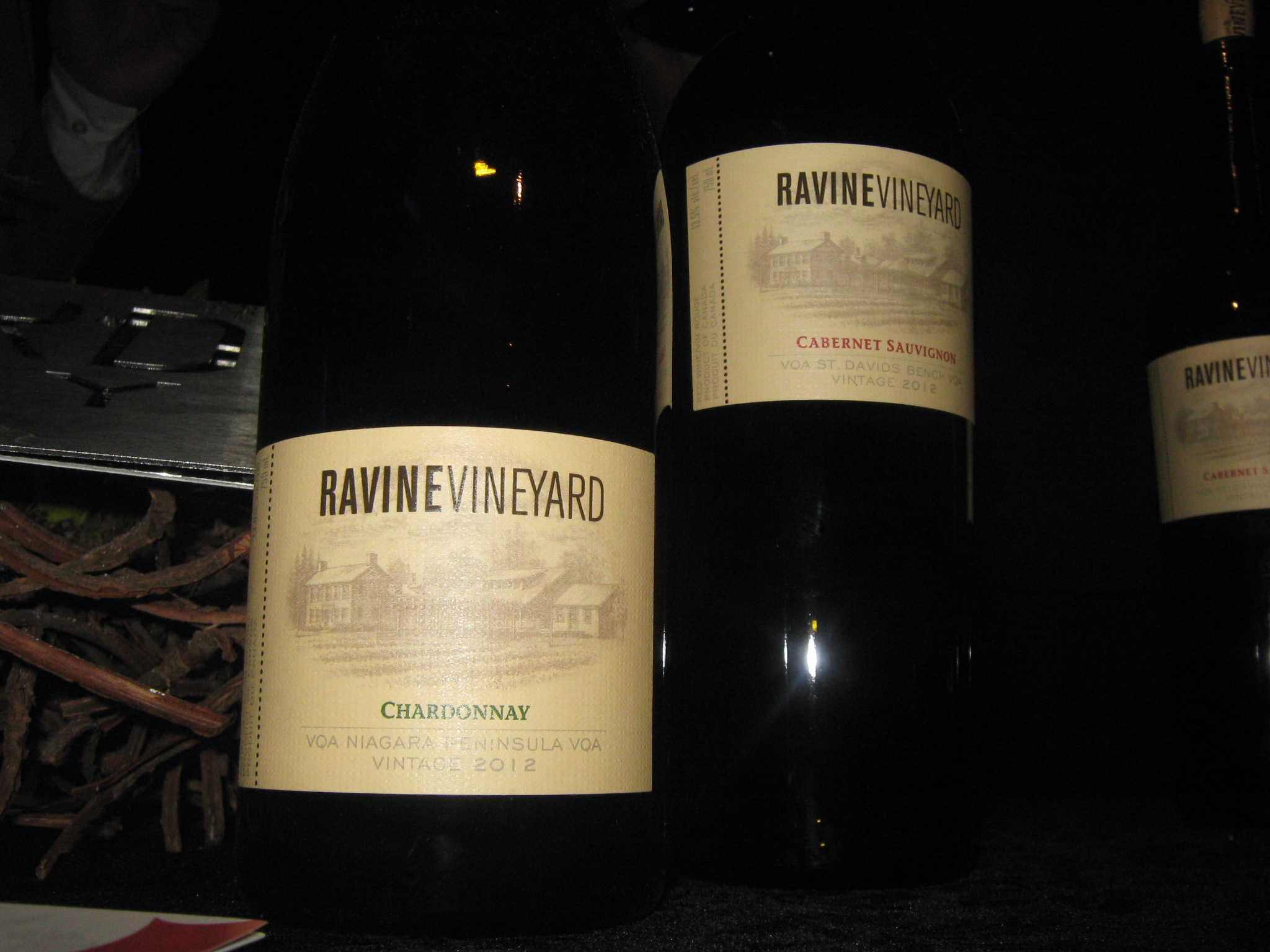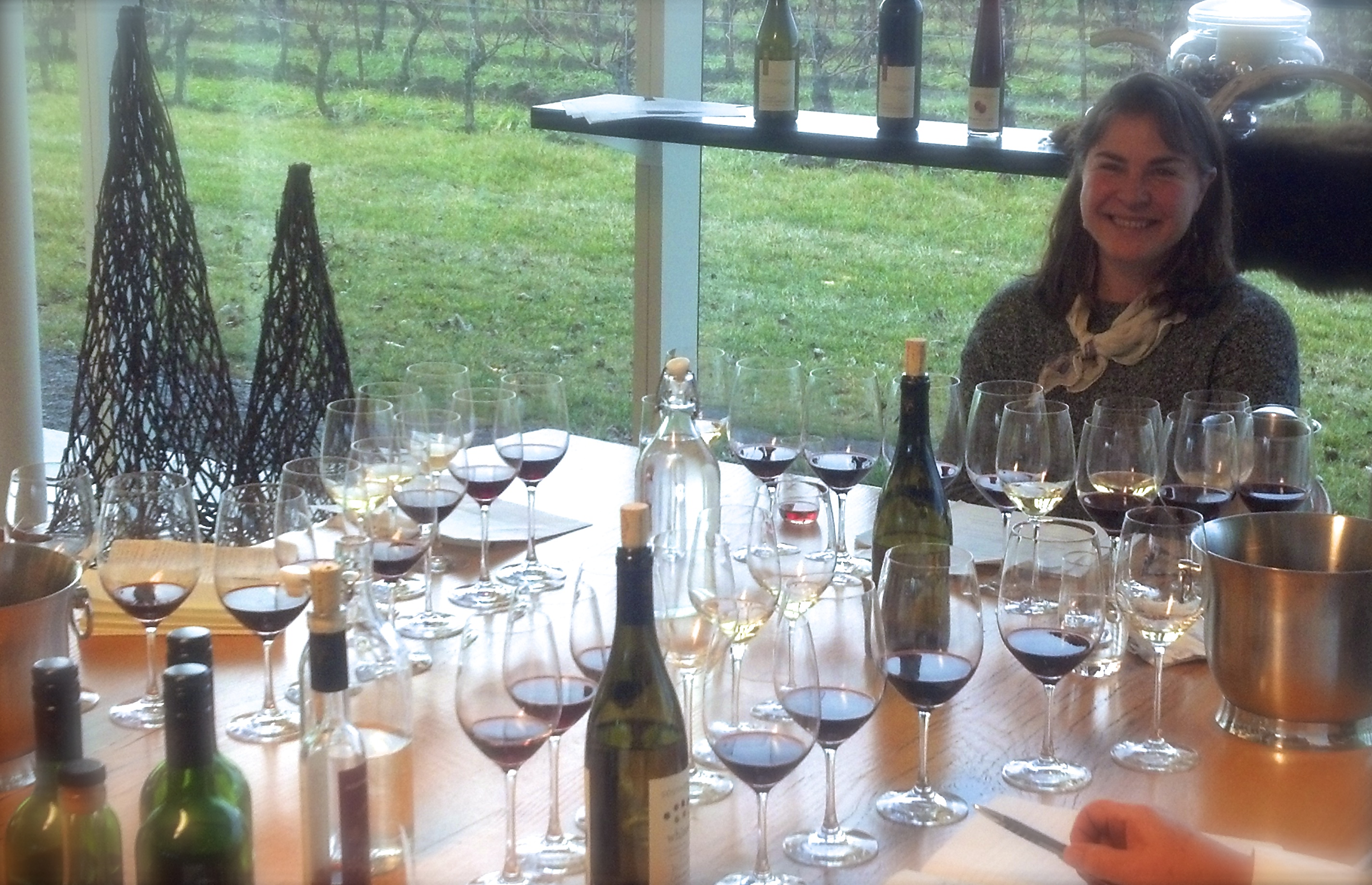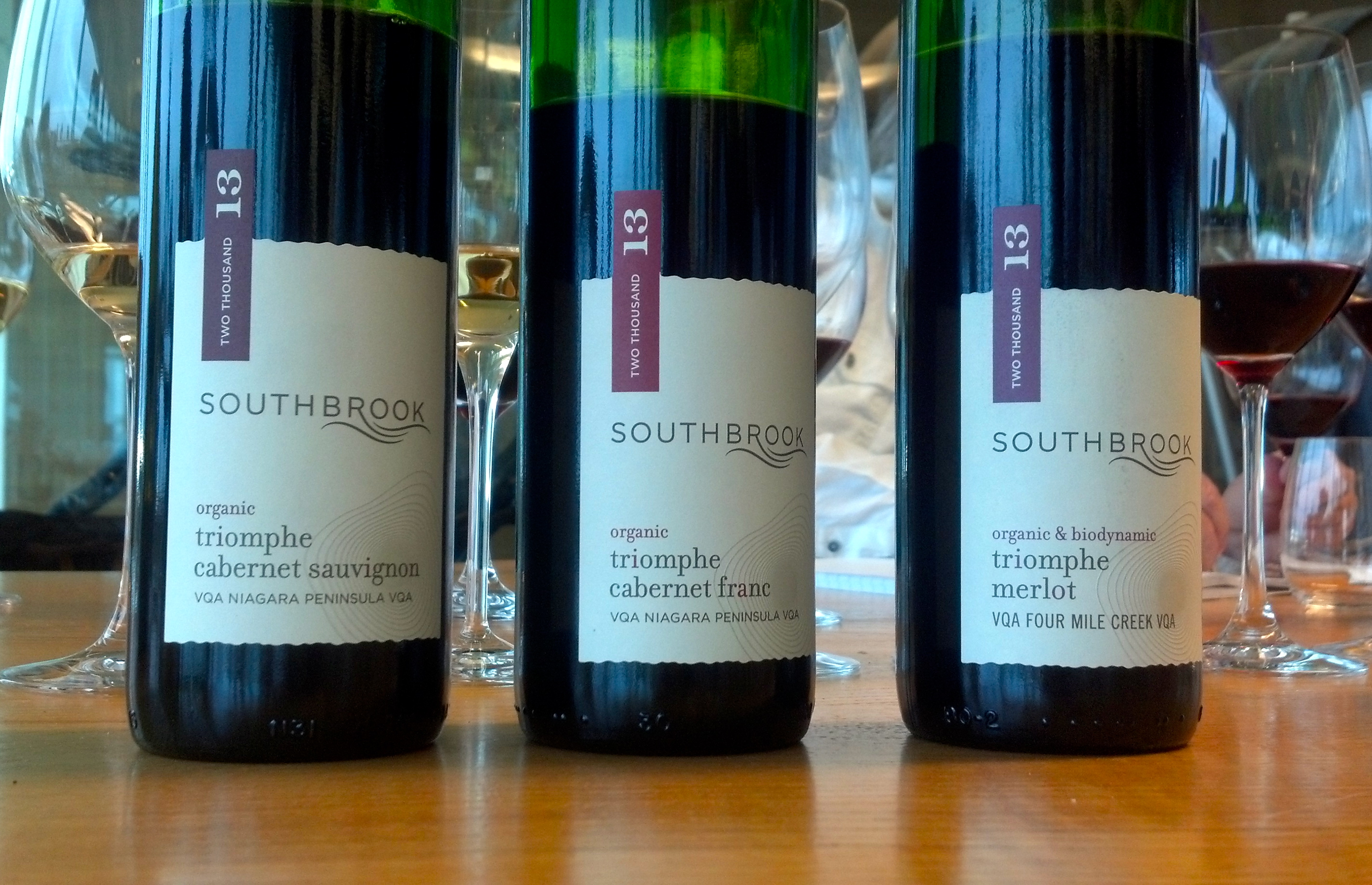
Searching for Somewhereness

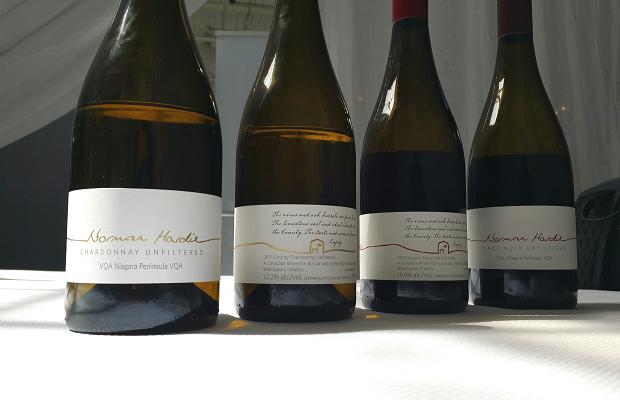
The wines of Norman Hardie

The wines of Norman Hardie

Somewhereness is not really a word. It’s hokum. Gibberish. Nonsense. Look it up in Merriam-Webster or Oxford. Not there. Its conceived convenience is recorded in Wiktionary, Your Dictionary and other online glossaries though, because there is always an online presence ready and willing to immortalize anything and everything.

The definition of Somewhereness, according to the online “dictionaries.”

  1. The state or quality of being in, occurring in, or belonging to a specific place.
  2. The state or quality of existing in a place that is unknown or cannot be pinpointed.
  3. The unique characteristics imparted on a wine by the conditions of the place in which it was grown.

Somewhereness lies the truth?

Somewhereness is not a state of mind, of being, of knowing something is intrinsically right within the parameters or context of here, there, anywhere or everywhere. Somewhereness is not merely a function of good decision-making, of exercising the ideal to expand on terroir, to create something to talk about. Yet that third so-called definition is on the right track. Belief says terroir is what happens in the vineyard, through environment, by geology, geography and topology, from naturally occurring elements and microbes in the soil, by air and of climate. Terroir is the great one. The impossible creator of perfect storms, from out of riddle and enigma. Somewhereness, by extension, is the next one.

Somewhereness exists, albeit with just as much abstruse behaviour and paradox, inside the finished bottle. That’s all you really need to know. Terroir happens before. Somewhereness happens after. The line is drawn when wine enters its final resting place. It evolves, develops and finds its somewhereness inside the bottle. In the case of Champagne (and the wines of Emidio Pepe), the first bottling is merely a temporary shelter and somewhereness knows to wait for the final call. In those cases there are the stages of terroir, disgorgement and finally, somewhereness.

In Ontario, somewhereness has been found (as opposed to “was founded”) by Norman Hardie, Jonas Newman, Vicky Samaras, Bill Redelmeier, Ann Sperling, J-L Groux, Charles Baker, Doug Witty, J.P. Colas, Ed Madronich, Jay Johnston, Tom and Len Pennachetti, Angelo Pavan, Moray Tawse, Paul Pender, Harald Thiel, Marlize Beyers, Mary Bachelder-Delaney, Thomas Bachelder, Martin Malivoire and Shiraz Mottiar.

Somewhereness may have been born to these Ontario parents but it has and will not remain exclusive to the 12 who discovered it. Somewhereness belongs to all wine with true and truthful origins in terroir. The great wines of the world share in the expression and the mystery, even if the gold inside their bottles has never been affixed with such a label. Somewhereness is found inside a bottle of Dujac Bonnes Mares. You will taste it in an Egon Müller Scharzhofberg. It can’t be missed from out of a Margaux pour by the hands of Paul Pontallier. Wines of manic manipulation will never find it. They either do or they don’t, will or they won’t. Somewhereness just happens. Don’t ask me to explain. I’m just the messenger.

Over the past few years, much godello.ca white space has been set aside for glossing in written word and the ever-evolving rumination on the spiritual effect of somewhereness.

Konrad Ejbich holding court in front of De La Terre's breads

Konrad Ejbich holding court in front of De La Terre’s breads

Related, From February, 2013 – Somewhereness over the Canadian wine rainbow

“For a comprehensive look at our province, make sure you read A Pocket Guide to Ontario Wines, Wineries, Vineyards, & Vines by Konrad Ejbich. The discourse concerning somewhereness in Ontario is in full swing. In October of 2012 I wrote, “character and quality has never been better. Riesling continues to impress and let us not ignore the high level of ever-evolving Chardonnay vines. Reds have made great strides, especially Pinot Noir, Gamay and Cabernet Franc. The future looks very bright for Ontario [wines].”

Related, From April, 2013 – Come together, over wine

“Abeyance be gone, these next few years have the potential to cement an industry’s power. Only a minority has even the slightest clue that liquid gold is mined out of the peninsula’s glacial clay and limestone. The time is ripe to tell the world the story of somewhereness. The embryo is about to grow in a major way. Financial reward is within reach. So how to alert the world?”

Related, From April 2014 – The group of twelve

“History may one day remember them as the group of twelve, or perhaps, “The Ontario School.” They are the 12 wineries who have banded together to ensconce a strange but beautiful word on the tongue, in the dictionary and out in the world. Somewhereness. They are purveyors of the land from which their grapes grow and ferment into wine. Facilitators of terroir, working a canvas forged by millions of years of geological and climatic evolution. Their assembly is based on both exigency and on Moira; destiny, share, fate. Like that other famous group, “collectively they agree.” Ontario’s cool-climate wine regions need to qualify and certify a distinctive winemaking style. In juxtaposition to old world, European tradition, the intensity of somewhereness needs to reflect an increasingly Ontario-centric partiality.”

Related, From April 2014 – Why taste Ontario?

“The Ontario wine industry is the best kept secret in the world. It has grown, accelerated and advanced with more success than might have been imagined as recently as five years ago. In November I wrote, “Ontario winemakers have figured it out. The “world-class” comparative humanities of aging and longevity aside, the comprehensive and widespread phenomenon of excellence, regardless of vintage, is now an Ontario reality.”

Wine Country Ontario's Magdalena Kaiser

Wine Country Ontario’s Magdalena Kaiser

All wonderful hyperbole, to be sure. But for years I missed the point. Somewhereness is not about agreeing, in principle, on how to make wine from a particular place so that it can collectively result in a thing. It is something other. It’s in the bottle. It has always been there but the key lies in Ontario’s industry having matured to a point where we can now taste it, again and again, inside the bottle. The work made it happen. It is well-deserved.
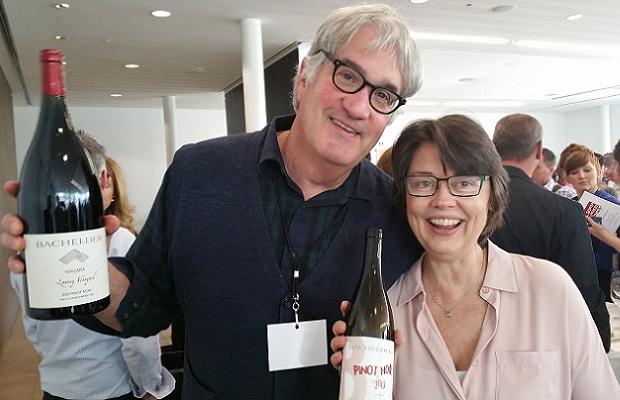
Thomas Bachelder and Mary Delaney-Bachelder

Thomas Bachelder and Mary Delaney-Bachelder

So with the assistance of Trisha Molokach, Dorian Anderson and the vintners who came to realize what happens when terroir is used to bottle divine pleasure, another Somewhereness (the event) happened, at St. James Cathedral in Toronto, on April 20, 2015. Food partners completed the stellar event; Best Baa Dairy, Monforte Dairy, Upper Canada Chees Company, Fat Chance Hand Sliced Cold Smoked Salmon Co., Chef Ryan Crawford & Beverly Hotchkiss of Backhouse, De La Terre Kitchen and Bakery and Schott Zwiesel. Hinterland was not present in 2015 and I skipped two tables, due to quite recent full portfolio tastings, at Bachelder and at Southbrook. Here are some other notes.

Norman Hardie Riesling 2013, VQA Ontario (Winery, $21.00, WineAlign)

With less residual sugar than in 2012 and slightly higher alcohol (the bottle says 10.1 per cent but it’s actually 9.8), the house style persists, if only as a refrain that adjusts and adheres to the vintage. A hint of oyster shell is more than significant, in working alongside Hardie’s Calcaire, effected out of lees fermentation. The minute loss of high-toned aromatics is pitched in favour of fruit, if only from one exploited tank, within the context of producing 1000 cases. The ’13 (70 Niagara/30 PEC) is like very modern Alsace, akin to Schoffit, what with its texture fitted through a tiny hole. Drink 2015-2018.  Tasted April 2015

Norman Hardie Calcaire 2013, VQA Ontario (Winery, $23.00, WineAlign)

The field blend of Marcel Deiss is the starting point. Lees imparts texture and the proverbial minerality is rounder than the Riesling, though the acidity just as linear. The breakdown is Chardonnay (40 per cent), Riesling (40), Melon de Bourgogne (10) and Pinot Gris (10). It should be noted that the mid-palate is caressed by a silky cheese curd, sour milk atonement. Drink 2015-2019.

From my earlier note of August 2014:

If any wine growing and producing region not called Alsace has the right to label a wine Calcaire, Prince Edward County is that place. The irony squared of Norman Hardie’s choice of nomenclature is not lost. Olivier Humbrecht makes use of the term because some of his single-varietal wines can no longer (under the local AOC rules) be labeled with the name of the wine-growing village. Marcel Deiss produces ‘field blends’ composed of several varieties grown on Grand Cru soil but he can’t (under other regional rules) label them Grand Cru. Hardie takes Niagara and PEC Grand Cru grapes, fashions an Ontario white blend, not unlike J-L Groux and calls it Calcaire, in ode to the limestone underlay of the County. Are you following me here? This may be new, innovative, yet understood and an early impression, but this cuvée initiates the PEC march to white blend supremacy, much like Stratus White has done over the course of 10 vintages in Niagara. Norm’s Calcaire is a Chardonnay, Pinot Gris, Riesling and Melon de Bourgogne mélange, co-fermented on the lees, striking, all in limestone, full out mineral consequence. There is purified pear and white melon fruit in distillation. There is a house in Wellington, “they call the Rising Sun.” That this animal succeeds so early in its tenure shows the Norm conceit and the swagger. That it will define white blends for a millennium is an arrogance of traditional song and of scripture. So be it.

Last tasted April 2015

Norman Hardie Niagara Unfiltered Chardonnay 2012, VQA Niagara Peninsula, Ontario (184432, $39.00, WineAlign)

The ’12 Niagara has swapped spontaneity for coherence, licentiousness for logic. Has entered the stage of non-reductive peel, where skin is discarded, flesh is exposed and juices run free. If you like your Chardonnay settled and yet vitally fresh, now is the time to enjoy the Hardie 2012 Niagara Chardonnay. Drink 2015-2022.

From my earlier more of May 2014:

Norm’s Niagara is such a different animal to the County 2012. The warm summer and dry fall means more humidity and even more reduction. Currently cothurnal so less like Burgundy but only because there elevates the high-tones and percipience from Niagara. Texture is key but this Hardie needs time. It’s not angular but it is steroidal, injected, like a wild thing, as if the yeast were still in control, munching away even though there is no more sugar to be had. Undomesticated ’12, at heart, in spirit, out of mind. Hard to imagine there could be this much anxiety from the even-tempered vintage, but when you pick real early and keep the oak to a bare minimum, Hardie happens. Norm picked ripe fruit between September 7 and 10, six weeks ahead as compared to some years. He said the fruit had a “golden tan, ready to go.” The use of smallish 500L barrels works wonders for texture and though 40 per cent was new wood, you would never know it. Malolactic fermentation didn’t happen until late August, nearly a full year on so no sulphuring was required until that time. This is Hardie’s freshest Niagara fruit ever, from Duarte Oliveira’s farm between Victoria and Ontario Street, the same spot as Hillebrand’s Chardonnay Reserve. Terrific Beamsville Bench Chardonnay.

Last tasted April 2015

The wines of Hidden Bench

The wines of Hidden Bench

Hidden Bench Estate Riesling 2013, VQA Beamsville Bench, Niagara Peninsula, Ontario (183491, $23.95, WineAlign)

Hidden Bench’s ’13 Riesling is a pure, soft-spoken and balanced reflection of her maker, winemaker Marlize Beyers. Only a month or two of lees and no stirring has brought her Riesling into this current corporeal state. The citrus is all flesh, void of pith and with acidity that has already incorporated, disguised and covered the zest. If any Hidden Bench Riesling suggest tropical fruit, here it is and yet again, not. Drink 2015-2020.

From my earlier note of September 2014:

The Estate Riesling is as vigneron-defining as any wine on the Niagara Escarpment. Hidden Bench is a 100 per cent estate-fruit operation so this Riesling is spokesperson, prolocutor, mouthpiece, champion, campaigner and advocate for the concept. The estate ’13 reaches deeper for nutrient pot sweetening, into shale and in conceit of its varied, positively cultivated terroirs. Compact and jelled, this is several steps up from most other entry-level Niagara Riesling and in fact, is really anything but. The transparency here is patent. This is Riesling that simply knows what it is; pure Bench, unequivocally real and forthright. Knows what it wants to be.

Last tasted April 2015

Hidden Bench Bistro Riesling 2013, VQA Beamsville Bench, Niagara Peninsula, Ontario (Winery, $19.95)

Produced exclusively for licensee, the Bistro follows a very similar profile to the Estate Riesling, with exactitude in weight and alcohol 911 per cent). The flesh is less, the zest increased and overall you can sense more youth. The Bistro juice comes from Roman Block cuttings planted in Felseck Vineyard in 2008. The simmer here is a simpler, more straightforward pot of sustenance, entirely capable of acting as spokes-Riesling for the Hidden Bench house druthers. The vines will grow up and the juice will move on but other, newer, youthful cuttings will take up residence and the Bistro line will endure. Drink 2015-2017.  Tasted April 2015

Hidden Bench Nuit Blanche Rosomel Vineyard 2012, Beamsville Bench, Niagara Peninsula, Ontario (278812, $40.00, WineAlign)

The (five to) six percent Sémillon speaks at present, in a waxy, bitter gourd winter melon and smoky flint tightness. In this wound moment, it is perceived that another year will be needed for the next unwind. Now vacuous, spinning and whirling as if in a processor’s bowl, an amphitheatre of expression. Drink 2016-2022.

From my earlier notes of September and (at Gold Medal Plates Toronto) November 2014:

Less than six weeks after my first introduction to the NB ’12 complexity shines anew. Such a delicate and elegant take on the Bordeaux white axiom. Void of all the gangly G’s; grasses, gooseberry and green vegetable. Leans to custards and curds with a savoury accent and a limestone tang. Willing to be paired with a multitude of gastronomy. Long finish. From my earlier, September 2014 note: “Taking what the vintage gives, Rosomel’s Sauvignon Blanc was king in 2012, dominating at a 95 per cent share of the Bordeaux-styled blend with Sémillon. Barrels were stirred weekly during fermentation and the creamy texture thanks that regimen, as does the tannic fullness of the round back-end. It rocks out bracing, formidable and nobly bitter, in pear and its pith, in lemon, of rind and in curd. The SB lounges in tall grasses but avoids goose feathers and blanching veg. So very savoury, in gorse tension, thistle and nettle. These notes all cut through the roundness and are finally tied together by the flinty rock of Rosomel.”

Last tasted April 2015

Hidden Bench Rosé Locust Lane Vineyard 2013, Beamsville Bench, Niagara Peninsula, Ontario (Winery, $19.95, WineAlign)

A meandering young blend of Pinot Noir, Malbec and Viognier that is super dry (3.2 g/L of residual sugar), “hey, hey, my, my.” The aromas suggest a succession from strawberry to green and red onion but “there’s more to the picture, than meets the eye.” The medley, interrupted by ballads and road stories is like a subtle, sweet, sour and savoury gastronomical pickle, ramps in brine, scopes in sweet alkali. Can there be a drier, more windswept crag, neal to a southern French style made anywhere on the Peninsula than from the Escarpment coliseum up on Locust Lane? Drink 2015-2018.  Tasted April 2015

Hidden Bench Bistro Rosé 2013, VQA Beamsville Bench, Niagara Peninsula, Ontario (Winery, $19.95)

While persistent in aridity as a disciple to the Locust Lane, this Bordeaux blend Rosé packs a fruitier punch. Elevated residual sugar (as compared to the Double L) mans a higher rate of variability and accessibility, not to mention more chance of Ontario patio success. This licensee bottling will work for summer, across the province. Drink 2015-2016.  Tasted May 2015
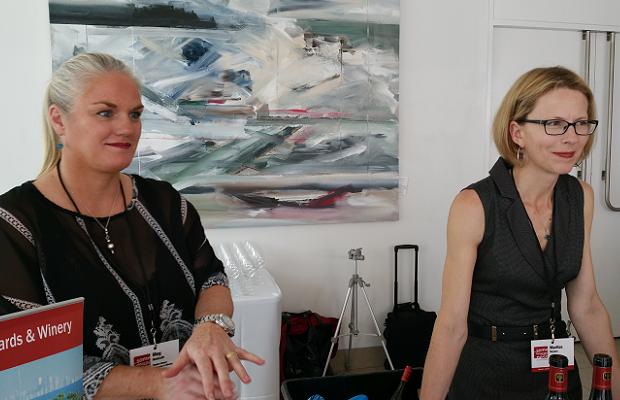
Meg McGrath and and Marlize Beyers of Hidden bench

Meg McGrath and and Marlize Beyers of Hidden bench

Hidden Bench Locust Lane Vineyard Pinot Noir 2011, VQA Beamsville Bench, Niagara Peninsula, Ontario (Winery, $48.00, WineAlign)

Still tightly wound with the tannic grain criss-crossing at interstices of fruit (pomegranate/cranberry/strawberry) and acidity (sharp/pointed/direct). A fine, pointillist’s rendering; Locust as Seurat, nobly bitter, to the end. Drink 2016-2022.

From my earlier note of April 2014:

The Locust Lane Vineyard, originally planted in 1998, was Hidden Bench’s first acquisition, in 2003. It has a unique perpendicular cross-slope effect, undulating in all four directions, gathering sun hours in its own special way. The vineyard produces the richest and warmest Pinot Noir with fruit flavours more akin to ripe plum and black cherry than almost anywhere on the Beamsville Bench, certainly as any from the Hidden Bench stable. While the ’11 is not the biggest beast nor the Bordeaux bully of the Terroir Caché, it is surprisingly tannic and strong. It’s anything but hot, though it attacks with fervor. Big berry fruit, macerated strawberry, rich pie notes and spice. A great Locust vintage.

Last tasted April 2015

Hidden Bench Terroir Caché Meritage 2011, VQA Beamsville Bench, Niagara Peninsula, Ontario (505610, $38.20, WineAlign)

There is so much floral presence in 2011, a showy perfume that parades the relative elegance of Niagara’s Bordeaux reds in the vintage. Structure is comparable to 2010, not in beast mode but rather with a delicacy derived from less burning, high-toned fruit. Still here lays a wine so young, of social encumbrance that might be passed off as a mark of impertinence. This faintly embarrassing condition can be suppressed in a dark cellar, in which the foundation can be laid for the beginning of a cure. The Terroir Caché 2011 will show its best between 2017 and 2020, then develop, slow down, suspend animation and age further, effortlessly and exceptionally. Drink 2017-2024.  Tasted April 2015

Tawse Quarry Road Chardonnay 2012, VQA Vinemount Ridge, Niagara Peninsula, Ontario (Winery, $35.95, WineAlign)

Oh, the accessibility of Quarry Road in 2012. Still totes the emerald shine, the gemstone tannic scrape and yet the flesh is rendered rich, ripe, ratcheted and riled up. This has tonality like never before, layered and strudel buttery. At this point the vines for Quarry are 17 years of age, sophic and erudite, compounded by the organic, biodynamic and prudent pruning practices that have cemented its vigour. The clay-limestone, fresh-mineral, push-pull is a veritable careening of expression. Though its longevity may not pile towards a compressed future like that of ’09 or ’11, the earlier and often response will act both as Chardonnay charming and Quarry Road magnetizing. For the next five years it will be very hard to turn away. Drink 2017-2020.  Tasted April 2015

Tawse Laundry Vineyard Cabernet Franc 2011, VQA Lincoln Lakeshore, Niagara Peninsula, Ontario (130997, $34.95, WineAlign)

A year had added rich note to this ’11, furthering the inflammatory vibrations and purposefulness of Bordeaux (as opposed to Loire) red makings from the vintage. The depth of cherry merging to smoked currants is cool, collected and shaded by brushy, briny strokes. Hints at brambly, even. This is so very Cabernet Franc and even more so, Lincoln Lakeshore. Drink 2015-2019.

From my earlier note of April 2014:

A lean Laundry with as much finesse as winemaker Paul Pender has ever shown in his poignant Cabernet Franc realm. When a vintage deals you calm and scale you sit back and relax. The Lincoln Lakeshore advancing in years vines bring yet unseen front end red berry, licorice and red currant softness in 2011. There is elegance but also a refusal to yield its back end bite. A level of enveloping grain and chalk is unique to this bottle and should be seen as a very good effort with the possibility ahead

Last tasted April 2015
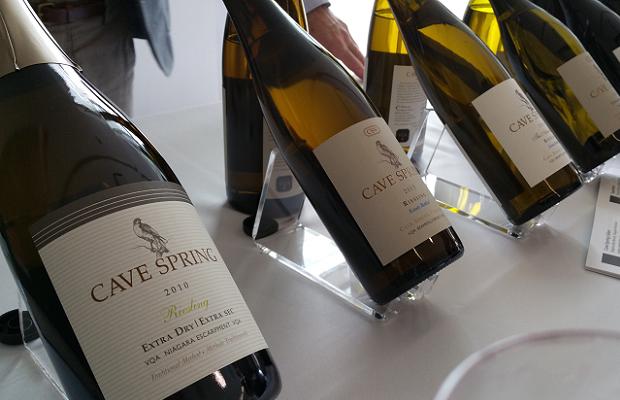
Cave Spring Cellars

Cave Spring Cellars

Cave Spring Extra Dry Sparkling Riesling 2010, VQA Niagara Escarpment, Niagara Peninsula, Ontario (Winery, $24.95, WineAlign)

From the clay-limestone bench lands abutting the Escarpment, specifically one block of 11 year-old vines at the Beamsville Bench Cave Spring Vineyard. Traditional method fizz accessed of low brix (early picked, 19.3 degrees) and mortar (2.97 pH) numbers, then elevated under microscope magnified sugar (15.5 RS g/L) and acidity (8.4 g/L). So what? So this is a pure CS expression of Riesling, cured and curated in the house style, led to textile weave from 14 months on the lees and finalized just that side of Brut. Functions like a Blanc de Blancs suitably this side of acidity rage and with corresponding remarkable, if close to impossible aridity. Less fat than might be expected and with a swath of sauvage. There sweats ginger and the cuttings of foraged wild things. The extension on the finish is protracted even after the liquid has left the building. Finishes with dry stones, nuts and a rightful oxidative thrust. Drink 2015-2020.  Tasted April 2015

Cave Spring Csv Riesling 2013, Cave Spring Vineyard, VQA Beamsville Bench, Niagara Peninsula, Ontario (566026, $29.95, WineAlign)

That flesh, that Kabinett flesh, fills the CSV in every crevice. In 2013 the residual sugar number lies between 15 and 16 g/L, and though the crop was bigger, it was still picked later than in 2012. The result is formidable corporeal concentration, consistency of house style and perhaps the only ’13 Niagara Riesling to imitate, perpetuate and extrapolate on the vintage that came before. This Cave Spring concentrates fruit and Escarpment into a powerful Riesling, streaming like charged particles through changing expressions. A lingering ascension hovers as it rises, until it slowly fades into the welkin, like a balloon that languidly gets lost into the blinding blue of a midday sky. Drink 2017-2025.  Tasted April 2015

Cave Spring Riesling ‘The Adam’s Steps’ 2013, VQA Beamsville Bench, Niagara Peninsula, Ontario (26372, $24.95, WineAlign)

At present there are sweets, bitters and rich Adam fruit. Only the shadows of a limestone outcrop near the crest of the Niagara Escarpment know why the Adam is so juicy. A chew like no other. Drink 2015-2020.

From my earlier note of October 2014:

A classic Adam, amplified in 2013, riper and not as piercing as previously noted vintages. Still the layering is omnipresent but there is more juicy fruit and texture then ever before. This is a consumer friendly Adam, gregarious, outgoing, off-dry as never before. New slang for the bottling.

From my earlier note of July 2014:

According to Cave Spring’s website this newer Riesling from older (18 to 35 year-old plantings) is from “a single block of vines in the shadows of a limestone outcrop near the crest of the Niagara Escarpment, known as ‘The Adam Steps’. Really apropos, for this Riesling is the cantilever, the one with the outstretched arm. At 10.5 per cent alcohol and with an unmistakably stony, sweet and sour whiff the wine speaks of its off-dryness. The juiciest of all the Cave Spring Rieslings, with rounder acidity and good persistence. This is the all-around good guy, the one with an open invitation, the bridge from Estate to Dolomite to Csv. The well-adjusted one steps up its game to help win one for the team, especially out of the convivial 2013 vintage.

Last tasted April 2015

Cave Spring Cabernet Franc 2012, VQA Beamsville Bench, Niagara Peninsula, Ontario (391995, $19.95, WineAlign)

The 2012 Cabernet Franc needed six further months for the high-toned fruit to settle just enough for the spiced richness to shine. Though Dolomite-designated, this sheds Beamsville light purity, along with a grain variegated by (pomegranate) citrus and chalk. The cool centre is elongated and expansive though it seems to inuit the correct time for retraction. The aerial fruit stresses condense and accept the angles prepared by coriander and eucalyptus. Drink 2015-2018.  Tasted April 2015

Flat Rock Cellars Chardonnay 2012, VQA Twenty Mile Bench, Niagara Peninsula (681247, $16.95, WineAlign)

The Twenty Mile Bench in Jay Johnston’s hands flat out rocks. The Chardonnays “they dig a funky spiel, they’ll make some spiel.” The ’12 Estate has crossed into pretty territory, not shy to wear its thin lamina of oak make-up and not too proud to say drink me now. Drink me here, there and everywhere. Drink 2015-2017.

From my earlier note of March 2014:

Has spent some quality time and knows its way around a barrel but its attitude is young, fresh and alive. From 12 and 13 year-old estate vines and kissed by only 15 per cent new oak. “But here’s a funky fact that I know is real.” Flat Rock’s Chardonnays are red hot and this fresh-faced ’12 has “baby appeal.” Blatant, colorable value on the Twenty.

Last tasted April 2015

Flat Rock Cellars Nadja’s Vineyard Riesling 2014, VQA Twenty Mile Bench, Niagara Peninsula  (578625, $19.95, WineAlign)

Always expressive of such manifest certitude, the 2014 can’t be anything but Nadja though there adds a fleshy dimension that pins it to the broader spectrum of Twenty Mile Bench, in as much as what the vineyard culls from its capacious diagrammatic. That broader outlook provides understanding into Nadja’s decrease of stentorian language in the fractionally stagnant vintage. There is a variegation within the sweetness lining the tunnel of aridity. Fourteen is nothing overly special and Nadja suffers as a result. It’s still a very, very good Riesling, just not one for the ages. Drink 2015-2019.  Tasted April 2015

Flat Rock Cellars Pinot Noir 2012, VQA Niagara Peninsula (1545, $18.95, WineAlign)

The vintage acts as a launch point for Flat Rock Pinot Noir and prepares a palate for the 20 Mile Bench by coating it with utmost approachability. Violets and Nebbiolo-like roses are raised in warmth, albeit beneath the safety net of cloud cover. You’ll find no burn, rust spots and yet you will acquire comfort, in and out of sips. Drink 2015-2018.

From my earlier note of April 2014:

As with Flat Rock’s Chardonnays, here is a vintage and an evolutionary coming of age that becomes a matter of scaling back oak. The quotient here is less than 40 per cent new, leaving the wizened vines and maker’s acumen to coax maximum character, brilliant sheen and recognizable aroma. The 2012 Pinot teases black cherry but never really goes there.

From my earlier note of February 2014:

Nearly 4000 cases will be available of this nearly-unfiltered, very established and always well-thought out Pinot Noir. A consideration of the plots and barrels micro-management that determine the crasis of this Estate wine demands an extrapolation in full-on assessment. The medium-coarse Chinois filtering lends to a tannic chain of texture thick in grain and chalk. A heavier Estate because when the weather gives you heat you make a climate appropriate wine. This monkey is not a product of arctic air and it “got too deep, but how deep is too deep?” Thermal vintage melt, ritzy ripe cherry stuff in 2012. From the Ritz to the Rubble, if you like, or the Flat Rock.

Last tasted April 2015

13th Street Pinot Gris 2012, VQA Creek Shores, Niagara Peninsula, Ontario (Winery, $19.95, WineAlign)

From two blocks on one farm in the centre of Creek Shores, one picked earlier to avoid botrytis. No malo, stainless steel tank fermentation leads to pure, crisp and clean Pinot Gris. The soil-driven funk meets faux-sulphur is typically J.P. Colas, a specificity in undertone that culminates in a dry, variegated finish. Drink 2015-2017.

From my earlier note of April 2014.

Here you have an honest, 100 per cent stainless steel treated Pinot Gris from an estate vineyard located adjacent the market on Fourth Avenue in the Creek Shores appellation. So very dry and really fine fruit, crisp, neoteric, rising and falling in waves of tempered acidity. Made in a comfortable, country-twanged, folk-rock style, like a Cowboy Junkie. Juicy, mouth watering work and very easy to fall for. An angel mine, this 13th Street, “and I know that your skin is as warm and as real as that smile in your eyes.” This effort by Jean-Pierre Colas is as good as it gets, a tally for Creek Shores and its kinship with the variety.

Last tasted April 2015

13th Street Gamay Noir 2013, VQA Niagara Peninsula, Ontario (177824, $19.95, WineAlign)

Four months has upped the funk in for ’13, with tar and bitters still and thick as summer air. Rich and ripe, notable for its black cherry aroma and that J.P. Colas natural truncation. Unique, as always and very Gamay. Drink 2015-2019.

From my earlier note of December 2014:

Fruit was sourced from both the Sandstone and Whitty Vineyards for 13th Street’s Gamay Noir, a focused and gritty adjunct in ode to the Cru Beaujolais approach. This ’13 raises the aromatic and texture bar and just may be the most striking from a 13th Street estate mix. All the important berries are there, as are the mineral quandaries. In a Gamay moment this will lead you to gulp and giggle with #GoGamayGo delight.

Last tasted April 2015

13th Street Syrah ‘Essence’ 2012, VQA Niagara Peninsula, Ontario (177824, $44.95, WineAlign)

Fruit was sourced mainly from Wismer Vineyard (Vineland) and a smaller proportion from AJ Lepp (Niagara-on-the-Lake) for this dry as the desert Syrah of deep extract, warmth and density of fruit. All set upon a highly tannic frame, with every indication that longevity will be its best friend, as much as any red has ever been produced in Ontario. A formidable vulcanization marks the entry, a not so inappropriate entreaty to beg for time and lots of it. The current pavane of fruit is exhibitive of excruciating physical reticence though behind the wall there is more than enough indicators to stand the test of time. No new oak (though the Essence saw an extended slumber in three to four year old barrels) has allowed the tapestry of intertwined layers to set up shop and dig in for the long haul. If big-boned Syrah and Niagara are in your cellar plans, this 13th Street 2012 has to have a prominent place. Drink 2020-2027.  Tasted April 2015
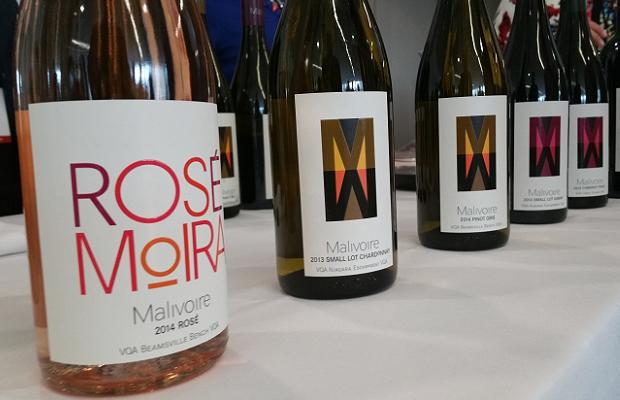
Malivoire

Malivoire

Malivoire Rosé Moira 2013, VQA Beamsville Bench, Niagara Peninsula, Ontario (Winery, $19.95)

A dual block blush, from two clones in the Moira Vineyard. Made from 100 per cent Pinot Noir, this second vintage is pale as can be, dry, saline and reeking of fresh peaches and strawberries. The level of purity and intensity is nothing short of amazing. This will rise quickly into the ranks of the Peninsula’s finest Rosés. Drink 2015-2017.  Tasted April 2015

Malivoire Pinot Gris 2014, VQA Beamsville Bench, Niagara Peninsula, Ontario (Winery, $19.95, WineAlign)

The purity and fine-lines of Pinot Gris are defined, delineated and deftly prepared by Shiraz Mottiar and team in 2014. This is a calm rendition, void of tremors, certainly not taking any risks but also not a white of unfulfilled promises. Herbs, lemon, mint and fine PG tannin draws salt from stone. A perfectly dry finish is in play, as with all malivoire whites, to cement the deal. Drink 2015-2018.  Tasted April 2015.

Malivoire Stouck Meritage 2011, VQA Lincoln Lakeshore, Niagara Peninsula, Ontario (Winery, $29.95, WineAlign)

It’s hard to recall memories of so much syrup, liqueur and high tonality as coming from Stouck, from any Meritage for that matter and yet the 2011 Bordeaux varietal wines out of Niagara continue to astound. If excess or vivid character is a negative, just look away. The combination of rich extraction and explicit oak generosity dope out fruit from a dry September into wonders of dried timbre and inflection. The drupe is enriched, as is the tannin and a Beamsville buttressing that warps and wraps like never before. At this four-year juncture, the Niagara ’11 varietal compendium is officially a thing, witnessed in example through this Stouck. More than just dramatic Shiraz Mottiar foreshadowing here, but further into thoughts of what vintages co do for red wine as a Peninsula whole. The ’11 Stouck Meritage stands upright at the mirror and its reflection looks right back. Drink 2017-2021.  Tasted April 2015

Malivoire M2 Small Lot Gamay 2013, VQA Niagara Escarpment, Niagara Peninsula, Ontario (Winery, $19.95, WineAlign)

The profundity of tart, keen, briny berries dilates in its own very useful layers of citrus, tannin and concentration, beyond even what was observed in 2012. The zesty, spritely argot resonates from the unfurling of floral essentia out of a Gamay in desperate need of time. The flavours and overlay are somewhat impenetrable and yet leave quite an impression. While patience might be the virtue and the reward, if #gogamaygo is the modus operandi, a swig from the bottle like gentlemen of the road is certainly not out of the question. Drink 2016-2021.  Tasted April 2015

Charles Baker Riesling Ivan Vineyard 2014, VQA Niagara Escarpment, Niagara Peninsula, Ontario (Winery, $27.00, WineAlign)

From the rich limestone and sandstone beneath the clay, 1.1 acre Misek vineyard, a southerly ledge up from Highway 8 and an easterly hill down from Cherry Avenue. A very linear Ivan combs the catacombs of the Escarpment’s underpinning. A retaining wall of vintage attenuated rocks and stones, a vineyard’s low yields and the voices in Charles’ head have produced a striking Riesling. In 2014 adolescence has entered adulthood. Now before us is a grown up Ivan, mature Ivan, maybe even wise Ivan. Texture is in manifest control in this loyal, stay at home Baker, not yet running wild like free-spirited Picone. Ivan has presence, sometimes a great notion and is Baker’s longest bit of prose to date. The next great Riesling vintage will make it iconic. Drink 2016-2020.  Tasted April 2015

Charles Baker Riesling Picone Vineyard 2008, VQA Vinemount Ridge, Niagara Peninsula, Ontario (126433, $35.20, WineAlign)

The petrol and mighty bee’s sting have taken over, with the honey again not far behind. A lemon prepares to spill its juices as it warms above a bunsen flame. At present it is almost too elemental to define. Will change course again when midnight strikes in 2016. Then it will come into its own. Drink 2016-2020.

From my earlier note of April 2014:

Tasted at Somewhereness 2014 as part of a vertical retrospective going back to 2007. The Vinemount Ridge’s now famous Picone Vineyard is set within a 10-acre estate on the Niagara Escarpment. Planted to the Weis 21 clone, the Riesling grown here digs in for complexity from sectional moieties of clay and sandy soil atop a unique base of limestone bedrock. Charles Baker began working with these grapes in 2005 and it is this 2008 where the learning curve took a turn for the Riesling stratosphere. The ’06 found luck in the stars but this vintage lays the framework and foundation for a master plan. At this stage in the ’08 evolution there is a prodigious and viscous honeyed textured. Ripening tree fruit juices run like maple sap in spring and the run off is beginning to think syrup. A cutting ridge of acidity arrests the sugaring, allowing citrus and flinty rock to recall the wine’s first, fresh steps. Baker’s Riesling time travels in circles with no real beginning and no real end. From my earlier, September 2012 note: ““Whoo-ahhh” Mojito, green apple skin scent of a Riesling. Seductive to sip, a bodacious body of influence, then back-end bite. A wolf pack in sheep’s clothing.”

Last tasted April 2015
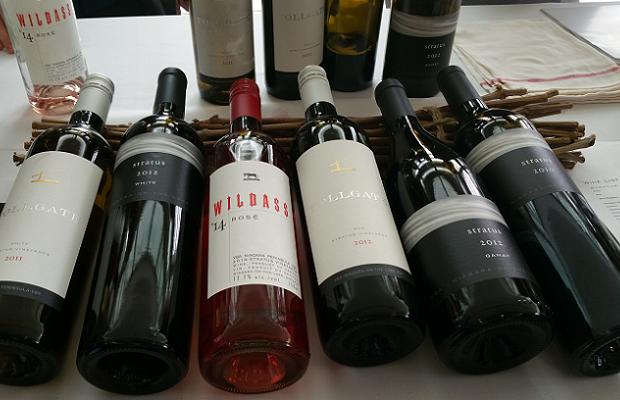
Stratus Vineyards

Stratus Vineyards

Stratus Wildass Rosé 2014, VQA Niagara Peninsula, Ontario (71712, $17.95, WineAlign)

A blend of Cabernet Franc and Merlot with some Sauvignon Blanc and Riesling added for lift and what J-L Groux admits is rendered “for the consumer.” This essentially marks the twain between sweet and dry, if not quite halfway then pretty darn close. Plenty of herbs and citrus nail the aromas on the proverbial head with more than a grapefruit or two on the half circle. A highly approachable, end-user friendly blush. Drink 2015-2016.  Tasted April 2015

Stratus White 2012, VQA Niagara On The Lake, Ontario (660704, $44.20, WineAlign)

In 2012 the blend is Chardonnay, Sauvignon Blanc and Riesling. Viognier was left out because according to winemaker J-L Groux “it did not work in blending trials.” The vintage has laid the foundation for the most density, and unctuous fruit for the Stratus White in what must be, ever. At the high aromatic end there is peppery beeswax, reverberating and echoing in scales and arpeggios. Like an open string singing warmly, the vintage, extraction and residuum combine for texture in mottled unction. Sapid lemon, more beeswax and lanolin mark the palate and then the White drifts into spaces occupied by smoky, back beats and bites. This has great pitch with a knowledge of the path to pleasure. Drink 2017-2025.  Tasted April 2015

Stratus Gamay 2012, VQA Niagara On The Lake, Ontario (Winery, $29.00, WineAlign)

t may not be the most idiosyncratic Gamay in Niagara but the Stratus 2012 is without a doubt the most advanced and complex. Gamay fusion is on display, at once a bottle of Niagara’s finest pulchritudinous veneer and then a charcuterie board laid ample with cured bovine parts and sun-dried grapes. Maximum ripeness and then even later picking, to no one’s surprise, have led to this. Two years of ageing in neutral oak barrels has brought about a humid roundness and yet the centre is controlled by Oz-like mint and eucalyptus notes. The jam is gelid, as opposed to temperate. Rarely does Gamay go to such depths, of blackberry, chalk and grain, with an overlord of tannin. Quite serious stuff. Drink 2017-2020.  Tasted April 2015

Stratus Red 2012, VQA Niagara On The Lake, Ontario (131037, $44.20, WineAlign)

The Stratus Red 2012 resides both in a virtuoso’s hollow and in a pantheon inhabited by some of Niagara’s great reds. The fact that such ripe phenology can anticipate and foretell to balance and freedom in the byplace of the blending process is nothing short of amazing. Sinuous and exact, of berries so indefatigable, layering raspberry over blackberry atop strawberry. Cedar and red citrus compound, without jamming the fluidity, but certainly accentuating the Fragaria vesca. Confident and fluid in movement, the ’12 neither shakes nor stirs and its acidity is flat out terrific. At this early point in its evolution it is showing as well as could be expected, or hoped for. Its core of fraises du bois will always be there. Time will be kind, gentle and patient. Drink 2015-2024.   Tasted April 2015

Good to go!
http://www.winealign.com/profile/2058-mjg

Recent uploads

Recently grilled

Recently grilled

It’s a themed based life. Most of what we taste is packaged into categories; country, region, appellation, varietal, blends, White, Red, Sparkling, Rosé and Dessert. Tastings promote a place or at the very least a gathering of sympathies, of wines meant to share a table.

Sometimes we taste in random preoccupation, with holistic hazard grace, in absence of direction, without a care to the world. More often than not my tasting notes are uploaded to WineAlign. Here are nine uploaded singles, in no particular and seemingly random order, save for the prices. They are all available at the LCBO.

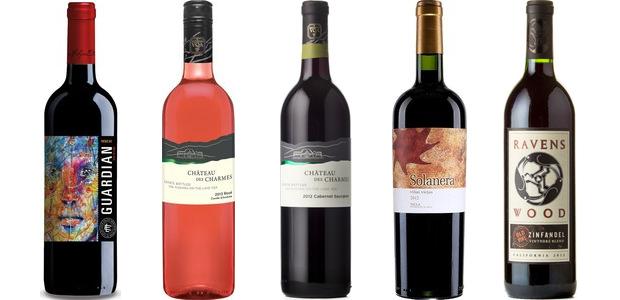
From left to right: Guardian Reserva Red 2012, Château Des Charmes Cuvée D'andrée Rosé Estate Bottled 2014, Château Des Charmes Cabernet Sauvignon Estate Bottled 2012, Bodegas Castaño Solanera Viñas Viejas 2012 and Ravenswood Vintners Blend Zinfandel 2013

From left to right: Guardian Reserva Red 2012, Château Des Charmes Cuvée D’andrée Rosé Estate Bottled 2014, Château Des Charmes Cabernet Sauvignon Estate Bottled 2012, Bodegas Castaño Solanera Viñas Viejas 2012 and Ravenswood Vintners Blend Zinfandel 2013

Guardian Reserva Red 2012, Colchagua Valley, Chile (392787, $13.60, WineAlign)

A commencement red in which the parts control the sum, before, during and after. Quite frankly that’s okay. That Cabernet Franc and Carménère can be picked out so glaringly yet without harsh tones is a reward of sorts, an investigation into the varietal relationship with Colchagua, the guardian of these grapes. More fruit than earth is the basic tenet of the dependancy, again just fine, with the secondary players acting out the vibes of smoke, very ripe flowering shrubs and oak. Good show. The length says three to four acts more. Drink 2015-2019.  Tasted March 2015  @LFEWINES  @DrinkChile  @Noble_Estates

Château Des Charmes Cuvée D’andrée Rosé Estate Bottled 2014, VQA Niagara On The Lake, Ontario (333260, $14.95, WineAlign)

If any Rosé intimates a blush Niagara Brut (sans bubbles) I’d have to give the nod to this CdC named for family matriarch Madame Andrée Bosc. Early picked at less than 20 brix in a Sparkling wine state of mind and balanced in which sugar (6.1 g/L) and acidity (6.1 g/L) countermand one effacing the other. From out of the void comes pure Pinot Noir fruit, in varietal articulation, lustrous, vivid and painted in cool, receding sheen. The flavours are an early summer bowl of berries. Strawberries to mark the beginning of hope. In 2013 the complexity reached for another level. Here in 2014 the Cuvée D’andrée keeps it simple. A Foy Vance tune. “That was the last day of June. This is the first of July.” Drink 2015-2016.  Tasted April 2015  @MBosc

Château Des Charmes Cabernet Sauvignon Estate Bottled 2012, VQA Niagara On The Lake, Niagara Peninsula, Ontario (370320, $14.95, WineAlign)

Grabs hold of the vintage and runs with it, in a sprint. Everything about this is comfortable, expressive, flannel blanketed for warmth. Soft, cuddly Cabernet with huge potential in consideration of price. The oak on top of extraction speaks of a handled totality alongside great fruit. Contending fruit. Basks in a blinding glow in a fine example of what Cabernet can do in Niagara, from warmer spots. That said I do believe that fresh fruit like this, left to its own devices, without any significant barrel coverage, would have managed just fine for five years or more. Drink 2015-2018.  Tasted April 2015  @MBosc

Castaño Solanera Viñas Viejas 2012, Do Yecla, Spain (276162, $16.95, WineAlign)

Crafted specifically for a North American market palate, this blends Mourvedre dominated (70 per cent), maximum extraction Yecla fruit with equal supporting bits of Cabernet Sauvignon and Garnacha Tintorera. The latter two juicy bombshells help to smooth, flesh and melt the ooze of the firm, dredging and heavy of foot Mourvedre. Reeking of modernity, machination and posturing, the gangly, brambly and grippy old vines Solanera is a huge wine, a macho, manly, masculine and muscular red. It’s a shaken mess of fruit, edible flowers and has a smoky, cigar leaf edge. The only real concern is a lack of chivalrous acidity. What is there feels added, not integrated and will be quick to abandon ship when the fruit needs a life raft. At present there is no disputing the quantity of the composition for the money. Two years from now it will have less to say. Drink 2015-2017.  Tasted April 2015  @BodegasCastano  @andrewhanna

Ravenswood Vintners Blend Zinfandel 2013, California (359257, $17.95, WineAlign)

The Vintner’s Blend is Ravenswood’s opportunity to anatomize disparate, old vine California fruit into one Wonka blend, to craft a harmonious if homogeneous Zinfandel expression. The house style in consistency is nothing short of something palmary, here perpetuated in the dried fruit crannies of this 2013. Zinfandel and nothing but, though the variety carries a three quarters presence, the remainder in Petite Sirah, Syrah and “Mixed Blacks.” When the paltry asking price is considered, the VB gives the oak away, asking for little in return, save for a stoked grill or smoker and some well-rubbed slabs of protein. Combine the sweet, savoury, dark, brambly fruit with slow-cooked ribs and a fuligin crust. Men from all around will come calling. Drink 2015-2018.  Tasted April 2015  @CBrandsCareers  @TheZinfandelOrg

From left to right: Southbrook Vineyards Triomphe Cabernet Franc Rosé 2014, Pedroncelli Alto Vineyards Sangiovese 2012, Brezza Cannubi Barolo 2010 and Château Lafon Rochet 2004

From left to right: Southbrook Vineyards Triomphe Cabernet Franc Rosé 2014, Pedroncelli Alto Vineyards Sangiovese 2012, Brezza Cannubi Barolo 2010 and Château Lafon Rochet 2004

Southbrook Vineyards Triomphe Cabernet Franc Rosé 2014, Niagara Peninsula, Ontario (279117, $19.95, WineAlign)

Southbrook’s Rosé is a triumph of philosophy and direction in varietal election. Fundamental to a matter of degree, this is a wine to help cast little doubt on Cabernet Franc’s pink necessity for Niagara. Only CF adds a sweet, sour and savoury push to to a blush bleed, with a push-pull undertone of earth. Only this variety can draw salinity and funk from the soil without requiring additional reductive, rubbery underpinning. Here the sour berries are bright and the wine is light on its feet, yet clear and precise. If not for the apocopic finish, this would be exceedingly exceptional Rosé. Drink 2015-2016.  Tasted April 2015  @SouthbrookWine  @AnnSperling

Pedroncelli Alto Vineyards Sangiovese 2012, Dry Creek Valley, Sonoma County, California (204461, $20.00, WineAlign)

Genuine take on Sangiovese, ebullient in red cherry, leather and chestnut. Swelling pulpy and if acidity does not at first succeed, it tries and tries again until vehemence is achieved. Sangiovese never looked so good in expatriate clothing for $20. Worth trying one now and putting a few away to see how they evolve. Sends a message to growers and producers in the Dry Creek Valley. Treat the variety with minimal oak love and seek out special terroir like the Alto Vineyards. Done right, Sangiovese can provide a bright and complementing alternative to Zinfandel. Drink 2015-2020.  Tasted April 2015  @Pedroncelli  @drycreekvalley

Brezza Cannubi Barolo 2010, Docg Piedmont, Italy (713511, $64.95, WineAlign)

Here, in the Cannubi vineyard, the classic impossible dichotomy of Nebbiolo, like an anvil and a feather, falling at the same rate, in a vacuum. The floral tones are set to eleven, while layers of many elixirs, liqueurs and tonics swirl in B-52 activity, bled from candied roses and chestnuts. A flavour that brings to mind fresh leather in cream sauce and a nutty glaze, like pistachio crème brûlée. Spiky, silken texture is akin to a web spun of savoury cookies strands. Tannins take over late and the sour finish, of fruits fed through a syringe by fills of intensity and verve. Wow Cannubi. Drink 2020-2030.  Tasted April 2015 @NaturalVines   @regionepiemonte

Château Lafon Rochet 2004, Ac St Estèphe, 4e Cru, Bordeaux, France (197228, 2009 $84.25, WineAlign)

An adolescent resolved, on the whole and as a rule for 2004’s, now advanced to adulthood. Chocolate and dusty weigh in straight away, as per the wood smothering of the time, so upfront and prevalent the fruit is the understudy. The whole in the heart of the middle is like the only living boy in New York, “half of the time we’re gone but we don’t know where, and we don’t know where.” So it must be filled with popular song. Then the wine shines, in Mediterranean tones, savoury ways, with black olives and sweet yet bitter solemnity. Quite perfectly fine, oldish Bordeaux, two-part harmony St. Estèphe. It will not rock your world but it will play scaling, soothing bass lines and lend echoing acoustics. Drink 2015-2017.  Tasted April 2015  @Lafonrochet  @BordeauxWines

Good to go!
https://twitter.com/mgodello

http://www.winealign.com/profile/2058-mjg

Feb. 21 wine and song salute

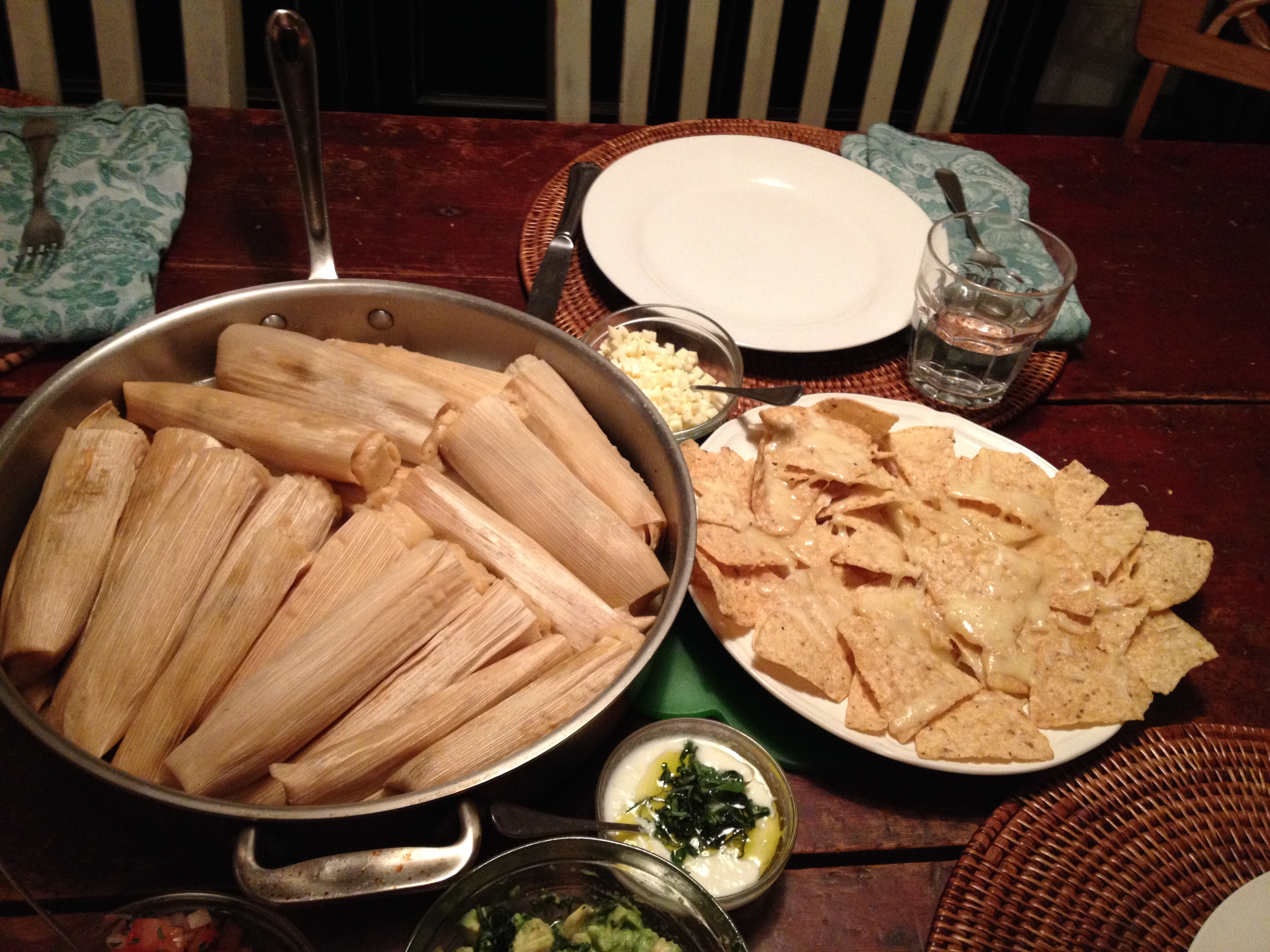
Godello's Tamales

Godello’s Tamales

Fear not good reader, this is only a list of seven, a set lucky wines and songs to play as you sip. On February 21st VINTAGES will roll a mid-winter classic release and though my recommendations will think globally next week, here the choices come out of Ontario, from parts Niagara and Lake Erie North Shore.

My picks are varied and the wines of a coagulated character best described as sui generis. Grapes come from old vines, are dried in kilns, fashioned in the Venetian Ripasso method and left on the vine to be stricken by the noble rot known as botrytis.

The brilliant leap of modern winemaking science allows the ancient to be realized in the present. Wines that pour themselves. Just as the earth has invisibly predisposed the vines, from cataclysms and through its evolution, so history is the unhurried intent. Winemakers are the messenger.

All this from Wine Country Ontario. Get to know it.

Speaking of WCO, if you happen to be heading to Ottawa for Winterlude this coming weekend, the VQA Wine Truck will be there, in Confederation Park.

Meanwhile back in Toronto, my seven wine and song salute begins here.

From left to right: Château Des Charmes Old Vines Riesling 2012, Ridgepoint Merlot 2010, Bricklayer's Reward Block 7 Cabernet Sauvignon 2012, Burning Kiln Stick Shaker Savagnin 2013, Thirty Bench Small Lot Chardonnay 2012, Andrew Peller Signature Series Sauvignon Blanc 2012, Inniskillin Discovery Series Botrytis Affected Viognier 2013

From left to right: Château Des Charmes Old Vines Riesling 2012, Ridgepoint Merlot 2010, Bricklayer’s Reward Block 7 Cabernet Sauvignon 2012, Burning Kiln Stick Shaker Savagnin 2013, Thirty Bench Small Lot Chardonnay 2012, Andrew Peller Signature Series Sauvignon Blanc 2012, Inniskillin Discovery Series Botrytis Affected Viognier 2013

Château Des Charmes Old Vines Riesling 2012, VQA Niagara On The Lake, Ontario (277228, $16.95, WineAlign)

Showy and yet so balanced and pristine. The cleanest fruit representing classic Niagara Peninsula Riesling from the ’12 vintage yet with an open mind to be walking far from home. Though void of agitation, there is plenty of verve and life. It comes by way of a mineral meets saline intensity, of iron and life, in wine. Like “sour building high as heaven,” and the components all kiss each other clean. Full of fine pastry layering, glycerine textured but not oily fruit, full and yet somehow so lacy. A really special Riesling from down by the lake.  Tasted January 2015  @MBosc

Ridgepoint Merlot 2010, Ripasso Style, VQA Twenty Mile Bench, Ontario (270488, $19.95, WineAlign)

Ridgepoint’s Ripasso style Merlot takes the varietal, stands it on its head and shakes the rust from out of its bones. It wears “a coat of feelings and they are loud,” with drying and painted flavours over top porcine, cocoa, wild and tight aromas. Merlot in a purple bottle, an animal collective, peppery, interesting, very Niagara, very Ripasso. Good length.  Tasted January 2015  @Ridgepointwines

Bricklayer’s Reward Block 7 Cabernet Sauvignon 2012, VQA Lake Erie North Shore, Ontario (406124, $19.95, WineAlign)

In Colio’s Cabernet Sauvignon there is dark chocolate everywhere, at every turn, in every crevice. Black pepper, fleur de del, currants and tobacco accent that chocolate ubiquity, with warmth and oak spice. Cherries seeped in astringent tannin offer a silky sweet sadness and “under this skin, there lies a heart of stone.” Counting for value, the Bricklayer’s reward is mercy, by way of character, texture and that wholesome chocolate. It may not be everyone’s cup of cocoa but it will age as long as the crow flies, into the next decade.  Tasted January 2015  @ColioWinery

Burning Kiln Stick Shaker Savagnin 2013, VQA Ontario (367144, $24.95, WineAlign)

Burning Kiln’s latest rendition of Vin de Curé, the “Parish Priest’s,” and the Jura’s Vin de Paille (Straw Wine) is that much more exceptional than what came before. The peaceful, heavy yet easy feeling continues, in alcohol weight and aromatic lift, ’cause it’s “already standin’ on the ground.” Like an eagle soaring, the Savagnin is a wild creature and yet solid, of a gamey, textural density. Imagine dried grasses and fruits, baked bricks, steamed crabs and honey. A wine so unique, mouth filling, viscous and tangy, from a wine region (province) with a maximum 10 planted acres. A white elixir in search of roast pork, braised belly and cured bacon. Not to be missed.  Tasted January 2015  @BurningKilnWine

Thirty Bench Small Lot Chardonnay 2012, VQA Beamsville Bench, Ontario (203703, $30.00, WineAlign)

Thirty Bench’s vintage-affected Chardonnay is rounded, full of warm, ripe fruit and noticeable oak. No darts are tossed, neither by woodsmoke nor spice and it ventures quite outward bound. This adventurous, appealing wine takes some chances, looks beyond its borders, reaching for notes both gravelly and scented; like cumin, coriander and a beautifully bittersweet Tom Collins. The rocks are certainly in, as are the sticks and stones, though they do not break bones. The price is another matter, affordable to some, prohibitive to “the little boys who never comb their hair.” For a Chardonnay such as this, of layers and riches, “they’re lined up all around the block, on the nickel over there.” It time waits for this, value will increase and it will become a wine for tomorrow.  Tasted January 2015  @ThirtyBench

Andrew Peller Signature Series Sauvignon Blanc 2012, VQA Niagara On The Lake, Ontario (405043, $30.20, WineAlign)

Here Sauvignon Blanc is wild and free, bares then sells its soul and is runnin’ with the devil. The expression is a free dance of varietal character, flinty and extremely juicy in simultaneous movements. Though the SO2 level is high (it cleans the passages), the compote is peachy, at times canned and soaking in syrup, but the accents are laden with capsicum, lactic white plums and wet grasses. Slightly bruised and/or oxidative, the mineral tang is pushy and formative. This is serious Niagara-on-the-Lake SB, crazy and compressed stuff. It lives its “life like there’s no tomorrow, finding “the simple life ain’t so simple.” Like vintage Van Halen.  Tasted January 2015  @PellerVQA

Inniskillin Discovery Series Botrytis Affected Viognier 2013, VQA Niagara Peninsula (375ml), Ontario (405027, $39.95, WineAlign)

Inscribed into the Inniskillin ‘Discovery Series” for good reason, the BA Viognier is a product of luck and circumstance, a small parcel of grapes blessed with the not oft success of climate leading to ripening and noble rot. Grapes left to hang into late harvest (as opposed to freezing on the vine for the production of Icewine) is not a common Viognier practice. While the frank and masculine aromatic presence may be compromised here (the nose is quite reserved), the overall ubiquity is omnipresent and enveloping. Such a clean and young botrytis offers soft chords and a lifting voice. You can smell the fruits east and west; green and yellow plantain, peaches and plums. Flavours of lemon curd and pineapple arrive at a point where the tannin finds a way to “fuse it in the sun.” It can be imagined this Vendanges Tardives simulation will go long so “dream up, dream up, let me fill your cup, with the promise of a man.”  Tasted January 2015  @InniskillinWine

Good to go!
http://www.winealign.com/profile/2058-mjg

A biography of Ontario and B.C. wines

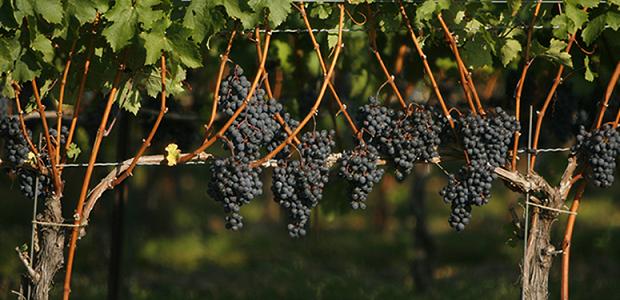
Two Sisters Grapevines Photo © http://www.twosistersvineyards.com/

Two Sisters Grapevines
Photo © http://www.twosistersvineyards.com/

Like a weather map, when you take account of a wine, you are leafing through time. One could chart a wine through location, soils, geology and climatic influences. The biographical footprint is also measured after the vine has been stripped and in the winemaker’s hands.

The reconstruction of biography is about as arbitrary as predicting the future. It’s just as puzzling, untraceable and like running through a maze, is fraught with wrong turns and dead-ends. It’s about hunch work, gauging probabilities, accounting for what has come before and extrapolating towards what might be. It involves using  unsubstantiated and even unrecorded information to try proving a current state of affairs.

The conjuring of a wine to define the present and the future deals not with what is extant but what may never have been. It relies on tastes, sensations and feelings that have done the big vamoose and left no trace. Wines are reticent subjects, unable to defend themselves, posthumously fudged together. We gorge on the lives of famous wines and those culled from beneath overturned rocks, impressible with the fixations of our own.

We are lovers of wine; eager and desperate to be one with their psyche, to imagine it synched in sycophant fixation with our own. Yet all the salient facts and aspects of a wine’s journey, in viticulture, pH, residual sugar, total acidity, élevage and in tasting, are really nothing if we are unable to find the theory the wine and by extension, the winemaker live by.

In Ontario, wine writers spend an inordinate amount of time tasting new releases, generally the most current vintage of wines we have made acquaintance many times before. The bright lights of revelation dim increasingly out of sight due to the nature of that redundant beast. Yet on a Thursday in January at WineAlign the kid in a candy store factor presented through bottles yet discovered from wineries lined up and waiting to be counted.

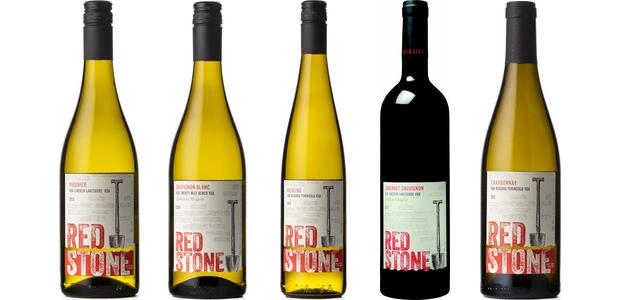
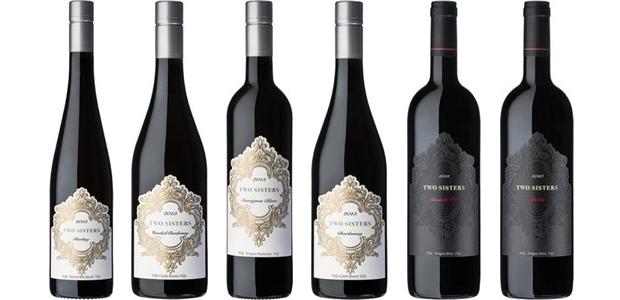
A few weeks ago David Lawrason, Sara d’Amato and I assembled to have a go at four new (or not nationally recognized) Canadian wineries. Redstone Wines is the newest venture from Moray Tawse, with director of winemaking Paul Pender as headmaster to the rising, structured elegance of winemaker Rene Van Ede‘s compositions. Two Sisters in Niagara has pounced on the scene with precocious nerve, having released a few vintages in a short time. Some older wines were crafted in virtual virtuosity by current Ravine winemaker Marty Werner. The Sisters (Angela Marotta & Melissa Marotta-Paolicelli) have come to the present with Adam Pearce at the helm and his affinity for aromatic whites is the newest Niagara revelation. I will look forward to seeing him push some envelopes, with barrels, hang time, micro-plots and fermentative experimentation.

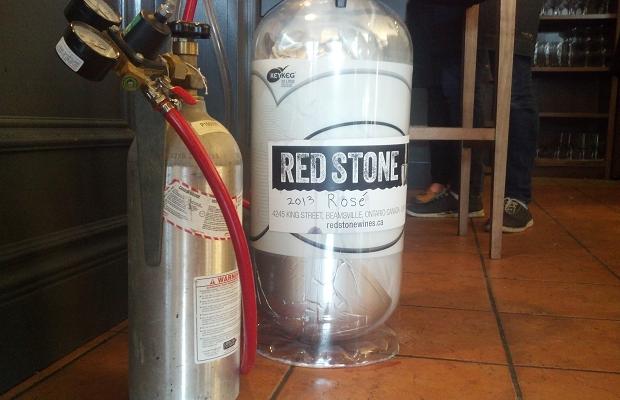
Redstone Wines Rosé from KeyKeg at Campagnolo Restaurant Photo © Michael Godel

Redstone Wines Rosé from KeyKeg at Campagnolo Restaurant
Photo © Michael Godel

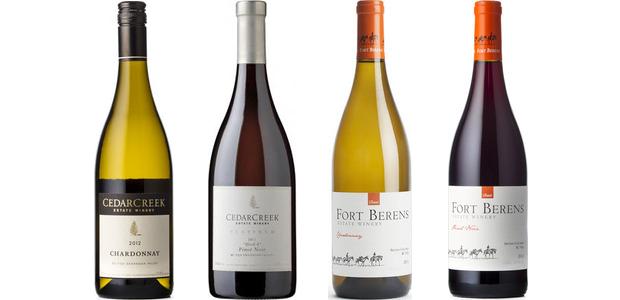
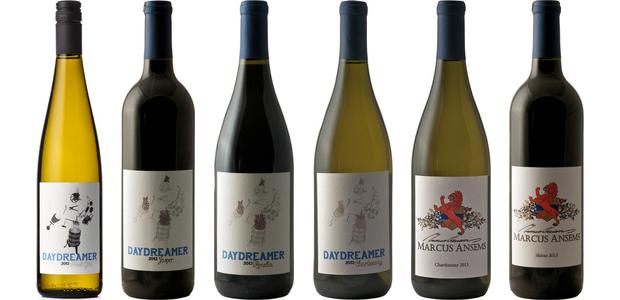
Though I’ve not tasted more than a handful from the Okanagan Valley’s CedarCreek Vineyards, all thus far have touched gold. Winemaker Daryl Brooker‘s varietal wines are pure, precise and affordable. This may just be one of the most exciting wineries to watch out for in British Columbia. Fort Berens does Burgundy in the shadow of Fraser Canyon’s Mountains. A taste of Rolf de Bruin‘s Chardonnay and Pinot Noir offers terrific insight into DNA and in them you can read B.C.’s varietal future. Daydreamer Wines is winemaker Marcus Ansems‘ collective energy of intention, wines to sip again and again until you taste them for the first time.

Here are the notes on 23 Ontario and B.C. wines tasted on January 22, 2015.

Redstone Winery Viognier 2013, Limestone Vineyard Sauvignon Blanc 2013, Riesling 2013, Cabernet Sauvignon 2011 and Chardonnay 2012

Redstone Winery Viognier 2013, Limestone Vineyard Sauvignon Blanc 2013, Riesling 2013, Cabernet Sauvignon 2011 and Chardonnay 2012

Redstone Viognier 2013, VQA Lincoln Lakeshore, Ontario (Winery, $18.00, WineAlign)

Where there’s Lincoln Lakeshore there is red clay and with it winemaker Rene Van Ede goes it old school. Staid and static, Viognier is the star, in as much as it can be in the solid soil by the lake. On the leesy side, a sprite of lime and a dusting of chalk give texture, augmenting an already noticeable, package deal Redstone white wine portfolio. A yeast strain trend seems to be the uniting force. This is weighty but not dense, solid for the varietal and indicative of the winemaker’s style.  Tasted January 2015  @RedstoneWines

Redstone Cabernet 2012, VQA Niagara Peninsula, Ontario (Winery, $19.95, WineAlign)

Part Cabernet Franc and parcel Cabernet Sauvingon, this Redstone spent 16 months in French oak. Having melded wood into savour, the plum fruit is more than up front ample, with a pepper over and a chocolate under. A fair shake of spice and insistent tannin makes for quite a bracing red mouthful, indicating needed air and age time. Like the Tawse Bordeaux-styled reds that have come before, here is yet another slice of red fruit meets the iron life.  Tasted January 2015

Redstone Limestone Vineyard Sauvignon Blanc 2013, VQA Twenty Mile Bench, Ontario (Winery, $22.95, WineAlign)

If a Niagara Sauvignon Blanc could be endeared with the term ‘calcaire,’ Rene Van Ede’s Limestone Vineyard would lead the shortlist, not only because of the eponymous vineyard but because it oozes of the rock’s chalky chafe. Plenty of orchard fruit belies the lime, in an unoaked Chardonnay way and the wine makes full use of limestone’s hematic shed. This is one of the most stylish Sauvignon Blancs made in Canada, even if the average consumer were not able to recognize it as such. A winemaker from Sancerre would know it immediately and intuitively. Here a crushed reef of limestone memory permeates the wine from beginning to end. One of the more outstanding Sauvignon Blancs made in Ontario to date.  Tasted January 2015  @DanielatTawse

Redstone Winery Riesling 2013, Niagara Peninsula, Ontario (Winery, $18.00, WineAlign)

Such a stoic, atomic, inwardly myopic, microscopic Riesling. Dry and drier on the not yet quite ripe pear side of the tree fruit diapason. A juicy, tangy palate follows, with viscous treasures tasting of lime curd kicked up by spice accents. A kinship here with the Tawse Limestone Ridge Vineyard, with minerals that have not forgotten what it’s like to think about magma. So much lime continues to kick in and the stone it acidulates. Narrow, focused, long and rising Riesling.  Tasted January 2015

Redstone Pinot Noir 2012, VQA Twenty Mile Bench, Ontario (Winery, $29.95, WineAlign)

Fruit for Redstone’s Pinot Noir is sourced from a 15 year-old block and it saw 16 months in French oak. A wine defined by up front spice, oak obviousness and a candescence in extraction. This the vintage gives, to clamber along with the barrel, in addition to red fruit tones that trump earth. The glass is filled with a waft of raspberry pie and a drizzle of macerated cherries. A ferric streak, as would absolutely be expected, line the red fruit basket and keeps the Redstone savour animated. Know this about Twenty Mile Pinot Noir. It is alive.  Tasted January 2015  @RedstoneWines

Redstone Cabernet Sauvignon 2011, VQA Lincoln Lakeshore, Ontario (Winery, $29.95, WineAlign)

The Redstone Vineyard is a plot of red clay and large stones, set within the 38-acre estate. This red beauty saw an extended stay (18 months) in French oak, a relevant encounter to see it come out with remarkable purity, not to mention sensuality. This from out of the 2011 vintage, one that did not flatter many Niagara reds though on the Lincoln Lakeshore much success has been found. Plum and strawberry scents emerge from a wine warmer than would be thought, sanded by chalky and grainy parts in synch. A well-delineated progressive and fine-tuned machine should age for a minimum five years.  Tasted January 2015

Redstone Winery Chardonnay 2012, VQA Niagara Peninsula, Ontario (Winery, $31.95, WineAlign)

A very buttery Chardonnay, warm, tropical, steeped from rich soil, seeping orchard fruit and yet soaking from the generous amount of French oak. Handled with poise and ease, the fruit just seems to inuit its amalgamated Peninsula place and understand its place in the Niagara Chardonnay spectrum. This grows and grows, like a vine, upwards yet inwards, with instrumental interplay and no excess notes. Just the bare Chard essentials; no waste, all focus, trim and elegant.  Tasted January 2015  @Tawse_Winery

Two Sisters Vineyards  Merlot 2010

Two Sisters Vineyards Riesling 2013, Unoaked Chardonnay 2013, Sauvignon Blanc 2013, Chardonnay 2013, Eleventh Post 2011 and Merlot 2010

Two Sisters Riesling 2013, VQA Twenty Mile Bench, Ontario (Winery, $24.00, WineAlign)

An auspicious coming out vintage from winemaker Adam Pearce with fruit sourced from the Foxcroft block of the Wismer Vineyard. So very Twenty Mile Bench, with fleshy, near to bursting exotic aromatics in the vein of other Foxcroft Rieslings, like those made by Paul Pender, Ilya Senchuk and Kevin Panagapka. The classic stone fruit, their stones and the soil’s stones trampled underfoot. The kinship goes deeper, with Jay Johnston’s Nadja and Pender’s Limestone Ridge. Pearce’s take endears with notes of clementine and creamy mango pudding. Though the residual inflates more expansively than all the others, there is an aridity in the end, one that intimates modern Alsace. A pleasure to taste, with good (though not great) acidity and low (10.6 per cent) alcohol. The finish improves with each pass of the lips.  Tasted January 2015

Two Sisters Unoaked Chardonnay 2013, VQA Creek Shores, Ontario (Winery, $24.00, WineAlign)

From the Creek Shores appellation, a precinct of the Peninsula with a habit of firing citrus shots into Riesling and Chardonnay. The injections are at their hyper best from June’s Vineyard and here, in this Adam Pearce crafted, barrel-broaching bottle of white stone immaculate. Tons of character graces this Chardonnay, with a salinity drawn from the heavy Creek Shores soil overtop solid rock that permeates the wine’s earth. Lees affected, this may well be Petite Chablis, what with its texture and sugary smells. There is a perceived effervescence, a lively streak that gives it life and a swelling of its heart. The acidity is rampant and despite the inkling of SO2, the wine is quite expressive and a step-up from many cut of the same genre.  Tasted January 2015

Two Sisters Sauvignon Blanc 2013, VQA Niagara Peninsula, Ontario (Winery, $29.00, WineAlign)

Here is a veritable, potable example of Niagara SB 101, breath freshening, varietal refresher. Crafted with the lightest Sauvignon Blanc touch, with hints of grass and goose feathers, hold the berries. Soft, slight and slightly herbal with a thin veiled membrane of circular acidity. Amiably done.  Tasted January 2015

Two Sisters Chardonnay 2013, VQA Creek Shores, Ontario (Winery, $32.00, WineAlign)

Not unexpectedly, the Two Sisters oaked Chardonnay is a dramatically opposing force to the unplugged abbess. If not for the pierce afforded a Creek Shores drawn Chardonnay, winemaker Adam Pearce might have found himself stuck with a big, buttery bag of popcorn on its way to becoming a can a of creamed corn. The wooden ship is thankfully mitigated by citrus and sails calmly across buttery seas in search of herbal lands. The handling is not one fumbled by heavy mitts and the cool climate intent is managed bravely. There is admiral balance with just enough wood incantation to see it stretch across a few years time.  Tasted January 2015

Two Sisters Eleventh Post 2011, VQA Niagara River, Ontario (Winery, $39.00, WineAlign)

A Bordeaux blend of Cabernet Franc, Cabernet Sauvignon and Merlot that is very savoury, with a dry and dusty white/red pepper component. This has good verve from out of the challenging 2011 vintage. It forges ’10 louder, amps the dial up to ’11, in tempo and sapidity. A very persistent and intense heritage, with chalky tannin and grains running crosswise. Though the final wish would be for more length, it is a dogged specimen with a few years left ahead.  Tasted January 2015

Two Sisters Merlot 2010, VQA Niagara River, Ontario (Winery, $48.00, WineAlign)

This was a “virtually” made wine at the time by current Ravine Vineyard winemaker Martin Werner. From the warm and high ripening 2010 vintage, with additional blanketing and layering from the Niagara River appellation. Oak provides a creamy flannel swaddle. Certainly soft, dreamy and downy, void of tension and so easy to consume. Though by now it has fully evolved and is rapidly descending into the river’s sunset, its flavour temperament is more than Merlot palatable. Were the price considerably lower it would please on more levels.  Tasted January 2015  @2SistersVine

CedarCreek Chardonnay 2013 and Platinum Block 4 Pinot Noir 2012, Fort Berens Chardonnay 2013 and Pinot Noir 2012

CedarCreek Chardonnay 2013 and Platinum Block 4 Pinot Noir 2012, Fort Berens Chardonnay 2013 and Pinot Noir 2012

CedarCreek Chardonnay 2013, VQA Okanagan Valley, British Columbia (Winery, $17.95, WineAlign)

With a component of this wine having been housed in mammoth, old-school (2250 litre) oak barrels, the wood is spread like citrus honey butter, evenly and judiciously, through every sip. Chardonnay of tang and by lees, with apples everywhere, along with a streaky flint mien. Fine Chardonnay.  Tasted January 2015  @CedarCreekWine

CedarCreek Platinum Block 4 Pinot Noir 2012, VQA Okanagan Valley, British Columbia (Winery, $39.95, WineAlign)

From a vineyard planted in 1995, this wild yeast inoculated Pinot Noir is tough, sinewy, rigid and masculine. Dark red fruits are surrounded by racing, bracing, running on the spot acidity. Here is a west coast wine that needs enough time, somewhere in the area of five years, to soften and bring flowers. When it does, they will be roses.  Tasted January 2015

Fort Berens Chardonnay 2013, VQA British Columbia (BC VQA, 559492, $19.99, WineAlign)

With Fraser Canyon’s mountains as the backdrop, the sandy soil and sage brush make for a cool yet herbal Chardonnay. The foothills earth gives Lillooet mineral, not unlike Chablis but in B.C., with a tropical twist. This has plenty of leesy, Chablis character. Quite spirited, chalky and with a hint of soft metals, as if the cold world melts, “the noise a song.” Any way you look at it or listen to its electronica grooves, this is another cool-climate beauty. With good oscillating texture and length, it could easily be imagined to be drinking a tankful on a hot summer’s day.  Tasted January 2015  @FortBerens

Fort Berens Pinot Noir 2012, VQA British Columbia (Winery, $25.99, WineAlign)

This wine of many clones came together from Lilloet soils and was housed in barrels from many coopers. It’s bright, funky, meaty and fecundated with a clafouti of red fruits. Though jammy it’s neither hot nor over-extracted. The jam is a compote, teased by citrus rind and rubbed herb stems. In the end the sweetness prevails so find some salty charcuterie to match and drink up.  Tasted January 2015

Marcus Ansems Shiraz 2013

Daydreamer Wines Pinot Gris 2013, Jasper 2013, Amelia 2013 and Chardonnay 2013, Marcus Ansems Chardonnay 2013 and Shiraz 2013

Daydreamer Wines Pinot Gris 2013, VQA Okanagan Valley, British Columbia (Winery, $22.00, WineAlign)

Here a small batch Pinot Gris from winemaker Marcus Ansems out of an organic (Naramata Bench) vineyard. Dry and inhabiting atmospheric space, tightly wound, aerified and vacuous. Smells of fruit and blasted bits housed in concrete; pits, stones and blocks of rock. Flavours come from tree fruit, citrus and crushed seeds. Clean like Alsatian Pinot Gris (Schoffit comes to mind) and really balanced, with a soft crooning lilt. It’s quite elemental and elementary dear Watson, approachable and comforting. “When my head is heavy on my shoulders, daydreamer gonna make it over.” Linear acidity gives further meaning, in planar and stretched grooves. Deserving of the generic comment “really good food wine.”  Tasted January 2015  @Daydreamerwines

Daydreamer Wines Jasper 2013, VQA Okanagan Valley, British Columbia (Winery, $25.90, WineAlign)

This blend of Merlot (83 per cent) and Cabernet Franc is a dry, dusty pepper, mace and plum red with a silky texture and some advanced character. In retention of necessary acidity it manages to stay on the wire, with a citrus ability and a lees meets cheese rind cure. The flavours carry this forward with a chew of dried jerky, only to return to the aromatic takeover of dried flowers and cracked nasturtium pods. The great appeal here is on the nose, nothing to sneeze at or take for granted. The lasting appeal is a smell of salt pulling lilacs into the sea, or like a garden of flowers of trance inducing aromas that have absorbed many daydreams.  Tasted January 2015

Daydreamer Wines Amelia 2013, VQA Okanagan Valley, British Columbia (Winery, $25.90, WineAlign)

The organic B.C. winery presents a northern Rhône dreamer singing like a bird on its very personal Okanagan hejira. Composed of (90 per cent) Syrah and more than a dash (10 per cent) of Viognier, it also hits you like a linebacker, with waves of pepper and steeping cherries, or perhaps plums. Silky smooth and haunting up the middle, but the cure is in, the meats drying and the flavours massive. The fruits dehydrate in a way to question, have you got a date? Dates this Syrah has, in clusters, made saline by capers and sage. Leaves “vapor trails across the bleak terrain,” with streaks of octane fruit and tannin in refrain. This should be left to rest for a few years, to play out the song, to avoid “dreams, Amelia, dreams and false alarms.”  Tasted January 2015

Daydreamer Wines Chardonnay 2013, VQA Okanagan Valley, British Columbia (BC VQA, 410076, $29.90, WineAlign)

A weighty example in excess of the chameleon Chardonnay’s necessities, skittering with jerking movements and changing rapidly within the assessment in minutiae. Plenty of scorched earth and toasted barrel putter about and the aromatics remind of an old Eastern European home. Braising biennial Brassica, Pot au Feu and a wood smoker linger into a leesy and citrus tang. The sapidity takes charge and warms to the glass and the senses. A more than serviceable if scattered Chardonnay here brings much character to the table.  Tasted January 2015

Marcus Ansems Chardonnay 2013, VQA Okanagan Valley, British Columbia (BC VQA, 410076, $29.90, WineAlign)

The winemaker’s personal label is derived from more finesse and delves into upstanding seriousness than what is shown by his Daydreamer counterpart. Very cool-climate, acidity on top, with the suite of buttered toast, green apples and spice notes harmoniously intertwined. Pining notes opine to imagine pine forests and natural twine. Intense tang and verve stretch to protected length. Cooler in many ways, like a trio of established artists coming together for a first record, to offer their collective sound, on a “Friday evening, Sunday in the afternoon, what have you got to lose?” Nothing at all, from a glass of this blue-eyed Chardonnay.  Tasted January 2015  @HemispheresWine

Marcus Ansems Shiraz 2013, VQA Okanagan Valley, British Columbia (Winery, $34.90, WineAlign)

This Golden Mile Bench, west coast red leans northern Rhône with pronounced cured pork belly and smoked meat aromas. The savoury edge is like capers growing from cracks in limestone, the olives and other pickled berries coming by way of warmer, more southerly climes. Modern, violaceous and a touch oxidative, with some southern hemisphere gauze and rubber mercurial style points. There is a smell like that of baked potato, baked underground, after lightning has struck. A big wine from a little known pocket for Shiraz lore, the Ansems Shiraz will appeal to a masculine palate.  Tasted January 2015

God to go!

http://www.winealign.com/profile/2058-mjg

We the Icewine

Xerox

Xerox Icewine Gala, Fallsview Casino Resort

Something has shifted in me, somewhere closer to the realm of sweet nirvana. It could be empathy, a delayed reaction in sensitive thought to what the winemakers and hard-working Niagara wine country folks had to endure in the winter of 2014. Maybe it’s a premature anticipation of the greatness that will come from sweet wines crafted from out of that polar vortex attenuated vintage. Could it just be that Icewine has grown on me, that the elixirs of Peninsula life have violated and occupied my parochial psyche?

For two weeks in January, Niagara Wine Festivals and Wine Country Ontario lay out the nectarous red carpet and everything comes up Icewine. If fans of the Toronto basketball franchise can ignore all the basic tenets and principals of modern English grammar, who’s to say the followers of Ontario’s world-class elixirs can’t do the same. Thus I give you, “We the Icewine.”

Admittedly the phrase does not resonate with equal credibility in comparison with what works in the realm of base, shallow and primitive sport. It does not matter to me. I’m still going with it. Niagara is the epicentre of the Icewine world, in the (near, near) north and we own the market and its successes. We the Icewine.

20 Years

20 Years of Icewine

A recap of Icewine 101. Simply put, made from grapes that have been left to freeze naturally on the vine. Ontario’s production laws insist that Icewine must be made from approved grape varieties; the most popular are Vidal Blanc, Riesling and Cabernet Franc. Some small lots include Gewürztraminer, Chardonnay and Cabernet Sauvignon.  Grapes are left on the vine until a sustained temperature of -8°C or lower is reached and then picked from those vines encapsulated in nets to protect them from birds possessive of a sweet tooth.

Related – Deep freeze: Controversies, polar vortex and icewine 

The wineries of Niagara-on-the-Lake are the backbone of the Icewine phenomenon in Ontario. Picking for the Icewine harvest in 2015 has stretched over a period exceeding 30 days, not necessarily out of the ordinary but it should make for a wide range of styles and quality in the vintage. Inniskillin Niagara Estate Winery began its thirty-first Icewine harvest on January 5th.

The Niagara Icewine Festival has wrapped up for another year but there are still many weekends left to get a taste of what took place throughout the month of January. There were street festivals in Twenty Valley‘s Jordan Village from January 9th – 11th, Niagara-on-the-Lake from January 16th – 18th and new this year, events in Niagara Falls. Winter continues along with the buzz across the Niagara Peninsula.

Visitors made use of the Discovery Pass, a passport to 35 wineries and culinary experiences along the Wine Route. Along with a variety of Icewines, visitors were offered the opportunity to taste sparkling and VQA red and white wines.

Gala

Icewine Gala decor

For all things Icewine here is a link to the festival site withy more information here. With kind thanks to Magdalena Kaiser and Wine Country Ontario on Friday, January 10th, 2014 I attended another Xerox Icewine Gala at the Fallsview Casino Resort. The following day I attended the Twenty Valley street festival in Jordan, Ontario.

With Icewine firmly on the brain I decided to make a go at as many samples that can safely be sampled in one night. Not to leave out the still and Sparkling in the room, I made sure to taste the generous and in some cases, pleasant surprises being poured by Niagara’s finest winemakers. Here are notes on twenty wines tasted over the weekend.

And don’t forget the anagram: A wet vial is fine nice agar.

Vineland Estates St. Urban Riesling 2008, VQA Niagara Escarpment, Ontario (38117, $19.95, WineAlign)

If this Riesling could go through a glück stage, now would be the time. There is a plump and resinous feel about it in 2015, quite possibly signalling the end of its first seven years en route to a minimum 14 more in its life. At this juncture it’s like hot stones washed down with salt water. Look for it to cool again as the year passes. From my earlier, April 2013 note: “Poured as a youthful and “hello” pleasant surprise though it’s just beginning to display secondary character. Has shed its tingling ferment skin without compromising the inherent citrus zest. Nectar lit by just emerging perky propellant and the ubiquitous, underlying ullage of St. Urban’s stones all combine forces to a life of amarita. All this to make believe 2028 will be just another year in its evolution.  Last tasted January 2015  @benchwineguy  @VinelandEstates
Pinot QRV

Creekside Estates Pinot Noir QRV 2013

Creekside Estate Winery Pinot Noir Queenston Road Vineyard 2013, VQA Niagara Peninsula, Ontario (Winery, $22.95, WineAlign)

The first made since the 2008 because of a new directional decision to hold onto and no longer forsake these exceptional Queenston Road Vineyard grapes. A wine that folds back the skyline skin of time and reveals a cloning from intimate belongings. Pinot blessed of a Dylan-esque drawl, from a comfortable and crooning time in its life. Penetrates into the QRV earth and draws out subtleties, slow food assuagement and makes no BS about its ease. Though posolutely whiffing and tasting of black cherry, it balances itself with an acerbic wit. This is what winemaker Rob Power refers to as a lay lady lay style. Partners in crime Yvonne Irving and Matt Loney concur. One sip and your partner may just lay across your “big brass bed.” You can always go back to Nashville.  Tasted January 2015  @CreeksideWine  @CellarMonkey  @Matt_Loney

Ravine Vineyard Chardonnay 2012, VQA Niagara Peninsula, Ontario (306902, $24.00, WineAlign)

Spice notes are the current rage, from out of the barrel and now into a next level of amalgamation with tree orchard fruit. Has lengthened somewhat since last summer. From my earlier, July 2014 note: “Winemaker Martin Werner’s 2012 may just be the hardest working Chardonnay in showbiz and in Niagara. Winnowed from Estate (St. David’s Bench) and (Niagara) River fruit, there lurks within, a 20-30 percent perfumed compression of Chardonnay Musqué. The additive is a tonic fanned from the wine’s olfactic communicative nerve centre, adding tree fruit notes no more serious than should be gathered. Werner picked real early, like five weeks ahead (first of September) and the resulting noisome perfume makes for some funk. “It’s these little things, they can pull you under,” but they blow away and settle into a rich, viscous Chardonnay for the palate to collect, contain and command. “Oh, oh, but sweetness follows.” This Ravine works automatically, of the people, for the people.” Last tasted January 2015  @RavineVineyard  @marty_werner

Inniskillin Winemaker’s Series Montague Vineyard Chardonnay 2012, VQA Four Mile Creek, Niagara Peninsula, Ontario (586347, $24.95, WineAlign)

The warm clay of Montague plugs in and along with the barrel, layers toast, buttered toast and more toast upon the body of the 2012 Chardonnay. In many ways this is a serious bottling for the Peninsula; it’s all in and wants it all. A strong-willed, big-boned wine with much ado about varietal expressiveness. Paired with a plate of many elements and anchored by rich protein drawn from a salty ocean, this forward and weighty Chardonnay can do no wrong. With all its upfront personality it may not do the same with more than a few years age but there’s really nothing wrong with that. Enjoy it now and to 2017.  Tasted January 2015  @InniskillinWine

Vieni Estate wines

Vieni Estate wines

Vieni Estate Sparkling Brut Rosé 2012, VQA Vinemount Ridge, Ontario (Winery, $29.95)

Made from a blend of Chardonnay, Pinot Noir, Pinot Meunier, and Riesling, the Charmat method Rosé Sparkling is weighty at 13 per cent alcohol and so very savoury. Winemaker Mauro Salvador is finding new places for investigation in fizz-forming for Ontario. The ’12 Brut Rosé champions aridity and noble bitters. The aromas conjure up a botany and a herbalism that would make Pliny proud.  Think stinging nettles, rapini, arugula, strawberry leaf and the energy of carboniferous ponds. Though the acidity is mild as compared to Salvador’s Vidal/Pinot Gris ‘Momenti,’ it manages just enough balance in this blush sparkler.  Tasted January 2015  @VieniEstatesInc

Creekside Estate Winery Reserve Viognier 2012, VQA Niagara Peninsula, Ontario (Winery, $29.95, WineAlign)

Creekside’s small production Viognier (maximum 80 cases) from the warmer micro-climate of the Queenston Road Vineyard heads back to near-boozy and a bit hot in the sudorific vintage. Oh the viscous humanity of it all, especially when the (all French, two year-old, nine months time) ferment was performed on 100 per cent of the six barrel juice. While it may not flirt with the dangers of say, a dirty peach martini, there is plenty of seasoning, rich, spicy and opulent fruit to at least declare a cocktail of some shaken kind. The ’12 Viognier drips and sweats of a humidity as much as any cool climate rendition can (at least in the context of the Niagara Peninsula). It may not be the ideal vintage but it just may be the one with the most excess.  Tasted January 2015  @CreeksideWine

Inniskillin Niagara Estate Single Vineyard Series Montague Pinot Noir 2012, VQA Niagara On The Lake, Ontario (997353, $29.95, WineAlign)

A crescendo of sorts has been struck in 2012 with the Montague Pinot Noir perpetuity, giving credence to the vineyard as a resource to be exploited. What the site does for Pinot, particularly in warm vintages like 2012, reminds of the Pfersigberg in Alsace, a plot which provides fruit for the Sainte-Claires bottling by Domaine Albert Mann. A site where water-retention is less than average, where soil colour and low humidity attract the radiance of intense heat, which leads to early ripening of the grapes. The richness of Montague’s clay is amplified in the vintage, providing elevated heat units for this red cherry, beet, cinnamon and toasted red of equally exceptional flavours. Fine, linear acidity takes it to depths and will lead it down long, paved roads.  Tasted January 2015

Château Des Charmes Equuleus 2010, VQA St. David’s Bench, Paul Bosc Estate Vineyard, Ontario (319525, $30.00, WineAlign)

Not quite halfway to the five year prediction, the filly is showing the first sign of slowing down. While time certainly remains on her side, the obvious maturation and calming down is nosed in the onset of a slow caramelizing aroma. While the gait may be in trot mode, the five year mark (2018) remains the signpost to look towards on the long track of her life. At that point, with an hour decant, Equuleus ’10 will be good to go. From my earlier, May 2013 note: “From the Paul Bosc Estate Vineyard is a classically styled blend of 50% Cabernet Sauvignon, 25% Cabernet Franc and 25% Merlot, only made in exceptional years. Apropos choice from 25-year old vines (in 2010) from the warmer St. David’s Bench for Cuvée’s 25th show. Poised, balanced and regal yet this mare is temporarily a head-shy, sensitive equine red. Will trot out furlongs of tobacco and meaty aromas from now and through maturity in five plus years. A saddle of round, red fruit will age gracefully.”  Last tasted January 2015  @MBosc

Colaneri Estates Coraggioso Cabernet Sauvignon 2012, VQA Niagara Peninsula, Ontario (Winery, $32.95, WineAlign)

Crafted in the appassimento style, the 2012 Coraggioso is made from 80 per cent dried fruit. Intended to mimic its maker (Michele “Mike” Colaneri), the wine is a bullish, strong silent type, protector of the family, or in this case, the dried grape, passed over style of the Veneto. The specs are bold and impossible; alcohol fortified at 15.3 per cent, residual sugar duplicitous at 7.8 g/L and acidity nearly non-existent at 0.97 g/L. The composition yet works, with help from natural fermentation (no cultured yeasts), six months in new barrels and an additional 13 more in used ones. The happy and old school aspect ratio is turned up by its dried bulb, root and packed earth aromatics; fennel, liquorice and just set concrete. The balance is paradoxical, nearly apocryphal, certainly Coraggioso (courageous). The dried fruit sensations continue right to the end, in lieu of acidity and tannin so the ability to age is there, even in the absence of traditional agents. Really unique and dare it be said, elegant Bordeaux-esque appasimento.  Tasted January 2015  @ColaneriWinery

Southbrook

Southbrook Vineyards

Southbrook Whimsy! “Damy” Chardonnay 2011, VQA Niagara Peninsula, Ontario (Winery, $34.95, WineAlign)

As a Whimsy sister to the XY Sirgue, XX Damy is a barrel blend that spent 10 months on lees in 100 percent French oak (25 new, 25 one year-old and 50 neutral). While undoutedly the more feminine of the two, she is also feistier and the Chardonnay possessive of a bigger personality. Damy exaggerates suppositions synthesized from both the 2011 micro-vintage and the macro-cool climate for Niagara Chardonnay. At present she seems stressed, with so much citrus anxiety, a sting in herbage and a medicinal lactic seeping. All need to come together, find the calm, common ground and spoon beside one another. This will happen, given a couple of years time and Damy will express herself more freely come then. Drink brother Sirgue first, the simpler and softer sibling.  Tasted January 2015  @SouthbrookWine

Creekside Reserve Queenston Road Vineyard Cabernet Sauvignon 2010, VQA St. David’s Bench, Niagara Peninsula, Ontario (Winery, $34.95, WineAlign)

A 21-month stay in an all French oak hotel has now reached integration in this Queenston Road Vineyard beauty. The fullness of its qualities are on display, running a circuitous aromatic and flavour gamut from dark chocolate to savoury black olive cake. From my earlier, February 2014 note: “Impeccable correctness in terms of the variety from a year where the heat giveth and the heat taketh away. Works Cabernet properties properly, embracing and minimizing oak without pretending it’s not there. This red is expressly lush and oak driven, as it should be, it being Cabernet and all. Leaves its appendages out for a Mediterranean pedicure, a glaze of Cassis, black olive and black cherry dug in a chair entrenched in the warm confines of the St. David’s Bench.”  Last tasted January 2015  @CreeksideWine

Southbrook Poetica Cabernet Merlot 2007, VQA Niagara Peninsula, Ontario (Winery, $54.95, WineAlign)

The Poetica Red is very warm, extracted and quite stylish. She did not miss much from the heat day quotient of the 2007 vintage in Niagara. “She’s well acquainted with the touch of the velvet hand like a lizard on a window pane.” Anise and pencil graphite are shot straight from the wood-soaked barrel of a dark chocolate gun, leaving behind a pool of orange bitters with a slick of acidity. The (rounded up) one-half Cabernet Sauvignon, one-third Cabernet Franc and one-quarter Merlot, while bigger than its head, is so integral towards the future success of learning to reign in the power of this formidable Southbrook blend. Happiness is a warm Poetica.  Tasted January 2015  @SouthbrookWine

The Icewines

Château Des Charmes Estate Bottled Vidal Icewine 2013, VQA Niagara On The Lake, Ontario (565861, 200 ml $25.95, WineAlign)

All the diamonds in this world seem to concentrate in fruit form within CdC’s Vidal ’13, “conjured up by wind and sunlight, sparkling on the sea.” The pang of smells opens with the prickly sting of memory, of childhood fruit cocktail, Turkish delight and the Big Turk. “Like a pearl in a sea of liquid jade.” The intensity of piercing acidity and hyper-cloying stone tree fruit is a searing and blinding crush on the eyes, teeth and mouth. So very tight and concentrated, this is a wow Vidal, an ‘o baby’ Icewine and all the while over the top. It may be a tad hard to handle but it offers crazy bang for the buck. Perhaps a few years will settle its crazies.  Tasted January 2015  @MBosc

Southbrook Vidal Icewine 2010, VQA Niagara On The Lake, Ontario (Winery, 200 ml $26.95, WineAlign)

A naturally sweet monster from a vintage where ideal conditions allowed for early picking, especially for Vidal. That 150 g/L of sugar could be realized from a December baby is what strikes this condensed tropical fruit bomb into the lore of the genre. Indigenous fermentation using yeast lees from Southbrook’s 2010 Chardonnay barrels and some bacterial connectivity has resulted in early evolutionary notes, notably bitter burnt orange and oxidized mango. Highly complex for the Vidal sempiternity, the 2010 Vidal Icewine is no imminent retiring rose though its decline will hasten sooner rather than later.  Tasted January 2015  @SouthbrookWine

Inniskllin

Inniskllin

Inniskillin Vidal Sparkling Icewine 2012, VQA Niagara On The Lake, Ontario (560367, 375 ml $31.95, WineAlign)

The sweetness is highly elevated straight from the central core of this (200+ g/L RS) Charmat-method Sparkling Icewine. It’s more than interesting, I’ll grant it at least that and though the alcohol remains at or just below the (10 degrees) threshold, it acts quite hot. This is due to so much accenting spice, which seems to be a ropey-wooden-sappy injection, though the wine sees no barrel. Big, big tangy fruit flavours are smothered in the ubiquitous spice. Complexity is gained though elegance is lost. At least the ride is wild when in consideration of the price.  Tasted January 2015  @InniskillinWine

Peller Estates Signature Series Ice Cuvée, VQA Niagara Peninsula, Ontario (284547, $31.95, WineAlign)

From a base wine that is Chardonnay (70 per cent) and Pinot Noir (30), the aridity is markedly up front despite the sweet Vidal dosage style. Comes streaking across on the barking citrus palate. It’s broad, expansive, with a minute bit of oxidation. It builds upon itself and really develops the mouthfeel. A most excellent use of Vidal. So very long and solidifies the earlier anti-oppugning exceeds expectations declaration. From my earlier, January 2014 note: “This is Peller’s most versatile fizz, a blend of traditional method Chardonnay and Pinot Noir sweetened by a dosage of Vidal icewine post disgorgement of its lees. The lees has been left to linger in the bottle, in spirit. Sapid, savoury bubbles tingle the senses to the bone and will offer the most comforting and proper pleasures to those discriminating and otherwise. Appealing to a large common denominator, this Peller Sparkling can really do no wrong.” Last tasted January 2015  @PellerVQA

Ravine

Ravine Vineyards

Ravine Vineyard Cabernet Franc Icewine 2012, VQA Niagara Peninsula, Ontario (Winery, $50.00, WineAlign)

Less than 50 cases were produced of a wine sourced from fruit grown on the Lepp farm. Crafted from 100 per cent Cabernet Franc, the grapes were picked quite late (in January) in a vintage that saw thaw, freeze and thaw again before temperatures dropped to allow for the Icewine harvest. The fruit lost some freshness and the fluctuations also resulted in less syrupy viscosity. There are dried fruit notes, a calming mustiness and even some herbiage, in dill, anise and salinity crusted sea peas and vetches. The complexities continue into a palate that goes at it in more traditional ways, with apricot, orange peel and lemon rind. Add in liquorice and bokser. Acidity keeps it very much alive. The conclusion? Nature’s accords cannot be guessed at.  Tasted January 2015  @RavineVineyard  @marty_werner

Trius Winery At Hillebrand Showcase Vidal Icewine 2012, VQA Niagara Peninsula, Ontario, (Winery, 375 ml $60.00, WineAlign)

What strikes most upfront about the Trius Vidal ’12 is the anomalous and dichotomous reserve on the nose. Its very concentration is chained to the aromatics but they lurk in the background. This is no floozy of an Icewine. There is spice and very rich fruit but it does not flirt or give itself up with abandonment. Apricot is most noticeable, along with accents that indicate the roots and barks of South Asian trees. Acidity is downright proper. A solid and gallant Vidal.  Tasted January 2015  @TriusWines

Reif Estate Grand Reserve Riesling Icewine 2011, VQA Niagara River, Ontario (Winery, 375 ml $74.90, WineAlign)

A slow ripening season with warm, never hot and at times quite cool temperatures made for one seriously gelid cat of a Riesling Icewine. This 2011 makes the mouth go ooohh with an array of frosty aromatics and flavours. A veritable study in wine’s sweet and sour science, there is mint, eucalyptus, citrus and a host of sweet fruits; yellow peach, clementine, juicy lime and crunchy apple. Spice notes pierce and prick in every hole. Though not as striking in its early stages, the coolness factor is refreshing and the understated style a harbinger for many years of slow development. It would be hard not to imagine the Grand Riesling ’11 as not being a 20-25 year wine.  Tasted January 2015  @Reifwinery

Reif Estate Grand Reserve Cabernet Franc Icewine 2013, VQA Niagara Peninsula, Ontario (Winery, 375 ml $94.95, WineAlign)

A glaringly vivid icebox Icewine from Reif in 2013, throwing the grocery gamut all in. From the top shelf come layers of sweetness; gelées, juices, purées and coulis in (at least) raspberry, Cassis and strawberry. From the middle swaths in thick brushstrokes, of rhubarb and caramelized Kabocha squash. From the bottom rises roasted nightshades and alium confit, in capsicum and red onion marmalade. A moderate alcohol (10.5 per cent) out of solid brix (38.8) in ’13 has arrived at this sugary mess of produce yet without the zip and zest required to really tie the Grütze together. The overall composition is certainly graphic and in exaggeration of its parts. That said, this just may be the best pairing for good quality chocolate ever composed in the Icewine category.  Tasted January 2015  @Reifwinery

Good to go!
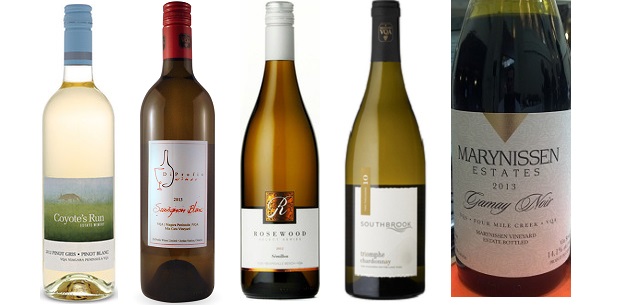
Red, white and orange at Southbrook Vineyards

Southbrook Whimsy! Reds, Whites and Orange

She says she’s making a similar wine in British Columbia, but Ann Sperling will tip no varietal hat, will offer up no hints, will not reveal the make-up in her new, all-natural Orange wine. That’s right. Orange wine.

To arrive at this (nothing rhymes with orange) juncture, a bit of background on the winemaker and her Ontario employer, Southbrook Vineyards. Sperling is from B.C., where she makes Riesling, Pinot Noir, Chardonnay and piercing Sparkling Wines at Pioneer Ranch, the family heritage farm under her eponymous Sperling Vineyards label.

Related – A cultivated tale of two Okanagan wineries

Southbrook as a winery and a vineyard is a leader in Ontario’s increasingly developing biodynamic and organic direction. Ann Sperling introduced proprietors Marilyn and Bill Redelmeier to the sprawling property in Niagara-on-the-Lake and it is there that their commitment to farming organically and biodynamically is managed in the vineyard by Scott Jones and in the winery by Brian Hamilton and Regan Kapach.

The Redelmeiers are no strangers to the concepts and the agrarian way. Who does not remember making necessary stops at their farmstead and pumpkin patch on Major Mackenzie Rd. between Dufferin and Bathurst in Richmond Hill. Southbrook defined that concept in the 80’s and 90’s, by bringing a distinctly rural Ontario feel to the edge of Toronto civilization. People came from all four directions for their farm fresh produce. Chappell Farms, Chudleighs and Whittamore’s all owe a major level of their success to Southbrook’s pioneering concept.

The Redelmeier cattle farm on the 19th century property in Richmond Hill morphed into that roadside vegetable stand in the 1980s. Winemaking came next and then in 2005, Bill and Marilyn relocated to Niagara. Having chosen to pursue certifications for both the vineyard and the winery – including LEED, biodynamic and organic certification, the Redelmeiers have been instrumental in the revolution.

Ann Sperling is a natural fit for their manifesto, to produce high quality wine from estate fruit under the strict O & B directive. The upper echelon Southbrook wines are bottled under the labels of Triomphe, Whimsy! and Poetica. That she has now decided to make an orange wine is, well, natural. I think a great deal of Ontario wine drinkers, along with those beyond these borders don’t quite get Southbrook. Gaining insight as to why the Orange wine should be made is no less difficult than acquiring an understanding as to what the Southbrook portfolio is all about. You need to spend time with the wine and the winemaker. This point is essential.

Winemakers are intensely focused individuals. Their wines live and breath. As a parent to their children, winemakers feel their every step. Their hopes and dreams rise and fall with every breath they take. Sperling had thought about it for years but the 2014 vintage allowed her to take the experimental, all natural plunge.

She is not the first to do the orange wine thing. In his May, 2014 Macleans article, Orange is the new white (wine), John Szabo reported on his involvement with making such a beast in Ontario. Together with Norman Hardie and François Morissette, they have fashioned one from Riesling in Prince Edward County. Szabo wrote, “Ontario vintners are experimenting with an ancient Georgian technique and a 500-litre qvevri. “With an imported clay vessel their wine currently rests in a 500-litre qvevri in Hardie’s cellar. Szabo had also discovered that Richie Roberts of Fielding Estate was the first orangista in Canada. Roberts made 400 bottles of skin-fermented Viognier in 2012, though not in clay. Szabo had previously referred to Stanners Vineyard Pinot Gris Cuivré 2010 as “the first orange wine made in Ontario.”

Ann Sperling in the Oak Room at Southbrook Winery

Ann Sperling in the Oak Room at Southbrook Winery

The natural/orange wine debate is hot right now and not because of the reasons you might think. The smoke and mirrors of discussing the merits of making such wines or to question whether it’s rubbish is clouding the discussion. Or as Alexandra Gill reports in her most recent Globe and Mail article, “fault-indulgent hippie juice as a major scam,” or the smell of “stale, mouth-puckering morning breath.” The technique and the practice is ancient and has been kept alive. The only questions need asking are “is it good, is it well-made and would I like to drink it?”

Then along comes the Hosemaster of Wine, Ron Washam who insists “don’t publish anything about natural wine on your blog in 2015.” Washam is right when he comments on the hypocrisy of “natural wine shipped in an ocean-polluting tanker…loaded on an exhaust-belching truck…and you feel good about it because the guy who made it didn’t spray Roundup?” This N-word wine story, however, is allowed. Here we are discussing an Orange wine made with attention to ancient detail, in our Niagara backyard, the one I travelled to the source to taste and you know something, it’s pretty fucking good? You’re a funny man and a really good writer but let me ask you something. You got a problem with that Ron?

I sat down with Ann, Wines In Niagara writer Rick VanSickle and Paul DeCampo, Southbrook’s Director of Marketing & Sales on Sunday, December 28th to taste the new or yet released Triomphe ’13’s, Whimsy! ’12’s and Poetica ’12’s. A ’13 Cabernet Franc Icewine and the mysterious, ubiquitous and enigmatic Orange wine rounded out the tasting card. The experience went a long way towards adding Southbrook Vineyards to the loftier queue’s cerebral vinous database. Going forward, I’ll surely never look at these wines in the same light.

Southbrook Whimsy! Orange wine 2014

Southbrook Whimsy! Orange wine 2014

Whimsy! Orange Wine 2014, Niagara On The Lake, Ontario

“We’ve been waiting to do small batch, stem fermentation,” Ann Sperling tells us as we have a good look at the lustrous, foggy glass of orange-yellow colour more micro-described as either croceate or gamboge. “Now we have the infrastructure to do so.” Stems add architecture (and a preservative effect), something that is otherwise compromised in a sulphite-free wine. This nameless natural wine was biodynamically-raised, indigenously-yeasted and freed from the constraints of temperature control. No wood was used, only stainless steel and glass carboys. The orange and natural classification comes by way of the complex ebullition (closest in style to the Collio hills wines of Josko Gravner), in colour, weight, elegance and the dichotomy of skin fermentation. Sperling used acumen derived from the concept at Argentina’s Versado, where skins are employed in a similar way when making Malbec with husband Peter Gamble. This young wine is filled with terpenes and is highly, desperately aromatic. Lemon curd is up front and centre. It’s got a tart tang and at (approximately) 11.8 per cent alcohol, the gravity is impossibly beautiful. Sperling’s take is “a fair reflection on the vintage” and it’s the mouthfeel that sets it apart. What’s the varietal make up, single or a blend? If the latter, was it co-fermented? Ann will only tell us that it was harvested over a two week period in October. The big question is will it receive VQA approval. Viognier and Pinot Gris should certainly be options but I’m not aware of Southbrook ever having employed their use. Sperling’s Whimsy! Winemaker’s White uses Muscat so perhaps we could go that direction but the aromatics don’t jive. Riesling is the simplest road to take and if the Southbrook Connect Organic White 2013 is any indication, the combined effect with Vidal could certainly steer this Orange ship. But If I were made to guess, to have some fun with concept, I would suggest that it’s a blend of white and red grapes, but Southbrook does not grow Pinot Noir so that should rule out Chardonnay as well. So I conjure up a song. “Well I had a dream I stood beneath an orange sky.” With a union of grape varieties standing by. Cabernet Franc and Sauvignon Blanc feed my Spidey senses, so under the auspices of that marriage, what we might have here is an offspring, a Cabernet Sauvignon. A very natural one. An orange one.  Tasted December 2014

Triomphe Merlot 2013, VQA Niagara On The Lake, Ontario (Winery, $22.95, WineAlign)

From 100 per cent estate fruit (so it’s organic and biodynamic), the accesibility here is immediate and gratifying. So ever-very raspberry, like berries and savoury flower dust rehydrated into a sweet yet tart and viscous tisane baked into a pie. That does not articulate a cooked component, but rather a concentrated vehemence. As far as Peninsula Merlot goes, this really finds both its varietal and vintage capitalized way. It’s both cool and critical, exemplary and snappy. Early thought leads towards a five to seven-year run.  Tasted December 2014

Triomphe Cabernet Franc 2013, VQA Niagara On The Lake, Ontario (Winery, $22.95, WineAlign)

Still organic through and through, despite only a small portion of estate fruit contributing to the overall design of the Triomphe Cabernet Franc ’13. Contracted growers fuel and fulfill the Southbrook ideology, to seek purity in healthy berries. The red fruit here shines on with Daliesque impunity. Its agglomeration makes a juicy, gregarious offer to sip. The vanilla-lavender streak brings elegance, more so than in ’12, along with an elevated sense of savour and really compounded red, red fruit. A natural sweetness and long finish are easy on the gustatory senses. Will be available at VINTAGES in February 2015, when the ’12 runs dry.  Tasted December 2014

Southbrook Triomphe '13's

Southbrook Triomphe ’13’s

Triomphe Cabernet Sauvignon 2013, VQA Niagara On The Lake, Ontario (Winery, $22.95, WineAlign)

The VINTAGES Essential is fashioned from mostly estate fruit (making it mostly biodynamic) save for a tonne or two grower’s supplementation. The 13’s are just beginning to hit shelves as ’12 stock depletes and in many ways the new vintage excels and exceeds the success of the split decision ’12. Where the ’13 lags is in showy complexity, though I’m not sure that is the Triomphe Cab Sauv’s most distinguishing or valuable asset. The new year brings a darker, pitchier, heavier brooder and as a second thought, a slower build to complexity. If ’12 was the rare marble, this is the braising cut. The triumph is now an impression as a sum of parts, not outwardly obvious and live. Not so easy to disseminate, the ’13 could likely have benefited from a less urgent rush to market. The drive to appease the sellers may inhibit a quick response understanding of its fruit intent so consumers should be aware of the need to exercise just a half-year or so of patience.  Tasted December 2014

Whimsy! Sémillon 2013, VQA Niagara On The Lake, Ontario ($34.95)

A getable Sémillon of plenary indulgence, of deep-seated intent, already blessed and blissful of honey. From a two-barrel lot, fermented in stainless steel with lees contact. This is an Ann Sperling special, both biodynamic and unfined, so it serves public notice as a Southbrook affiche in promotion of naturalism. And then it really begins to rock. Sulphites are present and perceptible but so are the more panegyrizing notes of salinity, mineral and rocks with ideas. Single-varietal Sémillon is an amazing thing, possessive of a clarity few can match. It ages with ease and it knows it. “When you know that your time is close at hand, maybe then you’ll begin to understand.” The ’13 Whimsy! Sémillon is an iron maiden, luminescent metal intense with even more honey on the back-end. Sémillon, hallowed be thy name.  Tasted December 2014

Whimsy! Chardonnay ‘Minerality’ 2012, VQA Niagara On The Lake, Ontario (Winery, $34.95, WineAlign)

Slated for release in January or February 2015, “Minerality” as sister to “Richness” is the wilder of the two, less weighty (though up there at 14 per cent alcohol), possessing nothing in any discernible or palpable, tropical void. This little sister is “shakin’ like a tree. rollin’ like a log, shakin’ and a rollin’ now, that ain’t all.” Minerality occupied (40 per cent new, 12 per cent one-year and 48 per cent older) French oak barrels for 12 months, then sat in bottle for 12 more. Until now. Ray of power here unleashed, like a rock ‘n roll genie, finger-picking god ranging all over the map of scales. Though her sulphur edges to watering eyes, the aqueous emulsion from barrel selections leading to tight, reductive early life tendency will one day be forgiven. In fact, Minerality was rejected by the VQA panel on her first go round, bad girl as she was, but she’s now settling into her band-aid skin. She’s now a release away from being almost famous. The rigidity in redux has stirred through, having trod beyond pyridine freshness, though you can still feel the ghosts. Acts seemingly evolved but it manifests as an aromatic nougat. “Reduction is an indication of aging potential, or verve,” says Sperling. A comparison might be made to a 2000 Mosel, which was untouchable early on, but is now a classic. Could Minerality stand the weather? It has a very particular profile, a tactile mouthfeel and great, sweet length, from soul to soul. So yes, this is 2012 Chardonnay on the Peninsula.  Tasted December 2014

Whimsy! Cabernet Franc 2012, VQA Niagara On The Lake, Ontario ($34.95, WineAlign)

Slated for a January/February 2015 release, the 100 per cent estate (organic and biodynamic) ’12 Whimsy Cabernet Franc spent time in (41 per cent) new wood. The significance of the barrel imprint is not lost on territorial influence as related to texture, more than anything else. A warming trend is balanced by a layering of savoury savoir faire and citrus (or the thought of). A repetitive drumming tang drives this tome with trepidation in reserved activity and acidity. Lacking any discernible tobacco, currant or notes of piquancy, this will request consumer patience before it comes into its own and out to the party. Though quite elegant and possessive of better than good length, I prefer the freshness and personality of the (’12 and ’13) Triomphe, for the money. Here I am reminded of some Tuscan CCR’s. Like a time-clocked, sui generis oaked and stately Chianti, this Whimsy will offer more charm when it reaches middle age, at least five years down the road and it will display plenty of caramel, wood polish and charcuterie cure at that time.  Tasted December 2014

Whimsy! Cabernet Sauvignon 2012, VQA Niagara On The Lake, Ontario ($34.95, WineAlign)

In a warm year like 2012, the perfect Southbrook synoptic storm for Cabernet Sauvignon gives cause for thought. Awash in agriculture (organic and biodynamic), of fruit (100 per cent estate) and from barrels (nearly half new and just Four Mile Creek shy of two years), this winemaker’s vagary palavers on verve, torpid integration and inevitable aging. The rich berry and earth weave is a veritable, variegated loaf of aggie layering. But it’s more than that. The centre is filled with cool runnings; mint, eucalyptus and chains of pyromorphite. All tolled you can feel the showiness of the vintage in this Whimsy’s emphatic overall statement.  Tasted December 2014

Whimsy! Petit Verdot 2012, VQA Niagara On The Lake, Ontario (Winery, $34.95)

Welcome to the new world of single-varietal junkets and Four Mile Creek Petit Verdot. Cabernet Sauvignon (13.3 per cent) and Merlot (1.3) offer up contiguous Bordeaux support for this Southbrook first (under the full varietal name – this used to be called “Who You Calling Petit”), slated for an April or May 2015 release. Culled from the estate’s biodynamic and organic vineyard. Musty, dusty and undomesticated, Sperling’s take is a swirling mistral of wild berries, sauvage, herbs, garrigue and even mushroom. It has yet to recede from its barrel play, showing nary a sign of evolution. Big tannins, high concentration and abrupt ministrations are the crux of its personality. It seems that it will stride out in two years, score early and often, then retire to the bench. The late candied flavours indicate a successful, if short career. Less than 70 cases were produced.  Tasted December 2014

Southbrook Whimsy! and Poetica decanted

Southbrook Whimsy! and Poetica decanted

Poetica Red 2012, VQA Niagara On The Lake, Ontario ($54.95, WineAlign)

The Poetica Red ’12, slated for a Spring 2015 release, is amazing and intriguing on many levels. But for the fact that Petit Verdot (26.5 per cent) plays such a major varietal role, what must first be declared is the disseminated learning applied to this application. The dos and don’ts of previous (only produced in) warm vintage Poetica Reds will see a shedding of those don’ts in this 2012. Ann Sperling ushers in a new era for Niagara Bordeaux assemblage and if this wine is any harbinger, others will follow suit. Here celebrates a love for the land (environment), poetry and more specifically, Canadian poets. Chief Dan George, he of North Vancouver and the Hollywood screen, penned “Words to a Grandchild.” In it he wrote, “in the midst of a land without silence, you have to make a place for yourself.” Poetica Red ’12 will have done that when viewed retrospectively, 10-15 years from now. It will have grown old, but also wise. As for now it’s brooding, melancholy even. It’s all of that and this; endemic, entrenched, crenellated, ensconced and indoctrinated with Niagara knowledge. Has a dusty, earthy, even funky poetry. More depth than many, much realized acumen and will live long. Given 30 minutes of air it showed the ribbons of classic Niagara reds. All these concepts combine to see Poetica Red ’12 not so much as huge, but with depth and complexity.  Tasted December 2014.

Poetica Chardonnay 2012, VQA Niagara On The Lake, Ontario ($49.95, WineAlign)

Whole cluster pressed, all estate fruit spent 18 months in only 15 per cent new (100 per cent French, mainly 300L) barrels. Indigenous yeasts saw more rotation than stirring and classic Chardonnay fermentation, which is code for “they always stick.” As a result, there was no need to impress a finish on fermentation. As per the Poetica practicum, poetry sidles up to the Estate’s flagship white, joined in ’12 by Chief Dan George, the Burrard Inlet, B.C. Tsleil-Waututh Nation chief. The Little Big Man (Old Lodge Skins) academy-award winning actor and poet penned “Keep a Few Embers From the Fire.” The final line “for a new life in a changed world” alludes to the Poetica’s destiny, affirmed by the success of this vintage. When it is released in the Spring of 2015, it will strike an immediate accord with tasters and consumers alike because it is markedly more accessible than previous vintages. Rich and unctuous, it is neither as tropical nor as misunderstood as Poeticas that have come before. Focus is laser sharp, balance is key and integration realized. The level of osmosis in its parts is just awesome. Though reductive, power will propel this Poetica to parts native and familiar, with élan in evolution. Tannins are great but certainly yet spun by sunburst. In 20 years time, words will describe this Poetica as best ever. That much is certain.  Tasted December 2014

Southbrook Cabernet Franc Icewine 2013

Southbrook Cabernet Franc Icewine 2013

Cabernet Franc Icewine 2013, VQA Niagara On The Lake, Ontario ($69.95, WineAlign)

An all estate, indigenous and inoculated Icewine, even if it were not thought possible to do so. Spoons out pure raspberry and apricot distillate, this Cabernet Franc is a product of happily fermented yeast because of a clean, natural and healthy vineyard. Bacteria neither takes a prominent seat nor dominates in the fermentation. Plenty of nutrition (or just enough, depending on the angle) is available in the fermentative state and then again in barrel. No trouble will come running. No Brettanomyces nor acetic negativity can survive. There is orange, pomegranate molasses and cinnamon stick in here. Goes straight to the cavity, with sugars and acidity set on high, along with structure and length. Really as good as Cabernet Franc gets in the idiom and finishes alternatively, distinctly dry. Will not turn Bretty like some older vintages. A thinker of clean, clean Icewine thoughts, from a desert of fermentation to realize a dessert garden of eden. I took a sip and “I got taken away, by a heavenly host, to a heavenly place.”  Tasted December 2014

Good to go!

14 Canadian wines that rocked in 2014

Gold Medal Plates Toronto 2014 silent auction guitar signed by Canadian musicians

Gold Medal Plates Toronto 2014 silent auction guitar signed by Canadian musicians

In 2013 the number chosen to highlight excellence in Canadian wine was 13. Symmetry and permutations with repetition are one thing, quality in winemaking is yet another. The expectation is fully understood that next year there will be 15 wines on the list. And so on and so forth.

Related – 13 Canadian wines that rocked in 2013

What force has thus far driven and will continue to drive the wines of Canada? By sifting through leads in geography, in the orientation of escarpments, mountains, rivers and valleys, in the gestalt of the archaeology of tomorrow, in the vineyard landscape of today, we can perchance unlock the riddle of the what and the why for varietal planting. The end game is to unlock the mystery within the puzzle of terroir, to figure out what grapes will thrive and where they can be given the best shot at success. It is not just about what happens beneath the soil, but also what happens above, around, beyond and in the minds of women and men.

Picking a top anything list is both a chore and a labour of loyalty. The opportunities to learn more about Canadian-made wine, especially the processes and the efforts, were numerous in 2014. Canadian winemakers opened their doors and when people came, they taught. They walked the vineyards, showed off their prized barrels and walked through the processes of making wine. Tasting and barrel rooms make for the greatest classrooms. Get out there in 2015. The experience is priceless.

Winery visits were numerous in 2014. Thanks must be dispatched to all who opened their doors, to those with established roots and to risk takers who through their new planting, began burrowing their own. Like Ilya and Nadia Senchuk at Leaning Post Wines in Winona, Ontario. Like Mike and Jocelyn Lightfoot in Wolfville, Nova Scotia. Tastings that go beyond the pale shed new élevage and barrel light. The light shed by such practices was no more in evidence than at Tawse with Paul Pender and Norman Hardie, but also at Flat Rock Cellars with Jay Johnston and Ed Madronich.

Memories of 2014 lead to thoughts of Cuvée, the Expert’s Tasting and the Sparkling Wine Symposium at Brock University. Taste OntarioSomewhereness, County in the City. July visits to Niagara and Nova Scotia gave up 10,000 words of free-flowing wine-speak about the Cool Chardonnay conference and with Peter Gamble in the Gaspereau Valley.

There were a few wines that should have, would have and could have made the cut were there time, space and a better headline to write. Gray Monk Riesling 2012, Okanagan Valley at ($15.00, WineAlign) is the best value for the niche in B.C. This is old-school, west coast Riesling with attributes to reflect and look back on generations of acumen. Tawse Carly’s Block Riesling 2012, VQA Twenty Mile Bench ($31.95, WineAlign) forms a bridge and meets the twain, from atomic to tropic and was a NWAC14 Platinum Medal Winner.

La Face Cachée de la Pomme 2011 Neige Première Ice Pink Cider, Quebec ($22.95, WineAlignspeaks to me in waves of demonstrative, Floydian verse. There is Icewine on the bright side and then there is Iced Cider on la face cachée. Leaning Post Lowrey Pinot Noir 2010, VQA St. David’s Bench ($38.00, WineAlign) though just recently re-tasted, was actually first assessed in November of 2013.

This list certainly concentrates on new releases, save for a few exceptions where older wines left a modern impression. Wines that found a way to break new ground also factored into the decisions. Here are the 14 Canadian wines tasted in 2014 that simply did it for me. Wines that are extensions of their maker’s personality, philosophy and temperament. Wines that are indicative of their terroir.

From left to right: Vineland Estates Elevation St. Urban Vineyard Riesling 2012, Flat Rock Nadja’s Vineyard Riesling 2012, Blue Mountain Gamay Noir 2013 , Norman Hardie County Cabernet Franc 2012, Sperling Vineyards Chardonnay 2012, Charles Baker Picone Vineyard Riesling 2012, Pillitteri Estates Family Reserve Merlot 2002

From left to right: Vineland Estates Elevation St. Urban Vineyard Riesling 2012, Flat Rock Nadja’s Vineyard Riesling 2012, Blue Mountain Gamay Noir 2013 , Norman Hardie County Cabernet Franc 2012, Sperling Vineyards Chardonnay 2012, Charles Baker Picone Vineyard Riesling 2012, Pillitteri Estates Family Reserve Merlot 2002


Vineland Estates Elevation St. Urban Vineyard Riesling 2012, VQA Niagara Peninsula, Ontario (38117, $19.95, WineAlign) From The final 14 bargains of 2014, December 5, 2014

Who has not waited for Elevation to hit out of the 2012 vintage? Straight up it must be noted that this will rank over and above the best from the St. Urban Vineyard. The ’12 Elevation will not only find long-term success among the great values in Bench Riesling, it will go down as one of the best ever, at any price. The vintage impart is a natural for this wine. At the moment it is the most primary of all because of the layers that texture bring. The Elevation will go thirty years and climb higher and higher into the stratosphere, gaining flesh and personality. The already seamless gathering of fruit and mineral is palpable. And still a reminder, the price is $20. This is a Schmidt gift to Ontario, for anyone and everyone to be one of the lucky ones. To purchase in increments any less than a case may be considered a crime against Riesling.  Tasted November 2014  @VinelandEstates  @benchwineguy

Flat Rock Nadja’s Vineyard Riesling 2012, VQA Twenty Mile Bench, Niagara Peninsula, Ontario (578625, $19.95, WineAlign) From The Group of twelve, April 28, 2014

Just add three months and witness a new evolution, a density, from a honeyed thing. Entering a pre-adolescence with a new bounce in its step. From my earlier, January 2014 note: “A champion cyclone of forces combined to elevate the already incumbent position of this Twenty Mile Bench Riesling. An ideal growing season magnified transmission upon a paradigmatic two and a half-acre block. This southern-most and highest altitude section of Flat Rock’s vineyard rests aboard a solid bed of limestone and wake me up if that rock was not drawn up into the vines in this stellar Riesling vintage. Sure its warm and nearly off-dry but such an effortless squeeze of lemon hydrates and elevates orchard fruit and honey out of the year of the lemon. After each sip its “every time you kiss me, lemon crush.” Love this prince of a Twenty Mile white in 2012, the dynamism smiling on the tart, succulent fruit. The length is one of outright bravado. This will develop for 20 years, of that I am convinced. There is just so much fruit. A Nadja for the ages.”  Tasted April 2014  @Winemakersboots  @UnfilteredEd  @brightlighter1

Blue Mountain Gamay Noir 2013, Okanagan Valley, British Columbia (Winery, B.C. $20.90, WineAlign) From A cultivated tale of two Okanagan wineries, October 14, 2014

The purity of fruit in Blue Mountain’s Gamay is without question in a distinct class of the few and far between. Older barrels (four year-old, fifth fill) were used and the impart should not be dismissed. While quintessentially Okanagan Gamay, the fruit is elevated, lifted, ripe like warmer Cabernet (dare it be said) with more berry and Cassis-like aromas. The palate tension and round acidity bring Morgon to mind. Just a bit gamy on the back end, which is nice. Planning to drink this through the end of the decade would not be a mistake.  Tasted October 2014  @BlueMtnWinery

Norman Hardie County Cabernet Franc 2012, VQA Prince Edward County, Ontario (Winery, $25.00, WineAlign)

Hardie’s 2012 Cabernet Franc comes of age out of a preternatural and ontological perfect storm. Casts odds into the river of ideal weather, procures phenolic grape ripeness out of the vineyard, avoids the green and embraces the brown stems. Ferments under the natural eye of indigenous yeasts and settles into its silky skin at a low, low 10.8 per cent (give or take a lab sample) alcohol. Cabernet Franc of impossible soul, its “burden is the weight of a feather.” Pepper and currants are noted, tobacco and tomato are not. Comes “bearing a sword” but seduces with primal proclamations. Radical County red.  Tasted April 2014  @normhardie

Sperling Vineyards Chardonnay 2012, VQA Okanagan Valley, British Columbia (winery, $26.00, WineAlign) From A cultivated tale of two Okanagan wineries, October 14, 2014

High altitude expression from a vineyard perched atop a gravel bed, a rocky pool of stone that seems to toss-up pebbles at Sperling’s window to see if she would like to sneak away for a midnight drive. A crisp, clean and linear style, full of night-air freshness, white flowers and white fruit. This is undeniably picked early and ahead of any possible oxidative or overripe window, yet there is a rich quality about it that rages against the machine, calm like a bomb, “its narrative fearless.” Very mineral in its direct back and to the side of the mouth attack, full of salinity and lemon-lime acidity. Long, long Okanagan that will flesh with five years time. The slate bass line will soften, allowing the white fruit to further shine.  Tasted twice, May and July 2014  @SperlingVyds

Charles Baker Picone Vineyard Riesling 2012, VQA Vinemount Ridge, Niagara Peninsula, Ontario (241182, $35.00, WineAlign) From Got two Chardonnays, June, Ivan and Picone, July 15, 2014

A vintage that begged to be protected in the vineyard, meaning no leaf plucking and no thinning. A most excellent goal of (0.691895068 kg / m2), or 2.8 tons an acre was realized, as opposed to one in 2010. Heavy vigor slowed down the ripening (leaving that kind of tonnage on the vine), to an elongated balance. Comes from terroir Baker nods to as “a barren tundra,” which you don’t get down the hill. In 2012 there was no waste, no rot, no problems. Its residual climbs to 15 g/L but you’d never know it. There is a confit of citrus, a mellifluous sensation of preserved lemon. Total count is 600 cases. From my earlier, March 2014 note: “Baker’s iconic child yet breathes in unsettled, spumous emission from out of a warm vintage. So primary and such a hard act to follow. Vanguard Vinemount Ridge, arid as the desert and citrus, carbonic tight. Treated with cool, cooler and colder methods to seek result and strike balance in an opulent, lees-appertained, tangy finish. A Picone that says I don’t live today, so it is told and canvassed, “uh, get experienced, are you experienced?”  Last tasted June 2014  @cbriesling

Pilliteri Estates Merlot Family Reserve 2002, VQA Niagara Peninsula, Ontario (71753, $39.95, WineAlign) From Deep freeze: Controversies, polar vortex and icewine, January 17, 2014

Served from Jeroboam, one of 23 produced and a testament to the precocious, facile touch of then winemaker Sue-Ann Staff. The extreme five litre format has certainly been kind to the hermetic 11-year slumber of this Merlot, as has the above average red Niagara growing season. Charlie pulled out this rare behemoth “for the special occasion” and despite and with thanks to the perfect vintage meets size storm, it has held up with dramatic fortitude. Unmistakably predicated Pillitteri chocolate perfume, brushed violet, mulberry and oven-warmed baking spice. Holding in sustained concentration, the toffee, caramel and umami of wizened, oxidized fruit not yet a twinkle in its soapy sandalwood eye. How could Sun-Ann have known what time-cheating lengths her Merlot would see to?   Tasted January 2014  @Pillitteriwines

From left to right: Bachelder Saunders Vineyard Chardonnay 2012, Hidden Bench Tête De Cuvée Chardonnay 2011, Cave Spring Cellars Riesling CSV 2003, Stratus Cabernet Sauvignon 2010, Le Clos Jordanne Le Grand Clos Chardonnay 2011, Creekside Estates Lost Barrel Red 2007, Benjamin Bridge Brut Reserve 2008

From left to right: Bachelder Saunders Vineyard Chardonnay 2012, Hidden Bench Tête De Cuvée Chardonnay 2011, Cave Spring Cellars Riesling CSV 2003, Stratus Cabernet Sauvignon 2010, Le Clos Jordanne Le Grand Clos Chardonnay 2011, Creekside Estates Lost Barrel Red 2007, Benjamin Bridge Brut Reserve 2008


Bachelder Saunders Vineyard Chardonnay 2012, VQA Beamsville Bench, Niagara Peninsula, Ontario (324103, $44.95, WineAlign) From Chardonnay is cool, July 9, 2014

Though presently showing a bit inferential, no amount of Bachelder reduction can keep good fruit down nor can it dismantle the mastery of mineral impart. An arras of texture conceals the portal to both vineyard and barrel with streaks of salinity, charcoal and chalk. The 2012 rendition is a canvas laden with pure golden paint, concealing “hidden forms and shifting states.” Thomas has found a rhythm in Saunders through thick brush strokes, full and advancing. This warm vintage is not a receding one, its flavours and its texture do the opposite. They jump out at you in waves. For Thomas, the sublime is now.  Tasted May 2014  @Bachelder_wines

Hidden Bench Tête De Cuvée Chardonnay 2011, VQA Beamsville Bench, Niagara Peninsula, Ontario (20906, $45.00, WineAlign) From A hip of wine at Hidden Bench

Tête De Cuvée by Hidden Bench, like a Champagne best of the best abstraction, makes an appeal to self-esteem and esteem for others, to consumers who have come to recognize Niagara and even more specifically, the Beamsville Bench for head of the class, cool climate Chardonnay. That mouthful congregates and works in congruence with the quality in the Tête’s composition; full-on freshness, density, weeping cerate texture, toasted and popping kernel, fine-grained localization, utterly integrated barrel. There was scant quantity (32.5 hL/h) from some very old and wise vines, pronounced like others but louder than most, from the bullhorn of a stentorian vintage. What is felt and spoken about the quality inherent from out of the finest parcels in the Locust Lane and Rosomel Vineyards Chardonnay fruit is more than a patent observation. The ability to take on toast cuts to the nougat and the synoptic rises to the ethereal ozone. Not to mention gross minerality. On the shortlist for best Niagara Chardonnay to date. Drink now and beyond 2025.  Tasted twice, September  and October 2014  @HiddenBench  @BenchVigneron

Cave Spring Cellars Riesling CSV 2003, VQA Beamsville Bench (winery, $50, WineAlign) From When experts break wine together, March 4, 2014

Mind bending to taste a piece of recent history, a Riesling rooted in the rocks, blues and pop of the limestone, sandstone and shale Bench, but a wine also futuristic, distorted and soulful. From 25 plus year-old vines, this foxy lady has entered into true, secondary territory. She’s softened and her perfume is cast in vanilla butterscotch so much so she might mess with tasters’ minds in a flight of oaked Chardonnay. She’s “a cute little heartbreaker.”  Tasted March 2014  @CaveSpring

Stratus Cabernet Sauvignon 2010, VQA Niagara On The Lake, Ontario (Winery, $55.00, WineAlign) From The Stratus-Momofuku continuum, May 30, 2014

The declared alcohol on this is 14.6 per cent but to all of me, that is really hard to believe. Really elegant, 100 per cent Cabernet Sauvignon, perfectly unabridged in phenolic ripeness but in such fine rhythm and blues. Were it a score it would be euphonious without encumbrance and void of splinters. The most subtle and gentle J-L Groux crafted red wine I’ve yet to encounter, with a back palate combination of mushroom and citrus to follow pure red fruit. Resoundingly circular with curves, no hard edges and “perfect imperfections.” This Cabernet goes at it with Graves character and poise. It will be a Niagara legend.  @StratusWines

Le Clos Jordanne Le Grand Clos Chardonnay 2011, VQA Niagara Peninsula, Twenty Mile Bench, Ontario (34561, $65.00, WineAlign) From Niagara delivers everbearing quality in November releases November 4, 2014

Certainly plays the most hard to get of the ’11 Chardonnays of fruit so fine and pure. Layered like Phyllo or Puff pastry, gathered and set back upon itself. Gains traction and intensity through developed flavours and overlays of texture, both solid like shale and lacy like organza. From my earlier, July 2014 note: “From sandy loam and limestone soils, here is a Chardonnay that winemaker Sébastien Jacquey is looking to fashion with low PH and elevated tannin. A most commendable effort in the enigmatic ’11 vintage, clean, anything but lean and un-gassed by a jet engine’s aerified stream. Chardonnay running instead on the vineyard’s biofuel, a chalky lees and lime texture that turns green in a savoury way towards the back end. Full, rich, gaining in stature as it breathes, thinks and feels. Atop the green there is an ambrosial aroma and a honeyed sense of flesh. A wine of great respect and biodynamic energy.”  Last tasted October 2014  @LeClosJordanne

Creekside Estates Lost Barrel Red 2007, VQA Niagara Peninsula, Ontario (46470, $65.00, WineAlign) From Up on Creekside Estates, April 14, 2014

Just 60-80 cases are made from the tips of the best barrels through a process that takes 56 months to complete. The secret ingredient is Sangiovese and bless the band‘s soul if the ferric, iron and animal musk is not attributed to the addition. This is a different kind of wine, with lees in the bottle, not unlike some big, bad Spanish wines. It’s ’07 and still reductive which makes it seem peculiarly modern (note, Spanish) but it’s really not. Despite the monster tannins, it “just gave my heart a throb to the bottom of my feet and I swore as I took another pull,” the Lost Barrel can’t be beat. Up on Creekside Estates.  Tasted March 2014  @CreeksideWine

Benjamin Bridge Brut Reserve Methode Classique 2008, Gaspereau Valley, Nova Scotia (275396, $74.95, WineAlign) From Consider the Gaspereau Valley, October 1, 2014

The 2008 Brut Reserve is composed of 61 per cent Chardonnay and 39 Pinot Noir. If any wine in the Benjamin Bridge continuum defines the legacy left behind by Raphaël Brisebois and passes the sparkling torch to Jean-Benoit Deslauriers, this ’08 is it. Here is the vintage that begins to emulate the grower’s Champagne of the motherland, in deeper learning, understanding and connection to the estate’s vineyards. At present this is such an infant, reductive and with a blowzy palate that suggests a fidgety, elemental state. The attack is in burgeoning mousse. After spitting, the wine persists, as if there remains a mouthful, causing the cheeks to expand. The citrus is weighty in texture and this ’08 goes deeper than the previous Brut reserves. Three years will be required to allow for a settling and 20 years lay further ahead for secondary, tertiary and quaternary development.  Tasted at the winery, July 2014  @Benjamin_Bridge

Good to go!
 

Taste Ontario’s polarity of personality

Ontario home cooking Photo: (www.godello.ca)

Ontario home cooking
Photo: (www.godello.ca)

Wine Country came to town last week betwixt what has seemed like the most expansive sectarian LCBO campaign in recent memory, or possibly ever. Hashed out, tagged and promoted by such catch slogans as #LCBOtastelocal, #LCBOGoLocal and #LoveLocal, Ontario’s wine superstars have been dancing on the monopoly’s main stage and in stores, since September 15th and through to October 11th. As part of the phrontifugic campaign, the LCBO has quaintly persisted in matching local wine with pie.

https://twitter.com/LCBO/status/519554566119899136

It has not just been a talking affair, this love for the wine regions of Niagara, Prince Edward County and Lake Erie North Shore. VINTAGES walked the walk by welcoming 55 Ontario wineries last Thursday, October 2, 2014 to Toronto’s Bronfman Hall at the Royal Ontario Museum.

Related – Top wines shine at Taste Ontario 2013

Taste Ontario is a curated and correlated gathering and the sixth annual did something the first five failed to accomplish. The agglomeration left no book of wines behind on the varietal bus. This year the offering sought a cogent cross-section of everything Ontario works its vinicultural tail off at, from stalwart signatures Chardonnay and Riesling through to the global gamut of expatriate Vinifera. Pinot Noir and Cabernet Franc continued their most righteous and requisite climb to prominence. The increasingly genuflected niches occupied by Pinot Gris, Sauvignon Blanc and Red Meritage Blends upped the ante and their game. Finally and with much market grab ado, Sparkling, Gamay and Syrah crossed the bridge to be more than gratuitously represented.

This is what happens when Wine Country Ontario, the LCBO and the winemakers do whatever it takes to get on the same page. The miserable and disenfranchised put their gripes aside. There was no talk of private wine stores, organics, biodynamics and wishes to reformulate the VQA certification process. No, all of the important issues facing the Ontario wine industry were swept under the rug to focus on one thing. Current and recent releases.

Ontario’s expansion in diversity and prosperity has not climbed aboard the gravy train without challenges. Growing, nurturing and manufacturing (despicable term, I know) the varieties of the European shtetl is a labour of New World love. The results have polarized the region, dividing its critics into glass half full or empty rural planners, into partisans and dissidents. The wines themselves can be brutally honest takes, but also classic, arguably heroic examples of despair refusing to take itself seriously.

The critic will tell the Ontario winemaker who strays from the comfortable cool home confines for Chardonnay, Pinot Noir, Riesling and Cabernet Franc that all else is a complete waste of viticultural time. They will insist that you can’t have doppeltes Glück, that your bread cannot be buttered on both sides. Cake is not to have and eat it too. The winemaker will respectfully disagree.

Never before, in the presence of so many Ontario wines at a single tasting, have the poles been blurred, bent and bemused. Martin Werner’s 2013 Riesling challenges the laws of typicity, even while it expands on the boundaries of what can be achieved. VQA found no fault. Francois Morissette did the same (and more) and yet his Cuvée met with the ball’s black curtain. Ravine’s Riesling barely caused a batting of the VQA lash. Gordon Robert’s Gamay 2013 has a sense of Cru with a tension that belies Beaujolais. Others found it thin and volatile, yet it breaks new ground and carries a #GoGamayGo torch. Marynissen Estates has re-invented itself (with Pinot Gris and Chardonnay in tow) and still the paradigmatic radar gun is silent, its registry empty and reading zero in the wrist slap department. Is everyone paying attention?

Taste Ontario has bore the ancient marvelous into the modern everyday. The gathering has developed as a show of VQA magic realism, a look at the mundane through a hyper-realistic lens. While there are many consumers who would still not drink these wines at a Leamington tomato auction, the number of converts increases exponentially with each passing congress. With yet another Taste Ontario in the books, the conversation has been furthered, the level of fitness elevated and the report card in. Ontario wine is worthy of cerebral ramparts. Discussion to ensue.

I tasted more than 50 wines through the course of the provincial day and with time, space and brevity as my leader, I have thus far reviewed but a lagniappe, beginning with those that spoke with the clearest voice and tender personality. Polarized or not, here are 10 new releases assessed, in a wide range of categories, tasted at Ontario’s signature event.

From left to right: Marynissen Estates Gamay Noir 2013

From left to right: Coyote’s Run Pinot Gris/Pinot Blanc 2013, Rosewood Select Sémillon 2013, Di Profio Wines Limited Sauvignon Blanc 2013, Southbrook Vineyards Triomphe Chardonnay 2013, Marynissen Estates Gamay Noir 2013

Coyote’s Run Pinot Gris/Pinot Blanc 2013, Niagara Peninsula (112144, $15.95, WineAlign)

A most pleasant symbiosis of Pinots in this rhyming wine. Juicy equal parts align and run together in fresh time. Extraction is bang on, with gentle lime pressings layered in line. Scents of orange rind and lemon thyme. Reminiscent of another land and another time, gathering up old knowledge and I me mine. “No one’s frightened of playing it, everyone’s saying it” and this white blend is “flowing more freely than wine.” Very functional, with just enough Loire meets Alsace, which is fine, working in unison to keep a welcoming consumer feel the sun shine.  Tasted October 2014  @coyotesrun

Rosewood Select Sémillon 2013, VQA Beamsville Bench, Ontario (winery, $18.00, WineAlign)

After tasting Rosewood’s ’12, I urged the region’s cultivation of the great white wolf variety. Then the winter of 2014 happened. Rosewood’s vines were wiped clean off the map, erased like a child of parents who never met. The ’13 Sem is the last Mohican and its 12.5 per cent alcohol (down two from ’12) is a fitting, subdued and graceful epitaph to an amazing Beamsville run. This final cut is lean, stark, raving mad. So very savoury, tannic and built to linger for longer than most. The Rosewood honey is in hiding,”far from flying high in clear blue skies,” but like all memorable vintages of this wine, it will emerge in time. This Sémillon asks, “and if I show you my dark side, will you still hold me tonight?” Yes is the answer, and not just because she is the last one. Terrific curtain call.  Tasted October 2014  @Rosewoodwine

Di Profio Wines Limited Sauvignon Blanc 2013, VQA Niagara Peninsula, Ontario (winery, $18.00)

From estate fruit out of the Mia Cara Vineyard in Jordan Station. Not sure any Ontario SB has ever hit the nail on the proverbial head like Fred Di Prfio’s ’13. Subtle touches of wet hay, mowed grass, capsicum, juiced berries, goose feathers and passing through the rising steam of just about to be blanched green vegetables. Acidity brings the party to another level but it’s not an all night affair. The verve is quick, dancing on tongues, layered on the floor, spread on a raft of herbs, ready for smoking beneath the fish just out of the river. Great, late balm, like after the rain in an equatorial zone. Yes to this beauty.  Tasted October 2014  @diprofiowines

Southbrook Vineyards Triomphe Chardonnay 2013, VQA Niagara On The Lake, Ontario (172338, $22.95, WineAlign)

The immediate impression is the increased richness as compared to 2012, as if the “Richness” fruit were here in the Triomphe. What this will mean in terms of the Whimsy’s potential should be cause for anticipation. This is the most triumphant essential Southbrook Chardonnay to date and much thanks must be awarded the Saunders Vineyard for helping to bolster the mix. The gentle Beamsville Bench of old-vine Chardonnay impart is ephemeral, in mineral and lushness. The layered result atop Niagara flatland fruit in Triomphe ’13 is texture. This is the key and the king component. In that sense what you have here is a wine of social heredity. It is drinking well now and will do so for five plus years.  Tasted October 2014  @SouthbrookWine

Marynissen Estates Gamay Noir 2013, VQA Four Mile Creek, Ontario (winery, $25.00, WineAlign)

Really clean Gamay, ripe but entangled nowhere in the vicinity of over extraction. Ambrosial entry, nectarous middle and sweet finish. Has a sense of Cru with a tension that belies Beaujolais. Cherries in fleshy drupe simulating veraison to black cherries, anise in legume gumming to licorice. What’s not to like? Its vapours, tranquilized and centred by meditation are the furthest thing from volatile. A new genesis of anesthetizing Gamay, like a “Freudian slumber empty of sound.” This does the #GoGamyGo train proud.  Tasted October 2014  @Marynissen

From left to right: Bachelder Lowrey Vineyard Pinot Noir 2012

From left to right: reekside Estates The Trad Reserve 2011, Tawse Meritage Grower’s Blend 2011, Ravine Vineyard Riesling 2013, Creekside Estates Broken Press Syrah Queenston Road Vineyard 2011, Bachelder Lowrey Vineyard Pinot Noir 2012

Creekside Estates The Trad Reserve 2011, VQA St. David’s Bench, Niagara Peninsula, Ontario (winery, $28.95, WineAlign)

The Trad ’11 has a classic toast and yeast aromatic waft and so it goes that everything that follows is embraced with curiosity and an open mind. Ginger, citrus, bronze and the sweet scents of the inside of a candy machine, its candy long gone. Creekside’s winemaker Rob Power will never be accused of dialing this sparkler in. Tasting trials help determine the necessary, final blend. The single, Queenston Road Vineyard puts 56 per cent Pinot Noir and (44) Chardonnay, aged 2 years in bottle, together for a highly effective, expansive but not explosive fizz. At 8.7 g/L of residual its dry but not quite falling off the bone. The sweetness is tempered by elevated (9.98 g/L) acidity and tension. Spent 24 months on the lees and was bottled back in February. There is balance and pleasure and a good, stretchy finish. No band-aid. Clean, precise, fizz of the day.  Tasted October 2014

Tawse Meritage Grower’s Blend 2011, VQA Niagara Peninsula, Ontario (winery, $29.95, WineAlign)

Having tasted through single-varietal Bordeaux barrels with Paul Pender last January, I was amazed to be informed at Taste Ontario that much of that juice was declassified into this inaugural Grower’s Blend. At that time the richness and poise of the varieties seemed destined for the winemaker’s top of the heap Meritage. That loss is this blend’s gain. Composed of Cabernet Sauvignon (42 per cent), Merlot (40) and Cabernet Franc (18), the GB brings together the hallways of always high quality David’s Block Merlot, Cabernet Sauvignon and Redstone Cabernet Franc. So very juicy, the fruit is mastered by a tannic anxiety so in its current state, the wine is haunted by its own house. This Tawse 2011 is a haunting idle, “an instrumental that serves as a breath-catcher,” If the finish of minutes riding the quark is any indication, sometime between five and 10 years from now this union will speak with wonderful clarity.  Tasted October 2014  @Tawse_Winery

Ravine Vineyard Riesling 2013, VQA St. Davids Bench, Niagara Peninsula, Ontario (winery, $30.00, WineAlign)

Martin Werner’s botrytis-affected 2013 accesses virgin territory, embraces a unique if puzzling style and challenges Niagara Riesling scholarship. Something in this St. David’s Bench yield reminds me of Rolly Gassman’s (Alsace) Pflaenzerreben but also the eccentric and magnetic Benjamin Bridge (Gaspereau Valley) Sauvignon Blanc. The winemaker lineage from Werner, through Peter Gamble to Jean-Benoit Deslauriers is cause for fellowship-fraternity thought. The methodology here makes use of 40 per cent noble rot impaired (organically and biodynamically raised) grapes that were arrested in fermentation at a residual sugar number in the 35-40 g/L range. The intent may have been Germanic (or more specifically, a Mosel one) but the vernacular spoken in yogurty tones and the abrupt dry finish confound thoughts at seeking direct comparisons. Its hydrated puffballs of bacterial fuzz give intensity and yet this is a Riesling that defies known laws of atomic weight. So interesting, so unique. Requires a re-visit in five years time.  Tasted October 2014

Creekside Estates Broken Press Syrah Queenston Road Vineyard 2011, VQA St. David’s Bench, Niagara Peninsula (202127, $39.00, WineAlign)

Only Creekside Syrah smells like this, like bending down to smell black raspberries on the shores of a briny capsicum lake in the middle of a pine forest. The 2011 Syrah has fruit residing on the edge of impossibly ripe, factored inside a pipeline, while piping lavender and plum pastry cream float atop rare duck breasts. If Syrah were to ooze or drip without sticking to surfaces along the way, this would be it. If Syrah came forth from the maw of the beast it would speak in these demanding tones. Creekside’s BP talks the tense, nervous and twitching talk. It’s smeared with a coat of epoxy spread over fine grain in wood. It sweats an air of metallic cordiality. If given five years to come together it will vape and realize togetherness.  Tasted October 2014  @CreeksideWine

Bachelder Wines Lowrey Vineyard Pinot Noir 2012, VQA St. David’s Bench, Niagara Peninsula, Ontario (361816, $44.95, WineAlign)

To those who wonder aloud about the annual love affair with this vineyard, suck it and see. This connectivity and this wine renew again. Same time, this year. Bursts of all that have come from it before, are here now and in temptation of what will be for years to come. Has “the type of kisses where teeth collide,” a Sam Cooke ages to Arctic Monkeys kind of reckless serenade. It’s also a balladeer, this scaled back Bachelder, if that can be said to be done. Here now soft, elegant, perfumed, demurred, sweet, downy, pretty, not yet fleshed, surprisingly void in tannin, anxiety and tension. Work with it for 10 minutes and it will then begin to bite back, show its teeth, pearly white as they are, grind it out. There will be 10 years of development in this Lowrey, if not less, but in ’12, that is more.  Tasted October 2014  @Bachelder_wines

Good to go!
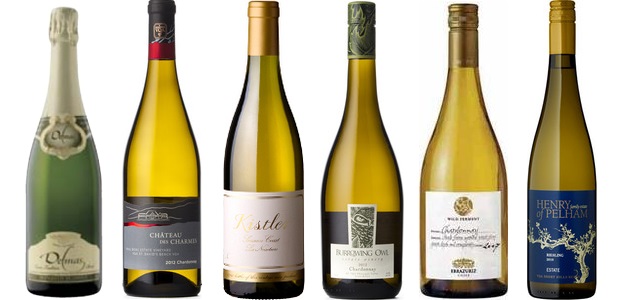
September 27th at VINTAGES rolls into October 2nd with Taste Ontario

Taste Local, Love Local Photo (www.lcbo.com)

Taste Local, Love Local
Photo (www.lcbo.com)

This coming weekend’s VINTAGES release will parlay values from around the globe into the meeting place of Ontario stores. Many of the bargains tie directly into a PB and J campaign, a parochial bandwagon advertising juggernaut. The LCBO and Wine Country Ontario‘s #Tastelocal, #Lovelocal and #LCBOGolocal slogans are currently omnipresent, fast forwardly gaining both steam and traction with restos, critics and consumers.

The late, great VINTAGES wine facilitator David Churchill once told me that putting together Taste Ontario was one of the LCBO’s great endeavors. David said the work and time that VINTAGES allotted the event was extraordinary and great care was always afforded the exercise. Next week the chance to taste the most current, largest and impressive cross-section of Ontario wines in one setting will happen with the annual Taste Ontario gala event. When Wine Country Ontario comes to town and joins forces with VINTAGES, it is the writers, sommeliers and restaurant wine junkies who collectively jump trains, catch flames and do what they do. This in the name of getting to know Ontario wines.

On September 27th VINTAGES will release the following 17 wines, though most will already be on shelves before you skim through this tasting note report with all the brevity you can afford. This week’s recommendations come by way of one Sparkling, four Chardonnay, two Riesling, three Pinot Noir, a Sangiovese, a Malbec, a Veneto, a Zinfandel, one Rhône and two Bordeaux blends.

From left to right: Delmas Cuvée Tradition Brut Blanquette De Limoux, Château Des Charmes Paul Bosc Estate Chardonnay 2012, Kistler Chardonnay Les Noisetiers 2012, Burrowing Owl Chardonnay 2012, Errázuriz Wild Ferment Chardonnay 2012, Henry Of Pelham Estate Riesling 2012

From left to right: Delmas Cuvée Tradition Brut Blanquette De Limoux, Château Des Charmes Paul Bosc Estate Chardonnay 2012, Kistler Chardonnay Les Noisetiers 2012, Burrowing Owl Chardonnay 2012, Errázuriz Wild Ferment Chardonnay 2012, Henry Of Pelham Estate Riesling 2012

Delmas Cuvée Tradition Brut Blanquette De Limoux, Ac, Languedoc-Roussillon, France (179978, $19.95, WineAlign)

Organic and Biodynamic sparkler with a personality all its own. Made primarily from the local grape variety Mauzac (with some Chardonnay and Chenin Blanc), Blanquette is the dry and sylvan style of Limoux. The “little white one” is a lovely little lemon curd Blanquette pulsating in spatially atomic subtlety. Aerified notes hint at sulfur but the breeze is so minor so as not to obstruct the citrus and crucible of candied ginger.  Green apple flavour delights with really good gin and tonic (juniper), lime bitters and a muddle of basil. Pertinent and invigorating example.  Tasted September 2014  @AOCLIMOUX  @RareEarth_Wines

Château Des Charmes Paul Bosc Estate Chardonnay 2012, VQA Niagara On The Lake, Ontario (179978, $21.95, WineAlign)

Much oak and buttery crustaceans in this need to relax and settle into a self-induced state of Chardonnay. Quite lactic but that’s not a detractor; it’s a textural overlay that with time will turn lacy, organza even. I would imagine the wrong kind of attitude will not see the acidity for the forest and instead feel that malic is short for malicious behaviour. On the contrary. This is a very good vineyard giving fruit of the right St. David’s kind. With five years it will prove its merit and play matronly with that fresh catch on your plate.  Too big and clunky you say? Put it down. Let it breathe. Take a good inhale/exhale yourself. From my earlier, August 2014 note: “It would be a shame to have missed the found ardor in this tractile, careening Chardonnay. Chances have been taken in 2012, from a vineyard near and dear to a proprietor’s heart and perhaps even his soul. Picked bright and early, vinified bone dry and sent to a Burgundian school, the Paul Bosc Vineyard Chardonnay suffers from ESS (early stricture syndrome) because it (and particularly its shaken lees) have yet to settle. The barrel is confusingly, hardly noticeable and so the ’12’s awkwardness must then be attributed to a milky, marmalade and blues-influenced free-form run. It’s as if the crowd is waiting for one (Garcia-Saunders) song to end and another to begin. The new “anyway you do” slang take on an old blues riff may be misconstrued but, when all is said and done, that’s alright mama, there’s jam and space for your kind too.”  Last tasted September 2014  @Mbosc

Kistler Chardonnay Les Noisetiers 2012, Sonoma Coast, California (251223, $75.95, WineAlign)

Expansive, all over the coast display of Kistler ambition and conceit. Fully ripe and not shy to swim with splinters. Lemon meringue pie, baked Alaska and tarte au citron on one gorging dessert plate. Then the flavours kick in. A lemon Negroni (is there such an animal?) and lemon Hollandaise atop white aspagarus. Decadent, even for Kistler, without the poise and subtlety of the single-vineyard bottlings.  A full on glass of California sunshine. From my earlier, (tasted three times), July 2014 note: “Long distance runner built for endurance, a cool customer able to withstand the heat from a season’s relentless, though moderate, gentle sun, from start to finish. No shortage of ripe fruit and certainly not wanting for the micro-oxygenated slow release of a prized barrel. This might be the two-bit Kistler bottling but it offers up exemplary Sonoma fruit with the temperament and conceit of high caste Burgundy. The style is culled from two poles and pulls in two directions.  At once sharp and piquant, then golden and in mirth. All in all it’s exactly what should be wanted for the buyer who wants what it has to give.”  Last tasted September 2014

Burrowing Owl Chardonnay 2012, BC VQA Okanagan Valley (208694, $33.95, WineAlign)

Intimates warm sunshine but can’t hide from its cool nights. An element of periodic surprise wafts straight up and grabs the little nose hairs by the tips, tugs and then let’s go. Hatchoo. Wisps green apple skin, daikon radish and a metal tang. Full on fruit-mineral-earthy expression. Big Chardonnay as ripe as its gets for the Okanagan but carries a hefty (though you might ponder an inordinate exorbitance of 14.5 per cent abv) with relative ease. Goes on at length, about what, I do not yet know, but I’m willing to hang in there for 5-7 years to find out.  Tasted September 2014  @BurrowingOwlBC

Errázuriz Wild Ferment Chardonnay 2012, Casablanca Valley, Chile (738393, $22.95, WineAlign)

The wild ferment Francisco Baettig oeuvre brings into focus a nicely balanced and intimately-integrated-aligned Chardonnay. There is wildness in the form of a toasted bread, rich enzymatic energy and a leather strapping, bullied brawn. The countrified personality is tempered by a roundness, thus limiting its ability to display like an alpha male. Though not delicate or elegant by any stretch, this is Chilean power unleashed and reigned in. It represents really good value.  Tasted September 2014  @errazurizwines  @Dandurandwines

Henry Of Pelham Estate Riesling 2012, VQA Short Hills Bench, Niagara Peninsula, Ontario (557165, $17.95, WineAlign)

Classic Short Hills Bench Riesling, magnified by and exemplified in the vintage. Soda enriched fresh juice, bursting berry nose, off-dry palate. Meets all expectations for the realms of juicy and savoury. One of the best yet from H of P at this price. Great value.  Tasted September 2014  @HenryofPelham

From left to right: Wegeler Rüdesheimer Berg Schlossberg Riesling Kabinett 2012, Kim Crawford Small Parcels Rise & Shine Pinot Noir 2012, Hamilton Russell Pinot Noir 2012, omaine Marchand Grillot Morey Saint Denis 2012, Viticcio Chianti Classico 2011

From left to right: Wegeler Rüdesheimer Berg Schlossberg Riesling Kabinett 2012, Kim Crawford Small Parcels Rise & Shine Pinot Noir 2012, Hamilton Russell Pinot Noir 2012, omaine Marchand Grillot Morey Saint Denis 2012, Viticcio Chianti Classico 2011

Wegeler Rüdesheimer Berg Schlossberg Riesling Kabinett 2012, Prädikatswein, Rheingau, Germany (378083, $24.95, WineAlign)

From the steepest Rheingau vineyard named after the nearby castle (Schloss) ruin “Ehrenfels” which was built in 1211. The stony terroir for this definitive Riesling is quarzite from the Taunus region with layers of slate. Oh, this has the sultry charm of most excellent Kabinett. Aerified to the stratosphere, dry, toasty and buoyant. The soda blows away into the sky with just a vigorous swirl and the aromas turn to fruit and to stone. Rocking great intensity of many fruits, of trees and of natural grape sugar (in the 80-90 g/L residual range) that is everywhere and nowhere. Acidity is linear and impossibly round at the same time. Typically low in alcohol (around 8 per cent by volume), this rude boy is a crazy Kabinett. It’s like a Barbadian songstress rated “R.” You may ask it “is you big enough?” It will answer, I’m as good as it gets.  Tasted September 2014

Kim Crawford Small Parcels Rise & Shine Pinot Noir 2012, Central Otago, New Zealand (35337, $29.95, WineAlign)

Rich, ripe black cherry and just a hint of earth. Some cola but of the cherry kind. Tart yet sweet, hot and roomy. Built of a scrupulous structure where tannin and astringency bend in many ways.  Does its yoga poses with reluctance then hits the gym. Confounding for Central Otago with what may perhaps be a great future ahead but for now, really wonky. Where is this going? To the dark side, to return in five years and to offer good value in aged CO Pinot Noir.   Tasted September 2014  @kimcrawfordwine  @CBrandsCareers

Hamilton Russell Pinot Noir 2012, Wo Hemel En Aarde Valley, Walker Bay, South Africa (999516, $44.95, WineAlign)

he right and fantastic Pinot Noir stuff from the winemaker with the King Midas (or in this case the Queen Modjadji) touch. The Walker Bay Burgundian specialist fashions some most elegant Chardonnay and Pinot Noir. It seems that every vintage is turned to gold, or brings rain when there is drought. The 2012 is marked by bright cherries and really pungent, compressed earth. Fantastically ripe but just before the fall. Pleasure of the incarnate kind. The coat of South African red wine arms is animatedly there but it’s contained, restrained, elegant and yet still powerful. Long, fashionable flow with no visible finish line. This will age for a minimum 10 years and get that smoky glaze and glare.  Tasted September 2014  @TrialtoON

Domaine Marchand Grillot Morey Saint Denis 2012, Ac, Burgundy, France (210906, $54.95, WineAlign)

Here the entry is musty, blows off considerably and leaves the leaf and sweet fruit from strawberry and raspberry. For the spell it’s clean, crisp, pure and inviting. Roses and red fruit, violets and violent rocks careening with a rushing spring river. Those musty notes do persist again, blanketing the dolce, disguising that red fruit. Sharpness stings like Kiwi. Packs a punch of tannin, a bitter, mineral rangy streak that elevates the middle hallows and sends this MSD into really lengthy elasticity. Creamy vanilla comes to the palate with herbal undertones, like Lavender ice cream. This is old school with a modern twist. A really fine example. Tasted twice, September 2014, including blind at the WWAC14  @AmethystWineInc

Viticcio Chianti Classico 2011, Docg, Tuscany, Italy (283580, $24.00, WineAlign)

Big, bad and brooding. Black fruits are intense but surprisingly not overbearing or huge in demanded extract. Chalky, tannic, acidic, long. This is neither average nor to be ignored. It’s in the 13.5 per cent proper Chianti wheelhouse and marches in hipster stride without ever acting obnoxious. Some sanguine activity, along with iron and tension. The real deal. Not the brightest Chianti in the hills but one of a raw, unleashed power.  Tasted September 2014  @chianticlassico   @MajesticWineInc

From left to right: Versado Malbec 2013, Luigi Righetti Campolieti Ripasso Valpolicella Classico Superiore 2012, Seghesio Zinfandel 2012, Domaine Brusset Tradition Le Grand Montmirail Gigondas 2012, Creekside Laura’s Red 2011, Château Léoville Las Cases 2006

From left to right: Versado Malbec 2013, Luigi Righetti Campolieti Ripasso Valpolicella Classico Superiore 2012, Seghesio Zinfandel 2012, Domaine Brusset Tradition Le Grand Montmirail Gigondas 2012, Creekside Laura’s Red 2011, Château Léoville Las Cases 2006

Versado Malbec 2013, Luján De Cuyo, Mendoza, Argentina (317008, $25.95, WineAlign)

The rocks beneath the earth precede the rich, dark fruit. After the berries and the candy beets and the spices subside the flowers grow and take over the room. The vintage brings more layers than before. Malbec of character and belief, even a touch of good VA, a coat that only the Southern Hemisphere can provide. It is not usually present in Mendozan Malbec so it’s really a breath of fresh paint here in the Versado. Great purity. Protracted length. Most expansive and intriguing vintage to date. The Reserva will be killer. Tasted September 2014  @VersadoWine

Luigi Righetti Campolieti Ripasso Valpolicella Classico Superiore 2012, Doc, Veneto, Italy (695890, $18.95, WineAlign)

Classic really. Juicy must, musty juiciness. Earth and fruit. Fruity earth. Simple but so effective. Never gets beyond itself or out of its mind. Just the right amount of funk. Maybe the best yet. Great value.  Tasted September 2014  @Smallwinemakers

Seghesio Zinfandel 2012, Sonoma County, California, USA (942151, $29.95, WineAlign)

Rich plum and spicy Zinfandel. Young and tightly wound on a spindle. Needs time to unravel and reveal its charms. In a varietal sense this vintage of the Seghesio has got everything Zin needs and more. More specifically, the definition is out of a cooler vintage, with clear, well-delineated fruit and acidity. Sharp,spicy, focused and full, without ever acting hot, or bothered.  Tasted September 2014  @seghesio

Domaine Brusset Tradition Le Grand Montmirail Gigondas 2012, Ac, Rhône, France (960104, $29.95, WineAlign)

A thick, baking cake of a Gigondas, full of expected dark red Rhône fruitiness, but all in balance. Soapy sandalwood and chalky tannins. Quite grainy. Big, brawny and teeth staining, its “teeth ready, sharpened to bite.” It’s warm but not too hot. Cool centres, some spice and garrigue. Nothing to run away from. Though firm and loyal in the tradition of place, this has rolling stones in its blood so it will age gracefully in a well respected, cool, calm and collected manner. Will grow and grow on you as you work with it. This will age forever as there is just so much fruit. Hedging my bets on 25 years, safe to say.  Tasted September 2014  @rogcowines

Creekside Laura’s Red 2011, VQA Niagara Peninsula, Ontario (117960, $19.95, WineAlign)

The most dead red Laura to date, juicy and earthy, like a licorice, plum and pomegranate demi-glace. Really expressive of earth and fruit.  Traditional house blend of Cabernet Sauvignon, Merlot, Syrah, Malbec and Petit Verdot. A no coat unfastened Niagara, consumer-friendly but also swelling with stuffing. “The light is red. The camera’s on,” the strokes are rich in energy though the tannins dry out a touch. Drink now and for two more years.  Tasted September 2014  @CreeksideWine

Château Léoville Las Cases 2006, Ac St Julien, 2e Cru, Bordeaux, France (566661, $299.00, WineAlign)

The LLC Grand Vin vineyard is very close to the Gironde river, creating a micro-climate that tempers the vines in climate control and matronly comfort. Cabernet Sauvignon and Franc develop here as well as anywhere in the world. Here is an interesting retrospective look at this formidable St. Julien, now having reached the tender and yet developed age of eight. Earthbound distance fruit by way of a chocolate (real dark) truffle and layers of soul stew. Still chalky and tannic, there is enough fruit to keep this going for a decade and a half, or more. Licorice, Cassis and graphite. Wow. Very broad across the late palate, indicating an integration that has begun to realize the potential of this wine. A very good vintage looking back, not one for the ages, but certainly expressive and rich.  Tasted September 2014  @Noble_Estates

Good to go!
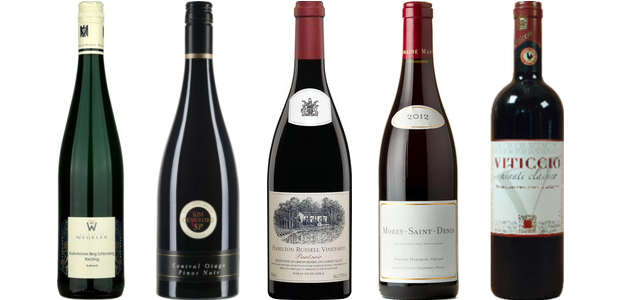
https://twitter.com/mgodello


Rocking out with the 2014 WineAlign World Wine Awards of Canada

WineAlign World Wine Awards of Canada 2014

WineAlign World Wine Awards of Canada 2014

The results are in. Closure has come. Category champions and Judge’s picks are now live.

The highly regarded WineAlign World Wine Awards of Canada is categorized and justified as a “must enter” for winemakers and vintners who want to be a part of a genuine, above-board wine competition. For consumers in Canada it is a place to discover the best value wines available on the market today. Say what you will about the concours concept. The straightforward WineAlign offer implements an expertly designed bracket to ultimately crown a covey of thoroughly deserving champions. Wines are carefully scrutinized, judged with fair play and at times, brutal honesty. Each wine must impress the judges more than once. “Up to the task” is never in question. At “The Worlds,” the best minds are on the job.

Related – He spits, he scores: 2013 World Wine Awards of Canada results

Panorama of judging and wines at WWAC14 Photo: Jason Dziver (www.jasondziver.com)

Panorama of judging and wines at WWAC14
Photo: Jason Dziver (www.jasondziver.com)

It was the week of August 18 to 22. Eighteen critics, two czars, a tech guy, a database custodian, a logistics steward, “her bitch” (sic) and a dedicated team of volunteers gathered to administer vinous justice for 1000 (give or take) hopeful wines. The tasting road was long yet filled with much success. Never have so many wines with the intention of offering value and simple pleasure shown so well and with so much grace.

Head judge Anthony Gismondi talks with Rhys Pender MW, Steve Thurlow, DJ Kearney and Godello Photo: Jason Dziver (www.jasondziver.com)

Head judge Anthony Gismondi talks with Rhys Pender MW, Steve Thurlow, DJ Kearney and Godello
Photo: Jason Dziver (www.jasondziver.com)

In today’s WineAlign WWAC14 results dissertation, Anthony Gismondi tells us that “nothing has value unless you give it some.” The awards are about assessing daily drinkers, wines that the repeat consumer look for often, especially the bargains. They are for consumers first, of and for the common people. For the wineries, agents and writers, the competition is effectuated without bias. “The tastings are computerized from start to finish allowing wineries, agents or retailers to enter, pay, and eventually track their results online.” 

In 2014 my position is this. Oak and cheap tricks are on the way out, at least when it comes to wines submitted to the WineAlign World Wine Awards of Canada. Sugar, wood chips, agar agar, artificial colour, manipulated flavour, reverse osmosis and added acidity are trade practices reserved for wines out there in the fast food stratosphere. The judges at the WWAC14 were fortunate to be granted immunity from having to taste and assess such a most unnatural lot. These awards represent and foster an altruistic commonality between vigneron and critic. Make an honest wine and it will be judged with honourable intent.

WWAC14 Judging Panel

WWAC14 Judging Panel

The writers and judges that make up the panels evaluate wines under $50 that are sold somewhere in Canada in the year of the competition. Entries are judged in flights along with similar varietal wines in three price categories; under $15, $15 to $25 and over $25. Starting with the 2014 awards all wines entered will not only be posted on WineAlign with bottle images, but reviews will be included as well (many in both French and English). Again in 2014, orchestration was overseen by one of North America’s most respected wine critics, Vancouver Sun columnist and WineAlign Partner Anthony Gismondi, aka The Spitter.

Panel of judges DJ Kearney, Godello and Rhys Pender MW Photo: Jason Dziver (www.jasondziver.com)

Panel of judges DJ Kearney, Godello and Rhys Pender MW
Photo: Jason Dziver (www.jasondziver.com)

Some startling results came out of this year’s tastings. Who would have ever put money on Carménère under $15 not only showing well, but blowing the collective minds of no less than five critics? Should Malbec in the $15-25 range, half of which are made by large and recognizable houses, have impressed with so much structure and restraint? A group of eight red blends under $15 were all good, five of them garnering very good scores. That same concept group of $15-25 were nearly all exceptional. Southern Italy fared with top value results in the under $15 category. Syrah/Shiraz $15-25 really surprised, as did Cabernet Sauvignon, Pinot Noir and Chardonnay in the same range. Not to mention a flight of five fruit wines, four of which scored between 85 and 88. Not bad. All this can be attributed to one basic premise. WineAlign does not attract more producers than other concours. It attracts better ones.

WWAC14 judges Photo: Jason Dziver (www.jasondziver.com)

WWAC14 judges
Photo: Jason Dziver (www.jasondziver.com)

As in 2013, this year I was invited to join the other 17 judges in Mississauga, Ontario. Fortune is measured by the company one keeps. The 2014 judges were David LawrasonSteve Thurlow, Sara d’Amato, Bill Zacharkiw, Dr. Janet Dorozynski, Rémy Charest, Craig Pinhey, Rhys Pender, MWDJ Kearney, Treve Ring, Brad RoyaleJulian Hitner, Evan SaviolidisBruce Wallner, MSMichelle Bouffard, Emily Maclean, Adam Hijazi and Jake Lewis.

Released today, here are the results from #WWAC14, presented by WineAlign. Wines were awarded for the categories of Top Value WinesBest of CountryCategory Champions and Judges’ Choice. In addition to the work of the judges, the Worlds were really made possible by Head Wineaux Bryan McCaw, along with Earl Paxton, Jason Dziver (Photography), Carol Ann Jessiman, Sarah GoddardMiho Yamomoto and the volunteers.

2014 World Wine Awards of Canada Results

WWAC14

WWAC14

Each judge was asked to write reviews on a specific cross-section of wines they were a part of assessing during the competition. Here are my notes on 30 wines tasted blind, across a wide range of categories, in August of 2014 at #WWAC14 and the songs they inspired.

Category champion wines from left to right: Villa Wolf Riesling 2013, Castillo De Molina Reserva Carmenère 2012, Church & State Coyote Bowl Series Chardonnay 2012, Cono Sur Single Vineyard Block No. 21 Viento Mar Pinot Noir 2012, Wolf Blass Grey Label Shiraz 2012, Buena Vista Pinot Noir 2011

Category champion wines from left to right: Villa Wolf Riesling 2013, Castillo De Molina Reserva Carmenère 2012, Church & State Coyote Bowl Series Chardonnay 2012, Cono Sur Single Vineyard Block No. 21 Viento Mar Pinot Noir 2012, Wolf Blass Grey Label Shiraz 2012, Buena Vista Pinot Noir 2011

Cabernet Sauvignon $15-25

Wolf Blass Gold Label Cabernet Sauvignon 2012, Coonawarra, South Australia, Australia (606939, $24.95, WineAlign)

Funny thing about Cabernet Sauvignon, “sometimes they rock and roll, sometimes they stay at home and it’s just fine,” Wolf Blass makes all kinds. This Coonawarra GL seems to do both. It’s ripe and presumptuous, rocks in the glass but also has good, homebody, varietal tendency. It has a heart that’s on fire, a wolf parade of iron, sanguine tension and tannin, but also hung walls of home woven tapestry texture. The core of fruit, earth and tar cries out for prey. The finish is long and returns, back to base Blass.

Icewine – Riesling-Gewurz-Apple

La Face Cachée de la Pomme 2011 Neige Première Ice Pink Cider, Quebec (39305, 375ml, $22.95, WineAlign)

“Breathe, breathe in the air” of intensity, in apples. One hundred squared apples on top of one another. Never mind the few bruised and oxidative ones because the fresh and concentrated mass smothers those minor notes. Pink and ambient, the major sweetness and top-notch acidity speak to me in waves of demonstrative, Floydian verse. Here you will find a Québécois response to “there is no dark side in the moon, really. As a matter of fact it’s all dark.” There is Icewine on the bright side and then there is Iced Cider on la face cachée, “balanced on the biggest wave.”

Mission Hill Family Estate Reserve Riesling Icewine 2013, Okanagan Valley, British Columbia (winery, 375ml, $59.95, WineAlign)

A vanimated astral week’s of emotion is met by an animal musk, both hard to define. There is a high quotient of lemon, in curd, zest and pith. The sweetness is tempered by nudging acidity though it lingers long. All Riesling Icewine has to do “is ring a bell and step right up” so despite the electric Kool-Aid sugar syrup moments, this one spins and twirls, as Riesling does, just like a ballerina.

Inniskillin Niagara Estate Riesling Icewine 2012, Niagara-on-the-Lake, Niagara Peninsula, Ontario (601021, 375ml, $69.95, WineAlign)

Here sweetness, acerbity and a slightly advanced character are brought into balance by high grape sugar intensity and real linear acidity. Long and elastic, medicinally pretty and sacrosanct with seasoned complexity. Tasted this one and “felt a spark.” Tasted it twice and it tingled to the bone. What begun as a bob between evaluations ended with a simple twist of fate.  WWAC 2014 Category Champion

Pinot Noir $15-25

Villa Maria Private Bin Pinot Noir 2011, Marlborough, South Island, New Zealand (146548, $21.95, WineAlign)

Deep earth and black cherry combine for the most extraction in the $15-25 Pinot Noir flight. There’s dust in them hills as the wine acts as if it were borne of the mountains. Has attitude in altitude. All things considered, the fruit is clean and crisp, perhaps a hair over the overripe line. The cool temperament and temperature in the cold room aid in giving it some love. From my earlier, January 2014 note: “That Villa Maria can make 80,000 cases of Pinot Noir this proper is nothing short of remarkable. Aged in French oak for 8-10 months. As Pinot like as could be hoped for considering the case amount. Every drop must go through Malolactic fermentation. Winemaker Josh Hammond and crew insist upon it, though it’s nothing but painstaking cellar/lab work. The Pinot character initially shines, with loads of plum and black cherry, but there is a momentary lapse. But, “if you’re standing in the middle, ain’t no way you’re gonna stop.” So, the definitive Marlborough ectodermal line painted through the in door speaks quickly and leaves by the out door. From a smoking gun, rising like a Zeppelin. Large volume, big production, drinkable in the evening Pinot Noir.”  Last tasted August 2014  WWAC 2014 Judges’ Choice

Unsworth Vineyards Pinot Noir 2012, Vancouver Island, British Columbia (winery, $$23.90, WineAlign)

Now here we’re talking about a Pinot Noir from a another mother. It heads generously into fragrances not yet nosed in this flight of $15-25 Pinot Noir. Exotic byrne of a perfume on high alert; jasmine, violets, roses and Summer ‘David’ Phlox. Exquisite, fresh and bright. There is tang and tannin. Vibrancy to raise eyebrows. Also wild sage, wild fruit, an animal on a walk in a virgin forest. So much Pinot Noir is hairy, this one is “living on nuts and berries.”  WWAC 2014 Judges’ Choice

Malbec $15-25

Trivento Golden Reserve Malbec 2012, Mendoza, Argentina (agent, $19.95, WineAlign)

This Golden Reserve Malbec by Trivento is a juicy, dusty, fruit tree addition to the #WWAC14 flight and arrives just in the nick of time. Despite the dark fruit, it has no Drake spoken word conceit. It sings in classic Drake lullaby, with beefy meet pine forest aromas and so “you find that darkness can give the brightest light.” Tender refrains soften chalky, stalky wood and corresponding bitter chocolate. Big tannins on this balladeer. Has impressive stuffing.  WWAC 2014 Judges’ Choice

Red Blends over $25

Tinhorn Creek Oldfield Series 2 Bench Red 2011, Okanagan Valley, British Columbia (winery, $29.95, WineAlign)

Wonderful, tangy red fruits define this well-structured Bordeaux blend. Cool and concise, it plays a tight riff and bangs a drum slowly. Comfortable on a big stage, it charges into a funky break and whips a crowd into a frenzy. So much energy from a band of five varietal friends, complimenting each other’s playing with mutual respect. Does the two Bench two-step and steals the show. “Celebrate we will because life is short but sweet for certain. We’re climbing two by two, to be sure these days continue.”

Vin Parfait Red 2012, Adelaide Hills, South Australia, Australia (350512, $29.95, WineAlign)

Circuitous mounds of round, stone ground aromas in coffee, Goji berry, red licorice and red ochre. A Jackson Pollock Expressionist splatter of notion and motion, flirtations and tension. Tempranillo, Shiraz and Grenache in does it, or will it come together beyond the abstract? Number 8 did. This one s’got to too.

Number 8, 1949 by Jackson Pollock www.jackson-pollock.org

Number 8, 1949 by Jackson Pollock
http://www.jackson-pollock.org

Grenache $10-20

Castillo de Monseran Garnacha 2013, Cariñena, Aragon, Spain (73395, $9.95, WineAlign)

A slightly cooked character is evident but within reason. Despite the heat it’s a bit of an arctic monkey, with tomato and cherry sprinkled over by Queso Fresco and followed up with a slice of blueberry pie. Simple yet effective, pleasant palate. There is some heat and tension from the tannins and “I’d like to poke them in their prying eyes,” but they do relent. The length is more than appropriate, given the tag. Only question is, “will the teasing of the fire be followed by the thud?” At $10, who really cares. Represents excellent value.

Artadi Artazuri Garnacha 2013, Navarra and Basque Country, Spain ($19.50, WineAlign)

Garnacha from the old world west with incredible citrus bursts, like orange blossoms and the spirit of the zest. A spritz from a lemon too. A smoulder of burning charcoal with a spit-roasting goat adds to the roadside attraction. Palm branches help to create the smoke. This is exotic and creative stuff. Finishes with a dessert note of bitter plum. Velada, “you got yourself a 1, 2, 3, 4, 5 star reaction.” Really unique red.  WWAC 2014 Judges’ Choice

http://grooveshark.com/#!/s/Roadside+Attraction/33YBUM?src=5

Sauvignon Blanc Under $15

Caliterra Tributo Single Vineyard Sauvignon Blanc 2013, Leyda Valley, Region de Aconcagua, Chile (283648, $14.95, WineAlign)

A step up from multi-site, southern hemisphere Sauvignon Blanc with direct intentions, all the right moves and in all the right places. So much going on in both its aromatic and textural world. Wax, lanolin and Bordeaux-like temperance and consistent with the growing SB trend, “the grass is getting greener each day.” Decent one republic attack on the palate though nothing fantastic. Has heart and Sauvignon Blanc soul.  WWAC 2014 Judges’ Choice

Southern Italy Under $15

Grandi Muri Primitivo Promovi Salento 2013, Puglia, Italy (agent, $13.50, WineAlign)

A red-veined Primitivo, with the savoury blood of Swiss Chard and hoisin and red bean paste coarsing through it. Smells like spicy and sweet Hunan dishes, sweet sweat and sour, but it is not a matter of oxidation. It’s a caramelized soy sensation but written in reverse. Spoon this over cereal, ice cream, charred beef, anything. It’s got Chinese five-spice powder and coriander. Like a bowl of most excellent Pho. Fantastic exotics. “We’re gettin’ you raw and it feels real good.” Rocking Primitivo.  WWAC 2014 Judges’ Choice

Shiraz/Syrah $15-25

Layer Cake Shiraz 2012, South Australia, Australia ($24.99, WineAlign)

Unquestionably warm but with restraint. That may be perceived as a bad, obvious and reprehensible dichotomous comment but in transparency it speaks truths. Shows good savour and sapidity. It’s an aurulent burnt orange and smoked pineapple offering, blanketed in dusty chocolate and syrupy to a certain extreme. It’s long, creamy, silken and covered further in darker chocolate. “True colors fly in blue and black, bruised silken sky and burning flag.” Warm but you too will indubitably see the pleasures in its layer cake.  WWAC 2014 Judges’ Choice

White Blends Under $15

Pelee Gewurztraminer Riesling 2012, Lake Erie North Shore, Ontario (109991, $10.95, WineAlign)

A ray of golden sunshine. The glade and the classic Gewurz attributes are here and highly floral. Rose petals soaking in good medicine. This could be my beloved monster. Such a dry example. She wears “a raincoat that has four sleeves, gets us through all kinds of weather.” Match with BBQ’s eels. Not for everyone but it works.  WWAC 2014 Judges’ Choice

Shiraz/Syrah Over $25

Wolf Blass Grey Label Shiraz 2012, McLaren Vale, South Australia, Australia (390872, $29.95, WineAlign)

This is the most accomplished and wise drop of Shiraz tasted at the WineAlign #WWAC14. A hit of snowy sulphur shows just how much growing up it needs. Such a precocious and heady example. A thick, gluey mess of fruit, unsettled and in rapture within its tannic walls. The voilets and the rest of the garden rules really tie the room together. Shiraz entrenched, grown and raised, “where the nettle met the rose.” For five years later and on patrol for ten more after that. Wow.  WWAC 2014 Category Champion  WWAC 2014 Best of Country

Jackson-Triggs Niagara Estate Delaine Syrah 2011, Niagara Peninsula, Ontario (86553, $32.95, WineAlign)

Here blows a fine, exuberant and expresive muzzle with ambrosial flavours. A garrigue and olive dirty martini with sweet drops pf berry syrup. Juniper and conifer verdure meet inklings of berries. There is a sense of mushroom and truffle which can go either way, but here it brings paradigmatic character. Like words added to an intense Billy Preston instrumental. This may “take your brain to another dimension. Pay close attention.” Dark, brooding and out of space. A prodigy and a real deal in cool climate Syrah.  WWAC 2014 Judges’ Choice  WWAC 2014 Best of Country

Cabernet Sauvignon $15-25

Kaiken Ultra Cabernet Sauvignon 2012, Mendoza, Argentina (135202, $19.95, WineAlign)

A genesis in clean fruit of high extract order is linear, direct, forceful and in Cab conceit. A narcissistic brooder with ripples of underbrush and underworld scents. Thinks highly of itself, demands attention, seeks followers, stares into a pool. “The face in the water looks up and she shakes her head as if to say, that it’s the last time you’ll look like today.” With a few more reflecting and reflective refrains this Cabernet will realize a softness, turn away from the mirror and settle into its skin.  WWAC 2014 Judges’ Choice

Lake Sonoma Alexander Valley Cabernet Sauvignon 2012, Napa – Sonoma – Mendocino, California, United States (Agent, $26.99, WineAlign)

From the outset this engages the imbiber simple because it acts as though its one time tension has been massaged and released. The flat feeling is there, though not detracting, because of an inherent notion that there was and still can be beautiful fruit. It just needs “that spark to get psyched back up.” A rapping modern facade is the cover page for earth savoury meets candied M & M flavour, docile, downy glycerin Cabernet texture, with acidity and tannin waning. Was serious, now friendly and will be late leaving the party.  WWAC 2014 Judges’ Choice

Chardonnay $15-25

Kendall Jackson Avant Chardonnay 2013, Mendocino County, California, United States ($19.00, WineAlign)

This may be a winner. I love the immediacy of its fruit, the antebellum tension and just a kiss from the barrel. You know its there but in subtlety, class and as background noise. The aromas of citrus, beeswax and honey and all accents to clean orchard fruit. This has the most balance in a flight of eleven verry tidy Chardonnay in a consumer-driven $15-25 price bracket. Lady spirited and at times a bit anxious, or perhaps not yet entirely comfortable in its skin, this is nonetheless best in show.  WWAC 2014 Judges’ Choice

Carmenère Under $15

Castillo De Molina Reserva Carmenère 2012, Valle del Maule, Region del Valle Central, Chile (Agent, $14.95, WineAlign)

The first thought on this Carmenère is the scaling back of new oak, lifting it above the crowd in an under $15 flight. The freshness factor makes for a whole new animal, or botanical rather. This has candied jasmine, pansy, bergamot and nasturtium. It’s a veritable salad of candied edibles. The middle palate is marked by Mentholatum and the finale is persistent in acidulated action. What a warm, mazzy gift of a Carmenère, a star of a Chilean red that would be welcome, just like flowers in December. “Send me a flower of your December. Save me a drink of your candy wine.”  WWAC 2014 Category Champion

Chardonnay Over $25

Church & State Coyote Bowl Series Chardonnay 2012, Okanagan Valley, British Columbia (winery, $26.90, WineAlign)

Quiet, muted, beautiful and reserved. This is the “iconoclastic and restlessly innovative” style of a wine that bravely explores other territories of pop Chardonnay. Anything but fashioned in an in your face style, this one is in it for the Hejira, the journey and the time. Ripe yellow apples and pears and then come the lees. Could pass for unoaked Chablis. The appreciation and gathering are a style that should be used more.  “No regrets coyote,” you just come “from such different sets of circumstance.”  WWAC 2014 Judges’ Choice  WWAC 2014 Top Value Wines

Stags’ Leap Winery Chardonnay 2012, Napa Valley, California, United States (655381, $34.95, WineAlign)

Has hallmarks of essential fruit from a top notch vintage, the most complexity and schooling. The reduction is pure essence of grape must, with no fault to either the vine or the maker. Every wine’s “screwed up in their own special way.” A rmineral tannin gets on top early like a Ramones riff, stays for dinner and repeats in refrain. The crisp and mister punchy orchard fruit is kissed by wood. Sucks face. The texture is seamless and verve excellent, by acidity and forward to pronounced length.  WWAC 2014 Judges’ Choice

Sparkling

Delouvin Bagnost N/V Brut, Champagne, France (agent, $42.75, WineAlign)

Tends to a trend in sweet aromatic beginnings which is nothing but endearing. A leesy pear and ris de veau nose split by a bowie and filled with pearls of sugary syrup. To taste there is the metallic gaminess of uncooked other white meat. Sweet meat, sweet thing. The gathering sensation is an elemental display of ethereal, aerified climatic conditions. Though made in an oxidized style, the complexity of character is not to be denied.  “Runs to the center of things where the knowing one says, boys, boys, its a sweet thing.” In the end the burst of energy is invigorating and heart piercing.  WWAC 2014 Judges’ Choice

Pinot Noir Over $25

Cono Sur Single Vineyard Block No. 21 Viento Mar Pinot Noir 2012, Valle de San Antonio, Region de Aconcagua, Chile (agent, $19.99, WineAlign)

You can always pick out the wines made from unique, little feat sites, wherever in the world they may have been raised. Even when they stink up the joint, smell like a 16 year-old hockey change room or like candied paint poured over fresh cedar planks, they stand out like beacons of Pinot amon din. Lord of the Pinot rings here that’s “been kicked by the wind, robbed by the sleet…baked by the sun,” fire lit, rosemary branches and oxtail smoldering and simmering over fresh cut ash from a deciduous forest. Cool mint and pine. The most savoury things of fantasy imagined. Wild ride in and most willin’ Pinot Noir.  WWAC 2014 Category Champion

Buena Vista Pinot Noir, Carneros 2011, Napa Valley, California, United States (304105, $24.95, WineAlign)

This is really quite impressive Pinot Noir. Fastidiously judged if bullish fruit having way too much fun, causing varietal envy amongst other price category peers. Clearly fashioned from stocks of quality fruit, providing an environment for the coming together of many red berries and the earth of contigious vines. All roads lead to a grand palate marked by exotic, spicy and righteous fleet of wood tones. I wonder if I’m in over my head and tell it “your mood is like a circus wheel, you’re changing all the time.” Quite something this MacPinot specimen and though I wonder if it’s a bit too much, it always seems to have an answer and it sure feels fine.  WWAC 2013 Category Champion  WWAC 2013 Best of Variety $15 – $25  WWAC 2014 Category Champion  WWAC 2014 Top Value Wines

Tinhorn Creek Oldfield Series Pinot Noir 2010, Okanagan Valley, British Columbia (winery, $29.99, WineAlign)

The grace of time has ladled felicity upon this left coast Pinot Noir. What once were harsh and mephitic stuck in a cola can kind of smells have been released and are just a faint memory of their once formidable, terrible teeth gnashing remains. Twas root beer that fouled the air but now the saline sea and verdure of hills speaks in clear vernacular. The sailor has “sailed across weeks and through a year,” met with wild things, to now return home and offer up her Pinot Noir, to be enjoyed with supper that is still warm.  WWAC 2014 Judges’ Choice

Riesling Under $15

Villa Wolf Riesling 2013, Pfalz, Germany (agent, $14.95, WineAlign)

This has a lovely, head of its class, nearly value-driven exquisite nature and aromatic richness. In consideration of the price bracket, the sulphur is trumped by that radio dialed in richesse. Exotic Riesling specific fruit. A crisp apple meets a ripe pineapple. A wolf at the door, “out pops the cracker, smacks you in the head.” Decent acidity, better length, good bitters.  WWAC 2014 Category Champion

Red Blends Under $15

Miguel Torres Sangre de Toro 2012, Cataluña, Spain (6585, $12.95, WineAlign)

This Garnacha and Carignan blend works a stoned immaculate contrivance as well as any red blend under $15 you are ever likely to upend. “Soft driven slow and mad, like some new language.” The action is effective, properly conceived and opens the doors to value-based perception. Perhaps a bit thin but the lack of wood and sweetener is a breath of fresh air. What it lacks in girth it makes up for with complexity, in notes of graphite, fennel and sea air. Lovely little Mediterranean red.  WWAC 2014 Judges’ Choice

Good to go!
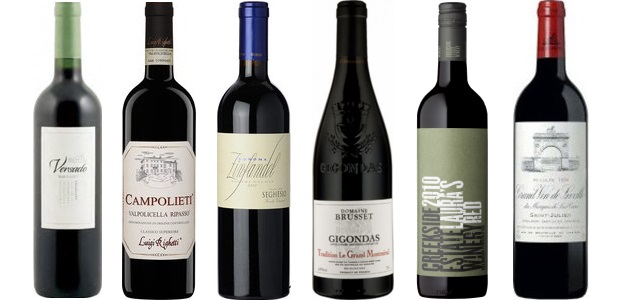
https://twitter.com/mgodello