A steamy August in Washington

Hot red August sun in the Walla Walla Valley

In August of 2023 a small group of intrepid Canadians traipsed through the wilds of Washington’s wine country in search of the new but found so much more. A fine fettle of wine producers and estates fill up the eastern landscape, fully encapsulating the industry with the experienced, quaint, artful, zealous, time-tested, animated and cerebral. The trip was a hunt in persistence, finding it all, revelling in its mottled and striped splendour, sitting back to admire the people and the scenery. Smoke taint was on everyone’s mind but clear skies dominated imagination. The journey was winding, snaking contiguously like the Columbia, Yakima and Walla-Walla Rivers, working an itinerary through the Tri-Cities, Yakima Valley, Red Mountain, Walla Walla, Woodinville and finally to finish in Seattle. The weather ranged from 90 to 115 degrees Fahrenheit (32-46 Celsius for the rest of the metric world), fires burned far off in the distances near Spokane and widespread in British Columbia. The air was thick as pea soup though there was no fog and spirits remained high. Unwavering you might say, always ready for road-tripping, to reach further, for action and of course tasting.

The group convened in Richland, one of three city-siblings conjoined at the aggregate network of urban communities that include Pasco and Kennewick. On day one we took in the Yakima Valley and Red Mountain AVAs with J. Bookwalter Winery, Palencia Winery, Goose Ridge Estate Vineyard & Winery, Col Solare and Hedges. Day two down to the Walla Walla Valley AVA with SMAK Wines, Gramercy Cellars, Valdemar Estates, L’Ecole N° 41 and Woodward Canyon Winery. Morning of day three still about town in Walla Walla, at Seven Hills Winery, House of Smith and Vital Wines. Further south to The Rocks District of Milton-Freewater with Rotie Cellars and in the haze of the evening an oasis harvest party at Spring Valley Vineyard. Day four and onwards to the Yakima Valley AVA with Tirriddis, Sonder Wines, JB Neufeld and 14 Hands Winery. Day five more of the Yakima Valley AVA and then on to Woodinville, first with a blending experience and tasting at Chateau Ste Michelle, culminating at Airfield Estates. A long finale of a drive over the Cascade Mountains, a change in scenery and more profoundly weather ,with clear blue skies and sunshine in Seattle.

Lunar landscape in the Walla Walla Valley, akin to a Wes Anderson set of “parched gulch and arid plains.”

Grape cultivation in hostile climates

Cultivating wines in much of Washington is not a native exercise. Most of the southern part of the state is desert and nothing comes easy. There are many vistas akin akin to a Wes Anderson set of “parched gulch and arid plains.” This reminder comes by way of Christophe Hedges. “To plant a vineyard we just have to thin out a few sage bushes. Vine-growing is not a natural practice.” Yet Hedges also reminds that practicing biodynamics is not commonplace, but it is natural and so the Vineyard Manager reigns have fallen to 26 year-old Kayla Braich. Christophe insists she is the most knowledgable biodynamic expert in the Columbia Valley. “Hiring an old white guy to do biodynamics would not have worked.” At Hedges, Sarah Hedges Goedhart tells how Portuguese varieties are a focus, especially touriga nacional (but also tinta cáo and sezão) for their heat and drought resistant, terroir-driven qualities. They are late flowering and developing but also deal with the stress of extreme climate events better than the Bordeaux varieties. “Red Mountain is a small-knit community,” says Christophe. “We hope the way we are farming will be the direction of the future.”

Justin Neufeld talking Yakima, Rattlesname Hills and Red Mountain

“We’ve made wine in Spain for the past five generations, and we plan to make wine in Walla Walla for five generations to come.” — CEO Jesús Martínez Bujanda, 5th Generation at Valdemar Estates

Justin Neufeld finds the cabernet sauvignon from Red Mountain more granular and austere. Vibrant yet one-dimensional as compared to the (relatively) cooler climate sites of the Yakima Valley. There are different wind patterns here and the tannic profile becomes softer, chalkier and ultimately more elegant, with a true red fruit personality. Yakima lends to more “blended” cabernets, in particular as it pertains to structure, also more aromatic complexity and classic varietal style. Herbal, red fruits, herbaceous and vegetal character. More acid driven. Much of Yakima’s style is because of landscape orientation. Here the ridges run east to west where the cataclysmic glacial lake outburst Missoula Floods peaked at 1,200 feet. There is also the Stuart Range in the Enchantment Basin which hosts a granite soil profile while wrinkles in the central crust resulted in basaltic, south facing slopes. Meanhwile Neufeld is one of a few producers to discuss the fires and potential for smoke taint. He comments that 2023 reminds him of 2007 when there really was no issue on the grapes.

“My sisters and I grew up with the understanding you don’t farm for this generation, you farm for the next one” – Bill Monson, President, Goose Ridge Vineyards

Heritage Vineyards

Old vines are key to the tenets of quality and success for growing regions worldwide. There are parts of Europe and also grape varieties that suffer from increased disease pressure and low fruit vigour but there are also locations, especially in warmer and more southern climates that host century vines still in positive rotation. South America, Australia and South Africa especially celebrate the heritage and age of old vines that keep on giving. While there are some vines and wineries populating the wet, mild climate of western Washington, it is the greater fields of Washington State’s warm and predominately desert climate playing host to many special blocks, many of them planted in the 1970s and 1980s where the finest expressions of the region’s terroirs are produced. Still dozens of others are coming on strong and on their way to joining the heritage account. Not to be forgotten is the high quantity and profound importance of own (as opposed to grafted upon) rootstock in Washington’s vineyards.

  • Airfield, Arnaut Boushey, Canoe Ridge Estate, Cold Creek, Dubrul, Moxee, Olsen, Phil Church, Rainmaker, Red Willow, Rosa Hills, Rothrock, Two Blondes and Upland vineyards in the Yakima Valley
  • Hyatt, Outlook, Portteus, Morrison, Stonemark and Whisky Canyon in the Rattlesnake Hills
  • Bacchus, Dionysus, Double D, Evergreen, Galitzine, Klein, Lawrence, Lewis Estate, Phinny Hill, Sagemoor, Stoneridge, Sundance, Tapteil and Wallula Gap of the Columbia Valley
  • Andrews, Champoux, Discovery, Lake Wallula, Mach One, Palengat, Sorella and Zephyr Ridge in Horse Heaven Hills
  • Clifton Bluff, Desert Wind, Fox Estate, North Ridge, Riverbend, Rosebud, StoneTree and Weinbau in the Wahluke Slope
  • Beautiful Powerline, En Chamberlin, Ferguson, Forgotten Hills, Heather Hill, Hidden Northridge, Leonetti, Loess, Pepper Bridge, Powerline, Serra Pedace, Seven Hills, Spring Valley, Sur Echalas, Woodward Canyon and Yellow Bird in the Walla Walla Valley
  • Mill Creek and Upland in the “North Fork” (of the Walla Walla River)
  • Bel’Villa, Cara Mia, Ciel du Cheval, Grand Ciel, Hedges, Jolet, Kiona, Kingpin, Klipsun, Les Gosses, Magdalena, Quintessence, Shaw, Upchurch, Terra Blanca and Weather Eye on Red Mountain
  • Ancient Stones, Holy Roller, Lafore, (Freewater, River and Rotie) Rocks, SJR in The Rocks District of (of Milton-Freewater)

These are but a shortlist with many more qualified and soon to qualify vineyards coming into their own. Heritage means more than grapevines, succinctly iterated by Bill Monson, President of Goose Ridge Vineyards. “My sisters and I grew up with the understanding you don’t farm for this generation, you farm for the next one.” CEO Jesús Martínez Bujanda of Valdemar Estates may be newer to the Washington wine scene but he echoes the sentiment. “We’ve made wine in Spain for the past five generations, and we plan to make wine in Walla Walla for five generations to come.”

Canadians and Kate at Spring Valley Vineyard

Syrah and Rhône varieties rising

Washinton State’s reputation has above all else been built on Bordeaux varieties but the present and the future see syrah and other Rhône grape varieties taking up more airspace, vineyard acreage and mind. The reds in syrah, grenache, mourvèdre, cinsault, carignan and counoise; The whites in marsanne, roussane, viognier, grenache blanc, clairette blanche and picpoul. On this last trip the Rhônes and varietal syrah were poured, discussed at length, waxed rhapsodic upon and just plain celebrated at Airfield Estates, Hedges, Gramercy Cellars, Rôtie Cellars, SMAK, Sonder, Spring Valley Vineyards, Valdemar Estates and Vital Wines. The Rhônes are taking hold and growing exponentially in the Yakima Valley, on Red Mountain, upon the Royal Slope and throughout the Walla Walla Valley, especially at the Oregon border in the Rocks District of Milton-Freewater. Plantings began in the mid-1908s in the Red Willow Vineyard of Yakima Valley.

Team Canada at House of Smith

WAugust in Washington

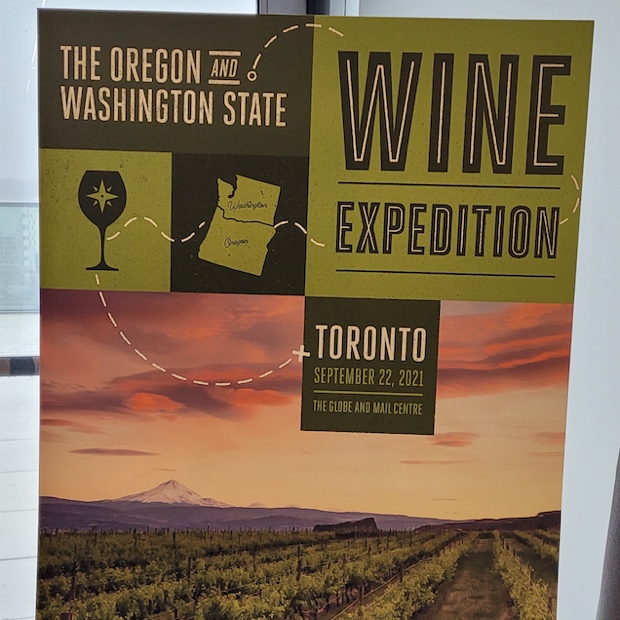
This WAugust trip to Washington wine country was made possible by the erudite folks at the Washington State Wine Commission, both in that spectacular state and also here in Canada. Just two months earlier a full-on participatory Pacific Northwest Wine event took place in Toronto and some added notes can be found at the end of this lengthy report. Three great humans work tirelessly (amongst many others behind the scenes) on behalf of the state’s more than 1,000 wineries, large and small. Keep in mind that Washington is the second-largest wine producing state in the United States, with over 1,050 wineries making over 17 million cases of wine, contributing more than $8 billion in annual in-state economic impact. That is a profound breadth of ground to cover for the small WSWC team. Chris Stone is Deputy Director and Kate Salisbury is International Marketing Manager. Chaperones Salisbury and Claudie Lamoureux of Washington State Wine for Canada were charged with the on point, on time task for five fulfilling and over-achieving days. Hard to say which of their characters or abilities were tops – driving prowess or durability, kindness, patience or grace. All of the above and it is imagined that Godello’s fellow travellers would wholeheartedly agree; Alana Lapierre, Angela Aiello and Mandi Roberston. In any case there was everything to experience, much along the lines of the varied and diverse wineries, AVAs and personalities encountered. Of conglomerates and boutiques, generational families and new blood, the established and the start-ups, pedagogues and rock stars, boffins and balladeers. There was much wine poured and these are the 135 tasting notes.

J. Bookwalter

Columbia Valley AVA

J. Bookwalter

John Bookwalter was a graduate of UC Davis Vineyard Management program and farmed some of Washington’s most famous tracts, Sagemoor, Bacchus and Dionysus. In 1982 he started J. Bookwalter, making approximately 2,000 cases of white wines. In the 90s he started the reds program and 2023 marked the 40th harvest. Chance Cruzen is winemaker and happens to be a big fan of Iggy Pop.

With the boys of J. Bookwalter

J. Bookwalter 3rd Edition 2019, Columbia Valley AVA

Flagship white, Bordeaux idiom, based on sémillon (63 percent) with sauvignon blanc (20) and muscadelle (19). The sém is both anchor and driver, dominating the aromatics and that speaks to how well this has been managed and blended. They keep the faith, act as catalyst for integration of both the varietal trilogy and the wood. John Bookwalter was known to say “choose your wood like you would choose a picture frame.” Equally important is the creation of consequence between flowing grace and bracing tension. Good strong mid-palate, tight and focused, length is outstanding. Proper flagship appellative white blend. Drink 2023-2027.  Tasted August 2023

J. Bookwalter Merlot Readers 2020, Columbia Valley AVA

Mainly merlot but not exclusively, with small amounts of cabernet sauvignon, malbec and cabernet franc for good support, measure and spice. The oak is noticed, the tannins powdery yet silky enough to make this über sippable. Still a bit gangly to be honest with some white peppery piques on the aromatics and so another year will surely send this merlot to be in a place it was intended to be. A few grams of residual sugar plump it up and then chocolate, a next effect by barrel aging which only serves to make this a truly silken, creamy and yet acid retentive red wine. Produces up to 1,500 cases. Drink 2024-2027.  Tasted August 2023

J. Bookwalter Conflict 2020, Columbia Valley AVA

Conflict, aged on lees, bottled 18 months after harvest. A great vintage save for some smoke that drifted in from fires all over the west, though really less dramatic here in the Columbia Valley than many other places. Pretty taut red that has not yet released its true aromatic charm, in fact it could be another 18 months before that really begins. The Readers Merlot is a much earlier proposition and the more diverse varietal meets barrel make-up with style intendment to make this a more structured and powerfully restrained merlot-dominant proprietary blend. Good yields though and a juiciness here that says the type of acidity in Conflict is quite different to that of Readers. This shows real potential, luxe as it is and all parts are prepared thoughtfully, with blood sweat and tears, yet neither by pretence nor blind ambition. Drink 2025-2029.  Tasted August 2023

J. Bookwalter Cabernet Sauvignon Readers 2020, Columbia Valley AVA

Rounded out by five percent syrah and petit verdot, with thanks to a most important grower/vineyard, that being Dionysus. A richer, thicker and more unctuous red (as compared to merlot) but fruit concentration is on par. That said the warmer Dionysus site can’t help but deliver this kind of glycerin viscosity and so the blackberry-Cassis dominance will not be denied. Can’t miss the silky syrah and petit verdot depth that put this in the kind of red best defined as full and substantial. Refined and finessed enough, never overarching or reaching, best now and for a few to five years forward. Drink 2023-2027.  Tasted August 2023

J. Bookwalter Cabernet Sauvignon Protagonist 2020, Columbia Valley AVA

Change of pace, in a way, from Conflict to Protagonist because for the first time there is an Italian (think Bolgheri) like stylistic coming through. Dusty, chalky and powdery tannins are evident, even in the face of fulsome and concentrated fruit. Juicy to the nth degree, ridiculously delicious and then a chocolate plus espresso crema all over the back end. The cumulative effect by fruit, terroir, climate and barrel aging make this climb to a rich and creamy finale pretty much unavoidable. Some sweetness follows and after some REM sleep there will be a long, melodic and jangling future for this Columbia Valley red. Drink 2024-2028.  Tasted August 2023

Vic Palencia

Palencia

Victor (Vic) Palencia’s grandfather was a first generation immigrant from Spain (to Mexico) and he is first gen. American, so the symmetry, from Valencia to Palencia, is something to hang a northwest hat on. Vic started in Walla Walla in 2012 after taking a flyer and to realize a dream. As a first generation immigrant it cements the legally forming “sueno” even deeper. Thus the “Monarcha” brand, “earning my wings,” says Vic. “If you drink two bottles, cabernet and merlot side by side, you can fly.” A symbol for lifestyle, easy drinking wines and then the Palencia label, more serious, exulting Washington State’s diversity of grape varieties grown. The label depicts his father holding a shovel, “always working the land.” Palencia is located in Kennewick.

Godello foreground, background Vic Palencia

Palencia Sparkling Albariño

Charmat method, sweet and salty, like nuts and caramel corn but leaner and tighter as per the grace by variety. Simple stuff with good energy.  Tasted August 2023

Palencia Albariño 2022, Columbia Valley AVA

Says Columbia Valley but really should be called Ancient Lakes located in northwest Washington. But Columbia is more recognizable and so here we are. If it smells like albariño and tastes like albariño well, you know the rest but truthfully this is a less herbaceous and more mineral example. And so Ancient Lakes it is. The terroir is hardpan calcareous limestone, good for drainage and reduction of hydric stress with sandy loam of up to 19 inches above. Pretty good albariño for dessert lands so far from a coast – but the place is definitely the reason. Nice little CO2 buzz about it as well which is so varietally correct. Drink 2023-2025.  Tasted August 2023

Palencia Malbec Monarcha 2019, Columbia Valley AVA

From Vic Palencia and family in Kennewick with Columbia Valley fruit, 14 months in wood. Nice little char and smoulder on sweetly salty and sour-edged fruit. Higher acidity than many malbecs and also valley wines so this wants and needs food. Mojo bowl anyone? Drink 2023-2025.  Tasted August 2023

Palencia Cabernet Sauvignon Monarcha 2019, Columbia Valley AVA

From the Richland Hills in the Columbia Valley where thicker skins and high quality fruit translate to unction and developed tannin. Cassis and Ribena mix, tart and candy hearts sour, in a good place right here and right now. Some powder in those tannins but resolution is just about complete. Drink 2023-2025.  Tasted August 2023

Palencia Petit Verdot 2017, Wahluke Slope AVA

Part of the El Viñador line which is essentially Reserve style but the name is more specific and indicative of what it means to grow and make these kinds of varietal wines. From fruit grown on the Wahluke Slope AVA. Structure and mouthfeel justify the reasoning and the result, especially the tannic intensity and power at the yet to relent finish. Wood thickens, spices and sweetens the last third of this petit verdot which is really unlike any other, grown anywhere and produced as a solo artist. Drink 2024-2027.  Tasted August 2023

Palencia Syrah El Viñador 2019, Red Mountain AVA

Red Mountain fruit and signature varietal effort but also style that Palencia seems most comfortable with. This is because the balance, restraint and finesse are at their collective finest in this kind of handsome and sturdy wine. Still some chalky and powdery tannin but overall the harmony and seamlessness are pretty spot on. Ready to go and please. Drink 2023-2026.  Tasted August 2023

Top notch Paella at Palencia

Palencia Carmenère 2019, Red Mountain AVA

Sourced from the hottest region in Washington, that being Red Mountain and picked quite late. Nothing green about this carmenère, in fact it’s fruit and wood are thick as thieves, the tannins silken and the capsicum or jalapeño non-existent. Chewy like chocolate liquorice and very much a wine made for those who like it rich, luxe and thick. Drink 2023-2024.  Tasted August 2023

Palencia Albariño El Viñador 2022, Columbia Valley AVA

The founding vineyard for albariño at Palencia’s reserve line is as advertised more concentrated, focused and finessed. From various harvests each fermented separately for 30 days in Hungarian oak puncheons then blended together before bottling. Aiming for a Galician style though truth be told you can take the albariño out of Galicia but you can’t take the Columbia Valley out of this albariño. Warm, rich and unctuous, in the end. Drink 2023-2024.  Tasted August 2023

The Tirriddis Boys – Matthew Doutney, Gabriel Crowell and Andrew Gerow

Tirriddis

Tirage … Riddle … Disgorge. Tirriddis, acronym of sorts for three sparkling wine producing friends (Andrew Gerow, Gabriel Crowell, and Matthew Doutney) who celebrated the end of school with Gimonnet and Janz Champagne, fried chicken and chips. All attended Washington State University for viticulture and oenology. Their collective motto is “if we fail, we can always move back in with our parents. “Wine is a super architectural art form,” explains Gerow. “We’re really just trying to define Washington – defining typicality that really doesn’t exist yet.” First base wine were made in the Fall of 2020.

Tirriddis House Gris, Columbia Valley AVA

House tier is all about distribution, for restaurants and export in a fun and recognizable style. Here 100 per cent pinot gris, creamy aromatics, mousse as well, the sweetest of all the Tirridis wines at 11 g/L. Looks at reeling in a Prosecco crowd that can’t afford $50 sparkling wines. Sees 12 months on the lees and it is traditional method so expect some autolysis, mild oxidation and ultimately great energy. Drink 2023-2024.  Tasted August 2023

Tirriddis House Brut, Columbia Valley AVA

More than 50 percent of the base wine is original (from the fall of 2020) and is essentially chardonnay with a few percentage points of albariño. Tirridis for tirage-riddle-disgorge (clever) and the sugars are hidden behind the acidity. Raises a bar for the vital scintillant nature of grapes farmed for wines that transfer energy like sparks jumping from hydro pole to hydro pole. Similar creaminess and mousse to the pinot gris but the orchard fruit here is different than that peachy stone. Who would dare not pour this as a warm home welcome or by the licensee glass? Tastes like unbaked Washington with tight bubbles. Drink 2023-2024.  Tasted August 2023

Tirriddis House Rosé, Columbia Valley AVA

One-quarter each cabernet sauvignon, syrah, merlot and chardonnay, not unusual for Washington per se though no real frame of reference from the sparkling diaspora neither. Celebrates red fruit, from currants through plums and this surely comes across drier than it is, not quite the 12 g/L of pinot gris but this is pretty taut and wound for Rosé bubbles. Drink 2023-2025.  Tasted August 2023

Tirriddis Brut Rosé, Columbia Valley AVA

The second rendition of the Brut Rosé, three parts, in triage two years, of cabernet sauvignon, syrah and chardonnay. One-third each means less red fruit so more of a currant current and the yeasty feels step up sooner and for longer. Still a scintillant intensity of vitality and energy plus some bitters this time around. Anything but a soft, upturned Brut style and saying this is a tasting room profile is pretty much spot on. Just feels like the teaching moment and in turn signature for the boys’ intonement of style. Drink 2023-2026.  Tasted August 2023

Tirriddis Washington Blend, Columbia Valley AVA

Everything but the kitchen sink though in actuality it is anything but because it’s not the last lot to be put together each season. A blank slate concept that intends to represents the region in an unapologetic way. Fruity first, of merlot, riesling, pinot gris, cabernet sauvignon, chardonnay, viognier and syrah. Neither Blanc nor Rosé but a rainbow of multifariousness and truth be told this is seamless fizz, a Venn diagram of varietal and geography, of potential, diversity and exceptionality. Drink 2023-2025.  Tasted August 2023

Tirriddis Blanc De Gris, Columbia Valley AVA

Third rendition looking for pure honeycomb and the guys feel they nailed it on number three, or at least set themselves upon a path to get it right there when number four comes to fruition. Why more sparkling producers do not refer to a varietal sparkling pinot gris in these terms is beyond me. It just fits. Creamy yes, with botanicals and bitters but the pear coulis flavour is uncanny. This goes a bit to herbal and preserved lemon foamy (and acidity is a bit subdued) but it’s close, oh so close. Can’t wait for rendition number four. Drink 2023-2024.  Tasted August 2023

Tirriddis Blanc De Blanc Stonemark Single Vineyard 2020, Rattlesnake Hills AVA

First single vineyard sparkling wine, all chardonnay, small plantings in the Rattlesnake Hills AVA, 1,600 feet of elevation, of brushy savour and direct hits of more than one kind of citrus. The concept is a growers’ one – with obvious connotations. Elevation is clearly the driver because this is about acidity and high intensity, all pervasive and above all else in what this site wishes to give. Poured from Magnum, extended triage. Lemony, tight, zesty and just about zero dosage. Can see this living six or seven years. Drink 2023-2028.  Tasted August 2023

Riley Miller, Sonder

Sonder

Established in 2016 by Riley Miller. Low-Fi, non-intervention, but not natural wines. Inspired by his time in the McLaren Vale. The initial production in 2016 was 100 cases – today about 3,000 cases. A thinker, but not too hard, yet still a man of wonder. Likes to consult the Dictionary of Obscure Sorrows, from which the realization is concluded that everyone around you has a complex life, as much as your own – but we can’t comprehend half of it. “We are like monkeys flying on a rock through space.” Observe Miller conduct a wine tasting for visiting journalists and you can imagine the inner workings of a modern day winemaking production. Riley’s bottles are anything but some kind of toad swindle. They are made for all of us, including those who don’t know it yet.

Sonder Rosé Cinsault 2022, Columbia Valley AVA

Trying to capture a Provençal style, 24 hours of skin contact, gently extracted and truly crushable. Lightly tart, basic, simple, unadorned. Native ferment. Truly cinsault to be honest. Drink 2023-2024.  Tasted August 2023

Sonder Grenache Blanc 2022, Columbia Valley AVA

Big chunk of the fruit comes from Boucher Vineyards and a smaller portion out of the Rattlesnake Hills. Warm and mature though high elevations keep it fresh and again the naked nature of a Riley Miller wine make this immediately crushable. Unadulterated, no make up and local. Drink 2023-2024.  Tasted August 2023

Sonder Roussanne 2022, Columbia Valley AVA

True expression of grape, not necessarily “perfect” wines, nor is there any reason to want them to be but they are representative of site and Washington. Neutral oak, tropical notes, fresh papaya and pineapple syrup, tart and textural with thanks to some stirring. Drink 2023-2024.  Tasted August 2023

Sonder Field Blend 2022, Columbia Valley AVA

Orange, mostly viognier with some marsanne and roussanne, six weeks on skins, six months in neutral oak. Grapes that don’t really bring the orange but instead the partly cloudy pineapple juice hue. A wine that challenges why orange is the ubiquitous term because funk and melting salve are not the thing. Spice yes and litchi, also grapefruit and the most mild of bitters. Has that anesthetic feel on the palate. Third iteration of this wine. Drink 2023-2024.  Tasted August 2023

Sonder Co-Ferment 2022, Columbia Valley AVA

A co-ferment of grenache and picpoul, first time trying, served chilled, “a patio pounder.” Watermelon Jolly Rancher insists Riley Miller, 11.5 percent and as crushable as wine can possibly get. Juice. Water, pink, alcohol. Drink 2023-2024.  Tasted August 2023

Sonder Red Field Blend 2022, Columbia Valley AVA

Mostly counoise and grenache with some cinsault, viognier and roussanne. A couple of weeks on skins, co-fermented with some whole cluster and carbonic maceration. Simple, drinkable, low alcohol, currants and red berries, sweet acidity, a moment of balsamic and charred herbs. The grapes almost combine for a cabernet franc or even lightly smoky cannonau meets carmenère effect. Nothing else like it and better for that. Drink 2023-2024.  Tasted August 2023

Sonder Grenache 2022, Yakima Valley AVA

Rarely made grenache by method and style “as close to pinot as is humanly possible” says Riley Miller. Picked early, 20 percent whole cluster, Western Cape stylistic, light, low alcohol, fresh and shadowy, suggestively if sneaky tannic. Drink 2023-2024.  Tasted August 2023

The Orcas Project Nebbiolo Andrews Vineyard 2022, Horse Heaven Hills AVA

“The Orcas Project is a collaboration between some of the most talented winemakers in the Northwest and a collection of Orcas Island artists. The idea to combine these two groups of people was born on the island and continues to expand throughout the Northwest. Each winemaker that is part of The Orcas Project is paired with an artist and represented by a different label.” Riley Miller’s is pseudo carbonic for which 50 per cent whole cluster is added back on top – makes for a grippy if light and effusive style. Cherry, candy apple and onion skin. Picked early as if for Rosé and frankly reminds of Cerasuolo. Fine bitters, good balance and a bit of roasted nightshade char. Cinnamon heart finish. Drink 2023-2024.  Tasted August 2023

Kinnikinick Red

Chateau Ste Michelle

Chateau Ste. Michelle is Washington State’s oldest winery, and many of Washington’s most famed winemakers got their start with the Estate. Ste Michelle is also the largest producer of Riesling in the world, and has winemaking partnerships with two international vintners: Col Solare is an alliance with Tuscany’s Piero Antinori and Eroica Riesling is a partnership with the Mosel’s Ernst Loosen. As part of the visit, the Canadian team was treated to a Blending Experience.

Chateau Ste. Michelle & Dr. Loosen Riesling Eroica 2022, Columbia Valley

More than a hint of residual sugar yet the driest style for CSM and though the relationship is with Ernie Loosen this is not Mosel style. Fruit is sourced primarily from the Evergreen Vineyard to bring Eroica into its proverbial and ironic sweet spot. The “hero” is in ode to the winery’s varietal roots and a Beethoven reference. Bit of residual CO2, high acid and truly tart. Balanced vintage, vital and energy elevating. Will be one of Eroica’s better agers. Drink 2023-2027.  Tasted August 2023

Chateau Ste. Michelle Riesling Indian Wells 2022, Yakima Valley AVA

Much like Eroica there is a residual CO2 buzz and at least twice if not three times the number (here eat 30 g/L) of residual sugar. Quite rich, luxe and opulent with just a few sites left to create this round and sweet style. High Kabinett or low Spätlese in a sense but without the supporting acid. More Mosel here and yet also quite a lot more phenolics and tonic. For a consumer that likes sweet wines but can be drawn into riesling, followed by some less sweet varietal examples. Some wine producing and drinking habits never die. Drink 2023-2025.  Tasted August 2023

Chateau Ste. Michelle Chardonnay Canoe Ridge Estate 2019, Horse Heaven Hills AVA

Relatively rich and luxe chardonnay style, sweetly buttery, soft and creamy. No real bite but just easy, amenable and though considered a cooler spot with better acidity than some it’s still as round as chardonnay gets. Softens more and more as it slides down and feeds away. Drink 2023-2024.  Tasted August 2023

Chateau Ste. Michelle Cabernet Sauvignon Indian Wells 2020, Columbia Valley AVA

Reds are the main focus at Indian Wells and while the style is opulence, this cabernet sauvignon is surely designed to be consumed ASAP. Tannins are present yet sweetly soft and wood soaks up everything, then returns it with semi-sweet chocolate. A quarter is new American oak and 20 percent is French. Soft with some sweetness, macerated plums and that ever pervasive chocolate. Hugely consumer friendly. Drink 2023-2025.  Tasted August 2023

Chateau Ste. Michelle Merlot Canoe Ridge Estate 2018, Horse Heaven Hills AVA

A third new French and seven percent American wood truly sheathes, thickness and wraps merlot up in a nurturing flannel blanket for merlot that has softened into an almost ideal drinking state. The 2016 was much more tannic and though some omnipresent balsamic shows here it’s more reduced, sweeter and less high-toned. Lower acid here, at 4.8. Warm and caressing vintage for the palate and our emotions. Drink 2023-2025. Tasted August 2023

Chateau Ste. Michelle Cabernet Sauvignon Cold Creek Vineyard 2019, Columbia Valley AVA

Cold Creek Vineyard is a very successful vintage for cabernet sauvignon, more finely tannic and higher in acid than 2016. The energy is special, the harmony between fruit, acid, tannin and wood far superior to other seasons and also other growing sites. Yes there is luxe fruit, concentrated and substantial but the combination of harvest and winemaking makes for an exceptional combination out of 2019. Drink 2024-2028.  Tasted August 2023

Chateau Ste Michelle Syrah Limited Release Organic 2020, Horse Heaven Hills AVA

Deep purple, fruit sweetness from über ripeness and a clarity or cleansing feeling for naturally curated and orchestrated syrah. So profoundly bright new world in style and effect, delicious to the nth degree and openly gratifying. Drink up.  Tasted June 2023

14 Hands Winery

14 Hands

Chateau Ste Michelle property located in Prosser.

14 Hands Pinot Gris 2022, Columbia Valley AVA

Clean, fresh, soda feel that puts the style in gris though there’s not much separating it from grigio, either from the Columbia Valley or across the pond delle Venezie. Vague melon and honeyed flower blossoms but when all is said and done this easiest to get at pinot gris from the grand Columbia Valley is a simple glass of white ubiquity. Drink 2023-2024.  Tasted August 2023

14 Hands Roussanne Marsanne The Reserve 2022, Rattlesnake Hills AVA

Crisp Rhône white blend with a small percentage of wood to give it a wisp of smoulder that combines with some lees stirring for a creamy mid-palate. Higher in pH than some of this sort of Yakima ilk to result in elevated sapidity, a toothsome quality and finally piquant bite. Quite a bit of sulphur to work through but no worry because being structurally sound and very “reserve” in style the fruit and the composure will rise and win in the end. Give this some air, a swirl and agitation to coax out the charm. Just a 350 case production. Drink 20224-2027.  Tasted August 2023

14 Hands Stampede 2018, Columbia Valley AVA

Stampede is 14 Hands’ self-declared “bold red wine” and while the marketing sounds like something in the realm of BBQ sauce this is really impressive for the price. Essentially syrah with some petit verdot “to give it some shoulders” tells winemaker Keith Kenison who has been with the winery since its inception. French oak dominant translating as lavender, jasmine and vanilla, the latter a tincture that permeates much of the aromas and flavours. Yes it’s confected but also rich and unctuous for $15 (US). Drink 2023-2025.  Tasted August 2023

14 Hands Cabernet Sauvignon The Reserve 2019, Horse Heaven Hills AVA

Led by cabernet sauvignon and labeled as such though there are supports from both cabernet franc and merlot. A protein cabernet, meaning it drinks with strength and pairing it alongside entrée portion meats, preferably red will do it best justice. Carries that full barrel feeling in surround of a swell (mainly black) fruit and incredible richness, feeling like sweetness, but the wine is bone dry. Wood resin, syrups, up and into a whole other level of concentration. The most refined and luxurious of the 14 Hands reds (or whites) that competes with top Washington and also some heavier priced California examples. Drink 2024-2028.  Tasted August 2023

Goose Cap AVA at Goose Ridge Vineyards

Goose Gap AVA

Goose Ridge Vineyards

Goose Ridge in Richland and adjacent to Red Mountain is unique in that it is the owner of its own (Goose Gap) AVA, approved three years ago. The first planting of cabernet sauvignon was 25 years ago in 1998 and today there are a total of 2,500 acres of vines. The Monson family dates back to the early 1900s when M.L. Monson brought his family to the Yakima Valley. Taylor is the fourth generation, dad and two sisters (Bill, Molly and Valerie) are the third. The family is equally famous for cultivating Cosmic Crisp Apples (that don’t brown), developed with Washington State University and the first to grow them. The visit in the vines and through the facility culminated in a quick tasting of four wines though the setting was not conducive to formulating proper tasting notes.

Red Mountain

Col Solare

Located on Antinori Road in Benton City is the Château Ste Michelle Red Mountain partnership with Tuscany’s most famous family. A tour with Col Solare’s hospitality team reveals the bond with the mothership. “Antinori dictates what we do and the style of wines they want us to make.” There are no problems, only solutions and fixing issues like re-planting problematic cabernet sauvignon blocks is in the process of a three-year plan. “The only wine we make here that the Antinoris care about is cabernet sauvignon – so it has to be great.” The new winemaker is Stephanie Cohen, a Michigan graduate in Chemical Engineering. Cohen worked in New Zealand, Margaret River and Napa Valley, where she met Marcus Notaro, first winemaker at Col Solare. Stephanie went to Oregon, then Columbia Crest, then arrived at Col Solare three years ago. She was appointed head winemaker on July 1st, taking over from Darel Allwine. “Do we love what Stephanie is doing? Short answer is yes.”

The vintage brings about three major changes; label, style and price. The Col Solare had been in the $75-85 range going on 10 years but now it’s about Antinori wanting something “better.” In every respect ’19 is certainly darker and richer, of an impenetrable hue and structure. An Italian cabernet sauvignon, as close to Bolgheri Guado Al Tasso as Col Solare has ever been, but this holding pattern will almost surely be temporary. A Red Mountain interpretation from small (blueberry-sized) berries, raised with low vigour off of soils of sand and silt. Aged 22 months, not quite but pretty close to 100 percent new oak. Racked every three or four months, to eliminate slag and to refine, refine, refine. Aids in tannin transformation and eliminates the need for fining. A cabernet of great depth, of Cassis, mint and graphite. Luxe character, finesse, if not the level of fantasy wished for – but this new is the first of the new. By 2020 invention should meet vision for the next level of Col Solare quality. Drink 2025-2030.  Tasted August 2023

Col Solare Cabernet Sauvignon 2018, Red Mountain AVA

Essentially cabernet sauvignon with five percent franc while only 2015 and 2020 have been 100 percent. From the hottest wine-growing AVA in Washington state, with basalt below the soil surface, irrigated six to eight inches per year. Early picked and in 2023 this will likely start on or around the 20th of August, to finish off what has been “a really weird year.” There are 4,040 total acres in an AVA considered one of seriously high quality. Col Solare has been growing here since 2011 but not enough to meet production numbers and so six Red Mountain contract growers are involved. The average case number is 5,000 for a cabernet sauvignon as suave as it is rich though 2018 is the last of an era, because 2019 will mark changes to concentration, detail and price. Meanwhile the ’18 is equipped with the finest powdery tannins. Truth is there can be no denying the quality levels of fruit, wood and tannin. All relatable to uncompromising labour, time put in and attention to detail. It’s all too perfect. Drink 2024-2029.  Tasted August 2023

Col Solare Merlot 2019, Red Mountain AVA

Though 2019 was marked by an unusual Spring in a cooler and by extension leaner year it’s a relative thing and so Col Solare has still made a very substantial wine. This label falls under the auspices of the Component Collection, a “Tenuta” expression mainly intended for the Wine Club. All estate fruit, built on the premise of perfume ostensibly if allegedly a Washington state desert opportunity exaggerated on Red Mountain. Intense violets with blue fruits that merlot will express at these magnified levels when allowed to. Still tight as far as structure is concerned but thankfully three-plus years have allowed for some wood integration and tannic settling. A fruit emergence is underway and frankly encouraged, more so than the cabernet, if here in merlot not quite as polished as a wine. The finish shows the rusticity and austerity of the tannins while the quality of the chocolate is nothing if not impressive. Drink 2024-2029.  Tasted August 2023

With Sarah Hedges Goedhart and Christophe Hedges

Hedges

“Our driving force is for our wines to have a Red Mountain quality,” is basically the first sentence uttered by proprietor Christophe Hedges. “I don’t know if we’re trying to be authentic but we are following our mother’s lead, that if you are going to do something, do it correctly.” Anne-Marie Liégeois grew up in Ossey-les-Trois-Maisons, in Champagne, France. She married Tom Hedges from Richland, Washington in 1976. Their first wines were sold to Sweden in 1997. The first vineyards on Red Mountain in the Yakima Valley were planted in 1989 and 1990 and the winery-Chateau was built in 1995. Christophe returned in 2012 and is National Sales Director while sister Sarah Hedges Goedhart took over full-time winemaking in 2015. This coincides with the first certified label under the biodynamic program which began back in 2008. Goedhart says there’s no formula ever. “We’re just trying to be guided by what the grape’s want to be. Blending is the hardest part.”

Sarah Hedges Goedhart and Christope Hedges

Hedges Le Blanc Déscendants Liégeois Dupont 2021, Red Mountain AVA

A program that began in 2014, use of older barrels, some lees contact and bâttonage. A niche wine from Rhône grapes (namely marsanne with viognier), because whites at this level just don’t sell all that much. Even as brix levels rise the pH on this wine remains quite static and so as an aromatic white this remains pungently salty and avoids the starchy. Richer than expected and dutifully harmonious, clearly a wine of class, beauty and understatement. Lemon and orange peel, really nutty and slightly toasty, with only 400-500 cases made from just one hectare. It will change a lot and get brinier and brinier, becoming even better with stronger aged cheeses and many things cured. Drink 2023-2028.  Tasted August 2023

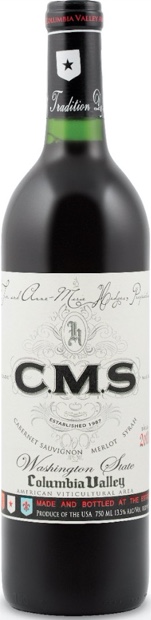
Hedges Family Wines CMS Made With Organic Grapes 2022, Columbia Valley AVA

The “American” version label, minimally sulphured and just bottled a week ago. A “farm” style wine, crunchy and sitting right there with a local sense of terroir, northwest, Columbia Valley, very different than what comes from Red Mountain. That said it has more Red Mountain fruit than Columbia Valley. The blend is 48 percent cabernet sauvignon, (44) merlot and (8) syrah, subjected to very, very little new wood. Fresh and clean with an iodine and wet concrete note, almost Western Cape in style. Spice and intensity speak about house style with a broad stroke on a painted picture. Drink 2023-2025.  Tasted August 2023

Hedges Family Estate Red Wine 2021, Red Mountain AVA

A blend off all the vineyards on Red Mountain (Hedges, Jolet, Bel’Villa, Magdalena and Les Gosses), berries about half the size of what comes from Columbia Valley. A higher pH place with less water conversion and more evaporation. Yields are smaller by half and extraction levels the opposite with thicker skins and when ripe, also crunchier seeds. The ’21 blend is 55 percent cabernet sauvignon, (26) merlot, (9) syrah, (6) cabernet franc, (3) malbec and (1) petit verdot. Aged in 62 percent American and (38) French wood. Rich, luxe, concentrated and fixated on its home, that being these five blocks on the Red and frankly the palate feels intoxicated or anesthetized by the command of attention and purpose dictated by place. A top vintage, without a doubt. Drink 2024-2032.  Tasted August 2023

Hedges Family Estate Le Haute Cuvée 2018, Red Mountain AVA

This is 99.77 percent cabernet sauvignon and the rest, well does it matter? A cuvée that goes back to 1987 and here a Hedges professed, native ferment instructed great vintage. Lots of different cabernet sauvignon components make up this prominent and confident biodynamic wine. Red to black fruit, a noted brininess, higher acidity, seemingly lower pH, saltiness and dusty Christmas spice. The potential here runs long and deep, without weight and still some iodine, balsamic and minty freshness. Shot of espresso conclusion that speaks to another level of tannic dust and combust. Drink 2024-2032.  Tasted August 2023

Hedges Family Estate Touriga Nacional 2018, Red Mountain AVA

Quite possibly the future of Red Mountain, at least for Hedges, having planted three Portuguese grapes some time ago. Their heat resistance and ability to adapt preps them for next level climate extreme to come. Aged in 100 percent neutral American barrels and coming away liquid chalky, dark and feigning vague sweetness. Drips and oozes with Red Mountain iron, iodine and though truly opaque, there is this transparency of pace and place that cannot be hidden. Drink 2023-2027.  Tasted August 2023

Déscendents Liégois Dupont Syrah Les Gosses Vineyard 2020, Red Mountain AVA

No mention of Hedges on the front label but instead Anne-Marie’s family name because you have to respect your history. And the vineyard is hers, planted in 2006 then certified biodynamic in 2019. A block that winemaker Sarah Goedhart runs through with several different picks, some falling on one side and some on the stylistic other, than blended back in together. Its richness is anything but gratuitous, the depth descendent and built upon the idea or concept of gravitas. Full, complete and a most satisfying mouthful. Drink 2025-2033.  Tasted August 2023

Déscendents Liégois Dupont Syrah Les Gosses Vineyard 2019, Red Mountain AVA

Rich, thick and finely layered syrah from the distinct entity that is Red Mountain with its not to be missed meaty, mineral, sanguine, ferric rich, red earth character. There is an underlying chalkiness here and one that will surely determine a long life ahead, as witnessed by the linger and hang around ability of of a syrah on a clear and present mission. Drink 2024-2029.  Tasted June 2023

Déscendents Liégois Dupont Le Rosé Les Gosses Vineyard 2022, Red Mountain AVA

A kitchen sink Rosé blend led by syrah (42 percent) with (21) mourvèdre, (18) cunoise and (14) grenache. Aromatic as much as syrah is want to go, for us and so the Rhône gang’s get together works so bloody well. There is a sanguine character with thanks to the mountain’s soil and the movement here is classical, strings reverberating, flowing, rising and falling, no real cresencedo but a softening and fade. Just lovely stuff. Drink 2023-2025.   Tasted August 2023

Hedges Family Estate Red Mountain Reserve 1999, Red Mountain AVA

The artist formerly known as Red Mountain Reserve became Le Haute Cuvée with the 2012 vintage. Hedges was both ahead of their time (because the word Reserve was already losing its wine world lustre) and respectful of family history by labelling in a Champagne or at least a French vernacular. Here is a nearly 24 year-old red blend that has aged remarkably well and though thinking miraculously was a momentary thought – there is no miracle but something more profound at play. The Mountain for one thing and a family at least a decade ahead of the curve. Early Washington organics, no reverse osmosis, no mechanical filtration and no lobotomizing a bottle of red wine. Yes the secondary notes are present and they are settled in a state of absolute proprietary grace. Very little trace of tannin, nor any barrel that is but a superfine mountain induction that makes for a silky feeling in the mouth. There is a chance this will live another 24 years but the fruit is already leaving and so 12 should be the maximum with half that the truest and most honest recommendation. Drink 2023-2027.  Tasted August 2023

Hedges Family Estate Syrah Bell Villa Vineyard 2012, Red Mountain AVA

Tasted from magnum (bottle 110 of 200 to be exact) and shocked (in a redacted moment) by how fresh and non-advanced this wine persists to be. This syrah is from a vineyard that was the second one planted on Red Mountain and what we are faced with is a 15 year-old block that was so far ahead of its time. Tasting this 10-plus years after vintage feels like fiercely re-reading an old Tom Robbins novel, celebrating the proper work of the past and predicting what will be essential in the future. The search back then begets syrah in hot climates now. Getting the sage brush but now, now the fungi have come about, though not the kind that grow in a western rainforest. More like that which emerges from a burn site. In any case the impression is syrah from a beautifully stark place. La belle de campagne. Drink 2023-2026.  Tasted August 2023


Walla Walla

SMAK Wines

SMAK Wines is the first Asian woman owned and operated winery in Walla Walla producing exclusively Rosé. “Rosé to me is more than just a beverage, it is a lifestyle. I wanted to bring this lifestyle here and so SMAK was born.”- Fiona Mak, Owner & Winemaker.

SMAK Sangiovese Spring 2022, Walla Walla Valley AVA

SMAK Wines is the work of Fiona (Sui Wah) Mak and sangiovese is made just like the pinot gris, save for how it exults the high acid and sharp nature of sangiovese. Still so light and rainwater clean, not quite petrichor but yes, a Rosé that drinks like water. Back up the truck for this glug-glug, glou-glou, grape witches fantasy of Rosé. Salty. Drink 2023-2025.  Tasted August 2023

SMAK Pinot Gris Summer 2022, Walla Walla Valley AVA

I mean not all that different than the sangiovese if lighter, lower in acid and well, summery. Light, bright, tender, carefree, unadorned and even saltier, to be honest. Just what you need, whether you know it or not and well before you even know your needs are needed. Salty magic as koan. Koan of Rosé. Drink 2023-2025.  Tasted August 2023

SMAK Syrah Autumn 2022, Walla Walla Valley AVA

Made with syrah and its autumnal personality, barrel fermented in neutral wood, some malolactic and so not the usual but rather a Rosé with some extra nuance, spice, texture and fantasy. No lewd or ambitious stylistic departure from Spring and Summer, just a bit more grounded, of blush gravitas, creaminess and something needed to be explained. Rosé smackdown without any undesired anxiety or tension. Drink 2023-2025.  Tasted August 2023

SMAK Syrah Bubbly Blend Winter 2022, Walla Walla Valley AVA

Fizz Rosé by syrah with some addendum by grenache and a few extra grams of residual sugar to keep the harmony and faith alive. Nice little bit of naturalization in the way the wine sits on the palate and melts like a caramel and lemongrass salve. Red currants and again, coming across dry and just tannic enough to keep things moving forward. Would like another half gram of acid for best energy and more length. Drink 2023-2024.  Tasted August 2023

SMAK Cabernet Franc Rosé Abstract #1 2022, Walla Walla Valley AVA

There is just something about cabernet franc that when it’s made into Rosé (and made well) the grape variety is more recognizable than almost any other. Fiona Mak has captured grape and what just has to be place with a level of calm and hypnotism that Rosé rarely sees. Drink a glass, get your Rosé buzz on, feel OK for the rest of the day. Drink 2023-2025.  Tasted August 2023

SMAK Pinot Noir Rosé Abstract #2 2022, Walla Walla Valley AVA

Gotta say this might be the best use of pinot noir in Washington, light, salty and without distraction to cause any overthinking. Closer to the sangiovese than any of the others and with an extra layer of volatility, sharpness and tang. Drink 2023-2025.  Tasted August 2023

With Brandon Moss, Production Winemaker – Gramercy Cellars

Gramercy Cellars

The story of Gramercy Cellars began with a Manhattan-based sommelier tasting and becoming inspired by Washington State wines. He sells everything to move across the country to make his own. Master Sommelier Greg Harrington and production winemaker Brandon Moss are the mad scientists, experimental music makers, open-minded and forward thinking team.  They are intuitive and paying attention to the extremities of climate events. Fully aware that 2020 was a brutal smoke year and so 25 percent was balked out after remediation. “Mourvèdre can handle it” tells Moss, but “cabernet franc and pinot noir simply can’t.” Elizabeth Tommasino at Oregon State is researching “columns” that neutralize smoke taint without stripping varietal from wines.

Gramercy Cellars Picpoul Pét Nat

Sparkling picpoul, low pH, high acidity, aromatically neutral and boom, Pét-Nat. Left on its lees for something like 10 months before being disgorged and so yeasty is the understatement. Graffiti labeled, an element of Gramercy Park, NYC ode. Smells like chèvre and preserved lemon, minutely funky and well, extremely French. Weirdly so and the yeasty-bready ready quality is more sourdough than anything else but also this dry-aged beef note that purists will really love. This is how you make wine without excess sulphur, cultured yeasts and for the purpose of re-fermentative ideals. Drink 2023-2025.  Tasted August 2023

Gramercy Cellars Picpoul 2022, Walla Walla Valley AVA

Not a whole helluva lot of picpoul made in the United States and especially in hot climates but it ripens late and the acidity can be maintained – that said you need a lot of heat to get it ripe. This may not be the Languedoc and the lean, salty, low pH style without lees weight or drive puts this in a league of its own. Vines were planted in 2013, clusters are loose and massive, the wine it makes is acid-driven, fresh and simple. Pencil lead, cinnamon heart and fennel pollen. More complex than you might think. All lemon and lime on the finish. Drink 2023-2025.  Tasted August 2023

Gramercy Cellars Viognier 2022, Columbia Valley AVA

Sourced from Lake Chelan for a cooler climate base and then the Gramercy vineyard called Forgotten Hills in the Walla Walla Valley. The WW fruit is all barrel fermented while the Lake fruit is only treated to forty percent. The complete opposite of the typically recent warm vintages and so don’t come looking for tropical fruit and fresh roses. Think orchards, of pear and then that douse of lime with a salty finish. Summertime temperatures in later September brought weight and closure to this ’22 viognier. Might still be a tad lean but phenolics are solid and balance is not to be questioned. This is viognier for those who don’t always love viognier. Thank you warm October. Drink 2023-2026.  Tasted August 2023

Gramercy Cellars Mourvèdre “L’Idiot Du Village” 2020, Columbia Valley AVA

Varietal, from Olson Vineyard west of Red Mountain up on the north ridge, back hill of Benton City. Hot for ripeness though not quite Red Mountain hot. Fermentation and aging in concrete with more barriques involved and then a racking back to concrete. Nearly 60 percent whole cluster because the vintage said so and biting into the stems directed such a decision. First vintage was 2009 and along with 2010 it was a GSM-C blend but over time (and as a result of a trip to Bandol) the weird blend was dropped in favour of making mourvèdre, a.k.a. the true Washington rock star. Peppery but no char, herbal though never herbaceous, red fruit strong without any unnecessary tension or power. Kind, soft and nurturing for the grape. Terrific use of whole bunch, proper and grape related. No bitterness, no smoke taint. Clean as it gets. Pretty much ready to pop and pour. Drink 2023-2026.  Tasted August 2023

Gramercy Cellars Syrah Forgotten Hills 2019, Walla Walla Valley AVA

On the Blue Mountain side of Walla Walla, picked early in most parts of the state but not until October in Forgotten Hills, set down below in an ancient riverbed in the valley. De-stemmed in 2019 because of some mild issues and very much a red fruit juicy, lighter character of syrah with peppery liquidity and little to no sharp bites of tang. Crunchy stuff, relatively low in Rotundun and made to respect the vintage which did not want the makers to keep the bunches whole. Nothing aggressive here, fruit always winning. A fifth of the tannic austerity that the (whole cluster component) brought to the 2017. Drink 2023-2026.  Tasted August 2023

Gramercy Cellars Syrah Forgotten Hills 2017, Walla Walla Valley AVA

Nothing wrong with a little bit of age on a syrah that has come into its own with thanks to the powers that be so that we can enjoy the fruits and the result of great labour. The present matters and yet there is a tension and even tannic austerity that asks for even moie time. Such a well crafted syrah, as meaty and coursing as it is fruity or getable, in fact there are few that can match the wound intensity, focus and restrained power as this by Gramercy denotes. Drink 2024-2032.  Tasted June 2023

Gramercy Cellars Syrah Lagniappe 2019, Yakima Valley AVA

From Red Willow Vineyard in the Yakima Valley near the town of Wapino. The first Washington syrah vineyard planted in the 1980s by David Lake, a Master of Wine, with Mike Sauer, in 1987. The old block is called Chapel Hill and this is 100 percent whole cluster syrah, completely apposite to Forgotten Hills even though it’s the same vintage. Aromatic concentration, full bodied nature and a naturally sweet meets savoury personality that is quite frankly intoxicating. Lagniappe as Frangipane, something wild and free, a crushed rock and berry entanglement and something profound. Really tight and precise. “Wait, did you hear that?” What’s the music playing? Somewhere down the Crazy River? Drink 2025-2032.  Tasted August 2023

Valdemar Estates

In 1889, Joaquin Martínez Bujanda began the family winemaking tradition in Oyón, a small town in Northern Spain. His son, Marcelino, and his grandson, Jesús, followed in his footsteps. Jesús’ son, Don Jesús Martínez Bujanda, created Bodegas Valdemar in the 1980s. His son, Jesús Martínez Bujanda (5th generation), is the current CEO of the family’s winemaking business, and his sister, Ana Martínez Bujanda, is the Cheif Operations Officer for Bodegas Valdemar. Jesús fell in love with the Walla Walla Valley while he was a student at the University of Washington. His passion for winemaking and for the valley led him to create Valdemar Estates.

Valdemar Estates Chardonnay 2021, Columbia Valley AVA

Clearly a top chardonnay site and the luxe character is evident, as is the acid, freshness and piqued intensity. The look here is texture, playful movements and interactions between parts so think down south but back to the motherland and south from there. Valdemar paired this with beets, mango and pistachio – my that does work. The finale on this chardonnay is warm and spiced, a harmony of seasoning after fruit and wood subside. Drink 2023-2026.  Tasted August 2023

Valdemar Estates Cabernet Sauvignon Entre Nosotros 2020, Columbia Valley AVA

“This is our entry level cabernet sauvignon (at $44),” tells Jesús Martínez Bujanda, “but it is the most important wine that we make at the winery. It has to over deliver.” And so the introduction (with some merlot and petit verdot) is the wine that acts as the entry drug and bridge to the top end wines that a Rioja producer thinks creates exceptional wines out of not only the Walla Walla Valley, but also the greater Columbia Valley. You can immediately feel and tell that a Rioja mentality infiltrates the place but how could it not? The chalkiness of the tannins are remarkably fine and the spicy character actually pricks and piques the palate. Purple fruit, creosote, graphite and wood that will take a few years to melt in. The fruit is equipped to handle it. Drink 2024-2028.  Tasted August 2023

Valdemar Estates Cabernet Sauvignon Klipsun Vineyard 2020, Red Mountain AVA

Immediately noticeable as a cabernet sauvignon from a warmer site, fruit rich and concentrated, doubly substantial and even further developed as richly tannic. Fully, completely substantial and laden with finest grains of tannins in chains every finer, braided as tight as is seemingly possible. Dusty but a thick, duff like matter, coating every minute part of the palate. There are no holes or moments of lag but only heavy set fruit, supportive acids and those massive tannins. Terrific work from winemaker Marie-Eve Gilla and not sure there is a better cabernet sauvignon made anywhere in Spain. Drink 2023-2029.  Tasted August 2023

Valdemar Estates Syrah 2020, Walla Walla Valley AVA

Here Syrah comes from the hottest districts in North America, known as The Rocks, an ancient riverbed on the Washington-Oregon border filled with basaltic cobbles. Valdemar owns a portion and this is arguably THE PLACE to grow syrah in the west. Floral with high level black pepper for classic syrah-Rotundun style. Meaty, with iodine and charcuterie but with no compromise to fruit concentration. A substantial wine in all respects, tannic and well extracted, again across all parts of regard. It can be imagined that the style will change over the next few years as finesses continues to hone in on just what the Rocks wants to give out of vintages ever diverse.  Last tasted August 2023

Full on pitchy dark fruit swells from Valdemar, layered, chewy and ropey, like liquorice of many splendored flavours. Full on ripeness and natural sweetness by way of expression without any compromise or conceit of structure. An earlier drinking example though also one that will do well for up to five years because the fruit is just that deep. Drink 2024-2027.  Tasted June 2023

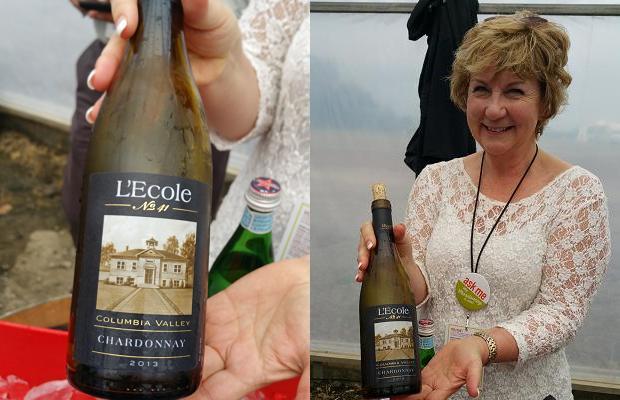
L’Ecole No. 41

The old Frenchtown school operated until 1974 and was bought in 1977 with the idea of turning it into a winery. First harvest and official founding was in 1983. Marty Clubb is celebrating his 40th Anniversary. Jean and Baker Ferguson founded the winery in 1983, well before there was a wine industry in Washington. Third in Walla Walla, 20th in the state. Marty was winemaker from 1989 and today its Mark Trafanelli, since 2018. Now 50,000 cases, increasing by 1,000-1,500 every year since 1989. Cabernet is into its 50th leaf, merlot close, chenin blanc next and first sémillon was on Sagamore, also the Wahluke Slope. Not a lot off new plantings and so the overall amount is declining. They make upwards of 30 percent in the state and even more than that in chenin blanc. The school at 500 ft is in a cold frost belt so the older vineyards are planted at 800-900 ft and the new Ferguson Vineyard on basalt is at 1,500. Climate change has improved winter weather ability while diurnal temperature changes can add up to 40 degrees Fahrenheit.

With Marty Clubb, L’École 41

L’École No 41 Chenin Blanc 2022, Walla Walla Valley AVA

Older than 35 years of age and so like the Western Cape OVP the labelling is old vines. Akin to old bones but with experience, resistance to weather issues and creating high level concentration. Some of the fruit comes from the Newhouse family’s vineyard with century vines, sour rot dirty laundry and all. Clones probably came up from Dry Creek Valley in California and my if this does not strike a balanced accord between dry and sour, concentrated and tart. Just woollen enough to mimic the Loire and act nothing like California. Length is more than impressive. Drink 2023-2026.  Tasted August 2023

L’École No. 41 Sémillon 2022, Columbia Valley AVA

Comes across as having some sweetness but be fooled once because it’s glycerol that gives the impression, so truth be told the sensory give is astral and incidentally Van Morrison’s seminal track from the eponymous record is playing in the tasting room as the wine is poured. The 2022 shows some early flint and petrol, balanced by the texture developed as a result of extra lees time. Another push-pull example of a L’École No. 41 white off of vines with experience. Just the right amount of tonic and bitters pop at the finish.
“To be born again
In another world
In another world
In another time.”
Drink 2023-2028.  Tasted August 2023

L’École No. 41 Chardonnay 2022, Columbia Valley AVA

A good chunk of this fruit comes from the original block on a crested hill of the larger Evergreen Vineyard. Dear Mr. Fantasy, pour me some chardonnay, from ice age silt and sand, stones and minerals that when respected, treats a consumer to this kind of salty-sapid harmonic chardonnay. All barrel fermented, all French and 20 percent new. I mean it’s an amount and style truly Burgundian with some tropical fruit because it is 2022 and yet acidity is crisp with green apple bites to balance what is also creamy texture. Middle road compared to the chenin and sémillon but also so perfectly professional. Drink 2023-2026.  Tasted August 2023

L’École No. 41 Merlot Black Label 2020, Walla Walla Valley AVA

The original estate red, the only one made in the 1980s and still the one that delivers earthy and herbal tones. The 18 percent cabernet franc (plus drips of malbec and petit verdot) creates the verdant and forest floor notes. Good red to red-black fruit from 2020 with highest level phenols and a sweet, pretty persuasion. A couple of glasses and then the melatonin sets in, followed by a near guarantee of REM sleep. “It’s what I want, hurry and buy.” Drink 2023-2027.  Tasted August 2023

L’École No. 41 Cabernet Sauvignon Black Label 2020, Walla Walla Valley AVA

“We have a lot of old vine cab,” says Marty Clubb, which indeed drives the machine, but there no real reason to name that on the label. Minimum age is 30 with many over 50 for a 100 percent cabernet sauvignon, all picked in October. Rich, viscous, unctuous and most important – experienced. Chalky and the barrel brings both good dark chocolate and dusty espresso to the finish. Age this five years. Drink 2024-2027.  Tasted August 2023

L’École No. 41 Merlot White Label 2020, Walla Walla Valley AVA

The highest level for merlot has Bordeaux Right Bank in mind and here the mix of windblown loess topsoil and basalt takes the grape up to where great minds and ambition want to meet. Huge fruit vintage, thick as thieves with structure twice pointed and the overall result is a big and cellaring potential merlot. Drink 2025-2030.  Tasted August 2023

With La Leggenda, Ange Aiello

L’École No. 41 Cabernet Sauvignon White Label 2020, Walla Walla Valley AVA

Less than 2,000 cases are made of the three vineyard (Seven Hills, Pepper Bridge and Ferguson) sourced cabernet sauvignon. Here comes the Cassis and herbal-savoury note with dried fruit moments red to purple and finally an impressive set of varietal meets site(s) circumstances. Averages out at 35 percent new wood and yes the fruit receives the wood with open arms. Long and age-worthy, longer than the merlot. Drink 2025-2032.  Tasted August 2023

L’Ecole No. 41 Apogee Pepper Bridge Vineyard Proprietary Red 2020, Walla Walla Valley AVA

The 31st vintage of Apogee. From the central part of the valley where cool air seems to be blowing through at all times. Heat accumulation is lower, hang time longer and the site is picked in late October, just ahead of the first frost. Planted in what would a millennium ago have been wher there were ice age flows. This is 56 percent cabernet sauvignon, (28) merlot, (12) malbec and (4) cabernet franc. The site tends – to more leather-tobacco and here it is also horse saddle noted which is Bordeaux in mimicry. The soil derived from ice age flows is what we extend in belief as being the reason. Why not? Serious character and complexity, finest tannins of the estate’s Bordeaux reds and from 2020 likely a 15 year run to come. Maybe longer. Drink 2025-2035.  Tasted August 2023

L’École No. 41 Perigee Seven Hills Vineyard 2020, Walla Walla Valley AVA

A proprietary name imagined by Martin Clubb’s father-in-law to explain site which is at high elevation on the south side of the valley planted in 1980. The soil is 15 feet of wind-blown loess sitting atop another 15 feet of ice age flow. Extended maceration is the treatment for this proprietary blend which is composed of the free run portion of the juice because both the cabernet sauvignon and petit verdot showed hints of smoke taint. Perigee incidentally is the closest spot in the moon relative to the earth. A super moon in lay-person’s terms. The blend is 54 percent cabernet sauvignon, (24) merlot, (12) cabernet franc, (6) malbec and (4) petit verdot. Rich and smouldering, thick black currant almost syrupy but so high in glycerol and what impresses but also harmonizes this red is its sweet and bracing acidity. Makes the smoulder unimportant though it will always be there in the shadows. Drink 2025-2032.  Tasted August 2023

L’École No. 41 Ferguson Vineyard 2020, Walla Walla Valley AVA

The basalt vineyard with hardened-fractured, three-dimensional cube of rock that breaks or fragments to the touch. Also iron rich clay and this is the only place in Washington State with soil like this. The third of three estate proprietary reds that buds early and are picked late. Grapes are thick-skinned and the conversion rates mean rich fruit, high acidity and length. Blend here is 59 percent cabernet sauvignon, (24) merlot, (7) cabernet franc, (6) malbec and (4) petit verdot. Picks at an acidity level off the charts and then settles so that pH is low, but not crazy low. First vintage was 2011 and believe it or not Phylloxera was found in the vineyard. New plantings are helping to keep things moving swimmingly along. Rich berries of three colours, dusty meets chalky tannins and all the dark chocolate and espresso of great and fine ilk. Huge wine and that’s exactly what it wants and is surely touted to be. Drink 2025-2034.  Tasted August 2023

L’École No. 41 Syrah 2020, Walla Walla Valley AVA

“What’s the sense of changing horses in midstream” and so syrah is poured last, with 1+2 percent grenache and mourvèdre. Some stem addition (20 percent at the bottom of the totes) to make sure a bit of Mediterranean black olive and caper note slide on in. Black pepper necessity and more barrel than some but well integrated and no doubt also seasoning to add more of what skins and stems have already given to the fruit. A sanguine note, hematic streaks, blood on the tracks. Spicy and fulsome, a very substantial syrah that like the Bordeaux reds will also age quite well. Acumen and top vineyards ensure this will be. Syrah, you’re a big girl now. Drink 2024-2029.  Tasted August 2023

The Cellar at Woodward Canyon

Woodward Canyon Estate Vineyard

Family owned, by Rick and Darcey Small. Selena Kritsonis runs hospitality and husband Sager Small is vineyard manager. Kevin Mott is the winemaker. 8,000 cases in total

Woodward Canyon Estate Vineyard Chardonnay 2022, Washington State

First planted in 1978, barrel effect dialled back over the years, now 20 percent new wood and no malolactic whatsoever. All estate fruit with the newer (north facing, refreshening) block planted back in 2011. Pretty spot on classic ode to the motherland style that sees ripest fruit without freshness limitations meeting just enough wood for softness, creamy texture and overall Washington State high caste ubiquity. Truly proper and correct for sense of place and intendment. Vague impression of sweetness says quite a bit about fruit quality and style. The length is impressive. Drink 2023-2026.  Tasted August 2023

Woodward Canyon Estate Vineyard Merlot 2020, Walla Walla Valley AVA

Estate fruit at the western edge of the Walla Wally Valley, two blocks used, 25 year-old Clone 3 old vine and also the younger Clone 181. The most western vineyard in the AVA, drier and warmer, a climate as much akin to red Mountain as it is to the Blue Mountains area of the WWV. Warm and dry vintage, lower than average yields and nearly 50 percent new wood, French and Hungarian. Pushing 15 percent alcohol yet holding both that and the wood with esteem. Aromatically spicy, dusty fennel pollen, tannins as well. Fine acids and chalky like so many, especially from vineyards west of this valley. Two-toned in all these respects, cooler herbal Amaro notes meeting warm and developed richness. Lots of ganache on the back end of this wine. Drink 2024-2029.  Tasted August 2023

Woodward Canyon Estate Vineyard Cabernet Sauvignon Artist Series #29 2020, Washington State

Flagship wine from vines averaging 35 years with each label painted by a different West Coast artist. The vineyards are four-fold; Woodward Canyon Estate, Sagemoor, Weinbau and Wallula Gap. Nearly 40 per cent new wood, French and American, actually cab-dominant (76 percent) with other Bordeaux grapes involved. The rest are (12) petit verdot, (5) cabernet franc, (4) merlot and (3) syrah. Shows less wood than the merlot and more variegate red fruit. Also more espresso and less chocolate because the red berries really stand apart. Something candied comes late, like cinnamon hearts meeting reduced balsamic. Would match well with flank steak and chimichurri with slow roasted aubergines. Drink 2024-2028. Tasted August 2023

Woodward Canyon Estate Vineyard Cabernet Sauvignon Old Vines 2020, Washington State

Originally called “Dedication Series” and first made in 1981. Oldest cabernet blocks are chosen from three vineyards; Woodward Canyon Estate, Sagemoor and Weinbau. This sees 100 percent new French wood and just three percent each petit verdot and malbec bring grip and spice to the cabernet. So much wood to integrate, melt and assimilate before a wine of this luxe nature and fullest concentration can pour with any real charm and grace. Huge fruit and creaminess, The 1972 Sagemoor fruit (equivalent to Bacchus for other producers) is the experienced anchor and overall the wine does act out as a heritage passion play with age-worthiness at the highest level for the estate. It’s unctuous and thick, again in delivery of that vague impression of sweetness though that number is not listed on the technical sheets. Those who love the fullest of full cabernet sauvignon should keep this in their hearts along with any number off much higher prices iterations from Napa Valley. Drink 2025-2033.  Tasted August 2023

Seven Hills Winery

Casey McClelland is the founder, of Celtic roots (thus the logo). 1980 planted founding vineyard, established winery in 1988, was originally setup in Milton-Freewater (in Oregon). Moved into the Whitehouse Crawford Building in Walla Walla in 2000. #5 winery in WWV. Yvonne Davis is the tasting room manager. Purchased in 2016 by Crimson Wine Company. Winemaker Bobby Richards is the Washington Organization Winemaker (WOW), overseeing both Seven Hills and Double Canyon.

Yvonne Davis, Seven Hills Winery

Seven Hills Winery Sauvignon Blanc 2022, Walla Walla Valley AVA

A little bit of everything adds up to a complete and straightforward package of sauvignon blanc that’s as crisp and sapid as it is predicated on fruit. Clean and tidy, ideal as correct would be from and for a desert climate. Chill well is the operative phrase to make this stand out and satisfy. Drink 2023-2025.  Tasted August 2023

Seven Hills Winery Rosé 2022, Walla Walla Valley AVA

A Rosé of cabernet franc splashed by malbec and petit verdot for what is about as much clean flavour to come from the combined grapes and this valley as you are ever going to find. Currants and tart cherries, sweet Genovese basil and just a perfect crabapple. This is spot on Rosé with red citrus running through even vein and artery of a wine of pulchritude and toothsome bite. Drink 2023-2026.  Tasted August 2023

Seven Hills Winery Merlot 2020, Walla Walla Valley AVA

The word on merlot perpetuates because you know the mention in “that movie” and while many characters in Walla Walla make mention of it, well frankly merlot is terrific in this AVA. Especially when it’s made with the fruit-centric, spice cupboard and graceful restraint as it is by Seven Hills. Do you even notice the wood? Not nearly or so much and everything about the grape, including its smooth state of being and gracious personality are captured, in fact doubly so from the warm and dry vintage. Don’t drink f-in merlot you say? Drink this you ignorant perpetuator of stereotypes. Drink 2024-2028.  Tasted August 2023

Seven Hills Winery Merlot Seven Hills Founding Vineyard 2018, Walla Walla Valley AVA

Rock star vintage. Someone up above or below gave you great grapes and said don’t mess it up. Gotta say that the pedigree established by Casey McLelland down through all the winemakers and team at Seven Hills have figured out how to do much more than not screw up. Forget about the name of the variety for a while, close you eyes and taste this wine. Plush and ripe, all those dusty and chalky elements shaken, not stirred and emulsified like few other. Now concentrate and exult the name, say it aloud and tell the world. Seven Hills knows and does merlot. Really darn well. Bloody ‘ell this is delicious. Drink 2023-2027.  Tasted August 2023

Double Canyon Cabernet Sauvignon 2021, Columbia Valley AVA

Owned by the Crimson Wine Company, along with Seven Hills Winery, winemaking overseen by Bobby Richards. Blends fruit from two appellations, Red Mountain and Horse Heaven Hills for a truly two-toned cabernet sauvignon as fruity as it is sweetly herbal. Cassis and Amaro, balsamic and caramelized fennel, flavour compounds running amok, hither and thither. Nothing black fruit thickness and wood make-up about it here – just fruit, great acid, haute grip and medium bodied goodness. Drink 2024-2028.  Tasted August 2023

Double Canyon Cabernet Sauvignon 2018, Horse Heaven Hills AVA

Back in 2018 just two years after this brand became part of the Seven Hills world there was only HHH fruit from the hills where wild horses did once upon a time run free, including through the vineyards. Important and quintessential vintage for this part of the Columbia Valley’s reds, well pretty much anywhere in eastern Washington. Cassis still persists, as do sweet herbals and savoury elements, less brushy than Walla Walla, now silkened and smooth. Grip has dissipated and the cabernet might still show a bit of chalky tannin but it is drinking right in the heart of its window. Drink 2023-2026.  Tasted August 2023

Seven Hills Winery Pentad 2020, Walla Walla Valley AVA

For Seven Hills all rules and roads lead to Pentade, “the sum of five,” narrowed down from six, carmenère included in 2020, not cabernet franc. Always cabernet sauvignon dominant, label designed by Ian Boyden, paint made holistically from minerals, alloys and metals. Grace under pressure, richness without rush, no hesitation and confidence throughout. Important and audited acids, fruit auditioning for tannin that controls but like a parent for all the nurturing reasons. Noteworthy for its stage presence and deft abilities to impress without ego. Drink 2023-2032.  Tasted August 2023

Seven Hills Winery Cabernet Sauvignon Seven Hills Founding Vineyard 2020, Walla Walla Valley AVA

Signature varietal wine, for all it’s meant to be and for reasons that matter in every profound way. Not quite as rich and fortified as Pentad but equally grippy and of fine karst to bone structure, both by bright acids and trenchant tannins. Cassis reduced and herbs sweetened like no other wine in the portfolio. Top vintage for this wine. Truly. Drink 2024-2029.  Tasted August 2023

Seven Hills Winery Cabernet Sauvignon 2021, Walla Walla Valley AVA

The “distribution” cabernet sauvignon, as opposed to the high-end signature Seven Hills Founding Vineyard iteration, here a year younger and from a more challenging vineyard. Makes for high caste aromatics if neither the concentration, acumen or confidence of the SHFV. Teaching varietal wine, epitomizing vineyard fruit, health and estate style. Everything that cabernet sauvignon should and shall be for SHW and why decisions have been made for these positive consequences to follow. Proper and satisfying. Drink 2023-2026.  Tasted August 2023

House of Smith

Charles Smith grew up in Sacramento, one of 6 children. Went to Copenhagen with his girlfriend, booked and managed bands, most notably The Breeders of Denmark. Moved to Bainbridge Island, opened a bottle shop. Came to Walla Walla and he met the OG winemakers, borrowed equipment and was gifted some grapes. K Vintners K Syrah was born in 1999, 230 cases, was given a 250,000 loan form the bank, House wine with Costco was created and sold two years later to Precept wines. Then the came Charles Smith wines, five labels including Kung Fu Girl, 10 years went past, sold to Constellation Brands for 124 million dollars, name was changed to House of Smith and the rest is history.

Substance Sauvignon Blanc Sb 2021, Columbia Valley AVA

Just 10 per cent barrel fermented seems insignificant when you consider the amount of tropical fruit ripeness on this sauvignon blanc. Fresh and clean, zesty and though that fruit is healthy and luxe, the wine is also linear. The right stuff people. Drink 2023-2025.  Tasted August 2023

Substance Chardonnay Ch 2020, Columbia Valley AVA

Minor yet significant barrel addendum for what is again seriously ripe Columbia Valley fruit making for almost indiscriminately edible chardonnay you can’t help but ruminate and chew. Fulsome, light butterscotch and an unexpected salve dissolve upon then palate. Natural feel. What’s happening here? Drink 2023-2024.  Tasted August 2023

Sixto Chardonnay Moxee 2019, Washington State

Moxee is the name of the vineyard, a high elevation site in the Columbia, near to the Yakima Valley. the Charles Smith team is looking for acids and mineral, less butter and essentially a Burgundian feel. Nine months in concrete and nine more in 20 percent new wood. Barrel reduction as flint but also minor sulphide yet to integrate or blow off, some butterscotch but the elements and minerals do well to harmonize acids sweet enough to mimic and carry the fruit. Good intentions but 18 months of elévage can’t help but hide site more than it should. Drink 2023-2025.  Tasted August 2023

Sixto Chardonnay Frenchman Hills 2019, Washington State

Right next to Stoneridge Vineyard at 1,650 feet of elevation, cooler, frost free, nine months in concrete and a further nine months in 21 percent wood. Yes Sixto is a reference to Sixto Rodriguez who was lost to the world on August 8th. A story of renewal, second chances and regeneration, a.k.a. vines planted back in the 1970s by Château Ste. Michelle, abandoned and resurrected by Charles Smith. More than technically old vines, much higher acid than the Moxee, still rich of vintage fruit but this one bites, piques and attacks with white peppery jolts. This is an exciting wine to drink while watching Searching for Sugarman. Serious quality in old vines chardonnay. Drink 2023-2026.  Tasted August 2023

Sixto Chardonnay Rosa Hills 2019, Washington State

Sees the most French wood after nine months in concrete and so expect more butterscotch and golden pineapple, compounded as a result of lower elevation in the Yakima Valley. No doubt the most complete and developed of the three single site chards, no apologies and in Rosa’s case none necessary because varietal nirvana in the style is acceded. “In the sun, in the sun, Mary.” Driving chardonnay, rising slowly, incrementally, resinous and substantial. Weightier, bass drum and line, droning in the end. Drink 2023-2025.  Tasted August 2023

Substance Pinot Noir Pn 2021, Washington State

Of 200 acres planted nine years ago the intention was to make a single block pinot. Syrah makers were in charge and so the learning curve was heavy and long. Seven years later this entry level pinot noir brings ripeness, that much is clear but also vanilla-lavender ubiquity. The use of Evergreen Vineyard fruit does bring extra pop and oomph because syrupy savour and vinous character needs some infiltrate lift. Works fine if with noted make-up and overworking involved. Drink 2023-2024.  Tasted August 2023

CasaSmith Sangiovese Cinghiale 2021, Wahluke Slope AVA

In 2013 Charles Smith began working with North Ridge Vineyard in the Wahluke Slope AVA where barbera and primitivo are also planted and they too came with the contract. Rosebud Vineyard (88 percent), and (12) Wahluke Slope. Eight months of neutral oak, Vino de Tavola style and concept, fresh, crunchy, “scorreviole,” as it must be. Fine work, representative of northern exposure, glug-glug, really respectful and well made. Shocked that it comes away away at 15 percent alcohol. No heat, so bravo to the team. Drink 2023-2025.  Tasted August 2023

Substance Cabernet Sauvignon Cs 2021, Columbia Valley AVA

Pulled from nine different vineyards and this is House of Smith’s wine that keeps the light on. Hums and grooves like a 1970s vibe, Marc Boland’s T-Rex to be exact. Some sweetness and also volatility but both are the kind that make a consumer feel like they are tasting something complex and upscale when really what’s in the bottle is a $14 Costco wine. No matter because it’s Neo-varietal cabernet sauvignon that the masses should choose above critters and California reds with 24 grams of residual sugar. Drink 2023-2024.  Tasted August 2023

K Vintners The Creator 2019, Walla Walla Valley AVA

A three pound bottle. Why? “Charles wanted to make a statement.” He also wanted to make something new from the state of Washington, not that cabernet-syrah has never been done, “but not to the extent that this team set out to do. From Powerline Vineyard in the Walla Walla, cabernet sauvignon at 73 percent with (27) syrah and the fine thing about this blend of moderate (13.5 percent) alcohol is finesse and powerful restraint, a Killers wine that “doesn’t look a thing like Jesus.” There’s only one creator and Charles Smith is not they, but this wine so reminds of classic Western Cape Blends where the most ancient geology gifts this earthy, reductive and savoury character. This is a very good red blend in spite of the sustainably egregious heavy bottle. Drink 2024-2027.  Tasted August 2023

Vital Wines

Non-profit offering financial support for vineyard workers. Everything is donated, including the grapes. Ashley Trout is the founder, winemaker at Brook and Bull. All tasting room staff are volunteers so thank you to Renée and Thomas for donating their time and knowledge.

Vital Wines Rosé Valdemar Estate Seven Hills Vineyard 2022, Walla Walla Valley AVA

Made with grapes grown and also winemaking donated by Valdemar Estate, of 80 percent mourvèdre and (20) syrah. Lots of spice here, candied aromatics too, not a shock considering the dominant grape and the tart fruit gains your immediate and keeps attention. Tastes like Rioja Rosado, oddly enough. Drink 2023-2024.  Tasted August 2023

Vital Wines The Given 2019, Columbia Valley AVA

Four-part Rhône-ish blend, based on 60 percent syrah with (25) grenache, (13) mourvèdre and (2) cinsault. The blend changes every year and so the donations are also in flux. Major spice, a cupboard full dominates the aromas, namely cinnamon, clove, nutmeg, all dusty and soaking in balsamic. Sensing American oak as if Rioja in style though the grapes all harken the Rhône. Chock full of flavour and relatively easy drinking with fruit both dark and floral. Whatever tannins were involved have fallen away. Drink 2023-2025.  Tasted August 2023

Vital Wines Syrah 2020, Walla Walla Valley AVA

Fruit is donated from The Rocks District in the southern Walla Walla AVA, basaltic cobbles that do syrah like no other terroir on earth. It’s really true that only The Rocks scents syrah like this, meaty and Rotundun peppery but also a speciality of flowers that simply do not come from anywhere else. A varietal-place sensation like sangiovese from Lamole in Chianti Classico, a perfume that is the place. “What can I get you?” Syrah on the Rocks, please.” Drink 2024-2028.  Tasted August 2023

Vital Wines Cabernet Sauvignon 2019, Red Mountain AVA

Made with fruit donated out of the Red Mountain AVA and there is no real shock to feel the warmth, thickened stew consistency and shaken texture. Full, oaky and designed for those who like it big and unctuous with just a bit of sweetness in their cabernet sauvignon. Very much southern Washington in style, chock full of flavour if not the most finessed iteration off of Red Mountain. Drink 2023-2025.  Tasted August 2023

Vital Wines The Visionary 2019, Walla Walla Valley AVA

Bordeaux blend from grapes donated out of the Ciel du Cheval Vineyard farmed by Seven Hills Winery, among others. Led by 60 percent merlot, with (27) cabernet franc, (12) petit verdot and a splash of cabernet sauvignon. First vintage with the proceeds going toward eye exams and glasses for vineyard workers who are unable to afford them. Quite the aromatic and also classic Walla Walla blend, thick, viscous and buoyed by pretty impressive acidity. Coffee, dark berries, lavender, graphite, dustiness, balsamic and a merlot-ness that is truly AVA dictated. Well made considering the grapes donated are always in flux and most of the wines are a first kick at the can kind of experience. Drink 2024-2027.  Tasted August 2023

Rotie Rocks Vineyard

Rôtie Cellars

Sean Boyd moved here in 2003, started the Rotie Rocks Estate winery in 2007, with no distribution. Only selling from the cellar door and in Seattle. Originally a geologist working in oil and gas, from Tacoma. Was the winemaker at Waters, fell in love with the Rocks District in Milton-Freewater at the confluence of Washington and Oregon. Property had been devoted to red delicious apples which were subsequently ripped up and planted to Rhône varieties, modelled after Beaucastel. Six square (5.9) mile sub-AVA and essentially the only American AVA with just one soil type. Each year a new vintage of the Northern and Southern red and white blends are released, one a “rounded trifecta” of grenache, syrah, and mourvèdre, the other a play on that other threesome, viognier, marsanne and roussane.

The Rocks (District) at Milton-Freewater

Rôtie Cellars Southern White 2022, Walla Walla Valley AVA

Half viognier with (30) roussanne and (20) marsanne, more than estate vineyards with some Blue Mountain foothill area viognier and roussanne coming in form that cooler clime. Partially barrel-fermented, minty cool, green eggs and ham fantasy, essentially dry so if there is a gram, that sweetness does little to effect the blend. Sapid white, neither tropical nor searing but somewhere comfortably in between. The barrel ferment on the viognier does induce longan fruit with a douse of marsanne lime that extends the flavours over a good length of time. Drink 2023-2026.  Tasted August 2023

Rôtie Cellars Southern Blend 2022, Washington State

A take on southern Rhône G-S-M with acid addendum and zest from cinsault. Somewhere in the vicinity of 60 percent Rocks District fruit with the remainder coming from the gorge that separates Washington from Oregon. The vineyard is literally on the river’s edge. A good portion is put into concrete (large cube) fermentation for 25 days, followed by neutral wood. That grip just has to be The Rocks but also a rush or whoosh of flavour that seems so very Gorge relatable. Curious metal motion mineral country twang, somewhat of a Chris Stapleton meets Lucinda Williams punchy anxiety that can’t help but grip the palate. Meaty, charred nightshade finish. Drink 2024-2028.  Tasted August 2023

Rôtie Cellars Northern Blend Rotie Rocks Estate Vineyard 2022, The Rocks District of Milton-Freewater, Oregon

The Côte Rotie mimic with five percent Viognier co-fermented with two different clones of syrah. Sees 15 percent French oak and is really the only Rôtie wine that sees some new wood. Agriculturally speaking it is the method of goblet head-training that makes for more efficient use of sap flow while fruit at 24 inches above the ground concentrates power. Also with winter help by “stoning up” from the basalt is The Rocks’ version of burying canes. Here a cobblestone cause and effect, of iodine, potassium and uranium, three pillars of these rocks that deliver wet stone, struck flint and balsatic tapenade. That crusty black olive sensation doubles down on aromatics and then the palate with shocks to the system like jumping across power lines in fits of sparking light. Impressive work here. Drink 2024-2029.  Tasted August 2023

Rôtie Cellars Rosé 2022, Washington State

Namely syrah with (15 percent) mourvèdre but the free run can’t come from more than an hour of skin contact because this is pale as it gets Rosé for syrah. Nearly vin gris, salty as F and purposed grown but also that acidity with the mourvèdre coming from The Gorge. Another sku is made with grenache called Stonewall Rosé that supports LGBTQ programs. Whistle as you sip this back because it delivers a one-two coordinated cool savour-grip punch. You can age this. Drink 2023-2026.  Tasted August 2023

Rôtie Cellars Northern White 2022, Walla Walla Valley AVA

Apposite to the Rhône with 60 percent roussanne and (40) marsanne, all about yellow flowers and texture, lemongrass sabayon and basaltic saltiness. This speaks as much about Etna Bianco in terms of volcanic saltiness as it does Rhône varieties so c’mon – this is all about The Rocks, right? This is the launching point for the whites of this place, even while syrah, grenache and mourvèdre are the true signatures. Drink 2023-2027.  Tasted August 2023

Rôtie Cellars Big G Rotie Rocks Estate Vineyard 2020, The Rocks District of Milton-Freewater, Oregon

Just the second vintage of the grenache from the Olives Vineyard back away from the Rocks district, just recently planted in 2015 now coming into play, likely real soon to be what will be talked about as “into it’s own.” Concrete ferment and used puncheons, unadorned, red fruit high caste and naked as the day a grape is born. Crystal clear transparency, and while many would wonder what drives this crystalline wine, the fact is concentration and power, not to mention depth are all in play. Don’t be fooled, this is indeed a glass of raw meat and red flowers.  Drink 2024-2028. Tasted August 2023

Rôtie Cellars Dre 2020, Columbia Valley AVA

From the benches or “cliffs” of Wallula Vineyard, depending on who you talk to, of naturally formed terraces with elevation changes along and above the river’s gorge. The Boomerang Block produces mourvèdre and it is a seriously dramatic place. Doctor my eyes this Dre is somewhere between America’s premier (male) singer songwriter and the OG Hip Hop man, from both of which there are no artists not influenced by one or the other. Exaggerations are key to making sure people understand the uniqueness and potential of future iterations of a varietal wine that one day may just blow your mind. Drink 2024-2028.  Tasted August 2023

Rôtie Cellars Bubbly Rosé 2021, Washington State

Not from any particular AVA, “just for fun, don’t overthink it.” Traditional method has been done here but this is forced carbonation (as in Charmat) method, all about the peaches and herb. Peach iced tea and just bloody delicious juice. That’s all folks. Drink 2023-2024.  Tasted August 2023

Rôtie Cellars Grenache Blanc 2021, Washington State

From the Olson Vineyard owned by Prosser in the Yakima Valley, also pulled by Gramercy. Made in a sharp, high acid, zesty lemon and lime style. Fresh, extremely refreshing that turns a bit tropical with weight at the finish. Apricots and nectarines after that zesty citrus. Drink 2023-2025.  Tasted August 2023

Winemaker Kate Derby, Spring Valley Vineyard

Spring Valley Vineyard

Washington State is rife with winerys and locations as unique to one another as anywhere in the world but Springfield Valley Vineyard is a universe unto itself. It may be Walla Walla Valley but the drive in and out is akin to riding shotgun in the Rover tumbling over and through a lunar landscape. The winery and vineyards are an oasis on the bright side of the moon and a harvest party setting next to the massive weeping willow is something to experience. Winemaker Kate “Crushinit” Derby is the granddaughter of Spring Valley Vineyard owners Dean and Shari Corkrum Derby and great-great-granddaughter of Spring Valley founder Uriah Corkrum. In 1993, Shari and Dean Derby planted the first grapes at Spring Valley and their first vintage was 1999. Derby works closely with Serge Laville and Carlos, longtime ranch manager. In the summer of 2007, 66 acres of new vineyards were planted. Today, Spring Valley Vineyard consists of 111 acres of grapevines including merlot, cabernet sauvignon, syrah, cabernet franc, petit verdot, and malbec.

With Carlos and Kate at Spring Valley

Spring Valley Vineyard Viognier 2022, Walla Walla Valley AVA

A short stay in barrel lends a lees creaminess to what is ostensibly true mineral stage presence for a viognier essentially borne out of a veritable oasis in the midst of a grand desert. Healthy alcohol just under 14 percent that integrates and balances within the overall master plan filled with fruit, salinity, fresh flowers, sapidity, botanical tonic and gentle bitters. A subtly exotic beauty, understated and if viognier could be expressive of humility then this by Kate Derby and team is just that. A joy to be around. Drink 2023-2026.  Tasted August 2023

Spring Valley Vineyard Frederick Red Wine 2017, Walla Walla Valley AVA

Ode to Frederick Corkrum born in Spring Valley in 1900 to Katherine and Uriah. Classic Bordeaux blend and traditional (SVV) styling based on cabernet sauvignon with merlot and cabernet franc, aged for up to 30 months in barriques, stainless steel and neutral 500L puncheons. Notably warm growing season results in a mature, gently oxidative, well-seasoned and fully reasoned red as nurturing and easy to sip as it is polished, calming, non-plussed and refined. Always the tobacco and dry-brushy native plants mixed with dark fruit and a local savoir-faire that is unmistakable. Gentle giant of a red blend clearly made by this undulating corner of the Walla Walla Valley. Drink 2023-2025.  Tasted August 2023

Spring Valley Vineyard Katherine Corkrum 2017, Walla Walla Valley AVA

Varietal cabernet franc, 100 percent, named in honour of Katherine Corkrum, wife to Uriah, a native of Wales who immigrated to Walla Walla Territory in 1897. She and Uriah had four sons, including Frederick Corkrum. Current winemaker Kate Derby is current generation Katherine and there’s just this feeling that KD and CF share an affinity for one another. The silken quality of both the fruit and tannins align to keep this 2017 living, breathing and gifting no matter the maturity or advanced nature of its present state. Acidity was and still persists as a catalyst to lift and carry the notions of Walla Walla, but more importantly the varietal Spring Valley Vineyard site. This is cabernet franc that tells you to slow down, smell the roses and sip without any rush at all. Make this glass and that bottle last. Drink 2023-2025.   Tasted August 2023

Brooke and Justin Neufeld

Yakima Valley

JB Neufeld

J and B, Justin and Brooke, partners who produced their first vintage in 2008. The Yakima Valley is the state’s oldest AVA and says Justin, “in my opinion the most diverse terroir.” Especially for cabernet sauvignon and “by focusing on one variety is forces me to concentrate on the nuances of sites.” For Neufeld this means the Rattlesnake Hills and the upper valley.

JB Neufeld Sauvignon Blanc 2022, Horse Heaven Hills AVA

Straight away and without any doubt Justin Neufeld’s is bloody delicious sauvignon blanc. Aromatic enough, hopping on the palate, creamy mouthfeel yet sharp and clearly optimum of ripeness. Harmonic and long, fresh, clean and a finale with a lovely sweet herbal push. Impressive for grape and state. The 2020 was the first (at 250 cases) and 2022 is the third vintage, of 600 cases. Drink 2023-2026.  Tasted August 2023

JB Neufeld Cabernet Sauvignon 2021, Yakima Valley AVA

“I want the Yakima Valley cabernet sauvignon to be a gateway wine,” explains Justin Neufeld. “A solid introduction to our style and friendly to many palates.” Here he makes use of lots of upper valley fruit for a variegated aromatic representation of the entirety of the Yakima. Some merlot here to help soften the overall expression and temper cabernet’s inherent austerity. Getting roasted nightshades in eggplant and red pepper, a lighter or subtle Cassis aspect, richness without thickening and luxury though never density. Truly proper Yakima Valley and by extrapolate extension, Washington State cabernet. Drink 2024-2028.  Tasted August 2023

JB Neufeld Cabernet Sauvignon Ciel du Cheval 2020, Red Mountain AVA

A wine that is evolving into a blend with increased amounts of merlot and petit verdot because Red Mountain’s cabernet sauvignon is more austere and gritty than that of the upper Yakima Valley. Then again it’s all about Justin Neufeld’s “feel” in any given year. Classic Red Mountain and clearly JB’s biggest wine, especially on the palate where structure and specifically tannins come in thick waves, more balancing Kelvin than monster rogue. The chalkiness is indeed of an unctuous type and the approach here is spot on, maximizing fruit without barrel or aggressiveness getting in the way. No faults, nor VA nor Brett neither, no distraction or misguided orientation. Some native ferment involved but not in any early inducing secondary or tertiary potential. This is piloted cabernet sauvignon, make no mistake, insured and respectful, harmonic and solid. The backing vocals are very important, reminiscent of the Rolling Stones if more Bernard Fowler than Mary Clayton, which puts Ciel Du Cheval in less raw, more contemporary cabernet sauvignon times. Drink 2025-2033.  Tasted August 2023.

JB Neufeld Cabernet Sauvignon Two Blondes Vineyard 2021, Yakima Valley AVA

From Justin and Brooke Neufeld who first bottled their cabernet sauvignon in 2008. “In my opinion the Yakima is the state’s most diverse terroir,” explains Justin. “By focusing on one variety it forces me to concentrate on the nuances of the sites here in Rattlesnake Hills and the Upper Valley.” A cooler clime for a less granular if also reduced austerity as compared to what comes from Red Mountain. Here the ridges run east to west and Two Blondes is as cool a site as there is the Upper Valley where the cataclysmic glacial lake outburst Missoula Floods peaked at 1,200 feet. Early concrete raising for a cabernet of place above all else, conspicuously aromatic with a whole helluva lot of things (and love) going on. Famously and indelibly connected to the winemakers who created it. A cerebral cab that makes you perk up, ponader and pay attention. The wood factor is quite present, the wine is so young and this feeling of delicasse, grace and repose are on the indigo horizon. Should take about three years time to get to a point of heartsease and another three to gain serenity. Drink 2025-2033.  Tasted August 2023

JB Neufeld The Old Goat 2021, Yakima Valley AVA

Fruit taken entirely from Red Willow Vineyard located as far west as you can get in the Yakima Valley AVA, up against the Cascade Mountains. A true child of the rain shadow effect and compacted soils layered atop with volcanic ash originally spewed out by Mt. Saint Helens. In fact this is the only place in the state where this exists, in several layers, including material from the 1980 eruption. So much more than the (Mongolian) loess that has blown in to the east and through much of the Yakima. There is a charming aromatic set of tar, tobacco and ash notes, again those charred nightshades and here some balsamic reduction. The quality of the fruit has much to do with the combined acumen of OG grower Mike Sauer, his son Jonathan and the collaboration with MW David Lake. Their first vintage together was 1979, the year they met. This Old Goat is not “an elderly man who is disliked, especially for being mean to or disapproving of younger people,” but is in fact a big red, high in acid and of greater structure than the other Valley cabernets made by the Neufelds. The blend is 67 percent cabernet sauvignon with (33) merlot, just recently released. Drink 2025-2033.  Tasted August 2023

Airfield Estates

Fourth generation, all in the Yakima Valley, now with 130 acres of grapes, 20 different varieties grown, the agriculture dating back to 1907. In 1968 the family began growing grapes, one of the first pioneer commercial wineries and the first vintage was 1971. Was purchased back for $1by Lloyd Miller who was an aviator in WWII. Marcus Miller is current generation and winemaker (with Travis since 2017).

Airfield Estates Lone Birch Pinot Gris Estate Grown 2022, Yakima Valley AVA

Fresh and clean, baking soda nose, easy, herbal, pear and direct. Palate brings the stone fruit, yellow-green aromatics and pretty much essential Yakima Valley pinot gris. Drink 2023-2024.  Tasted August 2023

Airfield Estates Sauvignon Blanc 2022, Yakima Valley AVA

Really warm days with thankfully cool nights maintains freshness and knowable Washington acidity of a side palate up and down attack. Green herbs, gooseberry and a cut grass moment or two. Handsome, muscular yet not too taut and all in all very proper. A varietal workhorse exemplary for Yakima and Washington. Drink 2023-2026.  Tasted August 2023

Airfield Estates Rosé of Sangiovese 2022, Yakima Valley AVA

More than interesting use of sangiovese for a place where not too much Rosé is produced and quite aromatic at that. Red citrus, high acid cherry and pink grapefruit, some RS and plenty of fruit that indicates a full’s day run and a grape relationship with great red potential. Almost Cerasuolo in style – from elevation, cool nights and high level interest. Drink 2023-2025.  Tasted August 2023

Airfield Estates Merlot 2021, Yakima Valley

“A super interesting vintage and not in a good way,” tells Alexandra Lafontaine, “because it was cool in eastern Washington. But the grapes hung longer and escaped smoke-taint free.” True and yet there’s just that back palate char showing up, though the rest of the soft, nurtured and silky parts are highly credible and important to distinguish merlot for the Yakima Valley. Drink 2023-2025.  Tasted August 2023

Airfield Estates Lone Birch Syrah 2021, Yakima Valley AVA

Great meaty, iodine and crusted earth nose for a syrah cold soaked for 17 hours, on skins 13 days. Dual inoculation, 15 percent new wood, aged 11 months in assorted French vessels. Truly syrah with a minor amount of palate sweetness while the acids are solid and the balance well struck. Smoked meat finish with extinguished tobacco and roasted nightshade char. Drink 2023-2025.  Tasted August 2023

Airfield Estates Syrah 2020, Yakima Valley AVA

Clearly a step up from the Lone Birch on all fronts though not as noticeably meaty and earthy on the nose. Still a smokehouse smoulder but this falls into demure character without needing to be recognized as immediately one thing or the other. Fruit is deeper and feels more macerated though this is anything but a luxe and connected vintage. Wood also more in charge and yet not far away, meeting well with vineyard fruit (next to the famous Boucher block) and sometime next winter this will begin to drink at its best.  Last tasted August 2023

Extreme ripeness of syrah being, some meatiness and that kind of iodine meets sanguine quality but mostly fruit, more fruit and then that aforementioned notion, like rare roast beef. Delicious wine with a mineral streak, not overly complex but enough to bely a creeping towards and into jammy flavours.  Drink 2024-2026. Tasted June 2023

Airfield Estates Runway 2020, Yakima Valley AVA

Aviator ode red blend by way of a marketing perspective in 55 percent cabernet franc and (45) merlot though the blend will change from year to year with cabernet sauvignon often in the mix. Full on new wood at 85 percent but also a month of concrete to just elevate the freshness, if ever so slightly. Holds its wood quite well which is pleasantly surprising but it’s big, luxe and bold no doubt. Good buy – true Yakima Valley. Real discovery. Will be in November Classics, though only ten cases. Drink 2024-2027.  Tasted August 2023

Airfield Estates J. Lloyd Miller 2020, Yakima Valley AVA

Ode to the company’s founder in a blend of 60 percent cabernet sauvignon with (22) merlot, (16) cabernet franc and (2) petit verdot. Signature, small production wine of 250 cases. Despite the warm vintage and obvious luxe styling there is grace, charm and lovely harmony in this wine. Sees 22 months in all new French wood, integrated beautifully and just about ready to go. Some 1968 planted vines are party of the fruit source. Silky smooth and there is absolutely no austerity or heat. No ego. It deserves to be well-rated and will surely be seriously pleasing to a discerning Bordeaux blend loving consumer. The quality is high and the winemaking prowess impressive. Coming out in a Classics release in March 2024, though only five cases. Drink 2024-2028.  Tasted August 2023

Other wines tasted in Toronto, June 2023

Hilltop Wines Ltd. Terra Blanca Syrah Arch Terrace 2019, Red Mountain AVA

Estate Vineyard in syrah that leans mineral and ferric like few others – in fact the elemental surge from Red Mountain soil is felt in the most thorough of palpable ways. The intensity keeps a palate mindful of place and though fruit is no slouch or second fiddle played, one can’t help but feel the earth move beneath this syrah’s feet. So bloody and a mouthful of powdery rocks. Just wow. Drink 2023-2030.  Tasted June 2023

Hilltop Wines Ltd. Terra Blanca Syrah Signature Series Block 8 2018, Red Mountain AVA

Going back another season and into Block 8 for syrah with an ulterior example that delivers a blood orange and plum fruit combination, much more so than the Estate. Acids are sharp, tang is a major factor and this really hits the high notes. Great length as well though without the hematic and ferric swirls. Drink 2023-2027.  Tasted June 2023

Hilltop Wines Ltd. Va Piano Syrah 2019, Walla Walla Valley AVA

Serious syrah business, thick, ripe and liquid chalky. Some tart edging and also mineral intensity but fruit is explosive and seemingly unrelenting. Big-boned and structured for what should be a long life ahead with a fleshiness that will not be denied. Intensity is off the proverbial charts for a wine of this kind of stature and price. Quite impressive and nearly ready to boot. Drink 2024-2029.  Tasted June 2023

Good to go!

godello

Hot red August sun in the Walla Walla Valley

Twitter: @mgodello

Instagram: mgodello

WineAlign

Twenty-three mind-blowing wines of 2023

Chianti Classico Collection, Stazione Leopolda

Composing a year-end, these are the most thrillin’ wines tasted in the last 12 months list is kinda akin to scribbling up a little warble, if you get the director’s drift. The question begs, what’s the cause, what’s the meaning and ultimately why bother? Reminiscences are part of the human condition and while there is little amusement however in watching a wine critic taste wines, there just may be some interest in reading said list, checking it twice and coming to a personal conclusion as to which choices are worthy, and which are merely nice.

Related – Twenty-two mind-blowing wines of 2022

Nebbiolo Prima 2023

You will find a notable cadent shift in this year’s melody away from there being a substantial number of older wines chosen as having been the year’s most exciting. Not to mention a concentration of certain grapes and their OG places. It’s just, well, natural. For 2023 more of the choices are directed towards hopelessly romantic youthful wines in their extant moments still years away from entering their right proper drinking windows. No shortage of opportunities in 2023 to taste top examples – Of sangiovese, nebbiolo, nerello mascalese, nero d’avola, pinot noir, cabernet sauvignon, merlot, cabernet franc, grenache, syrah, chardonnay, riesling, assyrtiko and chenin blanc – Are but a range within the lion’s share of varietal moments.

Related – Twenty-one mind-blowing wines of 2021

Sicilia en Primeur

Old wines can elicit epiphanies but a conscious effort is made to include as many current vintages as possible, provided they represent a winery’s best of the best. This is the state of winemaking today because deeper understanding, the consummate use of technology and a passionate willingness to always improve are qualifying so many of the world’s finest wines at poll positions to a greater degree than before. There is little surprise that Italian wines coexist in highest favour if only because the author spends more than 25 percent of a 365-day timeframe in that country. Italy’s long, deep and intimate relationship with success is a serious attraction and so being afforded the opportunity to taste 2,000 Italian wines in a calendar year will almost certainly result in experiencing no less than 50 thrilling examples. A Bordeaux trip in September to 25 growth properties could and should rightly deliver wines to dot this list. Same could be said for many other palate awakening wine regions worldwide. All this and yet overall travels and tastings were less diverse and more focused in 2023. The author is known to follow the work.

Related – Twenty mind-blowing wines of 2020

L’Etna, Sicily

Act one: Nebbiolo Prima. Act two: Two weeks later, the Chianti Classico Collection. Act three: Three months later, Sicilia en Primeur and a Canadian Sommelier boot camp with Chianti Classico. Act four: Summer in Paris with Lambrusco, judging at the Nationals in the Okanagan Valley for WineAlign, shooting video in Florence, up to Collio and Hungary and finally 113 degrees in the smoky shade of Washington. Act five: Europe all fall, from Bordeaux to Monferrato, Chianti Classico to Montalcino, Piedmontazine Alta Langa and back to Chianti Classico. These decisions are not taken lightly, nor are they apocryphal fabrications, but they are Godello’s 23 mind-blowing wines of 2023.

Coppo 1892 Piero Coppo Riserva Del Fondatore 2013, Alta Langa Riserva DOCG, Piedmont, Italy

The 2013 vintage is the turning point to this 60 percent pinot noir and (40) chardonnay becoming and being labeled Alta Langa, recently disgorged in 2022. Previous disgorgements were labelled Vino Spumante di Qualità. Now into wildly vivid and famous complexity, toasty yes but there’s a crème frâiche and an almost strawberries and cream component. Eonologists GianMario Cerrutti, Guiliermo Grasso and Vittorio Pescarmona conspired to see this age 85 to 90 months on the lees, almost unprecedented around Asti. Has hit its stride, in the right place between crunchy and the kind of sparkling wine that you begin to ruminate with in the mouth. Cerebral wine in every respect. Drink 2023-2027.  Tasted January 2023

Hermann J. Wiemer Riesling HJW 2020, West Seneca Lake, Finger Lakes

Upper echelon aromatic stage presence, stoic and static as riesling must be if it wants to set a gold standard. Dry entry that sides and morphs into natural sweetness of peach and Forelle pear, almost lime cotton candy scented. From the original vineyard planted in 1976 closer to the lake where tender varieties excel. The elastic extension and tension together coexist as long as Seneca runs from the snow belt to Watkins Glen. Drink 2023-2030.  Tasted April 2023

Vineyards of the Szent György Hegy, Balatoni

Gilvesy Rajnai Rizling Tarányi 2020, Szent György Hegy, Balatoni, Hungary

Old vines over 50 years of age (planted sometime in the 1970s), right below the estate, just nine rows and once belonging to the cooperative. Named after a landowner from the 1920s (or 30s) connected to the local governmental administration. Crunchy as only a Gilvesy rizling can be, lime doused, acids so bloody intelligent and making sure fruit is put into flight. Aged in steel, Austrian Stockinger cask and Flex-Cube. There is no doubt that the single vineyard Tarányi delivers a richer and luxe expression of rajnai rizling but also one of flint, petrol and scintillant emission. This flashes across the palate like a supernova and lingers long after the wine is gone. That is powerful rizling. Drink 2024-2030.  Tasted July 2023

Related – Nineteen mind-blowing wines of 2019

Vassaltis Gramina Cuvee Des Vignerons 2021, PDO Santorini, Greece

Of course 100 per cent assyrtiko, picked and collected between six and eight AM, straight into the press, stainless steel vinified, no cooling, no passing go, no collecting 200 drachmas. All about preserving essential freshness, finesse and elegance. Spontaneous fermentation, a year on lees, in bottle six months. It is right here where we are to understand why Yiannis Valambous gave up a life 14 years ago that was not focused on Santorini, chose to return and altered his history. Santorini once a place of summers spent without purpose or tension is now all encompassing, focused on assyrtiko and for good reason. It is the variety to which all white grapes now aspire. Gramina sheds distraction and focuses on purity and 2021 is a great vintage. It celebrates assyrtiko from where it thrives and conveys that all important message of place. After tasting the Vassaltis Cuvée Des Vignerons 2021 winemakers around the world will ask their farmers to plant the grape in the place where they are. They will do so because even a fraction of this excellence will be worth pursuing. Drink 2023-2033.  Tasted February 2023


Ulmo Chardonnay

Planeta Didacus 2020, Sicilia Menfi DOC

From Vigneto Maroccoli, The Didacus home where vines were planted in 1997 and 1998. The connection with chardonnay “Classico” is obvious but whole bunch fermentation and seriously selected oak barrels change the complexion and even more so the spice cupboard of this high caste wine. It may seem that Didacus would fare at its best in the warmest of vintages but it does not really need the extra sunshine and ripeness. Didacus gets there quite easily thank you very much and so the slightly cooler and more classic 2020 is ideal for a wine of exceptional depth and weight. Harmony is the result. Che equilibrio! Drink 2023-2028.  Tasted May 2023

Related – Eighteen mind-blowing wines of 2018

With Sarah Goedhart and Christophe Hedges

Hedges Family Estate Red Mountain Reserve 1999, Red Mountain AVA, Yakima Valley, Washington

The artist formerly known as Red Mountain Reserve became Le Haute Cuvée with the 2012 vintage. Hedges was both ahead of their time (because the word Reserve was already losing its wine world lustre) and respectful of family history by labelling in a Champagne or at least a French vernacular. Here is a nearly 24 year-old red blend that has aged remarkably well and though thinking miraculously was a momentary thought – there is no miracle but something more profound at play. The Mountain for one thing and a family at least a decade ahead of the curve. Early Washington organics, no reverse osmosis, no mechanical filtration and no lobotomizing a bottle of red wine. Yes the secondary notes are present and they are settled in a state of absolute proprietary grace. Very little trace of tannin, nor any barrel that is but a superfine mountain induction that makes for a silky feeling in the mouth. There is a chance this will live another 24 years but the fruit is already leaving and so 12 should be the maximum with half that the truest and most honest recommendation. Drink 2023-2027.  Tasted August 2023

J.B. Neufeld Cabernet Sauvignon Two Blondes Vineyard 2021, Yakima Valley AVA

From Justin and Brooke Neufeld who first bottled their cabernet sauvignon in 2008. “In my opinion the Yakima is the state’s most diverse terroir,” explains Justin. “By focusing on one variety it forces me to concentrate on the nuances of the sites here in Rattlesnake Hills and the Upper Valley.” A cooler clime for a less granular if also reduced austerity as compared to what comes from Red Mountain. Here the ridges run east to west and Two Blondes is as cool a site as there is the Upper Valley where the cataclysmic glacial lake outburst Missoula Floods peaked at 1,200 feet. Early concrete raising for a cabernet of place above all else, conspicuously aromatic with a whole helluva lot of things (and love) going on. Famously and indelibly connected to the winemakers who created it. A cerebral cab that makes you perk up, ponader and pay attention. The wood factor is quite present, the wine is so young and this feeling of delicasse, grace and repose are on the indigo horizon. Should take about three years time to get to a point of heartsease and another three to gain serenity. Drink 2025-2033.  Tasted August 2023

Heitz Cabernet Sauvignon Trailside Vineyard 2008, Napa Valley, California

As Trailside Vineyard from Heitz will always do, is it the acid that is preserved. This was the case in both the ’06 and the ’07 but back in 2008 the aromatics were expressed in extra level florals, savoury elements and a charming layering of swarthiness. Five years of bottle aging before release plus nine more since have gathered the necessary elements and when you nose but then taste this wine you just know that it is Heitz, by style and out of a context that speaks to what the vineyard is want and purposed to say. Fine position, time and place right here, right now, ready, willing, able to please and without any moment of equivocation. Might just stay this way for another five, perhaps even ten years. Drink 2023-2031.  Tasted October 2023

Related – Seventeen mind-blowing wines of 2017

Spottswoode Estate Cabernet Sauvignon 2002, Napa Valley, California

Opened after a near 20-year stay in the cellar and just a few days after tasting the 2010 and 2020 with Beth Weber Novak in Toronto. The vintage has not been considered as one to hold as long as either 2001 or 2003 but there can be no questioning this 2002’s longevity on this very day. Inventiveness without reinvention because this scents as fresh as it must have been at the essence of its very nascence. All that can be crushed to express in aromas for which imagination conjures berries, stones, clay and flowers. Spottswoode ’02 defines a Napa Vally posit tug between power and grace while existing in a controlled state of confidence and calm. A wine that gently, privately seduces the palate, body and mind into the gentlest slumber of our lives. Drink 2023-2028.  Tasted October 2023

Graci Etna Rosso DOC Arcurìa Sopra Il Pozzo 2018

The southwest corner of Graci’s Arcurìa cru is Vigna Sopra Il Pozzo, identified as a most important block within a larger vineyard already qualified as something of great Etna Versante Nord value. Challenging season and every iota of energy captured and encapsulated inside a nerello mascalese of supreme freshness. The palate is the profound matter of this wine’s supreme expressive nature, with soft, graceful and subtly powerful tannins. An Etna Rosso that lays in waiting, not to pounce but to slowly and persistently keep hold of our attention. No density from Sopra Il Pozzo ’18 but compact layers of slow-release tension – and also energy. Drink 2024-2035.  Tasted May 202

Girolamo Russo Etna Rosso DOC Piano Delle Colombe 2020, Sicily, Italy

Piano delle Colombe is a single block (or vineyard if you like) identified within San Lorenzo aged in tonneaux and barriques. Not a different take on the contrada but one that considers some rows of nerello mascalese whose separated vinifications have consistently performed well (and more often than not better) in many consecutive vintages. Concentration and hyper purity is incredulous, encouraged to the point of hyperbole by the vintage. Would say yet another Girolamo Russo ’20 that opens the floodgates of Etna Rosso fruit potential so that this waterfall of beauty crashes over the palate. Which in turn abides if only because it has no choice or else be drowned in fruit. Submit and be graced with a fineness of structure that can only feel the condition of greatness. Texture and finish are tops. Drink 2025-2038.  Tasted May 2023

Il Poggio, Castello di Monsanto, San Donato in Poggio

Castello Di Monsanto Chianti Classico Gran Selezione DOCG Vigneto Il Poggio 2018, San Donato In Poggio, Tuscany, Italy

There can be little doubt that Gran Selezione is the wine to explain style from a place within a place, that being Monsanto’s Il Poggio Vineyard inside the UGA of San Donato In Poggio. Il Poggio is four things; famous, respected, stunning and structured to design formidably age-worthy sangiovese. Stylistically speaking this Gran Selezione is so very different than Riserva because older-school austerity and unrelenting tannic structure keep fruit locked in tight while also interpreting place with pinpoint precision. But 2018 is a warm and accumulating vintage and so all things being equal there are strong determining factors for the fate of this place. Highly aromatic, tripping with light, energy and the science of the soils, of Galestro and schisty fragments that must be a part of the make up, from stones through vines and vines to fruit. This Monsanto Selezione smells like the place’s dust kicked up by heels and hands dragged through the dirt. With 2018 in bottle there could be an argument that San Donato in Poggio’s are some of the richest of all the UGAs, but this is Monsanto where destiny is all. Drink 2025-2037.  Tasted February and May 2023

Related – 16 mind-blowing wines of 2016

Fèlsina Chianti Classico Gran Selezione DOCG Colonia 2009, Castelnuovo Berardenga, Tuscany, Italy

Colonia Vineyard is a short jog up the hill past Rancia and through the woods. In 1966 Domenico Poggiali found a cellar set into the “tufa” hills of his Fèlsina estate. It was small, built of stone and with a wide brick vault. It was a start. In 1967 he chose to plant Colonia in an impossibly challenging and extreme Alberese limestone rocky location. He used dynamite because that was the thing at the time but it was soon outlawed and made clearing the land near impossible. Twenty-four years later Giovanni Poggiali resumed the project and planted its first vines in 1993, just before Domenico passed away. Colonia 2009 is La Prima, the first Gran Selezione and this look back is one to recall roots (tethered to 2006), familial traditions and passing of the Chianti Classico torch. This vintage separates and leaves its original designations in the rear-view mirror. At 14 years of age it remains austere but austere can be beautiful. As here, with severe and chiseled features though the savoury elements differ from Rancia. More resinous evergreen and forested aromas but also a chalkiness that speaks directly out of the Alberese. The thing is Colonia remains still young and fresh, while the powdered mineral persists unresolved. One of the most fascinating retrospective looks at aged Chianti Classico. Drink 2023-2036.  Tasted October 2023

Il Molino di Grace

Il Molino Di Grace Gratius 2019, Toscana IGT

Gratius will make a very high quality Gran Selezione and the time is nigh to accord it the designation. All the qualities are inherent and intrinsic to the coming status, namely concentration, finest silken grains of texture and balancing tannin. Come now, the future is poetic and gracious.  Last tasted October 2023

Choosing not to compare Gratius to Chianti Classico at any level, let alone Gran Selezione, is wise and for several reasons. For one thing the blending in of canaiolo and colorino changes dynamics by setting and settling acidity, elevating pH and stabilizing colour. For more reasons check out the manual but here are the Coles notes. Gratius delivers two-toned liquorice, more direct solar radiated brightness, finer and yet less immediately understood structure and a chewiness that sets it apart. What matters is here is that Gratius is the representative for the single San Francesco vineyard and so it is a profound IGT ready, willing and able to become a wine graced with the Gallo Nero and labeled as Panzano. Two new Austrian casks will conceive 3,900 bottles going forward and the future is all about DOCG quality at the highest appellative level. Drink 2024-2030.  Tasted February 2023

Isole E Olena Cepparello 2021, Toscana IGT, Tuscany, Italy

Paolo’s first tasting of this finished 2021 Cepparello since bottling back in May is this right here. The frost vintage, namely on April 7th, with secondary buds on the Cordone vines being the source of most of the wine’s fruit. Not a disaster at Isole e Olena, maybe 35 percent loss in total but the quality was high and so less Chianti Classico was made. “That wine is less about the vintage for us,” says de Marchi and so this as the decision made to cope with the small crop. Once again (and since forever) Paolo employs the aromas and proteins inducing method of soft maceration, long délestage and skins connected back with already half fermented juice. The ’21 is a wine of “frescezza” and yet saying freshness does not do the description justice. There is tension and a nervous energy buzzing from Cepparello 2021 and one to really hold your attention. There may be no Italian word for texture but were there one that made any real sense it might be the dramatic threads of “weft” from this 2021 youthful work in progress. This will be a Cepparello for the ages, Buy it and bank on it. Drink 2026-2040.  Tasted December 2023

Related – 15 Mind blowing wines of 2015

Casanova Di Neri Brunello Di Montalcino DOCG Tenuta Nuova 2019, Tuscany, Italy

Tenuta Nuova is something next level and you know this from the moment you put nose to glass. It consumes the senses straight away with its intoxicating perfume as deep as it is strong. Muscular in that regard and exponentially so at the intersection of palate and structure. The stuffing, intensity, power and layers are what we call “off the charts” and there are but a few vintages that create, instil and then leave this kind of impression. Drink 2027-2038.  Tasted November 2023

Take a moment, reflect even before this has even begun, focus the senses and prepare for a long connection with a 2019 from Andrea Costanti. A Brunello di Montalcino that graciously requests full attention paid because vineyard, experience and vintage have taken no liberties as it pertains to what is the necessary requiem. Aromatic wealth void of force and punch without gratuity comes out of the glass like an apparition gliding through the halls of a medieval edifice. They are sweet, flowing and casually swift. The palate and mouthfeel are one in the same – in most wines made everywhere around the world this is simply not the case. Acidity is right and it is bloody correct – whatever that means but in this case it’s true. Costanti tannins are always their best self but then there are 2019 tannins which elongate with elastic ease, always stretching forwards and return they will though it is hard to say when that will happen. It just does not happen on the finish, which is something impossibly so. Who would not wish to be frozen in this youth, impeccably fresh, limber and athletic? May act this way with generosity and charm for decades. Drink 2026-2040.  Tasted November 2023

Biondi Santi Brunello Di Montalcino Riserva DOCG Tenuta Il Greppo 1988, Tuscany, Italy

It is very important to be reminded that Biondi-Santi is the original but also the estate that practiced early harvesting before just about anyone else. At the time the sangiovese grosso vines from the estate BBS11 clone (mainly intended for Riserva) would have been 25 years of age and while considered then and also now as a great vintage it is worth noting that in 1988 the final alcohol was 11 percent. When the estate style is reflected upon there is just something about the continuity which begins with the 1980s and especially the 1985 forward to the later part of that decade, all the way through to 2018 more than thirty years later. Yes there is in fact a connection despite the gap, the huge change in climate and the challenge to maintain identity. The last point is key because the contiguous teams focus on this ahead of all else. The ’88 now shows dried red fruits but also the wild strawberry and then frutta di bosco that are the hallmarks of an older Brunello that has not fallen over into the porcini and truffle zone. Not Biondi-Santi because wood was never the axis nor the focus and fruit was always carefully selected before being gently coaxed to arrive at this kind of secondary level. No matter the age the style persists as fresh red fruit, with fine acids more than alive and a specific succulence specific to place. Il Greppo the estate – which means the people abided by their charge to preserve this heritage. The original endowment of Montalcino. Respect. Drink 2023-2027.  Tasted November 2023

Related – Mind blowing wines of 2014

Cantina Del Pino Barbaresco DOCG Ovello 2017, Barbaresco, Piedmont

The 2017 is part of a life’s work and now legacy defining Barbaresco by Renatto Vacca of Cantina del Pino who three years ago was lost to the nebbiolo, Barbaresco, Piedmontese and Italian world, but most of all to his adoring family. For now and wishfully forever there is Aldo Vacca of Produttori del Barbaresco who will not just transition but consult in perpetuity to this great estate. In the meantime Renatto’s 2017 Ovello from the Grand Cru vineyard overlooking the Tanaro River is sumptuous, silken textured, fruit maximized and elegance incarnate. Easy to be romantic in this situation but also wistful and somber – yet the wine speaks so clearly and emphatically it’s all that matters at this very moment. These are complete, distinct and forward carrying tannins to take Ovello ’19 deep into this and well further through the next decade. Solo cose belle Cantina del Pino. Drink 2025-2034.  Tasted January 2023

Pio Cesare Barolo DOCG Ornato 2019, Serralunga d’Alba, Piedmont

Tasted with Cesare Benvenuto in Alba from the Serralunga cru and a vintage of round fruit set against a backdrop of understated if surely intense tannin. A year for which a winemaking team had to reset and not push anything too hard, lest there creep in notes of volatility and astringency. Jam as well and the report on Ornato by Pio Cesare speaks nothing of these things. A softness in the beginning and also a state of grace with the force of structure waiting in the wings, respectfully and knowing now is the merely the time for introductions. Some fruit from 1947 planted vines takes part in this nebbiolo play and the rest seem to follow, fill and support, dutifully in the tradition of this menzione. Though those vines are hard to define in how they affect overall concentration there is the unspoken aspect of experience and strength. Of character which leads to probability to say this Ornato will live long and prosper for decades. Another stunner from the world of Pio Cesare. Drink 2026-2039.  Tasted January 2023

Cavallotto Tenuta Bricco Boschis Barolo Riserva DOCG Bricco Boschis Vigna San Giuseppe 2017, Castiglione Falletto, Piedmont

Not entirely sure why there is a need or desire to show a Riserva 2017 from a cask sample but frankly this feels ready to be in bottle. The aromatics are resolved, the fruit laid in a state of preparedness and the nebbiolo character intact, with tact and in display of its varietal guarantee. No other 2017 exhibits this much acidity and while some might see it as edgy to verging on volatile, the reminder is this. Bricco Boschis, Castiglione Falletto and an old school soul for Barolo that will outlast them all. What a glorious Barolo, without holes and one hundred percent in charge of its emotions. Ours submit to the character of this great nebbiolo. Drink 2025-2040.  Tasted blind at Nebbiolo Prima, January 2023

Château Troplong-Mondot Premier Grand Cru Classé 2019, Saint-Émilion, Bordeaux, France

First vintage where the malolactic fermentation was done 100 percent in tank before being racked to barrel. Some simultaneous spontaneity overlapping with alcoholic fermentation but more often than that there will be control to have them happen one after the other. The fact that 35 percent of the vineyards at the top of the hill are filled with the hardest clay anywhere in Bordeaux, coupled with limestone all over creates the most mineral quotient around. This transmits as contained and controlled power, especially from the generously wooded 2019 but my goodness the saline freshness, chalky quality and silken tannin wrap up the fruit with a ying-yang of nurture and grip. Whether you are familiar with, an expert on or just arriving at a Troplong Mondot Grand Cru Classé for the first time – it just doesn’t matter. This 2019 will blow your mind. Drink 2025-2039.  Tasted September 2023

Château Les Carmes Haut Brion Grand Vin De Graves 2018, AC Pessac Léognan, Bordeaux, France

Extremely different vintage but not like ’17, here with much darker, riper and developed fruit. Freshness would have to have been a challenge but at 13.5 percent alcohol and high pH there comes this ulterior freshness with texture imposed by great and forceful will. More active infusion earlier on because there was so much colour and extraction on hand from a vintage where the blend was nearly the same as that of 2017. That being 38 percent cabernet franc, (35) cabernet sauvignon and (27) merlot. There really is no other chateau that creates this style, a mix of salt and pepper seasoning over blue to black fruit and in 2018 the whole bunch inclusion was 60 percent. If you are buying high end Bordeaux from 2018 then Château Les Carmes Haut-Brion is the place to be, though it’s likely sold out wherever you may live. Just about nothing else in the Left Bank finds this level of quality, balance and success. The whole bunch “infusion” methodology controls the heat and excess of the vintage to deliver finesse, precision, restraint and honesty. Drink 2025-2038.  Tasted September 2023

Good to go!

godello

Twitter: @mgodello

Instagram: mgodello

WineAlign

Twenty-one mind-blowing wines of 2021

The greatest wines are considered as the ones that talk to us, connect with that part of our being that elicits sensory and emotional responses, feelings of zeitgeist and great release. Throughout the course of a year I taste thousands in my glass, countless banal, innumerable competent, others correct and many exceptional. Then there are the rare and peerless capable of altering time and space, chosen ones that after listening we then speak directly to. The mind-blowing wines.

Related – Twenty mind-blowing wines of 2020

This is what I might say to such a splendid creature. “I look upon the flash of your sheen, you a wine of scientific strategies. Your aromatics sum up for me my educational studies in science and lifelong memories. Your flavours remind me of experiments in vinous physics, your textures of exercises in galactic mechanics. Your structure recalls infinite chemical reactions and architectural engineering. Your energy, though carefully controlled, threatens to ignite and destroy my laboratory and yet binds my existential life together. You blow my mind.

Related – Nineteen mind-blowing wines of 2019

Last year’s 20 for 20 was a much different list than ever before. Only 25 days of travel and while I did finally make a return to global discovery that number was even less in 2021. Two trips to Italy and one to B.C. in October and November. Once again just 25 days in total. A yearly schedule usually adds up to 100-plus but fortune also shines on the critics of WineAlign. Through quarantine, isolation and safe-distancing we still managed to taste through thousands of wines. I recorded well and above 4,000 tasting notes in 2021 so it would appear that palate discovery is still alive and well. For the first time ever there are three dessert wines on the list because well, stickies just don’t get enough love. And never before have I included a Canadian wine because I pen a separate list for local but a Thomas Bachelder chardonnay is wholly deserving of going global. These are Godello’s 21 mind-blowing wines of 2021.

Berlucchi Riserva Familia Ziliana Franciacorta DOCG 2001, Lombardy

A blend of chardonnay and pinot nero matured on lees for 218 months and a further 31 months after disgorgement. Zero dosage, tirage in June 2002. Tasting from “the stolen bottle,” and one would swear there is some sweetness in this wine, offset by twenty year-old persistent and rising acidity. The state of grace and ability this 2001 finds itself sitting royally in is quite something to behold. Stands firm and can stride with most any 20 year-old sparkling wine. A simple fact tells us that Arturo Ziliani’s father Franco and Guido Berlucchi decided to create sparkling wines in Franciacorta. They are the pioneers. Drink 2021-2024.  Tasted October 2021

Krug Vintage Brut Champagne 2002

The year 2002 dubbed as “ode to nature” marked the first Krug “vintage of the millennium” and was presented after Krug 2003, just as Krug 1988 left the cellars after Krug 1989. A clement year, relatively dry to make for a homogeneous harvest. The blend is 39 per cent pinot noir, (40) chardonnay and (21) pinot meunier. Disgorgement would have been in the autumn of 2015 after having spent at least 13 years in Krug’s cellars. All this tells us that the vintage is one treated to great respect with the acumen to age seemingly forever. This bottle shows some advancement but mostly in toasted and spiced notes while acting so expertly oxidative, in total control of its own and also our senses. Smells of orange skin, zesty and by citrus spray, then pickled ginger and wild fennel. Tasted blind it feels just exactly 20 years old but it’s not hard to be tricked into imagining even older. I admit to guessing 1995 with thanks to a presentation of at once wildly exotic and then exceptional bubbles. Just a matter of being hoked up with celebration. Drink 2021-2027.  Tasted November 2021

Kabola Malvazija Amfora 2017, Istria, Croatia

Kabola’s is malvazija istarska raised in traditional clay amphorae in combination with oak barrels. Kabola is found in Buje, not far from the coast and south of Trieste. While the combination of clay and wood seem to confuse or blur the game there is something wholly credible and intriguing about this wonderful aromatic mess. You can not only smell and sense but more deeply intuit the phenolic qualities inherent in here. Skins, pips and even a bit of herbaceous stem. Peach and orange tisane, exotic spice and high, high quality lees. Great winemaking here in the context of leaving your grapes to do the work but both timing and execution are spot on. Raises the varietal bar and shows what’s possible. Drink 2021-2026.  Tasted April 2021

Livio Felluga Rosazzo Terre Alte DOCG 1998, Friuli-Venezia-Giulia

A wine in which the switch has been flicked at least five times, at least three past the family’s preference but let’s be frank. This is a fascinating Friuli-Venezia-Giulia wine to taste. Oxidative in the most beautiful way, sapid and laden with 23 year-old tang. Very much a young adult of confidence and swagger borne out of phenolic fruit maturation. A long-hanging vintage, a note of botrytis, a late harvest sensation but truly salty, mineral and showing the biodiversity in clones and vineyards that one would expect a white blend of this ilk to display. Just a terrific example of friulano, sauvignon and pinot bianco in their arena of characterful array. Drink 2021.  Tasted October 2021

Bachelder Grimsby Hillside “North Slope, Starry Skies” Chardonnay 2019, VQA Lincoln Lakeshore

New in the pantheon for Bachelder and Niagara wines as an entity is this from Grimsby Hillside, the new frontier, next level up and future for the industry. In fact the time is already upon these precocious vines and their fruit specially formulated for the most wound and cinched kind of chardonnay, so precipitously witnessed in Thomas Bachelder’s “North Slope, Starry Skies” 2019. The vineyard was planted to vitis labrusca and used for Kaddish wine through the 30s, 40s, 50s and 60s and just less than 20 years ago re-purposed to vinifera. Just two decades later winemakers like Thomas and Ilya Senchuk have discovered the magic of possibility and greatness of probability. Tasted this first in July with Thomas though it had just gone to bottle. Now the textural level of this GH-N triple-S has hitherto arrived at the immaculate, sweetly viscous, gleefully gelid and just right there at the apex of sensory enjoyment. Tight and delicious is a good combination. Drink 2022-2028.  Tasted December 2021

Stellenbosch, Western Cape

Raats Family Wines Chenin Blanc Eden 2018, Stellenbosch, South Africa

A single vineyard chenin blanc and the first vintage to the Ontario market for a unique project celebrating the family farm called Eden. From their Stellenbosch ward of Polkadraai and high density plantings on dolomitic, granitic soils. Of a richness, an intensity of parts and a presence only a handful of South African blanc ever reach. A wine that achieves a level of status by its work underground (through root competition) and a clone called Montpellier that produces small berries and even smaller yields, not to mention the plot is just 0.6 hectares in size. Eden is the mothership and matriarch of this clone and for that variety in South Africa. All parts contribute to a wine of outrageous acidity that is never sharp, vivid or dominant. Fruit, mineral, focus, elements and precision. Wet stone is pure Polkadraai, vaporous, omnipresent, all over the wine. “The most successful winemakers (and wine projects) are ones that specialize,” says Bruwer Raats. This Eden follows the credo to a “T” and with a capital “E.” Really cerebral and also age-worthy chenin, in the upper echelon of the finest in the pantheon. If ever a chenin signified “Bringing it all Back Home,” the Raats Eden is it. “Discuss what’s real and what is not. It doesn’t matter inside the Gates of Eden.” Drink 2022-2030.  Tasted June 2021

With Sofia Ponzini and Vico

Tenute Bosco Etna Rosso Vigna Vico Pre-Phylloxera 2018, DOC Etna

Just another immediately memorable Piano dei Daini Etna Rosso Vico, Sofia Ponzini’s Cru-Vigna nerello mascalese (with 10 per cent nerello cappuccio) at 700m from the northern side of Mount Etna. Grown as alberello on a volcanic, sandy matrix with some stones from 100-plus-plus pre-phylloxera vines located in the town of Passopisciaro, Contrada Santo Spirito, parcels “Belvedere,” “Seimigliaia” and “Calata degli Angeli.” A tempest of steel and a feeling that runs with waves of acidity throughout, in many parallel and horizontal lines, at all levels. Spice cupboard, rich waves of red fruit, viscous wisdom, confidential and confident elegance, finishing at precision without recall. True value, scattered patterning, significant and relevant. A vintage of force, restraint and powerful lightness of being. Drink 2024-2036.  Tasted October 2021

Domaine De Bellene Nuits Saint Georges Premier Cru Aux Chaignots 2019, AOC Bourgogne

The limestone soil Climat of Chaignots lies in the northern part of Nuits-Saint-Georges, up the slope and edging in location but also feeling towards that of Vosne-Romanée. The affinity is much discussed, real and therefore puts the Premier Cru at the top of what is most desired out of Nuits-Saint-Georges. A tiny (0.14 hectare) plot and simply a coup for Nicolas Potel to be able to secure this fruit. Everything about the aromatic front speaks to the Bourgogne mind and Chaignots heart. Cola but from the root, a tuber underground rubbed, that and a cocoa nut crushed between fingers. An almost diesel waft but not gaseous, instead sapid, nut-based, a liqueur toasted and intoxicating. The fineness of structure is the sort of wiry winding by winch that could cut through limbs due to tension so taut. All that you know, love, don’t know and hope to experience is in this wine. Neither I nor Nicolas Potel will be around when it blows someone’s mind in 2074. Look forward to that day young Alphonse. Drink 2025-2045.  Tasted May 2021

Angela Fronti, Istine

Istine Chianti Classico DOCG Vigna Istine 2019, Radda in Chianti, Tuscany

One must have to look at, walk this and stand in awe of of this vineyard, the steepness at 30-50 per cent grade with a terrace in the middle to break it up. Heavy in Alberese inclusive of massive yellow calcareous boulders and also Galestro. In fact the medium stones removed were transferred to create terraces for olive trees on the other side of the cantina (by Angela Fronti’s father no less). The vineyard faces north so the freshness is off the charts, while the ripeness is so matter of purposeful vintage fact. The label represents the position of the vines in coordinates, echoed in the machicolations of a Fronti sangiovese that drops all the Radda stones on unsuspecting palates through fruit openings between supporting acid corbels of a projecting tannic parapet. Vigna Istine is at the forefront of Chianti Classico’s battle to win over the world. Follow this example. Drink 2023-2029.  Tasted October 2021

“Molto parfumato,” binds an aromatic agreement between myself and Paolo de Marchi upon sniffing this ’11 found on Locanda Pietracupa’s wine list. “Cepparello needs time,” says Paolo, understatement of the obvious for the evening, year, decade and history with respect to sangiovese grown in the Chianti Classico territory. Also truth succinctly spoken, roses and violets exhaling and a 100 per cent varietal (or so it seems) profile of succulence and one to fully draw you in. Mint to conifers, multiplicity by complexity value, not to mention vigorous acidity sent straight to a mouth with a full compliment of wisdoms able to think about the situation. A linear Cepparello seeing its wide open window at the 10 year mark. And now a Paolo de Marchi story. “One side of the vine’s grapes were burnt and so I called up (Consorzio Direttore Giuseppe) Liberatore and asked are we changing the name of the appellation? Liberatore said what? To Chianti Amarone replied de Marchi, or sangiovese Port? Joking aside, a stringent selection and a five per cent inclusion of trebbiano did for this ’11 Cepparello what viognier might do for syrah. Not a Chianti Classico so perfectly kosher. A secret until now but all above board. Totally cool. Drink 2021-2026.  Tasted October 2021

Querciabella Chianti Classico Riserva DOCG 1999

The 1999 was the last (original) Riserva produced until it was again resurrected in 2011 and what’s so cool about this vintage is how it was held to some early esteem, though paling in comparison to that “vintage of the century” that was 1997. Underestimated over the last 20 years, drinking so beautifully now, with frutta di bosca, tertiary tartufo and fungi. Just doesn’t strike as a fully mature adult reminiscing about the way things used to be but more like a wine with an outlook for more promise, good times and adventures still ahead. If you are still holding onto ‘99s from this part of Toscana you will be very pleased. Drink 2021-2026.  Tasted May 2021

Filo di Seta is Filippo Chia’s intuitive “transavanguardia” sangiovese of place, over the ancient beach where he and his father Sandro once painted the Montalcino sea. Mostly early picked fruit, all in tonneaux, at first thinking “croccante” but that’s too simple a way to describe what texture and sensation is combed in this reserve wine. Bottled on the 29th of June so just arriving at the ready, to look at if not to consume. Here there is a fineness of liquid chalkiness, a “fluido” or “scorrevole” to drive the way this sangiovese plays and also sings, a Riserva to move with the wind and musical sway. Somewhat unknown, finely tannic and clearly what could and should be described as “mountain” Brunello. Coming in late is the spice, almost cinnamon and such. Hate to refer to any wine as the best from an estate but too bad. That this is, beyond the avant-garde such as it is. Drink 2025-2038.  Tasted November 2021

Biondi Santi Brunello Di Montalcino Riserva DOCG Tenuta Greppo 1985

The longevity of this vintage is almost not to be believed. Has been in bottle for as many years as it would have matured in casks. The next year (2022) will se the re-release of this vintage (in 2021 that vintage was 1983) and the year 1985 is the one I entered university. A Biondi-Santi of resolved tannin but remarkably youthful. A wine that saw Grandi Botti more than before, seen in the gentlest of spice notes and the back to the future return of balsamic and pomegranate. Followed a winter of major snowfall, long and cold winter, a regular spring and uneventful summer. The acidity is just incredible, also youthful and so sweet, those lengthened tannins in liquid powdery-chalky form. The connection with 2016 may seem to be an uncanny one but so help me if the chain is not there. The bottle was opened one hour and forty five minutes earlier so grazie to Federico Radi and Biondi-Sandi for perfecting the timing. We can all learn so much from this wine, to be patient, calm, well-adjusted, confident and gracious. Style and temperament to live by. Should continue this way for at least 10 more years. Drink 2021-2033.  Tasted November 2021

Argiano Brunello Di Montalcino Riserva DOCG 1979, Tuscany

A cooler vintage, especially as compared to 1978 and truly a Piedmontese style because the cellar workers closed the tanks, went on strike and returned two months later. Resulted in some carbonic maceration and surely an increased amount of vim in freshness. That mixed with true porcini, fungi and fennochiona. The extended maceration makes this act 43 years forward like an older nebbiolo, rich and once demanding tannins now long since melted away, tar and roses still showing with earthly perfume. Fabulous mouthfeel, lingering and lively. Surely the mean steak astringency would have been in control during the first 10 to 15 years but the beast relents and gives way to charm. Patience breeds gentility and the story is now unfolding. Drink 2021-2026.  Tasted October 2021

With Stefano Cesari, Brigaldara

Brigaldara Amarone Della Valpolicella Classico DOCG 2016, Veneto

Stefano Cesari’s farm concerns itself with all things sustainable and while that may seem like a catch phrase, In Brigaldara’s case it most surely is not. The family supports its workers financially, culturally and in health. The young winemaking team is encouraged to study and stage abroad, to learn new oenological skills and languages. The other farm workers and their families are additionally supported by being given stake in the profits of the farm. How can this not reflect in the qualities of the wines, including this very special vintage 2016 Amarone. A magnificent wine and one you can easily drink beyond one glass. Not that it’s a light example but it speaks in soft tones, clearly and with a distinct, precise and honest weight, in vernacular and feeling. All things fruit lead to roads of sweet acidity and fine tannin. A rare Amarone of this ilk and one to savour. Drink 2023-2033.  Tasted October 2021

Errázuriz Don Maximiano Founder’s Reserve 2012, Aconcagua Valley, Chile

Don Maximiano 2012 is a blend of 75 per cent cabernet sauvignon, (12) carmenère, (8) petit verdot and (5) malbec. No cabernet franc back in 2012 and aside from the obvious notions ushered in by age there is a distinct lack of herbal notes as a result. This is just in a great place nearly nine years forward from vintage, now settling, acids still in charge but tannins having done most of their melting and rendering. This wine is far from done, in fact the next level notions have just begun to have their say and from a vintage as great as this there should very well be nine years nigh before true earthiness, umami and truffle set in. Pour this blind at dinners with old world counterparts and watch with awe as to the results. Drink 2021-2027.  Tasted November 2021

Château Pétrus 1993, Pomerol, AC Bordeaux

Never easy to live in the shadow of siblings clearly designated as mom and dad’s favourites but sometimes overlooked vintages left for dead show greatness later on in life. The 1993 Pétrus is definitely a late bloomer and from a year when only 200 cases were produced, where normally 4,000-plus is the standard. Softened to an almost Burgundian sense of calm but the richness and concentration multiplied by a Spring verdant freshness and sweetly herbal pesto can only indicate one thing and that is Right Bank Bordeaux. I tasted this blind and immediately thought of Pomerol and its close proximity at the eastern border with Saint-Émilion because of the “fromage à pâte molle” feeling gained, along with vestiges of once formidable black fruit supported by a push-pull posit tug of merlot-cabernet franc acidity. A good hunch indeed and a more than surprising set of excellent parameters come to this for a 1993 Bordeaux. All in all a really satisfying and come together wine to hush the naysayers and win in the end. Drink 2021-2025.  Tasted November 2021

Paul Jaboulet Aîné La Chapelle 1990, AC Hermitage, Rhône

Jaboulet’s 1990 La Chapelle is a kind of an echo of the year in history, an Hermitage of impeccable harmony, much like balance restored in relative peace and prosperity. In 1990 the Soviet Union fell, ending the decades-long Cold War. Hard to find more shiny opaque purple in a 30 year-old syrah plus a splendid floral nose of stone roses, pencil shavings and graphite. The combinative effect of heft and freshness elicit pleasantries from a bad boy able to play soft ballads to mellow a crowd. La Chapelle is a communicative, entertaining and business-like syrah, a link between the northern Rhône and the taster, an internet Hermitage that changes the way we think and feel. Things will never be the same after tasting Jaboulet’s 1990 and for good reason. Has 10 years left without worry of decline. Drink 2021-2029.  Tasted November 2021


Reynvaan In The Hills Syrah 2017, Walla Walla Valley, Washington

Reynvaan is a family production of Rhône-style wines from two vineyard properties in the Walla Walla Valley. “In The Rocks” is their first vineyard located in Milton-Freewater, Oregon and the second vineyard is called “In the Hills.” short for “Foothills in the Sun.” It is found at the base of the Blue Mountains on the Washington/Oregon border and is planted to syrah, viognier and a gaggle of cabernet sauvignon rows. As one of the highest elevation vineyards in Washington (at 1200ft) and in this syrah co-fermented with up to 10 per cent syrah you might get a rendering of a northern Rhône-ish picture. Sure enough the perfume is floral but more than anything a smoulder of pancetta and smoked meat. Reductive as well, different as such than any syrah, anywhere else on the planet but liquid peppery and tire on asphalt nonetheless. The credibility and accountability here is profound and while the sheer concentration and beauty of In the Rocks in captivating, this In the Hills is alternatively vivid, dramatic and powerfully restrained syrah. Which one is you? Drink 2023-2033.  Tasted January 2021

Sine Qua Non Syrah The Hated Hunter 2017, Santa Barbara County

The hated hunter is named after Austrian immigrant and Los Angeles restaurateur turned winemaker Manfred Krankl’s grandfather, depicted on the label in gear, with rifle and hound. The blend is led by 82.4 per cent syrah with (7.8) petite sirah, (5.2) mourvèdre, (2) grenache, (1.2) petit manseng and (1.4) viognier. Clocks in at 15.9 alcohol but in this regard hardly garners even one per cent of the discussion. All anyone can talk about is the infinite expanse of pretty, pretty floral capture and personally speaking it simply reeks of syrah. A game of meat juices and marbling, part smoked meat and part pancetta. The only question tasting blind is whether to imagine it as Hermitage or Central Coast California. Once the abv is disclosed the answer can only be the latter but a syrah of such reclusive exclusivity is hard to pin down. Derives from a group of prized vineyards; 32 per cent Eleven Confessions (Santa Rita Hills), (41) The Third Twin (Los Alamos), (25) Cumulus (Santa Barbara) and (2) Molly Aida (Tepusquet Canyon). Adds up to the most luxe, deluxe and ultra-fantastic instrumental of a syrah, no lyrics needed. Man, Manfred, take a bow. A hunting bow. Drink 2023-2029.  Tasted November 2021

Fèlsina Vin Santo Del Chianti Classico DOCG 2018, Tuscany

An absolutely lovely vintage for Fèlsina’s Vin Santo and for Chianti Classico Vin Santo as a rule because extract, temperament and adaptability are all in collective balance. All that you want, need and expect from this traditional and loyal dessert wine are present and accounted for. Dried and glazed fruit, low and slow developed nuttiness and a freedom of territory spoken through airiness and layering. The upside cake of life turns over to reveal a generational wine of clear standards, perfect layering and endless conversation. Nonna and Nonno would be proud. Drink 2021-2035.  Tasted June 2021

Agriturismo Hibiscus Zhabib Passito 2020, C.Da Tramontana, Sicily

From the island of Ustica in the Tyrrhenian Sea, 70 kilometres (36 nautical miles) of the coast of Sicily’s capital Palermo and the work of Margherita Longo and Vito Barbera. The vineyards for this zibibbo (moscato d’Alessandria) are grown very close to the water on volcanic soil and Hibiscus is the only winery game in town. There are other farmers that contribute grapes to this tiny production; also grillo, cataratto, inzolia to go along with the zibibbo that makes this Passito. A place where tomato, grapes and peached co-exist, in the gardens and in the wine. This carries that uncanny sweet to savoury feeling in the most specific and ethereal dessert wine both mind can conjure and emotion shall receive. Of orange, grapefruit, peach and tomato. Balanced, harmonious, silky, woollen and with a super-tonal capacity to love. Drink 2021-2032.  Tasted October 2021

Taylor Fladgate Very Old Tawny Port – Kingsman Edition, Douro, Portugal

A bottle of wine is rarely tied to a film, let alone a Douro Port but Taylor’s Very Old Tawny has been blended and bottled to coincide and be product placed in the second Kingsman film, in this case a prequel to the first, this time set in the 1920s. Head Winemaker David Guimaraens chose reserve Tawnys from 70-100 years of age, wines crafted and set aside by generational predecessors past, no stretch for the master blender because we are talking about a house with extensive stocks from which to reach back into. Guimaraens was looking for harmonic balance between concentration and elegance and just a whiff will tell you he and his team have achieved a crossing between a magical vortex and a vanishing point of complexity. Two manifest matters have developed; concentration of sweetness and in this case by association, a focus of acids as well. Together they inspissate and cling comfortably to the skeletal structure. It feels like you are nosing 100 unique aromas, with just seven of them being marzipan, red velvet hazelnut cake, candied ginger rose, rau răm, roasting banana leaf, calimyrna fig and grilled pineapple express. Step six feet away from the glass and the aromatics persist just as sharp as if the glass were in hand. As for a sip of this maraviglioso Tawny, warmth, comfort, delicadeza and forever length make just an ounce last forever. Timeless. Approximately 1000 bottles were produced and in Canada 100 will be made available next September. That is when theatre goers should likely make a return to the cinema to take in the Secret Service spy thriller and Tawny Port fantasy up on the silver screen. Drink 2021-2050.  Tasted February 2021

Good to go!

godello

Twitter: @mgodello

Instagram: mgodello

WineAlign

Please reach out to California and a Mondavi retrospective at To Kalon

Give a view an arch and he’ll ask you to stay for dinner #tokalon2017

Update: As much as 900,000 further acres have been lost to fire since September 14th and because of the recent Glass Fire there have been many evacuation orders for parts of Sonoma and Napa counties. As of today nearly 66,000 acres have burned. Three fires had merged, resulting in one big fire initially threatening Napa Valley and Santa Rosa. Thank goodness the containment has now reached 30 per cent but there is still a long way to go. The road to recovery will be even longer so please consider donating to help all the families, businesses and first responders.

Related – California Update: Napa Valley

The Napa Valley Community Disaster Relief Fund and Sonoma County Resilience Fund

Provides gift cards to evacuees and emergency relief services to those affected by the fire, including temporary shelter, meals, counselling and assistance in navigating insurance claims.

Wine Country Fire Relief Fundraiser

A gofundme campaign, launched by five wine industry marketing professionals, focuses on direct relief for farmworkers (a vital part of the wine industry’s fabric) affected by the Glass Fire Incident in Napa and Sonoma Counties.

California Wildfire Relief

Supports firefighters, low income families and animals that are suffering due to wildfires. It helps provide emergency supplies including food, water and medicine.

Latino Community Foundation

Distributes contributions to Latino-led organizations that are helping families displaced by wildfires across the state.

Women’s Foundation California Relief and Resilience Fund

Funding goes to every domestic violence shelter in the state to help care for survivors who are unhoused or feel unsafe.

Thank you to Karen MacNeil for her update and for sharing these words from Linda Reiff, President of Napa Valley Vintners:

“We are deeply grateful for the tremendous care from around the world, and for the hard work and dedication of fire fighters, first responders and volunteers who are here from near and far to help us.  At our core, we are a strong, agricultural community where grapes have been grown and wines made for more than 150 years. The Napa Valley is still here, our community spirit is fierce, we will get through and beyond this.”

We’re worried about all of you in northern California. Please stay safe.

Recalling simpler times

My last visit to To Kalon Vineyard was three and a half years ago, Oakville site of that consequential plottage, koan of sorts, most excellent agglomerate of soil, vine and canopy. To Kalon functions as an enigmatic invitation to rethink the meaning of wine, so speaking of The Robert Mondavi Winery and Arterra Wines Canada, enlightened educator Mark de Vere MW will soon be moderating a virtual tasting with Constellation Brands winemakers Thomas Rivers Brown and Carol Shrader. In a couple of weeks time, on Friday, October 9 at 1:00 pm (EST). I will be participating and tasting 2017 and 2018 Double Diamond Cabernet Sauvignon. The plan will be to explore the vast diversity and fine quality of the Oakville terroir and To Kalon Vineyard. Which brings me back to May of 2017 and a week spent in Napa Valley completing the Robert Mondavi Winery To Kalon Vineyard certification program.

There were cellar tastings, Chef Jeff Mosher prepared dinners, hot air balloon flights, vineyard cycling tours, UC Davis research investigations and most enriching seminars led by Director of Wine Education De Vere and winemaker Geneviève Janssens. Inside The CIA (Culinary Institute of America) at Copia, Napa classrooms the sessions taught included west coast, global and To Kalon examples of cabernet sauvignon. The Napa Valley panelist apprised cabernet sauvignon flights were filled with archetypes, icons and Mondavi retrospectives. Rarely does one get to go at so many learning tools and experiential gifts of history through such an array of high quality varietal wines. De Vere made a request by asking everyone to dig deep, do some soul searching and get to the bottom of the new versus old world paradigm. “Let’s get an unbiased impression of what the differences are and what might make them different. California has reliably dry summers but much more day/night diurnal temperature fluctuations. Bordeaux stays warm at night and thus differing ripening patters. Napa significantly more sunshine hours but not necessarily more total heat.”

Related – En route to Mondavi

#tokalon

Then the vineyard’s prodigy spoke. Graeme MacDonald’s experience and published work have by now made him THE historian of Napa Valley’s famed To Kalon Vineyard area near Oakville. MacDonald is a To Kalon farmer who has written a history of the famed grape growing area for the Historic American Landscapes Survey. His work is part of the Library of Congress. The vineyard was started in 1868 by Hamilton W. Crabb, an innovator in wine marketing and vineyard techniques while today the Robert Mondavi Winery, University of California Davis and Andy Beckstoffer control most of its land. For McDonald To Kalon is simply a place entwined with his family’s history. 

Start raising a child 100 years before they are born because that’s when you begin to prepare the environment they will be born into. #tokalon #graememacdonald #tokalon2017 #tokalonvineyard

“It was really for me a great way to document the history for our children. I want to leave something that explains why I am so passionate about it,” MacDonald said. “Start raising a child 100 years before their birth because that’s when you begin to prepare the environment they will be born into.” The Wappo people called it “Tu-ia-halusi, or ”beautiful land” to describe the upper Napa Valley. The name To Kalon is Greek for “highest beauty,” or the “highest good,” as per H.W. Crabb in 1889.   “I try to make it mean the boss vineyard,” says McDonald. Also a pivotal part in Aristotle and the most important (and first) wine poured in the time of Jesus. This from the most important winemaker in the history of Napa. It took 100 years after it was predicted by Crabb but that is when Graeme’s grandfather committed to Cabernet Sauvignon (circa 1978). The family wines were labeled under the name Detert Vineyards.

Flight #1

Global Styles

Château D’Issan 2013, AC Margaux, Bordeaux, France (511469, $114.00, WineAlign)

Tasted blind in Napa, the first impression is Chile due to the capsicum bite and wood that expresses as savour and piquancy. Herbal with currants and tobacco. Impressive smoky wood integration overtop gamey, Bretty, animale character which talks a Bordeaux vernacular. Fruit is subtle, restrained and waits for the finish. It’s Bordeaux, or course. Drink 2019-2026.  Tasted May 2017

#metaphysicalmonday #cliffmay #thenostalgiaoftheinfinite #dichirico #campanile #missionstyle

Concha Y Toro Cabernet Sauvignon Terrunyo Las Terrazas Block, Andes Pirque Vineyard 2013, Maipo Valley, Chile (562918, $29.95, WineAlign, Escalade Wines)

Now a slight demure, dusty but cool, minty, creosote and graphite, like Coonawarra perhaps. Some granite soil funk so could also be South Africa and yet there is this very high acidity and eucalyptus. The aesthetic is more about fruit than tannic structure. Some carménère in here likely – the smoky edge would say so. It’s Chile because the herbs and black currants dominate so clearly from a warm part, i.e. Maipo. Last tasted blind in Napa Valley, May 2016

Big floral vintage for the single-vineyard Terrunyo cabernet, rich, lush and hedonism defined. The varietal stands out in the vintage with the heavy lean to fresh flowers, along with the waves of alternating blackberry and Cassis. The alcohol and the weight are certainly formidable but the aromatics and fruit heavy tonality keeps up with the heat. Big boned and barrel conscious, this CyT is a big wine for a modest price. Drink 2018-2022.  Tasted August 2016

Mark de Vere MW

Mollydooker Cabernet Sauvignon Gigglepot 2013, McLaren Vale, South Australia, Australia (SAQ 12449825, $54.00, Breakthru Bev Canada)

Ripe, high acidity, elevated tones and dark fruit. More like Argentina here and the palate also suggests Bordeaux but it’s too ripe. The high acid, metafictional mochafication and extreme ripeness puts my guess in McLaren Vale but also because of the richness and ripeness. Some dark red fruit is exceptional, part dried, with liquorice, both red and black. Really lovely wine, juicy, with a high level of fruit from some great vineyards. A genuine product of Sarah and Sparky Marquis from which 16 per cent alcohol is pulled off with remarkable ease, with thanks to tannic structure and extract. Drink 2017-2021.  Tasted blind in Napa Valley, May 2017

Me and Mondavi

Stark-Condé Cabernet Sauvignon Three Pines 2013, Jonkershoek Valley, WO Coastal Region, South Africa (288316, $28.85, Vonterra)

This seems the most Californian but Alexander Valley in its current of currant and savour. Tastes like Clos du Bois, but we’re now in South Africa. Quite anti-reductive, little to do with granite, funky soil and rubber tree plants, but it hints at all this from Stellenbosch. like juicing liquorice, bokser and umeboshi plum mixed into Ribena for a juicy cocktail. This may be closer to Cali than the rest because of the supple triumvirate of fruit-acid-tannin for structure. Terrific representation from the Jonkershoek Valley. Drink 2017-2022.  Tasted blind in Napa Valley, May 2017

Flight #2

West Coast California

Justin Vineyards Isosceles 2015, Paso Robles, California (684282, $136.95, The Vine Agency)

Quite the Cassis richness and genteel nature, ripe but of a humble extraction with a distinct garrigue note. Very Napa-ilke though there is a high love of acidity. Tasted blind you might think it could very well be a Mondavi but it’s too jammy and there is a plethora of red fruit purée,. That it turns out to be from Paso Robles is a perfect example to show that further south can translate to a warmer climate… but not always. Cool nights are adding their own extreme example of diurnal temperature swings so that 16.0 per cent alcohol, coulis and acidity can coexist. Drink 2017-2020.  Tasted May 2017

Chef Jeff Mosher’s Fresh Spring Pea Risotto at Mondavi

Ridge Estate Cabernet Sauvignon Monte Bello Vineyard 2013, Santa Cruz Mountains (89284, $86.95, Rogers and Company)

Quite savoury with Mediterranean accents, black olive and brine, cool and minty, seemingly accented with American oak. A cloudy moments suggests Alexander Valley, but clarity wins so better still Santa Cruz Mountains. So is this a Ridge? Elegant cabernet sauvignon, 75 per cent with merlot and bits of petit verdot and cabernet franc. Positioned to an ocean proximity overhanging Monterey Bay and above most of the fog so the growing climate is its own. Keeps sugar and alcohol down for a cool and elegant expression. Last tasted blind in Napa Valley, May 2017

From the next arid vintage with more immunity always gifted by the Santa Cruz Mountains terroir so that Ridge can do what they want and what is needed. Three-quarters cabernet sauvignon, 20 per cent merlot and quick Pollockian slashes of petit verdot and cabernet franc meet in the studio to create and complete the piece. There is more acidity and tension on the nose than noted in 2012, with red currants and black fruit swirling in coulis centrifuge to distract from what wants to grip and tear you away. The purity and cool texture of a Ridge cabernet is unlike any other; it stretches this way and that, never breaking, tearing or shearing but not because is has been patched, quilted or restored. It was always this way and will stay so for 15 to 20 years. Tannins are fine and support what happens, in any way they are asked to do. Drink 2020-2033.  Tasted April 2017

Tacos at Morimoto

Jordan Cabernet Sauvignon 2013, Alexander Valley, Sonoma County ($80.00)

A bit of demure, lots of black fruit and a note or orange rind. Again terrific acidity, and tart, crisp, chocolate edging. Sensing a combination of oaks in that chemistry effect when merging into the fruit of Alexander Valley. Drink 2017-2022.  Tasted May 2017

Robert Mondavi Napa Valley Cabernet Sauvignon 2013, (255513, $44.95)

The aridity of 2013 has now translated into some lovely development in bottle that trials and tribulates with its wealthy pool of rich, ripe and silky chocolate texture. Such a typically reasoned Napa Valley explanation with 47 years under its increscent belt. Serious tannins need five years to seek settlement and to carry structure for to build a home for the ripe fruit. At 14.8 per cent alcohol there is much to fuel and keep the abode bathed in warmth, along with American oak in pancetta ooze, augmented by smoke and spice. Chewy and huge. Drink 2018-2024. Tasted February and June 2016, May 2017

Bob Swanson of #napavalleyballoons is the man. Slice through butter flight over the Sacramento Valley to 1000 ft, #splashanddash in Putah Creek and a smooth, exacting landing on a dime on the back of a flatbed.

Seven Hills Vineyard Cabernet Sauvignon 2013, Walla Walla Valley, Washington

Drawn from Seven Hills’ founding blocks, planted by winemaker Casey McClellan and his father in the early 1980s. Very ripe, rich and unctuous aromatics, also floral, big tannic structure, candied complexion with mint chocolate candy cane and yet its aridity dominates the back side. Continental climate with maritime overtones in a Walla Walla cabernet under the influence of the rain shadow. Drink 2018-2025.  Tasted May 2017

Flight #3

Napa Rocks

Inherit The Sheep Cabernet Sauvignon 2013, Coombsville AVA

Inherit The Sheep, a multi-play on words, launching point “the meek shall inherit the earth,” followed by “the farmers shall inherit the sheep” and prophesied as Clay and Tersilla Gregory may never inherit anything else in their lives. As for cabernet sauvignon, Coombsville just seems to be a natural extension from the concept of Napa Rocks. As Mondavi’s Mark de Vere made sure to point out, “the reputation of Napa comes form the quality of the wine made here, not the quantity.” About 150 million years ago a domino of events began to occur…ocean plate under the continental plate….volcanic influence and marine rock. A mish-mash, super geological group of alloy musicians. Coomsville gets it too, exemplified by this rich, highly perfumed aromatic cabernet, soil a major factor in the duality of tart meets tang, some dried herbs and dusty, chalky tannins. As a memory, Clay Gregory used to be a GM at Mondavi. Drink 2018-2024.  Tasted May 2017

The meek shall? Focused alternative #napavalley AVA expression #tokalon2017 #coombsville

Chimney Rock Cabernet Sauvignon 2013, Stags Leap District, Napa Valley (731810, $76.75, Mondia Alliance)

Deeper, higher tonality and lifted though it’s from liqueur and not acidity necessarily. So much chocolate, perhaps dominant by American oak but also a comestible layering and pressing that comes by ripe and concentrated fruit out of Stags Leap District. East side of the valley, volcanic and alluvial, so perhaps the place and its victuals speak loudest, dark chocolate and red cherry, quite chewy and with middle palate tannin, focused and lined. Drink 2019-2026. Tasted May 2017

Robert Mondavi Oakville Cabernet Sauvignon (West To Kalon Vineyard) 2013, Napa Valley

Very juicy, acidity driven, extraction and high level tonality. A fineness discerned with immediate notice, layer upon layer of distinction and elegance. Tasting blind it could be the Mondavi Reserve, acidity is very present balanced by plush fruit ripeness, blacker than red, slightly savoury and so Oakville. Turns out it is west To Kalon Vineyard though not labeled as such. For Graeme McDonald “it tastes like home.” Drink 2019-2027.  Tasted May 2017

With Sara d’Amato

Tres Sabores Cabernet Sauvignon Perspective 2013, Rutherford

The jam is in, a bit to the right of ripeness and so a left leaning structure. Already noting some balsamic, soy and even a faint tick of truffle, not quite raisin but there is an indication it’s beginning is around the corner. Tthe palate brings more energy but this lacks balance because the fruit is overripe. Three flavours. Rutherford Bench fruit. Drink 2017-2019.  Tasted May 2017

Cade Estate Howell Mountain Cabernet Sauvignon 2014, Napa Valley (325027, $206.95, The Vine Agency)

Classic next level Napa Valley depth, structure and intendment. Full on welling sunken weight, oak very much apart of every moment but not overly spiced. Through that big oak bent there is something akin or at least draws memories to Atlas Mountain. Incredibly ripe with aggressive, thick, needing 10 years to devolve tannins. Could be Atlas but is in fact Howell Mountain, one of the eastern AVAs from which mountain fruit delivers more intensity of tannin. Drink 2020-2030.  Tasted May 2017

Flight #4

Oakville

Tierra Roja Cabernet Sauvignon 2013, Oakville, Napa Valley
From Linda Neal, long-time vineyard manager who purchased the Oakville property in 1987. A distinctly perfumed-floral cabernet sauvignon, of violets, but also a dusty, silty-salty mineral aroma. Terrific acidity, just terrific, the type of tart intensity that causes anticipatory salivation. Reminds of cabs off of Terra Rossa soil, a.k.a. Coonawarra but also the Panzano terroir of Carobbio. Geologically it’s volcanic in origin, off of a hillside vineyard. Intense and offering a fully focused commitment straight through the finish. Drink 2019-2027.  Tasted May 2017

Groth Cabernet Sauvignon Reserve 2013, Oakville, Napa Valley ($179.95, The Vine Agency)

Richness but reserved, demure, unhurried in a calm state. More of an exotic perfume, jasmine and bougainvillea, still some salty grit and certainly mineral but fuller, with an ooze of dark chocolate and body politic by firmness and tannin. Beneficial bitters on the finish. It’s way, way too young to fully appreciate. Special fruit is saved for this next level cabernet sauvignon from its very own patch of free-draining alluvial soil. Drink 2020-2028.  Tasted May 2017

Geneviève Janssens and Mark De Vere MW

Franciscan Estate Cabernet Sauvignon 2014, Oakville, Napa Valley (39388, $29.95, Arterra Wines Canada Inc.)

An annual parade of quality comes from Franciscan with this Napa Valley cabernet, a wine that is quietly commercial and respectfully true to its roots. It’s quite chalky and the tannic grain is truly in focus while the fruit speaks with premium ability, certainly sheathed by Americanized vanilla oak. Savoury to a point but still quite naked truthful about fruit in its ripe clothing. Always well made and at its best in 2014. Drink 2017-2021.  Last tasted October 2017

Even more reserve and also into reductive, with darkest fruit, Cassis, carob and graphite. So much chocolate, dark, bitter and high in cocoa. Coating tannin, present and demanding, a bit west. Drink 2017-2021.  Tasted May 2017

Huh. A day after tasting these #tokalon wines #tokalon2017

Nickel & Nickel John C Sullenger Vineyard Cabernet Sauvignon 2013, Oakville, Napa Valley ($179.99, Noble Estates Wines & Spirits Inc.)

Dark cherry and Cassis oscillate in waves, punishing the shores of first prefacing perfume and then recursing acidity. A distinct profile that speaks so similarly to a Mondavi To Kalon but in Oakville…it’s hard to know, distinguish and be certain but so tempting to hedge guessing bets on origins. Such fineness, dramatic acidity and persistence, so not surprising it’s just across the road (Hwy 29). A very special tract of terroir in its own right this John C. Sullenger Vineyard. Drink 2020-2028.  Tasted May 2017

Robert Mondavi Oakville Cabernet Sauvignon 2013, Napa Valley (29207, $59.95, Arterra Wines Canada Inc.)

Oakville’s rich Cassis and mocha swirl welcomes wood and baking spice, then floral meets herbaceous Freesia. As a Mondavi cabernet, Oakville sits high up on the sapid meets tart scale and is expressly long. The palate really suggests older world Bordeaux but it’s almost too ripe, chalky, chocolate ganache rich, especially at the finish. A touch of Brett brings me back to structure and old world but there is an equal and opposing fruit-tannin seamlessness and smoothness. Its fineness of acidity means that it ends up balanced. Markedly correct, intense and proprietary for 2013. Drink 2018-2023.  Tasted May 2017 and February 2018

Flight #5

To Kalon

Narrowing it down to the vineyard, De Vere is insistent on what matters. “Elements of style and quality, not just, but a stylistic, a feel, difference, less broad in expression like Oakville or classic like the direct Napa Valley tier.” Rutherford’s alluvial fan vs. To Kalon’s alluvial fan complex vs the same, but different, from Oakville. The east side of the Oakville AVA receives more of the warm afternoon sun as compared to the sedimentary-gravelly alluvial loam on the west, with more volcanic but heavier soils on the east. There they are low to moderate fertility and fairly deep. All this adds up to more than 100 soil variations in Napa Valley, one half of what exists on earth. To Kalon receives shade a full hour earlier than the east side of the valley. It’s reserve fruit is more likely to be found where the large pebble, gravelly, well draining soils are found, further west, abutted up against the mountain range.

As an aside, talk about Napa Valley wines often leads to the fruit-jam complex. “Fruit bombs (you will know),” says De Vere, “are not just a factor of sun, ripeness, and brix. They are a result of less tannin and acidity, from vines stressed after veraison to develop ripeness but without the balancing factors. To kalon’s soils develop acidity earlier and maintain it. Acid-tannin-pyrazine, that’s the order of development.

Cliff Lede Cabernet Sauvignon Beckstoffer To Kalon Vineyard 2014, Oakville, Napa Valley ($250.00 estimate, Halpern Enterprises)

Presented by Eduardo Dingler, Napa Sommelier. High toned, deep, deep dark fruit, gets right up the olfactory. Young, chalky, tart and with the dark fruit sitting serious and looming, like a cross-legged Buddha on the ledge of a 10-foot To Kalon wall. Sees 62 per cent new French oak after six to eight weeks cold soak pre-fermentation. In an environment without alcohol you get this layered juiciness and tart aromatics without astringency. That’s the crux and the key. Balance, density, true to the To Kalon spirit. Drink 2018-2026.  Tasted May 2017

Alpha Omega Beckstoffer To Kalon Vineyard 2013, Oakville, Napa Valley ($188.00 estimate)

Presented by Alpha Omega’s founding winemaker Jean Hoefliger. “Napa has a consistency of climate that is unmatched, anywhere.” On Andy Beckstoffer, “Andy was very receptive to my very expensive lap dances,” and about the vineyard, “in an era of globalization, To Kalon’s DNA is the most important in Napa Valley. The site in Napa easiest to find in a blind tasting because of acidity and tannin, backbone and skeleton.” Hoefliger’s ’13 cabernet sauvignon is a construct of granularly dense tannic structure and non-readjusted acidity. Darkness ascends or descends as the glass goes, brooding, seemingly from deeper clay soils within the alluvial variegation, a wine in which the tannins have been joined, linked, layered, polymerized. Having used a long maceration makes this dense, intense and ageable. To be exact, 45 days on skin, then in the end unfined and unfiltered. Wow does this remind me of modern Piedmontese nebbiolo but with so much more intense red fruit, notes of incense, wild fennel, cinnamon and candy hearts. Just tremendous structure. Drink 2020-2034.  Tasted May 2017

Provenance Vineyards Cabernet Sauvignon Beckstoffer To Kalon Vineyard 2013, Oakville, Napa Valley ($220.00 estimate)

Bright but at the same time with a hint of dried fruit so good balance between the two, meaning the acidity is in control. John Hazak: “What To Kalon has that separates itself from our iconic Hewitt Vineyard is age ability and a dense core that opens up with age. It sets it apart from our top Rutherford sites.” A chewy To Kalon by tempered ganache, a child reared on plenty of barrel fermentations to capture individual parcels of beautiful fruit. Carries a cool minty savour at the finish and lingers across the top of the gums above the teeth, leaving that anaesthetizing feeling. Brilliant in that respect, not quite ready though will come into its own not too far from now. Drink 2019-2024.  Tasted May 2017

Cornerstone Cellars Cabernet Sauvignon Oakville Station 2013, Oakville, Napa Valley ($150.00 estimate)

Certainly more dusty notes, garrigue, savour and a hint of black olive, but all red fruit. From Oakville Station (labeled as such, from the UC Davis grown plots of vines). “The best way to understand To Kalon on the surface is to take a bike ride,” says Charles Thomas. “to understand why a gradation across a kilometre is so crucial. There is ample tannin in To Kalon but also a fineness of tannin. It is forgiving of many aspects of viticulture and especially winemaking. You always see the vineyard.” A transitional wine, ripeness but not super so, perfumed and the subtleties of the vineyard. Cherry blossom big time. An island surrounded by Mondavi on all sides, more fertility here in this block, a soft, delicious chocolate finish. A transitional era styled wine. Aromatic and not with the same density (with 10 merlot and 5 cabernet franc)but beautiful all the same. Drink 2018-2023.  Tasted May 2017

Robert Mondavi Winery Reserve Cabernet Sauvignon 2013, To Kalon Vineyard, Oakville, Napa Valley (670463, $149.00, Arterra Wines Canada Inc.)

Mondavi’s 2013 Reserve from the iconic To Kalon Vineyard plays a different role when nosed side by five each with other similar terroir cabernets, in this case by Cliff Lede, Alpha Omega, Provenance and Cornerstone. The Mondavi would show as a muscular cabernet in a solo tasting irrespective of the flight but with relative reference points the Mediterranean savour stands apart, especially in this high-toned aromatic vintage. The wine is embossed and eschews syrup for chew and density, the chalky tannins already beginning to show some development and integration. After going through the basket press, the haute cultured barrels bring out this insieme-collective of sophisticated To Kalon sweet acidity and tannin, leaving extracted bitterness behind. This works in elevating the texture of silk and softness, insisting upon and stamping a guarantee of longevity. The excellence is rounded out with some fragrance from petit verdot and further finessed, grainy tannin by cabernet franc. Drink 2019-2028.  Tasted May 2017

Robert Mondavi Winery Reserve Cabernet Sauvignon 2014, To Kalon Vineyard, Oakville, Napa Valley (670463, $300.00, Arterra Wines Canada Inc.)

Tasted during a To Kalon Vineyard retrospective in Napa. Though sinfully young the 2014 seems bright and focused, accessible, closer to ready than the 2013. The secret, special, double secret bottle, only 150 cases made, not really available for trade, pure To Kalon. Refined, here and only here as 100 per cent cabernet sauvignon, spice but melted and oozing into that liqueur, there is a seamlessly woven fabric of vineyard that just seems soft, supple and elastic. Drink 2018-2028. Tasted May 2017

And a few more Mondavi Cabernet Sauvignon tasted that May

Robert Mondavi Cabernet Sauvignon Reserve 2010, Napa Valley

The 2010 Reserve is a sensory wine in the most attention grabbing way, as experiential and inspirational as can be when such an inhalant gets hold of the senses. Deepest dark fruit of impossibly zero evolution and everything in line with the classic Mondavi-To Kalon relationship. Blackberry, Cassis, black olive and silkened in texture as the Reserve can ever be. Pure weave, ethereal liquidity, fresh, finessed, focused and exacting. Tough on a winemaker? That’s why this is so good. A grand cru Oakville classic, great wine from a challenging vintage. Drink 2017-2029.  Tasted May 2017

Robert Mondavi Cabernet Sauvignon Reserve 2006, Napa Valley

Actually some development here, straight into secondary time framing from which balsam and spice are front and centre. The masala comes from cassia stick, bokser pod and liquifies in plum liqueur. Lots of chocolate ganache and in some ways the least indicative Mondavi Reserve vintage for a To Kalon cabernet sauvignon. Acidity is quiet and perhaps this is just a moment in time. Maybe in a year or two the acids will step out of the shadows and rear up once again but I wouldn’t wait nor hold my breath. Drink 2017-2021.  Tasted May 2017

Robert Mondavi Cabernet Sauvignon Reserve 2005, Napa Valley

Tasted in an auspicious group that included a Gros Clos Vougeot ’13, Grange ’11, Haut-Brion ’11 and Sassicaia ’11, all led by Mark de Vere MW and culminating at this Mondavi Napa Valley Reserve ’05. Or as what De Vere quips, “just another night in Napa Valley.” A cool vintage now showing some secondary notes though still presenting balsam, tempered chocolate ganache, pencil lead and graphite. Floral vintage of ethereal whispers and the trilogy promise of the EPF. Elegance, power and finesse. Dark To Kalon fruit and mouth-watering acidity with a vanishing point of mystery still on the horizon, like walking with someone we don’t fully know but feel comfortable in their presence. Still elicits more questions than answers so for a vintage like 2005, 12 years seems to be peak performance. The tannic finish supports Cassis, dried herbs and a briny Mediterranean black olive bite. Tannin begets fine bitters. “Using oak is the virtuoso way to express To Kalon fruit,” says Geneviève Janssens, “after fermentation, to preserve the personality of To Kalon.” Drink 2017-2024.  Tasted May 2017

Robert Mondavi Reserve Cabernet Sauvignon To Kalon Vineyard 1999, Napa Valley

This from a time when Mondavi labeled the reserve cabernet sauvignon as “To Kalon Vineyard,” a moniker of essential meaning that would return 14 years later on the 2013 bottle. If this were what Mark de Vere referred to as “a confusing moment in history” I could not say but “this strange bottling” provided an unequivocal and seminal turning point in this wine’s storied past, present and future. It was in fact a small, special cuvée, a little bit different than the ’99 Reserve. “The coolest vintage on record, until it wasn’t,” because of a warm period at the end of summer and early fall that ushered forth a certain, singular sort of ripeness. Regardless of memories, characterizations and twists of fate, this single-vineyard cabernet is as finessed, focused and precise as any Mondavi Reserve. It persists chalky, fine and gritty in tannin running amok, dragging the acidity forward and around. The workout is something to behold, a dispatch of late Napa fashion and never more successful than right here. The dépêche mode of To Kalon is by now famous but culminated with this ’99 for everything to follow, with consistency and a guarantee of modern quality. Listen to it croon “try walking in my shoes.” Many have and many continue to pay homage to this Napa Valley originator and pioneer. It’s a cabernet sauvignon of faith and devotion. Drink 2017-2029.  Tasted May 2017

Robert Mondavi Cabernet Sauvignon Reserve 1988, Napa Valley

A vintage of reducing and concentrating liqueur, high-toned, distillate, California IGT. A bottling style of the time and the vintage must have procured such fruit meets tannic intensity that it has taken a long time to relent. Higher in acidity than savour, pulsating, energetic. Still a bit frenetic in its wildly animated state of perpetual suspension. A bit Bretty but 1988 carries such an old world sentimentality and the many ties that bind. Despite the great and gritty acidity it remains a balanced cabernet sauvignon, earthy and old school but I’d wager it will continue to drink this way for seven to 10 more years. Drink 2017-2024.  Tasted May 2017

Robert Mondavi Cabernet Sauvignon Reserve 1976, Napa Valley

“What order to do pour a vertical tasting,” asks Mark de Vere MW. “When you have 1988, 1999 and 2000 in the mix? You have to think about how the wines were made, how the grapes were grown, without sophisticated equipment, with vineyard managers and winemakers who didn’t know then what they know now.” But, this house named Mondavi has seemingly always known, respected and responded collectively over these things. The terroir – To Kalon. Since tasting 1975 one year ago I can say this: 1976 is remarkably alive, sound and vital. From a very dry year. Ten days of “prolonged” skin-contact. Dill present along with preserved plum, of course mushroom, truffle and what separates this from ’75 is acidity, equal to over even performing above that of 1980. Spice! Tart and still intense. Amazing. Drink 2017-2020.  Tasted May 2017

Robert Mondavi Winery Oakville BDX Red Wine 2015, Oakville, Napa Valley (SAQ, $75.75)

As always the high quality To Kalon fruit as a base source puts the odd in high favour but the idea here is to use parcels that produce lushness and lower tannin so that the wine gifts quite a bit more instant gratification. Mostly cabernet sauvignon with cabernet franc and originally only sold on premise. Extension through barrel is 24 months in mixed (55/45) Allier French for a liquid chalky result, preserved top notch acidity and a sharpness that demands protein attention. Can’t miss the graphite/pencil lead and in this specific case, tongue tripping vowels which talk the talk of this specific red blend. Drink 2017-2021.  Tasted May 2017

Robert Mondavi Oakville Cabernet Sauvignon 2009, Oakville District, Napa Valley

When tasted side by side the genetic lineage and connection to 1999 at ten years apart is uncanny and so it is To Kalon that ties the two, threads the similarity and is the reason. Black olive as always, dusty garrigue and this medi-pedi (Mediterranean pedigree) that unites all cabernet sauvignon from Oakville sites. Same wisdom and freedom, same feeling felt. Drink 2017-2025.  Tasted May 2017

Robert Mondavi Oakville Cabernet Sauvignon 1999, Oakville District, Napa Valley

Has aged with To Kalon grace and while texture is seemingly everything, still you are reminded to engage with the fully seasoned, exigent exhale from the spice box. Aromatically present in balsam and fig, the vineyard’s black olive and then acidity off the proverbial charts. We see how To Kalon mellows in Oakville form, integrates and acts out the marshmallow of time. Hinting now at the tertiary which comes quicker in this range and that is perfectly, allegedly understandably fine. Drink 2017-2021.  Tasted May 2017

Robert Mondavi Cabernet Sauvignon Stags Leap District 2013, Napa Valley

As with the sauvignon blanc the fruit source is Schweitzer Vineyard, here for the cabernet from three blocks all leading to a bigger, fleshier style. Treated similarly to the Oakville cabernet, long maceration in oak fermenters and 24 months barrel time, six more than the Oakville Reserve because these tannins need further taming. Deep red fruit in tones of strawberry, raspberry and plum with moments that are not unlike European reds in hot climate/seasons. Turns to spicy white toffee, vanilla and before too long the screeching breaks down the scree of tannin. Wait five years. Trust that idea. Drink 2021-2029.  Tasted May 2017

A few basic bottles were on hand to greet us @RobertMondavi before the finest wines and cake were offered.

And the opening wines in Mondavi’s cellars

Château Haut Brion Premier Grand Cru Classé 2011, Ac Pessac Léognan (263251, $1,599.85)

A cabernet sauvignon dominant Pessac Léognan off of gravel soils in contrast to some other First Growths Haut Brion is keenly about Château, of reputation, history and acumen. A Bordeaux to cause revelry and from 2011 fresh like you could never expect or imagine. Lithe and mineral, dusty stone and focused. Of continental temper and elegance, black olive and quality chocolate, toasty espresso and late arriving spice. Taste, gather, repeat. Will surely develop next level time-honoured notes of forest floor, mushroom and delicately rendered baking spice. In 20 years and further long-lived expectations. My kind of longevity though the fineness says it will ready itself quite soon. Drink 2019-2035.  Tasted May 2017

Domaine Gros Frère Et Soeur Clos De Vougeot Grand Cru “Musigni” 2013, AOC Bourgogne ($300.00)

From the top of the slope at Musigny in a distinct and compelling Clos de Vougeot of intensity and finesse. Deep rooted earth and black cherry fruit, so much fragrance and delicate. A just sharpened pencil, a brush with fennel and lavender, a gaze through a looking glass. At its most calm, a palate silky and accented by a complex mix of spice. A wine to ask “what makes a great wine.” So much more than the length and the finish, always circling back to the start and about the quality of the bitters in their refinement. Where in the process does this occur? When is the magic performed? All the way through and as a by-product of the paradigm of site. Drink 2019-2035.  Tasted May 2017

Sassicaia 2011, Doc Bolgheri, Tuscany, Italy (480533, $229.95)

Showing maximum warmth and spirit, high savour by liquorice, mint, fennel and so much spice. Marchese Niccolò Incisa della Rocchetta fixing Bolgheri just as his father did while Robert Mondavi was doing so in Oakville at To Kalon. Revolutions is different places and for Sassicaia, a clear varietal vernacular. Apposite Bordeaux like power and a supple wrist in using extra hands with cabernet franc. Still those chalky tannins. Drink 2020-2029.  Last tasted May 2017

Certainly a Sassicaia borne of the earth and the vintage. Cooler, with increased sapidity and elevated aromatics. While not volatile there is certainly an intimation at acetic behaviour. Though supportive in only 15 per cent of the two Cabs blend, cabernet franc stands firm in its concentration of tobacco, peppercorns a-popping in the pan and a smouldering of currants over an open fire. This will age for decades and return to its beautiful natural state with time-weathered, rugged facial lines. A leathery Sassicaia this, with tight, drying tannins and in need of two decades to show off its birthright. The 2011 Sassicaia is a loyal, aristocratic example to the Marchese Mario Incisa della Rocchetta’s dream of creating a ‘thoroughbred’ wine where the ideal was Bordeaux.  Tasted November 2014

Good to go!

godello

Give a view an arch and he’ll ask you to stay for dinner #tokalon2017

Twitter: @mgodello

Instagram: mgodello

WineAlign

Seventeen mind-blowing wines of 2017

No, wines do not have to be old to blow your mind but there is just something so mysterious, magical and hypnotizing about the experience of age in preservation. When we use the cliché “tasting history” it distracts from what is most poignant about tasting older wines. It’s the humbling and how wisdom, acumen and meteorological circumstance conspire to take us away from our troubles, to forget about life for a while and to realize that forces greater than us are truly in charge.

There are also young wines so precocious and wise beyond their years that they somehow intuit the future. These too can blow our minds, addle us as if lovestruck and disoriented so that only this confluence of smell, taste, texture and structure are what we know. It takes all kinds to populate a list that separates greatness from the rest, but that does not means only 17 wines were tasted to be extraordinary in 2017.  It means that some struck a vein while others grazed on the skin. Most important is that all were experienced because someone chose to share them. Thank you to the producers and the benefactors for bringing these bottles to light.

Related – 16 mind-blowing wines of 2016

Honourable Mentions

Château Haut-Brion 1986, Saffredi 2004, Brokenwood Sémillon 2007, Domaine Gros Frères Clos Voguent Musigni 2013, M. Lapierre Morgon 2010, Domaine G. Roumier Bonnes-Mares Grand Cru 1996, Domaine Jamet Côte-Rôtie 2006, Coppo Barbera d’Asti Nizza Riserva della Famiglia 2009, Le Fraghe Bardolino 2015, Sordo Barolo Riserva Gabutti 2006, Carobbio Chianti Classico 1990, J & J Eger Kékfrankos 2006, Château Léoville Las Cases 2001, François Cotat Chavignol Sancerre Rosé 2009, Domaine La Vieux Télégraphe Châteauneuf du Pâpe La Crau 2005, D’Arie Syrah 2012, Julia Bertram Handwerk Spätburgunder 2015, Planeta Carricante Eruzione 1614 2015, Dominus 1994, Château Lafite Rothschild 1998 and Esmonin Gevrey-Chambertin Clos Saint-Jacques 1993.

Several times a years I gather with groups of like-minded, wine-spirited folks, to break bread and to pop established icons, singular archetypes, varietal rarities and supernumerary misfits. Many of the wines on this 2017 list are a result of having been fortunate enough to be included in repeated repasts with pirates on picnics and doctors at dinner.  Most of the rest are travel related, in fact this year alone I tasted approximately 700 sangiovese, 200 barbera, 200 corvina and 100 nebbiolo. So many more of those praiseworthy reds and rosés deserved spots on this docket but alas, the list is short. I do not fulminate them, nor you neither. Here are Godello’s 17 mind-blowing wines of 2017.

It began like this and I got 15 dollars hid above the stove.

Möet & Chandon Dom Pérignon Vintage Brut Champagne 1990, Champagne, France (280461, AgentWineAlign)

Tasted blind the hue immediately leads the mind in one of two directions; hot vintage or decades of age. I’m tempted to consider a combination of the two, so the decision is warm vintage and a minimum of twenty years age. Further introspection takes me back to 1990 and when the reveal confirms this and in the abide of Dom Pérignon it means one thing. Start the process of thinking again. This wine has done its work, having accumulated a diverse set of developmental traits and processed them so that the language it now speaks is clear and pure. At 27 years of age it’s delicate, smooth, soft-spoken and settled. The finest golden toast (again in hue and more importantly in aroma) glows into the creamy texture, like preserved lemon transformed into gelid curd. The mouthfeel is exceptional with baking bread rising, puffy and satiny glazed across the palate. The seamlessness of this Champagne seeks, solicits and makes rendezvous with no peer or challenger its equivalent, not should any comparison be made. Kudos to a wine that stands on its own and makes you feel this good. It will continue to do so up to and perhaps beyond its 40th birthday. Drink 2017-2030.  Tasted March 2017  moetchandon  @chartonhobbs  @MoetUSA  @ChartonHobbs  @Champagne  Moët & Chandon  Charton Hobbs Canada  Champagne

Famille Picard Saint Aubin Premier Cru Le Charmois 2014, AOC Bourgogne (522078, $57.95, WineAlign)

This is a chardonnay to place the village of Saint Aubin in a remarkable light if only because it’s the most stony, flinty and tightly wound example just about ever. The Charmois is the elevator that carries the appellation into a purity of climat for Bourgogne Premier Cru. In this case terroir delivers the idea of Climat but it is the interaction of the maker that defines the notion simply because there is no mess and no fuss. It just feels like drinking straight from a bleed of the calcareous land, as might happen in a limestone goblet filled with Montrachet. You have no idea how good a deal this is from the most excellent 2014 vintage. Drink 2019-2028.  Tasted October 2017  domainesfamillepicard  profilewinegroup  #bourgognewines #FamillePicard  @ProfileWineGrp  @BourgogneWines  Domaines Famille Picard  Profile Wine Group  Bourgogne Wines

Domaine Bouchard Père & Fils Chevalier Montrachet Grand Cru 2015, AOC Bourgogne (Agent, $480.00 WineAlign)

Chevalier-Montrachet is a matter of aromatics, of the finest of the finest, preserved, reserved, impressionable and of quietly powerful impression. The deistic and the parrhesiastic are reached in this Grand Cru, “one who speaks the truth to power.” Elysium in chardonnay is captured for the perfectly ripe orchard and crushed stones. The young palate is almost severe but takes its first steps down the most ethereal path, with the finest drawn lines and rendered streaks of energy lit, sparked and smouldering. This is Bourgogne of intrinsic value, slowly rising to a crescendo where a flame flickers but within the sheltered lamp of a hurricane. How is such harnessed power even possible? Only like this, in Chevalier-Montrachet . Drink 2021-2037.  Tasted April 2017  bouchardpereetfils  woodmanws  vinsdebourgogne  @BouchardPere  @WoodmanWS  @VinsdeBourgogne  Bouchard Père & Fils  Woodman Wines & Spirits  Vins de Bourgogne / Burgundy wines

Domaine Sigalas Kavalieros 2015, Santorini, Greece (SAQ 11814421WineAlign)

I’ve not yet tasted the Kavalieros 2014, so this single-vineyard, 18 months on lees done in stainless steel Kavalieros 2015 made by “Mr. George” is the benchmark for Santorini, assrytiko and salty white wines everywhere. The first release was 2009. Straight up and turning the world on its head, like the old man on the label and upside down against Apollo’s Aegean Cyclades. This ’15 richer still, more than the seven villages wines and a hyperbole as compared to the entry-level assyrtiko, of deeper mineral, compressed, layered and fantastic. Crushed rocks permeate in aggregate, it’s quixotically saline and textured, of intense presence and finally, structured. For 15 years at least. A late shot of natural Santorini tonic swirls in centrifuge with assyrtiko so wound up. This will need 10 years to unwind and allow for cracks to form in the mineral shell, followed by the birth of its fruit. It should never be forgotten that assyrtiko can and will show fruit but with Kavalieros you’ll have to be patient. Drink 2020-2031.  Tasted March 2017  @DomaineSigalas  @MajesticWineInc  winesofgreece  domainesigalas  @MajesticWineInc  @DrinkGreekWine  @DomaineSigalas  Panayiota Kalogeropoulou  Wines of Greece

Penfolds Grange 2011, South Australia (356121, $750.00, WineAlign)

There is just something about cool, rainy and irreconcilably regarded vintages that brings out the best in wines made by winemakers of elite acumen. Deliver your best from the greatest of harvests but also “give me your tired, your poor, your huddled masses yearning to breathe free. The wretched refuse of your teeming shore.” Leave the middle of the road to someone else. This Grange faced adversity and won. The yields and output may only be 50 per cent of normal but what gives is the silky texture of Grand Cru Bourgogne. This chosen one of singular vision to represent the multi-tiered and faceted Penfolds Estate tells us about the world inhabited by the instinctual and the ethereal. It combines tannin, structure and aesthetic deeply engrossed in the shadow of its own looming destruction, but is designed from the first with an eye to its later existence as a ruin, forever preserved. If a perfect plum and a magical olive were crossed they would welcome this collective spice of no equal. The quality of bite and chew lead to rumination and the savour rests on a chart clearly defined but in high contrast and only to itself. An analgeisc meets hypnotic cooling is mentholated though if not specific in origin it is only and highly natural. Legendary vintage? Why not. This calm, cool and collected 2011 may just outlast some of the more recently considered top vintages of ’06, ’08 and ’10. Drink 2019-2035.  Tasted May 2017  penfolds  markanthonyon  wineaustralia  @penfolds  @MarkAnthonyWine  @Wine_Australia  Penfolds  @MarkAnthonyWine  Wine Australia

A deep #eredichiappone vertical delve with Daniele for perspective and a release of endorphins @ilNizza possibilities #progrettovini #collisionimonferrato

Erede Di Chiappone Armando Barbera D’asti Superiore Nizza DOC RU 2006, Piedmont, Italy (WineAlign)

RU by Daniele Chiappone is this, at first something altogether inexplicable but when tasted alongside his 2005, 2010 and 2011 it makes such perfect sense. Sense in where this fits in his evolution and to speak on behalf of the age-worthy ability of Nizza barbera. In a world where barbera perfume so often performs with perfunctory brevity this goes on and on. It is a unique combination of fennel frond, incense, hibiscus and violet to create an intoxicant and an anaesthetic. Yet another exceptional vintage is revealed, traditional and so alive, spun from earth crusting over cherry and then this smooth leather. The portal backwards 10 years allows for looks forward 10 more, especially into what’s coming from 2015 and 2016. To say the match with a prodigiously spiced in aromatic ragu over linguine was agreeable would be the understatement of the Monferrato century. Perfectly timed acidity seals the deal. This is barbera folks, of wit, age and history. Drink 2017-2021.  Tasted July 2017  erededi  ilnizza  @erededi  @ilNizza  Erede Di Chiappone Armando  IlNizza

Robert Mondavi Reserve Cabernet Sauvignon To Kalon Vineyard 1999, Napa Valley, California (WineAlign)

This from a time when Mondavi labeled the reserve cabernet sauvignon as “To Kalon Vineyard,” a moniker of essential meaning that would return 14 years later on the 2013 bottle. If this were what Mark de Vere referred to as “a confusing moment in history” I could not say but “this strange bottling” provided an unequivocal and seminal turning point in this wine’s storied past, present and future. It was in fact a small, special cuvée, a little bit different than the ’99 Reserve. “The coolest vintage on record, until it wasn’t,” because of a warm period at the end of summer and early fall that ushered forth a certain, singular sort of ripeness. Regardless of memories, characterizations and twists of fate, this single-vineyard cabernet is as finessed, focused and precise as any Mondavi Reserve. It persists chalky, fine and gritty in tannin running amok, dragging the acidity forward and around. The workout is something to behold, a dispatch of late Napa fashion and never more successful than right here. The dépêche mode of To Kalon is by now famous but culminated with this ’99 for everything to follow, with consistency and a guarantee of modern quality. Listen to it croon “try walking in my shoes.” Many have and many continue to pay homage to this Napa Valley originator and pioneer. It’s a cabernet sauvignon of faith and devotion. Drink 2017-2029.  Tasted May 2017  robertmondavi  @RobertMondavi  Robert Mondavi Winery

Quilceda Creek Cabernet Sauvignon 2003, Columbia Valley, Washington (Agent, WineAlign)

A truly remarkable nose, notably violets and peregrine species of spices. There is so much perfume and beauty, an Aishwarya Rai Bachchan nose and then there is the fruit. Blackberry, Cassis then into vanilla, scented happiness like ruby red grapefruit and bergamot. If it should have aged I can’t say but it’s still a voluminous and voluptuous thing to sip. It blinds like first Growth Bordeaux with its perfect extraction. Thoughts keep at it, to blueberries, cigar box and Kirsch. The tannins are sweet and gritty, not fully resolved and imagine Margaux. You could consider taking out a mortgage on yours and your neighbour’s house for this one. It was one of many great reds tonight but I’ve just tasted this. And I wept. Drink 2017-2024.  Tasted March 2017  @QuilCreekWinery  @thevineagency  winesofwashington  wa_state_wine  @QuilCreekWinery  @TheVine_RobGroh  Quilceda Creek Vintners  @WINESofWA  The Vine – Robert Groh Agency  Washington State Wine

A great honour to taste this 1995 #carobbio #leone and in memory of #carlonovarese Thank you Dario and Silvia. Would like the chance to do it again in 22 years #toscana #sangiovese

Tenuta Carobbio Leone 1995, IGT Toscana, Italy (WineAlign)

Leone 1995 was made under the auspices of the Vittorio Fiore-Gabriella Tani oenology stylistic for Carlo Novarese. To say that this single-vineyard sangiovese is youthful would be the biggest IGT understatement of the century. From vines that at the time were 25 years-old, Leone is not just a survivor of a universally-declared incredible vintage, it is a singular expression from 1990’s Tuscany, in Chianti Classico and for Panzano. The violets, dried espresso and plum-amaretti semifreddo (savoury, not sweet) mixes with fennel frond, fresh rosemary and the 20-plus years lingering Carobbio tobacco. The acidity is fully intact, still travelling up and down the sides of the tongue, repeatedly and soliciting so much savour, sapidity, a desire for a mouthful of hematic, rare sear of Claudia’s beef filet and then more and more sipping. After 20 minutes the aromatics deliver a raspberry purée and even a black olive and mineral-saline, short of briny caper into the fray by stroke of some aromatic brush and bush in the light afternoon wind. That’s enough. I’m not sure my heart can take any more. Time for Vin Santo. Drink 2017-2029.  Tasted February 2017  carobbio_wine  chianticlassico  @Tenuta_Carobbio  @chianticlassico  Tenuta Carobbio  Chianti Classico

In @chianticlassico mano nella mano 1986, @fontodi #vignadelsorbo & #flaccianello thank you Giovanni Manetti for sharing these two opposing forces of the Tuscan paradox #chianticlassico

Fontodi Flaccianello della Pieve 1986, Tuscany, Italy (WineAlign)

Flaccianello in 1986 is actually though not surprisingly so different from Vigna del Sorbo, more than any other reason because of the cabernet sauvignon, but in a more philosophical way, because they have built a paradox, from the Super Tuscan ideal in revolution. Now the sangiovese going forward will be the most important and also the best wine, like looking back at this 1986, OK, not better than Sorbo but purer, honest, a clearer picture from which to learn from and ultimately a model for the future. Beautiful power, restraint, structure and yes, the kind of wine that deserves to be praised with the term elegance, overused, or not. Perfectly rustic, earthy and full of fruit with its accompanying complimentary, enervating and necessary acidity. Drink 2017-2023.  Tasted September 2017  Fontodi  chianticlassico    @chianticlassico  Chianti Classico  Az. Agr. Fontodi

Cortonesi La Mannella Brunello Di Montalcino Riserva 2010, Docg Tuscany, Italy (Agent, $202.95, WineAlign)

There are few Brunello vintages afforded more attention in the last 10-plus, certainly ’04 and ’06, increasingly better even from ’08 and looking forward towards what greatness will come in 2015. Yes but not solely magnified through the lens of patience and bottle time, from 2010 La Mannella has coupled upon and layered over itself like compressed fruit and puff pastry. Though it begs for drink now attention, another seven years will be needed before it can safely be labeled as uncoiled and to reveal all that is wrapped so tight. Rich is not the operative but unmistakeable as Cortonesi it is; that natural clay soil funk of resolution and fully hydrated chalk. This is to sangiovese as Les Preuses Grand Cru Chablis or Rangen Grand Cru Alsace are to Riesling. It carries in its pocket the absolute meaning and genetic responsibility of where it comes from, with a curative and restorative ability to get you lost. Drink 2019-2031.  Tasted February 2017  marcora85  nicholaspearcewines  brunellodimontalcino  @LaMannella  @Nicholaspearce_  @ConsBrunello  Tommaso Cortonesi  Nicholas Pearce  Consorzio del Vino Brunello di Montalcino

Maison Roche De Bellene “Collection Bellenum” Grand Cru Clos De La Roche 1998, AOC Bourgogne, France (Agent, $364.95, WineAlign)

Clos de La Roche 1998 may be 19 years old but you have to swirl the britches out of this Grand Cru because reduction persists in its make-up. Once you work your way over the wall a field of wildflowers and a roses bouquet lays out as far as the nose can mind’s eye. This is pure candy in its most arid, blessed and gout de terroir way. It is as charming as Burgundy can be and yet so fine of tannin, tight and duplicitously-grained in clone upon itself. One of those wines so difficult to put to words because it teaches and you can do nothing but listen. I’d still want to wait two more years, maybe more, before knowing I’ve waited long enough. Close de la Roche speaks to me but to answer with any real credibility and respect I will need to think some more. Drink 2019-2035.  Tasted February 2017  domaine_de_bellene  nicholaspearcewines  vinsdebourgogne  @RochedeBellene  @Nicholaspearce_  @VinsdeBourgogne  Bellene  Nicholas Pearce  Vins de Bourgogne / Burgundy wines

Not just #meerlust more like major lust. Thank you for the sexy time travel @meerlustwine Laurel Keenan and The South African Wine Society.

Meerlust Rubicon 1984, Wo Stellenbosch, South Africa (WineAlign)

Meerlust dates back to 1693, the house that is “love or pleasure of the sea.” Less than five kms south from the Atlantic Ocean, the property was purchased in 1756 and to this day remains family owned, now in its eighth generation with 260 years of continuity. Rubicon 1984 is poured (with brilliant decision making) from magnum and is therefore fresher than the 1996 with an incredibly controlled level of fineness in tannin, from acidity and at the threshold of understood volatility. “Perhaps one did not want to be loved so much as to be understood,” like this early Rubicon. The future of Meerlust is foretold with Orwellian transparency, bold honesty and expert ability. “Who controls the past controls the future.” Drink 2017-2019.  Tasted September 2017  meerlustwine  wosa_za  wosa_ca  liffordgram  @MeerlustWine  @LiffordON  @WOSA_ZA  @WOSACanada  MEERLUST ESTATE  Lifford Wine and Spirits  Wines of South Africa

Boscarelli Vino Nobile Di Montepulciano Riserva 1982, Tuscany, Italy (WineAlign)

The Boscarelli acts like a much younger Nobile, from an exceptional vintage and a producer way ahead of its time. The key is to decide which side of the evolutionary fence we’re on, closer to that 1967 from Contucci or to what is happening today. This may actually be the turning point for Vino Nobile because it really has one foot entrenched in each world. Very much in the mushroom and truffle aromatic atmosphere, where sangiovese should feel free and comfortable to travel in the twilight of its golden years. This is beautiful, with some dark fruit persisting and acidity still in charge. You can imagine the old tannins but they no longer make any demands. Drink 2017-2020.  Tasted at Anteprima del Vino Nobile di Montepulciano 2017, February 2017  #PoderiBoscarelli  lucadeferrarildf  artisanal_wine_imports  consorzionobile  #poderiboscarelli  Nicolò De Ferrari   Luca De Ferrari  @artisanalwineimports

Antichi Poderi Dei Marchesi Di Barolo Gia’ Opera Pia Barolo 1958, Piedmont, Italy (WineAlign)

Poured by Ernesto Abbona on his wife Anna’s birthday, a ’58 at the ripe old age of 58 (though it will turn 59 later this year). Simply, in the words of the Abbona family, “a special evening, special friends, special vintage,” with a cork that looks as good as new, though Ernesto takes great time and care in its extraction. The aromas are blessed of a collective umami but would better be served by a new descriptor because they are antediluvian and impossibly preserved. Forget mushrooms and truffles. These scents are brand new, with no truly identifiable frame of reference, as if plucked from some guise of Eden where never before tasted dark berries fall effortlessly into the hand off of gariga savoury-scented bushes, brambly and crawling intertwined with nasturtium on a composting forest floor. The 1958 was and still is a nebbiolo of struttura, of a fibra morale that tells a story of consistency and longevity. With air it became more complex if deeper and turbido. That this magical nebbiolo from another era hovered in the lasting air of a 30 minute long ethereal says that you could open a few more but perhaps not much beyond its 60th birthday. Drink 2017-2018.  Tasted July 2017  marchesibarolo  majesticwinesinc  @MarchesiBarolo  @MajesticWineInc  @marchesibarolo  Majestic Wine Cellars

The mythology of #thorle #riesling in Beerenauslese and Trockenbetenauslese #weingutthörle #gabsheim #rheinhessen #holle

Thörle Riesling Trockenbeerenauslese Hölle 2011, Rheinhessen, Germany (WineAlign)

The Hölle TBA 2011 is a minuscule 180 bottle single-vineyard production and the vintage was simply perfect for the effort. The process involved the collection of a few berries at a time over the course of three weeks, started in the fridge and was then pressed when the amount of approximately 100L could be obtained. “This is the king’s discipline for creating such a riesling” explains Christoph Thörle. Thick like honey, full of unctuousness and viscosity. It is expressly noticed how the colour and the development have not advanced considering the six year mean. The exoticism is what separates this, with fruits far east, creamy and perfectly easy to assimilate, in flavour, consistency and understanding. Sweet herbology, of thai basil and thyme and candied mandarin rind. Here, a piece of history and legacy from Christoph and Johannes. Drink 2021-2041.  Tasted March 2017  thorle_c  thorleestatewinery  univinscanada  @thoerle  @UNIVINS  @germanwineca  @gen_riesling

Will be a top ’17 from 2017 #louisguntrum #1976 @weininstitut #rieslingauslese #niersteiner #heiligen #nierstein #niersteinamrhein #roterhang

Weingut Louis Guntrum Riesling Auslese Niersteiner Heilibengaum 1976, Rheinhessen, Germany (WineAlign)

“Roter Hang is a geological statement” says Louis Konstantin Guntrum. If you want to hang around and try to understand its red soils and friable limestone fettle it requires a focused state of mind. Guntrum introduces this 1976 by saying “it’s a young guy, 40 years old,” the same thing he could have said years ago about a 1917 Roter Hang Riesling. The comparative studies is a matter of perspective, a theory of relativity, in reduction, colour, drama, florality and fabulousness. While certain vintages and specific wines will blow you away more than others there is something to be said about older just being more interesting, whether 1917, 1976 or whatever back vintage you want to try your luck with. It’s simply remarkable and crazy how sugar and acidity can preserve riesling like this, especially and/or truly withstanding the Roter Hang. The honey and candied orange blossom are so prevalent but it almost seems dry (relatively speaking) even though 100 grams or more of sugar have driven this wine. Beauty from bitter phenols blend with lanolin, paraffin, ginger and ginseng. Keep returning for 15 more years. Drink 2017-2031.  Tasted March 2017  #louisguntrum  @weininstitut  wines_of_germany  @LouisGuntrum  @WinesofGermany  Weingut Louis Guntrum  German Wine Institute i.e. Wines of Germany

\

Good to go!

Godello

Twitter: @mgodello

Instagram: mgodello

WineAlign


Outward and inward nines for November 12th

Can somebody get the pin? The ninth green at Summit Golf & Country Club

Can somebody get the pin? The ninth green at Summit Golf & Country Club

This will be the last weekend of play for most southern Ontario golf courses, or at least the ones who are smart enough to lock down and protect their precious 7,000 yards of turf from irreparable 2017 damage. For many players there are two seasons, golf and wine buying. Now that the exceptional 2016 year of 50-plus, sunshine-blessed rounds of 18 are done, the time has flipped over to loading up for the holidays and stocking the cellar.

My outward and inward nine recommendations from the VINTAGES November 12th release cover one and then the other. The front is marked by balance relative to par; wines of value, amiability, varietal purity and regional respectability. Just have a look at some of these iconic names: Delas, Catena, Trimbach, Gabbiano, Hedges and Cave Spring. The back takes swings into under and over par territory. Some are choices that polarize with buyers, critics and geeks. Are they worth the cash? Only you can be the judge. Along with some of Niagara’s greats are selections that include Chablis, Gran Selezione, Veneto and Napa Valley.

So put away the sticks and hit the stores. Here are my top 18 recommendations coming to VINTAGES this weekend.

Front Nine

delas

Delas Viognier 2015, Vins De Pays D’oc Rhone, France (462465, $13.95, WineAlign)

Pretty darn textbook viognier in the broadest sense of the varietal word, aromatically waxy, tropical and medicinal. The low alcohol, high flavour and commercially managed acidity is balanced by cream and citrus. No more, no less, precise and managed with utmost professionalism. Drink 2016-2019.  Tasted October 2016    @VINSRHONE  @UNIVINS

karavitakis

Karavitakis Winery The Little Prince White 2015, Crete, Greece (465930, $14.95, WineAlign)

Here an interesting bit of local vernacular, Cretan style, with vilana (65 per cent) and vidiano (35) dishing up a distinctly and singularly endemic mineral impression by way of subtle hints from tropical fruit. The palate is rich, broad and marzipan creamy. The acidity is round and rambling, tying the whole kit and Crete kaboodle together. A worthy side venture into the Greek Aegean hinterland. Drink 2016-2018.  Tasted October 2016   @karavitakiswine  @VictoryWine  @winesofcrete  @DrinkGreekWine

thym

Thymiopoulos Vineyards Young Vines Xinomavro 2013, Naoussa, Greece (466474, $17.95, WineAlign)

The Young Vines is an orange to the Earth and Sky’s apple, of a change of fruit and a pace that is hot off the press. Yet it is not without some ancient wisdom. In some new world sites vines up to 15 years of age would be considered old growth adults. In a Greek vineyard like that of a Naoussan like Thymiopoulos, they are babies of the sun. The Xinomavro here is fresh, momentarily acts strikingly brazen, bracing and ultimately, blatantly beatific. With a glass of the young vines in hand to it I say, “it’s not the pale moon that excites me, that thrills and delights me. Oh no, it’s just the nearness of you.” Like Norah Jones in a glass, sultry, contemporary, lightly smoky, of a jazz aesthetic and a pop sensibility. And wild berries. So fresh, so good. Drink 2015-2019.  Tasted May 2015

parker

Parker Coonawarra Series Cabernet Sauvignon 2013, Coonawarra, Limestone Coast, South Australia, Australia (467571, $19.95, WineAlign)

The Coonawarra Series cabernet sauvignon is predominantly sourced from the Williams family vineyard (like that of the chardonnay) in Southern Coonawarra. There can be no separating Terra Rossa soil from what happens with (especially) cabernet sauvignon anywhere in the Coonawarra. Very cool and savoury cabernet with tart cranberry, currant and black raspberry aromas. Really crunchy, chewy and gritty wine with focus and grip. Drink 2017-2020.  Tasted October 2016  @parkerwine  @CoonawarraWine  @Select_Wines  @Wine_Australia

catena

Catena Malbec 2014, Mendoza, Argentina (468066, 1500ml – $39.95, WineAlign)

High mountain vines bring more than altitude to Catena’s most commercially visible and successful malbec. In magnum format it accentuates the herbs and the dry, dusty qualities. In here there is sweetness but from tannin and extract. Acidity is the catalyst to make this sing a mountain hymn. Such proper winemaking brings rain. Love the format. Drink 2017-2020.  Tasted October 2016  @LauraCatena  @CatenaWines  @ArgentinaWineCA  @winesofarg  @Noble_Estates

gabbiano

Castello Di Gabbiano Chianti Classico Riserva 2013, Docg Tuscany, Italy (216309, $22.95, WineAlign)

First and foremost it is the wood, or the lack of wood that stands out in the CCR 2013. It may be observed as a different kind of wood, less polished and more natural but what really wins out is the fruit. The cherries are surfeited by impressed tannin and linger with good tonic for a good length of time. Great restraint shown by winemaker Federico Cerelli. Drink 2018-2024.  Tasted June 2016  @castgabbiano    

trimbach

Trimbach Riesling 2013, Ac Alsace, France (734517, $23.95, WineAlign)

What pray tell might you ask more than this from Alsace riesling? Could you, would you demand more immediate gratification? Might you request more purity and clarity of soil, rock and regional understanding? Is there a need to better define citrus and dry extract in any finer way? Trimbach has it down and few can pinpoint with fewer words and more direct impression. How things ought to be. A tight vintage though, so wait 18 months before embarking on chapter one. Imagine the Cuvée Frédéric Emile possibilities. Drink 2018-2023.  Tasted October 2016  @trimbach  @annetrimbach  @WoodmanWS  @AlsaceWines  @ACT_Alsace  @VinsAlsace  @drinkAlsace

hedges

Hedges C.M.S. Cabernet Sauvignon / Merlot / Syrah 2014, Columbia Valley, Washington (948992, $23.95, WineAlign)

Copacetic and well-amalgamated vintage here for the Hedges CMS, a wine of deep singer-songwriter meets jazzy flavour and sensible grip. Though there are bitters and a display of fine if sweet tannic structure, this CMS hits not over the head or below the belt. Just a few jabs and a loving embrace. A blackstar Columbia Valley blend that flies past, like “seven tracks in 40 minutes and it’s musically distinct.” In this way it reminds me of Ben Greenman’s New Yorker piece, “The Beautiful Meaninglessness of David Bowie.” Or it makes me think of Bowie as so many Hedges wines do. It’s not that this wine offers no clear meaning but it dishes ambiguity in ways only it can do. Like the late glam star, it “can’t give everything. Away.” Or, as Greenman concludes, “unless, of course, that isn’t what it means at all.” Drink 2017-2020.  Tasted October 2016  @hedgeswine  @Noble_Estates  @WINESofWA

csv

Cave Spring CSV Riesling 2014, Cave Spring Vineyard, VQA Beamsville Bench, Niagara Escarpment, Ontario (566026, $29.95, WineAlign)

The vintage brings a concentration and a compression and the most fruit imaginable for the Beamsville bench and the CSV. How this iconic riesling solicits immediate attention and fruit-juicy love is really something and hasn’t been seen in a few years. The citrus is all flesh and juice, the mineral aspect full of tang. Unction and viscosity define the texture and the palate. Drink early and enjoy the hell out of this forward CSV riesling. Drink 2016-2021.  Tasted October 2016  @CaveSpring  @TheVine_RobGroh

Back Nine

baker

Charles Baker Picone Vineyard Riesling 2013, VQA Vinemount Ridge, Niagara Peninsula, Ontario (241182, $35.20, WineAlign)

There was this intuitive moment with Picone 2013 as if it was waiting on me. Not doting or soliciting, but waiting. I will admit to have been wondering, reeling and speculating. To peer or peek into what Mark Picone’s Vinemount Ridge vineyard would adjudge and then bestow Charles Baker’s riesling in 2013? Would it be a case of weight, hyperbole, a hang in the balance out of misjudged necessity? Nah. Picone is no longer a mature 20 year-old vineyard but now a wise old thirty year-old one. Picone 2013 is in fact a fun park mirrored image of itself, with haughty, aerified aromas and variegated, leaning to tropical fruit flavours, taut like a flock in line with the vintage. The riesling berries just seem to have imploded and the results that have followed are nothing if not intense. Imagine a Yogyakarta market and a two-wheeled, glass-cased push cart stacked with a pyramid of tart mangoes. The fruit had been picked just as the sugars had begun to run like sap and bleed sticky on the cracking skin. A mango is sliced and doused with the intensity of Java lime juice and then sprinkled with Laut Jawa salt. The flavours are searing, sweetly saline and quenching. Only this tart is this, where tart and acidity meet, intertwine and connect on an emotional level. Picone 2013. The first non-inoculated riesling at first and then touched up near the end. “The best vintage you could ask for in riesling,” notes Baker, “cloud-covered, a meeting of the minds, vibrant.” The arid, cranky one will live without fret for 15 years. Drink 2018-2028.  Tasted twice, October 2016  @cbriesling  @StratusWines

moreau

Louis Moreau Chablis Vaulignot Premier Cru 2014, Burgundy, France (525386, $36.95, WineAlign)

Vaulignot was created in 1976, one of the last Premier Crus to gain such status within the association. Note that Moreau’s nomenclature is Vaulignot instead of Vau Ligneau, but the meaning is exactly the same. Really round and rich Chablis with a relative and realistic purity specific to place. This alights as a sun-drenched and lemon waxy chardonnay with enough (thank you very much 2014) tension to keep it rolling right along. What Vaulignot brings to the Chablis table is stick to your tongue, mouth and ribs persistence and vitamin water mineral enhancement. In a way it is caught in the Chablis netherland between up front gregariously fruity and strikingly mineral/acidity piercing. Great length in this vintage. Drink 2016-2020.  Tasted October 2016  @MoreauLouis1  @vinsdechablis  @purechablis  @BourgogneWines  @vinsdebourgogne

hb

Hidden Bench Terroir Caché Meritage 2012, VQA Beamsville Bench, Niagara Peninsula, Ontario (505610, $38.00, WineAlign)

I would not have thought it possible but the ’12 TC Meritage is open for business. The fruit is near-perfect for what these parts of the Beamsville Bench can offer and the normal gnashing is frozen as if suspended, which it likely is. In its current state it is all berries and dusty tannins, ripe, ripe acidity and plenty of outright happiness. A wisely structured Terroir Caché from Marlize Byers as only she could coax and extend. Drink now (not) or wait five years. Points in between may be confounding. Drink 2020-2030.  Tasted October 2016  @HiddenBench  @BenchVigneron  @MarkAnthonyON

coyote

Coyote’s Run Rare Vintage Pinot Noir 2013, VQA Four Mile Creek, Niagara Peninsula, Ontario (296863, $39.95, WineAlign)

A tart and robust vintage for the rare pinot noir, deeply ingrained into earth, sun and savour. This is distinctly varietal to Four Mile Creek with haute sapidity and exceptional length. The rusty accents inject piercing citric life into strawberry rhubarb pie. The tannins gnash their terrible teeth and the fruit hides for dear life. I’m not sure any Rare Vintage David Sheppard-ed pinot noir has ever delivered such mean structure. The next Niagara growing season should contribute to an ever more impressive showing because the fruit will almost certainly be up to the tyrannical task. Not to mention the coincidental crossroads 30th Sheppard vintage of making wines in Ontario. Meanwhile, from the cloudy, windy 2013 vintage his pinot noir will live long and prosper. Drink 2018-2025.  Tasted October 2016  @coyotesrun

pelham

Henry Of Pelham Cuvée Catharine Carte Blanche Blanc De Blanc 2011, Méthode Traditionelle, VQA Short Hills Bench, Niagara Escarpment, Ontario (315200, $44.95, WineAlign)

t’s always a highly anticipated taste when a vintage dated Cuvée Catherine is on the table sidled and promoted with the bar raised to epic heights from a striking chardonnay vintage like 2011. With acidity a given as the elephant in the room the formidably elegant Blanc de Blanc glides ethereally to press upon the olfactory nerve major and then grace the palate with fine mousse, citrus and biscuits. This is a benchmark for Ontario and Canada with only Benjamin Bridge’s B de B styled Gaspereau Valley gemstone sparkler in the same elite league. Enjoy this now and for 15-20 blissful, fizz-friendly years. Drink 2016-2032.  Tasted October 2016  @HenryofPelham  @SpeckBros

brolio

Barone Ricasoli Castello Di Brolio Chianti Classico Gran Selezione 2012, Docg Tuscany, Italy (942607, $59.95, WineAlign)

A Chianti Classcio first borne in 1997 with the plan to create a maximum quality blend as an expression of the estate’s diverse terroir. A meticulous selection is combed from the estate’s vineyards, spread over 230 hectares of land. Though early on the fruit may have emerged out of good but not yet exceptional vineyards, nearly 20 years later the sangiovese (90 per cent) with cabernet Sauvignon and merlot (or perhaps petit verdot) adheres to grand vin excellence. The wood regimen is 18 months in tonneau followed by 18 in bottle. Perhaps you will not find a more accomplished, perfectly judged, matter of factly expressed Gran Selezione. Sangiovese in equality of spicing with fruit, acidity and tannin, perfectly integrated toast, wood impact and textural drive. Stefano Capurso admits this about the transition from Chianti Classico to Gran Selezione.”It’s a matter of compromise between what is needed for the small producers and the need to express through crus for the large ones.” Drink 2018-2025.  Tasted May 2016  @barone_ricasoli  @imbibersreport  @chianticlassico

quintarelli

Quintarelli Primofiore 2012, Igt Veneto, Italy (20867, $66.95, WineAlign)

Only and distinctly Quintarelli, of that Negrar perfume and the kind of salumi cure no other producer can seem to procure. Though an infant and a baby to more mature vineyard selection Quintarelli adult bottlings, the Primofiore is full of exotics, of clove, cardamom, liquorice and meaty char. There is a sweetness to Quintarelli fruit and a remarkable resistance to astringency. This particular 2012 IGT is smooth and soothing. It is dangerously easy to consume. Drink 2017-2027. Tasted October 2016    @LiffordON

stag

Stags’ Leap The Leap Cabernet Sauvignon 2012, Napa Valley, California (142844, $89.95, WineAlign)

Signature cabernet sauvignon from Stag’s Leap from the first of the dry Napa vintages is dusty and high-toned to a high degree. Pure berry distillate and a savoury linger lead off and yet the closemindedness is still a youthful issue. There is a beautiful sense of florality behind the veil of aridity and big room tannin and yet the fruit is so very ethereal when it comes to tasting. Yes the dinging acidity and dastardly tannin will be a constant reminder of structure but without over compensation from the barrel the DJ Kylo driving beat will always be helpful. Gorgeous wine from Christophe Paubert. Put it in the time machine. I’ll take that leap in the dark. Drink 2019-2027.  Tasted October 2016  @stagsleapwines  @SLDistrict  

forman

Forman Cabernet Sauvignon 2012, Napa Valley, California (143925, $160.00, WineAlign)

Forman’s 2012 is a big, vibrant, robust and dusty expression, full of fruit, more fruit and nothing but fruit. Though the price is exceptional, the combined stylistic and level of honesty is formidably forman-ible. It is a rare opportunity and execution indeed when sweetness is culled from extract without the necessities of manipulated winemaking, oak usage included. The naked purity of this wine from an exceptionally dry, ripe and efficiently evolved vintage leads this cabernet sauvignon down a long, purposed and grandiloquent road. Drink 2018-2030.  Tasted October 2016  @rogcowines  @NapaVintners  

Good to go!

Twitter: @mgodello

Instagram: mgodello

WineAlign

Heading out for the west coast

Pinot Noirs of Oregon

Pinot Noirs of Oregon

On a Friday in mid-April a group of veteran wine tasters come upon a table of Oregon Pinot Noir laid out beneath the white neon wash of light in the LCBO sensory lab. Most are more than duly impressed. One extreme professional refers to the line-up as the greatest grouping ever assembled for a VINTAGES release. Roger that straight from the shoulder VINTAGES assessment.

Related – Sonoma gaps and single vineyards

The quaternary Oregon Pinot Noir contingent stands out like a fantastic four in a justice league of second tier super heroes. The rest of the Pacific thematic from Oregon and Washington is filled with average to good examples, the best of which are the A to Z Wineworks Chardonnay and the Unbroken Bordeaux Blend from Horse Heaven Hills in Washington. The act of trying to assay these wines invites California thoughts, especially with Sonoma County Pinot Noir so latterly fixated upon by personal hermeneutic. Those who sell you on the idea that Oregon is becoming like California have never truly immersed themselves into the underground Willamette salinity and ancient riverbed imparting minerality. Nor do they intuit that no two wines from Sonoma County are the same. “The multeity of style and the illimitable viticultural approach illustrates how Sonoma’s 16 AVA’s (American Viticultural Areas) are a study in variegation and variance.”

California dreaming aside, let’s shift our thoughts back to Oregon. More than anywhere else in the diaspora where the Burgundy expatriate is re-produced, the Pinot Noir from out of the Willamette Valley transmogrifies the parataxis of French narration. It understands that to repeat a note can be an enrichment, not an exhaustion. Oregon doesn’t merely resemble Burgundy, it actually exceeds it.

In Ontario we consider specific Niagara sub-appellations as capable of narrating a Beaune fictive, including those from the Benches of Beamsville and St. David’s. Prince Edward County’s limestone viaduct of geology and Burgundian geography is always part of the wine country Ontario Pinot Noir discussion. Central Otago and other New Zealand regions can be given due genetic consideration, as can very isolated parcels in Alsace, the Western Cape, the Mornington Peninsula and the Ahr. In the case of Oregon vs. Burgundy, ask Norman Hardie, Thomas Bachelder, Will Predhomme or Nicholas Pearce. They will tell you that it is most certainly not Niagara and while neither are Burgundy, it is the former where the closest comparisons can be made.

I reviewed the four Pinot Noir coming through VINTAGES on April 30th. They are all worth the investigation and two are exceptional. To the purpose of expanding on the west coast leitmotif I have added a white from Oregon, a sumptuous red blend from Washington and two big reds from California and B.C. Next weekend, head out for the west coast.

Portlandia Pinot Noir 2013, Oregon (445486, $28.95, WineAlign)

West coast offence Pinot, essentially Willamette Valley though labeled as Oregon. Rich and just a bit soil funky, with a slight rubber reductive quality in its still beating youth. The glass is very full when Pinot such as this is poured, the dial turned up and the sun seemingly always high in the sky. Will use of most of its energy in the next few years. Drink 2016-2020.  Tasted April 2016  @RareEarth_Wines

Solena

Soléna Domaine Danielle Laurent Pinot Noir 2012, Yamhill Carlton, Willamette Valley, Oregon (446112, $35.95, WineAlign)

Gorgeously perfumed Pinot Noir from Domaine Danielle Laurent, crossing femininity with a lithe scorching and torching of earth. Ripeness is a virtue, the road is full of bloody tension, “beauty walks a razor’s edge” and the partnership between fruit and tannin is rife with love. Big within correct and structured means. There have been others but this YC-WV is currently on my mind, to put aside and then “someday I’ll make it mine.” Perfect companion with which to take shelter from the storm. Drink 2017-2024.  Tasted April 2016  @solenaestate  @Oregon_Wine  @Nicholaspearce_

https://www.youtube.com/watch?v=Dgz88voETRM

Willakenzie

Willakenzie Estate Gisèle Pinot Noir 2013, Certified Sustainable, Yamhill Carlton, Willamette Valley, Oregon (452656, $36.95, WineAlign)

So pretty and so very restrained, near tart and sweet but never going too close to either edge. Drinking this on a daily basis would be so easy to abide, with its ripe and slightly spicy berries, plums and mild citrus. Would expect it to turn tart or sour but it leans to mild tannin instead. Not necessarily a wine for 10 years but exceptional for five. Drink 2016-2020.  Tasted April 2016  @willakenziewine  @MalcolmCocks1

Lenvoye

Maison L’envoyé Two Messengers Pinot Noir 2013, Willamette Valley, Oregon (453357, $41.95, WineAlign)

The two messengers are winemakers Louis-Michel Liger-Belair and Max Marriott and somehow they have crafted a most amazing Pinot Noir from out of the potentially disastrous tale of three harvests: fruit picked before, during and then after the typhoon. The fruit comes from four AVA’s and eight vineyards: Eola Amity – Eagle Crest, Eola Springs, Popcorn; McMinnville – Hyland; Willamette Valley – Croft; Yamhill Carlton – Fairsing, Gran Moraine, Stardance. A Côte de Nuits ringer in Willamette clothing, multi-terroir dependent and singing the amalgamated praises of its serious sense of place. Whatever combination of hill, nook and petite colline this was culled from has fed the Burgundy machine. The sweetness is palpable but created by soil and tannin. Quite seamless, not to mention travelling along underfoot with the Willamette salinity rolling along in the ancient river below. Terrific Pinot Noir with stuffing and age ahead ability. Does it succeed in “pursuing transcendent Pinot Noir through gilded terroir?” I’d say yes. Drink 2017-2024.  Tasted April 2016  @MaisonLEnvoye

A To Z Wineworks Chardonnay 2014, Oregon (269258, $24.95, WineAlign)

Plenty of grape extract feigning sweetness, more exuberant on the palate then in the aromatics. A composed and highly concentrated Chardonnay with accents, spice and extra flavour provided by the barrel plans. Crafty and well-executed in craft. Drink 2016-2019.  Tasted April 2016  @AtoZWineworks  @Gr8TanninWines  @Nicholaspearce_

McKinley Springs Unbroken Blended Red 2012, Horse Heaven Hills, Washington (444729, $26.95, WineAlign)

Cabernet Sauvignon (43 per cent), Merlot (37), Malbec (19) and Cabernet Franc (11) fill in the baritone blend, unbroken, as in spirit, as opposed to thinking in terms of single-varietal. Though the warmth and wood are gainful and very much a part of the chain, the fruit and the grain are interwoven, fully integrated, spice regaled and determinate. Great red fruit, graphite and grip. So very impressed with the spirit of this Horse Heaven Hills red. Drink 2016-2021.  Tasted April 2016  @mckinleysprings  @WINESofWA  @HHDImports_Wine

LFNG

Laughing Stock Portfolio 2013, BC VQA Okanagan Valley, Ontario (71464, $54.95, WineAlign)

The five-varietal classic Bordeaux blend in 2013 is Merlot (41 per cent), Cabernet Sauvignon (30), Cabernet Franc (18), Malbec (8) and Petit Verdot (3). Together they seamlessly amalgamate in 36 per cent new barrel and (64) second fill for 19 months. All tolled the group is characterized as not shy. There is a squaring of deep, deep intent, dark, dark pitchy hue and full, full body. Phenolically ripe and properly volatile on the edge of the precipice with bringing it acidity. Tastes of berries and brine, rare venison and caramelized plantain. The more abstract flavour profile is described as a ferric welling with hematic humour. For now take one deep breath of the beauty and wait two years with the rest for full enjoyment. Drink 2018-2024.  Tasted April 2016  @lfngwine  @winebcdotcom

Ferrari

Ferrari Carano Reserve Cabernet Sauvignon 2010, Mountain Vineyards, Alexander Valley, California (450429, $74.95, WineAlign)

Hefty, rich and spicy Cabernet with yet raging, formidable tannins. Caky, savoury, currant, graphite and cassis laden fruit. Some liquorice, peace stone and dipped chocolate berries. All of everything, the above, earth and sky. The fountains and the cup runneth over. Hedonistic, oak behemoth of exceptional mountain vineyard fruit overlooking the Alexander Valley. Drink 2018-2025.  Tasted April 2016  @FerrariCarano  @HalpernWine

Good to go!

Twitter: @mgodello

Instagram: mgodello

WineAlign

Facebook

Can Chardonnay get any cooler?

Cool Chardonnay at Ridley College

Cool Chardonnay at Ridley College

Five is a big number. Any annual convention that survives and thrives into a fifth caucus must be divined by some unseen force, a guiding hand perhaps, by avatar or prosopopoeia. And something other. The International Cool Climate Chardonnay Celebration has priceless equity on its side. Three aces in the hole. Canadian climate and geology, adroit farmers and winemakers, simpatico of communities.

West coast writer Alder Yarrow spent three days in Ontario and referred to The Brilliance of Canadian Chardonnay. Wine Spectator contributing editor Matt Kramer said that Ontario is possessive of a “luminosity of flavour” and that its Chardonnay offers up “the element of surprise.” In Modern Wine Myths he tells the world about the measure of Canadian wine.

What is it that draws foreign winemakers and journalists to Canada? If people will come, their work meets vacation migration must want for a cause and effect to be a part of something special. South Africa’s Anthony Hamilton Russell said that “a layered, complex wine has to have completed its phenolic journey.” Despite what the world might think and think they know, peregrination by wine grapes, from bud break, through fruit set, véraison and into ripening, is a beautiful reality in Canada.

We walked away from the fourth Cool Chardonnay Conference last year wondering, asking that ubiquitous question, the same one we ask at the Expert’s Tasting every year.

And where do we go from here?
Which is the way that’s clear

Who among us had not believed that the pinnacle of hype had been compassed? Had four years of gatherings not fully realized a conspiracy to inject more than enough cool Chardonnay into thousands of minds and veins? Had anyone not wholly submitted to a seemingly seized reality in apogee of conversions, of maximum, critical mass?

Godello in the media room, White Oaks Conference Resort and Spa
Godello in the media room, White Oaks Conference Resort and Spa
Yes, we thought these things and then year number five blew our minds. We had been wrong. We found out that the bar had yet been breached. Further was still out there, not yet claimed, hovering in the realm of the possible and still, going forward, yet remains plausible. Looking back on the weekend of July 17-19, 2015, at locations blanketed across the Niagara Peninsula, Chardonnay got even cooler.

Related – Eleven Chardonnays to the coolest show on earth

Eleven days in advance of the fifth International Cool Climate Chardonnay Celebration, known in hashtag locution as #i4c15, I tasted and wrote notes on eleven examples of Chardonnay and it was good. On a weekend built for beauty in Wine Country Ontario, at Jackson Triggs, White Oaks Conference Resort and Spa, 13th Street Winery, Westcott Vineyards, Ridley College and at Ravine Vineyard Estate Winery, I tasted upwards of 50 more. I will admit that previous Cool Chardonnay weekends laid a beating on my palate. Not in 2015. On July 20th I wished for more Chardonnay.

Godello and Magdalena Kaiser of Wine Country Ontario at Barrels and Bonfires, 13th Street Winery (c) Elena Galey-Pride, www.winestains.ca
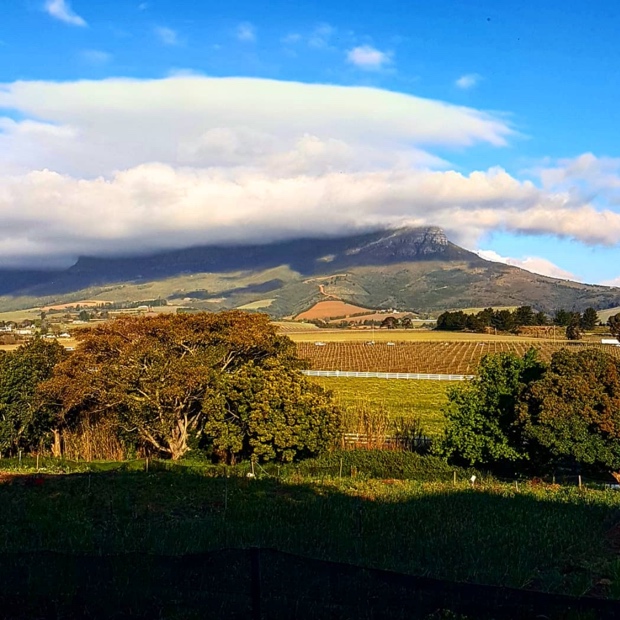
Godello and Magdalena Kaiser of Wine Country Ontario at Barrels and Bonfires, 13th Street Winery
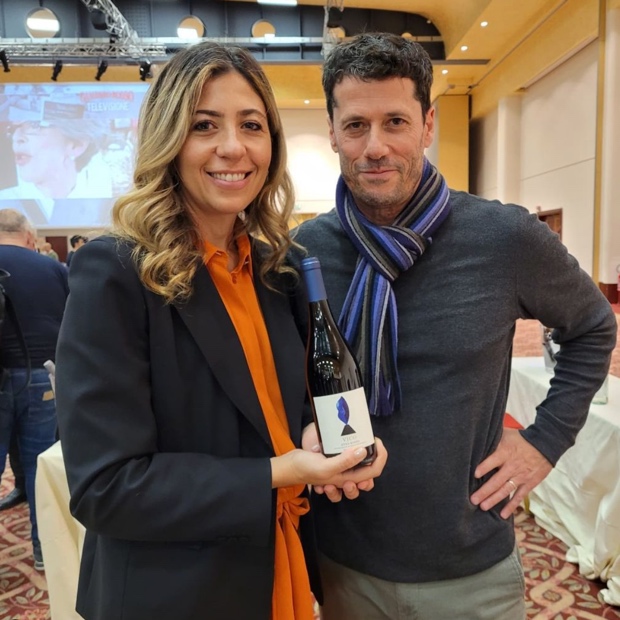
(c) Elena Galey-Pride, http://www.winestains.ca

Related – 50 cool Chardonnay in 5,000 words or more

With a cavalry in cavalcade of Chardonnay volunteers making it real and sealing the deal, the surfeited excellence of events crossed with happenings rolled on, from the School of Cool – Viticultural and Winemaking Sessions, through Barrels & Bonfires, past Cool Chardonnay World Tour Tasting & Dinner and into The Moveable Feast. There were maestri to applaud – Master Sommelier Bruce Wallner, Angie Jewell and MJ Macdonald – trumpeters of Chardonnay. Did you seek out and thank Dorian Anderson, Trisha Molokach, Magdalena Kaiser and Joanna Muratori? – concierge and purveyors of cool climate heaven. Had you a word or two with Del Rollo, Suzanne Janke and the vintners of the i4C? – gatekeepers of the plans and secrets, where Ontario schemes, greets, welcomes and celebrates frore, global brilliance.

The school of Cool, White Oaks Conference Resort and Spa

The school of Cool, White Oaks Conference Resort and Spa

The School of Cool presented by Wine Country Ontario and the Grape Growers of Ontario moved to White Oaks Conference Resort & Spa for the first time in 2015. Panel partners included the passer of the torch Cool Climate Oenology and Viticulture Institute at Brock University, VineTech Canada, Kerry Canada and Riedel Canada. Master Sommelier John Szabo once again moderated three sessions focused on international perspectives to viticulture and winemaking in cool climate regions, with a special feature on Sparkling Chardonnay. In 2011 Wine Spectator‘s Matt Kramer was the keynote speaker and he reprised that contribution in 2015.

Dr. Belinda Kemp, CCOVI Brock Univeristy and Godello at The School of Cool, White Oaks Conference Resort and Spa
Dr. Belinda Kemp, CCOVI Brock Univeristy and Godello at The School of Cool, White Oaks Conference Resort and Spa
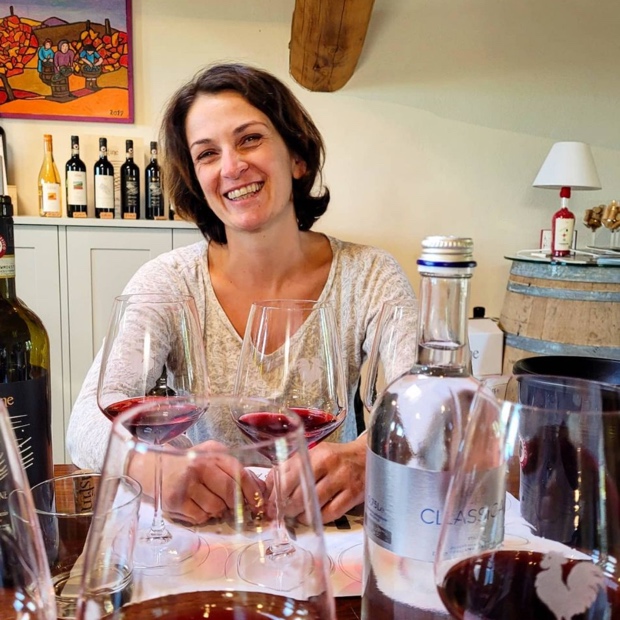
Related – The meaning of Chardonnay: You’ve gotta be cool to be kind

The School of Cool 2015 sessions were controversial, heated and extremely effective. On them I will need to expand upon at another time, in another post. For now, the crux of the conversation concerned two intense Chardonnay algorithms. First, consequence versus cosmetics. Said Kramer, “Niagara has the ability and the opportunity to create Chardonnays of consequence.” Marlize Beyers of Hidden Bench allowed this. “I do believe Chardonnay needs a little bit of cosmetics. Mouthfeel is important.” Discuss.

The second and most managed thread of discussion concerned the idea of minerality. Is it real? Dr. Gary Pickering: “Who cares?” Dr Alex Maltman: “It’s a lovely idea, journalists love it, has marketing capability, but it doesn’t hold up.” Paul Pender: “It’s a great story. I’m not 100 per cent sure its true. It’s more complex than that.” Albrecht Seeger: “Minerality is part of the terroir.” Matt Kramer: “The scientists don’t know a goddamn thing about wine.” Discuss.

Barrels and Bonfires, 13th Street Winery

Barrels and Bonfires, 13th Street Winery

On Friday night at 13th Street the theme was “boots & blue jeans,” to compliment Chardonnay, with a smoke-inspired feast, live music and cozy bonfires set amongst the vines.

Jay Johnston of Flat Rock Vineyards and Godello at Barrels and Bonfires, 13th Street Winery
Jay Johnston of Flat Rock Vineyards and Godello at Barrels and Bonfires, 13th Street Winery
On Saturday Chardonistas blanketed the Niagara region.

Westcott Vineyards

Westcott Vineyards

I spent the afternoon with winemaker Arthur Harder, Grant, Carolyn and Victoria Westcott at their Vinemount Ridge Westcott Vineyards property.

Fresh Salmon hors d'oeuvre by Lorenzo Loseto of George Restaurant, at Westcott Vineyards

Fresh Salmon hors d’oeuvre by Lorenzo Loseto of George Restaurant, at Westcott Vineyards

George Restaurant Chef Lorenzo Loseto and Sommelier Christopher Sealy came to cook and pour. They went to town. Appetites were whetted, palates amused, bellies satiated, hearts skewered, minds hooked and time was lost to well spent.

Lunch at Westcott Vineyards

Lunch at Westcott Vineyards

The main event’s setting was St. Catharines’ Ridley College, at which Chef Paul Harber (Ravine Vineyard Restaurant) and Chef Craig Youdale (Canadian Food & Wine Institute) assembled a dream team of the region’s top Vineyard Chefs to present an Ontario-centric family-style feast. Beer and red wine, “oh my,” “gasp,” “what sacrilege,” followed dinner.

#ILiveChardonnay at the Cool Chardonnay World Tour Tasting and Dinner at Ridley College

#ILiveChardonnay at the Cool Chardonnay World Tour Tasting and Dinner at Ridley College

Related – ‘I4C’ a future filled with Chardonnay

On Sunday morning the final convene took place, as it always does, at Ravine Vineyard. More stellar bites, oysters from Tide and Vine, Niagara cured gold Pingue prosciutto from Niagara Food Specialties and ping-pong in the vineyard. In the end, the love was felt, for the community that celebrates Ontario wine, for all the cool climate folks who came thousands of miles to participate and for Chardonnay.

Related – ‘I4C’ a future filled with Chardonnay

The events provided opportunities to taste the Chardonnays on hand and with thanks to Wine Country Ontario, a media room was set up at White Oaks with full representation. Many of my tasting notes were formulated in that space. Here are twenty-five new Chardonnay reviews from the weekend at i4C15.

Cool Chardonnay in the media room at White Oaks Conference Resort and Spa

Cool Chardonnay in the media room at White Oaks Conference Resort and Spa

Calmel & Joseph Villa Blanche Chardonnay 2014, Languedoc-Roussillon, France (375071, $13.95, WineAlign)

Quite simple and surprisingly lush with more than ample acidity to keep vitality in the air. A balanced effort in a pretty plush Chardonnay. Drink 2015-2017.  Tasted July 2015

Malivoire Chardonnay 2013, VQA Niagara Peninsula, Ontario (573147, $17.95, WineAlign)

If you reside in Ontario or happen to be passing through before September 13, 2015, the perfect value storm of Chardonnay swirls in your corner. It may be the most excellent 2012 you will find on shelves but looking forward to this (2013) vintage you will encounter a varietal tempest, a house crafted dictionary entry and in retrospect, memories regarding that two dollar limited time offer price reduction that doled out 10 per cent more satisfaction. The essentia of fresh glade aroma, cream in your corn texture and a gaol of circulating acidity add up to one seriously fleshy ($20 and/or $18), cool-climate, hovering in and around the Beamsville Bench Chardonnay. The Malivoire base wine is one of no beginning and no end so in that sense it will always get inside you. Drink 2015-2018.  Tasted July 2015  @MalivoireWine  @ShirazMottiar

Toro De Piedra Grand Reserve Chardonnay 2014, Maule Valley, Chile (417493, $17.95, WineAlign)

Rich, toasty and nutty Maule Chardonnay, full on, out and in favour of ambitious, lofty heights. Has massive creamy meets chalky mouthfeel and tropical fruit with spice by wood in spikes, not to mention high toned acidity and alcohol. It’s an aggressive if clumsy expression. Drink 2015-2018. Tasted twice, June and July 2015  @VinaRequingua  @DrinkChile

Hillebrand Trius Barrel Fermented Chardonnay 2013, Niagara Peninsula, Ontario (46595, $19.95, WineAlign)

Sur-lie barrel fermented Chardonnay all in for texture and fabric with a taste of soft French cream. Very ripe, especially in consideration of the vintage. The late flavours recall lemon curd and a touch of rind. In the end an elemental tonic push carries this skyward, as opposed to downward in earthy dredge, so imagine forward to a petrolish driven future, the engine leaving a trail of disposed energy. Quite complex and certainly fixed with boards to add nuts to the melting, oozing bolts. I would recommend leaving this for two years for the tension to subside. Then the creamy centre will spill out from beneath the pastry crust. Drink 2017-2020. Tasted July 2015  @TriusWines

13th Street June’s Vineyard Chardonnay 2013, VQA Creek Shores, Niagara Peninsula, Ontario (Winery, $21.95, WineAlign)

The vineyard speaks louder and clearer with every passing vintage. In 2013 the level of atomic and aerified atmospheric pressure is unparalleled, from June and for any Chardonnay produced in the Creek Shores sub-appellation. At this early stage the ’13’s awkward, backward and racy character is uncomfortable but impossible to taste away from. This is Chardonnay on gym candy to be sure, rocking like a hurricane, dancing up a storm. The terpenes are titillating, the enzymes discharging. There is a bronze/patina/inside of a pipe metallic feel that adds to the texture improvisation. Nothing about this says drink now nor does it let you settle into a comfort zone. It’s just that all over the place. Will revisit in three years.  Tasted December 2014 and July 2015  @13thStreetWines  @Noble_Estates

Kirsten Searle, Matawhero Wines

Kirsten Searle, Matawhero Wines

Matawhero Chardonnay 2014, Gisborne, North Island, New Zealand (Agent, $21.95)

Unoaked but full malo crisp up this true blue, north island Chardonnay. A bob of fruit from the oldest (40 years) winery in the region and under current ownership for the past eight. You can tell after tasting with Kirsten Searle that the project has been a labour of love. Her words seem to say “heading out for the East Coast Lord knows I’ve paid some dues gettin’ through. Tangled up in blue.” Round and properly bitter, the world should not be demanded. East coast will do. Drink 2015-2018.  Tasted July 2015

https://vimeo.com/76422105

Quails’ Gate Chardonnay 2013, BC VQA Okanagan Valley, British Columbia (377770, $21.95, WineAlign)

A strength in aromatic temper initializes the confrontation and the relationship. Once hooked, lemon and a waxy texture usher the palate through the middle reaches, then a swirl, tongue on a swivel, off to glide with sweetness into a gin and tonic backside ride. Goes fat and caressing for a spell, through a toasty phase and yet the wood is hidden or at least negligible. Could very well pass for unoaked in a way, especially considering the tang and the persistence. A very solid wine at a very workable price. Drink 2015-2018.  Tasted twice, June and July 2015  @Quails_Gate  @hobbsandco

Josef Chromy Chardonnay ‘Pepik’ 2014, Tasmania, Australia (Agent, $22.95)

Combines beauty and bitters for a streak of natural selection through a field of texture. Heads for the cream risen to the top of rich, pulls over and steps aside to allow for a crunch of green apple. The bite is real, lit by match and cut with spice. Great length. Drink 2015-2020.  Tasted July 2015  @JosefChromy  @bwwines

Domaine Laroche Chablis Saint Martin 2013, Burgundy, France (289124, $24.95, WineAlign)

Climbs more than a rung or two up the reverent Chablis ladder to mingle with the Cru boys. Something about 2013 strikes as more serious, punctilious and free. This is benchmark Saint Martin, chalky and textured from soup to nuts, of spirits high and sky-scraping tang. The acidity is frank, the structure unwavering and the fruit to mineral dichotomy of a pure, mature and essential hookup. From verve to intensity and back again. Up and down, primary and natural. Drink 2015-2019.  Tasted July 2015  @DomaineLaroche  @Select_Wines  @BIVBChablis

Chamisal Stainless Chardonnay 2014, Central Coast, California (416065, $24.95, WineAlign)

Quite classically cooled and unplugged yet intensely sunshine tangy. Fun yet on a seesaw of play and a boat on a rough sea up and down in balance. That is not to say that acidity does not exist but the tang is like heavy salad dressing, emulsified and sultry. No malolactic equates to green apples and blanched nuts, or those hulled direct from the tree. Texture is the thing, a child of crisp, cool fermentation. Freshness could use just a bit more ventilation. Drink 2015-2017.  Tasted twice, June and July 2015  @ChamisalVyd  @LiffordON

Chamisal Estate Chardonnay 2013, Edna Valley, California (Agent, $24.95)

French oak (45 per cent) and (25 per cent) of it new mixed with (50 per cent) malo has created an herbal cream piqued by spice. It’s kind of a chewy Chardonnay, well-judged, blended and crafted with both stainless steel and wood ramifications in meld together mind. A true dichotomy of pleasures, green and red, old and new, yes and no. Drink 2015-2021.  Tasted July 2015  @ChamisalVyd  @LiffordON

Domaine Queylus Chardonnay ‘Tradition’ 2013, VQA Niagara Peninsula, Ontario (Agent, $24.95)

From vines planted by soil guru Alain Sutre, two km’s from the lake, close to Green Lane. If you make a comparison to Bench sites, this is an understated, hyper elegant version of a Chardonnay. It’s an underdog, plain and simple. Sixteen months of élevage has raised a beautiful, bitter green dignity, pith nicety and polite terpenes. A child in many ways who’s offspring will only serve to honour the family name. Drink 2015-2018.  Tasted June and July 2015  @QueylusVin  @LiffordON

Vasse Felix Filius Chardonnay 2013, Margaret River, Western Australia (Agent, $25)

At a third of the cost of the Heytsbury, expectations for the Filius need not exceed prediction. Screw cap has sealed in reduction, sulphur and acidity so that upon liberation the wave of anxiety is nearly overwhelming. The Filius transmits waves of complexity, layers of predilection and outright Margaret River coolness but decanting that character is not unthinkable. Smoulder, struck match and green apple fruit are massively intertwined. Bold Chardonnay. Drink 2016-2020.  Tasted July 2015  @vassefelix  @bwwines

Jean Bourdy Côtes De Jura White 2008, Ac Jura, France (Agent, $28.00, WineAlign)

Tasting his Jura whites with Jean Bourdy can’t help but funnel the exercise into a tunnel, a vacuum and a bilateral directive inward and centripetal. Tradition is everything and this ’09 is neither the exception nor the anti-establishment rebel to the rule. Herbal balm and oxidized character persist but nowhere in the world can so much implosive energy exist in wine such as a Bourdy Jura. This vintage does not reinvent the oueille but the four fermenting years in oak, as per the centuries-old Côtes du Jura method seems to improve with the cleanliness of the process. Another white to follow well into the third decade of this century. Drink 2015-2035. Tasted July 2015  @CAVESJEANBOURDY  @LiffordON

Westcott Vineyards Reserve Chardonnay 2013, VQA Vinemount Ridge, Ontario (Winery, $29.00, WineAlign)

The 2012 early picked Reserve Chardonnay was the raw player, the talented yet unproven one, all about foreplay. Here in ’13, from fruit picked on October 7th is a different rock ‘n roll animal, wiser to vintage, mature in acumen, confident, a Ziggy Stardust. This charismatic leader of the Vinemount Ridge Chardonnay band, “could lick ’em by smiling, he could leave ’em to hang, came on so loaded man, well hung and snow white tan.” Works opulence with prejudice and here acts, sings, dances and displays equipped with nothing short of immediate distinction. There is nothing held back, no remedial work in progress and wisdom oozes beyond its years, in and of learning. The right time and the right place for the winemaker, the accomplice, the peer and the confidence of the partners. Drink 2015-2021. Tasted July 2015  @WestcottWines  @VWestcott

Westcott Vineyards Reserve Chardonnay 2012, VQA Vinemount Ridge, Ontario (Winery, $29.00, WineAlign)

What should small Vinemount Ridge yields, collected solar units and wise, thinking ahead of the curve decision making combine to procure? Grace under pressure. This is what winemaker Arthur Harder, proprietors Grant and Carolyn Westcott and Chardonnay have conspired to achieve out of the warm and challenging 2012 vintage. They picked in very early September. They laid the fruit down for 12 months in (four) 1st, 2nd and 3rd fill barrels. They sat back and waited for amalgamation. If 2012 shows this level of restraint, respect and reserve, well, let’s not get ahead of ourselves. This is deserving of meritorious accolades at a very reasonable price. Drink 2015-2019.

From my earlier note of February 2014:

From vineyards planted in 2005, this new kid on the Jordan block spent 12 months in oak, half of it new. To a taster, you would never know it. In clone cousin to Le Clos Jordanne’s Chardonnay, this special project is the nephew of a set aside, four-barrel selection. Winemaker Arthur Harder (Calamus) has fashioned a head-turning clean, pure and most mineral-driven Chardonnay from impossibly young Vinemount Ridge vines. A quartz chord runs through it and with just two or three more years of vine age the fruit and adjoining texture will catch up to the rock. That integrated, subtle oak impart is of a Granny Smith apple kind, crisp and taut. Such a memorable inauguration with so much promise that lays ahead.

Last tasted July 2015

Cave Spring CSV Estate Bottled Chardonnay 2012, VQA Beamsville Bench, Niagara Peninsula, Ontario (529941, $29.95, WineAlign)

The omnipresent Escarpment stone etched, nicked and saturated into ferment from out of the Cave Spring Vineyard may never have extolled virtue any more so than out of the 2012 vintage. A tropical CSV and its accompanying mild, understated toast combs the faces for balance and bobs its keel in well-structured, puff pastry layering. A bitter sachet of schist on the back end steps into a really fine linger. CSV of real presence even in the midst of a summer swelter. Drink 2016-2020.  Tasted twice, June and July 2015  @CaveSpring  @TheVine_RobGro

Lailey Brickyard Chardonnay 2013, VQA Niagara River, Ontario (2908, $30.20, WineAlign)

There are many variations on the Lailey Chardonnay theme but none speaks as clear a Brother Derek Barnett vernacular as the Brickyard, a wine composed in clarity of Niagara River fruit. The former cherry tree and yes, brickyard site is blessed with a red clay soil and Niagara micro-climate that just circulates with enunciated vowels, consonants and graceful intonations. That this seminal vintage will be Barnett’s Lailey swan song is not lost on gist or preponderancy. The full intention, weight and breadth of fruit circles the wagons, prepares the last supper and the silence that follows knows this. This winemaker and this Chardonnay work harder than a great bulk of the competition and in the end, they together are a seamless, relentless and unflappable study in cool climate success. This wine must hold a rightful place in every wine country Ontario inamorato cellar. Drink 2016-2023.  Tasted July 2015  @LaileyWinery

Jeremy Dineen of Josef Chromy Wines, Tasmania

Jeremy Dineen of Josef Chromy Wines, Tasmania

Josef Chromy Chardonnay 2014, Tasmania, Australia (416339, $30.95, WineAlign)

Jeremy Dineen’s 2014 takes over the conversation at the precise moment the previous vintage left off, grabs attention and travels further along. With baton firmly in grasp, the ’14’s acidity dances in a filly’s realm, jittery, agitated, ready to jump out ahead of the pack. The citrus flavours are implosive, concentrated, in demand, distinctly Tasmanian. Though our time was short, to this Texas Tazzy I say, “we were together, I was blown away, just like paper from a fan.” If the ’13 was a creeping crooner, this ’14 is more a smoky-voiced songstress, trotting a longer track. It would be hard not to imagine seeing this Chardonnay as nearly unchanging in its first decade of life. Drink 2016-2025.  Tasted July 2015  @JosefChromy  @bwwines

Gérard Bertrand Domaine De L’aigle Chardonnay 2013, Limoux, Languedoc-Roussillon, France (Agent, $33.00, WineAlign)

A purposed effort from 2013 with even more direct precision, spice, freshness and linear strike flurry. A vital Limoux, of higher yield, lowered oak and acidity defined simply as the real deal. A tremendously exceptional and experiential vintage and one to help define the true identity of cool Chardonnay. Drink 2015-2022.  Tasted July 2015  @GBvins  @FwmWine  @LanguedocWines

Megan Clubb of L'ecole 41 Wines

Megan Clubb of L’ecole 41 Wines

L’ecole 41 Chardonnay 2013, Columbia Valley, Washington (416370, $34.95, WineAlign)

A co-composed 60 per cent Yakima Valley (planted in the 1970’s) and 40 per cent Evergreen (mineral slope) Chardonnay extensive and extended of orchard fruit with a penchant for texture. The house style reached for uniformity, employing mostly older barrels and laying out bed linens for a brief five-months slumber. Hear this though, the 41 is the sum of its parts and may sport a fat lip but it’s no “victim of your conformity.” Texture is the thing, a result of a warm vintage, cool Evergreen nights in the fall and rampant malolactic fermentation (despite attempts to block it). A Chardonnay “strollin’ to the party like (his) name is El ninio.” Arabesque weave and flavours that go punk and pop. Drink 2015-2020.  Tasted July 2015  @lecole41  @TrialtoON  @WineCommission

Trius Showcase Chardonnay Wild Ferment Oliveira Vineyard 2012, VQA Lincoln Lakeshore, Niagara Peninsula, Ontario (Winery, $36.20, WineAlign)

If the 2011 Wild Ferment spoke in treble clef, this ’12 pounds out a deeply resonating bass note, from instruments wooden and speaking on behalf of the vintage. Deeply smoky, layered and rich beyond yeasty belief, this is a massively structured wine for Niagara, specific to the Lincoln Lakeshore and its ability to ripen fruit of such density. The tang factor is set to 12, above and beyond what winemaker Craig McDonald has reached for before. This vintage, surmised with such yeast, takes ’10, layers it with ’11 and pops out the most plush to date. Missing is the exceptional acidity of 2011 though the overall anatomy and architecture can’t be denied. Drink 2016-2021.  Tasted July 2015

Hidden Bench Felseck Vineyard Chardonnay 2012, VQA Beamsville Bench, Niagara Peninsula, Ontario (381699, $38.00, WineAlign)

The 2012 Felseck is a wine dramatically and diametrically opposed to many other vintages from out of this fundamental Hidden Bench vineyard. Here oozes Chardonnay so very lees layered, emulsified, misty-eyed and far from reductive, having left the 44 per cent new, 14 months in barrel behind. From fruit culled off of east-west Felseck rows in a hot year that saw fundamental leaf plucking/canopy management. The wondrous emotion is condensed in taste and texture, with the bitters turned up a notch, though in their finale they use spice to conjure up ardor, for to melt into length. Unwavering Chardonnay. Drink 2016-2020.  Tasted July 2015  @HiddenBench  @BenchVigneron

Domaine Queylus Chardonnay ‘Reserve’ 2013, VQA Niagara Escarpment, Ontario (Agent, $39.95)

Winemaker Thomas Bachelder combed the blocks of the lowland “villages” sites and in slow-forward cohorts with the most subtle barrels, came up with the cuvée for the Reserve ’13. The same percentage of new oak fed the fruit with love, time, juncture and encouragement. A creamy lustre careens into honey, giving retrospective cue to suckle and accumulating richness. What fortune to work with 2013 for the purpose of announcing a Queylus take on tiers of Chardonnay to the world. Drink 2016-2021.  Tasted June and July 2015

Flowers Sonoma Coast Chardonnay 2013, Sonoma Coast, California (215210, $64.95, WineAlign)

If 2013 is turning out to be the first truly great Chardonnay vintage of the century out of Sonoma, the Flowers SC is categorically up front and centre in that discussion. The epic’s lead paragraph initializes here in a wine that is severely accurate, a blinding and gorgeous expression that brings the flowers in its game. A wield of pulchritude and balance by acidity spot on. Pure flavour extract expands and the components zing on the finish. Could there lurk a Meursault notion in its lace? You know what, forget that. Strike comparisons from the record. The Flowers is extraordinary of Chardonnay, by Chardonnay and for Chardonnay. Drink 2016-2025.  Tasted July 2015  @FlowersWinery  @rogcowines  @sonomavintners

Taittinger Comtes De Champagne Blanc De Blancs Vintage Brut Champagne 2005, Champagne, France (Agent, $225.00, WineAlign)

From a warm vintage out of the top Grand Cru terroir of the Comptes. Essential white flower essence, pure driven snow and liquid chalk. Even though at this 10 year mark this is essentially a gift to assess, the Comtes is entirely approachable in requiem for no further delay. Plenty of energy drives the flavours straight to the back of the buds and were they to linger longer than they prolong to do, the wine would be an utter stroke of genius. As it is, that bench is nearly marked. Drink 2015-2025.  Tasted July 2015  @Taittinger_FR  @TaittingerUSA  @FwmWine

Twenty-five previously reviewed Chardonnays poured at the 2015 Cool Chardonnay weekend:

Angels Gate Old Vines Chardonnay 2010, VQA Beamsville Bench, Niagara Peninsula, Ontario (116350, $23.95, WineAlign)  @angelsgatewines

Angels Gate Archangel Chardonnay 2011, Niagara Peninsula, Ontario (227009, $23.95, WineAlign)

Bachelder La Grande Châtelaine Côte De Beaune 2011, Ac Burgundy, France (332536, $37.95, WineAlign)  @Bachelder_wines  @liffordwine

Bachelder Niagara Chardonnay 2012, VQA Niagara Peninsula, Ontario (VINTAGES Essential 302083, $29.95, WineAlign)

Bachelder Niagara Chardonnay Wismer Vineyard 2012, VQA Niagara Peninsula, Ontario (345819, $44.95, WineAlign)

Bachelder Chardonnay Oregon 2012, Willamette Valley, Oregon, USA (273334, $29.95, WineAlign)

Bachelder Chardonnay Johnson Vineyard 2012, Willamette Valley, Oregon, USA (416644, $44.95, WineAlign)

Cave Spring Blanc De Blancs Brut, VQA Niagara Escarpment, Ontario (213983, $29.95, WineAlign)  @CaveSpring

Flat Rock Cellars Chardonnay 2012, VQA Twenty Mile Bench, Niagara Peninsula (681247, $18.95, WineAlign)  @Winemakersboots

Flat Rock The Rusty Shed Chardonnay 2012, VQA Twenty Mile Bench, Niagara Peninsula, Ontario (1552, $24.95, WineAlign)

Flat Rock Cellars Riddled Sparkling 2009, VQA Niagara Peninsula, Ontario (383315, $24.25, WineAlign)

Olive and Anthony Hamilton Russell at Ridley College

Olive and Anthony Hamilton Russell at Ridley College

Hamilton Russell Chardonnay 2013, Wo Hemel En Aarde Valley, Walker Bay, South Africa (931006, $37.95, WineAlign)  @OliveHR

Henry Of Pelham Estate Chardonnay 2013, VQA Short Hills Bench, Ontario (268342, $19.95, WineAlign)  @HenryofPelham  @SpeckBros

Henry Of Pelham Chardonnay Speck Family Reserve 2013, VQA Short Hills Bench, Ontario (Winery, $29.95, WineAlign)

Lailey Barrel Select Chardonnay 2013, VQA Niagara River, Ontario (Winery, $26.00, WineAlign)  @LaileyWinery

Le Clos Jordanne Claystone Terrace Chardonnay 2012, VQA Twenty Mile Bench, Ontario (Winery, $40.00, WineAlign)  @LeClosJordanne

Norman Hardie Chardonnay Niagara Unfiltered 2013, VQA Niagara Peninsula, Ontario (184432, $39.00, WineAlign)  @normhardie

Pearl Morissette Cuvée Dix Neuvieme Chardonnay 2012, VQA Twenty Mile Bench, Niagara Peninsula, Ontario (303602, $38.00, WineAlign)  @PearlMorissette

Pearl Morissette Cuvée Dix Neuvieme Chardonnay 2011, VQA Twenty Mile Bench, Niagara Peninsula, Ontario (303602, $38.00, WineAlign)

Stratus Chardonnay 2012, VQA Niagara On The Lake, Ontario  (Winery, $48.00, WineAlign)  @StratusWines

Tawse Quarry Road Chardonnay 2012, VQA Vinemount Ridge, Niagara Peninsula, Ontario (111989, $35.95, WineAlign)  @Tawse_Winery

Two Sisters Unoaked Chardonnay 2013, VQA Creek Shores, Ontario (Winery, $24.00, WineAlign)  @2SistersVine

Two Sisters Chardonnay 2013, VQA Creek Shores, Ontario (Winery, $32.00, WineAlign)

Westcott Vineyards Lillia’s Chardonnay 2013, VQA Vinemount Ridge, Ontario (Winery, $20.00, WineAlign)  @WestcottWines

Westcott Vineyards Estate Chardonnay 2013, VQA Vinemount Ridge, Ontario (Winery, $26.00, WineAlign)

Good to go!

http://www.winealign.com/profile/2058-mjg

Catch 22 wines

Godello's garden meets Greek Horaitiki

Godello’s garden meets Greek Horaitiki

Twenty two wines I tasted from the August 22nd release. Some are really good. So what’s the catch? Some not so much. As always, take a grain of salt and judge for yourself. Godello is not traditionally a site to explore the good, the bad and the ugly. The good news is that the worst of these 22 are actually quite well-made. The bad news is that each will only satisfy a certain kind of palate and a specific sort of temperament.
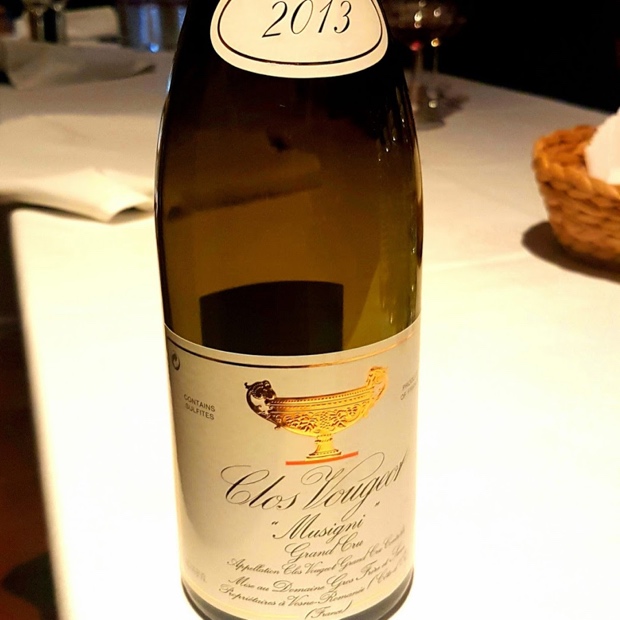
Something for everyone. LCBO 101. I hope you find something you like.

From left to right: Koncho and Co. Tsinandali 2012, Man Vintners Free Run Steen Chenin Blanc 2014, Featherstone Four Feathers 2014, Grace Lane Riesling 2013, Henri Bourgeois Petit Bourgeois Sauvignon Blanc 2014, Perrin Réserve Rosé 2014, Vineland Sauvignon Blanc 2013 and The Crusher Viognier 2013

From left to right: Koncho and Co. Tsinandali 2012, Man Vintners Free Run Steen Chenin Blanc 2014, Featherstone Four Feathers 2014, Grace Lane Riesling 2013, Henri Bourgeois Petit Bourgeois Sauvignon Blanc 2014, Perrin Réserve Rosé 2014, Vineland Sauvignon Blanc 2013 and The Crusher Viognier 2013

Koncho & Co. Tsinandali 2012, Kakheti, Georgia (412981, $12.95, WineAlign)

Boxy, foxy, contained, constrained, aromatics waiting to burst, in big timbre and quite spicy. A bit reductive and very juicy. Boisterous, wild-eyed expression. Drink 2015-2018.  Tasted August 2015  @GeorgianWineSoc

Man Vintners Free Run Steen Chenin Blanc 2014, Wo Coastal Region, South Africa (126847, $13.95, WineAlign)

Good texture and mouthfeel in this Chenin, dry but unctuous, direct and filling. Works coastal wonders in many ways. Drink 2015-2018.  Tasted August 2015  @MANVintners  @vonterrabev  @WOSACanada

Featherstone Four Feathers 2014, VQA Niagara Peninsula, Ontario (341586, $14.95, WineAlign)

Though Riesling dominant this is a shared experience, with cool climate Chardonnay and richly aromatic Gewurztraminer lifting spirits and exhaling breaths. The Sauvignon Blanc seems to add ripeness and juicy palate flow. A mouthful of ripe fruit to be certain and amenable beyond its pragmatic ways. One of the better value white blends and one to look at for Niagara Peninsula propensity within the context of designing an appellative blend. Drink 2015-2017.  Tasted August 2015  @featherstonewne

Grace Lane Riesling 2013, Yakima Valley, Washington (420737, $14.95, WineAlign)

Simple, straightforward, slightly spritzy Riesling with a full-blown lemon lime palate and a finishing set of bitter piths. Good length gives it life. Drink 2015-2018.  Tasted August 2015

Henri Bourgeois Petit Bourgeois Sauvignon Blanc 2014, Igp Vins De Pays Du Val De Loire, France (672345, $15.95, WineAlign)

A lithe and petite Sauvignon Blanc, balmy, touched by spice accents and a whisper of lemon/lime. Tart but not really striking or biting. Soft Sauvignon Blanc, quick and effortless. Drink 2015-2016. Tasted August 2015  @ChartonHobbs

Perrin Réserve Rosé 2014, Ac Côtes Du Rhone, France (719062, $15.95, WineAlign)

Pretty Rosé, arid enough though really juicy and presentable to a wide army of followers. Some tonic and even more brine. A late feeling of pickles and preserves. Better than many. Drink 2015-2018.  Tasted August 2015  @Beaucastel  @ChartonHobbs  @RhoneWine  @VINSRHONE

Vineland Sauvignon Blanc 2013, VQA Niagara Escarpment, Ontario (551168, $16.95, WineAlign)

Spicy vintage for the Escarpment, concentrated in many ways, for juicy fruit, capsicum and savoury herbs. A touch effervescent which does not detract, but rather adds a buoyant lifeline because the tart acidity is really something else. Fun with Sauvignon Blanc from up on the shelf. Drink 2015-2017. Tasted August 2015  @VinelandEstates  @benchwineguy

The Crusher Viognier 2013, Wilson Vineyard, Clarksburg, California (361964, $16.95, WineAlign)

Reductive Viognier, nice and fresh for a change, cool Clarksburg fruit thankfully kept shy and in absence of high alcohol, overly heated sunshine gluck. A bit of a mouth breather, tropical in a longan way and of enough though not striking acidity. Finishes overly bitter, in lime pith and a kind of nettle. Drink 2015-2018.  Tasted August 2015  @SebastianiWines  @Select_Wines

From left to right: Trivento Golden Reserve Malbec 2012, Pascal Jolivet Attitude Sauvignon Blanc 2014, Gérard Bertrand Côte Des Roses Rosé 2014, Paco & Lola Albariño 2013, Herdade Do Rocim Red 2011,S. Cristina Massoni Lugana 2014 and Gray Monk Pinot Blanc 2013

From left to right: Trivento Golden Reserve Malbec 2012, Pascal Jolivet Attitude Sauvignon Blanc 2014, Gérard Bertrand Côte Des Roses Rosé 2014, Paco & Lola Albariño 2013, Herdade Do Rocim Red 2011,S. Cristina Massoni Lugana 2014 and Gray Monk Pinot Blanc 2013

S. Cristina Massoni Lugana 2014, Doc Lombardy, Italy (200097, $17.95, WineAlign)

Tanky and metallic, coastal and postal for Trebbiano di Lugana. Quite herbal, reminiscent of Sancerre, with spice, nettle and linear length. Layered and structured white with a seriousness in its expression. Drink 2015-2020.  Tasted August 2015

Herdade Do Rocim Red 2011, Alentejo, Portugal (423574, $17.95, WineAlign)

A regional blend of Antao Vaz, Arinto and Roupeiro. Very cimmerian, rich and dense Alentejano, wildly berry delicious and yet fierce. Lots of oak, lots of optimism and plenty of swagger. Very spicy and toasty finish. Drink 2015-2019.  Tasted August 2015  @winesportugalCA

Paco & Lola Albariño 2013, Do Rías Baixas, Spain (350041, $18.95, WineAlign)

Concrete and tank Albarino, steely and mineral, cool and bristling. Turns to stone fruit on the palate, gets down to juicy and then ricochets off the walls, drawing salinity and pulverized limestone into the very linear finish. Such a calcareous, wound white wine, on a spindle, in a vacuous void of aggregate and steel. Drink 2015-2020.  Tasted August 2015  @pacolola  @azureau

Gérard Bertrand Côte Des Roses Rosé 2014, Ap Languedoc, Languedoc-Roussillon, France (373985, $18.95, WineAlign)

Dry, floral, medicinal, quite tight and angled, not angular Rosé. The sea salinity and briny strawberry confluence is quite striking. Doesn’t really linger so in the end it’s a bit of a simple quaffing Rosé but what of it? That’s right. Drink 2015-2016.  Tasted August 2015  @GBvins  @LanguedocWines  @FwmWine

Pascal Jolivet Attitude Sauvignon Blanc 2014, Loire, France (971887, $19.95, WineAlign)

A neat feat to stretch Sauvignon Blanc like this, in phyllo layers and like bitter greens braised to sweet tenderness. Savoury though the herbs are not the most recognizably cultivated, used or considered. Like winter savoury, or Spruce tip, edible seaweed even. All tossed lightly, gingerly in a citrus vinaigrette. Playful SB, at times tight and bracing and then generous, giving, forthcoming. Previous vintages have had more shine. Drink 2015-2020.  Tasted August 2015  @HalpernWine  @LoireValleyWine
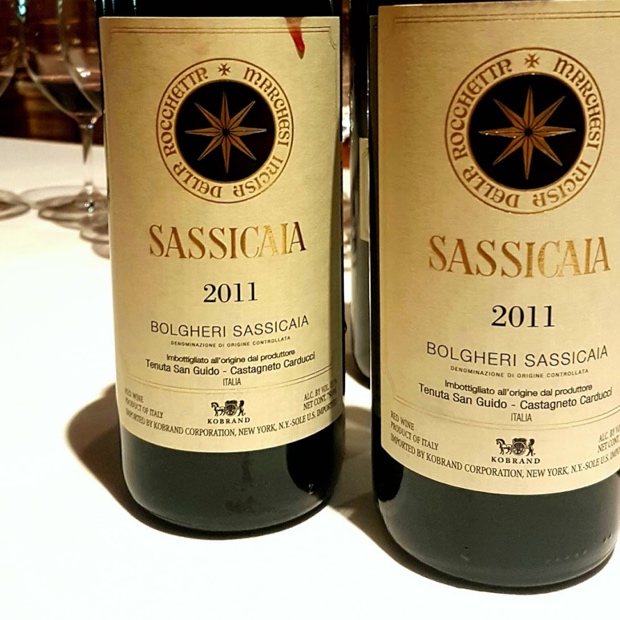
Trivento Golden Reserve Malbec 2012, Luján De Cuyo, Mendoza, Argentina (588731, $19.95, WineAlign)

Heavy handed, much wood and chalky, full on bloody Malbec. Has Oz strength and gumption. Good lengthy finish. Drink 2015-2019.

From my earlier note of August 2014:

This Golden Reserve Malbec by Trivento is a juicy, dusty, fruit tree addition to the #WWAC14 flight and arrives just in the nick of time. Despite the dark fruit, it has no Drake spoken word conceit. It sings in classic Drake lullaby, with beefy meet pine forest aromas and so “you find that darkness can give the brightest light.” Tender refrains soften chalky, stalky wood and corresponding bitter chocolate. Big tannins on this balladeer. Has impressive stuffing.  @TriventoArg  @Select_Wines  @winesofarg

Last tasted August 2015

Gray Monk Pinot Blanc 2013, BC VQA Okanagan Valley, British Columbia (321612, $20.95, WineAlign)

Into another cool climate Pinot Blanc poster from Gray Monk, the standard bearer for the variety, in this price and stylistic niche, for anyone who cares or dares to join the bandwagon. Juicy stone fruit of a peach, yellow plum and nectarine fold, circular bites of acidity and mineral bleed and just a touch of tonic to tie it all together. Always great stuff. Length even better than in 2012. Drink 2015-2020. Tasted August 2015  @GrayMonkWinery

From left to right: Domaine De Rochebin Vieilles Vignes Bourgogne Pinot Noir 2013, Buena Vista Chardonnay 2013, Benjamin Bridge Nova 7 2013, Featherstone Onyx 2010, King Estate Signature Collection Pinot Noir 2013, Charles Baker Picone Vineyard Riesling 2012 and Cantina Del Pino Barbaresco 2010,

From left to right: Domaine De Rochebin Vieilles Vignes Bourgogne Pinot Noir 2013, Buena Vista Chardonnay 2013, Benjamin Bridge Nova 7 2013, Featherstone Onyx 2010, King Estate Signature Collection Pinot Noir 2013, Charles Baker Picone Vineyard Riesling 2012 and Cantina Del Pino Barbaresco 2010,

Domaine De Rochebin Vieilles Vignes Bourgogne Pinot Noir 2013, Ac Bourgogne, Burgundy, France (424275, $22.95, WineAlign)

Such a pretty red cherry, fine earth and cinnamon heart confluence on the aromatic front, with no palate or late tannin affront. The acidity seems particularly natural and fitting, the finish quick and efficient. Very good old world look at the world of Bourgogne. Drink 2015-2018.  Tasted August 2015  @BourgogneWines

Buena Vista Chardonnay 2013, Carneros, Sonoma County, California (67405, $23.95, WineAlign)

Cream in your coffee, sui generis housed and reductive Chardonnay with a chip on its shoulder. Aromatic rhythms are modulated by the barrel’s influence while flavours are pleasant though not wholly distinctive or full of character. Very directed Chardonnay and an exemplary regional example for the price. Will show better a year on. Drink 2016-2018. Tasted August 2015  @BuenaVistaWines  @TandemSelection

Benjamin Bridge Nova 7 2013, Gaspereau Valley, Nova Scotia (256289, $24.95, WineAlign)

Down $1 in price from this time last year.

From a bumper crop, there came to market 11,000 cases of this Nova Scotian feel good, faux-sparkling story. Winemaker Jean-Benoit Deslauriers’ Nova 7 dissimulation in bubbles is a true trick of the trade and though this white wine strikes as if it were a child of a warm vintage, there is a classic lightness of Rosé fizz being in its ever so slight effervescence. A singular wine in many hybrid incarnations, in Muscat ways, of pink Perle de Csaba, segmented and pressed for a sweet burst of grapefruit. It’s low (7 per cent) in alcohol, excellent in acidity, sweet and sour, citrus zesty, juicy and dry at the same time. Batch delineated and loyal to continence, though if the quantity creeps much higher that may come in to question. Grown up pink lemonade and so easy to consume.  Tasted June and July 2014, July 2015  @Benjamin_Bridge  @jbdeslauriers

Featherstone Onyx 2010, VQA Niagara Peninsula, Ontario (372433, $29.95, WineAlign)

Strikes as Cabernet Franc dominant and quite savoury so, slightly cured and richly layered. Merlot appeals and appears with its own distinct clarity, gift-wrapped with tidy flavours in refrain of Franc that acts like fruity Cabernet Sauvignon. The vintage is very in and though it’s warmer and coated with more wood than would best service its needs, this has settled into a really nice glass of red berry and plum red wine. Kudos to the blender and the patience afforded the result. Drink 2015-2018.  Tasted August 2015  @featherstonewne

King Estate Signature Collection Pinot Noir 2013, Oregon (984005, $34.95, WineAlign)

High quotient of ripeness, astringency below, earth above sprinkled and saturating. Quite an effusive design and rambunctious effort. All over the map. Big, bouncy and biting. Drink 2015-2018.  Tasted August 2015  @KingEstate

Charles Baker Picone Vineyard Riesling 2012, VQA Vinemount Ridge, Niagara Peninsula, Ontario (241182, $35.00, WineAlign)

This ripe Picone in 2012, not a surprise and ripping at the same time. The orchard stands out, the texture overlaid and the length outstanding. Picone in ’12 has presence of more immediate notice, standing firm and tall to be counted early and then, for years to come, often. Like juice bled from escarpment cragges, a speciality that is singularly Picone. Drink 2016-2022.

From my earlier note of June 2014:

A vintage that begged to be protected in the vineyard, meaning no leaf plucking and no thinning. A most excellent goal of (0.691895068 kg / m2), or 2.8 tons an acre was realized, as opposed to one in 2010. Heavy vigor slowed down the ripening (leaving that kind of tonnage on the vine), to an elongated balance. Comes from terroir Baker nods to as “a barren tundra,” which you don’t get down the hill. In 2012 there was no waste, no rot, no problems. Its residual climbs to 15 g/L but you’d never know it. There is a confit of citrus, a mellifluous sensation of preserved lemon. Total count is 600 cases.

From my earlier note of March 2014:

“Baker’s iconic child yet breathes in unsettled, spumous emission from out of a warm vintage. So primary and such a hard act to follow. Vanguard Vinemount Ridge, arid as the desert and citrus, carbonic tight. Treated with cool, cooler and colder methods to seek result and strike balance in an opulent, lees-appertained, tangy finish. A Picone that says I don’t live today, so it is told and canvassed, “uh, get experienced, are you experienced?”  Last tasted June 2014  @cbriesling

Cantina Del Pino Barbaresco 2010, Docg Piedmont, Italy (922880, $37.95, WineAlign)

Nebbiolo of intonation, modulation and stress, with a noticeable mid-life moment in volatility, in contrast to an enamoured aromatic loveliness in rose petal and candied flower. Dusty swirls and tight red fruit meets stark acidity. A Barbaresco such as this has historical advantage on its side but scares a bit in the present. A very fair price for a wine that has to be stashed away for at least three years for the angst to subside. Drink 2015-2018.  Tasted August 2015  @LeSommelierWine  @piemonte_italia
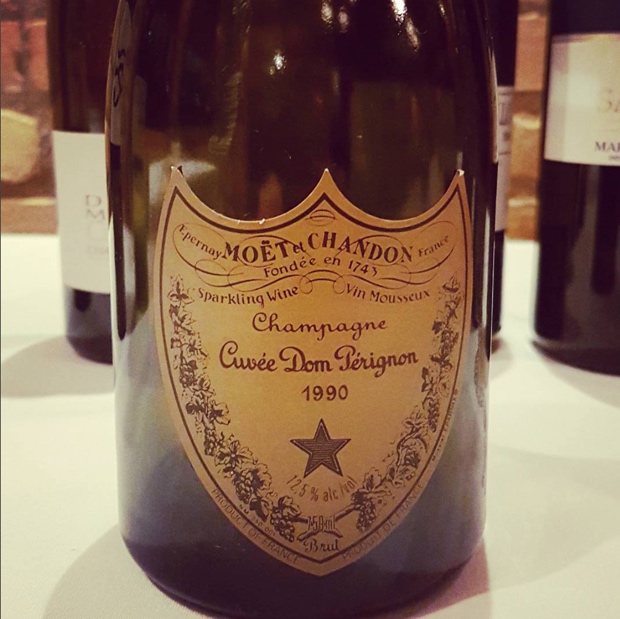
Good to g0!

http://www.winealign.com/profile/2058-mjg

Got August, go cottage, get wine

Fiore di Zucca Fritti (Fried Zucchini Flowers)

Fiore di Zucca Fritti (Fried Zucchini Flowers)

Let’s just cut to the chase. It has been more than three weeks since I’ve posted to Godello, thanks to a trip to Greece, Cool Chardonnay and my #eastcoastswing15. Let’s face it, I’ve left you hanging, waiting, wondering and perchance, livid at not having received a recommendation for summer wines since, well, since July 15th. As my Achaian friend Dimos is like to say, on repeat, “sorry about that.”

VINTAGES rolls out the smallest (by quantity) release of the calendar but I’ve got to say that per wine offer capita, the quality level is set to high. There is much to choose, from refreshing whites to grill worthy reds. Got, go, get.

From left to right: Espelt Viticultors Old Vines Garnacha 2013, Rosewood Süssreserve Riesling 2014, Domaine Lafage Côté Est 2013, Lone Birch Syrah 2013 and The Foreign Affair Sauvignon Blanc Enchanted 2013

From left to right: Espelt Viticultors Old Vines Garnacha 2013, Rosewood Süssreserve Riesling 2014, Domaine Lafage Côté Est 2013, Lone Birch Syrah 2013 and The Foreign Affair Sauvignon Blanc Enchanted 2013

Espelt Viticultors Old Vines Garnacha 2013, Do Empordà, Spain (422469, $14.95, WineAlign)

Such a formidable and concentrated liqueur dominates the nose on this heavily-textured Garnacha from maritime-influenced vines grown on decomposed granitic soils. Minor yet judicious oak works minor magic on the fruit for a feeling that is organza in sentiment if like fruit-roll up in reality. The couverture is quite natural and free-flowing, like waves lapping up a windless shore. Though flavours like liquorice, pomegranate and morello cherry are thought intrusive, the actuality here is simply Garnacha in pure, unadulterated form. This should be a late summer, early fall go to for BBQ, barbecue and grilling by all means possible. Gritty, grippy finish. Drink 2015-2020.  Tasted August 2015  @CellerEspelt  @DOEmporda  @EmpordaWine  @ChartonHobbs

Rosewood Süssreserve Riesling 2014, VQA Niagara Escarpment, Ontario (258806, $14.95, WineAlign)

If you have never sussed out the Rosewood adaptation on the deutsches sweetness enhancement technique for Riesling, it’s honey time you did. The vintage brings out the best in and of all worlds; texture, high-rising graceful aromatics, burgeoning acidity and wait for it…honey. Mellifluous honey. This vintage seems to throw a gallon of juice at the charge in ways previous vintages did not seem to do. This is very easy and yet direct on the palate. Look at this Riesling and note there is nothing to hide. “She is good to me and there’s nothing she doesn’t see,” so in ’14, “honey, I want you.” Drink 2015-2018.  Tasted August 2015  @Rosewoodwine

Domaine Lafage Côté Est 2013, Igp Côtes Catalanes, Languedoc-Roussillon, France (179838, $24.95, WineAlign)

Combines Grenache Blanc with Vermentino for an identity crisis of Italo-French proportions and in the end it reminds so much of a southern French take on Viognier. Aromatically precious, from white flowers and tropical fruit. Has a cool metal stir to keep it alive, punchy, vibrant and then acidity up the back side, flip-flopping about and turning “cartwheels ‘cross the floor.” A harum of flavours follows suit, as per the modern protocol. Though it’s merely a whiter shade of pale there is more than ample personality and whip to work up a frenzy, to mingle and to sit down with dinner. Drink 2015-2017.  Tasted August 2015  @DomaineLafage  @LaRegionLR

Lone Birch Syrah 2013, Yakima Valley, Washington (420695, $19.95, WineAlign)

A good, inexpensive, once upon a time in the west Syrah is hard to locate so when one like the Lone Birch comes along, it’s time to saddle up. The spice, pure fruit and smoky meat aromas are of an outdoor intoxicant kind, joined by notions of mesquite, lavender, creosote and thyme. The verbiage here is not so much green but more like the purple flowers that emerge late in the season. The chalky edge to the bright acidity makes for a fun texture to finish interplay. This is a great change in Syrah gears with horsepower and grace. Drink 2015-2019.  Tasted August 2015  @LoneBirchWines  @WINESofWA  @HHDImports_Wine

The Foreign Affair Sauvignon Blanc Enchanted 2013, VQA Niagara Peninsula, Ontario (389767, $19.95, WineAlign)

Appassimento-style Sauvignon Blanc is both curious and an open target for accusations of vivid excesses. The detractor will look for swift “walls of insincerity,” the complimenter will say “I was enchanted to meet you.” Foreign Affair’s take has been injected with a cocktail of intensity; steroidal, hormonal and from concentrate. All the juicy orchard fruits are there; plum, apple, pear, nectarine, lemon, lime and grapefruit. This passes the appassimento SB test, if only and commodiously because it spreads fruit like confiture on warm toast.  Tasted October 2014  @wineaffair

From left to right: L’école No 41 Semillon 2013, Rieflé Pinot Gris Steinert Grand Cru 2010, Dei Vino Nobile Di Montepulciano 2011, Easton Zinfandel 2012 and Domaine Pavelot Savigny Les Beaune Aux Grains 1er Cru 2012

From left to right: L’école No 41 Semillon 2013, Rieflé Pinot Gris Steinert Grand Cru 2010, Dei Vino Nobile Di Montepulciano 2011, Easton Zinfandel 2012 and Domaine Pavelot Savigny Les Beaune Aux Grains 1er Cru 2012

L’école No 41 Semillon 2013, Columbia Valley, Washington (982157, $24.95, WineAlign)

Sauvignon Blanc (13 per cent) adds buoyancy to the main attraction in this vanguard and reputable Columbia Valley pioneer. Quite toasty and marked by early nose-hair splitting and splintering barrel notes. Dare say reductive but not in a rubber sap run way. More like Sémillon-dominated Bordeaux, of big bones, cut through soluble rock, created a sinkhole that swallows up flavours, only to release them in geyser like fashion in later years. So with patience and age-time in mind, this Sem will have better years ahead, when the heavy (14.5 per cent) alcohol integrates and the lemon drop-butterscotch flavours mellow. Generous pH (3.2) and high Brix (24.2) were the product of a very warm vintage. Rounded by concentric circles of acidity and bitter pith tannin, this is very tropical, like Gewürztraminer, but more in mango than lychee. Needs five years minimum because the oak is overdone. Tasted March 2015  @lecole41  @WINESofWA  @TrialtoON

Rieflé Pinot Gris Steinert Grand Cru 2010, Ac Alsace, France (408229, $24.95, WineAlign)

Annick, Jean-Claude, Paul et Thomas Rieflé make their highly affordable Grand Cru Pinot Gris near Pfaffenheim in the southern stretch of the Vosges Mountains, on soils composed in limestone of marine origin intercalated with marls. This is rich, layered and spicy Pinot Gris, full on calculated with ripe, sunshine-laced fruit, orchards upon orchards of variegation and some, though not excessive tropical intentions. Has that distinct calcaire inflection that reminds of struck rocks, petrol and gardens giving off pretty smells at dusk. The finish is really long here so look for this to work well into the next decade. Drink 2016-2024.  Tasted August 2015  @RiefleLandmann  @TandemSelection     @AlsaceWines

Easton Zinfandel 2012, Amador County, California (328377, $27.95, WineAlign)

A ripe, buoyant and near flashy example of Zinfandel without any necessity for speed, heat or mountain jam. Fruit is steamy but you can touch it. Aromas can cut through what Zinfandel often hides, which is freshness. There is spice on the nose for sure but it’s an accent, not a deterrent for disguise. The palate is racy and alive and while there is some cure and dried fruit in the mix it stops well short of confiture. The tailing trail of minor exhaust propels, not halts the length. Really good vintage for the Amador Zinfandel. Drink 2015-2020.  Tasted August 2015  @rhonist  @TheZinfandelOrg  @bwwines

Dei Vino Nobile Di Montepulciano 2011, Docg Tuscany, Italy (285510, $27.95, WineAlign)

In terms of the modern Vino Nobile vernacular and even grander to a wider Tuscan vicissitude, Dei takes the reigns and offers zero apology for the way in which the wines talk their turkey. Clean, pure and plenty are the words to describe this Prugnolo Gentile, but also graceful and slender. Spoons out copious quantities of fruit and is yet chewy enough you might think of eating it with a fork. Has aromas that recall concepts both fresh and dry. Vino Nobile to gimme fiction, history and tradition. “Comes when you pirouette,” dances light and treading across the tongue, never hot and heavy, but stylish and pliantly balletic. Drink 2016-2021.  Tasted August 2015  @LeSommelierWine  @consorzionobile  @Strada_Nobile

Domaine Pavelot Savigny Les Beaune Aux Gravains 1er Cru 2012, Ac Burgundy, France (206136, $53.95, WineAlign)

Even in Burgundy there is a scarcity and rarity with which a particular bottle can please, impress and instruct, vintage after vintage. Pavelot’s Aux Gravains is pure Beaune, even if it is on the showy side of Pinot Noir. This is just plain and simple perfectly ripe and at the same time grippy with the grandest ‘G” that can be drawn. The cherry, earth and roots are smouldering and yet not remotely smoky. It smells like a cigar as it’s being rolled, with nary a green moment. The palate is chewy, cranky, pure again and racked by veraciously munching acidity. Naturally cured as well. Such a Pinot Noir is to be lauded. Drink 2017-2025.  Tasted August 2015  Vinifera Wine Services @DanielBeiles

Good to go!

http://www.winealign.com/profile/2058-mjg